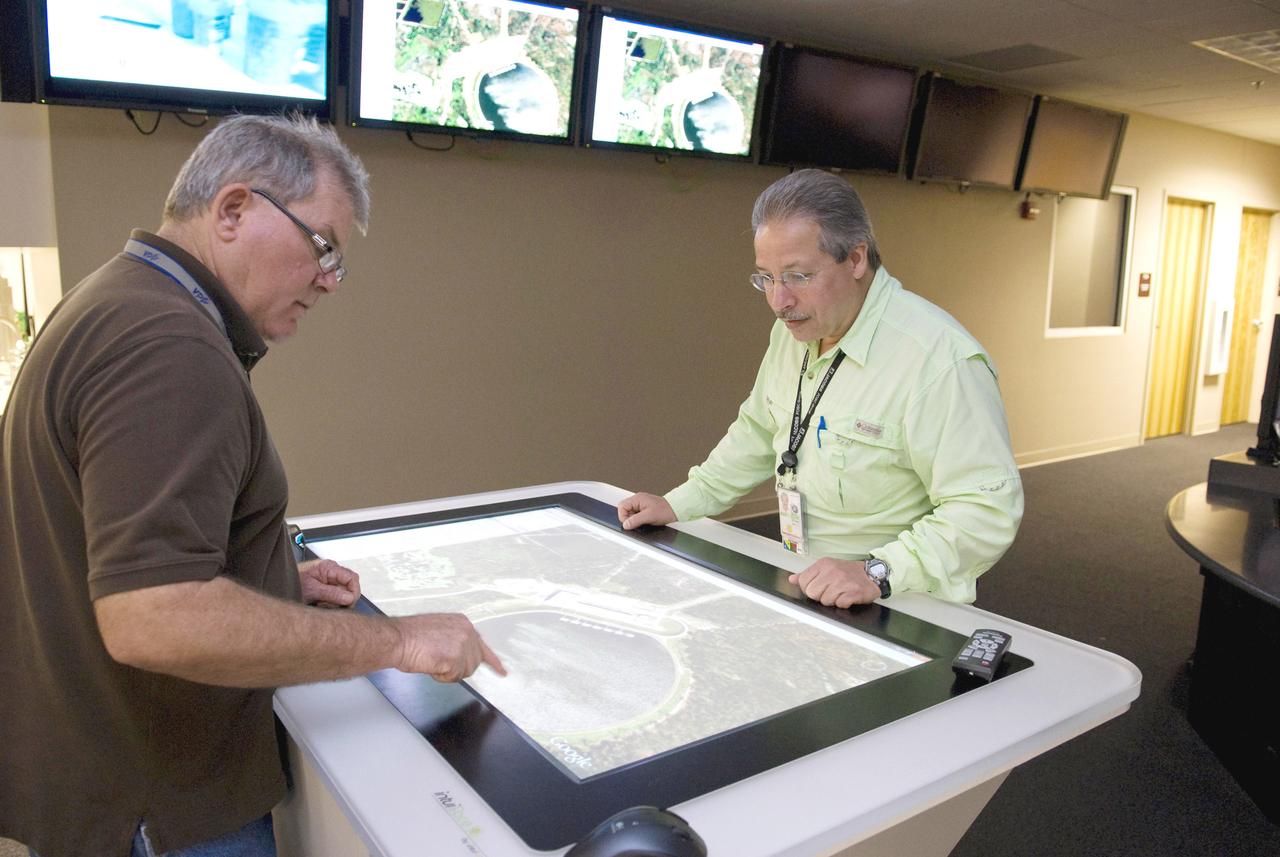
Stennis Space Center employees Mike McKinion (left), with Erica Lane Enterprises, and Luke Scianna, with the Jacobs Facility Operating Services Contract, monitor the facility and surrounding area on the 'all-hazards network' known as HazNet. The HazNet system at Stennis was developed by a local Mississippi company to help facilitate coordinated response during emergency and disaster situations. The system was installed in the new Emergency Operations Center built at Stennis before being implemented throughout NASA. HazNet was designed by NVision Solutions Inc. of Bay St. Louis, Miss., through NASA's Innovative Partnerships Program. In addition to being used at Stennis, it has been installed at other Gulf Coast communities to help coordinate response during emergencies and such natural disasters as hurricanes.
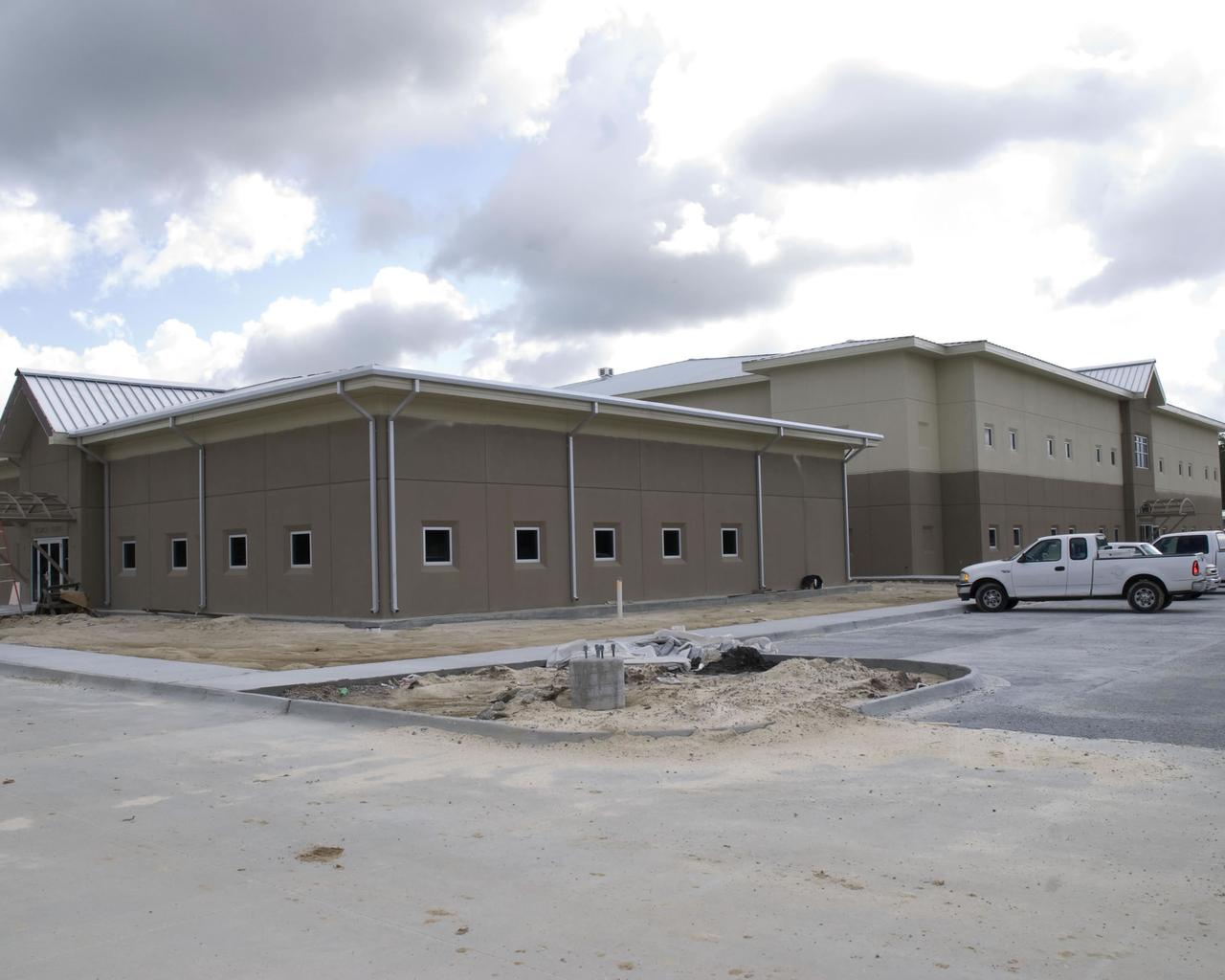
Construction work on a new Emergency Operations Center at Stennis Space Center is nearing completion. Construction is expected to be complete by February 2009, with actual occupancy of the building planned for later that year. The new building will house fire, medical and security teams and will provide a top-grade facility to support storm emergency responder teams and emergency management operations for the south Mississippi facility.
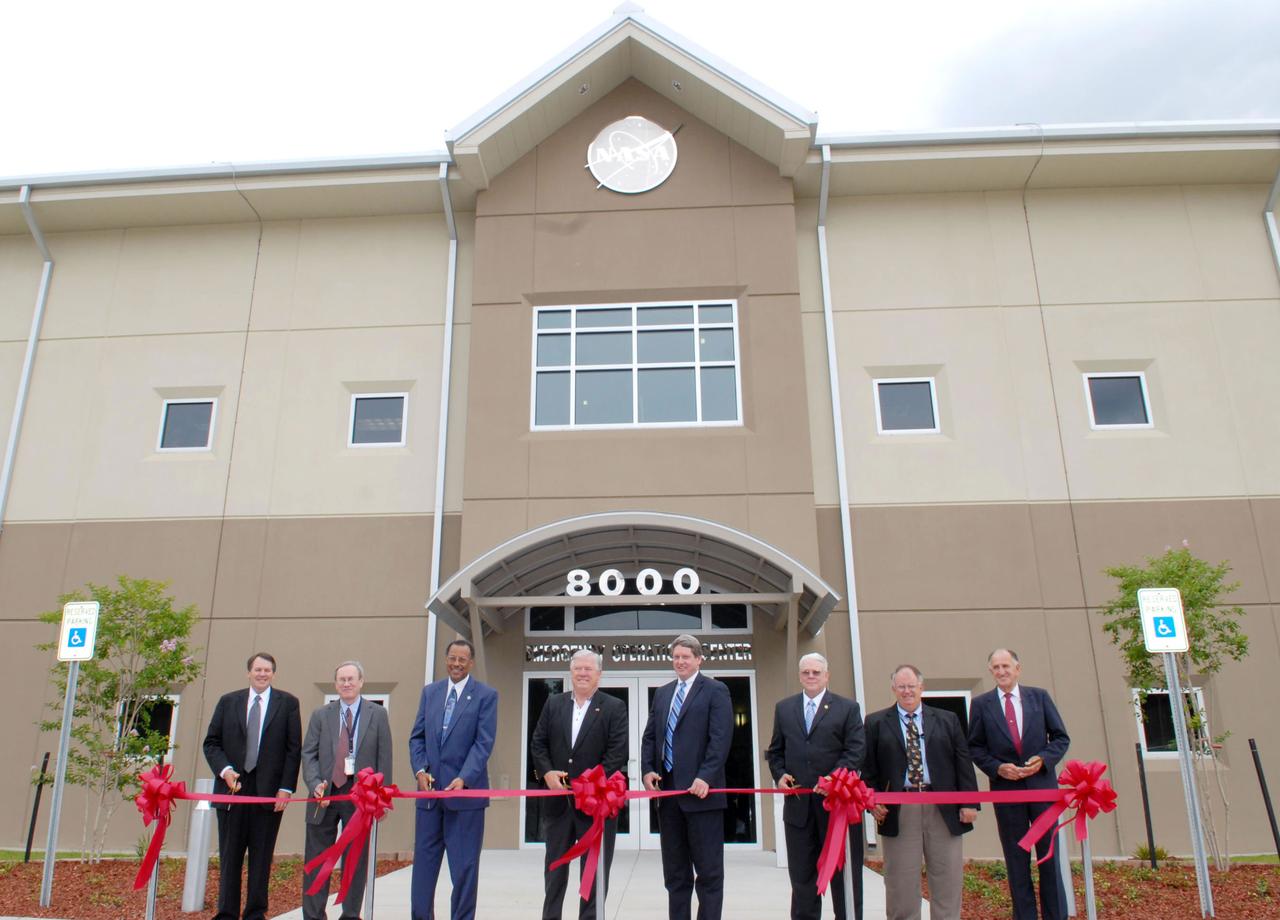
Center Director Gene Goldman and special guests celebrate the opening of the site's new Emergency Operations Center on June 2. Participants included (l t r): Steven Cooper, deputy director of the National Weather Service Southern Region; Tom Luedtke, NASA associate administrator for institutions and management; Charles Scales, NASA associate deputy administrator; Mississippi Gov. Haley Barbour; Gene Goldman, director of Stennis Space Center; Jack Forsythe, NASA assistant administrator for the Office of Security and Program Protection; Dr. Richard Williams, NASA chief health and medical officer; and Weldon Starks, president of Starks Contracting Company Inc. of Biloxi.
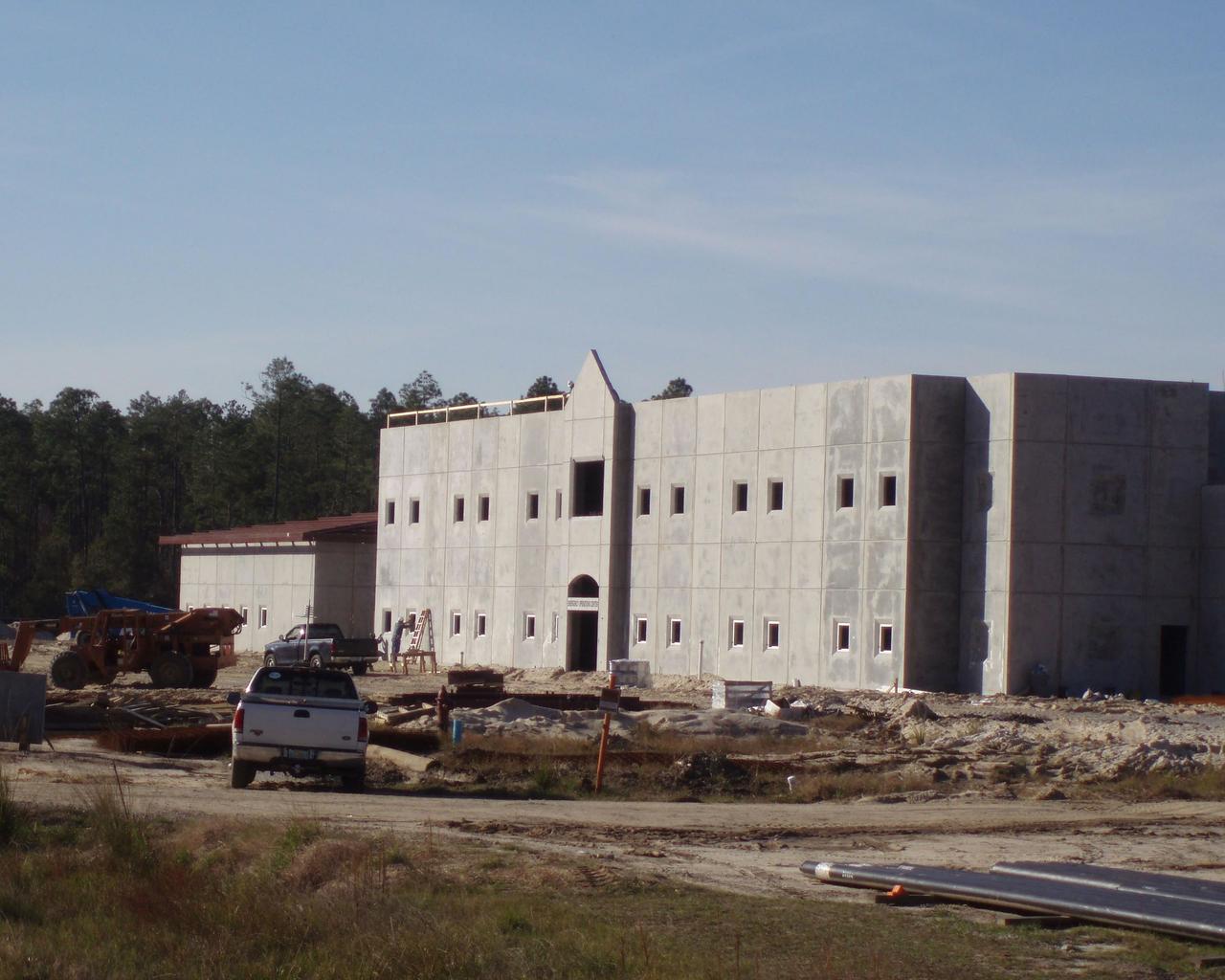
Work on Stennis Space Center's new Emergency Operations Center is progressing on schedule, according to Robert Perkins, construction manager with Jacobs Technology. At the turn of the New Year, construction contractors had completed the pervious paving for the north and west parking lots. Part of the facility's `green' design, pervious paving allows water to pass through and be absorbed directly into the ground below, preventing erosion from runoff. Through January, workers concentrated on installing the roof, sprinkler piping and overhead cable trays for electrical and communication lines. The next step will be interior work, erecting wallboard and installing electrical equipment. Perkins said NASA seeks to earn a Silver LEED (Leadership in Energy and Environmental Design) Rating for the project's environmentally-friendly and sustainable design, construction and operation. The facility has a projected completion date of February 2009.