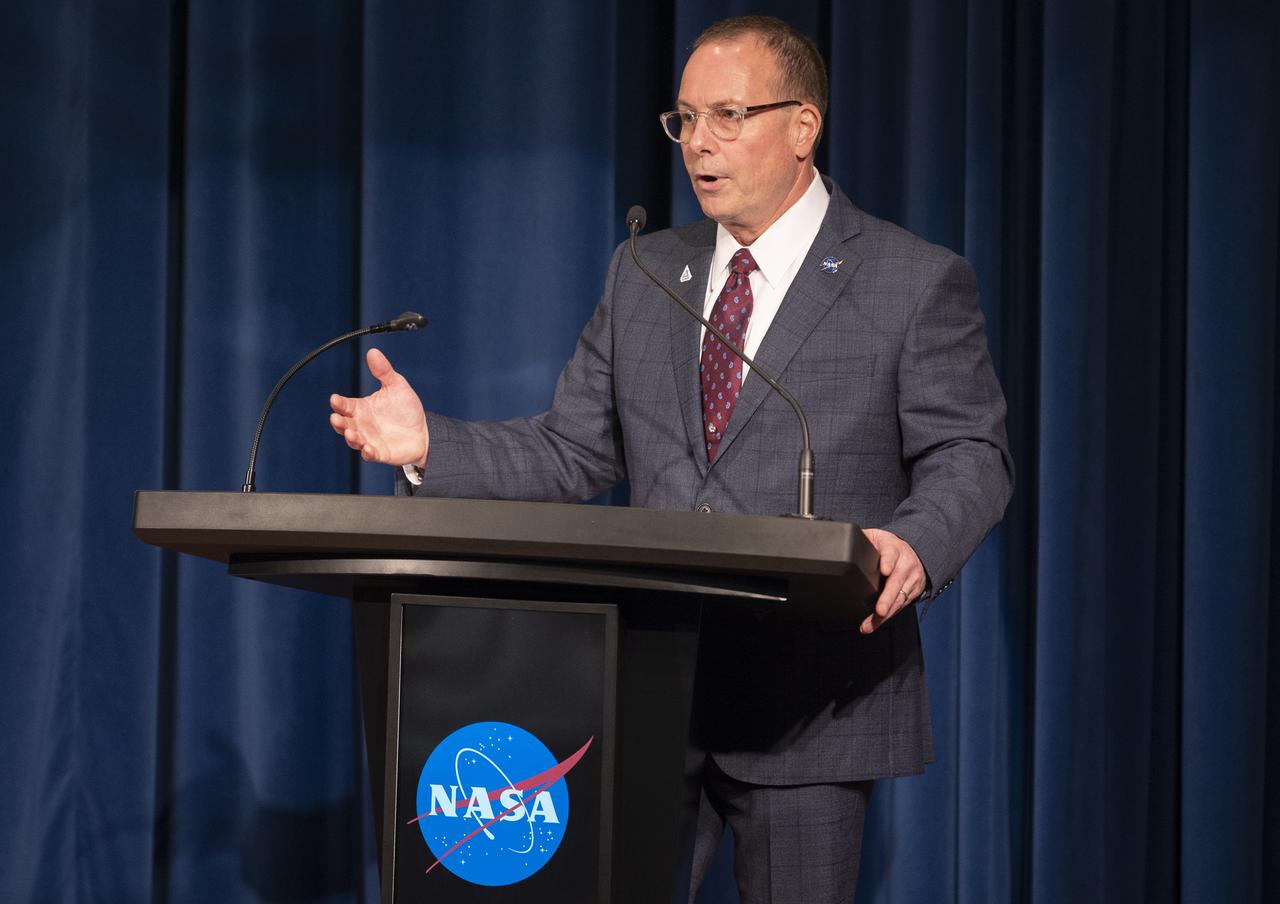
Richard Gilbrech, Director of NASA's Stennis Space Center, speaks at an all-hands for employees following the State of NASA address, Monday, Feb. 10, 2020, at NASA’s Stennis Space Center near Bay St. Louis, Mississippi. Photo Credit: (NASA/Joel Kowsky)

NASA astronaut Raja Chari speaks at an all-hands for employees following the State of NASA address, Monday, Feb. 10, 2020, at NASA’s Stennis Space Center near Bay St. Louis, Mississippi. Photo Credit: (NASA/Joel Kowsky)
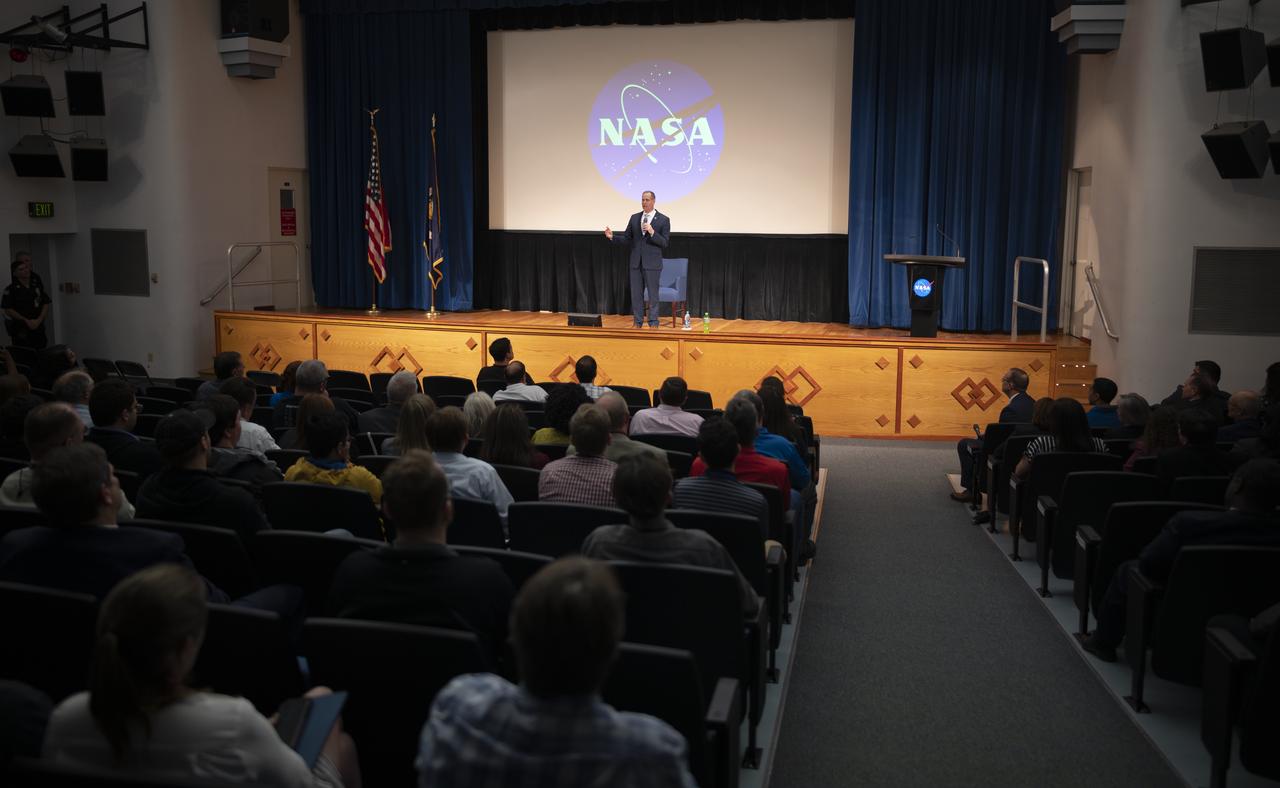
NASA Administrator Jim Bridenstine speaks at an all-hands for employees following the State of NASA address, Monday, Feb. 10, 2020, at NASA’s Stennis Space Center near Bay St. Louis, Mississippi. Photo Credit: (NASA/Joel Kowsky)
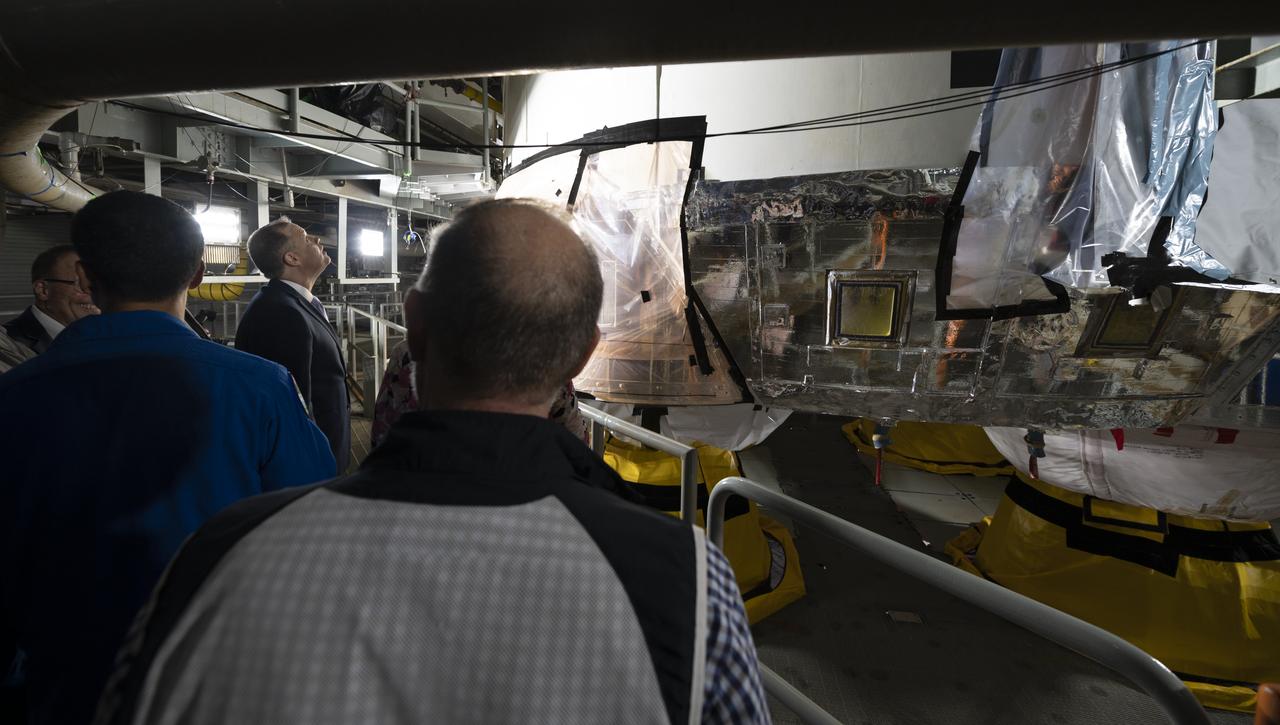
NASA Administrator Jim Bridenstine looks up at the first core stage of the agency’s Space Launch System rocket during a tour of the B-2 Test Stand Monday, Feb. 10, 2020, at NASA’s Stennis Space Center near Bay St. Louis, Mississippi. Over the coming months, the first core stage of the SLS rocket will be undergoing a series of integrated Green Run tests prior to its maiden flight. Photo Credit: (NASA/Joel Kowsky)
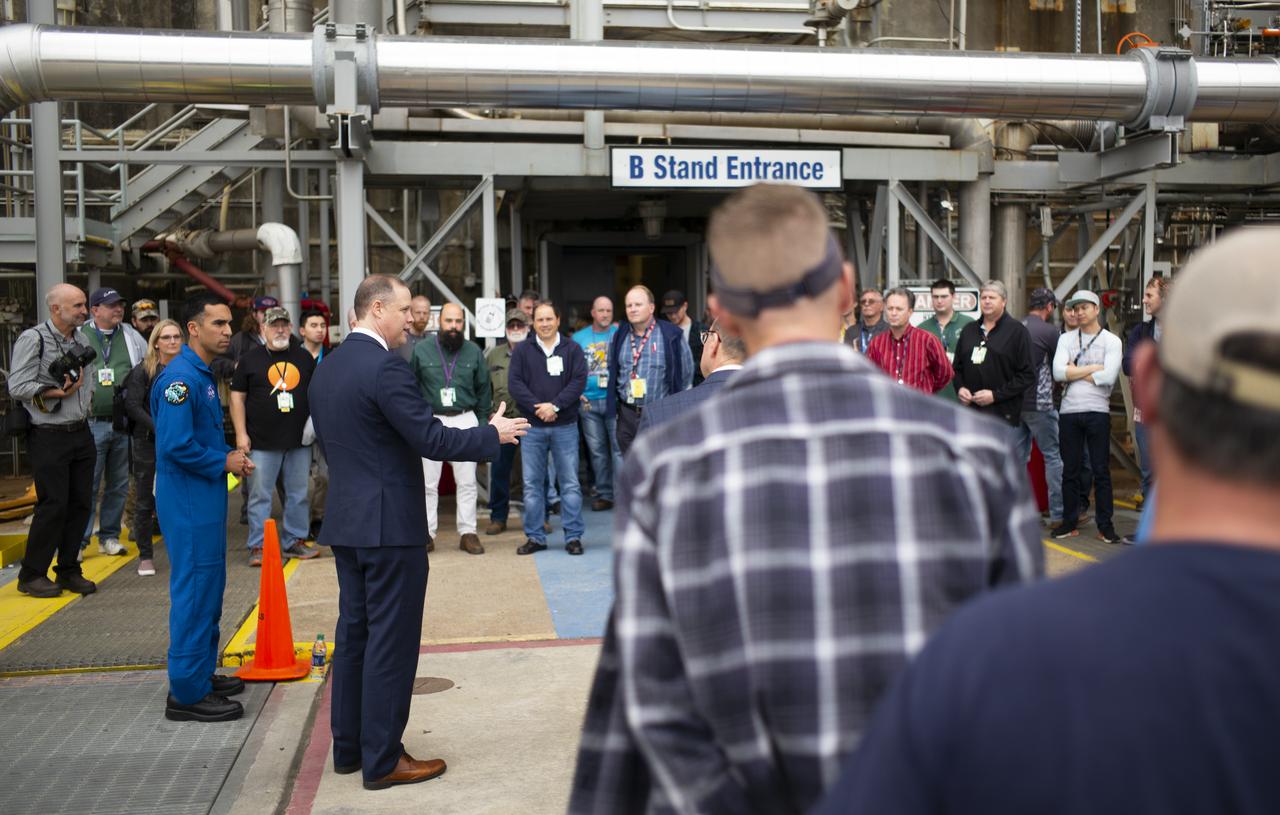
NASA Administrator Jim Bridenstine and NASA astronaut Raja Chari speak with workers involved modal testing of the first core stage of the agency’s Space Launch System (SLS) rocket at the B-2 Test Stand,x3 Monday, Feb. 10, 2020, at NASA’s Stennis Space Center near Bay St. Louis, Mississippi. Over the coming months, the first core stage of NASA’s Space Launch System (SLS) rocket will be undergoing a series of integrated Green Run tests prior to its maiden flight. Photo Credit: (NASA/Joel Kowsky)
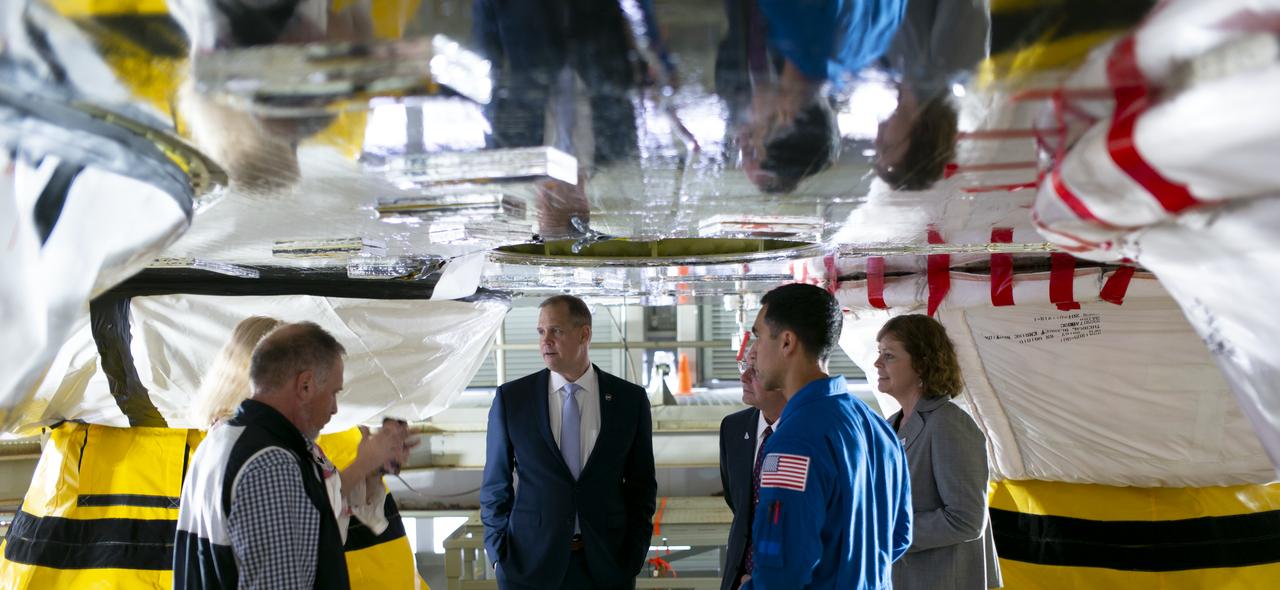
NASA Administrator Jim Bridenstine, center, is seen on a work platform between the four RS-25 engines of the first core stage of the agency’s Space Launch System (SLS) rocket along with Lisa Bates, SLS Deputy Stages Manager at NASA, Mark Nappi, Boeing Green Run Test Manager, Richard Gilbrech, Director of NASA's Stennis Space Center, Julie Bassler, SLS Stages Manager at NASA, and NASA astronaut Raja Chari, during a tour of the B-2 Test Stand, Monday, Feb. 10, 2020, at NASA’s Stennis Space Center near Bay St. Louis, Mississippi. Over the coming months, the first core stage of NASA’s SLS rocket will be undergoing a series of integrated Green Run tests prior to its maiden flight. Photo Credit: (NASA/Joel Kowsky)
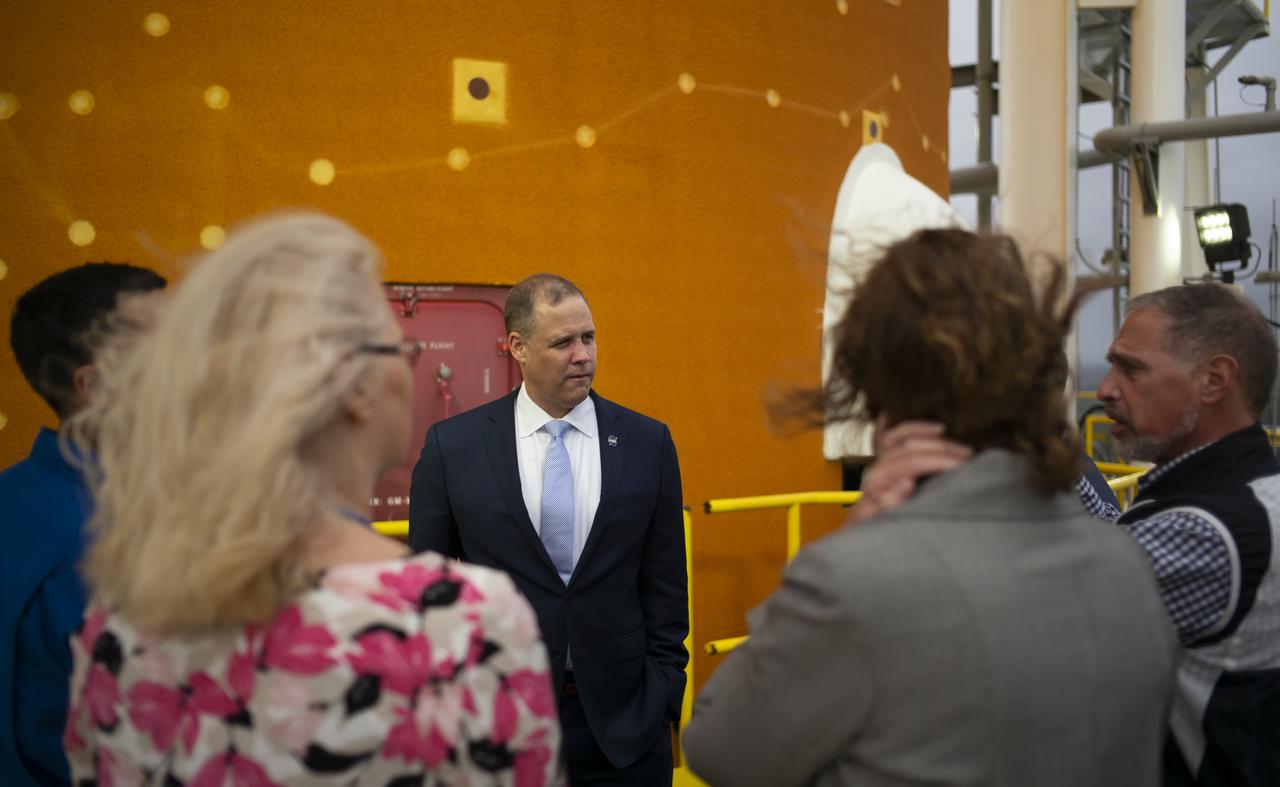
NASA Administrator Jim Bridenstine, center, is seen next to the first core stage of the agency’s Space Launch System (SLS) rocket along with Lisa Bates, SLS Deputy Stages Manager at NASA, Mark Nappi, Boeing Green Run Test Manager, Richard Gilbrech, Director of NASA's Stennis Space Center, Julie Bassler, SLS Stages Manager at NASA, and NASA astronaut Raja Chari, during a tour of the B-2 Test Stand, Monday, Feb. 10, 2020, at NASA’s Stennis Space Center near Bay St. Louis, Mississippi. Over the coming months, the first core stage of NASA’s SLS rocket will be undergoing a series of integrated Green Run tests prior to its maiden flight. Photo Credit: (NASA/Joel Kowsky)
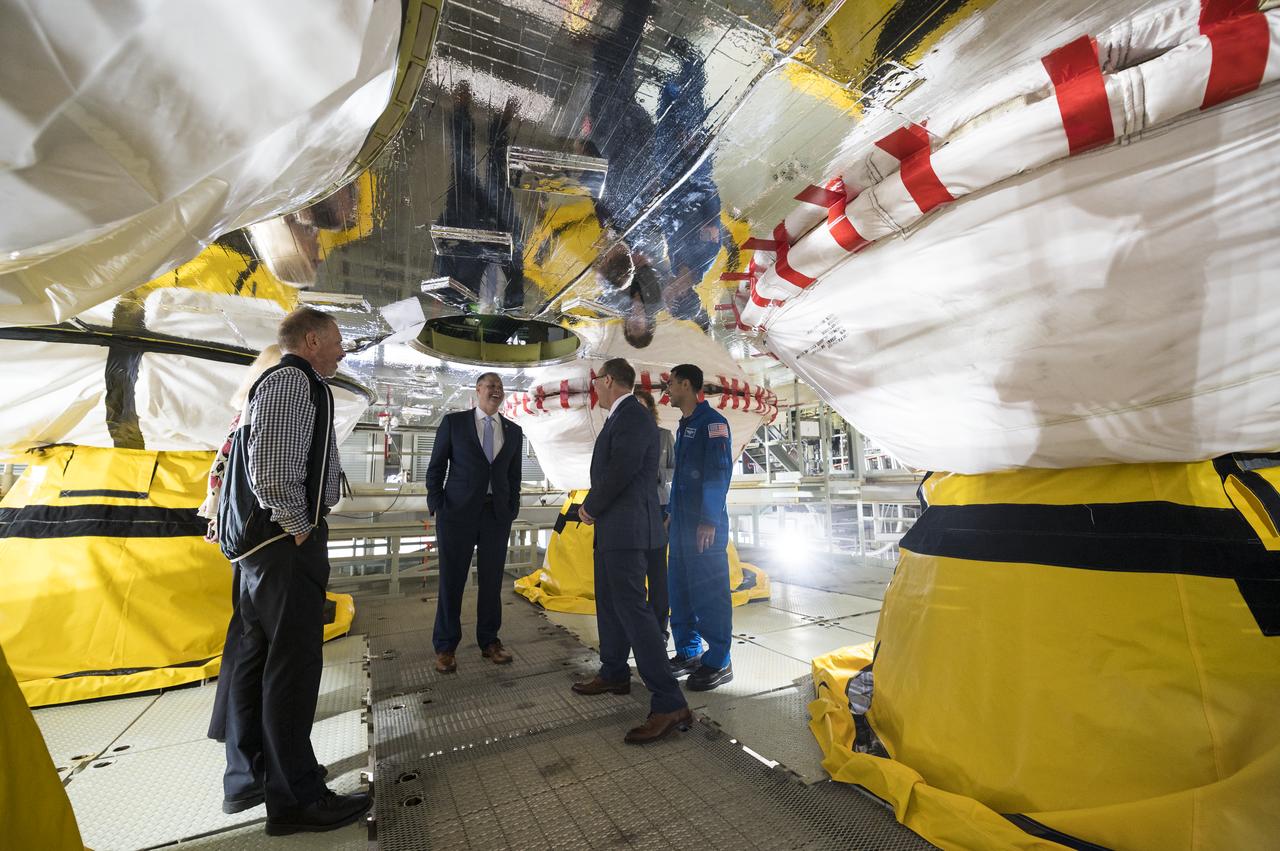
NASA Administrator Jim Bridenstine, center, is seen on a work platform between the four RS-25 engines of the first core stage of the agency’s Space Launch System (SLS) rocket along with Lisa Bates, SLS Deputy Stages Manager at NASA, Mark Nappi, Boeing Green Run Test Manager, Richard Gilbrech, Director of NASA's Stennis Space Center, Julie Bassler, SLS Stages Manager at NASA, and NASA astronaut Raja Chari, during a tour of the B-2 Test Stand, Monday, Feb. 10, 2020, at NASA’s Stennis Space Center near Bay St. Louis, Mississippi. Over the coming months, the first core stage of NASA’s SLS rocket will be undergoing a series of integrated Green Run tests prior to its maiden flight. Photo Credit: (NASA/Joel Kowsky)
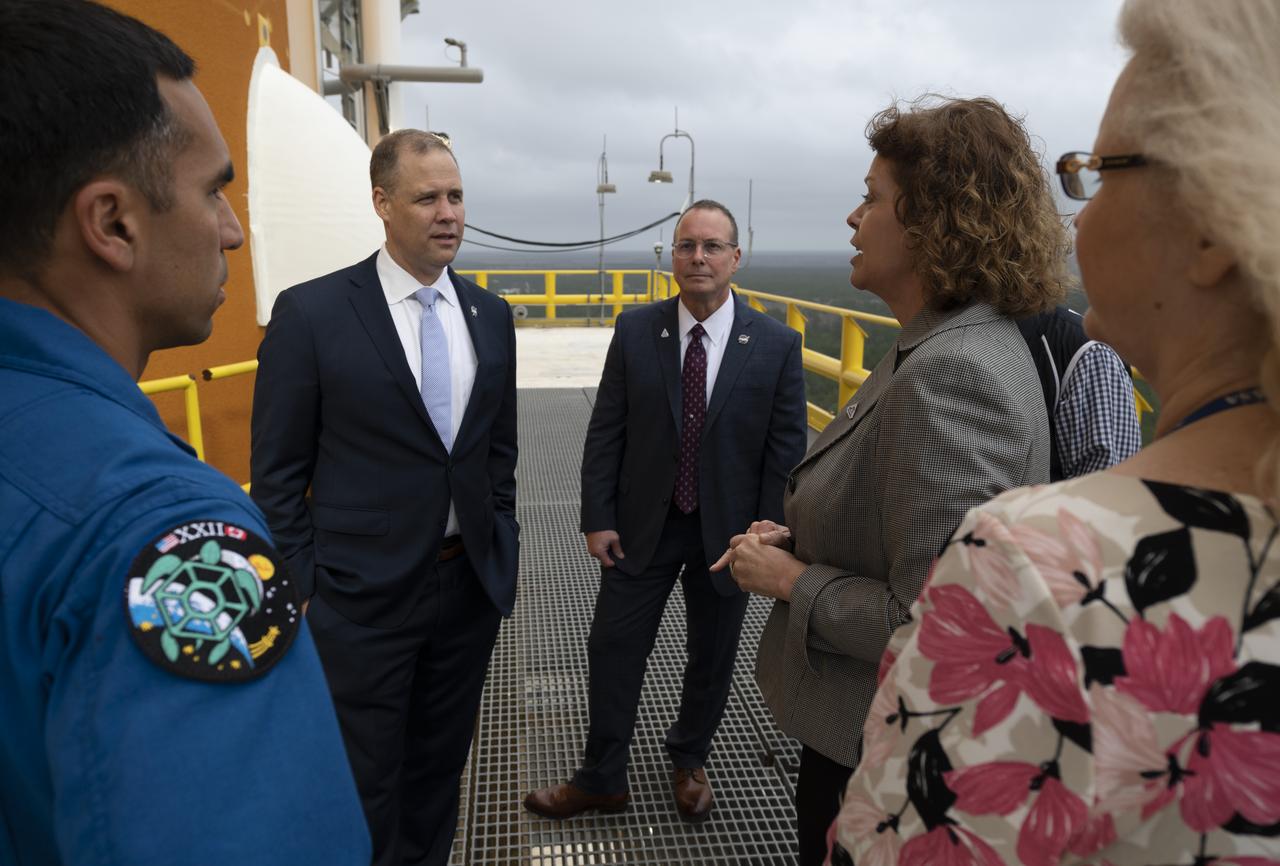
NASA Administrator Jim Bridenstine, center, is seen on a work platform between the four RS-25 engines of the first core stage of the agency’s Space Launch System (SLS) rocket along with Lisa Bates, SLS Deputy Stages Manager at NASA, Mark Nappi, Boeing Green Run Test Manager, Richard Gilbrech, Director of NASA's Stennis Space Center, Julie Bassler, SLS Stages Manager at NASA, and NASA astronaut Raja Chari, during a tour of the B-2 Test Stand, Monday, Feb. 10, 2020, at NASA’s Stennis Space Center near Bay St. Louis, Mississippi. Over the coming months, the first core stage of NASA’s SLS rocket will be undergoing a series of integrated Green Run tests prior to its maiden flight. Photo Credit: (NASA/Joel Kowsky)
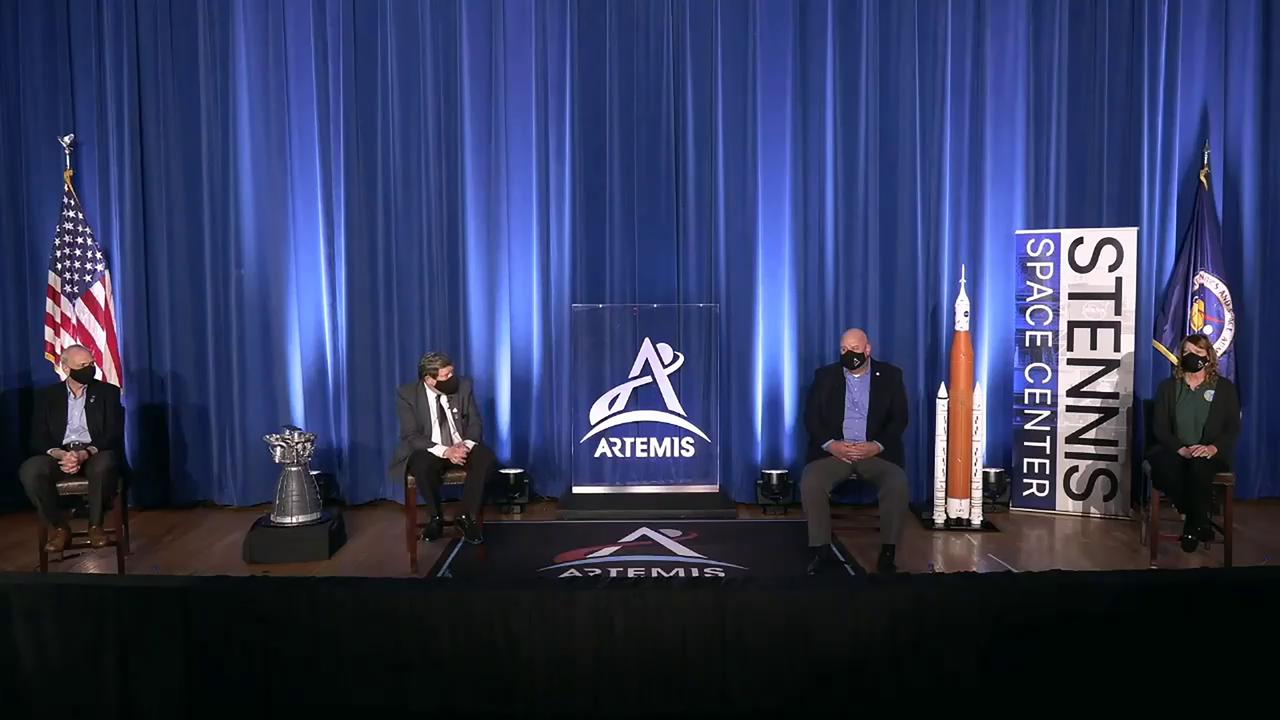
NASA leaders participated in a participate in a virtual press briefing following the Space Launch System core stage hot fire test at Stennis Space Center near Bay St. Louis, Mississippi, on March 18. The leaders fielded questions submitted by offsite media during the post-test session. Agency participants present at Stennis included (l to r): NASA acting Administrator Steve Jurczyk; Tom Whitmeyer, NASA deputy associate administrator for Exploration Systems Development; John Honeycutt, SLS Program manager at Marshall Space Flight Center; and Julie Bassler, SLS Stages Office manager at Marshall Space Flight Center.
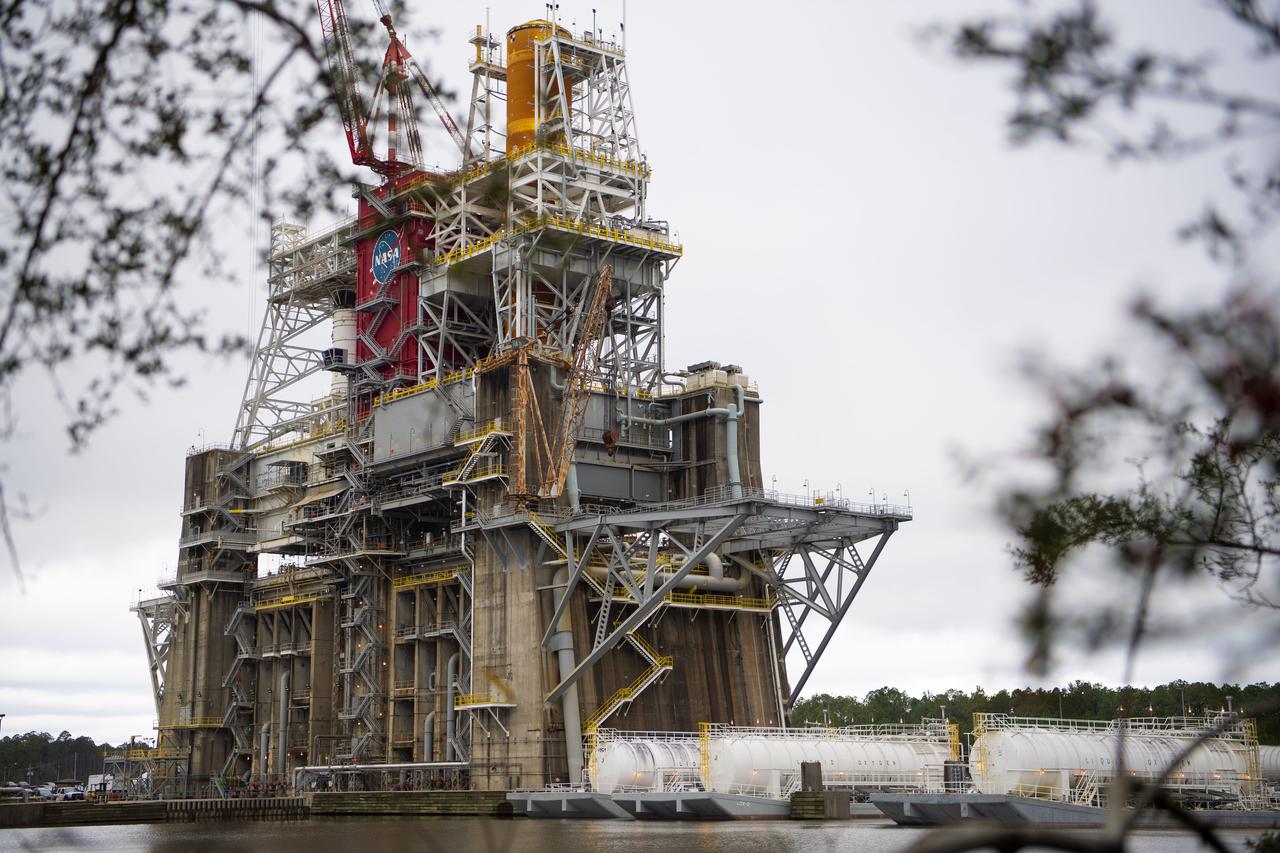
Barges are docked at the B-2 Test Stand at Stennis Space Center on Dec. 4, 2020, in preparation for upcoming Green Run test activities. Teams at the center have been performing Green Run tests of NASA’s Space Launch System core stage and its integrated systems throughout 2020. In mid-December, teams performed the seventh test of the Green Run series – a wet dress rehearsal of a countdown to hot fire. It marked the first time the stage tanks had been loaded with liquid oxygen and liquid hydrogen propellants supplied by the docked barges.
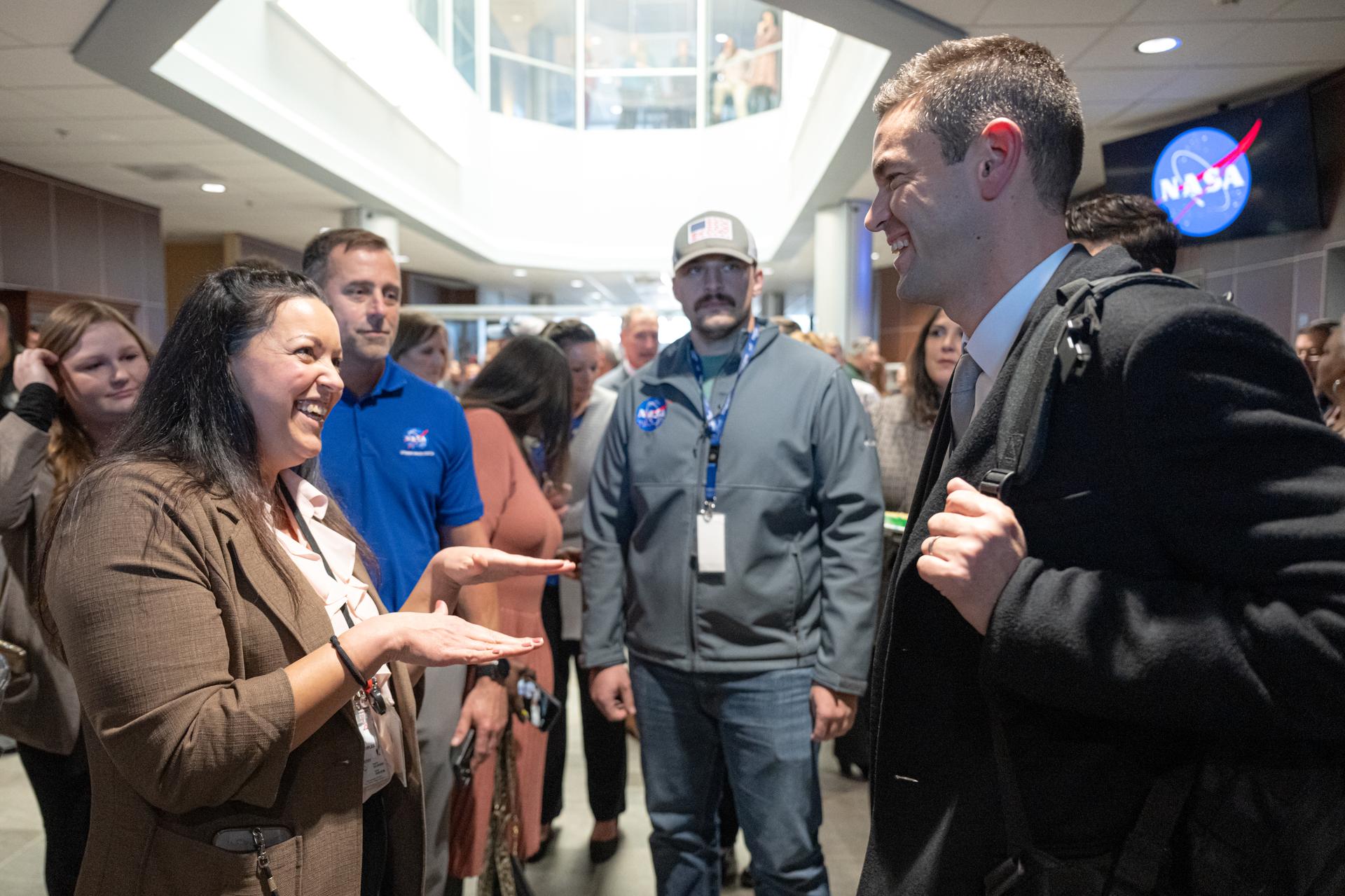
NASA Administrator Jared Isaacman, right, greets members of the workforce, Thursday, Jan. 15, 2026, at NASA’s Stennis Space Center in Mississippi. Stennis marks the sixth stop in Isaacman’s roadshow to visit NASA facilities and engage directly with the agency’s workforce. Photo Credit: (NASA/John Kraus)
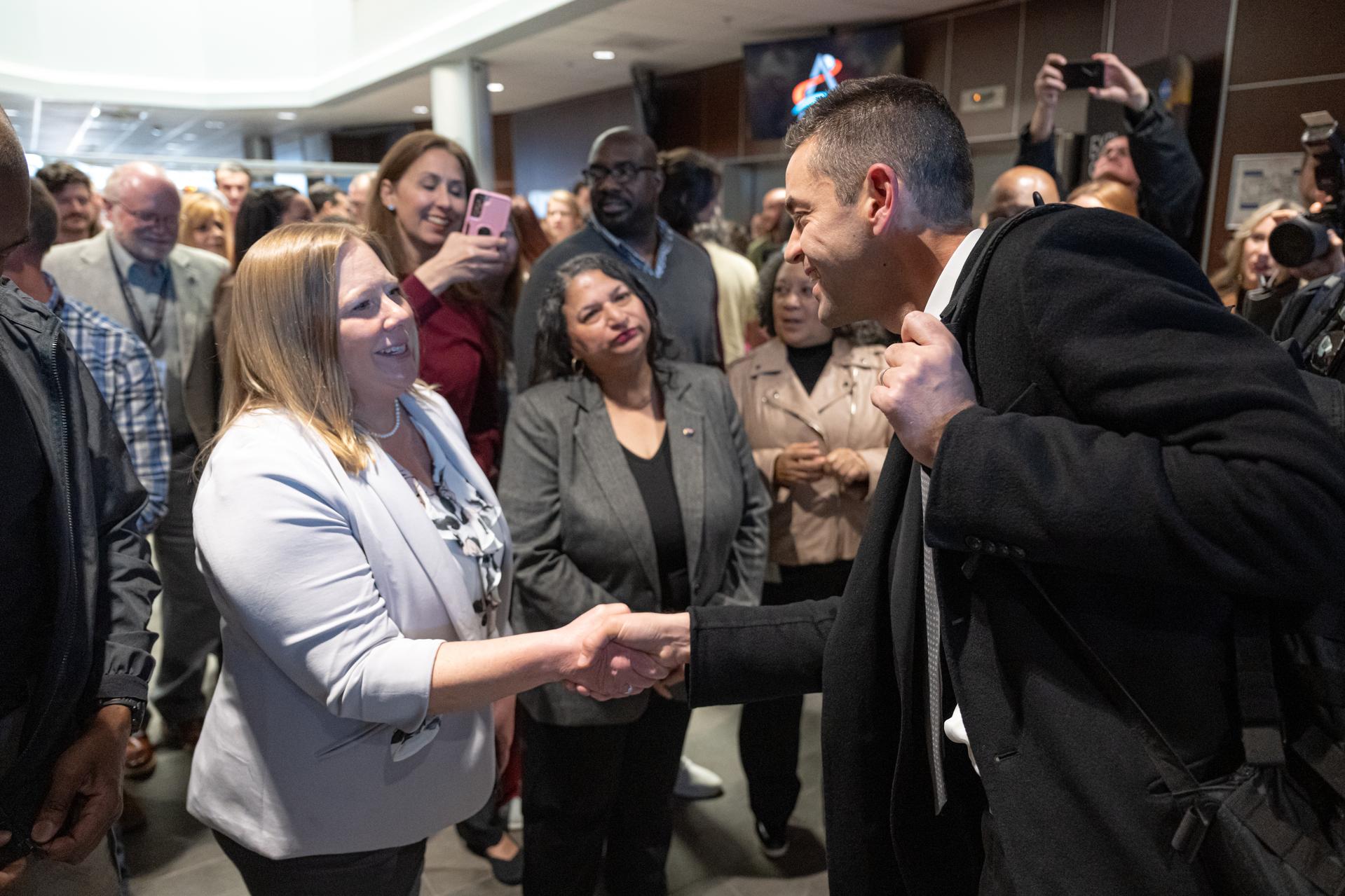
NASA Administrator Jared Isaacman, right, greets members of the workforce, Thursday, Jan. 15, 2026, at NASA’s Stennis Space Center in Mississippi. Stennis marks the sixth stop in Isaacman’s roadshow to visit NASA facilities and engage directly with the agency’s workforce. Photo Credit: (NASA/John Kraus)
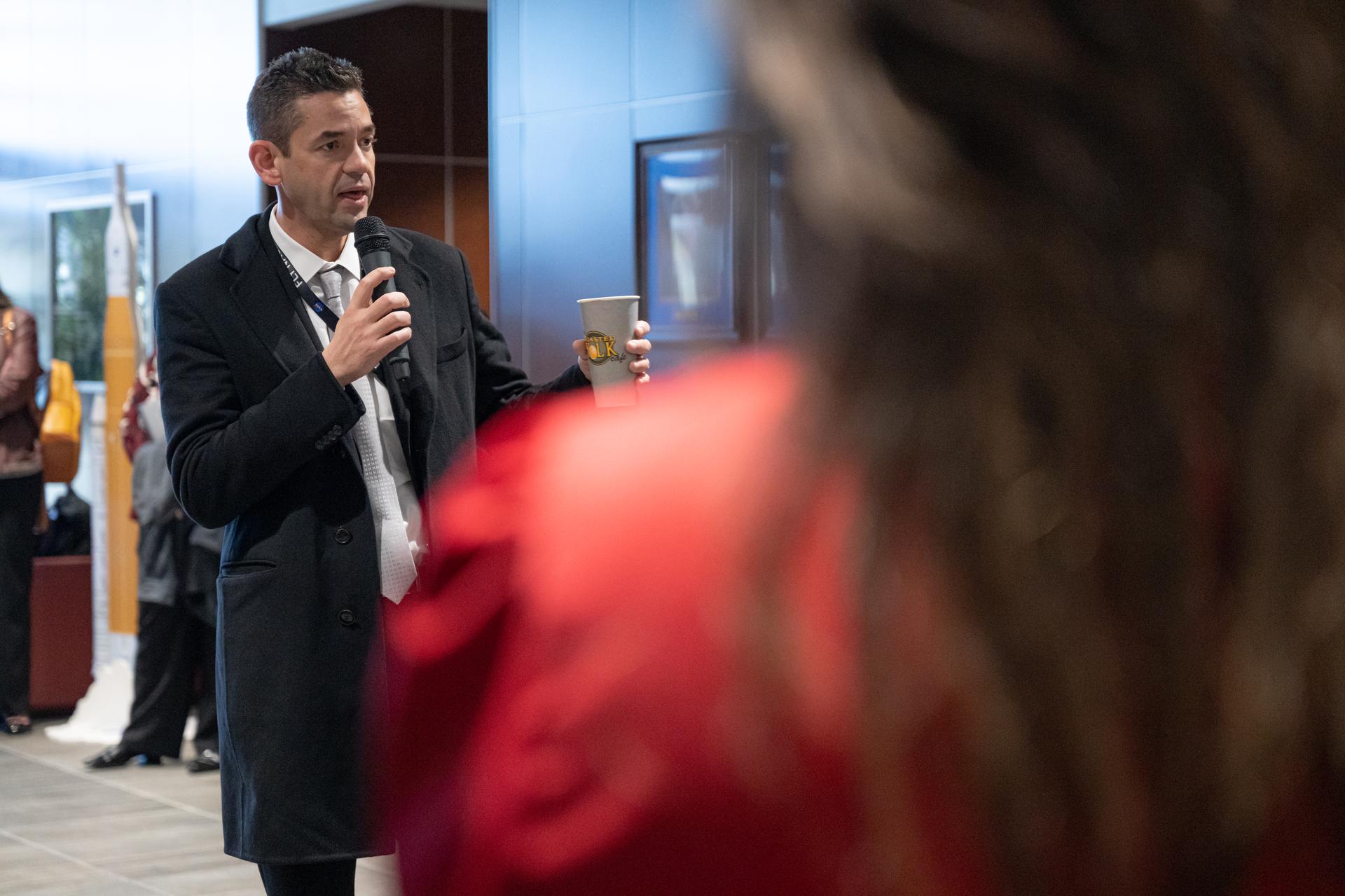
NASA Administrator Jared Isaacman speaks during a workforce Q&A session, Thursday, Jan. 15, 2026, at NASA’s Stennis Space Center in Mississippi. Stennis marks the sixth stop in Isaacman’s roadshow to visit NASA facilities and engage directly with the agency’s workforce. Photo Credit: (NASA/John Kraus)
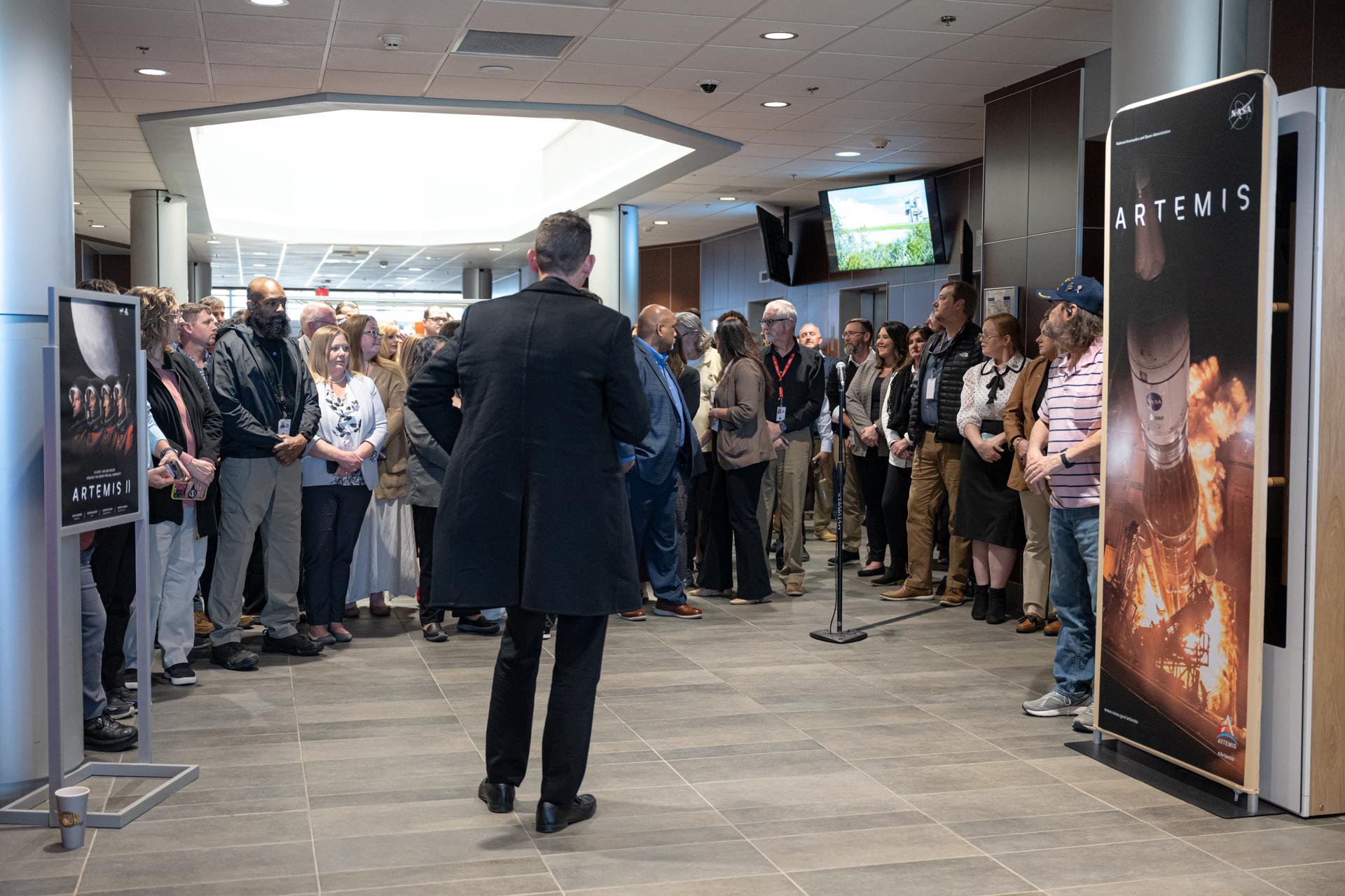
NASA Administrator Jared Isaacman speaks during a workforce Q&A session, Thursday, Jan. 15, 2026, at NASA’s Stennis Space Center in Mississippi. Stennis marks the sixth stop in Isaacman’s roadshow to visit NASA facilities and engage directly with the agency’s workforce. Photo Credit: (NASA/John Kraus)
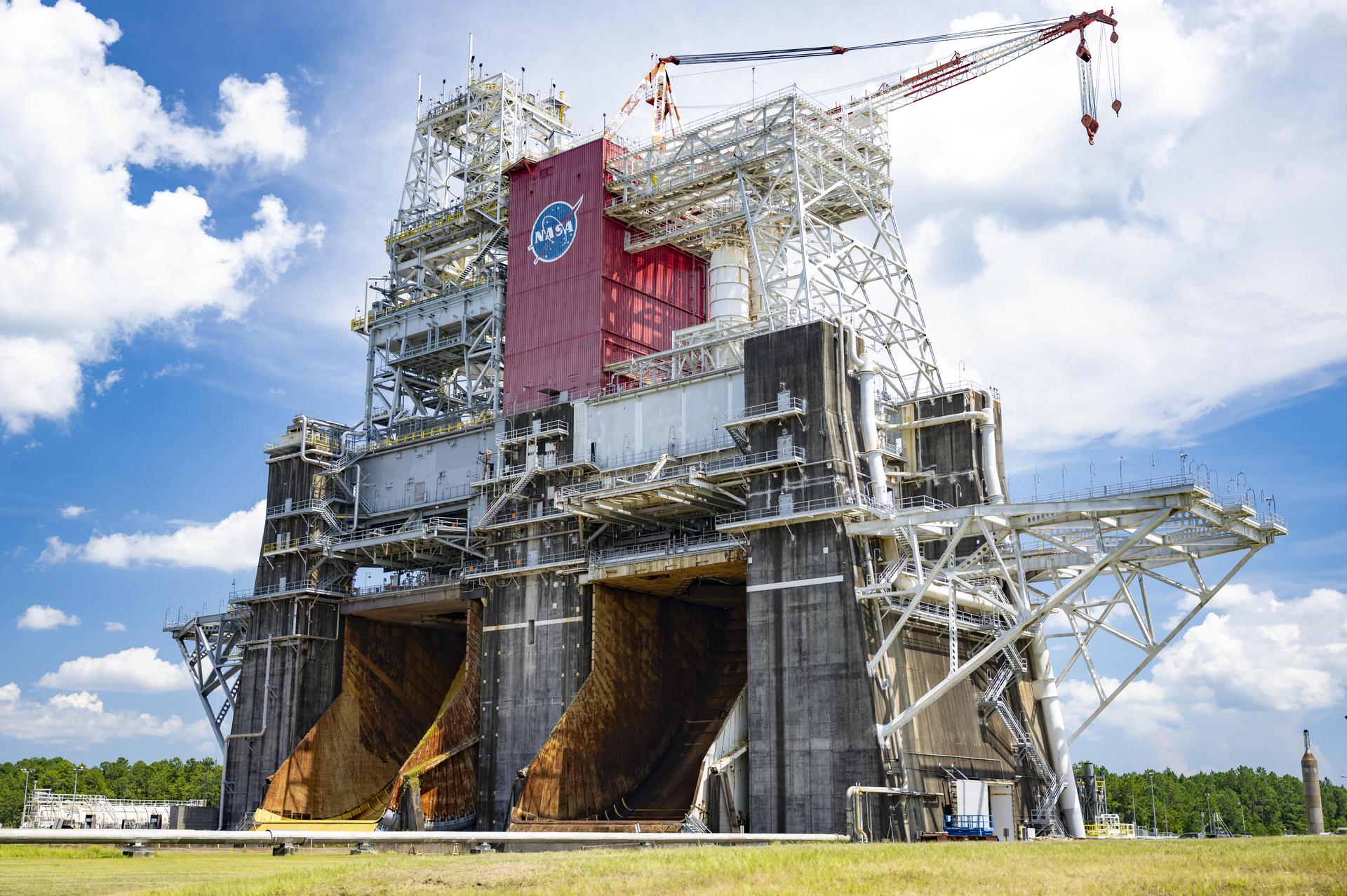
An image shows the Thad Cochran Test Stand (B-1/B-2) at NASA’s Stennis Space Center near Bay St. Louis, Mississippi, on July 7. The test stand features dual, vertical firing positions built in the 1960s to test Saturn V rocket stages that carried humans to the Moon during the Apollo program. The B 1 position, right, is equipped for single engine tests, while the B 2 position is designed to test full rocket stages.
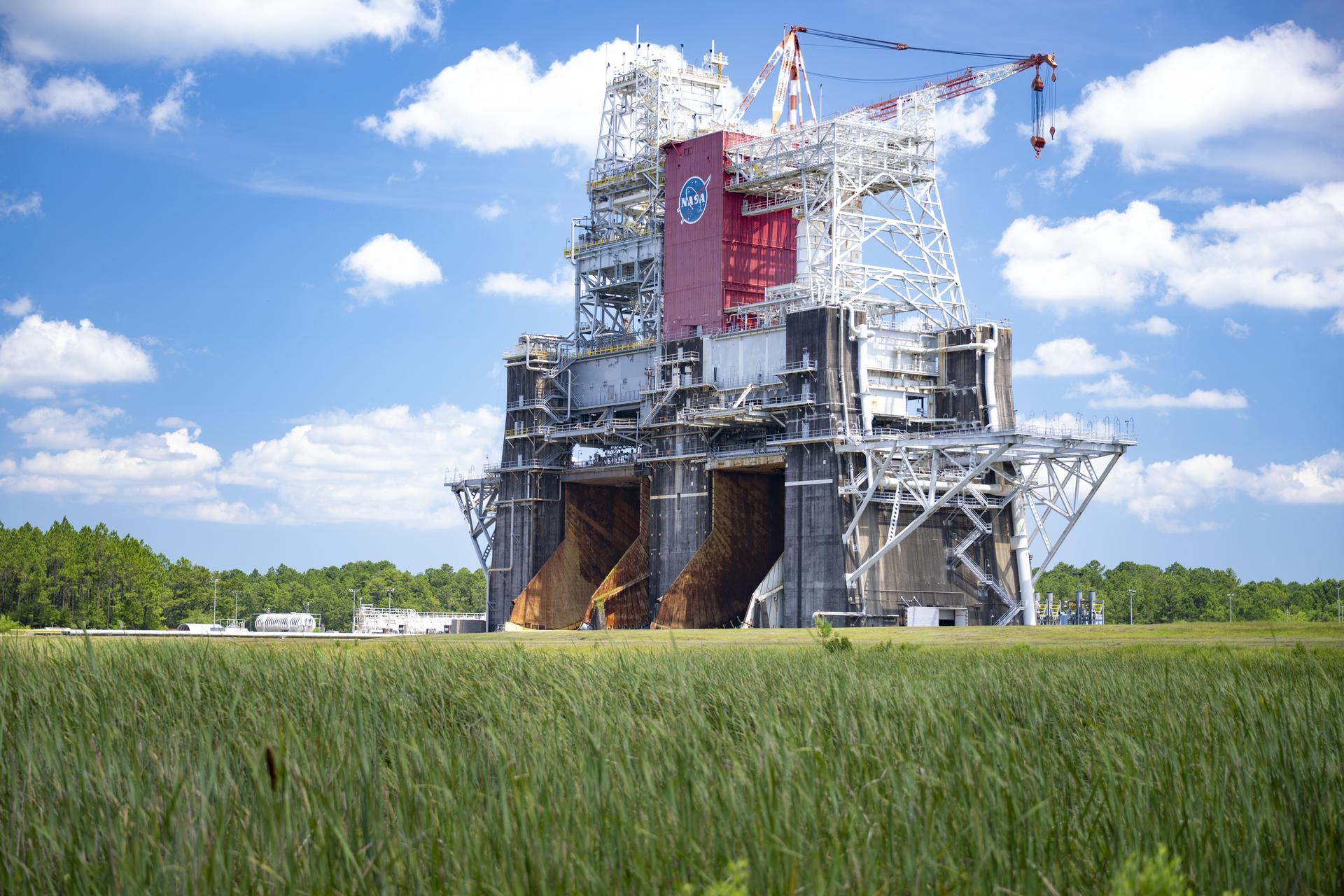
An image shows the Thad Cochran Test Stand (B-1/B-2) at NASA’s Stennis Space Center near Bay St. Louis, Mississippi, on July 7. The test stand features dual, vertical firing positions built in the 1960s to test Saturn V rocket stages that carried humans to the Moon during the Apollo program. The B 1 position, right, is equipped for single engine tests, while the B 2 position is designed to test full rocket stages.
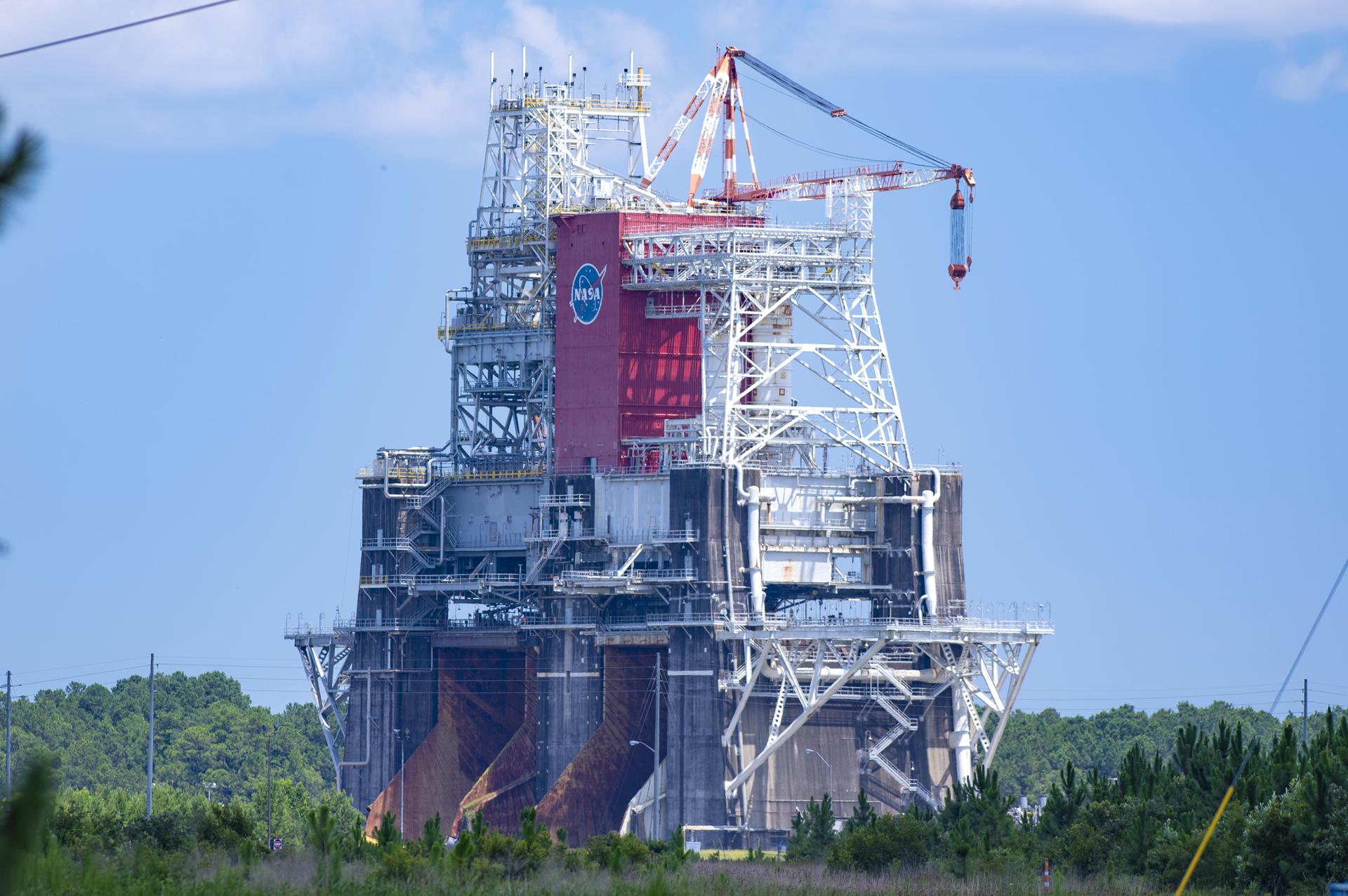
An image shows the Thad Cochran Test Stand (B-1/B-2) at NASA’s Stennis Space Center near Bay St. Louis, Mississippi, on July 7. The test stand features dual, vertical firing positions built in the 1960s to test Saturn V rocket stages that carried humans to the Moon during the Apollo program. The B 1 position, right, is equipped for single engine tests, while the B 2 position is designed to test full rocket stages.
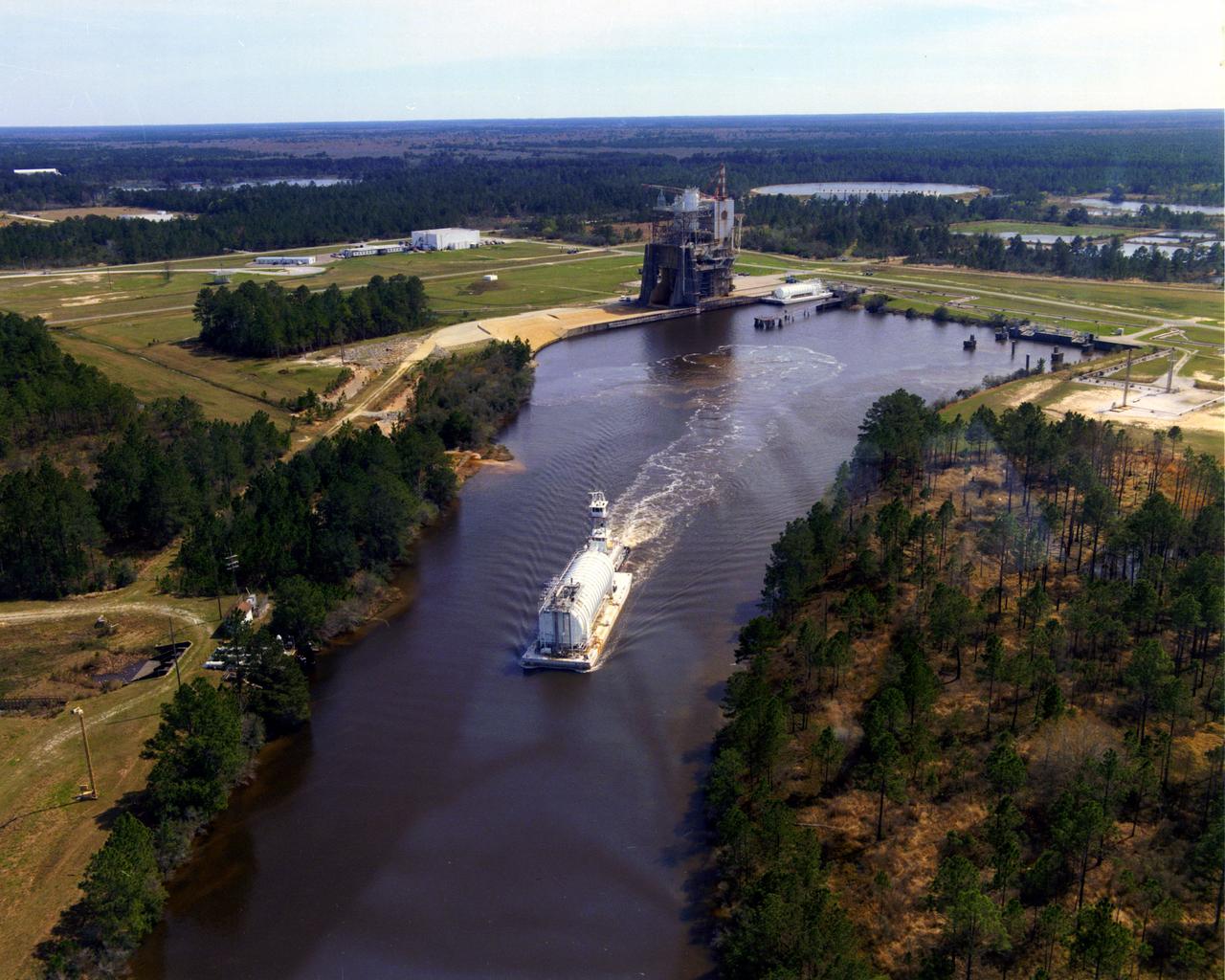
In this aerial view, a barge can be seen towing a container away from a test stand at the John C. Stennis Space Center.

Stennis Space Center; Lunar Eclipse over A-1 test stand
A 15-second test of a Saturn V rocket stage on the A-2 Test Stand at Stennis Space Center ushered in the Space Age for south Mississippi. Fifty years later, Stennis has grown into the nation’s largest rocket engine test site, continuing to test rocket engines and stages that power the nation’s space program.
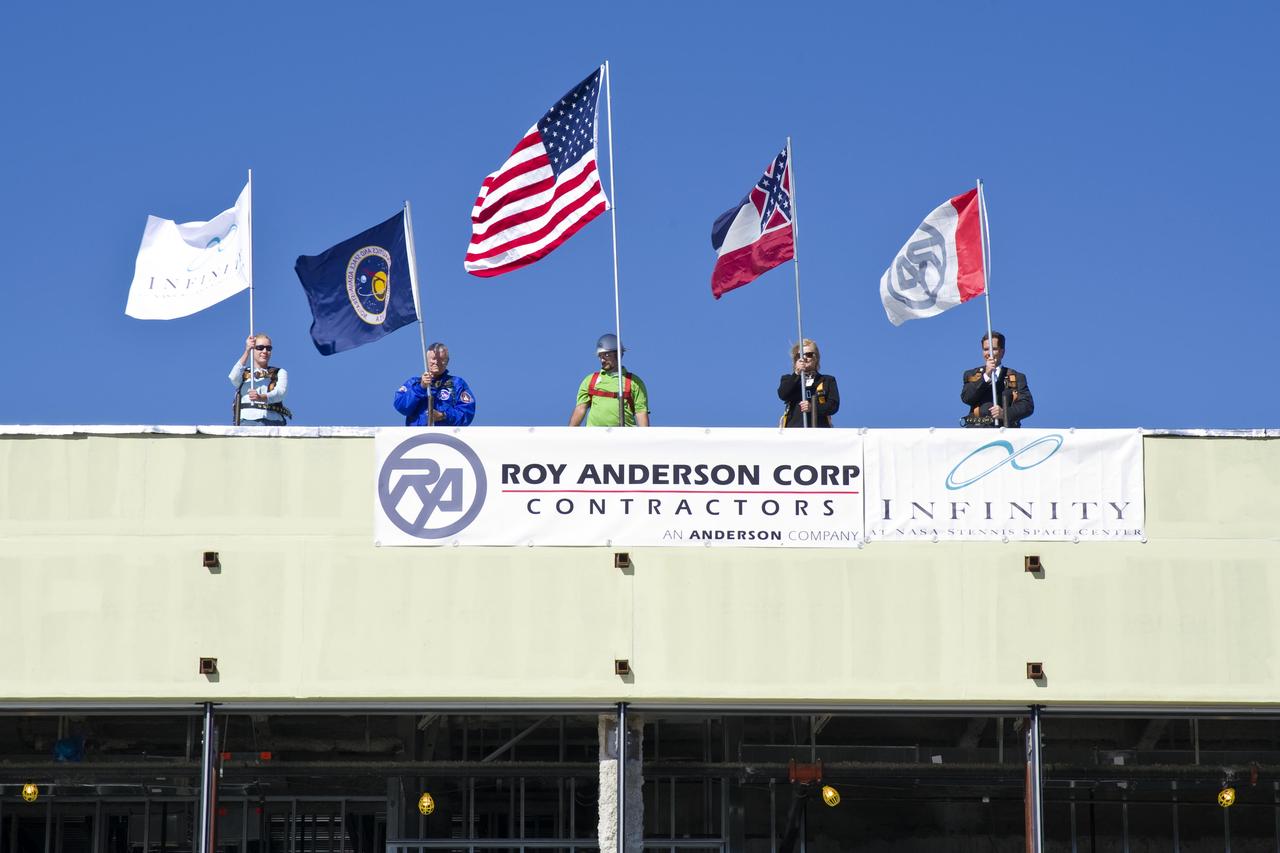
Flags are planted on the roof of the new INFINITY at NASA Stennis Space Center facility under construction just west of the Mississippi Welcome Center at exit 2 on Interstate 10. Stennis and community leaders celebrated the 'topping out' of the new science center Nov. 17, marking a construction milestone for the center. The 72,000-square-foot science and education center will feature space and Earth galleries to showcase the science that underpins the missions of the agencies at Stennis Space Center. The center is targeted to open in 2012.
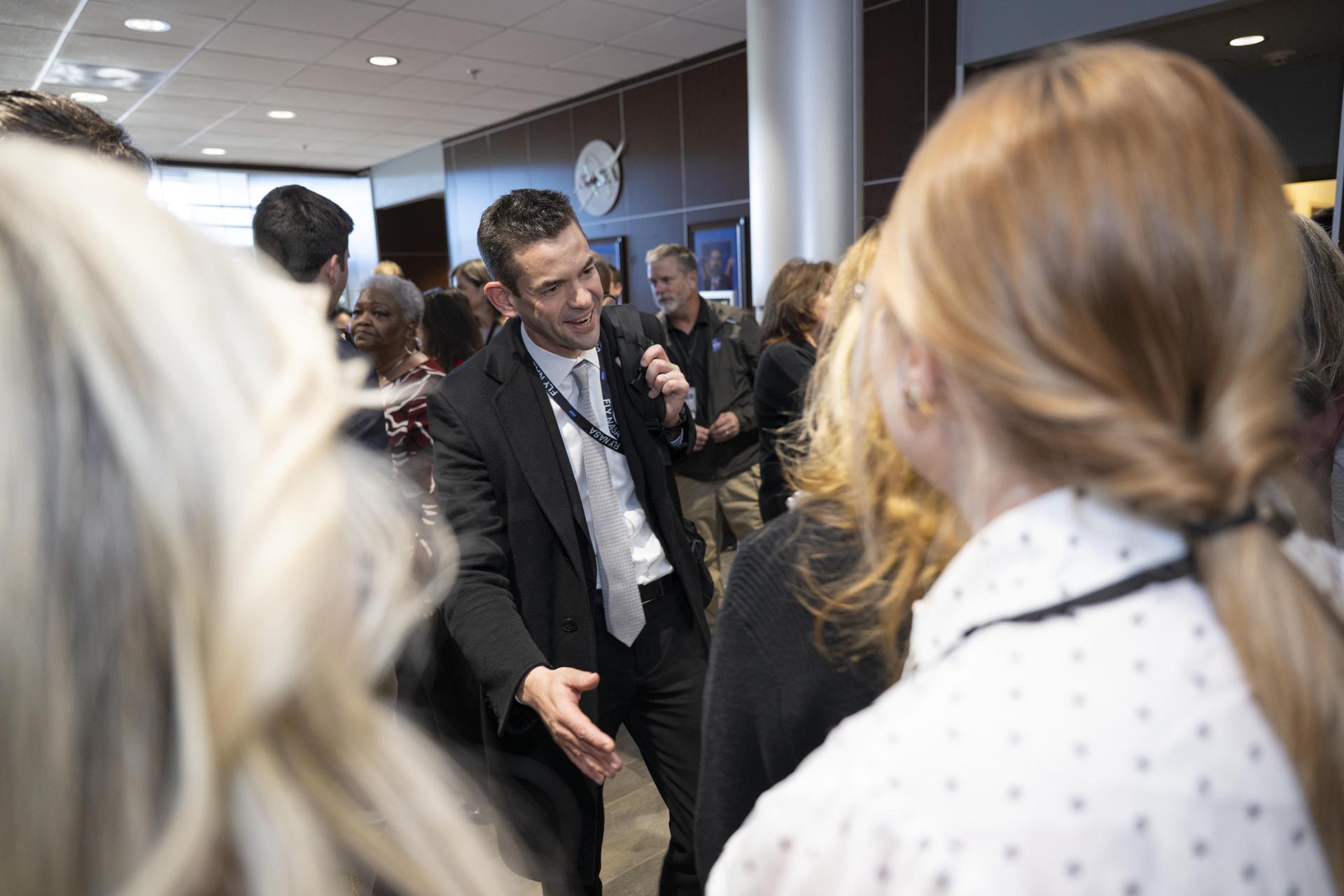
NASA Administrator Jared Isaacman, center, meets with NASA employees during his visit to NASA’s Stennis Space Center near Bay St. Louis, Mississippi, on Jan. 15, 2026. Isaacman, NASA’s 15th administrator, began visiting the agency’s centers after his appointment on Dec. 17, 2025.
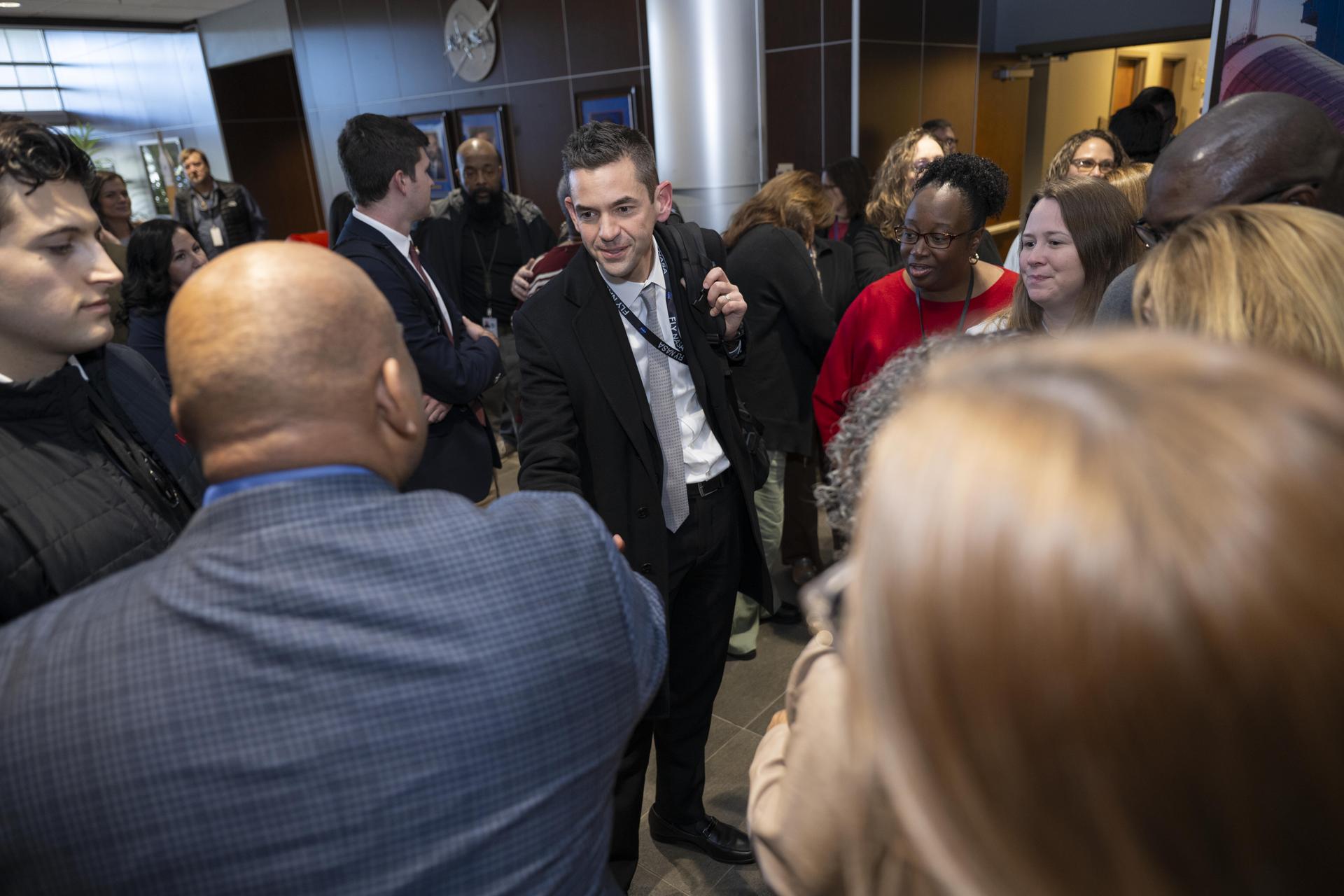
NASA Administrator Jared Isaacman, center, meets with NASA employees during his visit to NASA’s Stennis Space Center near Bay St. Louis, Mississippi, on Jan. 15, 2026. Isaacman, NASA’s 15th administrator, began visiting the agency’s centers after his appointment on Dec. 17, 2025.
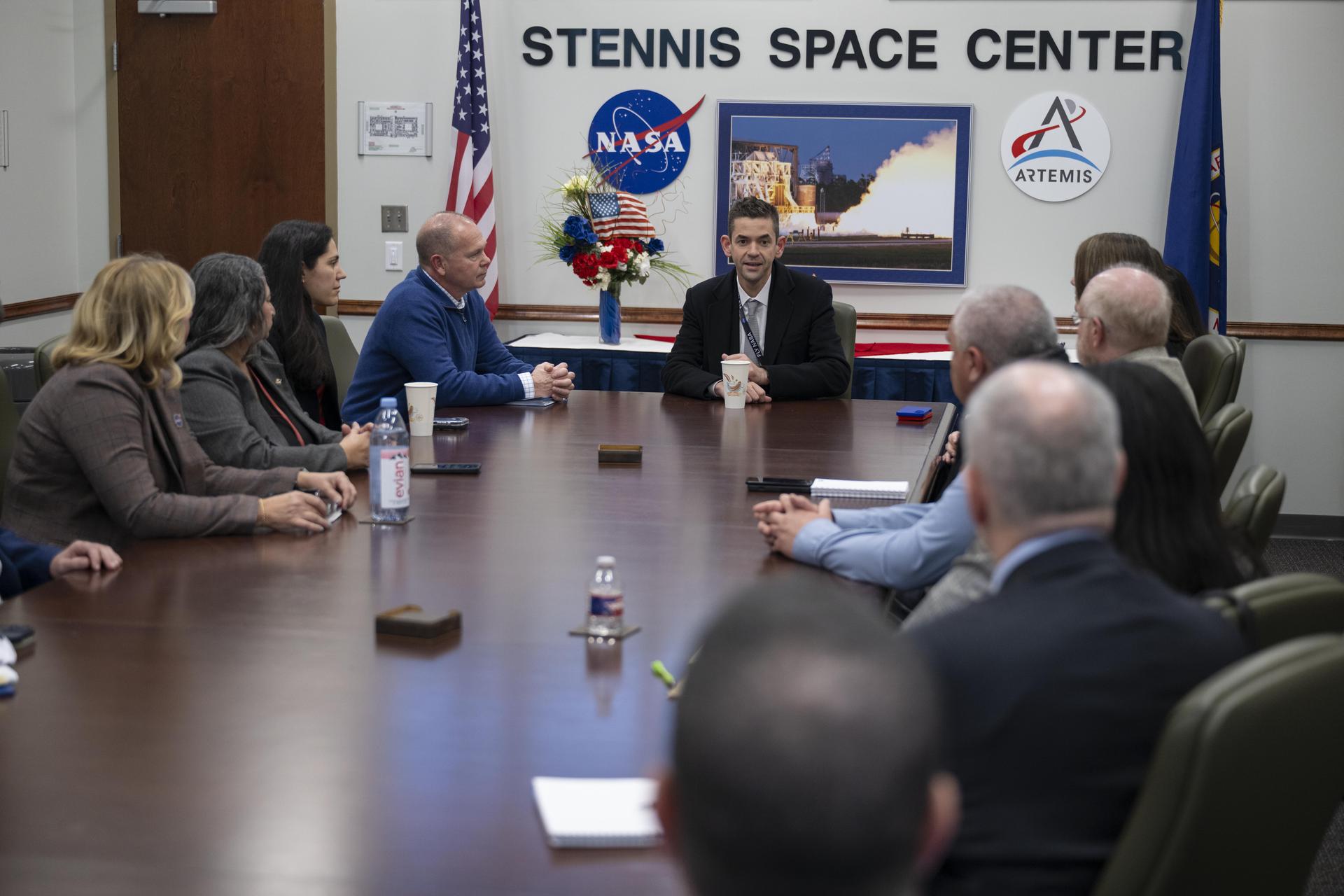
NASA Administrator Jared Isaacman, center, meets with the center’s senior leadership during his visit to NASA’s Stennis Space Center near Bay St. Louis, Mississippi, on Jan. 15, 2026. Isaacman, NASA’s 15th administrator, began visiting the agency’s centers after his appointment on Dec. 17, 2025.
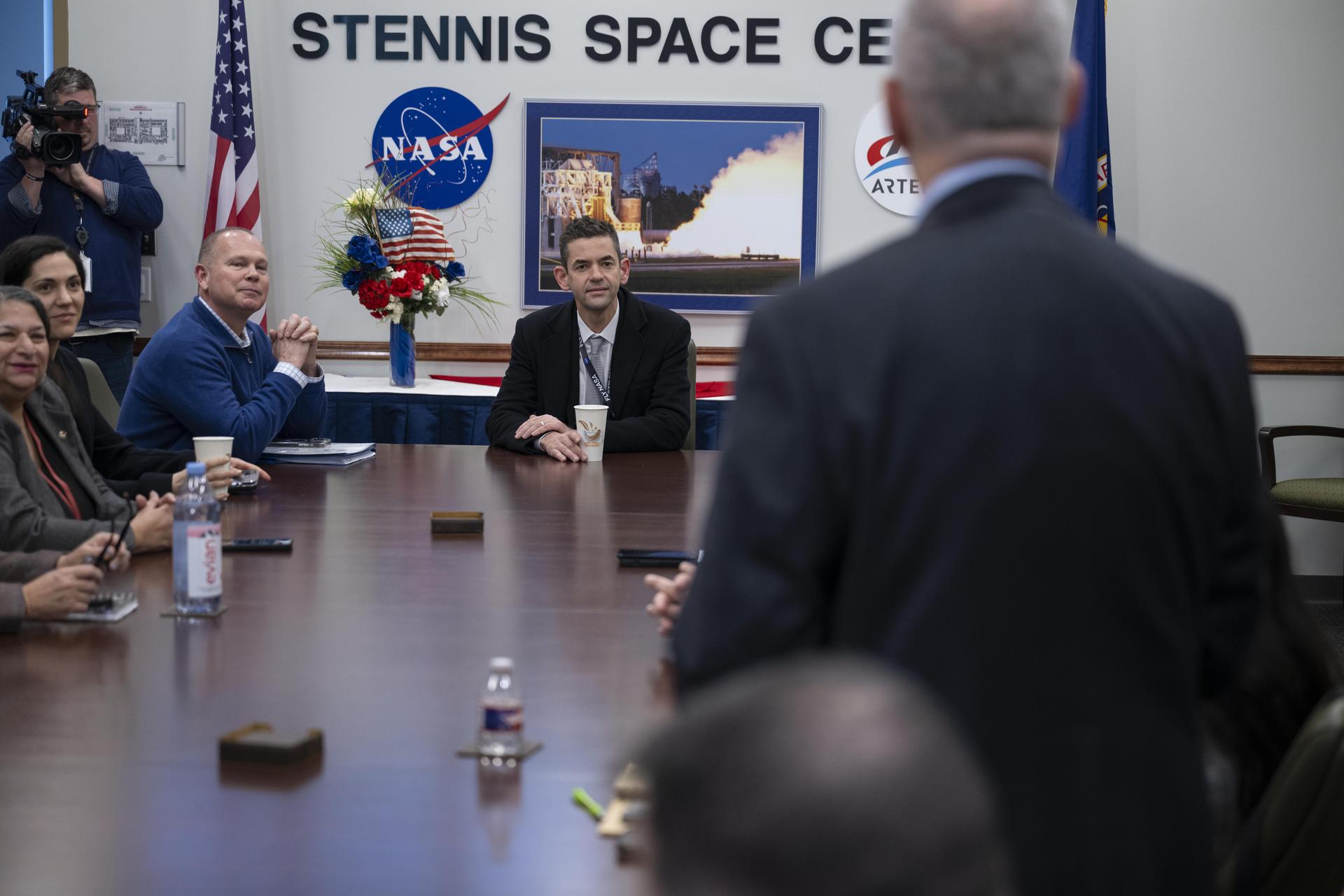
NASA Administrator Jared Isaacman, center, meets with the center’s senior leadership during his visit to NASA’s Stennis Space Center near Bay St. Louis, Mississippi, on Jan. 15, 2026. Isaacman, NASA’s 15th administrator, began visiting the agency’s centers after his appointment on Dec. 17, 2025.
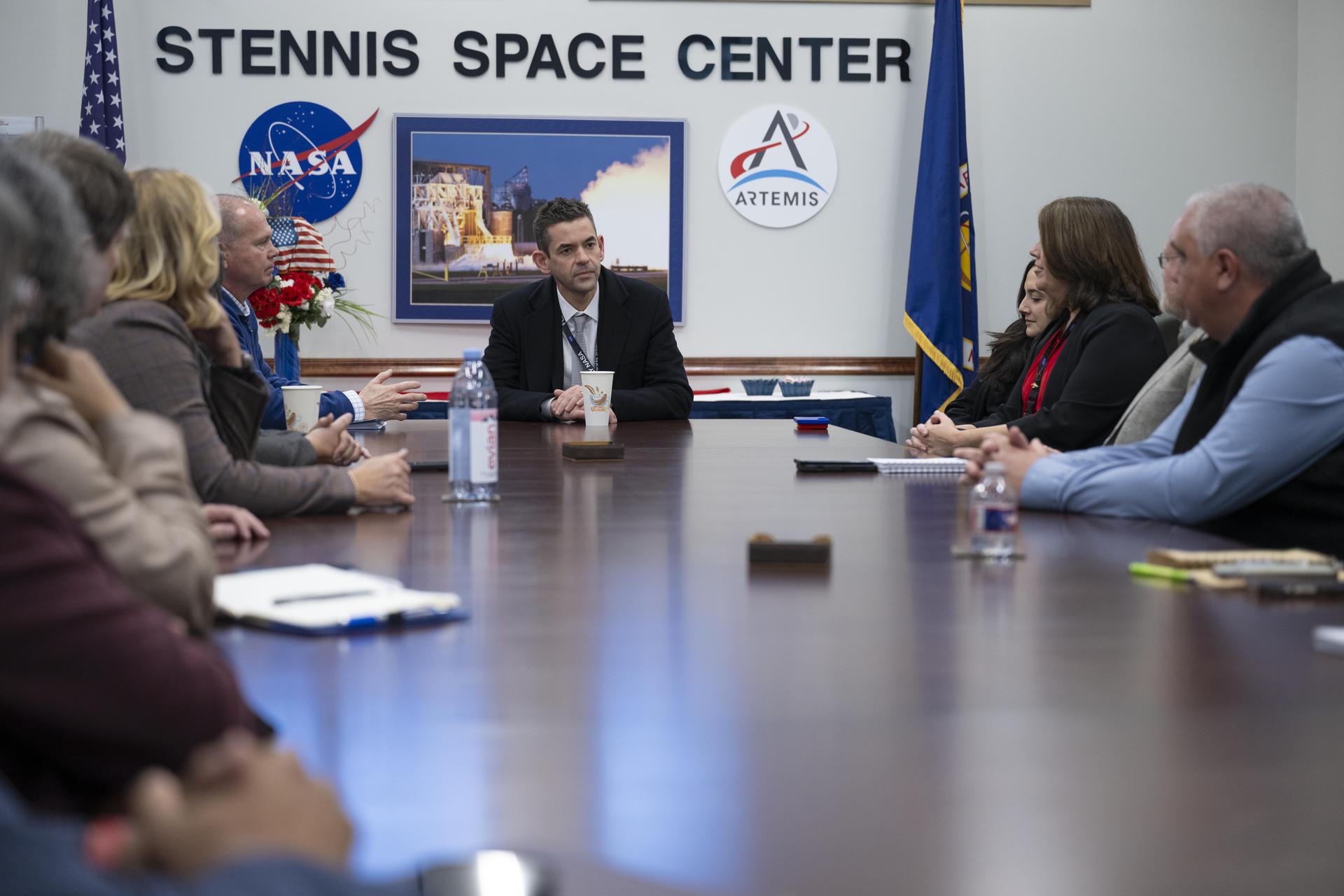
NASA Administrator Jared Isaacman, center, meets with the center’s senior leadership during his visit to NASA’s Stennis Space Center near Bay St. Louis, Mississippi, on Jan. 15, 2026. Isaacman, NASA’s 15th administrator, began visiting the agency’s centers after his appointment on Dec. 17, 2025.
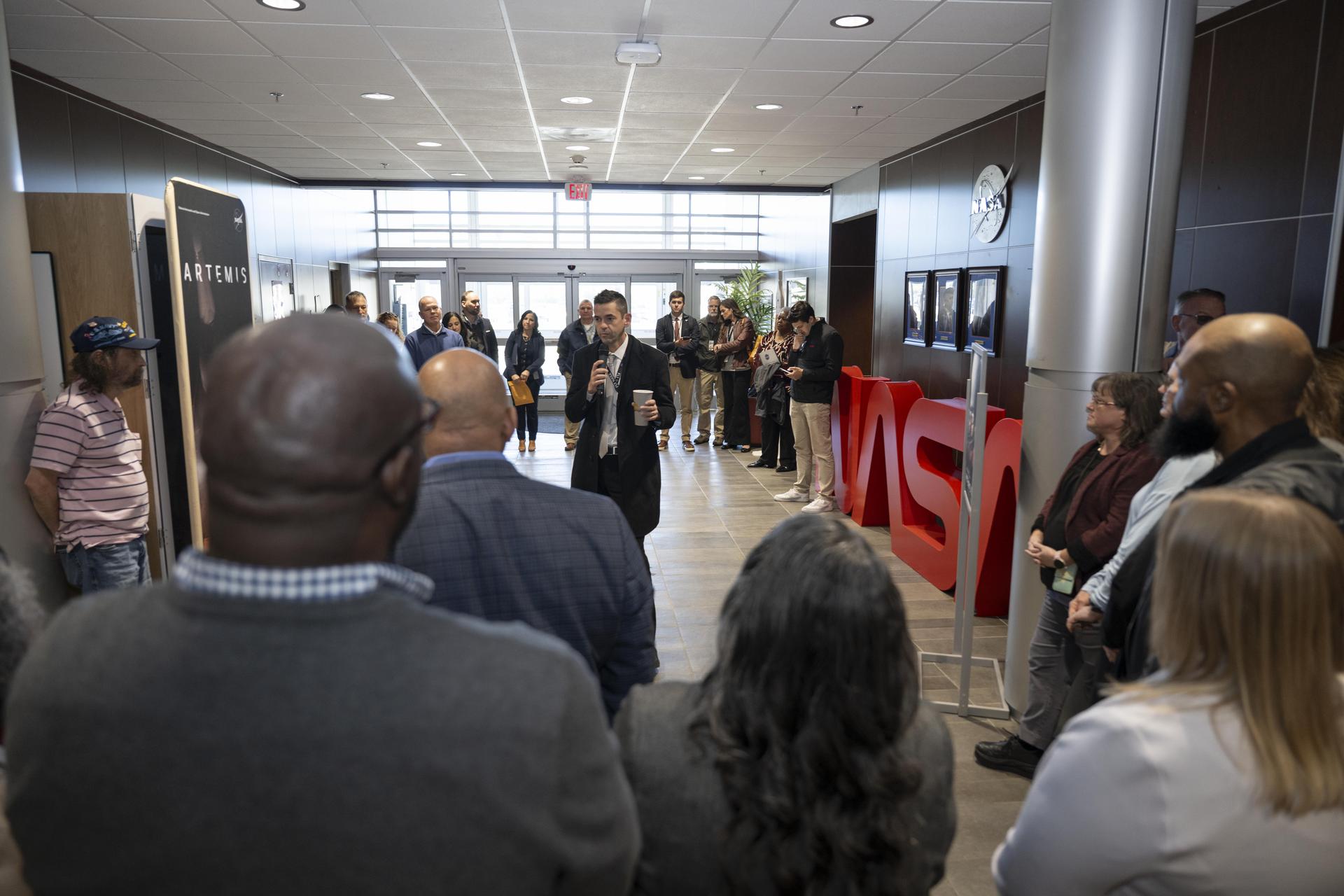
NASA Administrator Jared Isaacman, center, speaks with NASA employees during his visit to NASA’s Stennis Space Center near Bay St. Louis, Mississippi, on Jan. 15, 2026. Isaacman, NASA’s 15th administrator, began visiting the agency’s centers after his appointment on Dec. 17, 2025.
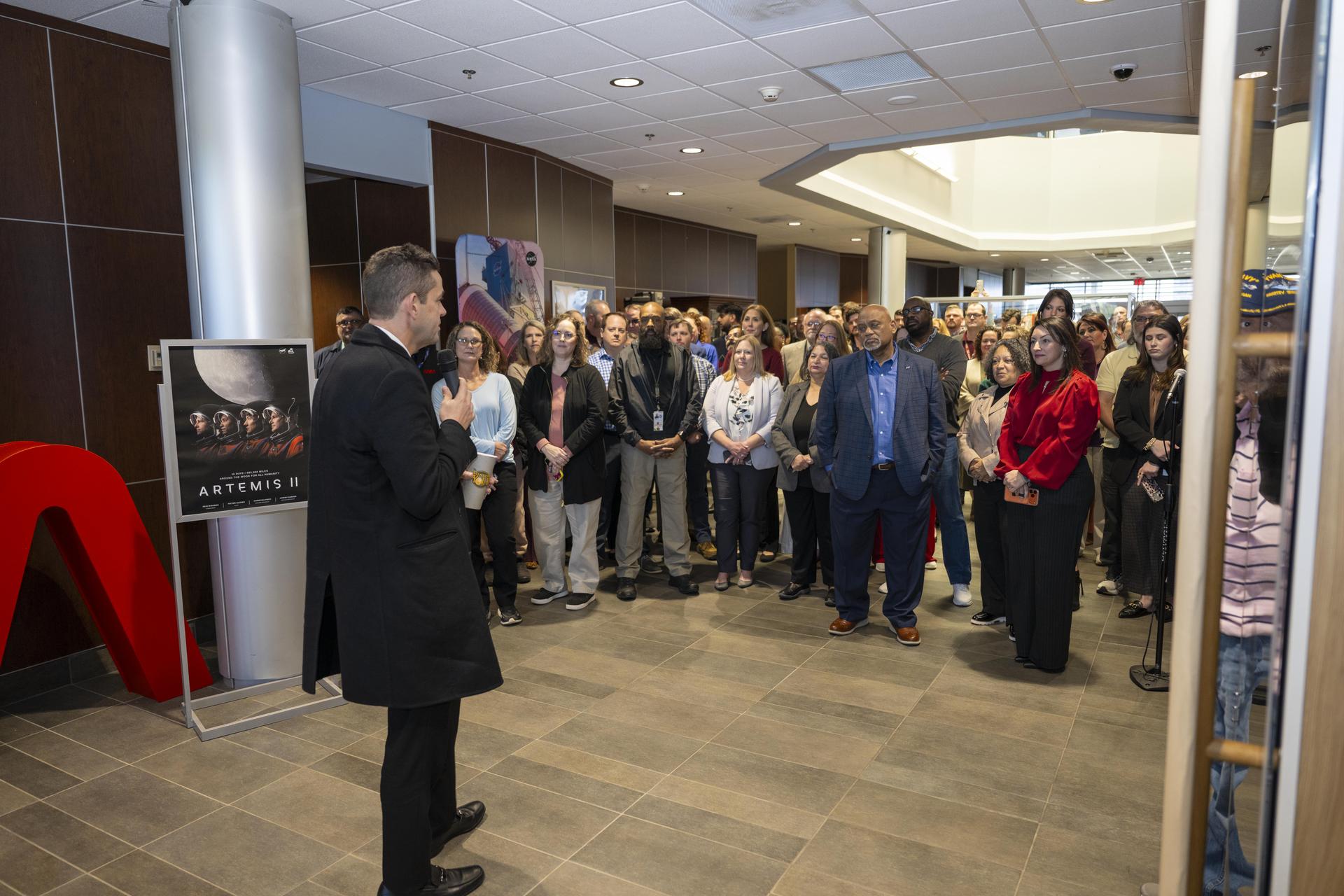
NASA Administrator Jared Isaacman, left, speaks with NASA employees during his visit to NASA’s Stennis Space Center near Bay St. Louis, Mississippi, on Jan. 15, 2026. Isaacman, NASA’s 15th administrator, began visiting the agency’s centers after his appointment on Dec. 17, 2025.
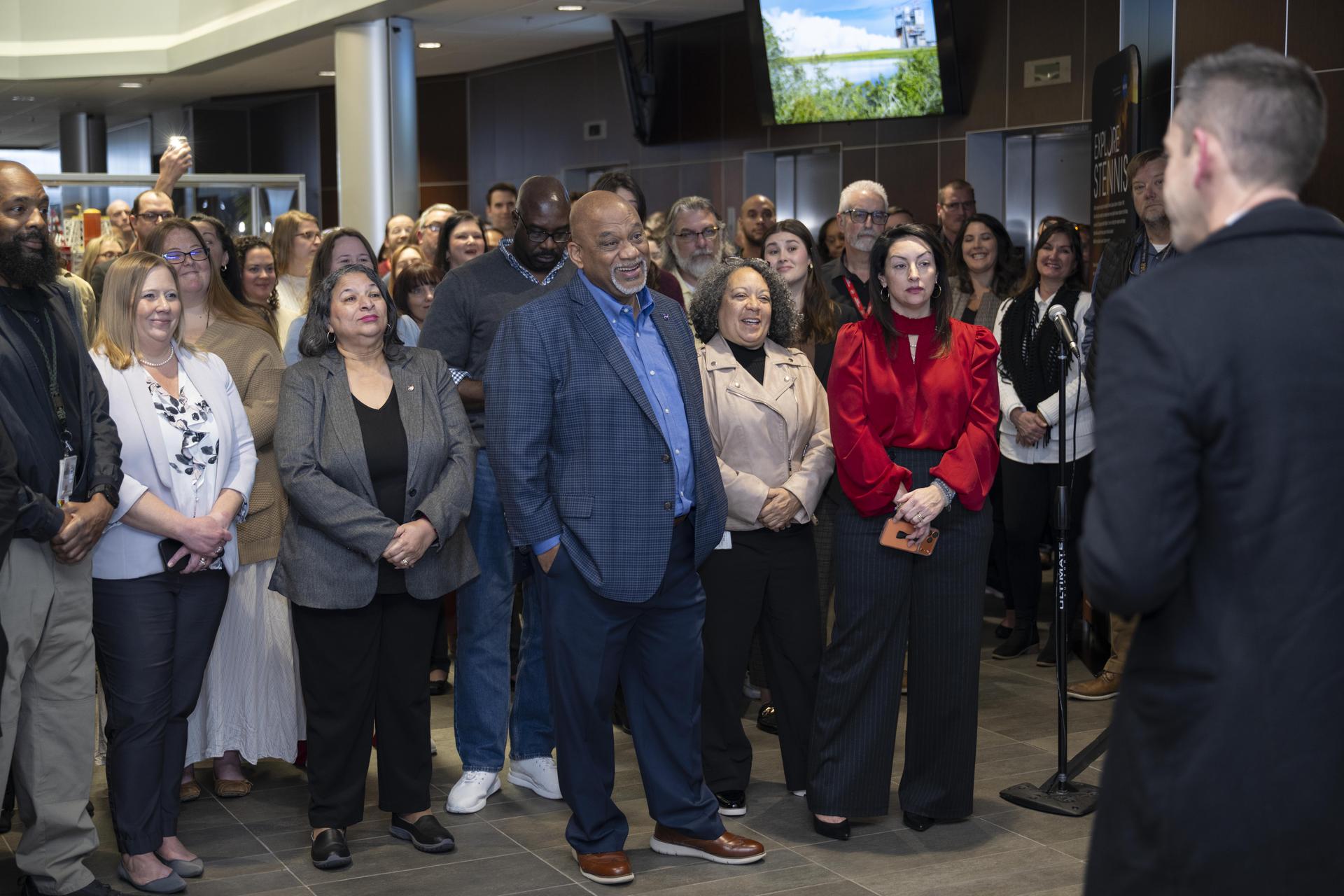
NASA Administrator Jared Isaacman, right, speaks with NASA employees during his visit to NASA’s Stennis Space Center near Bay St. Louis, Mississippi, on Jan. 15, 2026. Isaacman, NASA’s 15th administrator, began visiting the agency’s centers after his appointment on Dec. 17, 2025.
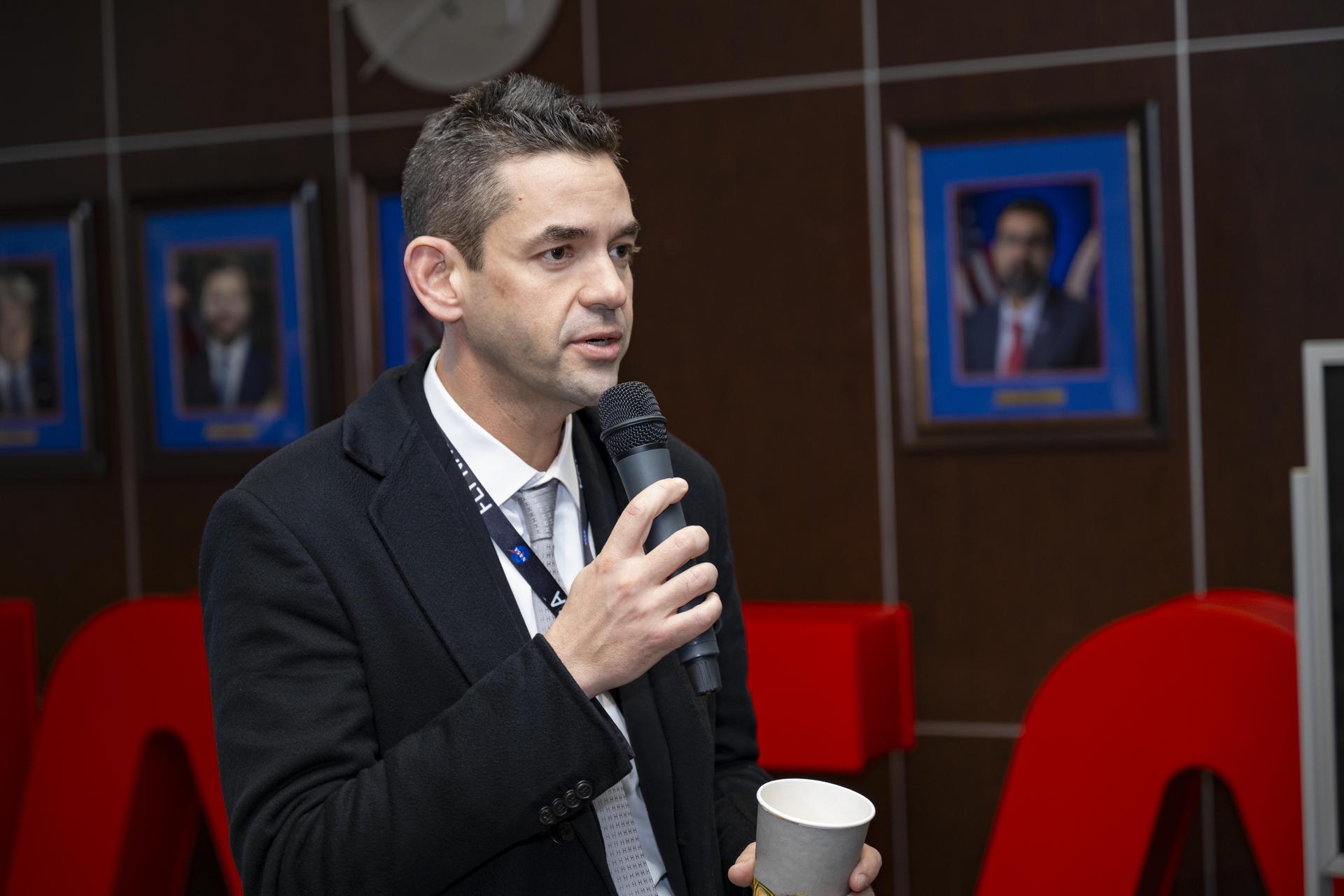
NASA Administrator Jared Isaacman speaks with NASA employees during his visit to NASA’s Stennis Space Center near Bay St. Louis, Mississippi, on Jan. 15, 2026. Isaacman, NASA’s 15th administrator, began visiting the agency’s centers after his appointment on Dec. 17, 2025.
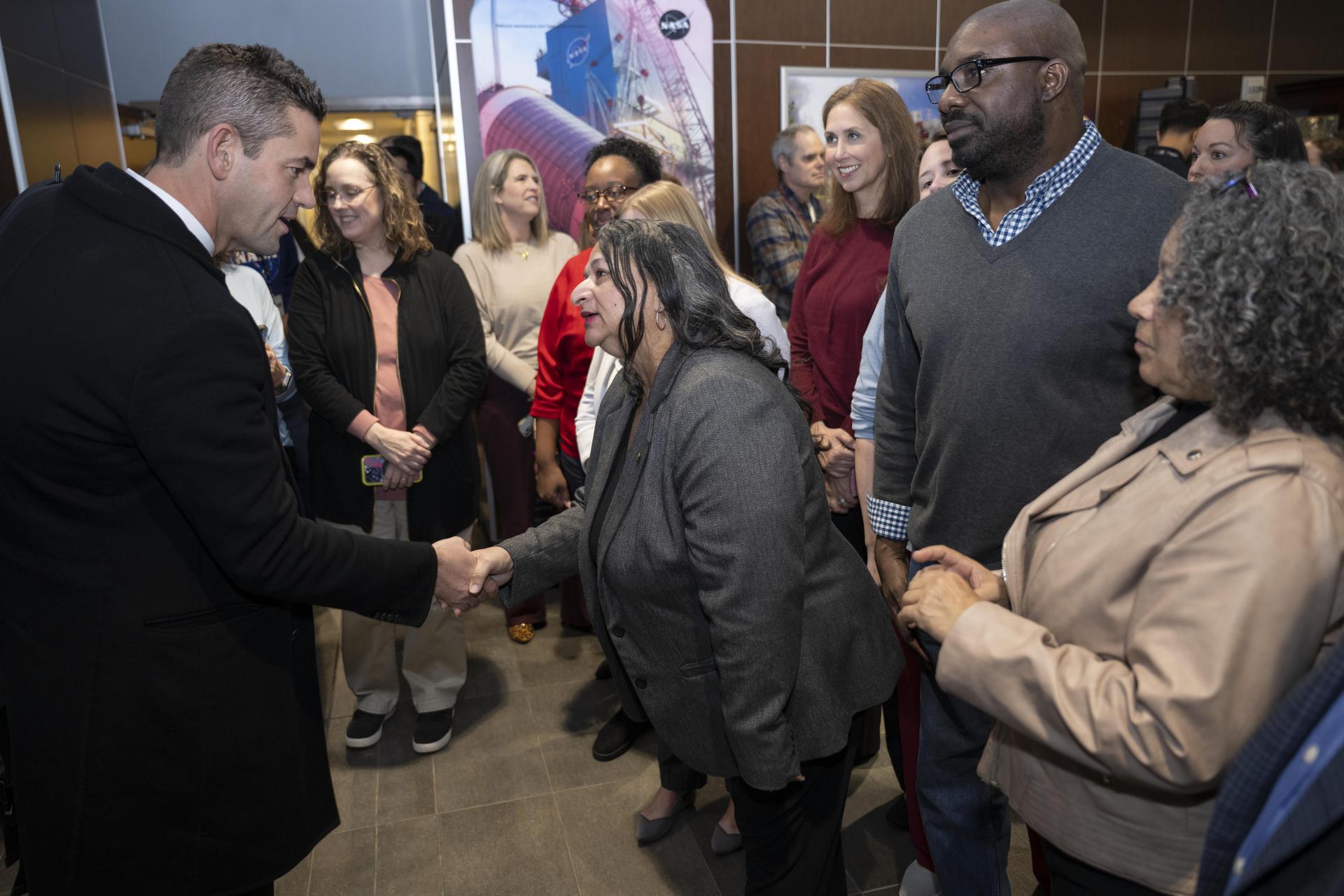
NASA Administrator Jared Isaacman, left, meets with NASA employees during his visit to NASA’s Stennis Space Center near Bay St. Louis, Mississippi, on Jan. 15, 2026. Isaacman, NASA’s 15th administrator, began visiting the agency’s centers after his appointment on Dec. 17, 2025.
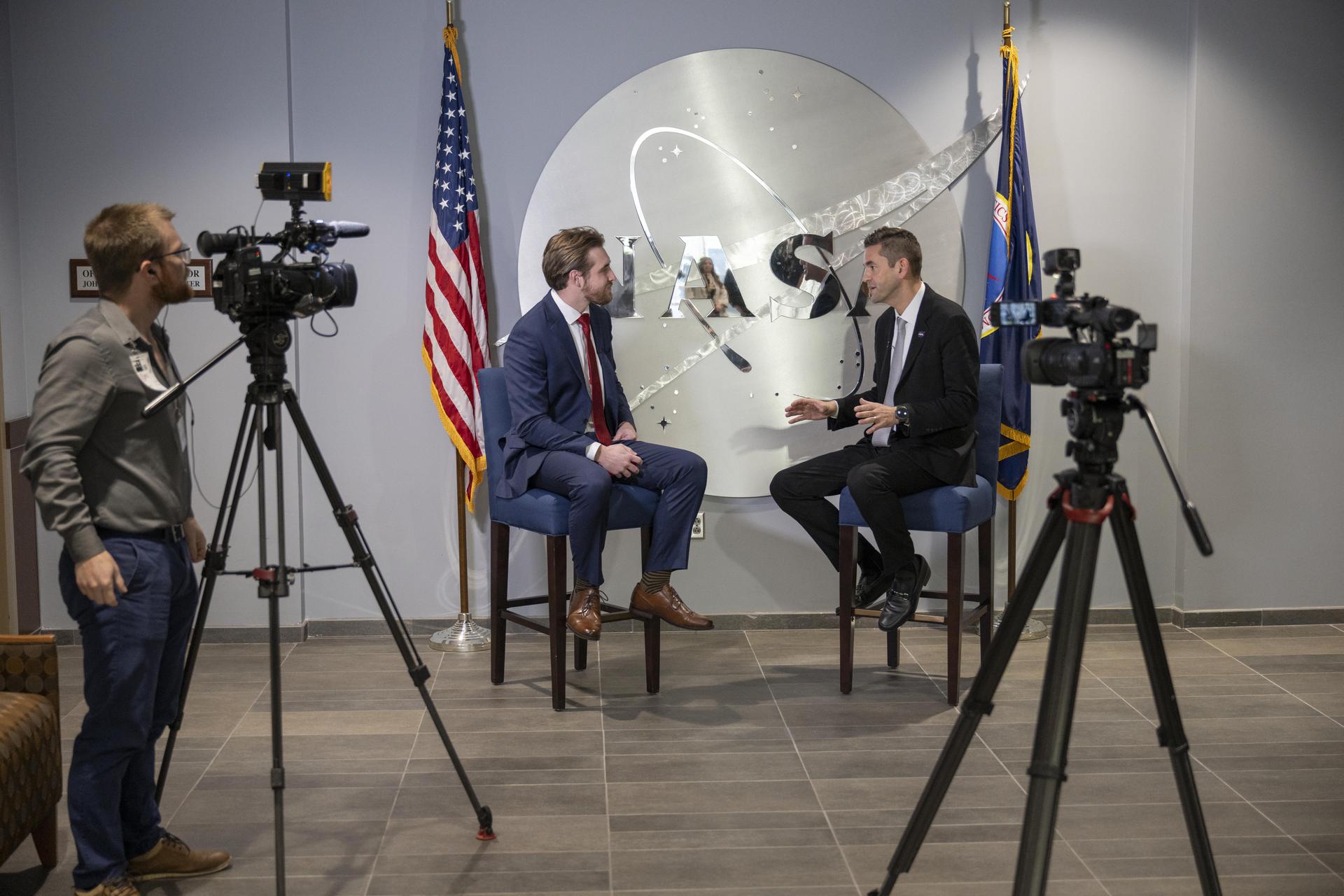
NASA Administrator Jared Isaacman, right, speaks with Tyler Bell, multimedia journalist at WLOX-TV, during an interview at NASA’s Stennis Space Center near Bay St. Louis, Mississippi, on Jan. 15, 2026. Isaacman, NASA’s 15th administrator, began visiting the agency’s centers after his appointment on Dec. 17, 2025.
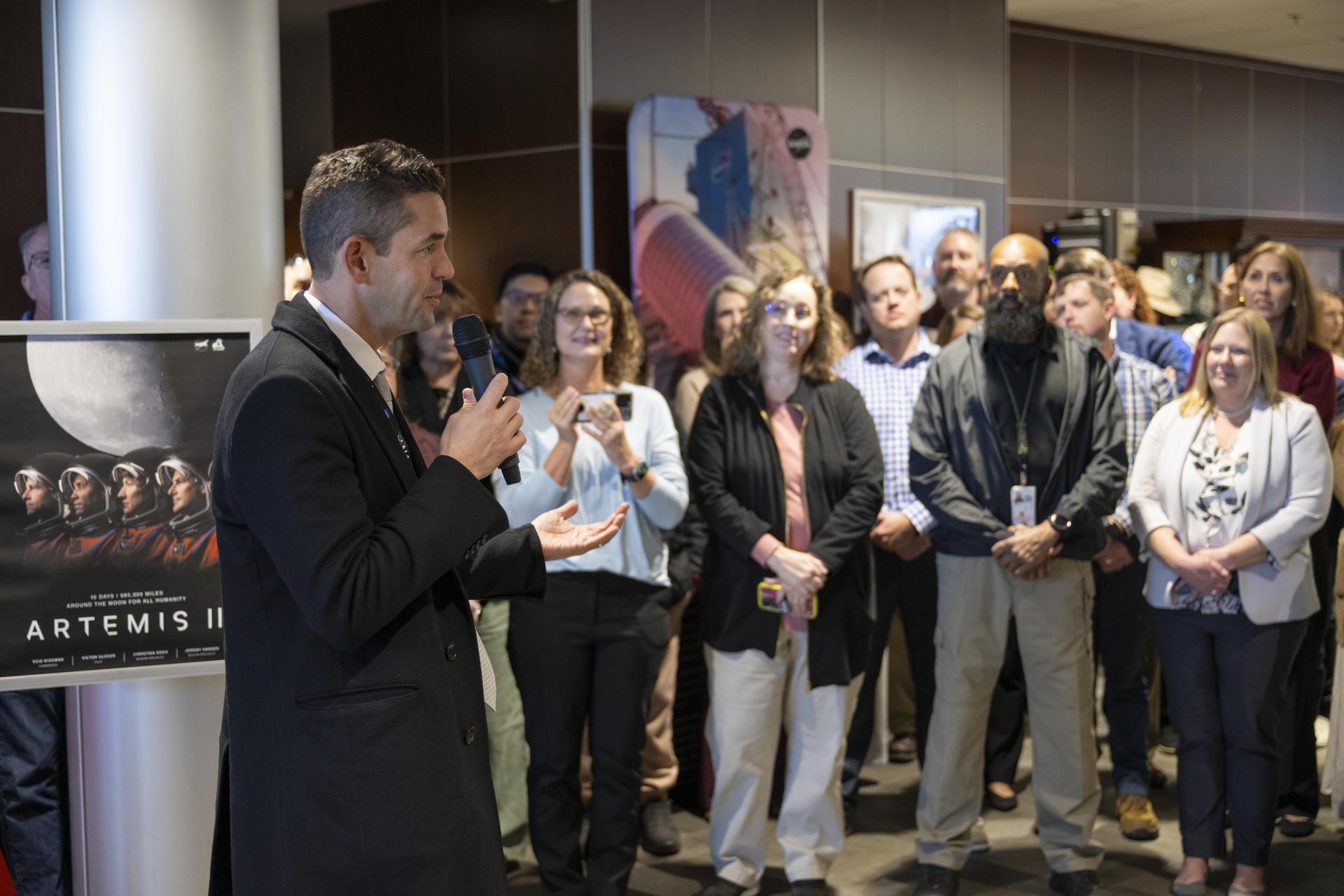
NASA Administrator Jared Isaacman, left, speaks with NASA employees during his visit to NASA’s Stennis Space Center near Bay St. Louis, Mississippi, on Jan. 15, 2026. Isaacman, NASA’s 15th administrator, began visiting the agency’s centers after his appointment on Dec. 17, 2025.
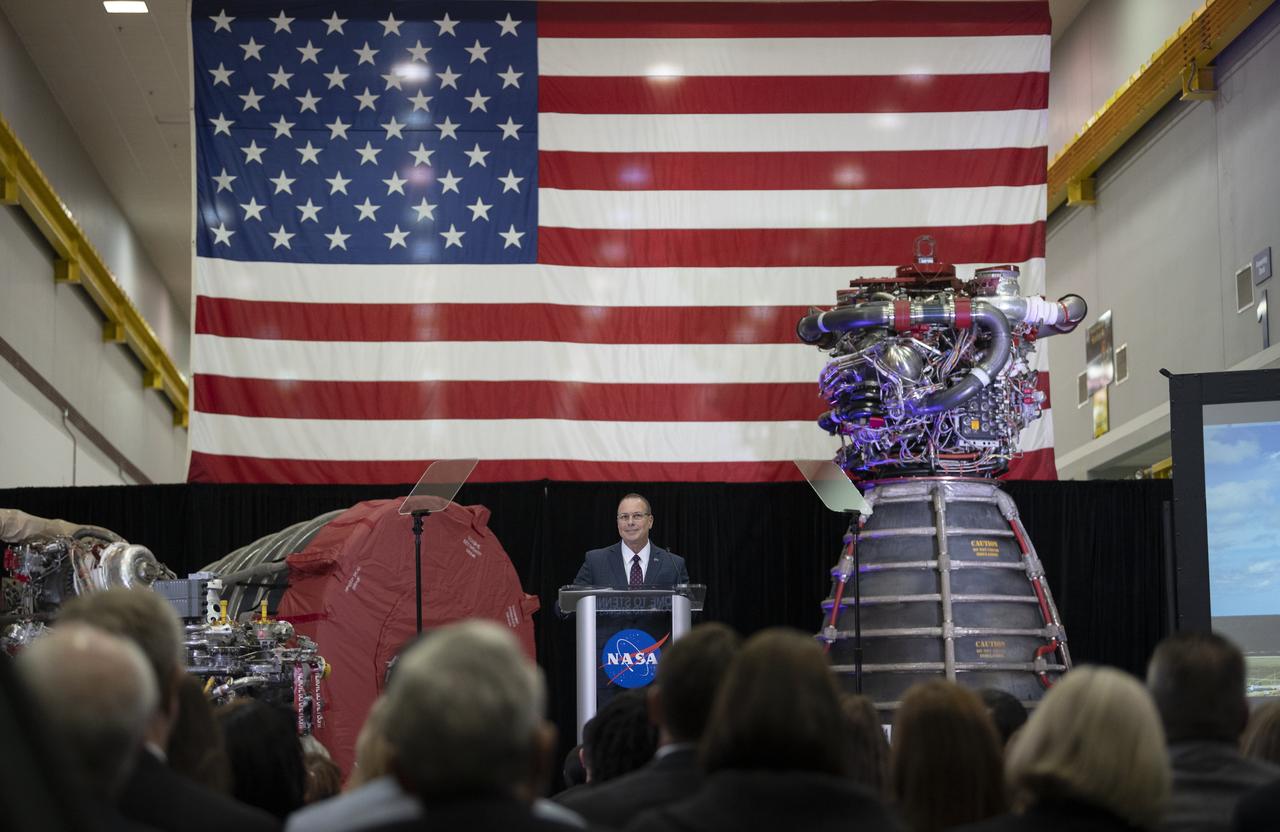
Richard Gilbrech, Director of NASA's Stennis Space Center, welcomes everyone to the State of NASA address, Monday, Feb. 10, 2020, at Aerojet Rocketdyne’s facility at NASA’s Stennis Space Center near Bay St. Louis, Mississippi. Photo Credit: (NASA/Joel Kowsky)
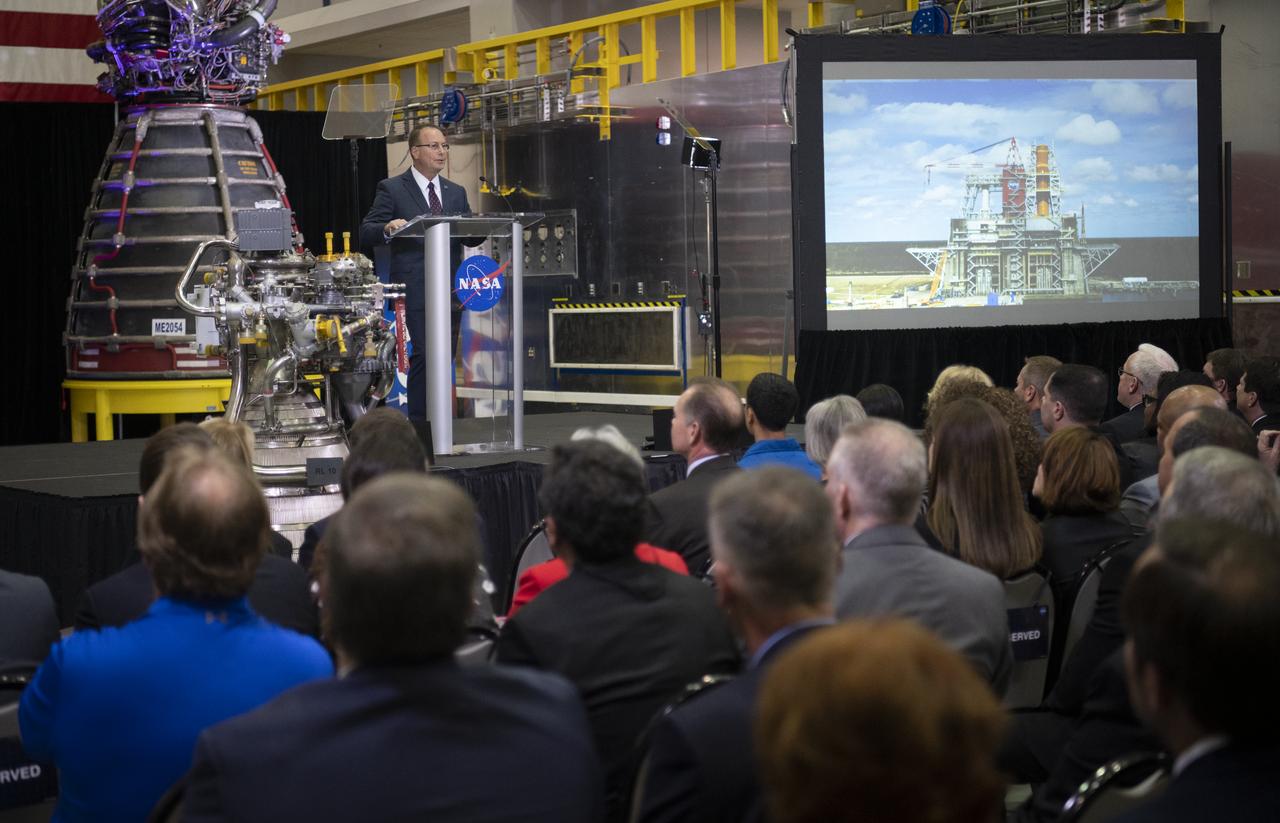
Richard Gilbrech, Director of NASA's Stennis Space Center, welcomes everyone to the State of NASA address, Monday, Feb. 10, 2020, at Aerojet Rocketdyne’s facility at NASA’s Stennis Space Center near Bay St. Louis, Mississippi. Photo Credit: (NASA/Joel Kowsky)
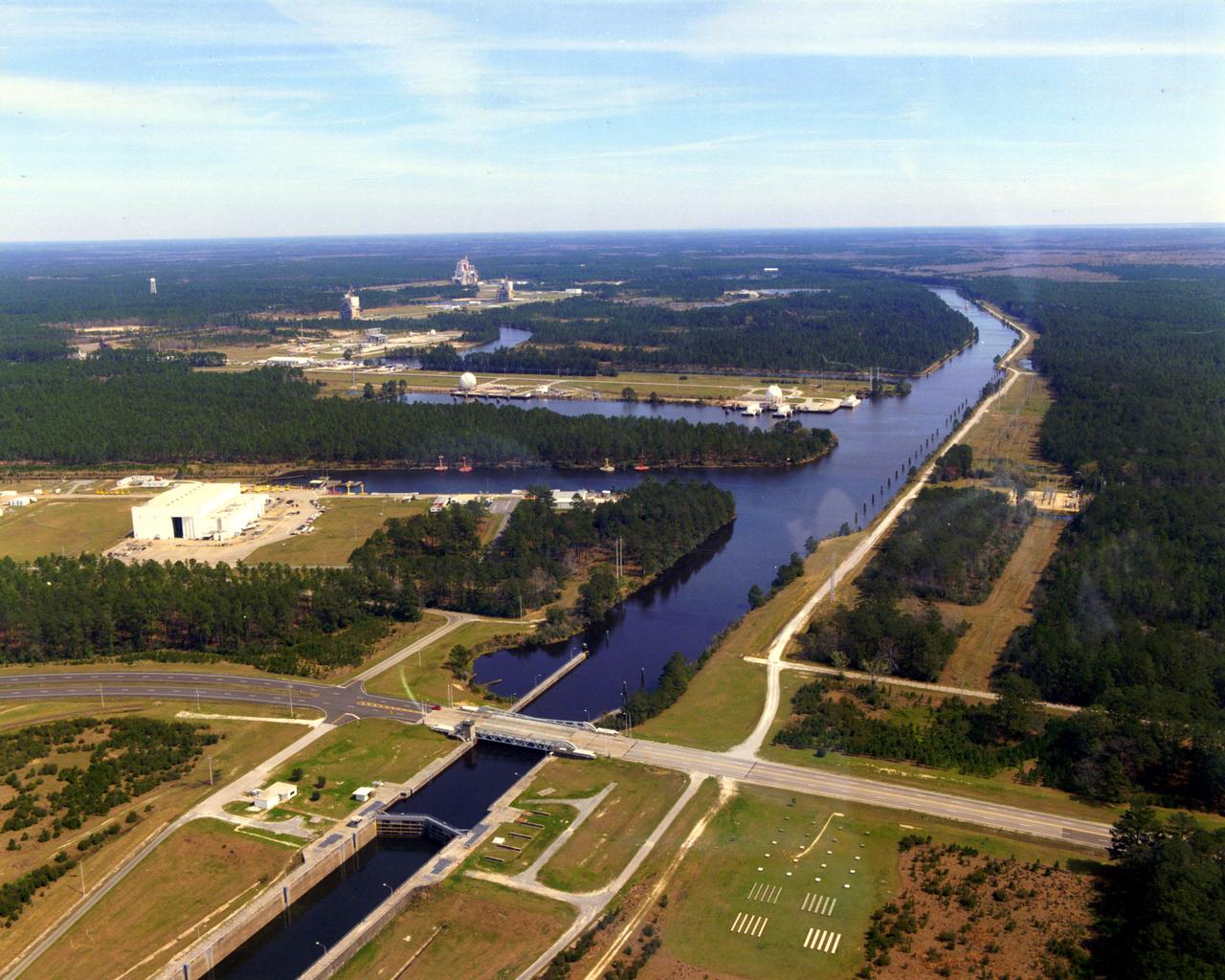
This aerial view of Stennis Space Center's unique lock and canal system
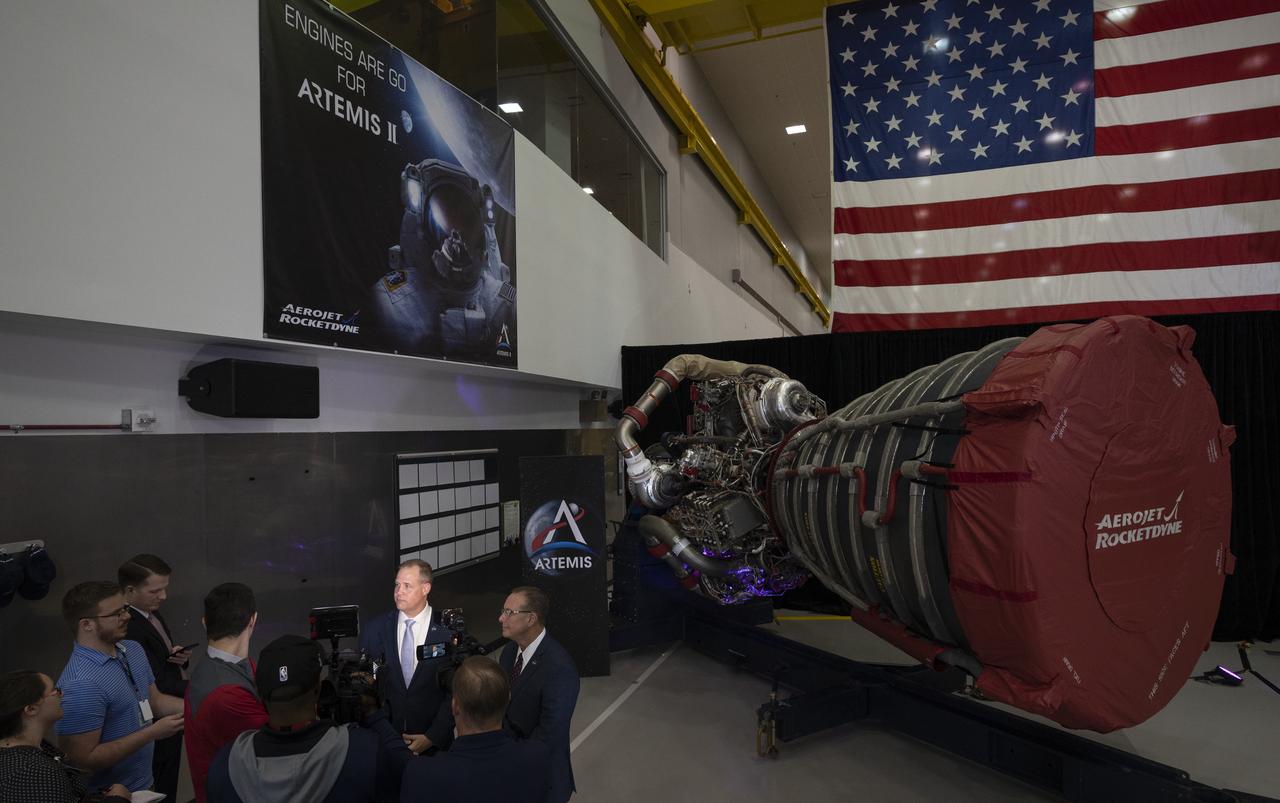
NASA Administrator Jim Bridenstine and Richard Gilbrech, Director of NASA's Stennis Space Center, speak with members of the media following State of NASA address to discuss the fiscal year 2021 budget request, Monday, Feb. 10, 2020, at Aerojet Rocketdyne’s facility at NASA’s Stennis Space Center near Bay St. Louis, Mississippi. Photo Credit: (NASA/Joel Kowsky)
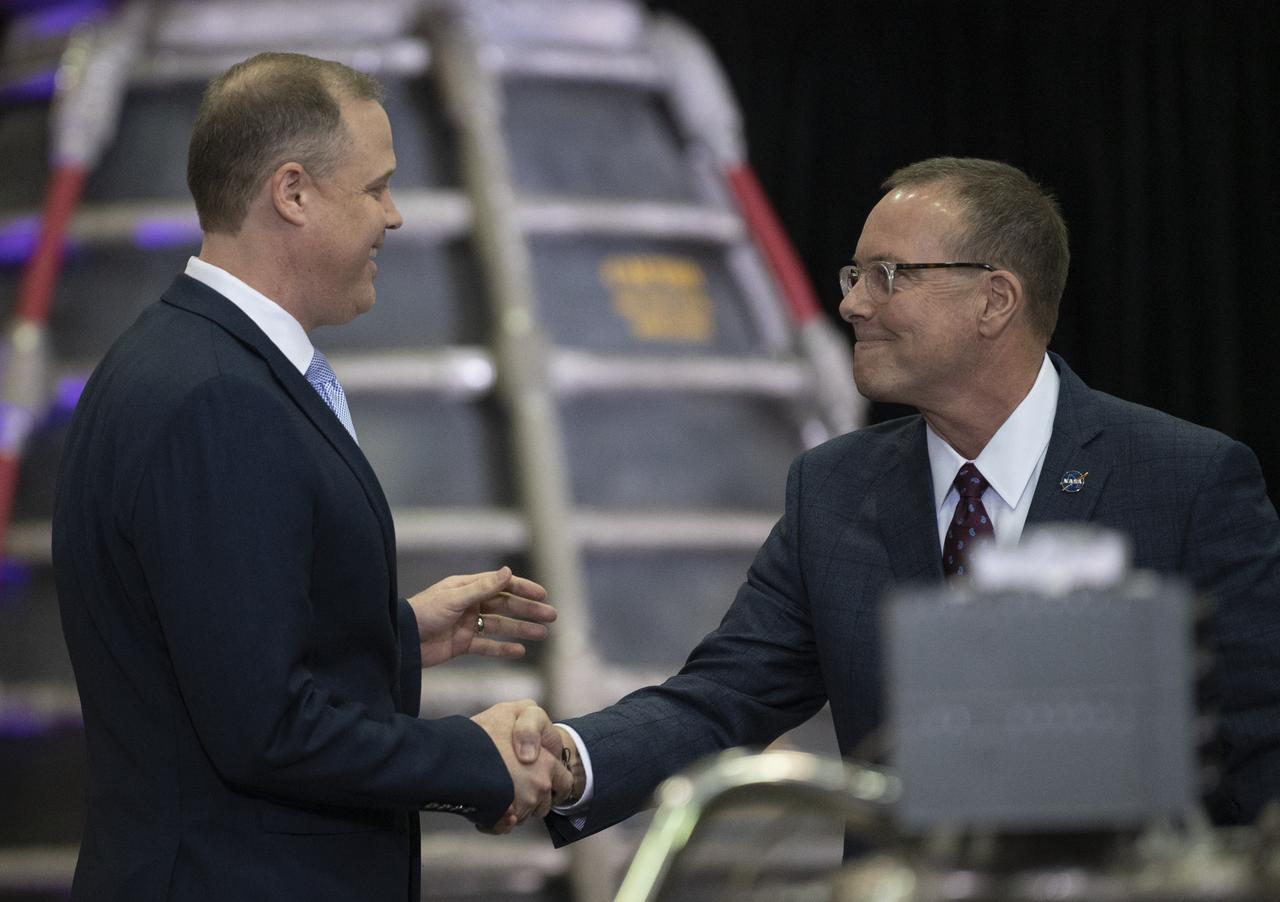
Richard Gilbrech, Director of NASA's Stennis Space Center, right, shakes hands with NASA Administrator Jim Bridenstine after introducing him at the State of NASA address, Monday, Feb. 10, 2020, at Aerojet Rocketdyne’s facility at NASA’s Stennis Space Center near Bay St. Louis, Mississippi. Photo Credit: (NASA/Joel Kowsky)
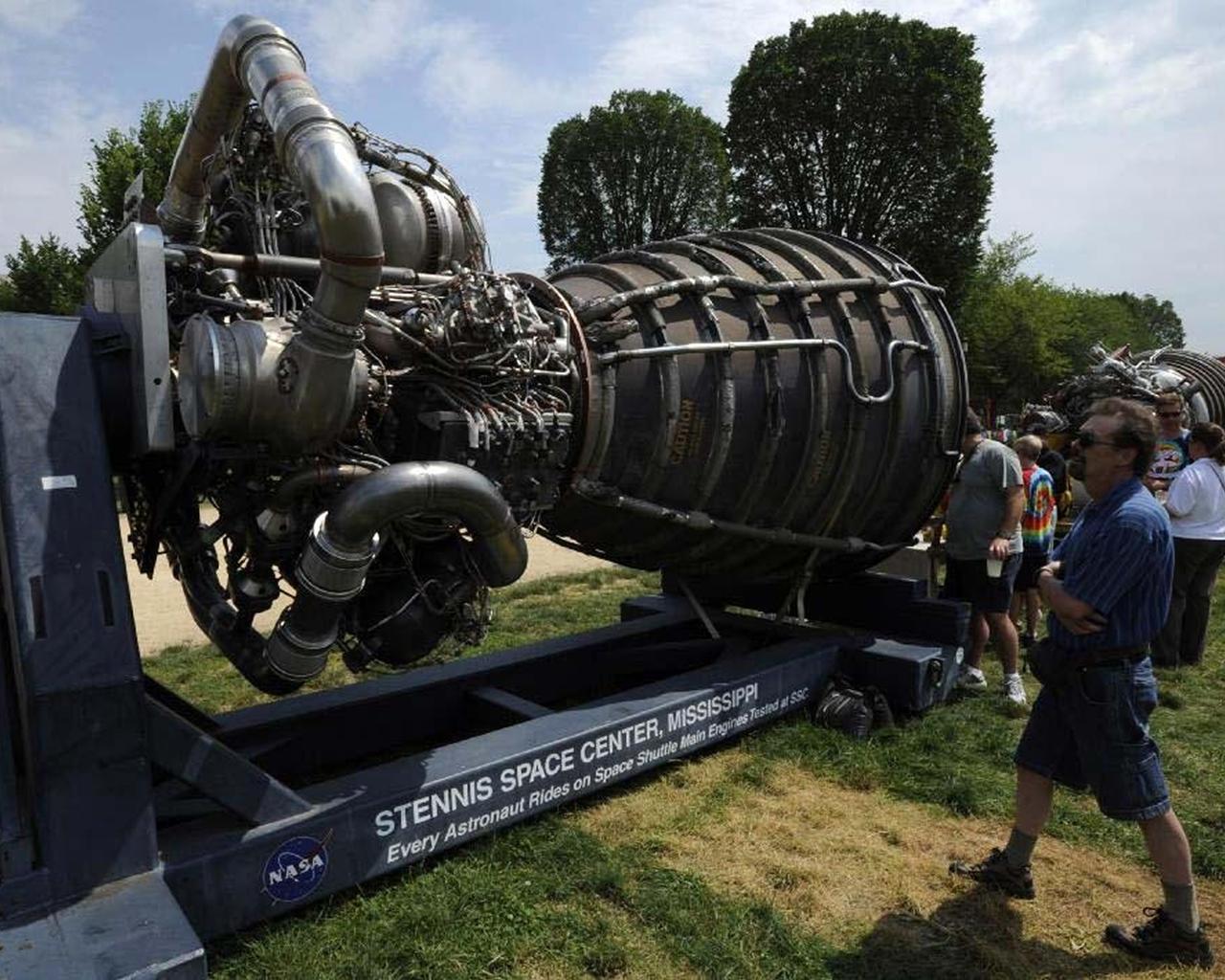
A visitor to the Smithsonian Folklife Festival in Washington, D.C., examines a space shuttle main engine display provided by Stennis Space Center. Since 1975, Stennis has been responsible for testing every engine used in NASA's Space Shuttle Program.
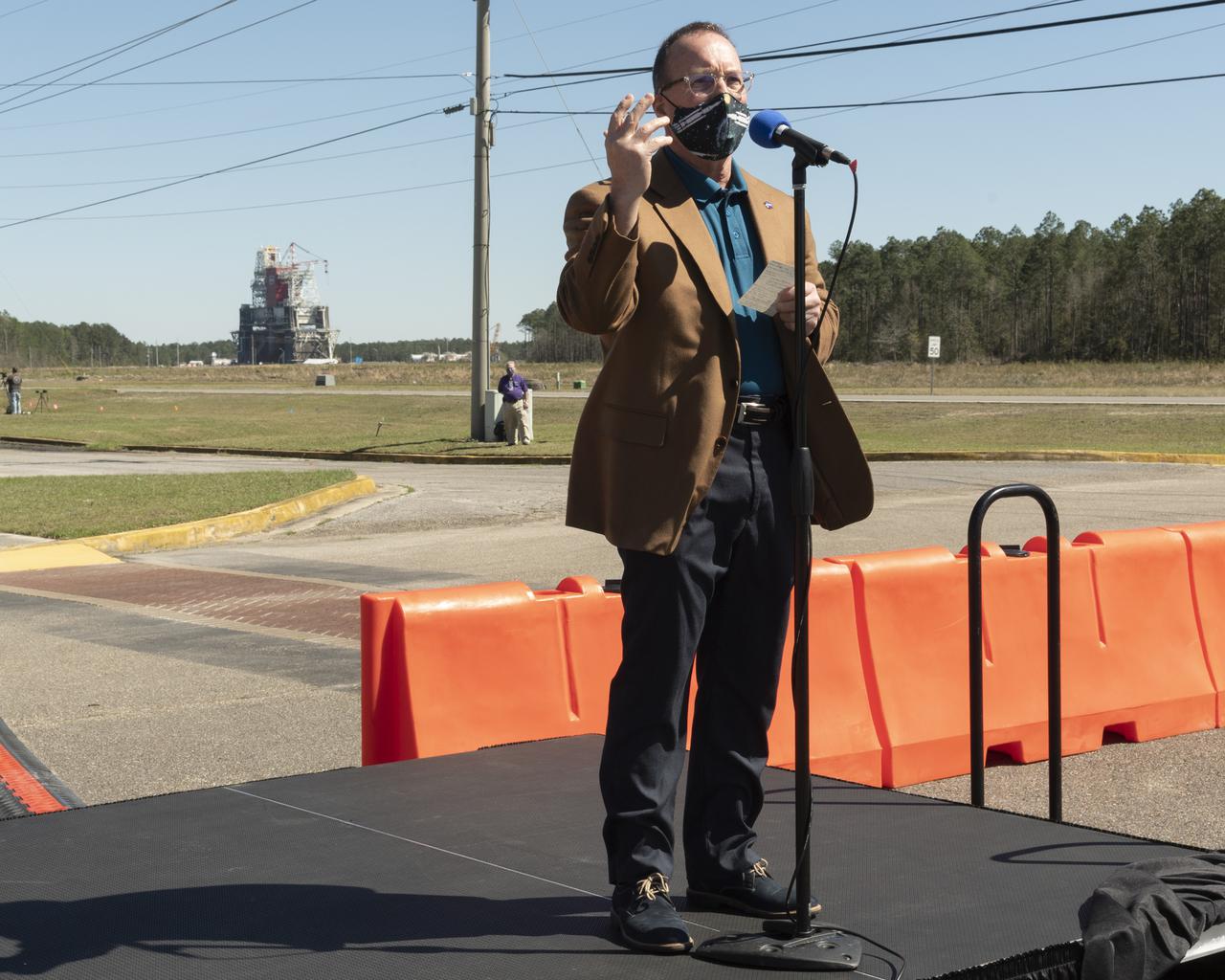
Rick Gilbrech, director of NASA's Stennis Space Center, speaks to invited guests ahead of a second hot fire test of the core stage for the first flight of NASA’s Space Launch System rocket in the B-2 Test Stand, Thursday, March 18, 2021, at NASA’s Stennis Space Center near Bay St. Louis, Mississippi. The hot fire test is the final stage of the Green Run test series, a comprehensive assessment of the Space Launch System’s core stage prior to launching the Artemis I mission to the Moon. Photo Credit: (NASA/Robert Markowitz)
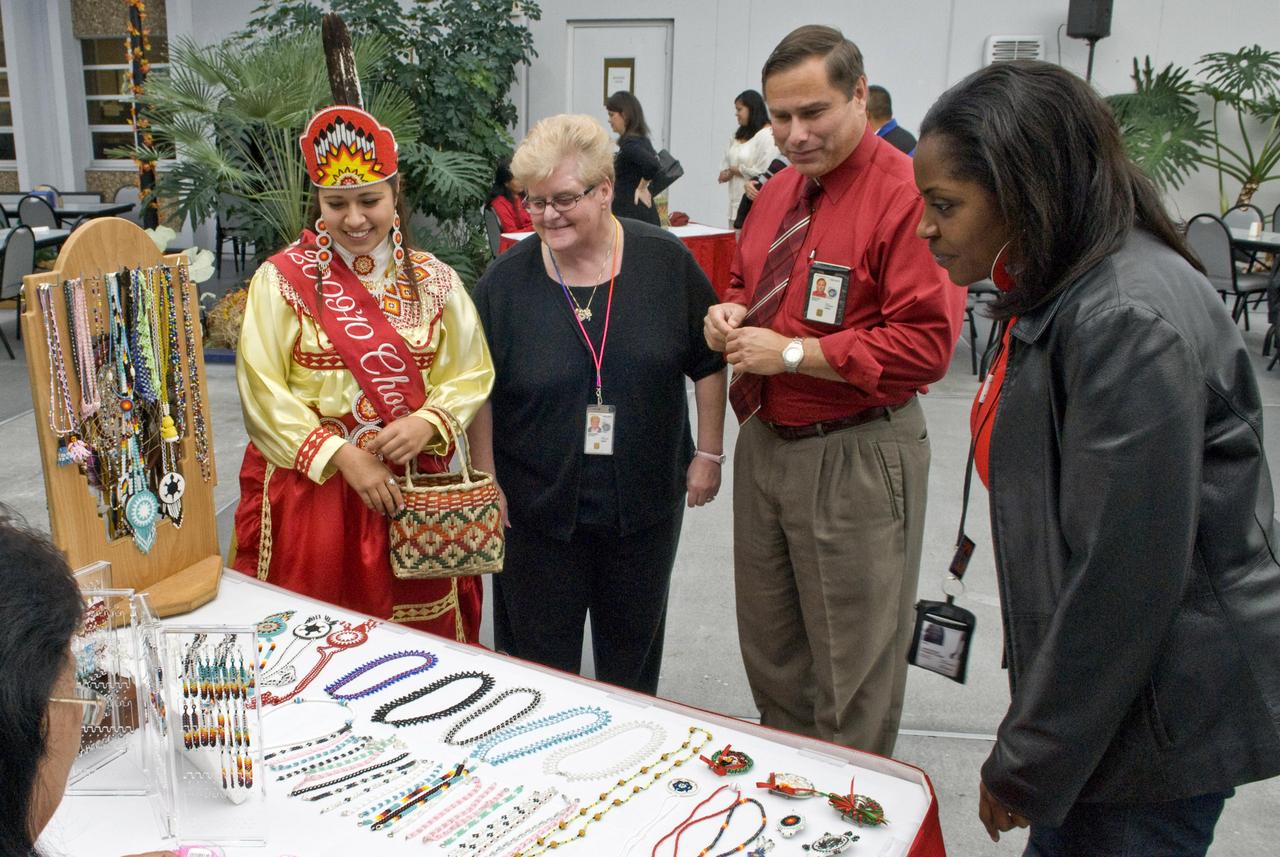
Famie Willis (left), 2009-2010 Choctaw Indian Princess, displays artifacts during Native American Heritage Month activities at Stennis Space Center on Nov. 24. The celebration featured various Native American cultural displays for Stennis employees to view. Shown above are (l to r): Willis, Elaine Couchman of NASA Shared Services Center, John Cecconi of NSSC and Lakeisha Robertson of the Environmental Protection Agency.
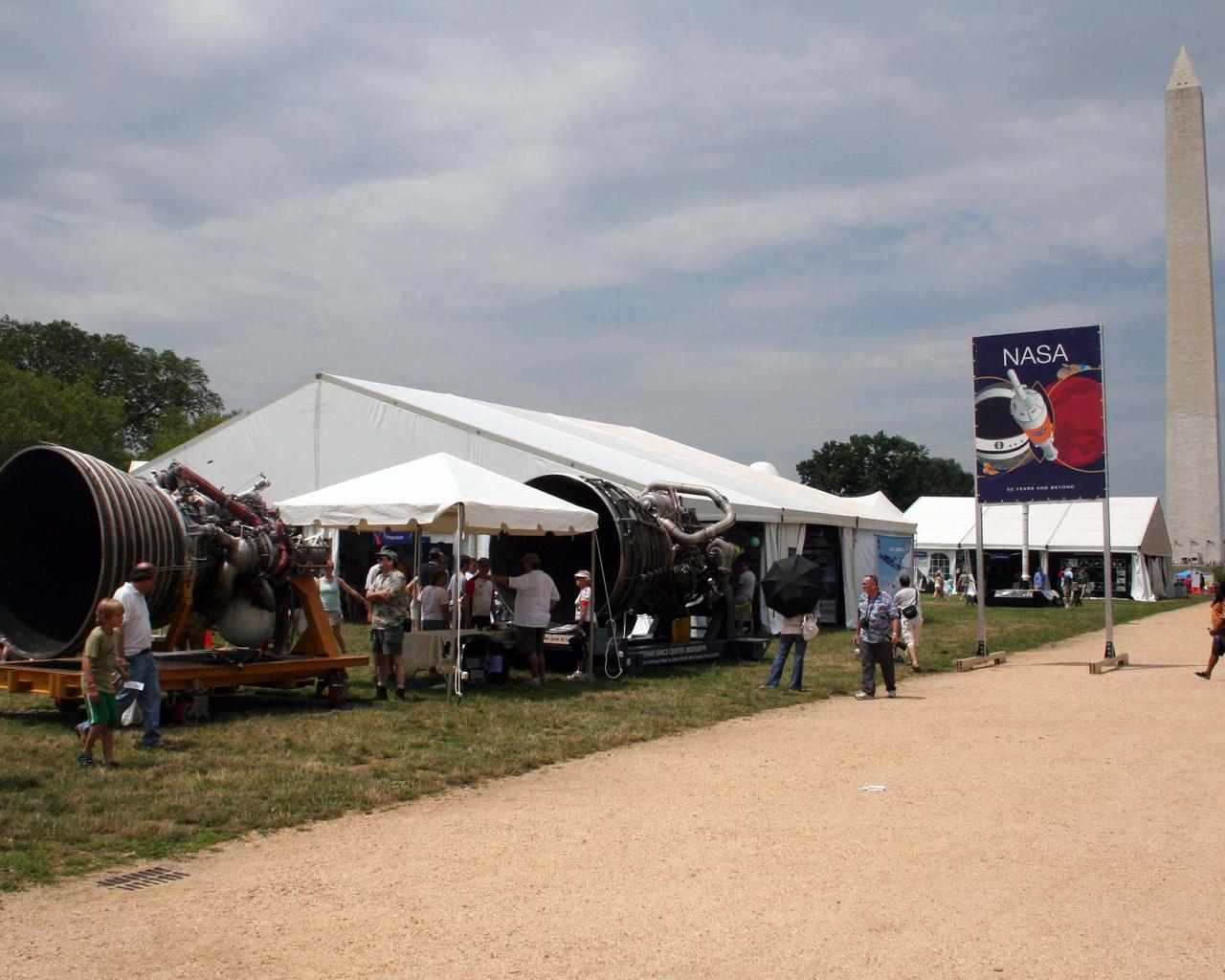
With the Washington Monument as a stirring background, a space shuttle main engine and J-2 engine from Stennis Space Center offer Washington Mall visitors a close-up look at the power of spaceflight
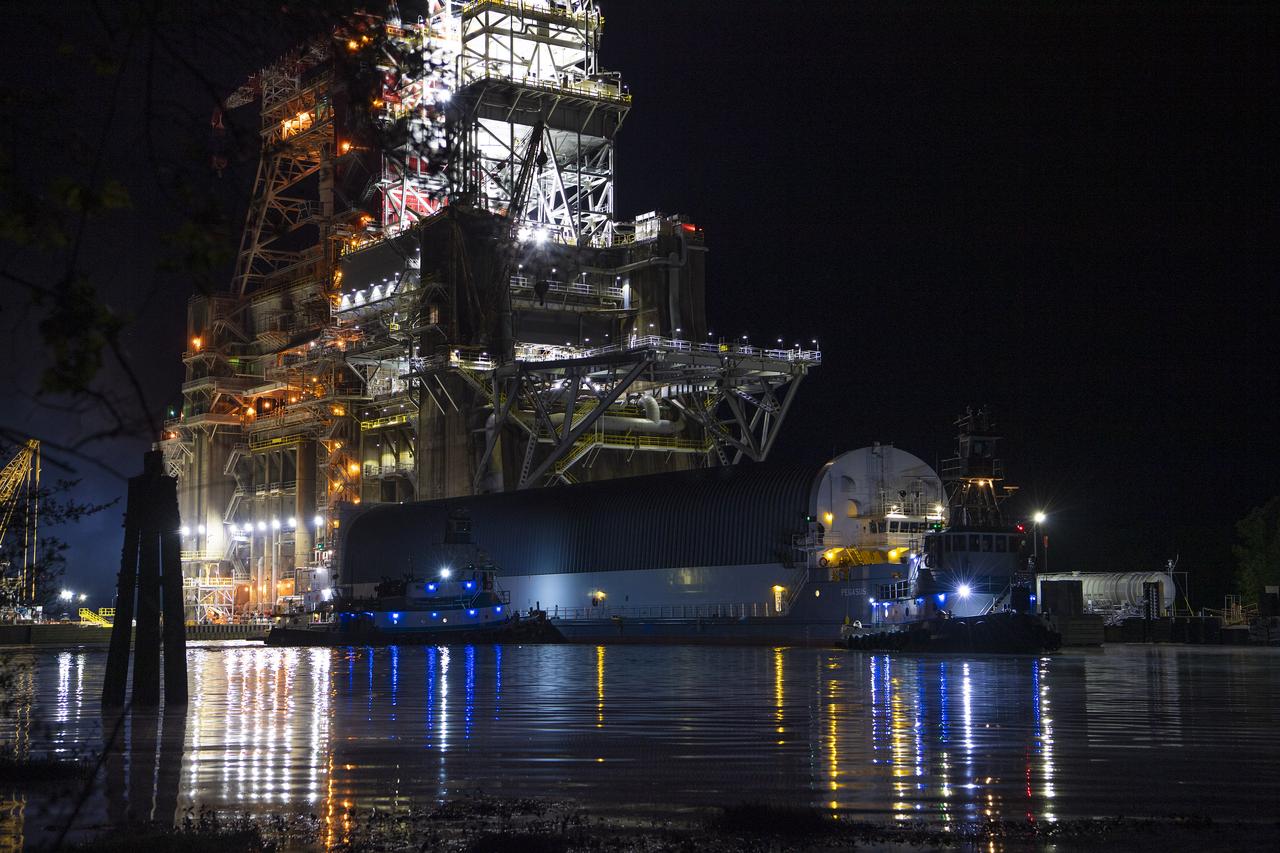
After a series of successful tests conducted the B-2 Test Stand at Stennis Space Center, NASA’s Space Launch System (SLS) core stage was loaded on the Pegasus barge and departed the test stand in the early morning hours of April 22, 2021, beginning its journey to Kennedy Space Center.
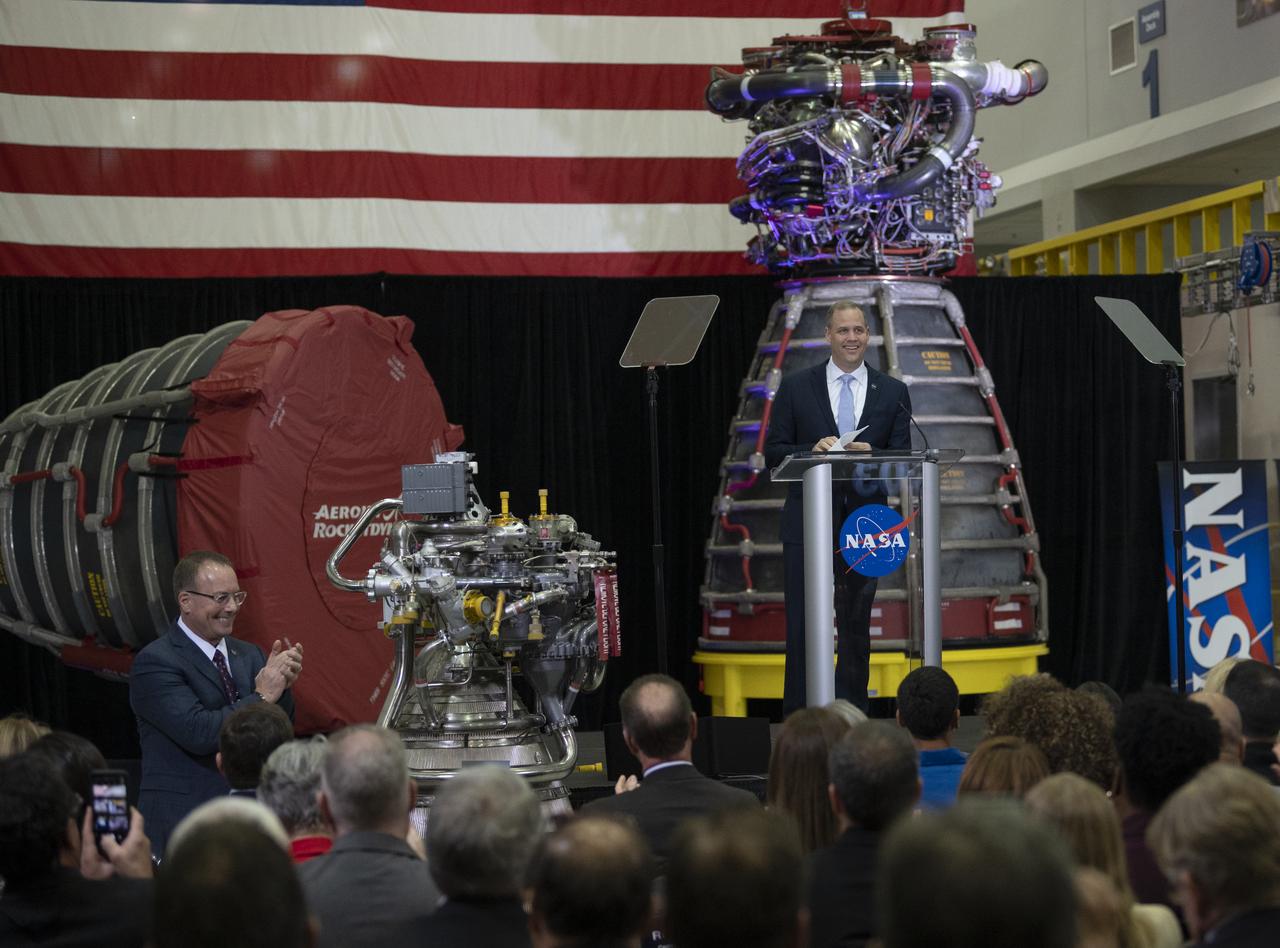
NASA Administrator Jim Bridenstine discusses the fiscal year 2021 budget proposal during a State of NASA address, Monday, Feb. 10, 2020, at Aerojet Rocketdyne’s facility at NASA’s Stennis Space Center near Bay St. Louis, Mississippi. Photo Credit: (NASA/Joel Kowsky)
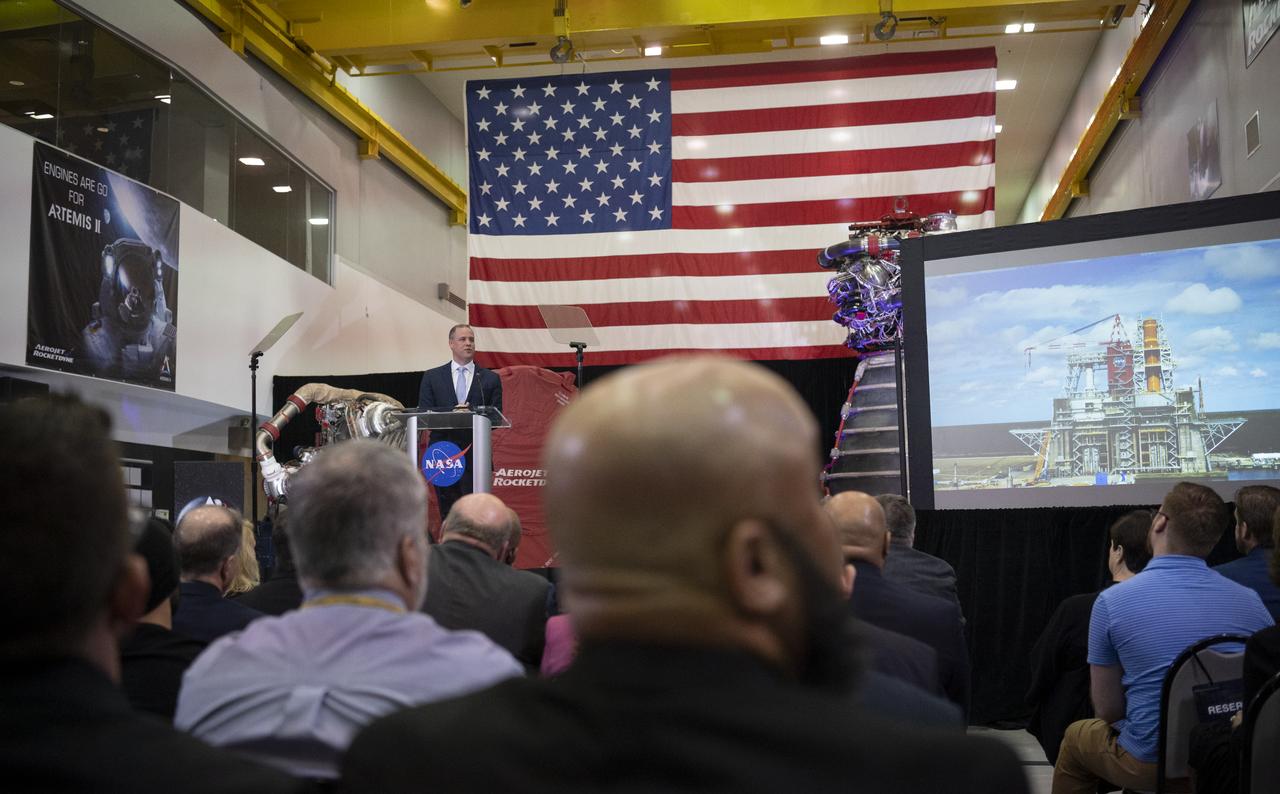
NASA Administrator Jim Bridenstine discusses the fiscal year 2021 budget proposal during a State of NASA address, Monday, Feb. 10, 2020, at Aerojet Rocketdyne’s facility at NASA’s Stennis Space Center near Bay St. Louis, Mississippi. Photo Credit: (NASA/Joel Kowsky)
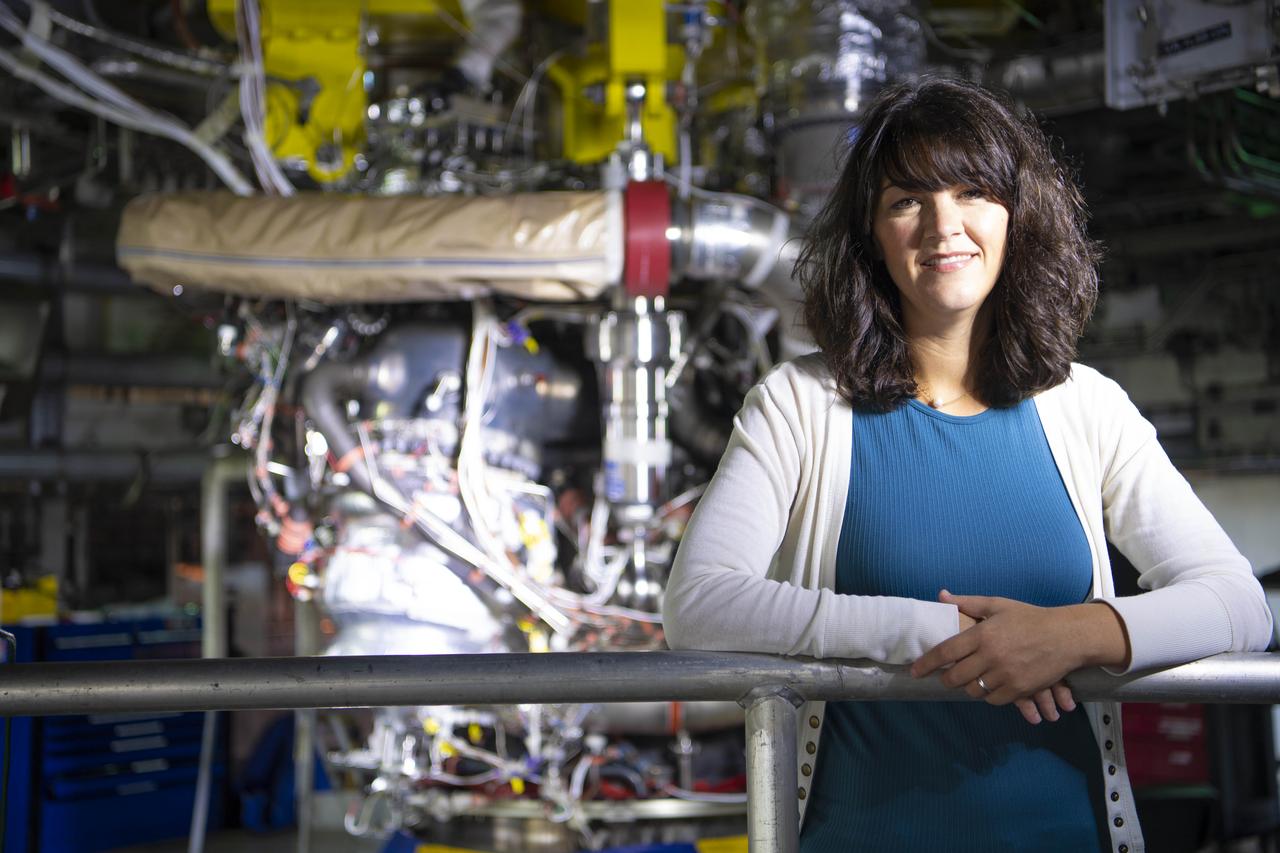
Nyla Trumbach, a NASA lead mechanical engineer, broke barriers as the first female to conduct a J-2X powerpack engine test at Stennis Space Center. She currently works on testing of the RS-25 rocket engine, shown installed on the A-1 Test Stand at SSC.
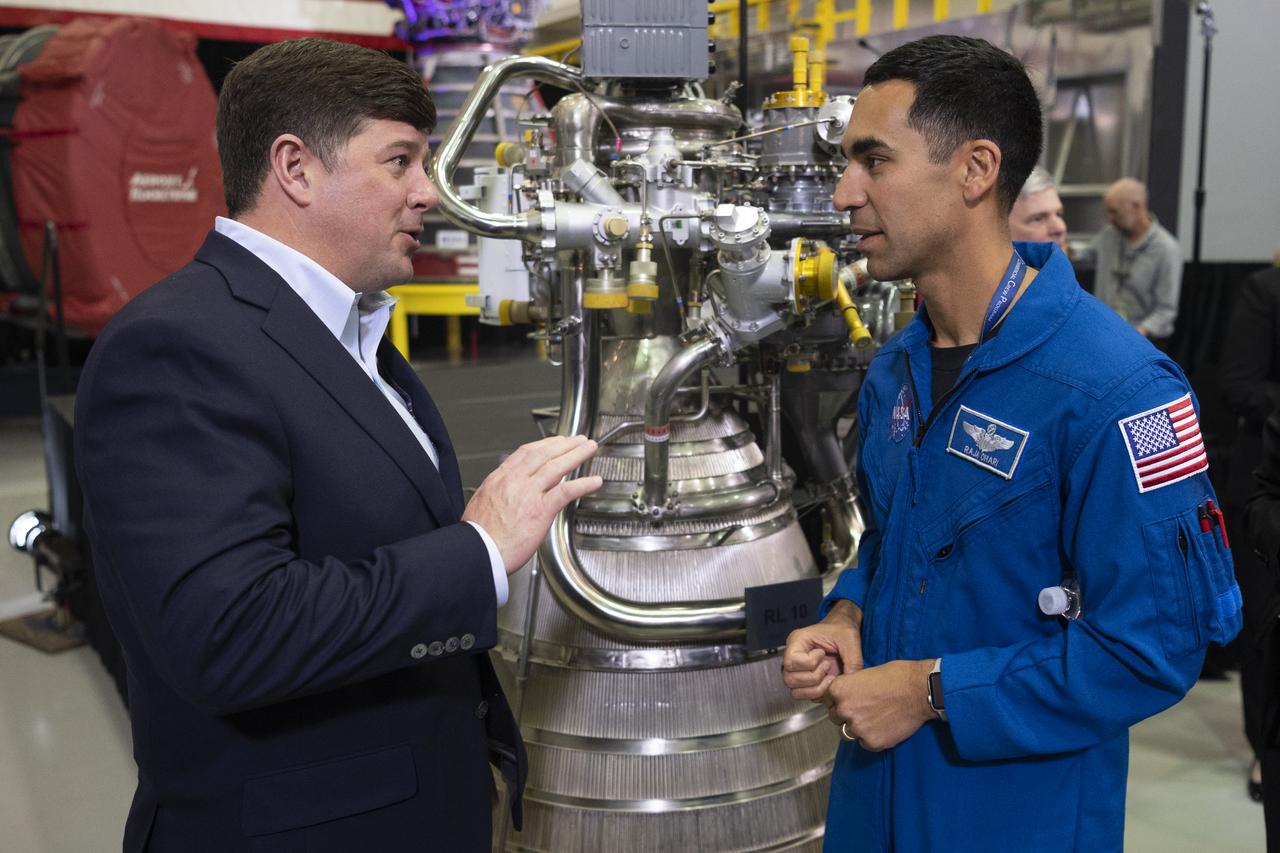
U.S. Representative Steven Palazzo (R-Miss.), left, speaks with NASA astronaut Raja Chari following the State of NASA address, Monday, Feb. 10, 2020, at Aerojet Rocketdyne’s facility at NASA’s Stennis Space Center near Bay St. Louis, Mississippi. Photo Credit: (NASA/Joel Kowsky)
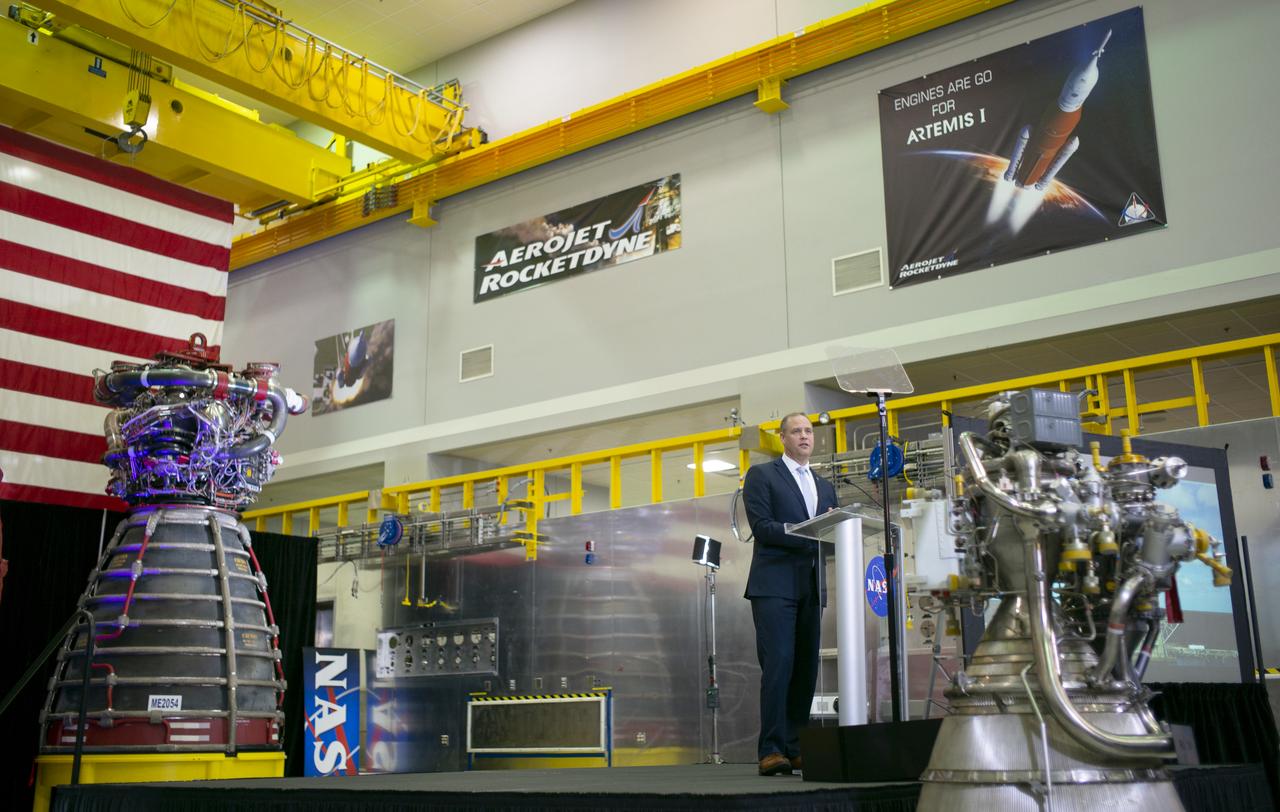
NASA Administrator Jim Bridenstine discusses the fiscal year 2021 budget proposal during a State of NASA address, Monday, Feb. 10, 2020, at Aerojet Rocketdyne’s facility at NASA’s Stennis Space Center near Bay St. Louis, Mississippi. Photo Credit: (NASA/Joel Kowsky)
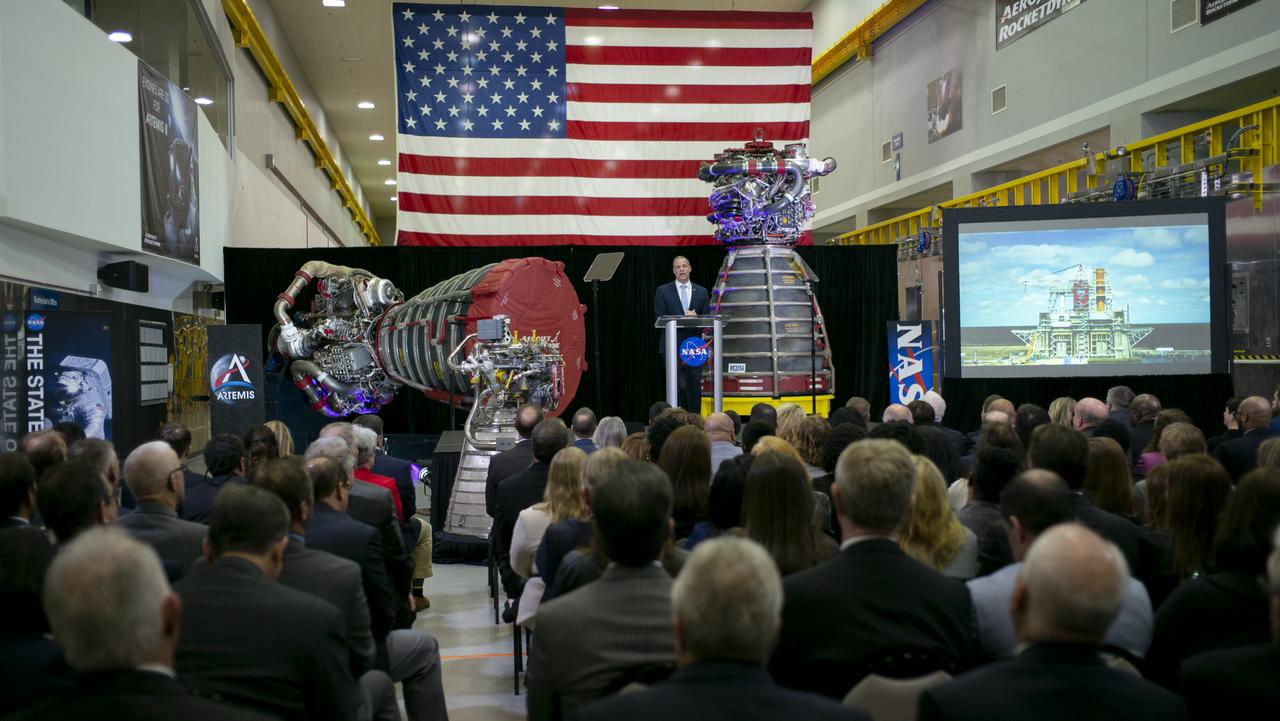
NASA Administrator Jim Bridenstine discusses the fiscal year 2021 budget proposal during a State of NASA address, Monday, Feb. 10, 2020, at Aerojet Rocketdyne’s facility at NASA’s Stennis Space Center near Bay St. Louis, Mississippi. Photo Credit: (NASA/Joel Kowsky)
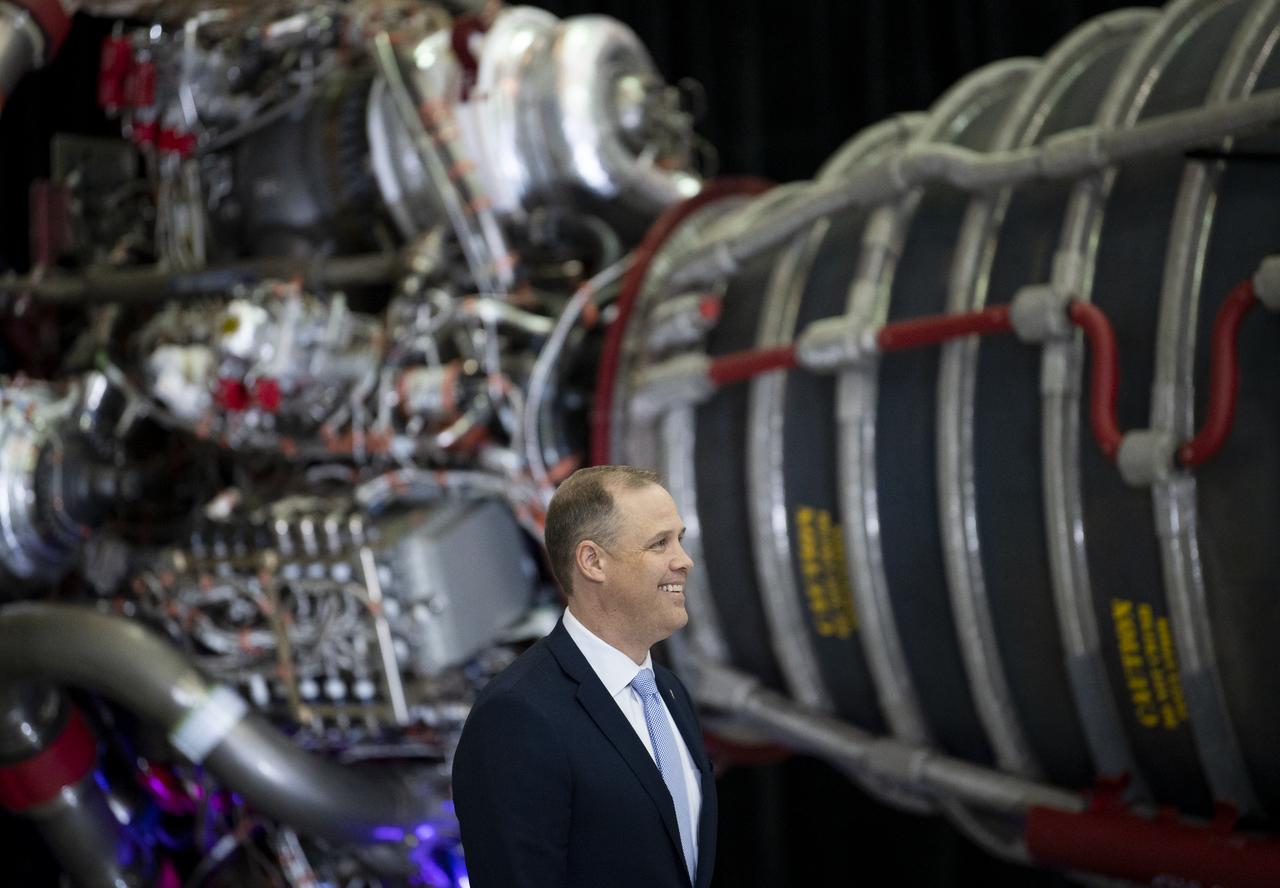
NASA Administrator Jim Bridenstine is seen prior to being introduced to speak on the fiscal year 2021 budget proposal during a State of NASA address, Monday, Feb. 10, 2020, at Aerojet Rocketdyne’s facility at NASA’s Stennis Space Center near Bay St. Louis, Mississippi. Photo Credit: (NASA/Joel Kowsky)
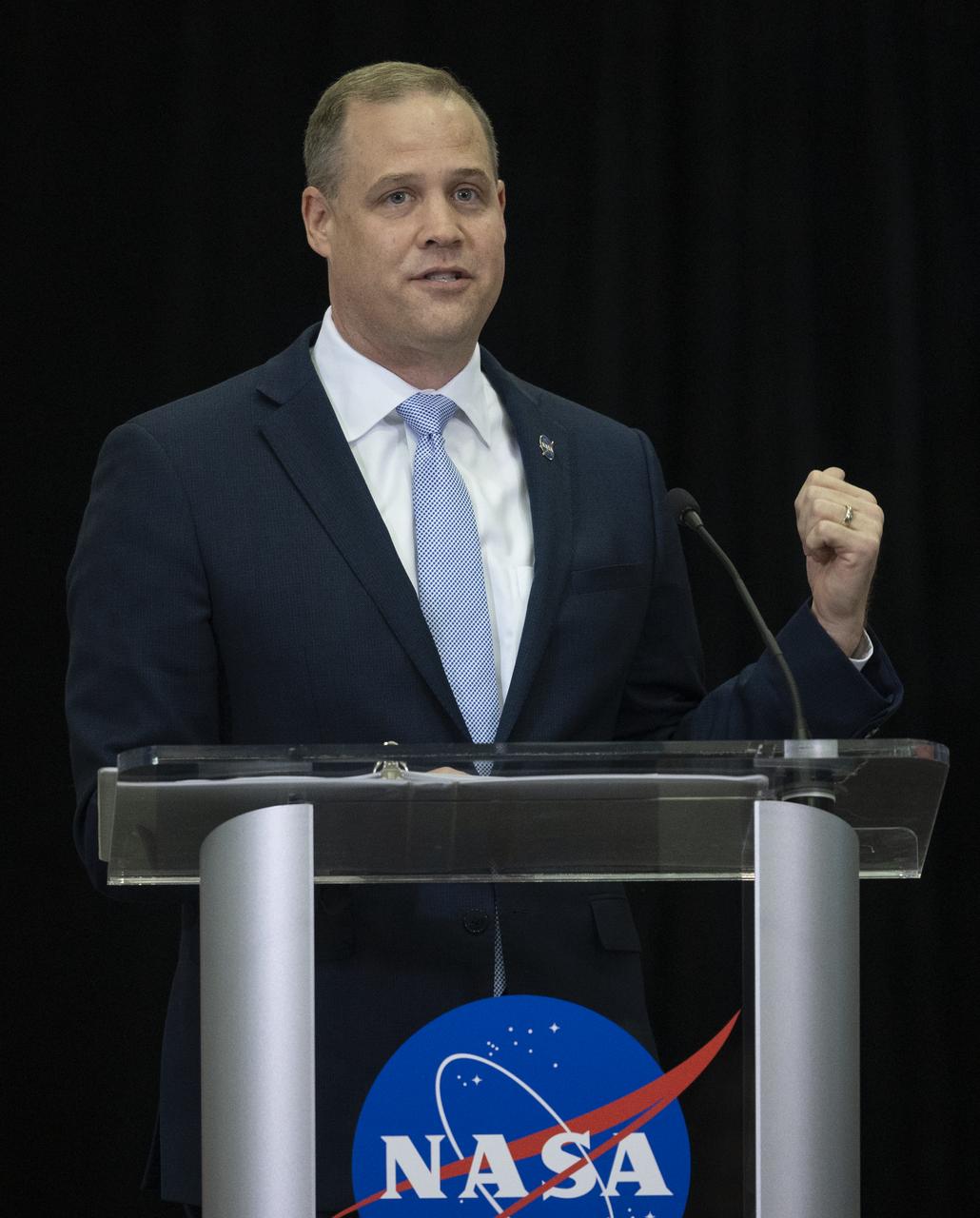
NASA Administrator Jim Bridenstine discusses the fiscal year 2021 budget proposal during a State of NASA address, Monday, Feb. 10, 2020, at Aerojet Rocketdyne’s facility at NASA’s Stennis Space Center near Bay St. Louis, Mississippi. Photo Credit: (NASA/Joel Kowsky)
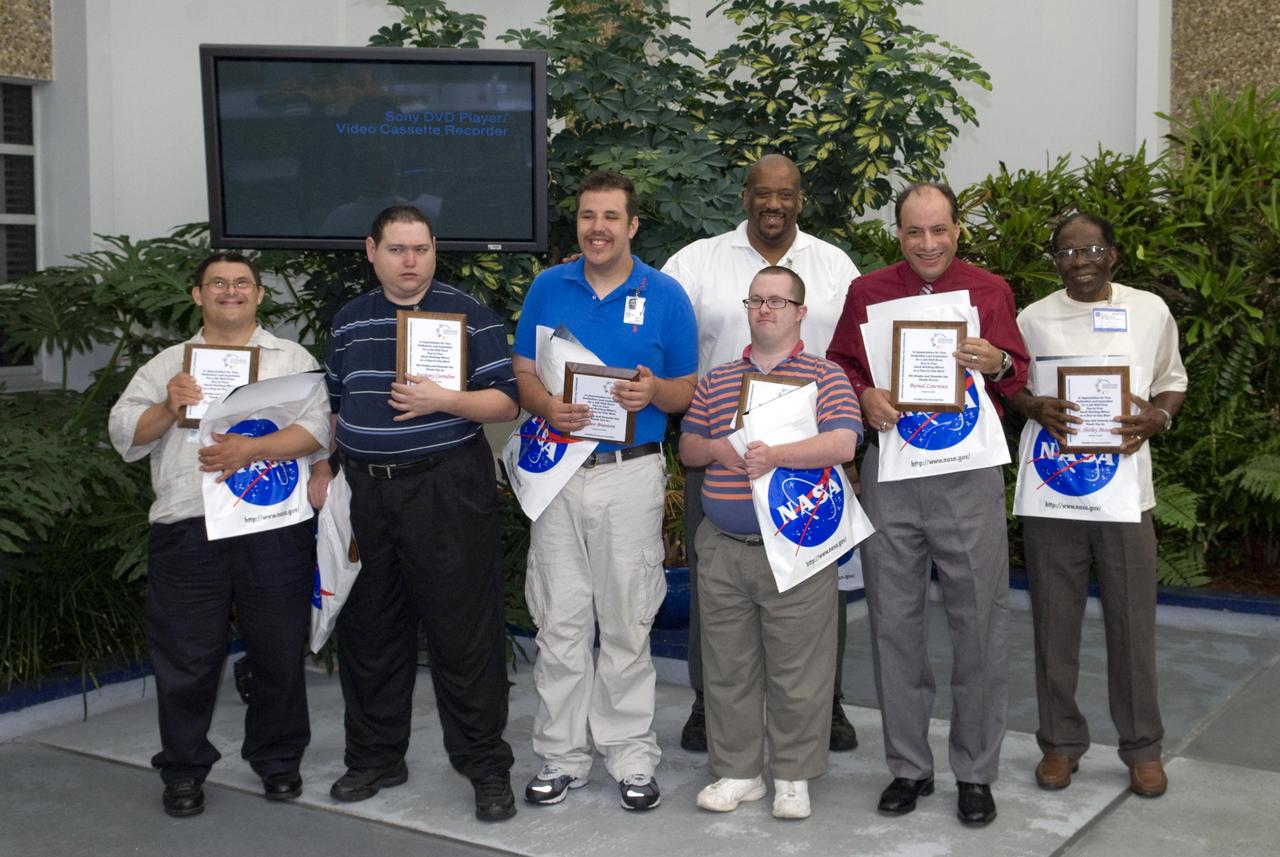
Members of STARC, a non-profit organization in Slidell, La., that seeks to help people with disabilities lead meaningful, productive lives, pose with their appreciation awards during Disability Awareness Day at Stennis Space Center on Oct. 15. The group members received appreciation awards for their dedicated service to the rocket engine testing facility. Disability Awareness Day was hosted by the Stennis Diversity Council and included guest speakers from several area agencies.
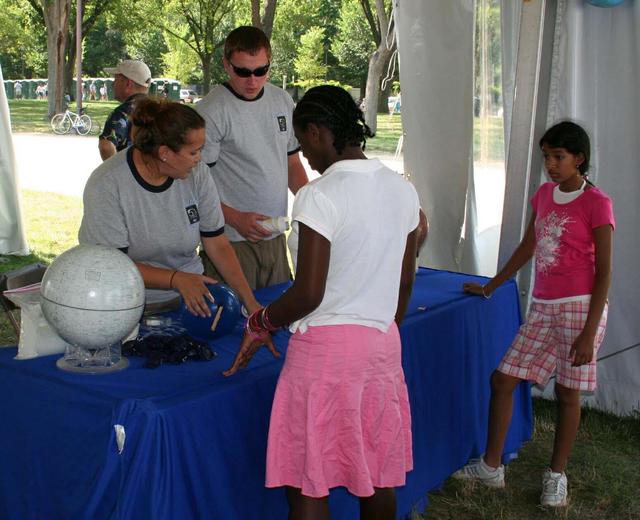
Tammy Estapa and Wesley Oliver from Stennis Space Center assist young people visiting the Smithsonian Folklife Festival in Washington, D.C., to participate in Astro Camp activities.
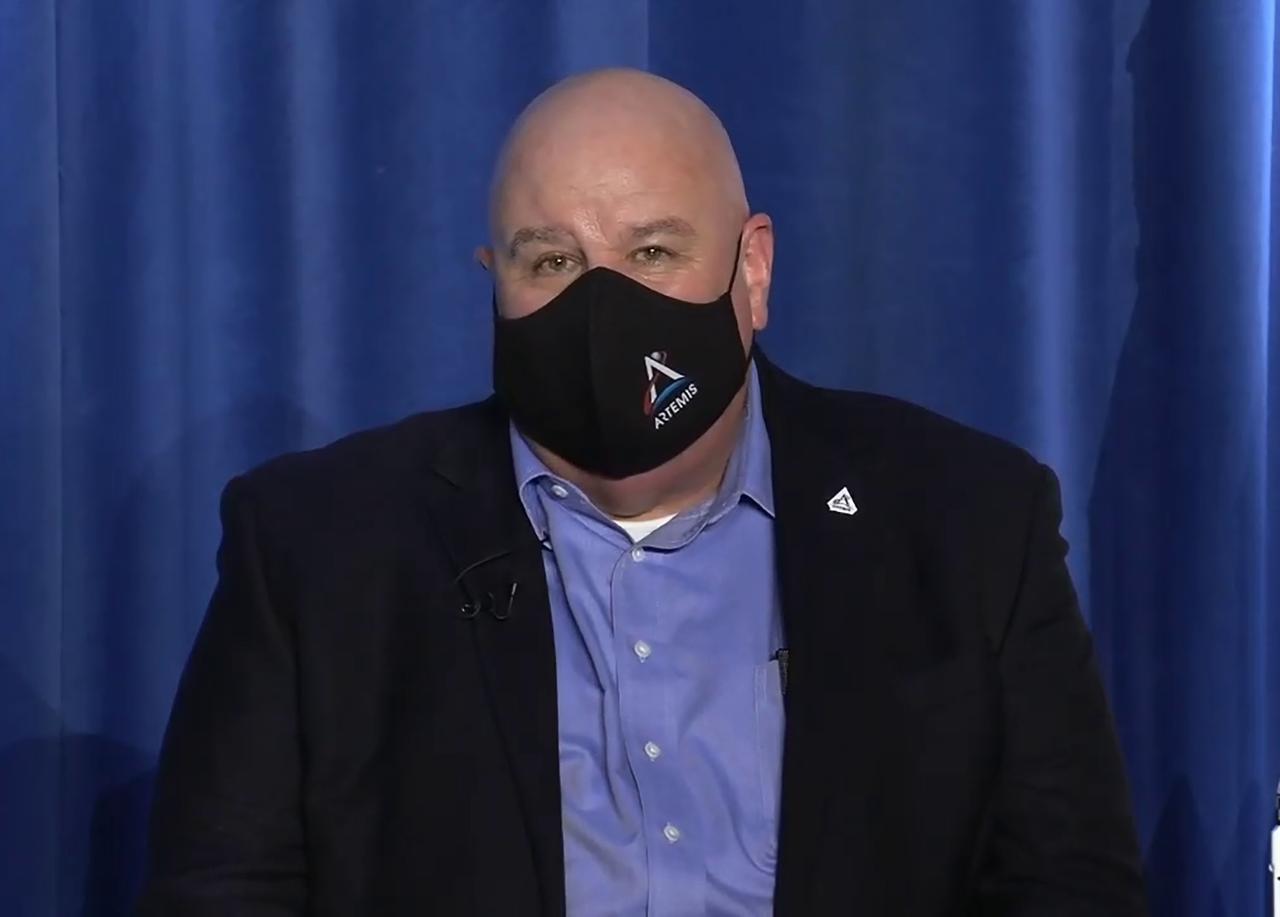
NASA leaders participated in a virtual press briefing following the Space Launch System core stage hot fire test at Stennis Space Center near Bay St. Louis, Mississippi, on March 18. The leaders fielded questions submitted by offsite media during the post-test session. Agency participants present at Stennis included John Honeycutt, SLS Program manager at Marshall Space Flight Center in Huntsville, Alabama.
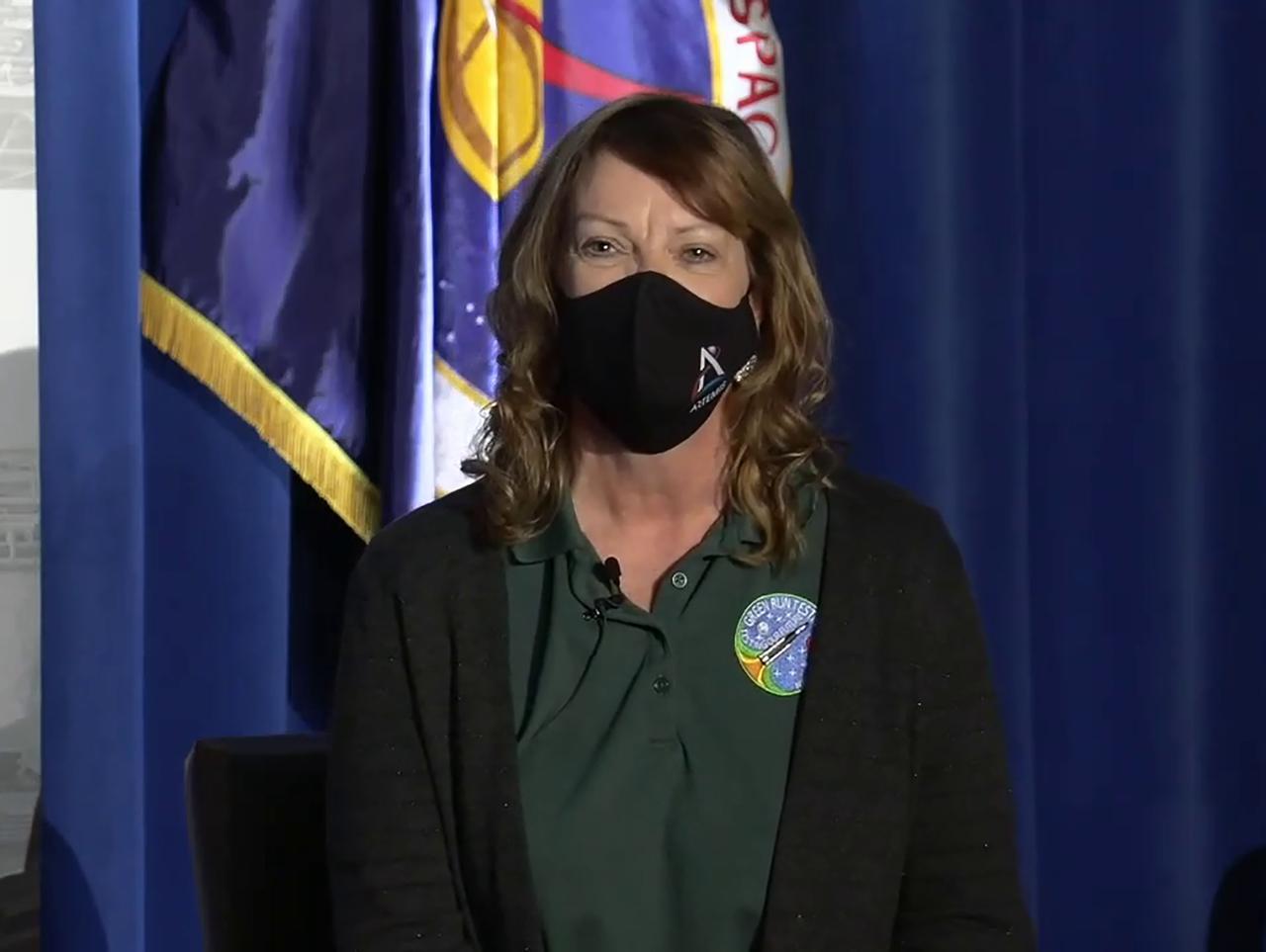
NASA leaders participated in a virtual press briefing following the Space Launch System core stage hot fire test at Stennis Space Center near Bay St. Louis, Mississippi, on March 18. The leaders fielded questions submitted by offsite media during the post-test session. Agency participants present at Stennis included Julie Bassler, SLS Stages Office manager at Marshall Space Flight Center in Huntsville, Alabama.
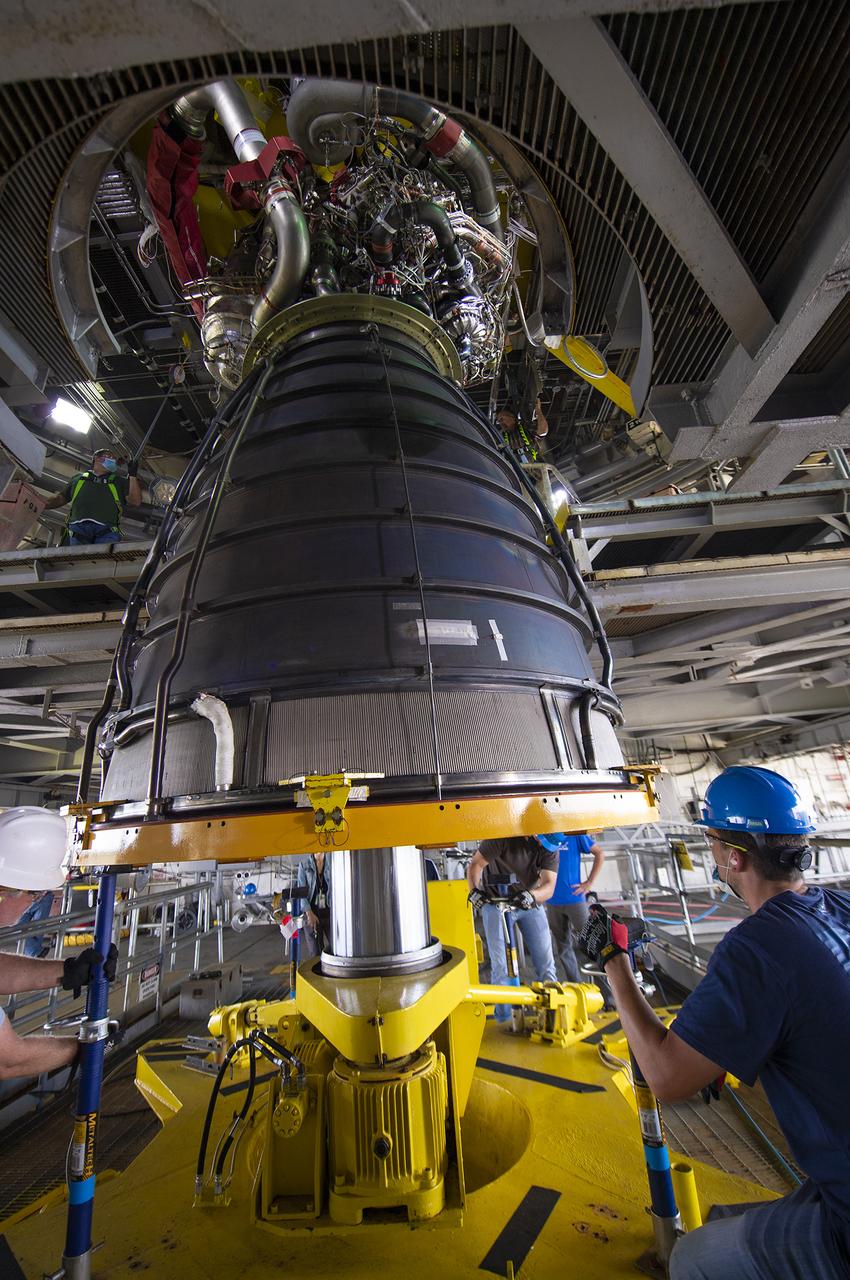
Crews at NASA’s Stennis Space Center remove an RS-25 rocket engine from the A-1 test stand on Nov. 1, 2021, following a series of successful tests.
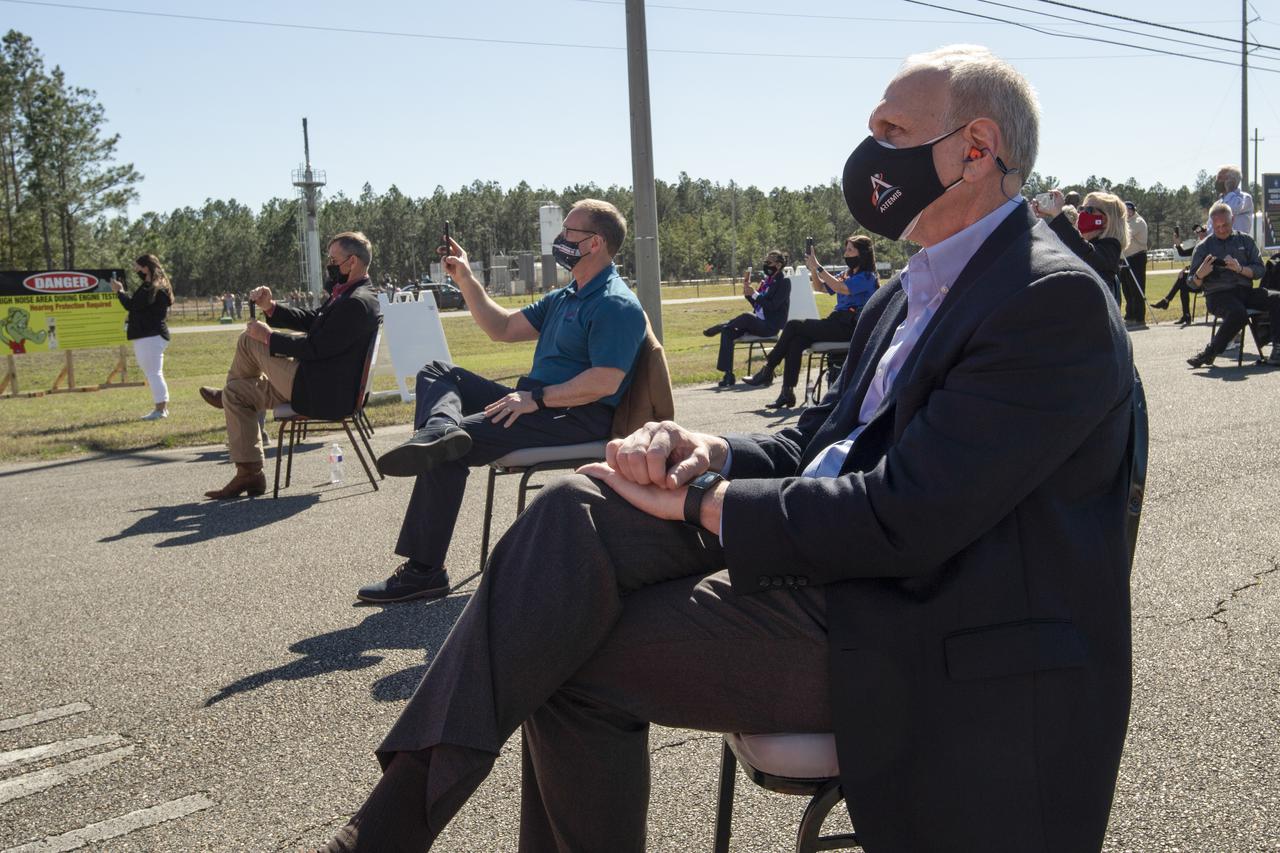
Acting NASA Administrator Steve Jurczyk, right, and Rick Gilbrech, director of NASA's Stennis Space Center, center, watch as the core stage for the first flight of NASA’s Space Launch System rocket undergoes a second hot fire test in the B-2 Test Stand, Thursday, March 18, 2021, at NASA’s Stennis Space Center near Bay St. Louis, Mississippi. The four RS-25 engines fired for the full-duration of 8 minutes during the test and generated 1.6 million pounds of thrust. The hot fire test is the final stage of the Green Run test series, a comprehensive assessment of the Space Launch System’s core stage prior to launching the Artemis I mission to the Moon. Photo Credit: (NASA/Robert Markowitz)
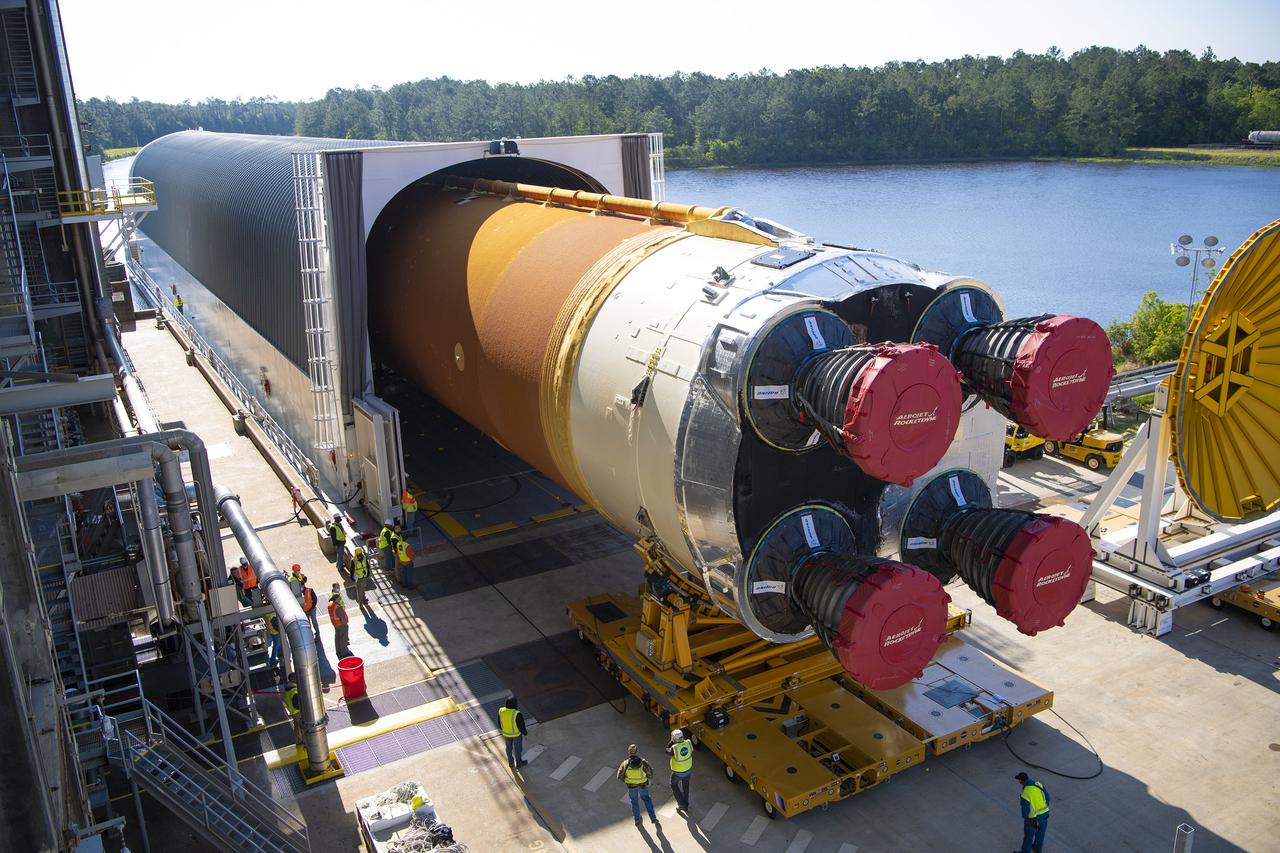
Team members at NASA’s Stennis Space Center near Bay St. Louis, Mississippi, load the first core stage of the agency’s Space Launch System (SLS) rocket on to the agency’s Pegasus barge in preparation for its transport to Kennedy Space Center in Florida. The loading activity followed removal of the stage from the B-2 Test Stand at Stennis on April 19-20, 2021. It comes about a month after NASA conducted a successful hot fire of the stage and its four RS-25 engines on March 18 and after teams completed various refurbishment activities. Once at Kennedy, the will be integrated with the rest of SLS rocket and prepared for the launch of the Artemis I mission to the Moon. Photo Credit: NASA
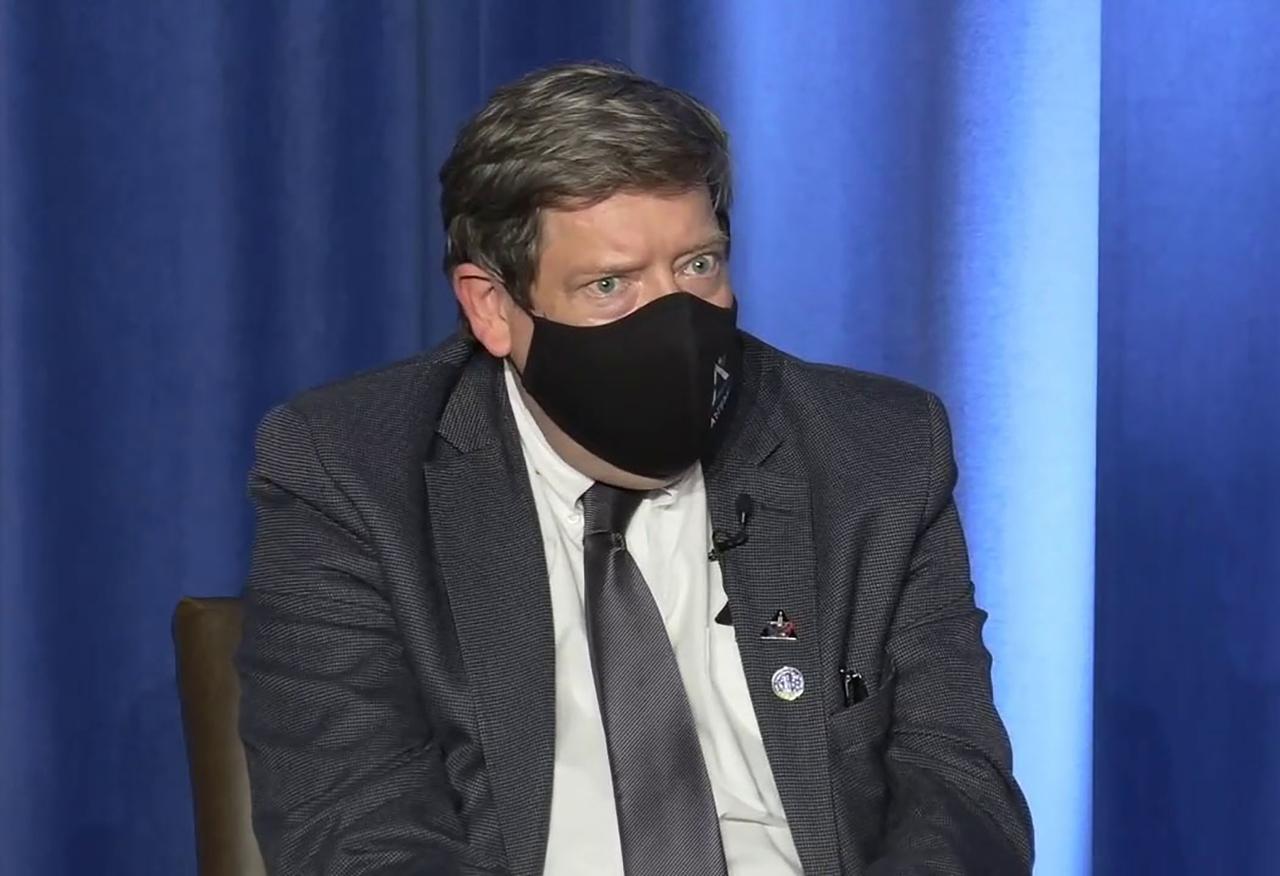
NASA leaders participated in a virtual press briefing following the Space Launch System core stage hot fire test at Stennis Space Center near Bay St. Louis, Mississippi, on March 18. The leaders fielded questions submitted by offsite media during the post-test session. Agency participants present at Stennis included Tom Whitmeyer, NASA deputy associate administrator for Exploration Systems Development.
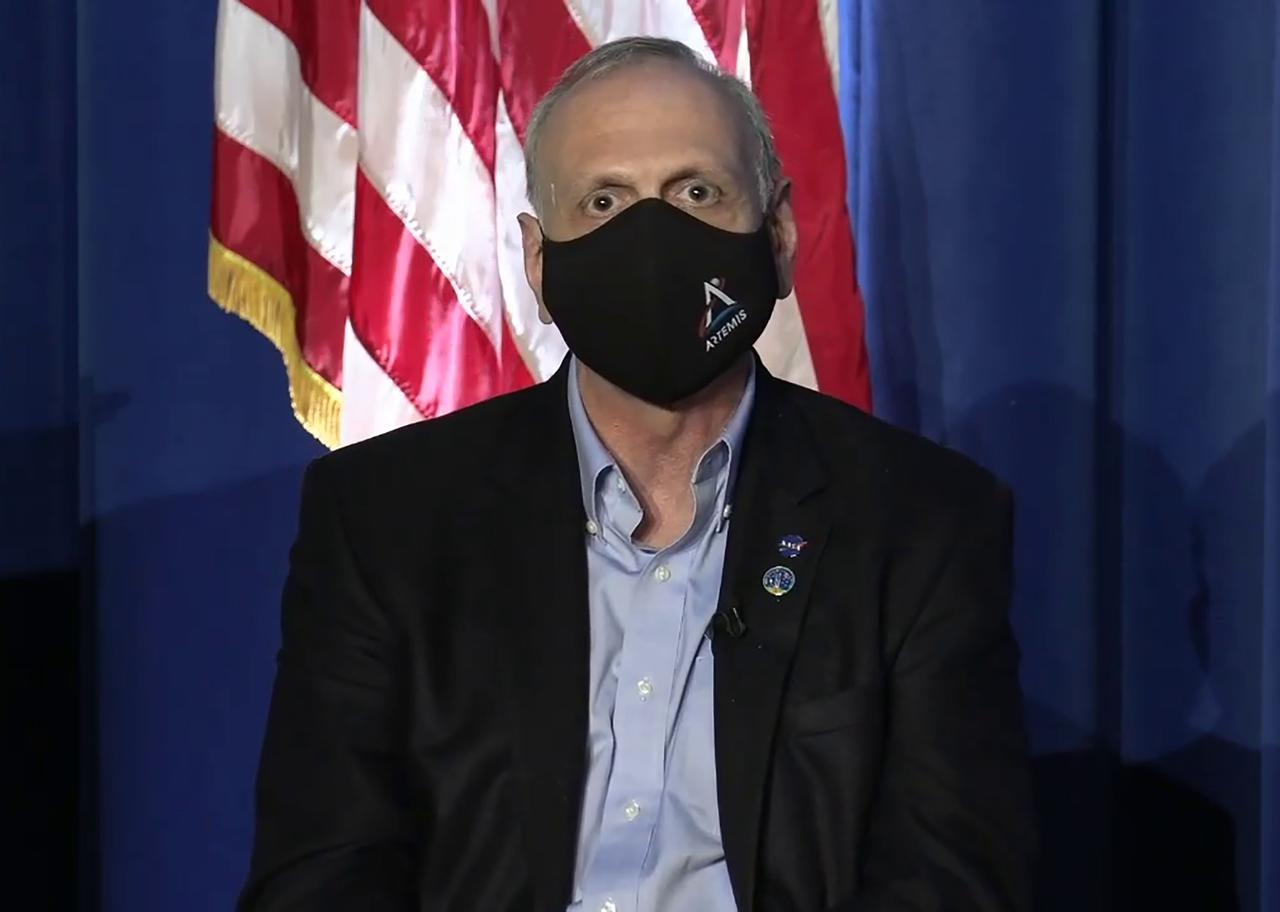
NASA leaders participated in a virtual press briefing following the Space Launch System core stage hot fire test at Stennis Space Center near Bay St. Louis, Mississippi, on March 18. The leaders fielded questions submitted by offsite media during the post-test session. Agency participants present at Stennis included NASA acting Administrator Steve Jurczyk.
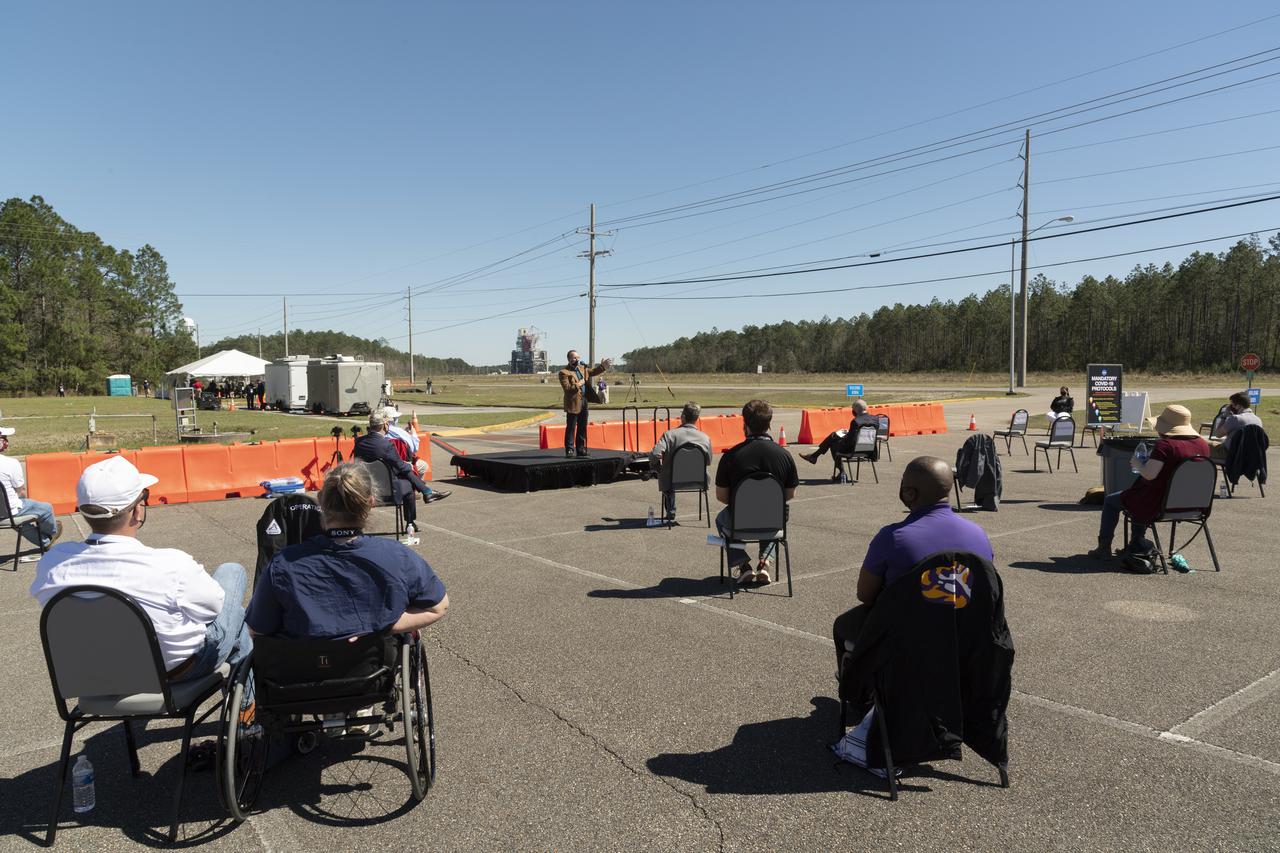
Rick Gilbrech, director of NASA's Stennis Space Center, speaks to invited guests ahead of a second hot fire test of the core stage for the first flight of NASA’s Space Launch System rocket in the B-2 Test Stand, Thursday, March 18, 2021, at NASA’s Stennis Space Center near Bay St. Louis, Mississippi. The hot fire test is the final stage of the Green Run test series, a comprehensive assessment of the Space Launch System’s core stage prior to launching the Artemis I mission to the Moon. Photo Credit: (NASA/Robert Markowitz)
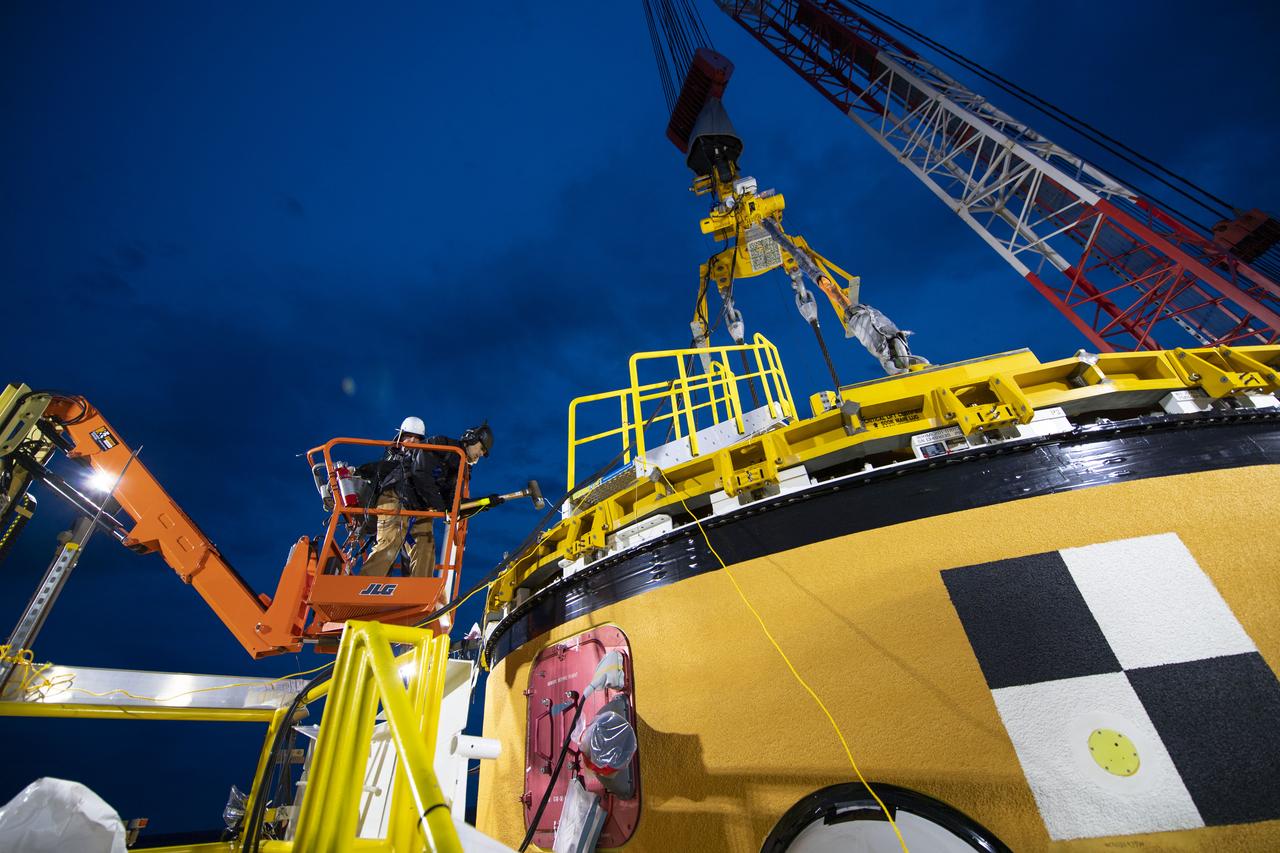
On Jan. 30, 2020, crews at Stennis Space Center successfully conducted modal testing of the first core stage of NASA’s new Space Launch System (SLS) rocket. Data from the modal test will be used to verify structural vibration modes and verify flight control parameters. The test is part of a Green Run series of testing that represents the first top-to-bottom integrated testing of the stage’s systems prior to its maiden Artemis I test mission.

On Jan. 30, 2020, crews at Stennis Space Center successfully conducted modal testing of the first core stage of NASA’s new Space Launch System (SLS) rocket. Data from the modal test will be used to verify structural vibration modes and verify flight control parameters. The test is part of a Green Run series of testing that represents the first top-to-bottom integrated testing of the stage’s systems prior to its maiden Artemis I test mission.
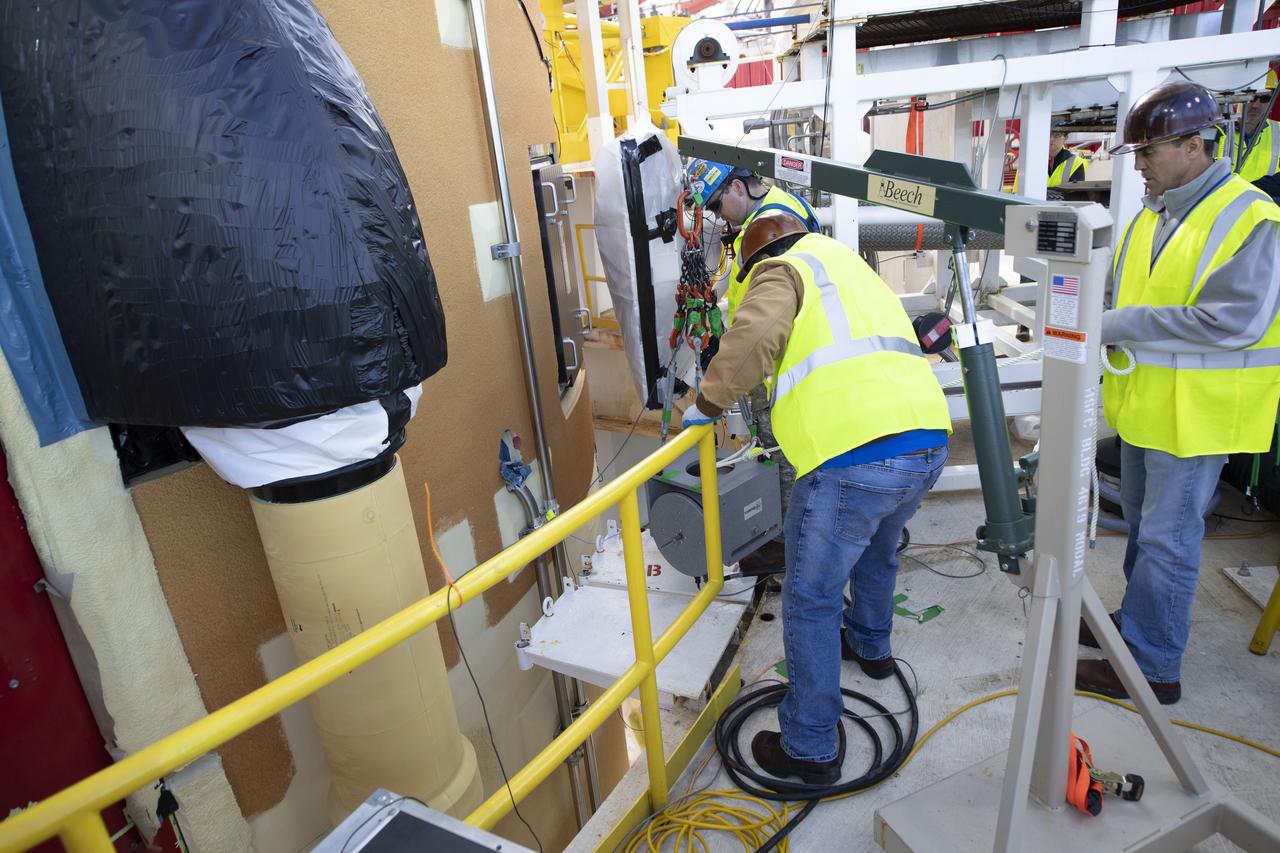
On Jan. 30, 2020, crews at Stennis Space Center successfully conducted modal testing of the first core stage of NASA’s new Space Launch System (SLS) rocket. Data from the modal test will be used to verify structural vibration modes and verify flight control parameters. The test is part of a Green Run series of testing that represents the first top-to-bottom integrated testing of the stage’s systems prior to its maiden Artemis I test mission.
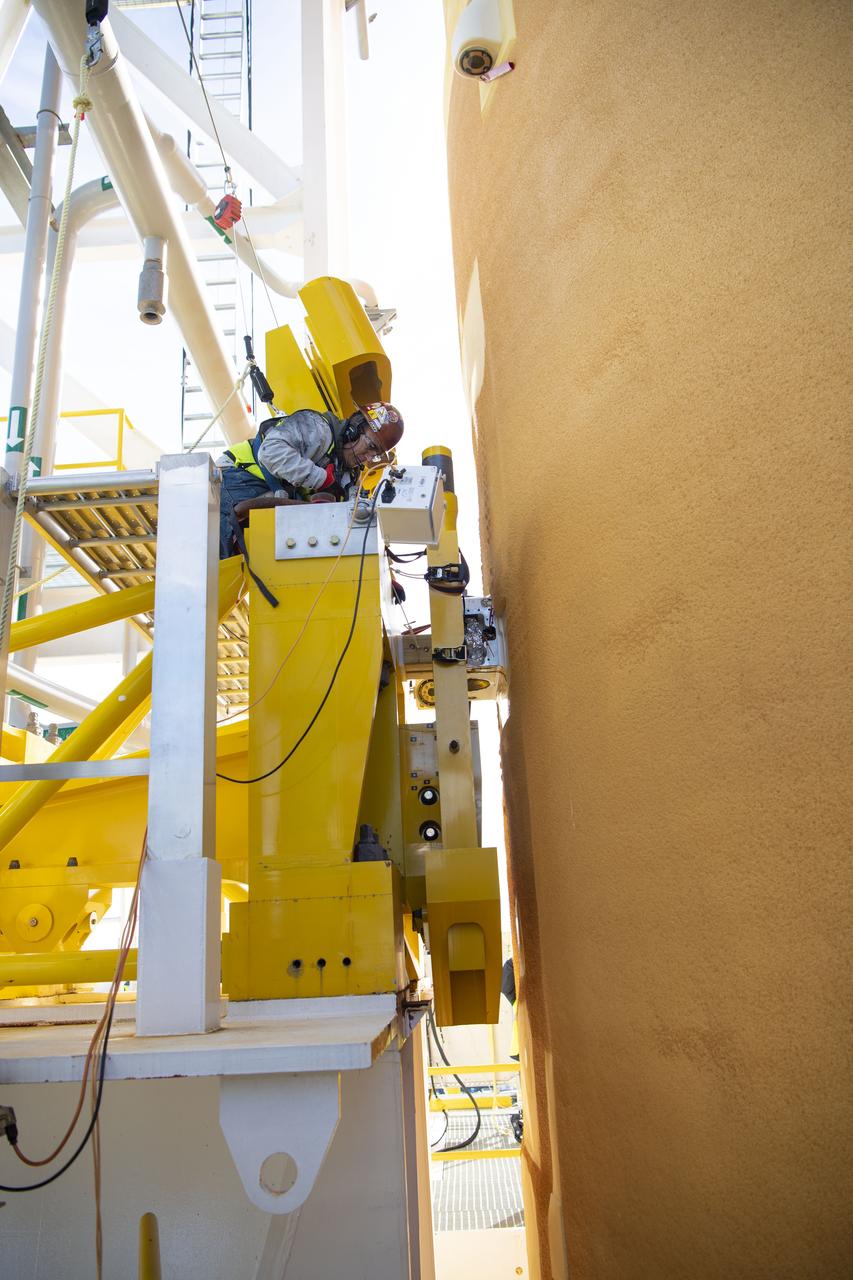
On Jan. 30, 2020, crews at Stennis Space Center successfully conducted modal testing of the first core stage of NASA’s new Space Launch System (SLS) rocket. Data from the modal test will be used to verify structural vibration modes and verify flight control parameters. The test is part of a Green Run series of testing that represents the first top-to-bottom integrated testing of the stage’s systems prior to its maiden Artemis I test mission.
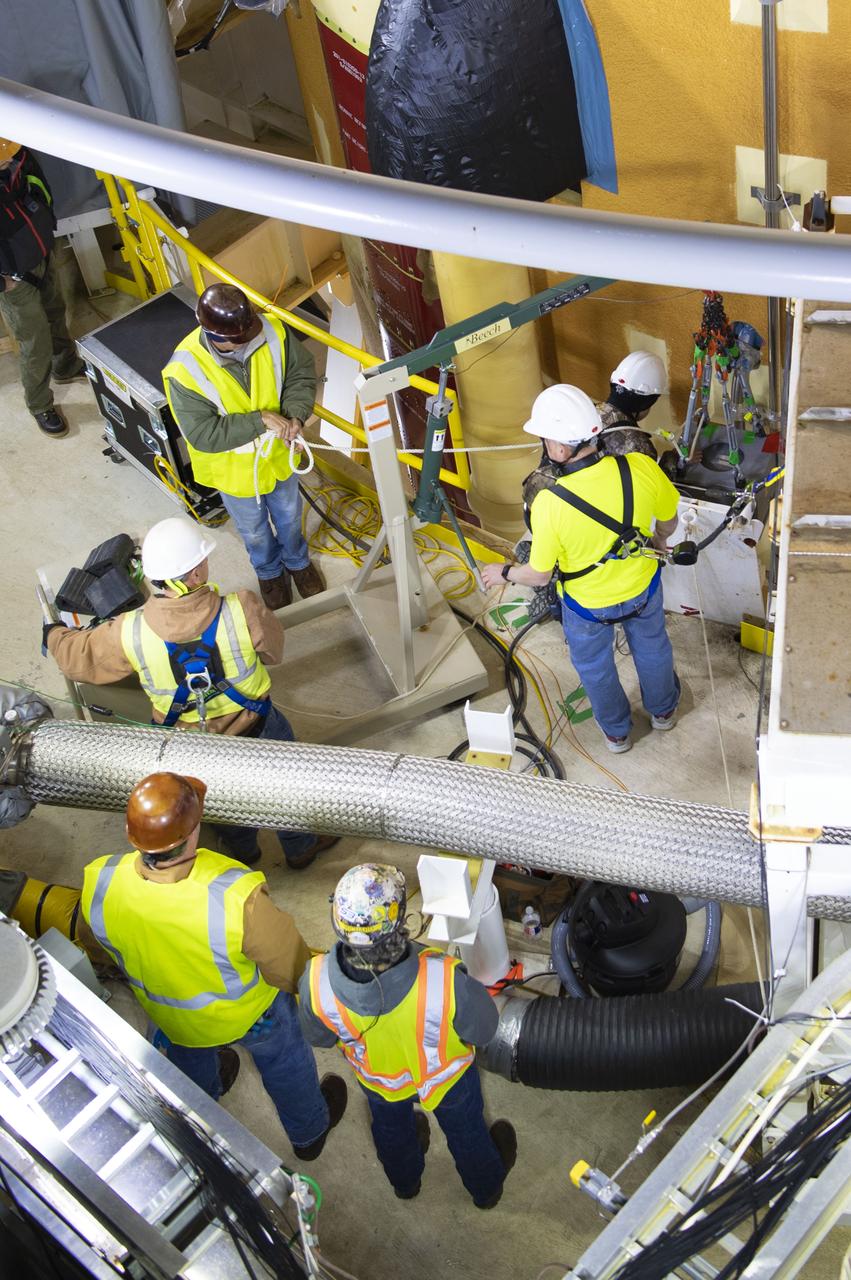
On Jan. 30, 2020, crews at Stennis Space Center successfully conducted modal testing of the first core stage of NASA’s new Space Launch System (SLS) rocket. Data from the modal test will be used to verify structural vibration modes and verify flight control parameters. The test is part of a Green Run series of testing that represents the first top-to-bottom integrated testing of the stage’s systems prior to its maiden Artemis I test mission.
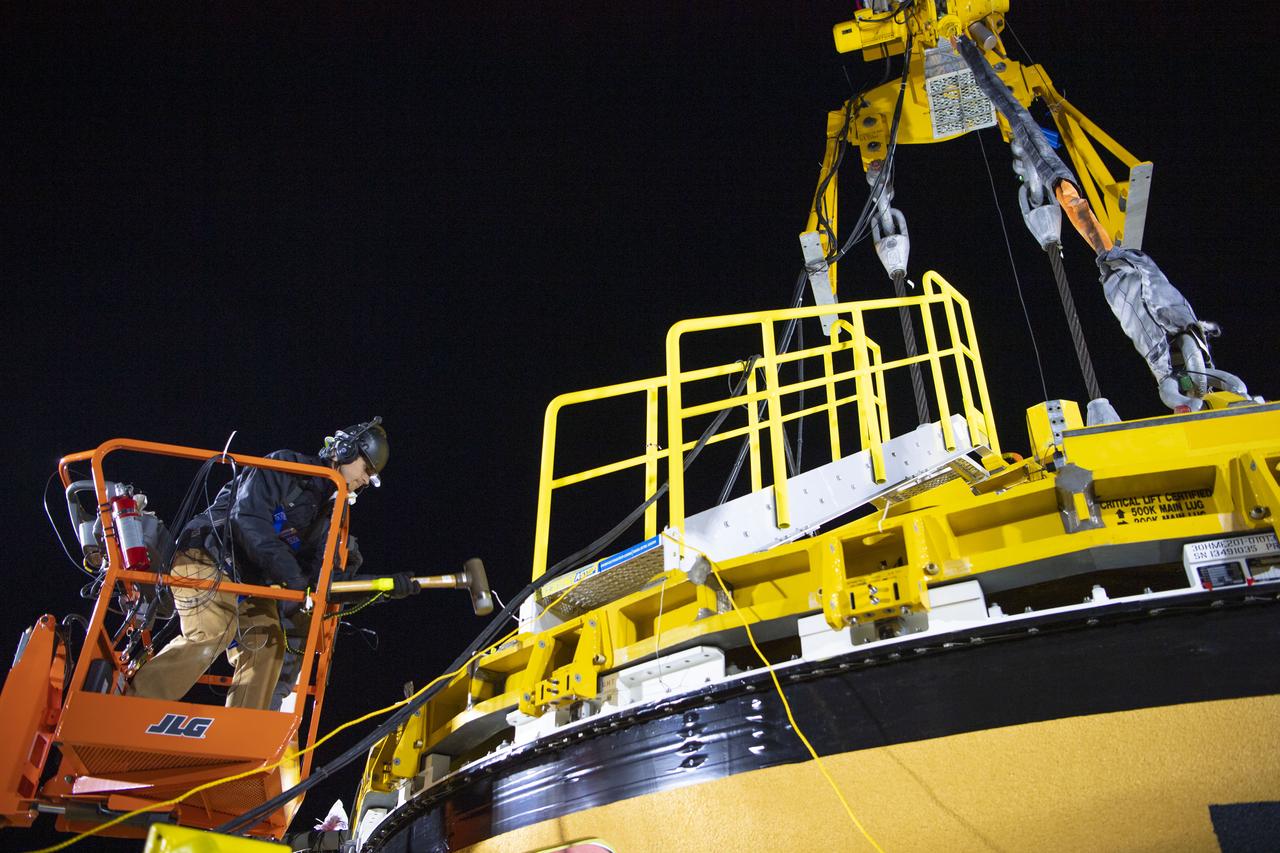
On Jan. 30, 2020, crews at Stennis Space Center successfully conducted modal testing of the first core stage of NASA’s new Space Launch System (SLS) rocket. Data from the modal test will be used to verify structural vibration modes and verify flight control parameters. The test is part of a Green Run series of testing that represents the first top-to-bottom integrated testing of the stage’s systems prior to its maiden Artemis I test mission.
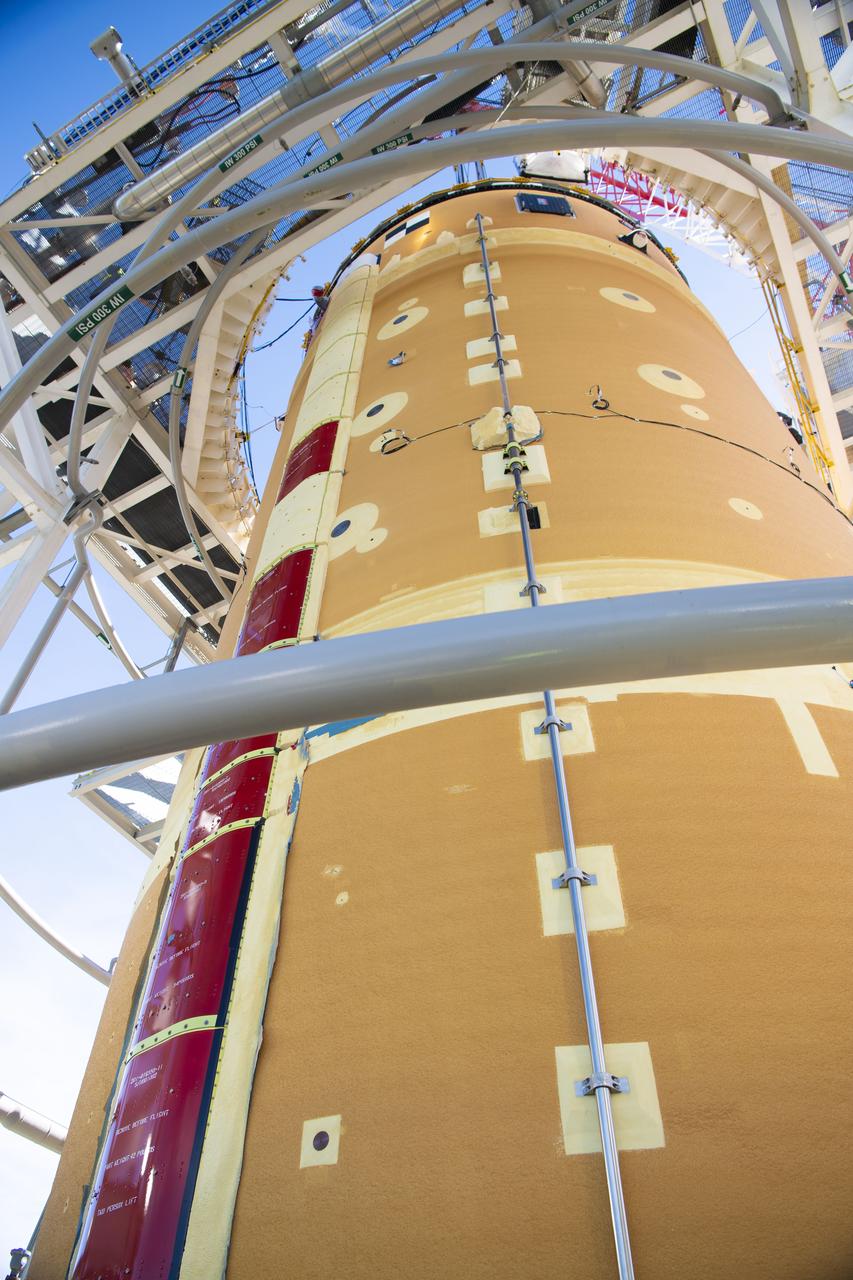
On Jan. 30, 2020, crews at Stennis Space Center successfully conducted modal testing of the first core stage of NASA’s new Space Launch System (SLS) rocket. Data from the modal test will be used to verify structural vibration modes and verify flight control parameters. The test is part of a Green Run series of testing that represents the first top-to-bottom integrated testing of the stage’s systems prior to its maiden Artemis I test mission.
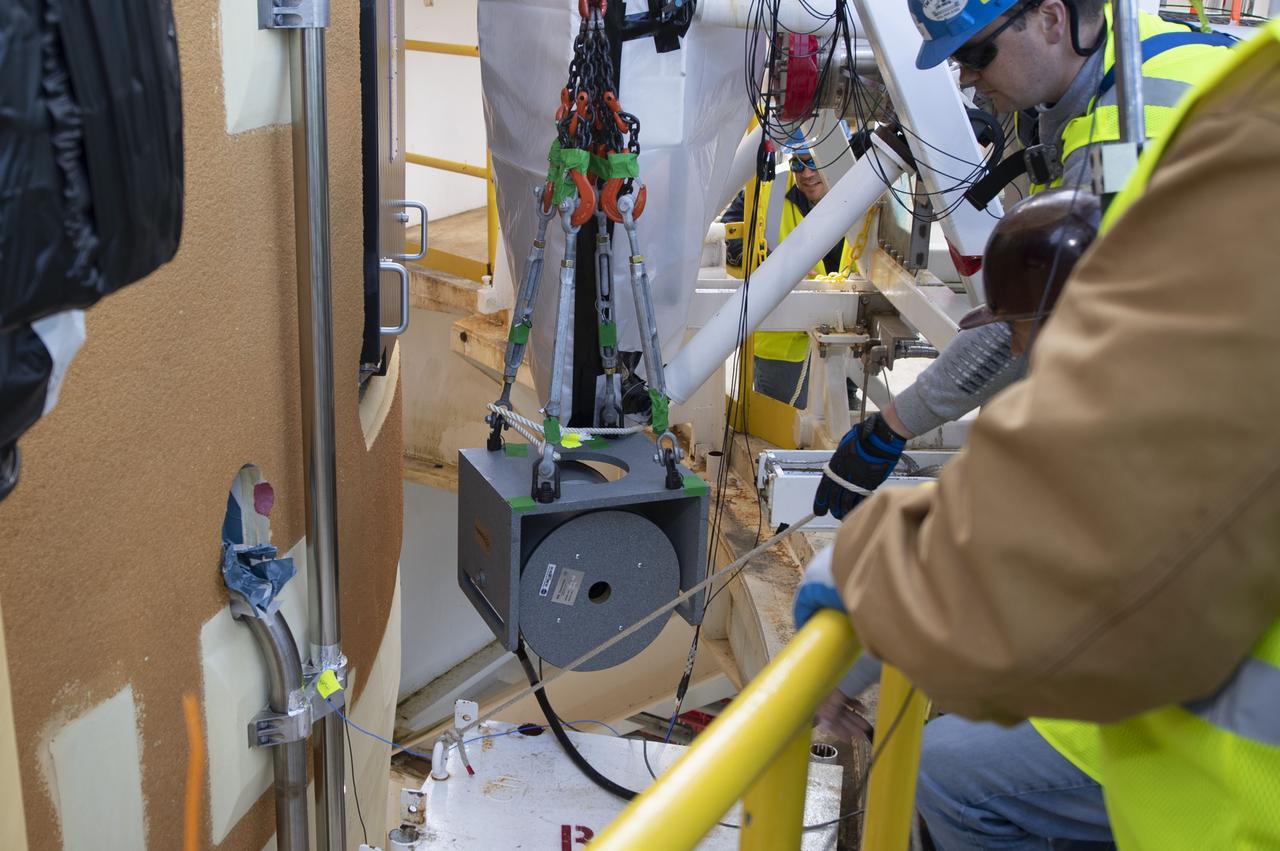
On Jan. 30, 2020, crews at Stennis Space Center successfully conducted modal testing of the first core stage of NASA’s new Space Launch System (SLS) rocket. Data from the modal test will be used to verify structural vibration modes and verify flight control parameters. The test is part of a Green Run series of testing that represents the first top-to-bottom integrated testing of the stage’s systems prior to its maiden Artemis I test mission.
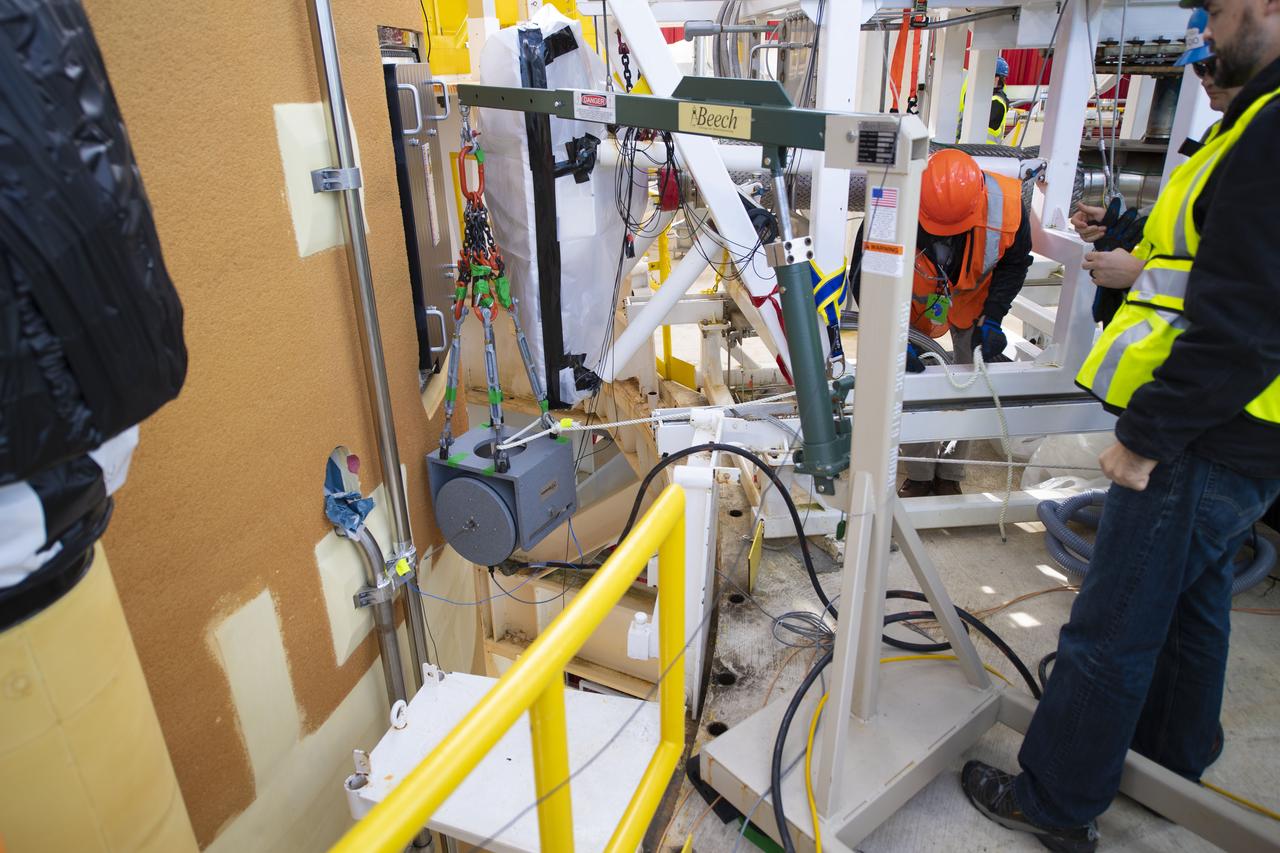
On Jan. 30, 2020, crews at Stennis Space Center successfully conducted modal testing of the first core stage of NASA’s new Space Launch System (SLS) rocket. Data from the modal test will be used to verify structural vibration modes and verify flight control parameters. The test is part of a Green Run series of testing that represents the first top-to-bottom integrated testing of the stage’s systems prior to its maiden Artemis I test mission.
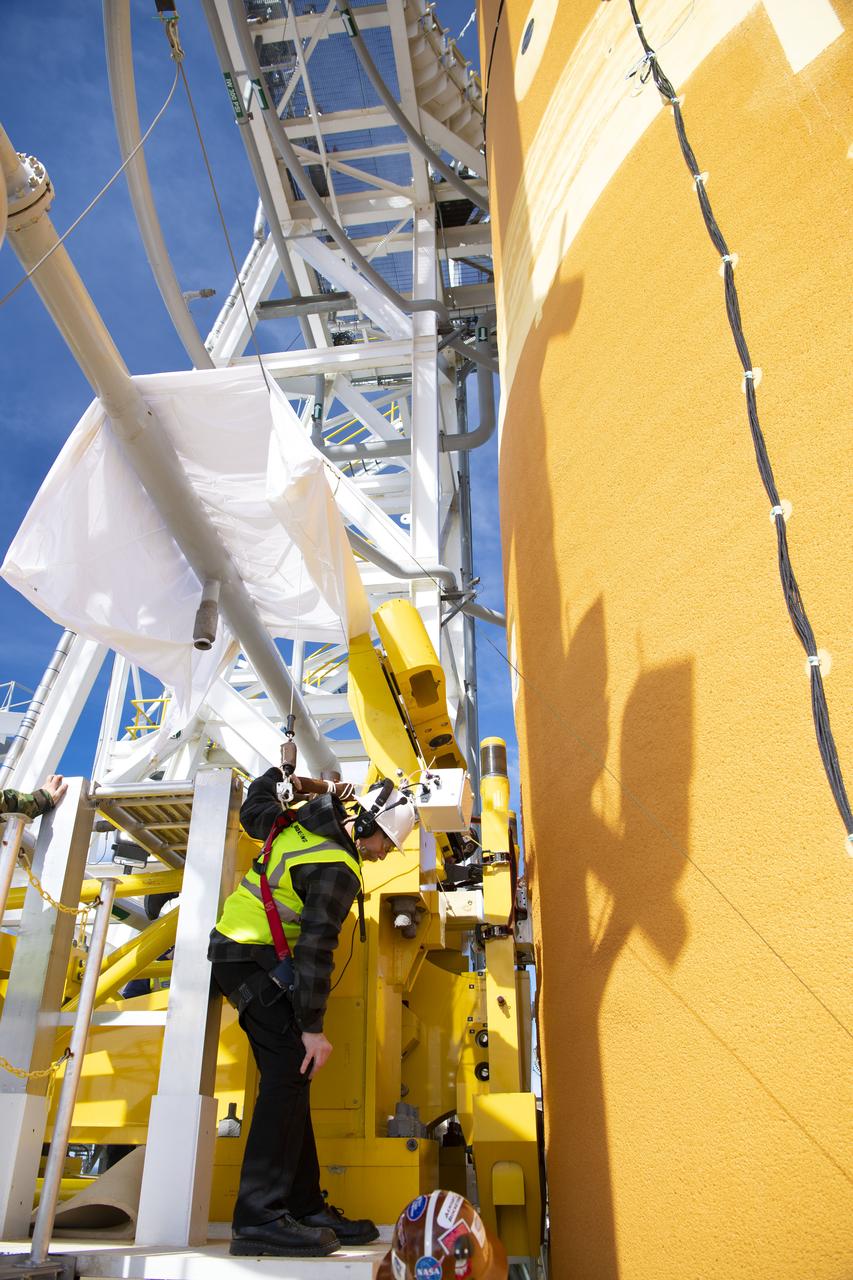
On Jan. 30, 2020, crews at Stennis Space Center successfully conducted modal testing of the first core stage of NASA’s new Space Launch System (SLS) rocket. Data from the modal test will be used to verify structural vibration modes and verify flight control parameters. The test is part of a Green Run series of testing that represents the first top-to-bottom integrated testing of the stage’s systems prior to its maiden Artemis I test mission.
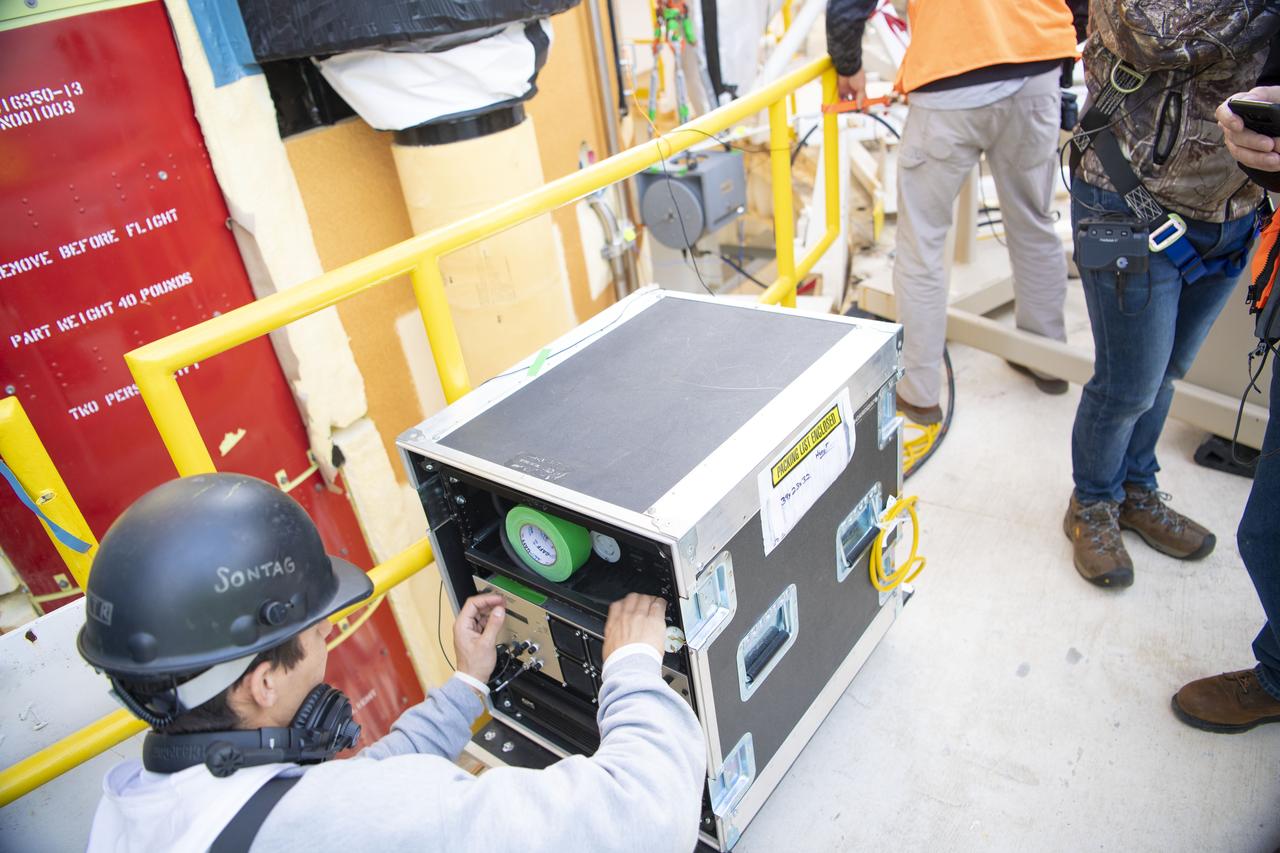
On Jan. 30, 2020, crews at Stennis Space Center successfully conducted modal testing of the first core stage of NASA’s new Space Launch System (SLS) rocket. Data from the modal test will be used to verify structural vibration modes and verify flight control parameters. The test is part of a Green Run series of testing that represents the first top-to-bottom integrated testing of the stage’s systems prior to its maiden Artemis I test mission.
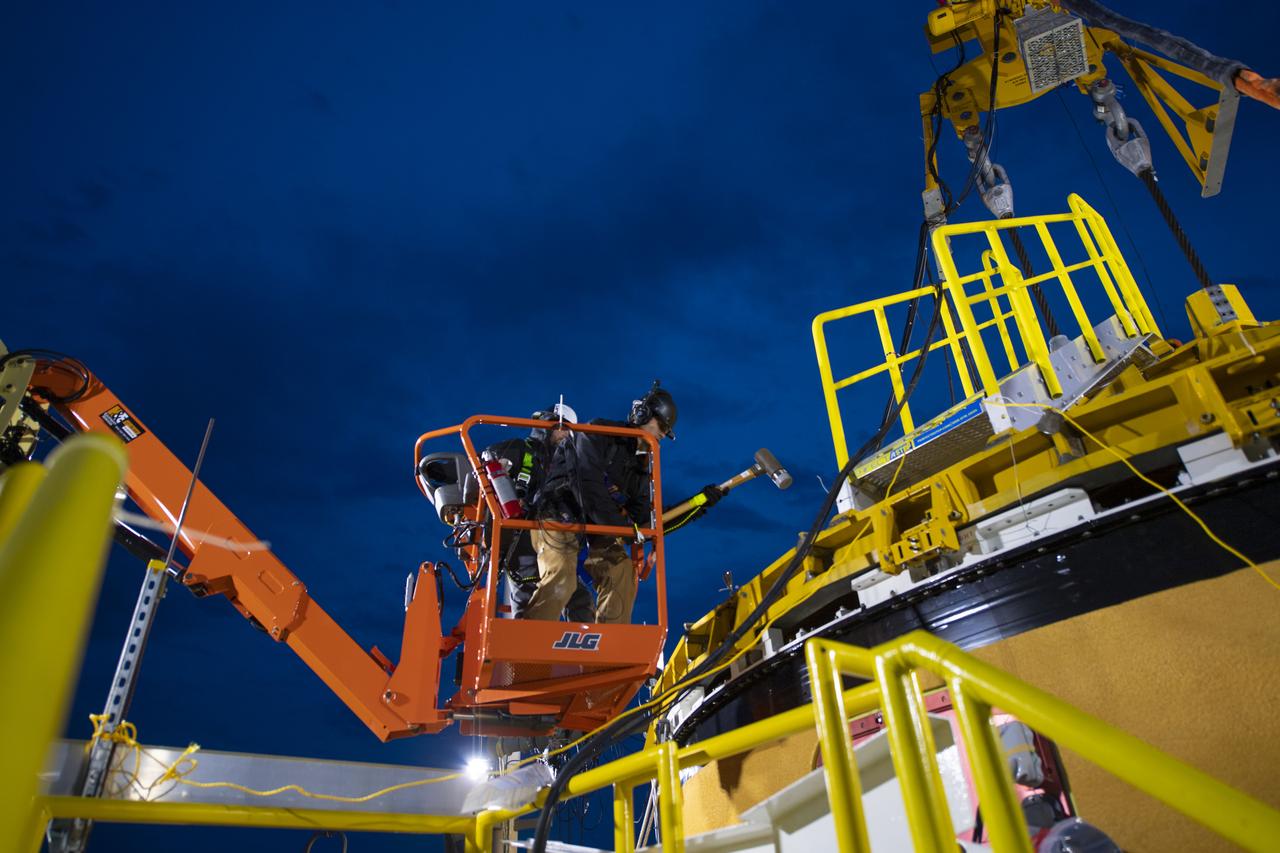
On Jan. 30, 2020, crews at Stennis Space Center successfully conducted modal testing of the first core stage of NASA’s new Space Launch System (SLS) rocket. Data from the modal test will be used to verify structural vibration modes and verify flight control parameters. The test is part of a Green Run series of testing that represents the first top-to-bottom integrated testing of the stage’s systems prior to its maiden Artemis I test mission.
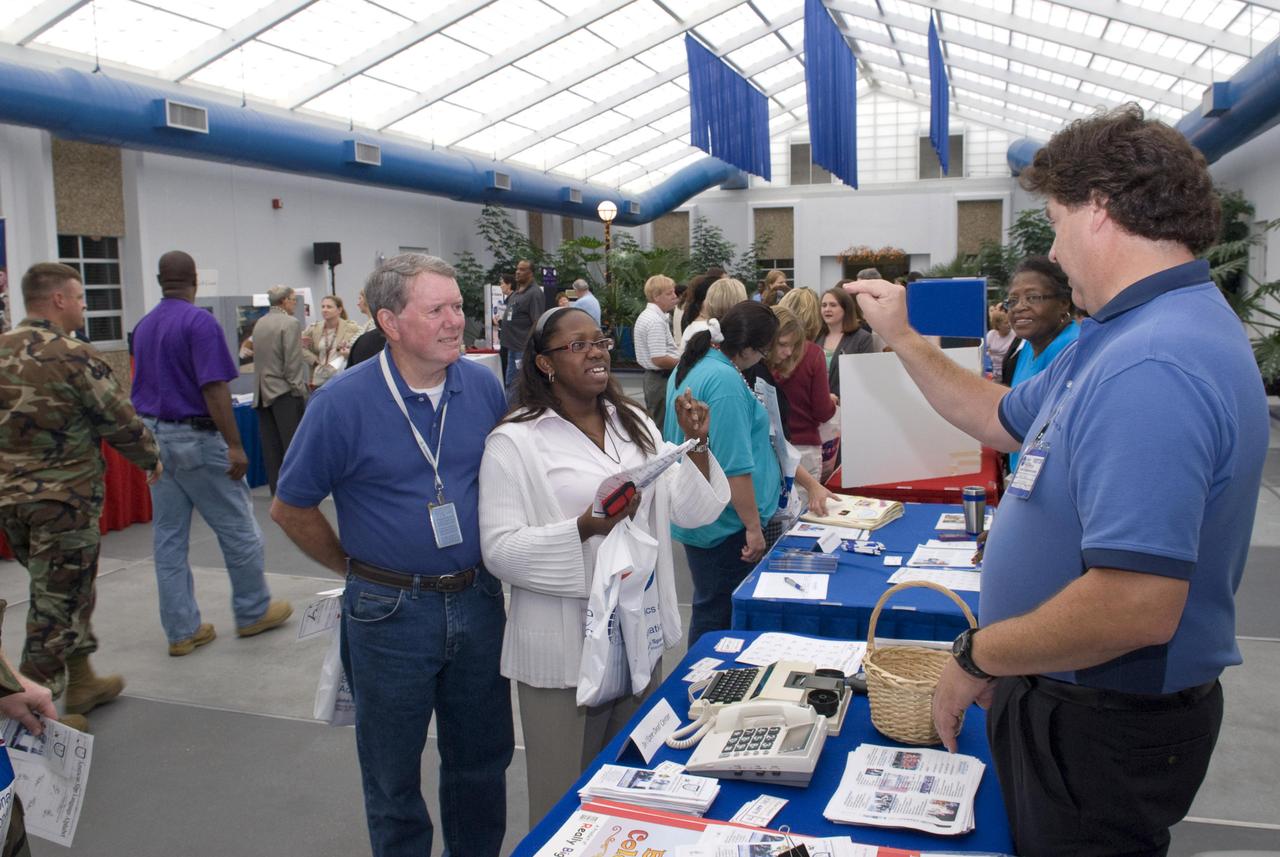
Using American sign language, Greg Crapo, right, director of de l'Ep e Deaf Center Inc. in Biloxi , Miss., helps Shanda Bennett of the Environmental Protection Agency at NASA's John C. Stennis Space Center spell out her name. Bennett is joined by colleague Charles Kennedy during a tour of charitable organization displays for the kickoff of the Stennis portion of the 2009 Combined Federal Campaign emphasis on Oct. 29. The CFC is the world's largest annual workplace charity effort. Contributions to the campaign support organizations providing health and human service benefits throughout the world. Stennis employees give tens of thousands of dollars through the campaign each year, including a $198,000 in gifts in 2008. This year, the Stennis goal is $200,000. For the kickoff, a number of charitable organizations provided displays at Stennis, providing employees an opportunity to see - and choose - where their contributions can be directed.
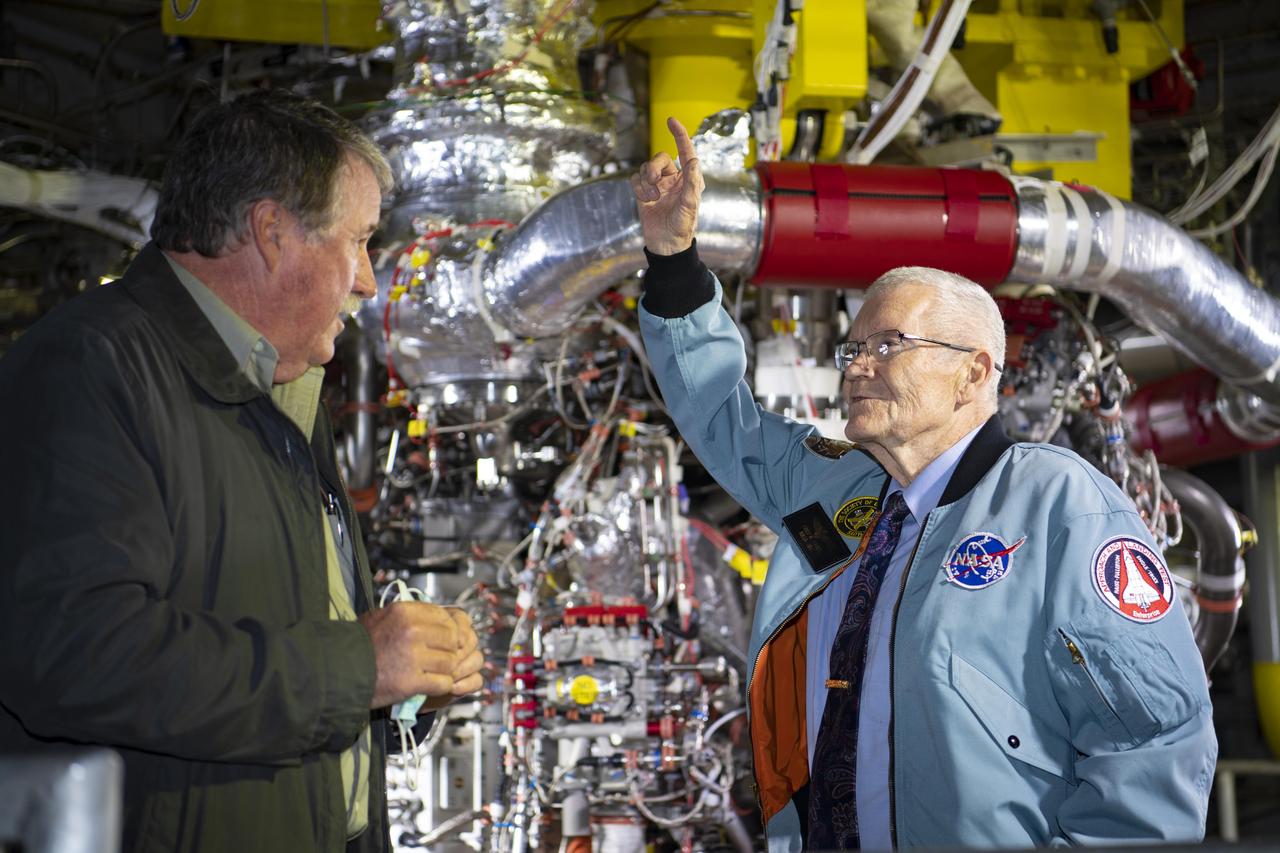
Apollo 13 Astronaut Fred Haise, right, stands in front of an RS-25 rocket engine installed on the A-1 Test Stand along with Jeff Henderson, test director at NASA’s Stennis Space Center. The A-1 stand was dedicated to the former astronaut on Dec. 7, 2021 and is now officially known as the Fred Haise Test Stand.
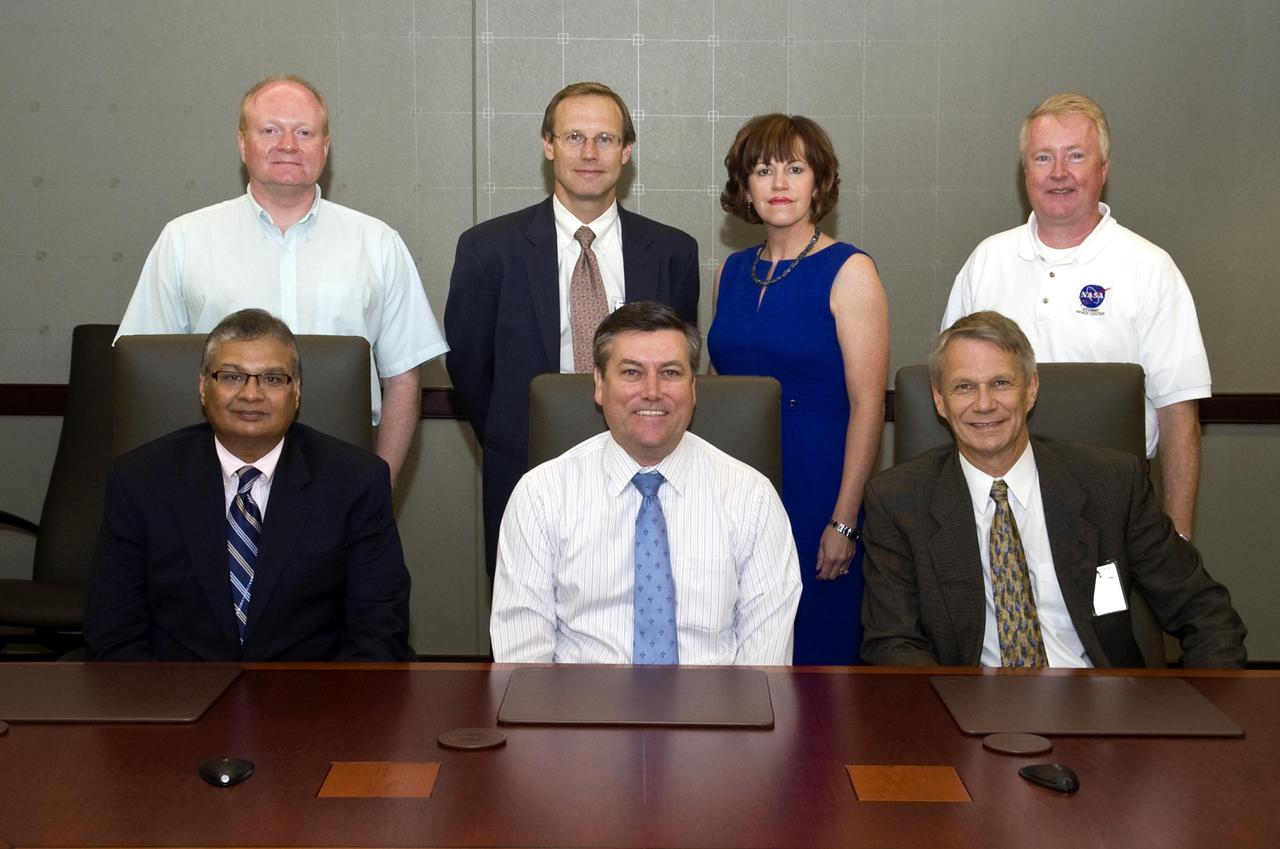
A trio of representatives from Goddard Space Flight Center in Greenbelt, Md., visited Stennis Space Center on July 21-22 to explore opportunities for collaboration. Visitors and hosts included: (seated, l to r) Shahid Habib, chief of the Goddard Office of Applied Sciences; Stennis Director Patrick Scheuermann; Piers Sellers, deputy director of the Goddard Sciences and Exploration Directorate; (standing, l to r) Duane Armstrong, chief of the Stennis Applied Science & Technology Project Office; Fritz Policelli, representative of the Goddard Office of Applied Sciences; Anne Peek, assistant director of the Stennis Project Directorate; and Keith Brock, director of the Stennis Project Directorate.
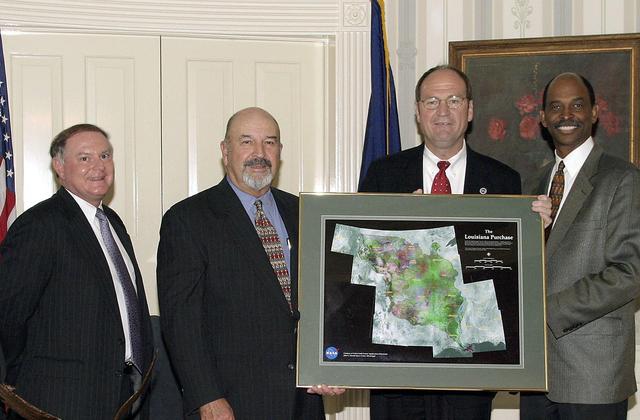
NASA Stennis Space Center (SSC) Interim Center Director Michael Rudolphi (second from right) presents Louisiana Gov. Mike Foster (second from left) an image from space of the area that comprised the Louisiana Purchase. Gov. Foster and Rudolphi signed a Memorandum of Understanding (MOU) between SSC and the state of Louisiana to promote technology transfer partnerships. Also pictured are Charles D'Agostino (left), executive director of the Louisiana Business and Technology Center, and Don Hutchison, secretary of the Louisiana Department of Economic Development.
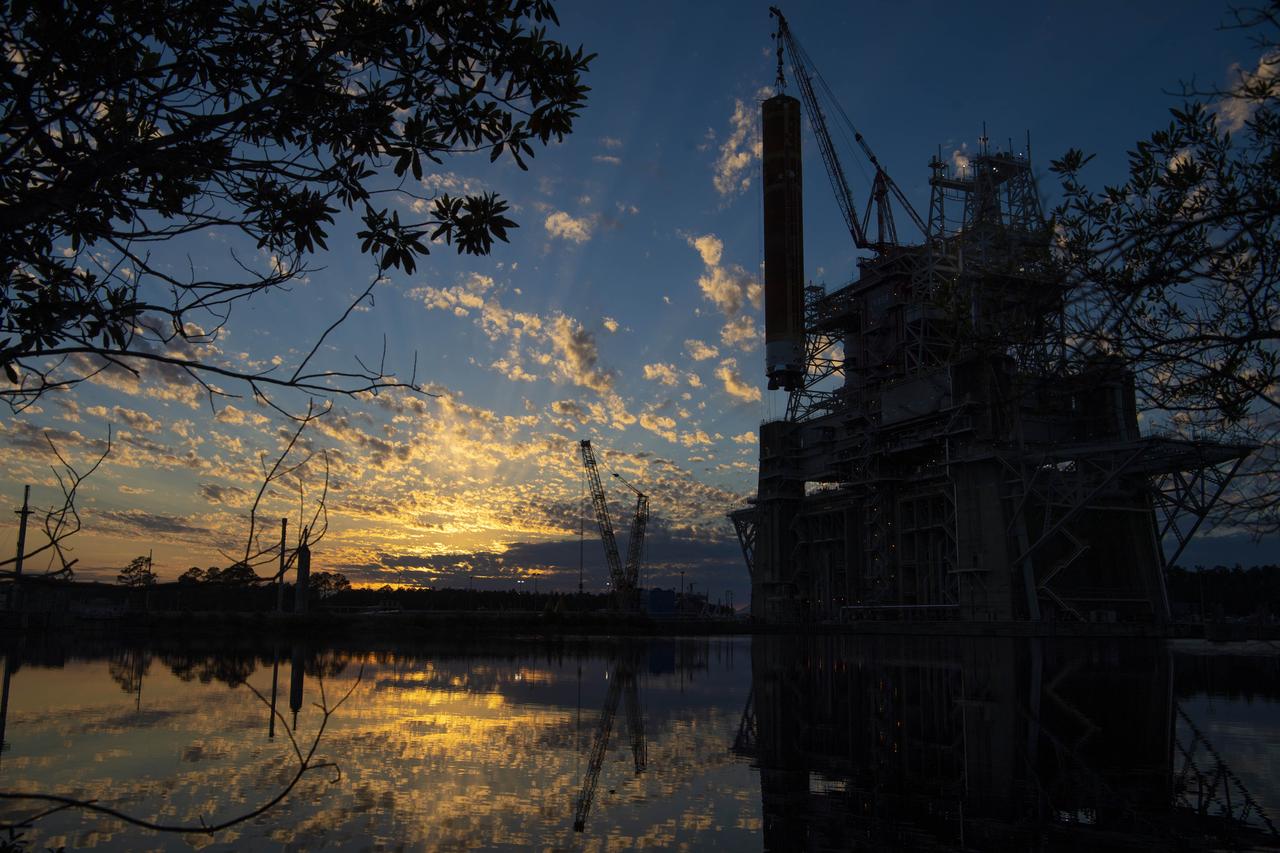
The first flight core stage of NASA’s Space Launch System rocket is removed from the B-2 Test Stand on April 19, 2021, following completion of a series of eight Green Run tests conducted at Stennis Space Center.
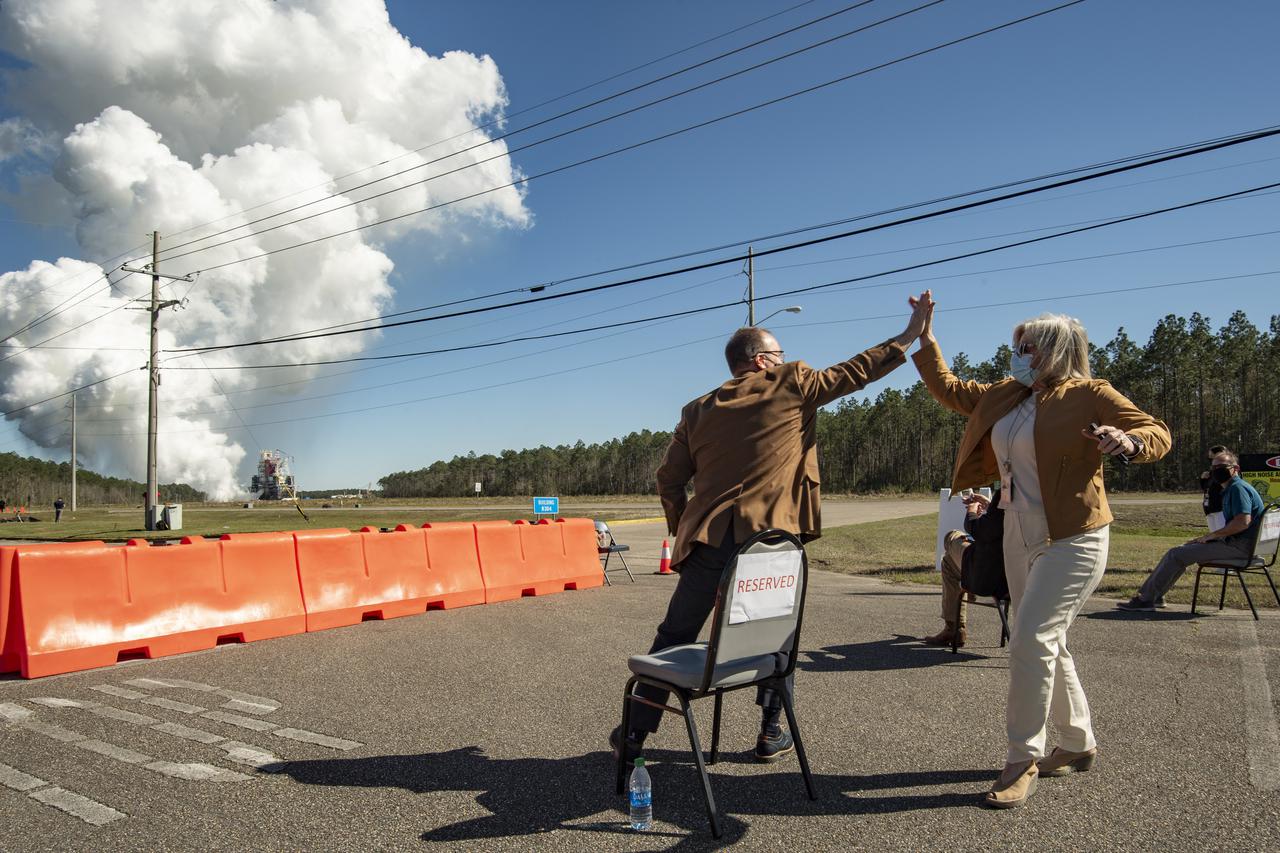
Rick Gilbrech, director of NASA's Stennis Space Center, left, and Jody Singer, director of NASA's Marshall Space Flight Center, right, high five following a second hot fire test of the core stage for the first flight of NASA’s Space Launch System rocket in the B-2 Test Stand, Thursday, March 18, 2021, at NASA’s Stennis Space Center near Bay St. Louis, Mississippi. The four RS-25 engines fired for the full-duration of 8 minutes during the test and generated 1.6 million pounds of thrust. The hot fire test is the final stage of the Green Run test series, a comprehensive assessment of the Space Launch System’s core stage prior to launching the Artemis I mission to the Moon. Photo Credit: (NASA/Robert Markowitz)
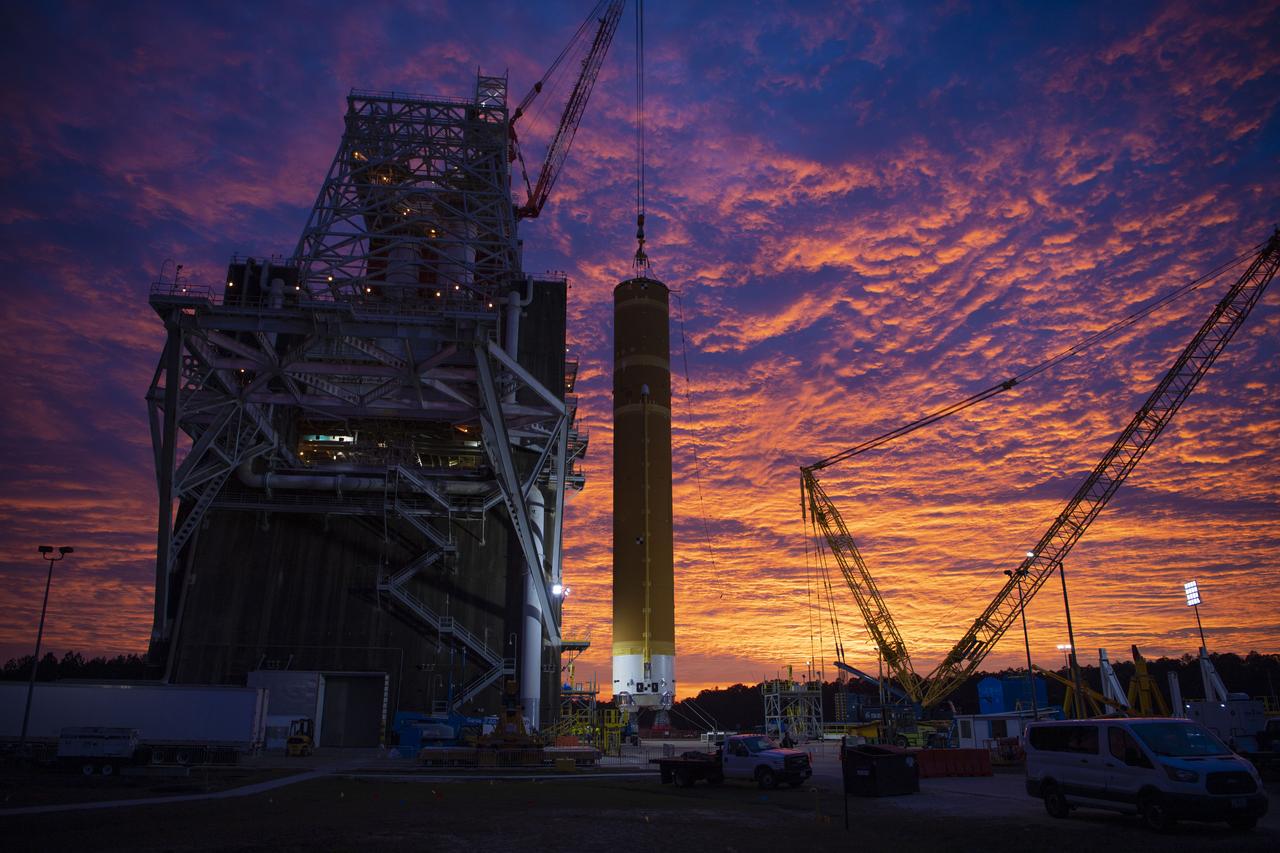
On Jan. 21-22, 2020, crews at Stennis Space Center lifted and installed the first core stage of NASA’s new Space Launch System (SLS) rocket onto the B-2 Test Stand. In upcoming months, a top-to-bottom, integrated series of Green Run tests will be conducted on the stage and its sophisticated systems. Following testing, the stage will be used to help launch the maiden Artemis I test mission of SLS and the Orion spacecraft. Through the Artemis program, NASA will send humans, including the first woman and next man, to the Moon to establish a sustainable presence.
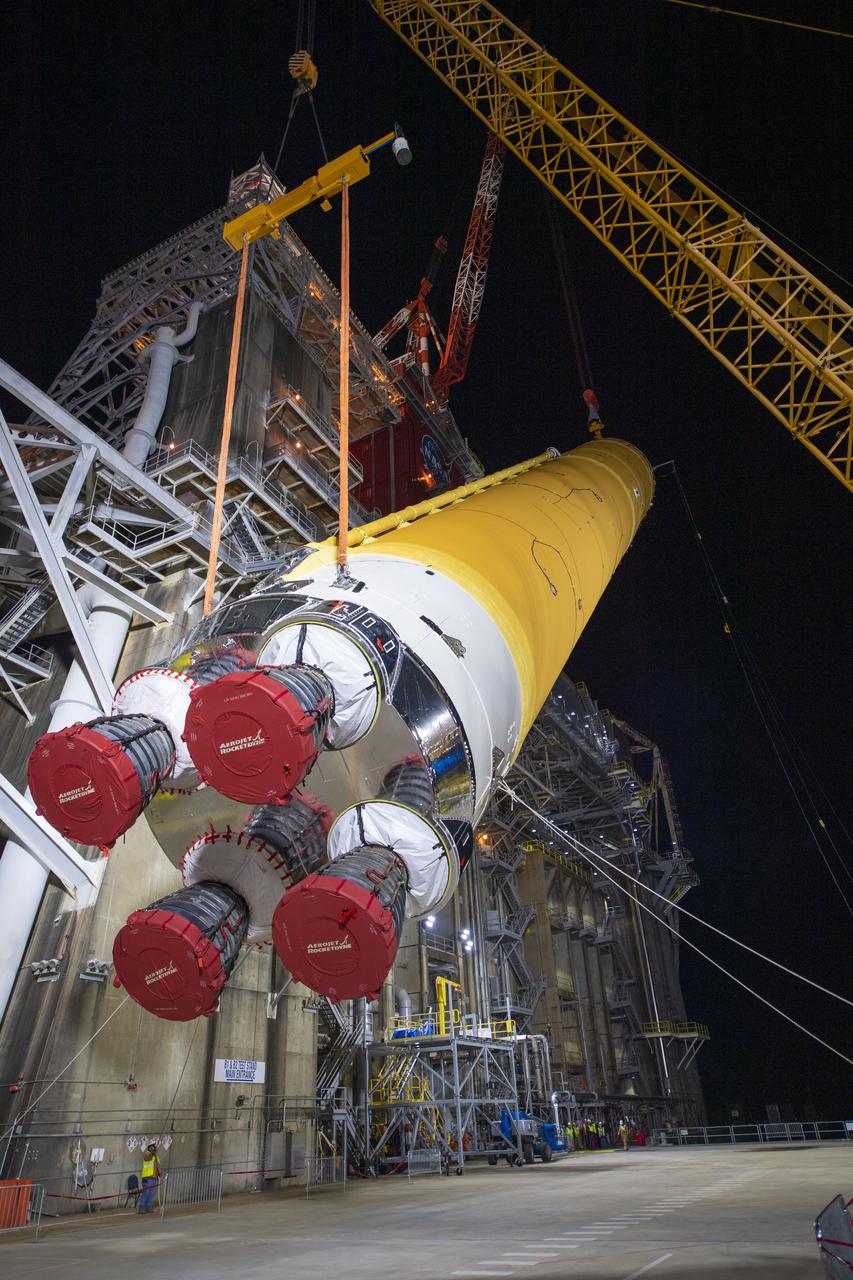
On Jan. 21-22, 2020, crews at Stennis Space Center lifted and installed the first core stage of NASA’s new Space Launch System (SLS) rocket onto the B-2 Test Stand. In upcoming months, a top-to-bottom, integrated series of Green Run tests will be conducted on the stage and its sophisticated systems. Following testing, the stage will be used to help launch the maiden Artemis I test mission of SLS and the Orion spacecraft. Through the Artemis program, NASA will send humans, including the first woman and next man, to the Moon to establish a sustainable presence.
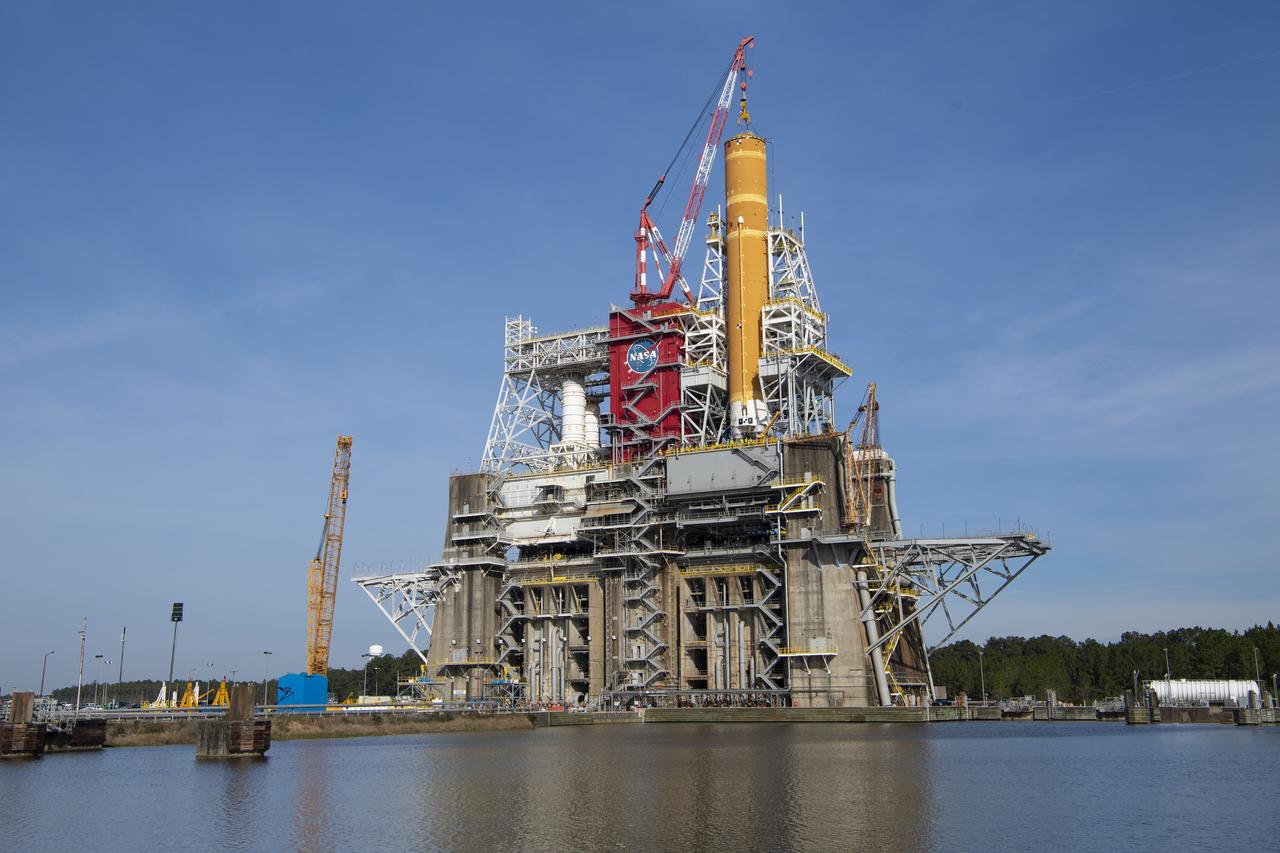
On Jan. 21-22, 2020, crews at Stennis Space Center lifted and installed the first core stage of NASA’s new Space Launch System (SLS) rocket onto the B-2 Test Stand. In upcoming months, a top-to-bottom, integrated series of Green Run tests will be conducted on the stage and its sophisticated systems. Following testing, the stage will be used to help launch the maiden Artemis I test mission of SLS and the Orion spacecraft. Through the Artemis program, NASA will send humans, including the first woman and next man, to the Moon to establish a sustainable presence.
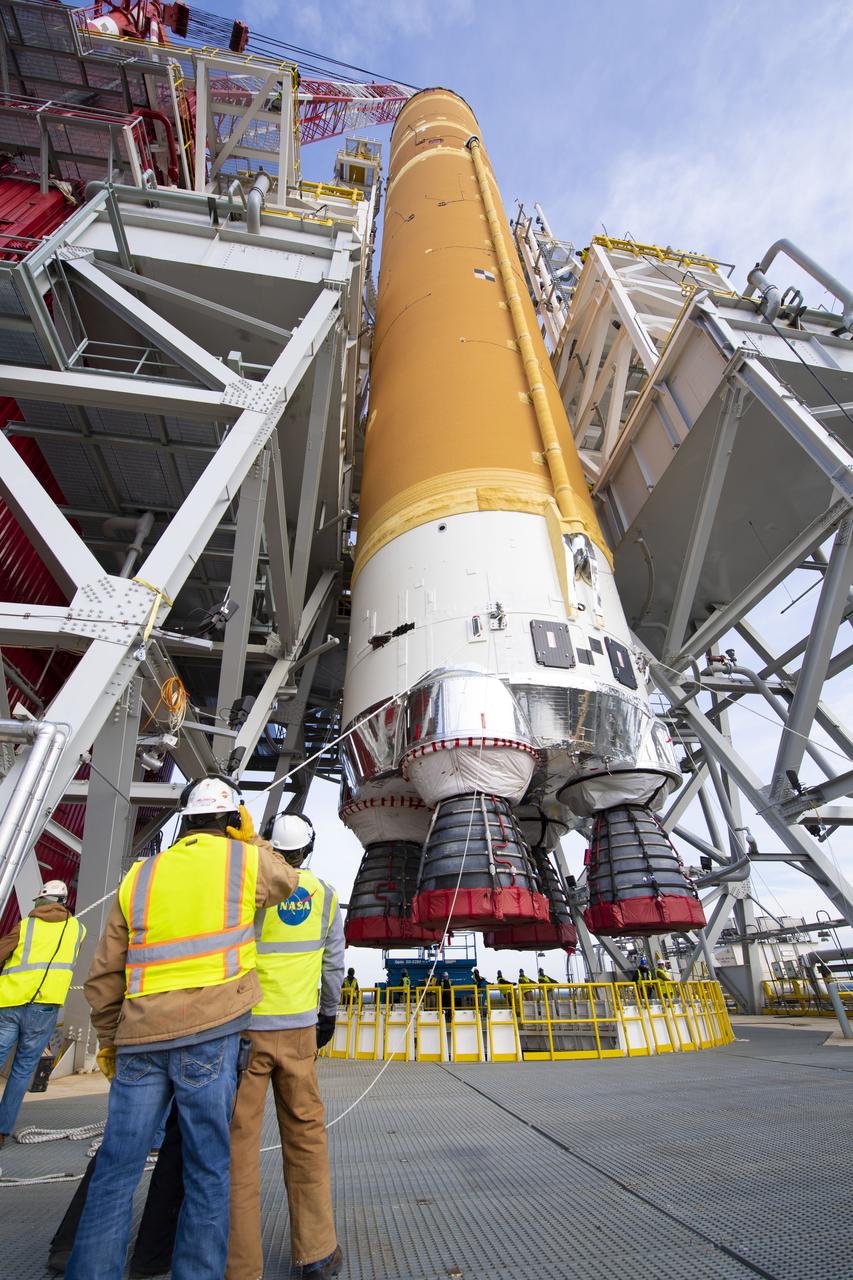
On Jan. 21-22, 2020, crews at Stennis Space Center lifted and installed the first core stage of NASA’s new Space Launch System (SLS) rocket onto the B-2 Test Stand. In upcoming months, a top-to-bottom, integrated series of Green Run tests will be conducted on the stage and its sophisticated systems. Following testing, the stage will be used to help launch the maiden Artemis I test mission of SLS and the Orion spacecraft. Through the Artemis program, NASA will send humans, including the first woman and next man, to the Moon to establish a sustainable presence.
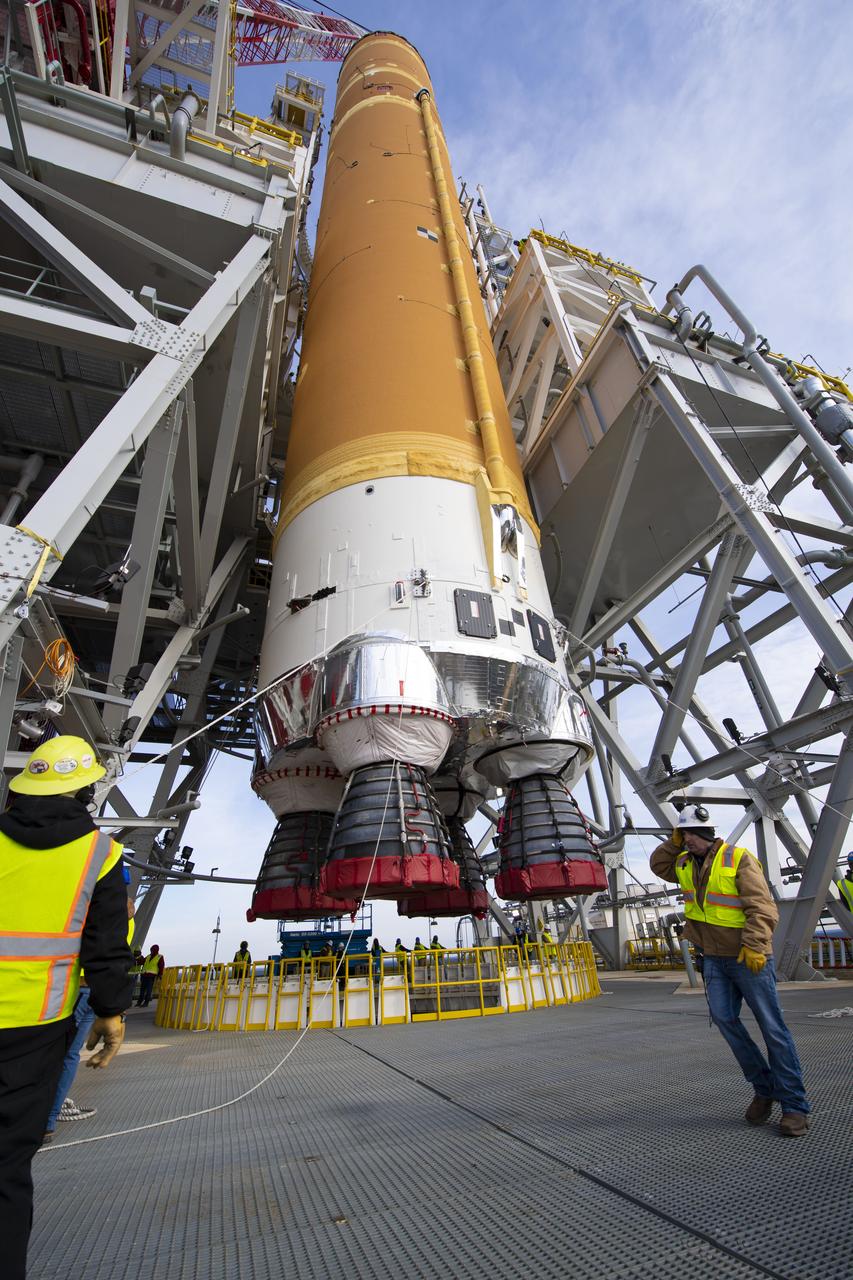
On Jan. 21-22, 2020, crews at Stennis Space Center lifted and installed the first core stage of NASA’s new Space Launch System (SLS) rocket onto the B-2 Test Stand. In upcoming months, a top-to-bottom, integrated series of Green Run tests will be conducted on the stage and its sophisticated systems. Following testing, the stage will be used to help launch the maiden Artemis I test mission of SLS and the Orion spacecraft. Through the Artemis program, NASA will send humans, including the first woman and next man, to the Moon to establish a sustainable presence.
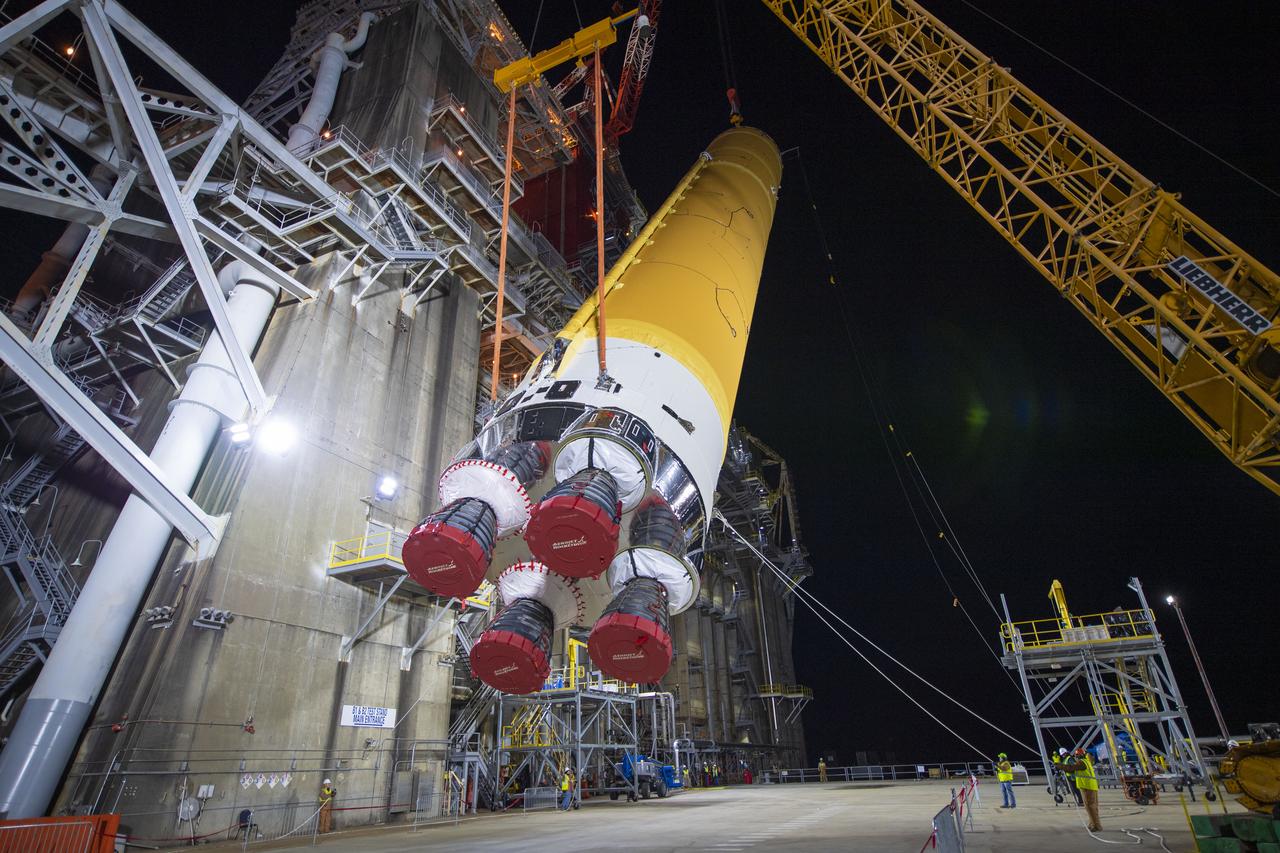
On Jan. 21-22, 2020, crews at Stennis Space Center lifted and installed the first core stage of NASA’s new Space Launch System (SLS) rocket onto the B-2 Test Stand. In upcoming months, a top-to-bottom, integrated series of Green Run tests will be conducted on the stage and its sophisticated systems. Following testing, the stage will be used to help launch the maiden Artemis I test mission of SLS and the Orion spacecraft. Through the Artemis program, NASA will send humans, including the first woman and next man, to the Moon to establish a sustainable presence.
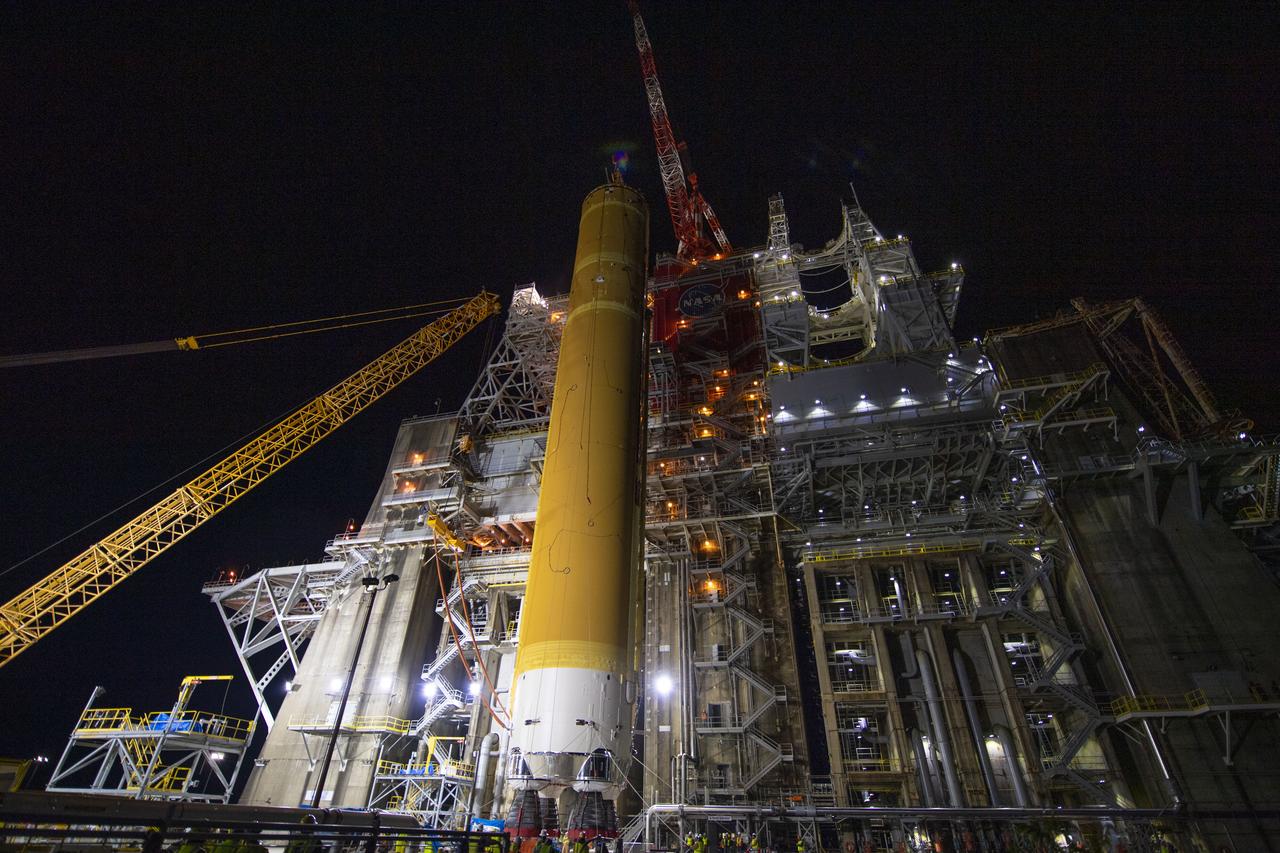
On Jan. 21-22, 2020, crews at Stennis Space Center lifted and installed the first core stage of NASA’s new Space Launch System (SLS) rocket onto the B-2 Test Stand. In upcoming months, a top-to-bottom, integrated series of Green Run tests will be conducted on the stage and its sophisticated systems. Following testing, the stage will be used to help launch the maiden Artemis I test mission of SLS and the Orion spacecraft. Through the Artemis program, NASA will send humans, including the first woman and next man, to the Moon to establish a sustainable presence.
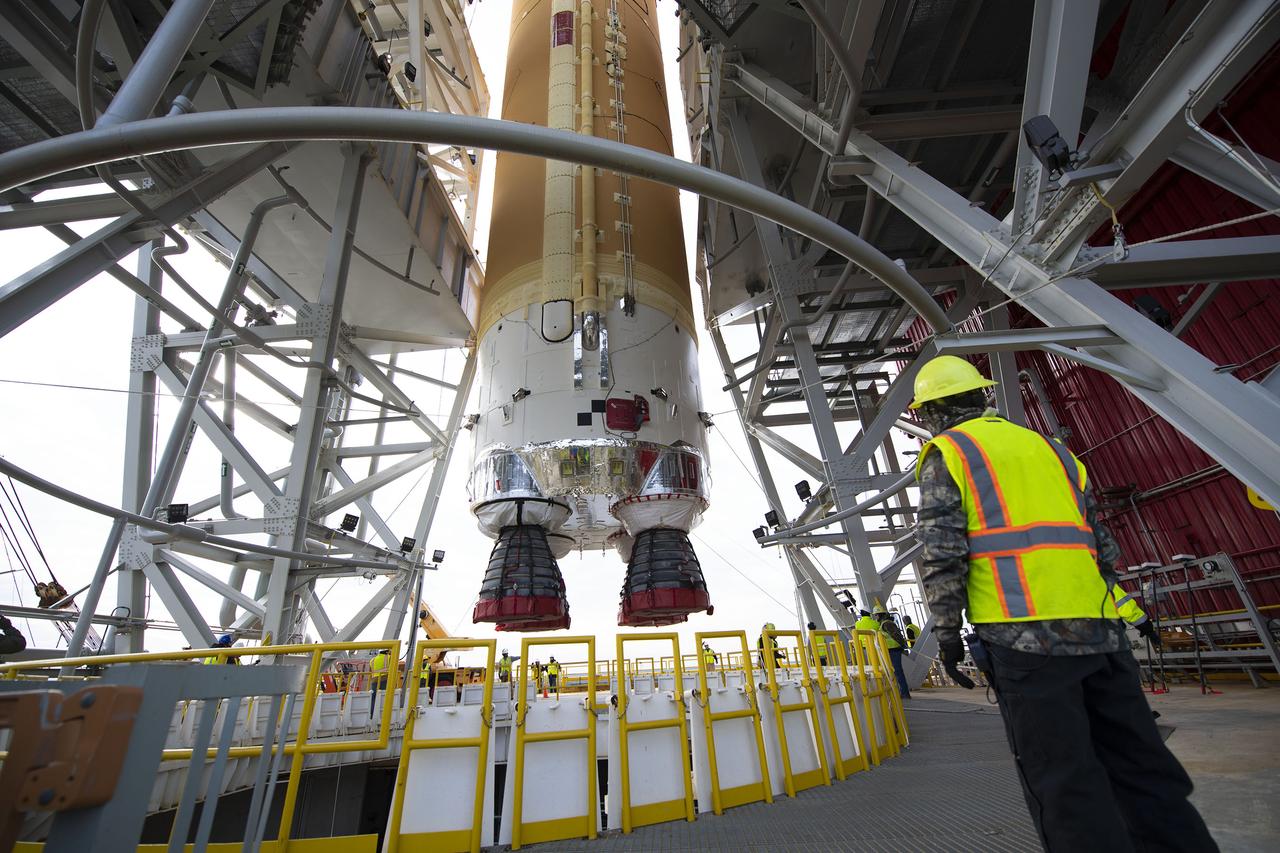
On Jan. 21-22, 2020, crews at Stennis Space Center lifted and installed the first core stage of NASA’s new Space Launch System (SLS) rocket onto the B-2 Test Stand. In upcoming months, a top-to-bottom, integrated series of Green Run tests will be conducted on the stage and its sophisticated systems. Following testing, the stage will be used to help launch the maiden Artemis I test mission of SLS and the Orion spacecraft. Through the Artemis program, NASA will send humans, including the first woman and next man, to the Moon to establish a sustainable presence.
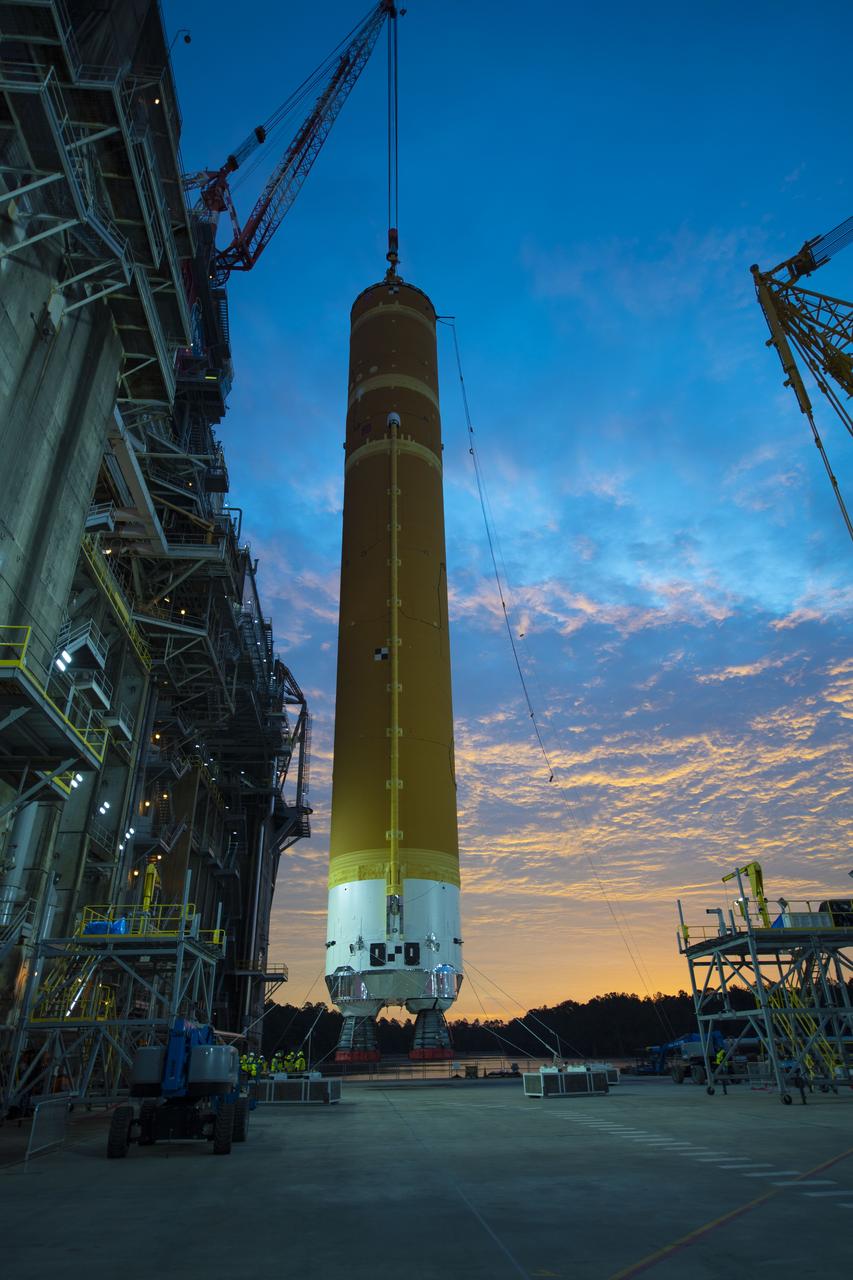
On Jan. 21-22, 2020, crews at Stennis Space Center lifted and installed the first core stage of NASA’s new Space Launch System (SLS) rocket onto the B-2 Test Stand. In upcoming months, a top-to-bottom, integrated series of Green Run tests will be conducted on the stage and its sophisticated systems. Following testing, the stage will be used to help launch the maiden Artemis I test mission of SLS and the Orion spacecraft. Through the Artemis program, NASA will send humans, including the first woman and next man, to the Moon to establish a sustainable presence.
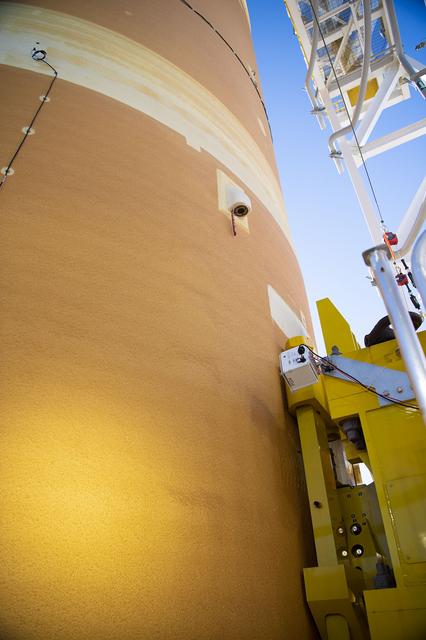
On Jan. 21-22, 2020, crews at Stennis Space Center lifted and installed the first core stage of NASA’s new Space Launch System (SLS) rocket onto the B-2 Test Stand. In upcoming months, a top-to-bottom, integrated series of Green Run tests will be conducted on the stage and its sophisticated systems. Following testing, the stage will be used to help launch the maiden Artemis I test mission of SLS and the Orion spacecraft. Through the Artemis program, NASA will send humans, including the first woman and next man, to the Moon to establish a sustainable presence.
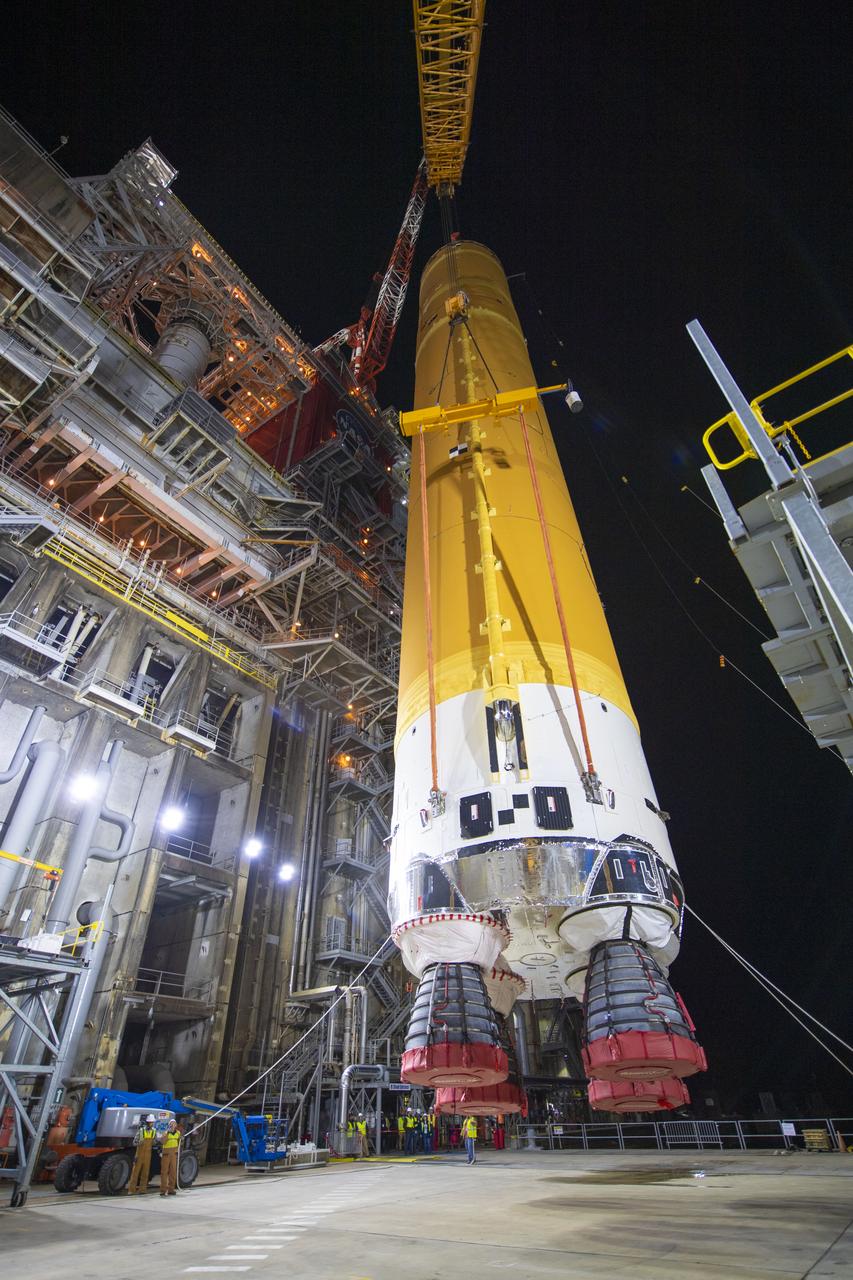
On Jan. 21-22, 2020, crews at Stennis Space Center lifted and installed the first core stage of NASA’s new Space Launch System (SLS) rocket onto the B-2 Test Stand. In upcoming months, a top-to-bottom, integrated series of Green Run tests will be conducted on the stage and its sophisticated systems. Following testing, the stage will be used to help launch the maiden Artemis I test mission of SLS and the Orion spacecraft. Through the Artemis program, NASA will send humans, including the first woman and next man, to the Moon to establish a sustainable presence.
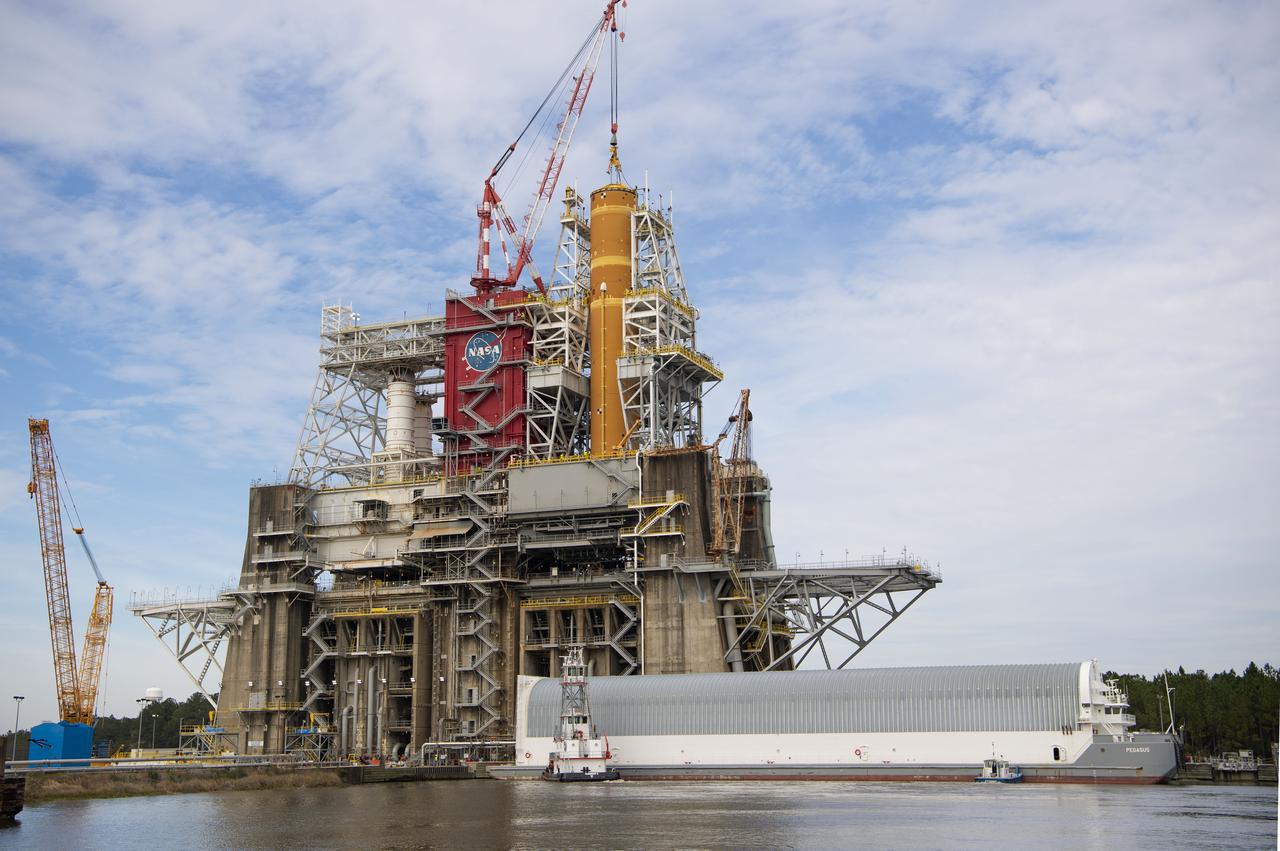
On Jan. 21-22, 2020, crews at Stennis Space Center lifted and installed the first core stage of NASA’s new Space Launch System (SLS) rocket onto the B-2 Test Stand. In upcoming months, a top-to-bottom, integrated series of Green Run tests will be conducted on the stage and its sophisticated systems. Following testing, the stage will be used to help launch the maiden Artemis I test mission of SLS and the Orion spacecraft. Through the Artemis program, NASA will send humans, including the first woman and next man, to the Moon to establish a sustainable presence.
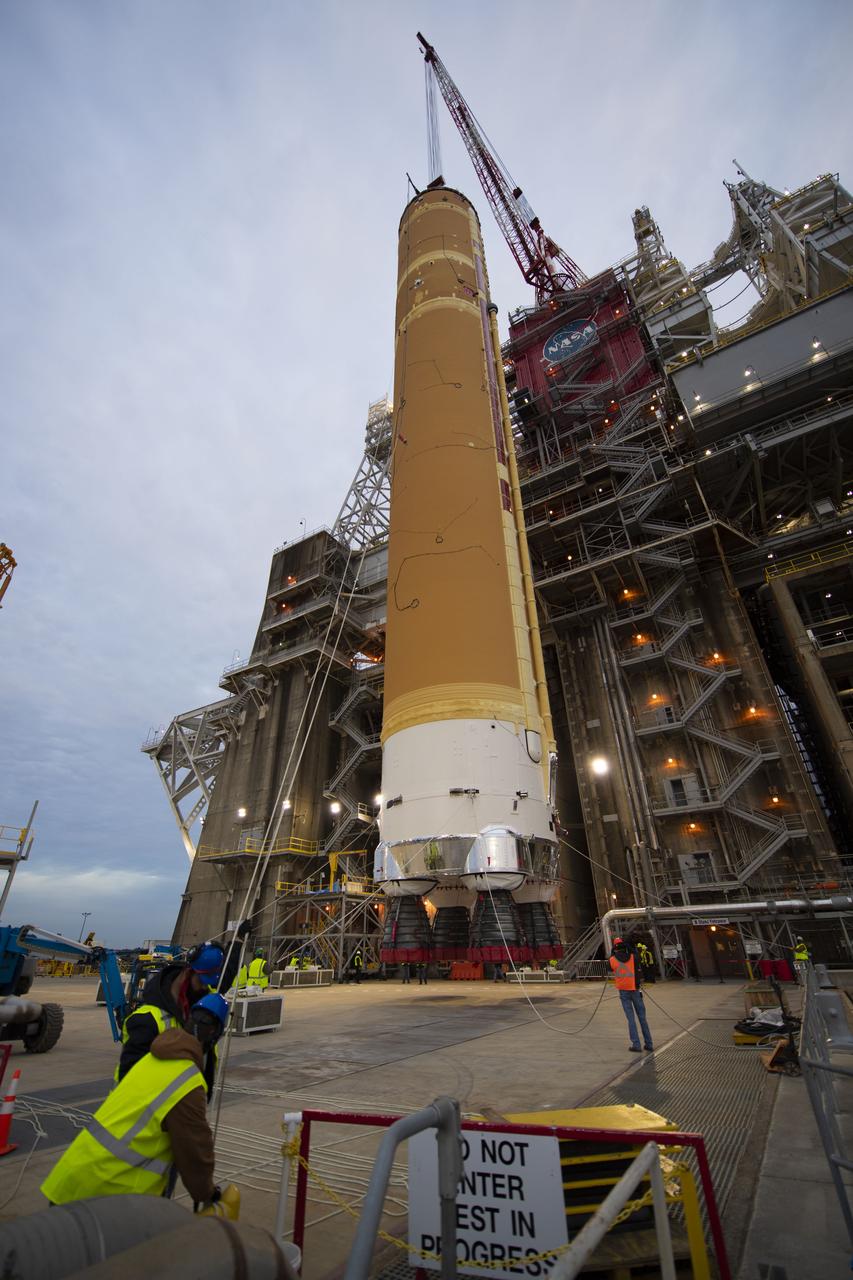
On Jan. 21-22, 2020, crews at Stennis Space Center lifted and installed the first core stage of NASA’s new Space Launch System (SLS) rocket onto the B-2 Test Stand. In upcoming months, a top-to-bottom, integrated series of Green Run tests will be conducted on the stage and its sophisticated systems. Following testing, the stage will be used to help launch the maiden Artemis I test mission of SLS and the Orion spacecraft. Through the Artemis program, NASA will send humans, including the first woman and next man, to the Moon to establish a sustainable presence.
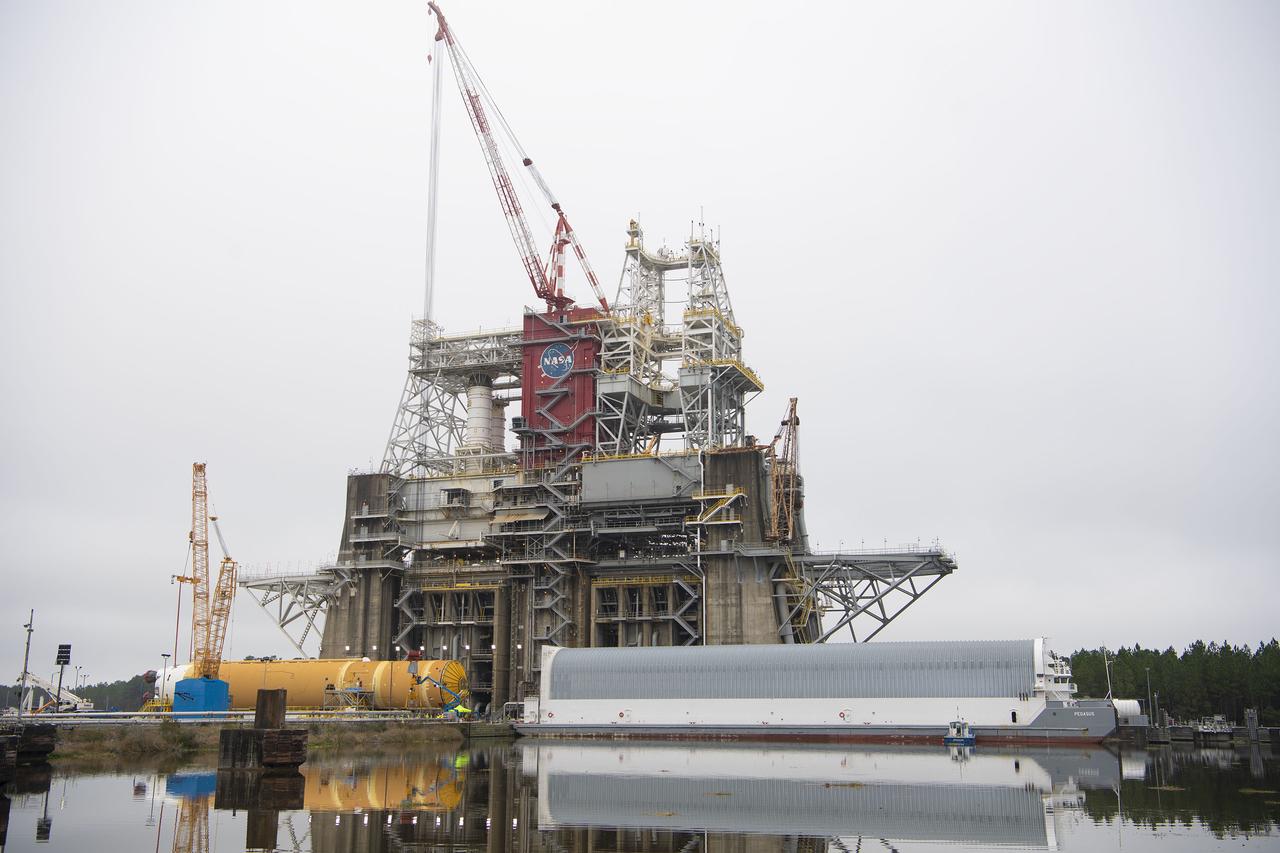
On Jan. 21-22, 2020, crews at Stennis Space Center lifted and installed the first core stage of NASA’s new Space Launch System (SLS) rocket onto the B-2 Test Stand. In upcoming months, a top-to-bottom, integrated series of Green Run tests will be conducted on the stage and its sophisticated systems. Following testing, the stage will be used to help launch the maiden Artemis I test mission of SLS and the Orion spacecraft. Through the Artemis program, NASA will send humans, including the first woman and next man, to the Moon to establish a sustainable presence.
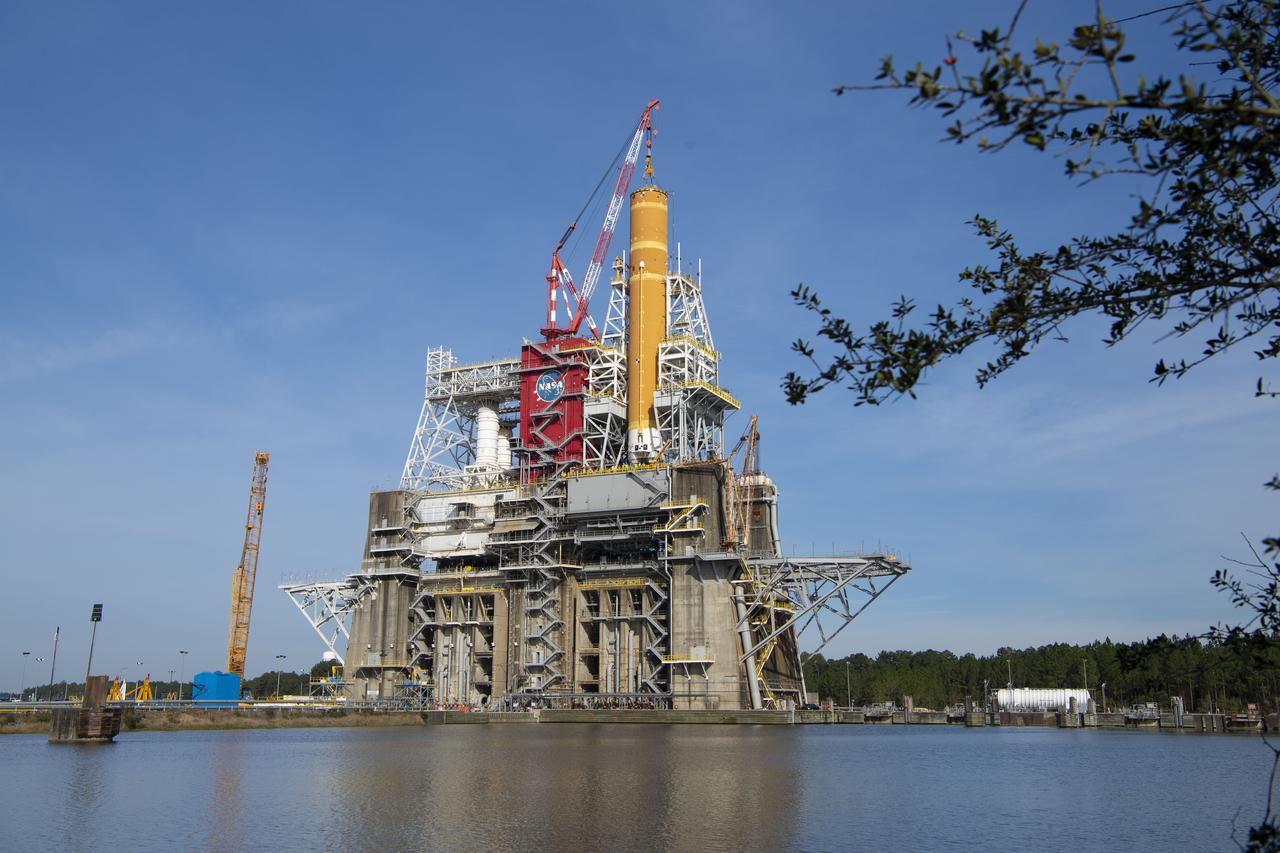
On Jan. 21-22, 2020, crews at Stennis Space Center lifted and installed the first core stage of NASA’s new Space Launch System (SLS) rocket onto the B-2 Test Stand. In upcoming months, a top-to-bottom, integrated series of Green Run tests will be conducted on the stage and its sophisticated systems. Following testing, the stage will be used to help launch the maiden Artemis I test mission of SLS and the Orion spacecraft. Through the Artemis program, NASA will send humans, including the first woman and next man, to the Moon to establish a sustainable presence.
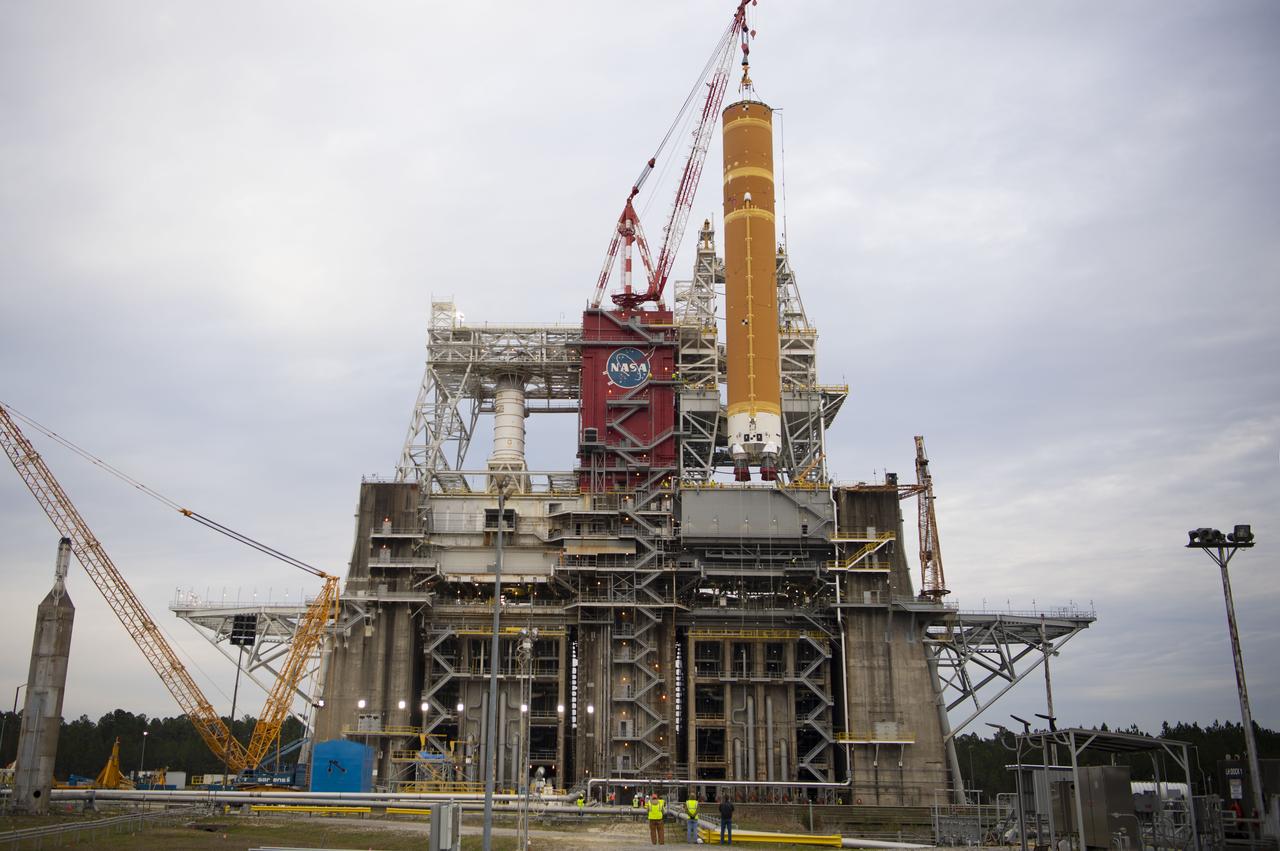
On Jan. 21-22, 2020, crews at Stennis Space Center lifted and installed the first core stage of NASA’s new Space Launch System (SLS) rocket onto the B-2 Test Stand. In upcoming months, a top-to-bottom, integrated series of Green Run tests will be conducted on the stage and its sophisticated systems. Following testing, the stage will be used to help launch the maiden Artemis I test mission of SLS and the Orion spacecraft. Through the Artemis program, NASA will send humans, including the first woman and next man, to the Moon to establish a sustainable presence.
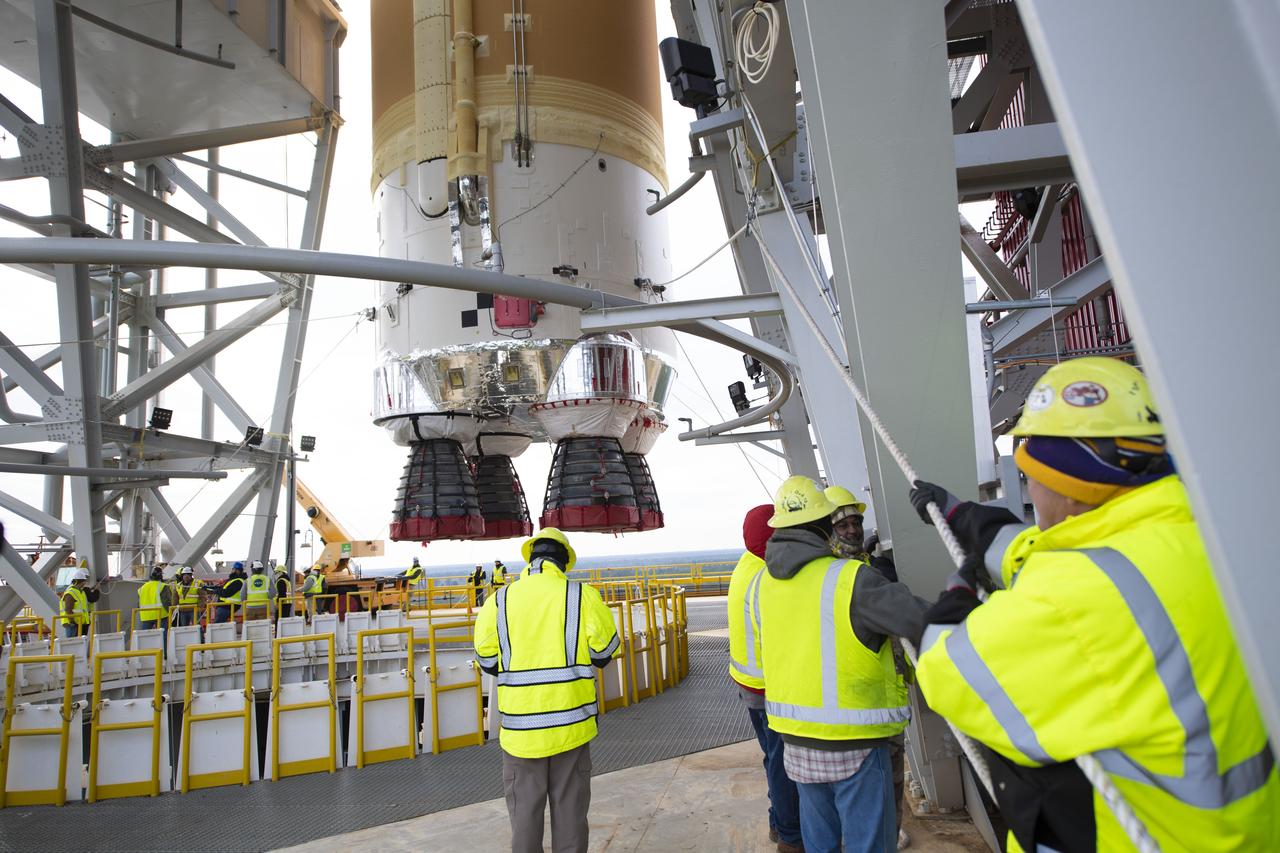
On Jan. 21-22, 2020, crews at Stennis Space Center lifted and installed the first core stage of NASA’s new Space Launch System (SLS) rocket onto the B-2 Test Stand. In upcoming months, a top-to-bottom, integrated series of Green Run tests will be conducted on the stage and its sophisticated systems. Following testing, the stage will be used to help launch the maiden Artemis I test mission of SLS and the Orion spacecraft. Through the Artemis program, NASA will send humans, including the first woman and next man, to the Moon to establish a sustainable presence.

On Jan. 21-22, 2020, crews at Stennis Space Center lifted and installed the first core stage of NASA’s new Space Launch System (SLS) rocket onto the B-2 Test Stand. In upcoming months, a top-to-bottom, integrated series of Green Run tests will be conducted on the stage and its sophisticated systems. Following testing, the stage will be used to help launch the maiden Artemis I test mission of SLS and the Orion spacecraft. Through the Artemis program, NASA will send humans, including the first woman and next man, to the Moon to establish a sustainable presence.
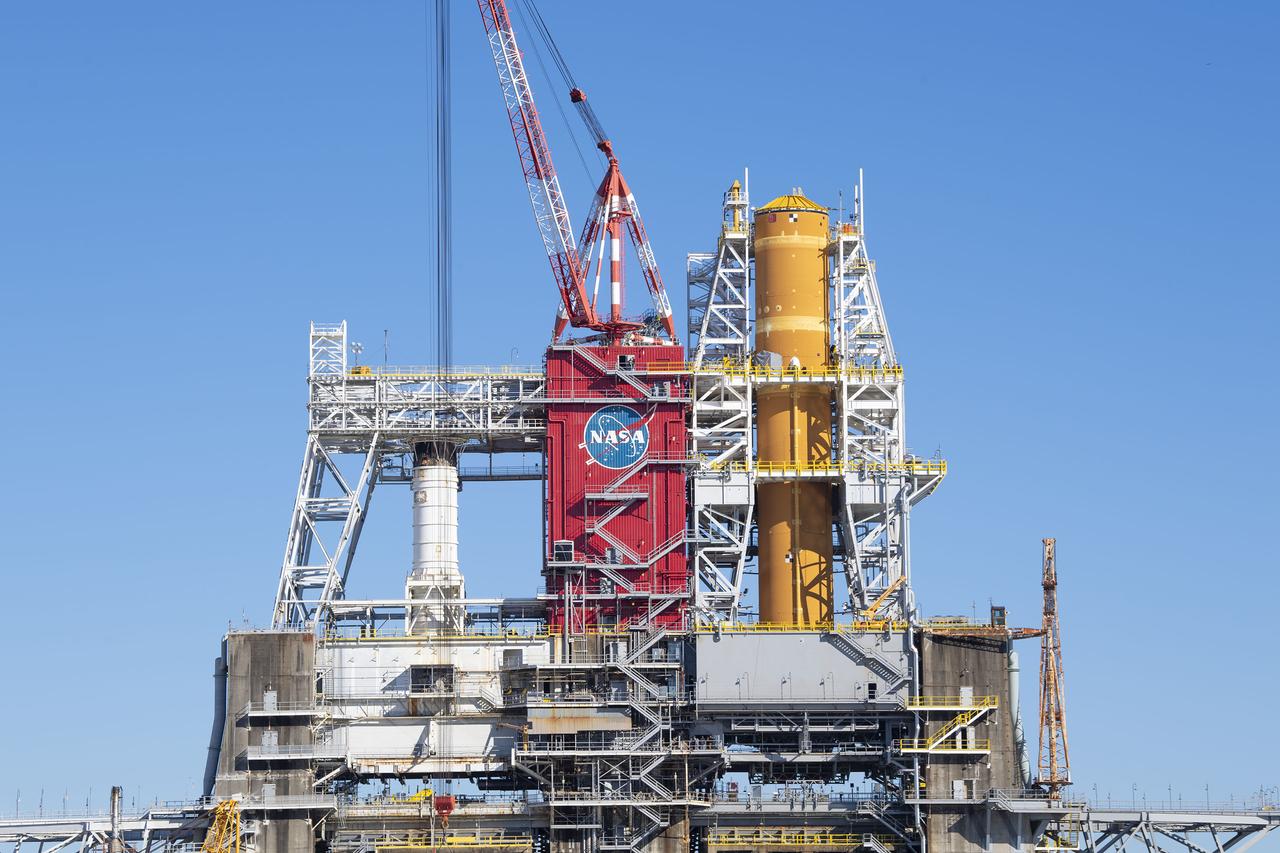
On Jan. 21-22, 2020, crews at Stennis Space Center lifted and installed the first core stage of NASA’s new Space Launch System (SLS) rocket onto the B-2 Test Stand. In upcoming months, a top-to-bottom, integrated series of Green Run tests will be conducted on the stage and its sophisticated systems. Following testing, the stage will be used to help launch the maiden Artemis I test mission of SLS and the Orion spacecraft. Through the Artemis program, NASA will send humans, including the first woman and next man, to the Moon to establish a sustainable presence.
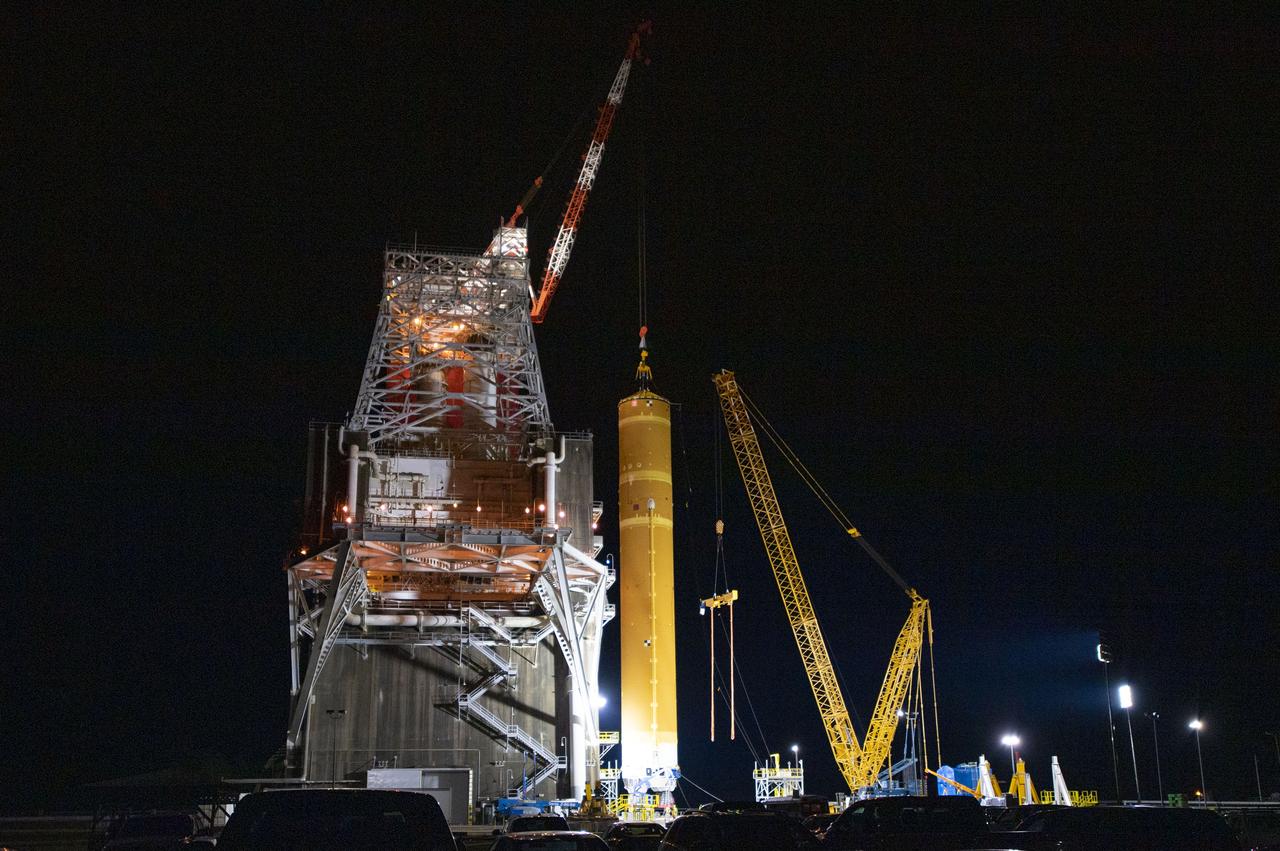
On Jan. 21-22, 2020, crews at Stennis Space Center lifted and installed the first core stage of NASA’s new Space Launch System (SLS) rocket onto the B-2 Test Stand. In upcoming months, a top-to-bottom, integrated series of Green Run tests will be conducted on the stage and its sophisticated systems. Following testing, the stage will be used to help launch the maiden Artemis I test mission of SLS and the Orion spacecraft. Through the Artemis program, NASA will send humans, including the first woman and next man, to the Moon to establish a sustainable presence.