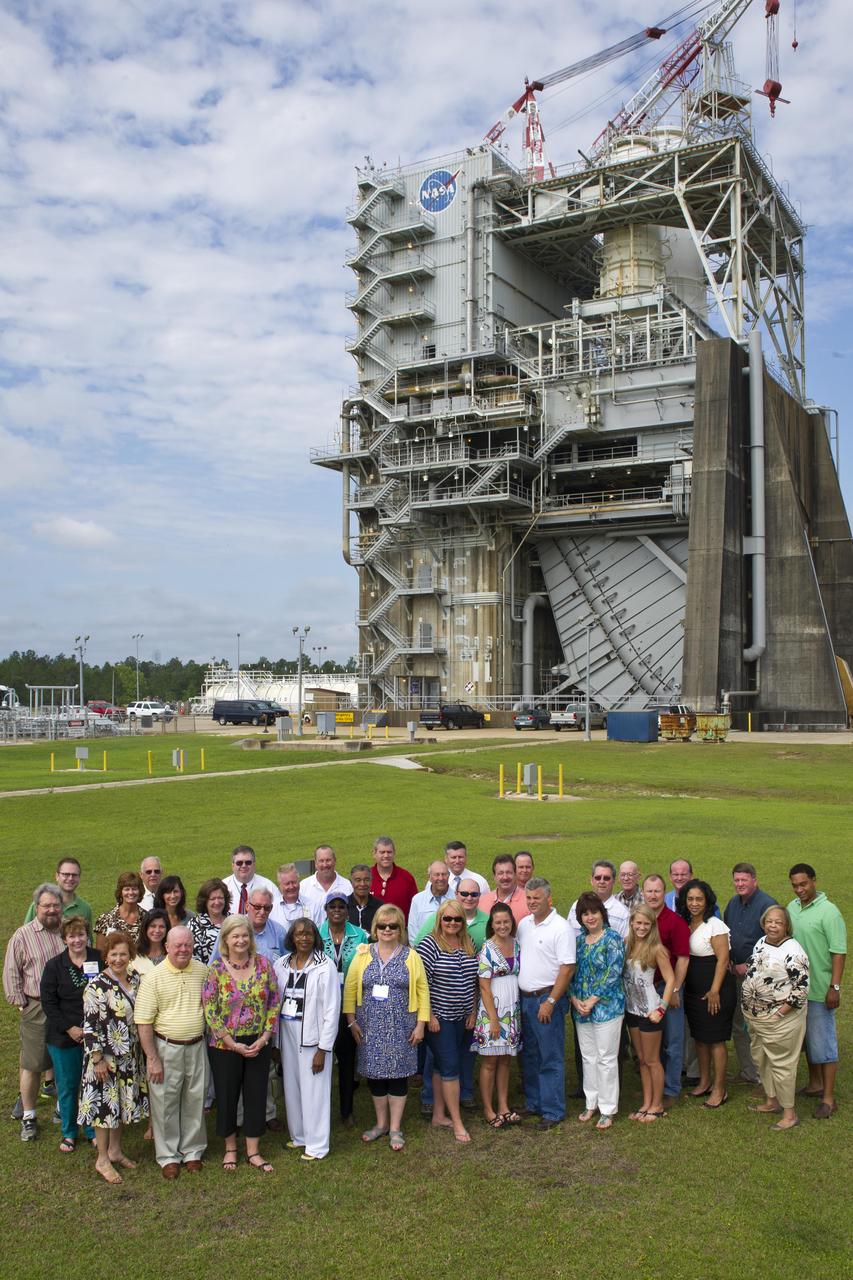
Legislators from across Mississippi visited Stennis Space Center on May 7, 2012, touring various facilities, including the A-1 Test Stand, and learning about work under way at the facility. The legislators also toured the INFINITY at NASA Stennis Space Center facility and met with Apollo 13 astronaut Fred Haise.
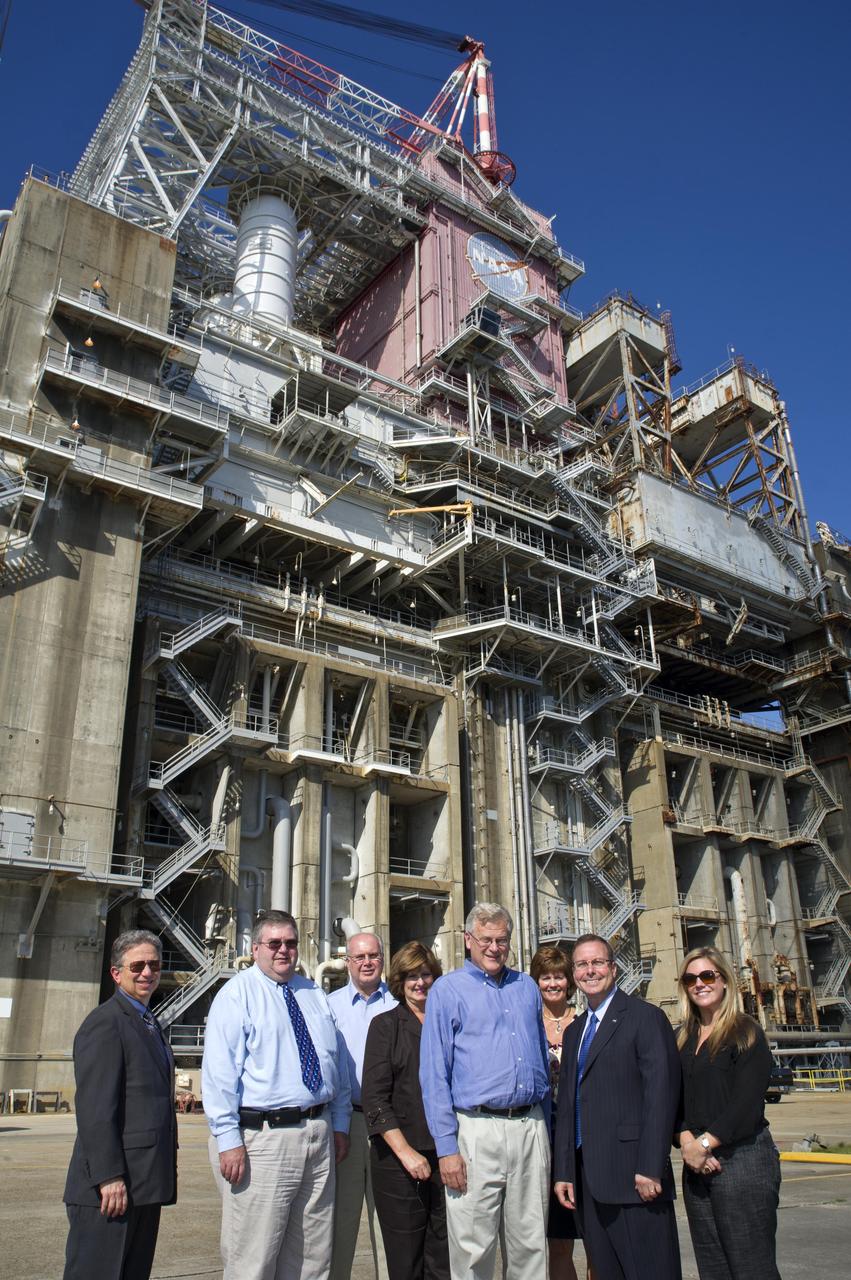
U.S. Rep. Alan Nunnelee, R-Miss., visited Stennis Space Center on Oct. 5, meeting with leaders and touring facilities to learn about ongoing work at the south Mississippi site. Joining Nunnelee during a stop at the B-1/B-2 Test Stand were: (l to r) Ken Human, Stennis associate director; Randy Galloway, director of the Stennis Engineering and Test Directorate; Ted Maness, chief of staff for Nunnelee; Nunnelee's wife, Toni; Nunnelee; Myron Webb, Stennis legislative affairs officer; Gilbrech; and Meyer Seligman, legislative director for Nunnelee. A Tupelo native, Nunnelee serves Mississipi's 1st Congressional District.
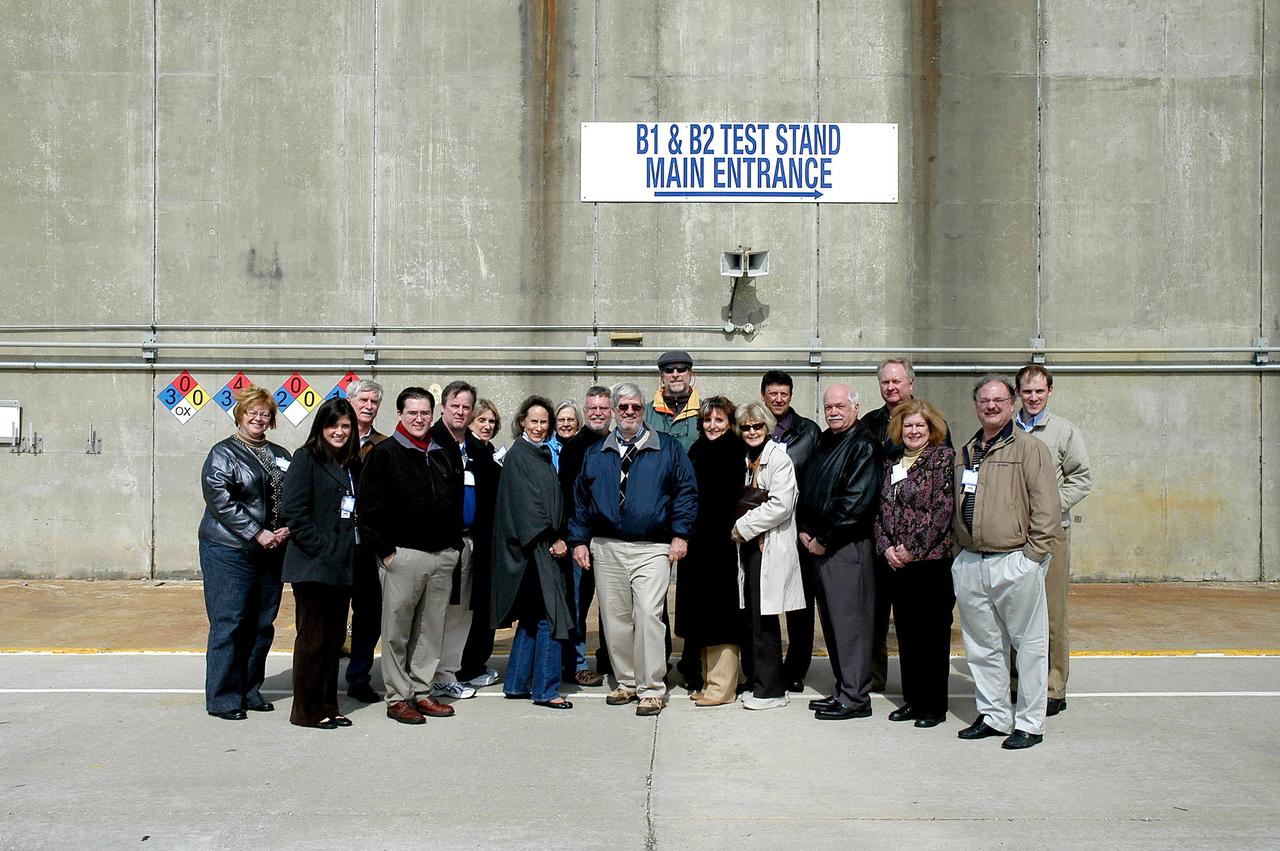
Members of the Southeast U.S. Federal Laboratory Consortium for Technology Transfer gather at the base of the B-1/B-2 Test Stand during a Feb. 10 visit to John C. Stennis Space Center. The group visited Stennis to tour facilities and receive briefings on work at the rocket engine test site. They also visited the INFINITY at NASA Stennis Space Center site and received a briefing on construction of the new science center. The FLC is a nationwide network of federal laboratories to facilitate technology transfers between federal agencies and commercial companies.
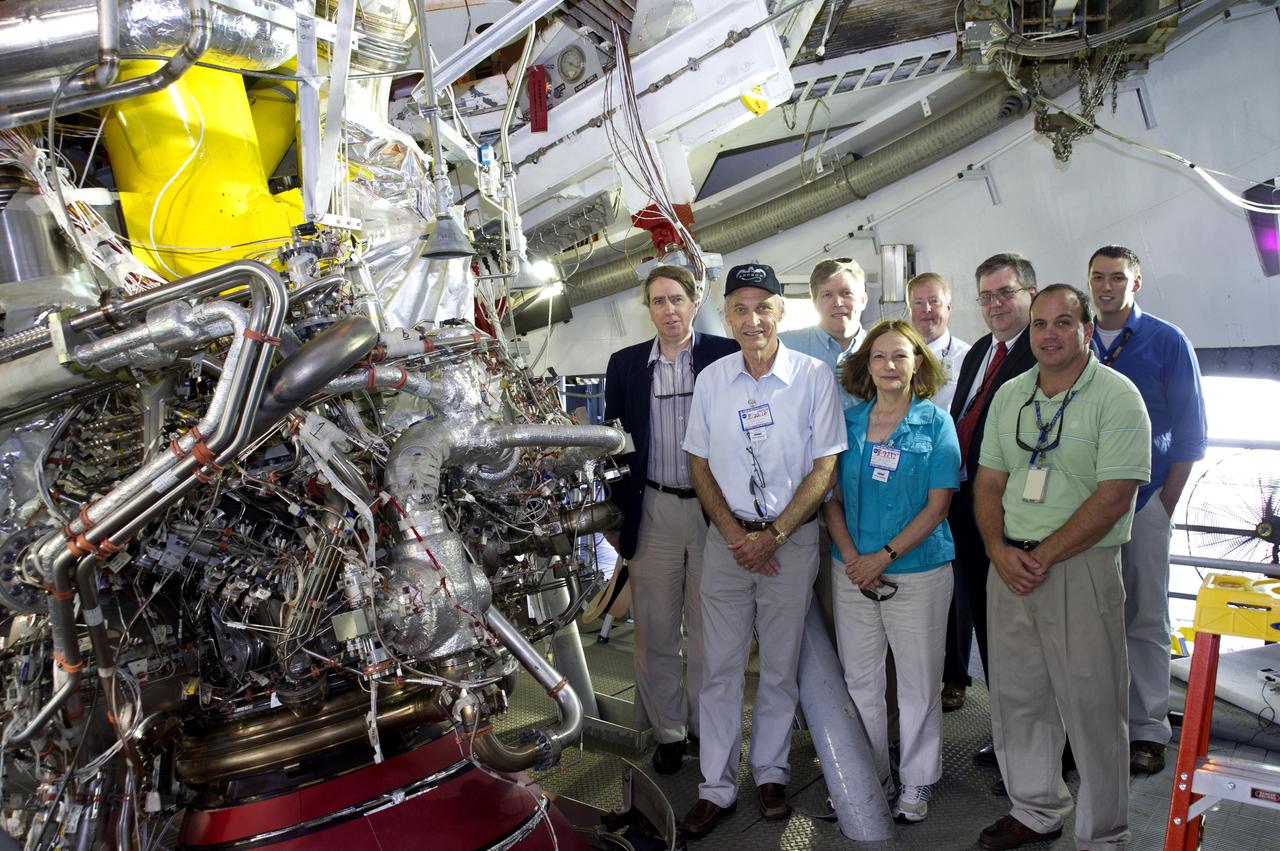
Four members of the National Research Council visited Stennis Space Center on Aug. 22, touring test stands and facilities, and holding roundtable discussions with Stennis leaders. The NRC mission is to improve government decision making and public policy, increase public understanding, and promote the acquisition and dissemination of knowledge in matters involving science, engineering, technology and health.
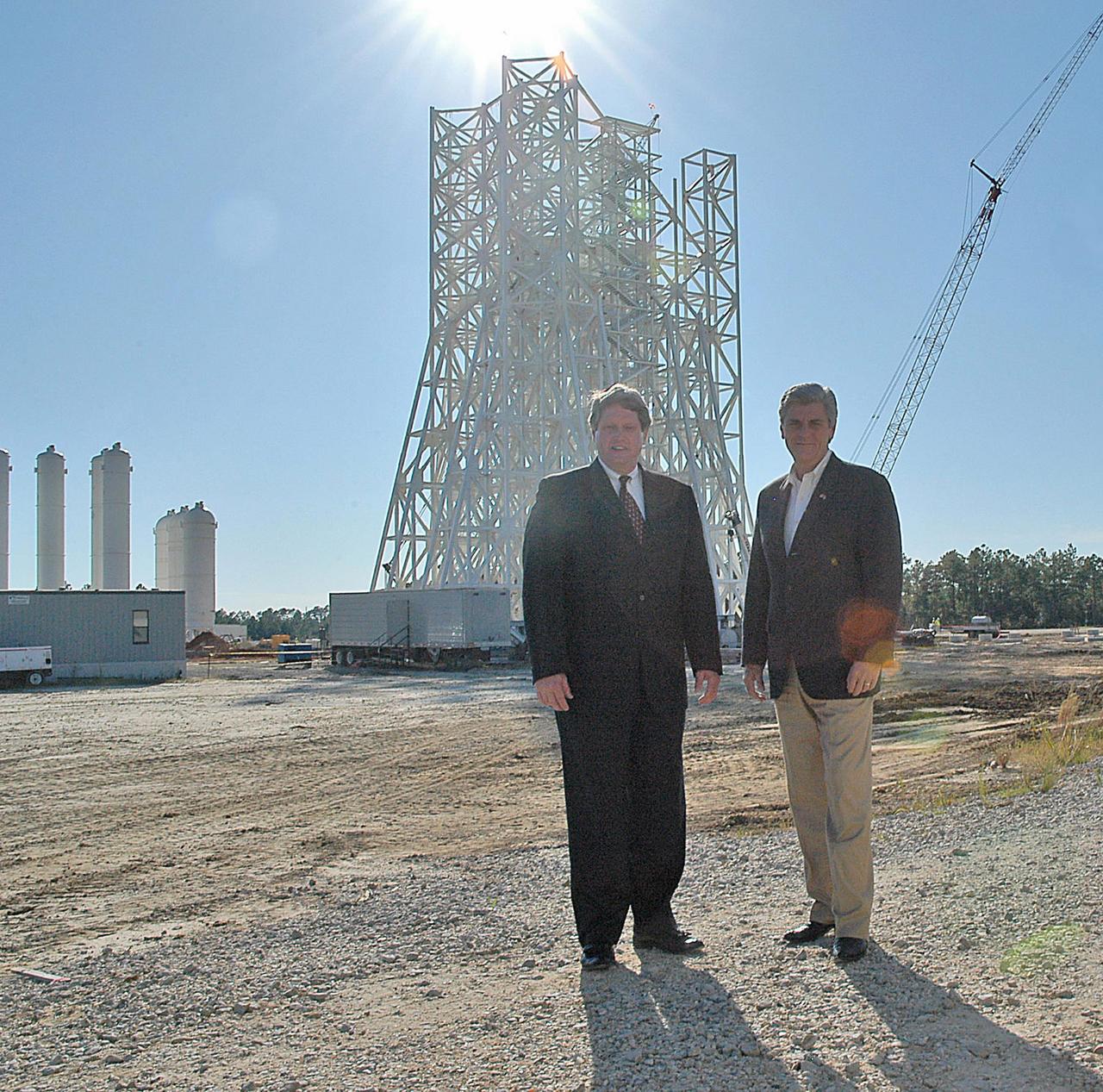
Stennis Space Center Director Gene Goldman (left) stands with Mississippi Lt. Gov. Phil Bryant at the A-3 Test Stand construction site during an Oct. 1 visit by the state official. During his tour, Bryant was updated on construction of the first large test stand at Stennis since the 1960s. The A-3 stand will be used to conduct simulated high-altitude testing on the next generation of rocket engines that will take humans back to the moon and possibly beyond. In addition to touring Stennis facilities, Bryant visited the INFINITY Science Center construction site, where he was updated on work under way to construct a 72,000-square-foot facility that will showcase the science underpinning the missions of NASA and resident agencies at Stennis.
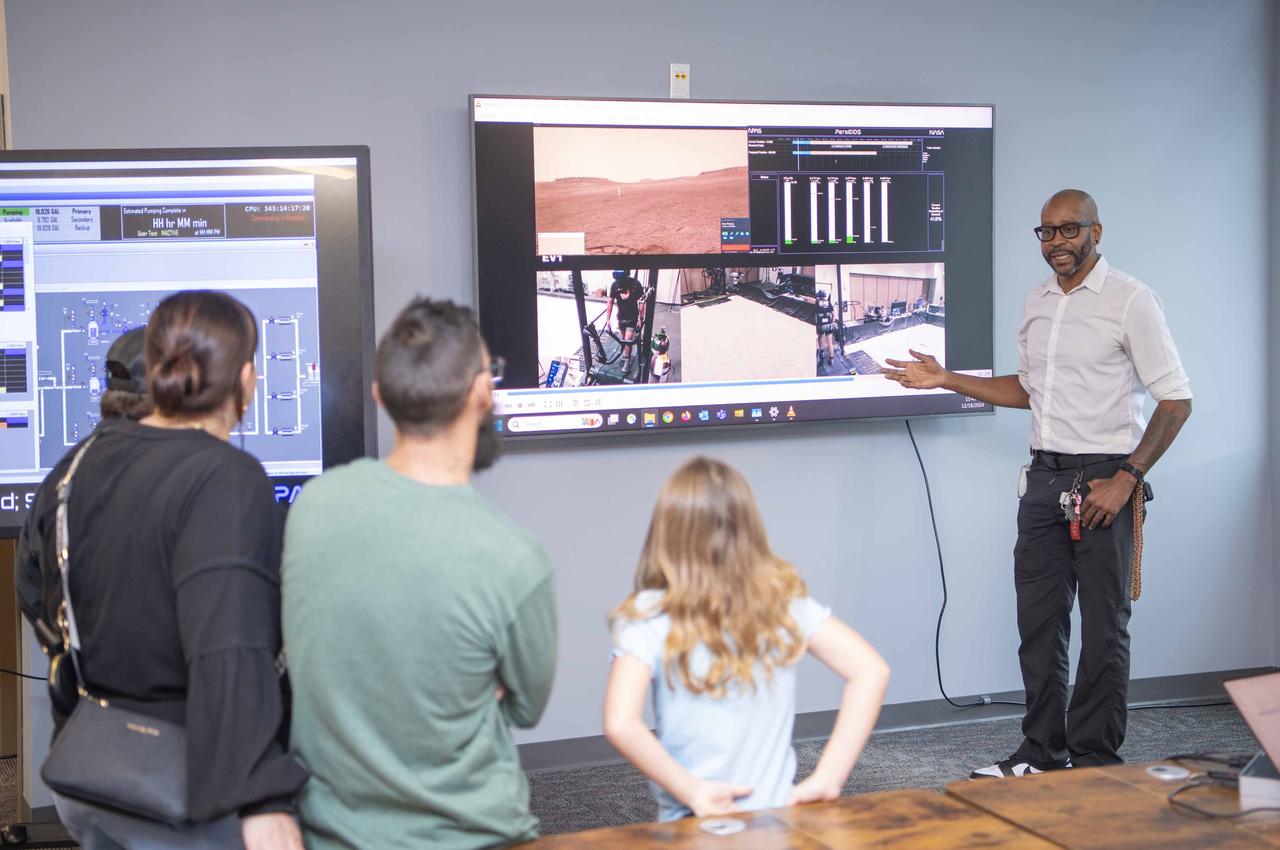
Cookbook author and culinary content creator Caroline Davis, popularly known as Mississippi Kween, and her family enjoy touring facilities and learning about NASA Stennis and its frontline work during a site visit Dec. 18. Davis, husband Joe, and children Zeke and Zoey, met with NASA Stennis leadership before touring the L3Harris (formerly Aerojet Rocketdyne) Engine Assembly Facility, Thad Cochran Test Stand, Autonomous Systems Laboratory, and the NASA Stennis rocket engine garden. The tour highlighted the NASA Stennis story and how the south Mississippi NASA center has the ingredients for a recipe that accelerates the exploration and commercialization of space, innovates to benefit NASA and industry, and leverages assets to stimulate the economy.
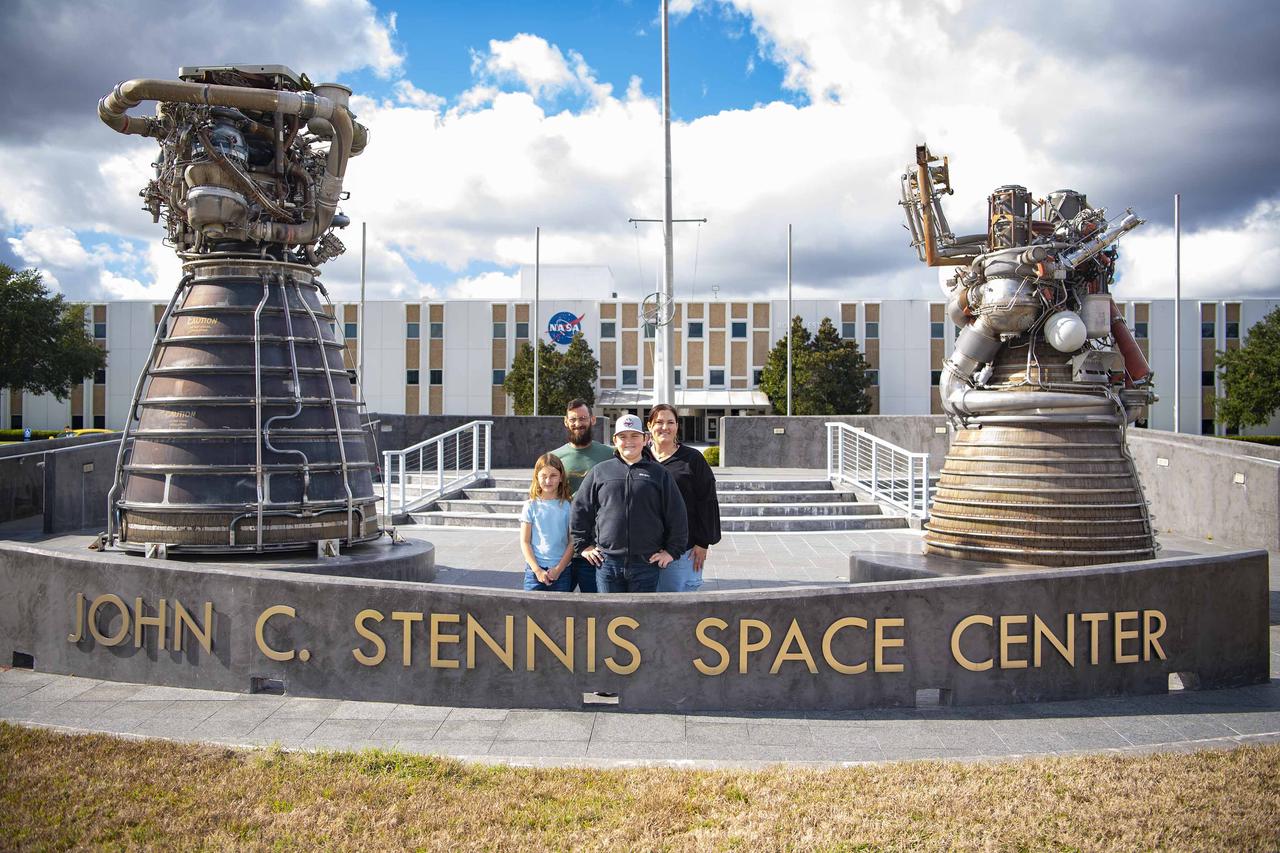
Cookbook author and culinary content creator Caroline Davis, popularly known as Mississippi Kween, and her family enjoy touring facilities and learning about NASA Stennis and its frontline work during a site visit Dec. 18. Davis, husband Joe, and children Zeke and Zoey, met with NASA Stennis leadership before touring the L3Harris (formerly Aerojet Rocketdyne) Engine Assembly Facility, Thad Cochran Test Stand, Autonomous Systems Laboratory, and the NASA Stennis rocket engine garden. The tour highlighted the NASA Stennis story and how the south Mississippi NASA center has the ingredients for a recipe that accelerates the exploration and commercialization of space, innovates to benefit NASA and industry, and leverages assets to stimulate the economy.
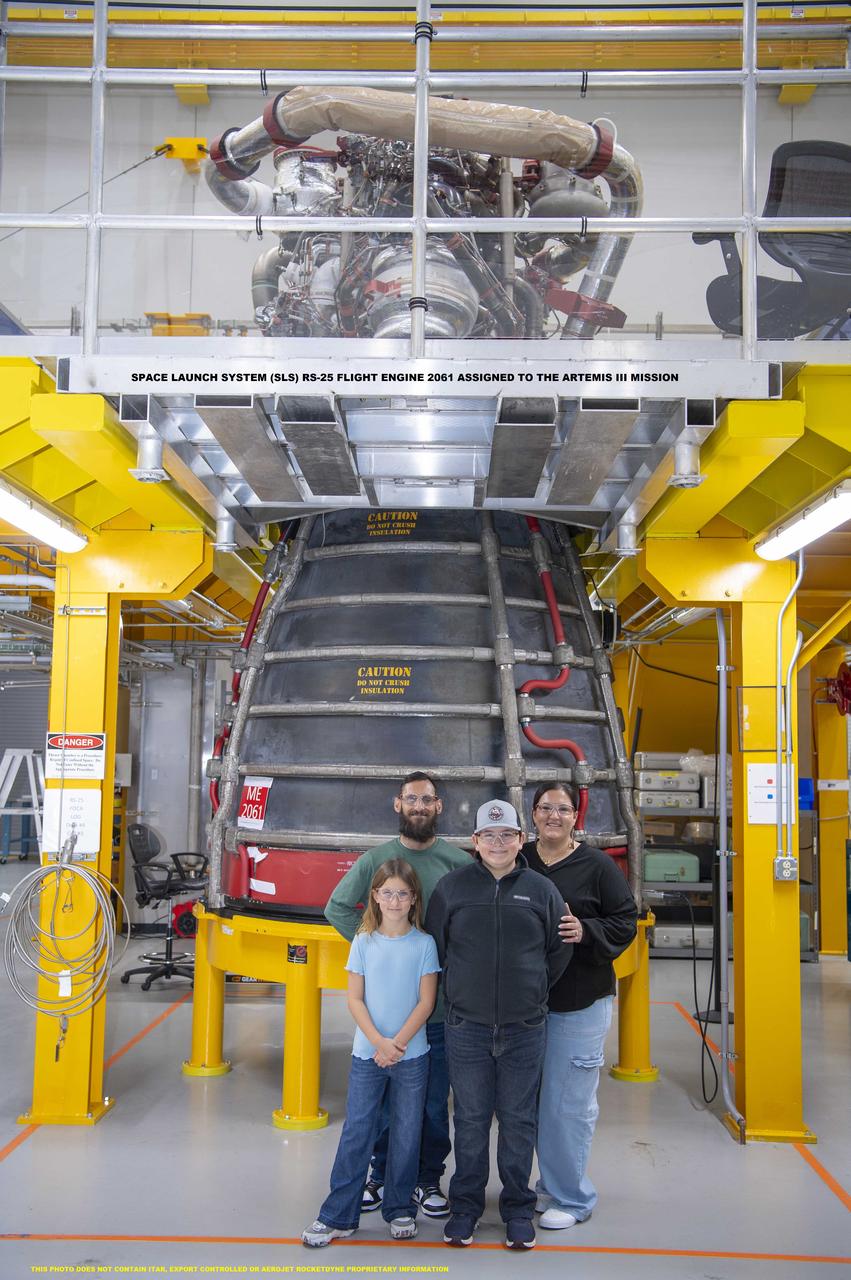
Cookbook author and culinary content creator Caroline Davis, popularly known as Mississippi Kween, and her family enjoy touring facilities and learning about NASA Stennis and its frontline work during a site visit Dec. 18. Davis, husband Joe, and children Zeke and Zoey, met with NASA Stennis leadership before touring the L3Harris (formerly Aerojet Rocketdyne) Engine Assembly Facility, Thad Cochran Test Stand, Autonomous Systems Laboratory, and the NASA Stennis rocket engine garden. The tour highlighted the NASA Stennis story and how the south Mississippi NASA center has the ingredients for a recipe that accelerates the exploration and commercialization of space, innovates to benefit NASA and industry, and leverages assets to stimulate the economy.
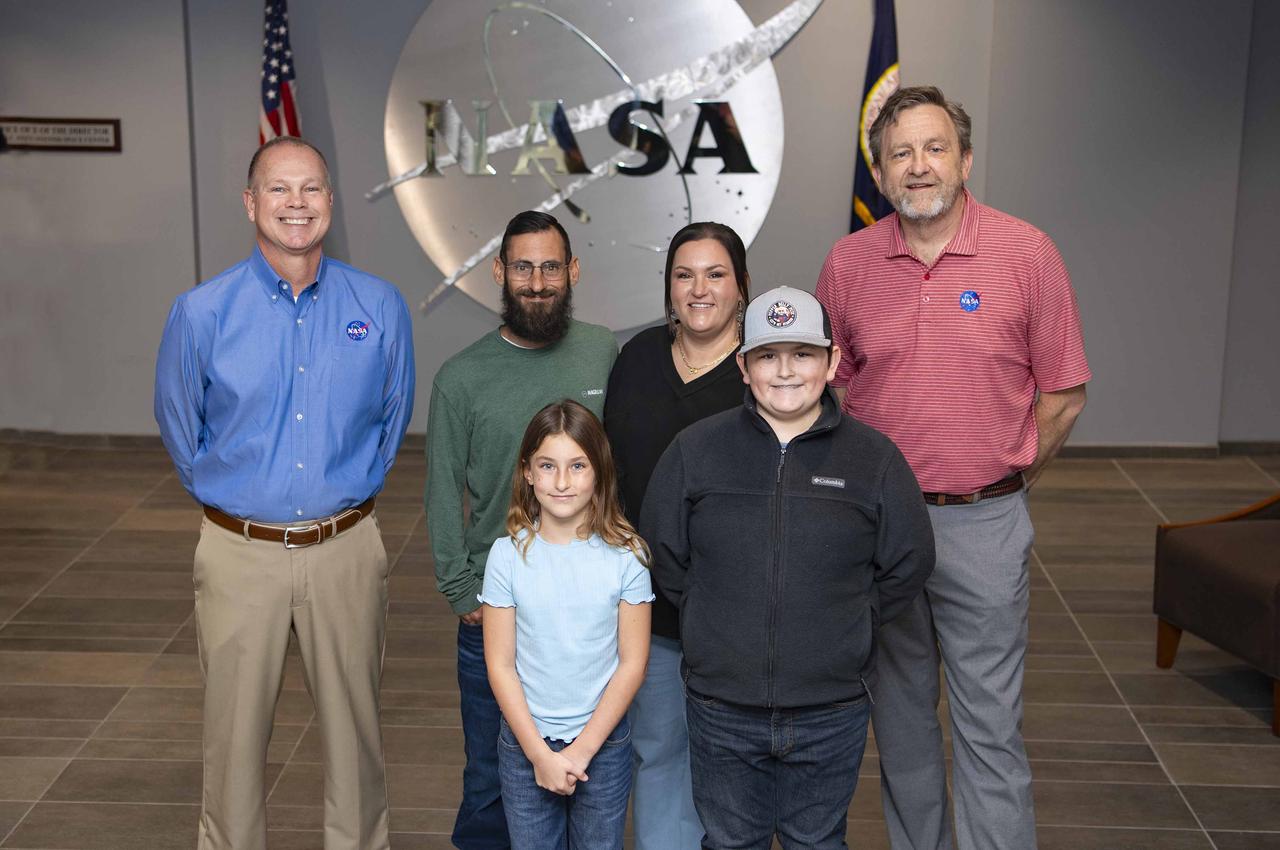
Cookbook author and culinary content creator Caroline Davis, popularly known as Mississippi Kween, and her family enjoy touring facilities and learning about NASA Stennis and its frontline work during a site visit Dec. 18. Davis, husband Joe, and children Zeke and Zoey, met with NASA Stennis leadership before touring the L3Harris (formerly Aerojet Rocketdyne) Engine Assembly Facility, Thad Cochran Test Stand, Autonomous Systems Laboratory, and the NASA Stennis rocket engine garden. The tour highlighted the NASA Stennis story and how the south Mississippi NASA center has the ingredients for a recipe that accelerates the exploration and commercialization of space, innovates to benefit NASA and industry, and leverages assets to stimulate the economy.
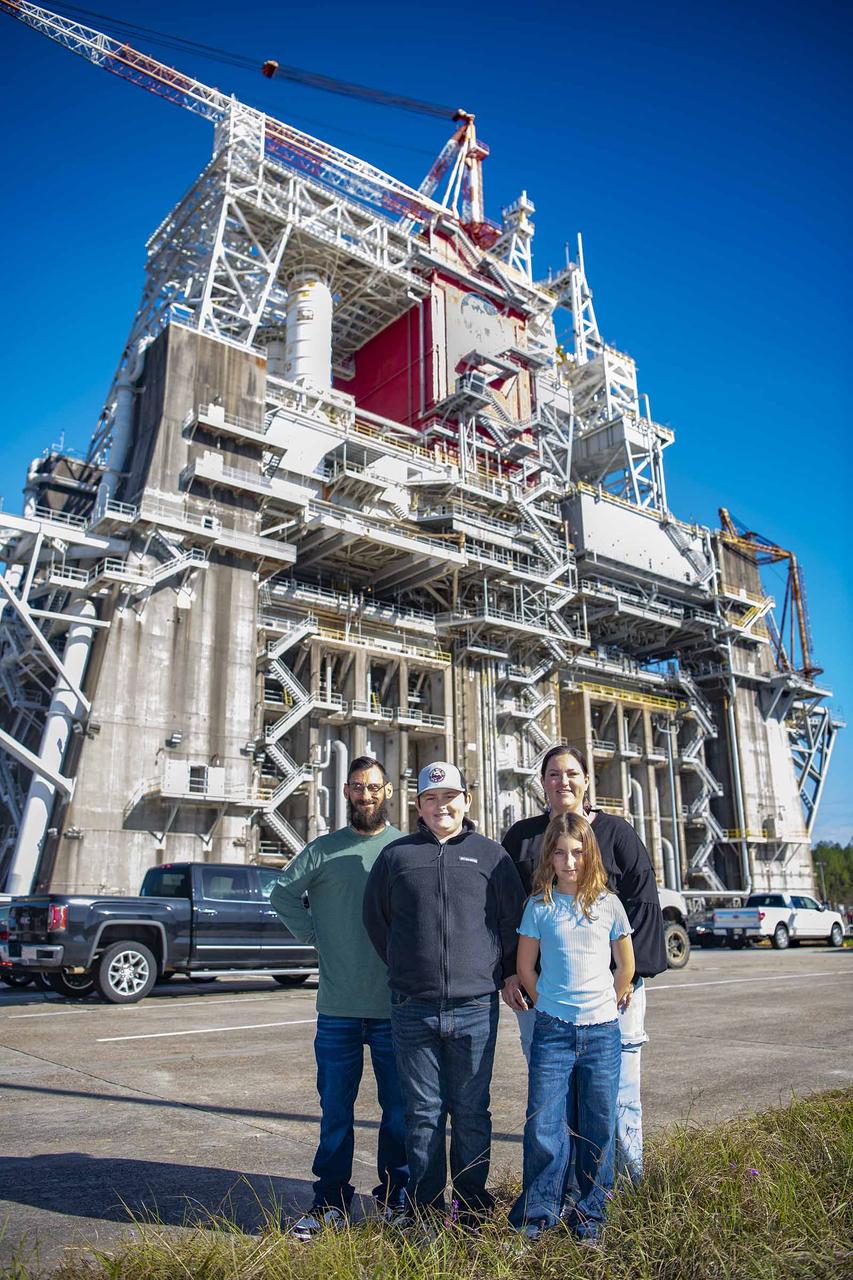
Cookbook author and culinary content creator Caroline Davis, popularly known as Mississippi Kween, and her family enjoy touring facilities and learning about NASA Stennis and its frontline work during a site visit Dec. 18. Davis, husband Joe, and children Zeke and Zoey, met with NASA Stennis leadership before touring the L3Harris (formerly Aerojet Rocketdyne) Engine Assembly Facility, Thad Cochran Test Stand, Autonomous Systems Laboratory, and the NASA Stennis rocket engine garden. The tour highlighted the NASA Stennis story and how the south Mississippi NASA center has the ingredients for a recipe that accelerates the exploration and commercialization of space, innovates to benefit NASA and industry, and leverages assets to stimulate the economy.

Members of the World Presidents' Organization enjoy exhibits at StenniSphere, the museum and visitor center at NASA's John C. Stennis Space Center during a tour of the space facility Jan. 26. WPO members from several states toured Stennis facilities during a daylong visit that included a presentation by Apollo 13 astronaut Fred Haise of Biloxi.
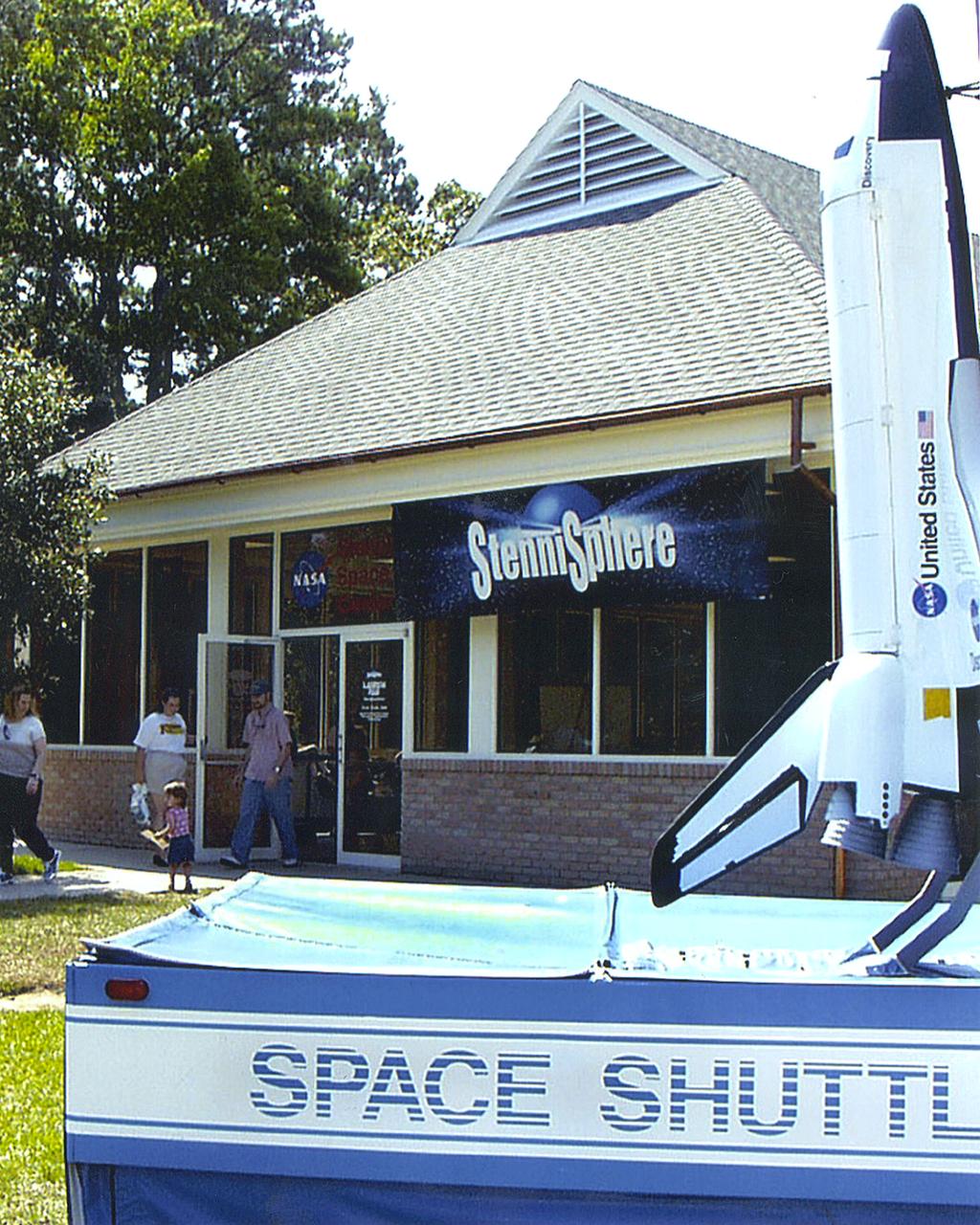
The Launch Pad tour stop at the Mississippi I-10 Welcome Center in Hancock County, Miss., is the point of origin for all tours of Stennis Space Center and StenniSphere. At the Launch Pad, visitors waiting to catch the shuttle buses are provided information and can see videos on StenniSphere exhibits and on the missions and programs of Stennis Space Center. StenniSphere is open free of charge from 9 a.m. to 5 p.m. daily, and buses depart from the Launch Pad to StenniSphere every 15 to 20 minutes.
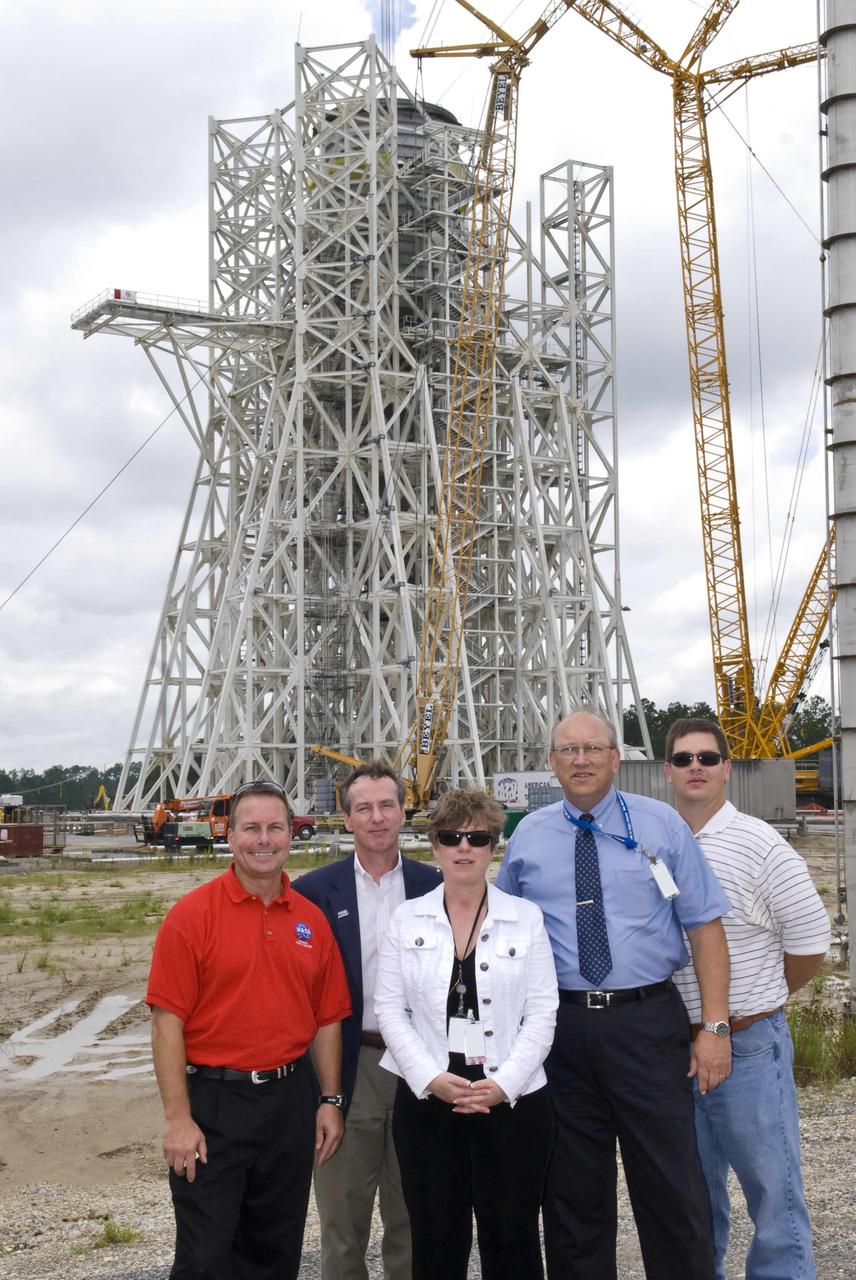
NASA Chief Financial Officer Elizabeth Robinson (center) visited John C. Stennis Space Center on Aug. 17, touring facilities and the A-3 Test Stand construction site. Joining her on the tour of the facility were: (l to r) Deputy Director Rick Gilbrech, Stennis Chief Financial Officer Jim Bevis, Project Directorate representative Randy Holland and engineer Tom Rich.
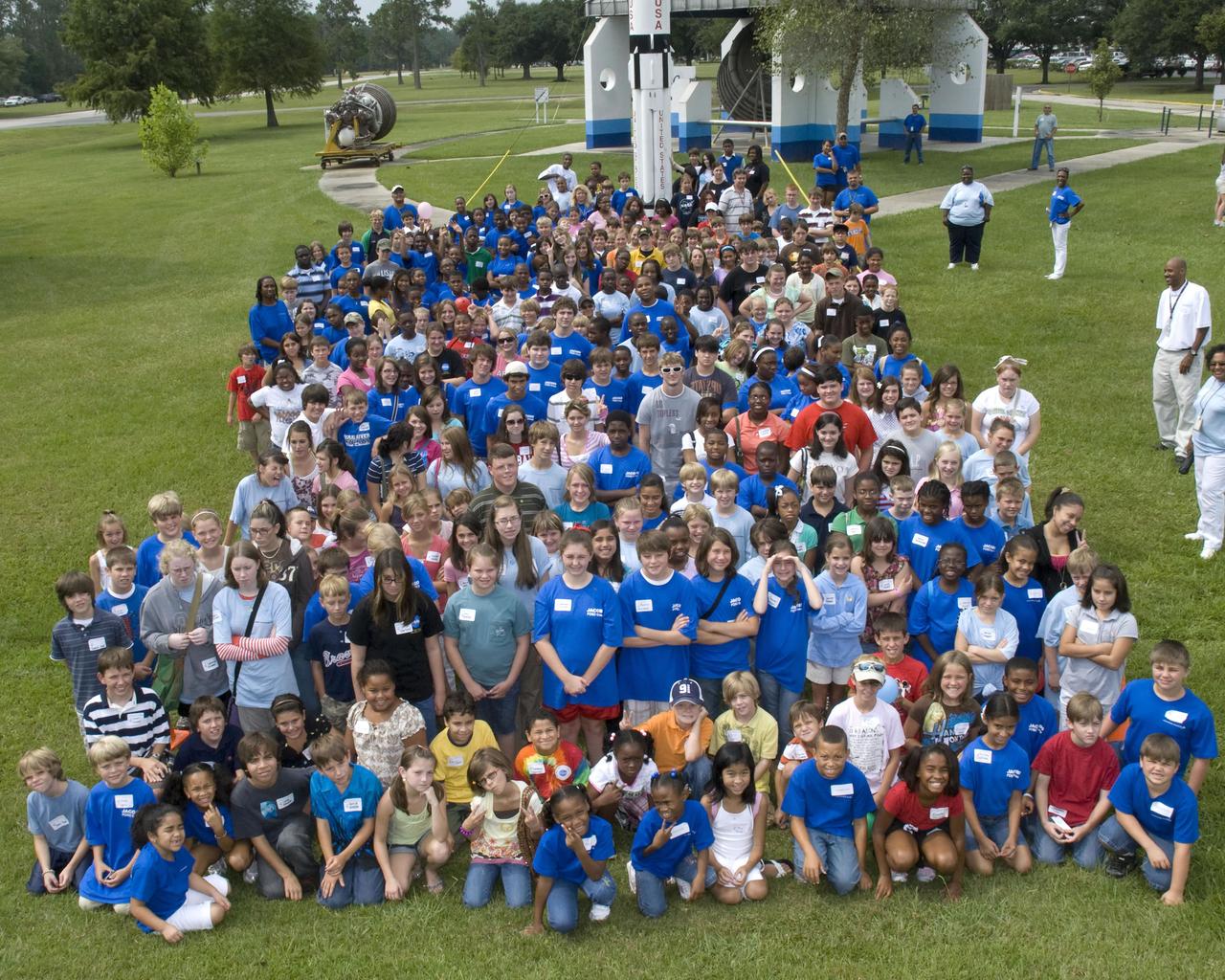
Hundreds of children participated in the annual Take Our Children to Work Day at Stennis Space Center on July 29. During the day, children of Stennis employees received a tour of facilities and took part in various activities, including demonstrations in cryogenics and robotics.
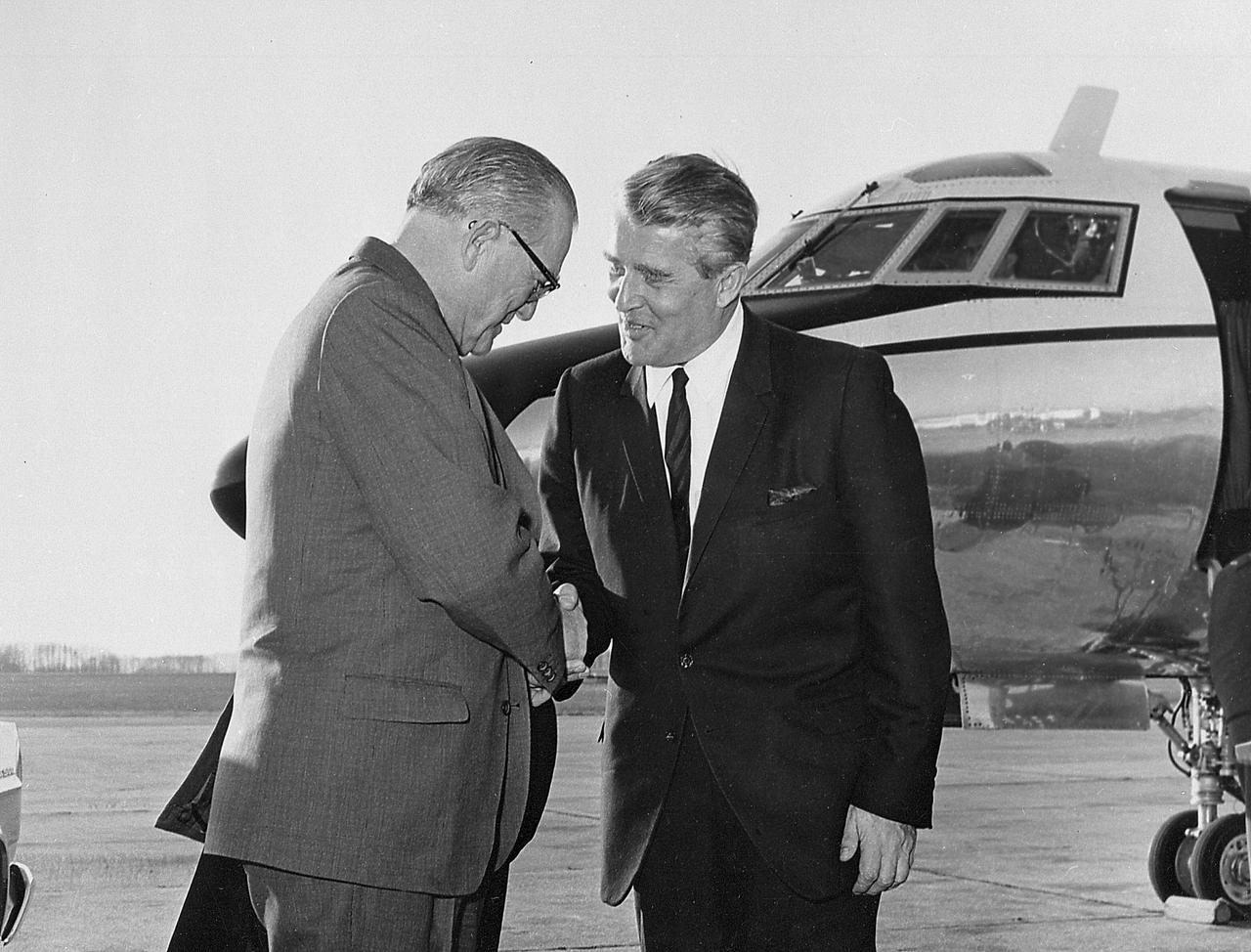
U.S. Senator from Mississippi, John Stennis (left) visited the Marshall Space Flight Center (MSFC) in mid-November 1967, where he was greeted at the Redstone Airfield by Center Director Dr. Wernher von Braun (right). During his visit to MSFC, Senator Stennis was given a tour and briefed on MSFC programs.

Members of the World Presidents' Organization enjoy a buffet luncheon during a Jan. 26 visit to NASA's John C. Stennis Space Center. WPO members from several states toured Stennis facilities during a daylong visit that included a river ride with Special Boat Team 22, the U.S. Navy's elite boat warriors group that trains at Stennis. Visiting president also had an opportunity to learn about the ongoing work of the nation's premier rocket engine testing site.
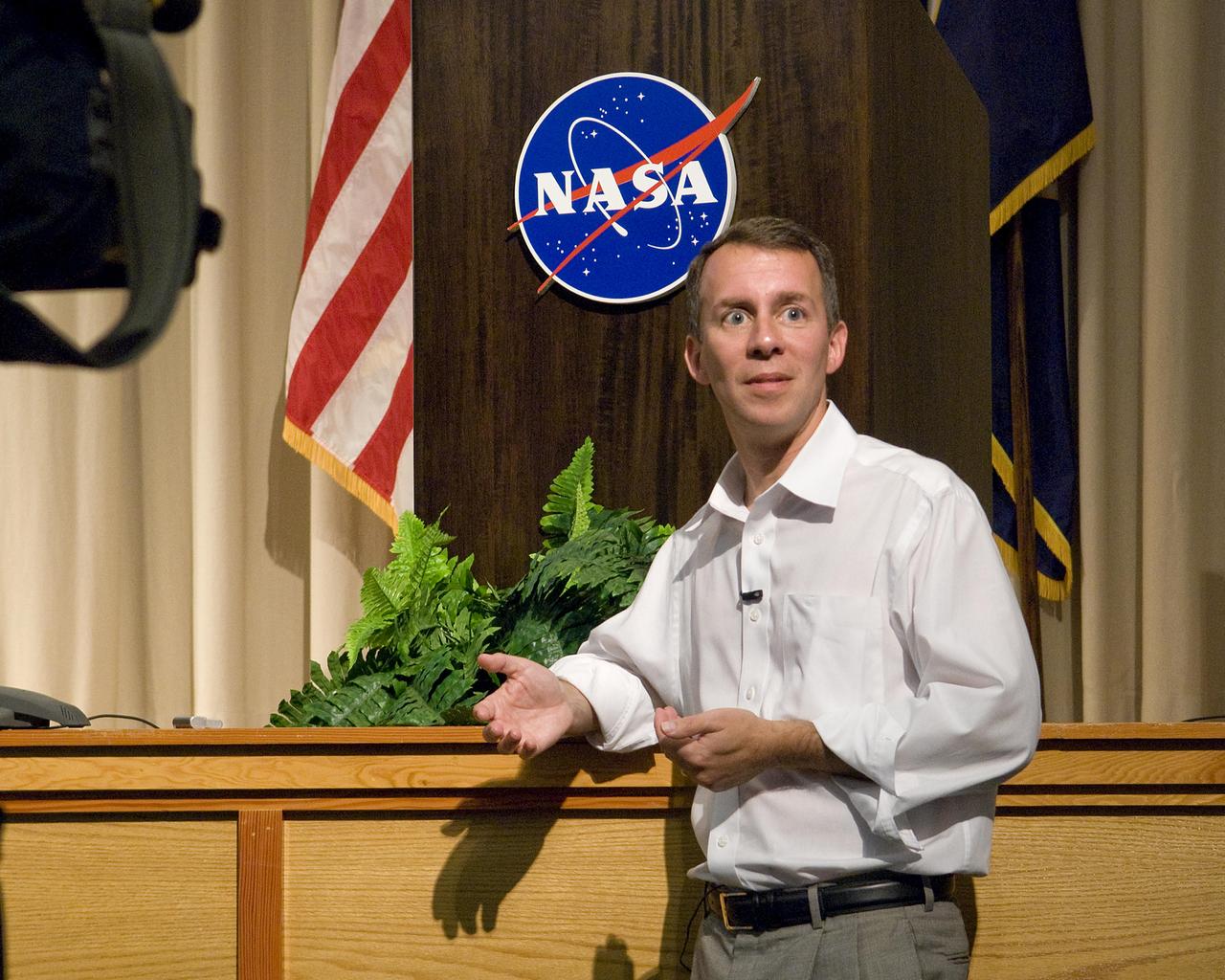
NASA Chief Technologist Bobby Braun visited John C. Stennis Space Center on Aug. 26. While at Stennis, he spoke to employees and the media about innovation and technology in NASA's future and the important role Stennis will play in space exploration programs. Braun also toured facilities and received briefings on work under way at the nation's premier rocket engine test facility.
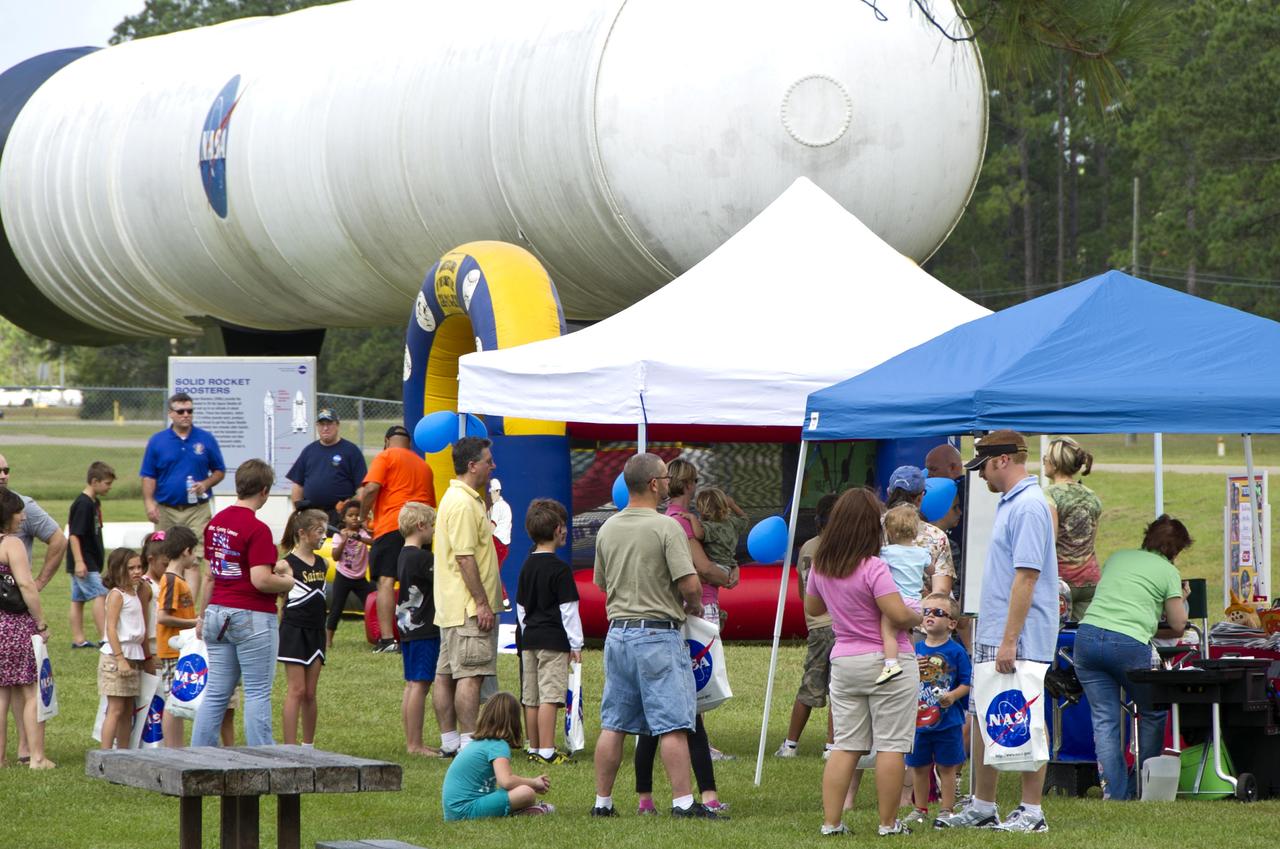
Nearly 500 Stennis Space Center employees and family members took part in the facility's 50th Anniversary Employee Picnic on Oct. 8. Participants enjoyed activities ranging from historical tours to sack races.
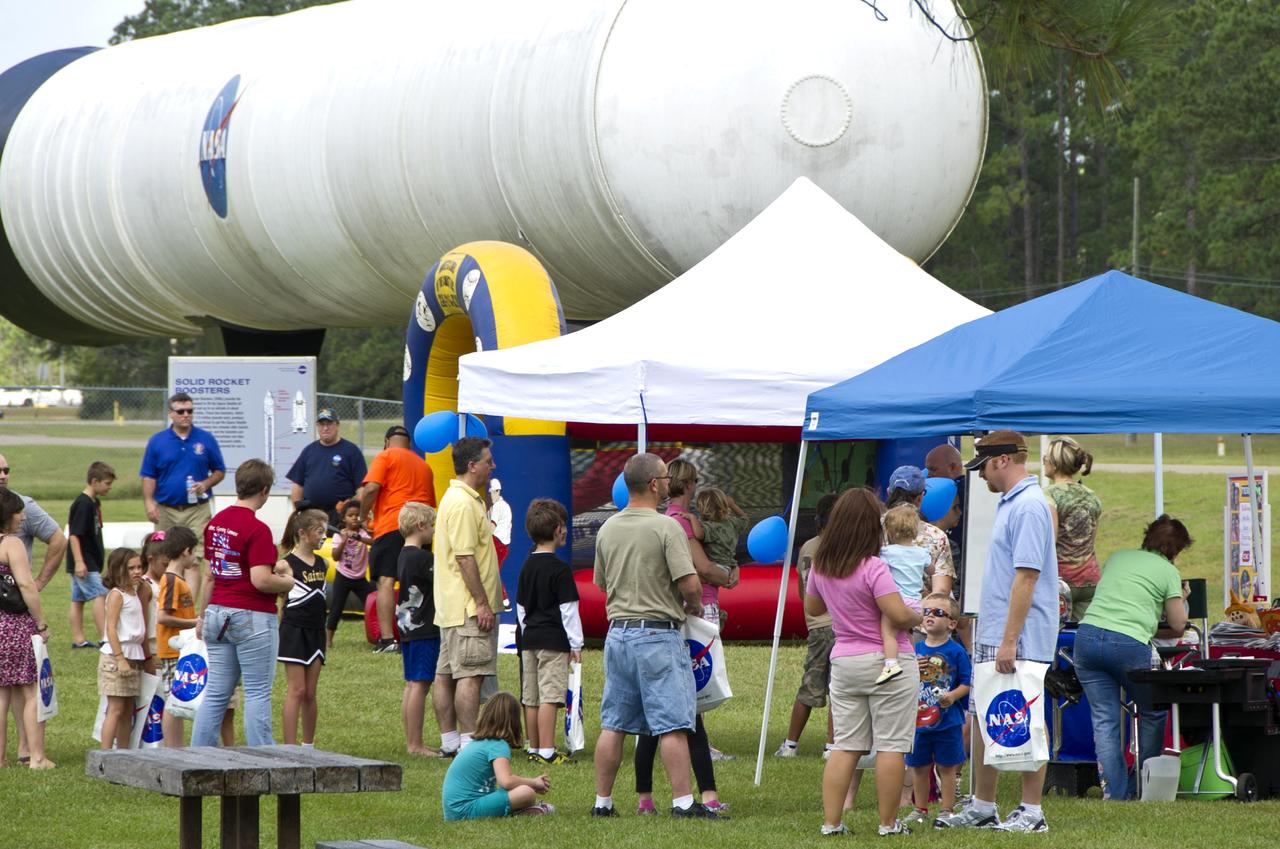
Nearly 500 Stennis Space Center employees and family members took part in the facility's 50th Anniversary Employee Picnic on Oct. 8. Participants enjoyed activities ranging from historical tours to sack races.
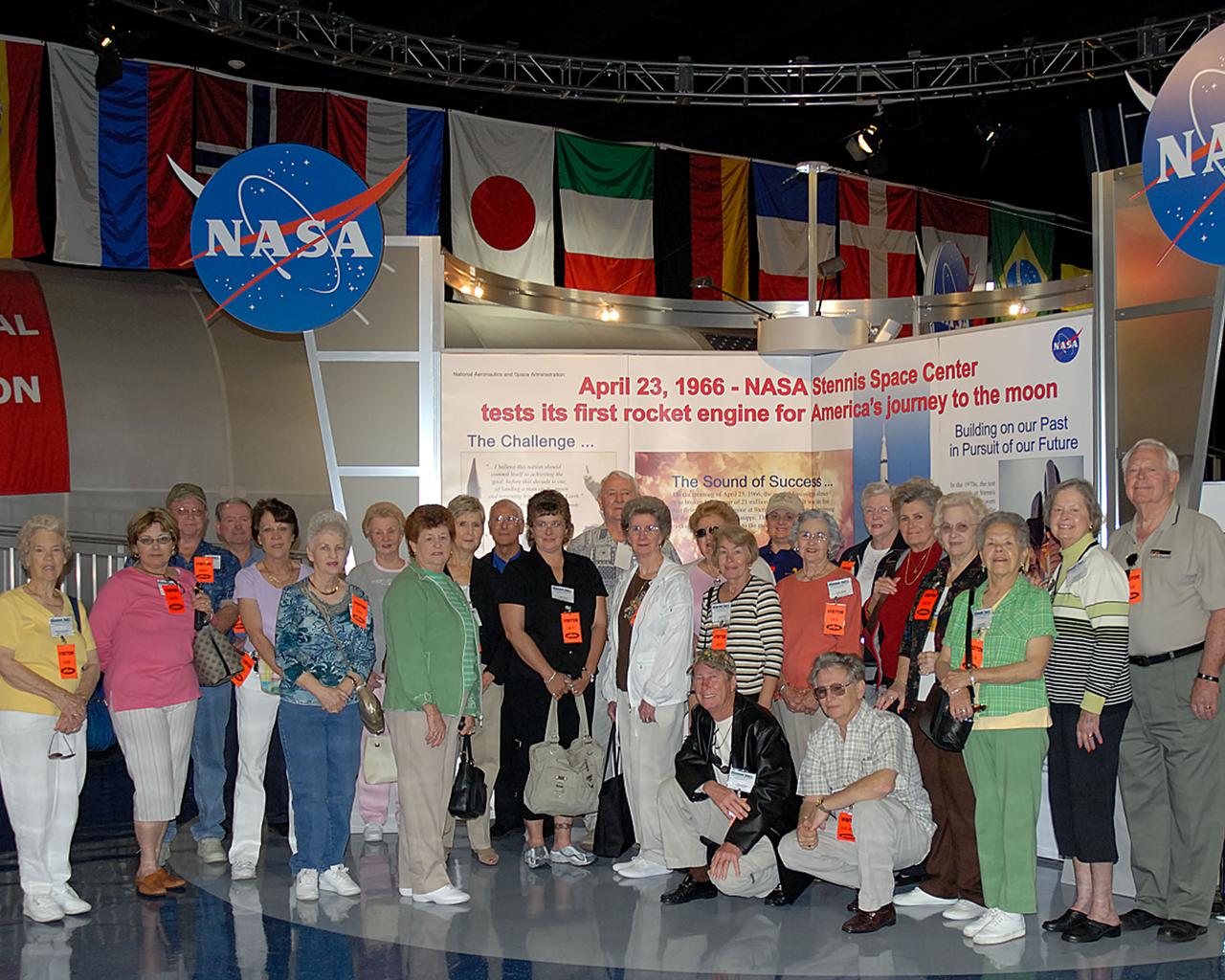
On April 24, a group traveling with Diamond Tours visited StenniSphere, the visitor center at NASA John C. Stennis Space Center in South Mississippi. The trip marked Diamond Tours' return to StenniSphere since Hurricane Katrina struck the Gulf Coast on Aug. 29, 2005. About 25 business professionals from Georgia enjoyed the day's tour of America's largest rocket engine test complex, along with the many displays and exhibits at the museum. Before Hurricane Katrina, the nationwide company brought more than 1,000 visitors to StenniSphere each month. That contributed to more than 100,000 visitors from around the world touring the space center each year. In past years StenniSphere's visitor relations specialists booked Diamond Tours two or three times a week, averaging 40 to 50 people per visit. SSC was established in the 1960s to test the huge engines for the Saturn V moon rockets. Now 40 years later, the center tests every main engine for the space shuttle. SSC will soon begin testing the rocket engines that will power spacecraft carrying Americans back to the moon and on to Mars. For more information or to book a tour, visit http://www.nasa.gov/centers/stennis/home/index.html and click on the StenniSphere logo; or call 800-237-1821 or 228-688-2370.
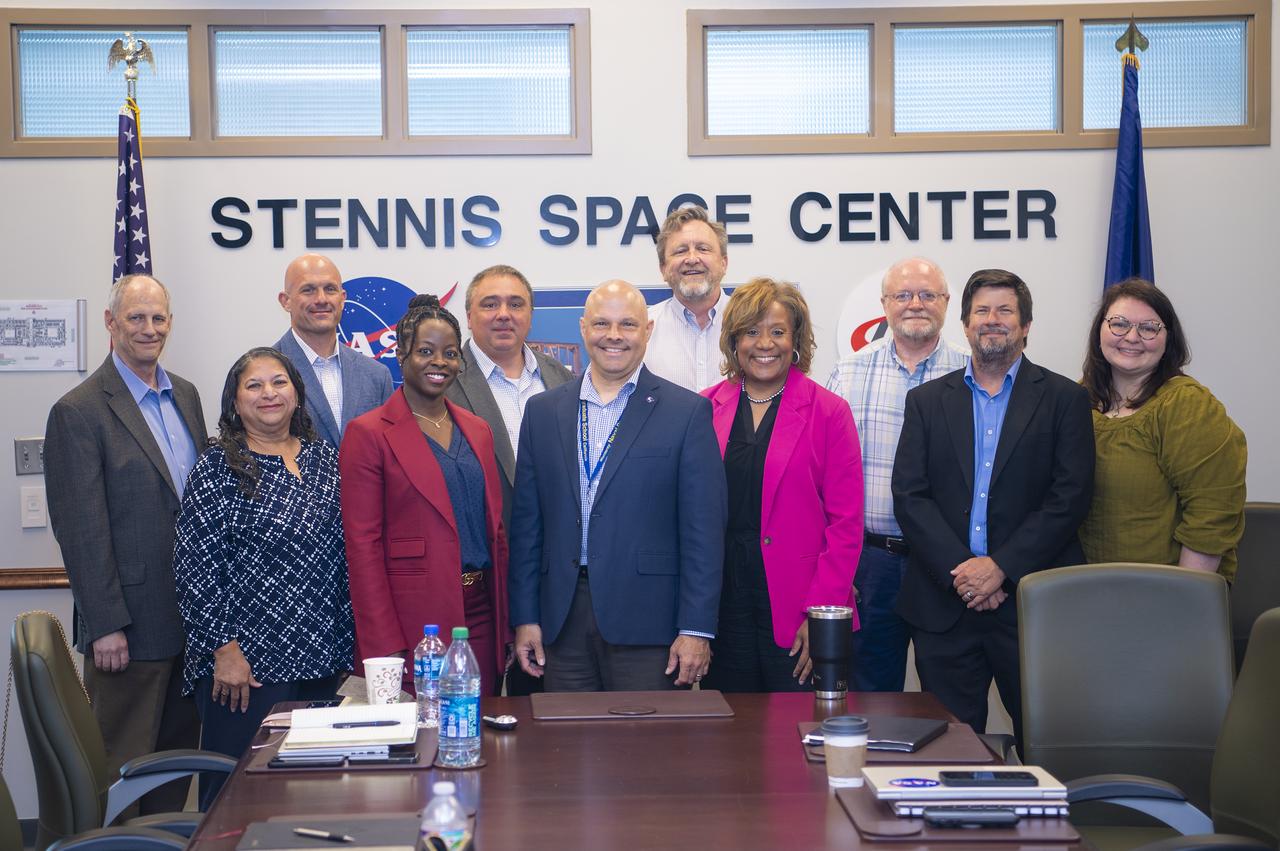
Members of NASA’s Mission Support Directorate met with leaders from NASA’s Stennis Space Center and the NASA Shared Services Center during an onsite visit June 3. The group also participated in an in-depth tour of the NASA Stennis facilities. Pictured (left to right) are Ron Bald, chief counsel for the Office of the General Counsel at NASA Stennis and NASA Shared Services Center; Dinna Cottrell, chief information officer for the NASA Stennis and NASA Shared Services Center Office of the Chief Information Officer; Eli Ouder, procurement officer for NASA Stennis and NASA Shared Services Center; Stacy Houston, executive officer for NASA’s Mission Support Directorate; Michael Tubbs, acting director for the NASA Stennis Center Operations Directorate; Michael Hess, deputy associate administrator for NASA’s Mission Support Directorate; Rodney McKellip, associate director for NASA Stennis; Nichole Pinkney, program manager for NASA’s Mission Support Directorate; Duane Armstrong, manager for the NASA Stennis Strategic Development Office; Gary Benton, director for the NASA Stennis Safety and Mission Assurance Directorate; and Alison Butsch, associate chief financial officer for the External Business Operations Division within the NASA Stennis Office of the Chief Financial Officer.
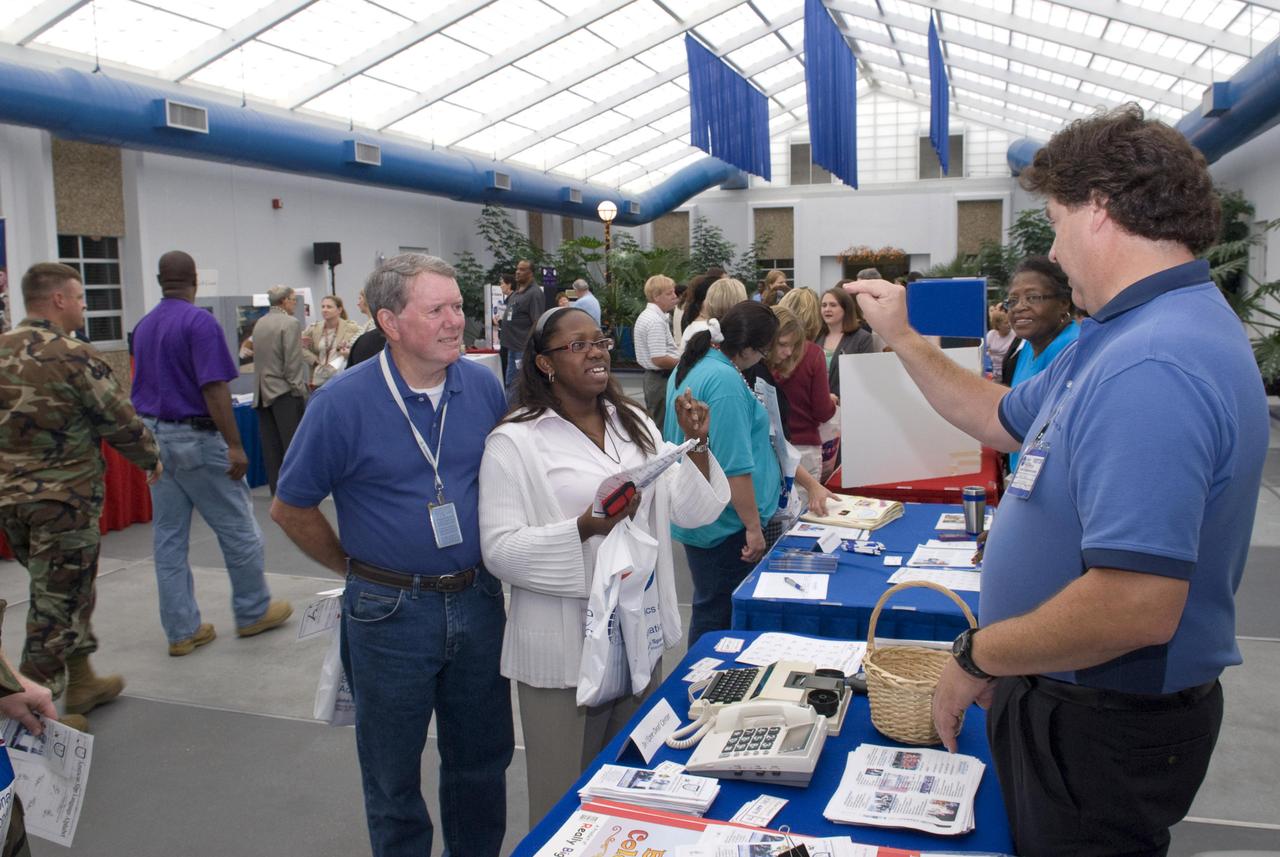
Using American sign language, Greg Crapo, right, director of de l'Ep e Deaf Center Inc. in Biloxi , Miss., helps Shanda Bennett of the Environmental Protection Agency at NASA's John C. Stennis Space Center spell out her name. Bennett is joined by colleague Charles Kennedy during a tour of charitable organization displays for the kickoff of the Stennis portion of the 2009 Combined Federal Campaign emphasis on Oct. 29. The CFC is the world's largest annual workplace charity effort. Contributions to the campaign support organizations providing health and human service benefits throughout the world. Stennis employees give tens of thousands of dollars through the campaign each year, including a $198,000 in gifts in 2008. This year, the Stennis goal is $200,000. For the kickoff, a number of charitable organizations provided displays at Stennis, providing employees an opportunity to see - and choose - where their contributions can be directed.
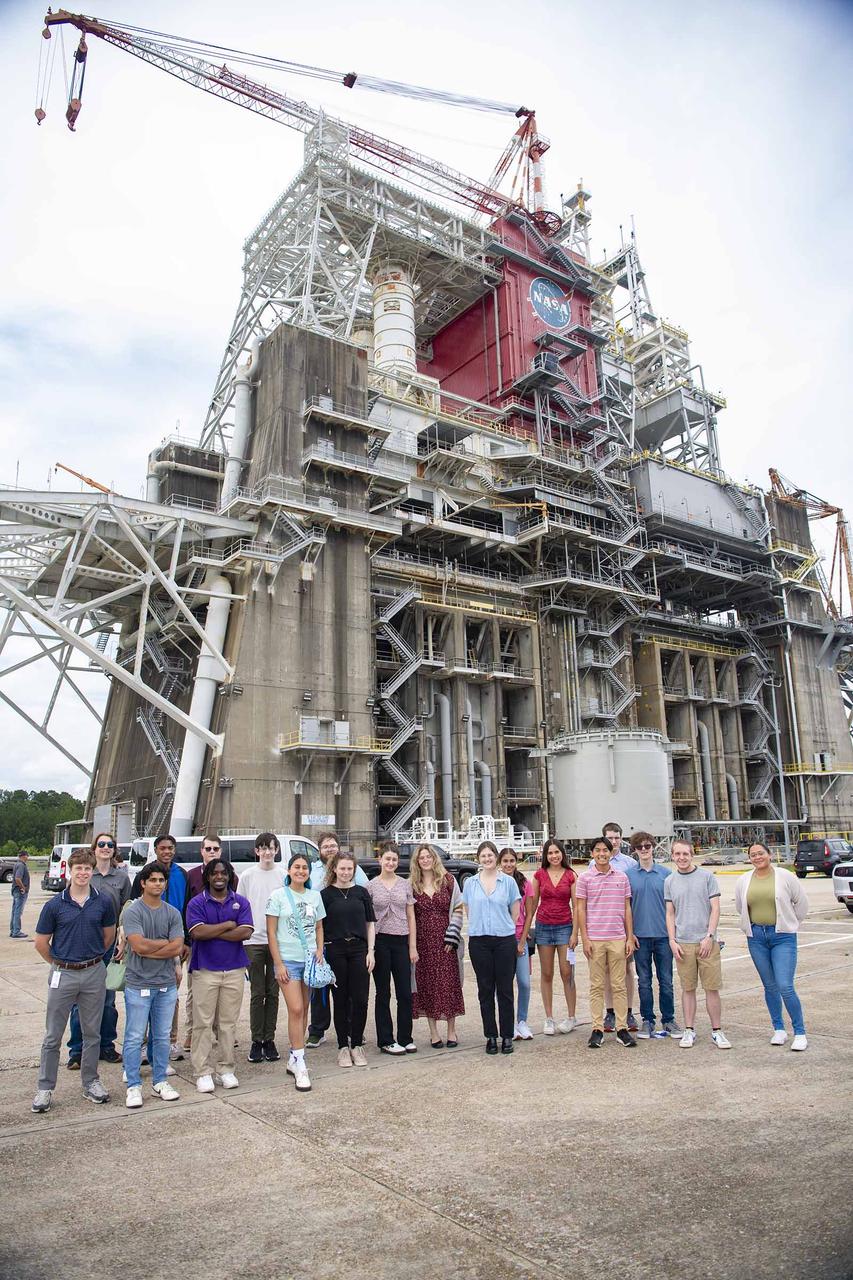
Summer interns with the U.S. Naval Research Laboratory stand in front of the Thad Cochran Test Stand (B-1/B-2) on July 10. NASA Stennis crews are preparing the B-2 side of the stand for future testing of NASA’s exploration upper stage. The more powerful second stage is expected to fly on NASA’s SLS (Space Launch System) rocket for Artemis IV. The Naval Research Laboratory interns visited the stand during an afternoon tour of NASA Stennis. The Naval Research Laboratory is a tenant of the NASA Stennis federal city, where it provides advanced scientific capabilities required to bolster the nation’s position of global naval leadership.
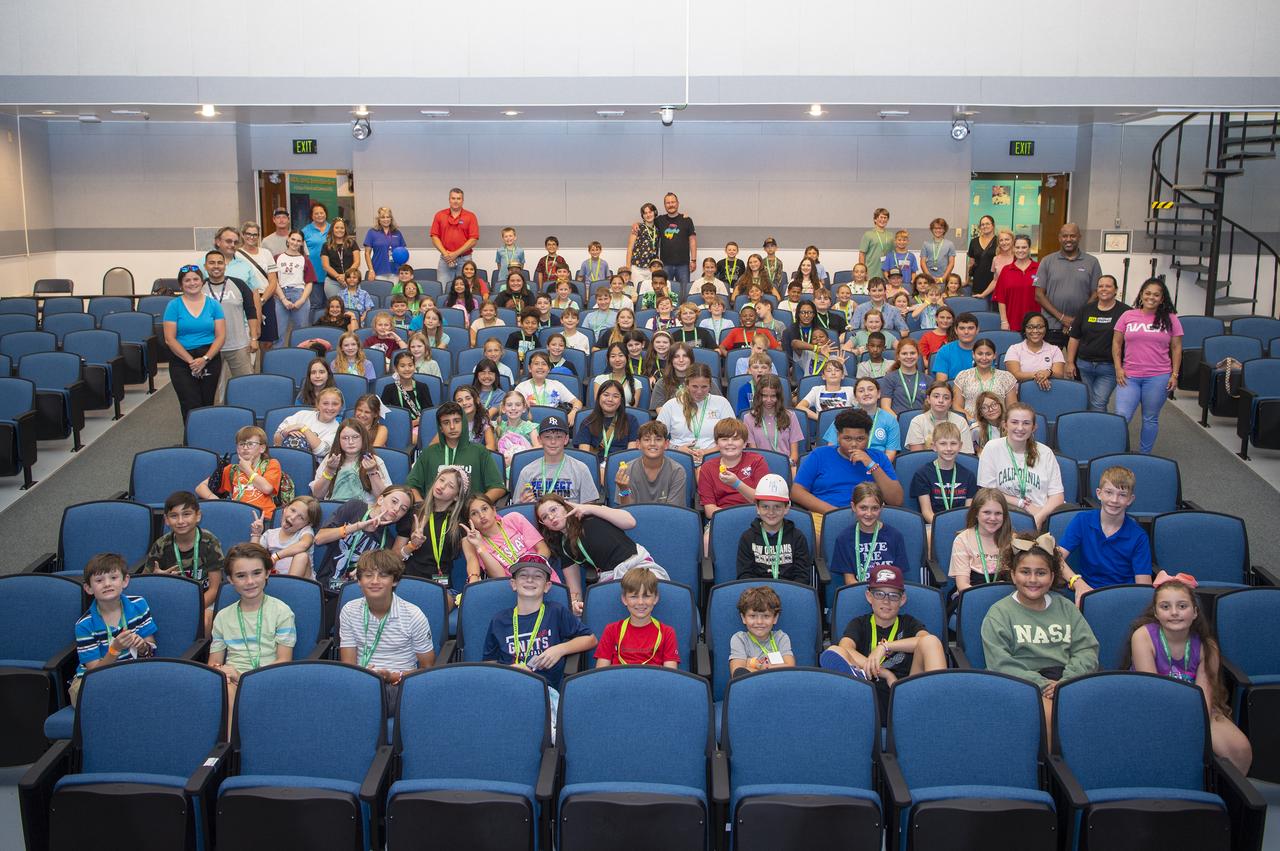
NASA’s Stennis Space Center inspired the Artemis Generation during the 2024 Take Our Children to Work Day on June 27. Participants are shown in the StenniSphere auditorium following a site tour and full day of hands-on activities to promote interest in STEM (science, technology, engineering, and mathematics) and the variety of work conducted at NASA Stennis. NASA is returning to the Moon through the Artemis campaign for scientific discovery, economic benefits, and inspiration for a new generation of explorers.
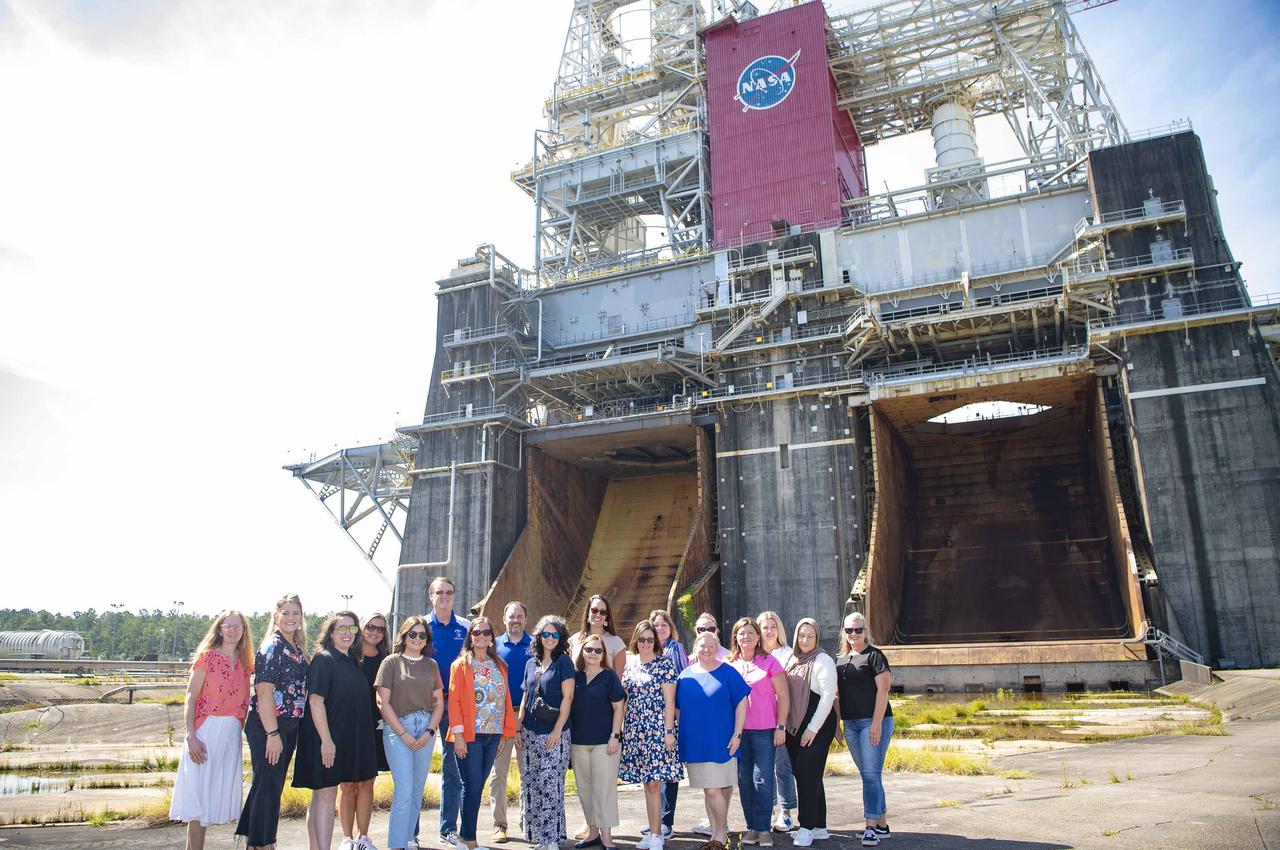
Pearl River County Elementary School leaders visit the Thad Cochran Test Stand (B-1/B-2) during a NASA Stennis tour on July 15. The school leaders received an overview of work conducted at NASA Stennis, including how the south Mississippi site is contributing to NASA’s return to the Moon through the Artemis campaign by testing engines and stages to help power the SLS (Space Launch System) rocket.

Mississippi Gov. Haley Barbour speaks to members of the World Presidents' Organization during the group's visit to NASA's John C. Stennis Space Center on Jan. 26. WPO members from several states spent the day touring Stennis facilities and learning about the work of the nation's premier rocket engine testing site. Barbour visited with group members during a morning session in StenniSphere, the center's visitors center and museum.
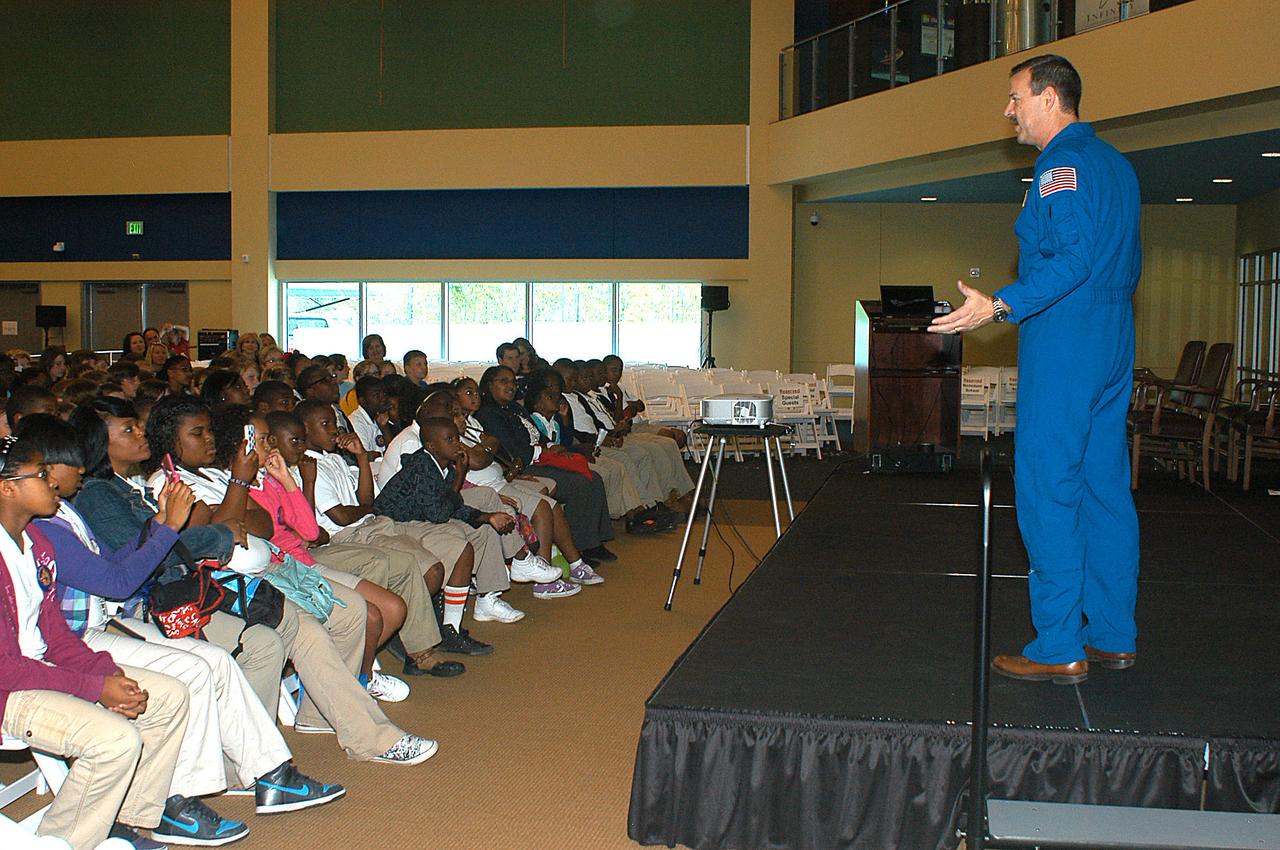
Astronaut Scott Altman speaks to schoolchildren during ribbon-cutting activities for the INFINITY at NASA Stennis Space Center facility April 11, 2012. More than 160 area students attended the ceremony. Following the ceremony, they and other students toured the facility and enjoyed a presentation by Altman about his experiences in space.
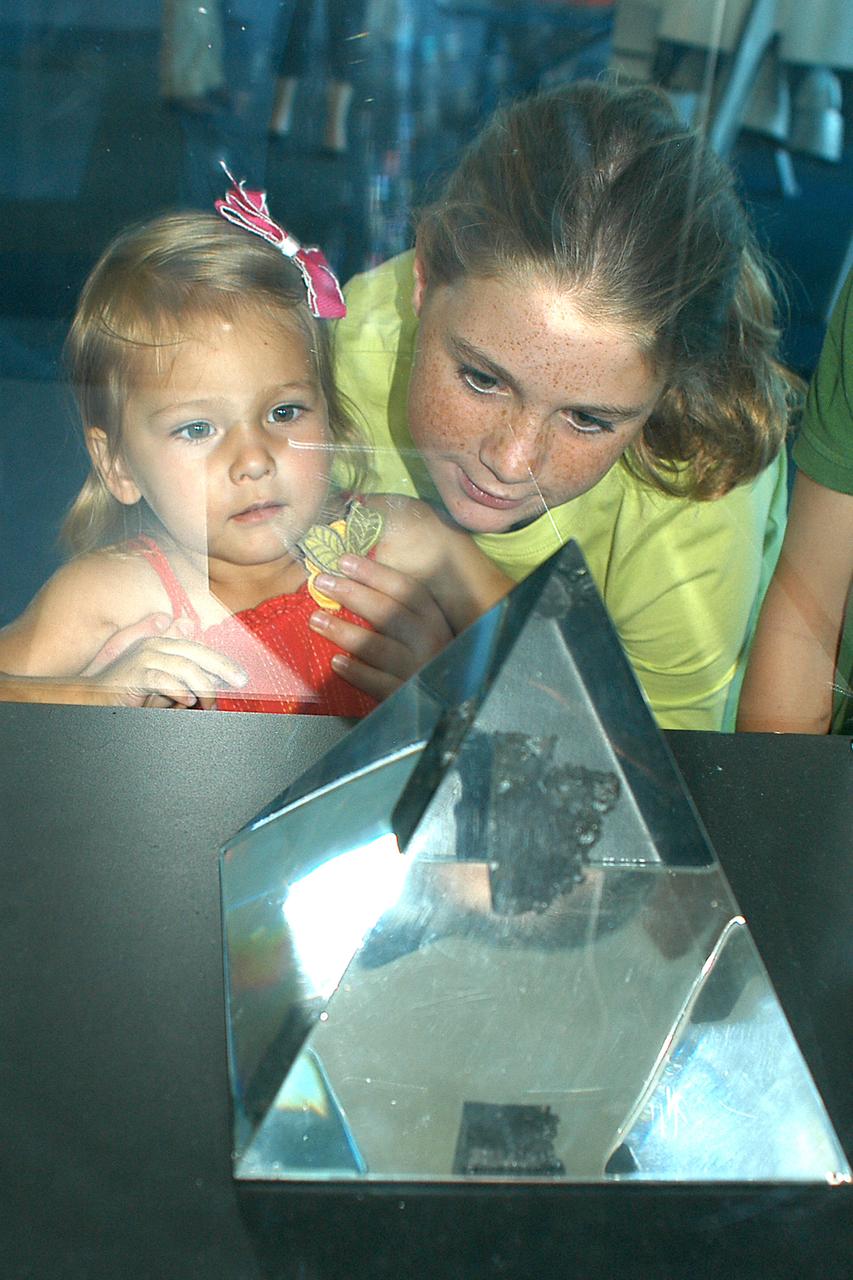
Clare Johnston, 10, and Eden Landis, 3, stare in wonder at the moon rock on display at the INFINITY at NASA Stennis Space Center visitor center and museum. The children toured INFINITY exhibits during ribbon-cutting activities for the facility April 11, 2012.
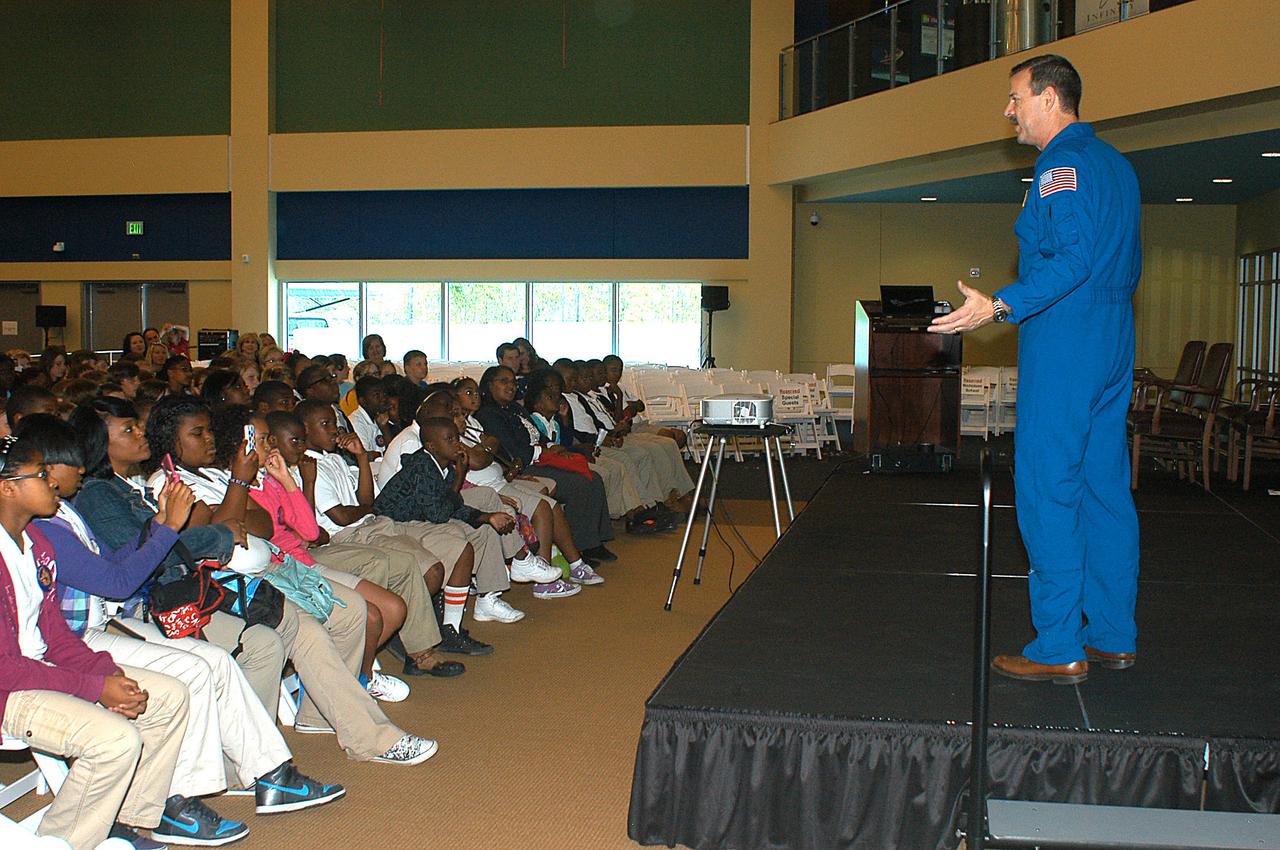
Astronaut Scott Altman speaks to schoolchildren during ribbon-cutting activities for the INFINITY at NASA Stennis Space Center facility April 11, 2012. More than 160 area students attended the ceremony. Following the ceremony, they and other students toured the facility and enjoyed a presentation by Altman about his experiences in space.
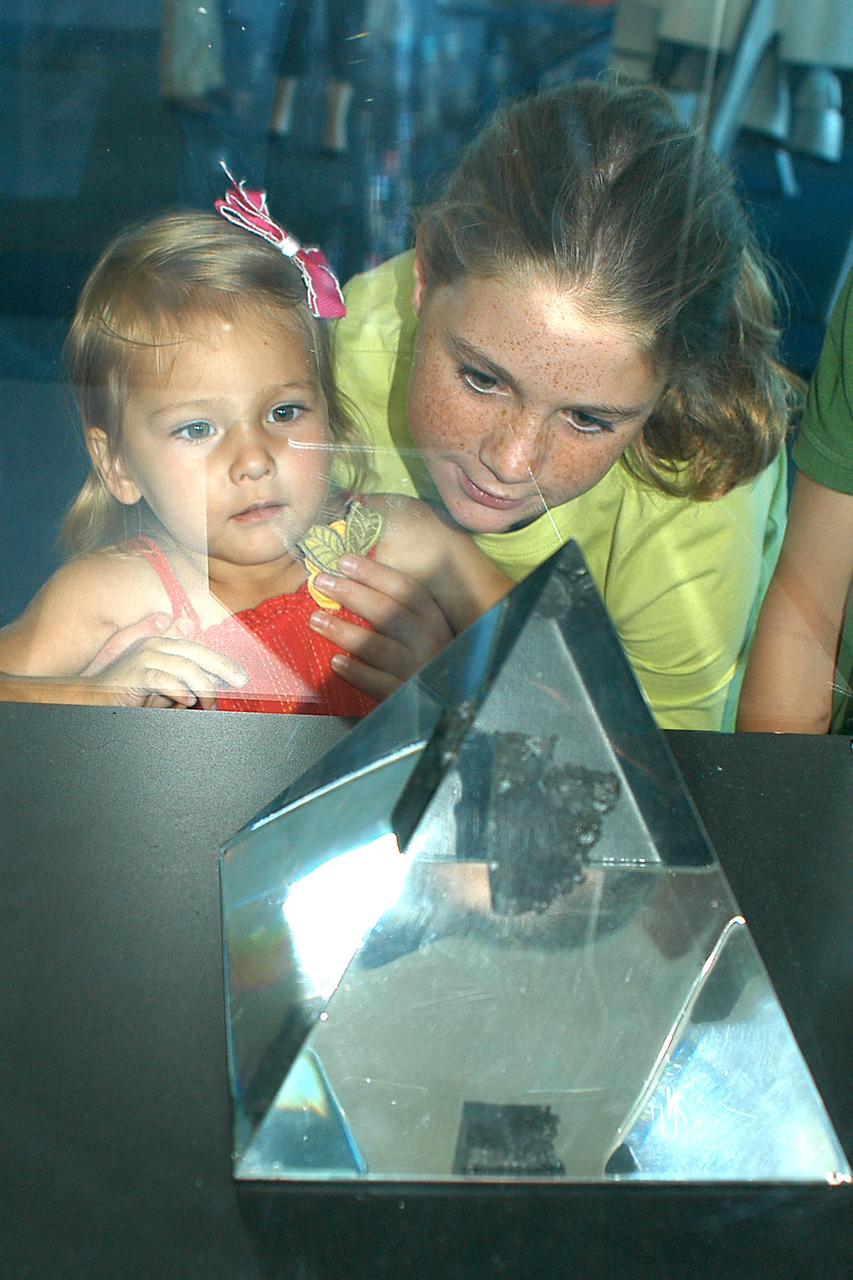
Clare Johnston, 10, and Eden Landis, 3, stare in wonder at the moon rock on display at the INFINITY at NASA Stennis Space Center visitor center and museum. The children toured INFINITY exhibits during ribbon-cutting activities for the facility April 11, 2012.
Clare Johnston, 10, and Eden Landis, 3, stare in wonder at the moon rock on display at the INFINITY at NASA Stennis Space Center visitor center and museum. The children toured INFINITY exhibits during ribbon-cutting activities for the facility April 11, 2012.
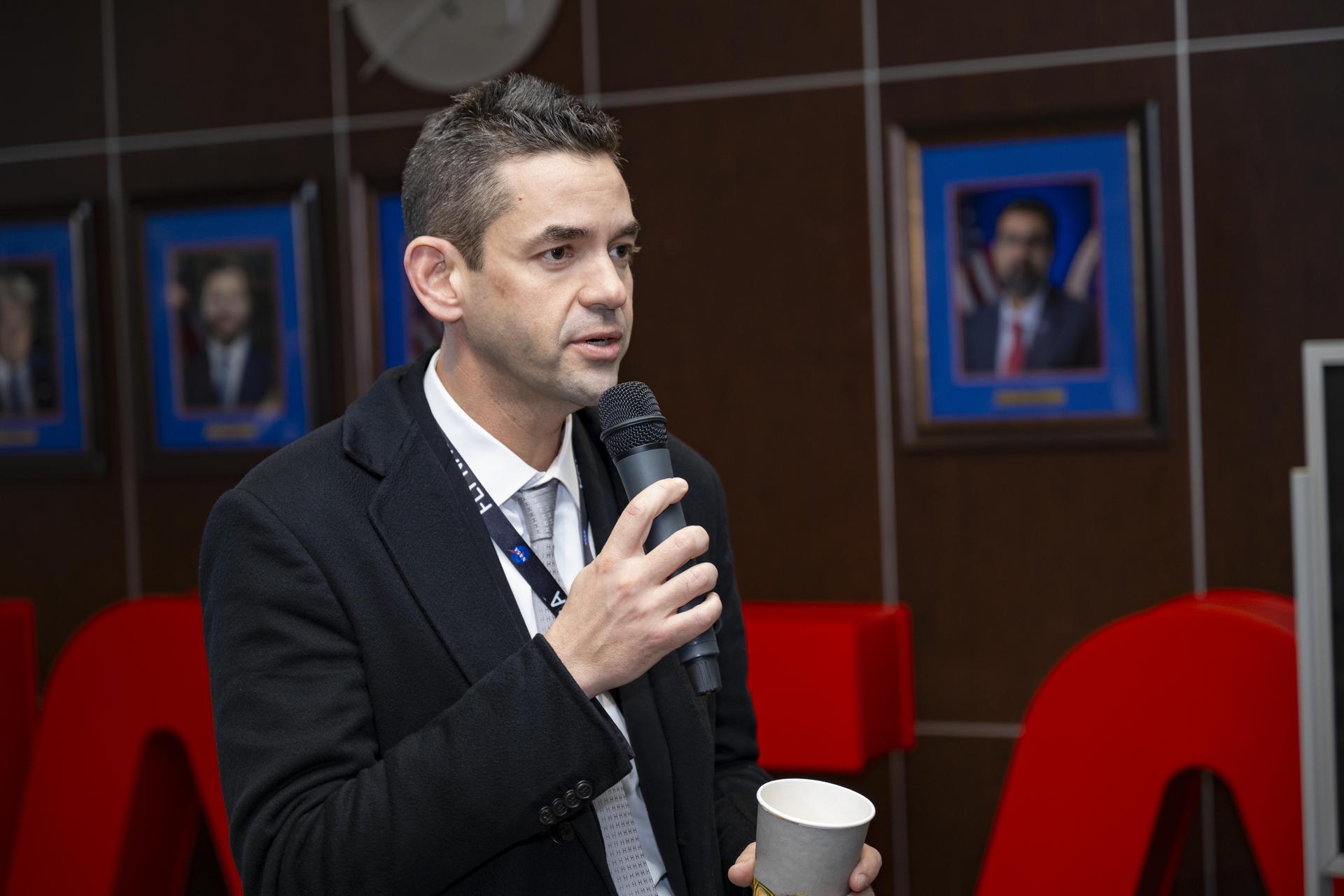
NASA Administrator Jared Isaacman speaks with NASA employees during his visit to NASA’s Stennis Space Center near Bay St. Louis, Mississippi, on Jan. 15, 2026. Isaacman, NASA’s 15th administrator, began visiting the agency’s centers after his appointment on Dec. 17, 2025.
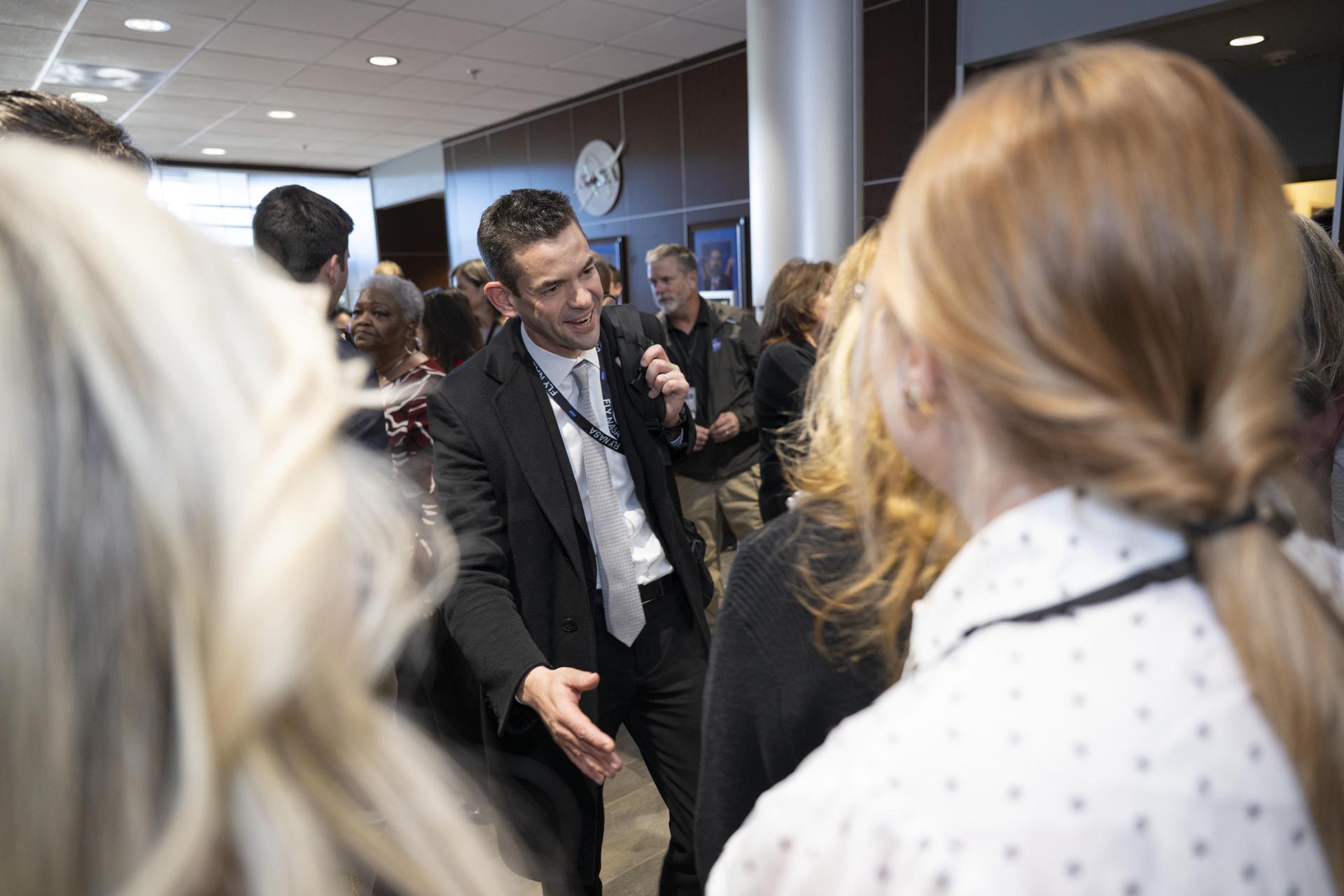
NASA Administrator Jared Isaacman, center, meets with NASA employees during his visit to NASA’s Stennis Space Center near Bay St. Louis, Mississippi, on Jan. 15, 2026. Isaacman, NASA’s 15th administrator, began visiting the agency’s centers after his appointment on Dec. 17, 2025.
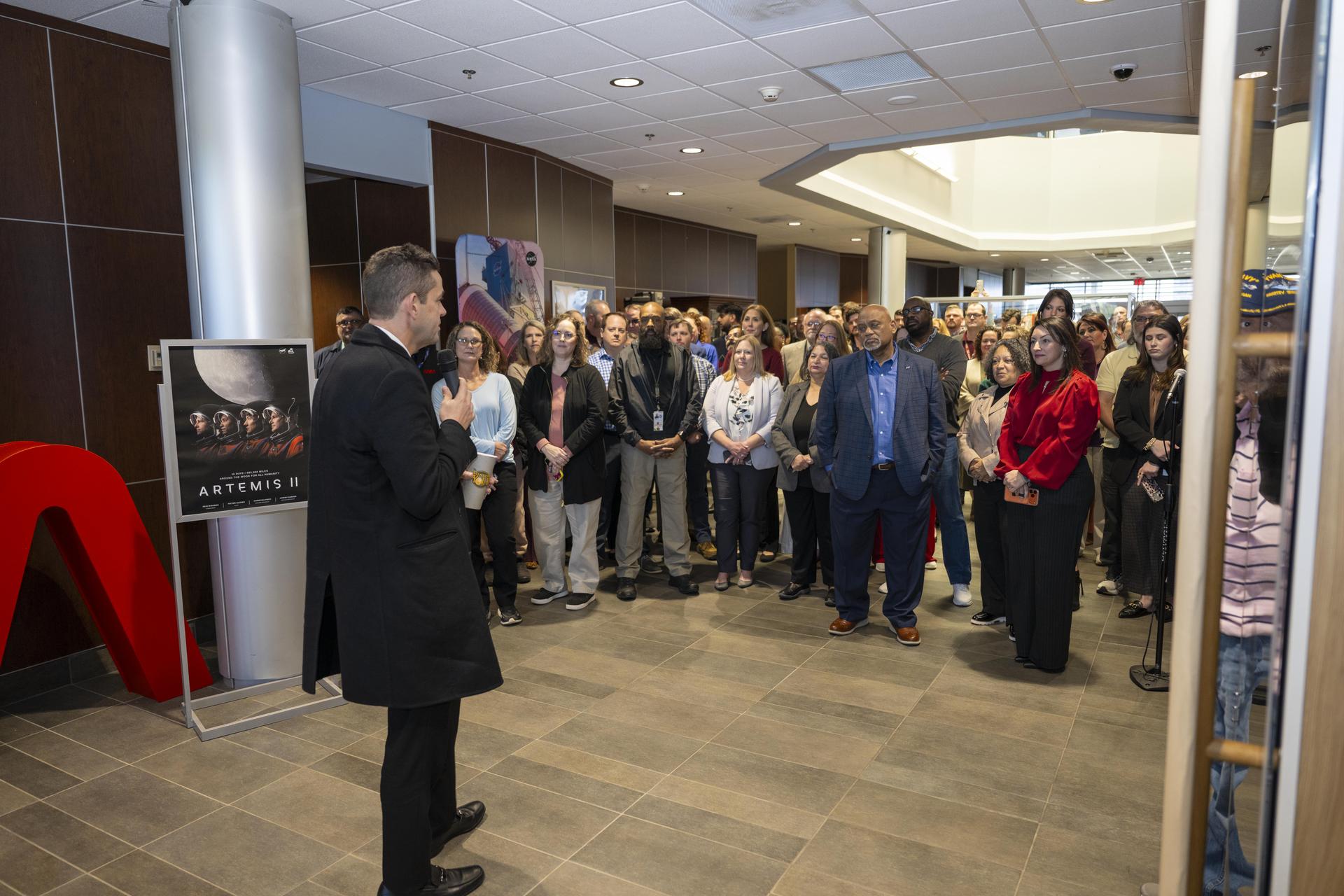
NASA Administrator Jared Isaacman, left, speaks with NASA employees during his visit to NASA’s Stennis Space Center near Bay St. Louis, Mississippi, on Jan. 15, 2026. Isaacman, NASA’s 15th administrator, began visiting the agency’s centers after his appointment on Dec. 17, 2025.
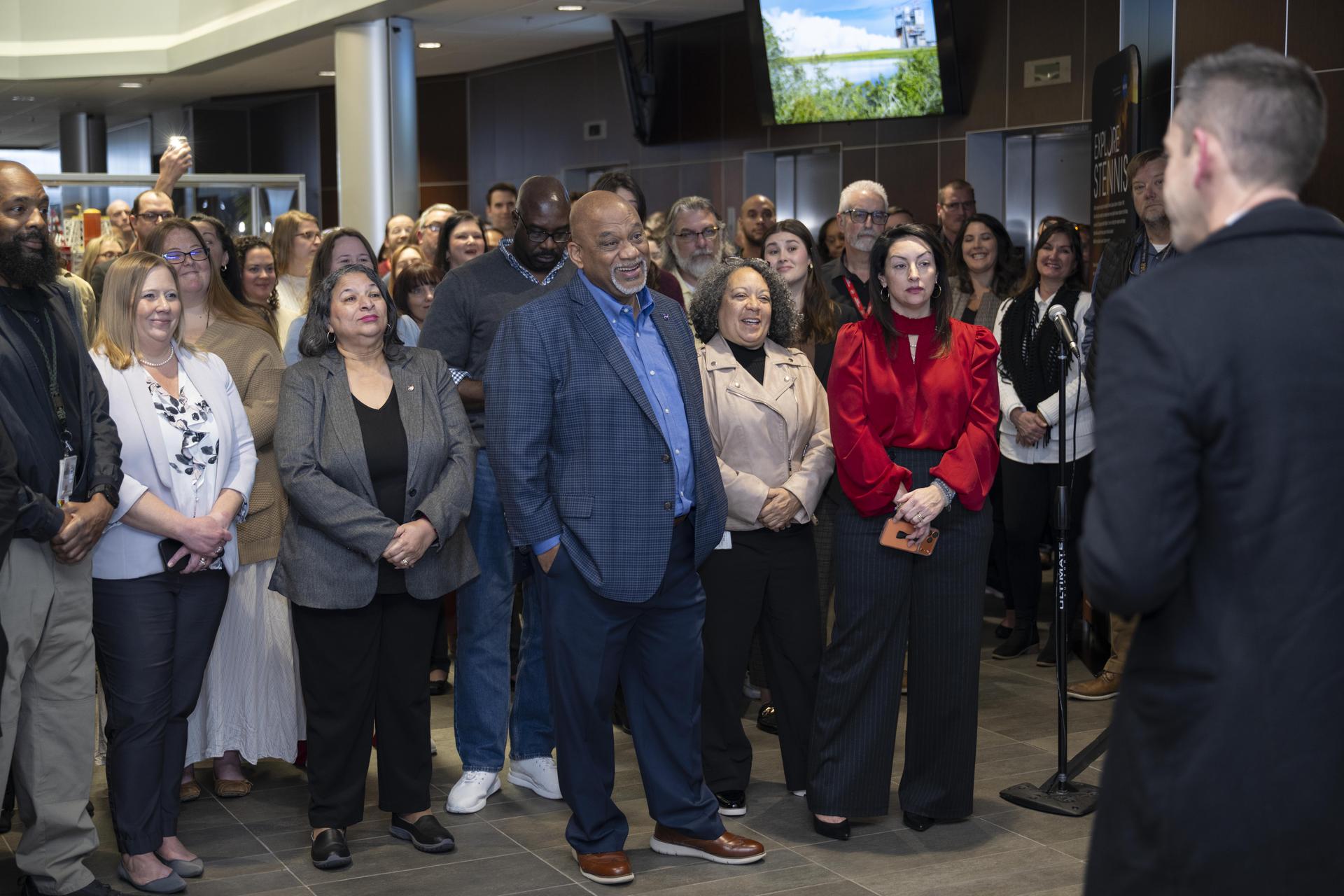
NASA Administrator Jared Isaacman, right, speaks with NASA employees during his visit to NASA’s Stennis Space Center near Bay St. Louis, Mississippi, on Jan. 15, 2026. Isaacman, NASA’s 15th administrator, began visiting the agency’s centers after his appointment on Dec. 17, 2025.
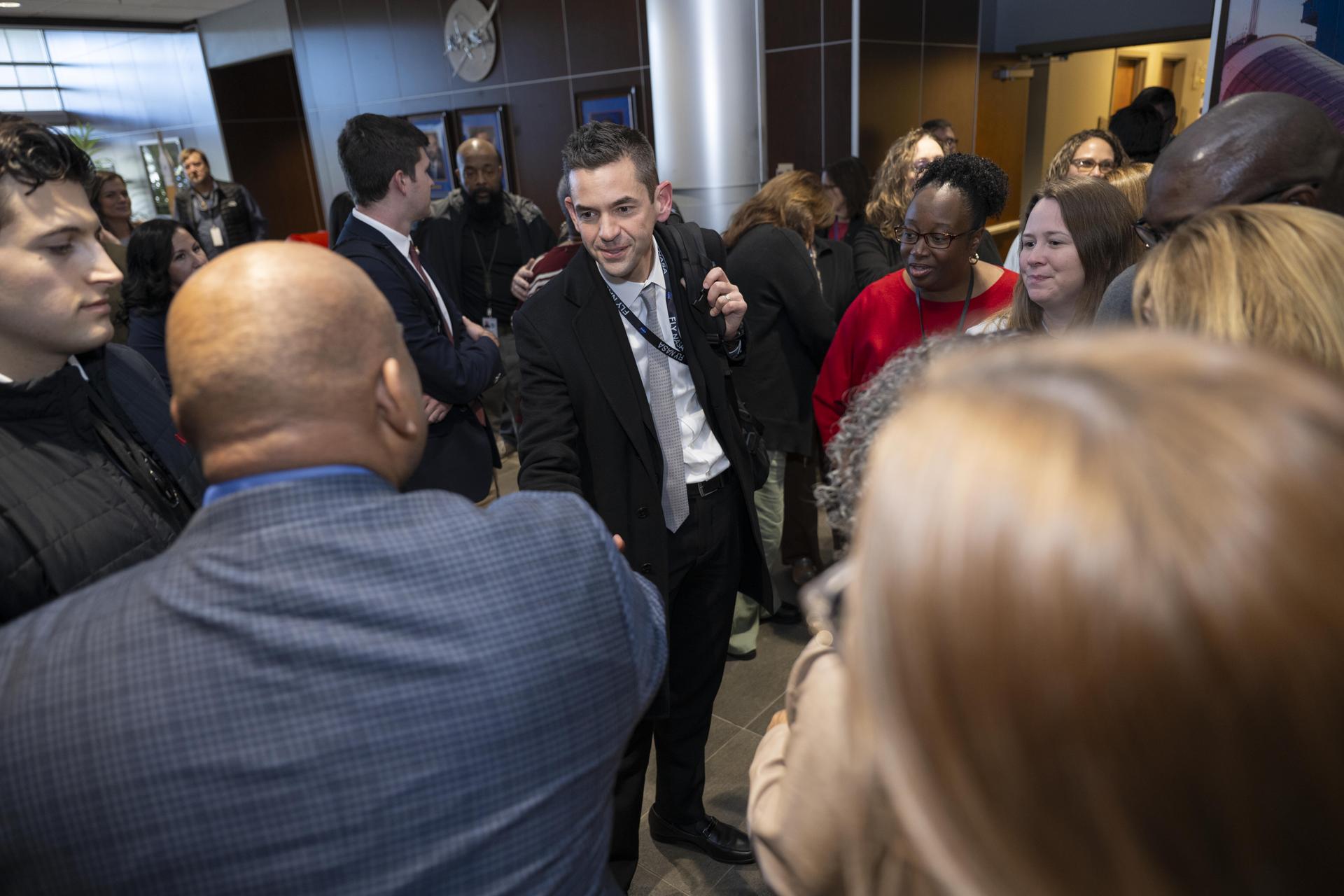
NASA Administrator Jared Isaacman, center, meets with NASA employees during his visit to NASA’s Stennis Space Center near Bay St. Louis, Mississippi, on Jan. 15, 2026. Isaacman, NASA’s 15th administrator, began visiting the agency’s centers after his appointment on Dec. 17, 2025.
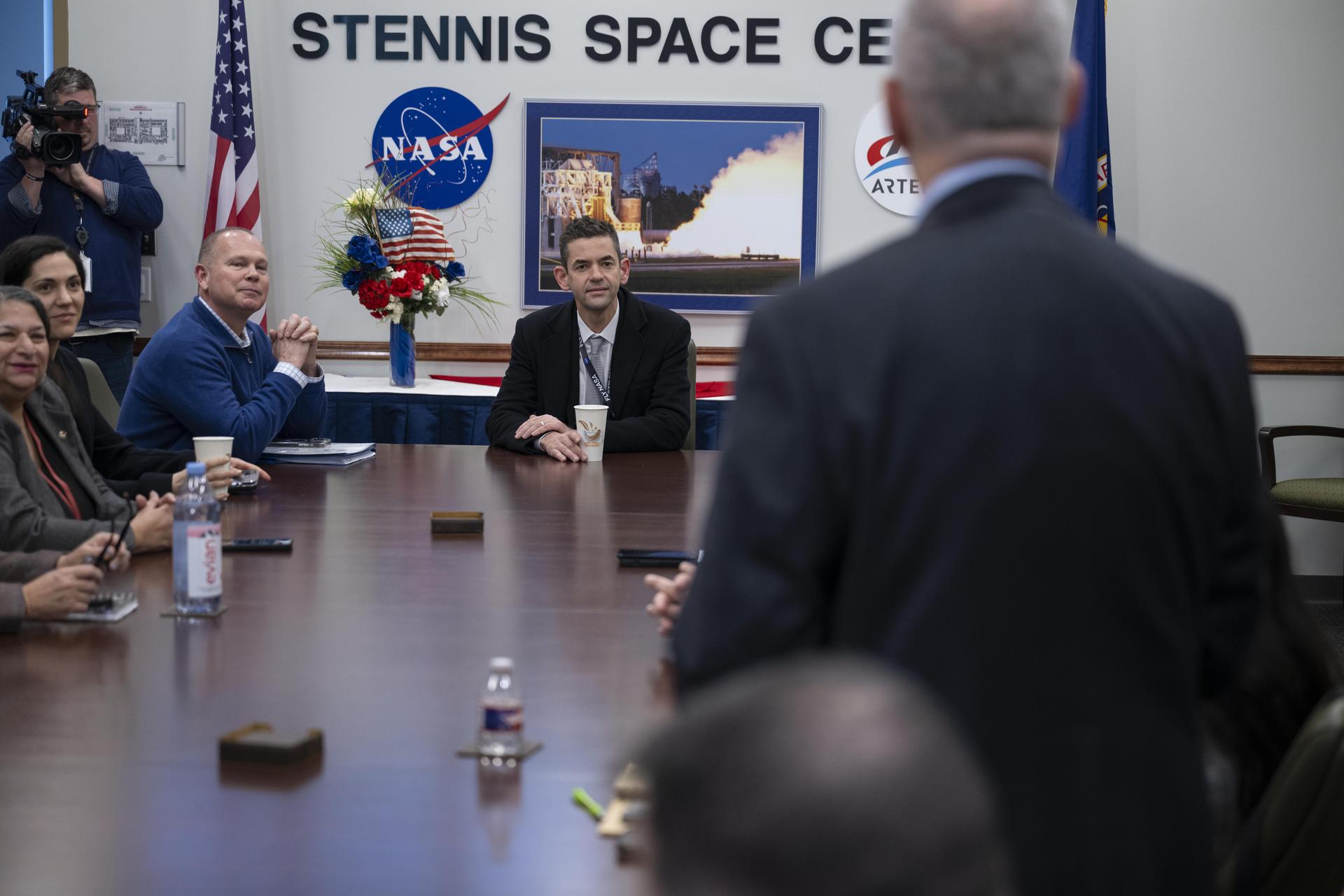
NASA Administrator Jared Isaacman, center, meets with the center’s senior leadership during his visit to NASA’s Stennis Space Center near Bay St. Louis, Mississippi, on Jan. 15, 2026. Isaacman, NASA’s 15th administrator, began visiting the agency’s centers after his appointment on Dec. 17, 2025.
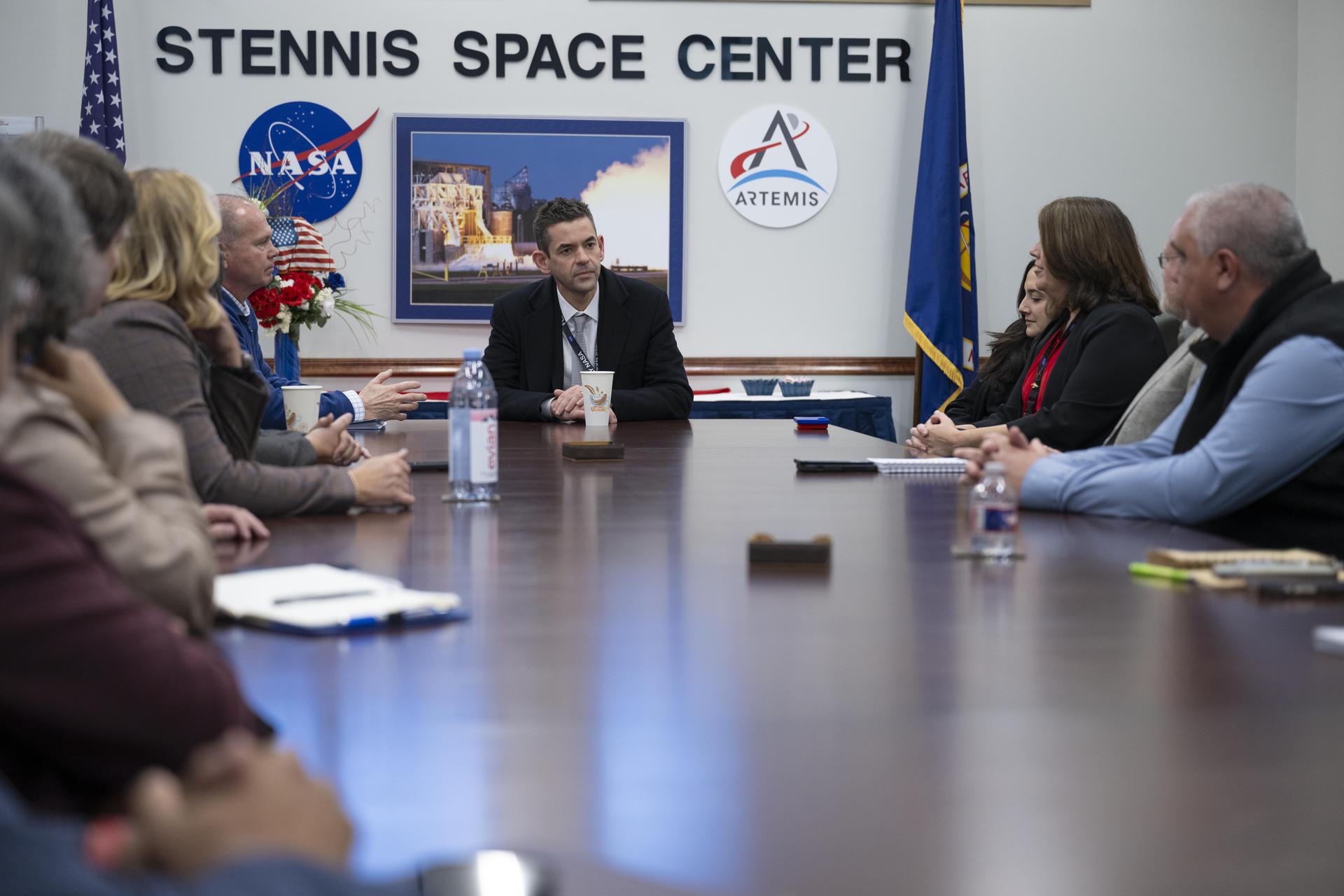
NASA Administrator Jared Isaacman, center, meets with the center’s senior leadership during his visit to NASA’s Stennis Space Center near Bay St. Louis, Mississippi, on Jan. 15, 2026. Isaacman, NASA’s 15th administrator, began visiting the agency’s centers after his appointment on Dec. 17, 2025.
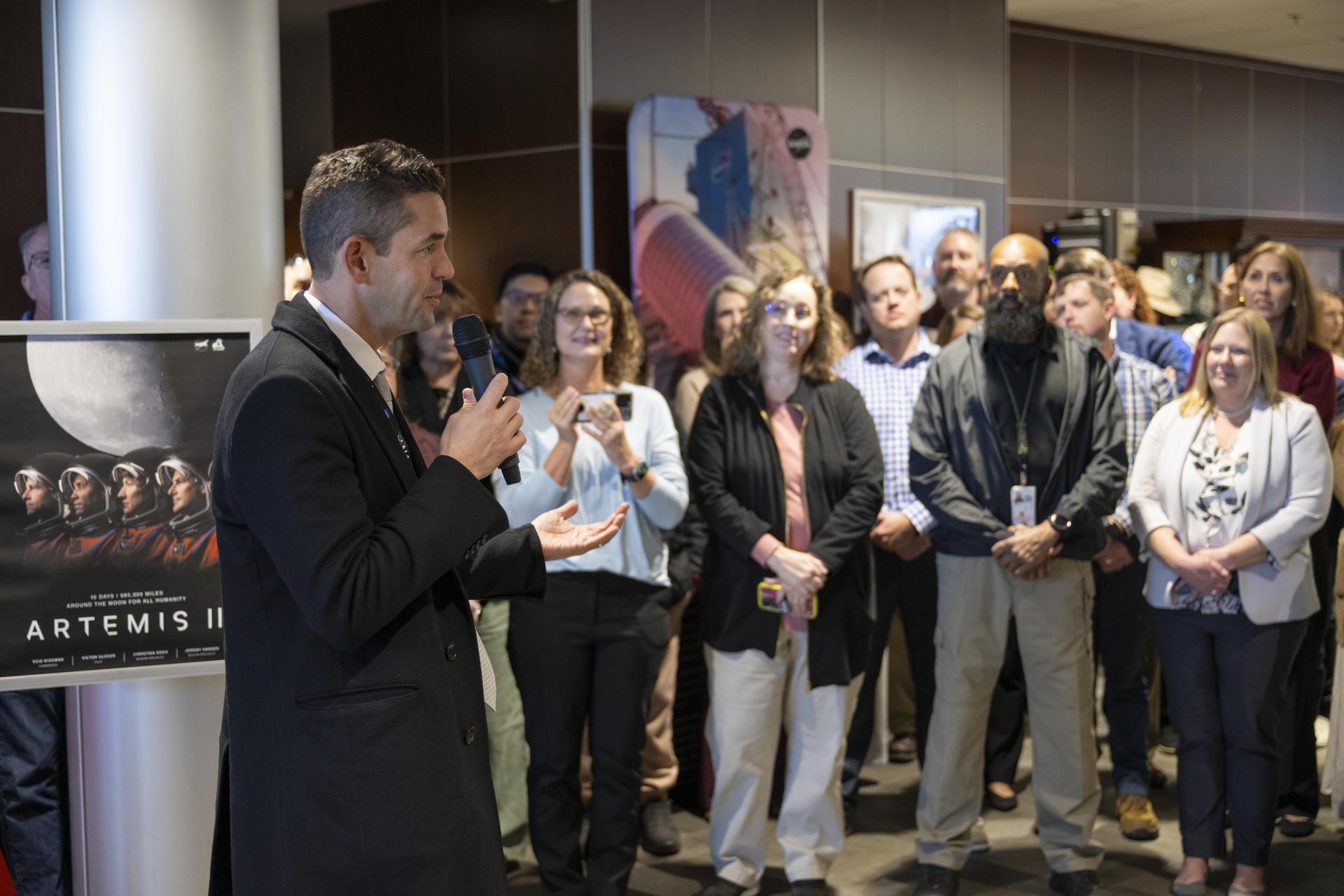
NASA Administrator Jared Isaacman, left, speaks with NASA employees during his visit to NASA’s Stennis Space Center near Bay St. Louis, Mississippi, on Jan. 15, 2026. Isaacman, NASA’s 15th administrator, began visiting the agency’s centers after his appointment on Dec. 17, 2025.
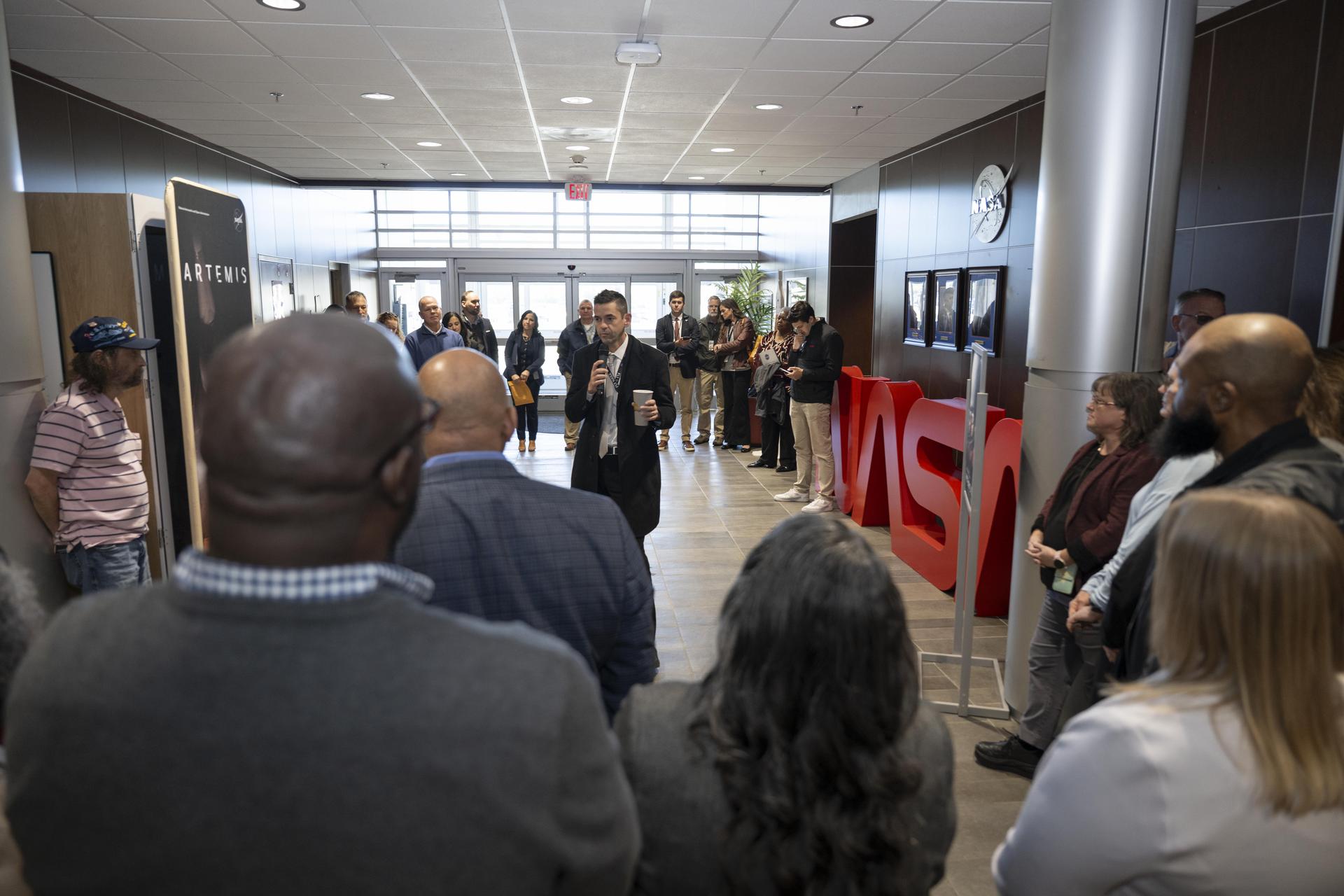
NASA Administrator Jared Isaacman, center, speaks with NASA employees during his visit to NASA’s Stennis Space Center near Bay St. Louis, Mississippi, on Jan. 15, 2026. Isaacman, NASA’s 15th administrator, began visiting the agency’s centers after his appointment on Dec. 17, 2025.
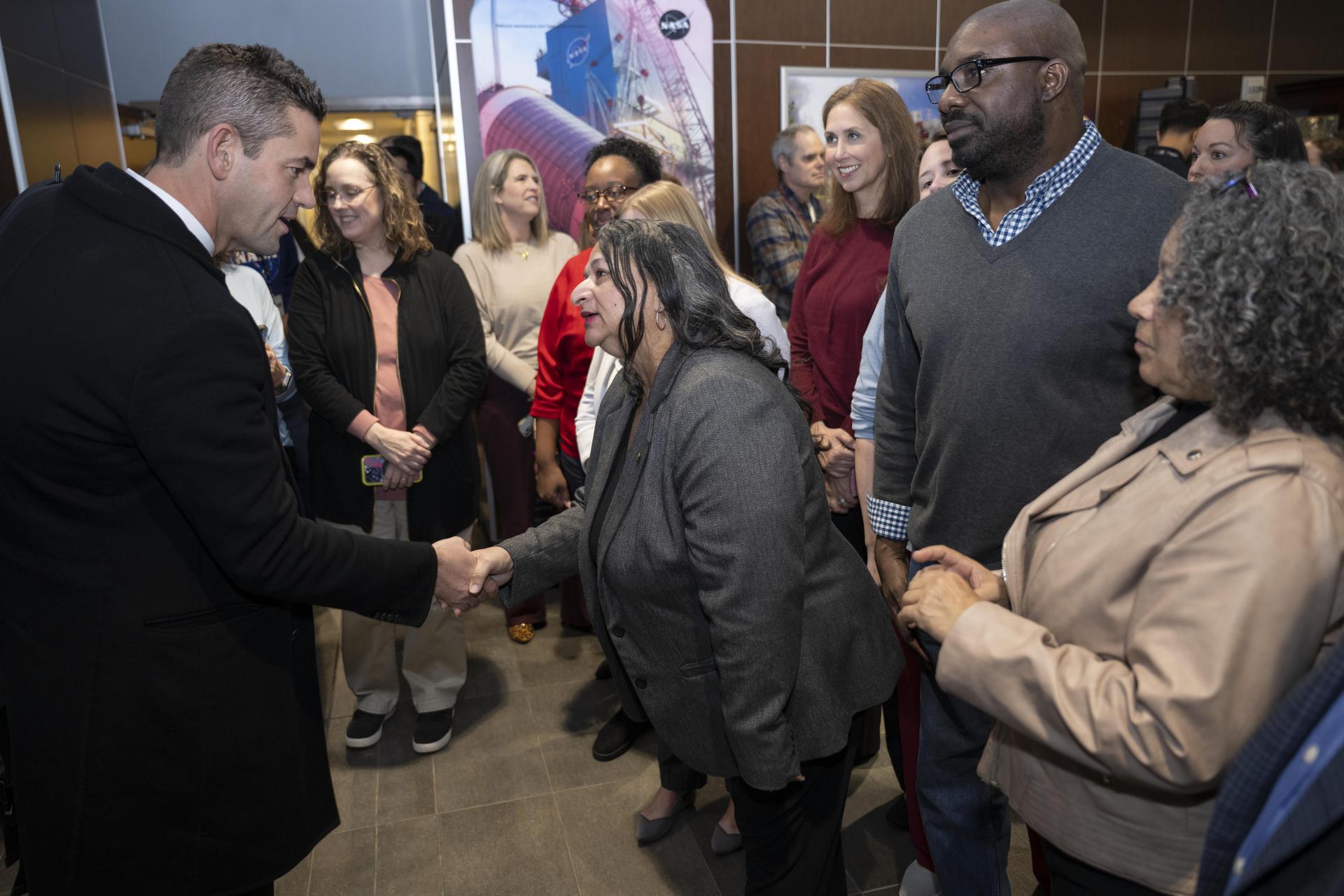
NASA Administrator Jared Isaacman, left, meets with NASA employees during his visit to NASA’s Stennis Space Center near Bay St. Louis, Mississippi, on Jan. 15, 2026. Isaacman, NASA’s 15th administrator, began visiting the agency’s centers after his appointment on Dec. 17, 2025.
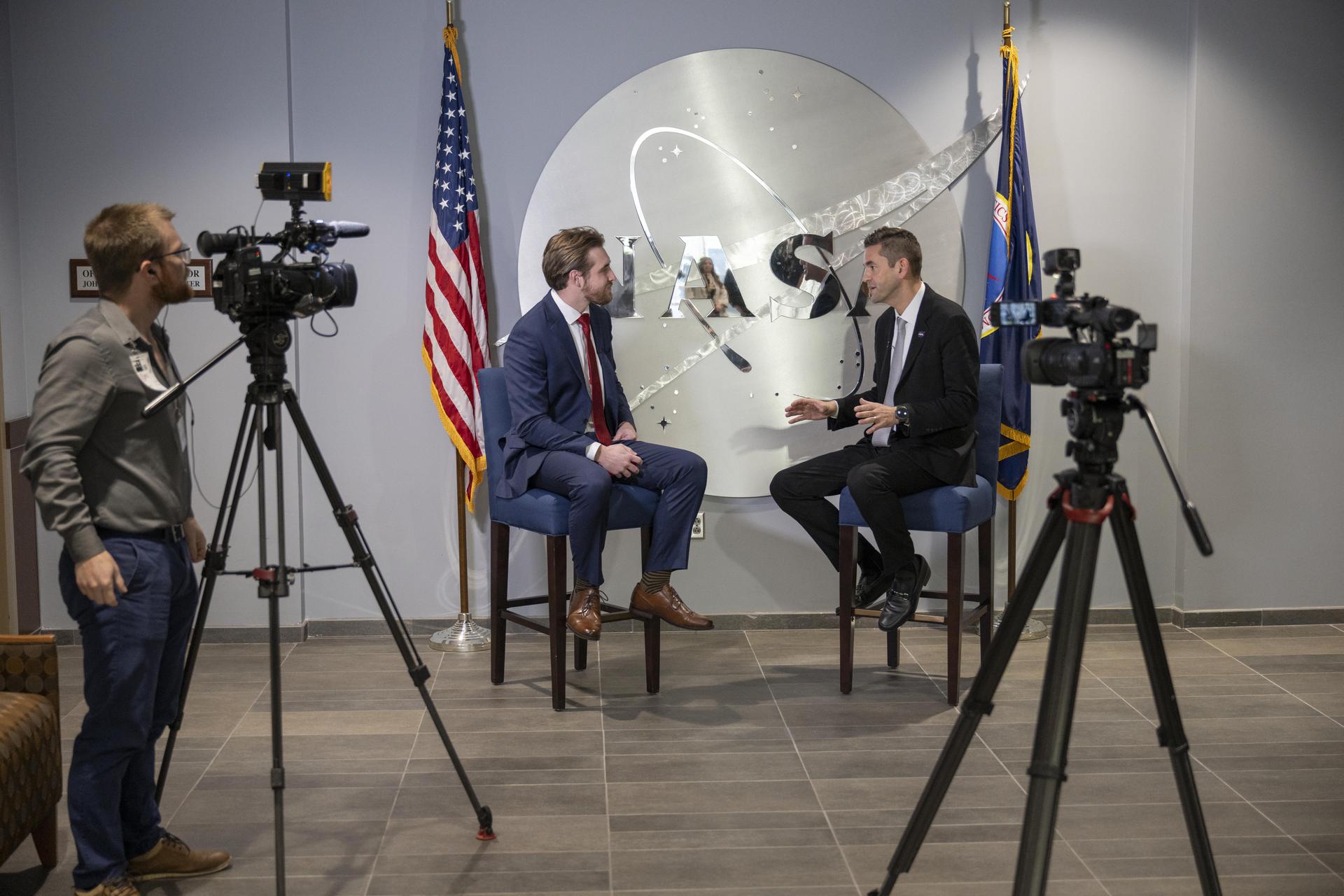
NASA Administrator Jared Isaacman, right, speaks with Tyler Bell, multimedia journalist at WLOX-TV, during an interview at NASA’s Stennis Space Center near Bay St. Louis, Mississippi, on Jan. 15, 2026. Isaacman, NASA’s 15th administrator, began visiting the agency’s centers after his appointment on Dec. 17, 2025.
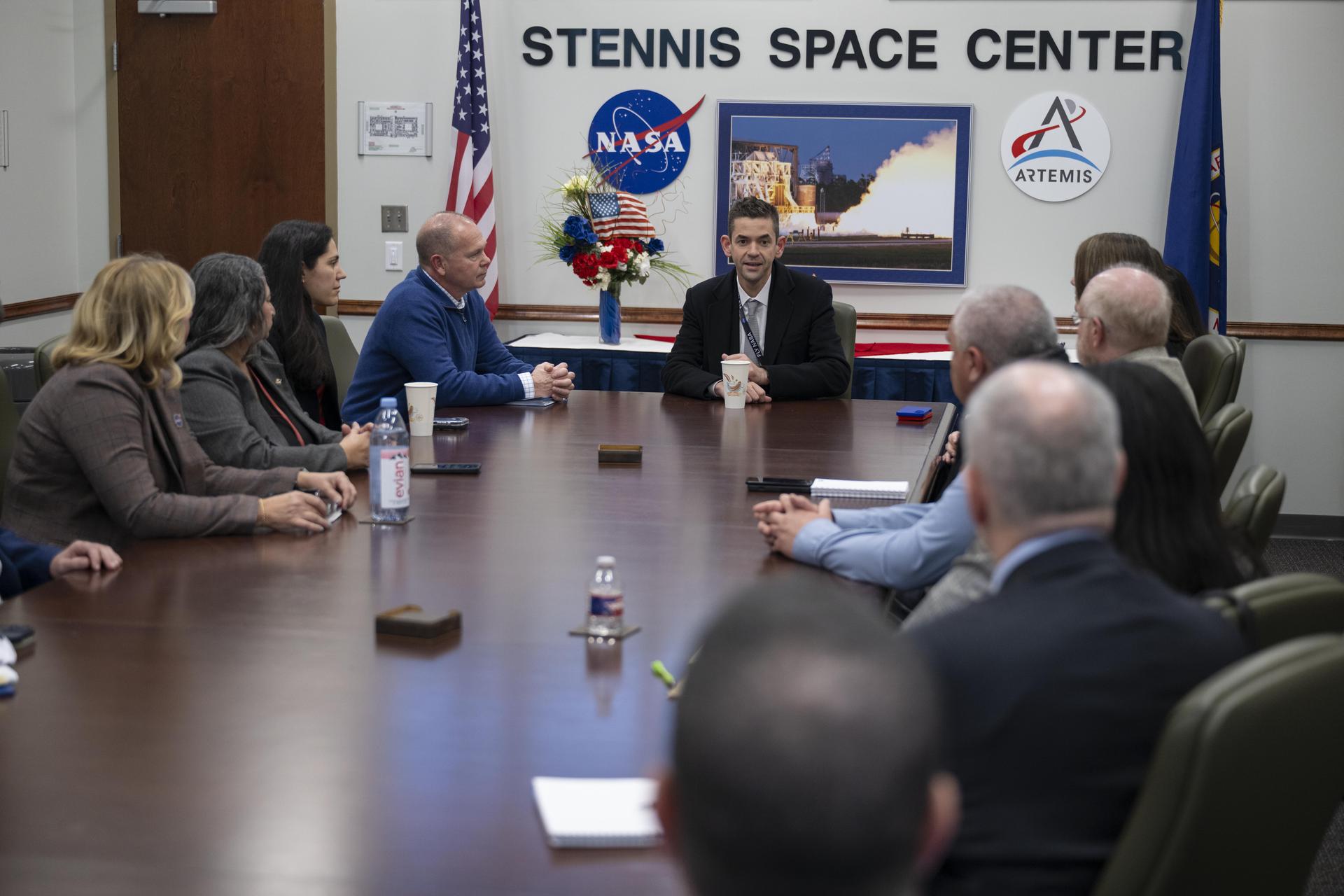
NASA Administrator Jared Isaacman, center, meets with the center’s senior leadership during his visit to NASA’s Stennis Space Center near Bay St. Louis, Mississippi, on Jan. 15, 2026. Isaacman, NASA’s 15th administrator, began visiting the agency’s centers after his appointment on Dec. 17, 2025.
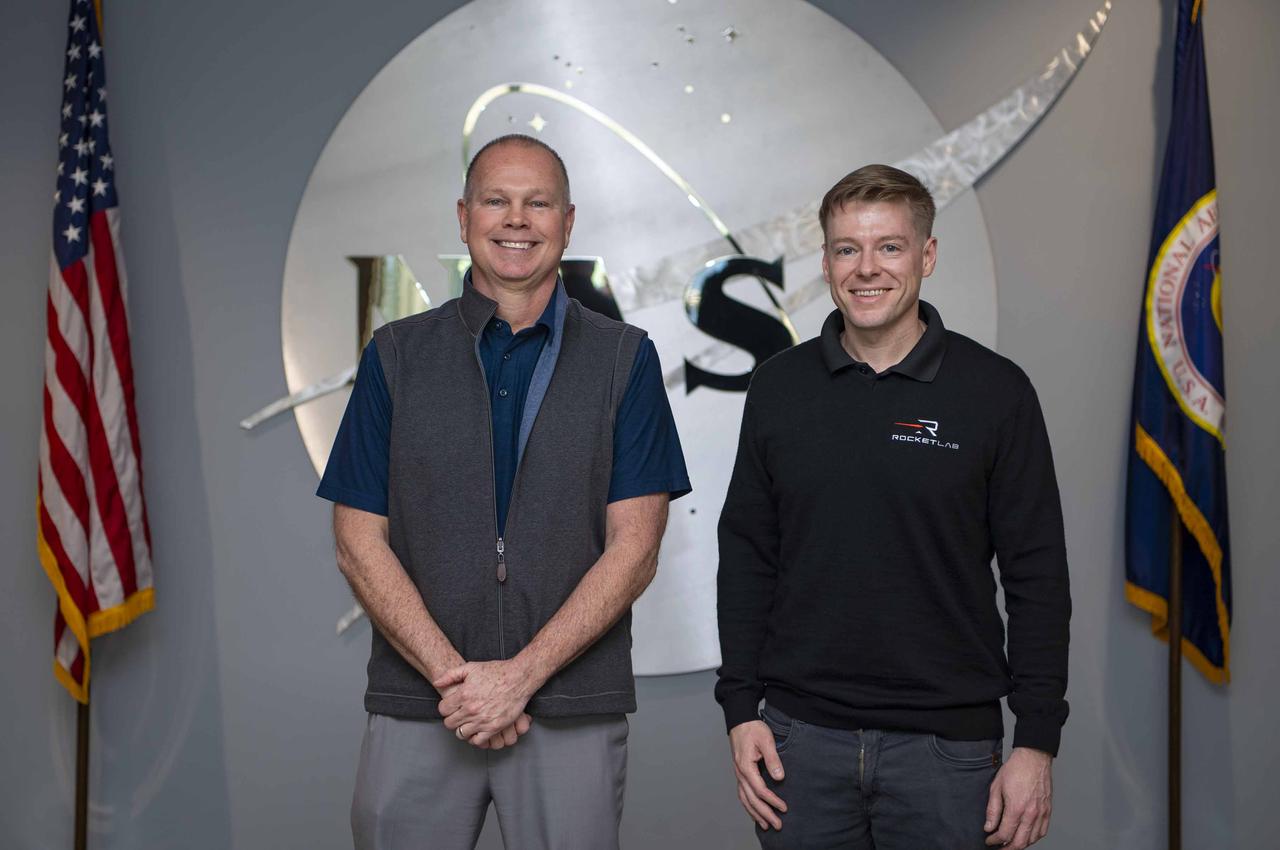
NASA Stennis Director John Bailey, left, welcomes Richard French, Rocket Lab USA, Inc. vice president of business development and strategy of space systems, for a tour of NASA Stennis on Feb. 26. In 2022, NASA and Rocket Lab reached an agreement for the aerospace company to locate its engine test complex at NASA Stennis. The initial 10-year agreement between NASA and Rocket Lab includes an option to extend an additional 10 years. The Archimedes Test Complex includes 24 acres surrounding the site’s A-3 Test Stand. Archimedes is Rocket Lab’s liquid oxygen and liquid methane rocket engine to power its medium-lift Neutron rocket. The company successfully completed the first hot fire of the new Archimedes rocket engine at NASA Stennis in August 2024.
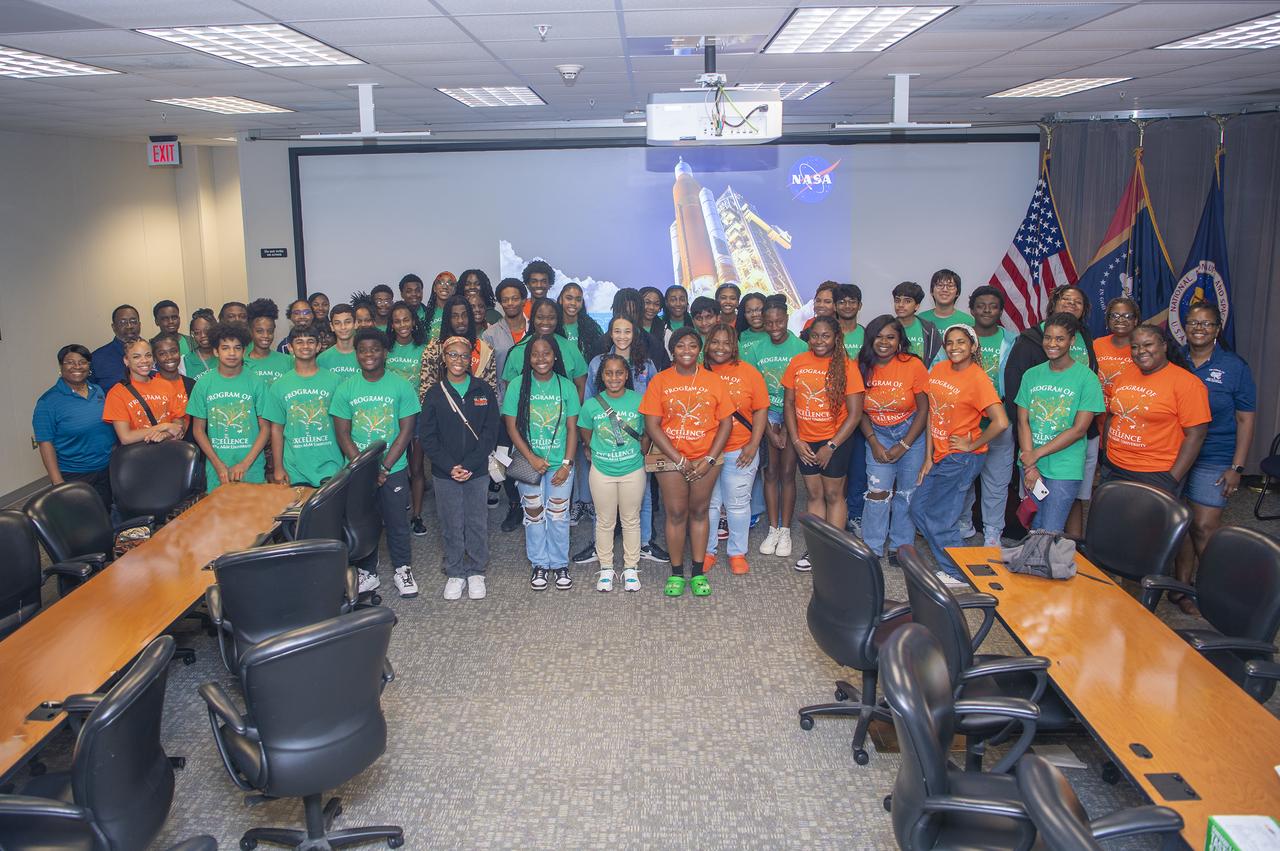
Members of the Florida A&M University Program of Excellence in STEM attend a presentation June 21 during a visit to NASA’s Stennis Space Center. The NASA Office of STEM Engagement provided information on grants and student activities during the presentation about NASA Stennis and the work conducted at the unique federal city. The group also visited the Thad Cochran Test Stand and Relativity Space test complex during a site tour. The Program of Excellence in STEM summer academy aims to enhance student knowledge of opportunities in the fields of science, technology, engineering, and mathematics.
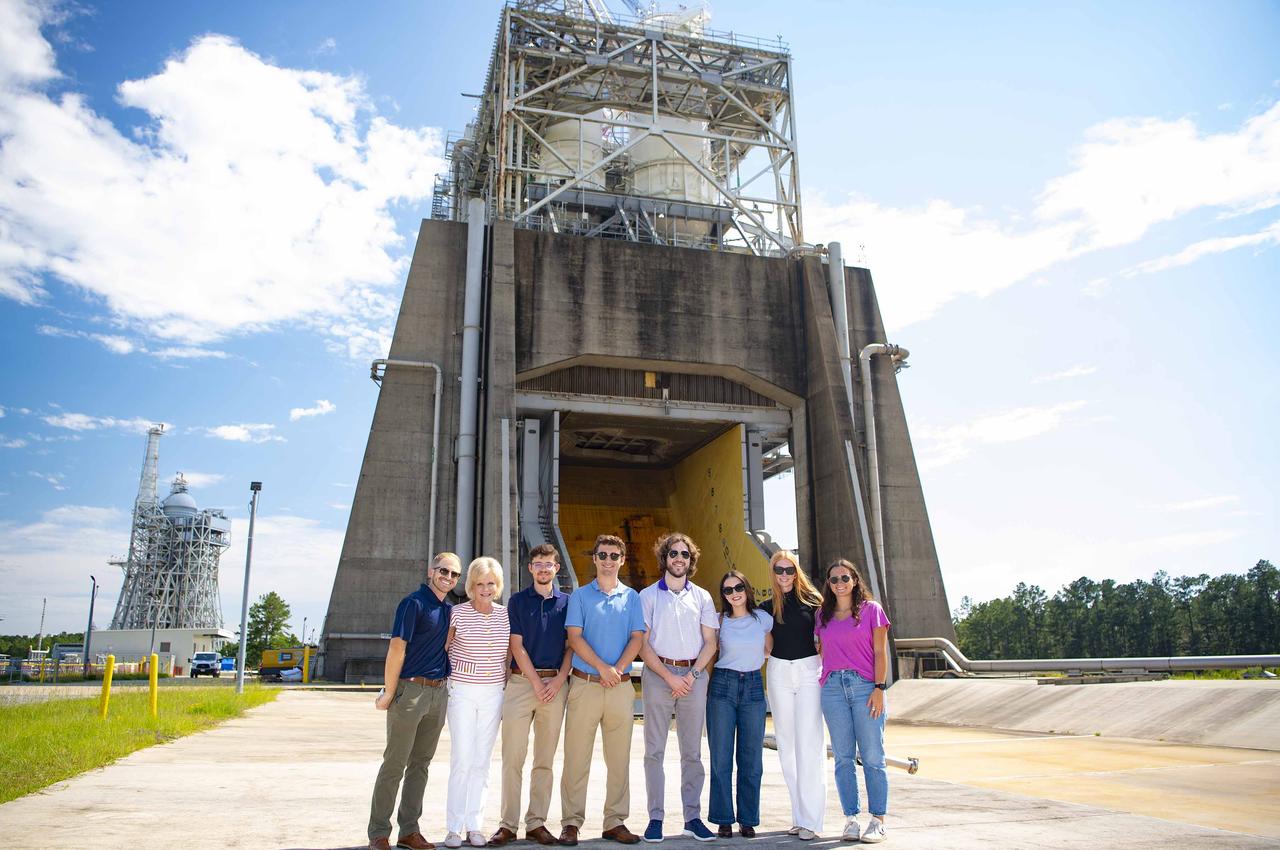
Legislative staff and interns from the office of U.S. Rep. Garrett Graves of Louisiana are pictured at the Fred Haise Test Stand at NASA Stennis on July 11. During the visit to the south Mississippi site, the group learned more about internship opportunities with NASA and NASA Stennis. In addition to touring the test complex where RS-25 engines are tested for future Artemis missions, the group visited the Aerojet Rocketdyne Engine Assembly Facility onsite. Aerojet Rocketdyne, an L3Harris Technologies company, manufactures RS-25 engines to help power NASA’s SLS (Space Launch System) rocket on Artemis missions to the Moon and beyond.
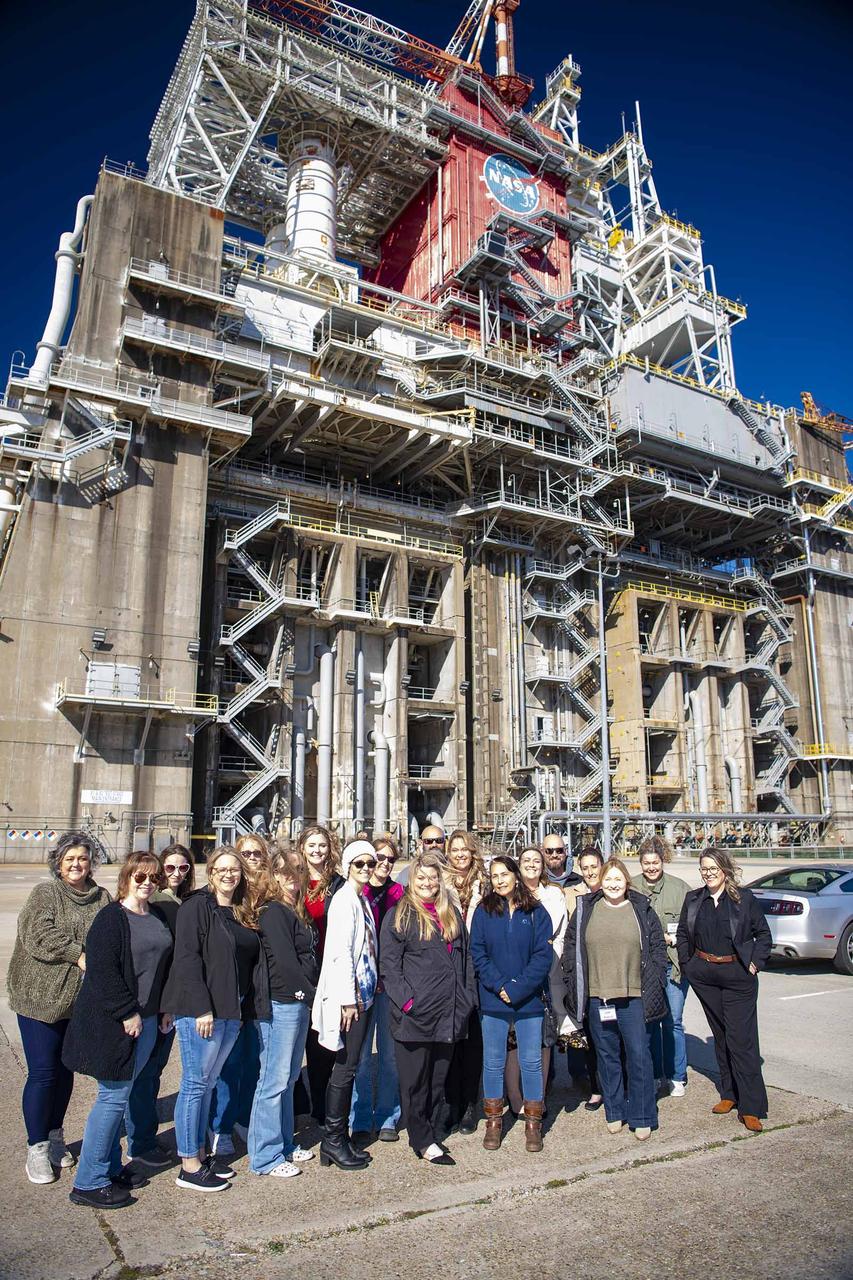
The Pearl River County Leadership Class visits the Thad Cochran Test Stand (B-1/B-2) during a NASA Stennis tour on Feb. 20. NASA Stennis is at the front end of the critical path for the future of human deep space exploration through NASA’s Artemis campaign. The B-2 side of the Thad Cochran Test Stand is undergoing preparations for exploration upper stage testing. The upper stage is scheduled to undergo Green Run tests of its integrated systems before its first flight on the Artemis IV mission. The test series will culminate with a hot fire of the stage’s four RL10 engines, just as during an actual mission.
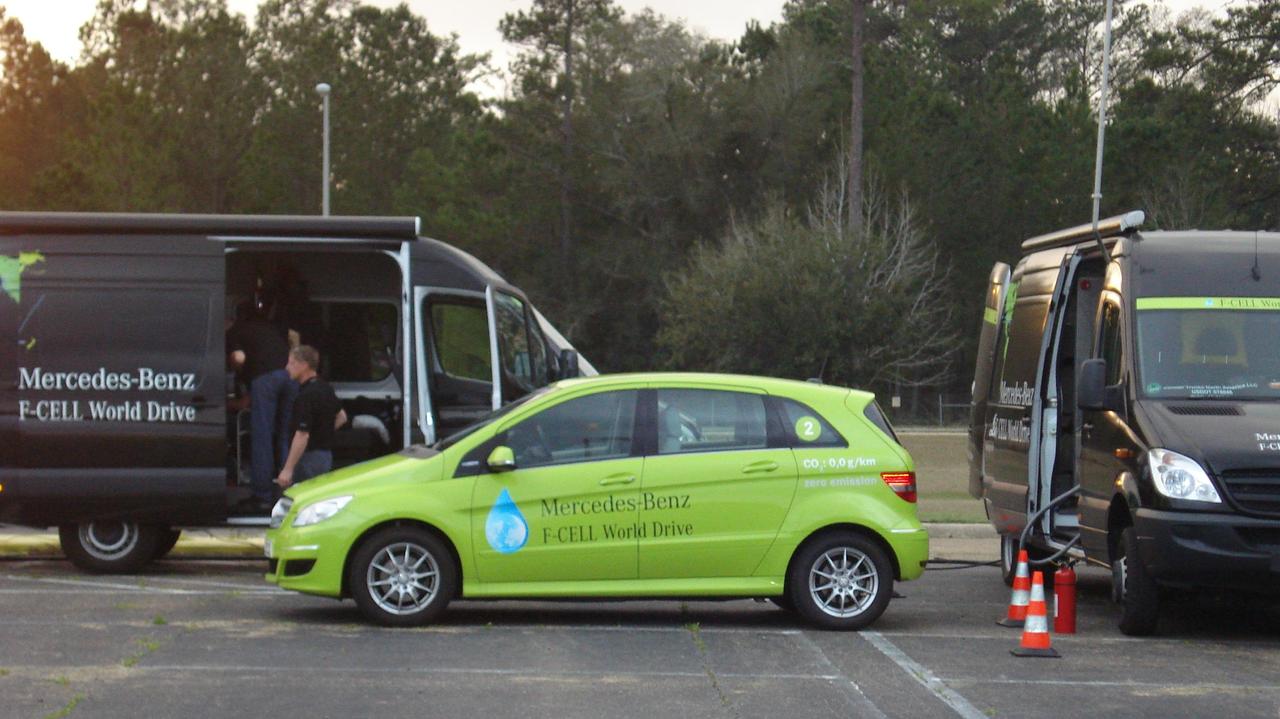
John C. Stennis Space Center, America's largest rocket engine test complex, and one of the country's leading consumers of liquid hydrogen, was the location Feb. 27 for a fuel stop of three Mercedes B-Class F-CELL vehicles. The B-Class F-CELL is an electric vehicle, which is powered by electricity produced on board the vehicle from hydrogen gas. The only emission by this unique vehicle is pure water vapor. Due to the limited number of existing hydrogen locations, Stennis Space Center provided a logical choice for a refueling location as the vehicle made its way across the United States as part of a worldwide tour.
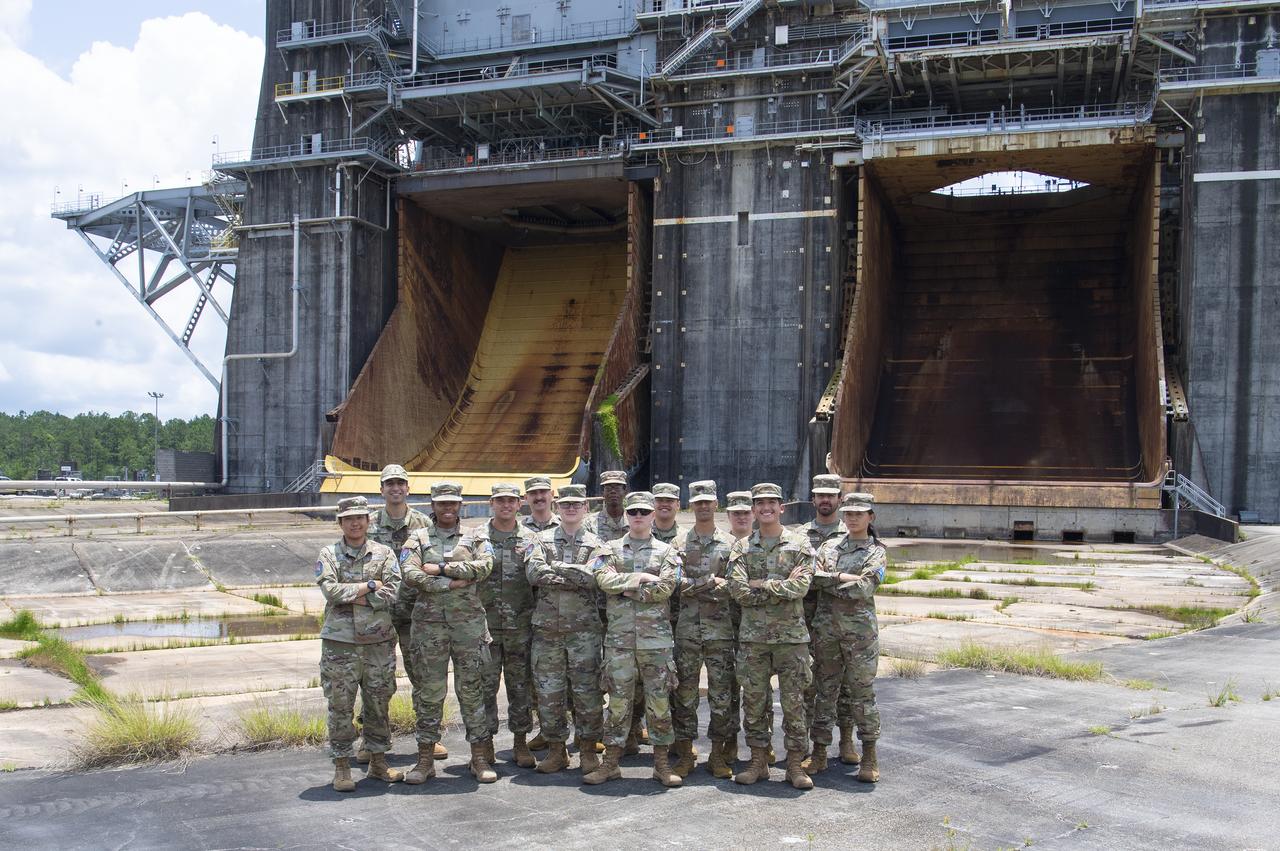
United States Space Force training students and professors stand at the Thad Cochran Test Stand on June 4 during a tour of NASA’s Stennis Space Center. NASA Stennis is preparing the test stand to test the exploration upper stage, which will fly on future SLS (Space Launch System) missions as NASA continues its mission of exploring the secrets of the universe for the benefit of all. The upper stage is being built at NASA’s Michoud Assembly Facility in New Orleans as a more powerful second stage to send the Orion spacecraft to deep space. It is expected to fly on the Artemis IV mission. Before that, it will be installed on the Thad Cochran Test Stand (B-2) at NASA Stennis to undergo a series of Green Run tests of its integrated systems to demonstrate it is ready to fly. The Space Force, established in 2019, organizes, trains, and equips personnel to protect U.S. and allied interests in space and to provide space capabilities to the joint forces.
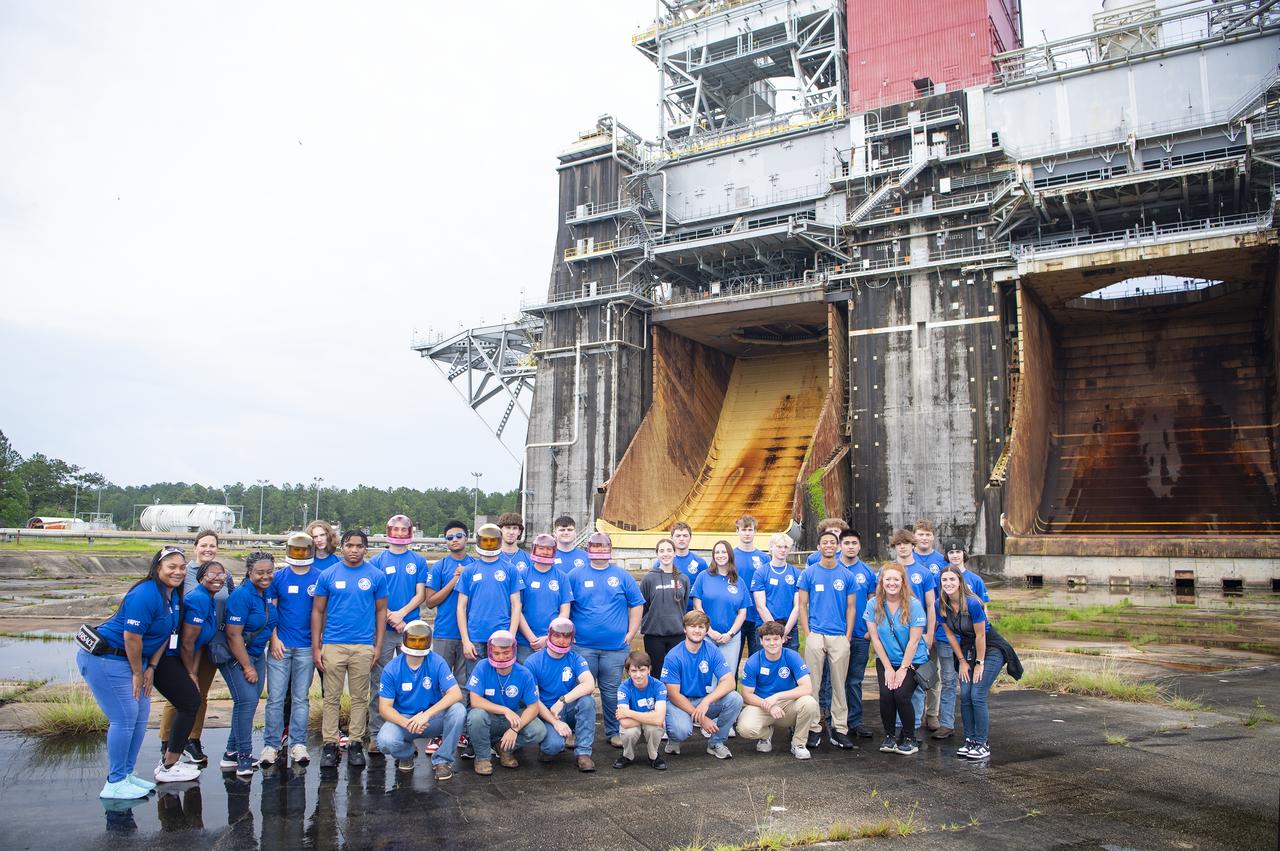
Rising high school juniors and seniors from Ascension Parish, Louisiana, visit the Thad Cochran Test Stand on June 6 during a tour of NASA’s Stennis Space Center. The students are part of the week-long BASF Tech Academy, in coordination with River Parishes Community College, where participants learn about technical careers and education. NASA Stennis is preparing the test stand to test the exploration upper stage, which will fly on future SLS (Space Launch System) missions as NASA continues its mission of exploring the secrets of the universe for the benefit of all. The upper stage is being built at NASA’s Michoud Assembly Facility in New Orleans as a more powerful second stage to send the Orion spacecraft to deep space. It is expected to fly on the Artemis IV mission. Before that, it will be installed on the Thad Cochran Test Stand (B-2) at NASA Stennis to undergo a series of Green Run tests of its integrated systems to demonstrate it is ready to fly.
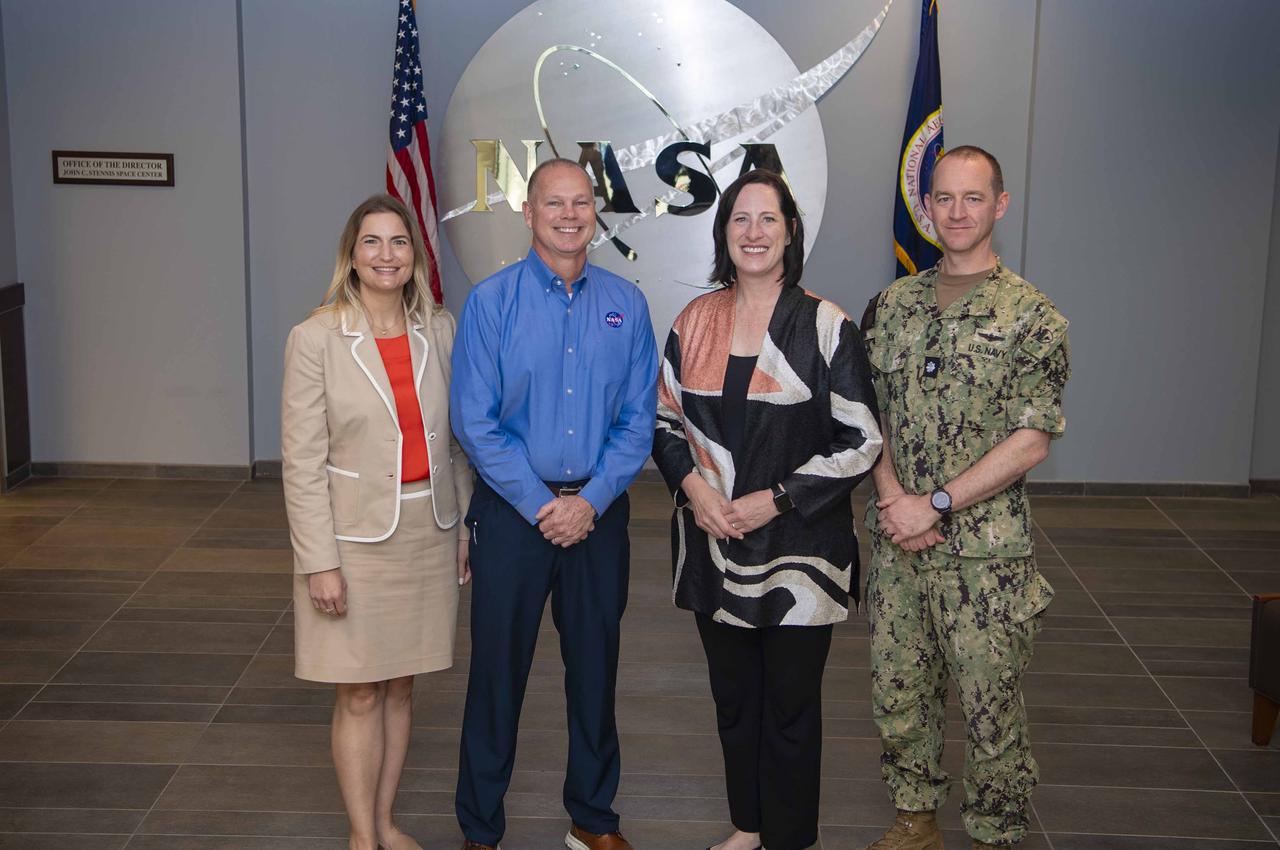
Heide Fulton, U.S. Ambassador to the Oriental Republic of Uruguay, visits NASA Stennis on Oct. 8 to meet with site leadership and tour test complex facilities. During her visit, Fulton met with NASA Stennis Director John Bailey and other leaders of the center and the NASA Shared Services Center located onsite. She also toured the rocket propulsion test complex, visiting the B-2 side of the Thad Cochran Test Stand, where she was briefed by B-2 Stand Director Ryan Roberts about NASA Stennis testing for the SLS (Space Launch System) rocket and NASA’s Artemis missions to the Moon and beyond. Uruguay is one of 45 nations who have signed the Artemis Accords, which establish a practical set of principles to guide space exploration cooperation among nations. The country became the 36th nation to sign the Artemis Accords during a Washington, D.C. ceremony in February. Ambassador Fulton was joined on the visit by Cmdr. Brendan Rok, chief of the U.S. Navy Office of Defense Cooperation at the U.S. Embassy in Montevideo, Uruguay; and Leah Thorstenson, foreign policy advisor with the U.S. Marines Corps. Forces South.
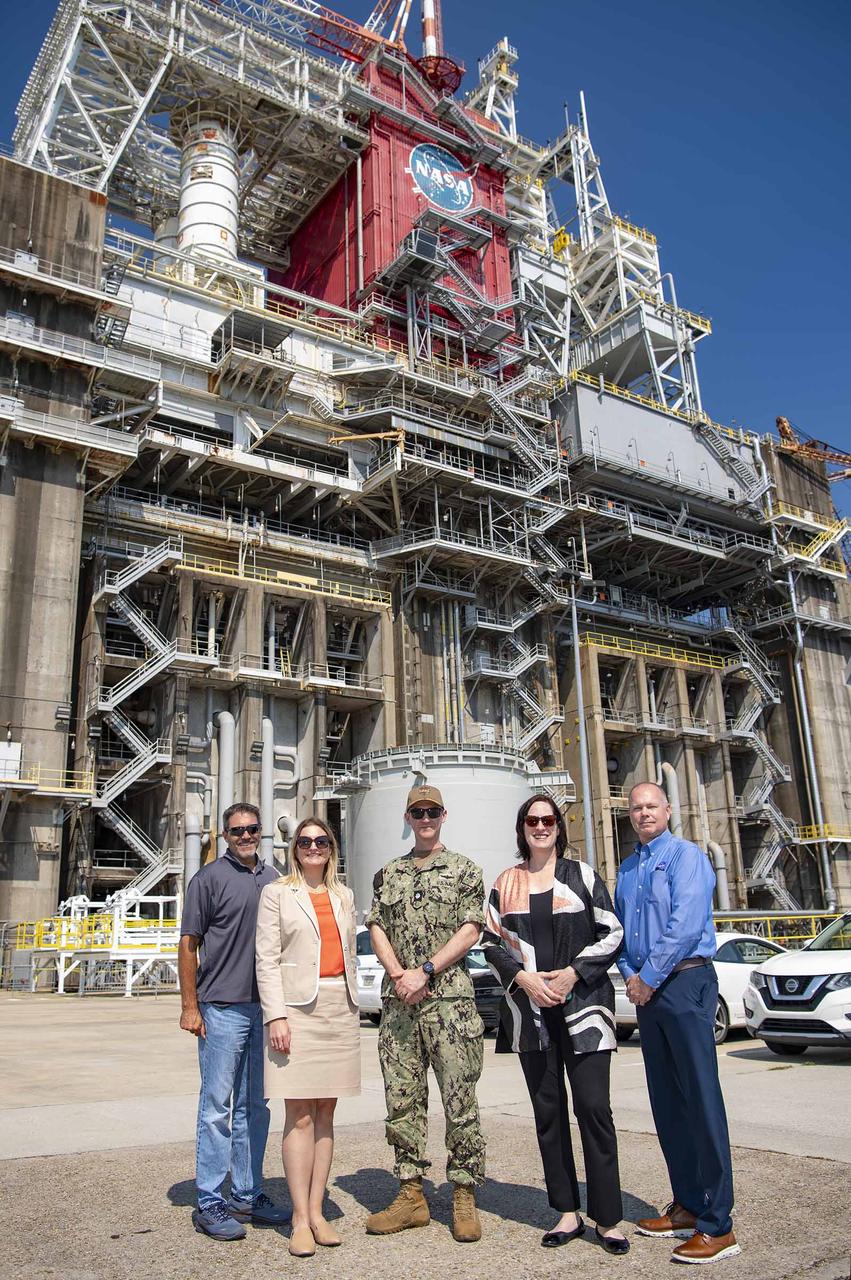
Heide Fulton, U.S. Ambassador to the Oriental Republic of Uruguay, visits NASA Stennis on Oct. 8 to meet with site leadership and tour test complex facilities. During her visit, Fulton met with NASA Stennis Director John Bailey and other leaders of the center and the NASA Shared Services Center located onsite. She also toured the rocket propulsion test complex, visiting the B-2 side of the Thad Cochran Test Stand, where she was briefed by B-2 Stand Director Ryan Roberts about NASA Stennis testing for the SLS (Space Launch System) rocket and NASA’s Artemis missions to the Moon and beyond. Uruguay is one of 45 nations who have signed the Artemis Accords, which establish a practical set of principles to guide space exploration cooperation among nations. The country became the 36th nation to sign the Artemis Accords during a Washington, D.C. ceremony in February. Ambassador Fulton was joined on the visit by Cmdr. Brendan Rok, chief of the U.S. Navy Office of Defense Cooperation at the U.S. Embassy in Montevideo, Uruguay; and Leah Thorstenson, foreign policy advisor with the U.S. Marines Corps. Forces South.
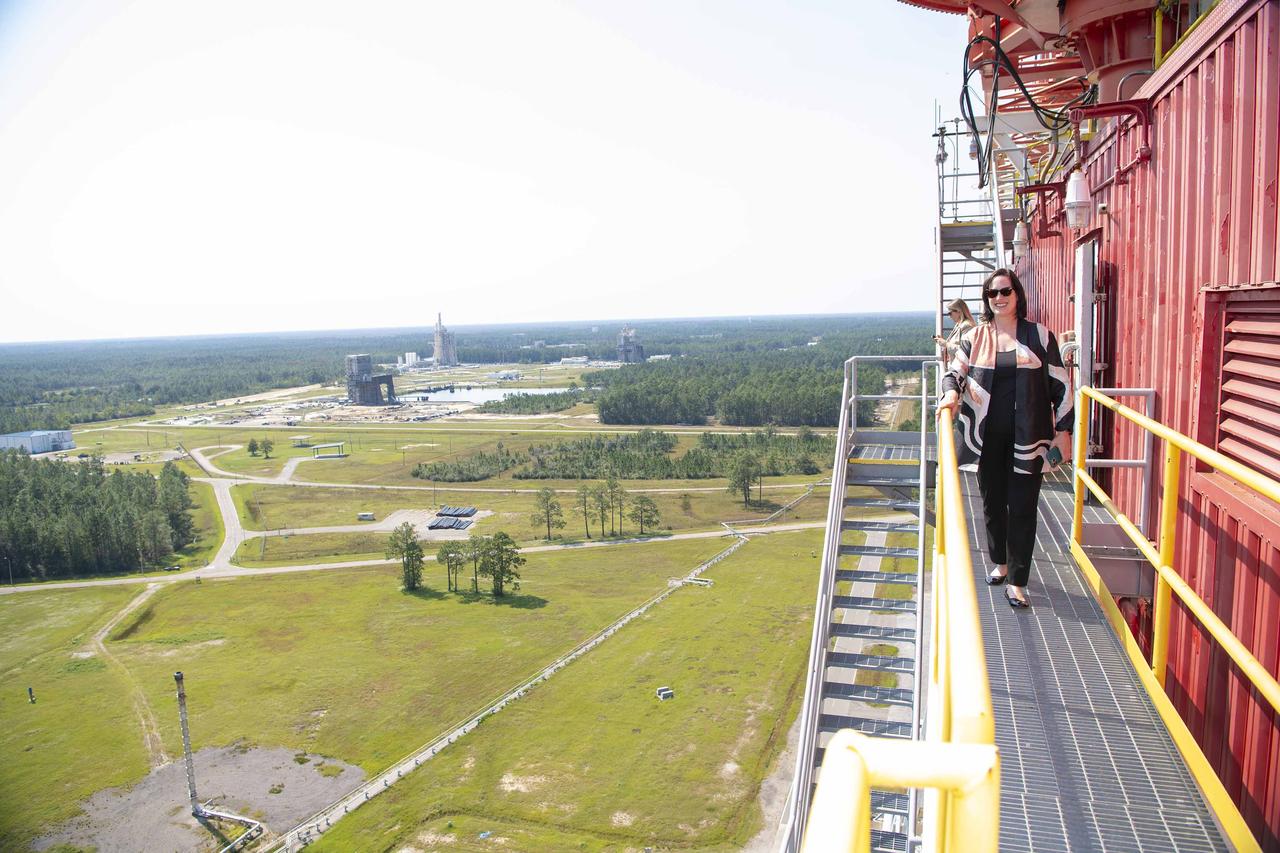
Heide Fulton, U.S. Ambassador to the Oriental Republic of Uruguay, visits NASA Stennis on Oct. 8 to meet with site leadership and tour test complex facilities. During her visit, Fulton met with NASA Stennis Director John Bailey and other leaders of the center and the NASA Shared Services Center located onsite. She also toured the rocket propulsion test complex, visiting the B-2 side of the Thad Cochran Test Stand, where she was briefed by B-2 Stand Director Ryan Roberts about NASA Stennis testing for the SLS (Space Launch System) rocket and NASA’s Artemis missions to the Moon and beyond. Uruguay is one of 45 nations who have signed the Artemis Accords, which establish a practical set of principles to guide space exploration cooperation among nations. The country became the 36th nation to sign the Artemis Accords during a Washington, D.C. ceremony in February. Ambassador Fulton was joined on the visit by Cmdr. Brendan Rok, chief of the U.S. Navy Office of Defense Cooperation at the U.S. Embassy in Montevideo, Uruguay; and Leah Thorstenson, foreign policy advisor with the U.S. Marines Corps. Forces South.
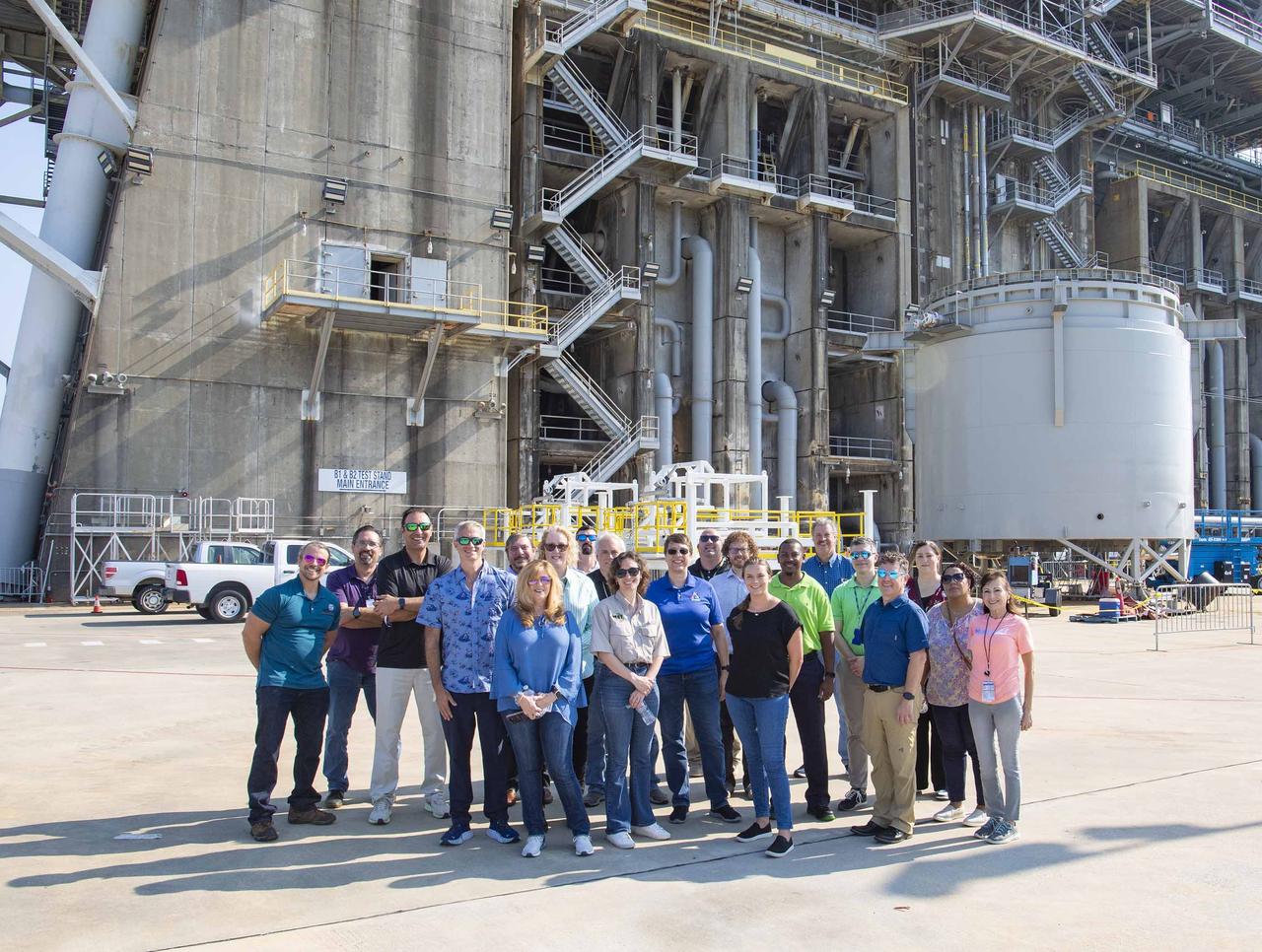
NASA and contractor representatives working with NASA’s Rocket Propulsion Test Program Office stand at the base of the Thad Cochran Test Stand during a tour of the test complex on Aug. 15 at NASA’s Stennis Space Center near Bay St. Louis, Mississippi. The program office hosted a Risk Workshop and Program Management Review meeting at NASA Stennis on Aug. 13-15. The representatives are from NASA Stennis; NASA’s Neil Armstrong Test Facility in Sandusky, Ohio; NASA’s Michoud Assembly Facility in New Orleans; NASA’s Marshall Space Flight Center in Huntsville, Alabama; NASA’s Wallops Flight Facility in Virginia; and NASA Headquarters in Washington. NASA Stennis is preparing the Thad Cochran Test Stand (B-2) to test the exploration upper stage, which will fly on future SLS (Space Launch System) missions as NASA continues its mission of exploring the secrets of the universe for the benefit of all. The upper stage is being built at NASA Michoud as a more powerful second stage to send the Orion spacecraft to deep space. It is expected to fly on the Artemis IV mission. Before that, it will be installed on the test stand at NASA Stennis to undergo a series of Green Run tests of its integrated systems to demonstrate it is ready to fly.
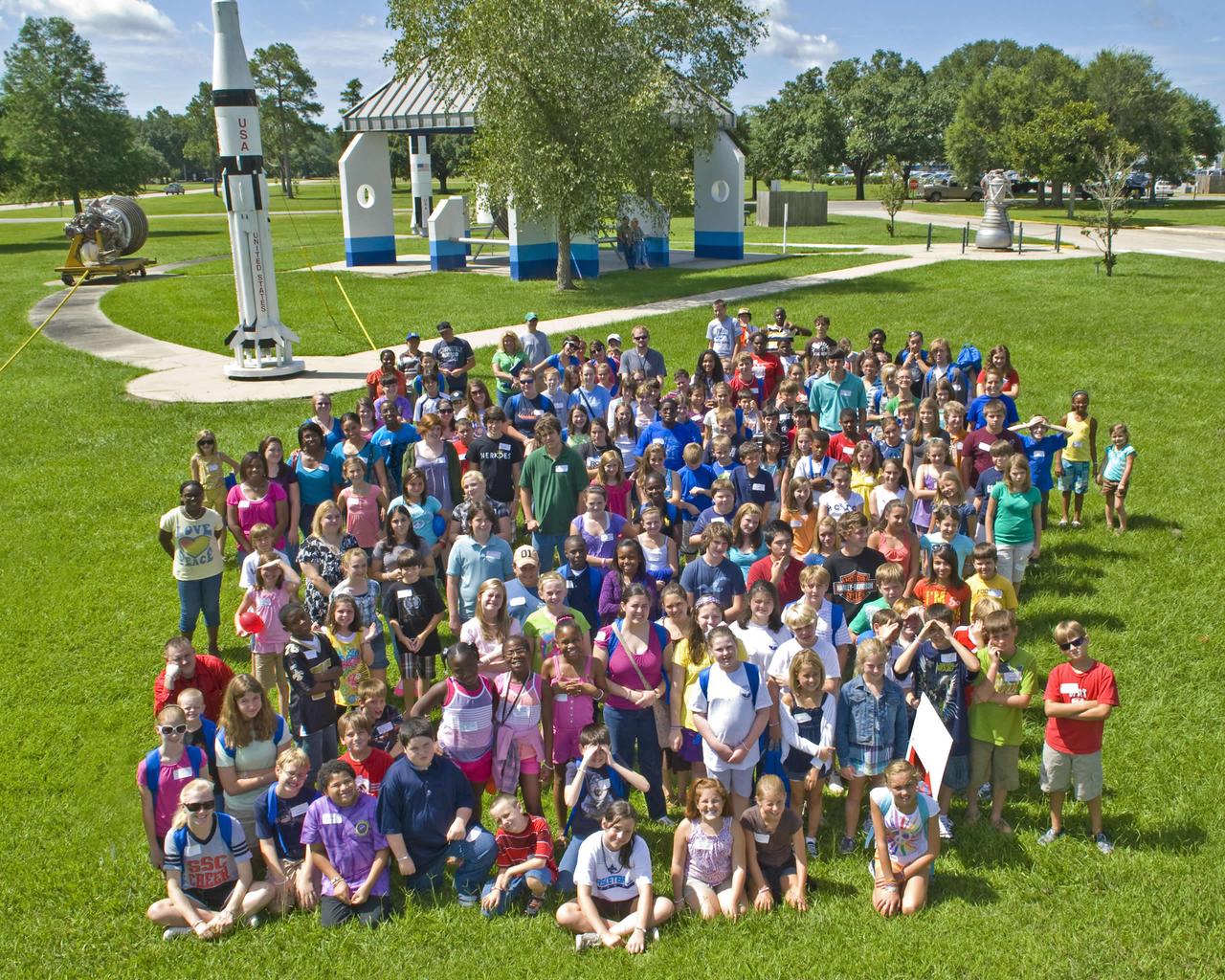
About 200 children of employees at NASA's John C. Stennis Space Center visited the facility for annual Take Our Children to Work activities July 27. Participants enjoyed a windshield tour of the rocket engine test site and various demonstrations and presentations on such topics as cryogenics, the Gulf of Mexico oil spill, computer safety and robotics. They also had an opportunity to take photos at the astronaut suit exhibit and participate in StenniSphere activities.
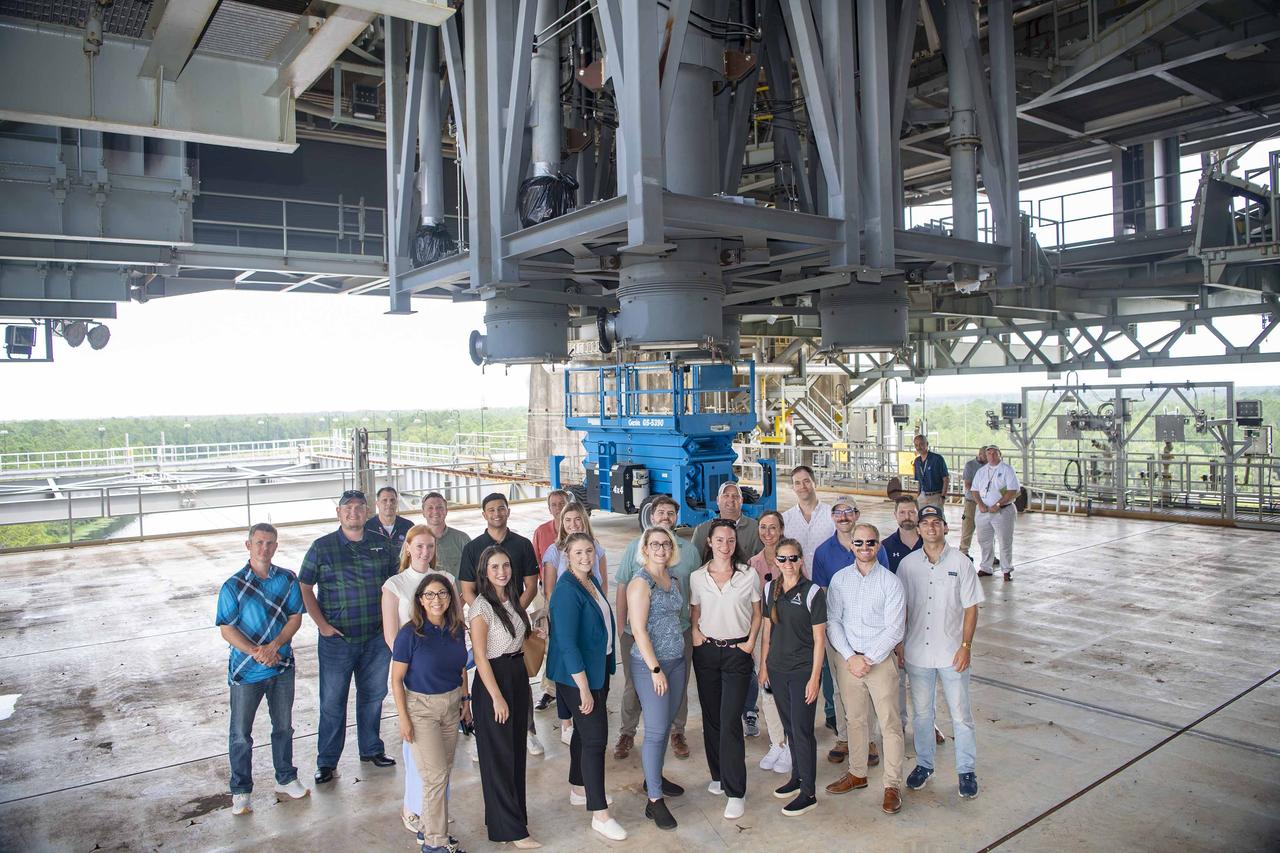
Congressional staff delegates representing eight states (Alabama, California, Colorado, Illinois, Louisiana, Maryland, New Jersey, and New York), along with NASA and U.S. Air Force representatives, tour the Thad Cochran Test Stand (B-2) at NASA Stennis on July 16. The visit provided an opportunity for the group to learn about propulsion test work carried out onsite by NASA and commercial companies.
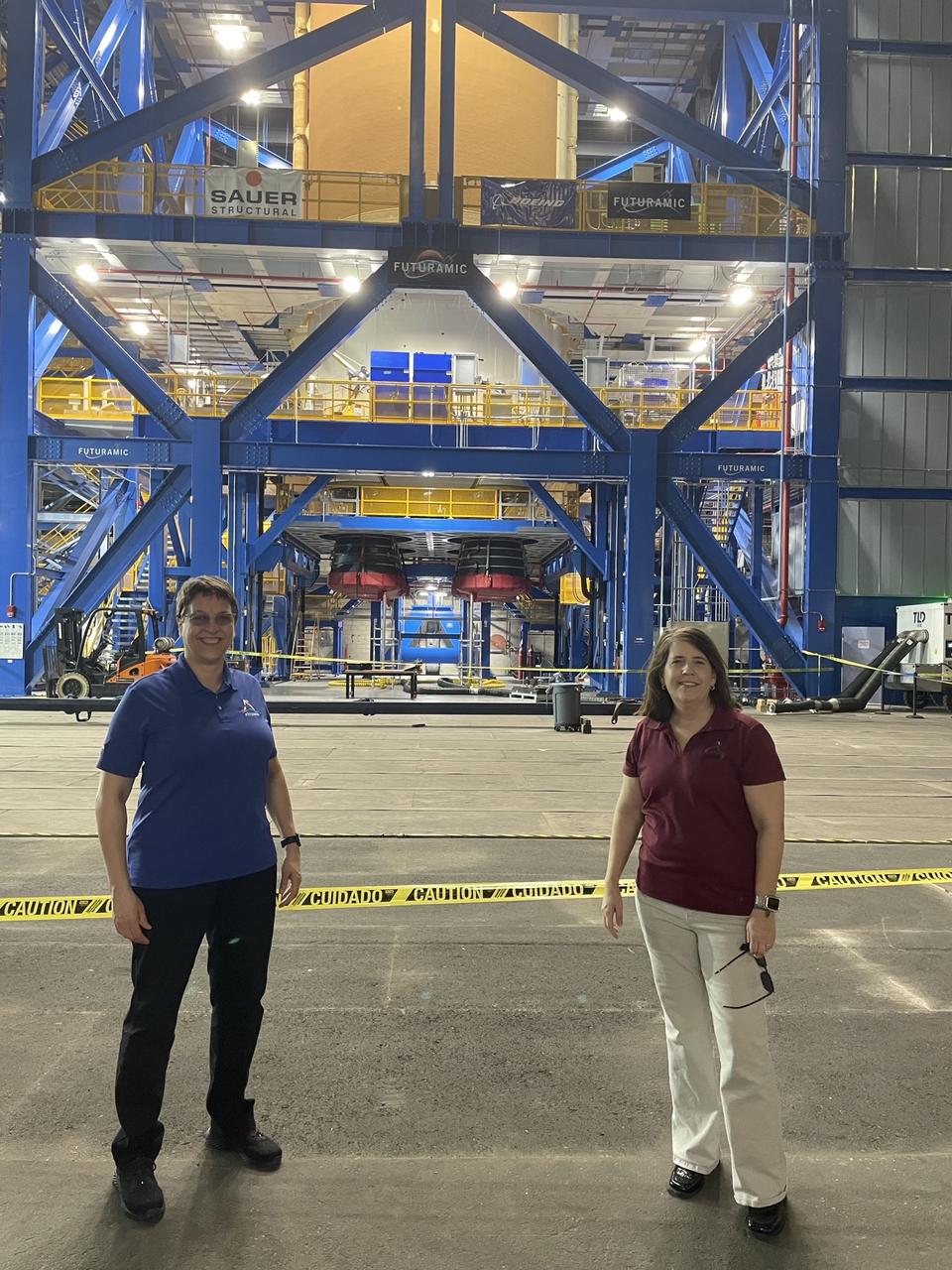
NASA Stennis Deputy Director Christine Powell and NASA Rocket Propulsion Test Program Manager Michele Beisler tour the Vehicle Assembly Building to view the SLS (Space Launch System) rocket expected to fly on the Artemis II mission and the mobile launcher ground structure used to assemble, process, and launch SLS during a visit to NASA’s Kennedy Space Center on Jan. 31.
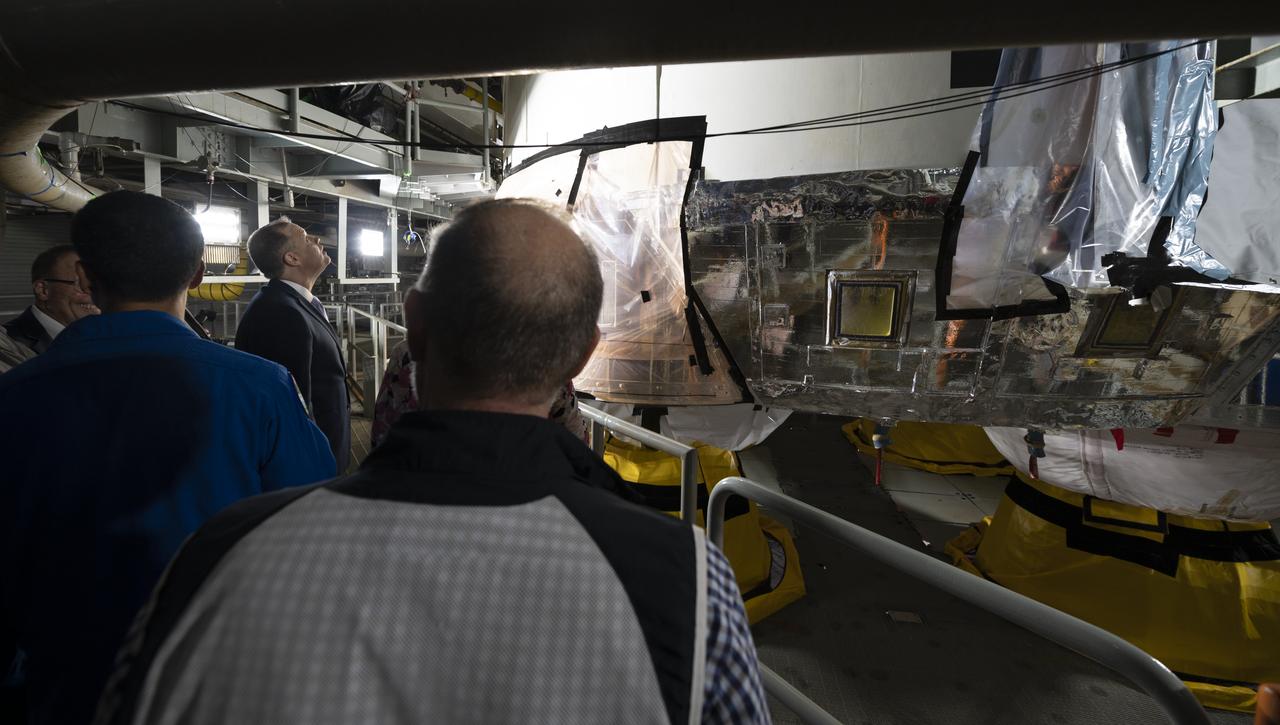
NASA Administrator Jim Bridenstine looks up at the first core stage of the agency’s Space Launch System rocket during a tour of the B-2 Test Stand Monday, Feb. 10, 2020, at NASA’s Stennis Space Center near Bay St. Louis, Mississippi. Over the coming months, the first core stage of the SLS rocket will be undergoing a series of integrated Green Run tests prior to its maiden flight. Photo Credit: (NASA/Joel Kowsky)
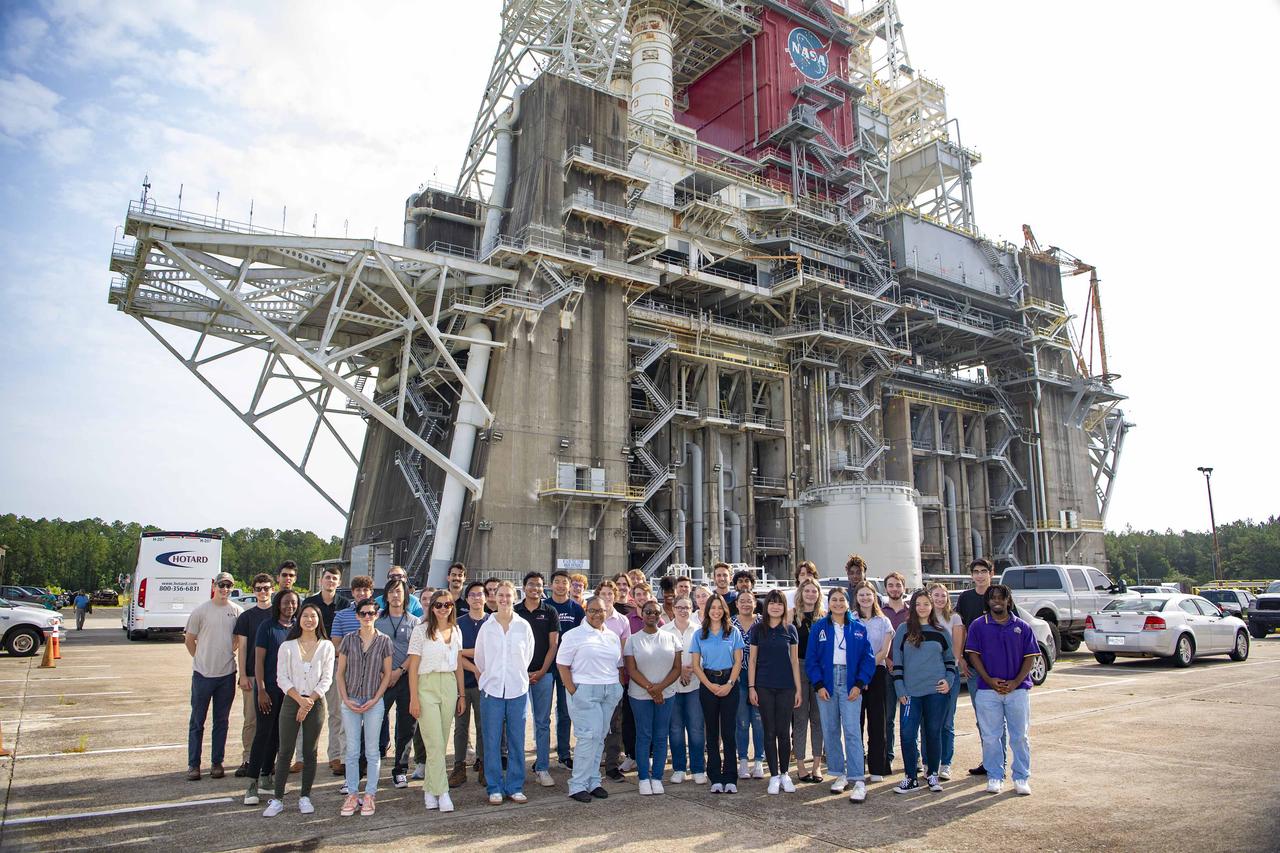
Interns at NASA Stennis visit the Thad Cochran Test Stand (B-1/B-2) on July 25 during a test complex tour on National Intern Day. As NASA continues to progress with the Artemis campaign, students across the nation are invited to join the journey. NASA’s internships aim to inspire the Artemis Generation to pursue STEM careers across the nation.
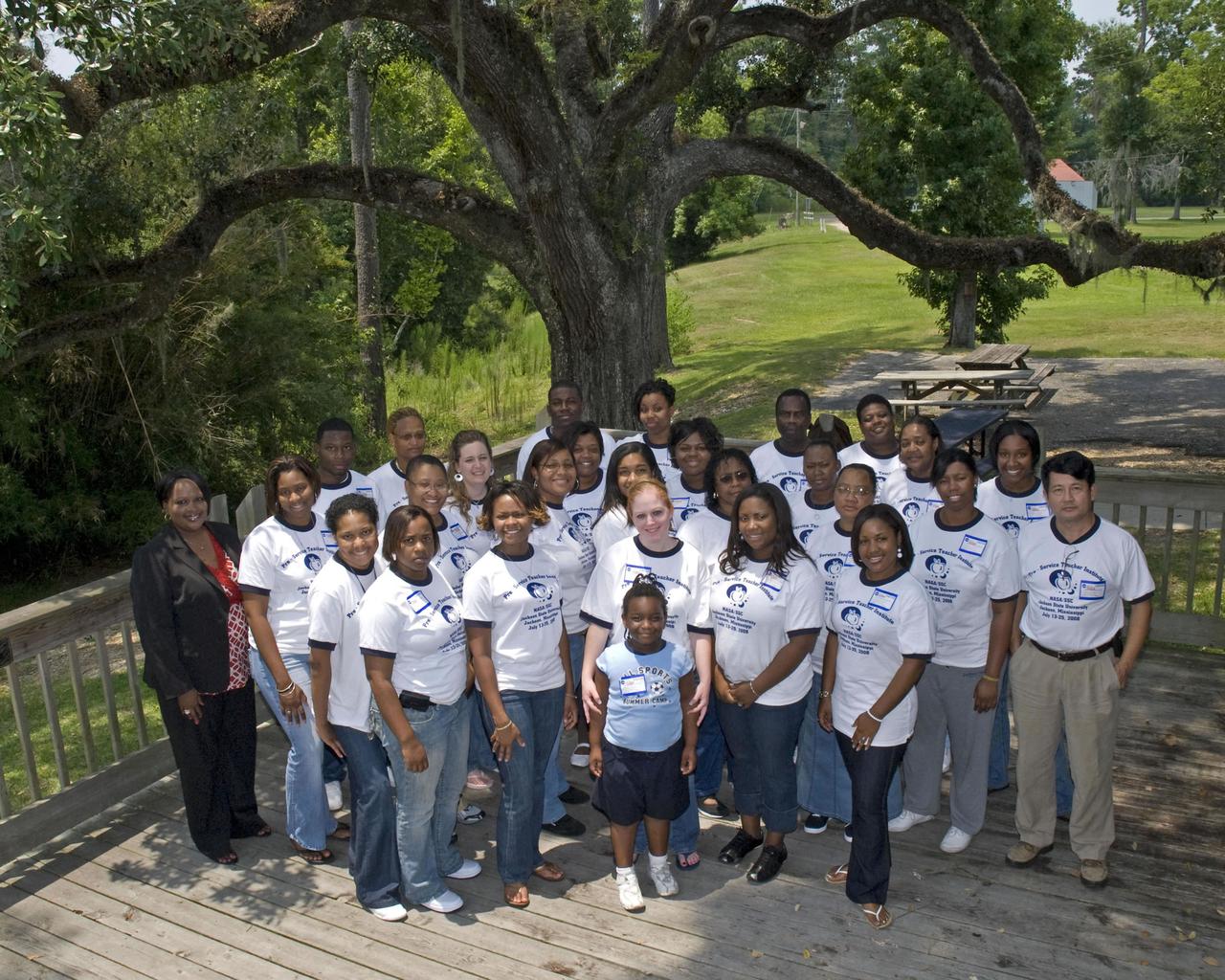
The Pre-Service Teachers Institute sponsored by Jackson (Miss.) State University participated in an agencywide Hubble Space Telescope workshop at Stennis Space Center on July 18. Twenty-five JSU junior education majors participated in the workshop, a site tour and educational presentations by Karma Snyder of the NASA SSC Engineering & Safety Center and Anne Peek of the NASA SSC Deputy Science & Technology Division.
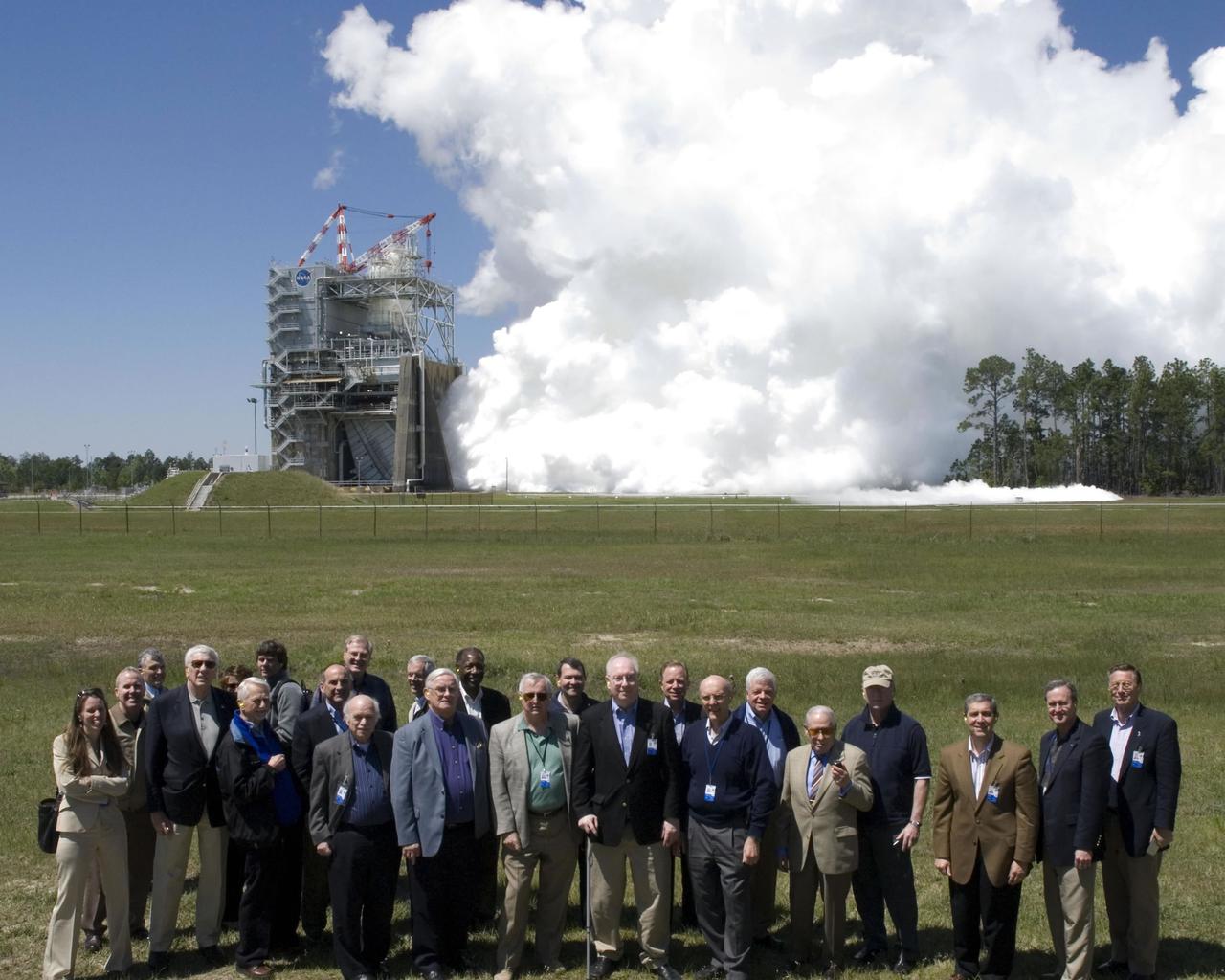
NASA Advisory Council members visited Stennis Space Center April 15 and 16, touring facilities and participating in various presentations. They also viewed a space shuttle main engine test on the A-2 Test Stand. The council of accomplished citizens advises NASA on major policy and program issues. The council includes former Apollo 17 astronaut Harrison Hagan Schmitt as chair, as well as former astronaut Eileen Collins, the first woman to command a space shuttle mission.
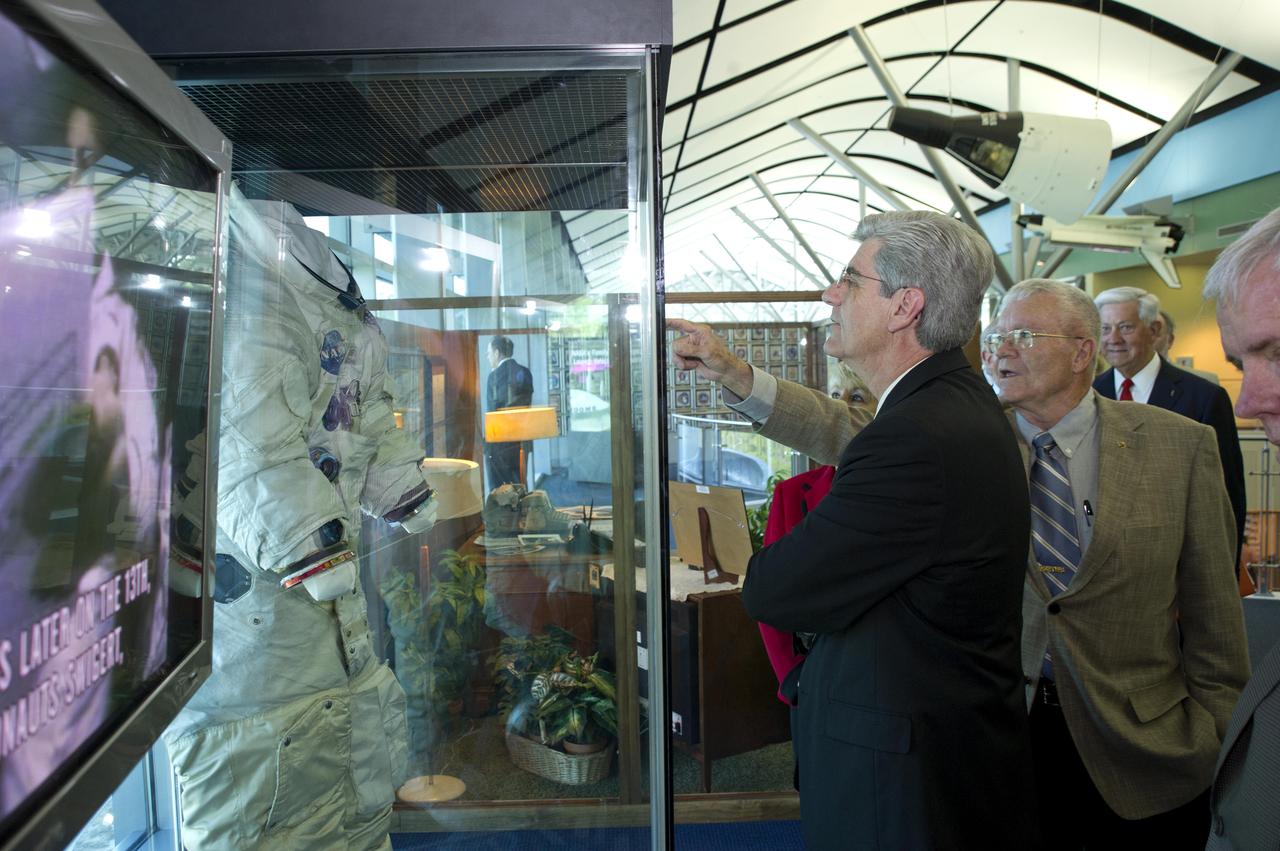
Mississippi Gov. Phil Bryant looks on as Apollo 13 astronaut and INFINITY Science Center Inc. Vice Chairman Fred Haise points out features of the spacesuit he wore on his lunar mission in 1970. The suit is on display at the INFINITY at NASA Stennis Space Center visitor center and museum. The two men toured the facility during ribbon-cutting activities April 11, 2012.
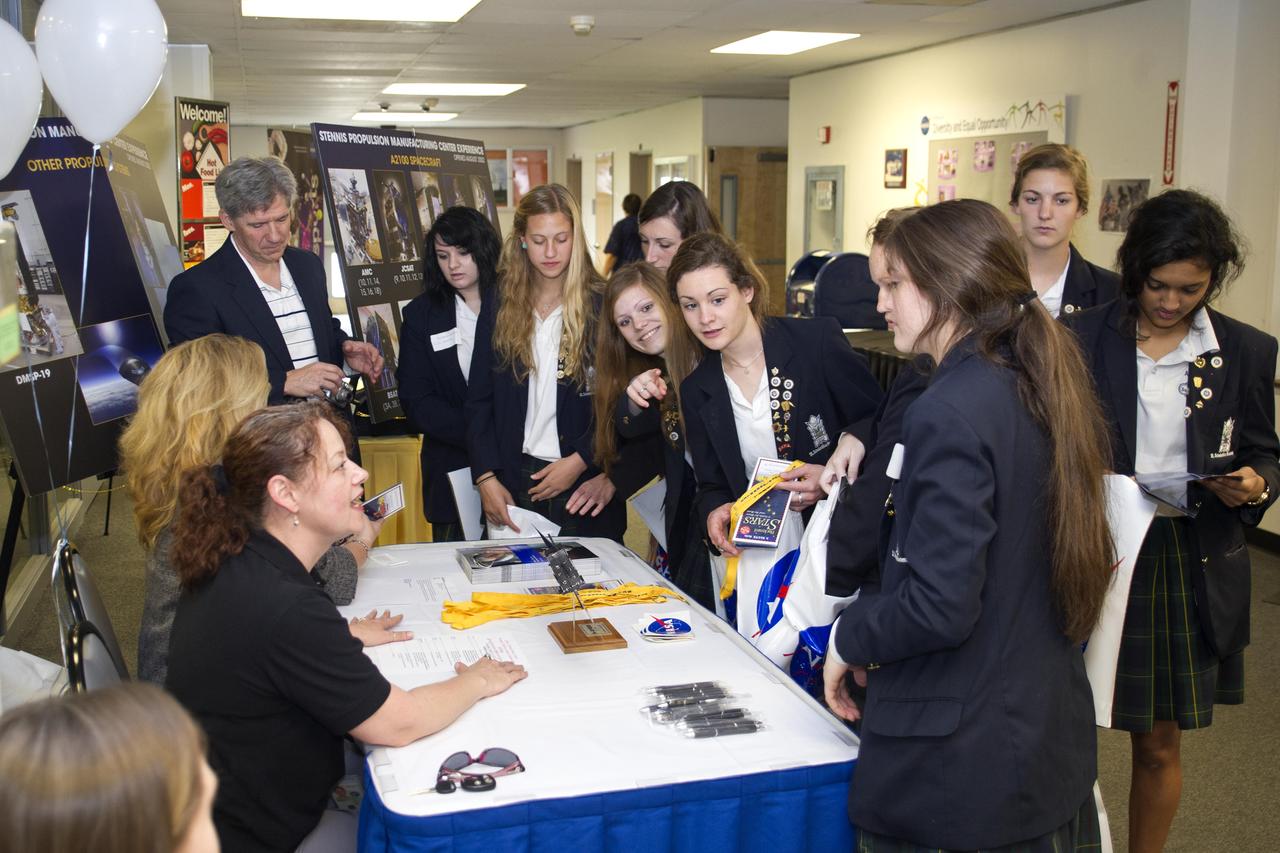
High school students register for activities during a Girls Excited about Math and Science event at Stennis Space Center on March 8, 2012. The event attracted about 130 high school girls and 40 elementary girls from 18 Louisiana and Mississippi for a day of workshop and seminar presentations, a 'Dress for Success' fashion show and a tour of information technology facilities.
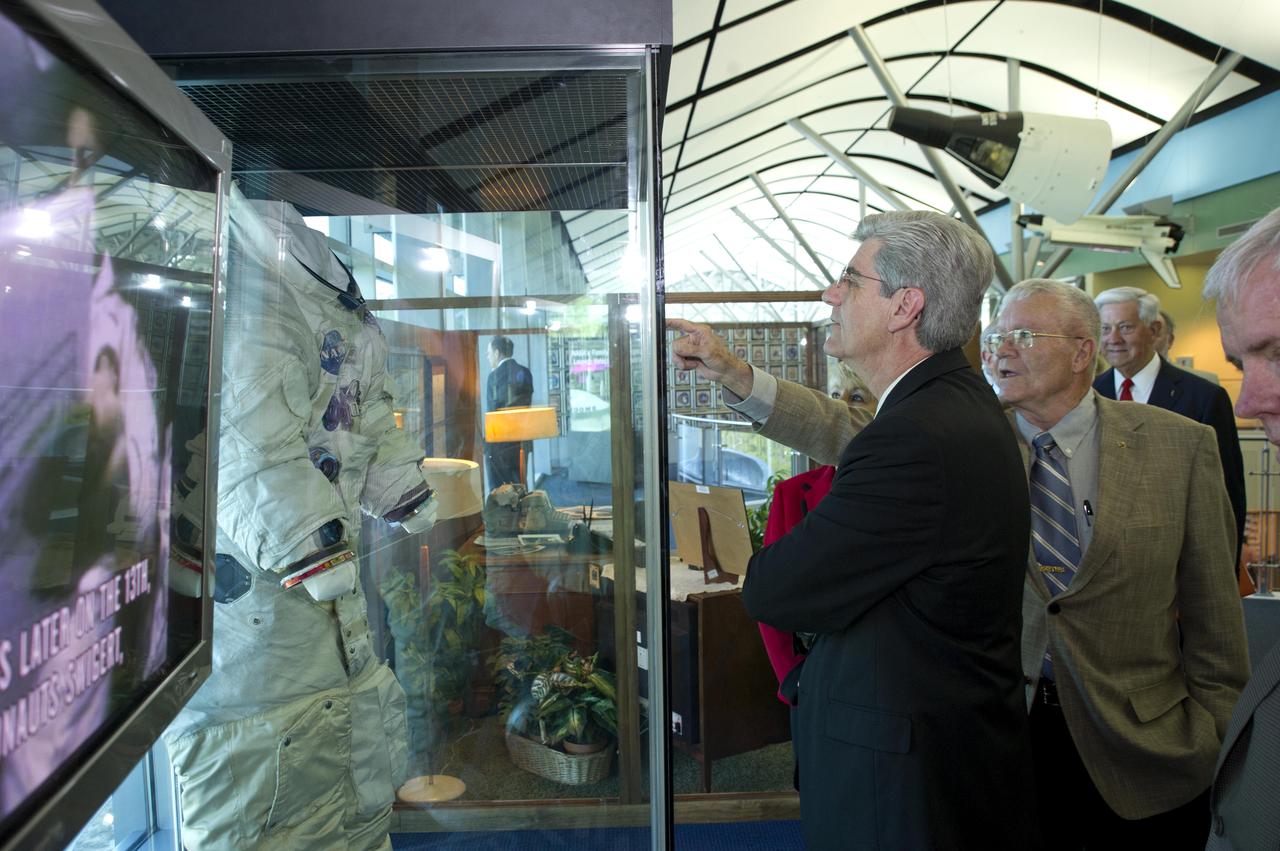
Mississippi Gov. Phil Bryant looks on as Apollo 13 astronaut and INFINITY Science Center Inc. Vice Chairman Fred Haise points out features of the spacesuit he wore on his lunar mission in 1970. The suit is on display at the INFINITY at NASA Stennis Space Center visitor center and museum. The two men toured the facility during ribbon-cutting activities April 11, 2012.
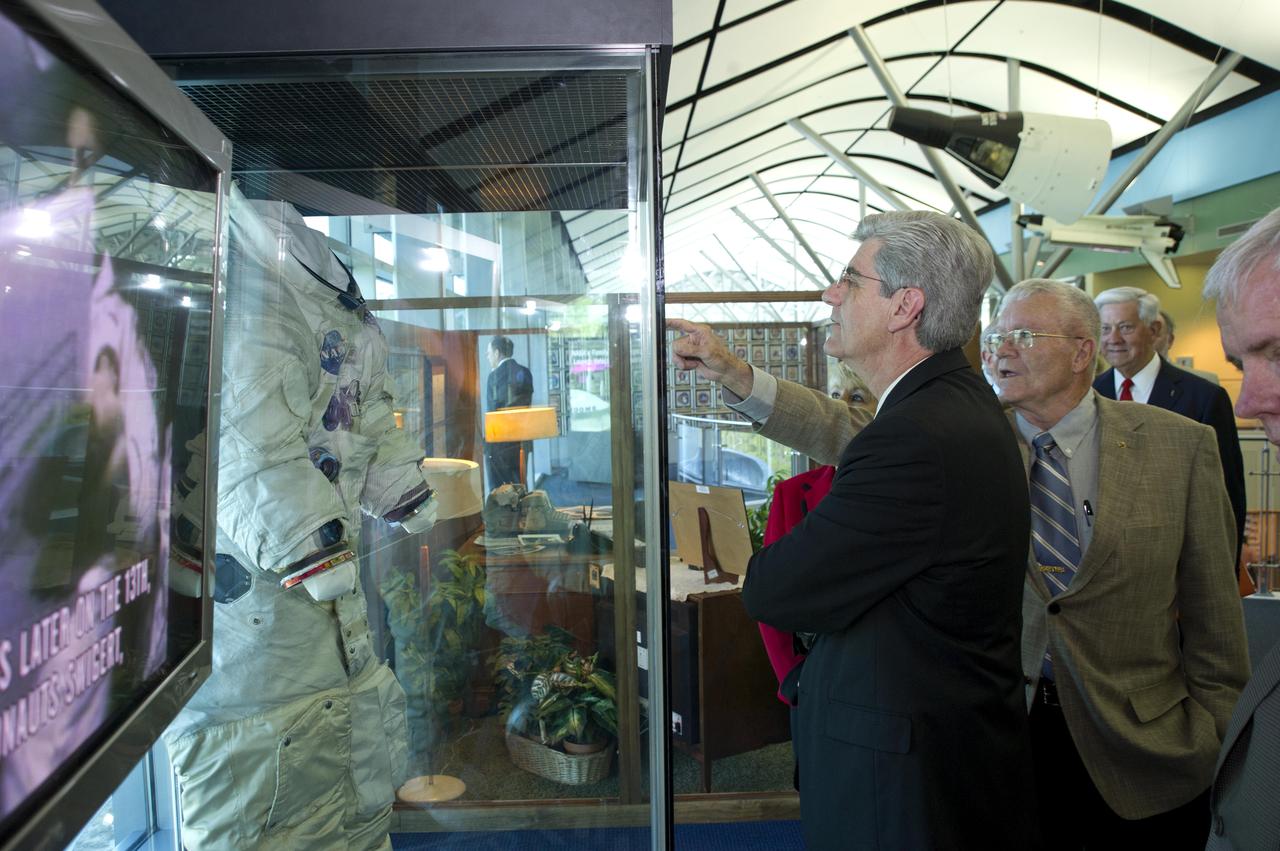
Mississippi Gov. Phil Bryant looks on as Apollo 13 astronaut and INFINITY Science Center Inc. Vice Chairman Fred Haise points out features of the spacesuit he wore on his lunar mission in 1970. The suit is on display at the INFINITY at NASA Stennis Space Center visitor center and museum. The two men toured the facility during ribbon-cutting activities April 11, 2012.
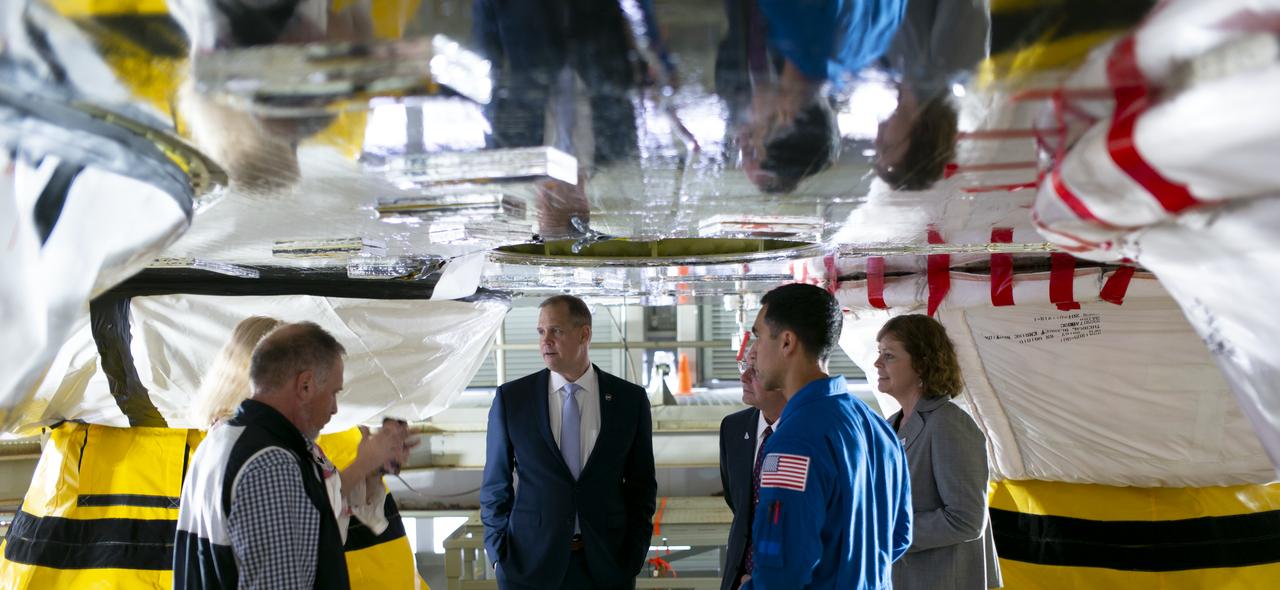
NASA Administrator Jim Bridenstine, center, is seen on a work platform between the four RS-25 engines of the first core stage of the agency’s Space Launch System (SLS) rocket along with Lisa Bates, SLS Deputy Stages Manager at NASA, Mark Nappi, Boeing Green Run Test Manager, Richard Gilbrech, Director of NASA's Stennis Space Center, Julie Bassler, SLS Stages Manager at NASA, and NASA astronaut Raja Chari, during a tour of the B-2 Test Stand, Monday, Feb. 10, 2020, at NASA’s Stennis Space Center near Bay St. Louis, Mississippi. Over the coming months, the first core stage of NASA’s SLS rocket will be undergoing a series of integrated Green Run tests prior to its maiden flight. Photo Credit: (NASA/Joel Kowsky)
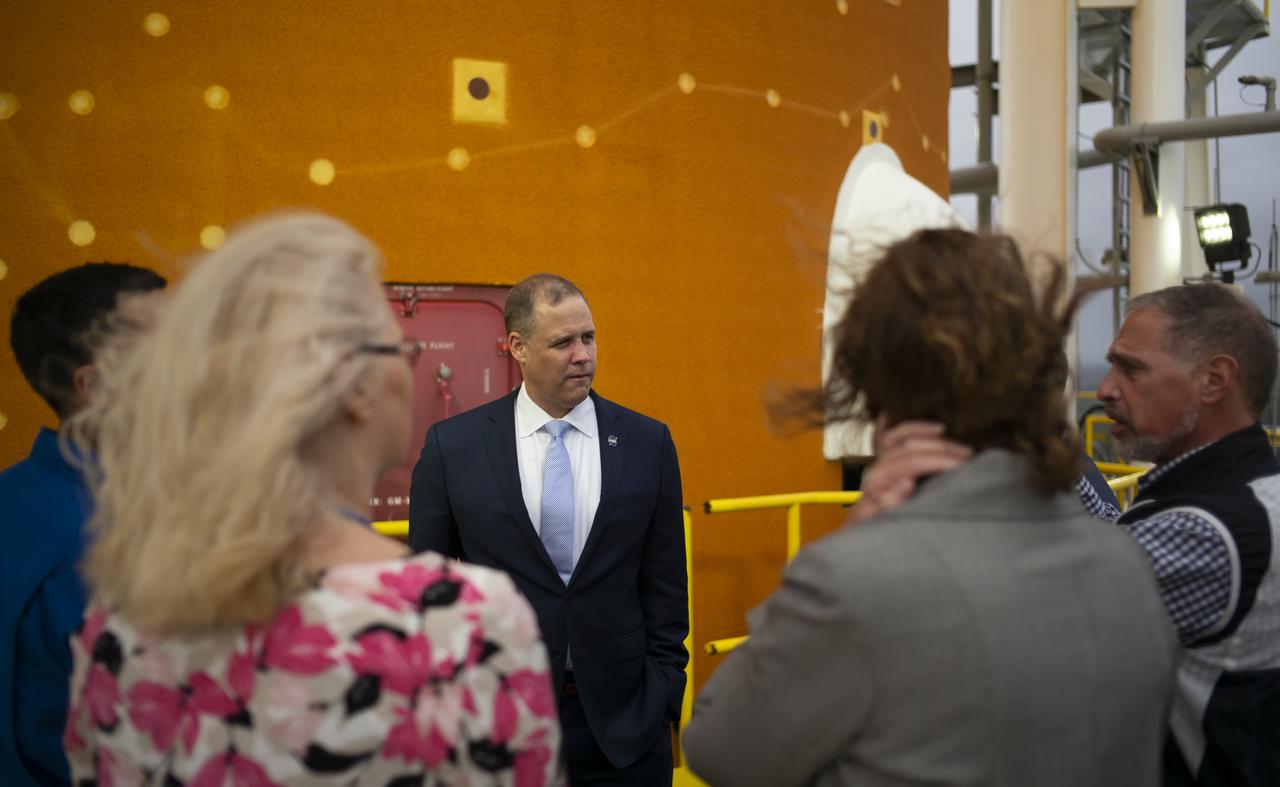
NASA Administrator Jim Bridenstine, center, is seen next to the first core stage of the agency’s Space Launch System (SLS) rocket along with Lisa Bates, SLS Deputy Stages Manager at NASA, Mark Nappi, Boeing Green Run Test Manager, Richard Gilbrech, Director of NASA's Stennis Space Center, Julie Bassler, SLS Stages Manager at NASA, and NASA astronaut Raja Chari, during a tour of the B-2 Test Stand, Monday, Feb. 10, 2020, at NASA’s Stennis Space Center near Bay St. Louis, Mississippi. Over the coming months, the first core stage of NASA’s SLS rocket will be undergoing a series of integrated Green Run tests prior to its maiden flight. Photo Credit: (NASA/Joel Kowsky)
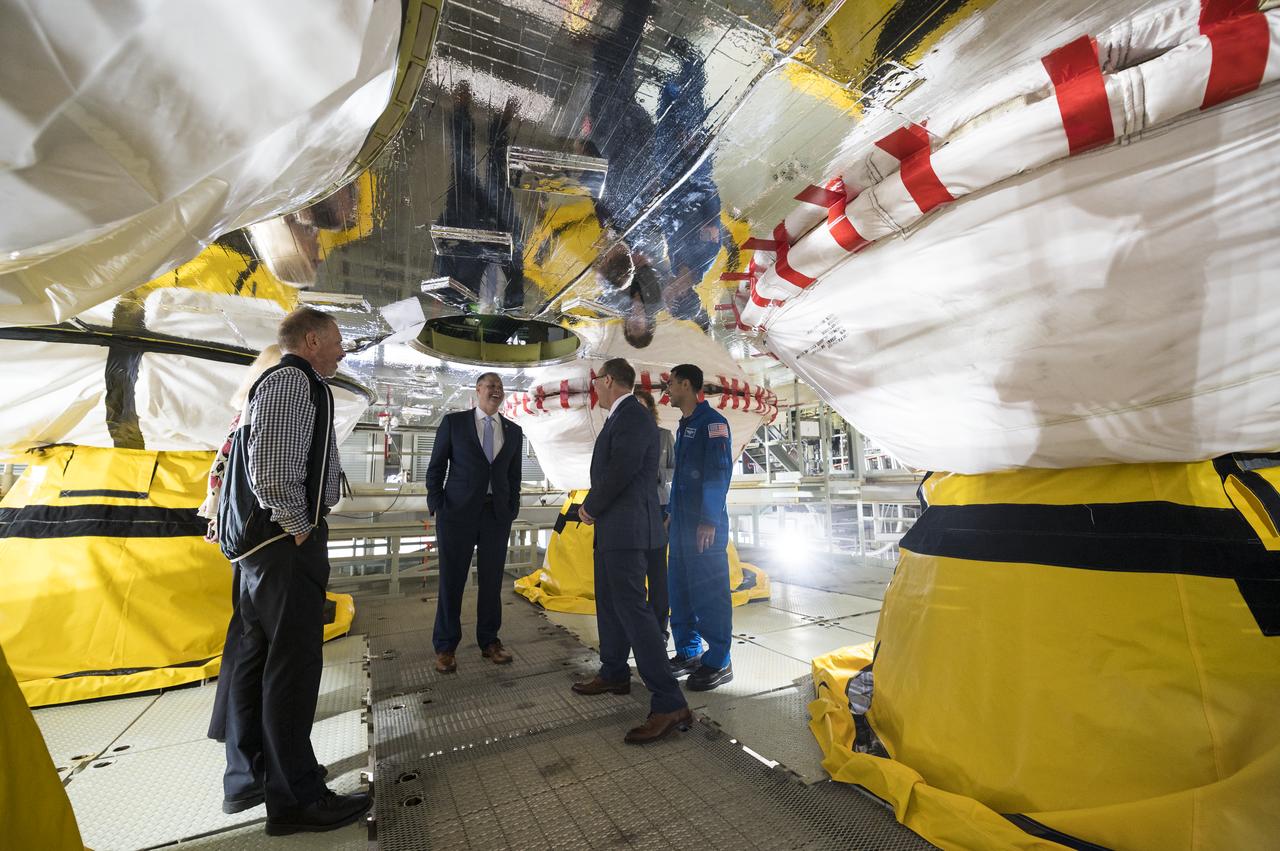
NASA Administrator Jim Bridenstine, center, is seen on a work platform between the four RS-25 engines of the first core stage of the agency’s Space Launch System (SLS) rocket along with Lisa Bates, SLS Deputy Stages Manager at NASA, Mark Nappi, Boeing Green Run Test Manager, Richard Gilbrech, Director of NASA's Stennis Space Center, Julie Bassler, SLS Stages Manager at NASA, and NASA astronaut Raja Chari, during a tour of the B-2 Test Stand, Monday, Feb. 10, 2020, at NASA’s Stennis Space Center near Bay St. Louis, Mississippi. Over the coming months, the first core stage of NASA’s SLS rocket will be undergoing a series of integrated Green Run tests prior to its maiden flight. Photo Credit: (NASA/Joel Kowsky)
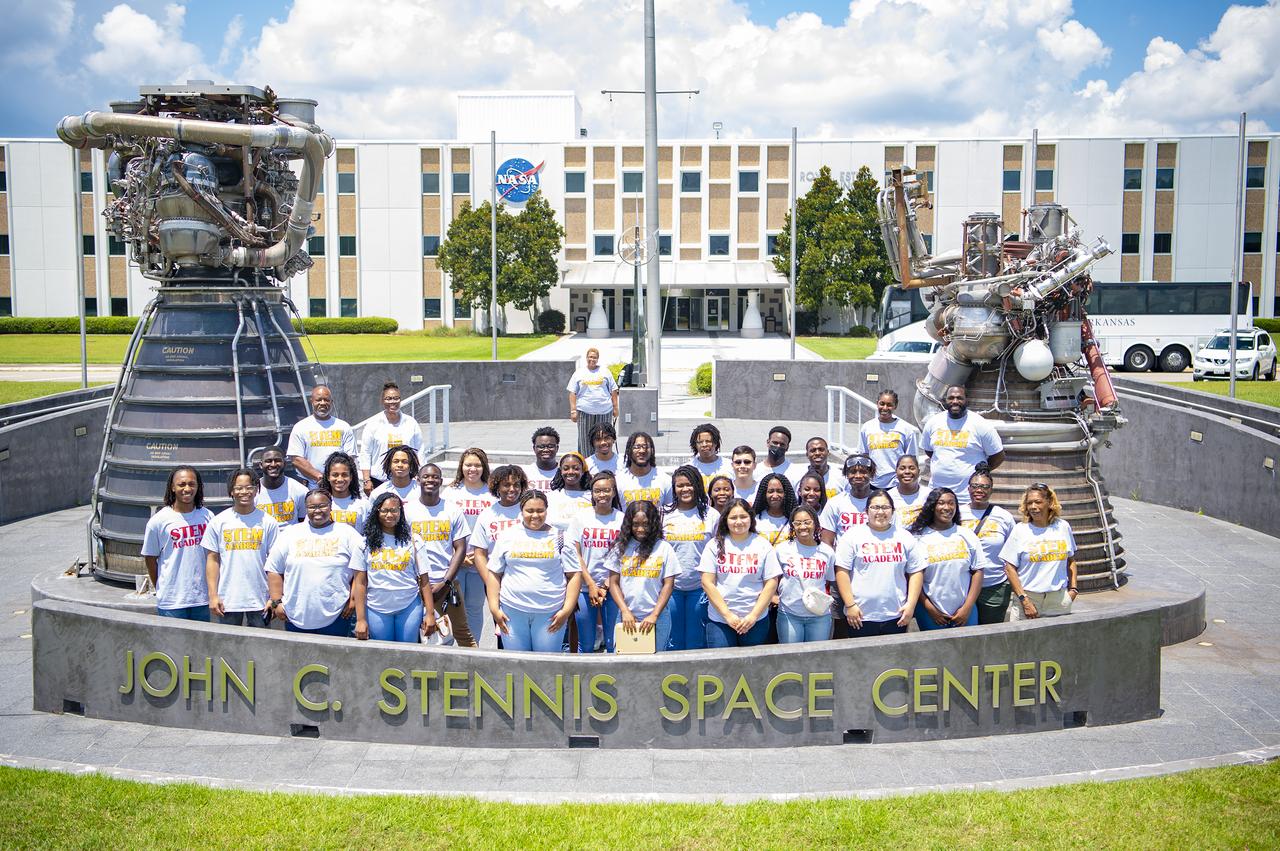
Participants in the University of Arkansas at Pine Bluff STEM (science, technology, engineering and mathematics) Summer Institute stand in front of the Roy Estess Building at NASA’s Stennis Space Center during a site tour on June 25. The students viewed multiple areas of the federal city, including a visit to the Thad Cochran Test Stand, where students learned about NASA Stennis’ role in the Artemis campaign. NASA is going back to the Moon for scientific discovery, economic benefits, and inspiration for a new generation of explorers: the Artemis Generation. The agency will use what is learned on and around the Moon to take the next giant leap – sending astronauts to Mars. The Arkansas at Pine Bluff STEM program started in 2003 and is designed to help increase the number and diversity of well-prepared STEM graduates.
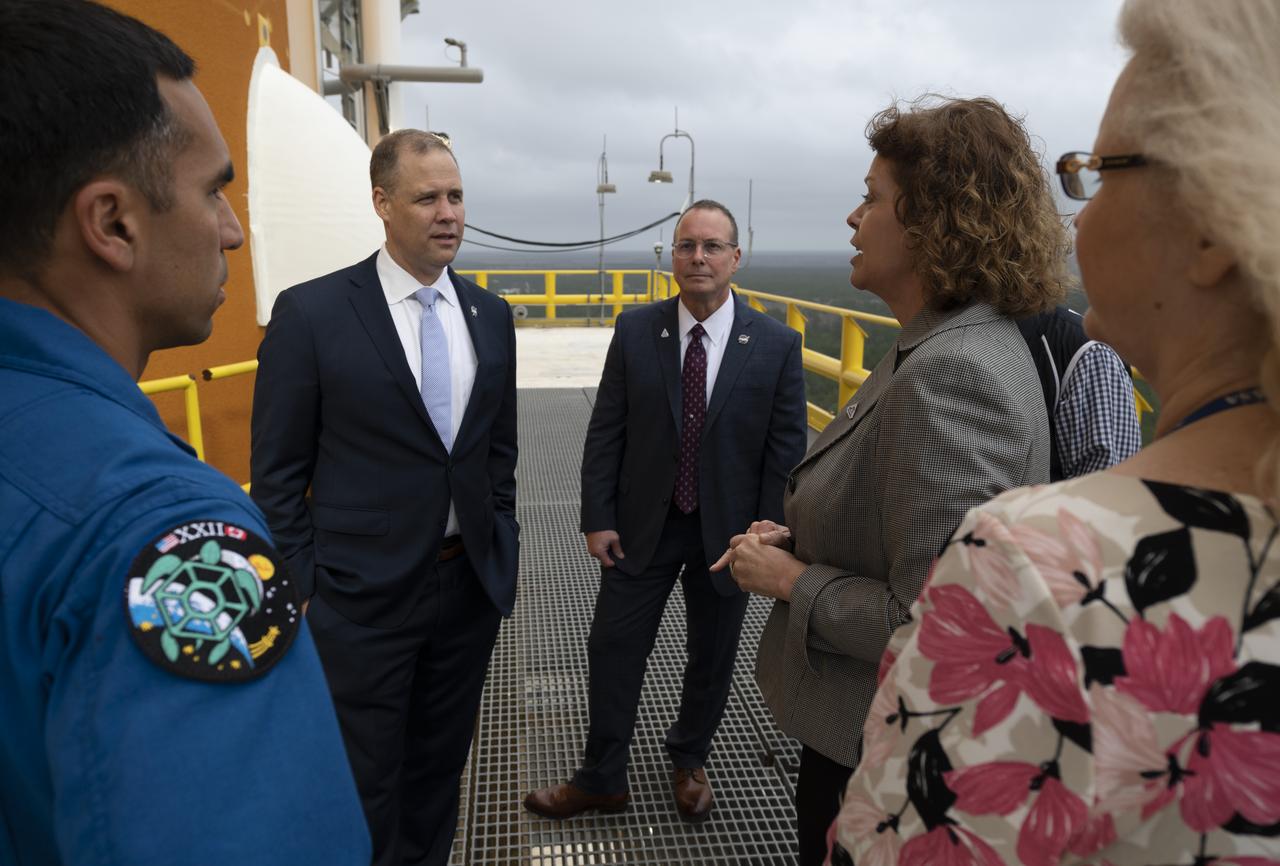
NASA Administrator Jim Bridenstine, center, is seen on a work platform between the four RS-25 engines of the first core stage of the agency’s Space Launch System (SLS) rocket along with Lisa Bates, SLS Deputy Stages Manager at NASA, Mark Nappi, Boeing Green Run Test Manager, Richard Gilbrech, Director of NASA's Stennis Space Center, Julie Bassler, SLS Stages Manager at NASA, and NASA astronaut Raja Chari, during a tour of the B-2 Test Stand, Monday, Feb. 10, 2020, at NASA’s Stennis Space Center near Bay St. Louis, Mississippi. Over the coming months, the first core stage of NASA’s SLS rocket will be undergoing a series of integrated Green Run tests prior to its maiden flight. Photo Credit: (NASA/Joel Kowsky)

Members of the 2007 class of Partners in Leadership toured NASA Stennis Space Center in Hancock County, Miss., on Jan. 11. They visited the center's B Test Stand, part of the center's rocket engine test complex. The Partners in Leadership training program is designed to teach Pearl River County leaders about their county's government, economic development, health and human services, history and arts, environment and education during a 10-month period. The program, sponsored by the Partners for Pearl River County, helps fulfill the mission of the economic and community development agency.
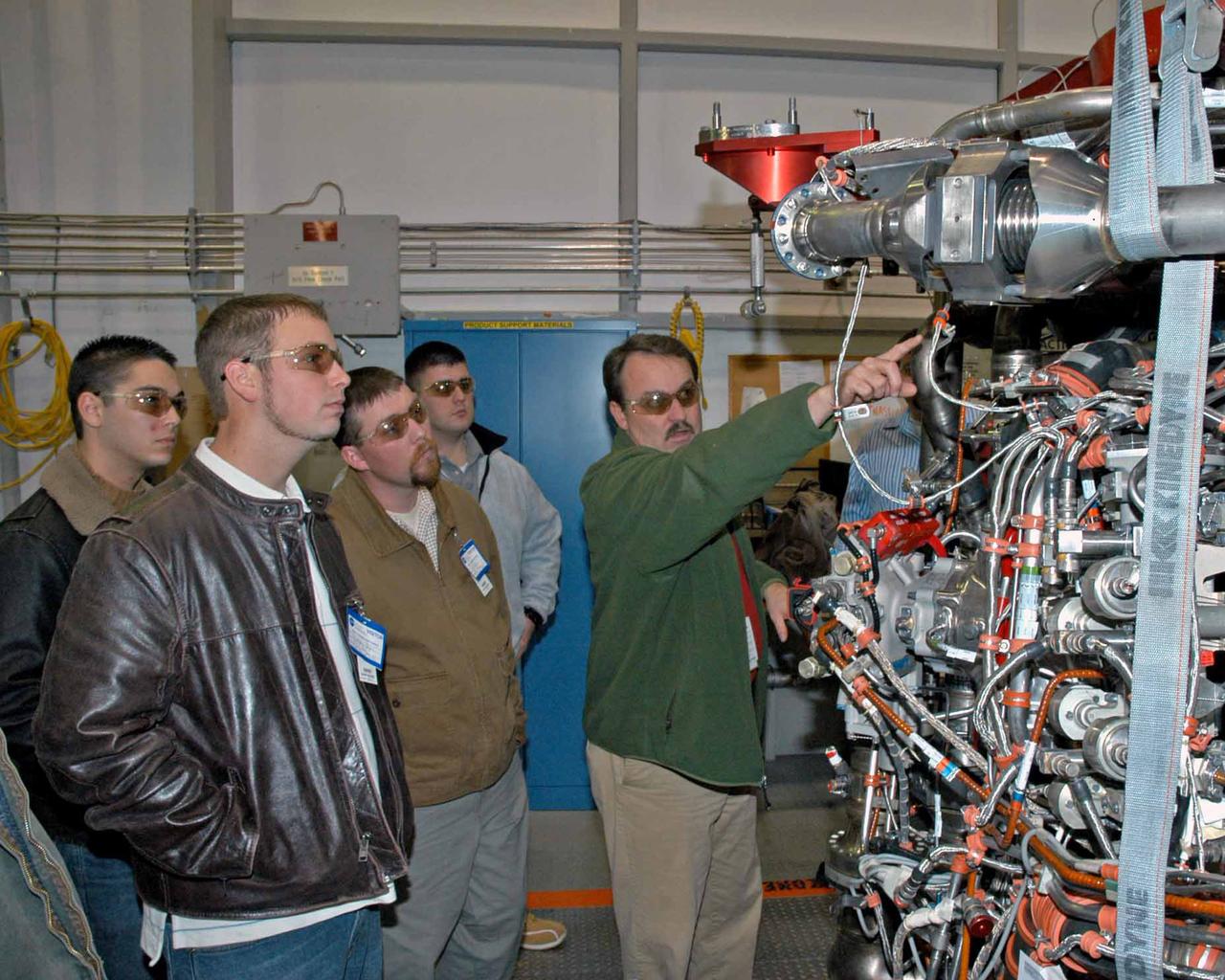
Pratt & Whitney Rocketdyne's Jeff Hansell, right, explains functions of a space shuttle main engine to Pearl River Community College Aviation Maintenance Technology Program students. Christopher Bryon, left, of Bay St. Louis, Ret Tolar of Kiln, Dan Holston of Baxterville and Billy Zugg of Long Beach took a recent tour of the SSME Processing Facility and the E-1 Test Complex at Stennis Space Center in South Mississippi. The students attend class adjacent to the Stennis International Airport tarmac in Kiln, where they get hands-on experience. PRCC's program prepares students to be responsible for the inspection, repair and maintenance of technologically advanced aircraft. A contractor to NASA, Pratt & Whitney Rocketdyne in Canoga Park, Calif., manufactures the space shuttle main engine and its high-pressure turbo pumps. SSC was established in the 1960s to test the huge engines for the Saturn V moon rockets. Now 40 years later, the center tests every main engine for the space shuttle, and is America's largest rocket engine test complex. SSC will soon begin testing the rocket engines that will power spacecraft carrying Americans back to the moon and on to Mars.
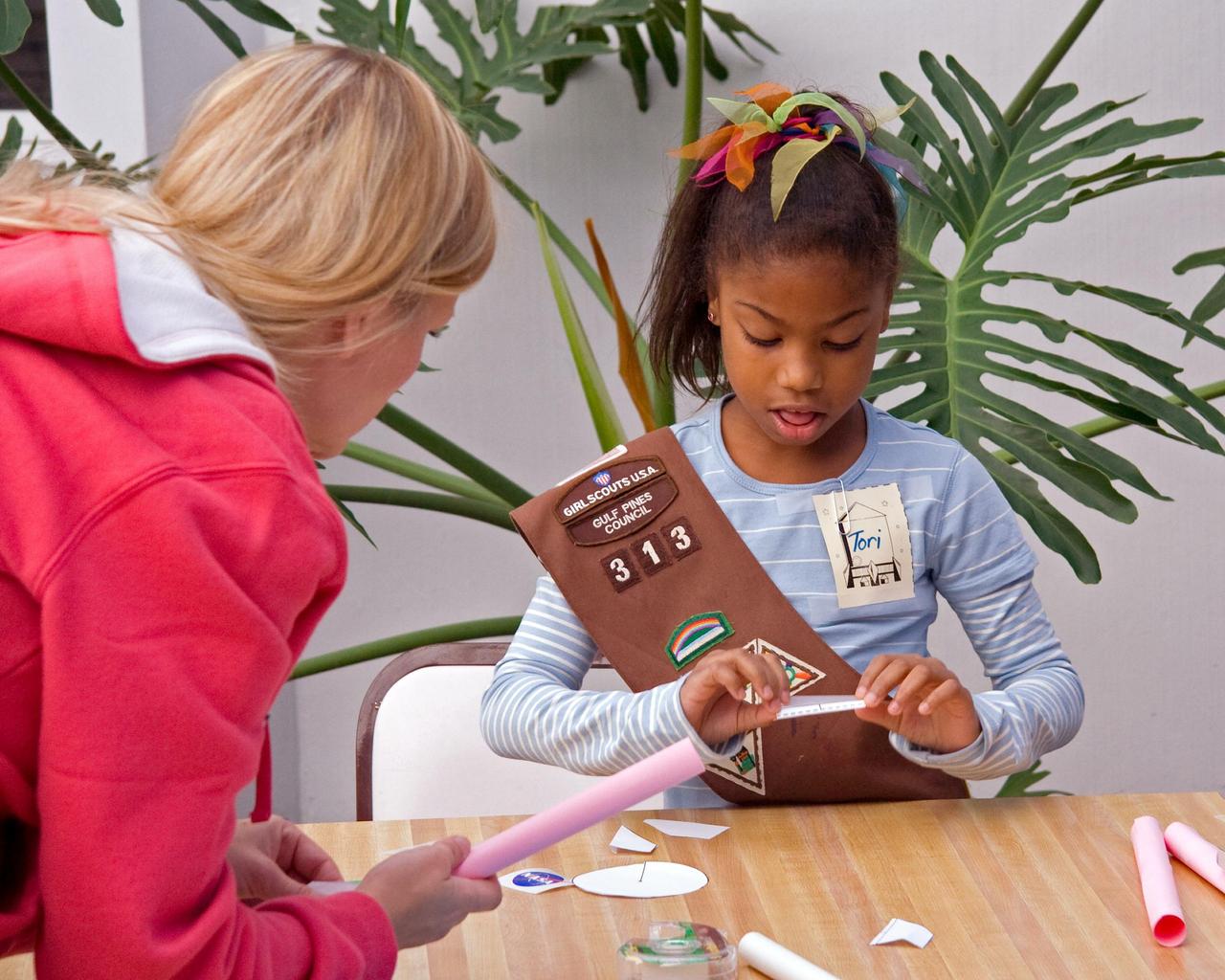
Tori Williams, of Brownie Girl Scout Troop 313, builds her own `stomp rocket' with the help of adult chaperone Pamela Cottrell. The two, of Gulfport, participated in NASA Brownie Day on Oct. 13 at Stennis Space Center. They were among nearly 200 members of Brownie Girl Scout Troops within the Gulf Pines Council who took part in the day of educational activities at SSC. Brownie Day used NASA curriculum support materials to teach about the sun and its significance in our solar system. In addition to building and launching their own model rockets, the girls toured the center's portable Starlab planetarium; viewed demonstrations about living and working in space; played games of `Moon Phasers' that teach about the rotation of the moon around the earth; made bracelets with ultraviolet-sensitive beads; and other activities that celebrated Earth's very own star. They also toured StenniSphere and were able to earn their Earth and Sky and Space Explorer `Try-Its.'
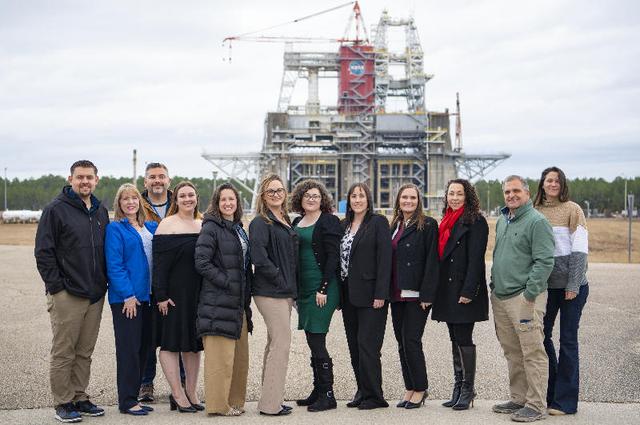
The Pearl River County Leadership Class stands in front of the Thad Cochran Test Stand during a NASA Stennis site tour on Jan. 18. The group learned about the RS-25 engine certification test series underway for future flights of NASA’s SLS (Space Launch System) rocket and preparations for Green Run testing at the Thad Cochran Test Stand (B-2) for NASA’s Exploration Upper Stage (EUS) in support of the Artemis program. EUS is expected to fly on the Artemis IV mission. Prior to that time, it will undergo a series of integrated systems tests to demonstrate it is ready to fly. Through Artemis, NASA will send the first woman and first person of color to the Moon. The agency will use what is learned on and around the Moon to take the next giant leap – sending astronauts to Mars.
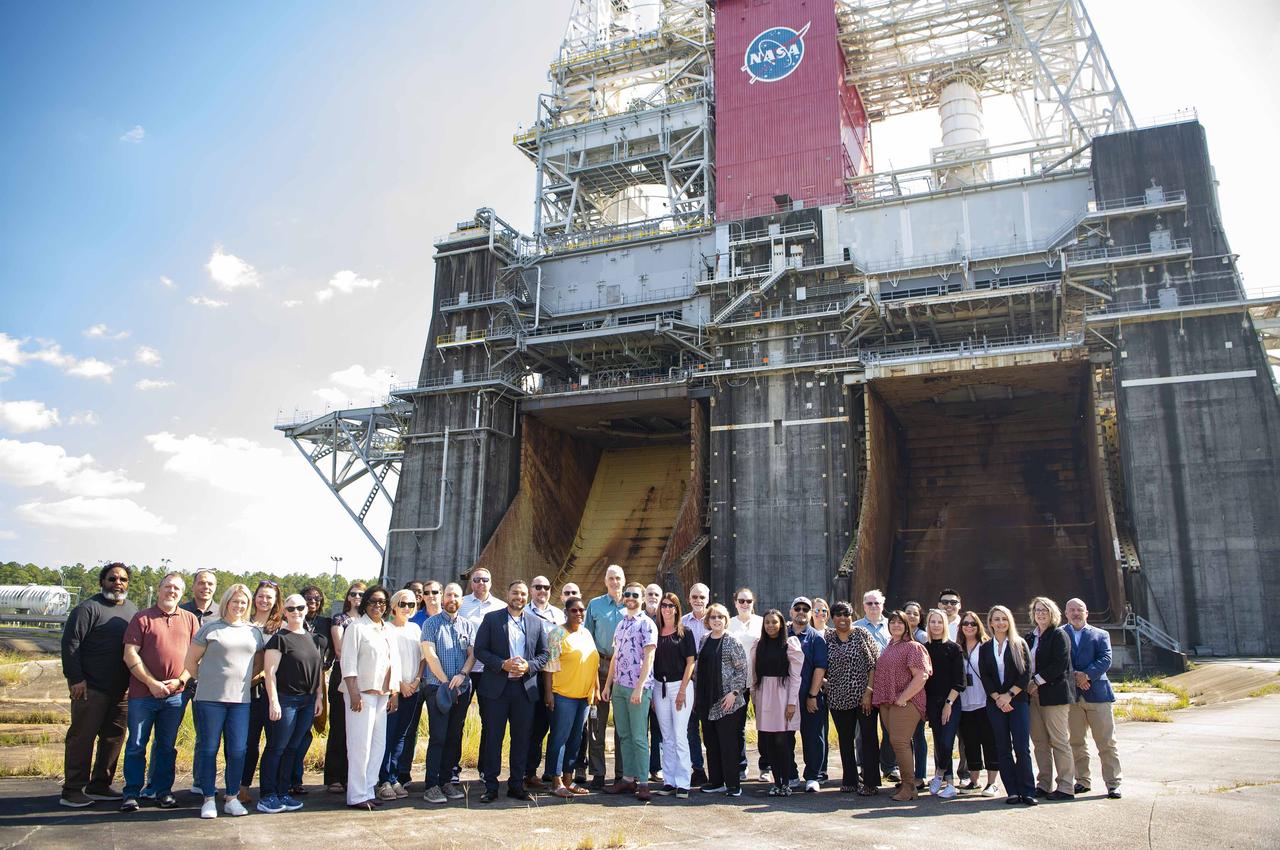
The NASA Office of the Chief Information Officer Integrated Design and Assurance Systems team are shown at the Thad Cochran Test Stand (B-1/B-2) during a tour of NASA Stennis on Oct. 9. To accomplish NASA’s vision, the agency depends heavily on many things and information technology is key among them. Information technology capabilities enable NASA’s discoveries, allow sharing of mission data, improve workforce productivity, and increase mission quality, resilience, and cost-effectiveness. To enable success for NASA’s mission portfolio, the Office of the Chief Information Officer goals are to deliver great customer experiences; achieve consistent operational excellence; transform NASA through information and technology; and ensure proactive, resilient cybersecurity – all delivered by an exceptional team.
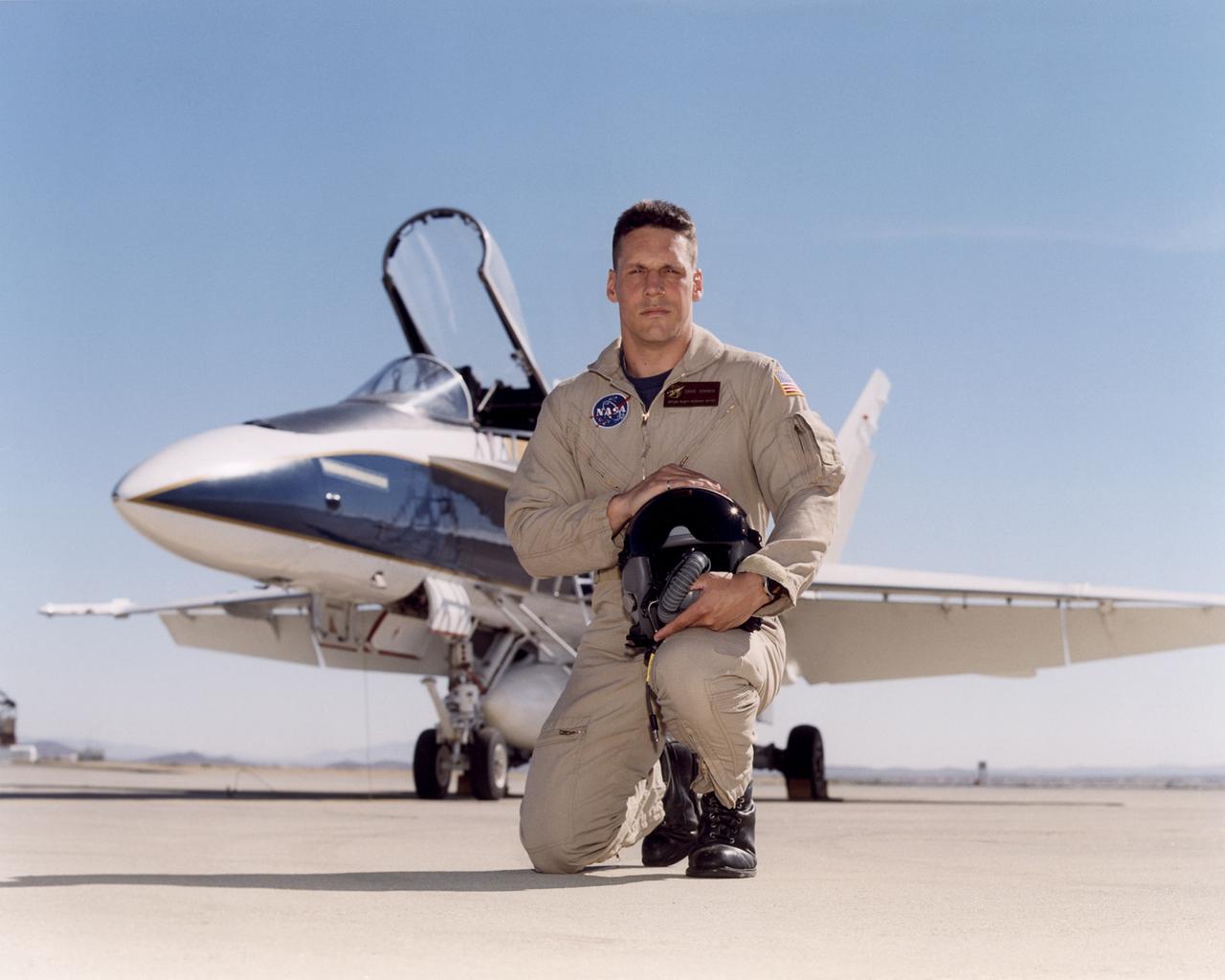
Craig R. Bomben became a pilot in the Flight Crew Branch of NASA's Dryden Flight Research Center, Edwards, Calif., in June 2001. His flying duties include a variety of research and support activities while piloting the F/A-18, DC-8, T-34C and King Air aircraft. He has more than 17 years and 3,800 hours of military and civilian flight experience in over 50 different aircraft types. Bomben came to NASA Dryden from a U.S. Navy assignment to the Personnel Exchange Program, Canada. He served as a test pilot in the Canadian Armed Forces located in Cold Lake, Alberta. He participated in numerous developmental programs to include CT-133 airborne ejection seat testing, F/A-18 weapons flutter testing and F/A-18 night vision goggles integration. Bomben performed U.S. Navy fleet service in 1995 as a strike-fighter department head. He completed two overseas deployments onboard the USS George Washington and USS Stennis. As a combat strike leader, he headed numerous multi-national missions over Iraq in support of Operation Southern Watch. Bomben graduated from the U.S. Naval Test Pilot School in 1992 and was subsequently assigned to the Naval Weapons Test Squadron at Pt. Mugu, Calif. During this tour he developed the F-14D bombsight and worked on various other F-14D and F/A-18 weapon systems developmental programs. Bomben is a 1985 graduate of Washington State University with a bachelor of science degree in electrical engineering. He graduated from naval flight training in 1987 and was recognized as a Commodore List graduate. His first assignment was to Naval Air Station Pensacola, Fla., where he was an instructor in the T-2B Buckeye. When selected to fly the F/A-18 in 1989, he joined a fleet squadron and deployed aboard the USS Forrestal. Bomben is married to the former Aissa Asuncion. They live in Lancaster, Calif., with their 3 children.