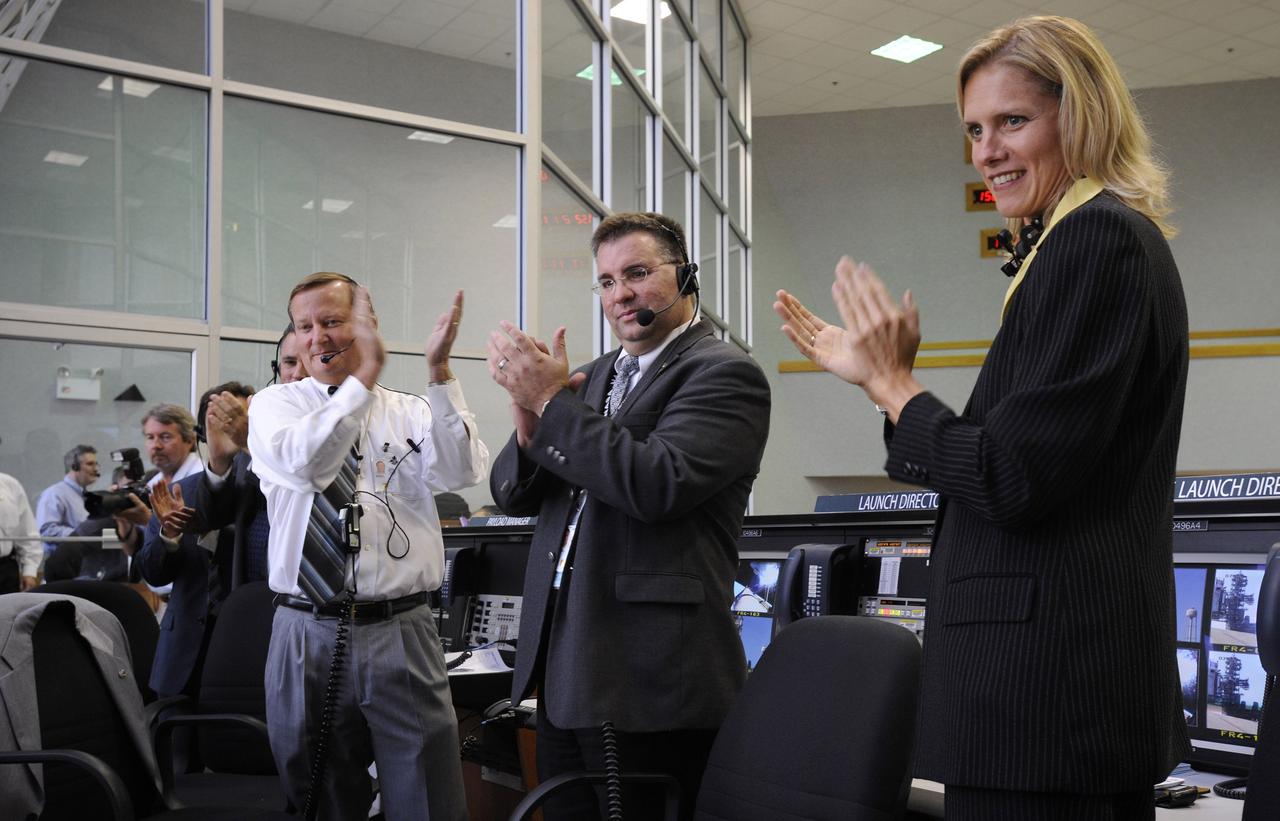
NASA Shuttle Launch Director Michael Leinbach, left, STS-124 Assistant Launch Director Ed Mango, center, and Flow Director for Space Shuttle Discovery Stephanie Stilson clap in the the Launch Control Center after the main engine cut off and successful launch of the Space Shuttle Discovery (STS-124) Saturday, May 31, 2008, at the Kennedy Space Center in Cape Canaveral, Fla. The Shuttle lifted off from launch pad 39A at 5:02 p.m. EDT. Photo Credit: (NASA/Bill Ingalls)
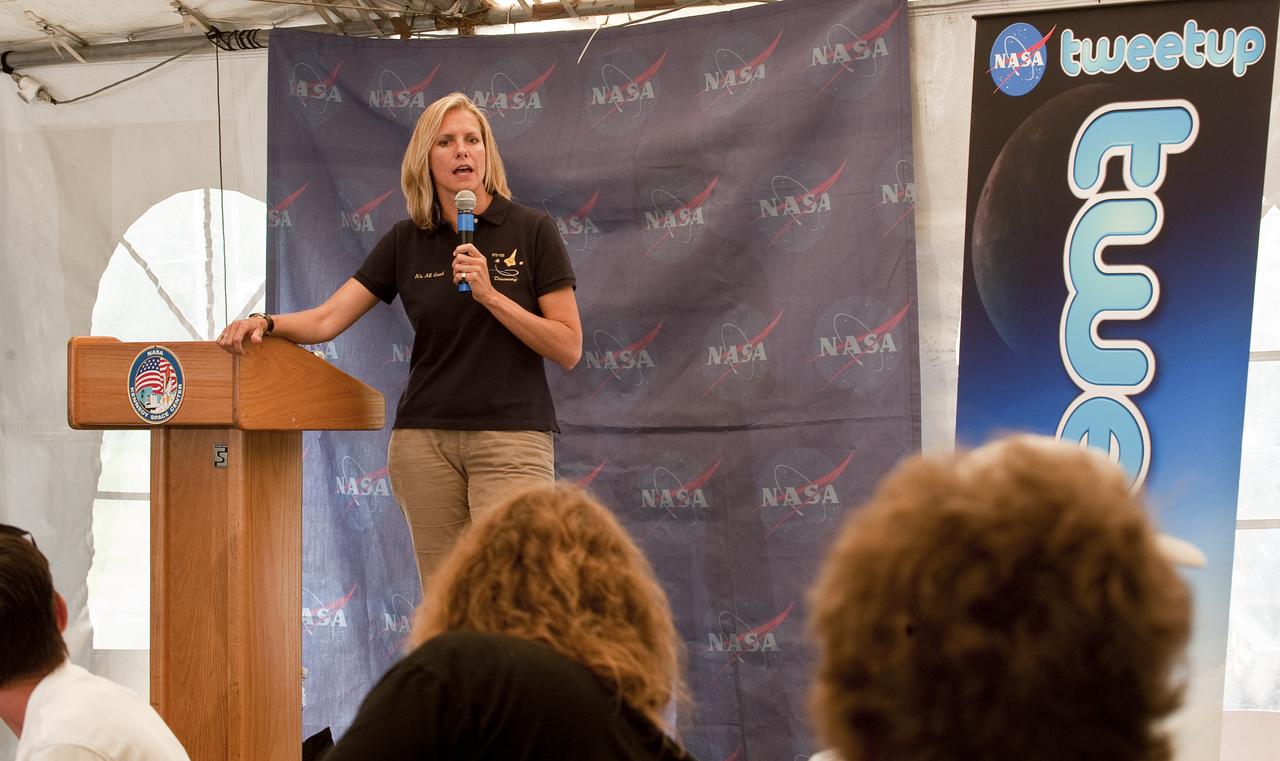
Stephanie Stilson, space shuttle discovery processing director, speaks to participants at the two-day STS-132 Launch Tweetup at Kennedy Space Center, Thursday, May 13, 2010, in Cape Canaveral, Fla. NASA Twitter followers in attendance will have the opportunity to take a tour of NASA's Kennedy Space Center, view the space shuttle launch and speak with shuttle technicians, engineers, astronauts and managers. Photo Credit: (NASA/Paul E. Alers)
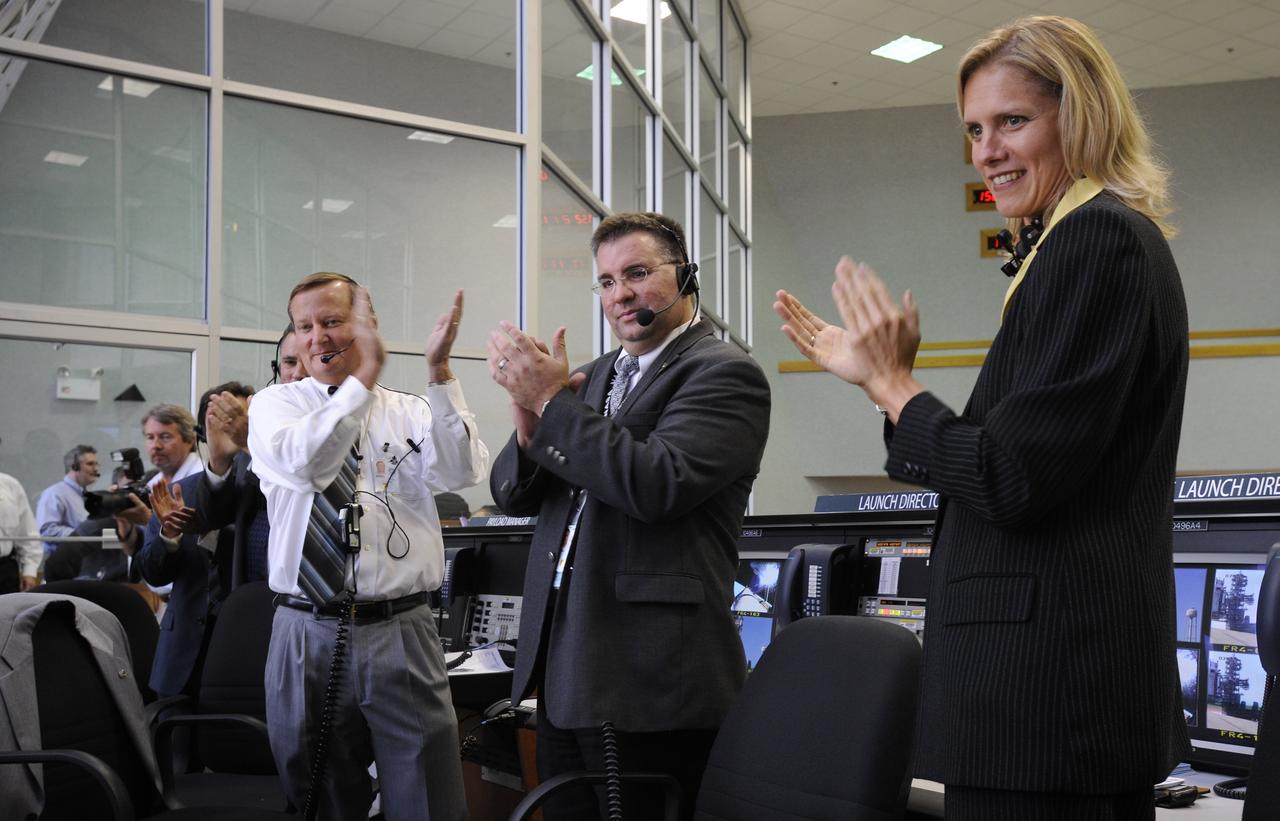
NASA Shuttle Launch Director Michael Leinbach, left, STS-124 Assistant Launch Director Ed Mango, center, and Flow Director for Space Shuttle Discovery Stephanie Stilson clap in the the Launch Control Center after the main engine cut off and successful launch of the Space Shuttle Discovery (STS-124) Saturday, May 31, 2008, at the Kennedy Space Center in Cape Canaveral, Fla. The Shuttle lifted off from launch pad 39A at 5:02 p.m. EDT. Photo Credit: (NASA/Bill Ingalls)
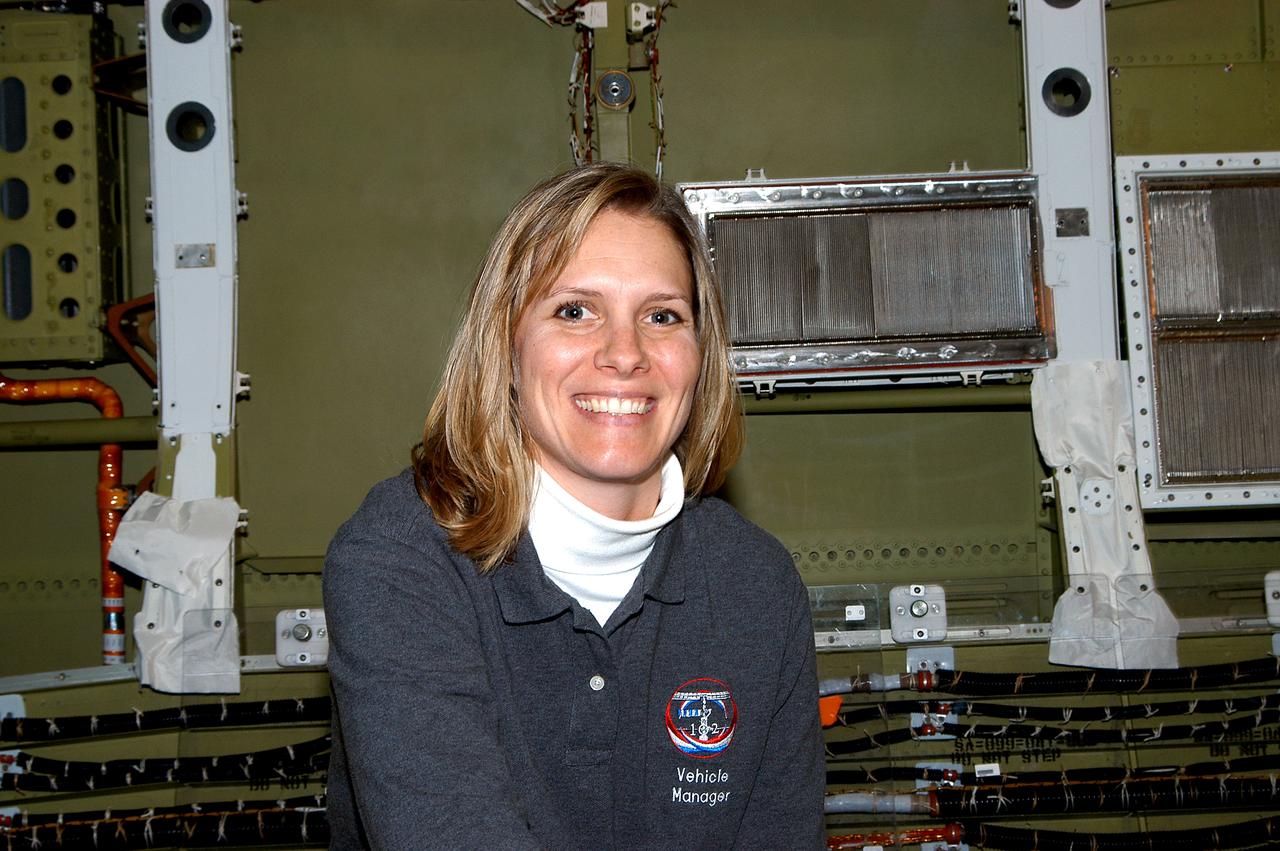
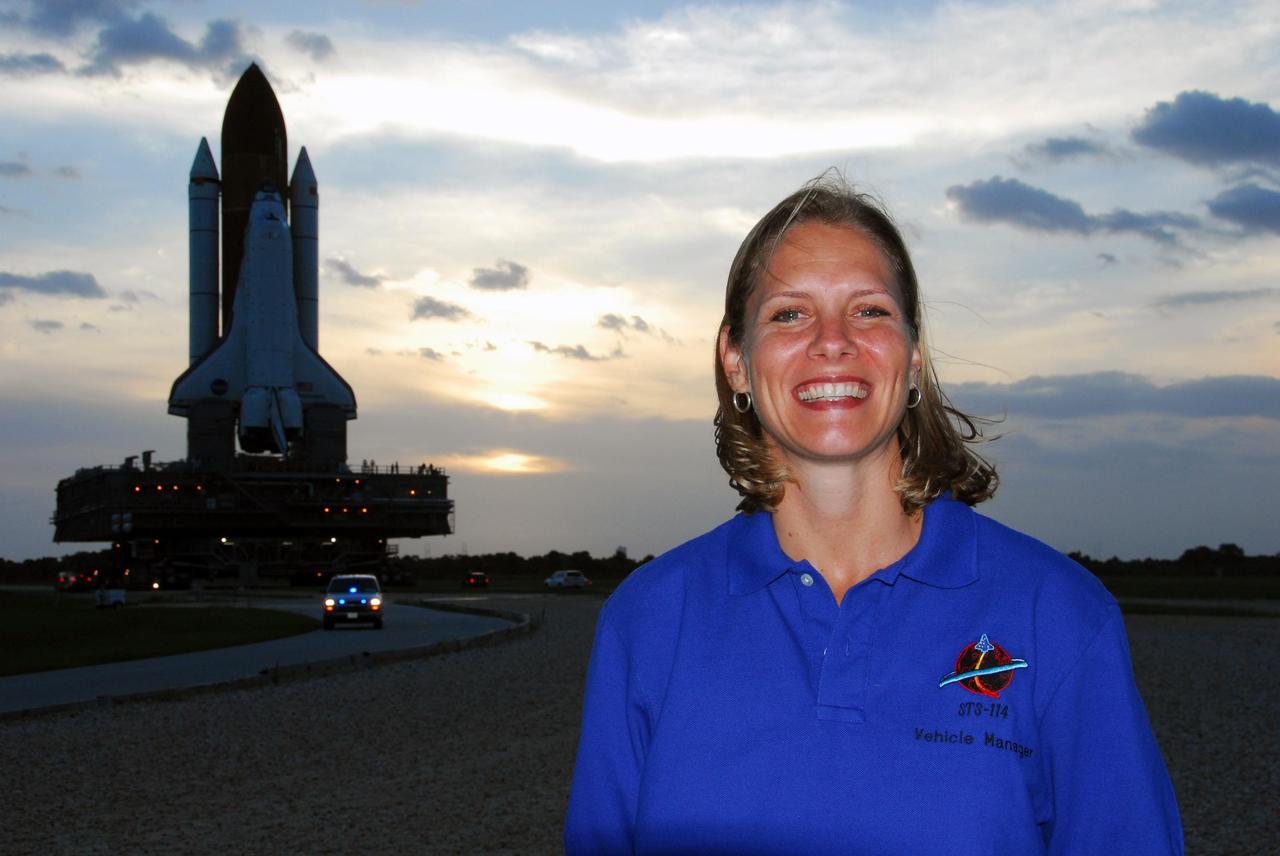
KENNEDY SPACE CENTER, FLA. - NASA Vehicle Manager for Discovery, Stephanie Stilson poses for a photo after working with a KSC Web team who were filming a special feature for the KSC Web. Stilson explained her role in the recent Orbiter Major Modification period, which included inspection, modifications and reservicing of most systems onboard. The work on Discovery also included the installation of a Multifunction Electronic Display Subsystem (MEDS) - a state-of-the-art “glass cockpit.” The orbiter is now being prepared for eventual launch on a future mission.
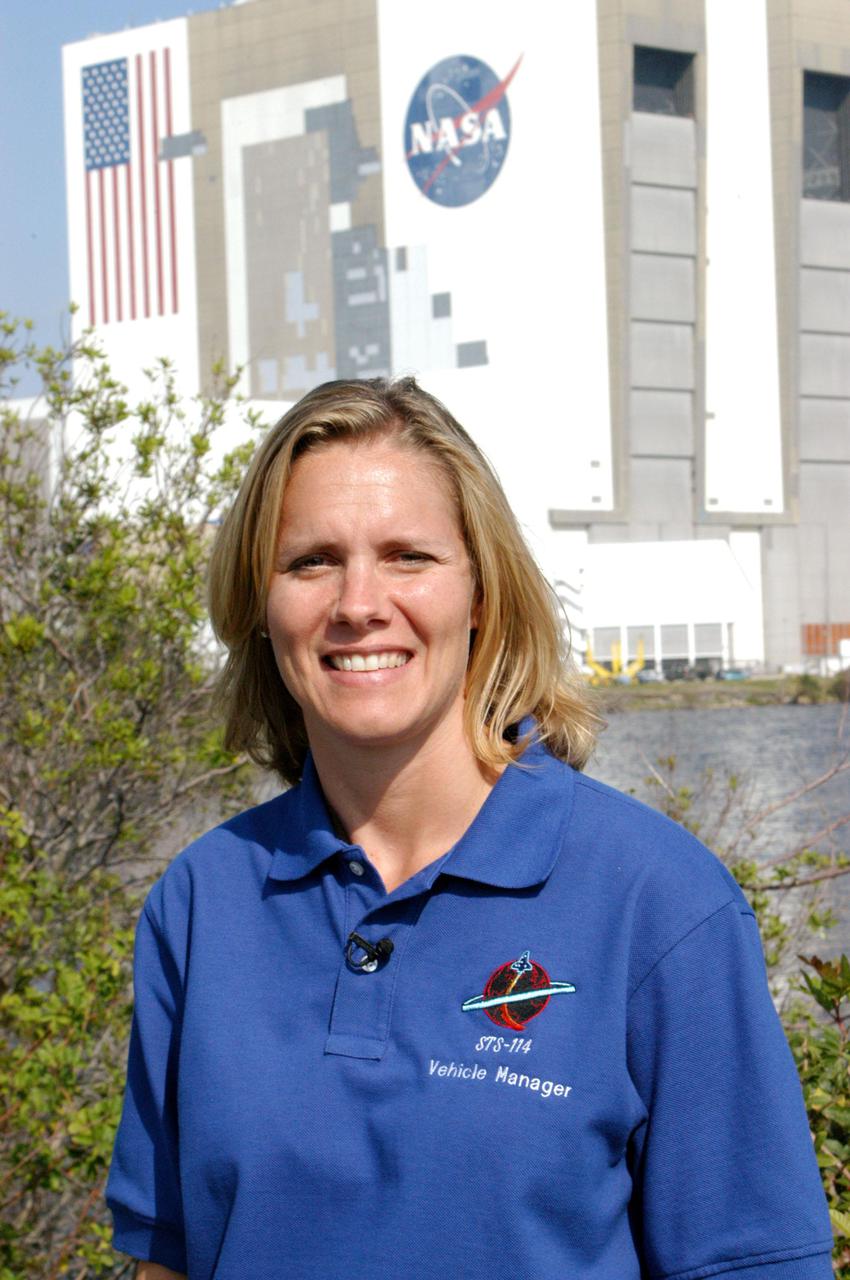
KENNEDY SPACE CENTER, FLA. - Official portrait of Stephanie Stilson, NASA Vehicle Manager - Discovery.
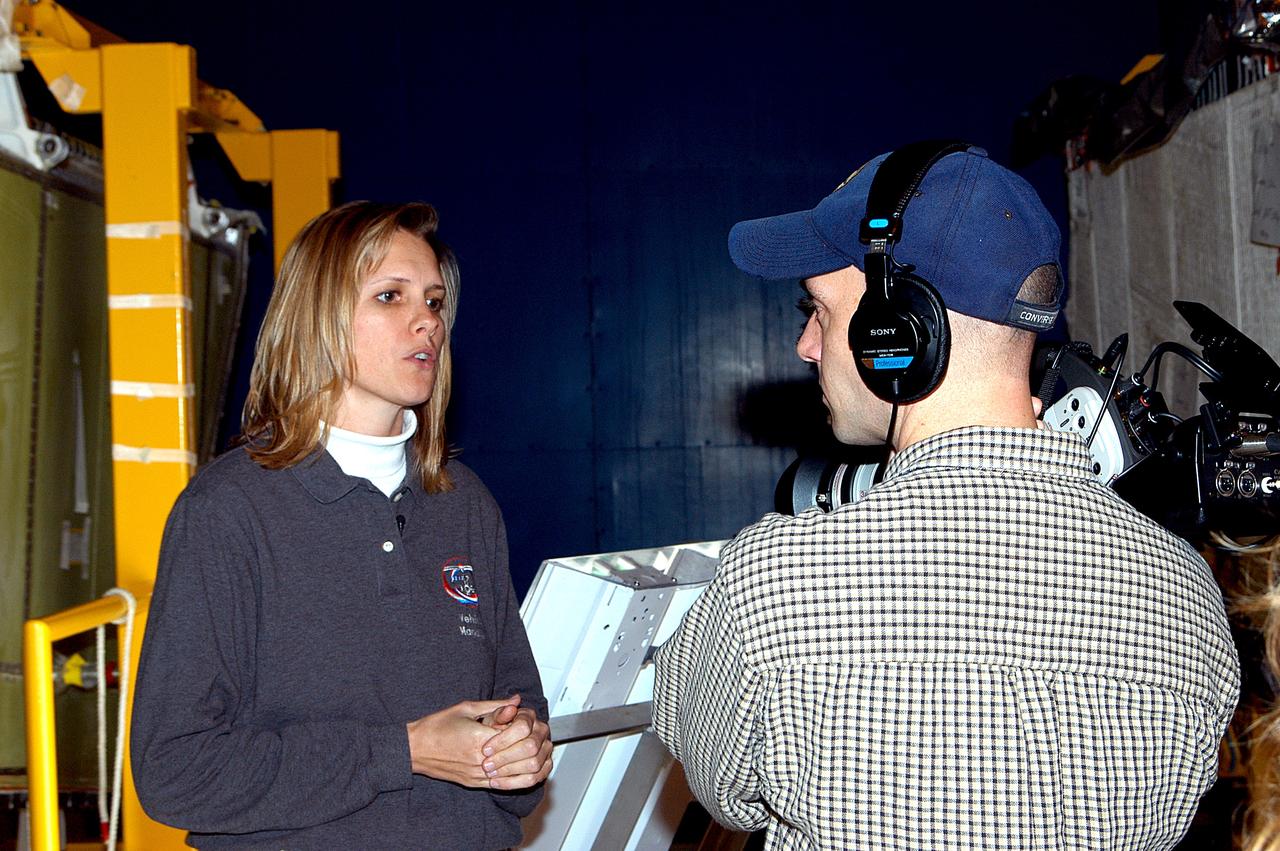
KENNEDY SPACE CENTER, FLA. - Stephanie Stilson, NASA vehicle manager for Discovery, is being filmed for a special feature on the KSC Web about the recent Orbiter Major Modification period, which included inspection, modifications and reservicing of most systems onboard Discovery, plus installation of a Multifunction Electronic Display Subsystem (MEDS) - a state-of-the-art “glass cockpit.” The orbiter is now being prepared for eventual launch on a future mission.
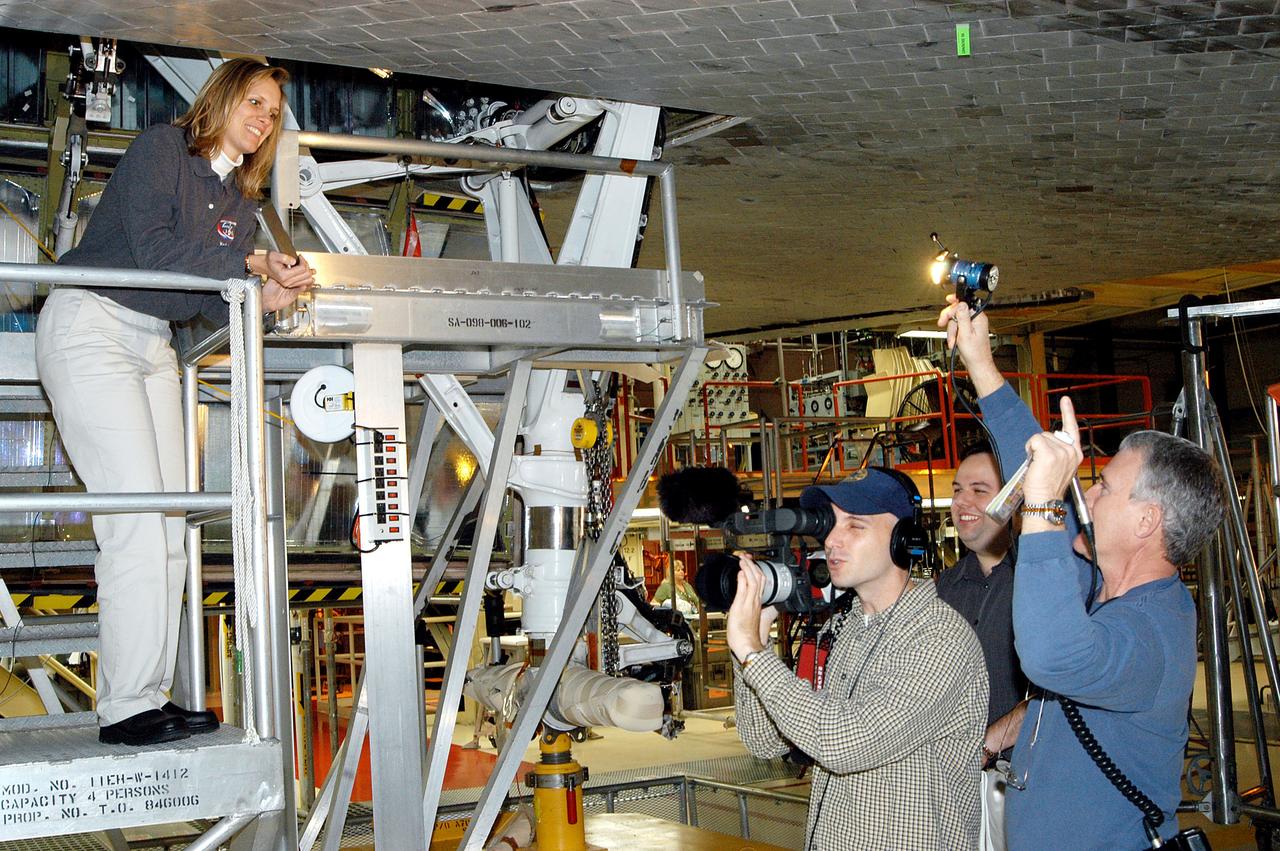
KENNEDY SPACE CENTER, FLA. - Standing on a workstand (at left) in the Orbiter Processing Facility is Stephanie Stilson, NASA vehicle manager for Discovery. She is being filmed for a special feature on the KSC Web about the recent Orbiter Major Modification period on Discovery, which included inspection, modifications and reservicing of most systems onboard, plus installation of a Multifunction Electronic Display Subsystem (MEDS) - a state-of-the-art “glass cockpit.” The orbiter is now being prepared for eventual launch on a future mission.
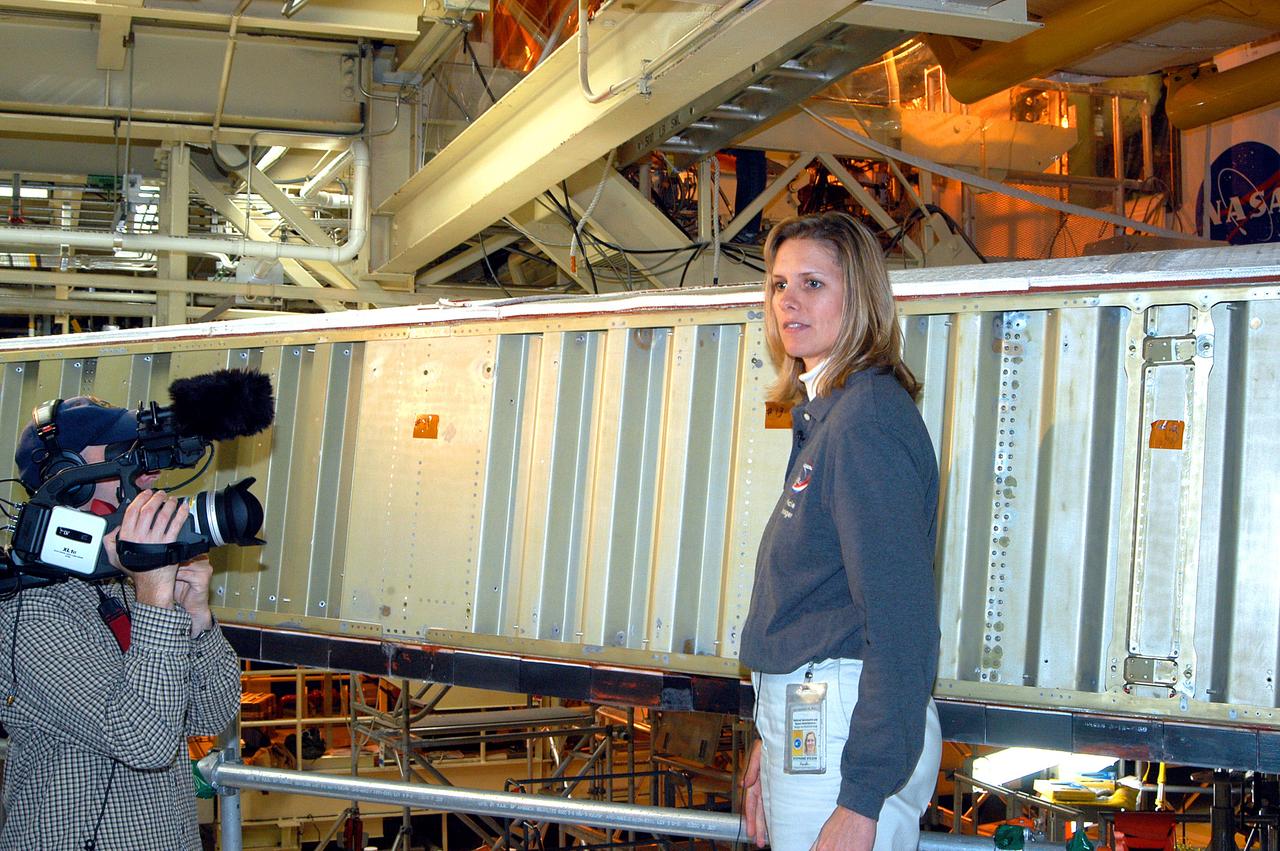
KENNEDY SPACE CENTER, FLA. - In the Orbiter Processing Facility, Stephanie Stilson, NASA vehicle manager for Discovery, stands in front of a leading edge on the wing of Discovery. She is being filmed for a special feature on the KSC Web about the recent Orbiter Major Modification period on Discovery, which included inspection, modifications and reservicing of most systems onboard, plus installation of a Multifunction Electronic Display Subsystem (MEDS) - a state-of-the-art “glass cockpit.” The orbiter is now being prepared for eventual launch on a future mission.
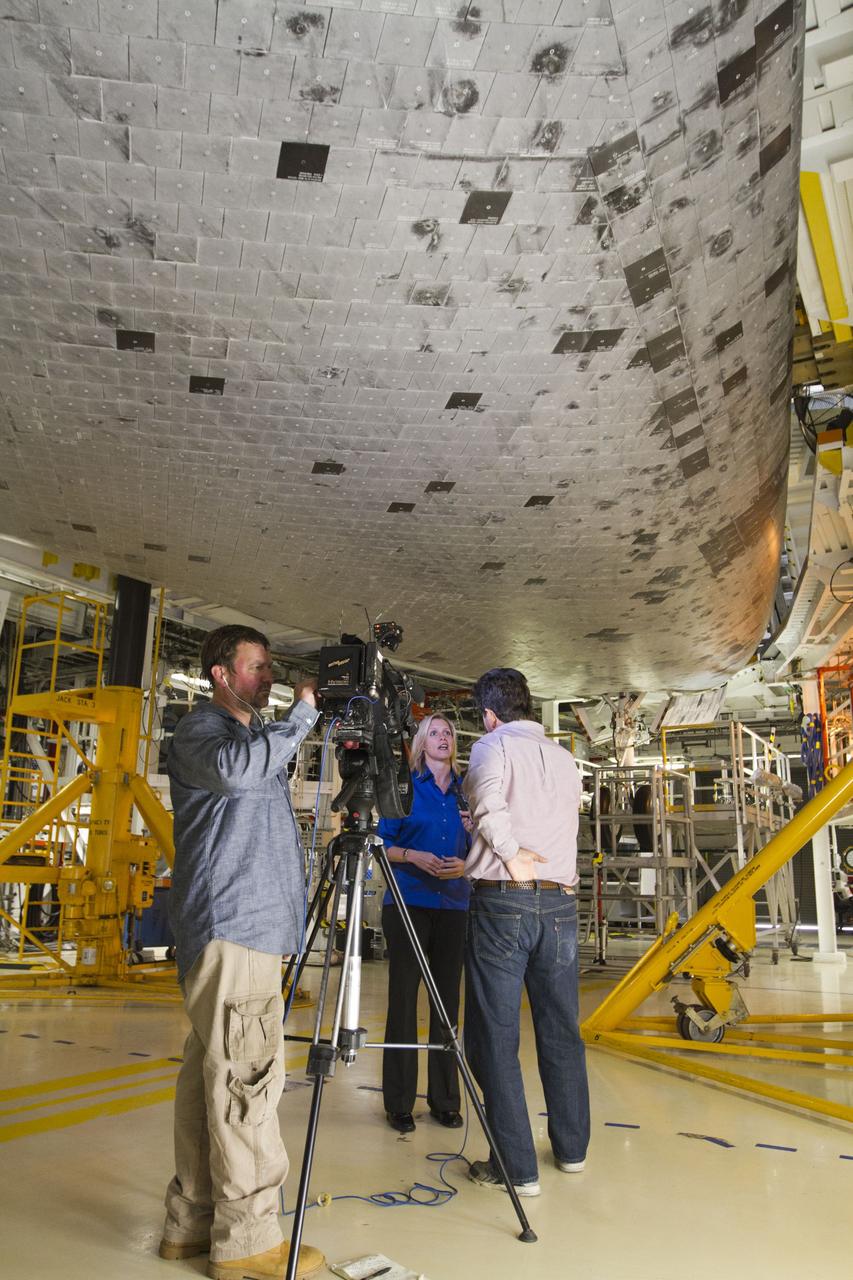
CAPE CANAVERAL, Fla. -- Standing beneath the midbody of space shuttle Endeavour, members of the news media interview Stephanie Stilson, NASA flow director for the shuttles' transition and retirement, inside Orbiter Processing Facility-2 at NASA's Kennedy Space Center in Florida. Stilson was one of several shuttle experts available for interviews around the outside of Endeavour and inside the shuttle's crew compartment. Ongoing transition and retirement activities are preparing the spacecraft for public display at the California Science Center in Los Angeles. Endeavour flew 25 missions during its 19-year career. Photo credit: NASA/Kim Shiflett
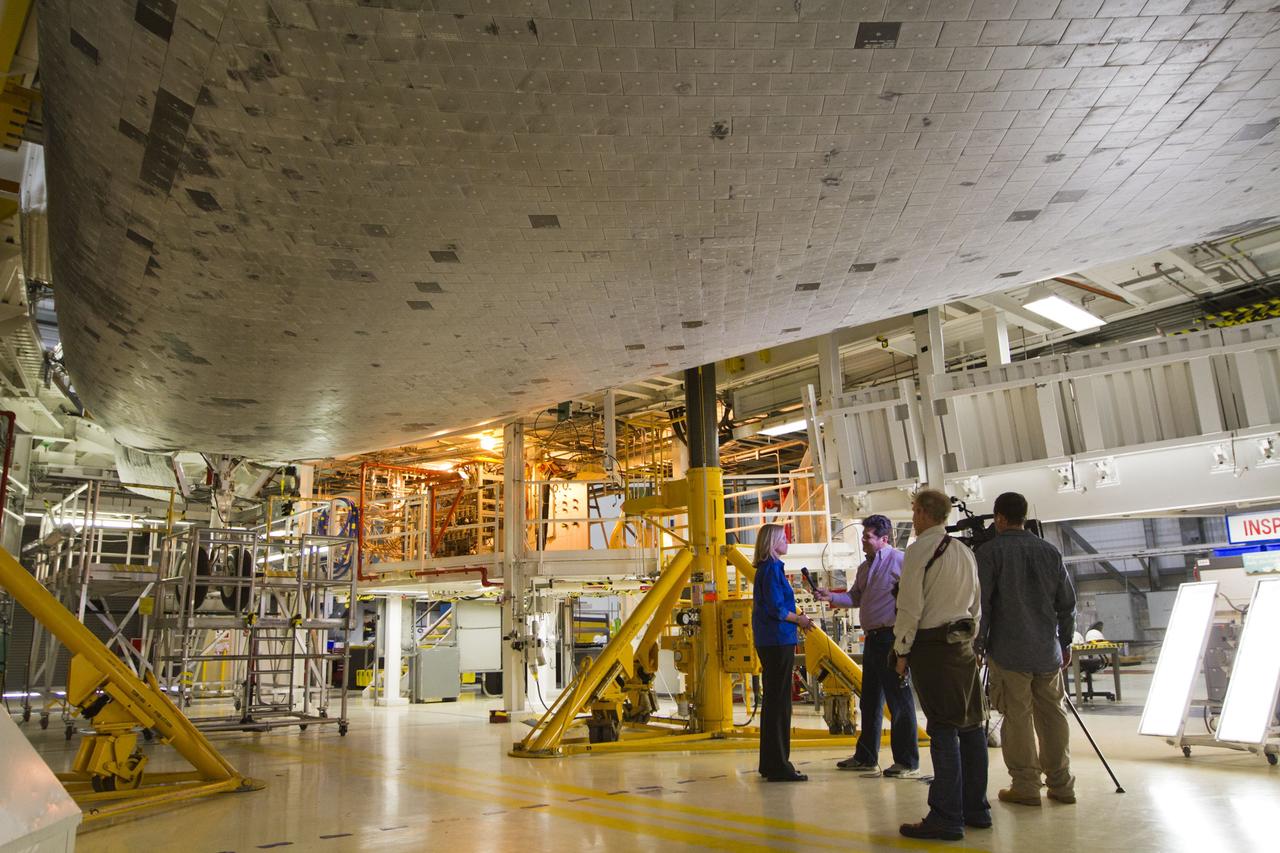
CAPE CANAVERAL, Fla. -- Standing beneath the midbody of space shuttle Endeavour, members of the news media interview Stephanie Stilson, NASA flow director for the shuttles' transition and retirement, inside Orbiter Processing Facility-2 at NASA's Kennedy Space Center in Florida. Stilson was one of several shuttle experts available for interviews around the outside of Endeavour and inside the shuttle's crew compartment. Ongoing transition and retirement activities are preparing the spacecraft for public display at the California Science Center in Los Angeles. Endeavour flew 25 missions during its 19-year career. Photo credit: NASA/Kim Shiflett
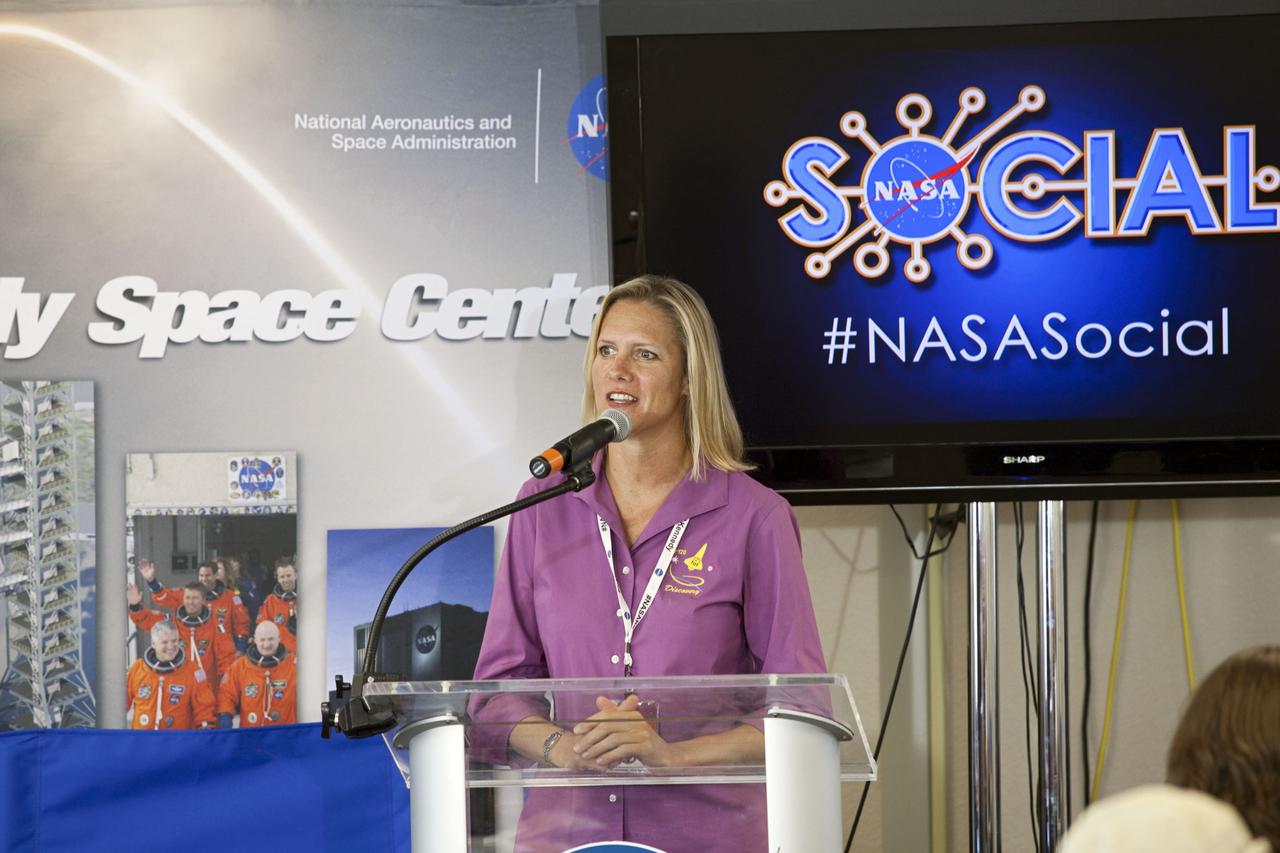
CAPE CANAVERAL, Fla. -- Stephanie Stilson, NASA flow director for Orbiter Transition and Retirement, speaks to about 45 of NASA’s social media followers during two days of presentations on the Kennedy Space Center's past, present and future. The social media participants gathered at the Florida spaceport on Aug. 2 and 3, 2012 to hear from key former and current leaders who related stories of the space agency's efforts to explore the unknown. It was the first social media event totally run by Kennedy. Photo credit: NASA/ Gianni Woods
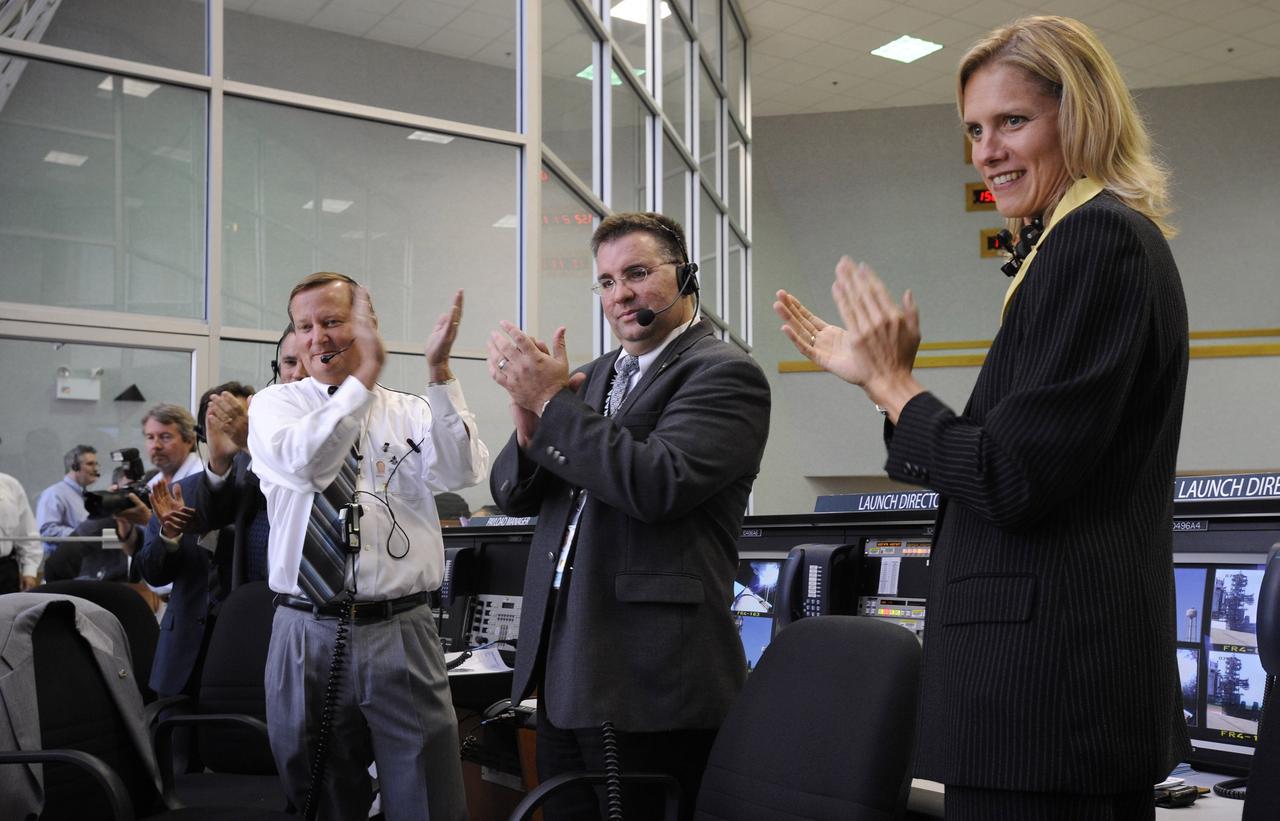
CAPE CANAVERAL, Fla. -- NASA Shuttle Launch Director Michael Leinbach, left, STS-124 Assistant Launch Director Ed Mango, center, and Flow Director for space shuttle Discovery Stephanie Stilson clap in the Launch Control Center after the main engine cut-off and successful launch of Discovery on the STS-124 mission Saturday, May 31, 2008, at NASA's Kennedy Space Center. The shuttle lifted off from Launch Pad 39A at 5:02 p.m. EDT. Photo credit: NASA/Bill Ingalls
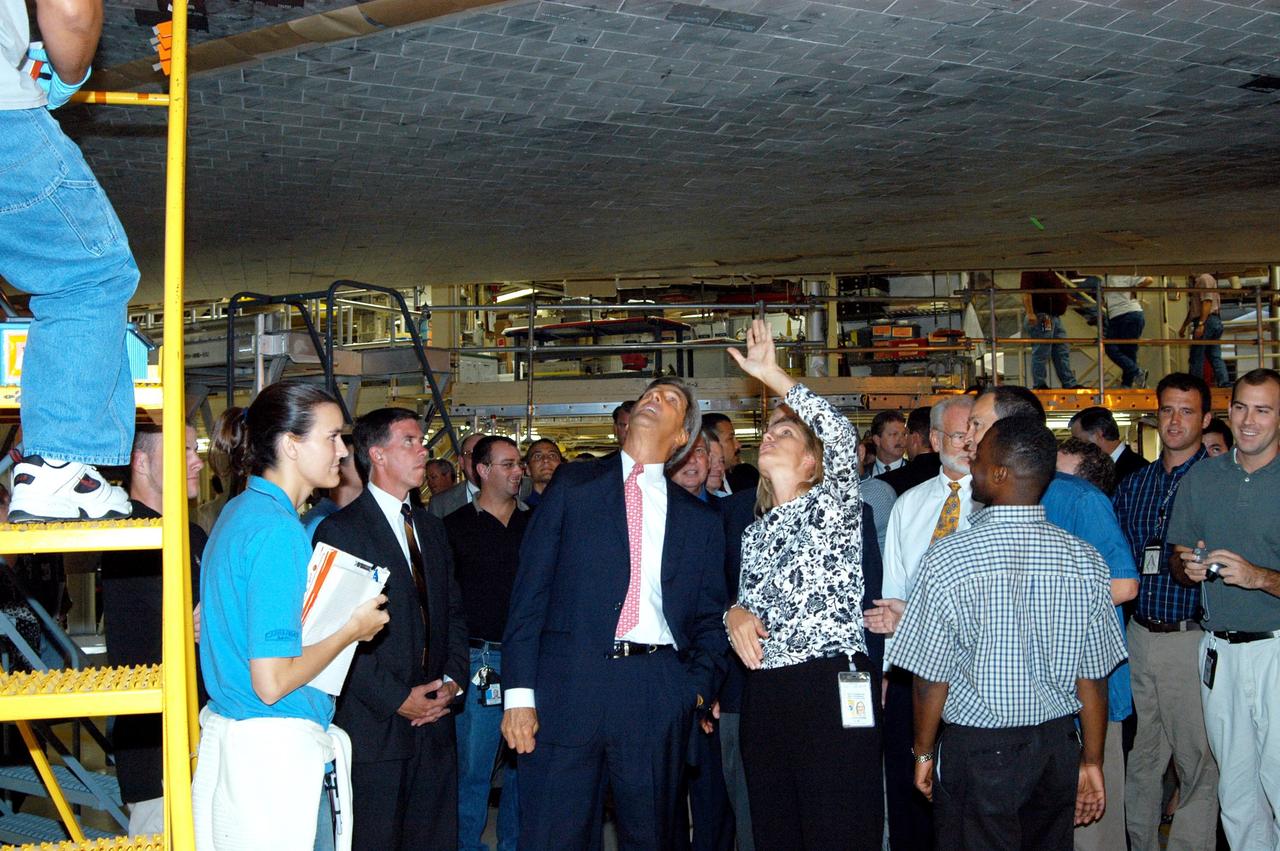
KENNEDY SPACE CENTER, FLA. - Sen. John F. Kerry (center), D-Mass., discusses Space Shuttle processing with NASA Vehicle Manager Stephanie Stilson during a tour of the Orbiter Processing Facility (OPF). They are standing under the orbiter Discovery, which is being prepared for flight on the next Space Shuttle mission. The tour follows a public meeting Kerry held at the Dr. Kurt H. Debus Conference Facility at the Kennedy Space Center Visitor Complex. He said he chose to speak at KSC because it symbolizes America’s commitment to science, innovation and technology. He and Sen. John Edwards, D-N.C., are on a speaking tour prior to their appearance at the Democratic National Convention in Boston.
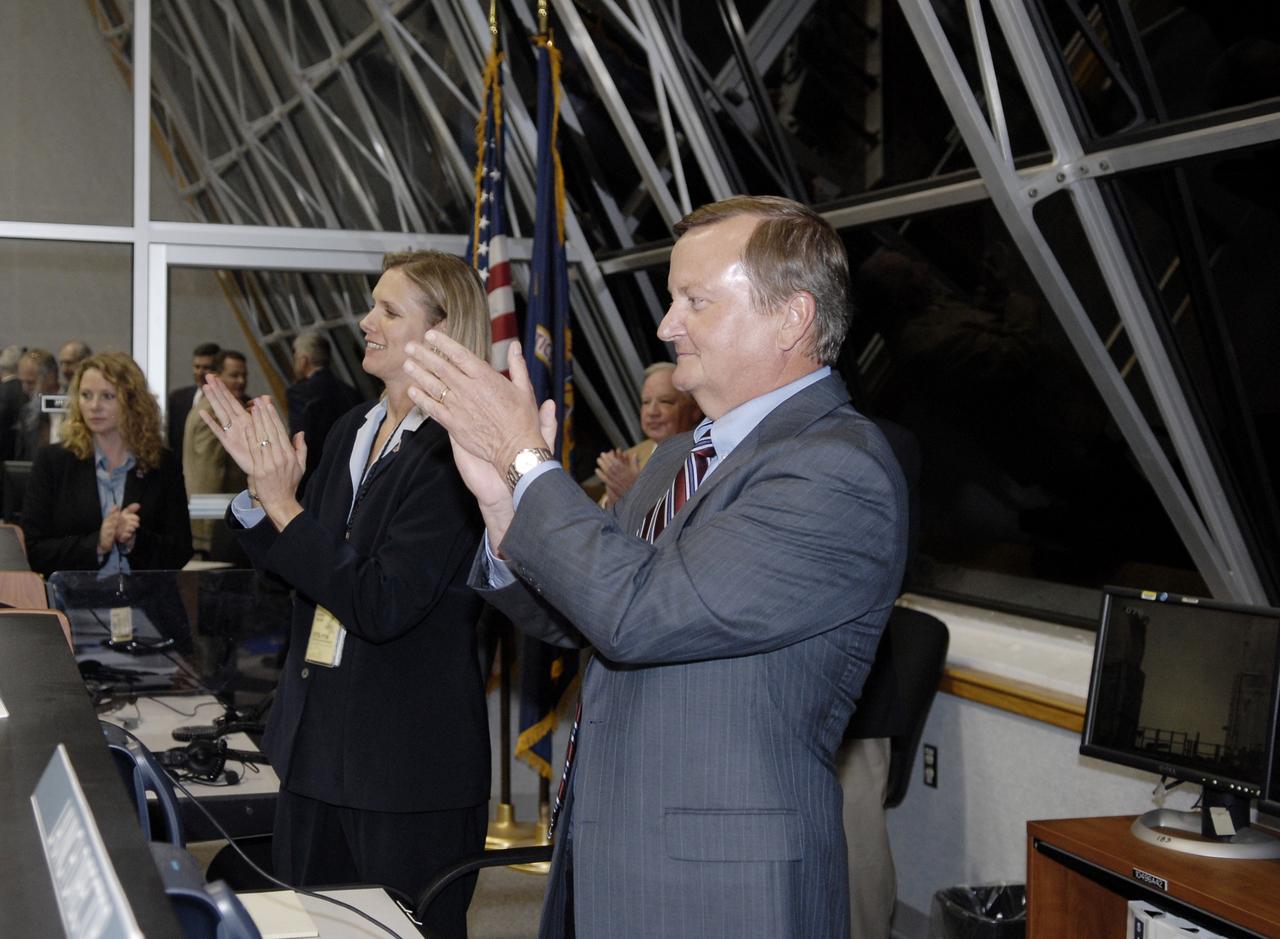
CAPE CANAVERAL, Fla. – In Firing Room 4 of the Launch Control Center at NASA's Kennedy Space Center in Florida, Flow Director for space shuttle Discovery Stephanie Stilson (center) and Shuttle Launch Director Mike Leinbach applaud the mission management team for the successful launch of space shuttle Discovery on the STS-119 mission. Launch was on time at 7:43 p.m. EDT. The STS-119 mission is the 28th to the space station and Discovery's 36th flight. Discovery will deliver the final pair of power-generating solar array wings and the S6 truss segment. Installation of S6 will signal the station's readiness to house a six-member crew for conducting increased science. Photo credit: NASA/Kim Shiflett
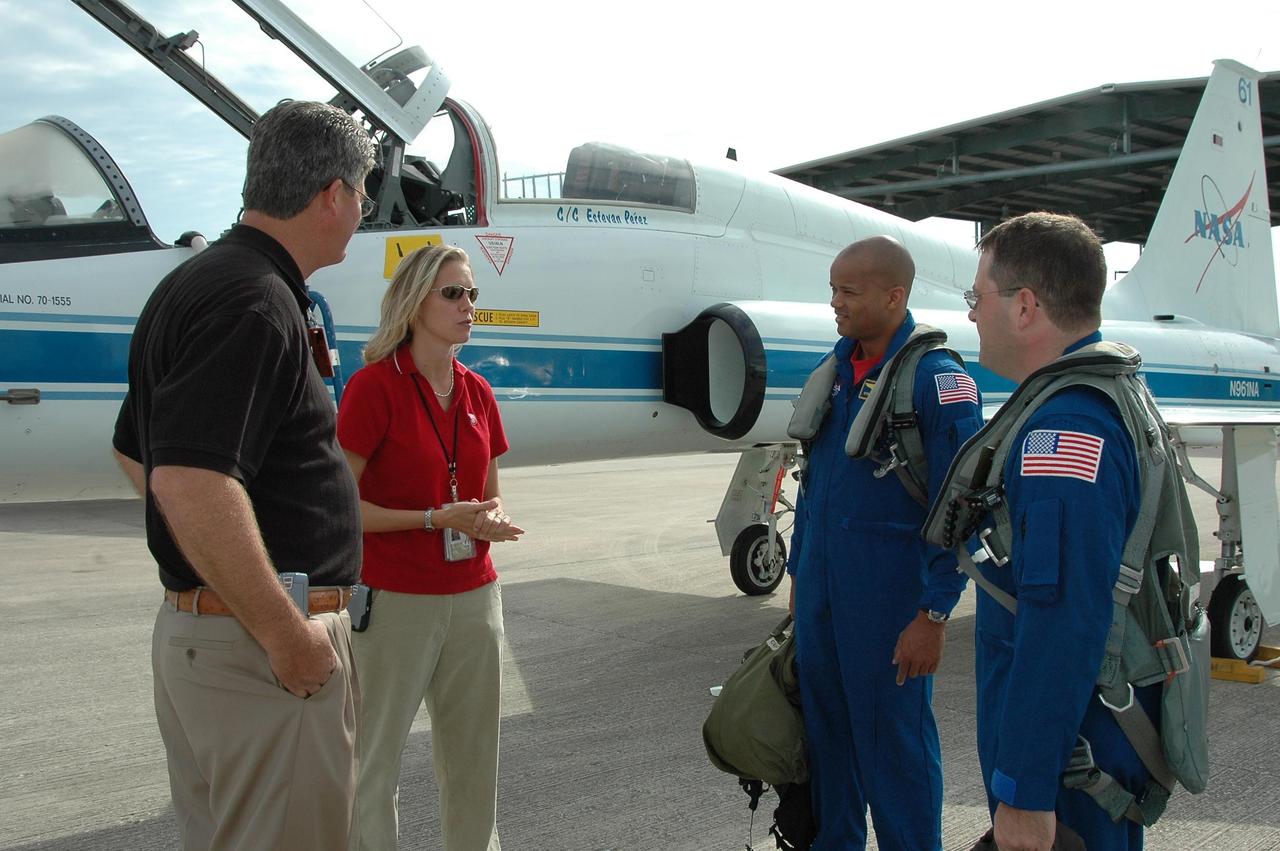
KENNEDY SPACE CENTER, FLA. - From left, at Kennedy Space Center’s Shuttle Landing Facility, Deputy Director William Parsons and Discovery Flow Director Stephanie Stilson greet STS-116 Mission Specialists Robert Curbeam and Nicholas Patrick after they arrive for the Crew Equipment Interface Test. Mission crews make frequent trips to the Space Coast to become familiar with the equipment and payloads they will be using. STS-116 will be mission No. 20 to the International Space Station and construction flight 12A.1. The mission payload is the SPACEHAB module, the P5 integrated truss structure and other key components. Launch is scheduled for no earlier than Dec. 7. Photo credit: NASA/Kim Shiflett
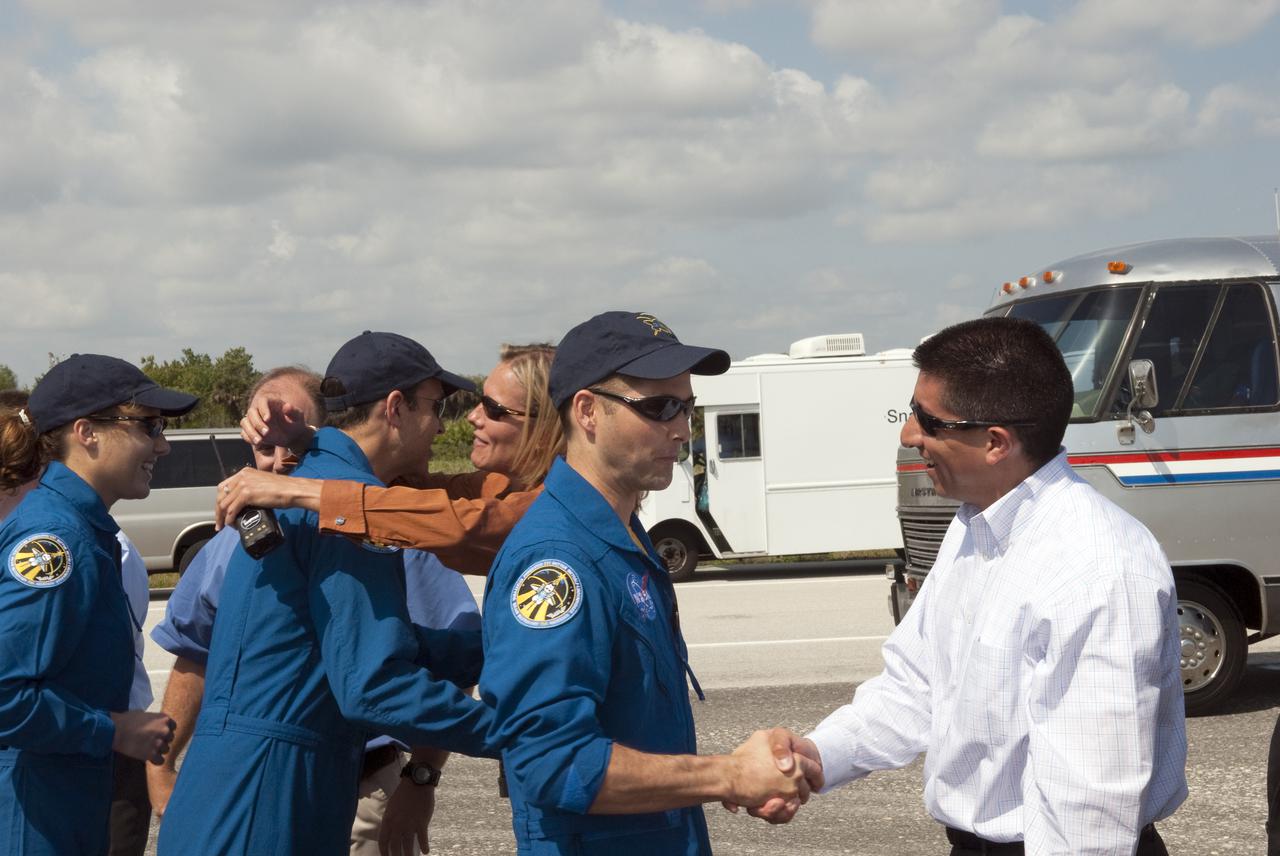
CAPE CANAVERAL, Fla. - At the Shuttle Landing Facility at NASA's Kennedy Space Center in Florida, STS-131 Pilot James P. Dutton Jr. is congratulated on a successful mission by NASA Flight Director Richard Jones from the Johnson Space Center, at right, as space shuttle Discovery's flow director, Stephanie Stilson, welcomes Mission Specialist Rick Mastracchio back from space. Mission Specialist Dorothy Metcalf-Lindenburger, at left, awaits her turn to talk to Stilson. Discovery landed at Kennedy after 15 days in space, completing the more than 6.2-million-mile STS-131 mission on orbit 238. Main gear touchdown was at 9:08:35 a.m. EDT followed by nose gear touchdown at 9:08:47 a.m. and wheelstop at 9:09:33 a.m. The seven-member STS-131 crew carried the multi-purpose logistics module Leonardo, filled with supplies, a new crew sleeping quarters and science racks that were transferred to the International Space Station's laboratories. The crew also switched out a gyroscope on the station’s truss, installed a spare ammonia storage tank and retrieved a Japanese experiment from the station’s exterior. STS-131 is the 33rd shuttle mission to the station and the 131st shuttle mission overall. For information on the STS-131 mission and crew, visit http:__www.nasa.gov_mission_pages_shuttle_shuttlemissions_sts131_index.html. Photo credit: NASA_Jim Grossmann
CAPE CANAVERAL, Fla. -- Outside Orbiter Processing Facility-2, or OPF-2, at NASA's Kennedy Space Center in Florida, Stephanie Stilson, Transition and Retirement orbiter flow director, answers questions from the media during the move of space shuttle Discovery to the Vehicle Assembly Building, or VAB. Discovery will be stored inside the VAB for approximately one month while shuttle Atlantis undergoes processing in OPF-2 following its final mission, STS-135. Discovery flew its 39th and final mission, STS-133, in February and March 2011, and currently is being prepared for public display at the Smithsonian's National Air and Space Museum Steven F. Udvar-Hazy Center in Virginia. For more information about Discovery's Transition and Retirement, visit www.nasa.gov/mission_pages/shuttle/launch/discovery_rss_collection_archive_1.html. Photo credit: NASA/Ken Thornsley
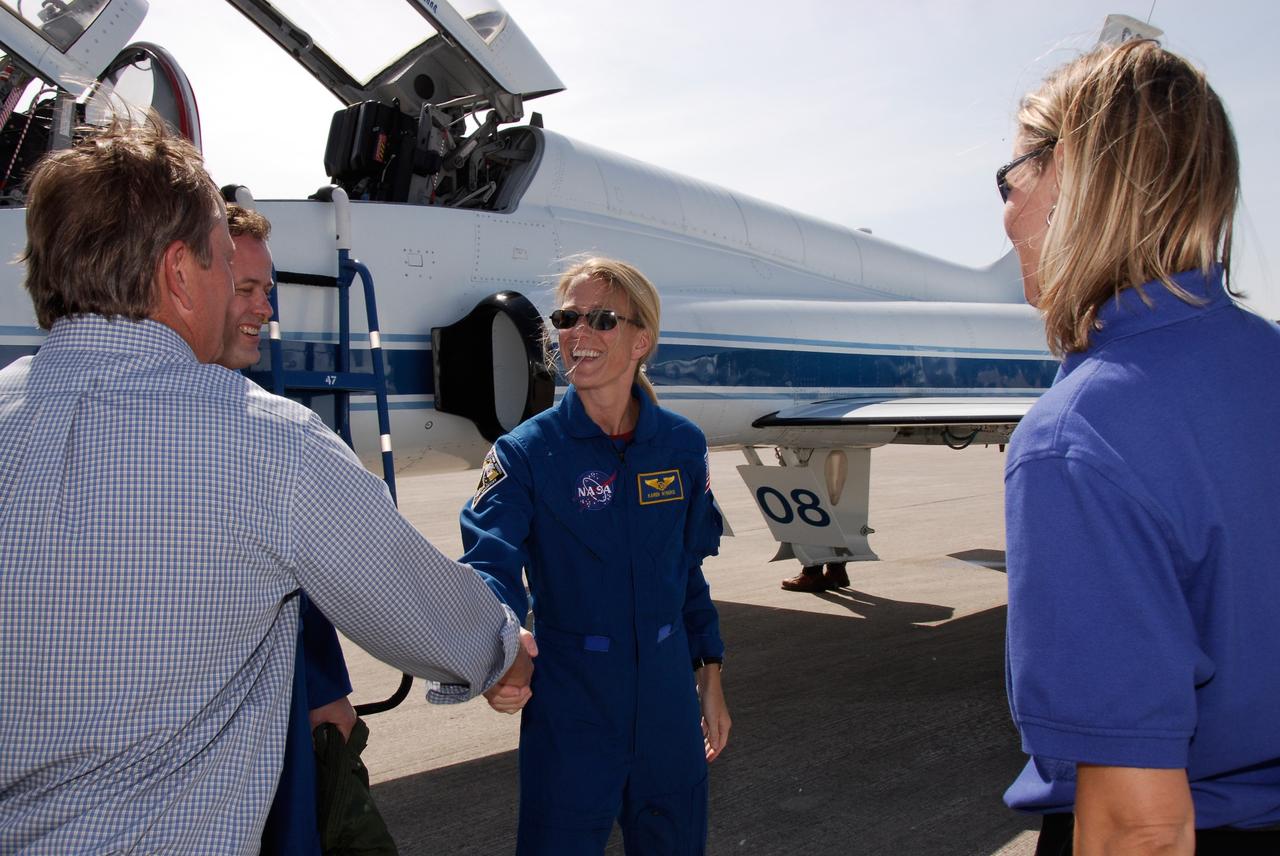
CAPE CANAVERAL, Fla. -- The crew of space shuttle Discovery's STS-124 mission arrive at NASA Kennedy Space Center's Shuttle Landing Facility to take part in the Terminal Countdown Demonstration Test, or TCDT. Here Shuttle Launch Director Mike Leinbach (left) greets Mission Specialist Karen Nyberg. Between them is Mission Specialist Ron Garan. At right is NASA Flow Director for Discovery Stephanie Stilson. TCDT is a rehearsal for launch that includes practicing emergency procedures, handling on-orbit equipment, and simulating a launch countdown. On the STS-124 mission, the crew will deliver and install the Japanese Experiment Module – Pressurized Module and Japanese Remote Manipulator System. Discovery's launch is targeted for May 31. Photo credit: NASA/Kim Shiflett
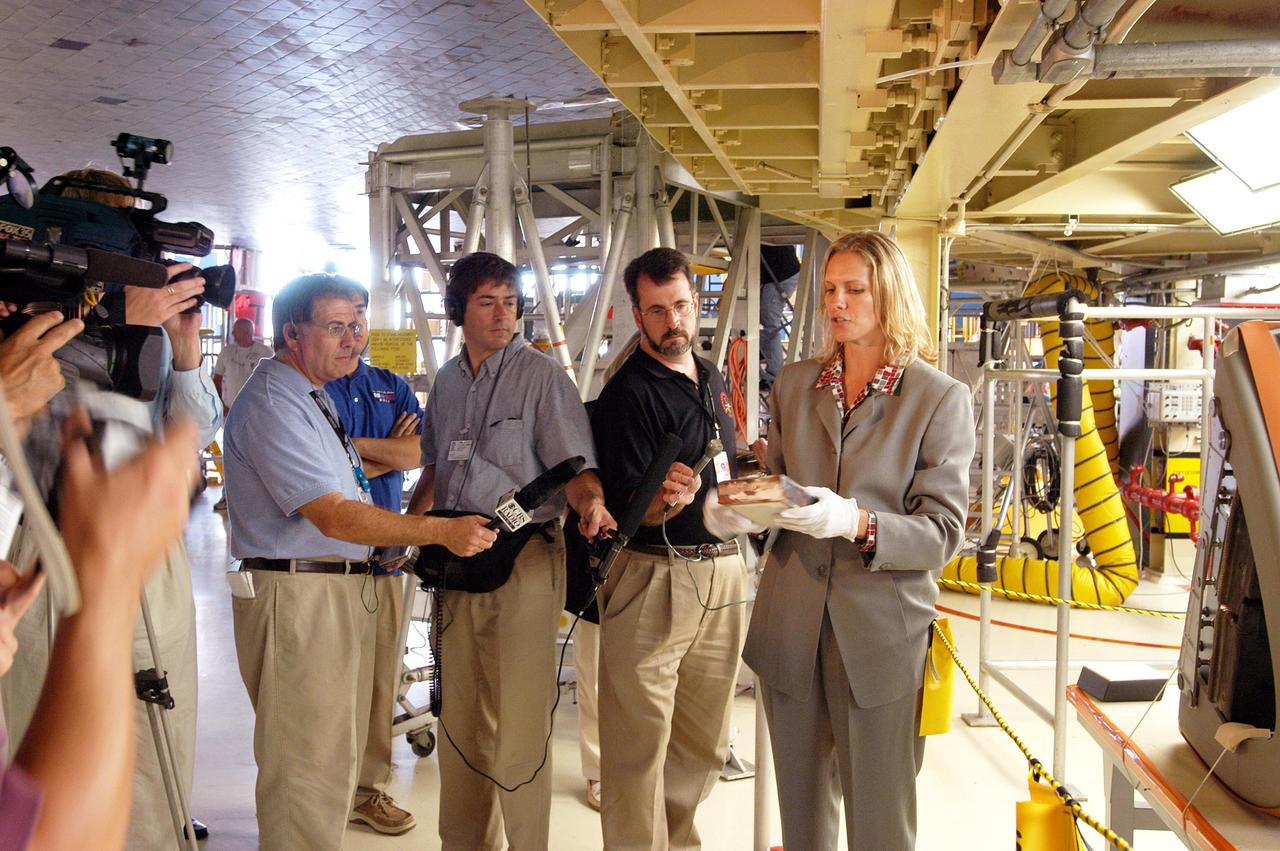
KENNEDY SPACE CENTER, FLA. - Stephanie Stilson (right), NASA Vehicle Manager, briefs the media attending an informative workshop and tour of the Orbiter Processing Facility (OPF) housing the Space Shuttle Discovery at KSC. During this event, the media received the latest information on Discovery’s processing and viewed workers preparing the vehicle for its safe return to flight scheduled for a launch planning window of March 2005. Kicking off the activities at the Press Site Auditorium, technical experts led two workshops addressing Reinforced Carbon-Carbon and vehicle instrumentation. During the tour of the OPF, reporters saw work in progress on Discovery, including reinstallation of the Reinforced Carbon-Carbon panels on the Shuttle's wing leading edge, wiring inspections and instrumentation updates being completed for Return to Flight.
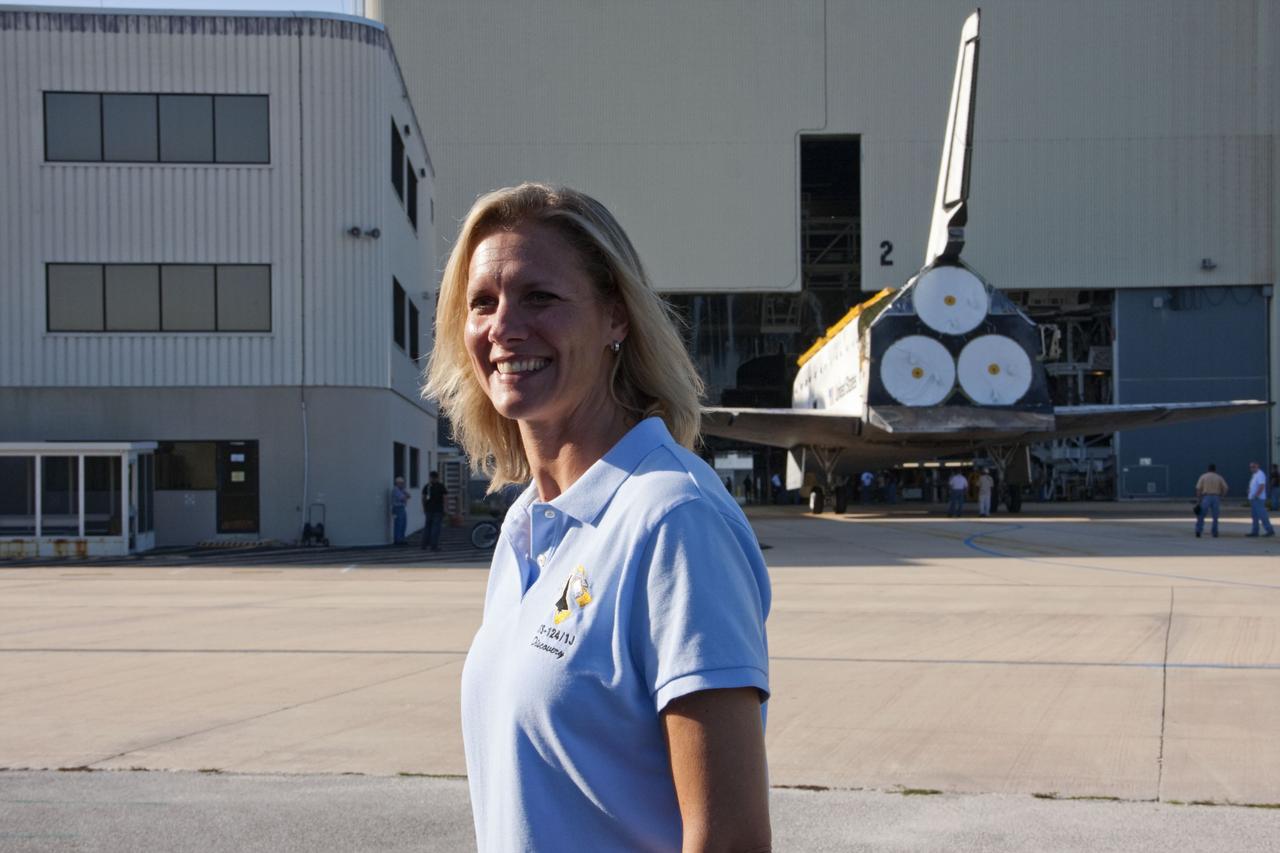
KENNEDY SPACE CENTER, FLA. -- Space Shuttle Discovery Flow Director Stephanie Stilson poses with the orbiter in the background as it is moved from the Vehicle Assembly Building to Launch Pad 39A. First motion out of the VAB was at 6:47 a.m. EDT. Rollout is a milestone for Discovery's launch to the International Space Station on mission STS-120, targeted for Oct. 23. The crew will be delivering and installing the Italian-built U.S. Node 2, named Harmony. The pressurized module will act as an internal connecting port and passageway to additional international science labs and cargo spacecraft. In addition to increasing the living and working space inside the station, it also will serve as a work platform outside for the station's robotic arm. Photo credit: NASA/George Shelton
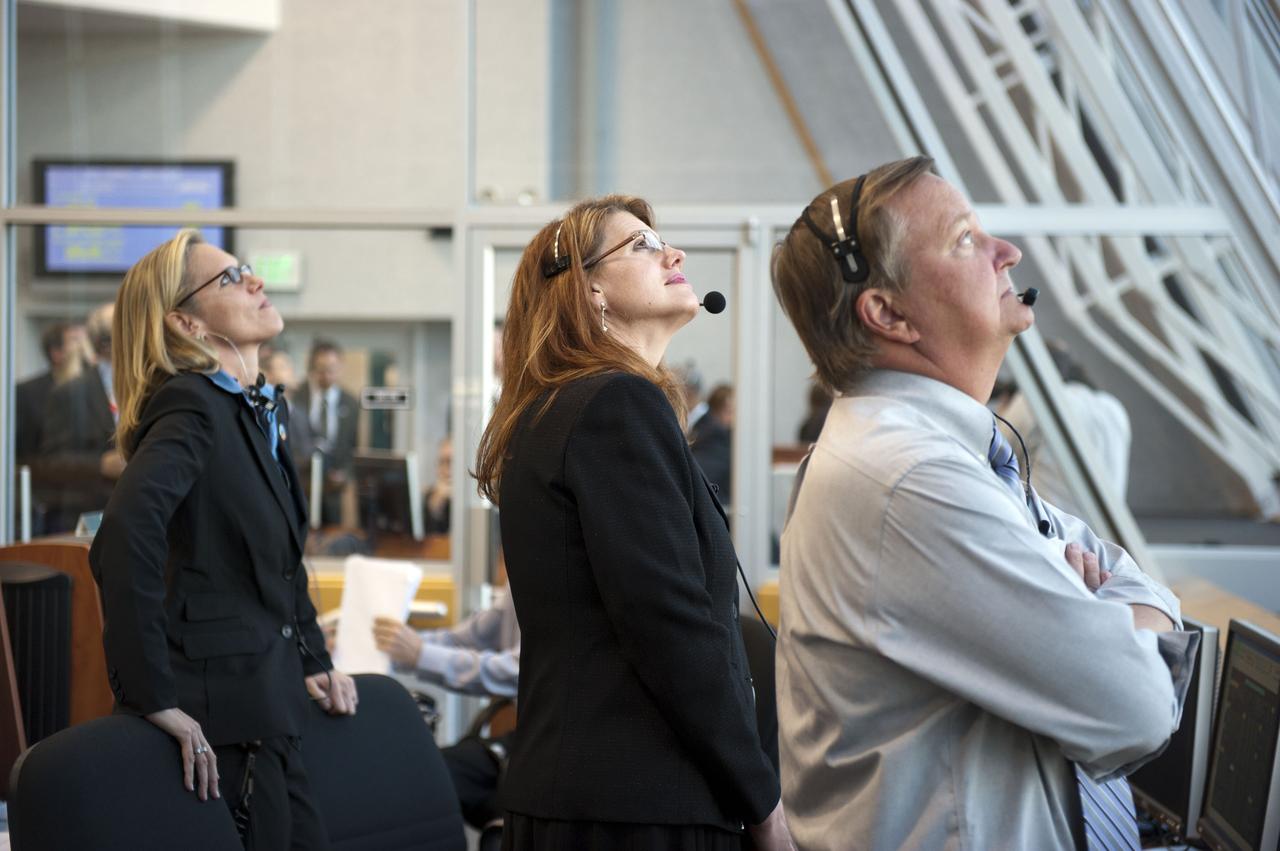
STS133-S-067 (24 Feb. 2011) --- In Firing Room 4 of the Launch Control Center at NASA's Kennedy Space Center in Florida, NASA's Discovery Flow Director Stephanie Stilson, left, STS-133 Assistant Shuttle Launch Director and lead NASA Test Director Charlie Blackwell-Thompson and Shuttle Launch Director Mike Leinbach watch space shuttle Discovery head toward Earth orbit on the STS-133 mission to the International Space Station. Discovery and its six-member crew are on a mission to deliver the Permanent Multipurpose Module, packed with supplies and critical spare parts, as well as Robonaut 2, the dexterous humanoid astronaut helper, to the orbiting outpost. Discovery is making its 39th mission and is scheduled to be retired following STS-133. This is the 133rd Space Shuttle Program mission and the 35th shuttle voyage to the space station. Photo credit: NASA or National Aeronautics and Space Administration
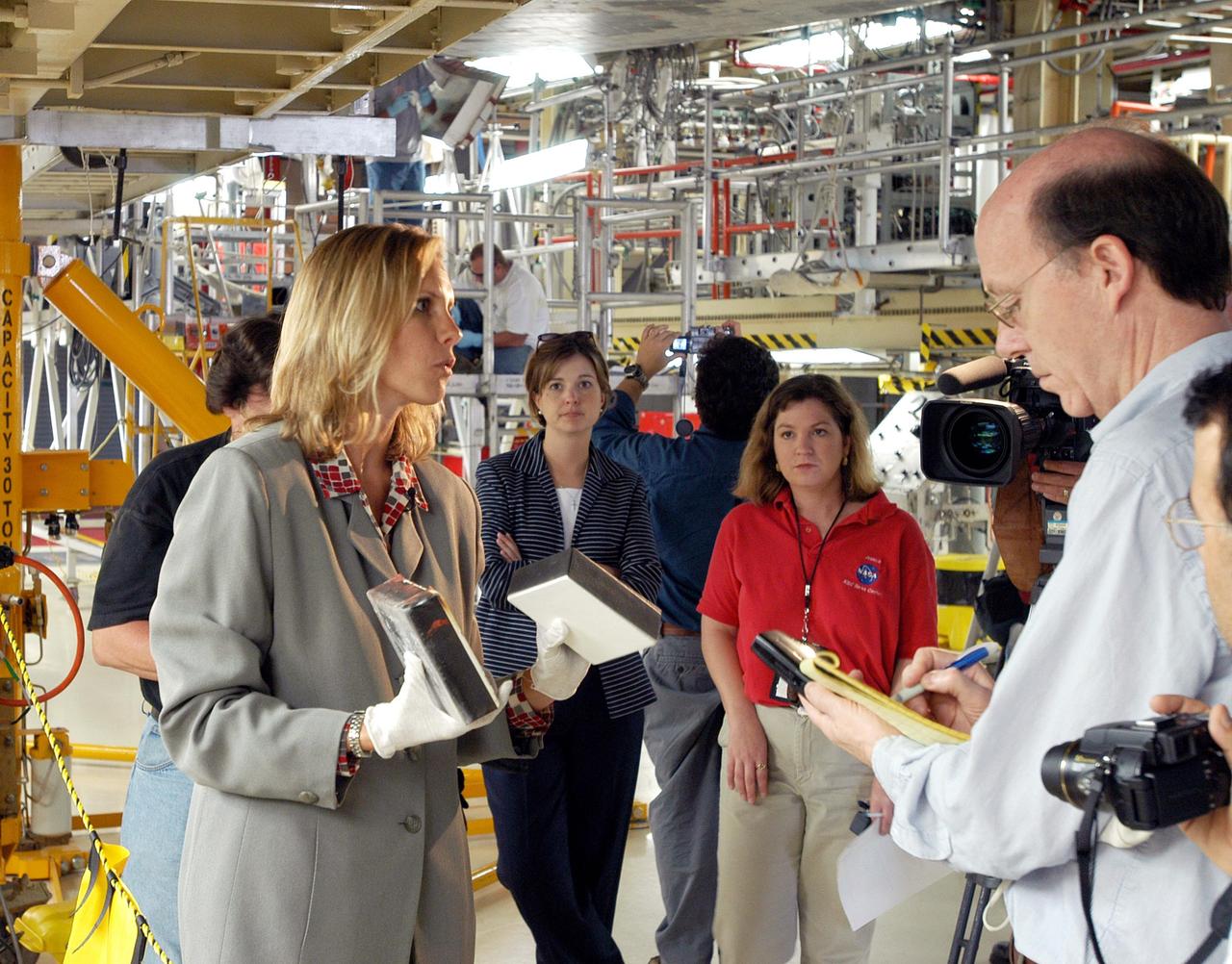
KENNEDY SPACE CENTER, FLA. - Stephanie Stilson (left), NASA Vehicle Manager, briefs the media attending an informative workshop and tour of the Orbiter Processing Facility (OPF) housing the Space Shuttle Discovery at KSC. During this event, the media received the latest information on Discovery’s processing and viewed workers preparing the vehicle for its safe return to flight scheduled for a launch planning window of March 2005. Kicking off the activities at the Press Site Auditorium, technical experts led two workshops addressing Reinforced Carbon-Carbon and vehicle instrumentation. During the tour of the OPF, reporters saw work in progress on Discovery, including reinstallation of the Reinforced Carbon-Carbon panels on the Shuttle's wing leading edge, wiring inspections and instrumentation updates being completed for Return to Flight.
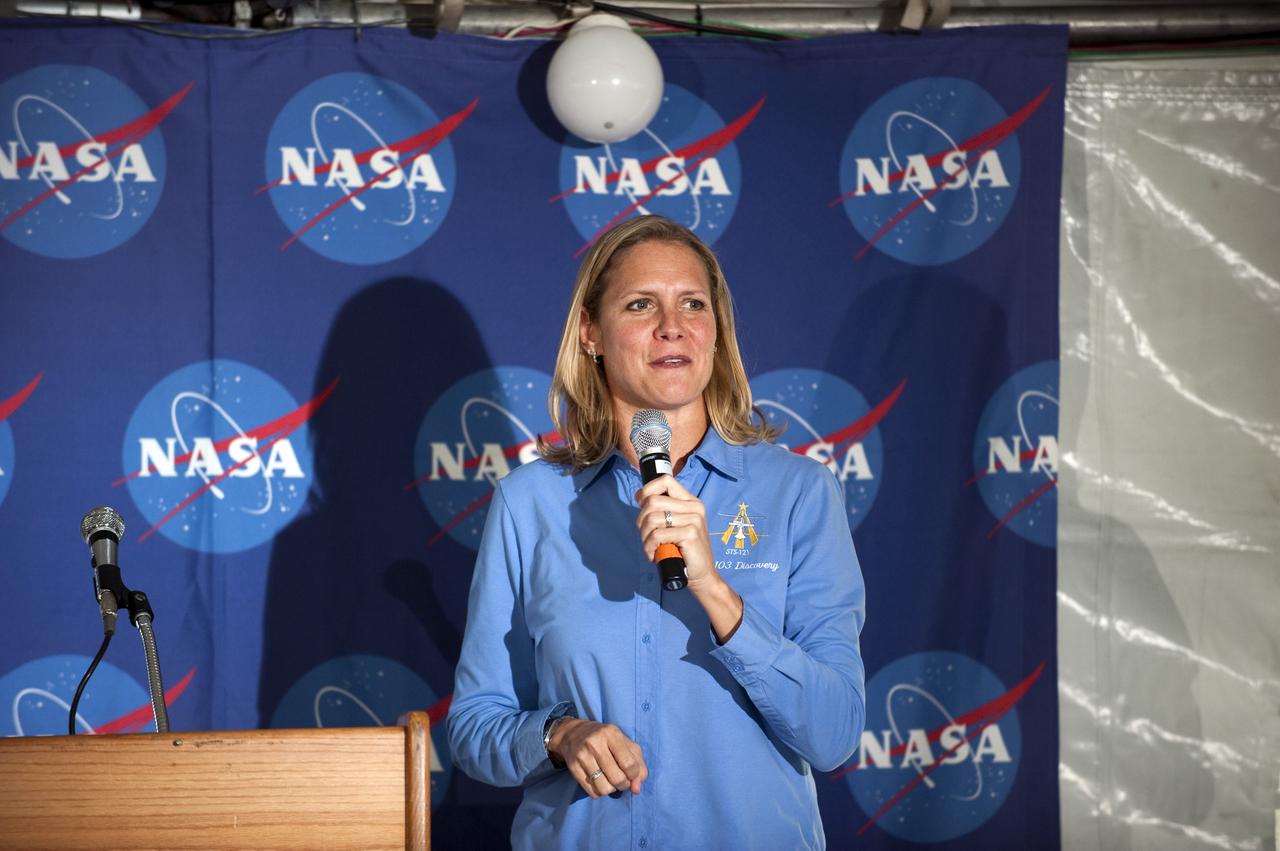
CAPE CANAVERAL, Fla. -- At NASA's Kennedy Space Center in Florida, space shuttle Discovery Flow Director Stephanie Stilson addresses participants of the STS-133 Tweetup. NASA is hosting about 150 of its Twitter followers from around the world and several dozen states and providing them with a behind-the-scenes perspective to share with their own followers on the social networking service. The "Tweeps," as NASA calls them, will have a chance to tour Kennedy and meet with shuttle technicians, managers, engineers and astronauts. They also will receive a demonstration of Robonaut, a human-like robot similar to the one that will be delivered to the International Space Station on the STS-133 mission. Space shuttle Discovery and its STS-133 crew are scheduled to launch Nov. 3 at 3:52 p.m. EDT. For more information on the upcoming mission, visit www.nasa.gov/mission_pages/shuttle/shuttlemissions/sts133/. Photo credit: NASA/Kim Shiflett
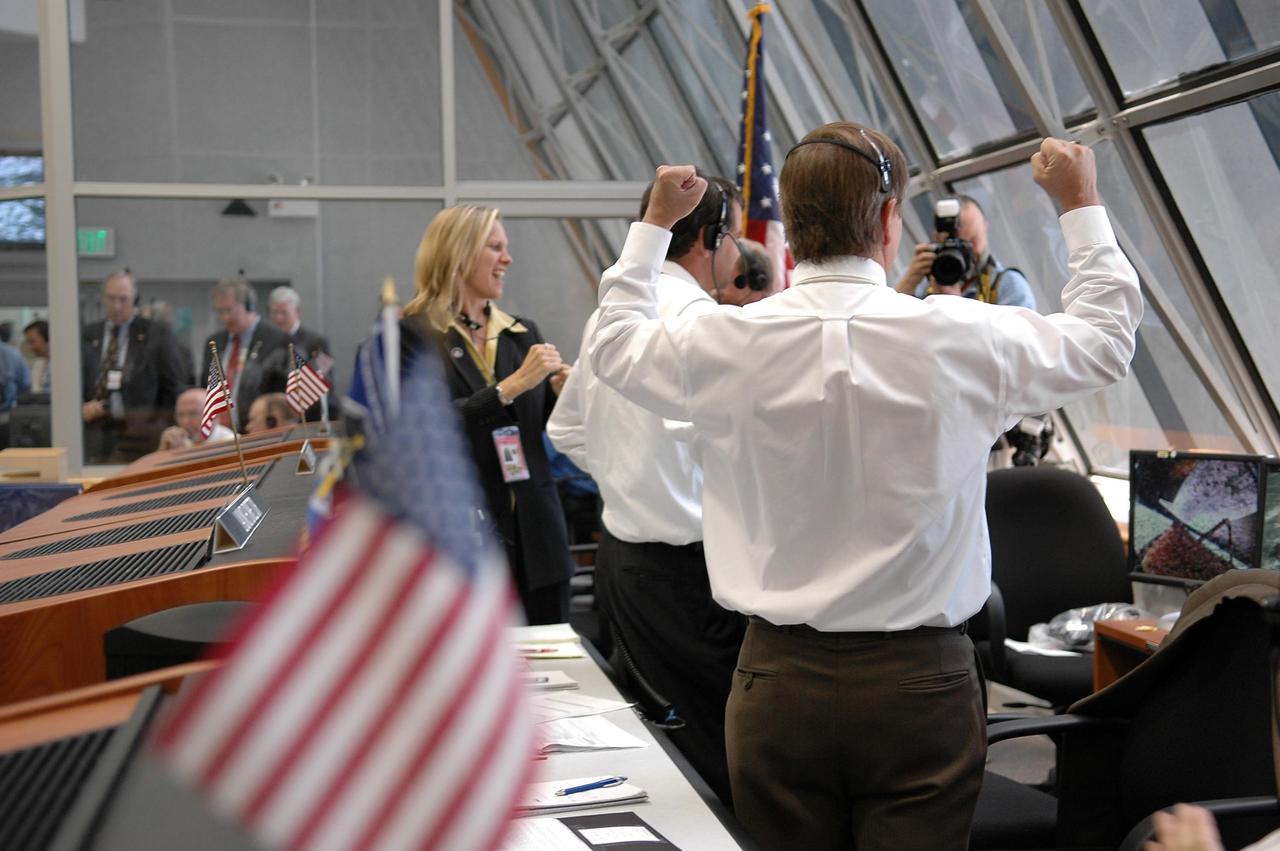
KENNEDY SPACE CENTER, FLA. - In Firing Room 4 of the Launch Control Center, Shuttle Launch Director Mike Leinbach (foreground) cheers over the successful liftoff of Space Shuttle Discovery, watching it rocket through the sky on mission STS-121 -- the first ever Independence Day launch of a space shuttle. At far left is Stephanie Stilson, NASA flow director in the Process Integration Branch of the Shuttle Processing Directorate, who began conducting Discovery's processing operations in December 2000. Liftoff was on-time at 2:38 p.m. EDT. During the 12-day mission, the STS-121 crew of seven will test new equipment and procedures to improve shuttle safety, as well as deliver supplies and make repairs to the International Space Station. Landing is scheduled for July 16 or 17 at Kennedy's Shuttle Landing Facility. Photo credit: NASA/Kim Shiflett
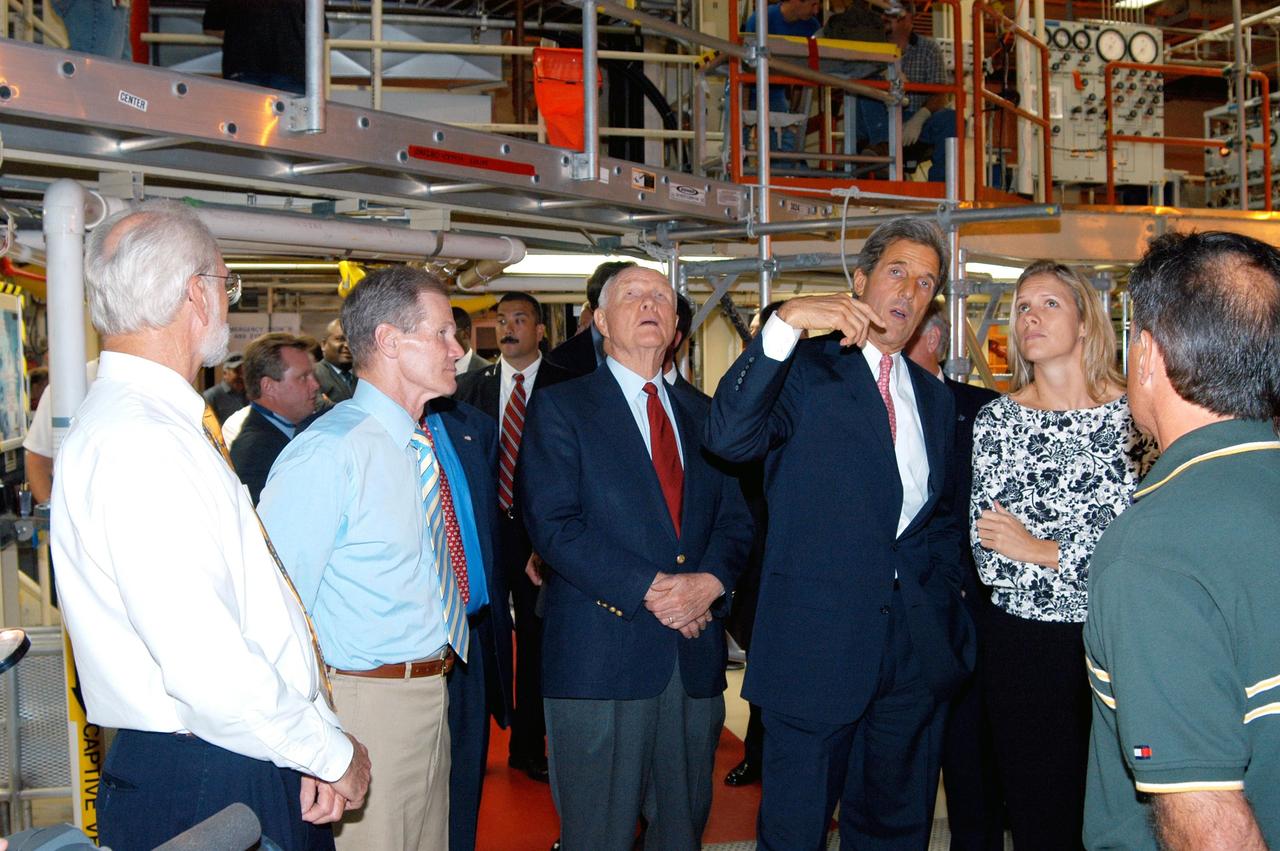
KENNEDY SPACE CENTER, FLA. - Sen. Bill Nelson (second from left), D-Fla., former astronaut and Sen. John H. Glenn, D-Ohio, and Sen. John F. Kerry, D-Mass., receive a briefing from NASA Vehicle Manager Stephanie Stilson during a tour of the Orbiter Processing Facility (OPF). They are standing under the orbiter Discovery, which is being prepared for flight on the next Space Shuttle mission. The tour follows a public meeting Kerry held at the Dr. Kurt H. Debus Conference Facility at the Kennedy Space Center Visitor Complex. He said he chose to speak at KSC because it symbolizes America’s commitment to science, innovation and technology. He and Sen. John Edwards, D-N.C., are on a speaking tour prior to their appearance at the Democratic National Convention in Boston.
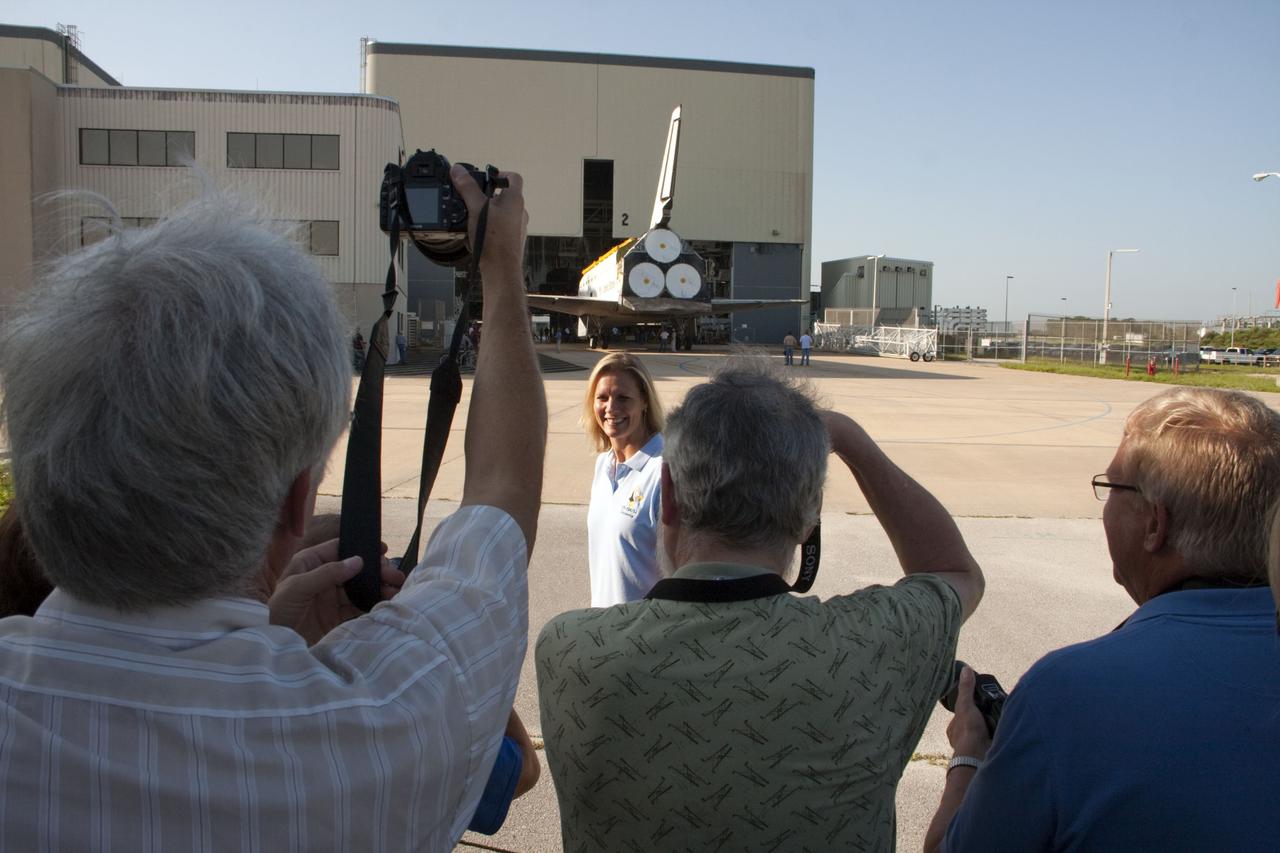
CAPE CANAVERAL, Fla. -- Outside Orbiter Processing Facility-2, or OPF-2, at NASA's Kennedy Space Center in Florida, media on hand to cover the move of space shuttle Discovery to the Vehicle Assembly Building, or VAB, are given the opportunity to interview Stephanie Stilson, Transition and Retirement orbiter flow director. Discovery will be stored inside the VAB for approximately one month while shuttle Atlantis undergoes processing in OPF-2 following its final mission, STS-135. Discovery flew its 39th and final mission, STS-133, in February and March 2011, and currently is being prepared for public display at the Smithsonian's National Air and Space Museum Steven F. Udvar-Hazy Center in Virginia. For more information about Discovery's Transition and Retirement, visit www.nasa.gov/mission_pages/shuttle/launch/discovery_rss_collection_archive_1.html. Photo credit: NASA/Ken Thornsley
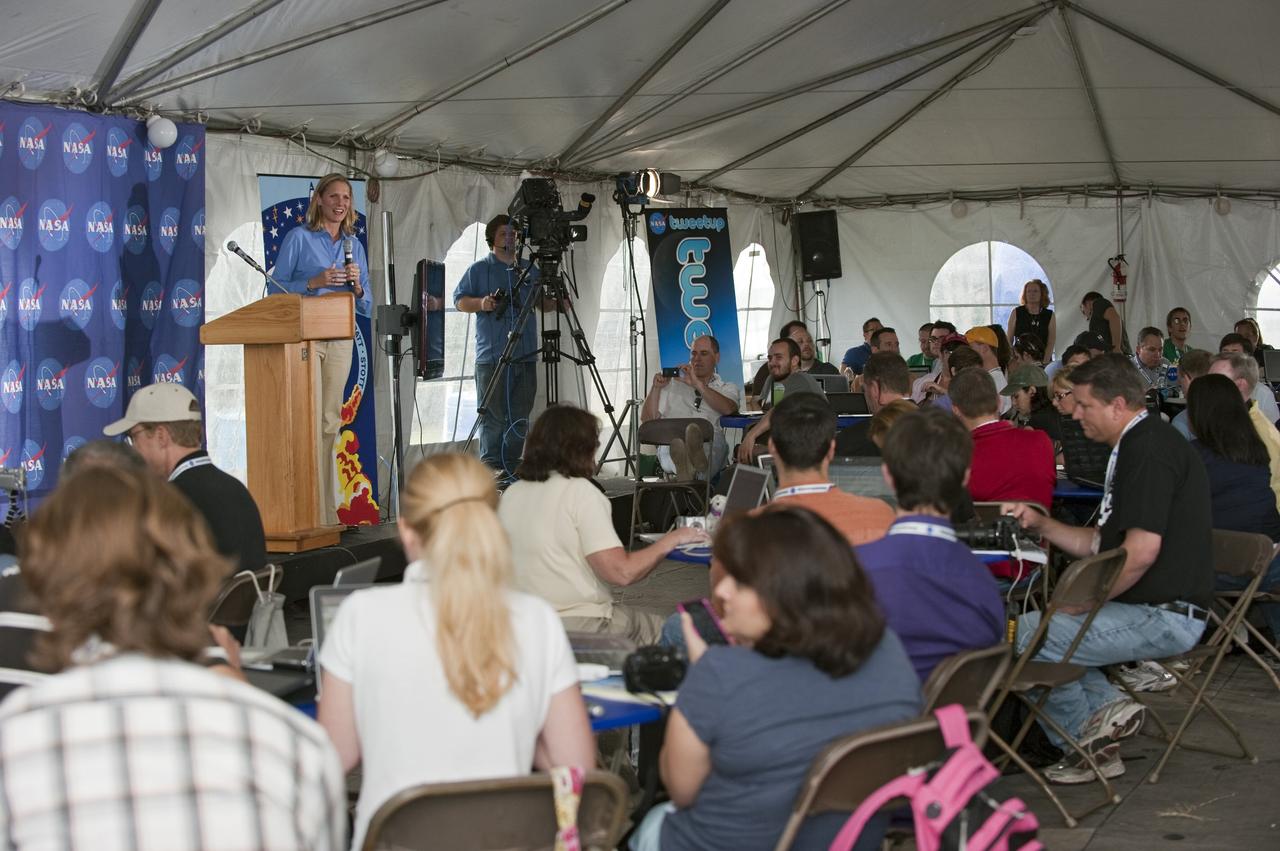
CAPE CANAVERAL, Fla. -- At NASA's Kennedy Space Center in Florida, space shuttle Discovery Flow Director Stephanie Stilson addresses participants of the STS-133 Tweetup. NASA is hosting about 150 of its Twitter followers from around the world and several dozen states and providing them with a behind-the-scenes perspective to share with their own followers on the social networking service. The "Tweeps," as NASA calls them, will have a chance to tour Kennedy and meet with shuttle technicians, managers, engineers and astronauts. They also will receive a demonstration of Robonaut, a human-like robot similar to the one that will be delivered to the International Space Station on the STS-133 mission. Space shuttle Discovery and its STS-133 crew are scheduled to launch Nov. 3 at 3:52 p.m. EDT. For more information on the upcoming mission, visit www.nasa.gov/mission_pages/shuttle/shuttlemissions/sts133/. Photo credit: NASA/Kim Shiflett

CAPE CANAVERAL, Fla. -- In the firing room, Shuttle Launch Director Mike Leinbach (right) congratulates the team for the successful launch of space shuttle Discovery on its STS-124 mission. With him are (from left) NASA Flow Director Stephanie Stilson and Deputy Orbiter Project Manager Ed Mango from NASA's Johnson Space Center. Launch was on time at 5:02 p.m. EDT. Discovery is making its 35th flight. The STS-124 mission is the 26th in the assembly of the space station. It is the second of three flights launching components to complete the Japan Aerospace Exploration Agency's Kibo laboratory. The shuttle crew will install Kibo's large Japanese Pressurized Module and its remote manipulator system, or RMS. The 14-day flight includes three spacewalks. Photo credit: NASA/Kim Shiflett
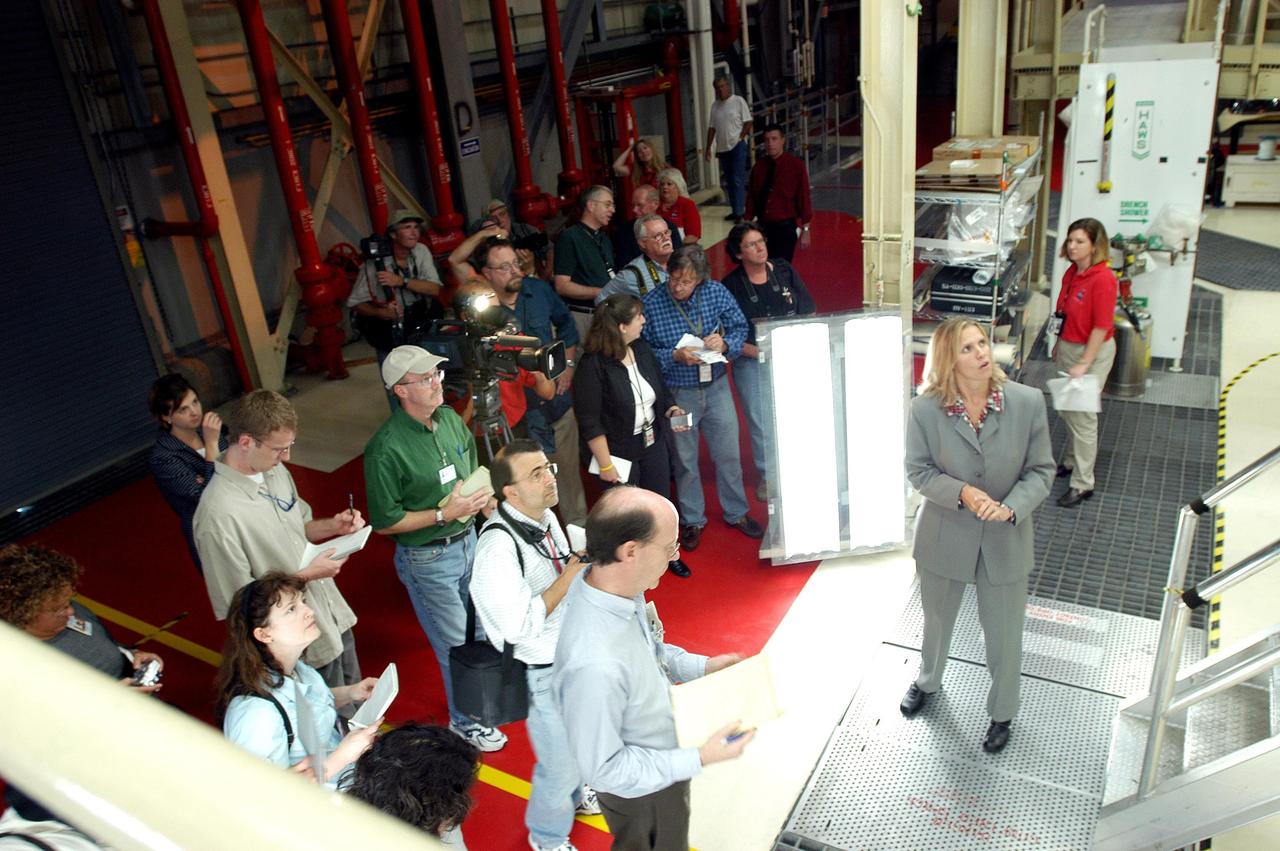
KENNEDY SPACE CENTER, FLA. - Stephanie Stilson (second from right), NASA Vehicle Manager, briefs the media attending an informative workshop and tour of the Orbiter Processing Facility (OPF) housing the Space Shuttle Discovery at KSC. During this event, the media received the latest information on Discovery’s processing and viewed workers preparing the vehicle for its safe return to flight scheduled for a launch planning window of March 2005. Kicking off the activities at the Press Site Auditorium, technical experts led two workshops addressing Reinforced Carbon-Carbon and vehicle instrumentation. During the tour of the OPF, reporters saw work in progress on Discovery, including reinstallation of the Reinforced Carbon-Carbon panels on the Shuttle's wing leading edge, wiring inspections and instrumentation updates being completed for Return to Flight.
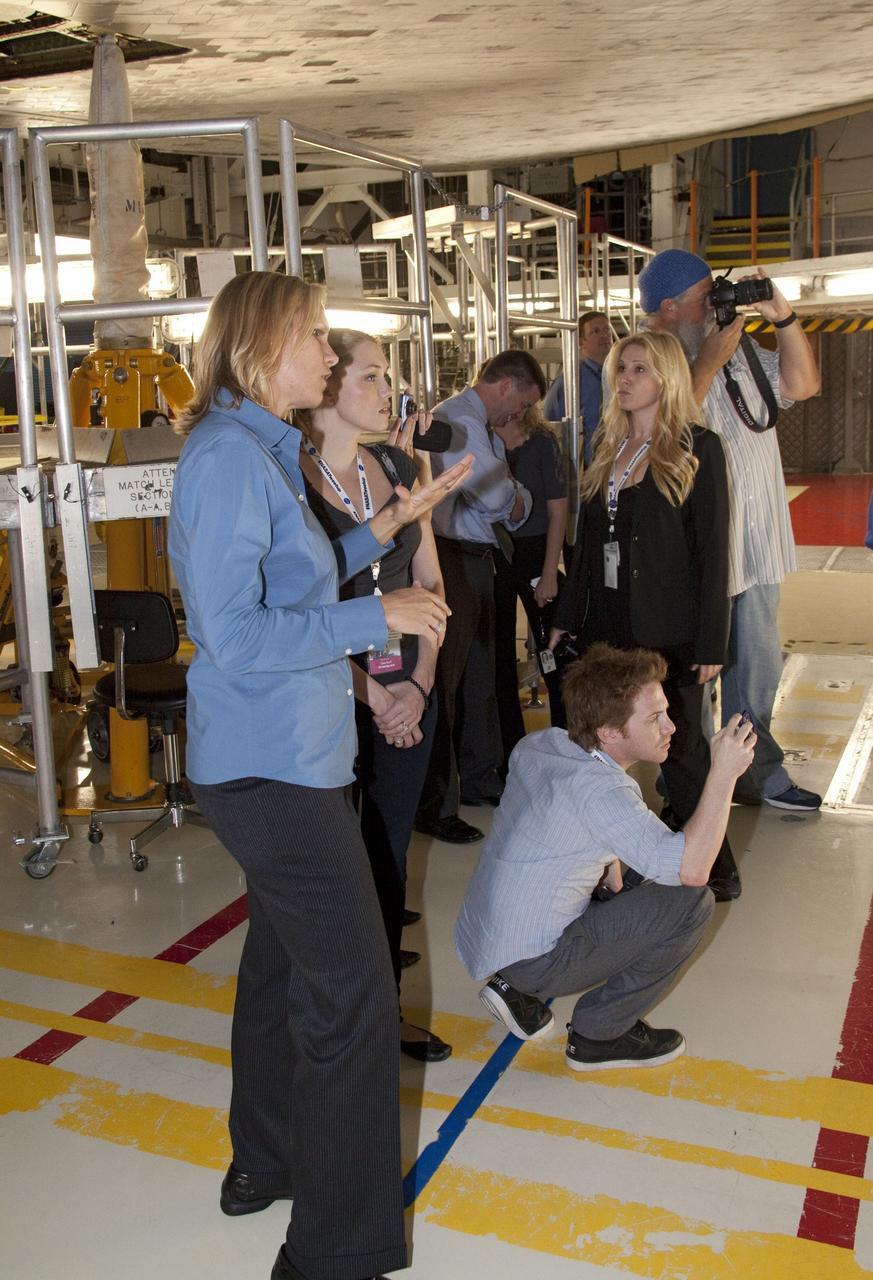
CAPE CANAVERAL, Fla. -- Media representatives participate in a Now and Future Tour at NASA's Kennedy Space Center in Florida. Here, they make a stop in Orbiter Processing Facility-2 (OPF-2) to learn about how shuttle Discovery is being prepared for future public display at the Smithsonian's National Air and Space Museum Steven F. Udvar-Hazy Center in Chantilly, Va. Leading the OPF-2 tour is Discovery's NASA Flow Director Stephanie Stilson. Other stops along the tour included Launch Pad 39B and the Shuttle Landing Facility (SLF). Pad B is being restructured for future use. Its new design will feature a "clean pad" for rockets to come with their own launcher, making it more versatile for a number of vehicles. The SLF's runway could be used for private companies and government agencies to host a diversity of launch systems, including orbital and suborbital flights. Photo credit: NASA/Jack Pfaller
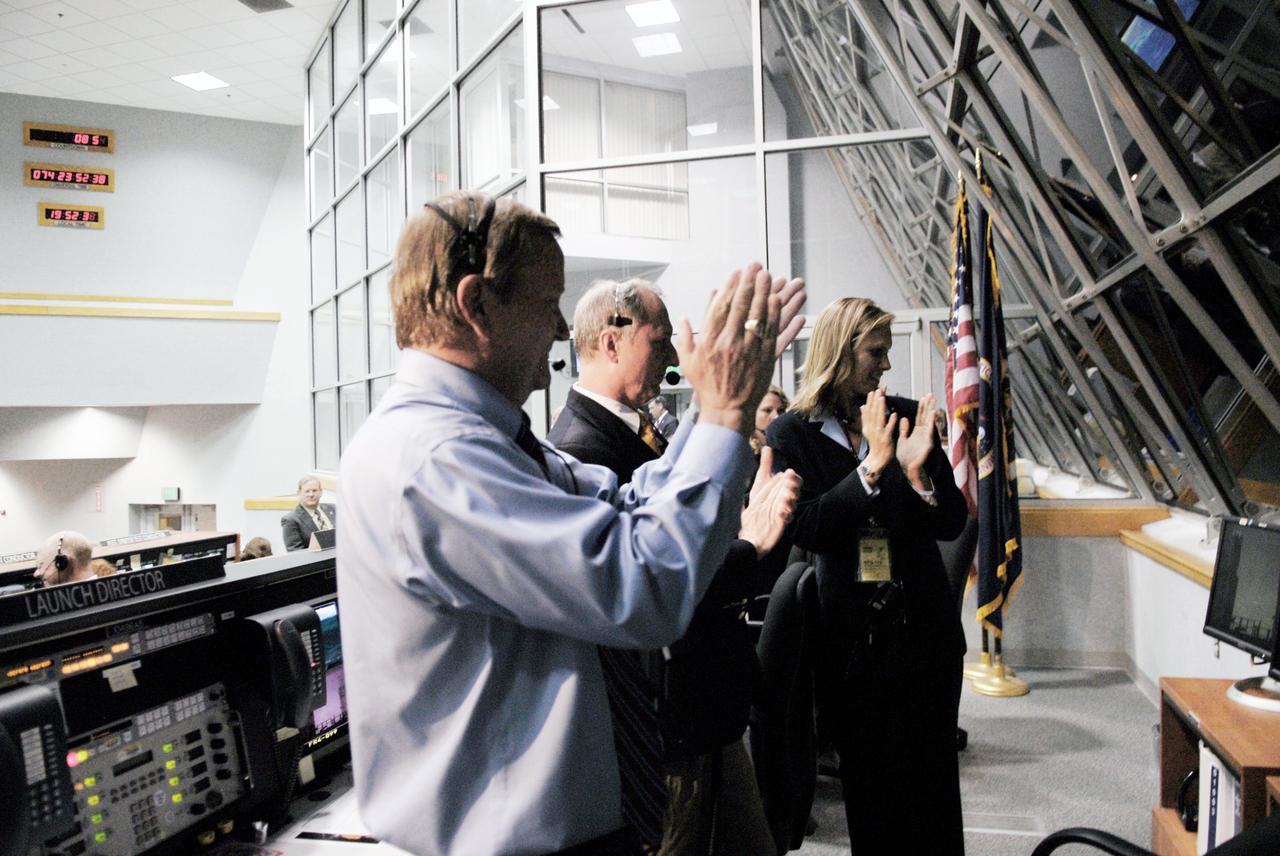
CAPE CANAVERAL, Fla. – In Firing Room 4 of the Launch Control Center at NASA's Kennedy Space Center in Florida, Shuttle Launch Director Mike Leinbach, Assistant Launch Director Pete Nickolenko and Flow Director for space shuttle Discovery Stephanie Stilson applaud the successful launch of space shuttle Discovery on the STS-119 mission. Launch was on time at 7:43 p.m. EDT. The STS-119 mission is the 28th to the space station and Discovery's 36th flight. Discovery will deliver the final pair of power-generating solar array wings and the S6 truss segment. Installation of S6 will signal the station's readiness to house a six-member crew for conducting increased science. Photo credit: NASA/Kim Shiflett
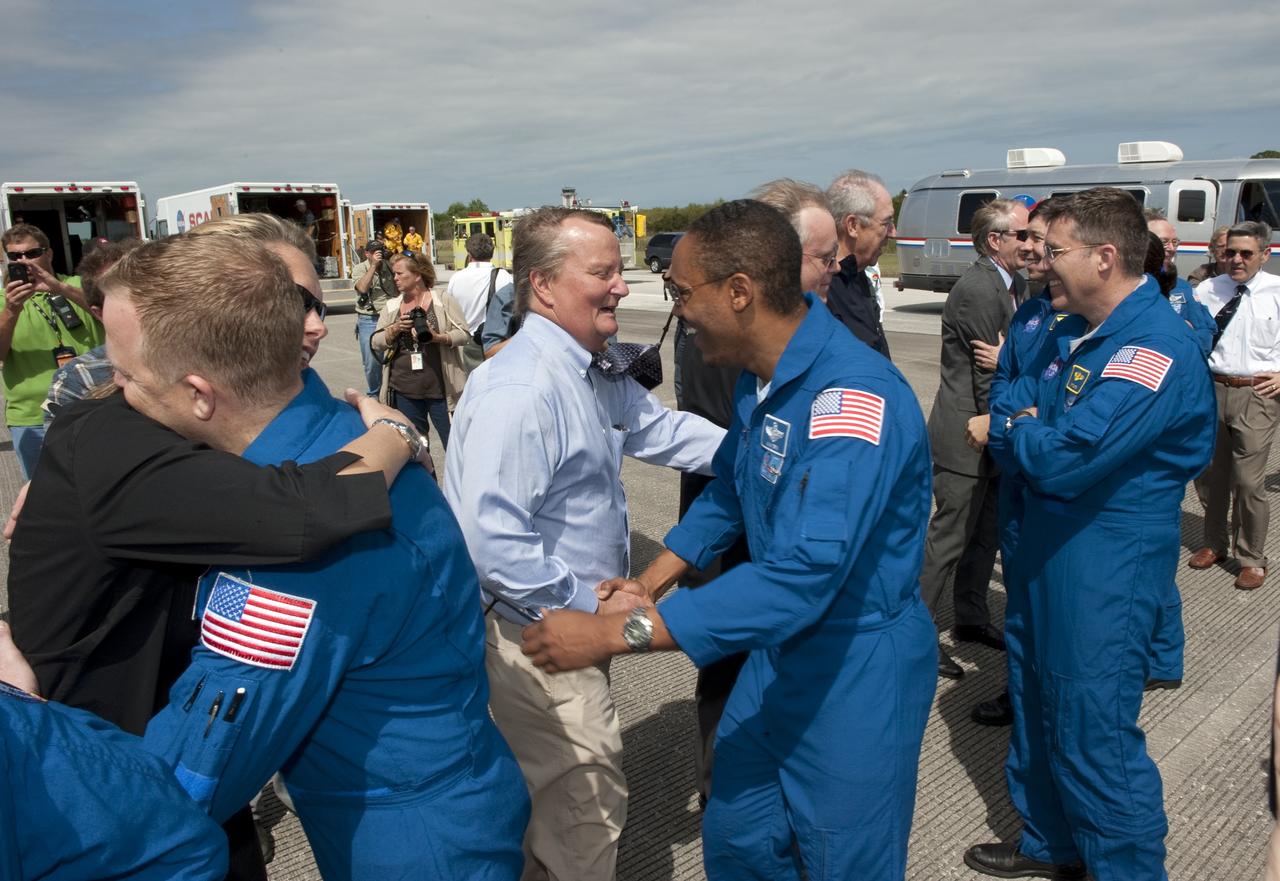
CAPE CANAVERAL, Fla. -- NASA managers welcome space shuttle Discovery's STS-133 crew members home to Kennedy Space Center in Florida. In the foreground, Discovery Flow Director Stephanie Stilson hugs STS-133 Pilot Eric Boe. Beside them, Shuttle Launch Director Mike Leinbach congratulates Mission Specialist Alvin Drew on a successful mission. Discovery and its six-member crew landed on the Shuttle Landing Facility's Runway 15 at 11:57 a.m. EST, bringing an end to the 13-day, 5.3-million-mile mission to the International Space Station. STS-133 delivered the Permanent Multipurpose Module, packed with supplies and critical spare parts, as well as Robonaut 2, the dexterous humanoid astronaut helper, to the orbiting outpost. STS-133 was Discovery's 39th and final mission. This was the 133rd Space Shuttle Program mission and the 35th shuttle voyage to the space station. Photo credit: NASA/Kim Shiflett
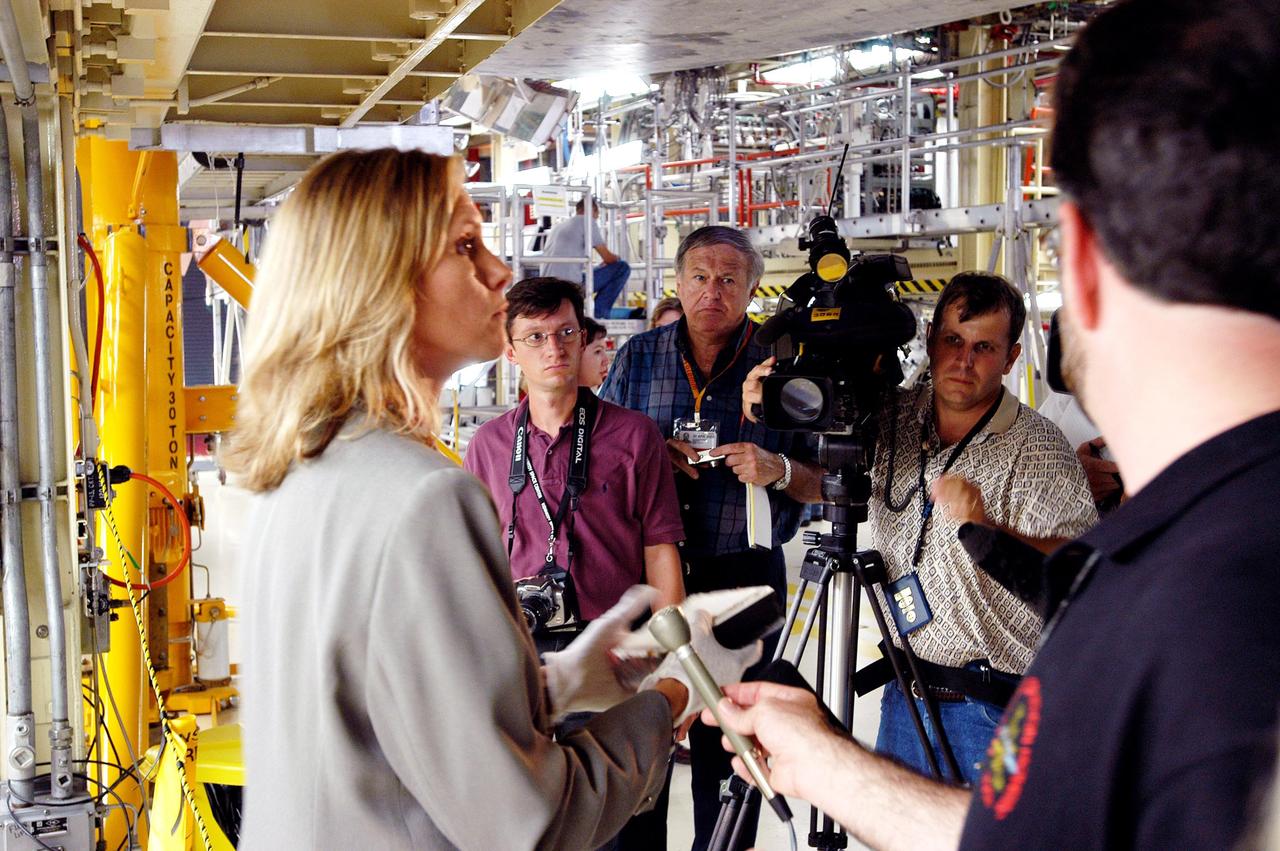
KENNEDY SPACE CENTER, FLA. - Stephanie Stilson (left), NASA Vehicle Manager, briefs the media attending an informative workshop and tour of the Orbiter Processing Facility (OPF) housing the Space Shuttle Discovery at KSC. During this event, the media received the latest information on Discovery’s processing and viewed workers preparing the vehicle for its safe return to flight scheduled for a launch planning window of March 2005. Kicking off the activities at the Press Site Auditorium, technical experts led two workshops addressing Reinforced Carbon-Carbon and vehicle instrumentation. During the tour of the OPF, reporters saw work in progress on Discovery, including reinstallation of the Reinforced Carbon-Carbon panels on the Shuttle's wing leading edge, wiring inspections and instrumentation updates being completed for Return to Flight.
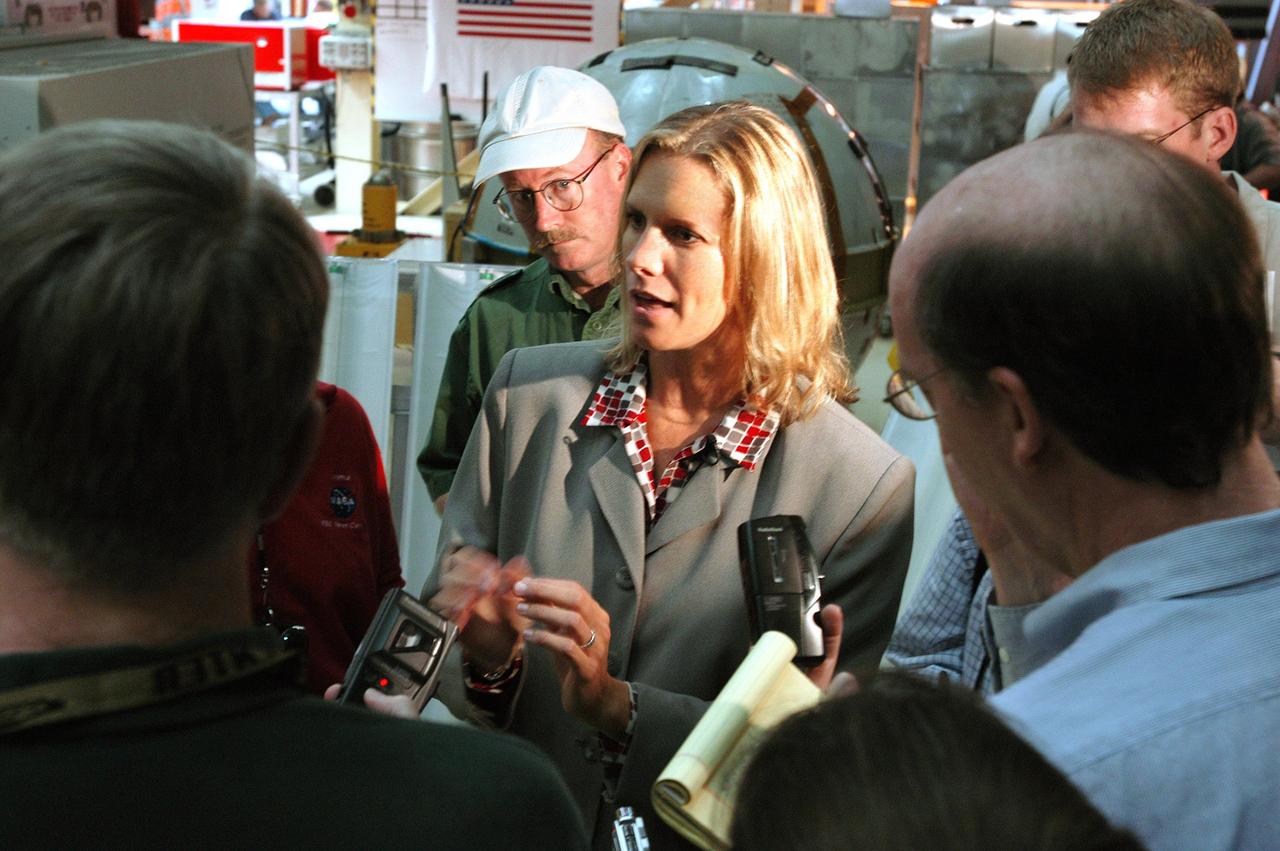
KENNEDY SPACE CENTER, FLA. - Stephanie Stilson (center), NASA Vehicle Manager, briefs the media attending an informative workshop and tour of the Orbiter Processing Facility (OPF) housing the Space Shuttle Discovery at KSC. During this event, the media received the latest information on Discovery’s processing and viewed workers preparing the vehicle for its safe return to flight scheduled for a launch planning window of March 2005. Kicking off the activities at the Press Site Auditorium, technical experts led two workshops addressing Reinforced Carbon-Carbon and vehicle instrumentation. During the tour of the OPF, reporters saw work in progress on Discovery, including reinstallation of the Reinforced Carbon-Carbon panels on the Shuttle's wing leading edge, wiring inspections and instrumentation updates being completed for Return to Flight.
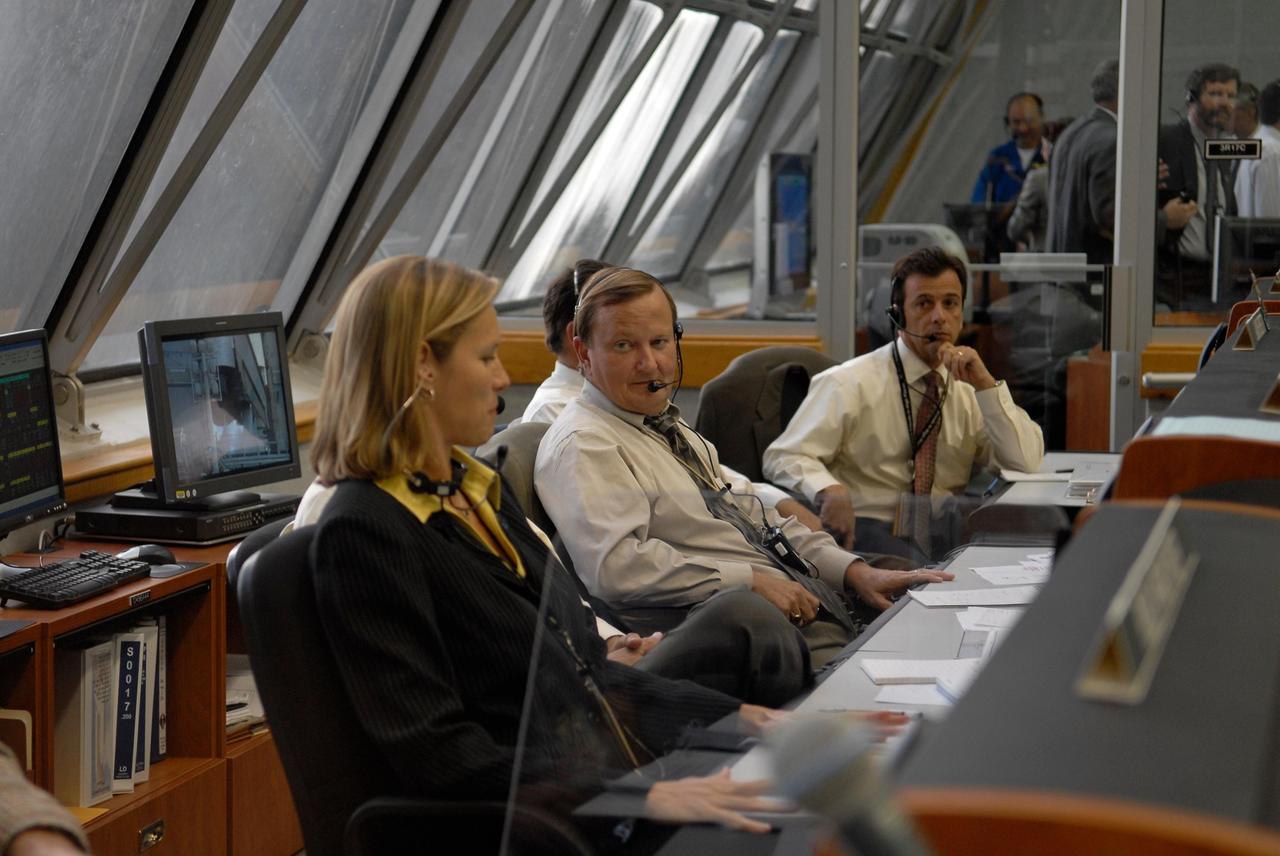
KENNEDY SPACE CENTER, FLA. -- In the firing room of the Launch Control Center at NASA's Kennedy Space Center, NASA Flow Director Stephanie Stilson (left) and Shuttle Launch Director Mike Leinbach (center) talk during the countdown for space shuttle Discovery to launch on mission STS-120. At right is Assistant Launch Director Doug Lyons. Liftoff was on time at 11:38:19 a.m. EDT. Discovery carries the Italian-built U.S. Node 2, called Harmony. During the 14-day STS-120 mission, the crew will install Harmony and move the P6 solar arrays to their permanent position and deploy them. Discovery is expected to complete its mission and return home at 4:47 a.m. EST on Nov. 6. Photo credit: NASA/Kim Shiflett
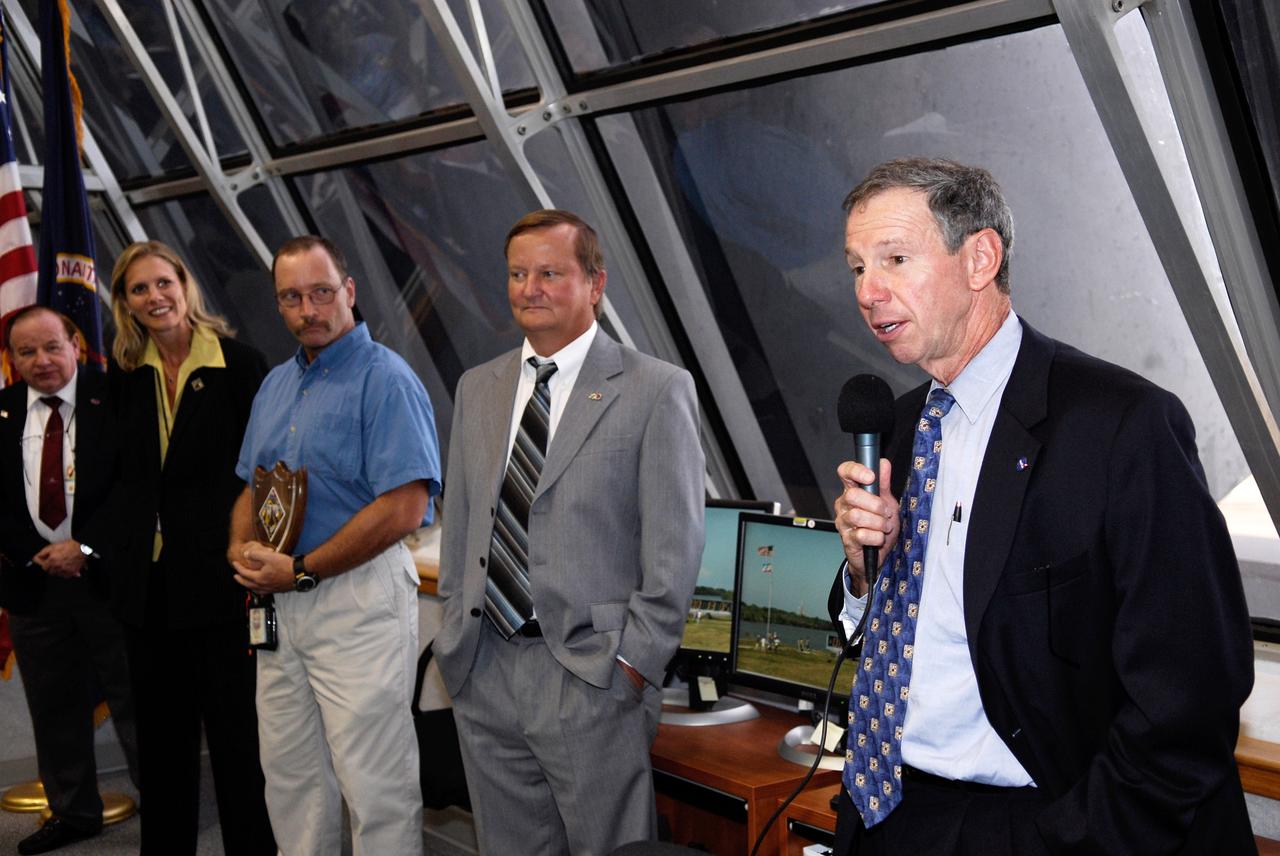
CAPE CANAVERAL, Fla. -- After the successful launch of space shuttle Discovery on its STS-124 mission, NASA Administrator Mike Griffin (right) congratulates the team in the firing room at NASA's Kennedy Space Center. Second from left is NASA Flow Director Stephanie Stilson; next to Griffin is Shuttle Launch Director Mike Leinbach. Launch was on time at 5:02 p.m. EDT. Discovery is making its 35th flight. The STS-124 mission is the 26th in the assembly of the space station. It is the second of three flights launching components to complete the Japan Aerospace Exploration Agency's Kibo laboratory. The shuttle crew will install Kibo's large Japanese Pressurized Module and its remote manipulator system, or RMS. The 14-day flight includes three spacewalks. Photo credit: NASA/Kim Shiflett
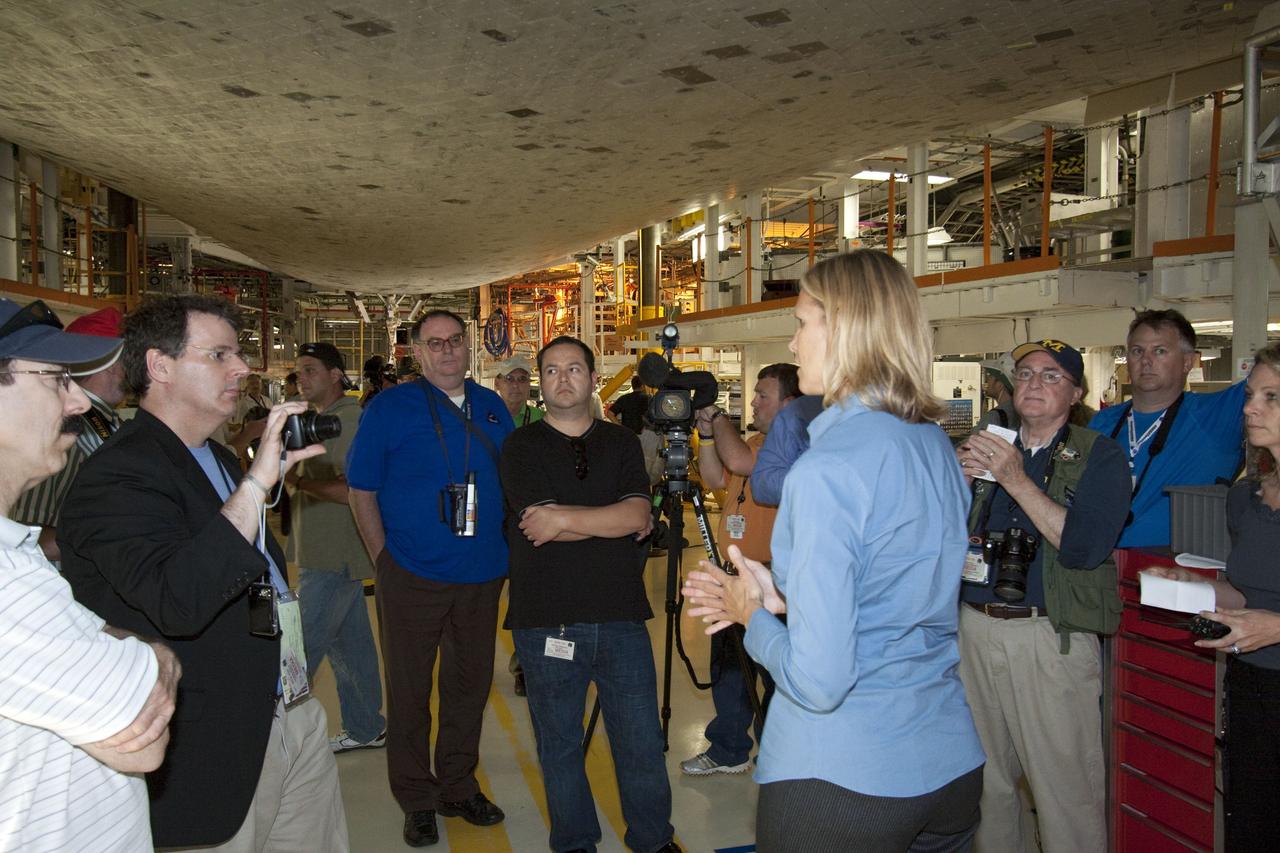
CAPE CANAVERAL, Fla. -- Media representatives participate in a Now and Future Tour at NASA's Kennedy Space Center in Florida. Here, they make a stop in Orbiter Processing Facility-2 (OPF-2) to learn about how shuttle Discovery is being prepared for future public display at the Smithsonian's National Air and Space Museum Steven F. Udvar-Hazy Center in Chantilly, Va. Leading the OPF-2 tour is Discovery's NASA Flow Director Stephanie Stilson. Other stops along the tour included Launch Pad 39B and the Shuttle Landing Facility (SLF). Pad B is being restructured for future use. Its new design will feature a "clean pad" for rockets to come with their own launcher, making it more versatile for a number of vehicles. The SLF's runway could be used for private companies and government agencies to host a diversity of launch systems, including orbital and suborbital flights. Photo credit: NASA/Jack Pfaller
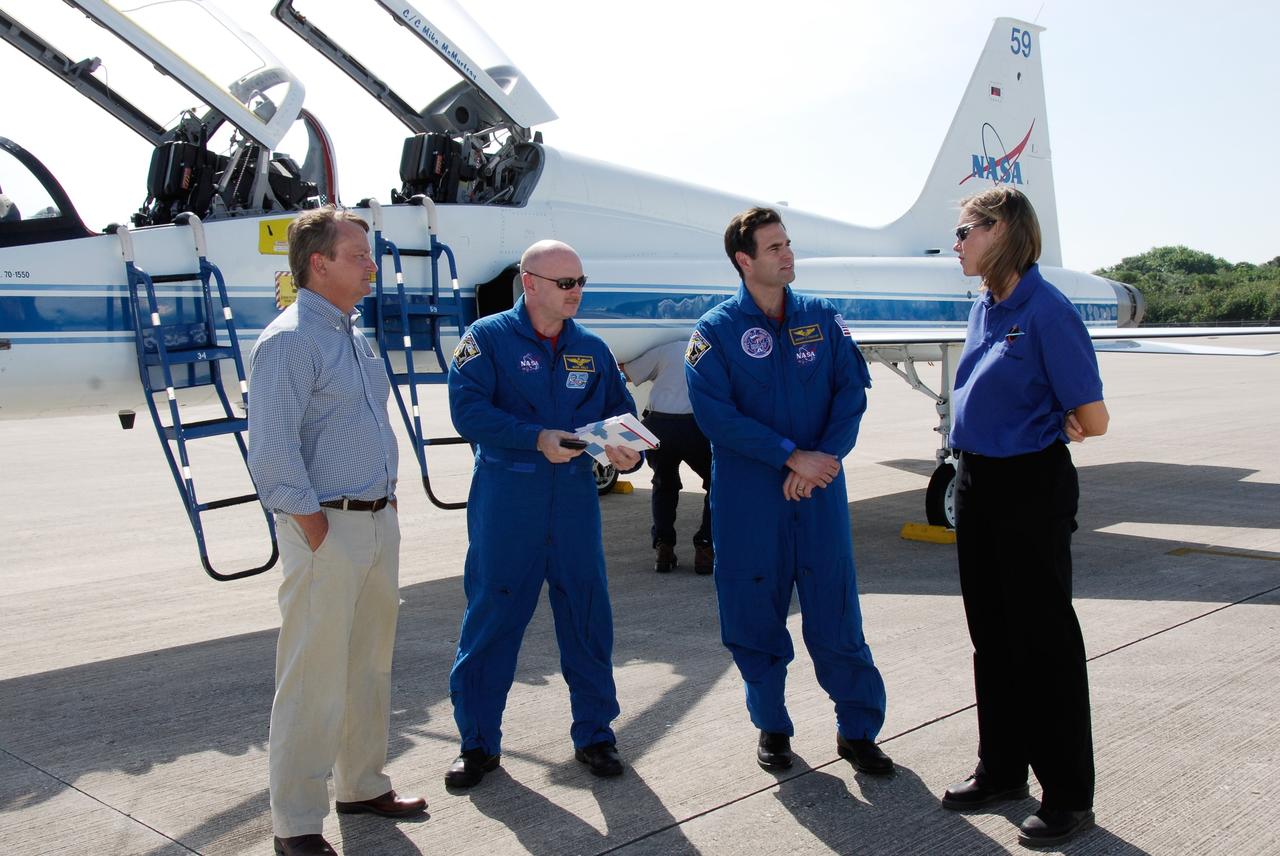
CAPE CANAVERAL, Fla. -- The crew of space shuttle Discovery's STS-124 mission arrive at NASA Kennedy Space Center's Shuttle Landing Facility to take part in the Terminal Countdown Demonstration Test, or TCDT. Here, Commander Mark Kelly (center left) and Mission Specialist Greg Chamitoff (center right) are greeted by Shuttle Launch Director Mike Leinbach (far left) and NASA Flow Director for Discovery Stephanie Stilson. TCDT is a rehearsal for launch that includes practicing emergency procedures, handling on-orbit equipment, and simulating a launch countdown. On the STS-124 mission, the crew will deliver and install the Japanese Experiment Module – Pressurized Module and Japanese Remote Manipulator System. Discovery's launch is targeted for May 31. Photo credit: NASA/Kim Shiflett
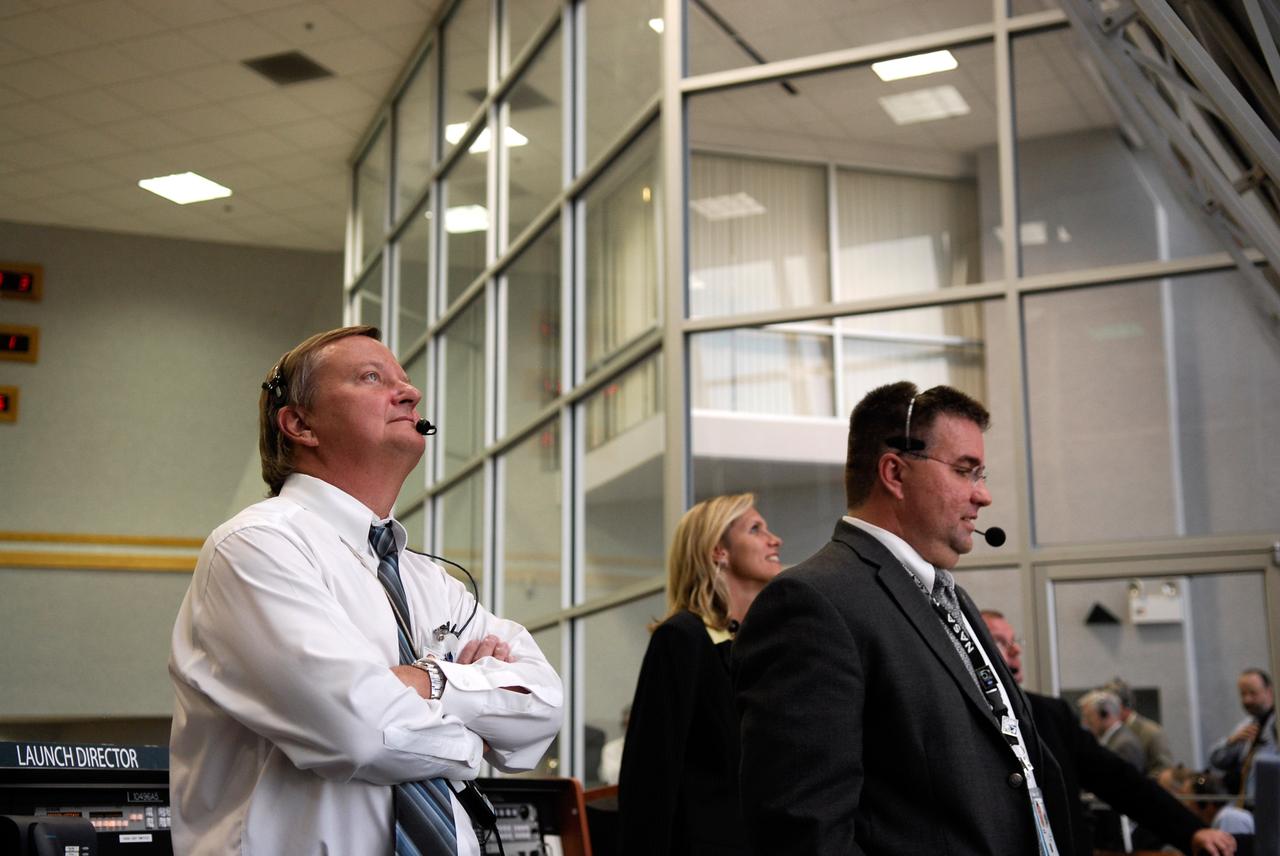
CAPE CANAVERAL, Fla. -- From the firing room, Shuttle Launch Director Mike Leinbach, NASA Flow Director Stephanie Stilson and Deputy Orbiter Project Manager Ed Mango from NASA's Johnson Space Center watch the successful launch of space shuttle Discovery. Launch was on time at 5:02 p.m. EDT. Discovery is making its 35th flight. The STS-124 mission is the 26th in the assembly of the space station. It is the second of three flights launching components to complete the Japan Aerospace Exploration Agency's Kibo laboratory. The shuttle crew will install Kibo's large Japanese Pressurized Module and its remote manipulator system, or RMS. The 14-day flight includes three spacewalks. Photo credit: NASA/Kim Shiflett
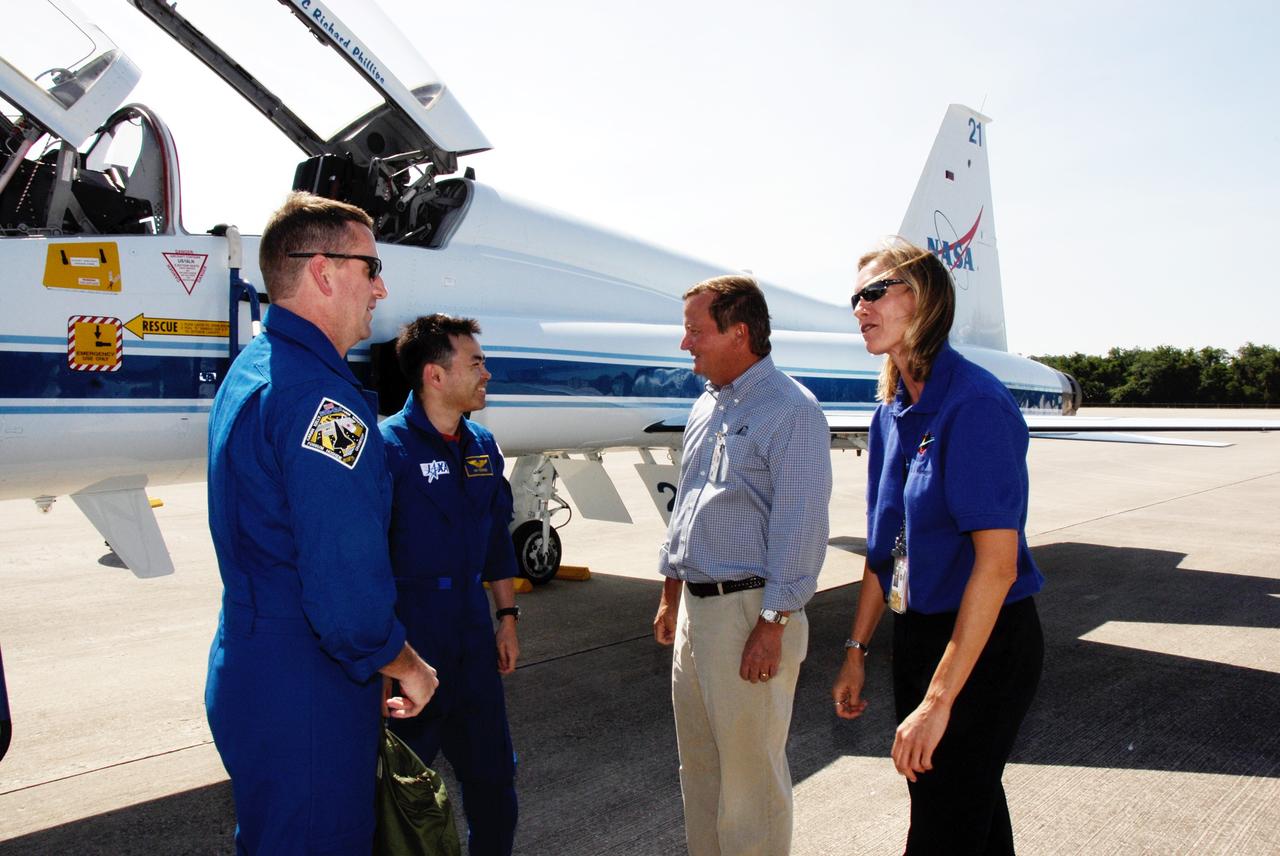
CAPE CANAVERAL, Fla. -- The crew of space shuttle Discovery's STS-124 mission arrive at NASA Kennedy Space Center's Shuttle Landing Facility to take part in the Terminal Countdown Demonstration Test, or TCDT. Next to the T-38 jet aircraft are Pilot Ken Ham (left) and Mission Specialist Akihiko Hoshide. They are greeted at right by Mike Leinbach, shuttle launch director, and Stephanie Stilson, NASA Flow Director for Discovery. TCDT is a rehearsal for launch that includes practicing emergency procedures, handling on-orbit equipment, and simulating a launch countdown. On the STS-124 mission, the crew will deliver and install the Japanese Experiment Module – Pressurized Module and Japanese Remote Manipulator System. Discovery's launch is targeted for May 31. Photo credit: NASA/Kim Shiflett
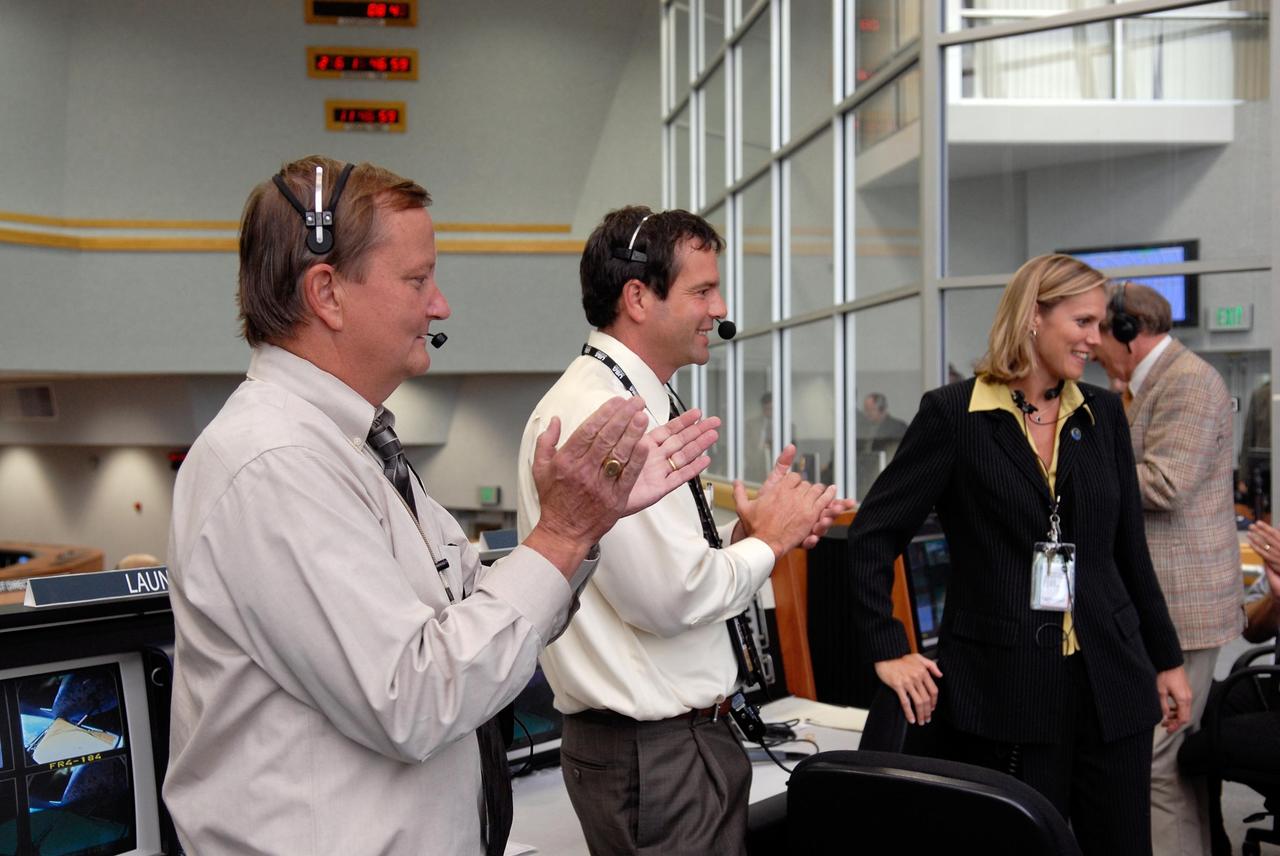
KENNEDY SPACE CENTER, FLA. -- In the firing room of the Launch Control Center at NASA's Kennedy Space Center, Shuttle Launch Director Mike Leinbach and Assistant Launch Director Doug Lyons applaud the mission team for the successful launch of space shuttle Discovery on mission STS-120. AT right is NASA Flow Director Stephanie Stilson. Liftoff was on time at 11:38:19 a.m. EDT. Discovery carries the Italian-built U.S. Node 2, called Harmony. During the 14-day STS-120 mission, the crew will install Harmony and move the P6 solar arrays to their permanent position and deploy them. Discovery is expected to complete its mission and return home at 4:47 a.m. EST on Nov. 6. Photo credit: NASA/Kim Shiflett
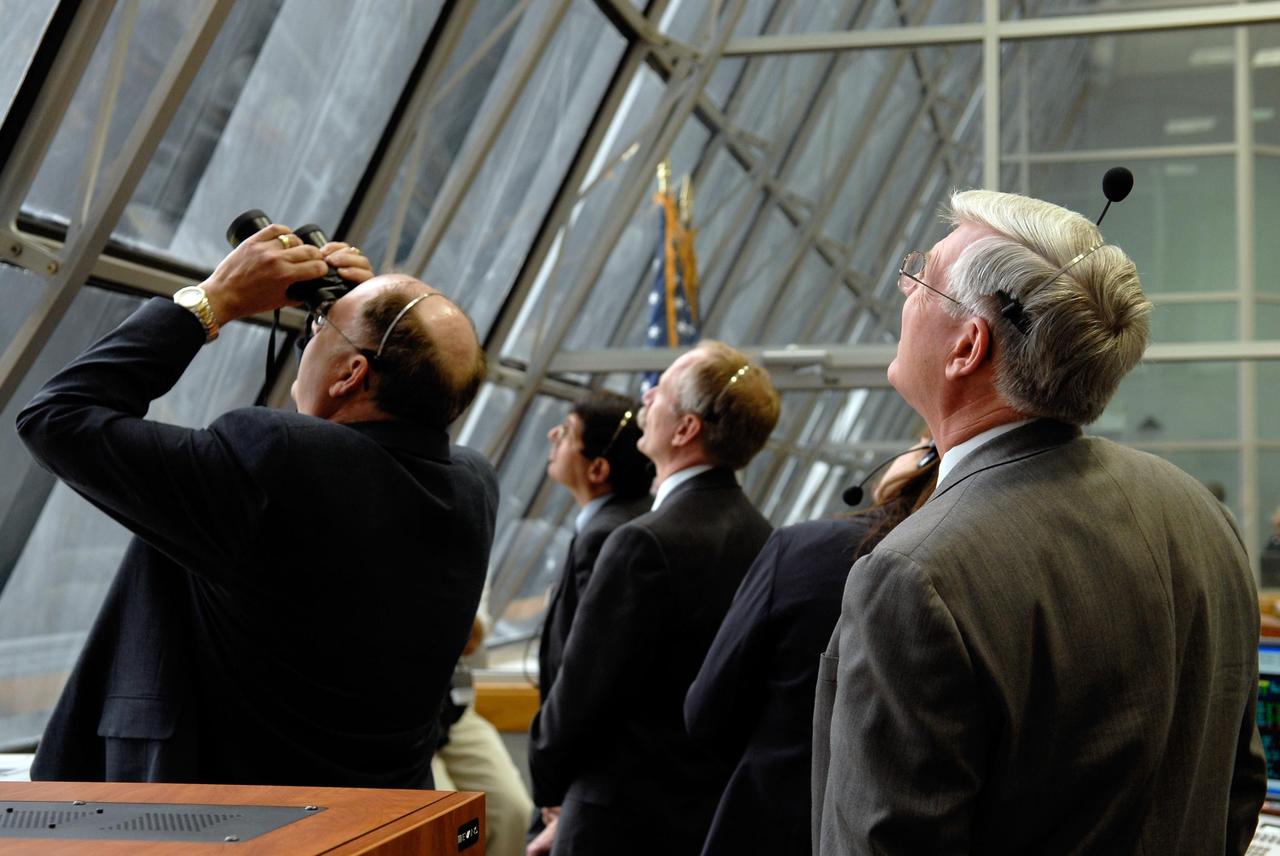
KENNEDY SPACE CENTER, FLA. -- In the firing room of the Launch Control Center at NASA's Kennedy Space Center, all eyes are on the successful launch of space shuttle Discovery on mission STS-120. From left are Space Shuttle Program Manager Wayne Hale, Associate Administrator for NASA Space Operations William Gerstenmaier, NASA Flow Director Stephanie Stilson and Johnson Space Center Director Michael Coats. Liftoff was on time at 11:38:19 a.m. EDT. Liftoff was on time at 11:38:19 a.m. EDT. Discovery carries the Italian-built U.S. Node 2, called Harmony. During the 14-day STS-120 mission, the crew will install Harmony and move the P6 solar arrays to their permanent position and deploy them. Discovery is expected to complete its mission and return home at 4:47 a.m. EST on Nov. 6. Photo credit: NASA/Kim Shiflett
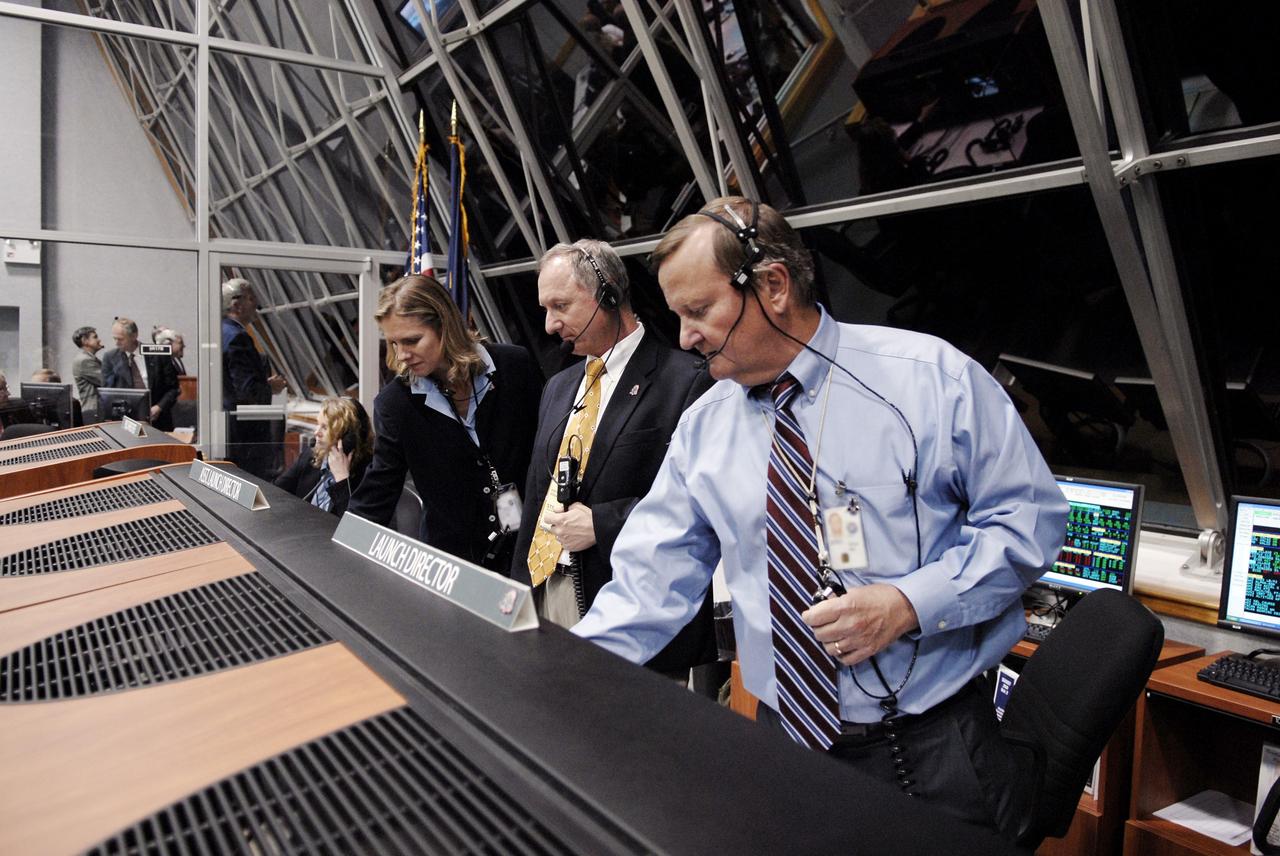
CAPE CANAVERAL, Fla. – In Firing Room 4 of the Launch Control Center at NASA's Kennedy Space Center in Florida, Flow Director for space shuttle Discovery Stephanie Stilson, Assistant Launch Director Pete Nickolenko and Shuttle Launch Director Mike Leinbach check the computers for follow-up images of the launch of space shuttle Discovery on the STS-119 mission. Launch was on time at 7:43 p.m. EDT. The STS-119 mission is the 28th to the space station and Discovery's 36th flight. Discovery will deliver the final pair of power-generating solar array wings and the S6 truss segment. Installation of S6 will signal the station's readiness to house a six-member crew for conducting increased science. Photo credit: NASA/Kim Shiflett
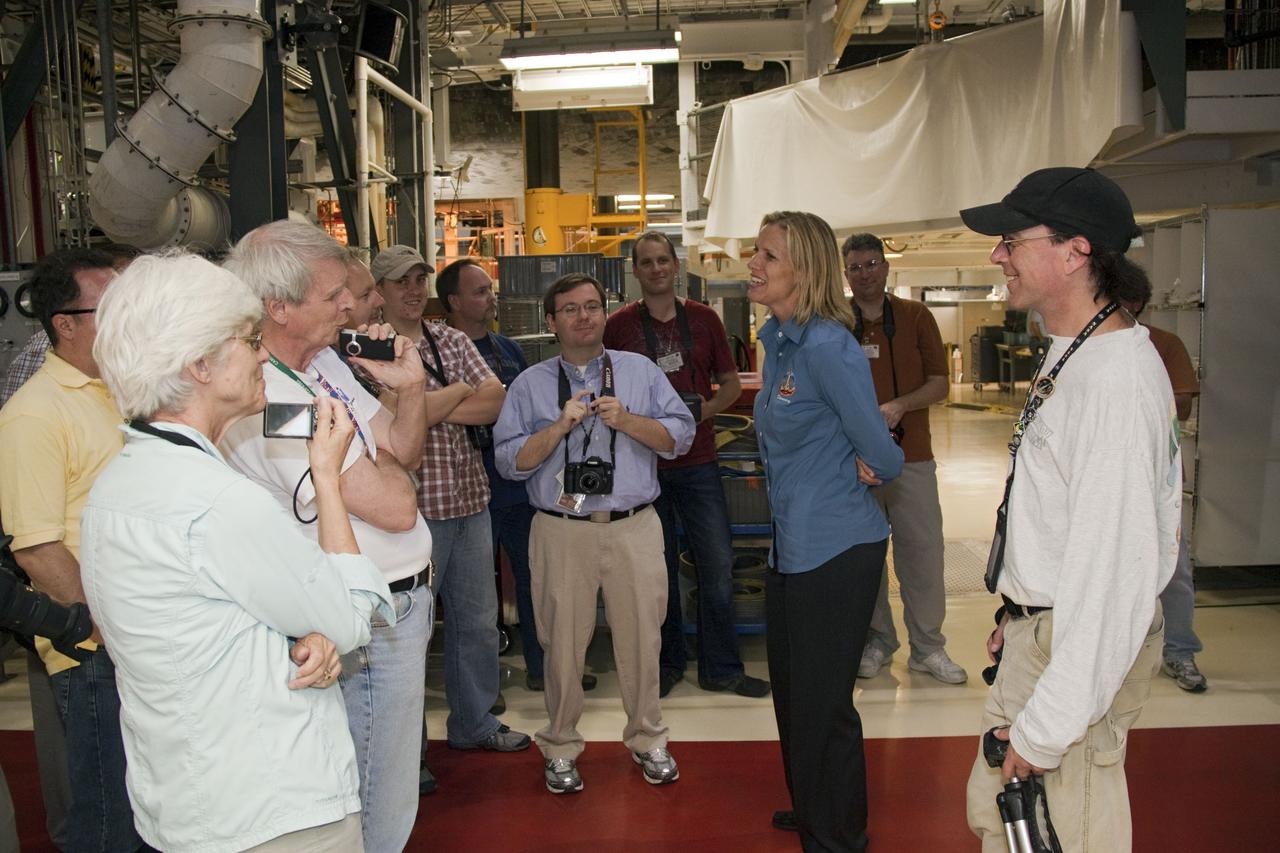
CAPE CANAVERAL, Fla. -- Media representatives participate in a Now and Future Tour at NASA's Kennedy Space Center in Florida. Here, they make a stop in Orbiter Processing Facility-2 (OPF-2) to learn about how shuttle Discovery is being prepared for future public display at the Smithsonian's National Air and Space Museum Steven F. Udvar-Hazy Center in Chantilly, Va. Leading the OPF-2 tour is Discovery's NASA Flow Director Stephanie Stilson. Other stops along the tour included Launch Pad 39B and the Shuttle Landing Facility (SLF). Pad B is being restructured for future use. Its new design will feature a "clean pad" for rockets to come with their own launcher, making it more versatile for a number of vehicles. The SLF's runway could be used for private companies and government agencies to host a diversity of launch systems, including orbital and suborbital flights. Photo credit: NASA/Jack Pfaller
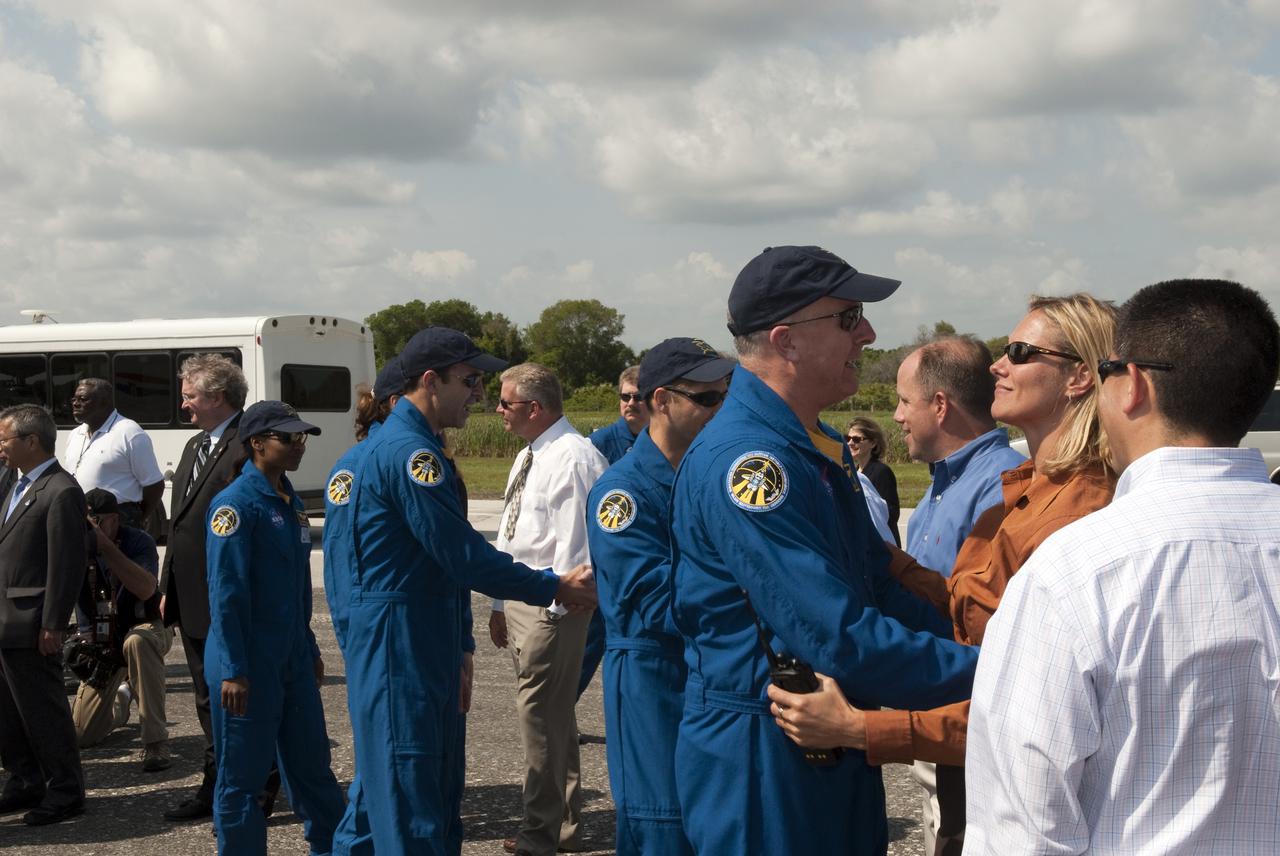
CAPE CANAVERAL, Fla. - At the Shuttle Landing Facility at NASA's Kennedy Space Center in Florida, members of the STS-131 crew are congratulated on a successful mission by NASA managers and invited guests on hand for the landing of space shuttle Discovery on Runway 33. The astronauts are, from left, Mission Specialists Stephanie Wilson, Dorothy Metcalf-Lindenburger and Rick Mastracchio; Pilot James P. Dutton Jr.; and Commander Alan Poindexter, talking with Discovery Flow Director Stephanie Stilson. Discovery landed at Kennedy after 15 days in space, completing the more than 6.2-million-mile STS-131 mission on orbit 238. Main gear touchdown was at 9:08:35 a.m. EDT followed by nose gear touchdown at 9:08:47 a.m. and wheelstop at 9:09:33 a.m. The seven-member STS-131 crew carried the multi-purpose logistics module Leonardo, filled with supplies, a new crew sleeping quarters and science racks that were transferred to the International Space Station's laboratories. The crew also switched out a gyroscope on the station’s truss, installed a spare ammonia storage tank and retrieved a Japanese experiment from the station’s exterior. STS-131 is the 33rd shuttle mission to the station and the 131st shuttle mission overall. For information on the STS-131 mission and crew, visit http:__www.nasa.gov_mission_pages_shuttle_shuttlemissions_sts131_index.html. Photo credit: NASA_Jim Grossmann
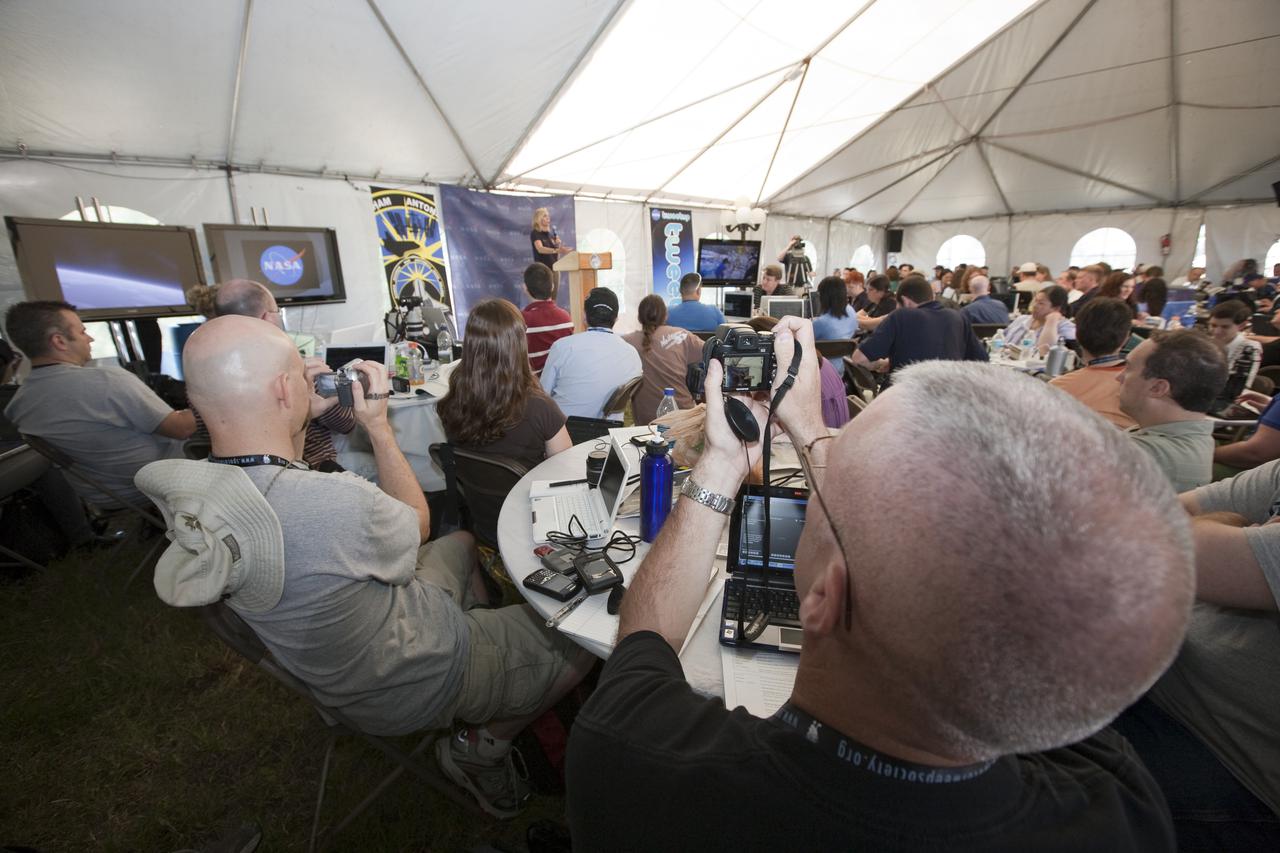
CAPE CANAVERAL, Fla. - At NASA's Kennedy Space Center in Florida, NASA's space shuttle Discovery Flow Director Stephanie Stilson has a rapt audience in the participants of NASA's STS-132 Tweetup. NASA is hosting 150 people from around the world and providing them with a behind-the-scenes perspective to share with their followers via the social networking service Twitter. Attendees were randomly selected from more than 1,000 online registrations and include people from more than 30 states, the District of Columbia, Puerto Rico, the Netherlands, New Zealand and England. The Tweeters are being given the chance to meet with shuttle technicians, managers, engineers and astronauts, to take a tour of Kennedy, and to experience the exhilaration of the launch of space shuttle Atlantis' STS-132 mission. A tent was set up especially for the occasion near the countdown clock at Kennedy's Press Site. Atlantis' liftoff is set for 2:20 p.m. EDT on May 14. STS-132 is the 34th mission to the station and the last scheduled flight for Atlantis. For more information on the STS-132 mission objectives, payload and crew, visit http:__www.nasa.gov_mission_pages_shuttle_shuttlemissions_sts132_index.html. Photo Credit: NASA_Amanda Diller
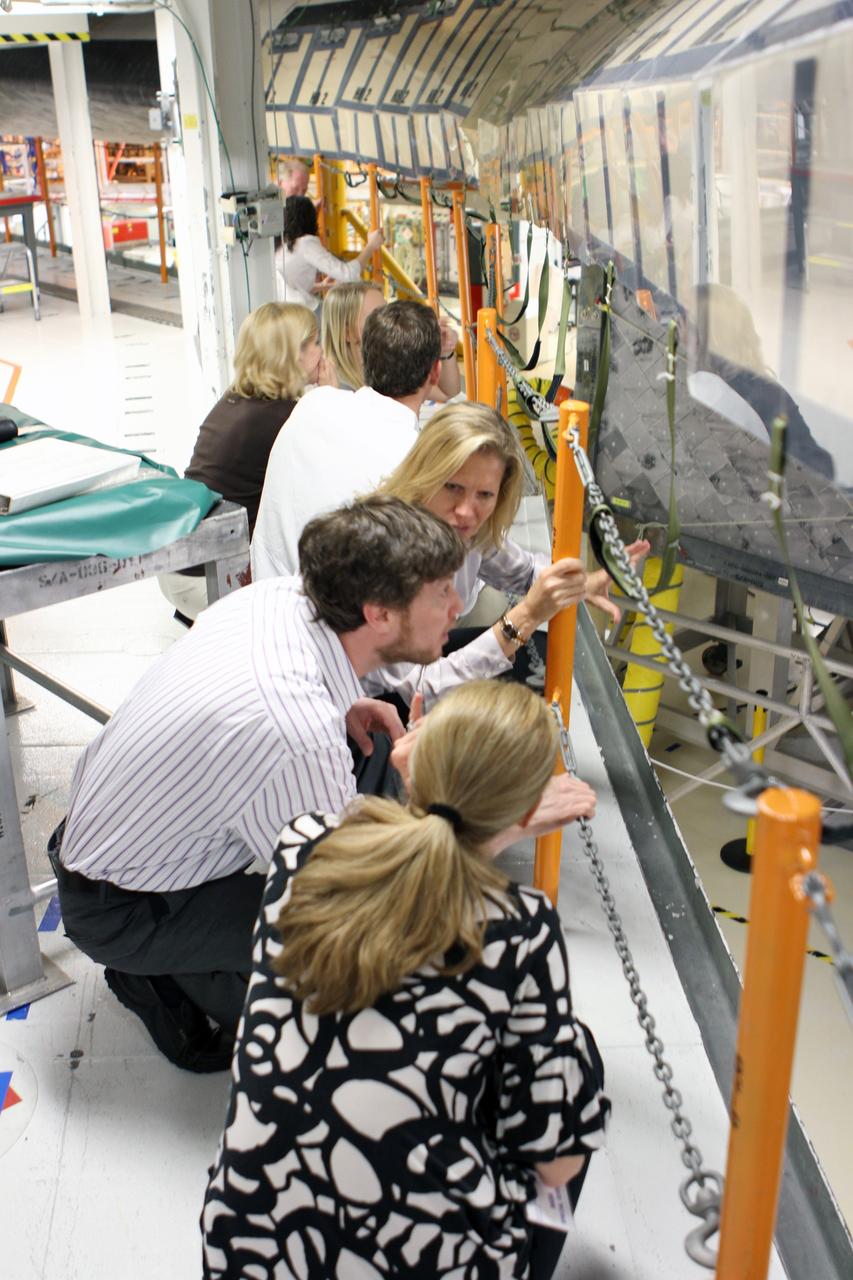
CAPE CANAVERAL, Fla. -- NASA's Stephanie Stilson (facing camera), flow director for space shuttle Discovery, discusses Discovery's thermal protection system with members of a visiting team from the Smithsonian's National Air and Space Museum in Orbiter Processing Facility-2 at NASA's Kennedy Space Center. NASA Administrator Charles Bolden announced April 12 the facilities where all four shuttle orbiters will be permanently displayed at the conclusion of the Space Shuttle Program. Shuttle Enterprise, the first orbiter built, will move from the Smithsonian's National Air and Space Museum Steven F. Udvar-Hazy Center in Virginia to the Intrepid Sea, Air & Space Museum in New York. The Udvar-Hazy Center will become the new home for shuttle Discovery, which retired in March after completing its 39th mission. Shuttle Endeavour, which is preparing for its final flight at the end of the month, will go to the California Science Center in Los Angeles. Atlantis, which will fly the last planned shuttle mission in June, will be displayed at the Kennedy Space Center Visitor Complex in Florida. Photo credit: NASA/Cory Huston
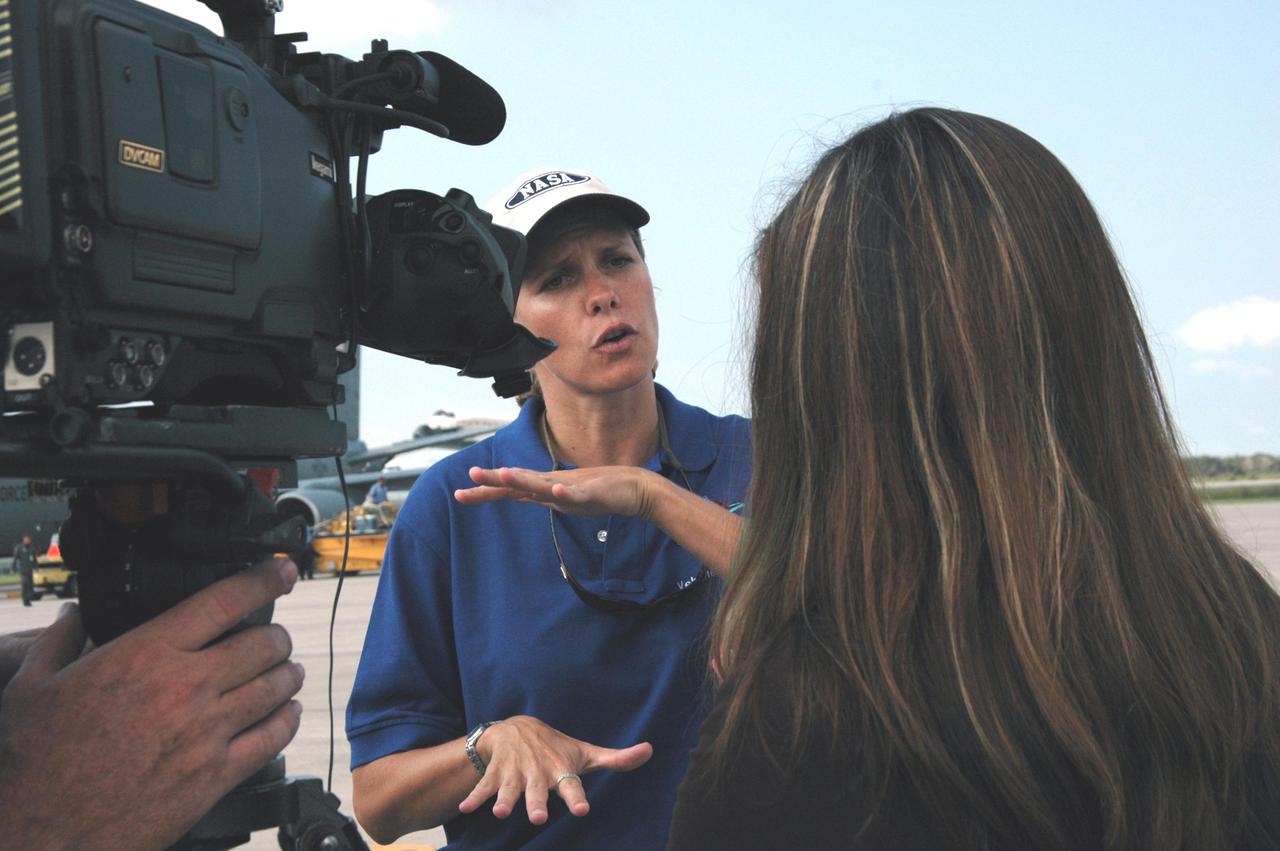
KENNEDY SPACE CENTER, FLA. - Stephanie Stilson, vehicle manager for Space Shuttle Discovery (OV-103), is interviewed by the news media at the Kennedy Space Center (KSC) Shuttle Landing Facility (SLF). The interview followed the touchdown of Discovery, atop a modified Boeing 747 Shuttle Carrier Aircraft (SCA), on runway 15 at the SLF at about 10:00 a.m. EDT. The cross-country ferry flight became necessary when two days of unfavorable weather conditions at KSC forced Discovery to land on runway 22 at Edwards Air Force Base, Calif., on Aug. 9 following mission STS-114. On the return trip, stops were made at Altus Air Force Base, Okla., and Barksdale Air Force Base, La., where Discovery stayed for two nights. The SCA and Discovery will be towed to the Mate_Demate Device at the SLF where a crane will lift Discovery from the SCA and place it on solid ground. Discovery will then be towed to the Orbiter Processing Facility where preparations will begin for its next flight, STS-121.
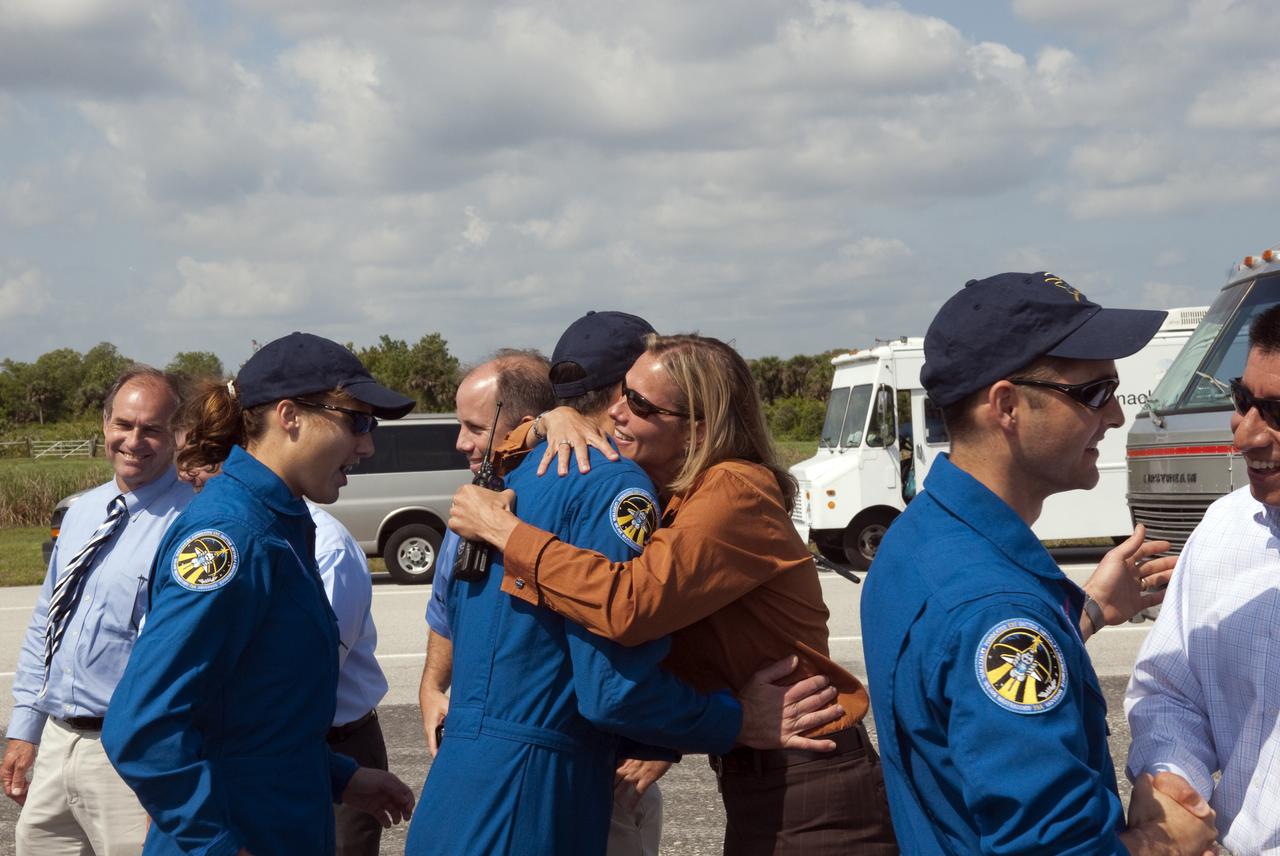
CAPE CANAVERAL, Fla. - At the Shuttle Landing Facility at NASA's Kennedy Space Center in Florida, STS-131 Mission Specialist Rick Mastracchio receives a hug from space shuttle Discovery Flow Director Stephanie Stilson, congratulating him on a successful mission as Mission Specialist Dorothy Metcalf-Lindenburger looks on. Pilot James P. Dutton Jr. is at right. Discovery landed at Kennedy after 15 days in space, completing the more than 6.2-million-mile STS-131 mission on orbit 238. Main gear touchdown was at 9:08:35 a.m. EDT followed by nose gear touchdown at 9:08:47 a.m. and wheelstop at 9:09:33 a.m. The seven-member STS-131 crew carried the multi-purpose logistics module Leonardo, filled with supplies, a new crew sleeping quarters and science racks that were transferred to the International Space Station's laboratories. The crew also switched out a gyroscope on the station’s truss, installed a spare ammonia storage tank and retrieved a Japanese experiment from the station’s exterior. STS-131 is the 33rd shuttle mission to the station and the 131st shuttle mission overall. For information on the STS-131 mission and crew, visit http:__www.nasa.gov_mission_pages_shuttle_shuttlemissions_sts131_index.html. Photo credit: NASA_Jim Grossmann
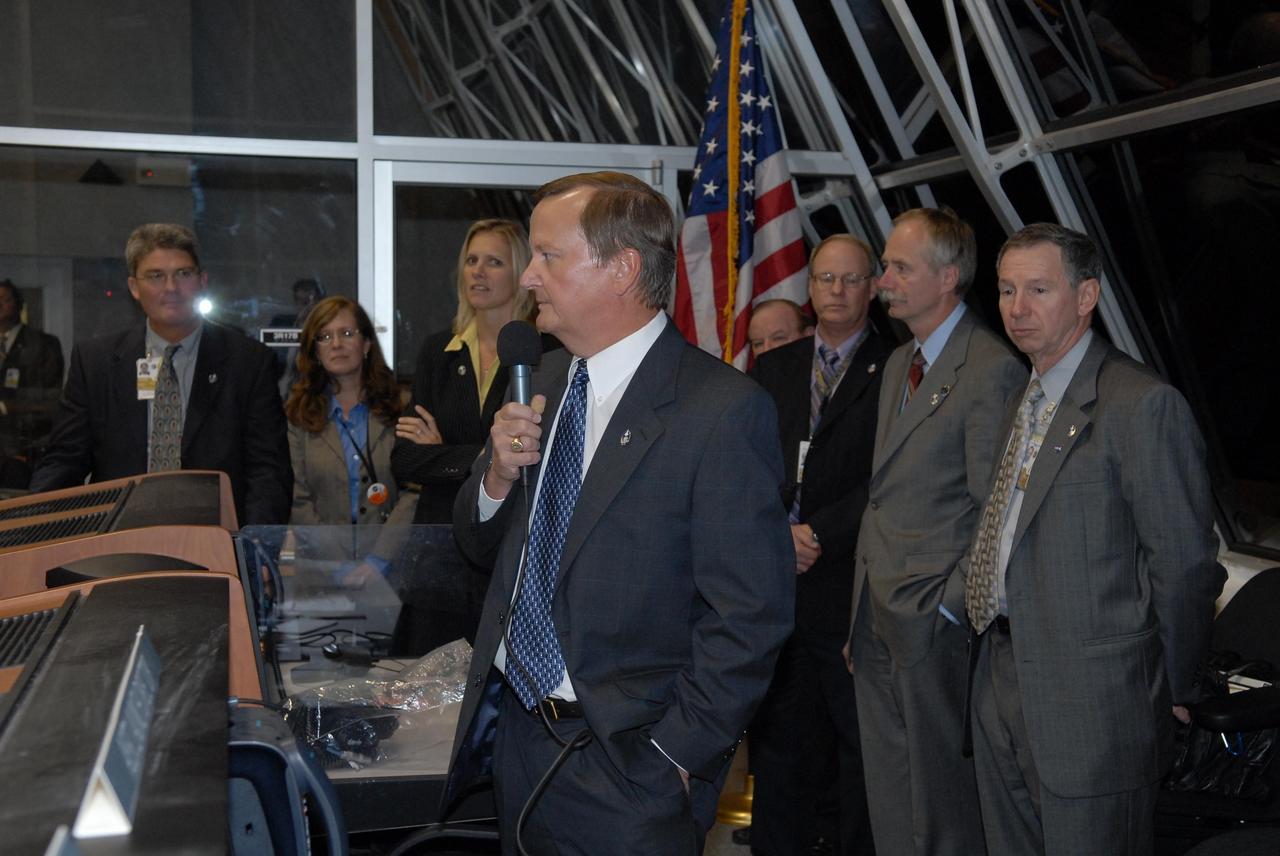
KENNEDY SPACE CENTER, FLA. -- In the firing room at the Launch Control Center, Shuttle Launch Director Mike Leinbach (center, with microphone) commends the mission management team for the successful second launch attempt of Space Shuttle Discovery on mission STS-116. Liftoff occurred on time at 8:47 p.m. EST. Others in the room are (left to right), Deputy Director Bill Parsons, External Relations Director Lisa Malone, NASA Flow Director for Discovery Stephanie Stilson, NASA KSC News Chief Bruce Buckingham, Associate Administrator for Space Operations Mission William Gerstenmaier and NASA Administrator Mike Griffin. This was the second launch attempt for mission STS-116. The first launch attempt on Dec. 7 was postponed due a low cloud ceiling over Kennedy Space Center. This is Discovery's 33rd mission and the first night launch since 2002. The 20th shuttle mission to the International Space Station, STS-116 carries another truss segment, P5. It will serve as a spacer, mated to the P4 truss that was attached in September. After installing the P5, the crew will reconfigure and redistribute the power generated by two pairs of U.S. solar arrays. Landing is expected Dec. 21 at KSC. Photo credit: NASA/Kim Shiflett
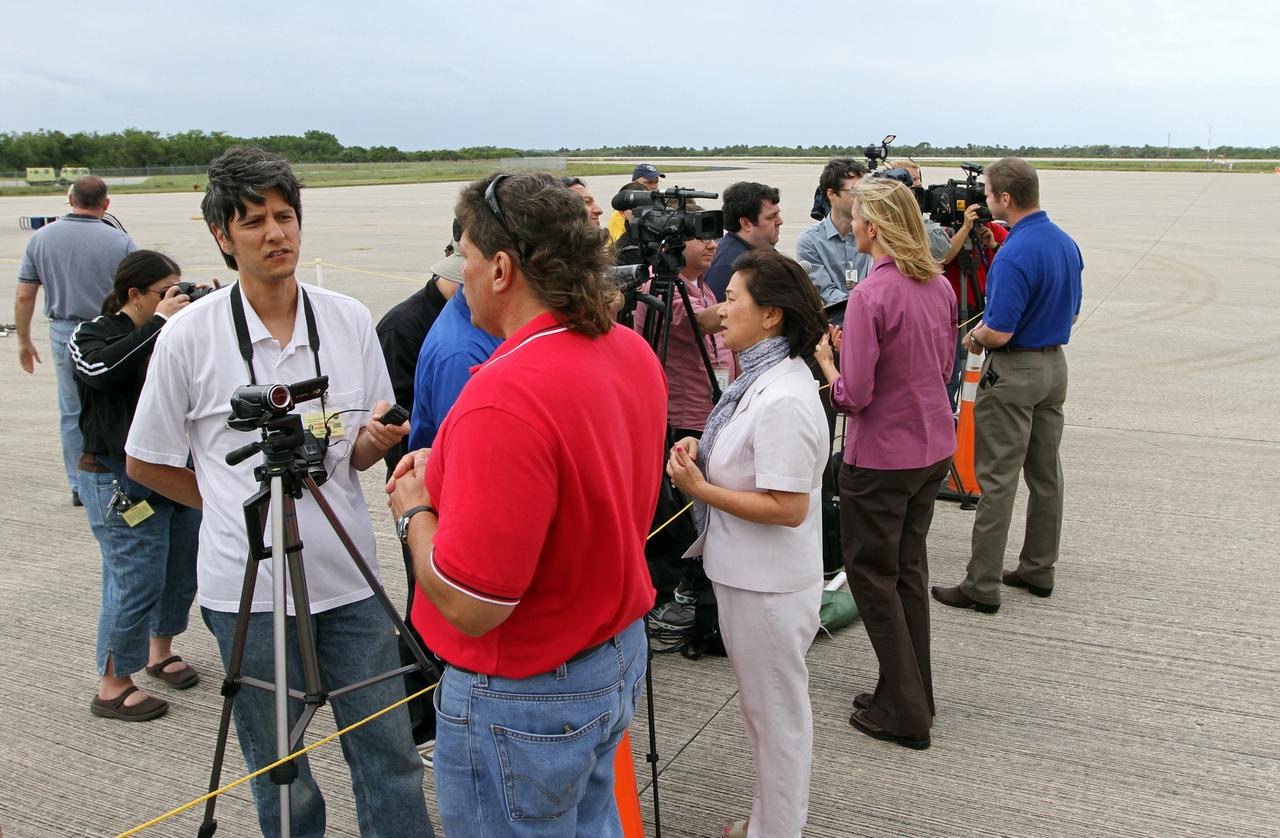
CAPE CANAVERAL, Fla. – At the Shuttle Landing Facility at NASA’s Kennedy Space Center in Florida, media representatives interview space shuttle managers following the arrival of space shuttle Discovery. Behind the rope with their backs to the camera are, from left, Bart Pannullo, NASA Transition and Retirement vehicle manager at Kennedy Dorothy Rasco, manager for Space Shuttle Program Transition and Retirement at NASA’s Johnson Space Center Stephanie Stilson, NASA flow director for Orbiter Transition and Retirement at Kennedy and Kevin Templin, transition manager for the Space Shuttle Program at Johnson. Discovery will be hoisted onto a Shuttle Carrier Aircraft, or SCA, with the aid of the mate-demate device at the landing facility. The SCA, a modified Boeing 747 jet airliner, is scheduled to ferry Discovery to the Washington Dulles International Airport in Virginia on April 17, after which the shuttle will be placed on permanent public display in the Smithsonian's National Air and Space Museum Steven F. Udvar-Hazy Center. For more information on shuttle transition and retirement activities, visit http://www.nasa.gov/transition. Photo credit: NASA/Kim Shiflett
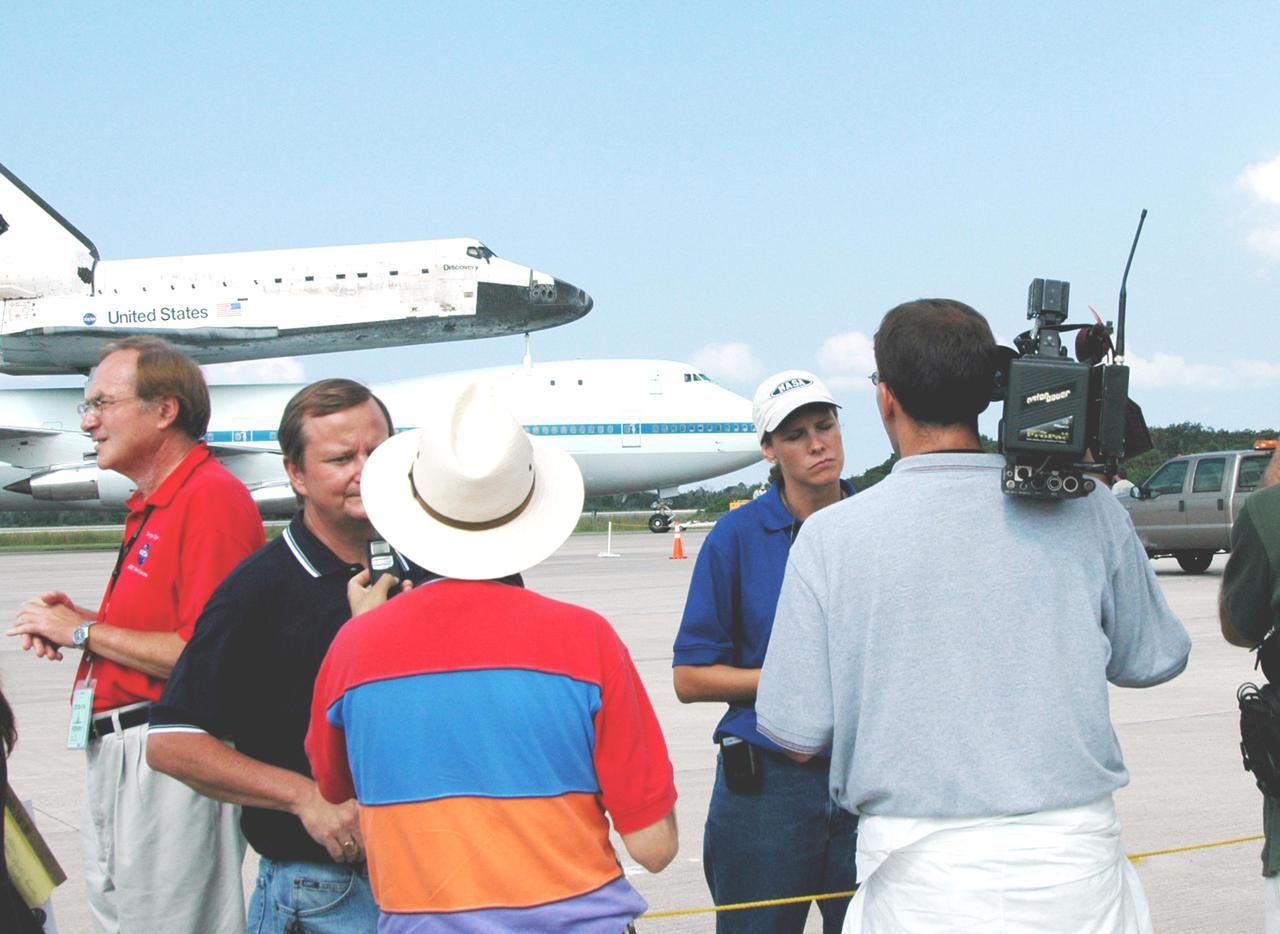
KENNEDY SPACE CENTER, FLA. - Mike Leinbach (facing camera left), Shuttle launch director, and Stephanie Stilson (facing camera right), vehicle manager for Space Shuttle Discovery (OV-103), are interviewed by the news media at the Kennedy Space Center (KSC) Shuttle Landing Facility (SLF). The interviews followed the touchdown of Discovery, atop a modified Boeing 747 Shuttle Carrier Aircraft (SCA), on runway 15 at the SLF at about 10:00 a.m. EDT. The cross-country ferry flight became necessary when two days of unfavorable weather conditions at KSC forced Discovery to land on runway 22 at Edwards Air Force Base, Calif., on Aug. 9 following mission STS-114. On the return trip, stops were made at Altus Air Force Base, Okla., and Barksdale Air Force Base, La., where Discovery stayed for two nights. The SCA and Discovery will be towed to the Mate_Demate Device at the SLF where a crane will lift Discovery from the SCA and place it on solid ground. Discovery will then be towed to the Orbiter Processing Facility where preparations will begin for its next flight, STS-121.
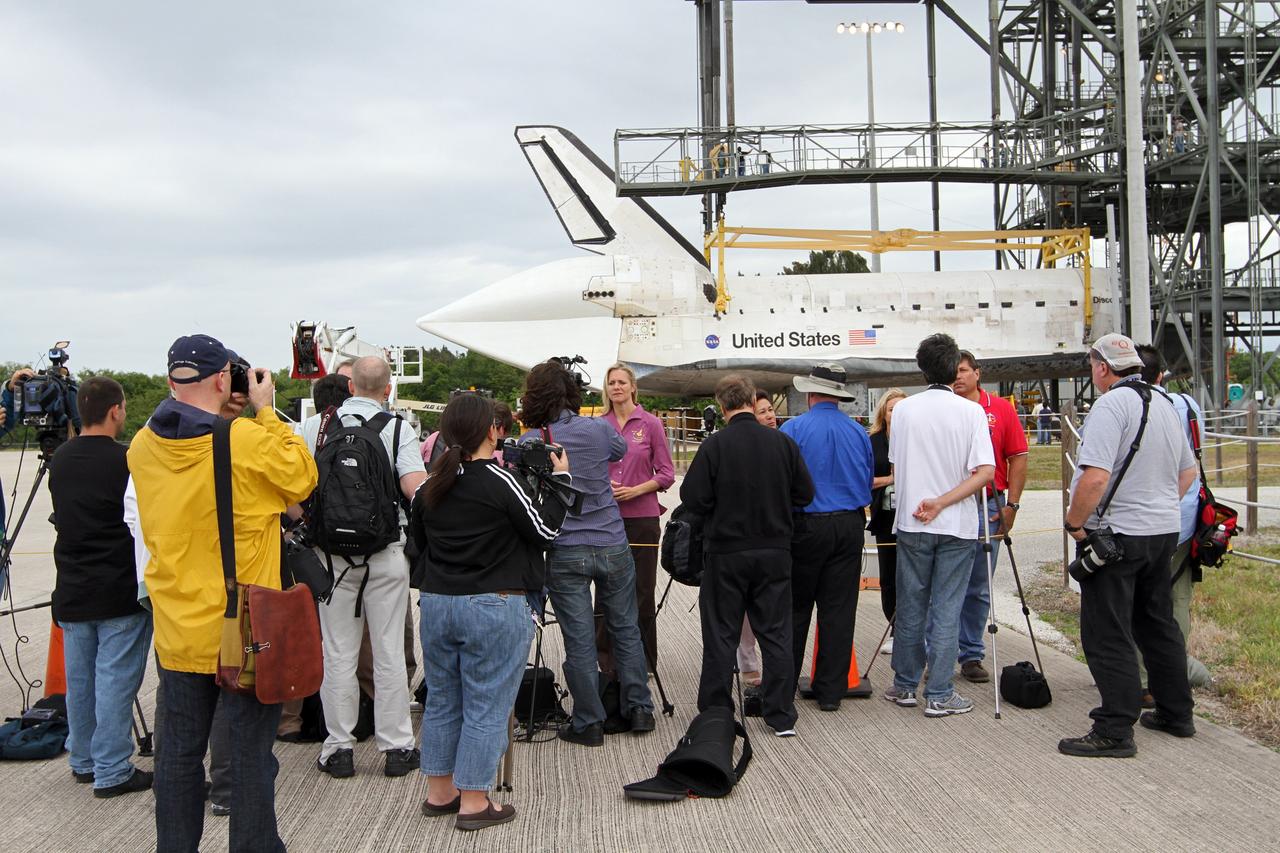
CAPE CANAVERAL, Fla. – At the Shuttle Landing Facility at NASA’s Kennedy Space Center in Florida, media representatives interview Stephanie Stilson, center, the NASA flow director for Orbiter Transition and Retirement at Kennedy following the arrival of space shuttle Discovery. Operations are under way at the mate-demate device, in the background, to lift Discovery on top of a Shuttle Carrier Aircraft. The device, known as the MDD, is a large gantry-like steel structure used to hoist a shuttle off the ground and position it onto the back of the aircraft, or SCA. The SCA is a Boeing 747 jet, originally manufactured for commercial use, which was modified by NASA to transport the shuttles between destinations on Earth. The SCA designated NASA 905 is assigned to the remaining ferry missions, delivering the shuttles to their permanent public display sites. NASA 905 is scheduled to ferry Discovery to the Washington Dulles International Airport in Virginia on April 17, after which the shuttle will be placed on display in the Smithsonian's National Air and Space Museum Steven F. Udvar-Hazy Center. For more information on the SCA, visit http://www.nasa.gov/centers/dryden/news/FactSheets/FS-013-DFRC.html. For more information on shuttle transition and retirement activities, visit http://www.nasa.gov/transition. Photo credit: NASA/Kim Shiflett
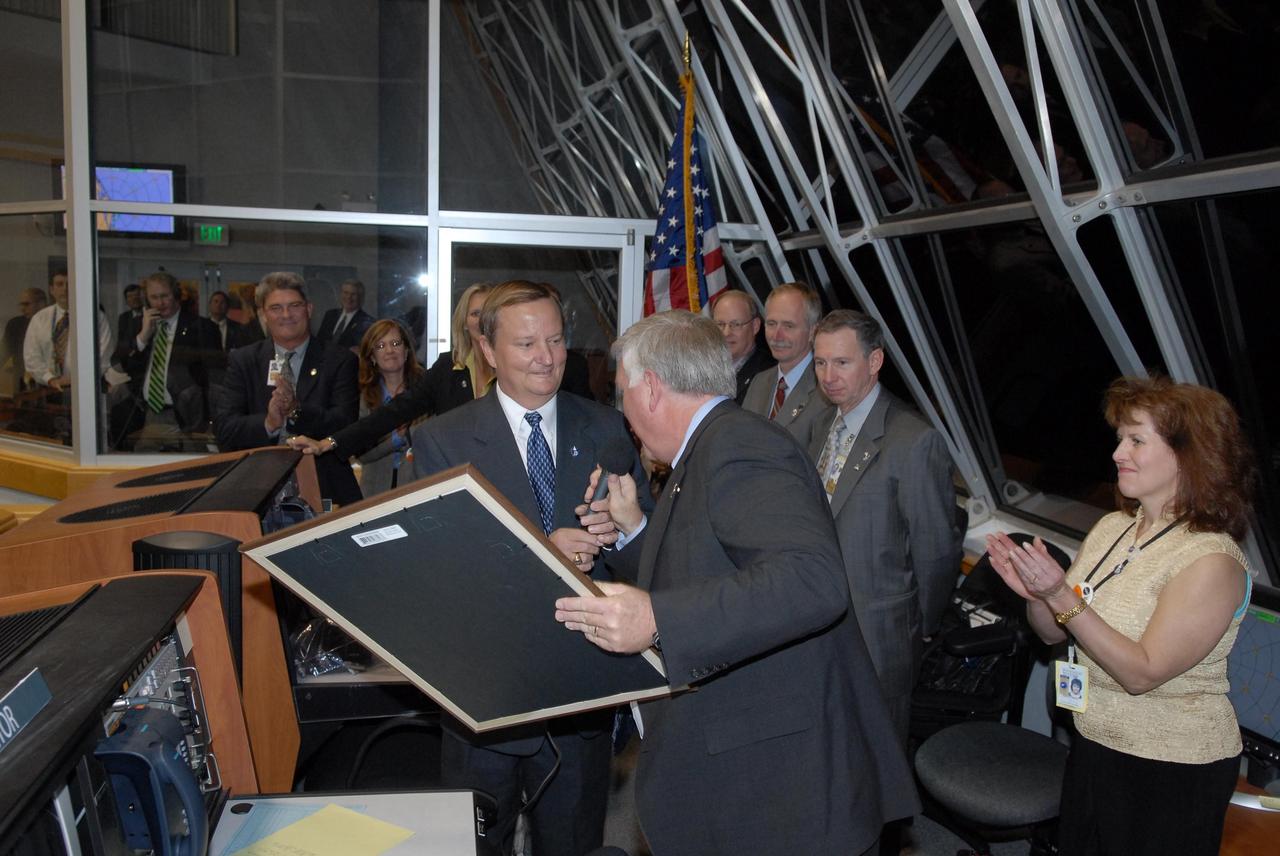
KENNEDY SPACE CENTER, FLA. -- In the firing room at the Launch Control Center, Shuttle Launch Director Mike Leinbach presents a memento of the night's successful launch of Space Shuttle Discovery to Kennedy Space Center Director Jim Kennedy, who is retiring in January. Behind Leinbach and Kennedy are, left to right, Deputy Director Bill Parsons, External Relations Director Lisa Malone, NASA Flow Director for Discovery Stephanie Stilson, NASA KSC News Chief Bruce Buckingham, Associate Administrator for Space Operations Mission William Gerstenmaier and NASA Administrator Mike Griffin and his wife, Becky. This was the second launch attempt for mission STS-116. The first launch attempt on Dec. 7 was postponed due a low cloud ceiling over Kennedy Space Center. This is Discovery's 33rd mission and the first night launch since 2002. The 20th shuttle mission to the International Space Station, STS-116 carries another truss segment, P5. It will serve as a spacer, mated to the P4 truss that was attached in September. After installing the P5, the crew will reconfigure and redistribute the power generated by two pairs of U.S. solar arrays. Landing is expected Dec. 21 at KSC. Photo credit: NASA/Kim Shiflett
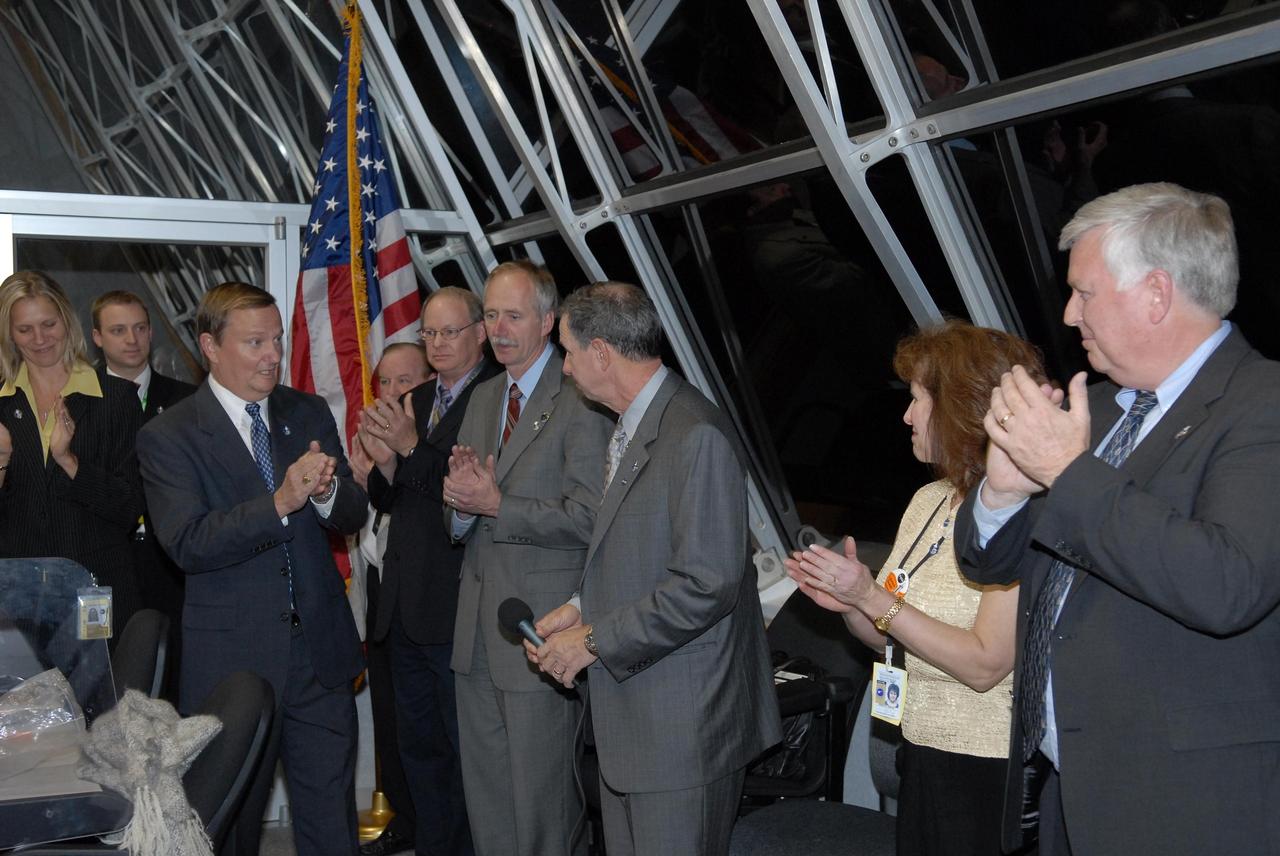
KENNEDY SPACE CENTER, FLA. -- In the firing room at the Launch Control Center, Shuttle Launch Director Mike Leinbach applauds with other NASA officials the successful second launch attempt of Space Shuttle Discovery on mission STS-116. Liftoff occurred on time at 8:47 p.m. EST. Standing left to right are NASA Flow Director for Discovery Stephanie Stilson, Leinbach, NASA KSC News Chief Bruce Buckingham, Associate Administrator for Space Operations Mission William Gerstenmaier, NASA Administrator Mike Griffin, Mrs. Griffin, and Kennedy Space Center Director Jim Kennedy. The first launch attempt on Dec. 7 was postponed due a low cloud ceiling over Kennedy Space Center. This is Discovery's 33rd mission and the first night launch since 2002. The 20th shuttle mission to the International Space Station, STS-116 carries another truss segment, P5. It will serve as a spacer, mated to the P4 truss that was attached in September. After installing the P5, the crew will reconfigure and redistribute the power generated by two pairs of U.S. solar arrays. Landing is expected Dec. 21 at KSC. Photo credit: NASA/Kim Shiflett
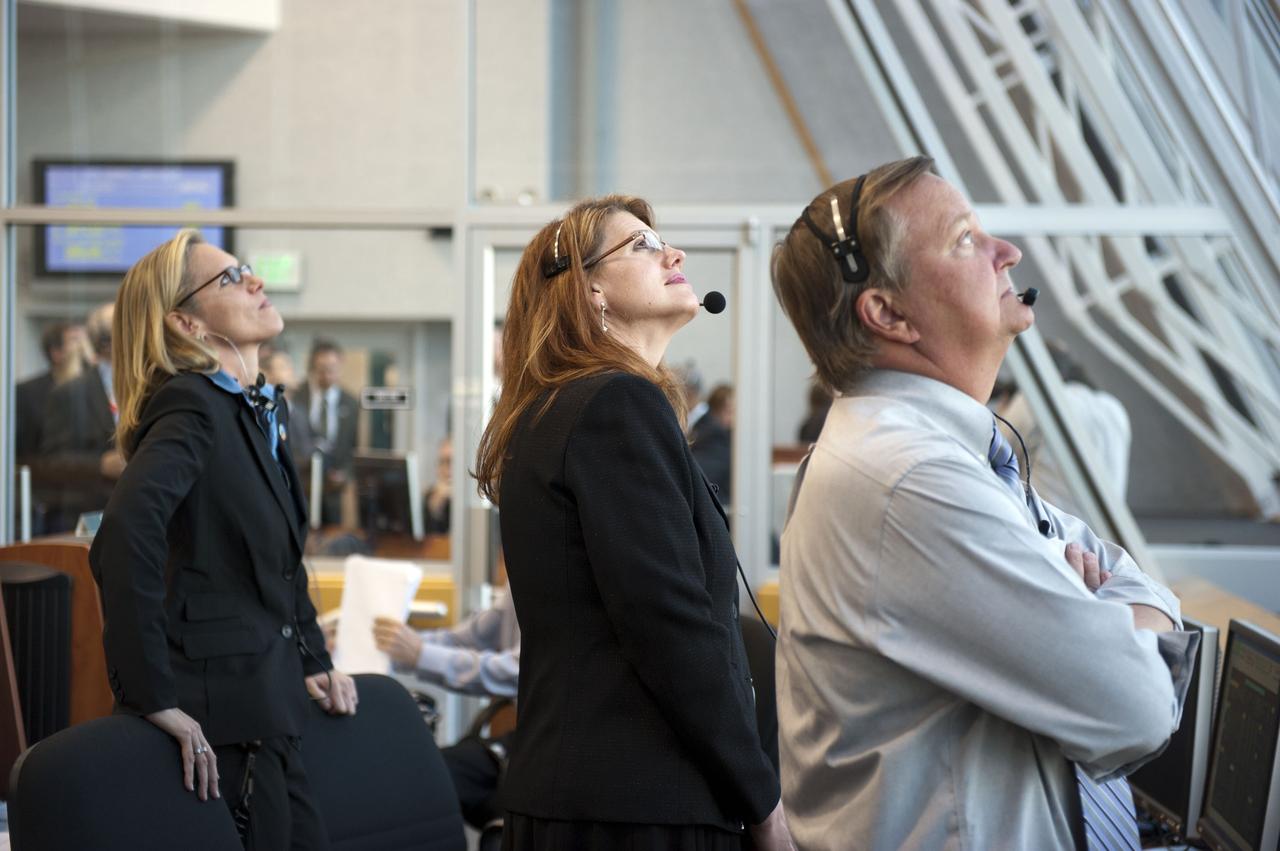
CAPE CANAVERAL, Fla. -- In Firing Room 4 of the Launch Control Center at NASA's Kennedy Space Center in Florida, NASA's Discovery Flow Director Stephanie Stilson, left, STS-133 Assistant Shuttle Launch Director and lead NASA Test Director Charlie Blackwell-Thompson and Shuttle Launch Director Mike Leinbach watch space shuttle Discovery blaze a trail of smoke and steam as it heads toward orbit on the STS-133 mission to the International Space Station. Discovery and its six-member crew are on a mission to deliver the Permanent Multipurpose Module, packed with supplies and critical spare parts, as well as Robonaut 2, the dexterous humanoid astronaut helper, to the orbiting outpost. Discovery is making its 39th mission and is scheduled to be retired following STS-133. This is the 133rd Space Shuttle Program mission and the 35th shuttle voyage to the space station. For more information on the STS-133 mission, visit www.nasa.gov/mission_pages/shuttle/shuttlemissions/sts133/. Photo credit: NASA/Kim Shiflett
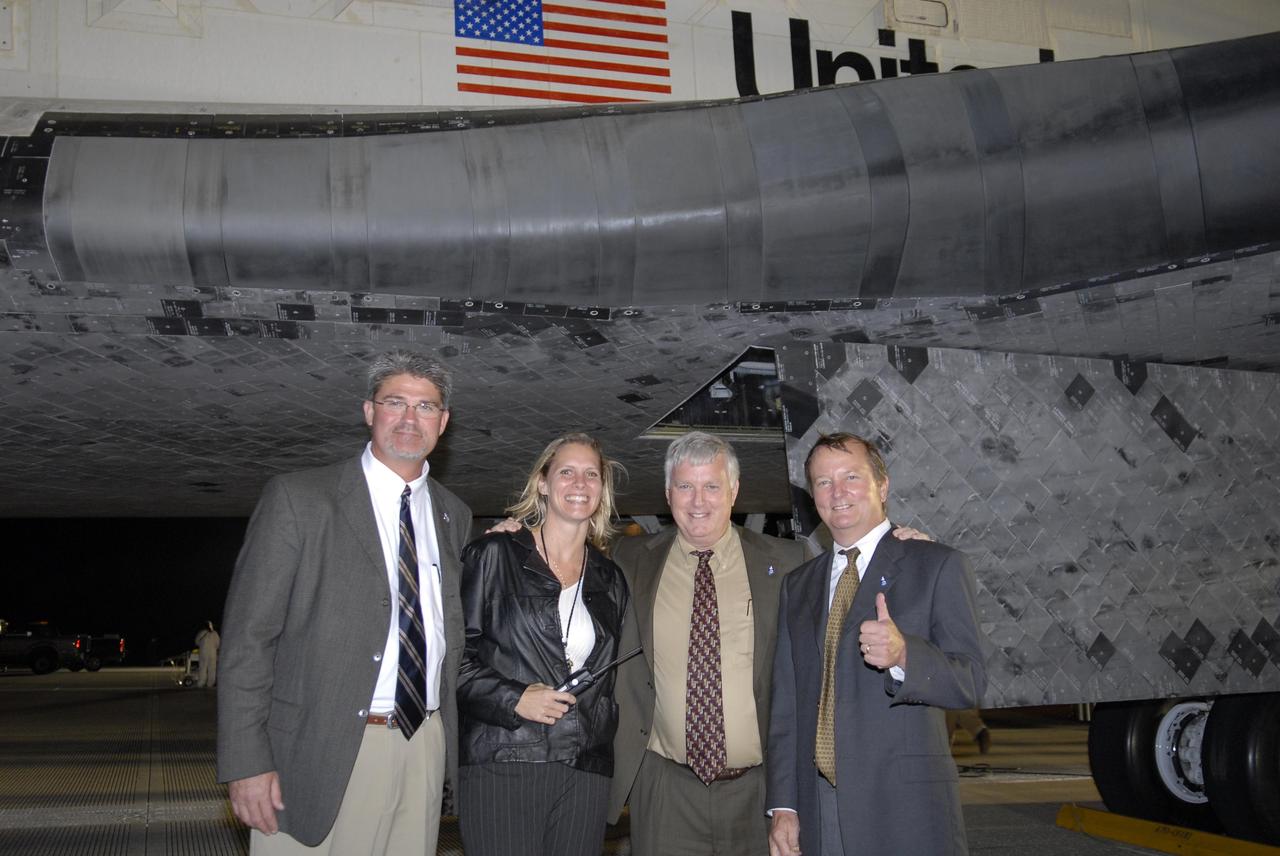
KENNEDY SPACE CENTER, FLA. -- Deputy Center Director Bill Parsons, Discovery Flow Director Stephanie Stilson, Center Director Jim Kennedy and Launch Director Mike Leinbach pose for the camera beneath Space Shuttle Discovery during post-landing inspections following mission STS-116 on Runway 15 at NASA Kennedy Space Center's Shuttle Landing Facility. During the STS-116 mission, three spacewalks attached the P5 integrated truss structure to the station, and completed the rewiring of the orbiting laboratory's power system. A fourth spacewalk retracted a stubborn solar array. Main gear touchdown was at 5:32 p.m. EST. Nose gear touchdown was at 5:32:12 p.m. and wheel stop was at 5:32:52 p.m. At touchdown -- nominally about 2,500 ft. beyond the runway threshold -- the orbiter is traveling at a speed ranging from 213 to 226 mph. Discovery traveled 5,330,000 miles, landing on orbit 204. Mission elapsed time was 12 days, 20 hours, 44 minutes and 16 seconds. This is the 64th landing at KSC. Photo credit: NASA/Kim Shiflett
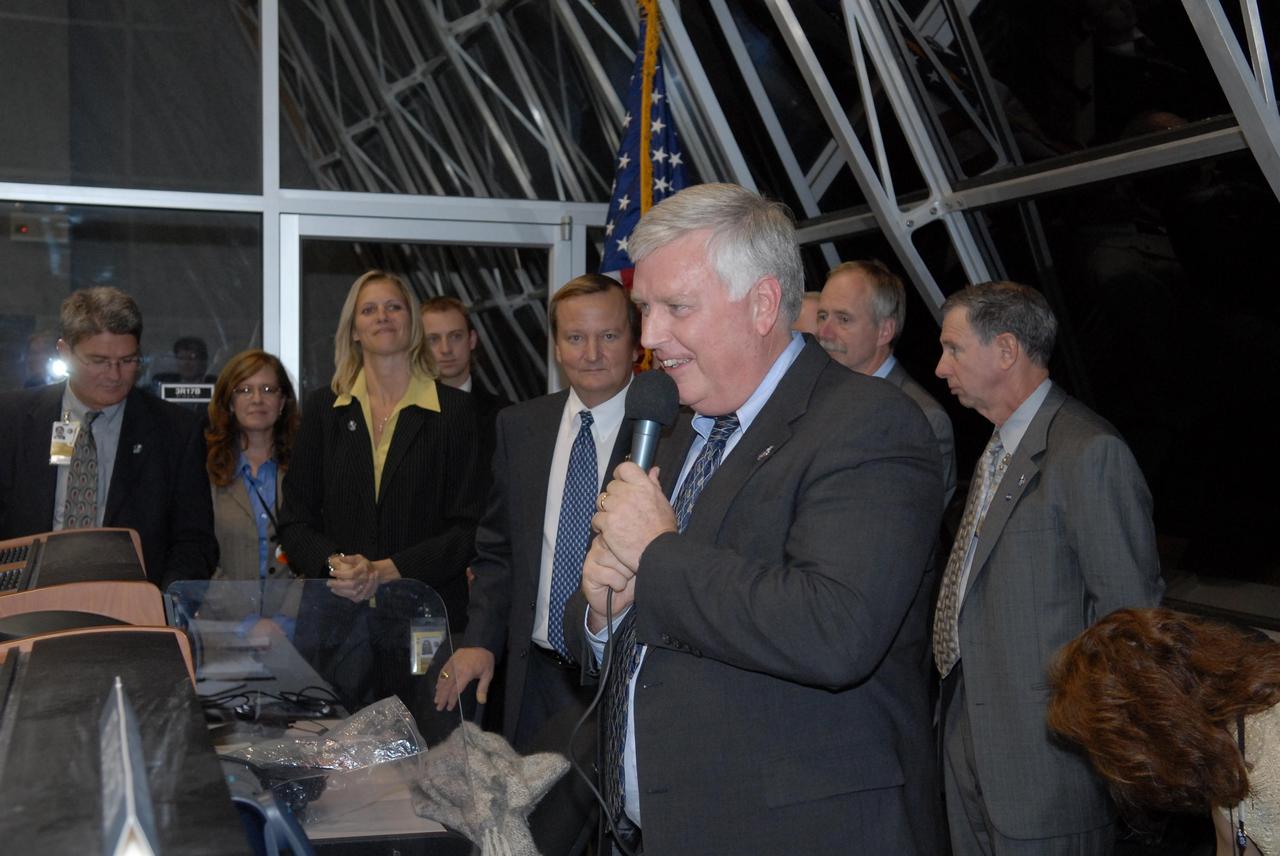
KENNEDY SPACE CENTER, FLA. -- In the firing room at the Launch Control Center, Kennedy Space Center Director Jim Kennedy (with microphone) congratulates the team for successful second launch attempt of Space Shuttle Discovery on mission STS-116. Liftoff occurred on time at 8:47 p.m. EST. Others in the room are (left to right), Deputy Director Bill Parsons, External Relations Director Lisa Malone, NASA Flow Director for Discovery Stephanie Stilson, Shuttle Launch Director Mike Leinbach, Associate Administrator for Space Operations Mission William Gerstenmaier and NASA Administrator Mike Griffin. The first launch attempt on Dec. 7 was postponed due a low cloud ceiling over Kennedy Space Center. This is Discovery's 33rd mission and the first night launch since 2002. The 20th shuttle mission to the International Space Station, STS-116 carries another truss segment, P5. It will serve as a spacer, mated to the P4 truss that was attached in September. After installing the P5, the crew will reconfigure and redistribute the power generated by two pairs of U.S. solar arrays. Landing is expected Dec. 21 at KSC. Photo credit: NASA/Kim Shiflett
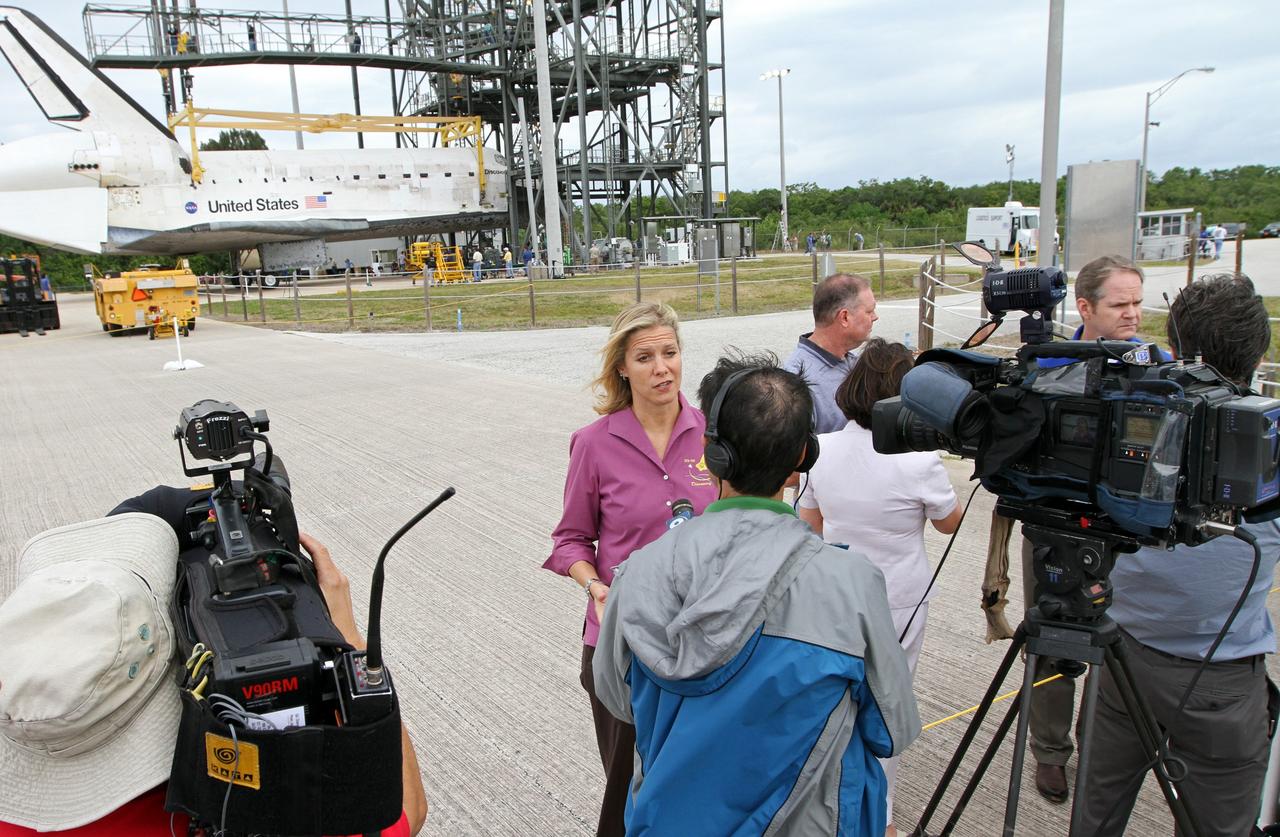
CAPE CANAVERAL, Fla. – At the Shuttle Landing Facility at NASA’s Kennedy Space Center in Florida, media representatives interview Stephanie Stilson, center, the NASA flow director for Orbiter Transition and Retirement at Kennedy following the arrival of space shuttle Discovery. Operations are under way at the mate-demate device, in the background, to lift Discovery on top of a Shuttle Carrier Aircraft. The device, known as the MDD, is a large gantry-like steel structure used to hoist a shuttle off the ground and position it onto the back of the aircraft, or SCA. The SCA is a Boeing 747 jet, originally manufactured for commercial use, which was modified by NASA to transport the shuttles between destinations on Earth. The SCA designated NASA 905 is assigned to the remaining ferry missions, delivering the shuttles to their permanent public display sites. NASA 905 is scheduled to ferry Discovery to the Washington Dulles International Airport in Virginia on April 17, after which the shuttle will be placed on display in the Smithsonian's National Air and Space Museum Steven F. Udvar-Hazy Center. For more information on the SCA, visit http://www.nasa.gov/centers/dryden/news/FactSheets/FS-013-DFRC.html. For more information on shuttle transition and retirement activities, visit http://www.nasa.gov/transition. Photo credit: NASA/Kim Shiflett
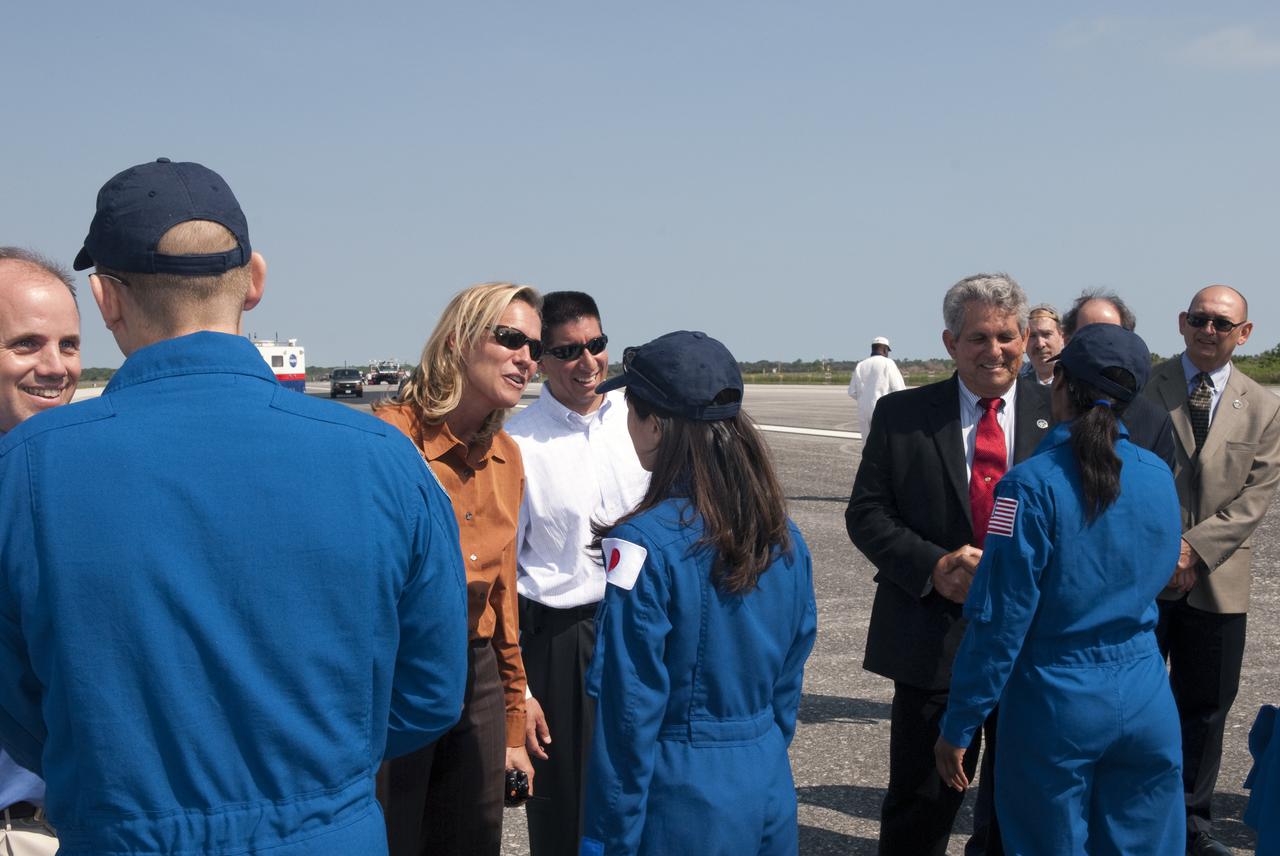
CAPE CANAVERAL, Fla. - At the Shuttle Landing Facility at NASA's Kennedy Space Center in Florida, at center, space shuttle Discovery Flow Director Stephanie Stilson talks to STS-131 Mission Specialist Naoko Yamazaki of the Japan Aerospace Exploration Agency about her successful mission as NASA Flight Director Richard Jones from the Johnson Space Center looks on. At right, Larry Ostarly (red tie), director of Ground Systems Support, United Space Alliance, welcomes STS-131 Mission Specialist Stephanie Wilson back from space with James Cawby, director of Manufacturing and Processing, Launch and Recovery Systems, United Space Alliance, at right, awaiting his turn. Making his way down the receifing line, at left, is Mission Specialist Clayton Anderson. Discovery landed at Kennedy after 15 days in space, completing the more than 6.2-million-mile STS-131 mission on orbit 238. Main gear touchdown was at 9:08:35 a.m. EDT followed by nose gear touchdown at 9:08:47 a.m. and wheelstop at 9:09:33 a.m. The seven-member STS-131 crew carried the multi-purpose logistics module Leonardo, filled with supplies, a new crew sleeping quarters and science racks that were transferred to the International Space Station's laboratories. The crew also switched out a gyroscope on the station’s truss, installed a spare ammonia storage tank and retrieved a Japanese experiment from the station’s exterior. STS-131 is the 33rd shuttle mission to the station and the 131st shuttle mission overall. For information on the STS-131 mission and crew, visit http:__www.nasa.gov_mission_pages_shuttle_shuttlemissions_sts131_index.html. Photo credit: NASA_Jim Grossmann