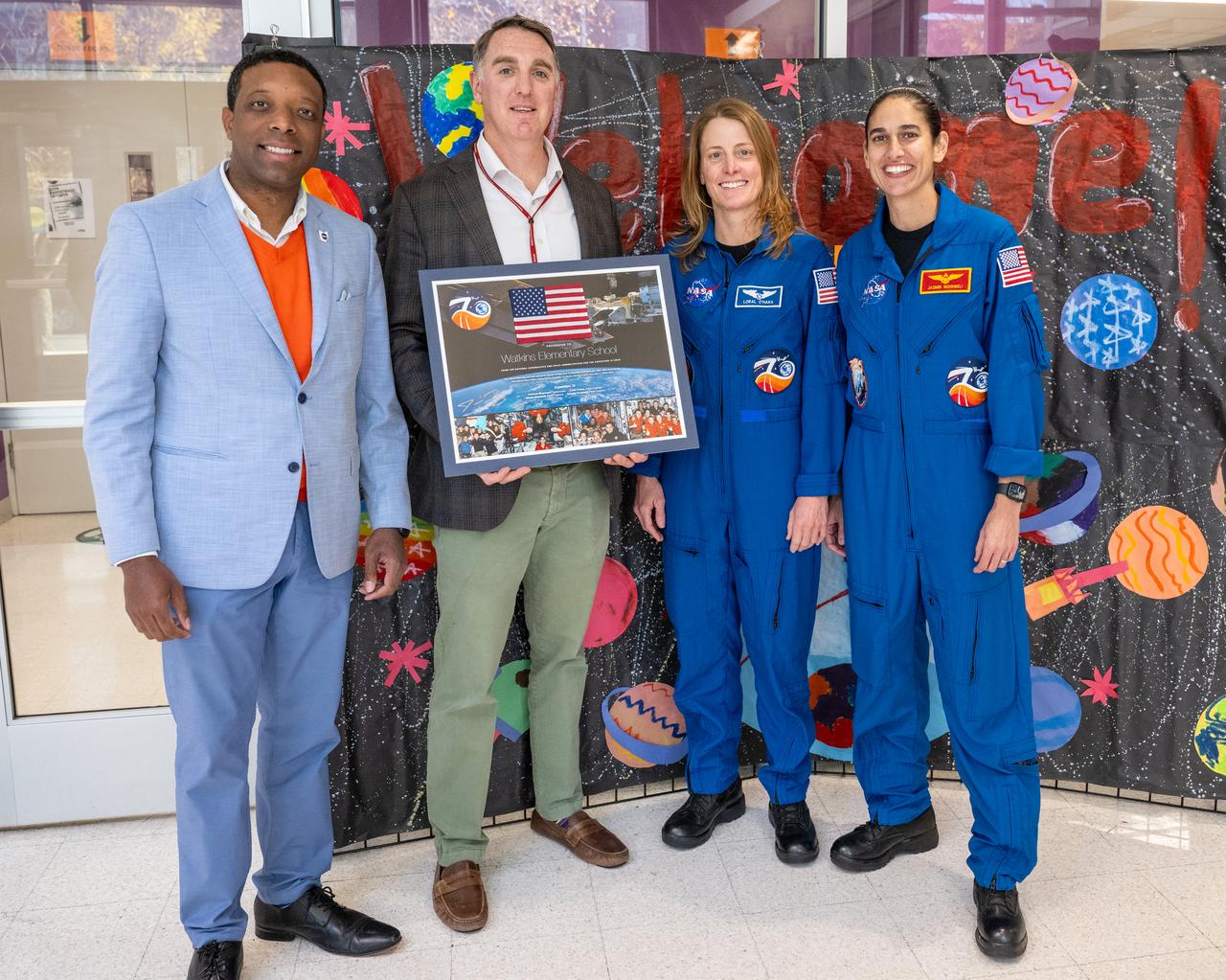
From left to right, Center of Science and Industry (COSI) Chief Strategy Officer Stephen White, Principal MScott Berkowitz, NASA astronauts Loral O’Hara and Jasmin Moghbeli pose for a photo prior to an engagement event at Catherine Watkins Elementary School Monday, Dec. 2, 2024 in Washington. O’Hara and Moghbeli spent six months in space as part of Expedition 70 aboard the International Space Station. Photo Credit: (NASA/Keegan Barber)
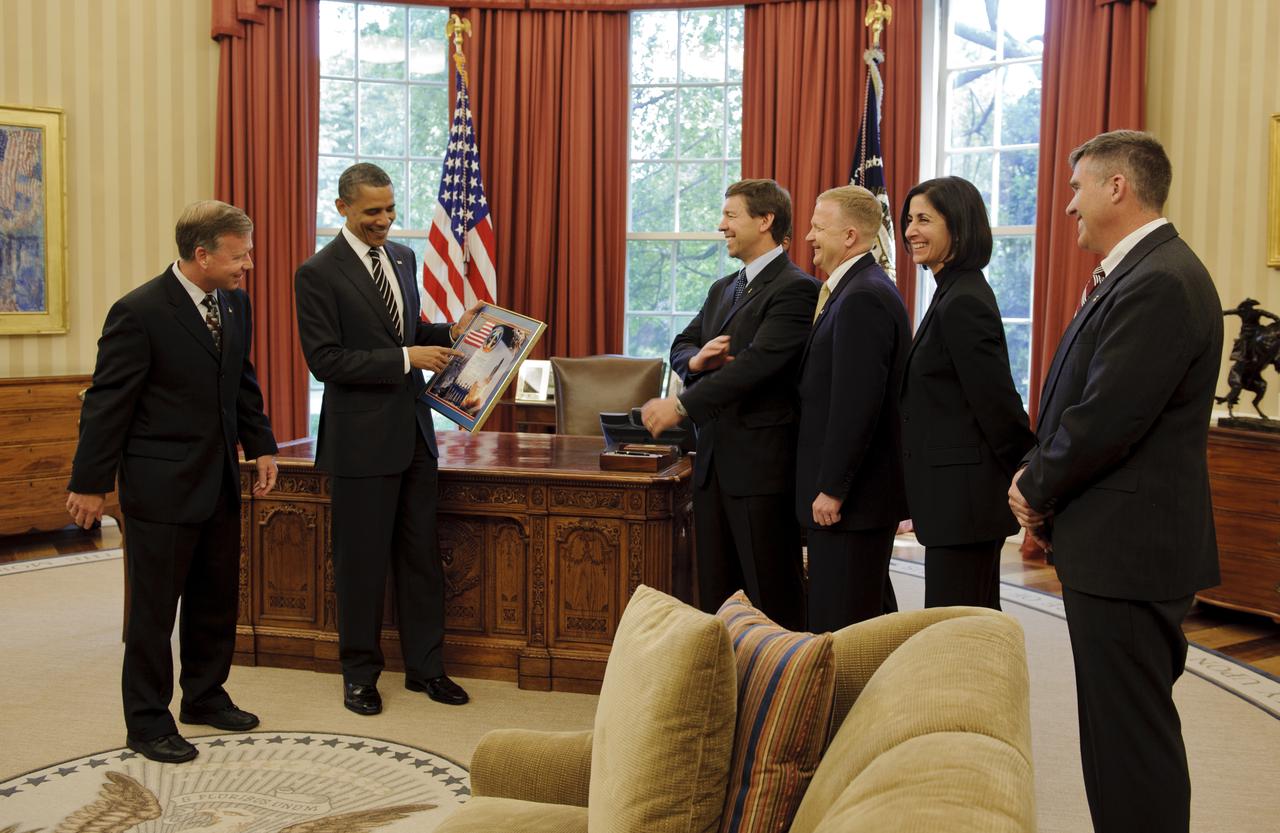
STS-133 Commander Steven Lindsey, far left, presents a montage to President Barack Obama as crew members Michael Barratt, Pilot Eric Boe, Nicole Stott, and Stephen Bowen look on during a visit to the Oval Office in the White House, Monday, May 9, 2011, in Washington. Also in attendance but not seen, was Mission Specialist Alvin Drew. Photo Credit: (NASA/Paul E. Alers)
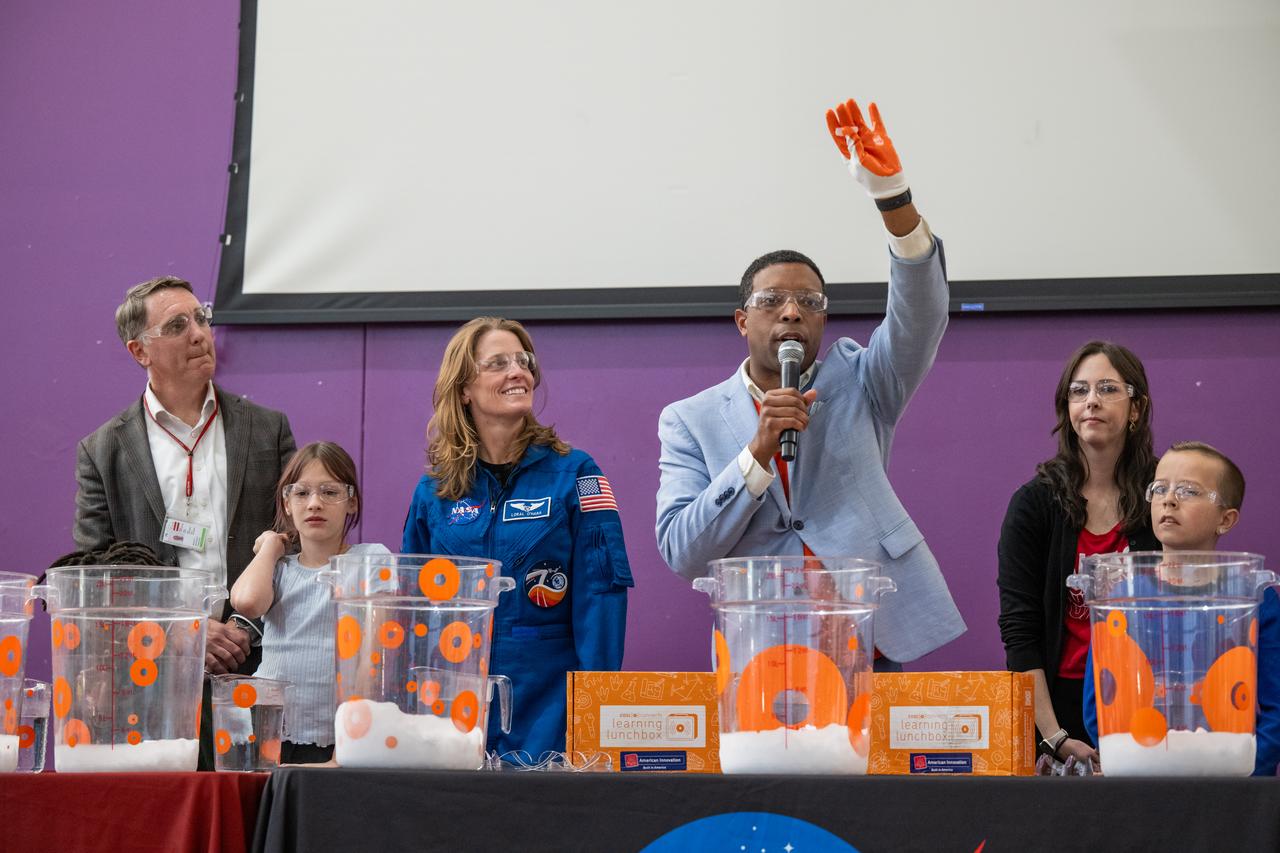
Center of Science and Industry (COSI) Chief Strategy Officer Stephen White, joined by Principal MScott Berkowitz, left, and NASA Astronaut Loral O’Hara, second from left, displays a piece of dry ice to students during a science demonstration at Catherine Watkins Elementary School Monday, Dec. 2, 2024 in Washington. O’Hara and Moghbeli spent six months in space as part of Expedition 70 aboard the International Space Station. Photo Credit: (NASA/Keegan Barber)
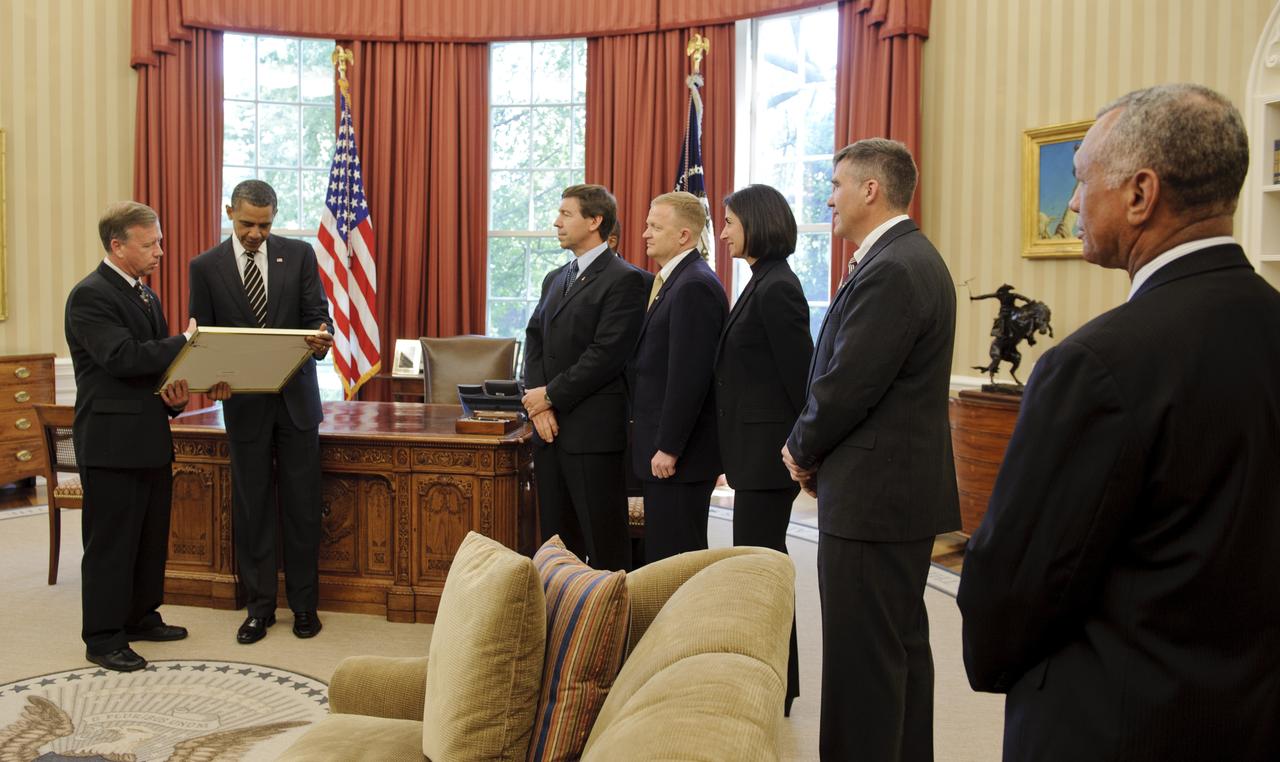
STS-133 Commander Steven Lindsey, far left, presents a montage to President Barack Obama as crew members Michael Barratt, Pilot Eric Boe, Nicole Stott, and Stephen Bowen along with NASA Administrator Charles Bolden, far right, look on during a visit to the Oval Office in the White House, Monday, May 9, 2011, in Washington. Also in attendance but not seen, was Mission Specialist Alvin Drew.Photo Credit: (NASA/Paul E. Alers)
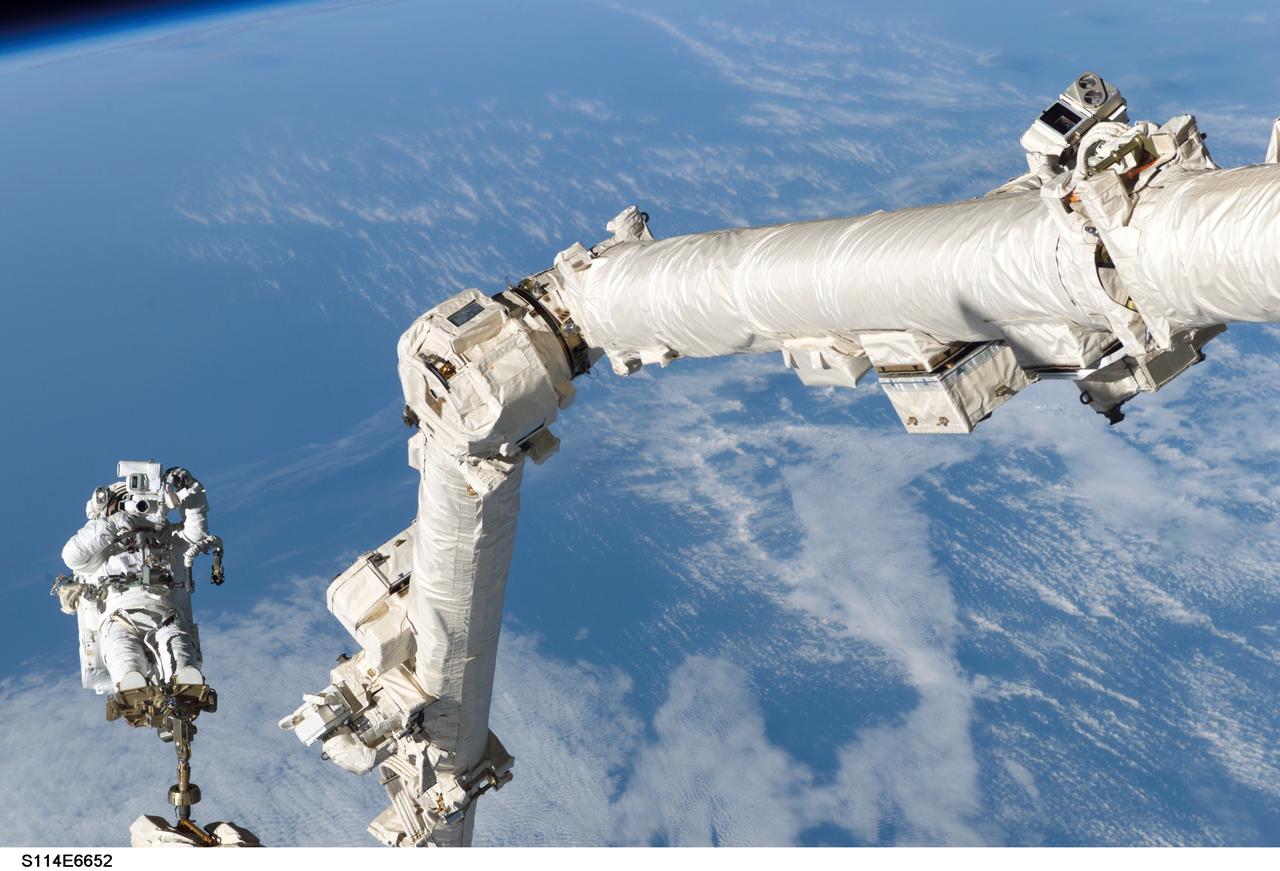
S114-E-6652 (3 August 2005) --- Astronaut Stephen K. Robinson, STS-114 mission specialist, anchored to a foot restraint on the International Space Station;s Canadarm2, participates in the mission;s third session of extravehicular activity (EVA). A blue and white Earth forms the backdrop for the image.

KENNEDY SPACE CENTER, FLA. -- Ed White III touches his father's name engraved in the Space Mirror Memorial at the KSC Visitor Complex. White attended the ceremony held in remembrance of the astronauts lost in the Apollo 1 fire: Virgil "Gus" Grissom, Edward H. White II and Roger B. Chaffee. Members of their families, along with KSC Director Bill Parsons, Associate Administrator for Space Operations William Gerstenmaier, President of the Astronauts Memorial Foundation Stephen Feldman and Chairman of the Board of Directors of the Astronauts Memorial Foundation William Potter, attended the ceremony. The mirror was designated as a national memorial by Congress and President George Bush in 1991 to honor fallen astronauts. Their names are emblazoned on the monument’s 42-½-foot-high by 50-foot-wide black granite surface as if to be projected into the heavens. Photo credit:NASA/Kim Shiflett
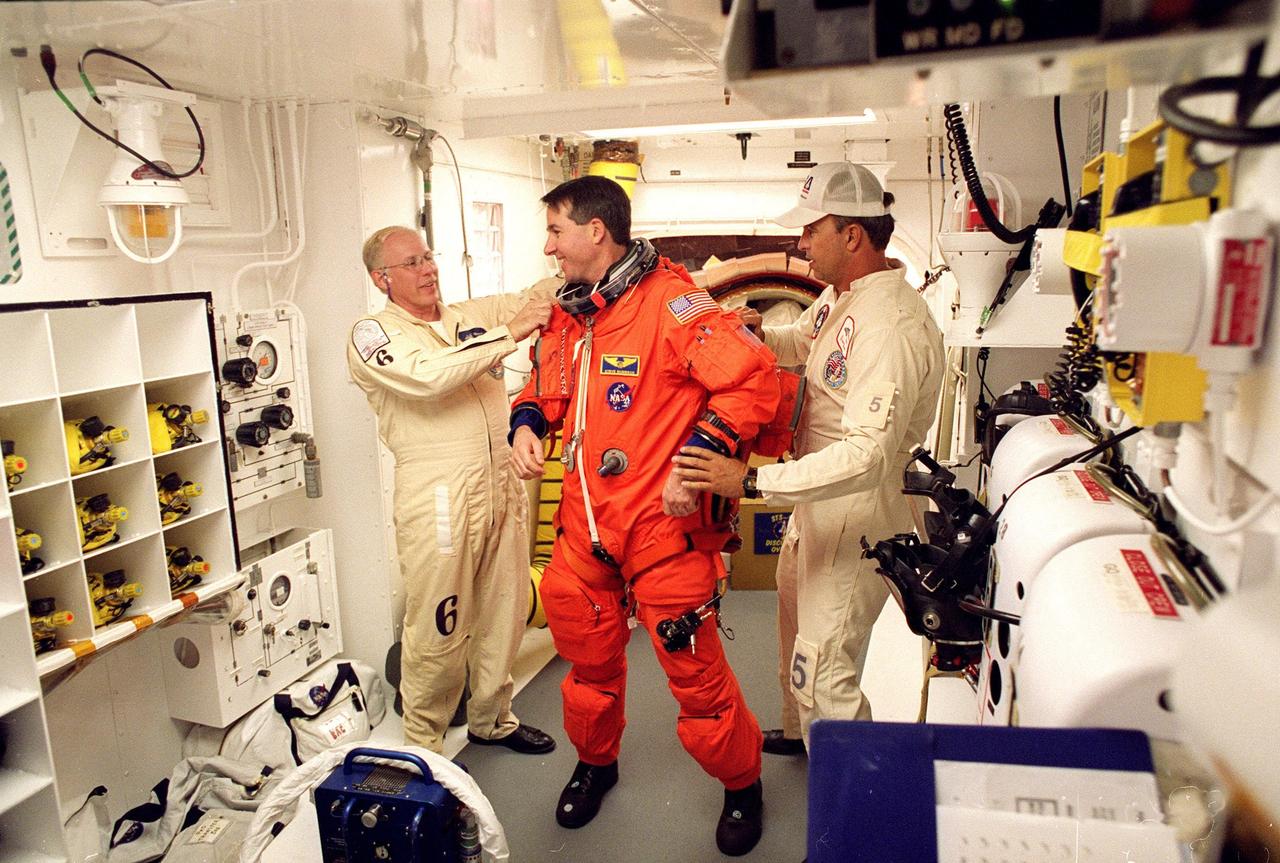
In the environmental chamber known as the white room, STS-95 Mission Specialist Stephen K. Robinson is prepared by closeout room crew members (left) Danny Wyatt and Dave Law (right) for entry into the Space Shuttle Discovery for his second flight into space. The STS-95 mission, targeted for launch at 2 p.m. EST on Oct. 29, is expected to last 8 days, 21 hours and 49 minutes, and return to KSC at 11:49 a.m. EST on Nov. 7
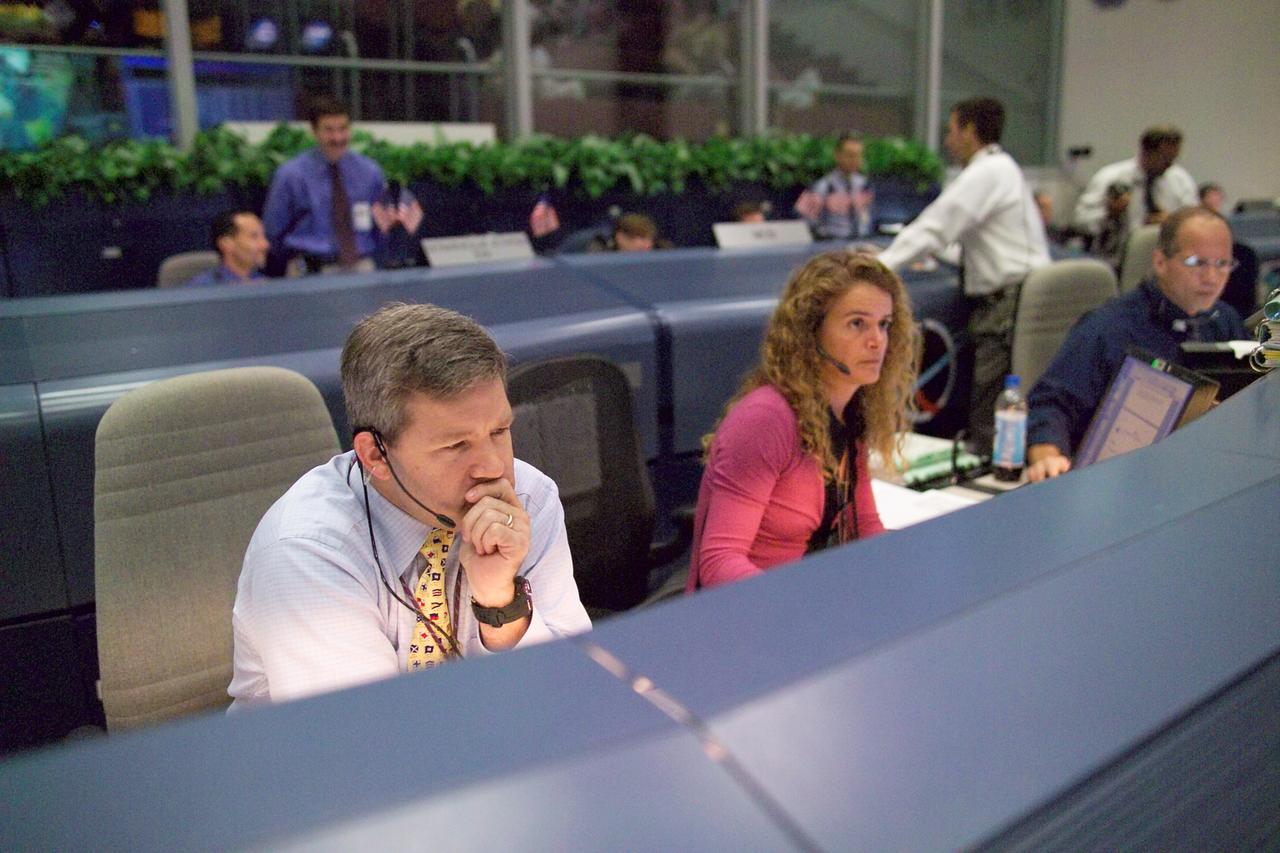
JSC2005-E-31936 (3 August 2005) --- Astronauts Julie Payette (Canadian Space Agency) and Stephen N. Frick monitor communications at the spacecraft communicator (CAPCOM) console in the Shuttle (White) Flight Control Room in Johnson Space Center’s (JSC) Mission Control Center during the third period of extravehicular activity (EVA) for STS-114.
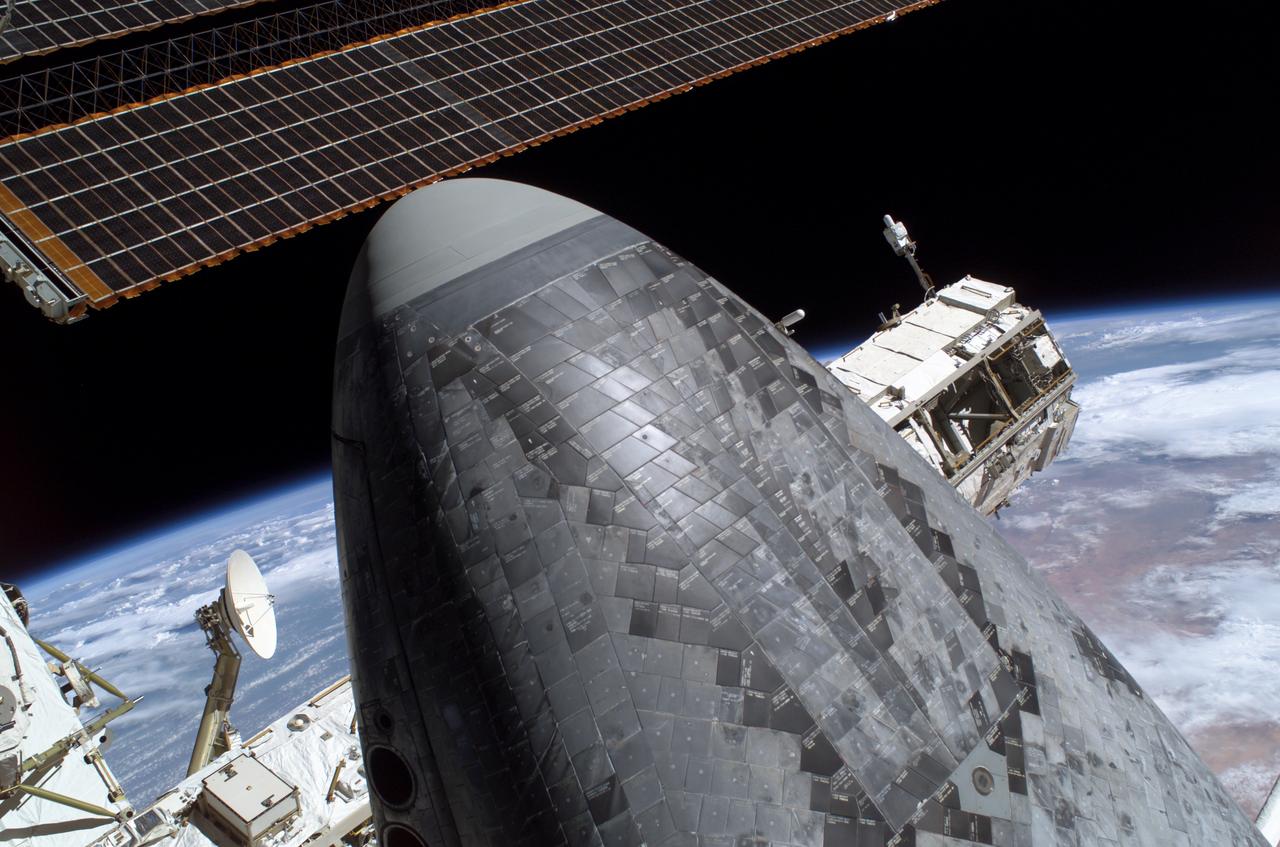
S114-E-6405 (3 August 2005) --- Space Shuttle Discovery’s underside nosecone thermal protection tiles are featured in this image photographed by astronaut Stephen K. Robinson, STS-114 mission specialist, during the mission’s third session of extravehicular activities (EVA). Part of the P1 truss and a solar array are visible in the background. The blackness of space and a blue and white Earth form the backdrop for the image.
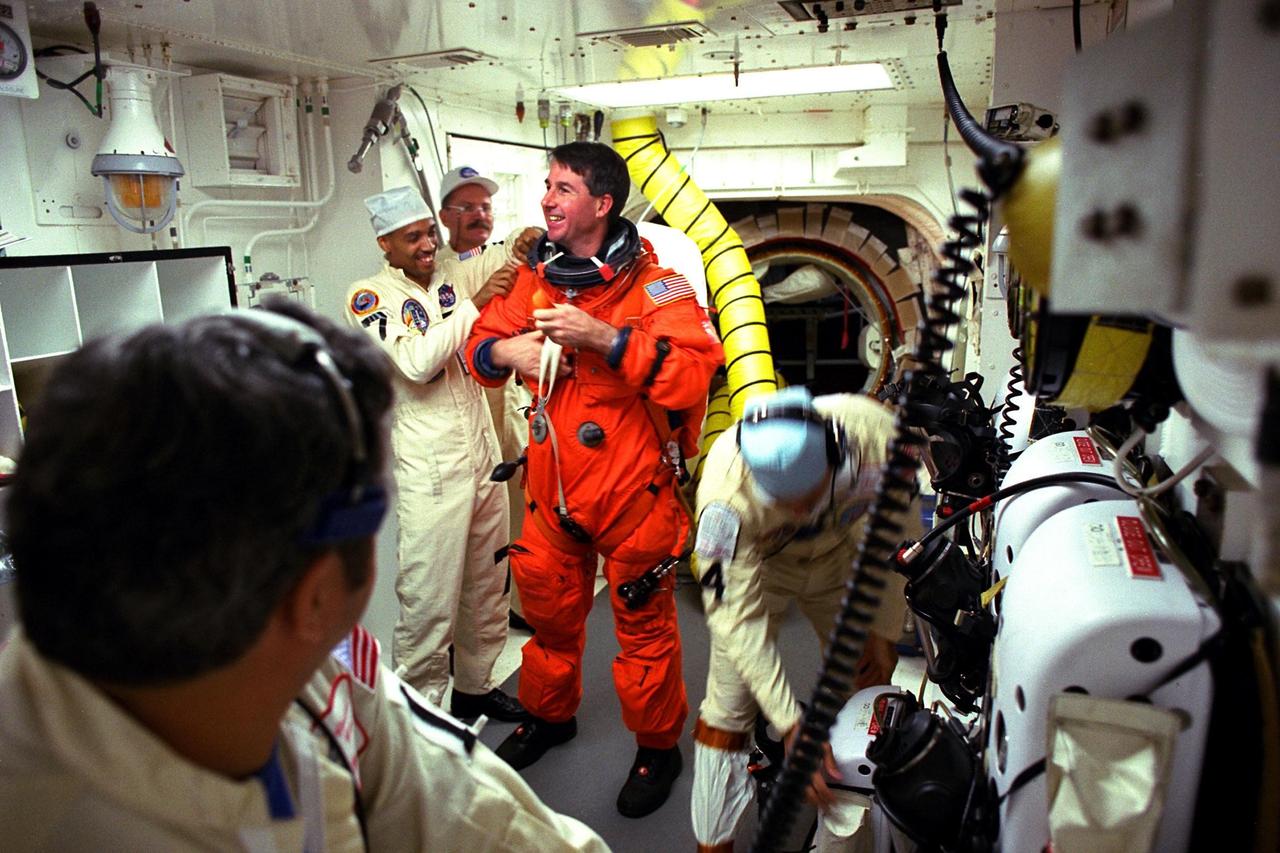
STS-85 Mission Specialist Stephen K. Robinson visits with white room closeout crew members Mike Mangione (left foreground), Carlos Gillis, Jack Burritt (center), and Chris Meinert at Launch Pad 39A as they assist him with his ascent/reentry flight suit before he enters the crew cabin of the Space Shuttle orbiter Discovery

KENNEDY SPACE CENTER, FLA. - STS-110 Pilot Stephen Frick jokes with the Closeout Crew in the White Room as he makes final preparations to enter Space Shuttle Atlantis for launch. The White Room provides entry into the cockpit area of the orbiter. This is Frick's first Shuttle flight. STS-110 is carrying the S0 Integrated Truss Structure and Mobile Transporter (MT) on this 13th assembly flight to the International Space Station. On the 11-day mission, astronauts will make four spacewalks to attach the S0 truss, which will become the backbone of the Space Station, to the U.S. Lab, "Destiny." The MT, a space "railcar," is attached to the truss segment and will make its debut run during the flight. Launch is scheduled for 4:40 p.m. EDT (20:40 GMT)
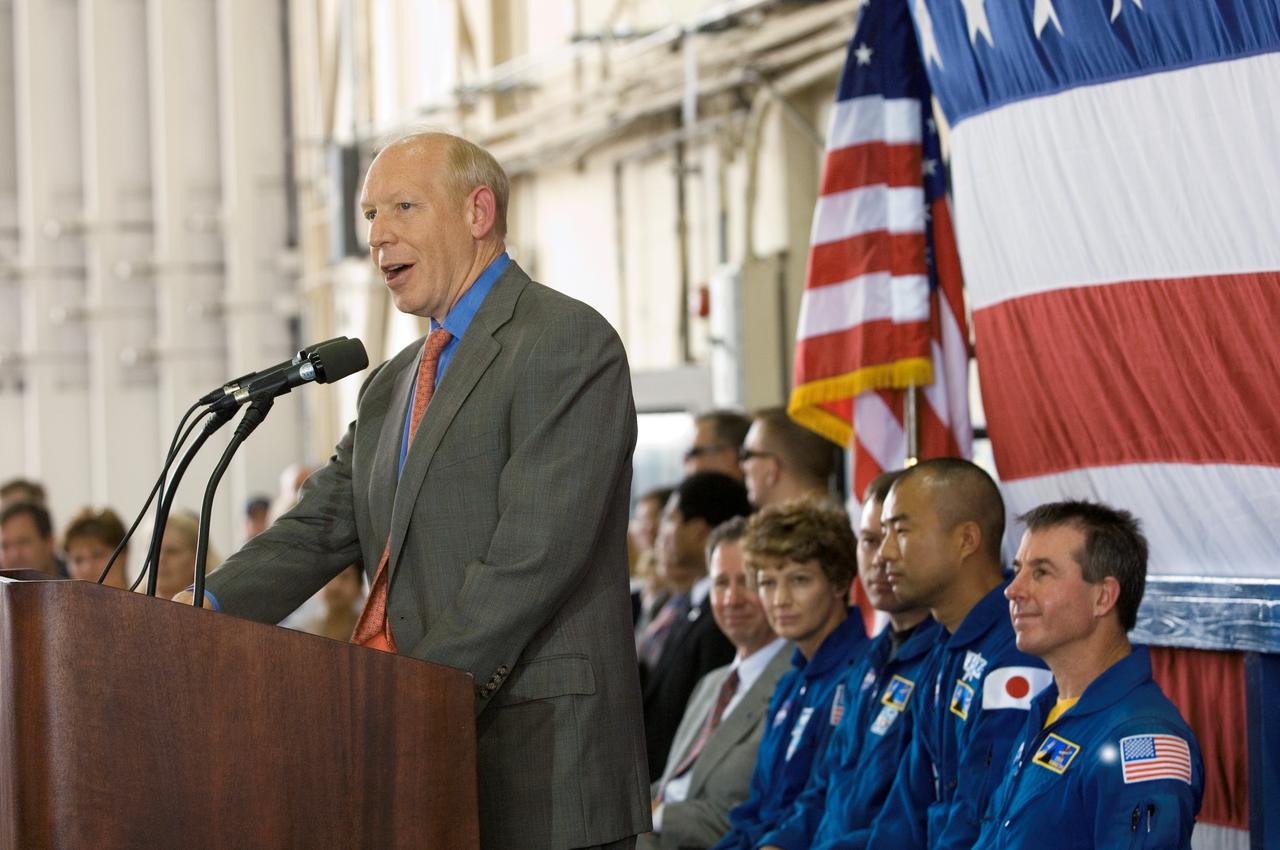
JSC2005-E-33358 (10 August 2005) --- Houston Mayor Bill White speaks to a crowd on hand at Ellington Field’s Hangar 276 near Johnson Space Center (JSC) during the STS-114 crew return ceremonies. Seated (from the left) are NASA Administrator Michael Griffin; astronauts Eileen M. Collins, commander; James M. Kelly, pilot; Soichi Noguchi, mission specialist representing Japan Aerospace Exploration Agency (JAXA); Stephen K. Robinson, mission specialist. Not pictured are astronauts Andrew S. W. Thomas, Wendy B. Lawrence and Charles J. Camarda, mission specialists.
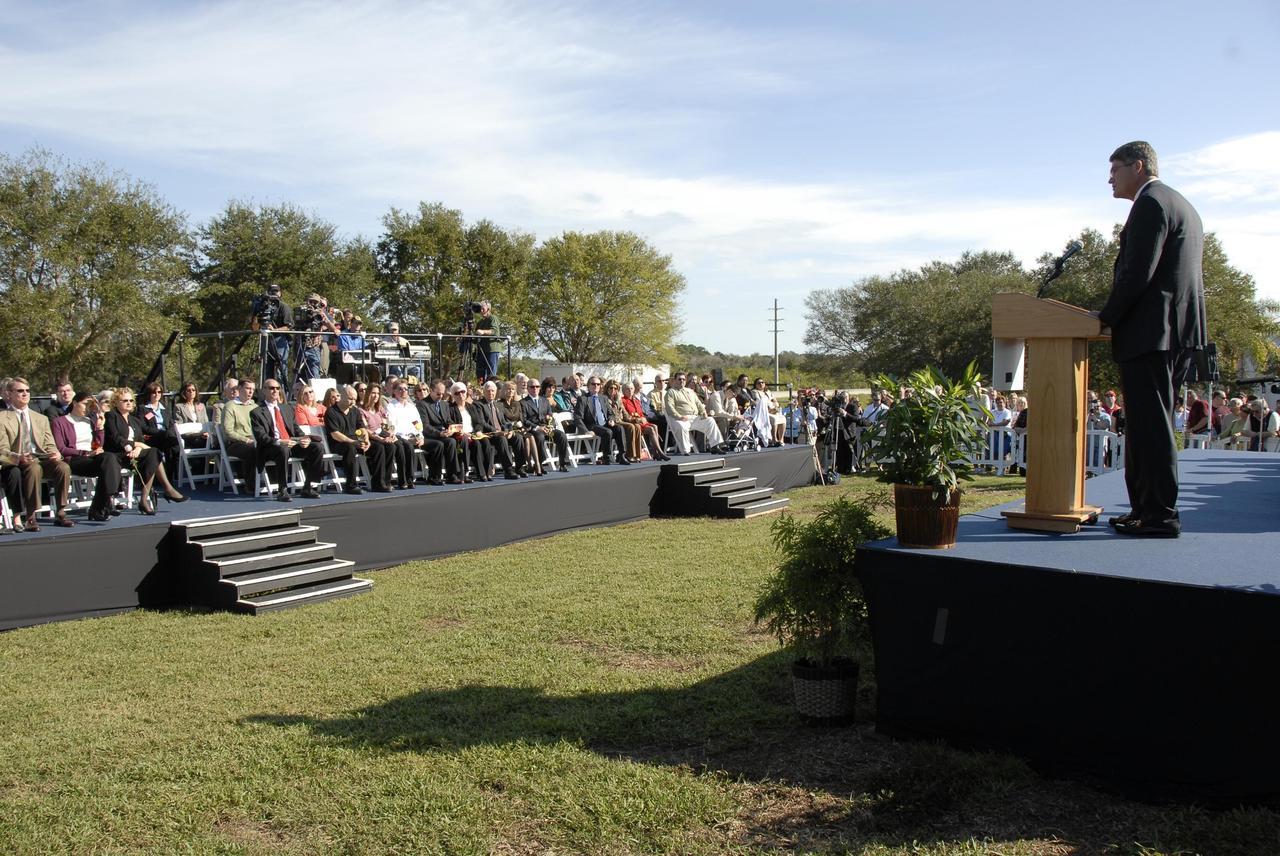
KENNEDY SPACE CENTER, FLA. -- Kennedy Space Center Director Bill Parsons (right) addresses guests attending a ceremony at the KSC Visitor Complex held in remembrance of the astronauts lost in the Apollo 1 fire: Virgil "Gus" Grissom, Edward H. White II and Roger B. Chaffee. Members of their families, along with Associate Administrator for Space Operations William Gerstenmaier, President of the Astronauts Memorial Foundation Stephen Feldman, Chairman of the Board of Directors of the Astronauts Memorial Foundation William Potter and former astronaut John Young, attended the ceremony. Photo credit:NASA/Kim Shiflett
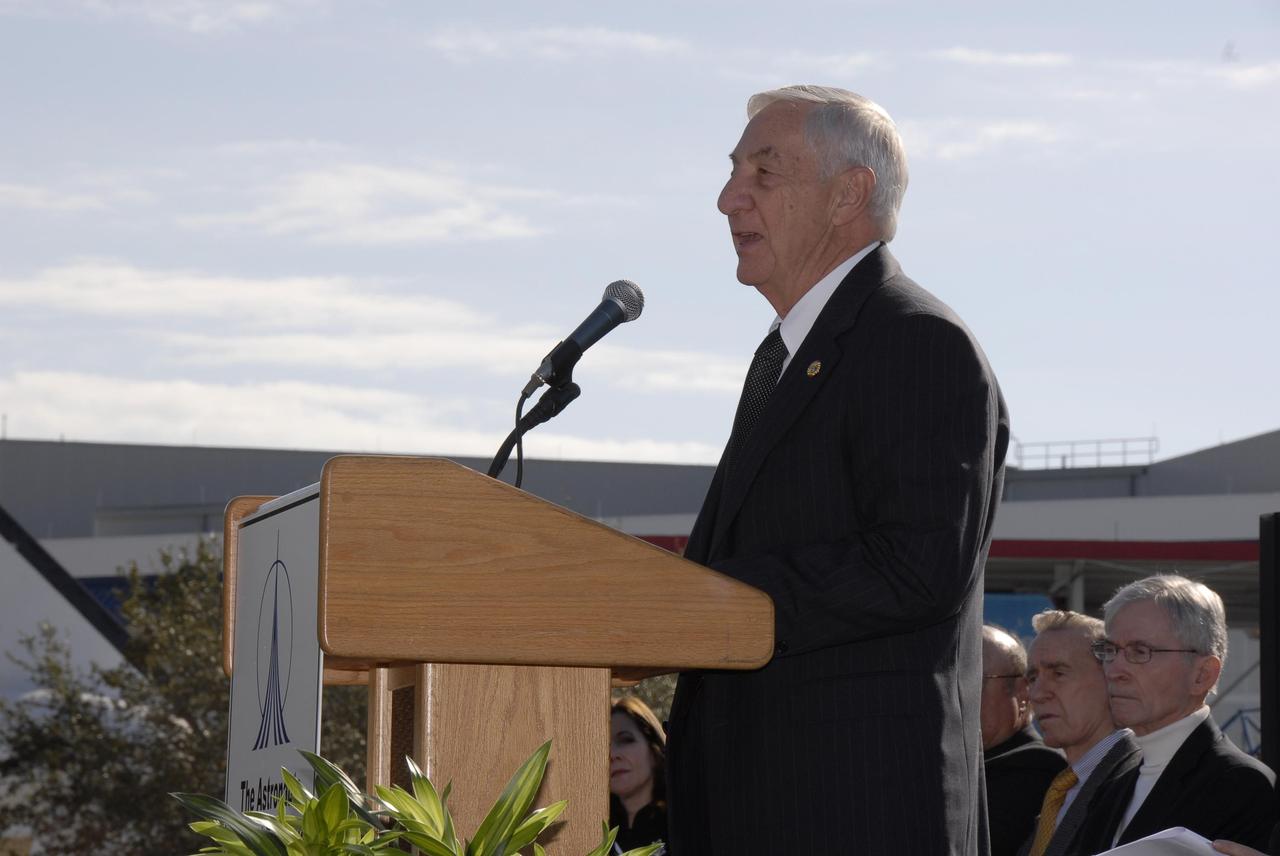
KENNEDY SPACE CENTER, FLA. -- Lowell Grissom addresses guests attending a ceremony at the KSC Visitor Complex held in remembrance of the astronauts lost in the Apollo 1 fire: Virgil "Gus" Grissom, Edward H. White II and Roger B. Chaffee. Grissom is the brother of Gus Grissom. Members of the Apollo 1 families, along with KSC Director Bill Parsons, Associate Administrator for Space Operations William Gerstenmaier, President of the Astronauts Memorial Foundation Stephen Feldman, Chairman of the Board of Directors of the Astronauts Memorial Foundation William Potter and former astronaut John Young (seen at lower right), attended the ceremony. Photo credit:NASA/Kim Shiflett
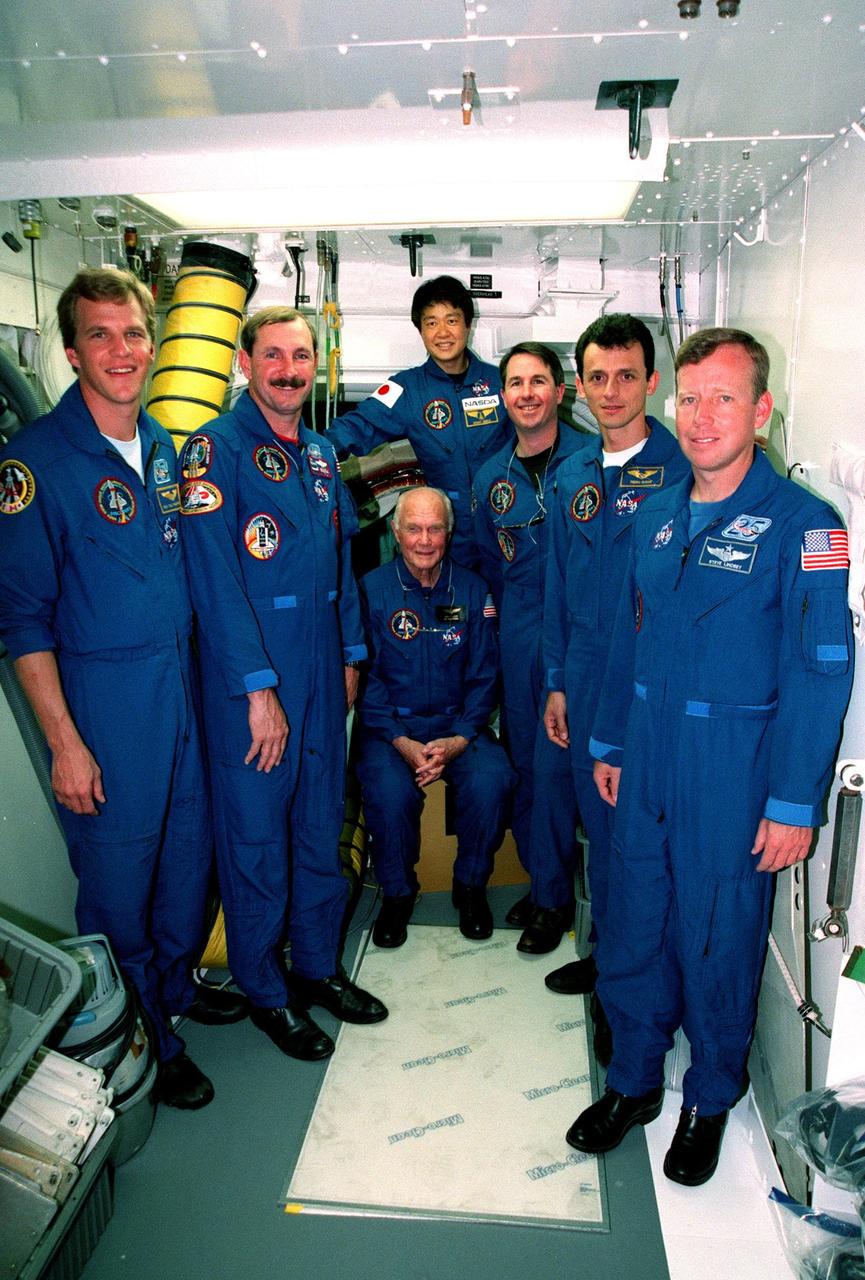
At Launch Pad 39-B, the STS-95 crew gather in the white room, an environmental chamber that mates with the orbiter and can provide emergency egress for the flight crew before launch. The white room is the outer end of the orbiter access arm, which is part of the fixed service structure on the pad. Pictured are (left to right) Mission Specialist Scott E. Parazynski, Mission Commander Curtis L. Brown, Payload Specialist John H. Glenn Jr. (seated), senator from Ohio, Payload Specialist Chiaki Mukai (behind Glenn), representing the National Space Development Agency of Japan (NASDA), Mission Specialist Stephen K. Robinson, Mission Specialist Pedro Duque of Spain, representing the European Space Agency (ESA), and Pilot Steven W. Lindsey. The STS-95 crew are at KSC to participate in a Terminal Countdown Demonstration Test (TCDT) which includes mission familiarization activities, emergency egress training, and a simulated main engine cut-off exercise. The STS-95 mission, targeted for liftoff on Oct. 29, includes research payloads such as the Spartan solar-observing deployable spacecraft, the Hubble Space Telescope Orbital Systems Test Platform, the International Extreme Ultraviolet Hitchhiker, as well as the SPACEHAB single module with experiments on space flight and the aging process. Following the TCDT, the crew will be returning to Houston for final flight preparations
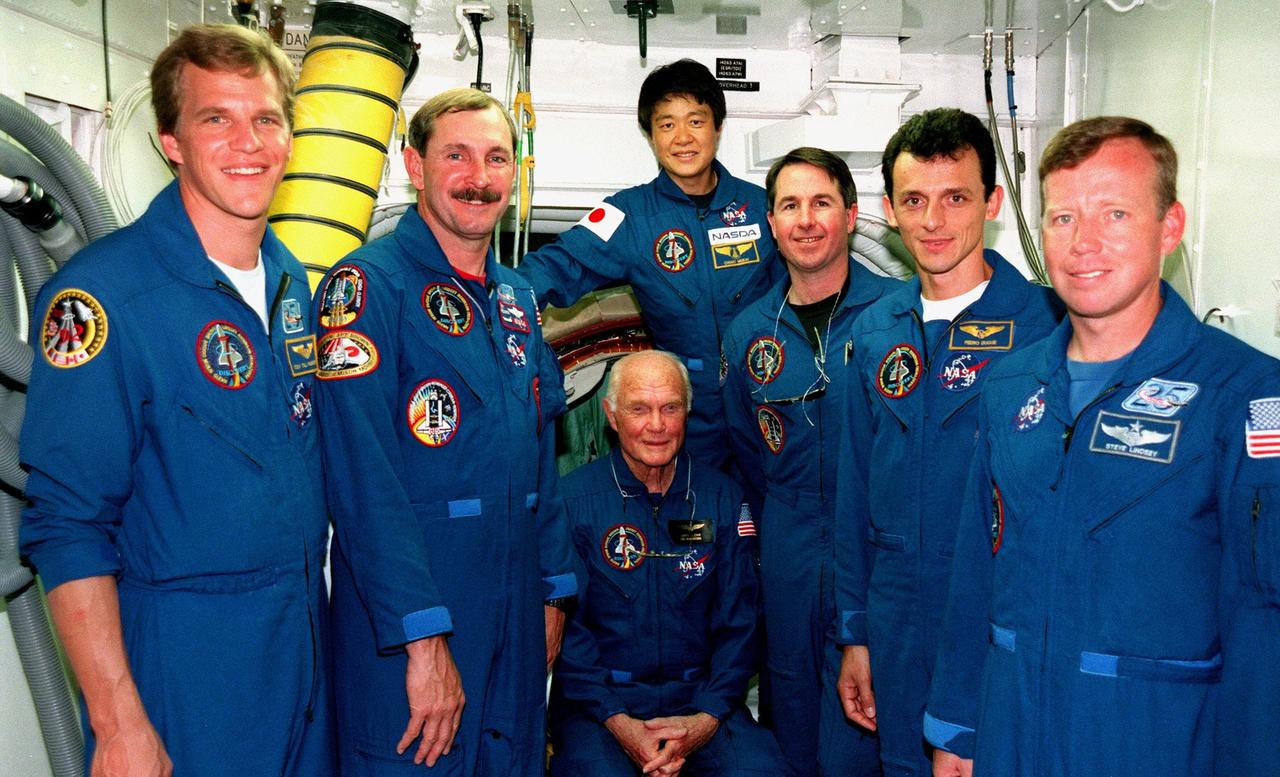
At Launch Pad 39-B, the STS-95 crew pose for a closeup photo while in the white room, an environmental chamber that mates with the orbiter and can provide emergency egress for the flight crew before launch. The white room is the outer end of the orbiter access arm, which is part of the fixed service structure on the pad. Pictured are (left to right) Mission Specialist Scott E. Parazynski, Mission Commander Curtis L. Brown, Payload Specialist John H. Glenn Jr. (seated), senator from Ohio, Payload Specialist Chiaki Mukai (behind Glenn), representing the National Space Development Agency of Japan (NASDA), Mission Specialist Stephen K. Robinson, Mission Specialist Pedro Duque of Spain, representing the European Space Agency (ESA), and Pilot Steven W. Lindsey. The STS-95 crew are at KSC to participate in a Terminal Countdown Demonstration Test (TCDT) which includes mission familiarization activities, emergency egress training, and a simulated main engine cut-off exercise. The STS-95 mission, targeted for liftoff on Oct. 29, includes research payloads such as the Spartan solar-observing deployable spacecraft, the Hubble Space Telescope Orbital Systems Test Platform, the International Extreme Ultraviolet Hitchhiker, as well as the SPACEHAB single module with experiments on space flight and the aging process. Following the TCDT, the crew will be returning to Houston for final flight preparations
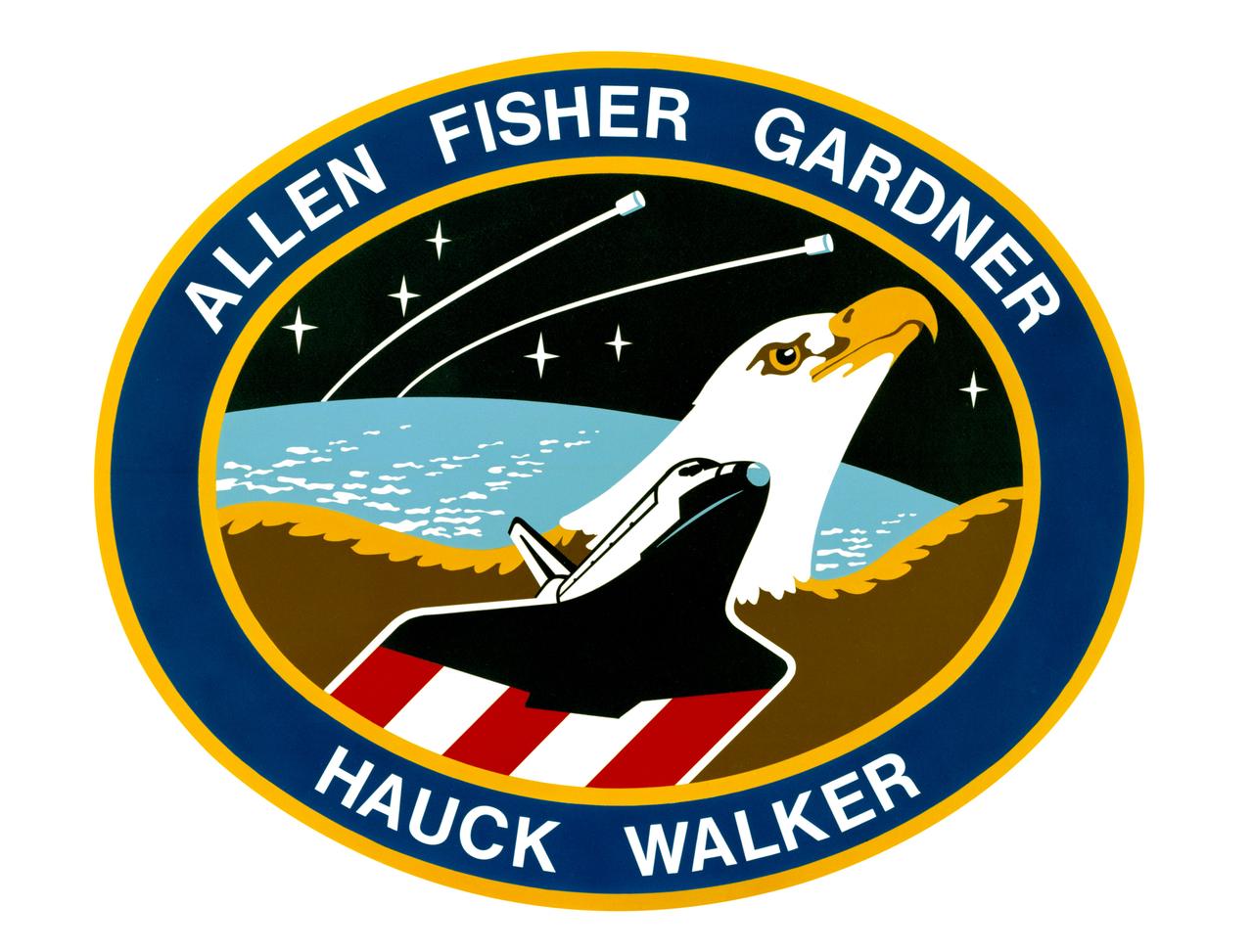
S84-40148 (8 Oct. 1984) --- The space shuttle Discovery en route to Earth orbit for NASA's 51-A mission is reminiscent of a soaring Eagle. The red and white trailing stripes and the blue background, along with the presence of the Eagle, generate memories of America's 208-year-old history and traditions. The two satellites orbiting Earth backgrounded amidst a celestial scene are a universal representation of the versatility of the space shuttle. White lettering against the blue border lists the surnames of the five-member crew--astronauts Frederick H. (Rick) Hauck, David M. Walker, Joseph P. Allen IV, Anna Lee Fisher and Dale A. Gardner. The artwork was done by artist Stephen R. Hustvedt. The NASA insignia design for space shuttle flights is reserved for use by the astronauts and for other official use as the NASA Administrator may authorize. Public availability has been approved only in the forms of illustrations by the various news media. When and if there is any change in this policy, which is not anticipated, the change will be publicly announced. Photo credit: NASA
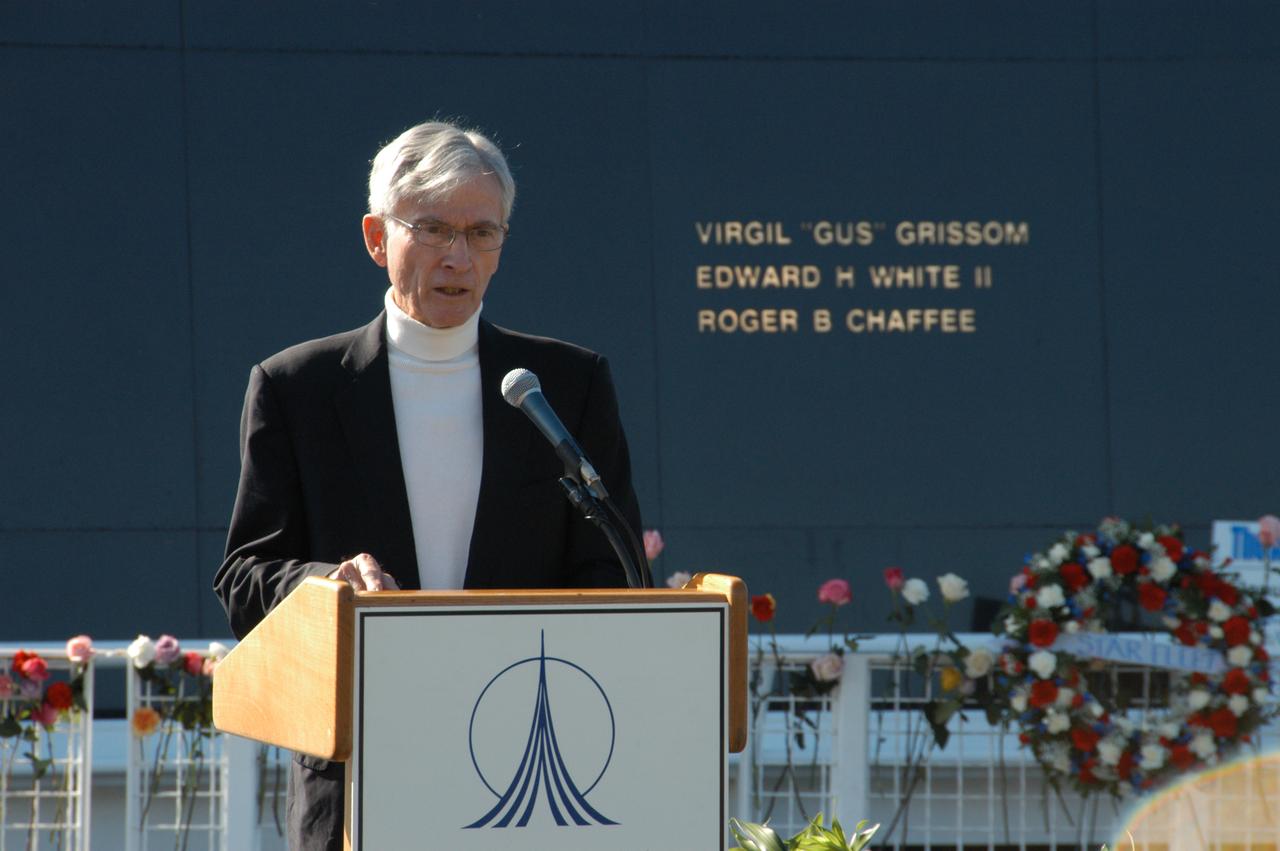
Former astronaut John Young addresses guests and attendees at a ceremony at the KSC Visitor Complex held in remembrance of the astronauts lost in the Apollo 1 fire: Virgil "Gus" Grissom, Edward H. White II and Roger B. Chaffee. Members of their families, along with Associate Administrator for Space Operations William Gerstenmaier, President of the Astronauts Memorial Foundation Stephen Feldman, Chairman of the Board of Directors of the Astronauts Memorial Foundation William Potter and former astronaut John Young, attended the ceremony. Behind the stage is the Space Mirror Memorial, designated as a national memorial by Congress and President George Bush in 1991 to honor fallen astronauts. Their names are emblazoned on the monument’s 42-1/2-foot-high by 50-foot-wide black granite surface as if to be projected into the heavens.
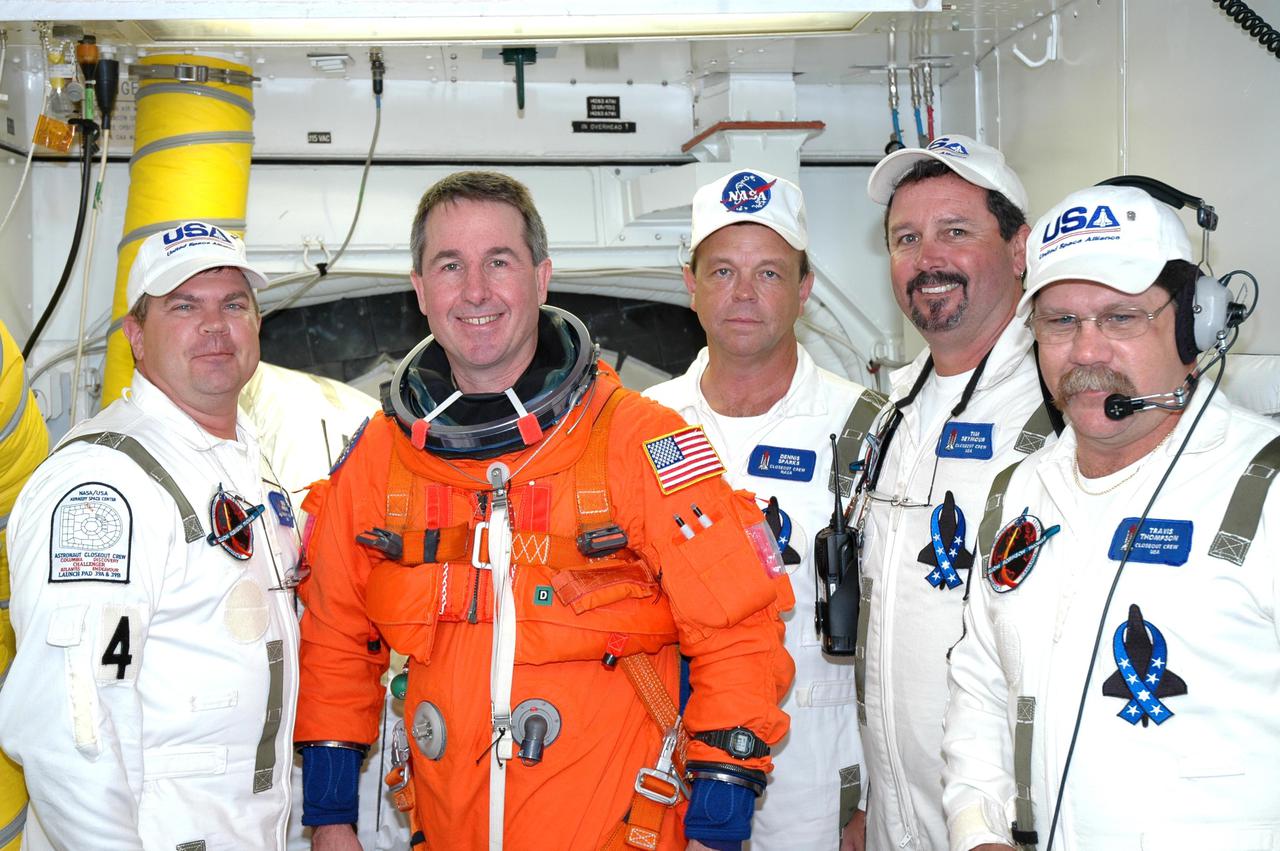
KENNEDY SPACE CENTER, FLA. - In the White Room on Launch Pad 39B, STS-114 Mission Specialist Stephen Robinson has completed adjustments to his launch suit with the help of the Closeout Crew around him. He will be entering the hatch to Space Shuttle Discovery, behind him. The crew is taking part in a full dress rehearsal for launch, including countdown and culminating in main engine cutoff. The rehearsal is the final part of Terminal Countdown Demonstration Test (TCDT) activities that the crew has been involved in for three days. TCDT provides the crew of each mission an opportunity to participate in various simulated countdown activities, including equipment familiarization and emergency egress training. STS-114 is the first Return to Flight mission to the International Space Station. The launch window extends July 13 through July 31.
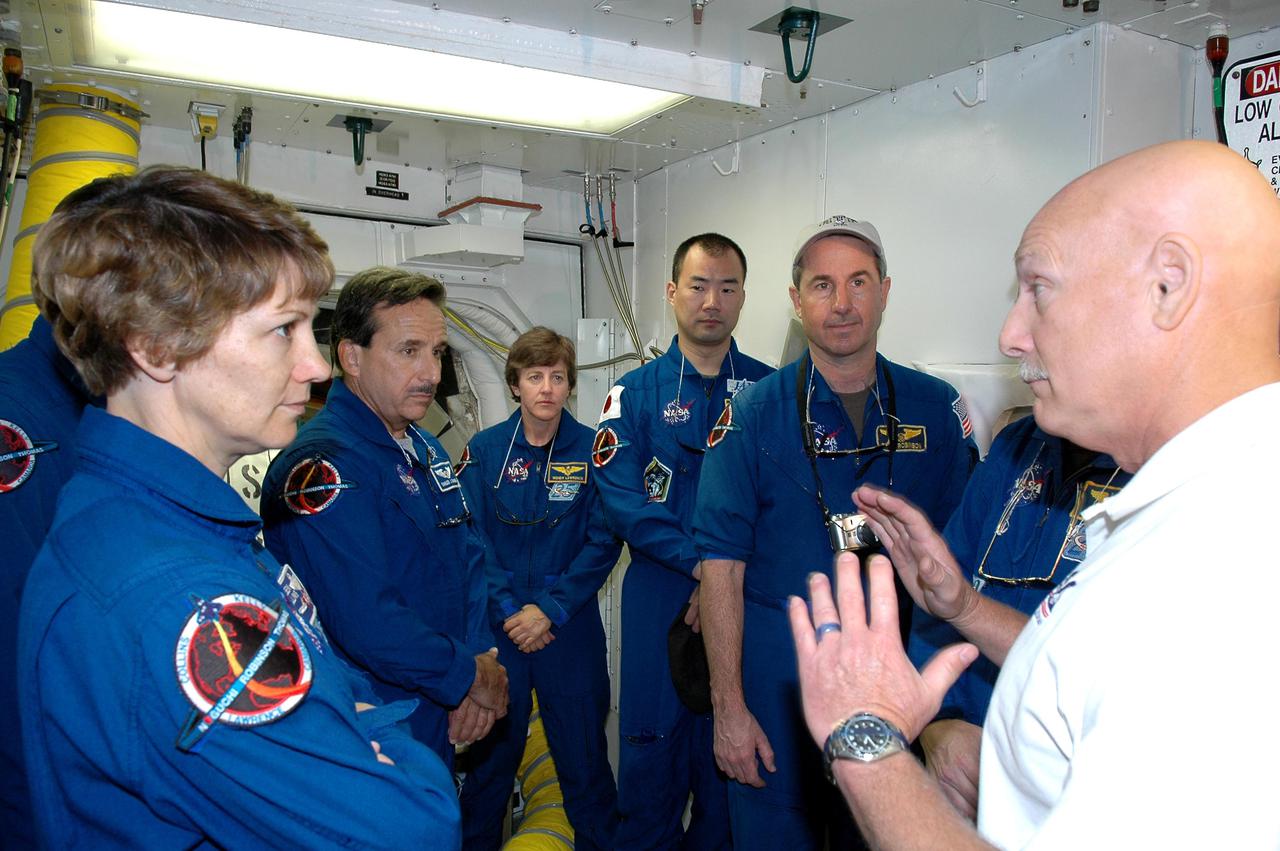
KENNEDY SPACE CENTER, FLA. - During Terminal Countdown Demonstration Test (TCDT) activities, the STS-114 crew gets instructions about the White Room they are in. It is the point of entry into Space Shuttle Discovery. The crew, from left, are Commander Eileen Collins and Mission Specialists Charles Camarda, Wendy Lawrence, Soichi Noguchi and Stephen Robinson. Not seen are Pilot James Kelly and Mission Specialist Andrew Thomas. The TCDT is held at KSC prior to each Space Shuttle flight. It provides the crew of each mission an opportunity to participate in simulated countdown activities. The test ends with a mock launch countdown culminating in a simulated main engine cutoff. The crew also spends time undergoing emergency egress training exercises at the launch pad. STS-114 is designated the first Return to Flight mission, with a launch window extending from July 13 to July 31.
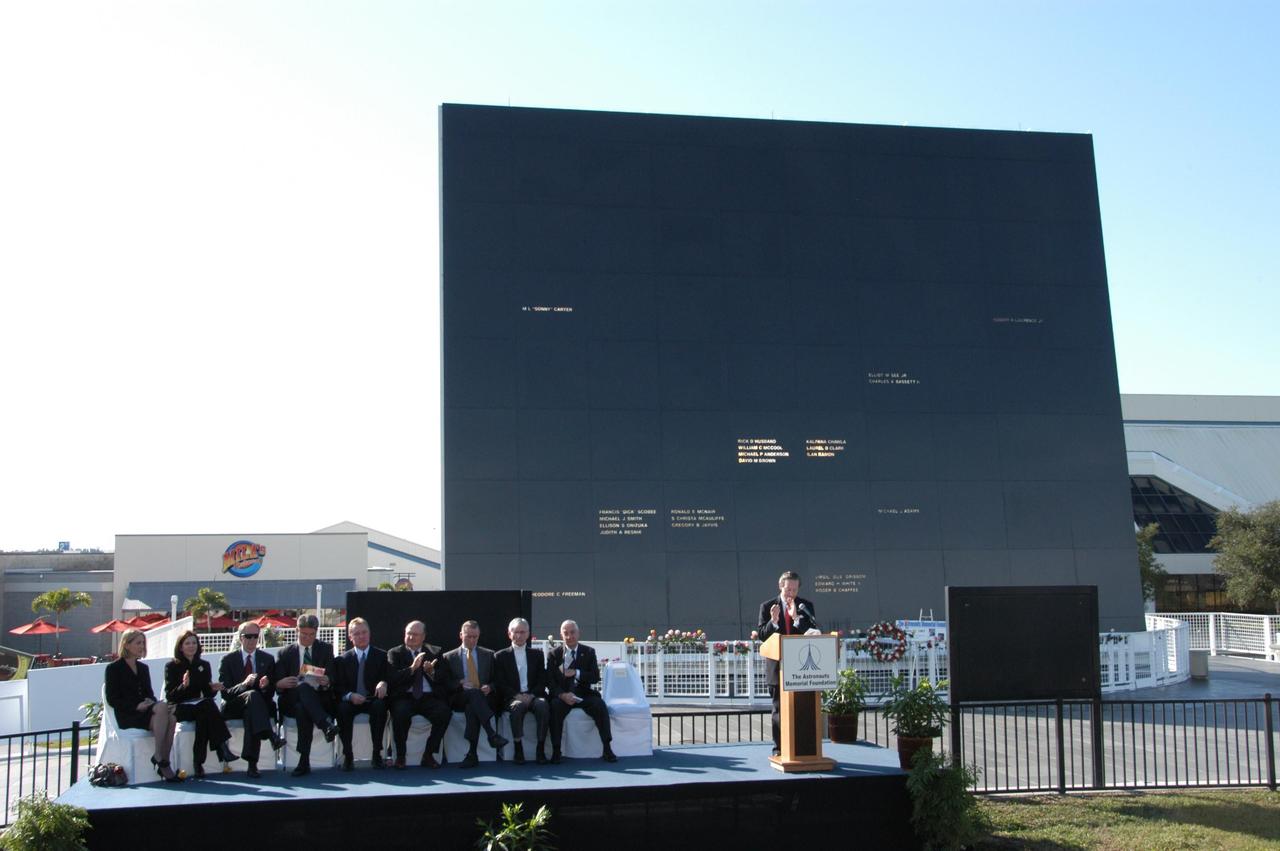
KENNEDY SPACE CENTER, FLA. -- Guests are gathered on stage during a ceremony at the KSC Visitor Complex held in remembrance of the astronauts lost in the Apollo 1 fire: Virgil "Gus" Grissom, Edward H. White II and Roger B. Chaffee. Among those gathered on stage are (from left) Faith Johnson, daughter of Theodore Freeman and Martha Chaffee, daughter of Roger Chaffee, Associate Administrator for Space Operations William Gerstenmaier and KSC Director Bill Parsons, plus former astronaut John Young (second from right). Members of the astronauts' families were guests at the ceremony. At the podium is Stephen Feldman, president of the Astronauts Memorial Foundation. Behind the stage is the Space Mirror Memorial, designated as a national memorial by Congress and President George Bush in 1991 to honor fallen astronauts. Their names are emblazoned on the monument’s 42-1/2-foot-high by 50-foot-wide black granite surface as if to be projected into the heavens. Photo credit:NASA/George Shelton
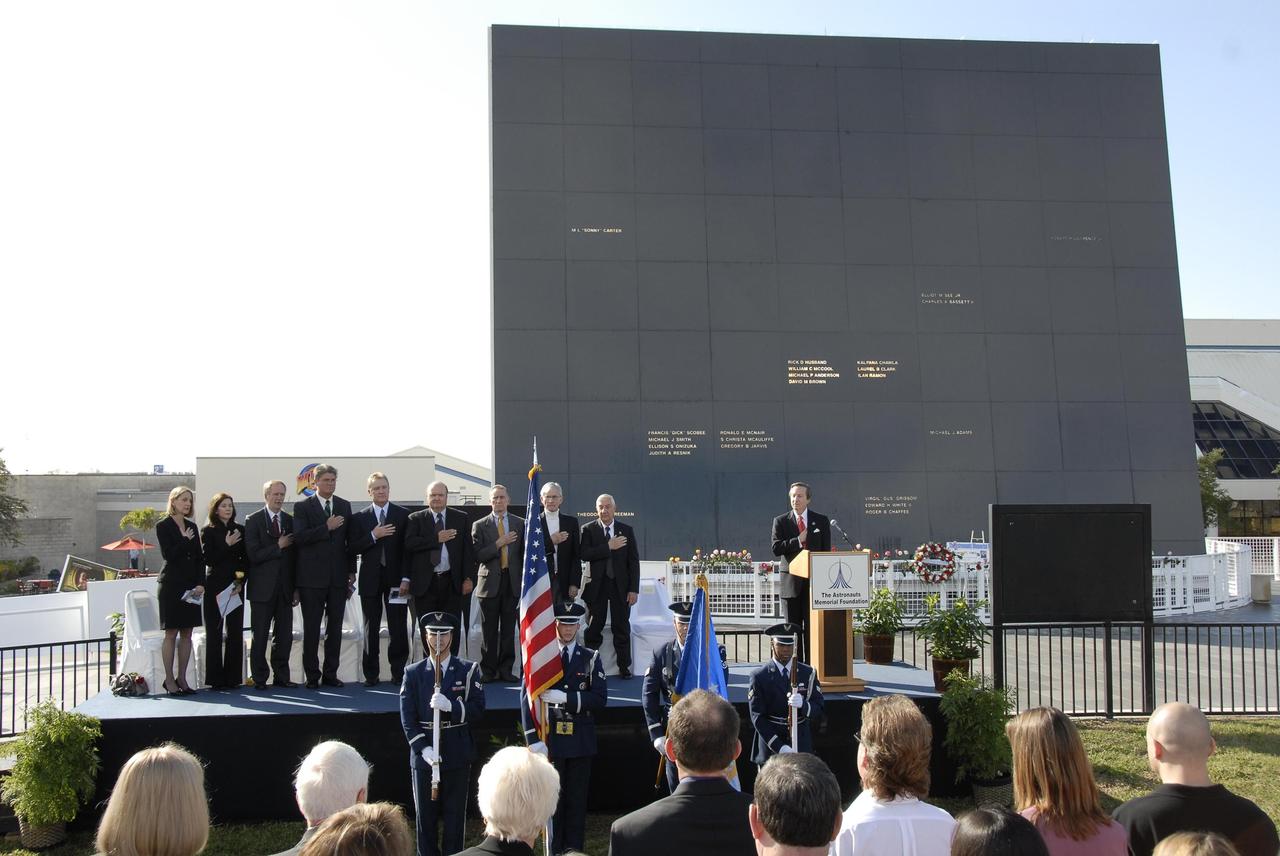
KENNEDY SPACE CENTER, FLA. -- Guests and attendees salute the U.S. flag during a ceremony at the KSC Visitor Complex held in remembrance of the astronauts lost in the Apollo 1 fire: Virgil "Gus" Grissom, Edward H. White II and Roger B. Chaffee. Among those gathered on stage are (from left) Faith Johnson, daughter of Theodore Freeman and Martha Chaffee, daughter of Roger Chaffee, Associate Administrator for Space Operations William Gerstenmaier and KSC Director Bill Parsons, plus former astronaut John Young and Lowell Grissom, brother of Gus Grissom (far right). At the podium is Stephen Feldman, president of the Astronauts Memorial Foundation. Behind the stage is the Space Mirror Memorial, designated as a national memorial by Congress and President George Bush in 1991 to honor fallen astronauts. Their names are emblazoned on the monument’s 42-½-foot-high by 50-foot-wide black granite surface as if to be projected into the heavens. Photo credit:NASA/Kim Shiflett
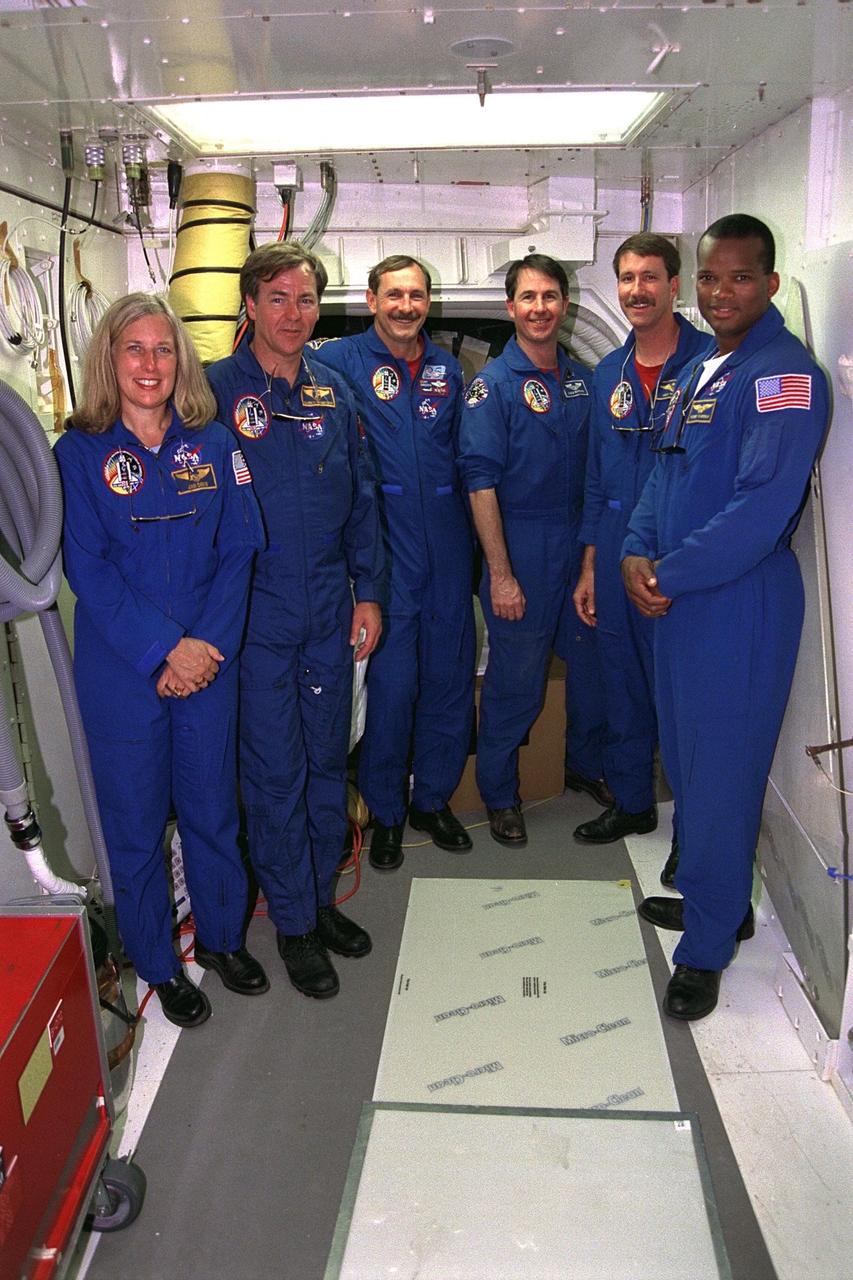
The STS-85 flight crew poses in the white room at Launch Pad 39A during a break in Terminal Countdown Demonstration Test (TCDT) activities for that mission. They are (from left): Payload Commander N. Jan Davis; Payload Specialist Bjarni V. Tryggvason; Commander Curtis L. Brown, Jr.; Mission Specialist Stephen K. Robinson; Pilot Kent V. Rominger; and Mission Specialist Robert L. Curbeam, Jr. The primary payload aboard the Space Shuttle orbiter Discovery is the Cryogenic Infrared Spectrometers and Telescopes for the Atmosphere-2 (CRISTA-SPAS-2). Other payloads on the 11-day mission include the Manipulator Flight Demonstration (MFD), and Technology Applications and Science-1 (TAS-1) and International Extreme Ultraviolet Hitchhiker-2 (IEH-2) experiments
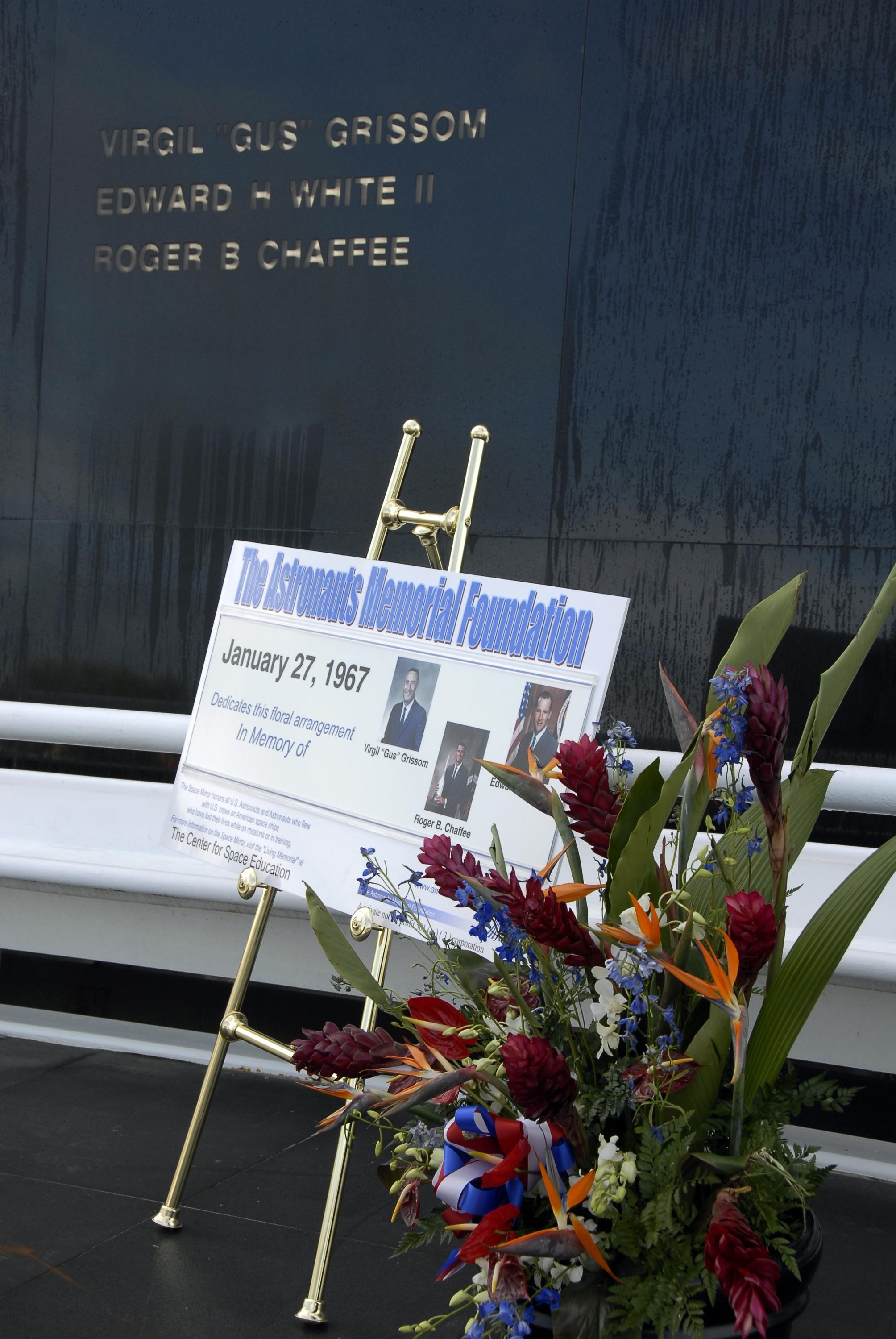
KENNEDY SPACE CENTER, FLA. -- Flowers and plaque are in place in front of the Space Mirror Memorial at the KSC Visitor Complex for the ceremony held in remembrance of the astronauts lost in the Apollo 1 fire: Virgil "Gus" Grissom, Edward H. White II and Roger B. Chaffee. Members of their families, along with KSC Director Bill Parsons, Associate Administrator for Space Operations William Gerstenmaier, President of the Astronauts Memorial Foundation Stephen Feldman and Chairman of the Board of Directors of the Astronauts Memorial Foundation William Potter, attended the ceremony. The mirror was designated as a national memorial by Congress and President George Bush in 1991 to honor fallen astronauts. Their names are emblazoned on the monument’s 42-½-foot-high by 50-foot-wide black granite surface as if to be projected into the heavens. Photo credit:NASA/Kim Shiflett
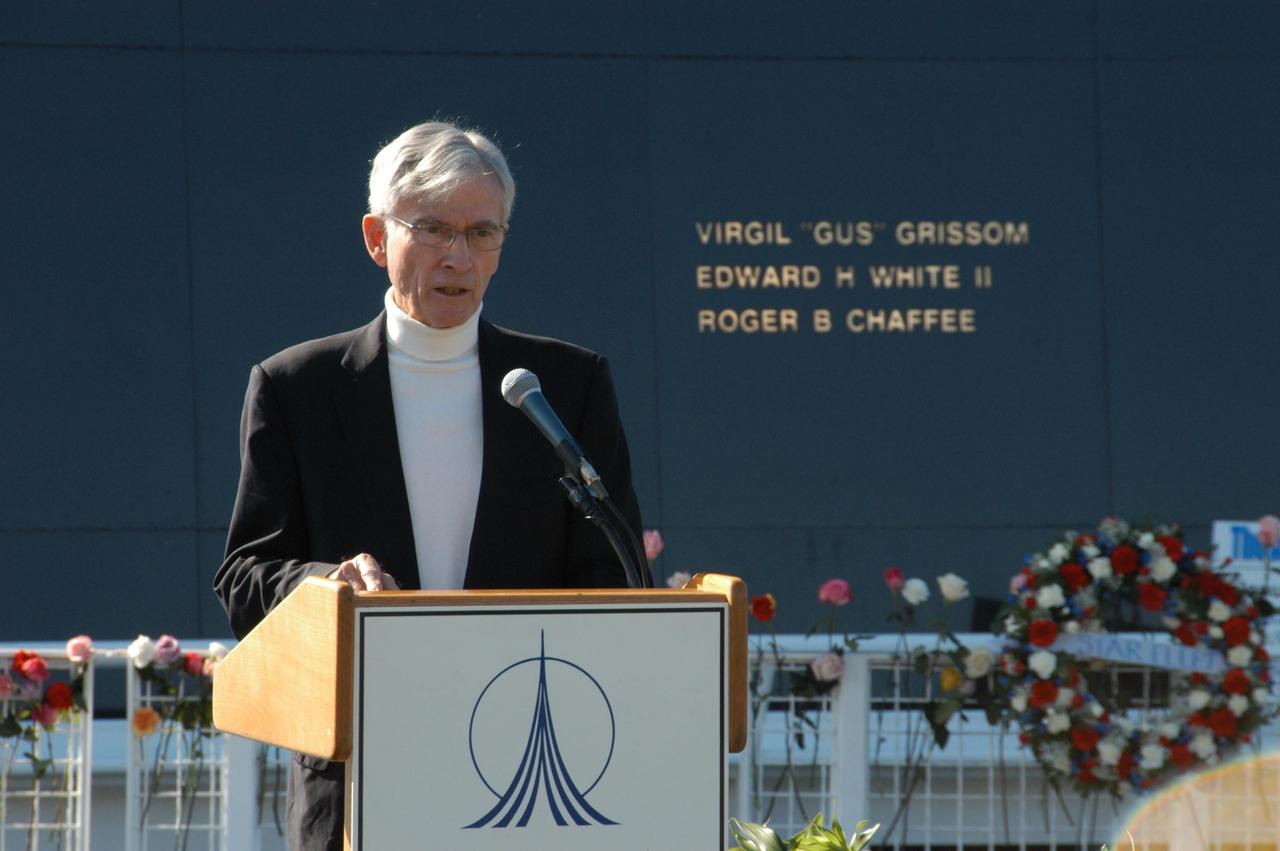
KENNEDY SPACE CENTER, FLA. -- Former astronaut John Young addresses guests and attendees at a ceremony at the KSC Visitor Complex held in remembrance of the astronauts lost in the Apollo 1 fire: Virgil "Gus" Grissom, Edward H. White II and Roger B. Chaffee. Members of their families, along with Associate Administrator for Space Operations William Gerstenmaier, President of the Astronauts Memorial Foundation Stephen Feldman, Chairman of the Board of Directors of the Astronauts Memorial Foundation William Potter and former astronaut John Young, attended the ceremony. Behind the stage is the Space Mirror Memorial, designated as a national memorial by Congress and President George Bush in 1991 to honor fallen astronauts. Their names are emblazoned on the monument’s 42-1/2-foot-high by 50-foot-wide black granite surface as if to be projected into the heavens. Photo credit:NASA/George Shelton
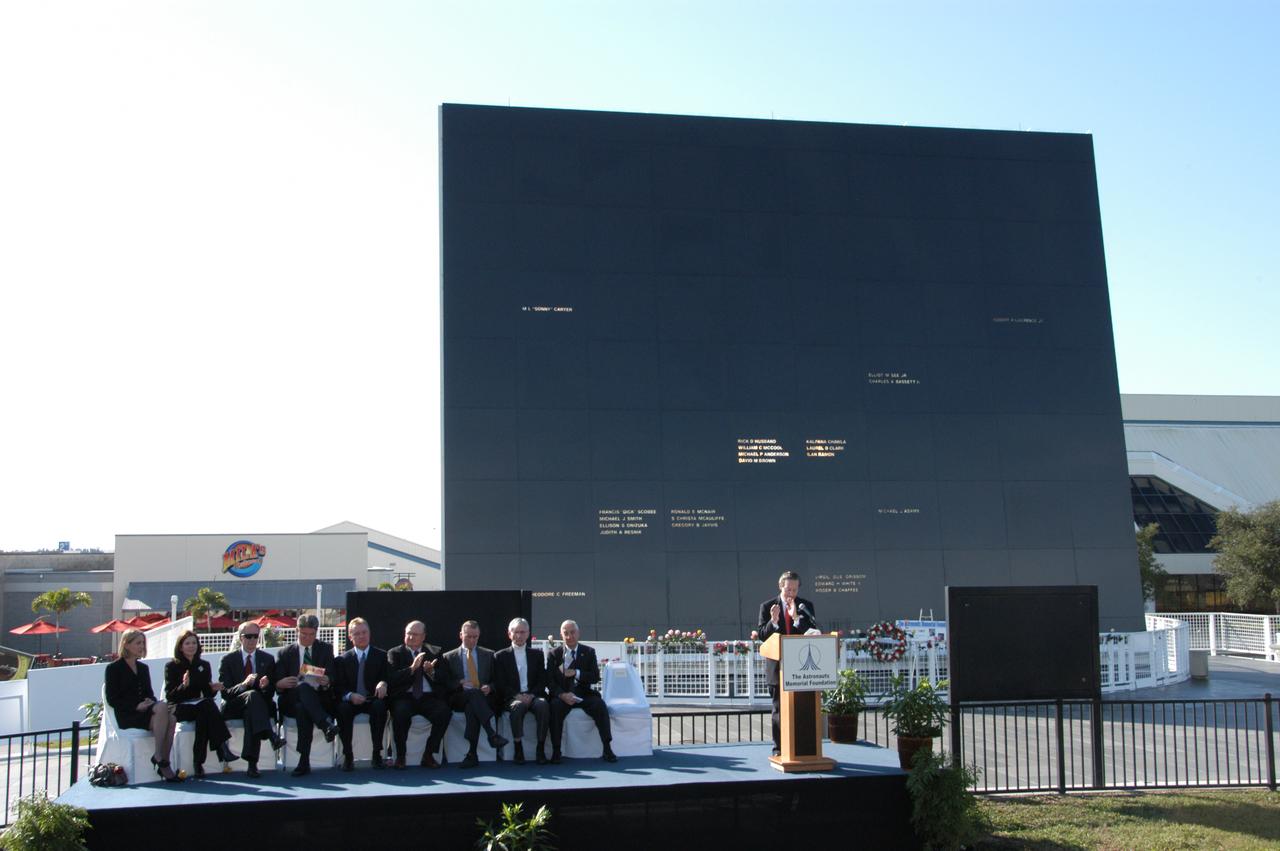
Guests are gathered on stage during a ceremony at the KSC Visitor Complex held in remembrance of the astronauts lost in the Apollo 1 fire: Virgil "Gus" Grissom, Edward H. White II and Roger B. Chaffee. Among those gathered on stage are (from left) Faith Johnson, daughter of Theodore Freeman and Martha Chaffee, daughter of Roger Chaffee, Associate Administrator for Space Operations William Gerstenmaier and KSC Director Bill Parsons, plus former astronaut John Young (second from right). Members of the astronauts' families were guests at the ceremony. At the podium is Stephen Feldman, president of the Astronauts Memorial Foundation. Behind the stage is the Space Mirror Memorial, designated as a national memorial by Congress and President George Bush in 1991 to honor fallen astronauts. Their names are emblazoned on the monument’s 42-1/2-foot-high by 50-foot-wide black granite surface as if to be projected into the heavens.
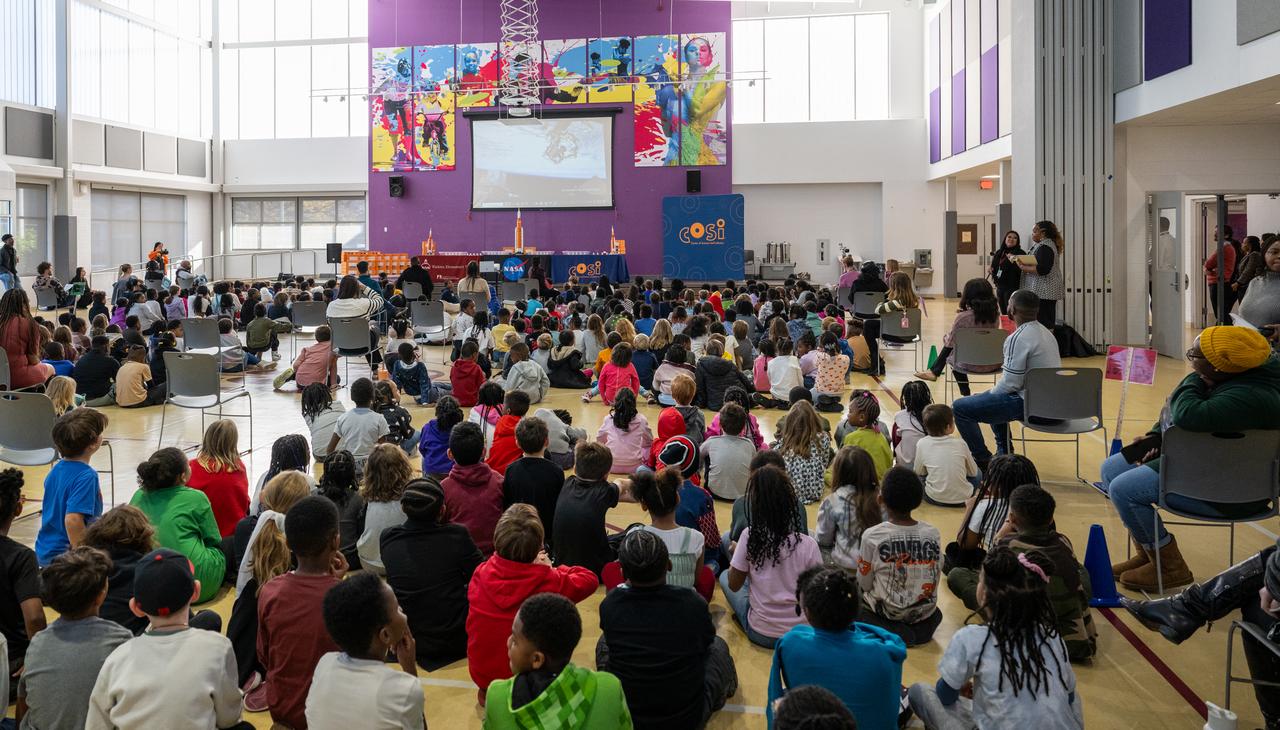
Students watch a short video presentation during an engagement event at Catherine Watkins Elementary School Monday, Dec. 2, 2024 in Washington. O’Hara and Moghbeli spent six months in space as part of Expedition 70 aboard the International Space Station. Photo Credit: (NASA/Keegan Barber)
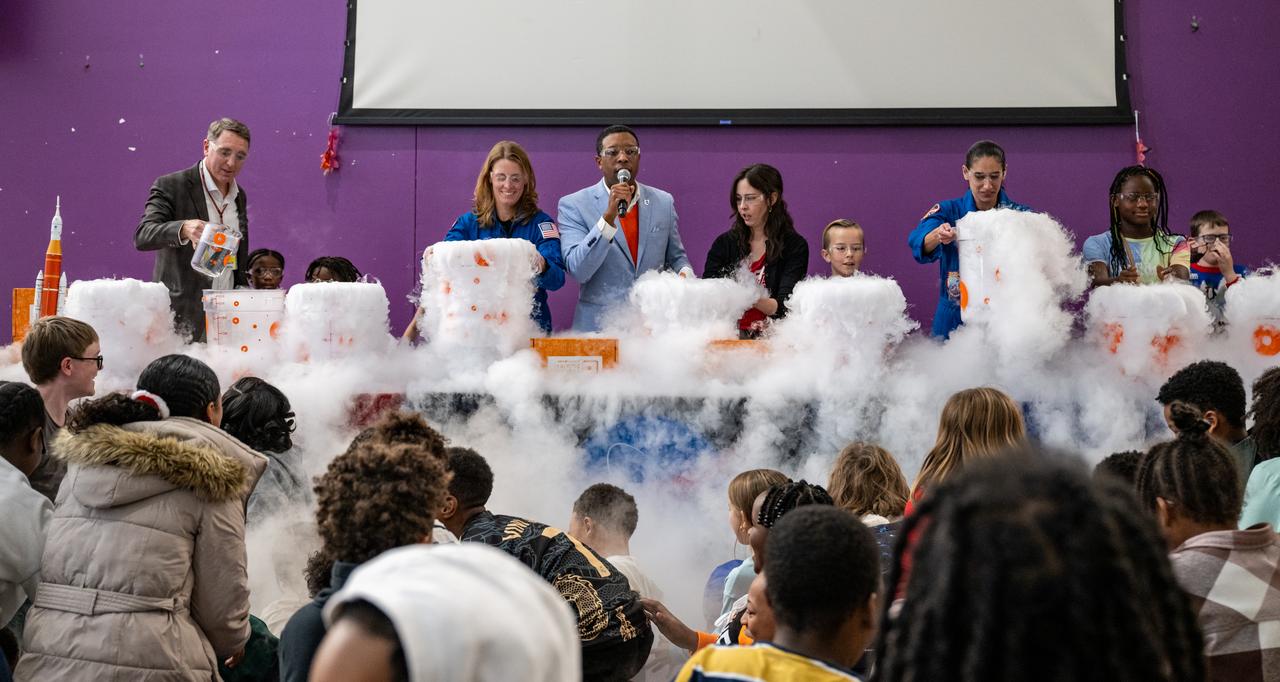
NASA astronauts Loral O’Hara and Jasmin Moghbeli, seen in blue flight suits, are joined by NASA and COSI staff during science demonstrations with students at an engagement event at Catherine Watkins Elementary School Monday, Dec. 2, 2024 in Washington. O’Hara and Moghbeli spent six months in space as part of Expedition 70 aboard the International Space Station. Photo Credit: (NASA/Keegan Barber)

Onlookers applaud the successful launch of Space Shuttle Discovery, trailing a twisting white column of exhaust clouds behind, on mission STS-95. Lifting off at 2:19:34 p.m. EST, Discovery carries a crew of six, including Payload Specialist John H. Glenn Jr., senator from Ohio, who is making his second voyage into space after 36 years. Other crew members are Mission Commander Curtis L. Brown Jr., Pilot Steven W. Lindsey, Payload Specialist Chiaki Mukai, (M.D., Ph.D.), with the National Space Development Agency of Japan (NASDA), Mission Specialist Stephen K. Robinson, Mission Specialist Pedro Duque of Spain, representing the European Space Agency (ESA), and Mission Specialist Scott E. Parazynski. The STS-95 mission includes research payloads such as the Spartan solar-observing deployable spacecraft, the Hubble Space Telescope Orbital Systems Test Platform, the International Extreme Ultraviolet Hitchhiker, as well as the SPACEHAB single module with experiments on space flight and the aging process. Discovery is expected to return to KSC at 11:49 a.m. EST on Nov. 7
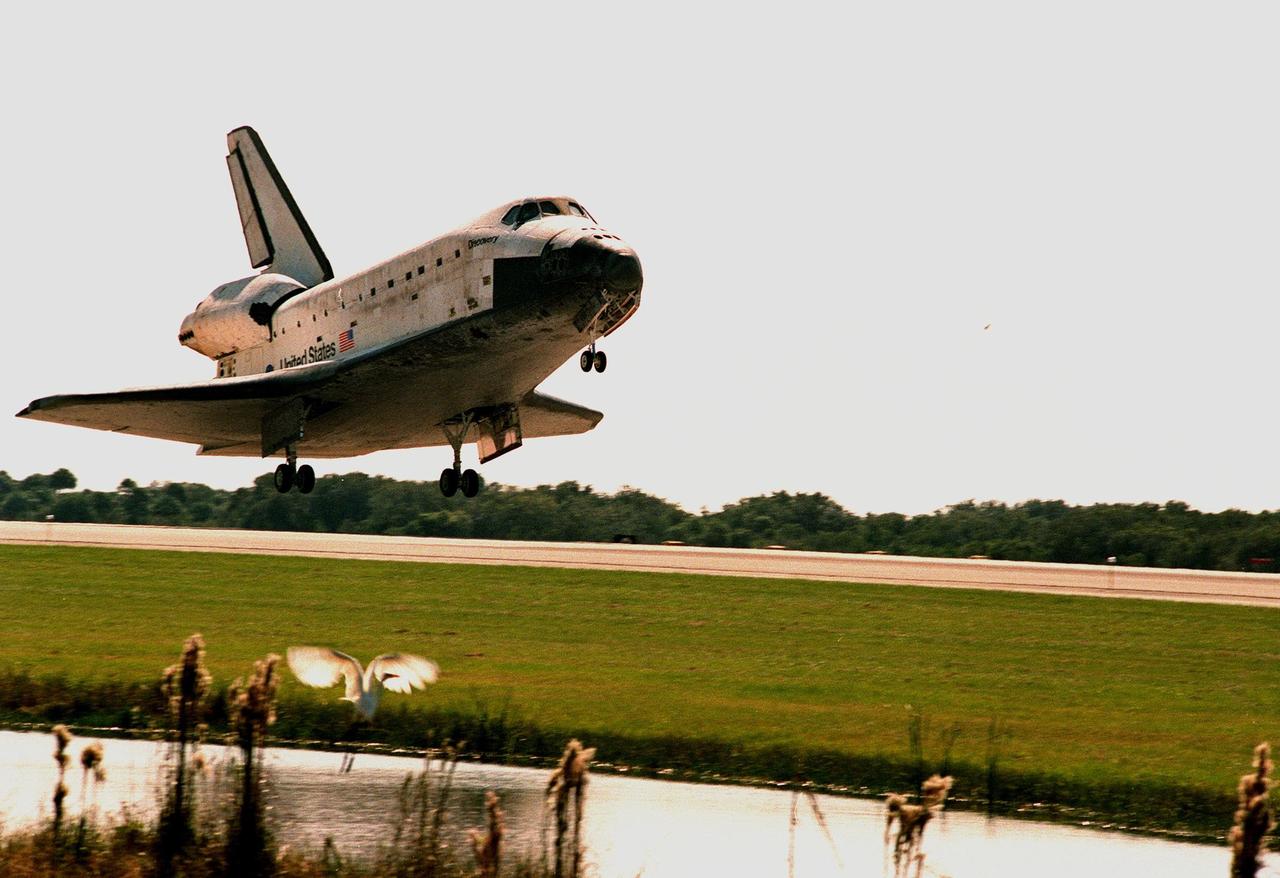
Orbiter Discovery startles a great white egret (below) next to runway 33 as it touches down at the Shuttle Landing Facility. Main gear touchdown was at 12:04 p.m. EST, landing on orbit 135. Discovery returns to Earth with its crew of seven after successfully completing mission STS-95, lasting nearly nine days and 3.6 million miles. The crew consists of Mission Commander Curtis L. Brown Jr.; Pilot Steven W. Lindsey; Mission Specialist Scott E. Parazynski; Mission Specialist Stephen K. Robinson; Payload Specialist John H. Glenn Jr., a senator from Ohio; Mission Specialist Pedro Duque of Spain, with the European Space Agency (ESA); and Payload Specialist Chiaki Mukai, M.D., with the National Space Development Agency of Japan (NASDA). The mission included research payloads such as the Spartan solar-observing deployable spacecraft, the Hubble Space Telescope Orbital Systems Test Platform, the International Extreme Ultraviolet Hitchhiker, as well as the SPACEHAB single module with experiments on space flight and the aging process
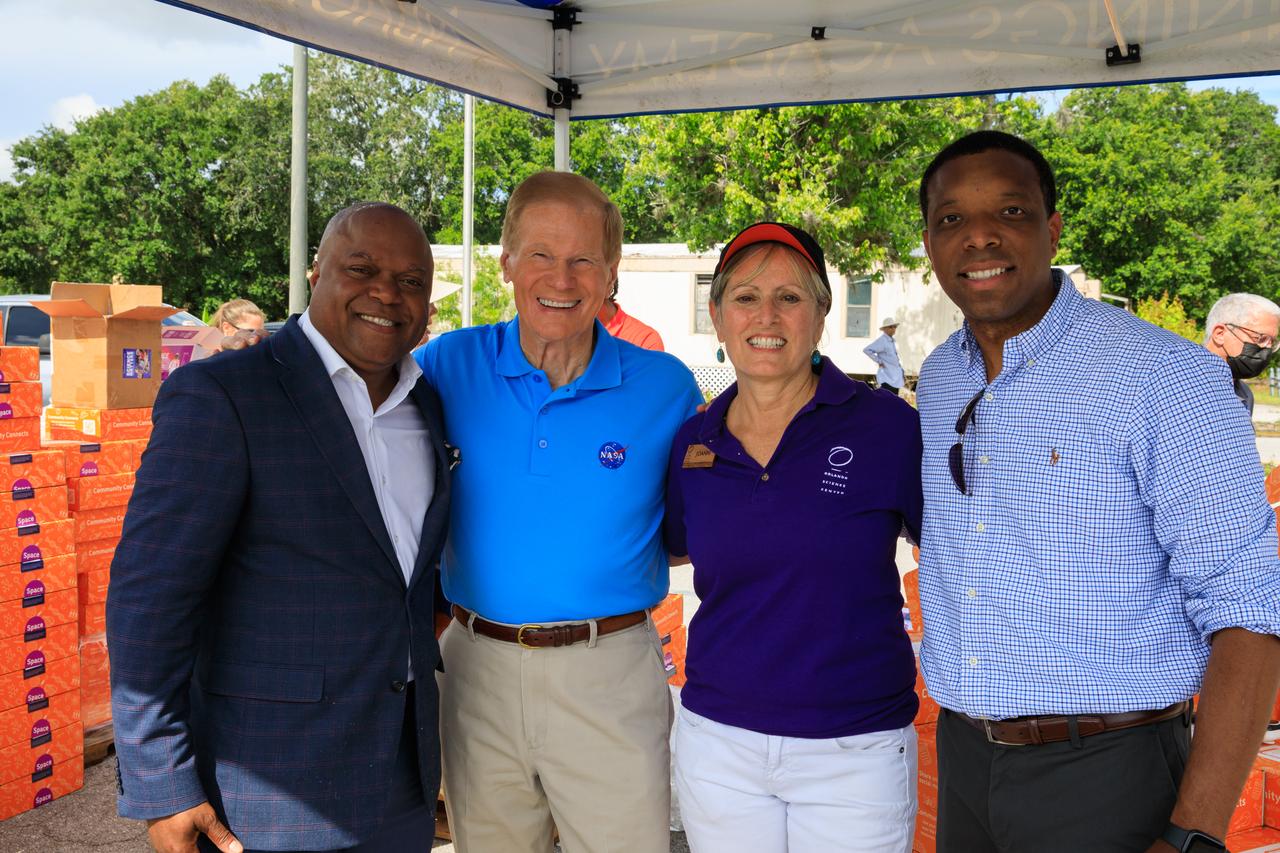
From left to right, Dr. Frederic Bertley, president and CEO, Center of Science and Industry (COSI); NASA Administrator Bill Nelson; JoAnn Newman, president and CEO, Orlando Science Center; and Stephen White, chief strategy officer, COSI helped kick off a new initiative to deliver food and hands-on science, technology, engineering, and math kits, called Learning Lunchboxes, at New Beginnings Church – The Gathering Place in Orlando, Florida on Friday, June 3. The lunchboxes are aimed at inspiring and educating youth and families about NASA’s upcoming Artemis missions, which includes landing the first woman and person of color on the Moon and helping prepare for human exploration of Mars. Partners on the initiative with NASA include COSI, the Second Harvest Food Bank, and the Orlando Science Center. The NASA Artemis Learning Lunchbox is made possible through NASA’s Teams Engaging Affiliated Museums and Informal Institutions (TEAM II) program. NASA Learning Lunchboxes provide five space-focused learning activities that showcase the diversity of STEM at NASA. COSI will distribute 30,000 NASA Learning Lunchboxes at local food banks across the country to help feed hungry lives and feed hungry minds. This innovative, community-based model will bring together other science centers and museums, afterschool providers, and community leaders to highlight the importance of STEM. This project also includes digital extension resources.
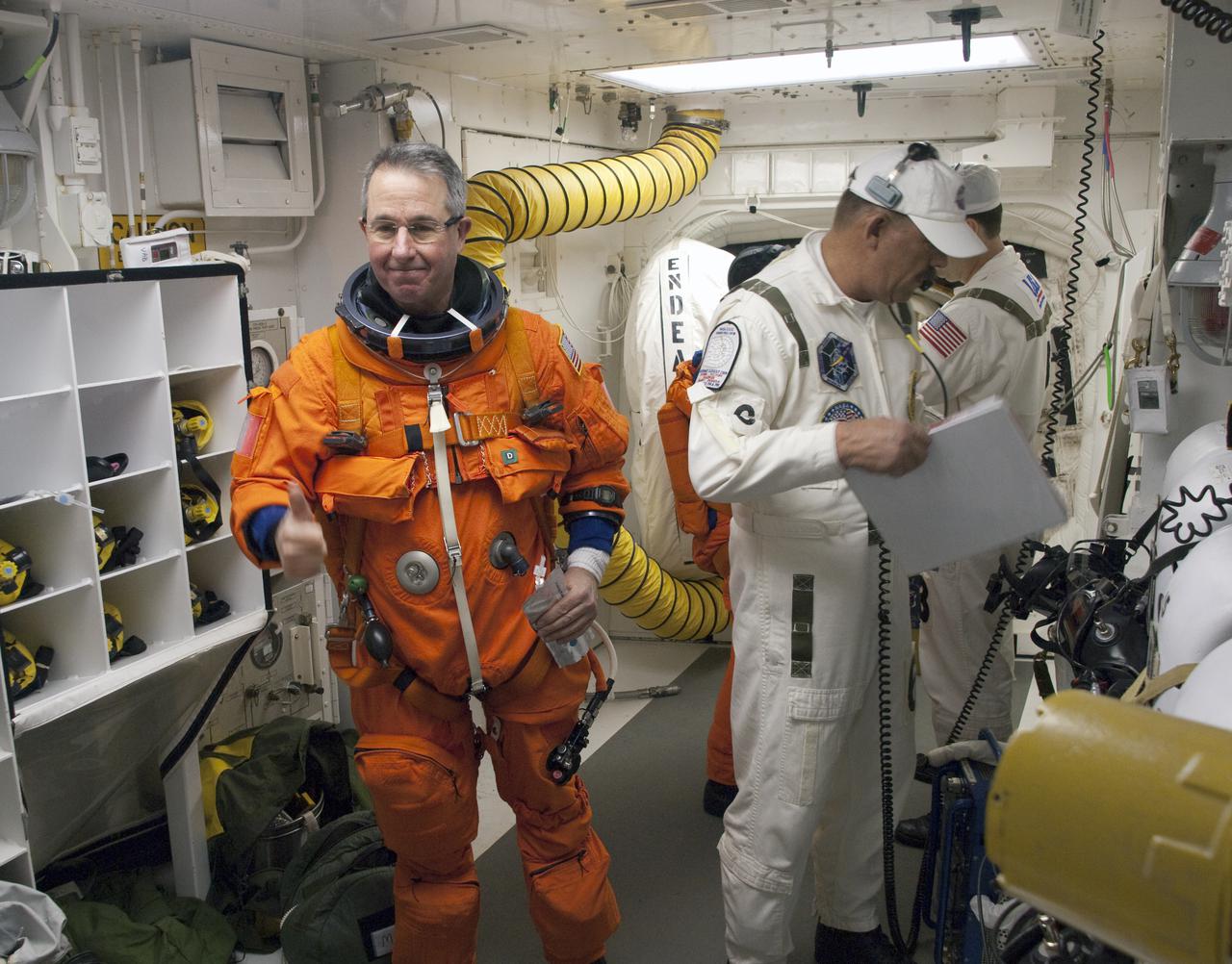
CAPE CANAVERAL, Fla. - In the White Room at Launch Pad 39A on NASA's Kennedy Space Center in Florida, STS-130 Mission Specialist Stephen Robinson signals that he is ready for his mission to begin as he prepares to enter space shuttle Endeavour for launch. This is the second launch attempt for space shuttle Endeavour's STS-130 crew. The first attempt on Feb. 7 was scrubbed due to unfavorable weather. The primary payload for the STS-130 mission to the International Space Station is the Tranquility node, a pressurized module that will provide additional room for crew members and many of the station's life support and environmental control systems. Attached to one end of Tranquility is a cupola, a unique work area with six windows on its sides and one on top. The cupola resembles a circular bay window and will provide a vastly improved view of the station's exterior. The multi-directional view will allow the crew to monitor spacewalks and docking operations, as well as provide a spectacular view of Earth and other celestial objects. The module was built in Turin, Italy, by Thales Alenia Space for the European Space Agency. Endeavour's launch is set for Feb. 8 at 4:14 a.m. EST. For information on the STS-130 mission and crew, visit http:__www.nasa.gov_mission_pages_shuttle_shuttlemissions_sts130_index.html. Photo credit: NASA_Sandra Joseph and Kevin O'Connell
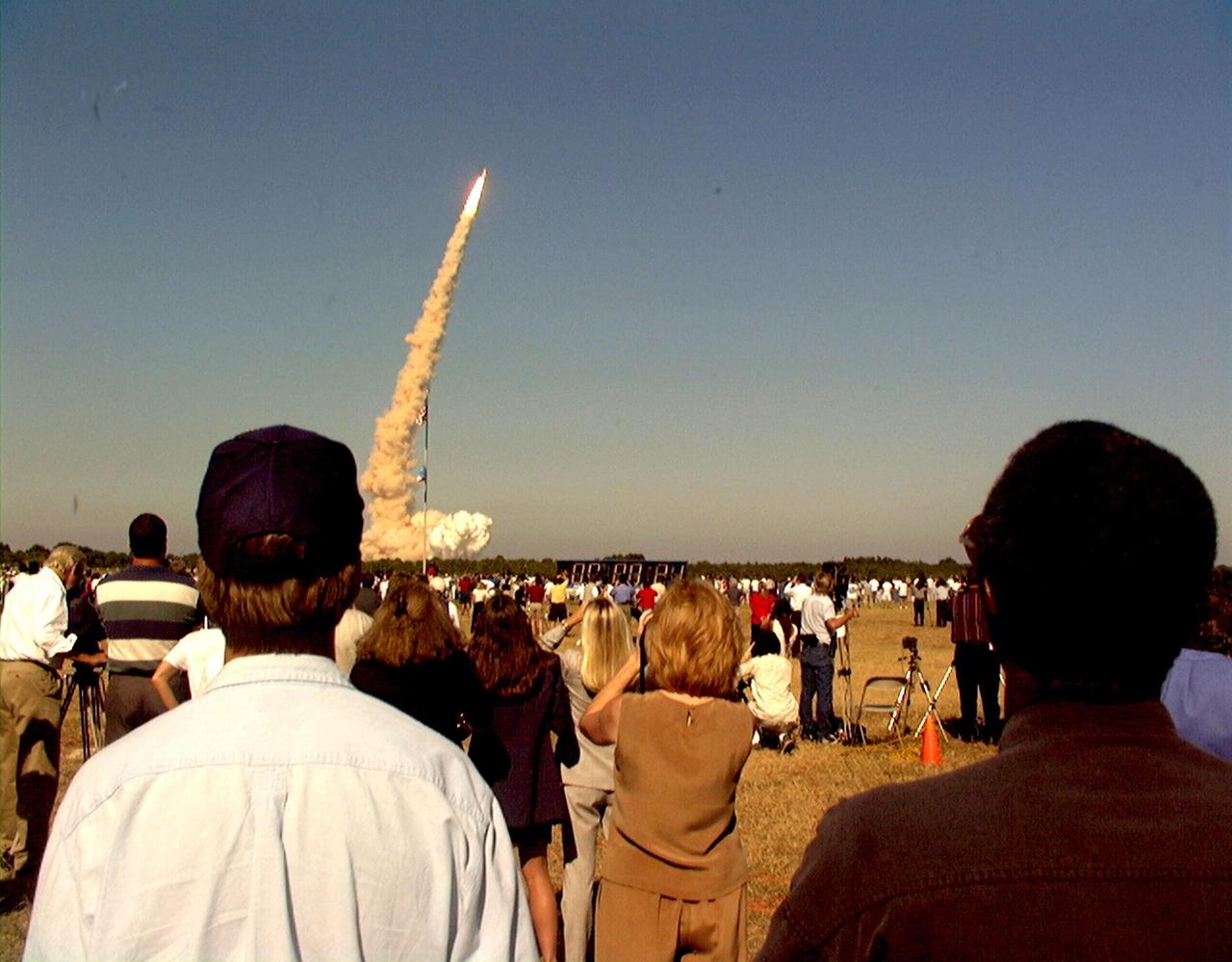
Trailing a twisting white column of exhaust clouds behind, Space Shuttle Discovery shoots into the heavens on mission STS-95. Lifting off at 2:19:34 p.m. EST, Discovery carries a crew of six, including Payload Specialist John H. Glenn Jr., senator from Ohio, who is making his second voyage into space after 36 years. Other crew members are Mission Commander Curtis L. Brown Jr., Pilot Steven W. Lindsey, Payload Specialist Chiaki Mukai, (M.D., Ph.D.), with the National Space Development Agency of Japan (NASDA), Mission Specialist Stephen K. Robinson, Mission Specialist Pedro Duque of Spain, representing the European Space Agency (ESA), and Mission Specialist Scott E. Parazynski. The STS-95 mission includes research payloads such as the Spartan solar-observing deployable spacecraft, the Hubble Space Telescope Orbital Systems Test Platform, the International Extreme Ultraviolet Hitchhiker, as well as the SPACEHAB single module with experiments on space flight and the aging process. Discovery is expected to return to KSC at 11:49 a.m. EST on Nov. 7
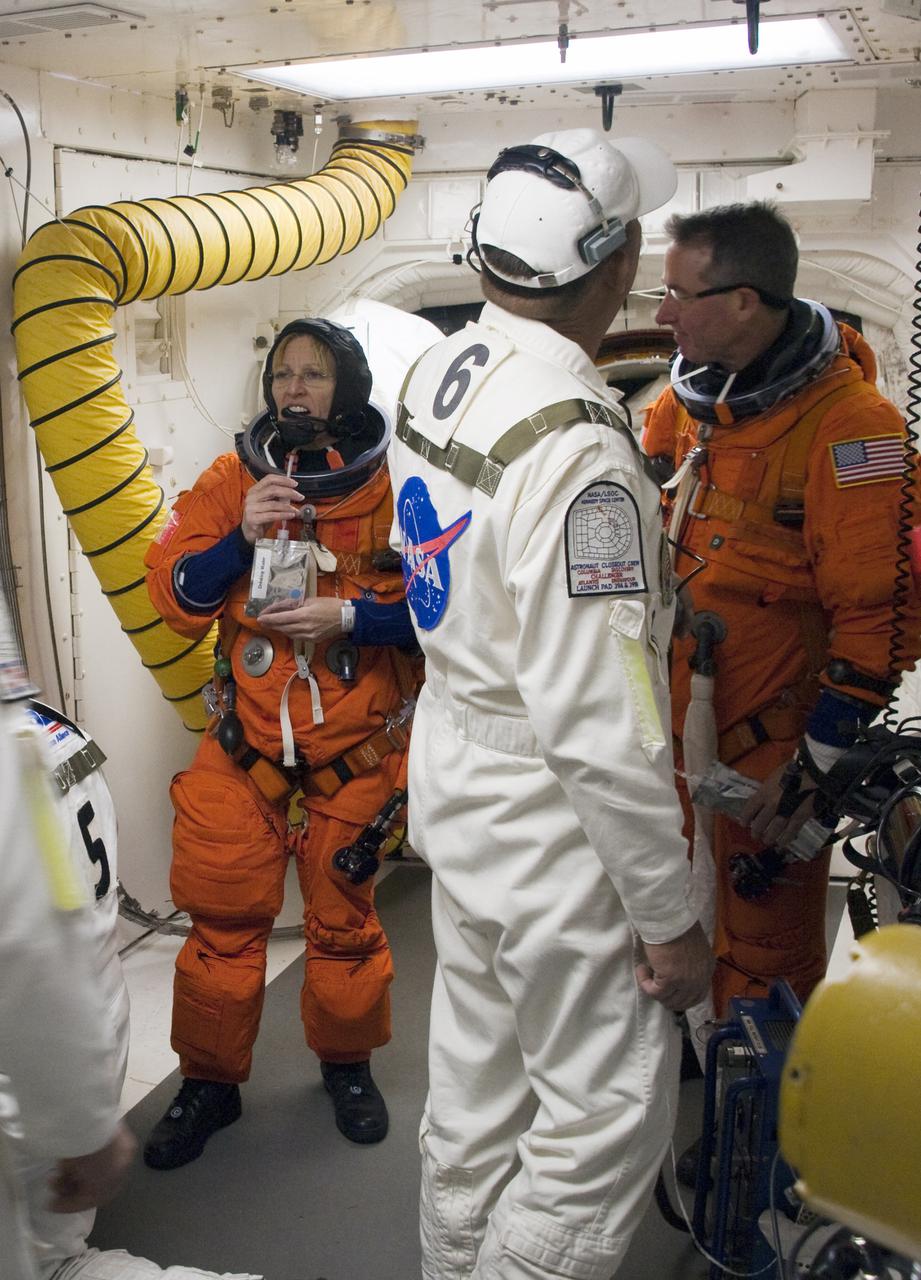
CAPE CANAVERAL, Fla. - In the White Room at Launch Pad 39A on NASA's Kennedy Space Center in Florida, STS-130 Mission Specialist Kathryn Hire (left) prepares to enter space shuttle Endeavour for launch with crewmate Mission Specialist Stephen Robinson looking on. This is the second launch attempt for space shuttle Endeavour's STS-130 crew. The first attempt on Feb. 7 was scrubbed due to unfavorable weather. The primary payload for the STS-130 mission to the International Space Station is the Tranquility node, a pressurized module that will provide additional room for crew members and many of the station's life support and environmental control systems. Attached to one end of Tranquility is a cupola, a unique work area with six windows on its sides and one on top. The cupola resembles a circular bay window and will provide a vastly improved view of the station's exterior. The multi-directional view will allow the crew to monitor spacewalks and docking operations, as well as provide a spectacular view of Earth and other celestial objects. The module was built in Turin, Italy, by Thales Alenia Space for the European Space Agency. Endeavour's launch is set for Feb. 8 at 4:14 a.m. EST. For information on the STS-130 mission and crew, visit http:__www.nasa.gov_mission_pages_shuttle_shuttlemissions_sts130_index.html. Photo credit: NASA_Sandra Joseph and Kevin O'Connell
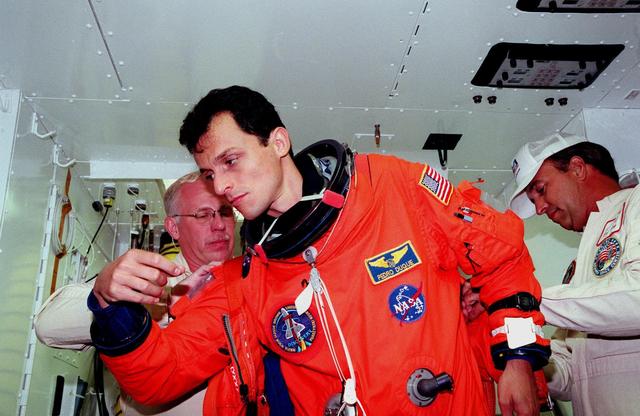
STS-95 Mission Specialist Pedro Duque of Spain, representing the European Space Agency (ESA) is checked by Danny Wyatt (left), with KSC, and Dave Martin (right), with United Space Alliance, in the white room before entry into Space Shuttle Discovery for a pre-launch countdown exercise. Duque and other crew members are at KSC to participate in the Terminal Countdown Demonstration Test (TCDT) which includes mission familiarization activities, emergency egress training, and a simulated main engine cutoff. The other crew members are Payload Specialist Chiaki Mukai (M.D., Ph.D.), representing the National Space Development Agency of Japan (NASDA), Pilot Steven W. Lindsey, Mission Specialist Scott E. Parazynski, Mission Specialist Stephen K. Robinson, Payload Specialist John H. Glenn Jr., senator from Ohio, and Mission Commander Curtis L. Brown. The STS-95 mission, targeted for liftoff on Oct. 29, includes research payloads such as the Spartan solar-observing deployable spacecraft, the Hubble Space Telescope Orbital Systems Test Platform, the International Extreme Ultraviolet Hitchhiker, as well as the SPACEHAB single module with experiments on space flight and the aging process. Following the TCDT, the crew will be returning to Houston for final flight preparations
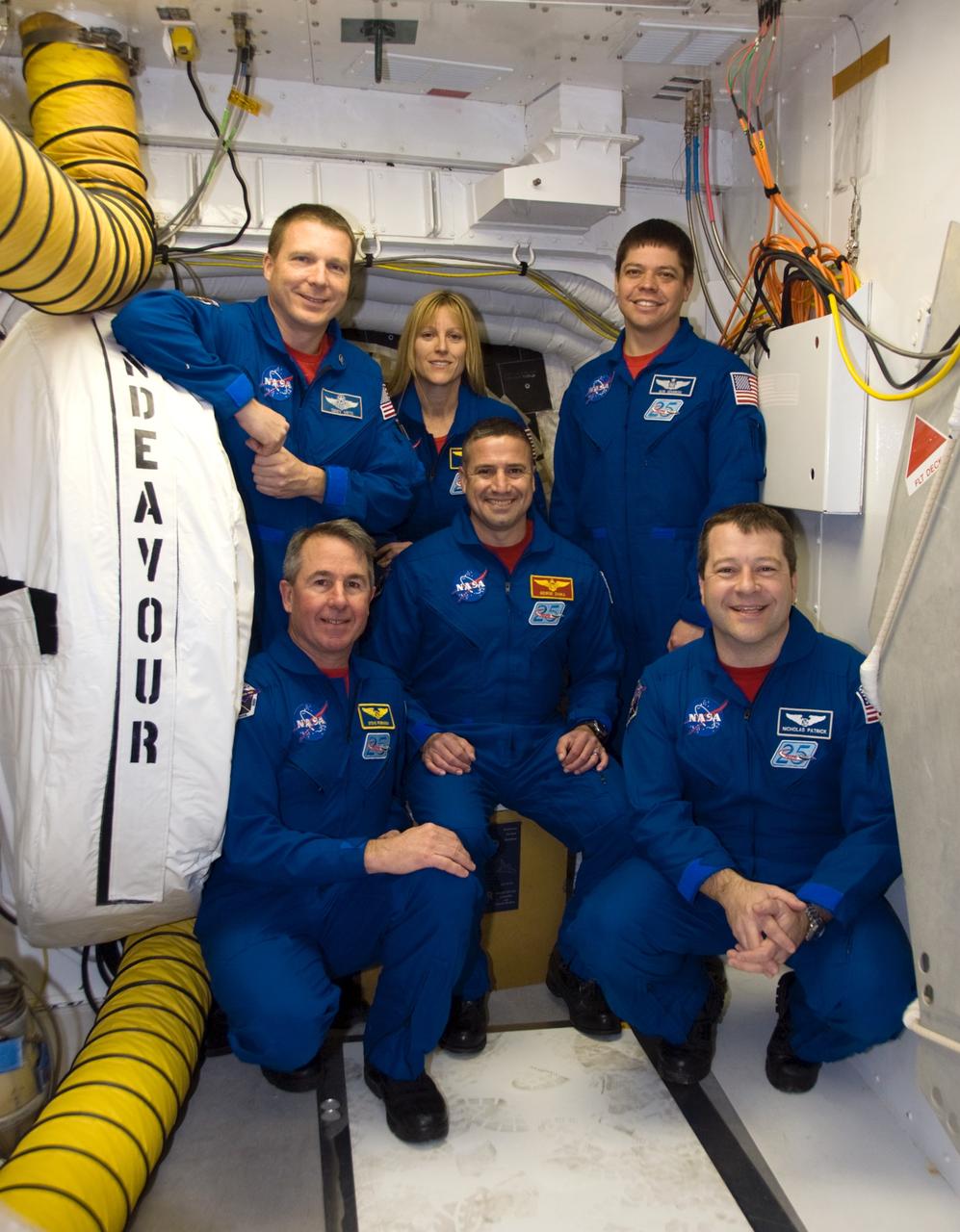
CAPE CANAVERAL, Fla. - At NASA's Kennedy Space Center in Florida, the crew members of space shuttle Endeavour's STS-130 mission take time out from their emergency exit training at Launch Pad 39A to pose for a group portrait in the White Room. Standing, from left, are Pilot Terry Virts and Mission Specialists Kathryn Hire and Robert Behnken. Kneeling, from left, are Mission Specialist Stephen Robinson, Commander George Zamka and Mission Specialist Nicholas Patrick. The crew members of space shuttle Endeavour's upcoming mission are at Kennedy for training related to their launch dress rehearsal, the Terminal Countdown Demonstration Test. The primary payload on STS-130 is the International Space Station's Node 3, Tranquility, a pressurized module that will provide room for many of the station's life support systems. Attached to one end of Tranquility is a cupola, a unique work area with six windows on its sides and one on top. Endeavour's launch is targeted for Feb. 7. For information on the STS-130 mission and crew, visit http://www.nasa.gov/mission_pages/shuttle/shuttlemissions/sts130/index.html. Photo credit: NASA/Kim Shiflett