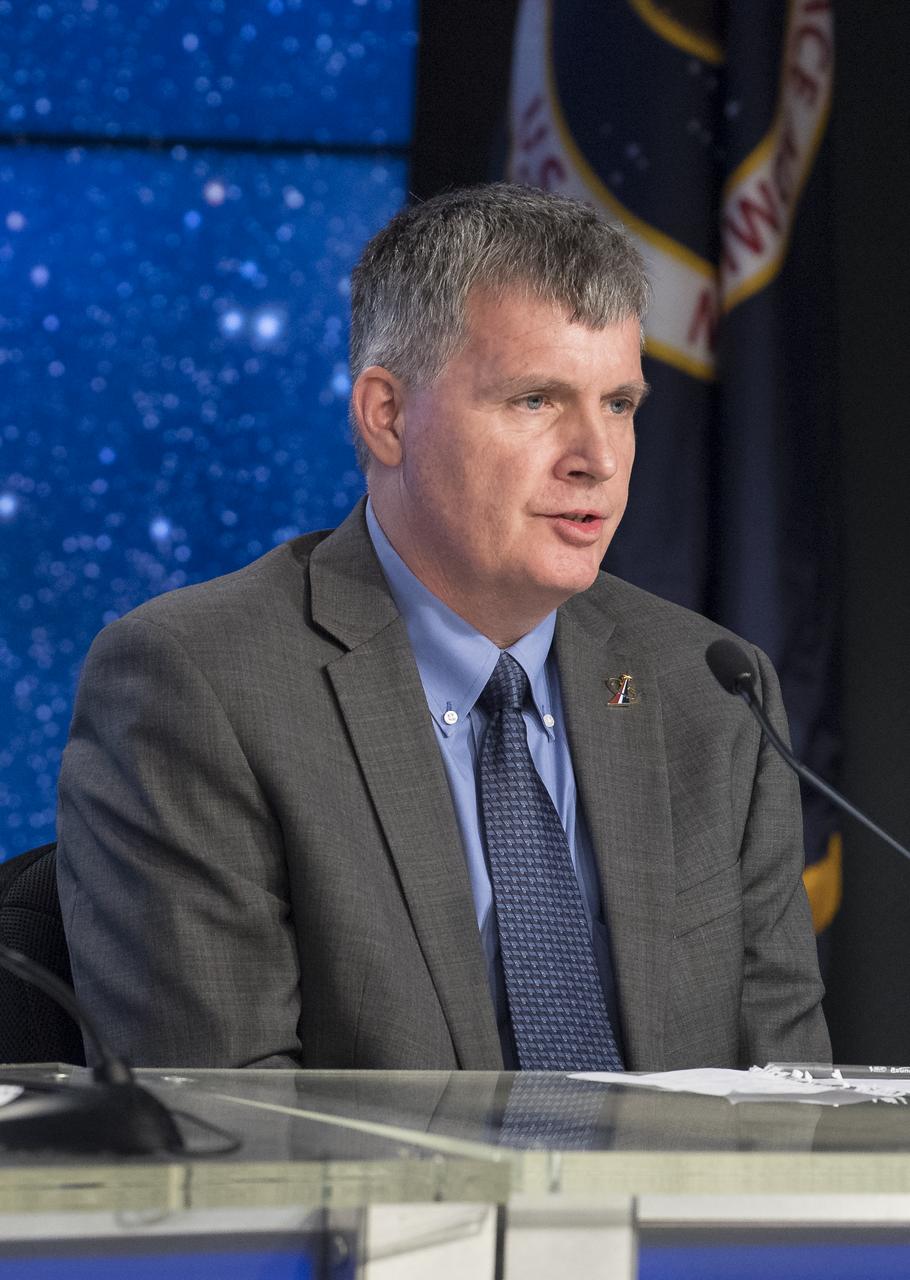
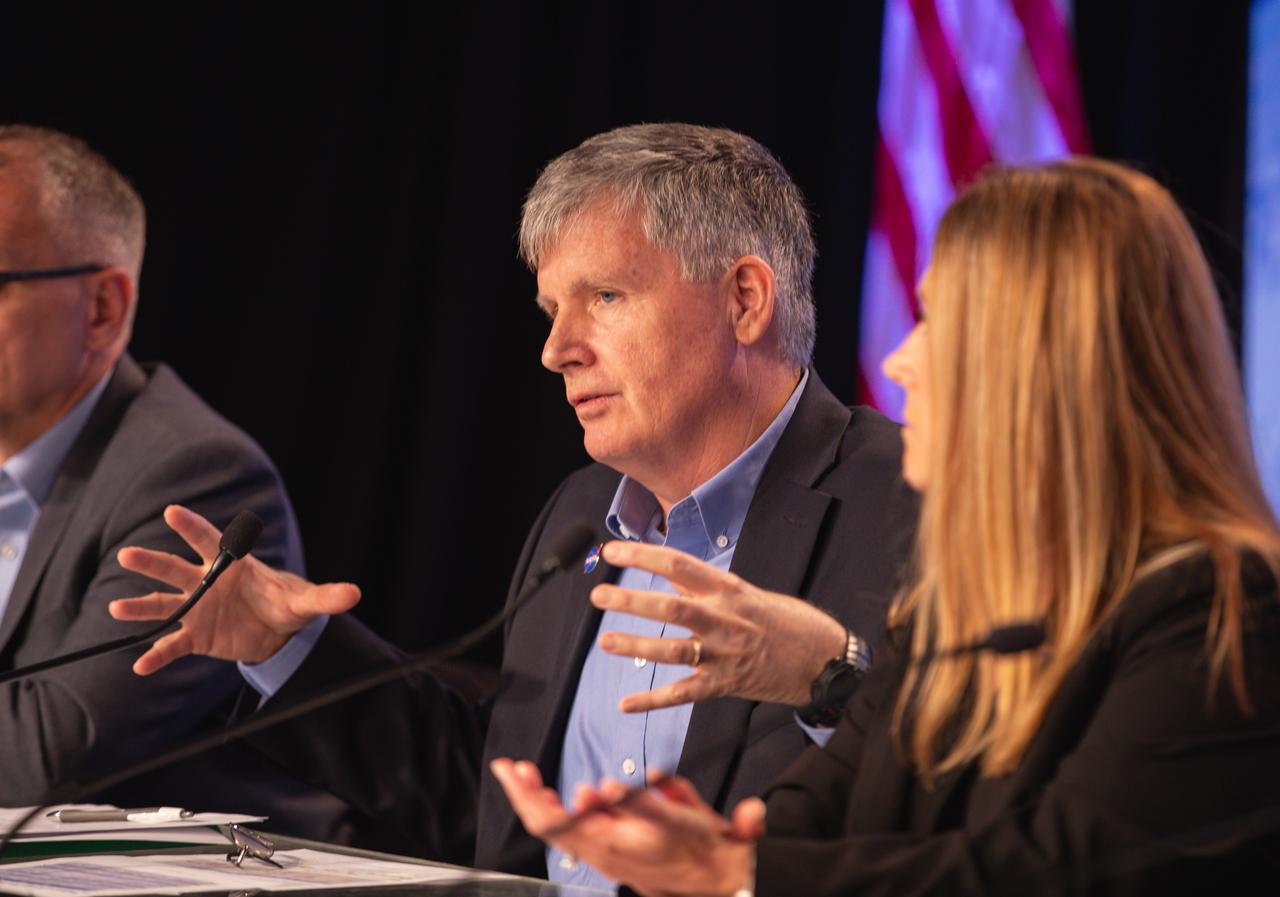
Steve Stich, Deputy Manager of NASA’s Commercial Crew Program is seen during a press conference at NASA's Kennedy Space Center following the launch of Boeing’s Starliner spacecraft onboard a United Launch Alliance Atlas V rocket, Friday, Dec. 20, 2019, at Cape Canaveral Air Force Station in Florida. After a successful launch at 6:36 a.m. EST, Boeing’s CST-100 Starliner is in an unplanned, but stable orbit. The team is assessing what test objectives can be achieved before the spacecraft’s return to land in White Sands, New Mexico. Photo Credit: (NASA/Joel Kowsky)
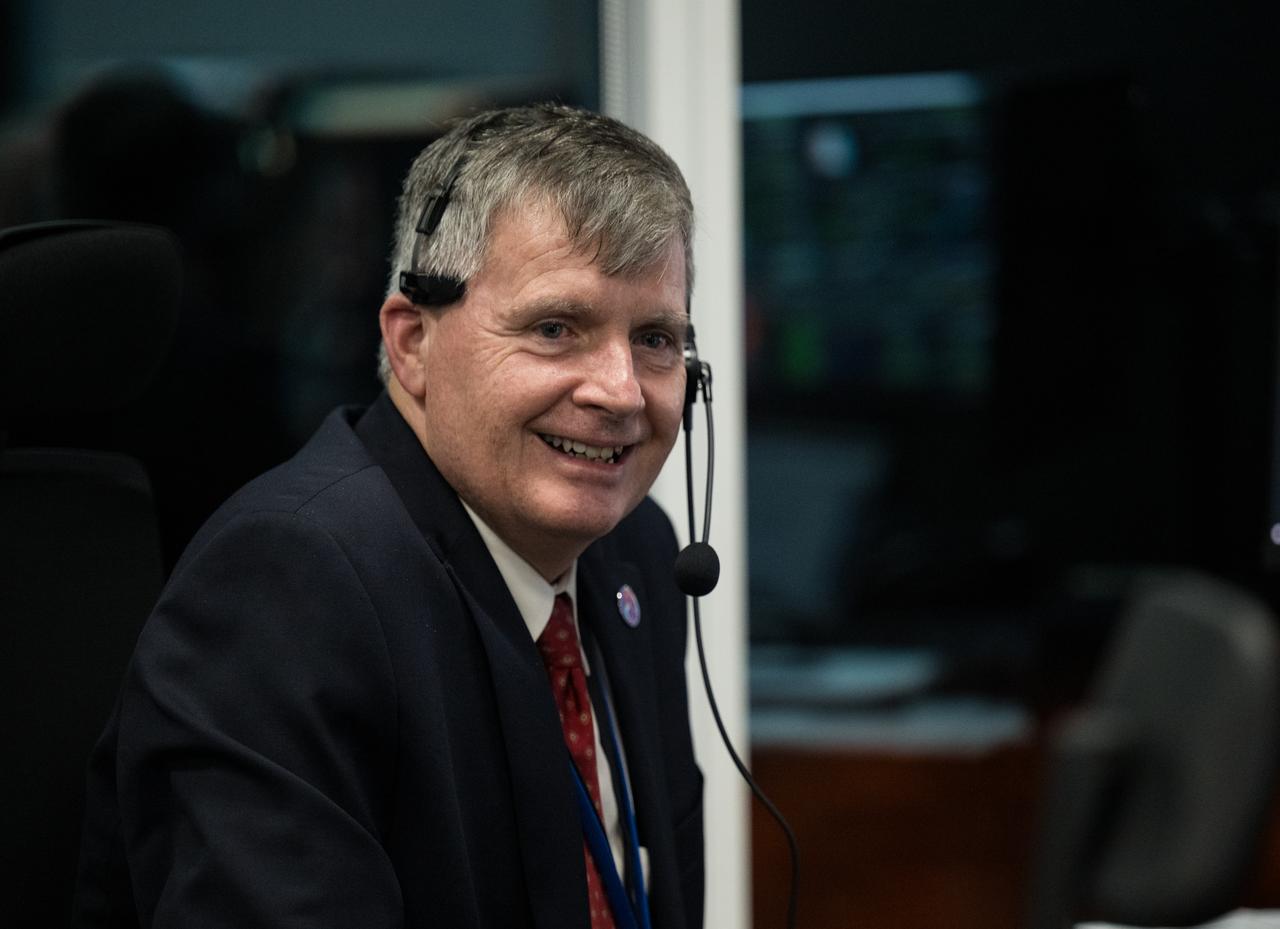
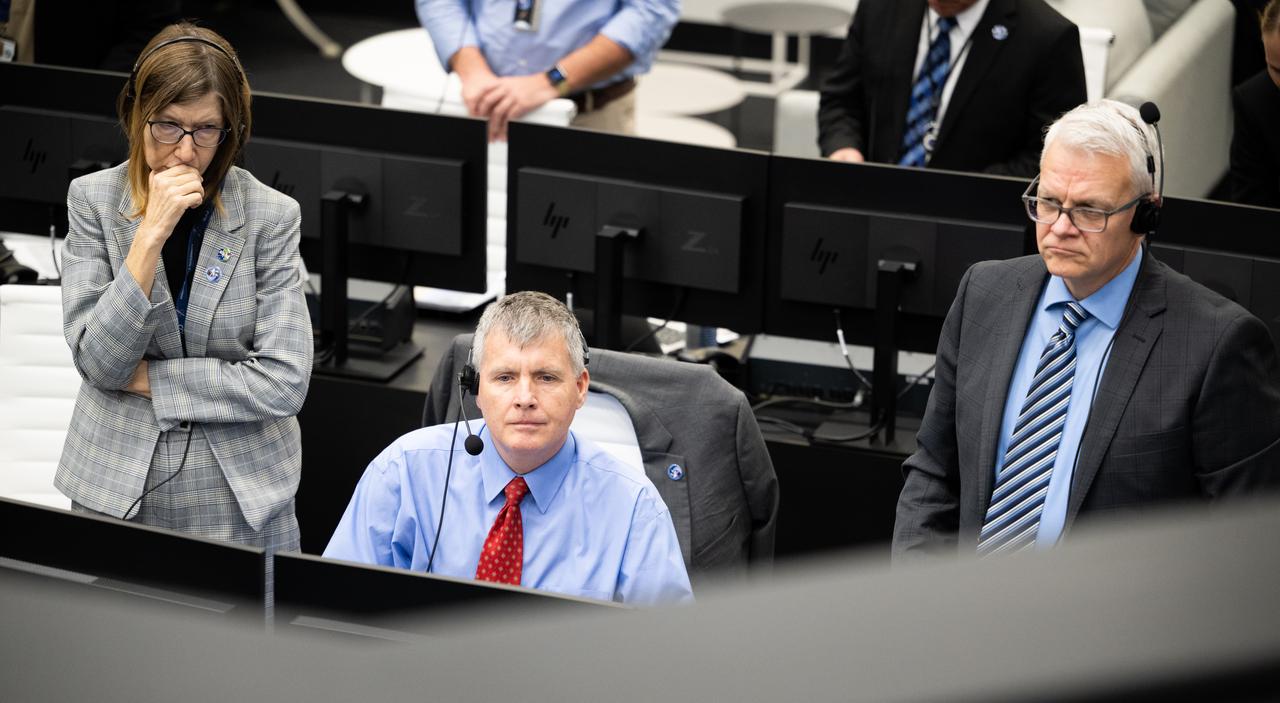
Steve Stich, manager of NASA’s Commercial Crew Program, monitors the launch of a SpaceX Falcon 9 rocket carrying the company's Dragon spacecraft on the Crew-8 mission with NASA astronauts Matthew Dominick, Michael Barratt, and Jeanette Epps, and Roscosmos cosmonaut Alexander Grebenkin onboard, Sunday, March 3, 2024, in the control room of SpaceX’s HangarX at NASA’s Kennedy Space Center in Florida. NASA’s SpaceX Crew-8 mission is the eighth crew rotation mission of the SpaceX Dragon spacecraft and Falcon 9 rocket to the International Space Station as part of the agency’s Commercial Crew Program. Dominick, Barratt, Epps, and Grebenkin launched at 10:53 p.m. EST, from Launch Complex 39A at the Kennedy Space Center. Photo Credit: (NASA/Aubrey Gemignani)
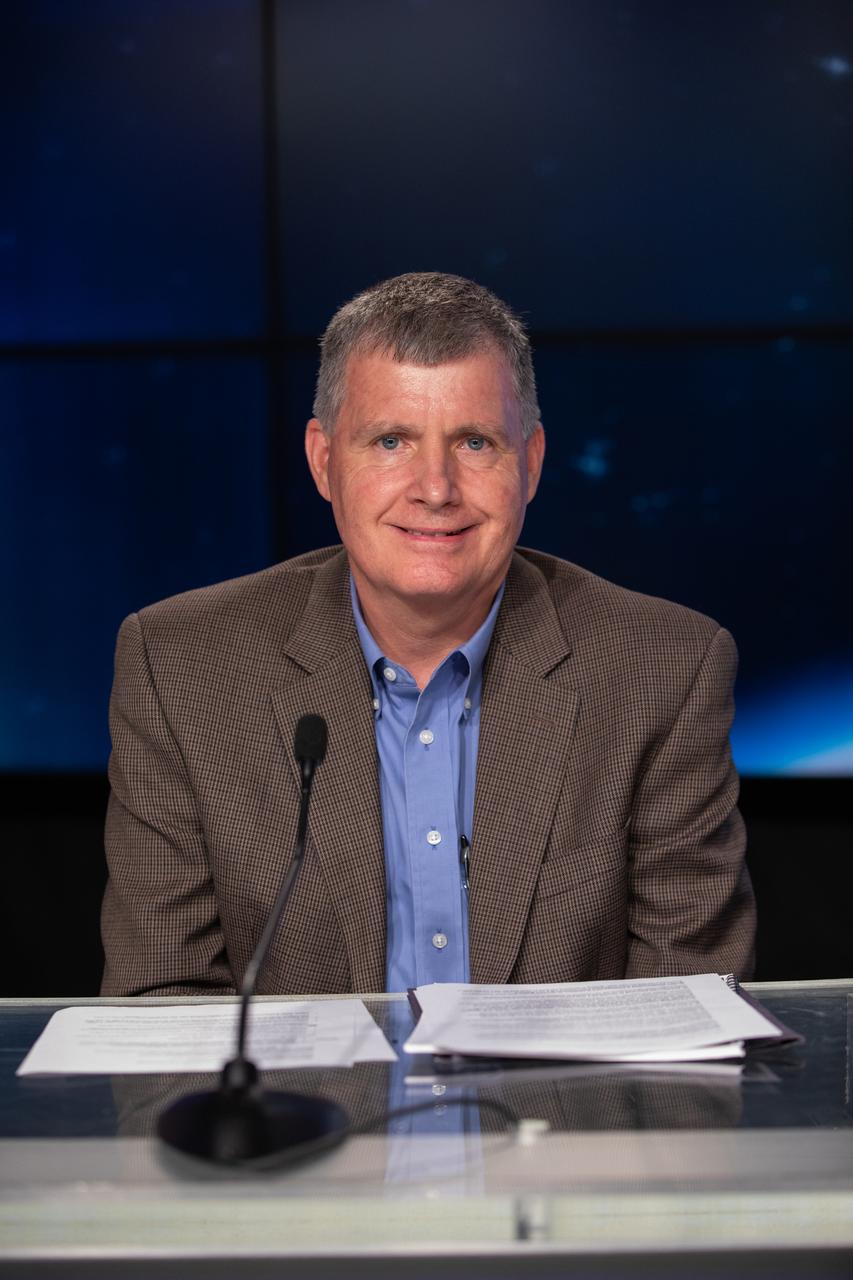
Steve Stich, manager, NASA’s Commercial Crew Program, participates in a prelaunch briefing for NASA’s uncrewed Boeing Orbital Flight Test (OFT-2) at the agency’s Kennedy Space Center in Florida, May 17, 2022. Boeing’s CST-100 Starliner is targeted to launch at 6:54 p.m. EDT on Thursday, May 19, on a United Launch Alliance Atlas V rocket from Space Launch Complex-41 at Cape Canaveral Space Force Station in Florida to rendezvous and dock with the International Space Station.
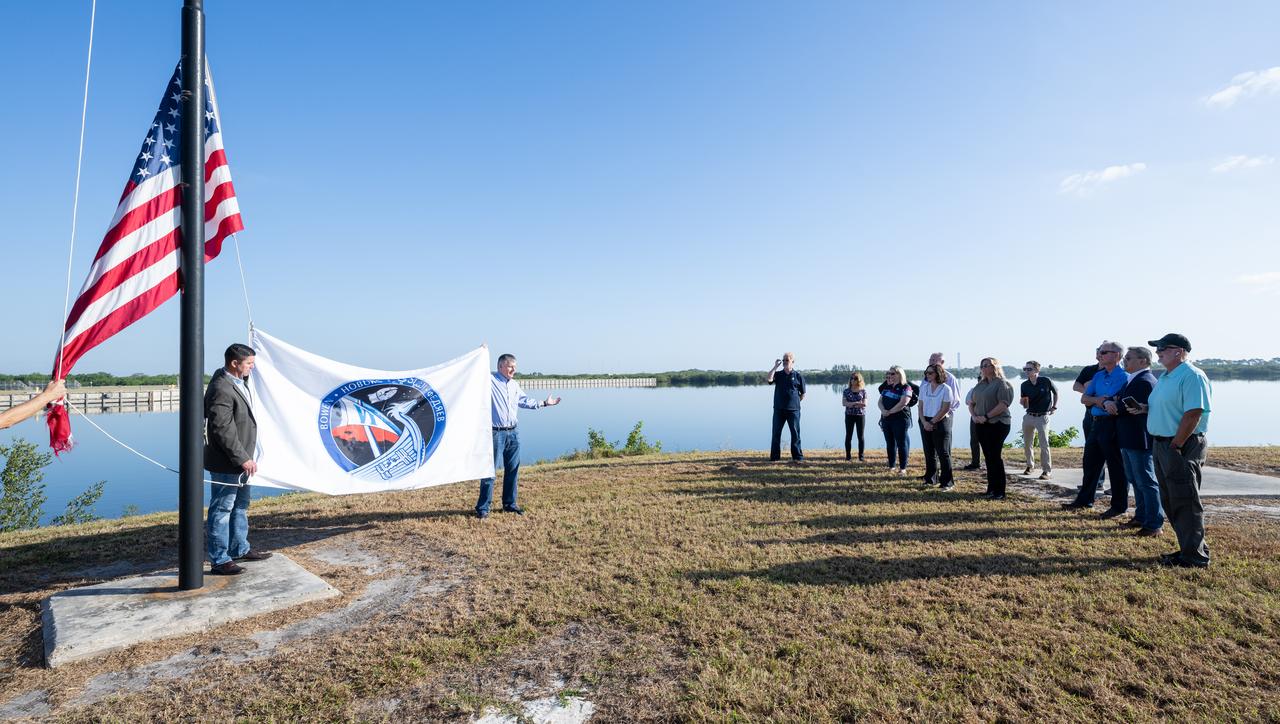
Trip Healey, manager, Program Control & Integration for NASA’s Commercial Crew Program, left, and Steve Stich, manager of NASA’s Commercial Crew Program right, prepare to raise the SpaceX Crew-6 flag, Wednesday, Feb. 22, 2023, at NASA’s Kennedy Space Center in Florida. NASA’s SpaceX Crew-6 mission is the sixth crew rotation mission of the SpaceX Dragon spacecraft and Falcon 9 rocket to the International Space Station as part of the agency’s Commercial Crew Program. NASA astronauts Stephen Bowen and Warren "Woody" Hoburg, UAE (United Arab Emirates) astronaut Sultan Alneyadi, and Roscosmos cosmonaut Andrey Fedyaev are scheduled to launch at 1:45 a.m. EST on Feb. 27 from Launch Complex 39A at the Kennedy Space Center. Photo Credit: (NASA/Joel Kowsky)
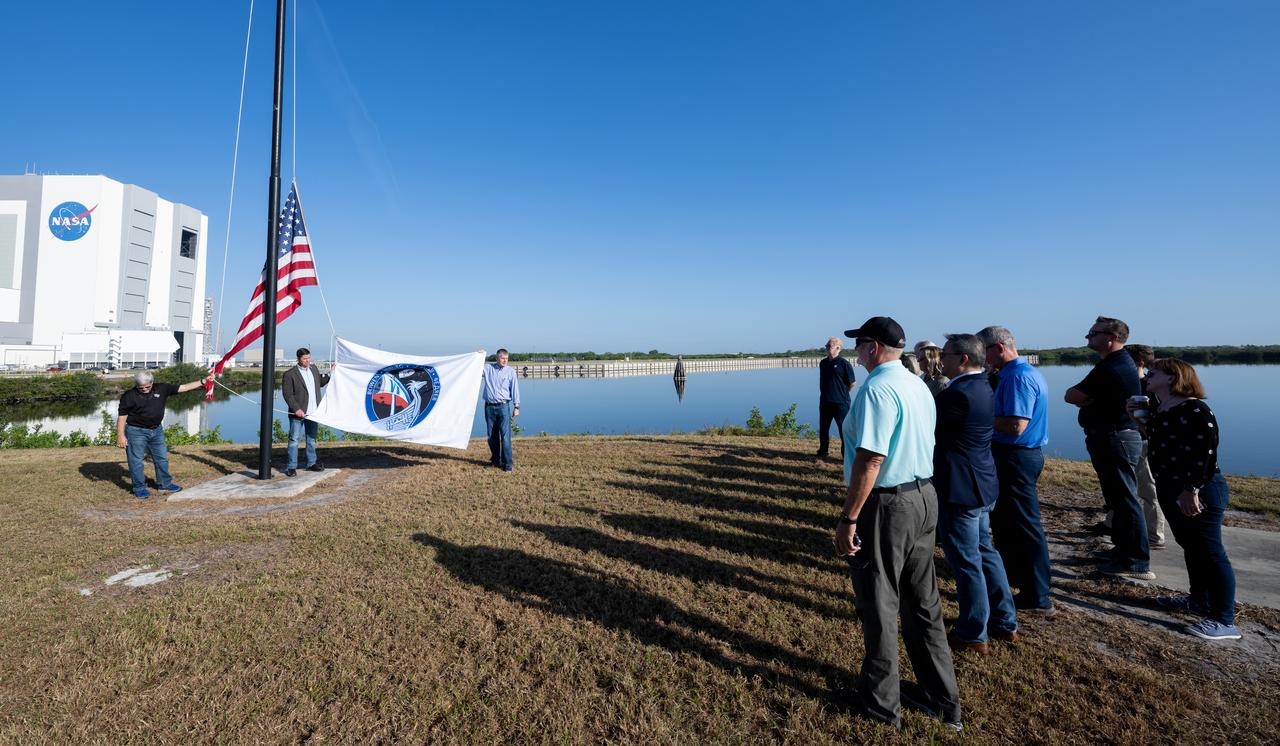
Trip Healey, manager, Program Control & Integration for NASA’s Commercial Crew Program, left, and Steve Stich, manager of NASA’s Commercial Crew Program right, prepare to raise the SpaceX Crew-6 flag, Wednesday, Feb. 22, 2023, at NASA’s Kennedy Space Center in Florida. NASA’s SpaceX Crew-6 mission is the sixth crew rotation mission of the SpaceX Dragon spacecraft and Falcon 9 rocket to the International Space Station as part of the agency’s Commercial Crew Program. NASA astronauts Stephen Bowen and Warren "Woody" Hoburg, UAE (United Arab Emirates) astronaut Sultan Alneyadi, and Roscosmos cosmonaut Andrey Fedyaev are scheduled to launch at 1:45 a.m. EST on Feb. 27 from Launch Complex 39A at the Kennedy Space Center. Photo Credit: (NASA/Joel Kowsky)
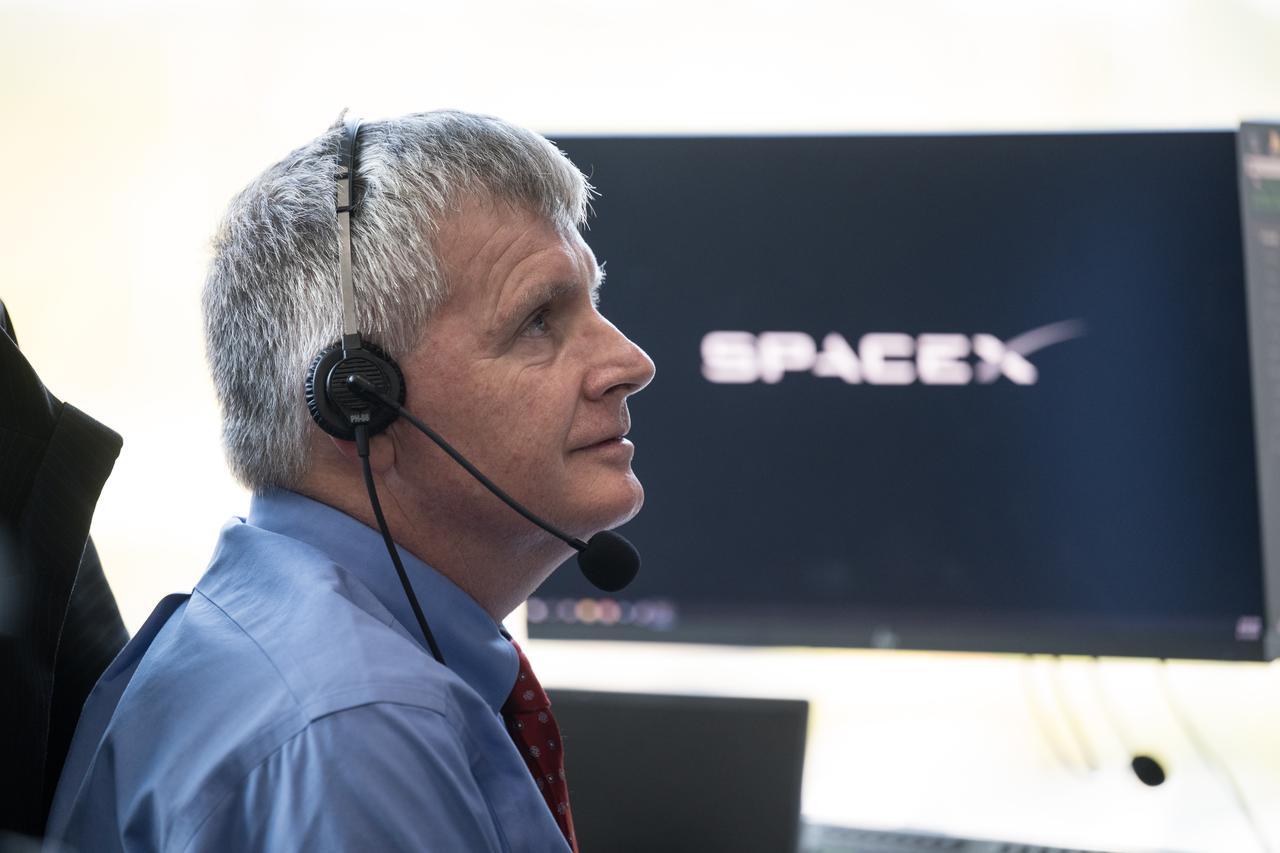
Steve Stich, manager of NASA’s Commercial Crew Program, monitors the launch of a SpaceX Falcon 9 rocket carrying the company's Dragon spacecraft on the Crew-10 mission with NASA astronauts Anne McClain and Nichole Ayers, JAXA (Japan Aerospace Exploration Agency) astronaut Takuya Onishi, and Roscosmos cosmonaut Kirill Peskov onboard, Friday, March 14, 2025, in the control room of SpaceX’s HangarX at NASA’s Kennedy Space Center in Florida. NASA’s SpaceX Crew-10 mission is the tenth crew rotation mission of the SpaceX Dragon spacecraft and Falcon 9 rocket to the International Space Station as part of the agency’s Commercial Crew Program. McClain, Ayers, Onishi, and Peskov launched at 7:03 p.m. EDT, from Launch Complex 39A at the Kennedy Space Center. Photo Credit: (NASA/Aubrey Gemignani)
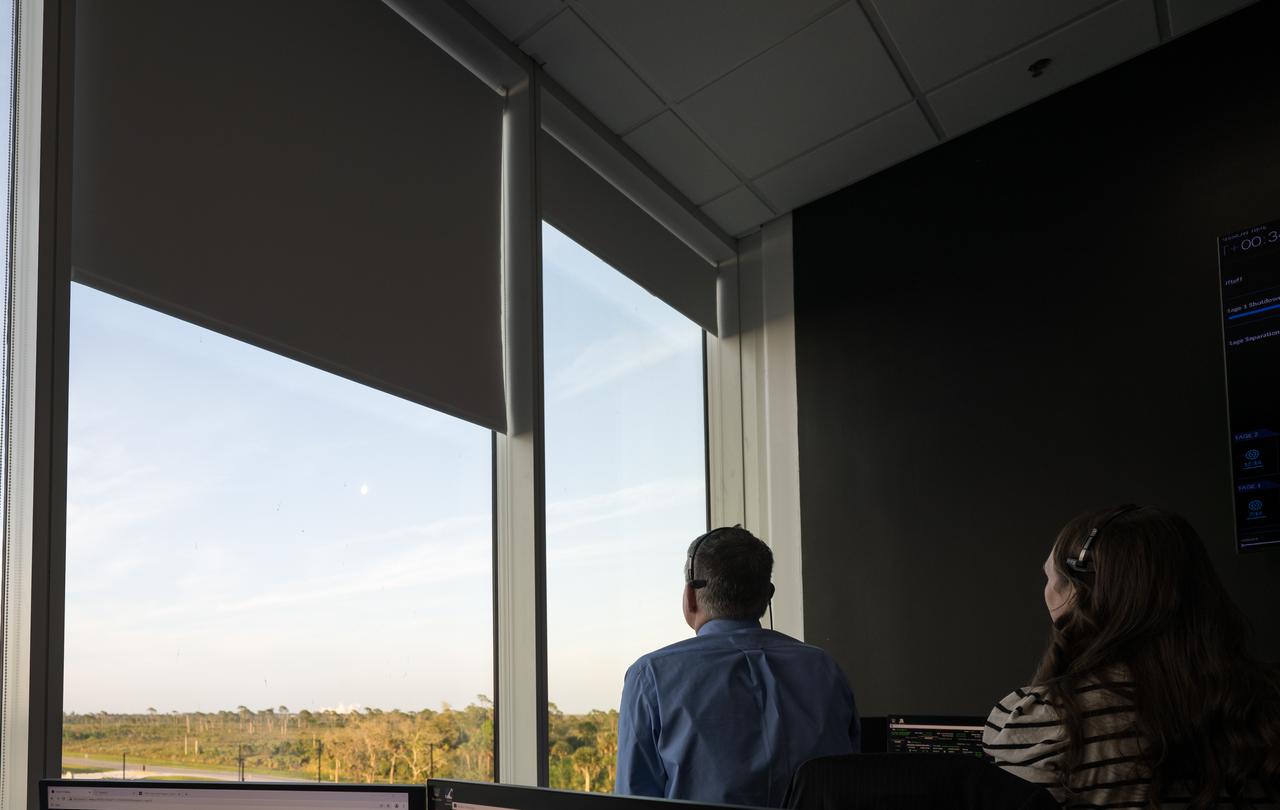
Steve Stich, manager of NASA’s Commercial Crew Program and other NASA and SpaceX staff watch the launch of a SpaceX Falcon 9 rocket carrying the company's Dragon spacecraft on the Crew-10 mission with NASA astronauts Anne McClain and Nichole Ayers, JAXA (Japan Aerospace Exploration Agency) astronaut Takuya Onishi, and Roscosmos cosmonaut Kirill Peskov onboard, Friday, March 14, 2025, in the control room of SpaceX’s HangarX at NASA’s Kennedy Space Center in Florida. NASA’s SpaceX Crew-10 mission is the tenth crew rotation mission of the SpaceX Dragon spacecraft and Falcon 9 rocket to the International Space Station as part of the agency’s Commercial Crew Program. McClain, Ayers, Onishi, and Peskov launched at 7:03 p.m. EDT, from Launch Complex 39A at the Kennedy Space Center. Photo Credit: (NASA/Aubrey Gemignani)
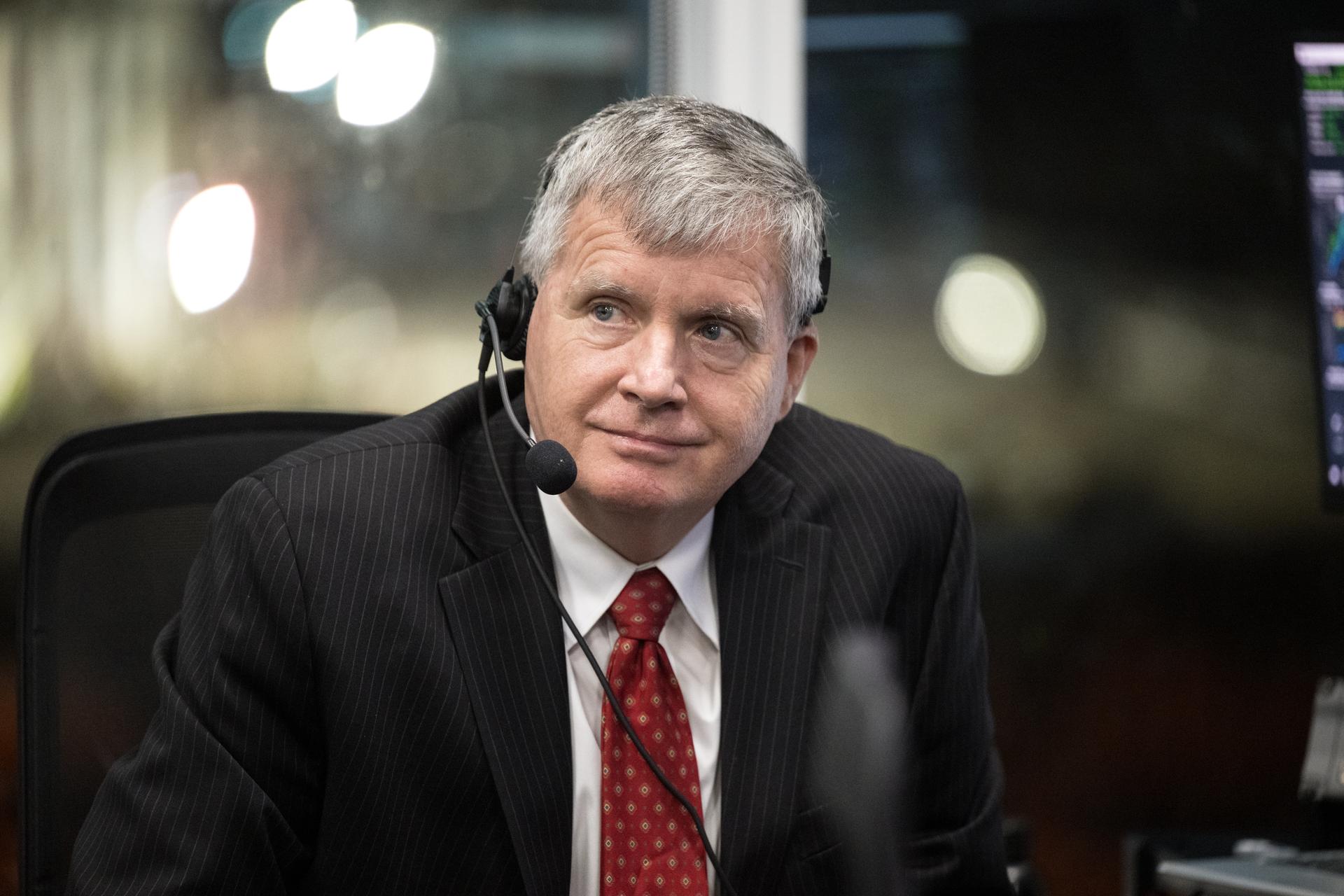
Steve Stich, manager of NASA’s Commercial Crew Program, monitors the countdown of the launch of a SpaceX Falcon 9 rocket carrying the company's Dragon spacecraft on NASA’s SpaceX Crew-12 mission with NASA astronauts Jessica Meir, Jack Hathaway, ESA (European Space Agency) astronaut Sophie Adenot, and Roscosmos cosmonaut Andrey Fedyaev onboard, Friday, Feb. 13, 2026, in the control center of SpaceX’s HangarX at NASA’s Kennedy Space Center in Florida. NASA’s SpaceX Crew-12 mission is the twelfth crew rotation mission of the SpaceX Dragon spacecraft and Falcon 9 rocket to the International Space Station as part of the agency’s Commercial Crew Program. Meir, Hathaway, Adenot, and Fedyaev are scheduled to launch at 5:15 a.m. EST, from Space Launch Complex 40 at the Cape Canaveral Space Force Station. Photo Credit: (NASA/Aubrey Gemignani)
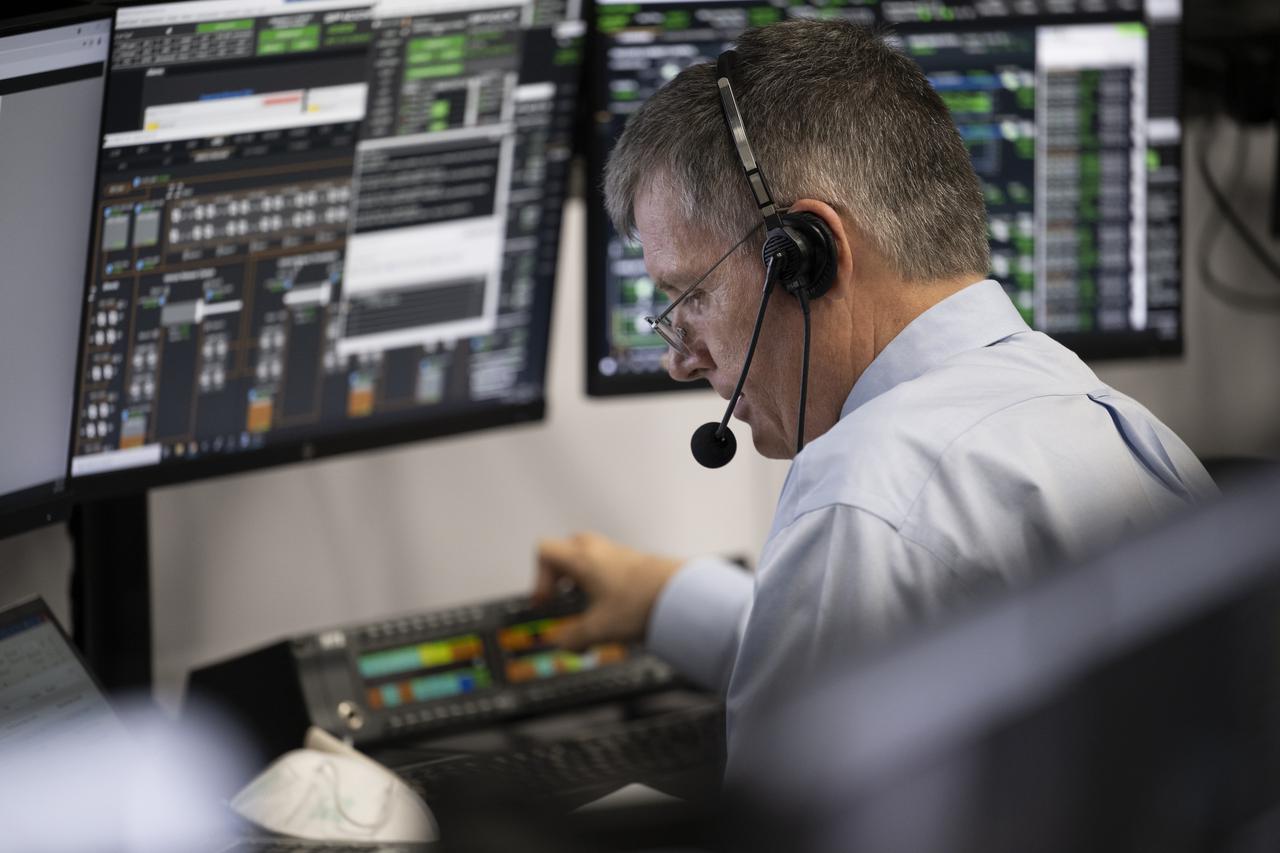
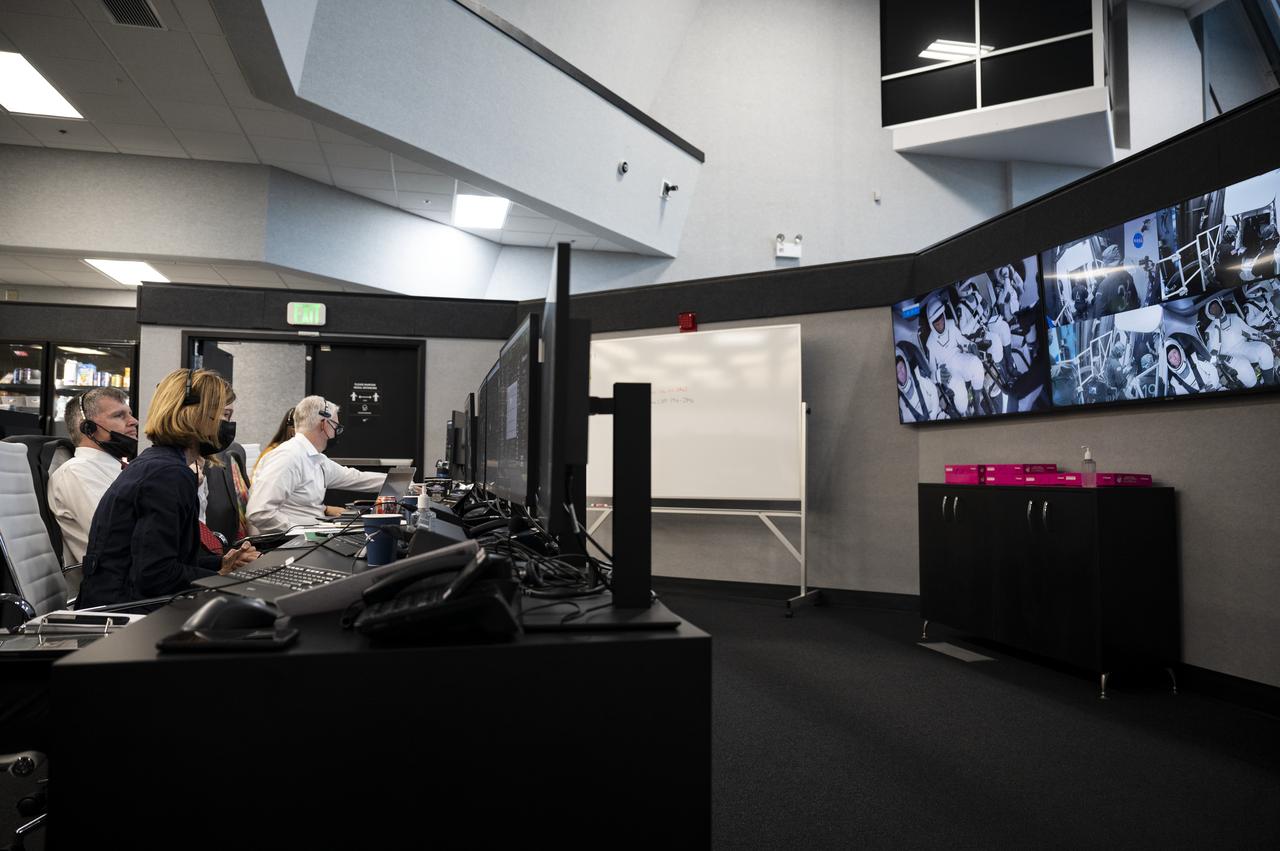
Steve Stich, manager of NASA’s Commercial Crew Program, monitors the countdown of the launch of a SpaceX Falcon 9 rocket carrying the company's Crew Dragon spacecraft on NASA’s SpaceX Crew-4 mission with NASA astronauts Kjell Lindgren, Robert Hines, Jessica Watkins, and ESA (European Space Agency) astronaut Samantha Cristoforetti onboard, Wednesday, April 27, 2022, in firing room four of the Rocco A. Petrone Launch Control Center at NASA’s Kennedy Space Center in Florida. NASA’s SpaceX Crew-4 mission is the fourth crew rotation mission of the SpaceX Crew Dragon spacecraft and Falcon 9 rocket to the International Space Station as part of the agency’s Commercial Crew Program. Lindgren, Hines, Watkins, and Cristoforetti launched at 3:52 a.m. ET, from Launch Complex 39A at the Kennedy Space Center. Photo Credit: (NASA/Joel Kowsky)
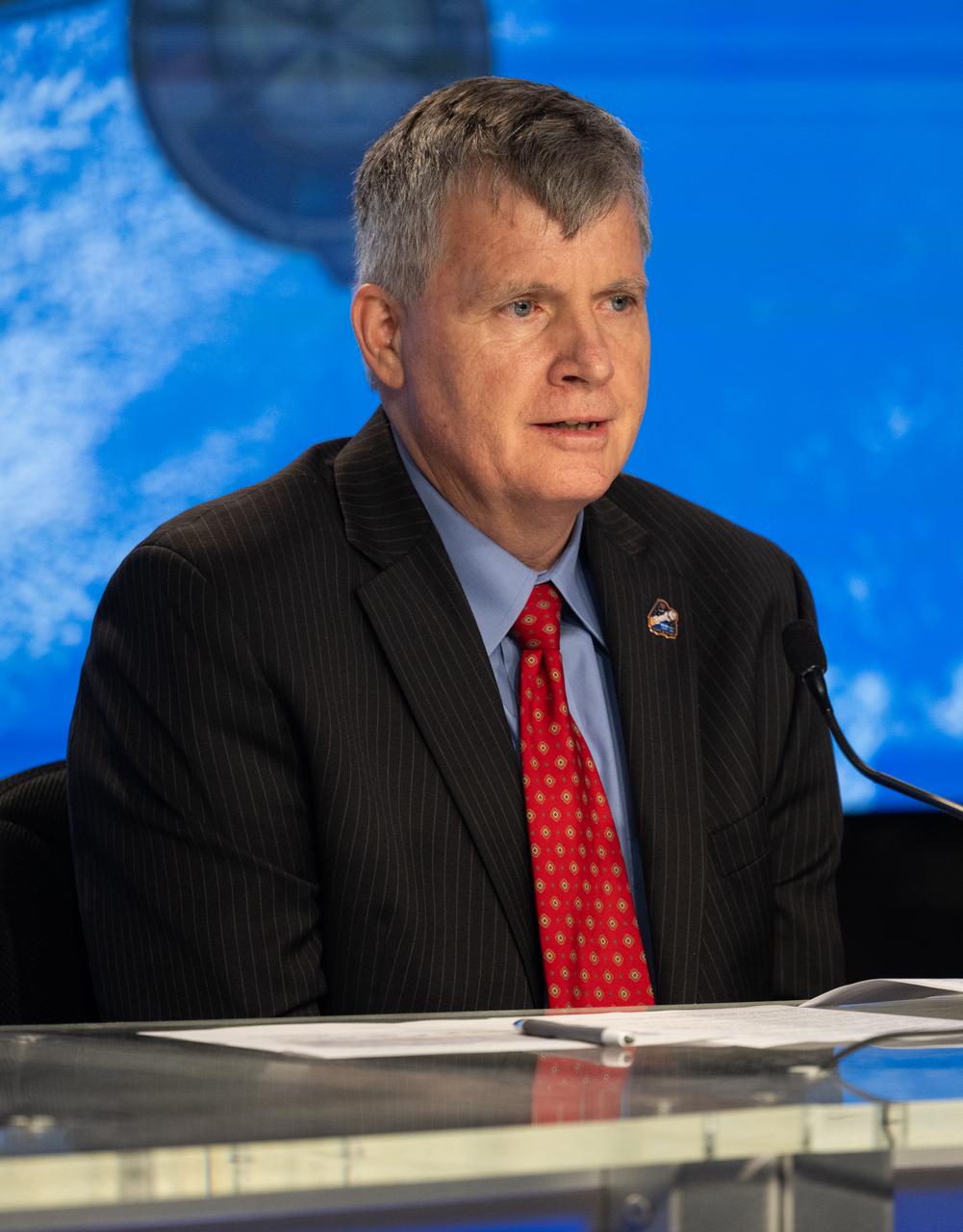
Steve Stich, manager of NASA's Commercial Crew Program, is seen during a press conference after the first launch attempt of NASA’s Boeing Crew Flight Test was scrubbed for the day, Monday, May 6, 2024, at NASA’s Kennedy Space Center in Florida. NASA’s Boeing Crew Flight Test is the first launch with astronauts of the Boeing CFT-100 spacecraft and United Launch Alliance Atlas V rocket to the International Space Station as part of the agency’s Commercial Crew Program. The flight test, targeted for launch no earlier than Friday, May 10, serves as an end-to-end demonstration of Boeing’s crew transportation system and will carry NASA astronauts Butch Wilmore and Suni Williams to and from the orbiting laboratory. Photo Credit: (NASA/Joel Kowsky)
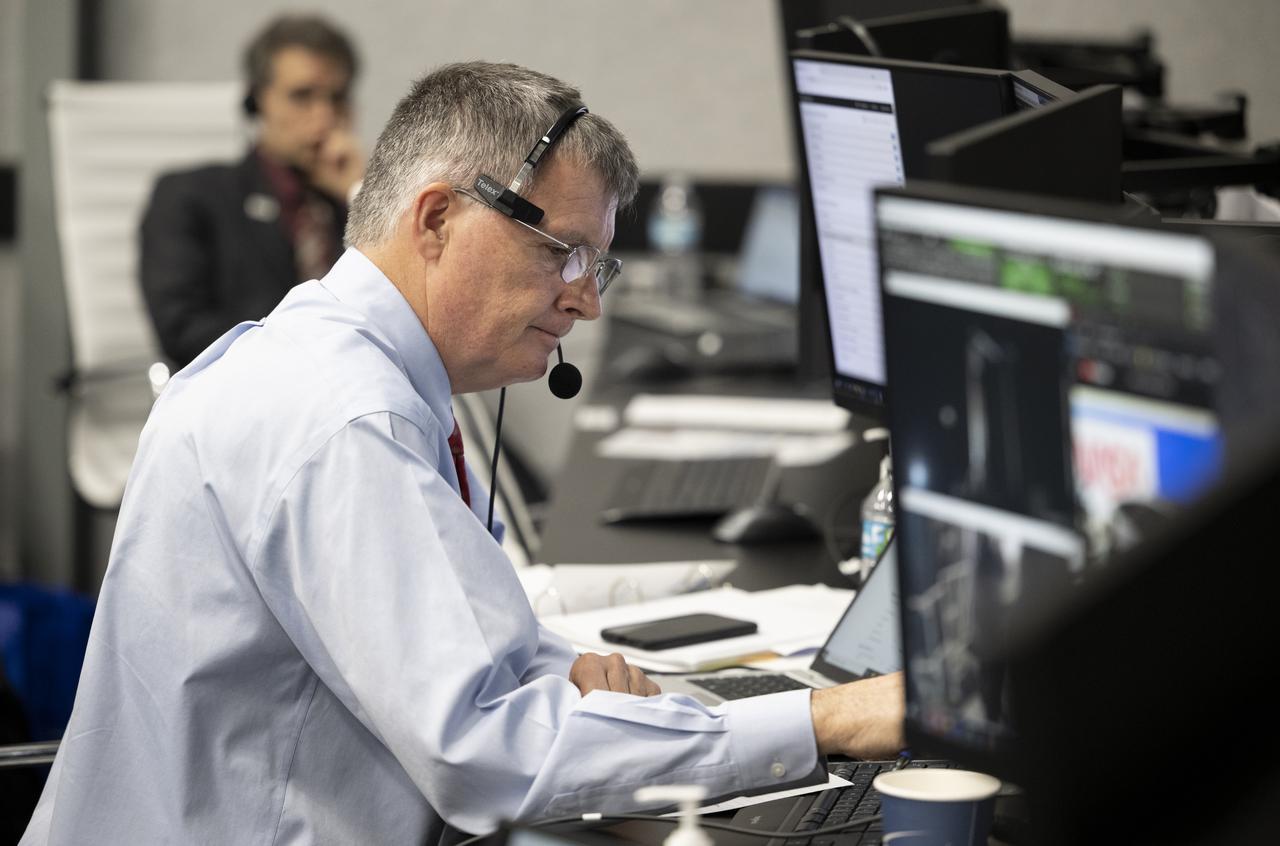
Steve Stich, manager of NASA’s Commercial Crew Program, monitors the countdown of a SpaceX Falcon 9 rocket carrying the company's Crew Dragon spacecraft on the Crew-4 mission with NASA astronauts Kjell Lindgren, Robert Hines, Jessica Watkins, and ESA (European Space Agency) astronaut Samantha Cristoforetti onboard, Wednesday, April 27, 2022, in firing room four of the Rocco A. Petrone Launch Control Center at NASA’s Kennedy Space Center in Florida. NASA’s SpaceX Crew-4 mission is the fourth crew rotation mission of the SpaceX Crew Dragon spacecraft and Falcon 9 rocket to the International Space Station as part of the agency’s Commercial Crew Program. Lindgren, Hines, Watkins, and Cristoforetti launched at 3:52 a.m. ET, from Launch Complex 39A at the Kennedy Space Center to begin a six month mission onboard the International Space Station. Photo Credit: (NASA/Joel Kowsky)
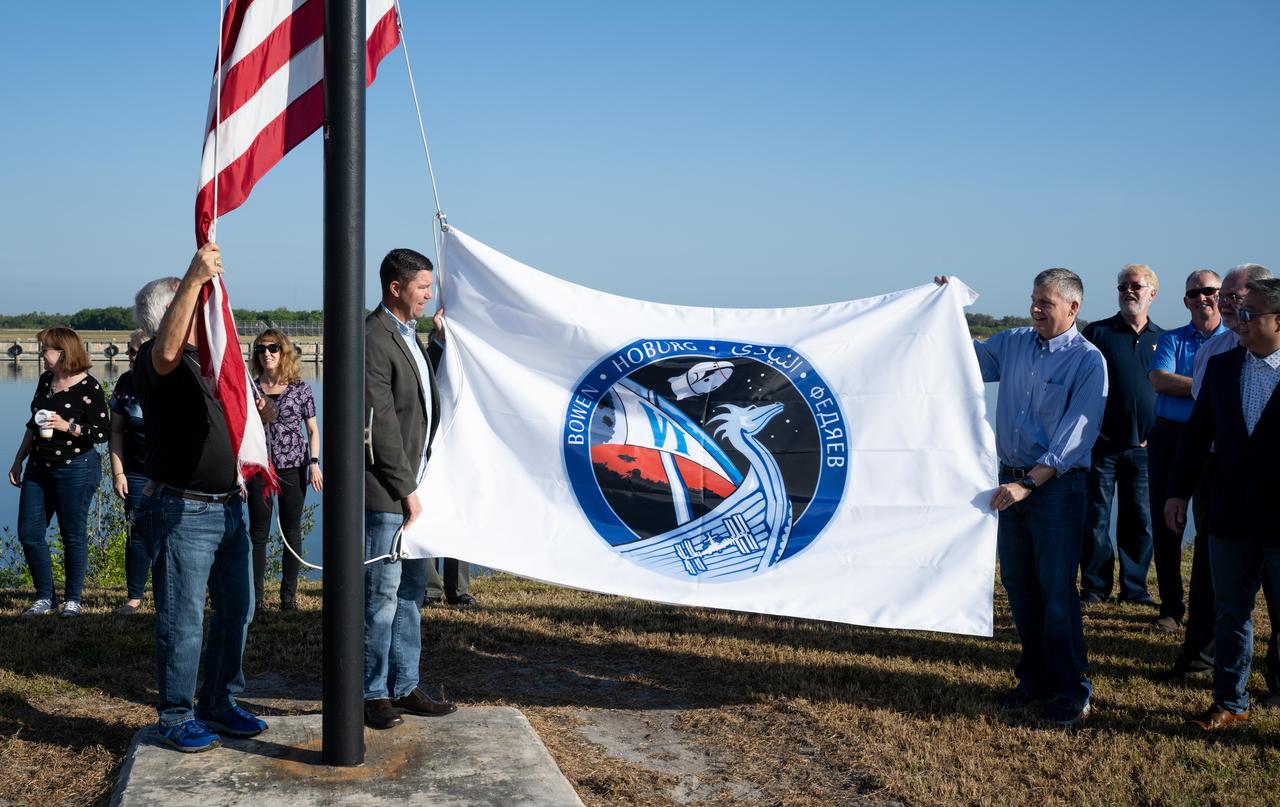
Trip Healey, manager, Program Control & Integration for NASA’s Commercial Crew Program, left, and Steve Stich, manager of NASA’s Commercial Crew Program right, prepare to raise the SpaceX Crew-6 flag, Wednesday, Feb. 22, 2023, at NASA’s Kennedy Space Center in Florida. NASA’s SpaceX Crew-6 mission is the sixth crew rotation mission of the SpaceX Dragon spacecraft and Falcon 9 rocket to the International Space Station as part of the agency’s Commercial Crew Program. NASA astronauts Stephen Bowen and Warren "Woody" Hoburg, UAE (United Arab Emirates) astronaut Sultan Alneyadi, and Roscosmos cosmonaut Andrey Fedyaev are scheduled to launch at 1:45 a.m. EST on Feb. 27 from Launch Complex 39A at the Kennedy Space Center. Photo Credit: (NASA/Joel Kowsky)
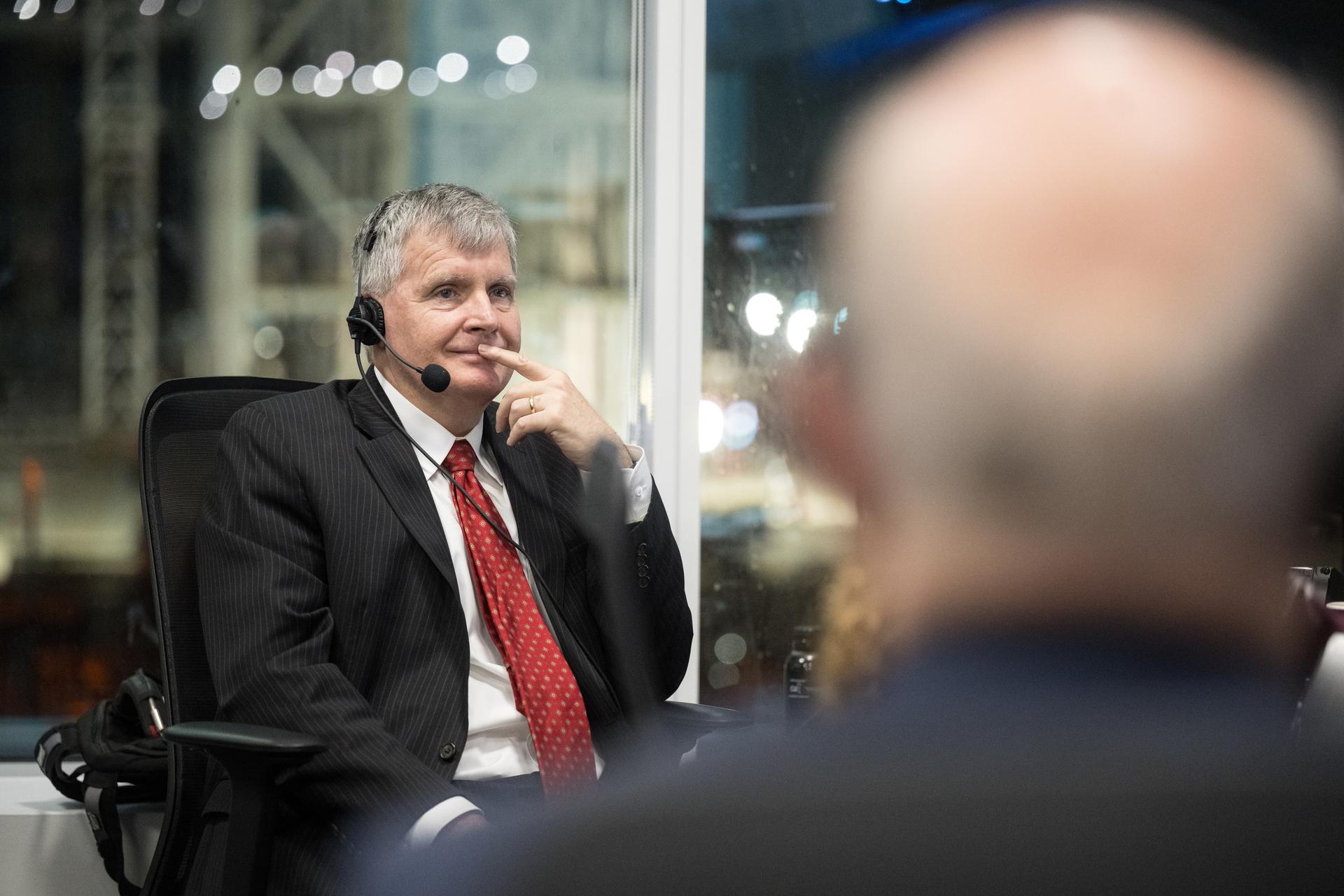
Steve Stich, manager of NASA’s Commercial Crew Program speaks with Ken Bowersox, associate administrator for NASA's Space Operations Mission Directorate during the countdown of the launch of a SpaceX Falcon 9 rocket carrying the company's Dragon spacecraft on NASA’s SpaceX Crew-12 mission with NASA astronauts Jessica Meir, Jack Hathaway, ESA (European Space Agency) astronaut Sophie Adenot, and Roscosmos cosmonaut Andrey Fedyaev onboard, Friday, Feb. 13, 2026, in the control center of SpaceX’s HangarX at NASA’s Kennedy Space Center in Florida. NASA’s SpaceX Crew-12 mission is the twelfth crew rotation mission of the SpaceX Dragon spacecraft and Falcon 9 rocket to the International Space Station as part of the agency’s Commercial Crew Program. Meir, Hathaway, Adenot, and Fedyaev are scheduled to launch at 5:15 a.m. EST, from Space Launch Complex 40 at the Cape Canaveral Space Force Station. Photo Credit: (NASA/Aubrey Gemignani)
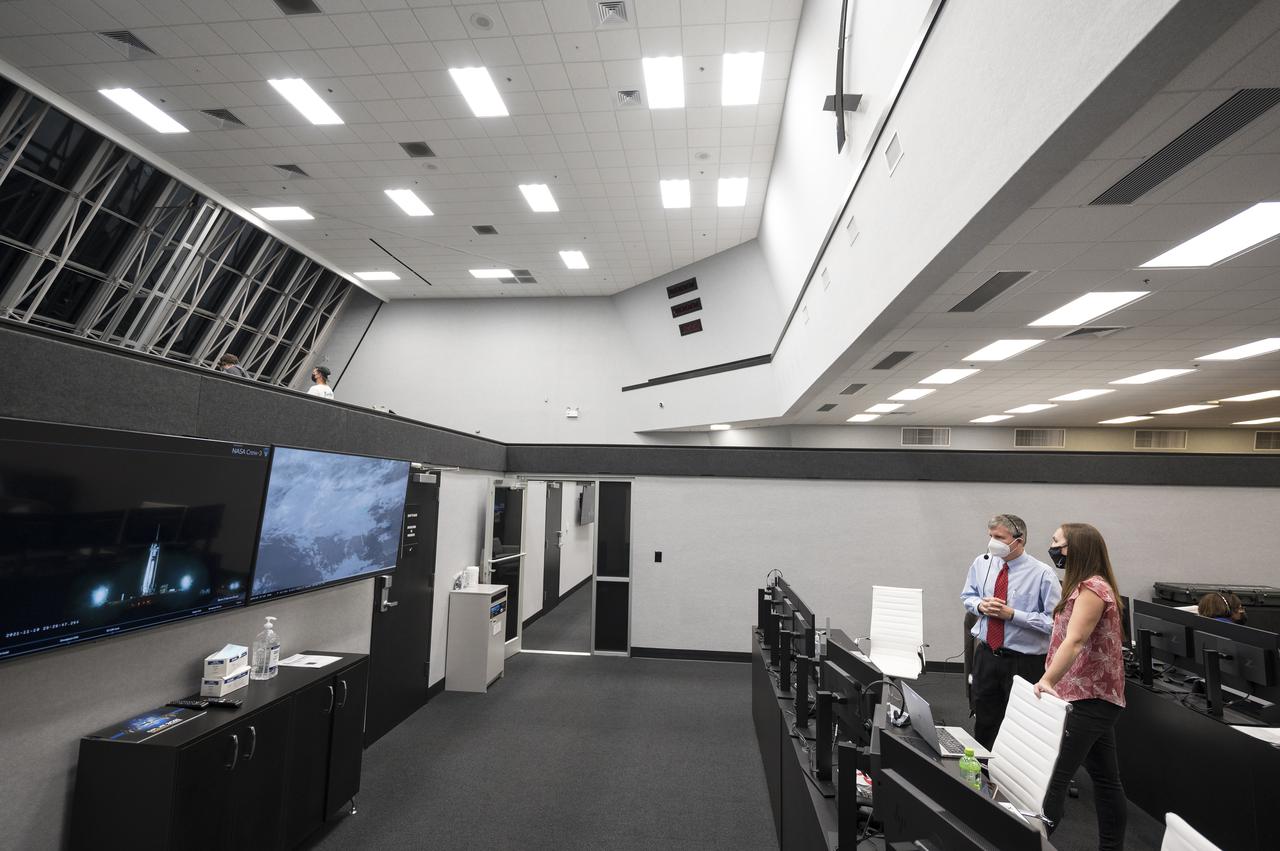
Steve Stich, manager of NASA’s Commercial Crew Program, and Sarah Walker, director of Dragon Mission Management at SpaceX, monitor the countdown of the launch of a SpaceX Falcon 9 rocket carrying the company's Crew Dragon spacecraft on NASA’s SpaceX Crew-3 mission with NASA astronauts Raja Chari, Tom Marshburn, Kayla Barron, and ESA (European Space Agency) astronaut Matthias Maurer onboard, Wednesday, Nov. 10, 2021, in firing room four of the Launch Control Center at NASA’s Kennedy Space Center in Florida. NASA’s SpaceX Crew-3 mission is the first crew rotation mission of the SpaceX Crew Dragon spacecraft and Falcon 9 rocket to the International Space Station as part of the agency’s Commercial Crew Program. Chari, Marshburn, Barron, Maurer are scheduled to launch at 9:03 p.m. EST, from Launch Complex 39A at the Kennedy Space Center. Photo Credit: (NASA/Aubrey Gemignani)
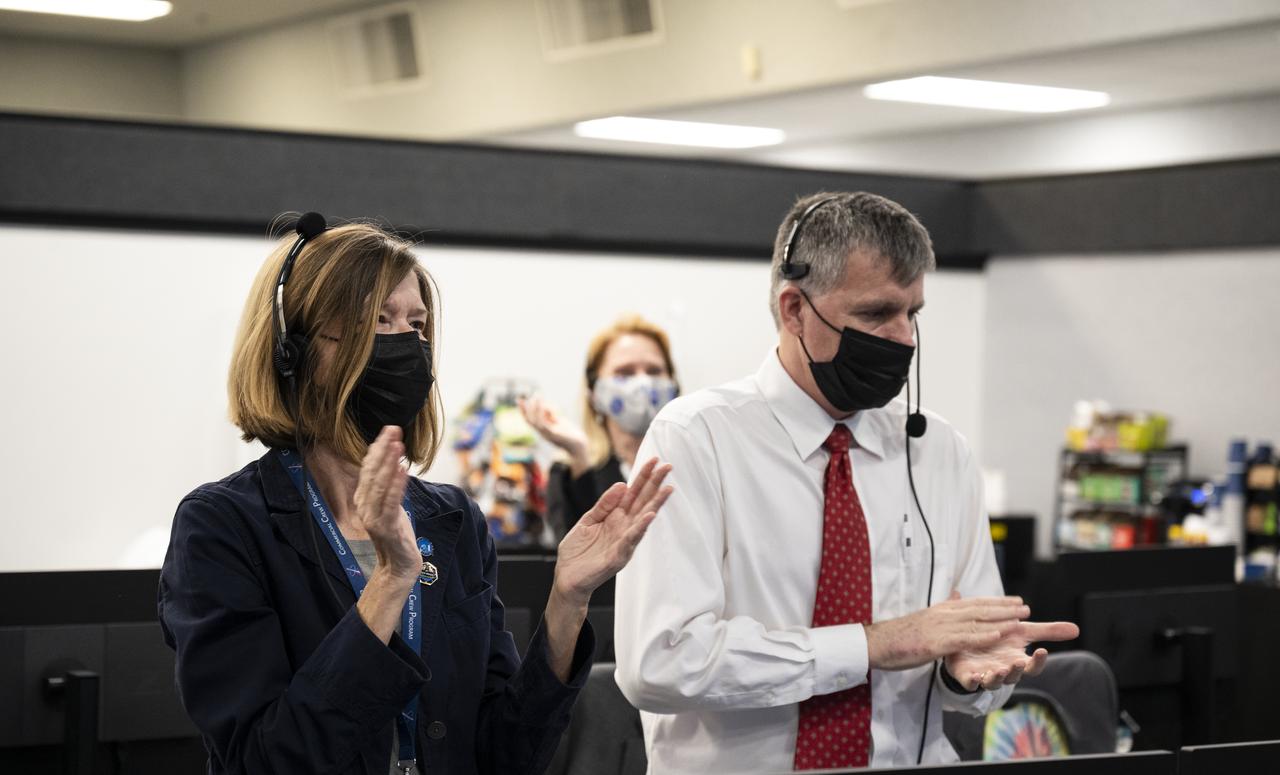
Kathy Lueders, Associate Administrator of the Human Exploration and Operations Mission Directorate, left; Steve Stich, program manager for NASA's Commercial Crew Program, clap after the launch of a SpaceX Falcon 9 rocket carrying the company's Crew Dragon spacecraft on NASA’s SpaceX Crew-1 mission with NASA astronauts Mike Hopkins, Victor Glover, Shannon Walker, and Japan Aerospace Exploration Agency (JAXA) astronaut Soichi Noguchi onboard, Sunday, Nov. 15, 2020, in firing room four of the Launch Control Center at NASA’s Kennedy Space Center in Florida. NASA’s SpaceX Crew-1 mission is the first crew rotation mission of the SpaceX Crew Dragon spacecraft and Falcon 9 rocket to the International Space Station as part of the agency’s Commercial Crew Program. Hopkins, Glover, Walker, and Noguchi launched at 7:27 p.m. EST, from Launch Complex 39A at the Kennedy Space Center. Photo Credit: (NASA/Aubrey Gemignani)
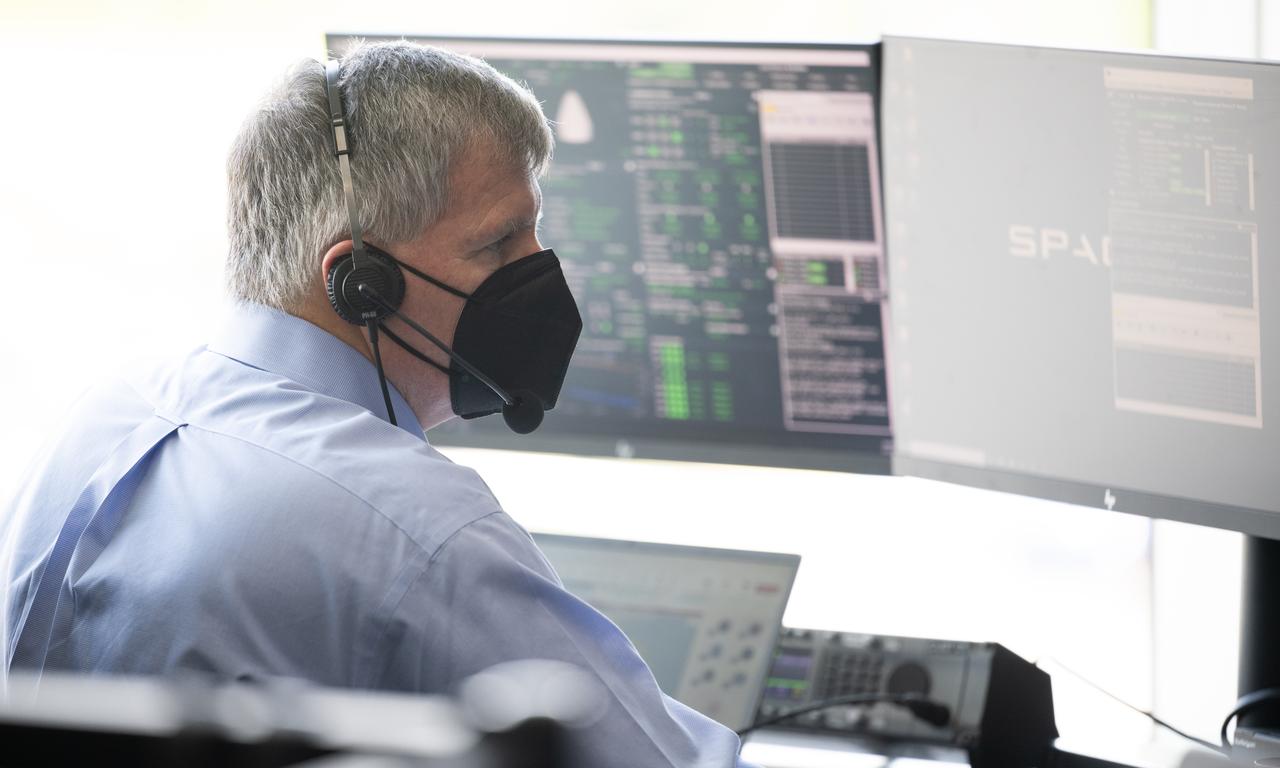
Steve Stich, manager of NASA’s Commercial Crew Program, monitor the countdown of the launch of a SpaceX Falcon 9 rocket carrying the company's Dragon spacecraft on NASA’s SpaceX Crew-11 mission with NASA astronauts Zena Cardman, Mike Fincke, JAXA (Japan Aerospace Exploration Agency) astronaut Kimiya Yui, and Roscosmos cosmonaut Oleg Platonov onboard, Friday, Aug. 1, 2025, in the control center of SpaceX’s HangarX at NASA’s Kennedy Space Center in Florida. NASA’s SpaceX Crew-11 mission is the eleventh crew rotation mission of the SpaceX Dragon spacecraft and Falcon 9 rocket to the International Space Station as part of the agency’s Commercial Crew Program. Cardman, Fincke, Yui, Platonov launched at 11:43 a.m. EDT, from Launch Complex 39A at the NASA's Kennedy Space Center. Photo Credit: (NASA/Joel Kowsky)
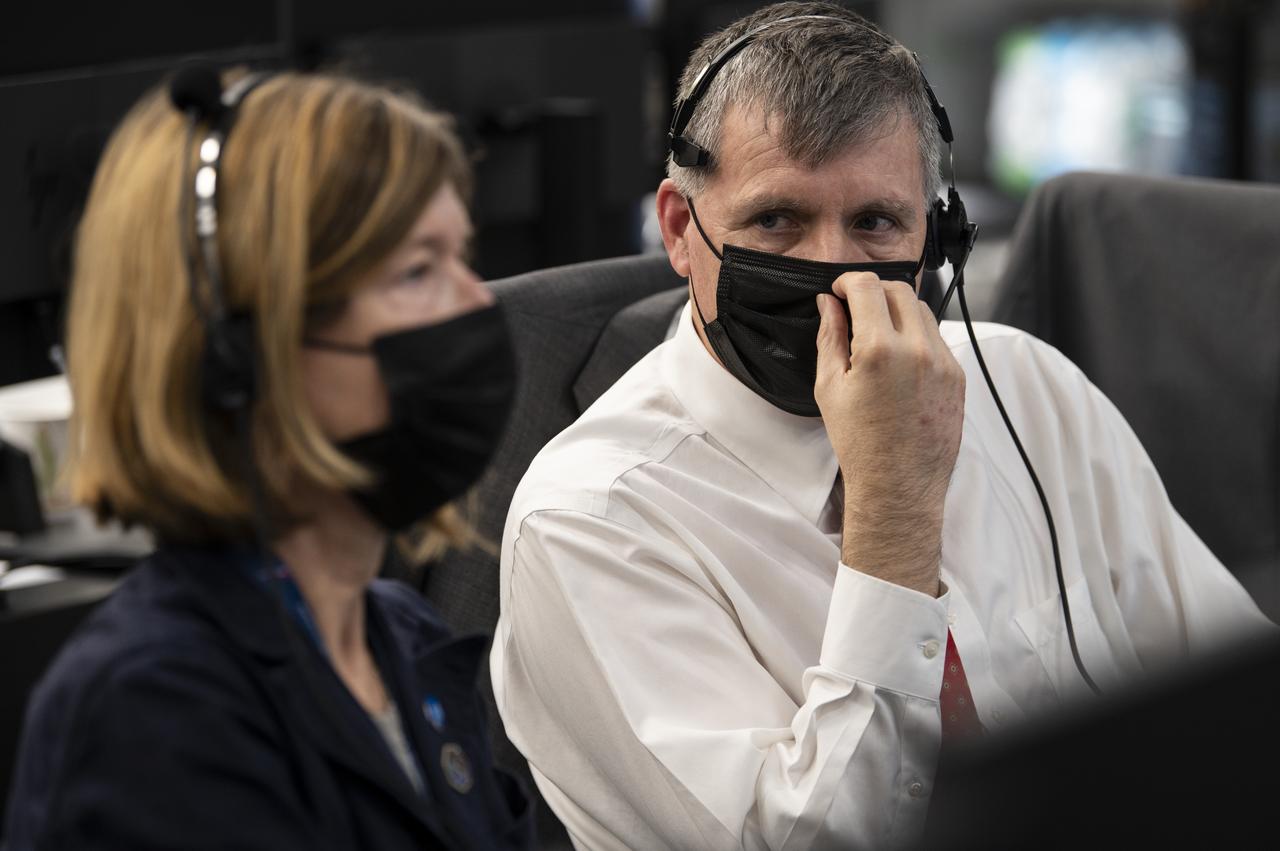
Steve Stich, program manager for NASA's Commercial Crew Program speaks with Kathy Lueders, Associate Administrator of the Human Exploration and Operations Mission Directorate as they monitor the countdown of the launch of a SpaceX Falcon 9 rocket carrying the company's Crew Dragon spacecraft on NASA’s SpaceX Crew-1 mission with NASA astronauts Mike Hopkins, Victor Glover, Shannon Walker, and Japan Aerospace Exploration Agency (JAXA) astronaut Soichi Noguchi onboard, Sunday, Nov. 15, 2020, in firing room four of the Launch Control Center at NASA’s Kennedy Space Center in Florida. NASA’s SpaceX Crew-1 mission is the first crew rotation mission of the SpaceX Crew Dragon spacecraft and Falcon 9 rocket to the International Space Station as part of the agency’s Commercial Crew Program. Hopkins, Glover, Walker, and Noguchi are scheduled to launch at 7:27 p.m. EST, from Launch Complex 39A at the Kennedy Space Center. Photo Credit: (NASA/Aubrey Gemignani)
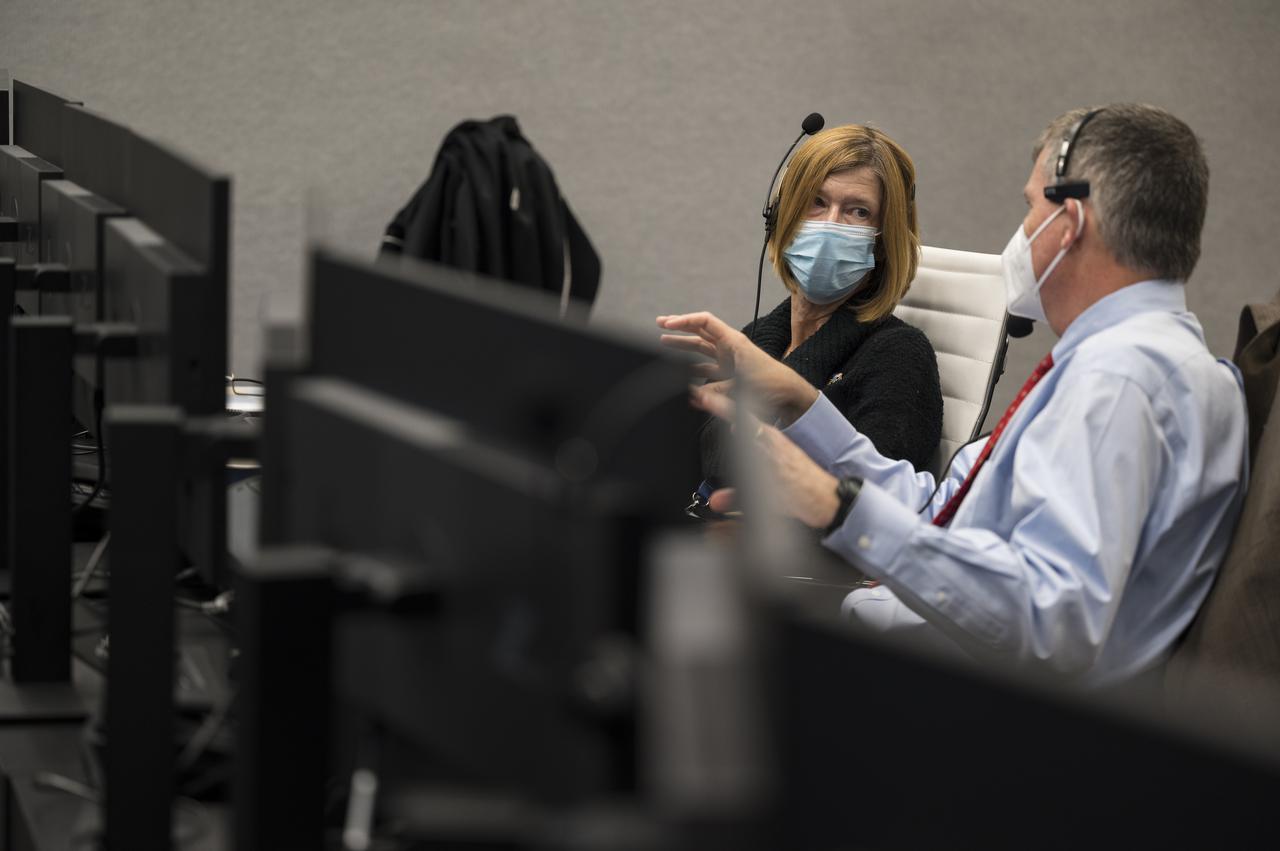
Kathy Lueders, associate administrator for NASA's Space Operations Mission Directorate, left, and Steve Stich, manager of NASA’s Commercial Crew Program, monitor the countdown of the launch of a SpaceX Falcon 9 rocket carrying the company's Crew Dragon spacecraft on NASA’s SpaceX Crew-3 mission with NASA astronauts Raja Chari, Tom Marshburn, Kayla Barron, and ESA (European Space Agency) astronaut Matthias Maurer onboard, Wednesday, Nov. 10, 2021, in firing room four of the Launch Control Center at NASA’s Kennedy Space Center in Florida. NASA’s SpaceX Crew-3 mission is the first crew rotation mission of the SpaceX Crew Dragon spacecraft and Falcon 9 rocket to the International Space Station as part of the agency’s Commercial Crew Program. Chari, Marshburn, Barron, Maurer are scheduled to launch at 9:03 p.m. EST, from Launch Complex 39A at the Kennedy Space Center. Photo Credit: (NASA/Aubrey Gemignani)
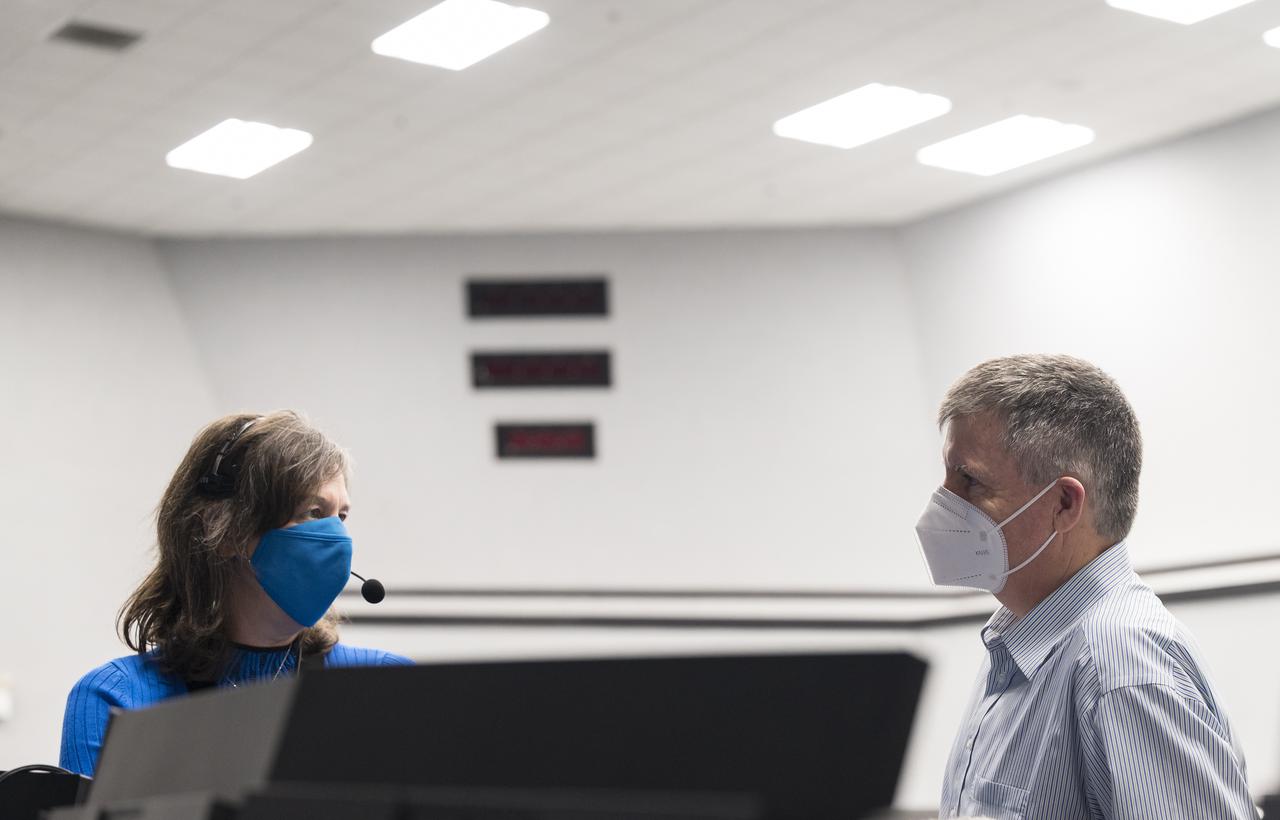
NASA’s chief flight director, Holly Ridings speaks with Steve Stich, manager of NASA’s Commercial Crew Program, during a dress rehearsal in preparation for the launch of a SpaceX Falcon 9 rocket carrying the company's Crew Dragon spacecraft on NASA’s SpaceX Crew-3 mission with NASA astronauts Raja Chari, Tom Marshburn, Kayla Barron, and ESA (European Space Agency) astronaut Matthias Maurer onboard, Thursday, Oct. 28, 2021, in firing room four of the Launch Control Center at NASA’s Kennedy Space Center in Florida. NASA’s SpaceX Crew-3 mission is the third crew rotation mission of the SpaceX Crew Dragon spacecraft and Falcon 9 rocket to the International Space Station as part of the agency’s Commercial Crew Program. Chari, Marshburn, Barron, Maurer are scheduled to launch on Oct. 31 at 2:21 a.m. ET, from Launch Complex 39A at the Kennedy Space Center. Photo Credit: (NASA/Aubrey Gemignani)
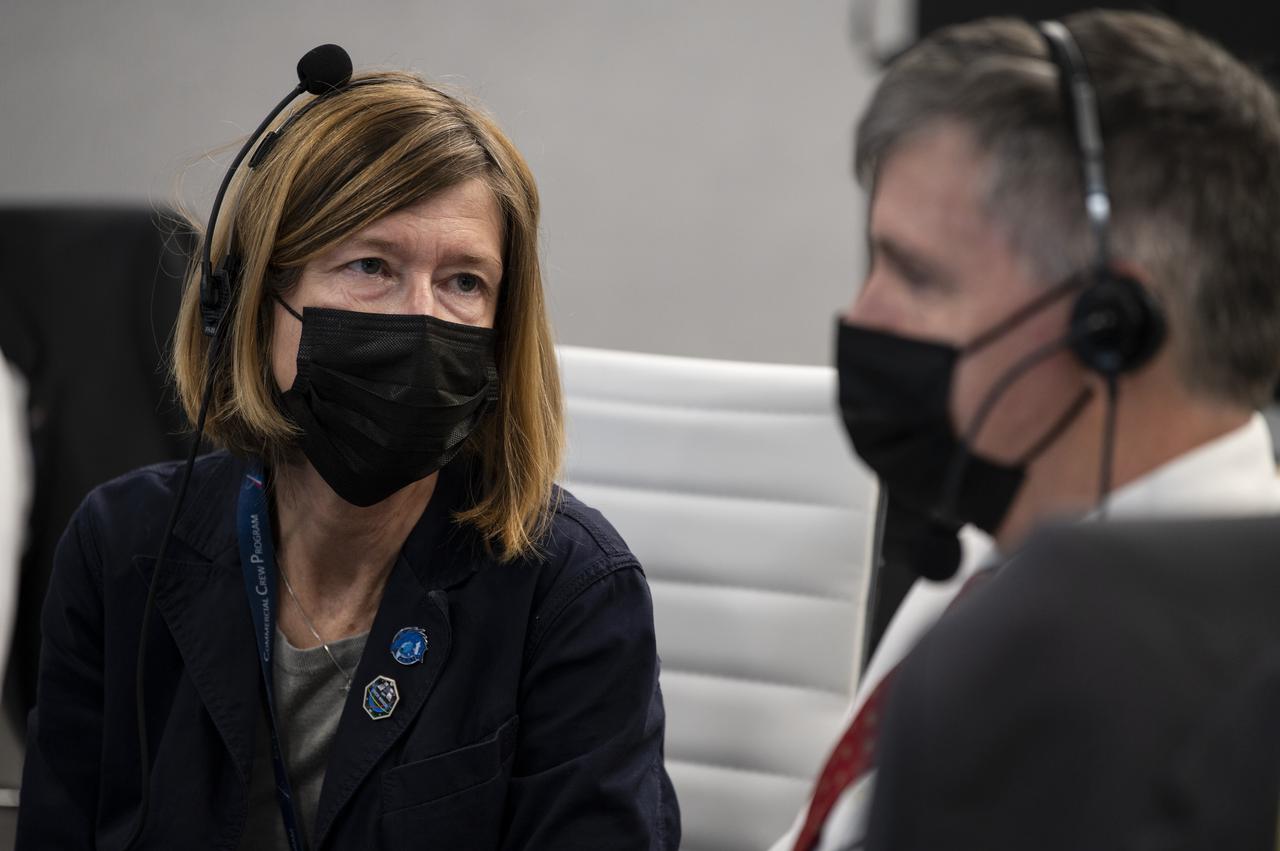
Kathy Lueders, Associate Administrator of the Human Exploration and Operations Mission Directorate speaks with Steve Stich, program manager for NASA's Commercial Crew Program as they monitor the countdown of the launch of a SpaceX Falcon 9 rocket carrying the company's Crew Dragon spacecraft on NASA’s SpaceX Crew-1 mission with NASA astronauts Mike Hopkins, Victor Glover, Shannon Walker, and Japan Aerospace Exploration Agency (JAXA) astronaut Soichi Noguchi onboard, Sunday, Nov. 15, 2020, in firing room four of the Launch Control Center at NASA’s Kennedy Space Center in Florida. NASA’s SpaceX Crew-1 mission is the first crew rotation mission of the SpaceX Crew Dragon spacecraft and Falcon 9 rocket to the International Space Station as part of the agency’s Commercial Crew Program. Hopkins, Glover, Walker, and Noguchi are scheduled to launch at 7:27 p.m. EST, from Launch Complex 39A at the Kennedy Space Center. Photo Credit: (NASA/Aubrey Gemignani)
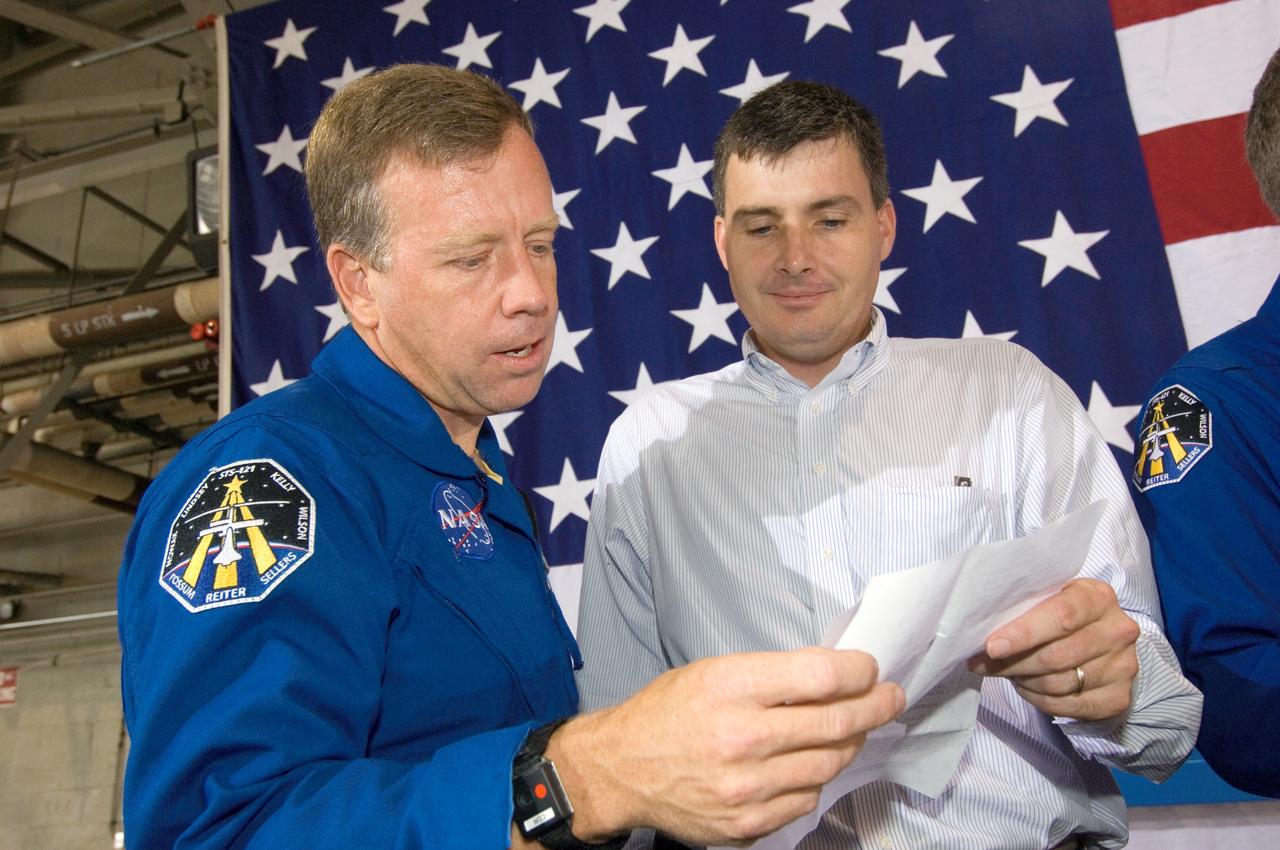
JSC2006-E-28463 (18 July 2006) --- Astronaut Steven W. Lindsey (left), STS-121 commander, and flight director Steve Stich visit in Ellington Field's Hangar 276 near JSC during the STS-121 crew return ceremonies.
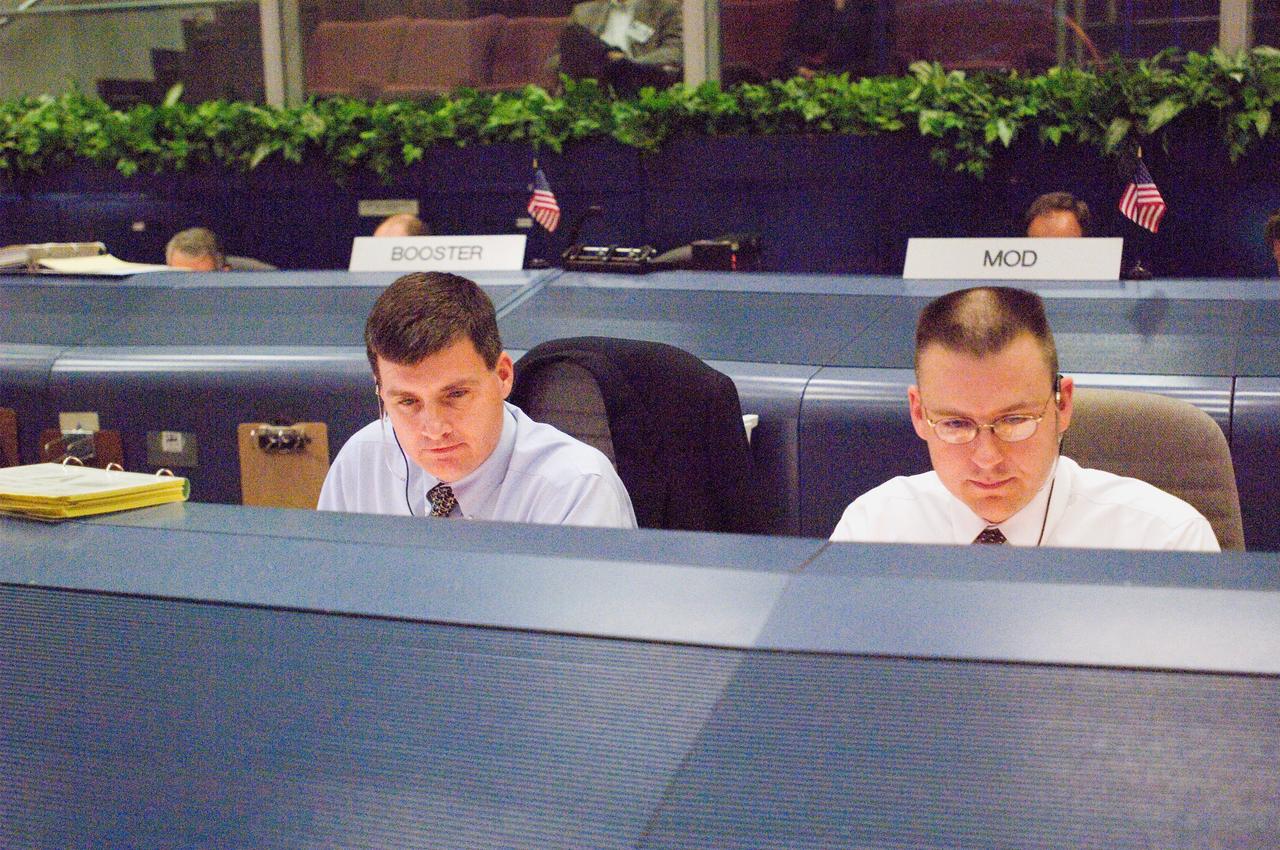
JSC2006-E-53532 (9 Dec. 2006) --- Steve Stich (left), ascent flight director for STS-116, and Norm Knight, entry flight director, keep a close watch on their consoles showing activities at the Kennedy Space Center as preparations are underway for launch of the flight.
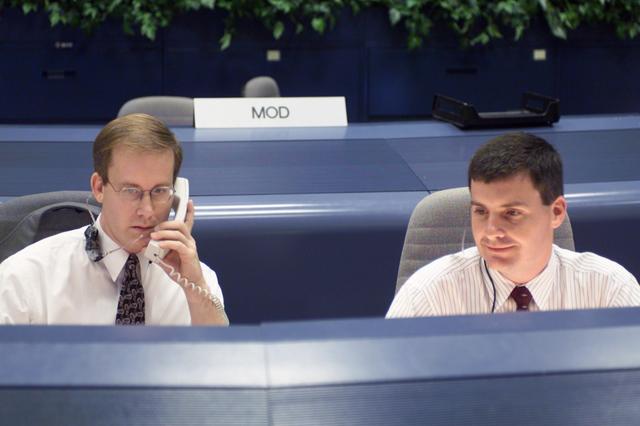
JSC2001-E-25435 (21 August 2001) --- STS-105 flight directors John Shannon (left) and Steve Stich, monitor data at their consoles in the shuttle flight control room (WFCR) in Houston’s Mission Control Center (MCC).
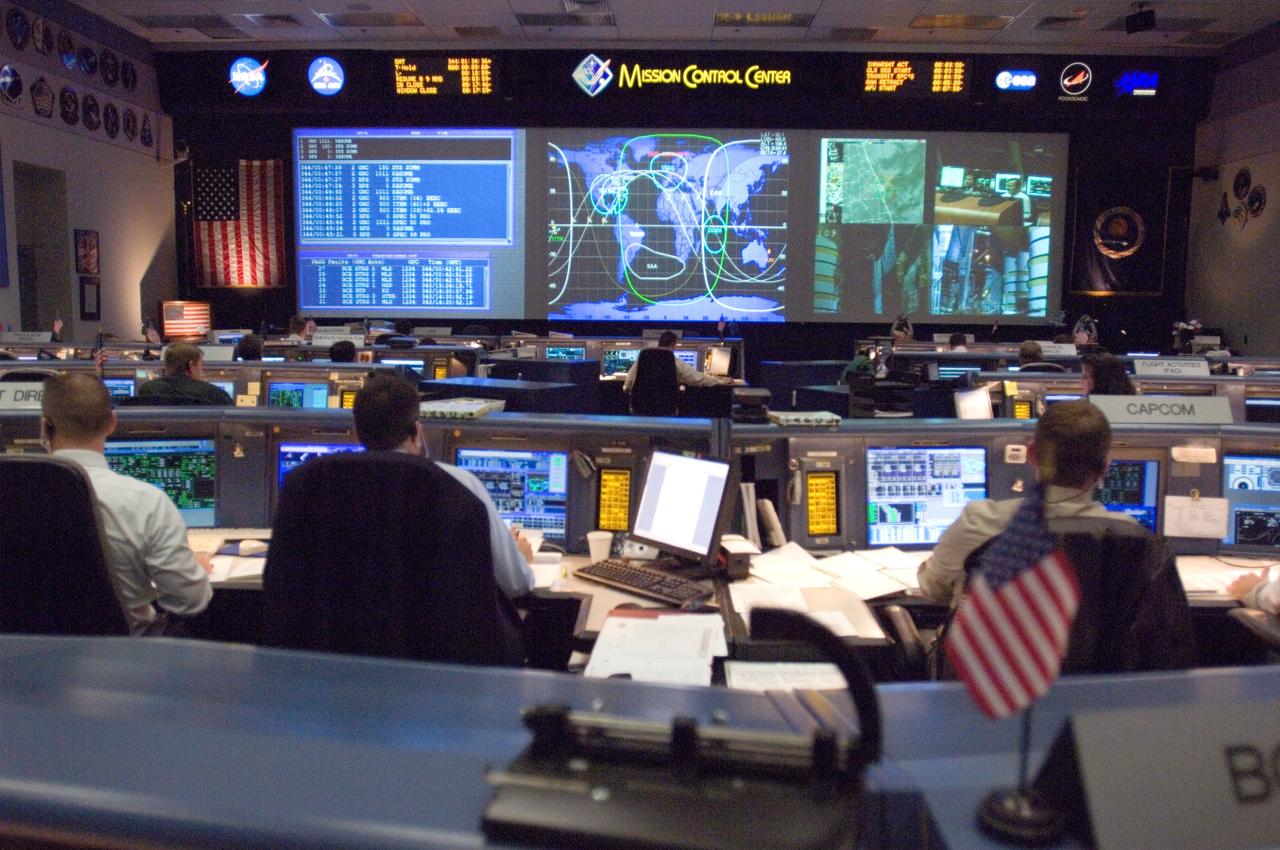
JSC2006-E-53518 (9 Dec. 2006) --- Overall view in the shuttle flight control room, from the point of view of the Booster console, on launch day for STS-116. Steve Stich (center) and Norm Knight (far left), ascent and entry flight directors, respectively, are seated at their consoles.
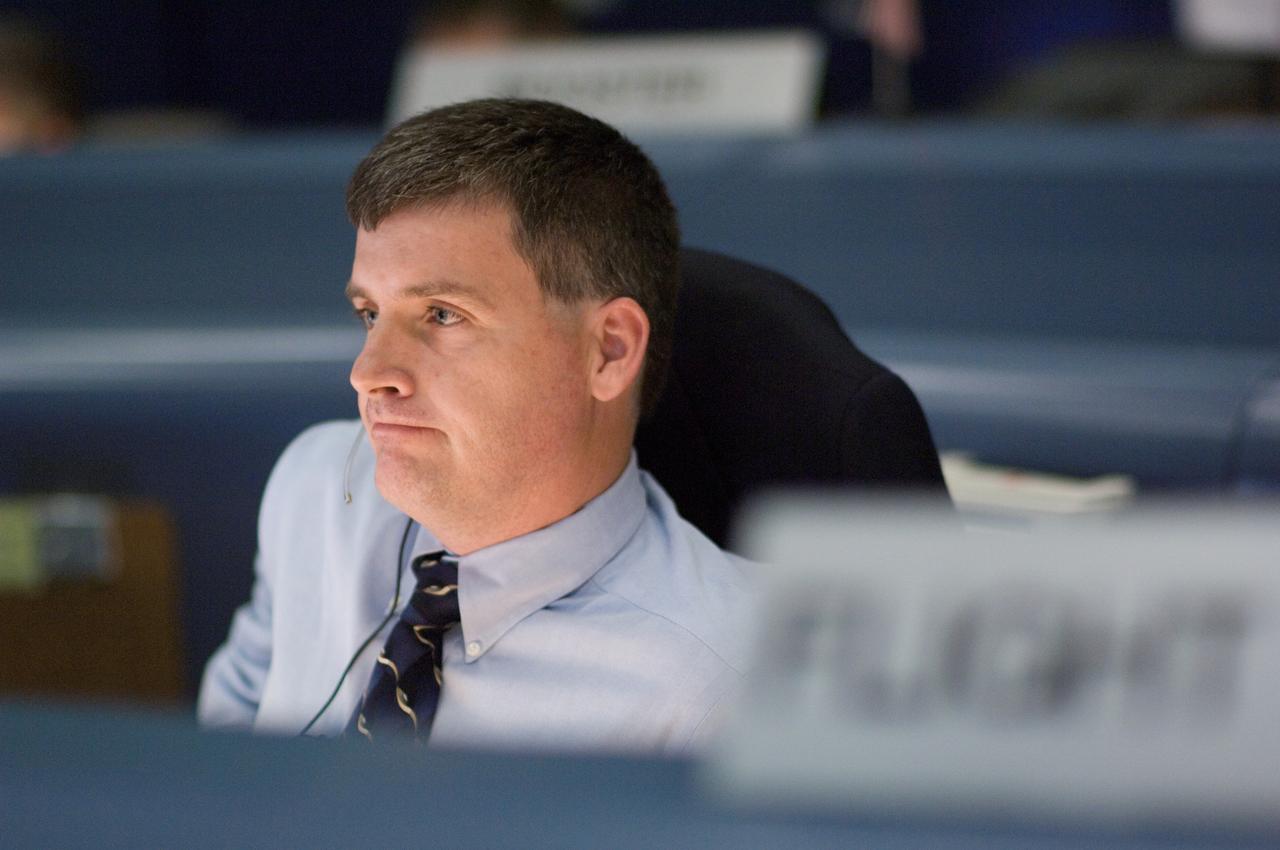
JSC2007-E-41694 (8 Aug. 2007) --- In the space shuttle flight operations control room of Houston's Mission Control Center, STS-118 ascent flight director Steve Stich awaits the launch of the Space Shuttle Endeavour several hundred miles away in Florida.
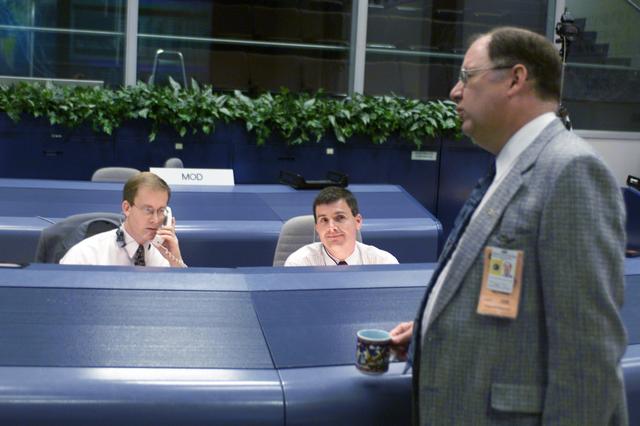
JSC2001-E-25434 (21 August 2001) --- STS-105 flight directors John Shannon (left) and Steve Stich, monitor data at their consoles in the shuttle flight control room (WFCR) in Houston’s Mission Control Center (MCC). Wayne Hale of the Mission Operations Directorate (MOD) is photographed standing in the foreground.
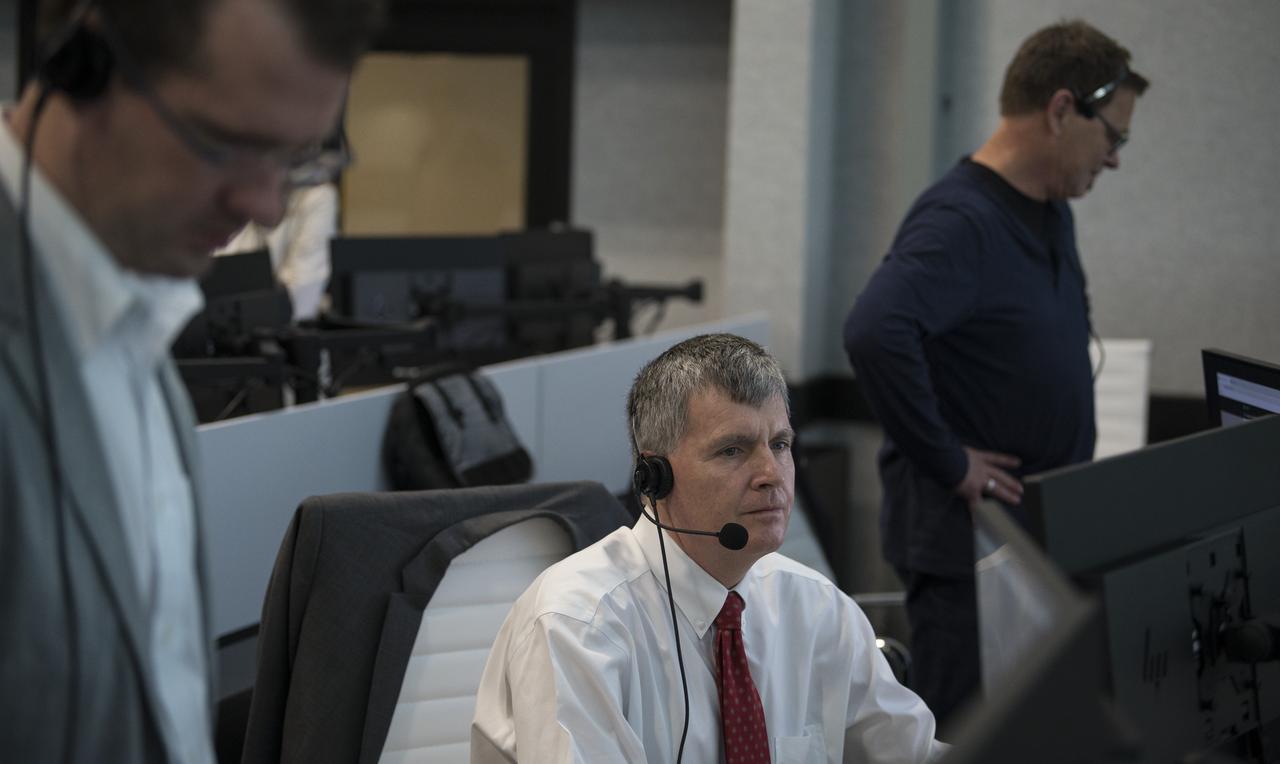
Steve Stich, deputy manager of NASA’s Commercial Crew Program monitors the countdown of the attempted launch of a SpaceX Falcon 9 rocket carrying the company's Crew Dragon spacecraft on NASA’s SpaceX Demo-2 mission with NASA astronauts Robert Behnken and Douglas Hurley onboard, Wednesday, May 27, 2020, in firing room four of the Launch Control Center at NASA’s Kennedy Space Center in Florida. NASA’s SpaceX Demo-2 mission is the first launch with astronauts of the SpaceX Crew Dragon spacecraft and Falcon 9 rocket to the International Space Station as part of the agency’s Commercial Crew Program. The test flight serves as an end-to-end demonstration of SpaceX’s crew transportation system. Today’s launch of Behnken and Hurley was scrubbed due to weather and is now scheduled for 3:22 p.m. EDT on Saturday, May 30, from Launch Complex 39A at the Kennedy Space Center. A new era of human spaceflight is set to begin as American astronauts once again launch on an American rocket from American soil to low-Earth orbit for the first time since the conclusion of the Space Shuttle Program in 2011. Photo Credit: (NASA/Joel Kowsky)
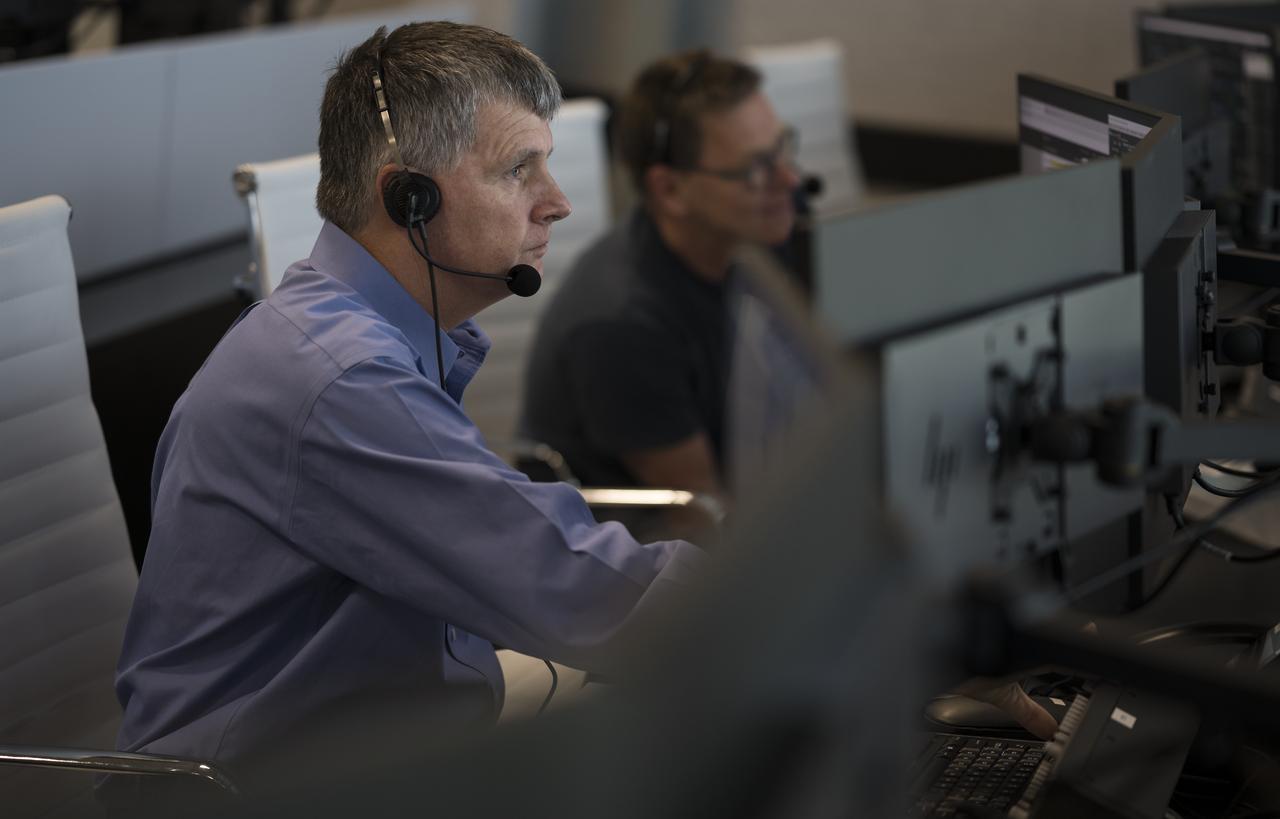
Steve Stich, deputy manager of NASA’s Commercial Crew Program, monitors the countdown during a dress rehearsal in preparation for the launch of a SpaceX Falcon 9 rocket carrying the company's Crew Dragon spacecraft on NASA’s SpaceX Demo-2 mission with NASA astronauts Robert Behnken and Douglas Hurley onboard, Saturday, May 23, 2020, in firing room four of the Launch Control Center at NASA’s Kennedy Space Center in Florida. NASA’s SpaceX Demo-2 mission is the first launch with astronauts of the SpaceX Crew Dragon spacecraft and Falcon 9 rocket to the International Space Station as part of the agency’s Commercial Crew Program. The test flight serves as an end-to-end demonstration of SpaceX’s crew transportation system. Behnken and Hurley are scheduled to launch at 4:33 p.m. EDT on Wednesday, May 27, from Launch Complex 39A at the Kennedy Space Center. A new era of human spaceflight is set to begin as American astronauts once again launch on an American rocket from American soil to low-Earth orbit for the first time since the conclusion of the Space Shuttle Program in 2011. Photo Credit: (NASA/Joel Kowsky)
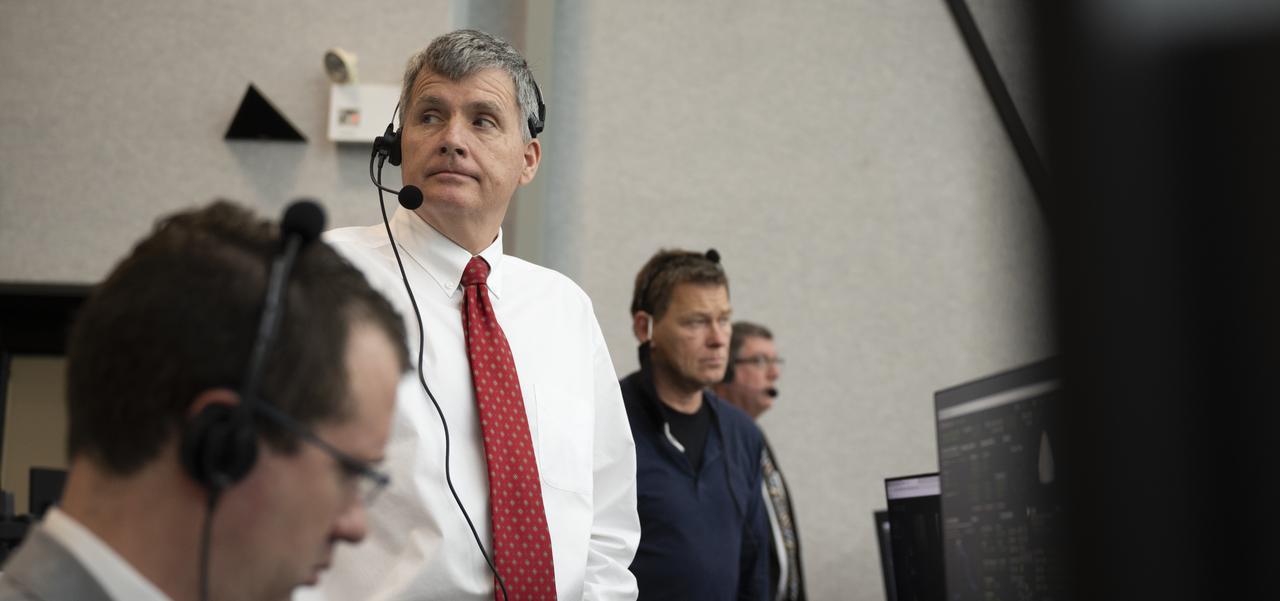
Steve Stich, deputy manager of NASA’s Commercial Crew Program monitors the countdown of the launch attempt of a SpaceX Falcon 9 rocket carrying the company's Crew Dragon spacecraft on NASA’s SpaceX Demo-2 mission with NASA astronauts Robert Behnken and Douglas Hurley onboard, Wednesday, May 27, 2020, in firing room four of the Launch Control Center at NASA’s Kennedy Space Center in Florida. NASA’s SpaceX Demo-2 mission is the first launch with astronauts of the SpaceX Crew Dragon spacecraft and Falcon 9 rocket to the International Space Station as part of the agency’s Commercial Crew Program. The test flight serves as an end-to-end demonstration of SpaceX’s crew transportation system. Today’s launch of Behnken and Hurley was scrubbed due to weather and is now scheduled for 3:22 p.m. EDT on Saturday, May 30, from Launch Complex 39A at the Kennedy Space Center. A new era of human spaceflight is set to begin as American astronauts once again launch on an American rocket from American soil to low-Earth orbit for the first time since the conclusion of the Space Shuttle Program in 2011. Photo Credit: (NASA/Joel Kowsky)
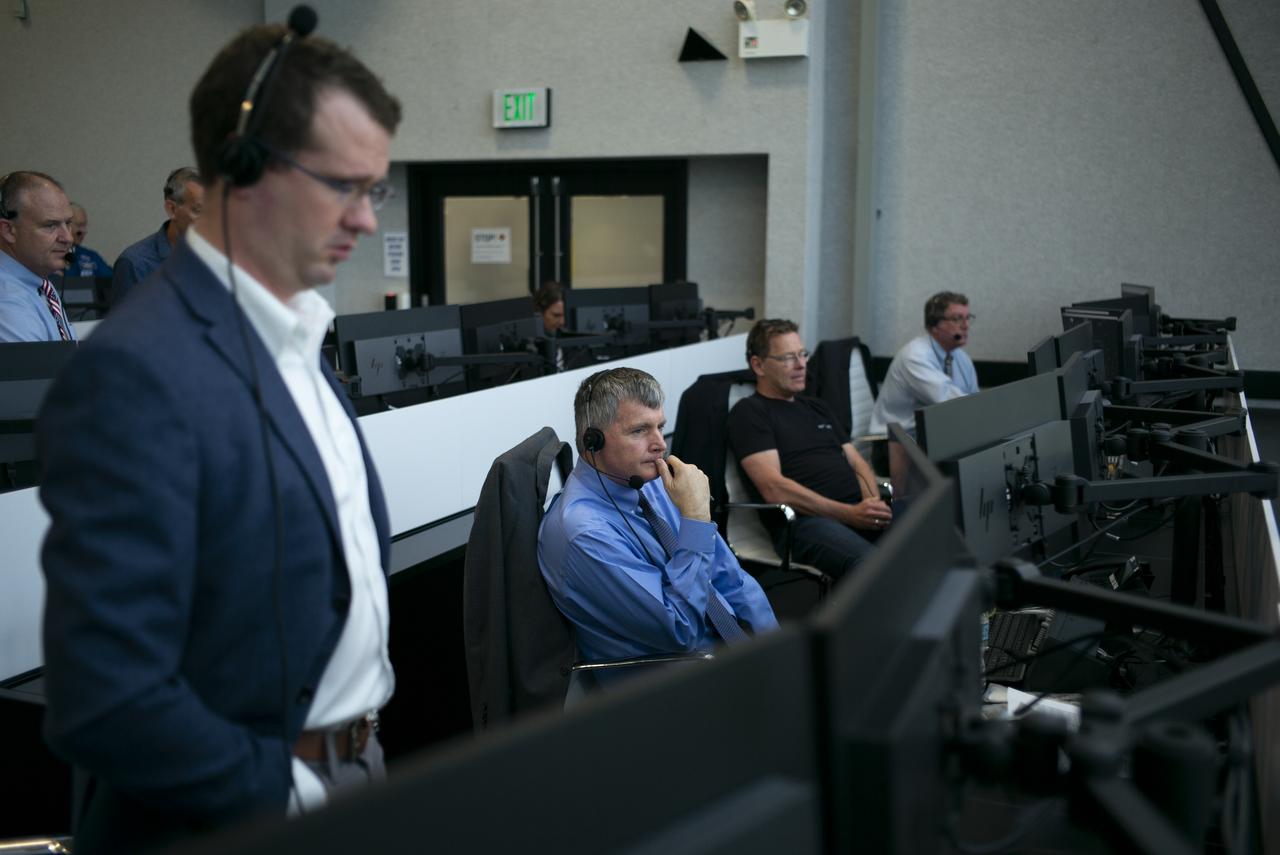
Steve Stich, deputy manager of NASA’s Commercial Crew Program, monitors the launch of a SpaceX Falcon 9 rocket carrying the company's Crew Dragon spacecraft on the Demo-2 mission with NASA astronauts Douglas Hurley and Robert Behnken onboard, Saturday, May 30, 2020, in firing room four of the Launch Control Center at NASA’s Kennedy Space Center in Florida. NASA’s SpaceX Demo-2 mission is the first launch with astronauts of the SpaceX Crew Dragon spacecraft and Falcon 9 rocket to the International Space Station as part of the agency’s Commercial Crew Program. The test flight serves as an end-to-end demonstration of SpaceX’s crew transportation system. Behnken and Hurley launched at 3:22 p.m. EDT on Saturday, May 30, from Launch Complex 39A at the Kennedy Space Center. A new era of human spaceflight is set to begin as American astronauts once again launch on an American rocket from American soil to low-Earth orbit for the first time since the conclusion of the Space Shuttle Program in 2011. Photo Credit: (NASA/Joel Kowsky)
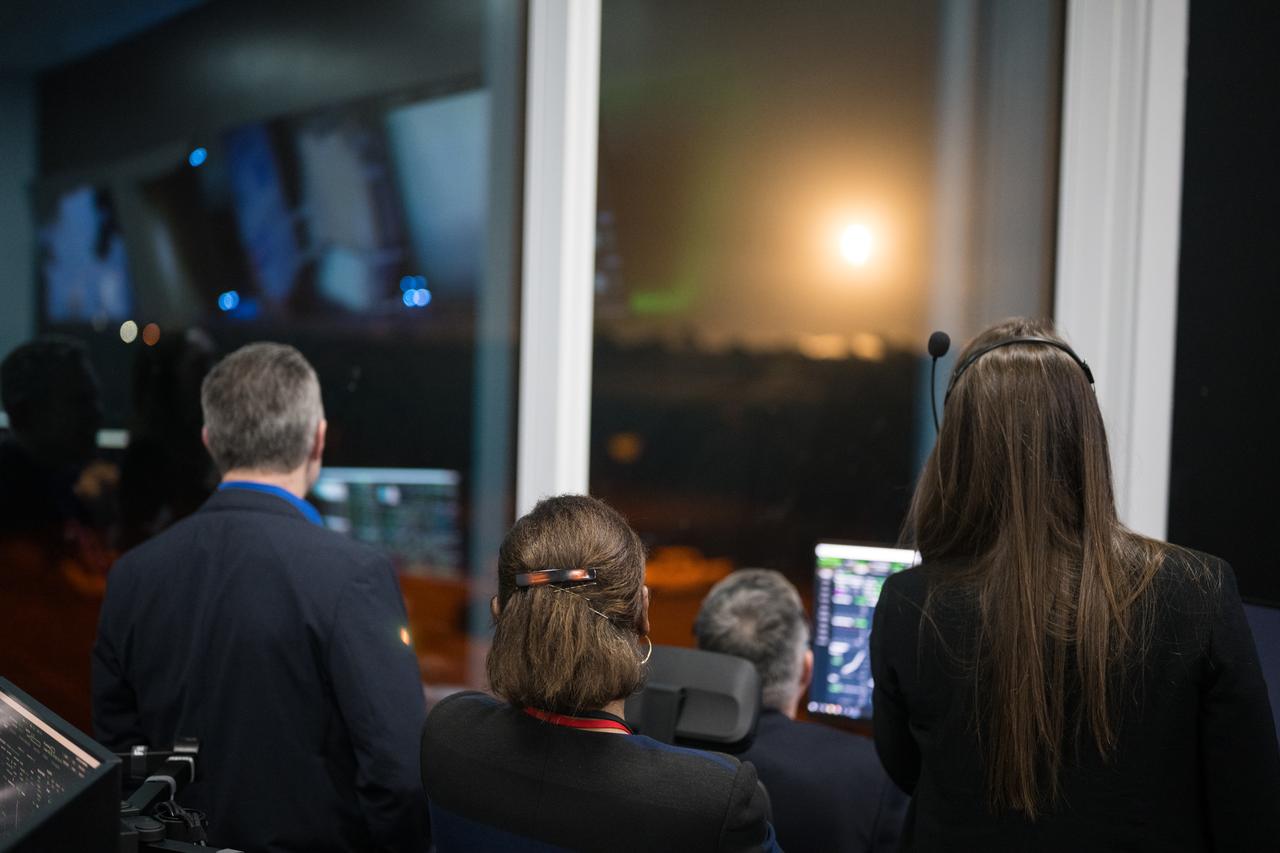
NASA leadership from left to right, Commercial Space Division Director Philip McAlister, Director of NASA’s Johnson Space Center, Vanessa Wyche, manager of NASA’s Commercial Crew Program, Steve Stich, and SpaceX Director, Dragon Mission Management, Sarah Walker, watch the launch of a SpaceX Falcon 9 rocket carrying the company's Dragon spacecraft on the Crew-8 mission with NASA astronauts Matthew Dominick, Michael Barratt, and Jeanette Epps, and Roscosmos cosmonaut Alexander Grebenkin onboard, Sunday, March 3, 2024, in the control room of SpaceX’s HangarX at NASA’s Kennedy Space Center in Florida. NASA’s SpaceX Crew-8 mission is the eighth crew rotation mission of the SpaceX Dragon spacecraft and Falcon 9 rocket to the International Space Station as part of the agency’s Commercial Crew Program. Dominick, Barratt, Epps, Grebenkin launched at 10:53 p.m. EST, from Launch Complex 39A at the Kennedy Space Center. Photo Credit: (NASA/Aubrey Gemignani)
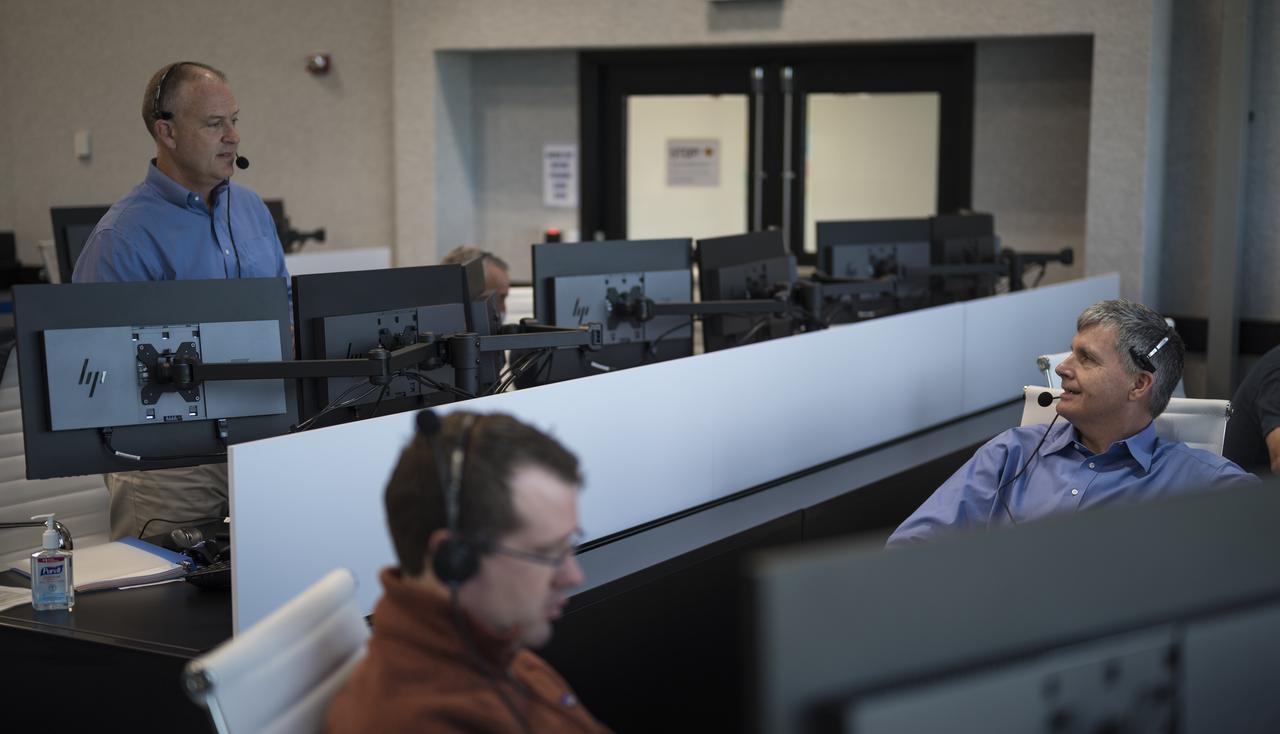
Norm Knight, deputy director of Flight Operations at NASA's Johnson Space Center, left, and Steve Stich, deputy manager of NASA’s Commercial Crew Program, right, monitor the countdown during a dress rehearsal in preparation for the launch of a SpaceX Falcon 9 rocket carrying the company's Crew Dragon spacecraft on NASA’s SpaceX Demo-2 mission with NASA astronauts Robert Behnken and Douglas Hurley onboard, Saturday, May 23, 2020, in firing room four of the Launch Control Center at NASA’s Kennedy Space Center in Florida. NASA’s SpaceX Demo-2 mission is the first launch with astronauts of the SpaceX Crew Dragon spacecraft and Falcon 9 rocket to the International Space Station as part of the agency’s Commercial Crew Program. The test flight serves as an end-to-end demonstration of SpaceX’s crew transportation system. Behnken and Hurley are scheduled to launch at 4:33 p.m. EDT on Wednesday, May 27, from Launch Complex 39A at the Kennedy Space Center. A new era of human spaceflight is set to begin as American astronauts once again launch on an American rocket from American soil to low-Earth orbit for the first time since the conclusion of the Space Shuttle Program in 2011. Photo Credit: (NASA/Joel Kowsky)
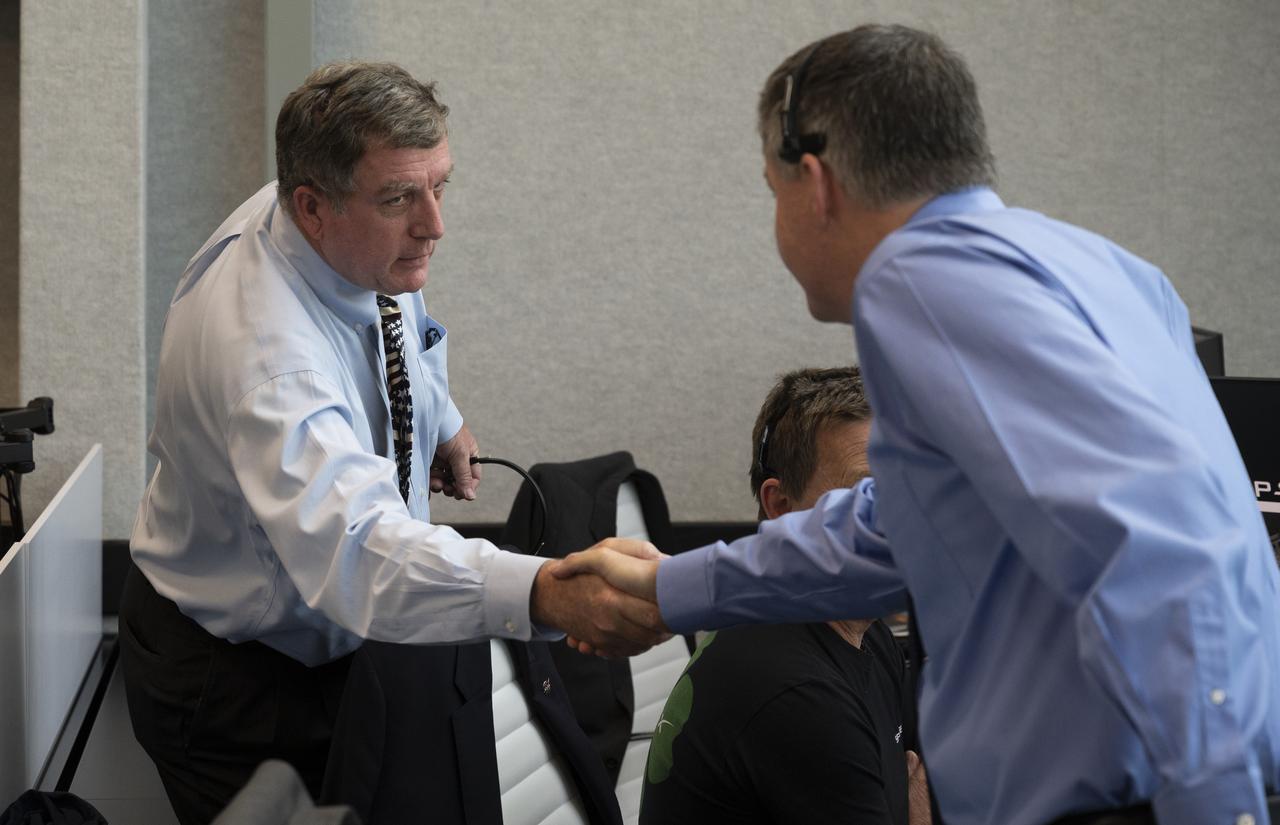
NASA International Space Station Program Manger Kirk Shireman shakes hands with Steve Stich, deputy manager of NASA’s Commercial Crew Program following the launch of a SpaceX Falcon 9 rocket carrying the company's Crew Dragon spacecraft on the Demo-2 mission with NASA astronauts Douglas Hurley and Robert Behnken onboard, Saturday, May 30, 2020, in firing room four of the Launch Control Center at NASA’s Kennedy Space Center in Florida. NASA’s SpaceX Demo-2 mission is the first launch with astronauts of the SpaceX Crew Dragon spacecraft and Falcon 9 rocket to the International Space Station as part of the agency’s Commercial Crew Program. The test flight serves as an end-to-end demonstration of SpaceX’s crew transportation system. Behnken and Hurley launched at 3:22 p.m. EDT on Saturday, May 30, from Launch Complex 39A at the Kennedy Space Center. A new era of human spaceflight is set to begin as American astronauts once again launch on an American rocket from American soil to low-Earth orbit for the first time since the conclusion of the Space Shuttle Program in 2011. Photo Credit: (NASA/Joel Kowsky)
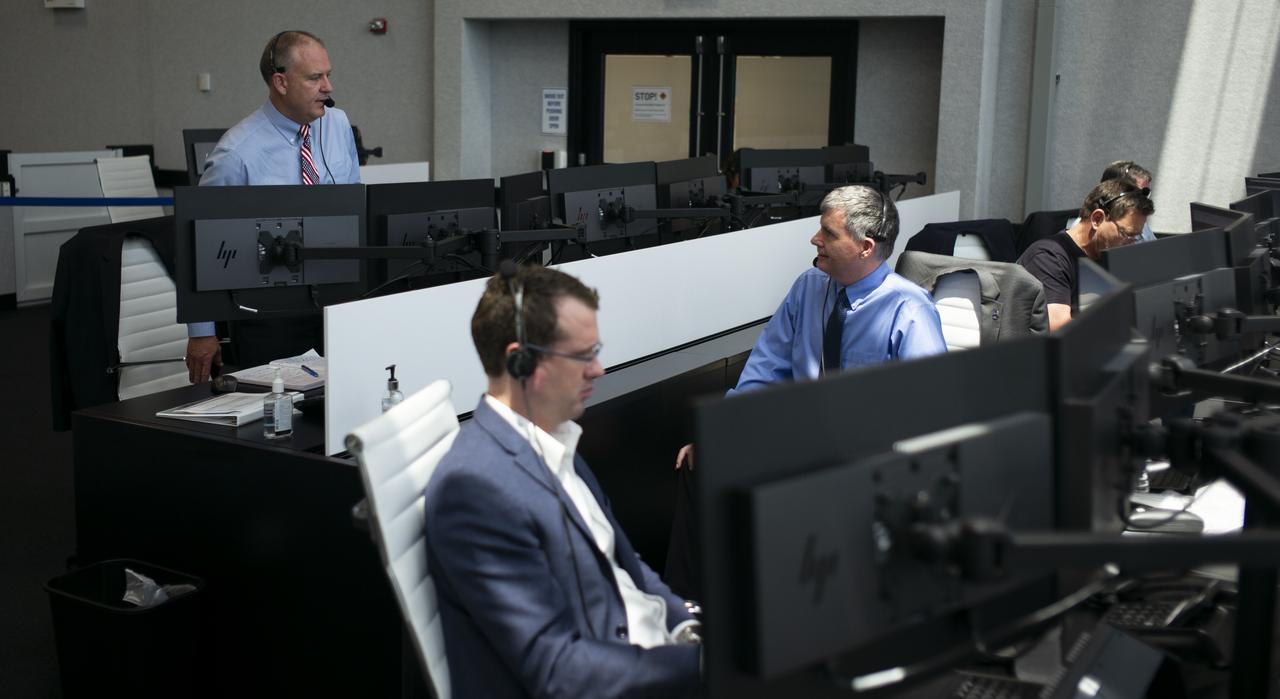
Norm Knight, deputy director of Flight Operations at NASA's Johnson Space Center, left, and Steve Stich, deputy manager of NASA’s Commercial Crew Program, are seen as they monitor the countdown of the launch of a SpaceX Falcon 9 rocket carrying the company's Crew Dragon spacecraft on NASA’s SpaceX Demo-2 mission with NASA astronauts Robert Behnken and Douglas Hurley onboard, Saturday, May 30, 2020, in firing room four of the Launch Control Center at NASA’s Kennedy Space Center in Florida. NASA’s SpaceX Demo-2 mission is the first launch with astronauts of the SpaceX Crew Dragon spacecraft and Falcon 9 rocket to the International Space Station as part of the agency’s Commercial Crew Program. The test flight serves as an end-to-end demonstration of SpaceX’s crew transportation system. Behnken and Hurley launched at 3:22 p.m. EDT on Saturday, May 30, from Launch Complex 39A at the Kennedy Space Center. A new era of human spaceflight is set to begin as American astronauts once again launch on an American rocket from American soil to low-Earth orbit for the first time since the conclusion of the Space Shuttle Program in 2011. Photo Credit: (NASA/Joel Kowsky)
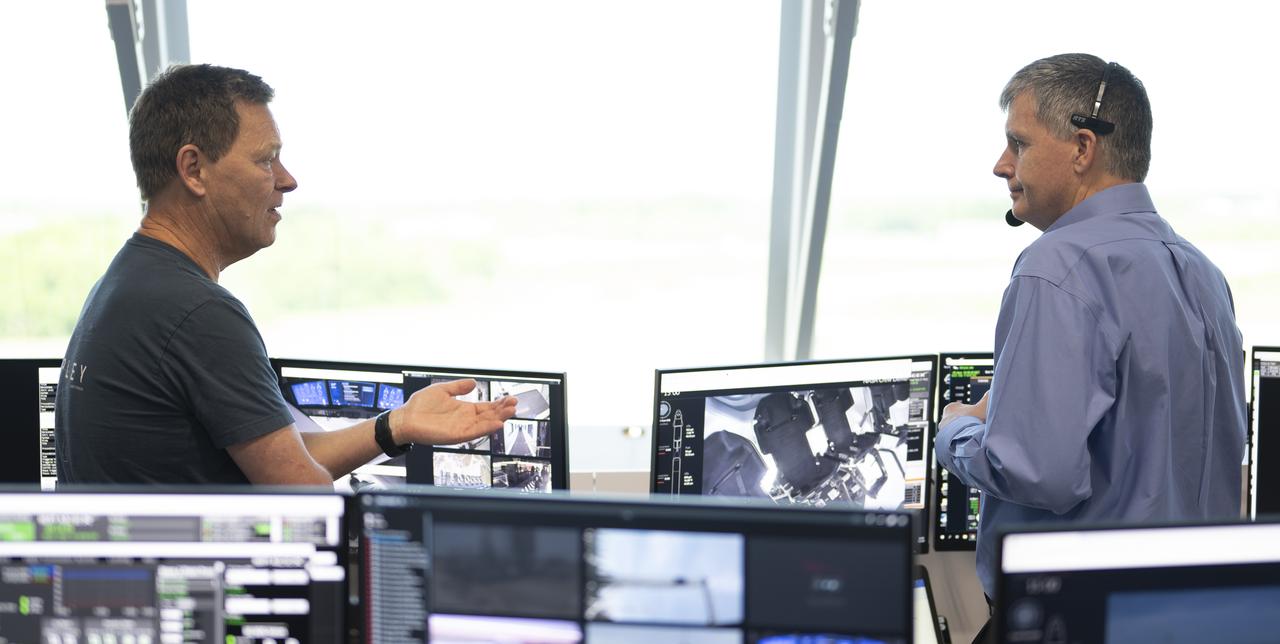
Hans Koenigsmann, vice president for build and flight reliability at SpaceX, left, and Steve Stich, deputy manager of NASA’s Commercial Crew Program, right, are seen as they monitor the countdown during a dress rehearsal in preparation for the launch of a SpaceX Falcon 9 rocket carrying the company's Crew Dragon spacecraft on NASA’s SpaceX Demo-2 mission with NASA astronauts Robert Behnken and Douglas Hurley onboard, Saturday, May 23, 2020, in firing room four of the Launch Control Center at NASA’s Kennedy Space Center in Florida. NASA’s SpaceX Demo-2 mission is the first launch with astronauts of the SpaceX Crew Dragon spacecraft and Falcon 9 rocket to the International Space Station as part of the agency’s Commercial Crew Program. The test flight serves as an end-to-end demonstration of SpaceX’s crew transportation system. Behnken and Hurley are scheduled to launch at 4:33 p.m. EDT on Wednesday, May 27, from Launch Complex 39A at the Kennedy Space Center. A new era of human spaceflight is set to begin as American astronauts once again launch on an American rocket from American soil to low-Earth orbit for the first time since the conclusion of the Space Shuttle Program in 2011. Photo Credit: (NASA/Joel Kowsky)
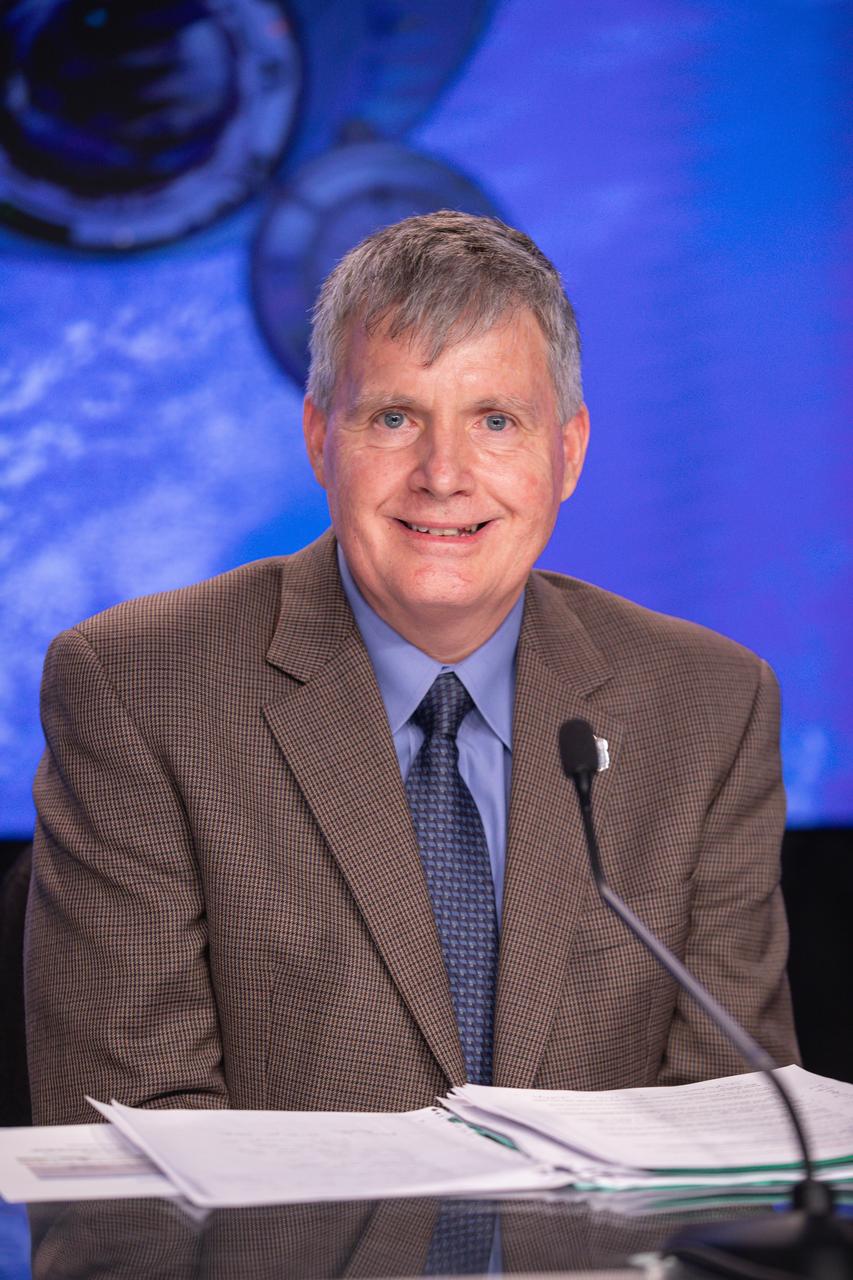
NASA Commercial Crew Program Manager Steve Stich participates in a postlaunch news conference for NASA’s Boeing Crew Flight Test on Wednesday, June 5, 2024, at the agency’s Kennedy Space Center in Florida. As part of the agency’s Commercial Crew Program, NASA astronauts Butch Wilmore and Suni Williams are the first to launch aboard Boeing’s Starliner spacecraft to the International Space Station atop a United Launch Alliance Atlas V rocket. Liftoff occurred at 10:52 a.m. EDT Wednesday, June 5, from Space Launch Complex-41 at Cape Canaveral Space Force Station.
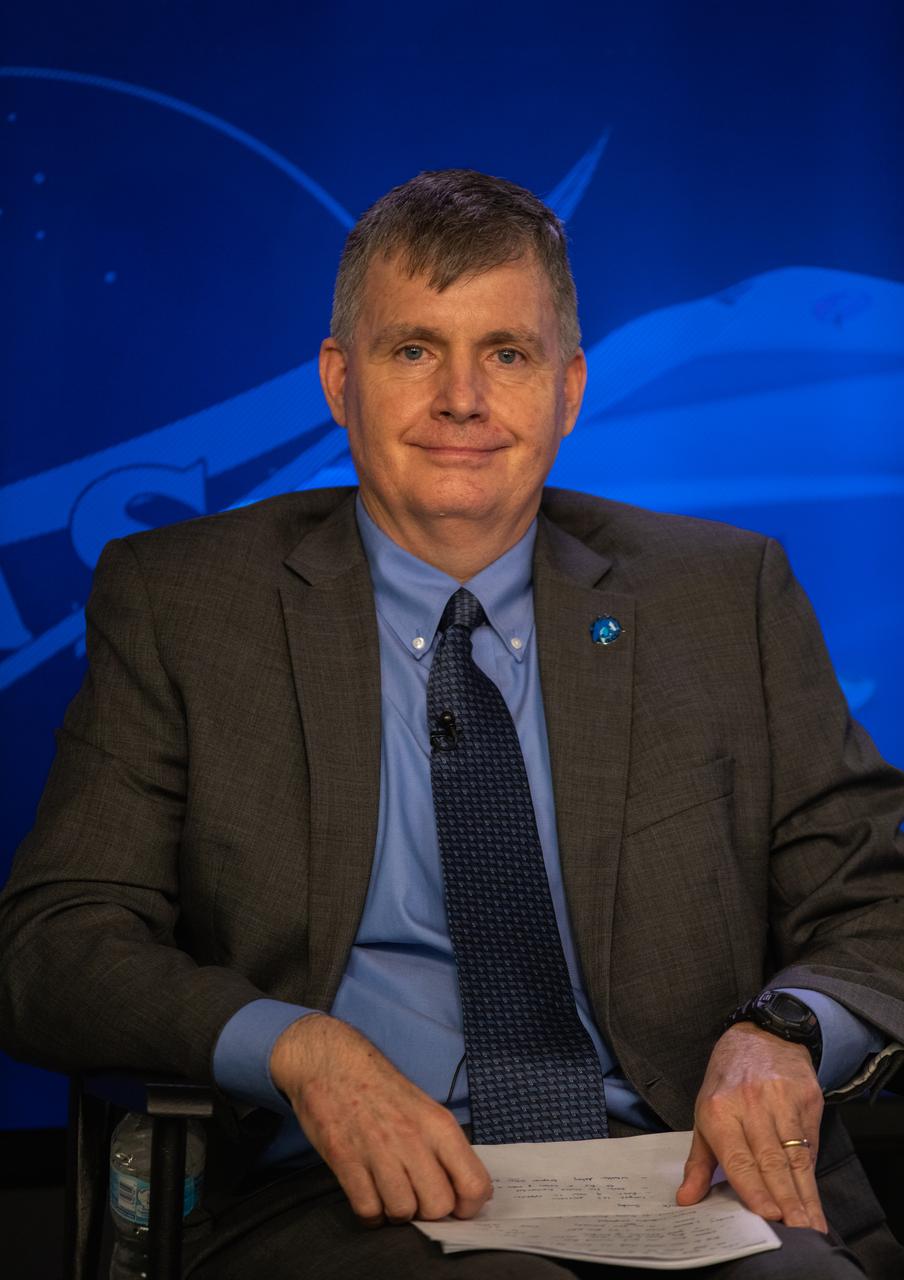
Steve Stich, manager, Commercial Crew Program, Kennedy Space Center, answers questions during a virtual prelaunch news conference Nov. 13, 2020, inside the Press Site auditorium at NASA’s Kennedy Space Center in Florida ahead of the agency’s SpaceX Crew-1 launch. Crew-1 is the first regular crew mission of a U.S. commercial spacecraft with astronauts to the International Space Station as part of NASA’s Commercial Crew Program. The SpaceX Crew Dragon Resilience capsule will launch atop the company’s Falcon 9 rocket from Launch Complex 39A to the space station for a six-month science mission.
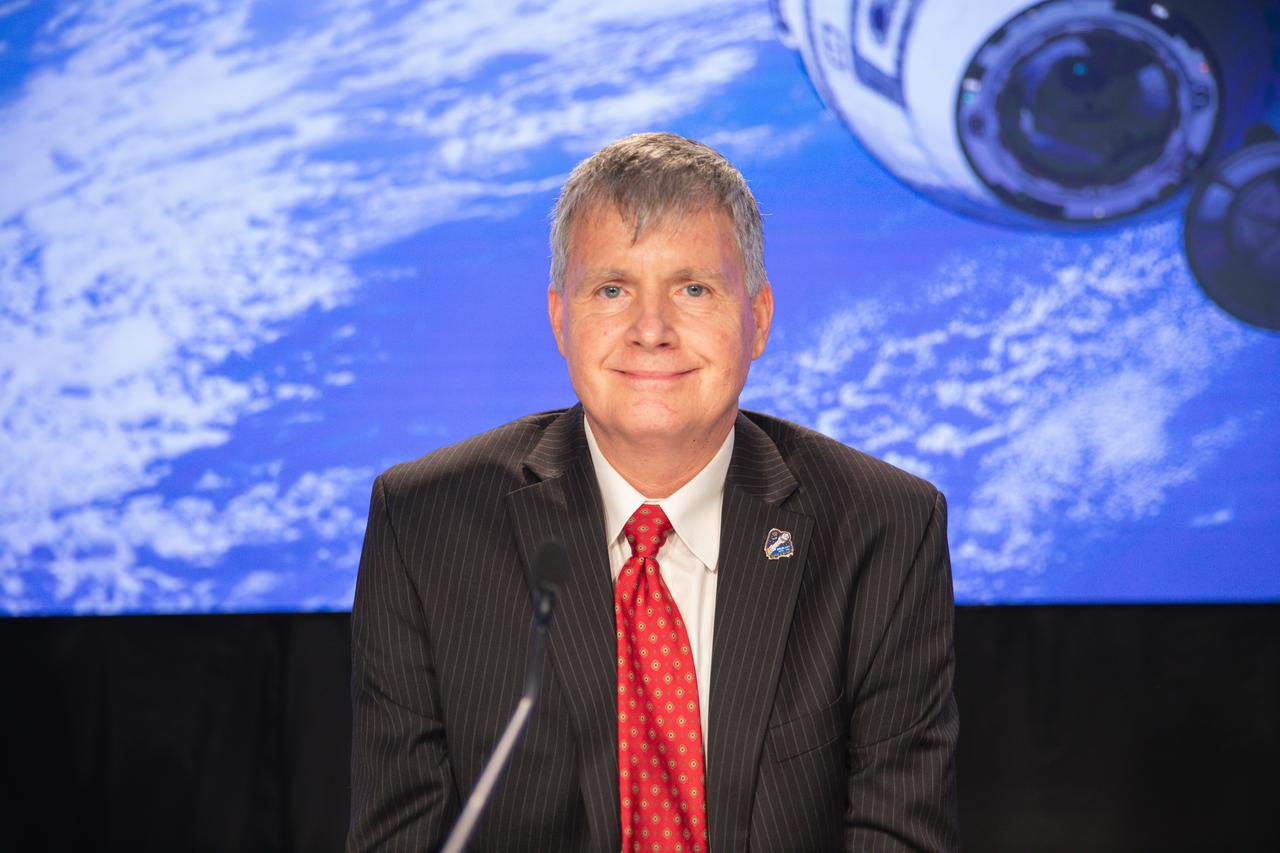
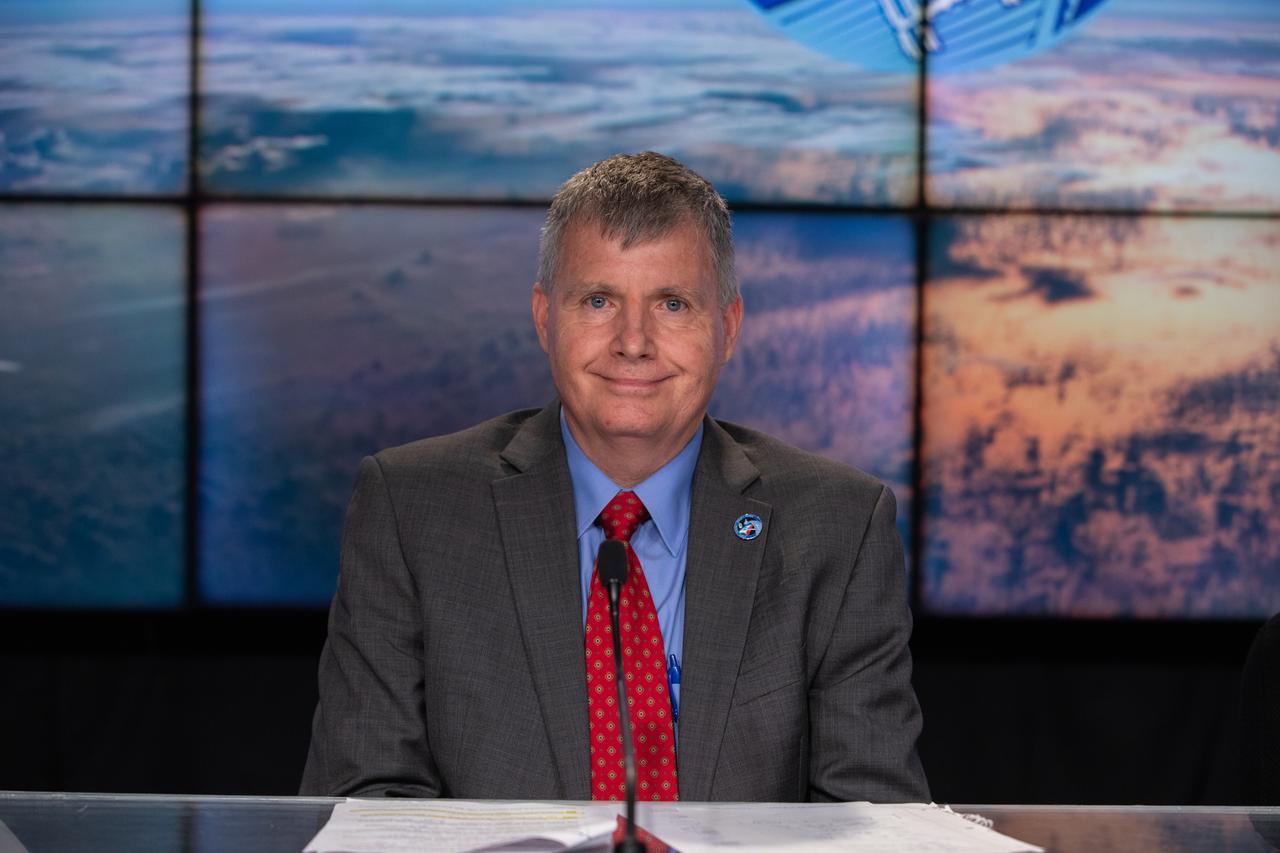
Steve Stich, NASA Commercial Crew Program manager, participates in a news conference held at the agency’s Kennedy Space Center in Florida on Saturday, June 1, 2024, after the second launch attempt of NASA’s Boeing Crew Flight Test scrubbed for the day. As part of the agency’s Commercial Crew Program, NASA astronauts Butch Wilmore and Suni Williams will be the first to launch to the International Space Station aboard Boeing’s Starliner spacecraft atop a ULA (United Launch Alliance) Atlas V rocket from Space Launch Complex-41 at nearby Cape Canaveral Space Force Station.
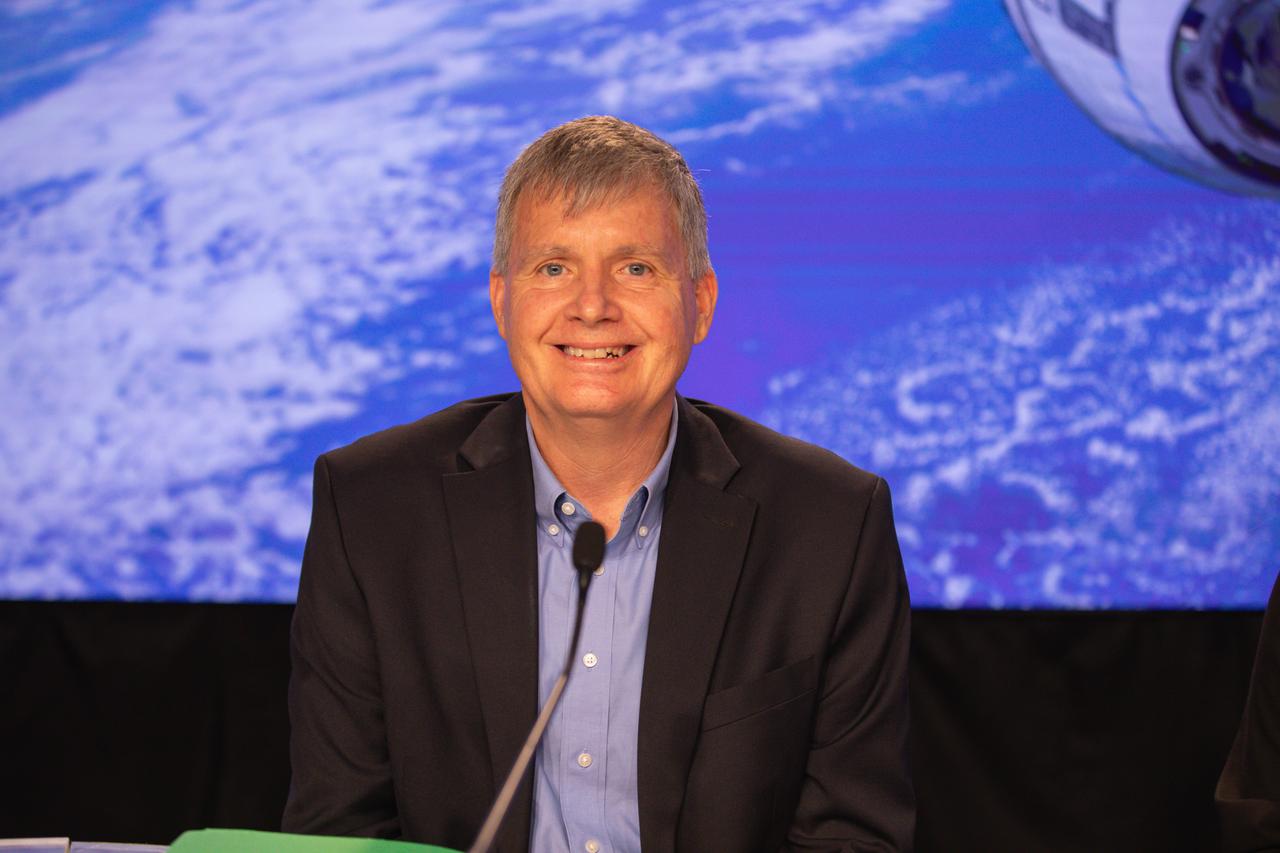
Steve Stich, manager, NASA’s Commercial Crew Program, participates in a prelaunch briefing for NASA’s Boeing Crew Flight Test at the agency’s Kennedy Space Center in Florida, Friday, May 31, 2024. As part of the agency’s Commercial Crew Program, NASA astronauts Butch Wilmore and Suni Williams are the first to launch aboard Boeing’s Starliner spacecraft atop a United Launch Alliance Atlas V rocket from Space Launch Complex-41 at Cape Canaveral Space Force Station in Florida. Liftoff is scheduled for 12:25 p.m. ET on Saturday, June 1.
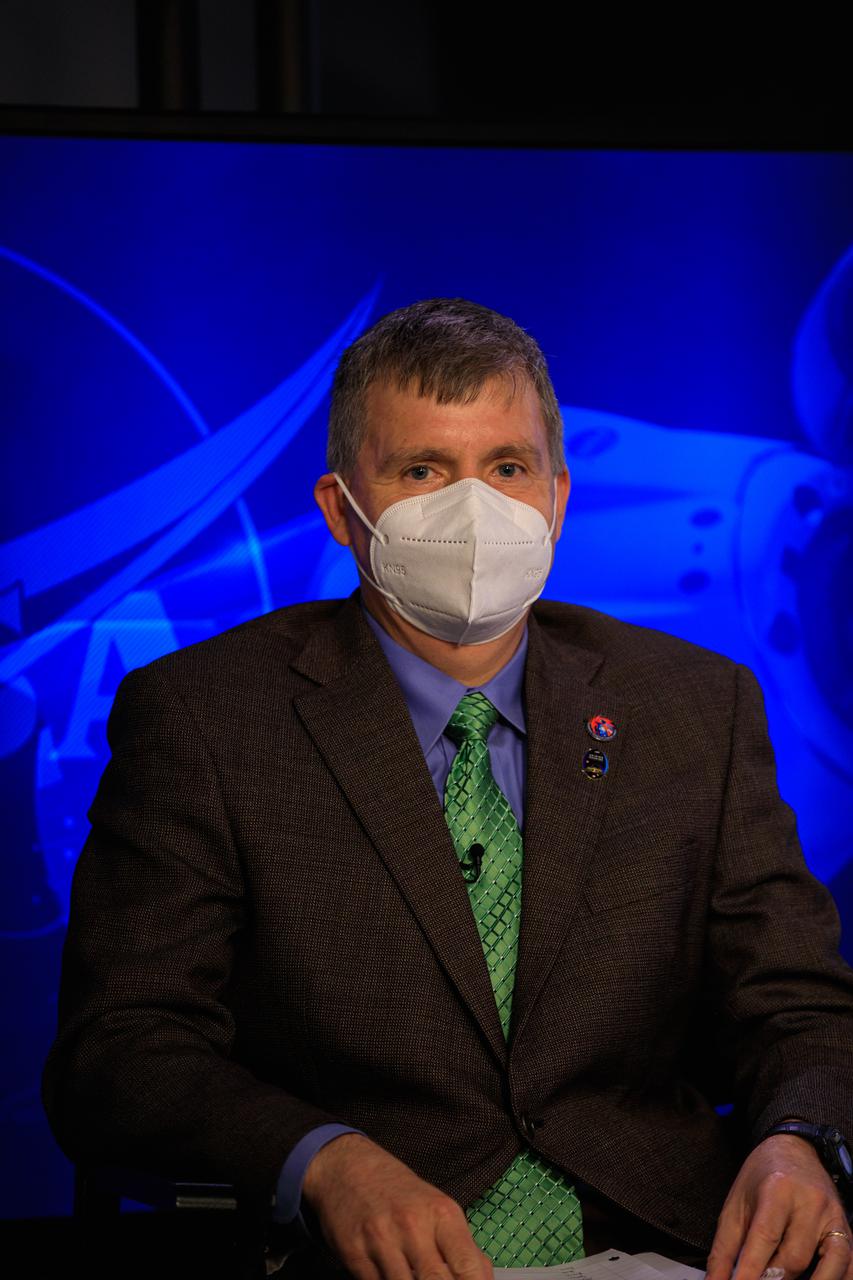
Steve Stich, manager, NASA Commercial Crew Program, is introduced during the SpaceX Crew-2 prelaunch news conference held at NASA’s Kennedy Space Center in Florida on April 20, 2021. NASA astronauts Shane Kimbrough and Megan McArthur, JAXA astronaut Akihiko Hoshide, and ESA astronaut Thomas Pesquet will fly on Crew-2, the second crew rotation mission to the International Space Station as part of NASA’s Commercial Crew Program. They will launch aboard SpaceX’s Crew Dragon spacecraft, named Endeavour, powered by the company’s Falcon 9 rocket. Liftoff is set for Earth Day, Thursday, April 22, at 6:11 a.m. EDT.
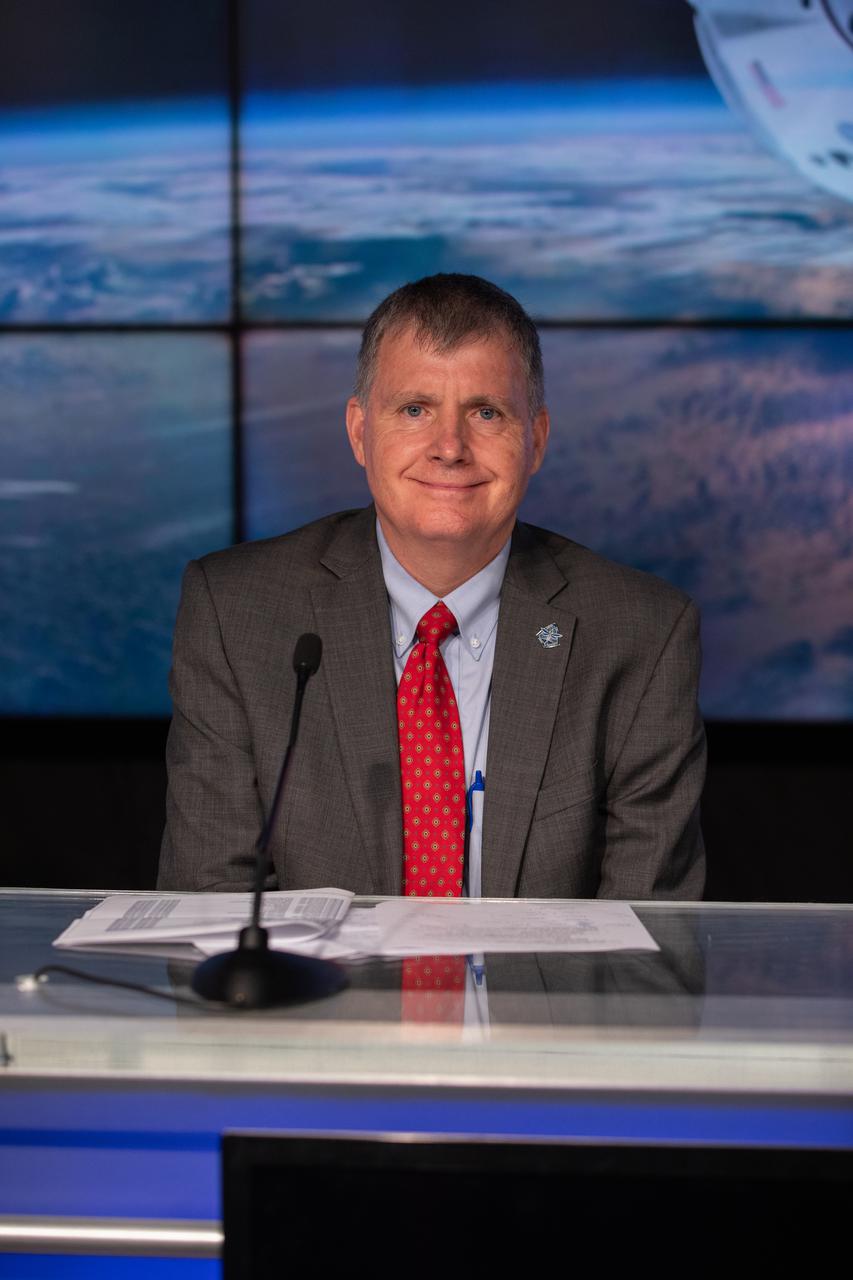
Steve Stich, manager, NASA’s Commercial Crew Program, participates in a Crew-4 postlaunch news conference April 27, 2022, at NASA’s Kennedy Space Center in Florida. The SpaceX Crew Dragon spacecraft, powered by the company’s Falcon 9 rocket, lifted off from Kennedy’s Launch Complex 39A at 3:52 a.m. EDT on April 27. Named Freedom by mission astronauts Kjell Lindgren, Bob Hines, Jessica Watkins, and Samantha Cristoforetti, Dragon is scheduled to dock to the space station today at 8:15 p.m. EDT.
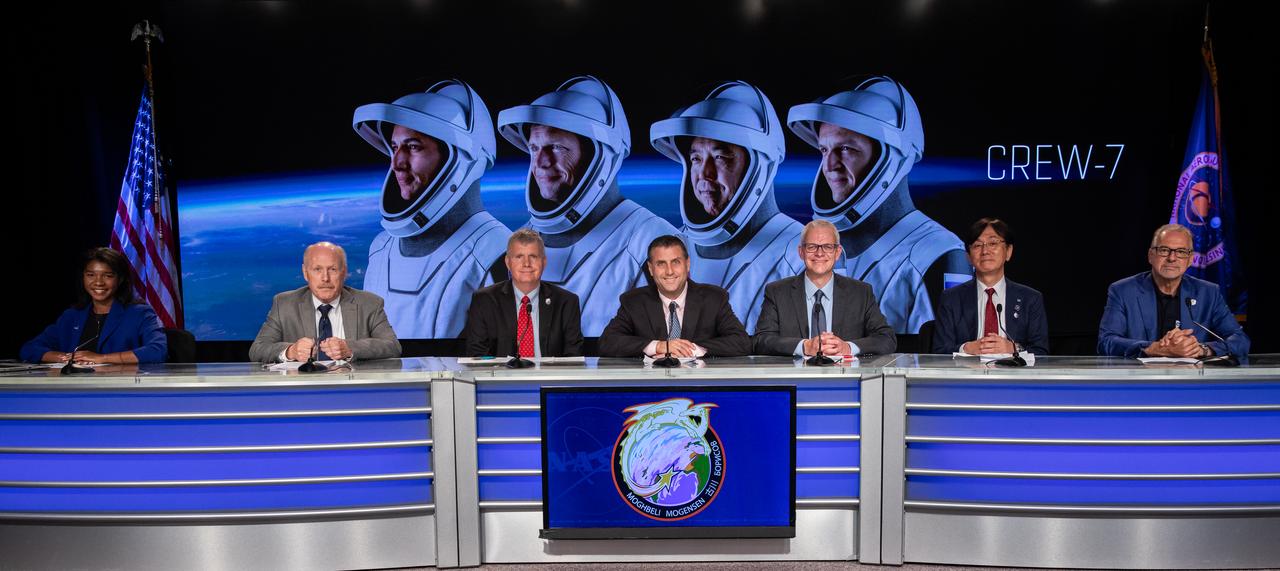
NASA hosts a Crew-7 postlaunch news conference at the agency’s Kennedy Space Center in Florida on Saturday, Aug. 26, 2023. Participants, from left, are: Jasmine Hopkins, NASA Communications, Ken Bowersox, associate administrator, Space Operations Mission Directorate, NASA Headquarters; Steve Stich, manager, Commercial Crew Program, Kennedy; Joel Montalbano, manager, International Space Station Program, Johnson; Benji Reed, senior director, Human Spaceflight Programs, SpaceX; Hiroshi Sasaki, vice president, JAXA; and Josef Aschbacher, director general, ESA.
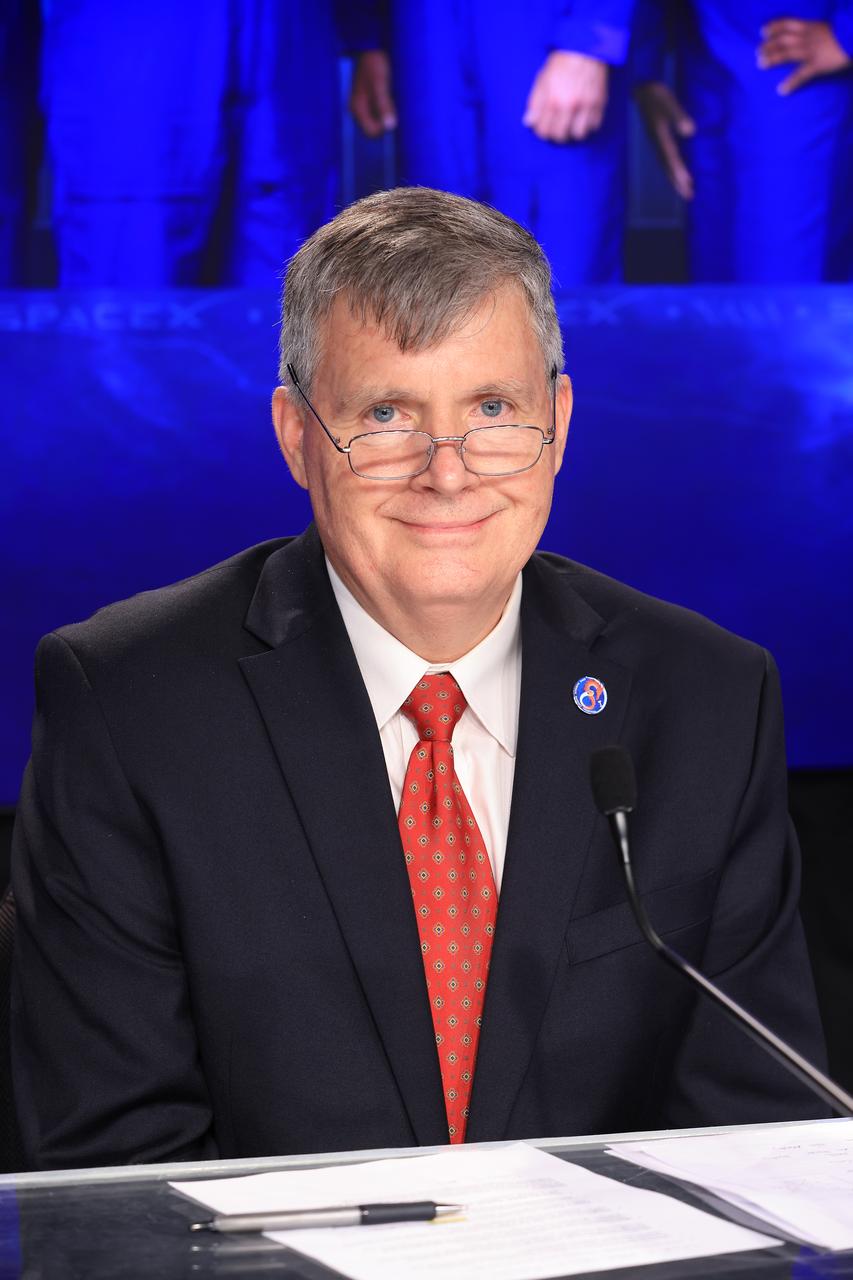
Steve Stich, manager of NASA’s Commercial Crew Program, participates in a postlaunch news conference at the agency’s Kennedy Space Center in Florida on Monday, March 4, 2024, following the launch of NASA’s SpaceX Crew-8 mission. NASA astronauts Commander Matthew Dominick, Pilot Michael Barratt, and Mission Specialist Jeanette Epps, along with Roscosmos cosmonaut Mission Specialist Alexander Grebenkin, launched aboard SpaceX’s Dragon spacecraft from Kennedy at 10:53 p.m. Sunday, March 3 and will spend about six months at the orbiting laboratory as part of the agency’s Commercial Crew Program.
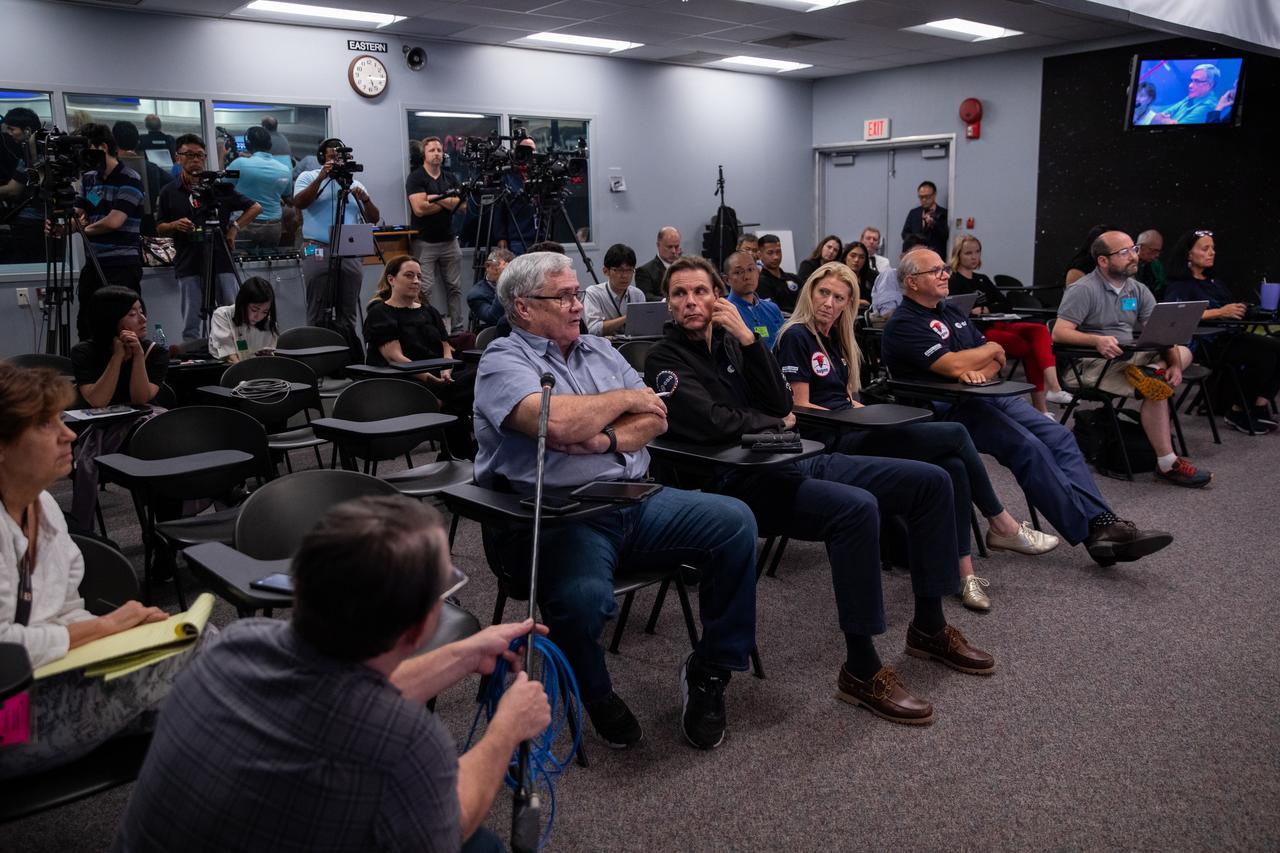
NASA hosts a Crew-7 postlaunch news conference at the agency’s Kennedy Space Center in Florida on Saturday, Aug. 26, 2023. Participants included Jasmine Hopkins, NASA Communications, Ken Bowersox, associate administrator, Space Operations Mission Directorate, NASA Headquarters; Steve Stich, manager, Commercial Crew Program, Kennedy; Joel Montalbano, manager, International Space Station Program, Johnson; Benji Reed, senior director, Human Spaceflight Programs, SpaceX; Hiroshi Sasaki, vice president, JAXA; and Josef Aschbacher, director general, ESA.

Steve Stich, manager, NASA’s Commercial Crew Program, addresses the media during a prelaunch news conference at NASA’s Kennedy Space Center in Florida on Friday, Sept. 27, 2024, ahead of the agency’s SpaceX Crew-9 launch. NASA astronaut Nick Hague and Roscosmos cosmonaut Aleksandr Gorbunov will launch to the International Space Station aboard SpaceX’s Dragon spacecraft and Falcon 9 rocket. Launch is targeted for 1:17 p.m. EDT Sept. 28, 2024, from Space Launch Complex-40 at Cape Canaveral Space Force Station in Florida. Crew-9 is the ninth crew rotation mission with SpaceX to the space station as part of the agency’s Commercial Crew Program.
From left to right Jim Free, NASA associate administrator; Steve Stich, manager, NASA’s Commercial Crew Program; and Dana Weigel, manager, NASA’s International Space Station Program participate in a prelaunch briefing for NASA’s Boeing Crew Flight Test at the agency’s Kennedy Space Center in Florida, Friday, May 31, 2024. As part of the agency’s Commercial Crew Program, NASA astronauts Butch Wilmore and Suni Williams are the first to launch aboard Boeing’s Starliner spacecraft atop a ULA Atlas V rocket from Space Launch Complex-41 at Cape Canaveral Space Force Station in Florida. Liftoff is scheduled for 12:25 p.m. ET on Saturday, June 1.
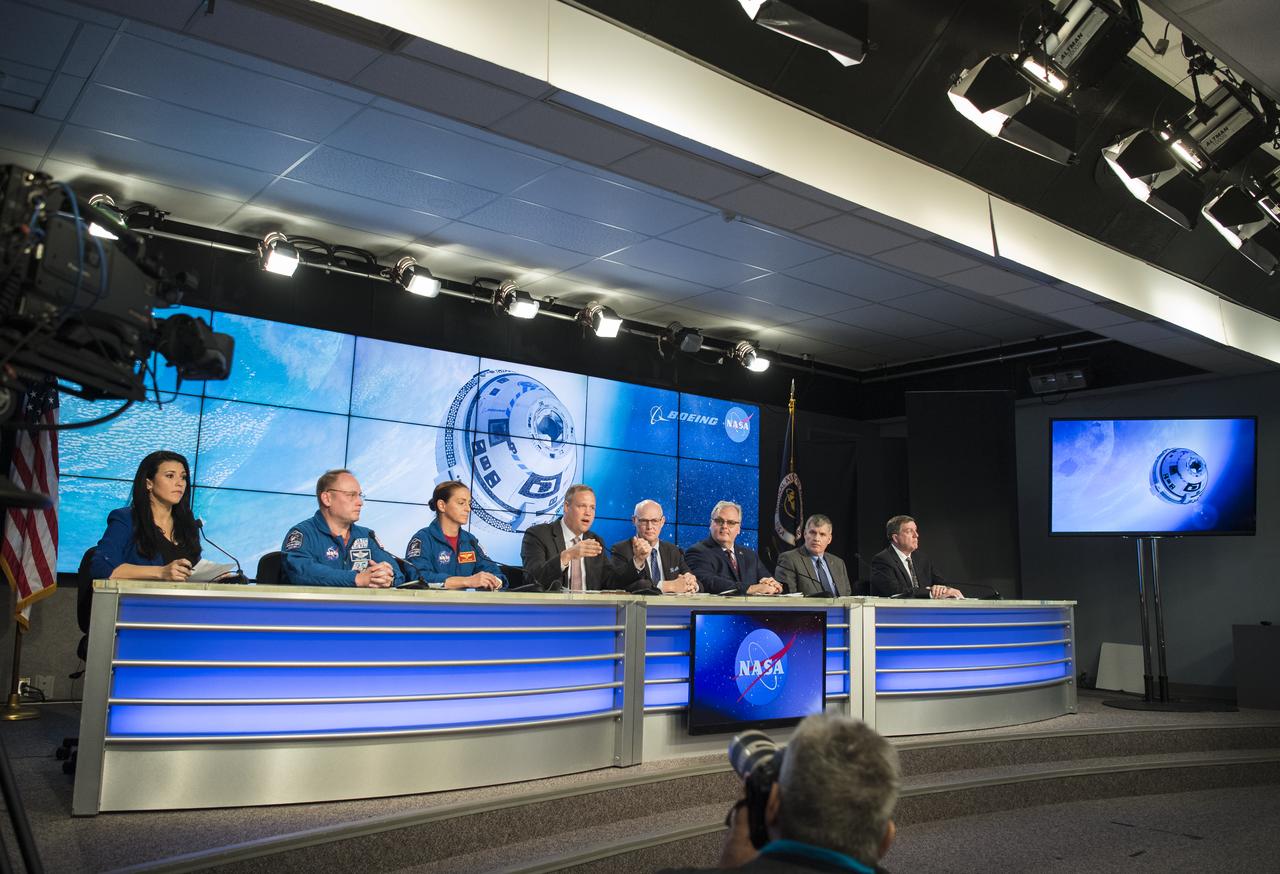
NASA Associate Administrator for the Office of Communications Bettina Inclán, left, NASA astronauts Michael Fincke and Nicole Mann, NASA Administrator Jim Bridenstine, Tory Bruno, president and CEO of United Launch Alliance, Jim Chilton, senior vice president of Boeing’s Space and Launch Division, Steve Stich, Deputy Manager of NASA’s Commercial Crew Program, and NASA ISS Program Manager Kirk Shireman, are seen during a press conference at NASA's Kennedy Space Center following the launch of Boeing’s Starliner spacecraft onboard a United Launch Alliance Atlas V rocket, Friday, Dec. 20, 2019, at Cape Canaveral Air Force Station in Florida. After a successful launch at 6:36 a.m. EST, Boeing’s CST-100 Starliner is in an unplanned, but stable orbit. The team is assessing what test objectives can be achieved before the spacecraft’s return to land in White Sands, New Mexico. Photo Credit: (NASA/Joel Kowsky)
Kathy Lueders, associate administrator for NASA's Space Operations Mission Directorate, left, Steve Stich, manager of NASA’s Commercial Crew Program, center, and Benji Reed, senior director of Human Spaceflight Programs at SpaceX, right, monitor the launch of a SpaceX Falcon 9 rocket carrying the company's Dragon spacecraft on the Crew-6 mission with NASA astronauts Stephen Bowen and Warren "Woody" Hoburg, UAE (United Arab Emirates) astronaut Sultan Alneyadi, and Roscosmos cosmonaut Andrey Fedyaev onboard, Thursday, March 2, 2023, in firing room four of the Rocco A. Petrone Launch Control Center at NASA’s Kennedy Space Center in Florida. NASA’s SpaceX Crew-6 mission is the sixth crew rotation mission of the SpaceX Dragon spacecraft and Falcon 9 rocket to the International Space Station as part of the agency’s Commercial Crew Program. Bowen, Hoburg, Alneyadi, and Fedyaev launched at 12:34 a.m. EST, from Launch Complex 39A at the Kennedy Space Center. Photo Credit: (NASA/Joel Kowsky)
From left to right, Kathy Lueders, Associate Administrator of the Human Exploration and Operations Mission Directorate; Steve Stich, program manager for NASA's Commercial Crew Program; and Benji Reed, director of crew mission management at SpaceX, monitor the countdown of the launch of a SpaceX Falcon 9 rocket carrying the company's Crew Dragon spacecraft on NASA’s SpaceX Crew-1 mission with NASA astronauts Mike Hopkins, Victor Glover, Shannon Walker, and Japan Aerospace Exploration Agency (JAXA) astronaut Soichi Noguchi onboard, Sunday, Nov. 15, 2020, in firing room four of the Launch Control Center at NASA’s Kennedy Space Center in Florida. NASA’s SpaceX Crew-1 mission is the first crew rotation mission of the SpaceX Crew Dragon spacecraft and Falcon 9 rocket to the International Space Station as part of the agency’s Commercial Crew Program. Hopkins, Glover, Walker, and Noguchi are scheduled to launch at 7:27 p.m. EST, from Launch Complex 39A at the Kennedy Space Center. Photo Credit: (NASA/Aubrey Gemignani)
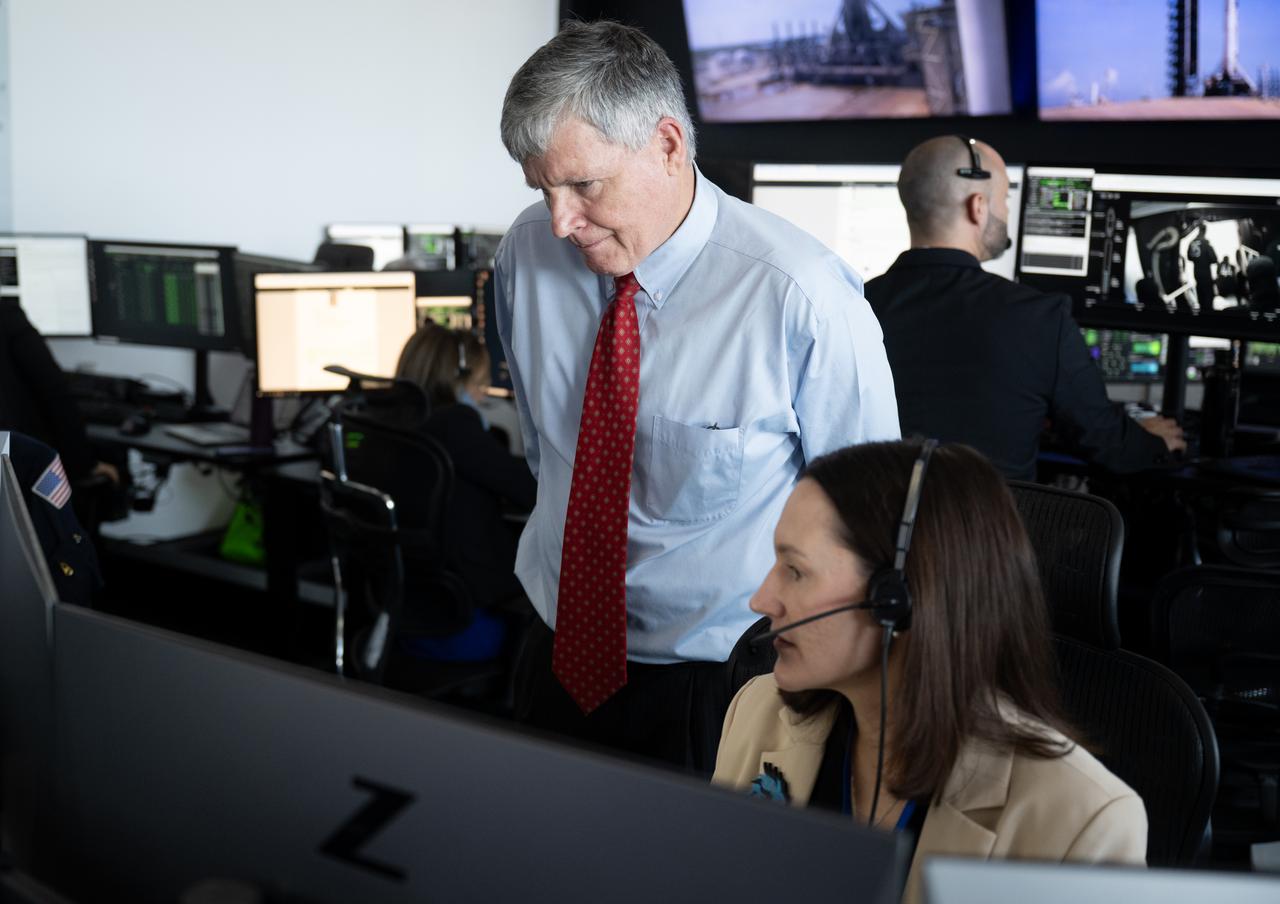
Kathy Lueders, Associate Administrator of the Human Exploration and Operations Mission Directorate, left; Steve Stich, program manager for NASA's Commercial Crew Program, center, and Benji Reed, director of crew mission management at SpaceX, monitor the launch of a SpaceX Falcon 9 rocket carrying the company's Crew Dragon spacecraft on NASA’s SpaceX Crew-1 mission with NASA astronauts Mike Hopkins, Victor Glover, Shannon Walker, and Japan Aerospace Exploration Agency (JAXA) astronaut Soichi Noguchi onboard, Sunday, Nov. 15, 2020, in firing room four of the Launch Control Center at NASA’s Kennedy Space Center in Florida. NASA’s SpaceX Crew-1 mission is the first crew rotation mission of the SpaceX Crew Dragon spacecraft and Falcon 9 rocket to the International Space Station as part of the agency’s Commercial Crew Program. Hopkins, Glover, Walker, and Noguchi launched at 7:27 p.m. EST, from Launch Complex 39A at the Kennedy Space Center. Photo Credit: (NASA/Aubrey Gemignani)
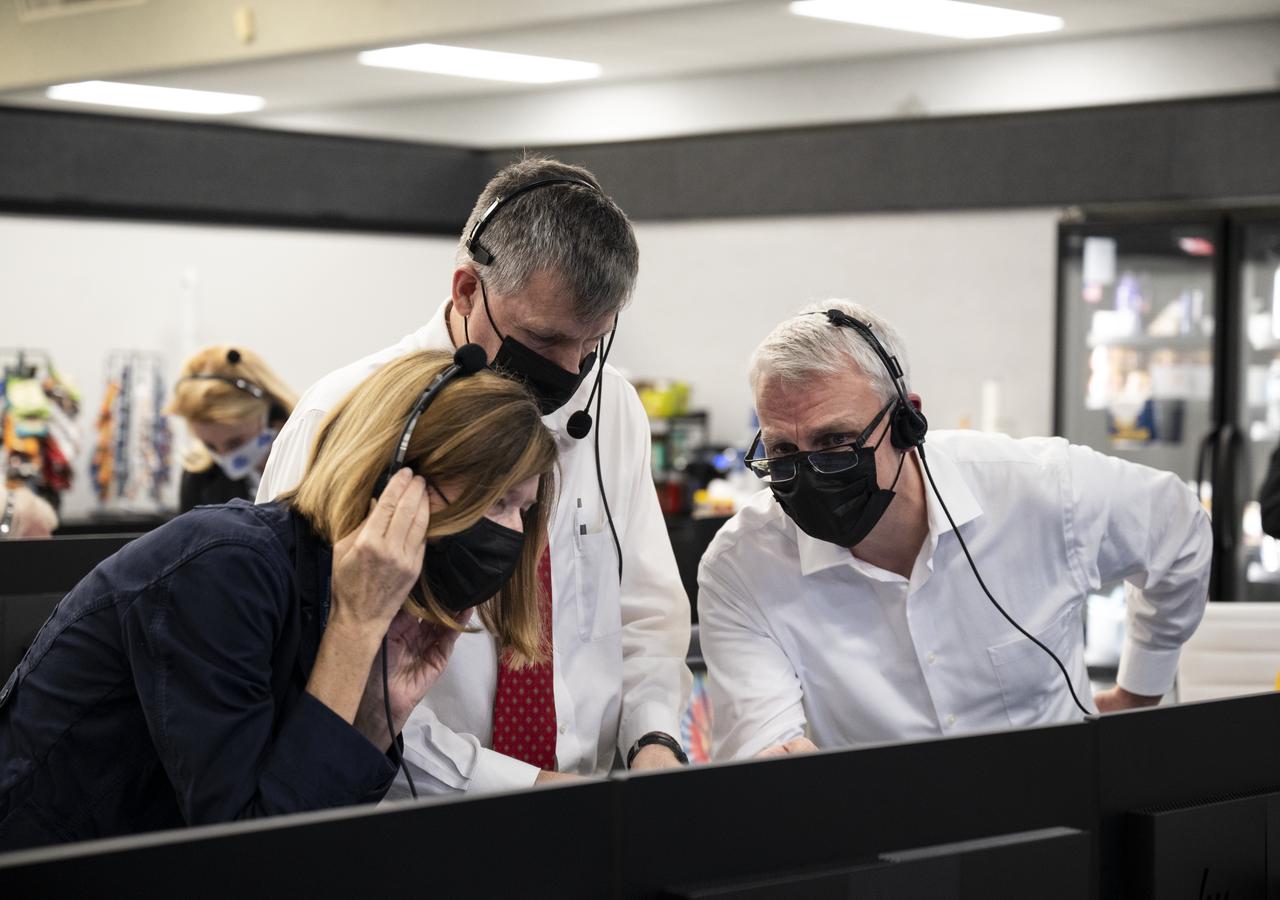
Steve Stich, manager of NASA’s Commercial Crew Program, left, speaks with Nicole Jordan, NASA operations manager for the Commercial Crew Program, as teams monitor the countdown of a launch attempt of a SpaceX Falcon 9 rocket carrying the company's Dragon spacecraft on NASA’s SpaceX Crew-11 mission with NASA astronauts Zena Cardman, Mike Fincke, JAXA (Japan Aerospace Exploration Agency) astronaut Kimiya Yui, and Roscosmos cosmonaut Oleg Platonov onboard, Thursday, July 31, 2025, in the control center of SpaceX’s HangarX at NASA’s Kennedy Space Center in Florida. NASA’s SpaceX Crew-11 mission is the eleventh crew rotation mission of the SpaceX Dragon spacecraft and Falcon 9 rocket to the International Space Station as part of the agency’s Commercial Crew Program. Today’s launch of Cardman, Fincke, Yui, Platonov was scrubbed due to weather and is now scheduled for 11:43 a.m. EDT on Friday, August 1, from Launch Complex 39A at the NASA's Kennedy Space Center. Photo Credit: (NASA/Joel Kowsky)
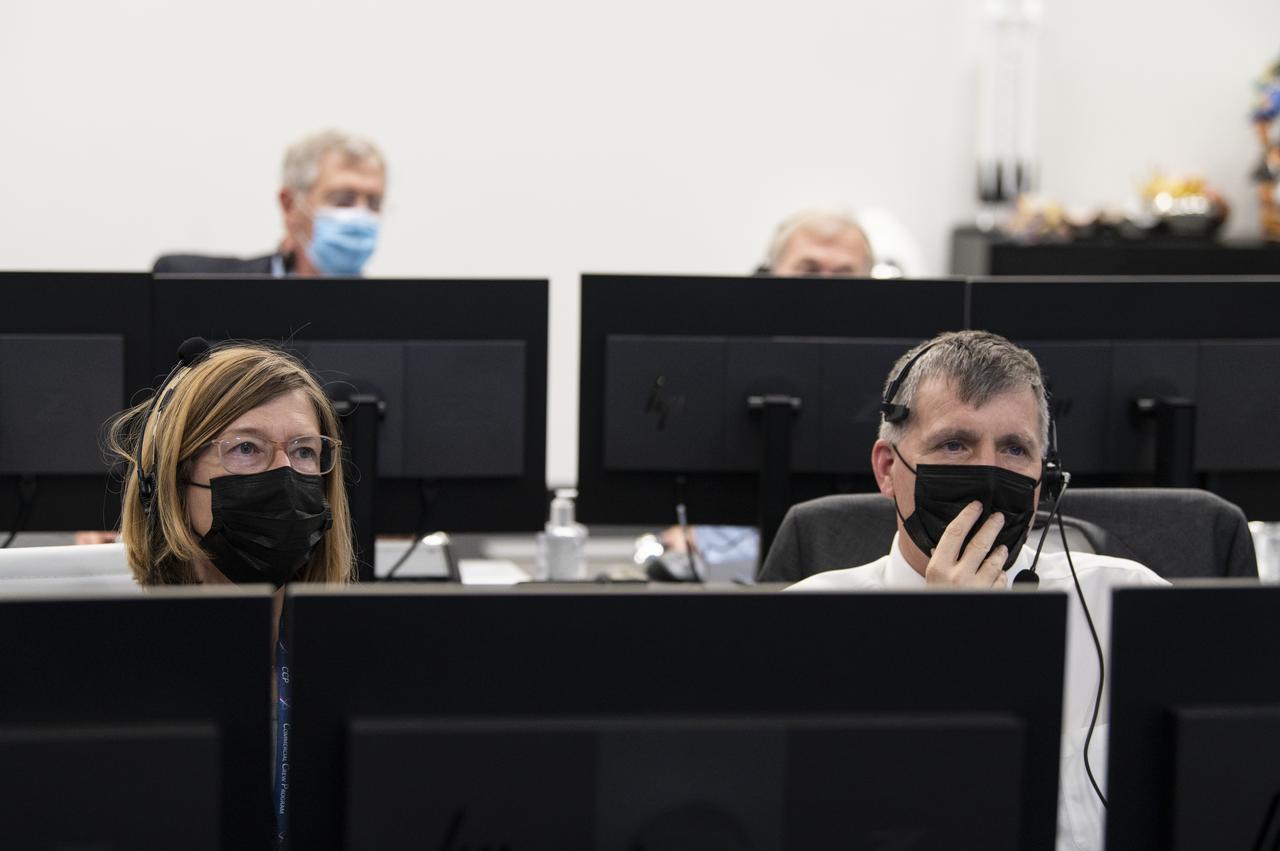
Kathy Lueders, Associate Administrator of the Human Exploration and Operations Mission Directorate, left, and Steve Stich, program manager for NASA's Commercial Crew Program, right, monitor the countdown of the launch of a SpaceX Falcon 9 rocket carrying the company's Crew Dragon spacecraft on NASA’s SpaceX Crew-1 mission with NASA astronauts Mike Hopkins, Victor Glover, Shannon Walker, and Japan Aerospace Exploration Agency (JAXA) astronaut Soichi Noguchi onboard, Sunday, Nov. 15, 2020, in firing room four of the Launch Control Center at NASA’s Kennedy Space Center in Florida. NASA’s SpaceX Crew-1 mission is the first crew rotation mission of the SpaceX Crew Dragon spacecraft and Falcon 9 rocket to the International Space Station as part of the agency’s Commercial Crew Program. Hopkins, Glover, Walker, and Noguchi are scheduled to launch at 7:27 p.m. EST, from Launch Complex 39A at the Kennedy Space Center. Photo Credit: (NASA/Aubrey Gemignani)
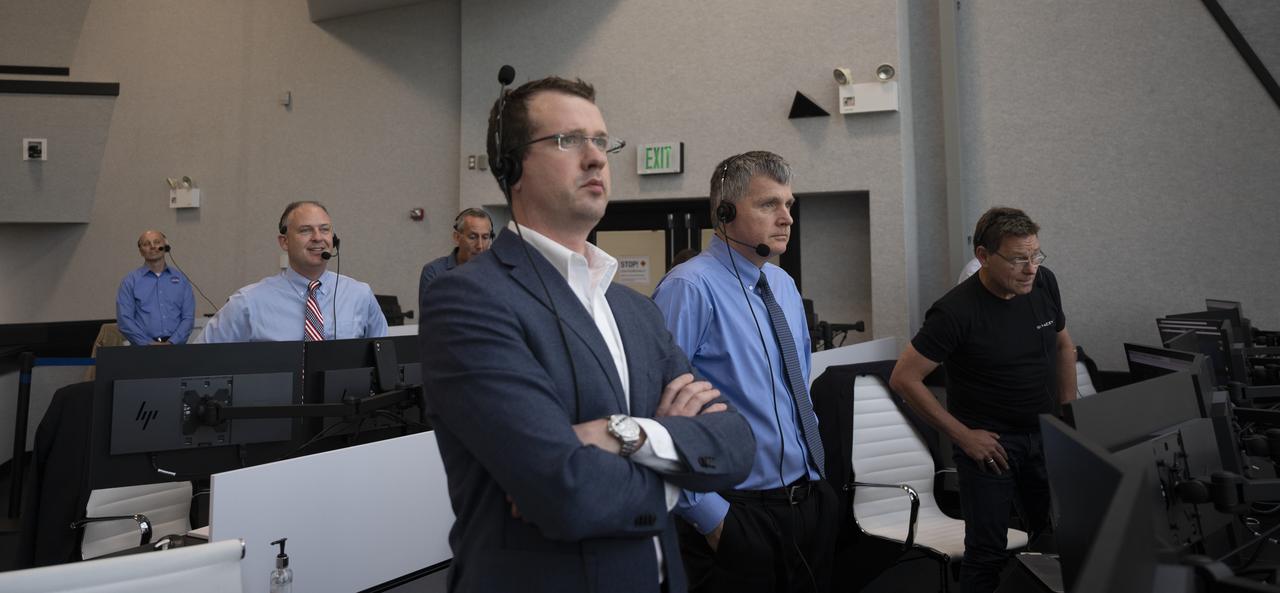
Stephen Koerner, Director of the Flight Operations Directorate at NASA’s Johnson Space Center, Norm Knight, deputy director of Flight Operations at NASA's Johnson Space Center, Steve Stich, deputy manager of NASA’s Commercial Crew Program, and Hans Koenigsmann, vice president for build and flight reliability at SpaceX are seen monitoring the launch of a SpaceX Falcon 9 rocket carrying the company's Crew Dragon spacecraft on the Demo-2 mission with NASA astronauts Douglas Hurley and Robert Behnken onboard, Saturday, May 30, 2020, in firing room four of the Launch Control Center at NASA’s Kennedy Space Center in Florida. NASA’s SpaceX Demo-2 mission is the first launch with astronauts of the SpaceX Crew Dragon spacecraft and Falcon 9 rocket to the International Space Station as part of the agency’s Commercial Crew Program. The test flight serves as an end-to-end demonstration of SpaceX’s crew transportation system. Behnken and Hurley launched at 3:22 p.m. EDT on Saturday, May 30, from Launch Complex 39A at the Kennedy Space Center. A new era of human spaceflight is set to begin as American astronauts once again launch on an American rocket from American soil to low-Earth orbit for the first time since the conclusion of the Space Shuttle Program in 2011. Photo Credit: (NASA/Joel Kowsky)
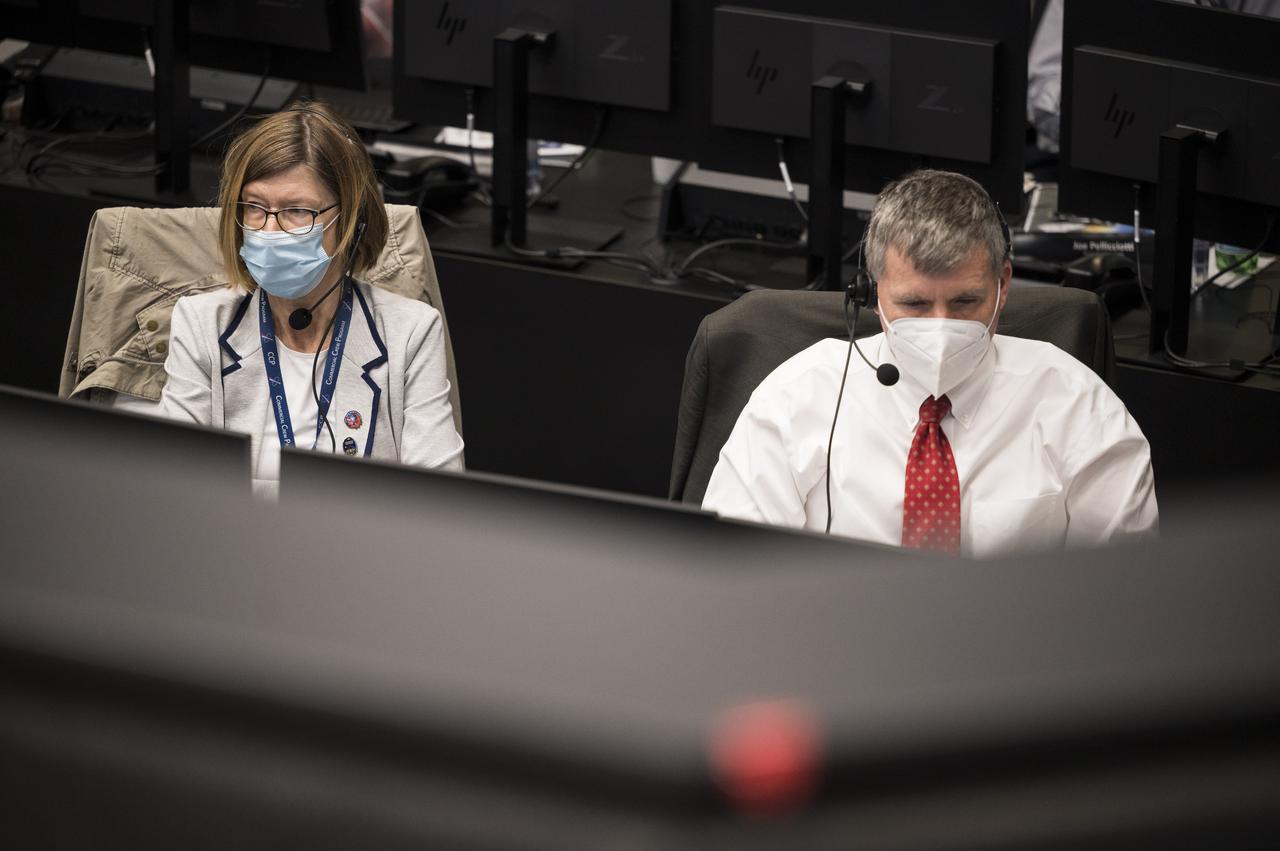
Kathy Lueders, associate administrator for NASA's Human Exploration and Operations Mission Directorate, left, and Steve Stich, manager of NASA’s Commercial Crew Program, right, monitor the countdown of the launch of a SpaceX Falcon 9 rocket carrying the company's Crew Dragon spacecraft on the Crew-2 mission with NASA astronauts Shane Kimbrough and Megan McArthur, ESA (European Space Agency) astronaut Thomas Pesquet, and Japan Aerospace Exploration Agency (JAXA) astronaut Akihiko Hoshide onboard, Friday, April 23, 2021, in firing room four of the Launch Control Center at NASA’s Kennedy Space Center in Florida. NASA’s SpaceX Crew-2 mission is the second crew rotation mission of the SpaceX Crew Dragon spacecraft and Falcon 9 rocket to the International Space Station as part of the agency’s Commercial Crew Program. Kimbrough, McArthur, Pesquet, and Hoshide launched at 5:49 a.m. EDT, from Launch Complex 39A at the Kennedy Space Center to begin a six month mission onboard the International Space Station. Photo Credit: (NASA/Joel Kowsky)
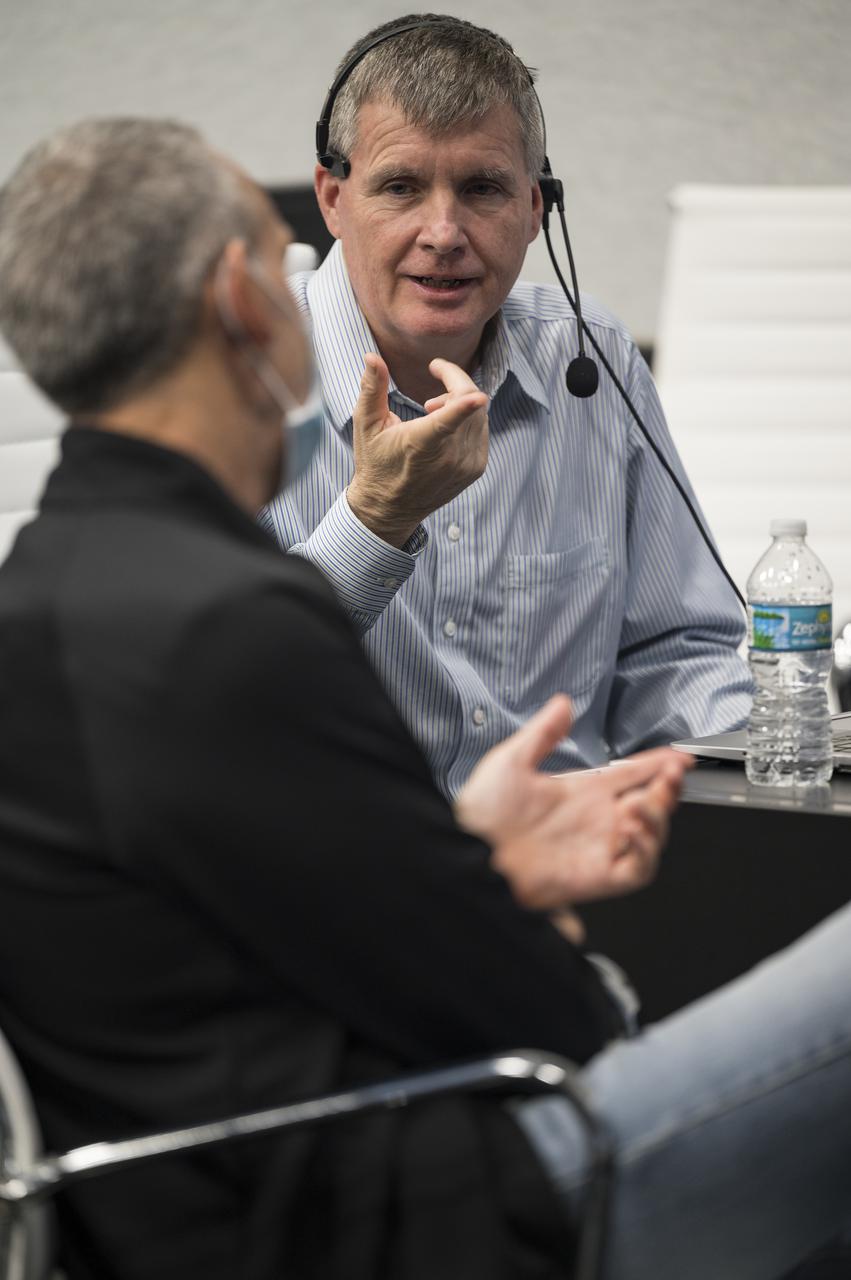
Steve Stich, manager of NASA’s Commercial Crew Program, right, speaks with Lee Rosen, SpaceX vice president of Mission and Launch Operations, during a dress rehearsal in preparation for the launch of a SpaceX Falcon 9 rocket carrying the company's Crew Dragon spacecraft on NASA’s SpaceX Crew-3 mission with NASA astronauts Raja Chari, Tom Marshburn, Kayla Barron, and ESA (European Space Agency) astronaut Matthias Maurer onboard, Thursday, Oct. 28, 2021, in firing room four of the Launch Control Center at NASA’s Kennedy Space Center in Florida. NASA’s SpaceX Crew-3 mission is the third crew rotation mission of the SpaceX Crew Dragon spacecraft and Falcon 9 rocket to the International Space Station as part of the agency’s Commercial Crew Program. Chari, Marshburn, Barron, Maurer are scheduled to launch on Oct. 31 at 2:21 a.m. ET, from Launch Complex 39A at the Kennedy Space Center. Photo Credit: (NASA/Aubrey Gemignani)
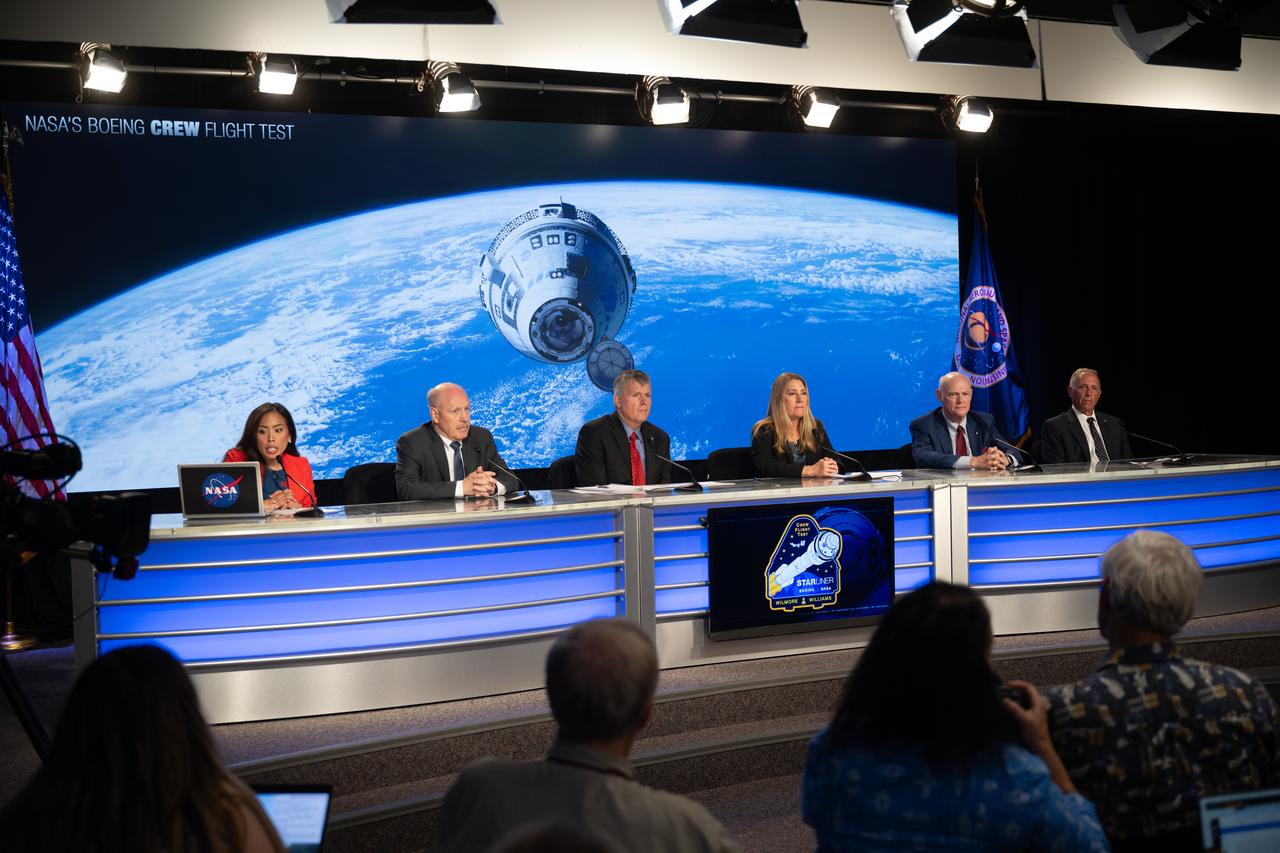
Megan Cruz, NASA Communications, left, moderates a press conference with Ken Bowersox, associate administrator for NASA's Space Operations Mission Directorate, second from left, Steve Stich, manager of NASA's Commercial Crew Program, Dana Weigel, manager of NASA's International Space Station Program, Tory Bruno, president and CEO of United Launch Alliance, and Mark Nappi, vice president and program manager for the Commercial Crew Program at Boeing, after the first launch attempt of NASA’s Boeing Crew Flight Test was scrubbed for the day, Monday, May 6, 2024, at NASA’s Kennedy Space Center in Florida. NASA’s Boeing Crew Flight Test is the first launch with astronauts of the Boeing CFT-100 spacecraft and United Launch Alliance Atlas V rocket to the International Space Station as part of the agency’s Commercial Crew Program. The flight test, targeted for launch no earlier than Friday, May 10, serves as an end-to-end demonstration of Boeing’s crew transportation system and will carry NASA astronauts Butch Wilmore and Suni Williams to and from the orbiting laboratory. Photo Credit: (NASA/Joel Kowsky)
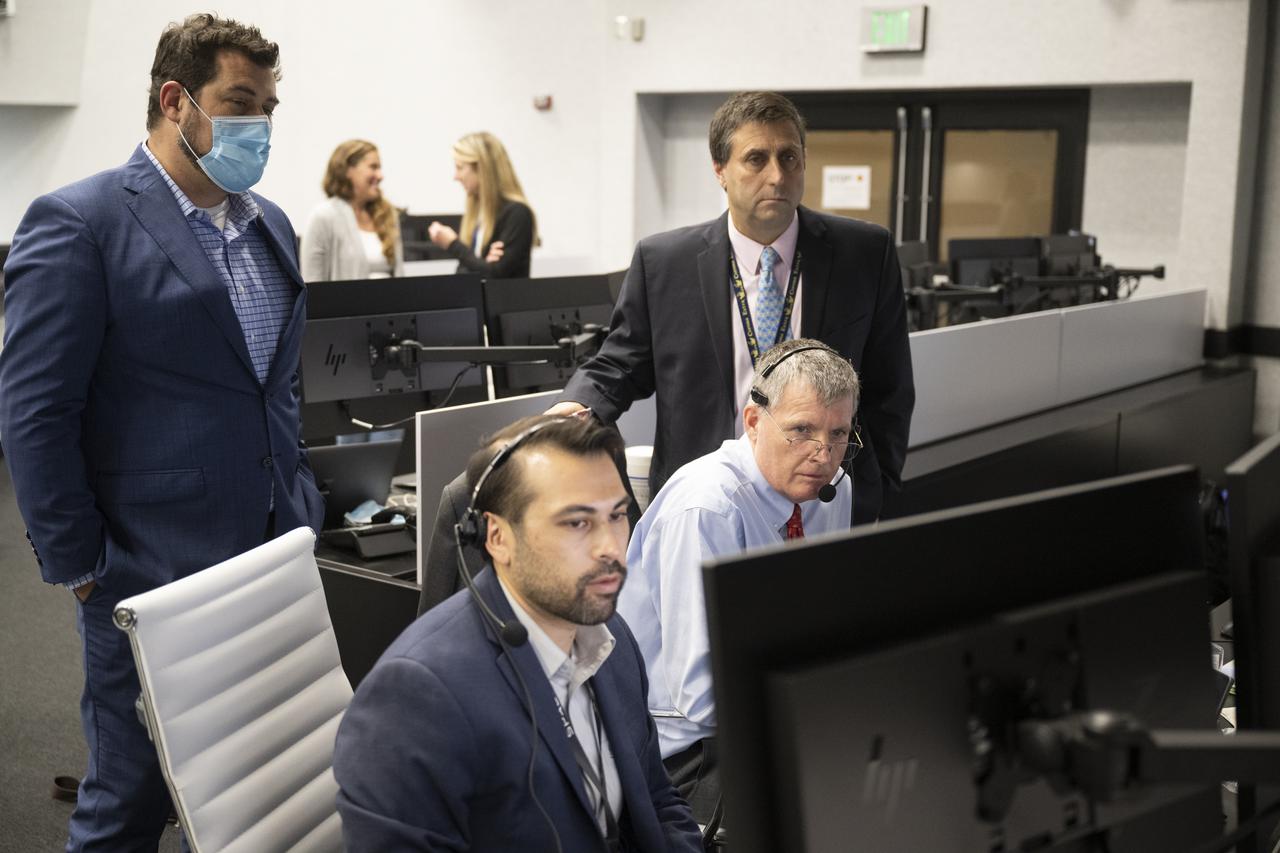
Scott Ede, mission manager for mission management and integration in NASA's Commercial Crew Program, left, Kyle Stewart, SpaceX Mission Manager, second from left, Steve Stich, manager of NASA’s Commercial Crew Program, second from right, and NASA International Space Station program manger Joel Montalbano, right monitor the countdown of the launch of a SpaceX Falcon 9 rocket carrying the company's Crew Dragon spacecraft on NASA’s SpaceX Crew-4 mission with NASA astronauts Kjell Lindgren, Robert Hines, Jessica Watkins, and ESA (European Space Agency) astronaut Samantha Cristoforetti onboard, Wednesday, April 27, 2022, in firing room four of the Rocco A. Petrone Launch Control Center at NASA’s Kennedy Space Center in Florida. NASA’s SpaceX Crew-4 mission is the fourth crew rotation mission of the SpaceX Crew Dragon spacecraft and Falcon 9 rocket to the International Space Station as part of the agency’s Commercial Crew Program. Lindgren, Hines, Watkins, and Cristoforetti launched at at 3:52 a.m. ET, from Launch Complex 39A at the Kennedy Space Center. Photo Credit: (NASA/Joel Kowsky)
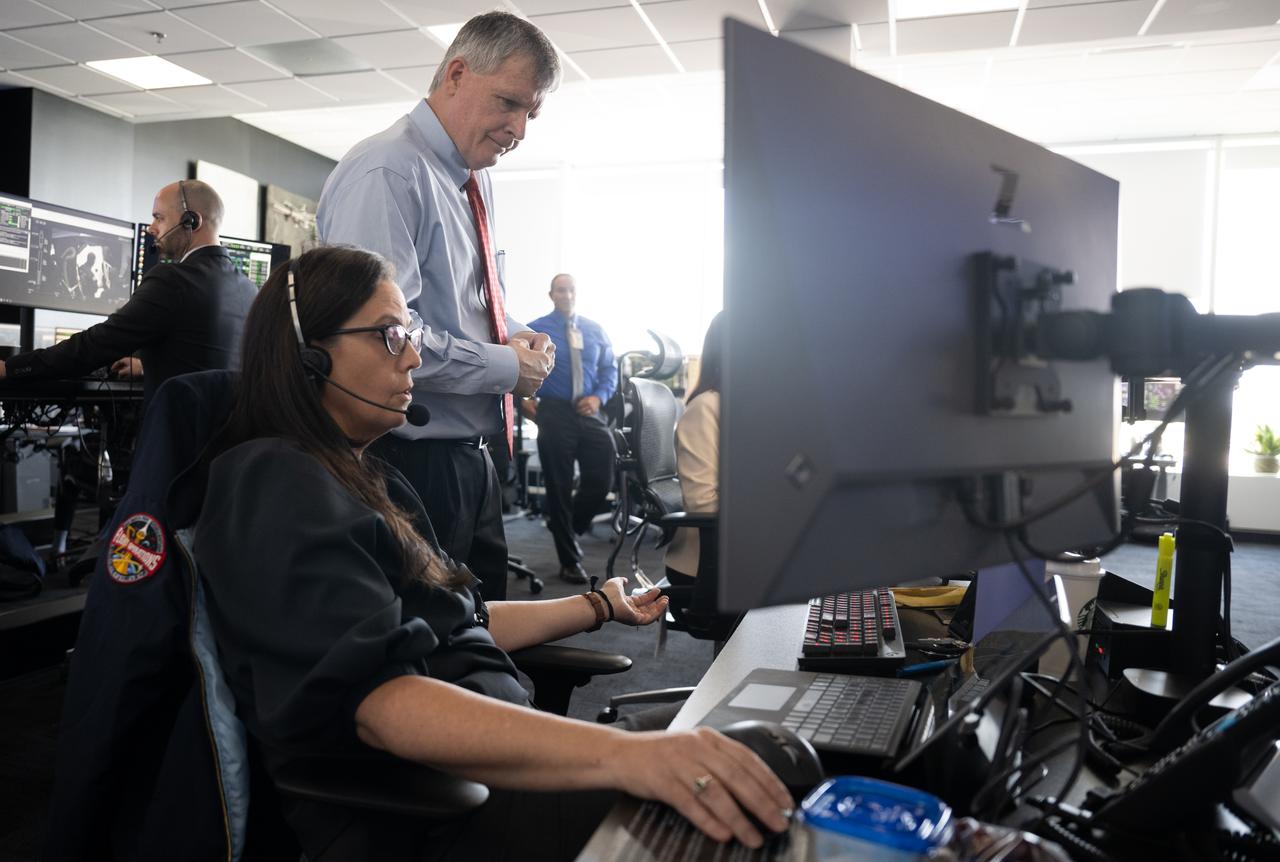
Steve Stich, manager of NASA’s Commercial Crew Program, right, speaks with Emily Nelson, NASA's chief flight director, as teams monitor the countdown of a launch attempt of a SpaceX Falcon 9 rocket carrying the company's Dragon spacecraft on NASA’s SpaceX Crew-11 mission with NASA astronauts Zena Cardman, Mike Fincke, JAXA (Japan Aerospace Exploration Agency) astronaut Kimiya Yui, and Roscosmos cosmonaut Oleg Platonov onboard, Thursday, July 31, 2025, in the control center of SpaceX’s HangarX at NASA’s Kennedy Space Center in Florida. NASA’s SpaceX Crew-11 mission is the eleventh crew rotation mission of the SpaceX Dragon spacecraft and Falcon 9 rocket to the International Space Station as part of the agency’s Commercial Crew Program. Today’s launch of Cardman, Fincke, Yui, Platonov was scrubbed due to weather and is now scheduled for 11:43 a.m. EDT on Friday, August 1, from Launch Complex 39A at the NASA's Kennedy Space Center. Photo Credit: (NASA/Joel Kowsky)
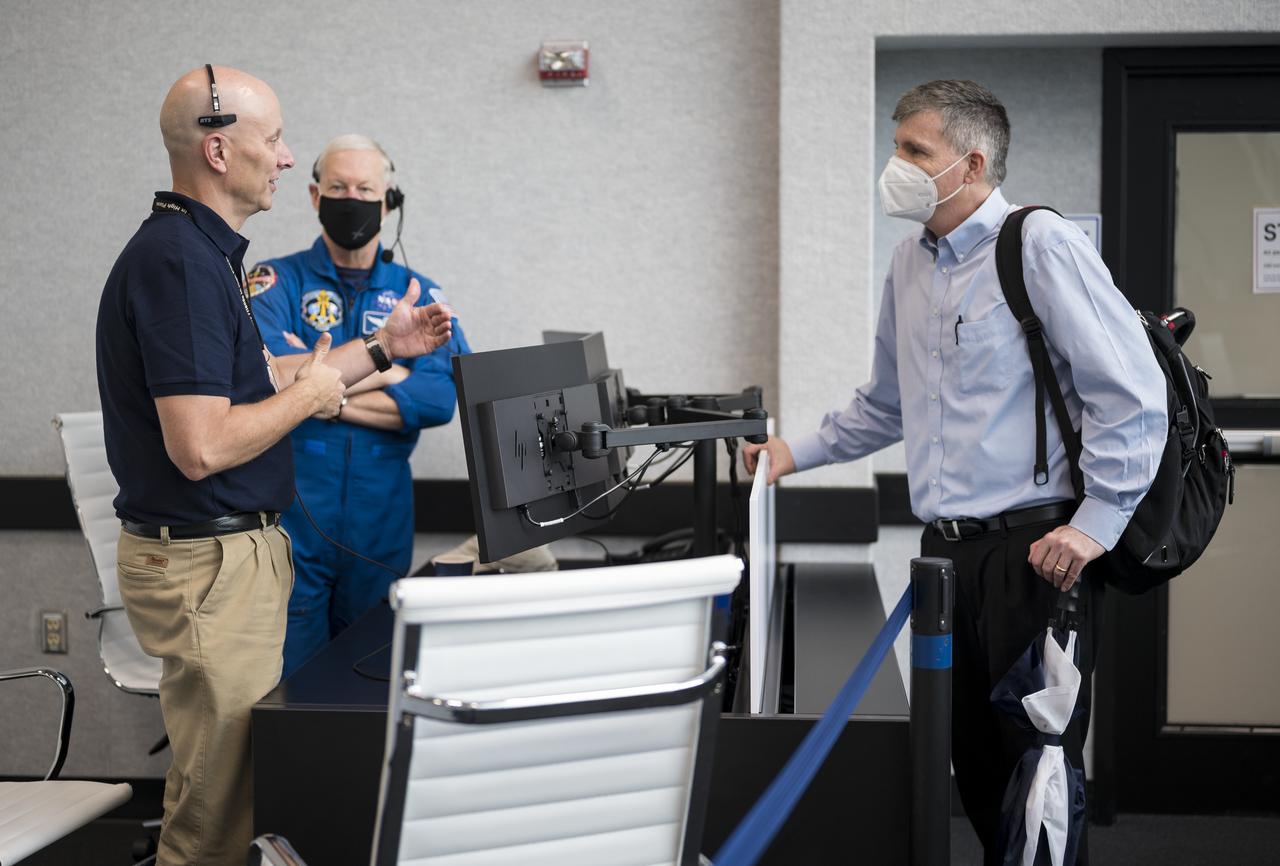
Stephen Koerner, director of the Flight Operations Directorate at NASA’s Johnson Space Center, left, speaks with Steve Stich, manager of NASA’s Commercial Crew Program, right, during a dress rehearsal in preparation for the launch of a SpaceX Falcon 9 rocket carrying the company's Crew Dragon spacecraft on NASA’s SpaceX Crew-1 mission with NASA astronauts Mike Hopkins, Victor Glover, Shannon Walker, and Japan Aerospace Exploration Agency (JAXA) astronaut Soichi Noguchi onboard, Thursday, Nov. 12, 2020, in firing room four of the Launch Control Center at NASA’s Kennedy Space Center in Florida. NASA’s SpaceX Crew-1 mission is the first crew rotation mission of the SpaceX Crew Dragon spacecraft and Falcon 9 rocket to the International Space Station as part of the agency’s Commercial Crew Program. Hopkins, Glover, Walker, and Noguchi are scheduled to launch at 7:49 p.m. EST on Saturday, Nov. 14, from Launch Complex 39A at the Kennedy Space Center. Photo Credit: (NASA/Aubrey Gemignani)
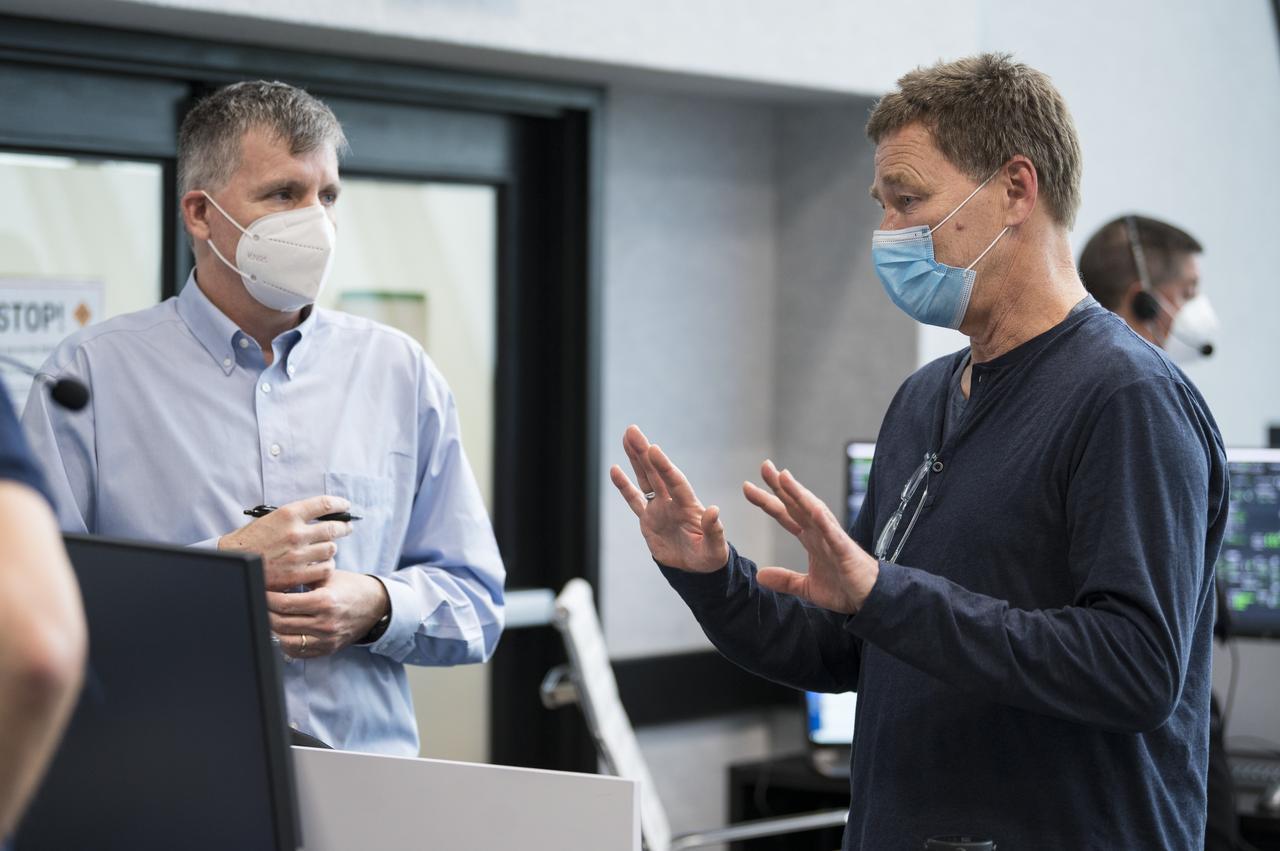
Hans Koenigsmann, vice president for Build and Flight Reliability at SpaceX speaks with Steve Stich, manager of NASA’s Commercial Crew Program, during a dress rehearsal in preparation for the launch of a SpaceX Falcon 9 rocket carrying the company's Crew Dragon spacecraft on NASA’s SpaceX Crew-1 mission with NASA astronauts Mike Hopkins, Victor Glover, Shannon Walker, and Japan Aerospace Exploration Agency (JAXA) astronaut Soichi Noguchi onboard, Thursday, Nov. 12, 2020, in firing room four of the Launch Control Center at NASA’s Kennedy Space Center in Florida. NASA’s SpaceX Crew-1 mission is the first crew rotation mission of the SpaceX Crew Dragon spacecraft and Falcon 9 rocket to the International Space Station as part of the agency’s Commercial Crew Program. Hopkins, Glover, Walker, and Noguchi are scheduled to launch at 7:49 p.m. EST on Saturday, Nov. 14, from Launch Complex 39A at the Kennedy Space Center. Photo Credit: (NASA/Aubrey Gemignani)
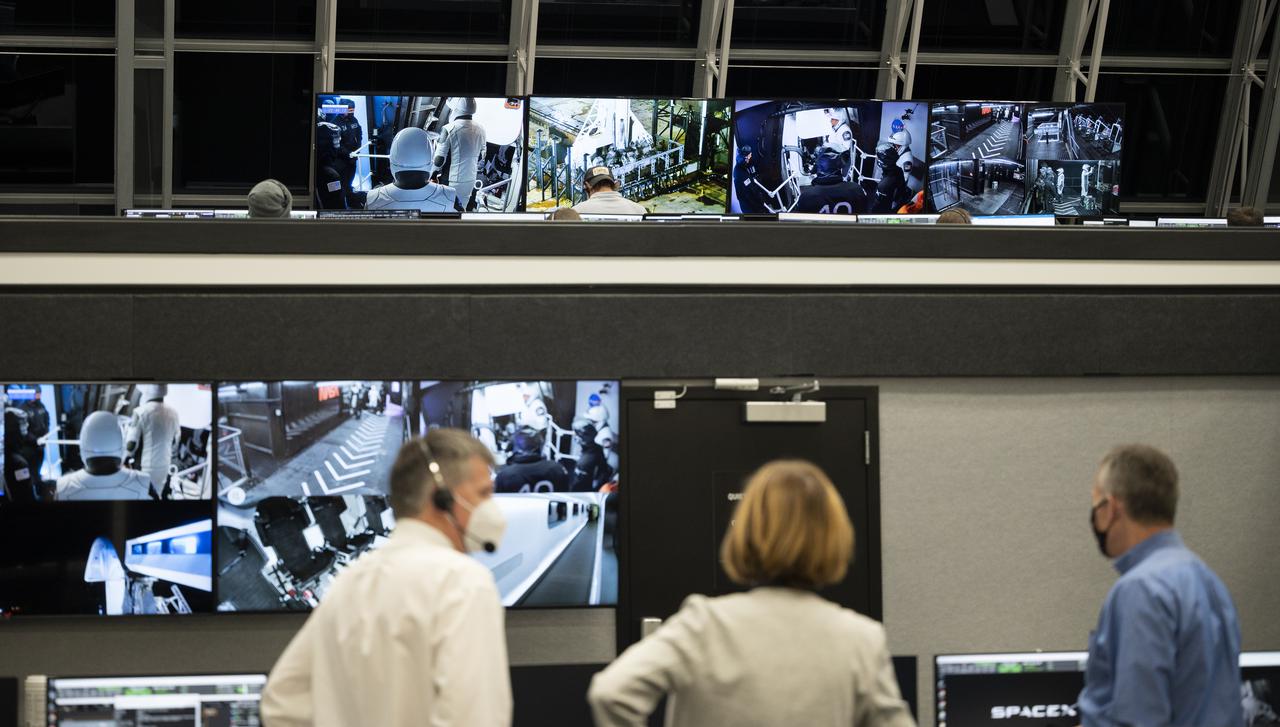
Steve Stich, manager of NASA’s Commercial Crew Program, left, Kathy Lueders, associate administrator for NASA's Human Exploration and Operations Mission Directorate, center, and Phil McAlister, NASA’s director of commercial spaceflight, watch as NASA astronauts Shane Kimbrough and Megan McArthur are seen on monitors as they prepare to board SpaceX’s Crew Dragon spacecraft for launch, Friday, April 23, 2021, in firing room four of the Launch Control Center at NASA’s Kennedy Space Center in Florida. NASA’s SpaceX Crew-2 mission is the second crew rotation mission of the SpaceX Crew Dragon spacecraft and Falcon 9 rocket to the International Space Station as part of the agency’s Commercial Crew Program. Kimbrough, McArthur, ESA (European Space Agency) astronaut Thomas Pesquet, and Japan Aerospace Exploration Agency (JAXA) astronaut Akihiko Hoshide launched at 5:49 a.m. EDT, from Launch Complex 39A at the Kennedy Space Center. Photo Credit: (NASA/Joel Kowsky)
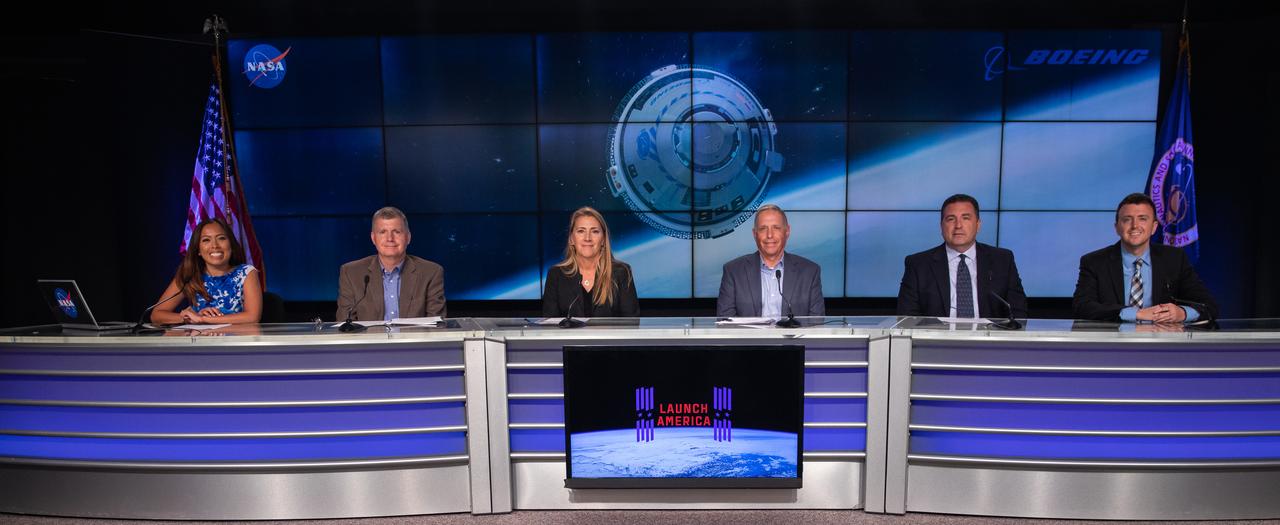
Officials from NASA, Boeing, United Launch Alliance (ULA) and the U.S. Space Force 45th Weather Squadron participate in a prelaunch briefing for NASA’s uncrewed Boeing Orbital Flight Test (OFT-2) at the agency’s Kennedy Space Center in Florida, May 17, 2022. From left to right at the dais are Megan Cruz, NASA Communications; Steve Stich, manager, NASA’s Commercial Crew Program; Dana Weigel, deputy manager, International Space Station Program; Mark Nappi, vice president and manager, Boeing Commercial Crew Program; Gary Wentz, vice president, Government and Commercial Programs, ULA; Will Ulrich, launch weather officer, U.S. Space Force, 45th Weather Squadron. Boeing’s CST-100 Starliner is targeted to launch at 6:54 p.m. EDT on Thursday, May 19, on a ULA Atlas V rocket from Space Launch Complex-41 at Cape Canaveral Space Force Station in Florida to rendezvous and dock with the space station.
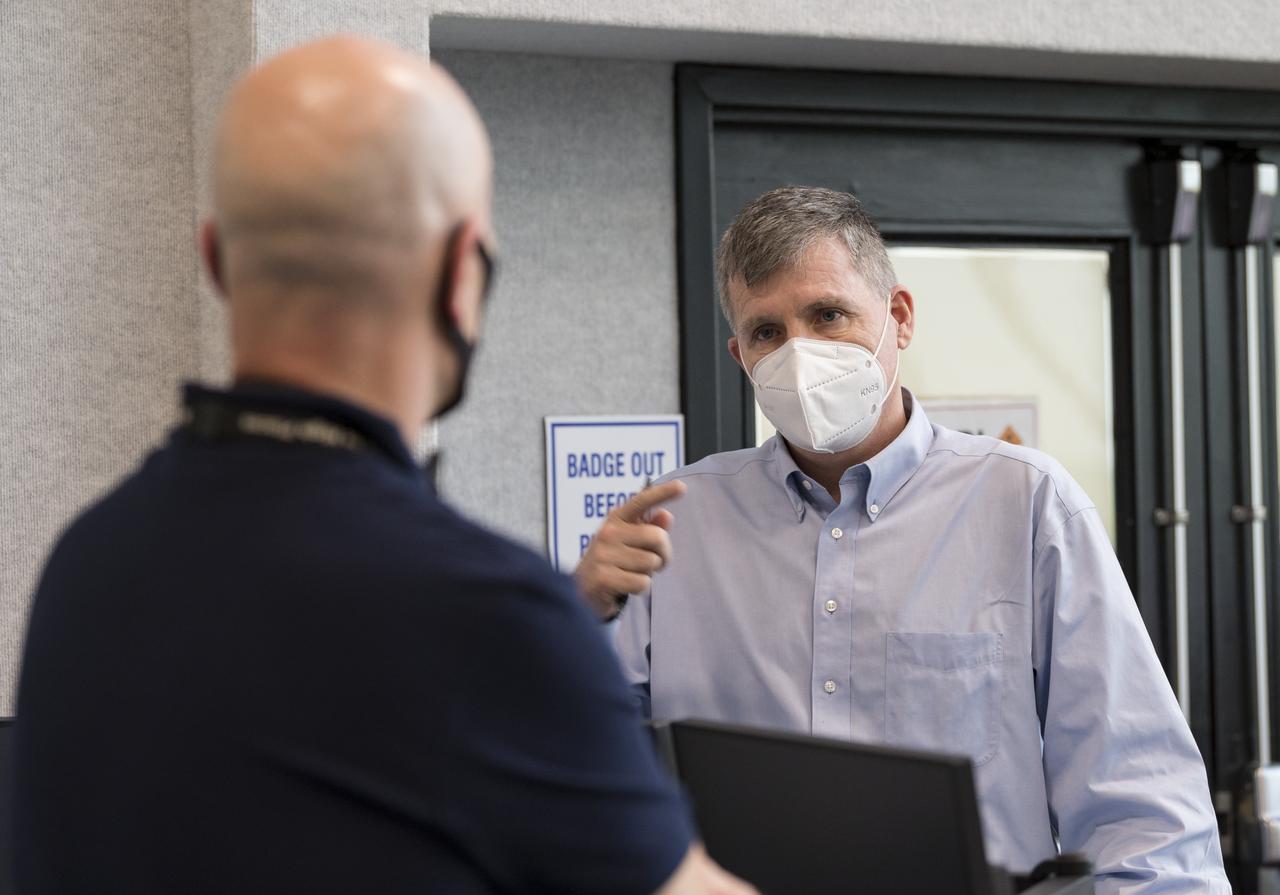
Steve Stich, manager of NASA’s Commercial Crew Program speaks with Stephen Koerner, director of the Flight Operations Directorate at NASA’s Johnson Space Center during a dress rehearsal in preparation for the launch of a SpaceX Falcon 9 rocket carrying the company's Crew Dragon spacecraft on NASA’s SpaceX Crew-1 mission with NASA astronauts Mike Hopkins, Victor Glover, Shannon Walker, and Japan Aerospace Exploration Agency (JAXA) astronaut Soichi Noguchi onboard, Thursday, Nov. 12, 2020, in firing room four of the Launch Control Center at NASA’s Kennedy Space Center in Florida. NASA’s SpaceX Crew-1 mission is the first crew rotation mission of the SpaceX Crew Dragon spacecraft and Falcon 9 rocket to the International Space Station as part of the agency’s Commercial Crew Program. Hopkins, Glover, Walker, and Noguchi are scheduled to launch at 7:49 p.m. EST on Saturday, Nov. 14, from Launch Complex 39A at the Kennedy Space Center. Photo Credit: (NASA/Aubrey Gemignani)
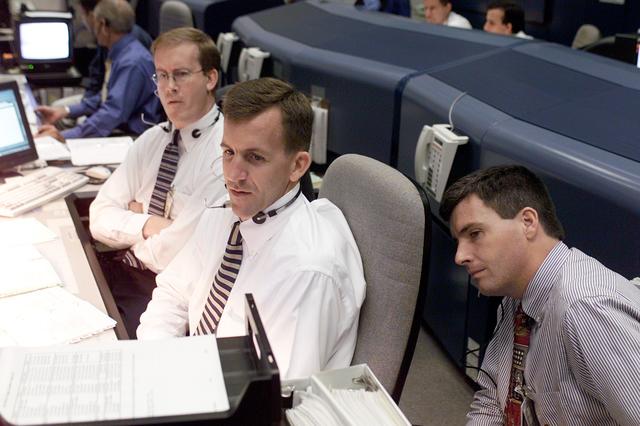
JSC2001-E-25520 (22 August 2001) --- Flight directors John Shannon (left), LeRoy Cain, and Steve Stich monitor data at their consoles in the shuttle flight control room (WFCR) in Houston’s Mission Control Center (MCC). At the time this photo was taken the Space Shuttle Discovery was about to land at Kennedy Space Center, Florida, to mark the end of a successful mission to the International Space Station (ISS).
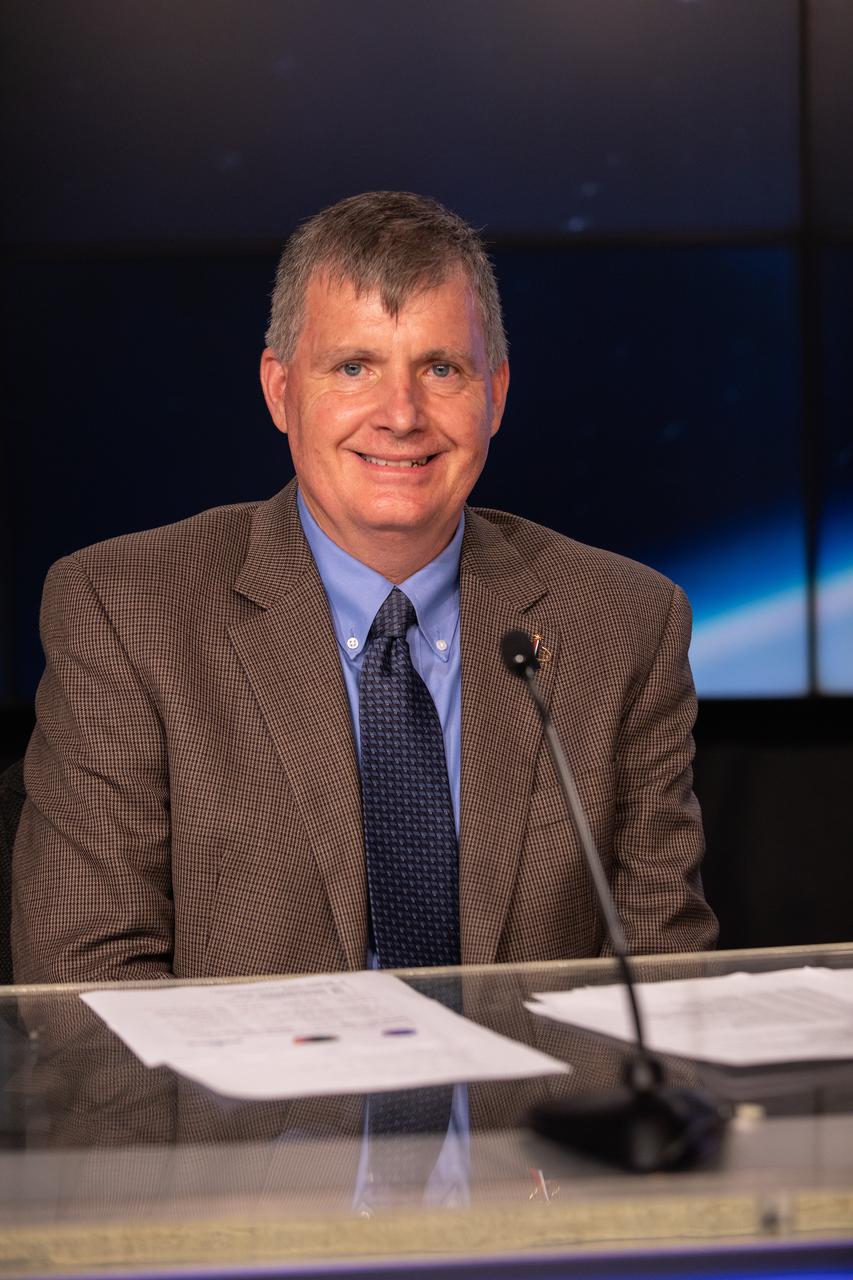
Steve Stich, manager, NASA’s Commercial Crew Program, participates in a prelaunch briefing for Boeing’s Orbital Flight Test-2 (OFT-2) at the agency’s Kennedy Space Center in Florida, July 27, 2021. Boeing’s CST-100 Starliner spacecraft will launch atop a United Launch Alliance Atlas V rocket from Space Launch Complex-41 at Cape Canaveral Space Force Station. The uncrewed OFT-2 will be the Starliner’s second flight for NASA’s Commercial Crew Program.
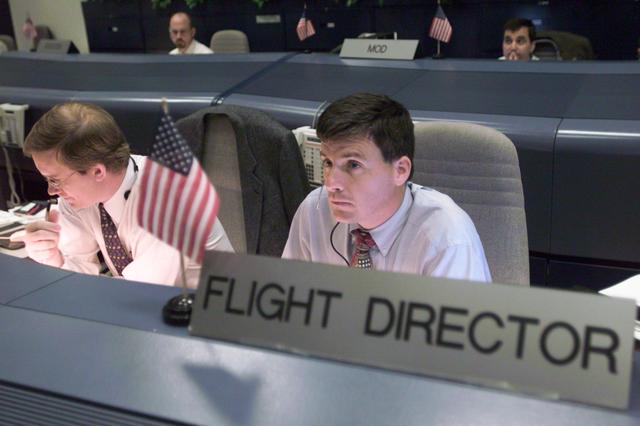
JSC2002-E-26012 (19 June 2002) --- Flight directors John Shannon (left) and Steve Stich are photographed at their consoles in the shuttle flight control room (WFCR) in Houston’s Mission Control Center (MCC). At the time this photo was taken the Space Shuttle Endeavour was about to land at Edwards Air Force Base, California, to mark the end of a successful mission to the International Space Station (ISS).
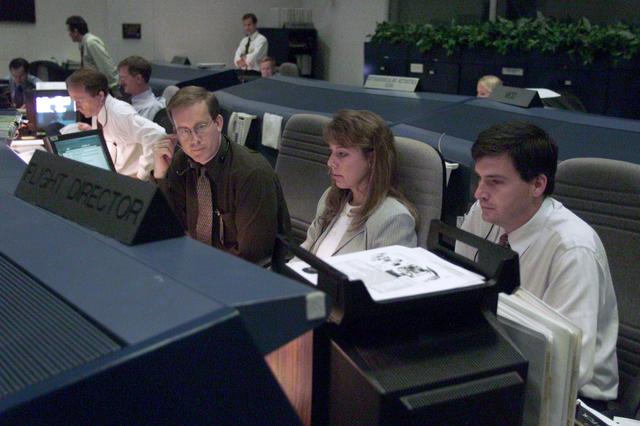
JSC2001-E-25111 (16 August 2001) --- Flight directors John Shannon (left foreground), Kelly Beck, and Steve Stich monitor the data displayed at their consoles in the shuttle flight control room (WFCR) in Houston’s Mission Control Center (MCC). At the time this photo was taken, STS-105 mission specialists Daniel T. Barry and Patrick G. Forrester were performing the first of the two scheduled space walks to perform work on the International Space Station (ISS).
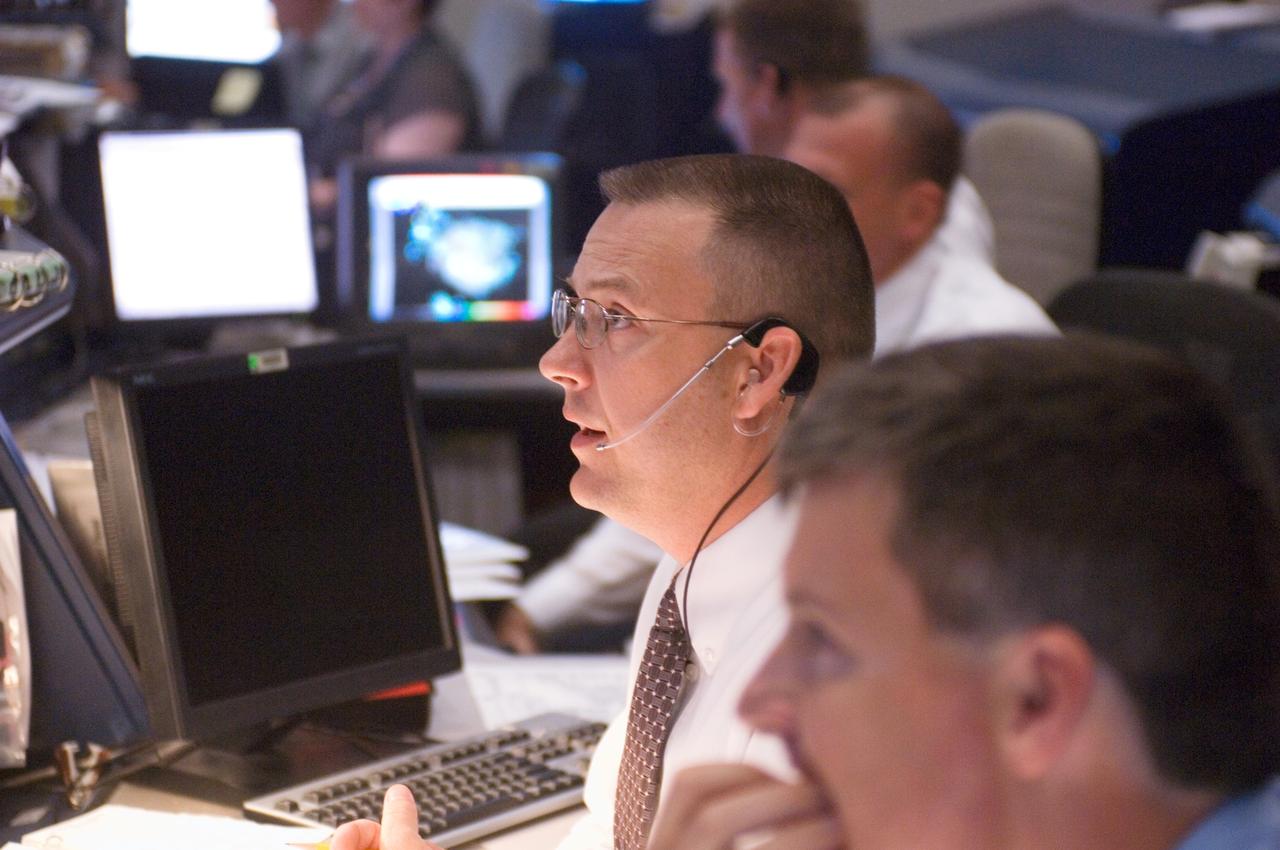
JSC2007-E-28288 (8 June 2007) --- In the space shuttle flight control room of Johnson Space Center's Mission Control Center (MCC), flight directors Norm Knight and Steve Stich (foreground) monitor launch countdown activities a few hundred miles away in Florida, site of Space Shuttle Atlantis' scheduled STS-117 launch. Liftoff occurred at 7:38 p.m. (EDT) on June 8, 2007 from launch pad 39A at Kennedy Space Center.
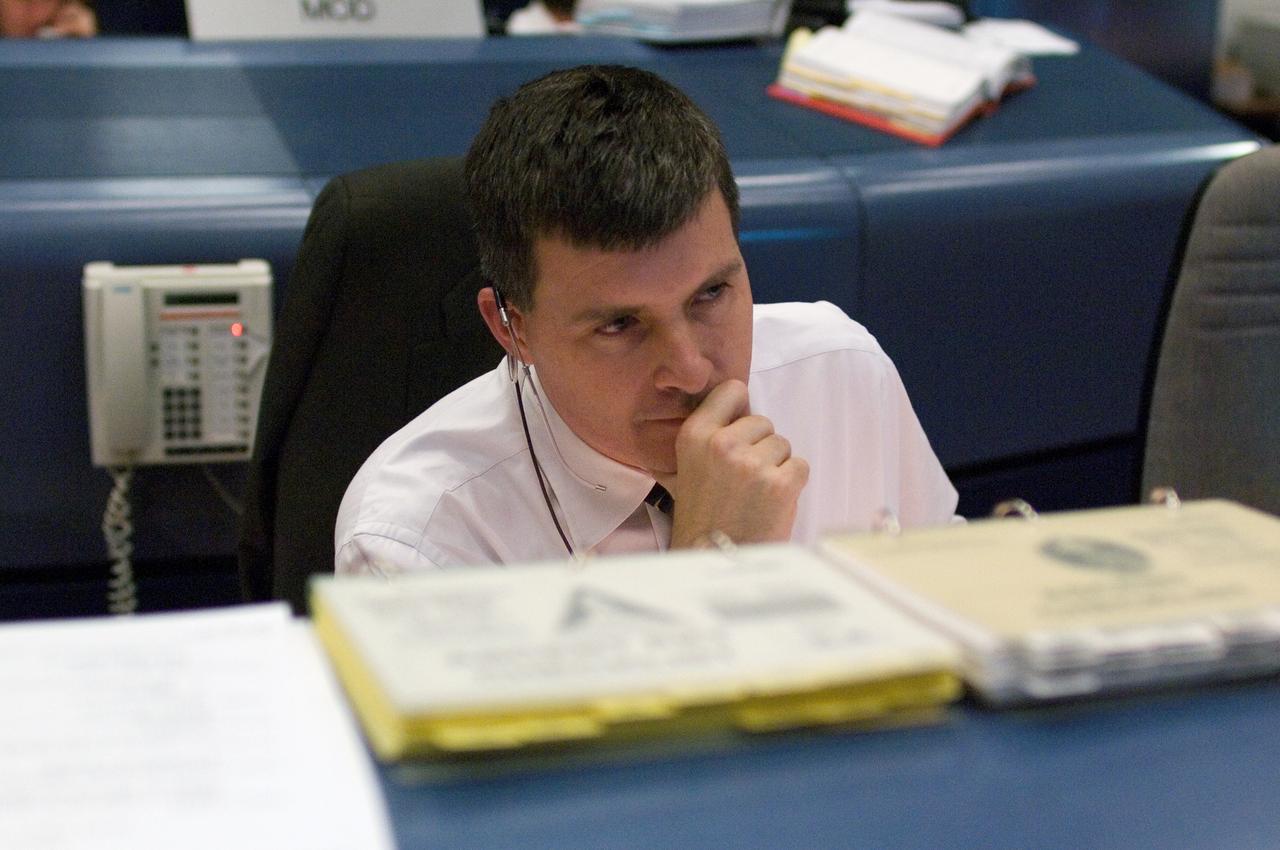
JSC2006-E-53281 (7 Dec. 2006) --- Steve Stich, STS-116 ascent flight director, monitors data and video at his console in the space shuttle flight control room within the Johnson Space Center's Mission Control Center. Flight controllers were anticipating the scheduled launch of the Space Shuttle Discovery several hundred miles away in Florida, but questionable weather conditions later caused postponement of the liftoff until Dec. 9.
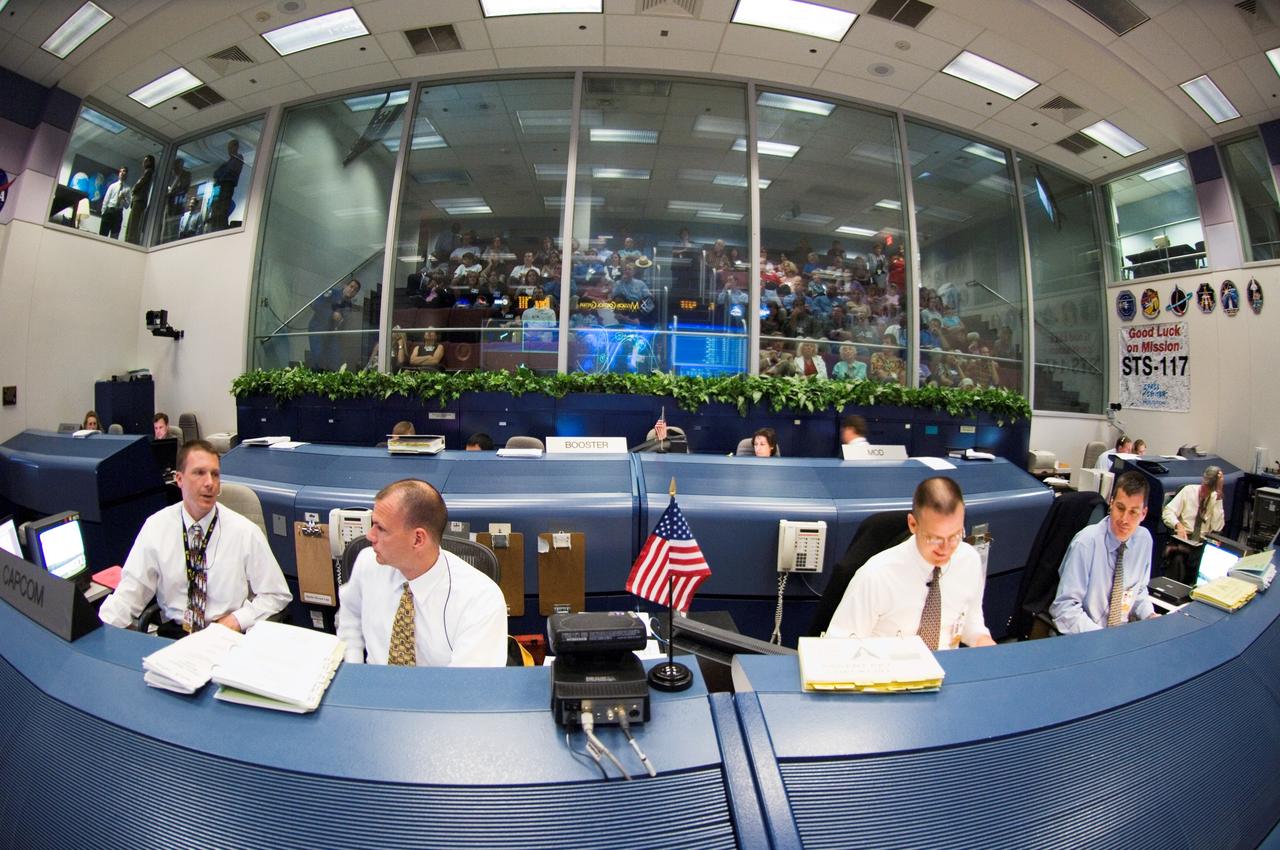
JSC2007-E-28303 (8 June 2007) --- A "fish-eye" lens perspective of activity in the shuttle flight control room of Houston's Mission Control Center, as flight controllers anticipate an ontime launch for STS-117 several hundred miles away at the Kennedy Space Center. From the left are astronauts Terry Virts and Dominic (Tony) Antonelli, both spacecraft communicators (CAPCOM), along with flight directors Norm Knight (ascent) and Steve Stich.
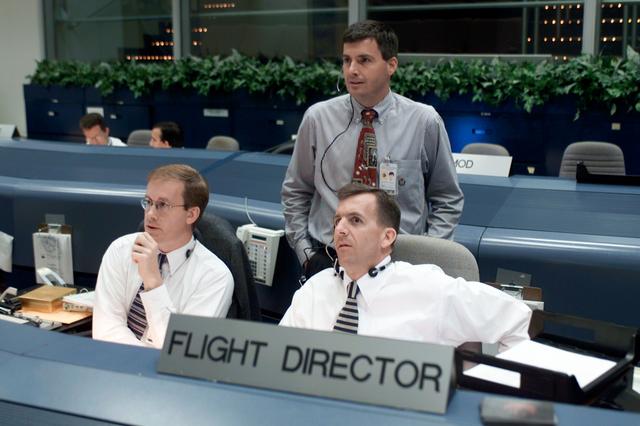
JSC2001-E-25512 (22 August 2001) --- Flight directors John Shannon (left), Steve Stich, and LeRoy Cain watch the large screens from their consoles in the shuttle flight control room (WFCR) in Houston’s Mission Control Center (MCC). At the time this photo was taken the Space Shuttle Discovery was about to land at Kennedy Space Center, Florida, to mark the end of a successful mission to the International Space Station (ISS).
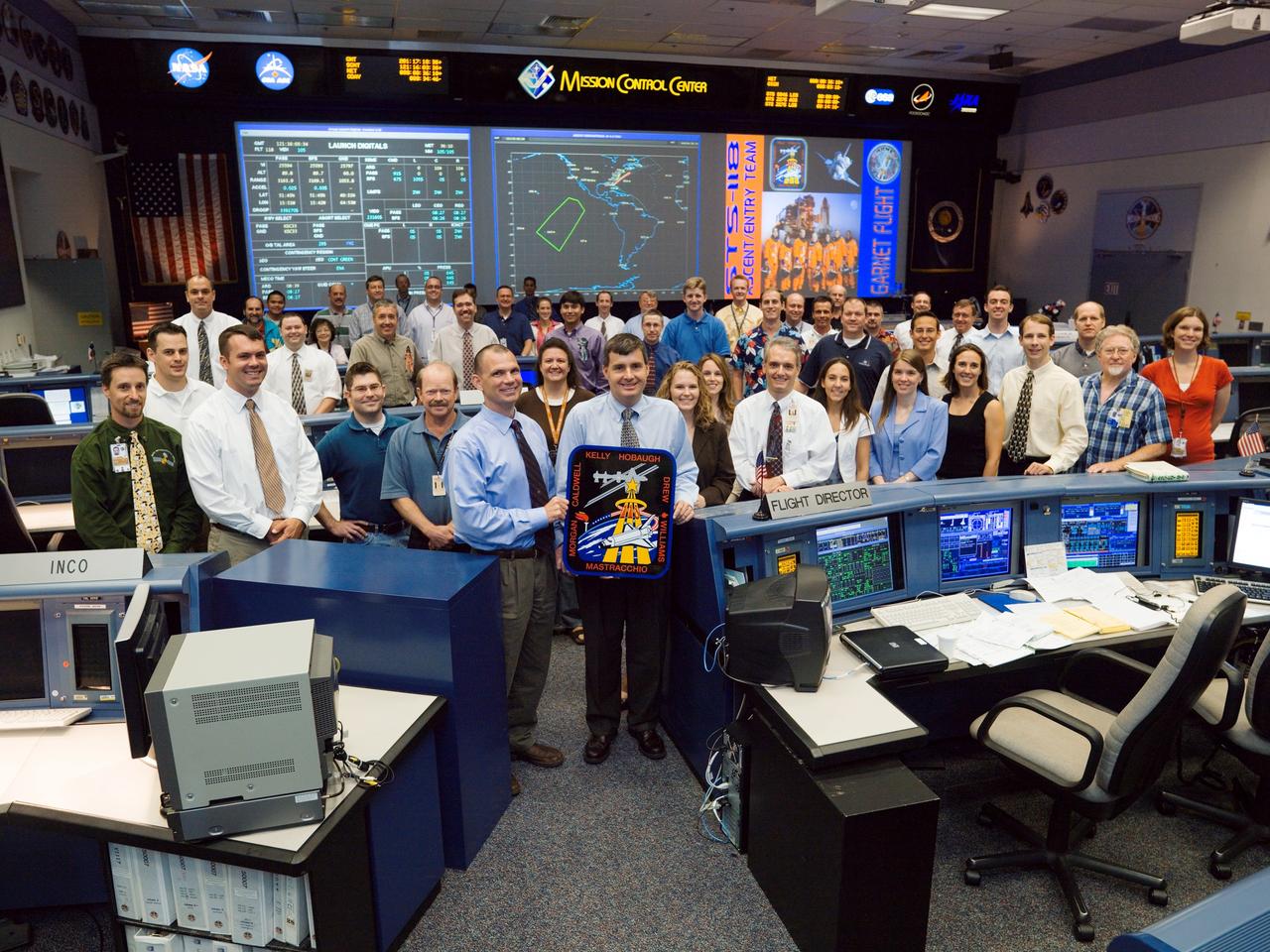
JSC2007-E-41011 (20 July 2007) --- STS-118 Ascent/Entry flight control team pose for a group portrait in the space shuttle flight control room of Houston's Mission Control Center (MCC). Flight director Steve Stich (center right) and astronaut Tony Antonelli, spacecraft communicator (CAPCOM), hold the STS-118 mission logo.
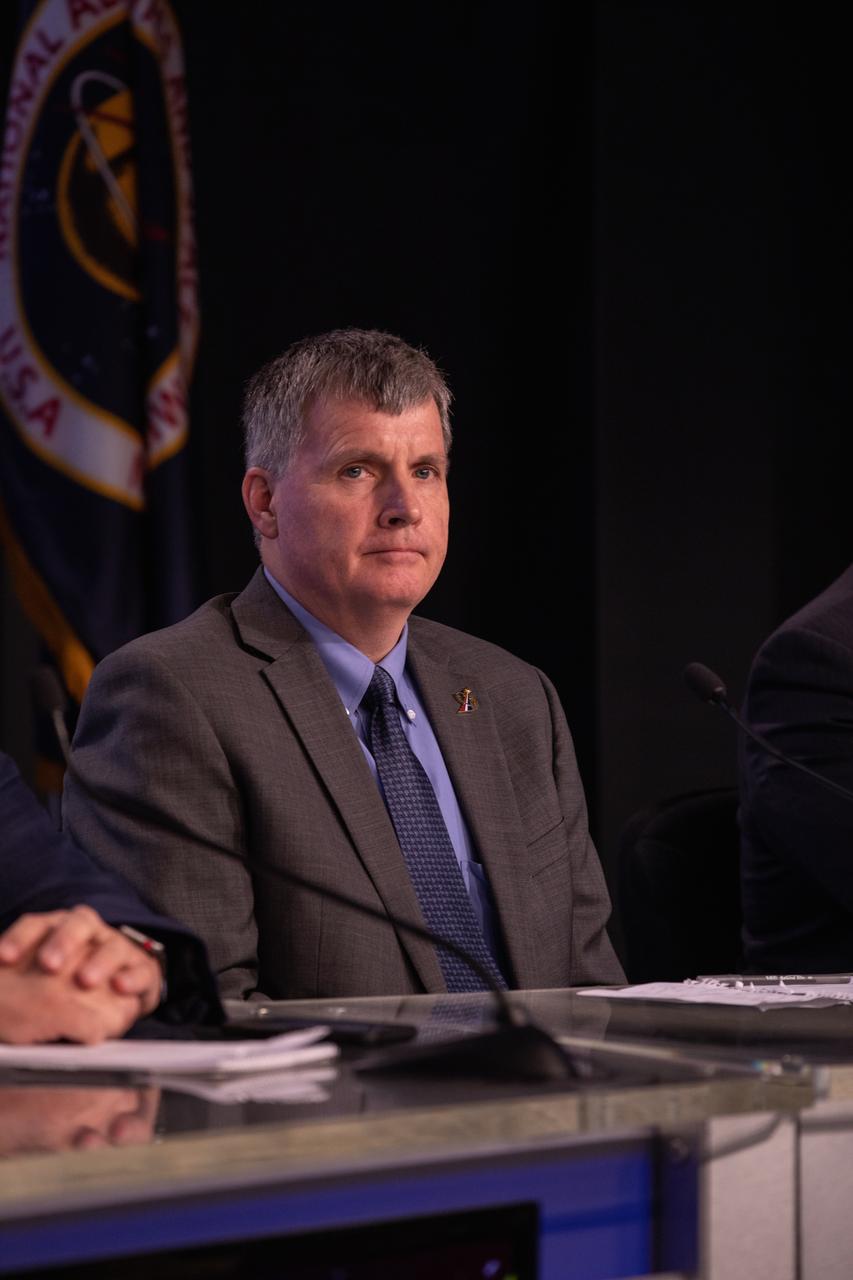
Steve Stich, deputy manager, NASA Commercial Crew Program, listens during a briefing at the agency’s Kennedy Space Center in Florida following launch of Boeing’s Orbital Flight Test, Dec. 20, 2019. Boeing’s CST-100 Starliner spacecraft launched atop a United Launch Alliance Atlas V rocket from Space Launch Complex 41 at Cape Canaveral Air Force Station at 6:36 a.m. EST. The uncrewed Orbital Flight Test is the Starliner’s first flight for NASA’s Commercial Crew Program.
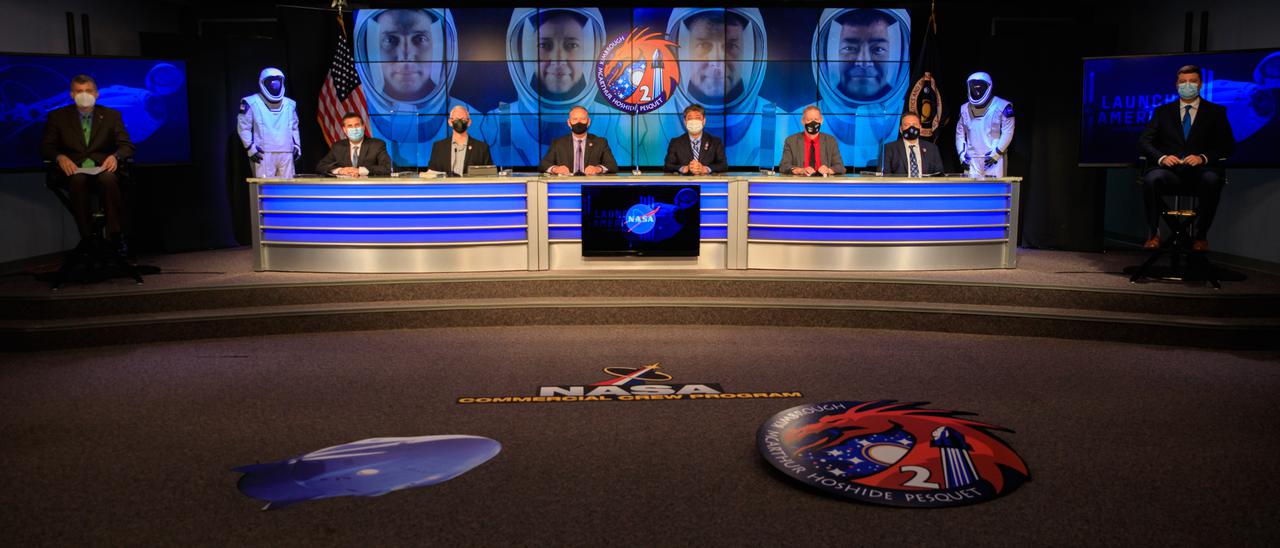
A SpaceX Crew-2 prelaunch news conference was held at NASA’s Kennedy Space Center in Florida on April 20, 2021. Participants included, from left to right: Steve Stich, manager, NASA Commercial Crew Program; Joel Montalbano, manager, International Space Station Program; Benji Reed, senior director, Human Spaceflight Programs, SpaceX; Norm Knight, deputy manager, Flight Operations Directorate; Junichi Sakai, manager, International Space Station Program, JAXA; Frank de Winne, manager, International Space Station Program, ESA; Kirt Costello, chief scientist, International Space Station Program; and Brian Cizek, launch weather officer, 45th Weather Squadron, U.S. Space Force.
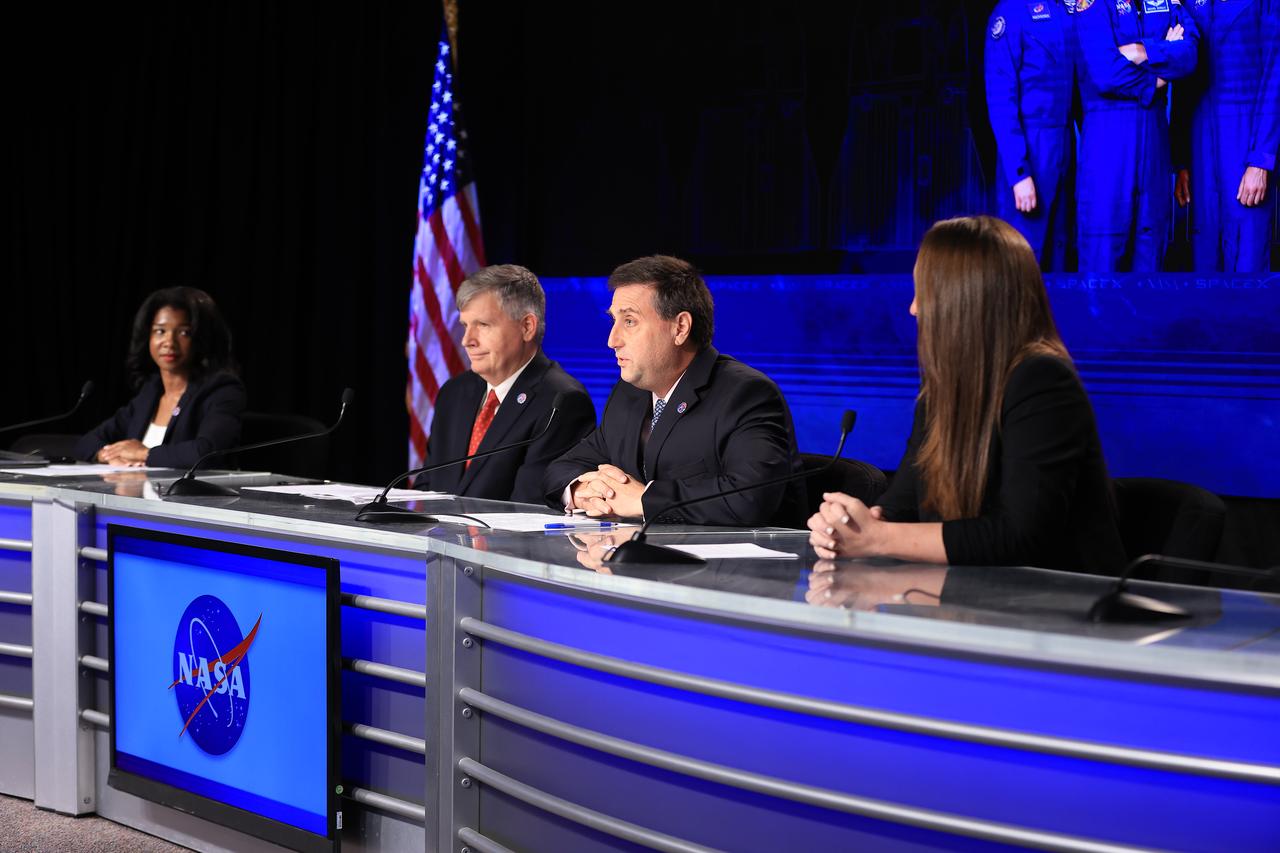
A postlaunch news conference is hosted at the agency’s Kennedy Space Center in Florida on Monday, March 4, 2024, following the launch of NASA’s SpaceX Crew-8 mission. From left to right are Jasmine Hopkins, NASA Communications; Steve Stich, manager of NASA’s Commercial Crew Program; Joel Montalbano, manager of NASA’s International Space Station Program; and Sarah Walker, director of SpaceX’s Dragon Mission Management. NASA astronauts Commander Matthew Dominick, Pilot Michael Barratt, and Mission Specialist Jeanette Epps, along with Roscosmos cosmonaut Mission Specialist Alexander Grebenkin, launched aboard SpaceX’s Dragon spacecraft from Kennedy at 10:53 p.m. Sunday, March 3 and will spend about six months at the orbiting laboratory as part of the agency’s Commercial Crew Program.
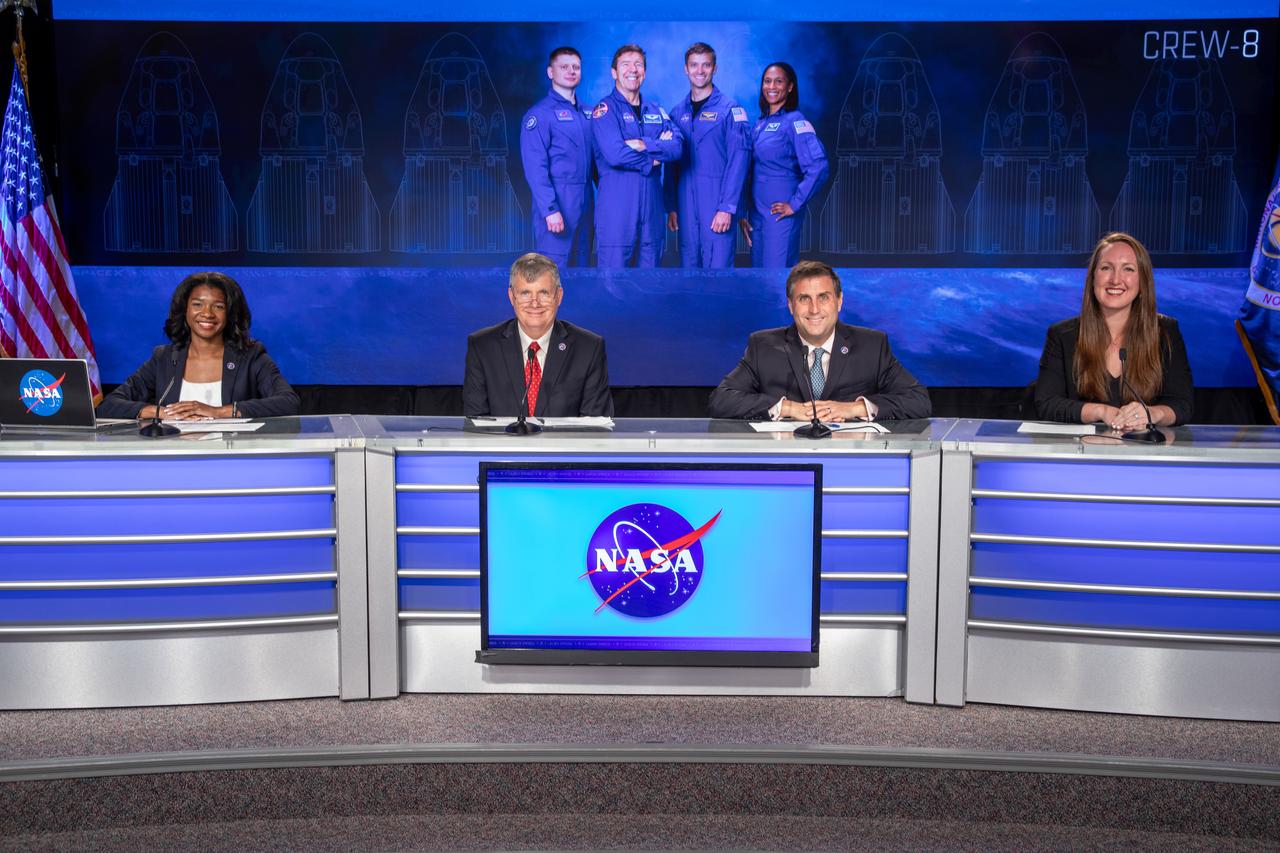
A postlaunch news conference is hosted at the agency’s Kennedy Space Center in Florida on Monday, March 4, 2024, following the launch of NASA’s SpaceX Crew-8 mission. From left to right are Jasmine Hopkins, NASA Communications; Steve Stich, manager of NASA’s Commercial Crew Program; Joel Montalbano, manager of NASA’s International Space Station Program; and Sarah Walker, director of SpaceX’s Dragon Mission Management. NASA astronauts Commander Matthew Dominick, Pilot Michael Barratt, and Mission Specialist Jeanette Epps, along with Roscosmos cosmonaut Mission Specialist Alexander Grebenkin, launched aboard SpaceX’s Dragon spacecraft from Kennedy at 10:53 p.m. Sunday, March 3 and will spend about six months at the orbiting laboratory as part of the agency’s Commercial Crew Program.
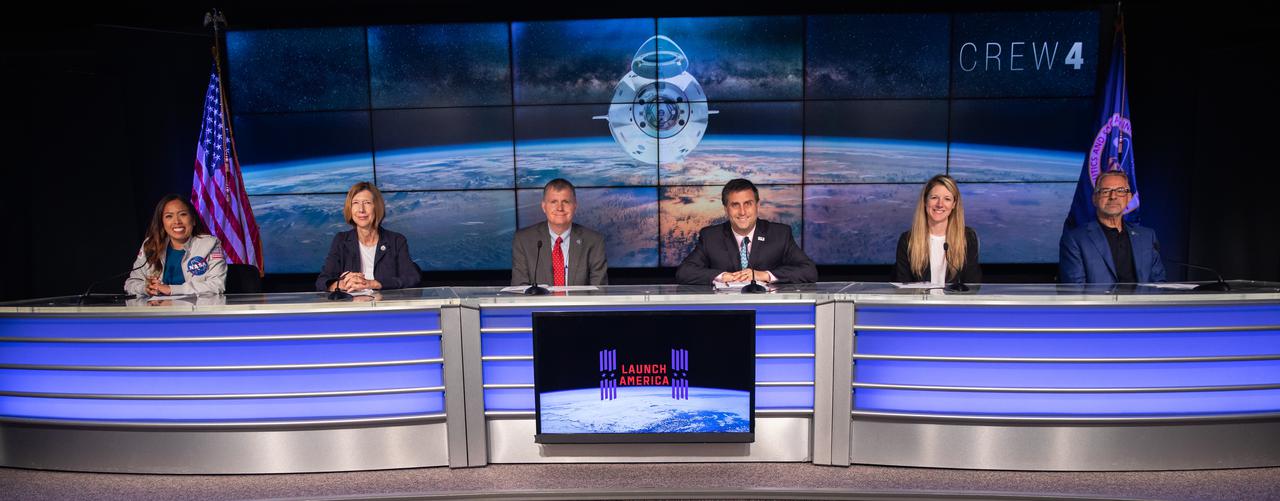
From left, moderator Megan Cruz, NASA Communications; Kathryn Lueders, associate administrator, NASA’s Space Operations Mission Directorate; Steve Stich, manager, NASA’s Commercial Crew Program; Joel Montalbano, manager, NASA’s International Space Station Program; Jessica Jensen, vice president of customer operations and Integration, SpaceX; and Josef Aschbacher, director general, ESA (European Space Agency) participate in a Crew-4 postlaunch news conference April 27, 2022, at NASA’s Kennedy Space Center in Florida. The SpaceX Crew Dragon spacecraft, powered by the company’s Falcon 9 rocket, lifted off from Kennedy’s Launch Complex 39A at 3:52 a.m. EDT on April 27. Named Freedom by mission astronauts Kjell Lindgren, Bob Hines, Jessica Watkins, and Samantha Cristoforetti, Dragon is scheduled to dock to the space station today at 8:15 p.m. EDT.
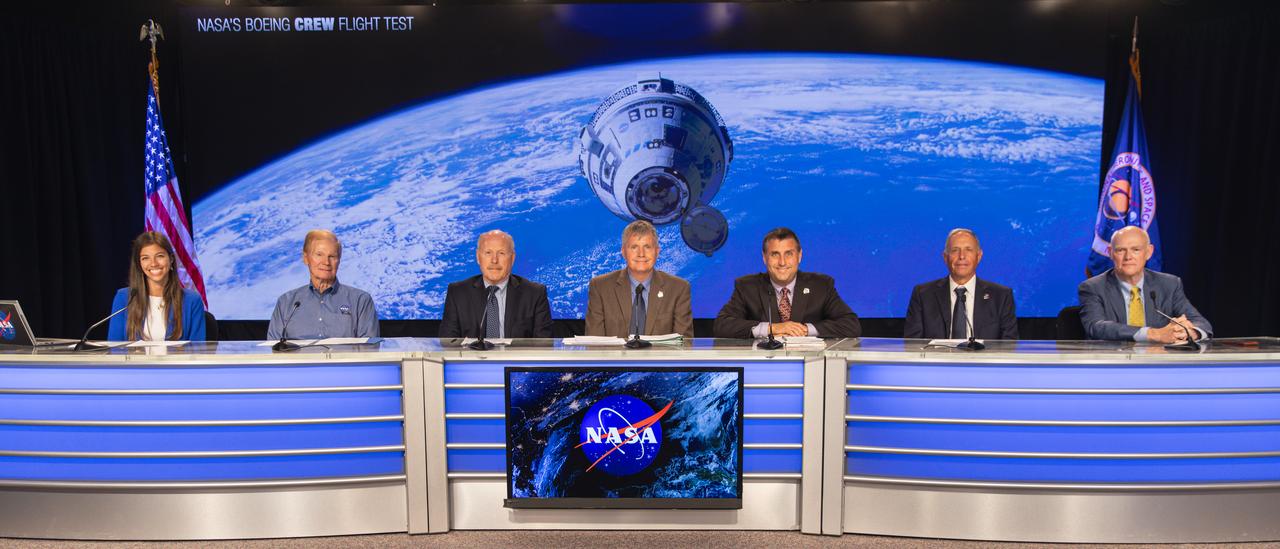
A postlaunch news conference at the agency’s Kennedy Space Center in Florida is held on Wednesday, June 5, 2024, following the launch of NASA’s Boeing Crew Flight Test with NASA astronauts Butch Wilmore and Suni Williams from Space Launch Complex-41 at nearby Cape Canaveral Space Force Station. Participants, from left to right are, Antonia Jaramillo, NASA Communications; NASA Administrator Bill Nelson; NASA Associate Administrator for Space Operations Ken Bowersox; NASA Commercial Crew Program Manager Steve Stich; NASA Deputy Associate Administrator for Space Operations Mission Directorate, Joel Montalbano; Vice President and Program Manager of Boeing’s Commercial Crew Program Mark Nappi; and ULA (United Launch Alliance) President of Government and CEO Tory Bruno,. Liftoff of the ULA Atlas V rocket and Boeing Starliner spacecraft occurred at 10:52 a.m. EDT on Wednesday, June 5.
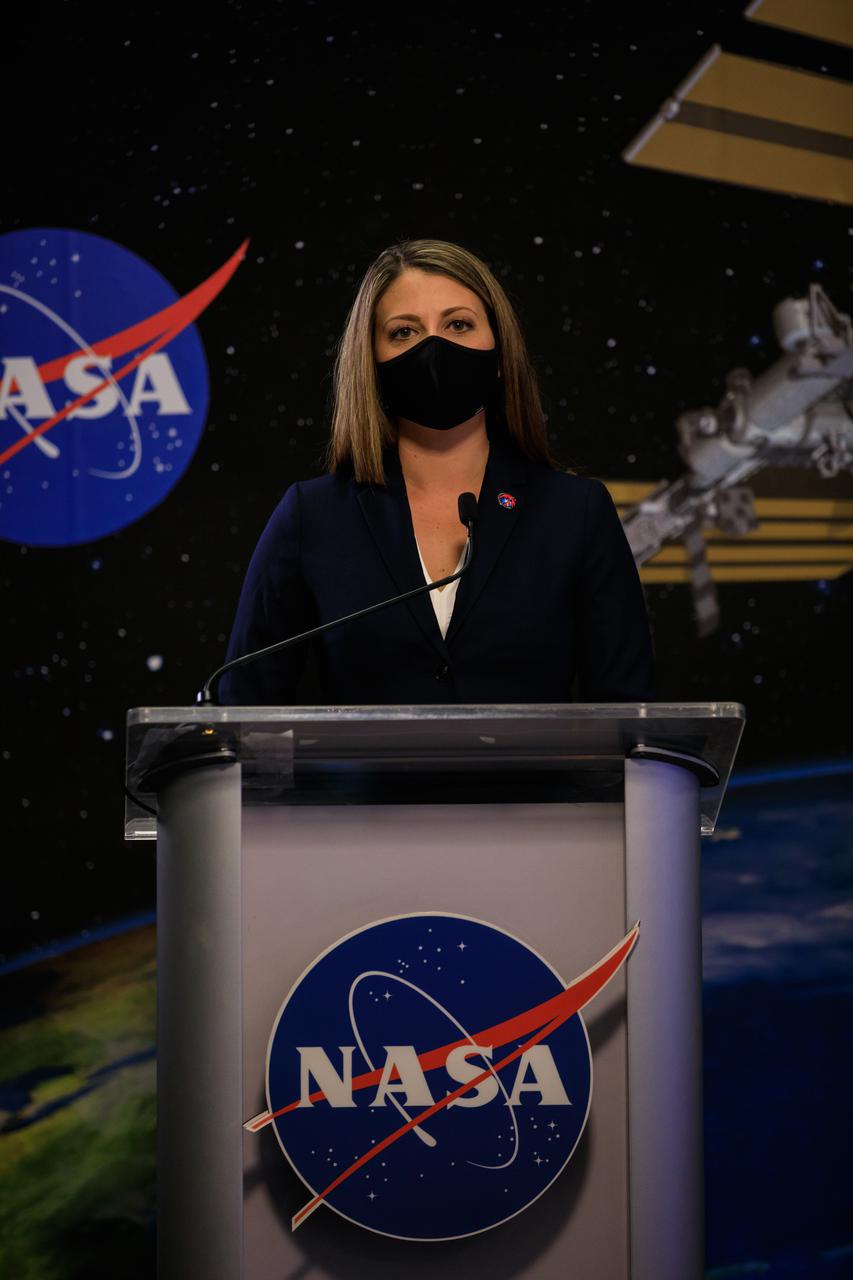
Marie Lewis, NASA Communications, moderates the SpaceX Crew-2 prelaunch news conference held at NASA’s Kennedy Space Center in Florida on April 20, 2021. Participants included: Steve Stich, manager, NASA Commercial Crew Program; Joel Montalbano, manager, International Space Station Program; Benji Reed, senior director, Human Spaceflight Programs, SpaceX; Norm Knight, deputy manager, Flight Operations Directorate; Junichi Sakai, manager, International Space Station Program, JAXA; Frank de Winne, manager, International Space Station Program, ESA; Kirt Costello, chief scientist, International Space Station Program; and Brian Cizek, launch weather officer, 45th Weather Squadron, U.S. Space Force.
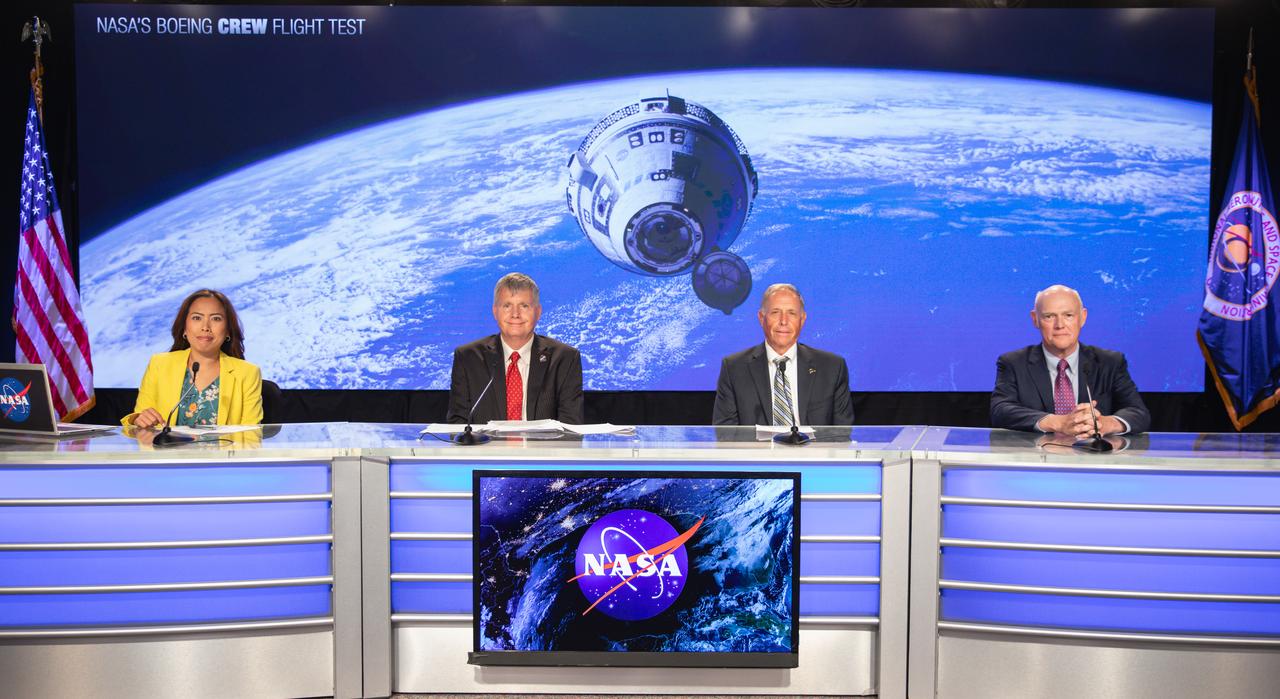
A news conference is held at the agency’s Kennedy Space Center in Florida on Saturday, June 1, 2024, after the second launch attempt of NASA’s Boeing Crew Flight Test scrubbed for the day. As part of the agency’s Commercial Crew Program, NASA astronauts Butch Wilmore and Suni Williams will be the first to launch to the International Space Station aboard Boeing’s Starliner spacecraft atop a ULA (United Launch Alliance) Atlas V rocket from Space Launch Complex-41 at nearby Cape Canaveral Space Force Station. Participants, from left to right, are Megan Cruz, NASA Communications; Steve Stich, NASA Commercial Crew Program manager; Mark Nappi, vice president and program manager for the Commercial Crew Program at Boeing; and Tory Bruno, ULA president and CEO.
Steve Stich, manager, Commercial Crew Program at Kennedy Space Center, speaks to members of the news media during a postlaunch news conference for the SpaceX Crew-6 mission at Kennedy’s NASA News Center in Florida on March 2, 2023. The SpaceX Falcon 9 rocket, carrying the Dragon spacecraft Endeavour for NASA’s Crew-6 mission to the International Space Station lifted off at 12:34 a.m. EST. Aboard Dragon are NASA astronauts Stephen Bowen, spacecraft commander, and Warren Hoburg, pilot, along with mission specialists Sultan Alneyadi, UAE (United Arab Emirates) astronaut, and Andrey Fedyaev, Roscosmos cosmonaut. Crew-6 is the sixth crew rotation mission with SpaceX to the station, and the seventh flight of Dragon with people as part of the agency’s Commercial Crew Program.
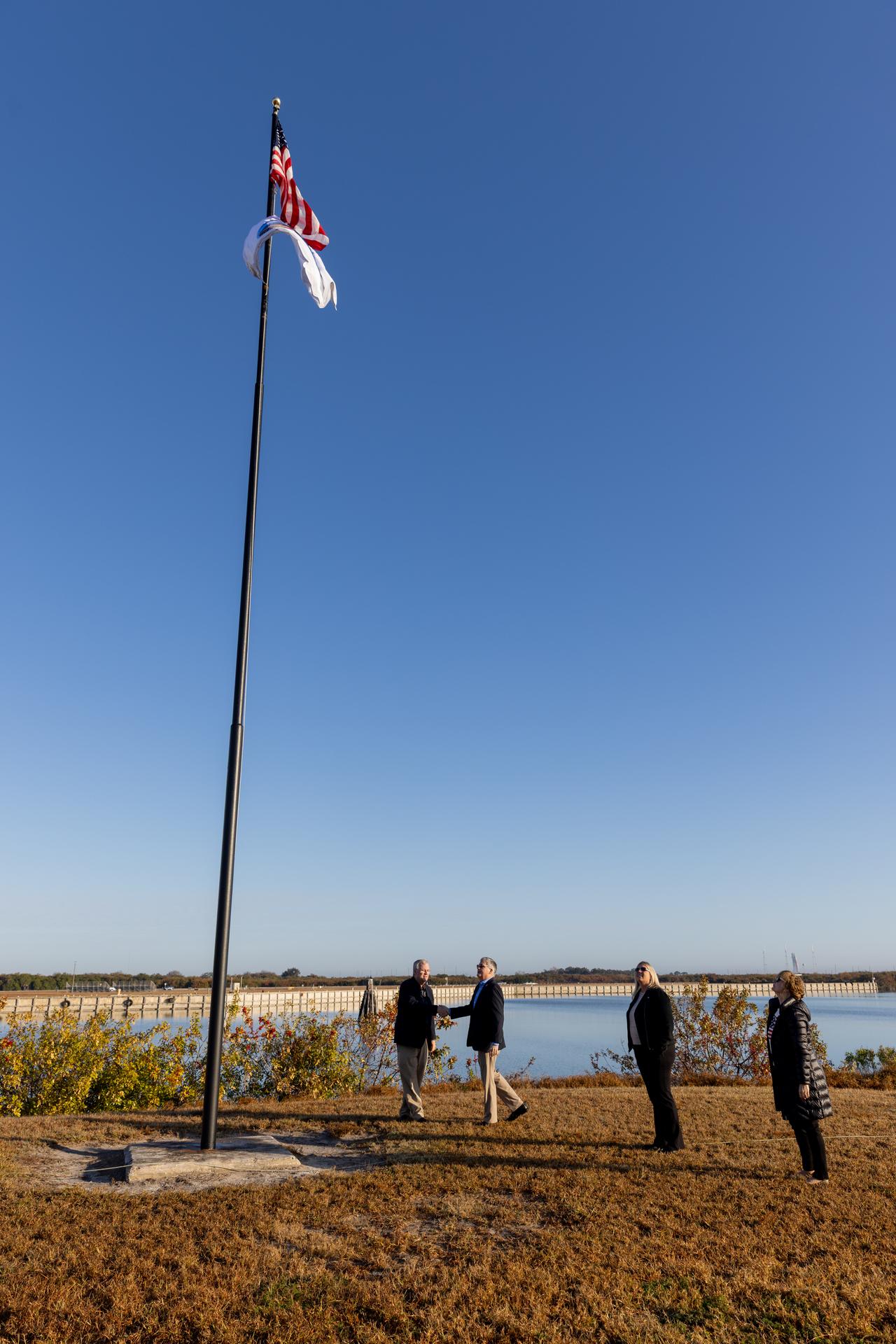
From left, Steve Sullivan, chief engineer to NASA’s Commercial Crew Program; Steve Stich, manager, Commercial Crew Program; Dana Hutcherson, deputy program manager, Commercial Crew Program; and Jackie Sullivan, participate in raising the agency’s SpaceX Crew-12 mission flag near the countdown clock at the NASA News Center at the agency’s Kennedy Space Center in Florida on Monday, Feb. 9, 2026. The Crew-12 mission will send NASA astronauts Jessica Meir and Jack Hathaway, ESA (European Space Agency) astronaut Sophie Adenot, and Roscosmos cosmonaut Andrey Fedyaev to the International Space Station aboard SpaceX’s Dragon spacecraft and Falcon 9 rocket no earlier than 5:38 a.m. EST, Thursday, Feb. 12, from Cape Canaveral Space Force Station’s Space Launch Complex 40.
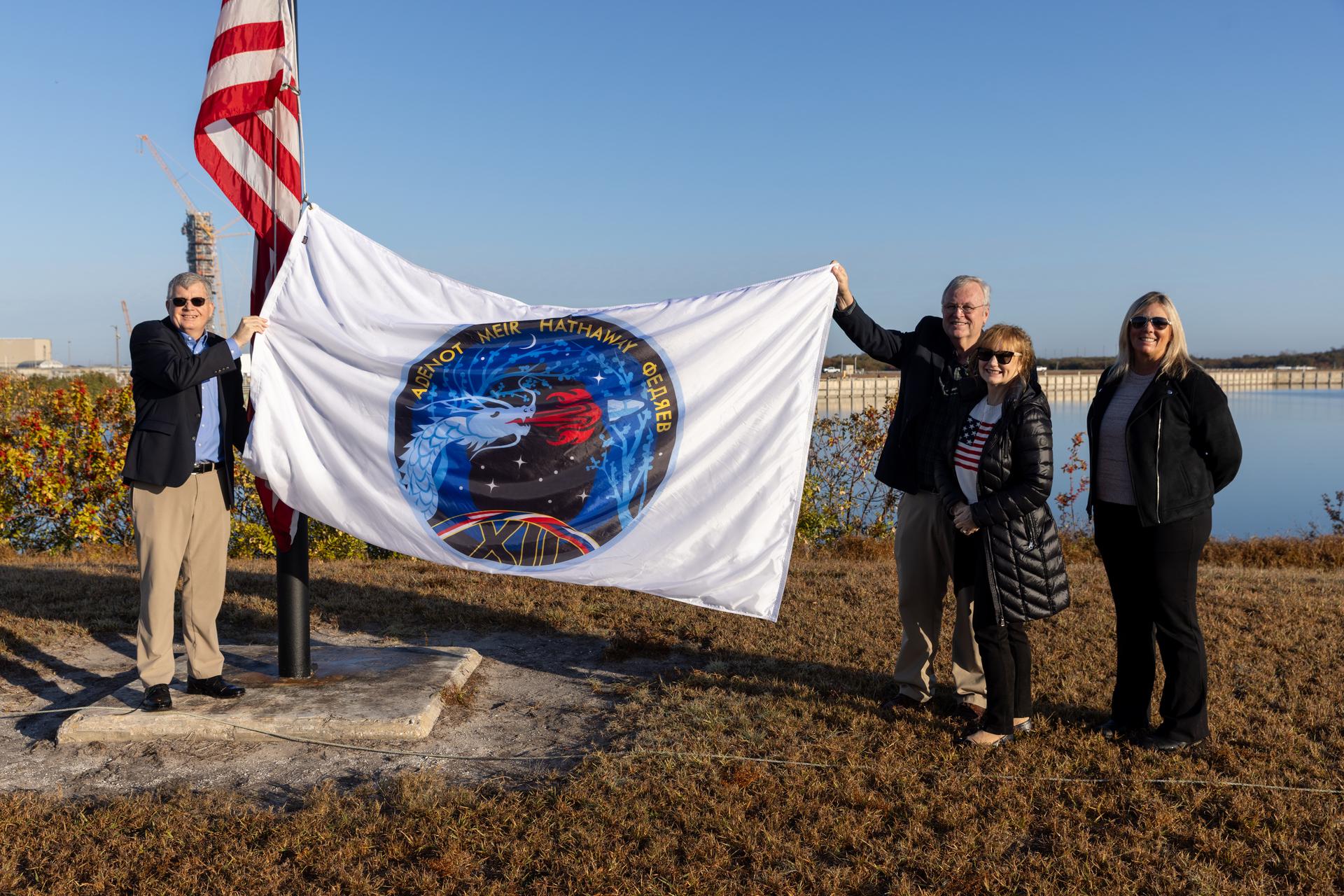
From left, Steve Stich, manager, NASA’s Commercial Crew Program; Steve Sullivan, chief engineer to NASA’s Commercial Crew Program; Jackie Sullivan; and Dana Hutcherson, deputy program manager, NASA’s Commercial Crew Program, participate in raising the agency’s SpaceX Crew-12 mission flag near the countdown clock at the NASA News Center at the agency’s Kennedy Space Center in Florida on Monday, Feb. 9, 2026. The Crew-12 mission will send NASA astronauts Jessica Meir and Jack Hathaway, ESA (European Space Agency) astronaut Sophie Adenot, and Roscosmos cosmonaut Andrey Fedyaev to the International Space Station aboard SpaceX’s Dragon spacecraft and Falcon 9 rocket no earlier than 5:38 a.m. EST, Thursday, Feb. 12, from Cape Canaveral Space Force Station’s Space Launch Complex 40.
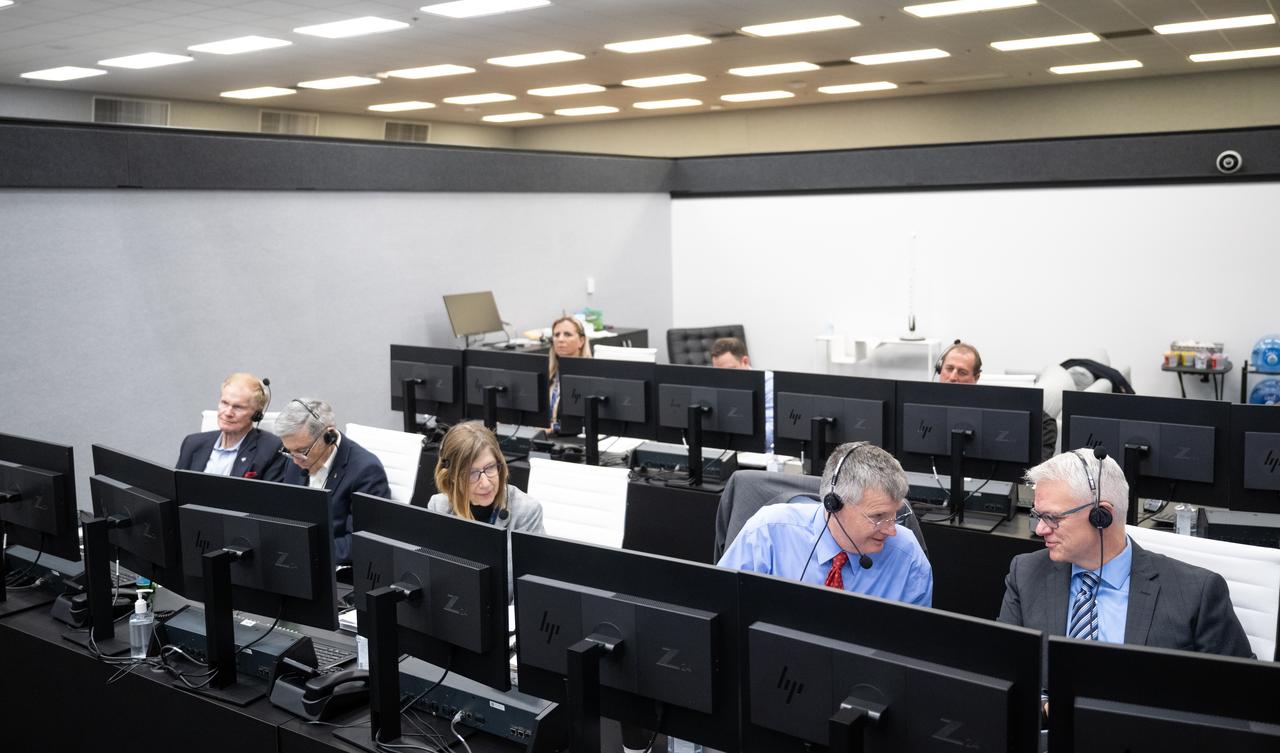
NASA Administrator Bill Nelson, left, Bob Cabana, NASA associate administrator, second from left, Kathy Lueders, associate administrator for NASA's Space Operations Mission Directorate, center, Steve Stich, manager of NASA’s Commercial Crew Program, second from right, and Benji Reed, senior director of Human Spaceflight Programs at SpaceX, right, monitor the countdown of the launch of a SpaceX Falcon 9 rocket carrying the company's Dragon spacecraft on NASA’s SpaceX Crew-6 mission with NASA astronauts Stephen Bowen and Warren "Woody" Hoburg, UAE (United Arab Emirates) astronaut Sultan Alneyadi, and Roscosmos cosmonaut Andrey Fedyaev onboard, Wednesday, March 1, 2023, in firing room four of the Rocco A. Petrone Launch Control Center at NASA’s Kennedy Space Center in Florida. NASA’s SpaceX Crew-6 mission is the first crew rotation mission of the SpaceX Dragon spacecraft and Falcon 9 rocket to the International Space Station as part of the agency’s Commercial Crew Program. Bowen, Hoburg, Alneyadi, and Fedyaev launched at 12:34 a.m. EST on March 2, from Launch Complex 39A at the Kennedy Space Center. Photo Credit: (NASA/Joel Kowsky)
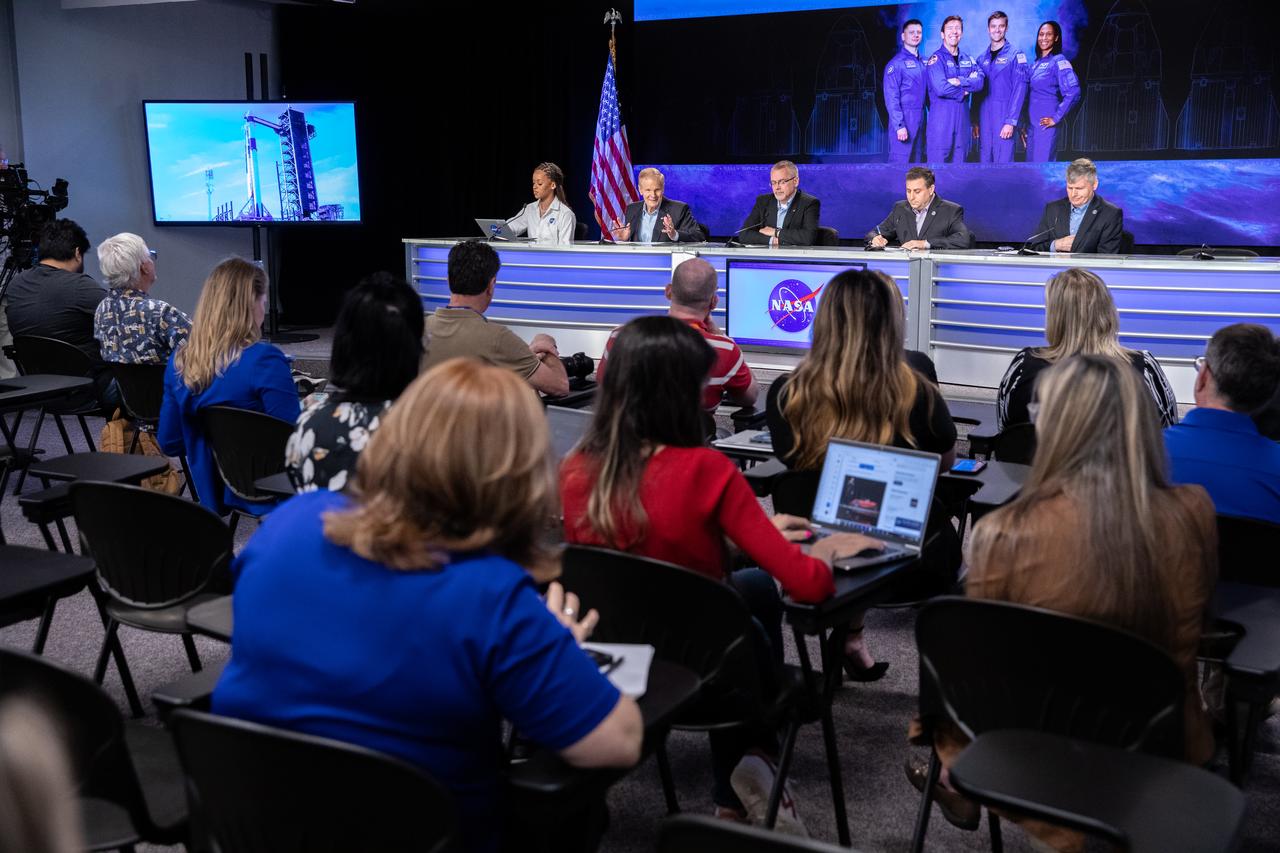
Officials from NASA participate in the NASA Administrator Media Briefing inside the John Holliman Auditorium of the News Center at NASA’s Kennedy Space Center in Florida on Wednesday, Feb. 28, 2024, ahead of NASA’s SpaceX Crew-8 mission to the International Space Station. The launch is targeted for 12:04 a.m. EST, Friday, March 1, from Launch Complex 39A at Kennedy. From left to right are NASA Press Secretary Faith McKie, NASA Administrator Bill Nelson, NASA Associate Administrator Jim Free, International Space Station Program Manager Joel Montalbano, and Commercial Crew Program Manager Steve Stich.
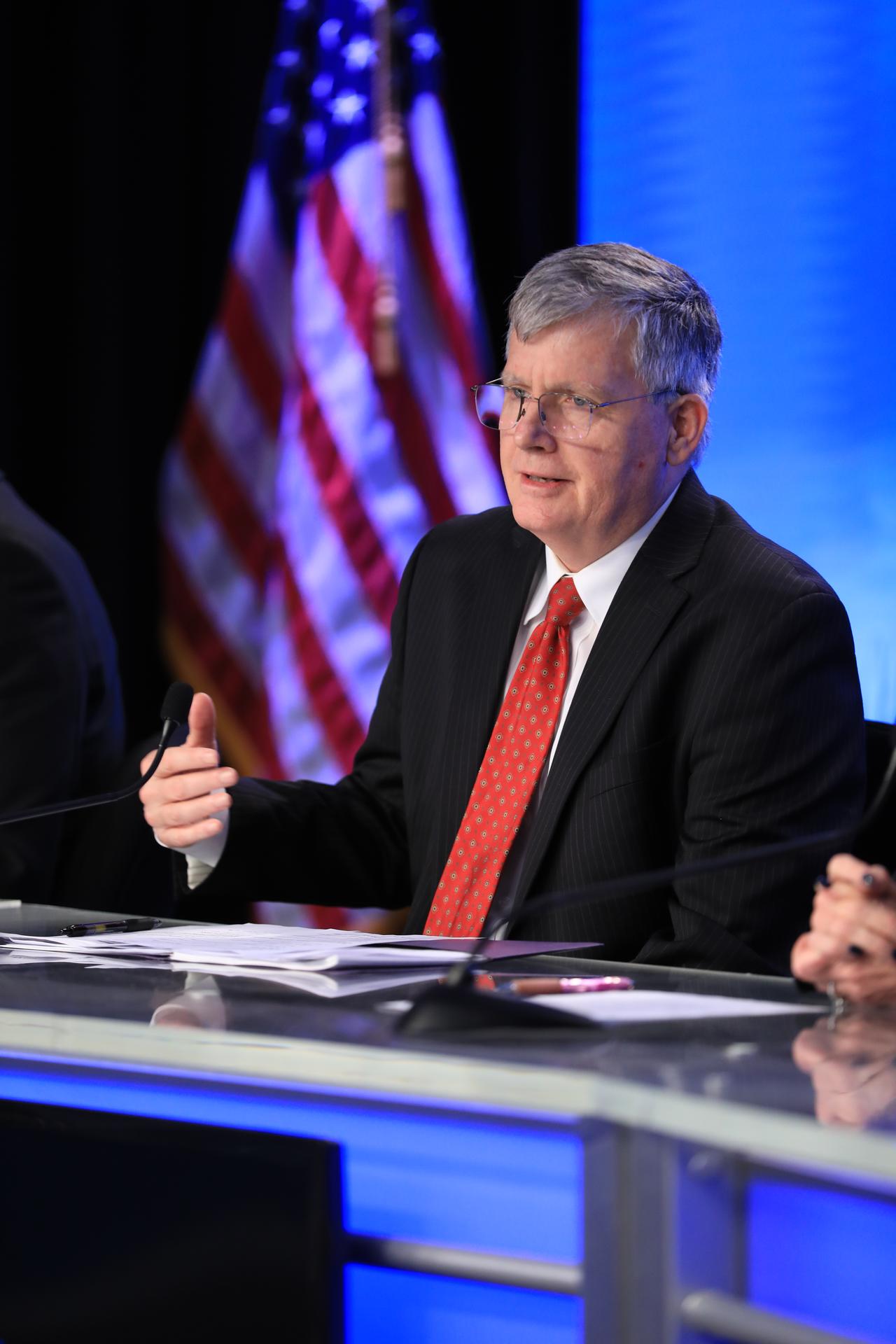
Steve Stich, manager, NASA’s Commercial Crew Program, participates in a postlaunch news conference at the agency’s Kennedy Space Center in Florida on Friday, Feb. 13, 2026, following the launch of NASA’s SpaceX Crew-12 mission to the International Space Station. NASA astronauts Jessica Meir and Jack Hathaway, ESA (European Space Agency) astronaut Sophie Adenot, and Roscosmos cosmonaut Andrey Fedyaev launched to the International Space Station aboard SpaceX’s Dragon spacecraft and Falcon 9 rocket at 5:15 a.m. EST on the 12th crew rotation mission with SpaceX to the space station as part of NASA’s Commercial Crew Program.
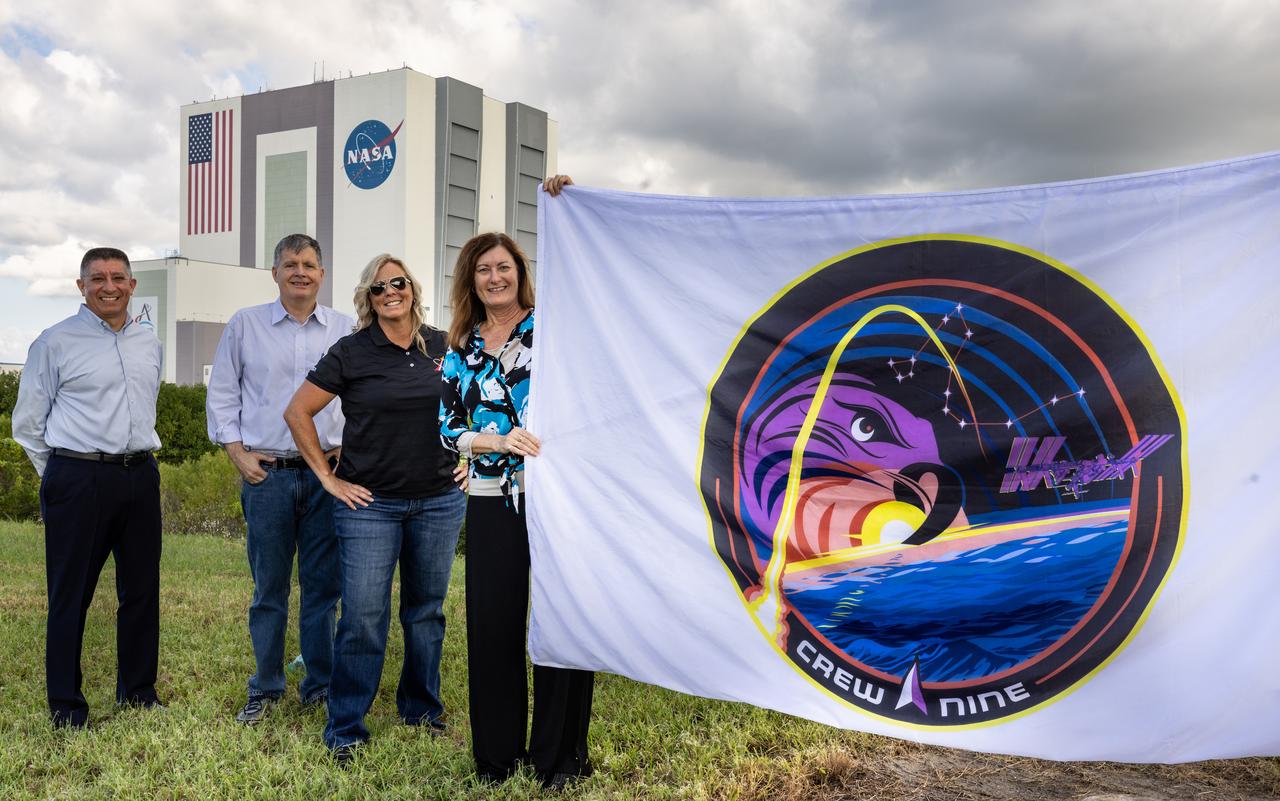
From left, Richard Jones, CCP (Commercial Crew Program) deputy program manager at NASA’s Johnson Space Center in Houston; Steve Stich, program manager for CCP; Dana Hutcherson, CCP deputy program manager at NASA’s Kennedy Space Center in Florida; and Deb Cole, CCP technical manager, pose with the agency’s SpaceX Crew-9 mission flag near the countdown clock at the NASA News Center at Kennedy on Tuesday, Sept. 24, 2024. The Crew-9 mission will send NASA astronaut Nick Hague and Roscosmos cosmonaut Aleksandr Gorbunov to the International Space Station aboard SpaceX’s Dragon spacecraft and Falcon 9 rocket.
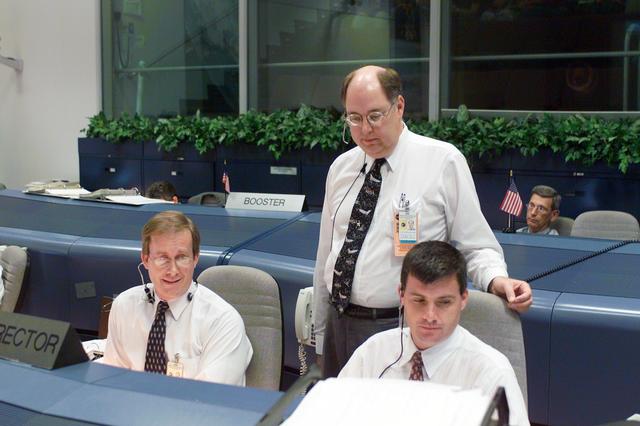
JSC2002-E-41150 (7 October 2002) --- Flight directors John Shannon (left) and Steve Stich monitor data at their consoles in the shuttle flight control room (WFCR) in Houston’s Mission Control Center (MCC). Wayne Hale (standing) of the Mission Operations Directorate (MOD) looks on. At the time this photo was taken the Space Shuttle Atlantis was about to launch from the Kennedy Space Center, Florida. Atlantis lifted off at 2:46 p.m. (CDT) on October 7, 2002. Once the vehicle cleared the tower in Florida, the Houston-based team of flight controllers took over the ground control of the flight.
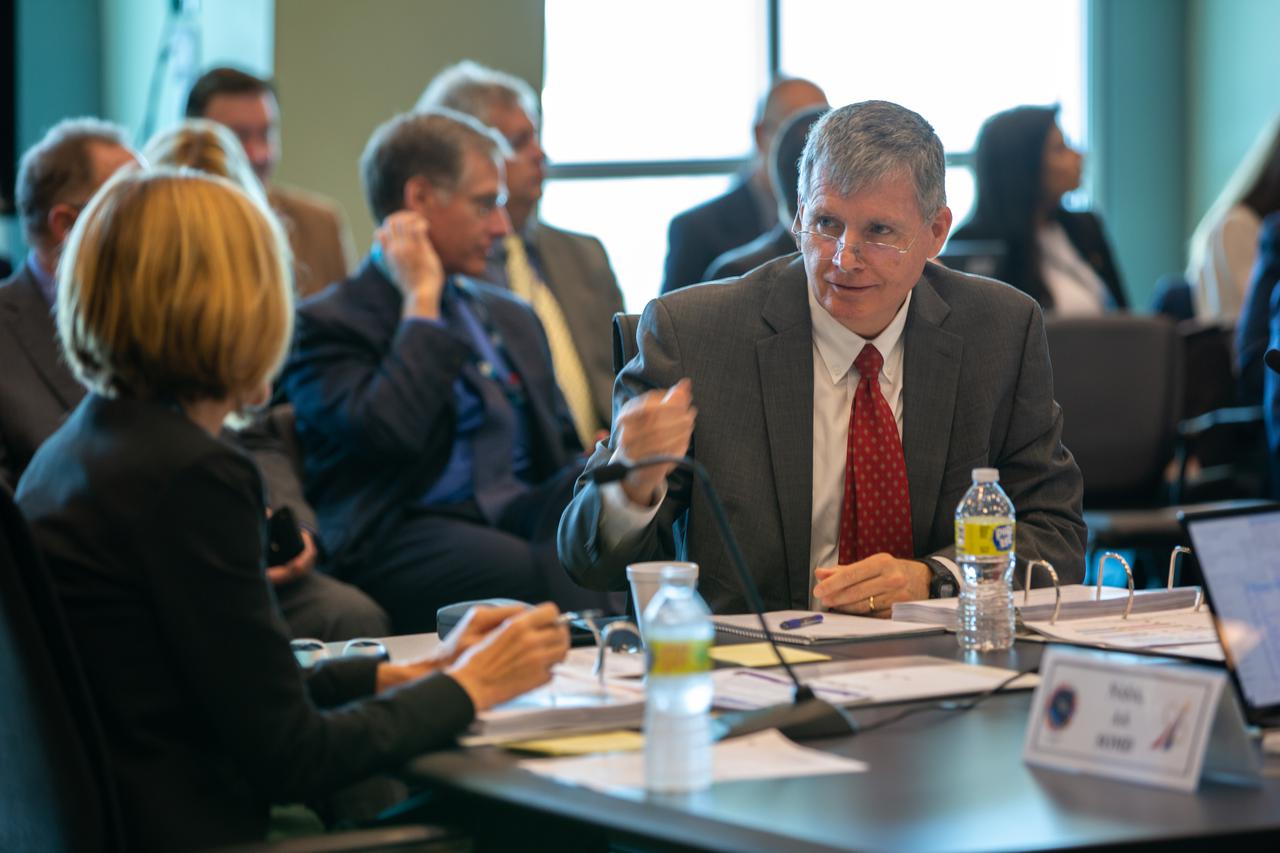
Steve Stich (right), manager, NASA’s Commercial Crew Program and Kathryn Lueders (left), associate administrator, Space Operations Mission Directorate at NASA participate in the Flight Readiness Review for NASA’s Boeing Orbital Flight Test-2 (OFT-2) inside the Operations Support Building II at NASA's Kennedy Space Center in Florida, May 11, 2022. Boeing's CST-100 Starliner spacecraft will launch atop a United Launch Alliance Atlas V rocket from Space Launch Complex -41 at Cape Canaveral Space Force Station at 6:54 p.m. EDT on Thursday, May 19. The uncrewed flight test will be Starliner’s second flight for NASA’s Commercial Crew Program.
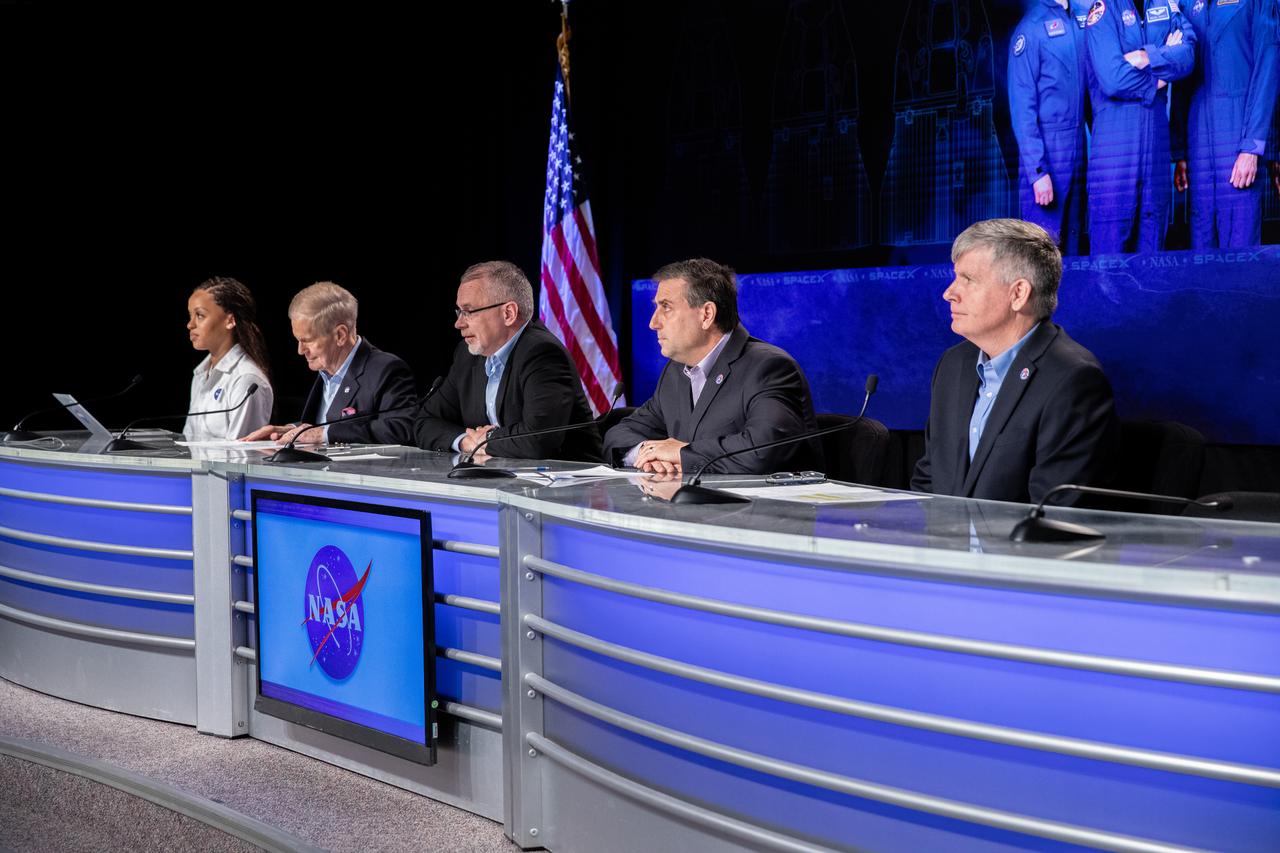
Officials from NASA participate in the NASA Administrator Media Briefing inside the John Holliman Auditorium of the News Center at NASA’s Kennedy Space Center in Florida on Wednesday, Feb. 28, 2024, ahead of NASA’s SpaceX Crew-8 mission to the International Space Station. The launch is targeted for 12:04 a.m. EST, Friday, March 1, from Launch Complex 39A at Kennedy. From left to right are NASA Press Secretary Faith McKie, NASA Administrator Bill Nelson, NASA Associate Administrator Jim Free, International Space Station Program Manager Joel Montalbano, and Commercial Crew Program Manager Steve Stich.
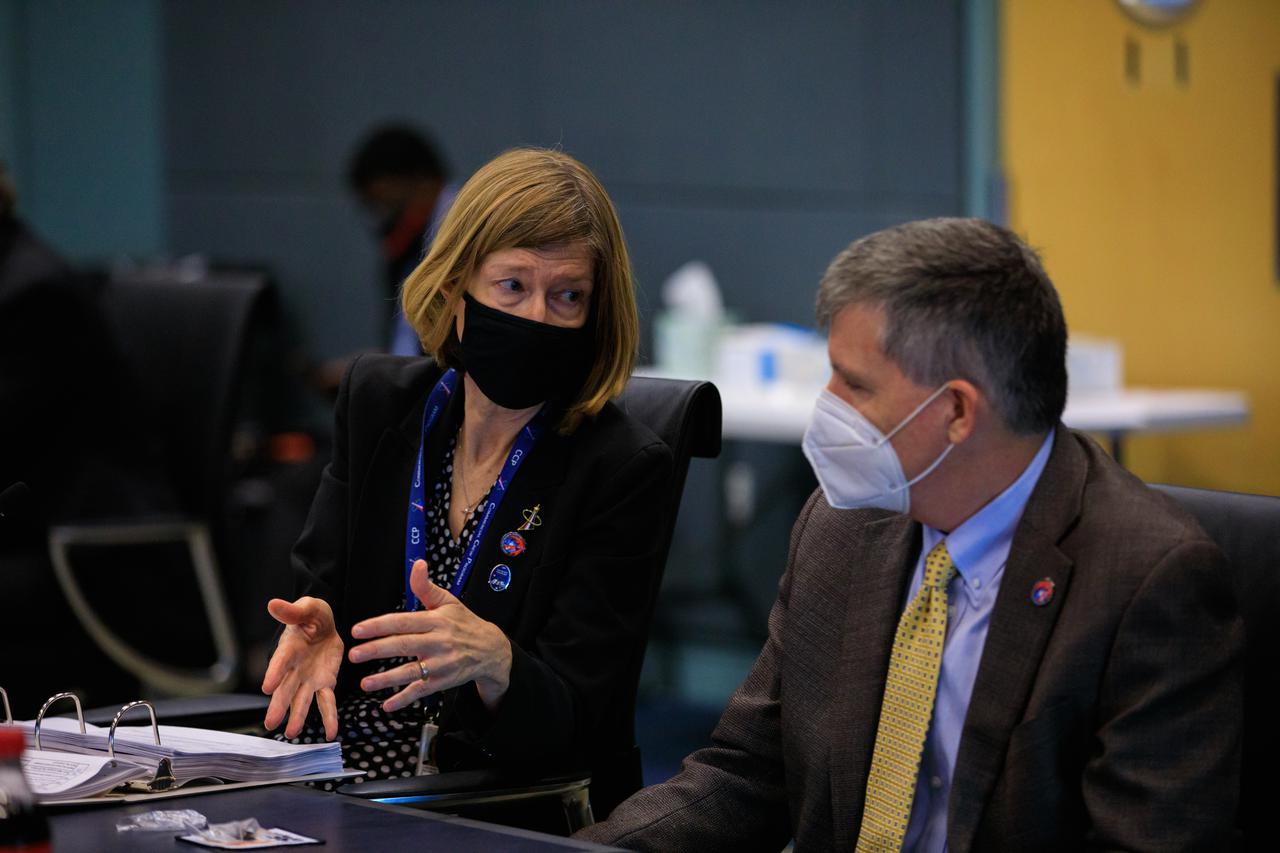
Kathy Lueders, associate administrator, Human Exploration and Operations Mission Directorate, NASA Headquarters, left, talks with Steve Stich, manager, Commercial Crew Program, Kennedy Space Center, during NASA’s SpaceX Crew-2 Flight Readiness Review at Kennedy Space Center on April 15, 2021. The mission is targeted to launch from the Florida Spaceport’s Launch Complex 39A on April 22 at 6:11 a.m. EDT. NASA astronauts Shane Kimbrough and Megan McArthur, JAXA astronaut Akihiko Hoshide, and ESA astronaut Thomas Pesquet will fly to the International Space Station aboard SpaceX’s Crew Dragon Endeavour, powered by the company’s Falcon 9 rocket.
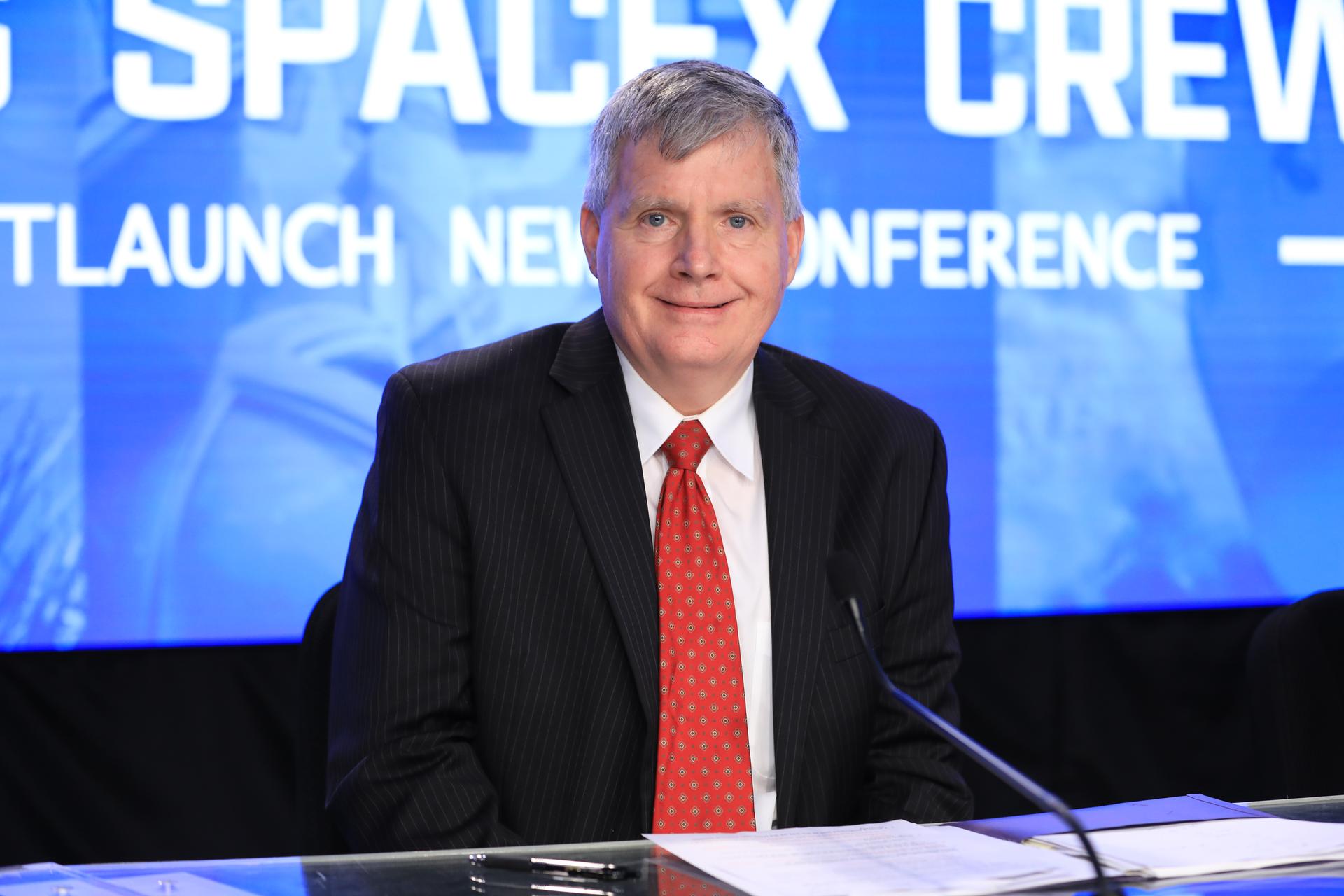
Steve Stich, manager, NASA’s Commercial Crew Program, participates in a postlaunch news conference at the agency’s Kennedy Space Center in Florida on Friday, Feb. 13, 2026, following the launch of NASA’s SpaceX Crew-12 mission to the International Space Station. NASA astronauts Jessica Meir and Jack Hathaway, ESA (European Space Agency) astronaut Sophie Adenot, and Roscosmos cosmonaut Andrey Fedyaev launched to the International Space Station aboard SpaceX’s Dragon spacecraft and Falcon 9 rocket at 5:15 a.m. EST on the 12th crew rotation mission with SpaceX to the space station as part of NASA’s Commercial Crew Program.
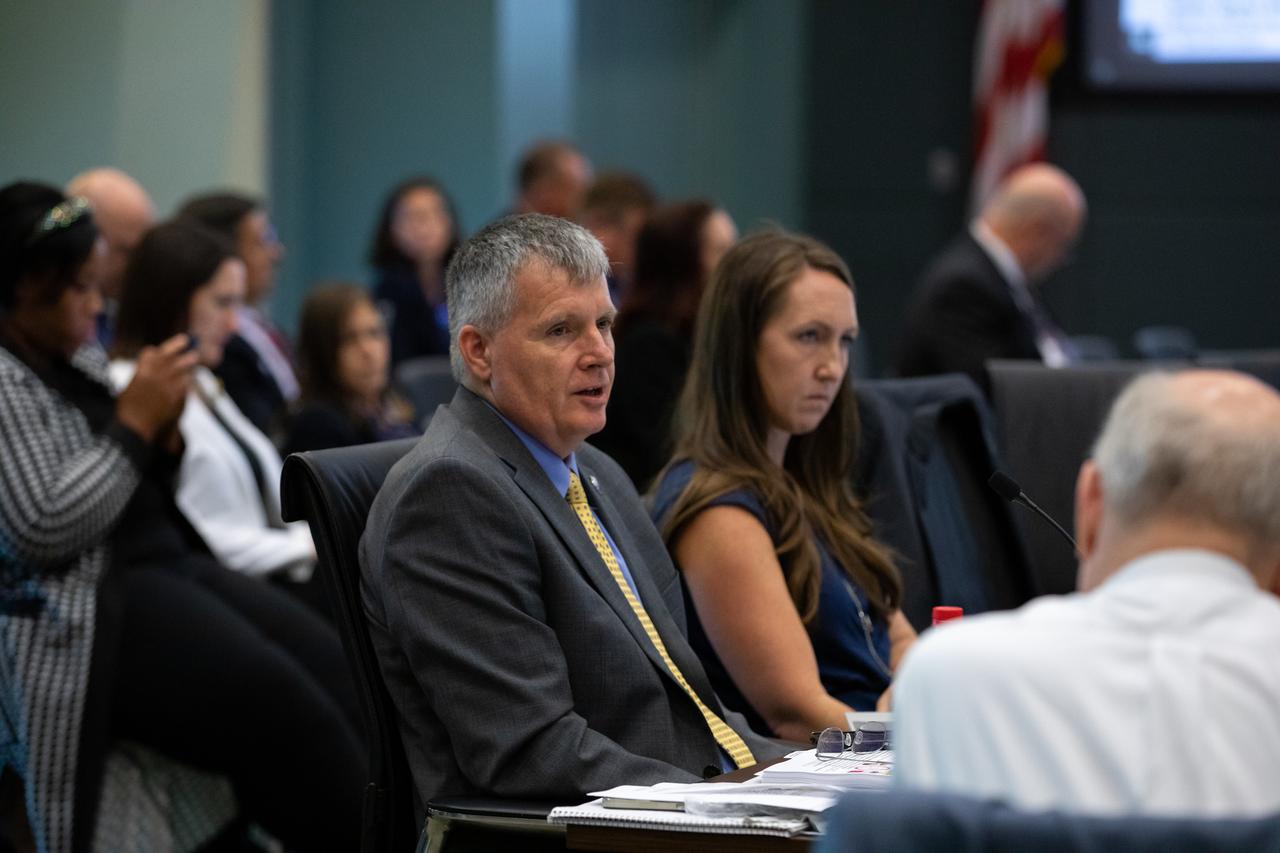
Steve Stich, manager of NASA’s Commercial Crew Program at Kennedy Space Center, participates in NASA’s SpaceX Crew-7 Flight Readiness Review at the Florida spaceport on Monday, Aug. 21, 2023. The mission is targeted to lift off from Kennedy’s Launch Complex 39A at 3:49 a.m. EDT Friday, Aug. 25, 2023. NASA astronaut Jasmin Moghbeli, ESA (European Space Agency) astronaut Andreas Mogensen, JAXA (Japan Aerospace Exploration Agency) astronaut Satoshi Furukawa, and Roscosmos cosmonaut Konstantin Borisov will fly to the International Space Station aboard SpaceX’s Dragon spacecraft, powered by the company’s Falcon 9 rocket.
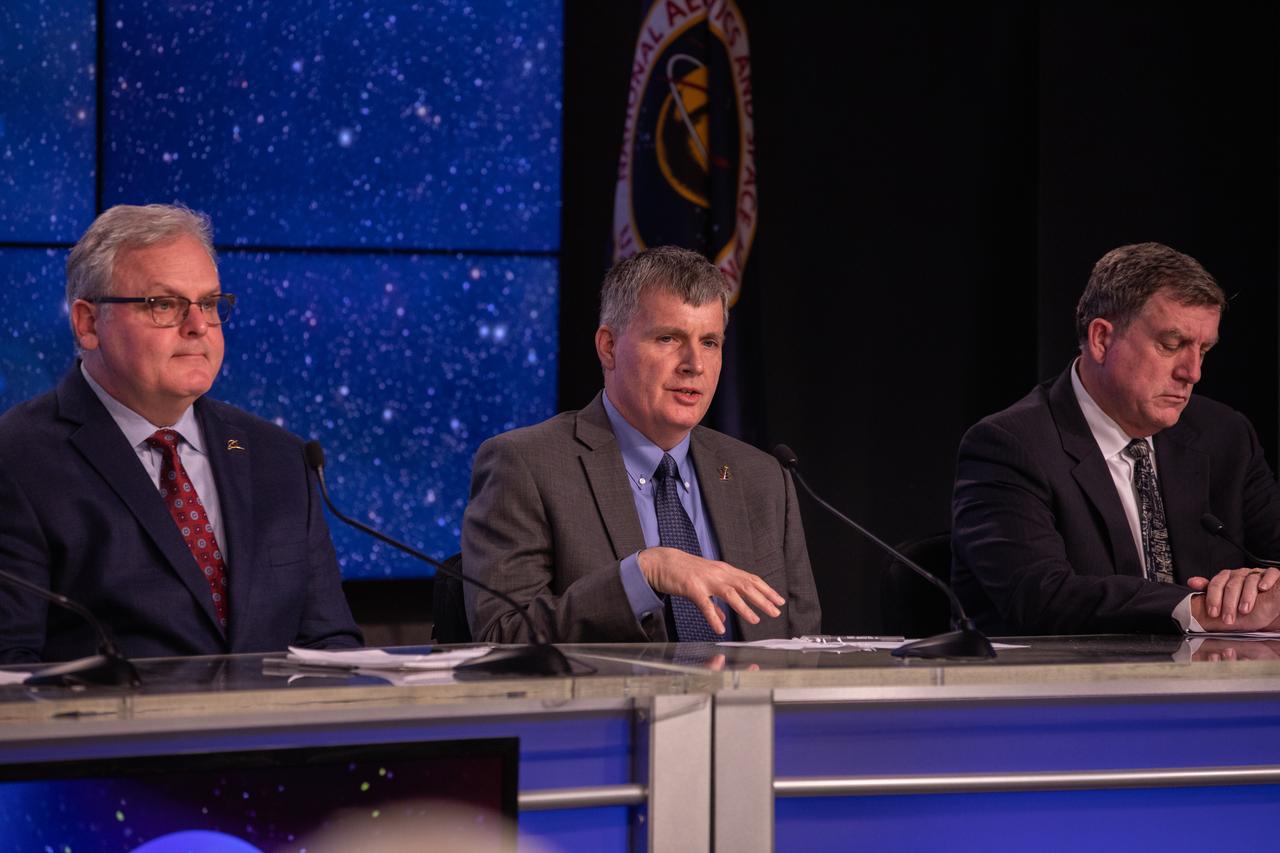
Steve Stich, deputy manager, NASA Commercial Crew Program, speaks during a briefing at the agency’s Kennedy Space Center in Florida following launch of Boeing’s Orbital Flight Test, Dec. 20, 2019. Beside him are Jim Chilton, Boeing senior vice president, Space and Launch Division, left, and Kirk Shireman, manager of NASA’s International Space Station Program. Boeing’s CST-100 Starliner spacecraft launched atop a United Launch Alliance Atlas V rocket from Space Launch Complex 41 at Cape Canaveral Air Force Station at 6:36 a.m. EST. The uncrewed Orbital Flight Test is the Starliner’s first flight for NASA’s Commercial Crew Program.
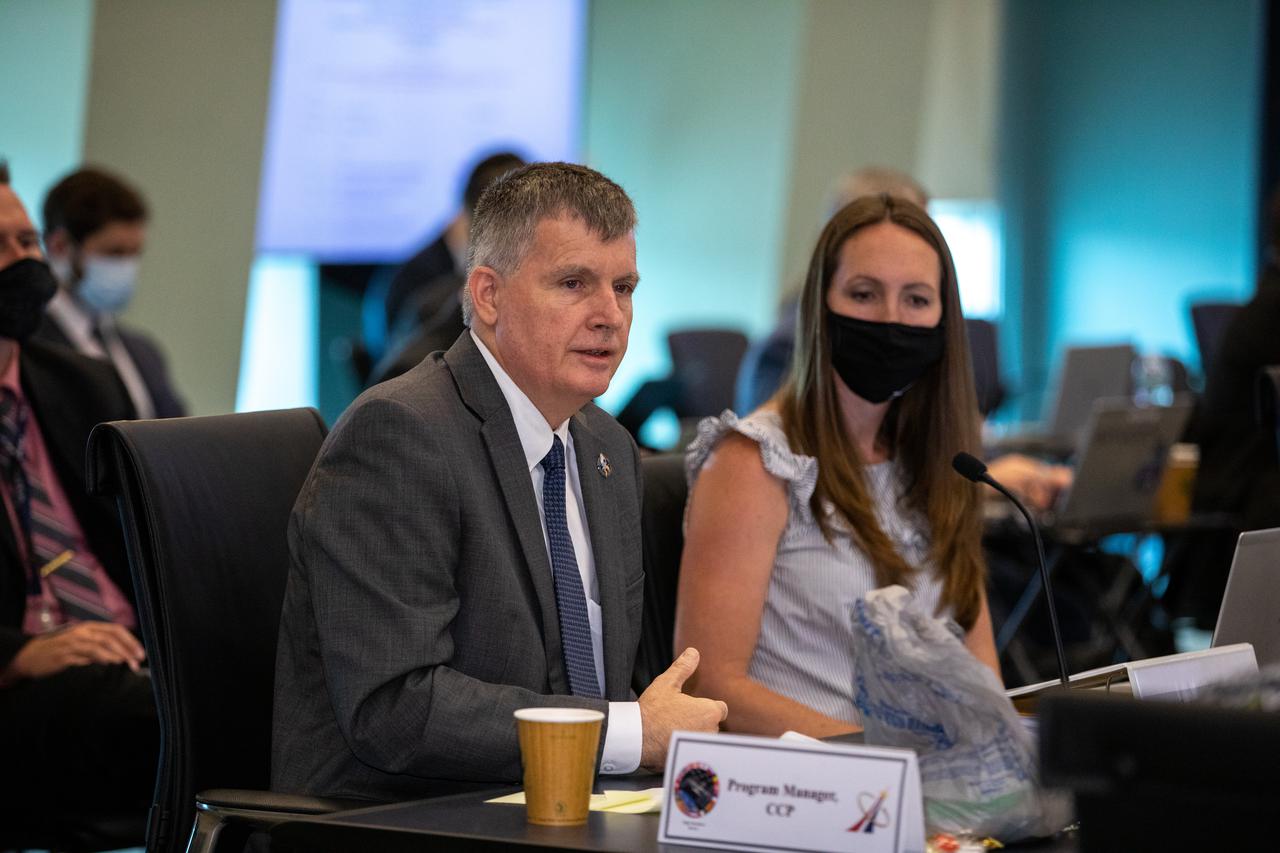
Steve Stich, at left, manager, Commercial Crew Program at Kennedy Space Center, participates in a Flight Readiness Review for the agency’s SpaceX Crew-3 mission at the center in Florida on Oct. 25, 2021. International partners also participated. NASA and SpaceX mission managers held the FRR to confirm the SpaceX Falcon 9 and Crew Dragon spacecraft are ready for launch. Crew-3 is scheduled to launch to the International Space Station from Kennedy’s Launch Complex 39A on Oct. 31, 2021 as part of NASA’s Commercial Crew Program. Liftoff of the Falcon 9 rocket and Crew Dragon spacecraft is targeted for 2:21 a.m. EDT.
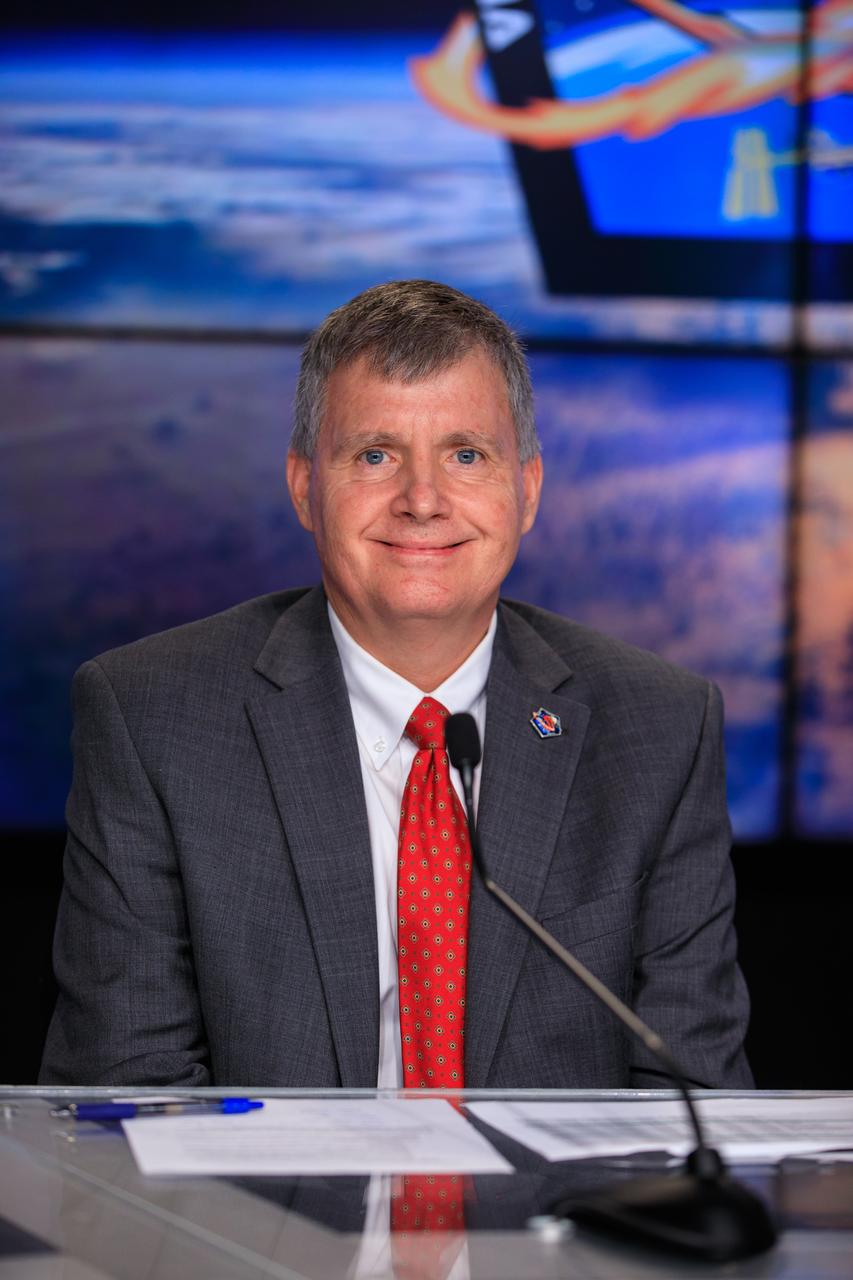
Commercial Crew Program Manager Steve Stich participates in a postlaunch news conference for NASA’s SpaceX Crew-5 mission inside the News Auditorium at the agency’s Kennedy Space Center in Florida on Oct. 5, 2022. SpaceX’s Dragon Endurance is carrying NASA astronauts Nicole Mann, commander; Josh Cassada, pilot; and Mission Specialists Koichi Wakata, of JAXA (Japan Aerospace Exploration Agency), and Roscosmos cosmonaut Anna Kikina to the International Space Station for a science expedition mission as part of NASA’s Commercial Crew Program. SpaceX’s Falcon 9 rocket lifted off at noon EDT from Kennedy’s Launch Complex 39A.
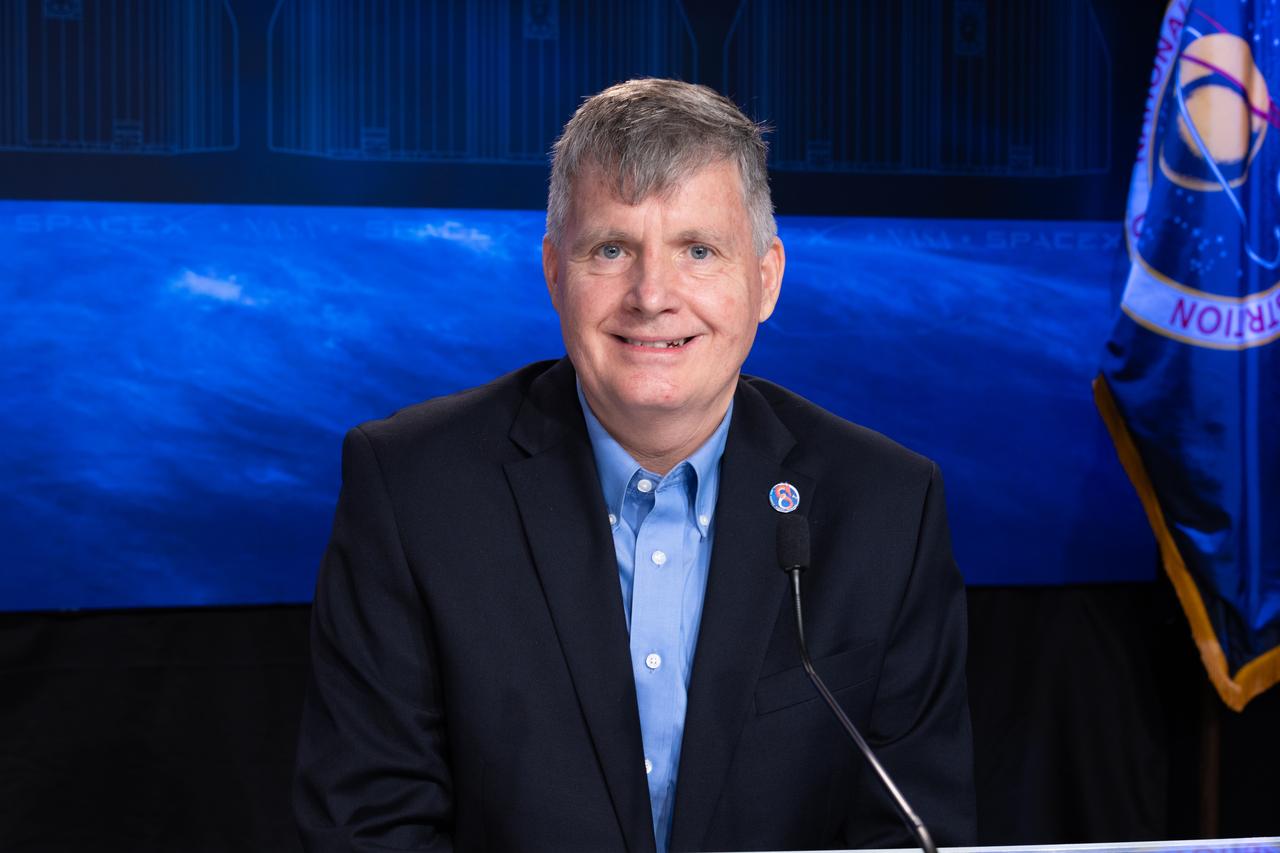
Commercial Crew Program Manager Steve Stich participates in the NASA Administrator Media Briefing inside the John Holliman Auditorium of the News Center at the agency’s Kennedy Space Center in Florida on Wednesday, Feb. 28, 2024, ahead of NASA’s SpaceX Crew-8 mission to the International Space Station. The launch is targeted for 12:04 a.m. EST, Friday, March 1, from Launch Complex 39A at Kennedy and will carry NASA astronauts Commander Matthew Dominick, Pilot Michael Barratt, and Mission Specialist Jeanette Epps, along with Roscosmos cosmonaut Mission Specialist Alexander Grebenkin to the orbiting laboratory for a stay of about six months as part of the agency’s Commercial Crew Program.
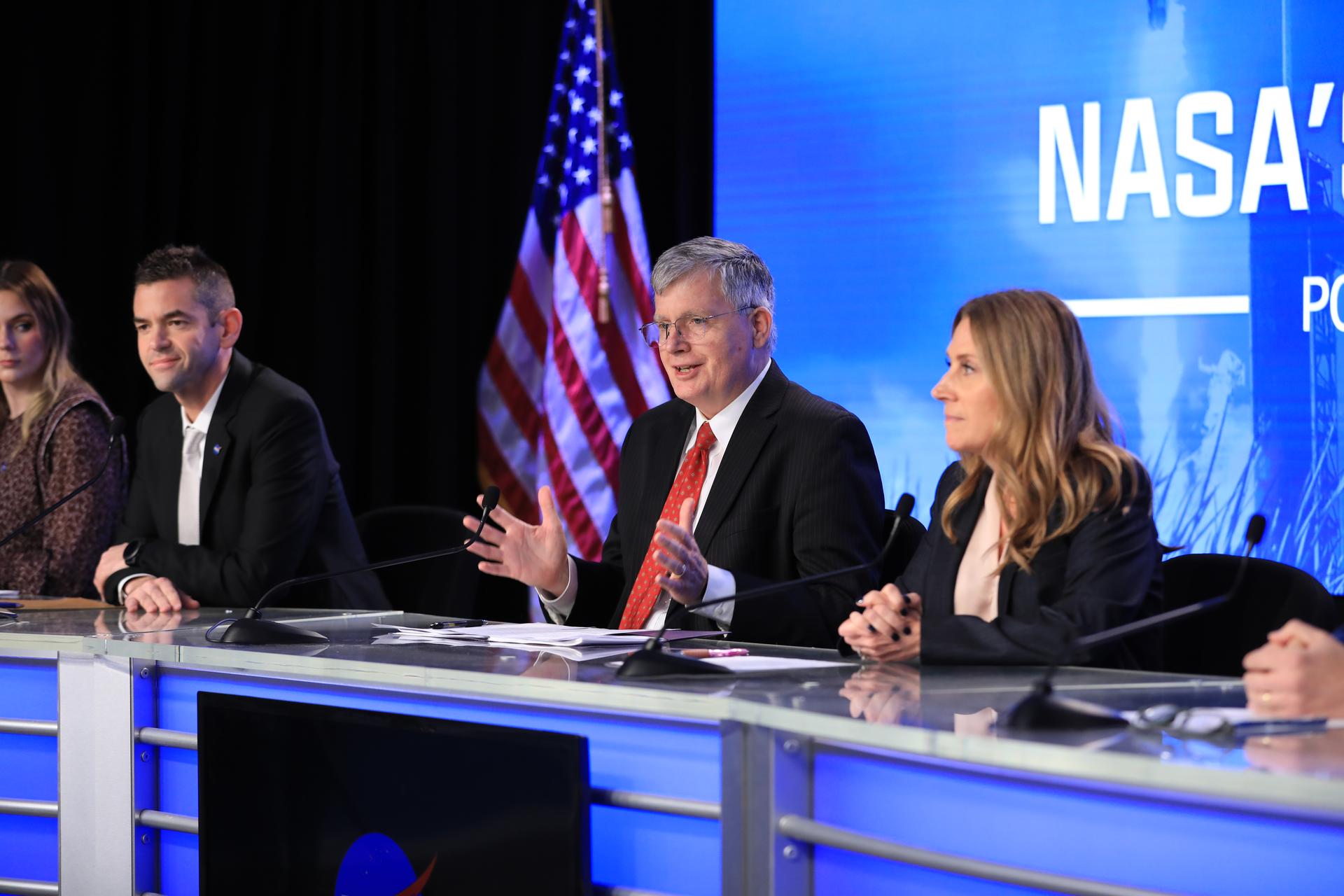
Steve Stich (center), manager, NASA’s Commercial Crew Program, participates in a postlaunch news conference with leadership from NASA, ESA (European Space Agency), and SpaceX at the agency’s Kennedy Space Center in Florida on Friday, Feb. 13, 2026, following the launch of NASA’s SpaceX Crew-12 mission to the International Space Station. NASA astronauts Jessica Meir and Jack Hathaway, ESA astronaut Sophie Adenot, and Roscosmos cosmonaut Andrey Fedyaev launched to the International Space Station aboard SpaceX’s Dragon spacecraft and Falcon 9 rocket at 5:15 a.m. EST on the 12th crew rotation mission with SpaceX to the space station as part of NASA’s Commercial Crew Program.
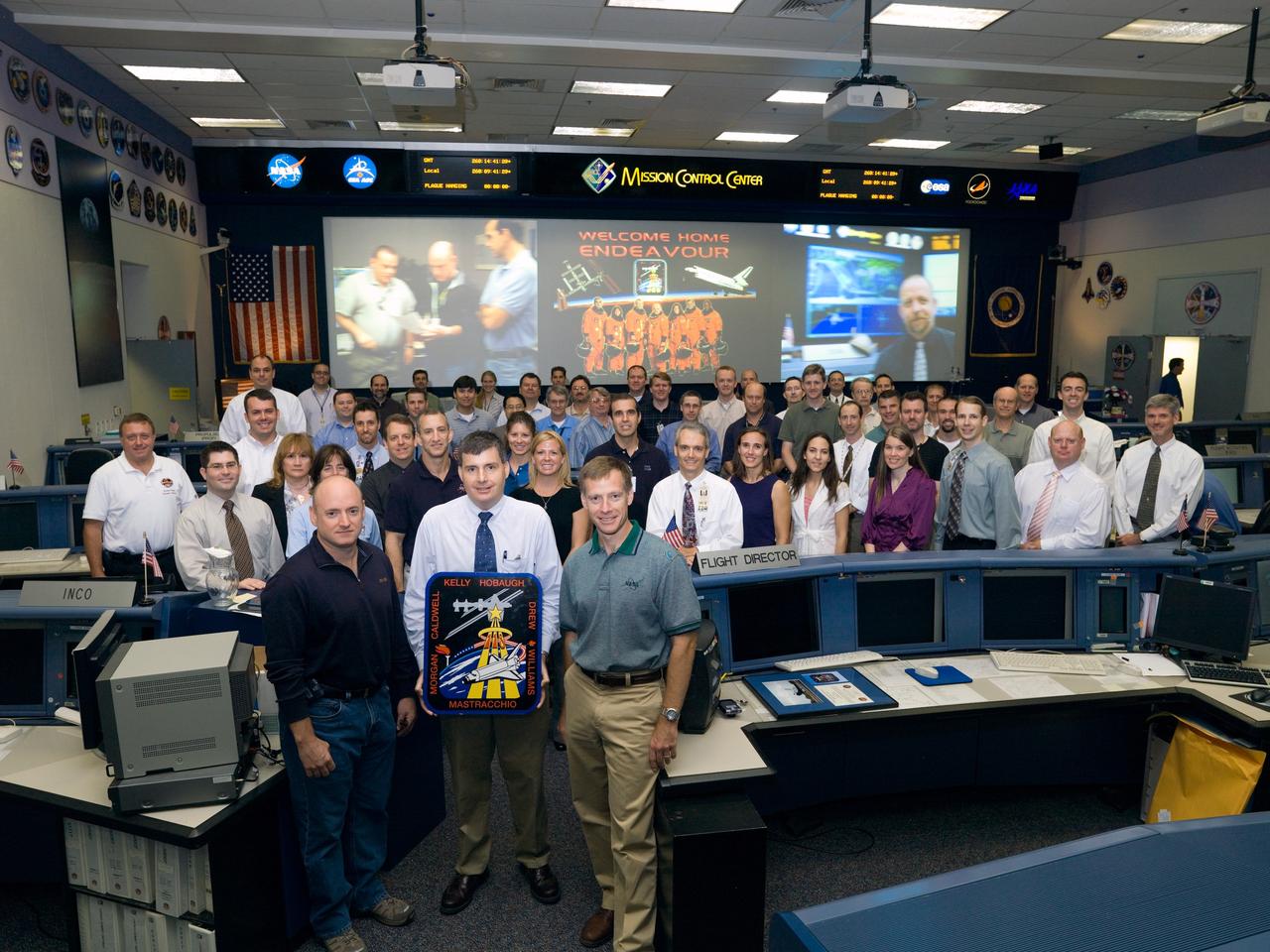
JSC2007-E-46429 (17 Sept. 2007) --- The members of the STS-118 Ascent/Entry flight control team and crewmembers pose for a group portrait in the space shuttle flight control room of Houston's Mission Control Center (MCC). Flight director Steve Stich holds the STS-118 mission logo. Astronauts Scott Kelly, commander, is at left foreground and astronaut Chris Ferguson, spacecraft communicator (CAPCOM), is at right foreground. Additional crewmembers pictured are Charlie Hobaugh, pilot; Barbara R. Morgan, Tracy Caldwell and Rick Mastracchio, all mission specialists.
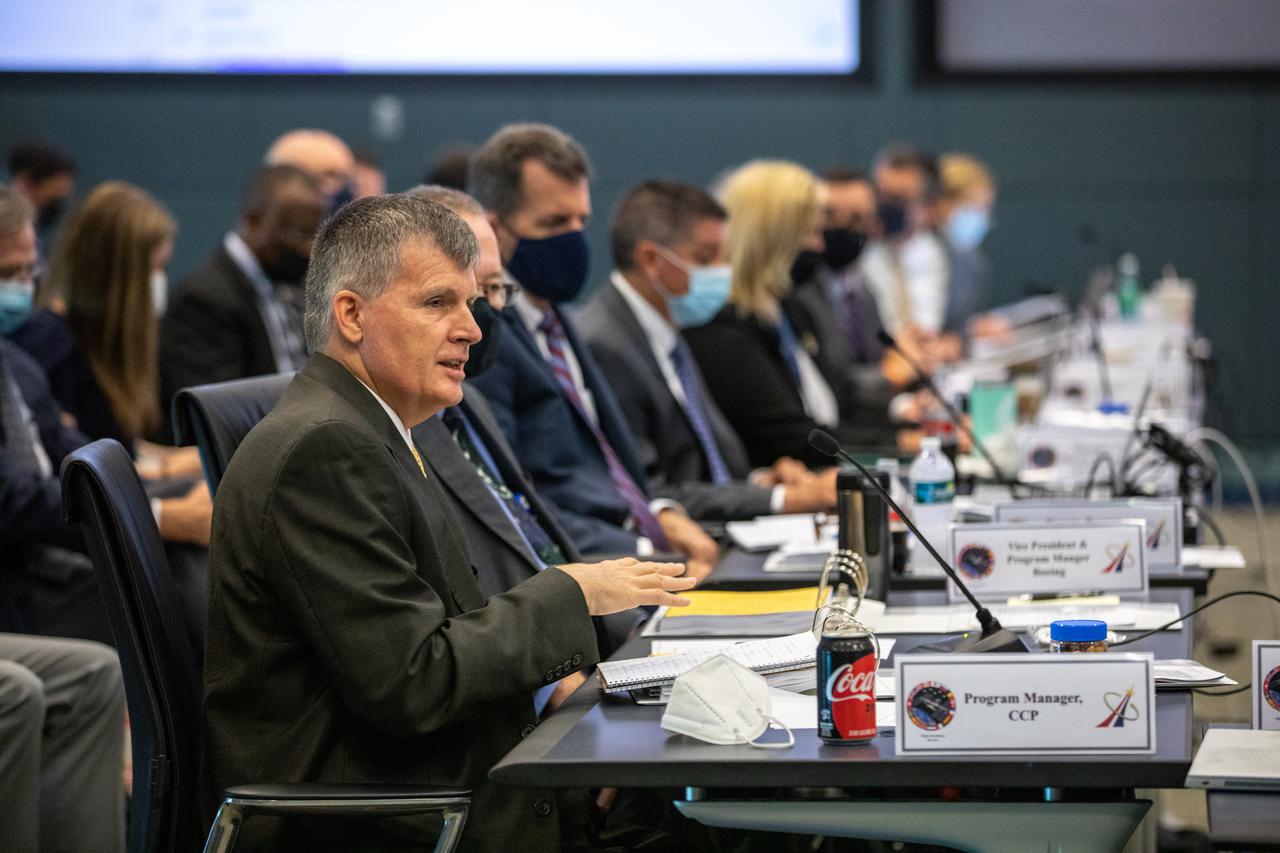
Commercial Crew Program Manager Steve Stich takes part in the Flight Readiness Review for Boeing's upcoming Orbital Flight Test-2 (OFT-2) in Operations Support Building 2 at NASA's Kennedy Space Center in Florida, July 22, 2021. Boeing's CST-100 Starliner spacecraft will launch atop a United Launch Alliance Atlas V rocket from Space Launch Complex 41 at Cape Canaveral Space Force Station at 2:53 p.m. EDT Friday, July 30. The uncrewed OFT-2 will be the Starliner's second flight to the International Space Station for NASA's Commercial Crew Program.