
Steven Benner, a distinguished fellow at the Foundation for Applied Molecular Evolution, speaks during a press conference, Thursday, Dec. 2, 2010, at NASA Headquarters in Washington. NASA-funded astrobiology research has changed the fundamental knowledge about what comprises all known life on Earth. Researchers conducting tests in the harsh environment of Mono Lake in California have discovered the first known microorganism on Earth able to thrive and reproduce using the toxic chemical arsenic. Photo Credit: (NASA/Paul E. Alers)

Steven Benner, a distinguished fellow at the Foundation for Applied Molecular Evolution, right, speaks during a press conference as Mary Voytek, director of the Astrobiology Program at NASA looks on, Thursday, Dec. 2, 2010, at NASA Headquarters in Washington. NASA-funded astrobiology research has changed the fundamental knowledge about what comprises all known life on Earth. Researchers conducting tests in the harsh environment of Mono Lake in California have discovered the first known microorganism on Earth able to thrive and reproduce using the toxic chemical arsenic. Photo Credit: (NASA/Paul E. Alers)

Felisa Wolfe-Simon, a lead researcher and NASA astrobiology research fellow, speaks during a press conference, as Mary Voytek, Steven Benner and Pamela Conrad look on, Thursday, Dec. 2, 2010, at NASA Headquarters in Washington. NASA-funded astrobiology research has changed the fundamental knowledge about what comprises all known life on Earth. Researchers conducting tests in the harsh environment of Mono Lake in California have discovered the first known microorganism on Earth able to thrive and reproduce using the toxic chemical arsenic. Photo Credit: (NASA/Paul E. Alers)
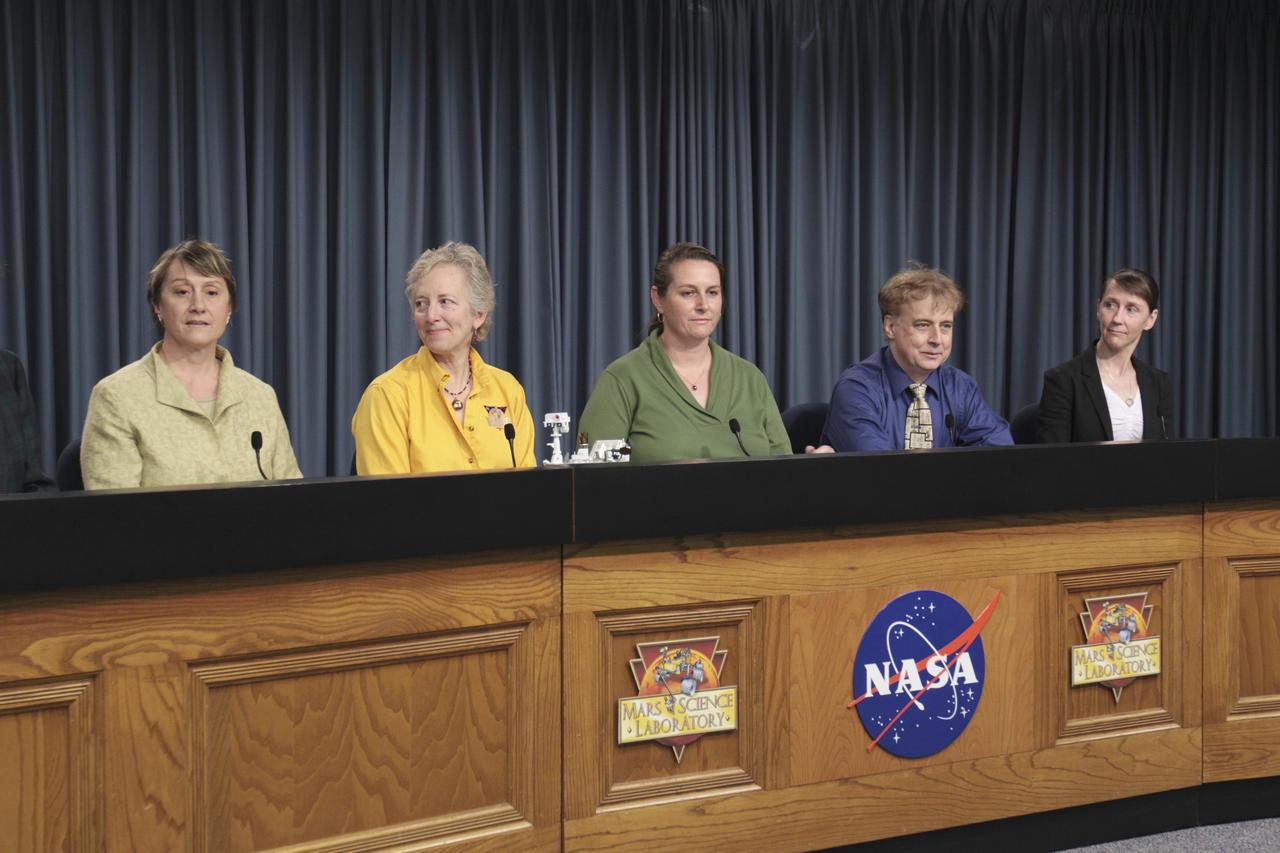
CAPE CANAVERAL, Fla. – At NASA’s Kennedy Space Center in Florida, several scientists and researchers participate in a “Looking for Signs of Life in the Universe” news conference, Nov. 22, as part of preflight activities for the Mars Science Laboratory (MSL) mission. From left, are NASA Astrobiology Director Mary Voytek; Professor Jamie Foster from the Department of Microbiology and Cell Science at the University of Florida in Gainesville; MSL Deputy Principal Investigator Pan Conrad; Director of the Foundation for Applied Molecular Evolution Steven Benner; and NASA Planetary Protection Officer Catharine Conley. MSL’s components include a car-sized rover, Curiosity, which has 10 science instruments designed to search for signs of life, including methane, and help determine if the gas is from a biological or geological source. Launch of MSL aboard a United Launch Alliance Atlas V rocket is targeted for Nov. 26 from Space Launch Complex 41 on Cape Canaveral Air Force Station in Florida. For more information, visit http://www.nasa.gov/msl. Photo credit: NASA/Kim Shiflett
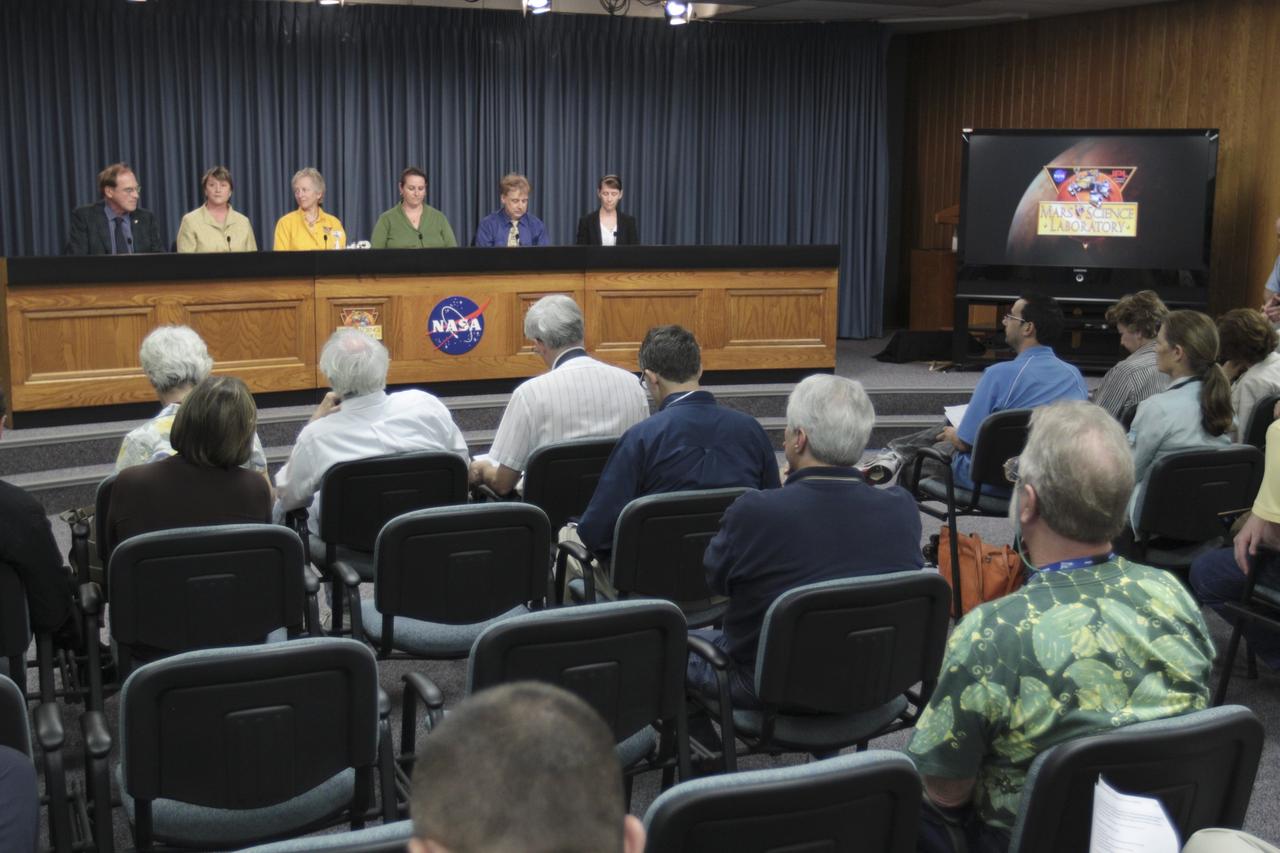
CAPE CANAVERAL, Fla. – At NASA’s Kennedy Space Center in Florida, several scientists and researchers participate in a “Looking for Signs of Life in the Universe” news conference, Nov. 22, as part of preflight activities for the Mars Science Laboratory (MSL) mission. From left, are NASA Public Affairs Officer and conference moderator George Diller; NASA Astrobiology Director Mary Voytek; Professor Jamie Foster from the Department of Microbiology and Cell Science at the University of Florida in Gainesville; MSL Deputy Principal Investigator Pan Conrad; Director of the Foundation for Applied Molecular Evolution Steven Benner; and NASA Planetary Protection Officer Catharine Conley. MSL’s components include a car-sized rover, Curiosity, which has 10 science instruments designed to search for signs of life, including methane, and help determine if the gas is from a biological or geological source. Launch of MSL aboard a United Launch Alliance Atlas V rocket is targeted for Nov. 26 from Space Launch Complex 41 on Cape Canaveral Air Force Station in Florida. For more information, visit http://www.nasa.gov/msl. Photo credit: NASA/Kim Shiflett