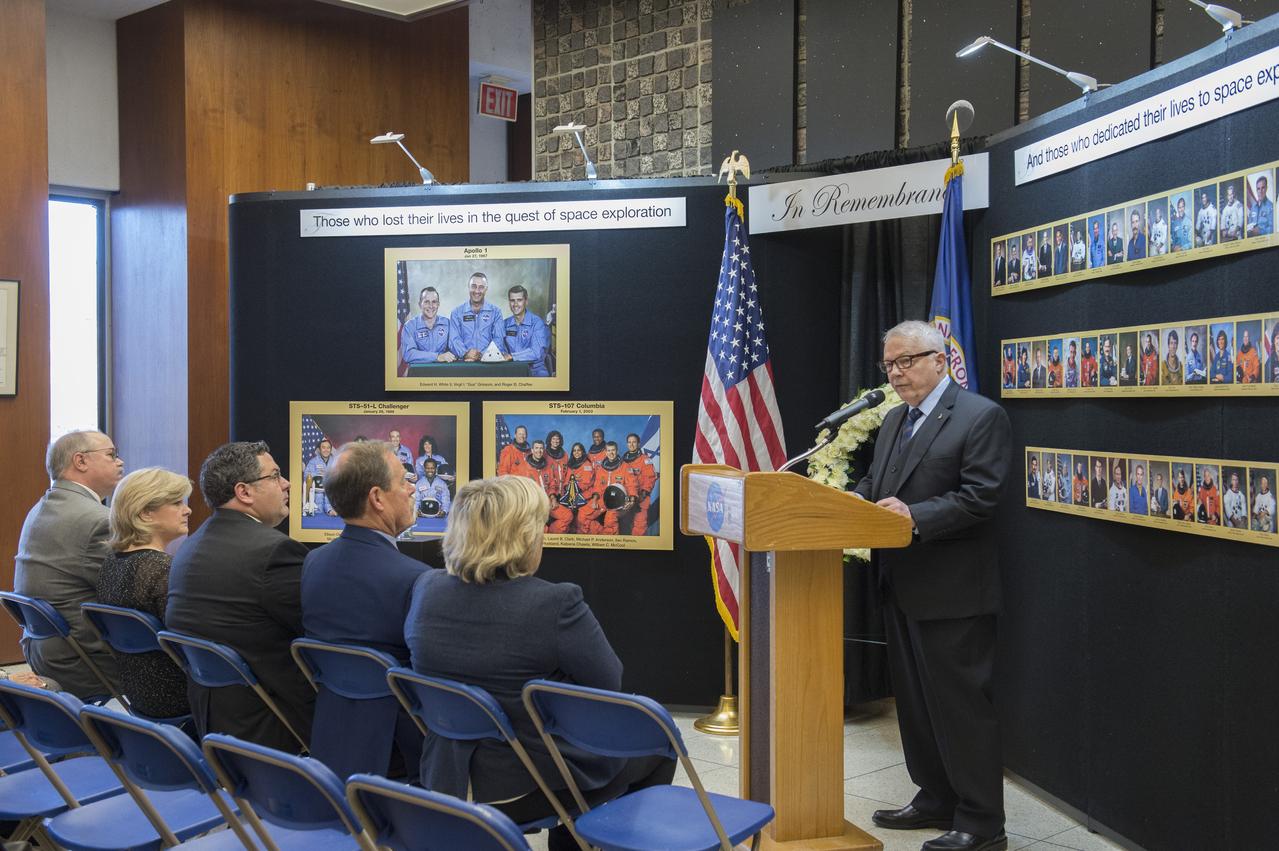
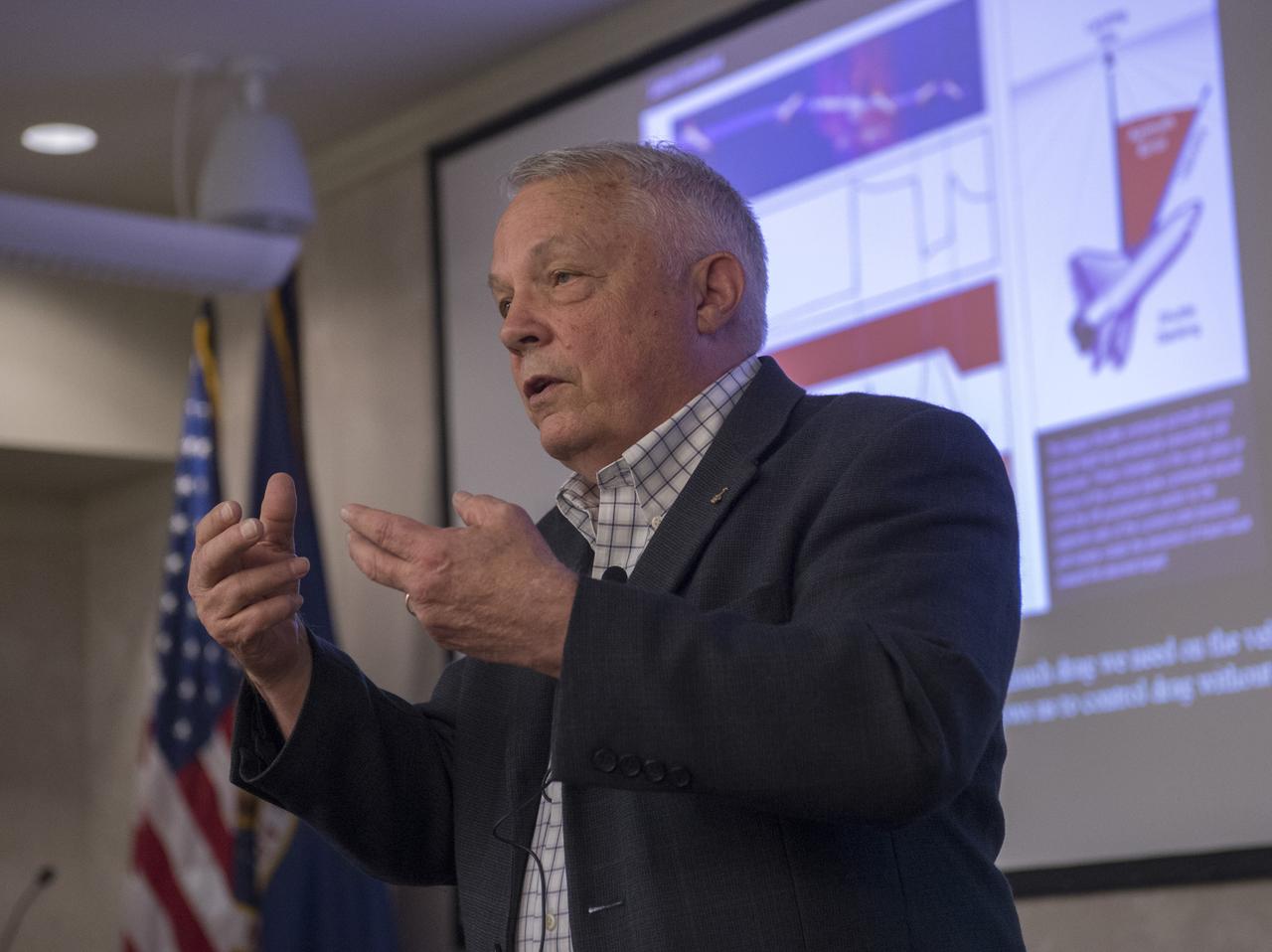
RETIRED ASTRONAUT AND BRIGADIER GENERAL ROBERT STEWART SPEAKS ABOUT SPACE SHUTTLE DESIGN DURING SHARED EXPERIENCES FORUM, 4/28/2016
RETIRED ASTRONAUT AND BRIGADIER GENERAL ROBERT STEWART
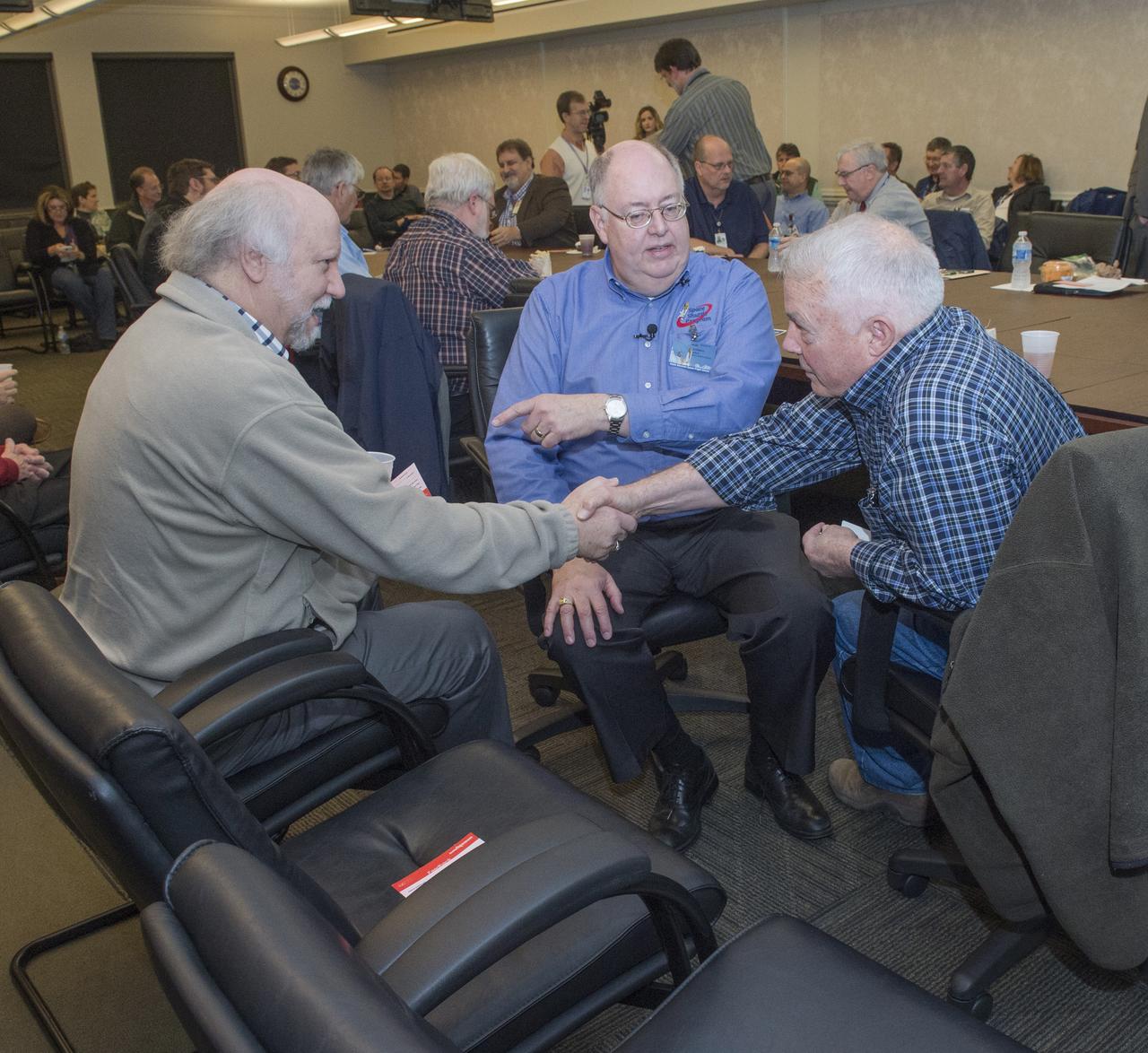
WAYNE HALE, (CENTER), INTRODUCES JOHN CHAPMAN (L) TO RETIRED BRIG. GENERAL/ASTRONAUT BOB STEWART
WAYNE HALE VISITS MSFC
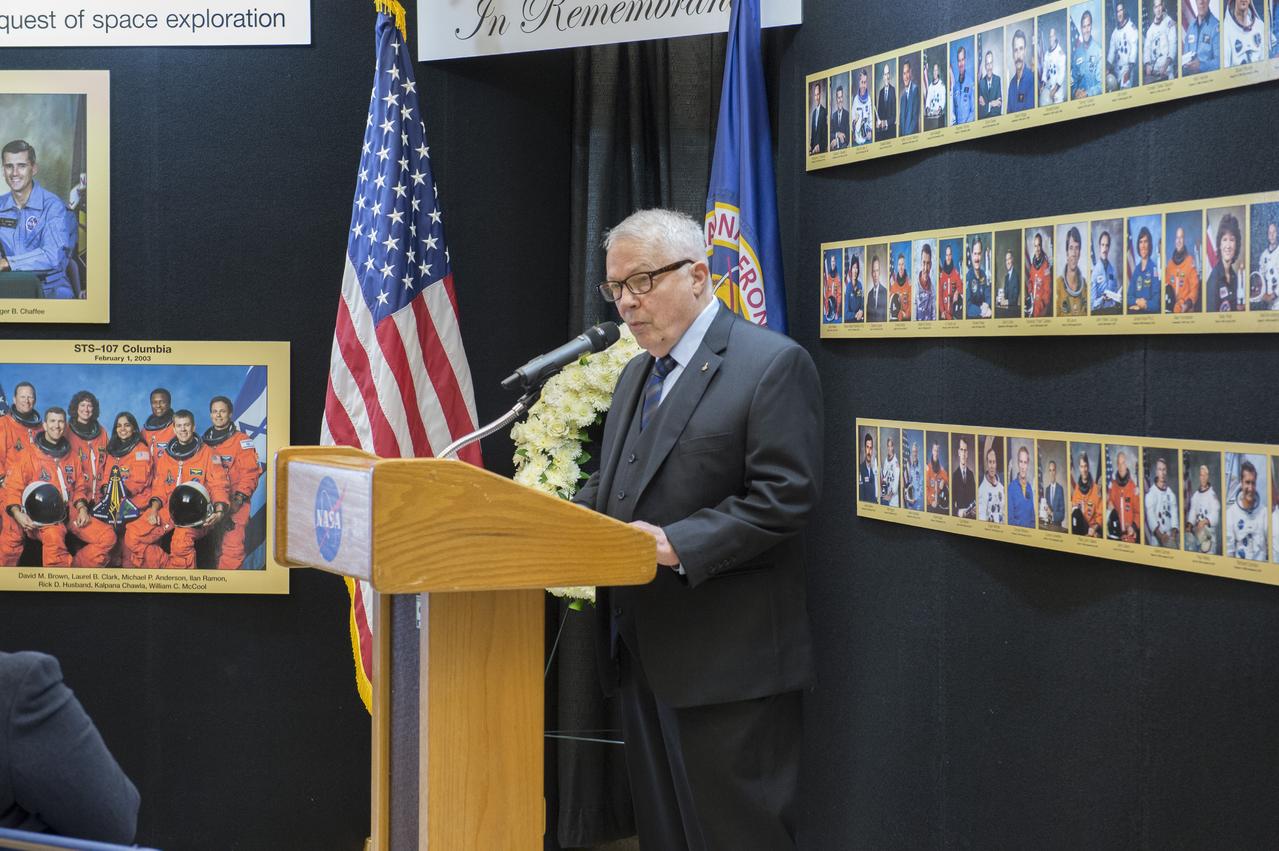
Retired astronaut, and retired Brigadier General, Robert Stewart addresses guests and employees at the Marshall Space Flight Center’s annual “Day of Remembrance” honoring those astronauts who have passed away.
MSFC Annual Day of Remembrance ceremony
Retired astronaut, and retired Brigadier General, Robert Stewart addresses guests and employees at the Marshall Space Flight Center’s annual “Day of Remembrance” honoring those astronauts who have passed away.
MSFC Annual Day of Remembrance ceremony
Retired astronaut, and retired Brigadier General, Robert Stewart addresses guests and employees at the Marshall Space Flight Center’s annual “Day of Remembrance” honoring those astronauts who have passed away.
MSFC Annual Day of Remembrance ceremony
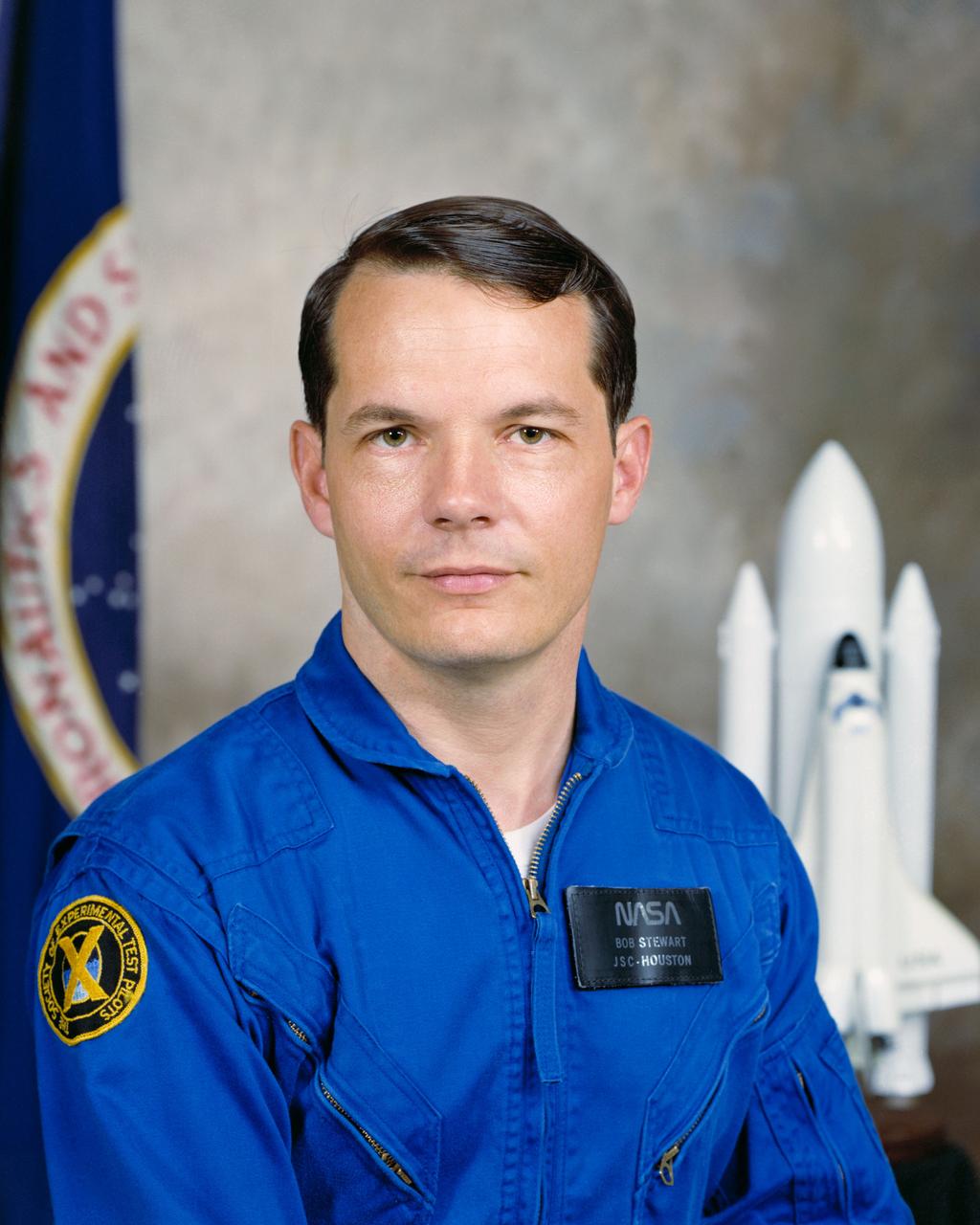
S78-35309 (31 Jan 1978) --- Astronaut Robert L. Stewart.
PORTRAIT - STEWART, ROBERT L., ASTRONAUT-CANDIDATE (ASCAN)
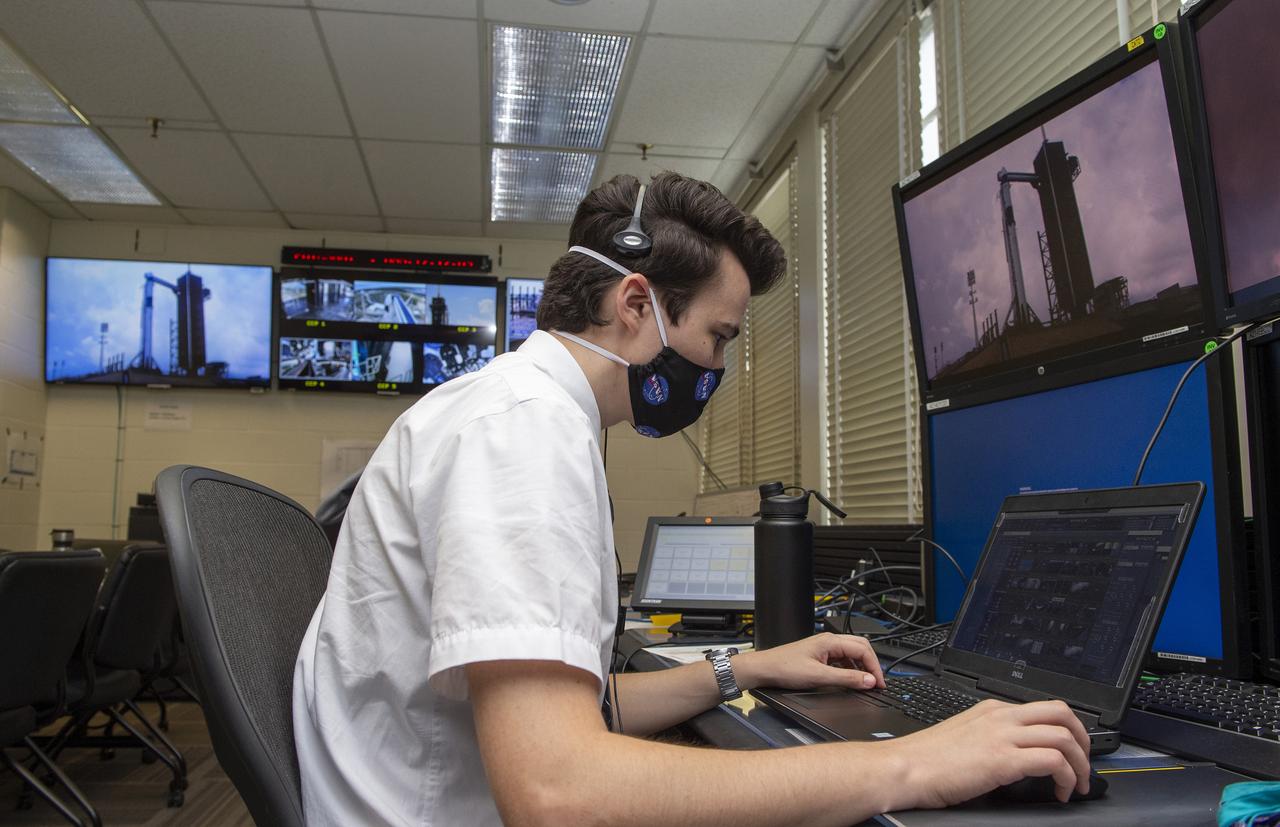
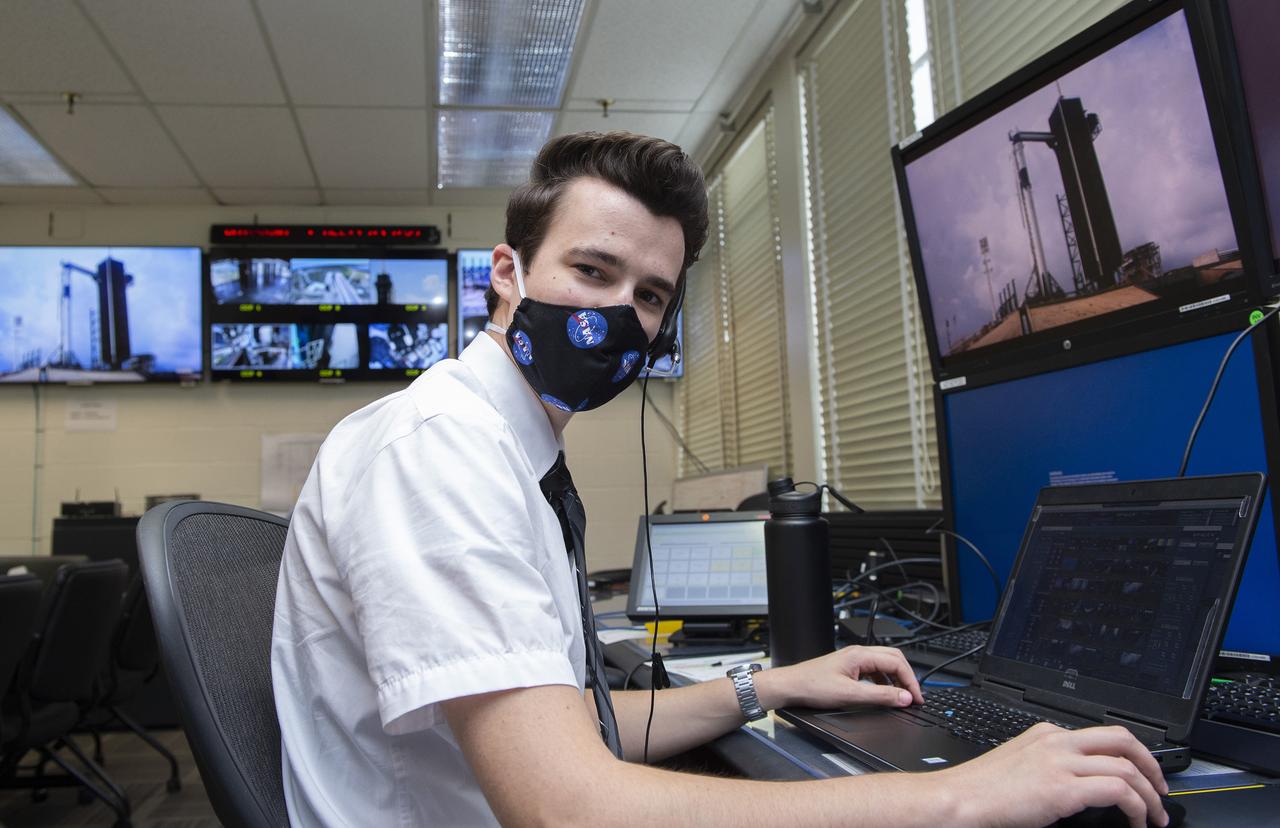
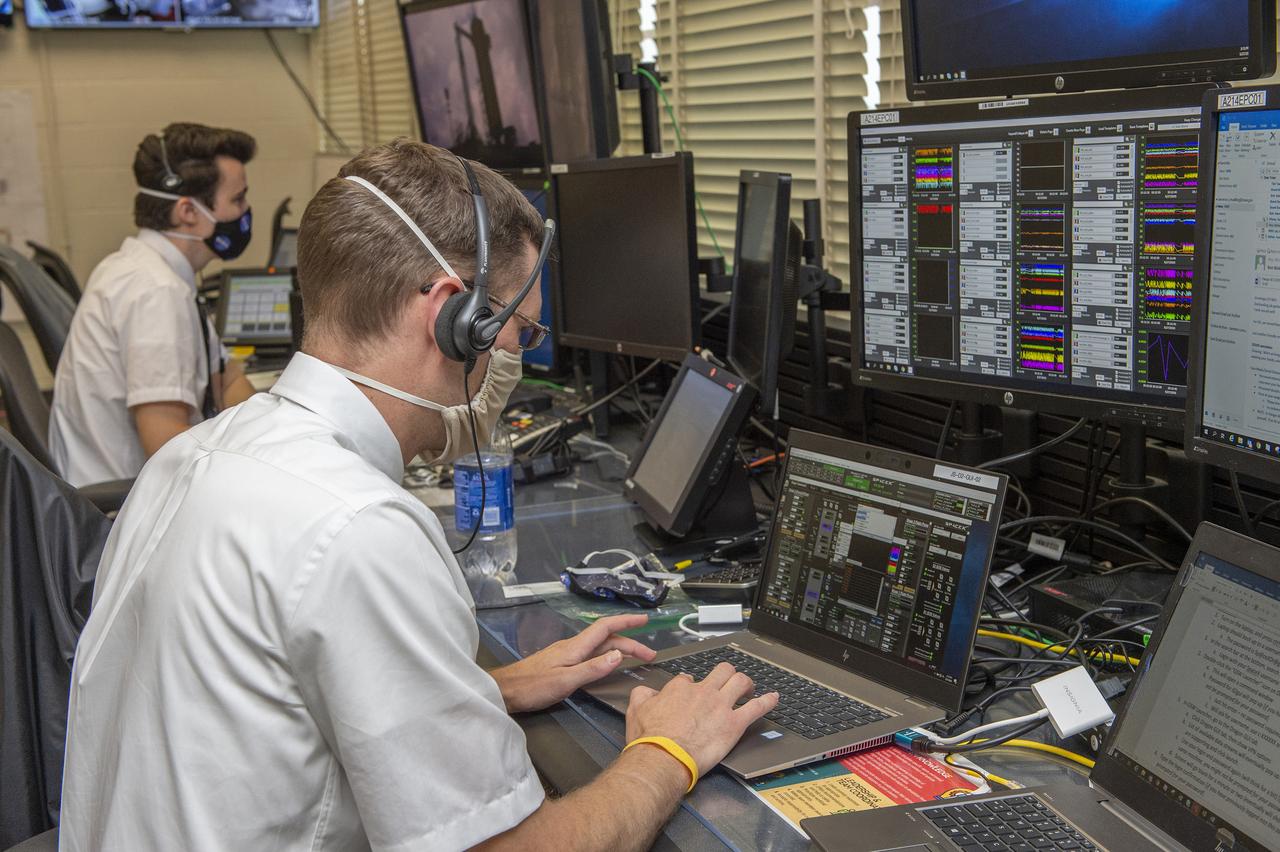
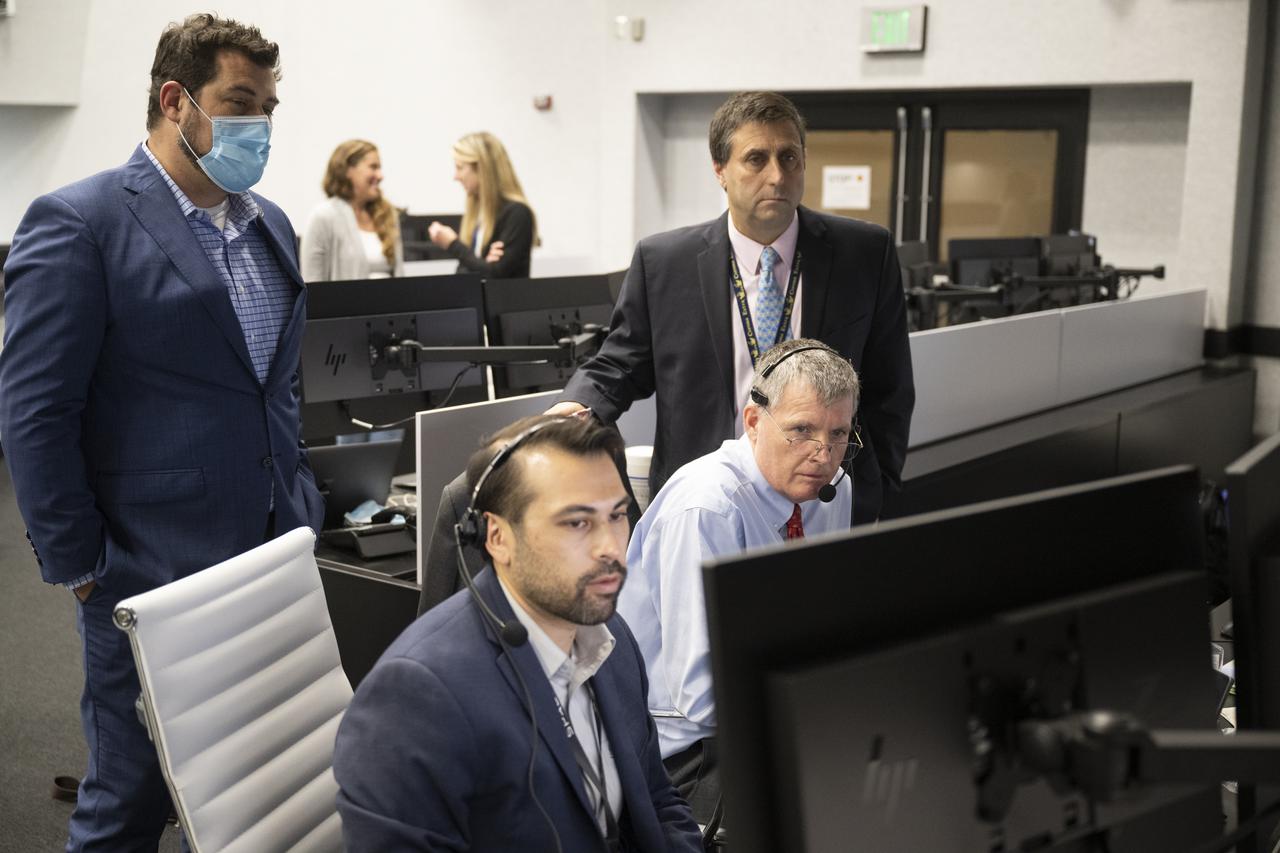
Stewart Whaley and teams at NASA’s Marshall Space Flight Center help monitor launch conditions for the Demo-2 mission from the Huntsville Operations Support Center, HOSC.
Stewart Whaley and teams  at NASA’s Marshall Space Flight Center help monitor launch conditions for the Demo-2 mission from the Huntsville Operations Support Center, HOSC.
Stewart Whaley and teams at NASA’s Marshall Space Flight Center help monitor launch conditions for the Demo-2 mission from the Huntsville Operations Support Center, HOSC.
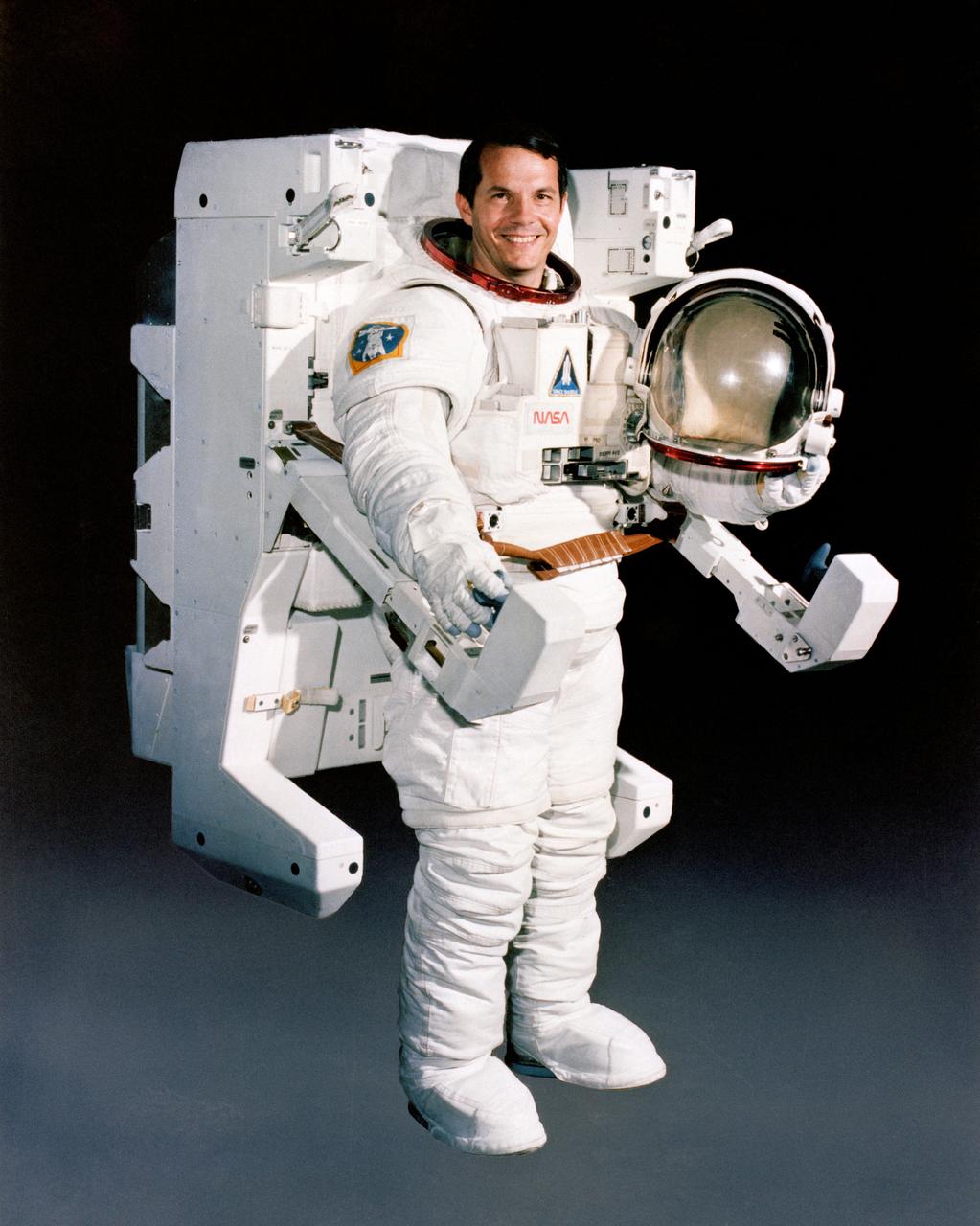
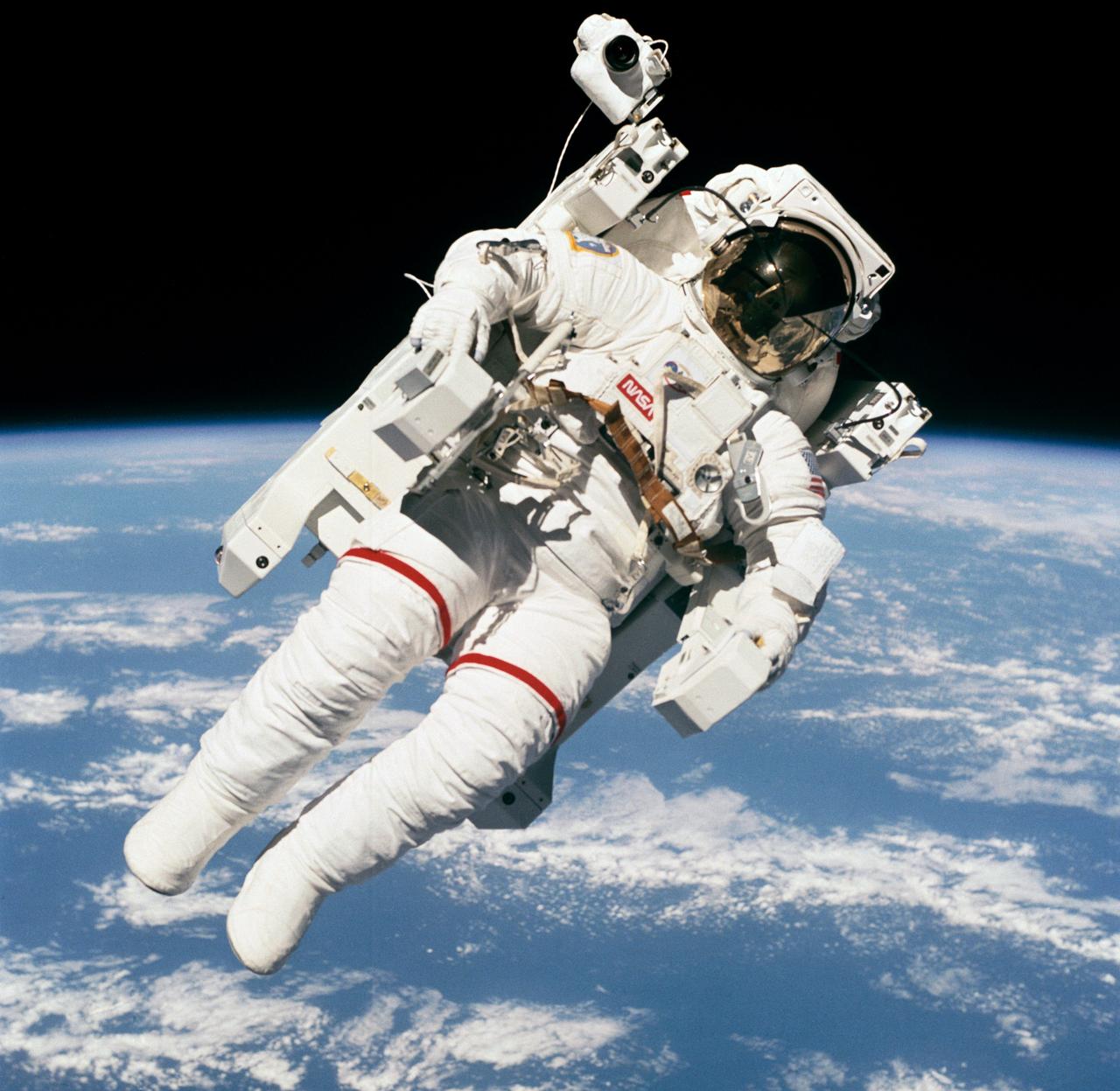
Portrait photographs of STS-11/41B Crewman Robert L. Stewart, wearing the Extravehicular Maneuvering Unit (EMU) with the Manned Manuevering Unit (MMU) attached, and without helmet.
PORTRAIT - ASTRONAUT STEWART, ROBERT L.
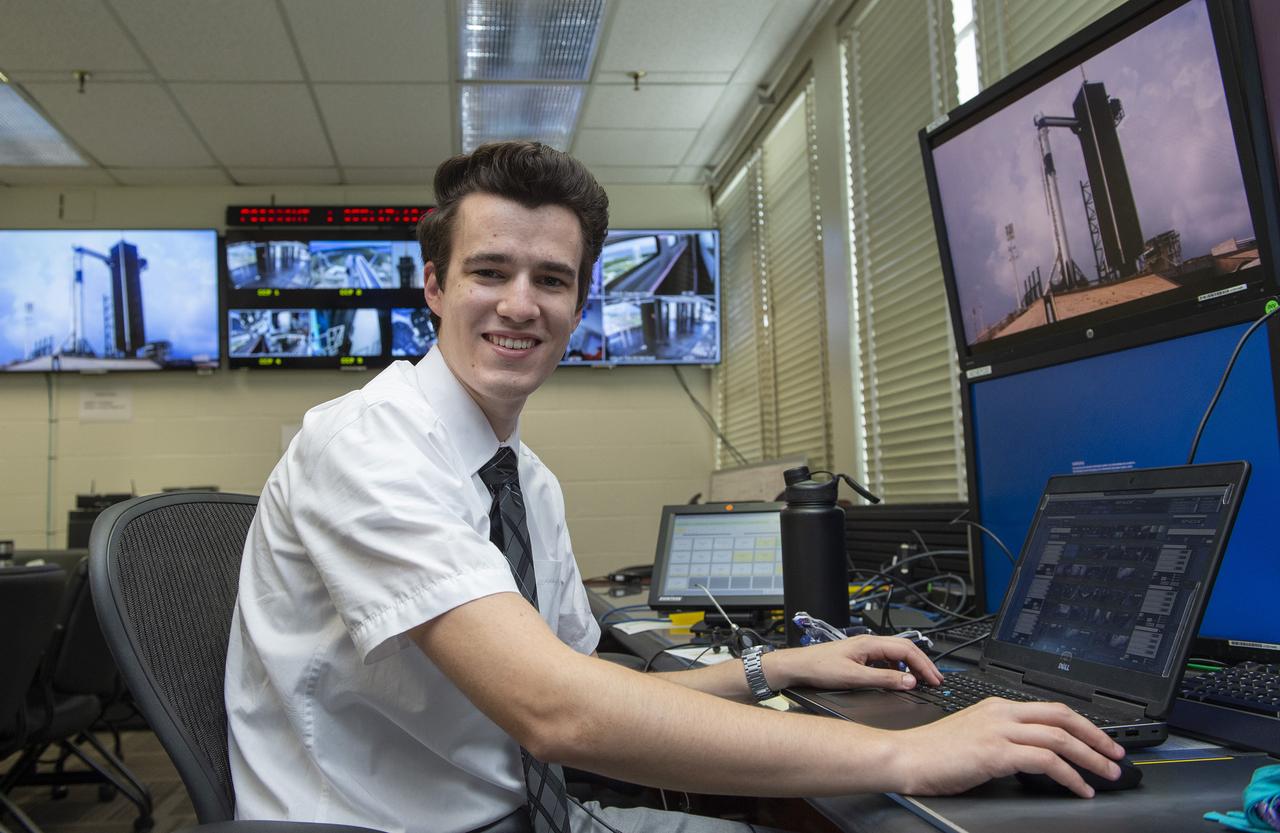
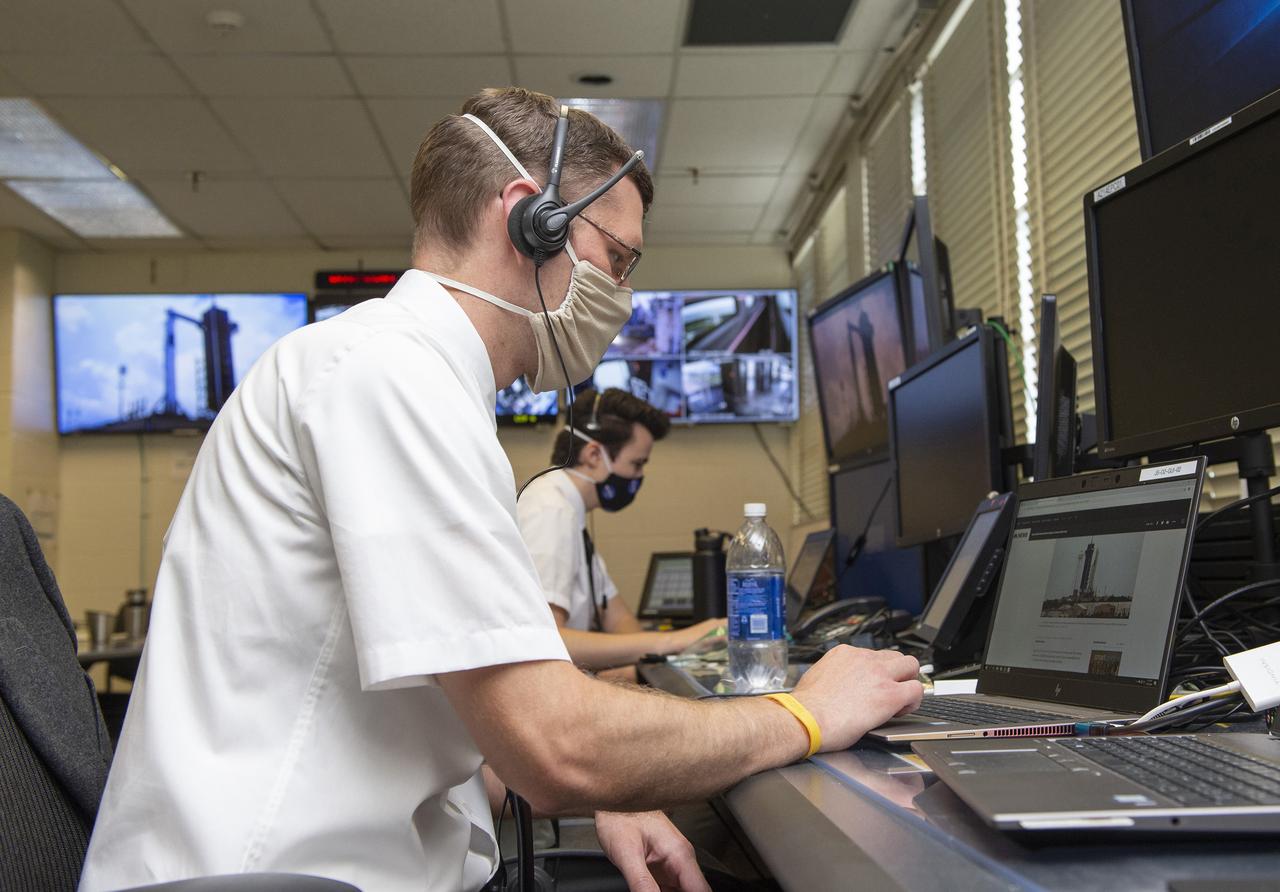
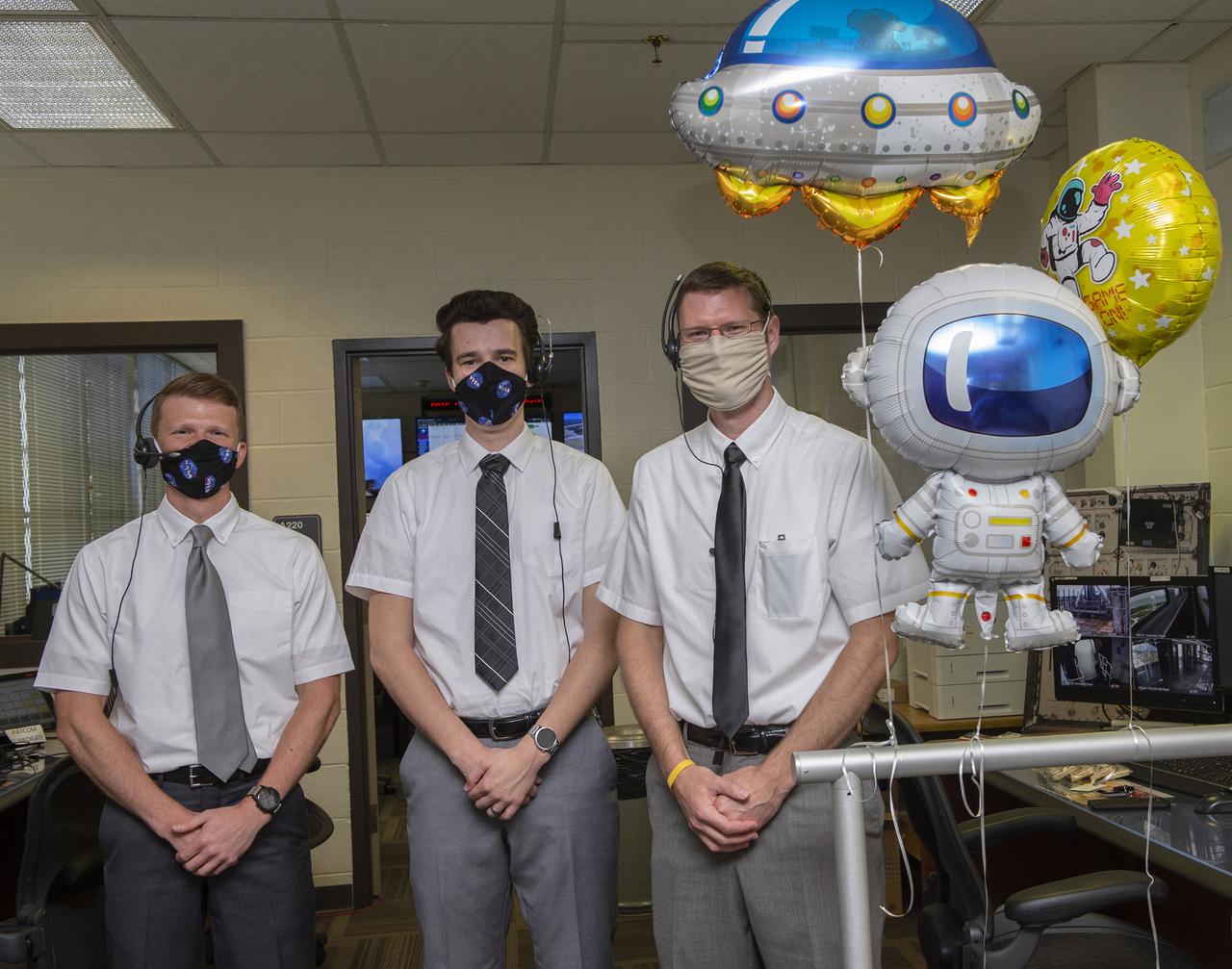
Stewart Whaley, Cameron Muelling, foreground, and teams  at NASA’s Marshall Space Flight Center help monitor launch conditions for the Demo-2 mission from the Huntsville Operations Support Center, HOSC.
Stewart Whaley, Cameron Muelling, foreground, and teams at NASA’s Marshall Space Flight Center help monitor launch conditions for the Demo-2 mission from the Huntsville Operations Support Center, HOSC.
Patrick Mills, Stewart Whaley, Cameron Muelling and teams at NASA’s Marshall Space Flight Center help monitor launch conditions for the Demo-2 mission from the Huntsville Operations Support Center, HOSC.
Stewart Whaley, Cameron Muelling, foreground, and teams at NASA’s Marshall Space Flight Center help monitor launch conditions for the Demo-2 mission from the Huntsville Operations Support Center, HOSC.
 Stewart Whaley, Cameron Muelling, foreground, and teamsat NASA’s Marshall Space Flight Center help monitor launch conditions for the Demo-2 mission from the Huntsville Operations Support Center, HOSC.
Stewart Whaley, Cameron Muelling, foreground, and teams at NASA’s Marshall Space Flight Center help monitor launch conditions for the Demo-2 mission from the Huntsville Operations Support Center, HOSC.
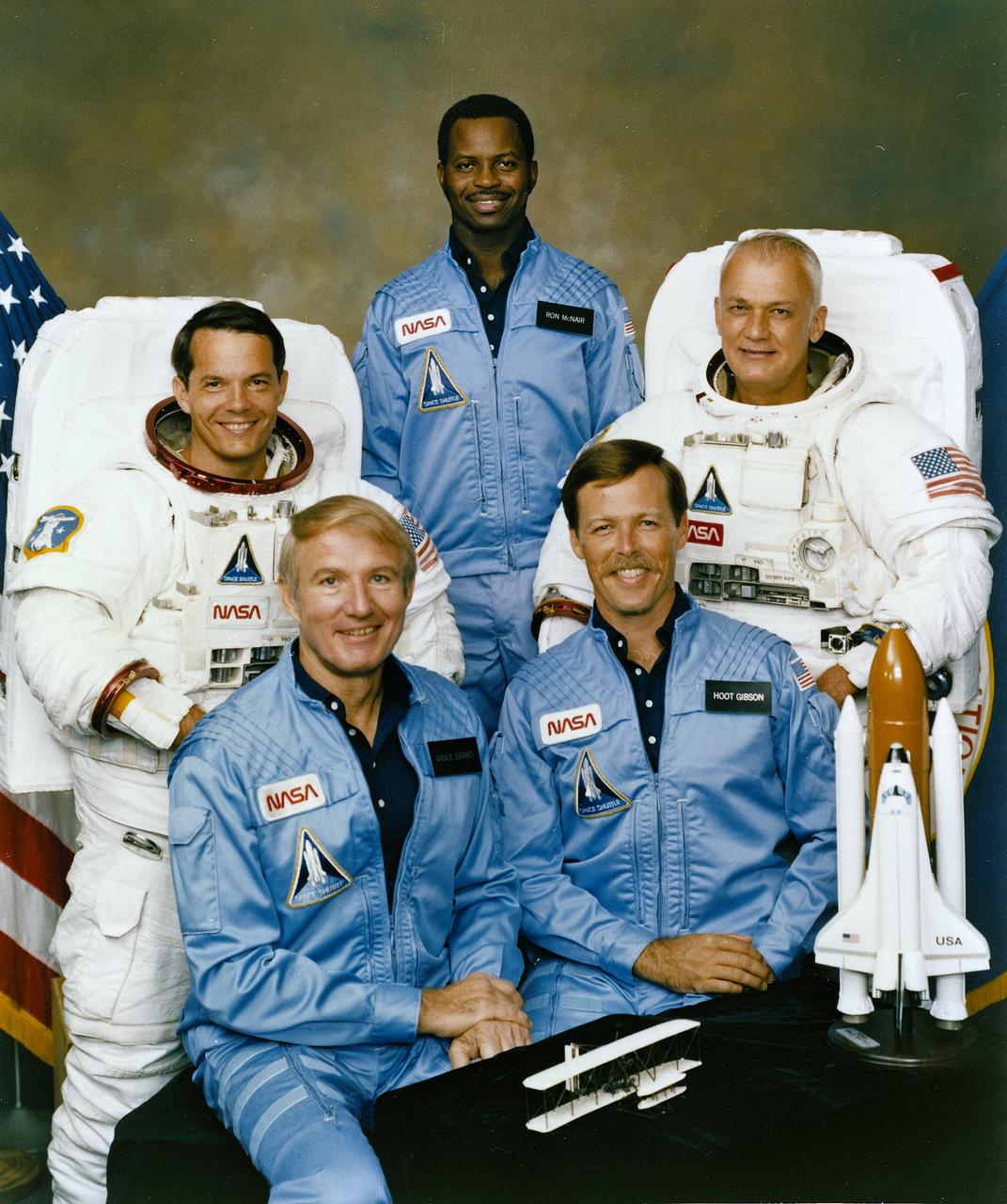
The crew assigned to the STS-41B (STS-11) mission included (seated left to right) Vance D. Brand, commander; and Robert L. Gibson, pilot. Standing left to right are mission specialists Robert L. Stewart, Ronald E. McNair, and Bruce McCandless. Launched aboard the Space Shuttle Challenger on February 3, 1984 at 8:00:00 am (EST), the STS-41B mission marked the first untethered space walks which were performed by McCandless and Stewart.  The crew  deployed the WESTAR-VI and PALAPA-B2 satellites.
Space Shuttle Projects
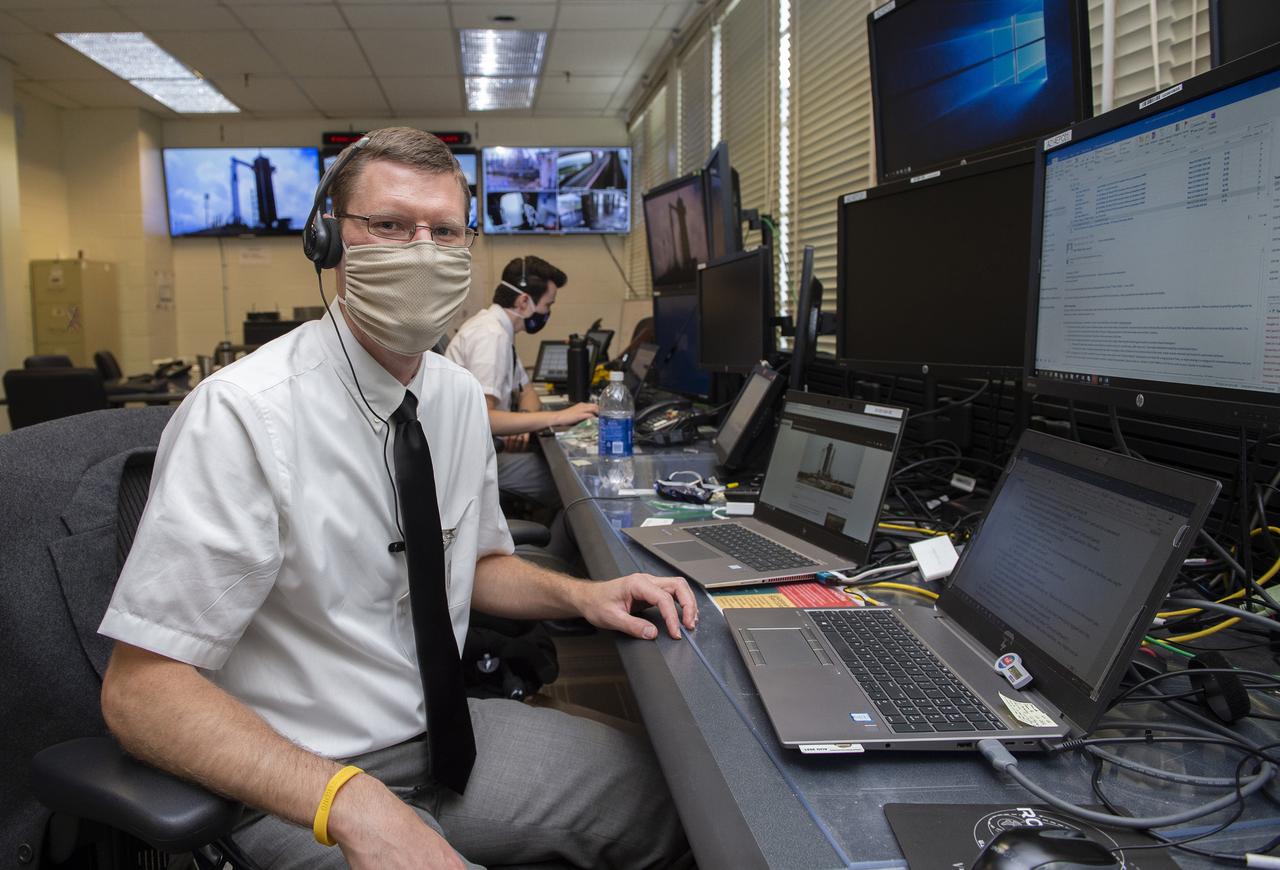
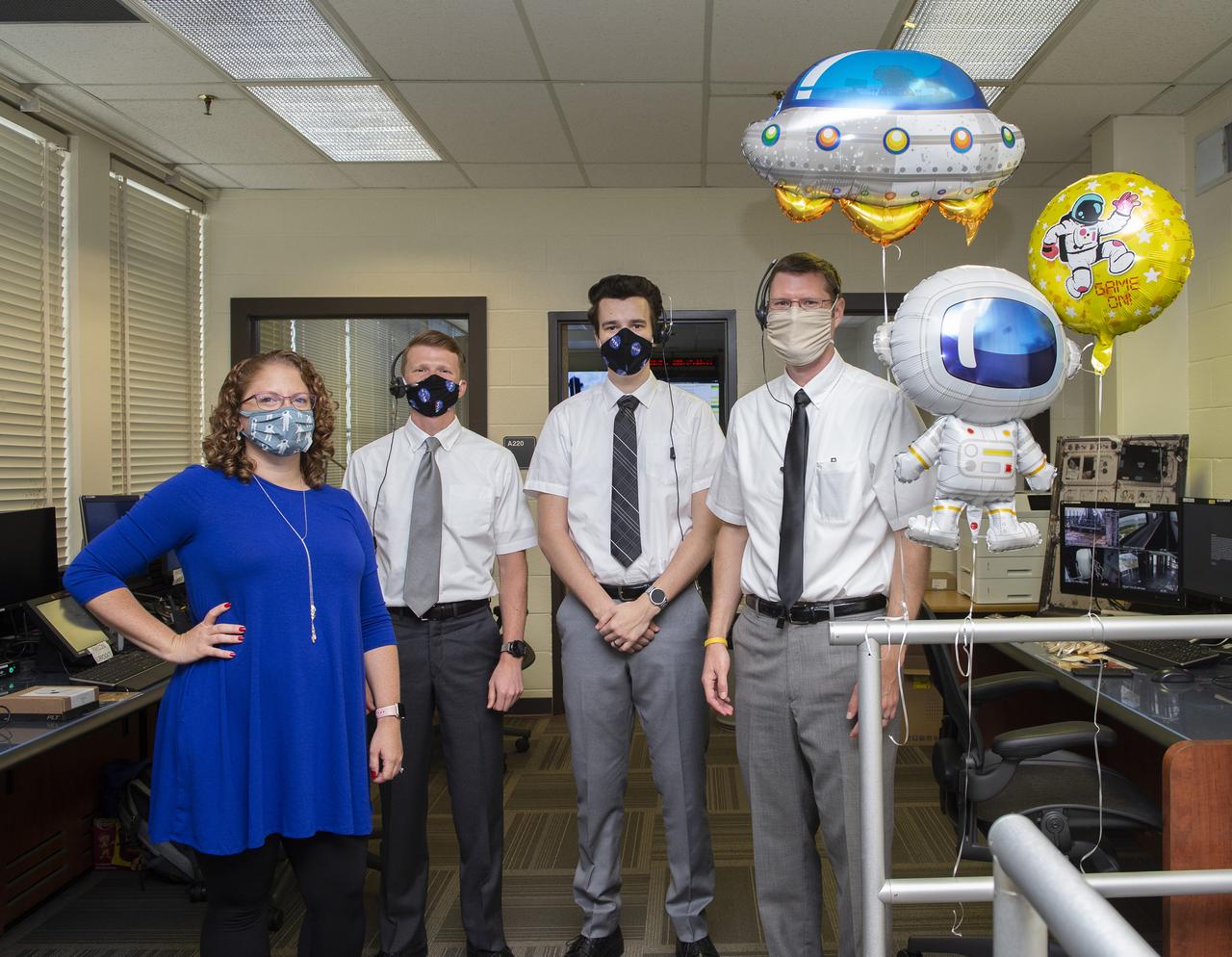
Amanda Stein, Patrick Mills, Stewart Whaley, Cameron Muelling and teams at NASA’s Marshall Space Flight Center help monitor launch conditions for the Demo-2 mission from the Huntsville Operations Support Center, HOSC.
Amanda Stein, Patrick Mills, Stewart Whaley, Cameron Muelling and Teams at NASA’s Marshall Space Flight Center help monitor launch conditions for the Demo-2 mission from the Huntsville Operations Support Center, HOSC.
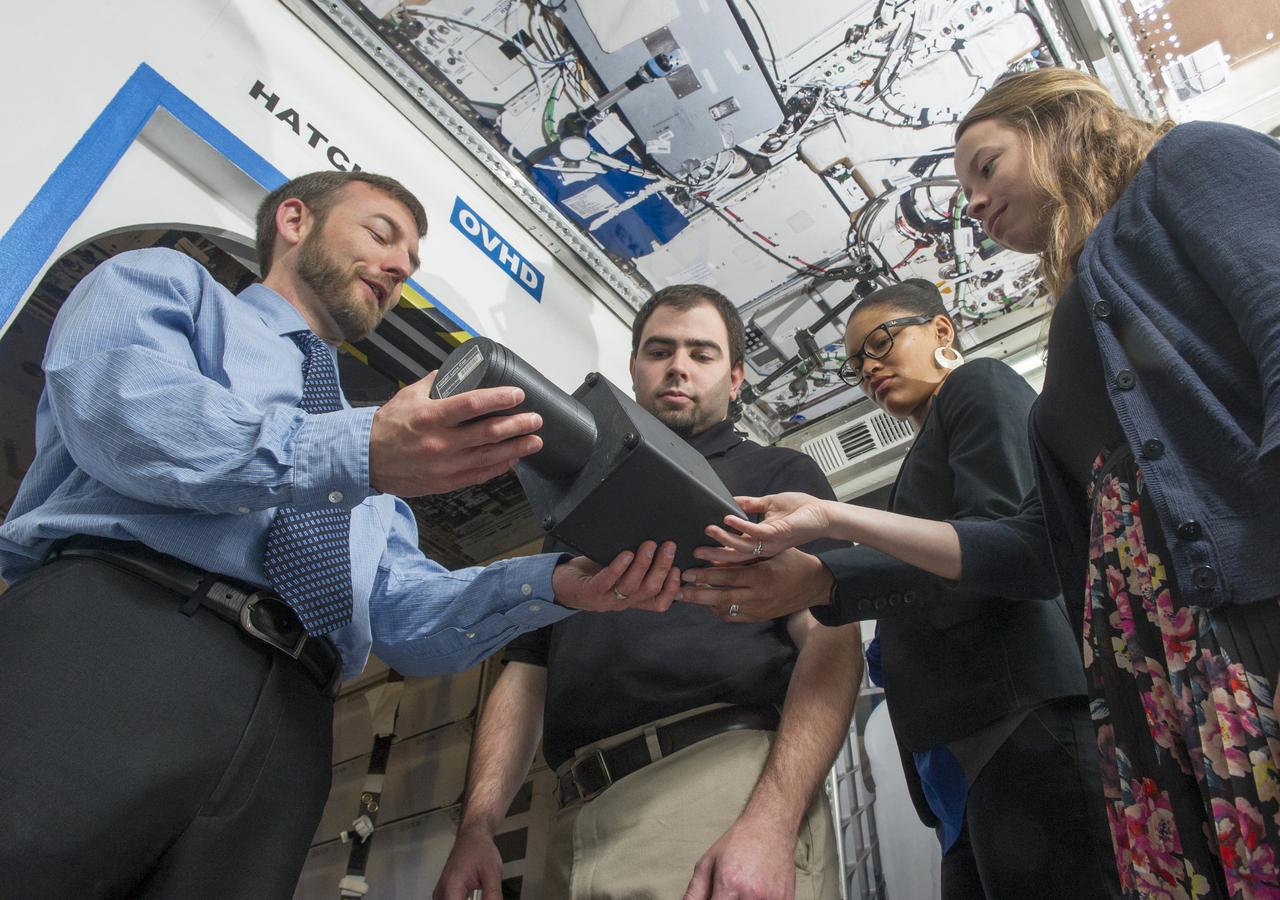
 ROBERT TRIMBLE, TAMEKA STEWART, ERIK SHAUGHNESSY, JEREMIAH HALEY, JOEL HARDY, & MICHAEL HARDY MISSION OPERATIONS LABORATORY - LABORATORY TRAINING COMPLEX (LTC), BUILDING 4663, EXPRESS RACK TRAINING.-
1400162
The crew assigned to the STS-51J mission included (seated left to right) Robert L. Stewart, mission specialist; Karol J. Bobko, commander; and Ronald J. Grabe, pilot. On the back row, left to right, are mission specialists David C. Hilmers, and Major Willliam A, Pailles (USAF). Launched aboard the Space Shuttle Atlantis on October 3, 1985 at 11:15:30 am (EDT), the STS-51J mission was the second mission dedicated to the Department of Defense (DOD).
Space Shuttle Projects
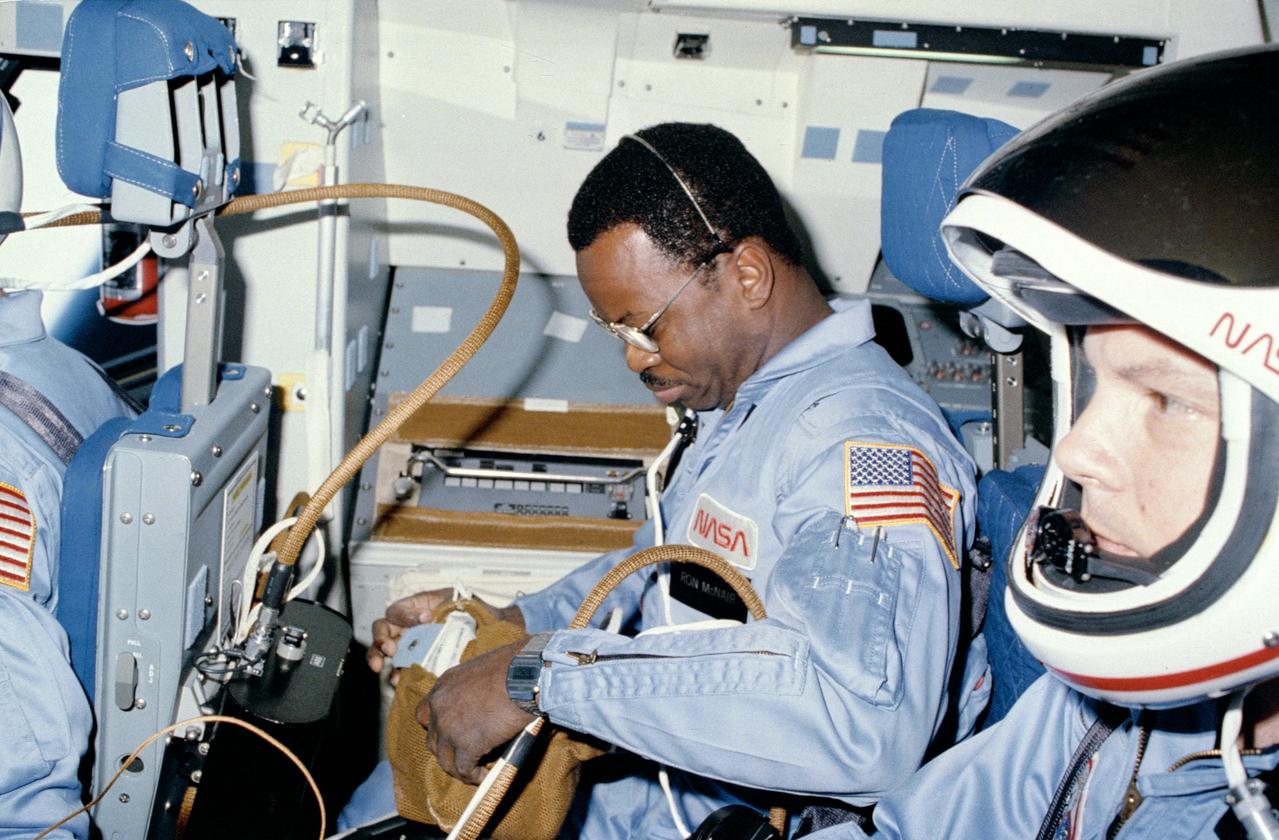
S84-27028 (3 Feb 1984) --- Astronaut Ronald E. McNair, left, and Robert L. Stewart prepare to enter an eight-day Earth-orbital mission aboard the Space Shuttle Challenger.  Photographed by Astronaut Bruce McCandless II, McNair had already moved his helmet.  Launch was less than ten minutes earlier from Launch Pad 39A at Kennedy Space Center, Florida.  The three mission specialists were joined by Astronauts Vance D. Brand, commander; and Robert L. Gibson, pilot, for the flight.  McCandless?s launch phase station is in the middeck.
Astronauts McNair and Stewart prepare for on-orbit operations
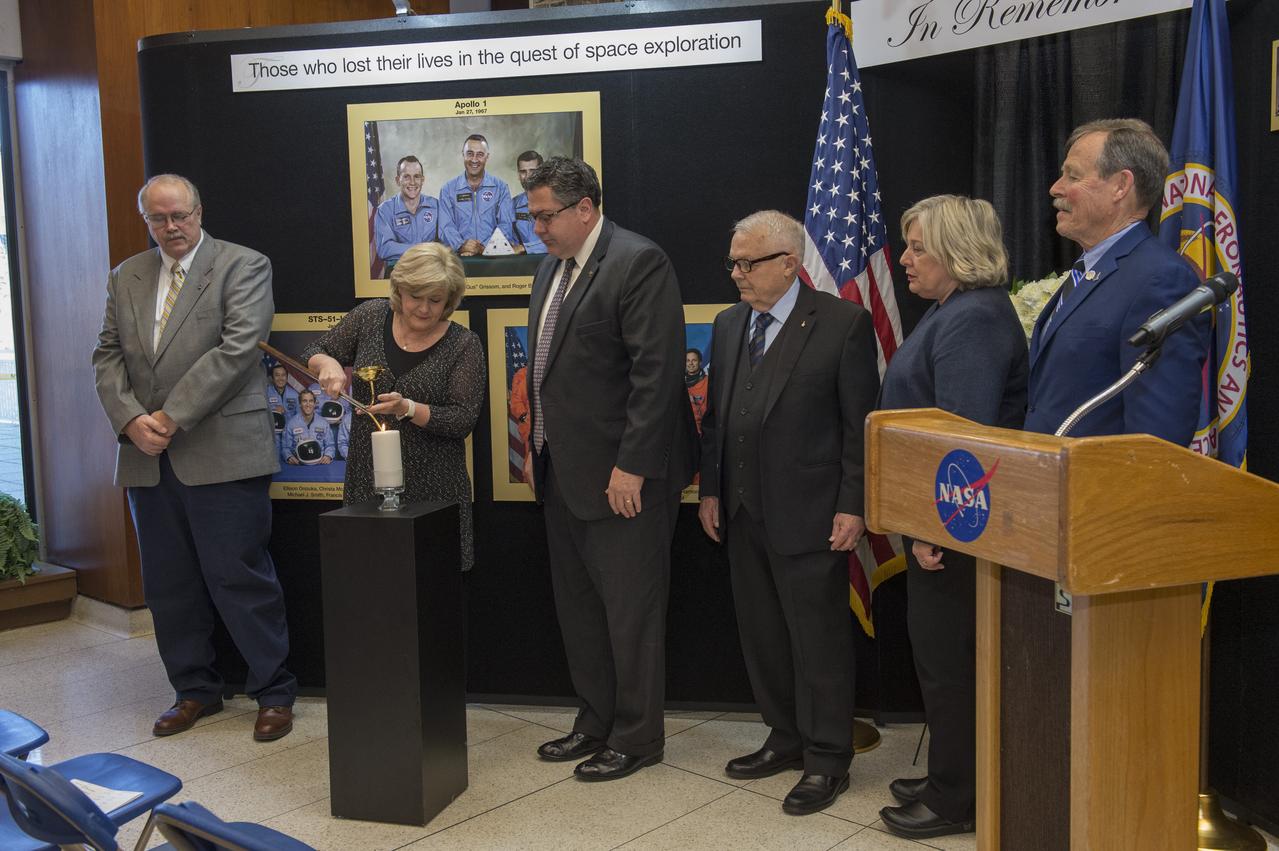
Jody Singer, Marshall deputy director, lights a candle in honor of colleagues who lost their lives in purist of space exploration during Marshall's Day of Remembrance ceremony. Looking on, from left, are Rick Burt, Marshall Safety and Mission Assurance Directorate director; Marshall Center Director Todd May; and former NASA astronauts retired Army Brig. Gen. Robert Stewart; former Marshall Deputy Director Jan Davis; and Robert "Hoot" Gibson.
MSFC Annual Day of Remembrance ceremony
 Johnny Stephenson, Director of the Office of Strategic Analysis and Communications, addresses guests and employees at the Marshall Space Flight Center’s annual “Day of Remembrance” honoring those astronauts who have passed away. Looking on, from left, are Rick Burt, Marshall Safety and Mission Assurance Directorate director; Marshall Center Director Todd May; and former NASA astronauts retired Army Brig. Gen. Robert Stewart; former Marshall Deputy Director Jan Davis; and Robert "Hoot" Gibson.
MSFC Annual Day of Remembrance ceremony
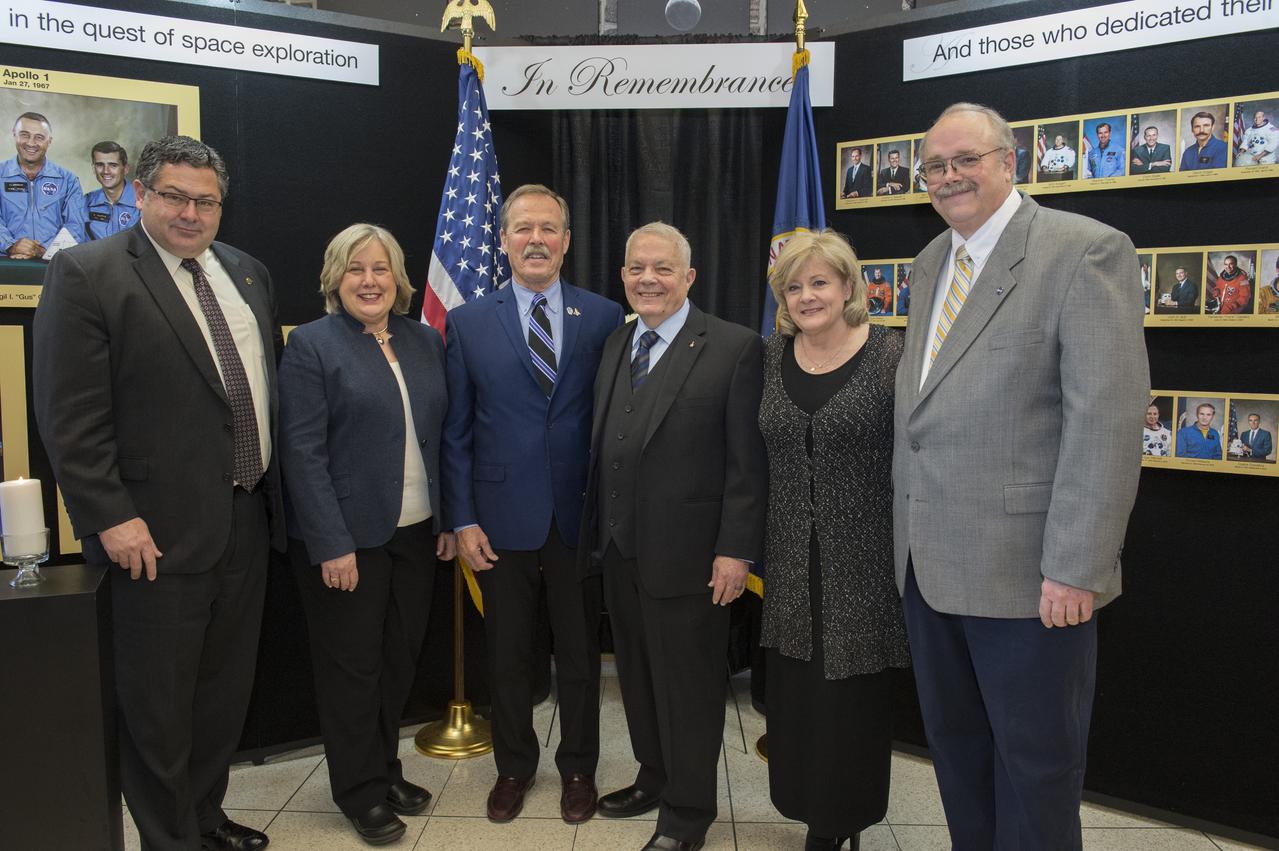
Participants in Marshall Space Flight Center’s annual “Day of Remembrance are, from left to right, MSFC Director Todd May, retired astronaut Jan Davis, retired astronaut Robert “Hoot” Gibson, retired astronaut Robert Stewart, MSFC Deputy Director Jody singer, and Director of Safety and Mission Assurance Rick Burt.
MSFC Annual Day of Remembrance ceremony
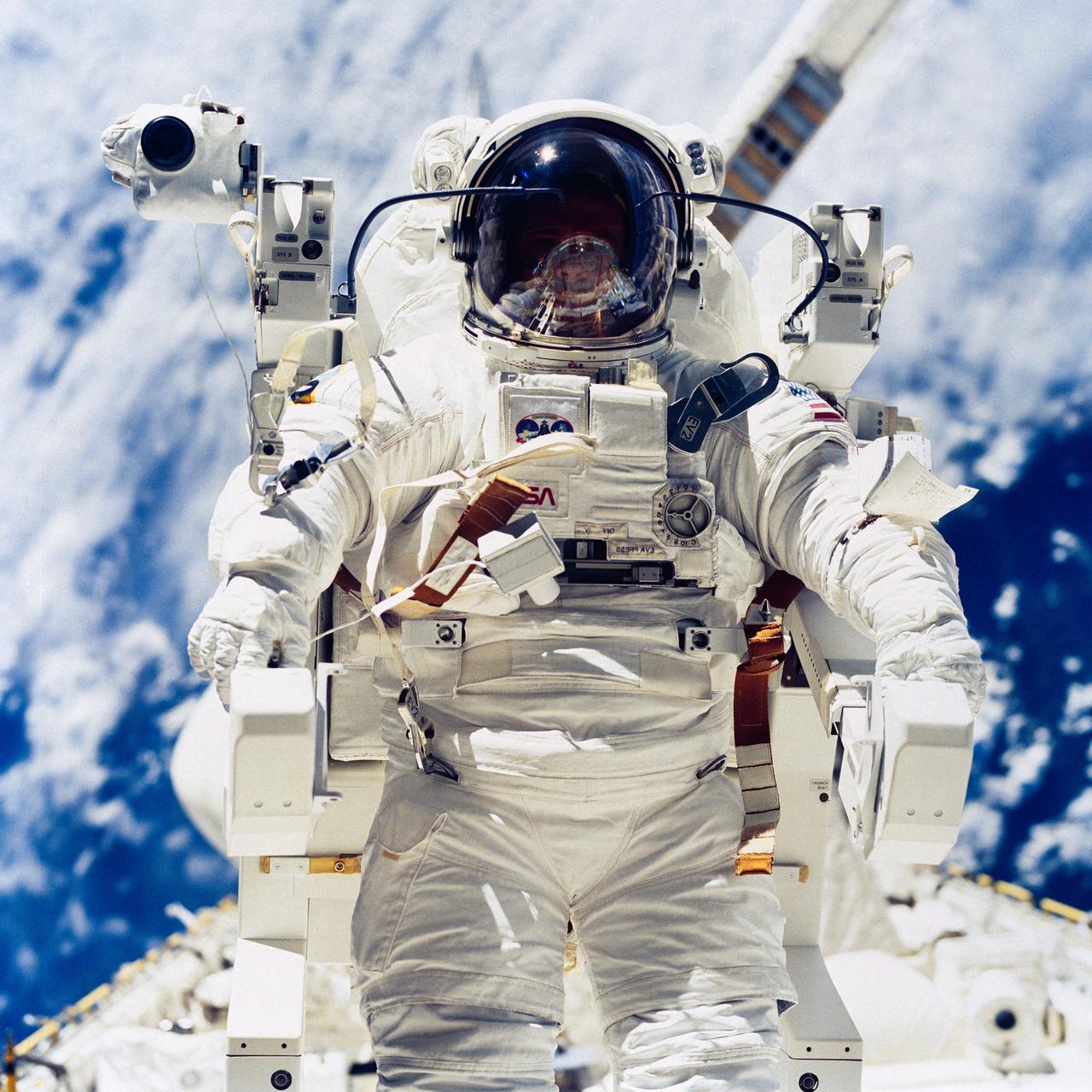
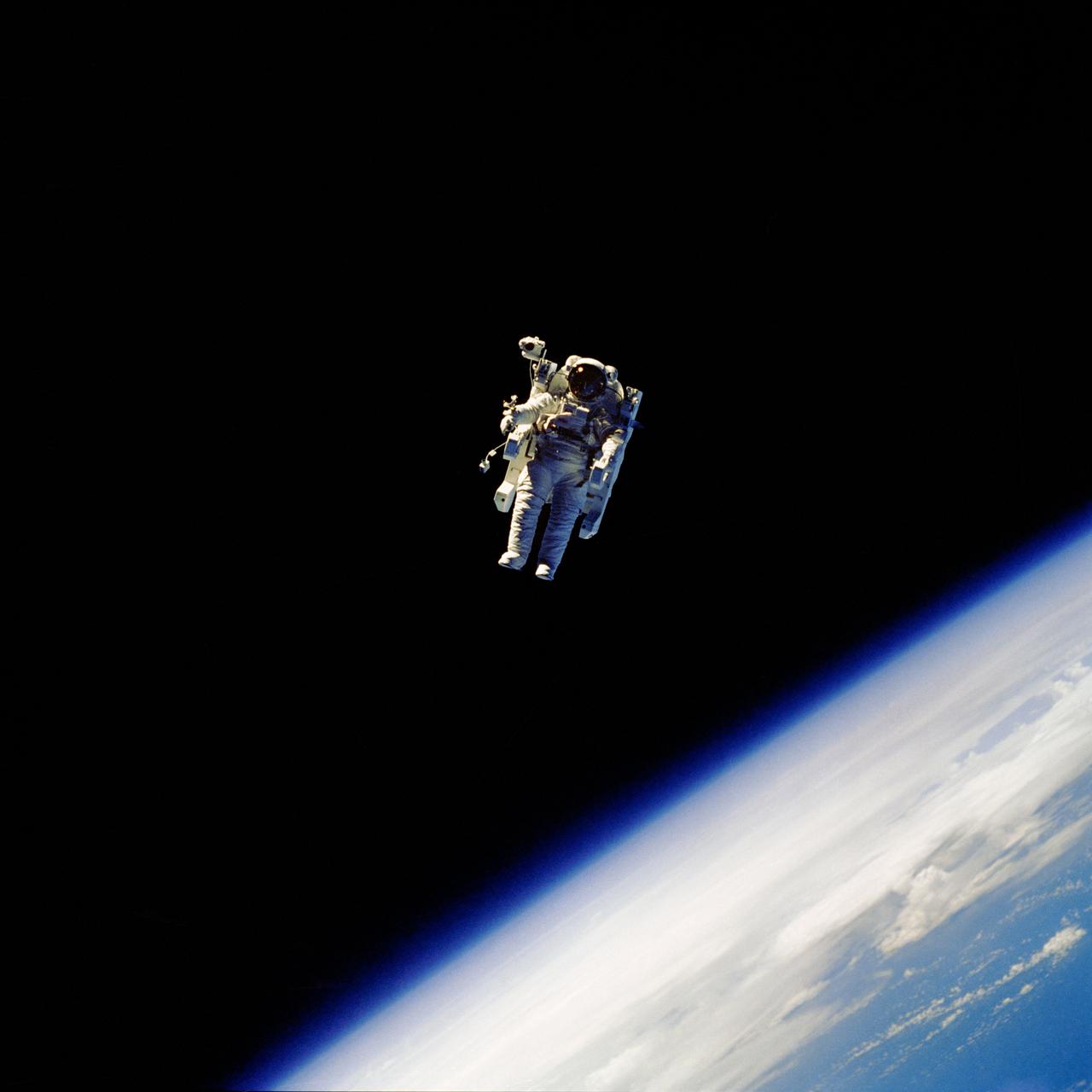
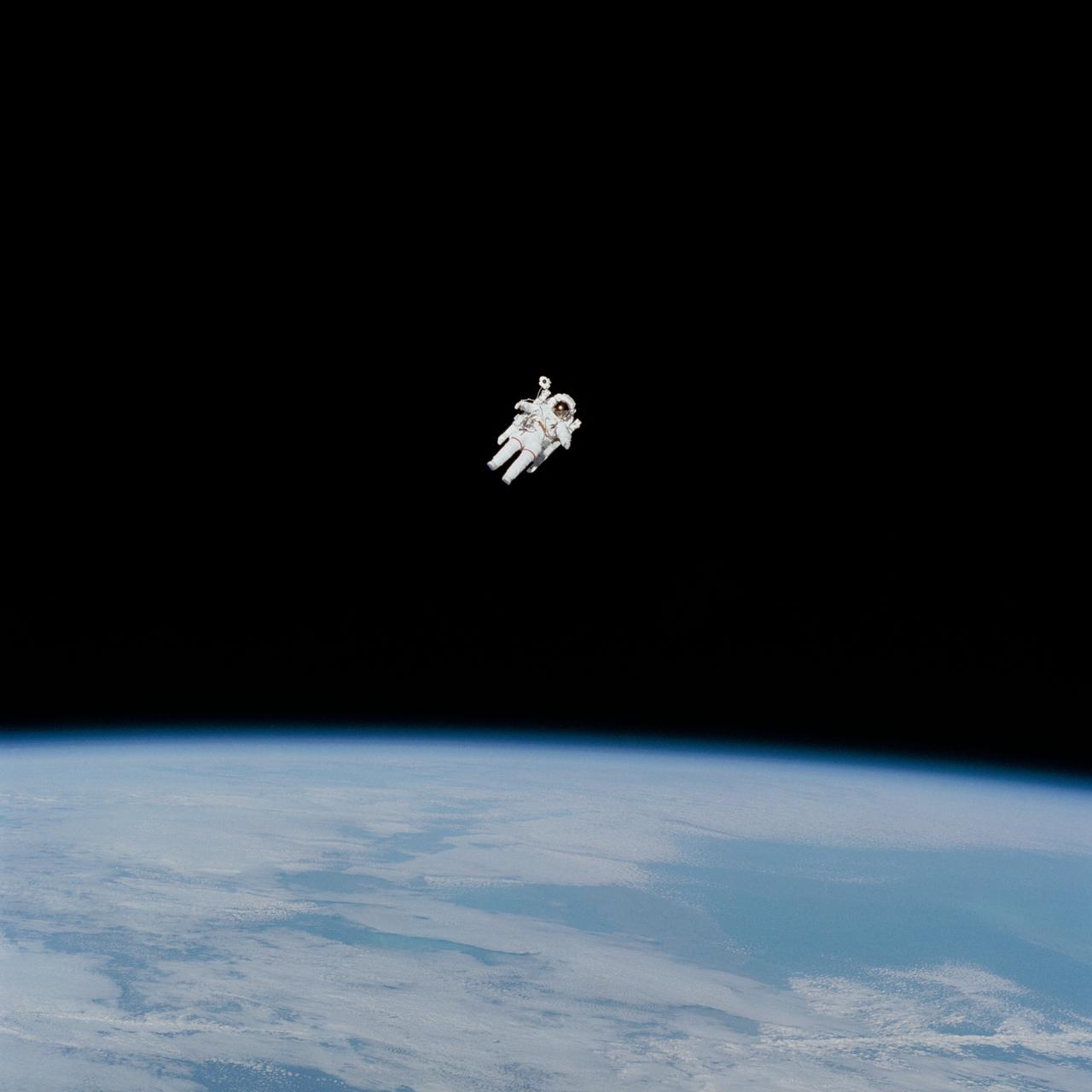
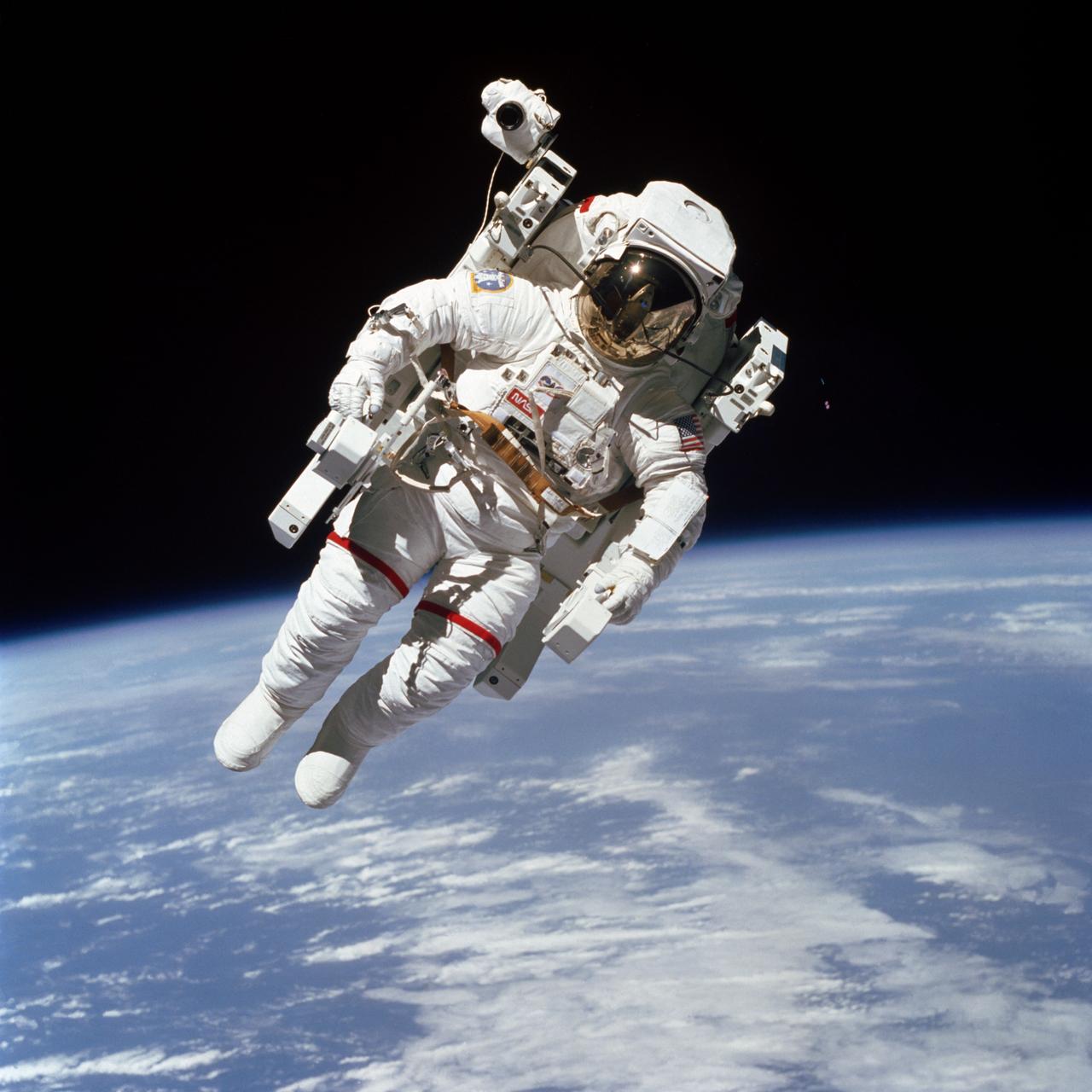
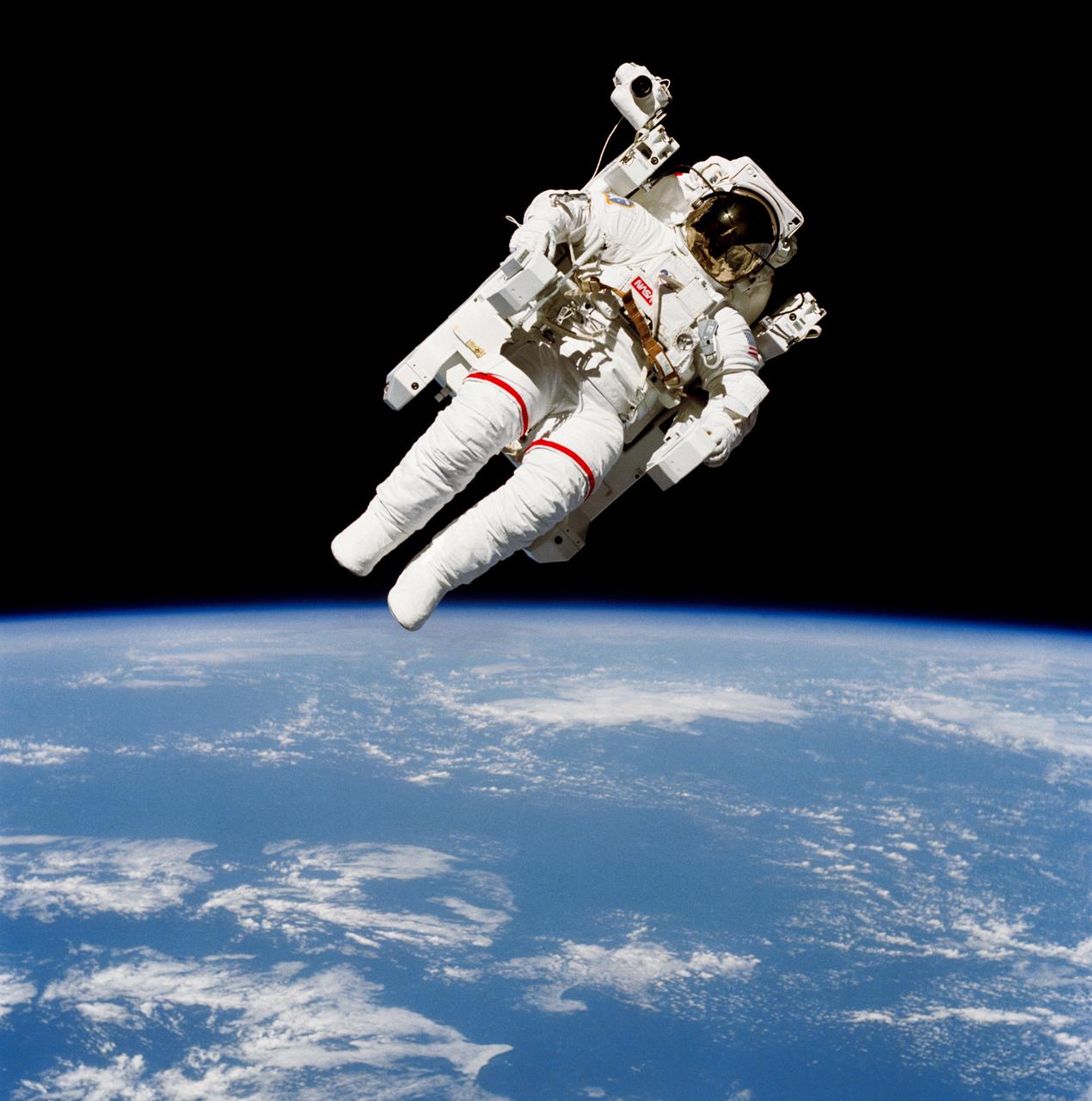
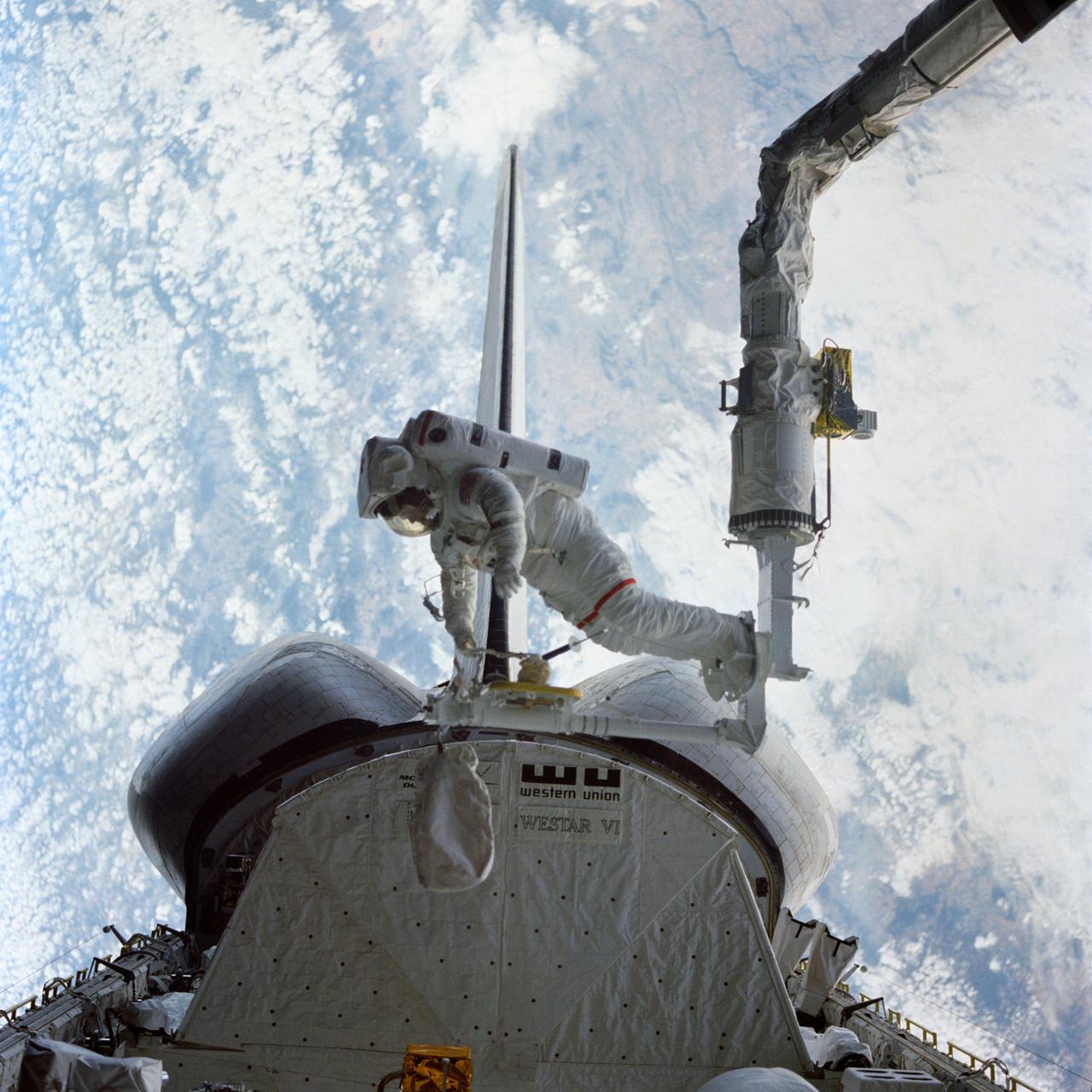
S84-27034A (9 Feb. 1984) --- Astronaut Robert L. Stewart appears to glide a few meters above the Earth-orbiting Space Shuttle Challenger's cargo bay during the second of two extravehicular activity (EVA) session on the Challenger's fourth flight in space.  Astronauts Stewart and Bruce  McCandless II, two of NASA's three mission specialists on flight STS-41B, earlier made another EVA, testing another manned maneuvering unit (MMU).
s84-27034a
Astronaut Robert L. Stewart, Mission Specialist (MS), uses his hands to control his movement in space while using the nitrogen propelled Manned Maneuvering Unit (MMU).  He is participating in a EVA, a few meters away from the cabin of the Shuttle Challenger. MS Stewart is centered in a background of clouds and Earth in this view of his EVA.  He is floating without tethers attaching him to the Shuttle.
Extravehicular Activity (EVA) Views - STS-41B
JOEL HARDY, MICHAEL ROYSTER, TAMEKA STEWART, & SAMANTHA SHINE MISSION OPERATIONS LABORATORY - LABORATORY TRAINING COMPLEX (LTC), BUILDING 4663, WINDOW OBSERVATIONAL RESEARCH FACILITY (WORF) TRAINING
1400166
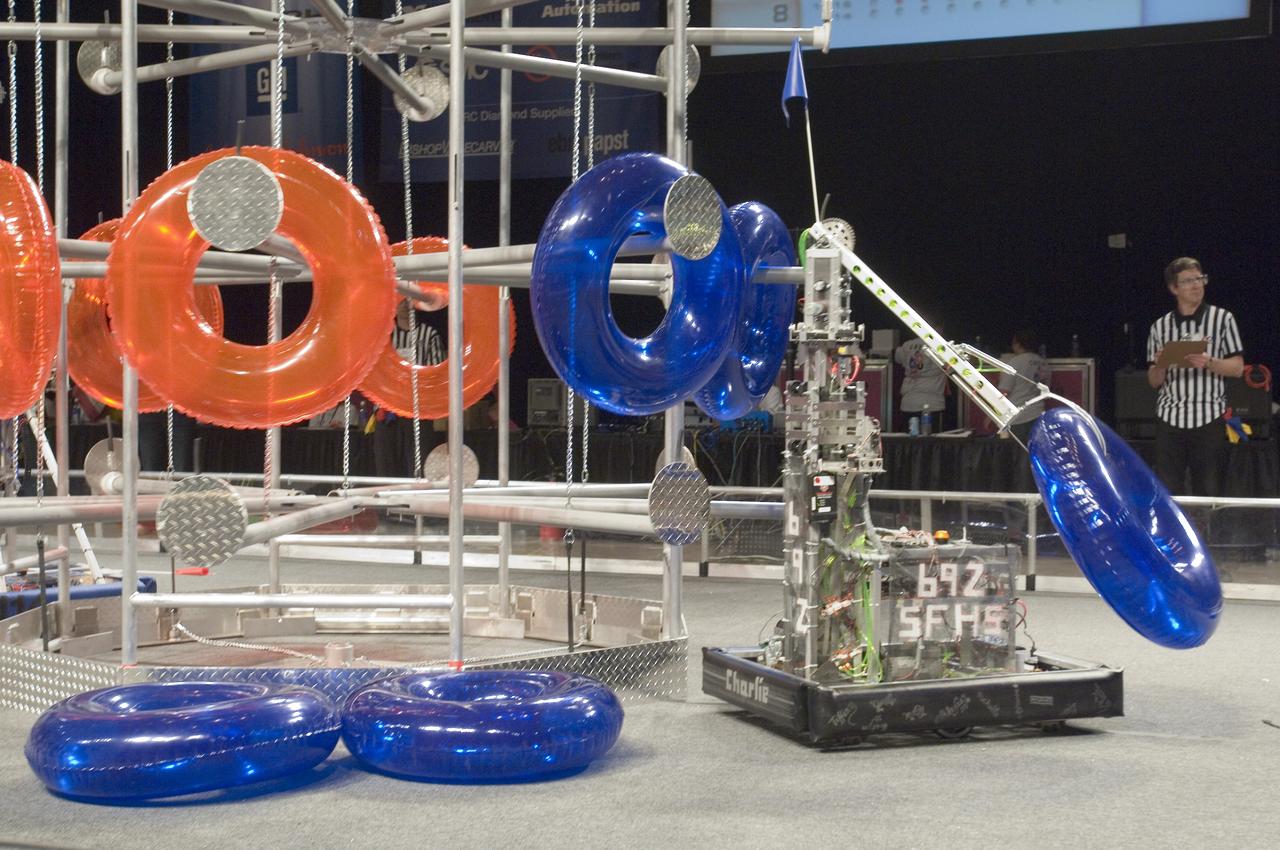
Silicon Valley FIRST Regional Robotics competition:   The Fembots Team 692 - CyboSoft/PASCO Scientific/The Stewart Family/MR Pickles & St Francis High School, Sacramento, California (CA) on the floor doing battle
ARC-2007-ACD07-0049-024
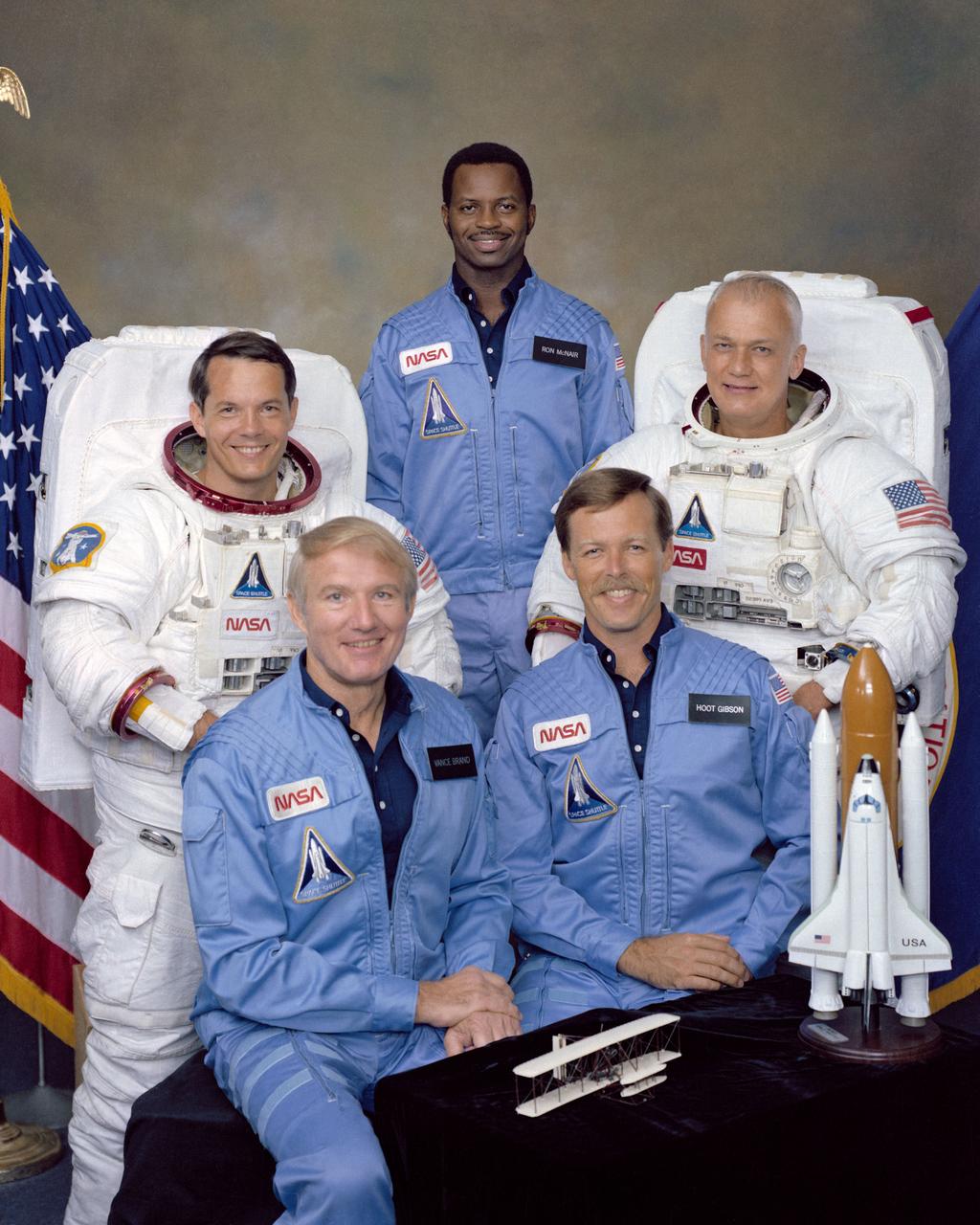
S83-40555 (15 October 1983) --- These five astronauts are in training for the STS-41B mission, scheduled early next year. On the front row are Vance D. Brand, commander; and Robert L. Gibson, pilot. Mission specialists (back row, left to right) are Robert L. Stewart, Dr. Ronald E. McNair and Bruce McCandless II. Stewart and McCandless are wearing Extravehicular Mobility Units (EMU) space suits. The STS program's second extravehicular activity (EVA) is to be performed on this flight, largely as a rehearsal for a scheduled repair visit to the Solar Maximum Satellite (SMS), on a later mission. The Manned Maneuvering Unit (MMU) will make its space debut on STS-41B.
CREW PORTRAIT - SPACE SHUTTLE MISSION 41B
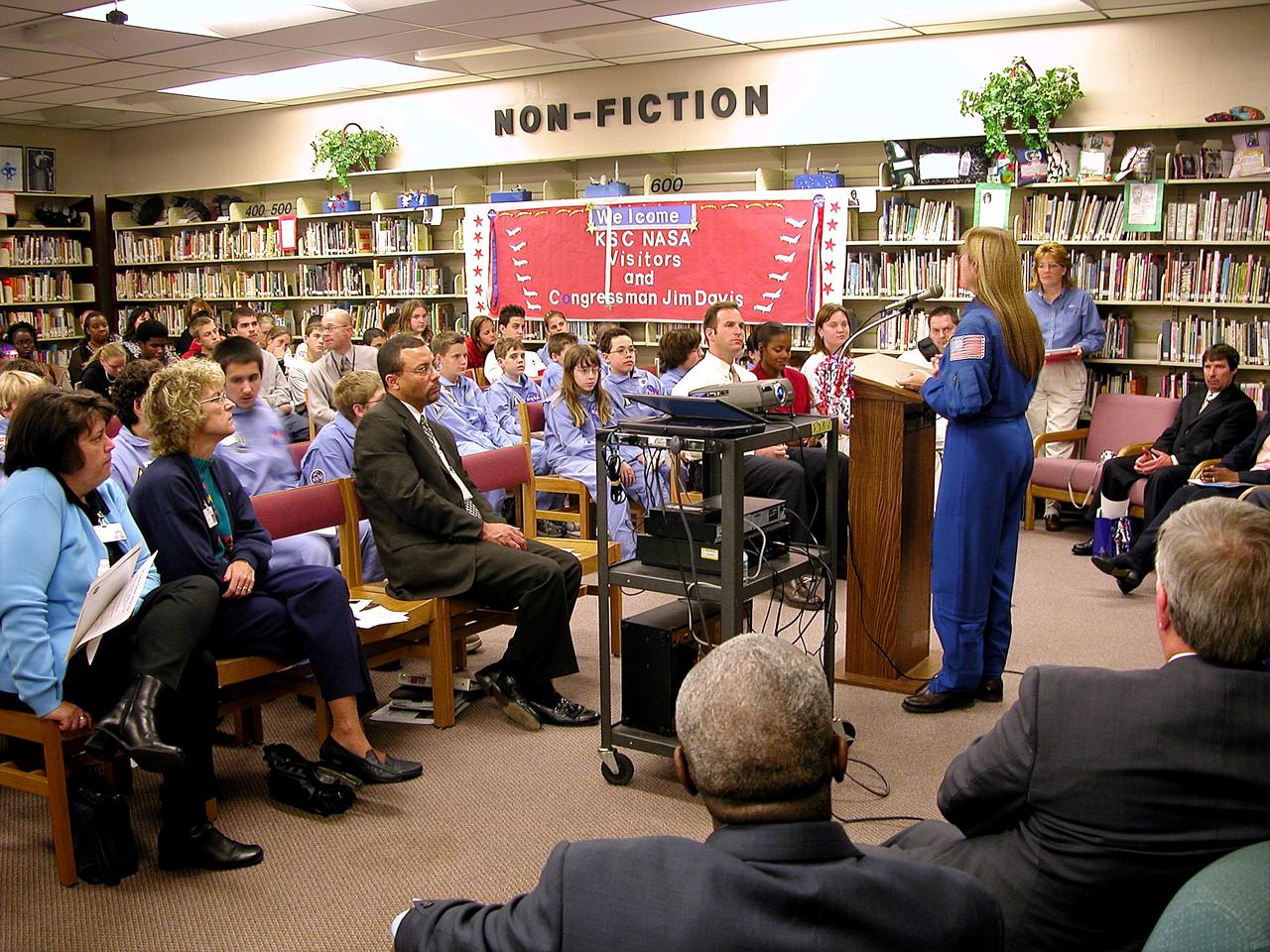
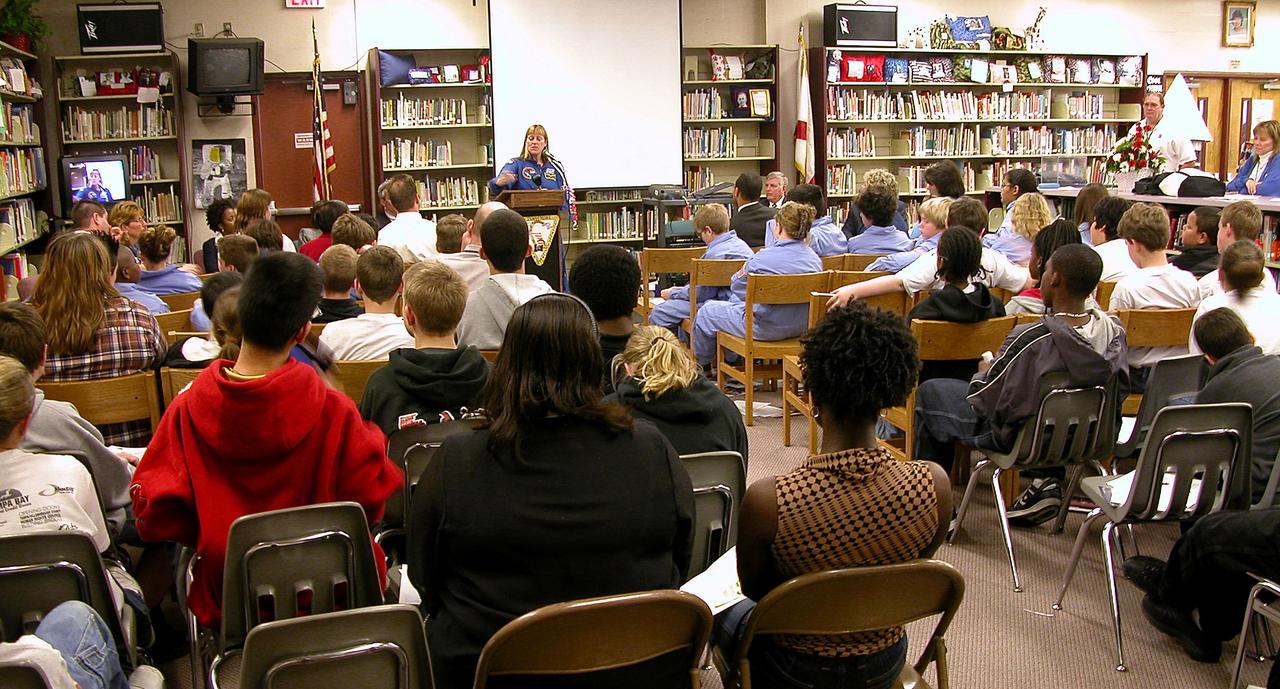
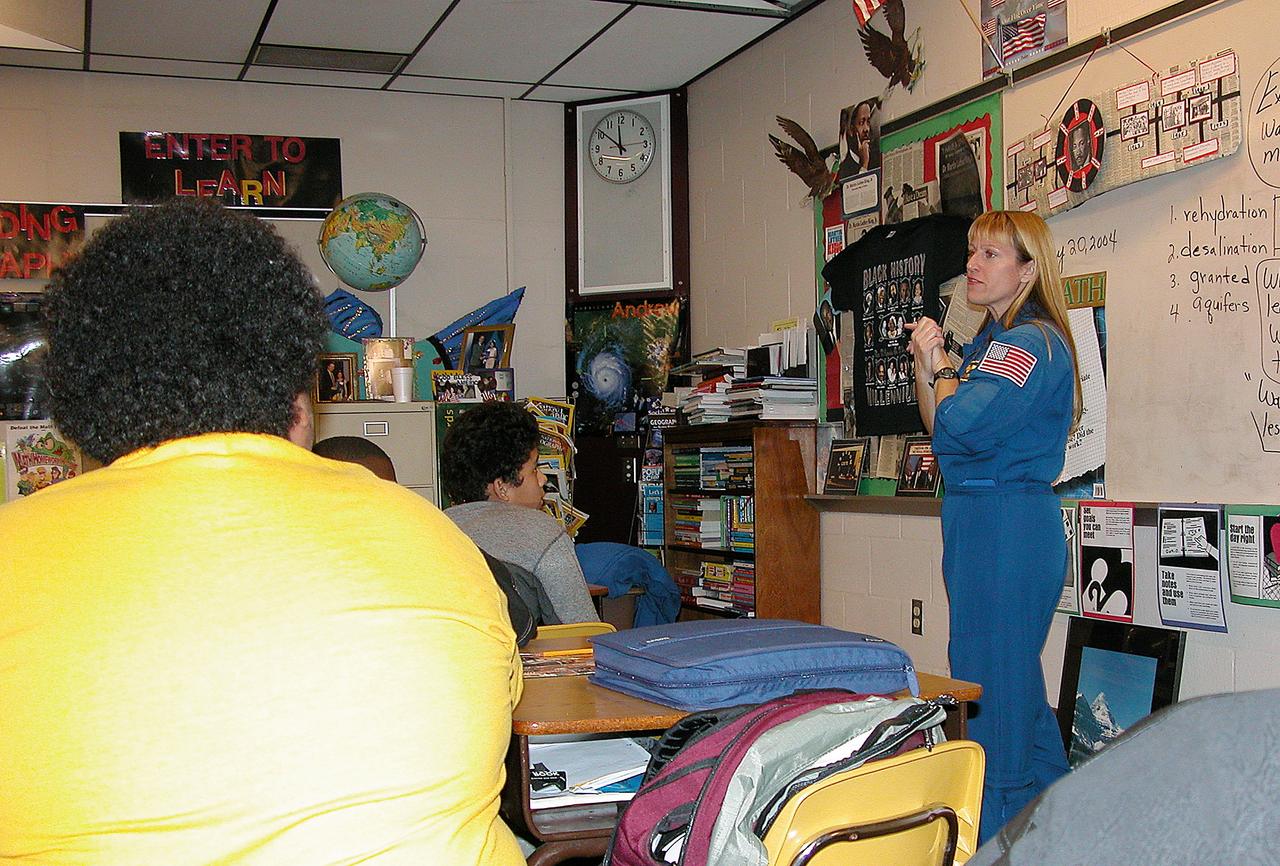
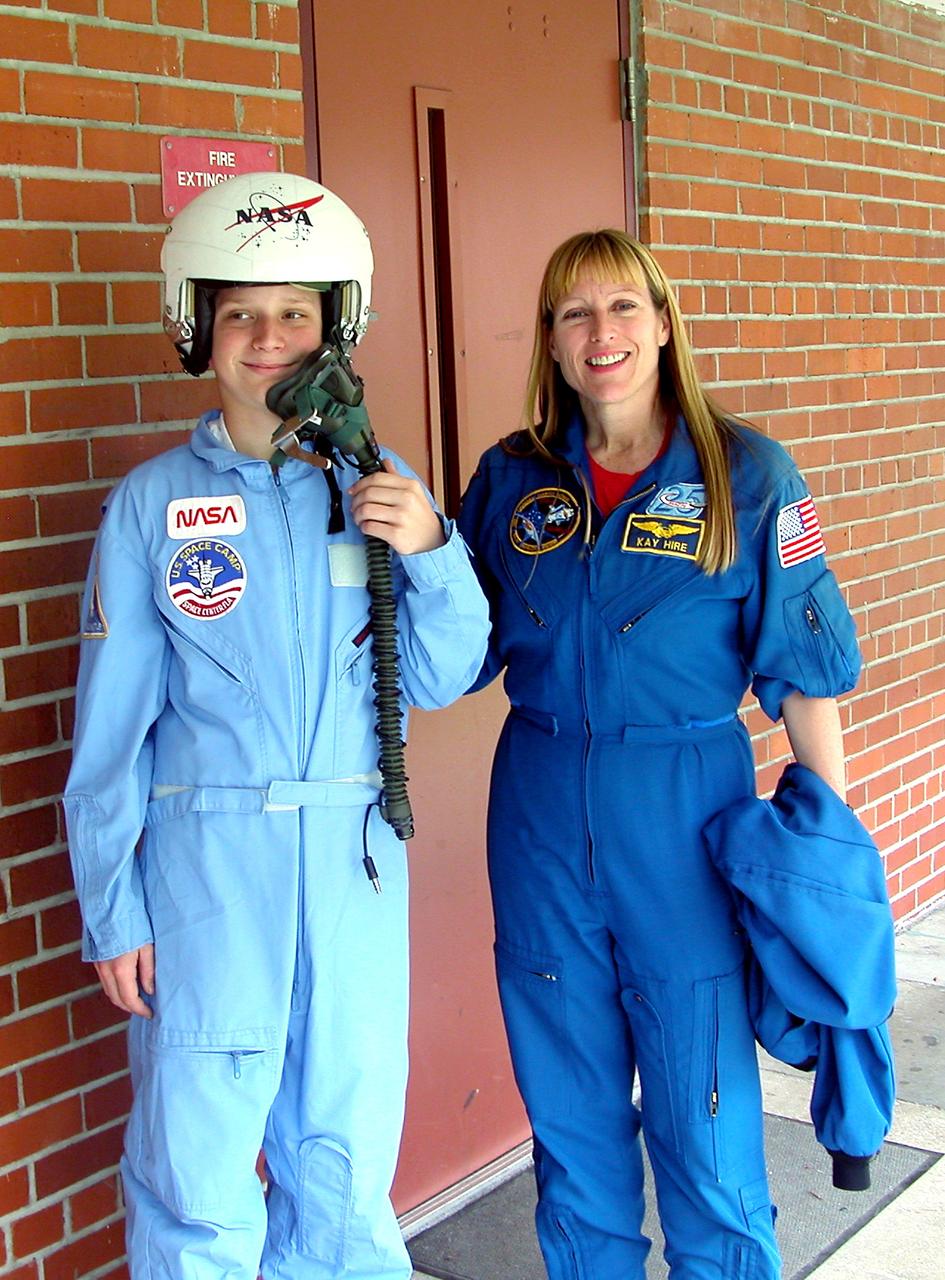
KENNEDY SPACE CENTER, FLA. - Astronaut Kay Hire talks to students in Garland V. Stewart Magnet Middle School, a NASA Explorer School (NES) in Tampa, Fla.  She joined Center Director Jim Kennedy in sharing the agency’s new vision for space exploration with the next generation of explorers. Kennedy is talking with students about our destiny as explorers, NASA’s stepping stone approach to exploring Earth, the Moon, Mars and beyond, how space impacts our lives, and how people and machines rely on each other in space.
KENNEDY SPACE CENTER, FLA. - Astronaut Kay Hire talks to students in Garland V. Stewart Magnet Middle School, a NASA Explorer School (NES) in Tampa, Fla. She joined Center Director Jim Kennedy in sharing the agency’s new vision for space exploration with the next generation of explorers. Kennedy is talking with students about our destiny as explorers, NASA’s stepping stone approach to exploring Earth, the Moon, Mars and beyond, how space impacts our lives, and how people and machines rely on each other in space.
KENNEDY SPACE CENTER, FLA. - Astronaut Kay Hire talks to students in Garland V. Stewart Magnet Middle School, a NASA Explorer School (NES) in Tampa, Fla.  She joined Center Director Jim Kennedy in sharing the agency’s new vision for space exploration with the next generation of explorers. Kennedy is talking with students about our destiny as explorers, NASA’s stepping stone approach to exploring Earth, the Moon, Mars and beyond, how space impacts our lives, and how people and machines rely on each other in space.
KENNEDY SPACE CENTER, FLA. - Astronaut Kay Hire talks to students in Garland V. Stewart Magnet Middle School, a NASA Explorer School (NES) in Tampa, Fla. She joined Center Director Jim Kennedy in sharing the agency’s new vision for space exploration with the next generation of explorers. Kennedy is talking with students about our destiny as explorers, NASA’s stepping stone approach to exploring Earth, the Moon, Mars and beyond, how space impacts our lives, and how people and machines rely on each other in space.
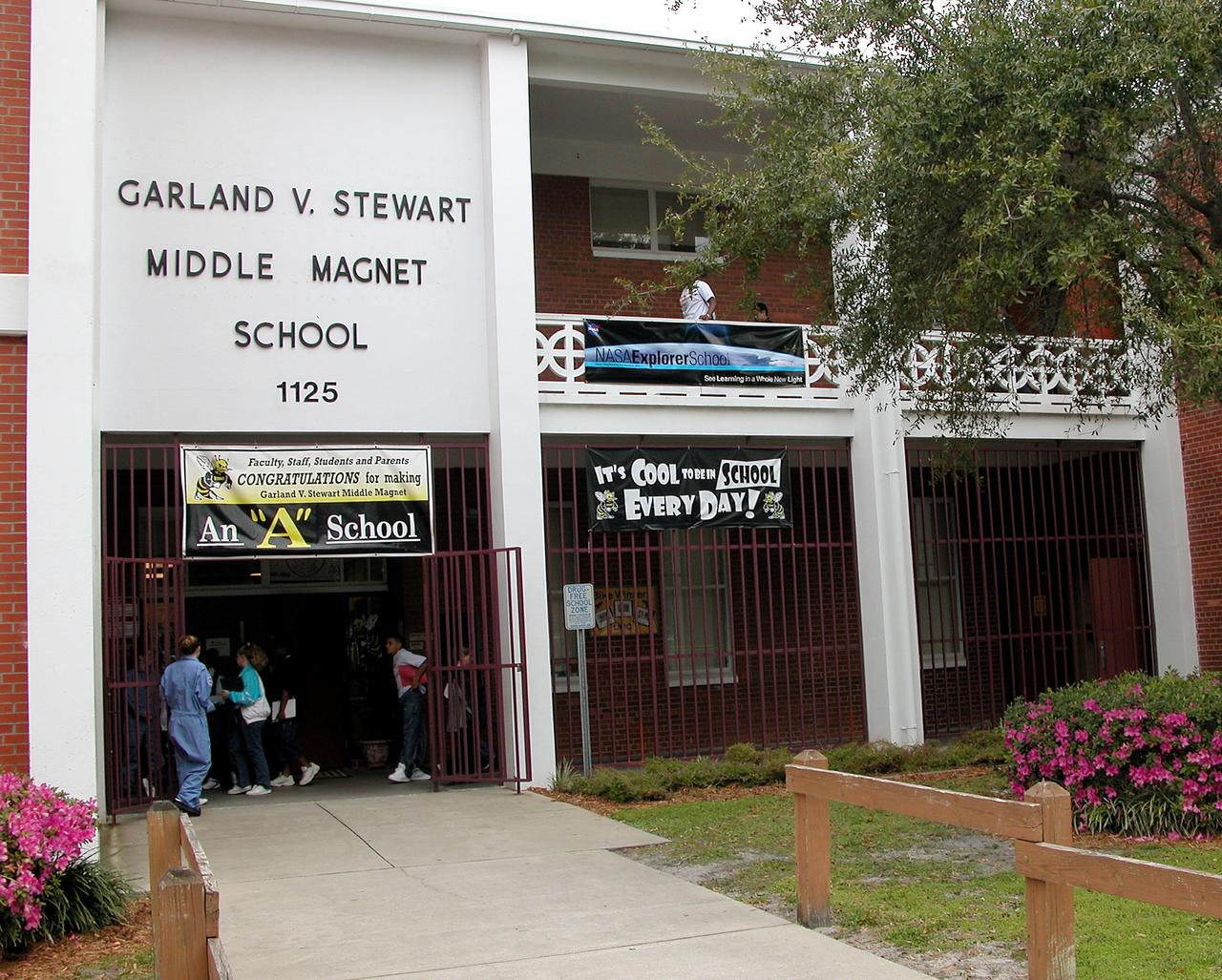
KENNEDY SPACE CENTER, FLA. - Garland V. Stewart Magnet Middle School, a NASA Explorer School (NES) in Tampa, Fla., is the site where Center Director Jim Kennedy and astronaut Kay Hire shared the agency’s new vision for space exploration with the next generation of explorers. Kennedy talked with students about our destiny as explorers, NASA’s stepping stone approach to exploring Earth, the Moon, Mars and beyond, how space impacts our lives, and how people and machines rely on each other in space.
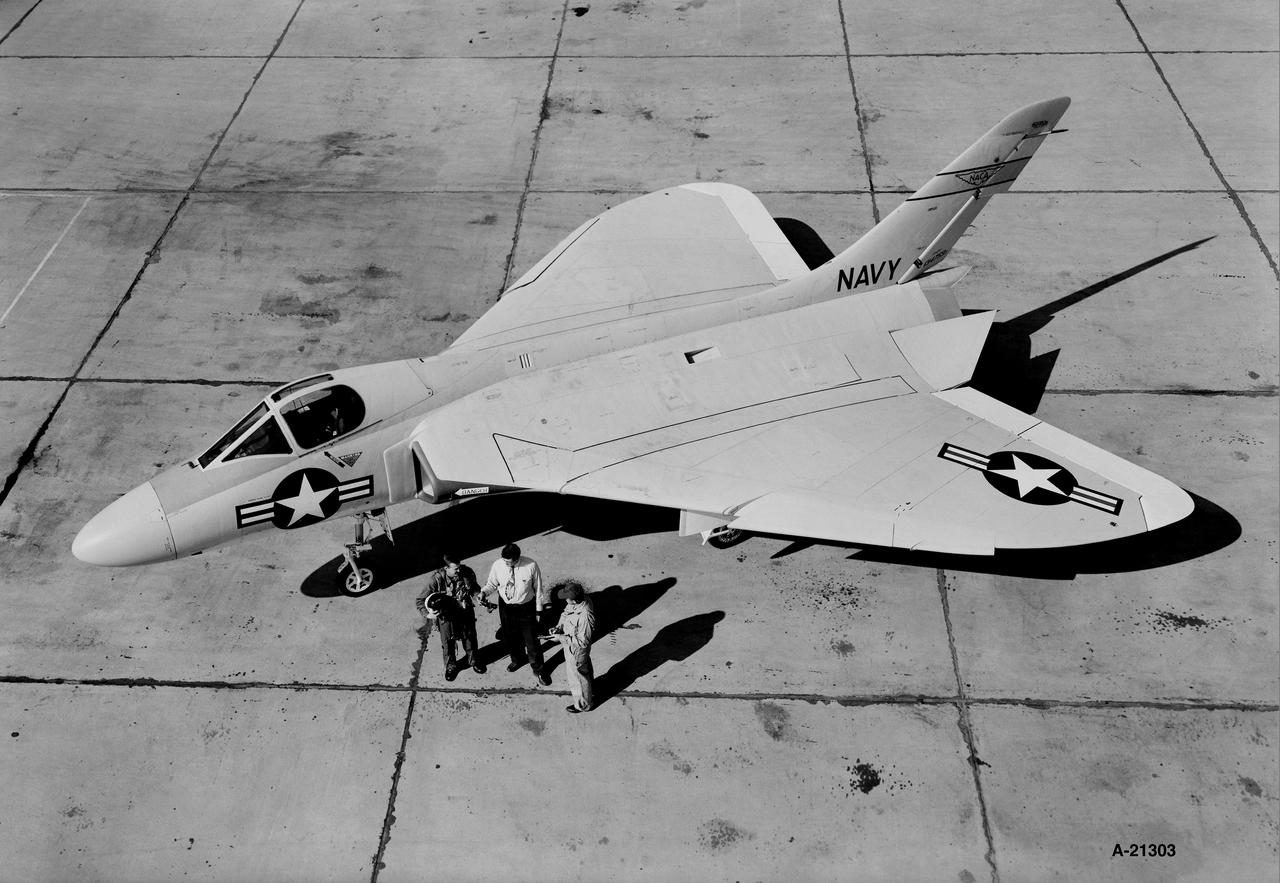
Douglas F4D-1 (Bu. No. 134759) Skyray  Plan view of airplane with Ames Pilot Don R. Heinle, Engineer L. Stewart Rolls and Crew Chief Walter Liewar. Note:  Used in Flight Research at Ames;  57 Years of Development and Validation of Aeronautical Technology  NASA SP-1998-3300 fig.28
ARC-1956-A-21303
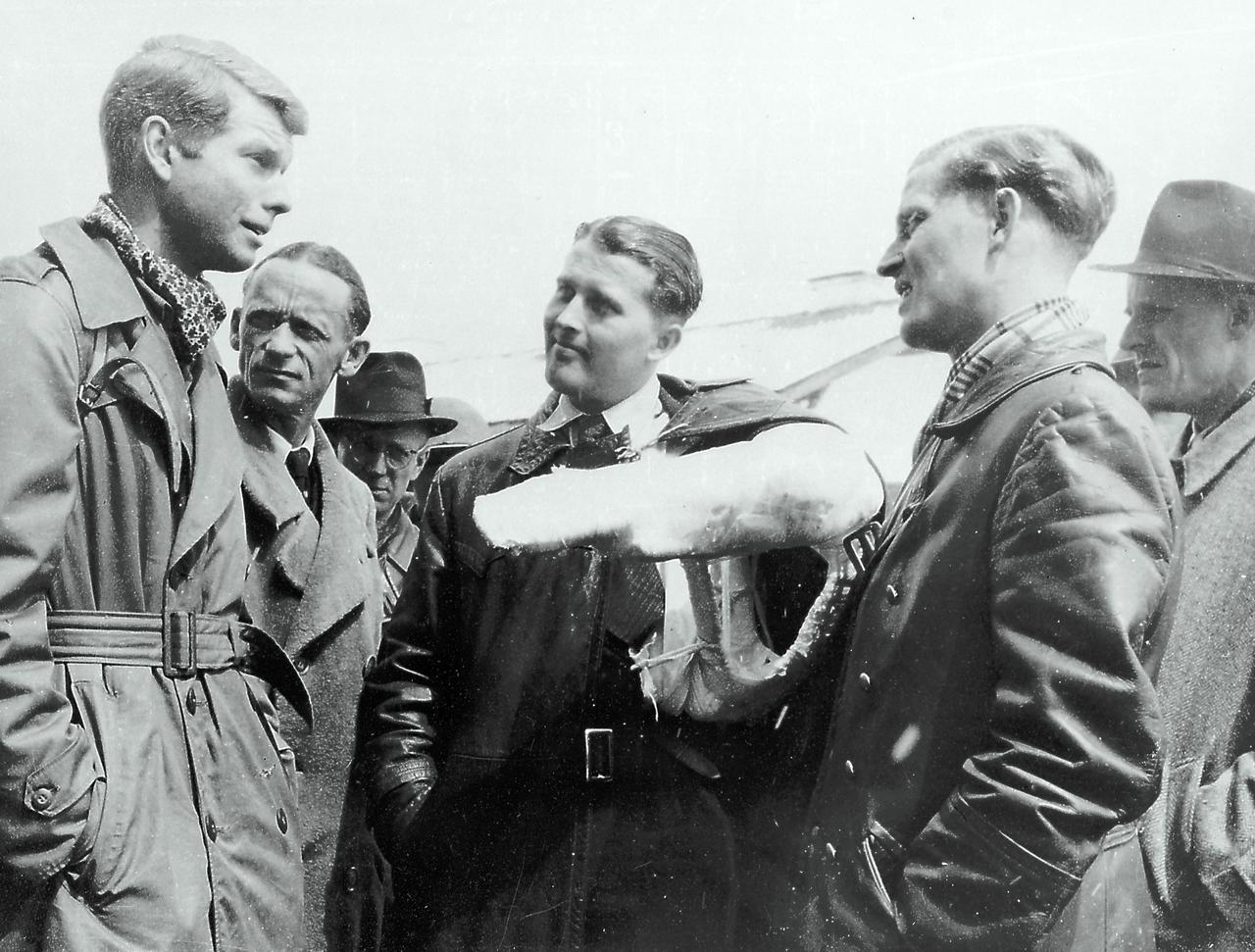
Dr. Wernher von Braun surrenders to U.S. Army Counterintelligence persornel of the 44th Infantry Division in Ruette, Bavaria on May 2, 1945. Left to right are Charles Stewart, CIC agent; Dr. Herbert Axster; Dieter Huzel; Dr. von Braun (arm in cast); Magnus von Braun (brother); and Hans Lindenberg.
Wernher von Braun
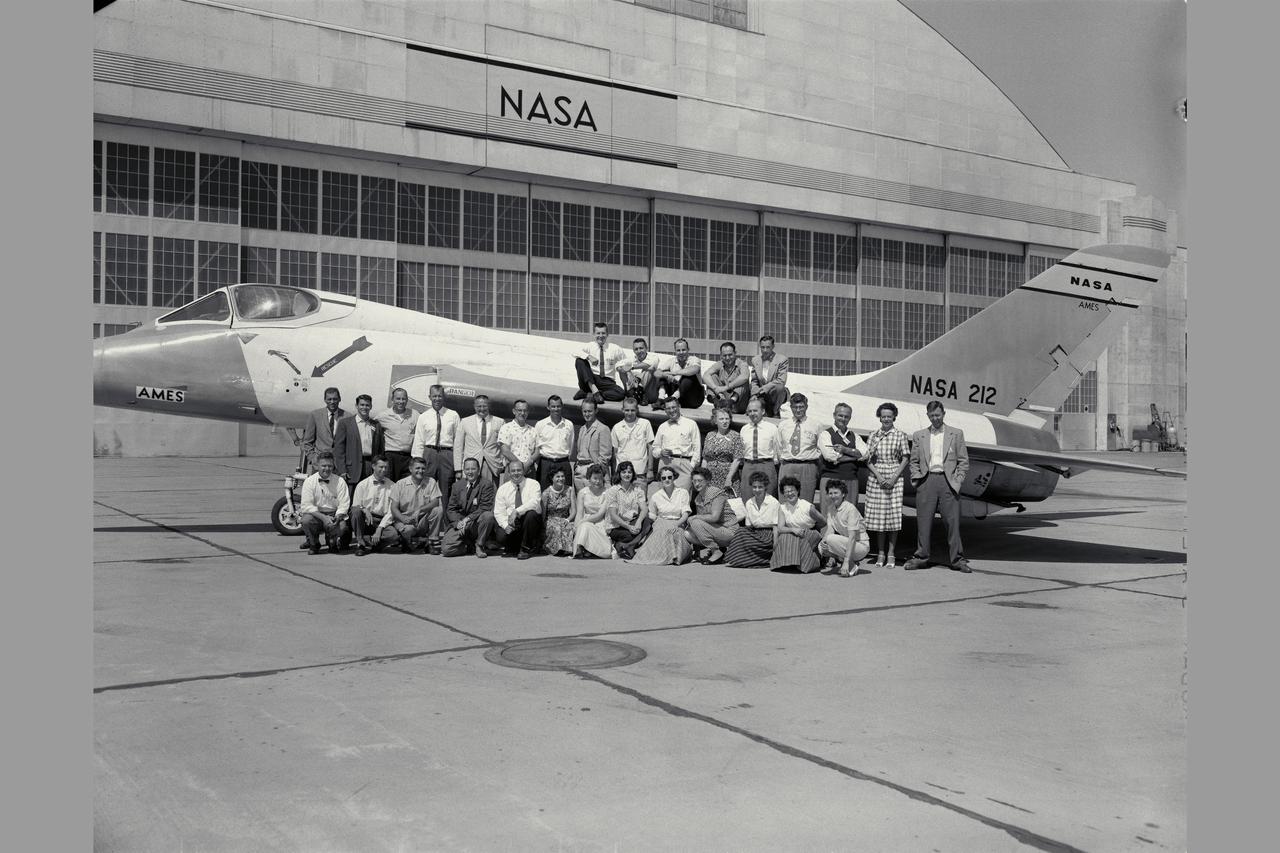
FLIGHT RESEARCH BRANCH PERSONNEL-1959.  FRONT ROW: George Rathert, Stu Brown, Norm McFadden, Howard Turner, Gus Brunner, Venia McCloud, Violet Shaw, Kay Rizzi, Yvonne Settle, Genevieve Ziegler, Anita Palmer, Grace Carpenter, Evelyn Olson. SECOND ROW: Bill Triplett, Alan Faye, Dick Bray, Seth Anderson, Steve Belsley, Hervey Quigley, Hank Cole, Elwood Stewart, Don Higdon, Maurie White, Dorothea Wilkinson, Dick Vomaske, Stew Rolls, Mel Sadoff, Mary Thompson, Brent Creer.  BACK ROW: Ron Gerdes, Joe Douvillier, John Stewart, Rod Wingrove, Walter McNeill. Note:  Used in publication in Flight Research at Ames;  57 Years of Development and Validation of Aeronautical Technology NASA SP-1998-3300 fig 89
ARC-1969-A-25541
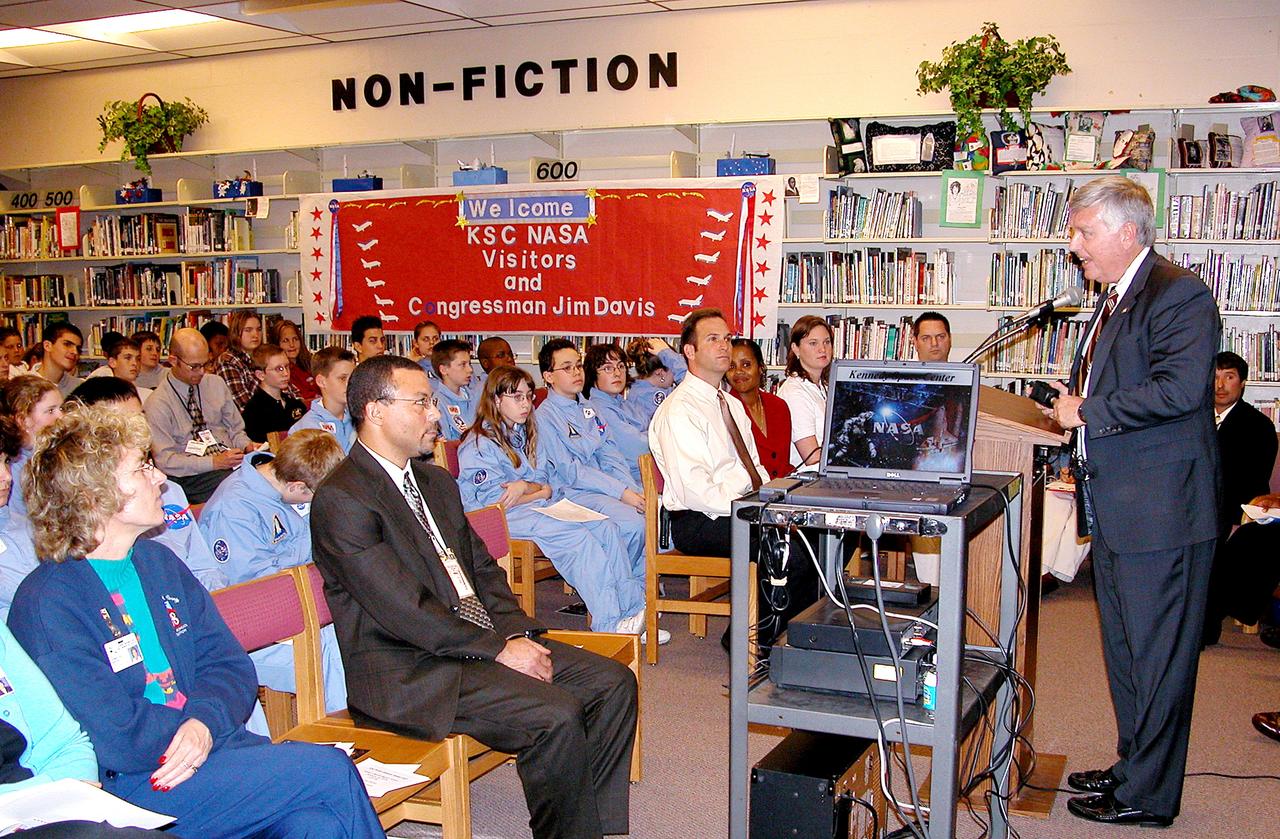
KENNEDY SPACE CENTER, FLA. - Center Director Jim Kennedy talks to students in Garland V. Stewart Magnet Middle School, a NASA Explorer School (NES) in Tampa, Fla.  Kennedy  made the trip with NASA astronaut Kay Hire to share the agency’s new vision for space exploration with the next generation of explorers. Kennedy is talking with students about our destiny as explorers, NASA’s stepping stone approach to exploring Earth, the Moon, Mars and beyond, how space impacts our lives, and how people and machines rely on each other in space.
KENNEDY SPACE CENTER, FLA. - Center Director Jim Kennedy talks to students in Garland V. Stewart Magnet Middle School, a NASA Explorer School (NES) in Tampa, Fla. Kennedy made the trip with NASA astronaut Kay Hire to share the agency’s new vision for space exploration with the next generation of explorers. Kennedy is talking with students about our destiny as explorers, NASA’s stepping stone approach to exploring Earth, the Moon, Mars and beyond, how space impacts our lives, and how people and machines rely on each other in space.
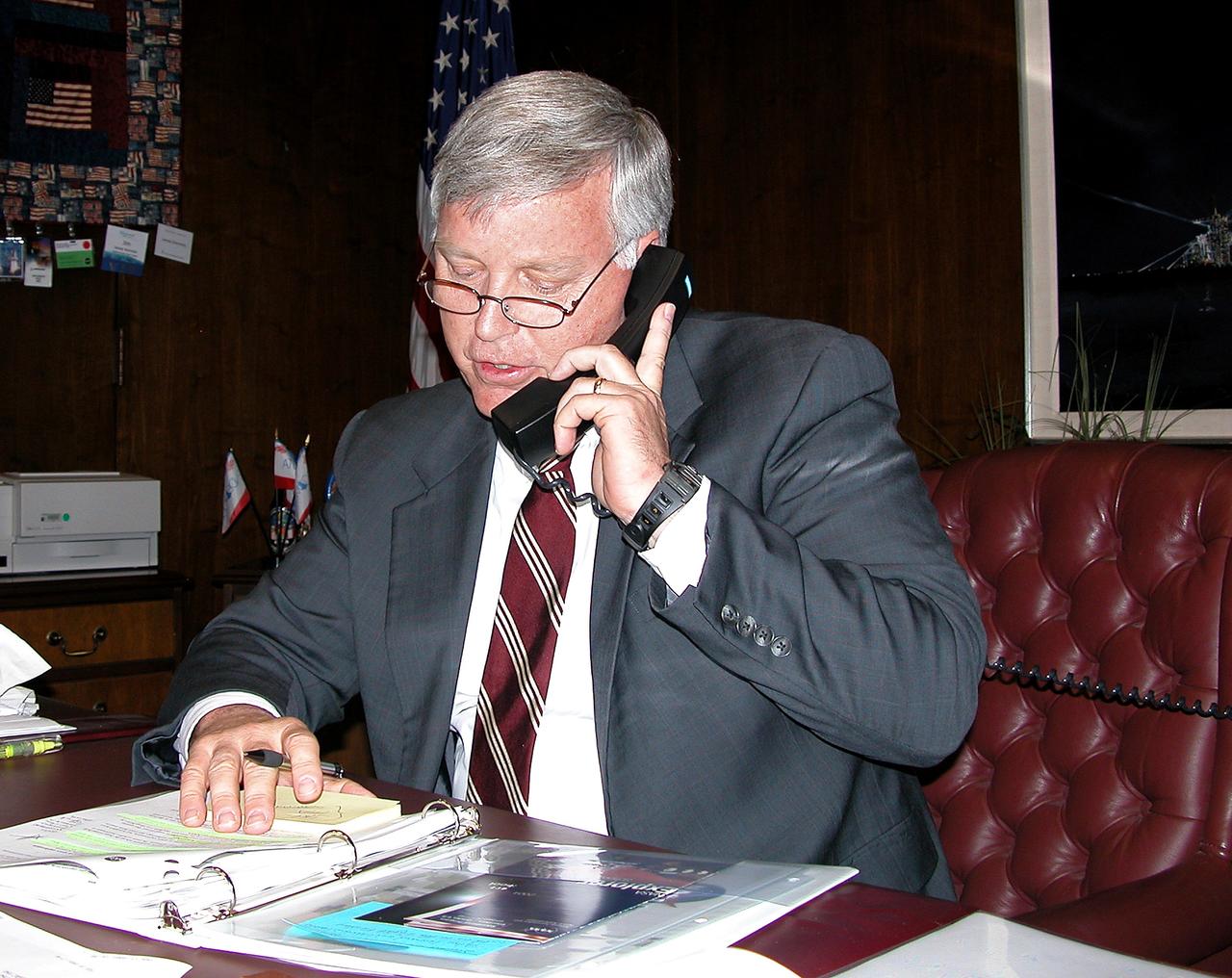
KENNEDY SPACE CENTER, FLA. - Center Director Jim Kennedy talks to radio station WFLA-AM and Florida Radio Network about his trip to Garland V. Stewart Magnet Middle School, a NASA Explorer School (NES) in Tampa, Fla.  Kennedy  made the trip with NASA astronaut Kay Hire to share the agency’s new vision for space exploration with the next generation of explorers. Kennedy is talking with students about our destiny as explorers, NASA’s stepping stone approach to exploring Earth, the Moon, Mars and beyond, how space impacts our lives, and how people and machines rely on each other in space.
KENNEDY SPACE CENTER, FLA. - Center Director Jim Kennedy talks to radio station WFLA-AM and Florida Radio Network about his trip to Garland V. Stewart Magnet Middle School, a NASA Explorer School (NES) in Tampa, Fla. Kennedy made the trip with NASA astronaut Kay Hire to share the agency’s new vision for space exploration with the next generation of explorers. Kennedy is talking with students about our destiny as explorers, NASA’s stepping stone approach to exploring Earth, the Moon, Mars and beyond, how space impacts our lives, and how people and machines rely on each other in space.
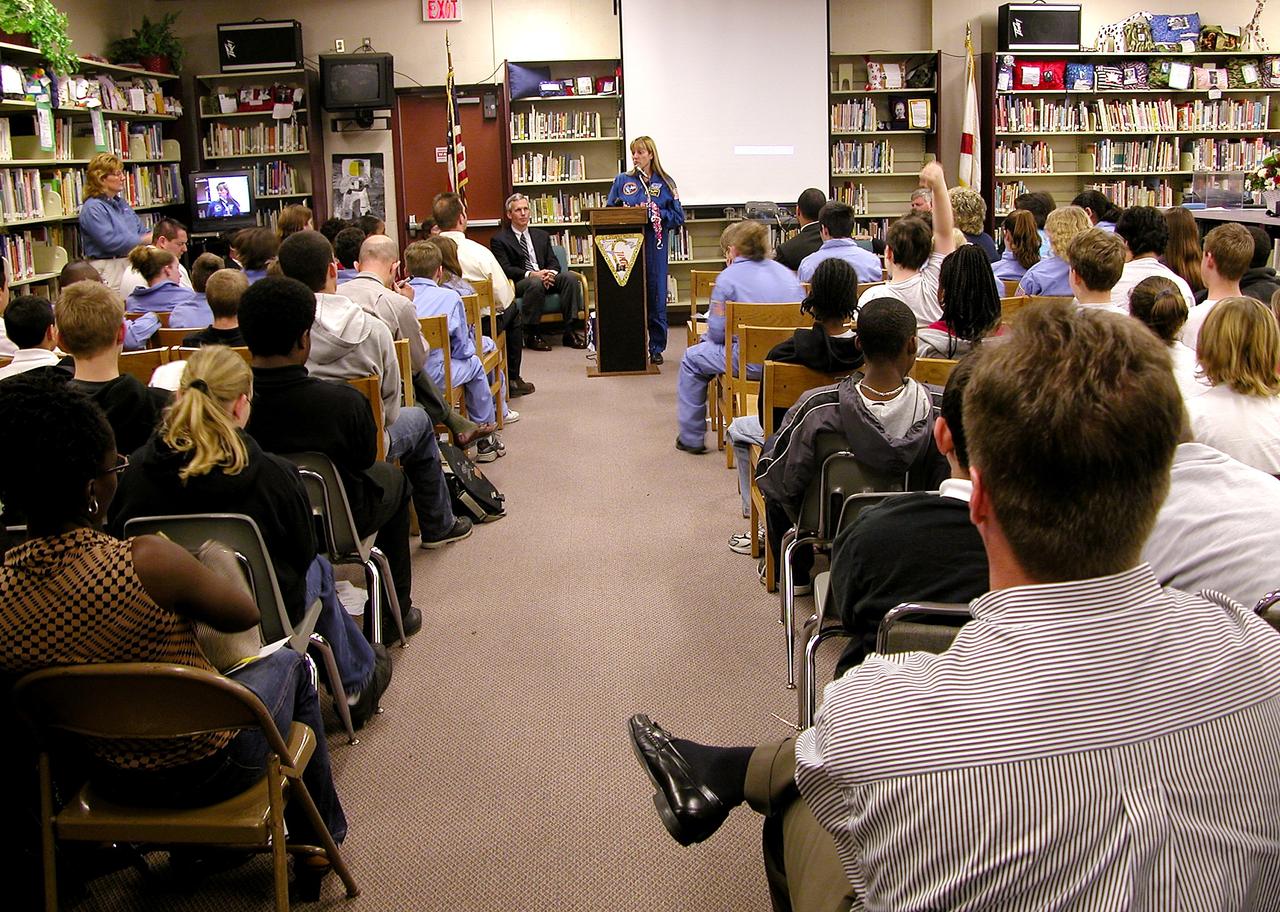
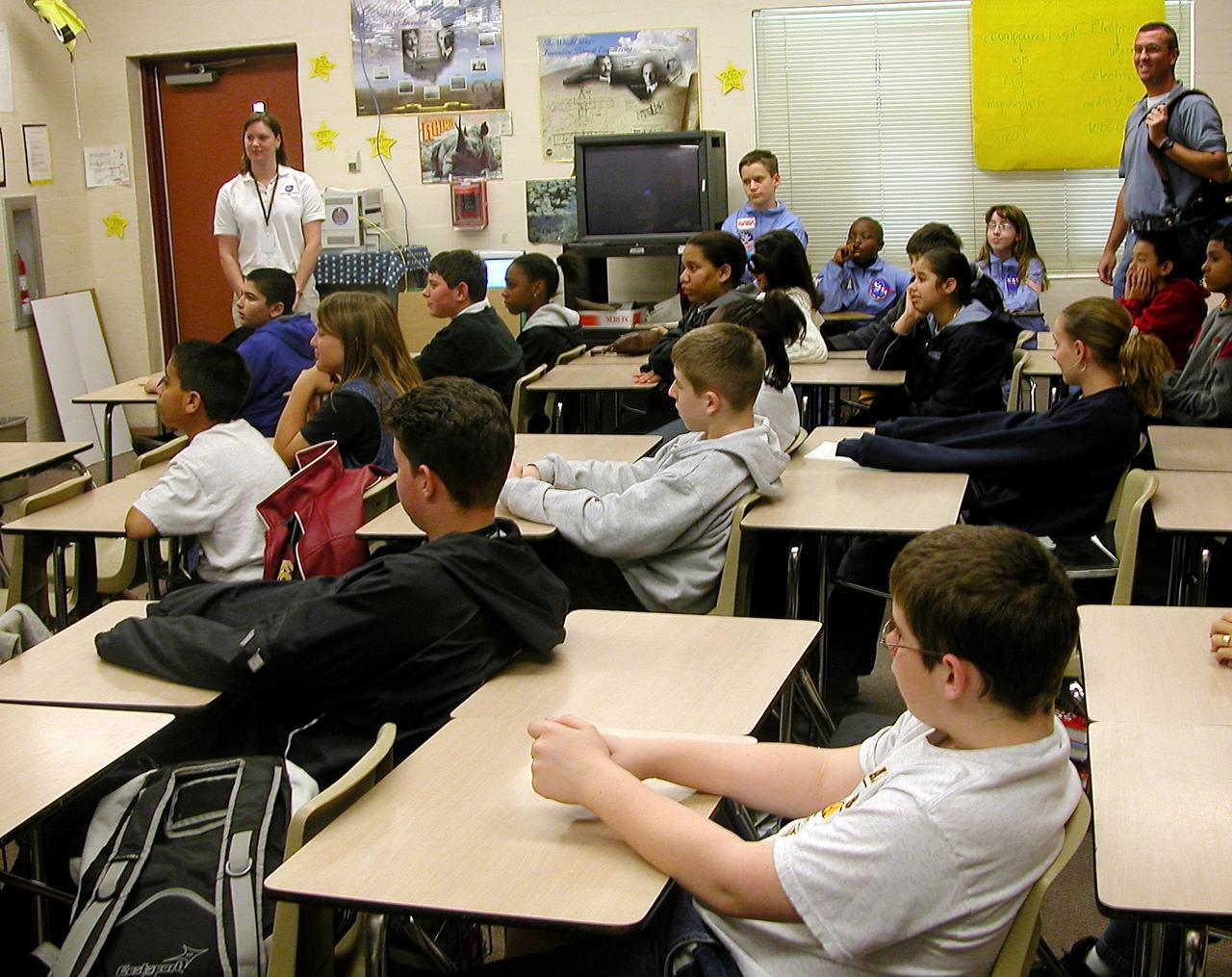
KENNEDY SPACE CENTER, FLA. - Students at Garland V. Stewart Magnet Middle School, a NASA Explorer School (NES) in Tampa, Fla., listen attentively to astronaut Kay Hire.  She and Center Director Jim Kennedy were at the school to share the agency’s new vision for space exploration with the next generation of explorers. Kennedy is talking with students about our destiny as explorers, NASA’s stepping stone approach to exploring Earth, the Moon, Mars and beyond, how space impacts our lives, and how people and machines rely on each other in space.
KENNEDY SPACE CENTER, FLA. - Students at Garland V. Stewart Magnet Middle School, a NASA Explorer School (NES) in Tampa, Fla., listen attentively to astronaut Kay Hire. She and Center Director Jim Kennedy were at the school to share the agency’s new vision for space exploration with the next generation of explorers. Kennedy is talking with students about our destiny as explorers, NASA’s stepping stone approach to exploring Earth, the Moon, Mars and beyond, how space impacts our lives, and how people and machines rely on each other in space.
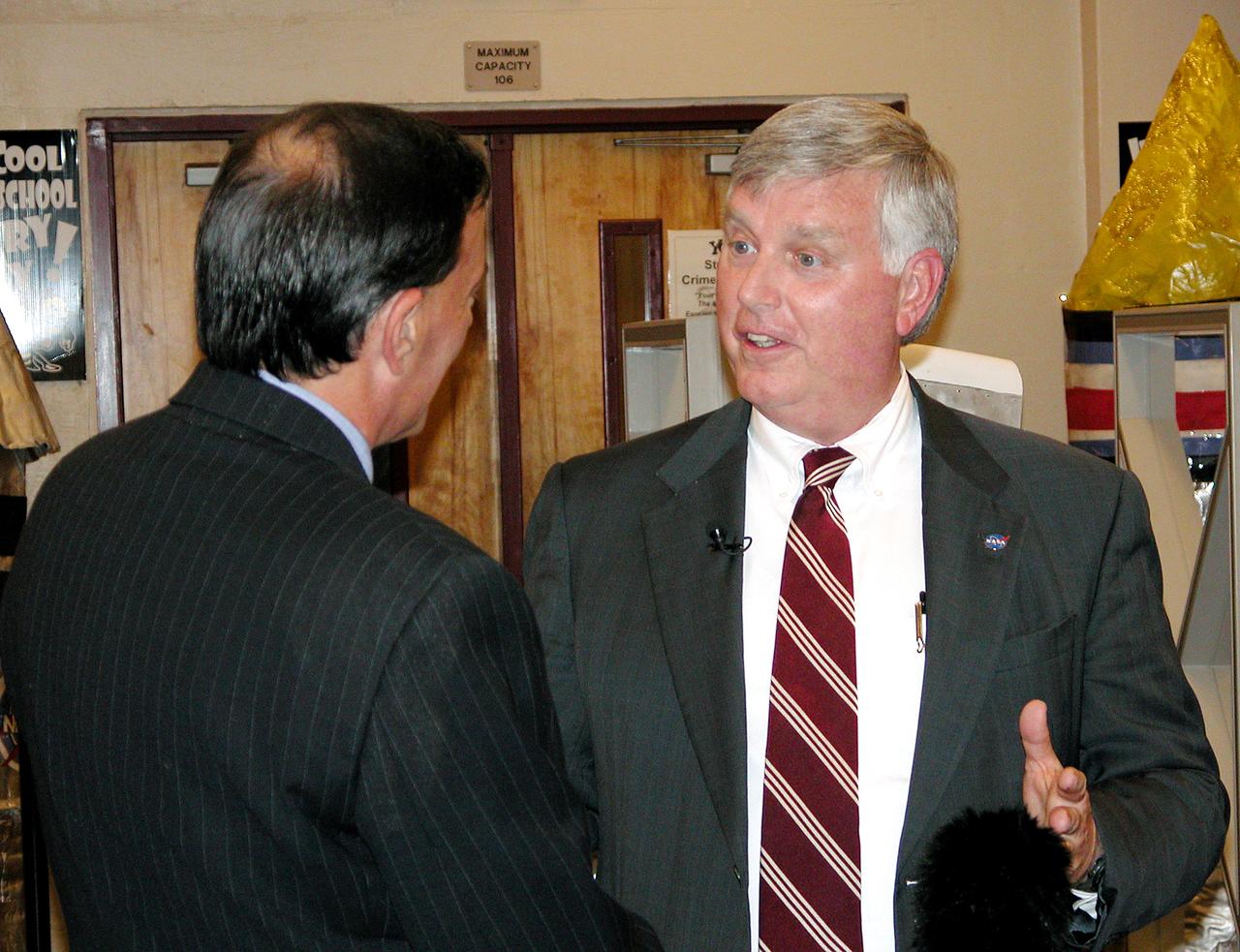
KENNEDY SPACE CENTER, FLA. - Warren Elly (left), with WTVT-TV, Fox News, talks with Center Director Jim Kennedy at Garland V. Stewart Magnet Middle School, a NASA Explorer School (NES) in Tampa, Fla. Kennedy was joined by astronaut Kay Hire in sharing the agency’s new vision for space exploration with the next generation of explorers. Kennedy talked with students about our destiny as explorers, NASA’s stepping stone approach to exploring Earth, the Moon, Mars and beyond, how space impacts our lives, and how people and machines rely on each other in space.
KENNEDY SPACE CENTER, FLA. - Students at Garland V. Stewart Magnet Middle School, a NASA Explorer School (NES) in Tampa, Fla., listen attentively to astronaut Kay Hire.  She and Center Director Jim Kennedy were at the school to share the agency’s new vision for space exploration with the next generation of explorers. Kennedy is talking with students about our destiny as explorers, NASA’s stepping stone approach to exploring Earth, the Moon, Mars and beyond, how space impacts our lives, and how people and machines rely on each other in space.
KENNEDY SPACE CENTER, FLA. - Students at Garland V. Stewart Magnet Middle School, a NASA Explorer School (NES) in Tampa, Fla., listen attentively to astronaut Kay Hire. She and Center Director Jim Kennedy were at the school to share the agency’s new vision for space exploration with the next generation of explorers. Kennedy is talking with students about our destiny as explorers, NASA’s stepping stone approach to exploring Earth, the Moon, Mars and beyond, how space impacts our lives, and how people and machines rely on each other in space.
KENNEDY SPACE CENTER, FLA. - Astronaut Kay Hire poses with 8th grader Kristy Wiggins at Garland V. Stewart Magnet Middle School, a NASA Explorer School (NES) in Tampa, Fla.  Hire joined Center Director Jim Kennedy at the school in sharing the agency’s new vision for space exploration with the next generation of explorers. Kennedy is talking with students about our destiny as explorers, NASA’s stepping stone approach to exploring Earth, the Moon, Mars and beyond, how space impacts our lives, and how people and machines rely on each other in space.
KENNEDY SPACE CENTER, FLA. - Astronaut Kay Hire poses with 8th grader Kristy Wiggins at Garland V. Stewart Magnet Middle School, a NASA Explorer School (NES) in Tampa, Fla. Hire joined Center Director Jim Kennedy at the school in sharing the agency’s new vision for space exploration with the next generation of explorers. Kennedy is talking with students about our destiny as explorers, NASA’s stepping stone approach to exploring Earth, the Moon, Mars and beyond, how space impacts our lives, and how people and machines rely on each other in space.
KENNEDY SPACE CENTER, FLA. - Center Director Jim Kennedy talks to WTSP-ABC News about his trip to Garland V. Stewart Magnet Middle School, a NASA Explorer School (NES) in Tampa, Fla.  Kennedy  made the trip with NASA astronaut Kay Hire to share the agency’s new vision for space exploration with the next generation of explorers. Kennedy is talking with students about our destiny as explorers, NASA’s stepping stone approach to exploring Earth, the Moon, Mars and beyond, how space impacts our lives, and how people and machines rely on each other in space.
KENNEDY SPACE CENTER, FLA. - Center Director Jim Kennedy talks to WTSP-ABC News about his trip to Garland V. Stewart Magnet Middle School, a NASA Explorer School (NES) in Tampa, Fla. Kennedy made the trip with NASA astronaut Kay Hire to share the agency’s new vision for space exploration with the next generation of explorers. Kennedy is talking with students about our destiny as explorers, NASA’s stepping stone approach to exploring Earth, the Moon, Mars and beyond, how space impacts our lives, and how people and machines rely on each other in space.
Scott Ede, mission manager for mission management and integration in NASA's Commercial Crew Program, left, Kyle Stewart, SpaceX Mission Manager, second from left, Steve Stich, manager of NASA’s Commercial Crew Program, second from right, and NASA International Space Station program manger Joel Montalbano, right monitor the countdown of the launch of a SpaceX Falcon 9 rocket carrying the company's Crew Dragon spacecraft on NASA’s SpaceX Crew-4 mission with NASA astronauts Kjell Lindgren, Robert Hines, Jessica Watkins, and ESA (European Space Agency) astronaut Samantha Cristoforetti onboard, Wednesday, April 27, 2022, in firing room four of the Rocco A. Petrone Launch Control Center at NASA’s Kennedy Space Center in Florida. NASA’s SpaceX Crew-4 mission is the fourth crew rotation mission of the SpaceX Crew Dragon spacecraft and Falcon 9 rocket to the International Space Station as part of the agency’s Commercial Crew Program. Lindgren, Hines, Watkins, and Cristoforetti launched at at 3:52 a.m. ET, from Launch Complex 39A at the Kennedy Space Center. Photo Credit: (NASA/Joel Kowsky)
SpaceX Crew-4 Launch
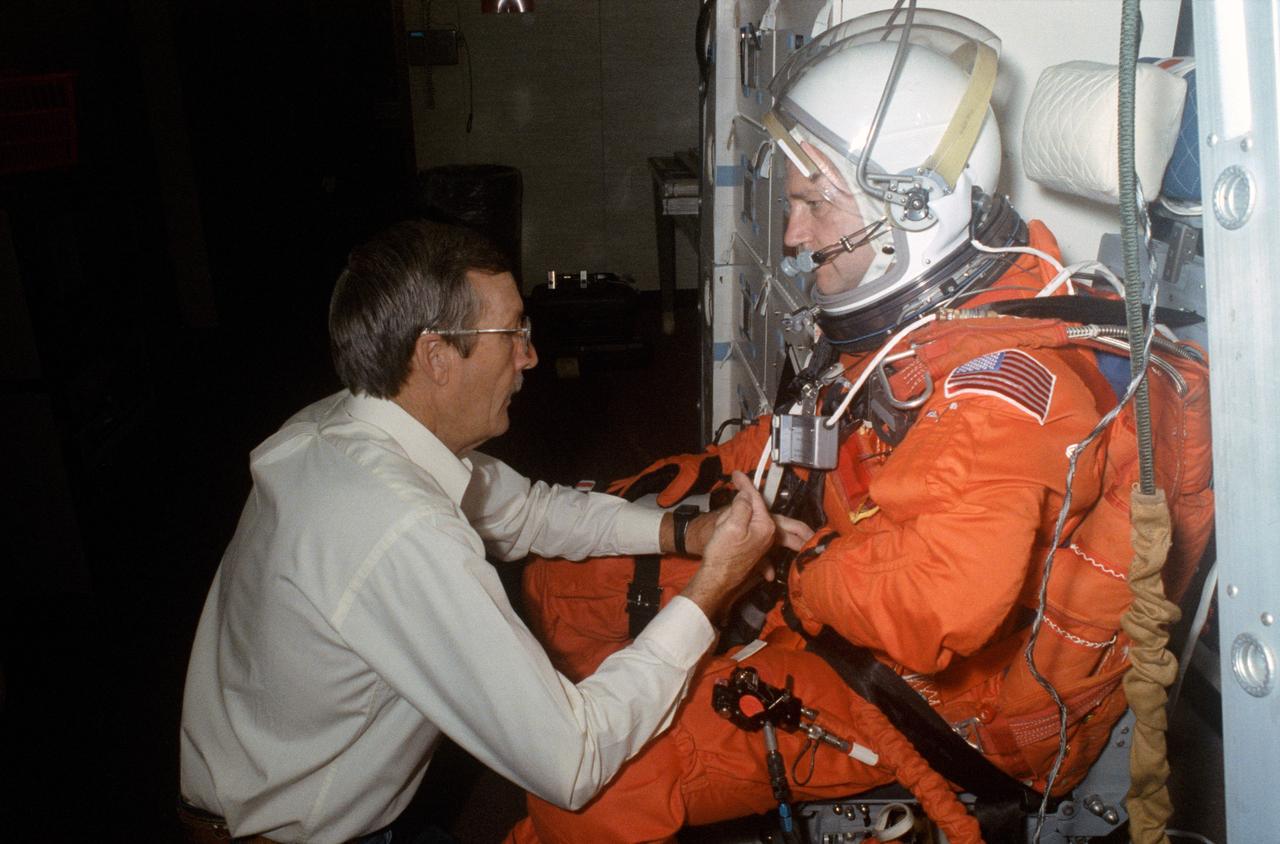
S90-47148  (21 Aug 1990) --- Astronaut Thomas D. Akers, STS-41mission specialist, is assisted by Troy M. Stewart of the Shuttle support branch in NASA's Crew and Thermal Systems Division. The astronaut was about to join his four crewmates in participating in a simulation of their scheduled flight in JSC's fixed-base Shuttle mission simulator (SMS).
STS-41 MS Akers assisted by technician on SMS middeck at JSC
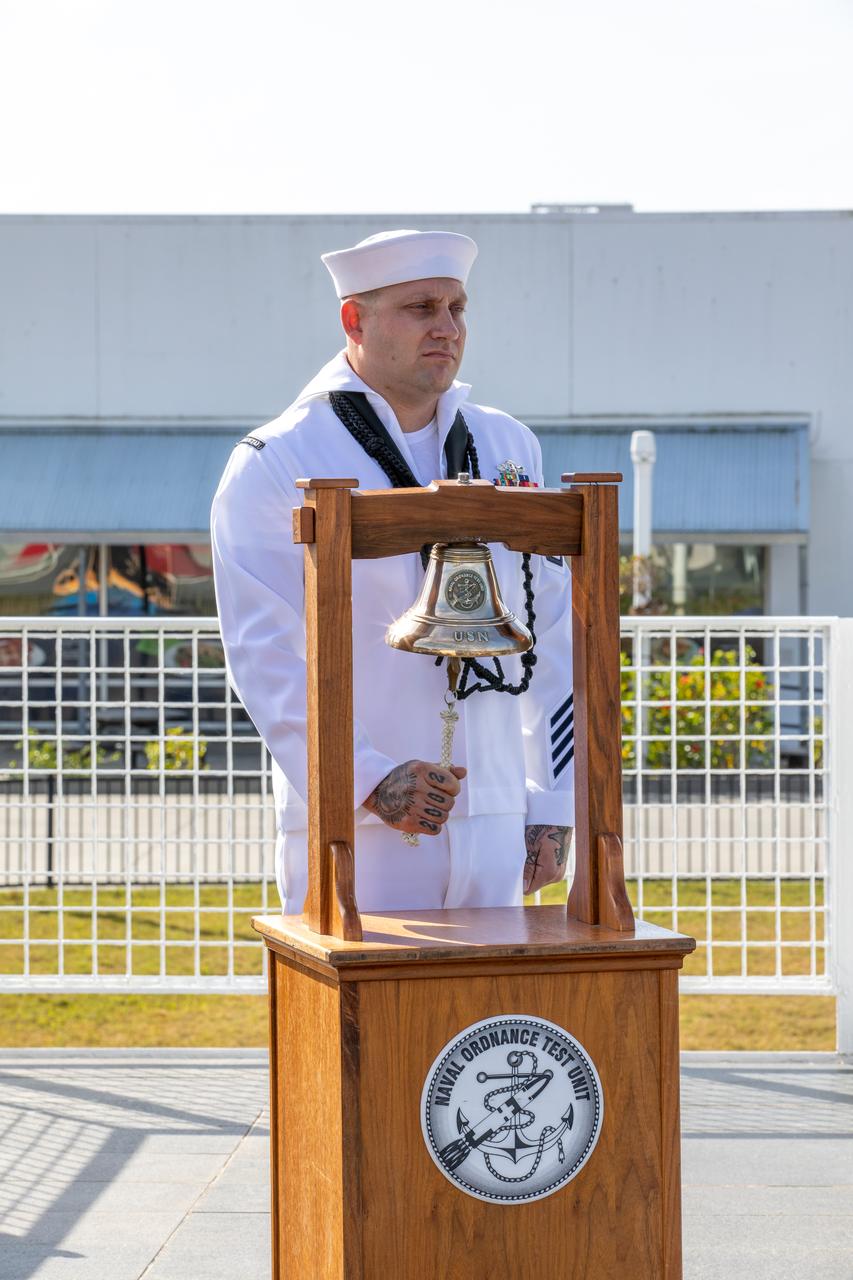
Boatswain’s Mate First Class Ronald Stewart rings the bell during the NASA Day of Remembrance ceremony at the Space Mirror Memorial in the Kennedy Space Center Visitor Complex on Jan. 30, 2020. The crews of Apollo 1 and space shuttles Challenger and Columbia, as well as other fallen astronauts who lost their lives in the name of space exploration and discovery, were honored at the annual event.
NASA Day of Remembrance Wreath Laying Ceremony
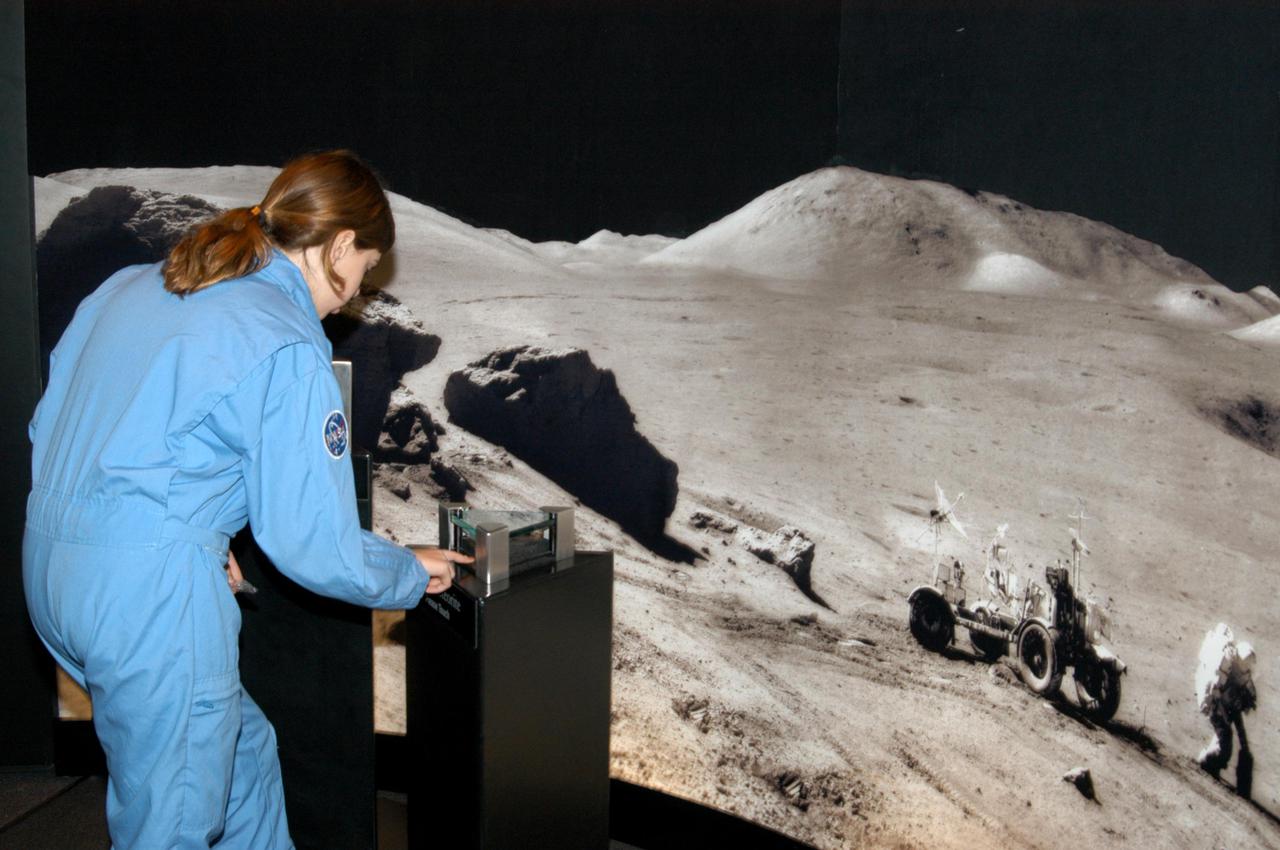
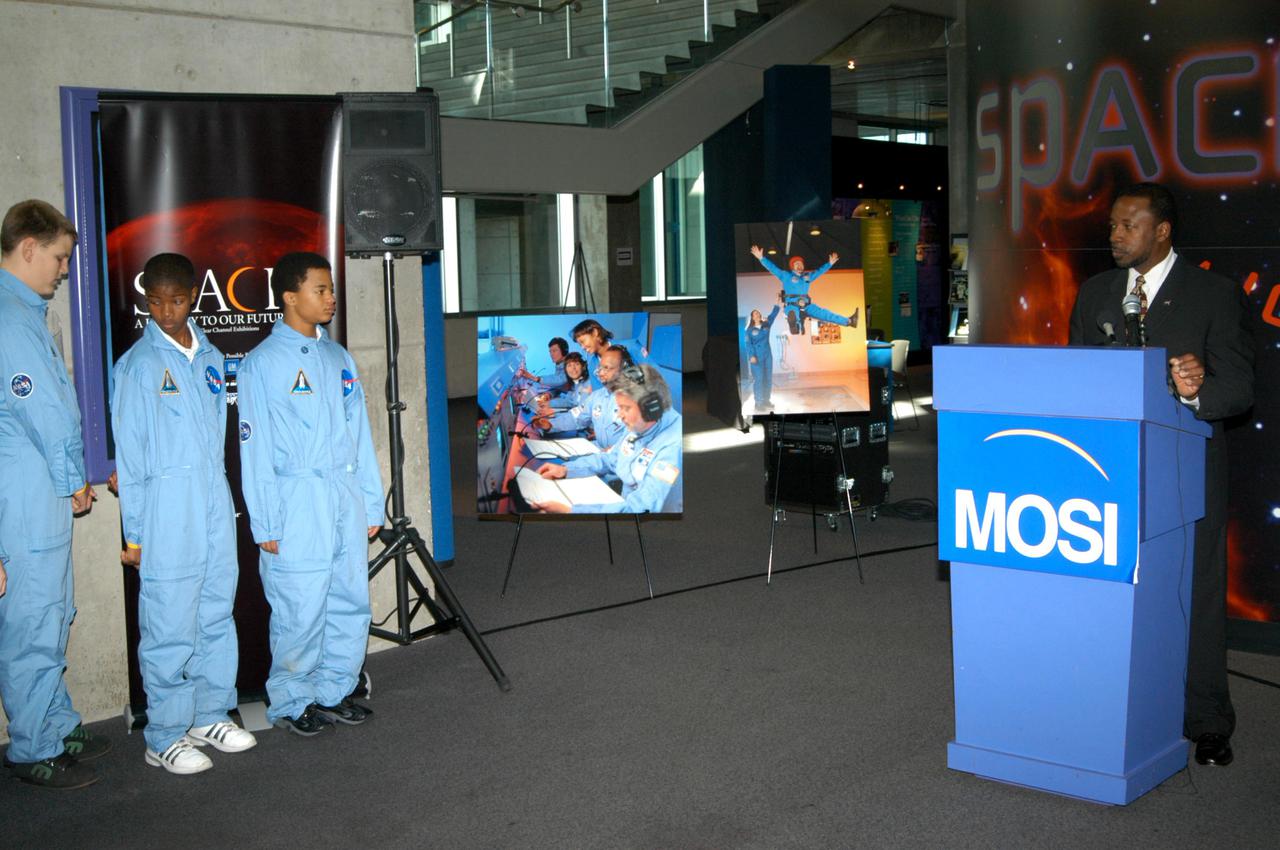
KENNEDY SPACE CENTER, FLA.  - At the Museum of Science and  Industry (MOSI) in Tampa, a student from one of NASA’s Explorer Schools, Stewart Middle School in Tampa, tries her hand at an interactive exhibit.  The students are at MOSI to view the space exhibit Space: A Journey to Our Future,  an extraordinary, interactive exhibition designed to entertain, educate and inspire.  Another exhibit is SPACE STATION, the first cinematic journey to the International Space Station (ISS),  where audiences can experience for themselves life in zero gravity aboard the new station.
KSC-05pd-0205
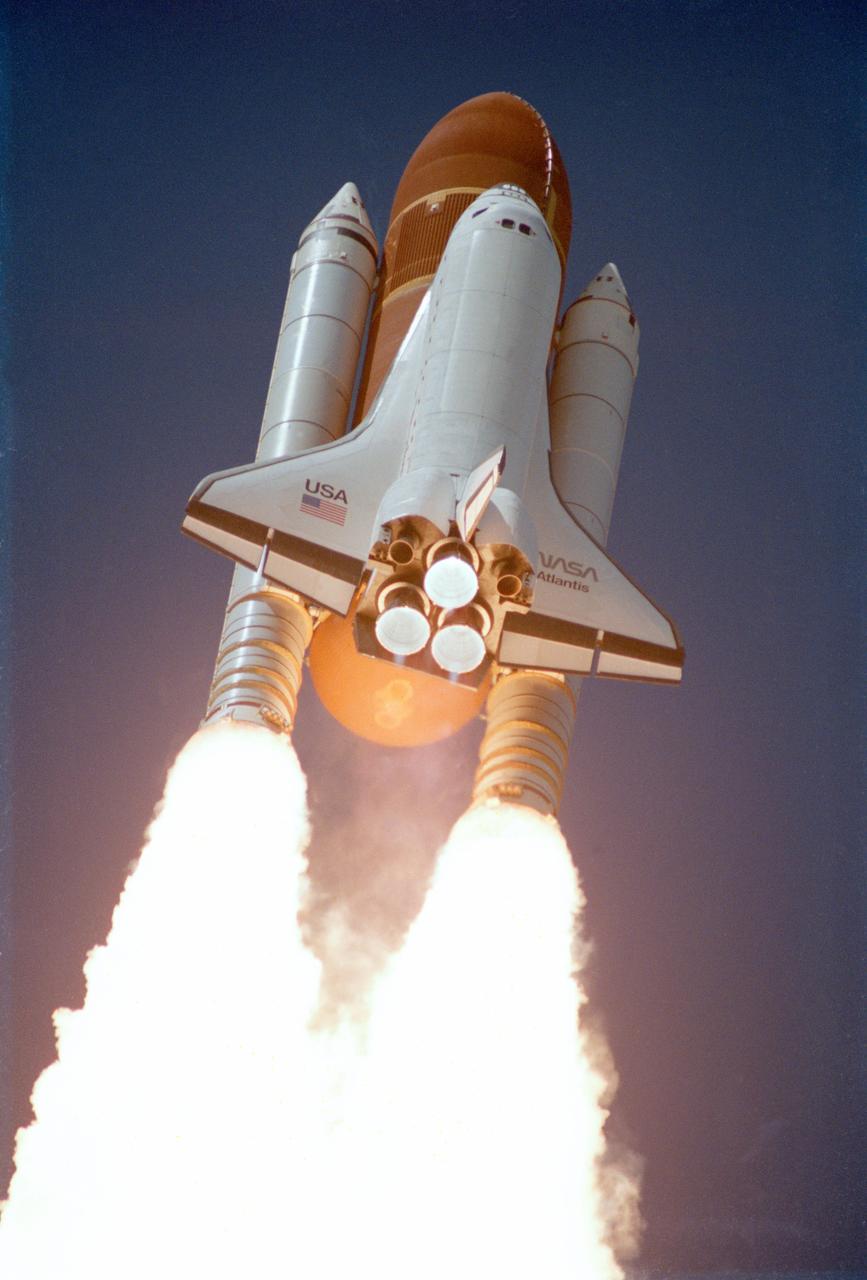
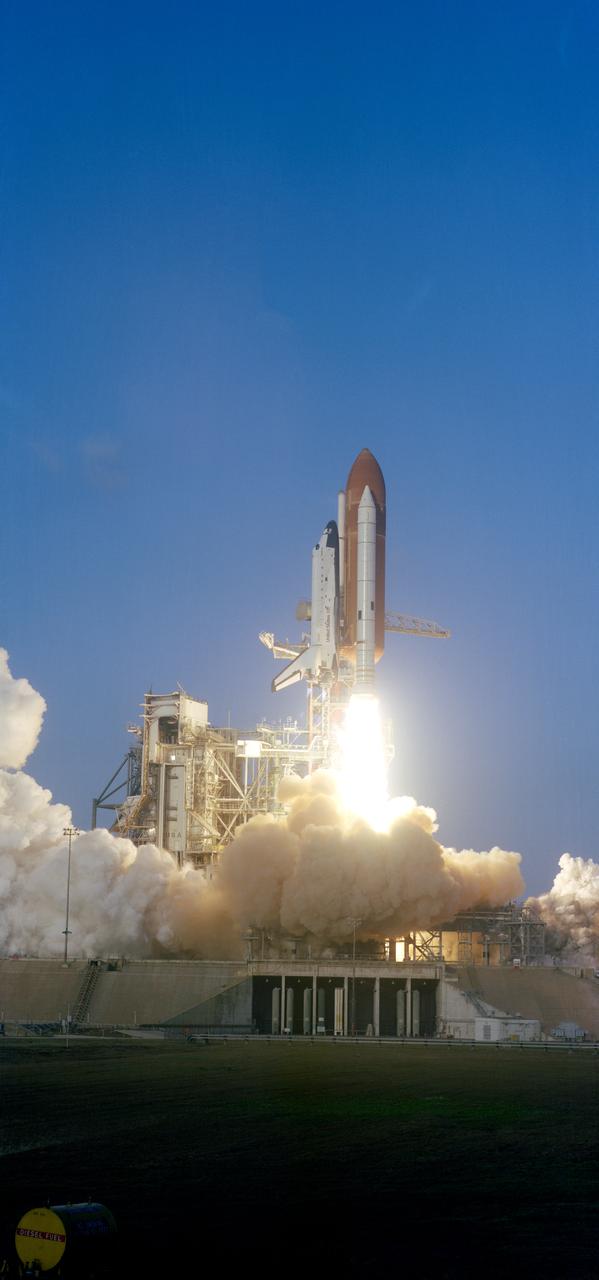
51J-S-003 (3 Oct 1985) --- This 35mm frame was taken moments after the Space Shuttle Atlantis cleared the launch tower to begin its first mission in space.  Onboard, ready to carry out STS-51J mission were astronauts Karol J. Bobko, commander; Ronald J. Grabe, pilot; Robert L. Stewart and David C. Hilmers, mission specialist; and U.S.A.F. Major William A. Pailes, payload specialist.
Liftoff of first flight of Atlantis and the STS 51-J mission
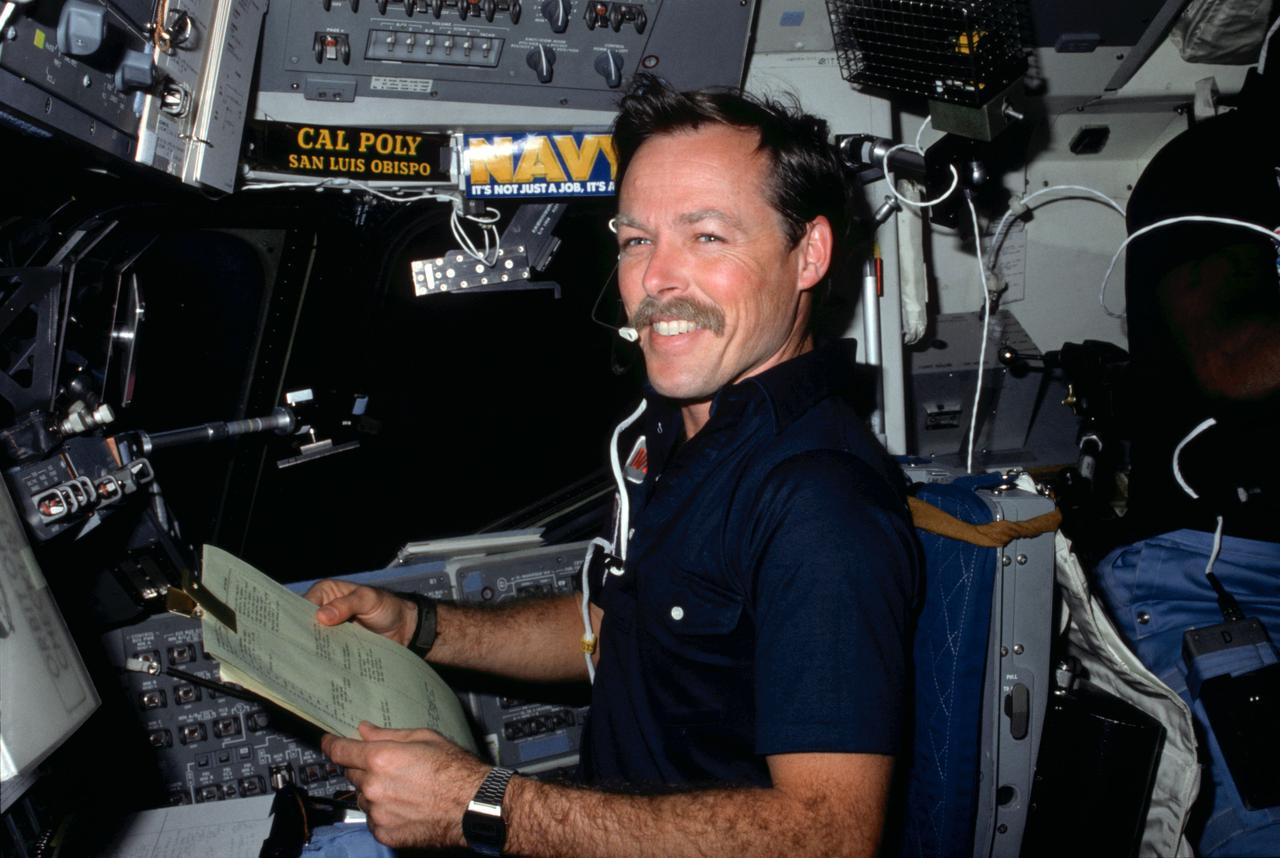
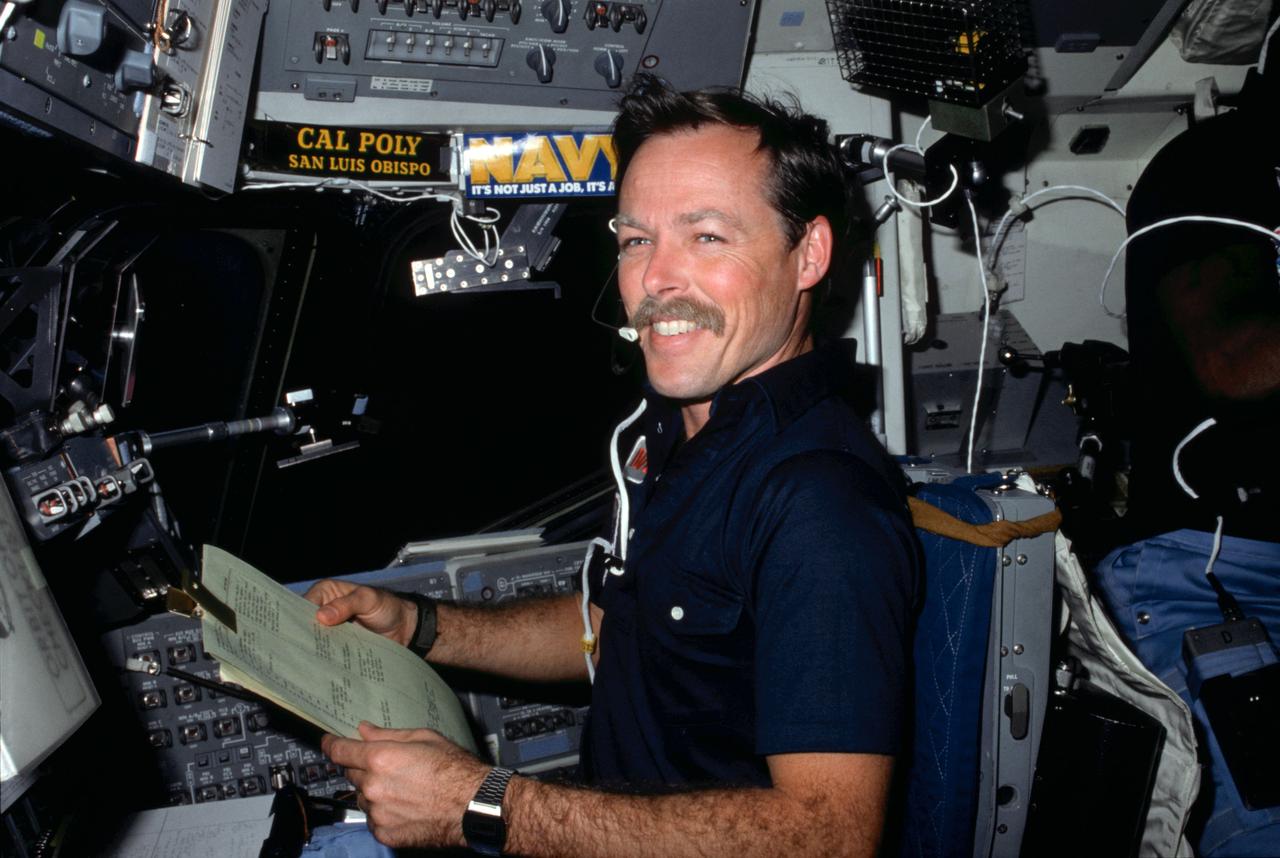
41B-07-230 (S84-27027) (3-11 February 1984) ---Astronaut Robert L. Gibson, 41-B pilot, reviews some teleprinter copy on the flight deck?s starboard station during the eight-day 41-B Space Shuttle mission.  Four other astronauts share the Challenger with Gibson.  They are Astronauts Vance D. Brand, commander; and Ronald E. McNair, Bruce McCandless II and Robert L. Stewart, all mission specialists.  The photograph was taken from the commander?s station with a 35mm camera.
Crewmember activities in the flight deck
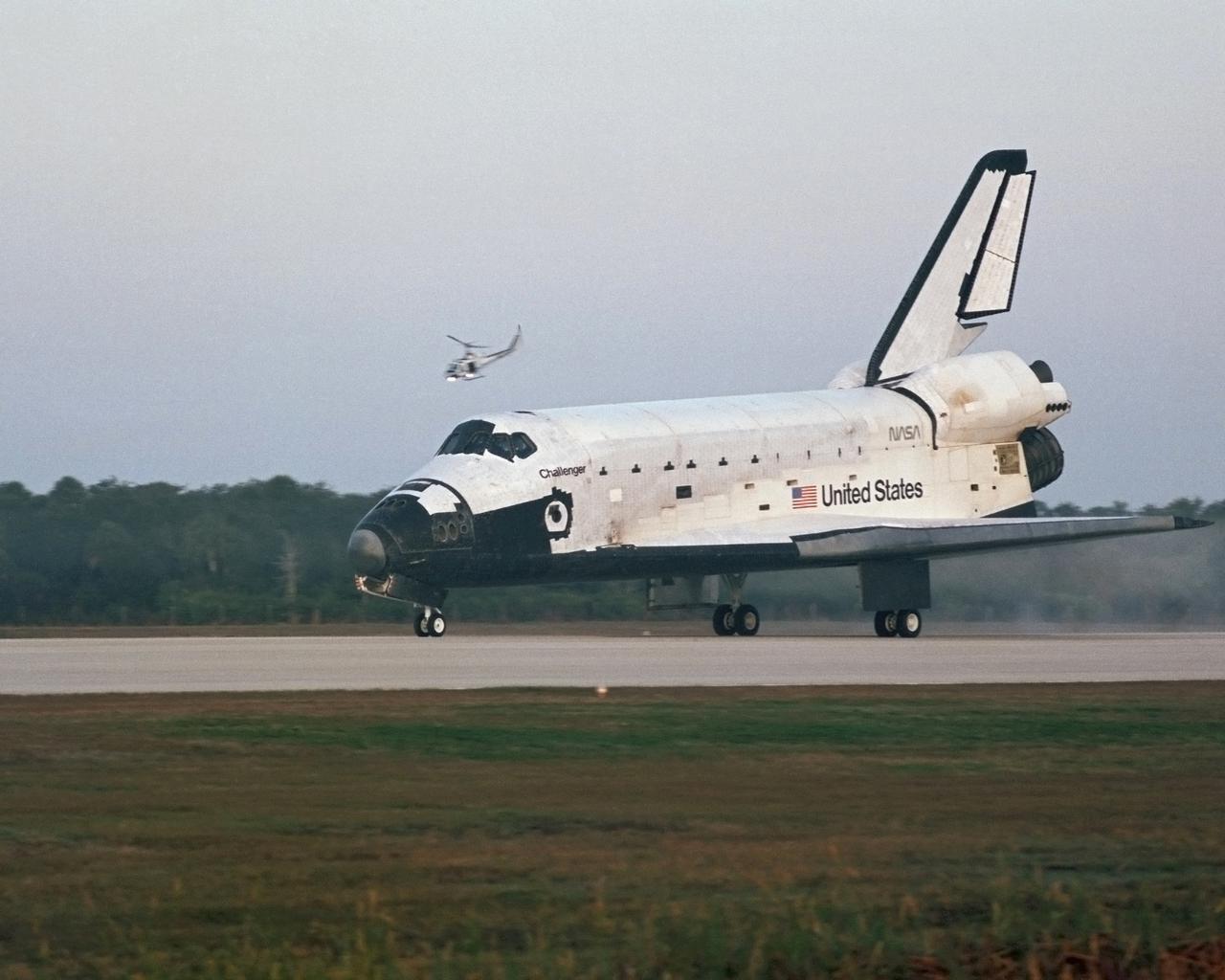
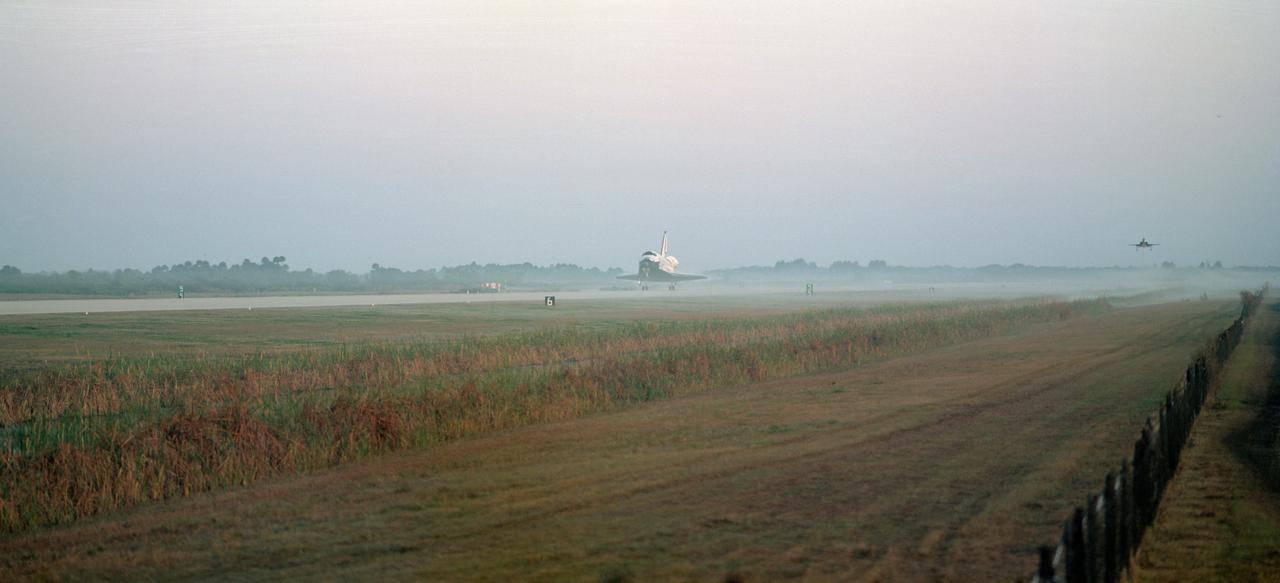
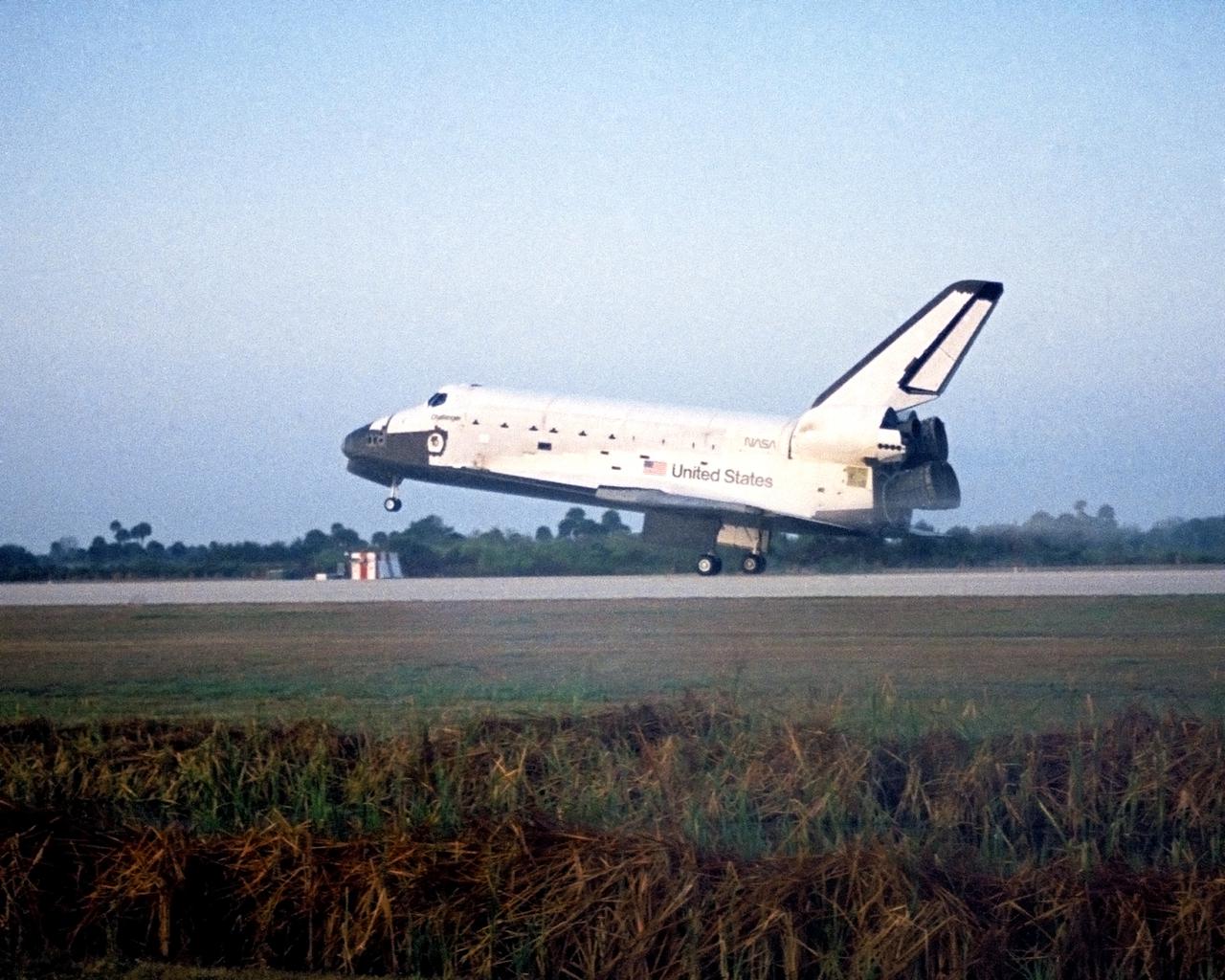
S84-27154 (11 Feb 1984) --- The first Space Shuttle landing on the Kennedy Space Center?s landing facility was recorded by a ground camera on February 11, 1984.  A T-38 chase plane trails the Challenger.  The nose gear has not yet touched down in this scene.  Aboard the spacecraft were Astronauts Vance D. Brand, commander; Robert L. Gibson, pilot; and Bruce McCandless II, Ronald R. McNair and Robert L. Stewart, all mission specialists.
Views of the Challenger landing at Kennedy to end shuttle mission 41-B
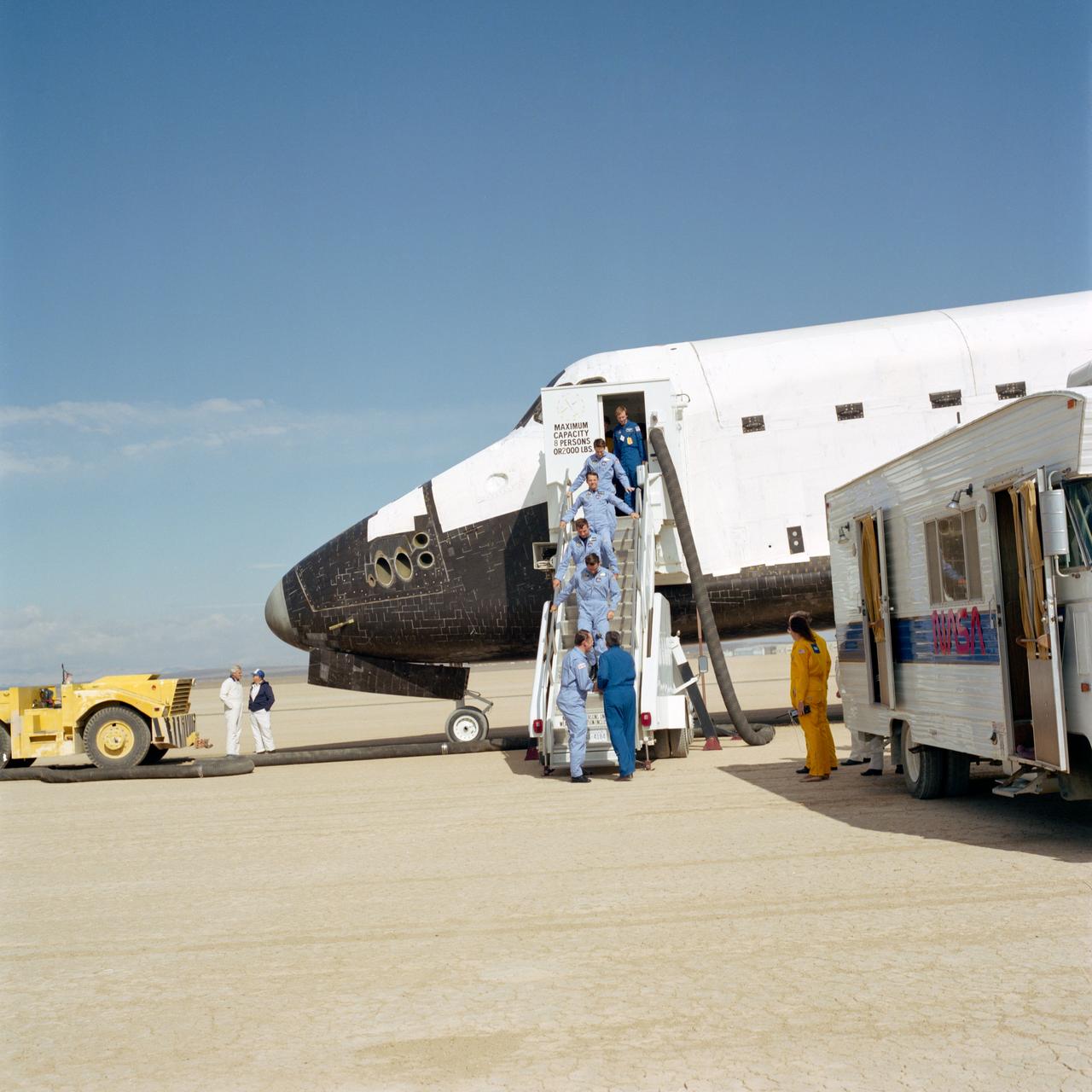
S85-41802 (7 Sept 1985) --- Wheels of the Space Shuttle Atlantis touch down on the dry lakebed at Edwards Air Force Base to mark successful completion of the STS 51-J mission.  Crewmembers onboard for the flight were Astronauts Karol J. Bobko, Ronald J. Grabe, David C. Hilmers, and Robert L. Stewart; and USAF Maj. William A. Pailes.
LANDING - STS-28/51J - DRYDEN FLIGHT RESEARCH FACILITY (DFRF), CA
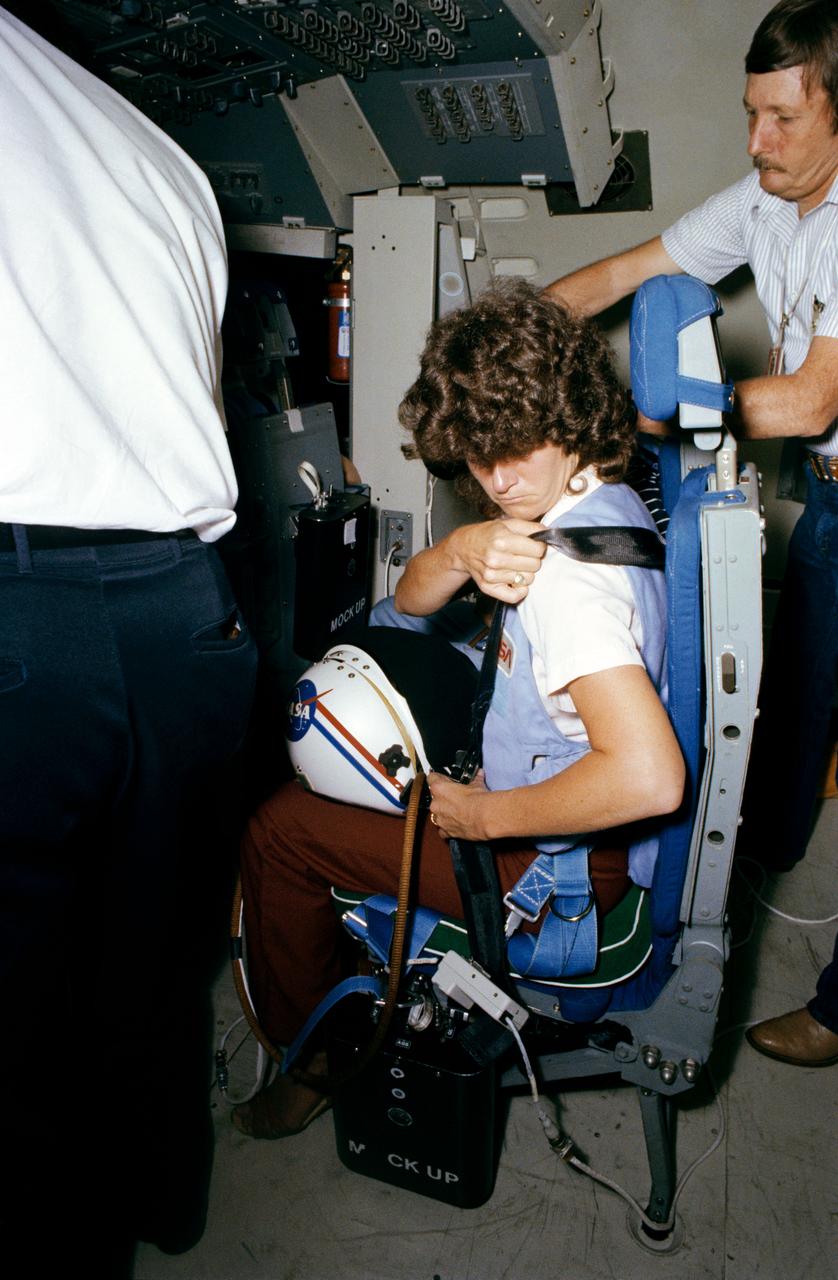
S83-32568 (23 May 1983) --- Astronaut Sally K. Ride, STS-7 mission specialist, straps herself into a seat in the Shuttle Mission Simulator (SMS) in Johnson Space Center?s Mission Simulation and Training Facility. Dr. Ride and the other STS-7 crew members continue their simulations in the motion base simulator in preparation for their flight in the space shuttle Challenger. Launch is scheduled for June 18. Troy Stewart, suit technician, assisted Dr. Ride. Photo credit: NASA
Simulator - Ride, Sally K.
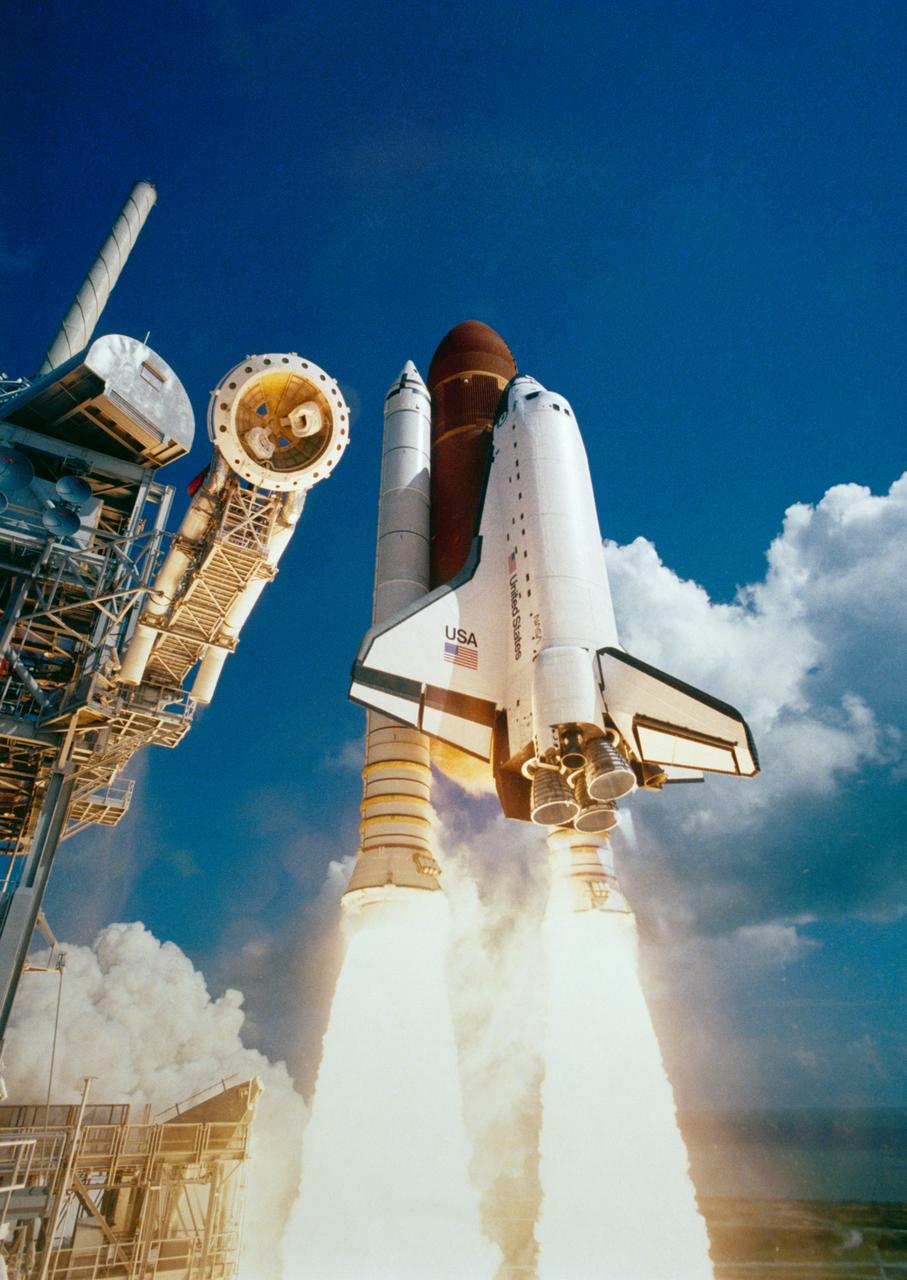
S85-44776 (3 Oct 1985) --- Space Shuttle Atlantis soars toward Florida blue skies to mark the maiden mission of NASA's fourth and newest orbiter vehicle.  Launch occurred at 11:15 a.m. (EDT), October 3, 1985.  A five member crew mans the orbiter for the DOD flight.  They are Karol J. Bobko, Ronald J. Grabe, Robert L. Stewart, David   C. Hilmers-- all of NASA-- and William A. Pailes of the USAF.
LAUNCH - STS-28/51J - KSC
KENNEDY SPACE CENTER, FLA. - Astronaut Kay Hire talks to students in Garland V. Stewart Magnet Middle School, a NASA Explorer School (NES) in Tampa, Fla.  She joined Center Director Jim Kennedy in sharing the agency’s new vision for space exploration with the next generation of explorers. Kennedy is talking with students about our destiny as explorers, NASA’s stepping stone approach to exploring Earth, the Moon, Mars and beyond, how space impacts our lives, and how people and machines rely on each other in space.
KSC-04pd0307
CAPE CANAVERAL, Fla. -- Commander Vance Brand and Pilot Robert 'Hoot' Gibson guide spaceship Challenger to the first-ever landing at Kennedy Space Center.  The historic touchdown occurred at 7:15:55 a.m. EST, Feb. 11, 1984.  Also aboard were Mission Specialists Bruce McCandless II, Ronald McNair and Robert Stewart.  Photo credit: NASA
KSC-84PC-0121
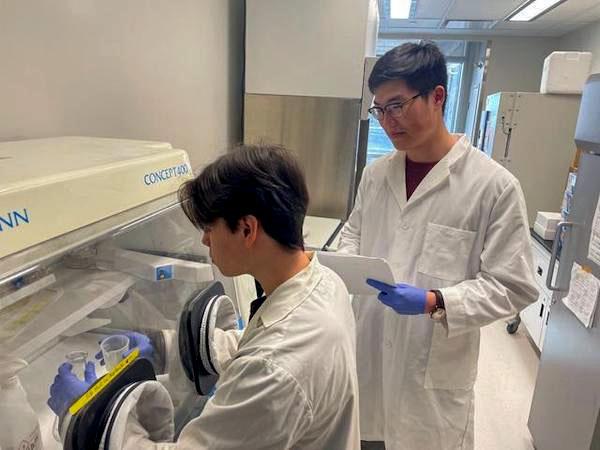
jsc2024e066516 (10/4/2024) ---  Student researcher Ryan Stewart works to optimize the bacterial growth medium for his experiment, The Impact of Lectins on Escherichia coli Biofilm Formation in Microgravity. The experiment is part of the Nanoracks-National Center for Earth and Space Science Education-Surveyor-Student Spaceflight Experiments Program Mission 18 to ISS (Nanoracks-NCESSE-Surveyor-SSEP).
Preflight Imagery for Nanoracks-NCESSE-Surveyor-SSEP
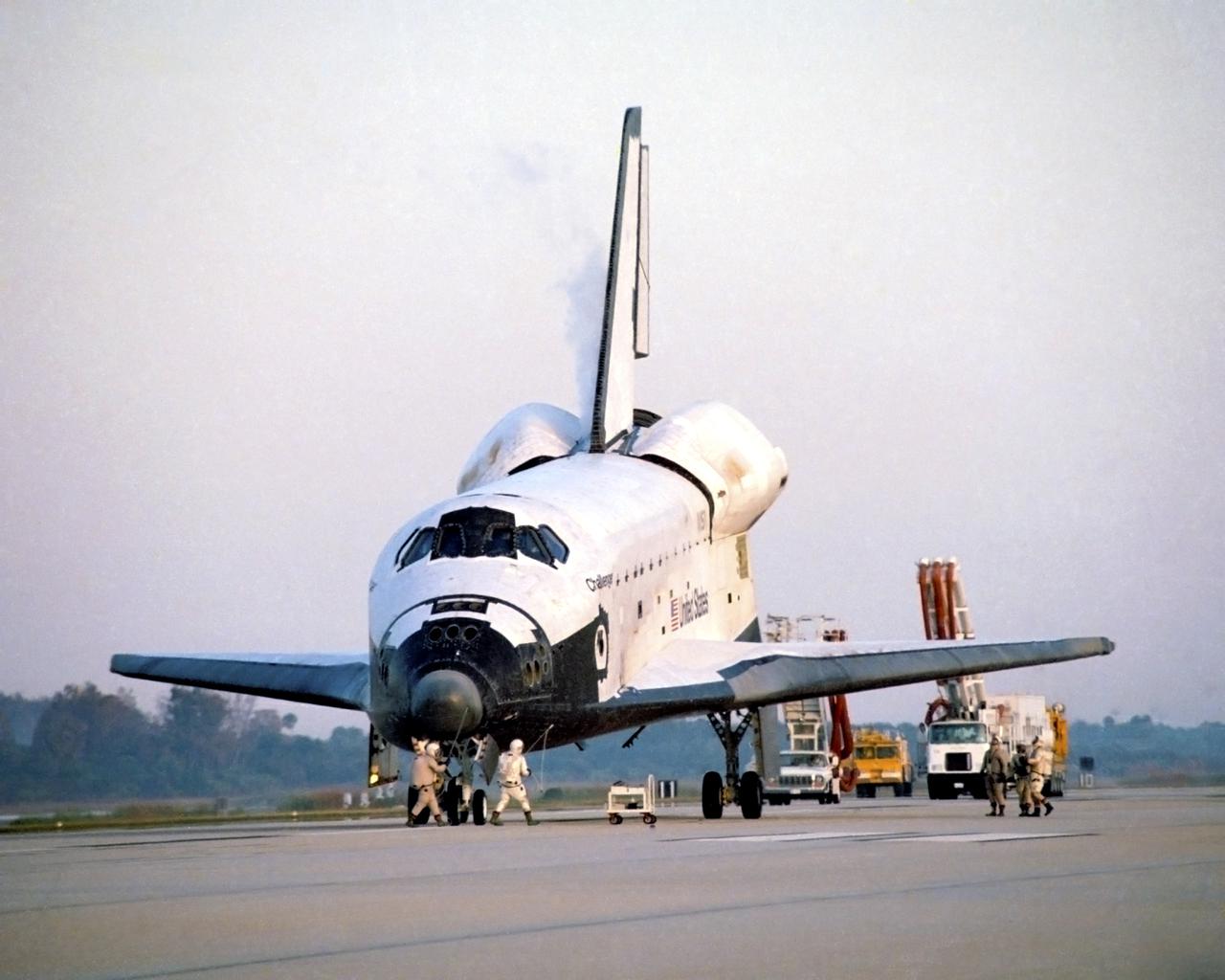
CAPE CANAVERAL, Fla. -- Ground crew members perform initial  post-landing  procedures  on  orbiter  Challenger as the  the crew, the  first-ever  to experience both launch and landing at KSC,  prepare to exit the spaceship.  Touchdown was at 7:15:55 a.m. EST on Feb. 11.   Crew members for the historic Mission 41-B STS-11 are Commander Vance D. Brand, Pilot Robert L.'Hoot' Gibson, and Mission Specialists Bruce McCandless II, Robert L. Stewart and Ronald E. McNair.  Photo credit: NASA
KSC-84PC-0086
KENNEDY SPACE CENTER, FLA.  - At the Museum of Science and  Industry (MOSI) in Tampa, students from one of NASA’s Explorer Schools, Stewart Middle School in Tampa, enjoy an interactive exhibit.  The students are at MOSI to view the space exhibit Space: A Journey to Our Future,  an extraordinary, interactive exhibition designed to entertain, educate and inspire.  Another exhibit is SPACE STATION, the first cinematic journey to the International Space Station (ISS),  where audiences can experience for themselves life in zero gravity aboard the new station.
KSC-05pd-0206
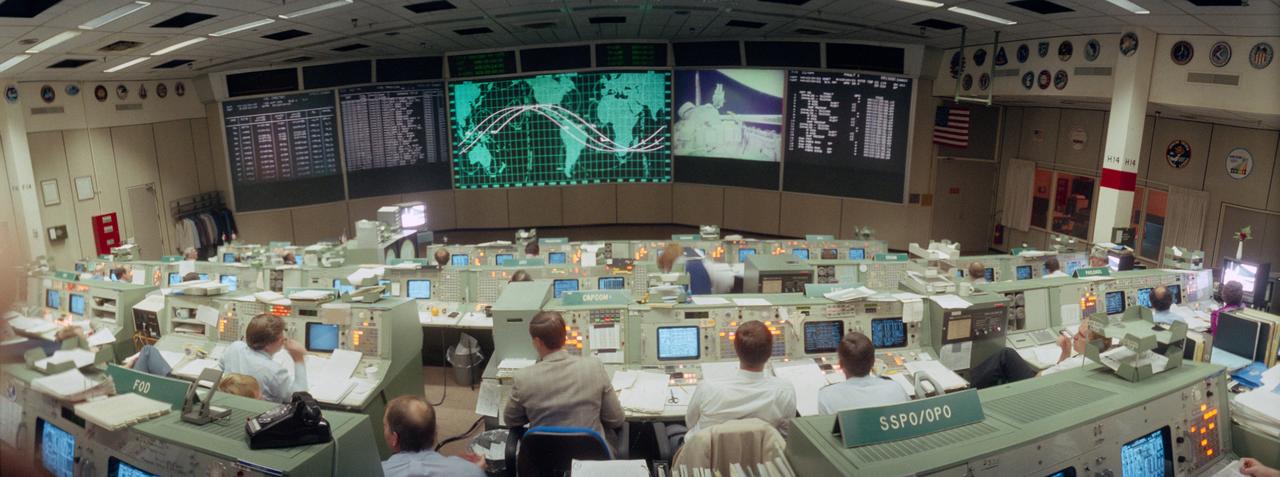
S84-26985 (7 Feb 1984) --- Flight controllers in the mission operations control room (MOCR) of the Johnson Space Center?s mission control center monitor the extravehicular activity (EVA) of Astronauts Bruce McCandless II and Robert L. Stewart.  The photograph was taken with a wide angle lens on a 35mm camera deployed in the aft center point of the MOCR.
View of mission control during the EVA by McCandless
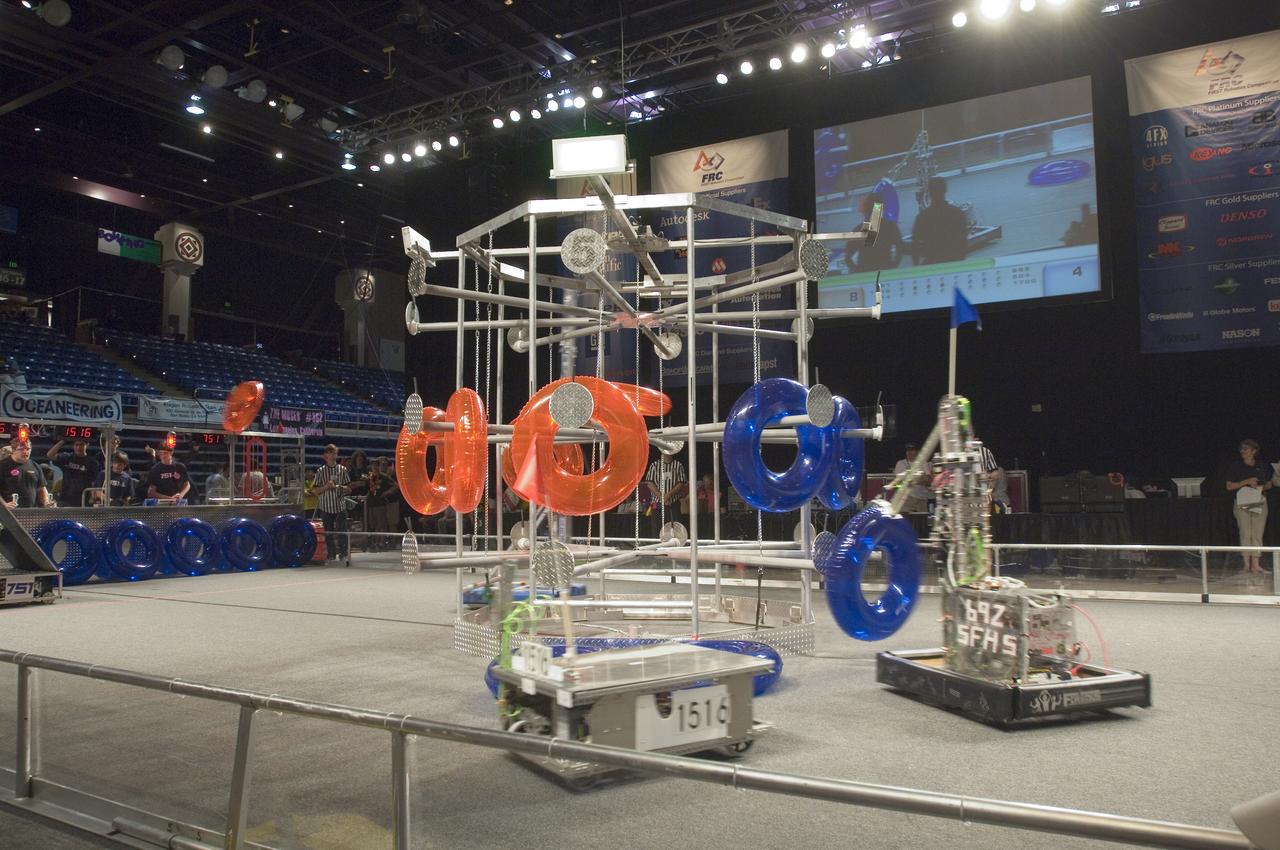
Silicon Valley FIRST Regional Robotics competition:  Grizzlies - Team 1516 - W & K Automotive/ROP Cantra Costa Co, CA/San Ramon Valley Education Foundation & California High School, San Ramon, California (CA) The Fembots Team 692 - CyboSoft/PASCO Scientific/The Stewart Family/MR Pickles & St Francis High School, Sacramento, California (CA) on the floor doing battle Cheezy Poofs team-1834
ARC-2007-ACD07-0049-023
S84-27027 (3-11 Feb 1984) --- Astronaut Robert L. Gibson, STS-41B pilot, reviews some teleprinter copy on the flight deck's starboard station during the eight-day STS-41B Space Shuttle mission. Four other astronauts share the Challenger with Gibson.  They are astronauts Vance D.  Brand, commander; and Ronald E. McNair, Bruce McCandless II and Robert L.  Stewart, all mission specialists.  The photograph was taken from the commander's station with a 35mm camera.
Astronaut Gibson on flight deck starboard station
S84-27155 (11 Feb 1984) --- The first Space Shuttle landing in Florida was recorded just moments prior to touchdown on the long landing facility of the Kennedy Space Center.  Patches of fog were sighted near the round, but they were not a factor in the landing.  Along with Astronaut Vance D. Brand, crew commander at Challenger?s controls, also onboard were Astronaut Robert L. Gibson, pilot; and Bruce McCandless II, Robert L. Stewart and  Ronald E. McNair, all mission specialists.
Aerial view of the Challenger making approach for landing at KSC
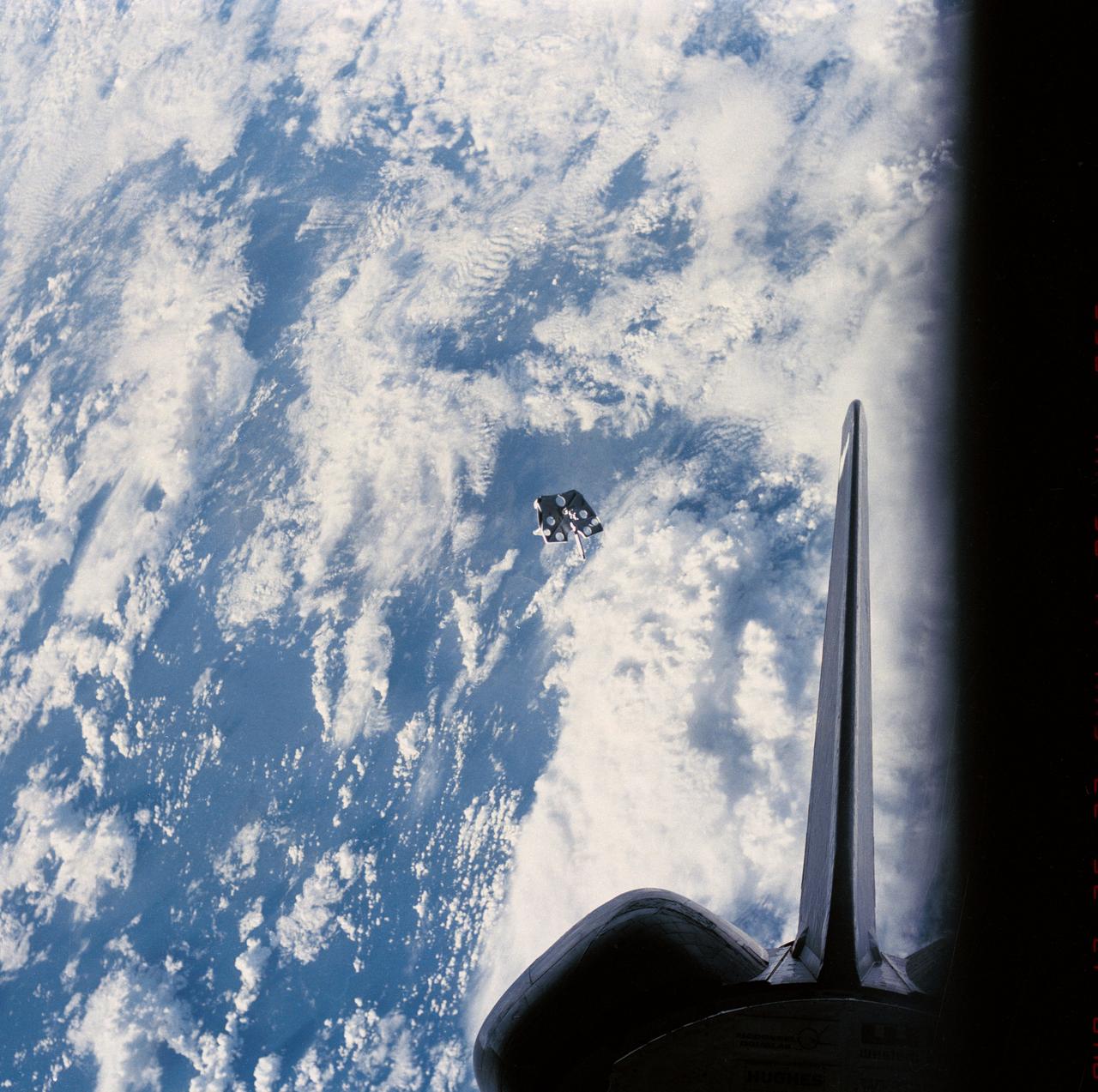
S84-27024 (7 Feb 1984) --- This 70mm frame centers on a foot restraint that strayed from the Earth-orbiting Space Shuttle Challenger during the February 9, 1984 extravehicular activity (EVA) session of astronauts Bruce McCandless II and Robert Stewart.  As seen in JSC photograph frame number S84-27025, McCandless goes after the piece.  Not pictured is Vance D. Brand, crew commander, who moved the spacecraft nearer the object.
View of foot restraint strayed from Challenger
51J-S-001 (3 Oct 1985) --- This 35mm frame was taken moments after the Space Shuttle Atlantis cleared the launch tower to begin its first mission in space.  Onboard, ready to carry out STS-51J mission were astronauts Karol J. Bobko, commander; Ronald J. Grabe, pilot; Robert L. Stewart and David C. Hilmers, mission specialist; and United States Air Force Major William A. Pailes, payload specialist.
Liftoff of first flight of Atlantis and the STS 51-J mission
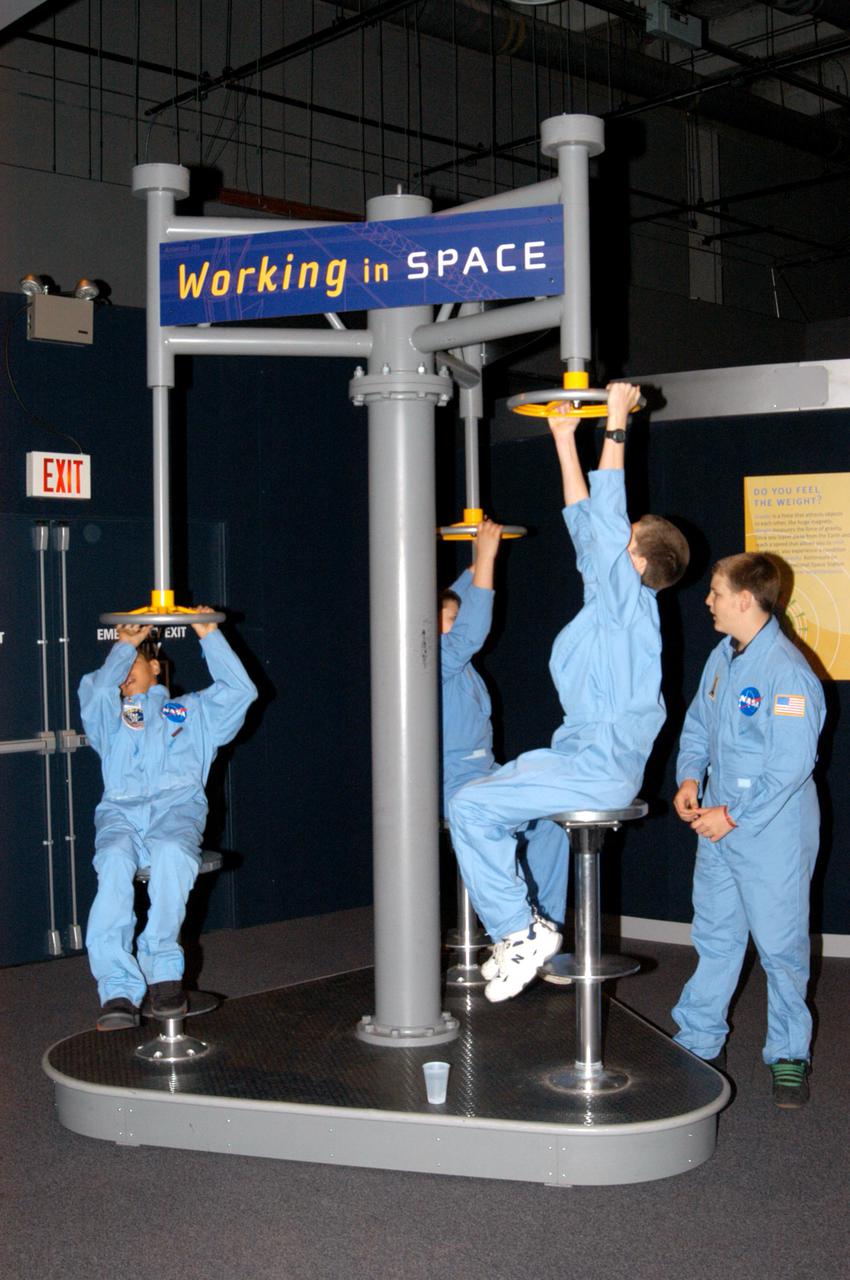
KENNEDY SPACE CENTER, FLA.  - At the Museum of Science and  Industry (MOSI) in Tampa, students from one of NASA’s Explorer Schools, Stewart Middle School in Tampa, get ready to spin on a bicycle-powered centrifuge, part of an interactive exhibit about space.  The MOSI is featuring the space exhibits Space: A Journey to Our Future,  an extraordinary, interactive exhibition designed to entertain, educate and inspire; and SPACE STATION, the first cinematic journey to the International Space Station (ISS),  where audiences can experience for themselves life in zero gravity aboard the new station.
KSC-05pd-0207
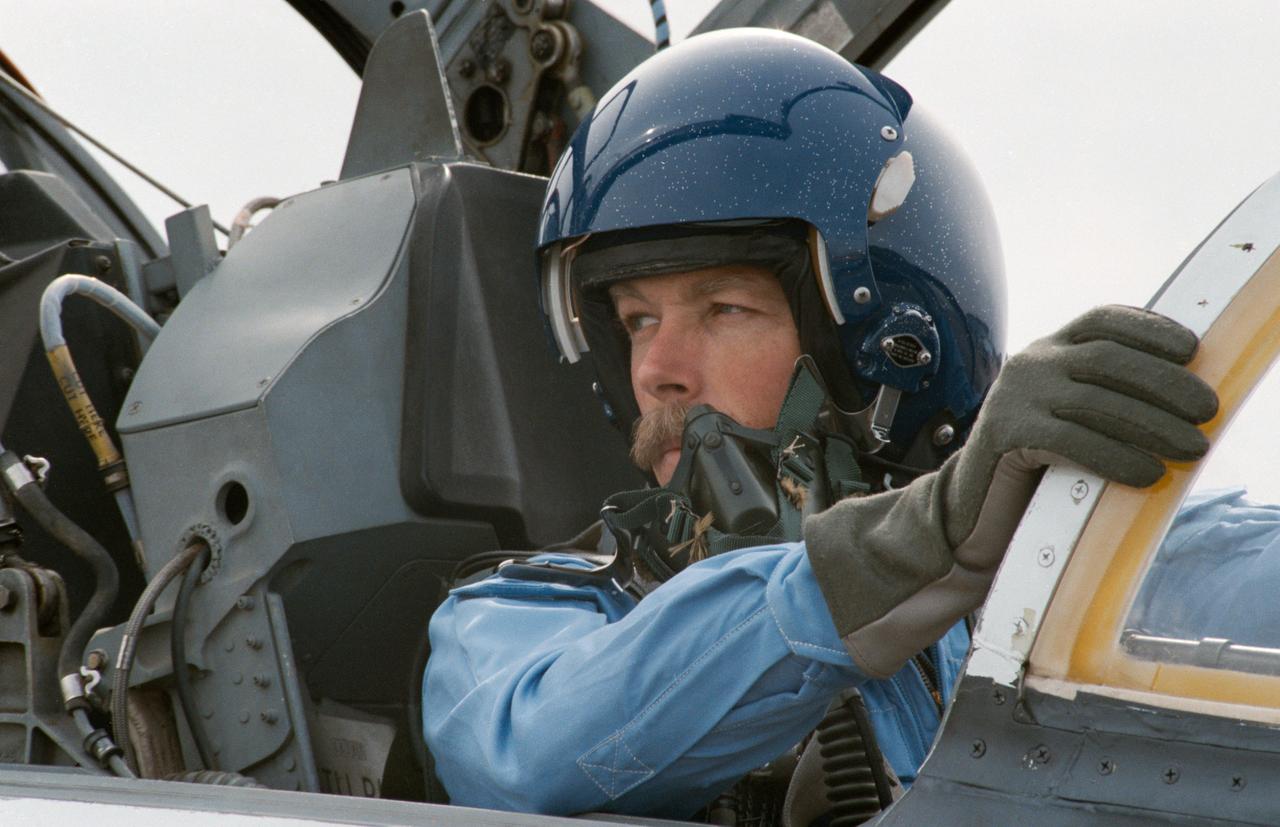
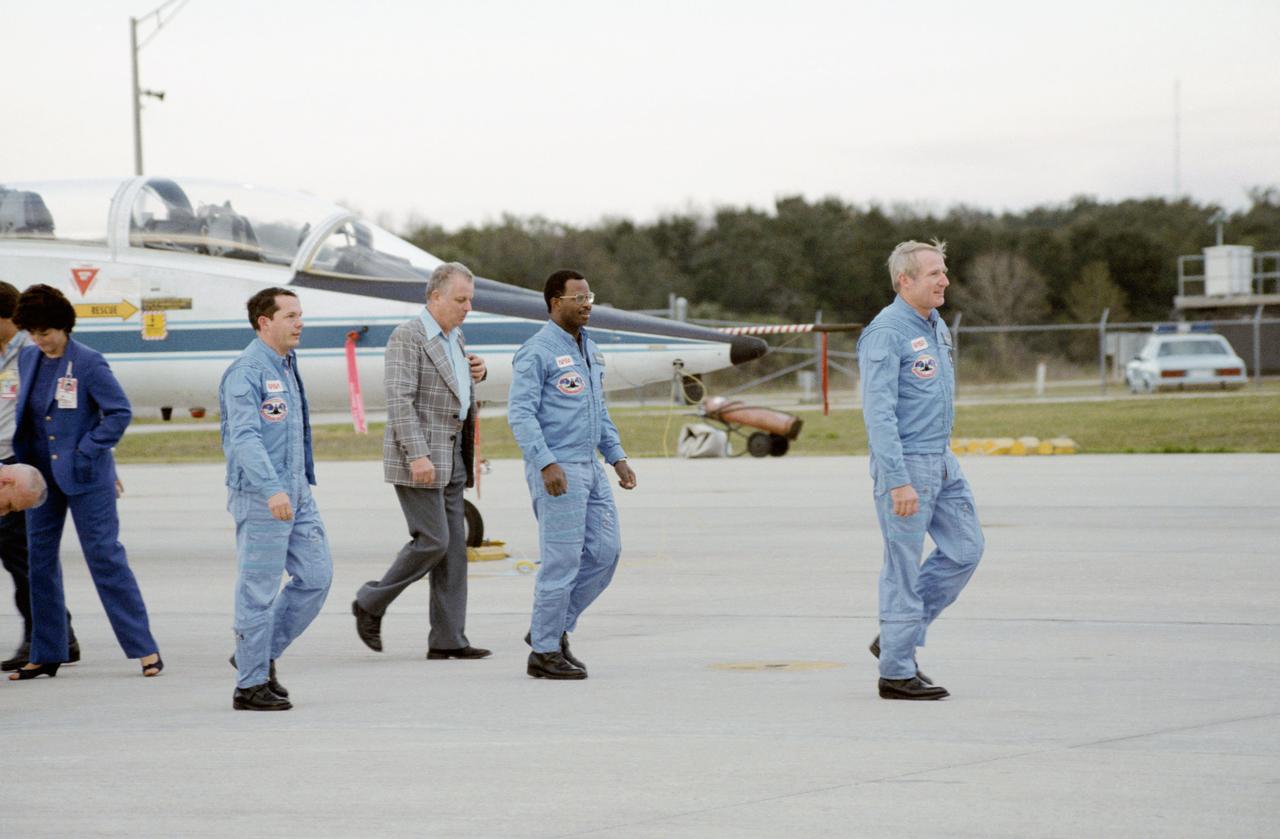
S84-26935 (31 Jan 1984) --- Three members of the STS 41-B astronaut crew arrive in Florida following a brief T-38 flight from Houston.  Leading the crew from the flight line is Astronaut Vance D. Brand (right), crew commander.  Following behind (in blue flight suits) are Astronauts Ronald E. McNair (center) and Robert L. Stewart (both mission specialists.  They were met by Terry White (pictured), JSC public information industrial relations manager.  Not pictured are Astronauts Robert L. Gibson, pilot; and Bruce McCandless II, mission specialist.  Launch is scheduled for February 3, 1983.
STS 41-B astronaut crew members arrive in Florida
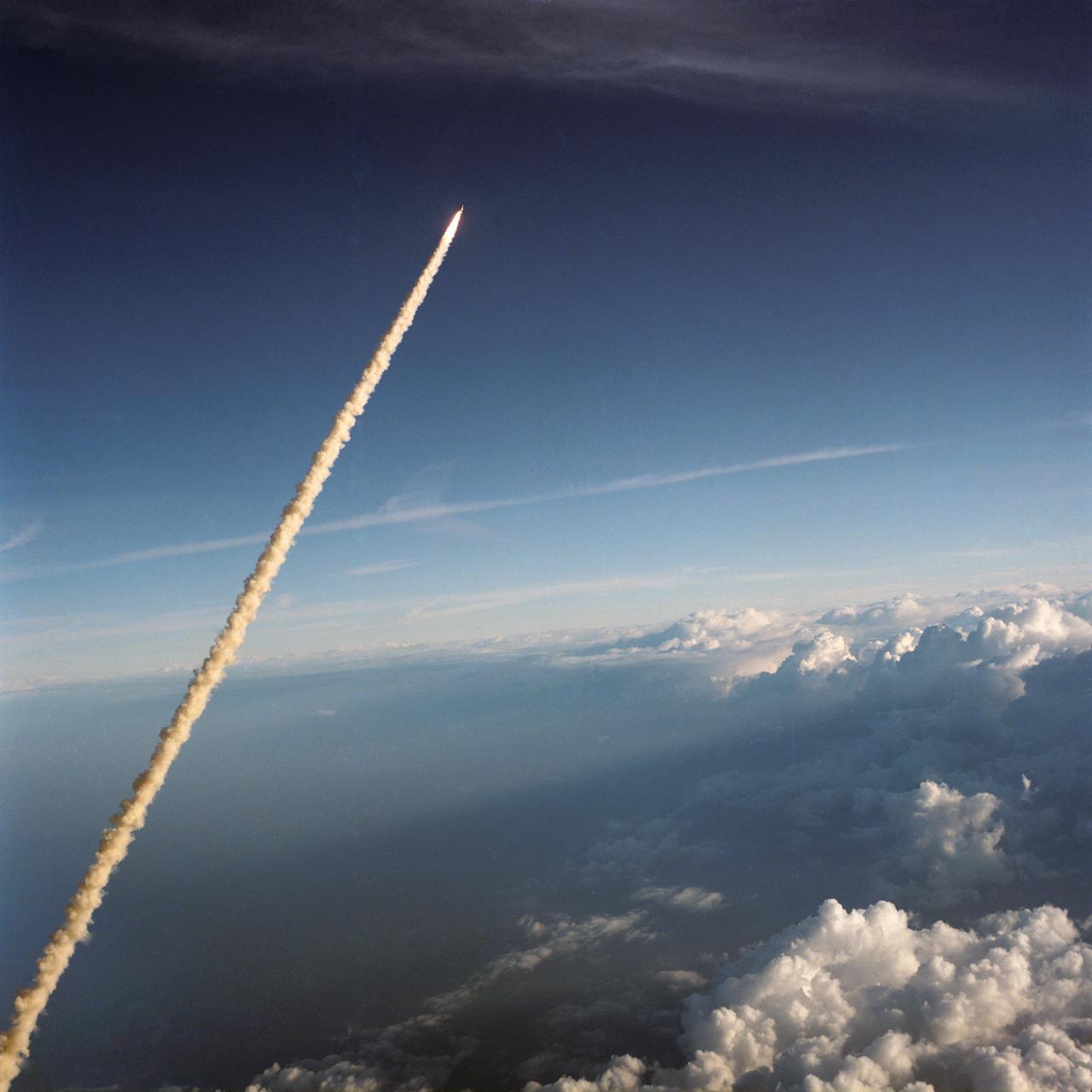
S84-26294 (3 Feb 1984) --- This scenic panorama of billowy clouds over the Atlantic and Florida and the contrasting addition of mankind's technology into the picture was provided by astronaut John W. Young and a handheld camera in the cockpit of NASA's Shuttle Training Aircraft (STA) moments after the 226 tons of spacecraft hardware were lifted off Kennedy Space Center's (KSC) Launch Pad 39A.  Inside the Space Shuttle Challenger (STS 41-B), attached here to its two Solid Rocket Boosters (SRB) and External Fuel Tank (ET), were astronauts Vance D. Brand, Robert L. Gibson, Ronald E. McNair, Bruce McCandless II and Robert L. Stewart.
LAUNCH - STS-11/41B - KSC
CAPE CANAVERAL, Fla. -- Commander Vance Brand and Pilot Robert 'Hoot' Gibson guide the space shuttle orbiter Challenger to the first-ever landing of a returning spaceship at Kennedy Space Center.  The historic touchdown occurred at 7:15:55 a.m. EST Feb. 11, 1984 -- about five miles from Launch Pad 39A where the 41B mission began eight days earlier. Also aboard the tenth space shuttle flight were Mission Specialists Bruce McCandless II, Ronald McNair and Robert Stewart.  Photo credit: NASA
KSC-84PC-0082
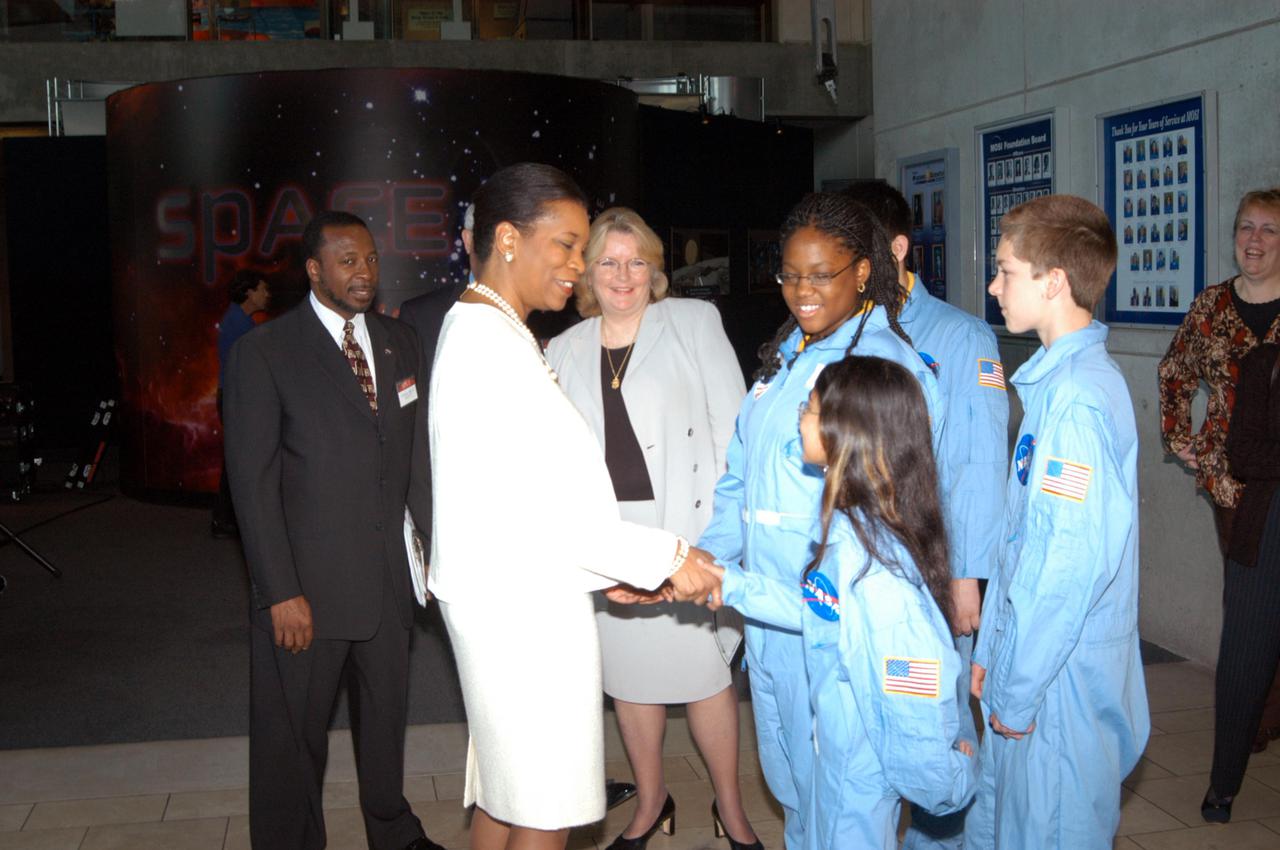
KENNEDY SPACE CENTER, FLA.  - At the Museum of Science and  Industry (MOSI) in Tampa, Dr. Adena Williams Loston, chief education officer at NASA Headquarters, greets students from one of NASA’s Explorer Schools, Stewart Middle School in Tampa.  The students as well as Dr. Loston and KSC Deputy Director Dr. Woodrow Whitlow Jr. (far left) were at MOSI to view  the space exhibits Space: A Journey to Our Future,  an extraordinary, interactive exhibition designed to entertain, educate and inspire; and SPACE STATION, the first cinematic journey to the International Space Station (ISS),  where audiences can experience for themselves life in zero gravity aboard the new station.
KSC-05pd-0201
S84-27018 (7 Feb 1984) --- Astronaut Bruce McCandless II approaches his maximum distance from the Earth-orbiting Space Shuttle Challenger in this 70mm frame photographed by his fellow crewmembers onboard the reusable vehicle.  McCandless is in the midst of the first "field" tryout of the nitrogen-propelled, hand-controlled back-pack device called the manned maneuvering unit (MMU).  Astronaut Robert L. Stewart got a chance to test the same unit a while later in the lengthy EVA session while the two spacewalkers were photographed and monitored by their fellow crewmembers in Challenger's cabin.  Those inside were Astronauts Vance D. Brand, Robert L. Gibson and Dr. Ronald E. McNair.
INFLIGHT (CREW ACTIVITY) - STS-11/41B
KENNEDY SPACE CENTER, FLA.  - At the Museum of Science and  Industry (MOSI) in Tampa, KSC Deputy Director Dr. Woodrow Whitlow Jr. introduces students from one of NASA’s Explorer Schools, Stewart Middle School in Tampa.   The students and Dr. Whitlow are at MOSI to view the space exhibits Space: A Journey to Our Future,  an extraordinary, interactive exhibition designed to entertain, educate and inspire; and SPACE STATION, the first cinematic journey to the International Space Station (ISS),  where audiences can experience for themselves life in zero gravity aboard the new station.
KSC-05pd-0204
S85-41803 (7 Sept 1985) --- George W.S. Abbey, bottom right, greets the five members of the STS 51-J crew as they egress the Atlantis following the successful completion of a mission in Earth orbit.  Astronaut Karol J. Bobko, who led the five down the steps, shakes hands with the JSC director of flight crew operations.  He is followed (bottom to top) By Astronauts Ronald J. Grabe, pilot; David C. Hilmers and Robert L. Stewart, both mission specialists; and USAF Maj. William A. Pailes, payload specialist.
Landing of the Shuttle Atlantis and the end of the STS 51-J mission
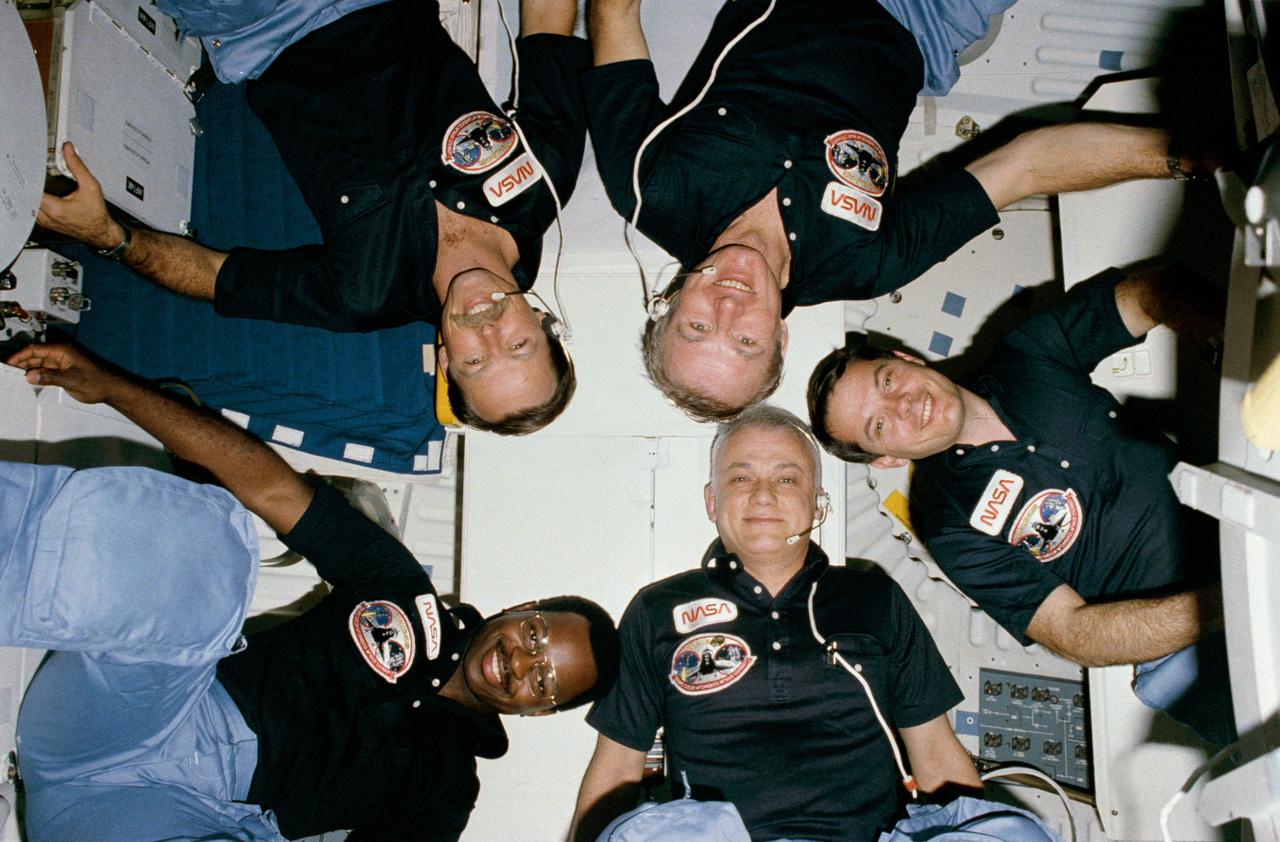
S84-27026 (3-11 Feb. 1984) --- The "star burst" type informal portrait of Space Shuttle crews has become somewhat of a tradition and the five-member STS-41B crew is no exception.      HOLD PICTURE WITH SEMI-CIRCLE AT LOWER RIGHT CORNER.  Counter clockwise from the lower left are Astronauts Vance D. Brand commander; Robert L. Gibson, pilot; and Dr. Ronald E. McNair; Bruce McCandless II and Robert L. Stewart, all mission specialists.  The five are on the mid-deck of the Earth-orbiting Challenger.  The "semi-circle" is actually part of the monodisperse latex reactor (MLR) experiment.  A pre-set 35mm camera was triggered automatically to expose the frame.
"Star Burst" style crew portrait of 41-B crew taken in-cabin
CAPE CANAVERAL, Fla. -- The crew of 41B STS-11, the first spaceflight in history to begin and conclude a mission at the same site, leave the flight deck of orbiter Challenger to be greeted by George Abbey, director of Flight Crew Operations.  In ascending order, the crew members are Vance Brand, mission commander mission Pilot Robert L.'Hoot' Gibson and Mission Specialists Robert L. Stewart, Ronald E. McNair and Bruce McCandless II. Challenger touched down at 7:15:55 a.m. EST on Feb. 11, rolling 10,700 feet before coming to a stop on the Kennedy Space Center's 15,000-foot-long runway.  Photo credit: NASA
KSC-84PC-0084
S84-27232 (& Feb 1984) ---  Astronaut Bruce McCandless II, 41-B mission specialist, uses his hands to control his movement above the Earth - and just few meters away from the Challenger - during the first-ever extravehicular activity (EVA) which didn?t use restrictive tethers and umbilical?s.  Fellow crewmembers aboard the Challenger used a 70mm camera to expose this frame through windows on the flight deck.  McCandless was joined by Robert L. Stewart, one of two other mission specialists for this flight, on two sessions of EVA.
Views of the extravehicular activity during STS 41-B
S84-26243 (31 Jan 1984) ---  Astronaut Robert L. Gibson, one of five 41-B crewmembers, prepares to leave Houston?s Ellington Base in a T-38 jet aircraft en route to Florida and the Kennedy Space Center, site of February 3?s launch of the Challenger.  Gibson, along with two other members of this crew, began training at JSC in July in 1978.  He will be joined by Astronauts Vance D. Brand, commander; and Bruce McCandless II, Ronald E. McNair and Robert L. Stewart, all mission specialists.  Brand and McCandless came aboard as NASA astronauts in April 1966.
PREFLIGHT (DEPARTURE) - STS-11/41B - ELLINGTON AFB (EAFB), TX
KENNEDY SPACE CENTER, FLA.  - On a visit to the Museum of Science and  Industry (MOSI) in Tampa, KSC Deputy Director Dr. Woodrow Whitlow Jr. greets students from one of NASA’s Explorer Schools, Stewart Middle School in Tampa.   The students and Dr. Whitlow are at MOSI to view the space exhibits Space: A Journey to Our Future,  an extraordinary, interactive exhibition designed to entertain, educate and inspire; and SPACE STATION, the first cinematic journey to the International Space Station (ISS),  where audiences can experience for themselves life in zero gravity aboard the new station.
KSC-05pd-0203
S84-27219 (3-11 Feb 1984) --- Astronaut Ronald E. McNair, 41-B mission specialist, doubles as "director" for a movie being "produced" aboard the Earth-orbiting Space Shuttle Challenger.  McNair’s name tag ("Cecil B. McNair") and beret and slate are all humorous props for application of a serious piece of cargo on this eight day flight - the Cinema 360 camera.  Two of the cameras were carried aboard the Challenger to provide a test for motion picture photography in a unique format designed especially for planetarium viewing.  This camera was located in the crew cabin area and a second was stowed in a getaway special (GAS) canister in the payload bay.  The other camera recorded extravehicular activity (EVA) of the flight’s other two mission specialists, Astronauts Bruce McCandless II and Robert L. Stewart.
BRIEFING (CREW ACTIVITIES) - STS-11/41B
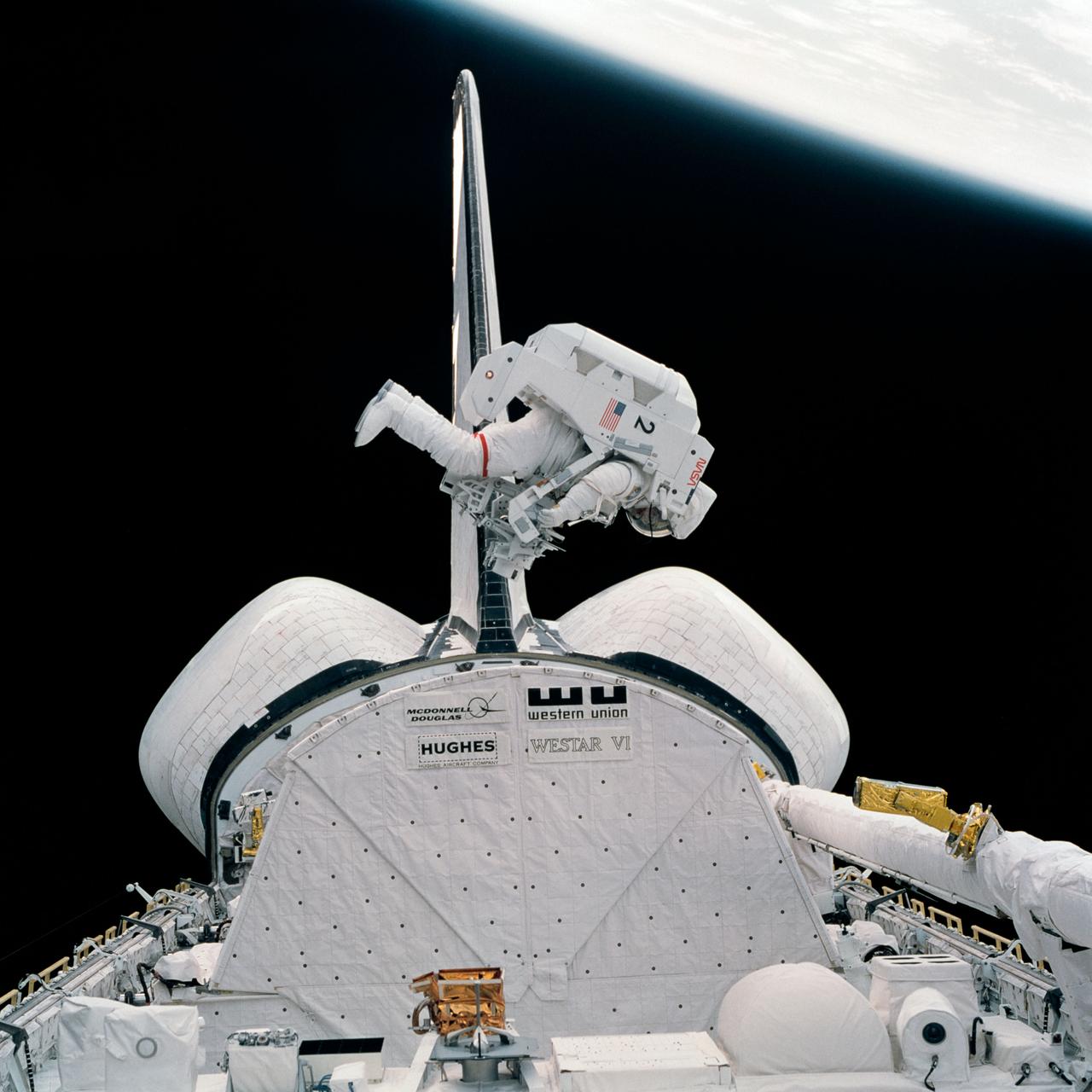
S84-27020 (7 Feb 1984) --- A fixed camera on astronaut Bruce McCandless II's helmet recorded this rare scene of the Space Shuttle Challenger some 50 to 60 meters away during a history-making extravehicular activity (EVA), February 7, 1984.  The Shuttle Pallet Satellite (SPAS-01A) is configured mid-cargo bay.  Astronaut Robert L. Stewart, standing beneath the Remote Manipulator System (RMS) arm, later donned the same Manned Maneuvering Unit (MMU) which afforded McCandless the freedom of movement to record this image.  Also visible in the cargo bay are the support stations for the two MMU back-packs, the sunshields for the Palapa B and Westar VI Satellites, KU-Band antenna and a number of Getaway Special (GAS) canisters.
View of the Challenger from the fixed camera in McCandless's helmet
S84-27562 (7 Feb. 1984) --- Astronaut Bruce McCandless II, one of two 41B mission  specialists participating in a historical Extravehicular Activity (EVA), is a few meters away from the cabin of the Earth-orbiting space shuttle Challenger in this 70mm frame. This Extravehicular Activity (EVA) represented the first use of a nitrogen-propelled, hand-controlled device called the Manned Maneuvering Unit (MMU), which allows for much greater mobility than that afforded previous spacewalkers who had to use restrictive tethers. Robert L. Stewart later tried out the MMU McCandless is using here, and the two of them tested another similar unit two days later. Inside the spacecraft were astronauts Vance D. Brand, commander; Robert L. Gibson, pilot; and Ronald E. McNair, mission specialist. Photo credit: NASA
STS-11 Extravehicular Activity (EVA)-1 - Astronaut McCandless, Bruce
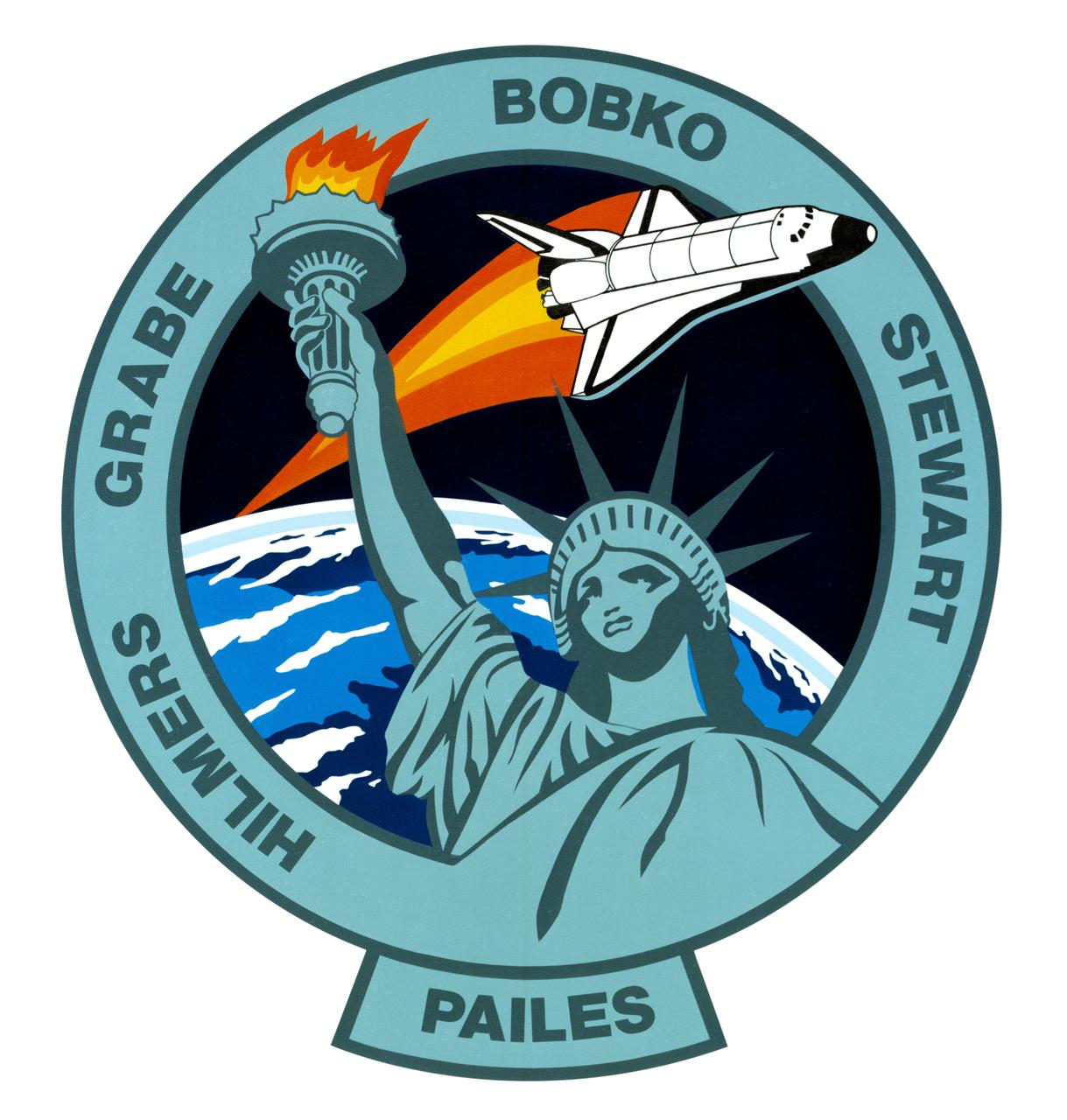
S85-39862 (1 Sept. 1985) --- The 51-J mission insignia, designed by Atlantis's first crew, pays tribute to the Statue of Liberty and the ideas it symbolizes. The historical gateway figure bears additional significance for astronauts Karol J. Bobko, mission commander; and Ronald J. Grabe, pilot, both New York natives. Other members of the five-man crew, whose surnames encircle the artwork, are Robert L. Stewart and David C. Hilmers, mission specialists; and William A. Pailes, payload specialist.     The NASA insignia design for space shuttle flights is reserved for use by the astronauts and for other official use as the NASA Administrator may authorize. Public availability has been approved only in the forms of illustrations by the various news media. When and if there is any change in this policy, which is not anticipated, the change will be publicly announced. Photo credit: NASA
STS-28/51J - OFFICIAL CREW INSIGNIA
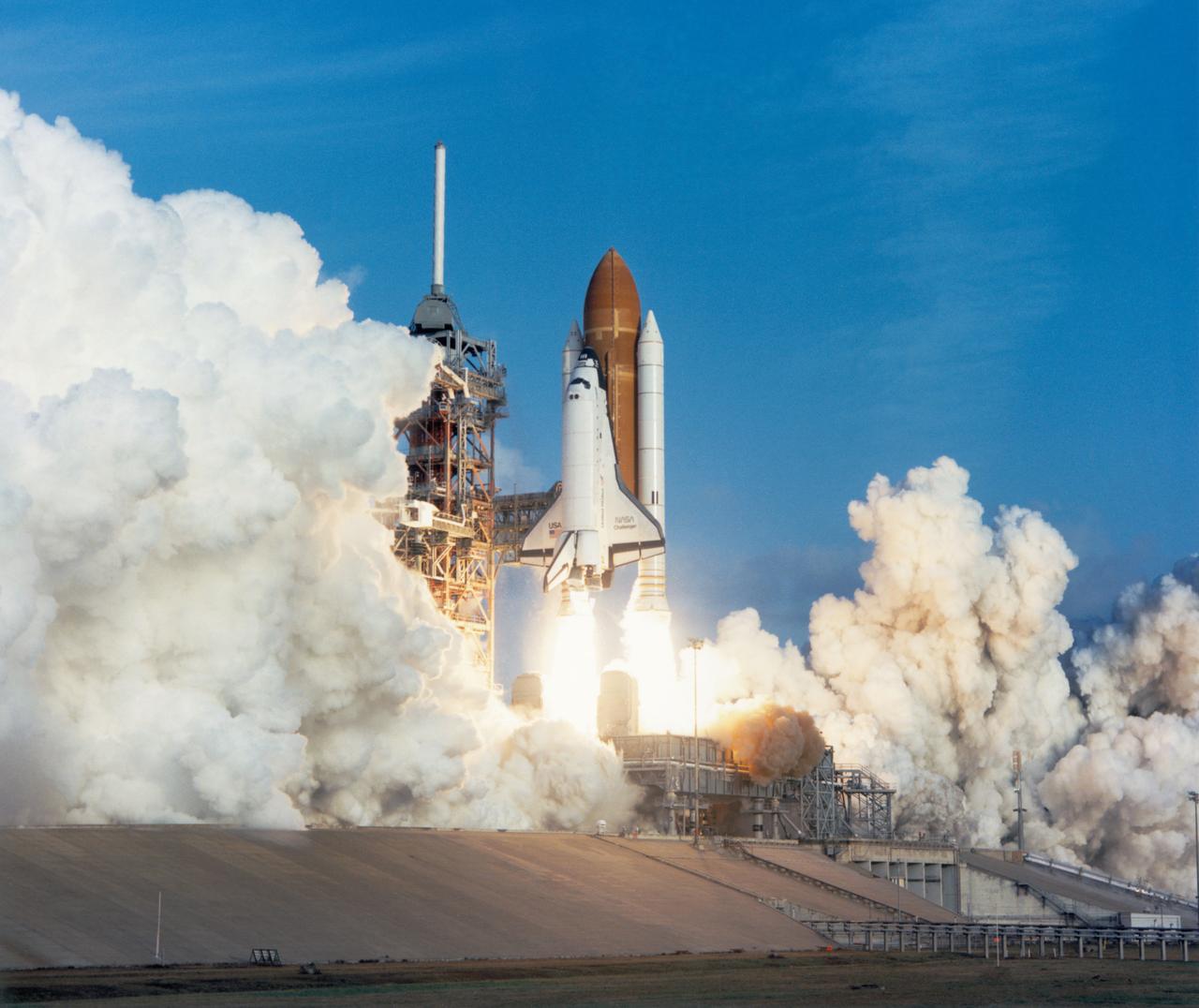
S84-26325 (3 Feb. 1984) --- Beginning a busy year, NASA's space shuttle Challenger, attached to two solid rocket boosters and an external fuel tank which it will later jettison, blasts off from Pad A at Kennedy Space Center's Launch Complex 39 at 8:00 a.m.  (EST), Feb. 3, 1984. Inside the spacecraft are astronauts Vance D. Brand, Robert L. Gibson, Bruce McCandless II, Ronald E. McNair and Robert L. Stewart. Brand is making his first trip in the Challenger but his second STS flight and third spaceflight overall. The rest of the crew members are experiencing space travel for the first time. Marking a space first, this flight will be landing at KSC. Photo credit: NASA
LAUNCH - STS-11/41B - KSC
S84-27023 (7 Feb 1984) --- This 70mm frame shows astronaut Bruce McCandless II moving in to conduct a test involving the Trunion Pin Attachment Device (TPAD) he carries and the Shuttle Pallet Satellite (SPAS-01A) partially visible at bottom of frame. SPAS was a stand-in for the damaged Solar Maximum Satellite (SMS) which will be visited for repairs by the STS-41C Shuttle crew in early spring.  This particular Extravehicular Activity (EVA) session was a rehearsal for the SMS visit. The test and the actual visit to the SMS both involve the use of jet-powered, hand-controlled Manned Maneuvering Unit (MMU). The one McCandless uses is the second unit to be tested on this flight. Astronaut Robert L. Stewart got a chance to work with both MMU's on the two EVA's.
View of Astronaut Bruc McCandless during EVA
S84-26327 (3 Feb. 1984) --- Beginning a busy year, NASA's space shuttle Challenger, attached to two solid rocket boosters and an external fuel tank which it will later jettison, blasts off from Pad A at Kennedy Space Center's Launch Complex 39 at 8:00 a.m. (EST), Feb. 3, 1984. Inside the STS 41-B spacecraft are astronauts Vance D. Brand, Robert L. Gibson, Bruce McCandless II, Ronald E. McNair and Robert L. Stewart. Brand is making his first trip in the Challenger but his second STS flight and third spaceflight overall. The rest of the crew members are experiencing space travel for the first time. Marking a space first, this flight will be landing at KSC. Photo credit: NASA
LAUNCH - STS-11/41B - KSC
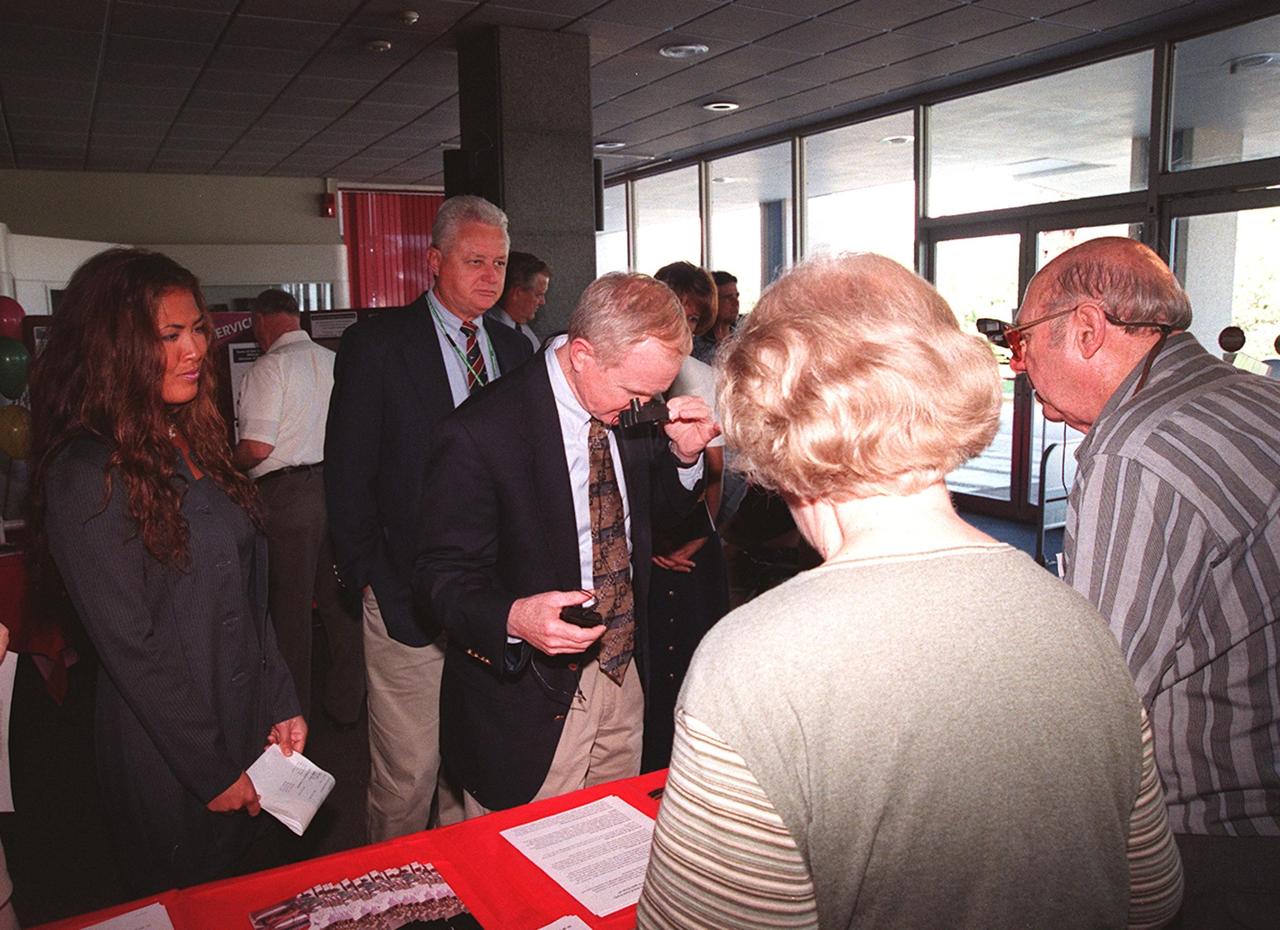
Center Director Roy Bridges stops at the Stewart Eye Institute table at the Disability Awareness and Action Working Group (DAAWG) 1999 Technology Fair being held Oct. 20-21 at Kennedy Space Center. Behind Bridges is Sterling Walker, director of Engineering Development at KSC and chairman of DAAWG. At the near right are George and Marian Hall, who are with the Institute. At the left is Nancie Strott, a multi-media specialist with Dynacs and chairperson of the Fair. The Fair is highlighting vendors demonstrating mobility, hearing, vision and silent disability assistive technology. The purpose is to create an awareness of the types of technology currently available to assist people with various disabilities in the workplace. The theme is that of this year's National Disability Employment Awareness Month, "Opening Doors to Ability." Some of the vendors participating are Canine Companions for Independence, Goodwill Industries, Accessible Structures, Division of Blind Services, Space Coast Center for Independent Living, KSC Fitness Center and Delaware North Parks Services
KSC-99pp1229
KENNEDY SPACE CENTER, FLA.  - Students from one of NASA’s Explorer Schools, Stewart Middle School in Tampa pose for a photo with other guests visiting the Museum of Science and  Industry (MOSI) in Tampa.  At left, in the back row, are former astronaut Dan Brandenstein, current vice president of Consolidated Space Operations Centers (CSOC),  and KSC Deputy Director Dr. Woodrow Whitlow Jr.  In the center is Ronte Smith, southeast regional sales manager for General Motors, and Gail Rymer, with Lockheed Martin.  On the right are Dr. Adena Williams Loston, chief education officer at NASA Headquarters, and Wit Ostrenko, president of MOSI.  The MOSI is featuring the space exhibits Space: A Journey to Our Future,  an extraordinary, interactive exhibition designed to entertain, educate and inspire; and SPACE STATION, the first cinematic journey to the International Space Station (ISS),  where audiences can experience for themselves life in zero gravity aboard the new station.
KSC-05pd-0202
S84-27017 (7 Feb. 1984) --- Astronaut Bruce McCandless II, one of two 41-B mission specialist, participating in a historical Extravehicular Activity (EVA), is a few meters away from the cabin of the Earth-orbiting space shuttle Challenger in this 70mm frame. This EVA represented the first use of a nitrogen-propelled, hand-controlled device called the Manned Maneuvering Unit (MMU), which allows for much greater mobility than that afforded previous spacewalkers who had to use restrictive tethers. Robert L. Stewart, mission specialist, later tried out the MMU McCandless is using here. The two of them tested another similar unit two days later. Inside the spacecraft were astronauts Vance D. Brand, commander; Robert L. Gibson, pilot; and Ronald E. McNair, mission specialist. Photo credit: NASA
INFLIGHT (CREW ACTIVITY) - STS-11/41B
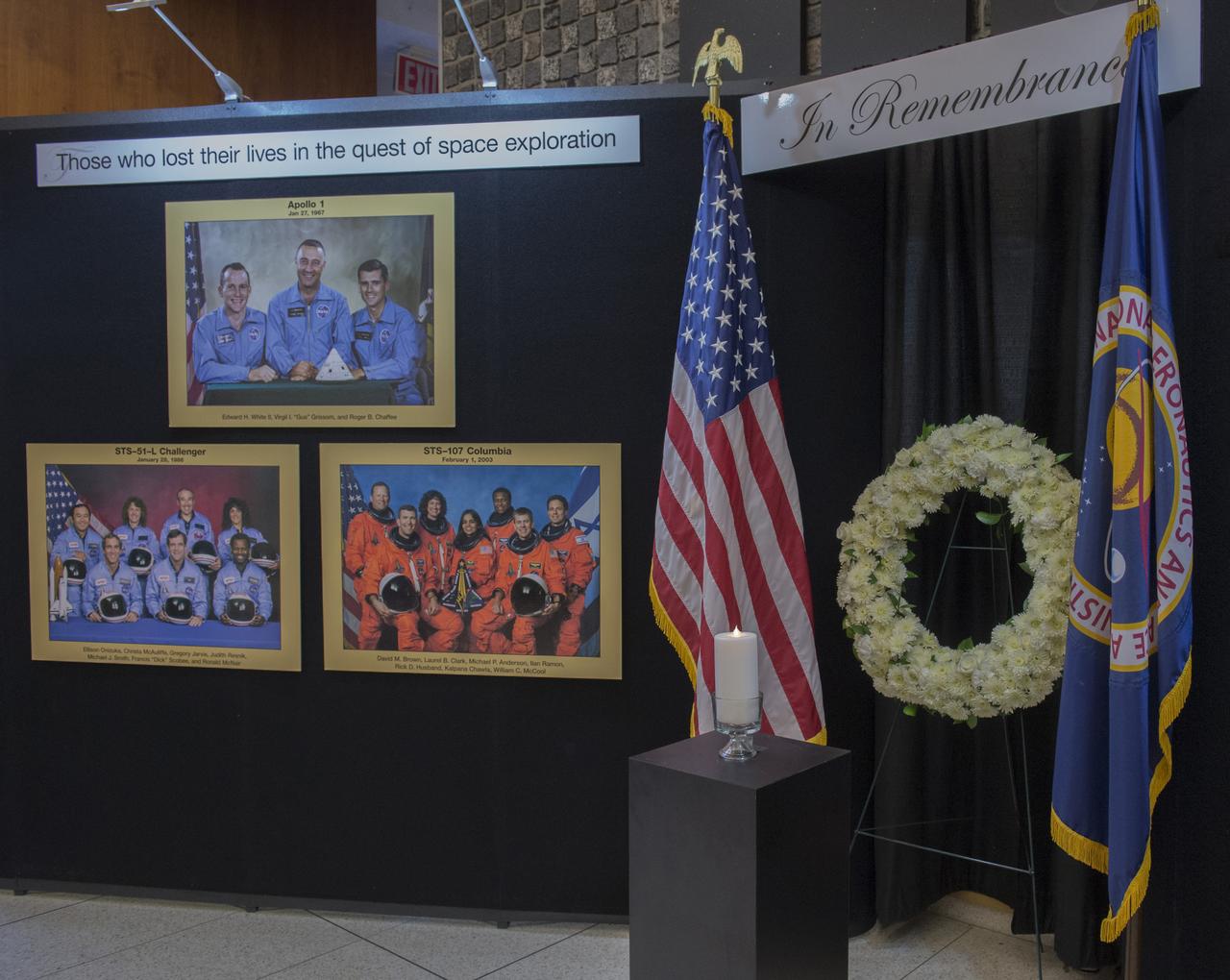
Marshall Space Flight Center’s graphic display for the annual “Day of Remembrance” honoring those astronauts who have passed away.
MSFC Annual Day of Remembrance ceremony
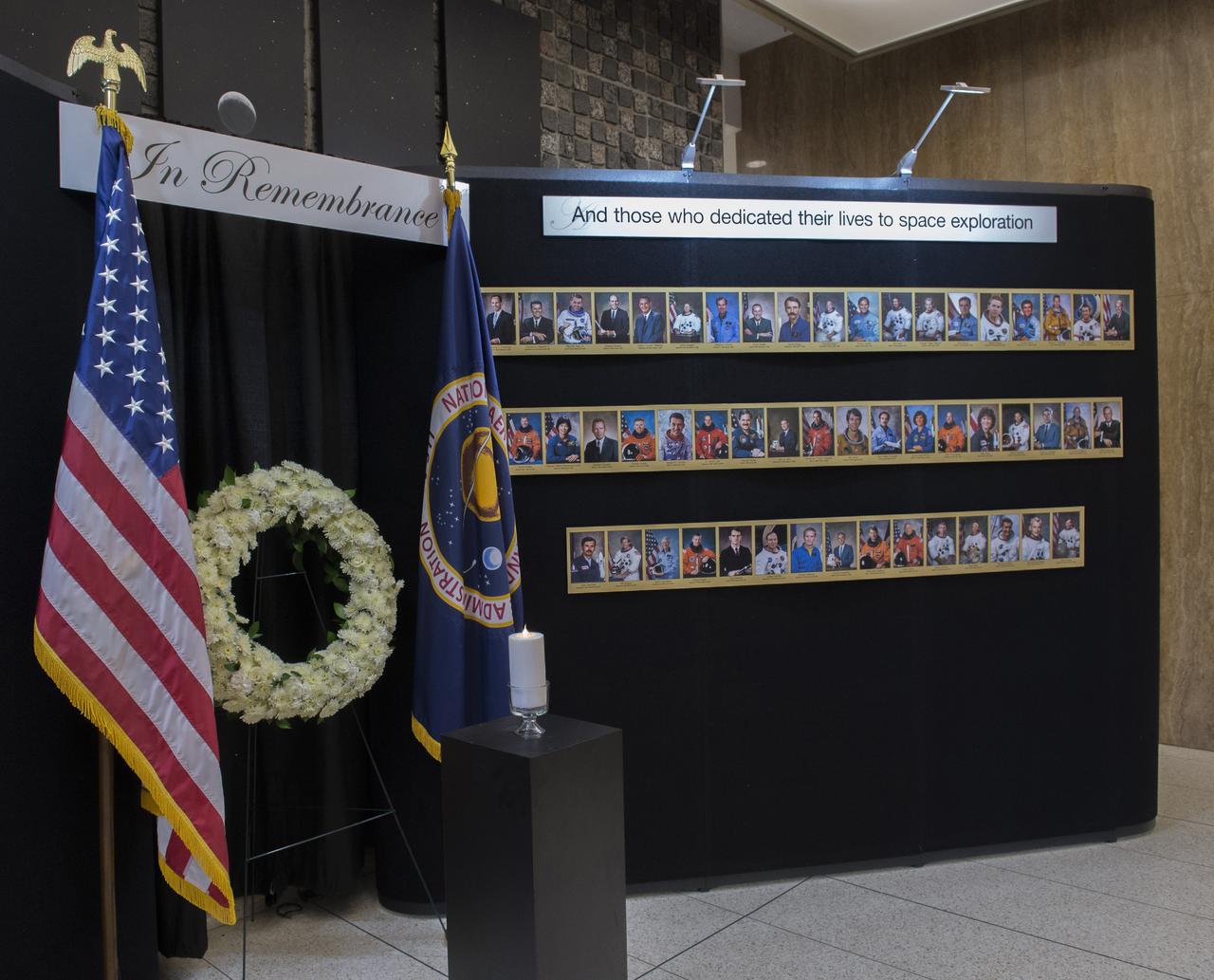
Marshall Space Flight Center’s graphic display for the annual “Day of Remembrance” honoring those astronauts who have passed away.
MSFC Annual Day of Remembrance ceremony
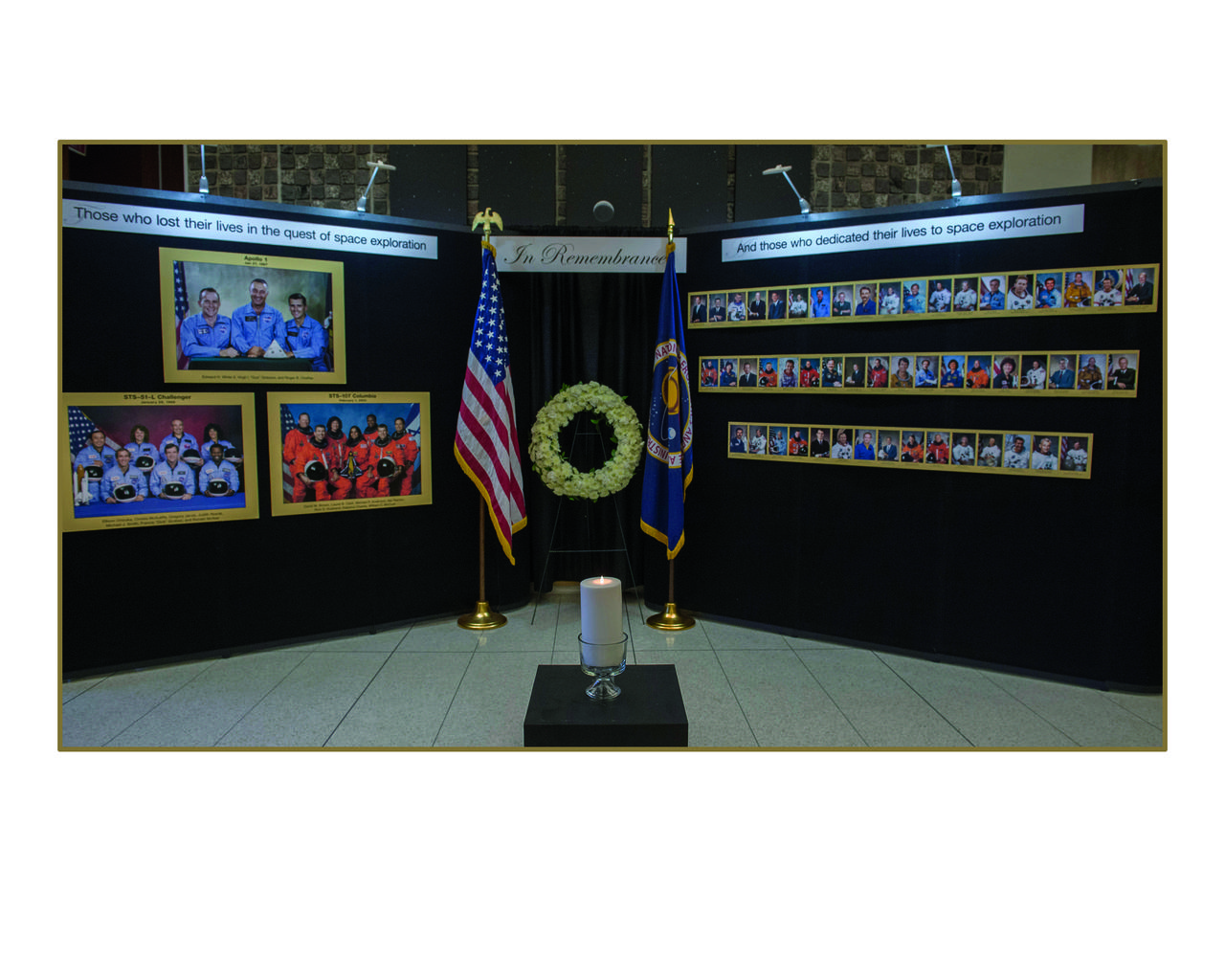
Marshall Space Flight Center’s graphic display for the annual “Day of Remembrance” honoring those astronauts who have passed away.
MSFC Annual Day of Remembrance ceremony
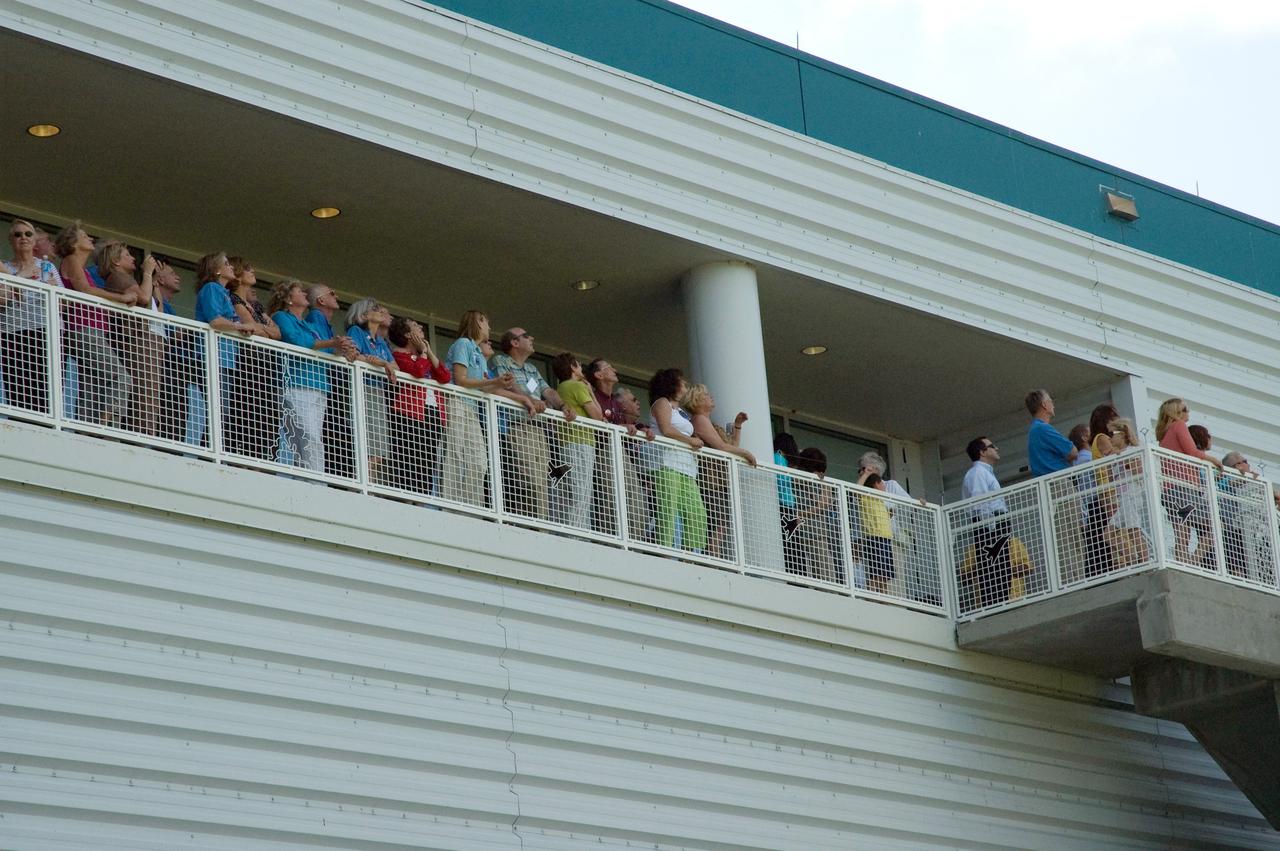
CAPE CANAVERAL, Fla. -- A group from the first graduating class of astronauts after the Apollo program gathers at the Banana River viewing site at NASA's Kennedy Space Center before the launch of space shuttle Discovery on its STS-124 mission.  In 1978 a new group of 35 astronauts was selected after nine years without new astronauts.  The pilots were Daniel Brandenstein, Michael Coats, Richard Covey, John Creighton, Robert Gibson, Frederick D. Gregory, Frederick Hauck, Jon McBride, Francis "Dick" Scobee, Brewster Shaw, Loren Shriver, David Walker and Donald Williams. The mission specialists were Guion Bluford, James Buchli, John Fabian, Anna Fisher, Dale Gardner, S. David Griggs, Terry Hart, Steven Hawley, Jeffrey Hoffman, Shannon Lucid, Ronald McNair, Richard Mullane, Steven Nagel, George Nelson, Ellison Onizuka, Judith Resnik, Sally Ride, Rhea Seddon, Robert Stewart, Kathryn D. Sullivan, Norman Thagard and James van Hoften. Since then, a new group has been selected roughly every two years.  Photo credit: NASA/Jim Grossmann
KSC-08pd1524
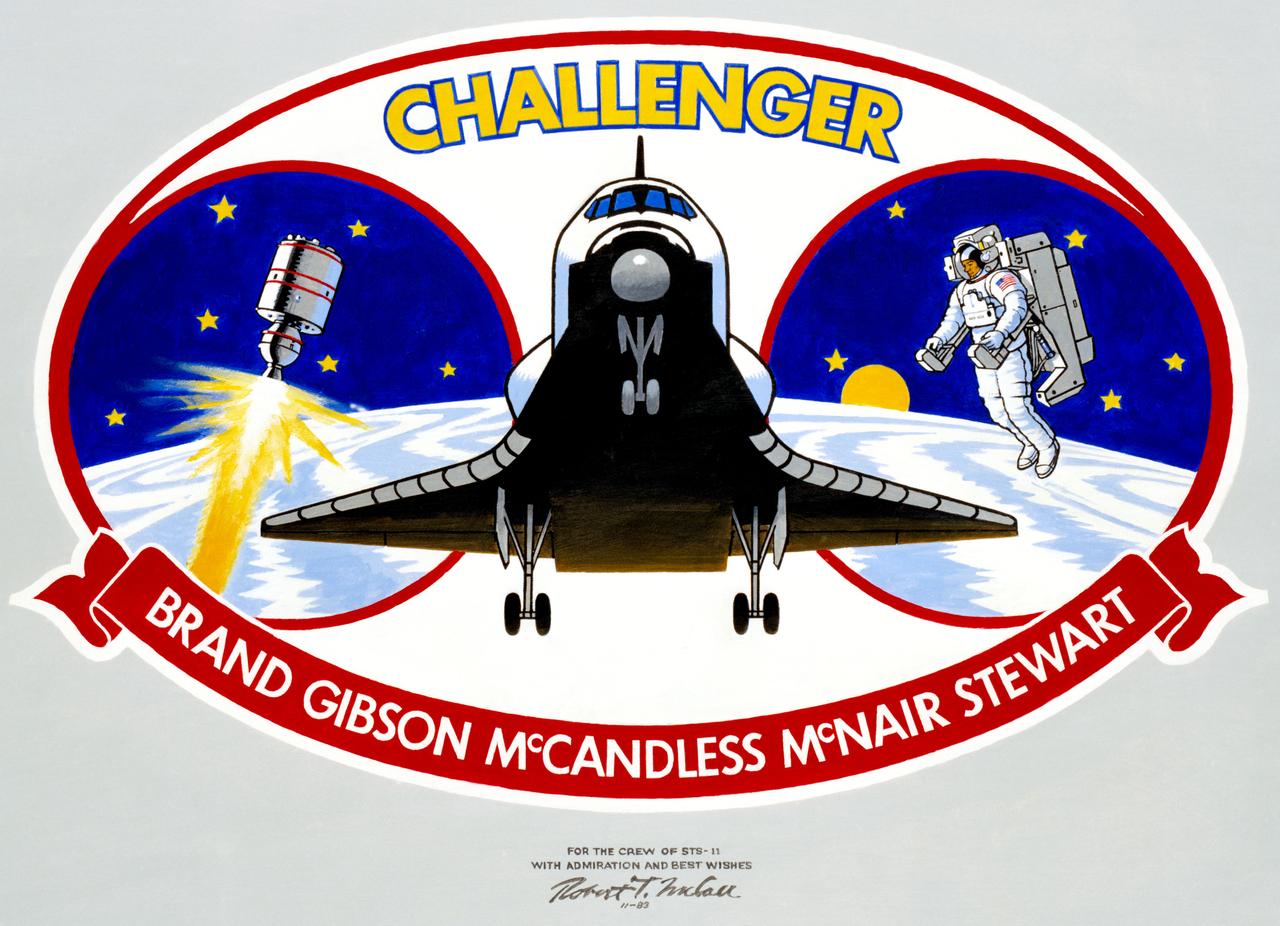
S83-45520 (December 1983) --- The space shuttle Challenger, making its fourth spaceflight, highlights the 41B insignia. The reusable vehicle is flanked in the oval by an illustration of another PAM-D assisted satellite deployment; and astronaut making the first non-tethered extravehicular activity (EVA); and eleven stars. The crew member at right is equipped with the manned maneuvering unit (MMU), a debuting backpack/motor apparatus allowing for much greater freedom of movement than that experienced by any previous space travelers performing EVA. Surnames of the five astronaut crew members balance the Robert McCall artwork. They are Vance D. Brand, Robert L. Stewart, Bruce McCandless II, Ronald E. McNair, Robert L. Gibson. The flight is scheduled for a launch in early 1984.     The NASA insignia design for space shuttle flights is reserved for use by the astronauts and for other official use as the NASA Administrator may authorize. Public availability has been approved only in the forms of illustrations by the various news media. When and if there is any change in this policy, which is not anticipated, the change will be publicly announced. Photo credit: NASA
Space Shuttle Mission 41-B official crew insignia
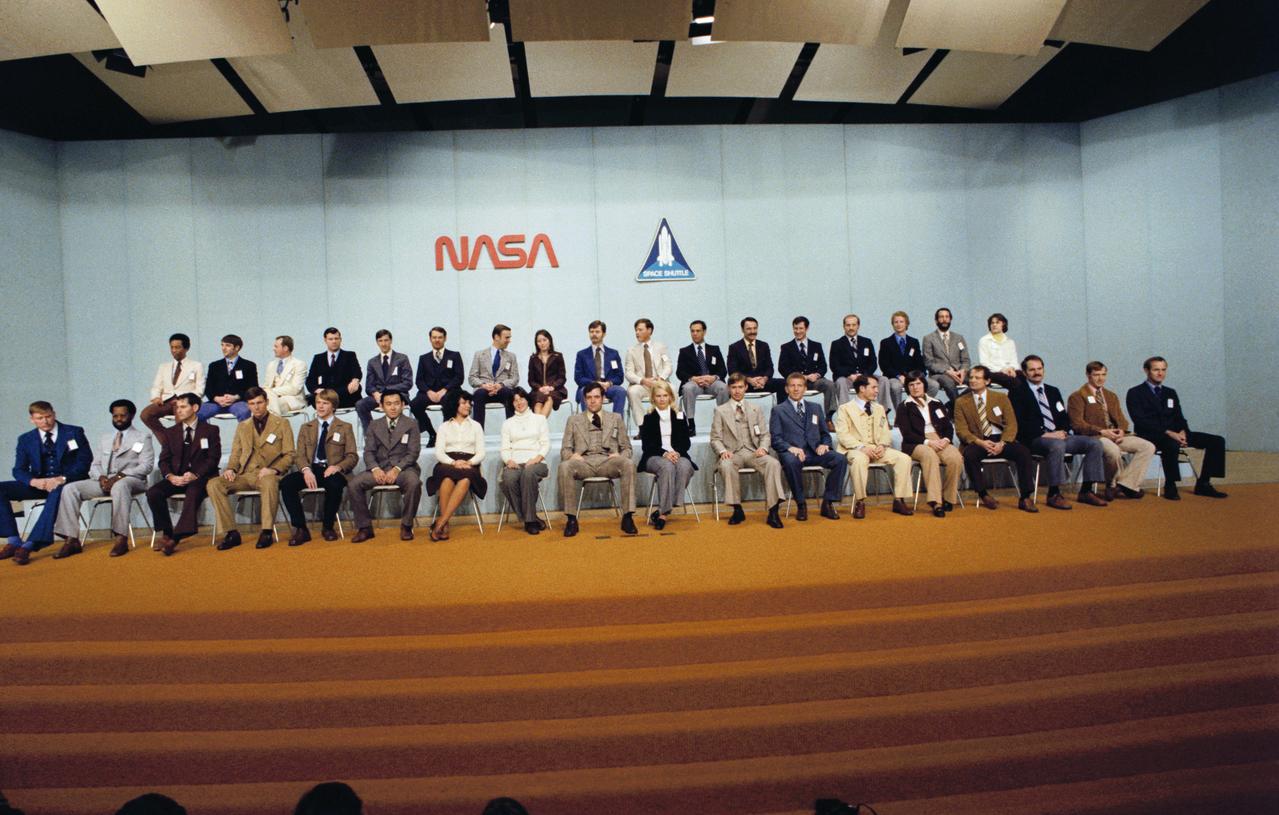
S78-26481 (January 1978) --- This is a montage of the individual portraits of the 35-member 1978 class of astronaut candidates. From left to right are Guion S. Bluford, Daniel C. Brandenstein, James F. Buchli, Michael L. Coats, Richard O. Covey, John O. Creighton, John M. Fabian, Anna L. Fisher, Dale A. Gardner, Robert L. Gibson, Frederick D. Gregory, S. David Griggs, Terry J. Hart, Frederick H. (Rick) Hauck, Steven A. Hawley, Jeffrey A. Hoffman, Shannon W. Lucid, Jon A. McBride, Ronald E. McNair, Richard M. (Mike) Mullane, Steven R. Nagel, George D. Nelson, Ellison S. Onizuka, Judith A. Resnik, Sally K. Ride, Francis R. (Dick) Scobee, Rhea Seddon, Brewster H. Shaw Jr., Loren J. Shriver, Robert L. Stewart, Kathryn D. Sullivan, Norman E. Thagard, James D. Van Hoften, David M. Walker and Donald E. Williams. Photo credit: NASA or National Aeronautics and Space Administration
Astronaut Candiates - 1978 Shuttle Program
CAPE CANAVERAL, Fla. -- Brewster Shaw is a former astronaut from the first graduating class of astronauts after the Apollo program.  He and others from the class were guests at NASA's Kennedy Space Center for the launch of space shuttle Discovery on its STS-124 mission.  Shaw is Vice President and General Manager, Space Exploration, for Integrated Defense Systems, The Boeing Company.  In 1978 a new group of 35 astronauts was selected after nine years without new astronauts.  The pilots were Daniel Brandenstein, Michael Coats, Richard Covey, John Creighton, Robert Gibson, Frederick D. Gregory, Frederick Hauck, Jon McBride, Francis "Dick" Scobee, Brewster Shaw, Loren Shriver, David Walker and Donald Williams. The mission specialists were Guion Bluford, James Buchli, John Fabian, Anna Fisher, Dale Gardner, S. David Griggs, Terry Hart, Steven Hawley, Jeffrey Hoffman, Shannon Lucid, Ronald McNair, Richard Mullane, Steven Nagel, George Nelson, Ellison Onizuka, Judith Resnik, Sally Ride, Rhea Seddon, Robert Stewart, Kathryn D. Sullivan, Norman Thagard and James van Hoften. Since then, a new group has been selected roughly every two years.  Photo credit: NASA/Jim Grossmann
KSC-08pd1525
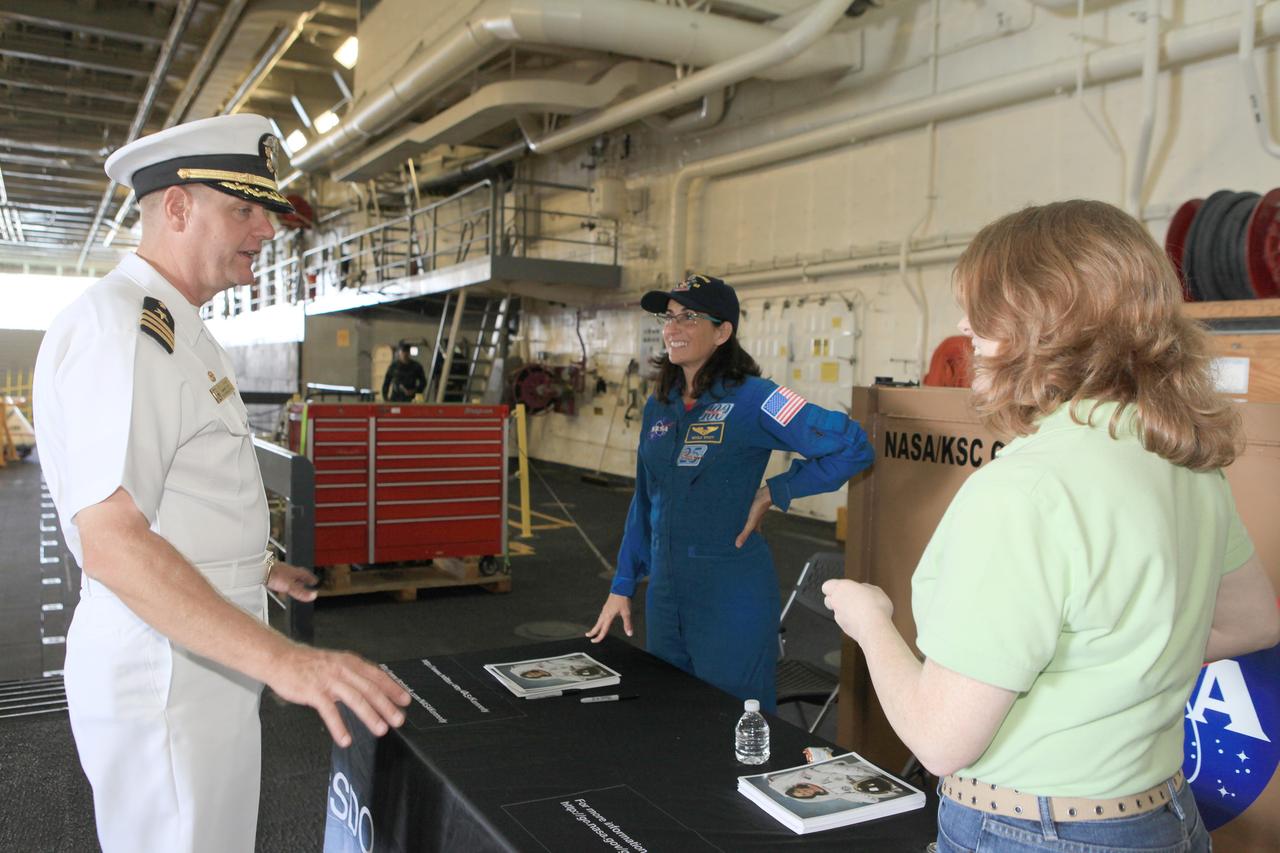
LOS ANGELES, Calif. – NASA astronaut Nicole Stott poses for photographs in the well deck of the USS Anchorage during the Science, Technology, Engineering and Mathematics, or STEM, Expo for L.A. Navy Days at the Port of Los Angeles in California. With her is Commanding Officer Joel G. Stewart, USS Anchorage. NASA, Lockheed Martin and the U.S. Navy completed Underway Recovery Test 2 on the Orion boilerplate test vehicle in the Pacific Ocean off the coast of San Diego to prepare for recovery of the Orion crew module on its return from a deep space mission. The underway recovery test allowed the teams to demonstrate and evaluate the recovery processes, procedures, new hardware and personnel in open waters.     The Ground Systems Development and Operations Program conducted the underway recovery test. Orion is the exploration spacecraft designed to carry astronauts to destinations not yet explored by humans, including an asteroid and Mars. It will have emergency abort capability, sustain the crew during space travel and provide safe re-entry from deep space return velocities. The first unpiloted test flight of the Orion is scheduled to launch in 2014 on Exploration Flight Test-1, or EFT-1, atop a Delta IV rocket and in 2017 on NASA’s Space Launch System rocket. For more information, visit http://www.nasa.gov/orion. Photo credit: Kim Shiflett
KSC-2014-3386
LOS ANGELES, Calif. – NASA astronaut Nicole Stott prepares for the Science, Technology, Engineering and Mathematics, or STEM, Expo for L.A. Navy Days in the well deck of the USS Anchorage at the Port of Los Angeles in California. At left, is Commanding Officer Joel G. Stewart, USS Anchorage. Visitors will have the opportunity to meet Stott and view the Orion boilerplate test vehicle secured in its recovery cradle. NASA, Lockheed Martin and the U.S. Navy completed Underway Recovery Test 2 in the Pacific Ocean off the coast of San Diego to prepare for recovery of the Orion crew module on its return from a deep space mission. The underway recovery test allowed the teams to demonstrate and evaluate the recovery processes, procedures, new hardware and personnel in open waters.    The Ground Systems Development and Operations Program conducted the underway recovery test. Orion is the exploration spacecraft designed to carry astronauts to destinations not yet explored by humans, including an asteroid and Mars. It will have emergency abort capability, sustain the crew during space travel and provide safe re-entry from deep space return velocities. The first unpiloted test flight of the Orion is scheduled to launch in 2014 on Exploration Flight Test-1, or EFT-1, atop a Delta IV rocket and in 2017 on NASA’s Space Launch System rocket. For more information, visit http://www.nasa.gov/orion. Photo credit: Kim Shiflett
KSC-2014-3385
S84-27021 (7 Feb 1984) --- Astronaut Bruce McCandless II, 41B mission specialist tests a "cherry-picker" type device during February 7 historical Extravehicular Activity (EVA). The EVA, in which Astronauts McCandless and Robert L. Stewart, two of three STS-41B mission specialists, participated, marked two firsts--initial use of both the Mobile Foot Restraint (MFR) attached to the Remote Manipulator System (RMS) arm here, and the Manned Maneuvering Unit (MMU) backpack (not seen in this frame). The Challenger was flying with its aft end aimed toward the Earth. This photograph clearly shows where the MFR connects to the end effector of the Canadian-built RMS arm.  The two spacewalkers were monitored and photographed by their fellow crewmembers, astronauts Vance D. Brand, commander; Robert L. Gibson, pilot; and Ronald E. McNair, mission specialist. The three remained in the cabin for another EVA session two days later.  Photo Credit: NASA
View of Astronaut Bruc McCandless during EVA
CAPE CANAVERAL, Fla. -- All eyes look skyward as space shuttle Discovery launches on its STS-124 mission. The group gathered here at the Banana River viewing site at NASA's Kennedy Space Center are members of the first graduating class of astronauts after the Apollo program.   In 1978 a new group of 35 astronauts was selected after nine years without new astronauts.  The pilots were Daniel Brandenstein, Michael Coats, Richard Covey, John Creighton, Robert Gibson, Frederick D. Gregory, Frederick Hauck, Jon McBride, Francis "Dick" Scobee, Brewster Shaw, Loren Shriver, David Walker and Donald Williams. The mission specialists were Guion Bluford, James Buchli, John Fabian, Anna Fisher, Dale Gardner, S. David Griggs, Terry Hart, Steven Hawley, Jeffrey Hoffman, Shannon Lucid, Ronald McNair, Richard Mullane, Steven Nagel, George Nelson, Ellison Onizuka, Judith Resnik, Sally Ride, Rhea Seddon, Robert Stewart, Kathryn D. Sullivan, Norman Thagard and James van Hoften. Since then, a new group has been selected roughly every two years.  Photo credit: NASA/Jim Grossmann
KSC-08pd1526
S78-26569 (31 Jan. 1978) --- The 35 new astronaut candidates, presented Jan. 31, 1978, in the Building 2 auditorium at NASA's Johnson Space Center, pose for photographers. They are arranged in alphabetical order with top left as beginning point and bottom right as stopping point. They are Guion S. Bluford, Daniel C. Brandenstein, James F. Buchli, Michael L. Coats, Richard O. Covey, John O. Creighton, John M. Fabian, Anna L. Fisher, Dale A. Gardner, Robert L. Gibson, Frederick D. Gregory, S. David Griggs, Terry J. Hart, Frederick H. (Rick) Hauck, Steven A. Hawley, Jeffrey A. Hoffman, Shannon W. Lucid, Jon A. McBride, Ronald E. McNair, Richard M. (Mike) Mullane, Steven R. Nagel, George D. Nelson, Ellison S. Onizuka, Judith A. Resnik, Sally K. Ride, Francis R. (Dick) Scobee, Rhea Seddon, Brewster H. Shaw Jr., Loren J. Shriver, Robert L. Stewart, Kathryn D. Sullivan, Norman E. Thagard, James D. van Hoften, David M. Walker and Donald E. Williams. Photo credit: NASA or National Aeronautics and Space Administration
CREW CANDIDATES - SHUTTLE - JSC
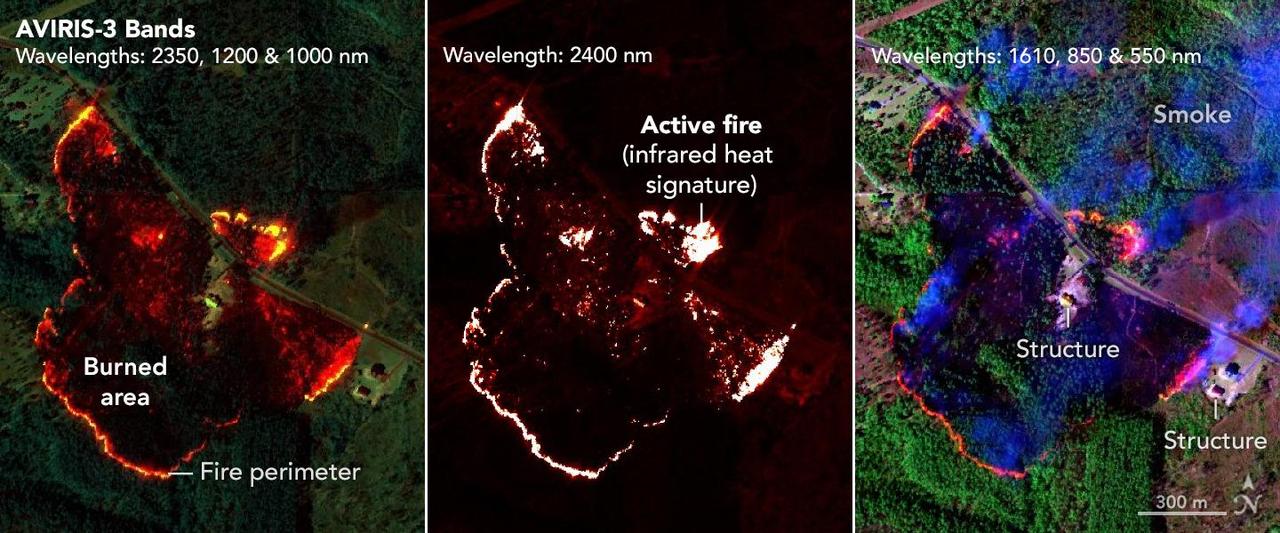
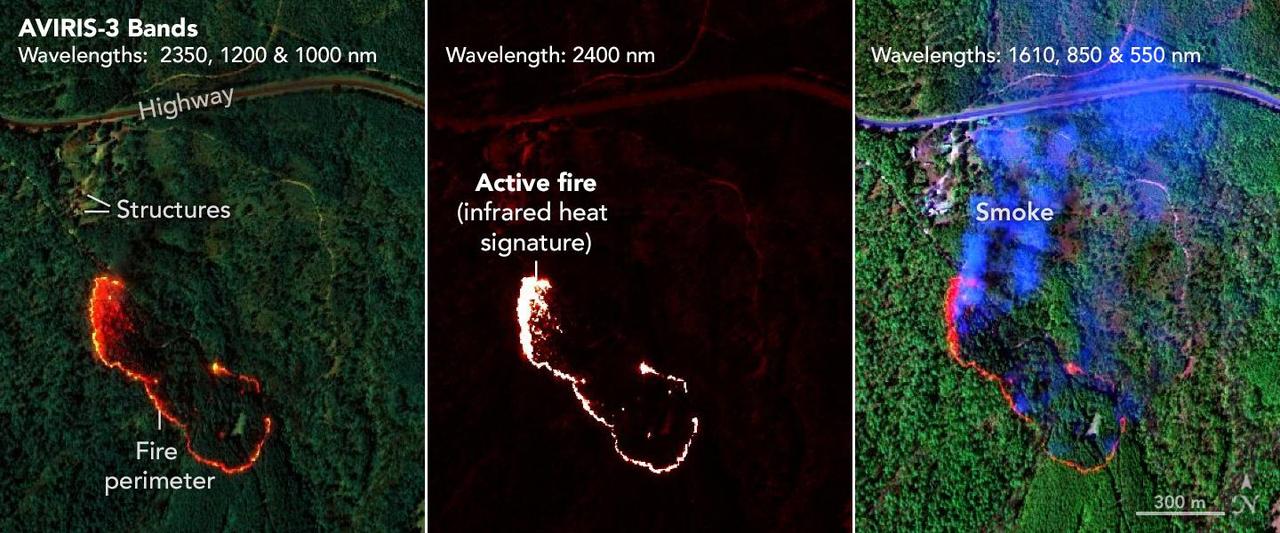
NASA's AVIRIS-3 sensor, an airborne imaging spectrometer built and operated by the agency's Jet Propulsion Laboratory in Southern California, captured infrared data on a wildfire about 3 miles (5 kilometers) west of the town of Mount Vernon, Alabama, on March 21, 2025. Within minutes of flying over, real-time maps of the fire were sent via satellite internet to firefighters with the Alabama Forestry Commission, who used it to contain the fire, preventing it from reaching four buildings.  The first image in the series combines reflection data from AVIRIS-3 (Airborne Visible Infrared Imaging Spectrometer 3) at three infrared wavelengths that are invisible to the human eye – 2,350 nanometers, 1,200 nanometers, and 1,000 nanometers. In the resulting composite image, the colors indicate where the fire was burning most intensely. Orange and red areas show cooler-burning areas, while yellow indicates the most intense flames. Burned areas show up as dark red or brown.  The second image in the series looks solely at the 2,400 nanometers wavelength. This wavelength is particularly useful for seeing hot spots and the perimeters of fires, which show brightly against a red background.  The third image in the series combines light at 1,610 nanometers, 850 nanometers, and 550 nanometers. This view shows burn areas and smoke.  The AVIRIS-3 sensor belongs to a line of imaging spectrometers built at JPL since 1986. The instruments have been used to study a wide range of phenomena – including fire – by measuring sunlight reflecting from the planet's surface. Data from imaging spectrometers like AVIRIS-3 typically takes days or weeks to be processed into highly detailed, multilayer image products used for research. By simplifying the calibration algorithms, researchers were able to process data on a computer aboard the plane in a sliver of the time it otherwise would have taken, and airborne satellite internet connectivity enabled the images to be distributed almost immediately, while the plane was still in flight, rather than after it landed.  Flying about 9,000 feet (3,000 meters) in altitude aboard a NASA King Air B200 research plane, AVIRIS-3 collected data on the Castleberry Fire while preparing for prescribed burn experiments that took place in the Geneva State Forest in Alabama on March 28 and at Fort Stewart-Hunter Army Airfield in Georgia from April 14 to 20. The burns were part of a NASA 2025 FireSense Airborne Campaign.  https://photojournal.jpl.nasa.gov/catalog/PIA26499
AVIRIS-3 Sensor Captures Data on Wildfire Near Mount Vernon, Alabama
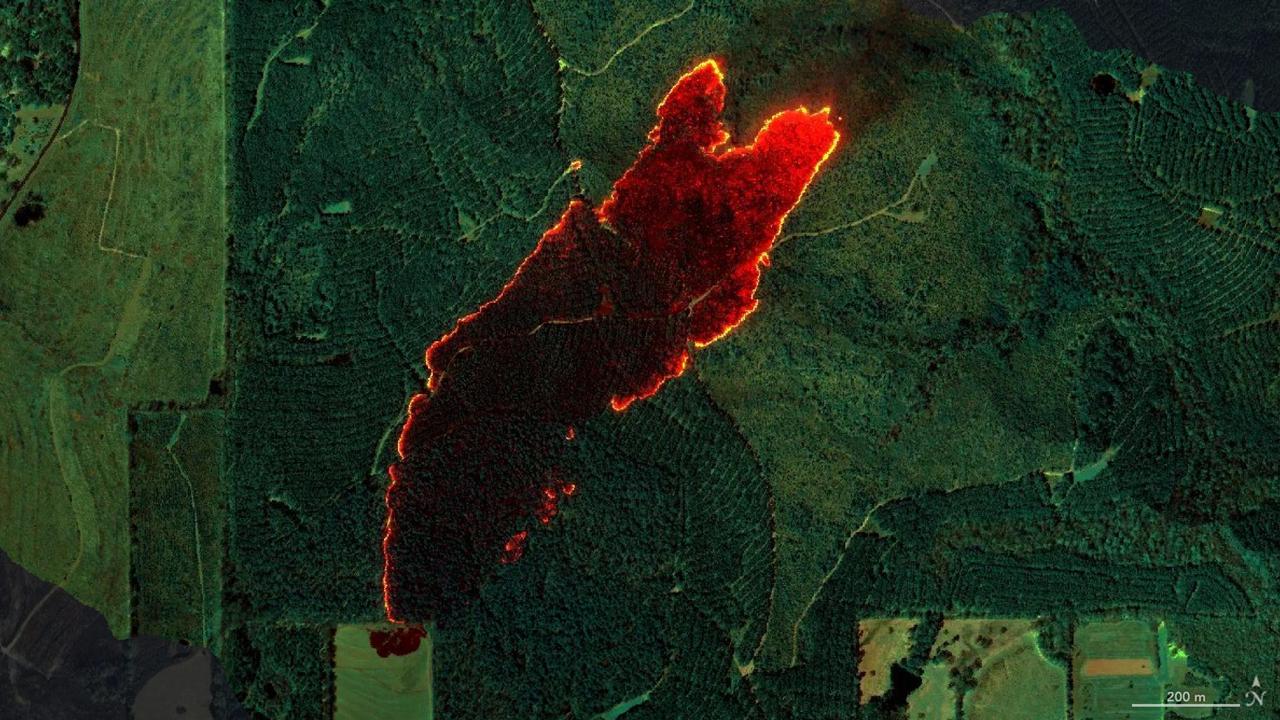
NASA's AVIRIS-3 sensor, an airborne imaging spectrometer built and operated by the agency's Jet Propulsion Laboratory in Southern California, captured infrared data of a roughly 120-acre wildfire about 3 miles (5 kilometers) east of the town of Castleberry, Alabama, on March 19, 2025. Within minutes of flying over the Castleberry Fire, which had not previously been reported to authorities, real-time maps of where burning was most intense were sent via satellite internet to firefighters with the Alabama Forestry Commission, who used it to decide how to deploy their personnel and firefighting equipment.  The image combines reflection data from AVIRIS-3 (Airborne Visible Infrared Imaging Spectrometer 3) at three infrared wavelengths that are invisible to the human eye: 2,350 nanometers, 1,200 nanometers, and 1,000 nanometers. In the resulting composite image, the colors indicate where the fire was burning most intensely. Orange and red areas show cooler-burning areas, while yellow indicates the most intense flames. Burned areas show up as dark red or brown.  The AVIRIS-3 sensor belongs to a line of imaging spectrometers built at JPL since 1986. The instruments have been used to study a wide range of phenomena – including fire – by measuring sunlight reflecting from the planet's surface. Data from imaging spectrometers like AVIRIS-3 typically takes days or weeks to be processed into highly detailed, multilayer image products used for research. By simplifying the calibration algorithms, researchers were able to process data on a computer aboard the plane in a sliver of the time it otherwise would have taken, and airborne satellite internet connectivity enabled the images to be distributed almost immediately, while the plane was still in flight, rather than after it landed.  Flying about 9,000 feet (3,000 meters) in altitude aboard a NASA King Air B200 research plane, AVIRIS-3 collected data on the Castleberry Fire while preparing for prescribed burn experiments that took place in the Geneva State Forest in Alabama on March 28 and at Fort Stewart-Hunter Army Airfield in Georgia from April 14 to 20. The burns were part of a NASA 2025 FireSense Airborne Campaign.  https://photojournal.jpl.nasa.gov/catalog/PIA26497
AVIRIS-3 Sensor Captures Data on Wildfire Near Castleberry, Alabama
NASA's AVIRIS-3 sensor, an airborne imaging spectrometer built and operated by the agency's Jet Propulsion Laboratory in Southern California, captured infrared data of a wildfire 4 miles (2.5 kilometers) southwest of the unincorporated community of Perdido, Alabama, on March 21, 2025. Within minutes of flying over, real-time maps of the fire were sent via satellite internet to firefighters with the Alabama Forestry Commission, who used it to contain the fire, preventing it from reaching six buildings.  The first image in the series combines reflection data from AVIRIS-3 (Airborne Visible Infrared Imaging Spectrometer 3) at three infrared wavelengths that are invisible to the human eye – 2,350 nanometers, 1,200 nanometers, and 1,000 nanometers. In the resulting composite image, the colors indicate where the fire was burning most intensely. Orange and red areas show cooler-burning areas, while yellow indicates the most intense flames. Burned areas show up as dark red or brown.  The second image in the series looks solely at the 2,400 nanometers wavelength. The images are particularly useful for seeing hot spots and the perimeters of fires, which show brightly against a red background.  The third image in the series combines light at 1,610 nanometers, 850 nanometers, and 550 nanometers. This view shows burn areas and smoke.  The AVIRIS-3 sensor belongs to a line of imaging spectrometers built at JPL since 1986. The instruments have been used to study a wide range of phenomena – including fire – by measuring sunlight reflecting from the planet's surface. Data from imaging spectrometers like AVIRIS-3 typically takes days or weeks to be processed into highly detailed, multilayer image products used for research. By simplifying the calibration algorithms, researchers were able to process data on a computer aboard the plane in a sliver of the time it otherwise would have taken, and airborne satellite internet connectivity enabled the images to be distributed almost immediately, while the plane was still in flight, rather than after it landed.  Flying about 9,000 feet (3,000 meters) in altitude aboard a NASA King Air B200 research plane, AVIRIS-3 collected data on the Castleberry Fire while preparing for prescribed burn experiments that took place in the Geneva State Forest in Alabama on March 28 and at Fort Stewart-Hunter Army Airfield in Georgia from April 14 to 20. The burns were part of a NASA 2025 FireSense Airborne Campaign.  https://photojournal.jpl.nasa.gov/catalog/PIA26498
AVIRIS-3 Sensor Captures Data on Wildfire Near Perdido, Alabama
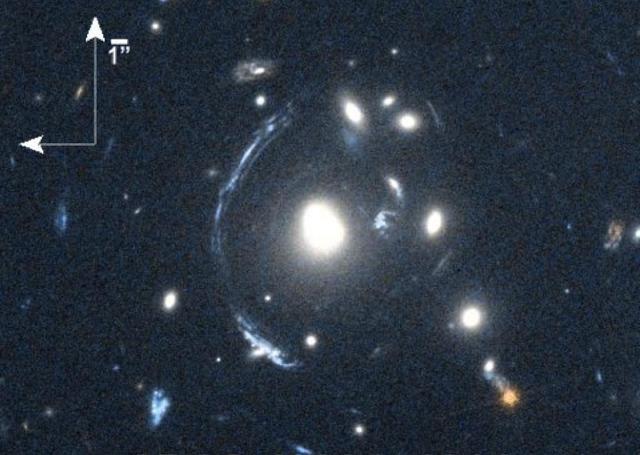
The young galaxy SDSS090122.37+181432.3, also known as S0901, is seen here by the Herschel Space Observatory and the Hubble Space Telescope as the bright arc to the left of the central bright galaxy.
Smeared and Magnified Galaxy