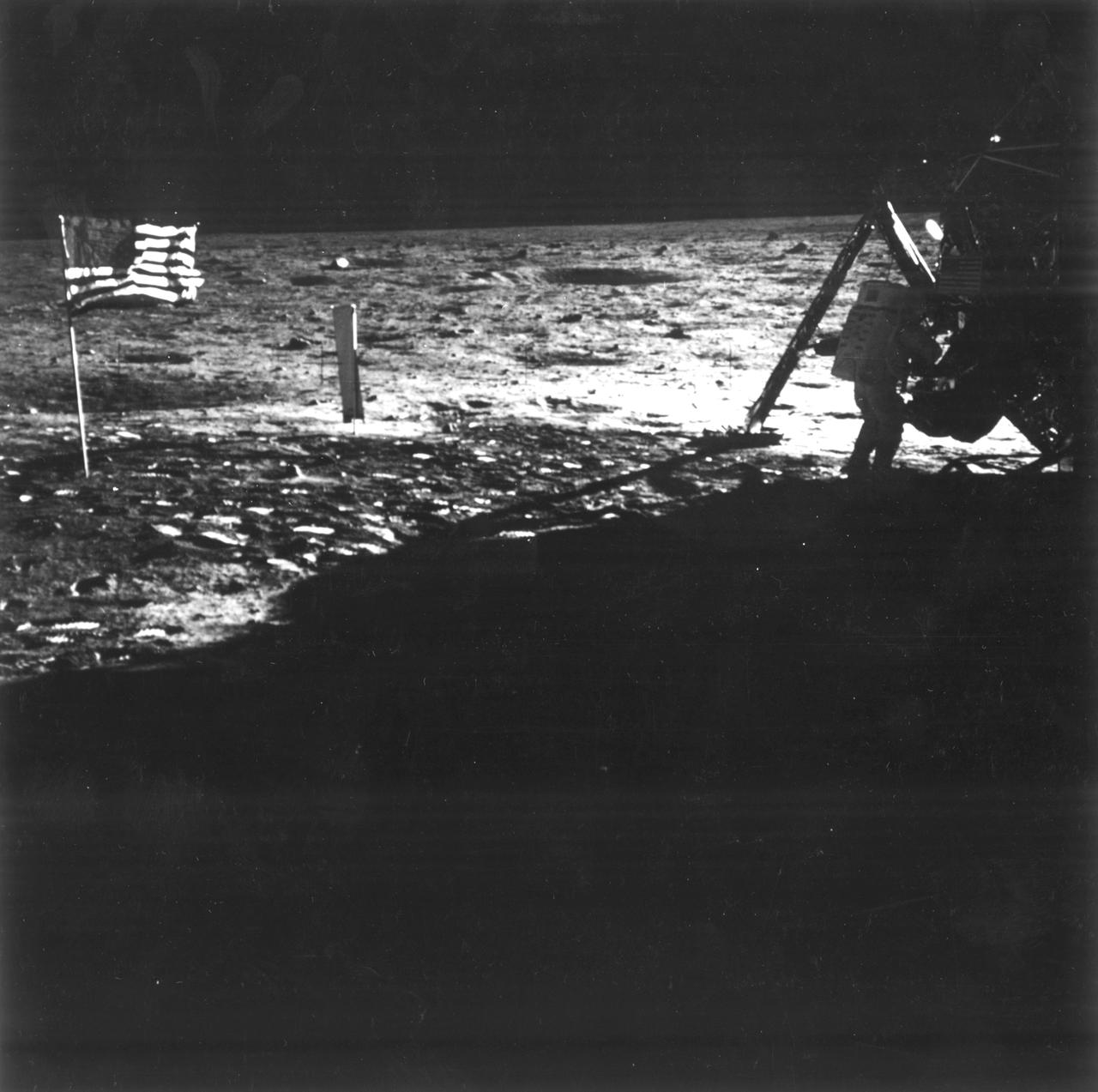
The first manned lunar landing mission, Apollo 11, launched from the Kennedy Space Flight Center (KSC) in Florida via the Marshall Space Flight Center (MSFC) developed Saturn V launch vehicle on July 16, 1969 and safely returned to Earth on July 24, 1969. Astronauts onboard included Neil A. Armstrong, commander; Michael Collins, Command Module (CM) pilot; and Edwin E. Aldrin, Jr., Lunar Module (LM) pilot. The CM, “Columbia”, piloted by Collins, remained in a parking orbit around the Moon while the LM, “Eagle'', carrying astronauts Armstrong and Aldrin, landed on the Moon in the Sea of Tranquility. On July 20, 1969, Armstrong was the first human to ever stand on the lunar surface, followed by Aldrin. During 2½ hours of surface exploration, the crew set up experiments, collected 47 pounds of lunar surface material for analysis back on Earth, planted the U.S Flag, and left a message for all mankind. In this photograph, Armstrong is removing scientific equipment from a storage bay of the LM. The brilliant sunlight emphasizes the U. S. Flag to the left. The object near the flag is the Solar Wind Composition Experiment deployed by Aldrin earlier.
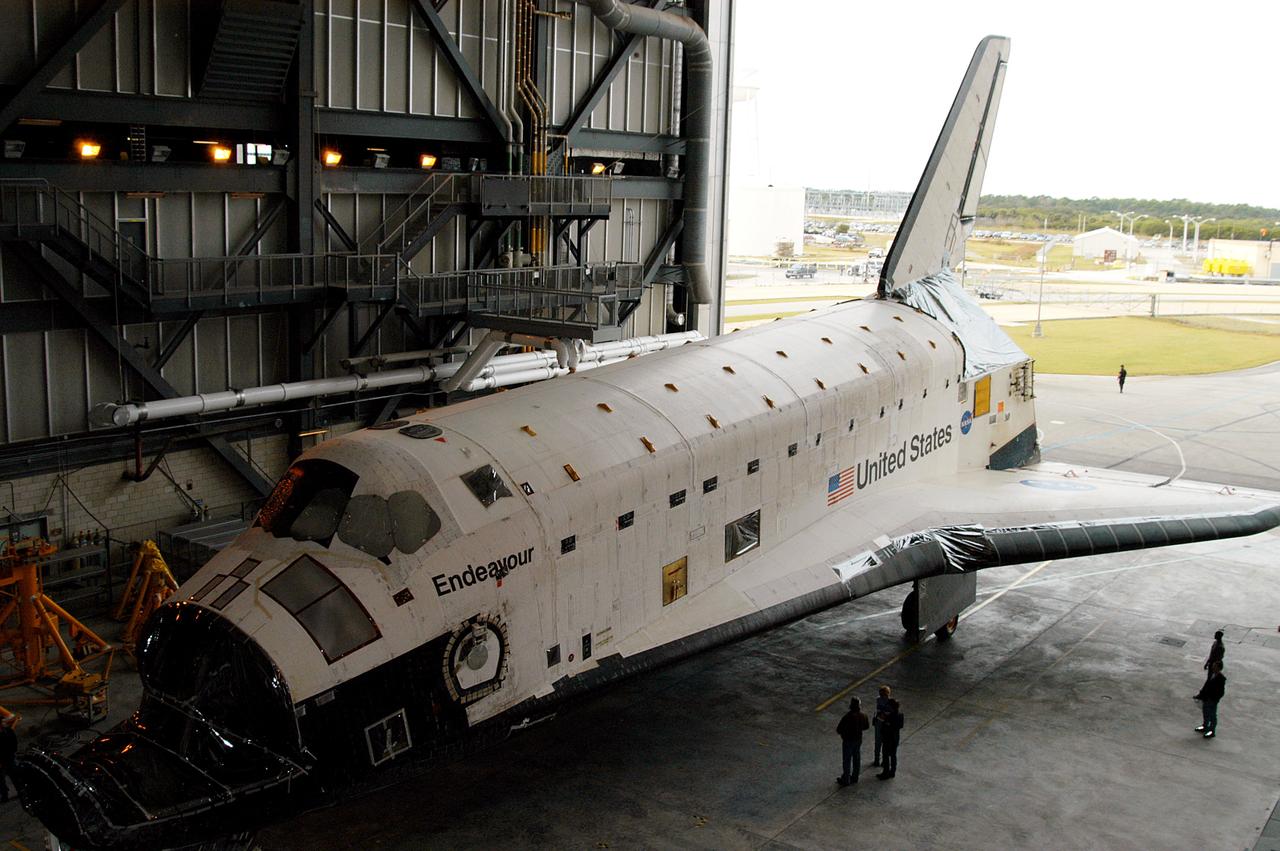
KENNEDY SPACE CENTER, FLA. -- Endeavour rolls into the Vehicle Assembly Building (VAB) for temporary storage. The orbiter has been moved from the Orbiter Processing Facility (OPF) to allow work to be performed in the OPF that can only be accomplished while the bay is empty. Work scheduled in the OPF includes annual validation of the bay’s cranes, work platforms, lifting mechanisms and jack stands. Endeavour will remain in the VAB for approximately 12 days, then return to the OPF.
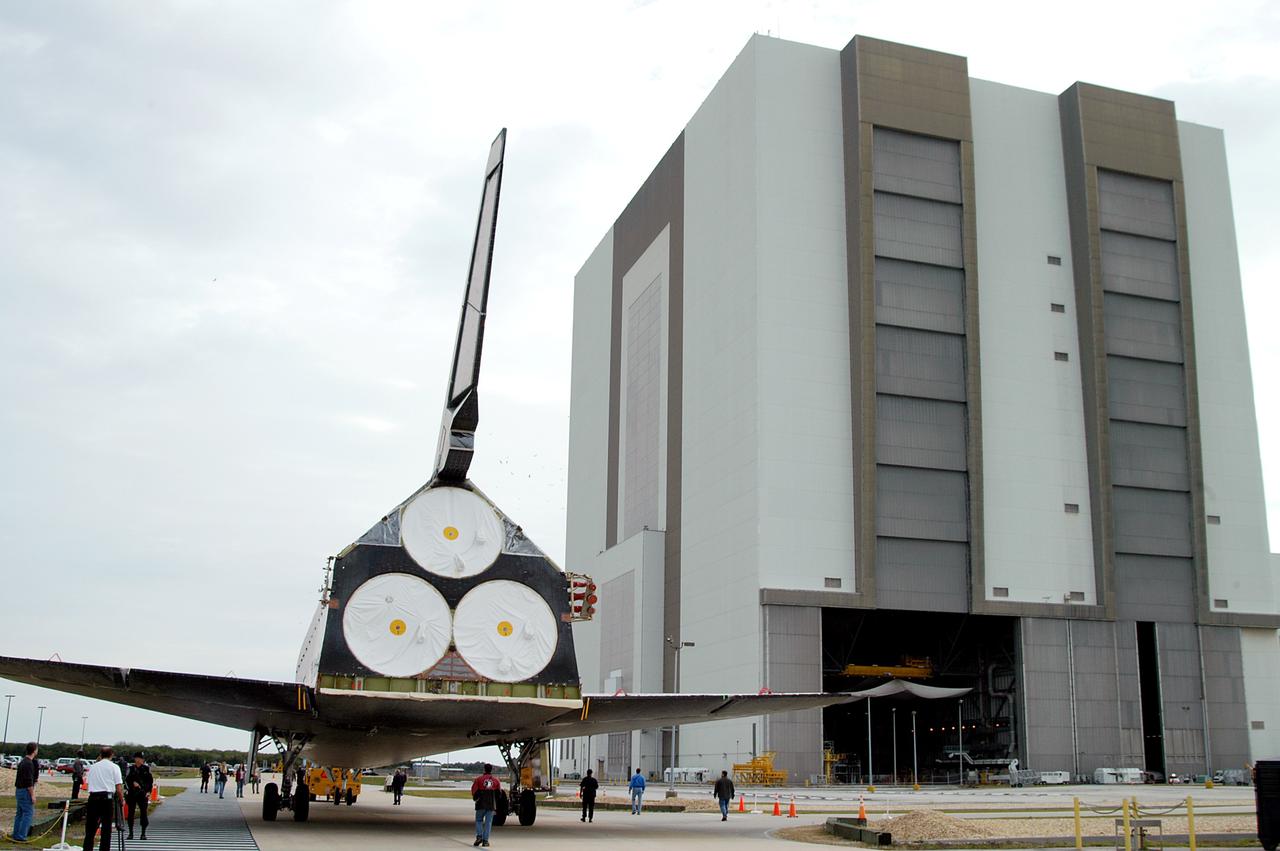
KENNEDY SPACE CENTER, FLA. -- Endeavour is towed toward the Vehicle Assembly Building for temporary storage. The orbiter has been moved from the Orbiter Processing Facility (OPF) to allow work to be performed in the OPF that can only be accomplished while the bay is empty. Work scheduled in the OPF includes annual validation of the bay’s cranes, work platforms, lifting mechanisms and jack stands. Endeavour will remain in the VAB for approximately 12 days, then return to the OPF.
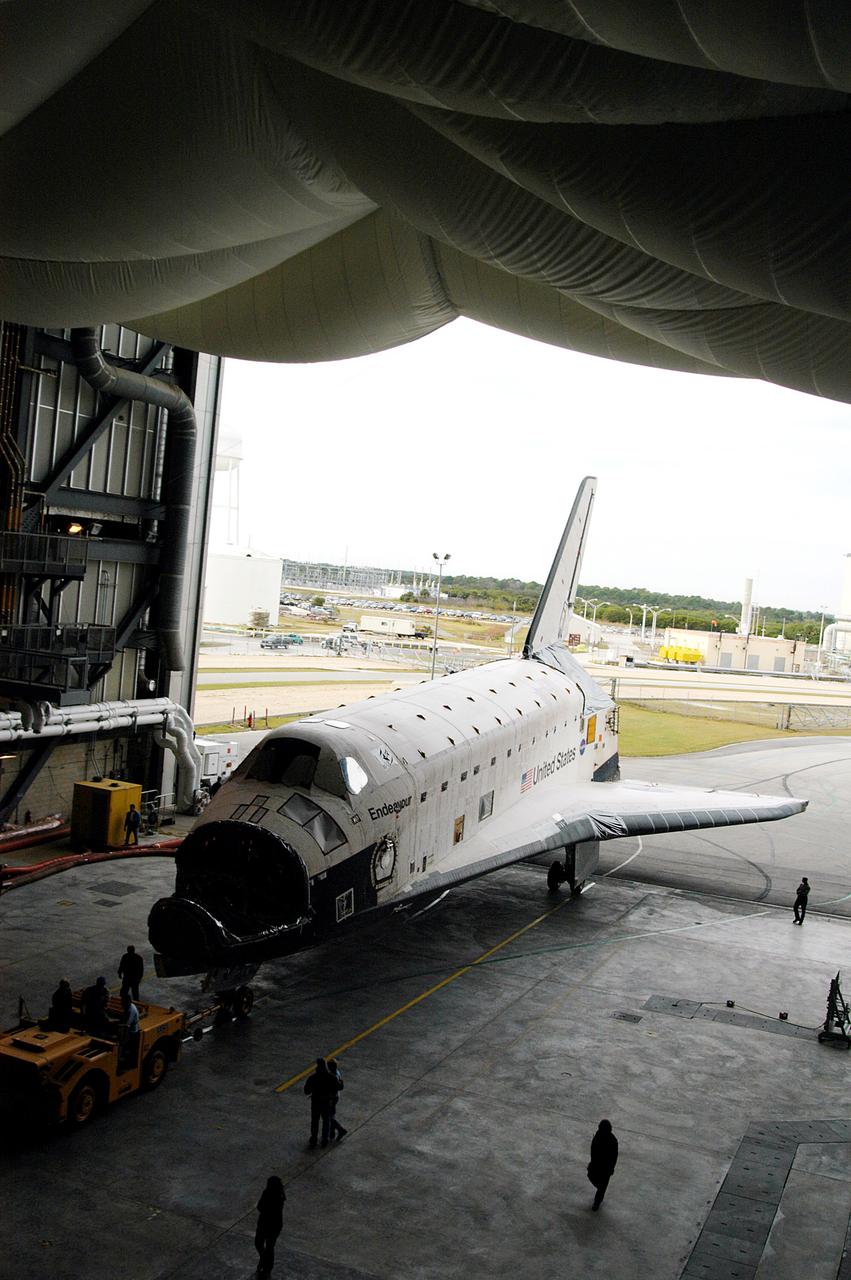
KENNEDY SPACE CENTER, FLA. -- Endeavour rolls into the Vehicle Assembly Building (VAB) for temporary storage. The orbiter has been moved from the Orbiter Processing Facility (OPF) to allow work to be performed in the OPF that can only be accomplished while the bay is empty. Work scheduled in the OPF includes annual validation of the bay’s cranes, work platforms, lifting mechanisms and jack stands. Endeavour will remain in the VAB for approximately 12 days, then return to the OPF.
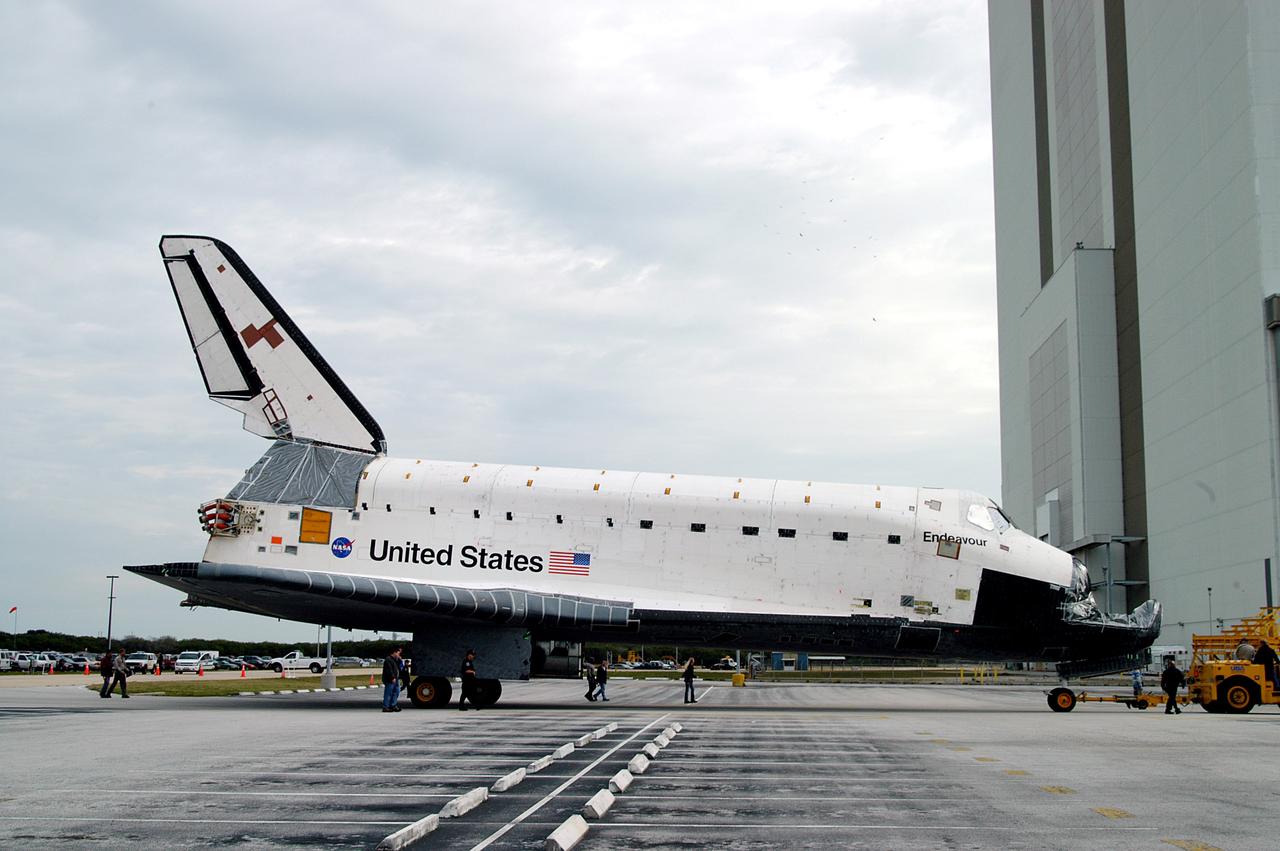
KENNEDY SPACE CENTER, FLA. -- Endeavour is towed in front of the Vehicle Assembly Building (VAB) where it is going for temporary storage. The orbiter has been moved from the Orbiter Processing Facility (OPF) to allow work to be performed in the OPF that can only be accomplished while the bay is empty. Work scheduled in the OPF includes annual validation of the bay’s cranes, work platforms, lifting mechanisms and jack stands. Endeavour will remain in the VAB for approximately 12 days, then return to the OPF.
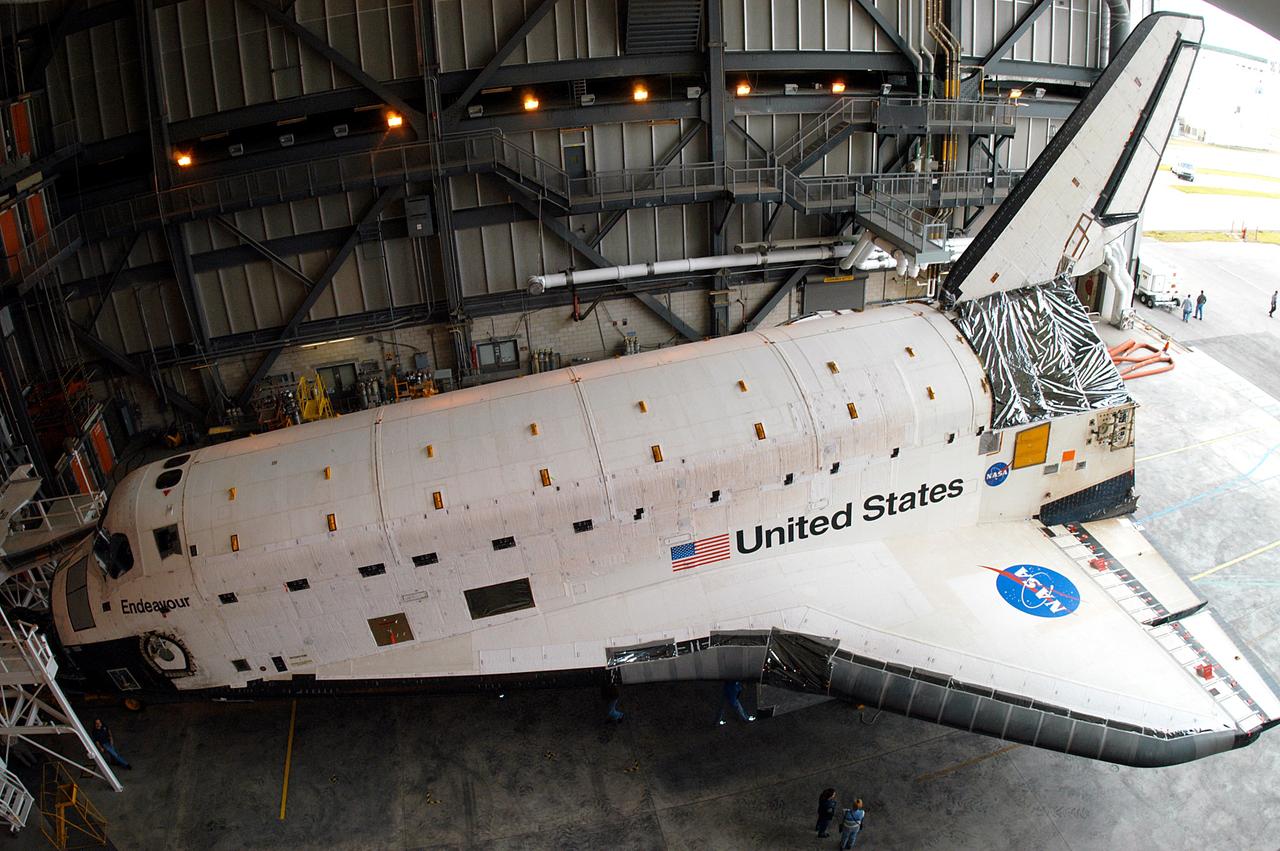
KENNEDY SPACE CENTER, FLA. -- Endeavour settles into place inside the Vehicle Assembly Building (VAB) where it has been moved for temporary storage. It left the Orbiter Processing Facility (OPF) to allow work to be performed in the OPF that can only be accomplished while the bay is empty. Work scheduled in the OPF includes annual validation of the bay’s cranes, work platforms, lifting mechanisms and jack stands. Endeavour will remain in the VAB for approximately 12 days, then return to the OPF.
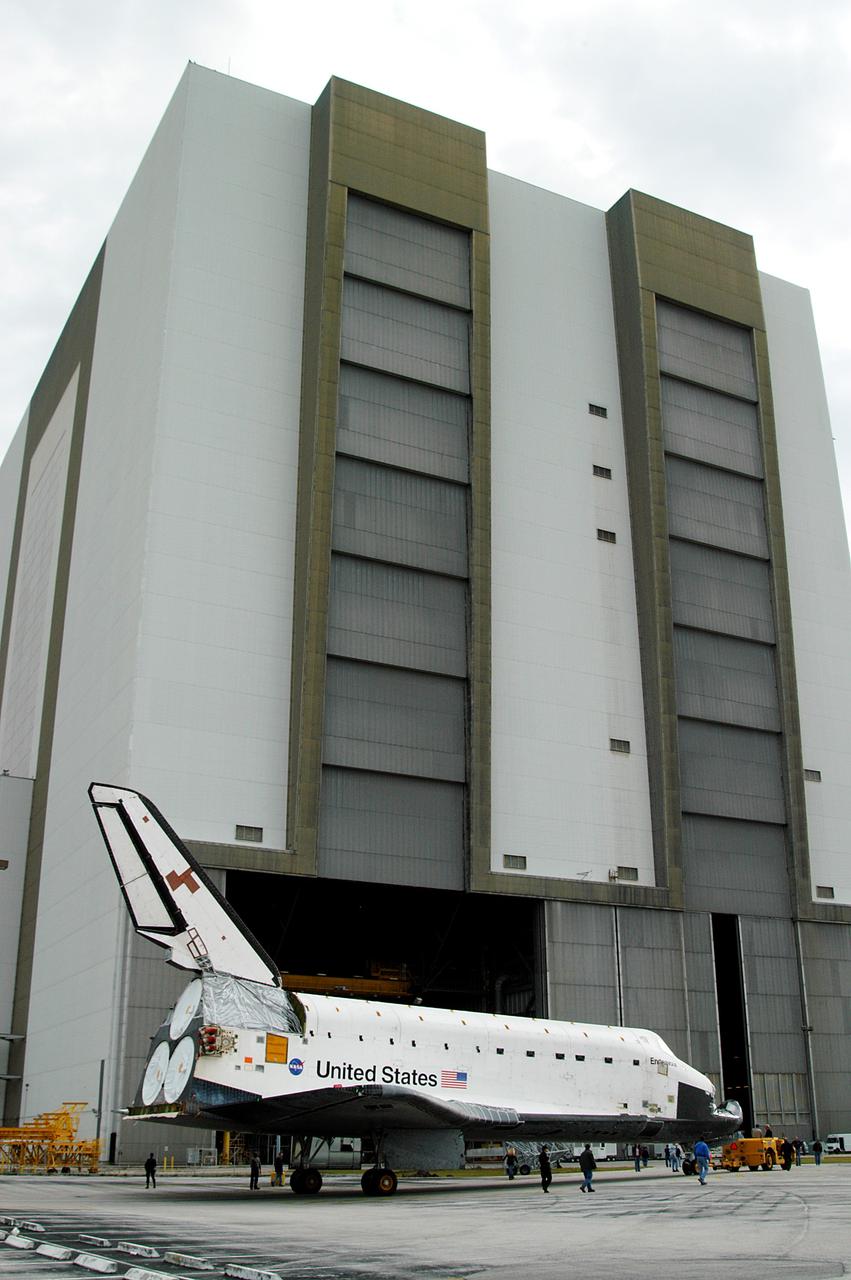
KENNEDY SPACE CENTER, FLA. -- Endeavour is towed in front of the Vehicle Assembly Building (VAB) where it is going for temporary storage. The orbiter has been moved from the Orbiter Processing Facility (OPF) to allow work to be performed in the OPF that can only be accomplished while the bay is empty. Work scheduled in the OPF includes annual validation of the bay’s cranes, work platforms, lifting mechanisms and jack stands. Endeavour will remain in the VAB for approximately 12 days, then return to the OPF.
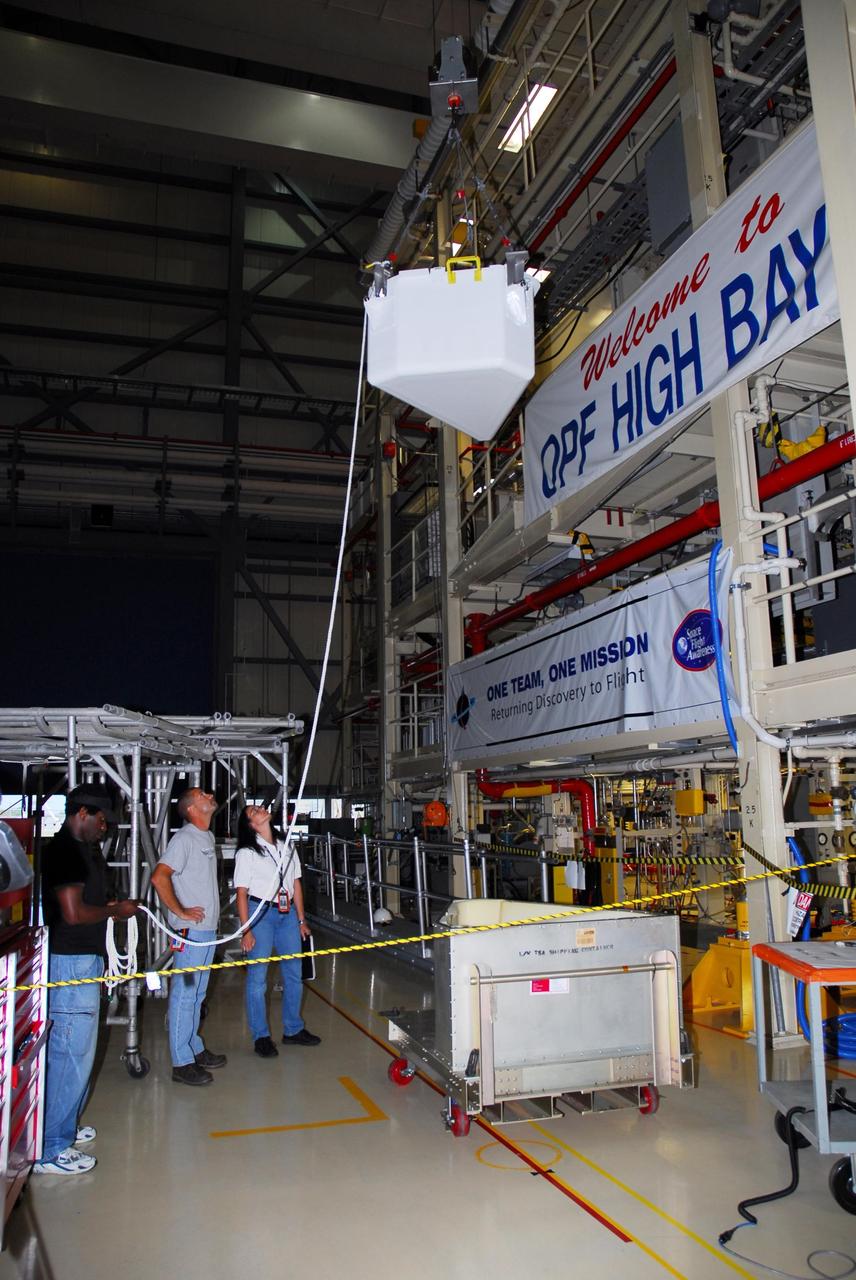
KENNEDY SPACE CENTER, FLA. -- In bay 3 of the Orbiter Processing Facility, a tool storage assembly unit is being moved for storage in Discovery's payload bay. The tools may be used on a spacewalk, yet to be determined, during mission STS-120. In an unusual operation, the payload bay doors had to be reopened after closure to accommodate the storage. Space shuttle Discovery is targeted to launch Oct. 23 to the International Space Station. It will carry the U.S. Node 2, a connecting module, named Harmony, for assembly on the space station. Photo credit: NASA/Amanda Diller
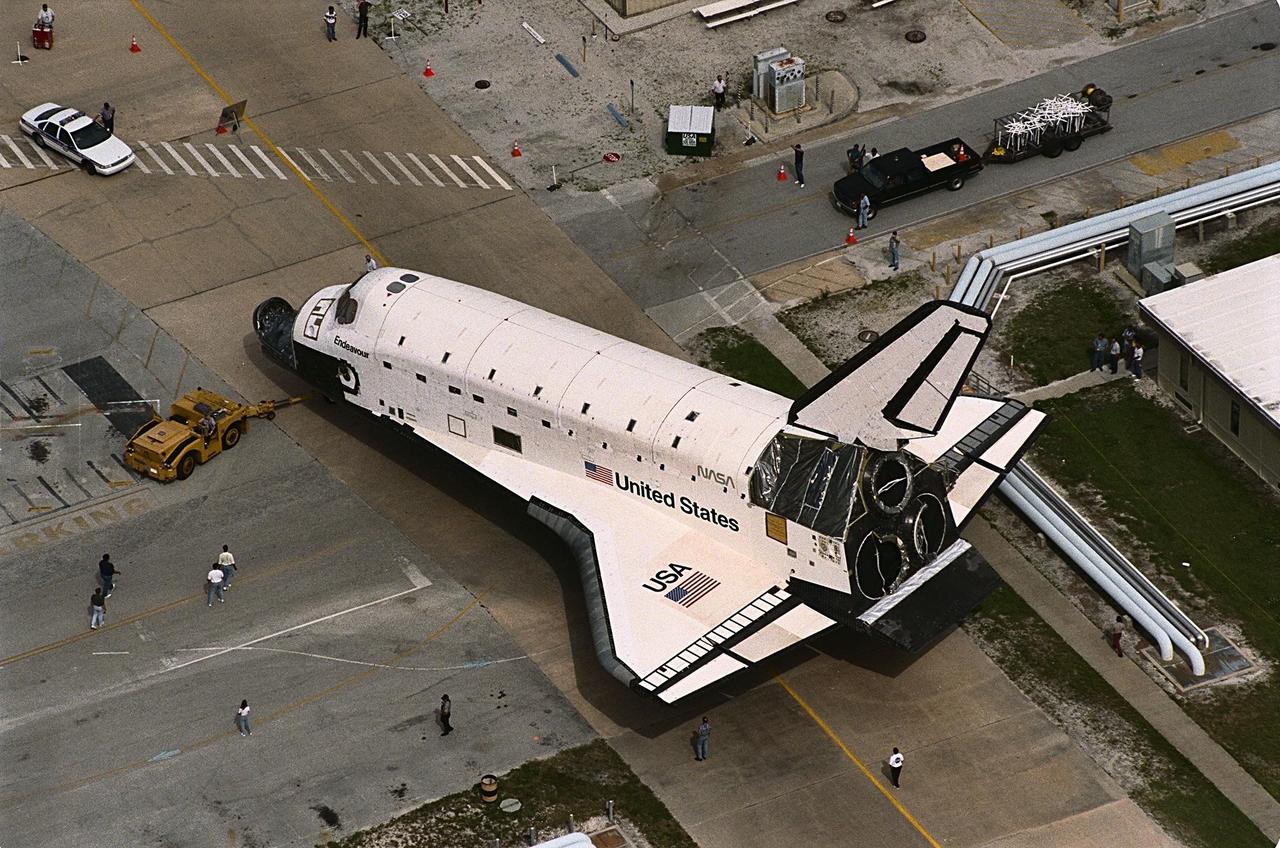
Endeavour moved from the Orbiter Processing Facility, bay 3, for temporary storage in the Vehicle Assembly Building to make room for the return of Atlantis on May 24, 1997
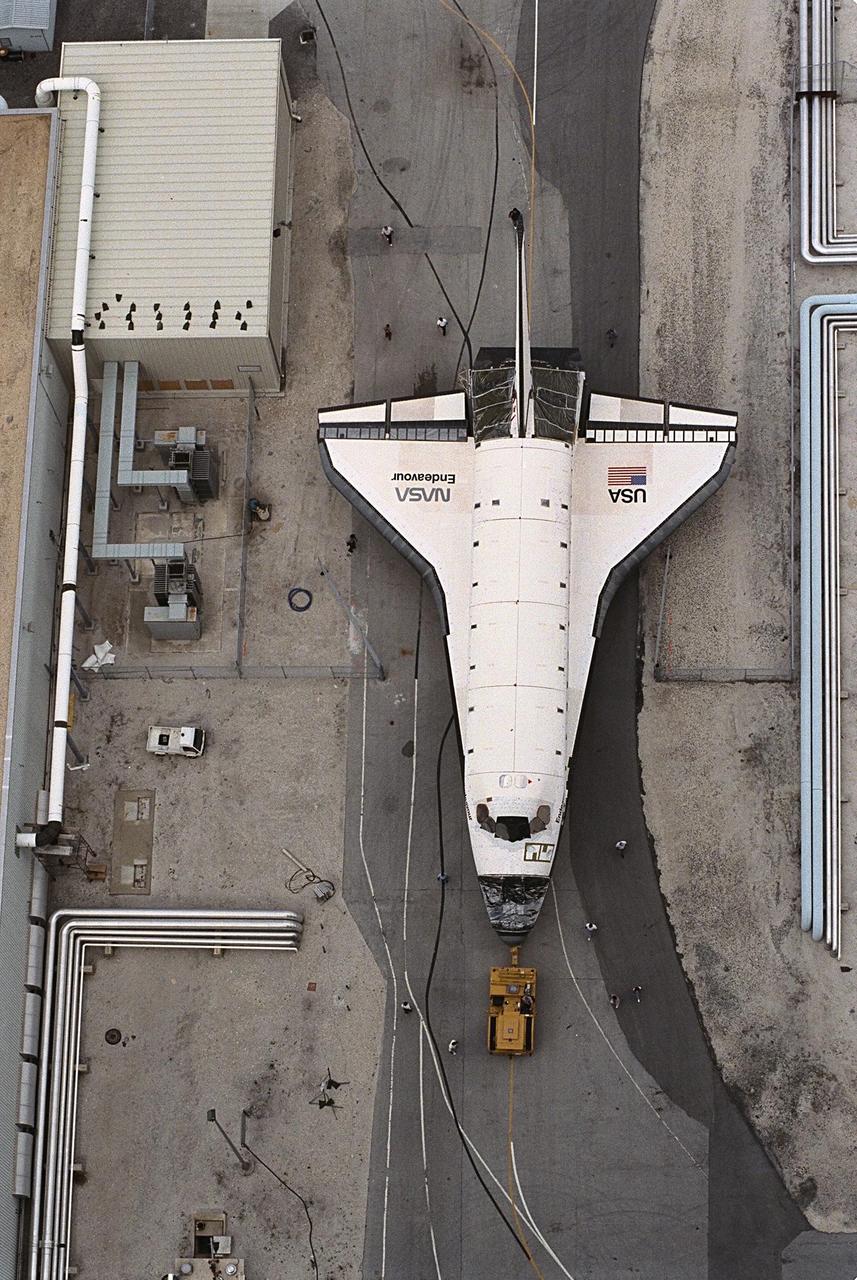
Endeavour moved from the Orbiter Processing Facility, bay 3, for temporary storage in the Vehicle Assembly Building to make room for the return of Atlantis on May 24, 1997
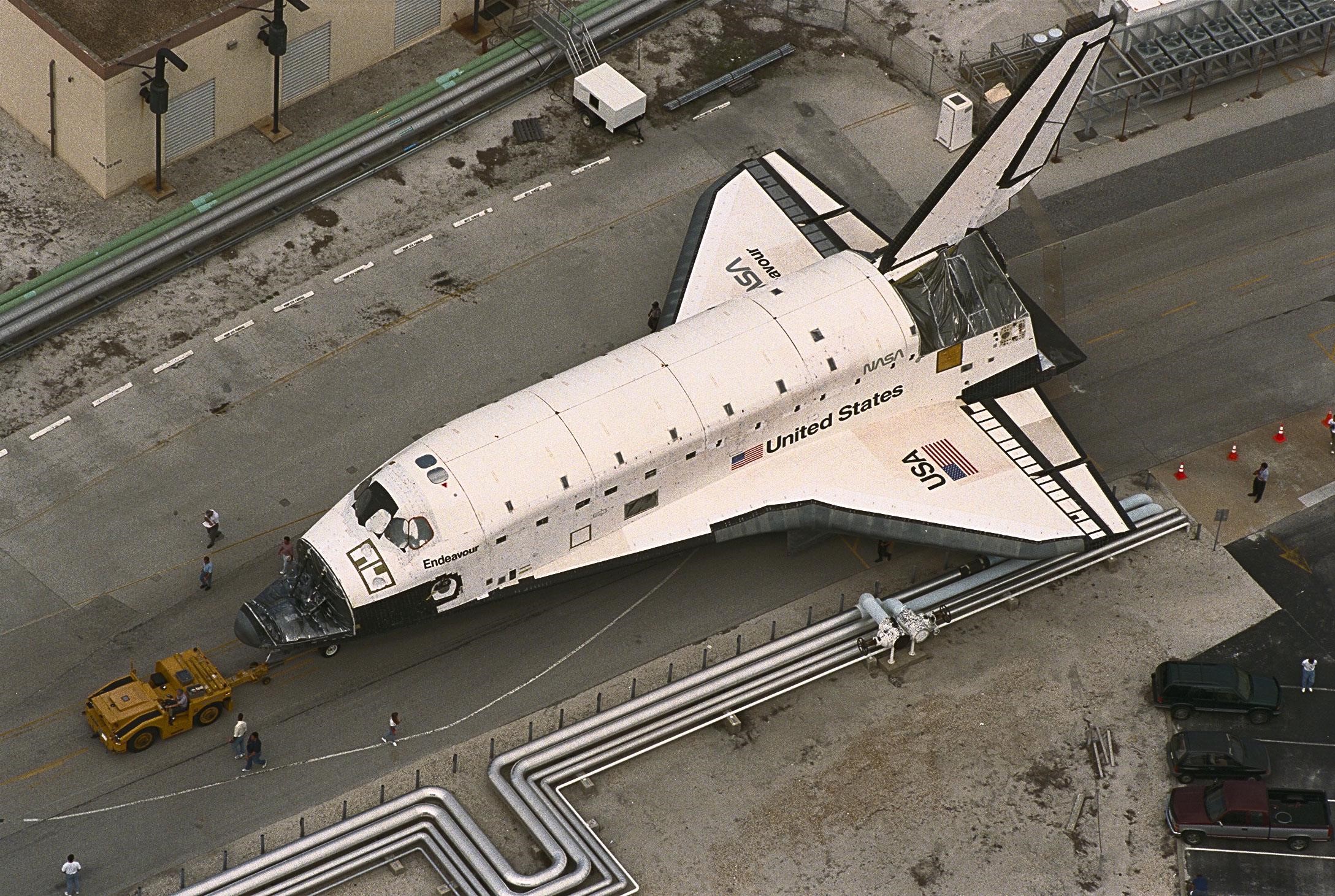
Endeavour moved from the Orbiter Processing Facility, bay 3, for temporary storage in the Vehicle Assembly Building to make room for the return of Atlantis on May 24, 1997
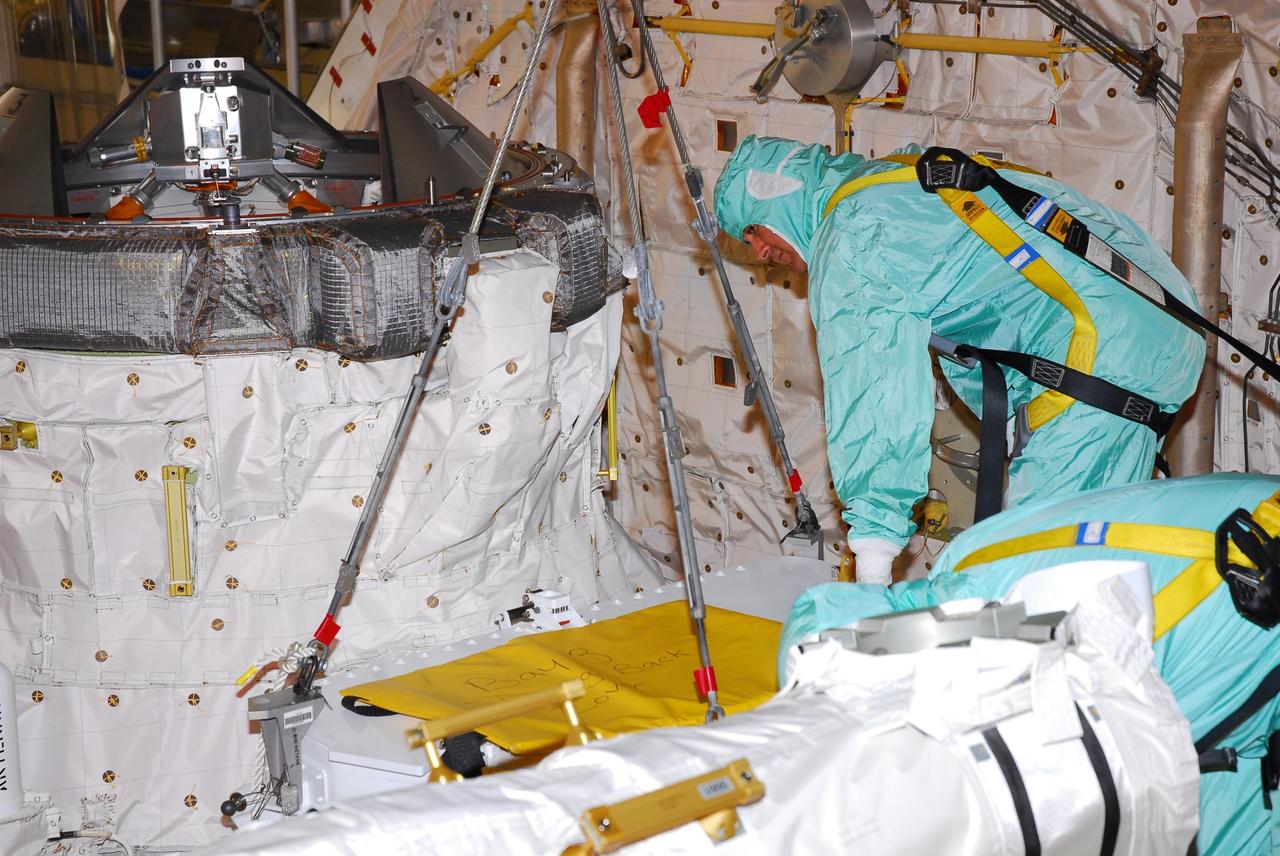
KENNEDY SPACE CENTER, FLA. -- In bay 3 of the Orbiter Processing Facility, workers move the tool storage assembly unit into place in Discovery's payload bay, where it will be stored. The tools may be used on a spacewalk, yet to be determined, during mission STS-120. In an unusual operation, the payload bay doors had to be reopened after closure to accommodate the storage. Space shuttle Discovery is targeted to launch Oct. 23 to the International Space Station. It will carry the U.S. Node 2, a connecting module, named Harmony, for assembly on the space station. Photo credit: NASA/Amanda Diller
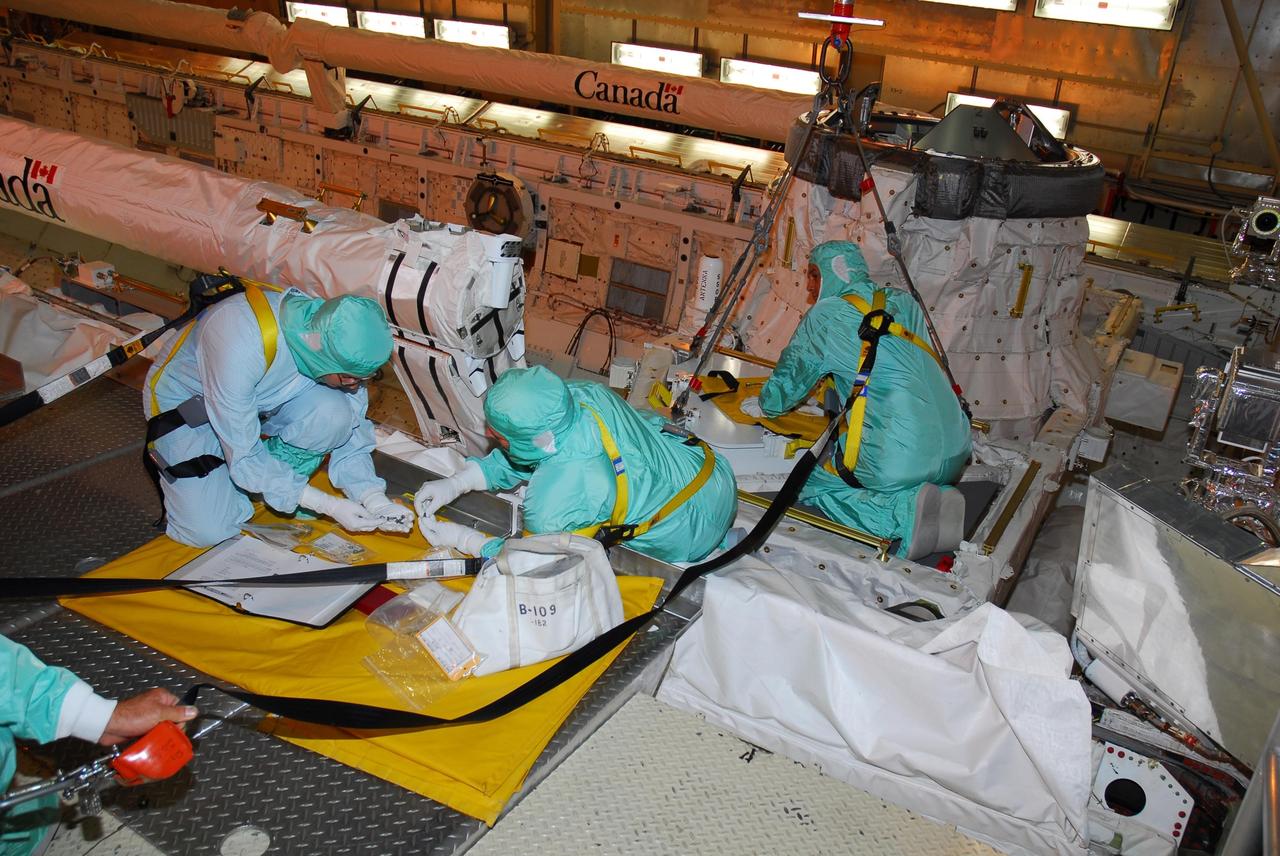
KENNEDY SPACE CENTER, FLA. -- In bay 3 of the Orbiter Processing Facility, workers secure the tool storage assembly unit into place in Discovery's payload bay, where it will be stored. The tools may be used on a spacewalk, yet to be determined, during mission STS-120. In an unusual operation, the payload bay doors had to be reopened after closure to accommodate the storage. Space shuttle Discovery is targeted to launch Oct. 23 to the International Space Station. It will carry the U.S. Node 2, a connecting module, named Harmony, for assembly on the space station. Photo credit: NASA/Amanda Diller
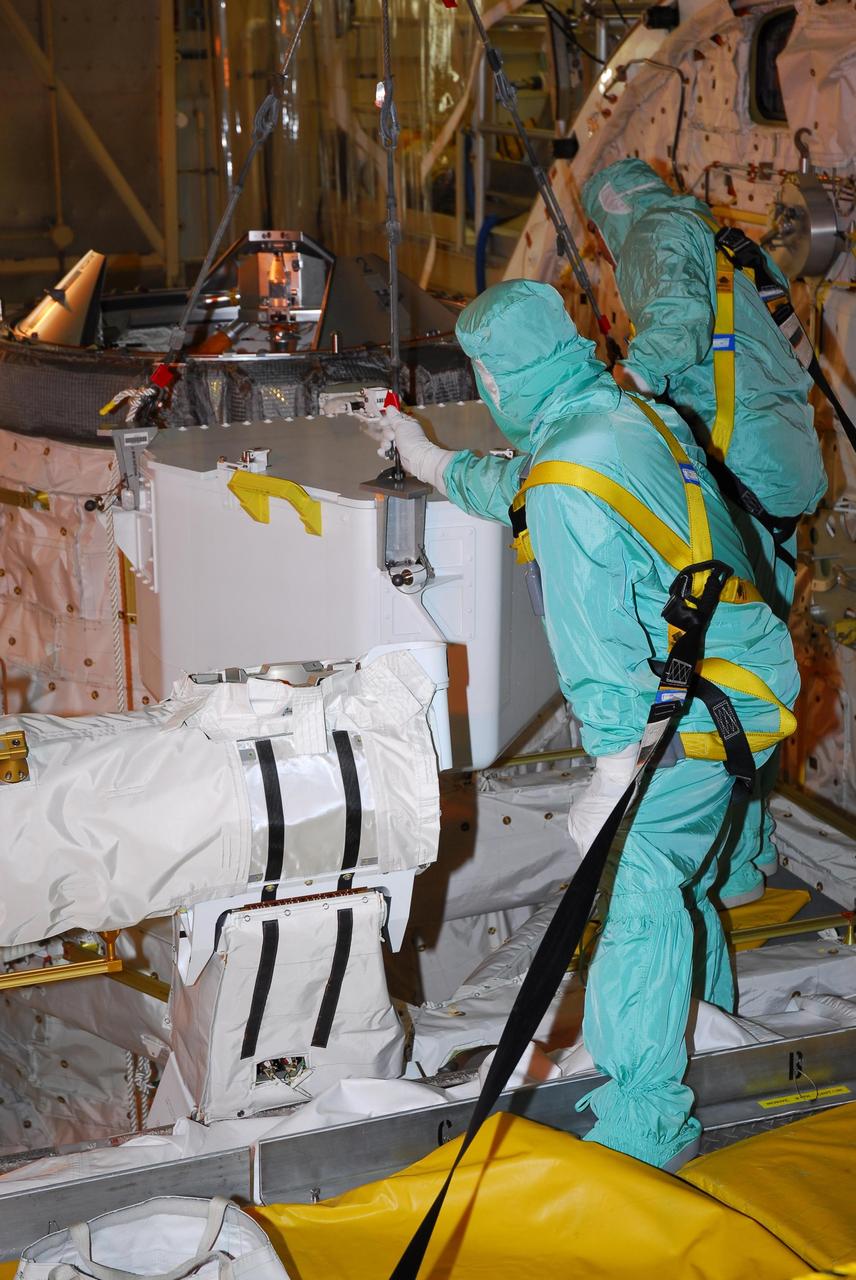
KENNEDY SPACE CENTER, FLA. -- In bay 3 of the Orbiter Processing Facility, workers maneuver the tool storage assembly unit into place in Discovery's payload bay, where it will be stored. The tools may be used on a spacewalk, yet to be determined, during mission STS-120. In an unusual operation, the payload bay doors had to be reopened after closure to accommodate the storage. Space shuttle Discovery is targeted to launch Oct. 23 to the International Space Station. It will carry the U.S. Node 2, a connecting module, named Harmony, for assembly on the space station. Photo credit: NASA/Amanda Diller
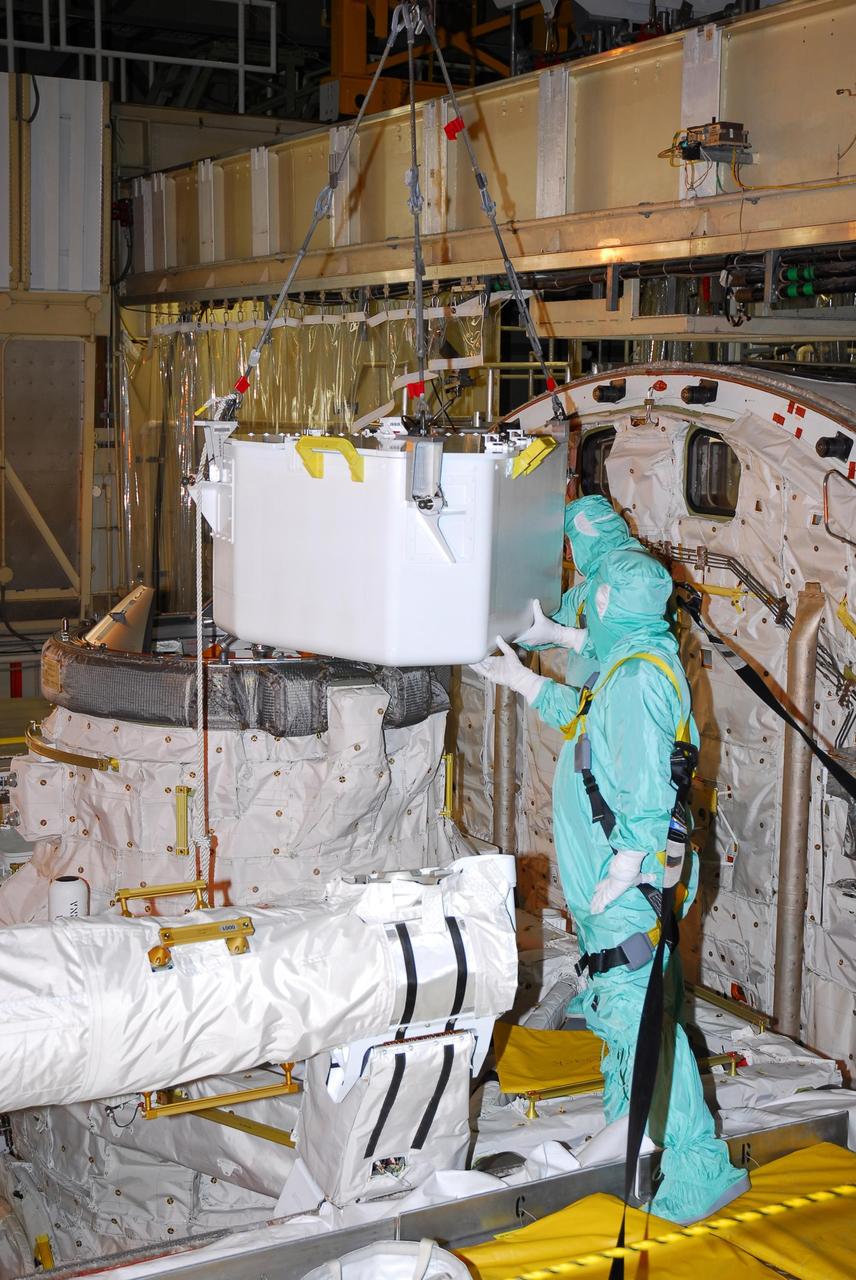
KENNEDY SPACE CENTER, FLA. -- In bay 3 of the Orbiter Processing Facility, workers guide the tool storage assembly unit into place in Discovery's payload bay, where it will be stored. The tools may be used on a spacewalk, yet to be determined, during mission STS-120. In an unusual operation, the payload bay doors had to be reopened after closure to accommodate the storage. Space shuttle Discovery is targeted to launch Oct. 23 to the International Space Station. It will carry the U.S. Node 2, a connecting module, named Harmony, for assembly on the space station. Photo credit: NASA/Amanda Diller
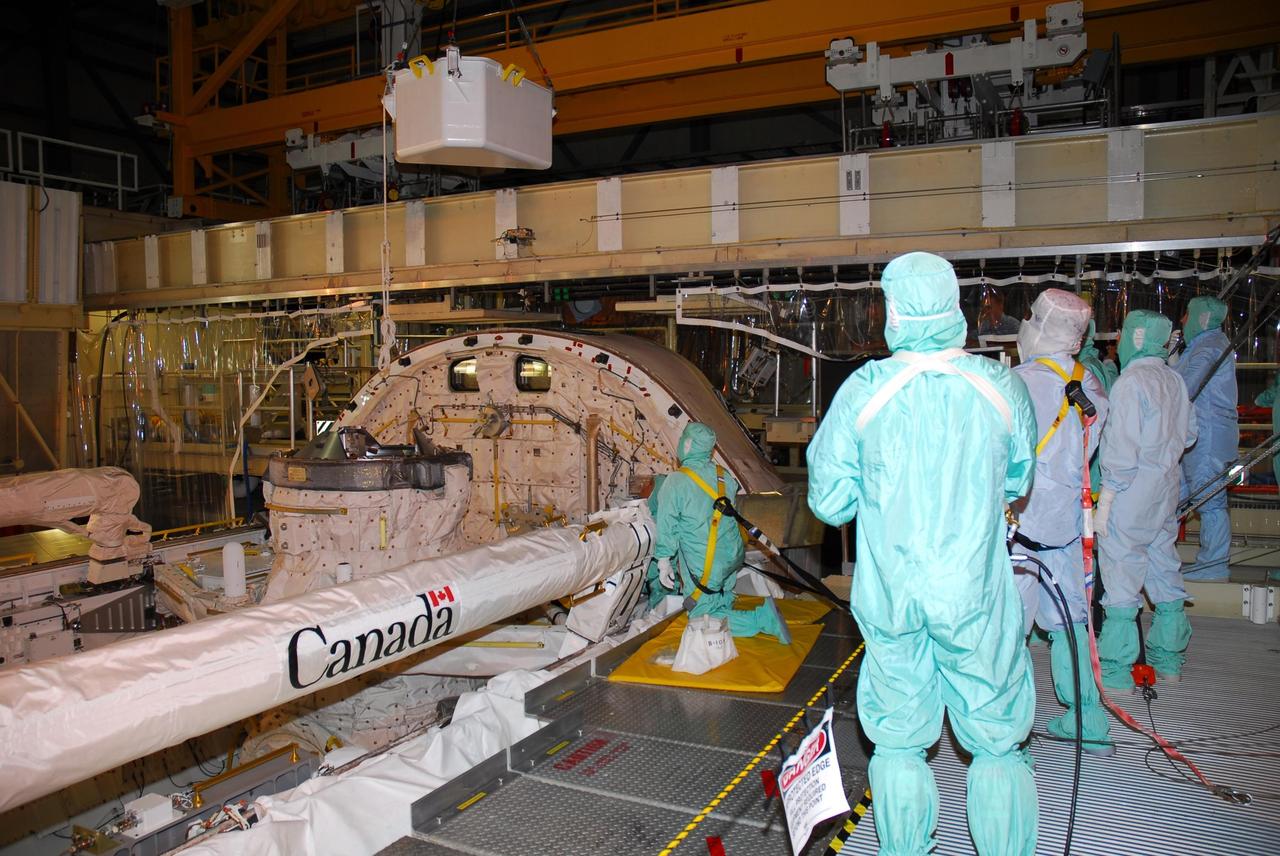
KENNEDY SPACE CENTER, FLA. -- In bay 3 of the Orbiter Processing Facility, workers oversee the lowering of the tool storage assembly unit into Discovery's payload bay, where it will be stored. The tools may be used on a spacewalk, yet to be determined, during mission STS-120. In an unusual operation, the payload bay doors had to be reopened after closure to accommodate the storage. Space shuttle Discovery is targeted to launch Oct. 23 to the International Space Station. It will carry the U.S. Node 2, a connecting module, named Harmony, for assembly on the space station. Photo credit: NASA/Amanda Diller
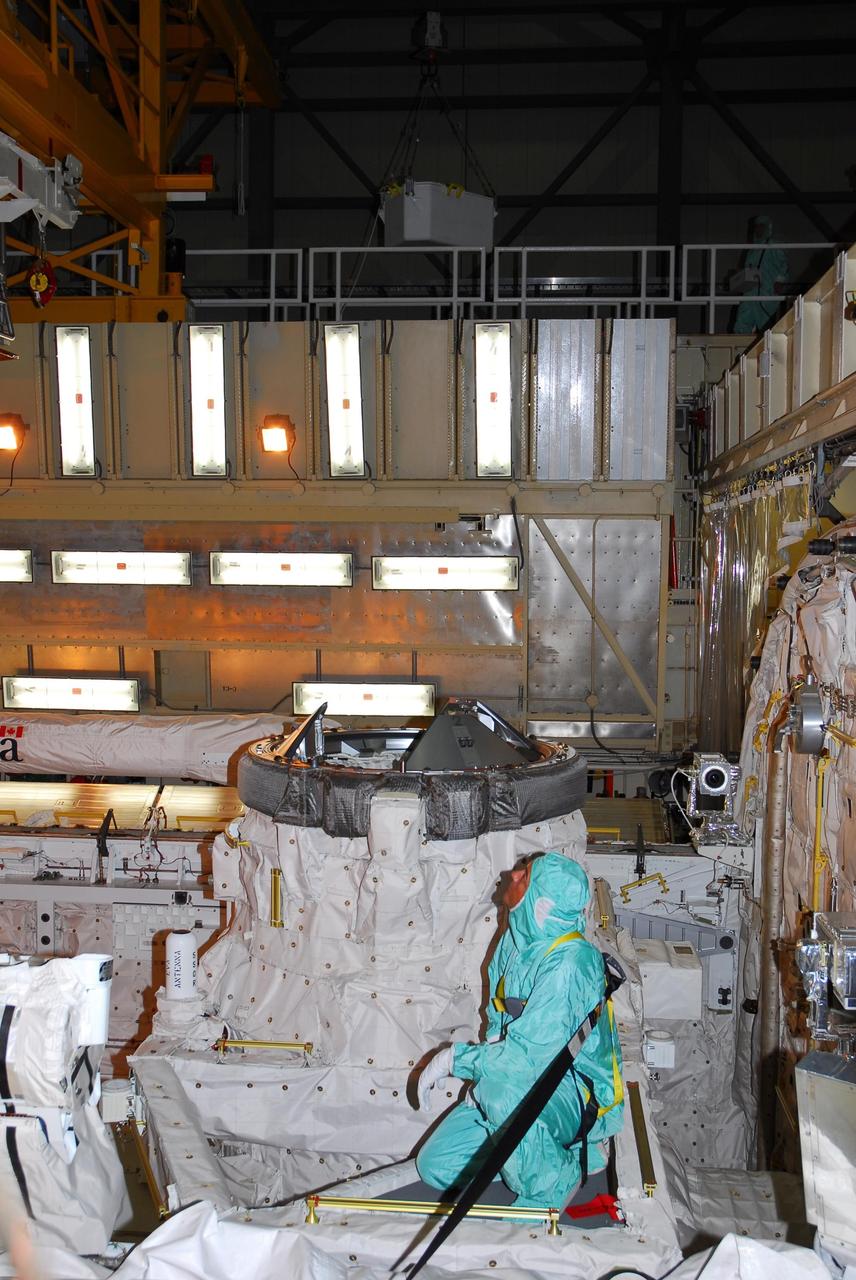
KENNEDY SPACE CENTER, FLA. -- In bay 3 of the Orbiter Processing Facility, a worker inside Discovery's payload bay waits for the tool storage assembly unit (near top of photo) to be moved and lowered into the orbiter, where it will be stored. The tools may be used on a spacewalk, yet to be determined, during mission STS-120. In an unusual operation, the payload bay doors had to be reopened after closure to accommodate the storage. Space shuttle Discovery is targeted to launch Oct. 23 to the International Space Station. It will carry the U.S. Node 2, a connecting module, named Harmony, for assembly on the space station. Photo credit: NASA/Amanda Diller
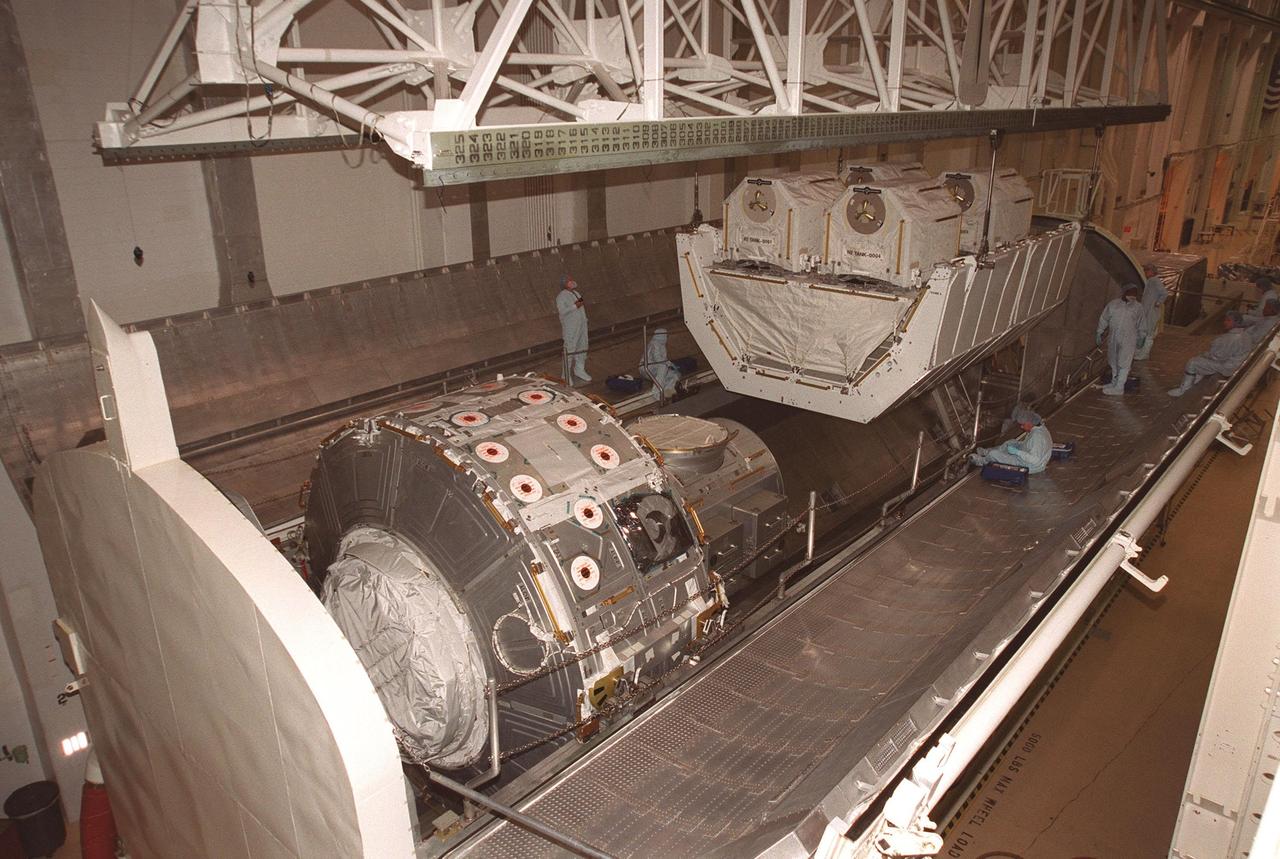
KENNEDY SPACE CENTER, FLA. -- With workers keeping a close watch, the overhead crane lowers the high pressure gas assembly two gaseous oxygen and two gaseous nitrogen storage tanks into the payload canister. The joint airlock module is already in the canister. The airlock and tanks are part of the payload on mission STS-104 and are being transferred to orbiter Atlantis’s payload bay. The storage tanks will be attached to the airlock during two spacewalks. The storage tanks will support future spacewalk operations from the Station and augment the Service Module gas resupply system. STS-104 is scheduled for launch June 14 from Launch Pad 39B
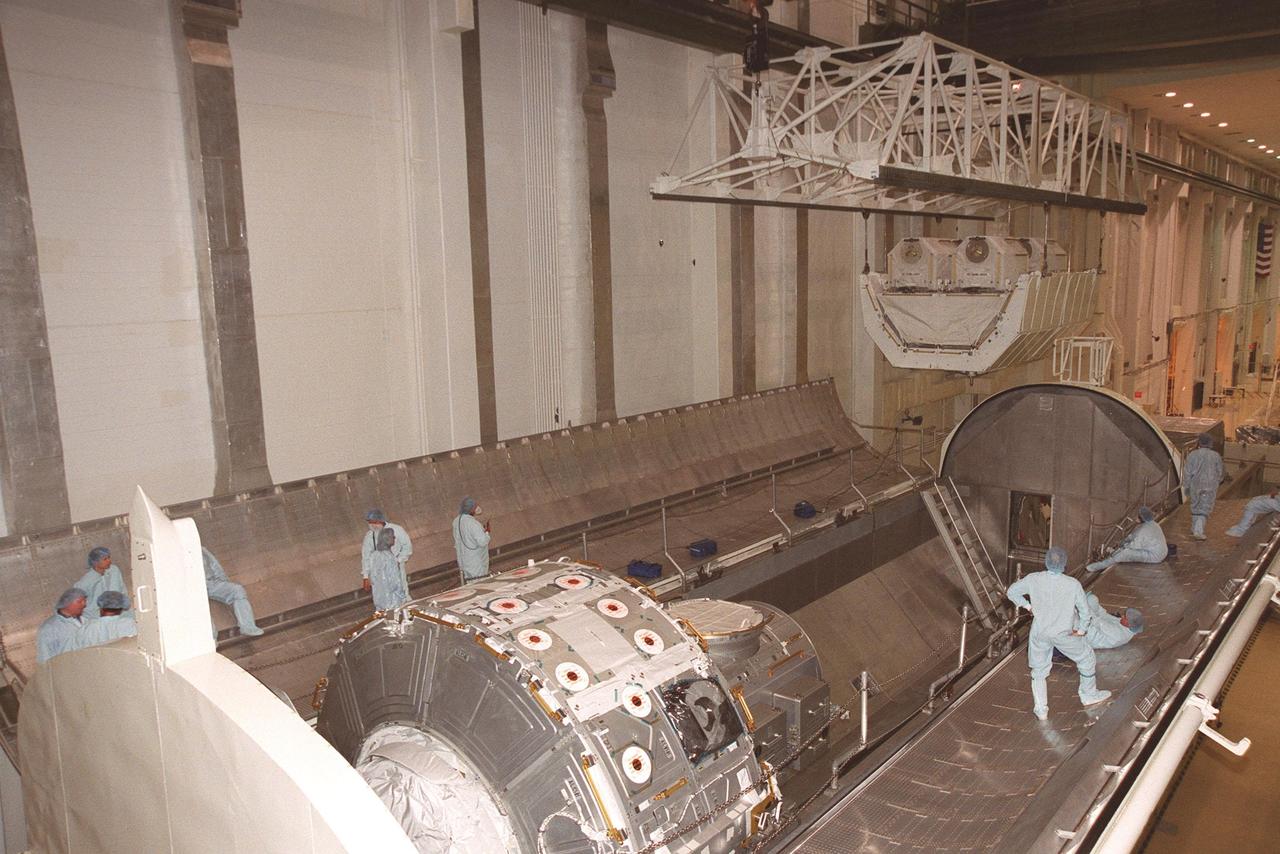
KENNEDY SPACE CENTER, FLA. -- In the Operations and Checkout Building, workers wait in the payload canister as an overhead crane moves the high pressure gas assembly two gaseous oxygen and two gaseous nitrogen storage tanks toward it. The joint airlock module is already in the canister. The airlock and tanks are part of the payload on mission STS-104 and are being transferred to orbiter Atlantis’s payload bay. The storage tanks will be attached to the airlock during two spacewalks. The storage tanks will support future spacewalk operations from the Station and augment the Service Module gas resupply system. STS-104 is scheduled for launch June 14 from Launch Pad 39B
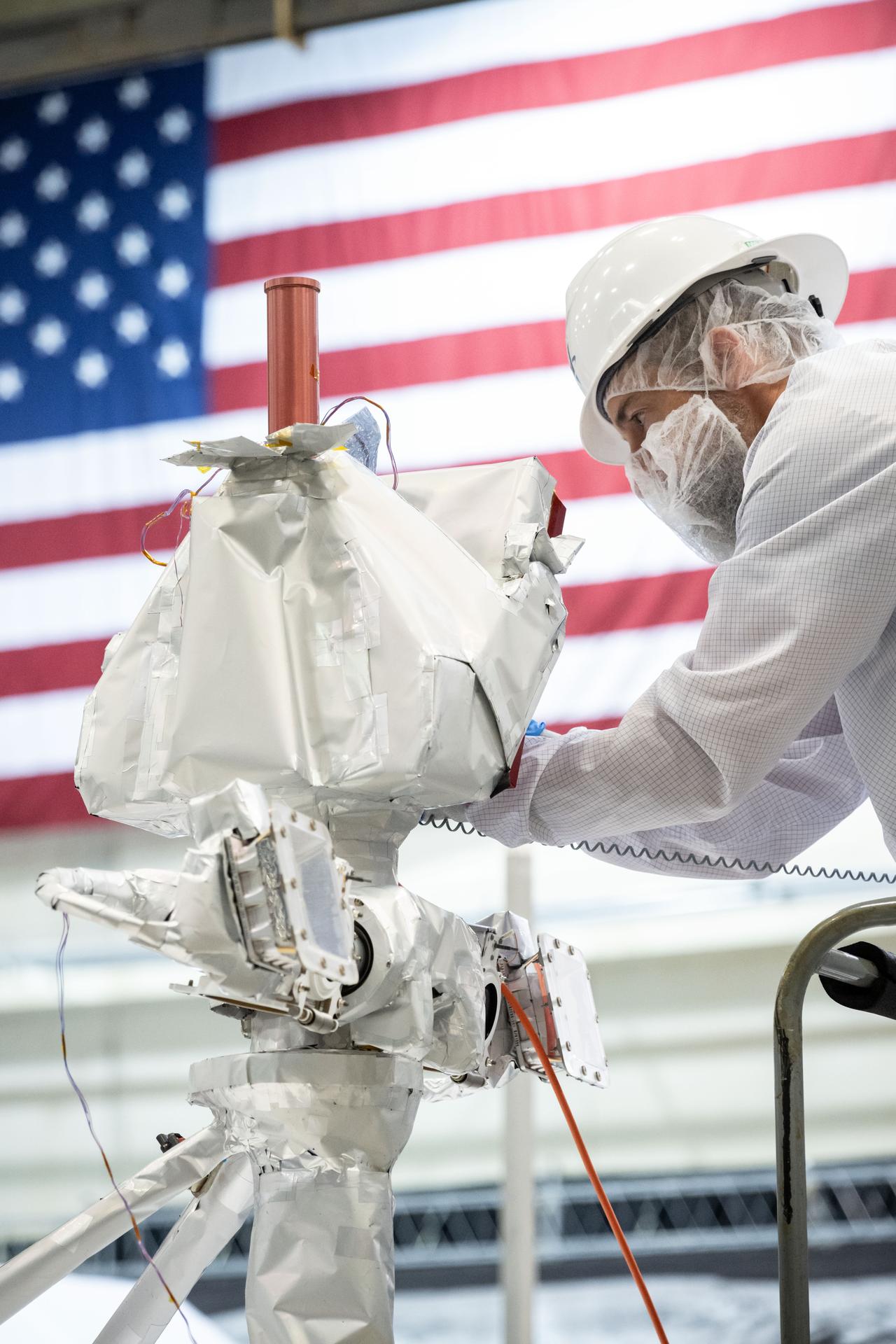
jsc2025e064263 - VIPER Vehicle Manager Justin Ridley connects a cable to the VIPER high gain antenna while preparing the rover for long-term storage testing in the high bay of Building 9S at Johnson Space Center. Photographer: Helen Arase Vargas – Johnson Space Center
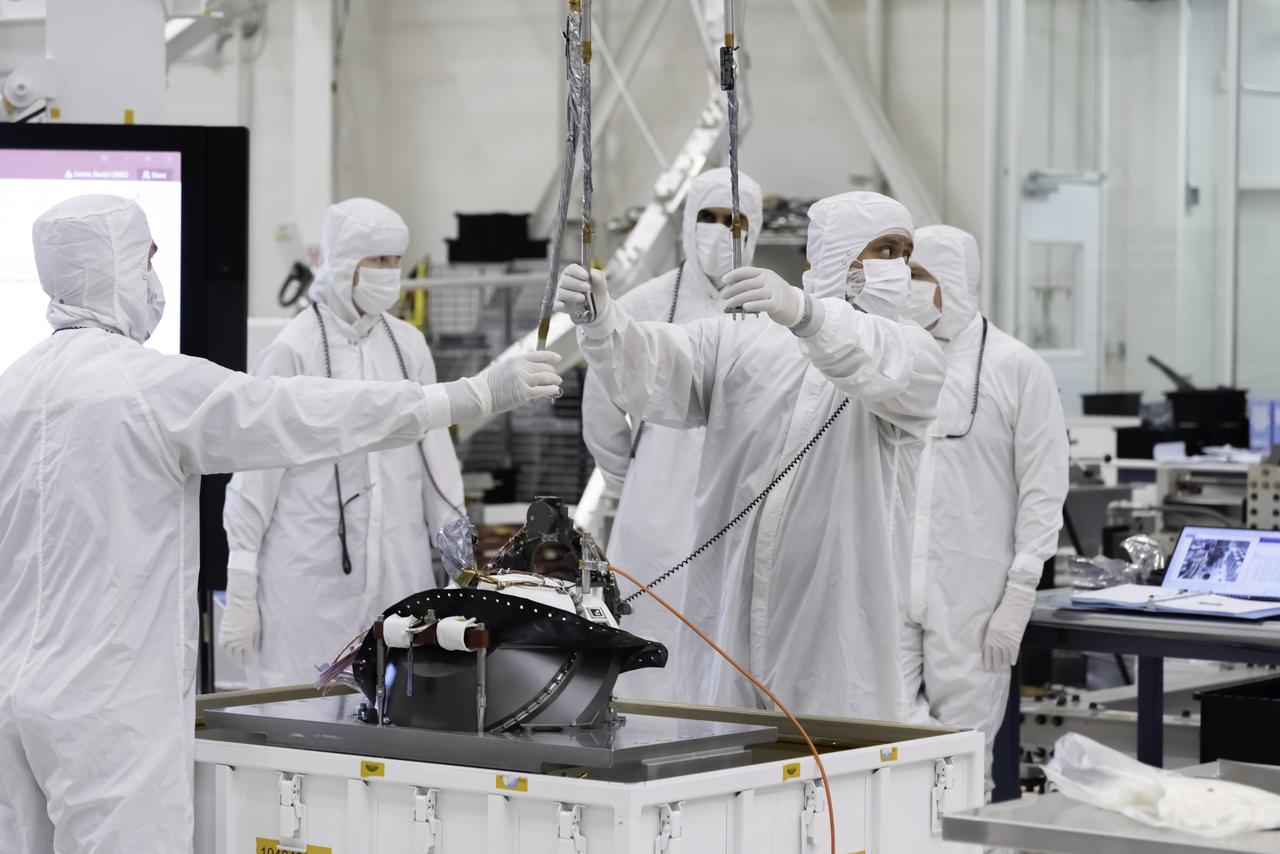
Engineers at NASA's Jet Propulsion Laboratory lift the Mars 2020 rover's bit carousel out of its storage container. The bit carousel is a mechanism that is at the heart of the rover's Sample Caching System. The image was taken on Aug. 5, 2019, in the Spacecraft Assembly Facility's High Bay 1 at JPL. https://photojournal.jpl.nasa.gov/catalog/PIA23320
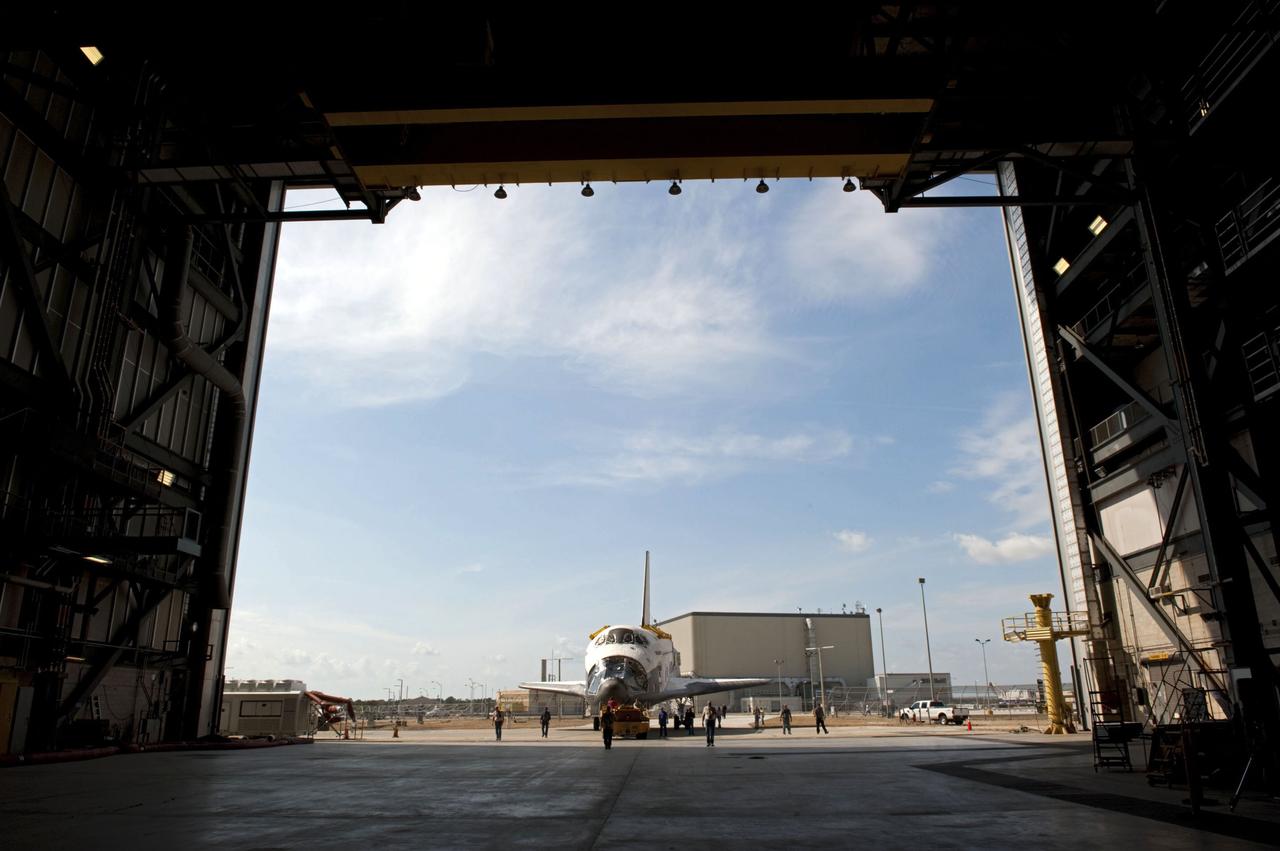
CAPE CANAVERAL, Fla. – At NASA’s Kennedy Space Center in Florida, space shuttle Atlantis is towed toward the Vehicle Assembly Building (VAB) high bay 4 doors after being towed around from the VAB transfer aisle. Shuttle Atlantis will remain in temporary storage in high bay 4, while Space Shuttle Program transition and retirement work continues on Discovery and Endeavour in the orbiter processing facilities. Atlantis is being prepared for display at the Kennedy Space Center Visitor Complex. Photo credit: NASA/Kim Shiflett
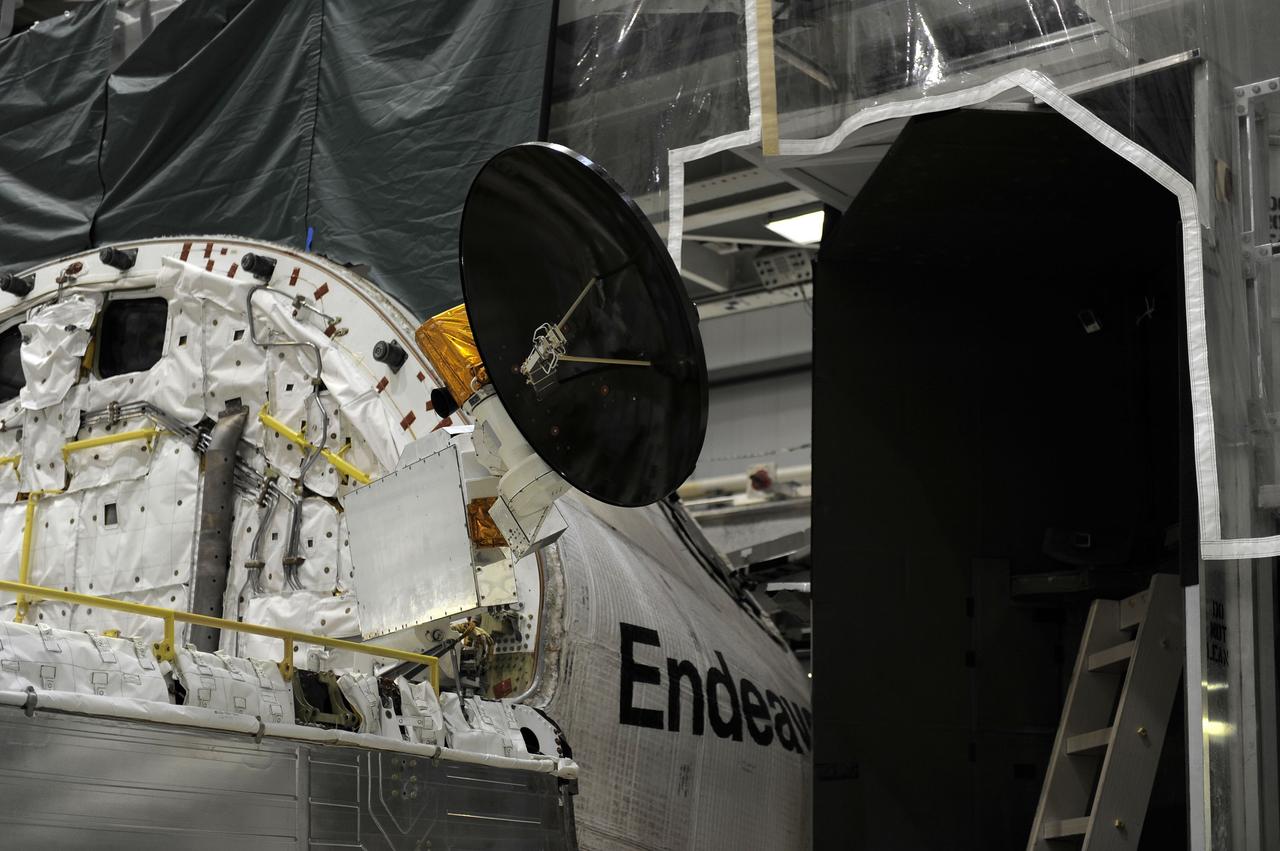
CAPE CANAVERAL, Fla. -- In Orbiter Processing Facility-2 at NASA’s Kennedy Space Center in Florida, one of space shuttle Endeavour’s payload bay doors has been fully opened so that an antenna can be retracted. Space Shuttle Program transition and retirement work continues on Discovery and Endeavour in the orbiter processing facilities, while shuttle Atlantis is in temporary storage in high bay 4 of the Vehicle Assembly Building. Endeavour is being prepared for display at the California Science Center in Los Angeles. Photo credit: NASA/Kim Shiflett
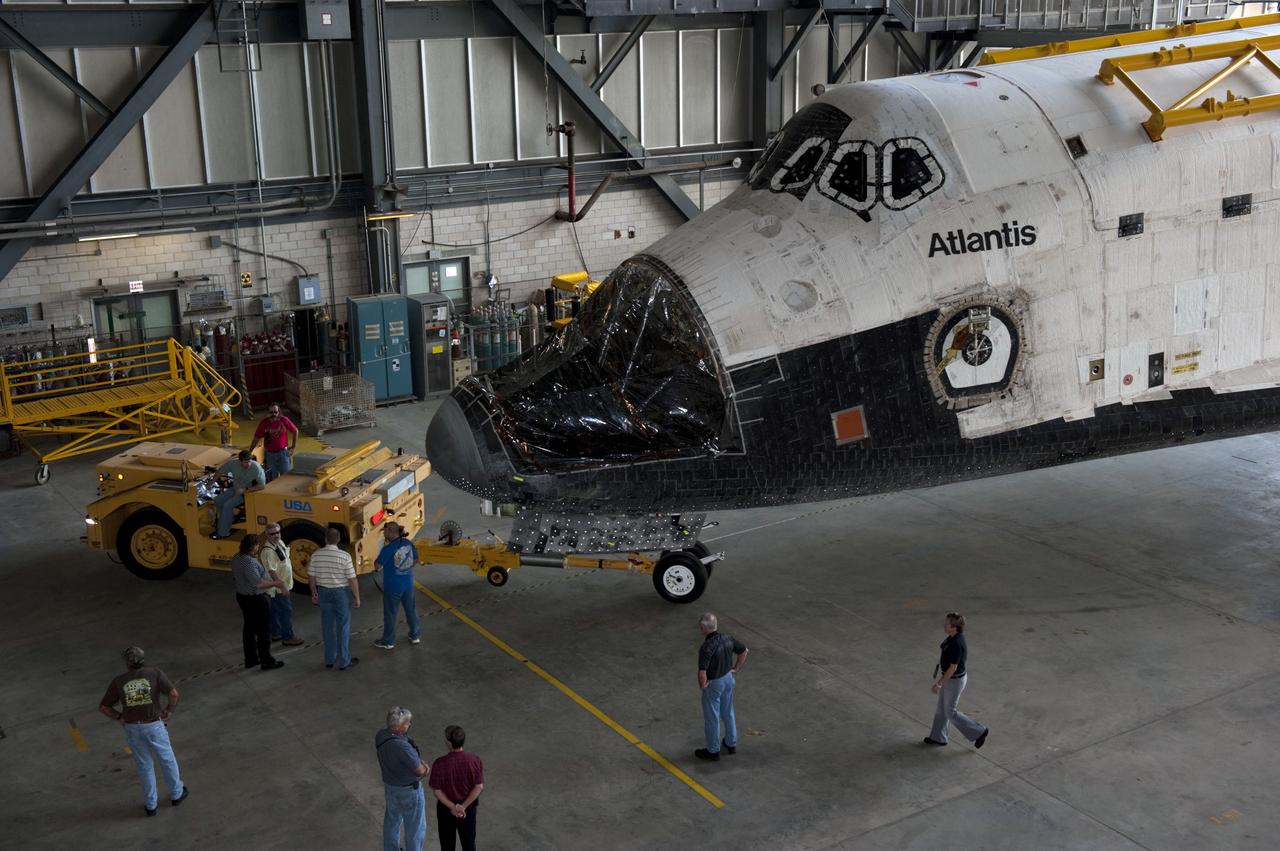
CAPE CANAVERAL, Fla. – At NASA’s Kennedy Space Center in Florida, space shuttle Atlantis is towed into the Vehicle Assembly Building (VAB) high bay 4 after being towed around from the VAB transfer aisle. Shuttle Atlantis will remain in temporary storage in high bay 4, while Space Shuttle Program transition and retirement work continues on Discovery and Endeavour in the orbiter processing facilities. Atlantis is being prepared for display at the Kennedy Space Center Visitor Complex. Photo credit: NASA/Kim Shiflett
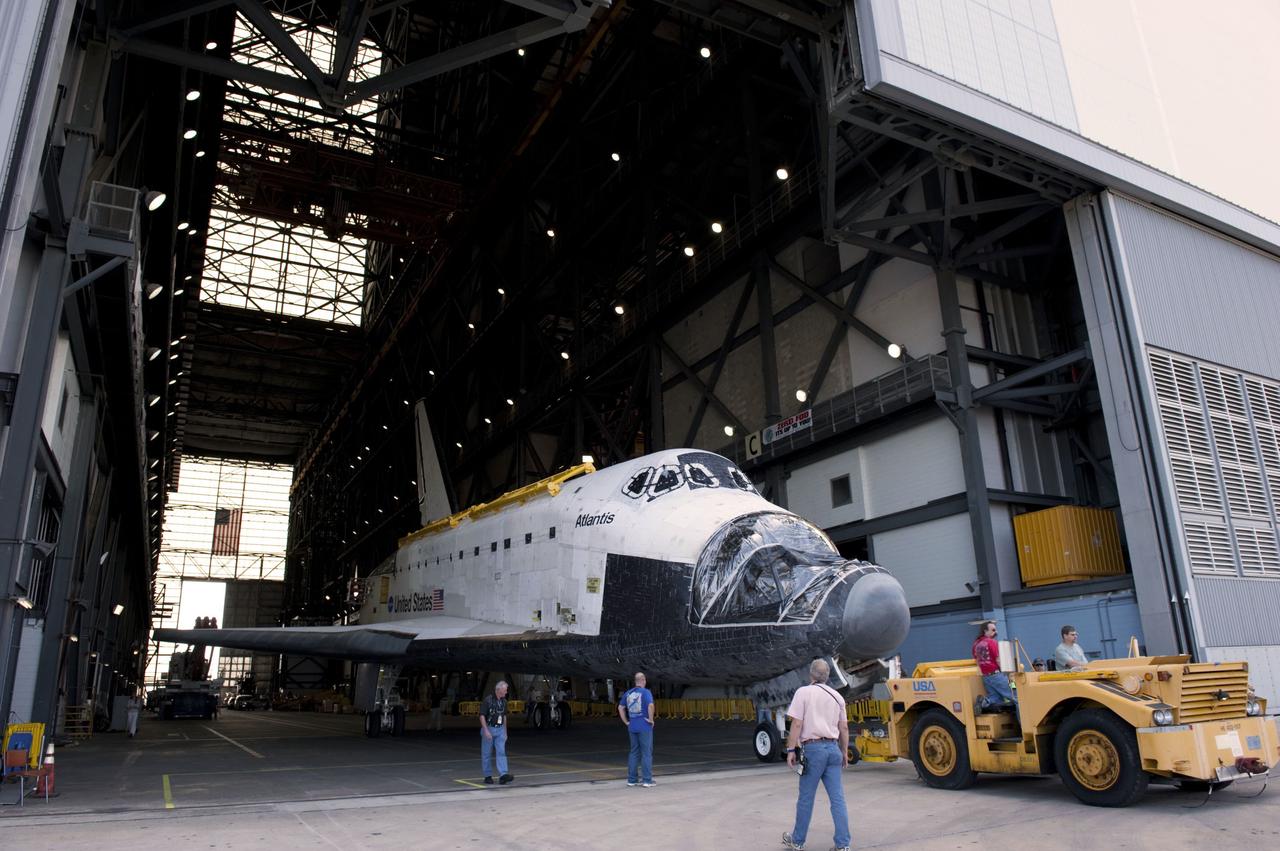
CAPE CANAVERAL, Fla. – Inside the Vehicle Assembly Building (VAB) at NASA’s Kennedy Space Center in Florida, technicians begin to tow space shuttle Atlantis out of the transfer aisle and around to the VAB high bay 4 doors. Shuttle Atlantis will remain in temporary storage in high bay 4, while Space Shuttle Program transition and retirement work continues on Discovery and Endeavour in the orbiter processing facilities. Atlantis is being prepared for display at the Kennedy Space Center Visitor Complex. Photo credit: NASA/Kim Shiflett
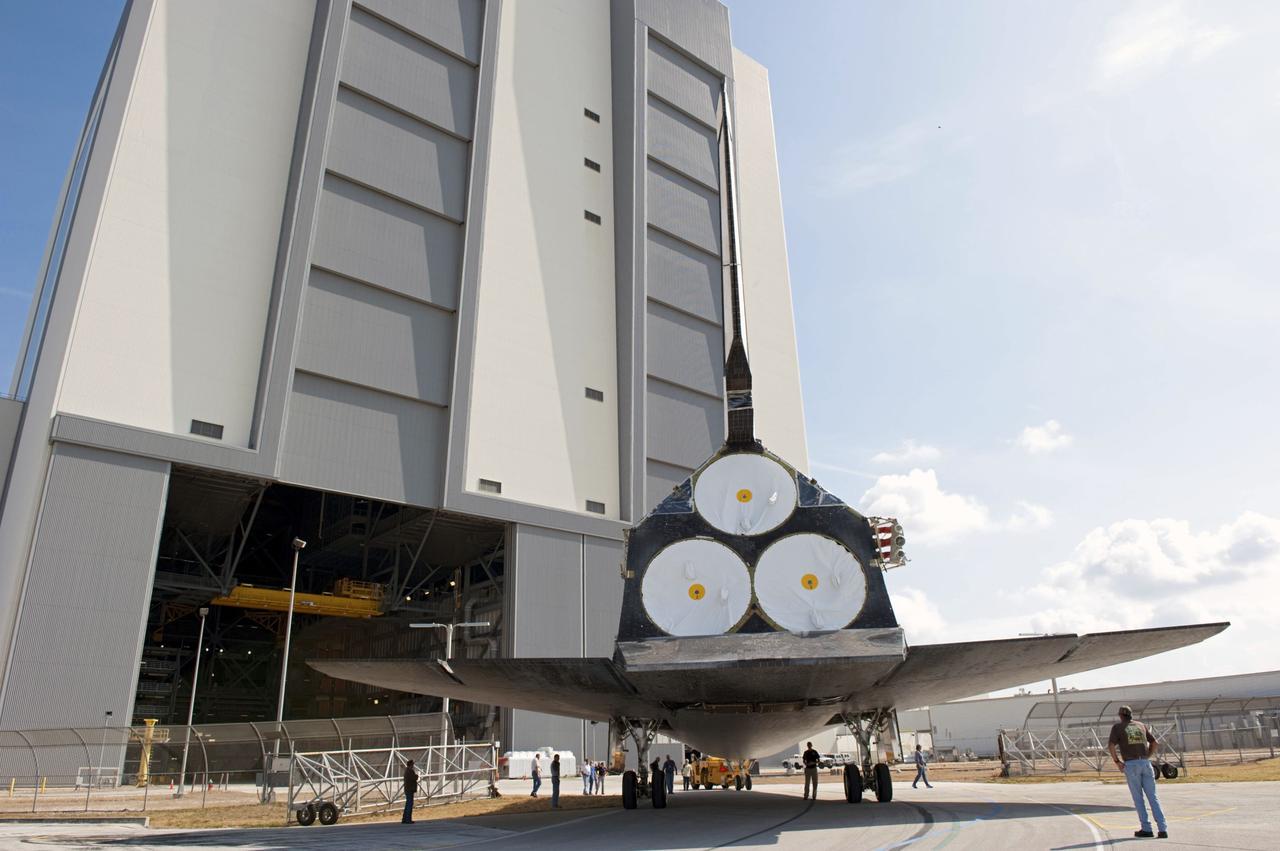
CAPE CANAVERAL, Fla. – At NASA’s Kennedy Space Center in Florida, space shuttle Atlantis is towed toward the Vehicle Assembly Building (VAB) high bay 4 doors after being towed around from the VAB transfer aisle. Shuttle Atlantis will remain in temporary storage in high bay 4, while Space Shuttle Program transition and retirement work continues on Discovery and Endeavour in the orbiter processing facilities. Atlantis is being prepared for display at the Kennedy Space Center Visitor Complex. Photo credit: NASA/Kim Shiflett
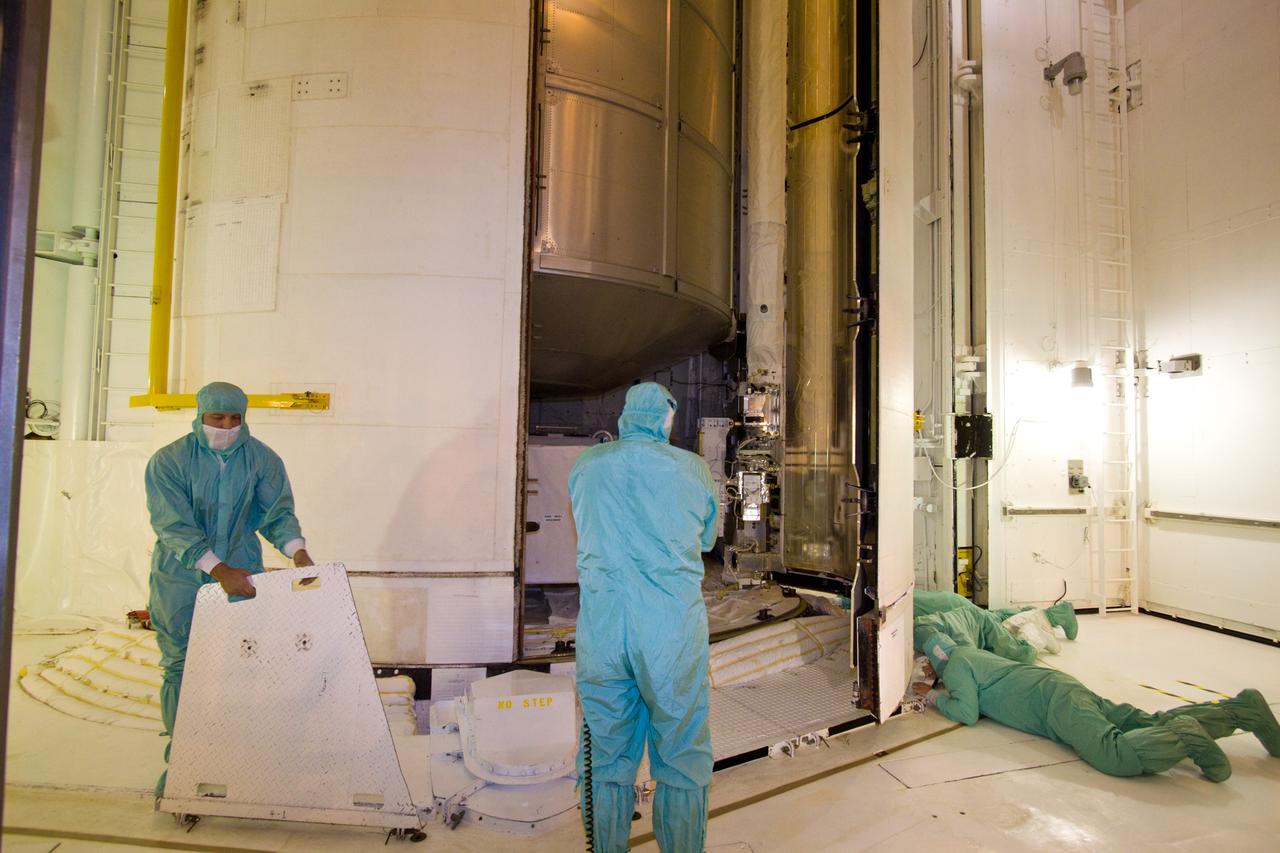
CAPE CANAVERAL, Fla. – On Launch Pad 39A, technicians check the clearance of the payload bay door as it closes around the multi-purpose logistics module Leonardo and the lightweight multi-purpose experiment support structure carrier inside space shuttle Discovery's payload bay. Discovery will deliver 33,000 pounds of equipment to the station, including science and storage racks, a freezer to store research samples, a new sleeping compartment and the COLBERT treadmill. Launch is targeted for late August. Photo credit: NASA/Jack Pfaller
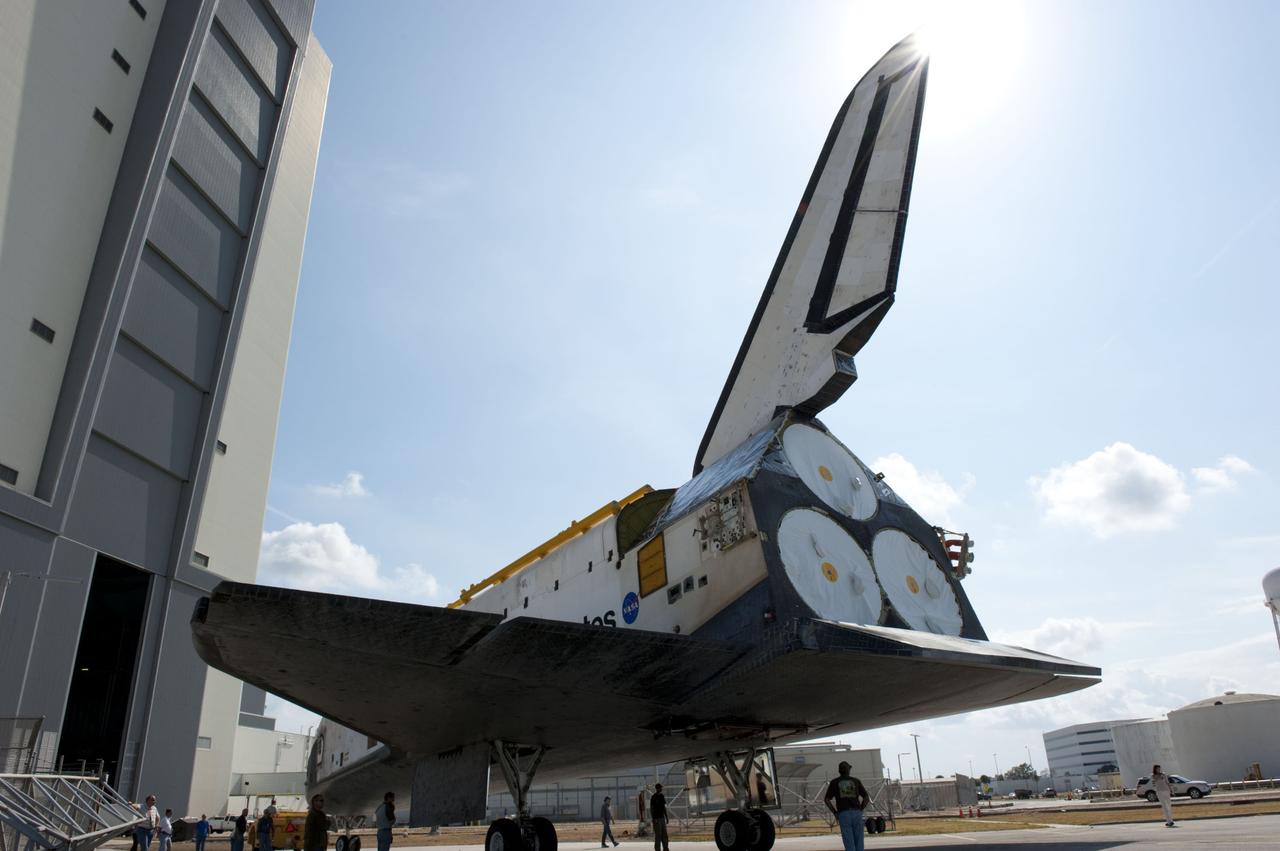
CAPE CANAVERAL, Fla. – At NASA’s Kennedy Space Center in Florida, space shuttle Atlantis is towed toward the Vehicle Assembly Building (VAB) high bay 4 doors after being towed around from the VAB transfer aisle. Shuttle Atlantis will remain in temporary storage in high bay 4, while Space Shuttle Program transition and retirement work continues on Discovery and Endeavour in the orbiter processing facilities. Atlantis is being prepared for display at the Kennedy Space Center Visitor Complex. Photo credit: NASA/Kim Shiflett
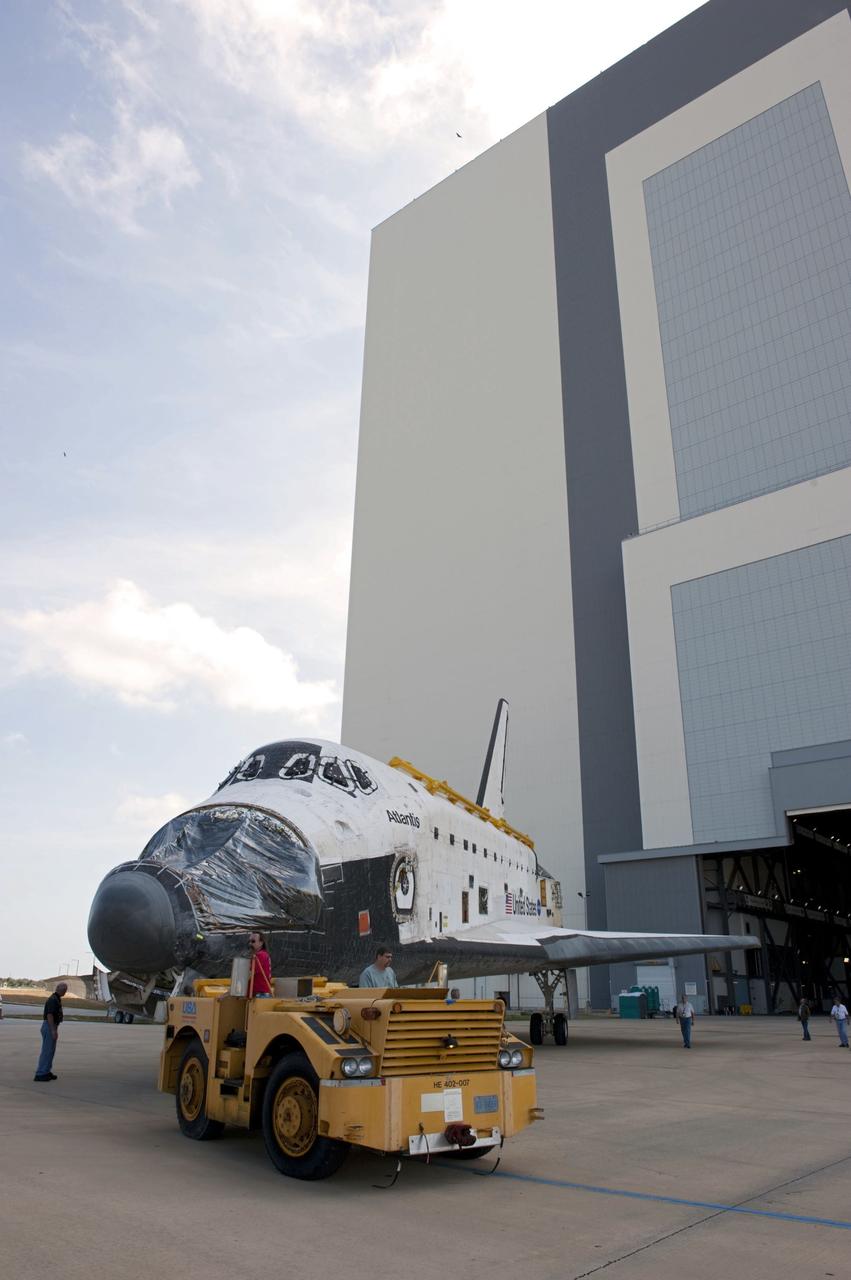
CAPE CANAVERAL, Fla. – At NASA’s Kennedy Space Center in Florida, space shuttle Atlantis is towed out of the Vehicle Assembly Building (VAB) transfer aisle and around to the VAB high bay 4 doors. Shuttle Atlantis will remain in temporary storage in high bay 4, while Space Shuttle Program transition and retirement work continues on Discovery and Endeavour in the orbiter processing facilities. Atlantis is being prepared for display at the Kennedy Space Center Visitor Complex. Photo credit: NASA/Kim Shiflett
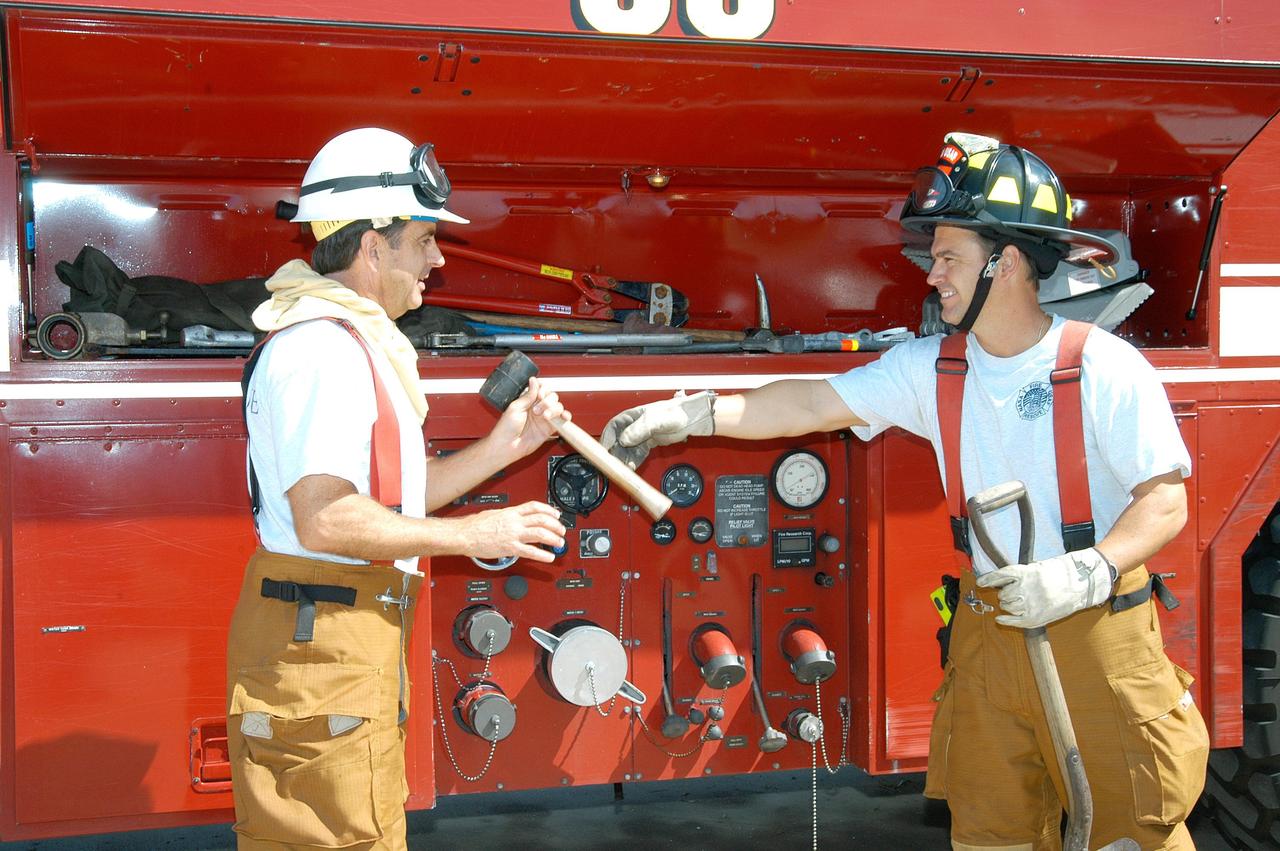
KENNEDY SPACE CENTER, FLA. - At Cape Canaveral Air Force Station, Lt. Keith Abell (left) hands equipment to KSC Firefighter Chris Maupin for storage. They and other KSC firefighters teamed up with task forces from Satellite Beach, Malabar, Melbourne, Palm Bay, Patrick Air Force Base and Brevard County to help fight wildfires in the Palm Bay and Malabar areas that threatened homes and property during the Memorial Day holiday weekend.
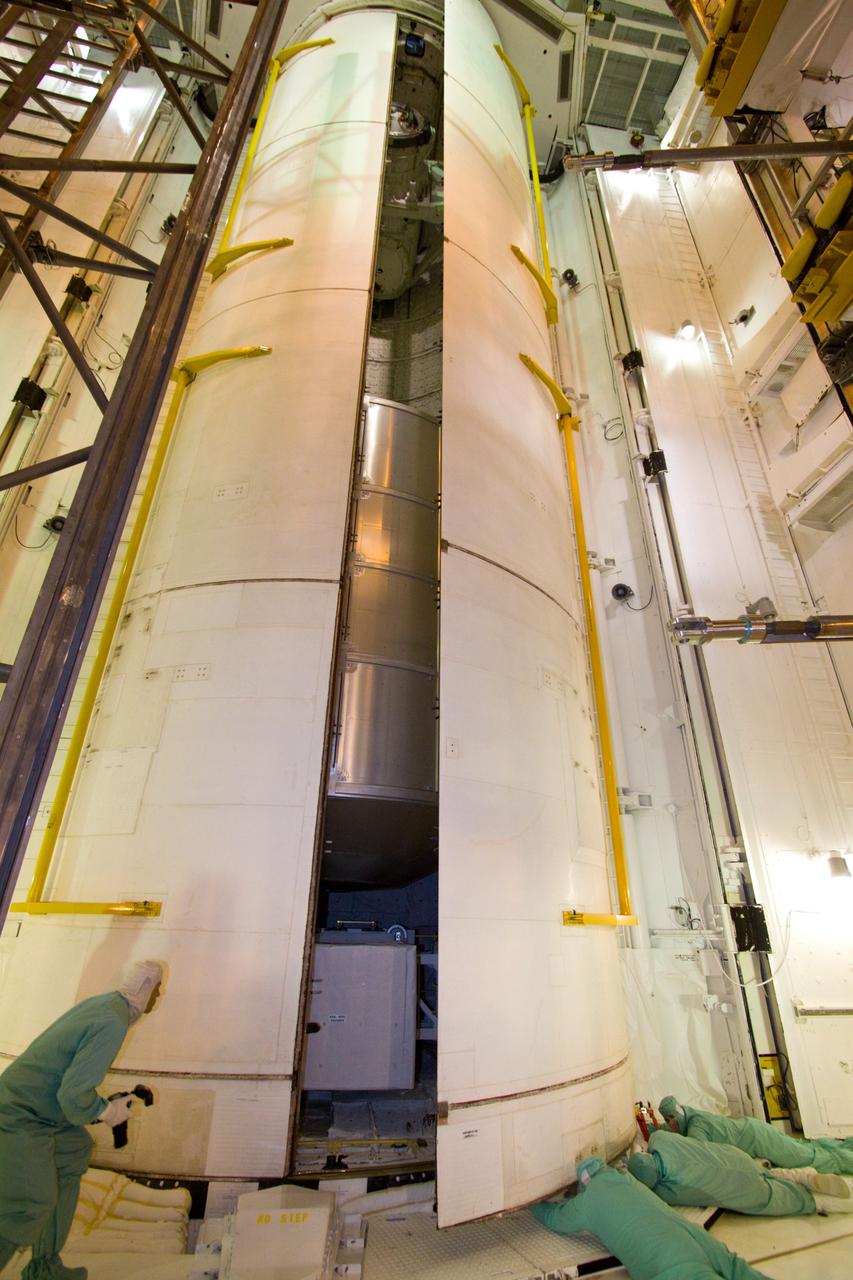
CAPE CANAVERAL, Fla. – On Launch Pad 39A, technicians ensure the payload bay door closes properly around the multi-purpose logistics module Leonardo and the lightweight multi-purpose experiment support structure carrier inside space shuttle Discovery's payload bay. Discovery will deliver 33,000 pounds of equipment to the station, including science and storage racks, a freezer to store research samples, a new sleeping compartment and the COLBERT treadmill. Launch is targeted for late August. Photo credit: NASA/Jack Pfaller
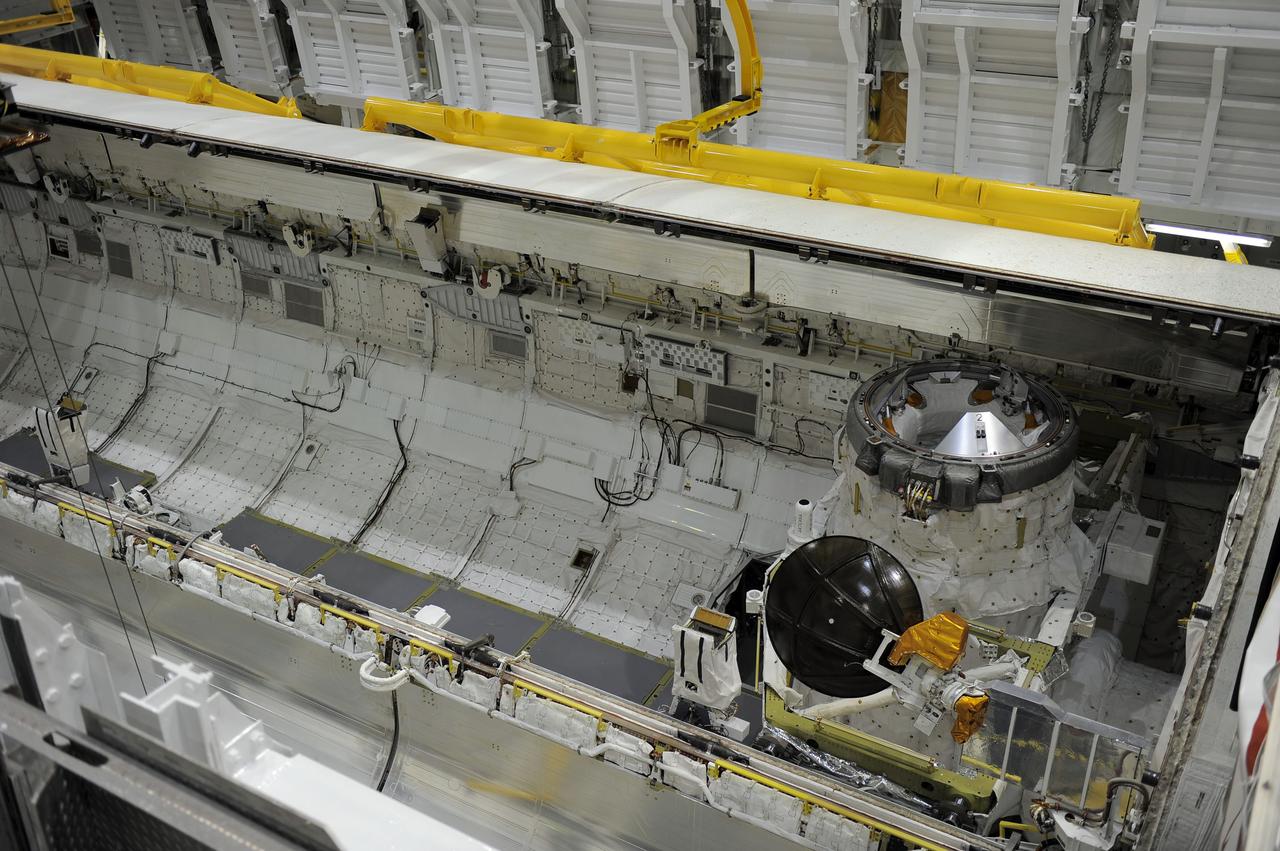
CAPE CANAVERAL, Fla. -- In Orbiter Processing Facility-2 at NASA’s Kennedy Space Center in Florida, one of space shuttle Endeavour’s payload bay doors has been fully opened so that an antenna can be retracted. Space Shuttle Program transition and retirement work continues on Discovery and Endeavour in the orbiter processing facilities, while shuttle Atlantis is in temporary storage in high bay 4 of the Vehicle Assembly Building. Endeavour is being prepared for display at the California Science Center in Los Angeles. Photo credit: NASA/Kim Shiflett
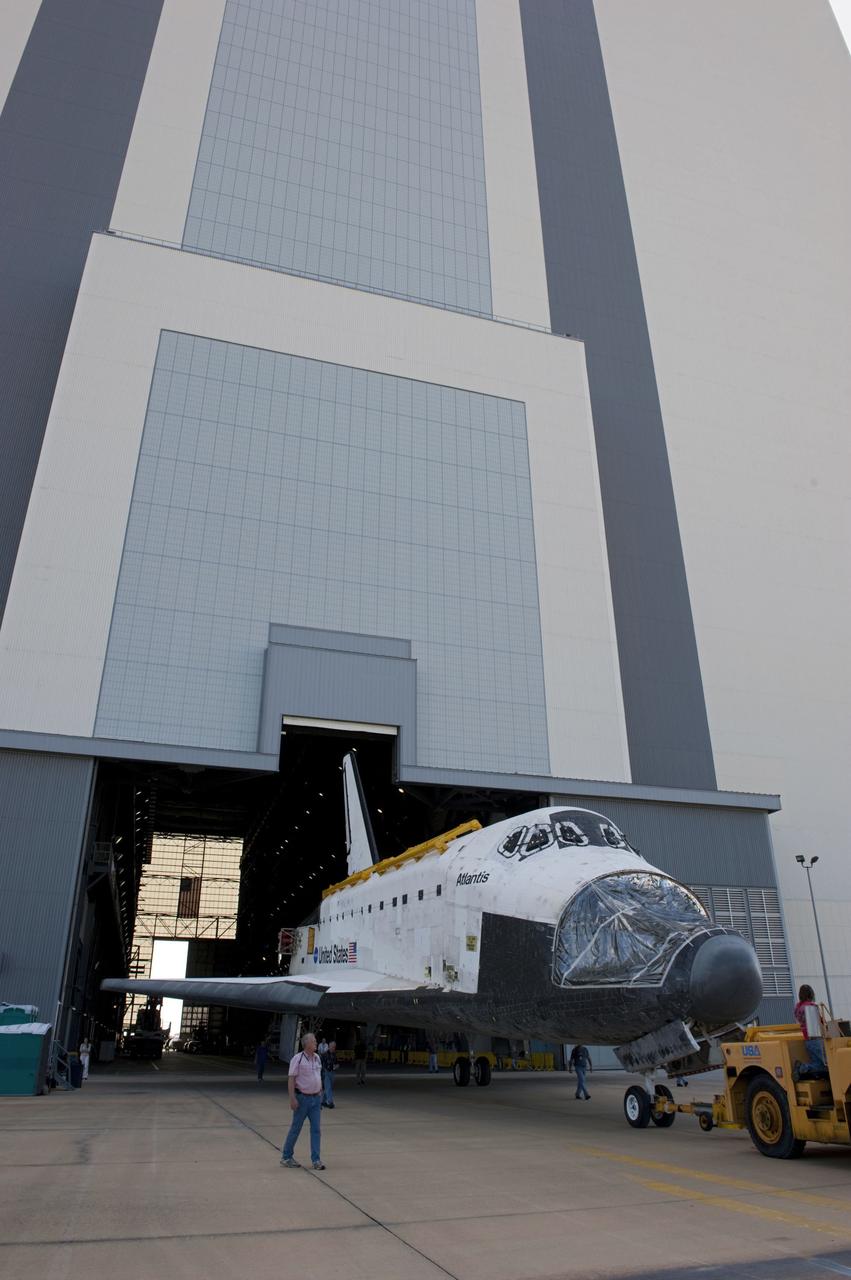
CAPE CANAVERAL, Fla. – At NASA’s Kennedy Space Center in Florida, technicians walk alongside space shuttle Atlantis as it is towed out of the Vehicle Assembly Building (VAB) transfer aisle and around to the VAB high bay 4 doors. Shuttle Atlantis will remain in temporary storage in high bay 4, while Space Shuttle Program transition and retirement work continues on Discovery and Endeavour in the orbiter processing facilities. Atlantis is being prepared for display at the Kennedy Space Center Visitor Complex. Photo credit: NASA/Kim Shiflett
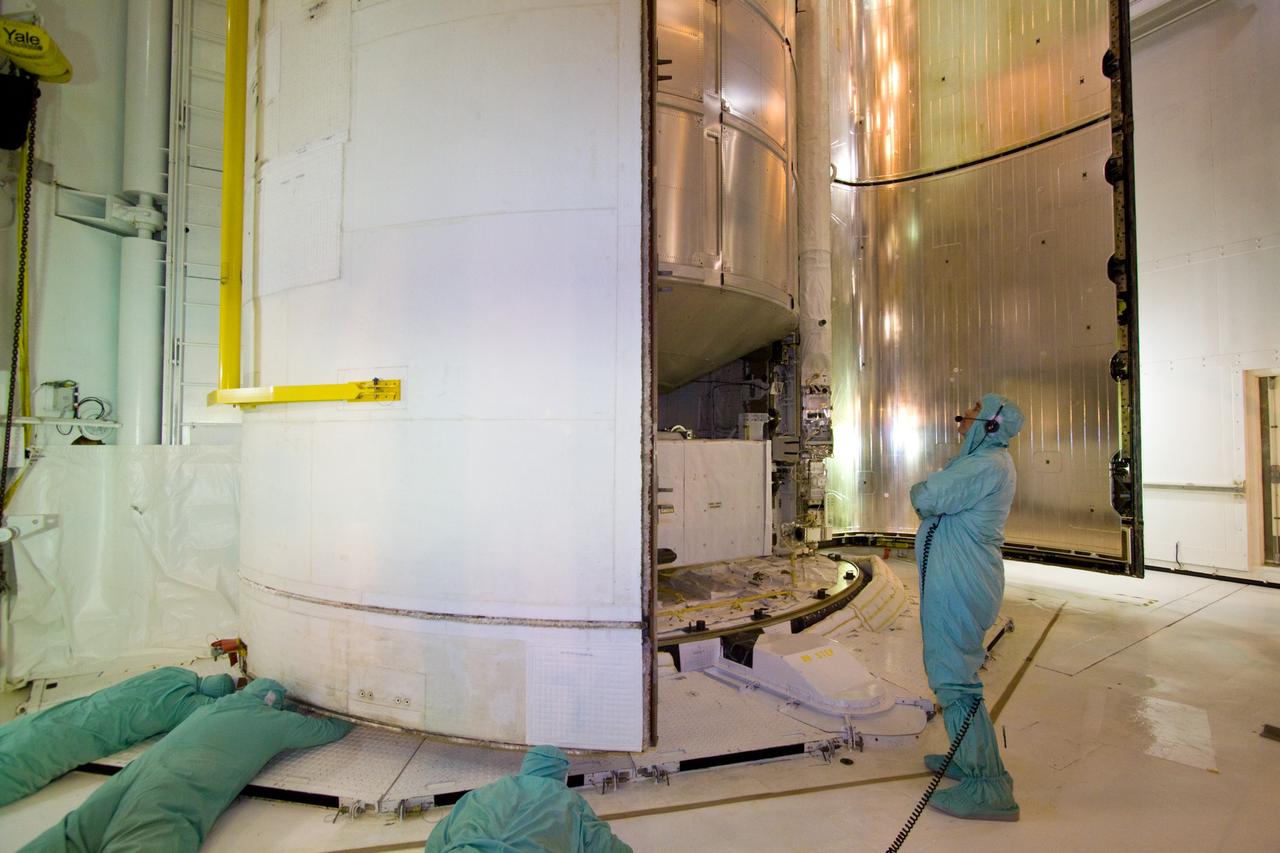
CAPE CANAVERAL, Fla. – On Launch Pad 39A, technicians check underneath as space shuttle Discovery's payload bay doors begin closing. Seen in the payload bay are the multi-purpose logistics module Leonardo and the lightweight multi-purpose experiment support structure carrier. Discovery will deliver 33,000 pounds of equipment to the station, including science and storage racks, a freezer to store research samples, a new sleeping compartment and the COLBERT treadmill. Launch is targeted for late August. Photo credit: NASA/Jack Pfaller
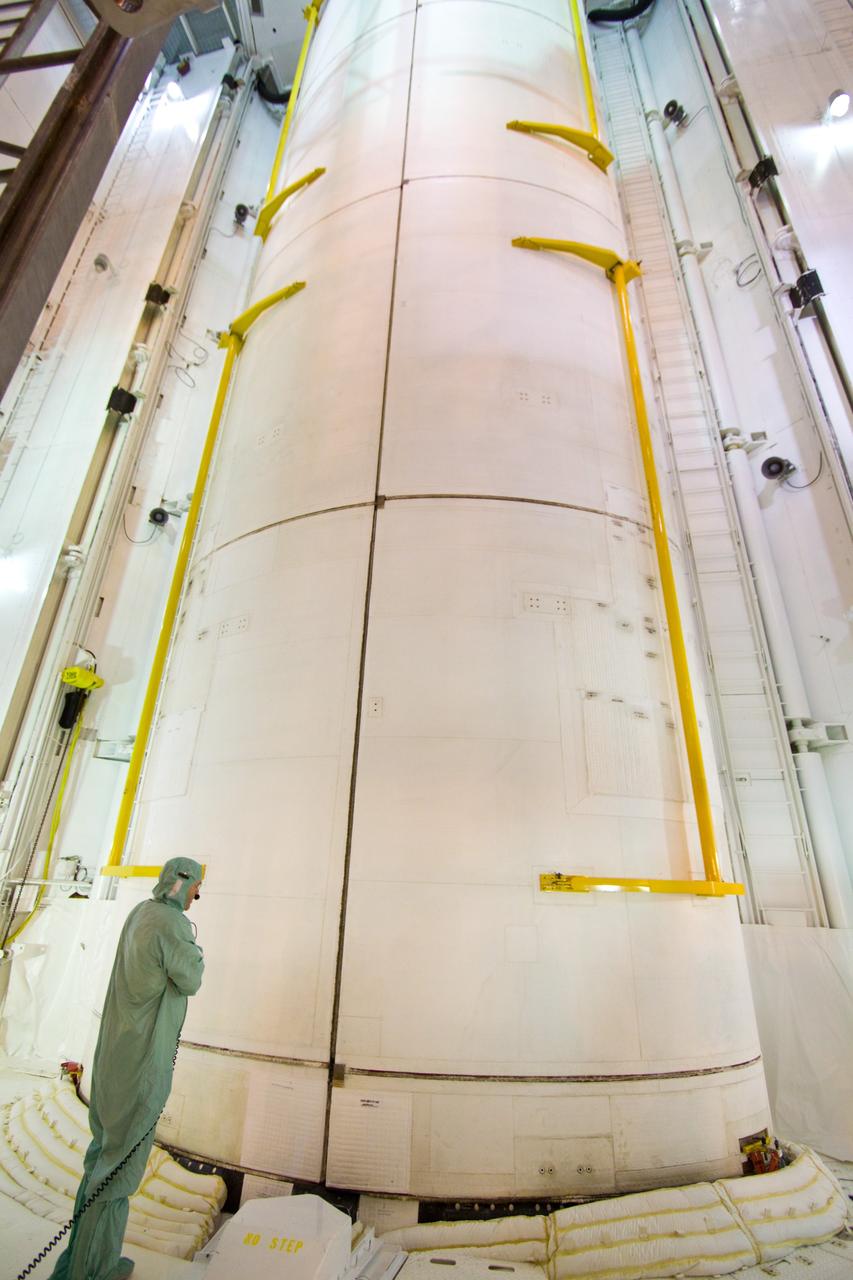
CAPE CANAVERAL, Fla. – On Launch Pad 39A, a technician checks the closing of the payload bay door around the multi-purpose logistics module Leonardo and the lightweight multi-purpose experiment support structure carrier inside space shuttle Discovery's payload bay. Discovery will deliver 33,000 pounds of equipment to the station, including science and storage racks, a freezer to store research samples, a new sleeping compartment and the COLBERT treadmill. Launch is targeted for late August. Photo credit: NASA/Jack Pfaller
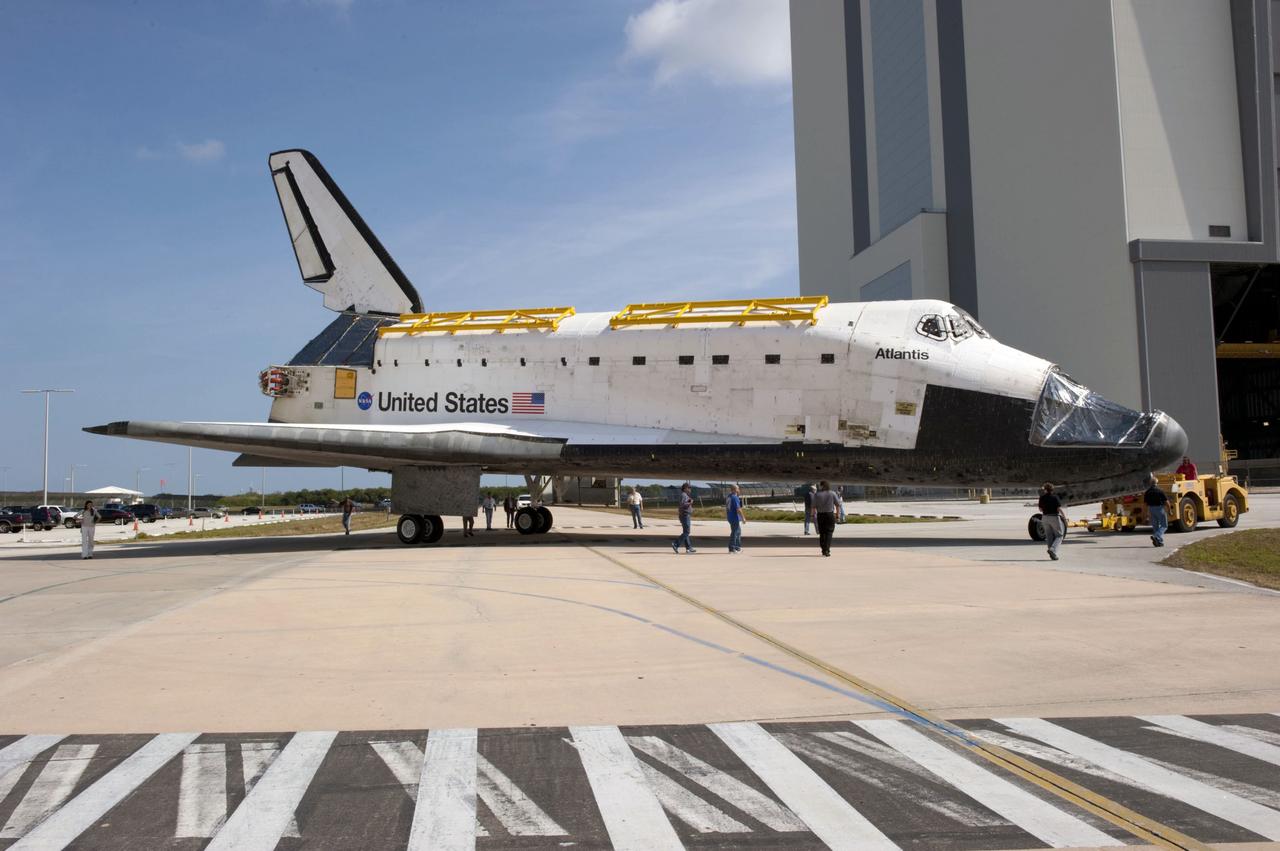
CAPE CANAVERAL, Fla. – At NASA’s Kennedy Space Center in Florida, space shuttle Atlantis is towed around toward the Vehicle Assembly Building (VAB) high bay 4 doors from the VAB transfer aisle. Shuttle Atlantis will remain in temporary storage in high bay 4, while Space Shuttle Program transition and retirement work continues on Discovery and Endeavour in the orbiter processing facilities. Atlantis is being prepared for display at the Kennedy Space Center Visitor Complex. Photo credit: NASA/Kim Shiflett
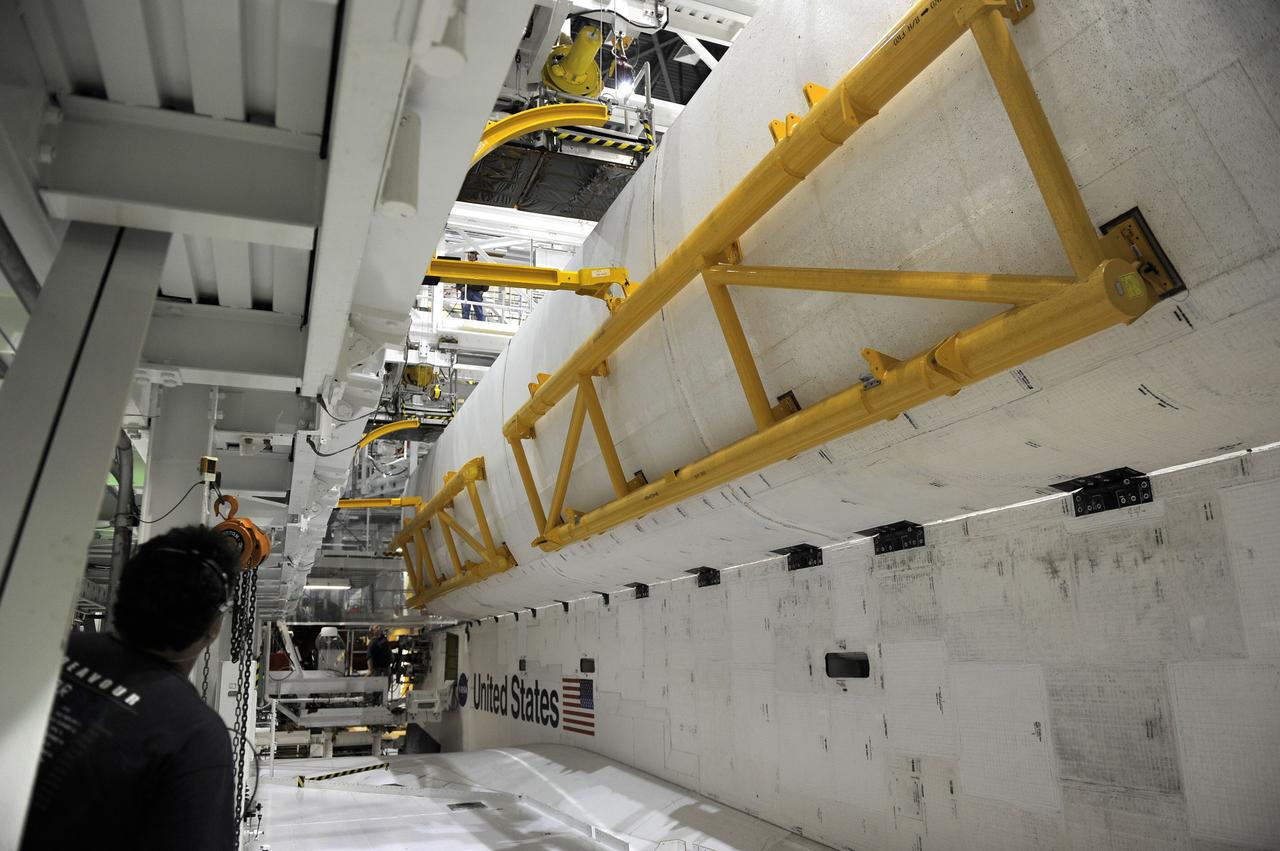
CAPE CANAVERAL, Fla. – In Orbiter Processing Facility-2 at NASA’s Kennedy Space Center in Florida, a technician monitors the progress as one of space shuttle Endeavour’s payload bay doors is opened so that an antenna can be retracted. Space Shuttle Program transition and retirement work continues on Discovery and Endeavour in the orbiter processing facilities, while shuttle Atlantis is in temporary storage in high bay 4 of the Vehicle Assembly Building. Endeavour is being prepared for display at the California Science Center in Los Angeles. Photo credit: NASA/Kim Shiflett
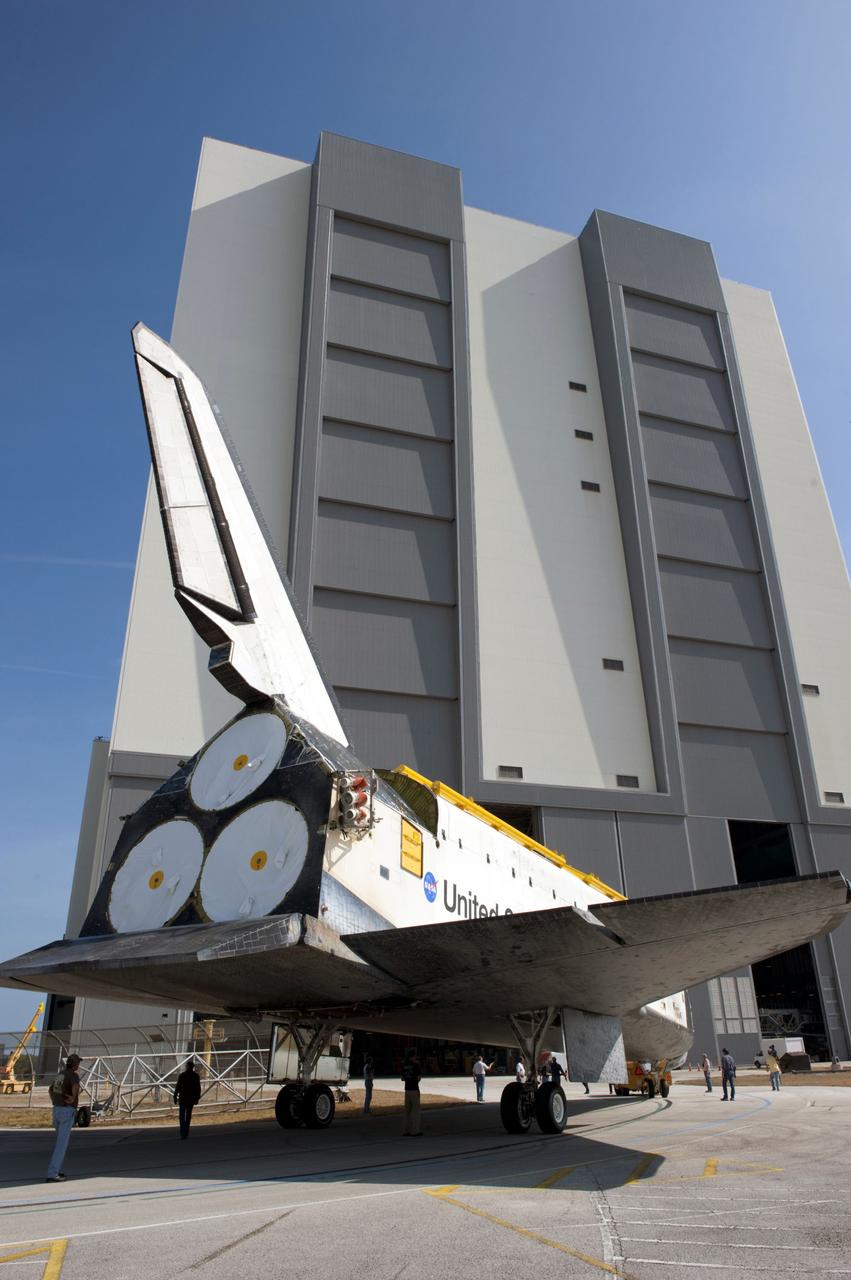
CAPE CANAVERAL, Fla. – At NASA’s Kennedy Space Center in Florida, space shuttle Atlantis is towed toward the Vehicle Assembly Building (VAB) high bay 4 doors after being towed around from the VAB transfer aisle. Shuttle Atlantis will remain in temporary storage in high bay 4, while Space Shuttle Program transition and retirement work continues on Discovery and Endeavour in the orbiter processing facilities. Atlantis is being prepared for display at the Kennedy Space Center Visitor Complex. Photo credit: NASA/Kim Shiflett
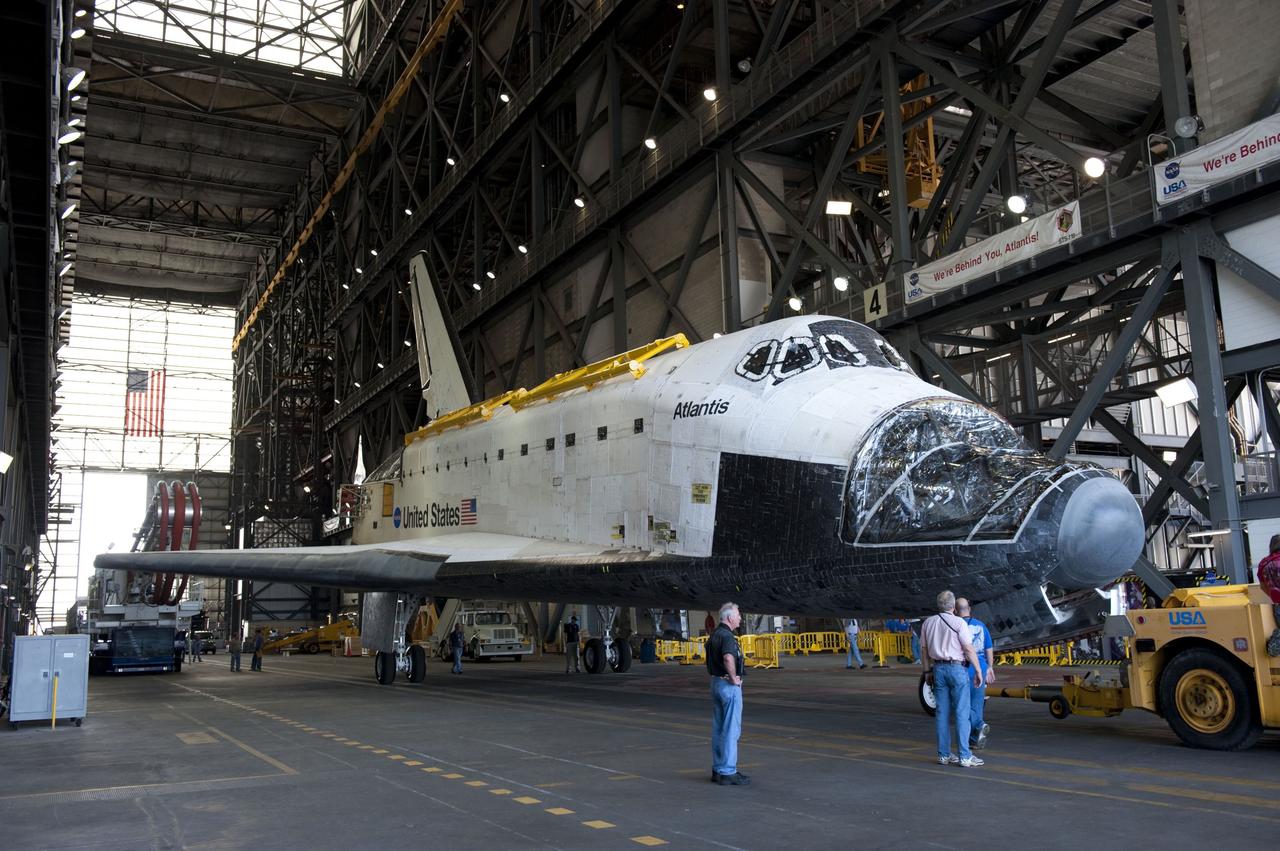
CAPE CANAVERAL, Fla. – Inside the Vehicle Assembly Building (VAB) at NASA’s Kennedy Space Center in Florida, technicians prepare space shuttle Atlantis to be towed out of the transfer aisle and around to the VAB high bay 4 doors. Shuttle Atlantis will remain in temporary storage in high bay 4, while Space Shuttle Program transition and retirement work continues on Discovery and Endeavour in the orbiter processing facilities. Atlantis is being prepared for display at the Kennedy Space Center Visitor Complex. Photo credit: NASA/Kim Shiflett
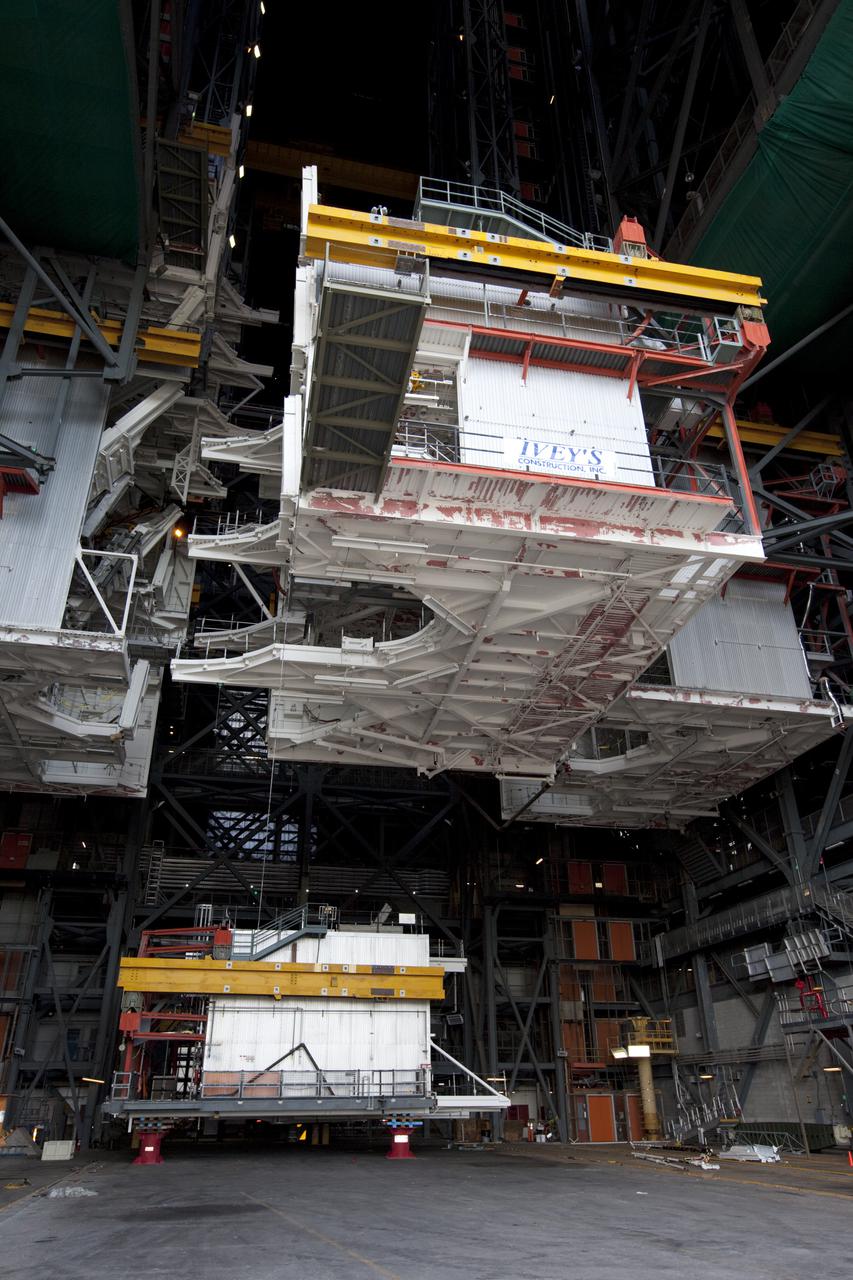
CAPE CANAVERAL, Fla. – At NASA’s Kennedy Space Center in Florida, a crane lowers a space shuttle-era work platform from high bay 3 inside the Vehicle Assembly Building, or VAB. The platform has been moved to the VAB north parking area for temporary storage. The work is part of a center-wide refurbishment initiative under the Ground Systems Development and Operations, or GSDO, Program. High bay 3 is being refurbished to accommodate NASA’s Space Launch System and a variety of other spacecraft. Photo credit: NASA_Kim Shiflett
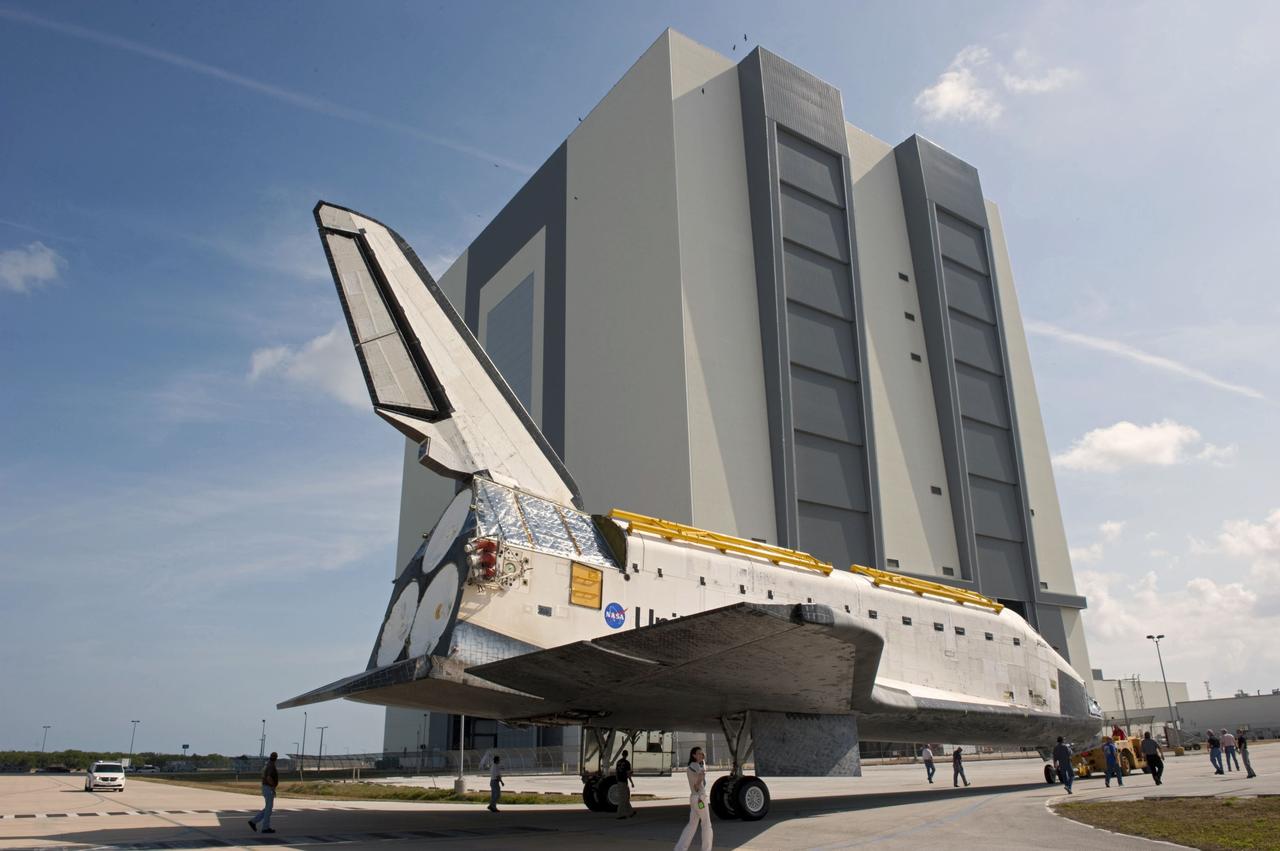
CAPE CANAVERAL, Fla. – At NASA’s Kennedy Space Center in Florida, space shuttle Atlantis is towed around toward the Vehicle Assembly Building (VAB) high bay 4 doors from the VAB transfer aisle. Shuttle Atlantis will remain in temporary storage in high bay 4, while Space Shuttle Program transition and retirement work continues on Discovery and Endeavour in the orbiter processing facilities. Atlantis is being prepared for display at the Kennedy Space Center Visitor Complex. Photo credit: NASA/Kim Shiflett
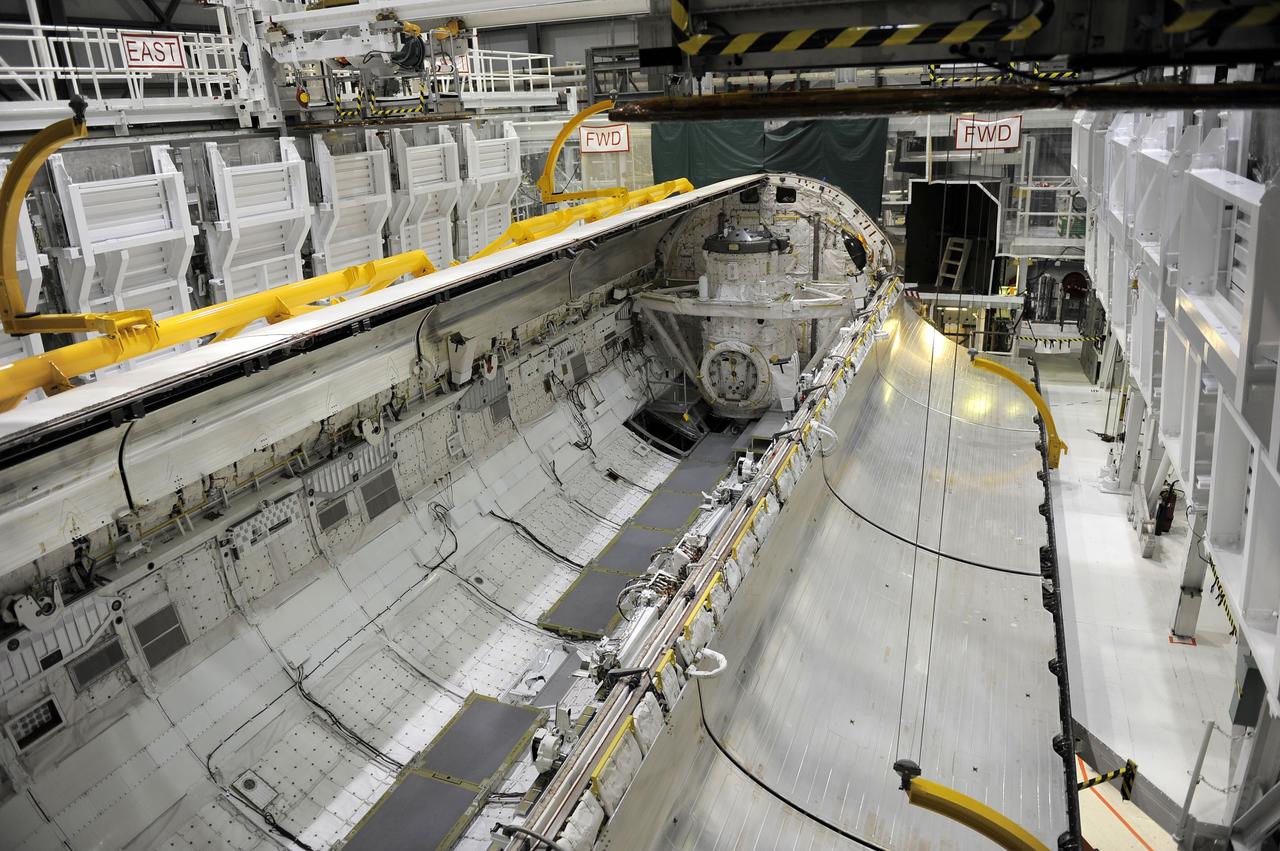
CAPE CANAVERAL, Fla. - In Orbiter Processing Facility-2 at NASA’s Kennedy Space Center in Florida, one of space shuttle Endeavour’s payload bay doors has been fully opened so that an antenna can be retracted. Space Shuttle Program transition and retirement work continues on Discovery and Endeavour in the orbiter processing facilities, while shuttle Atlantis is in temporary storage in high bay 4 of the Vehicle Assembly Building. Endeavour is being prepared for display at the California Science Center in Los Angeles. Photo credit: NASA/Kim Shiflett
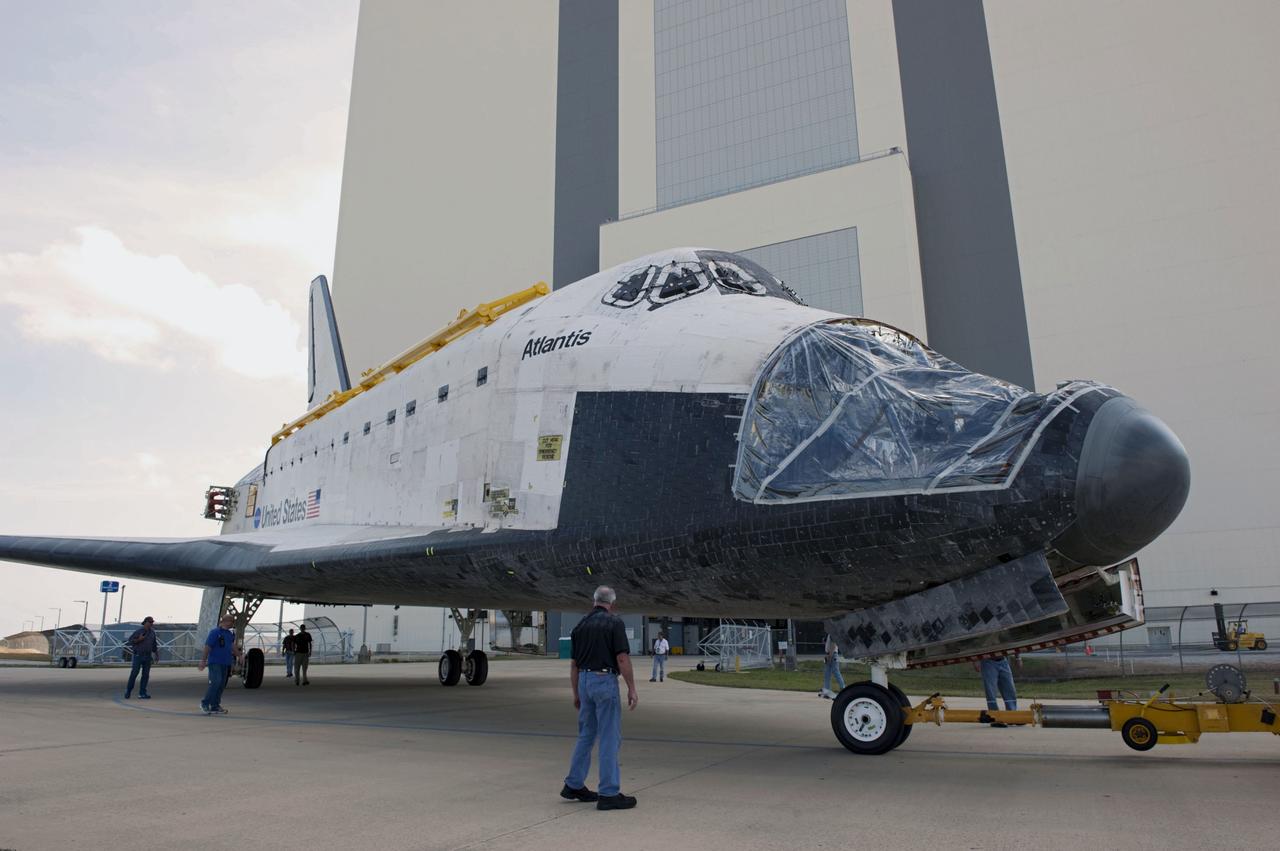
CAPE CANAVERAL, Fla. – At NASA’s Kennedy Space Center in Florida, technicians monitor the progress as space shuttle Atlantis is towed out of the Vehicle Assembly Building (VAB) transfer aisle and around to the VAB high bay 4 doors. Shuttle Atlantis will remain in temporary storage in high bay 4, while Space Shuttle Program transition and retirement work continues on Discovery and Endeavour in the orbiter processing facilities. Atlantis is being prepared for display at the Kennedy Space Center Visitor Complex. Photo credit: NASA/Kim Shiflett
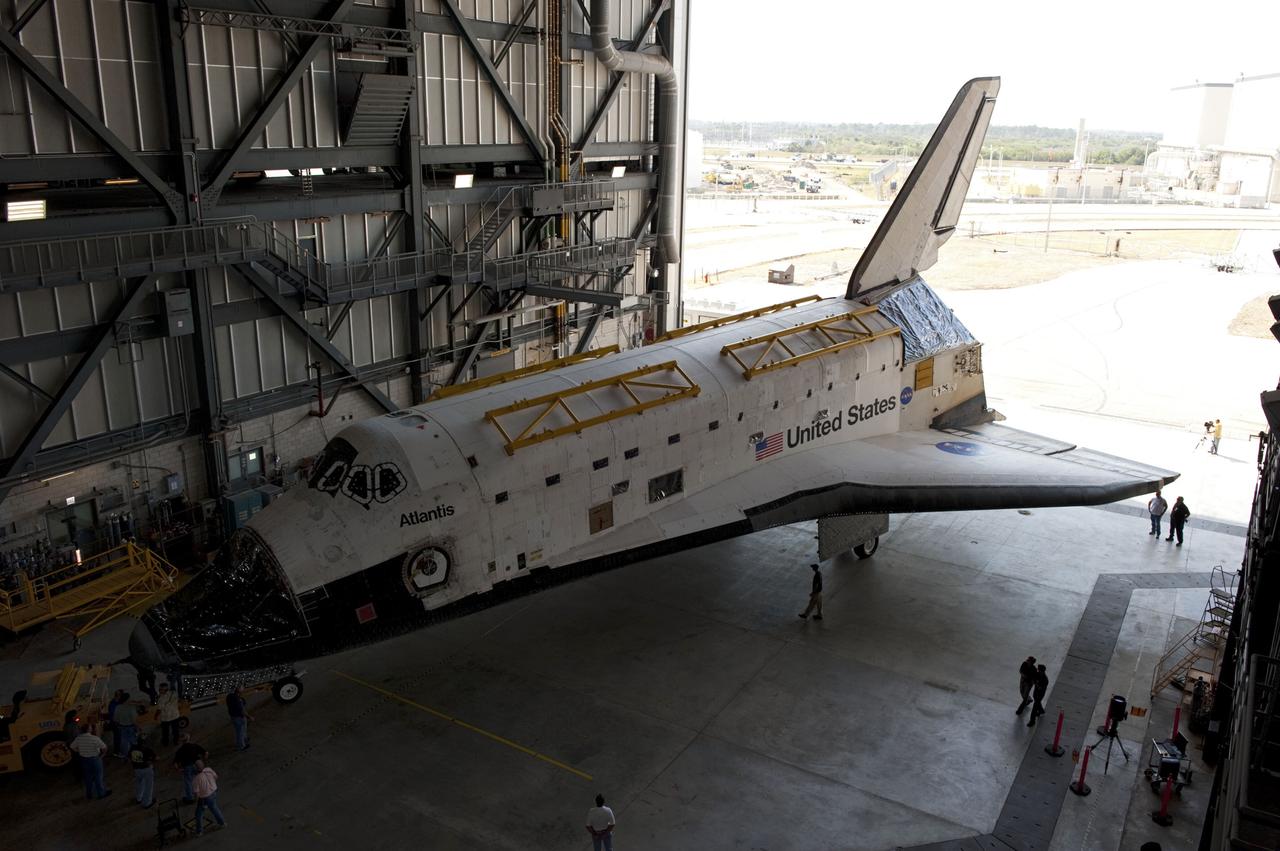
CAPE CANAVERAL, Fla. – At NASA’s Kennedy Space Center in Florida, space shuttle Atlantis is towed into the Vehicle Assembly Building (VAB) high bay 4 after being towed around from the VAB transfer aisle. Shuttle Atlantis will remain in temporary storage in high bay 4, while Space Shuttle Program transition and retirement work continues on Discovery and Endeavour in the orbiter processing facilities. Atlantis is being prepared for display at the Kennedy Space Center Visitor Complex. Photo credit: NASA/Kim Shiflett
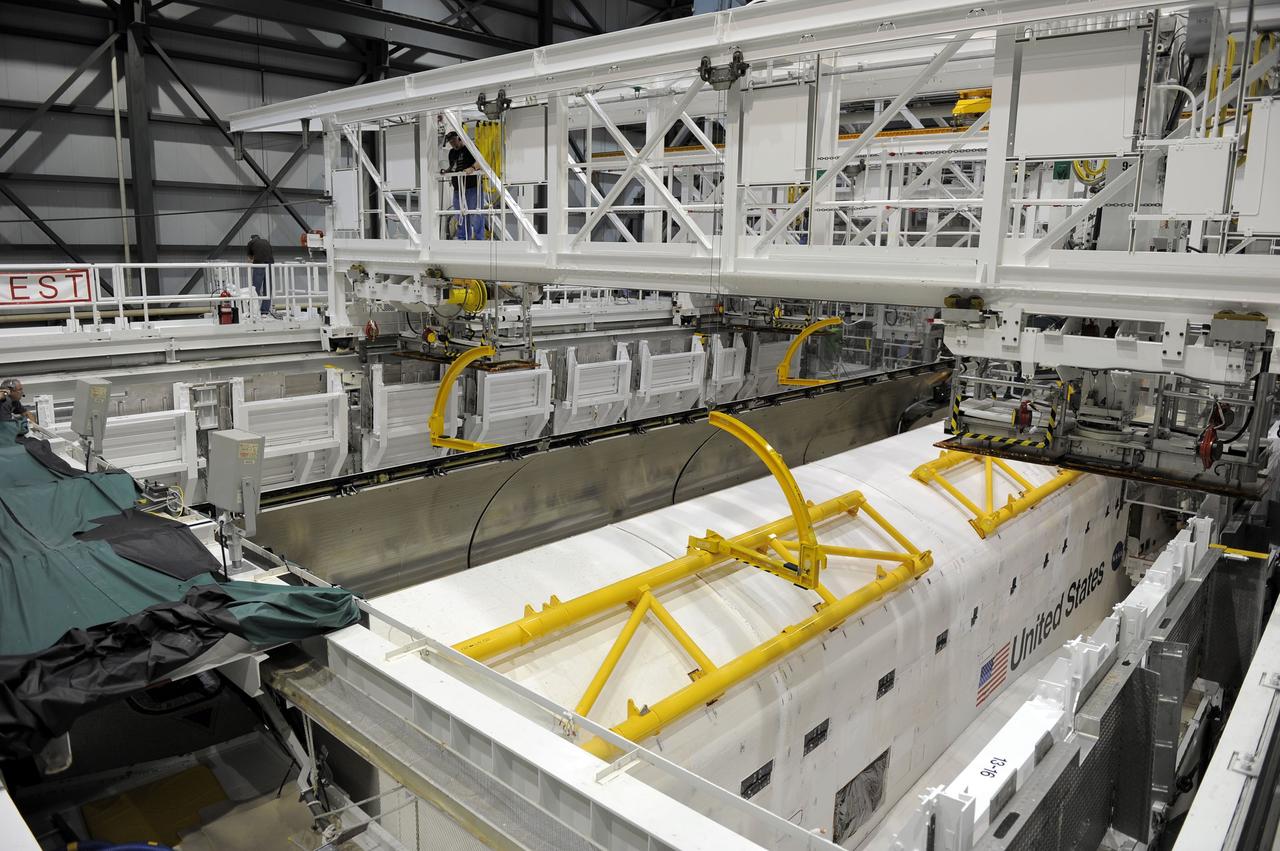
CAPE CANAVERAL, Fla. -- In Orbiter Processing Facility-2 at NASA’s Kennedy Space Center in Florida, technicians begin to open space shuttle Endeavour’s payload bay doors in order to retract an antenna. Space Shuttle Program transition and retirement work continues on Discovery and Endeavour in the orbiter processing facilities, while shuttle Atlantis is in temporary storage in high bay 4 of the Vehicle Assembly Building. Endeavour is being prepared for display at the California Science Center in Los Angeles. Photo credit: NASA/Kim Shiflett
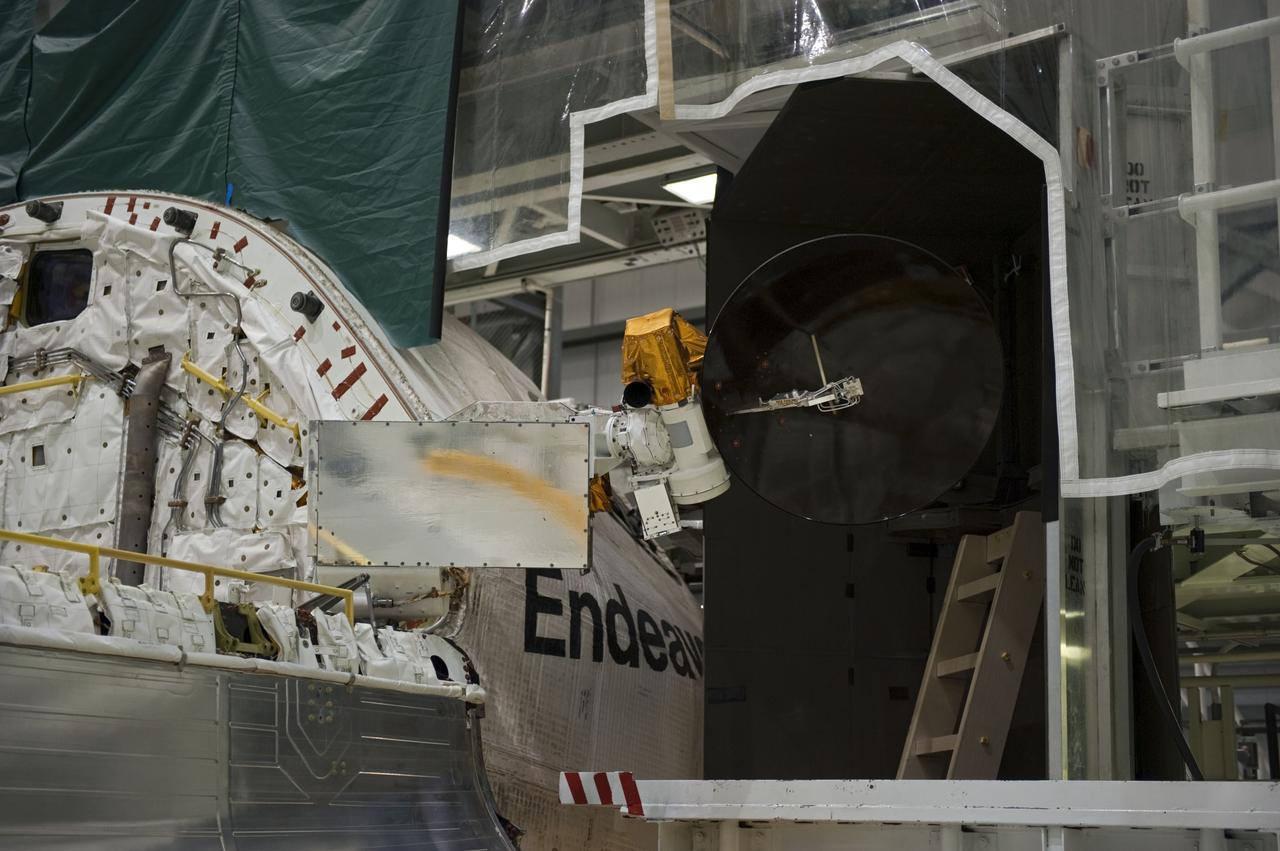
CAPE CANAVERAL, Fla. -- In Orbiter Processing Facility-2 at NASA’s Kennedy Space Center in Florida, one of space shuttle Endeavour’s payload bay doors has been fully opened and an antenna has been retracted. Space Shuttle Program transition and retirement work continues on Discovery and Endeavour in the orbiter processing facilities, while shuttle Atlantis is in temporary storage in high bay 4 of the Vehicle Assembly Building. Endeavour is being prepared for display at the California Science Center in Los Angeles. Photo credit: NASA/Kim Shiflett
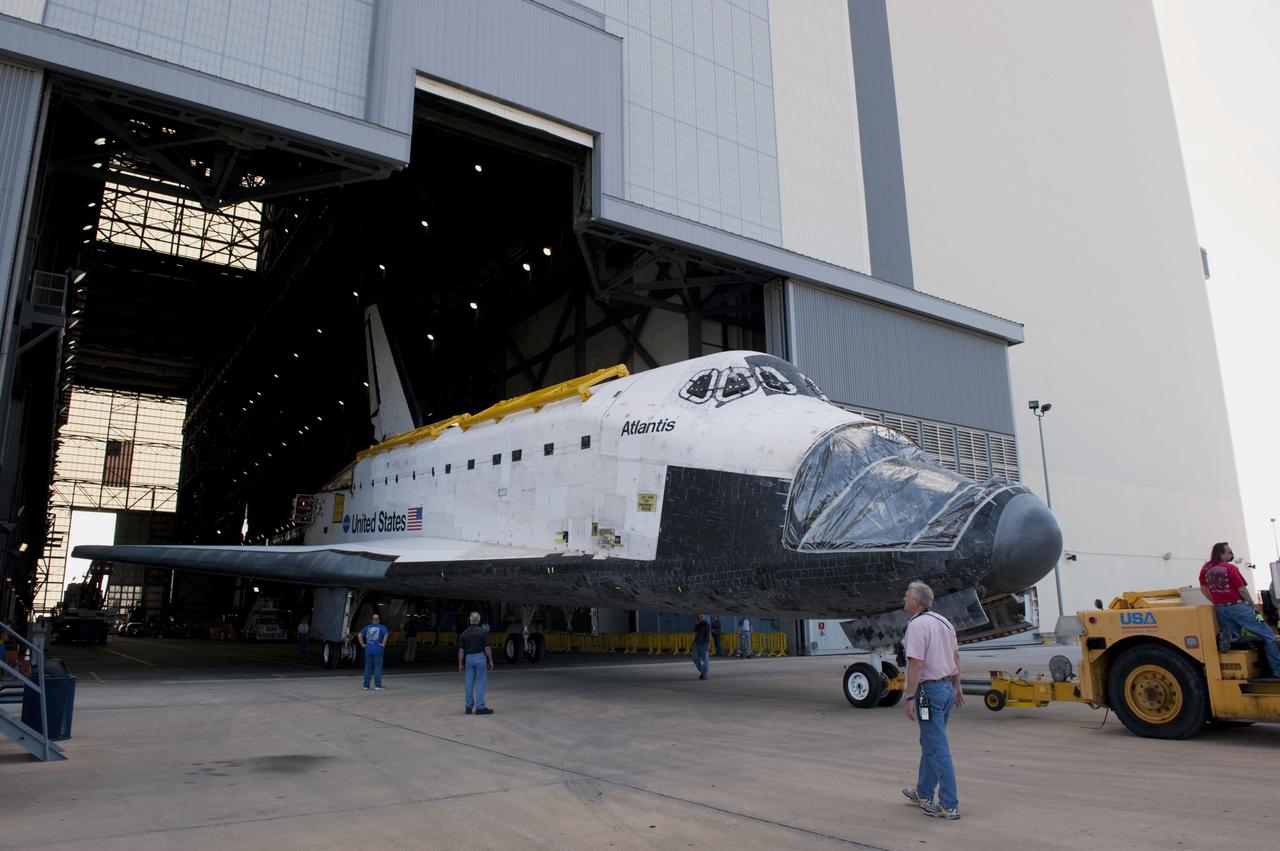
CAPE CANAVERAL, Fla. – At NASA’s Kennedy Space Center in Florida, technicians monitor the progress as space shuttle Atlantis is towed out of the Vehicle Assembly Building (VAB) transfer aisle and around to the VAB high bay 4 doors. Shuttle Atlantis will remain in temporary storage in high bay 4, while Space Shuttle Program transition and retirement work continues on Discovery and Endeavour in the orbiter processing facilities. Atlantis is being prepared for display at the Kennedy Space Center Visitor Complex. Photo credit: NASA/Kim Shiflett
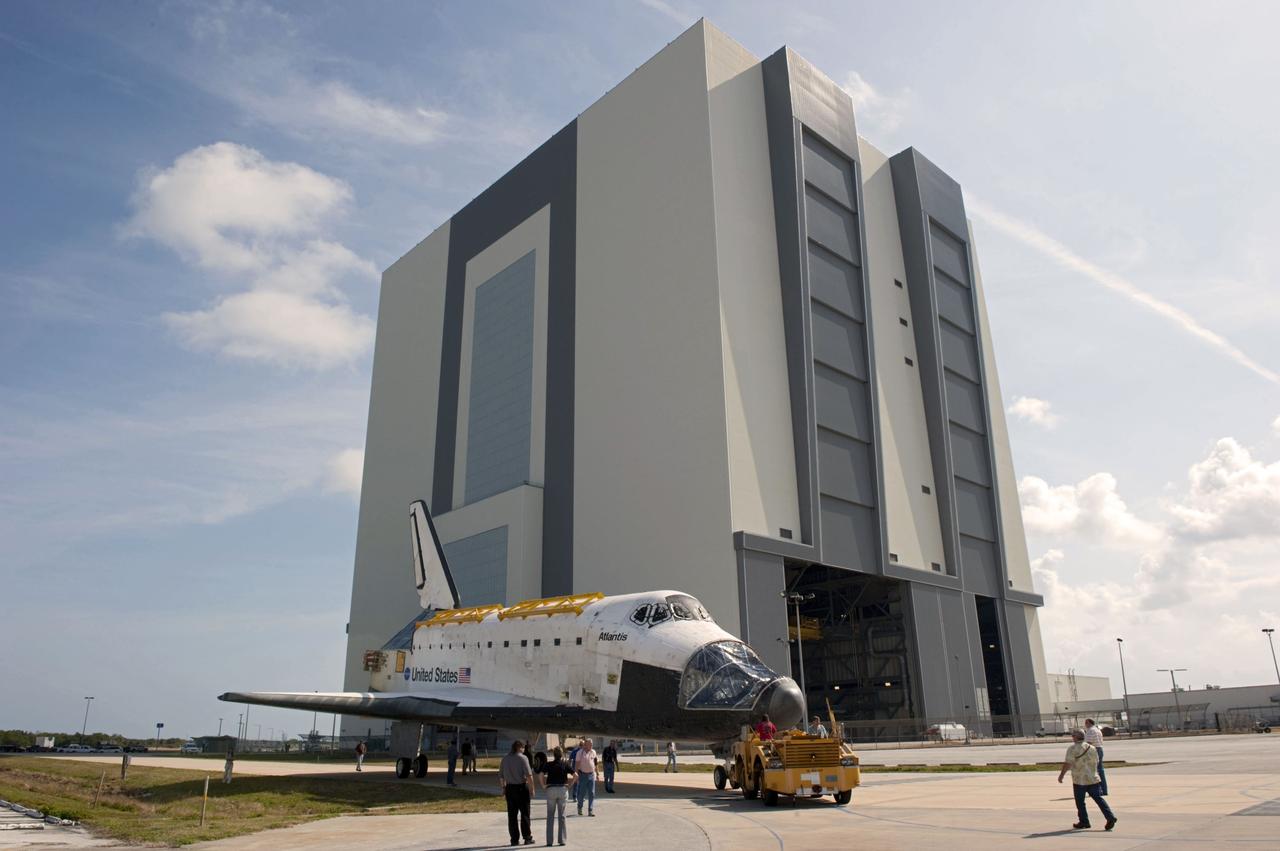
CAPE CANAVERAL, Fla. – At NASA’s Kennedy Space Center in Florida, space shuttle Atlantis is towed from the Vehicle Assembly Building (VAB) transfer aisle on its way around to the VAB high bay 4 doors. Shuttle Atlantis will remain in temporary storage in high bay 4, while Space Shuttle Program transition and retirement work continues on Discovery and Endeavour in the orbiter processing facilities. Atlantis is being prepared for display at the Kennedy Space Center Visitor Complex. Photo credit: NASA/Kim Shiflett
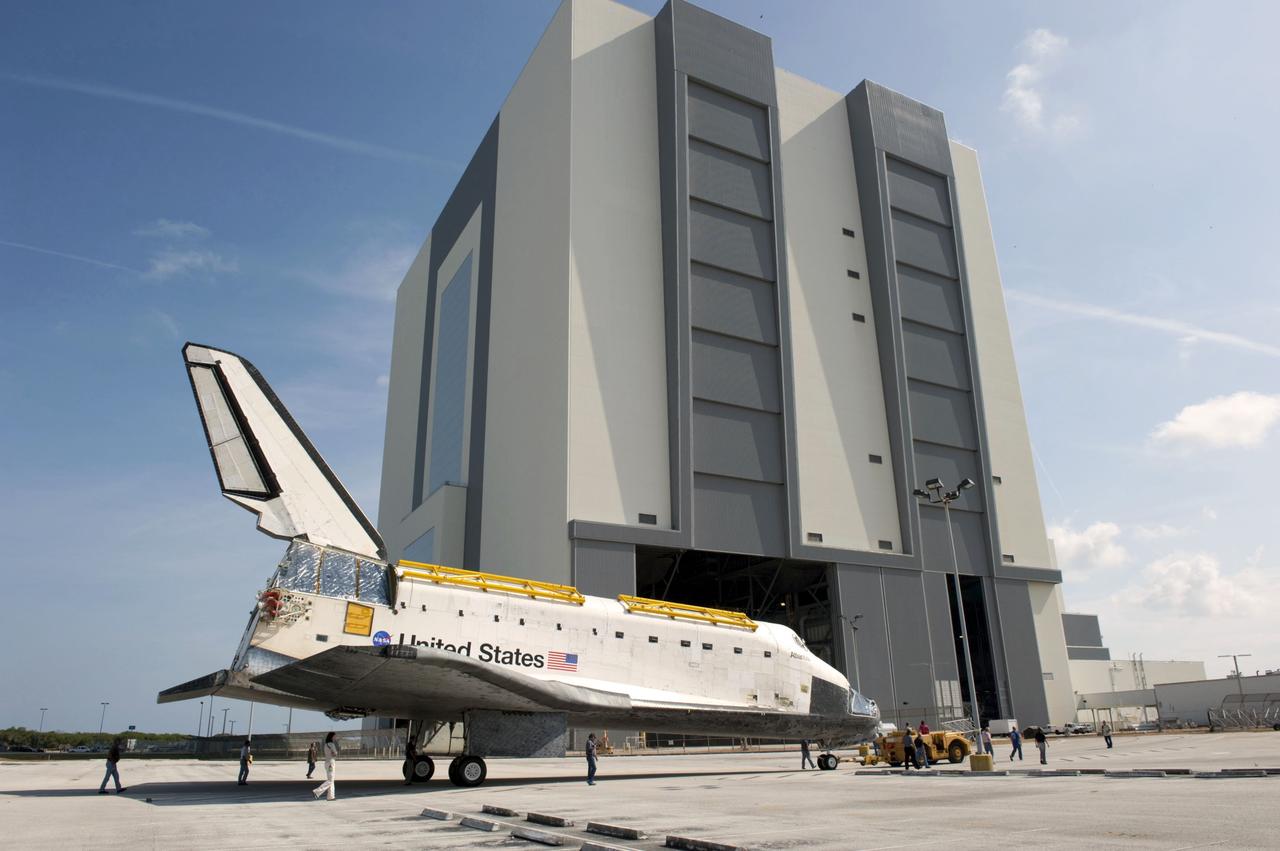
CAPE CANAVERAL, Fla. – At NASA’s Kennedy Space Center in Florida, space shuttle Atlantis is towed around toward the Vehicle Assembly Building (VAB) high bay 4 doors from the VAB transfer aisle. Shuttle Atlantis will remain in temporary storage in high bay 4, while Space Shuttle Program transition and retirement work continues on Discovery and Endeavour in the orbiter processing facilities. Atlantis is being prepared for display at the Kennedy Space Center Visitor Complex. Photo credit: NASA/Kim Shiflett
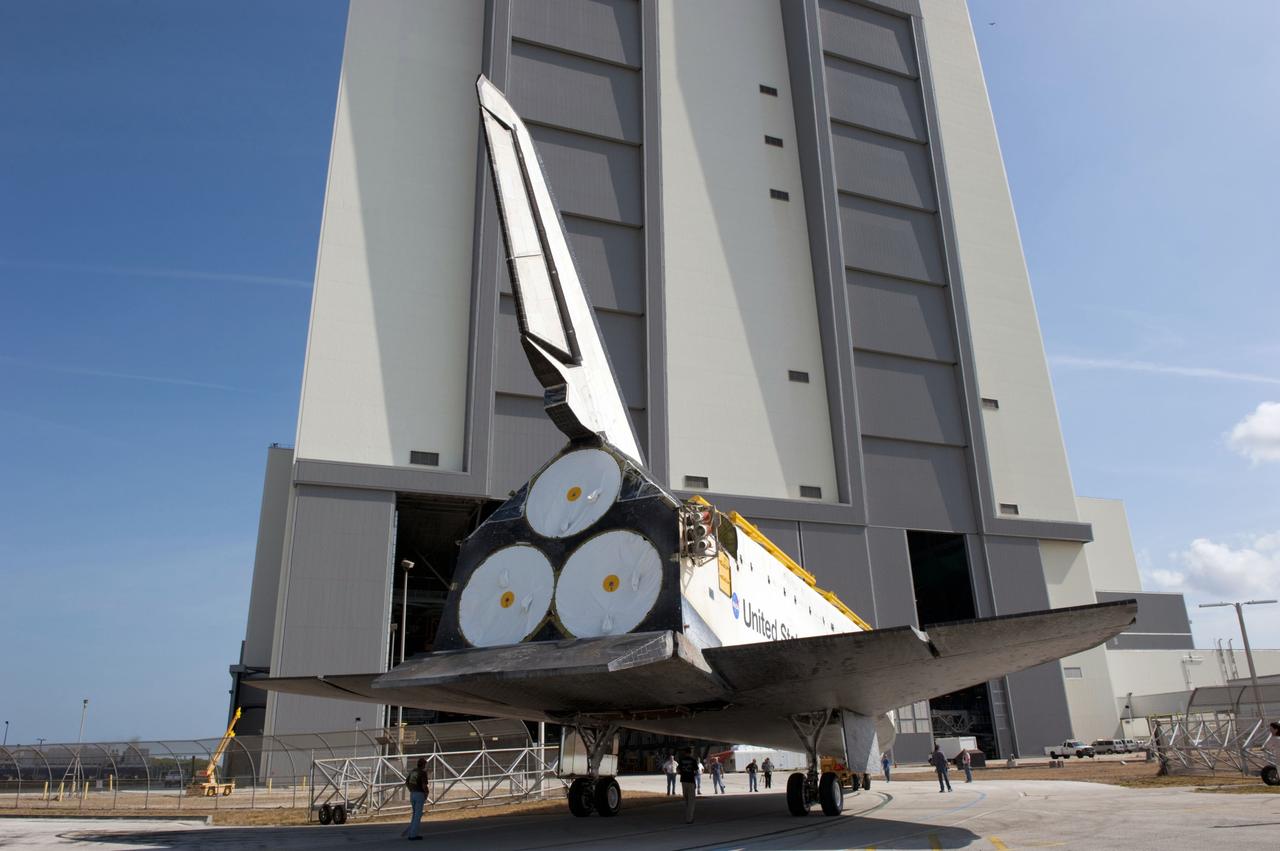
CAPE CANAVERAL, Fla. – At NASA’s Kennedy Space Center in Florida, space shuttle Atlantis is towed toward the Vehicle Assembly Building (VAB) high bay 4 doors after being towed around from the VAB transfer aisle. Shuttle Atlantis will remain in temporary storage in high bay 4, while Space Shuttle Program transition and retirement work continues on Discovery and Endeavour in the orbiter processing facilities. Atlantis is being prepared for display at the Kennedy Space Center Visitor Complex. Photo credit: NASA/Kim Shiflett
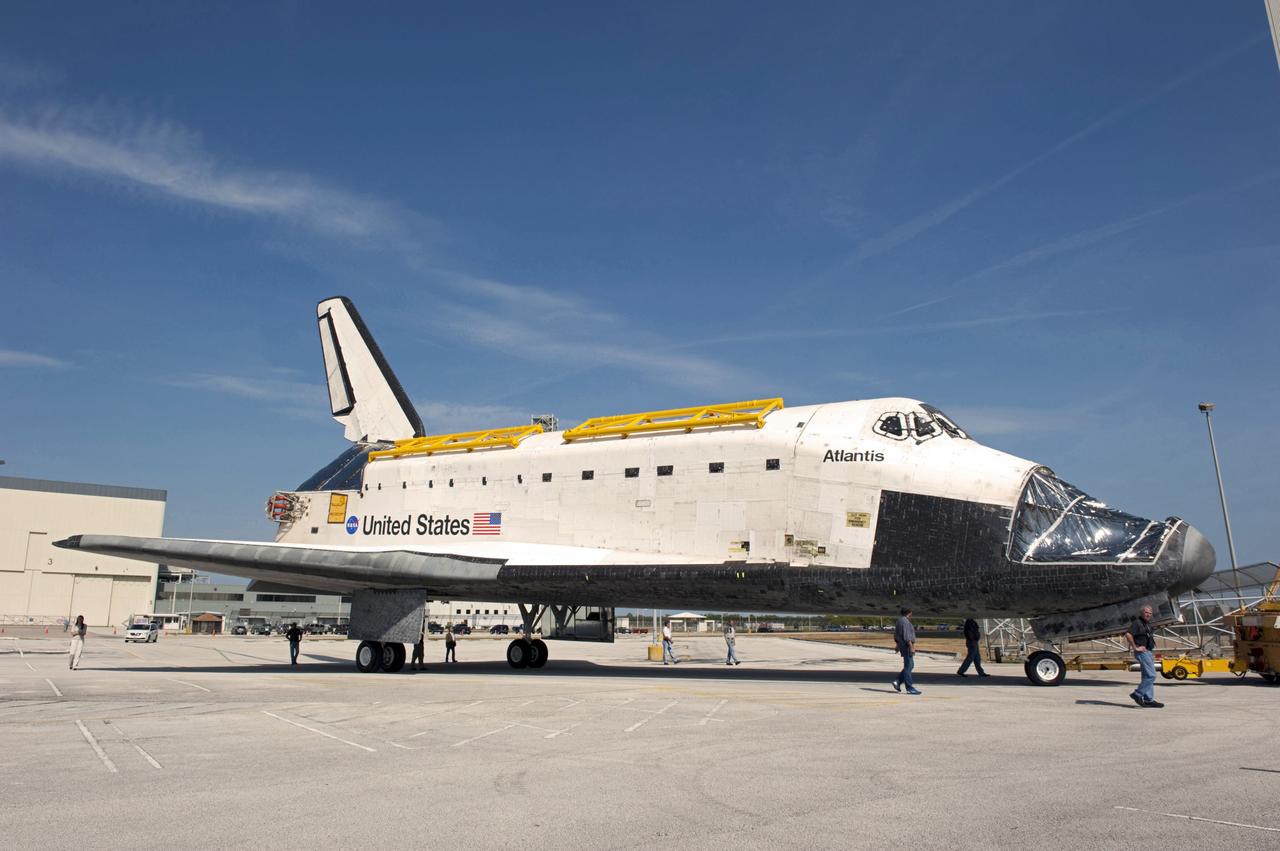
CAPE CANAVERAL, Fla. – At NASA’s Kennedy Space Center in Florida, space shuttle Atlantis is towed toward the Vehicle Assembly Building (VAB) high bay 4 doors after being towed around from the VAB transfer aisle. Shuttle Atlantis will remain in temporary storage in high bay 4, while Space Shuttle Program transition and retirement work continues on Discovery and Endeavour in the orbiter processing facilities. Atlantis is being prepared for display at the Kennedy Space Center Visitor Complex. Photo credit: NASA/Kim Shiflett
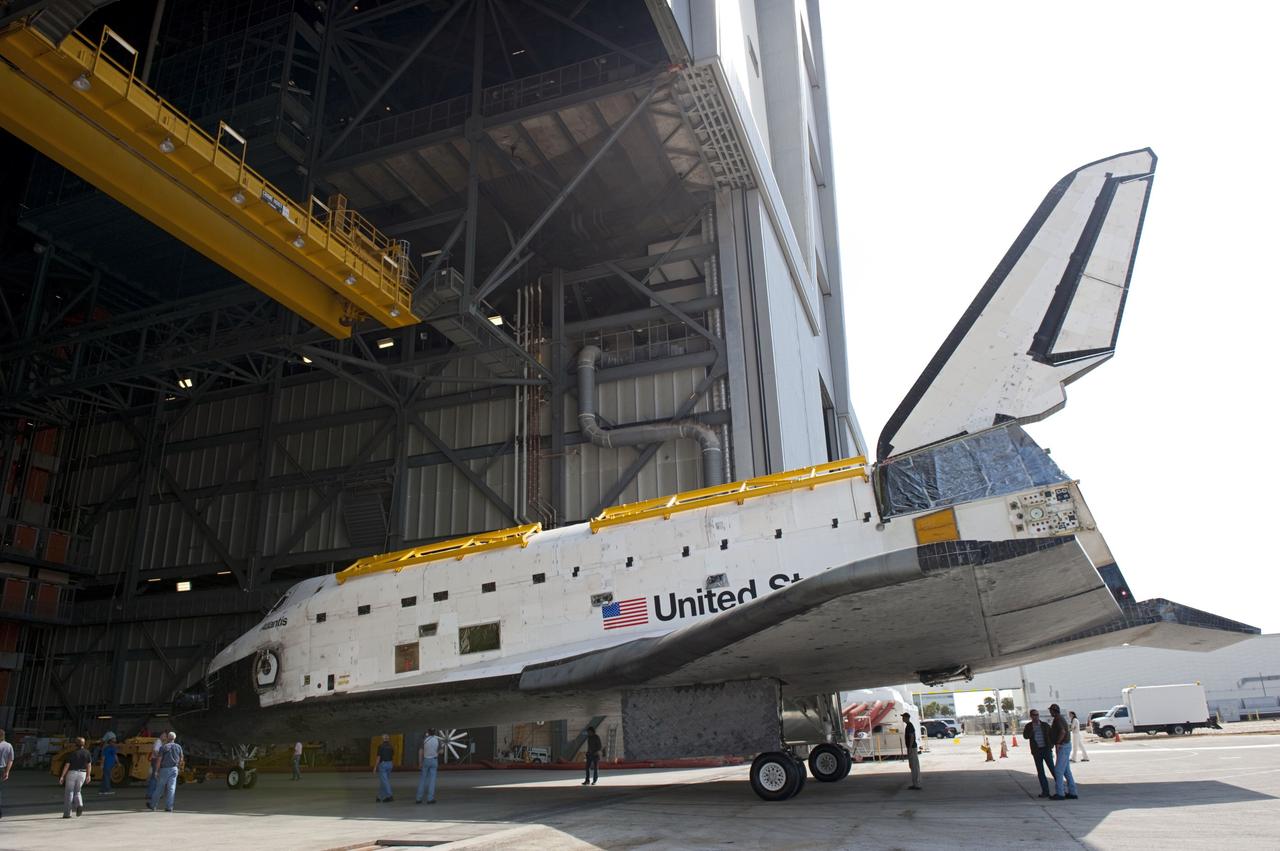
CAPE CANAVERAL, Fla. – At NASA’s Kennedy Space Center in Florida, space shuttle Atlantis is towed into the Vehicle Assembly Building (VAB) high bay 4 after being towed around from the VAB transfer aisle. Shuttle Atlantis will remain in temporary storage in high bay 4, while Space Shuttle Program transition and retirement work continues on Discovery and Endeavour in the orbiter processing facilities. Atlantis is being prepared for display at the Kennedy Space Center Visitor Complex. Photo credit: NASA/Kim Shiflett
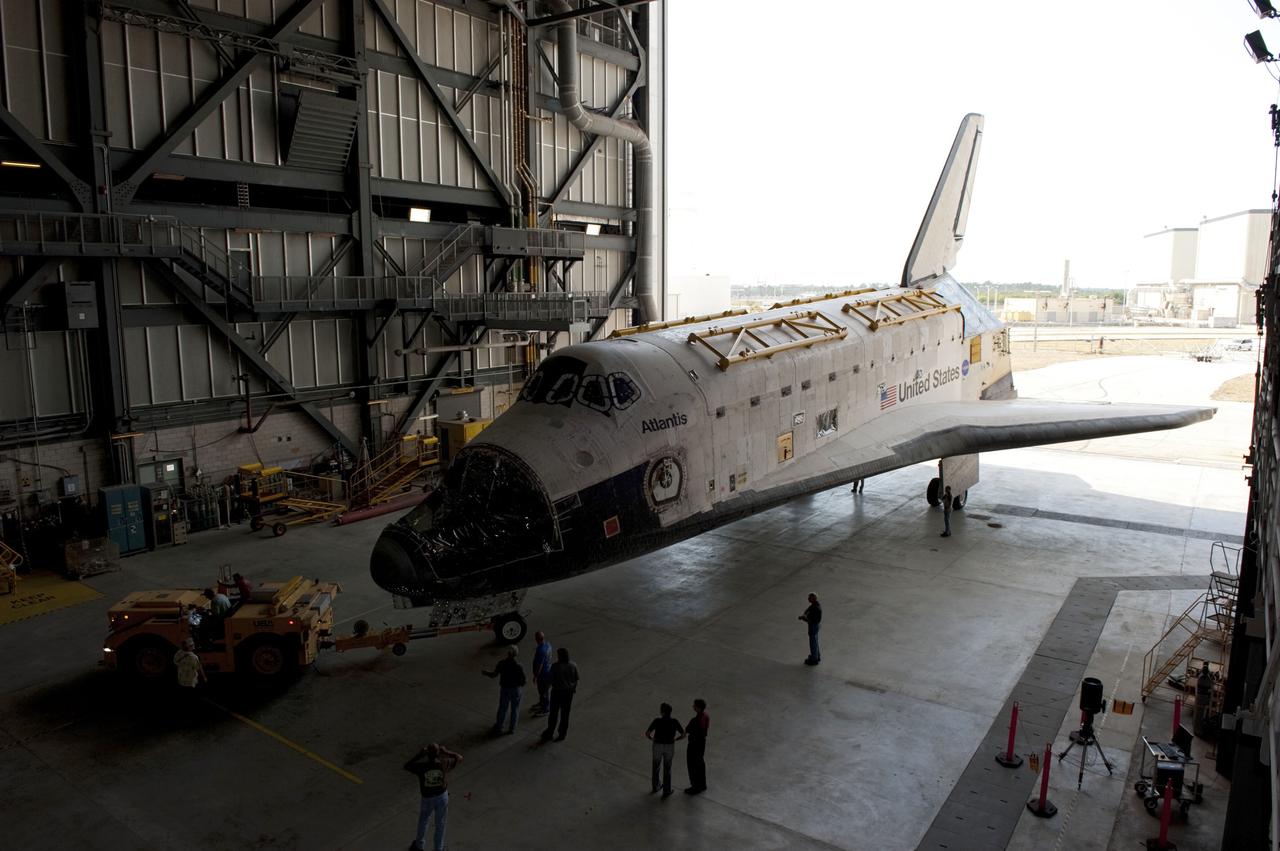
CAPE CANAVERAL, Fla. – At NASA’s Kennedy Space Center in Florida, space shuttle Atlantis is towed into the Vehicle Assembly Building (VAB) high bay 4 after being towed around from the VAB transfer aisle. Shuttle Atlantis will remain in temporary storage in high bay 4, while Space Shuttle Program transition and retirement work continues on Discovery and Endeavour in the orbiter processing facilities. Atlantis is being prepared for display at the Kennedy Space Center Visitor Complex. Photo credit: NASA/Kim Shiflett
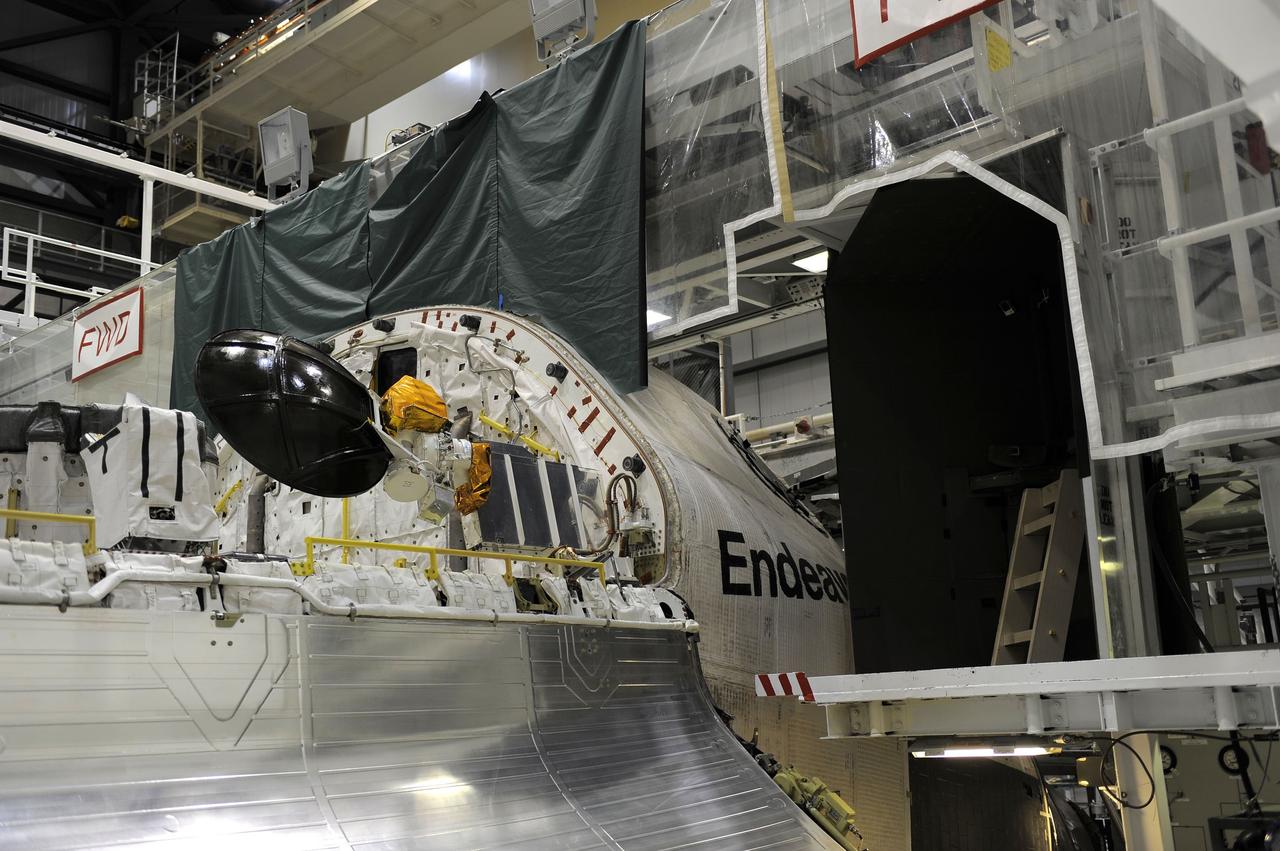
CAPE CANAVERAL, Fla. -- In Orbiter Processing Facility-2 at NASA’s Kennedy Space Center in Florida, one of space shuttle Endeavour’s payload bay doors has been fully opened so that an antenna can be retracted. Space Shuttle Program transition and retirement work continues on Discovery and Endeavour in the orbiter processing facilities, while shuttle Atlantis is in temporary storage in high bay 4 of the Vehicle Assembly Building. Endeavour is being prepared for display at the California Science Center in Los Angeles. Photo credit: NASA/Kim Shiflett
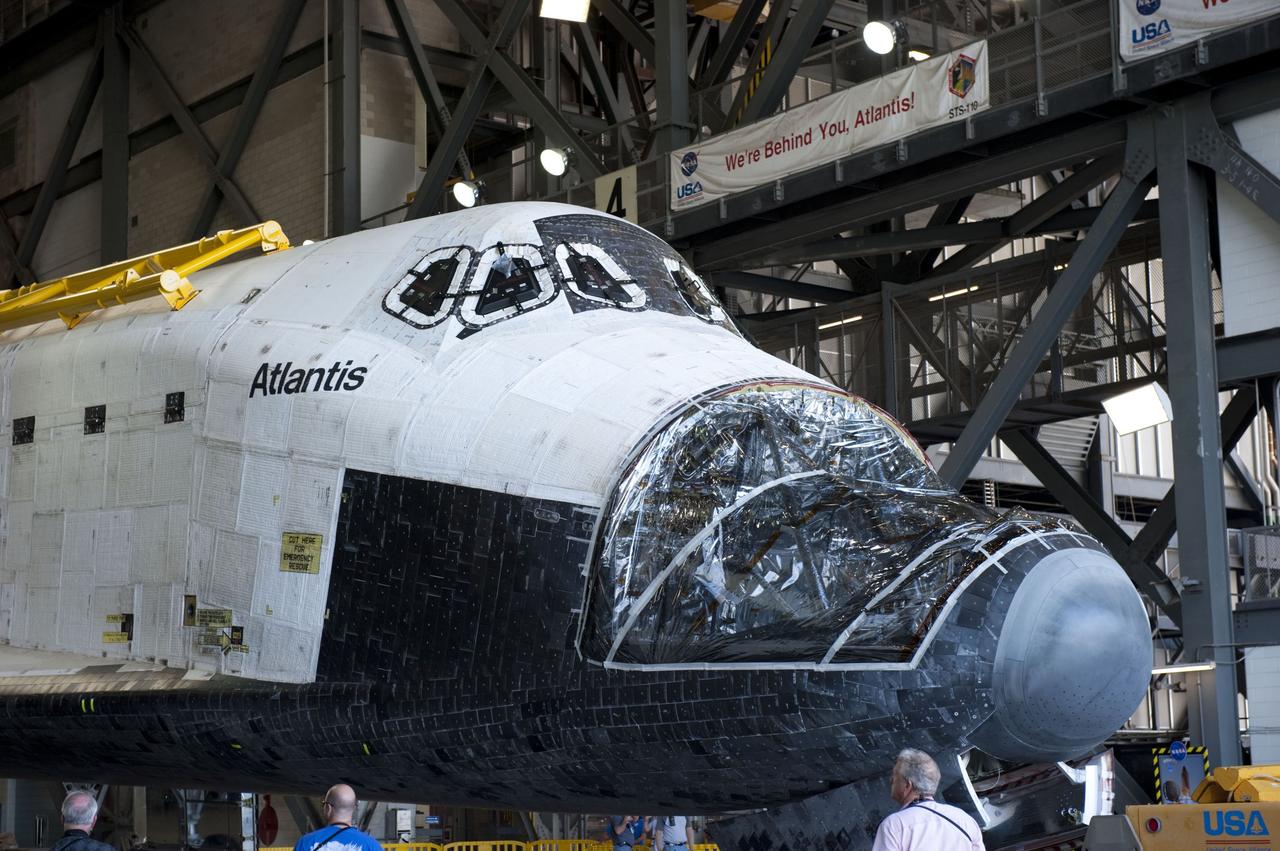
CAPE CANAVERAL, Fla. – Inside the Vehicle Assembly Building (VAB) at NASA’s Kennedy Space Center in Florida, technicians prepare space shuttle Atlantis to be towed out of the transfer aisle and around to the VAB high bay 4 doors. Shuttle Atlantis will remain in temporary storage in high bay 4, while Space Shuttle Program transition and retirement work continues on Discovery and Endeavour in the orbiter processing facilities. Atlantis is being prepared for display at the Kennedy Space Center Visitor Complex. Photo credit: NASA/Kim Shiflett
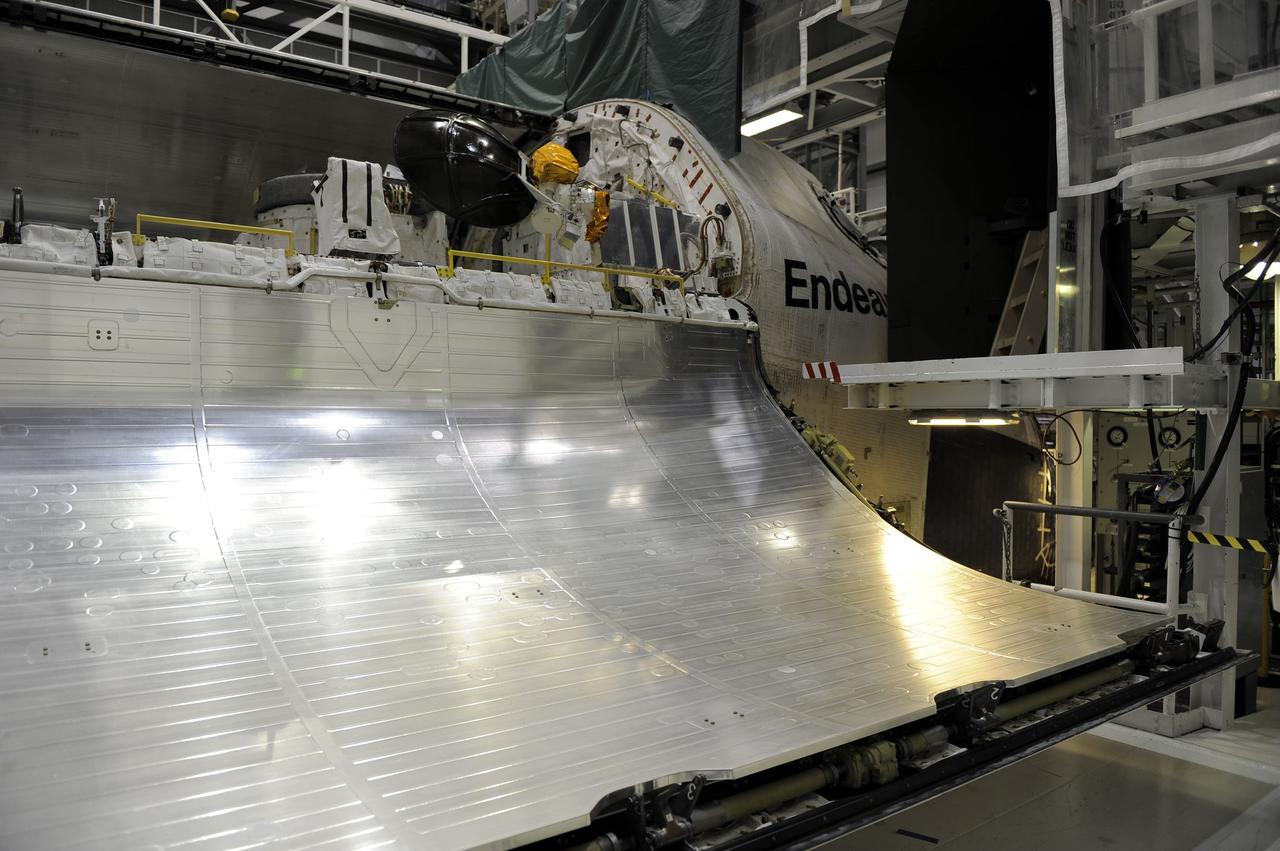
CAPE CANAVERAL, Fla. – In Orbiter Processing Facility-2 at NASA’s Kennedy Space Center in Florida, one of space shuttle Endeavour’s payload bay doors has been fully opened so that an antenna can be retracted. Space Shuttle Program transition and retirement work continues on Discovery and Endeavour in the orbiter processing facilities, while shuttle Atlantis is in temporary storage in high bay 4 of the Vehicle Assembly Building. Endeavour is being prepared for display at the California Science Center in Los Angeles. Photo credit: NASA/Kim Shiflett
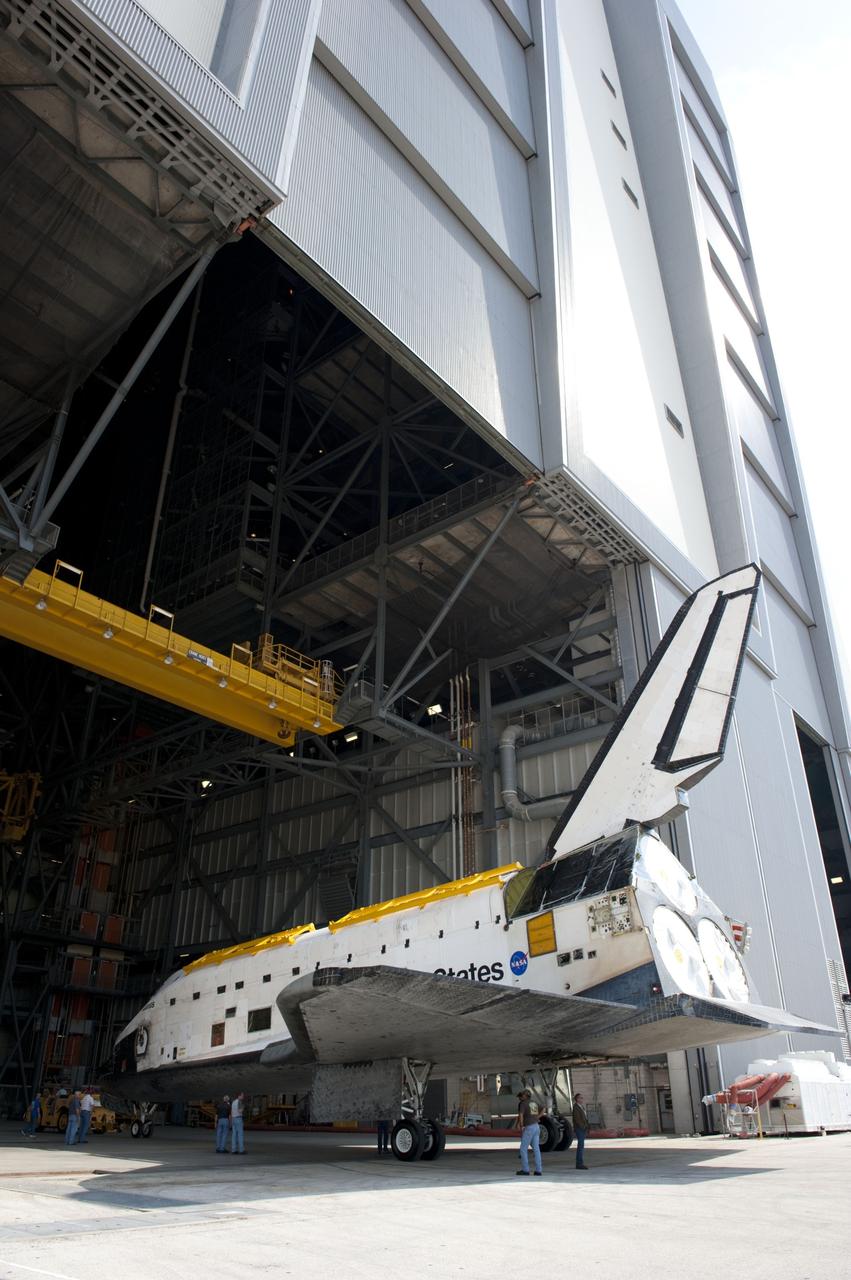
CAPE CANAVERAL, Fla. – At NASA’s Kennedy Space Center in Florida, space shuttle Atlantis is towed into the Vehicle Assembly Building (VAB) high bay 4 after being towed around from the VAB transfer aisle. Shuttle Atlantis will remain in temporary storage in high bay 4, while Space Shuttle Program transition and retirement work continues on Discovery and Endeavour in the orbiter processing facilities. Atlantis is being prepared for display at the Kennedy Space Center Visitor Complex. Photo credit: NASA/Kim Shiflett
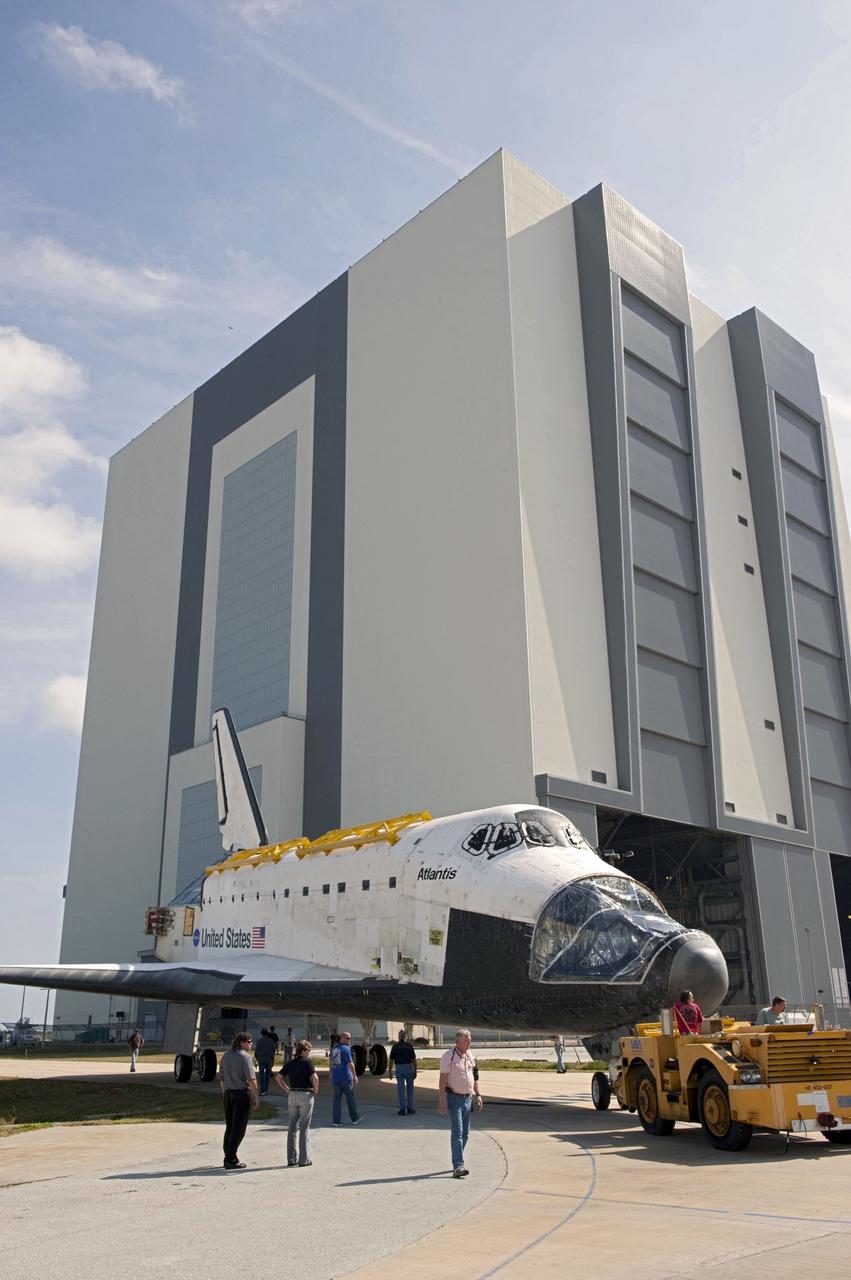
CAPE CANAVERAL, Fla. – At NASA’s Kennedy Space Center in Florida, space shuttle Atlantis is towed from the Vehicle Assembly Building (VAB) transfer aisle on its way around to the VAB high bay 4 doors. Shuttle Atlantis will remain in temporary storage in high bay 4, while Space Shuttle Program transition and retirement work continues on Discovery and Endeavour in the orbiter processing facilities. Atlantis is being prepared for display at the Kennedy Space Center Visitor Complex. Photo credit: NASA/Kim Shiflett
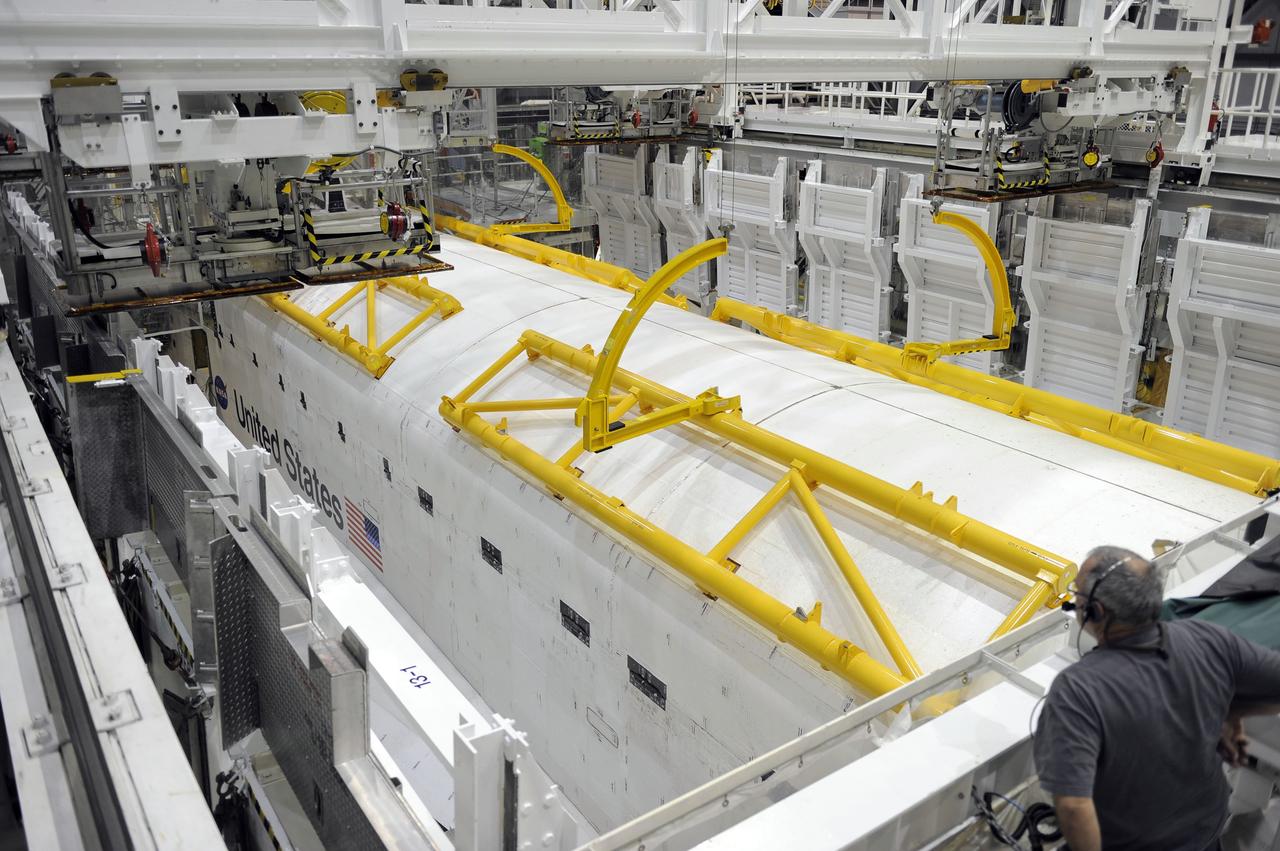
CAPE CANAVERAL, Fla. – In Orbiter Processing Facility-2 at NASA’s Kennedy Space Center in Florida, technicians prepare to open space shuttle Endeavour’s payload bay doors in order to retract an antenna. Space Shuttle Program transition and retirement work continues on Discovery and Endeavour in the orbiter processing facilities, while shuttle Atlantis is in temporary storage in high bay 4 of the Vehicle Assembly Building. Endeavour is being prepared for display at the California Science Center in Los Angeles. Photo credit: NASA/Kim Shiflett
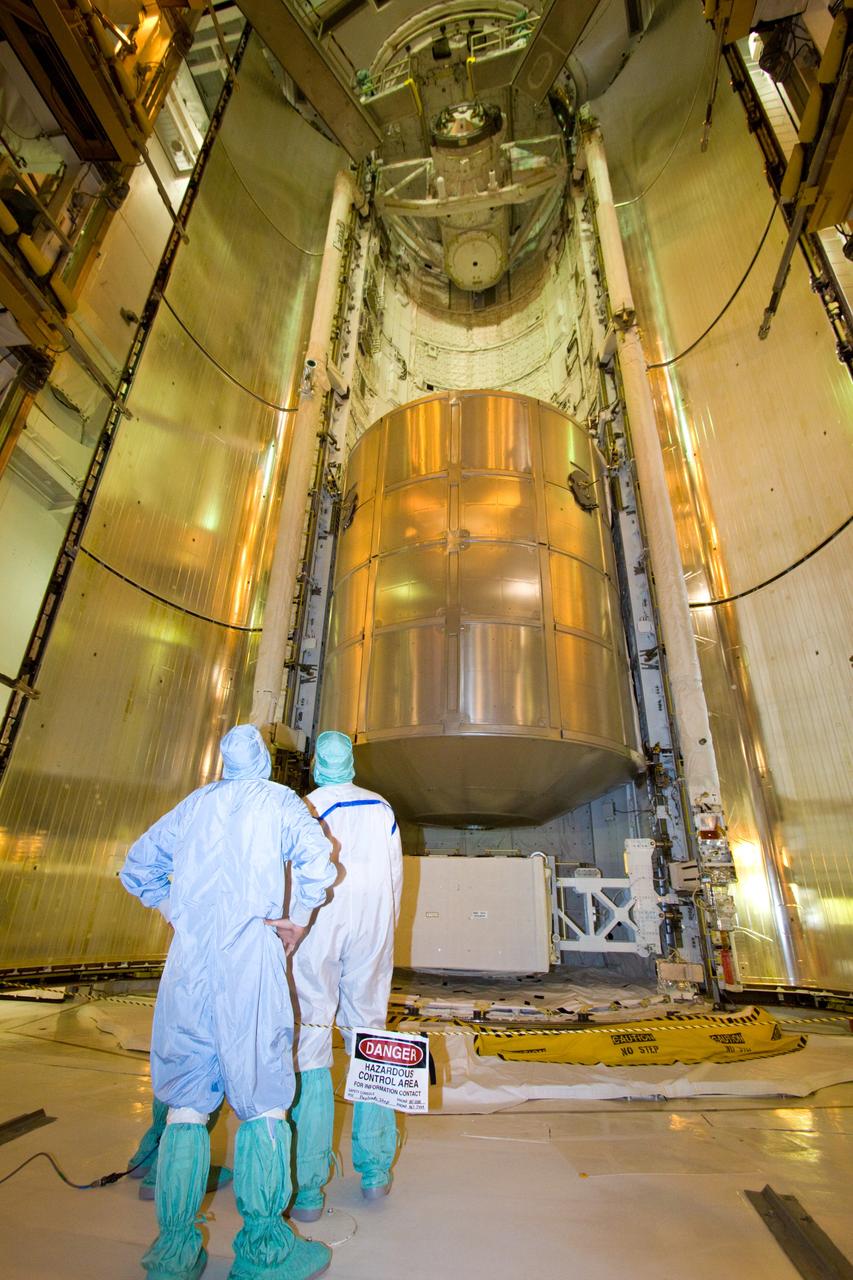
CAPE CANAVERAL, Fla. – On Launch Pad 39A, technicians observe as space shuttle Discovery's payload bay doors begin closing. Seen in the payload bay are the multi-purpose logistics module Leonardo and the lightweight multi-purpose experiment support structure carrier. Discovery will deliver 33,000 pounds of equipment to the station, including science and storage racks, a freezer to store research samples, a new sleeping compartment and the COLBERT treadmill. Launch is targeted for late August. Photo credit: NASA/Jack Pfaller
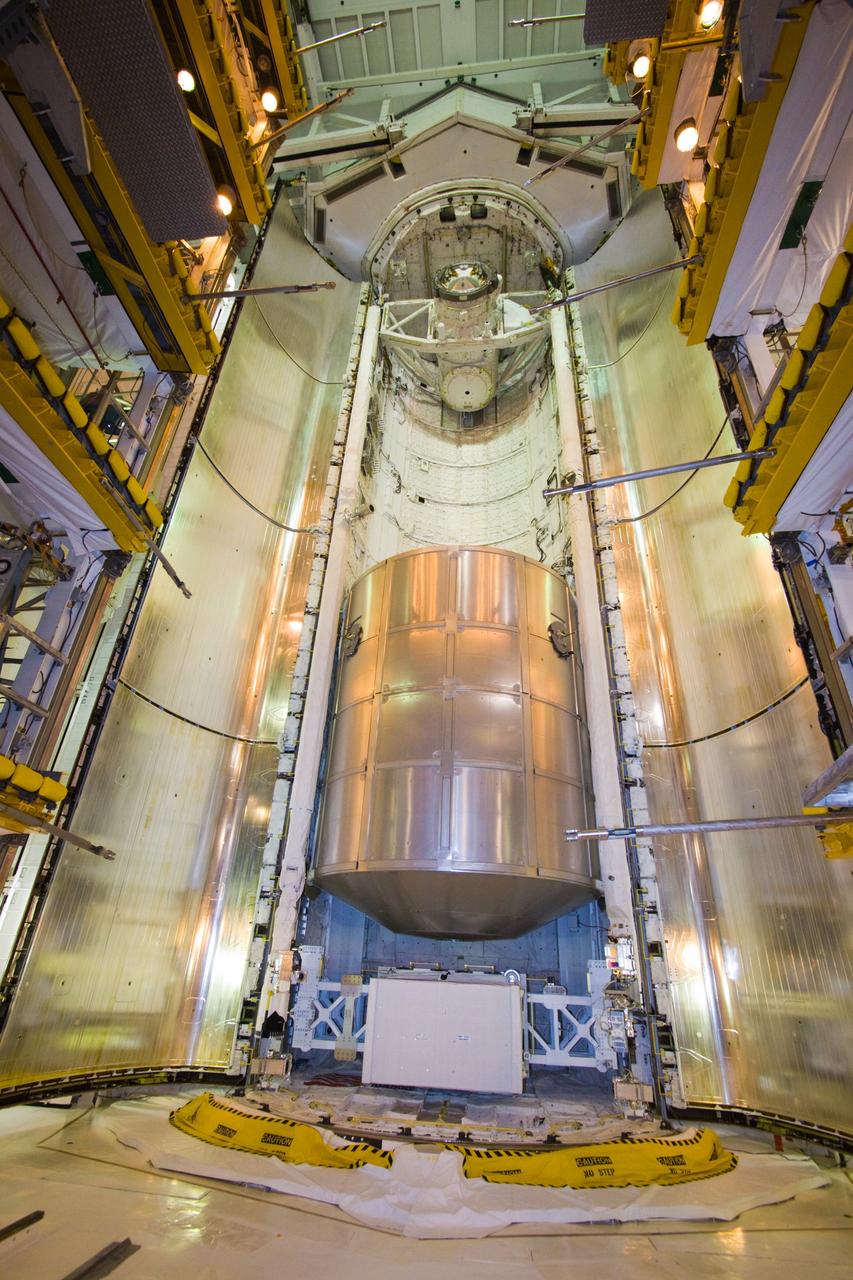
CAPE CANAVERAL, Fla. – On Launch Pad 39A, space shuttle Discovery's payload bay doors begin closing. Seen in the payload bay are the multi-purpose logistics module Leonardo and the lightweight multi-purpose experiment support structure carrier. Discovery will deliver 33,000 pounds of equipment to the station, including science and storage racks, a freezer to store research samples, a new sleeping compartment and the COLBERT treadmill. Launch is targeted for late August. Photo credit: NASA/Jack Pfaller
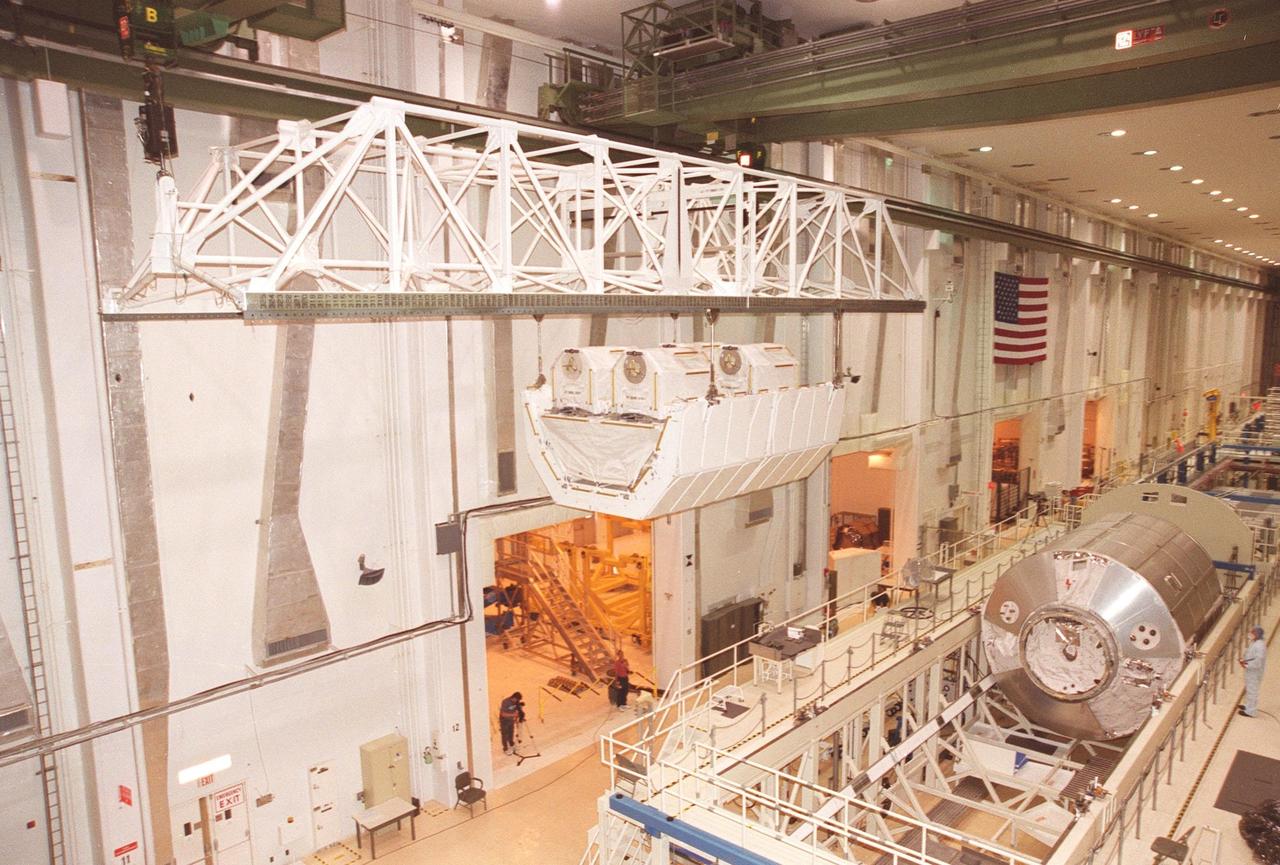
KENNEDY SPACE CENTER, FLA. -- In the Operations and Checkout Building, an overhead crane moves the high pressure gas assembly two gaseous oxygen and two gaseous nitrogen storage tanks to the payload canister for transfer to orbiter Atlantis’s payload bay. The tanks are part of the payload on mission STS-104. They will be attached to the Joint Airlock Module, also part of the payload, during two spacewalks. The storage tanks will support future spacewalk operations from the Station and augment the Service Module gas resupply system. STS-104 is scheduled for launch June 14 from Launch Pad 39B
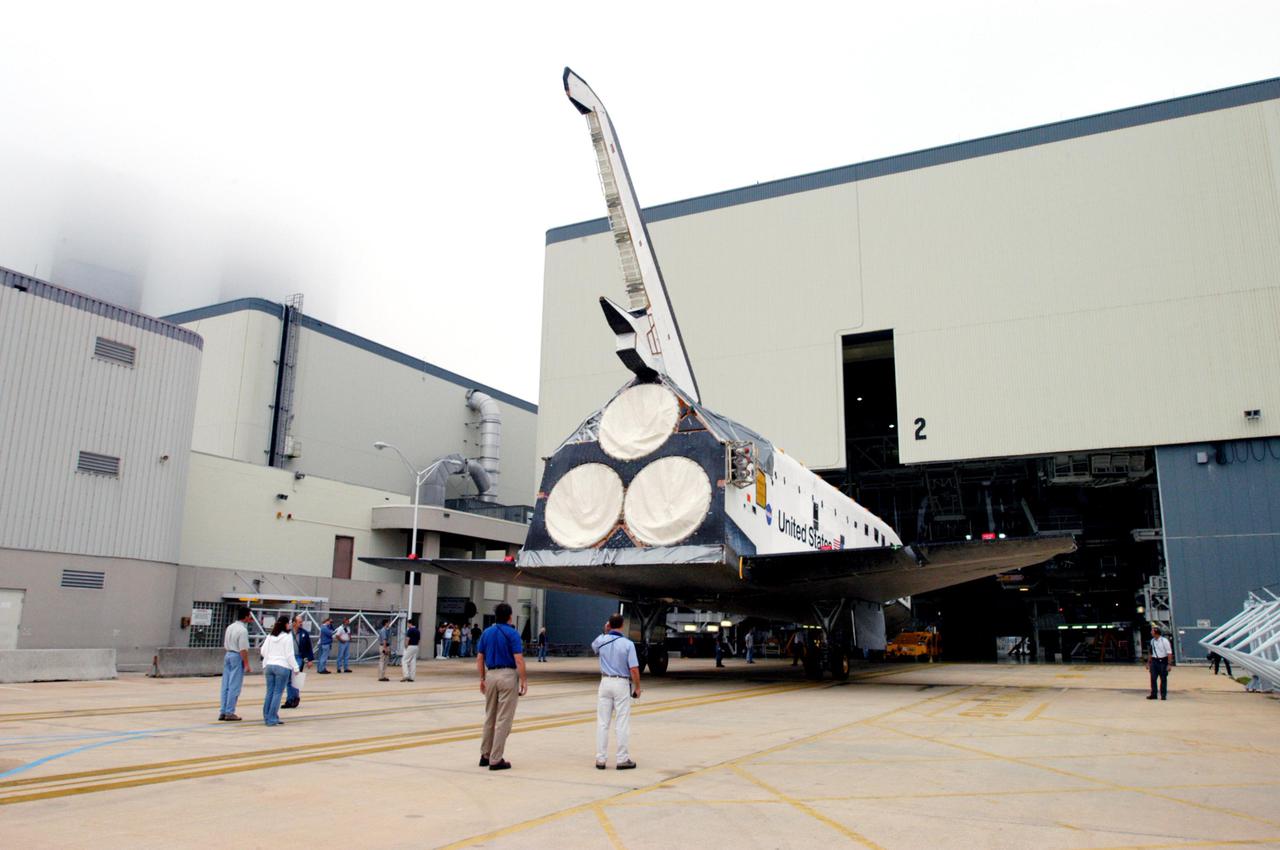
KENNEDY SPACE CENTER, FLA. - The orbiter Endeavour rolls out of the Orbiter Processing Facility. It is being moved to Florida Space Authority’s Reusable Launch Vehicle hangar for temporary storage. It left the Orbiter Processing Facility (OPF) to allow work to be performed in the OPF that can only be accomplished while the bay is empty. Work scheduled in the OPF includes modifications to the bay and platform validation in the bay. Endeavour will remain in the hangar for approximately 30 days, then return to the OPF. Endeavour was pulled out of service in December 2003 for Orbiter Major Modification (OMM). OMMs are scheduled at regular intervals to enhance safety and performance, infuse new technology, and, in this case, perform RTF modifications.
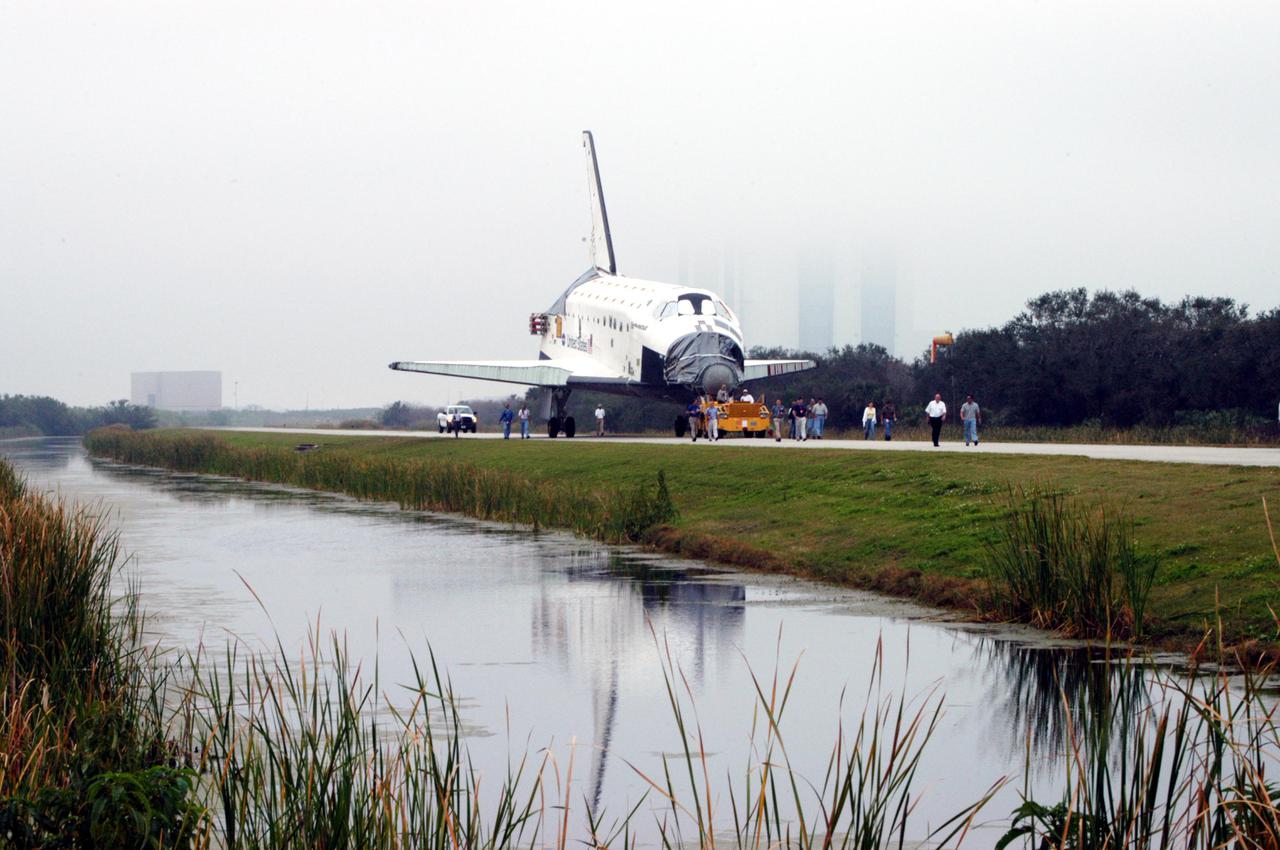
KENNEDY SPACE CENTER, FLA. - - With workers accompanying it, the orbiter Endeavour is being towed to Florida Space Authority’s Reusable Launch Vehicle hangar for temporary storage. Endeavour is being moved from the Orbiter Processing Facility (OPF) to allow work to be performed in the OPF that can only be accomplished while the bay is empty. Work scheduled in the OPF includes modifications to the bay and platform validation in the bay. Endeavour will remain in the hangar for approximately 30 days, then return to the OPF. Endeavour was pulled out of service in December 2003 for Orbiter Major Modification (OMM). OMMs are scheduled at regular intervals to enhance safety and performance, infuse new technology, and, in this case, perform RTF modifications.
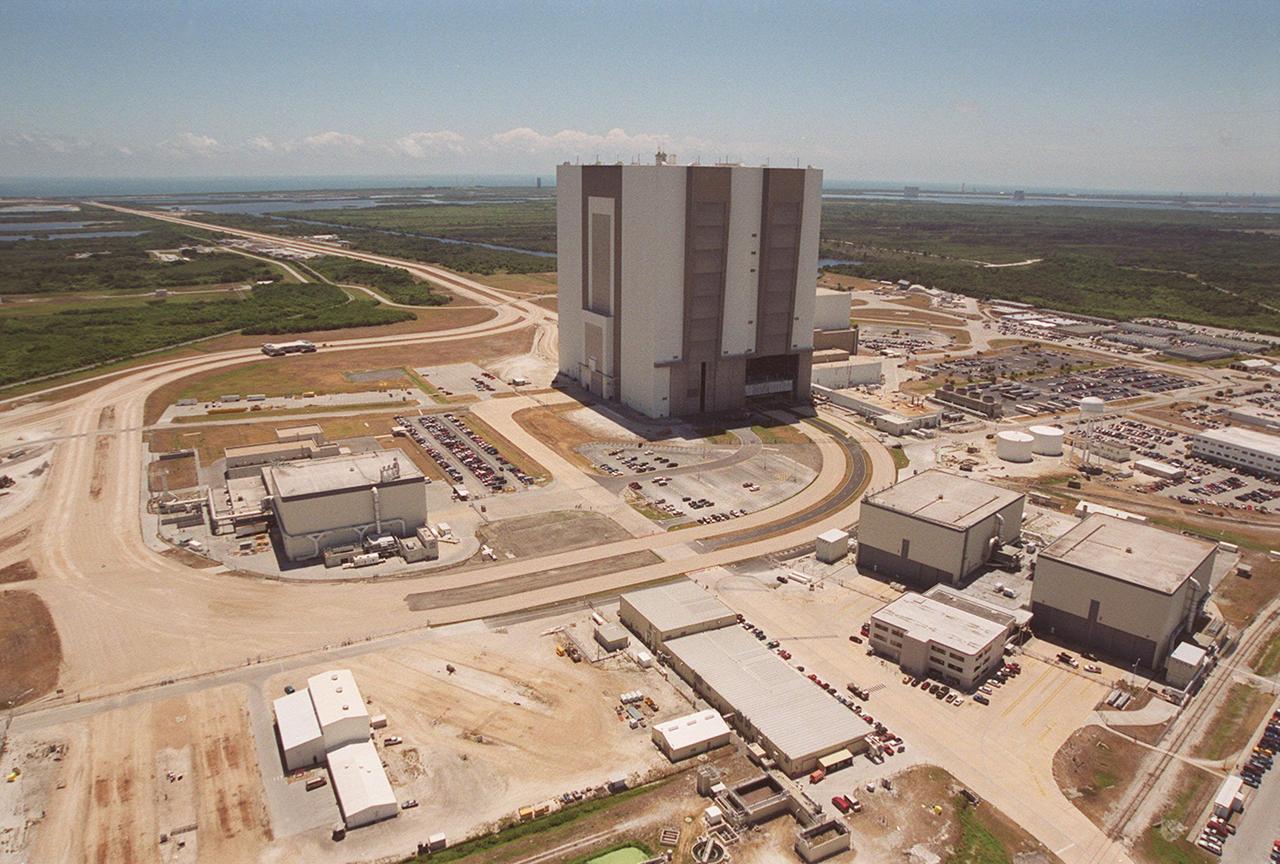
This aerial photo captures many of the facilities involved in Space Shuttle processing. At center is the Vehicle Assembly Building (VAB). The curved road is the newly restored crawlerway leading into the VAB high bay 2. The road restoration and high bay 2 are part of KSC's Safe Haven project, enabling the storage of orbiters during severe weather. The road circles around the Orbiter Processing Facility 3 (OPF-3) at left. OPF1 and OPF-2 are on the right below the curving road. East of the VAB, the crawlerway also extends from high bays 1 and 3 to the two Shuttle launch pads.
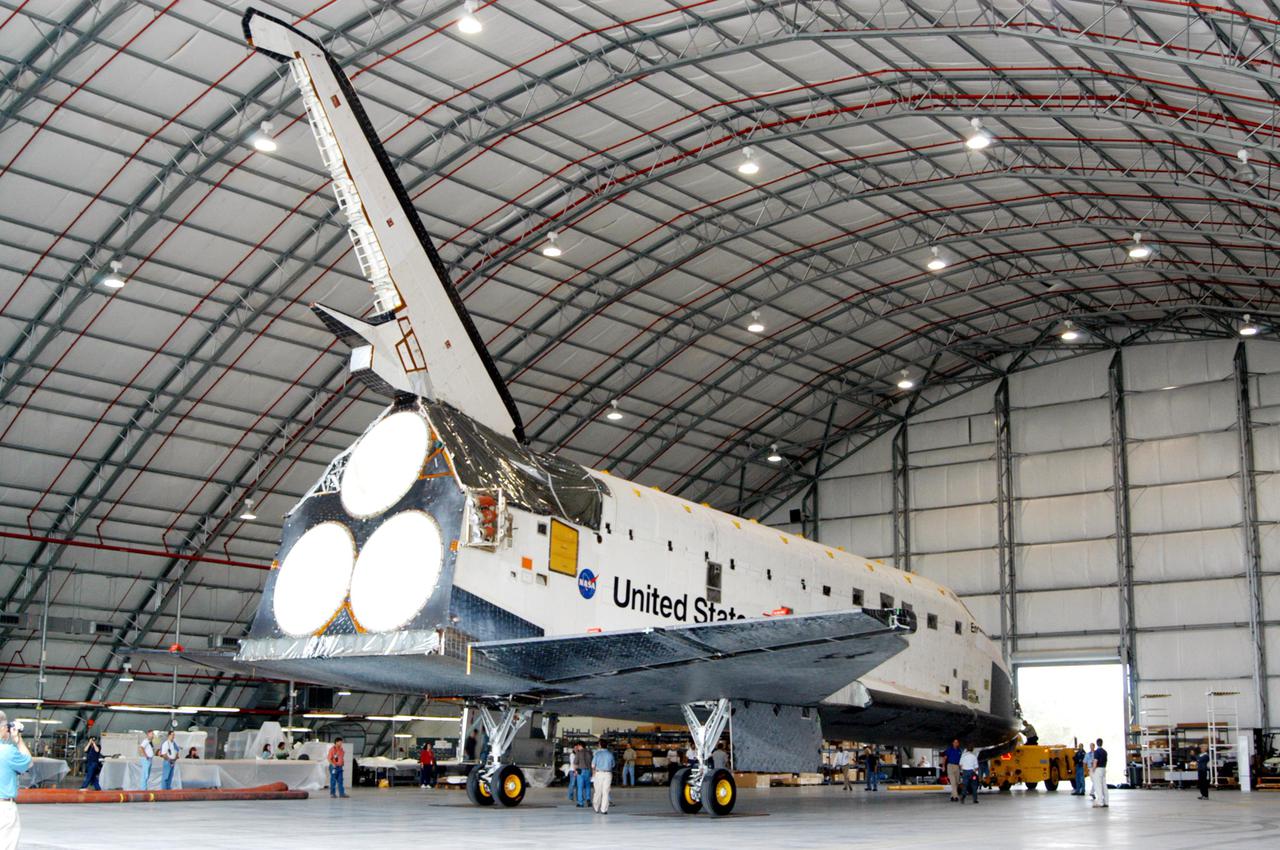
KENNEDY SPACE CENTER, FLA. - The orbiter Endeavour arrives inside Florida Space Authority’s Reusable Launch Vehicle hangar where it is being held for temporary storage. Endeavour was moved from the Orbiter Processing Facility (OPF) to allow work to be performed in the OPF that can only be accomplished while the bay is empty. Work scheduled in the OPF includes modifications to the bay and platform validation in the bay. Endeavour will remain in the hangar for approximately 30 days, then return to the OPF. Endeavour was pulled out of service in December 2003 for Orbiter Major Modification (OMM). OMMs are scheduled at regular intervals to enhance safety and performance, infuse new technology, and, in this case, perform RTF modifications.
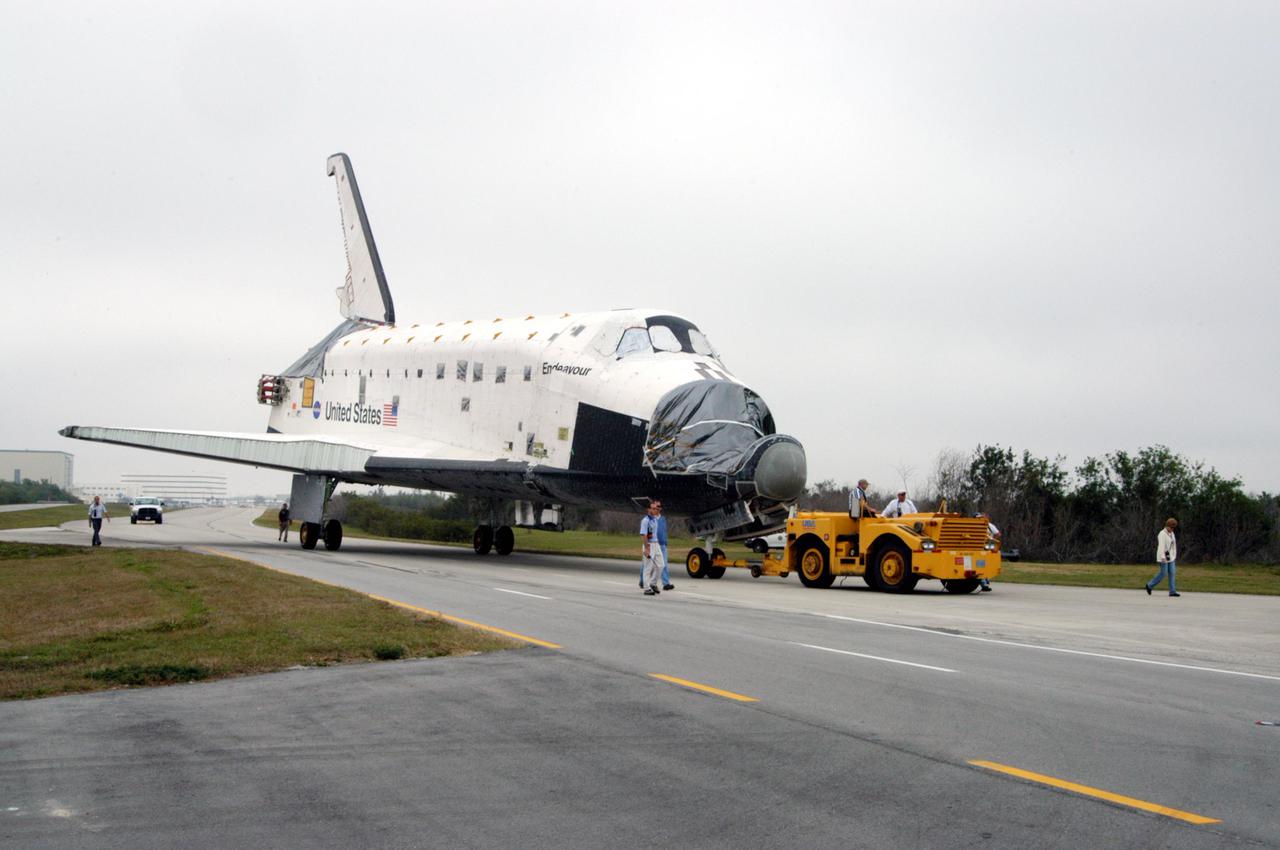
KENNEDY SPACE CENTER, FLA. - - The orbiter Endeavour is being towed to Florida Space Authority’s Reusable Launch Vehicle hangar for temporary storage. Endeavour is being moved from the Orbiter Processing Facility (OPF) to allow work to be performed in the OPF that can only be accomplished while the bay is empty. Work scheduled in the OPF includes modifications to the bay and platform validation in the bay. Endeavour will remain in the hangar for approximately 30 days, then return to the OPF. Endeavour was pulled out of service in December 2003 for Orbiter Major Modification (OMM). OMMs are scheduled at regular intervals to enhance safety and performance, infuse new technology, and, in this case, perform RTF modifications.
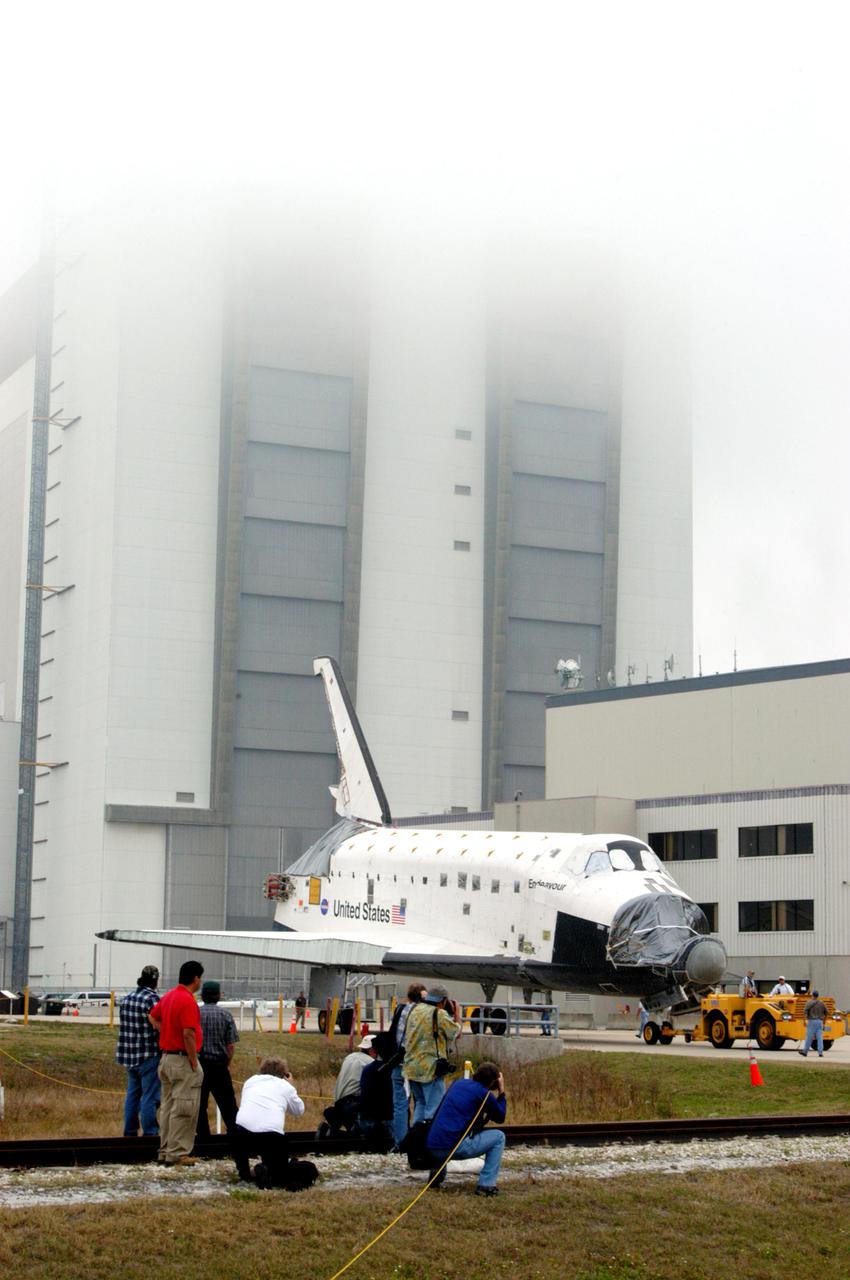
KENNEDY SPACE CENTER, FLA. - Workers watch as the orbiter Endeavour rolls past the Vehicle Assembly Building on its way to Florida Space Authority’s Reusable Launch Vehicle hangar for temporary storage. Endeavour is being moved from the Orbiter Processing Facility (OPF) to allow work to be performed in the OPF that can only be accomplished while the bay is empty. Work scheduled in the OPF includes modifications to the bay and platform validation in the bay. Endeavour will remain in the hangar for approximately 30 days, then return to the OPF. Endeavour was pulled out of service in December 2003 for Orbiter Major Modification (OMM). OMMs are scheduled at regular intervals to enhance safety and performance, infuse new technology, and, in this case, perform RTF modifications.
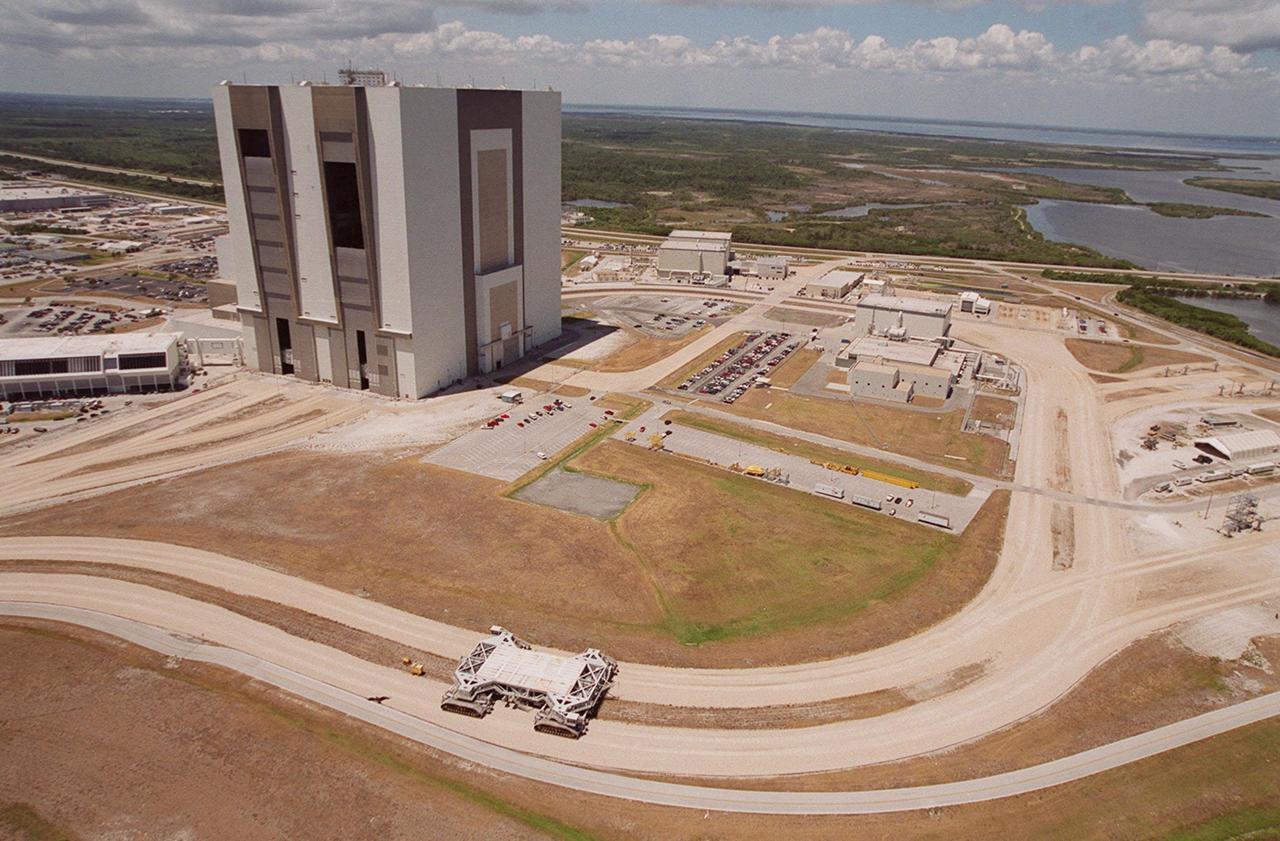
This aerial photo captures many of the facilities involved in Space Shuttle processing. At center is the Vehicle Assembly Building (VAB). The curved road in the foreground is the newly restored crawlerway leading into the VAB high bay 2. The road restoration and high bay 2 are part of KSC’s Safe Haven project, enabling the storage of orbiters during severe weather. The road circles around the Orbiter Processing Facility 3 (OPF-3) at right center. OPF1 and OPF-2 are just above the curving road. On the left of the VAB, the crawlerway also extends from high bays 1 and 3, past the Launch Control Center, out to the two Shuttle launch pads
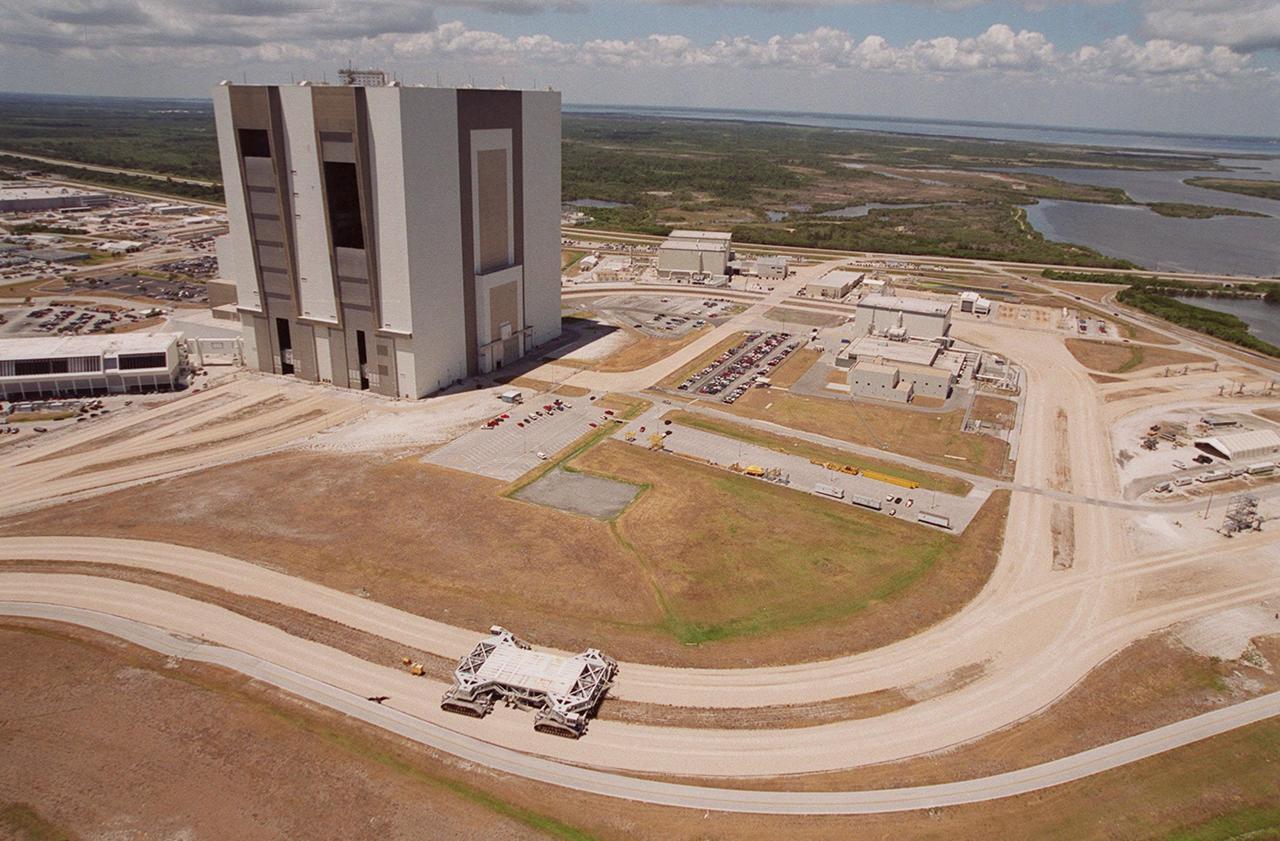
This aerial photo captures many of the facilities involved in Space Shuttle processing. At center is the Vehicle Assembly Building (VAB). The curved road in the foreground is the newly restored crawlerway leading into the VAB high bay 2. The road restoration and high bay 2 are part of KSC’s Safe Haven project, enabling the storage of orbiters during severe weather. The road circles around the Orbiter Processing Facility 3 (OPF-3) at right center. OPF1 and OPF-2 are just above the curving road. On the left of the VAB, the crawlerway also extends from high bays 1 and 3, past the Launch Control Center, out to the two Shuttle launch pads
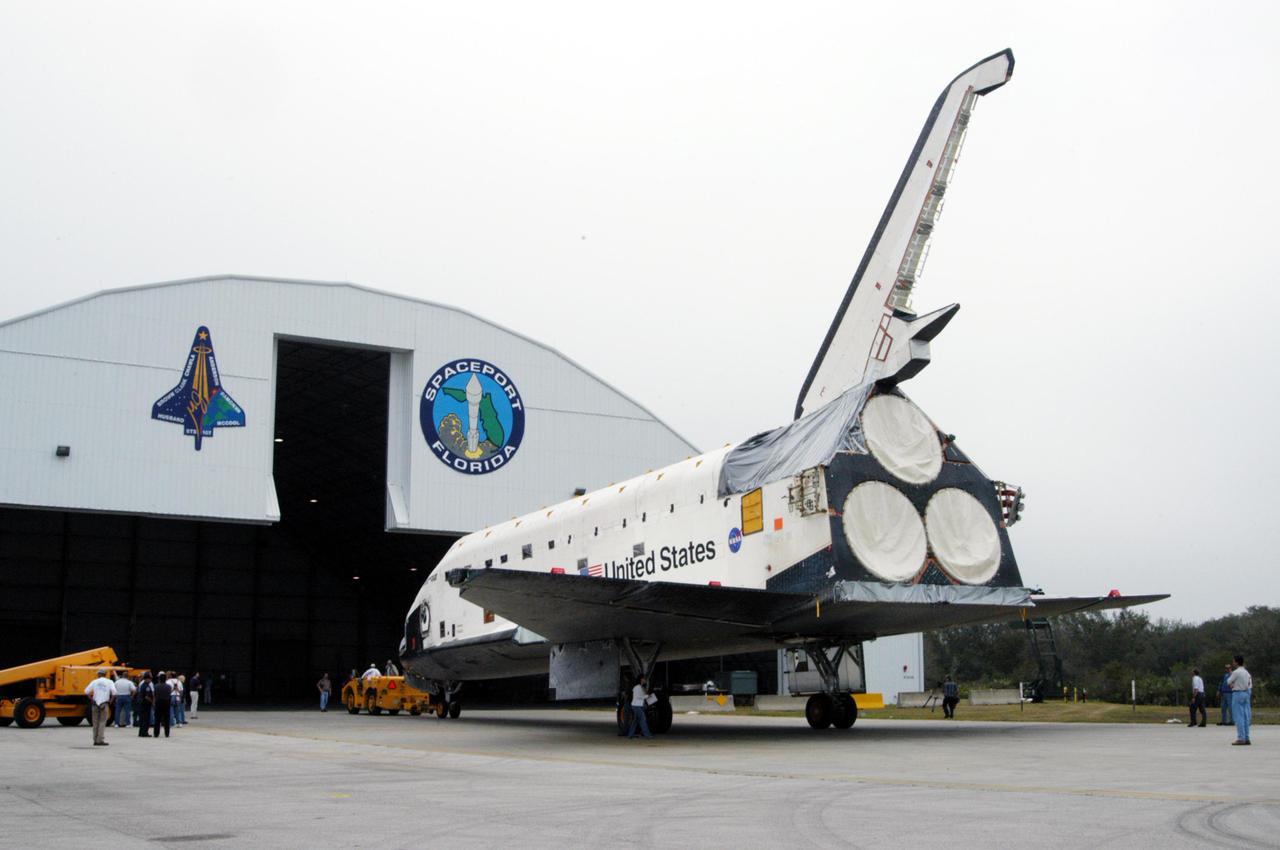
KENNEDY SPACE CENTER, FLA. - The orbiter Endeavour is towed into Florida Space Authority’s Reusable Launch Vehicle hangar for temporary storage. Endeavour is being moved from the Orbiter Processing Facility (OPF) to allow work to be performed in the OPF that can only be accomplished while the bay is empty. Work scheduled in the OPF includes modifications to the bay and platform validation in the bay. Endeavour will remain in the hangar for approximately 30 days, then return to the OPF. Endeavour was pulled out of service in December 2003 for Orbiter Major Modification (OMM). OMMs are scheduled at regular intervals to enhance safety and performance, infuse new technology, and, in this case, perform RTF modifications.
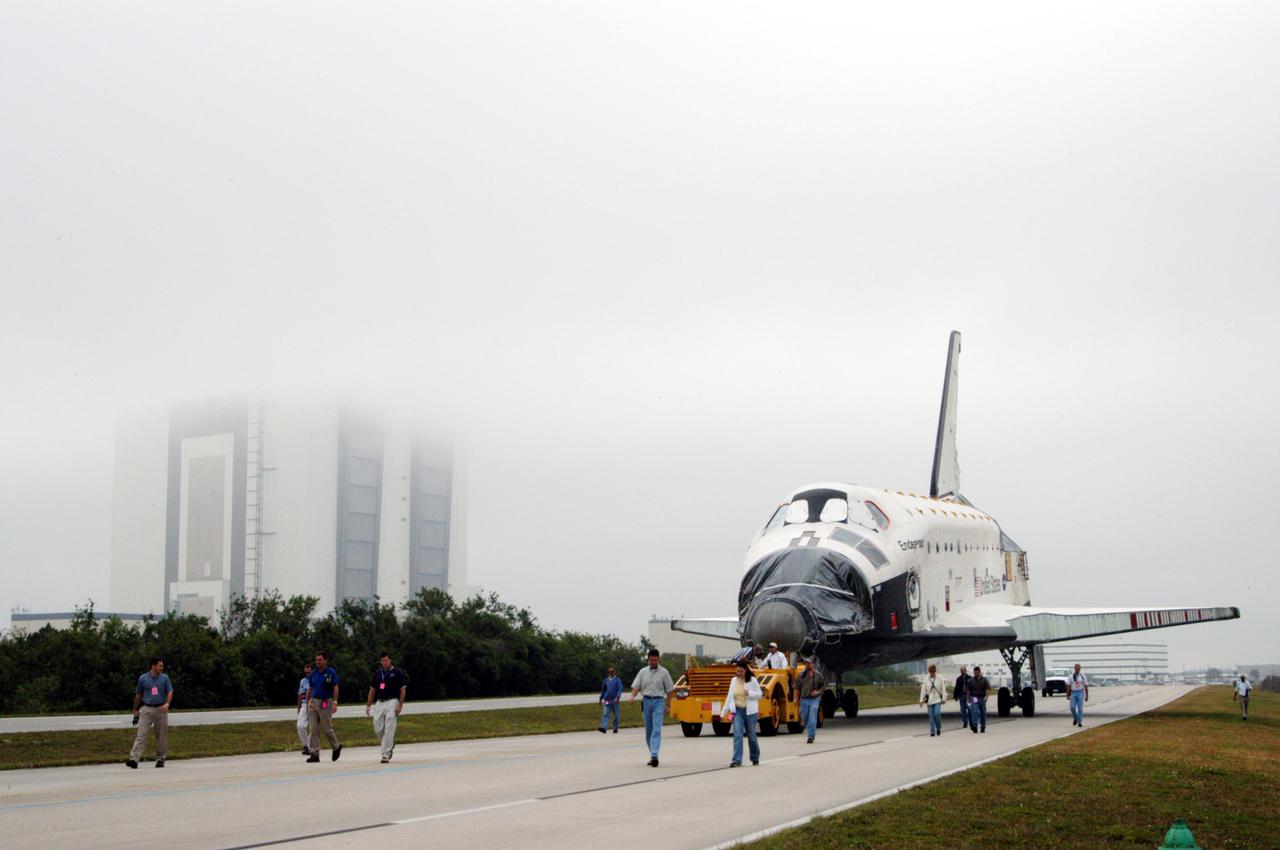
KENNEDY SPACE CENTER, FLA. - Workers accompany the orbiter Endeavour as it rolls past the Vehicle Assembly Building on its way to Florida Space Authority’s Reusable Launch Vehicle hangar for temporary storage. Endeavour is being moved from the Orbiter Processing Facility (OPF) to allow work to be performed in the OPF that can only be accomplished while the bay is empty. Work scheduled in the OPF includes modifications to the bay and platform validation in the bay. Endeavour will remain in the hangar for approximately 30 days, then return to the OPF. Endeavour was pulled out of service in December 2003 for Orbiter Major Modification (OMM). OMMs are scheduled at regular intervals to enhance safety and performance, infuse new technology, and, in this case, perform RTF modifications.

KENNEDY SPACE CENTER, FLA. -- On a portion of the once-buried crawlerway that was recently restored, a crawler-transporter with mobile launcher platform on top turns toward the Vehicle Assembly Building (VAB) high bay 2. The road was restored as part of KSC’s Safe Haven project. High bay 2 provides a third stacking area. The primary goal of the Safe Haven construction project was to strengthen readiness for hurricane season by expanding the VAB’s storage capacity. The new area, in high bay 2, will allow NASA to preassemble stacks and still have room in the VAB to pull a Shuttle back from the pad if severe weather threatens. Potential rollouts of the Space Shuttle to the launch pad from high bay 2 will involve making a turn around the north side of the VAB in contrast to the straight rollouts from high bays 1 and 3, on the east side of the VAB facing the launch pads
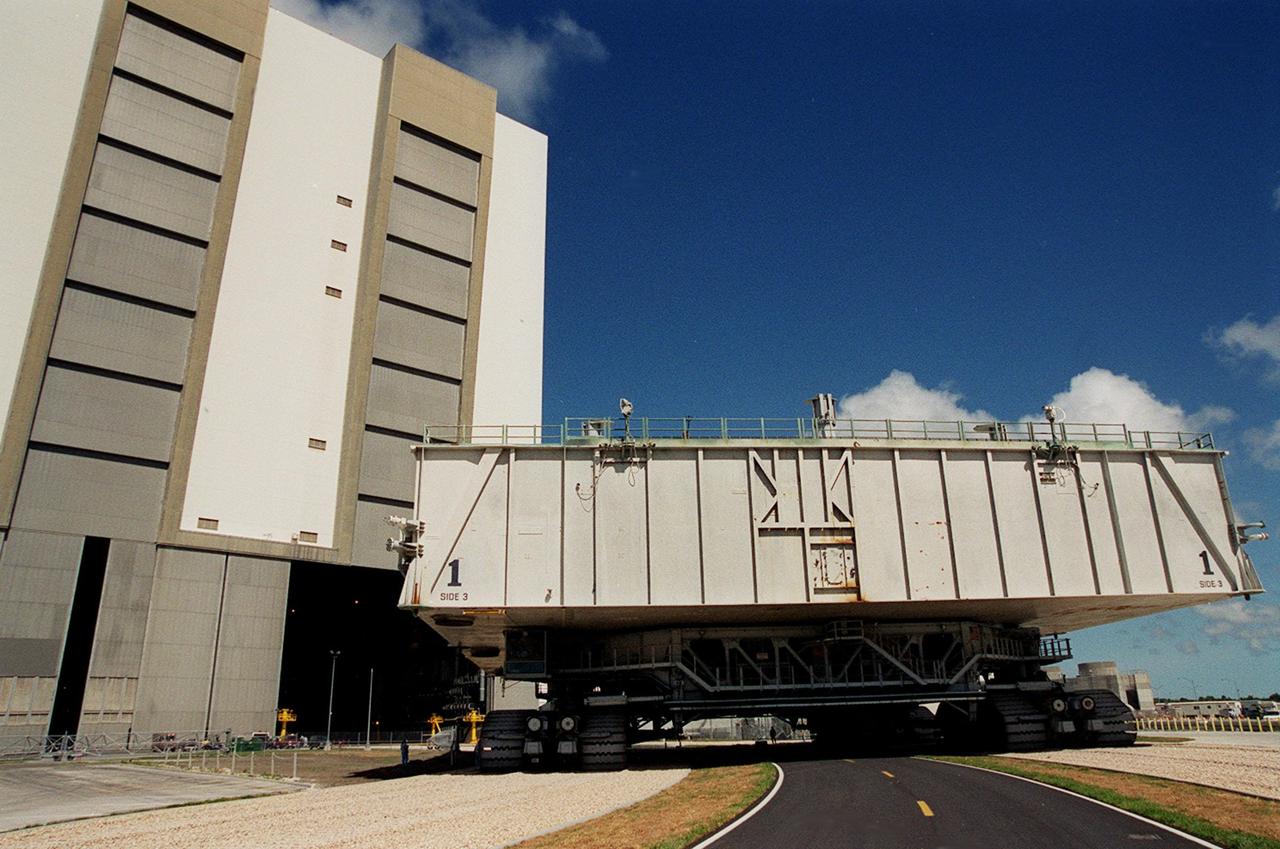
KENNEDY SPACE CENTER, FLA. -- On a portion of the once-buried crawlerway that was recently restored, a crawler-transporter with mobile launcher platform on top turns toward the Vehicle Assembly Building (VAB) high bay 2. The road was restored as part of KSC’s Safe Haven project. High bay 2 provides a third stacking area. The primary goal of the Safe Haven construction project was to strengthen readiness for hurricane season by expanding the VAB’s storage capacity. The new area, in high bay 2, will allow NASA to preassemble stacks and still have room in the VAB to pull a Shuttle back from the pad if severe weather threatens. Potential rollouts of the Space Shuttle to the launch pad from high bay 2 will involve making a turn around the north side of the VAB in contrast to the straight rollouts from high bays 1 and 3, on the east side of the VAB facing the launch pads
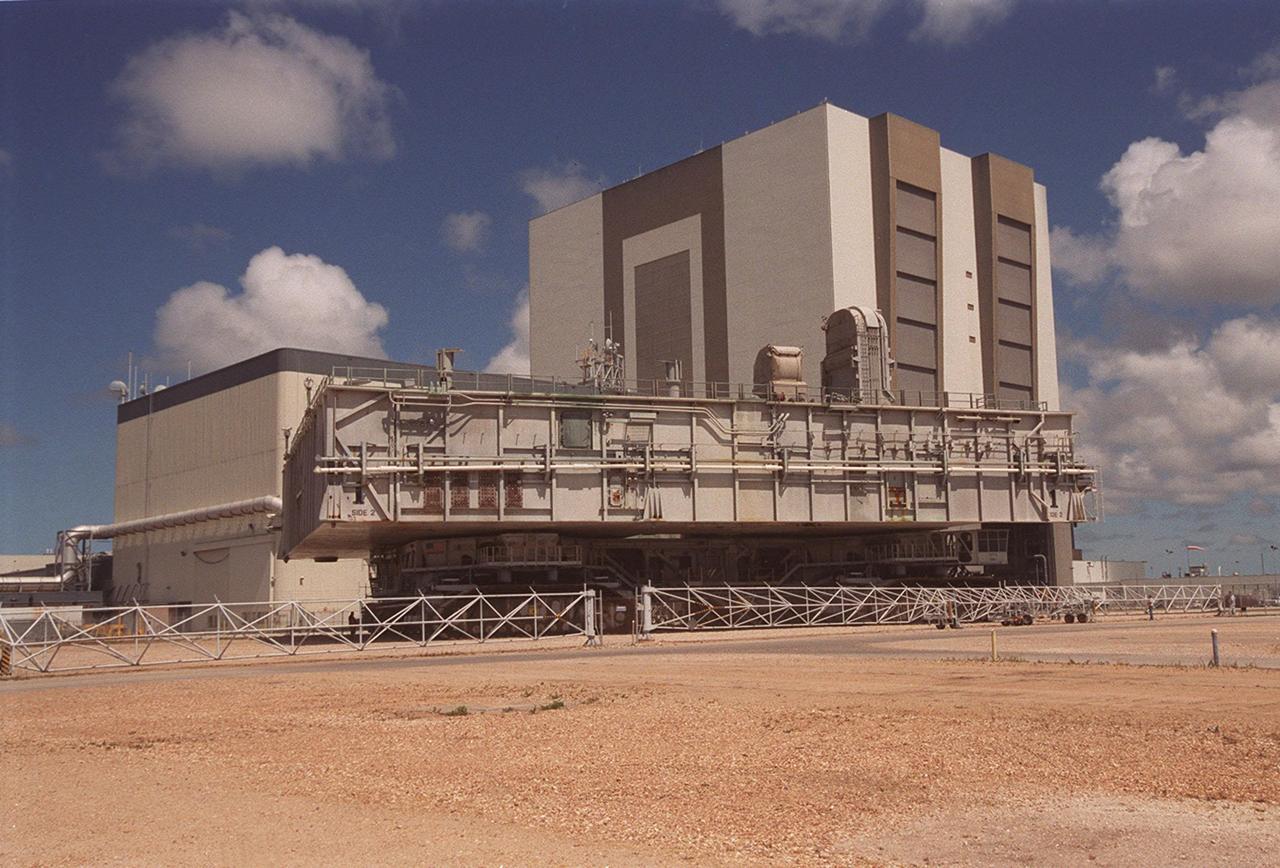
KENNEDY SPACE CENTER, FLA. -- A crawler-transporter with mobile launcher platform on top tests the buried portion of the Apollo-era crawlerway leading to the Vehicle Assembly Building (VAB) high bay 2 on the southwest side. The road was restored as part of KSC’s Safe Haven project. High bay 2 provides a third stacking area. The primary goal of the Safe Haven construction project was to strengthen readiness for hurricane season by expanding the VAB’s storage capacity. The new area, in high bay 2, will allow NASA to preassemble stacks and still have room in the VAB to pull a Shuttle back from the pad if severe weather threatens. Potential rollouts of the Space Shuttle to the launch pad from high bay 2 will involve making a turn around the north side of the VAB in contrast to the straight rollouts from high bays 1 and 3, on the east side of the VAB facing the launch pads
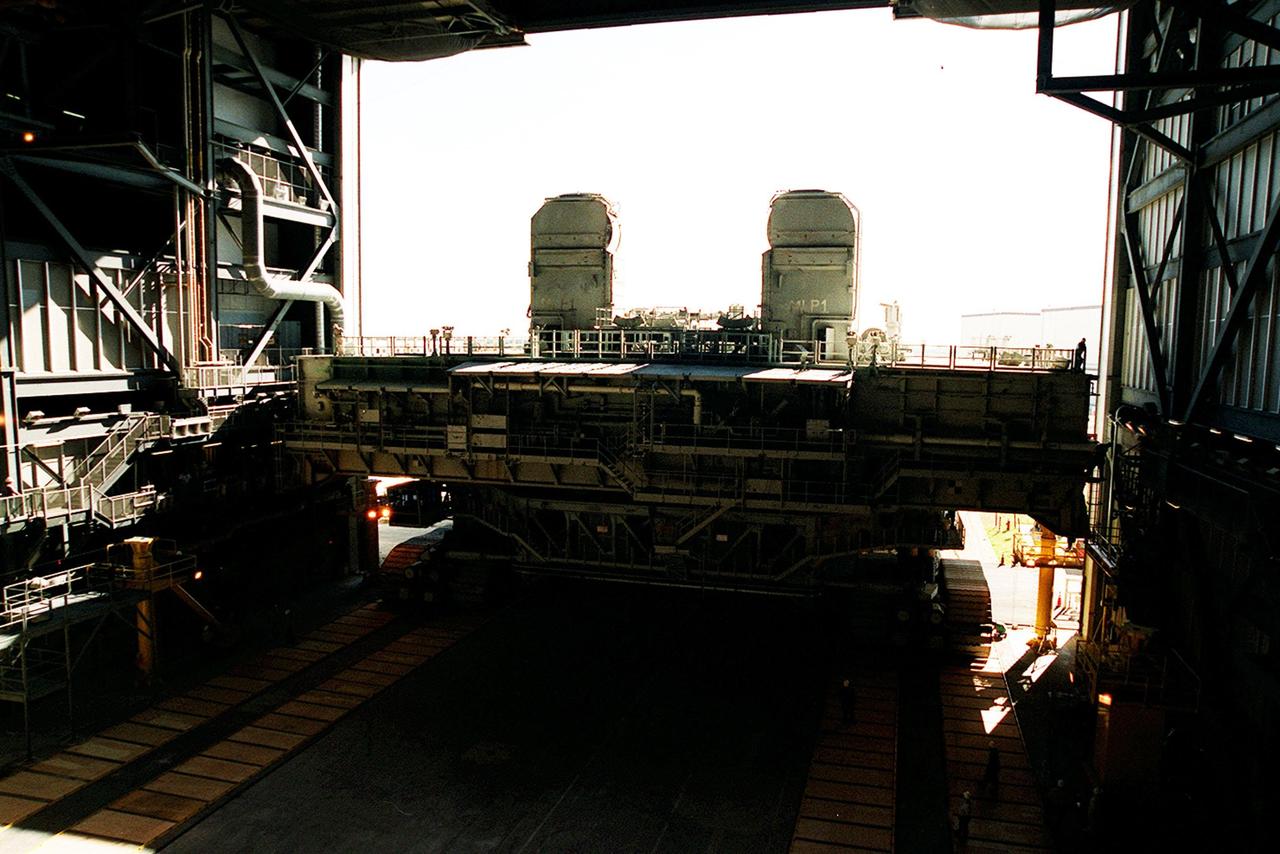
KENNEDY SPACE CENTER, FLA. -- From inside the VAB high bay 2, a mobile launcher platform atop a crawler transporter is viewed as it rolls through the doorway using the recently restored crawlerway. As part of the Safe Haven project, a once-buried portion of the crawlerway was restored to enable rollout of a Shuttle from high bay 2. The primary goal of the Safe Haven construction project was to strengthen readiness for hurricane season by expanding the VAB’s storage capacity. The new area, in high bay 2, will allow NASA to preassemble stacks and still have room in the VAB to pull a Shuttle back from the pad if severe weather threatens. Potential rollouts of the Space Shuttle to the launch pad from high bay 2 will involve making a turn around the north side of the VAB in contrast to the straight rollouts from high bays 1 and 3, on the east side of the VAB facing the launch pads
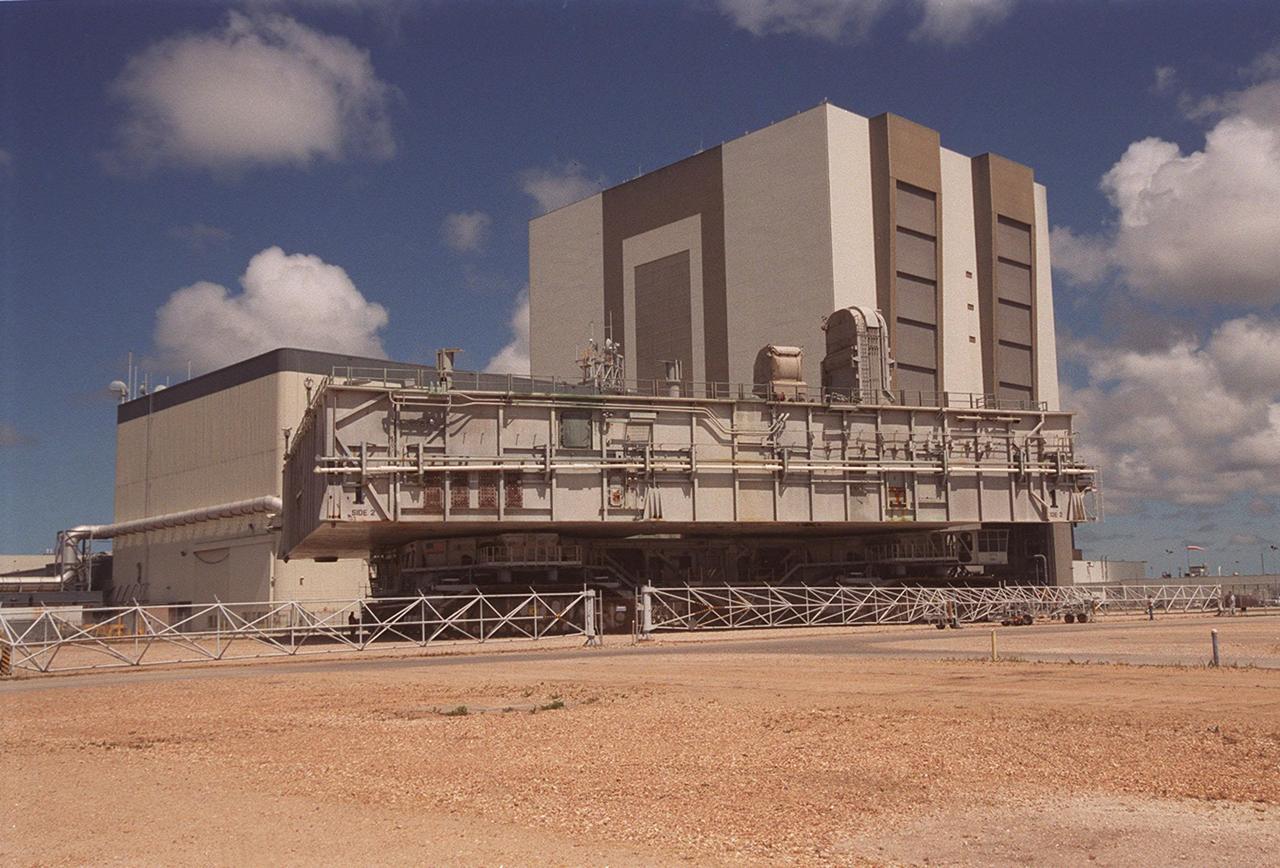
KENNEDY SPACE CENTER, FLA. -- A crawler-transporter with mobile launcher platform on top tests the buried portion of the Apollo-era crawlerway leading to the Vehicle Assembly Building (VAB) high bay 2 on the southwest side. The road was restored as part of KSC’s Safe Haven project. High bay 2 provides a third stacking area. The primary goal of the Safe Haven construction project was to strengthen readiness for hurricane season by expanding the VAB’s storage capacity. The new area, in high bay 2, will allow NASA to preassemble stacks and still have room in the VAB to pull a Shuttle back from the pad if severe weather threatens. Potential rollouts of the Space Shuttle to the launch pad from high bay 2 will involve making a turn around the north side of the VAB in contrast to the straight rollouts from high bays 1 and 3, on the east side of the VAB facing the launch pads
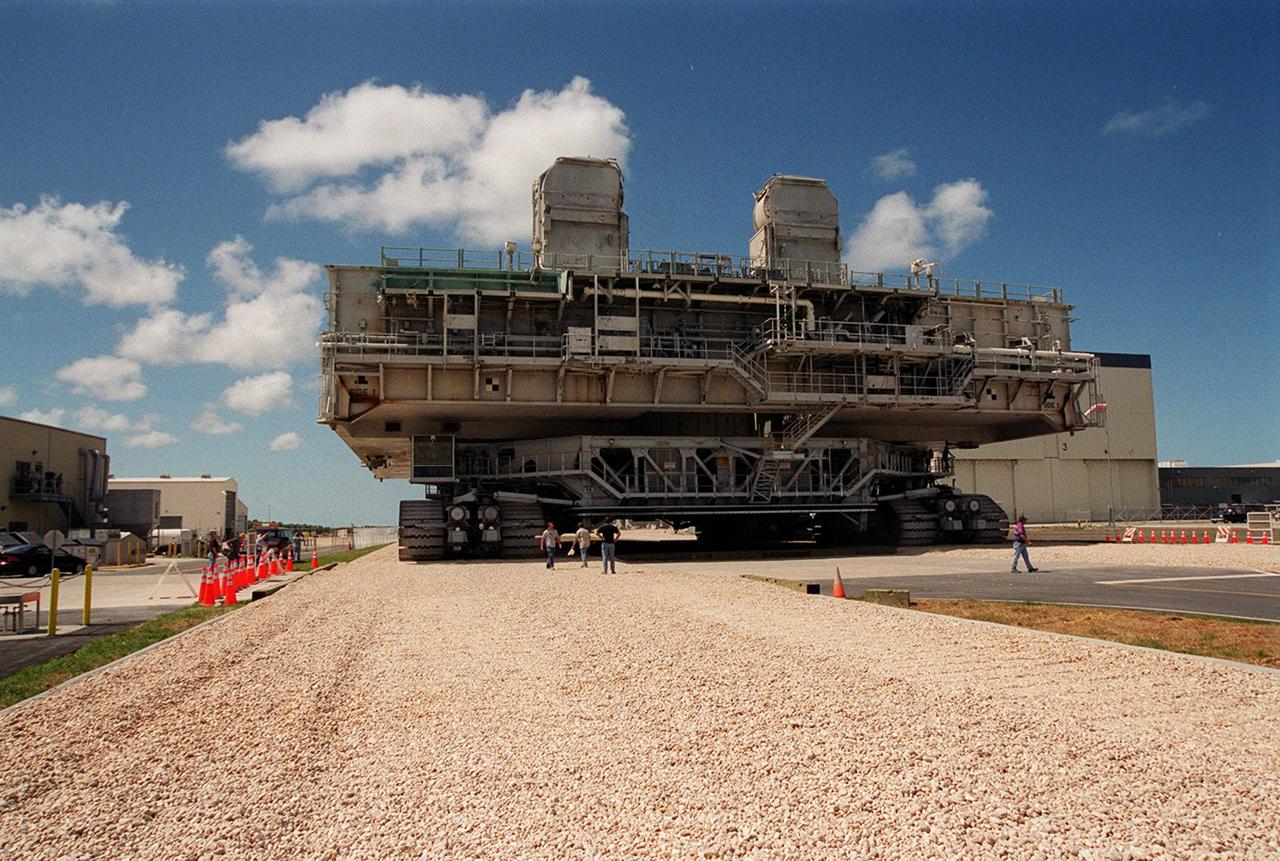
KENNEDY SPACE CENTER, FLA. -- A crawler-transporter with mobile launcher platform on top makes its way from the Orbiter Processing Facility along the once-buried portion of the Apollo-era crawlerway leading to the Vehicle Assembly Building (VAB) high bay. The road was restored as part of KSC’s Safe Haven project. High bay 2 provides a third stacking area.. The primary goal of the Safe Haven construction project was to strengthen readiness for hurricane season by expanding the VAB’s storage capacity. The new area, in high bay 2, will allow NASA to preassemble stacks and still have room in the VAB to pull a Shuttle back from the pad if severe weather threatens. Potential rollouts of the Space Shuttle to the launch pad from high bay 2 will involve making a turn around the north side of the VAB in contrast to the straight rollouts from high bays 1 and 3, on the east side of the VAB facing the launch pads
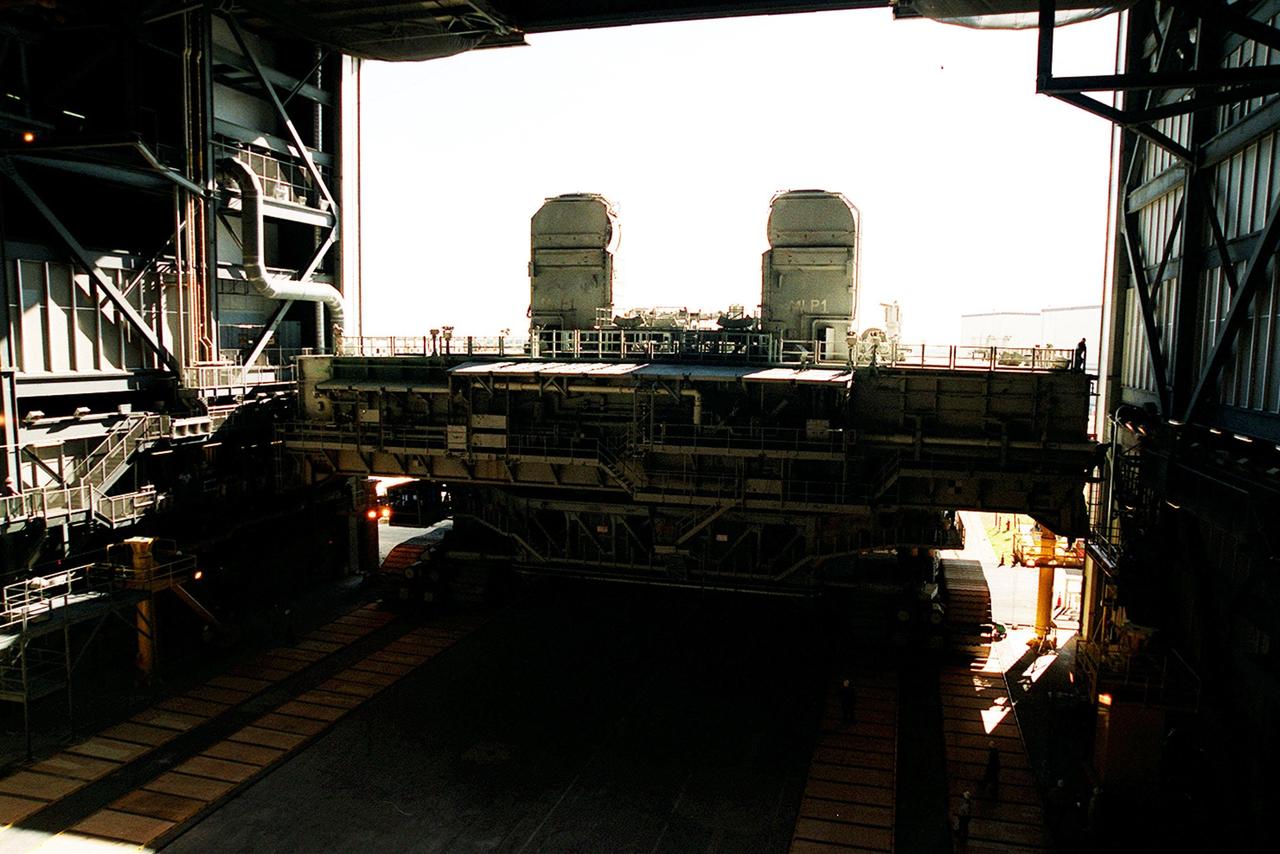
KENNEDY SPACE CENTER, FLA. -- From inside the VAB high bay 2, a mobile launcher platform atop a crawler transporter is viewed as it rolls through the doorway using the recently restored crawlerway. As part of the Safe Haven project, a once-buried portion of the crawlerway was restored to enable rollout of a Shuttle from high bay 2. The primary goal of the Safe Haven construction project was to strengthen readiness for hurricane season by expanding the VAB’s storage capacity. The new area, in high bay 2, will allow NASA to preassemble stacks and still have room in the VAB to pull a Shuttle back from the pad if severe weather threatens. Potential rollouts of the Space Shuttle to the launch pad from high bay 2 will involve making a turn around the north side of the VAB in contrast to the straight rollouts from high bays 1 and 3, on the east side of the VAB facing the launch pads
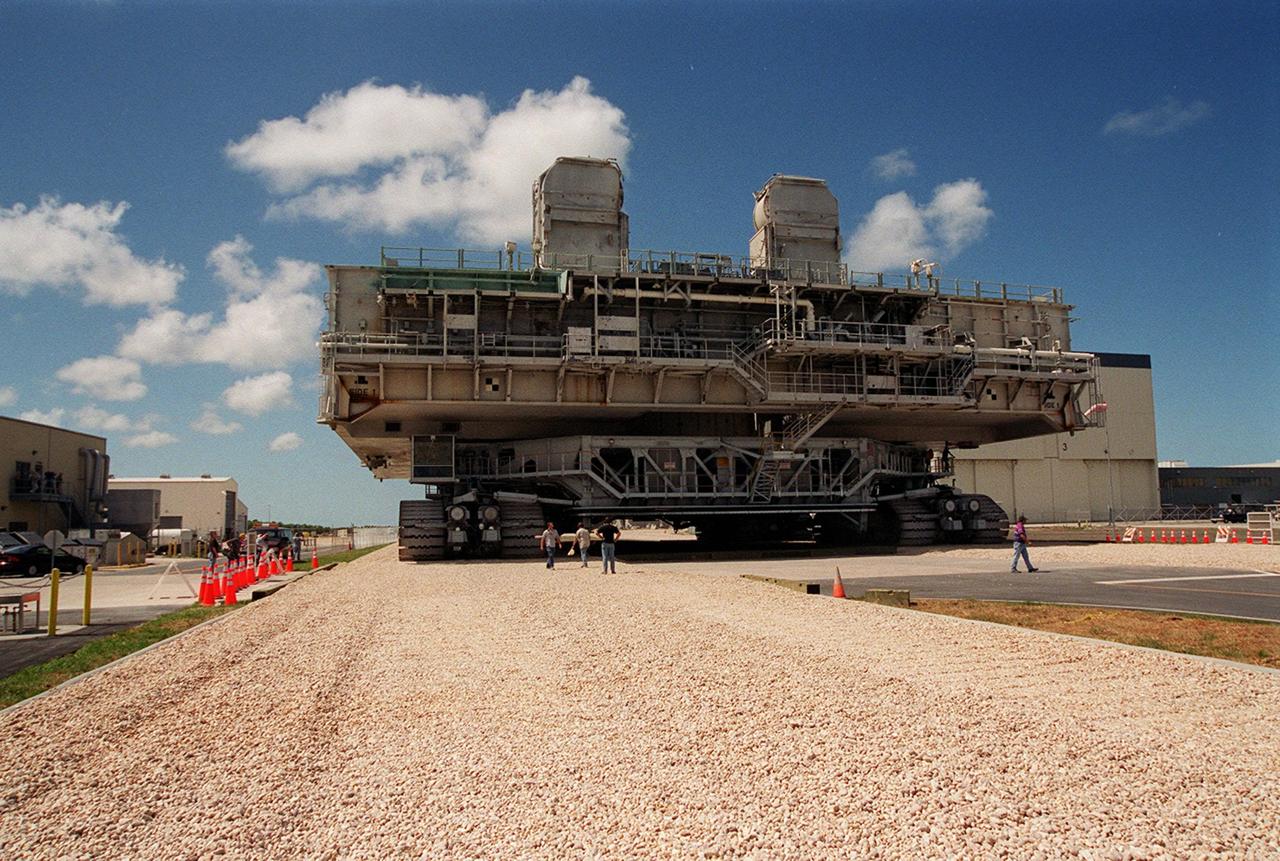
KENNEDY SPACE CENTER, FLA. -- A crawler-transporter with mobile launcher platform on top makes its way from the Orbiter Processing Facility along the once-buried portion of the Apollo-era crawlerway leading to the Vehicle Assembly Building (VAB) high bay. The road was restored as part of KSC’s Safe Haven project. High bay 2 provides a third stacking area.. The primary goal of the Safe Haven construction project was to strengthen readiness for hurricane season by expanding the VAB’s storage capacity. The new area, in high bay 2, will allow NASA to preassemble stacks and still have room in the VAB to pull a Shuttle back from the pad if severe weather threatens. Potential rollouts of the Space Shuttle to the launch pad from high bay 2 will involve making a turn around the north side of the VAB in contrast to the straight rollouts from high bays 1 and 3, on the east side of the VAB facing the launch pads
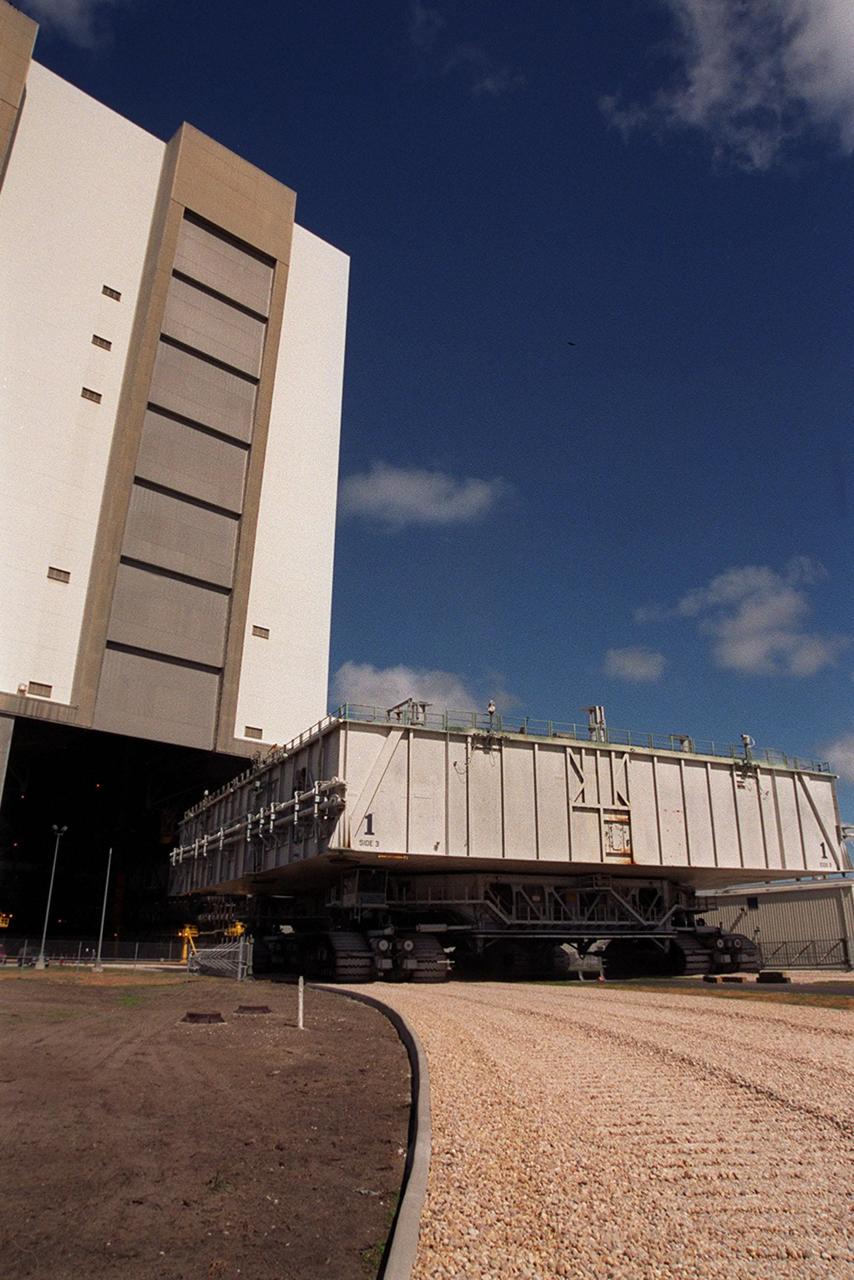
KENNEDY SPACE CENTER, FLA. -- A mobile launcher platform atop a crawler-transporter, heads to the open door of the Vehicle Assembly Building high bay 2. As part of the Safe Haven project, a once-buried portion of the crawlerway was restored to enable rollout of a Shuttle from this third stacking area. The primary goal of the Safe Haven construction project was to strengthen readiness for hurricane season by expanding the VAB’s storage capacity. The new area, in high bay 2, will allow NASA to preassemble stacks and still have room in the VAB to pull a Shuttle back from the pad if severe weather threatens. Potential rollouts of the Space Shuttle to the launch pad from high bay 2 will involve making a turn around the north side of the VAB in contrast to the straight rollouts from high bays 1 and 3, on the east side of the VAB facing the launch pads
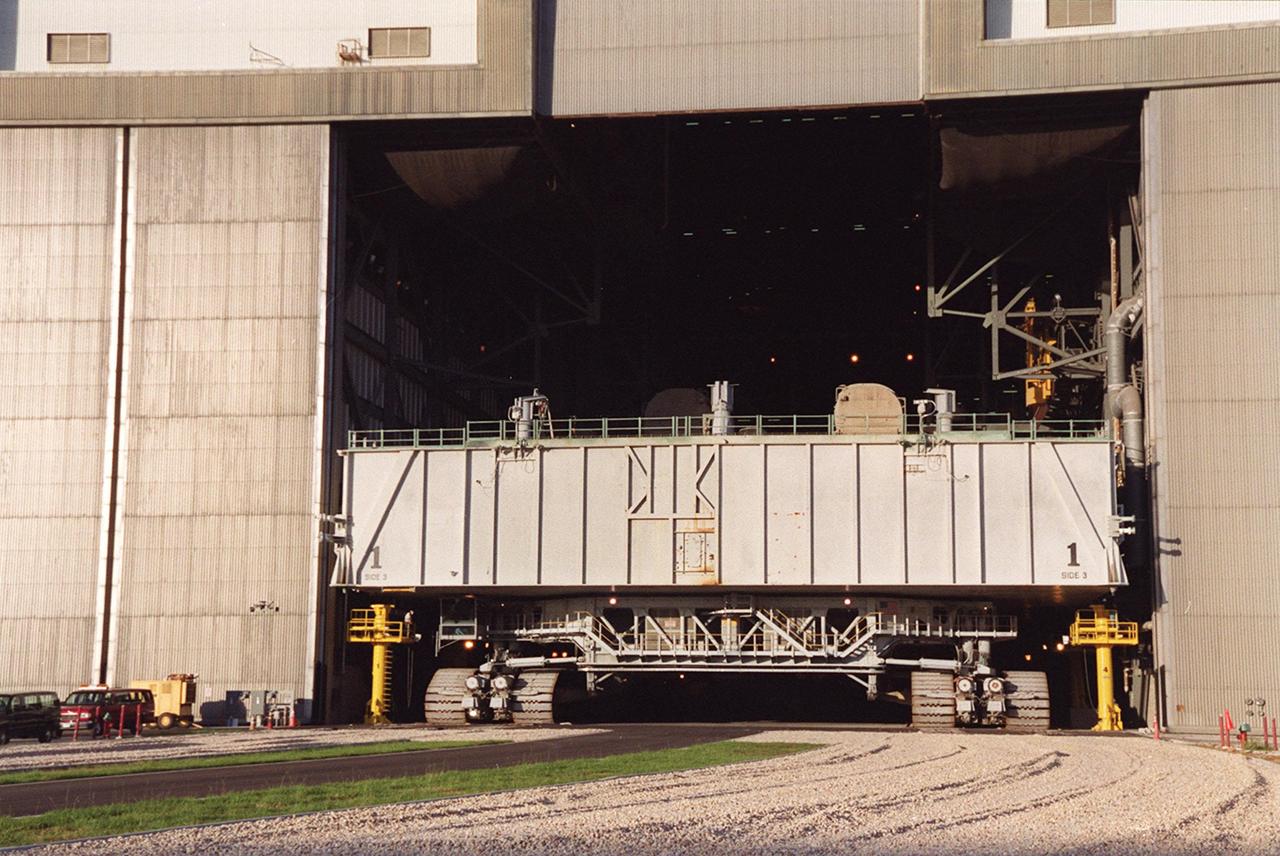
KENNEDY SPACE CENTER, FLA. -- A mobile launcher platform atop a crawler-transporter, moves into the Vehicle Assembly Building high bay 2. As part of the Safe Haven project, a once-buried portion of the crawlerway was restored to enable rollout of a Shuttle from this third stacking area. The primary goal of the Safe Haven construction project was to strengthen readiness for hurricane season by expanding the VAB’s storage capacity. The new area, in high bay 2, will allow NASA to preassemble stacks and still have room in the VAB to pull a Shuttle back from the pad if severe weather threatens. Potential rollouts of the Space Shuttle to the launch pad from high bay 2 will involve making a turn around the north side of the VAB in contrast to the straight rollouts from high bays 1 and 3, on the east side of the VAB facing the launch pads
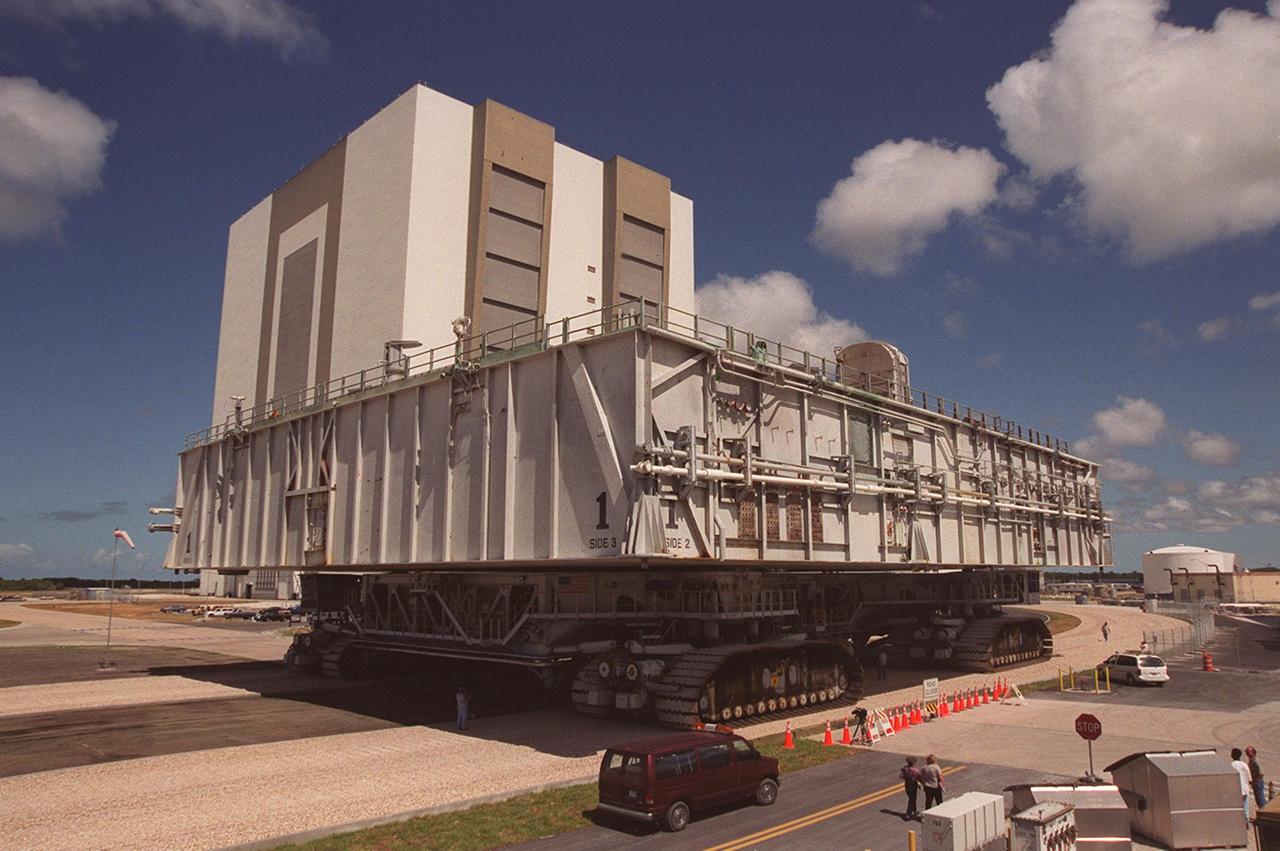
KENNEDY SPACE CENTER, FLA. -- A crawler-transporter with mobile launcher platform on top moves along a portion of the once-buried crawlerway toward the Vehicle Assembly Building (VAB). The road was restored as part of KSC’s Safe Haven project. High bay 2 provides a third stacking area. The primary goal of the Safe Haven construction project was to strengthen readiness for hurricane season by expanding the VAB’s storage capacity. The new area, in high bay 2, will allow NASA to preassemble stacks and still have room in the VAB to pull a Shuttle back from the pad if severe weather threatens. Potential rollouts of the Space Shuttle to the launch pad from high bay 2 will involve making a turn around the north side of the VAB in contrast to the straight rollouts from high bays 1 and 3, on the east side of the VAB facing the launch pads
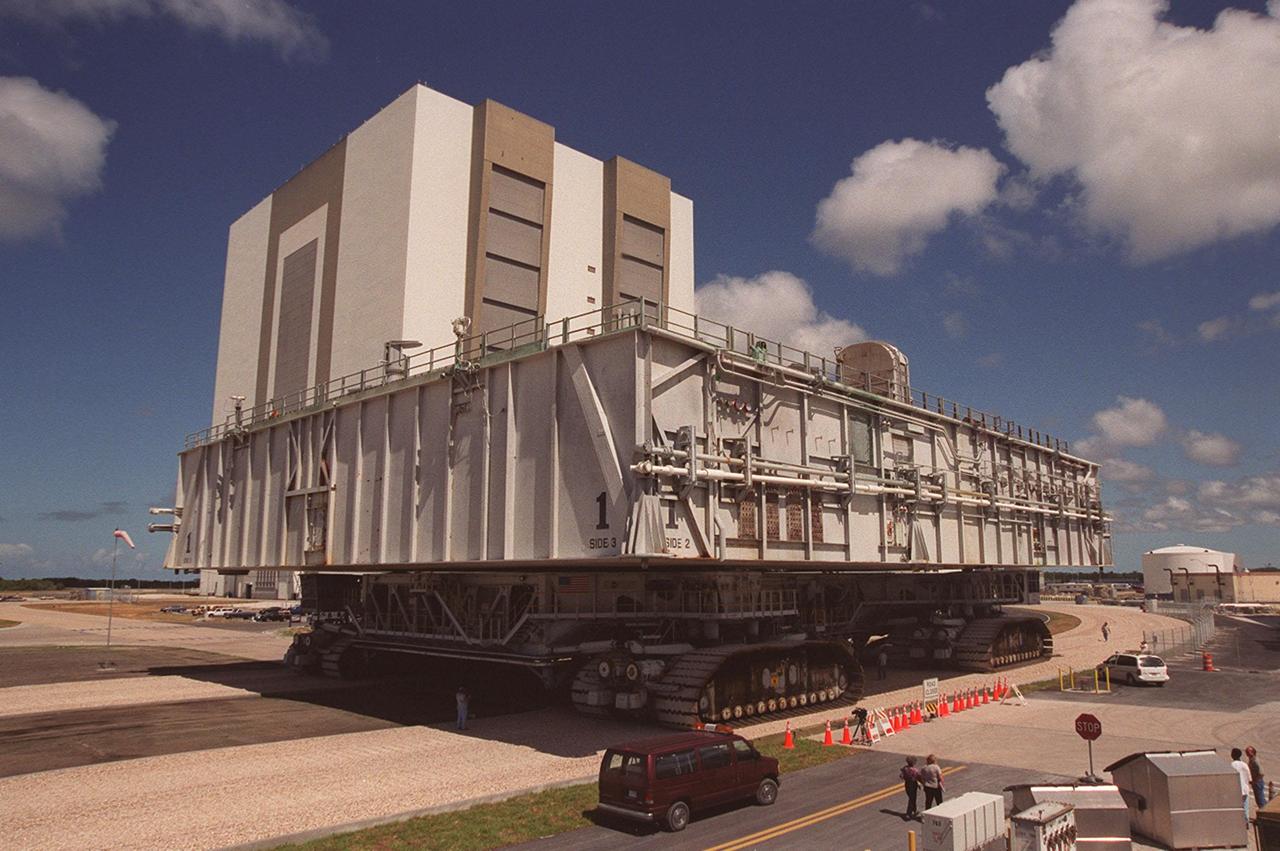
KENNEDY SPACE CENTER, FLA. -- A crawler-transporter with mobile launcher platform on top moves along a portion of the once-buried crawlerway toward the Vehicle Assembly Building (VAB). The road was restored as part of KSC’s Safe Haven project. High bay 2 provides a third stacking area. The primary goal of the Safe Haven construction project was to strengthen readiness for hurricane season by expanding the VAB’s storage capacity. The new area, in high bay 2, will allow NASA to preassemble stacks and still have room in the VAB to pull a Shuttle back from the pad if severe weather threatens. Potential rollouts of the Space Shuttle to the launch pad from high bay 2 will involve making a turn around the north side of the VAB in contrast to the straight rollouts from high bays 1 and 3, on the east side of the VAB facing the launch pads
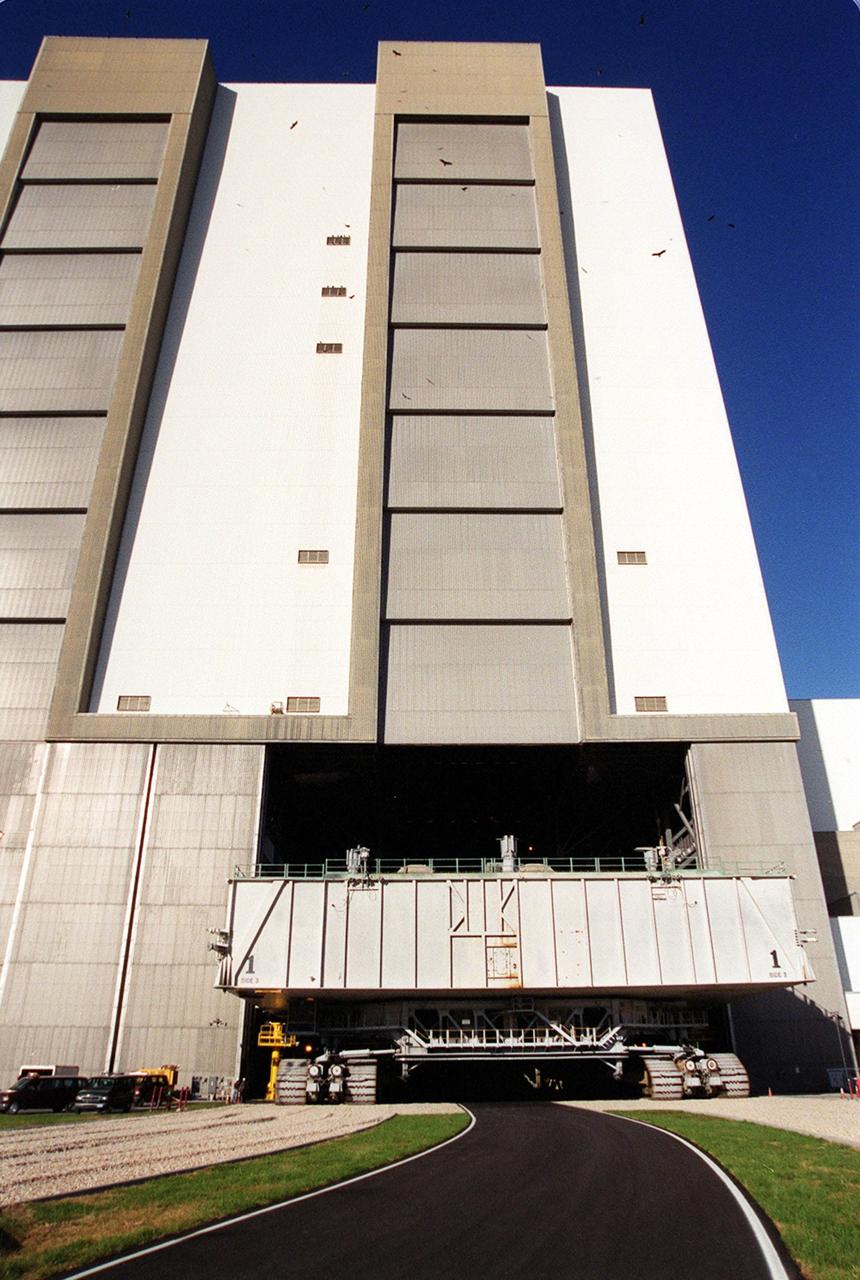
KENNEDY SPACE CENTER, FLA. -- A mobile launcher platform atop a crawler-transporter, heads through the open door of the Vehicle Assembly Building high bay 2. As part of the Safe Haven project, a once-buried portion of the crawlerway was restored to enable rollout of a Shuttle from this third stacking area. The primary goal of the Safe Haven construction project was to strengthen readiness for hurricane season by expanding the VAB’s storage capacity. The new area, in high bay 2, will allow NASA to preassemble stacks and still have room in the VAB to pull a Shuttle back from the pad if severe weather threatens. Potential rollouts of the Space Shuttle to the launch pad from high bay 2 will involve making a turn around the north side of the VAB in contrast to the straight rollouts from high bays 1 and 3, on the east side of the VAB facing the launch pads
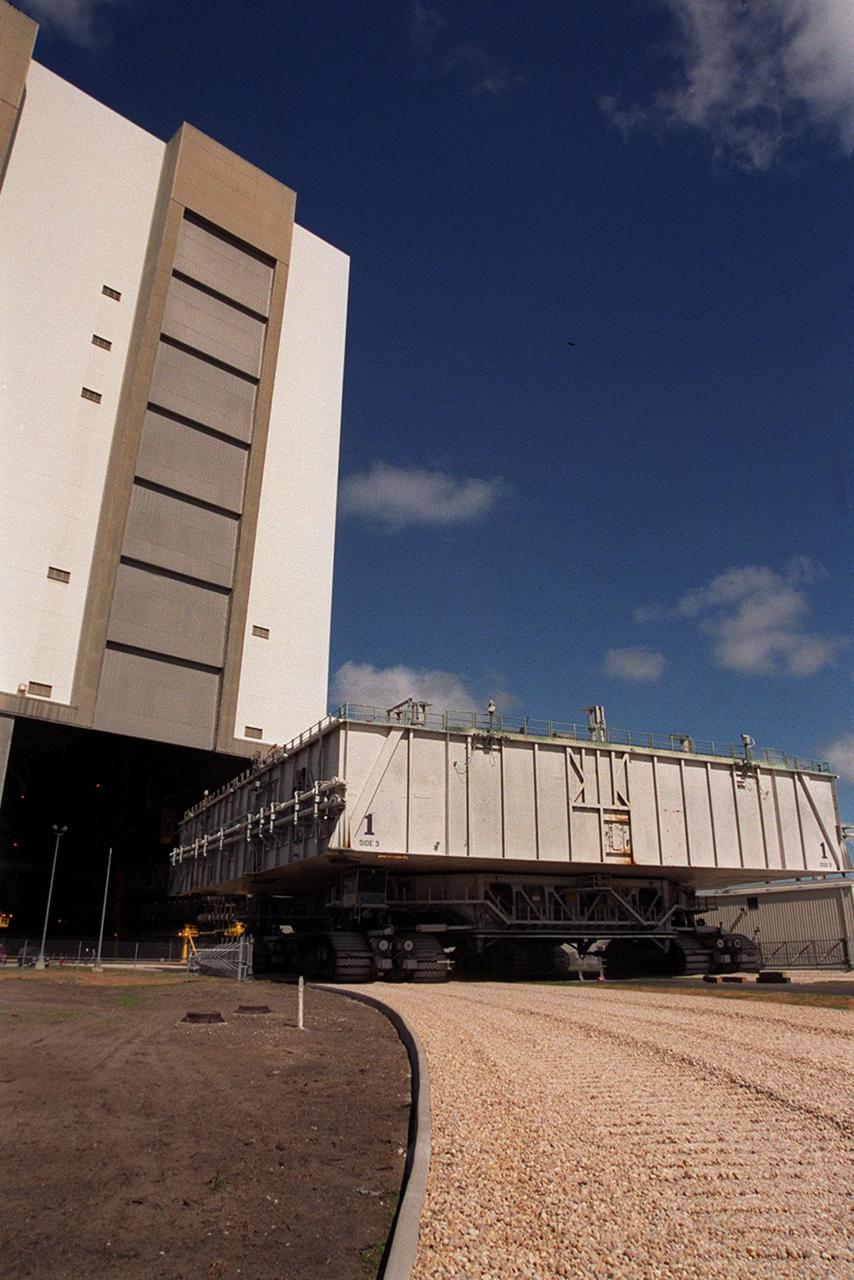
KENNEDY SPACE CENTER, FLA. -- A mobile launcher platform atop a crawler-transporter, heads to the open door of the Vehicle Assembly Building high bay 2. As part of the Safe Haven project, a once-buried portion of the crawlerway was restored to enable rollout of a Shuttle from this third stacking area. The primary goal of the Safe Haven construction project was to strengthen readiness for hurricane season by expanding the VAB’s storage capacity. The new area, in high bay 2, will allow NASA to preassemble stacks and still have room in the VAB to pull a Shuttle back from the pad if severe weather threatens. Potential rollouts of the Space Shuttle to the launch pad from high bay 2 will involve making a turn around the north side of the VAB in contrast to the straight rollouts from high bays 1 and 3, on the east side of the VAB facing the launch pads
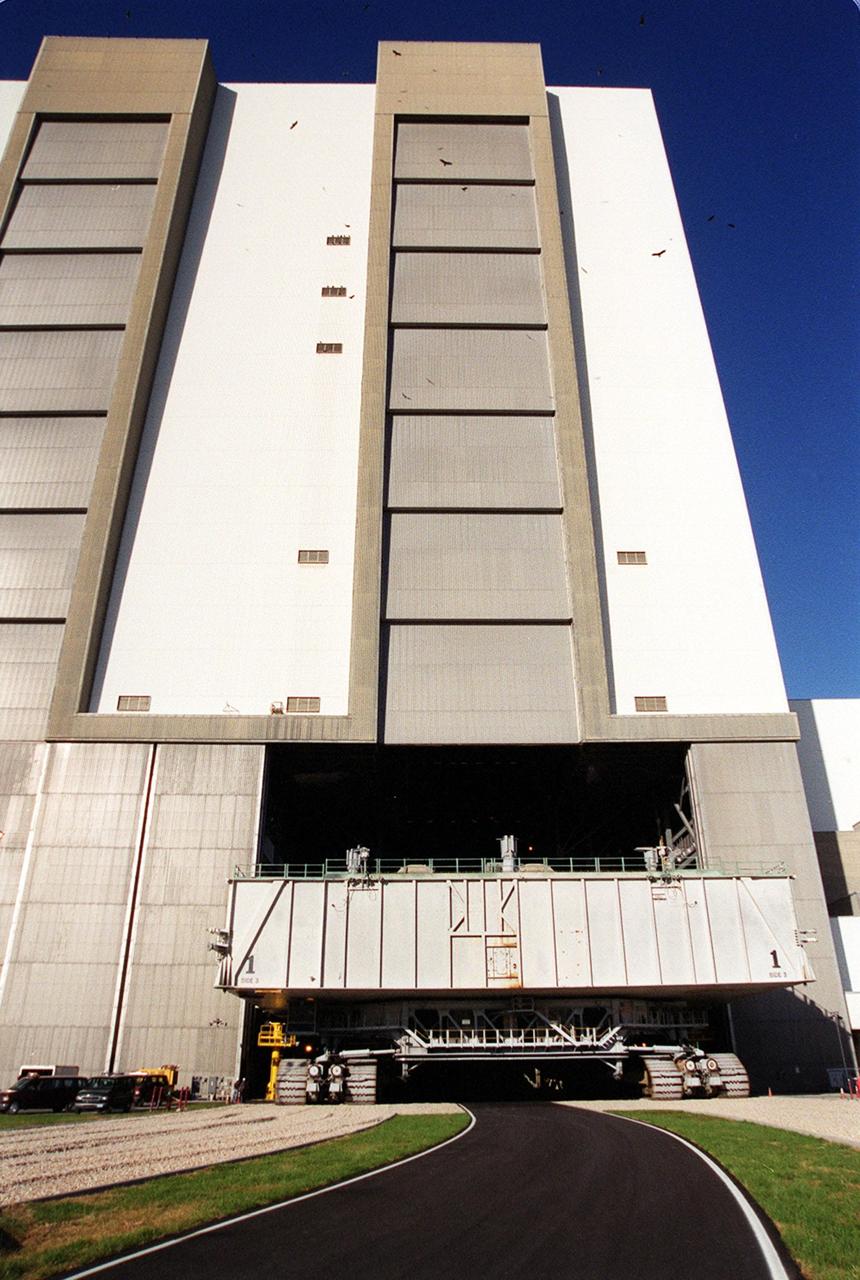
KENNEDY SPACE CENTER, FLA. -- A mobile launcher platform atop a crawler-transporter, heads through the open door of the Vehicle Assembly Building high bay 2. As part of the Safe Haven project, a once-buried portion of the crawlerway was restored to enable rollout of a Shuttle from this third stacking area. The primary goal of the Safe Haven construction project was to strengthen readiness for hurricane season by expanding the VAB’s storage capacity. The new area, in high bay 2, will allow NASA to preassemble stacks and still have room in the VAB to pull a Shuttle back from the pad if severe weather threatens. Potential rollouts of the Space Shuttle to the launch pad from high bay 2 will involve making a turn around the north side of the VAB in contrast to the straight rollouts from high bays 1 and 3, on the east side of the VAB facing the launch pads
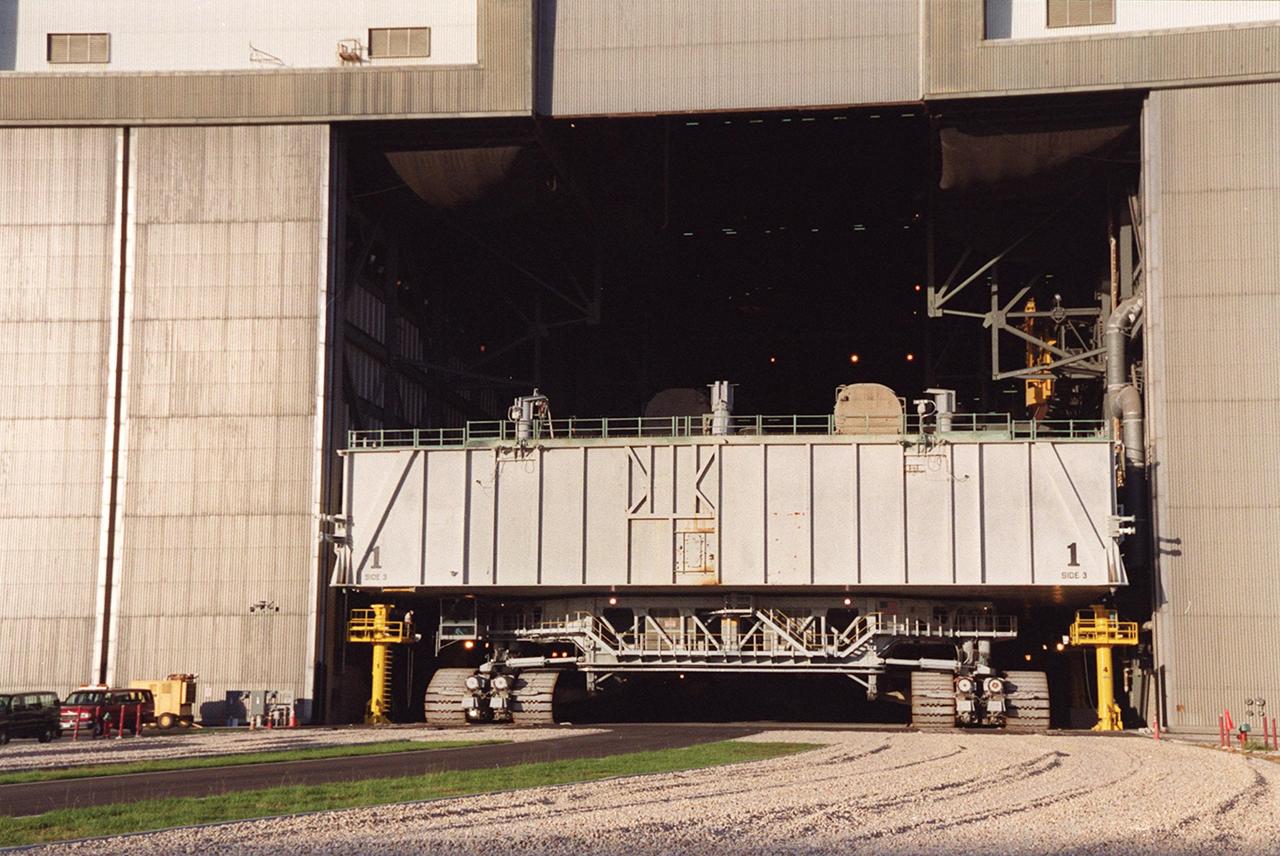
KENNEDY SPACE CENTER, FLA. -- A mobile launcher platform atop a crawler-transporter, moves into the Vehicle Assembly Building high bay 2. As part of the Safe Haven project, a once-buried portion of the crawlerway was restored to enable rollout of a Shuttle from this third stacking area. The primary goal of the Safe Haven construction project was to strengthen readiness for hurricane season by expanding the VAB’s storage capacity. The new area, in high bay 2, will allow NASA to preassemble stacks and still have room in the VAB to pull a Shuttle back from the pad if severe weather threatens. Potential rollouts of the Space Shuttle to the launch pad from high bay 2 will involve making a turn around the north side of the VAB in contrast to the straight rollouts from high bays 1 and 3, on the east side of the VAB facing the launch pads
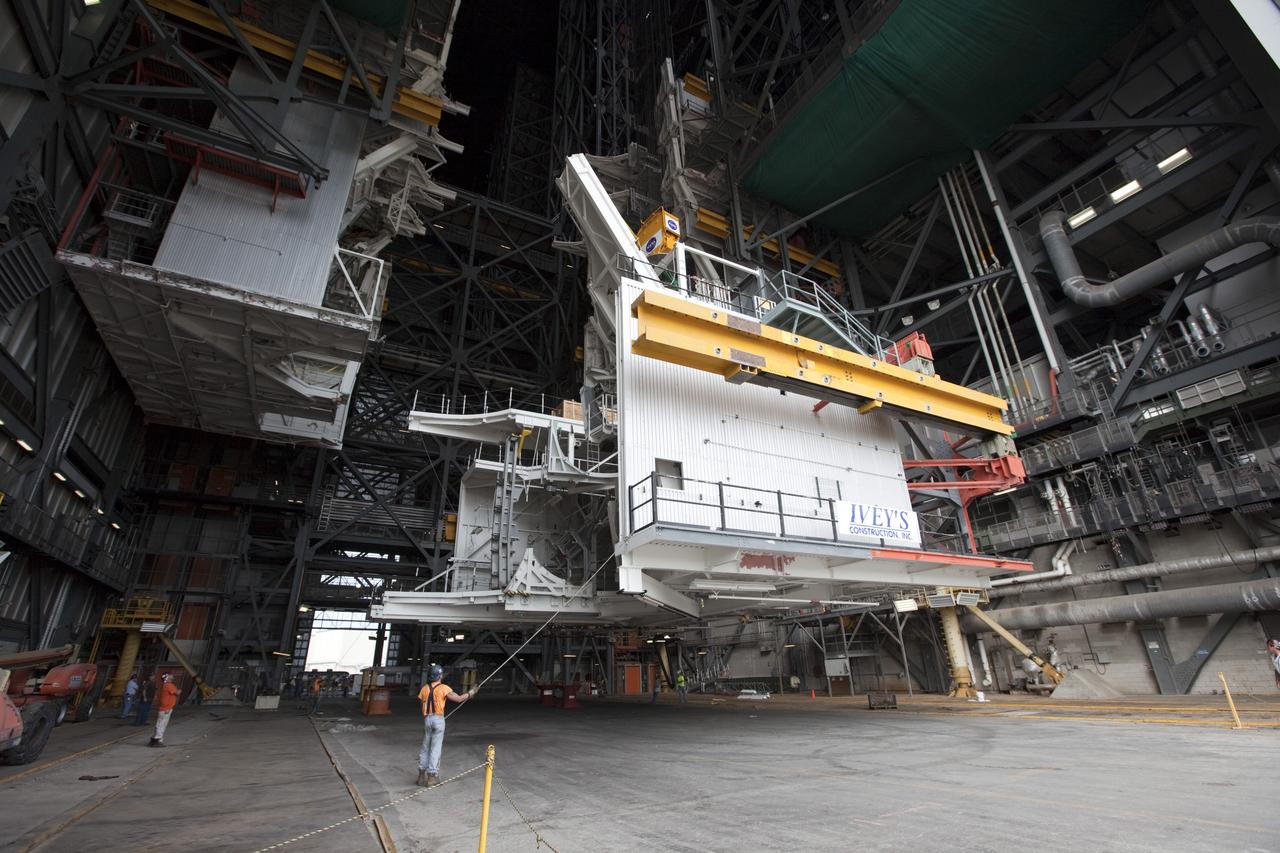
CAPE CANAVERAL, Fla. -- At NASA’s Kennedy Space Center in Florida, construction workers lower the large space shuttle-era Level E north work platform from high bay 3 inside the Vehicle Assembly Building, or VAB. The platform will be moved to the VAB north parking area for temporary storage. The work is part of a center-wide refurbishment initiative under the Ground Systems Development and Operations, or GSDO, Program. High bay 3 is being refurbished to accommodate NASA’s Space Launch System and a variety of other spacecraft. For more information, visit http://www.nasa.gov/exploration/systems/ground/index.html. Photo credit: NASA/Kim Shiflett
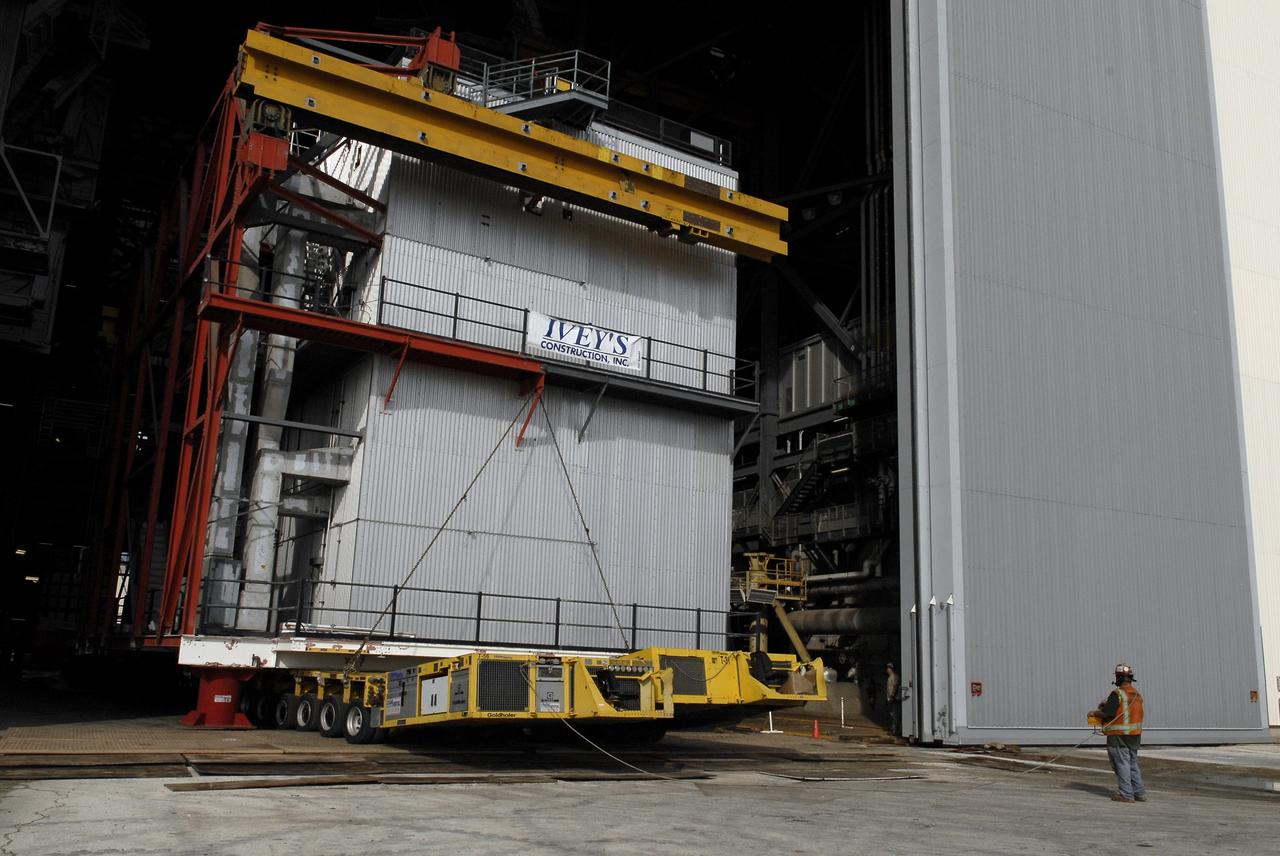
CAPE CANAVERAL, Fla. – At NASA’s Kennedy Space Center in Florida, construction workers remove a large space shuttle-era work platform from high bay 3 inside the Vehicle Assembly Building, or VAB. The platform will be moved to the VAB north parking area for temporary storage. The work is part of a centerwide refurbishment initiative under the Ground Systems Development and Operations, or GSDO, Program. High bay 3 is being refurbished to accommodate NASA’s Space Launch System and a variety of other spacecraft. For more information, visit http://www.nasa.gov/exploration/systems/ground/index.html. Photo credit: NASA/Charisse Nahser
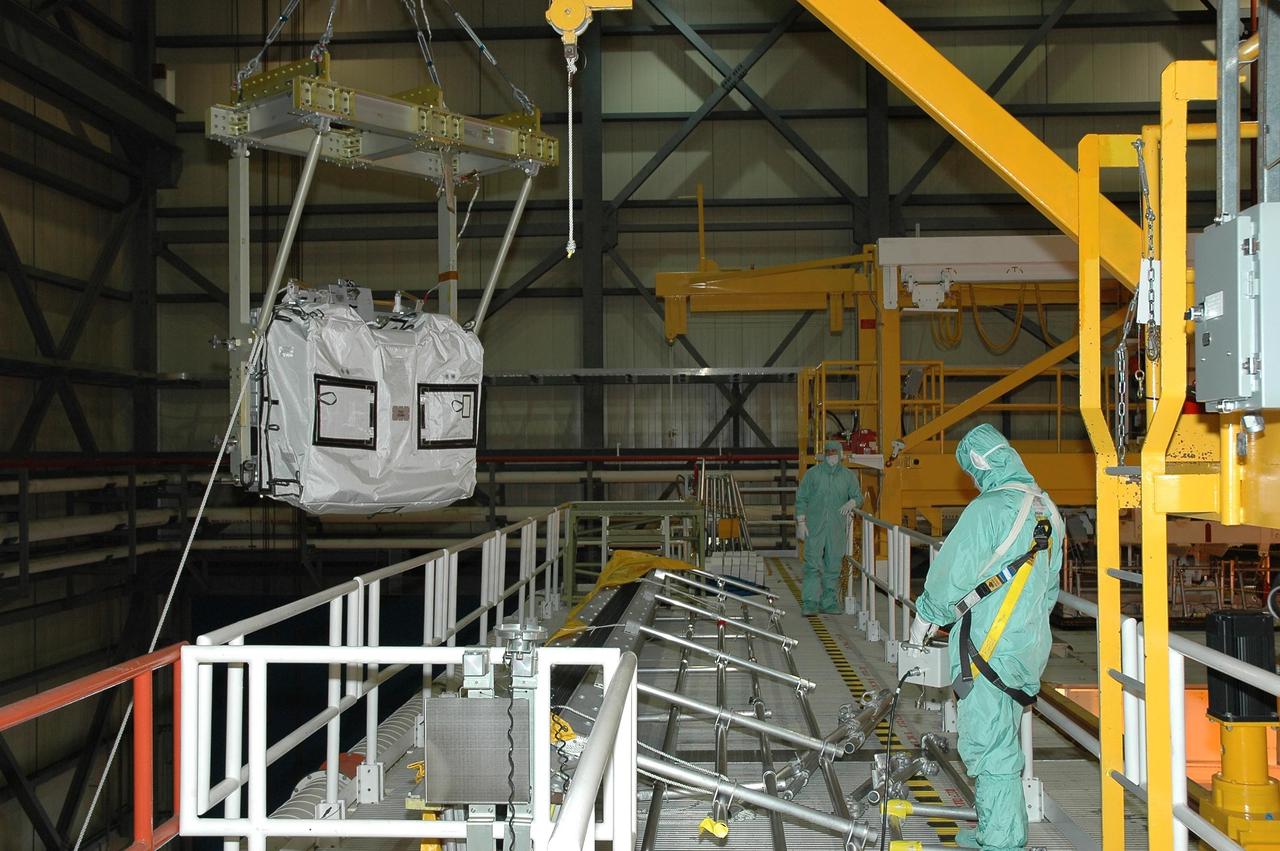
KENNEDY SPACE CENTER, Fla. -- In the Orbiter Processing Facility bay 3, a crane moves the main bus switching unit that will be installed in Discovery's payload bay. The unit is part of the payload on mission STS-120. A main bus switching unit is used for power distribution, circuit protection and fault isolation on the space station's power system. The units route power to proper locations in the space station, such as from solar arrays through umbilicals into the U.S. Lab. The unit will be installed on the external stowage platform 2 attached to the Quest airlock for temporary storage. Discovery is targeted to launch mission STS-120 no earlier than Oct. 20. Photo credit: NASA/Jim Grossmann
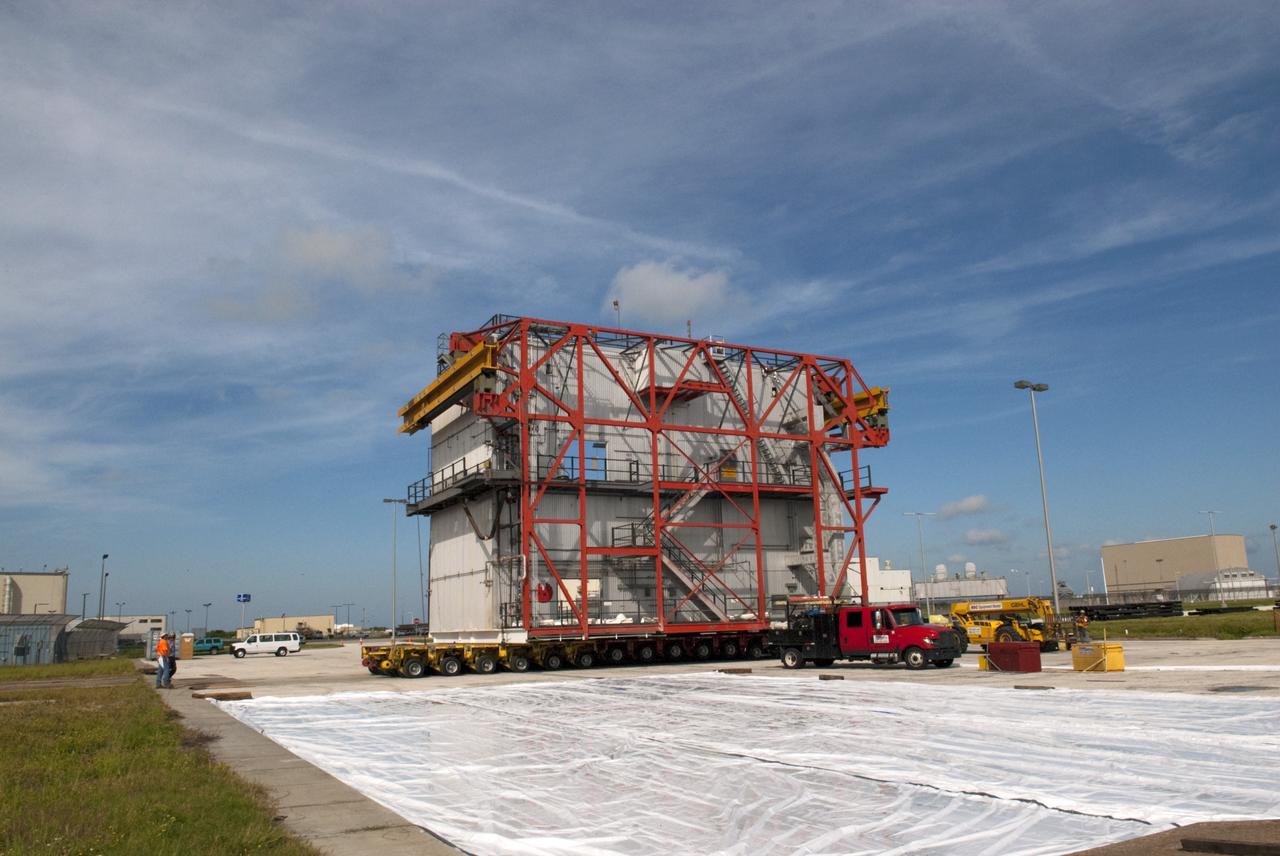
CAPE CANAVERAL, Fla. – At NASA’s Kennedy Space Center in Florida, construction workers have removed a space shuttle-era work platform from high bay 3 inside the Vehicle Assembly Building, or VAB. The platform has been moved to the VAB north parking area for temporary storage. The work is part of a centerwide refurbishment initiative under the Ground Systems Development and Operations, or GSDO, Program. High bay 3 is being refurbished to accommodate NASA’s Space Launch System and a variety of other spacecraft. For more information, visit http://www.nasa.gov/exploration/systems/ground/index.html. Photo credit: NASA/Charisse Nahser
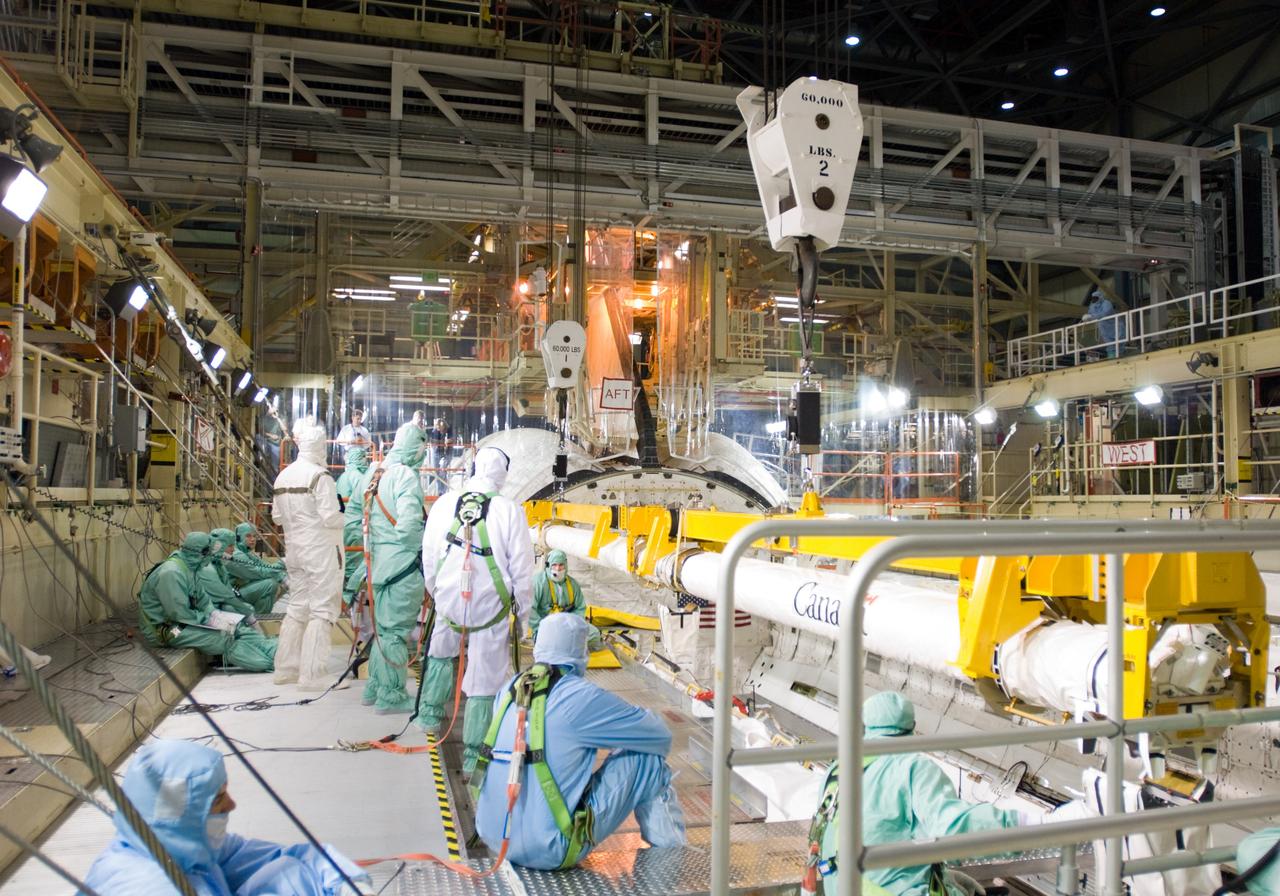
CAPE CANAVERAL, Fla. – In the Orbiter Processing Facility’s bay 3, workers install the orbiter boom sensor system in the payload bay of space shuttle Discovery to support mission STS-128. The 50-foot-long boom attaches to the shuttle arm and provides equipment to inspect the shuttle's heat shield while in space. It contains an intensified television camera (ITVC) and a laser dynamic range imager, which are mounted on a pan and tilt unit, and a laser camera system (LCS) mounted on a stationary bracket. The STS-128 flight will carry science and storage racks to the International Space Station on space shuttle Discovery. Launch of Discovery is targeted for Aug. 6. Photo credit: NASA/Jim Grossmann
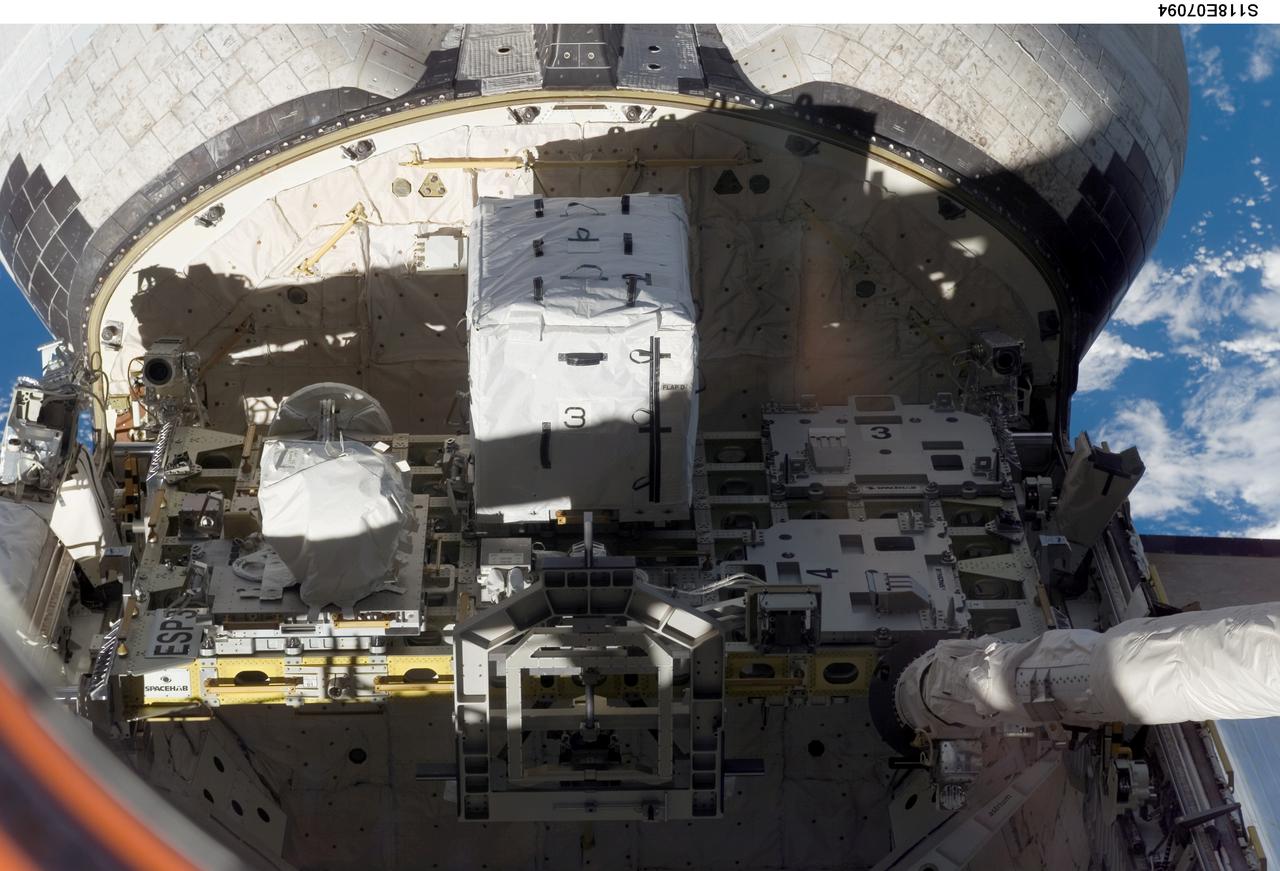
S118-E-07094 (14 Aug. 2007) --- An external stowage platform (ESP-3) is photographed in the payload bay of Space Shuttle Endeavour while docked with the International Space Station. Astronauts Tracy Caldwell and Barbara R. Morgan, both STS-118 mission specialists, were inside at Endeavour's controls as the shuttle's robotic arm (lower right) lifted the storage platform from the cargo bay to hand it over to the station's robotic arm, also known as Canadarm2. Astronauts Charlie Hobaugh, pilot, and Clay Anderson, Expedition 15 flight engineer, then used Canadarm2 to attach the 13-by-7-foot platform to the station's Port 3 truss.
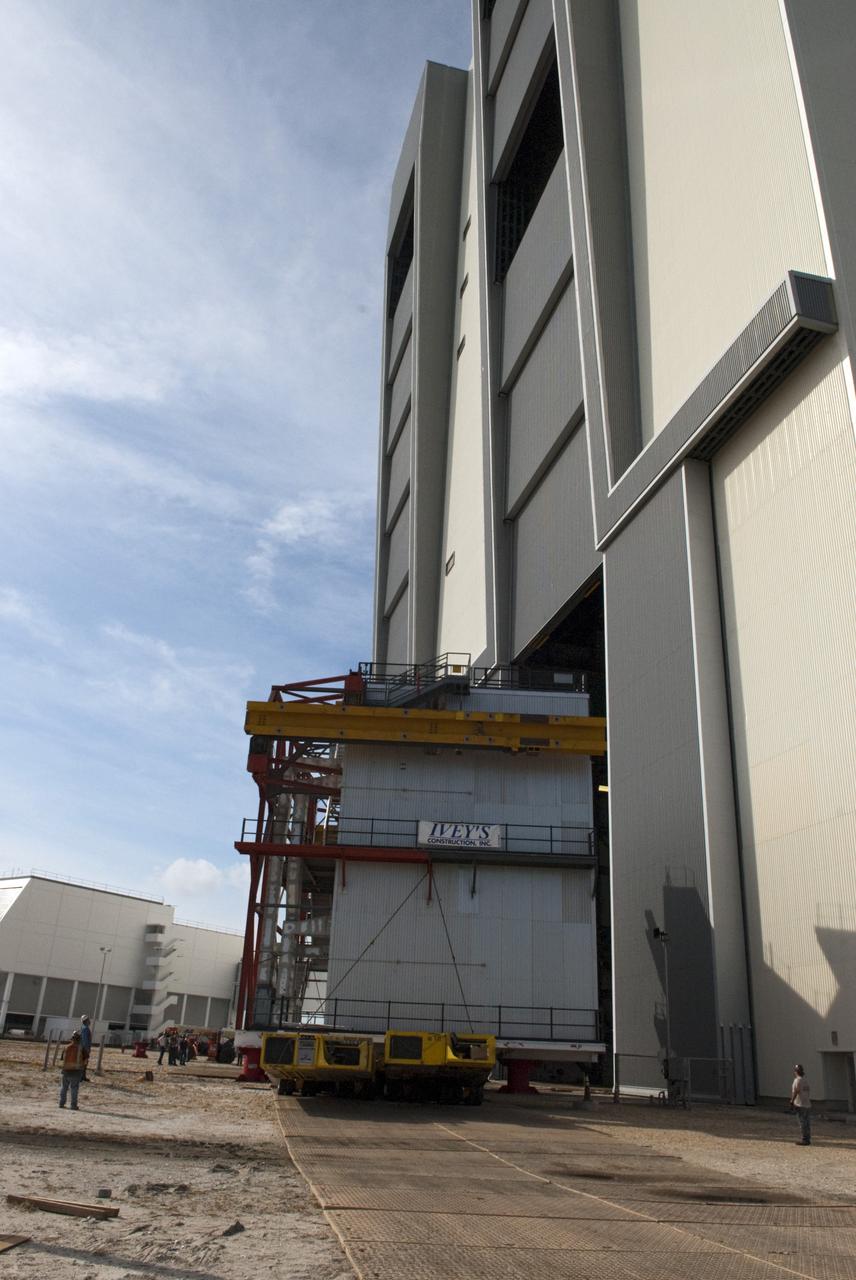
CAPE CANAVERAL, Fla. – At NASA’s Kennedy Space Center in Florida, construction workers have removed a space shuttle-era work platform from high bay 3 inside the Vehicle Assembly Building, or VAB. The platform will be moved to the VAB north parking area for temporary storage. The work is part of a centerwide refurbishment initiative under the Ground Systems Development and Operations, or GSDO, Program. High bay 3 is being refurbished to accommodate NASA’s Space Launch System and a variety of other spacecraft. For more information, visit http://www.nasa.gov/exploration/systems/ground/index.html. Photo credit: NASA/Charisse Nahser
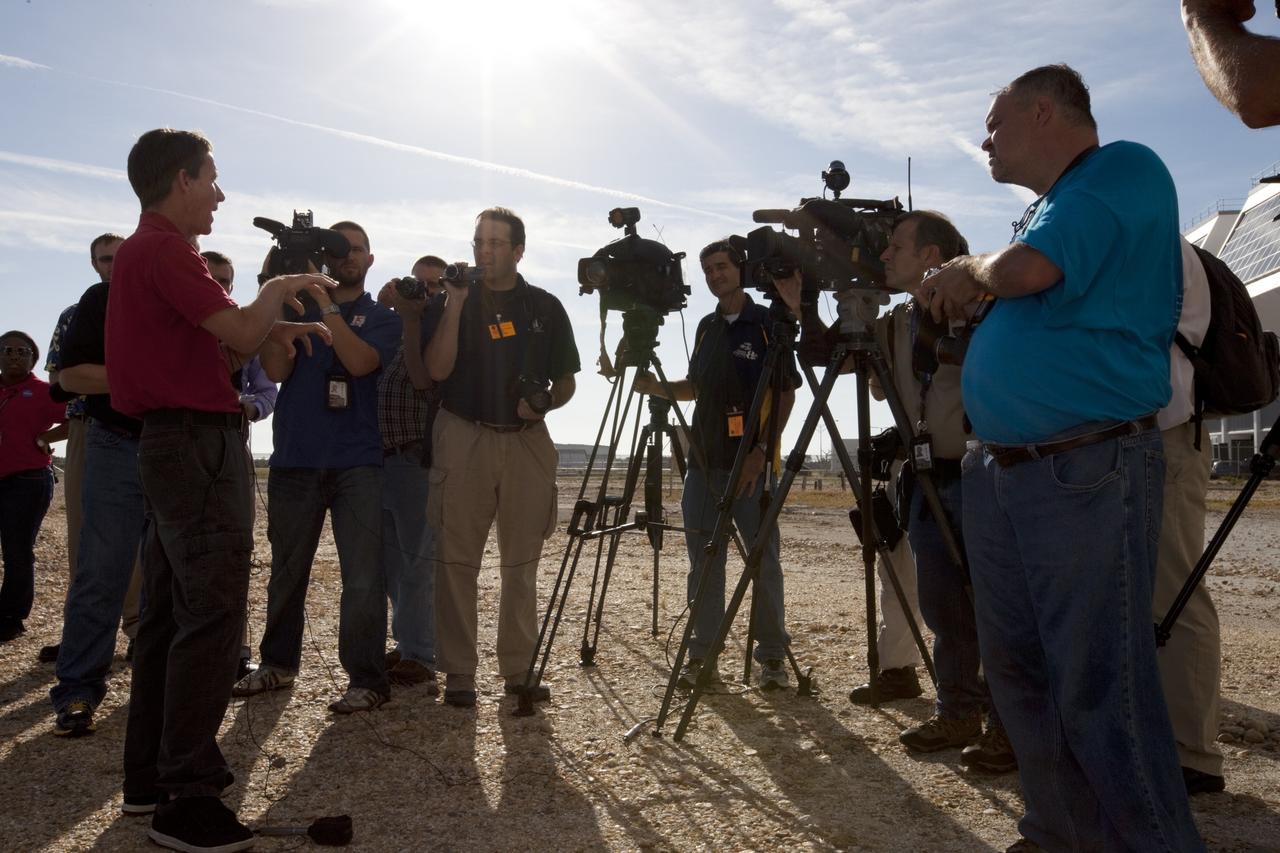
CAPE CANAVERAL, Fla. – At NASA’s Kennedy Space Center in Florida, Jim Bolton, head of operations in the Vehicle Assembly Building, talks with news media about the removal of a space shuttle-era work platform from high bay 3 inside the VAB. The platform has been moved to the VAB north parking area for temporary storage. The work is part of a center-wide refurbishment initiative under the Ground Systems Development and Operations, or GSDO, Program. High bay 3 is being refurbished to accommodate NASA’s Space Launch System and a variety of other spacecraft. Photo credit: NASA/Kim Shiflett
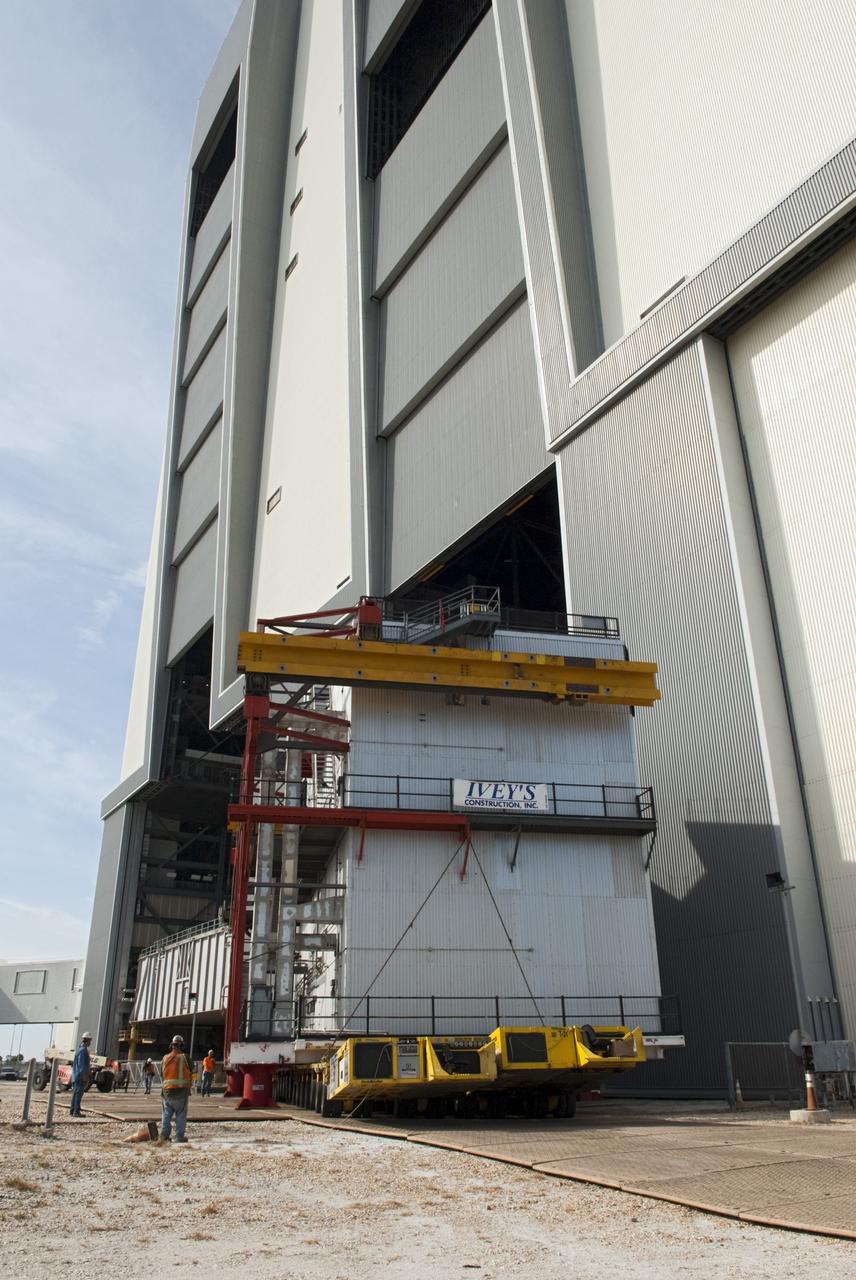
CAPE CANAVERAL, Fla. – At NASA’s Kennedy Space Center in Florida, construction workers have removed a space shuttle-era work platform from high bay 3 inside the Vehicle Assembly Building, or VAB. The platform will be moved to the VAB north parking area for temporary storage. The work is part of a centerwide refurbishment initiative under the Ground Systems Development and Operations, or GSDO, Program. High bay 3 is being refurbished to accommodate NASA’s Space Launch System and a variety of other spacecraft. For more information, visit http://www.nasa.gov/exploration/systems/ground/index.html. Photo credit: NASA/Charisse Nahser
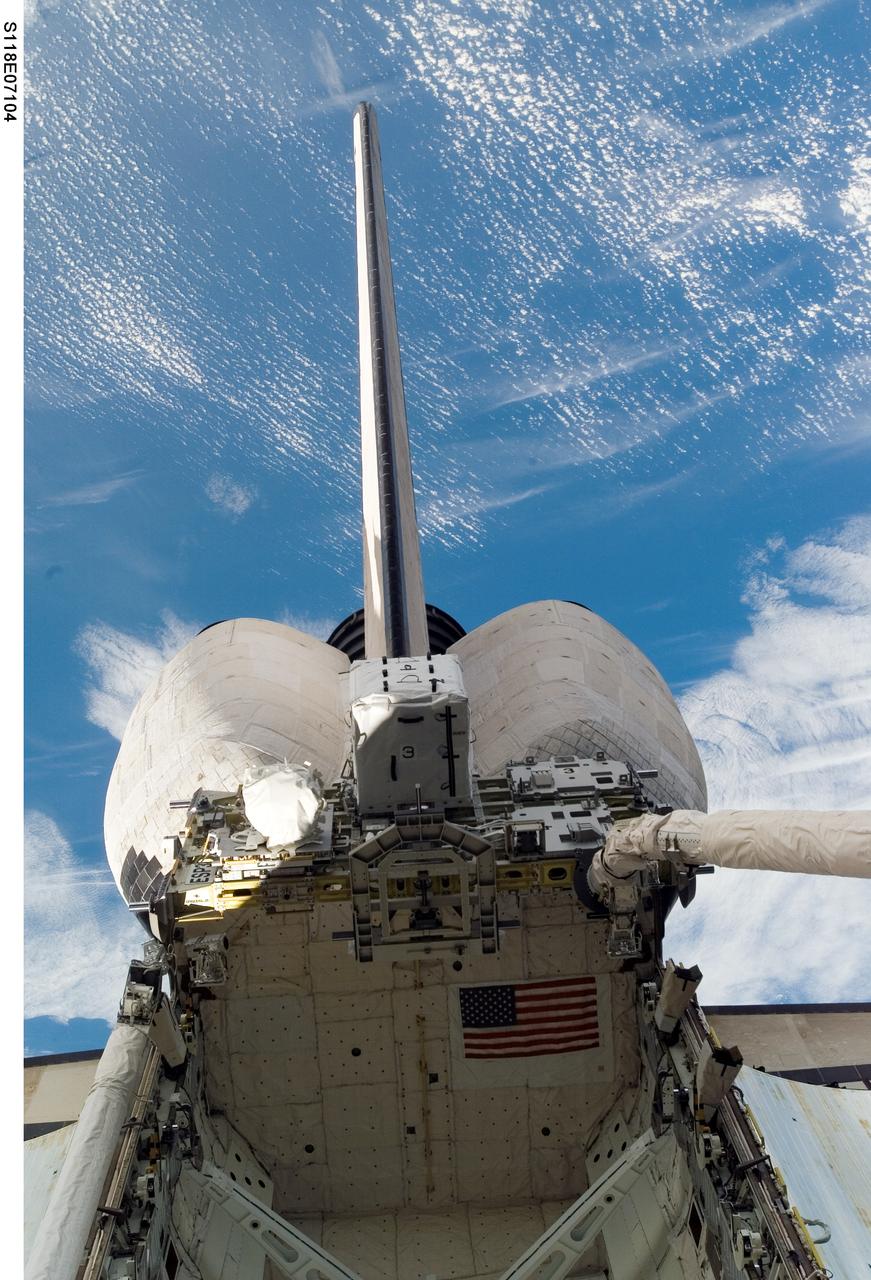
S118-E-07104 (14 Aug. 2007) --- An external stowage platform (ESP-3) is photographed in the payload bay of Space Shuttle Endeavour while docked with the International Space Station. Astronauts Tracy Caldwell and Barbara R. Morgan, both STS-118 mission specialists, were inside at Endeavour's controls as the shuttle's robotic arm (lower right) lifted the storage platform from the cargo bay to hand it over to the station's robotic arm, also known as Canadarm2. Astronauts Charlie Hobaugh, pilot, and Clay Anderson, Expedition 15 flight engineer, then used Canadarm2 to attach the 13-by-7-foot platform to the station's Port 3 truss.

CAPE CANAVERAL, Fla. – In the Orbiter Processing Facility’s bay 3, space shuttle Discovery’s payload bay is readied for installation of the orbiter boom sensor system to support mission STS-128. The 50-foot-long boom attaches to the shuttle arm and provides equipment to inspect the shuttle's heat shield while in space. It contains an intensified television camera (ITVC) and a laser dynamic range imager, which are mounted on a pan and tilt unit, and a laser camera system (LCS) mounted on a stationary bracket. The STS-128 flight will carry science and storage racks to the International Space Station on space shuttle Discovery. Launch of Discovery is targeted for Aug. 6. Photo credit: NASA/Jim Grossmann

KENNEDY SPACE CENTER, FLA. -- For the first time in Space Shuttle history, a fully stacked Shuttle - Atlantis - moves into high bay 2, on the west side of the Vehicle Assembly Building (VAB). The VAB and nearby rock-paved crawlerway have recently undergone major modifications to provide Shuttle fliglht hardware more storage space and protection - "Safe Haven" - from hurricanes or tropical storms. Atlantis begain moving out of VAB high bay 1 on the east side at 2:59 a.m. EDT. After the successful "Safe Haven" fit check, Shuttle Atlantis is scheduled to roll out to Launch Pad 39B in preparation for the STS-106 launch on Sept. 8.