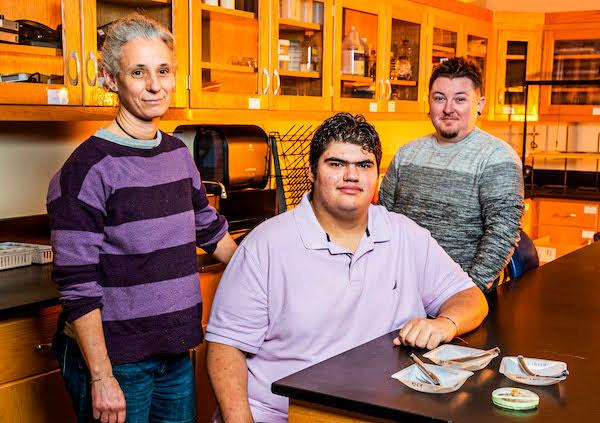
jsc2023e065204 (12/20/2022) --- The Collin College team work on their experiment, which will be included in the Nanoracks-National Center for Earth and Space Science Education-Orbiter-Student Spaceflight Experiments Program Mission 17 to ISS (Nanoracks-NCESSE-Orbiter-SSEP). The team is comprised of (left to right) Dr. Tamara Basham, Stefano Sacripanti and Henry Elmendorf.
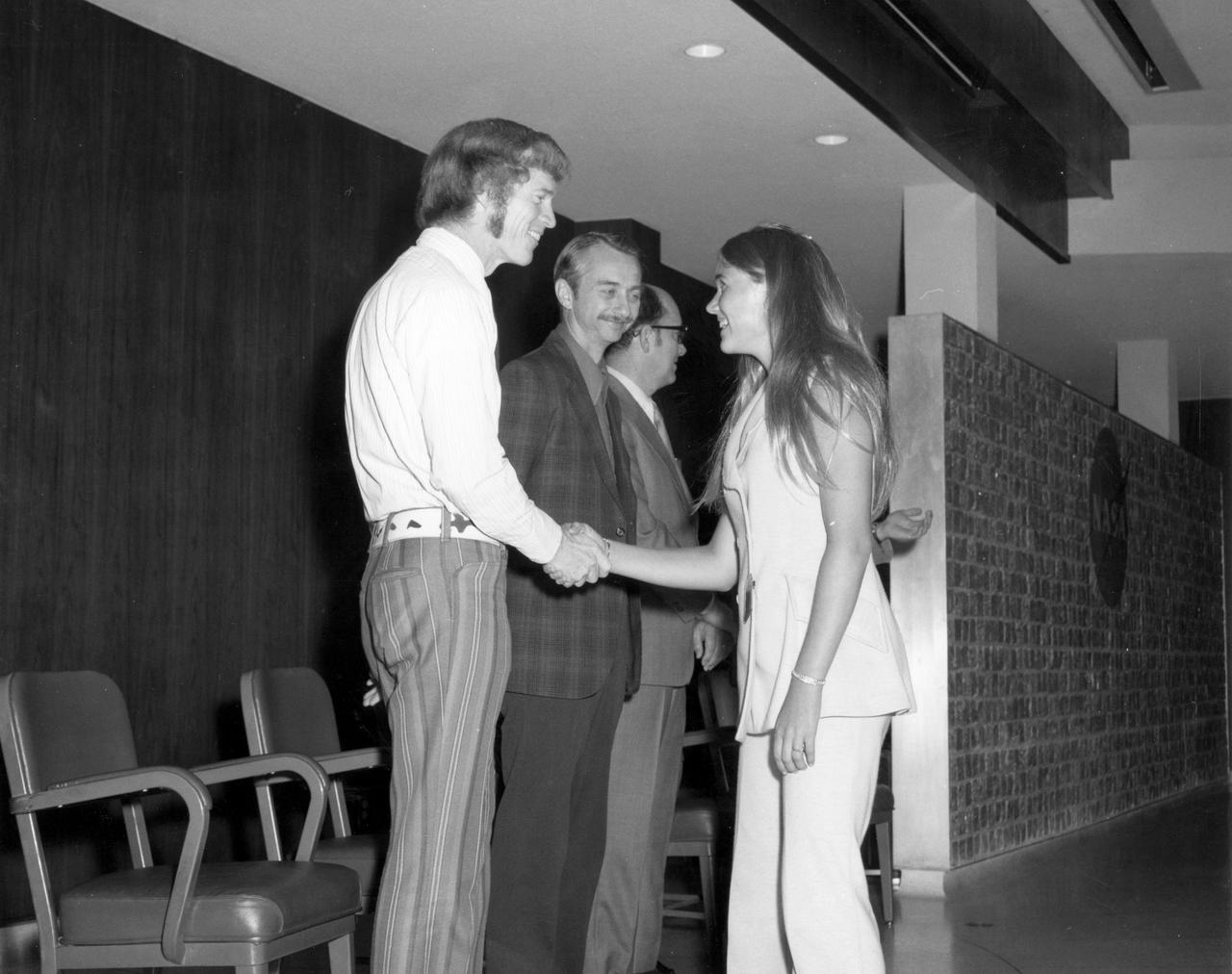
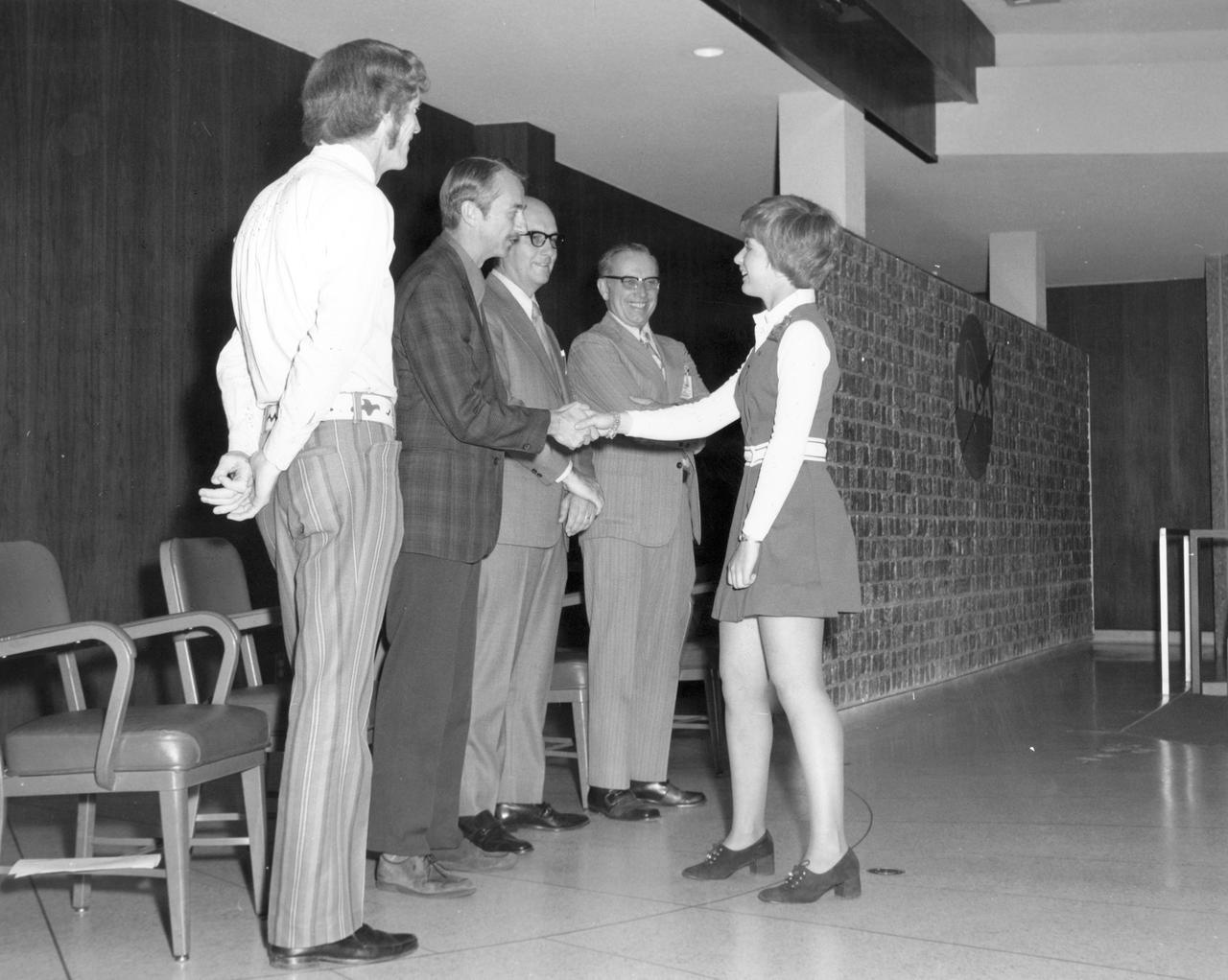
Houston, Texas high school student, Kathy L. Jackson, is greeted by astronauts Russell L. Schweickart (left) and Owen K. Garriott (center), and Marshall Space Flight Center (MSFC) Skylab Program Manager, Leland Belew during a tour of the Marshall Space Flight Center (MSFC). Jackson was among 25 winners of a contest in which some 3,500 high school students proposed experiments for the following year’s Skylab mission. The nationwide scientific competition was sponsored by the National Science Teachers Association and the National Aeronautics and Space Administration (NASA). The winning students, along with their parents and sponsor teachers, visited MSFC where they met with scientists and engineers, participated in design reviews for their experiments, and toured MSFC facilities. Of the 25 students, 6 did not see their experiments conducted on Skylab because the experiments were not compatible with Skylab hardware and timelines. Of the 19 remaining, 11 experiments required the manufacture of additional equipment.
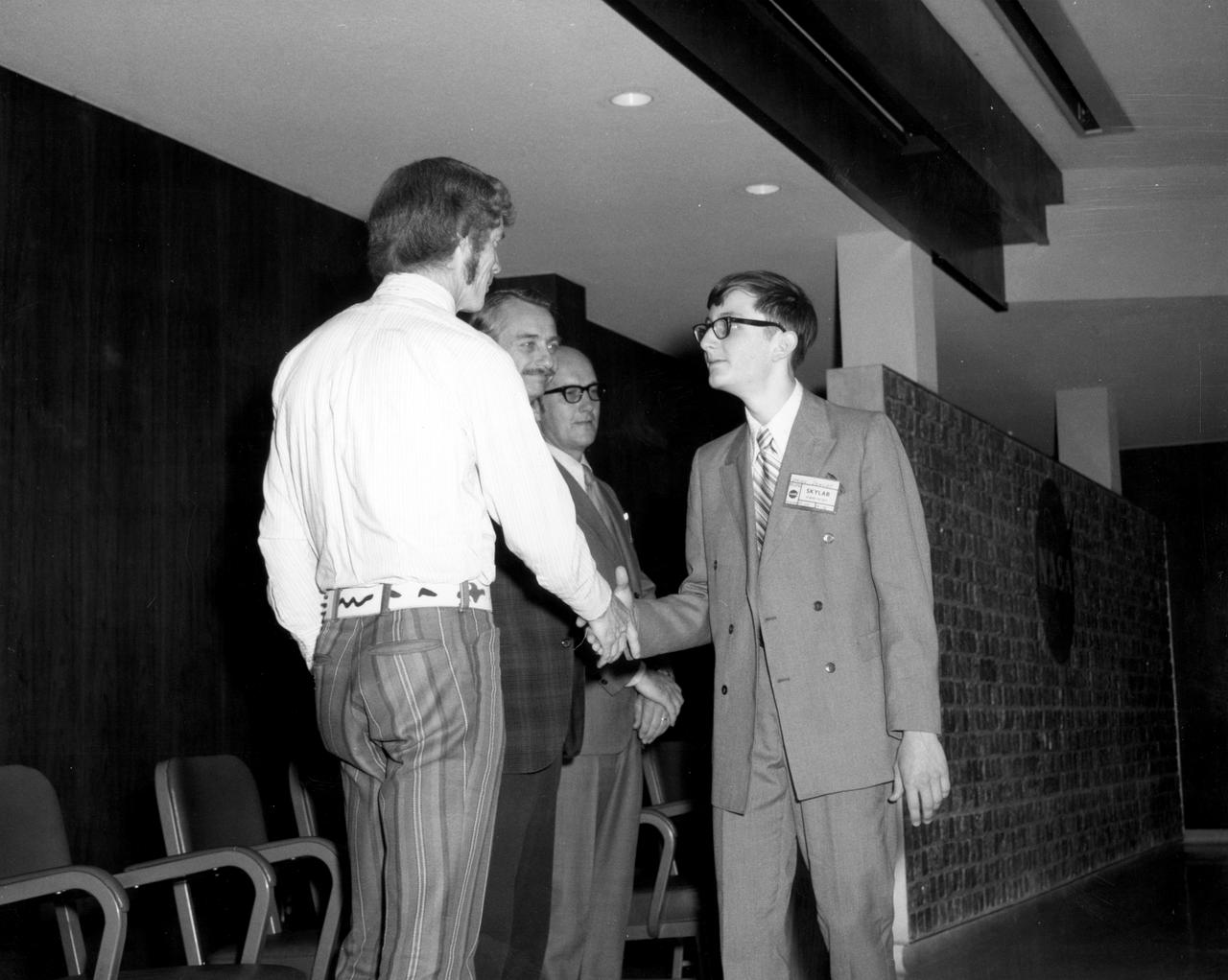
Youngstown, Ohio high school student, W. Brian Dunlap, is greeted by (left to right): Astronauts Russell L. Schweickart, and Owen K. Garriott; Marshall Space Flight Center (MSFC) Skylab Program Manager, Leland Belew; and MSFC Director of Administration and Technical Services, David Newby, during a tour of MSFC. Dunlap was among 25 winners of a contest in which some 3,500 high school students proposed experiments for the following year’s Skylab mission. The nationwide scientific competition was sponsored by the National Science Teachers Association and the National Aeronautics and Space Administration (NASA). The winning students, along with their parents and sponsor teachers, visited MSFC where they met with scientists and engineers, participated in design reviews for their experiments, and toured MSFC facilities. Of the 25 students, 6 did not see their experiments conducted on Skylab because the experiments were not compatible with Skylab hardware and timelines. Of the 19 remaining, 11 experiments required the manufacture of additional equipment.
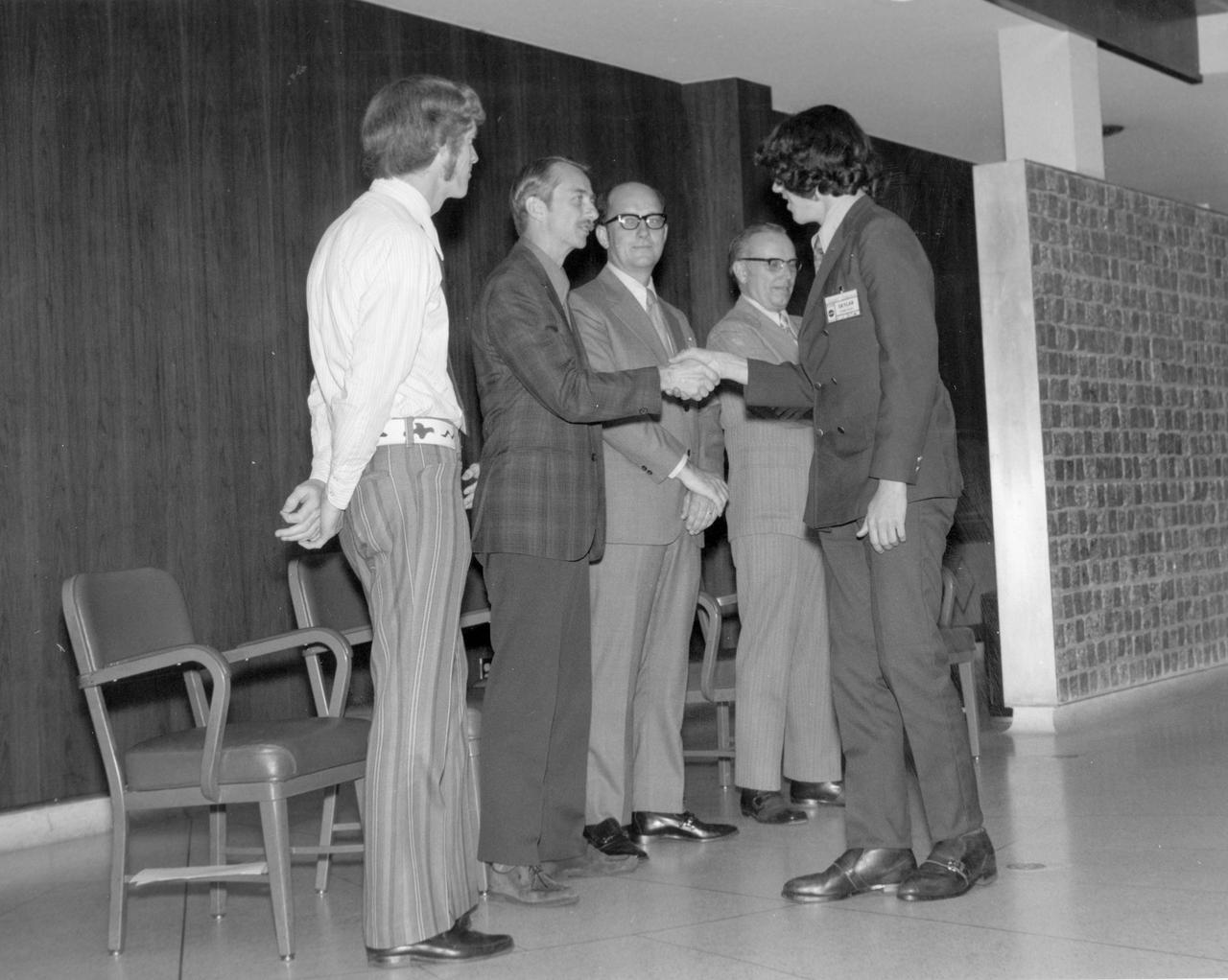
North Rochester, New York high school student, Robert L. Staehle, is greeted by (left to right): Astronauts Russell L. Schweickart, and Owen K. Garriott; Marshall Space Flight Center (MSFC) Skylab Program Manager, Leland Belew; and MSFC Director of Administration and Technical Services, David Newby, during a tour of MSFC. Staehle was among 25 winners of a contest in which some 3,500 high school students proposed experiments for the following year’s Skylab mission. The nationwide scientific competition was sponsored by the National Science Teachers Association and the National Aeronautics and Space Administration (NASA). The winning students, along with their parents and sponsor teachers, visited MSFC where they met with scientists and engineers, participated in design reviews for their experiments, and toured MSFC facilities. Of the 25 students, 6 did not see their experiments conducted on Skylab because the experiments were not compatible with Skylab hardware and timelines. Of the 19 remaining, 11 experiments required the manufacture of additional equipment.
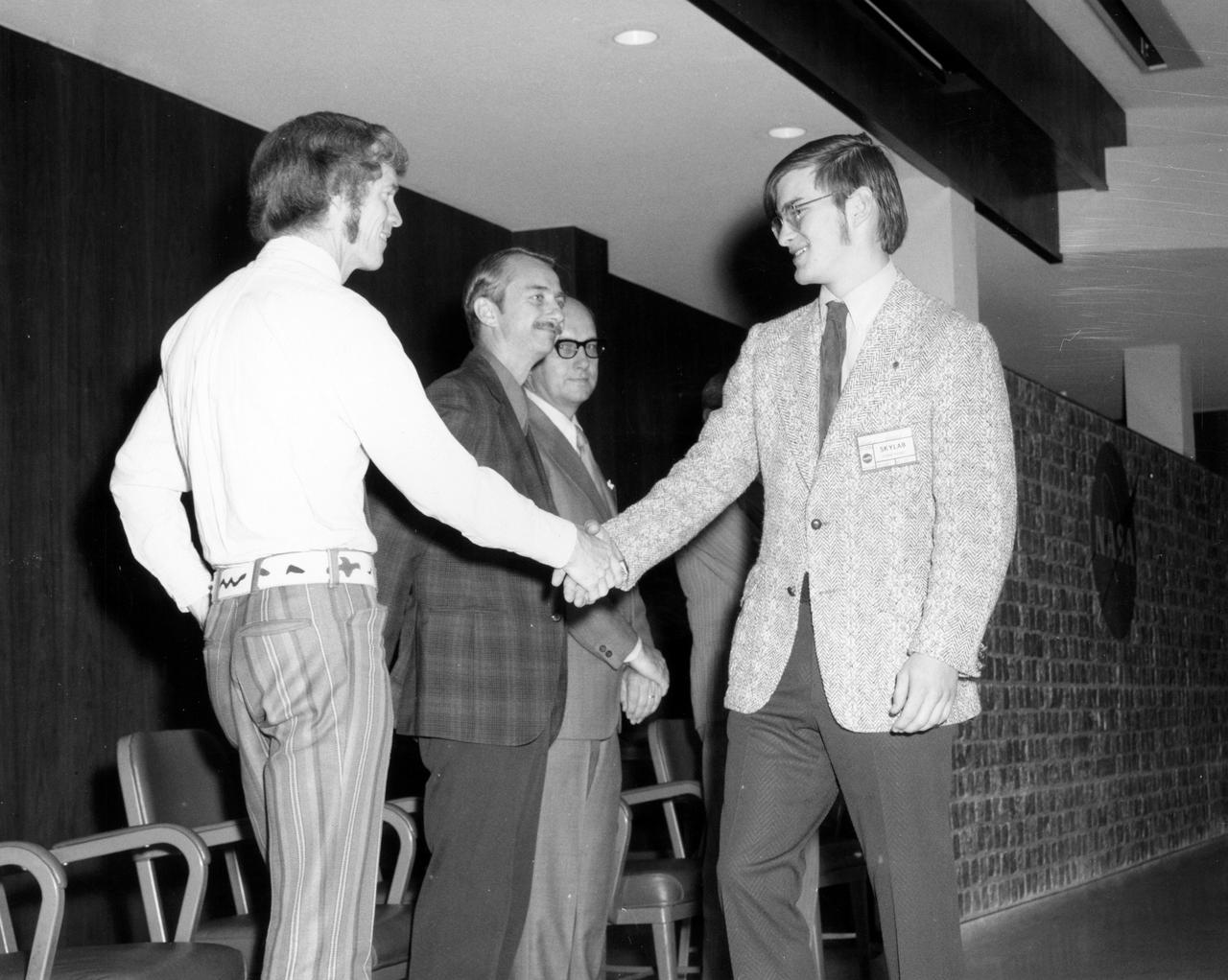
Littleton, Colorado high school student, Cheryl A. Peltz, is greeted by (left to right): Astronauts Russell L. Schweickart, and Owen K. Garriott; Marshall Space Flight Center (MSFC) Skylab Program Manager, Leland Belew; and MSFC Director of Administration and Technical Services, David Newby, during a tour of MSFC. Peltz was among 25 winners of a contest in which some 3,500 high school students proposed experiments for the following year’s Skylab mission. The nationwide scientific competition was sponsored by the National Science Teachers Association and the National Aeronautics and Space Administration (NASA). The winning students, along with their parents and sponsor teachers, visited MSFC where they met with scientists and engineers, participated in design reviews for their experiments, and toured MSFC facilities. Of the 25 students, 6 did not see their experiments conducted on Skylab because the experiments were not compatible with Skylab hardware and timelines. Of the 19 remaining, 11 experiments required the manufacture of additional equipment.
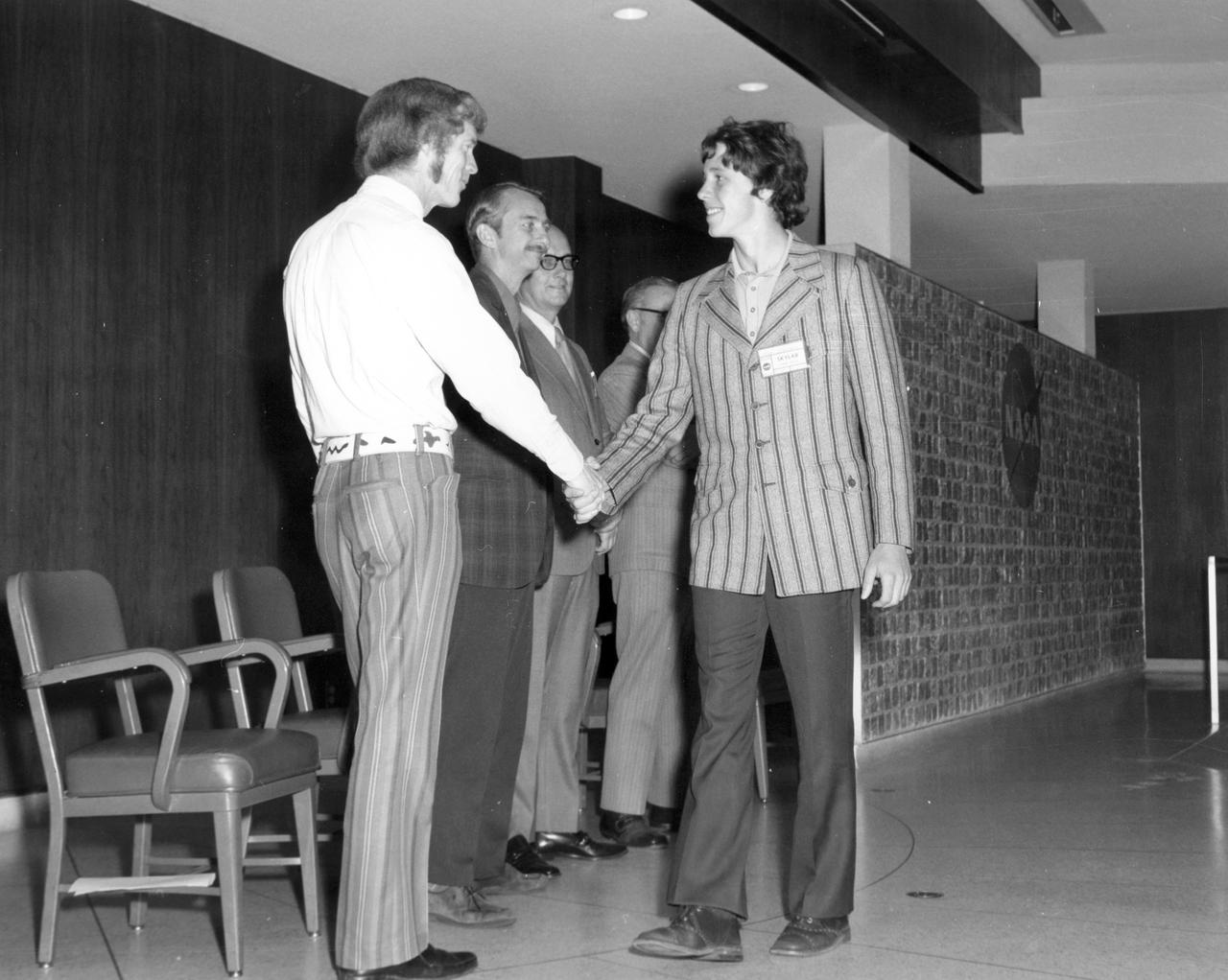
Bayport, New York high school student, James E. Healy, is greeted by (left to right): Astronauts Russell L. Schweickart, and Owen K. Garriott; Marshall Space Flight Center (MSFC) Skylab Program Manager, Leland Belew; and MSFC Director of Administration and Technical Services, David Newby, during a tour of MSFC. Healy was among 25 winners of a contest in which some 3,500 high school students proposed experiments for the following year’s Skylab mission. The nationwide scientific competition was sponsored by the National Science Teachers Association and the National Aeronautics and Space Administration (NASA). The winning students, along with their parents and sponsor teachers, visited MSFC where they met with scientists and engineers, participated in design reviews for their experiments, and toured MSFC facilities. Of the 25 students, 6 did not see their experiments conducted on Skylab because the experiments were not compatible with Skylab hardware and timelines. Of the 19 remaining, 11 experiments required the manufacture of additional equipment.
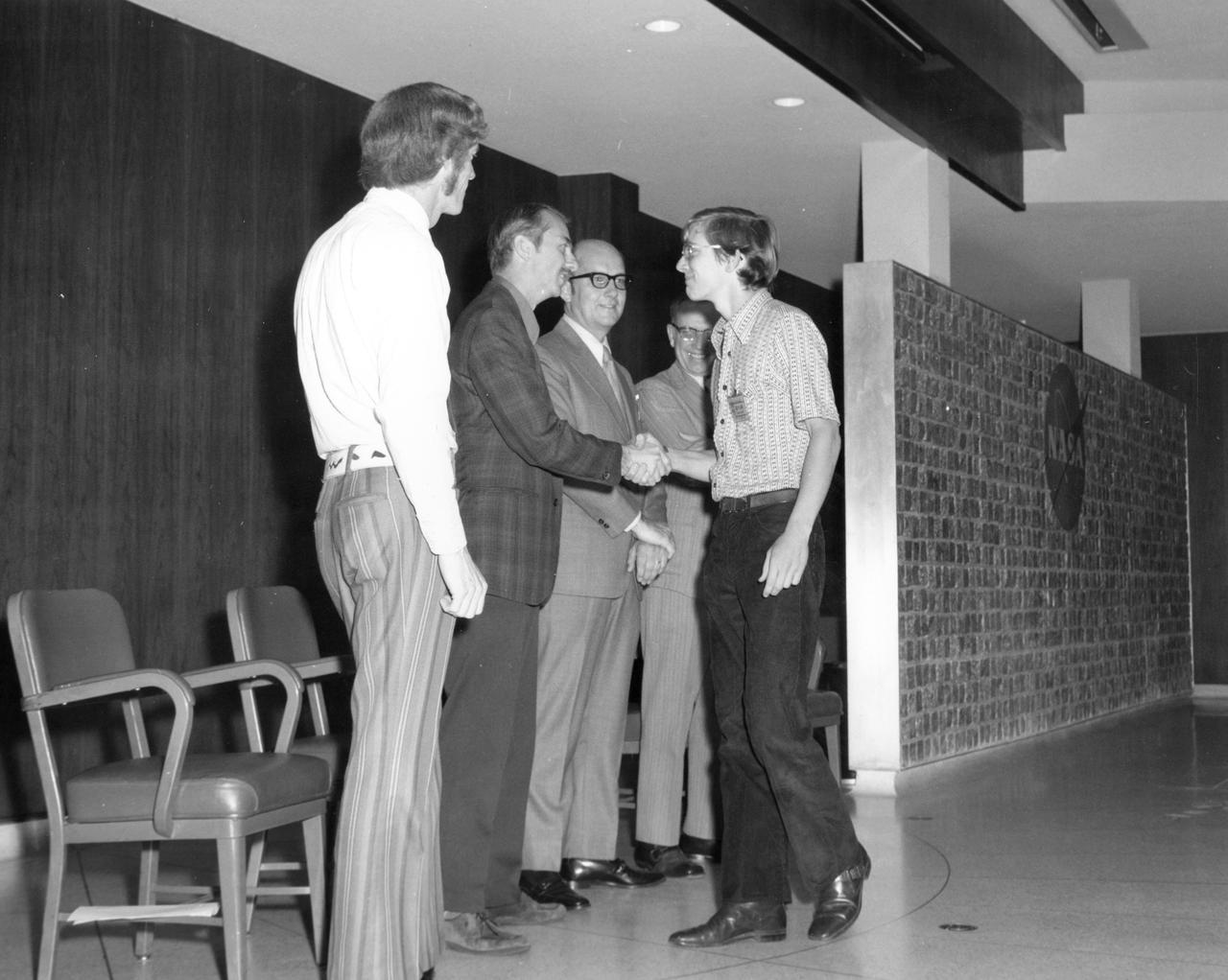
Oshkosh, Wisconsin high school student, Joe B. Zmolek, is greeted by (left to right): Astronauts Russell L. Schweickart, and Owen K. Garriott; Marshall Space Flight Center (MSFC) Skylab Program Manager, Leland Belew; and MSFC Director of Administration and Technical Services, David Newby, during a tour of MSFC. Zmolek was among 25 winners of a contest in which some 3,500 high school students proposed experiments for the following year’s Skylab mission. The nationwide scientific competition was sponsored by the National Science Teachers Association and the National Aeronautics and Space Administration (NASA). The winning students, along with their parents and sponsor teachers, visited MSFC where they met with scientists and engineers, participated in design reviews for their experiments, and toured MSFC facilities. Of the 25 students, 6 did not see their experiments conducted on Skylab because the experiments were not compatible with Skylab hardware and timelines. Of the 19 remaining, 11 experiments required the manufacture of additional equipment.
Downey, California high school student, Donald W. Shellack, is greeted by (left to right): Astronauts Russell L. Schweickart, and Owen K. Garriott; Marshall Space Flight Center (MSFC) Skylab Program Manager, Leland Belew; and MSFC Director of Administration and Technical Services, David Newby, during a tour of MSFC. Shellack was among 25 winners of a contest in which some 3,500 high school students proposed experiments for the following year’s Skylab mission. The nationwide scientific competition was sponsored by the National Science Teachers Association and the National Aeronautics and Space Administration (NASA). The winning students, along with their parents and sponsor teachers, visited MSFC where they met with scientists and engineers, participated in design reviews for their experiments, and toured MSFC facilities. Of the 25 students, 6 did not see their experiments conducted on Skylab because the experiments were not compatible with Skylab hardware and timelines. Of the 19 remaining, 11 experiments required the manufacture of additional equipment.
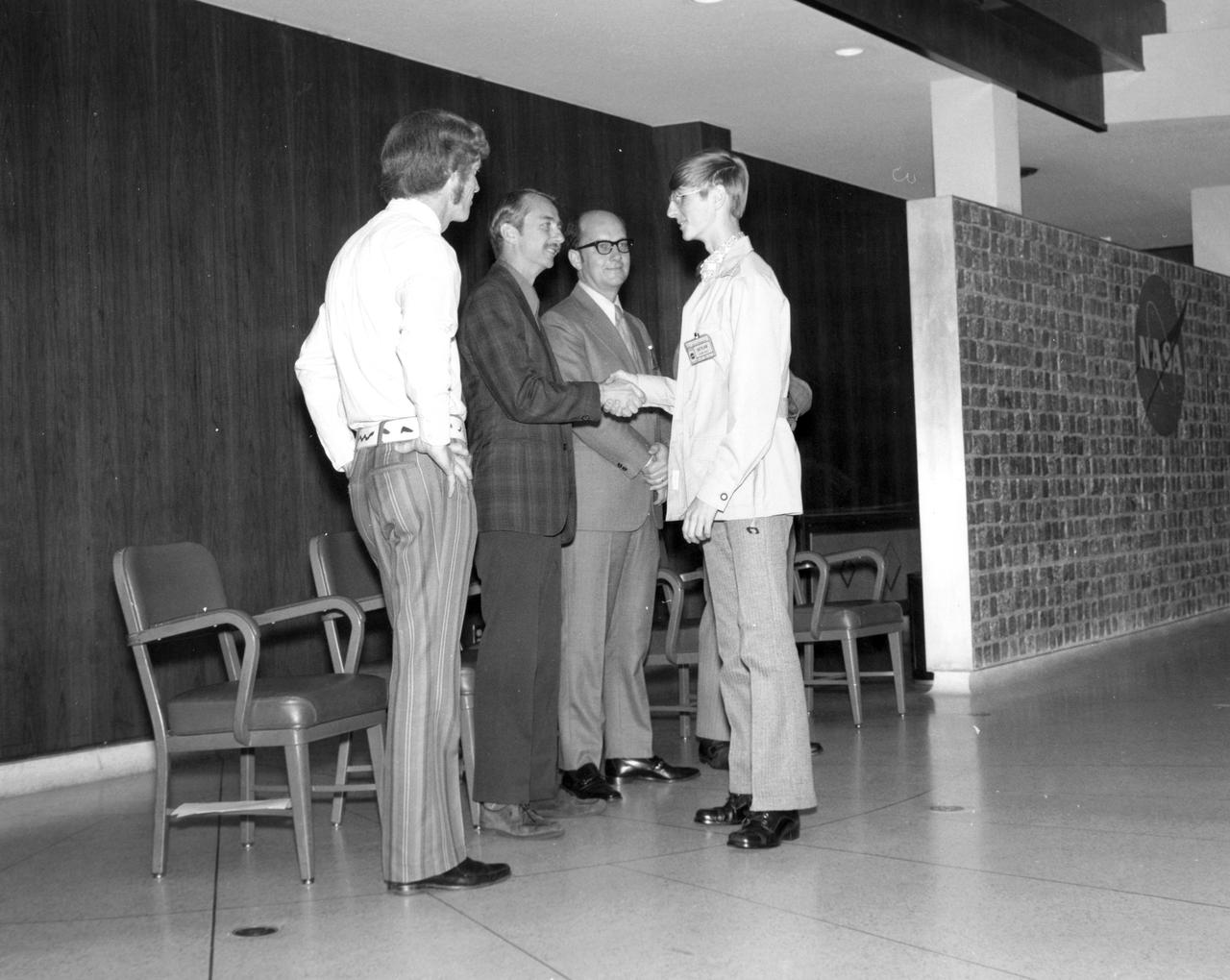
West Point, Nebraska high school student, Joel C. Wordekemper, is greeted by (left to right): Astronauts Russell L. Schweickart, and Owen K. Garriott; Marshall Space Flight Center (MSFC) Skylab Program Manager, Leland Belew; and MSFC Director of Administration and Technical Services, David Newby, during a tour of MSFC. Wordekemper was among 25 winners of a contest in which some 3,500 high school students proposed experiments for the following year’s Skylab mission. The nationwide scientific competition was sponsored by the National Science Teachers Association and the National Aeronautics and Space Administration (NASA). The winning students, along with their parents and sponsor teachers, visited MSFC where they met with scientists and engineers, participated in design reviews for their experiments, and toured MSFC facilities. Of the 25 students, 6 did not see their experiments conducted on Skylab because the experiments were not compatible with Skylab hardware and timelines. Of the 19 remaining, 11 experiments required the manufacture of additional equipment.
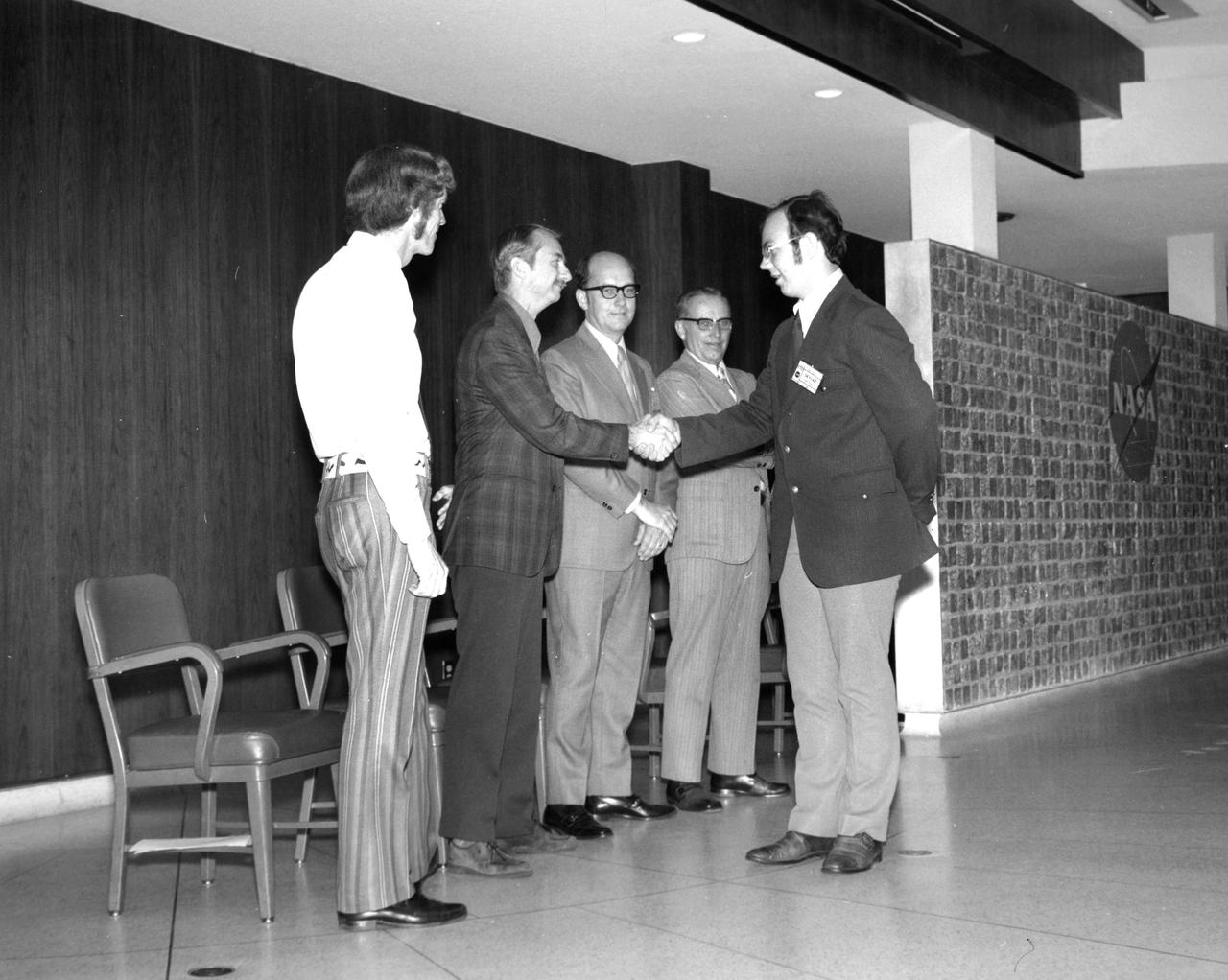
Baton Rouge, Louisiana high school student, Joe W. Reihs, is greeted by (left to right): Astronauts Russell L. Schweickart, and Owen K. Garriott; Marshall Space Flight Center (MSFC) Skylab Program Manager, Leland Belew; and MSFC Director of Administration and Technical Services, David Newby, during a tour of MSFC. Reihs was among 25 winners of a contest in which some 3,500 high school students proposed experiments for the following year’s Skylab mission. The nationwide scientific competition was sponsored by the National Science Teachers Association and the National Aeronautics and Space Administration (NASA). The winning students, along with their parents and sponsor teachers, visited MSFC where they met with scientists and engineers, participated in design reviews for their experiments, and toured MSFC facilities. Of the 25 students, 6 did not see their experiments conducted on Skylab because the experiments were not compatible with Skylab hardware and timelines. Of the 19 remaining, 11 experiments required the manufacture of additional equipment.
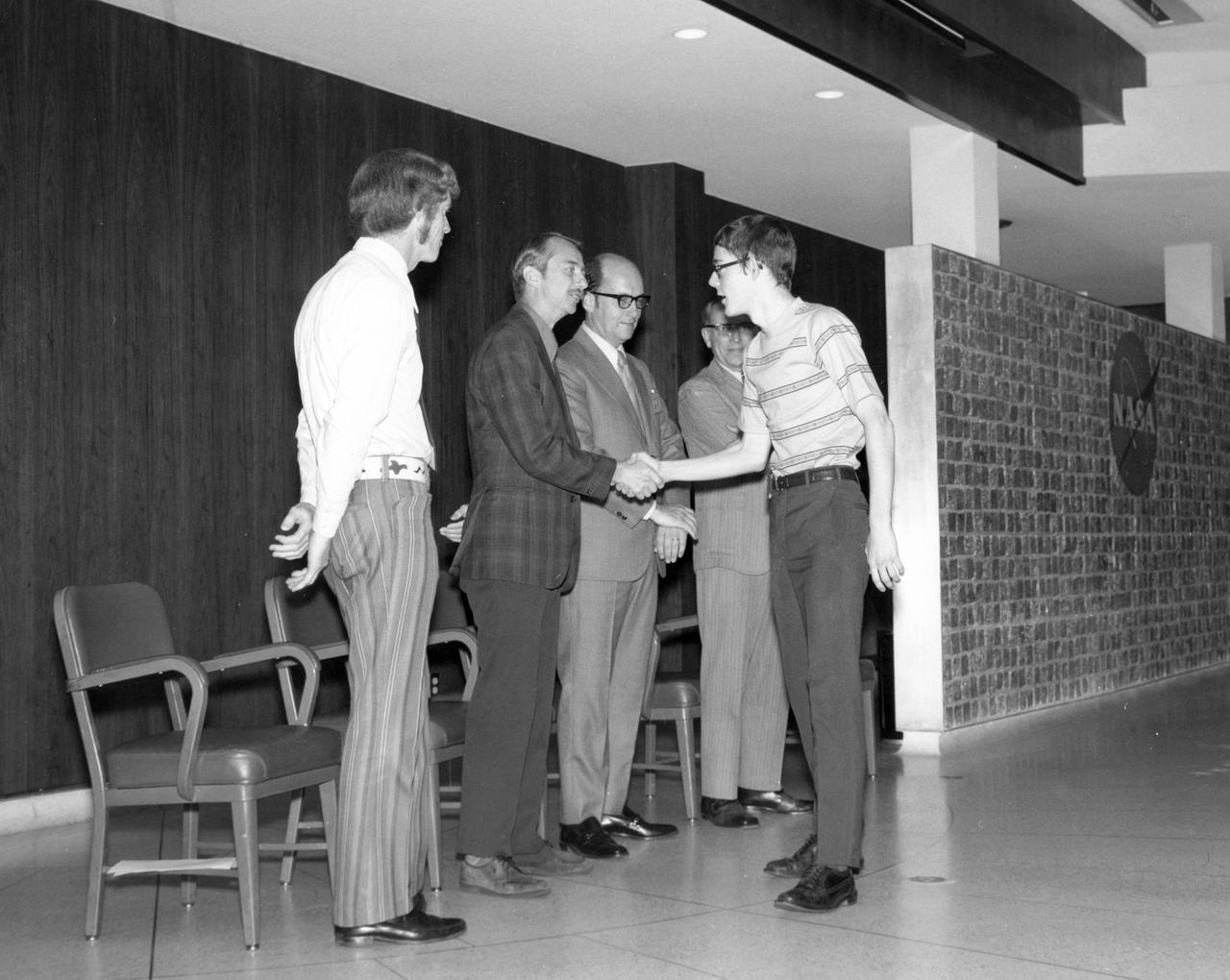
St. Paul, Minnesota high school student, Roger Johnston, is greeted by (left to right): Astronauts Russell L. Schweickart, and Owen K. Garriott; Marshall Space Flight Center (MSFC) Skylab Program Manager, Leland Belew; and MSFC Director of Administration and Technical Services, David Newby, during a tour of MSFC. Johnston was among 25 winners of a contest in which some 3,500 high school students proposed experiments for the following year’s Skylab mission. The nationwide scientific competition was sponsored by the National Science Teachers Association and the National Aeronautics and Space Administration (NASA). The winning students, along with their parents and sponsor teachers, visited MSFC where they met with scientists and engineers, participated in design reviews for their experiments, and toured MSFC facilities. Of the 25 students, 6 did not see their experiments conducted on Skylab because the experiments were not compatible with Skylab hardware and timelines. Of the 19 remaining, 11 experiments required the manufacture of additional equipment.

Atlanta, Georgia high school student, Neal W. Shannon, is greeted by (left to right): Astronauts Russell L. Schweickart, and Owen K. Garriott; Marshall Space Flight Center (MSFC) Skylab Program Manager, Leland Belew; and MSFC Director of Administration and Technical Services, David Newby, during a tour of MSFC. Shannon was among 25 winners of a contest in which some 3,500 high school students proposed experiments for the following year’s Skylab mission. The nationwide scientific competition was sponsored by the National Science Teachers Association and the National Aeronautics and Space Administration (NASA). The winning students, along with their parents and sponsor teachers, visited MSFC where they met with scientists and engineers, participated in design reviews for their experiments, and toured MSFC facilities. Of the 25 students, 6 did not see their experiments conducted on Skylab because the experiments were not compatible with Skylab hardware and timelines. Of the 19 remaining, 11 experiments required the manufacture of additional equipment.
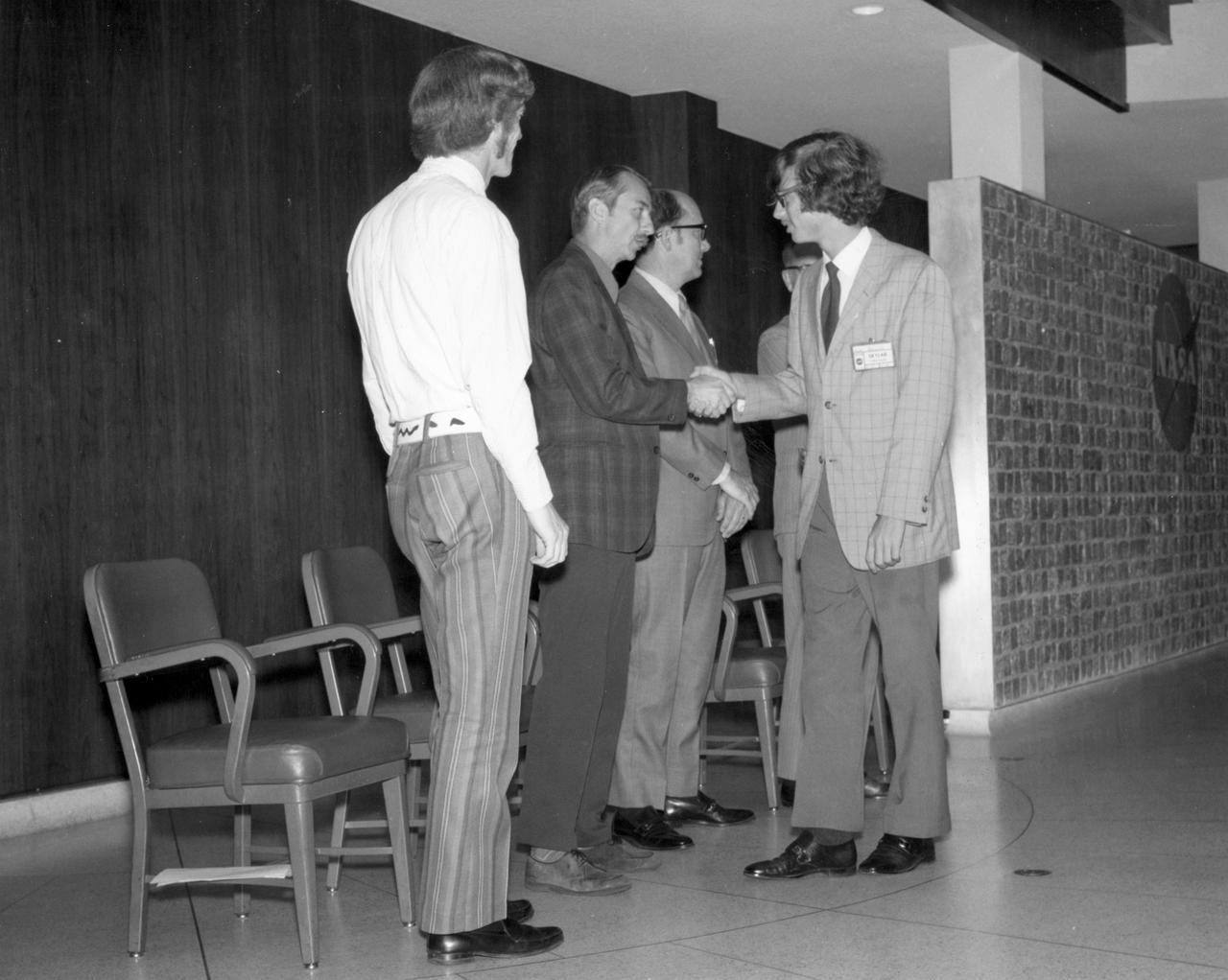
Aiea, Hawaii high school student, John C. Hamilton, is greeted by (left to right): Astronauts Russell L. Schweickart, and Owen K. Garriott; Marshall Space Flight Center (MSFC) Skylab Program Manager, Leland Belew; and MSFC Director of Administration and Technical Services, David Newby, during a tour of MSFC. Hamilton was among 25 winners of a contest in which some 3,500 high school students proposed experiments for the following year’s Skylab mission. The nationwide scientific competition was sponsored by the National Science Teachers Association and the National Aeronautics and Space Administration (NASA). The winning students, along with their parents and sponsor teachers, visited MSFC where they met with scientists and engineers, participated in design reviews for their experiments, and toured MSFC facilities. Of the 25 students, 6 did not see their experiments conducted on Skylab because the experiments were not compatible with Skylab hardware and timelines. Of the 19 remaining, 11 experiments required the manufacture of additional equipment.
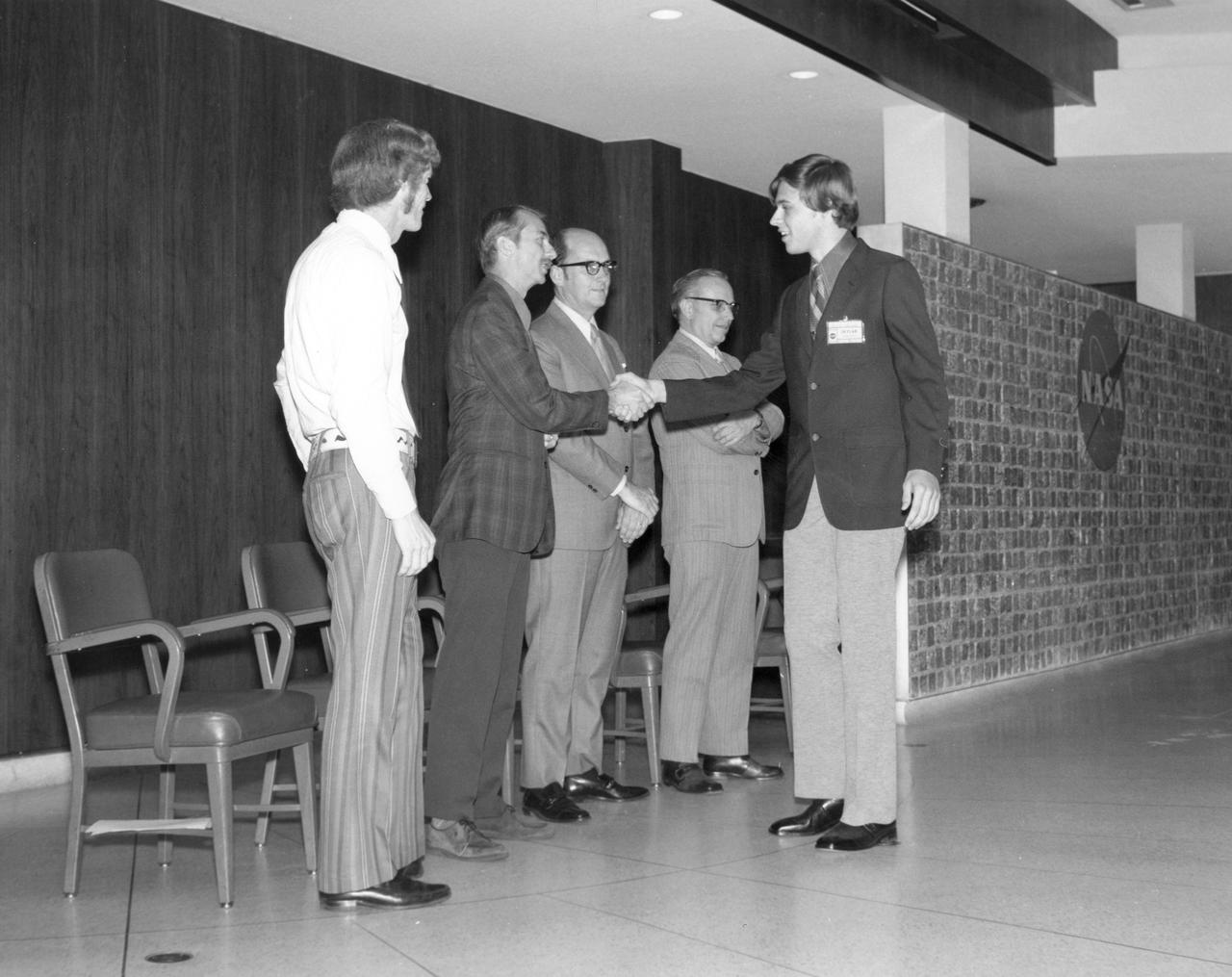
Garland, Texas high school student, Keith D. McGee, is greeted by (left to right): Astronauts Russell L. Schweickart, and Owen K. Garriott; Marshall Space Flight Center (MSFC) Skylab Program Manager, Leland Belew; and MSFC Director of Administration and Technical Services, David Newby, during a tour of MSFC. McGee was among 25 winners of a contest in which some 3,500 high school students proposed experiments for the following year’s Skylab Mission. The nationwide scientific competition was sponsored by the National Science Teachers Association and the National Aeronautics and Space Administration (NASA). The winning students, along with their parents and sponsor teachers, visited MSFC where they met with scientists and engineers, participated in design reviews for their experiments, and toured MSFC facilities. Of the 25 students, 6 did not see their experiments conducted on Skylab because the experiments were not compatible with Skylab hardware and timelines. Of the 19 remaining, 11 experiments required the manufacture of additional equipment.
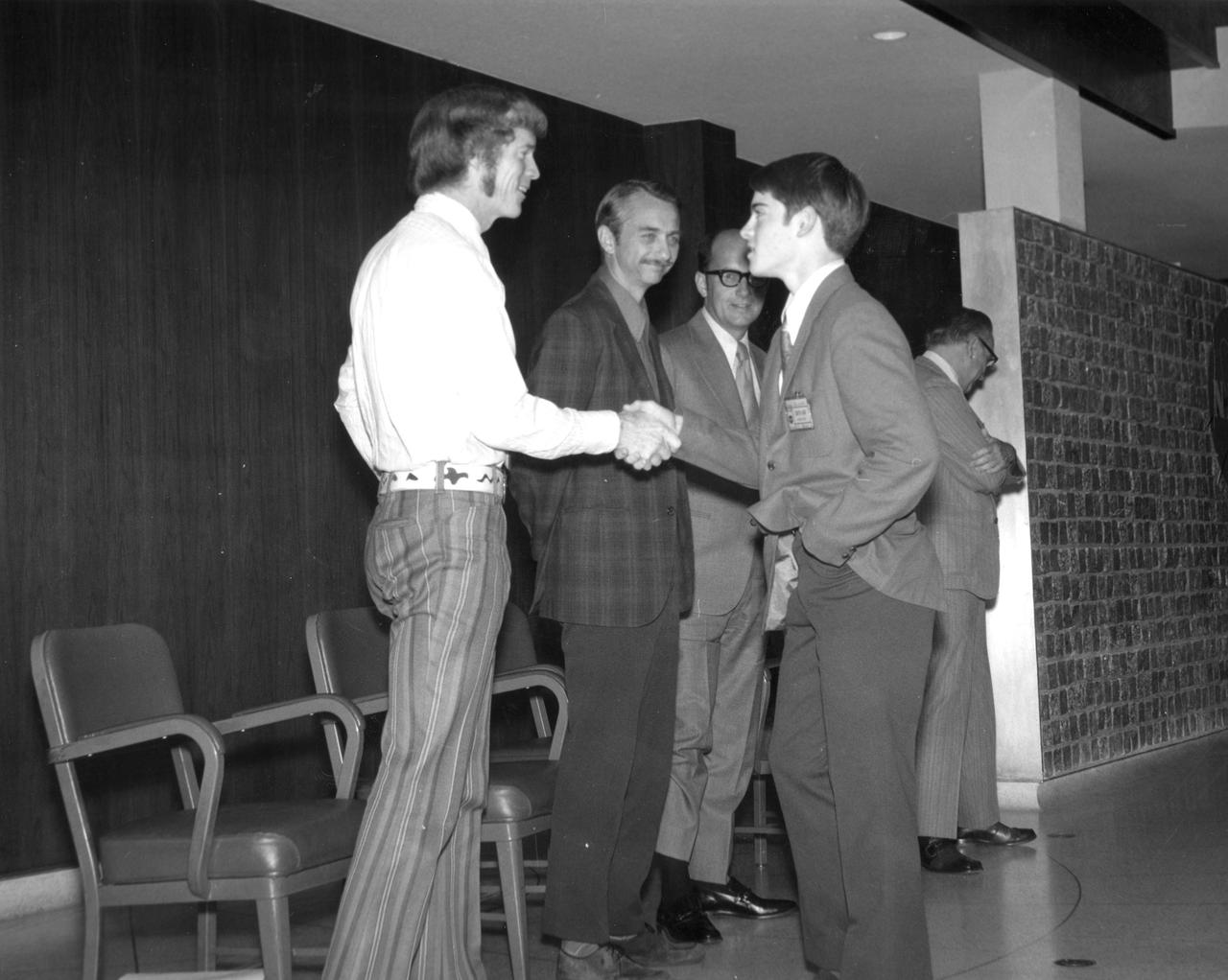
Silverton, Oregon high school student, Daniel C. Bochsler, is greeted by (left to right): Astronauts Russell L. Schweickart, and Owen K. Garriott; Marshall Space Flight Center (MSFC) Skylab Program Manager, Leland Belew; and MSFC Director of Administration and Technical Services, David Newby, during a tour of MSFC. Bochsler was among 25 winners of a contest in which some 3,500 high school students proposed experiments for the following year’s Skylab mission. The nationwide scientific competition was sponsored by the National Science Teachers Association and the National Aeronautics and Space Administration (NASA). The winning students, along with their parents and sponsor teachers, visited MSFC where they met with scientists and engineers, participated in design reviews for their experiments, and toured MSFC facilities. Of the 25 students, 6 did not see their experiments conducted on Skylab because the experiments were not compatible with Skylab hardware and timelines. Of the 19 remaining, 11 experiments required the manufacture of additional equipment.
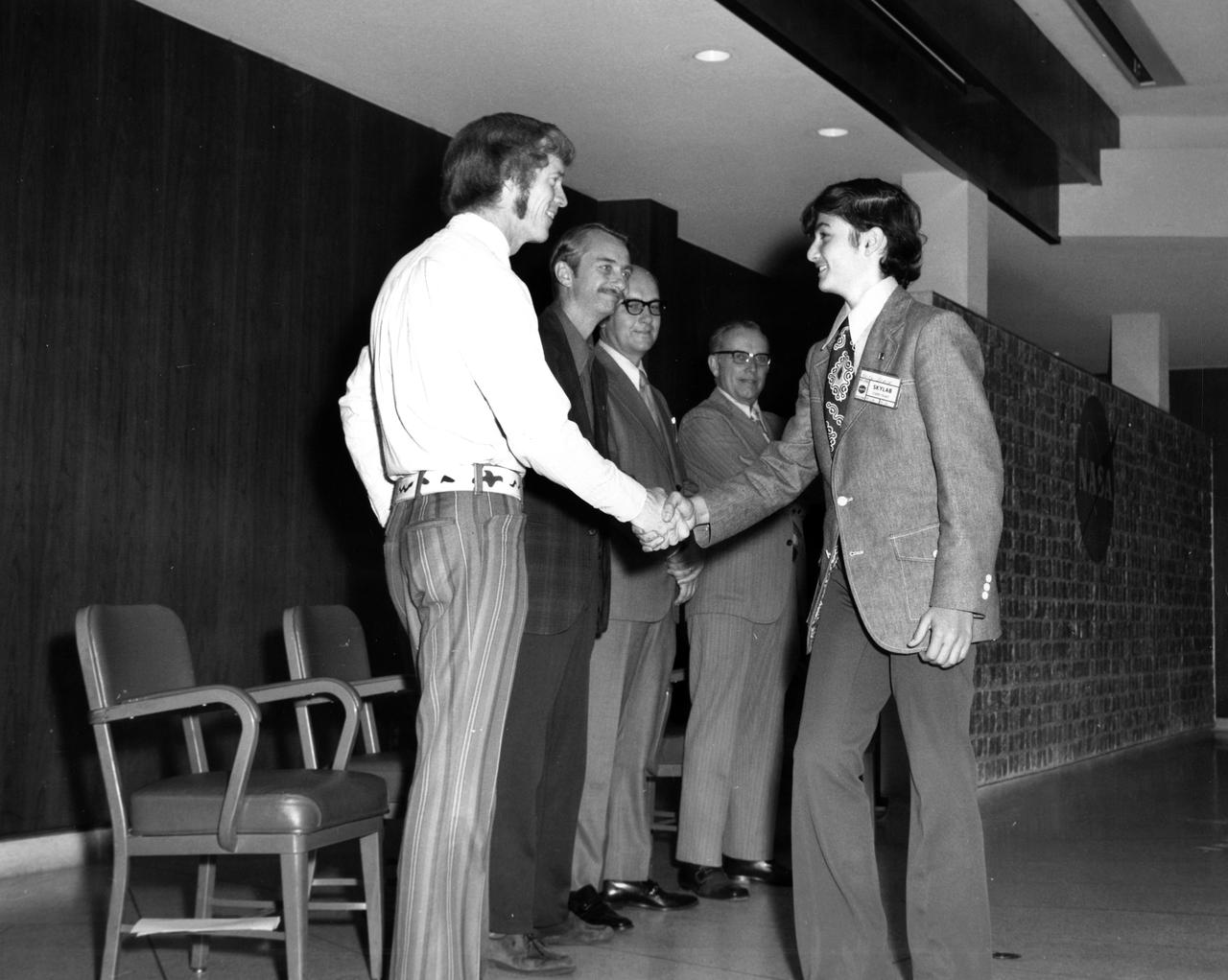
Westbury, New York high school student, Keith L.Stein , is greeted by (left to right): Astronauts Russell L. Schweickart, and Owen K. Garriott; Marshall Space Flight Center (MSFC) Skylab Program Manager, Leland Belew; and MSFC Director of Administration and Technical Services, David Newby, during a tour of MSFC. Stein was among 25 winners of a contest in which some 3,500 high school students proposed experiments for the following year’s Skylab mission. The nationwide scientific competition was sponsored by the National Science Teachers Association and the National Aeronautics and Space Administration (NASA). The winning students, along with their parents and sponsor teachers, visited MSFC where they met with scientists and engineers, participated in design reviews for their experiments, and toured MSFC facilities. Of the 25 students, 6 did not see their experiments conducted on Skylab because the experiments were not compatible with Skylab hardware and timelines. Of the 19 remaining, 11 experiments required the manufacture of additional equipment.
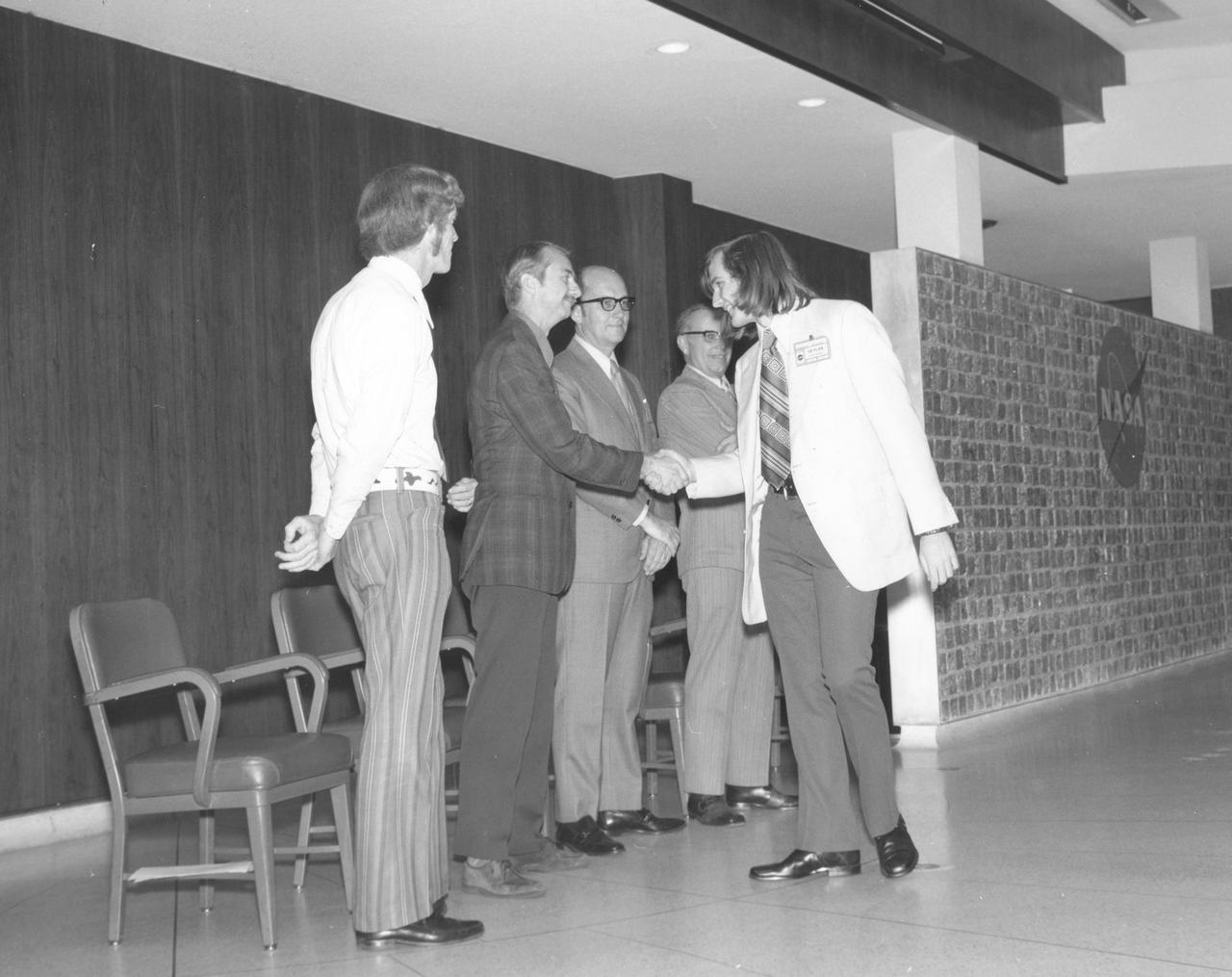
Springfield, Massachusetts high school student, Gregory A. Merkel, is greeted by (left to right): Astronauts Russell L. Schweickart, and Owen K. Garriott; Marshall Space Flight Center (MSFC) Skylab Program Manager, Leland Belew; and MSFC Director of Administration and Technical Services, David Newby, during a tour of MSFC. Merkel was among 25 winners of a contest in which some 3,500 high school students proposed experiments for the following year’s Skylab Mission. The nationwide scientific competition was sponsored by the National Science Teachers Association and the National Aeronautics and Space Administration (NASA). The winning students, along with their parents and sponsor teachers, visited MSFC where they met with scientists and engineers, participated in design reviews for their experiments, and toured MSFC facilities. Of the 25 students, 6 did not see their experiments conducted on Skylab because the experiments were not compatible with Skylab hardware and timelines. Of the 19 remaining, 11 experiments required the manufacture of additional equipment.
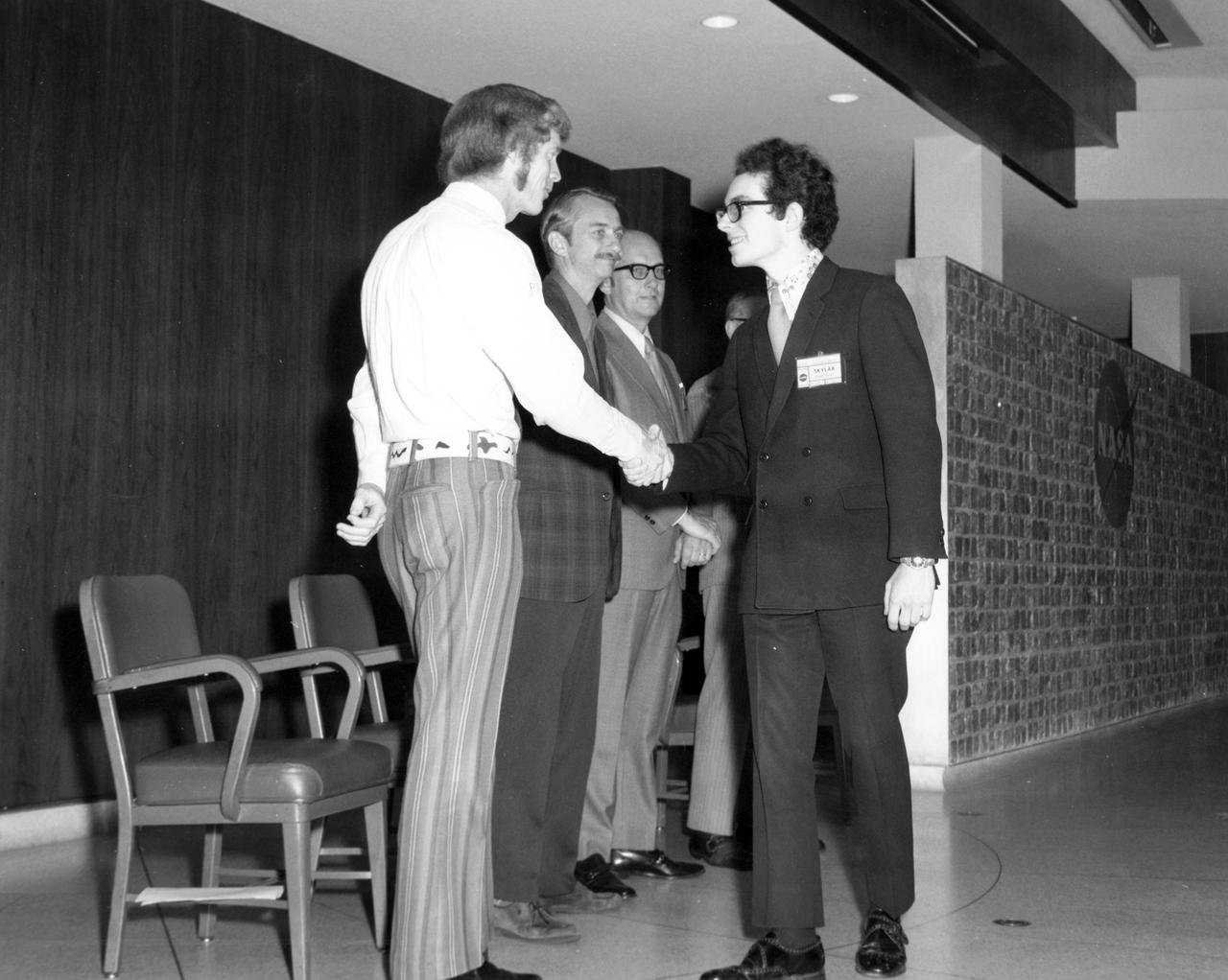
Berkley, Michigan high school student, Kirk M. Sherhart, is greeted by (left to right): Astronauts Russell L. Schweickart, and Owen K. Garriott; Marshall Space Flight Center (MSFC) Skylab Program Manager, Leland Belew; and MSFC Director of Administration and Technical Services, David Newby, during a tour of MSFC. Sherhart was among 25 winners of a contest in which some 3,500 high school students proposed experiments for the following year’s Skylab mission. The nationwide scientific competition was sponsored by the National Science Teachers Association and the National Aeronautics and Space Administration (NASA). The winning students, along with their parents and sponsor teachers, visited MSFC where they met with scientists and engineers, participated in design reviews for their experiments, and toured MSFC facilities. Of the 25 students, 6 did not see their experiments conducted on Skylab because the experiments were not compatible with Skylab hardware and timelines. Of the 19 remaining, 11 experiments required the manufacture of additional equipment.
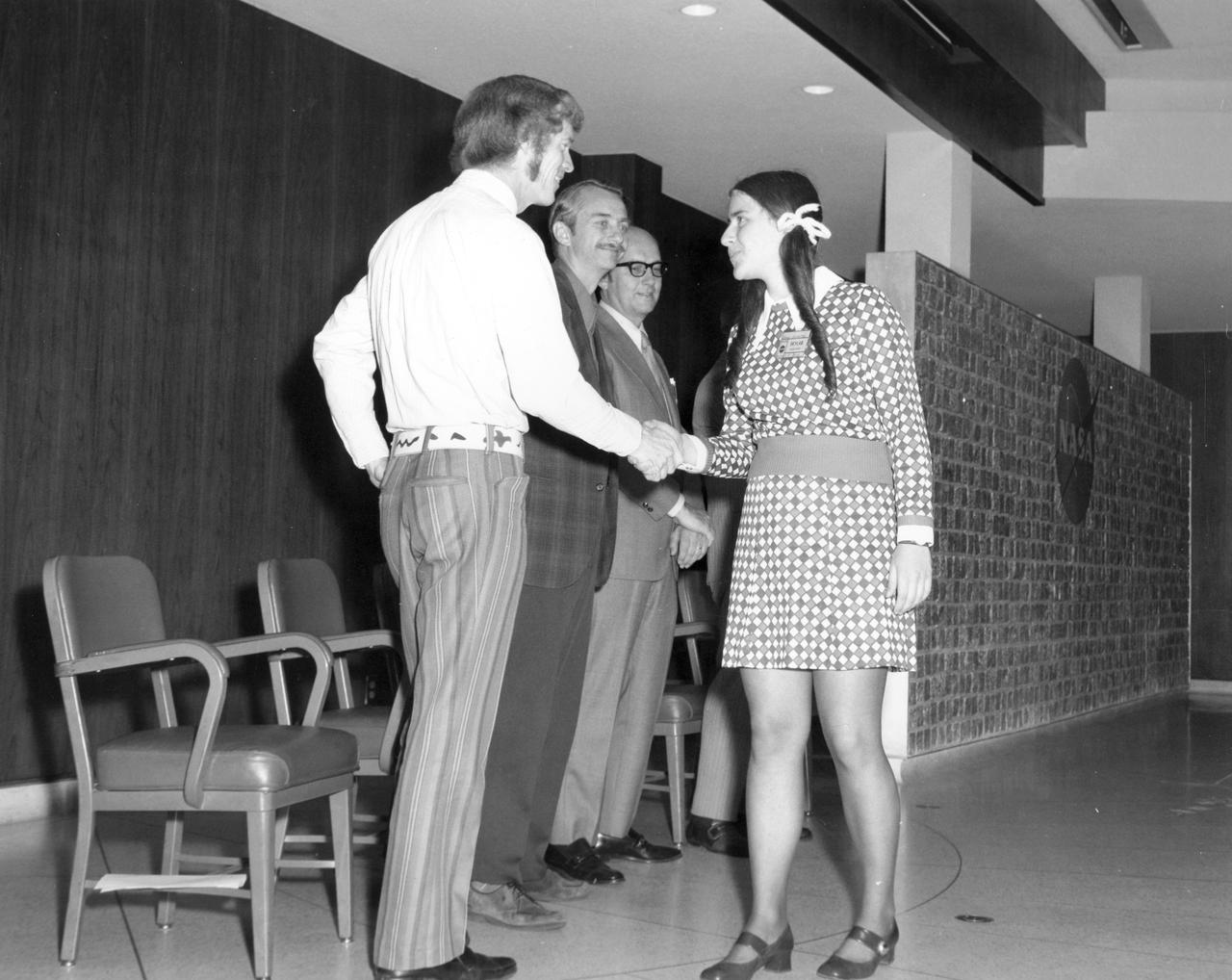
Berkley, California high school student, Jeanne L. Leventhal, is greeted by (left to right): Astronauts Russell L. Schweickart, and Owen K. Garriott; and Marshall Space Flight Center (MSFC) Skylab Program Manager, Leland Belew during a tour of MSFC. Leventhal was among 25 winners of a contest in which some 3,500 high school students proposed experiments for the following year’s Skylab mission. The nationwide scientific competition was sponsored by the National Science Teachers Association and the National Aeronautics and Space Administration (NASA). The winning students, along with their parents and sponsor teachers, visited MSFC where they met with scientists and engineers, participated in design reviews for their experiments, and toured MSFC facilities. Of the 25 students, 6 did not see their experiments conducted on Skylab because the experiments were not compatible with Skylab hardware and timelines. Of the 19 remaining, 11 experiments required the manufacture of additional equipment.
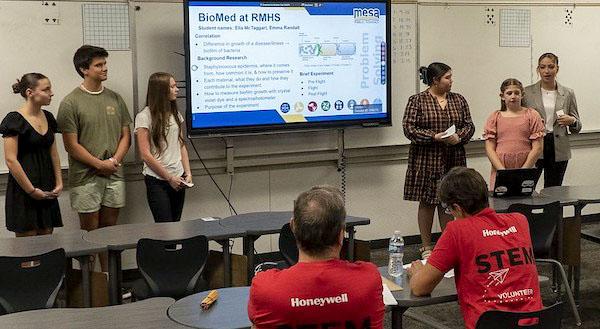
jsc2024e066518 (11/1/2023) --- Mesa Publc School students work together presenting their critical design review to their industry partners Honeywell Aerospace Technologies in their successful bid to be a finalist for the Nanoracks-National Center for Earth and Space Science Education-Surveyor-Student Spaceflight Experiments Program Mission 18 to ISS (Nanoracks-NCESSE-Surveyor-SSEP). Their experiment is The Growth and Mutation of Staphylococcus epidermidis Biofilm in Microgravity.
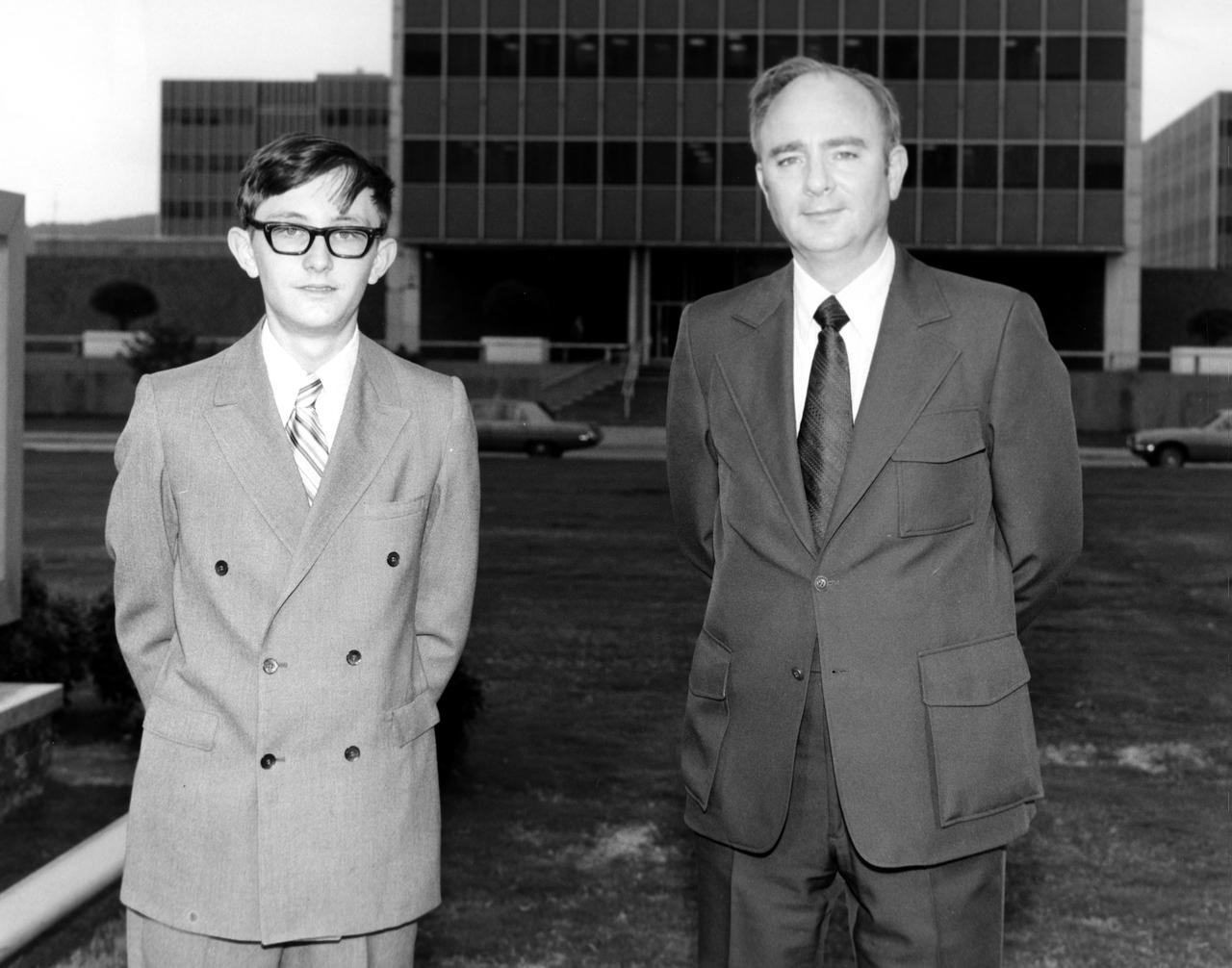
W. Brain Dunlap (left), high school student from Youngstown, Ohio, is pictured here with Harry Coons of the Marshall Space Flight Center (MSFC) during a visit to the center. Dunlap was among 25 winners of a contest in which some 3,500 high school students proposed experiments for the following year’s Skylab mission. The nationwide scientific competition was sponsored by the National Science Teachers Association and the National Aeronautics and Space Administration (NASA). The winning students, along with their parents and sponsor teachers, visited MSFC where they met with scientists and engineers, participated in design reviews for their experiments, and toured MSFC facilities. Of the 25 students, 6 did not see their experiments conducted on Skylab because the experiments were not compatible with Skylab hardware and timelines. Of the 19 remaining, 11 experiments required the manufacture of additional equipment.
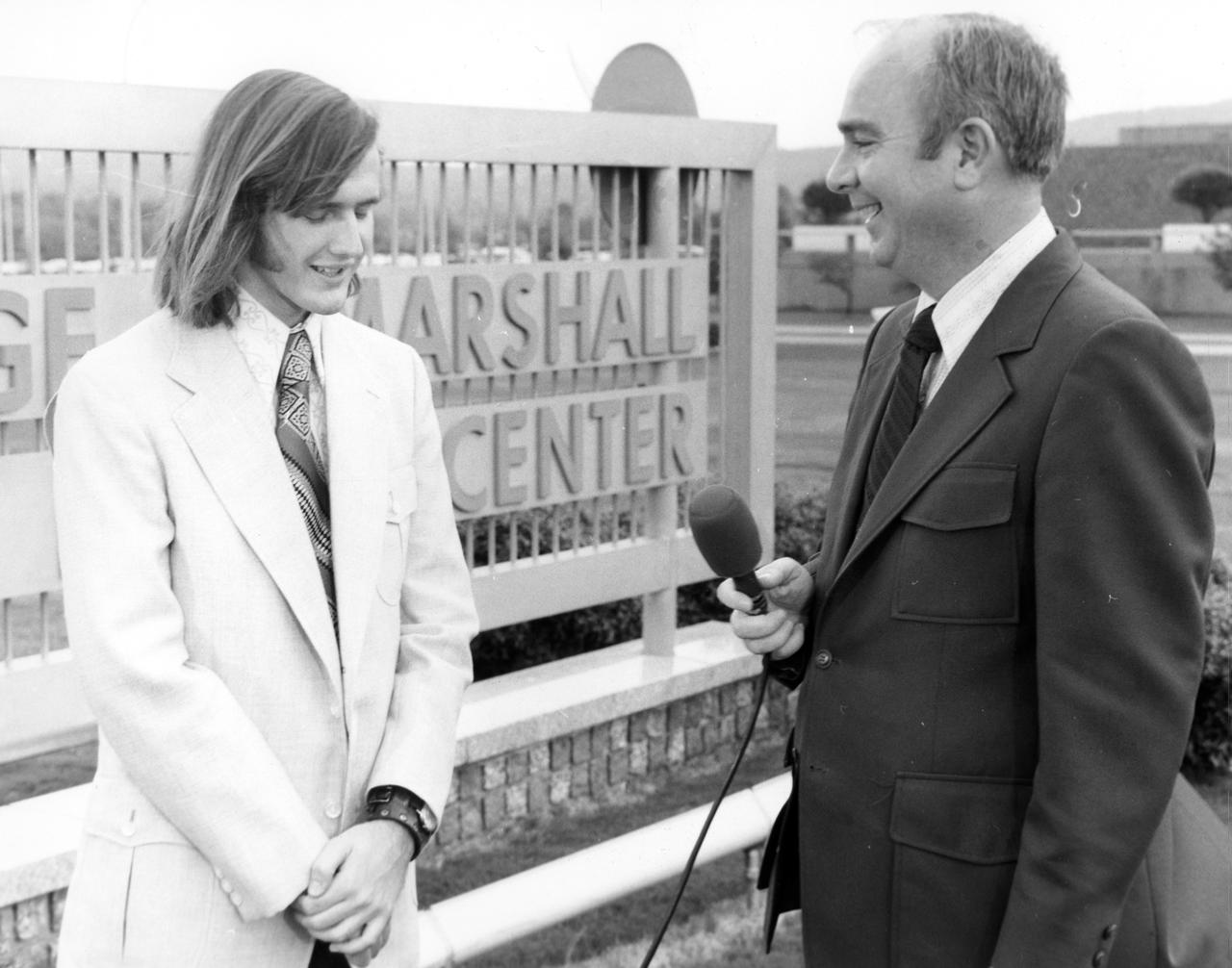
Gregory A. Merkel (left), high school student from Springfield, Massachusetts, is pictured here with Harry Coons of the Marshall Space Flight Center (MSFC) during a visit to the center. Merkel was among 25 winners of a contest in which some 3,500 high school students proposed experiments for the following year’s Skylab mission. The nationwide scientific competition was sponsored by the National Science Teachers Association and the National Aeronautics and Space Administration (NASA). The winning students, along with their parents and sponsor teachers, visited MSFC where they met with scientists and engineers, participated in design reviews for their experiments, and toured MSFC facilities. Of the 25 students, 6 did not see their experiments conducted on Skylab because the experiments were not compatible with Skylab hardware and timelines. Of the 19 remaining, 11 experiments required the manufacture of additional equipment.
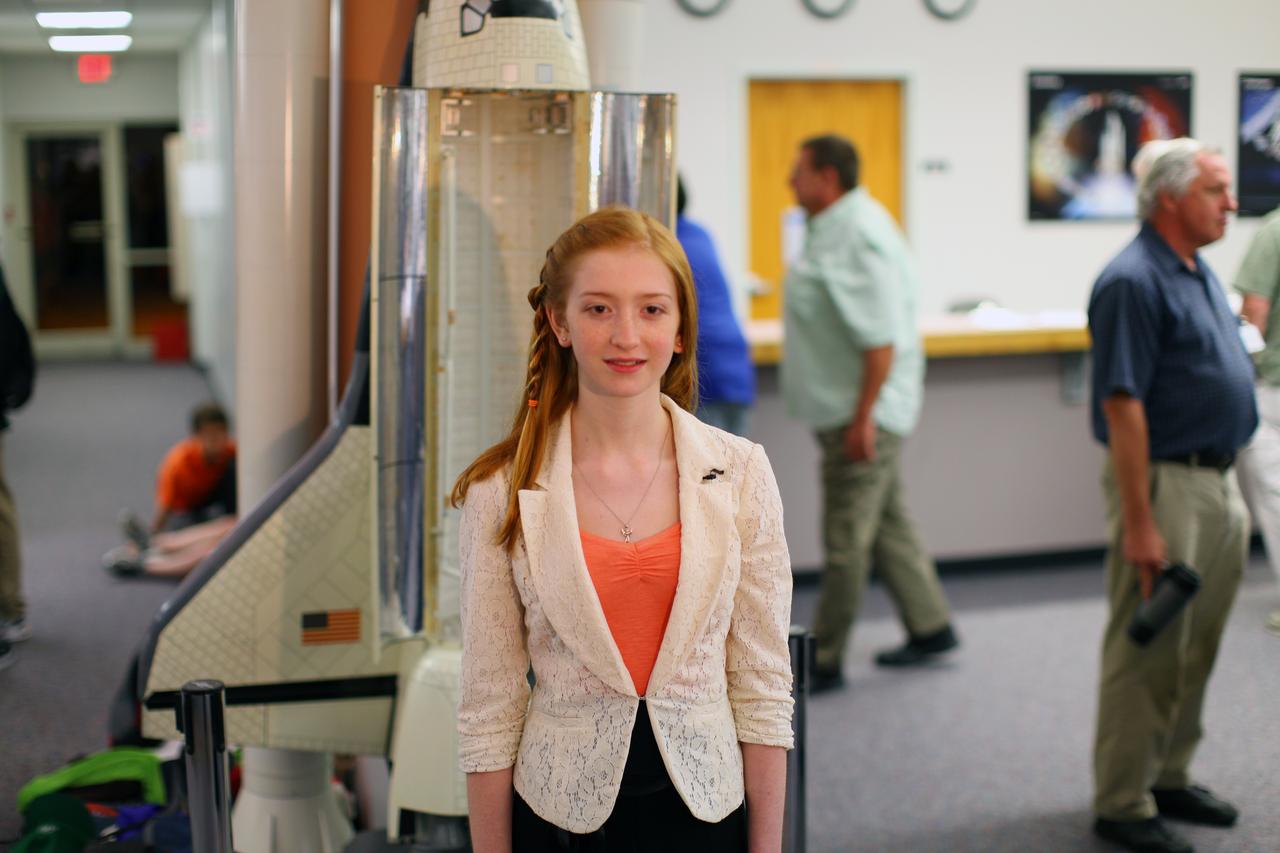
COTS-2 Student Spaceflight Experiments Program (SSEP)
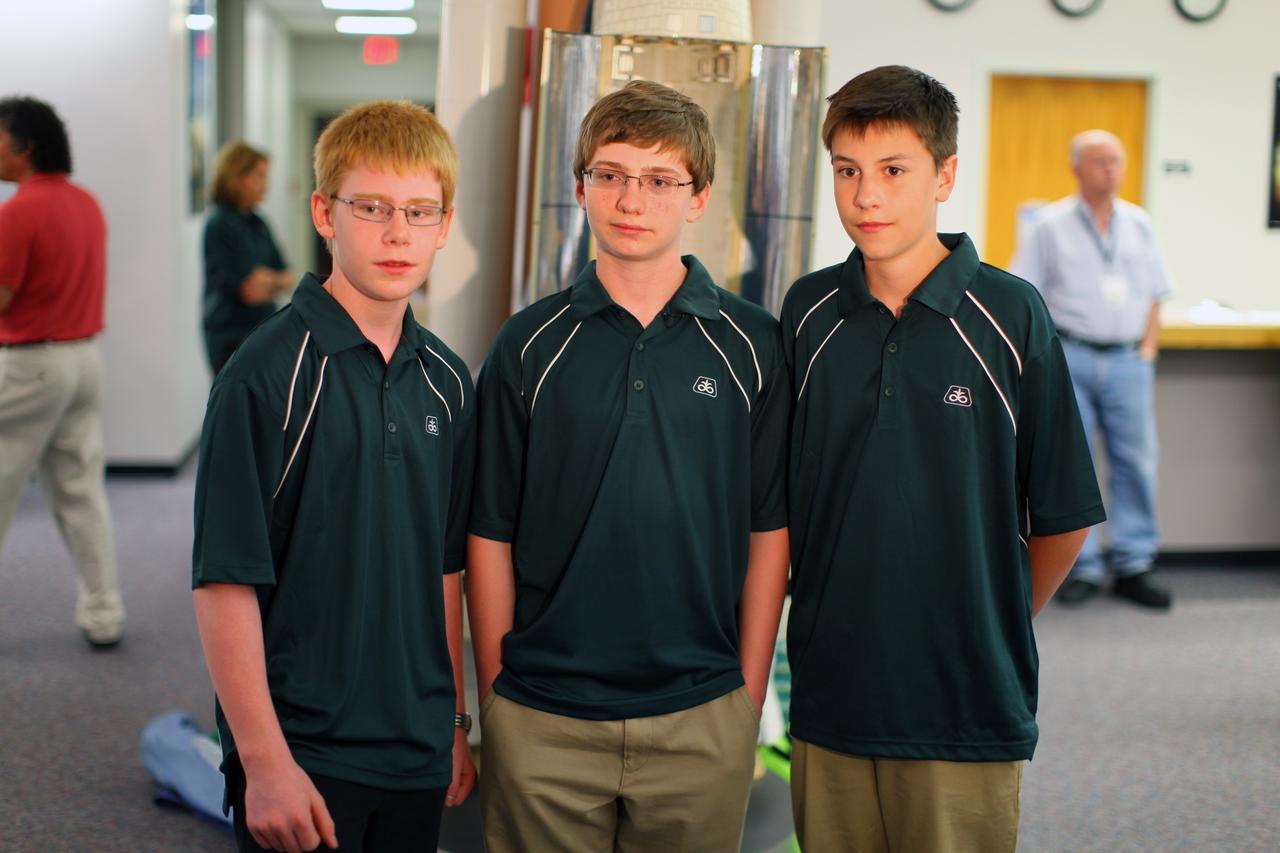
COTS-2 Student Spaceflight Experiments Program (SSEP)
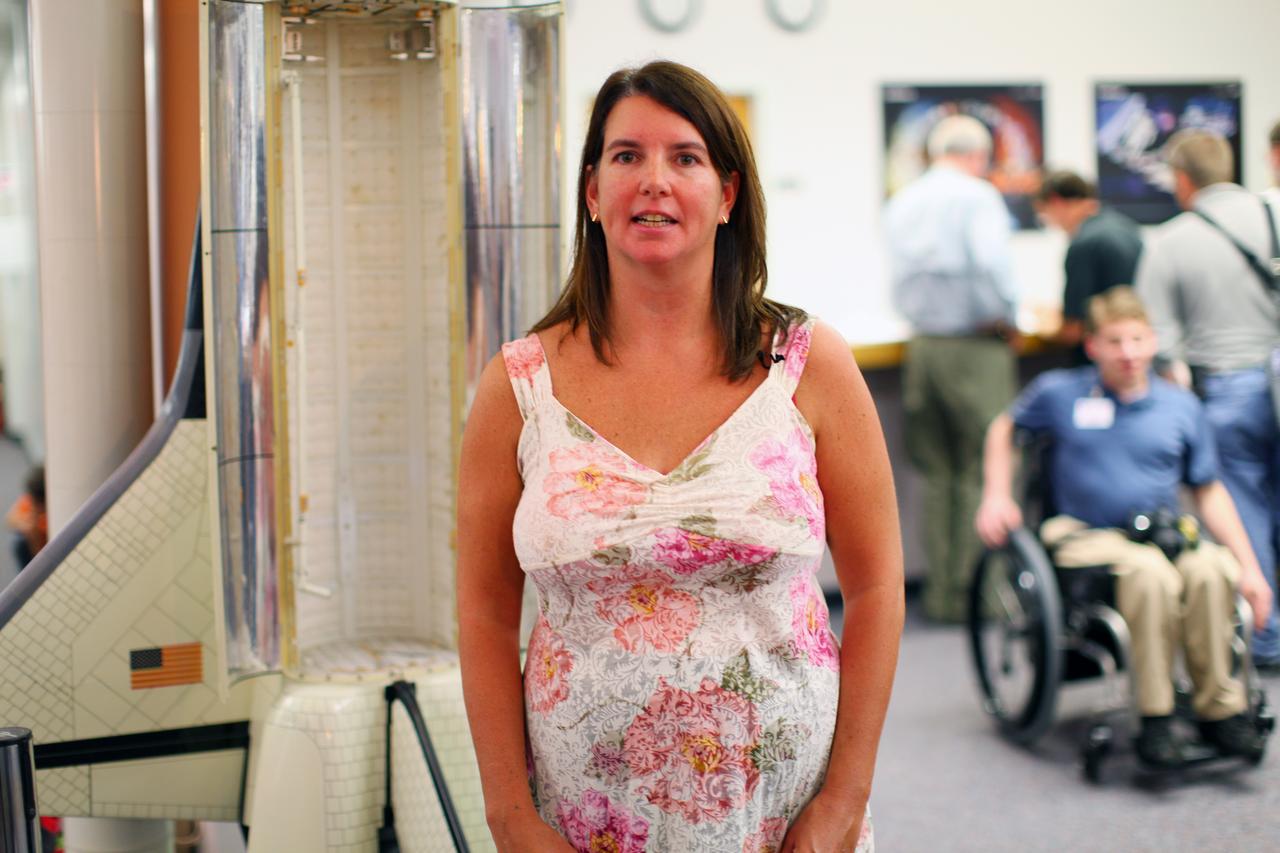
COTS-2 Student Spaceflight Experiments Program (SSEP)
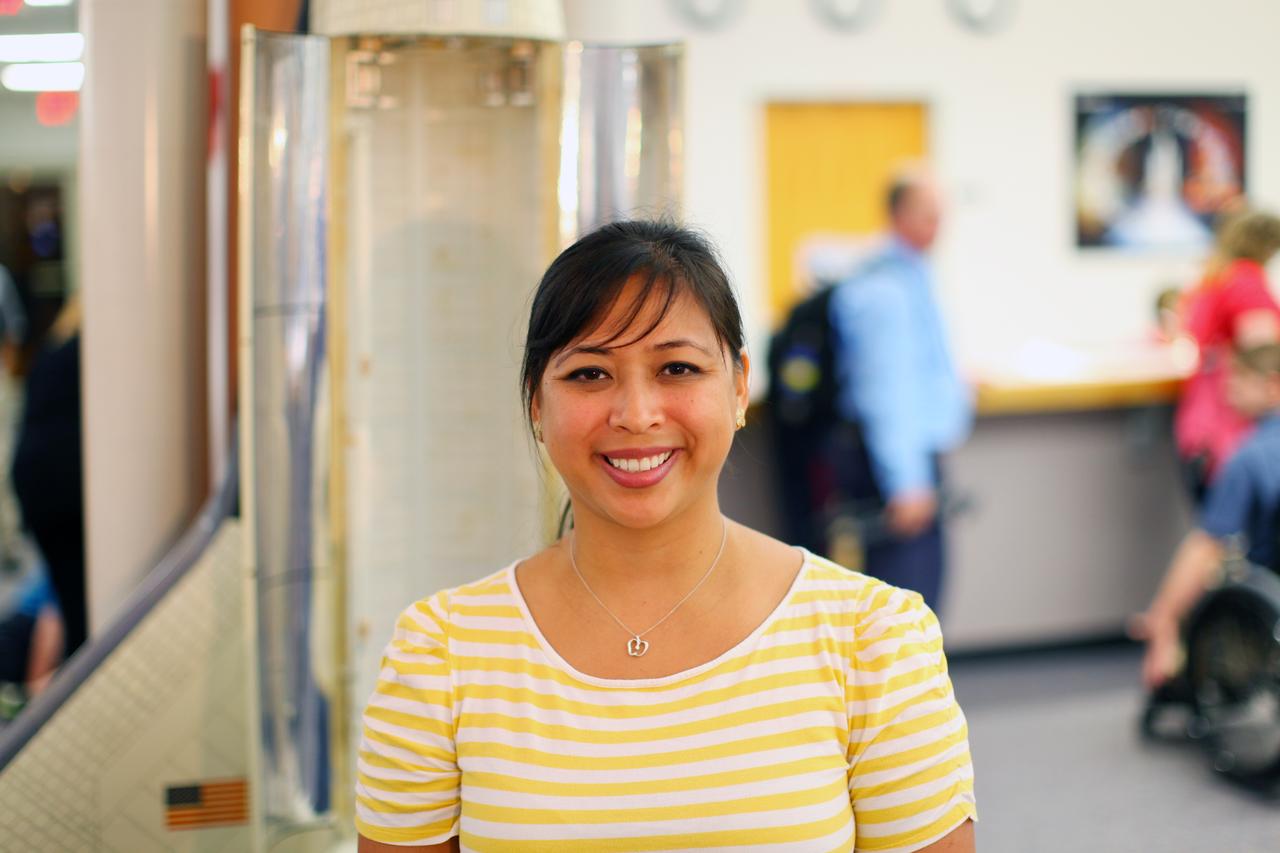
COTS-2 Student Spaceflight Experiments Program (SSEP)
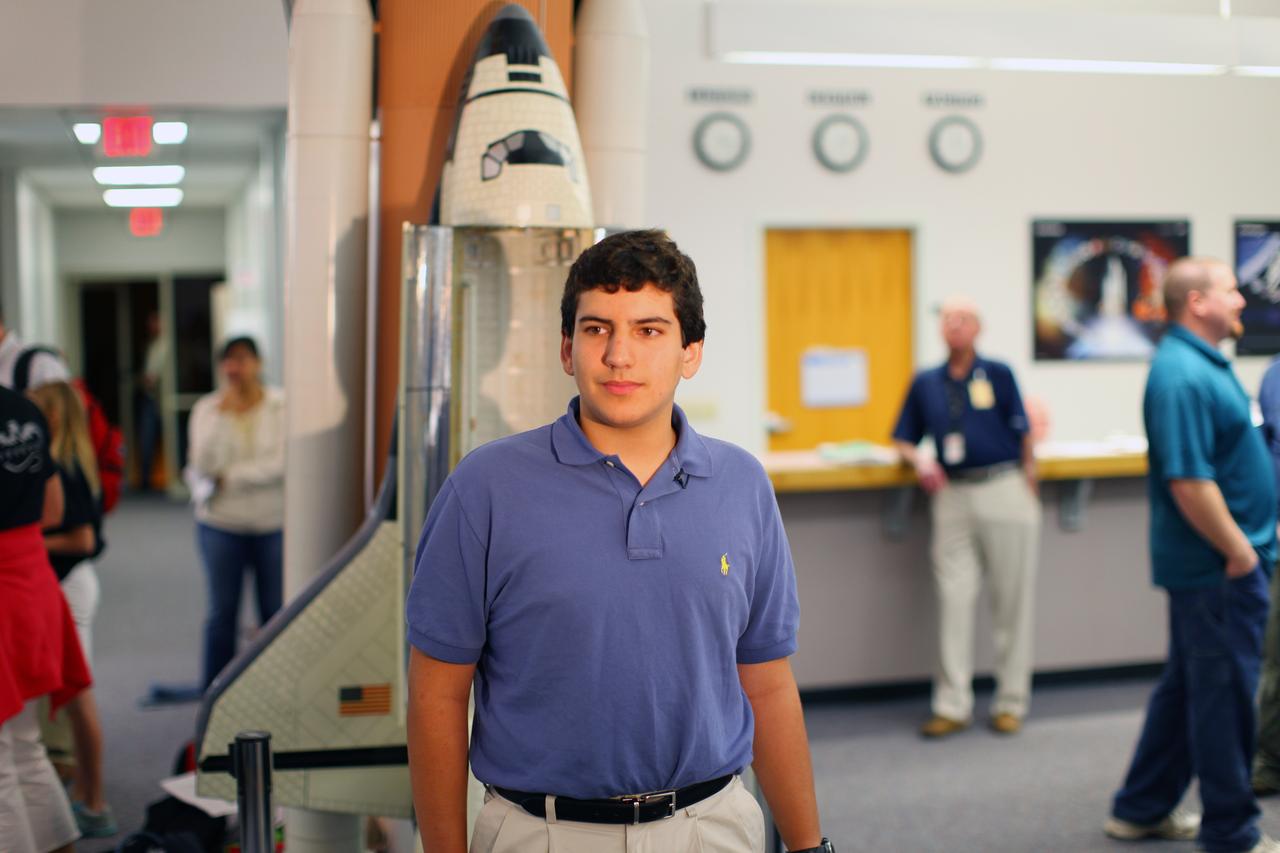
COTS-2 Student Spaceflight Experiments Program (SSEP)
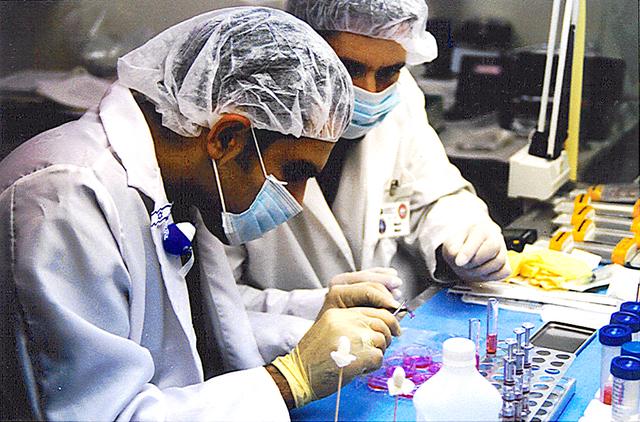
Experiments to seek solutions for a range of biomedical issues are at the heart of several investigations that will be hosted by the Commercial Instrumentation Technology Associates (ITA), Inc. Biomedical Experiments (CIBX-2) payload. CIBX-2 is unique, encompassing more than 20 separate experiments including cancer research, commercial experiments, and student hands-on experiments from 10 schools as part of ITA's ongoing University Among the Stars program. Student Marnix Aklian and ITA's Mark Bem prepare biological samples for flight as part of ITA's hands-on student outreach program on STS-95. Similar activities are a part of the CIBX-2 payload. The experiments are sponsored by NASA's Space Product Development Program (SPD).
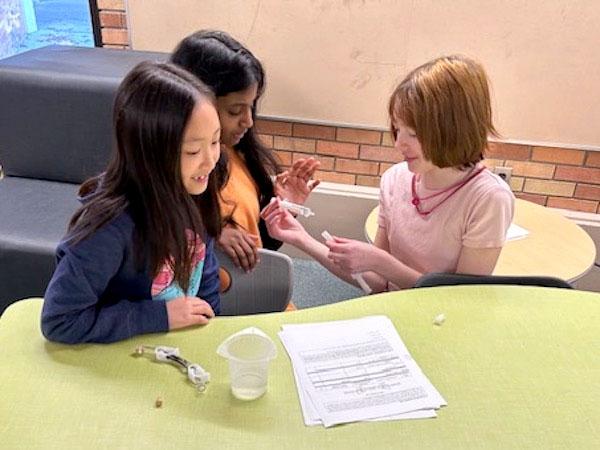
jsc2024e066530 (10/4/2024) --- Creek Valley Elementary School students prepare their experiment, Does Gravity Affect the Germination Growth of Raspberry Seeds, for space. Their experiment is part of the Nanoracks-National Center for Earth and Space Science Education-Surveyor-Student Spaceflight Experiments Program Mission 18 to ISS (Nanoracks-NCESSE-Surveyor-SSEP).
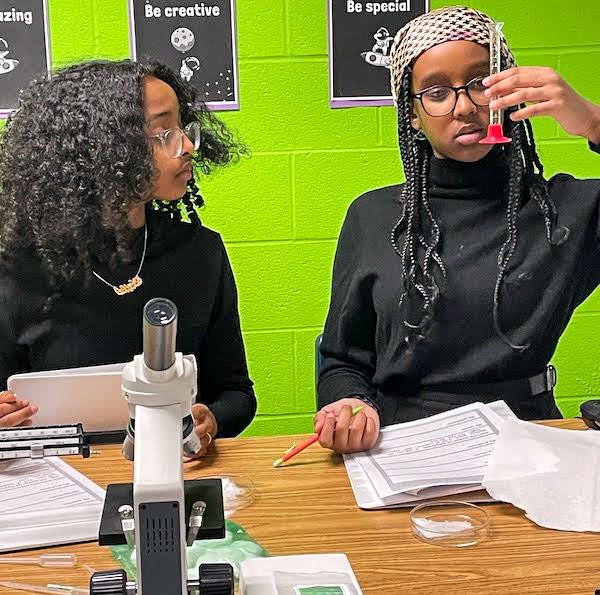
jsc2023e065211 (1/19/2023) --- Harmon Middle School student researchers work on their experiment, Bamboo Growth in Microgravity, which will be included in the Nanoracks-National Center for Earth and Space Science Education-Orbiter-Student Spaceflight Experiments Program Mission 17 to ISS (Nanoracks-NCESSE-Orbiter-SSEP).
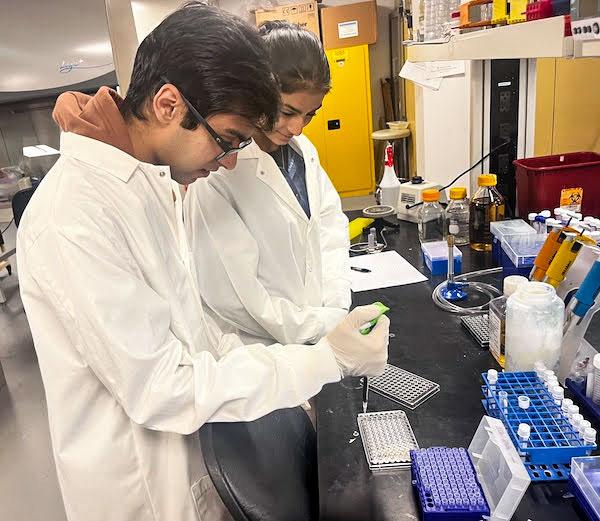
jsc2023e065219 (2/3/2023) --- Student researchers work on their experiment, The Effect of Microgravity on Telomerase Activity and Efficiency in Saccharomyces cerevisiae, which will be included in the Nanoracks-National Center for Earth and Space Science Education-Orbiter-Student Spaceflight Experiments Program Mission 17 to ISS (Nanoracks-NCESSE-Orbiter-SSEP).
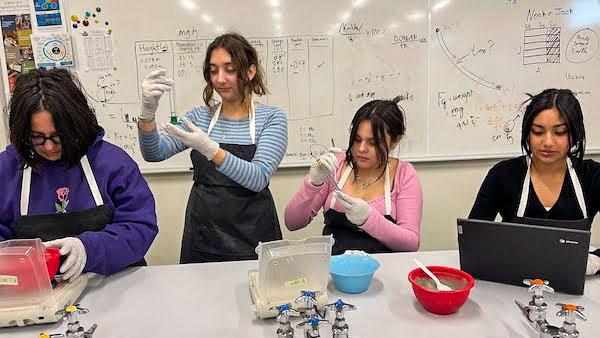
jsc2023e065206 (1/26/2023) --- Canyon Spring student researchers work on their experiment, which will be included in the Nanoracks-National Center for Earth and Space Science Education-Orbiter-Student Spaceflight Experiments Program Mission 17 to ISS (Nanoracks-NCESSE-Orbiter-SSEP).
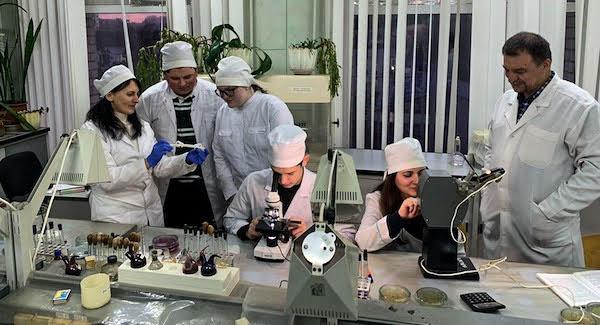
jsc2023e065217 (10/19/2023) --- Student researchers in Ukarine work on their experiment, which will be included in the Nanoracks-National Center for Earth and Space Science Education-Orbiter-Student Spaceflight Experiments Program Mission 17 to ISS (Nanoracks-NCESSE-Orbiter-SSEP).
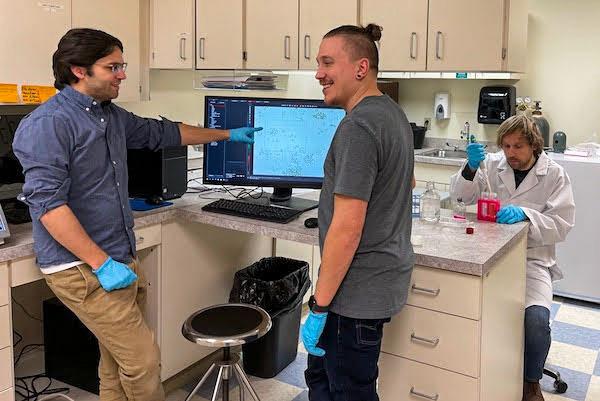
jsc2023e065212 (2/1/2023) --- Student researchers Daniel Roth and Jason Gomes work on their experiment, The Effect(s) of Microgravity on the Dormant State of Cancer Cells, which will be included in the Nanoracks-National Center for Earth and Space Science Education-Orbiter-Student Spaceflight Experiments Program Mission 17 to ISS (Nanoracks-NCESSE-Orbiter-SSEP).

jsc2023e065203 (10/19/2023) --- Lynbrook High School student researchers Jack and Aiden work on their experiment on the Wine cap mushroom , which will be included in the Nanoracks-National Center for Earth and Space Science Education-Orbiter-Student Spaceflight Experiments Program Mission 17 to ISS (Nanoracks-NCESSE-Orbiter-SSEP).
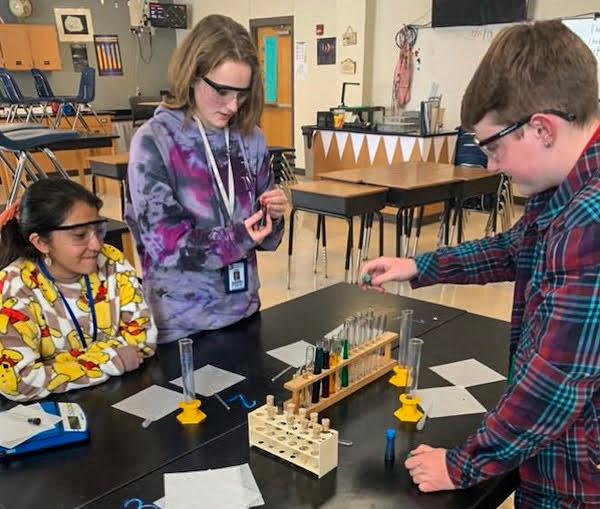
jsc2023e065182 (10/19/2023) --- Student researchers work on their Basil Germination experiment, which will be included in the Nanoracks-National Center for Earth and Space Science Education-Orbiter-Student Spaceflight Experiments Program Mission 17 to ISS (Nanoracks-NCESSE-Orbiter-SSEP).
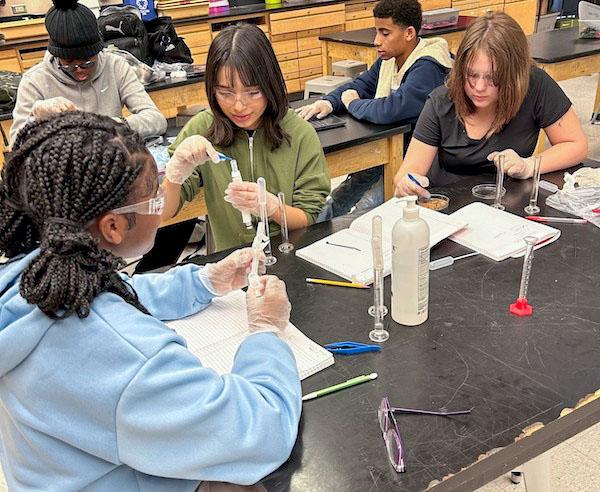
jsc2024e066522 (10/7/2024) --- Moreno Valley Unified School District students explore the effects of microgravity on a popular leafy green. Their experiment, The Effects of Microgravity on Arugula, is part of the Nanoracks-National Center for Earth and Space Science Education-Surveyor-Student Spaceflight Experiments Program Mission 18 to ISS (Nanoracks-NCESSE-Surveyor-SSEP).
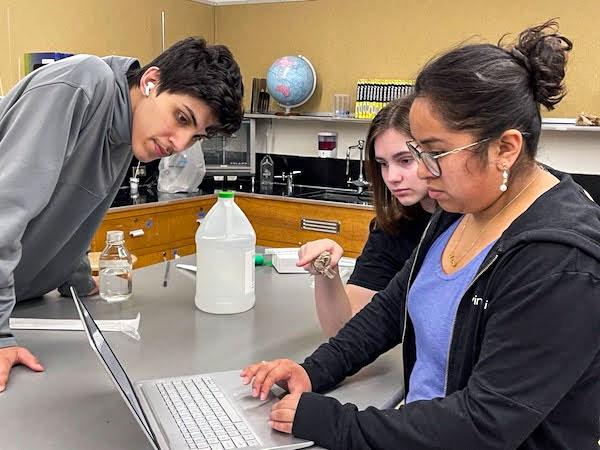
jsc2023e065192 (1/23/2023) --- Student researchers from Gervais, OR work on their experiment, Patulin Growth in Space, which will be included in the Nanoracks-National Center for Earth and Space Science Education-Orbiter-Student Spaceflight Experiments Program Mission 17 to ISS (Nanoracks-NCESSE-Orbiter-SSEP).
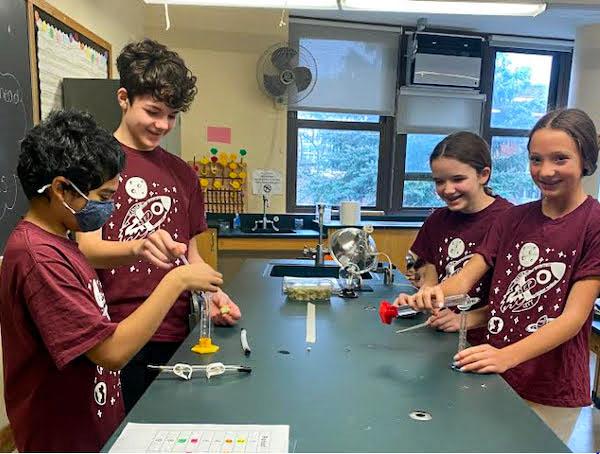
jsc2023e065191 (10/19/2023) --- Garden City Middle School student researchers work on their dill seed germination experiment, which will be included in the Nanoracks-National Center for Earth and Space Science Education-Orbiter-Student Spaceflight Experiments Program Mission 17 to ISS (Nanoracks-NCESSE-Orbiter-SSEP).
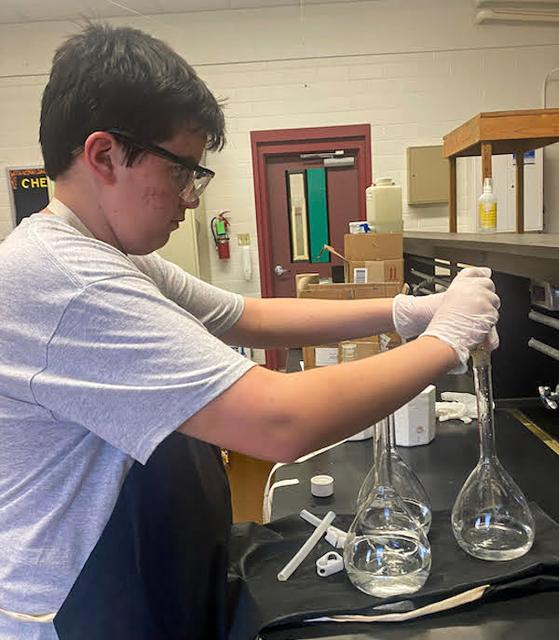
jsc2023e065200 (10/19/2023) --- Student researcher Sam Dondapati work on his experiment, Growth of Spirulina in Microgravity, which will be included in the Nanoracks-National Center for Earth and Space Science Education-Orbiter-Student Spaceflight Experiments Program Mission 17 to ISS (Nanoracks-NCESSE-Orbiter-SSEP).
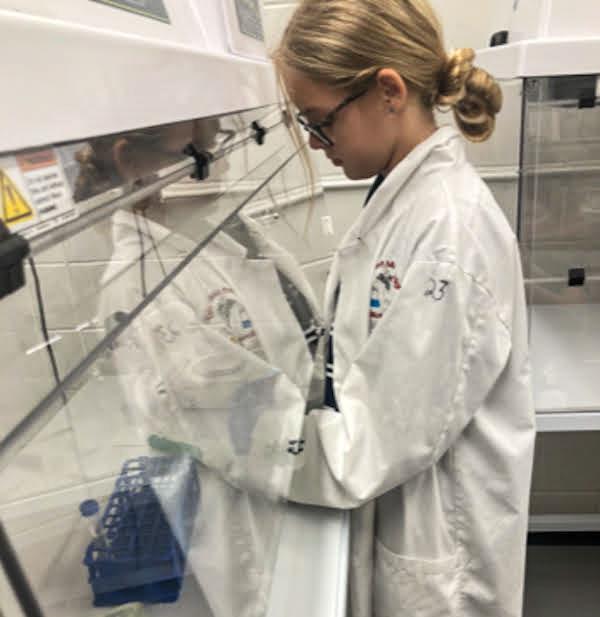
jsc2023e065208 (10/19/2023) --- Student researcher Collins works on their E. choli experiment, which will be included in the Nanoracks-National Center for Earth and Space Science Education-Orbiter-Student Spaceflight Experiments Program Mission 17 to ISS (Nanoracks-NCESSE-Orbiter-SSEP).
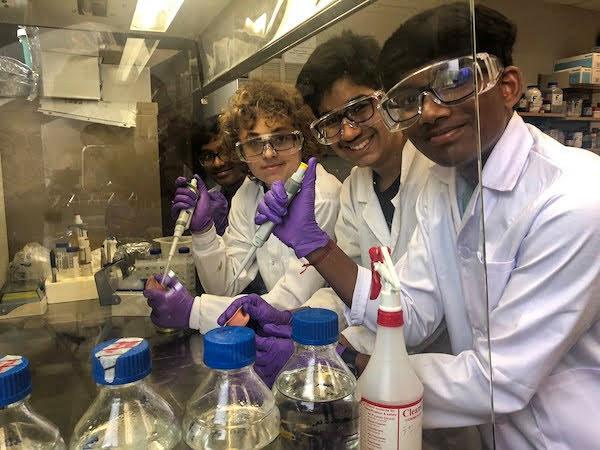
jsc2023e065209 (10/19/2023) --- Student researchers Rishik Yellu, Yatharth Kakkad, Felix Ratner and Rugan Suresh work on their experiment, which will be included in the Nanoracks-National Center for Earth and Space Science Education-Orbiter-Student Spaceflight Experiments Program Mission 17 to ISS (Nanoracks-NCESSE-Orbiter-SSEP).
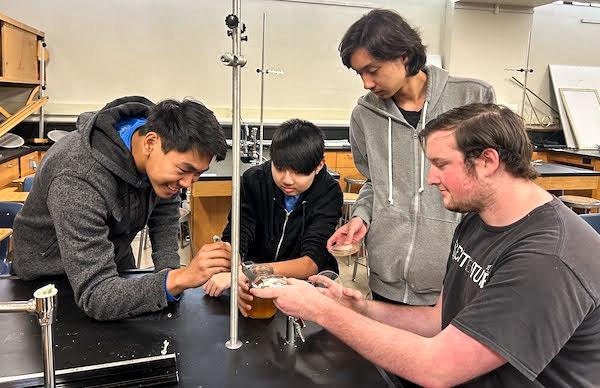
jsc2023e065193 (10/19/2023) --- Glendora High School’s M17 student researchers work on their Mushroom Leather Proposal experiment, which will be included in the Nanoracks-National Center for Earth and Space Science Education-Orbiter-Student Spaceflight Experiments Program Mission 17 to ISS (Nanoracks-NCESSE-Orbiter-SSEP).
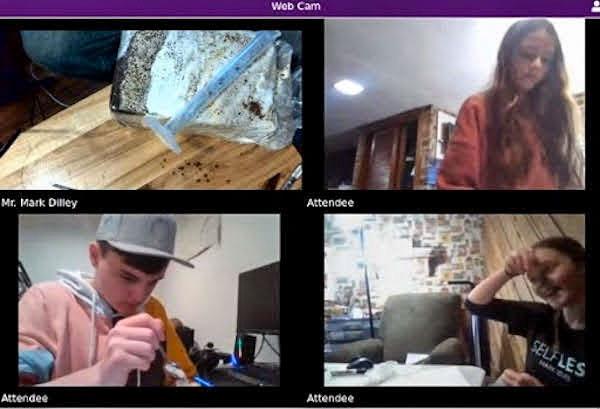
jsc2023e065198 (10/19/2023) --- iForward Public Online Charter School student researchers work on their experiment on Germination of Pleurotus ostreatus Spores, which will be included in the Nanoracks-National Center for Earth and Space Science Education-Orbiter-Student Spaceflight Experiments Program Mission 17 to ISS (Nanoracks-NCESSE-Orbiter-SSEP).
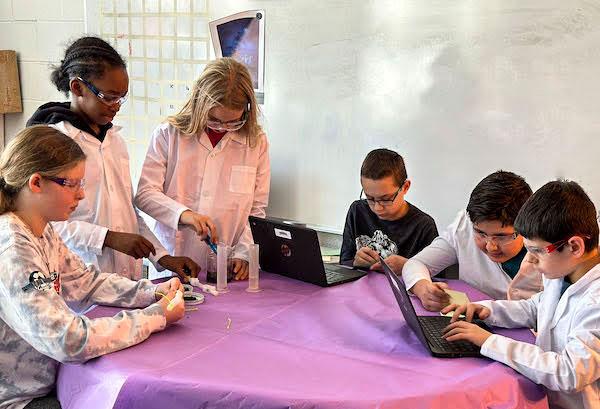
jsc2023e06522 (3/3/2023) --- Fifth grade student researchers from Walker-Winter Elementary School work on their experiment, Mushroom Germination in Microgravity, which will be included in the Nanoracks-National Center for Earth and Space Science Education-Orbiter-Student Spaceflight Experiments Program Mission 17 to ISS (Nanoracks-NCESSE-Orbiter-SSEP).
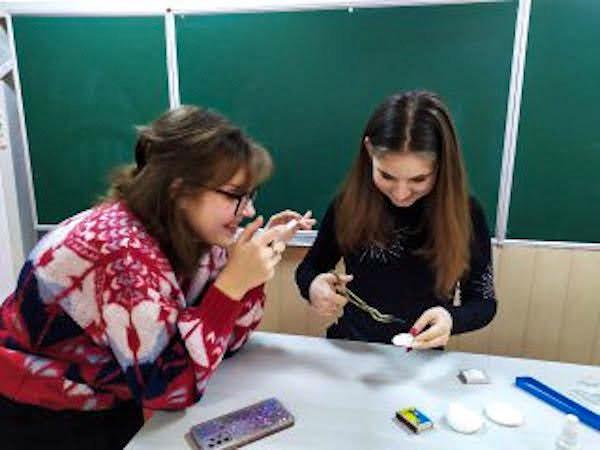
jsc2023e065218 (10/19/2023) --- Student researchers in Ukarine work on their experiment, which will be included in the Nanoracks-National Center for Earth and Space Science Education-Orbiter-Student Spaceflight Experiments Program Mission 17 to ISS (Nanoracks-NCESSE-Orbiter-SSEP).
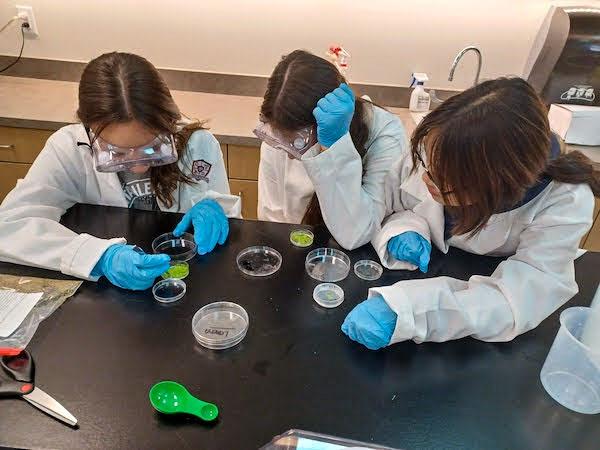
jsc2023e065201 (1/12/2023) --- Pinecrest St. Rose student researchers work on their experiment, Wolffia in Microgravity, which will be included in the Nanoracks-National Center for Earth and Space Science Education-Orbiter-Student Spaceflight Experiments Program Mission 17 to ISS (Nanoracks-NCESSE-Orbiter-SSEP).
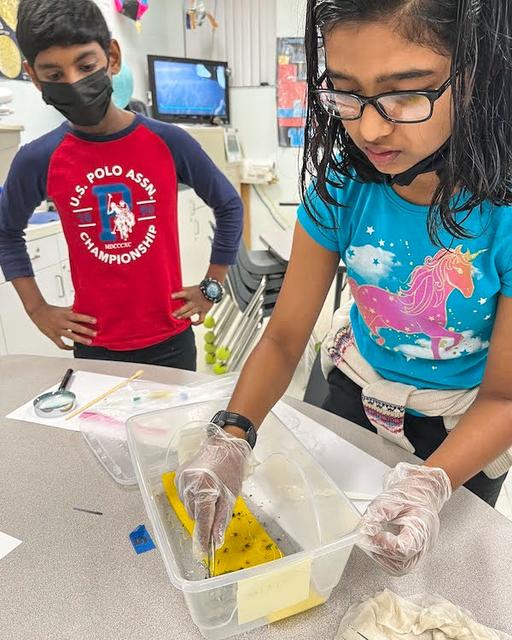
jsc2023e065196 (10/26/2023) --- Student researchers Lonappan John and Aadrita Roywork on their experiment, The Changes of Nutritional and Germination values of Sesame Microgreens in Microgravity, which will be included in the Nanoracks-National Center for Earth and Space Science Education-Orbiter-Student Spaceflight Experiments Program Mission 17 to ISS (Nanoracks-NCESSE-Orbiter-SSEP).
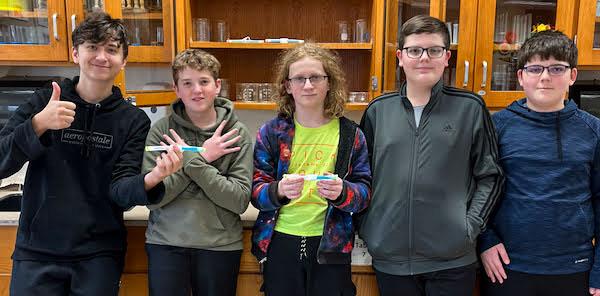
jsc2023e065190 (19/19/2023) --- Iroquois SSEP student researchers work on their crystallization experiment, which will be included in the Nanoracks-National Center for Earth and Space Science Education-Orbiter-Student Spaceflight Experiments Program Mission 17 to ISS (Nanoracks-NCESSE-Orbiter-SSEP).
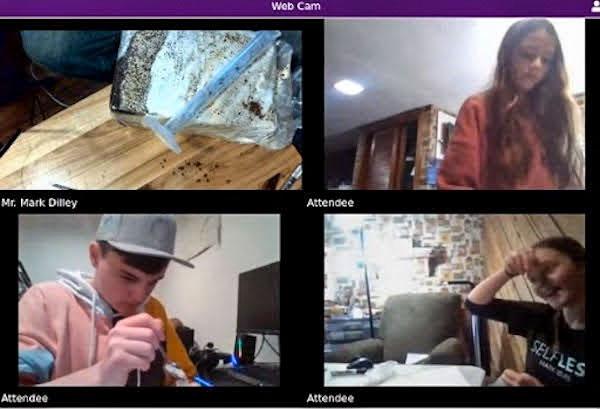
jsc2023e065197 (10/19/2023) --- iForward Public Online Charter School student researchers work on their experiment on Germination of Pleurotus ostreatus Spores, which will be included in the Nanoracks-National Center for Earth and Space Science Education-Orbiter-Student Spaceflight Experiments Program Mission 17 to ISS (Nanoracks-NCESSE-Orbiter-SSEP).
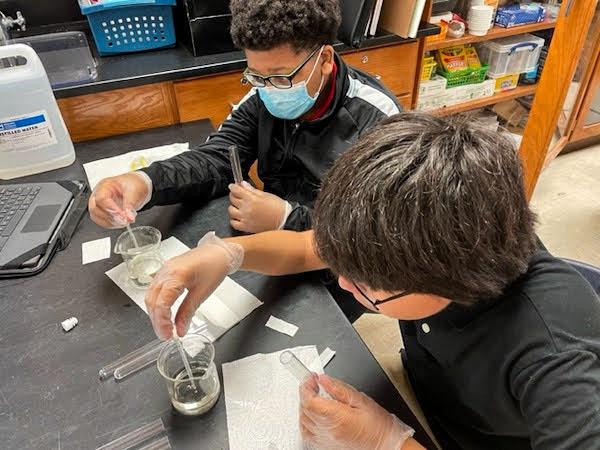
jsc2023e065199 (1/26/2023) --- Mundy's Mill Middle School student researchers work on their experiment, Germination of Mentha spicata in Microgravity, which will be included in the Nanoracks-National Center for Earth and Space Science Education-Orbiter-Student Spaceflight Experiments Program Mission 17 to ISS (Nanoracks-NCESSE-Orbiter-SSEP).
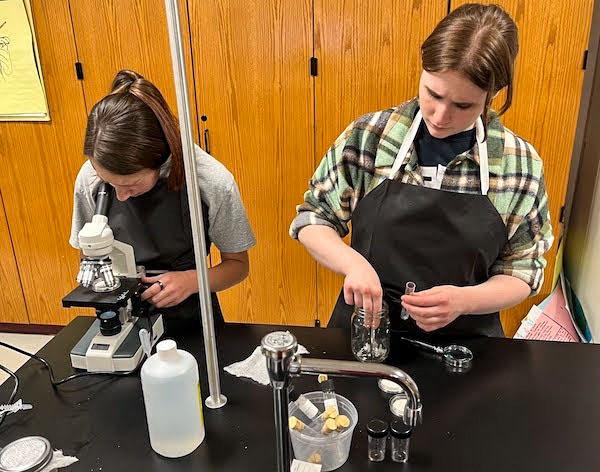
jsc2023e065207 (1/5/2023) --- Student researchers work on their experiment, The Effects of Microgravity on the Reproduction Cycle of Drosophila melanogaster, which will be included in the Nanoracks-National Center for Earth and Space Science Education-Orbiter-Student Spaceflight Experiments Program Mission 17 to ISS (Nanoracks-NCESSE-Orbiter-SSEP).
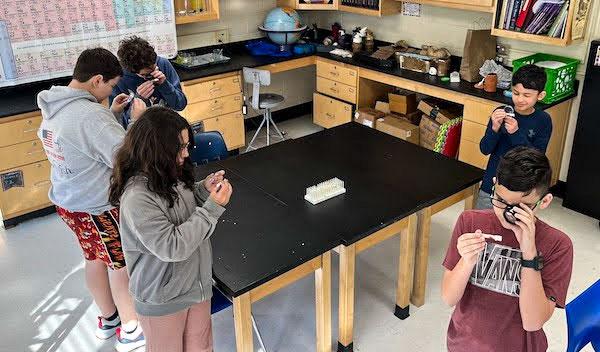
jsc2023e065202 (10/19/2023) --- Student researchers work on their experiment, How Does Microgravity Affect the Germination of Oyster Mushroom Spawns (Pleurotus Ostreatus), which will be included in the Nanoracks-National Center for Earth and Space Science Education-Orbiter-Student Spaceflight Experiments Program Mission 17 to ISS (Nanoracks-NCESSE-Orbiter-SSEP).
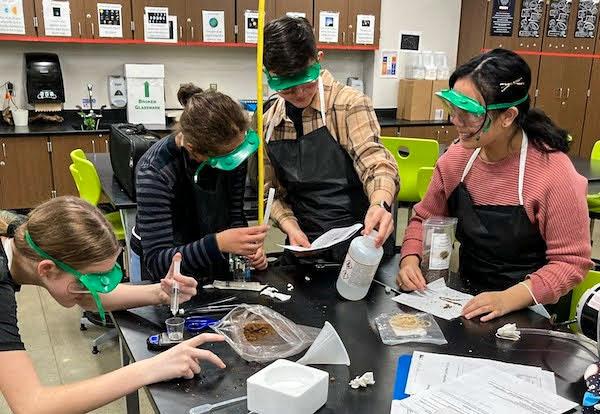
jsc2023e065214 (2/7/2023) --- Eighth grade student researchers work on their experiment, Microgreen Growth in Microgravity Environment, which will be included in the Nanoracks-National Center for Earth and Space Science Education-Orbiter-Student Spaceflight Experiments Program Mission 17 to ISS (Nanoracks-NCESSE-Orbiter-SSEP).
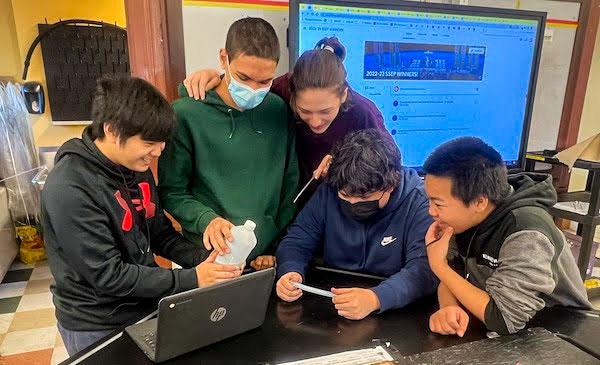
jsc2023e065181 (10/19/2023) --- Student researchers work on their experiment, which will be included in the Nanoracks-National Center for Earth and Space Science Education-Orbiter-Student Spaceflight Experiments Program Mission 17 to ISS (Nanoracks-NCESSE-Orbiter-SSEP).
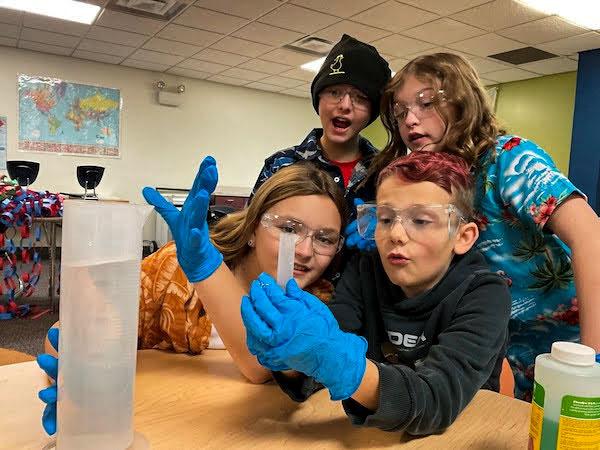
jsc2023e065184 (10/19/2023) --- Student researchers work on their experiment on chamomile seed germination, which will be included in the Nanoracks-National Center for Earth and Space Science Education-Orbiter-Student Spaceflight Experiments Program Mission 17 to ISS (Nanoracks-NCESSE-Orbiter-SSEP).
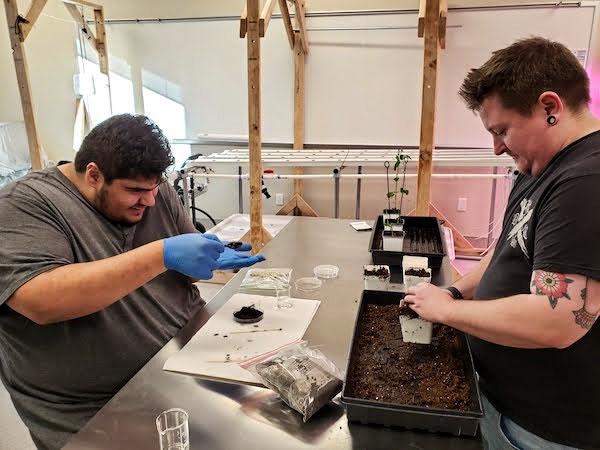
jsc2023e065205 (1/26/2023) --- Collin College student researchers Henry Elmendorf and Stefano Sacripanti work on their experiment, which will be included in the Nanoracks-National Center for Earth and Space Science Education-Orbiter-Student Spaceflight Experiments Program Mission 17 to ISS (Nanoracks-NCESSE-Orbiter-SSEP).
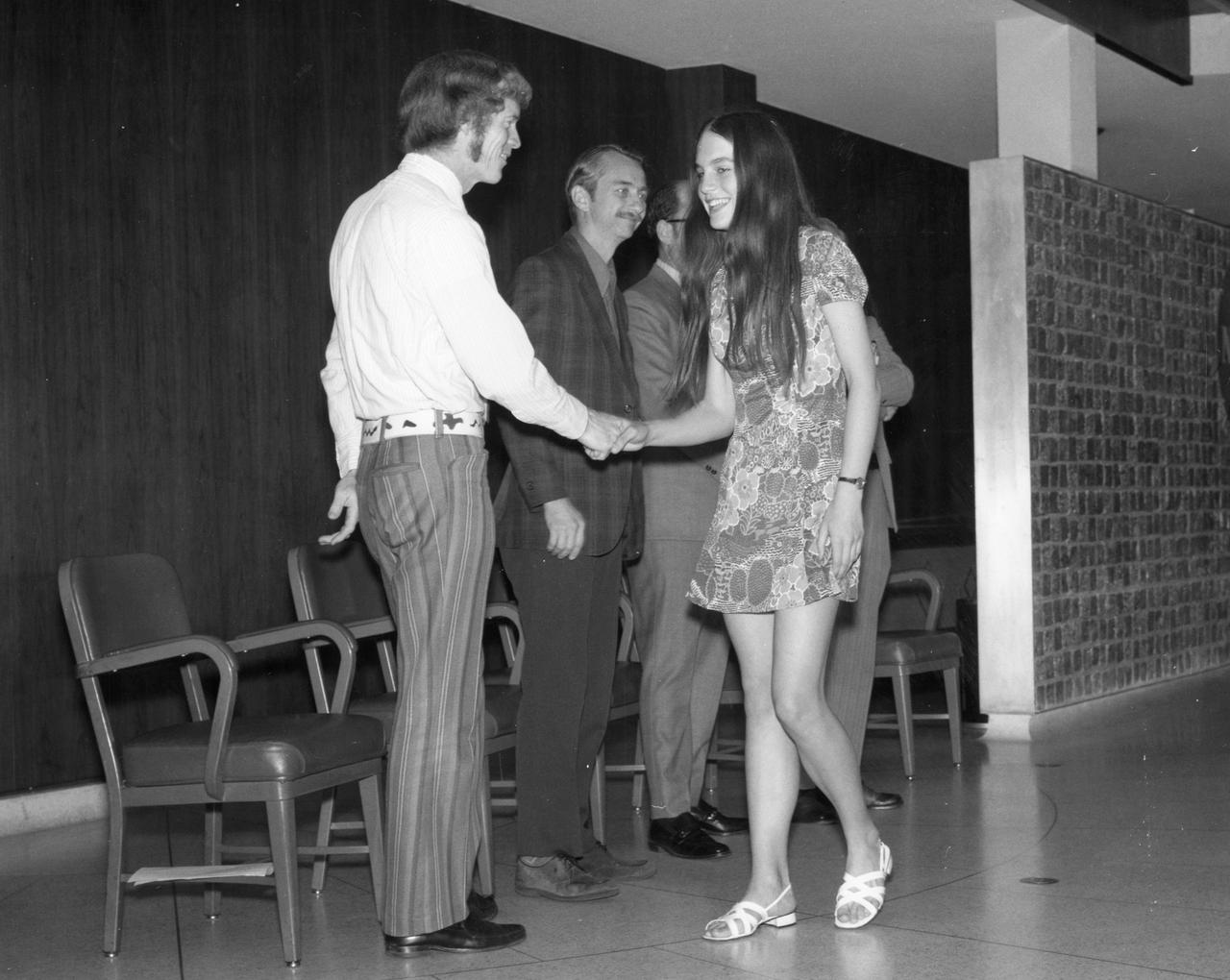
Princeton, New Jersey high school student, Alison Hopfield, is greeted by astronauts Russell L. Schweickart (left) and Owen K. Garriott (center) during a tour of the Marshall Space Flight Center (MSFC). Hopfield was among 25 winners of a contest in which some 3,500 high school students proposed experiments for the following year’s Skylab mission. The nationwide scientific competition was sponsored by the National Science Teachers Association and the National Aeronautics and Space Administration (NASA). The winning students, along with their parents and sponsor teachers, visited MSFC where they met with scientists and engineers, participated in design reviews for their experiments, and toured MSFC facilities. Of the 25 students, 6 did not see their experiments conducted on Skylab because the experiments were not compatible with Skylab hardware and timelines. Of the 19 remaining, 11 experiments required the manufacture of additional equipment.
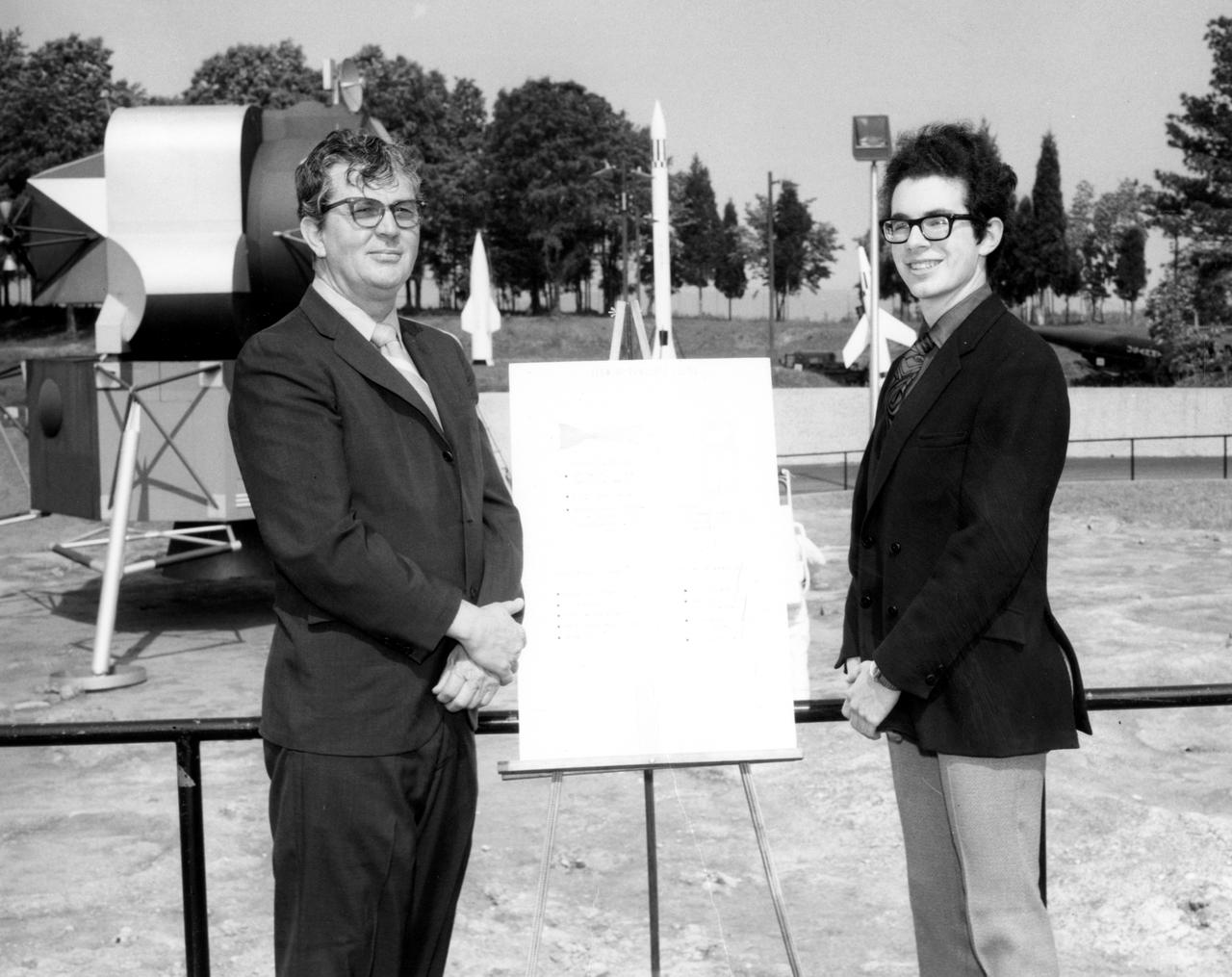
Kirk M. Sherhart, high school student from Berkley, Michigan, discussed a his proposed Skylab experiment with Dr. Robert Head of the Marshall Space Flight Center (MSFC) during his visit to the center. The lunar surface scene in the background is one of many space exhibits at the Alabama Space and Rocket Center in nearby Huntsville, Alabama. Sherhart was among 25 winners of a contest in which some 3,500 high school students proposed experiments for the following year’s Skylab mission. The nationwide scientific competition was sponsored by the National Science Teachers Association and the National Aeronautics and Space Administration (NASA). The winning students, along with their parents and sponsor teachers, visited MSFC where they met with scientists and engineers, participated in design reviews for their experiments, and toured MSFC facilities. Of the 25 students, 6 did not see their experiments conducted on Skylab because the experiments were not compatible with Skylab hardware and timelines. Of the 19 remaining, 11 experiments required the manufacture of additional equipment.
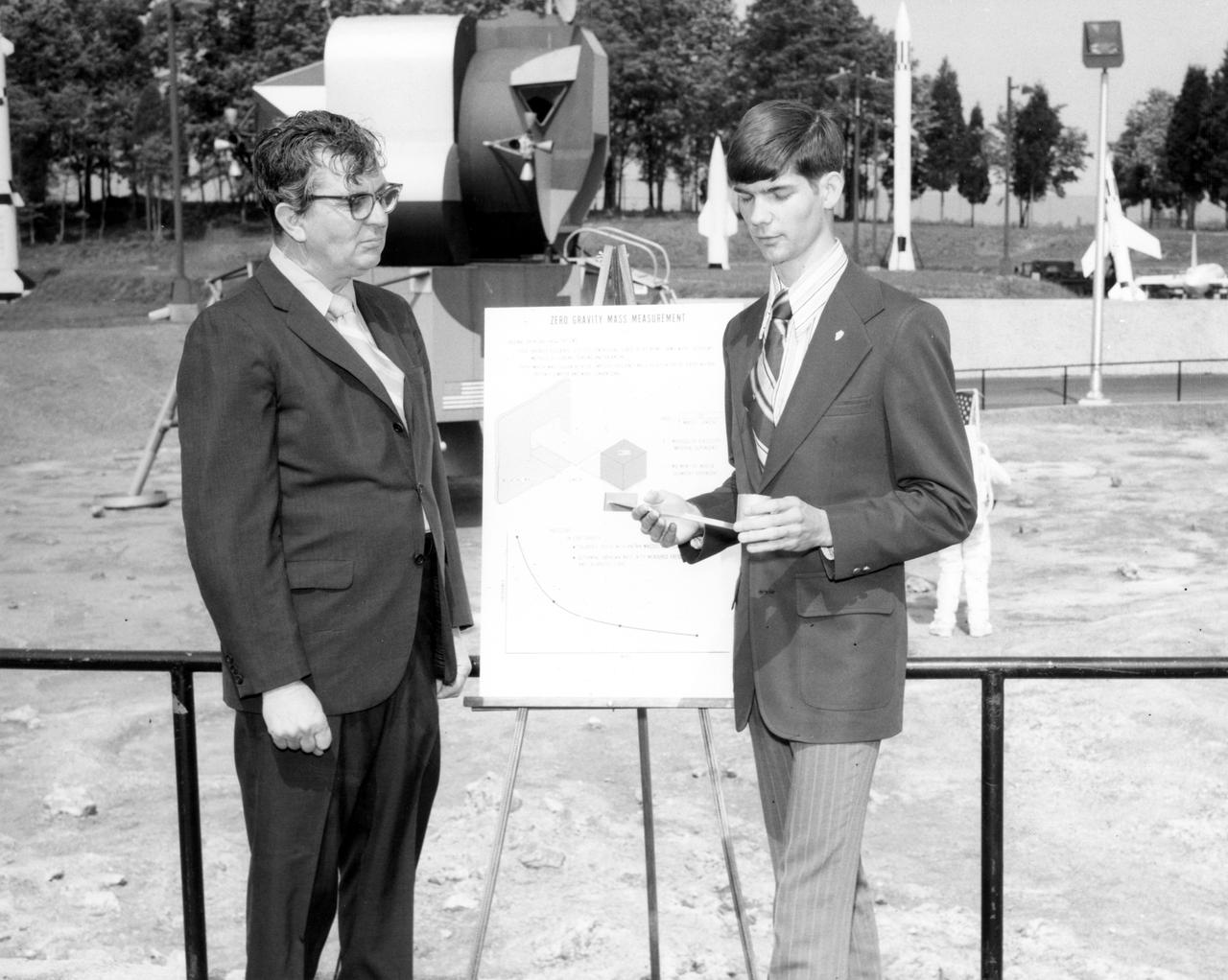
Vincent W. Converse, high school student from Rockford, Illinois, discussed a mass measurement device he proposed for the Skylab mission with Dr. Robert Head of the Marshall Space Flight Center (MSFC) during his visit to the center. The lunar surface scene in the background is one of many space exhibits at the Alabama Space and Rocket Center in nearby Huntsville, Alabama. Converse was among 25 winners of a contest in which some 3,500 high school students proposed experiments for the following year’s Skylab mission. The nationwide scientific competition was sponsored by the National Science Teachers Association and the National Aeronautics and Space Administration (NASA). The winning students, along with their parents and sponsor teachers, visited MSFC where they met with scientists and engineers, participated in design reviews for their experiments, and toured MSFC facilities. Of the 25 students, 6 did not see their experiments conducted on Skylab because the experiments were not compatible with Skylab hardware and timelines. Of the 19 remaining, 11 experiments required the manufacture of additional equipment.
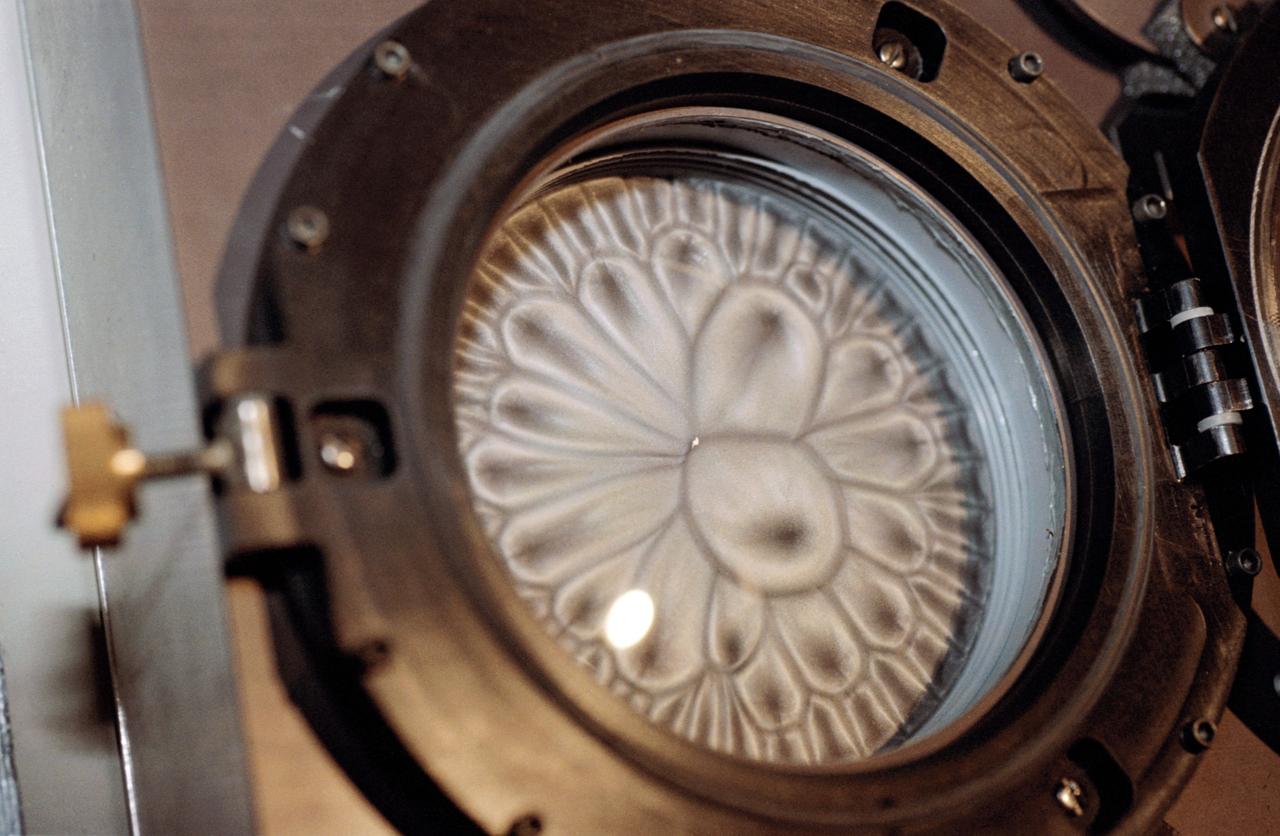
STS-42 closeup view shows Student Experiment 81-09 (SE 81-09), Convection in Zero Gravity experiment, with radial pattern caused by convection induced by heating an oil and aluminum powder mixture in the weightlessness of space. While the STS-42 crewmembers activated the Shuttle Student Involvement Program (SSIP) experiment on Discovery's, Orbiter Vehicle (OV) 103's, middeck, Scott Thomas, the student who designed the experiment, was able to observe the procedures via downlinked television (TV) in JSC's Mission Control Center (MCC). Thomas, now a physics doctoral student at the University of Texas, came up with the experiment while he participated in the SSIP as a student at Richland High School in Johnstown, Pennsylvia.
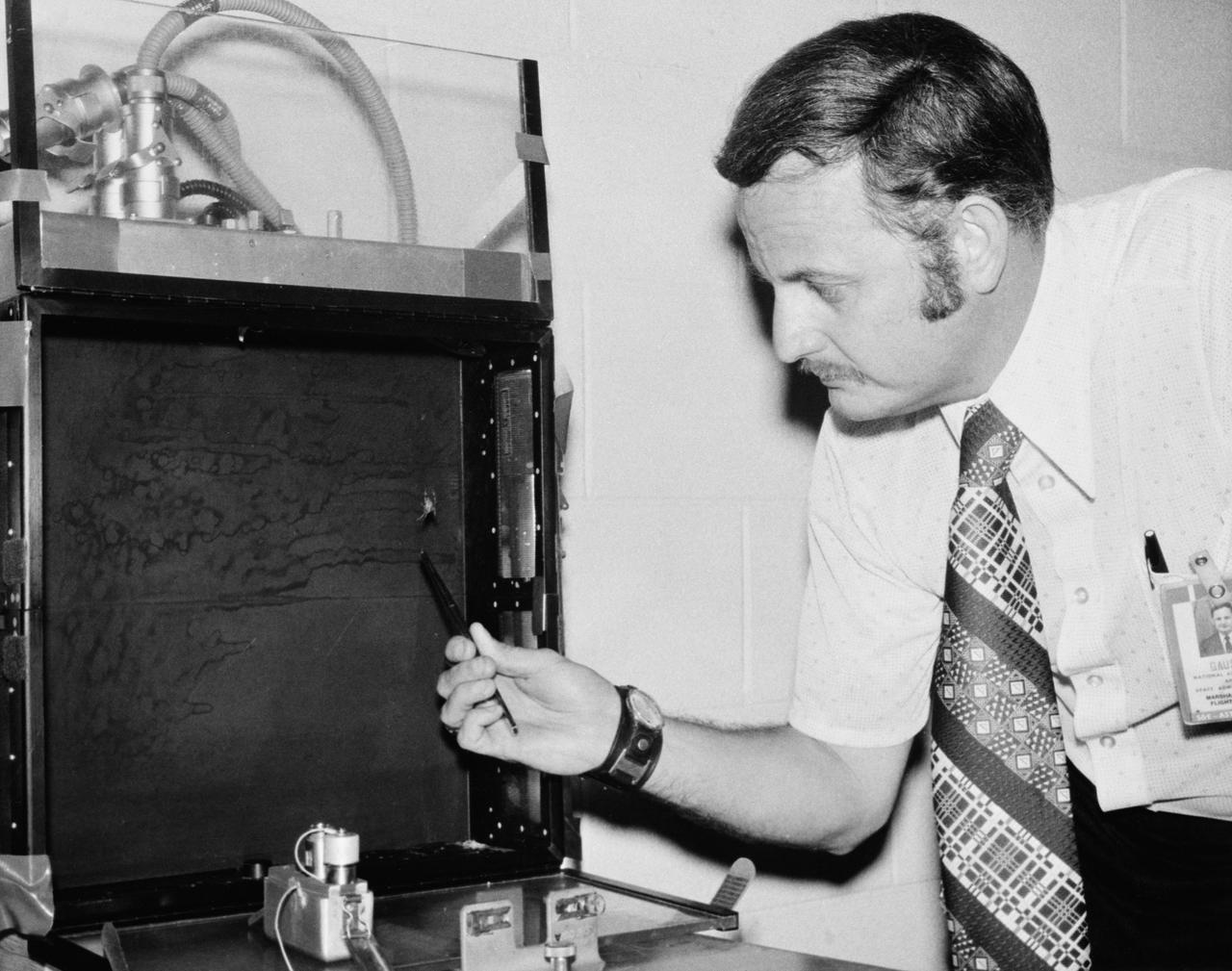
S73-32499 (July 1973) --- Dr. Ray Gause of the NASA Marshall Space Flight Center (MSFC) places dinner, in the form of a housefly, in the web of Arabella - the prime spider for the ED-52 Web Formation Experiment. Arabella can be delineated near the end of the black pen in Dr. Gause's hand. The experiment is one of 25 student experiments accepted for the Skylab program and will be performed during the Skylab 3 mission. Judy Miles, a 17-year-old high school student from Lexington, Massachusetts, is the student experimenter and Dr. Gause is the NASA student advisor. Photo credit: NASA
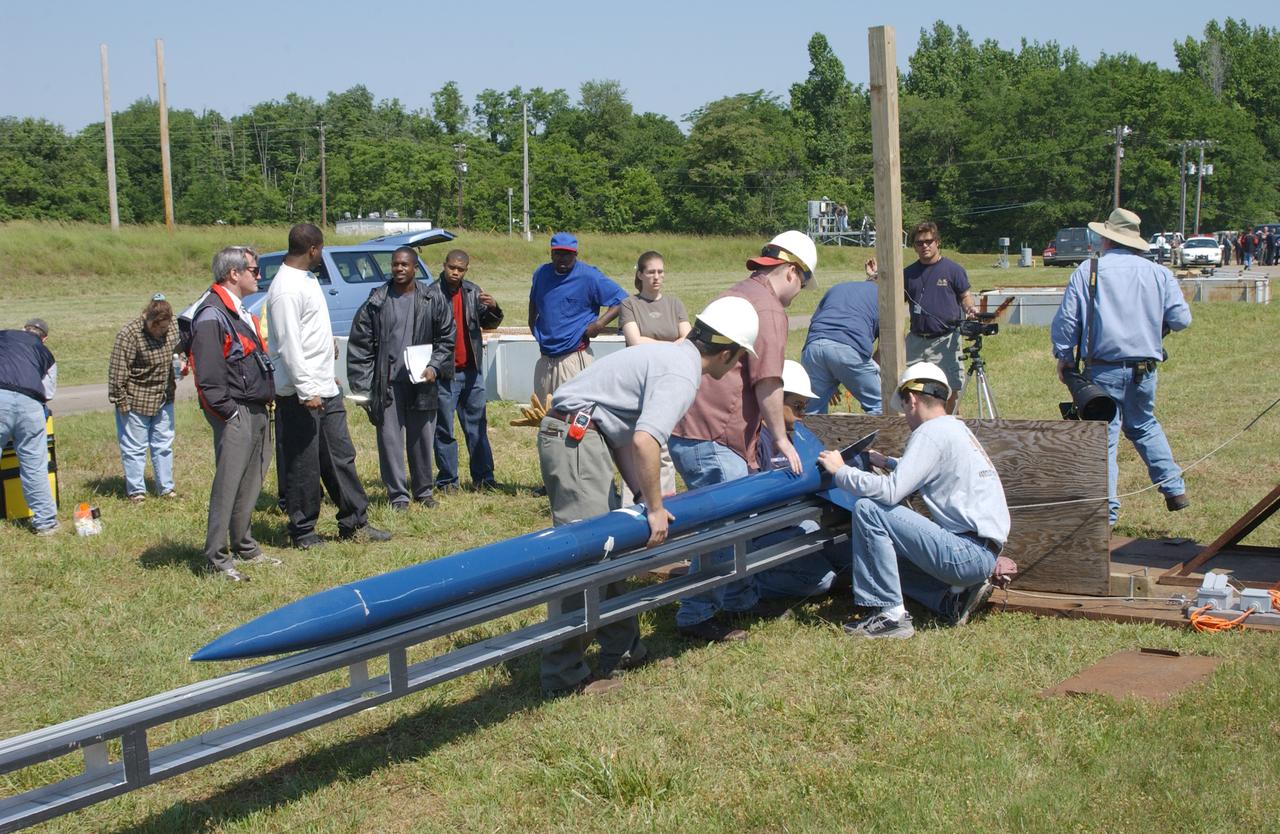
Filled with anticipation, students from two local universities, the University of Alabama in Huntsville (UAH), and Alabama Agricultural Mechanical University (AM), counted down to launch the rockets they designed and built at the Army test site on Redstone Arsenal in Huntsville, Alabama. The projected two-mile high launch culminated more than a year's work and demonstrated the student team's ability to meet the challenge set by the Marshall Space Flight Center's (MSFC) Student Launch Initiative (SLI) program to apply science and math to experience, judgment, and common sense, and proved to NASA officials that they have successfully built reusable launch vehicles (RLVs), another challenge set by NASA's SLI program. MSFC's SLI program is an educational effort that aims to motivate students to pursue careers in science, math, and engineering. It provides the students with hands-on, practical aerospace experience. In this picture, the University students prepare their rocket for launch. Students at UAH built the rocket and AM students developed its scientific payload, an experiment that measures the amount of hydrogen produced during electroplating with nickel in a brief period of micrgravity.
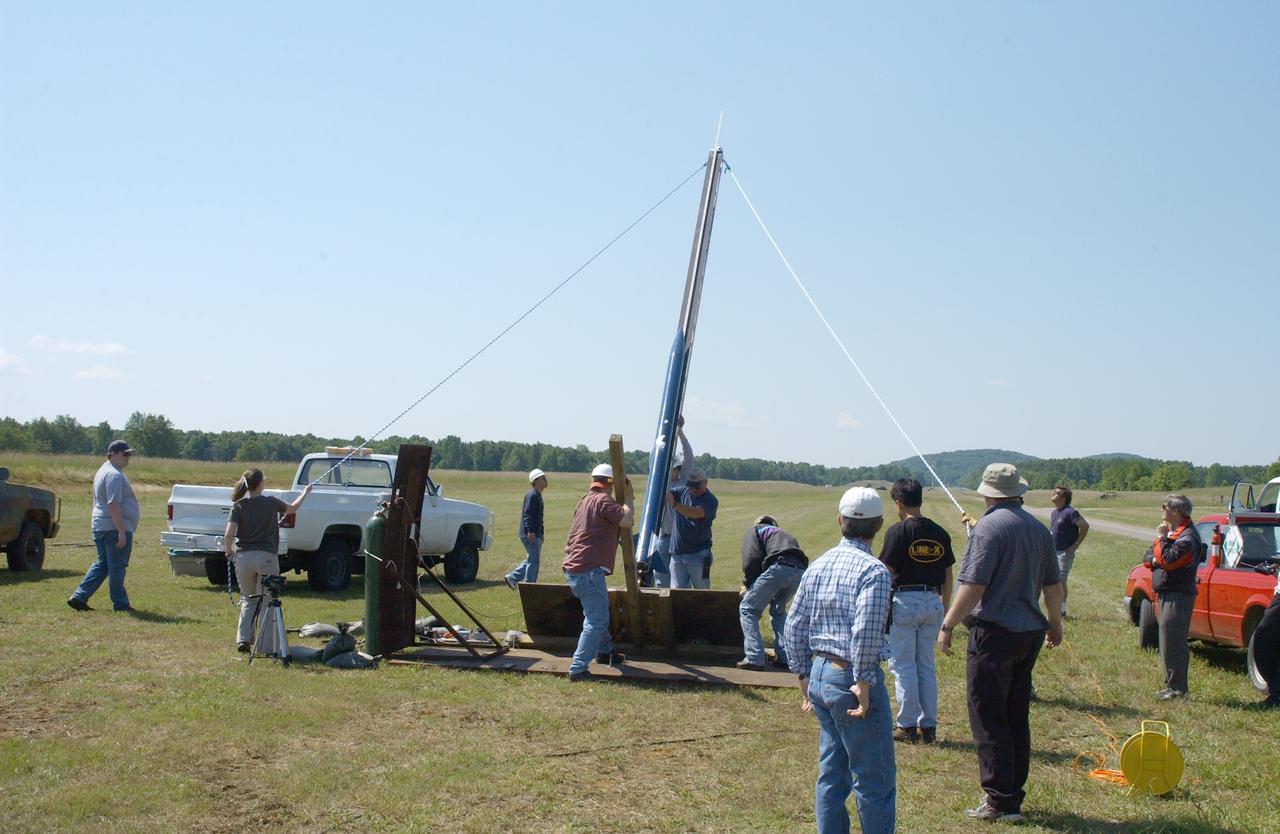
Filled with anticipation, students from two local universities, the University of Alabama in Huntsville (UAH), and Alabama Agricultural Mechanical University (AM), counted down to launch the rockets they designed and built at the Army test site on Redstone Arsenal in Huntsville, Alabama. The projected two-mile high launch culminated more than a year's work and demonstrated the student team's ability to meet the challenge set by the Marshall Space Flight Center's (MSFC) Student Launch Initiative (SLI) Program to apply science and math to experience, judgment, and common sense, and proved to NASA officials that they have successfully built reusable launch vehicles (RLVs), another challenge set by NASA's SLI program. MSFC's SLI program is an educational effort that aims to motivate students to pursue careers in science, math, and engineering. It provides the students with hands-on, practical aerospace experience. In this picture, the university students prepare their rocket for flight on the launch pad. Students at UAH built the rocket and AM students developed its scientific payload, an experiment that measures the amount of hydrogen produced during electroplating with nickel in a brief period of micrgravity.
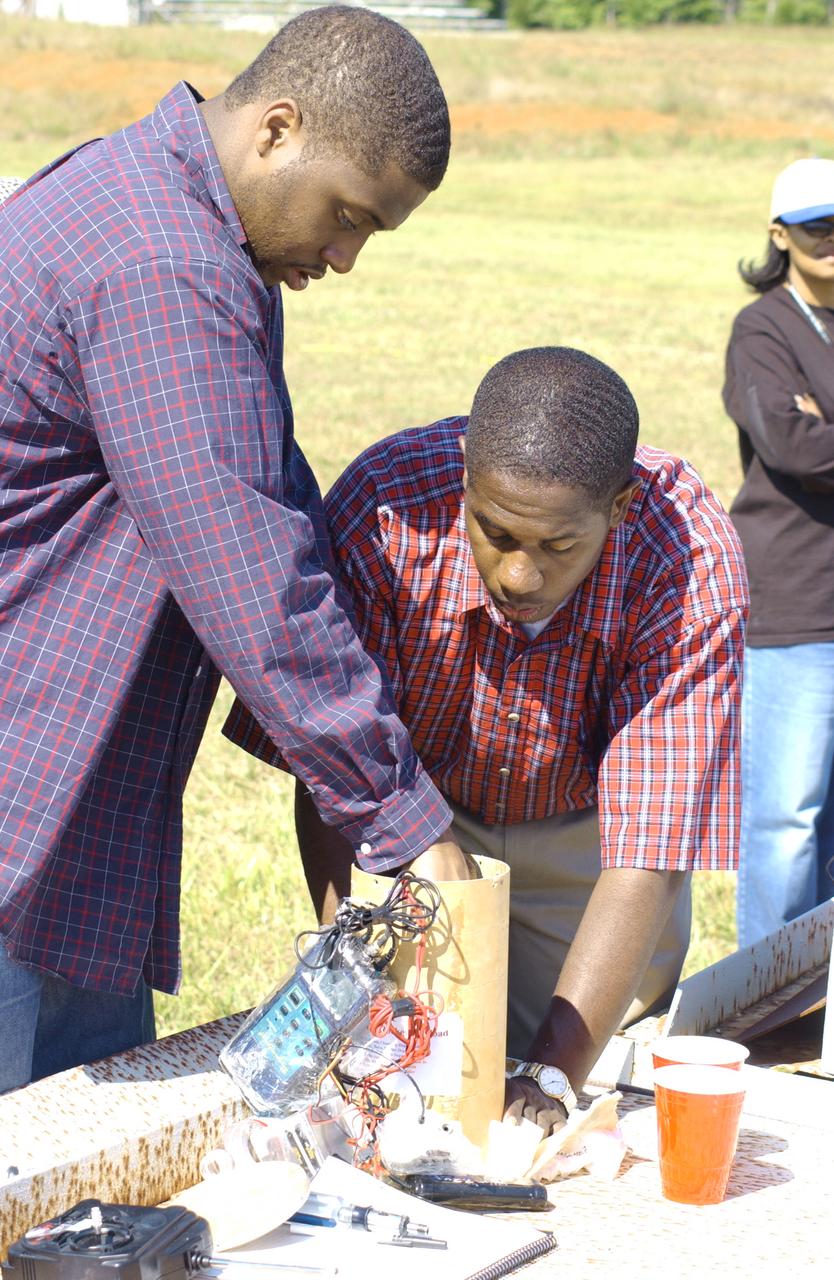
Filled with anticipation, students from two local universities, the University of Alabama in Huntsville (UAH), and Alabama Agricultural Mechanical University (AM), counted down to launch the rockets they designed and built at the Army test site on Redstone Arsenal in Huntsville, Alabama. The projected two-mile high launch culminated more than a year's work and demonstrated the student team's ability to meet the challenge set by the Marshall Space Flight Center's (MSFC) Student Launch Initiative (SLI) program to apply science and math to experience, judgment, and common sense, and proved to NASA officials that they have successfully built reusable launch vehicles (RLVs), another challenge set by NASA's SLI program. MSFC's SLI program is an educational effort that aims to motivate students to pursue careers in science, math, and engineering. It provides the students with hands-on, practical aerospace experience. UAH students designed and built the rocket and AM students designed the payload. In this picture, AM students prepare their payload, an experiment that measures the amount of hydrogen produced during electroplating with nickel in a brief period of micrgravity, prior to launch.
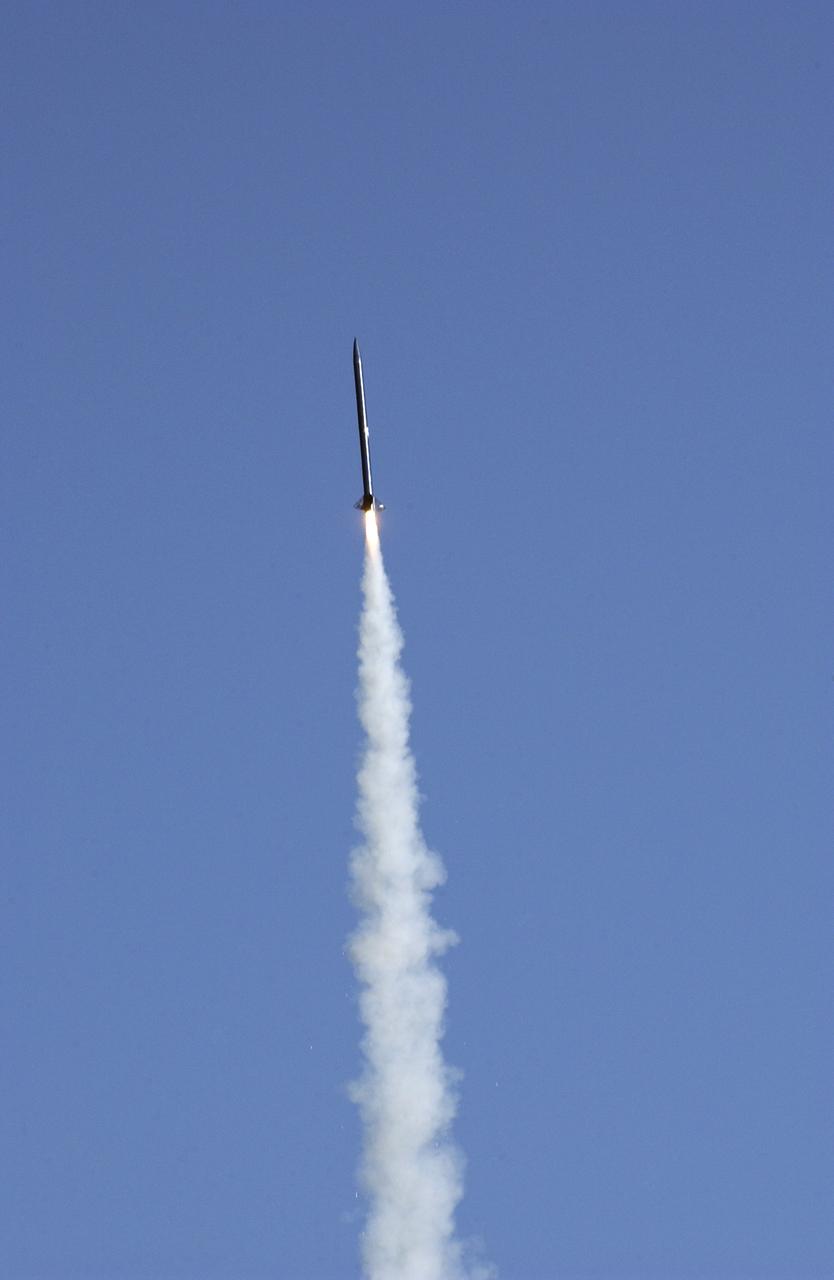
Filled with anticipation, students from two local universities, the University of Alabama in Huntsville (UAH), and Alabama Agricultural Mechanical University (AM), counted down to launch the rockets they designed and built at the Army test site on Redstone Arsenal in Huntsville, Alabama. The projected two-mile high launch culminated more than a year's work and demonstrated the student team's ability to meet the challenge set by the Marshall Space Flight Center's (MSFC) Student Launch Initiative (SLI) program to apply science and math to experience, judgment, and common sense, and proved to NASA officials that they have successfully built reusable launch vehicles (RLVs), another challenge set by NASA's SLI program. MSFC's SLI program is an educational effort that aims to motivate students to pursue careers in science, math, and engineering. It provides the students with hands-on, practical aerospace experience. In this picture, the combined efforts of students from UAH and AM sent this rocket soaring into flight. Students at UAH built the rocket and AM students developed its scientific payload, an experiment that measures the amount of hydrogen produced during electroplating with nickel in a brief period of micrgravity.
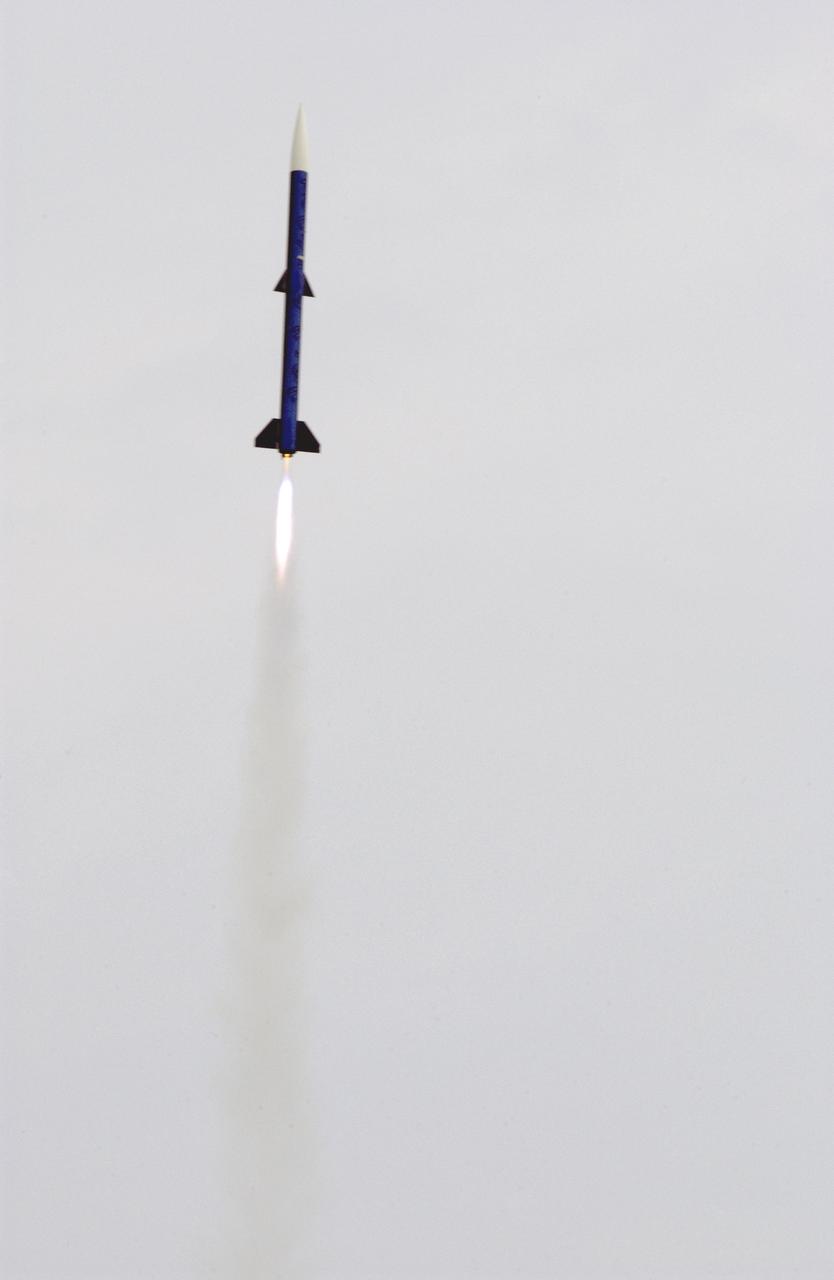
Filled with anticipation, students from three Huntsville area high schools: Randolph, Sparkman, and Johnson High Schools, counted down to launch the rockets they designed and built at the Army test site on Redstone Arsenal in Huntsville, Alabama. The projected two-mile high launch culminated more than a year's work and demonstrated the student team's ability to meet the challenge set by the Marshall Space Flight Center's (MSFC) Student Launch Initiative program to apply science and math to experience, judgment, and common sense, and proved to NASA officials that they have successfully built reusable launch vehicles (RLVs), another challenge set by NASA's SLI program. MSFC's SLI program is an educational effort that aims to motivate students to pursue careers in science, math, and engineering. It provides hands-on, practical aerospace experience. In this picture, a rocket built by Johnson High School students soars to it projected designation.
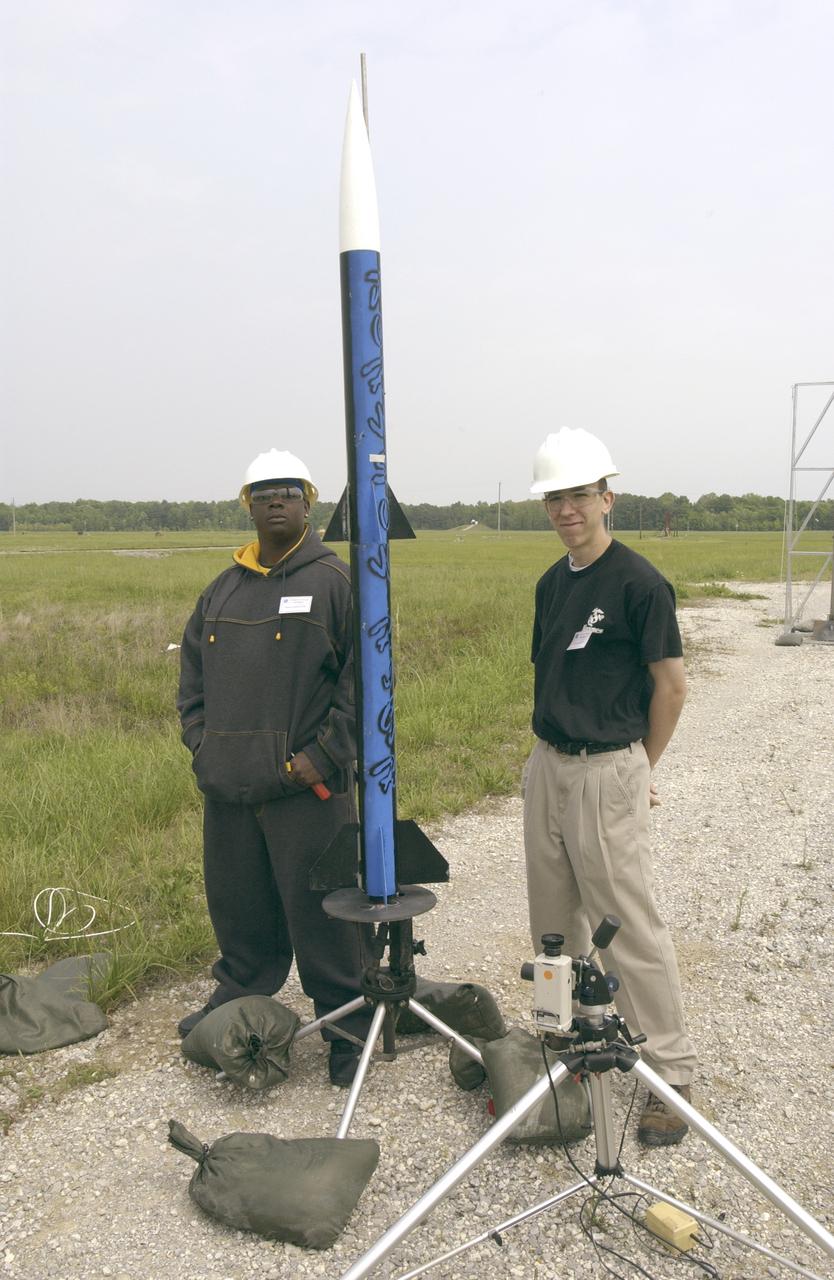
Filled with anticipation, students from three Huntsville area high schools: Randolph, Sparkman and Johnson High Schools, counted down to launch the rockets they designed and built at the Army test site on Redstone Arsenal in Huntsville, Alabama. The projected two-mile high launch culminated more than a year's work and demonstrated the student team's ability to meet the challenge set by the Marshall Space Flight Center's (MSFC) Student Launch Initiative (SLI) program to apply science and math to experience, judgment, and common sense, and proved to NASA officials that they have successfully built reusable launch vehicles (RLVs), another challenge set by NASA's SLI program. MSFC's SLI program is an educational effort that aims to motivate students to pursue careers in science, math, and engineering. It provides them with hands-on, practical aerospace experience. In this picture, two Johnson High School students pose with their rocket.
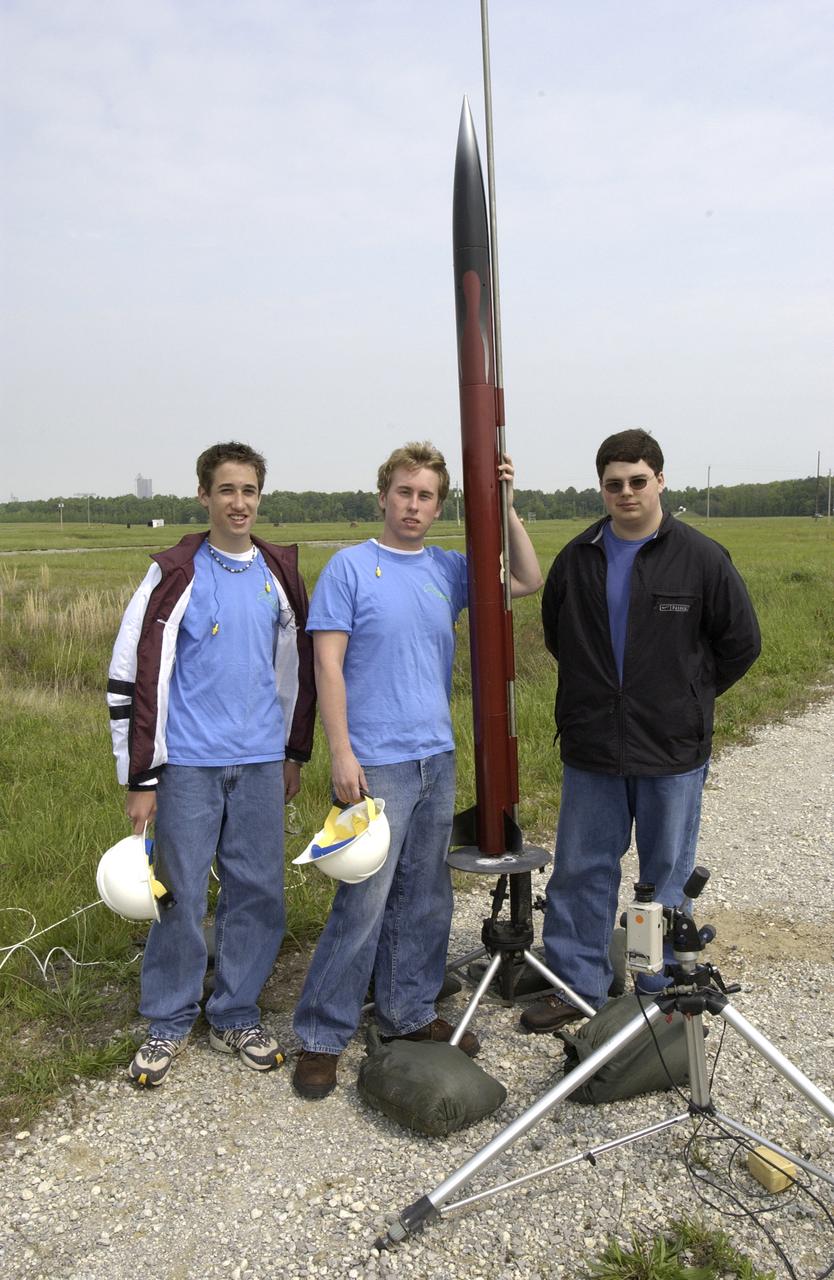
Filled with anticipation, students from three Huntsville area high schools: Randolph, Sparkman, and Johnson High Schools, counted down to launch the rockets they designed and built at the Army test site on Redstone Arsenal in Huntsville, Alabama. The projected two-mile high launch culminated more than a year's work and demonstrated the student team's ability to meet the challenge set by the Marshall Space Flight Center's (MSFC) Student Launch Initiative (SLI) program to apply science and math to experience, judgment, and common sense, and proved to NASA officials that they have successfully built reusable launch vehicles (RLVs), another challenge set by NASA's SLI program. MSFC's SLI program is an educational effort that aims to motivate students to pursue careers in science, math, and engineering. It provides them with hands-on, practical aerospace experience. In this picture, three Sparkman High School students pose with their rocket.

KENNEDY SPACE CENTER, FLA. - Japanese girls from Urawa Daiichi Girls High School, Urawa, Japan, pose for a group photo during a visit to the Orbiter Processing Facility. They were awarded the trip to Kennedy Space Center when their experiments were chosen to fly on mission STS-107. The girls are accompanied by American students from Melbourne and Jacksonville, Fla. The National Space Development Agency of Japan (NASDA) and the KSC International Space Station/Payload Processing Directorate worked with the NASA KSC Education Programs and University Research Division to coordinate the students’ visit.

KENNEDY SPACE CENTER, FLA. - Japanese girls from Urawa Daiichi Girls High School, Urawa, Japan, pose for a group photo on their visit to the Spacehab facility in Cape Canaveral, Fla. They were awarded the trip when their experiments were chosen to fly on mission STS-107. The group was also meeting with American students from Melbourne and Jacksonville, Fla. The girls planned a floral tribute at the STS-107 memorial stone at the facility. The National Space Development Agency of Japan (NASDA) and the KSC International Space Station and Payloads Processing Directorate worked with the NASA KSC Education Programs and University Research Division to coordinate the students’ visit.

KENNEDY SPACE CENTER, FLA. - Japanese girls from Urawa Daiichi Girls High School, Urawa, Japan, carry a floral tribute to the crew of Columbia to place at the STS-107 memorial stone at the Spacehab facility, Cape Canaveral, Fla. The group was awarded the trip to Florida when their experiments were chosen to fly on mission STS-107. The group was also meeting with American students from Melbourne and Jacksonville, Fla. The National Space Development Agency of Japan (NASDA) and the KSC International Space Station and Payloads Processing Directorate worked with the NASA KSC Education Programs and University Research Division to coordinate the students’ visit.

KENNEDY SPACE CENTER, FLA. - Japanese girls from Urawa Daiichi Girls High School, Urawa, Japan, carry a floral tribute to the crew of Columbia to place at the STS-107 memorial stone at the Spacehab facility, Cape Canaveral, Fla. The group was awarded the trip to Florida when their experiments were chosen to fly on mission STS-107. The group was also meeting with American students from Melbourne and Jacksonville, Fla. The National Space Development Agency of Japan (NASDA) and the KSC International Space Station and Payloads Processing Directorate worked with the NASA KSC Education Programs and University Research Division to coordinate the students’ visit.

KENNEDY SPACE CENTER, FLA. - Japanese girls from Urawa Daiichi Girls High School, Urawa, Japan, place a floral tribute to the crew of Columbia at the STS-107 memorial stone at the Spacehab facility, Cape Canaveral, Fla. The group was awarded the trip to Florida when their experiments were chosen to fly on mission STS-107. The group was also meeting with American students from Melbourne and Jacksonville, Fla. The National Space Development Agency of Japan (NASDA) and the KSC International Space Station and Payloads Processing Directorate worked with the NASA KSC Education Programs and University Research Division to coordinate the students’ visit.

KENNEDY SPACE CENTER, FLA. - Japanese girls from Urawa Daiichi Girls High School, Urawa, Japan, pose for a group photo during a visit to the Space Station Processing Facility. They were awarded the trip to Kennedy Space Center when their experiments were chosen to fly on mission STS-107. The girls are accompanied by American students from Melbourne and Jacksonville, Fla. The National Space Development Agency of Japan (NASDA) and the KSC International Space Station/Payload Processing Directorate worked with the NASA KSC Education Programs and University Research Division to coordinate the students’ visit.

KENNEDY SPACE CENTER, FLA. - Japanese girls from Urawa Daiichi Girls High School, Urawa, Japan, carry a floral tribute to the crew of Columbia to place at the STS-107 memorial stone at the Spacehab facility, Cape Canaveral, Fla. The group was awarded the trip to Florida when their experiments were chosen to fly on mission STS-107. The group was also meeting with American students from Melbourne and Jacksonville, Fla. The National Space Development Agency of Japan (NASDA) and the KSC International Space Station and Payloads Processing Directorate worked with the NASA KSC Education Programs and University Research Division to coordinate the students’ visit.
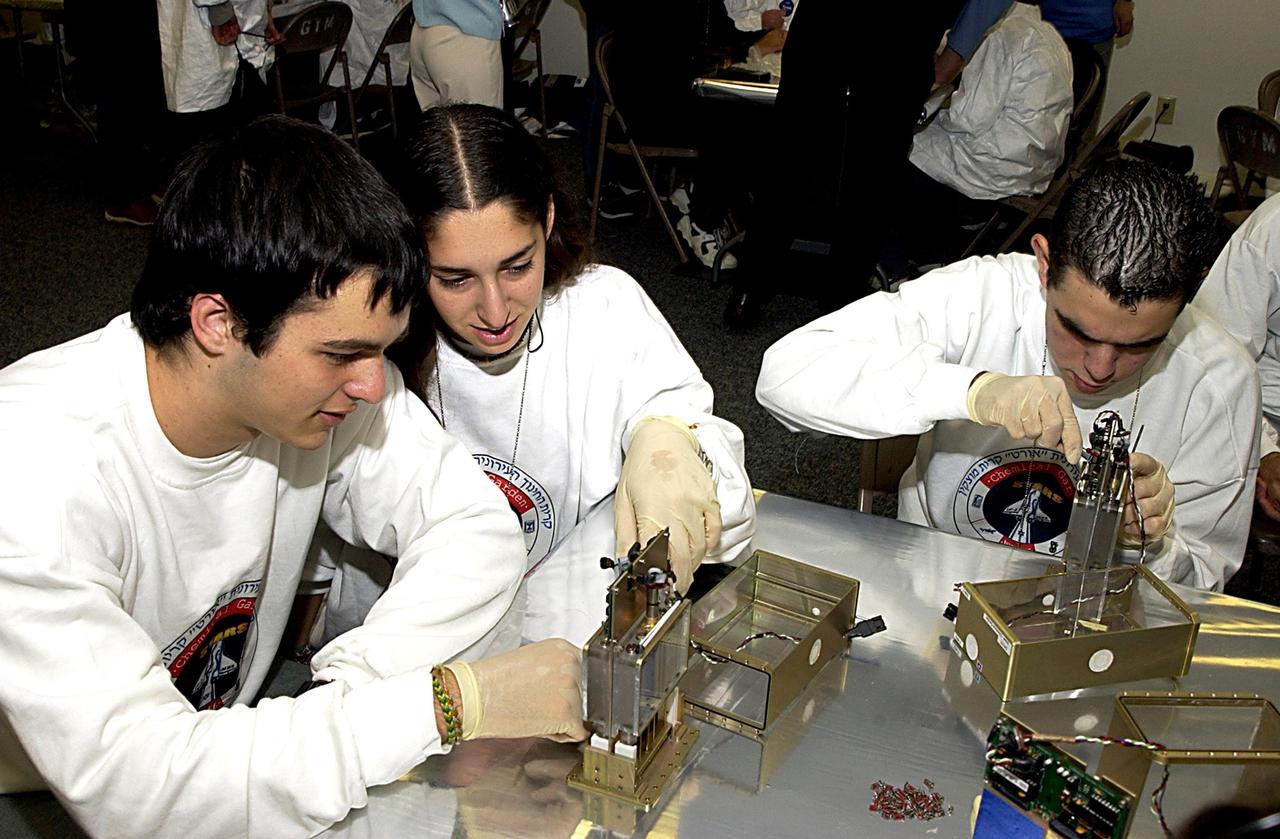
KENNEDY SPACE CENTER, FLA. - Students work on their experiments that will fly in SPACEHAB on Space Shuttle Columbia on mission STS-107. SPACEHAB's complement of commercial experiments includes six educational experiments designed and developed by students in six different countries under the auspices of Space Technology and Research Students (STARS), a global education program managed by SPACEHAB subsidiary Space Media. The countries represented are Australia, China, Israel, Japan, Liechtenstein and the United States. The student investigators who conceived these experiments will monitor their operations in space. The experiments will be housed in BioServe Space Technologies' Isothermal Containment Module (ICM --a small temperature-controlled facility that provides experiment support such as physical containment, lighting, and video imaging) and stowed in a middeck-size locker aboard the SPACEHAB Research Double Module.
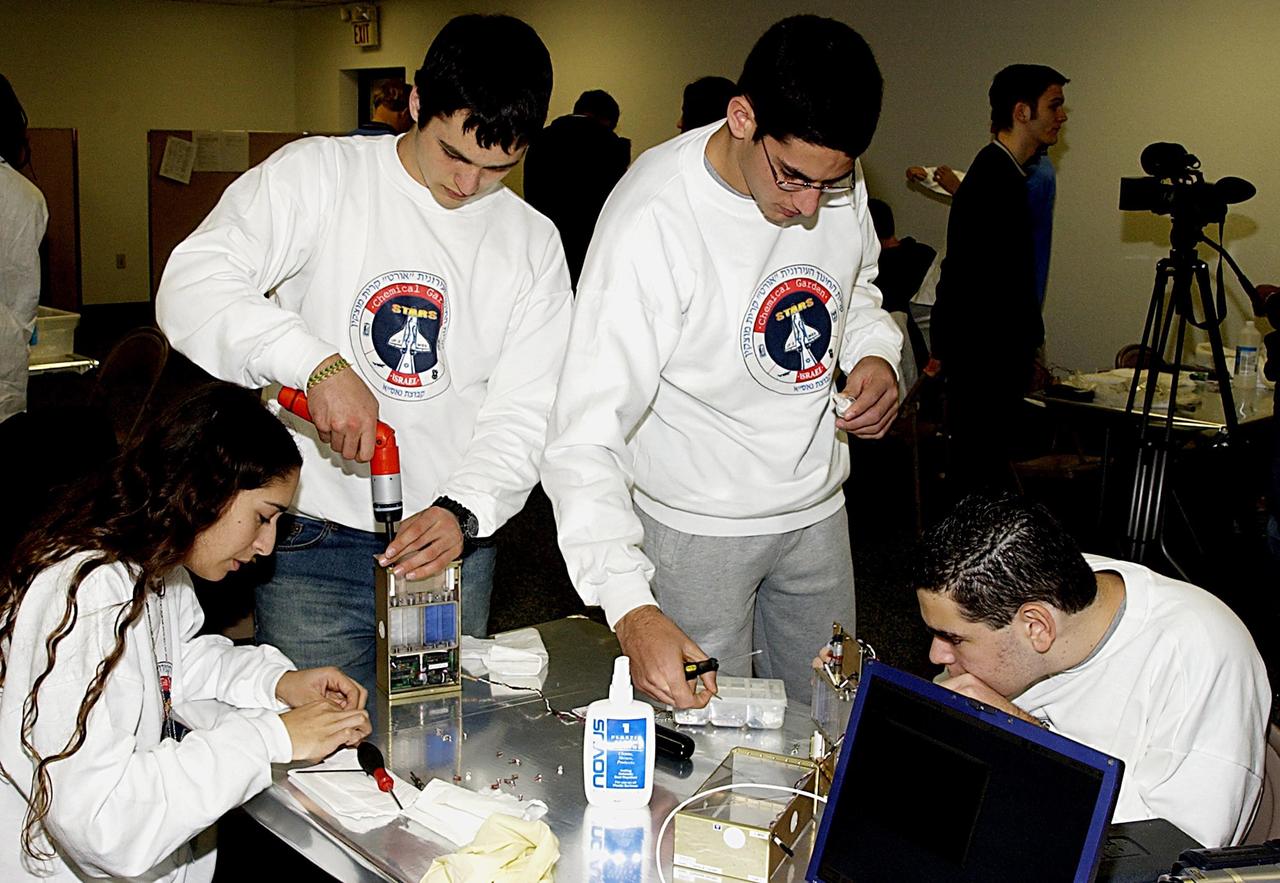
KENNEDY SPACE CENTER, FLA. -- Students work on their experiments that will fly in SPACEHAB on Space Shuttle Columbia on mission STS-107. SPACEHAB's complement of commercial experiments includes six educational experiments designed and developed by students in six different countries under the auspices of Space Technology and Research Students (STARS), a global education program managed by SPACEHAB subsidiary Space Media. The countries represented are Australia, China, Israel, Japan, Liechtenstein and the United States. The student investigators who conceived these experiments will monitor their operations in space. The experiments will be housed in BioServe Space Technologies' Isothermal Containment Module (ICM --a small temperature-controlled facility that provides experiment support such as physical containment, lighting, and video imaging) and stowed in a middeck-size locker aboard the SPACEHAB Research Double Module.
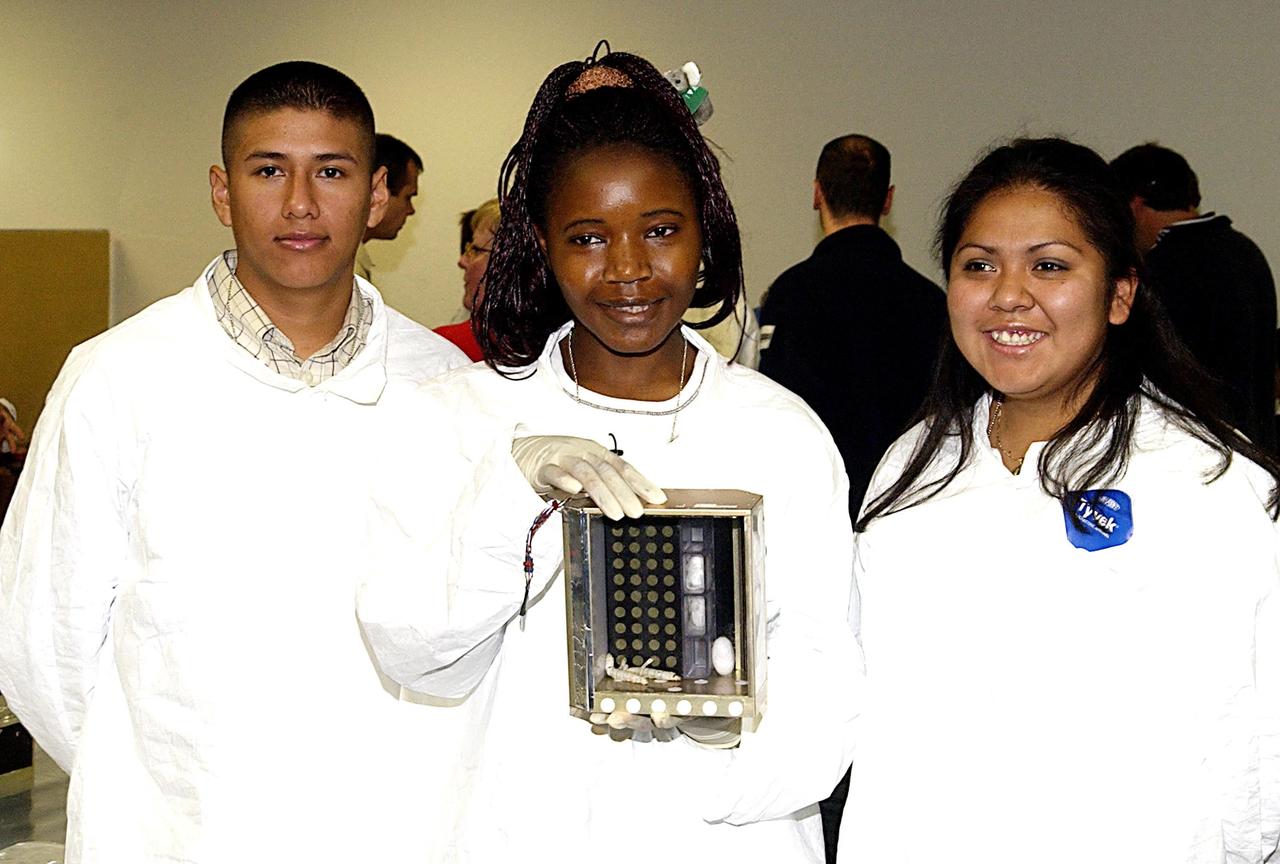
KENNEDY SPACE CENTER, FLA. -- Students show off one of the experiments that will fly in SPACEHAB on Space Shuttle Columbia on mission STS-107. SPACEHAB's complement of commercial experiments includes six educational experiments designed and developed by students in six different countries under the auspices of Space Technology and Research Students (STARS), a global education program managed by SPACEHAB subsidiary Space Media. The countries represented are Australia, China, Israel, Japan, Liechtenstein and the United States. The student investigators who conceived these experiments will monitor their operations in space. The experiments will be housed in BioServe Space Technologies' Isothermal Containment Module (ICM --a small temperature-controlled facility that provides experiment support such as physical containment, lighting, and video imaging) and stowed in a middeck-size locker aboard the SPACEHAB Research Double Module.
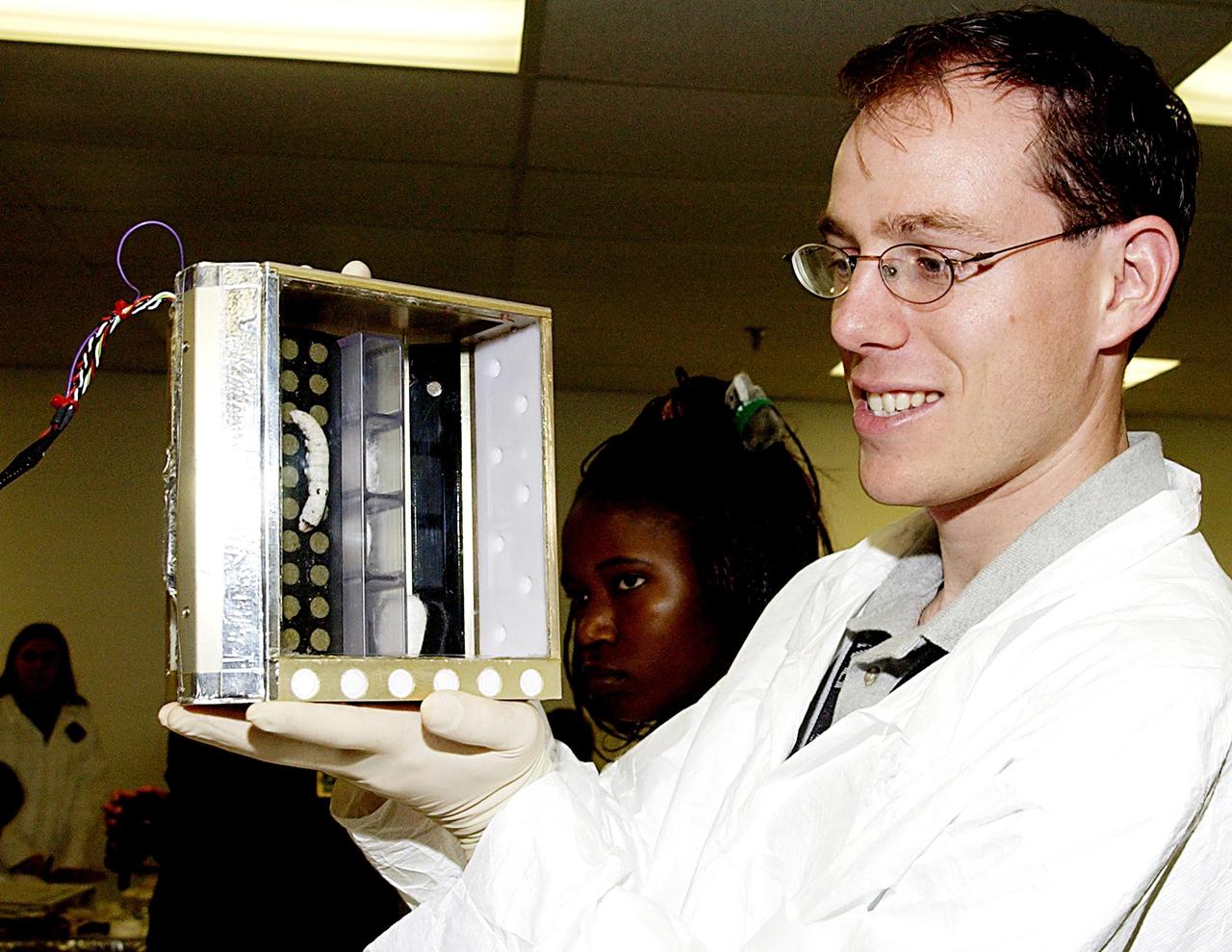
KENNEDY SPACE CENTER, FLA. - A student shows off one of the experiments that will fly in SPACEHAB on Space Shuttle Columbia on mission STS-107. SPACEHAB's complement of commercial experiments includes six educational experiments designed and developed by students in six different countries under the auspices of Space Technology and Research Students (STARS), a global education program managed by SPACEHAB subsidiary Space Media. The countries represented are Australia, China, Israel, Japan, Liechtenstein and the United States. The student investigators who conceived these experiments will monitor their operations in space. The experiments will be housed in BioServe Space Technologies' Isothermal Containment Module (ICM --a small temperature-controlled facility that provides experiment support such as physical containment, lighting, and video imaging) and stowed in a middeck-size locker aboard the SPACEHAB Research Double Module.
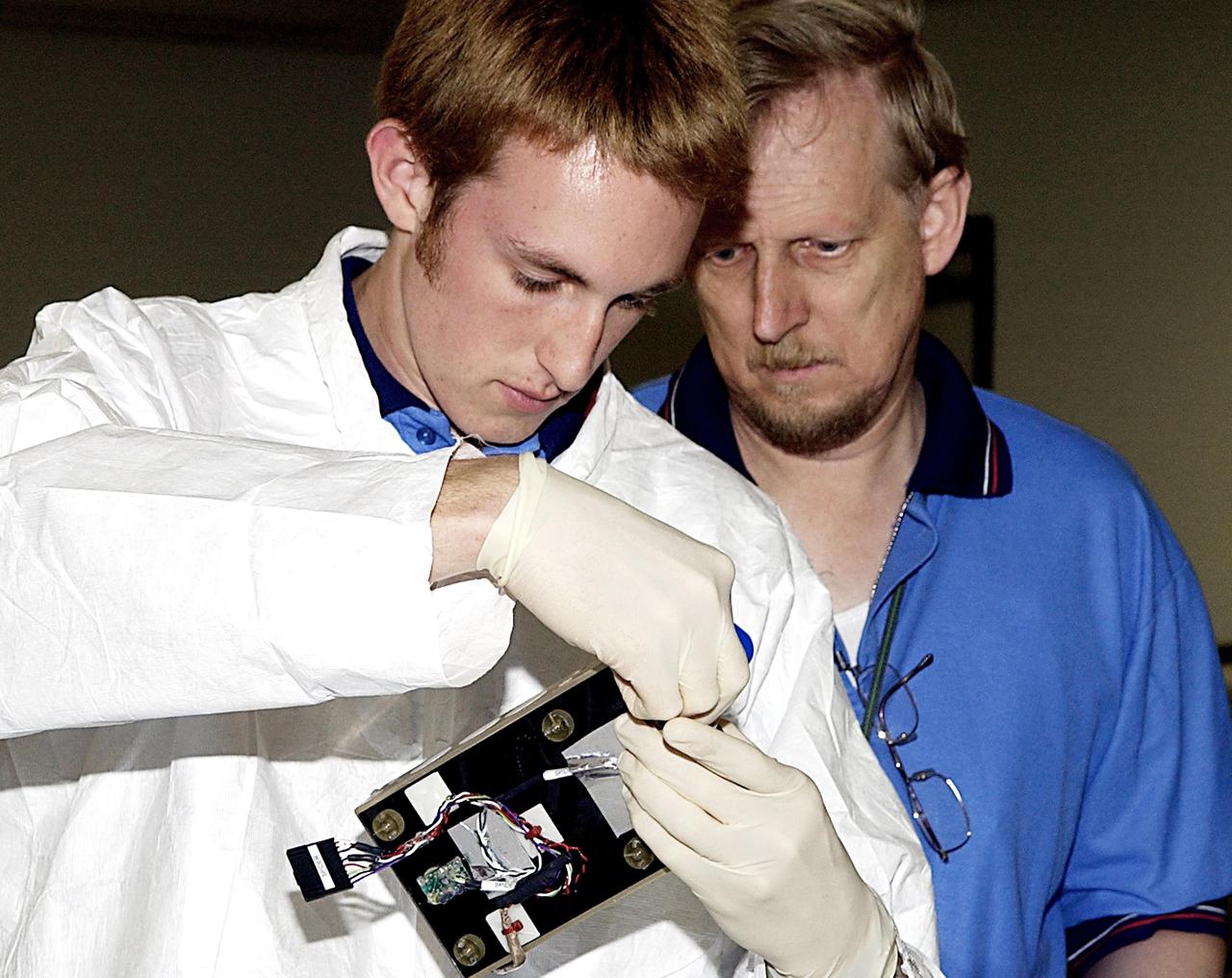
KENNEDY SPACE CENTER, FLA. - A student works on an experiment that will fly in SPACEHAB on Space Shuttle Columbia on mission STS-107. SPACEHAB's complement of commercial experiments includes six educational experiments designed and developed by students in six different countries under the auspices of Space Technology and Research Students (STARS), a global education program managed by SPACEHAB subsidiary Space Media. The countries represented are Australia, China, Israel, Japan, Liechtenstein and the United States. The student investigators who conceived these experiments will monitor their operations in space. The experiments will be housed in BioServe Space Technologies' Isothermal Containment Module (ICM --a small temperature-controlled facility that provides experiment support such as physical containment, lighting, and video imaging) and stowed in a middeck-size locker aboard the SPACEHAB Research Double Module.
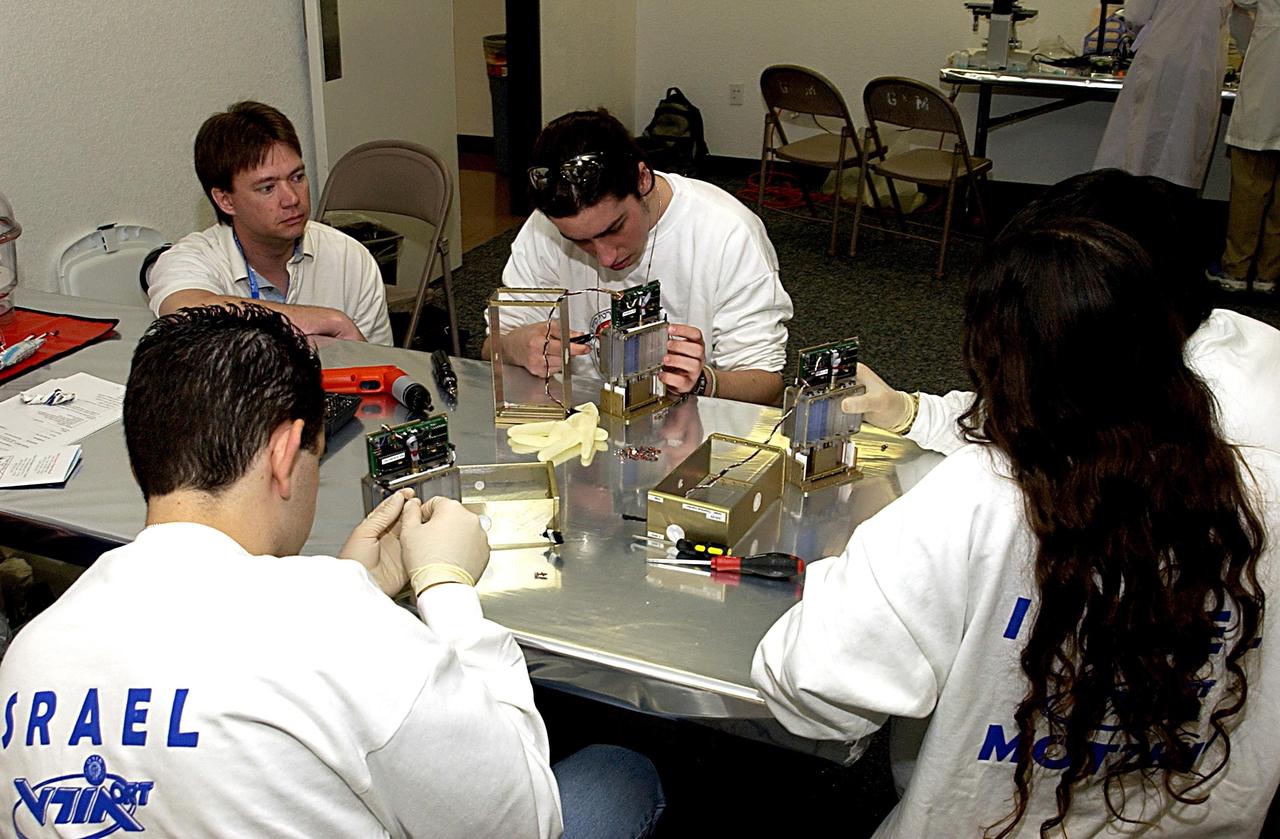
KENNEDY SPACE CENTER, FLA. - Students work on their experiments that will fly in SPACEHAB on Space Shuttle Columbia on mission STS-107. SPACEHAB's complement of commercial experiments includes six educational experiments designed and developed by students in six different countries under the auspices of Space Technology and Research Students (STARS), a global education program managed by SPACEHAB subsidiary Space Media. The countries represented are Australia, China, Israel, Japan, Liechtenstein and the United States. The student investigators who conceived these experiments will monitor their operations in space. The experiments will be housed in BioServe Space Technologies' Isothermal Containment Module (ICM --a small temperature-controlled facility that provides experiment support such as physical containment, lighting, and video imaging) and stowed in a middeck-size locker aboard the SPACEHAB Research Double Module.
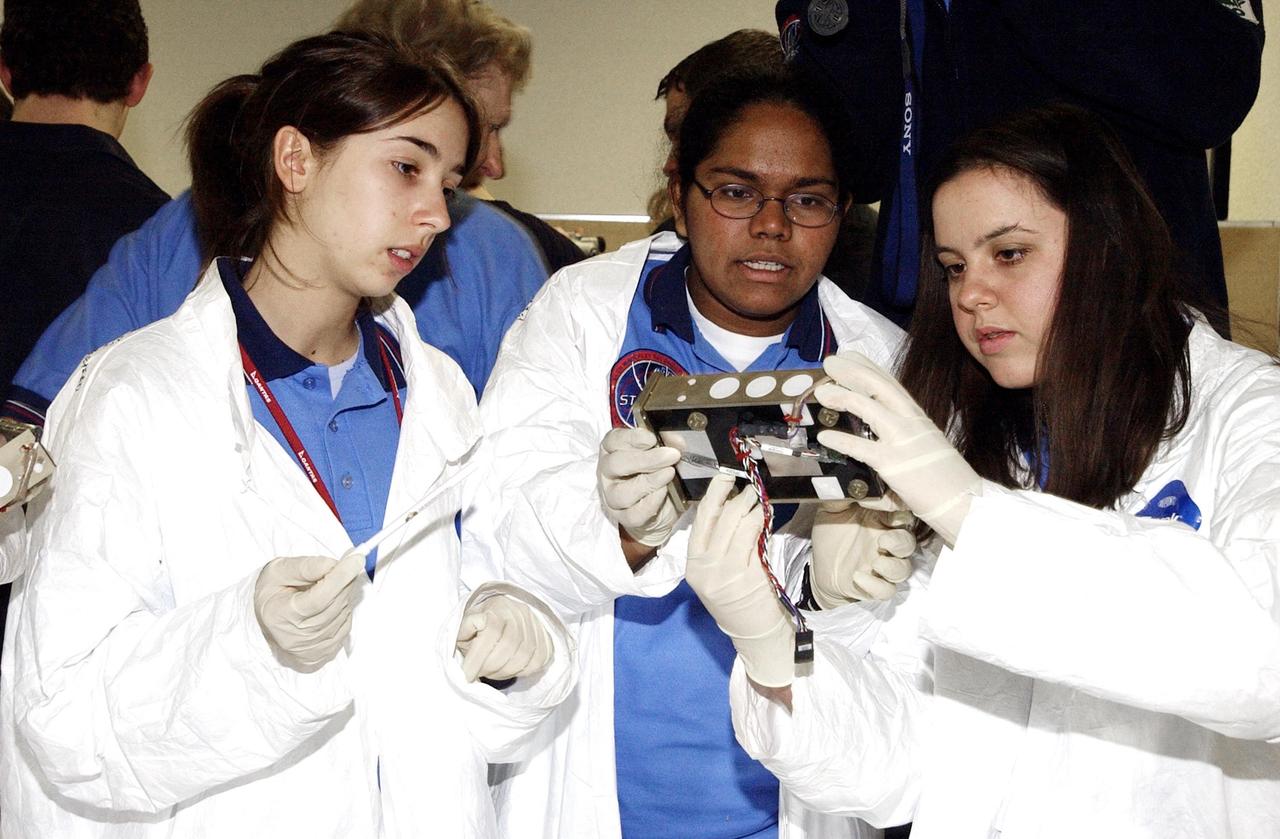
KENNEDY SPACE CENTER, FLA. -- Students work on their experiments that will fly in SPACEHAB on Space Shuttle Columbia on mission STS-107. SPACEHAB's complement of commercial experiments includes six educational experiments designed and developed by students in six different countries under the auspices of Space Technology and Research Students (STARS), a global education program managed by SPACEHAB subsidiary Space Media. The countries represented are Australia, China, Israel, Japan, Liechtenstein and the United States. The student investigators who conceived these experiments will monitor their operations in space. The experiments will be housed in BioServe Space Technologies' Isothermal Containment Module (ICM --a small temperature-controlled facility that provides experiment support such as physical containment, lighting, and video imaging) and stowed in a middeck-size locker aboard the SPACEHAB Research Double Module.
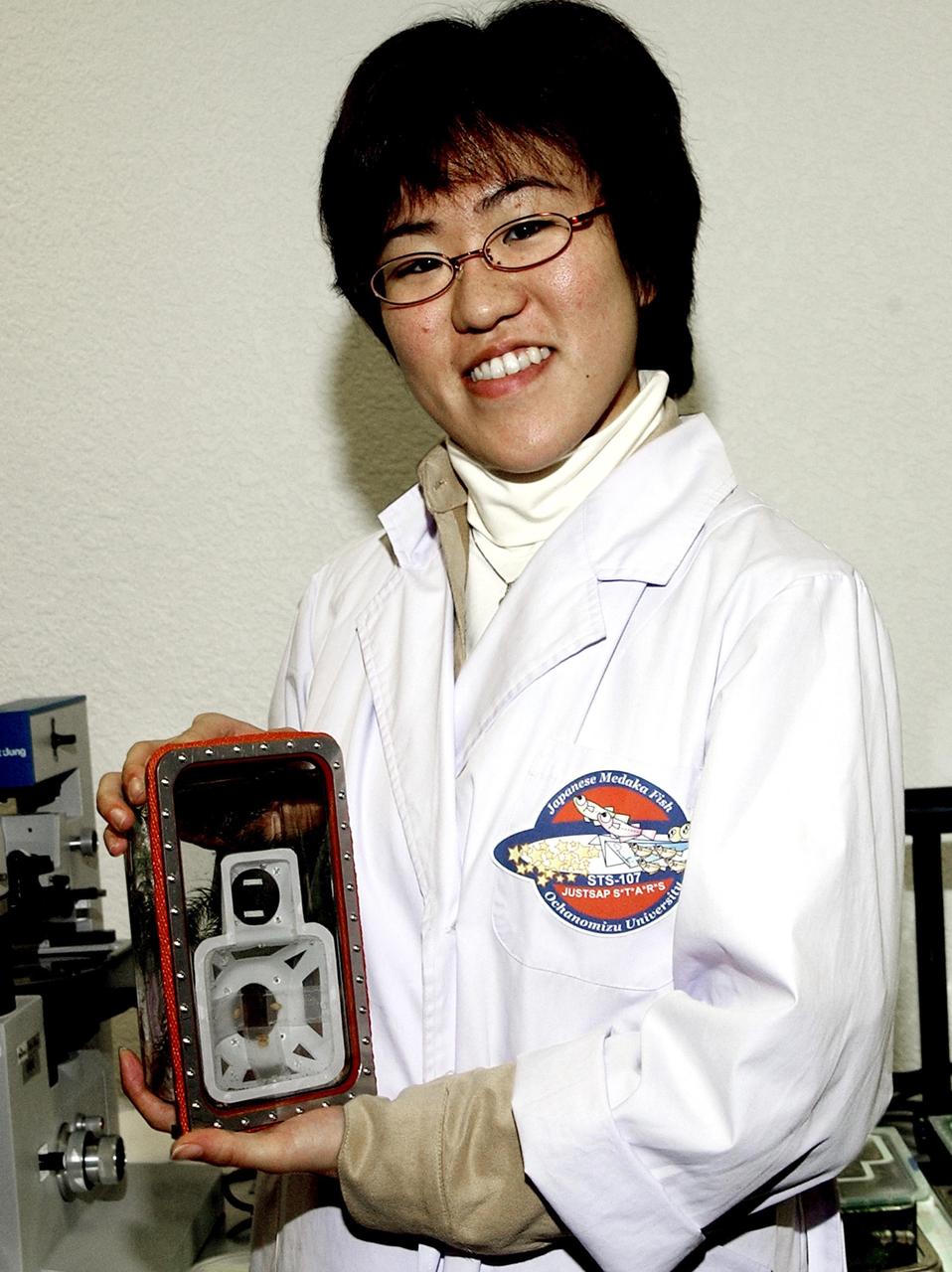
KENNEDY SPACE CENTER, FLA. -- A student displays an experiment that will fly in SPACEHAB on Space Shuttle Columbia on mission STS-107. SPACEHAB's complement of commercial experiments includes six educational experiments designed and developed by students in six different countries under the auspices of Space Technology and Research Students (STARS), a global education program managed by SPACEHAB subsidiary Space Media. The countries represented are Australia, China, Israel, Japan, Liechtenstein and the United States. The student investigators who conceived these experiments will monitor their operations in space. The experiments will be housed in BioServe Space Technologies' Isothermal Containment Module (ICM --a small temperature-controlled facility that provides experiment support such as physical containment, lighting, and video imaging) and stowed in a middeck-size locker aboard the SPACEHAB Research Double Module.
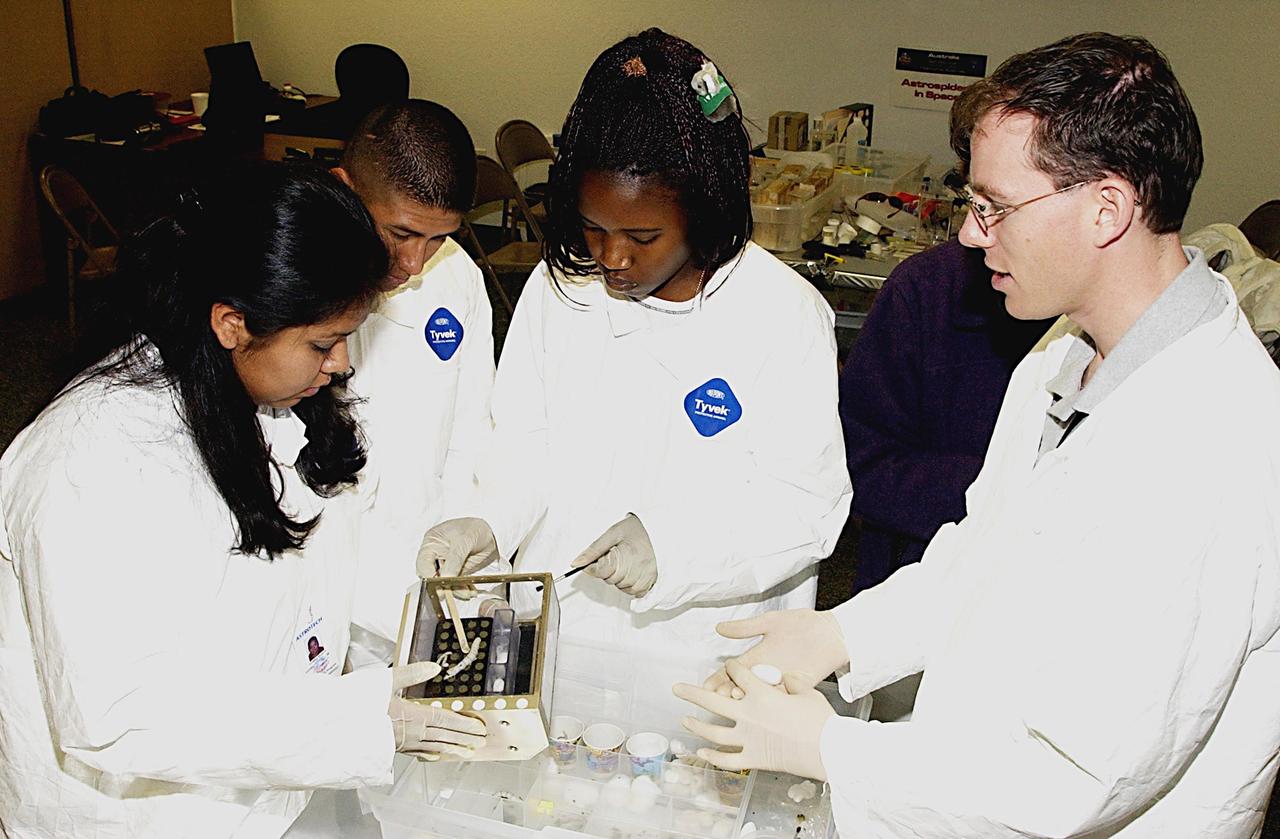
KENNEDY SPACE CENTER, FLA. - Students work on their experiments that will fly in SPACEHAB on Space Shuttle Columbia on mission STS-107. SPACEHAB's complement of commercial experiments includes six educational experiments designed and developed by students in six different countries under the auspices of Space Technology and Research Students (STARS), a global education program managed by SPACEHAB subsidiary Space Media. The countries represented are Australia, China, Israel, Japan, Liechtenstein and the United States. The student investigators who conceived these experiments will monitor their operations in space. The experiments will be housed in BioServe Space Technologies' Isothermal Containment Module (ICM --a small temperature-controlled facility that provides experiment support such as physical containment, lighting, and video imaging) and stowed in a middeck-size locker aboard the SPACEHAB Research Double Module.
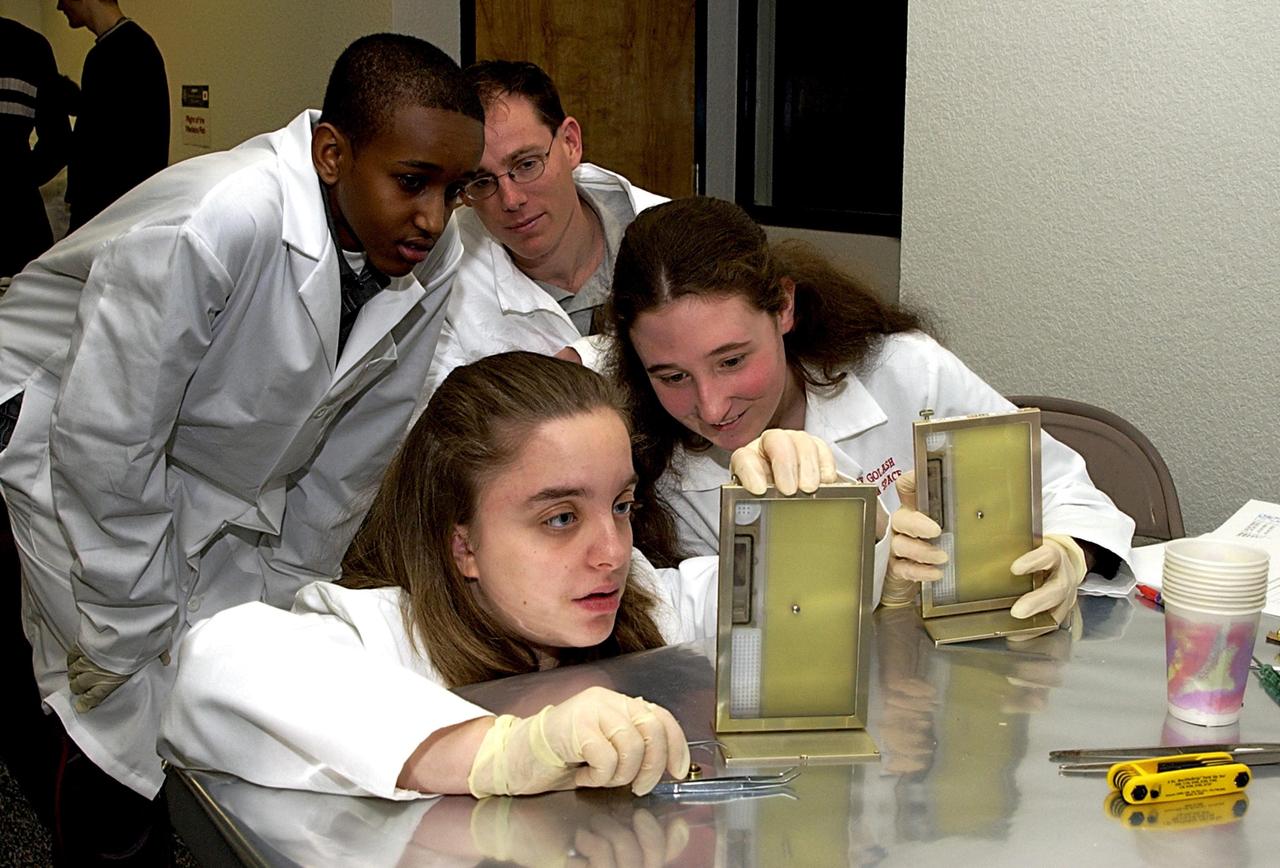
KENNEDY SPACE CENTER, FLA. - Students check on their experiments that will fly in SPACEHAB on Space Shuttle Columbia on mission STS-107. SPACEHAB's complement of commercial experiments includes six educational experiments designed and developed by students in six different countries under the auspices of Space Technology and Research Students (STARS), a global education program managed by SPACEHAB subsidiary Space Media. The countries represented are Australia, China, Israel, Japan, Liechtenstein and the United States. The student investigators who conceived these experiments will monitor their operations in space. The experiments will be housed in BioServe Space Technologies' Isothermal Containment Module (ICM --a small temperature-controlled facility that provides experiment support such as physical containment, lighting, and video imaging) and stowed in a middeck-size locker aboard the SPACEHAB Research Double Module.
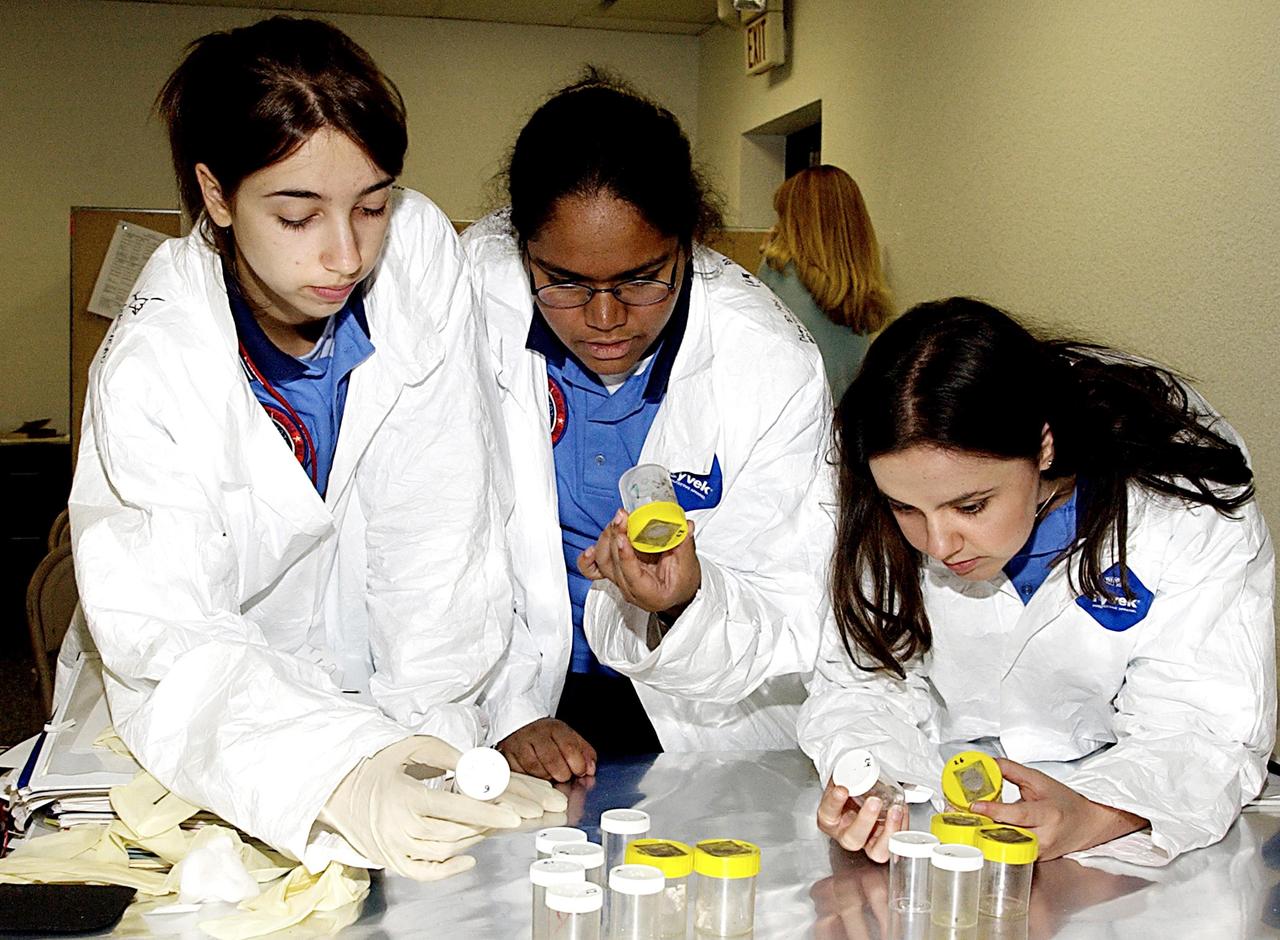
KENNEDY SPACE CENTER, FLA. - Students check out their experiments that will fly in SPACEHAB on Space Shuttle Columbia on mission STS-107. SPACEHAB's complement of commercial experiments includes six educational experiments designed and developed by students in six different countries under the auspices of Space Technology and Research Students (STARS), a global education program managed by SPACEHAB subsidiary Space Media. The countries represented are Australia, China, Israel, Japan, Liechtenstein and the United States. The student investigators who conceived these experiments will monitor their operations in space. The experiments will be housed in BioServe Space Technologies' Isothermal Containment Module (ICM --a small temperature-controlled facility that provides experiment support such as physical containment, lighting, and video imaging) and stowed in a middeck-size locker aboard the SPACEHAB Research Double Module.
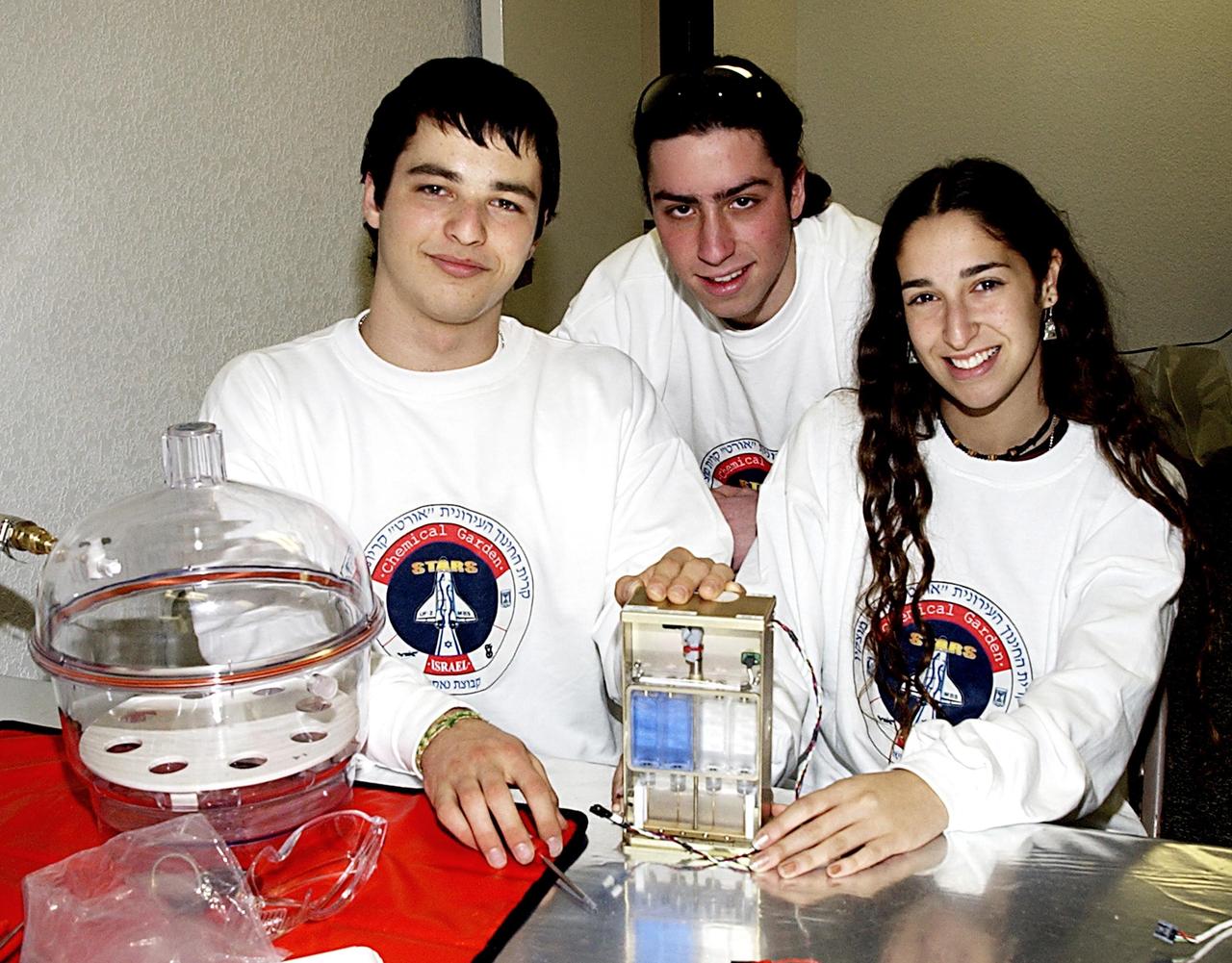
KENNEDY SPACE CENTER, FLA. -- Students display an experiment that will fly in SPACEHAB on Space Shuttle Columbia on mission STS-107. SPACEHAB's complement of commercial experiments includes six educational experiments designed and developed by students in six different countries under the auspices of Space Technology and Research Students (STARS), a global education program managed by SPACEHAB subsidiary Space Media. The countries represented are Australia, China, Israel, Japan, Liechtenstein and the United States. The student investigators who conceived these experiments will monitor their operations in space. The experiments will be housed in BioServe Space Technologies' Isothermal Containment Module (ICM --a small temperature-controlled facility that provides experiment support such as physical containment, lighting, and video imaging) and stowed in a middeck-size locker aboard the SPACEHAB Research Double Module.
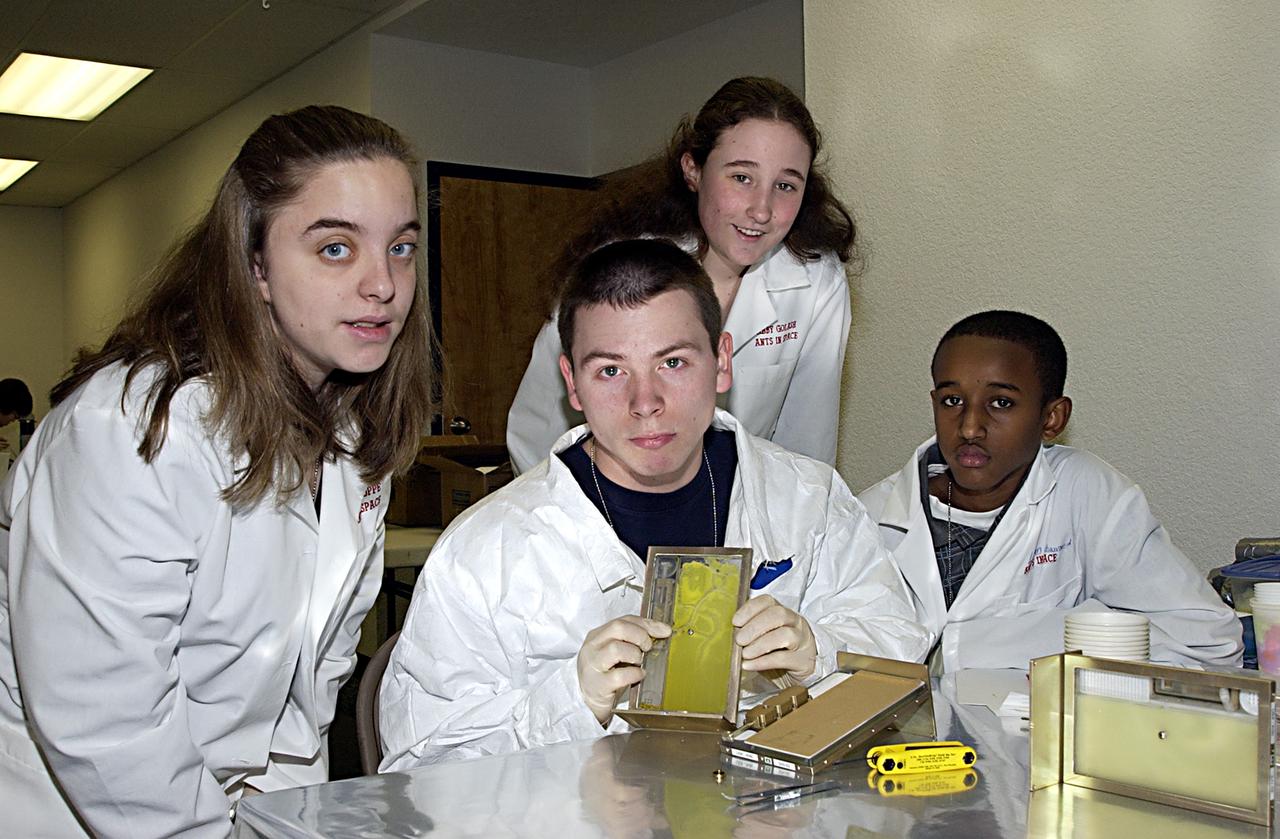
Students display an experiment that will fly in SPACEHAB on Space Shuttle Columbia on mission STS-107. SPACEHAB's complement of commercial experiments includes six educational experiments designed and developed by students in six different countries under the auspices of Space Technology and Research Students (STARS), a global education program managed by SPACEHAB subsidiary Space Media. The countries represented are Australia, China, Israel, Japan, Liechtenstein and the United States. The student investigators who conceived these experiments will monitor their operations in space. The experiments will be housed in BioServe Space Technologies' Isothermal Containment Module (ICM --a small temperature-controlled facility that provides experiment support such as physical containment, lighting, and video imaging) and stowed in a middeck-size locker aboard the SPACEHAB Research Double Module.
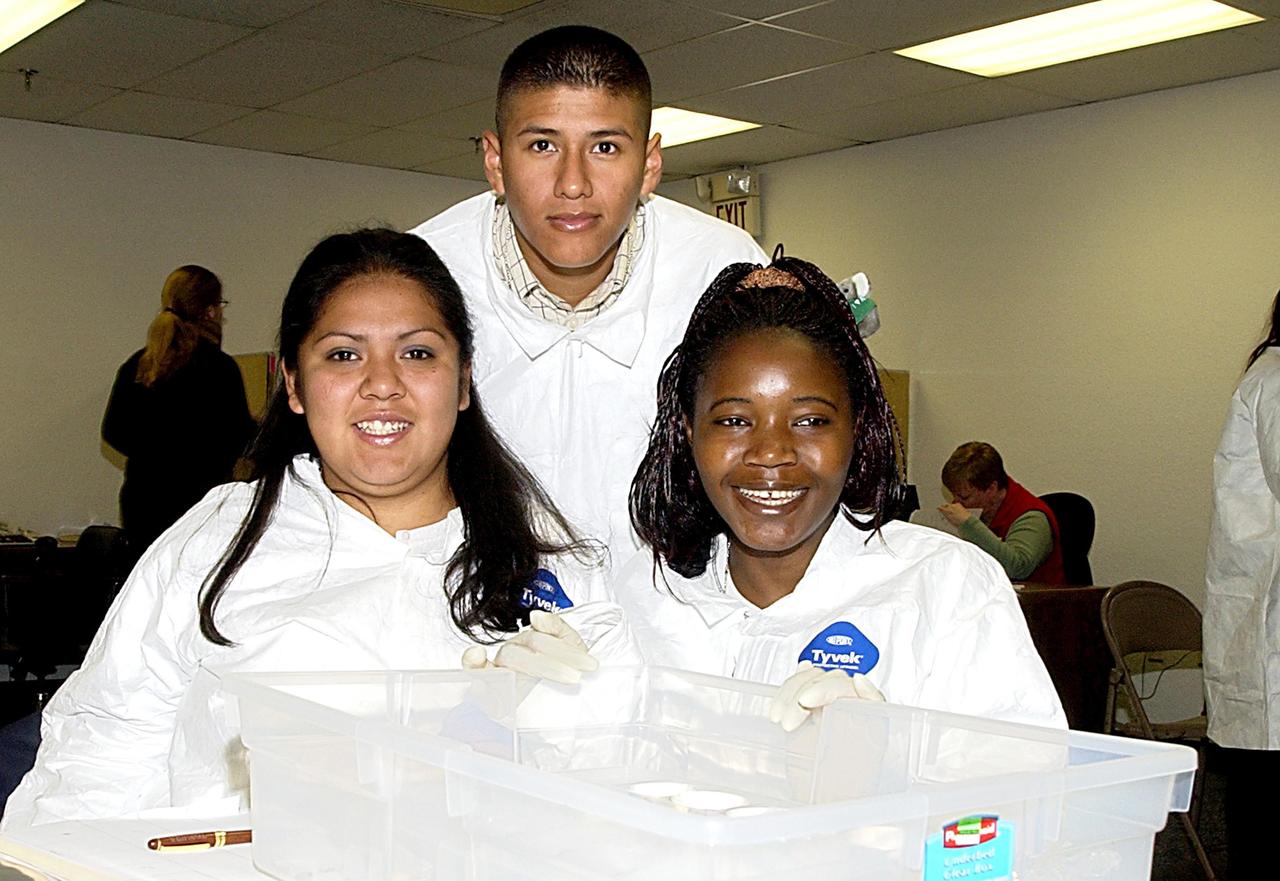
KENNEDY SPACE CENTER, FLA. - Students look over their experiments that will fly in SPACEHAB on Space Shuttle Columbia on mission STS-107. SPACEHAB's complement of commercial experiments includes six educational experiments designed and developed by students in six different countries under the auspices of Space Technology and Research Students (STARS), a global education program managed by SPACEHAB subsidiary Space Media. The countries represented are Australia, China, Israel, Japan, Liechtenstein and the United States. The student investigators who conceived these experiments will monitor their operations in space. The experiments will be housed in BioServe Space Technologies' Isothermal Containment Module (ICM --a small temperature-controlled facility that provides experiment support such as physical containment, lighting, and video imaging) and stowed in a middeck-size locker aboard the SPACEHAB Research Double Module.
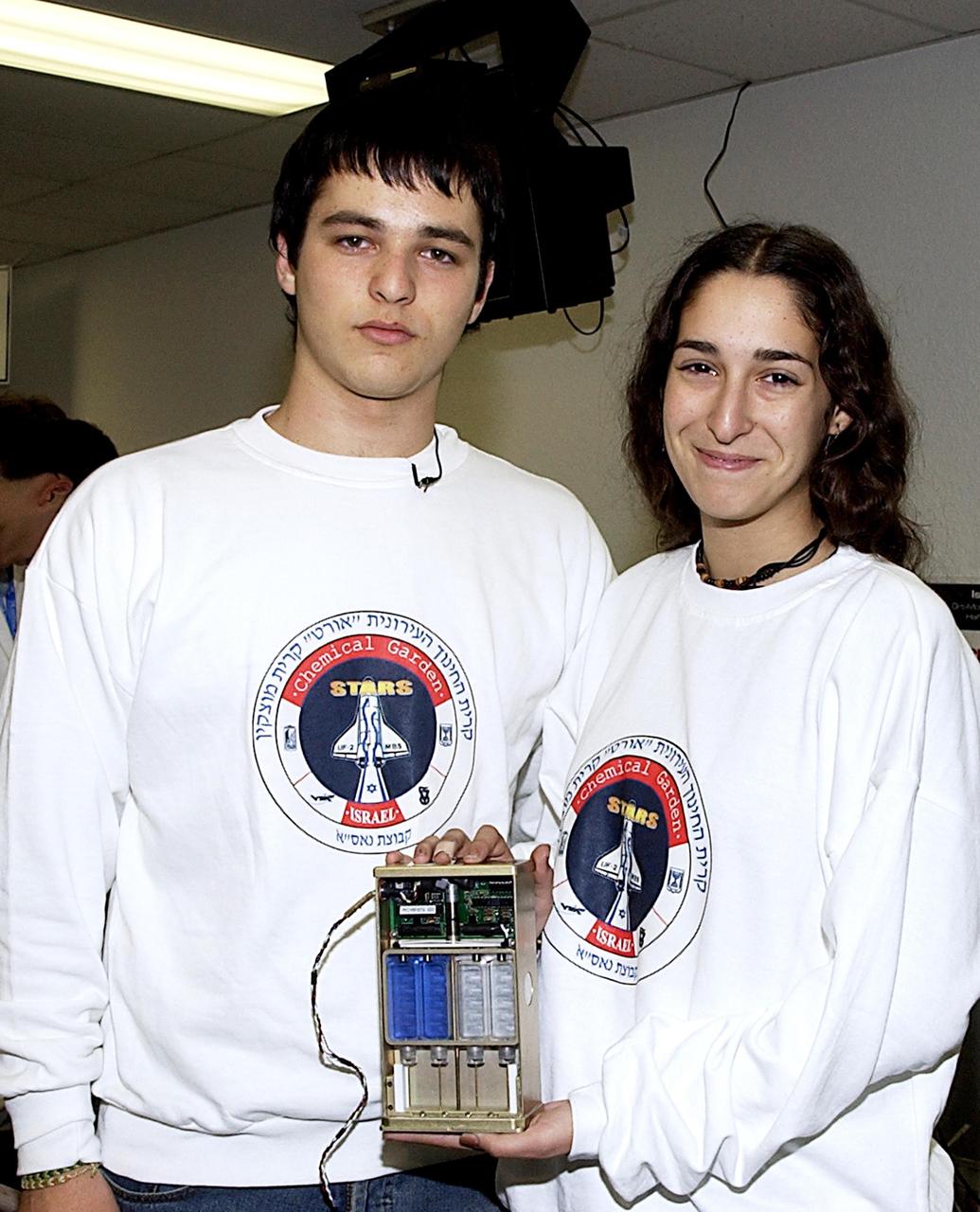
KENNEDY SPACE CENTER, FLA. -- Students show off one of the experiments that will fly in SPACEHAB on Space Shuttle Columbia on mission STS-107. SPACEHAB's complement of commercial experiments includes six educational experiments designed and developed by students in six different countries under the auspices of Space Technology and Research Students (STARS), a global education program managed by SPACEHAB subsidiary Space Media. The countries represented are Australia, China, Israel, Japan, Liechtenstein and the United States. The student investigators who conceived these experiments will monitor their operations in space. The experiments will be housed in BioServe Space Technologies' Isothermal Containment Module (ICM --a small temperature-controlled facility that provides experiment support such as physical containment, lighting, and video imaging) and stowed in a middeck-size locker aboard the SPACEHAB Research Double Module.
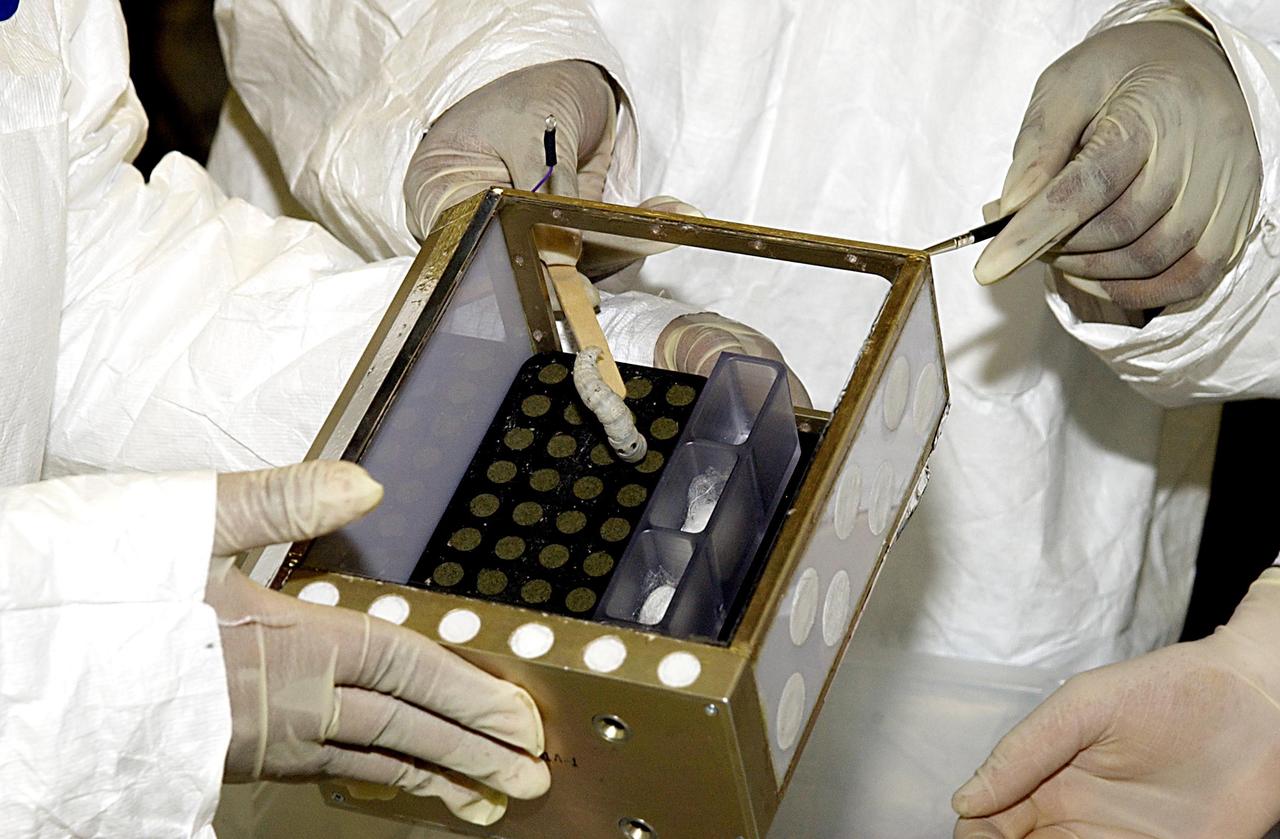
KENNEDY SPACE CENTER, FLA. - Students work on their experiments that will fly in SPACEHAB on Space Shuttle Columbia on mission STS-107. SPACEHAB's complement of commercial experiments includes six educational experiments designed and developed by students in six different countries under the auspices of Space Technology and Research Students (STARS), a global education program managed by SPACEHAB subsidiary Space Media. The countries represented are Australia, China, Israel, Japan, Liechtenstein and the United States. The student investigators who conceived these experiments will monitor their operations in space. The experiments will be housed in BioServe Space Technologies' Isothermal Containment Module (ICM --a small temperature-controlled facility that provides experiment support such as physical containment, lighting, and video imaging) and stowed in a middeck-size locker aboard the SPACEHAB Research Double Module.
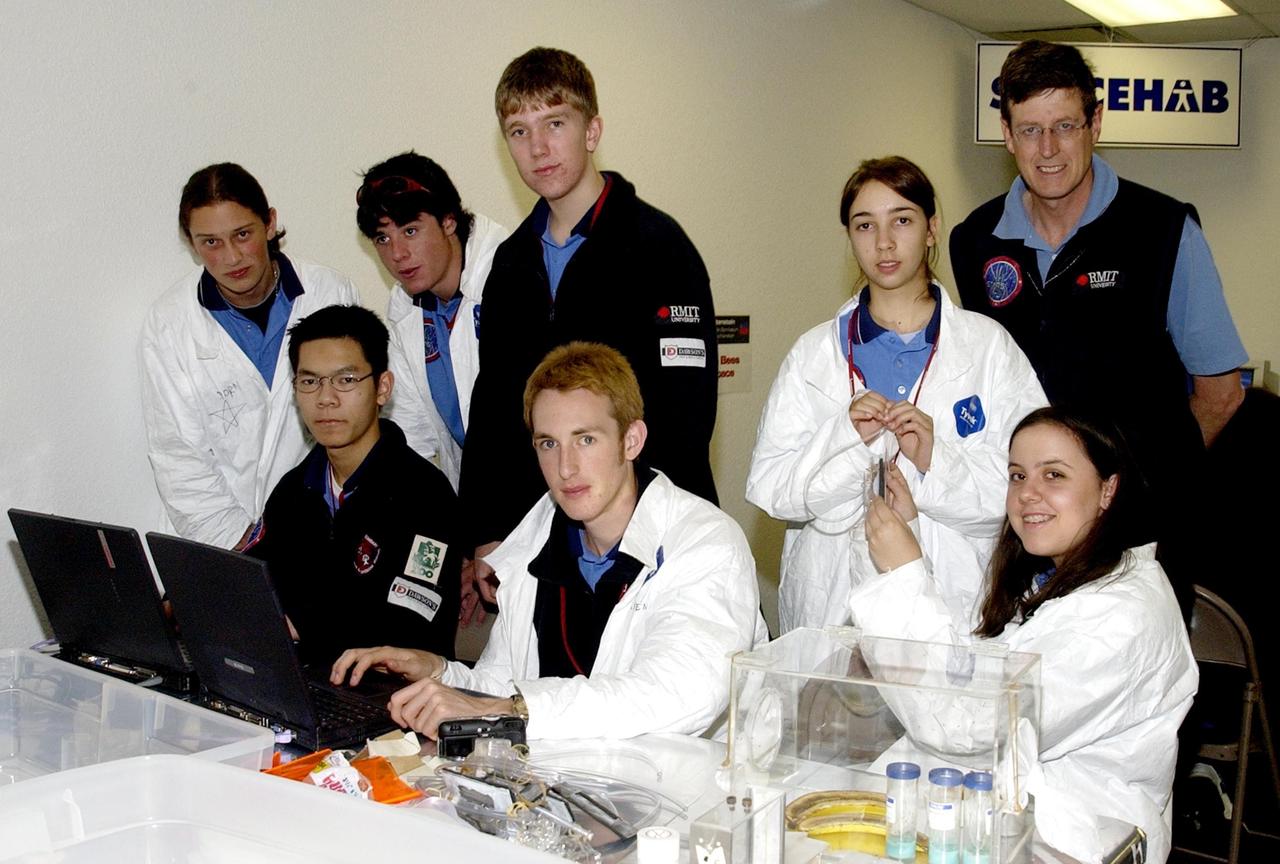
KENNEDY SPACE CENTER, FLA. - Students pause during their work on their experiments that will fly in SPACEHAB on Space Shuttle Columbia on mission STS-107. SPACEHAB's complement of commercial experiments includes six educational experiments designed and developed by students in six different countries under the auspices of Space Technology and Research Students (STARS), a global education program managed by SPACEHAB subsidiary Space Media. The countries represented are Australia, China, Israel, Japan, Liechtenstein and the United States. The student investigators who conceived these experiments will monitor their operations in space. The experiments will be housed in BioServe Space Technologies' Isothermal Containment Module (ICM --a small temperature-controlled facility that provides experiment support such as physical containment, lighting, and video imaging) and stowed in a middeck-size locker aboard the SPACEHAB Research Double Module.
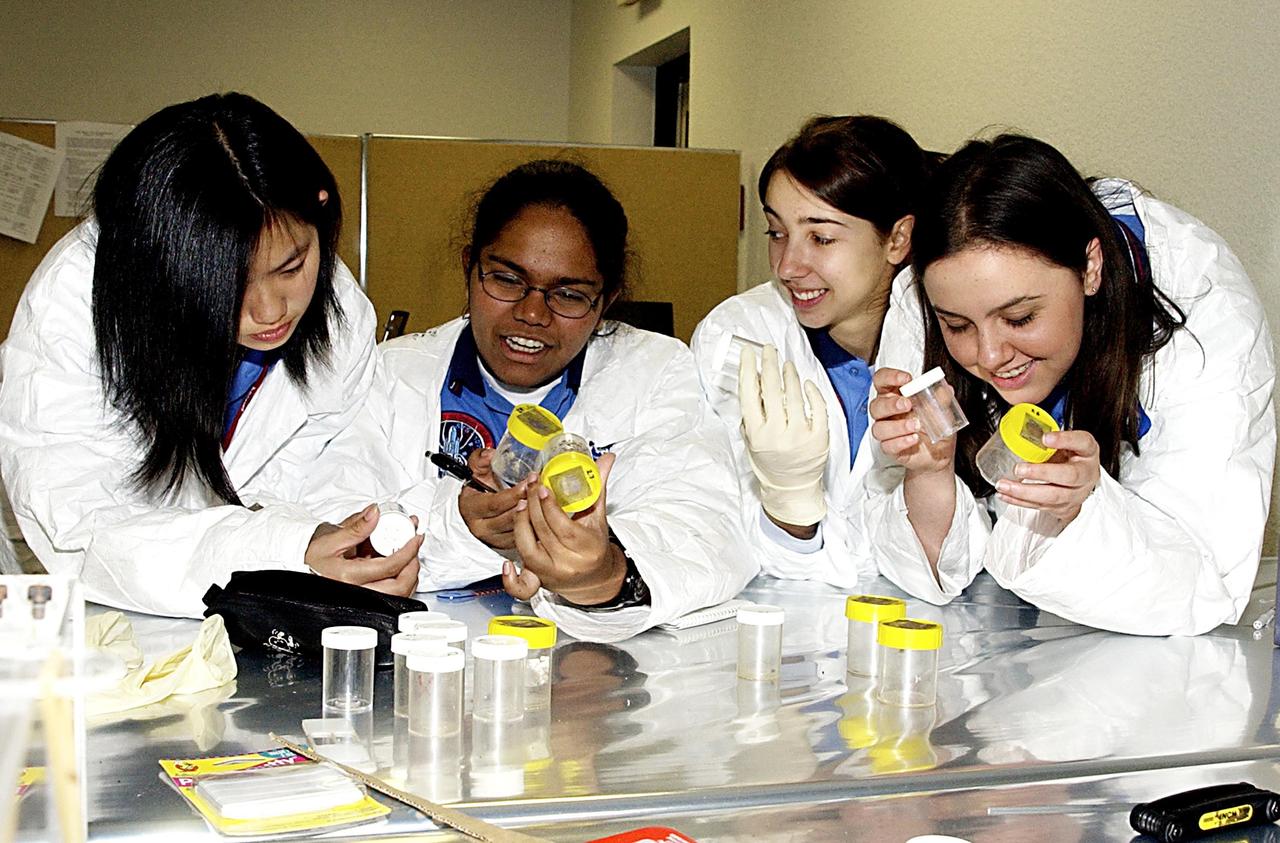
KENNEDY SPACE CENTER, FLA. -- Students check out their experiments that will fly in SPACEHAB on Space Shuttle Columbia on mission STS-107. SPACEHAB's complement of commercial experiments includes six educational experiments designed and developed by students in six different countries under the auspices of Space Technology and Research Students (STARS), a global education program managed by SPACEHAB subsidiary Space Media. The countries represented are Australia, China, Israel, Japan, Liechtenstein and the United States. The student investigators who conceived these experiments will monitor their operations in space. The experiments will be housed in BioServe Space Technologies' Isothermal Containment Module (ICM --a small temperature-controlled facility that provides experiment support such as physical containment, lighting, and video imaging) and stowed in a middeck-size locker aboard the SPACEHAB Research Double Module.
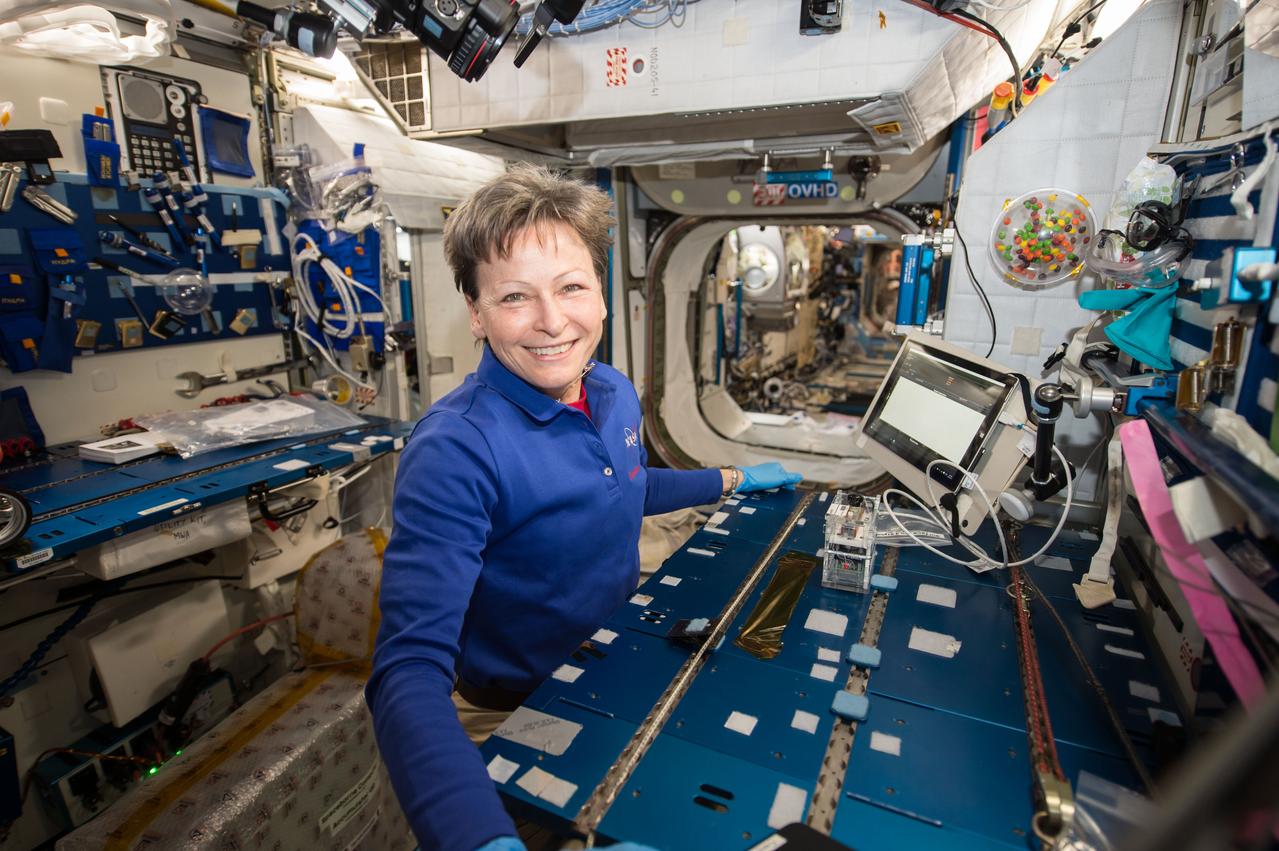
iss052e061925 (8/21/2017) --- NASA astronaut Peggy Whitson is photographed working with the Genes In Space experiment in the Node 2 module. Genes in Space is an innovation challenge including students and teachers across the United States from grades 7 through 12. Students design a pioneering DNA-related experiment to fly on the ISS, providing real-world training in science, technology, engineering and math (STEM) fields and connecting students to the space program.
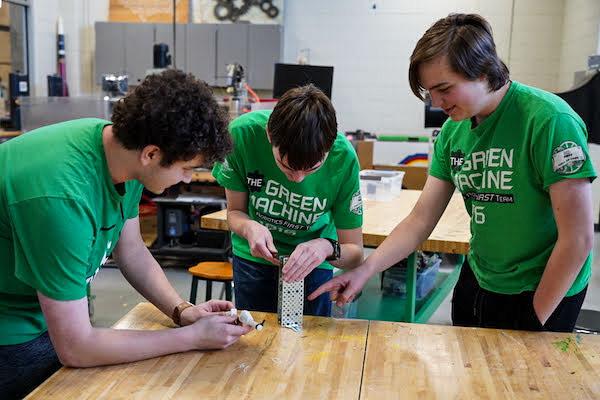
jsc2023e065188 (1/27/2023) --- Student researchers work on their experiment, which will be included in the Nanoracks-National Center for Earth and Space Science Education-Orbiter-Student Spaceflight Experiments Program Mission 17 to ISS (Nanoracks-NCESSE-Orbiter-SSEP). Edina High School students Josh Cram, Colin Shaw and Grayson Irons, work together to create a seed holder device meant to minimize vibrations and guide roots of growing bean plants while aboard the ISS.
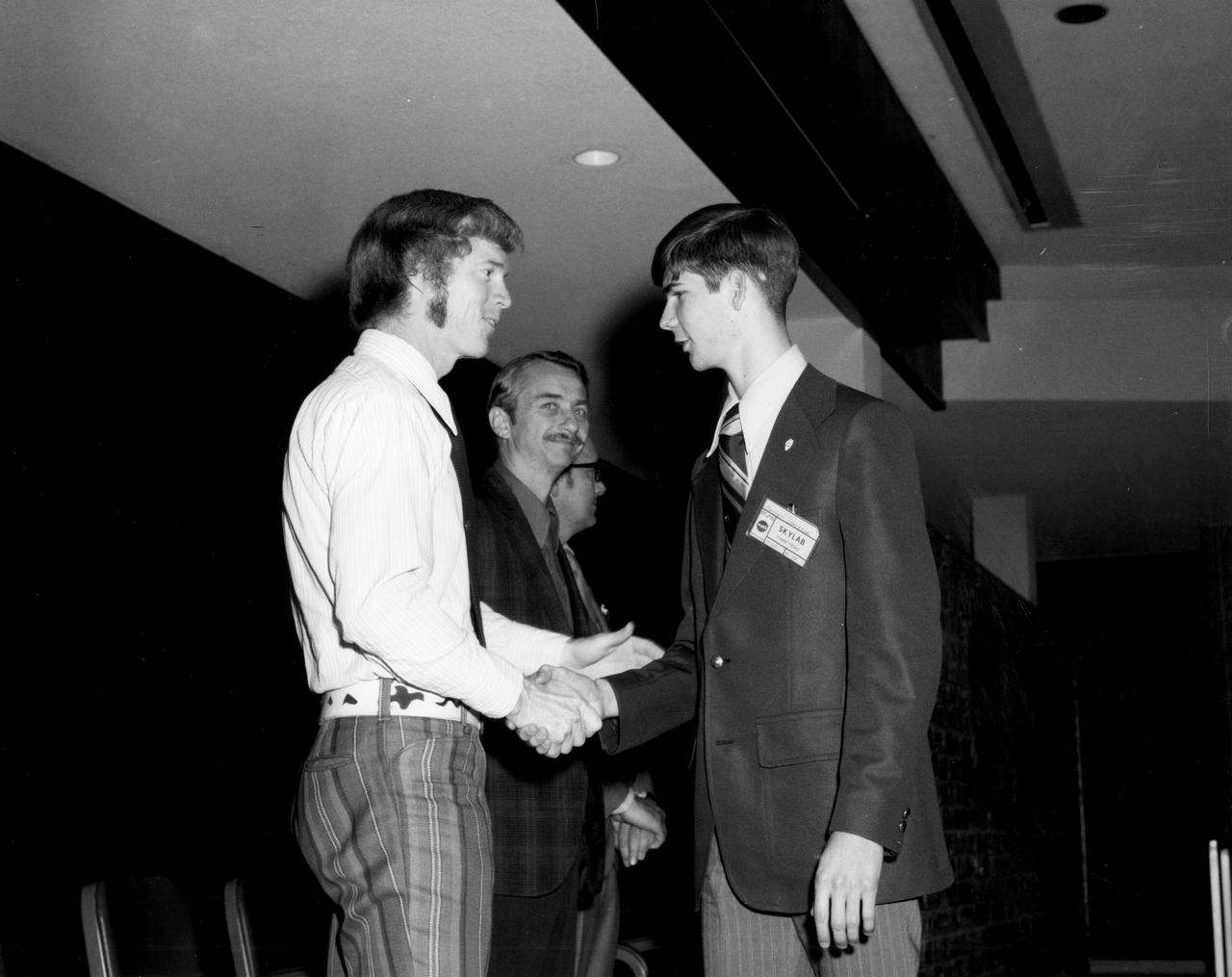
Rockford, Illinois high school student, Vincent Converse (right), is greeted by astronauts Russell L. Schweickart and Owen K. Garriott during a tour of the Marshall Space Flight Center (MSFC). Converse was among 25 winners of a contest in which some 3,500 high school students proposed experiments for the following year’s Skylab mission. His experiment, “Zero Gravity Mass Measurement” used a simple leaf spring with the mass to be weighed attached to the end. An electronic package oscillated the spring at a specific rate and the results were recorded electronically. The nationwide scientific competition was sponsored by the National Science Teachers Association and the National Aeronautics and Space Administration (NASA). The winning students, along with their parents and sponsor teachers, visited MSFC where they met with scientists and engineers, participated in design reviews for their experiments, and toured MSFC facilities. Of the 25 students, 6 did not see their experiments conducted on Skylab because the experiments were not compatible with Skylab hardware and timelines. Of the 19 remaining, 11 experiments required the manufacture of additional equipme
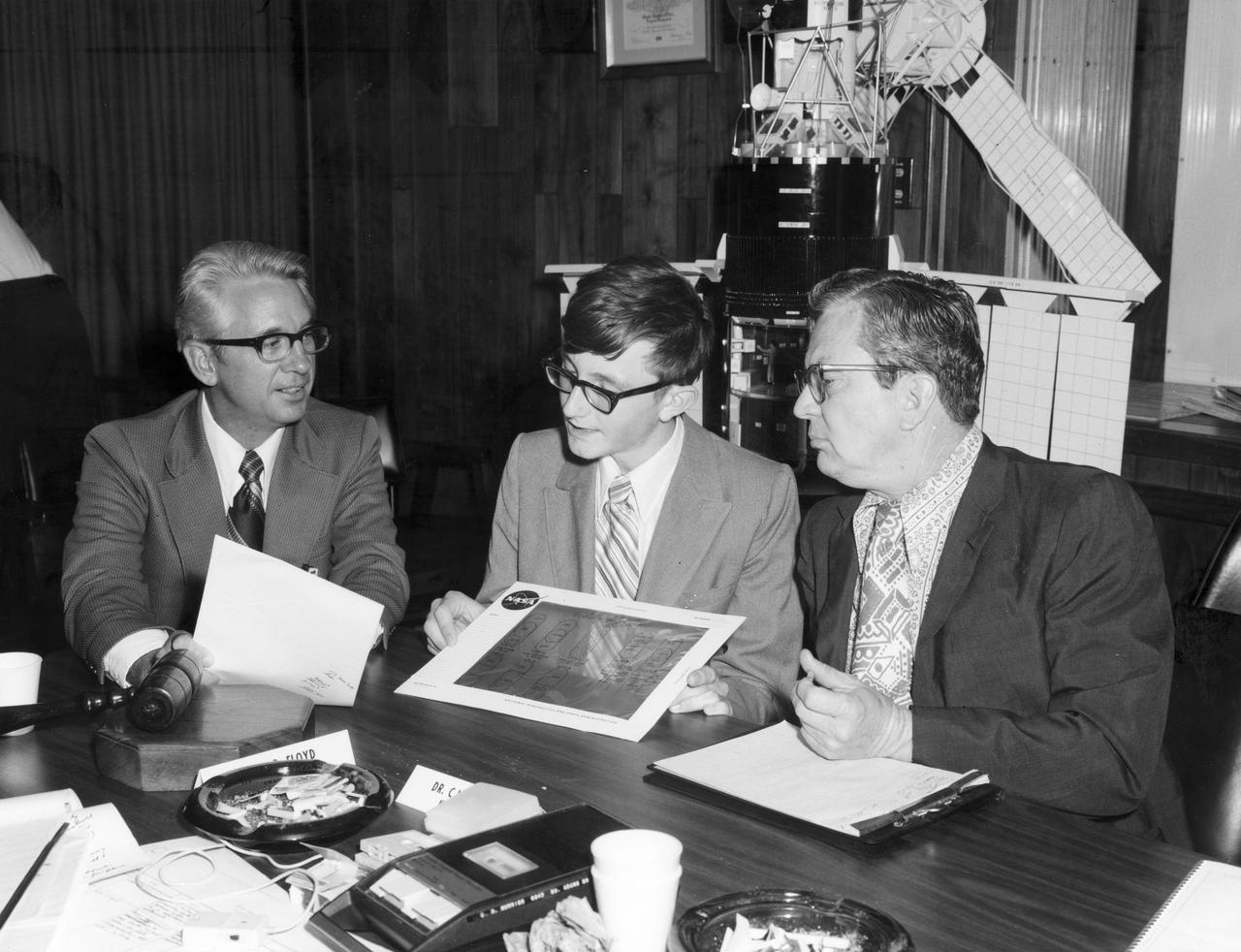
Youngstown, Ohio high school student, W. Brian Dunlap (center), discusses with Dr. Robert Head (right), and Henry Floyd, both of the Marshall Space Flight Center (MSFC), his experiment to be performed aboard the Skylab the following year. His experiment, “Wave Motion Trough A Liquid in Zero Gravity” used a container attached to the end of a leaf spring which was oscillated at specific rates using two thickness differentiated types of liquids. Dunlap was among 25 winners of a contest in which some 3,500 high school students proposed experiments for the following year’s Skylab mission. The nationwide scientific competition was sponsored by the National Science Teachers Association and the National Aeronautics and Space Administration (NASA). The winning students, along with their parents and sponsor teachers, visited MSFC where they met with scientists and engineers, participated in design reviews for their experiments, and toured MSFC facilities. Of the 25 students, 6 did not see their experiments conducted on Skylab because the experiments were not compatible with Skylab hardware and timelines. Of the 19 remaining, 11 experiments required the manufacture of additional equipment. The equipment for the experiments was manufactured at MSFC.
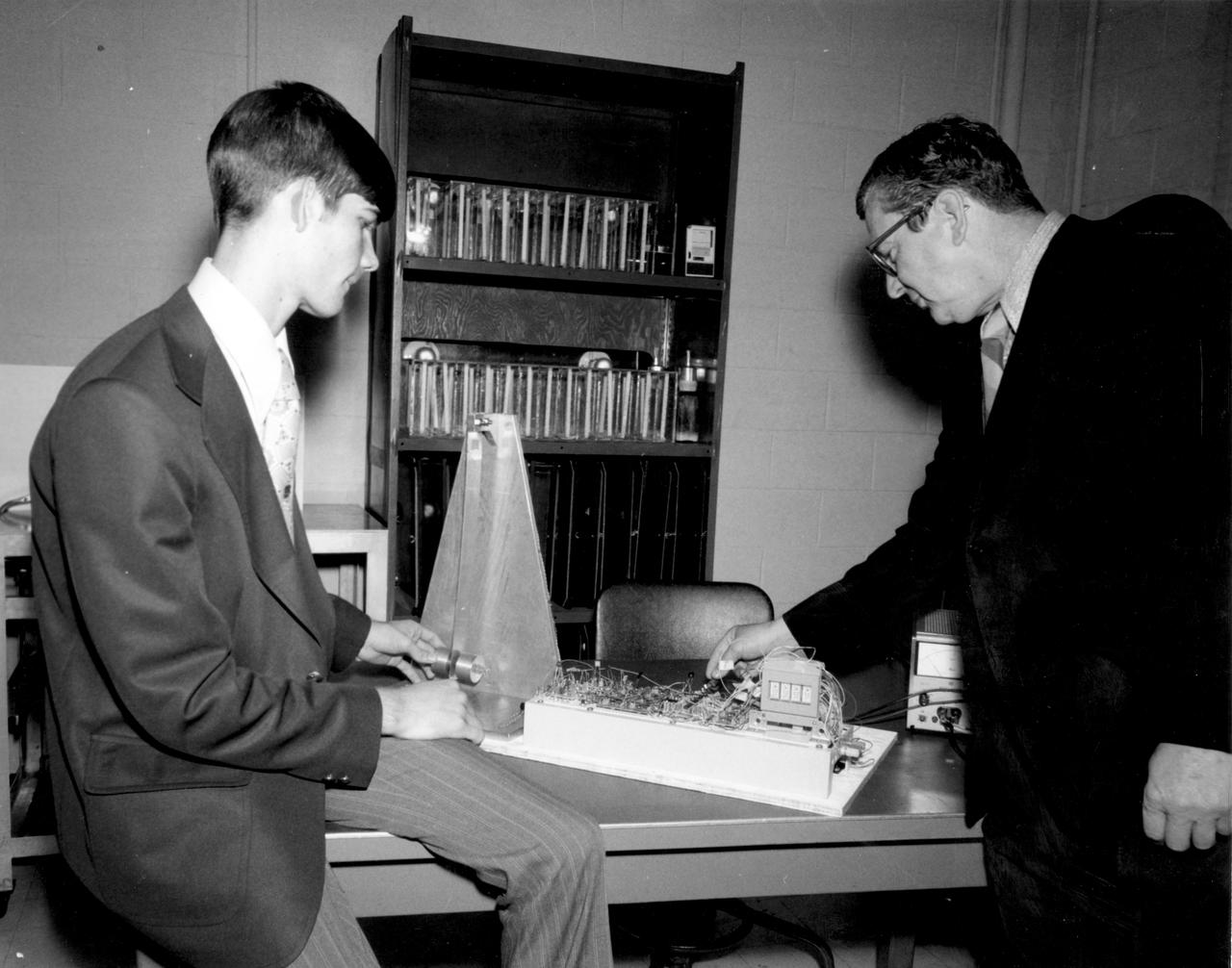
Rockford, Illinois high school student, Vincent Converse (left), and Robert Head of the Marshall Space Flight Center (MSFC), check out the equipment to be used in conducting the student’s experiment aboard the Skylab the following year. His experiment, “Zero Gravity Mass Measurement” used a simple leaf spring with the mass to be weighed attached to the end. An electronic package oscillated the spring at a specific rate and the results were recorded electronically. Converse was among 25 winners of a contest in which some 3,500 high school students proposed experiments for the following year’s Skylab mission. The nationwide scientific competition was sponsored by the National Science Teachers Association and the National Aeronautics and Space Administration (NASA). The winning students, along with their parents and sponsor teachers, visited MSFC two months earlier where they met with scientists and engineers, participated in design reviews for their experiments, and toured MSFC facilities. Of the 25 students, 6 did not see their experiments conducted on Skylab because the experiments were not compatible with Skylab hardware and timelines. Of the 19 remaining, 11 experiments required the manufacture of additional equipment.
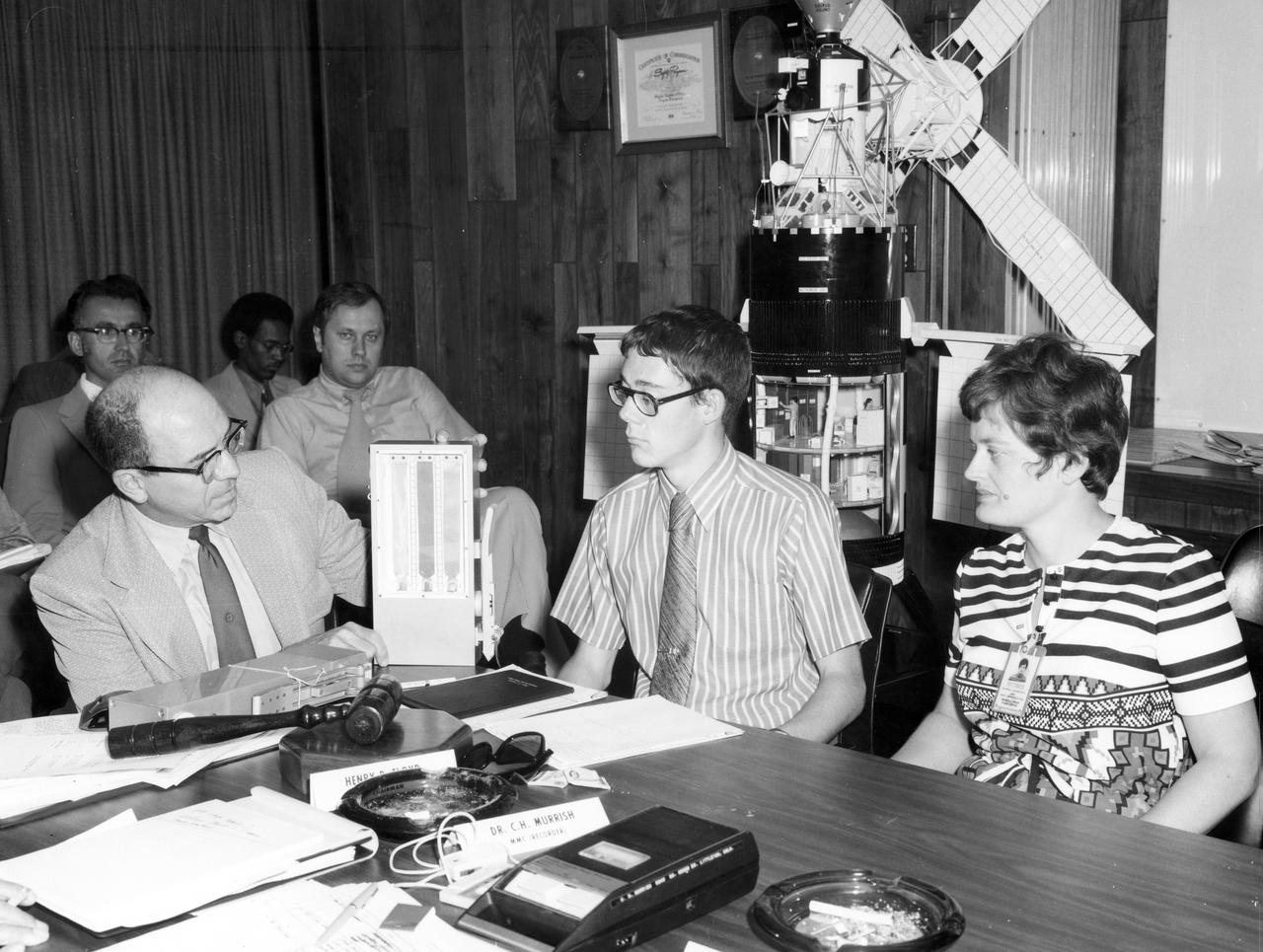
St. Paul Minnesota high school student, Roger Johnston (center), Gene Vacca (left) of NASA Headquarters, and Ann Whitaker of the Marshall Space Flight Center (MSFC) discuss the equipment to be used for the student’s experiment, “Capillary Action Studies in a State of Free Fall”, to be performed aboard the Skylab the following year. Johnston was among 25 winners of a contest in which some 3,500 high school students proposed experiments for the following year’s Skylab mission. The nationwide scientific competition was sponsored by the National Science Teachers Association and the National Aeronautics and Space Administration (NASA). The winning students, along with their parents and sponsor teachers, visited MSFC two months earlier where they met with scientists and engineers, participated in design reviews for their experiments, and toured MSFC facilities. Of the 25 students, 6 did not see their experiments conducted on Skylab because the experiments were not compatible with Skylab hardware and timelines. Of the 19 remaining, 11 experiments required the manufacture of additional equipment. The equipment for the experiments was manufactured at MSFC.