Futabatei and Sullivan Debut
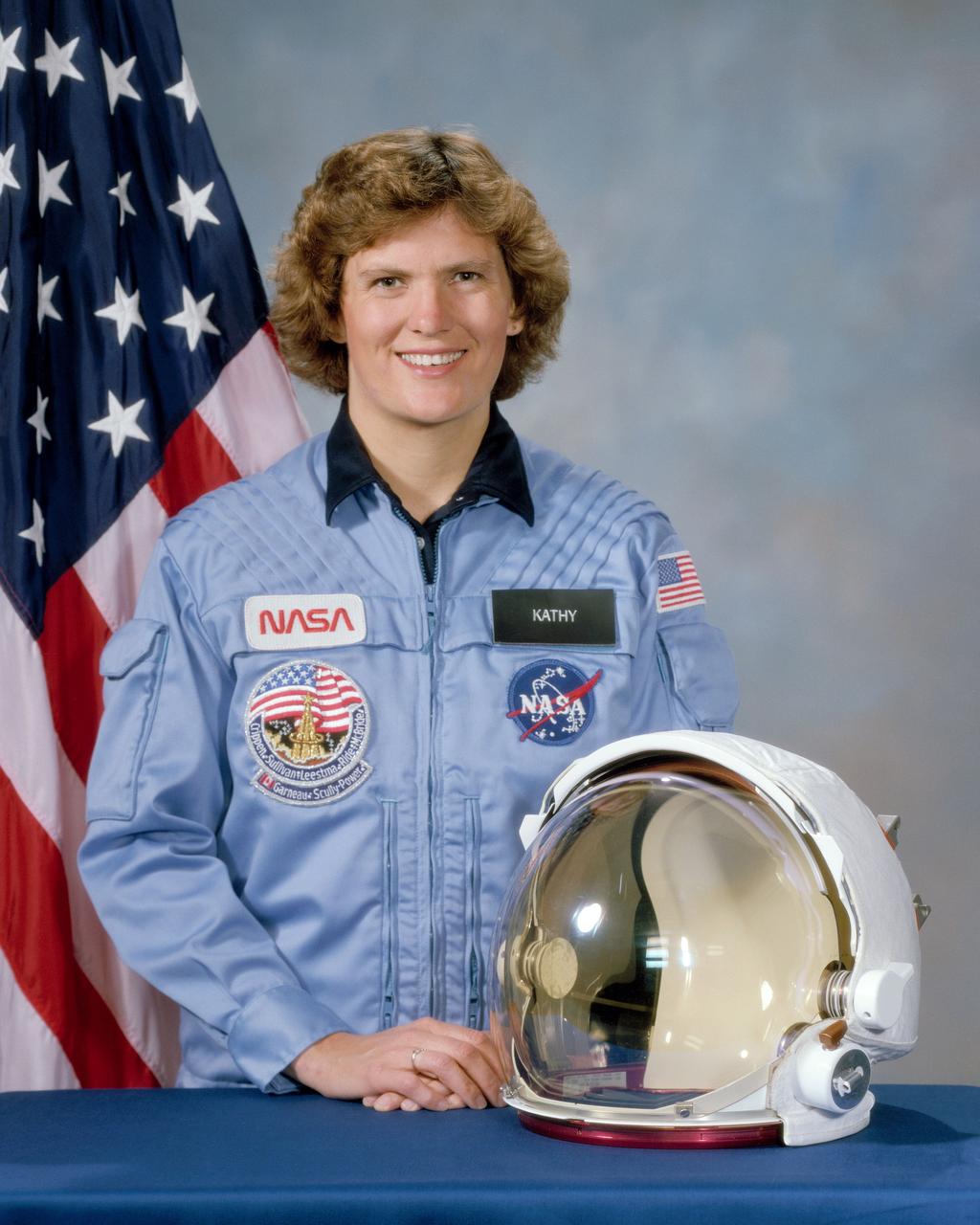
S84-44219 (20 July 1984) --- Astronaut Kathryn D. Sullivan.
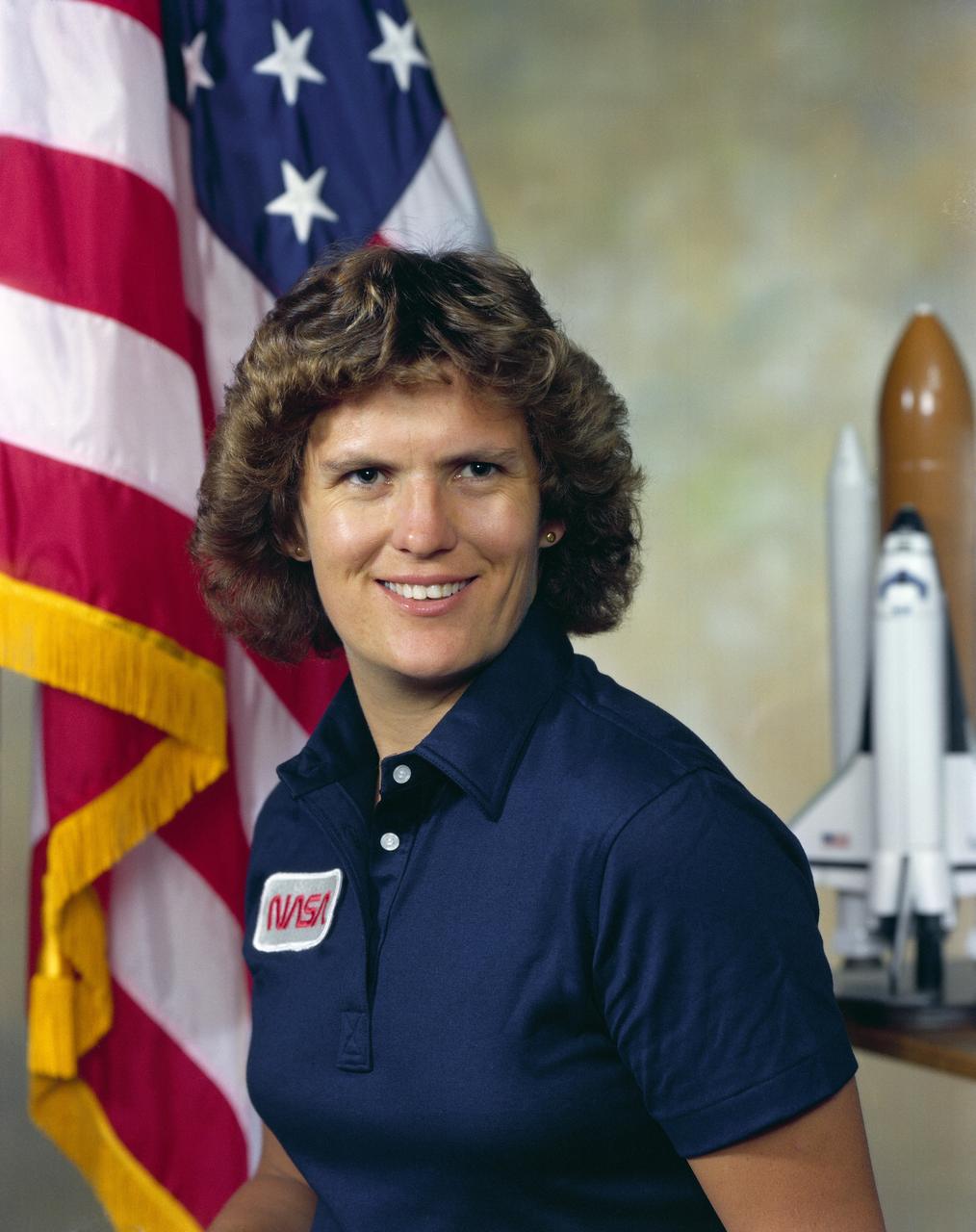
S84-37982 (20 July 1984) --- Astronaut Kathryn D. Sullivan, 41-G mission specialist
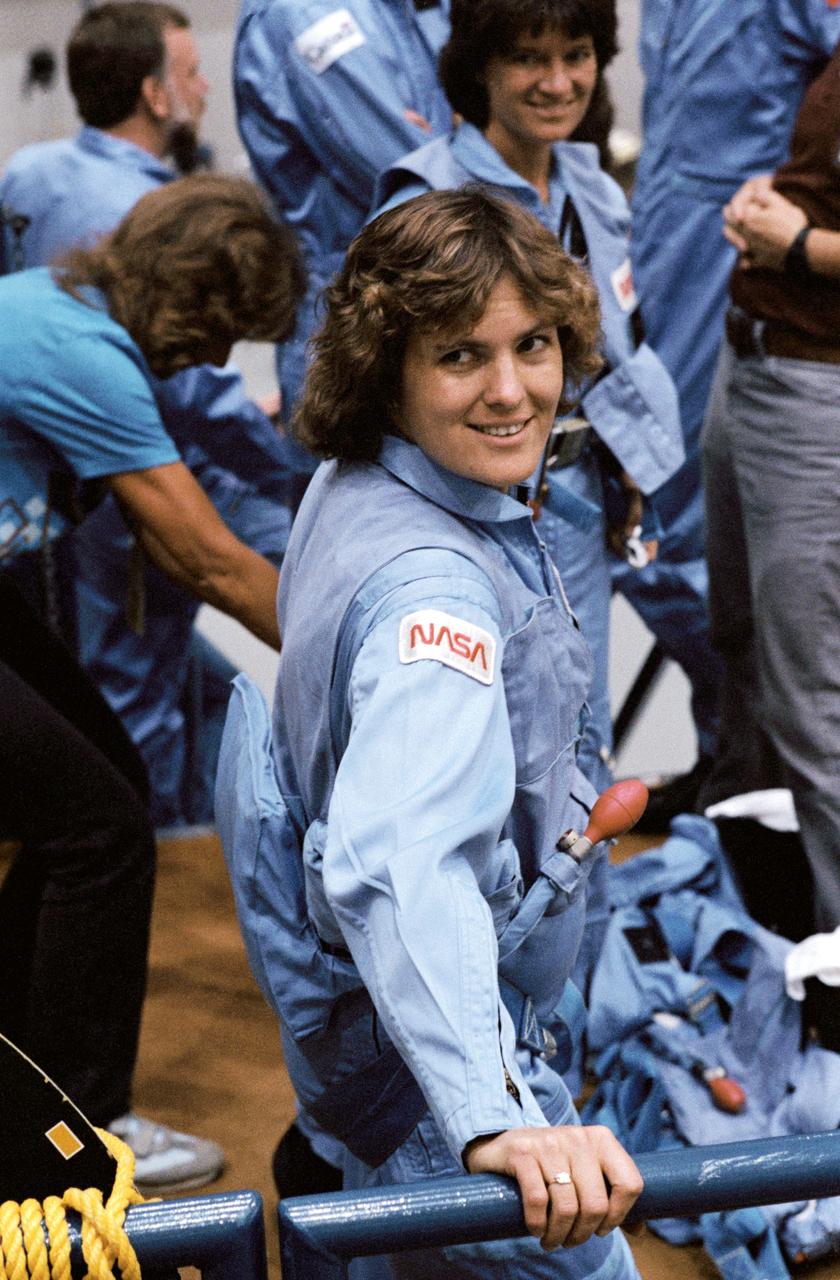
41D-3188 (2 September 1984) --- Astronaut Kathryn D. Sullivan, 41-G mission specialist, joins with other members of the seven-person crew prior to a training session in the Shuttle mockup and integration laboratory at the Johnson Space Center. Dr. Sullivan will be the first American woman to perform an extravehicular activity (EVA) in space when she joins Astronaut David C. Leestma for some outside-the-Challenger duty on October 9. The mission is scheduled for an October 5, 1984 launch.
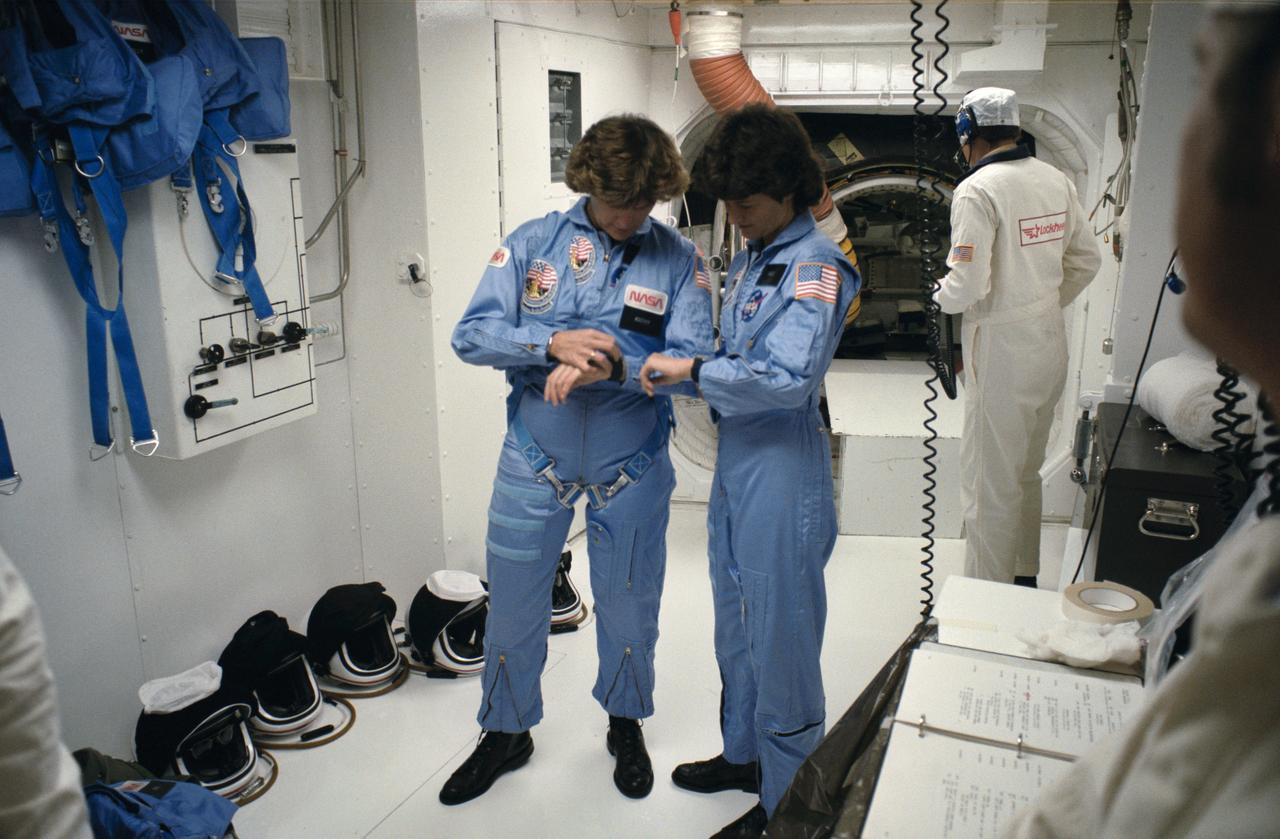
41G-90082 / S17-90082 (5 Oct 1984) --- Astronauts Sally K. Ride (right) and Kathryn D. Sullivan, two of three mission specialists, synchronize their watches prior to ingressing the Space Shuttle Challenger on the launch pad at Kennedy Space Center (KSC). They are in the White Room leading to the entry hatch of the vertically configured spacecraft.
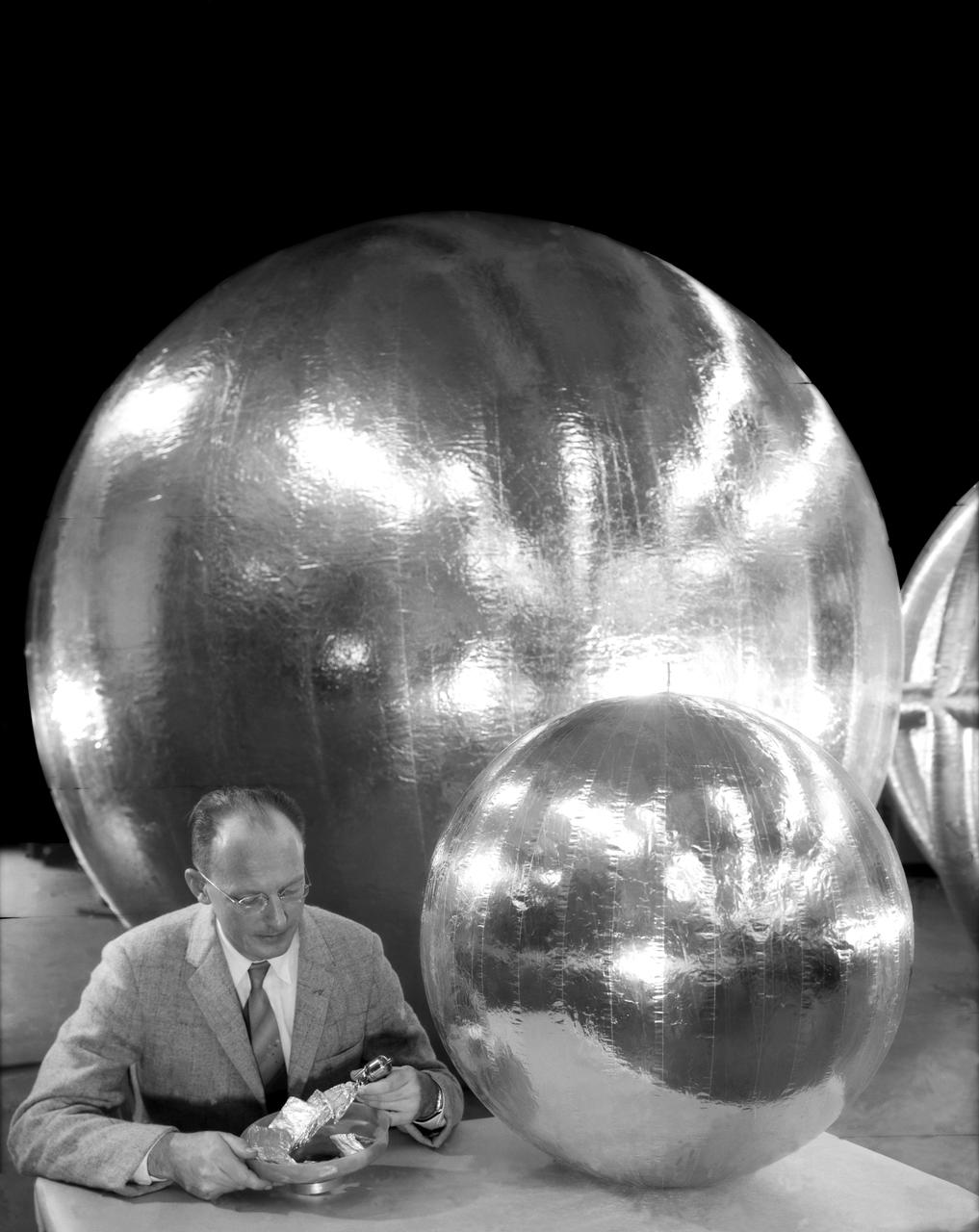
William J. O Sullivan at desk with folded subsatellite, 30 inch subsatellite, 12 foot subsatellite, and corner reflector.

William J. O Sullivan at desk with folded subsatellite, 30 inch subsatellite, 12 foot subsatellite, and corner reflector.
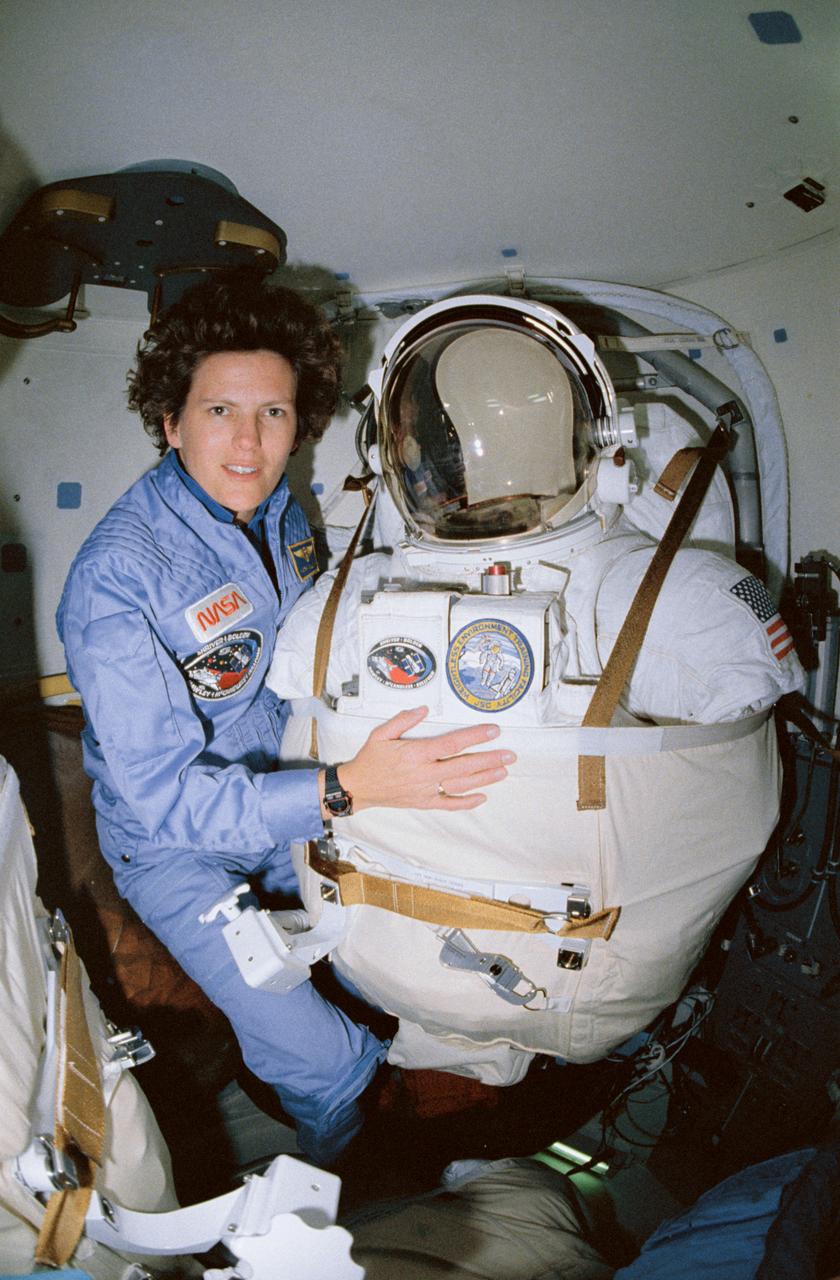
STS-31 Mission Specialist (MS) Kathryn D. Sullivan poses for a picture before beginning extravehicular mobility unit (EMU) donning procedures in the airlock of Discovery, Orbiter Vehicle (OV) 103. Sullivan will remove the lower torso restraint and don EMU which is supported on an airlock adapter plate (AAP). When suited, Sullivan will be ready for contingency extravehicular activity (EVA) in the event that problems arise with the Hubble Space Telescope (HST) deployment. Displayed on the front of the EMU are the STS-31 mission insignia and the JSC Weightless Environment Training Facility (WETF) insignia.
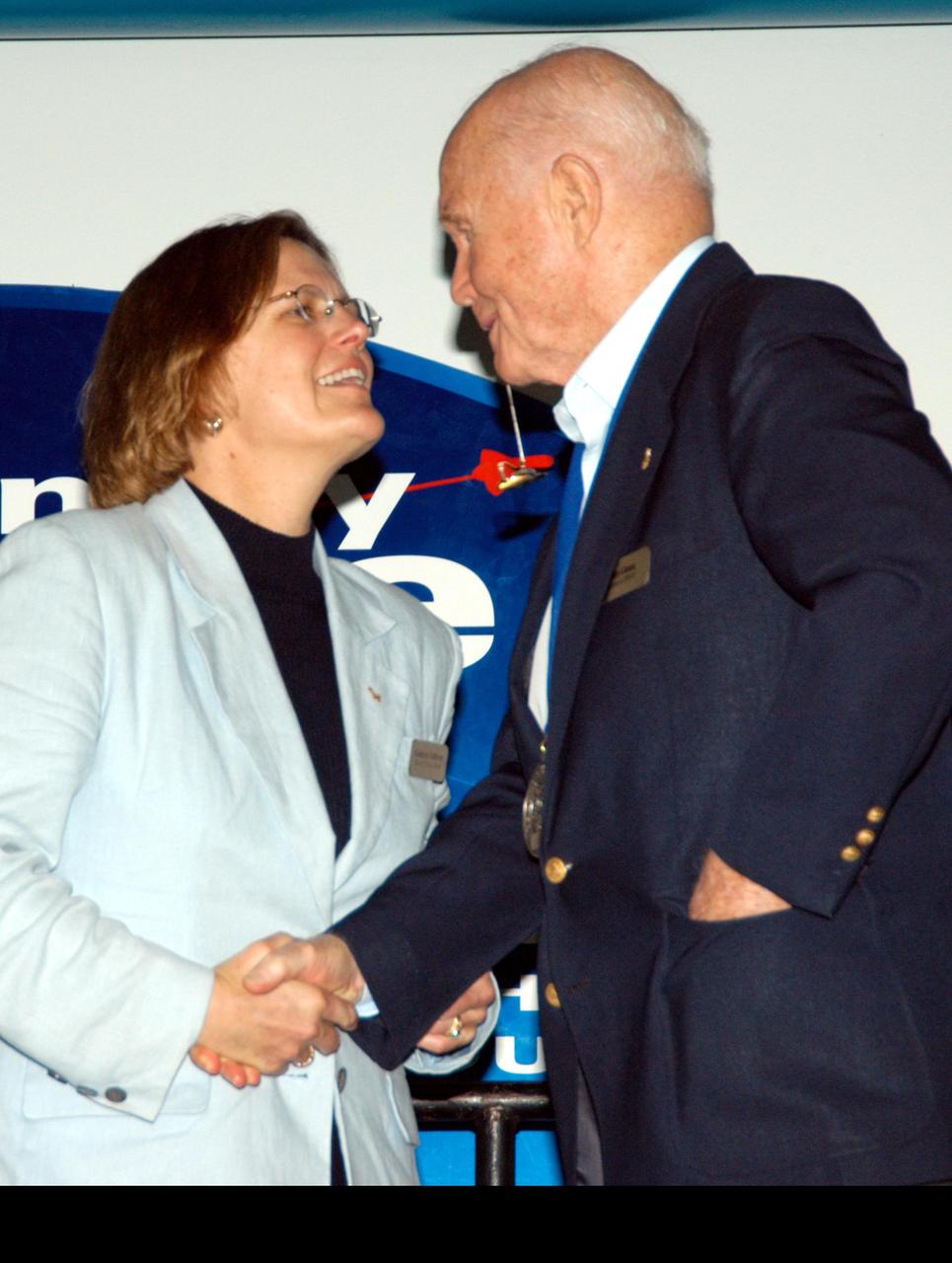
KENNEDY SPACE CENTER, FLA. -- At the Kennedy Space Center Visitor Complex, former NASA astronaut John H. Glenn Jr. (right) congratulates former NASA astronaut and fellow Ohioan Kathryn D. Sullivan on her induction into the U.S. Astronaut Hall of Fame. Sullivan was the first American woman to walk in space. Also chosen for this honor in 2004 are Richard O. Covey, commander of the Hubble Space Telescope repair mission; Frederick D. Gregory, the first African-American to command a space mission; Norman E. Thagard, the first American to occupy Russia's Mir space station; and the late Francis R. "Dick" Scobee, commander of the ill-fated 1986 Challenger mission. The U.S. Astronaut Hall of Fame opened in 1990 to provide a place where space travelers could be remembered for their participation and accomplishments in the U.S. space program. To be eligible for induction, an individual must have been a U.S. citizen, a NASA astronaut, and out of the active astronaut corps at least five years. The five inductees join 52 previously honored astronauts from the ranks of the Gemini, Apollo, Skylab, Apollo-Soyuz, and Space Shuttle programs.
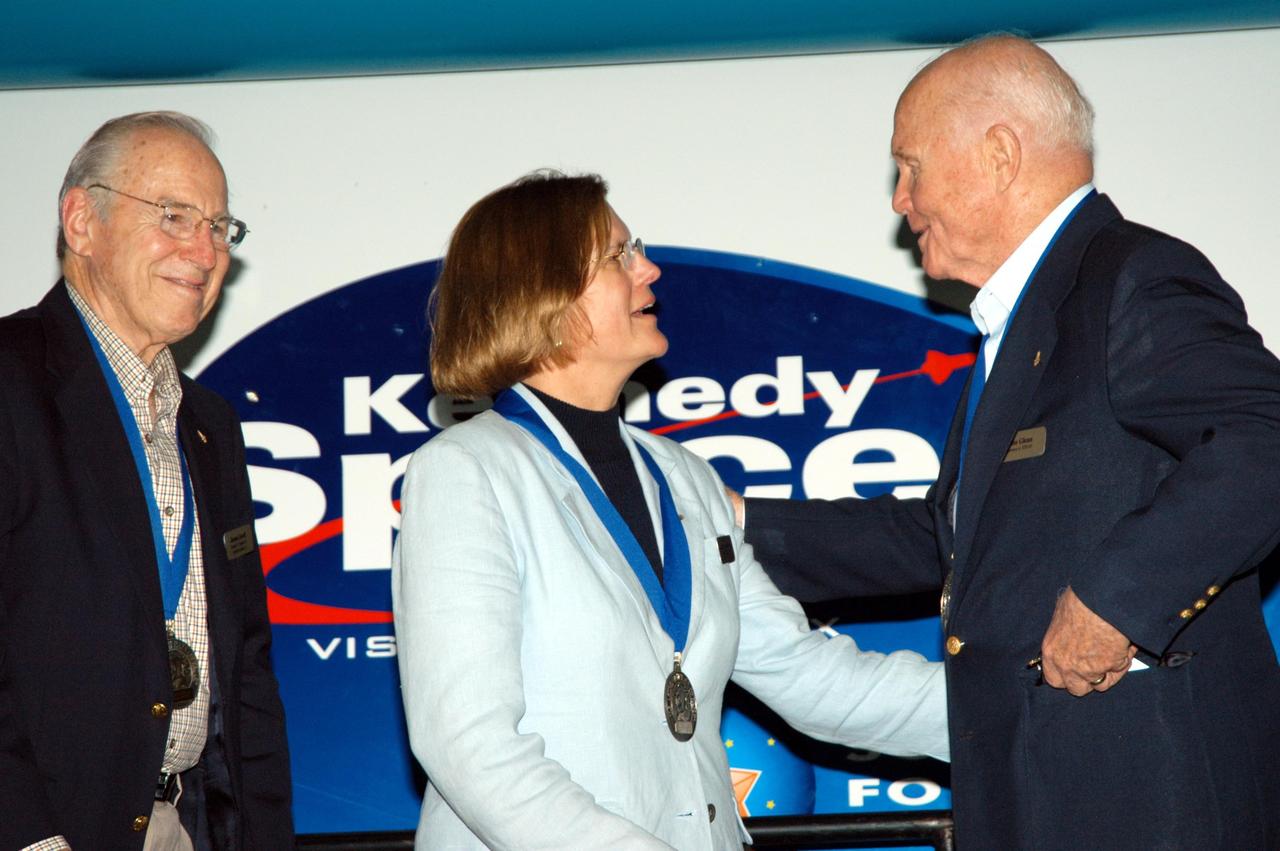
KENNEDY SPACE CENTER, FLA. -- At the Kennedy Space Center Visitor Complex, former NASA astronaut John H. Glenn Jr. (right) congratulates former NASA astronaut and fellow Ohioan Kathryn D. Sullivan on her induction into the U.S. Astronaut Hall of Fame. Former NASA astronaut James A. Lovell Jr. looks on (left). Sullivan was the first American woman to walk in space. Also chosen for this honor in 2004 are Richard O. Covey, commander of the Hubble Space Telescope repair mission; Frederick D. Gregory, the first African-American to command a space mission; Norman E. Thagard, the first American to occupy Russia's Mir space station; and the late Francis R. "Dick" Scobee, commander of the ill-fated 1986 Challenger mission. The U.S. Astronaut Hall of Fame opened in 1990 to provide a place where space travelers could be remembered for their participation and accomplishments in the U.S. space program. To be eligible for induction, an individual must have been a U.S. citizen, a NASA astronaut, and out of the active astronaut corps at least five years. The five inductees join 52 previously honored astronauts from the ranks of the Gemini, Apollo, Skylab, Apollo-Soyuz, and Space Shuttle programs.

KENNEDY SPACE CENTER, FLA. -- At the Kennedy Space Center Visitor Complex, former NASA astronaut John H. Glenn Jr. (right) congratulates former NASA astronaut and fellow Ohioan Kathryn D. Sullivan on her induction into the U.S. Astronaut Hall of Fame. Former NASA astronaut James A. Lovell Jr. looks on (left). Sullivan was the first American woman to walk in space. Also chosen for this honor in 2004 are Richard O. Covey, commander of the Hubble Space Telescope repair mission; Frederick D. Gregory, the first African-American to command a space mission; Norman E. Thagard, the first American to occupy Russia's Mir space station; and the late Francis R. "Dick" Scobee, commander of the ill-fated 1986 Challenger mission. The U.S. Astronaut Hall of Fame opened in 1990 to provide a place where space travelers could be remembered for their participation and accomplishments in the U.S. space program. To be eligible for induction, an individual must have been a U.S. citizen, a NASA astronaut, and out of the active astronaut corps at least five years. The five inductees join 52 previously honored astronauts from the ranks of the Gemini, Apollo, Skylab, Apollo-Soyuz, and Space Shuttle programs.
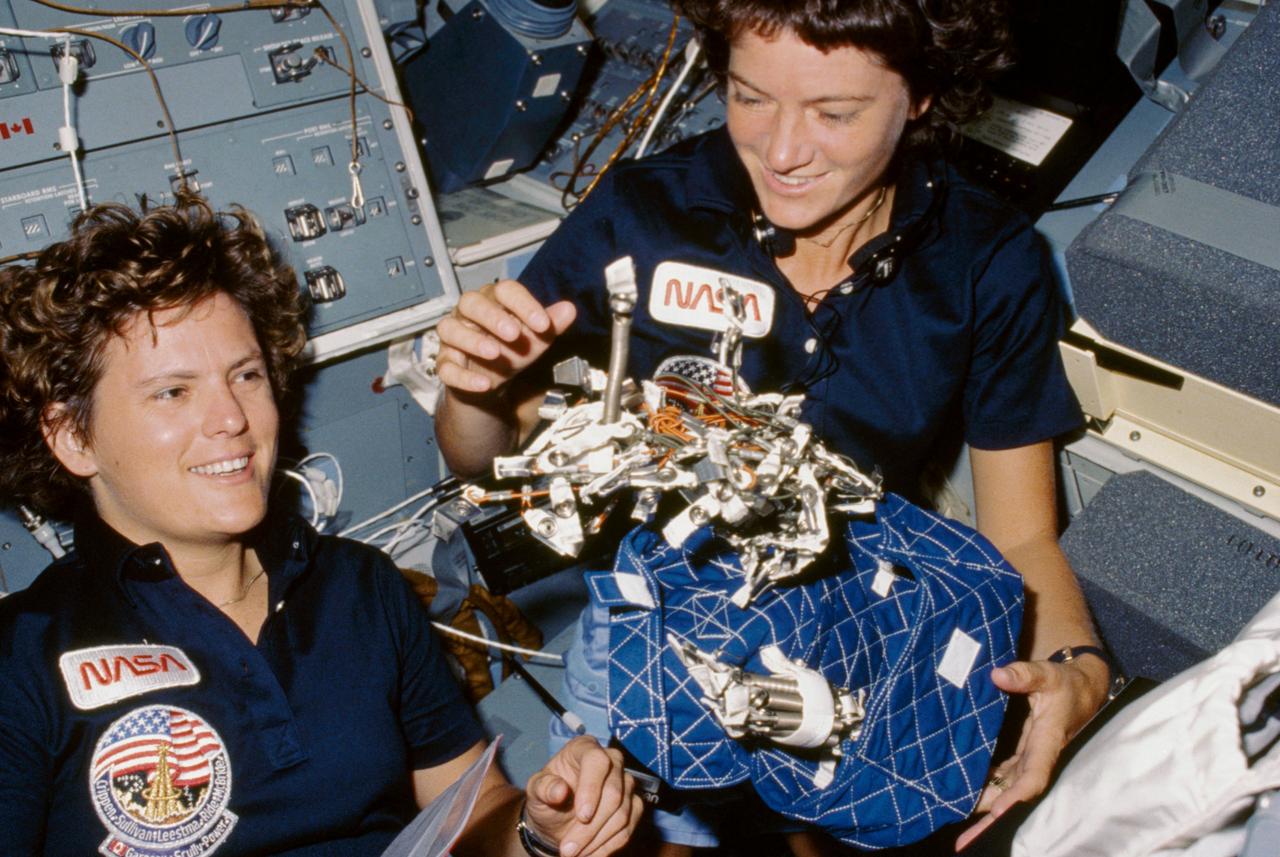
41G-07-021 (5-13 October 1984) --- Astronauts Kathryn D. Sullivan, left, and Sally K. Ride show off what appears to be a "bag of worms", a product of their creativity. The "bag" is a sleep restraint and the majority of the "worms" are springs and clips used with the sleep restraint in its normal application. Clamps, a bungee cord and Velcro strips are other recognizable items in the "creation".
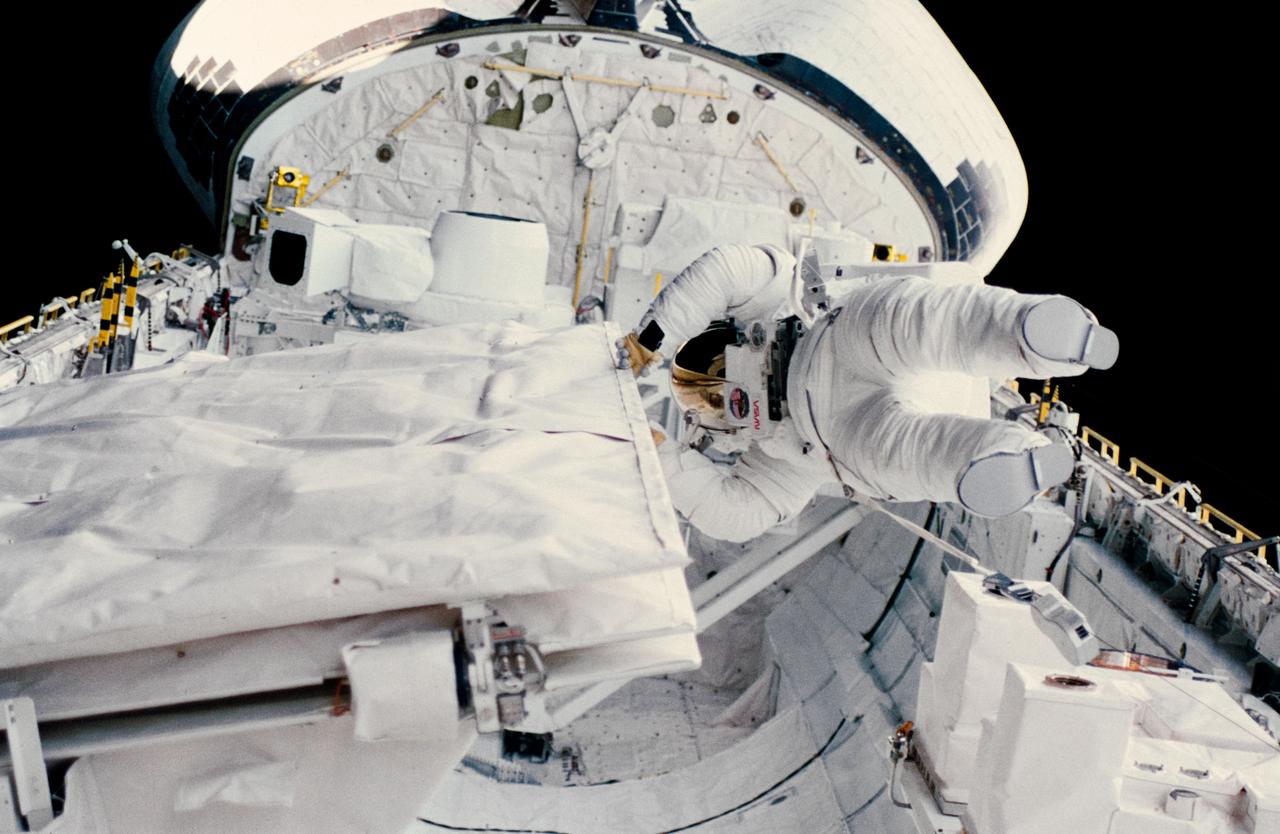
41G-13-032 (11 Oct. 1984) --- Astronaut Kathryn D. Sullivan checks the latch of the SIR-B antenna in the space shuttle Challenger's open cargo bay during her historic extravehicular activity (EVA) on Oct. 11, 1984. Earlier, America's first woman to perform an EVA and astronaut David C. Leestma, participated in an in-space simulation of refueling a spacecraft in orbit. The Orbital Refueling System (ORS) is just beyond the astronaut mission specialist's helmet. To the left is the Large Format Camera (LFC). The LFC and ORS are stationed on a device called the Mission Peculiar Support Structure (MPESS). Crew members consisted of astronauts Robert L. Crippen, commander; Jon A. McBride, pilot; along with Kathryn D. Sullivan, Sally K. Ride, and David D. Leestma, all mission specialists; and Canadian astronaut Marc Garneau and Paul D. Scully-Power, both payload specialist. EDITOR'S NOTE: The STS-41G mission had the first American female EVA (Sullivan); first seven-person crew; first orbital fuel transfer; and the first Canadian (Garneau).
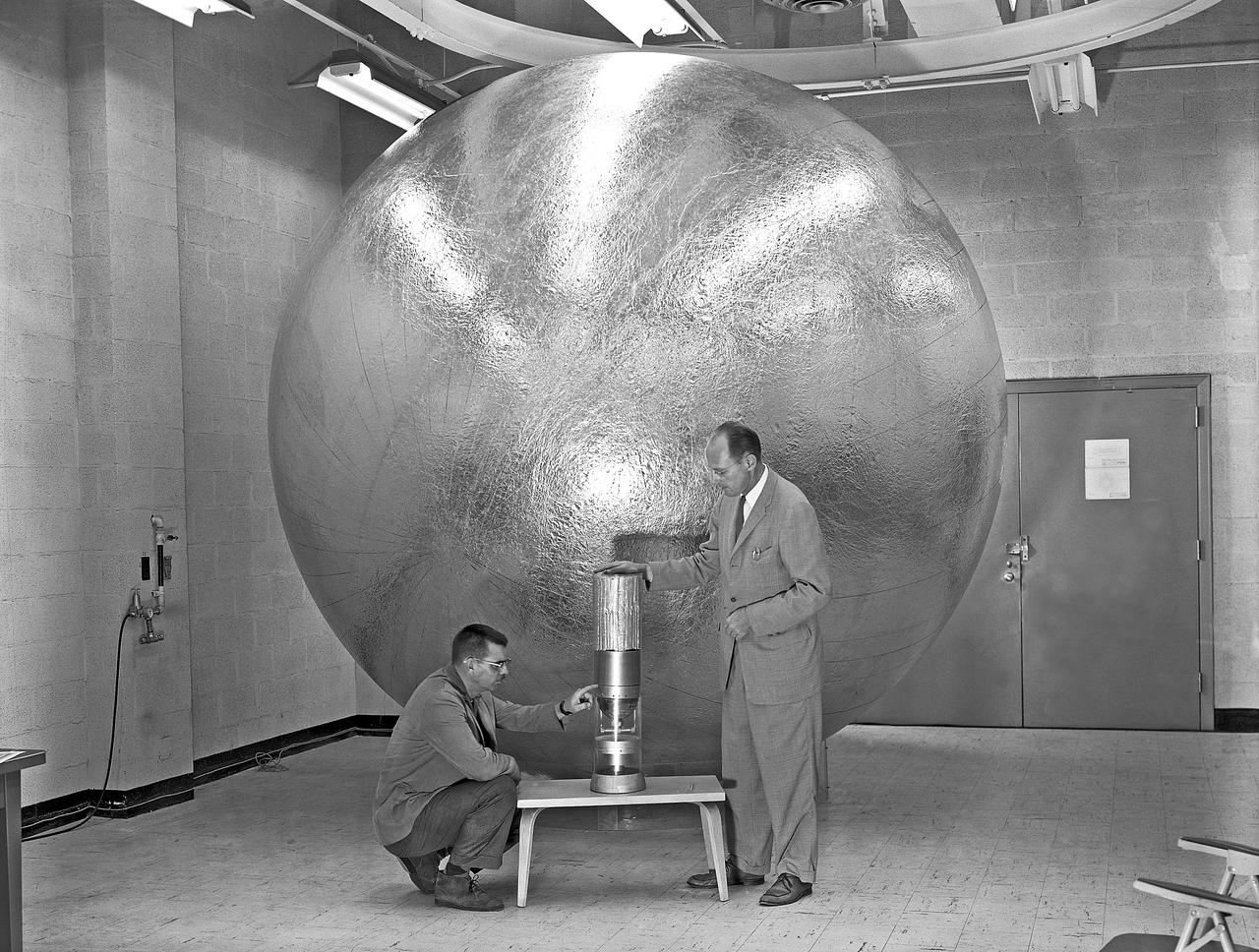
In July 1959, William J. O Sullivan (right standing) and unidentified engineer examine the capsule containing the tightly folded and packed 12 diameter Beacon satellite inside. Taken from NASA SP-4308 Pg. 174
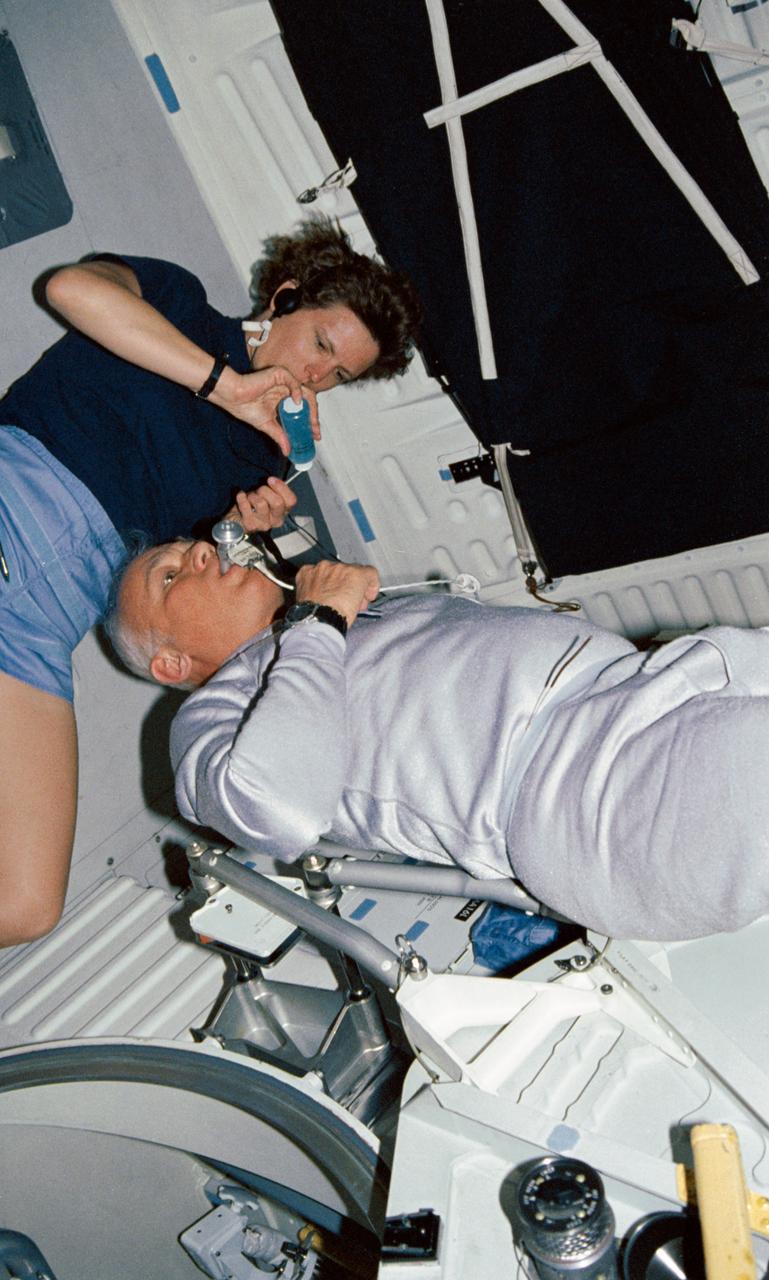
STS031-04-002 (24-29 April 1990) --- Astronauts Kathryn D. Sullivan and Bruce McCandless II, mission specialists, work together to perform one of the mission's medical experiments. The experiment is Detailed Supplementary Objective (DSO) 462, Non invasive Estimation of Central Venous Pressure During Spaceflight. Sullivan applies a gel substance to a transducer which will be placed on McCandless' jugular vein to collect the sought data. The cable links to a data recorder.
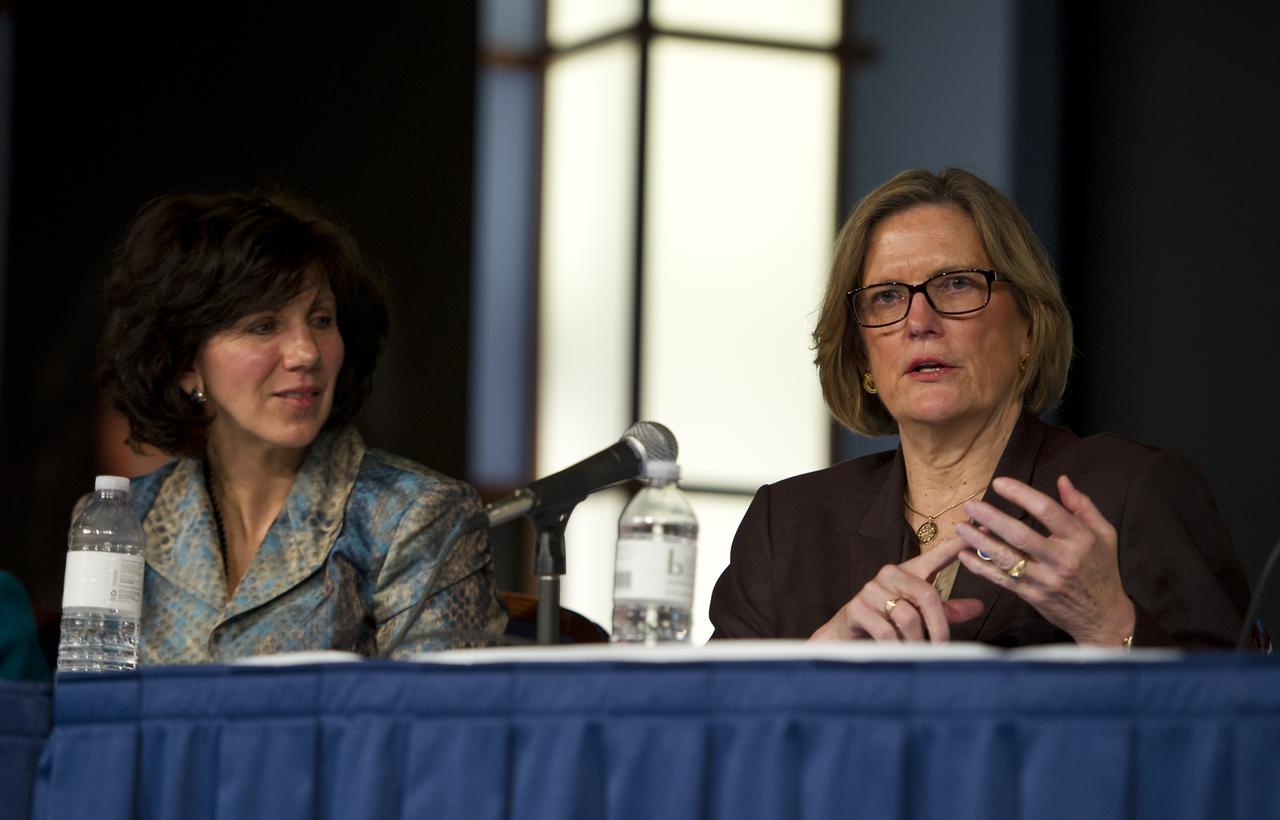
Kathy Sullivan, right, NOAA (National Oceanic and Atmospheric Administration) Deputy Administrator and former NASA astronaut, participates in a panel discussion at the Women, Innovation and Aerospace event celebrating Women's History Month at the George Washington University Jack Morton Auditorium, Thursday, March 8, 2012 in Washington. Sullivan is joined by Catherine Didion, Senior Fellow, National Academy of Engineering. The WIA day-long event will help to foster a discussion for students and early career professionals about how to continue to encourage women to enter and succeed in the field of aerospace. Photo Credit: (NASA/Carla Cioffi)
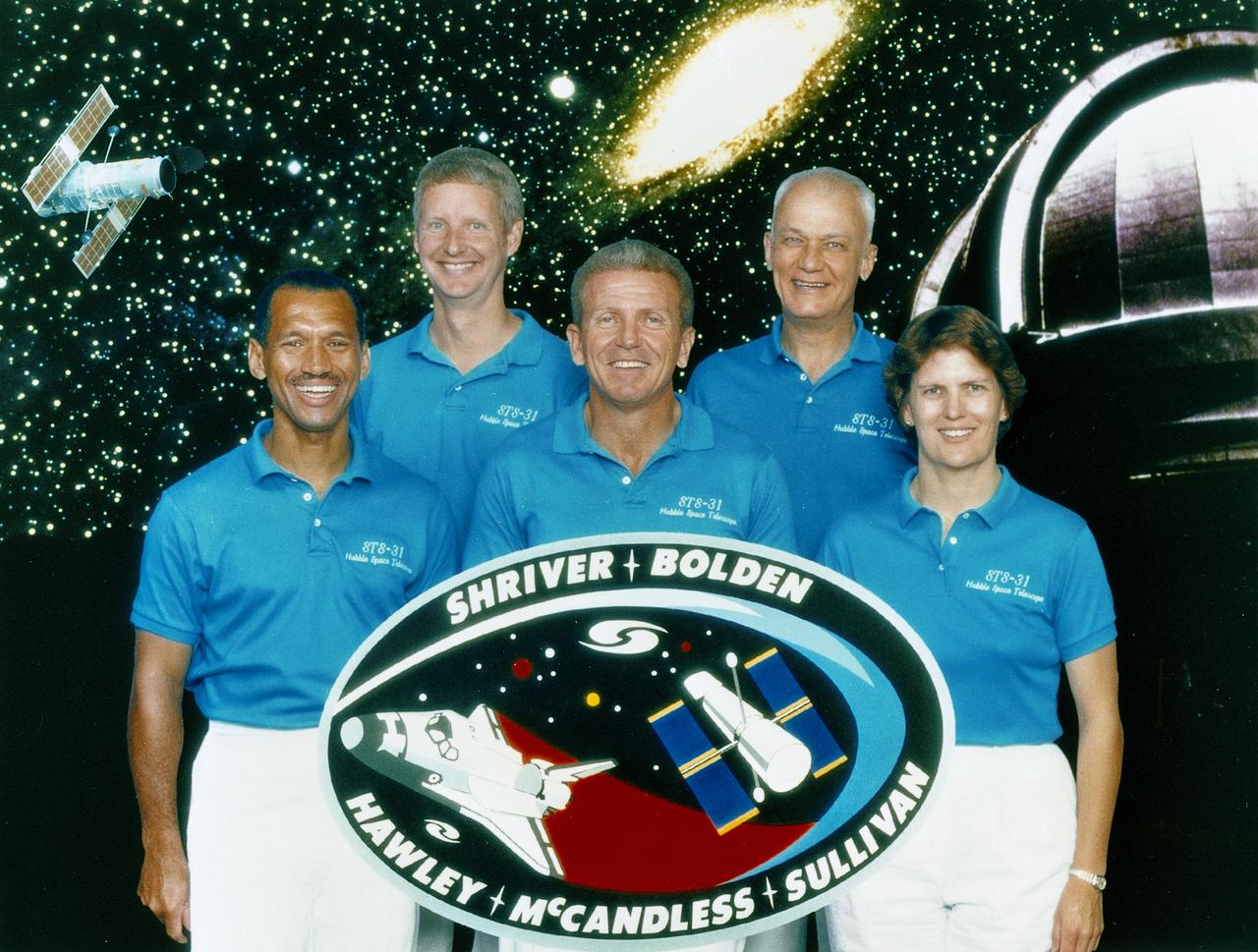
The STS-31 crew of five included (left to right) Charles F. Bolden, pilot; Steven A. Hawley, mission specialist; Loren J. Shriver, commander; Bruce McCandless, mission specialist; and Kathryn D. Sullivan, mission specialist. Launched aboard the Space Shuttle Discovery on April 24, 1990 at 8:33:51am (EDT), the primary payload was the Hubble Space Telescope. This was the first flight to use carbon brakes at landing.
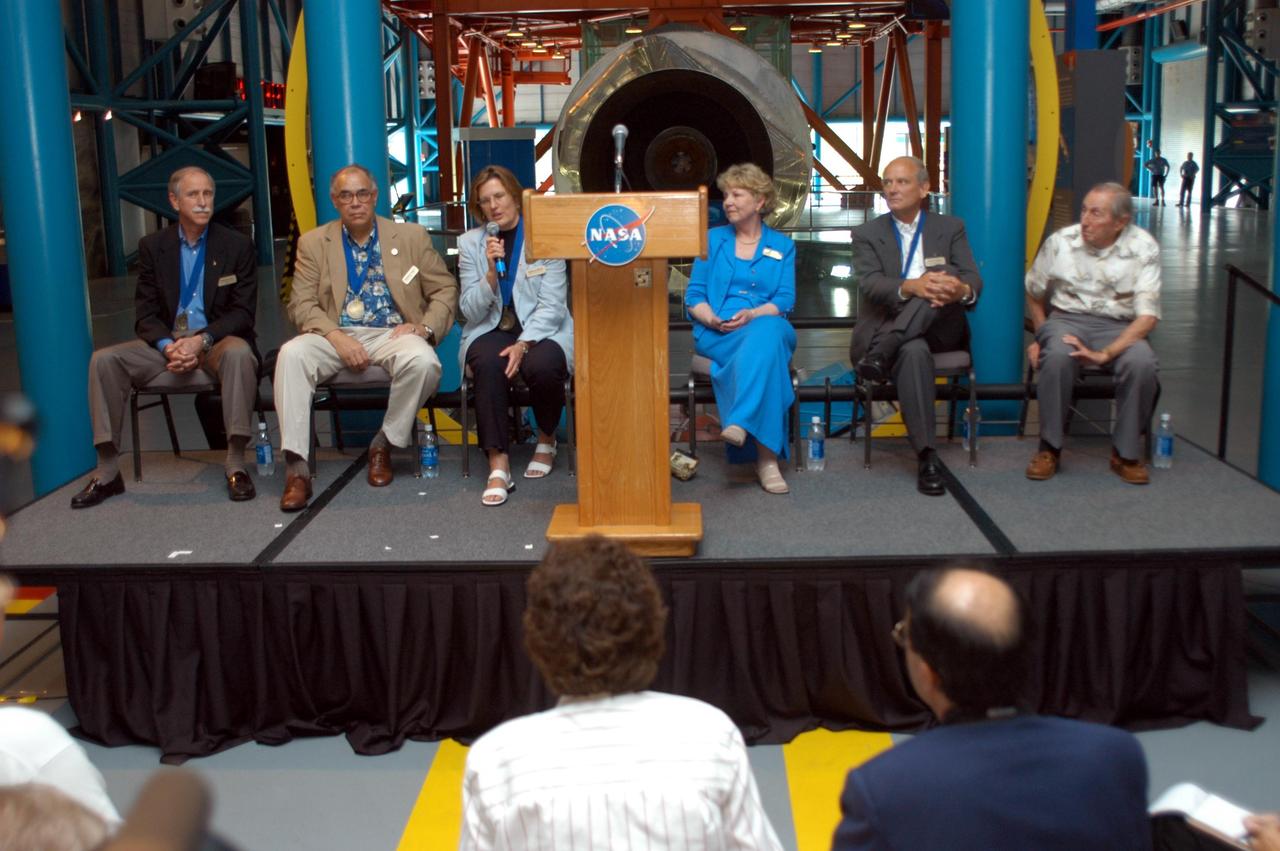
KENNEDY SPACE CENTER, FLA. -- Kathryn D. Sullivan, the first American woman to walk in space, responds to a reporter’s question at a press conference in the Apollo/Saturn V Center following the induction ceremony of five space program heroes into the Astronaut Hall of Fame. Seated (left to right) with her are Richard O. Covey, commander of the Hubble Space Telescope repair mission; Frederick D. Gregory (second from left), the first African-American to command a space mission and the current NASA deputy administrator; Sullivan; June Scobee, representing her late husband Francis R. "Dick" Scobee, commander of the ill-fated 1986 Challenger mission; and Norman E. Thagard, the first American to occupy Russia’s Mir space station. The U.S. Astronaut Hall of Fame opened in 1990 to provide a place where space travelers could be remembered for their participation and accomplishments in the U.S. space program. To be eligible for induction, an individual must have been a U.S. citizen, a NASA astronaut, and out of the active astronaut corps at least five years. The five inductees join 52 previously honored astronauts from the ranks of the Gemini, Apollo, Skylab, Apollo-Soyuz, and Space Shuttle programs.
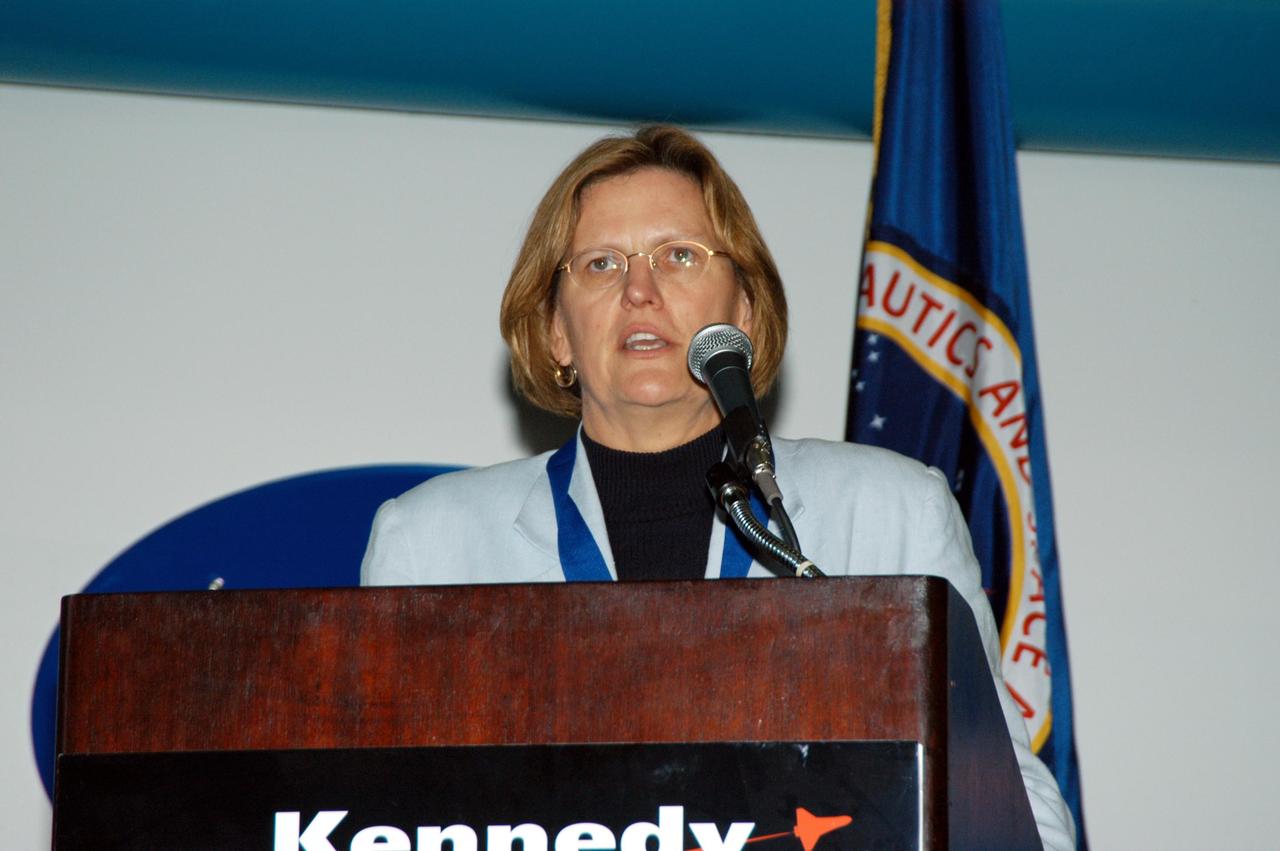
KENNEDY SPACE CENTER, FLA. -- At the Kennedy Space Center Visitor Complex, Dr. Kathryn D. Sullivan, the first American woman to walk in space, is inducted into the U.S. Astronaut Hall of Fame. Also chosen for this honor in 2004 are Richard O. Covey, commander of the Hubble Space Telescope repair mission; Frederick D. Gregory, the first African-American to command a space mission; Norman E. Thagard, the first American to occupy Russia's Mir space station; and the late Francis R. "Dick" Scobee, commander of the ill-fated 1986 Challenger mission. The U.S. Astronaut Hall of Fame opened in 1990 to provide a place where space travelers could be remembered for their participation and accomplishments in the U.S. space program. To be eligible for induction, an individual must have been a U.S. citizen, a NASA astronaut, and out of the active astronaut corps at least five years. The five inductees join 52 previously honored astronauts from the ranks of the Gemini, Apollo, Skylab, Apollo-Soyuz, and Space Shuttle programs.
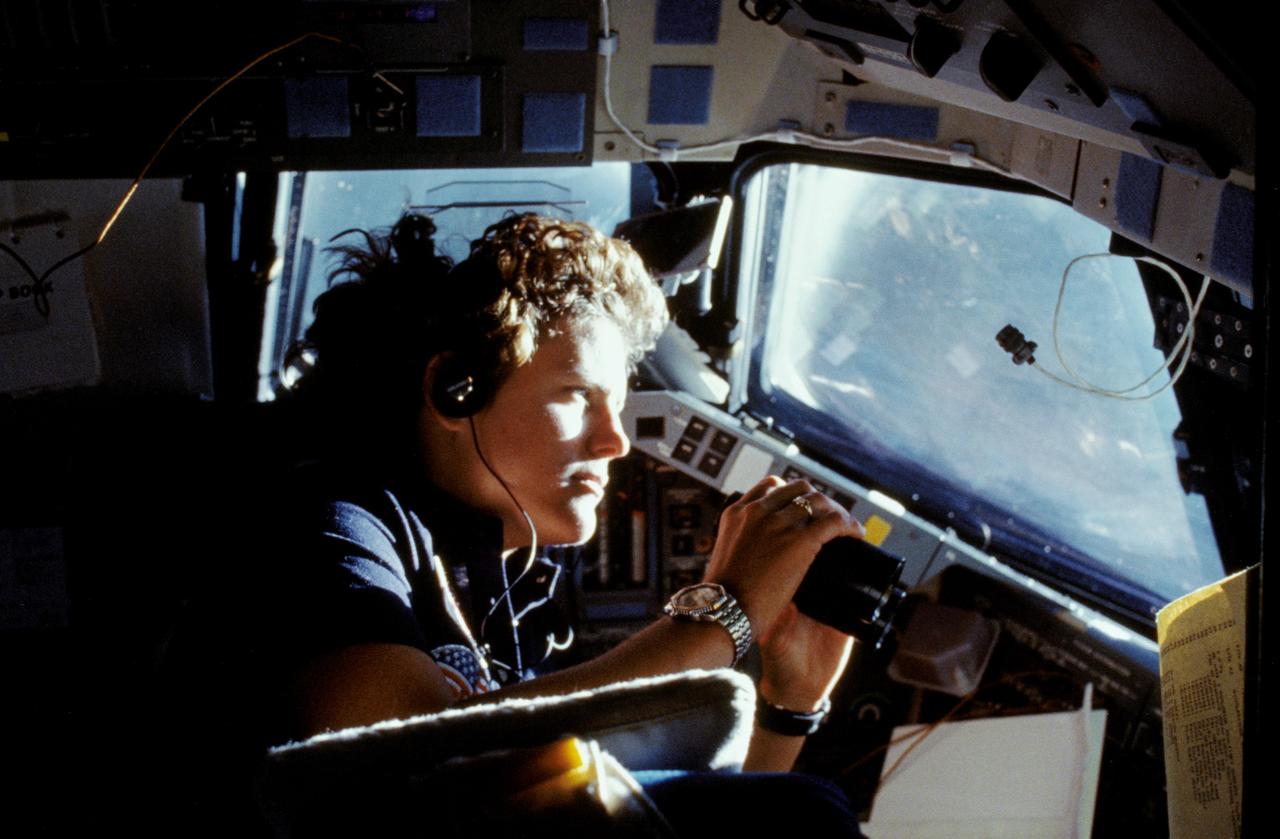
41G-11-027 (14 Oct. 1984) --- Kathryn D. Sullivan, 41-G mission specialist, uses a pair of binoculars to do some magnified viewing through the forward cabin windows of the Earth-orbiting space shuttle Challenger. The 35mm frame was part of the first photographic release from the eight-day 41-G mission on Oct. 14, 1984. Photo credit: NASA
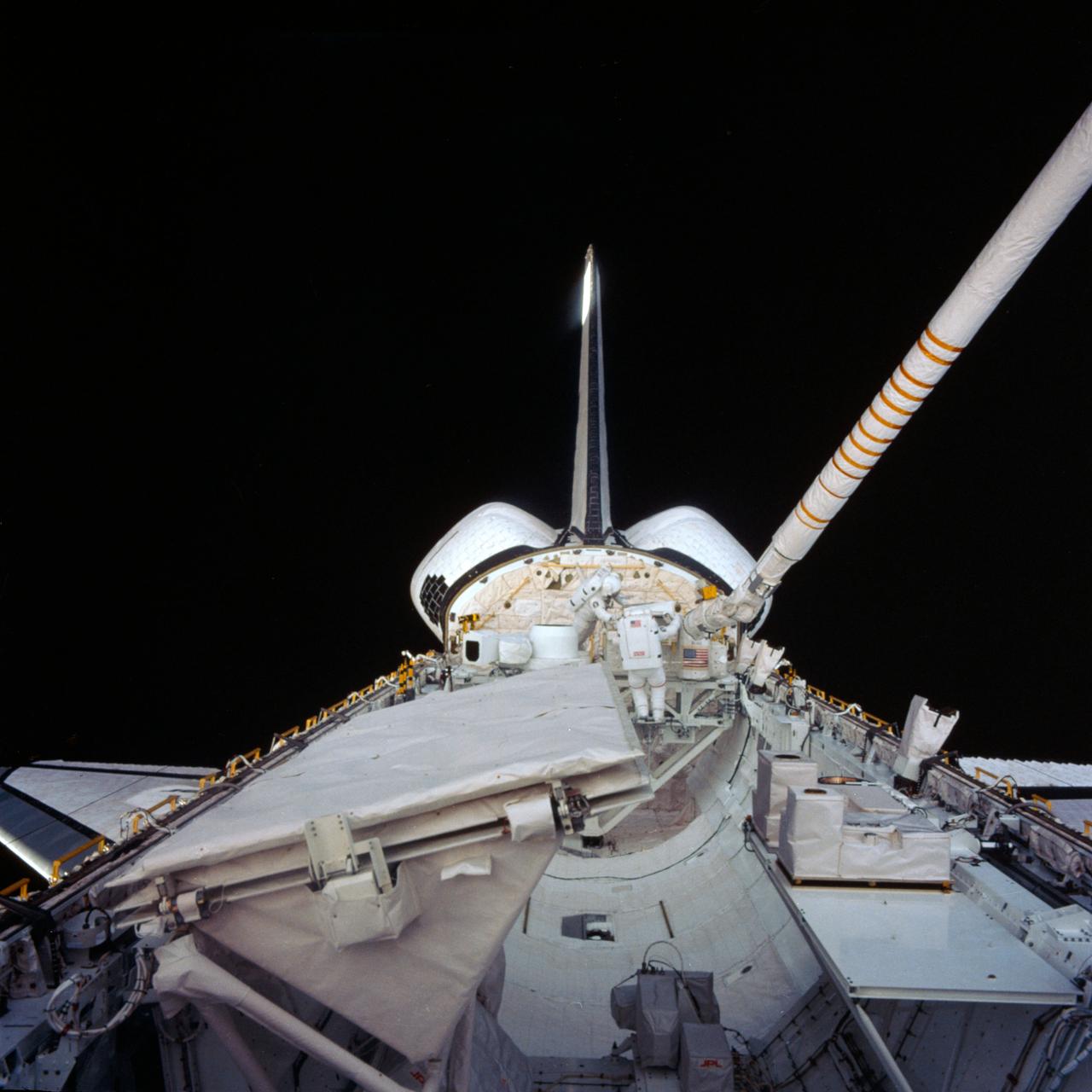
S84-43432 (11 Oct. 1984) --- Appearing small in the center background of this image, astronauts Kathryn D. Sullivan, left, and David C. Leestma, both 41-G mission specialists, perform an in-space simulation of refueling another spacecraft in orbit. Their station on the space shuttle Challenger is the orbital refueling system (ORS), positioned on the mission peculiar support structure (MPR ESS). The Large Format Camera (LFC) is left of the two mission specialists. In the left foreground is the antenna for the shuttle imaging radar (SIR-B) system onboard. The Canadian-built remote manipulator system (RMS) is positioned to allow close-up recording capability of the busy scene. A 50mm lens on a 70mm camera was used to photograph this scene. Photo credit: NASA
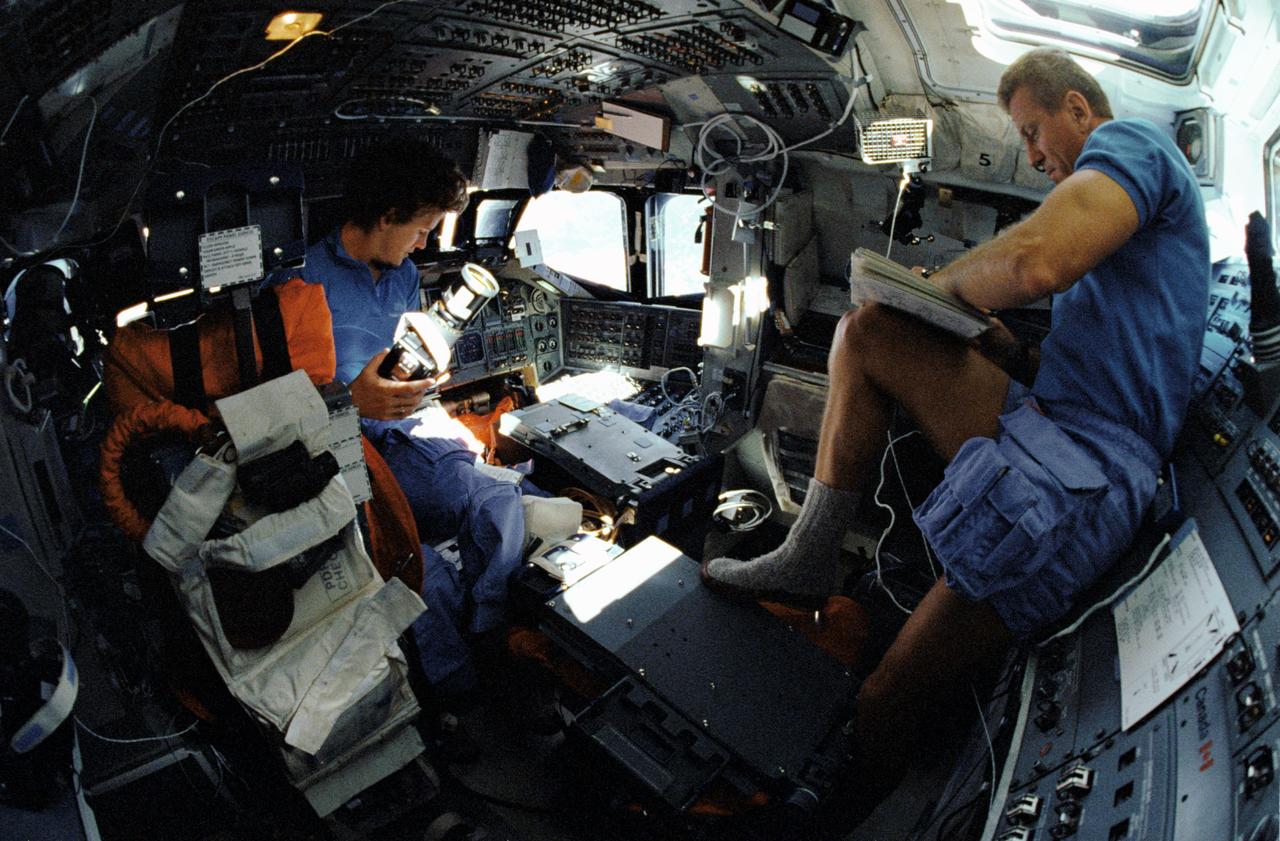
STS031-101-053 (24-29 April 199) --- A 35mm camera equipped with a "fish-eye" lens captured this view on Discovery's flight deck featuring astronaut Kathryn D. Sullivan with a Hasselblad camera on forward flight deck and astronaut Loren J. Shriver, pen in hand, amending flight data on aft flight deck.
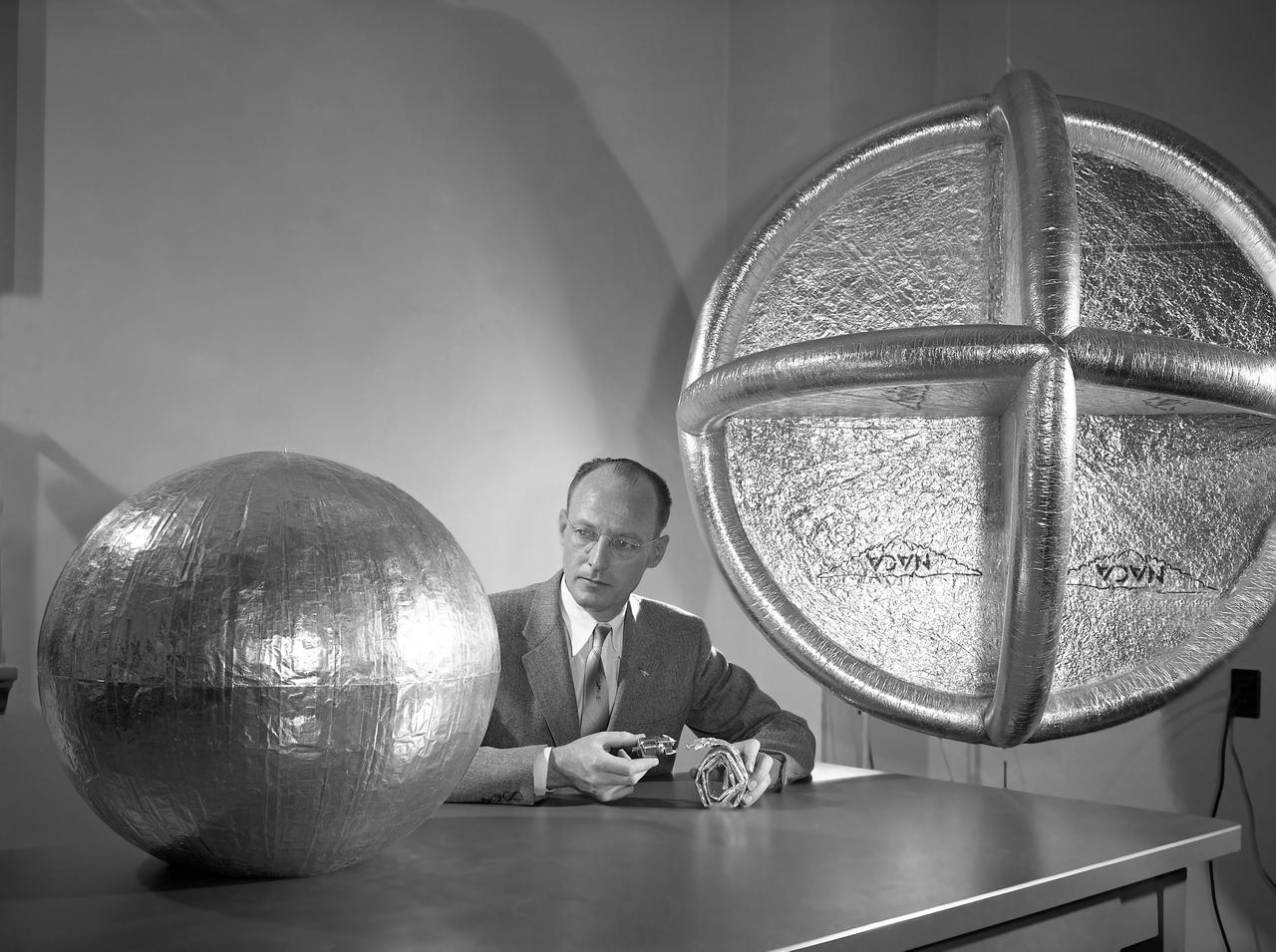
L57-525 Engineer W.J. O Sullivan, Jr., looks at inflated 20 inch subsatellite while holding inflation bottle and folded duplicate copy, February 1957. Photograph published in A New Dimension Wallops Island Flight Test Range: The First Fifteen Years by Joseph Shortal. A NASA publication. Page 601.
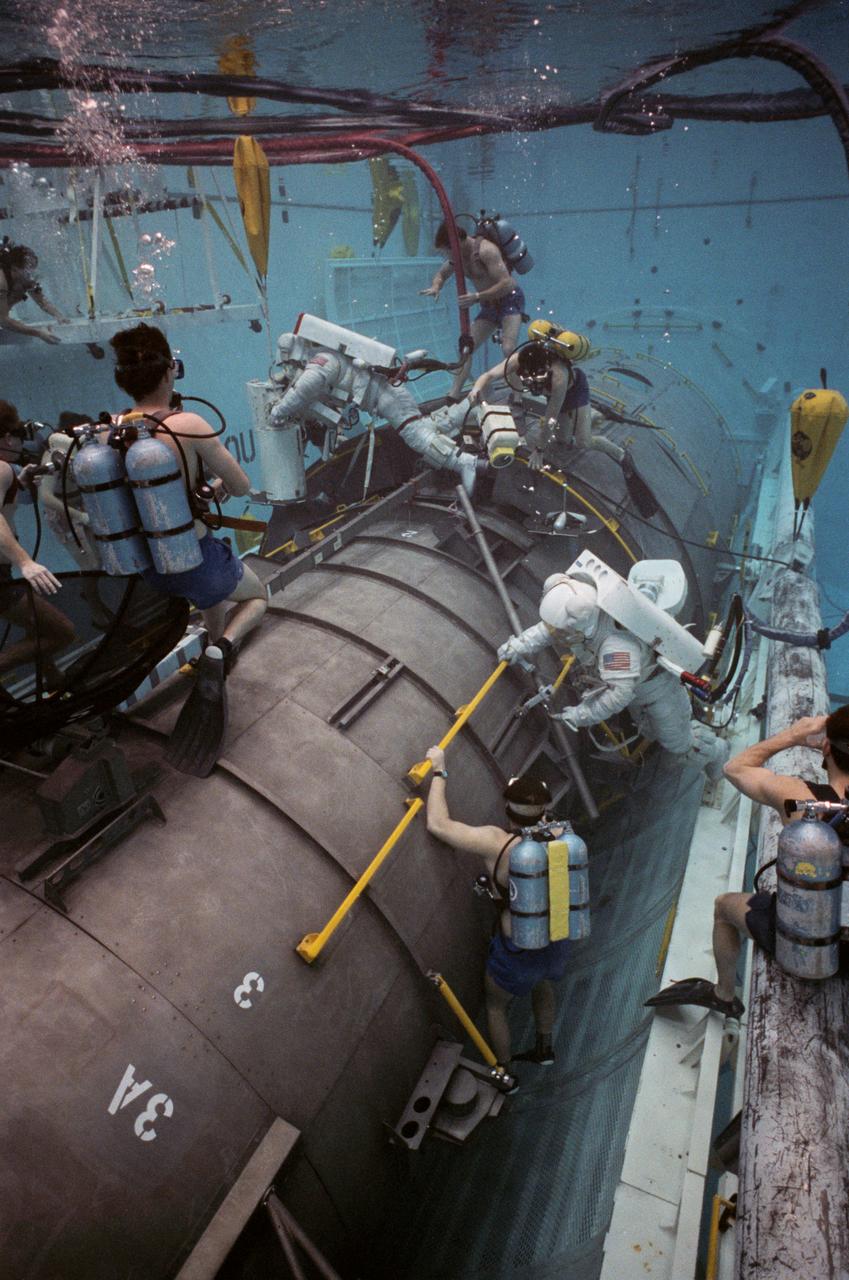
This overall view shows STS-31 Mission Specialist (MS) Bruce McCandless II (left) and MS Kathryn D. Sullivan making a practice space walk in JSC's Weightless Environment Training Facility (WETF) Bldg 29 pool. McCandless works with a mockup of the remote manipulator system (RMS) end effector which is attached to a grapple fixture on the Hubble Space Telescope (HST) mockup. Sullivan manipulates HST hardware on the Support System Module (SSM) forward shell. SCUBA-equipped divers monitor the extravehicular mobility unit (EMU) suited crewmembers during this simulated extravehicular activity (EVA). No EVA is planned for the Hubble Space Telescope (HST) deployment, but the duo has trained for contingencies which might arise during the STS-31 mission aboard Discovery, Orbiter Vehicle (OV) 103. Photo taken by NASA JSC photographer Sheri Dunnette.

Kathy Sullivan, NOAA (National Oceanic and Atmospheric Administration) Deputy Administrator and former NASA astronaut, participates in a panel discussion at the Women, Innovation and Aerospace event celebrating Women's History Month at the George Washington University Jack Morton Auditorium, Thursday, March 8, 2012 in Washington. The WIA day-long event will help to foster a discussion for students and early career professionals about how to continue to encourage women to enter and succeed in the field of aerospace. Photo Credit: (NASA/Carla Cioffi)
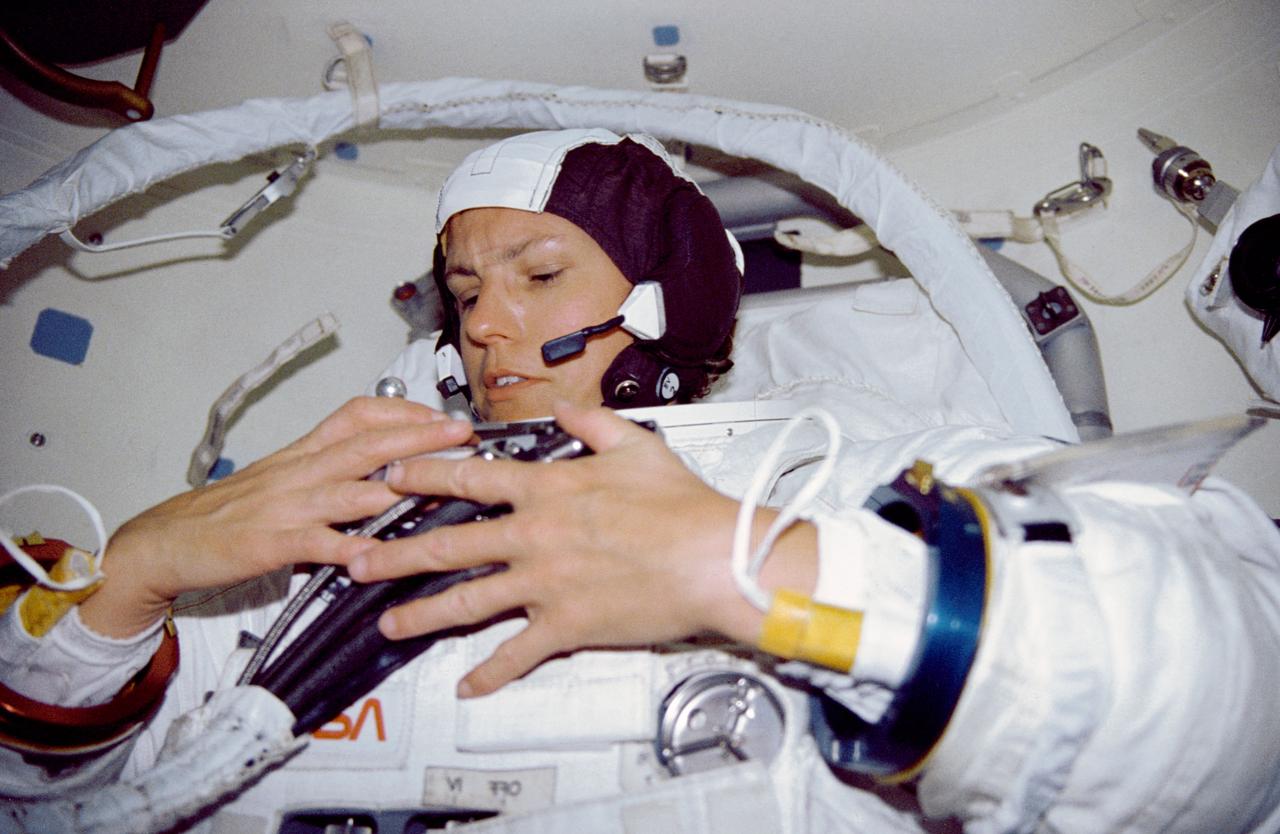
STS-31 Mission Specialist (MS) Kathryn D. Sullivan, wearing extravehicular mobility unit (EMU) & communications carrier assembly (CCA), attaches service and cooling umbilical (SCU) to the EMU connection on the display & control module (DCM) during contingency extravehicular activity (EVA) preparations in the airlock of Discovery, Orbiter Vehicle (OV) 103. The procedure was completed in case an EVA was required to support Hubble Space Telescope (HST) deployment.
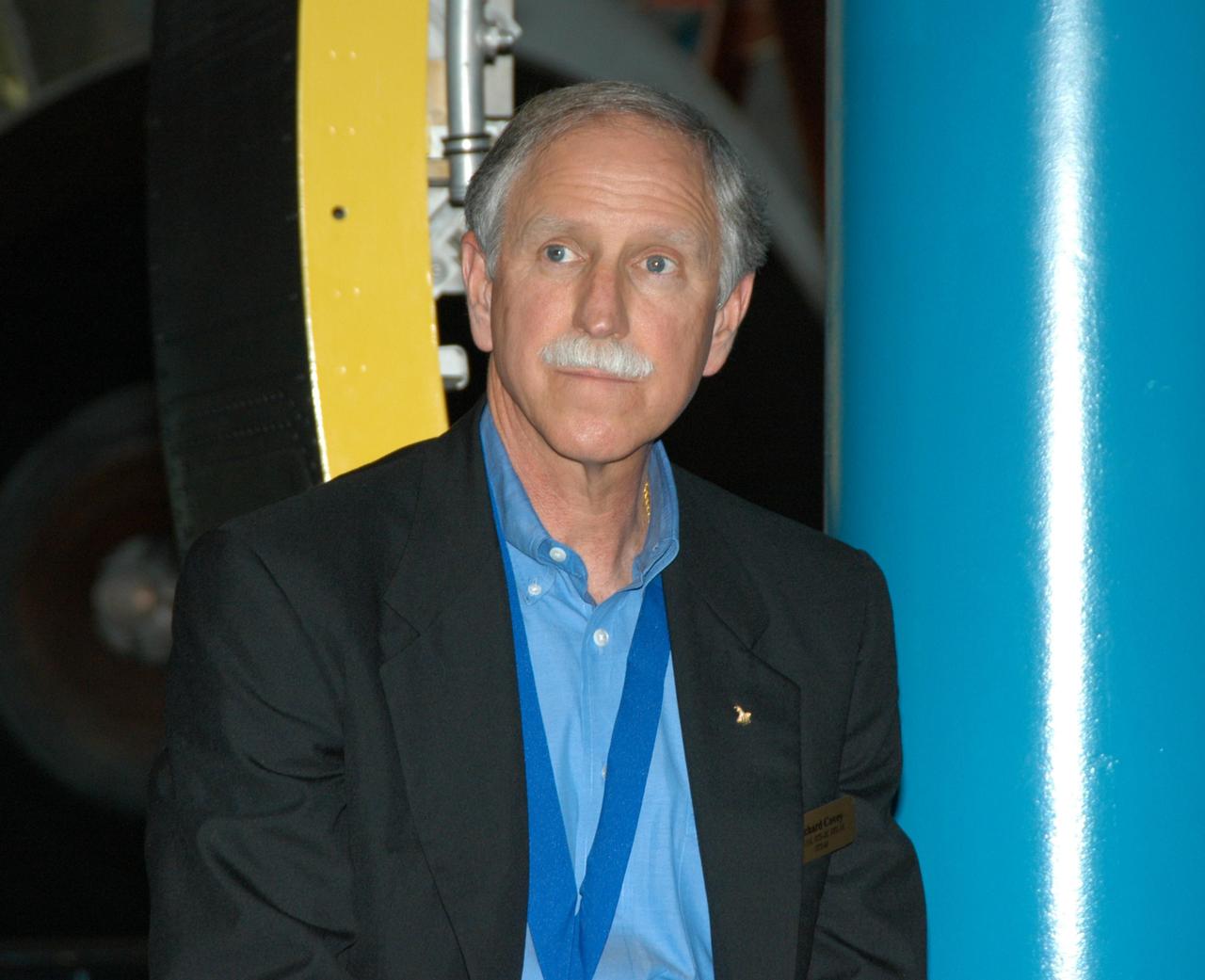
KENNEDY SPACE CENTER, FLA. -- At the Kennedy Space Center Visitor Complex, Richard O. Covey, commander of the Hubble Space Telescope repair mission, is one of five space program heroes inducted into the U.S. Astronaut Hall of Fame. Other inductees were Norman E. Thagard, the first American to occupy Russia’s Mir space station; the late Francis R. "Dick" Scobee, commander of the ill-fated 1986 Challenger mission; Kathryn D. Sullivan, the first American woman to walk in space; and Frederick D. Gregory, the first African-American to command a space mission and the current NASA deputy administrator. The U.S. Astronaut Hall of Fame opened in 1990 to provide a place where space travelers could be remembered for their participation and accomplishments in the U.S. space program. To be eligible for induction, an individual must have been a U.S. citizen, a NASA astronaut, and out of the active astronaut corps at least five years. The five inductees join 52 previously honored astronauts from the ranks of the Gemini, Apollo, Skylab, Apollo-Soyuz, and Space Shuttle programs.
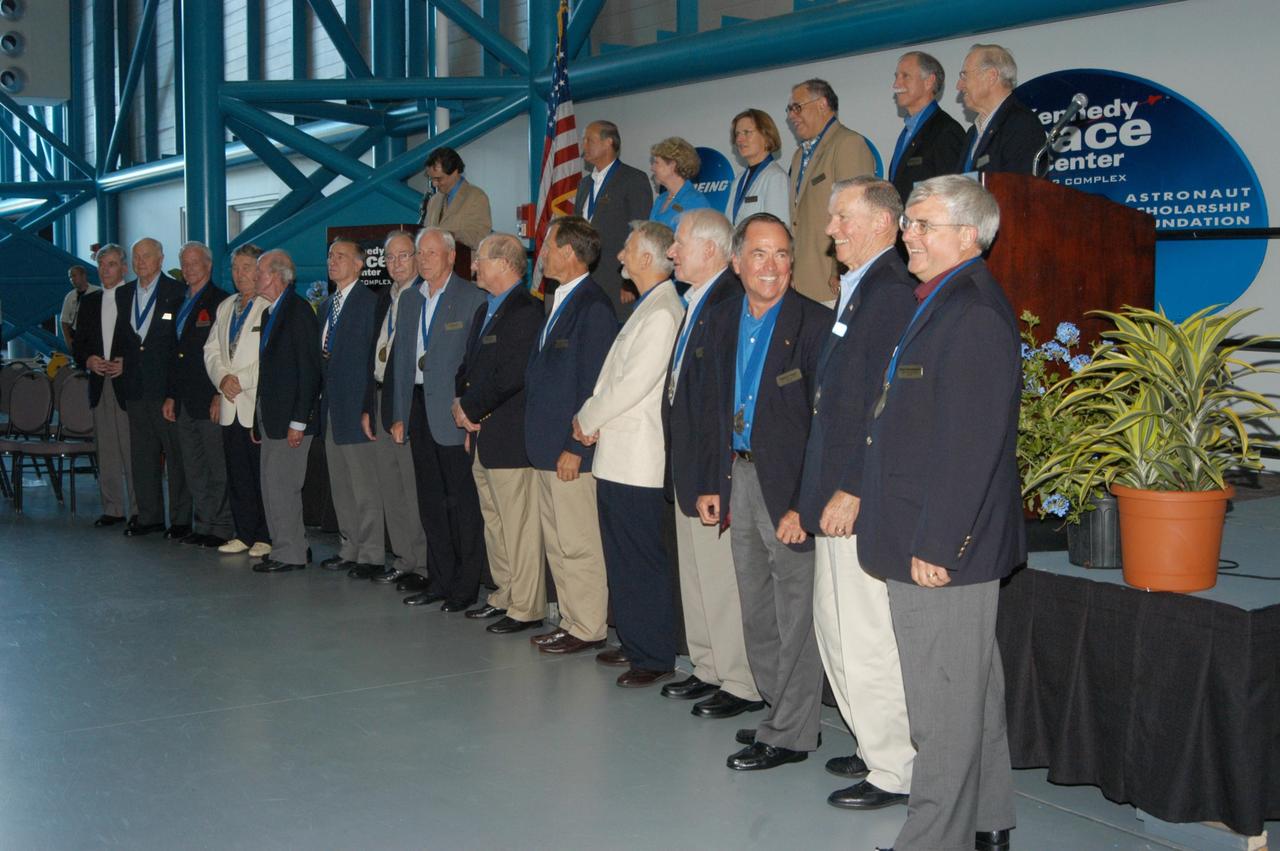
KENNEDY SPACE CENTER, FLA. -- Following the induction ceremony welcoming five new space program heroes in the U.S. Astronaut Hall of Fame, the members line up for a commemorative photo. From left, in front, are John Young, John Glenn Jr., Scott Carpenter, Wally Schirra, Gordon Cooper, Walt Cunningham, Ed Mitchell, Al Worden, Rick Hauck, Ed Gibson, Owen Garriott, Vance Brand, Robert Crippen, Joe Engle, Dan Brandenstein. In back are space author Andrew Chaikin, at the podium; and Norm Thagard, June Scobee representing her late husband Dick Scobee, Kathryn Sullivan, Fred Gregory, Richard Covey and Jim Lovell. The induction ceremony was held at the Apollo/Saturn V Center at KSC. The U.S. Astronaut Hall of Fame opened in 1990 to provide a place where space travelers could be remembered for their participation and accomplishments in the U.S. space program. The five inductees join 52 previously honored astronauts from the ranks of the Gemini, Apollo, Skylab, Apollo-Soyuz, and Space Shuttle programs.
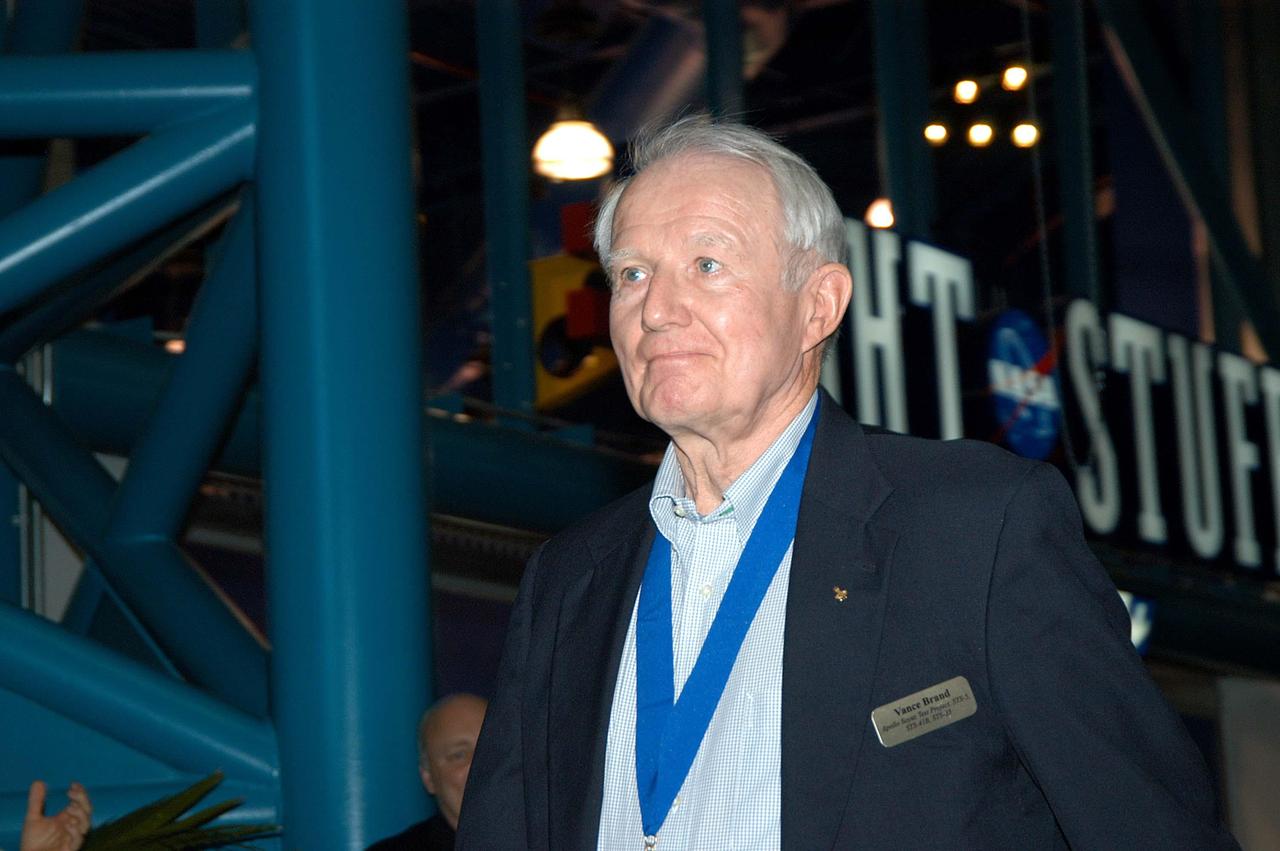
KENNEDY SPACE CENTER, FLA. -- Former astronaut Vance Brand is introduced as a previous inductee into the U.S. Astronaut Hall of Fame. He and other Hall of Fame members were present for the induction of five new space program heroes into the U.S. Astronaut Hall of Fame: Richard O. Covey, commander of the Hubble Space Telescope repair mission; Norman E. Thagard, the first American to occupy Russia’s Mir space station; the late Francis R. "Dick" Scobee, commander of the ill-fated 1986 Challenger mission; Kathryn D. Sullivan, the first American woman to walk in space; and Frederick D. Gregory, the first African-American to command a space mission and the current NASA deputy administrator. Brand was Command Module Pilot on the 1975 Apollo-Soyuz Test Project, the first linkup in orbit between spaceships of the United States and Soviet Union, and he later commanded three Space Shuttle missions. The induction ceremony was held at the Apollo/Saturn V Center at KSC. The U.S. Astronaut Hall of Fame opened in 1990 to provide a place where space travelers could be remembered for their participation and accomplishments in the U.S. space program. The five inductees join 52 previously honored astronauts from the ranks of the Gemini, Apollo, Skylab, Apollo-Soyuz, and Space Shuttle programs.
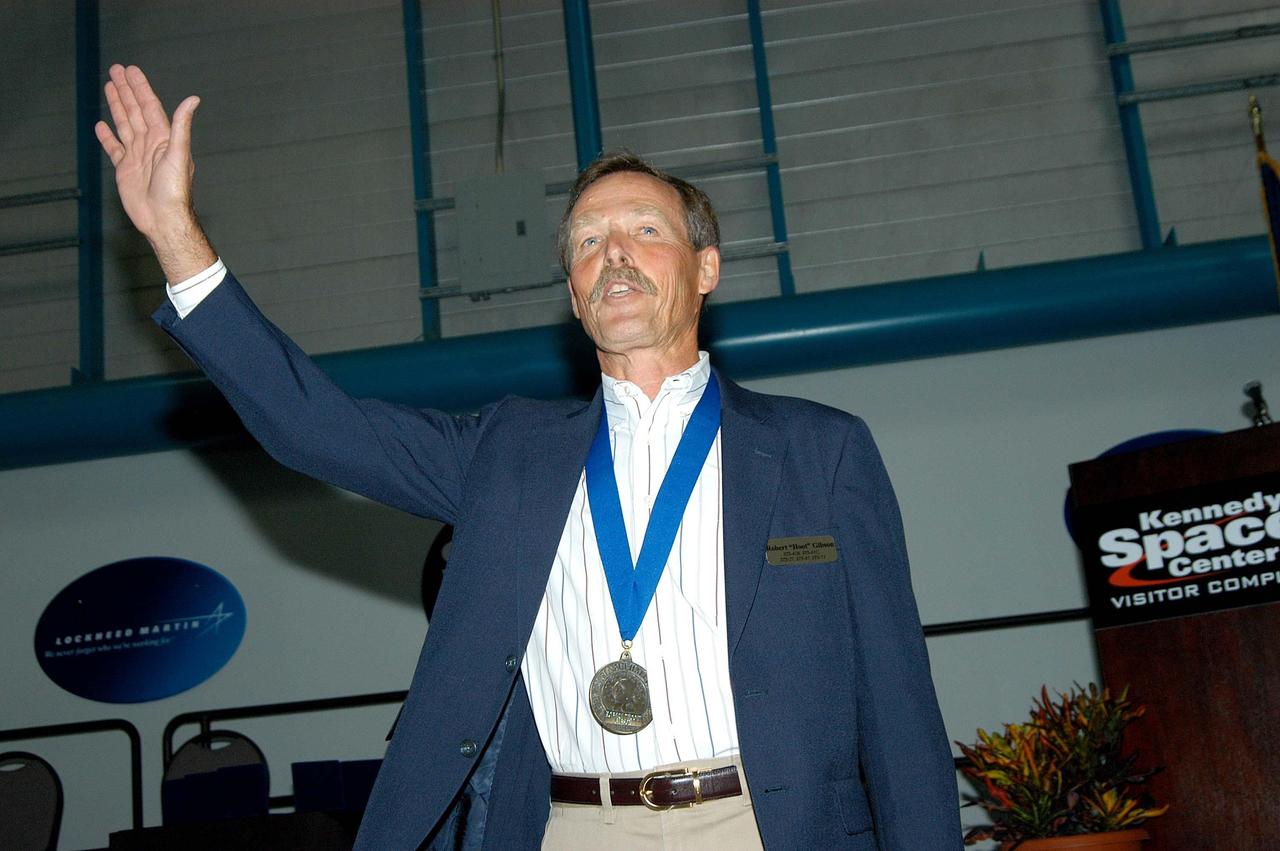
KENNEDY SPACE CENTER, FLA. -- Former astronaut Ed Gibson acknowledges the warm response to his introduction as a previous inductee into the U.S. Astronaut Hall of Fame. He and other Hall of Fame members were present for the induction of five new space program heroes into the U.S. Astronaut Hall of Fame: Richard O. Covey, commander of the Hubble Space Telescope repair mission; Norman E. Thagard, the first American to occupy Russia’s Mir space station; the late Francis R. "Dick" Scobee, commander of the ill-fated 1986 Challenger mission; Kathryn D. Sullivan, the first American woman to walk in space; and Frederick D. Gregory, the first African-American to command a space mission and the current NASA deputy administrator. Gibson orbited the Earth for 84 days during the final manned flight of the Skylab Space Station in 1973 and 1974. The induction ceremony was held at the Apollo/Saturn V Center at KSC. The U.S. Astronaut Hall of Fame opened in 1990 to provide a place where space travelers could be remembered for their participation and accomplishments in the U.S. space program. The five inductees join 52 previously honored astronauts from the ranks of the Gemini, Apollo, Skylab, Apollo-Soyuz, and Space Shuttle programs.
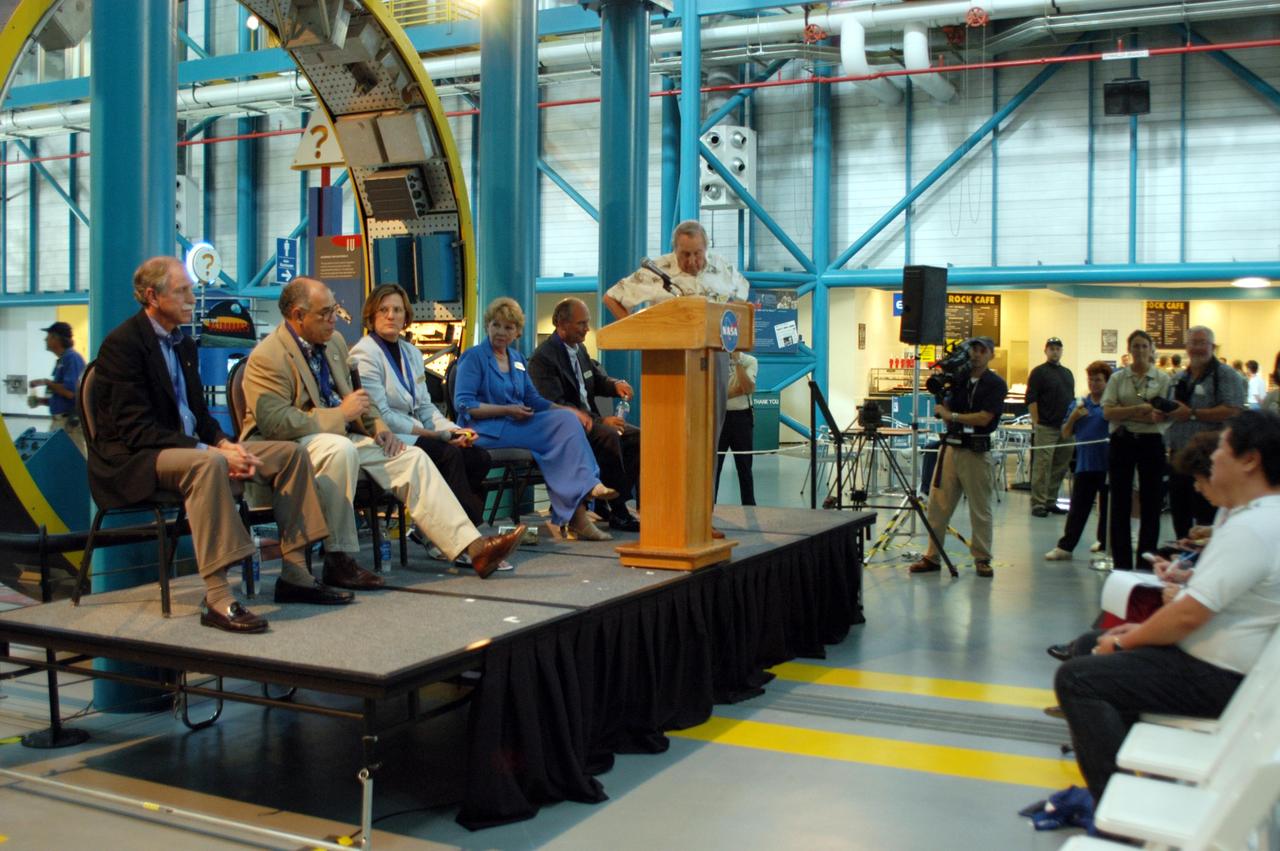
KENNEDY SPACE CENTER, FLA. -- Frederick D. Gregory (second from left), the first African-American to command a space mission and the current NASA deputy administrator, responds to a reporter’s question at a press conference in the Apollo/Saturn V Center following the induction ceremony of five space program heroes into the Astronaut Hall of Fame. Seated (left to right) with him on the platform are Richard O. Covey, commander of the Hubble Space Telescope repair mission; Gregory; Kathryn D. Sullivan, the first American woman to walk in space; June Scobee, representing her late husband Francis R. "Dick" Scobee, commander of the ill-fated 1986 Challenger mission; and Norman E. Thagard, the first American to occupy Russia’s Mir space station. The U.S. Astronaut Hall of Fame opened in 1990 to provide a place where space travelers could be remembered for their participation and accomplishments in the U.S. space program. To be eligible for induction, an individual must have been a U.S. citizen, a NASA astronaut, and out of the active astronaut corps at least five years. The five inductees join 52 previously honored astronauts from the ranks of the Gemini, Apollo, Skylab, Apollo-Soyuz, and Space Shuttle programs.
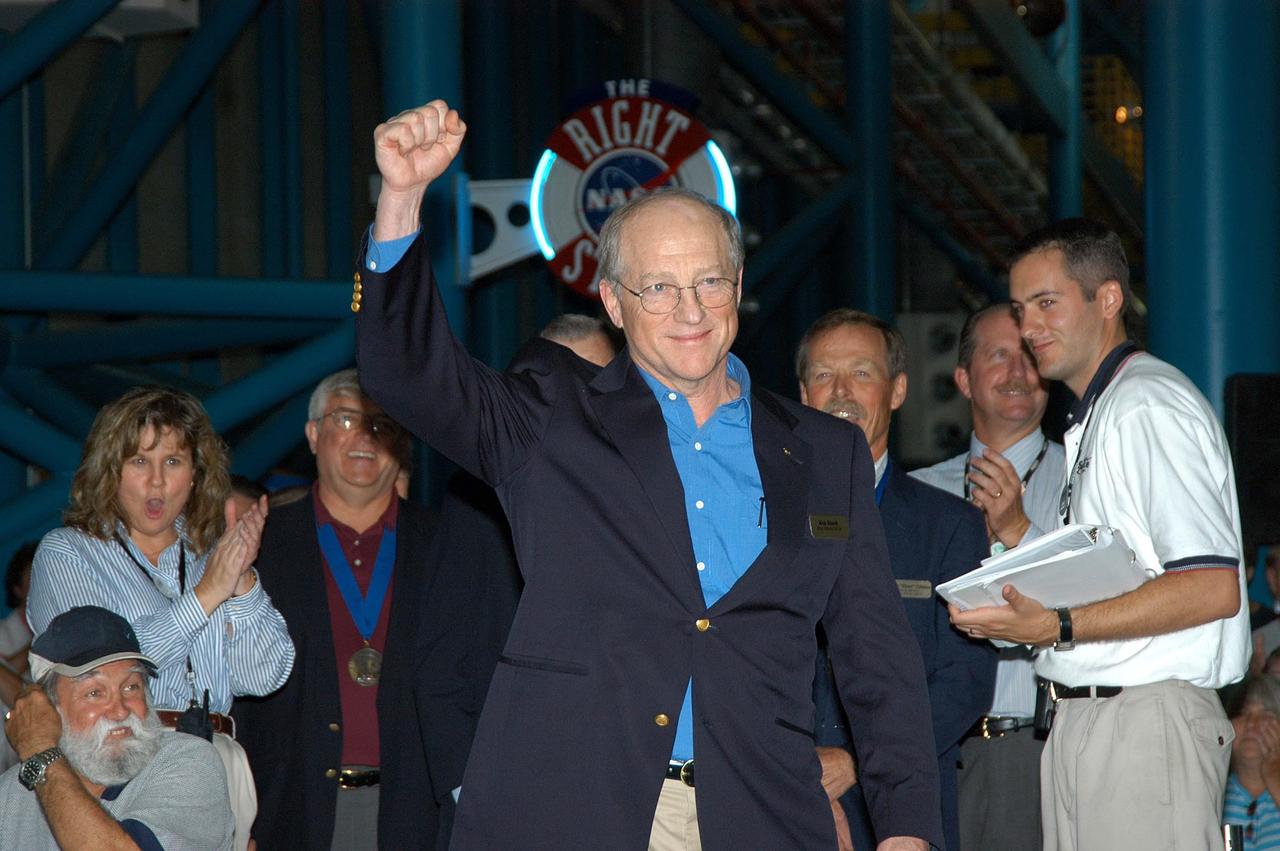
KENNEDY SPACE CENTER, FLA. -- Former astronaut Frederick (Rick) Hauck acknowledges the warm response to his introduction as a previous inductee into the U.S. Astronaut Hall of Fame. He and other Hall of Fame members were present for the induction of five new space program heroes into the U.S. Astronaut Hall of Fame: Richard O. Covey, commander of the Hubble Space Telescope repair mission; Norman E. Thagard, the first American to occupy Russia’s Mir space station; the late Francis R. "Dick" Scobee, commander of the ill-fated 1986 Challenger mission; Kathryn D. Sullivan, the first American woman to walk in space; and Frederick D. Gregory, the first African-American to command a space mission and the current NASA deputy administrator. Hauck flew on three Space Shuttle missions, including command of the redesigned spaceship on its critical first flight after the explosion of Challenger. The induction ceremony was held at the Apollo/Saturn V Center at KSC. The U.S. Astronaut Hall of Fame opened in 1990 to provide a place where space travelers could be remembered for their participation and accomplishments in the U.S. space program. The five inductees join 52 previously honored astronauts from the ranks of the Gemini, Apollo, Skylab, Apollo-Soyuz, and Space Shuttle programs.
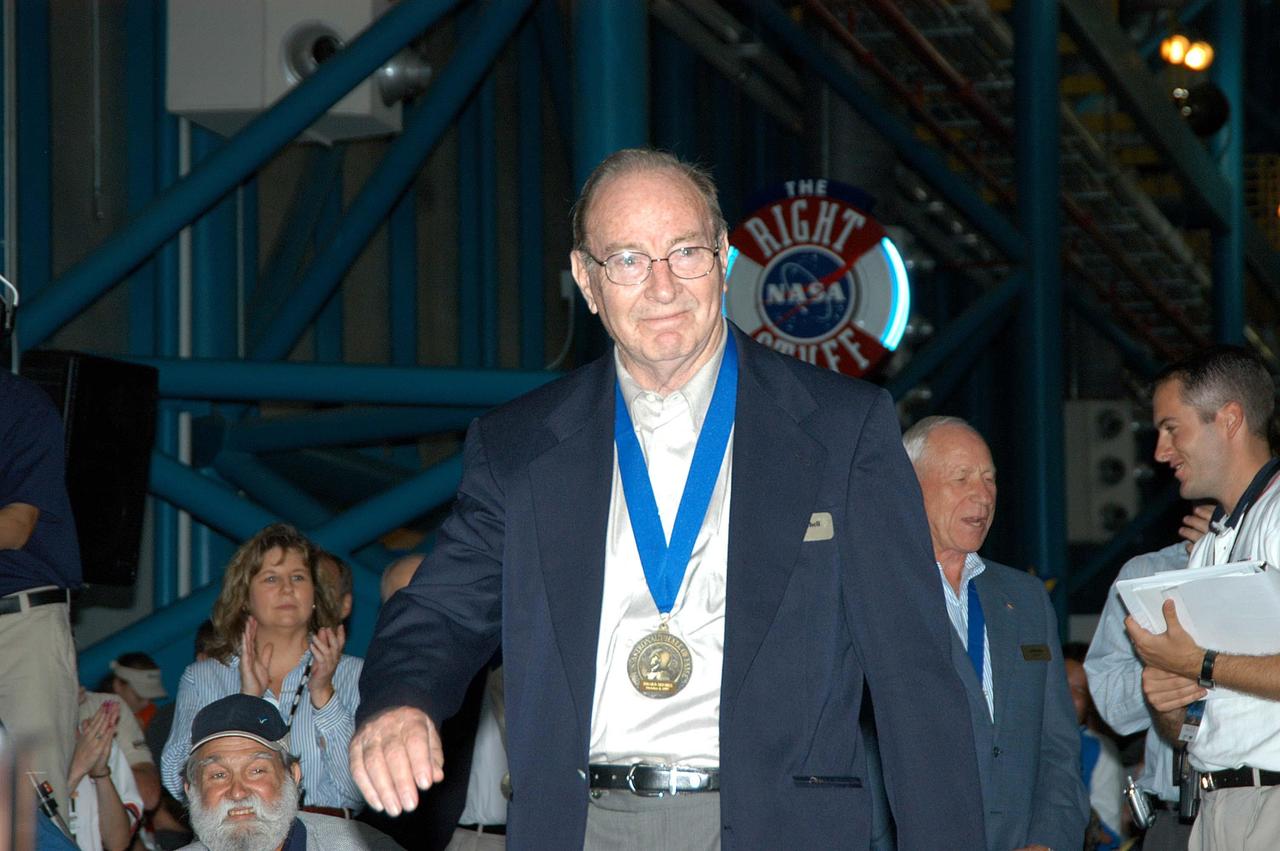
KENNEDY SPACE CENTER, FLA. -- Before the induction ceremony of five space program heroes into the U.S. Astronaut Hall of Fame, former astronaut Ed Mitchell is introduced as a previous inductee. Mitchell explored the Moon's hilly Fra Mauro region with Alan B. Shepard during the 1971 Apollo 14 mission. The ceremony was held at the Apollo/Saturn V Center at KSC. New inductees are Richard O. Covey, commander of the Hubble Space Telescope repair mission; Norman E. Thagard, the first American to occupy Russia’s Mir space station; the late Francis R. "Dick" Scobee, commander of the ill-fated 1986 Challenger mission; Kathryn D. Sullivan, the first American woman to walk in space; and Frederick D. Gregory, the first African-American to command a space mission and the current NASA deputy administrator. The U.S. Astronaut Hall of Fame opened in 1990 to provide a place where space travelers could be remembered for their participation and accomplishments in the U.S. space program. The five inductees join 52 previously honored astronauts from the ranks of the Gemini, Apollo, Skylab, Apollo-Soyuz, and Space Shuttle programs.

KENNEDY SPACE CENTER, FLA. -- Former astronaut Al Worden acknowledges the applause as he is introduced as a previous inductee into the U.S. Astronaut Hall of Fame. He and other Hall of Fame members were present for the induction of five new space program heroes into the U.S. Astronaut Hall of Fame: Richard O. Covey, commander of the Hubble Space Telescope repair mission; Norman E. Thagard, the first American to occupy Russia’s Mir space station; the late Francis R. "Dick" Scobee, commander of the ill-fated 1986 Challenger mission; Kathryn D. Sullivan, the first American woman to walk in space; and Frederick D. Gregory, the first African-American to command a space mission and the current NASA deputy administrator. Worden served as Command Module pilot on the 1971 Apollo 15 moon mission, during which he orbited the Moon and took a space walk 200,000 miles from Earth. The induction ceremony was held at the Apollo/Saturn V Center at KSC. The U.S. Astronaut Hall of Fame opened in 1990 to provide a place where space travelers could be remembered for their participation and accomplishments in the U.S. space program. The five inductees join 52 previously honored astronauts from the ranks of the Gemini, Apollo, Skylab, Apollo-Soyuz, and Space Shuttle programs.
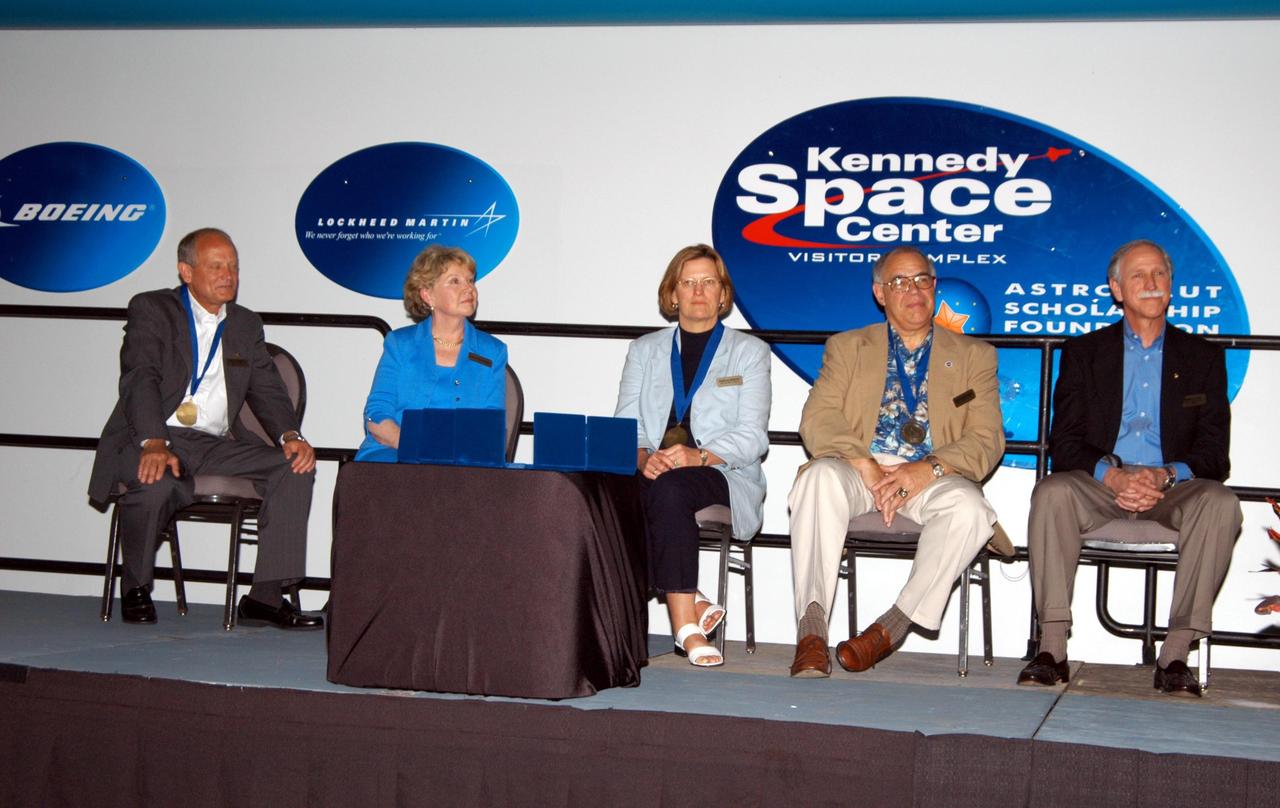
KENNEDY SPACE CENTER, FLA. -- At the Kennedy Space Center Visitor Complex, five space heroes are being inducted into the U.S. Astronaut Hall of Fame. From left, they are Norman E. Thagard, the first American to occupy Russia's Mir space station; June Scobee, representing her late husband Francis R. "Dick" Scobee, commander of the ill-fated 1986 Challenger mission; Kathryn D. Sullivan, the first American woman to walk in space; Frederick D. Gregory, the first African-American to command a space mission and the current NASA Deputy Administrator; and Richard O. Covey, commander of the Hubble Space Telescope repair mission. The U.S. Astronaut Hall of Fame opened in 1990 to provide a place where space travelers could be remembered for their participation and accomplishments in the U.S. space program. To be eligible for induction, an individual must have been a U.S. citizen, a NASA astronaut, and out of the active astronaut corps at least five years. The five inductees join 52 previously honored astronauts from the ranks of the Gemini, Apollo, Skylab, Apollo-Soyuz, and Space Shuttle programs.
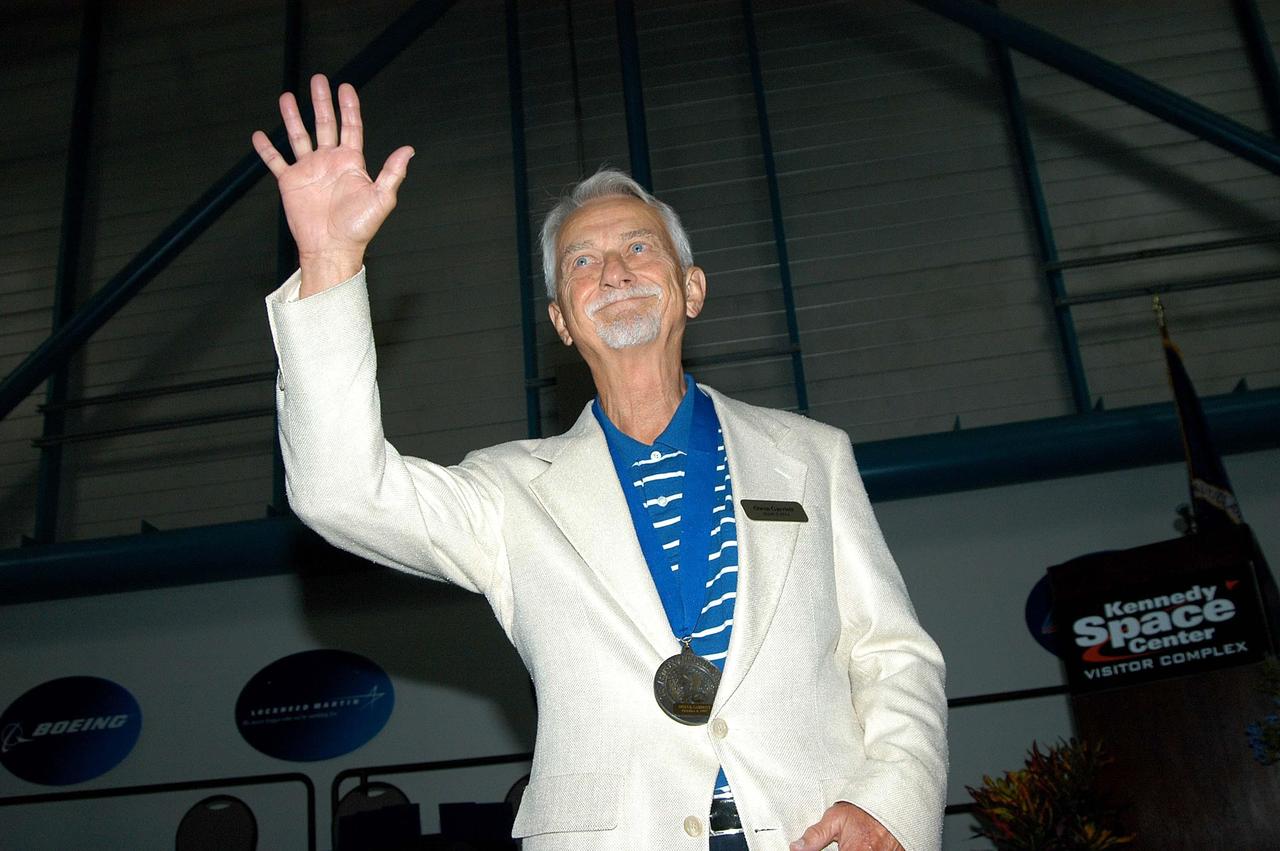
KENNEDY SPACE CENTER, FLA. -- Former astronaut Owen Garriott acknowledges the applause as he is introduced as a previous inductee into the U.S. Astronaut Hall of Fame. He and other Hall of Fame members were present for the induction of five new space program heroes into the U.S. Astronaut Hall of Fame: Richard O. Covey, commander of the Hubble Space Telescope repair mission; Norman E. Thagard, the first American to occupy Russia’s Mir space station; the late Francis R. "Dick" Scobee, commander of the ill-fated 1986 Challenger mission; Kathryn D. Sullivan, the first American woman to walk in space; and Frederick D. Gregory, the first African-American to command a space mission and the current NASA deputy administrator. Garriott exercised his expertise as a solar physicist on two space missions, the 59-day Skylab 3 flight in 1973, and an 11-day trip aboard the Space Shuttle Columbia a decade later. The induction ceremony was held at the Apollo/Saturn V Center at KSC. The U.S. Astronaut Hall of Fame opened in 1990 to provide a place where space travelers could be remembered for their participation and accomplishments in the U.S. space program. The five inductees join 52 previously honored astronauts from the ranks of the Gemini, Apollo, Skylab, Apollo-Soyuz, and Space Shuttle programs.
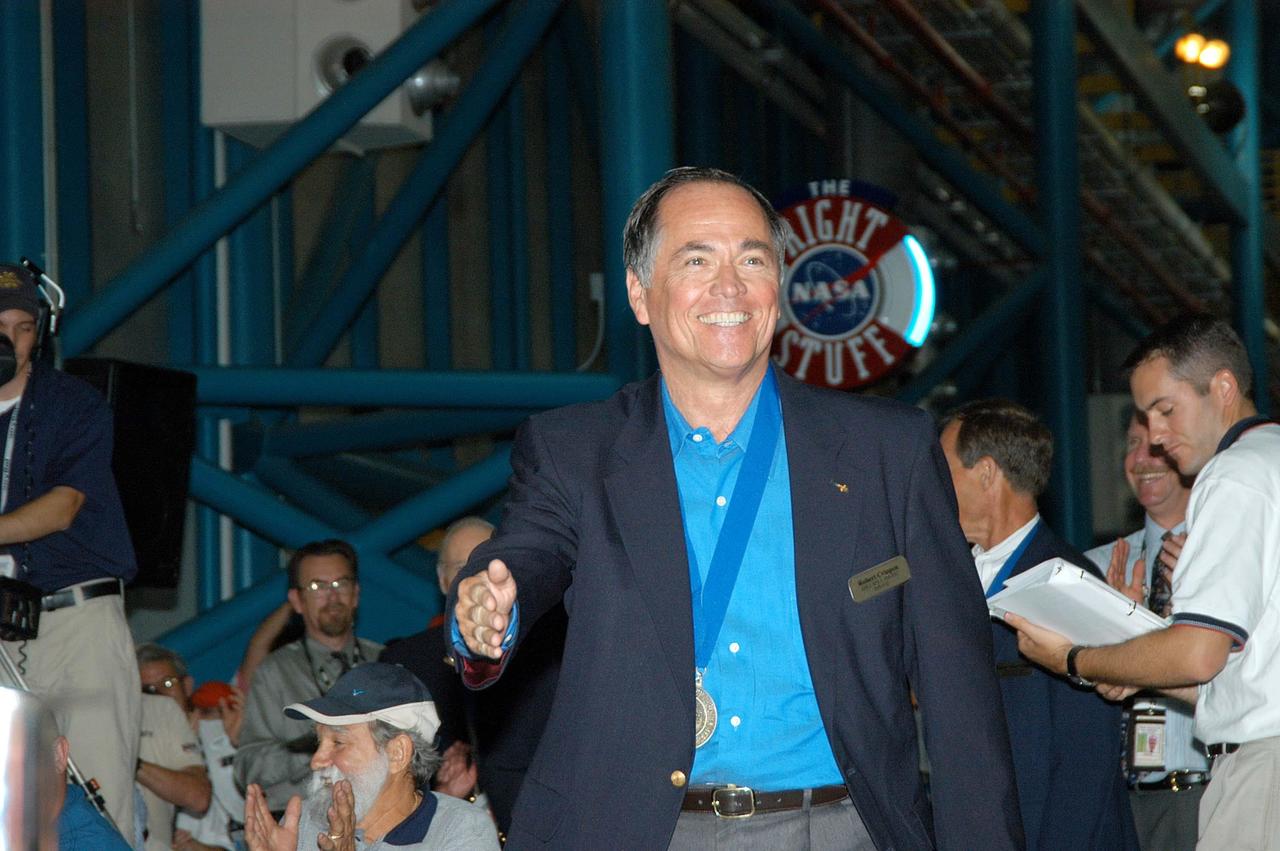
KENNEDY SPACE CENTER, FLA. -- Former astronaut Robert Crippen smiles at the warm greeting he is receiving when introduced as a previous inductee into the U.S. Astronaut Hall of Fame. He and other Hall of Fame members were present for the induction of five new space program heroes into the U.S. Astronaut Hall of Fame: Richard O. Covey, commander of the Hubble Space Telescope repair mission; Norman E. Thagard, the first American to occupy Russia’s Mir space station; the late Francis R. "Dick" Scobee, commander of the ill-fated 1986 Challenger mission; Kathryn D. Sullivan, the first American woman to walk in space; and Frederick D. Gregory, the first African-American to command a space mission and the current NASA deputy administrator. Crippen piloted the first Space Shuttle flight in 1981 and commanded three other Shuttle missions in the next 3-1/2 years. In the early 1990s he served as director of NASA’s Kennedy Space Center. The induction ceremony was held at the Apollo/Saturn V Center at KSC. The U.S. Astronaut Hall of Fame opened in 1990 to provide a place where space travelers could be remembered for their participation and accomplishments in the U.S. space program. The five inductees join 52 previously honored astronauts from the ranks of the Gemini, Apollo, Skylab, Apollo-Soyuz, and Space Shuttle programs.
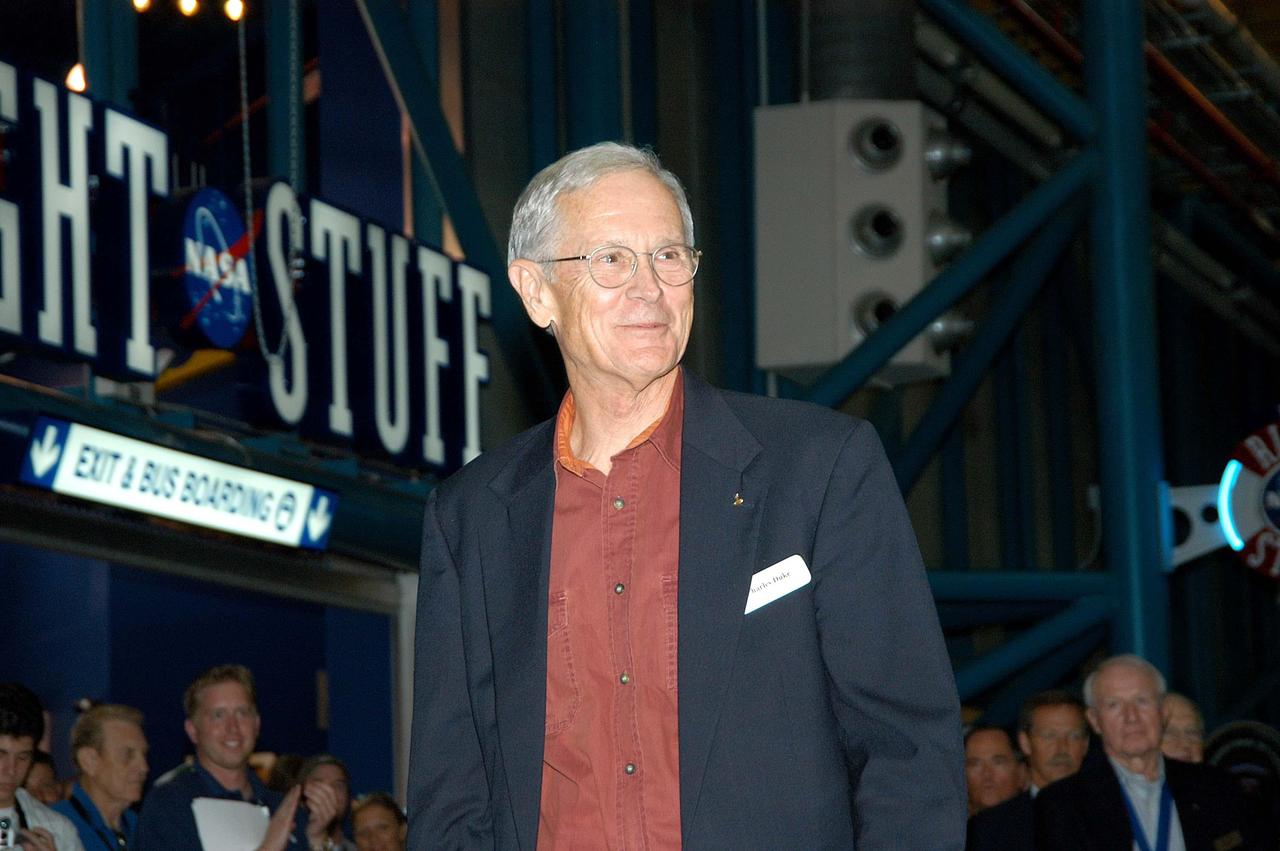
KENNEDY SPACE CENTER, FLA. -- Former astronaut Charles Duke receives a warm welcome as he is introduced as a previous inductee into the U.S. Astronaut Hall of Fame. He and other Hall of Fame members were present for the induction of five new space program heroes into the U.S. Astronaut Hall of Fame: Richard O. Covey, commander of the Hubble Space Telescope repair mission; Norman E. Thagard, the first American to occupy Russia’s Mir space station; the late Francis R. "Dick" Scobee, commander of the ill-fated 1986 Challenger mission; Kathryn D. Sullivan, the first American woman to walk in space; and Frederick D. Gregory, the first African-American to command a space mission and the current NASA deputy administrator. Duke explored the rugged highlands of the Moon’s Descartes region with John Young during the Apollo 16 mission in April 1972. The induction ceremony was held at the Apollo/Saturn V Center at KSC. The U.S. Astronaut Hall of Fame opened in 1990 to provide a place where space travelers could be remembered for their participation and accomplishments in the U.S. space program. The five inductees join 52 previously honored astronauts from the ranks of the Gemini, Apollo, Skylab, Apollo-Soyuz, and Space Shuttle programs.
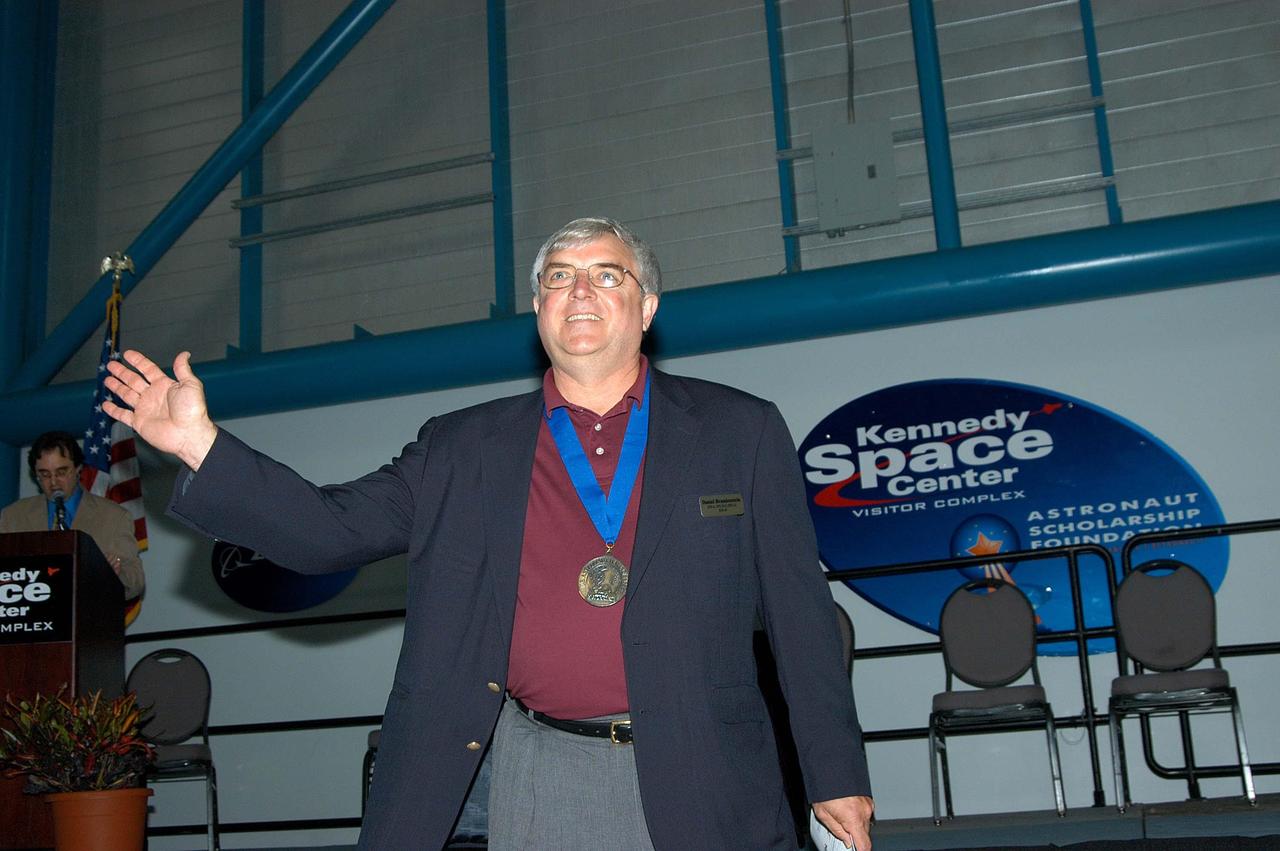
KENNEDY SPACE CENTER, FLA. -- Former astronaut Dan Brandenstein acknowledges the applause as he is introduced as a previous inductee into the U.S. Astronaut Hall of Fame. He and other Hall of Fame members were present for the induction of five new space program heroes into the U.S. Astronaut Hall of Fame: Richard O. Covey, commander of the Hubble Space Telescope repair mission; Norman E. Thagard, the first American to occupy Russia’s Mir space station; the late Francis R. "Dick" Scobee, commander of the ill-fated 1986 Challenger mission; Kathryn D. Sullivan, the first American woman to walk in space; and Frederick D. Gregory, the first African-American to command a space mission and the current NASA deputy administrator. Brandenstein piloted one Space Shuttle mission and commanded three others, including the maiden flight of Endeavour, and later served as chief of the Astronaut Office. The induction ceremony was held at the Apollo/Saturn V Center at KSC. The U.S. Astronaut Hall of Fame opened in 1990 to provide a place where space travelers could be remembered for their participation and accomplishments in the U.S. space program. The five inductees join 52 previously honored astronauts from the ranks of the Gemini, Apollo, Skylab, Apollo-Soyuz, and Space Shuttle programs.
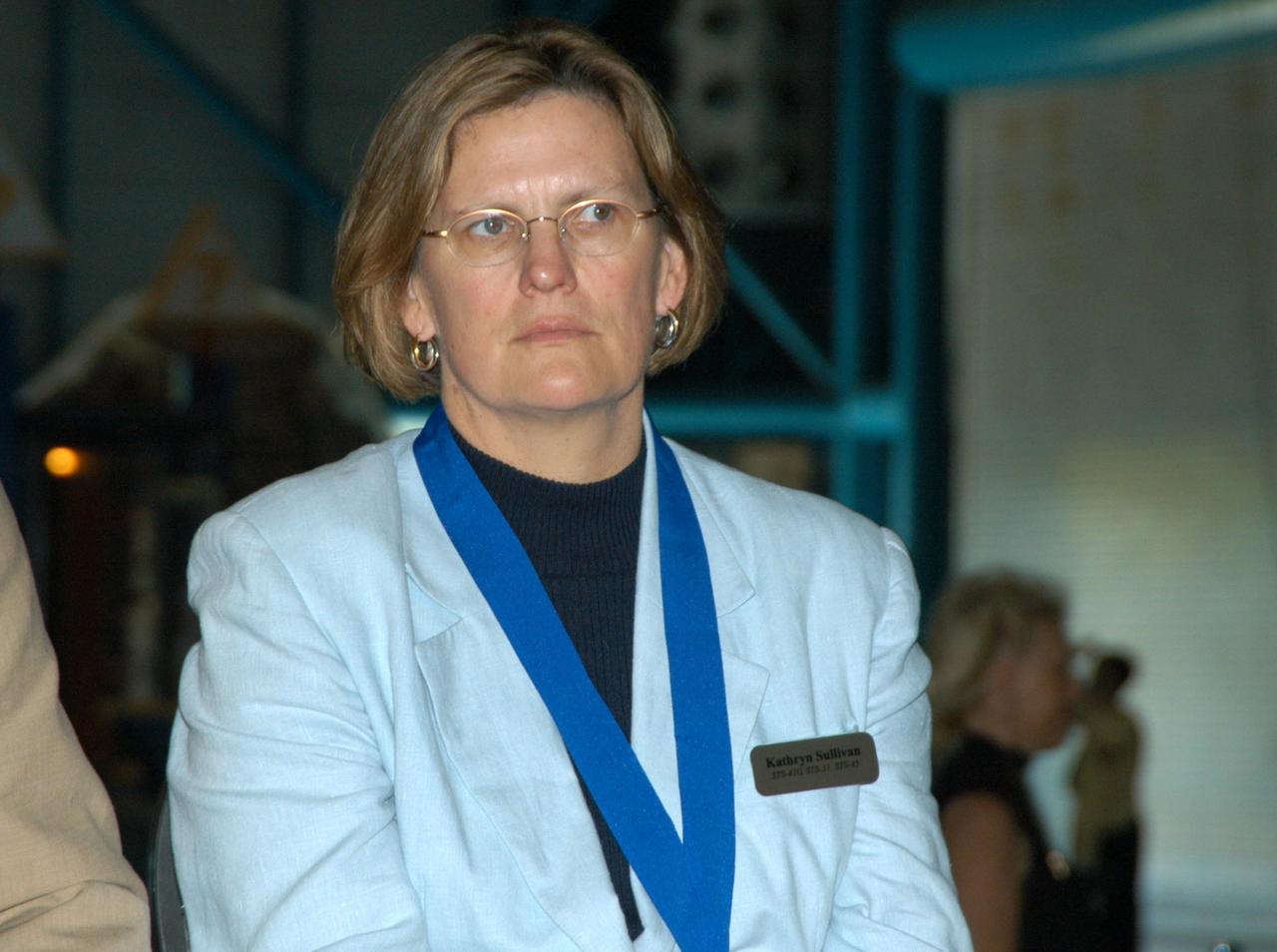
KENNEDY SPACE CENTER, FLA. -- At the Kennedy Space Center Visitor Complex, Kathryn D. Sullivan, the first American woman to walk in space, is one of five space program heroes inducted into the U.S. Astronaut Hall of Fame. Other inductees were Norman E. Thagard, the first American to occupy Russia’s Mir space station; the late Francis R. "Dick" Scobee, commander of the ill-fated 1986 Challenger mission; Richard O. Covey, commander of the Hubble Space Telescope repair mission; and Frederick D. Gregory, the first African-American to command a space mission and the current NASA deputy administrator. The U.S. Astronaut Hall of Fame opened in 1990 to provide a place where space travelers could be remembered for their participation and accomplishments in the U.S. space program. To be eligible for induction, an individual must have been a U.S. citizen, a NASA astronaut, and out of the active astronaut corps at least five years. The five inductees join 52 previously honored astronauts from the ranks of the Gemini, Apollo, Skylab, Apollo-Soyuz, and Space Shuttle programs.
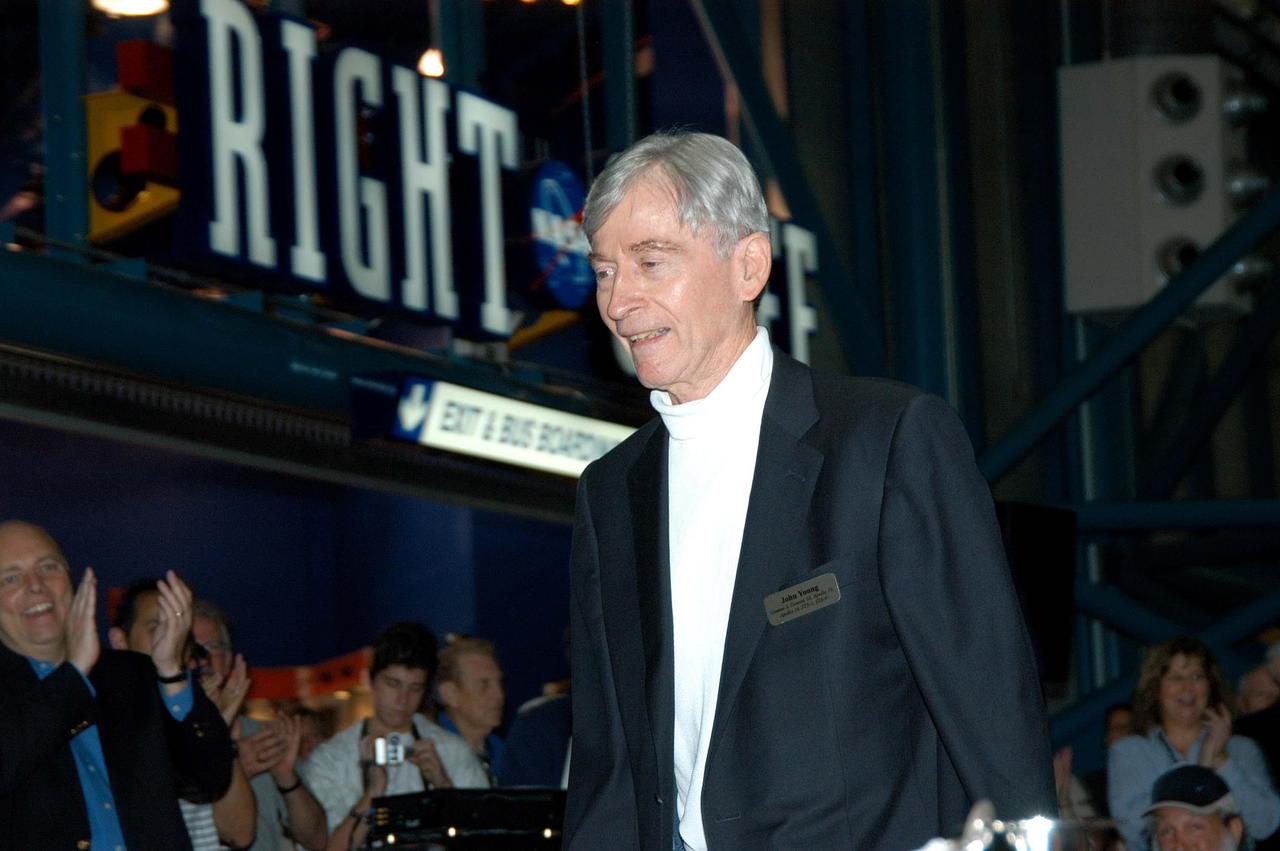
KENNEDY SPACE CENTER, FLA. -- Before the induction ceremony of five space program heroes into the U.S. Astronaut Hall of Fame, astronaut John Young is warmly greeted as he is introduced as a previous inductee. Co-holder of a record for the most space flights, six, he flew on Gemini 3 and 10, orbited the Moon on Apollo 10, walked on the Moon on Apollo 16, and commanded two space shuttle missions, STS-1 and STS-9. Young currently serves as associate director, technical, at Johnson Space Center. The induction ceremony was held at the Apollo/Saturn V Center at KSC. New inductees are Richard O. Covey, commander of the Hubble Space Telescope repair mission; Norman E. Thagard, the first American to occupy Russia’s Mir space station; the late Francis R. "Dick" Scobee, commander of the ill-fated 1986 Challenger mission; Kathryn D. Sullivan, the first American woman to walk in space; and Frederick D. Gregory, the first African-American to command a space mission and the current NASA deputy administrator. The U.S. Astronaut Hall of Fame opened in 1990 to provide a place where space travelers could be remembered for their participation and accomplishments in the U.S. space program. The five inductees join 52 previously honored astronauts from the ranks of the Gemini, Apollo, Skylab, Apollo-Soyuz, and Space Shuttle programs.
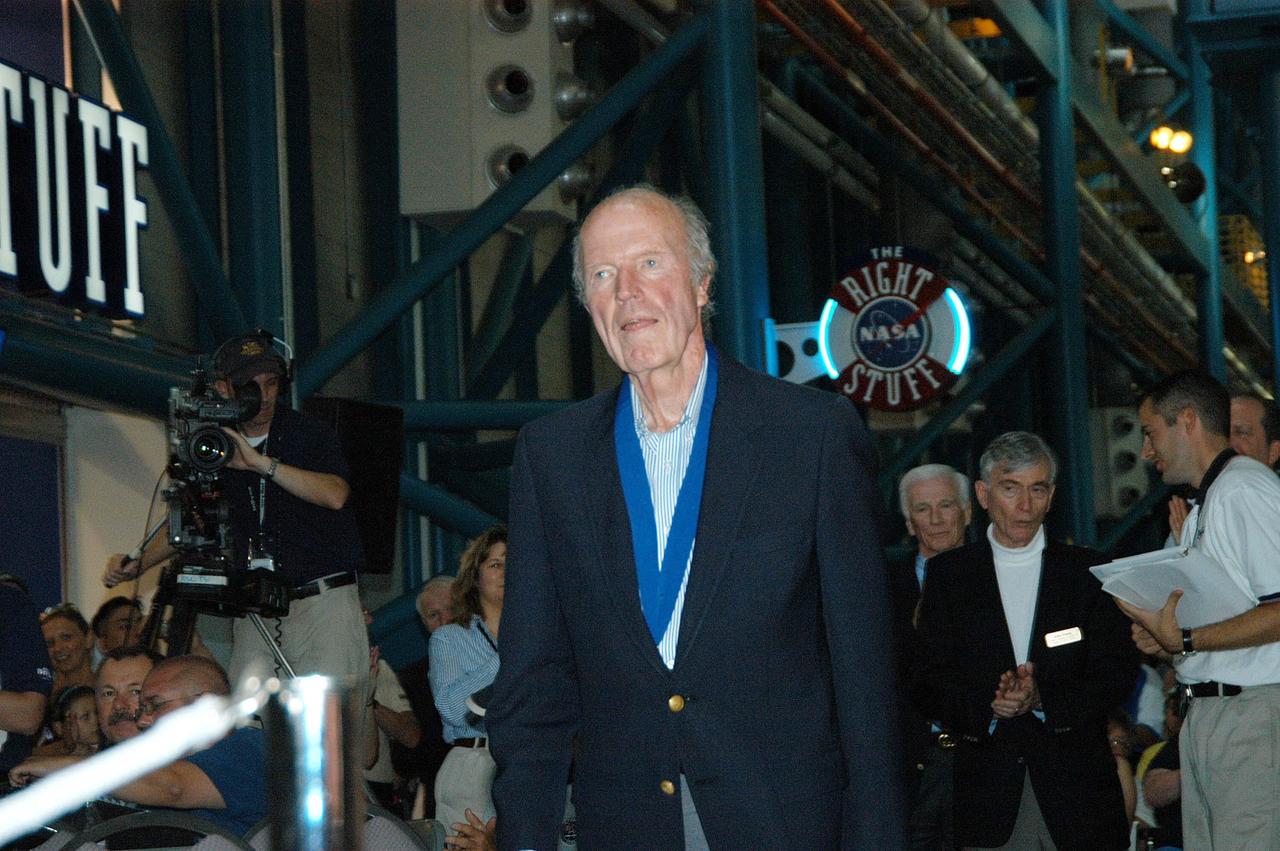
KENNEDY SPACE CENTER, FLA. -- Before the induction ceremony of five space program heroes into the U.S. Astronaut Hall of Fame, former astronaut Gordon Cooper is introduced as a previous inductee. One of America’s original Mercury Seven astronauts, Cooper flew the last and longest Project Mercury orbital mission and spent eight days in space aboard Gemini 5. The ceremony was held at the Apollo/Saturn V Center at KSC. New inductees are Richard O. Covey, commander of the Hubble Space Telescope repair mission; Norman E. Thagard, the first American to occupy Russia’s Mir space station; the late Francis R. "Dick" Scobee, commander of the ill-fated 1986 Challenger mission; Kathryn D. Sullivan, the first American woman to walk in space; and Frederick D. Gregory, the first African-American to command a space mission and the current NASA deputy administrator. The U.S. Astronaut Hall of Fame opened in 1990 to provide a place where space travelers could be remembered for their participation and accomplishments in the U.S. space program. The five inductees join 52 previously honored astronauts from the ranks of the Gemini, Apollo, Skylab, Apollo-Soyuz, and Space Shuttle programs.
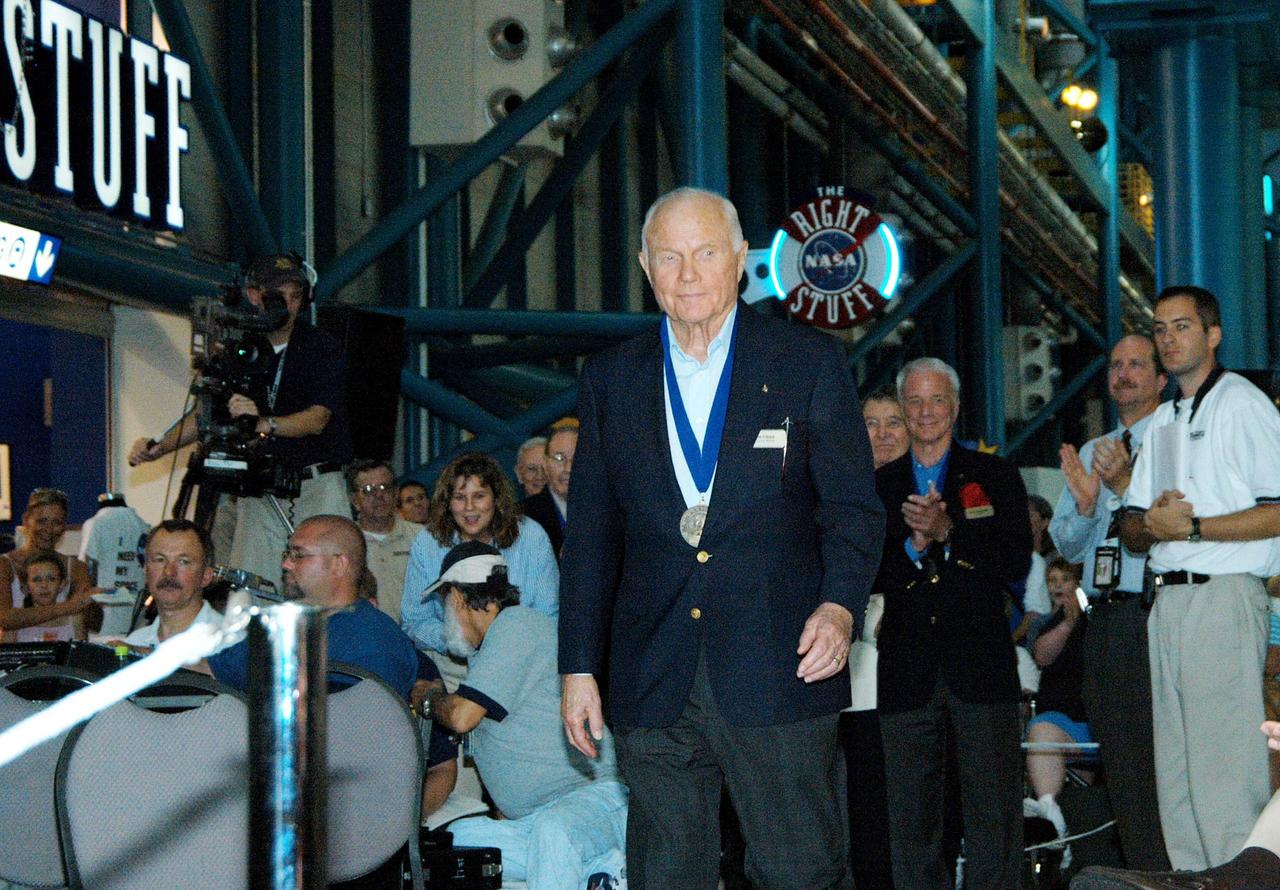
KENNEDY SPACE CENTER, FLA. -- Before the induction ceremony of five space program heroes into the U.S. Astronaut Hall of Fame, former astronaut John Glenn Jr. is greeted with applause as he is introduced as a previous inductee. One of America's original Mercury Seven astronauts, in 1962 he became the first American to orbit the Earth. Twenty-six years later, at age 77, he spent nine days in space aboard Space Shuttle Discovery. The ceremony was held at the Apollo/Saturn V Center at KSC. New inductees are Richard O. Covey, commander of the Hubble Space Telescope repair mission; Norman E. Thagard, the first American to occupy Russia’s Mir space station; the late Francis R. "Dick" Scobee, commander of the ill-fated 1986 Challenger mission; Kathryn D. Sullivan, the first American woman to walk in space; and Frederick D. Gregory, the first African-American to command a space mission and the current NASA deputy administrator. The U.S. Astronaut Hall of Fame opened in 1990 to provide a place where space travelers could be remembered for their participation and accomplishments in the U.S. space program. The five inductees join 52 previously honored astronauts from the ranks of the Gemini, Apollo, Skylab, Apollo-Soyuz, and Space Shuttle programs.
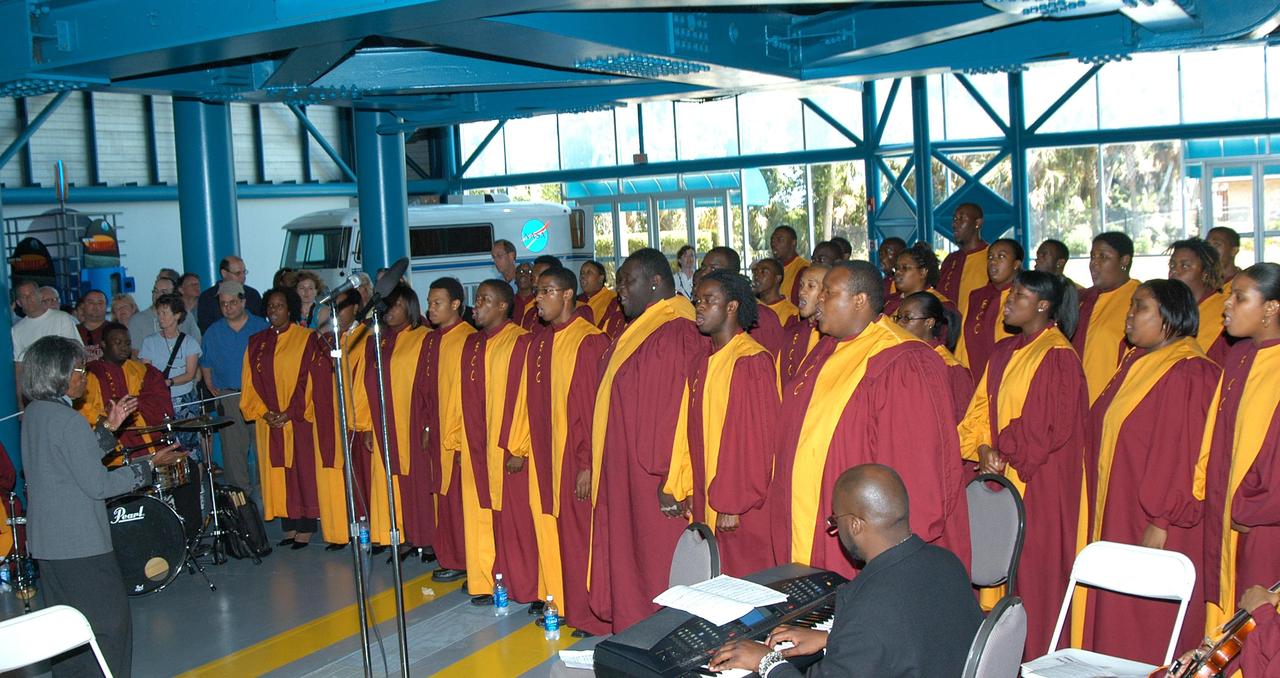
KENNEDY SPACE CENTER, FLA. -- Inside the Apollo/Saturn V Center at the Kennedy Space Center Visitor Complex, the Bethune-Cookman Choir performs prior to the induction ceremony of five space program heroes into the U.S. Astronaut Hall of Fame. New inductees are Richard O. Covey, commander of the Hubble Space Telescope repair mission; Norman E. Thagard, the first American to occupy Russia’s Mir space station; the late Francis R. "Dick" Scobee, commander of the ill-fated 1986 Challenger mission; Kathryn D. Sullivan, the first American woman to walk in space; and Frederick D. Gregory, the first African-American to command a space mission and the current NASA deputy administrator. The U.S. Astronaut Hall of Fame opened in 1990 to provide a place where space travelers could be remembered for their participation and accomplishments in the U.S. space program. To be eligible for induction, an individual must have been a U.S. citizen, a NASA astronaut, and out of the active astronaut corps at least five years. The five inductees join 52 previously honored astronauts from the ranks of the Gemini, Apollo, Skylab, Apollo-Soyuz, and Space Shuttle programs.
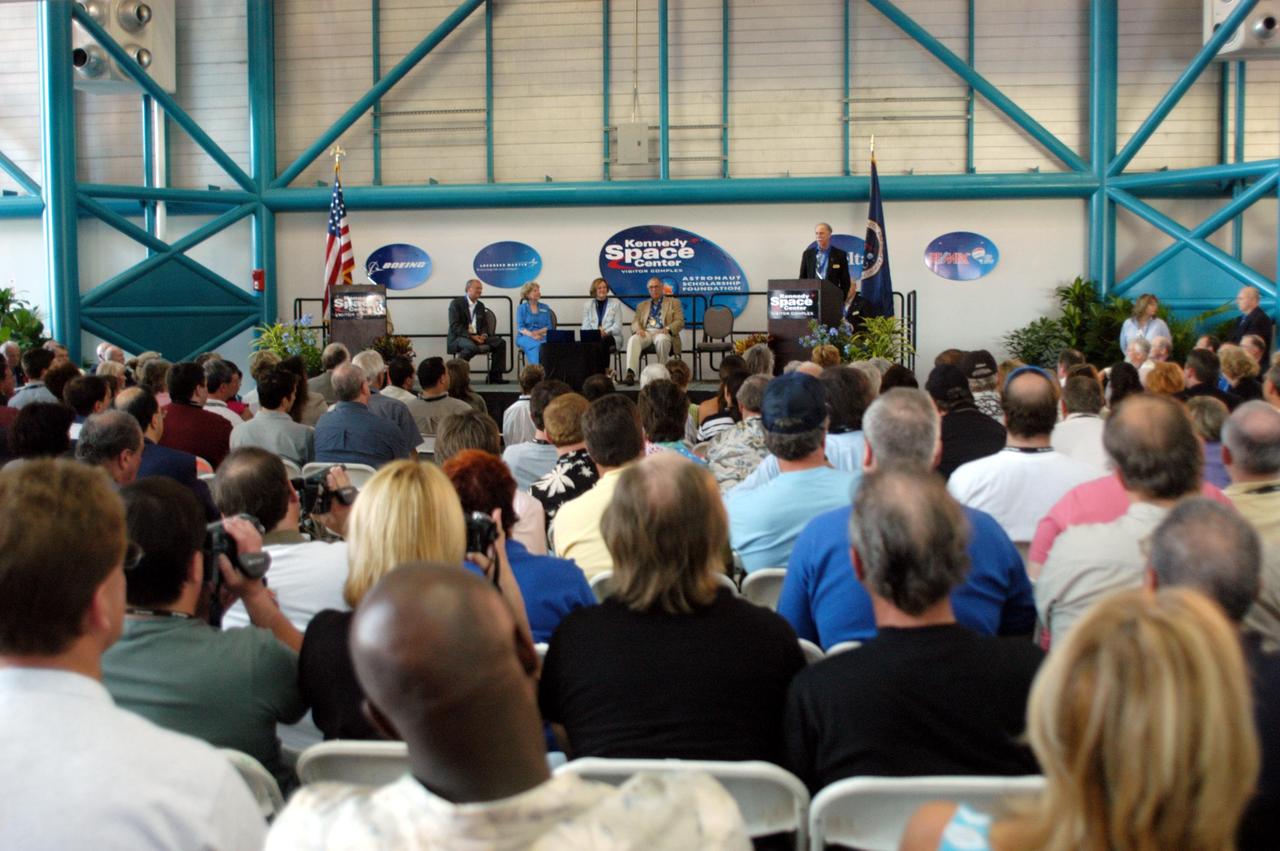
KENNEDY SPACE CENTER, FLA. -- At the Kennedy Space Center Visitor Complex, Richard O. Covey, commander of the Hubble Space Telescope repair mission, speaks to guests at the induction of five space program heroes into the U.S. Astronaut Hall of Fame. Seated from left, they are Norman E. Thagard, the first American to occupy Russia’s Mir space station; June Scobee, on behalf of her late husband Francis R. "Dick" Scobee, commander of the ill-fated 1986 Challenger mission; Kathryn D. Sullivan, the first American woman to walk in space; and Frederick D. Gregory, the first African-American to command a space mission and the current NASA deputy administrator. The U.S. Astronaut Hall of Fame opened in 1990 to provide a place where space travelers could be remembered for their participation and accomplishments in the U.S. space program. To be eligible for induction, an individual must have been a U.S. citizen, a NASA astronaut, and out of the active astronaut corps at least five years. The five inductees join 52 previously honored astronauts from the ranks of the Gemini, Apollo, Skylab, Apollo-Soyuz, and Space Shuttle programs.
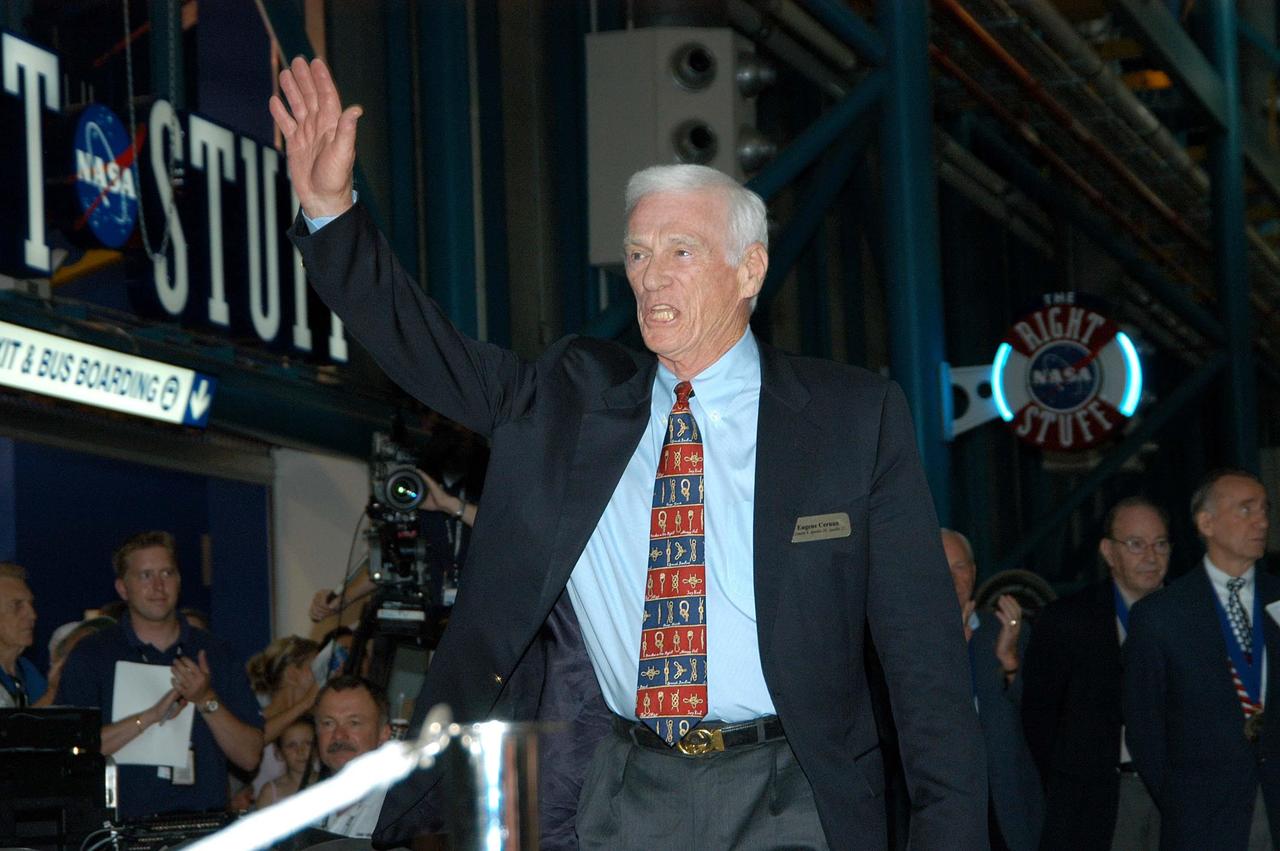
KENNEDY SPACE CENTER, FLA. -- Before the induction ceremony of five space program heroes into the U.S. Astronaut Hall of Fame, former astronaut Gene Cernan waves to guests as he is introduced as a previous inductee. He walked in space on Gemini 9, orbited the Moon on Apollo 10 and walked on the Moon as commander of Apollo 17. The ceremony was held at the Apollo/Saturn V Center at KSC. New inductees are Richard O. Covey, commander of the Hubble Space Telescope repair mission; Norman E. Thagard, the first American to occupy Russia’s Mir space station; the late Francis R. "Dick" Scobee, commander of the ill-fated 1986 Challenger mission; Kathryn D. Sullivan, the first American woman to walk in space; and Frederick D. Gregory, the first African-American to command a space mission and the current NASA deputy administrator. The U.S. Astronaut Hall of Fame opened in 1990 to provide a place where space travelers could be remembered for their participation and accomplishments in the U.S. space program. The five inductees join 52 previously honored astronauts from the ranks of the Gemini, Apollo, Skylab, Apollo-Soyuz, and Space Shuttle programs.
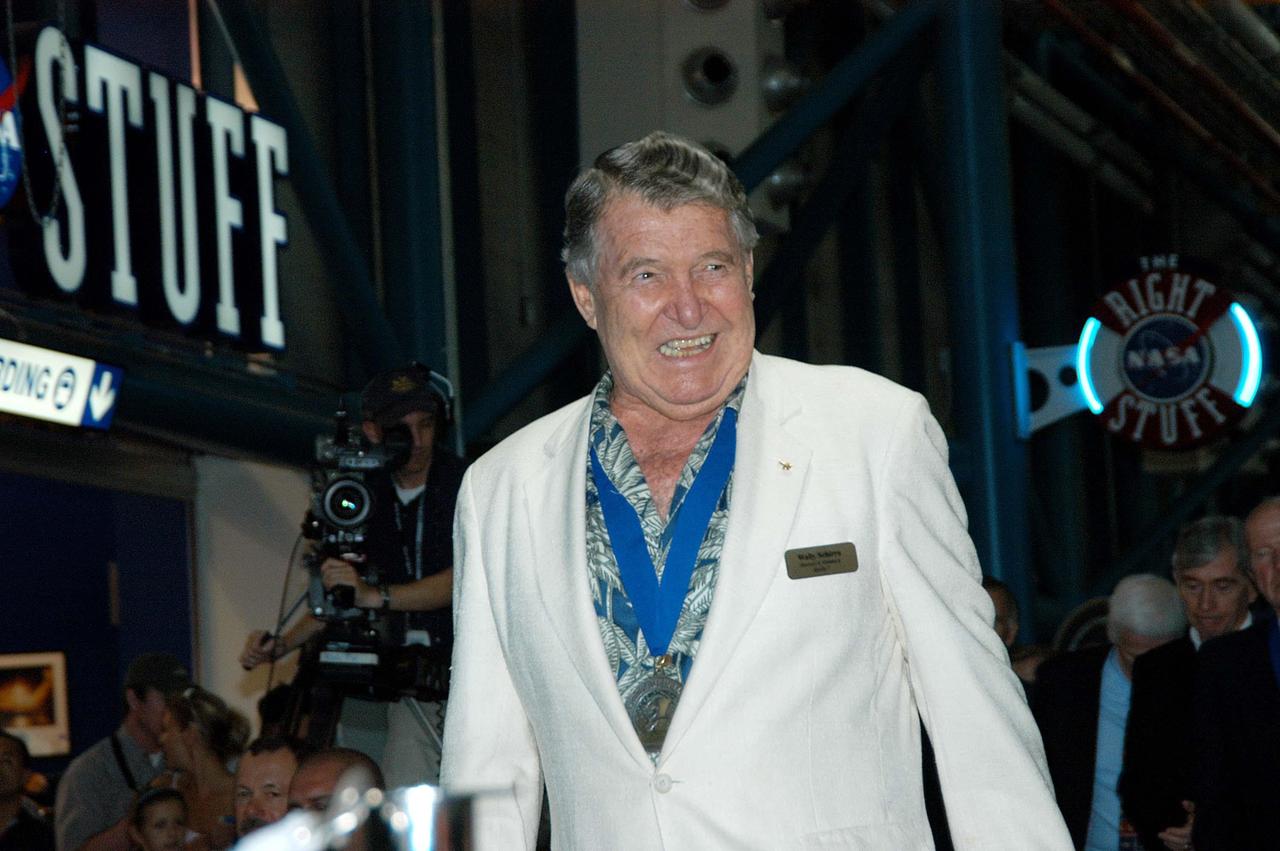
KENNEDY SPACE CENTER, FLA. -- Before the induction ceremony of five space program heroes into the U.S. Astronaut Hall of Fame, former astronaut Wally Schirra is greeted with applause as he is introduced as a previous inductee. One of America's original Mercury Seven astronauts, Schirra is the only one who flew in all three of the nation's pioneering space programs, Mercury, Gemini, and Apollo. The ceremony was held at the Apollo/Saturn V Center at KSC. New inductees are Richard O. Covey, commander of the Hubble Space Telescope repair mission; Norman E. Thagard, the first American to occupy Russia’s Mir space station; the late Francis R. "Dick" Scobee, commander of the ill-fated 1986 Challenger mission; Kathryn D. Sullivan, the first American woman to walk in space; and Frederick D. Gregory, the first African-American to command a space mission and the current NASA deputy administrator. The U.S. Astronaut Hall of Fame opened in 1990 to provide a place where space travelers could be remembered for their participation and accomplishments in the U.S. space program. The five inductees join 52 previously honored astronauts from the ranks of the Gemini, Apollo, Skylab, Apollo-Soyuz, and Space Shuttle programs.
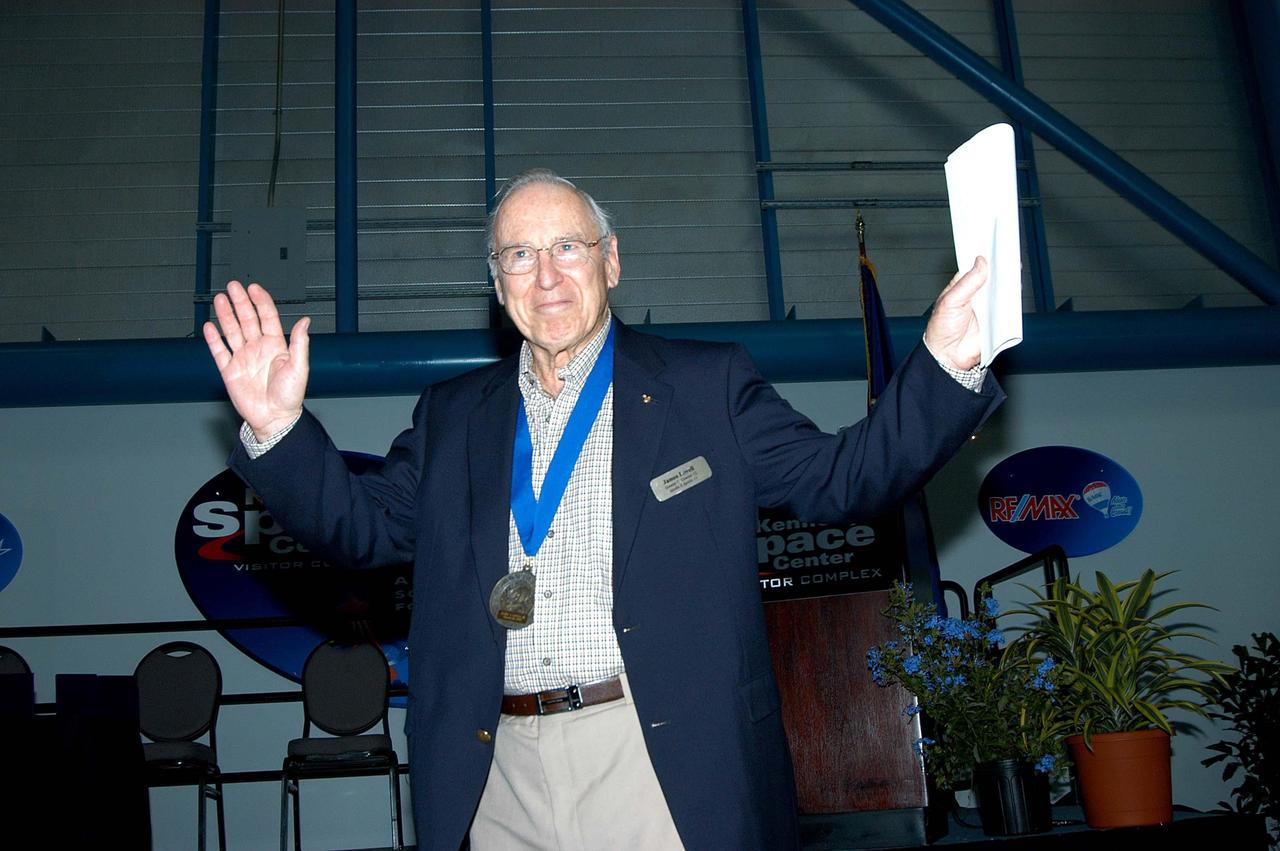
KENNEDY SPACE CENTER, FLA. -- Former astronaut Jim Lovell acknowledges the applause as he is introduced as a previous inductee into the U.S. Astronaut Hall of Fame. He and other Hall of Fame members were present for the induction of five new space program heroes into the U.S. Astronaut Hall of Fame: Richard O. Covey, commander of the Hubble Space Telescope repair mission; Norman E. Thagard, the first American to occupy Russia’s Mir space station; the late Francis R. "Dick" Scobee, commander of the ill-fated 1986 Challenger mission; Kathryn D. Sullivan, the first American woman to walk in space; and Frederick D. Gregory, the first African-American to command a space mission and the current NASA deputy administrator. Lovell piloted Gemini 7, commanded Gemini 12, orbited the Moon on Apollo 8 and commanded the aborted Apollo 13 moon flight. The induction ceremony was held at the Apollo/Saturn V Center at KSC. The U.S. Astronaut Hall of Fame opened in 1990 to provide a place where space travelers could be remembered for their participation and accomplishments in the U.S. space program. The five inductees join 52 previously honored astronauts from the ranks of the Gemini, Apollo, Skylab, Apollo-Soyuz, and Space Shuttle programs.
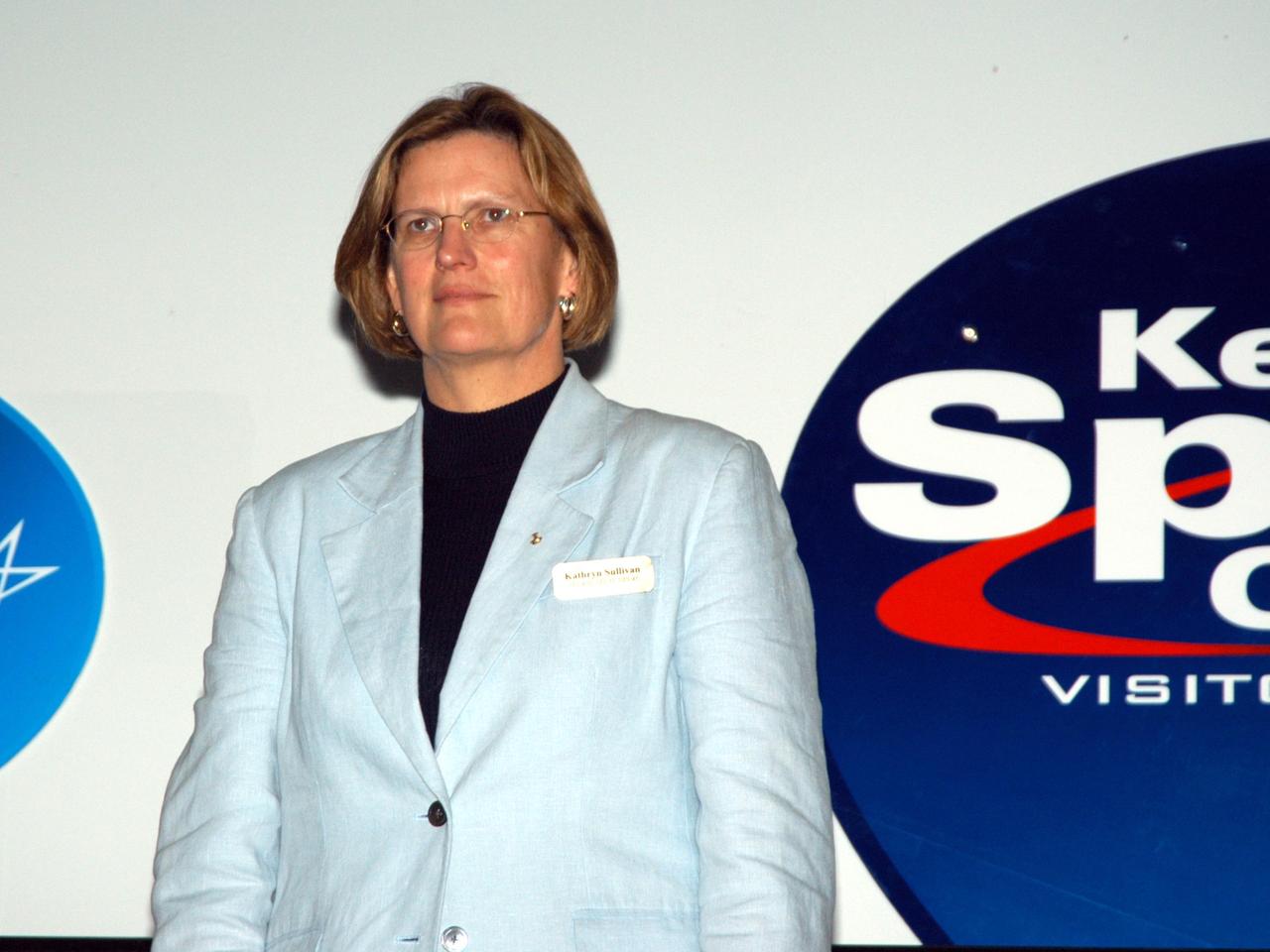
KENNEDY SPACE CENTER, FLA. -- At the Kennedy Space Center Visitor Complex, Dr. Kathryn D. Sullivan, the first American woman to walk in space, is inducted into the U.S. Astronaut Hall of Fame. Also chosen for this honor in 2004 are Richard O. Covey, commander of the Hubble Space Telescope repair mission; Frederick D. Gregory, the first African-American to command a space mission; Norman E. Thagard, the first American to occupy Russia's Mir space station; and the late Francis R. "Dick" Scobee, commander of the ill-fated 1986 Challenger mission. The U.S. Astronaut Hall of Fame opened in 1990 to provide a place where space travelers could be remembered for their participation and accomplishments in the U.S. space program. To be eligible for induction, an individual must have been a U.S. citizen, a NASA astronaut, and out of the active astronaut corps at least five years. The five inductees join 52 previously honored astronauts from the ranks of the Gemini, Apollo, Skylab, Apollo-Soyuz, and Space Shuttle programs.
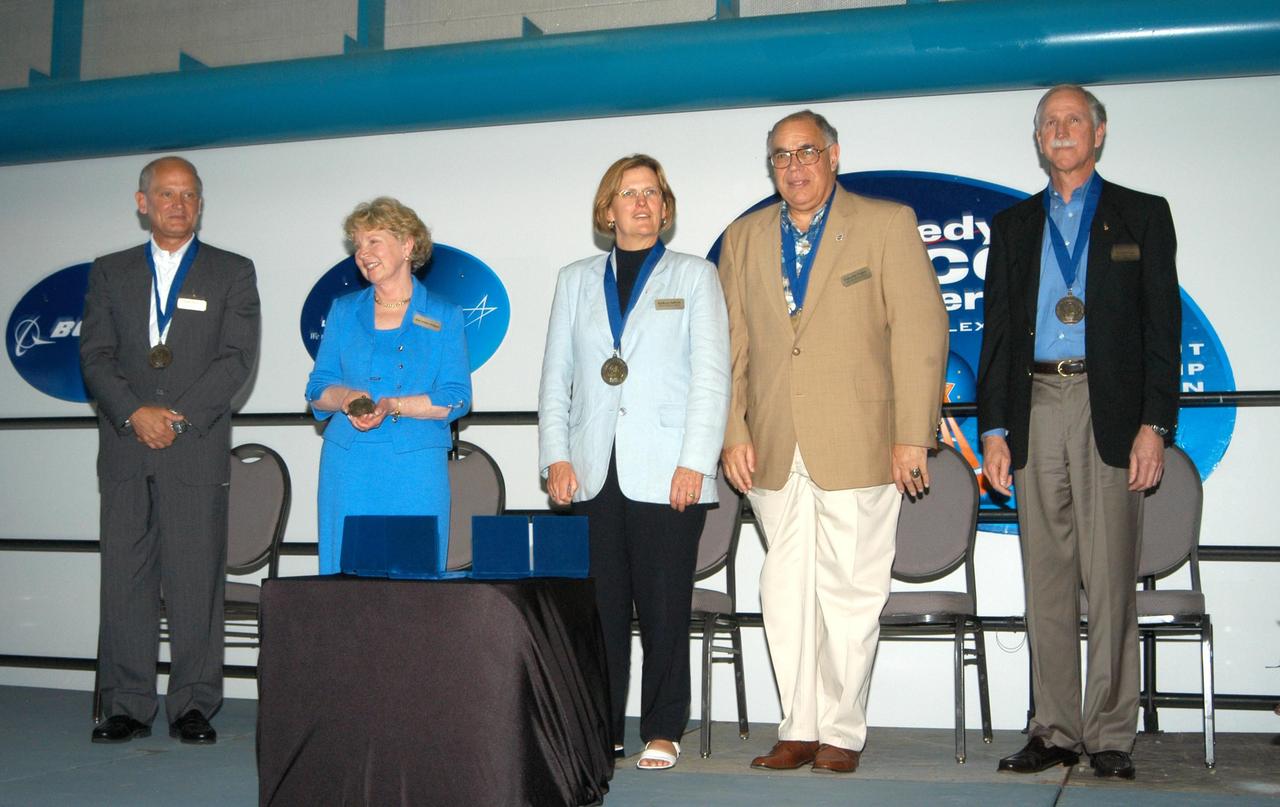
KENNEDY SPACE CENTER, FLA. -- At the Kennedy Space Center Visitor Complex, five space program heroes accept the accolades of the crowd attending their induction into the U.S. Astronaut Hall of Fame. From left, they are Norman E. Thagard, the first American to occupy Russia's Mir space station; June Scobee, on behalf of her late husband Francis R. "Dick" Scobee, commander of the ill-fated 1986 Challenger mission; Kathryn D. Sullivan, the first American woman to walk in space; Frederick D. Gregory, the first African-American to command a space mission and the current NASA Deputy Administrator; and Richard O. Covey, commander of the Hubble Space Telescope repair mission. The U.S. Astronaut Hall of Fame opened in 1990 to provide a place where space travelers could be remembered for their participation and accomplishments in the U.S. space program. To be eligible for induction, an individual must have been a U.S. citizen, a NASA astronaut, and out of the active astronaut corps at least five years. The five inductees join 52 previously honored astronauts from the ranks of the Gemini, Apollo, Skylab, Apollo-Soyuz, and Space Shuttle programs.
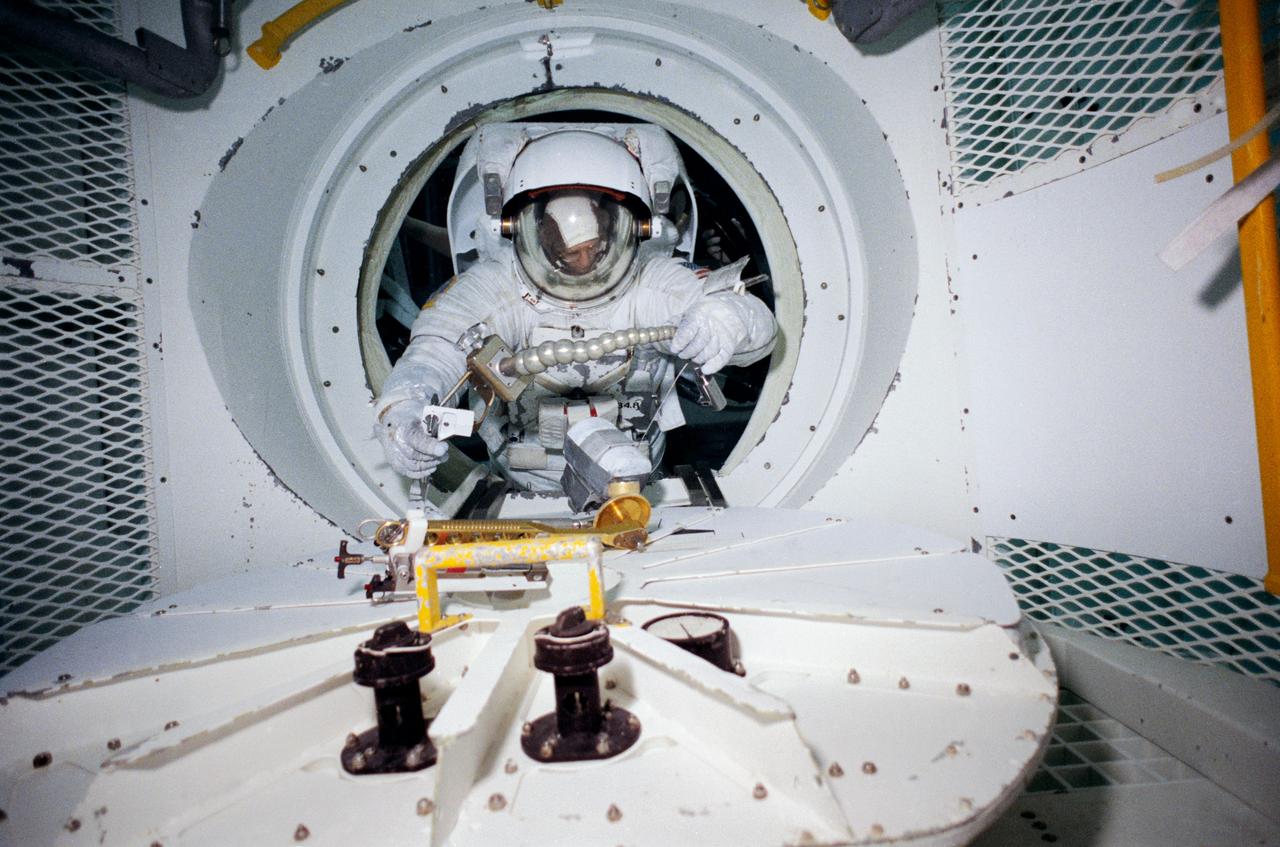
S90-30521 (20 Feb 1990) --- Though no extravehicular activity is planned for STS-31, two crewmembers train for contingencies that would necessitate leaving their shirt sleeve environment of Discovery's cabin and performing chores with their Hubble Space Telescope payload or related hardware. Astronaut Kathryn D. Sullivan, mission specialist, is seen egressing the hatchway of the airlock of a full scale mockup of a Shuttle cabin to interface with an HST mockup in JSC's 25.-ft. deep pool in the weightless environment training facility (WET-F). Two SCUBA-equipped divers who assisted in the training session are also seen. Astronaut Bruce McCandless II, mission specialist, is out of frame.
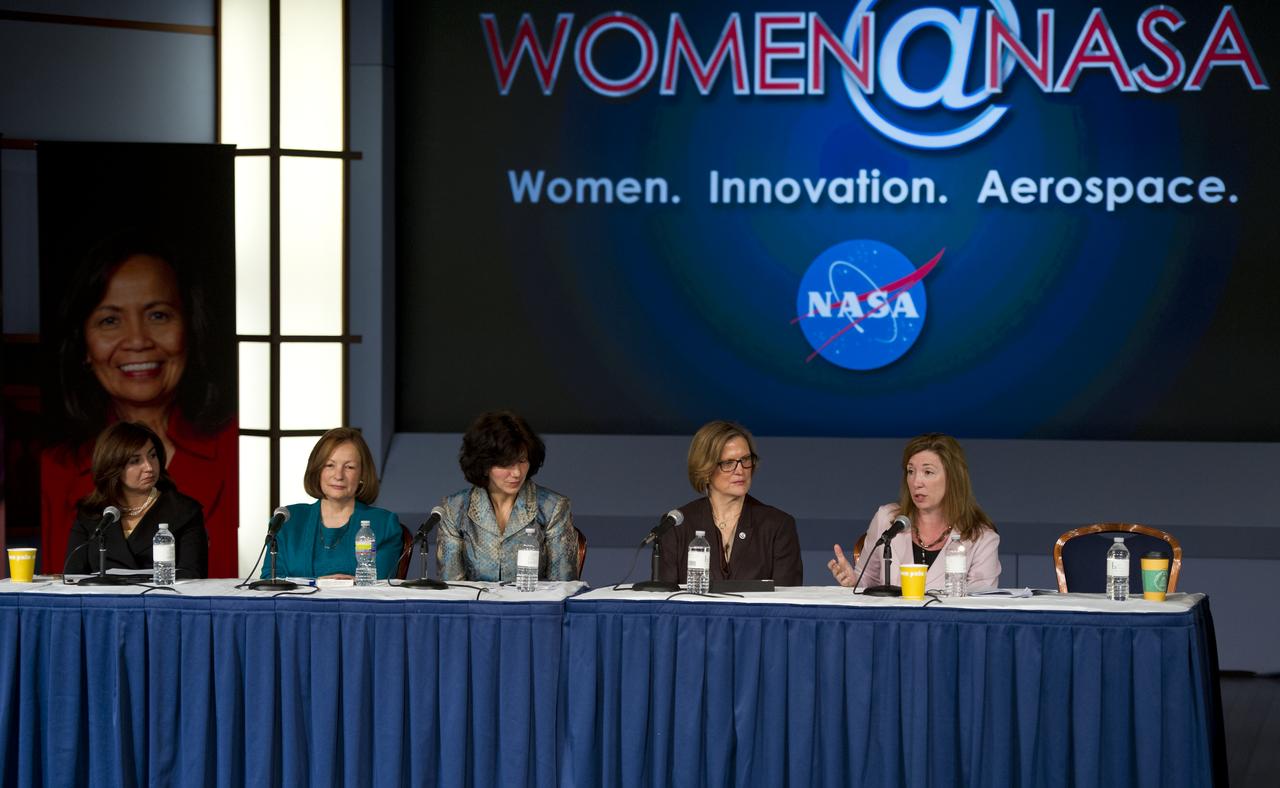
Lori Garver (far right) NASA Deputy Administrator, participates in a panel discussion at the Women, Innovation and Aerospace event celebrating Women's History Month at the George Washington University Jack Morton Auditorium, Thursday, March 8, 2012 in Washington. Garver is seen with Kathy Sullivan, NOAA Deputy Administrator; Catherine Didion, Senior Fellow, National Academy of Engineering; Marcia Smith, President, spacepolicyonline.com and Veronica Villalobos, Director, Office of Diversity and Inclusion, Office of Personnel Management (far left). The WIA day-long event will help to foster a discussion for students and early career professionals about how to continue to encourage women to enter and succeed in the field of aerospace. Photo Credit: (NASA/Carla Cioffi)
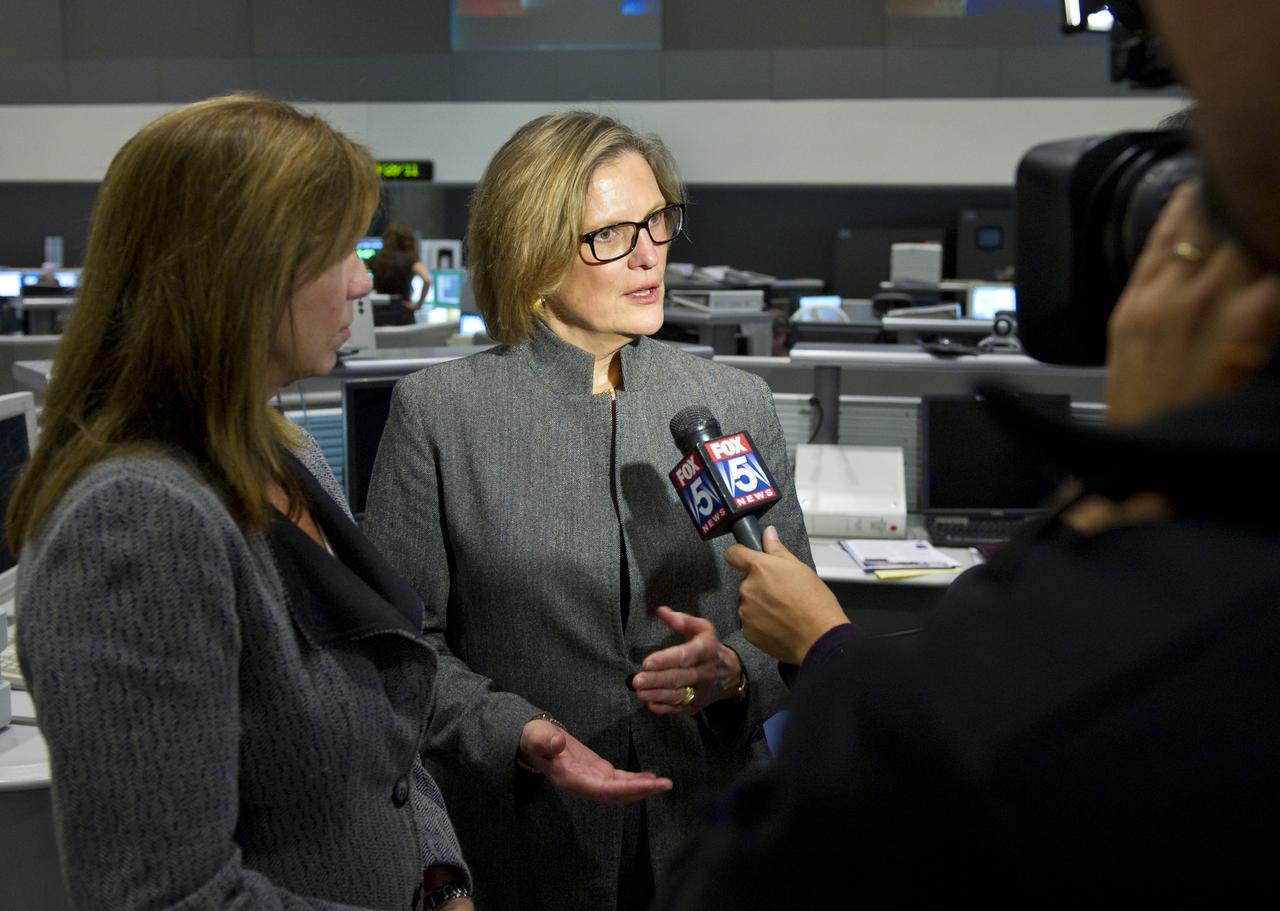
Dr. Kathy Sullivan, center, Deputy Administrator of the National Oceanic and Atmospheric Administration (NOAA) and former NASA astronaut is interviewed by a local television network at NOAA's Satellite Operations Facility in Suitland, Md. after the successful launch of the National Polar-orbiting Operational Environmental Satellite System Preparatory Project (NPP) on Friday, Oct. 28, 2011. NPP is a joint venture between NASA and NOAA, and is the nation's newest Earth-observing satellite, which will provide data on climate change science, allow for accurate weather forecasts and advance warning for severe weather. NPP was launched from Vandenberg Air Force Base in California. Photo Credit: (NASA/Carla Cioffi)
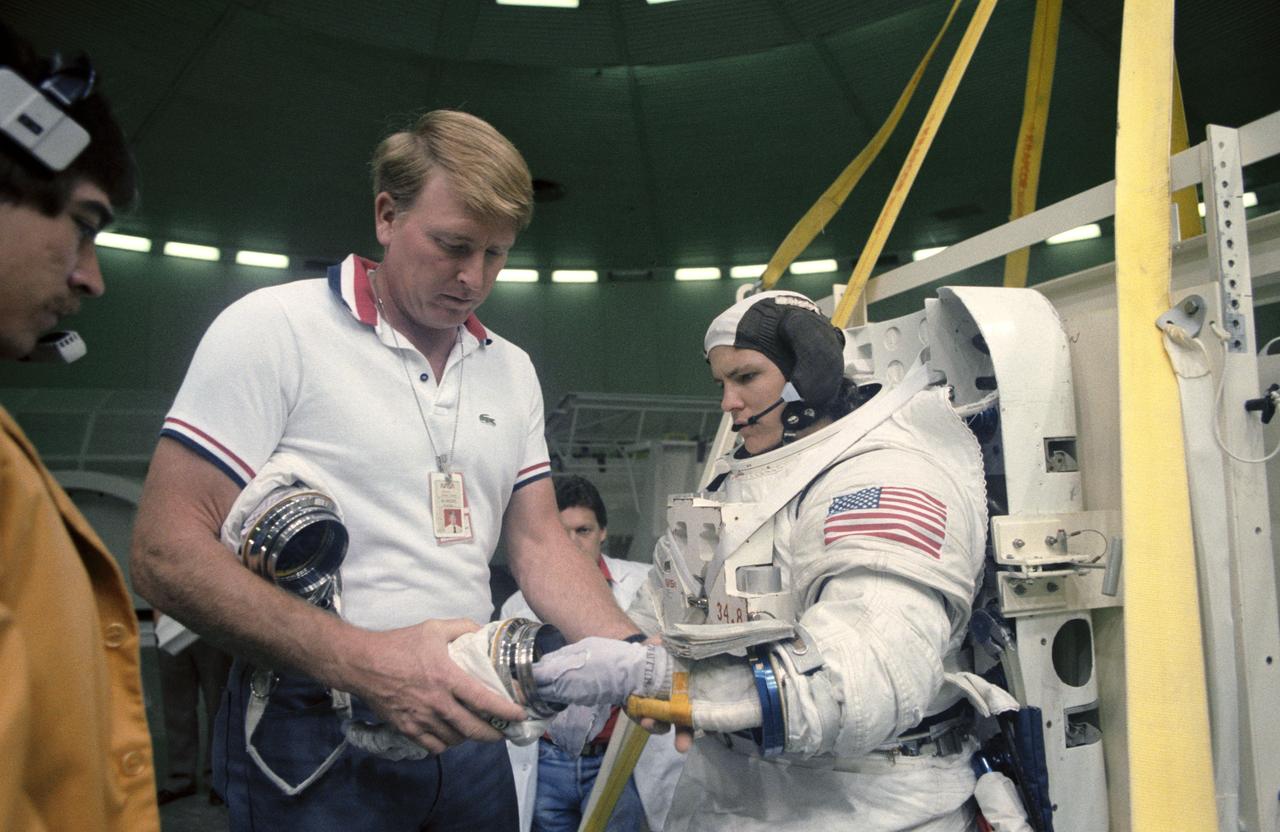
S84-33898 (21 May 1984) --- Astronaut Jon A. McBride, 41-G pilot, assists his crewmate, Astronaut Kathryn D. Sullivan with the glove portion of her extravehicular mobility unit (EMU) prior to Dr. Sullivan's underwater session in the Johnson Space Center's weightless environment training facility (WET-F). Mission specialists Sullivan and David C. Leestma are scheduled for extravehicular activity (EVA) on the Columbia for NASA's 17th scheduled flight.
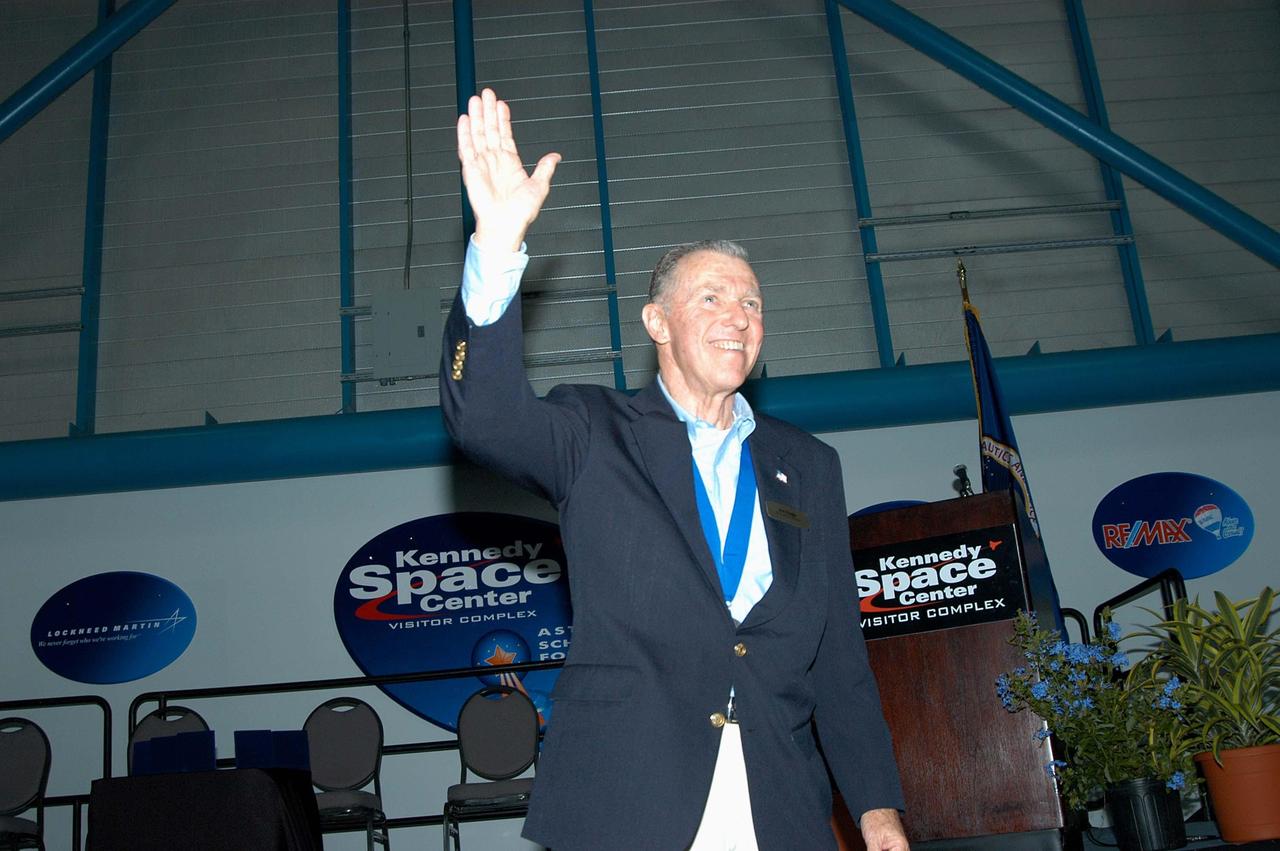
KENNEDY SPACE CENTER, FLA. -- Former astronaut Joe Engle acknowledges the applause as he is introduced as a previous inductee into the U.S. Astronaut Hall of Fame. He and other Hall of Fame members were present for the induction of five new space program heroes into the U.S. Astronaut Hall of Fame: Richard O. Covey, commander of the Hubble Space Telescope repair mission; Norman E. Thagard, the first American to occupy Russia’s Mir space station; the late Francis R. "Dick" Scobee, commander of the ill-fated 1986 Challenger mission; Kathryn D. Sullivan, the first American woman to walk in space; and Frederick D. Gregory, the first African-American to command a space mission and the current NASA deputy administrator. Engle made 16 flights in the X-15 rocket plane before he became a NASA astronaut and flew two Space Shuttle missions. In 1981, he commanded the second flight of Columbia, the first manned spacecraft to be reflown in space, and in 1985 he commanded a five-man crew on the 20th shuttle flight, a satellite-deploy and repair mission. The induction ceremony was held at the Apollo/Saturn V Center at KSC. The U.S. Astronaut Hall of Fame opened in 1990 to provide a place where space travelers could be remembered for their participation and accomplishments in the U.S. space program. The five inductees join 52 previously honored astronauts from the ranks of the Gemini, Apollo, Skylab, Apollo-Soyuz, and Space Shuttle programs.
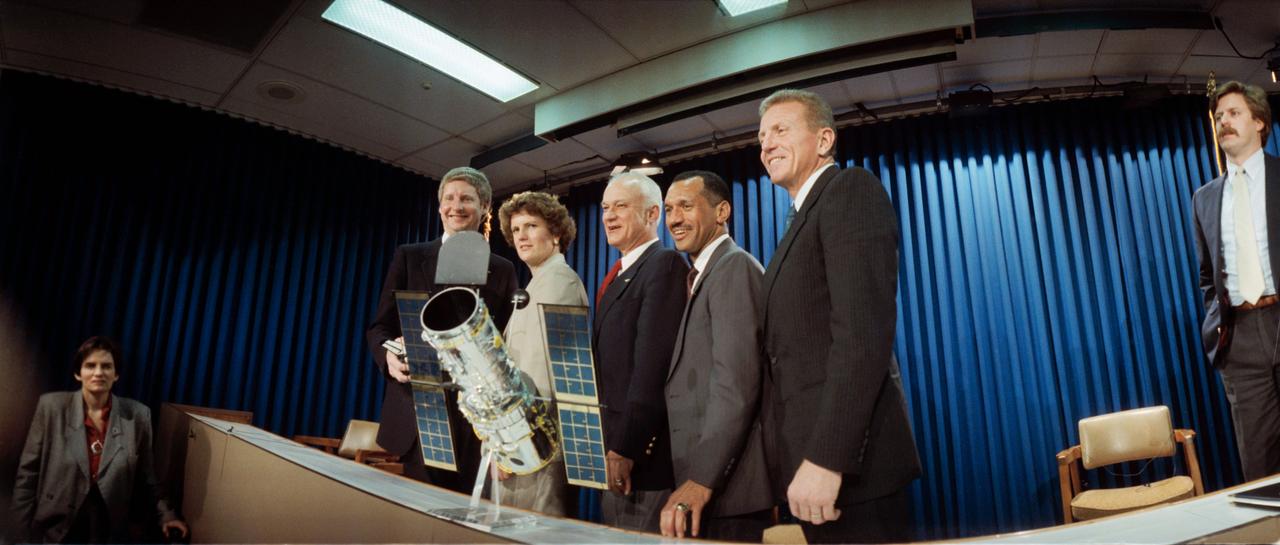
PHOTOS OF STS-31 (DISCOVERY) CREW WITH MODELS OF THE HUBBLE SPACE TELESCOPE (HST) AND SPACE SHUTTLE AT T-30 (THIRTY DAYS BEFORE LAUNCH) BRIEFING 03/22/90 IN THE AUDITORIUM AND PUBLIC AFFAIRS FACILITY BLDG 2. GROUP PHOTOS OF LOREN J. SHRIVER, CHARLES F. BOLDEN, STEVEN A. HAWLEY, BRUCE MCCANDLESS, AND KATHRYN D. SULLIVAN (32748, 32750, 32758-60 (WIDE ANGLE)) AND INDIVIDUAL PHOTOS OF HAWLEY (32747), MCCANDLESS (32751), SULLIVAN (32753-4), BOLDEN (32755), AND SHRIVER (32757) INCLUDED. ALSO PHOTGRAPHED TOGETHER ARE SULLIVAN, HAWLEY, MCCANDLESS (32749) AND BOLDEN, SHRIVER (32752, 32756).
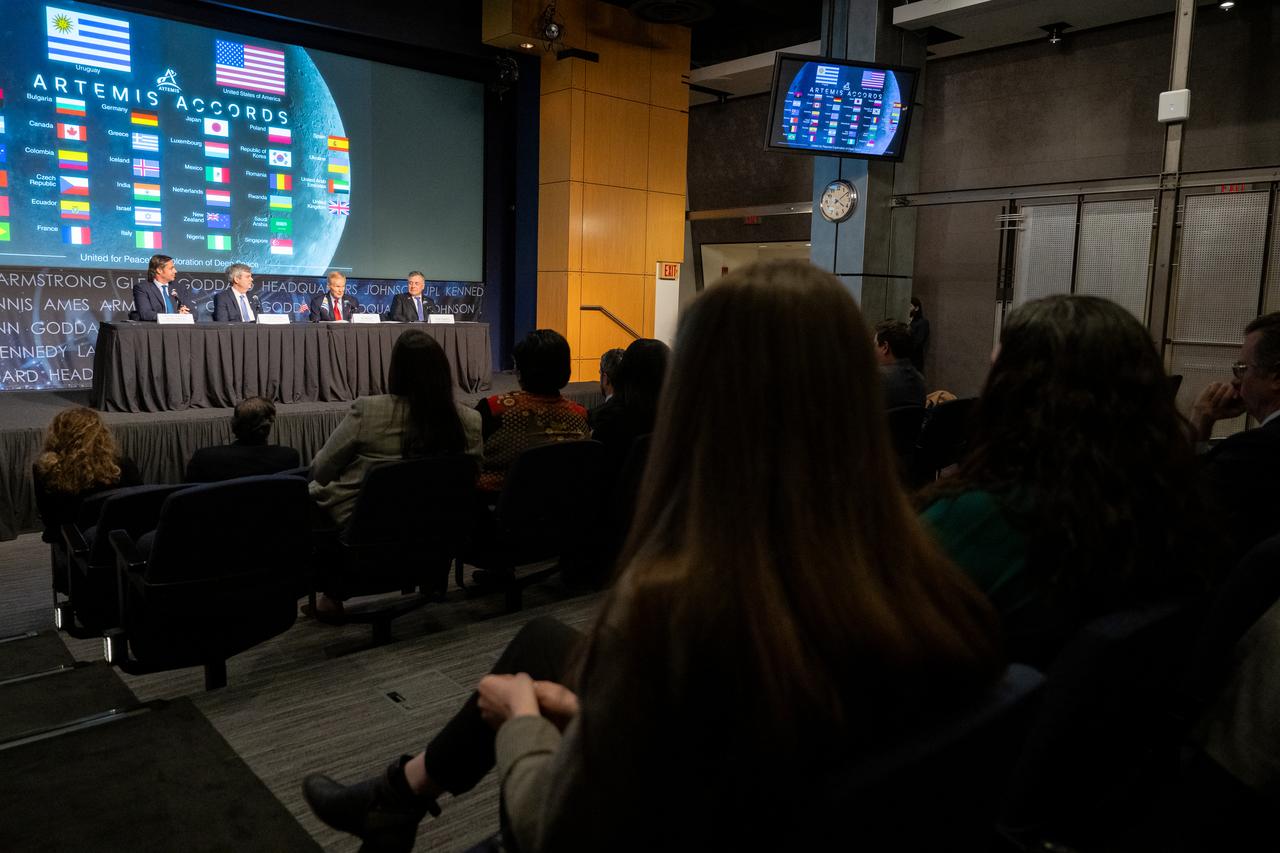
From left to right, Uruguayan Ambassador to the United States Andrés Augusto Durán Hareau, U.S. Department of State Deputy Assistant Secretary Kevin Sullivan, NASA Administrator Bill Nelson, and Uruguayan Foreign Minister Omar Paganini are seen during an Artemis Accords signing ceremony, Thursday, Feb. 15, 2024, at the Mary W. Jackson NASA Headquarters building in Washington. Uruguay is the 36th country to sign the Artemis Accords, which establish a practical set of principles to guide space exploration cooperation among nations participating in NASA’s Artemis program. Photo Credit: (NASA/Keegan Barber)
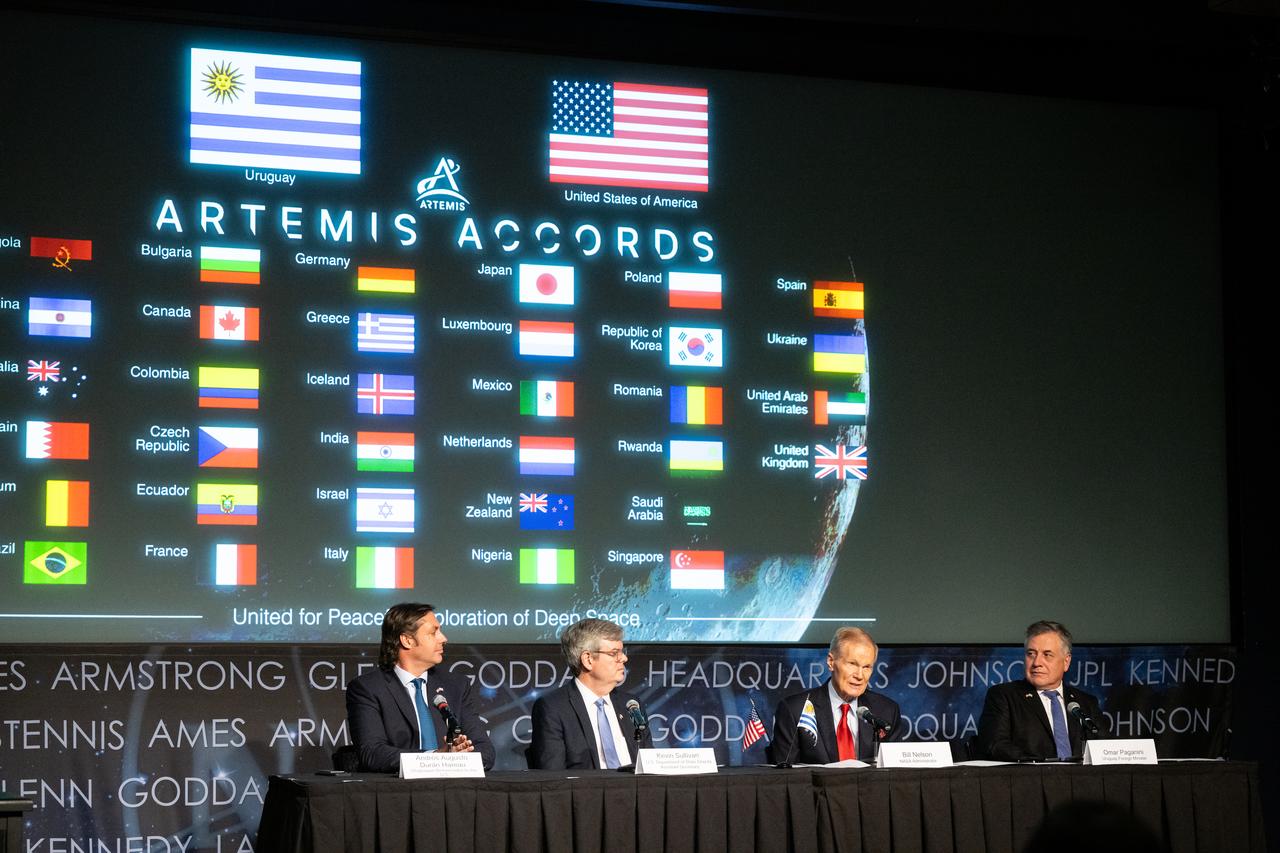
From left to right, Uruguayan Ambassador to the United States Andrés Augusto Durán Hareau, U.S. Department of State Deputy Assistant Secretary Kevin Sullivan, NASA Administrator Bill Nelson, and Uruguayan Foreign Minister Omar Paganini are seen during an Artemis Accords signing ceremony, Thursday, Feb. 15, 2024, at the Mary W. Jackson NASA Headquarters building in Washington. Uruguay is the 36th country to sign the Artemis Accords, which establish a practical set of principles to guide space exploration cooperation among nations participating in NASA’s Artemis program. Photo Credit: (NASA/Keegan Barber)
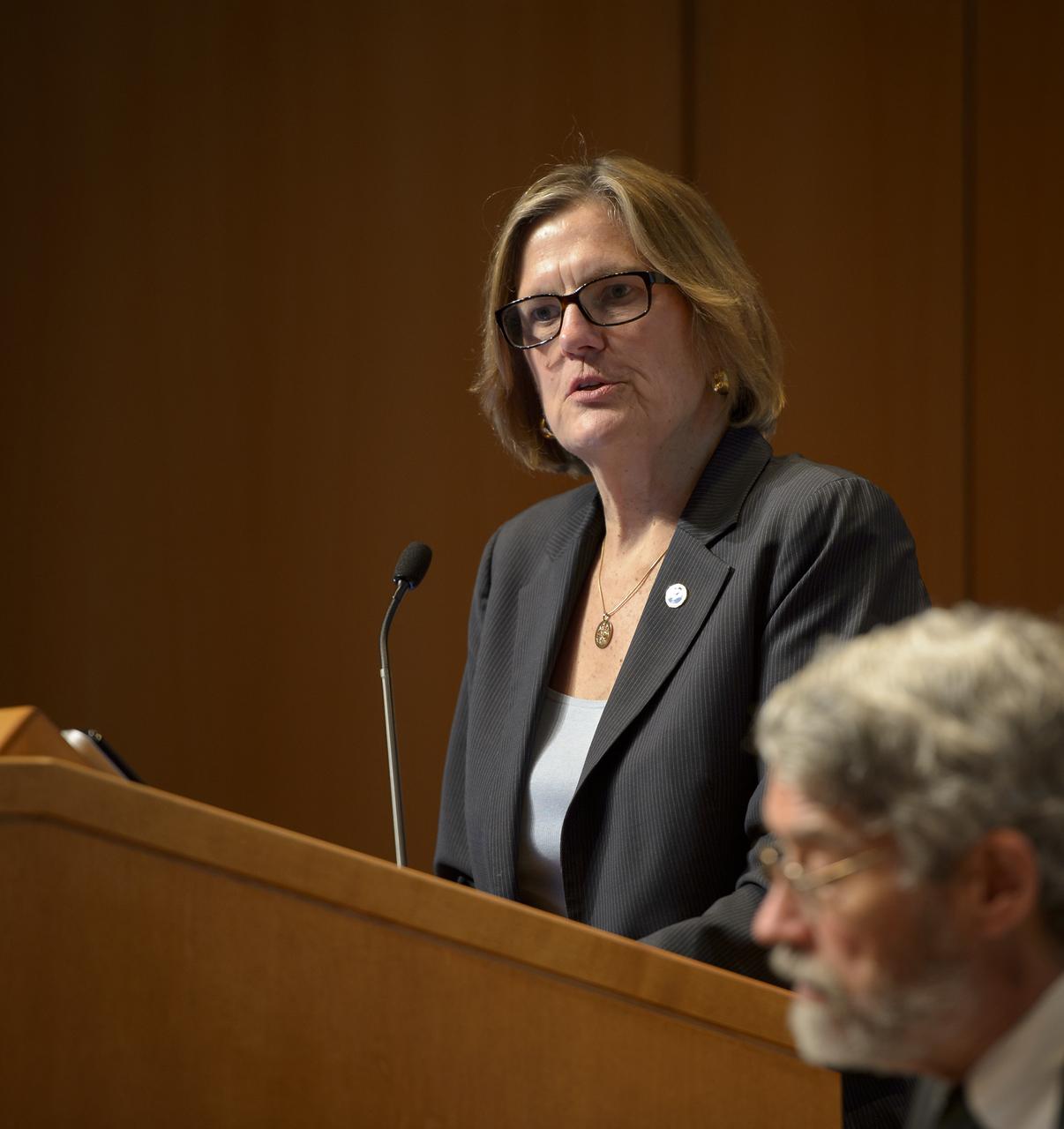
Dr. Kathryn D. Sullivan, Acting Under Secretary of Commerce for Oceans and Atmosphere and Acting NOAA Administrator, delivers remarks during a White House Office of Science and Technology Policy (OSTP) Fiscal Year 2014 budget briefing held with with Dr. John P. Holdren, Director of OSTP, Patricia Falcone of OSTP, Charlie Bolden from NASA, Francis Collins from NIH, and Cora Marrett from NSF, at the American Association for the Advancement of Science (AAAS) on Wednesday, April 10, 2013 in Washington. Photo Credit: (NASA/Bill Ingalls)
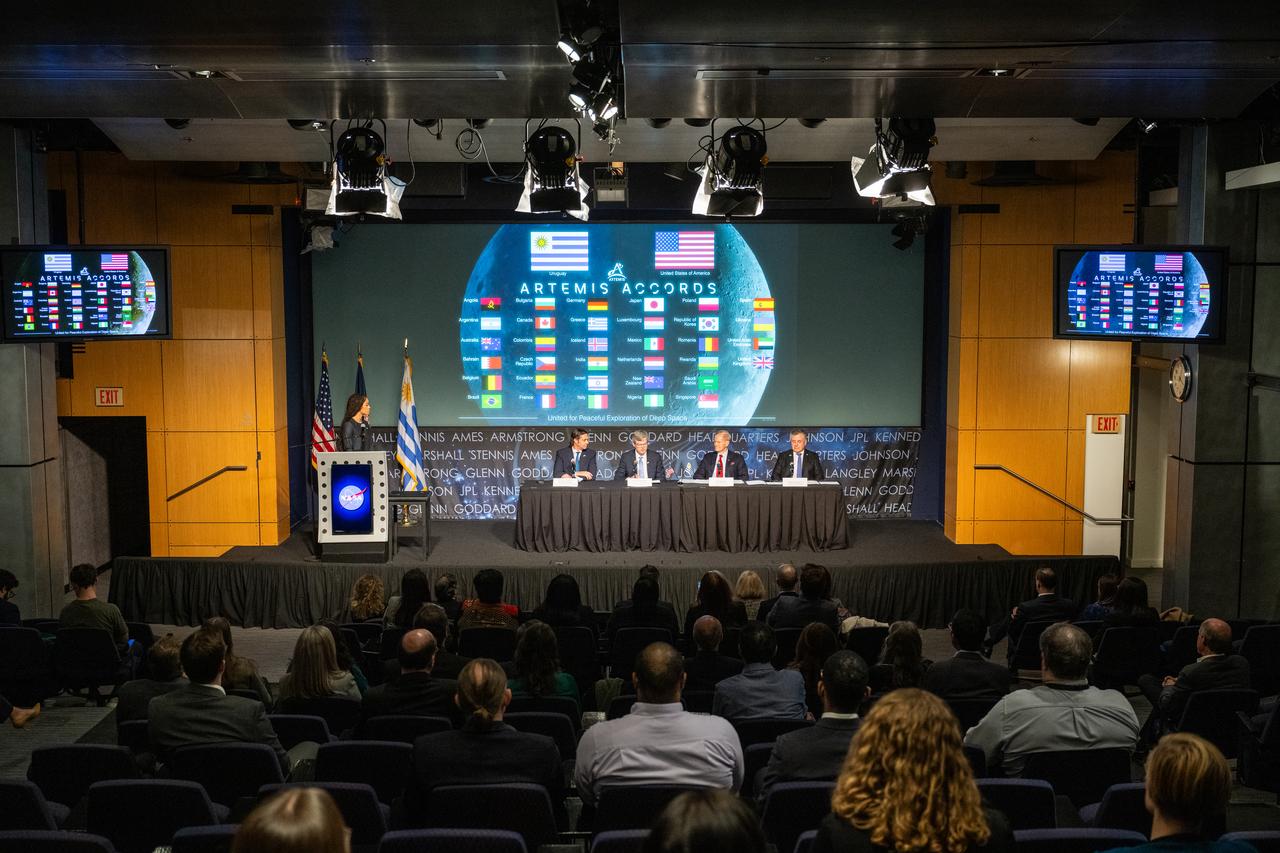
From left to right, Uruguayan Ambassador to the United States Andrés Augusto Durán Hareau, U.S. Department of State Deputy Assistant Secretary Kevin Sullivan, NASA Administrator Bill Nelson, and Uruguayan Foreign Minister Omar Paganini are seen during an Artemis Accords signing ceremony, Thursday, Feb. 15, 2024, at the Mary W. Jackson NASA Headquarters building in Washington. Uruguay is the 36th country to sign the Artemis Accords, which establish a practical set of principles to guide space exploration cooperation among nations participating in NASA’s Artemis program. Photo Credit: (NASA/Keegan Barber)
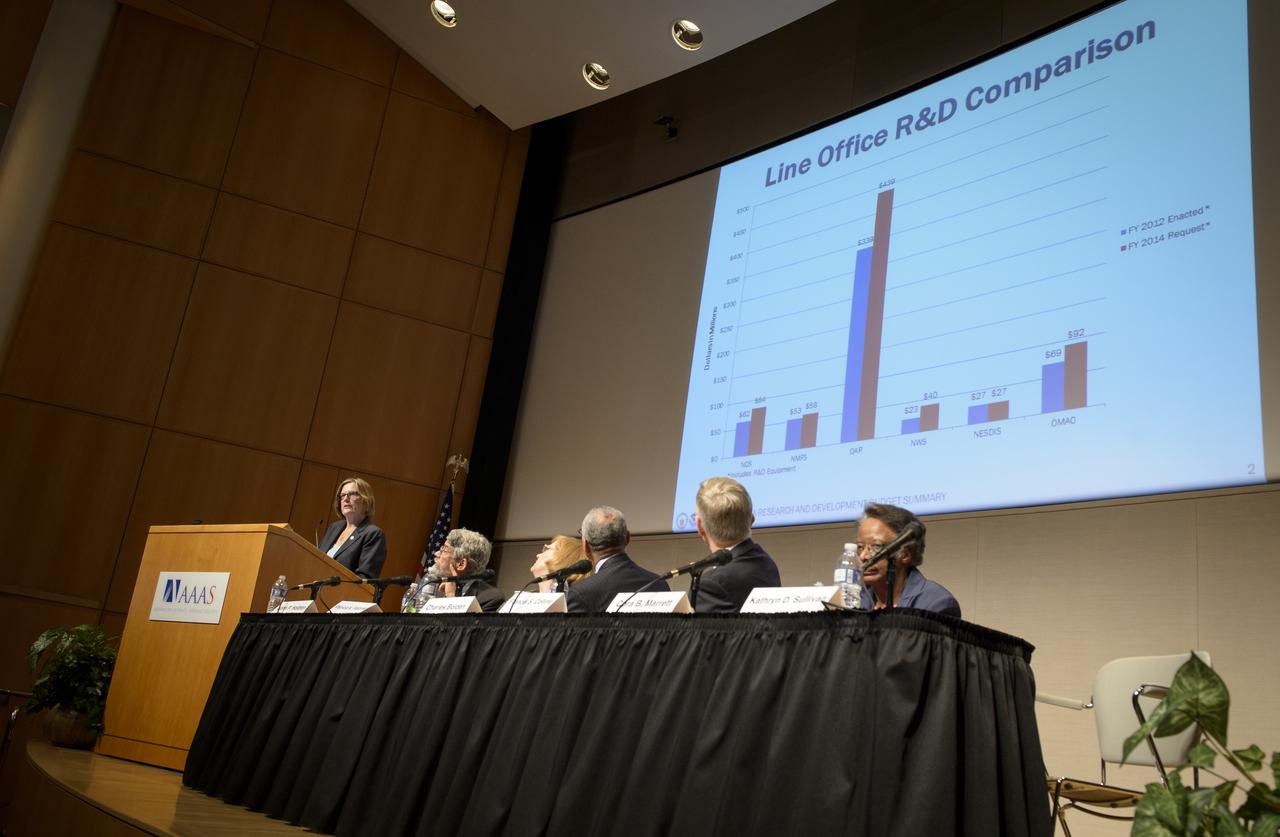
Dr. Kathryn D. Sullivan, Acting Under Secretary of Commerce for Oceans and Atmosphere and Acting NOAA Administrator, delivers remarks during a White House Office of Science and Technology Policy (OSTP) Fiscal Year 2014 budget briefing held with with Dr. John P. Holdren, Director of OSTP, Patricia Falcone of OSTP, Charlie Bolden from NASA, Francis Collins from NIH, and Cora Marrett from NSF, at the American Association for the Advancement of Science (AAAS) on Wednesday, April 10, 2013 in Washington. Photo Credit: (NASA/Bill Ingalls)
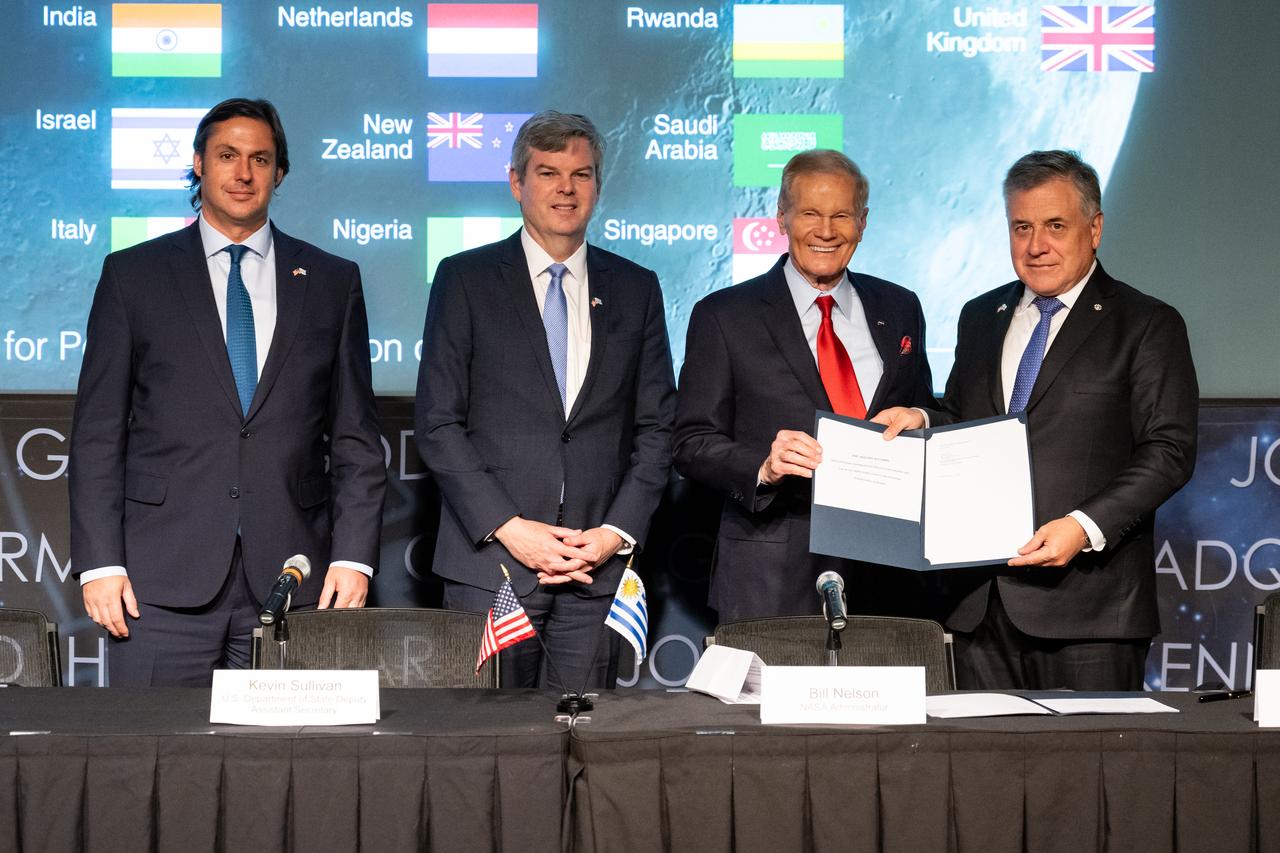
From left to right, Uruguayan Ambassador to the United States Andrés Augusto Durán Hareau, U.S. Department of State Deputy Assistant Secretary Kevin Sullivan, NASA Administrator Bill Nelson, and Uruguayan Foreign Minister Omar Paganini pose for a photo during an Artemis Accords signing ceremony, Thursday, Feb. 15, 2024, at the Mary W. Jackson NASA Headquarters building in Washington. Uruguay is the 36th country to sign the Artemis Accords, which establish a practical set of principles to guide space exploration cooperation among nations participating in NASA’s Artemis program. Photo Credit: (NASA/Keegan Barber)
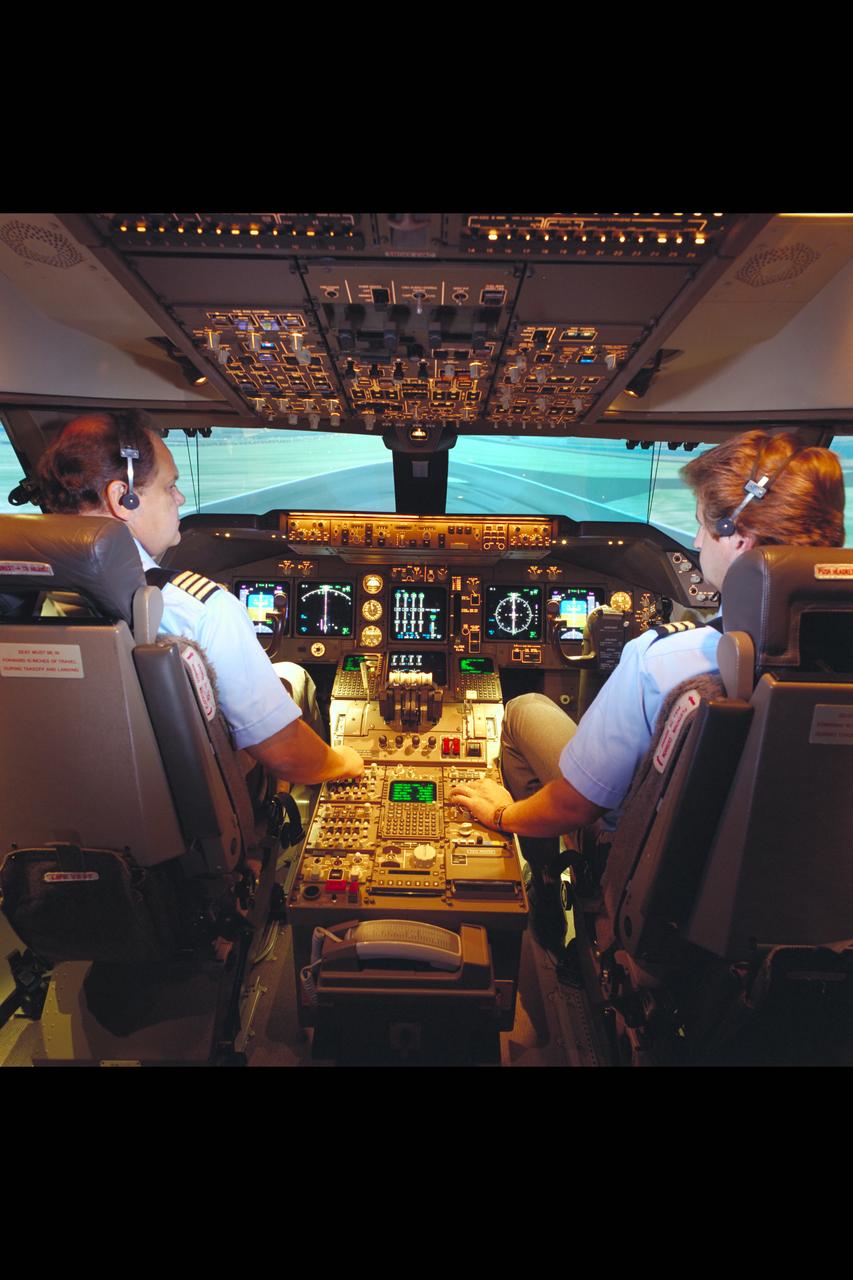
N-257 CVSRF Boeing 747-400 simulator cockpit with B Sullivan and R Shiner
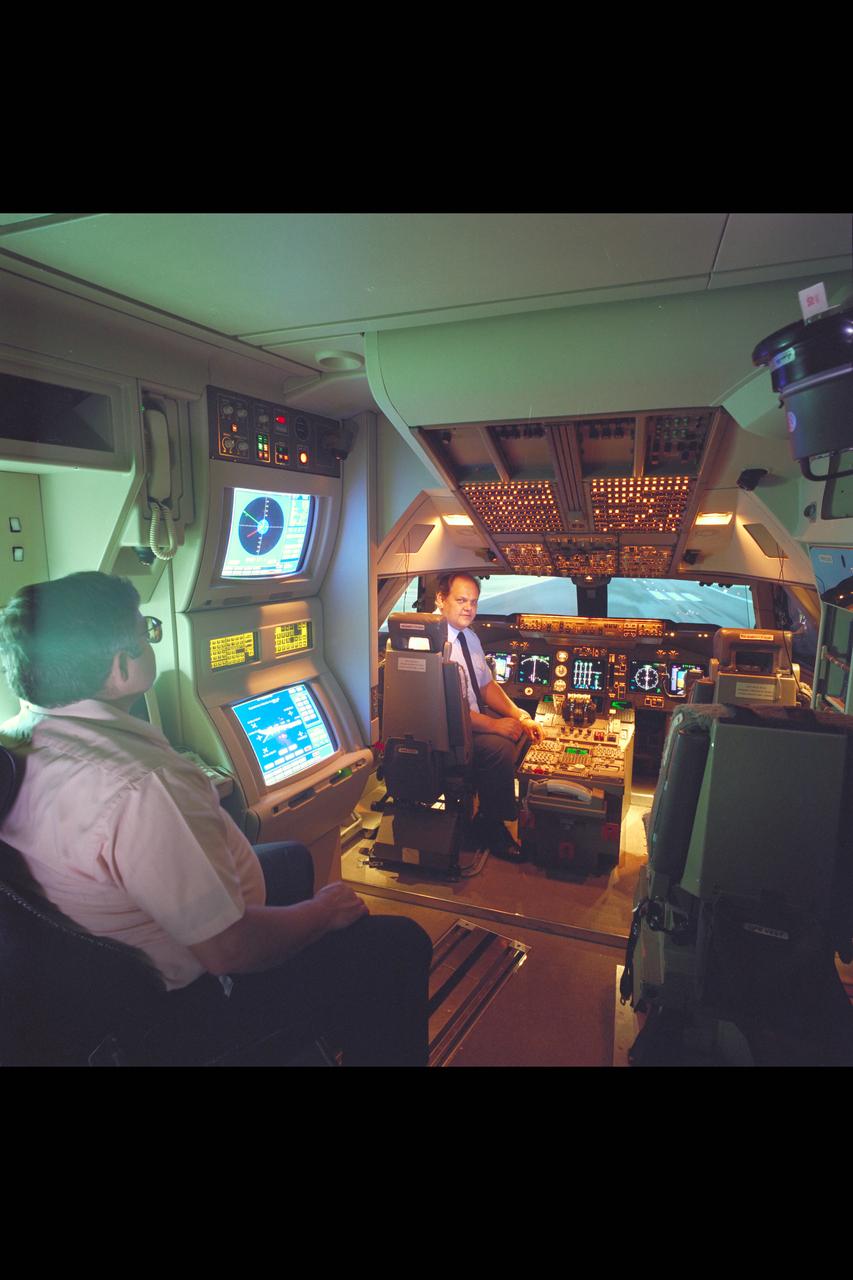
N-257 MVSRF, Boeing 747 simulator; cockpit and Navigators station with Barry Sullivan & Robert Shiner
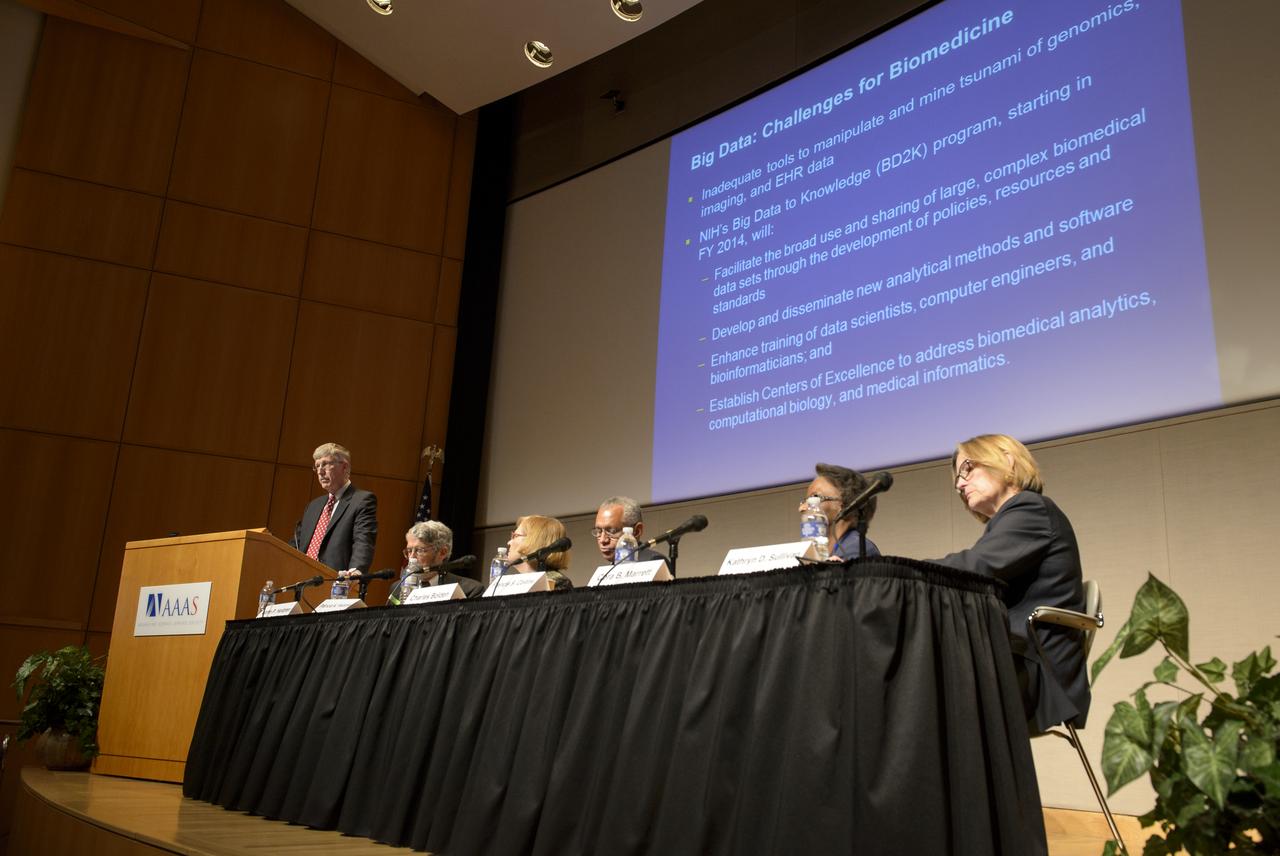
Director of the National Institutes of Health (NIH) Francis S. Collins, M.D., Ph.D., delivers remarks during a White House Office of Science and Technology Policy (OSTP) Fiscal Year 2014 budget briefing held with with Dr. John P. Holdren, Director of OSTP, Patricia Falcone of OSTP, Charlie Bolden from NASA, Cora Marrett from NSF, and Kathryn Sullivan from NOAA, at the American Association for the Advancement of Science (AAAS) on Wednesday, April 10, 2013 in Washington. Photo Credit: (NASA/Bill Ingalls)
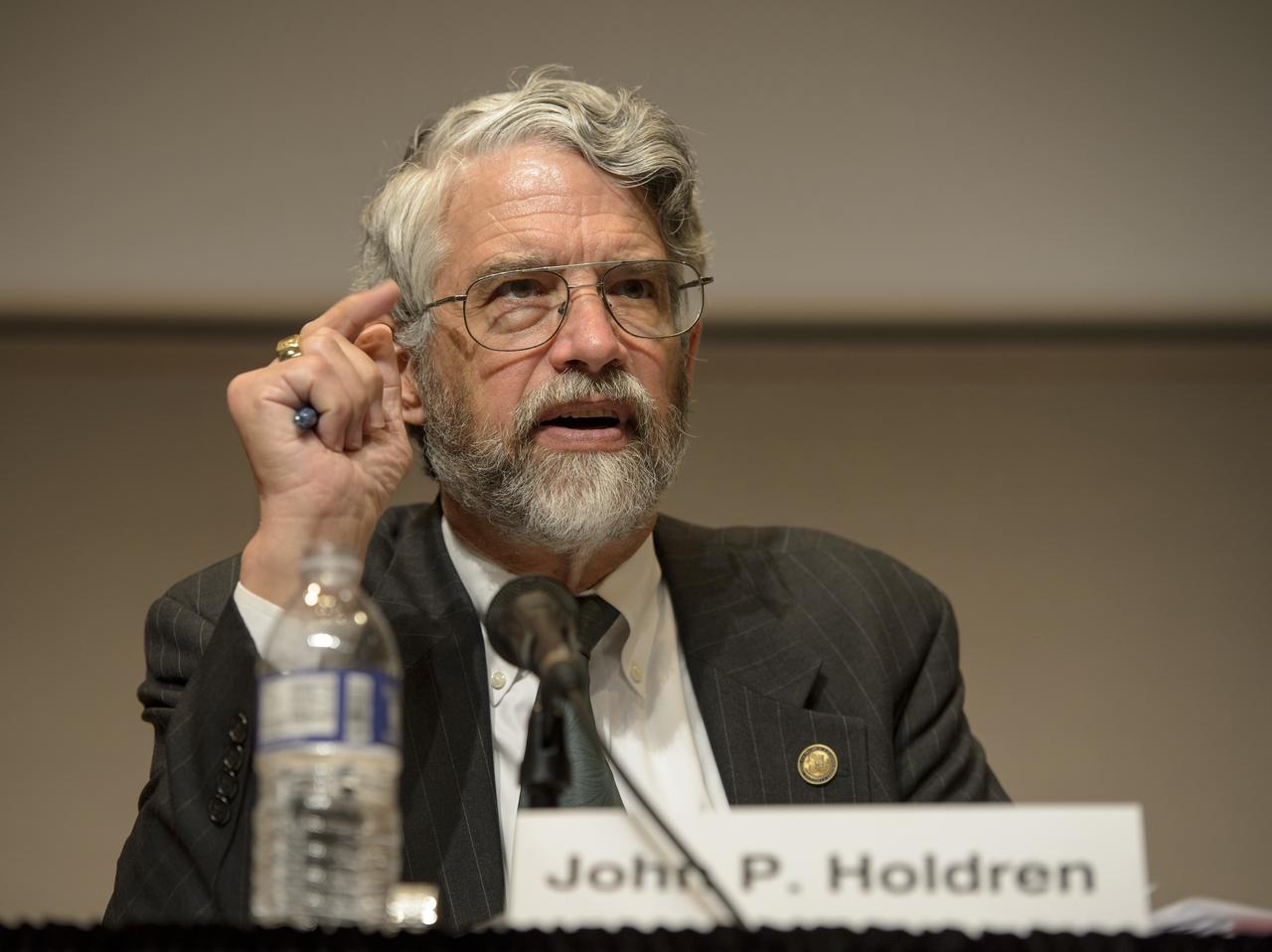
Dr. John P. Holdren, Assistant to the President for Science and Technology, Director of the White House Office of Science and Technology Policy, speaks during a Fiscal Year 2014 budget briefing held with Patricia Falcone of OSTP, Charlie Bolden from NASA, Francis Collins from NIH, Cora Marrett from NSF, and Kathryn Sullivan from NOAA, at the American Association for the Advancement of Science (AAAS) on Wednesday, April 10, 2013 in Washington. Photo Credit: (NASA/Bill Ingalls)
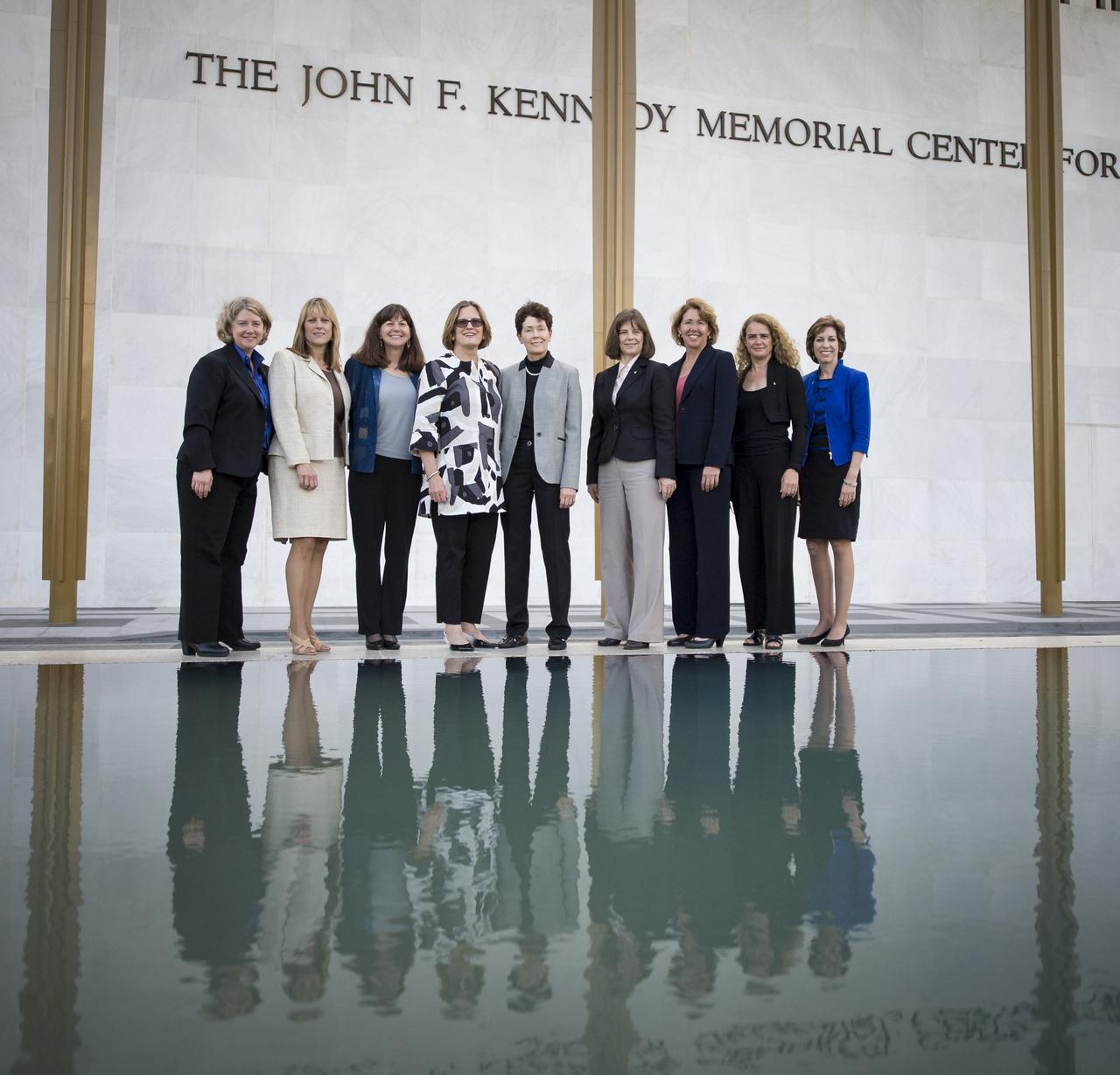
From left, astronauts Pam Melroy; Kay Hire; Cady Coleman; Kathy Sullivan; Tam O'Shaughnessy, Sally Ride's life partner and chair, board of directors of Sally Ride Science; astronauts Bonnie Dunbar; Sandy Magnus; Julie Payette; and Ellen Ochoa, pose for a photograph before a National Tribute to Sally Ride at the John F. Kennedy Center for the Performing Arts, Monday, May 20, 2013 in Washington. Photo Credit: (NASA/Bill Ingalls)
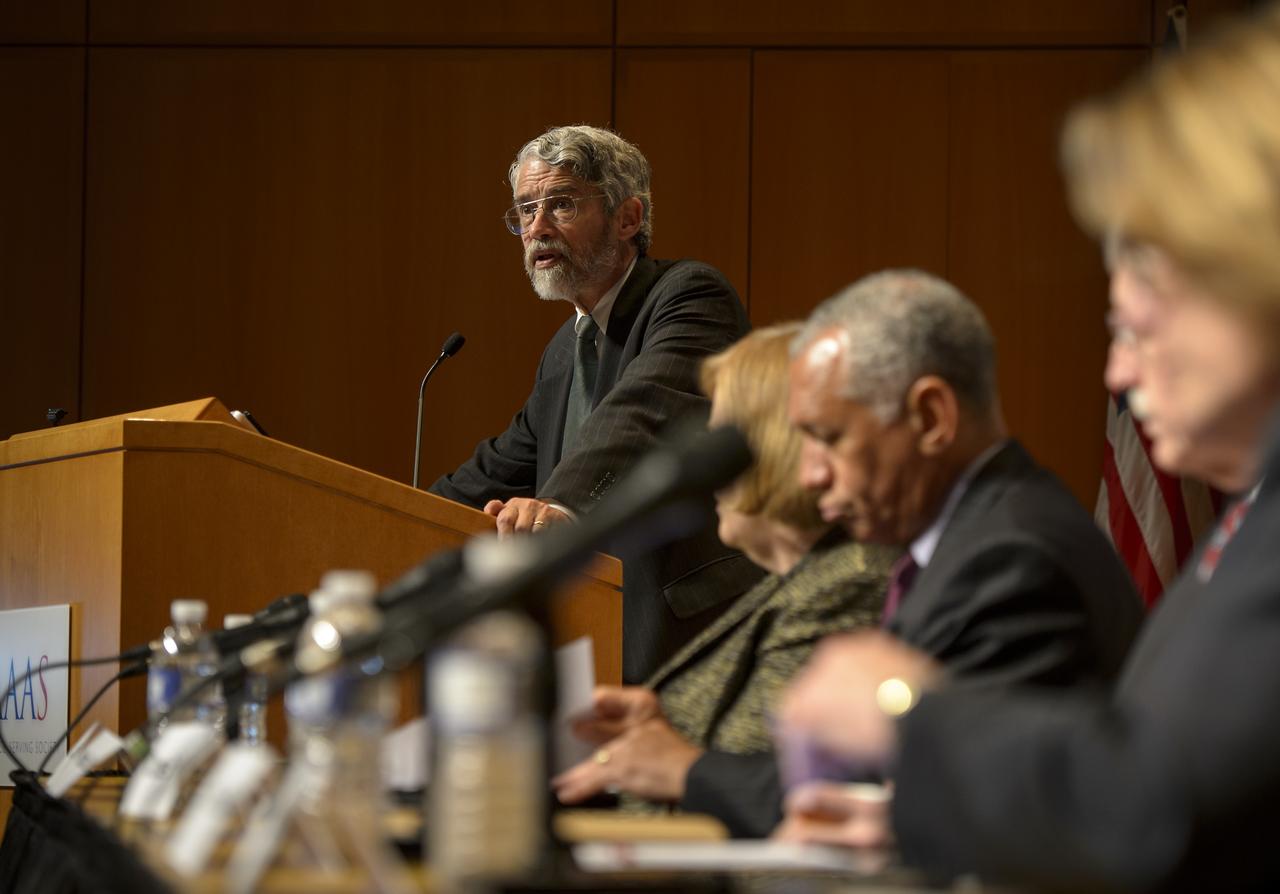
Dr. John P. Holdren, Assistant to the President for Science and Technology, Director of the White House Office of Science and Technology Policy, speaks during a Fiscal Year 2014 budget briefing held with Patricia Falcone of OSTP, Charlie Bolden from NASA, Francis Collins from NIH, Cora Marrett from NSF, and Kathryn Sullivan from NOAA, at the American Association for the Advancement of Science (AAAS) on Wednesday, April 10, 2013 in Washington. Photo Credit: (NASA/Bill Ingalls)
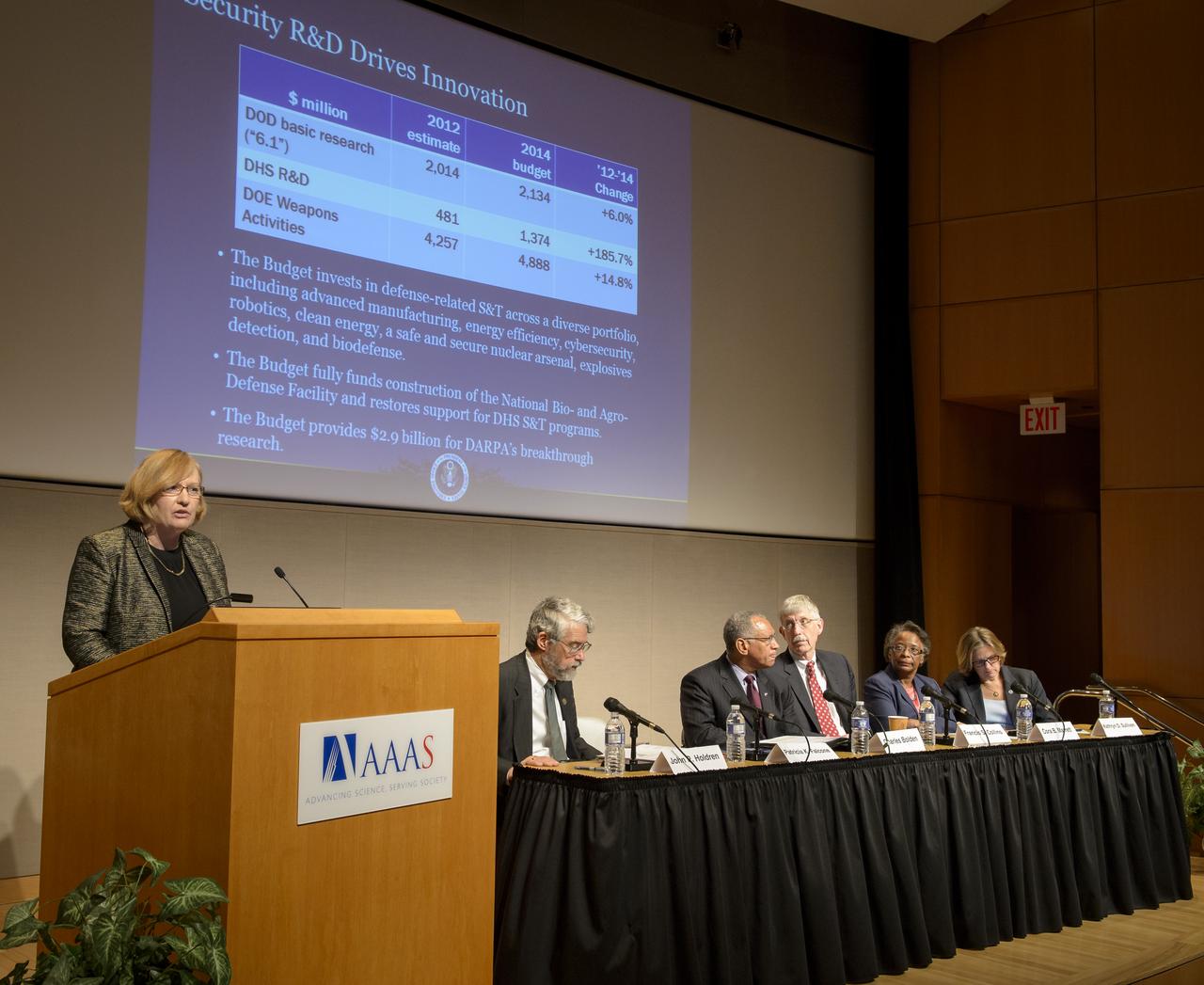
Patricia Falcone, Associate Director, National Security and International Affairs Division, White House Office of Science and Technology Policy, delivers remarks during a Fiscal Year 2014 budget briefing with Dr. John P. Holdren, Director of OSTP, Charlie Bolden from NASA, Francis Collins from NIH, Cora Marrett from NSF, and Kathryn Sullivan from NOAA, at the American Association for the Advancement of Science (AAAS) on Wednesday, April 10, 2013 in Washington. Photo Credit: (NASA/Bill Ingalls)
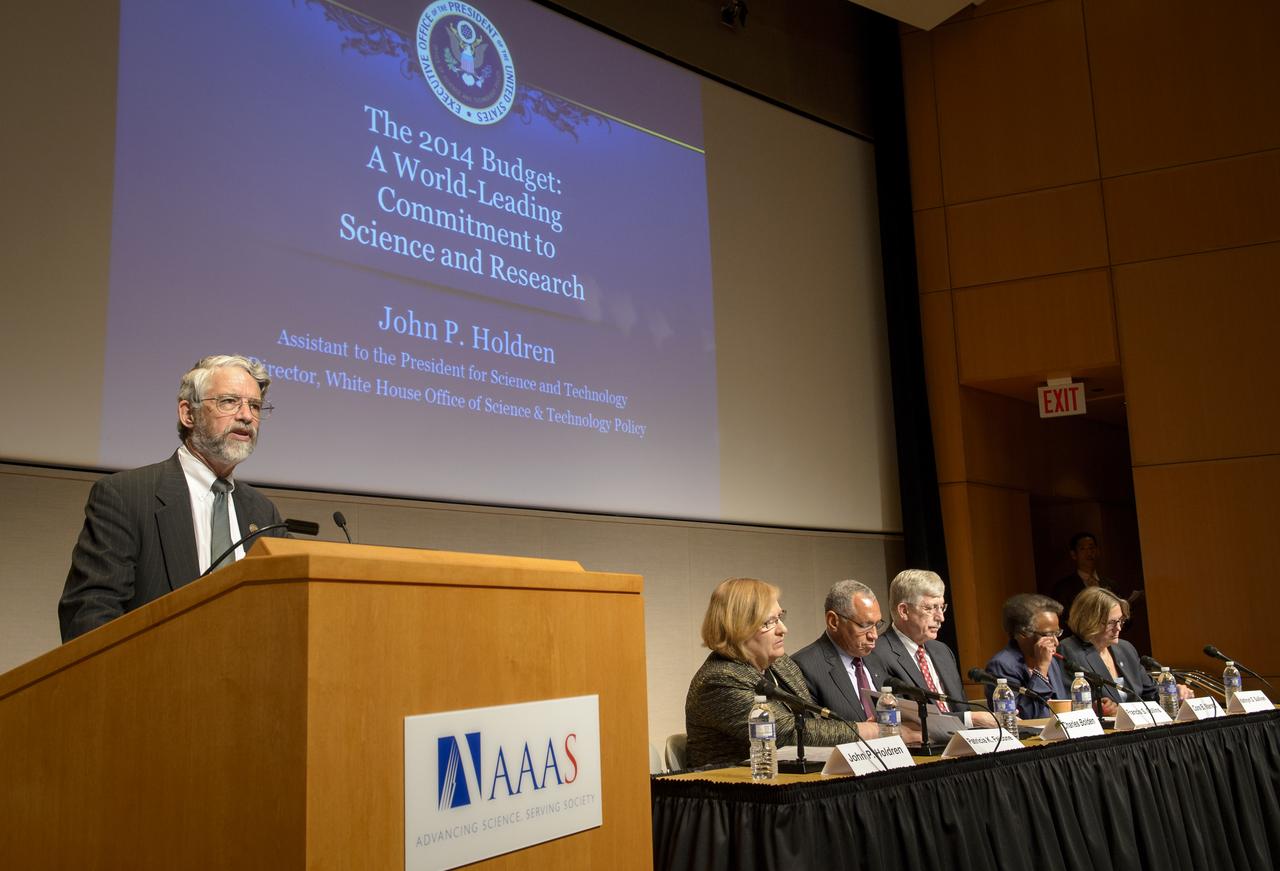
Dr. John P. Holdren, Assistant to the President for Science and Technology, Director of the White House Office of Science and Technology Policy, speaks during a Fiscal Year 2014 budget briefing held with Patricia Falcone of OSTP, Charlie Bolden from NASA, Francis Collins from NIH, Cora Marrett from NSF, and Kathryn Sullivan from NOAA, at the American Association for the Advancement of Science (AAAS) on Wednesday, April 10, 2013 in Washington. Photo Credit: (NASA/Bill Ingalls)
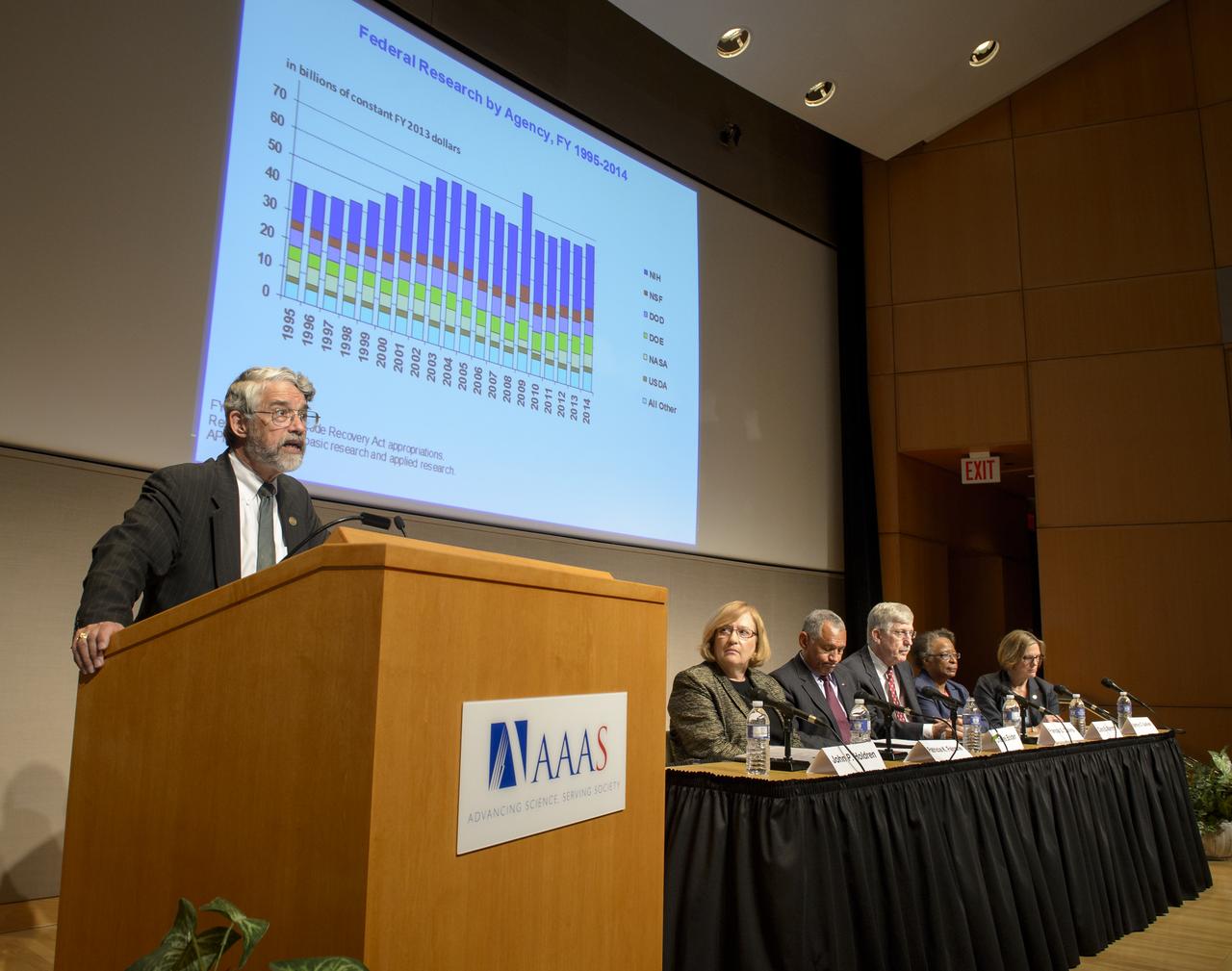
Dr. John P. Holdren, Assistant to the President for Science and Technology, Director of the White House Office of Science and Technology Policy, speaks during a Fiscal Year 2014 budget briefing held with Patricia Falcone of OSTP, Charlie Bolden from NASA, Francis Collins from NIH, Cora Marrett from NSF, and Kathryn Sullivan from NOAA, at the American Association for the Advancement of Science (AAAS) on Wednesday, April 10, 2013 in Washington. Photo Credit: (NASA/Bill Ingalls)
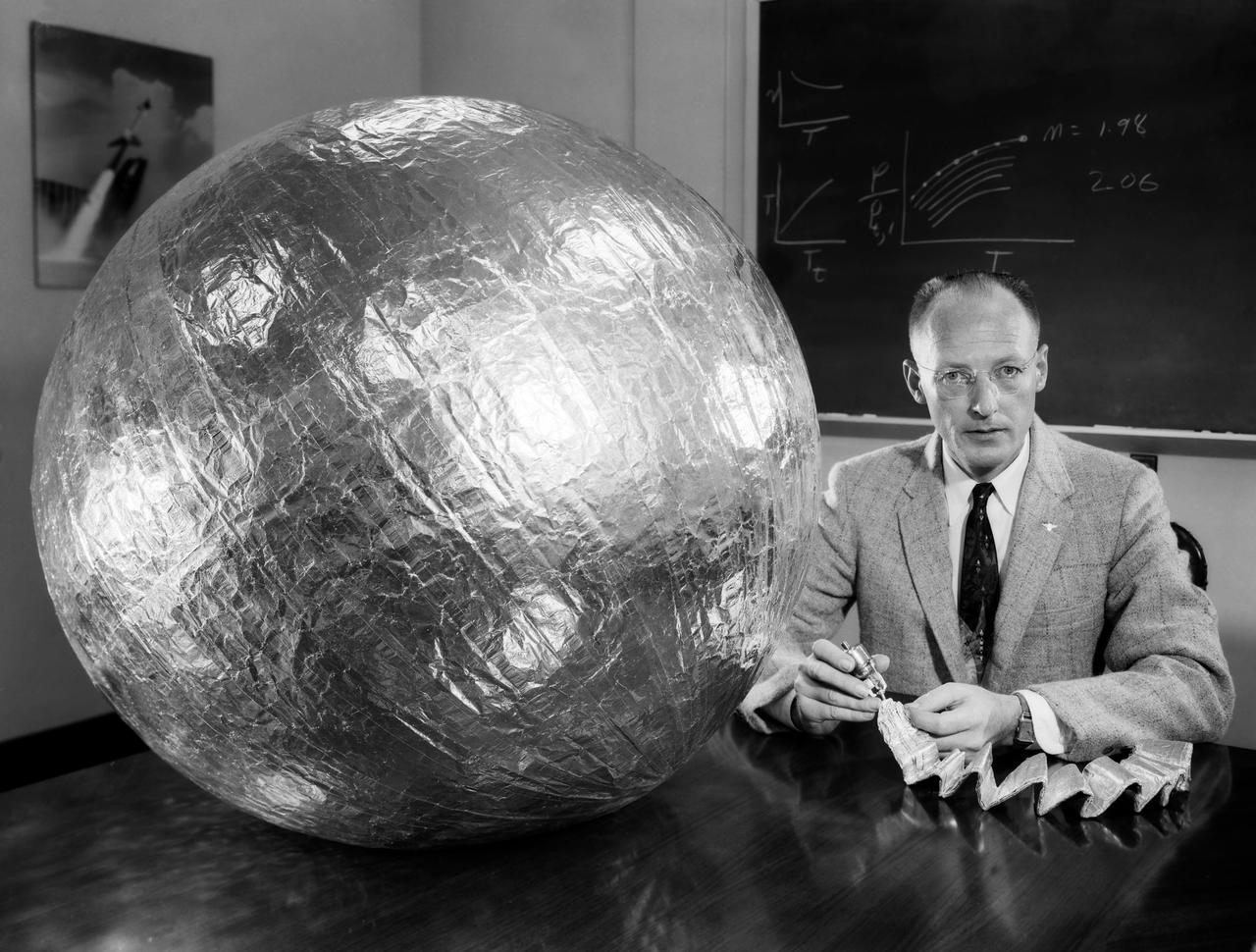
Engineer W.J. O Sullivan, Jr., seated beside 30 inch subsatellite. He holds inflation bottle and folded duplicate copy, July 1957.

S84-43433 (11 Oct 1984) --- Photographed through aft flight deck windows, this 70mm frame shows Astronauts David C. Leestma, left, and Kathryn D. Sullivan at the orbital refueling system (ORS) in the aft cargo bay. A wrist camera on the remote manipulator system (RMS) is perched to record the historic extravehicular activity (EVA). Dr. Sullivan's part of the EVA represented the first such feat for an American woman.

41G-102-047 (13 Oct. 1984) --- An unusual picture, photographed by astronaut Kathryn D. Sullivan, shows the beginning and ending location of her eight-day mission in space with six other 41-G crew members aboard the space shuttle Challenger. The picture was made moments before touchdown at the KSC landing facility. Dr. Sullivan aimed a 35mm camera through the port hole in Challenger's hatch. The five ground features represented as circles or pentagonals are launch areas. Photo credit: NASA
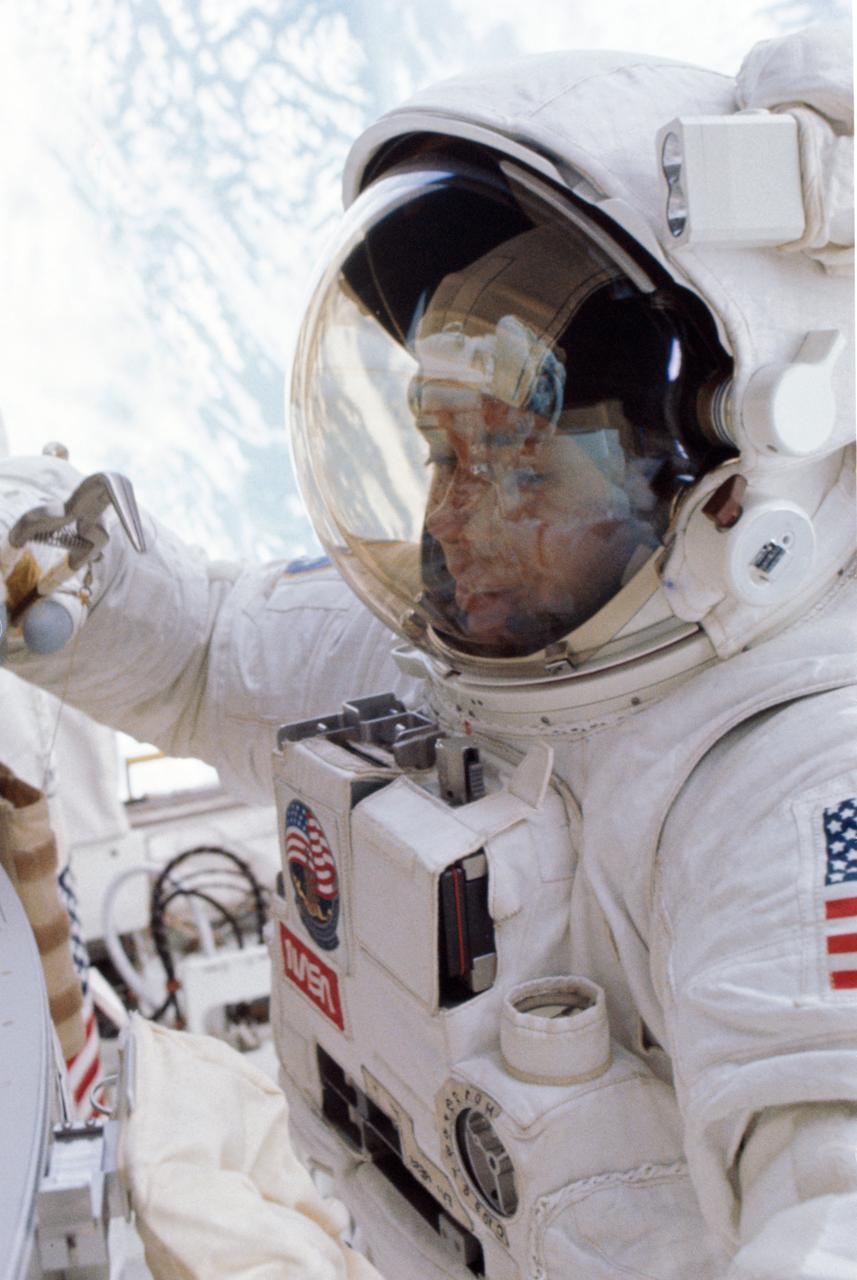
41G-101-013 (14 Oct 1984) --- Astronaut David C. Leestma works at the Orbital Refueling System (ORS) on the Mission Peculiar Support Structure (MPESS) in the aft end of the cargo bay of the Space Shuttle Challenger. Astronaut Kathryn D. Sullivan, America's first woman to perform an extravehicular activity (EVA) with the logging of this busy day, exposed this frame witha 35mm camera. The crew consisted of astronauts Robert L. Crippen, commander; Jon A. McBride, pilot; mission specialist's Kathryn D. Sullivan, Sally K. Ride, and David D. Leestma; Canadian astronaut Marc Garneau; and Paul D. Scully-Power, payload specialist. EDITOR'S NOTE: The STS-41G mission had the first American female EVA (Sullivan); first seven-person crew; first orbital fuel transfer; and the first Canadian (Garneau).
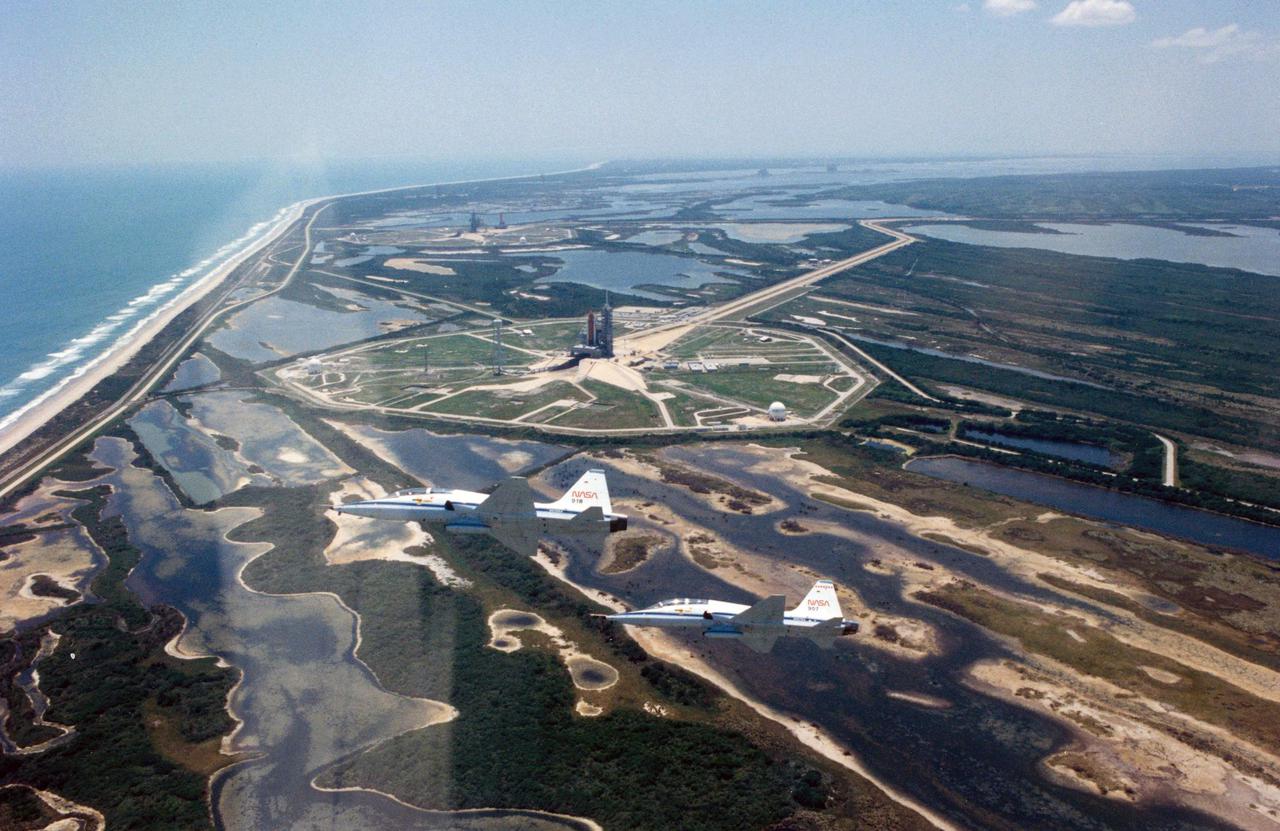
KENNEDY SPACE CENTER, FLA. -- Mission Specialist Kathryn D. Sullivan's camera skills show that the view of Launch Pads 39A and 39B from a T-30 trainer is unforgettable. Sullivan took the pictures as she and fellow Space Shuttle Mission STS-31 crew members flew into KSC on April 22. In the foreground, the Shuttle Discovery is poised on Pad B, and in the distance, Columbia rolls out to Pad A. While Sullivan flew with STS-31 Pilot Charles F. Bolden Jr., Mission Commander Loren J. Shriver and Mission Specialist Steven A. Hawley flew alongside in T-38 #918, and Mission Specialist Bruce McCandless II and NASA Pilot Mario Runco flew in T-38 #907. STS-31 is set to lift off from Pad B at 8:31 a.m. EDT, April 24.
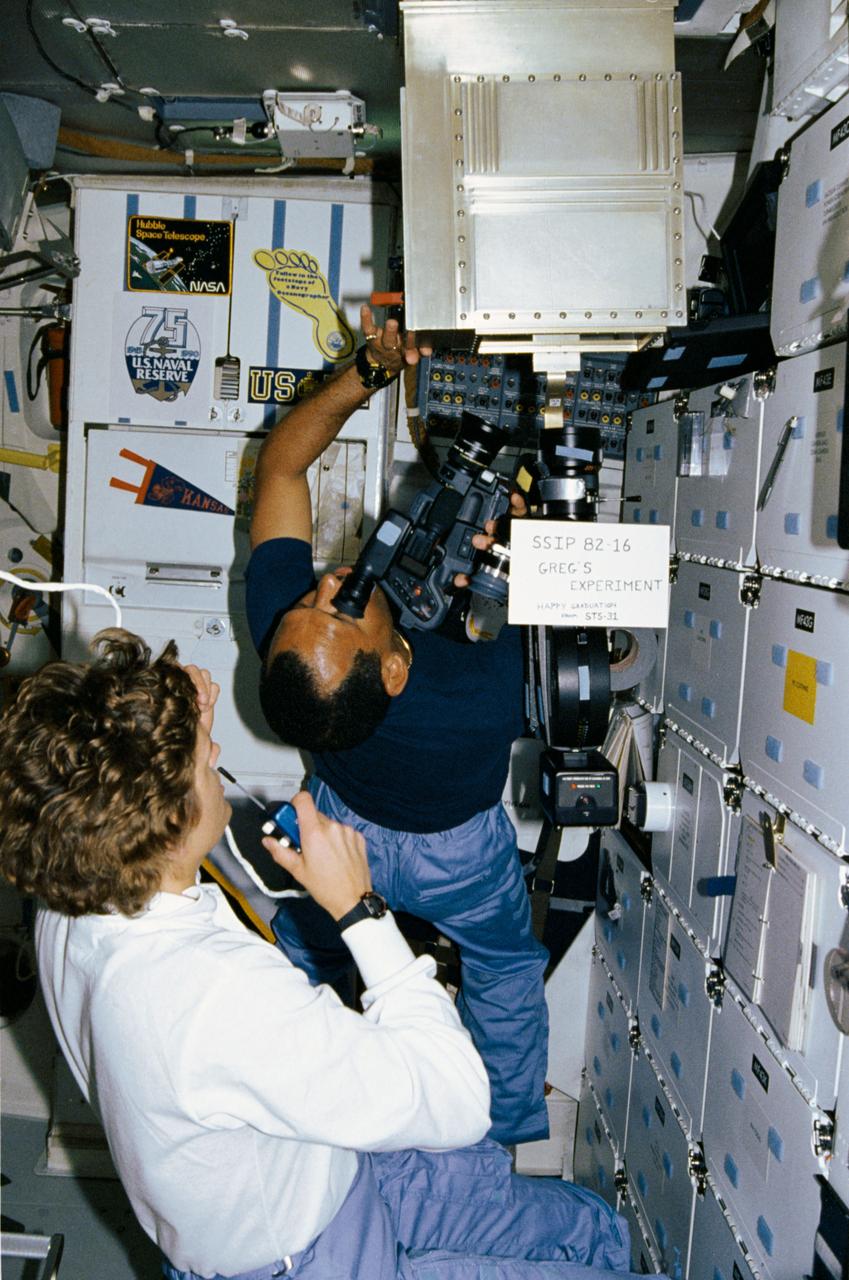
STS-31 Mission Specialist (MS) Kathryn D. Sullivan monitors and advises ground controllers of the activity inside the Student Experiment (SE) 82-16, Ion arc - studies of the effects of microgravity and a magnetic field on an electric arc, mounted in front of the middeck lockers aboard Discovery, Orbiter Vehicle (OV) 103. Pilot Charles F. Bolden uses a video camera and an ARRIFLEX motion picture camera to record the activity inside the special chamber. A sign in front of the experiment reads "SSIP 82-16 Greg's Experiment Happy Graduation from STS-31." SSIP stands for Shuttle Student Involvement Program. Gregory S. Peterson who developed the experiment (Greg's Experiment) is a student at Utah State University and monitored the experiment's operation from JSC's Mission Control Center (MCC) during the flight. Decals displayed in the background on the orbiter galley represent the Hubble Space Telescope (HST), the United States (U.S.) Naval Reserve, Navy Oceanographers, U.S. Navy, and University of Kansas.
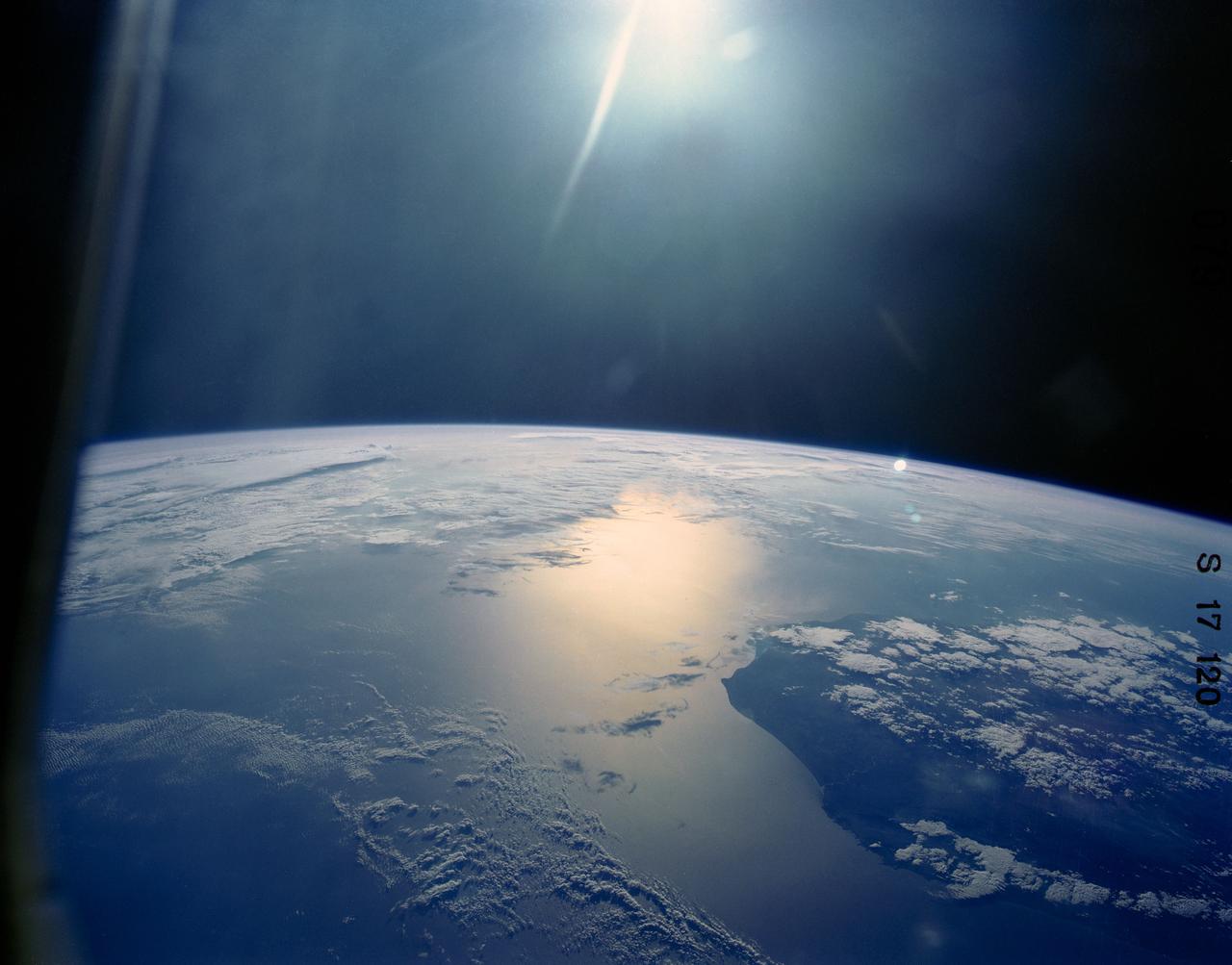
41G-120-079 (5-13 Oct 1984) --- This oblique view, photographed from the Space Shuttle Challenger, shows the south tip of the island of Madagascar. Sunglint reflects on the surface of the Mozambique Channel. The crew consisted of astronauts Robert L. Crippen, commander; Jon A. McBride, pilot; mission specialist's Kathryn D. Sullivan, Sally K. Ride, and David D. Leestma; Canadian astronaut Marc Garneau; and Paul D. Scully-Power, payload specialist. EDITOR'S NOTE: The STS-41G mission had the first American female EVA (Sullivan); first seven-person crew; first orbital fuel transfer; and the first Canadian (Garneau).
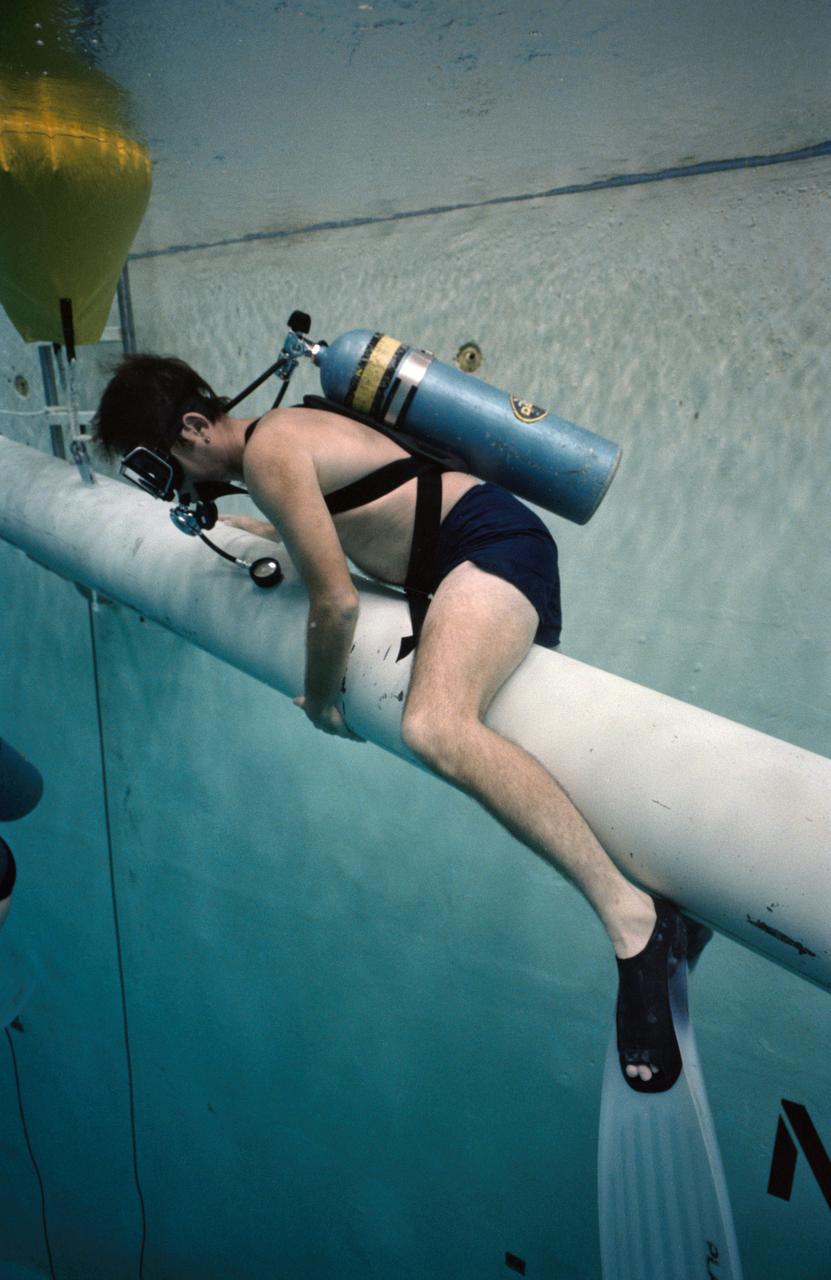
S84-36958 (29 June 1984) --- Astronaut Robert L. Crippen, 41-G crew commander, perches nearby an underwater simulation scene in the Johnson Space Center's weightless environment training facility (WET-F). Purpose of the rehearsal was to train two of the 41-G crew's mission specialists for a scheduled extravehicular activity (EVA). Out of frame are Astronauts Kathryn D. Sullivan, Jon A. McBride and David Leestma. Dr. Sullivan and Leestma donned extravehicular mobility units (EMU) for the simulation while Crippen and McBride monitored the activity. This photograph was taken by Otis Imboden.
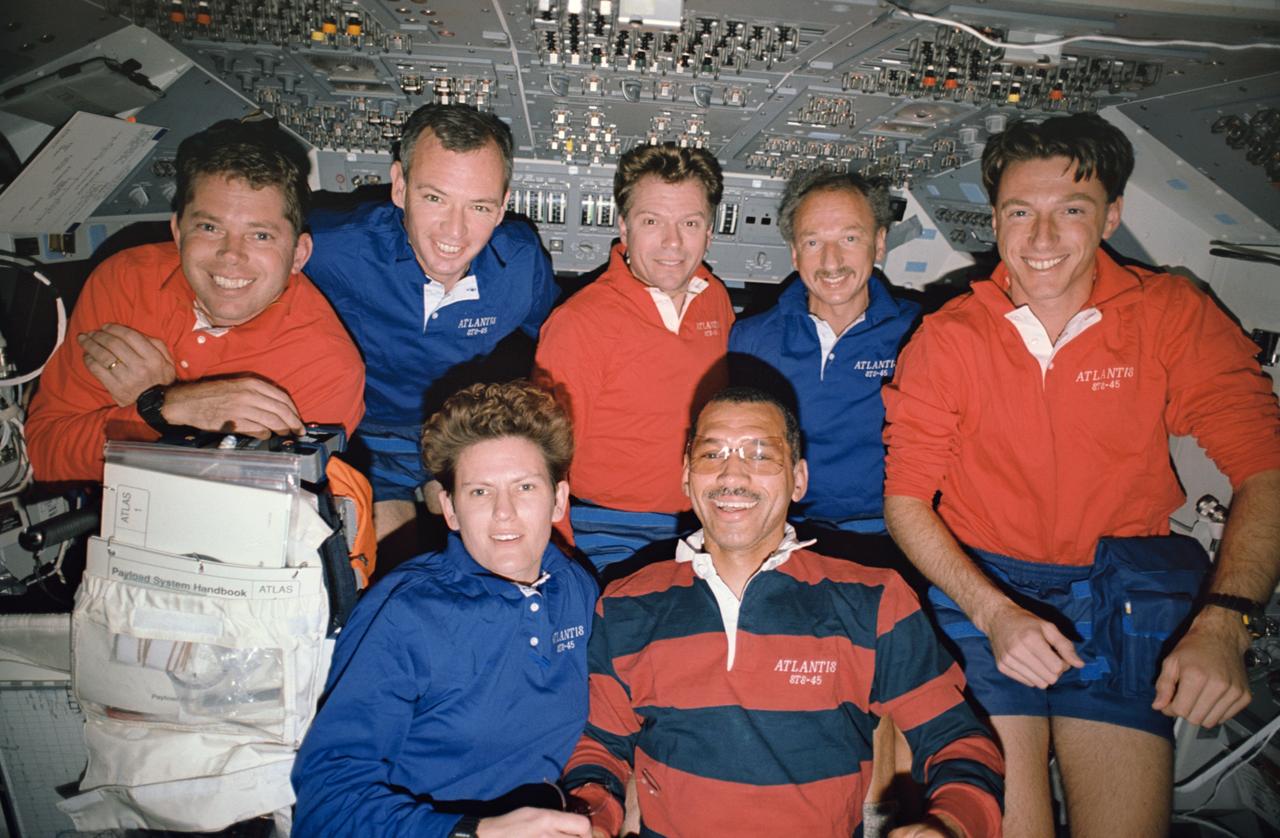
STS045-38-004 (24 March-2 April 1992) --- The traditional inflight crew portrait has Kathryn D. Sullivan, payload commander, and Charles F. Bolden, mission commander, on the front row, with ( left to right) David C. Leestma, mission specialist; Brian Duffy, pilot; Byron K. Lichtenberg and Dirk Frimout, both payload specialists; and C. Michael Foale, mission specialist, on the back row. (The "headpieces" worn by Sullivan and Bolden are actually shadows.) This frame was taken with a 35mm camera on the flight deck of the Earth-orbiting Space Shuttle Atlantis during the nine-day mission.
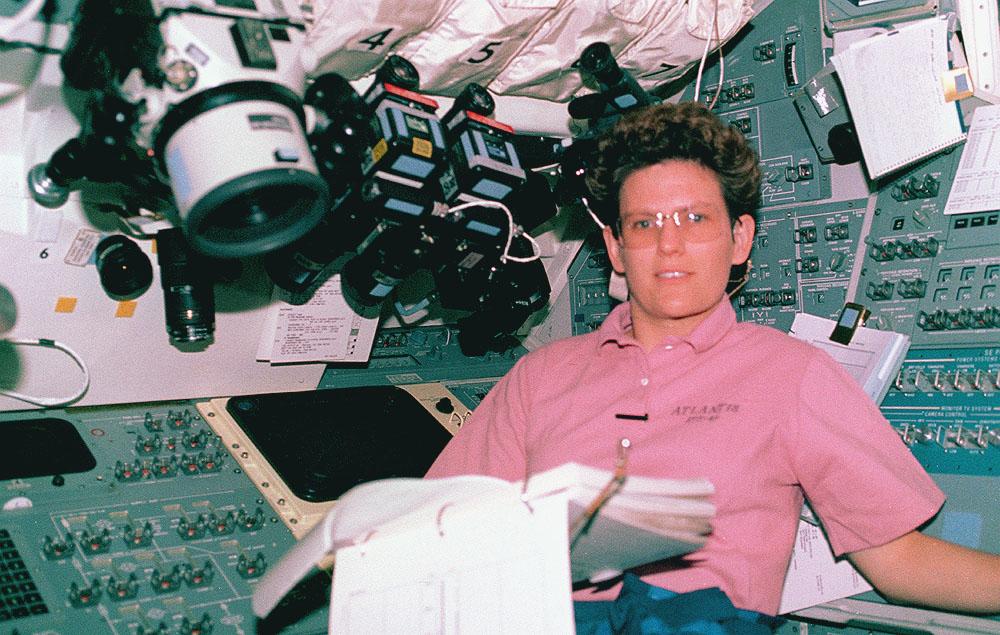
Space Shuttle Atlantis (STS-45) onboard photo of Mission Specialist Kathryn Sullivan working in the Atmospheric Laboratory for Applications and Science (Atlas-1) module. Atlas-1 flew in a series of Spacelab flights that measured long term variability in the total energy radiated by the Sun and determined the variability in the solar spectrum.
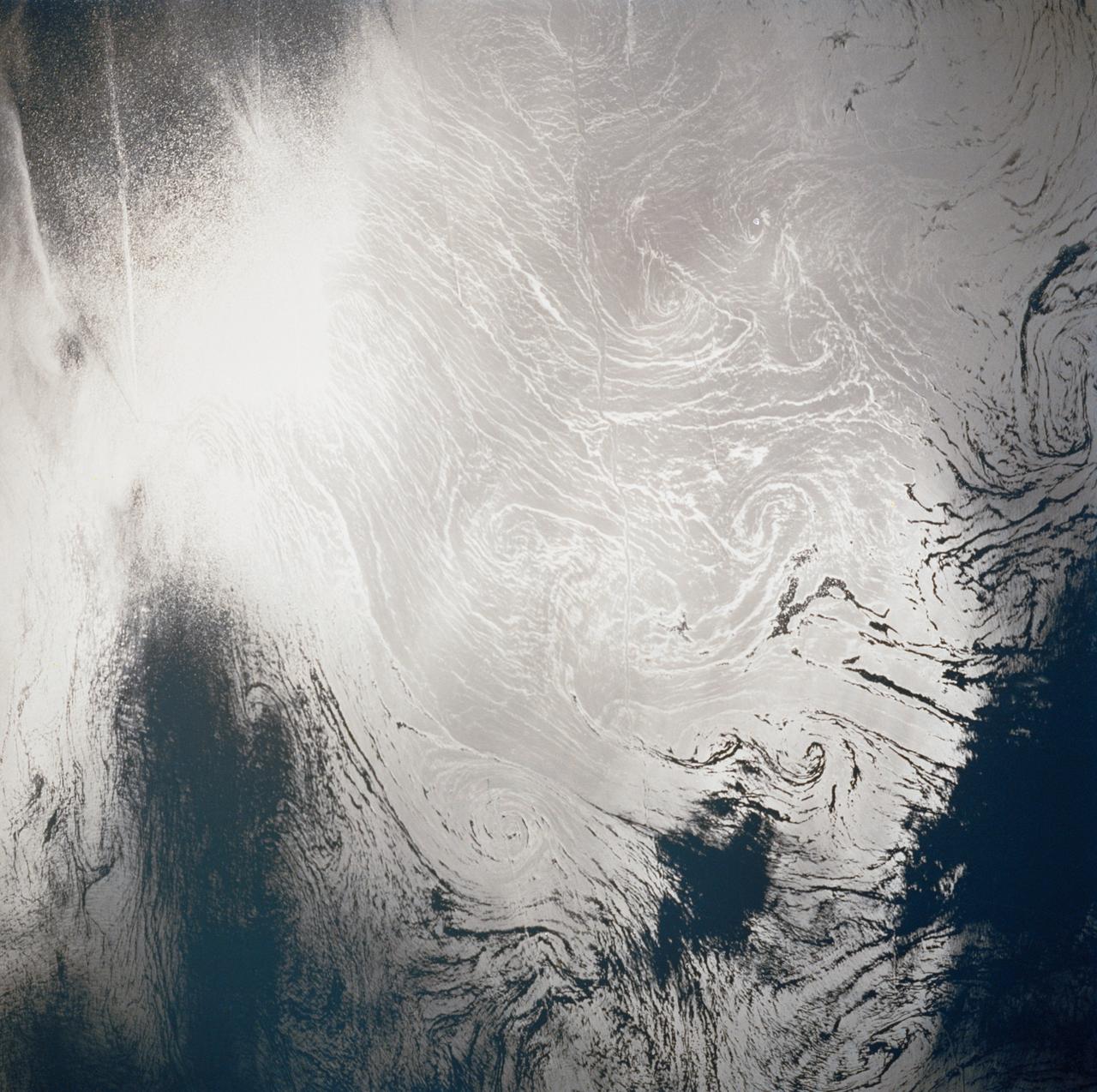
41G-38-060 (5-13 Oct 1984) --- A large ship wake in the central Mediterranean Sea is highlighted by sunglint in this handheld camera's view from STS-41G. According to NASA and U.S. Navy scientists studying the STS-41G film, the depicted reflectance is similar to oil slicks seen in the various oceans of the world. They note that it is apparent that a ship is pumping a mixture of bilge water and oil overboard. The crew consisted of astronauts Robert L. Crippen, commander; Jon A. McBride, pilot; mission specialist's Kathryn D. Sullivan, Sally K. Ride, and David D. Leestma; Canadian astronaut Marc Garneau; and Paul D. Scully-Power, payload specialist. EDITOR'S NOTE: The STS-41G mission had the first American female EVA (Sullivan); first seven-person crew; first orbital fuel transfer; and the first Canadian (Garneau).
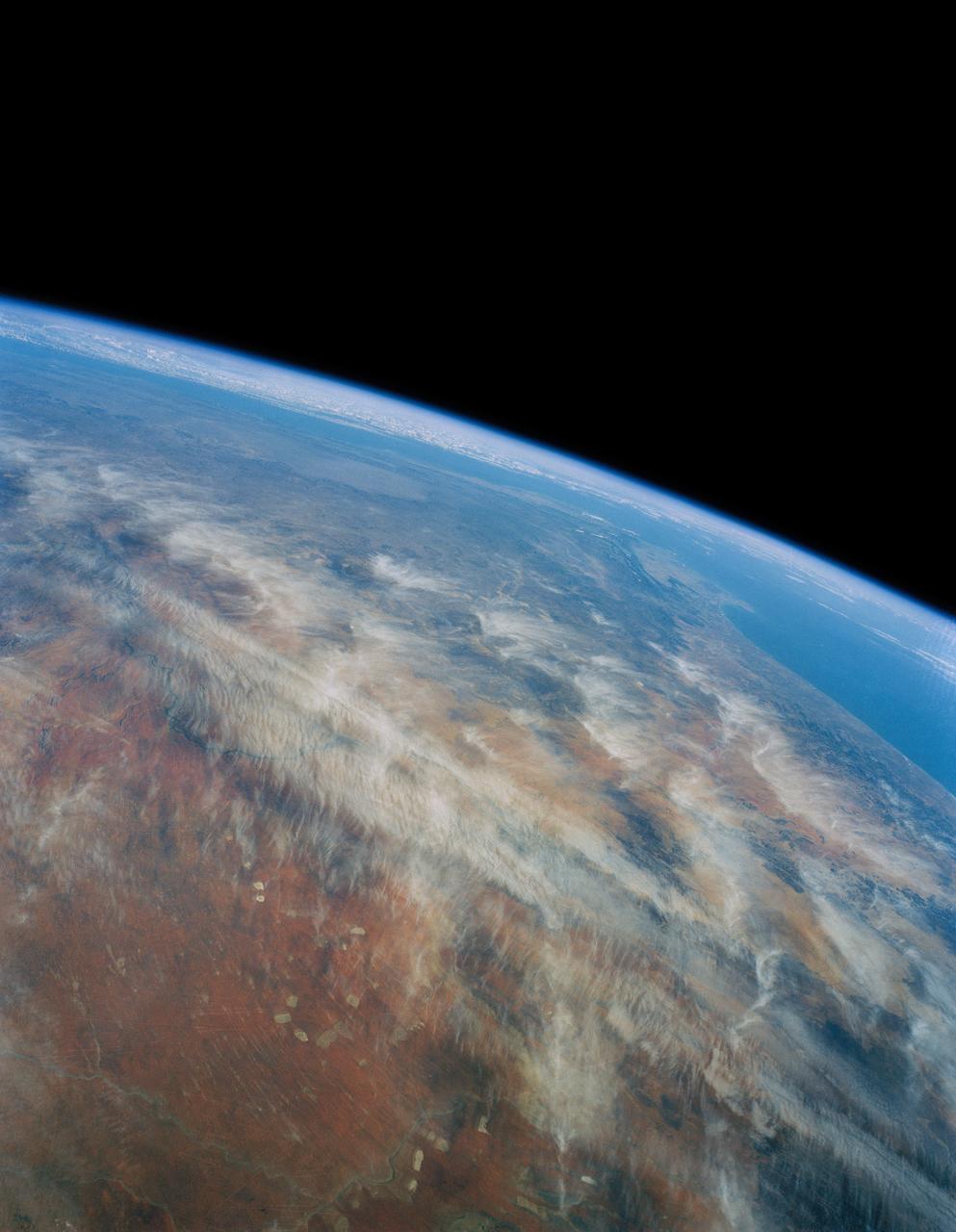
41G-121-189 (5-13 Oct 1984) --- The Kalihari Desert is visible in the foreground of this photograph covering three African nations. The desert is a classic red to orange-red, with small depressions and salt encrustation's which appear as lakes. Visible are Cape Town, the Cape of Good Hope and Cape Agulhas. The crew consisted of astronauts Robert L. Crippen, commander; Jon A. McBride, pilot; mission specialist's Kathryn D. Sullivan, Sally K. Ride, and David D. Leestma; Canadian astronaut Marc Garneau; and Paul D. Scully-Power, payload specialist. EDITOR'S NOTE: The STS-41G mission had the first American female EVA (Sullivan); first seven-person crew; first orbital fuel transfer; and the first Canadian (Garneau).
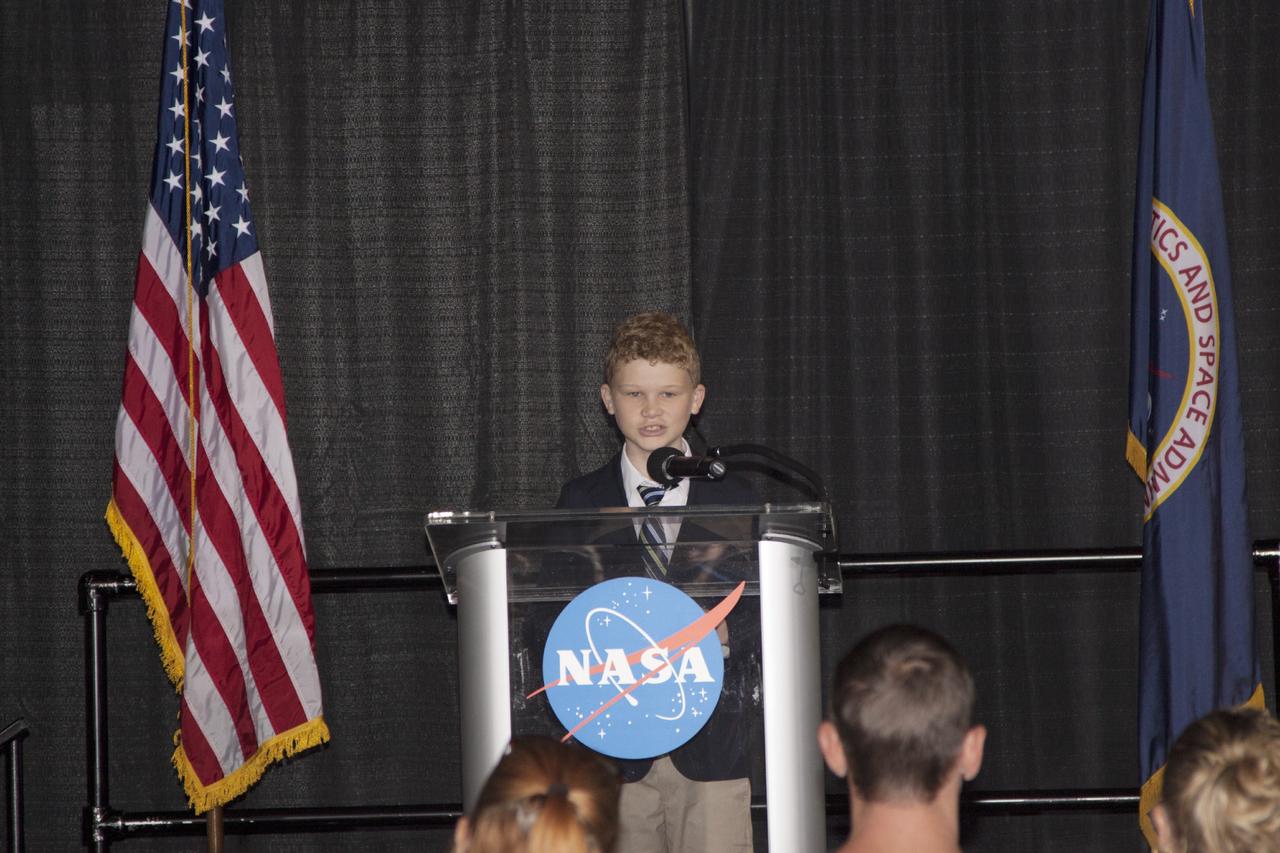
CAPE CANAVERAL, Fla. -- At the Kennedy Space Center Visitor Complex in Florida, Patrick Sullivan spoke on behalf of the Space Exploration Ambassadors during a ceremony to enshrine a Space Shuttle Program time capsule in a secured vault within the walls of the Space Shuttle Atlantis home at the Kennedy Space Center Visitor Complex. Sullivan's remarks focused on the missions of shuttle Atlantis, the final launch day -- which he attended -- and the future of the space program. The time capsule, containing artifacts and other memorabilia associated with the history of the program is designated to be opened on the 50th anniversary of the shuttle's final landing, STS-135. The new $100 million "Space Shuttle Atlantis" facility includes interactive exhibits that tell the story of the 30-year Space Shuttle Program and highlight the future of space exploration. Photo credit: NASA/Jim Grossmann
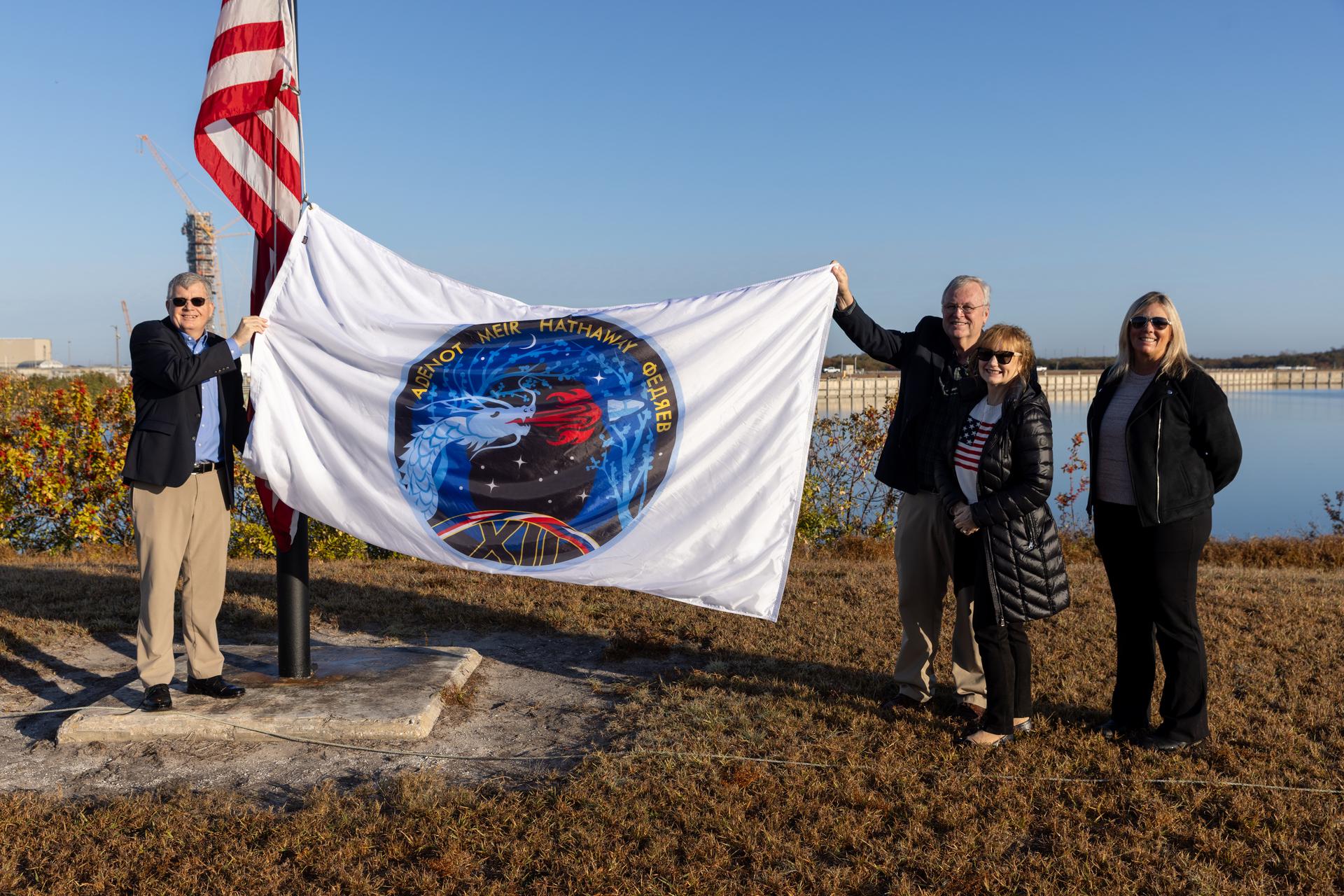
From left, Steve Stich, manager, NASA’s Commercial Crew Program; Steve Sullivan, chief engineer to NASA’s Commercial Crew Program; Jackie Sullivan; and Dana Hutcherson, deputy program manager, NASA’s Commercial Crew Program, participate in raising the agency’s SpaceX Crew-12 mission flag near the countdown clock at the NASA News Center at the agency’s Kennedy Space Center in Florida on Monday, Feb. 9, 2026. The Crew-12 mission will send NASA astronauts Jessica Meir and Jack Hathaway, ESA (European Space Agency) astronaut Sophie Adenot, and Roscosmos cosmonaut Andrey Fedyaev to the International Space Station aboard SpaceX’s Dragon spacecraft and Falcon 9 rocket no earlier than 5:38 a.m. EST, Thursday, Feb. 12, from Cape Canaveral Space Force Station’s Space Launch Complex 40.
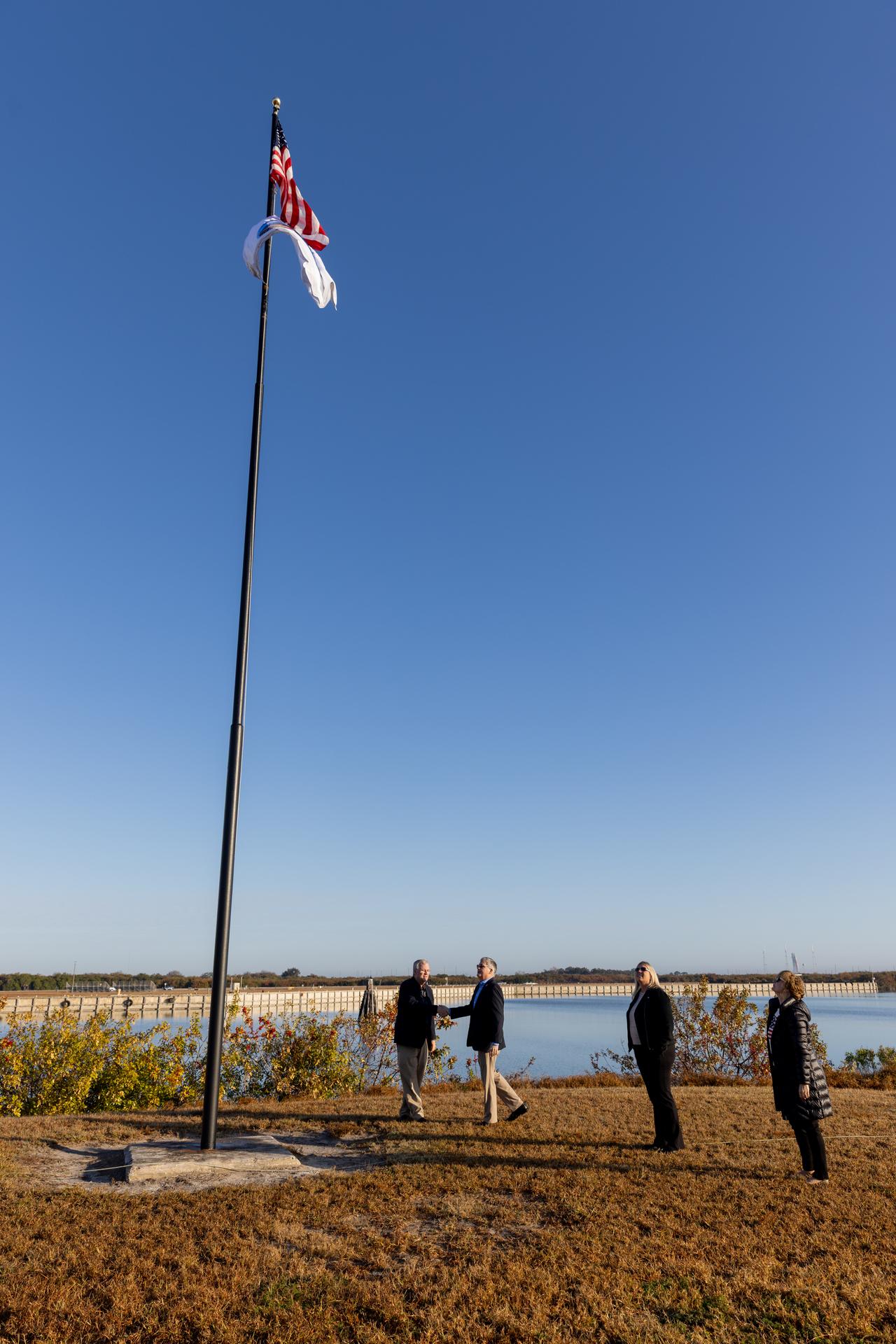
From left, Steve Sullivan, chief engineer to NASA’s Commercial Crew Program; Steve Stich, manager, Commercial Crew Program; Dana Hutcherson, deputy program manager, Commercial Crew Program; and Jackie Sullivan, participate in raising the agency’s SpaceX Crew-12 mission flag near the countdown clock at the NASA News Center at the agency’s Kennedy Space Center in Florida on Monday, Feb. 9, 2026. The Crew-12 mission will send NASA astronauts Jessica Meir and Jack Hathaway, ESA (European Space Agency) astronaut Sophie Adenot, and Roscosmos cosmonaut Andrey Fedyaev to the International Space Station aboard SpaceX’s Dragon spacecraft and Falcon 9 rocket no earlier than 5:38 a.m. EST, Thursday, Feb. 12, from Cape Canaveral Space Force Station’s Space Launch Complex 40.
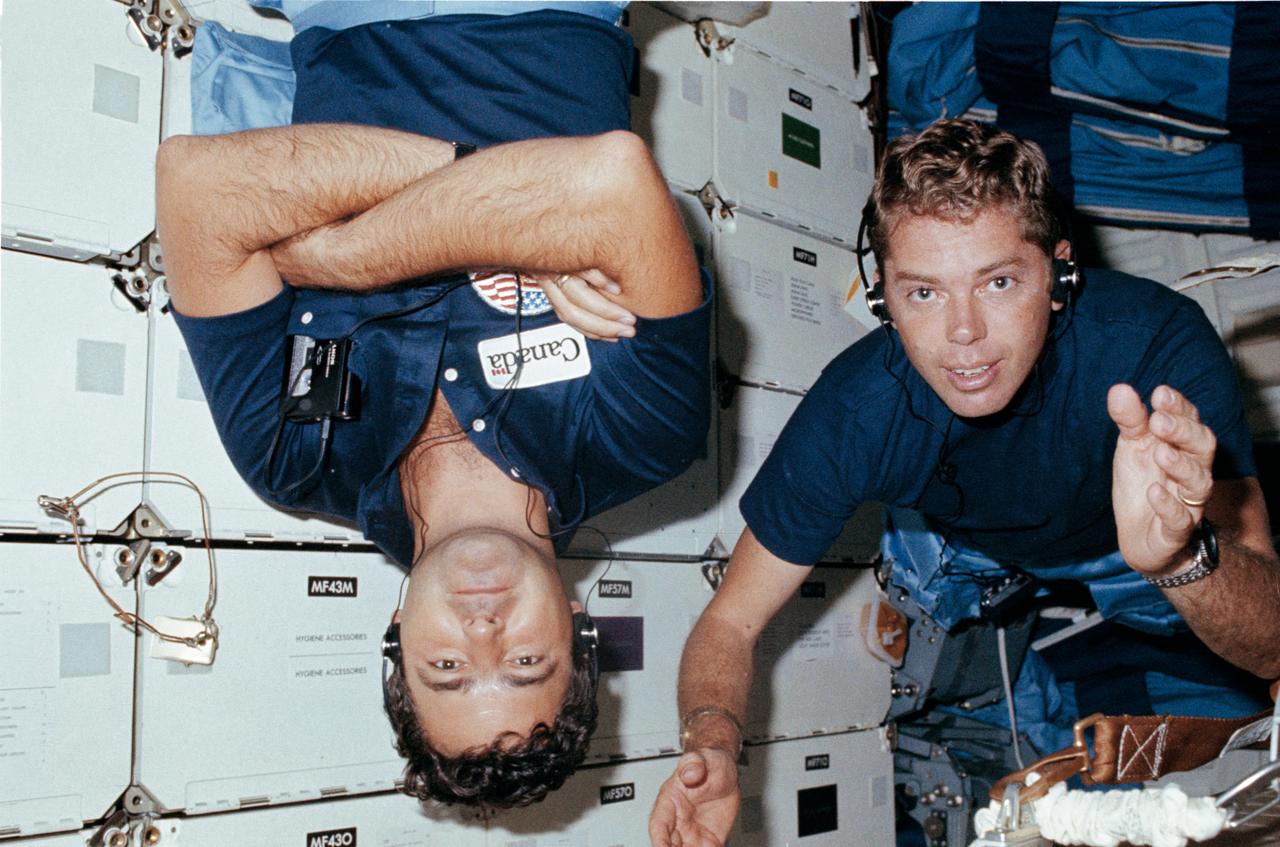
41G-101-039 (5-13 Oct 1984) --- Two members of a record seven-person crew are pictured during Intravehicular Activity (IVA) aboard the Earth-orbiting Space Shuttle Challenger. Hold picture with open hand at right center edge. Astronaut David C. Leestma, mission specialist, is at right observing a test by payload specialist Marc Garneau, representing the National Research Council (NRC) of Canada. Garneau spent much of his on-duty time conducting a series of experiments for the NRC. The crew consisted of astronauts Robert L. Crippen, commander; Jon A. McBride, pilot; mission specialist's Kathryn D. Sullivan, Sally K. Ride, and David D. Leestma; Canadian astronaut Marc Garneau, and Paul D. Scully-Power, payload specialist's. EDITOR'S NOTE: The STS-41G mission had the first American female EVA (Sullivan); first seven-person crew; first orbital fuel transfer; and the first Canadian (Garneau).
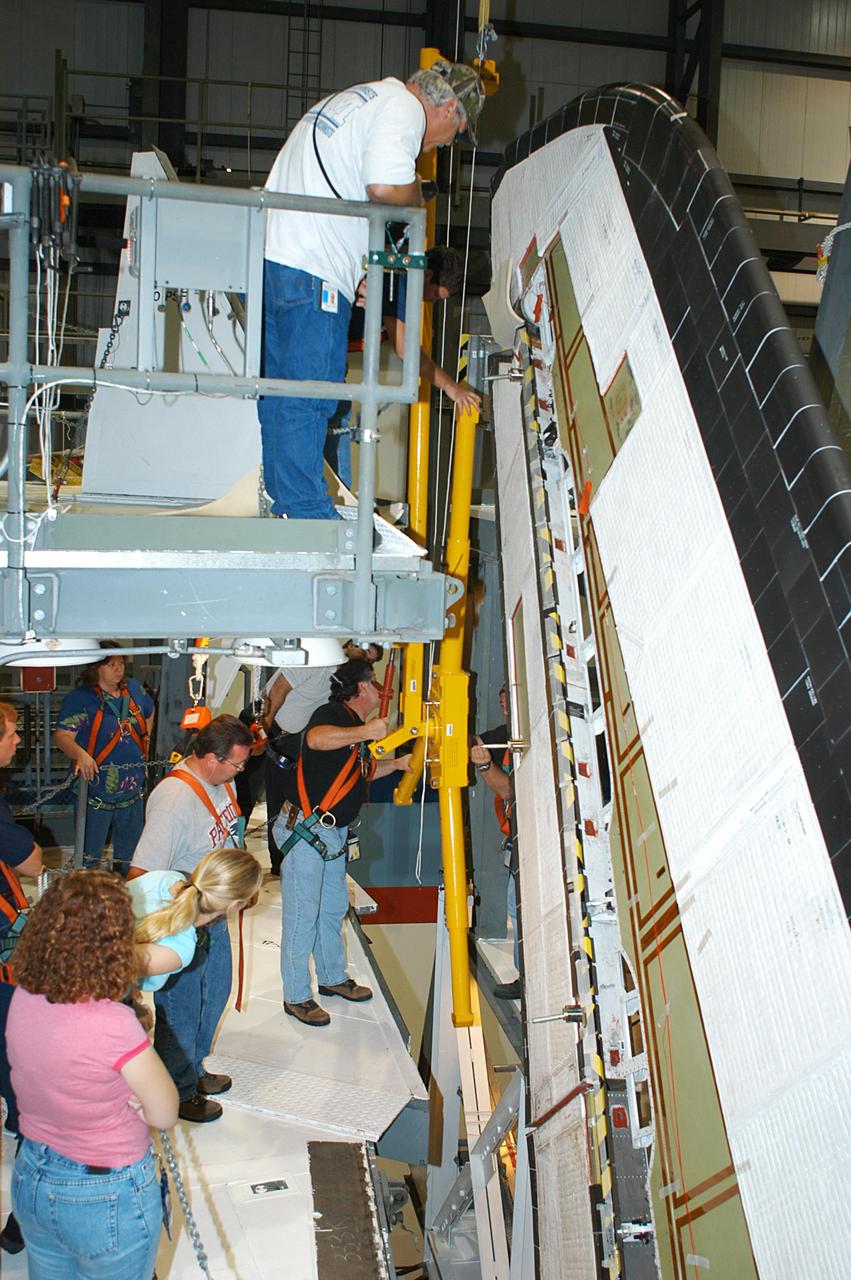
KENNEDY SPACE CENTER, FLA. -- In the Orbiter Processing Facility, a worker (below the upper framework) begins connecting a device to remove the Rudder Speed Brake panel on the vertical tail of orbiter Atlantis. The Rudder Speed Brake is being removed for inspection and maintenance prior to Return to Flight. The vertical tail consists of a structural fin surface made of aluminum, the Rudder Speed Brake surface, a tip and a lower trailing edge. The rudder splits into two halves to serve as a speed brake. The vertical tail and Rudder Speed Brake are covered with a reusable thermal protection system. The Rudder Speed Brake is used to guide and slow the Shuttle as it comes in for a landing.
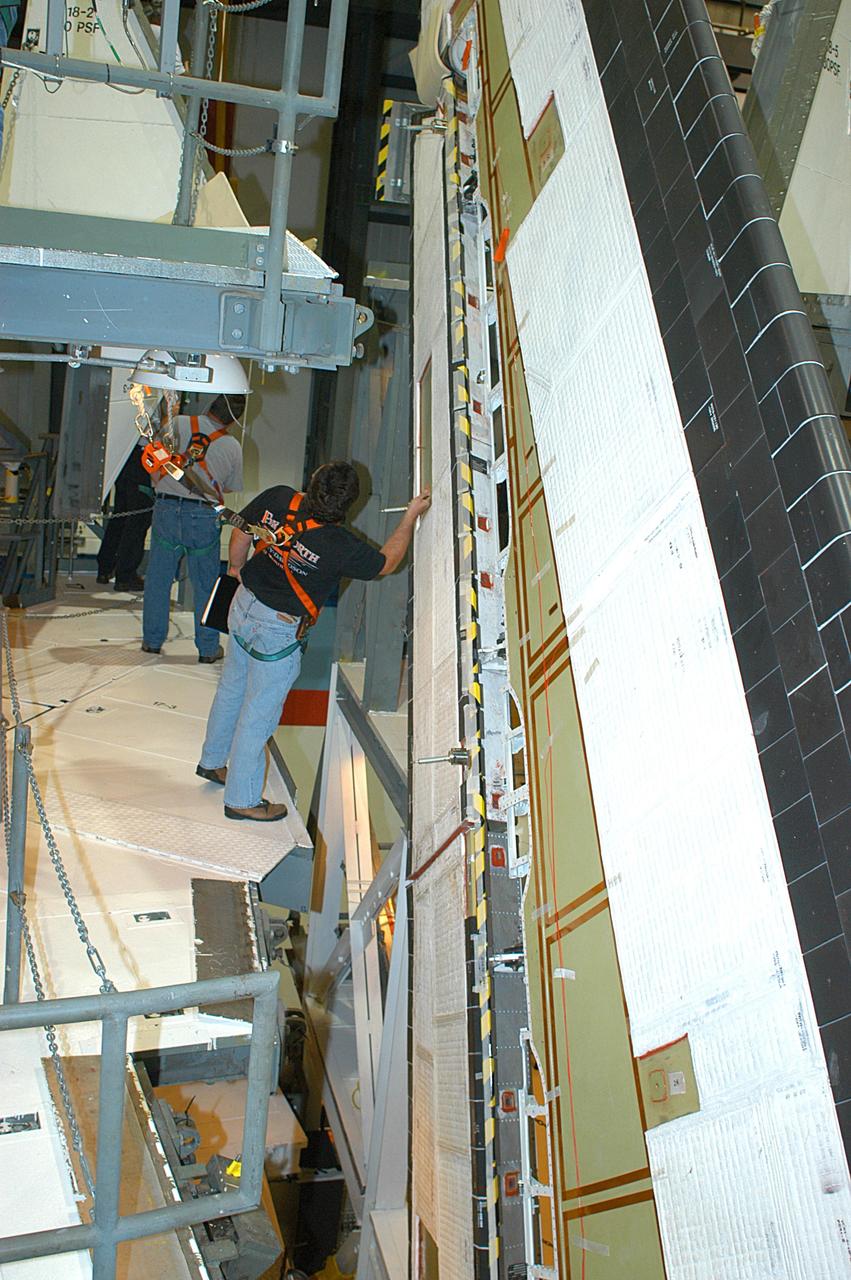
KENNEDY SPACE CENTER, FLA. -- In the Orbiter Processing Facility, a technician looks at the Rudder Speed Brake panel on the vertical tail of orbiter Atlantis. The Rudder Speed Brake is being removed for inspection and maintenance prior to Return to Flight. The vertical tail consists of a structural fin surface made of aluminum, the Rudder Speed Brake surface, a tip and a lower trailing edge. The rudder splits into two halves to serve as a speed brake. The vertical tail and Rudder Speed Brake are covered with a reusable thermal protection system. The Rudder Speed Brake is used to guide and slow the Shuttle as it comes in for a landing.

S79-29592 (28 Feb 1979) --- Sporting their new Shuttle-type constant-wear garments, these six astronaut candidates pose for a picture in the crew systems laboratory at the Johnson Space Center (JSC) with the personnel rescue enclosure (PRE) or "rescue ball" and an unoccupied Apollo EMU. From left to right are Rhea Seddon, Kathryn D. Sullivan, Judith A. Resnik, Sally K. Ride, Anna L. Fisher and Shannon W. Lucid.
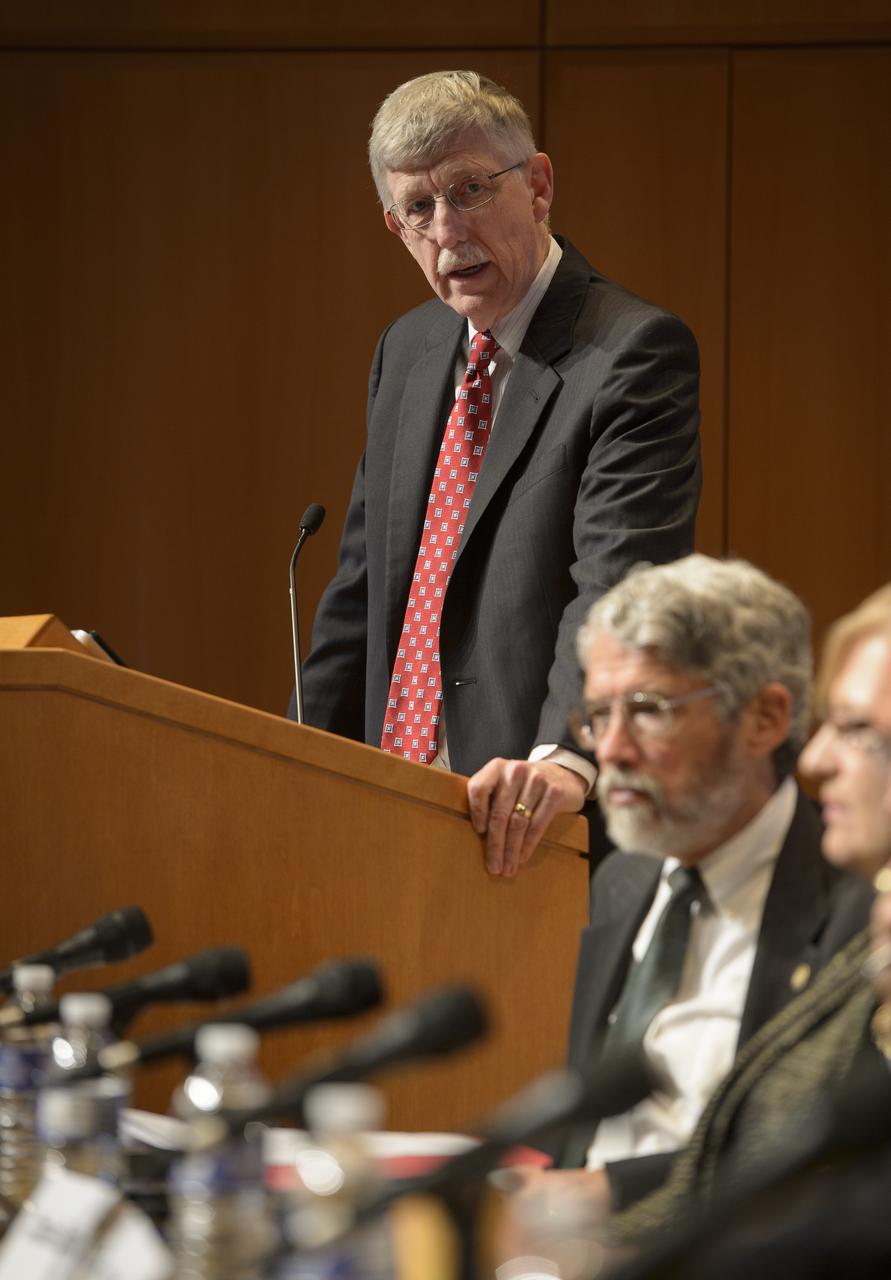
Director of the National Institutes of Health (NIH) Francis S. Collins, M.D., Ph.D., delivers remarks during a White House Office of Science and Technology Policy (OSTP) Fiscal Year 2014 budget briefing held with with Dr. John P. Holdren, Director of OSTP, Patricia Falcone of OSTP, Charlie Bolden from NASA, Cora Marrett from NSF, and Kathryn Sullivan from NOAA, at the American Association for the Advancement of Science (AAAS) on Wednesday, April 10, 2013 in Washington. Photo Credit: (NASA/Bill Ingalls)

S79-29594 (28 Feb 1979) --- Sporting their new Shuttle-type constant-wear garments, these six astronaut candidates pose for a picture in the crew systems laboratory at the Johnson Space Center (JSC). From left to right are Rhea Seddon, Sally K. Ride, Kathryn D. Sullivan, Shannon W. Lucid, Anna L. Fisher and Judith A. Resnik.
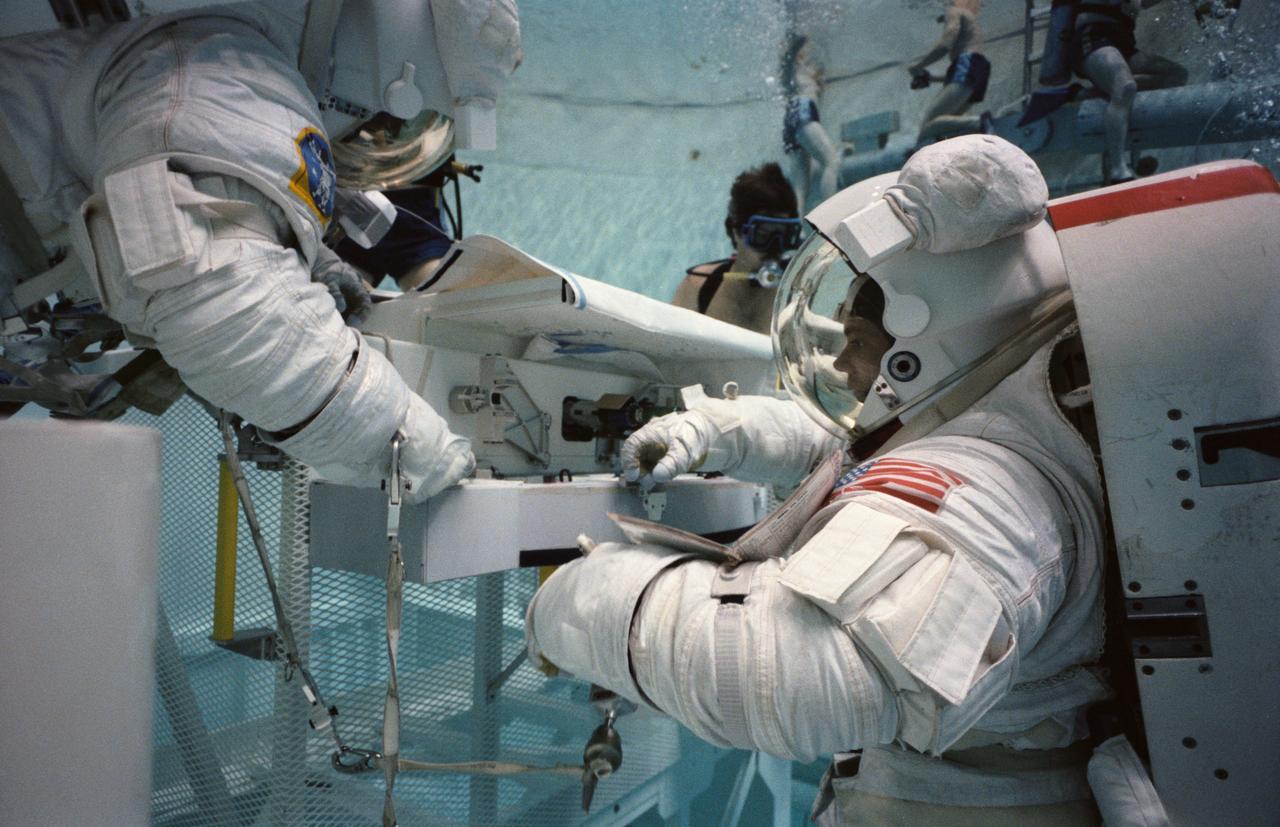
S84-36960 (5 July 1984) --- Astronauts Kathryn D. Sullivan, left, and David C. Leestma, Mission 41-G crewmembers, simulate the transfer of cryogenics in space during an Earth-bound underwater session in the Johnson Space Center's weightless environment training facility (WET-F). The two mission specialists will be joined by three NASA astronauts and two payload specialists for a flight aboard the Columbia later this year. The photograph was taken by Otis Imboden.
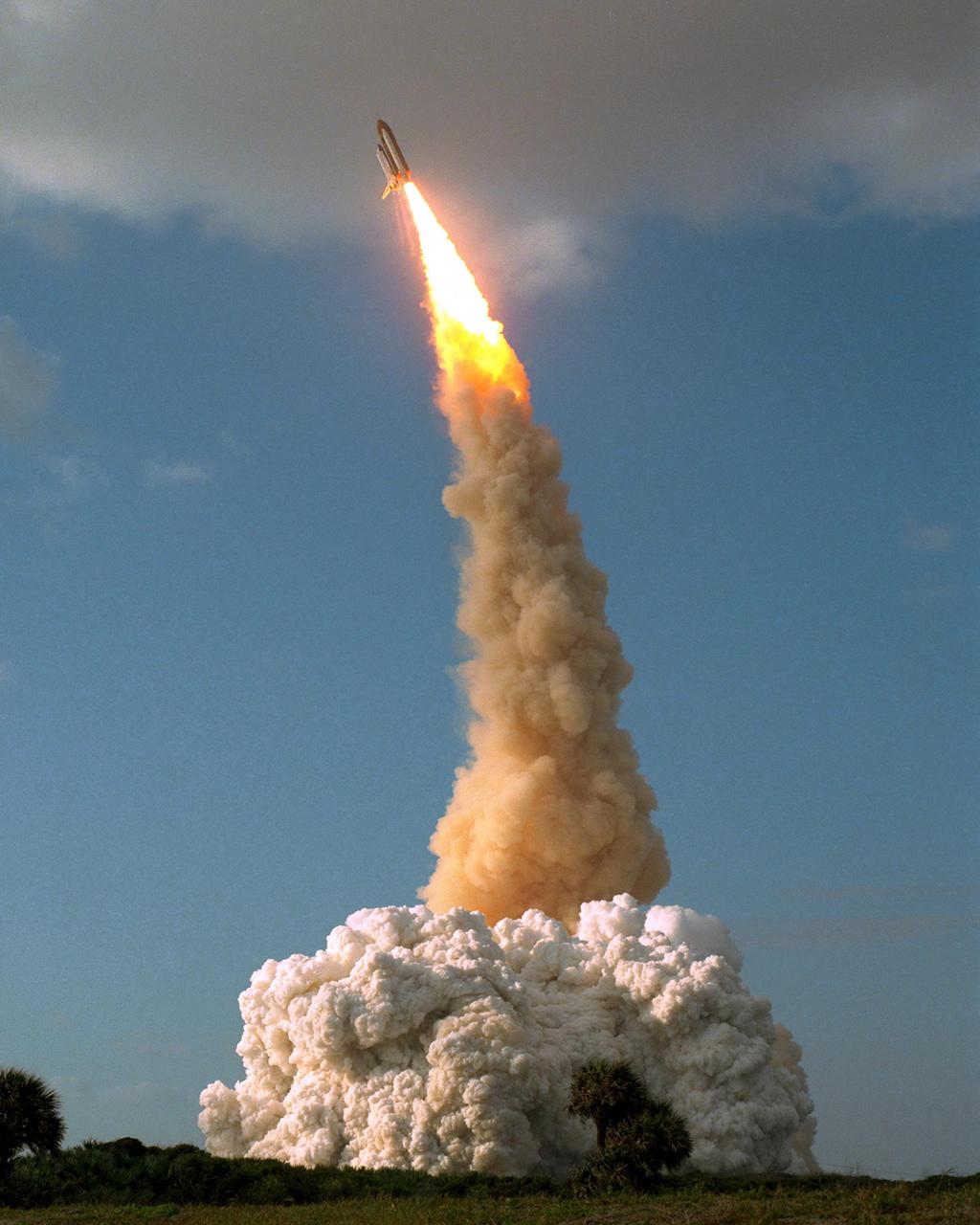
KENNEDY SPACE CENTER, FLA. -- The Space Shuttle Discovery lifts off from Pad 39-B at 8:33 a.m. EDT carrying a crew of five and the Hubble Space Telescope. STS-31 crew members are Commander Loren Shriver, Pilot Charles Bolden and Mission Specialists Steven Hawley, Bruce McCandless II and Kathryn Sullivan.

The space shuttle Discovery lifts off from Launch Pad 39-B at 8:33 a.m. EDT carrying a crew of five and the Hubble Space Telescope. STS-31 crew members are Commander Loren Shriver, Pilot Charles Bolden and Mission Specialists Steven Hawley, Bruce McCandless II and Kathryn Sullivan. Photo credit: NASA
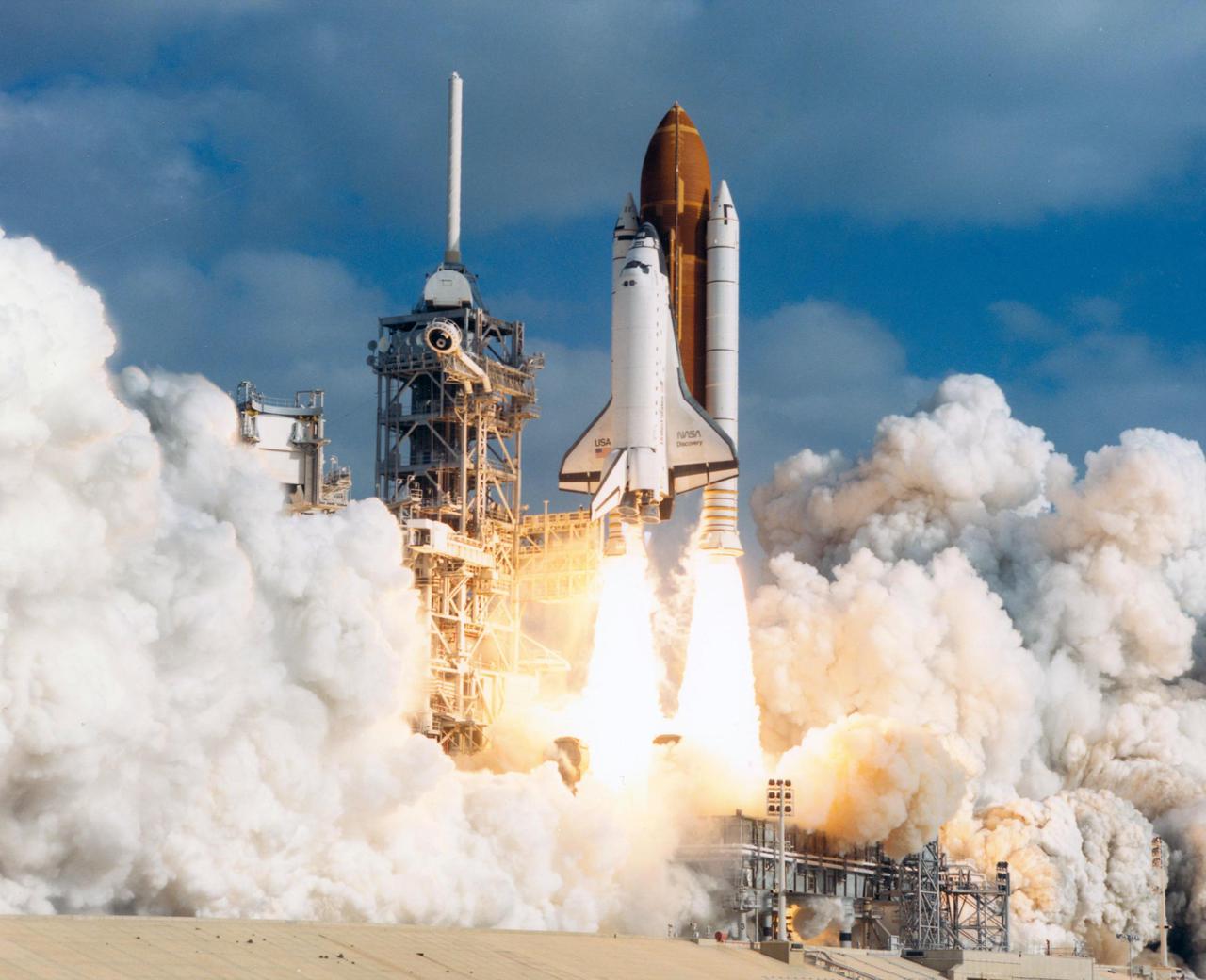
KENNEDY SPACE CENTER, FLA. -- The Space Shuttle Discovery soars into the morning skies above Florida, carying a crew of five and the Hubble Space Telescope. Launch of Space Shuttle Mission STS-31from Pad 39B occurred at 8:33:51 a.m. EDT, April 24. Crew members are Commander Loren J. Shriver; Pilot Charles F. Bolden Jr.; and Mission Specialists Kathryn D. Sullivan, Steven A. Hawley, and Bruce McCandless II.

S79-29596 (28 Feb 1979) --- Contrasting the old with the new, six astronaut candidates pose for photographers in their new constant wear garments, ideal for the zero-gravity tasks in the pressurized environs of Space Shuttle. The "old" is an Apollo type spacesuit used for extravehicular activity (EVA). From left to right are Shannon W. Lucid, Rhea Seddon, Kathryn D. Sullivan, Judith A. Resnik, Anna L. Fisher and Sally K. Ride.
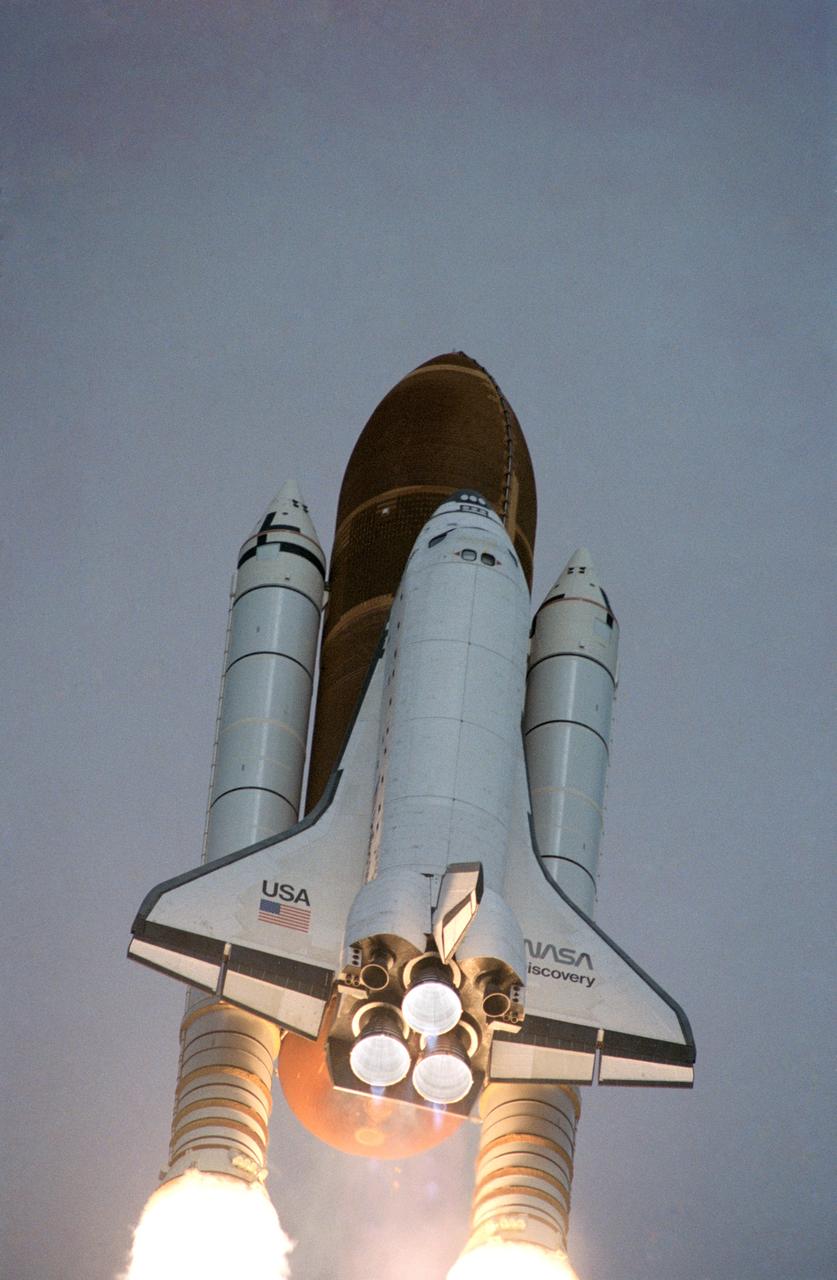
STS031-S-074 (24 April 1990) --- A low-angle view of the launch of the STS-31 mission. Onboard Discovery are a crew of five veteran astronauts and the Hubble Space Telescope (HST). Official launch time was 8:33:51.0492 a.m. (EDT). Headed for approximately five days in space are astronauts Loren J. Shriver, Charles F. Bolden Jr., Bruce McCandless II, Kathryn D. Sullivan and Steven S. Hawley.
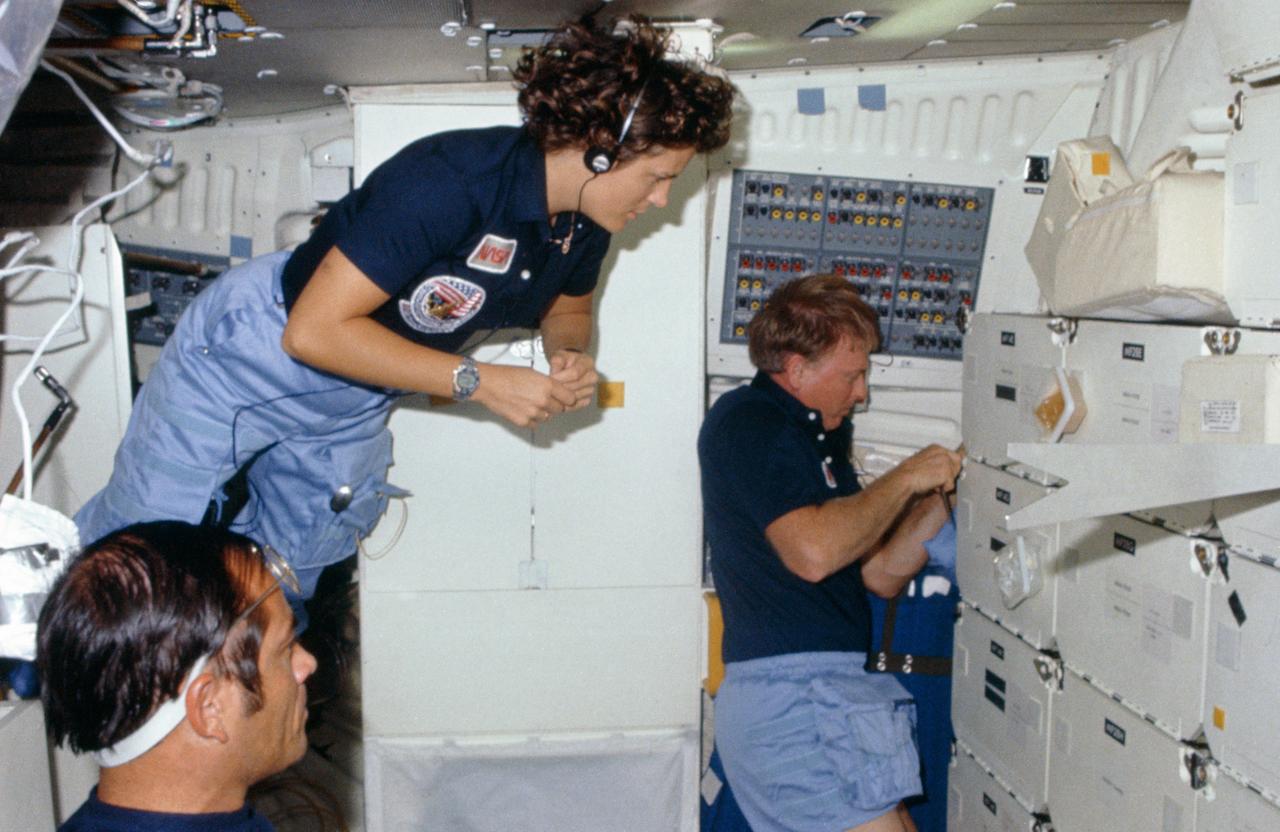
41G-102-003 (5-13 Oct 1984) ---- Astronaut Kathryn D. Sullivan, 41-G mission specialist, floats into a middeck scene to join a more stationary pair of crewmembers---Astronauts Robert L. Crippen, crew commander; and Jon A. McBride, pilot. The protruding article near the stowage lockers is a Krimsky rule, part of the near vision acuity experiment in which recent NASA space travelers have participated.
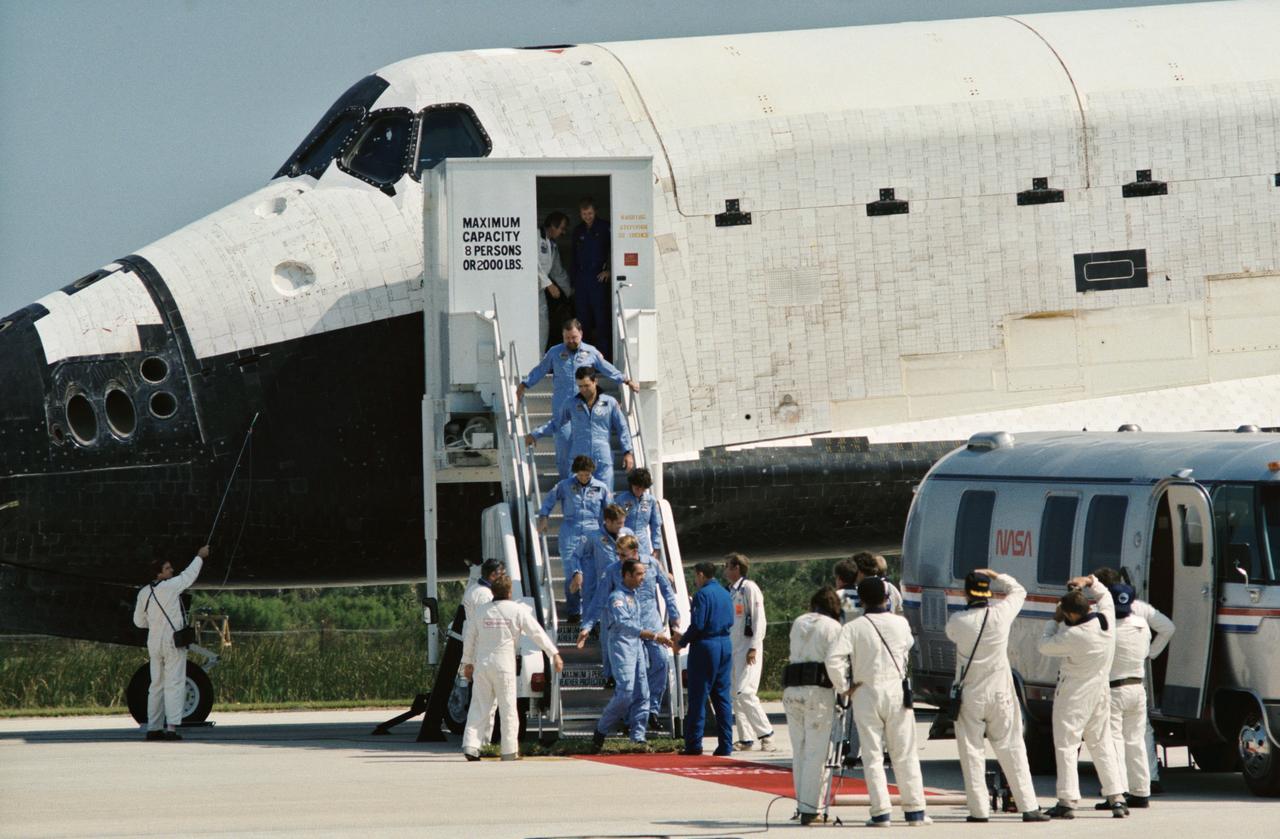
41G-90217 (13 Oct 1984) --- 41-G crew leaves the orbiter after landing at Kennedy Space Center at the end of their mission. Astronaut Robert Crippen shakes hands with George W.S. Abbey, Director of JSC's Flight Crew Operations, while the other crewmembers wait behind him. They are Jon McBride, David Leestma, Sally K. Ride, Kathryn Sullivan, Marc Garneau and Paul Scully-Power.