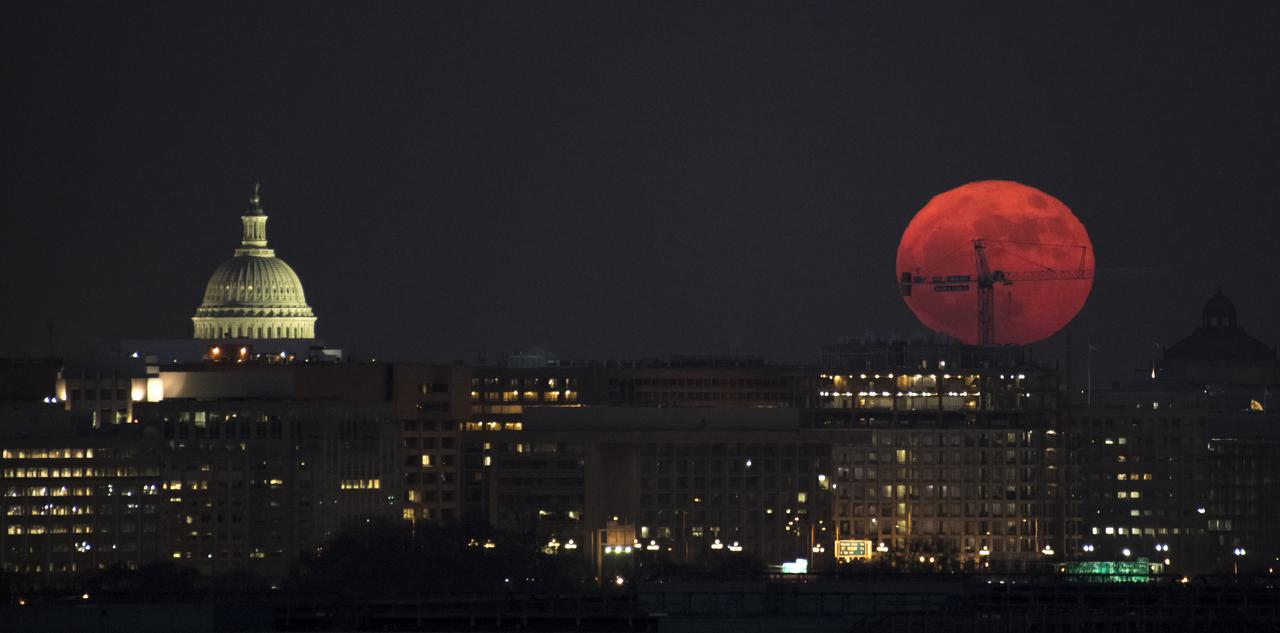
The Moon is seen as is rises, Sunday, Dec. 3, 2017 in Washington. Today's full Moon is the first of three consecutive supermoons. The two will occur on Jan. 1 and Jan. 31, 2018. A supermoon occurs when the moon’s orbit is closest (perigee) to Earth at the same time it is full. Photo Credit: (NASA/Bill Ingalls)
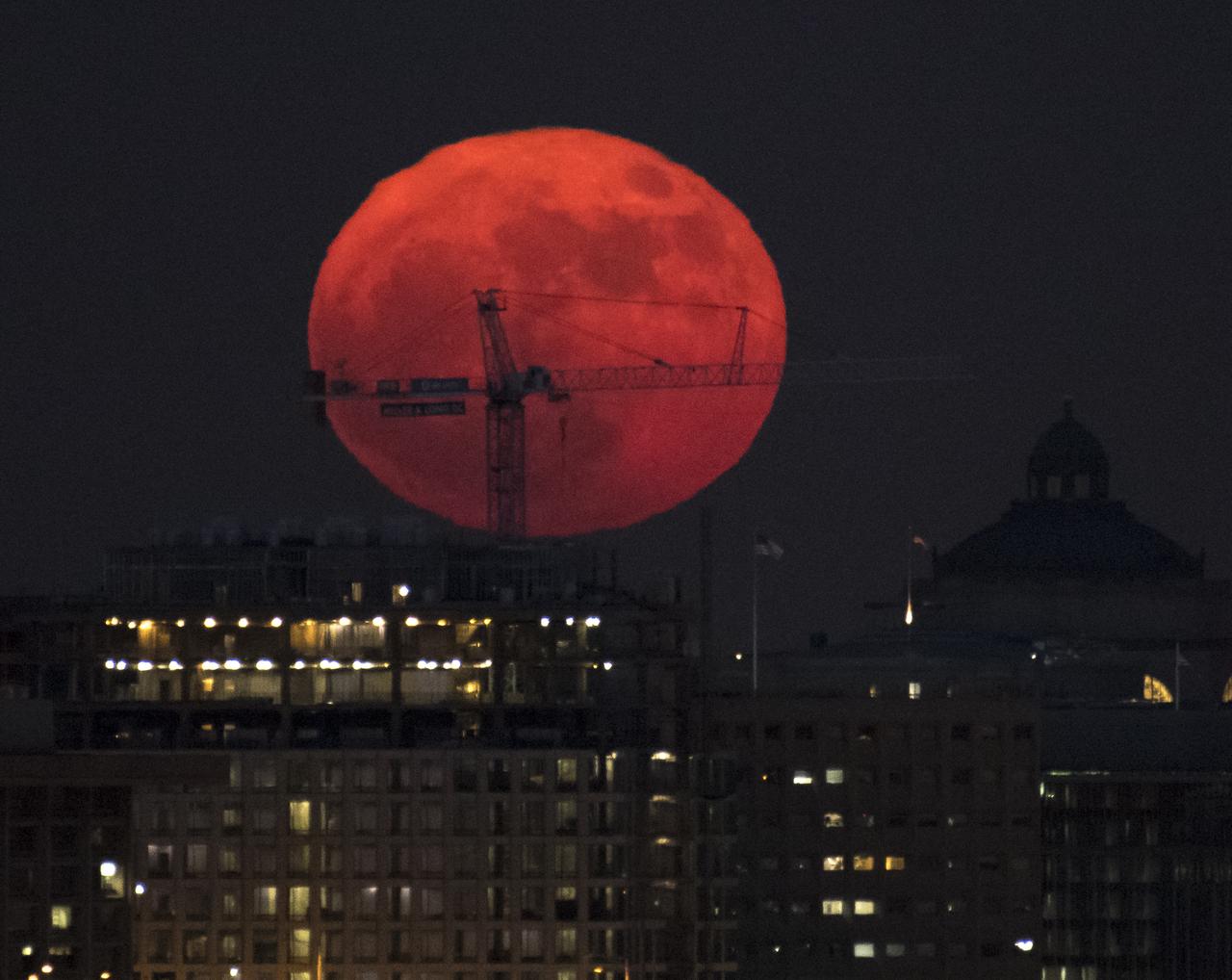
The Moon is seen as is rises, Sunday, Dec. 3, 2017 in Washington. Today's full Moon is the first of three consecutive supermoons. The two will occur on Jan. 1 and Jan. 31, 2018. A supermoon occurs when the moon’s orbit is closest (perigee) to Earth at the same time it is full. Photo Credit: (NASA/Bill Ingalls)
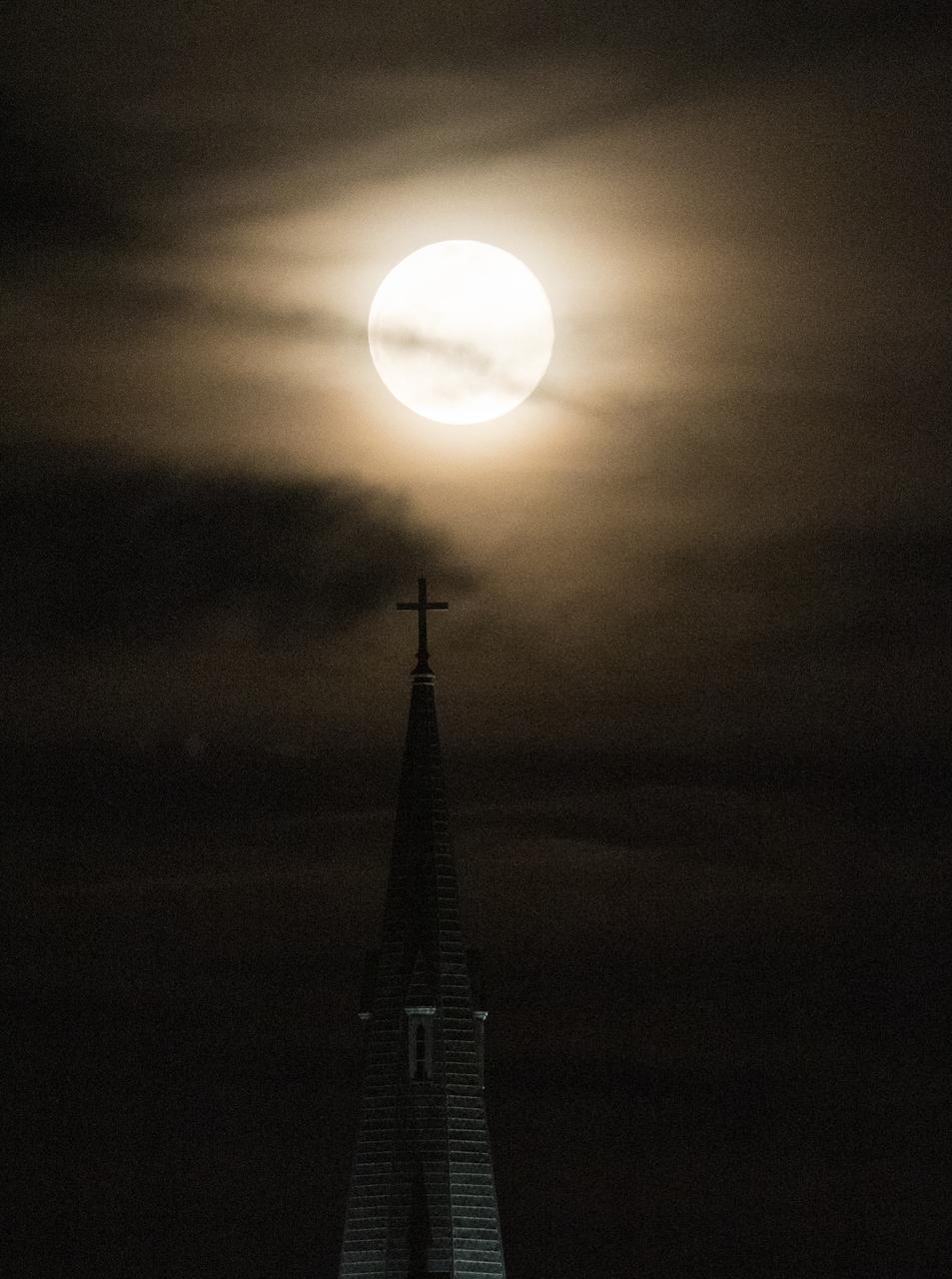
The Moon, or supermoon, is seen as it rises behind the spire of St. Dominic Church, Monday, March 9, 2020, in Washington, DC. A supermoon occurs when the Moon’s orbit is closet (perigee) to Earth. Photo Credit: (NASA/Joel Kowsky)
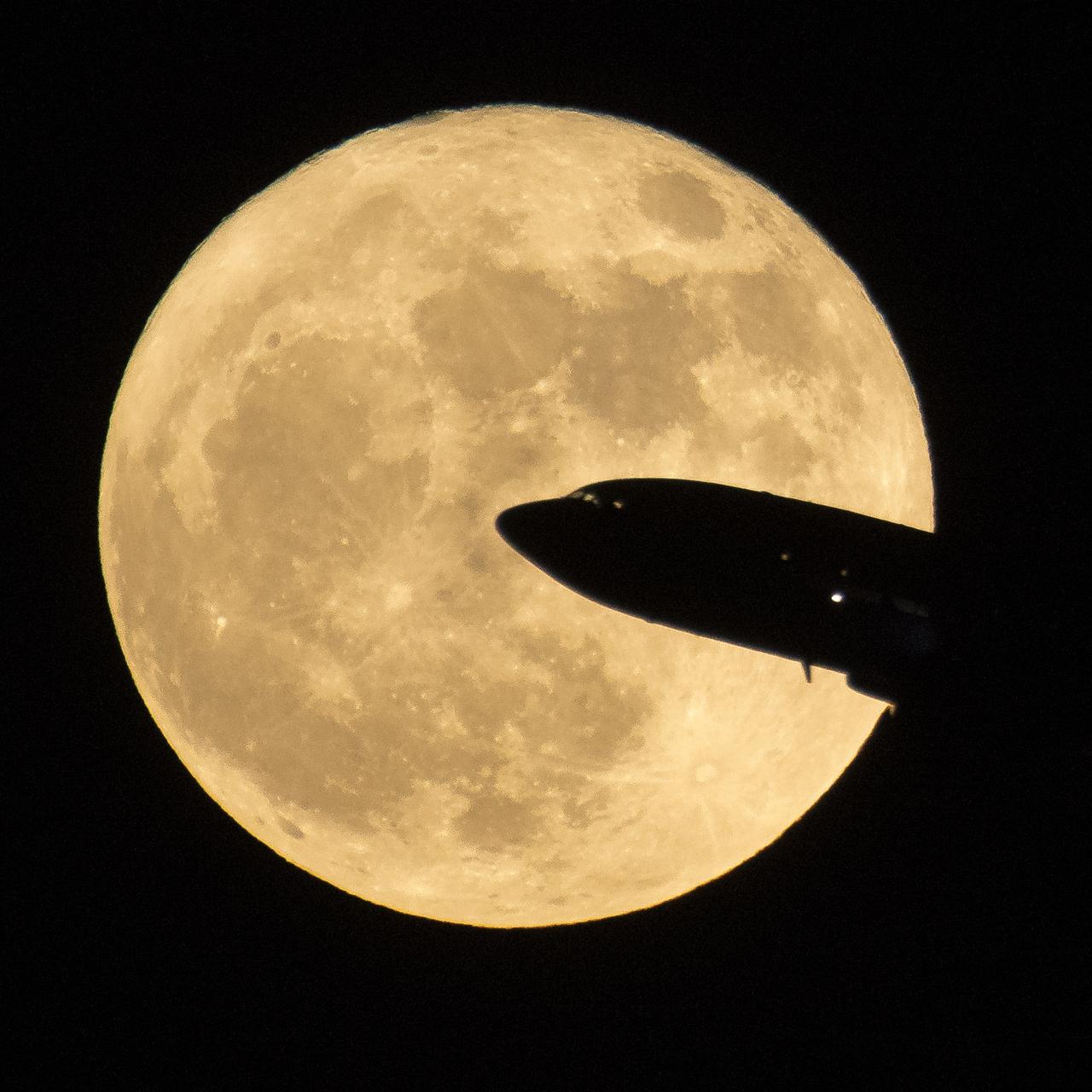
An aircraft taking off from Ronald Reagan National Airport is seen passing in front of the Moon as it rises, Sunday, Dec. 3, 2017 in Washington. Today's full Moon is the first of three consecutive supermoons. The two will occur on Jan. 1 and Jan. 31, 2018. A supermoon occurs when the moon’s orbit is closest (perigee) to Earth at the same time it is full. Photo Credit: (NASA/Bill Ingalls)
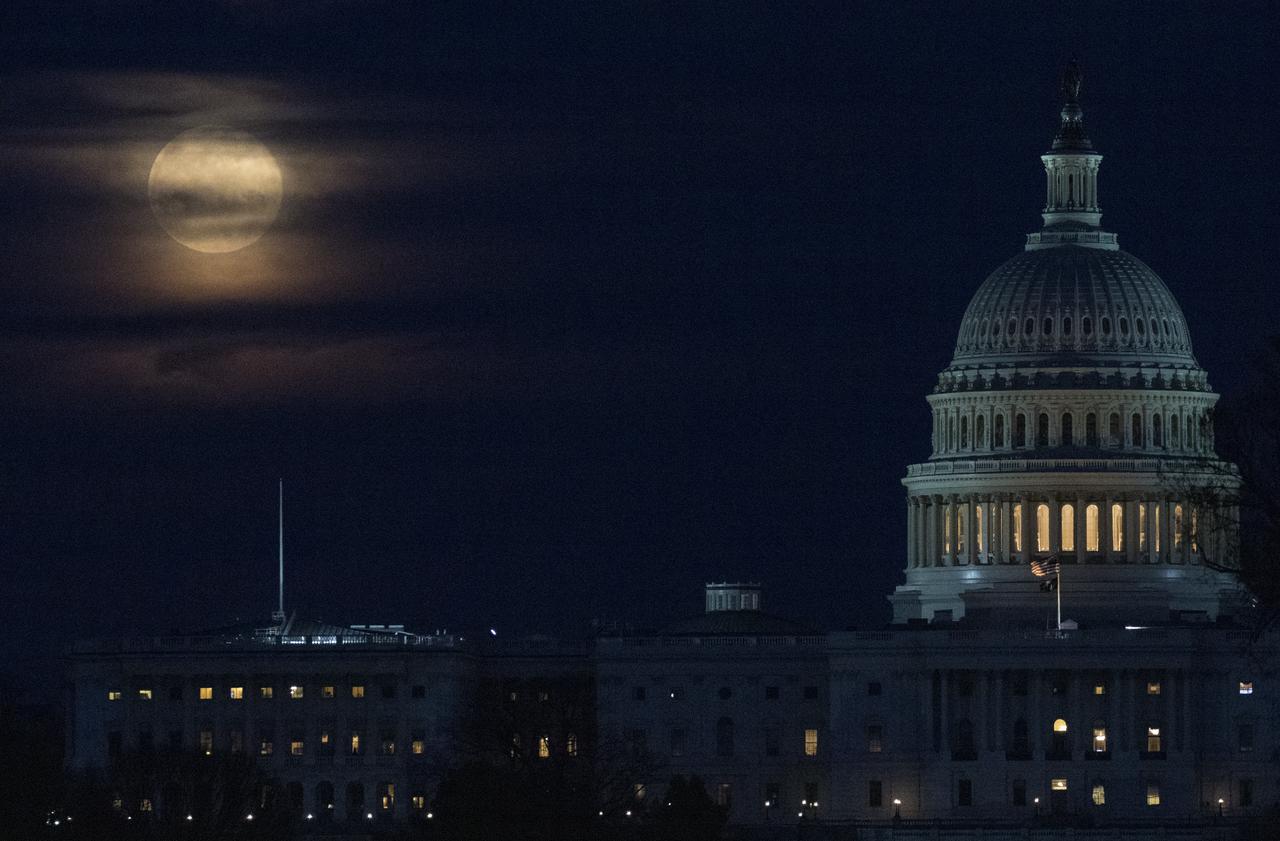
The Moon, or supermoon, is seen as it rises behind the U.S. Capitol, Monday, March 9, 2020, in Washington, DC. A supermoon occurs when the Moon’s orbit is closet (perigee) to Earth. Photo Credit: (NASA/Joel Kowsky)
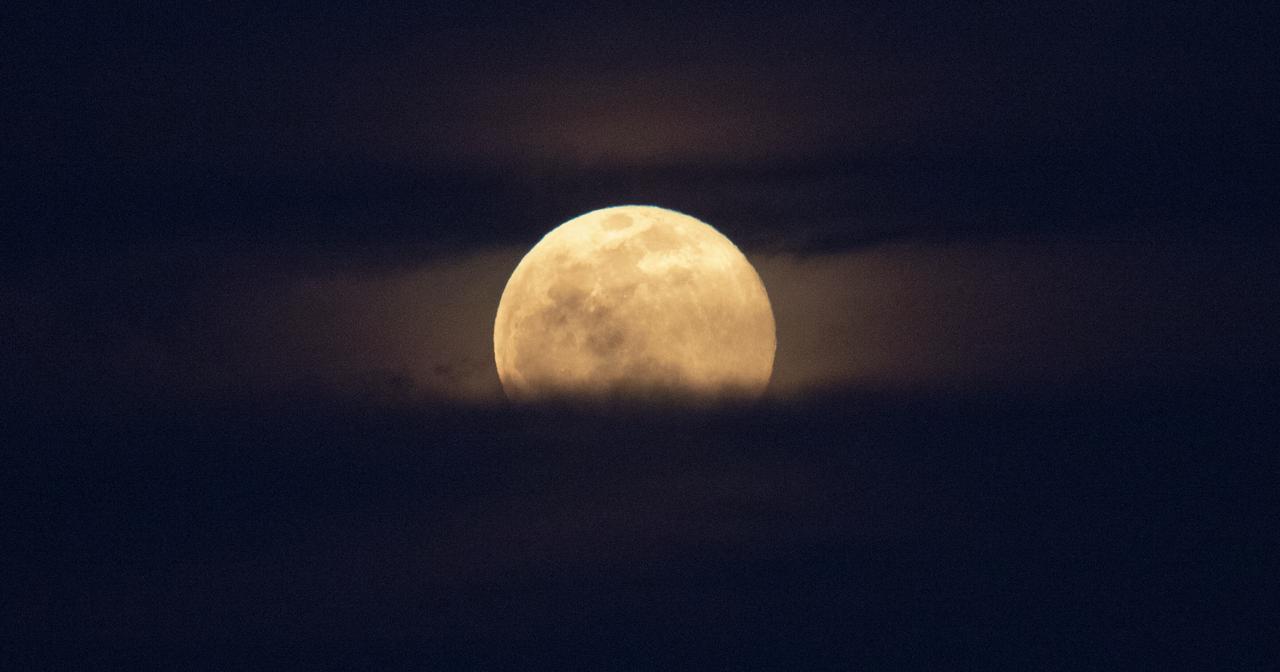
The Moon, or supermoon, is seen as it rises behind the U.S. Capitol, Monday, March 9, 2020, in Washington, DC. A supermoon occurs when the Moon’s orbit is closet (perigee) to Earth. Photo Credit: (NASA/Joel Kowsky)

A perigee full moon or supermoon is seen, Sunday, August 10, 2014, in Washington. A supermoon occurs when the moon’s orbit is closest (perigee) to Earth at the same time it is full. Photo Credit: (NASA/Bill Ingalls)
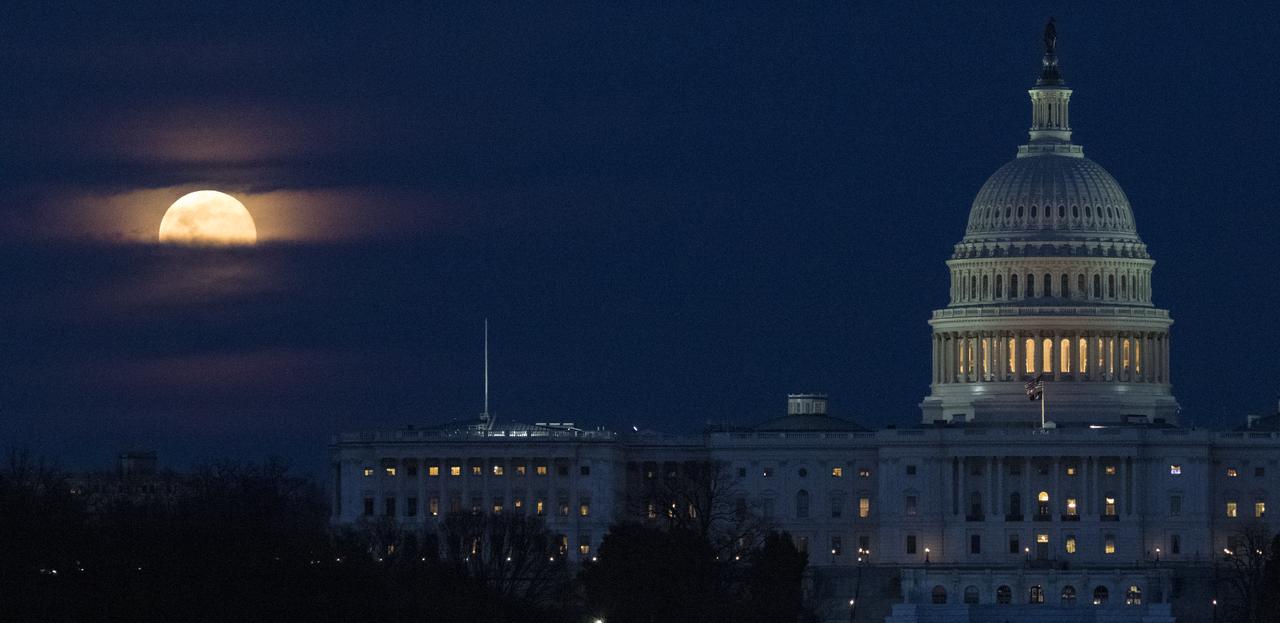
The Moon, or supermoon, is seen as it rises behind the U.S. Capitol, Monday, March 9, 2020, in Washington, DC. A supermoon occurs when the Moon’s orbit is closet (perigee) to Earth. Photo Credit: (NASA/Joel Kowsky)
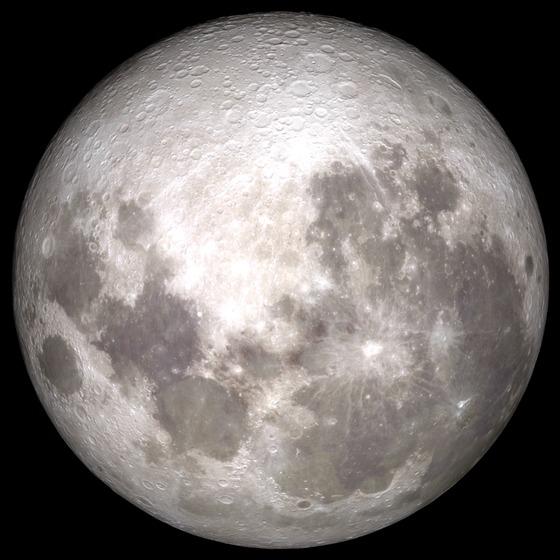
<b>Share YOUR Supermoon images with NASA in our Flickr Group: <a href="http://www.flickr.com/groups/supermoon2013/">www.flickr.com/groups/supermoon2013/</a></b> Up there in the sky – it's not a bird or a plane; it's a "Supermoon." Bigger and brighter then normal full moons, the supermoon on June 22/23 will be the closest and largest full moon for all of 2013. The moon will be some 29,000 miles closer to Earth than the farthest point in its orbit, but not to worry the moon will still be more than 221,000 miles away from our blue planet. --- This is an animation of the moon that was created using data from NASA's LRO satellite. Details: Time: Sunday, June 23, 2013, 15:00 UT (11:00 AM EDT) Phase: 99.9% Diameter:2007.5 arcseconds Distance:357015 km (28.02 Earth diameters) J2000 Right Ascension, Declination18h 17m 42s, -19° 31' 35" Subsolar Longitude, Latitude-1.905°, -1.129° Sub-Earth Longitude, Latitude0.093°, -5.002° Position Angle:359.213° Credit: NASA/Goddard/LRO More images and animarions of the moon can be found here: <a href="http://1.usa.gov/14bPRjT" rel="nofollow">1.usa.gov/14bPRjT</a> <b><a href="http://www.nasa.gov/audience/formedia/features/MP_Photo_Guidelines.html" rel="nofollow">NASA image use policy.</a></b> <b><a href="http://www.nasa.gov/centers/goddard/home/index.html" rel="nofollow">NASA Goddard Space Flight Center</a></b> enables NASA’s mission through four scientific endeavors: Earth Science, Heliophysics, Solar System Exploration, and Astrophysics. Goddard plays a leading role in NASA’s accomplishments by contributing compelling scientific knowledge to advance the Agency’s mission. <b>Follow us on <a href="http://twitter.com/NASAGoddardPix" rel="nofollow">Twitter</a></b> <b>Like us on <a href="http://www.facebook.com/pages/Greenbelt-MD/NASA-Goddard/395013845897?ref=tsd" rel="nofollow">Facebook</a></b> <b>Find us on <a href="http://instagram.com/nasagoddard?vm=grid" rel="nofollow">Instagram</a></b>

The upcoming supermoon on Monday, November 14, will be especially “super”, it’s the closest full moon to Earth since 1948 Read more:: <a href="http://go.nasa.gov/2fE5psX" rel="nofollow">go.nasa.gov/2fE5psX</a> The moon is a familiar sight, but the days leading up to Monday, Nov. 14, promise a spectacular supermoon show. When a full moon makes its closest pass to Earth in its orbit it appears up to 14 percent bigger and 30 percent brighter, making it a supermoon. This month’s is especially ‘super’ for two reasons: it is the only supermoon this year to be completely full, and it is the closest moon to Earth since 1948. The moon won’t be this super again until 2034! Share your supermoon photos using #NASAsupermoon on social media.
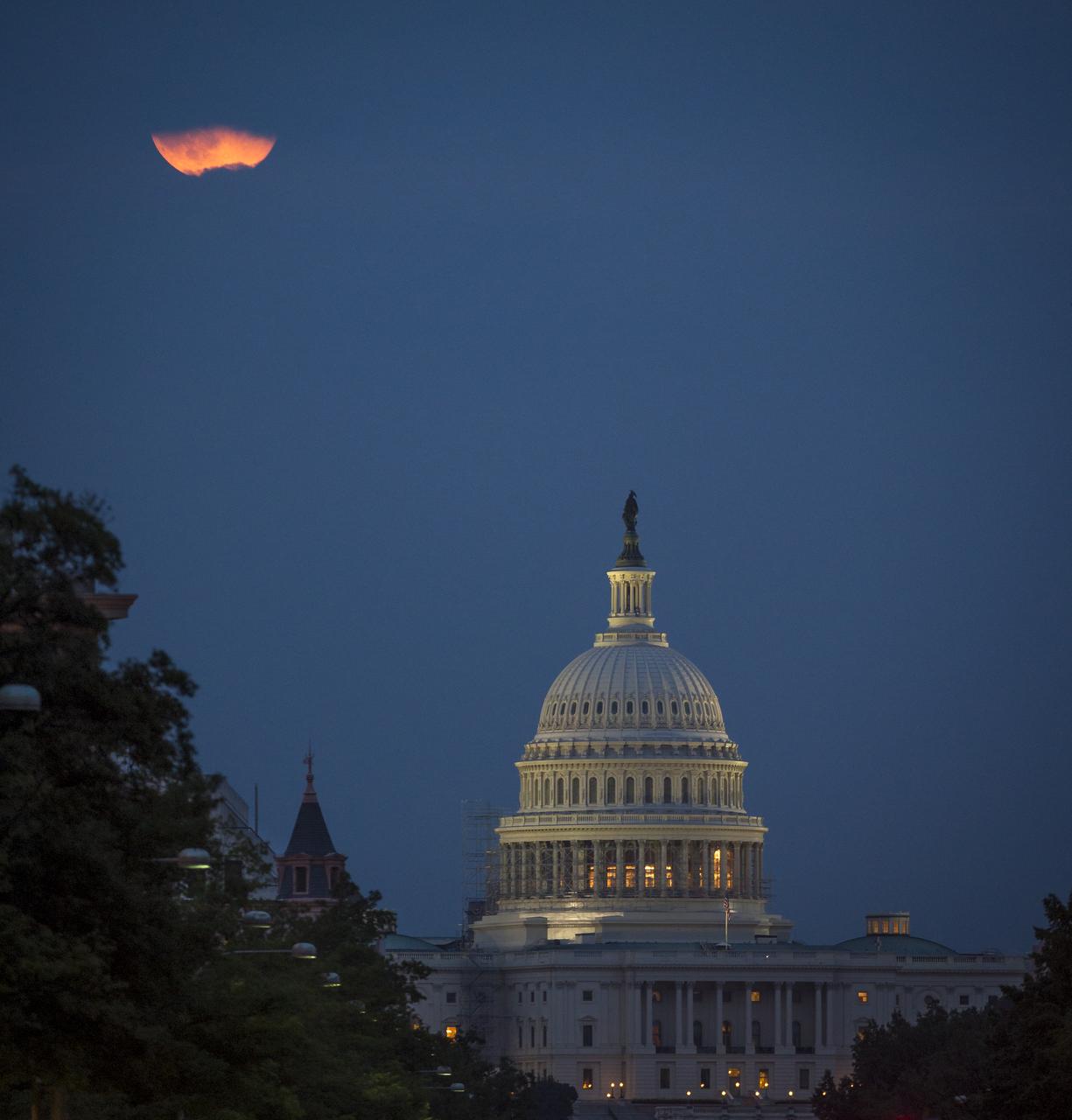
A perigee full moon or supermoon is seen behind clouds over the United States Capitol, Sunday, August 10, 2014, in Washington. A supermoon occurs when the moon’s orbit is closest (perigee) to Earth at the same time it is full. Photo Credit: (NASA/Bill Ingalls)
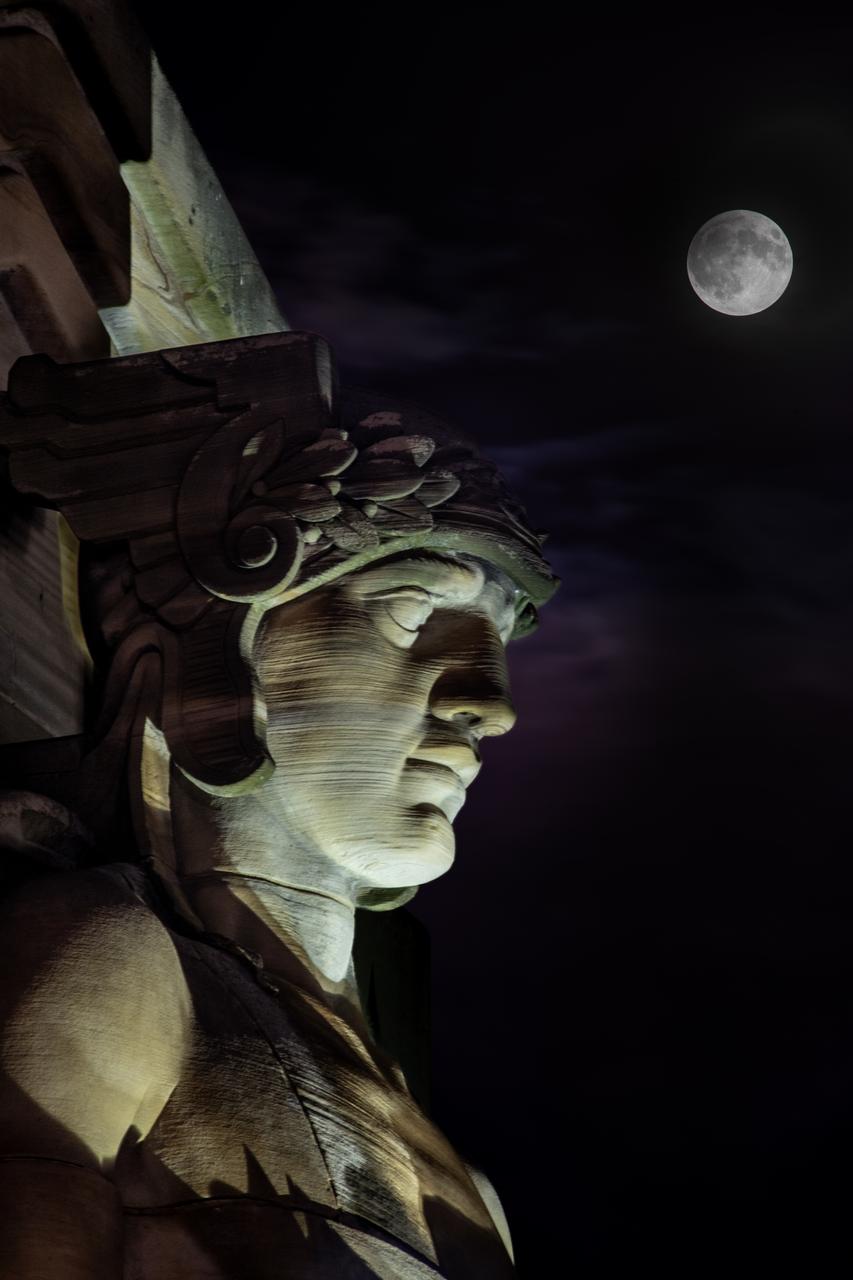
Guardians of Traffic Statue in Cleveland, OH watches over the Supermoon that was visible on September 17th, 2024. On this day, the full moon was a partial Lunar Eclipse; a Supermoon; and a Harvest Moon. Photo Credit: (NASA/Sara Lowthian-Hanna)
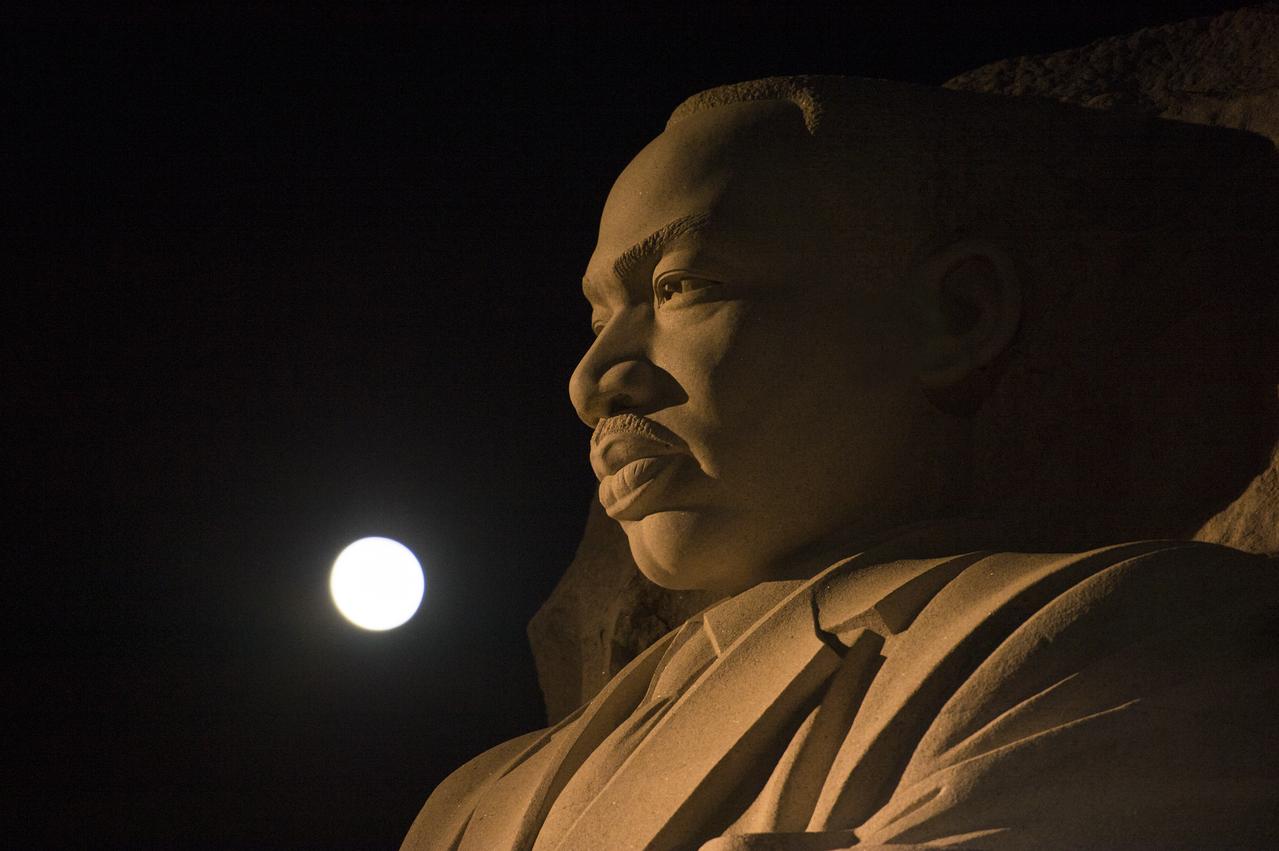
The moon, or supermoon, is seen as it sets over the Martin Luther King Jr. Memorial on Monday, Nov. 14, 2016. A supermoon occurs when the moon’s orbit is closest (perigee) to Earth. Early Monday morning, the moon was the closest it has been to Earth since 1948 and it appeared 30 percent brighter and 14 percent bigger than the average monthly full moon. Photo Credit: (NASA/Aubrey Gemignani)
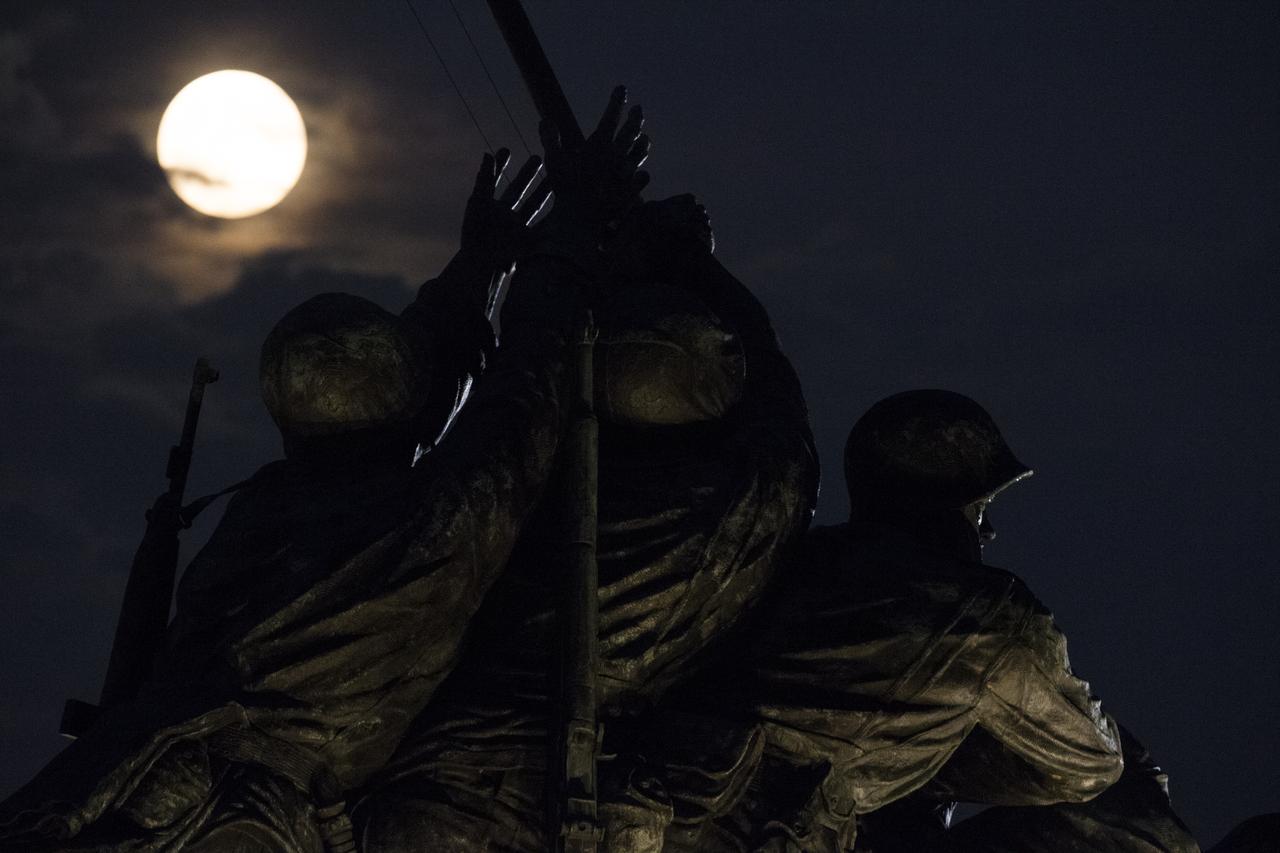
A perigree full moon or supermoon is seen over the US Marine Corps War Memorial, Sunday, August 10, 2014, in Arlington, Virginia. A supermoon occurs when the moon’s orbit is closest (perigee) to Earth at the same time it is full. Photo Credit: (NASA/Joel Kowsky)
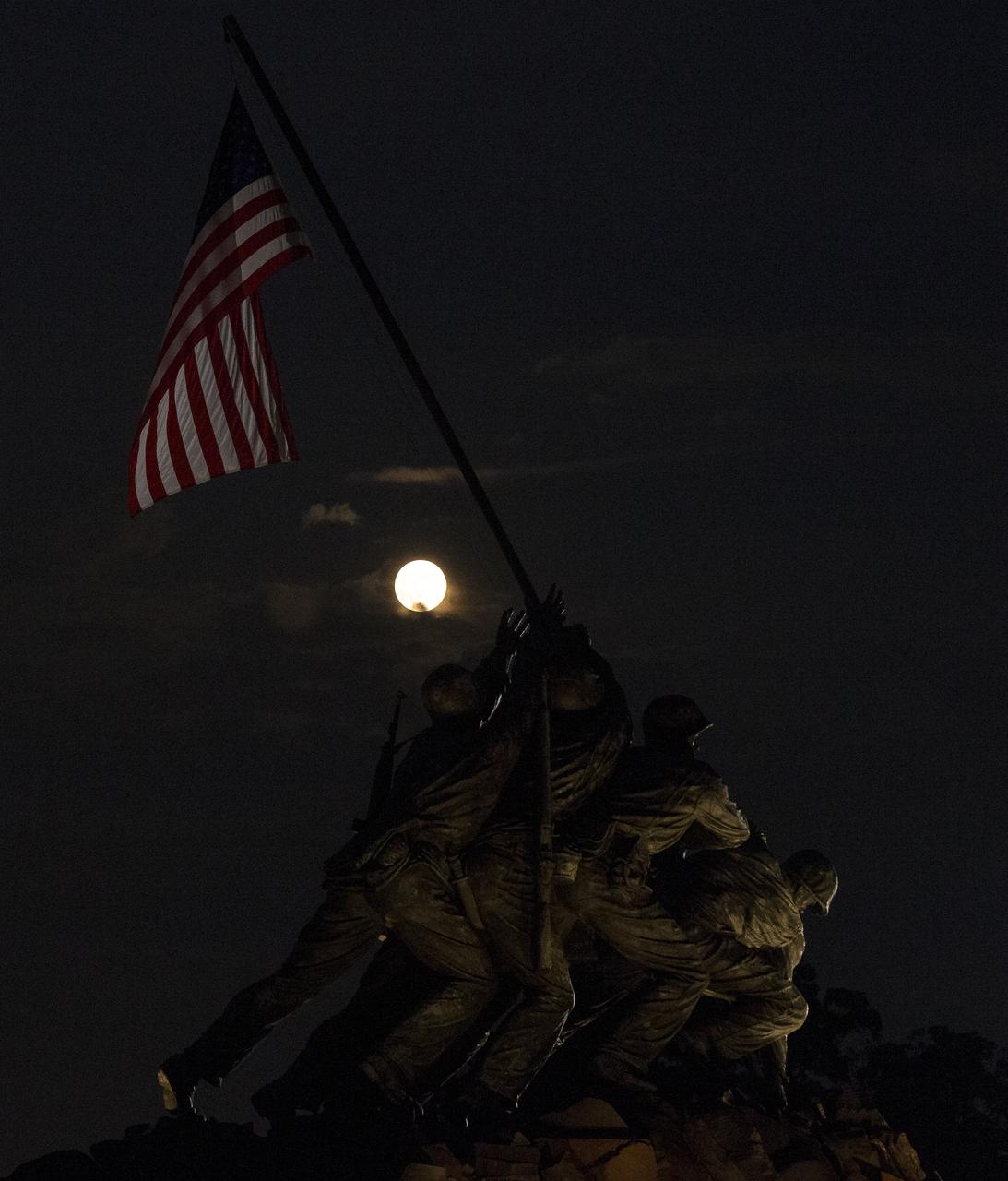
A perigree full moon or supermoon is seen over the US Marine Corps War Memorial, Sunday, August 10, 2014, in Arlington, Virginia. A supermoon occurs when the moon’s orbit is closest (perigee) to Earth at the same time it is full. Photo Credit: (NASA/Joel Kowsky)
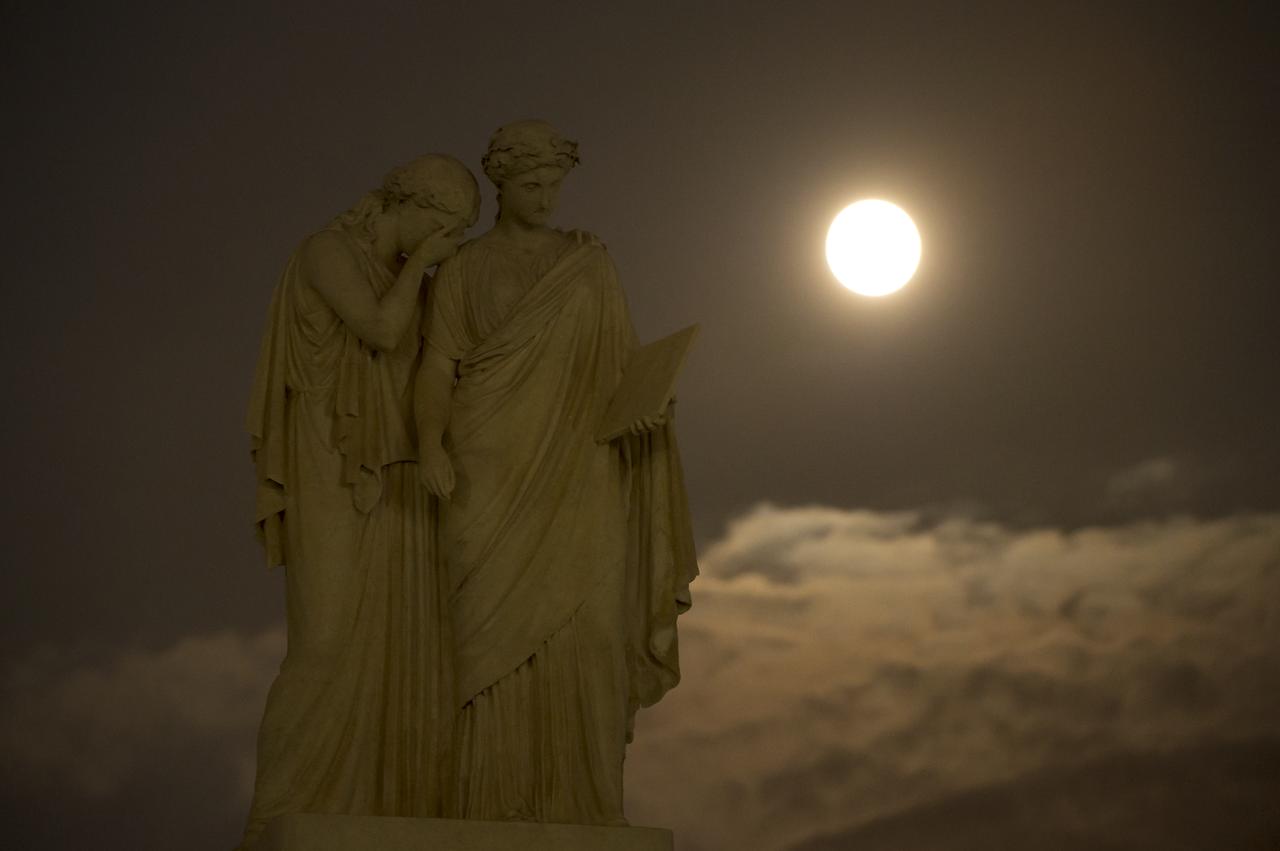
A perigee full moon or supermoon is seen over the The Peace Monument on the grounds of the United States Capitol, Sunday, August 10, 2014, in Washington. A supermoon occurs when the moon’s orbit is closest (perigee) to Earth at the same time it is full. Photo Credit: (NASA/Bill Ingalls)
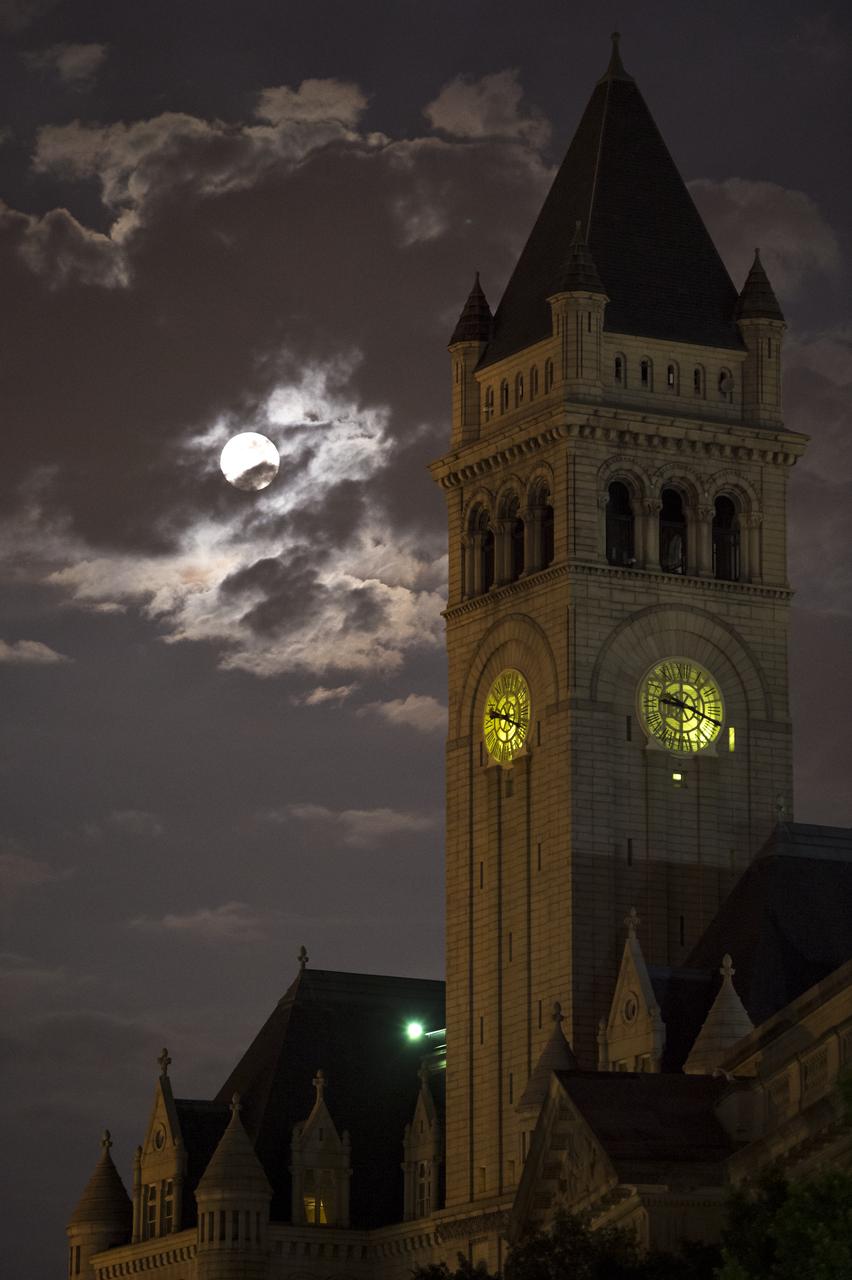
A perigee full moon or supermoon is seen over the Old Post Office and Clock Tower, Sunday, August 10, 2014, in Washington. A supermoon occurs when the moon’s orbit is closest (perigee) to Earth at the same time it is full. Photo Credit: (NASA/Bill Ingalls)

A supermoon rises over Huntsville, Alabama, home to NASA’s Marshall Space Flight Center, Aug. 19. Visible through Wednesday, Aug. 21, the full Moon is both a supermoon and a Blue Moon. Supermoons are the biggest and brightest full Moons of the year because the Moon is within 90% of its closest point to Earth. While not blue in color, the third full Moon in a season with four full Moons is called a “Blue Moon.” Huntsville is known as the “Rocket City” because of its proximity to NASA Marshall, which manages vital propulsion systems and hardware, launch vehicles, engineering technologies, and cutting-edge science for the agency.

A supermoon rises over Huntsville, Alabama, home to NASA’s Marshall Space Flight Center, Aug. 19. Visible through Wednesday, Aug. 21, the full Moon is both a supermoon and a Blue Moon. Supermoons are the biggest and brightest full Moons of the year because the Moon is within 90% of its closest point to Earth. While not blue in color, the third full Moon in a season with four full Moons is called a “Blue Moon.” Huntsville is known as the “Rocket City” because of its proximity to NASA Marshall, which manages vital propulsion systems and hardware, launch vehicles, engineering technologies, and cutting-edge science for the agency.
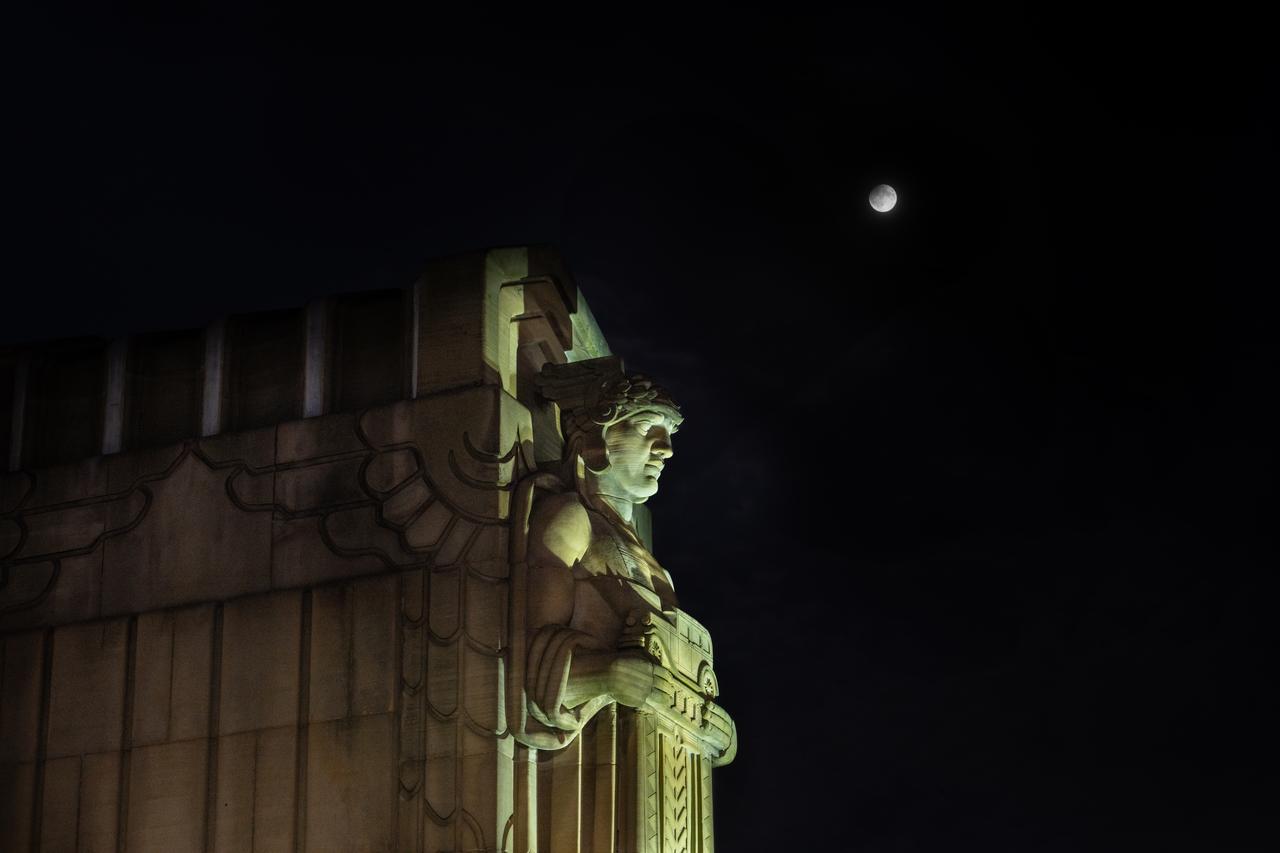
Guardians of Traffic Statue in Cleveland, OH in front of the Supermoon that was visible on September 17th, 2024. On this day, the full moon was a partial lunar eclipse; a supermoon; and a harvest moon.

This Full Moon that occurred on September 17, 2024 in Cleveland, OH was a Partial Lunar Eclipse; a Supermoon; the Corn Moon; and a harvest moon. Photo Credit: (NASA/Sara Lowthian-Hanna)
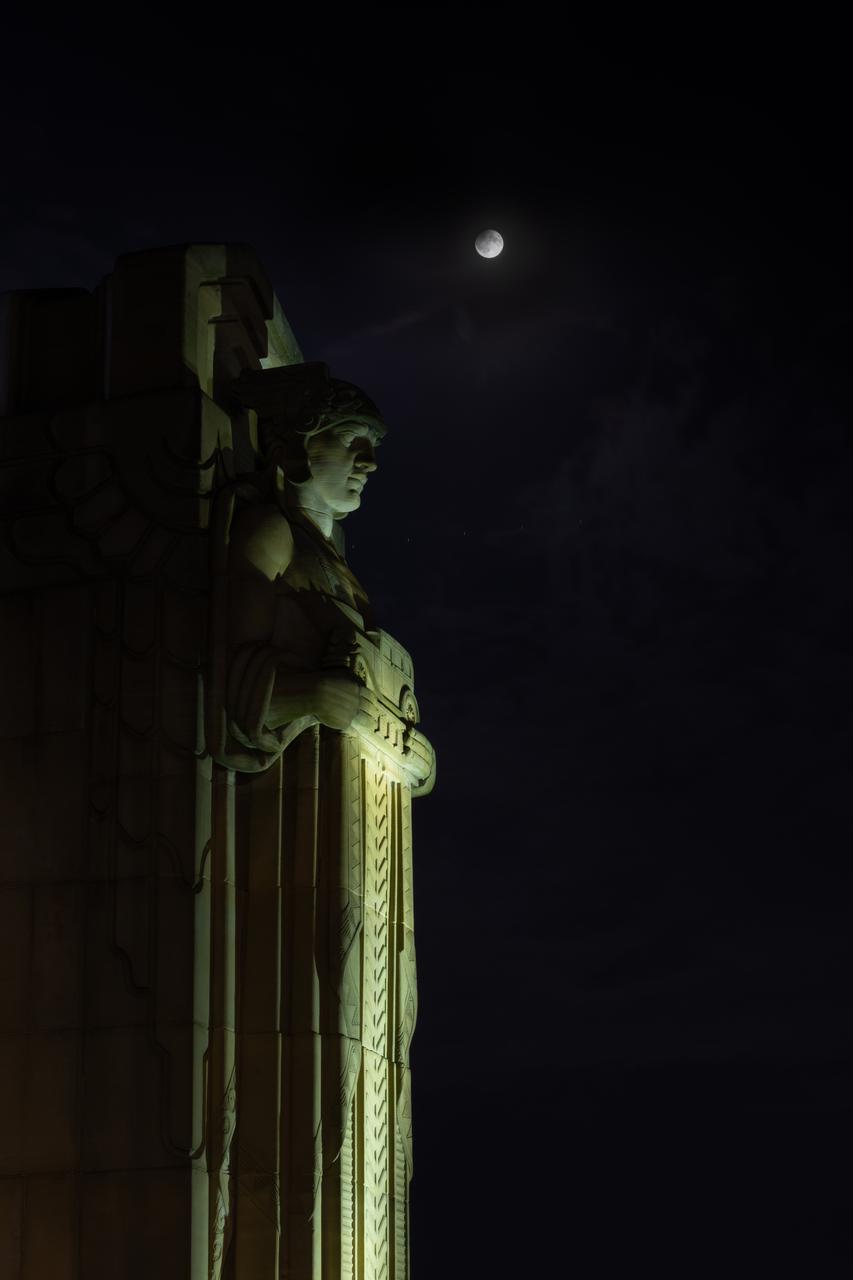
Guardians of Traffic Statue in Cleveland, OH in front of the Supermoon that was visible on September 17th, 2024. On this day, the full moon was a partial lunar eclipse; a supermoon; and a harvest moon. Photo Credit: (NASA/Sara Lowthian-Hanna)
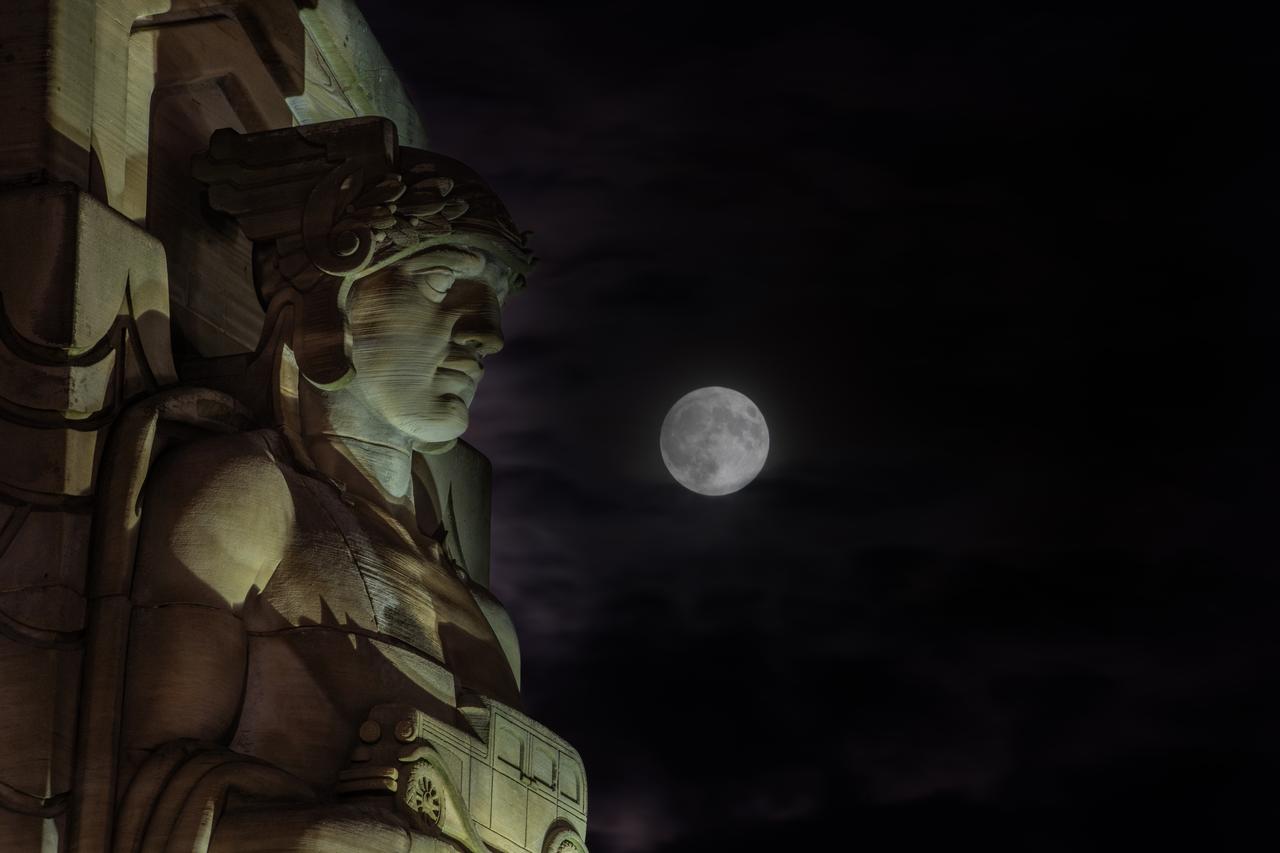
Guardians of Traffic Statue in Cleveland, OH in front of the Supermoon that was visible on September 17th, 2024. On this day, the full moon was a partial lunar eclipse; a supermoon; and a harvest moon. Photo Credit: (NASA/Sara Lowthian-Hanna)
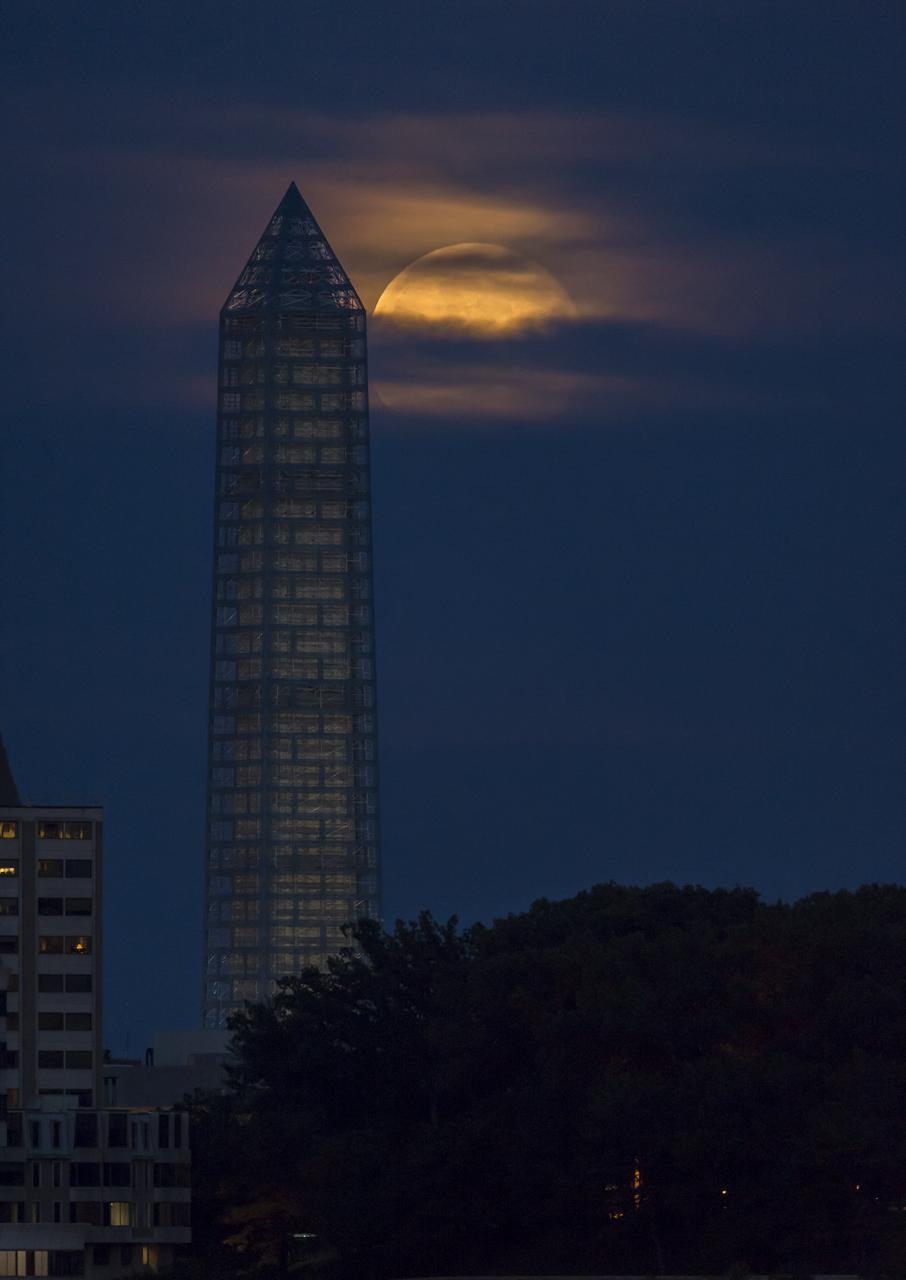
A supermoon rises behind the Washington Monument, Sunday, June 23, 2013, in Washington. This year the Supermoon is up to 13.5% larger and 30% brighter than a typical Full Moon is. This is a result of the Moon reaching its perigee - the closest that it gets to the Earth during the course of its orbit. During perigee on 23 June the Moon was about 221,824 miles away, as compared to the 252,581 miles away that it is at its furthest distance from the Earth (apogee). Photo Credit: (NASA/Bill Ingalls)
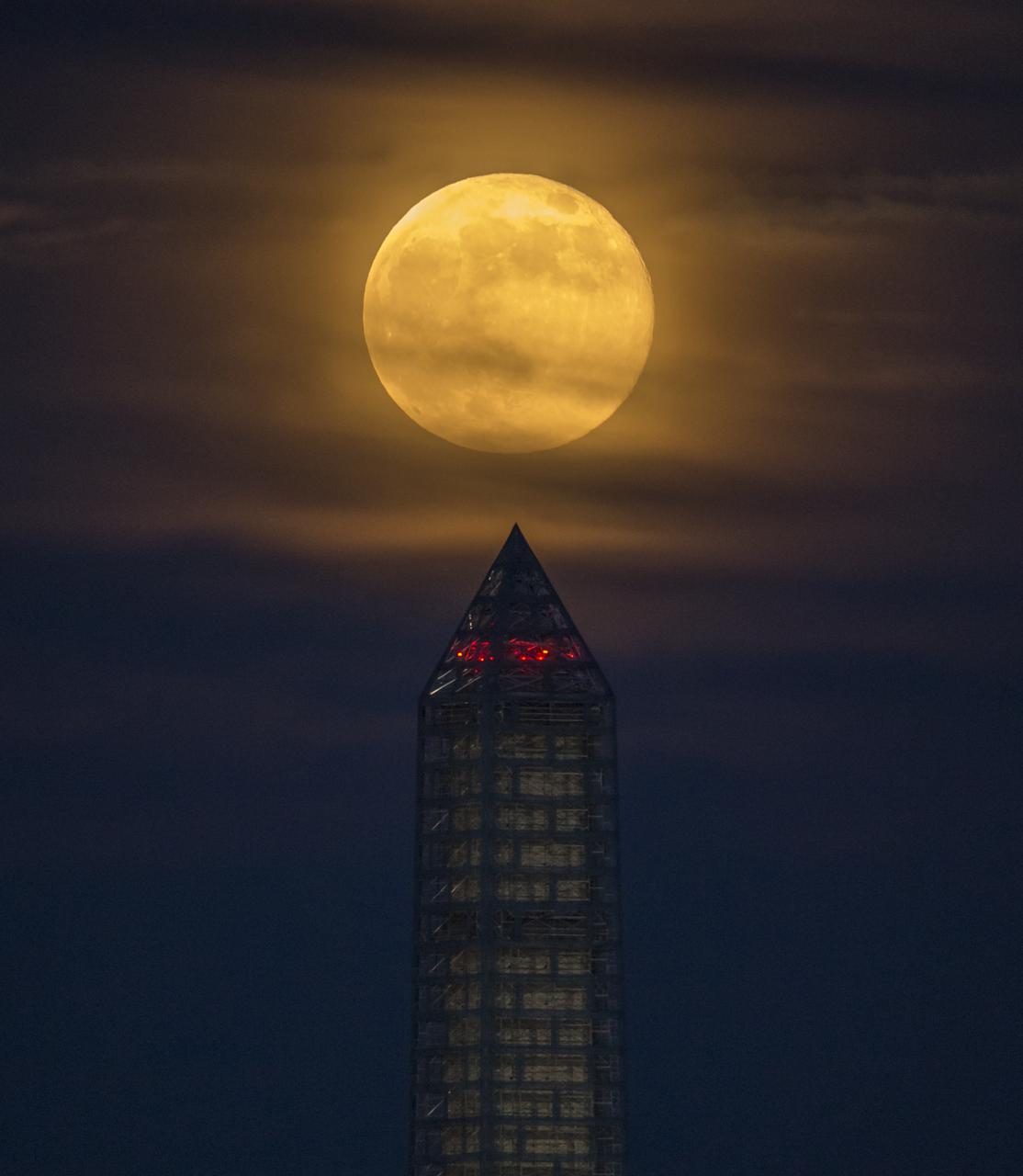
A supermoon rises behind the Washington Monument, Sunday, June 23, 2013, in Washington. This year the Supermoon is up to 13.5% larger and 30% brighter than a typical Full Moon is. This is a result of the Moon reaching its perigee - the closest that it gets to the Earth during the course of its orbit. During perigee on 23 June the Moon was about 221,824 miles away, as compared to the 252,581 miles away that it is at its furthest distance from the Earth (apogee). Photo Credit: (NASA/Bill Ingalls)
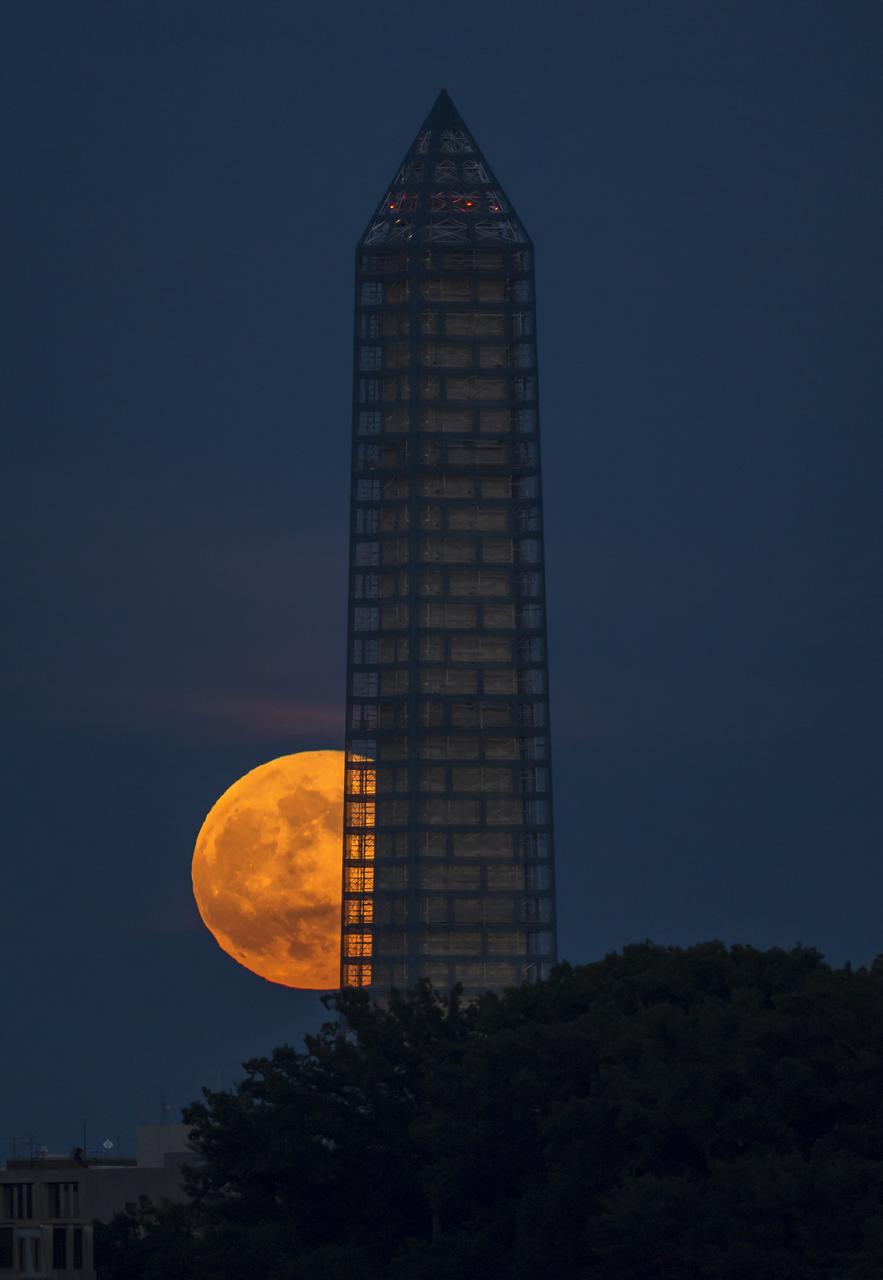
A supermoon rises behind the Washington Monument, Sunday, June 23, 2013, in Washington. This year the Supermoon is up to 13.5% larger and 30% brighter than a typical Full Moon is. This is a result of the Moon reaching its perigee - the closest that it gets to the Earth during the course of its orbit. During perigee on 23 June the Moon was about 221,824 miles away, as compared to the 252,581 miles away that it is at its furthest distance from the Earth (apogee). Photo Credit: (NASA/Bill Ingalls)
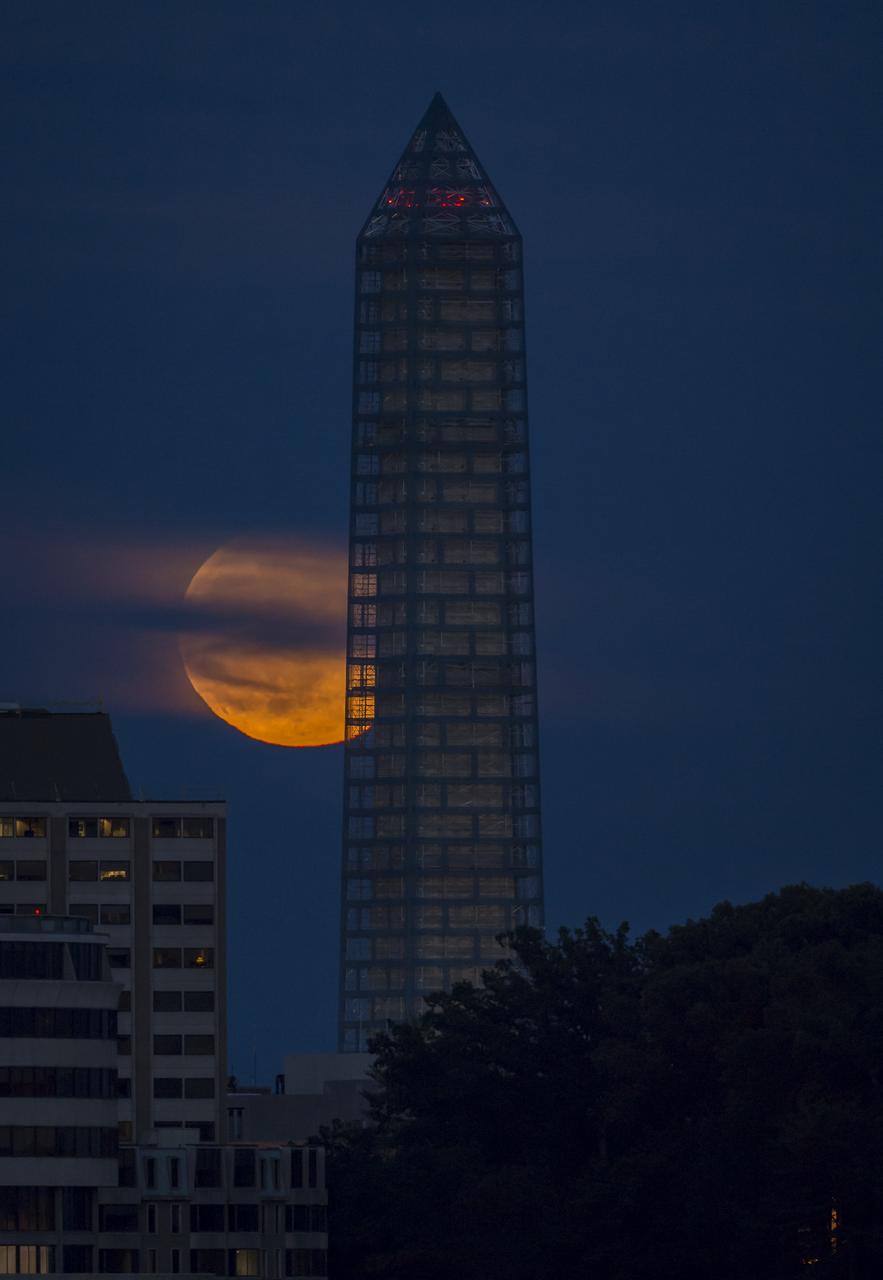
A supermoon rises behind the Washington Monument, Sunday, June 23, 2013, in Washington. This year the Supermoon is up to 13.5% larger and 30% brighter than a typical Full Moon is. This is a result of the Moon reaching its perigee - the closest that it gets to the Earth during the course of its orbit. During perigee on 23 June the Moon was about 221,824 miles away, as compared to the 252,581 miles away that it is at its furthest distance from the Earth (apogee). Photo Credit: (NASA/Bill Ingalls)

A supermoon rises over Huntsville, Alabama, home to NASA’s Marshall Space Flight Center, Aug. 19. Visible through Wednesday, Aug. 21, the full Moon is both a supermoon and a Blue Moon. Supermoons are the biggest and brightest full Moons of the year because the Moon is within 90% of its closest point to Earth. While not blue in color, the third full Moon in a season with four full Moons is called a “Blue Moon.” Huntsville is known as the “Rocket City” because of its proximity to NASA Marshall, which manages vital propulsion systems and hardware, launch vehicles, engineering technologies, and cutting-edge science for the agency.
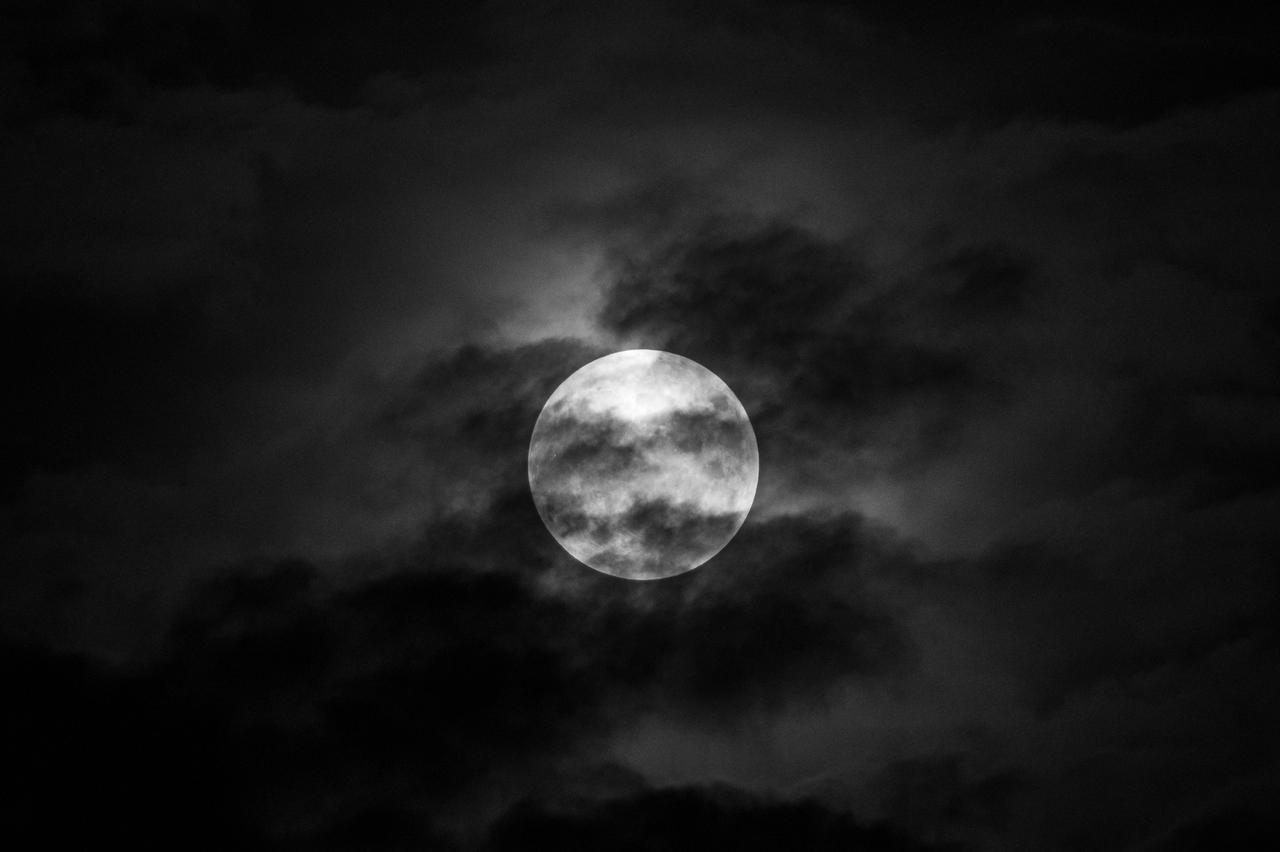
The Supermoon that was visible on September 17th, 2024 in Cleveland, OH. On this day, the full moon was a partial lunar eclipse; a supermoon; and a harvest moon.
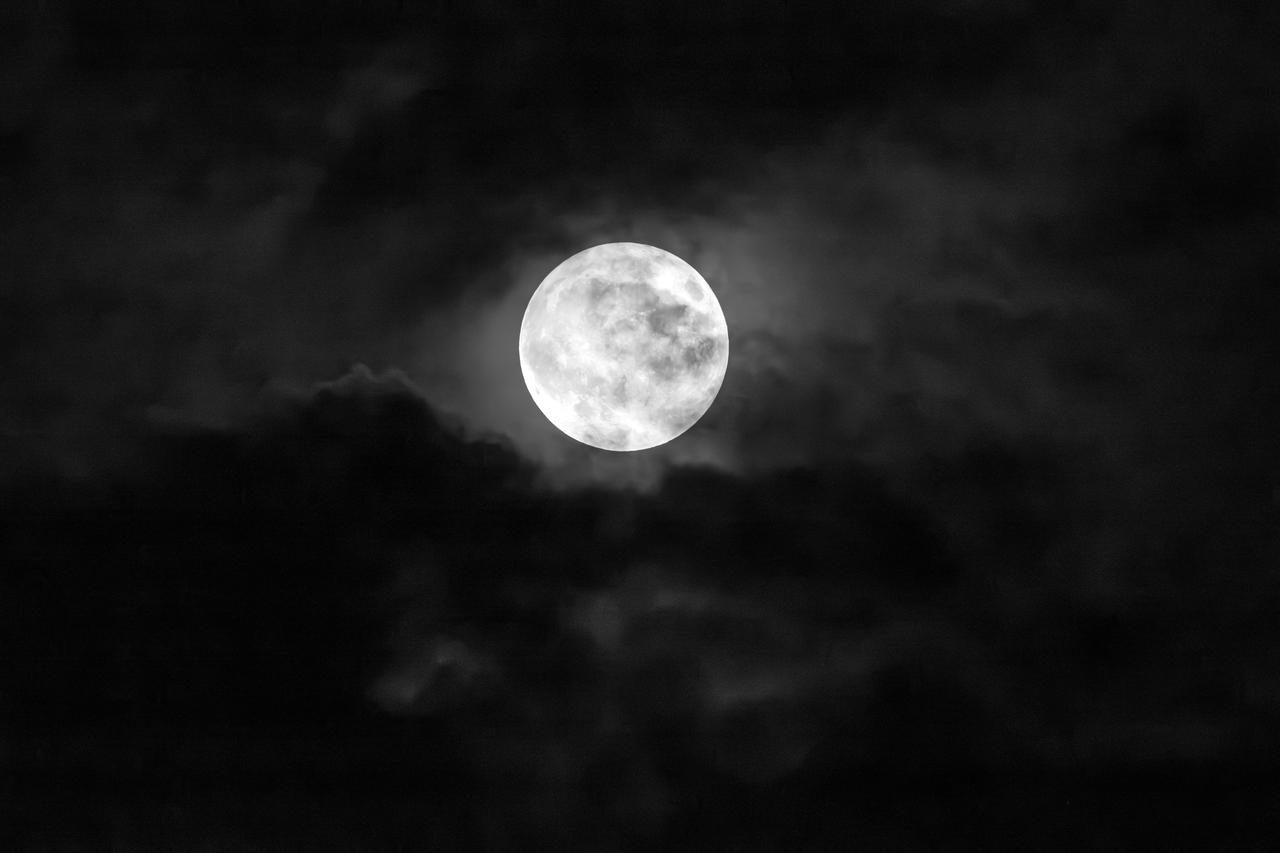
The Supermoon that was visible on September 17th, 2024 in Cleveland, OH. On this day, the full moon was a partial lunar eclipse; a supermoon; and a harvest moon.
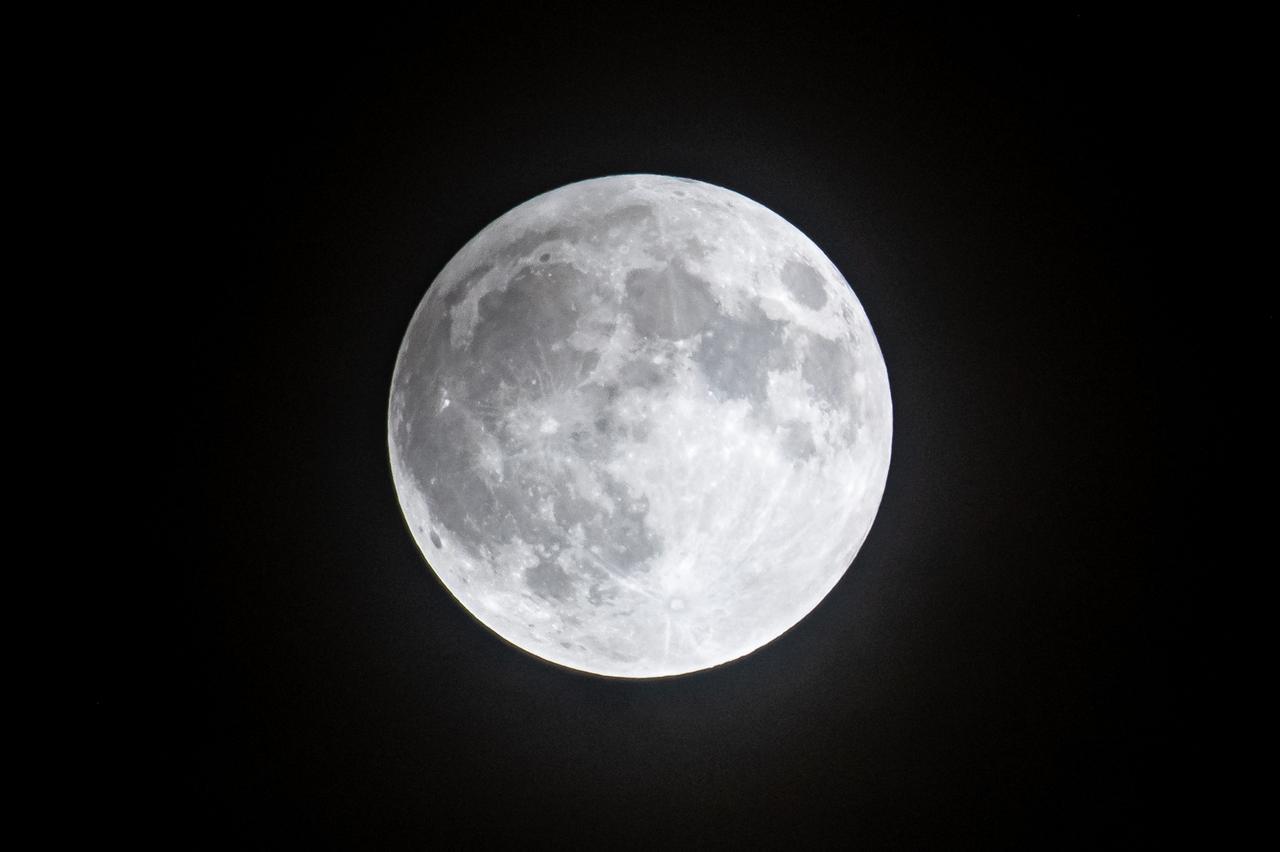
The Supermoon that was visible on September 17th, 2024 in Cleveland, OH. On this day, the full moon was a partial lunar eclipse; a supermoon; and a harvest moon.
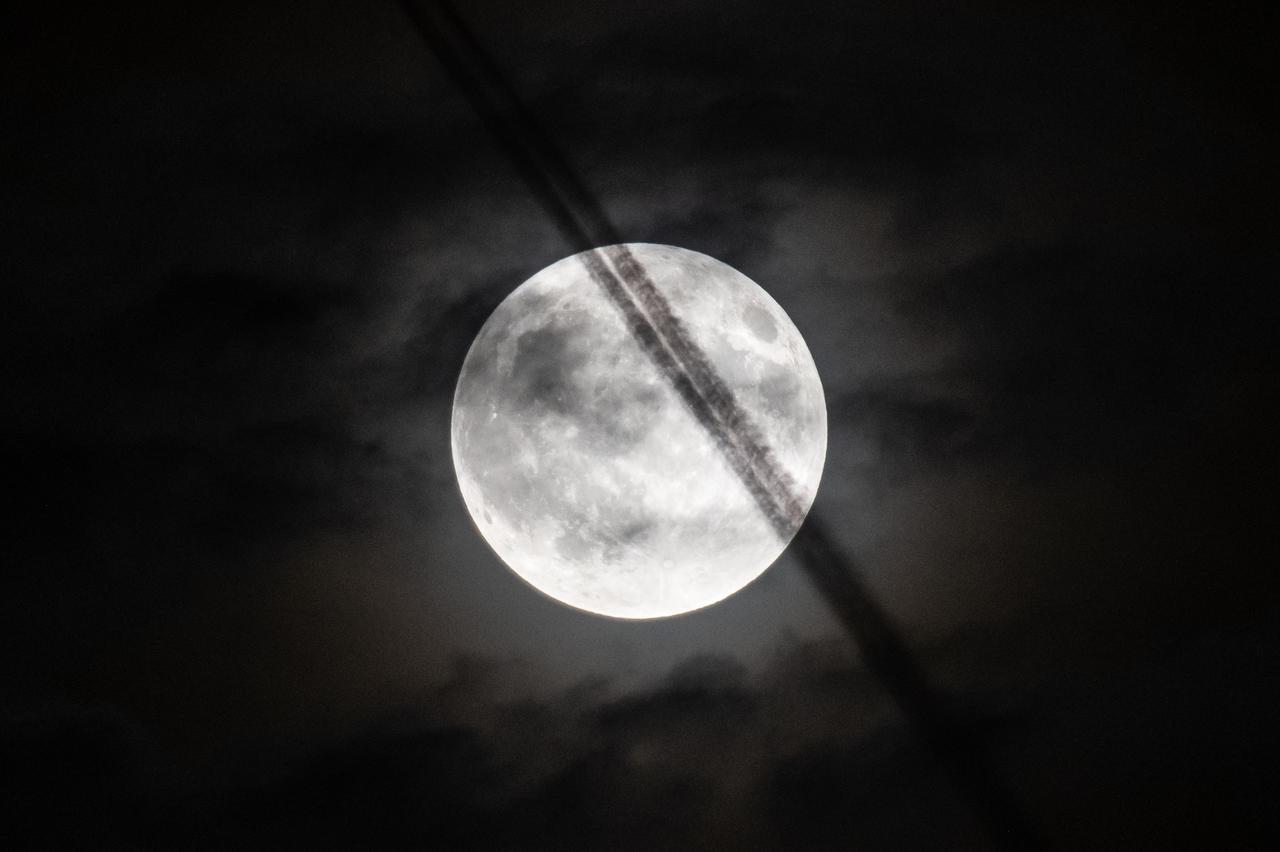
The Supermoon that was visible on September 17th, 2024 in Cleveland, OH. On this day, the full moon was a partial lunar eclipse; a supermoon; and a harvest moon.
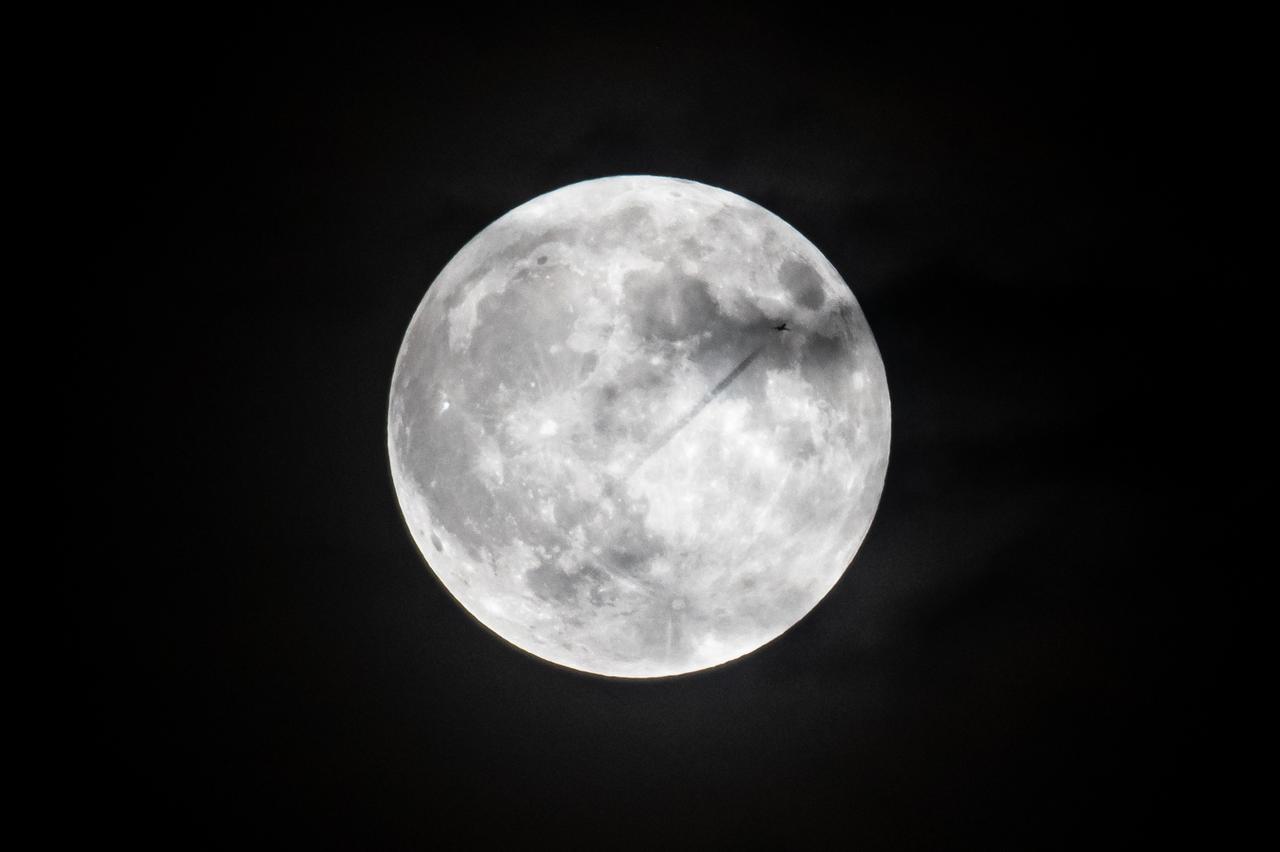
The Supermoon that was visible on September 17th, 2024 in Cleveland, OH. On this day, the full moon was a partial lunar eclipse; a supermoon; and a harvest moon.
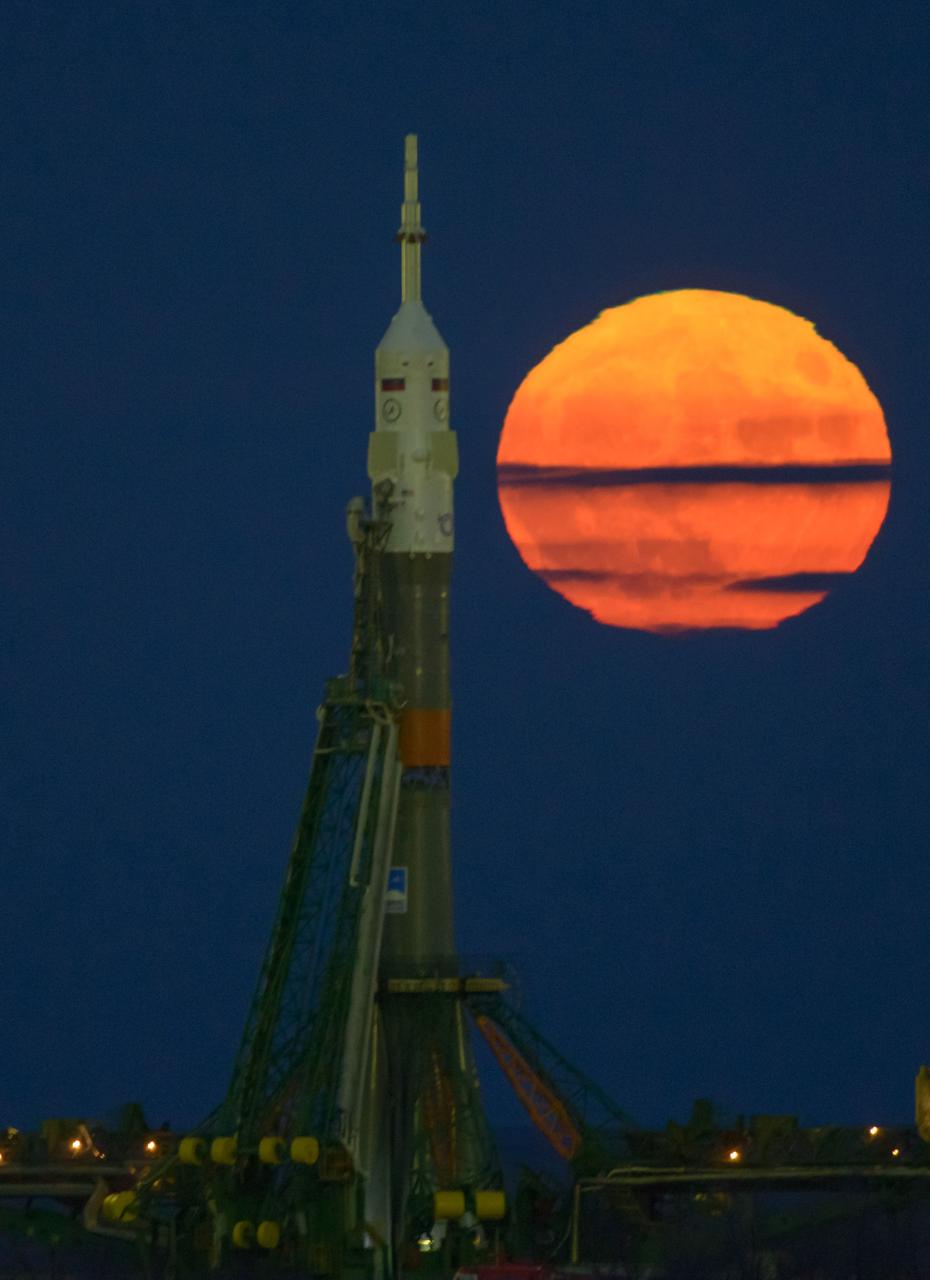
nhq201611140001 (Nov. 14, 2018) --- The Moon, or supermoon, is seen rising behind the Soyuz rocket at the Baikonur Cosmodrome launch pad in Kazakhstan, Monday, Nov. 14, 2016. NASA astronaut Peggy Whitson, Russian cosmonaut Oleg Novitskiy of Roscosmos, and ESA astronaut Thomas Pesquet will launch from the Baikonur Cosmodrome in Kazakhstan the morning of November 18 (Kazakh time.) All three will spend approximately six months on the orbital complex. A supermoon occurs when the moon’s orbit is closest (perigee) to Earth. Photo Credit: (NASA/Bill Ingalls)
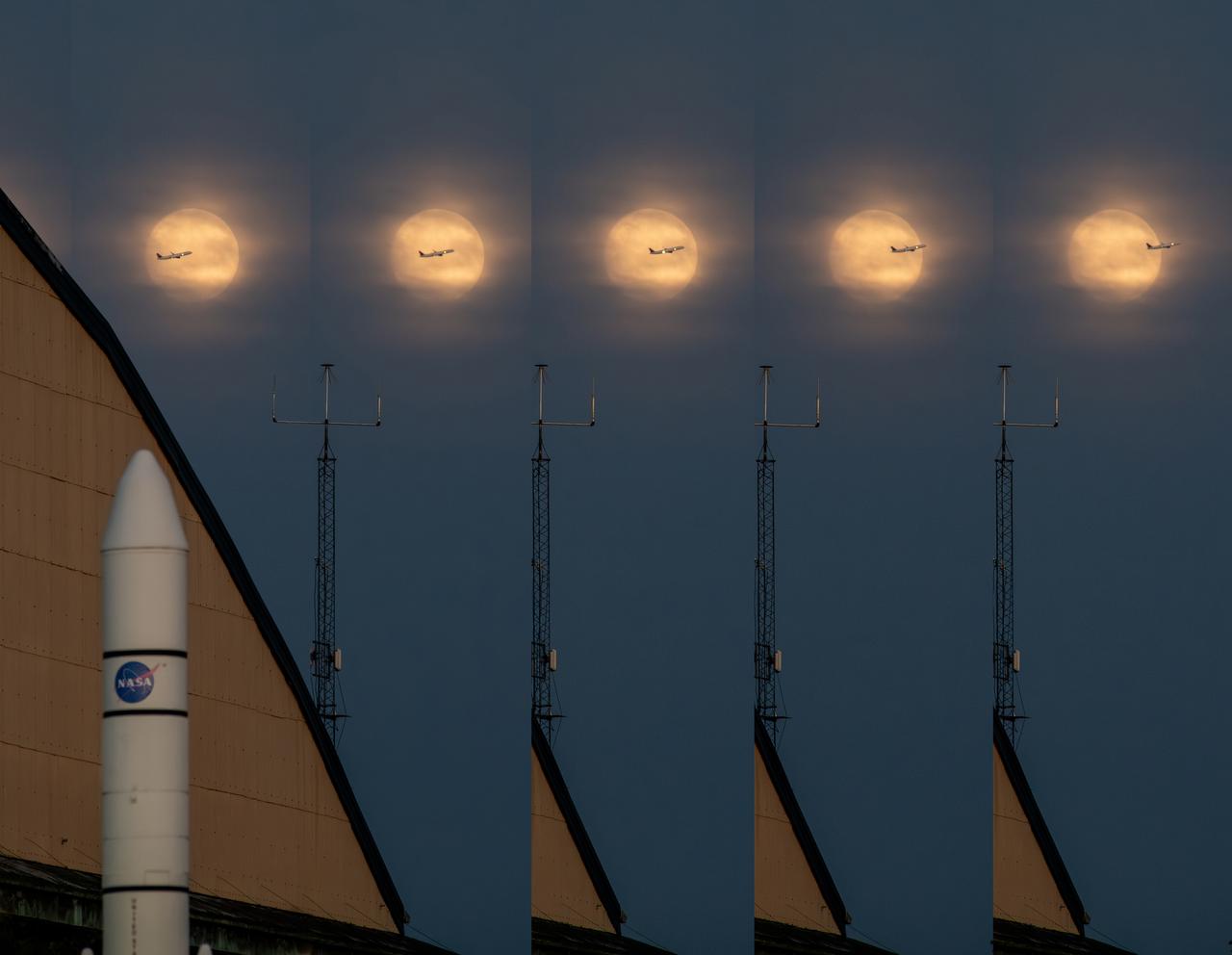
While photographing the Supermoon on September 17, 2024 for a NASA GRC Aerospace Frontiers article on the 2024 Supermoon, a plane departing Cleveland Hopkins Airport flew right through the middle of the moon. The photographer used a portion of the rocket garden’s Ares 1 rocket and a corner of the NASA GRC hangar building to frame the photograph of the moon. When the plane was seen approaching, the photographer used continuous shutter speed in hopes of capturing the plane and the moon together
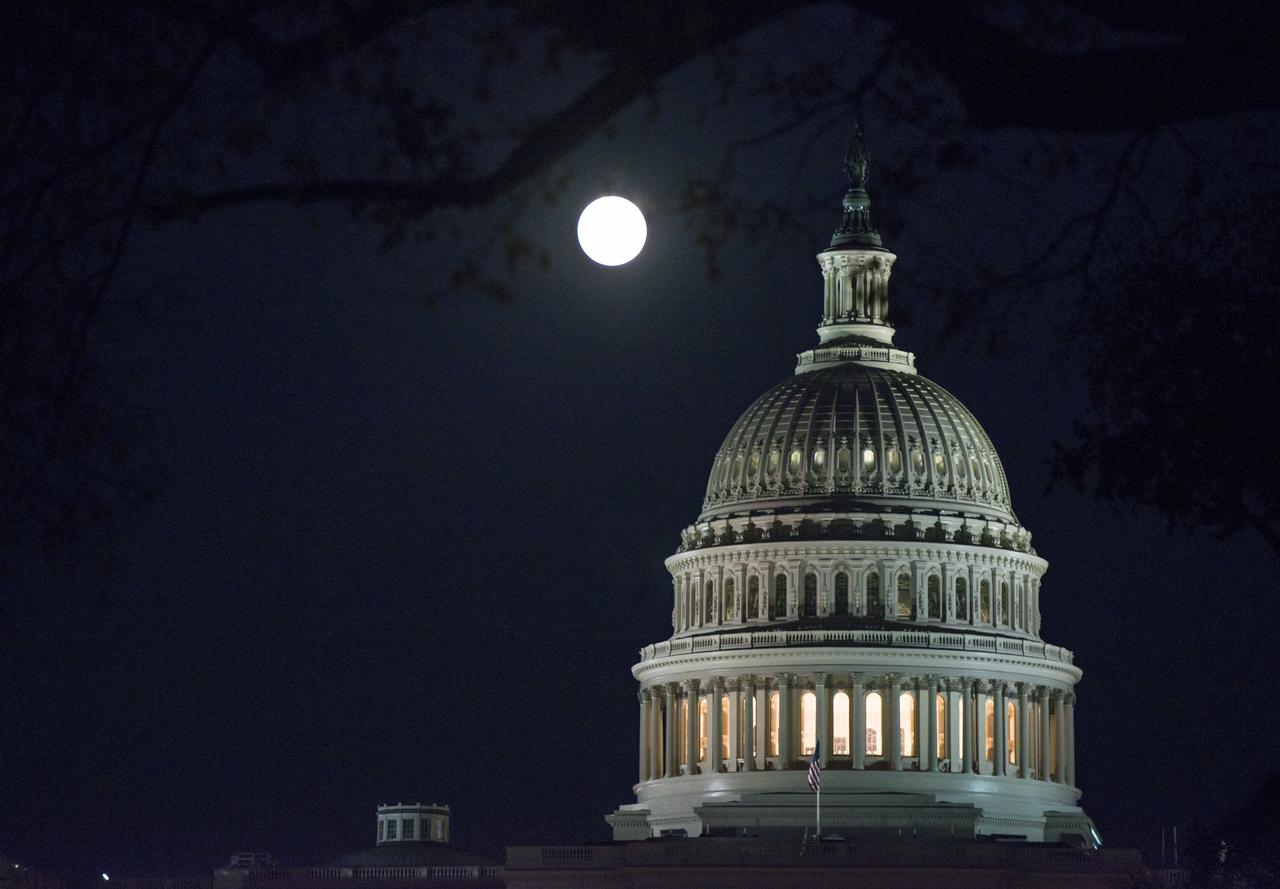
The moon is seen as it rises over the Capitol, Sunday, Nov. 13, 2016 in Washington. Early morning, Monday, Nov. 14, the moon will be the closest it has been to Earth since 1948 and will appear 30 percent brighter and 14 percent bigger than the average monthly full moon. Photo Credit: (NASA/Aubrey Gemignani)

<b>Share YOUR Supermoon images with NASA in our Flickr Group: <a href="http://www.flickr.com/groups/supermoon2013/">www.flickr.com/groups/supermoon2013/</a></b> Up there in the sky – it's not a bird or a plane; it's a "Supermoon." Bigger and brighter then normal full moons, the supermoon on June 22/23 will be the closest and largest full moon for all of 2013. The moon will be some 29,000 miles closer to Earth than the farthest point in its orbit, but not to worry the moon will still be more than 221,000 miles away from our blue planet. --- This is an animation of the moon that was created using data from NASA's LRO satellite. Details: Time: Sunday, June 23, 2013, 15:00 UT (11:00 AM EDT) Phase: 99.9% Diameter:2007.5 arcseconds Distance:357015 km (28.02 Earth diameters) J2000 Right Ascension, Declination18h 17m 42s, -19° 31' 35" Subsolar Longitude, Latitude-1.905°, -1.129° Sub-Earth Longitude, Latitude0.093°, -5.002° Position Angle:359.213° Credit: NASA/Goddard/LRO More images and animarions of the moon can be found here: <a href="http://1.usa.gov/14bPRjT" rel="nofollow">1.usa.gov/14bPRjT</a> <b><a href="http://www.nasa.gov/audience/formedia/features/MP_Photo_Guidelines.html" rel="nofollow">NASA image use policy.</a></b> <b><a href="http://www.nasa.gov/centers/goddard/home/index.html" rel="nofollow">NASA Goddard Space Flight Center</a></b> enables NASA’s mission through four scientific endeavors: Earth Science, Heliophysics, Solar System Exploration, and Astrophysics. Goddard plays a leading role in NASA’s accomplishments by contributing compelling scientific knowledge to advance the Agency’s mission. <b>Follow us on <a href="http://twitter.com/NASA_GoddardPix" rel="nofollow">Twitter</a></b> <b>Like us on <a href="http://www.facebook.com/pages/Greenbelt-MD/NASA-Goddard/395013845897?ref=tsd" rel="nofollow">Facebook</a></b> <b>Find us on <a href="http://instagram.com/nasagoddard?vm=grid" rel="nofollow">Instagram</a></b>
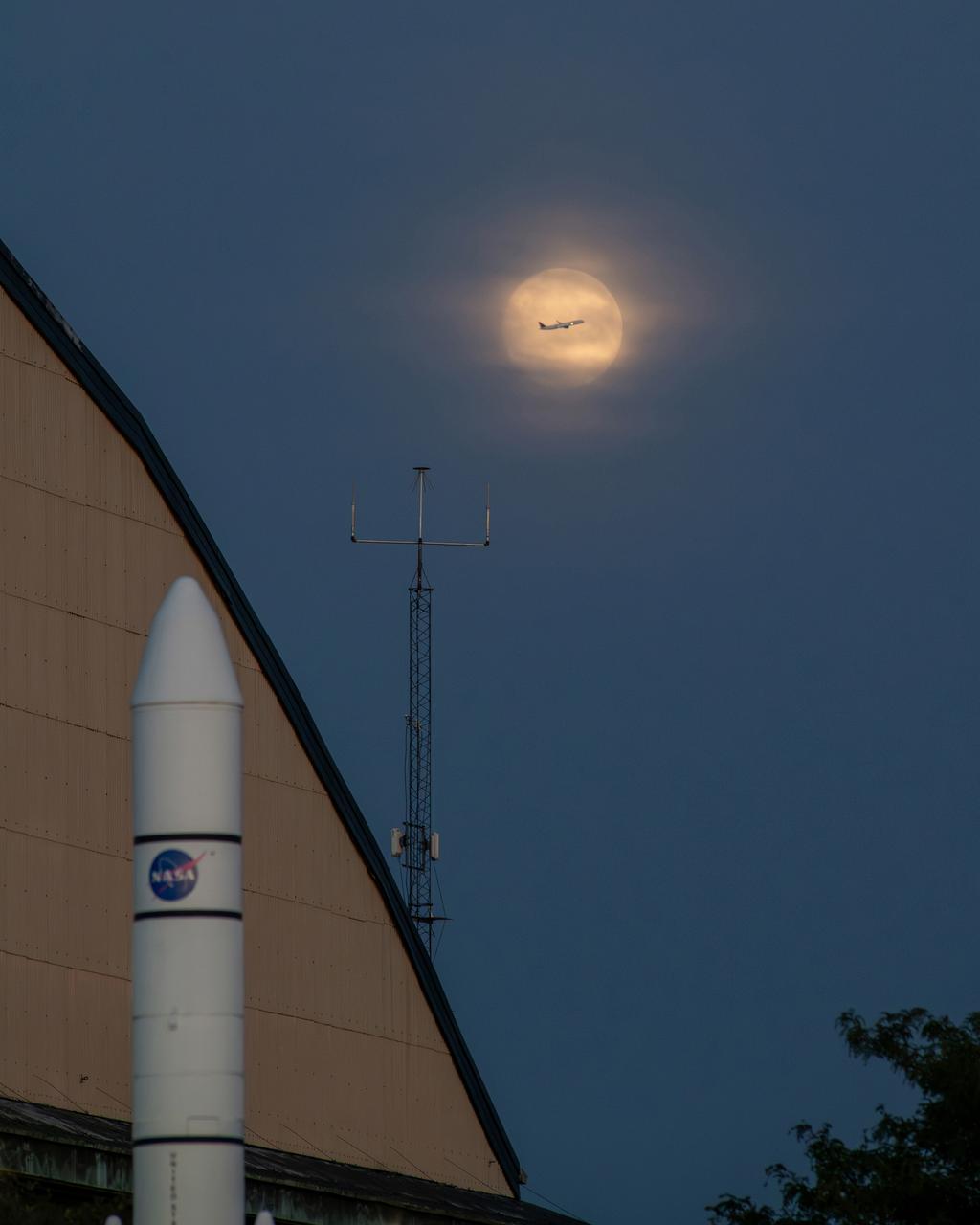
While photographing the Supermoon on September 17, 2024 for a NASA GRC Aerospace Frontiers article on the 2024 Supermoon, a plane departing Cleveland Hopkins Airport flew right through the middle of the moon. The photographer used a portion of the rocket garden’s Ares 1 rocket and a corner of the NASA GRC hangar building to frame the photograph of the moon. When the plane was seen approaching, the photographer used continuous shutter speed in hopes of capturing the plane and the moon together.
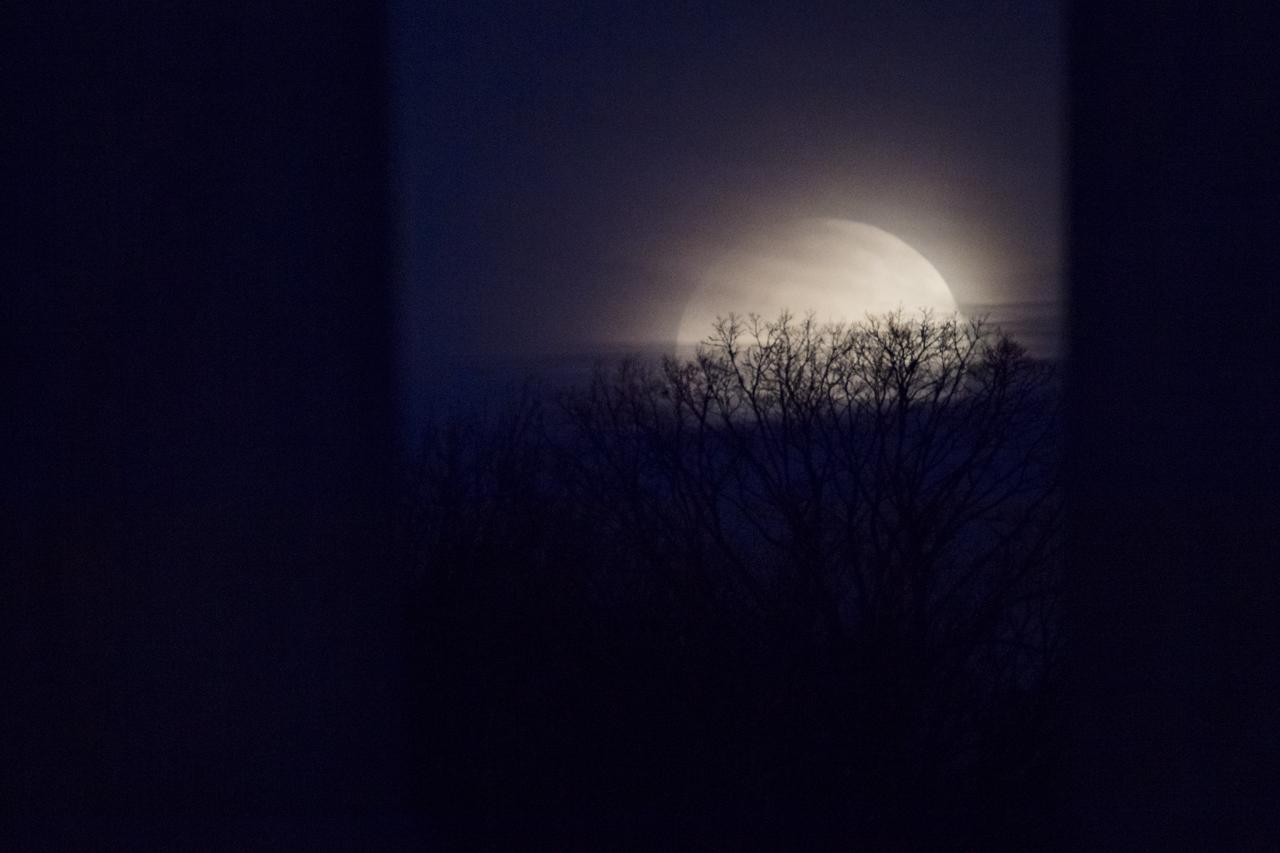
The Moon is seen as it sets behind the National Capitol Columns at The US National Arboretum on Wednesday, Jan. 31, 2018 in Washington. Today’s full Moon is unique for three reasons: it is the third in a series of supermoons, occurring when the Moon is closer to Earth in its orbit. It is also the second full moon of the month, commonly known as a blue moon. The moon will also be passing through Earth’s shadow, giving skywatchers in the right locations a view of a total lunar eclipse. Photo Credit: (NASA/Aubrey Gemignani)
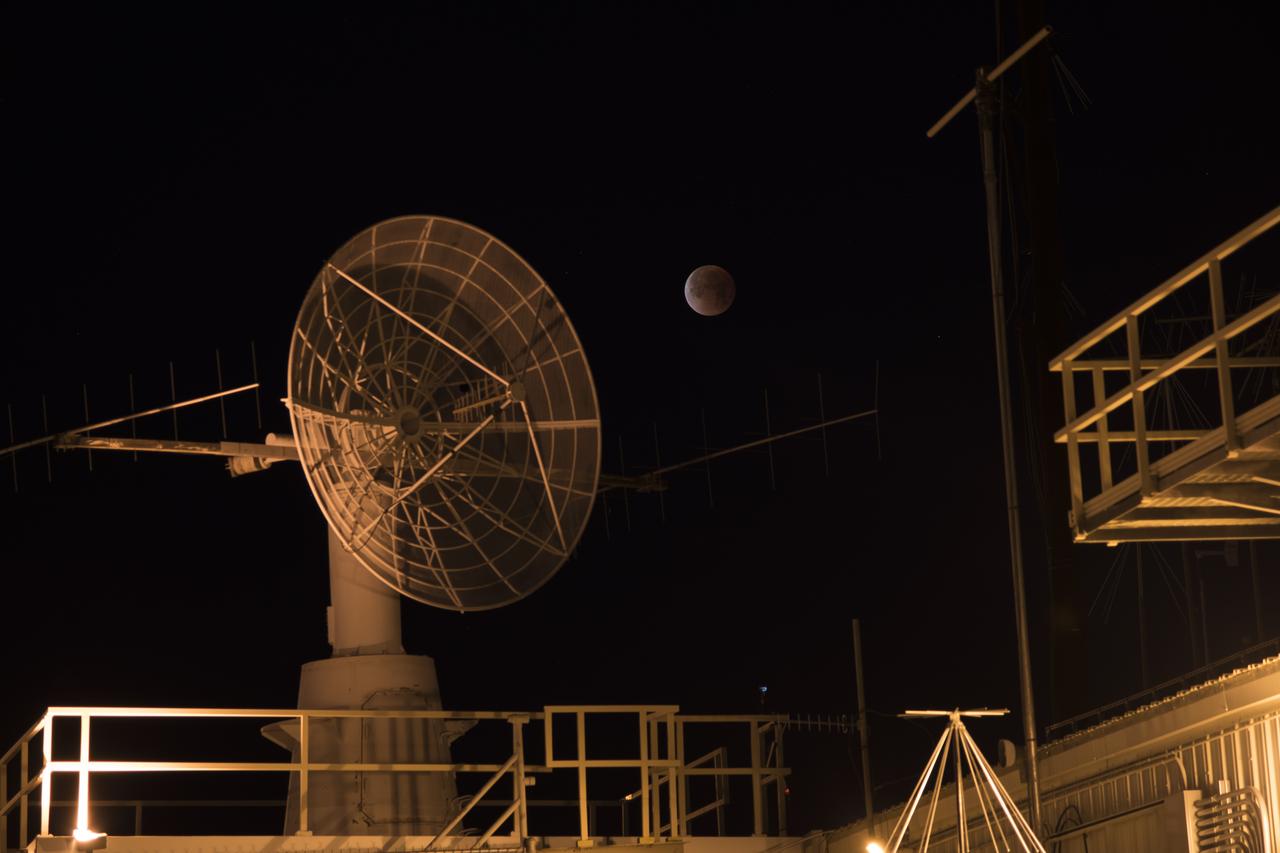
California’s NASA Armstrong Flight Research Center’s photographer Carla Thomas takes photos on January 31 of the rare opportunity to capture a supermoon, a blue moon and a lunar eclipse at the same time. A supermoon occurs when the Moon is closer to Earth in its orbit and appearing 14 percent brighter than usual. As the second full moon of the month, this moon is also commonly known as a blue moon, though it will not be blue in appearance. The super blue moon passed through Earth’s shadow and took on a reddish tint, known as a blood moon. This total lunar eclipse occurs when the Sun, Earth, and a full moon form a near-perfect lineup in space. The Moon passes directly behind the Earth into its umbra (shadow).

NASA Armstrong Flight Research Center photographer Lauren Hughes takes photos of the Super Blue Blood Moon eclipse from California’s Trona Pinnacles Desert National Conservation for the Jan. 31 of the total lunar eclipse that provided a rare opportunity to capture a supermoon, a blue moon and a lunar eclipse at the same time. A supermoon occurs when the Moon is closer to Earth in its orbit and appearing 14 percent brighter than usual. As the second full moon of the month, this moon is also commonly known as a blue moon, though it will not be blue in appearance. The super blue moon passed through Earth’s shadow and took on a reddish tint, known as a blood moon. This total lunar eclipse occurs when the Sun, Earth, and a full moon form a near-perfect lineup in space. The Moon passes directly behind the Earth into its umbra (shadow).

California's NASA Armstrong Flight Research Center photographer Carla Thomas takes photos on January 31 of the rare opportunity to capture a supermoon, a blue moon and a lunar eclipse at the same time. A supermoon occurs when the Moon is closer to Earth in its orbit and appearing 14 percent brighter than usual. As the second full moon of the month, this moon is also commonly known as a blue moon, though it will not be blue in appearance. The super blue moon will pass through Earth's shadow and take on a reddish tint, known as a blood moon. This total lunar eclipse occurs when the Sun, Earth, and a full moon form a near-perfect lineup in space. The Moon passes directly behind the Earth into its umbra (shadow).
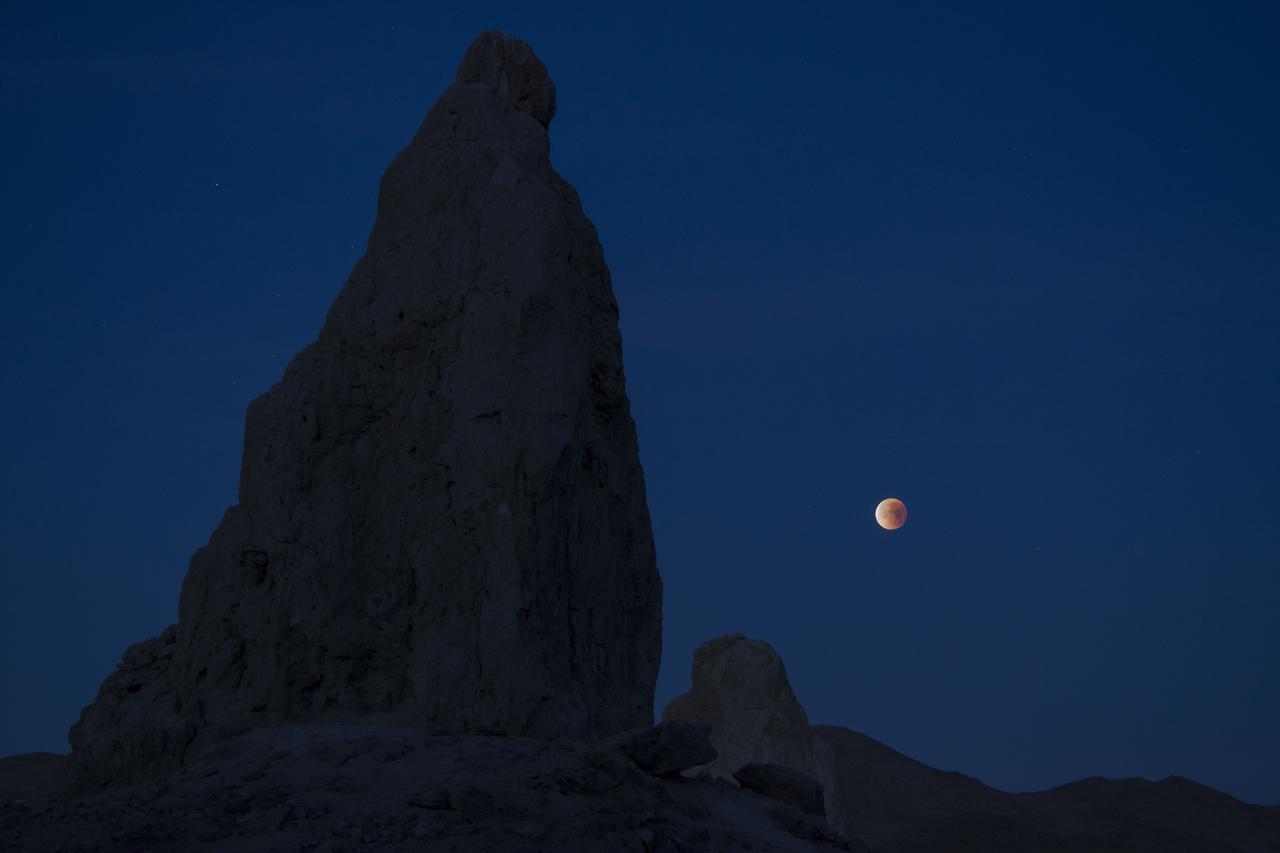
NASA Armstrong Flight Research Center photographer Lauren Hughes takes photos of the Super Blue Blood Moon eclipse from California's Trona Pinnacles Desert National Conservation for the Jan. 31 of the total lunar eclipse that provided a rare opportunity to capture a supermoon, a blue moon and a lunar eclipse at the same time. A supermoon occurs when the Moon is closer to Earth in its orbit and appearing 14 percent brighter than usual. As the second full moon of the month, this moon is also commonly known as a blue moon, though it will not be blue in appearance. The super blue moon passed through Earth's shadow and took on a reddish tint, known as a blood moon. This total lunar eclipse occurs when the Sun, Earth, and a full moon form a near-perfect lineup in space. The Moon passes directly behind the Earth into its umbra (shadow).
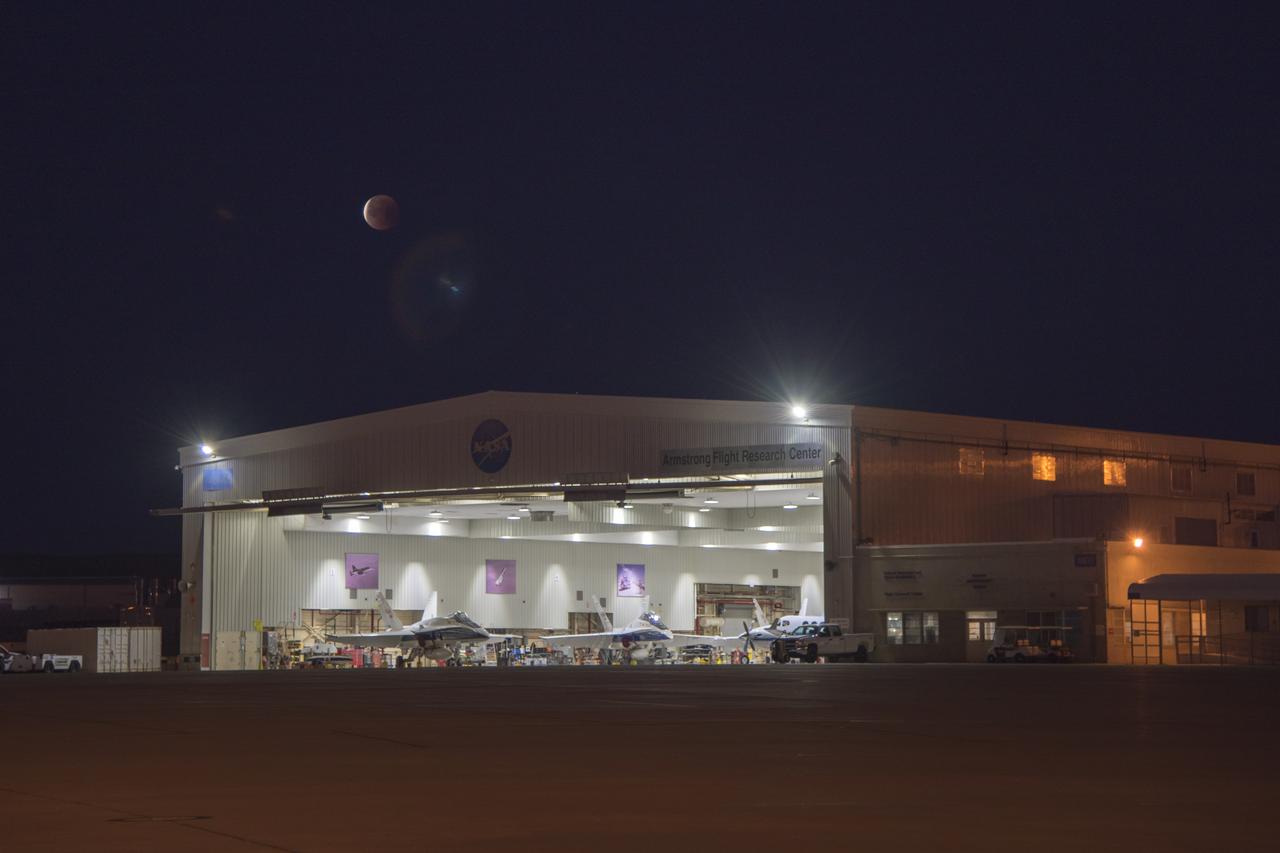
California's NASA Armstrong Flight Research Center photographer Carla Thomas takes photos on January 31 of the rare opportunity to capture a supermoon, a blue moon and a lunar eclipse at the same time. A supermoon occurs when the Moon is closer to Earth in its orbit and appearing 14 percent brighter than usual. As the second full moon of the month, this moon is also commonly known as a blue moon, though it will not be blue in appearance. The super blue moon passed through Earth's shadow and took on a reddish tint, known as a blood moon. This total lunar eclipse occurs when the Sun, Earth, and a full moon form a near-perfect lineup in space. The Moon passes directly behind the Earth into its umbra (shadow).
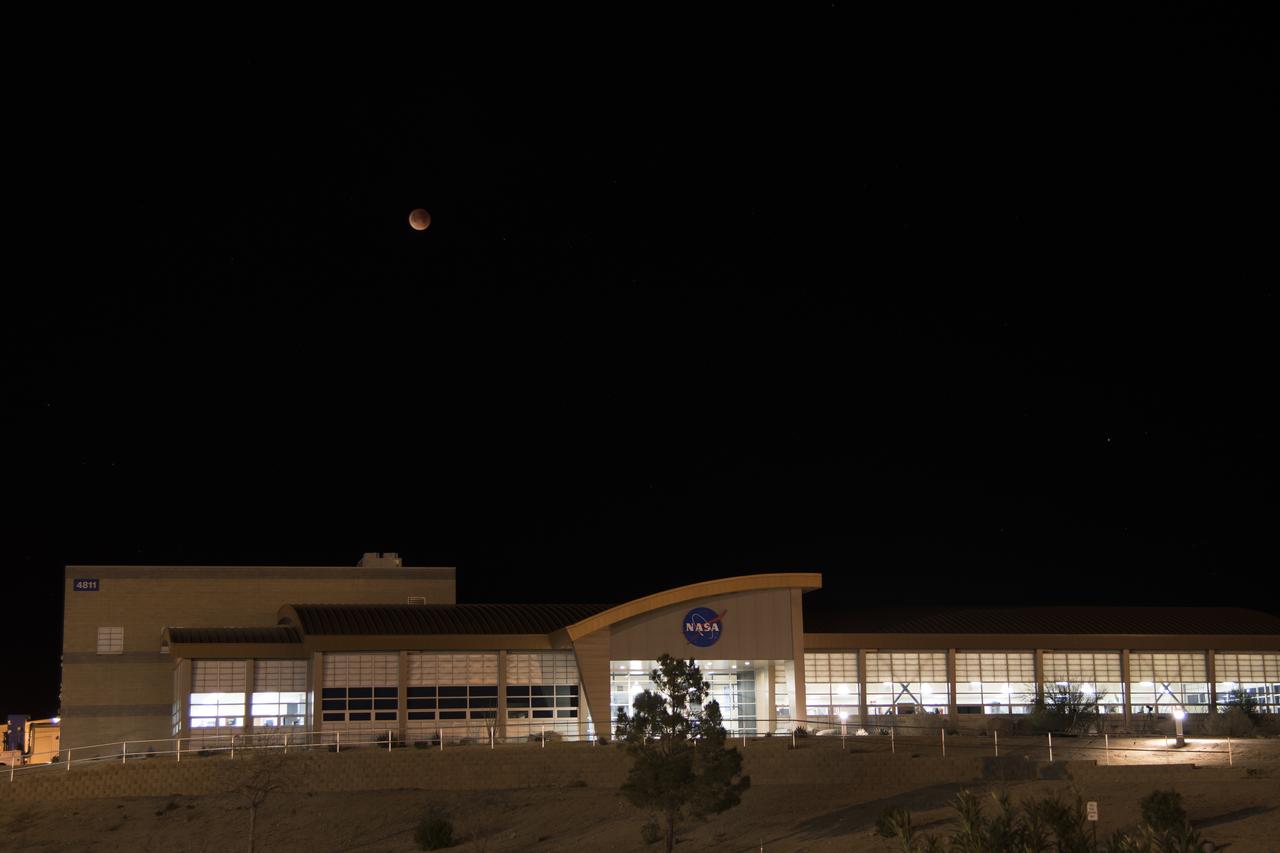
California's NASA Armstrong Flight Research Center photographer Carla Thomas takes photos on January 31 of the rare opportunity to capture a supermoon, a blue moon and a lunar eclipse at the same time. A supermoon occurs when the Moon is closer to Earth in its orbit and appearing 14 percent brighter than usual. As the second full moon of the month, this moon is also commonly known as a blue moon, though it will not be blue in appearance. The super blue moon passed through Earth's shadow and took on a reddish tint, known as a blood moon. This total lunar eclipse occurs when the Sun, Earth, and a full moon form a near-perfect lineup in space. The Moon passes directly behind the Earth into its umbra (shadow).

California's NASA Armstrong Flight Research Center photographer Carla Thomas takes photos on January 31 of the rare opportunity to capture a supermoon, a blue moon and a lunar eclipse at the same time. A supermoon occurs when the Moon is closer to Earth in its orbit and appearing 14 percent brighter than usual. As the second full moon of the month, this moon is also commonly known as a blue moon, though it will not be blue in appearance. The super blue moon passed through Earth's shadow and took on a reddish tint, known as a blood moon. This total lunar eclipse occurs when the Sun, Earth, and a full moon form a near-perfect lineup in space. The Moon passes directly behind the Earth into its umbra (shadow).
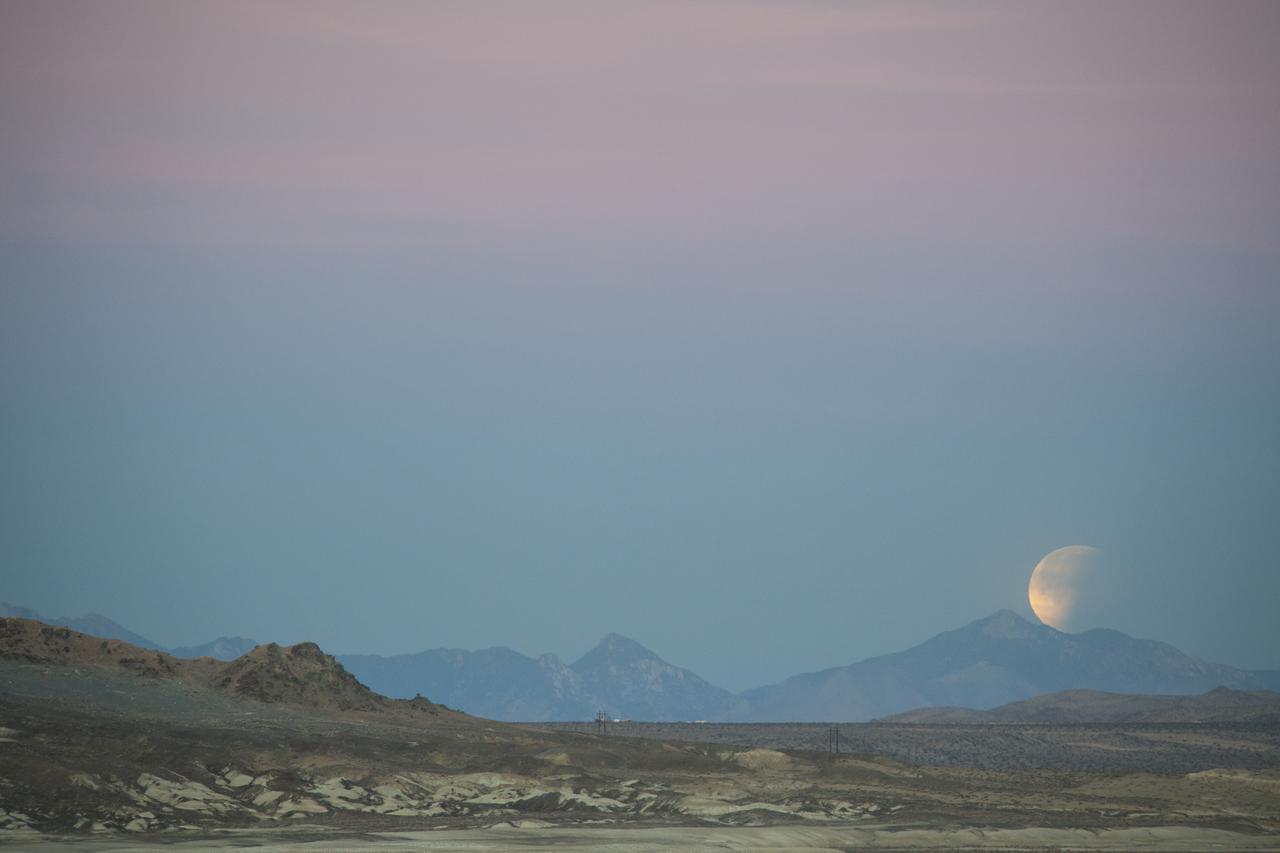
NASA Armstrong Flight Research Center photographer Lauren Hughes takes photos of the Super Blue Blood Moon eclipse from California’s Trona Pinnacles Desert National Conservation for the Jan. 31 of the total lunar eclipse that provided a rare opportunity to capture a supermoon, a blue moon and a lunar eclipse at the same time. A supermoon occurs when the Moon is closer to Earth in its orbit and appearing 14 percent brighter than usual. As the second full moon of the month, this moon is also commonly known as a blue moon, though it will not be blue in appearance. The super blue moon passed through Earth’s shadow and took on a reddish tint, known as a blood moon. This total lunar eclipse occurs when the Sun, Earth, and a full moon form a near-perfect lineup in space. The Moon passes directly behind the Earth into its umbra (shadow).
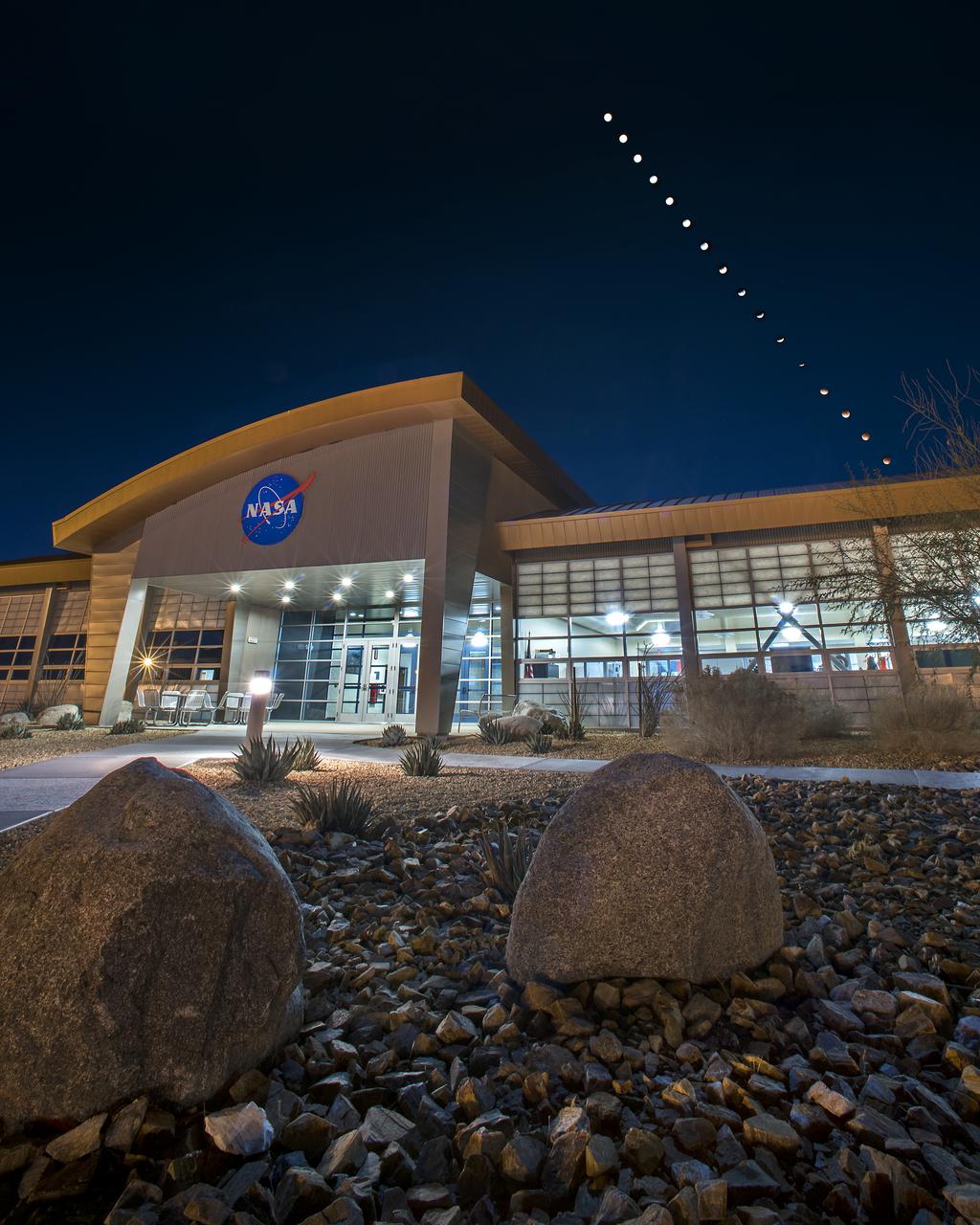
California’s NASA Armstrong Flight Research Center photographer Ken Ulbrich takes photos of Super Blue Blood Moon eclipse making a time-lapse composition of the event on January 31. The total lunar eclipse provided a rare opportunity to capture a supermoon, a blue moon and a lunar eclipse at the same time. A supermoon occurs when the Moon is closer to Earth in its orbit and appearing 14 percent brighter than usual. As the second full moon of the month, this moon is also commonly known as a blue moon, though it will not be blue in appearance. The super blue moon passed through Earth’s shadow and took on a reddish tint, known as a blood moon. This total lunar eclipse occurs when the Sun, Earth, and a full moon form a near-perfect lineup in space. The Moon passes directly behind the Earth into its umbra (shadow).
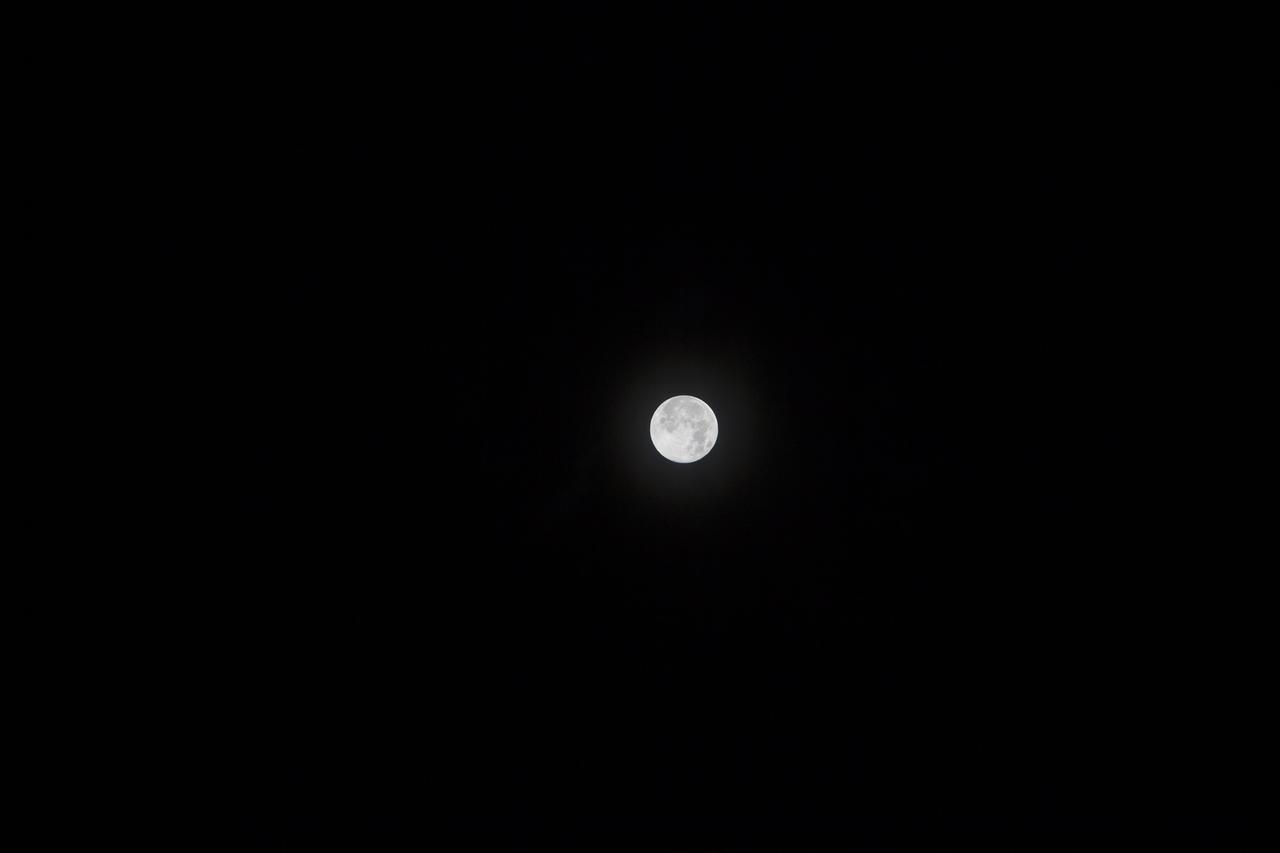
CAPE CANAVERAL, Fla. – A “supermoon” breaks through the clouds over Launch Complex 39 at NASA’s Kennedy Space Center in Florida. The scientific term for the supermoon phenomenon is "perigee moon." Full moons vary in size because of the oval shape of the moon's orbit. The moon follows an elliptical path around Earth with one side about 50,000 kilometers closer than the other. Full moons that occur on the perigee side of the moon's orbit seem extra big and bright. For additional information, visit http://science.nasa.gov/science-news/science-at-nasa/2014/10jul_supermoons/. Photo credit: NASA/Ben Smegelsky

CAPE CANAVERAL, Fla. – Clouds over Launch Complex 39 at NASA’s Kennedy Space Center in Florida threaten to obscure the view of the “supermoon” forecast to light up the sky. The scientific term for the supermoon phenomenon is "perigee moon." Full moons vary in size because of the oval shape of the moon's orbit. The moon follows an elliptical path around Earth with one side about 50,000 kilometers closer than the other. Full moons that occur on the perigee side of the moon's orbit seem extra big and bright. For additional information, visit http://science.nasa.gov/science-news/science-at-nasa/2014/10jul_supermoons/. Photo credit: NASA/Ben Smegelsky
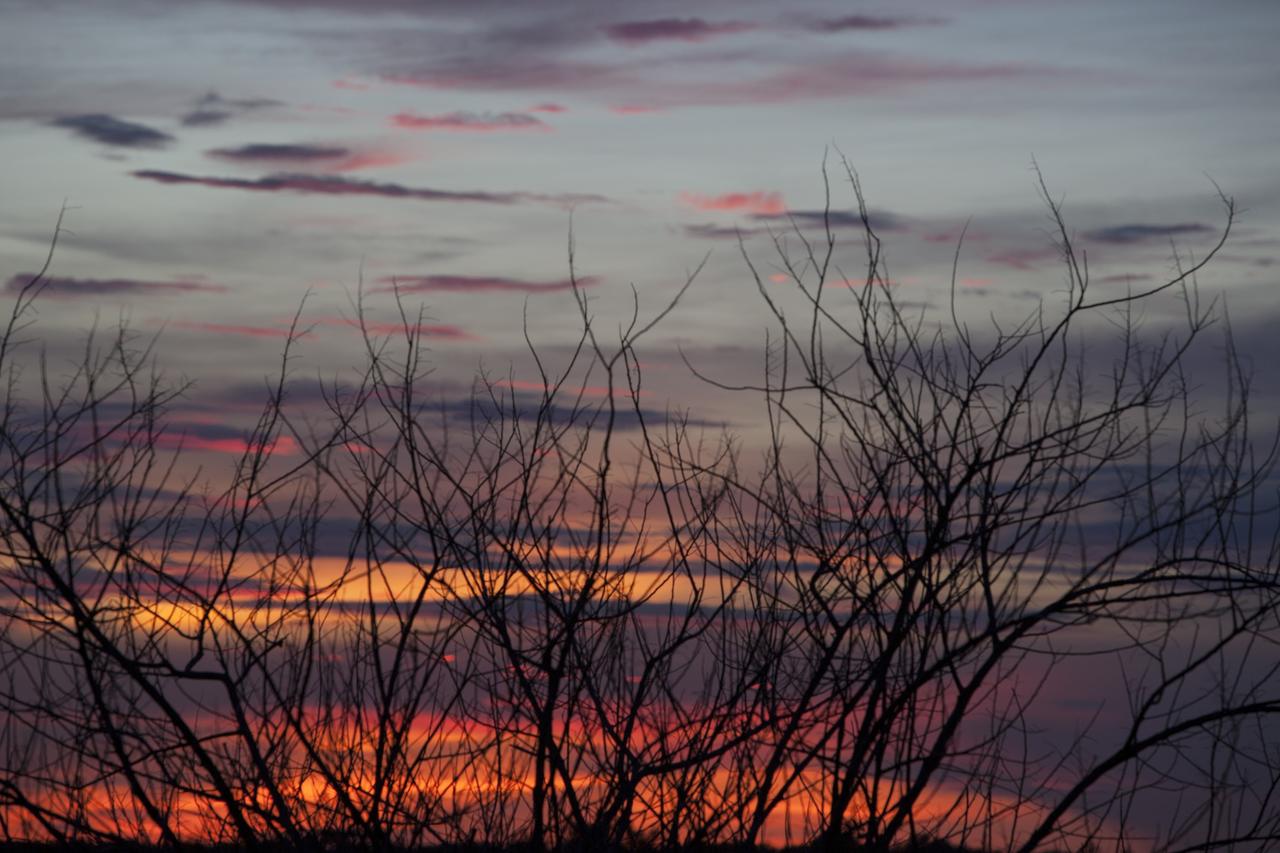
CAPE CANAVERAL, Fla. – The sky changes color as the sun sets over Launch Complex 39 at NASA’s Kennedy Space Center in Florida, bringing with it expectations of the appearance of a “supermoon.” The scientific term for the supermoon phenomenon is "perigee moon." Full moons vary in size because of the oval shape of the moon's orbit. The moon follows an elliptical path around Earth with one side about 50,000 kilometers closer than the other. Full moons that occur on the perigee side of the moon's orbit seem extra big and bright. For additional information, visit http://science.nasa.gov/science-news/science-at-nasa/2014/10jul_supermoons/. Photo credit: NASA/Ben Smegelsky
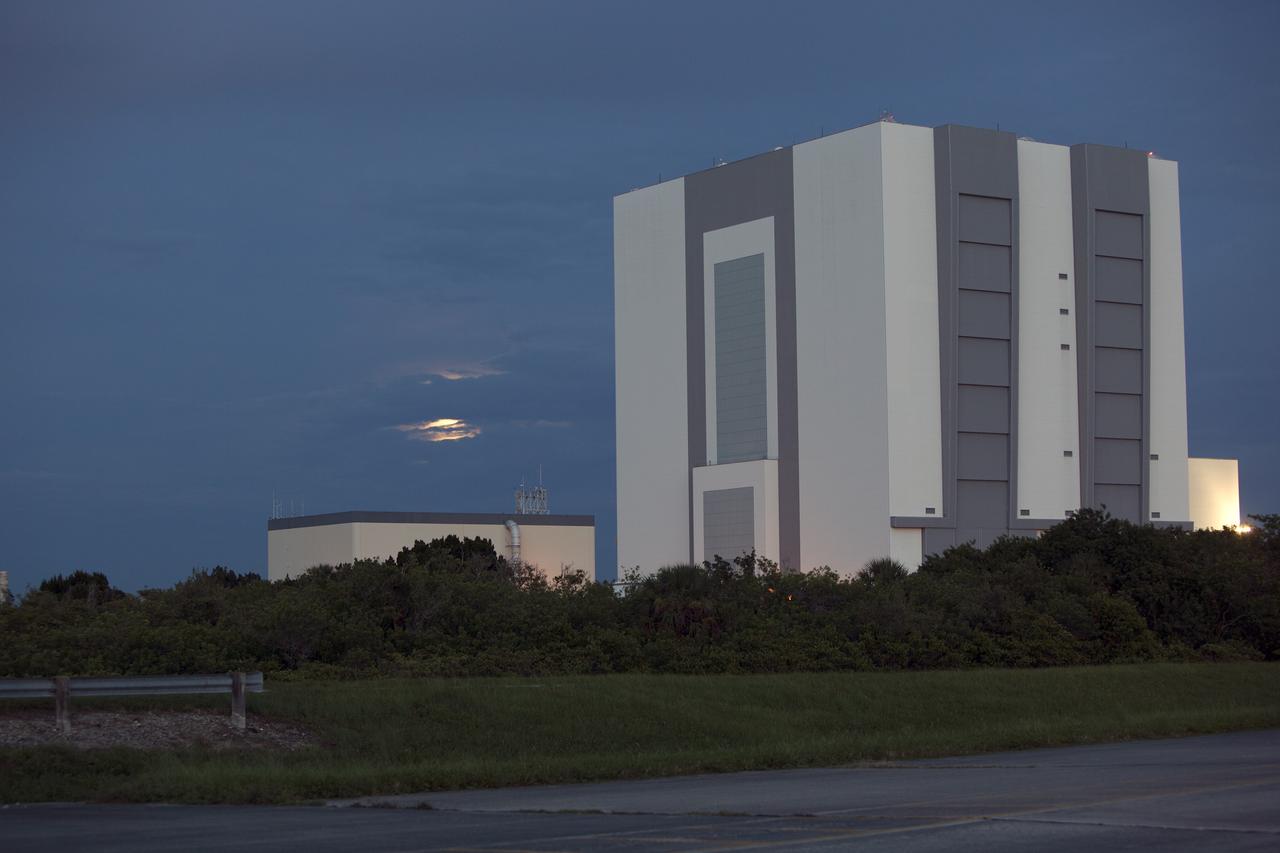
CAPE CANAVERAL, Fla. – A “supermoon” begins to rise through the clouds near the 525-foot-tall Vehicle Assembly Building in Launch Complex 39 at NASA’s Kennedy Space Center in Florida. The scientific term for the supermoon phenomenon is "perigee moon." Full moons vary in size because of the oval shape of the moon's orbit. The moon follows an elliptical path around Earth with one side about 50,000 kilometers closer than the other. Full moons that occur on the perigee side of the moon's orbit seem extra big and bright. For additional information, visit http://science.nasa.gov/science-news/science-at-nasa/2014/10jul_supermoons/. Photo credit: NASA/Ben Smegelsky
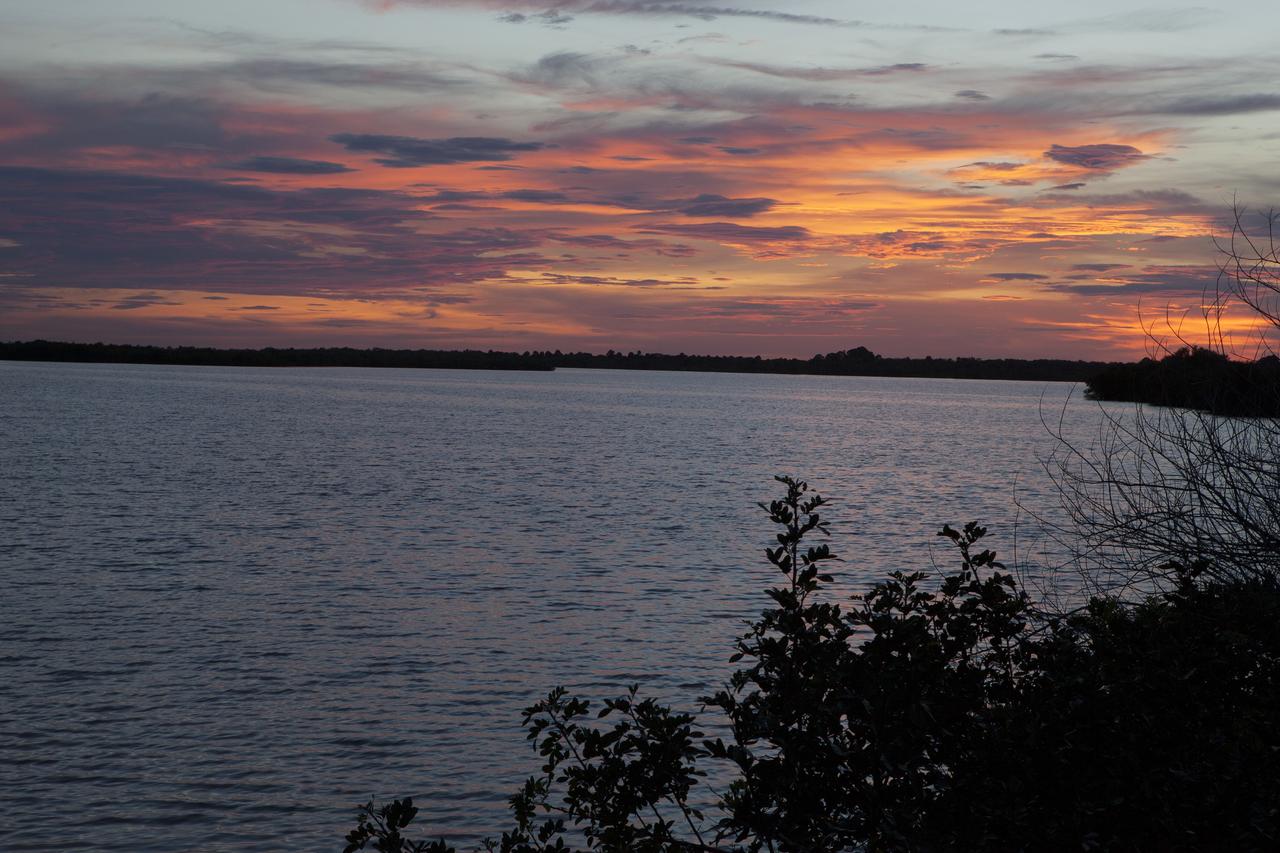
CAPE CANAVERAL, Fla. – Night falls over the turn basin in Launch Complex 39 at NASA’s Kennedy Space Center in Florida, bringing with it expectations of the appearance of a “supermoon.” The scientific term for the supermoon phenomenon is "perigee moon." Full moons vary in size because of the oval shape of the moon's orbit. The moon follows an elliptical path around Earth with one side about 50,000 kilometers closer than the other. Full moons that occur on the perigee side of the moon's orbit seem extra big and bright. For additional information, visit http://science.nasa.gov/science-news/science-at-nasa/2014/10jul_supermoons/. Photo credit: NASA/Ben Smegelsky
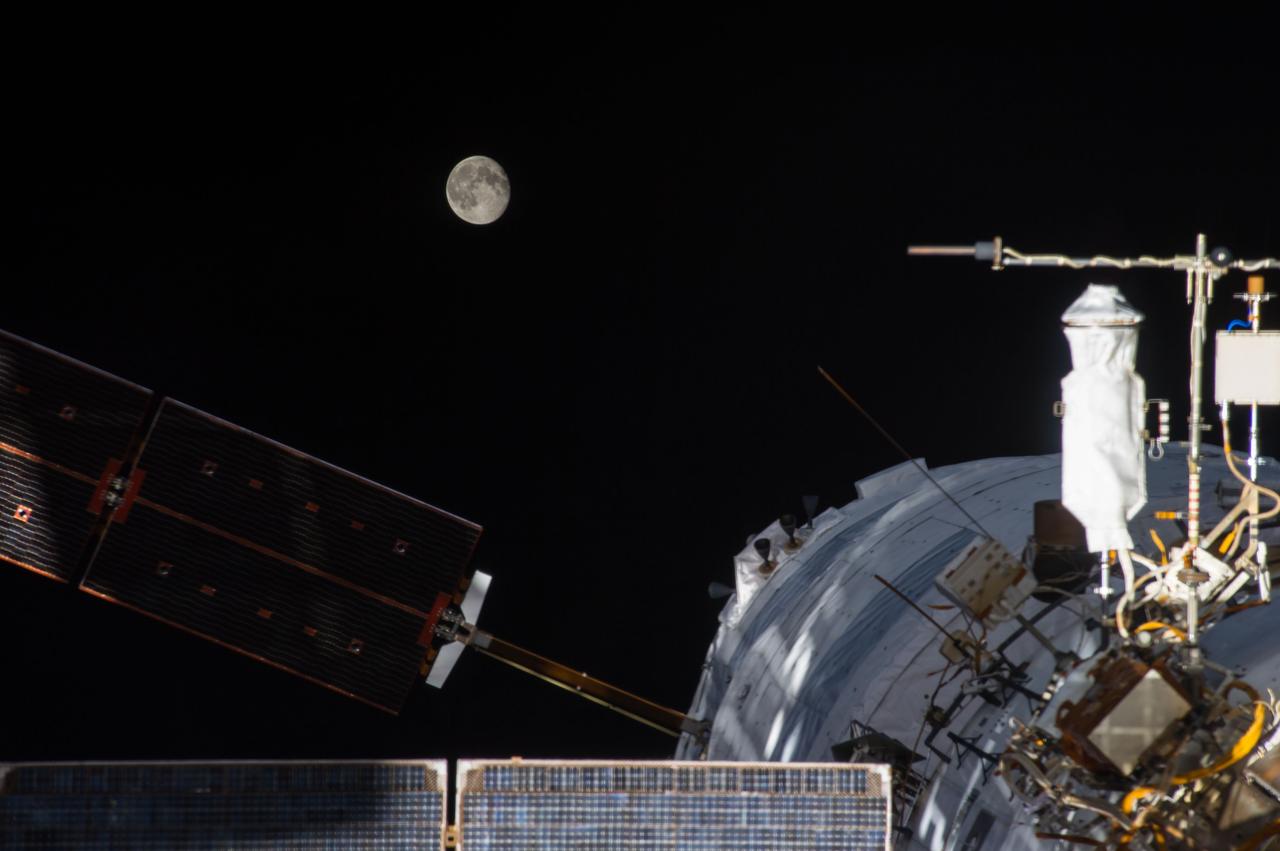
ISS040-E-092581 (12 Aug. 2014) --- A portion of the International Space Station?s Zvezda Service Module with the newly attached "Georges Lemaitre" Automated Transfer Vehicle-5 (ATV-5) is featured in this image photographed by an Expedition 40 crew member onboard the station. A waning full moon is visible in the background.
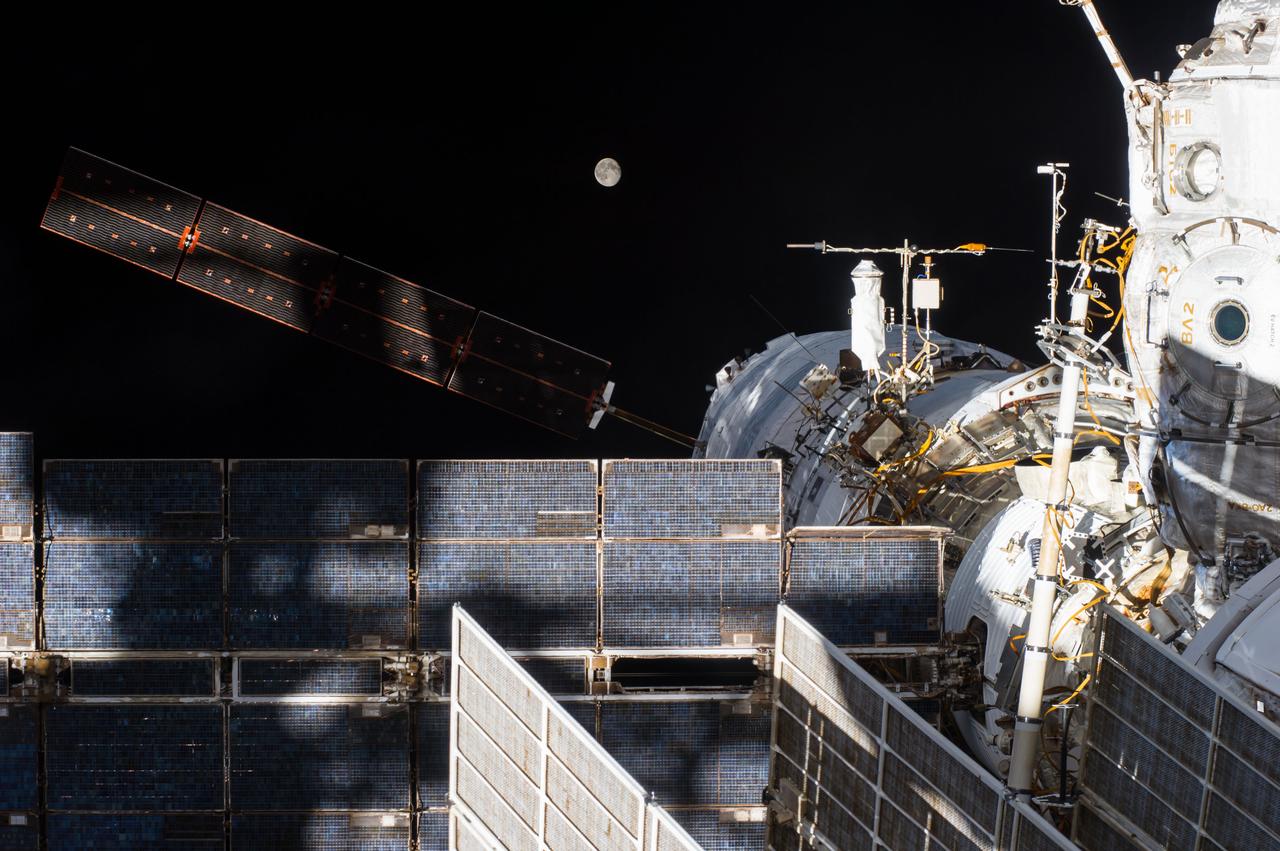
ISS040-E-092583 (12 Aug. 2014) --- A portion of the International Space Station?s Russian segment with the newly attached "Georges Lemaitre" Automated Transfer Vehicle-5 (ATV-5) to the Zvezda Service Module is featured in this image photographed by an Expedition 40 crew member onboard the station. A waning full moon is visible in the background.
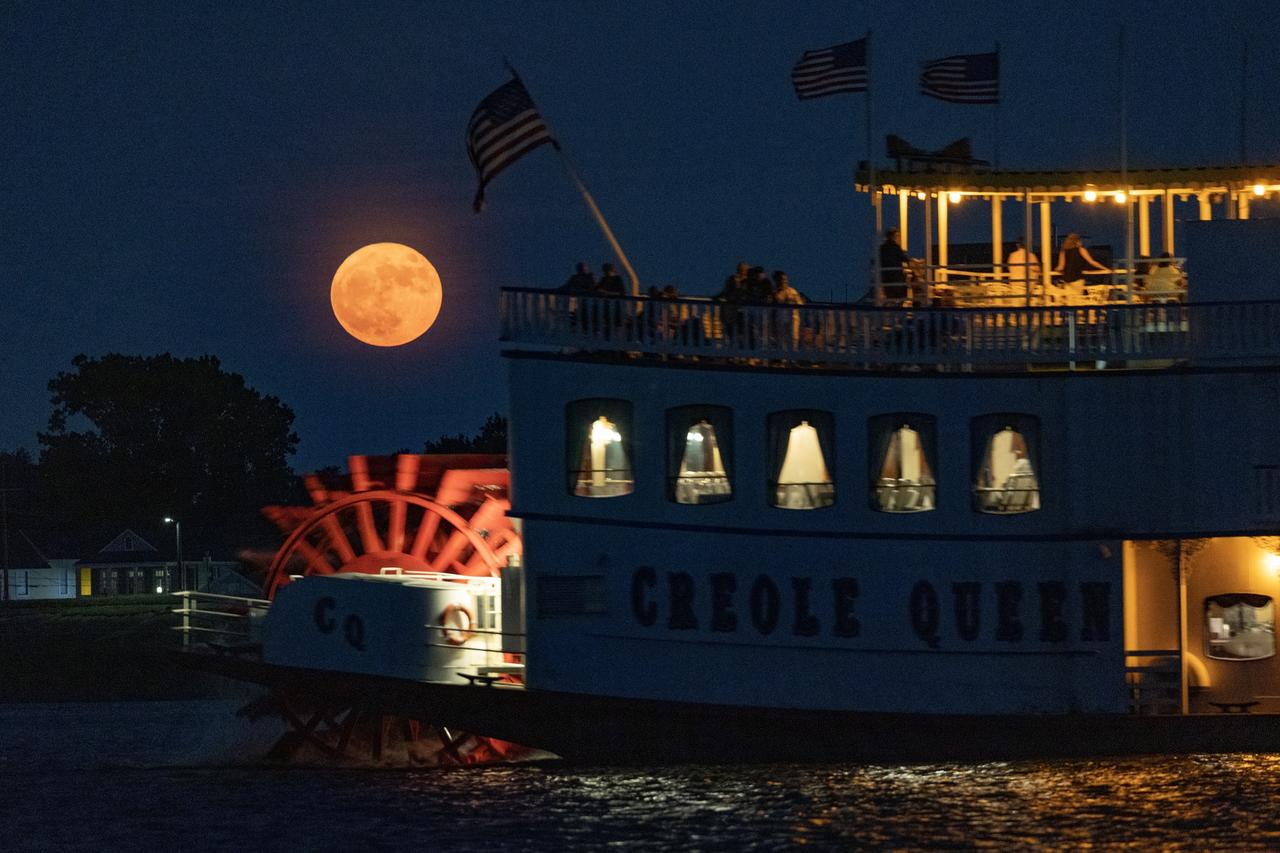
A supermoon rises over the Mississippi River and the Crescent City Aug. 1. The early August full Moon is the second largest in Earth’s skies for 2023. Later in August, a full Moon will appear in the skies for a second time. New Orleans is home to NASA’s Michoud Assembly Facility, where stages for NASA’s SLS (Space Launch System) rocket and structures for Orion spacecraft are produced for the Artemis missions.
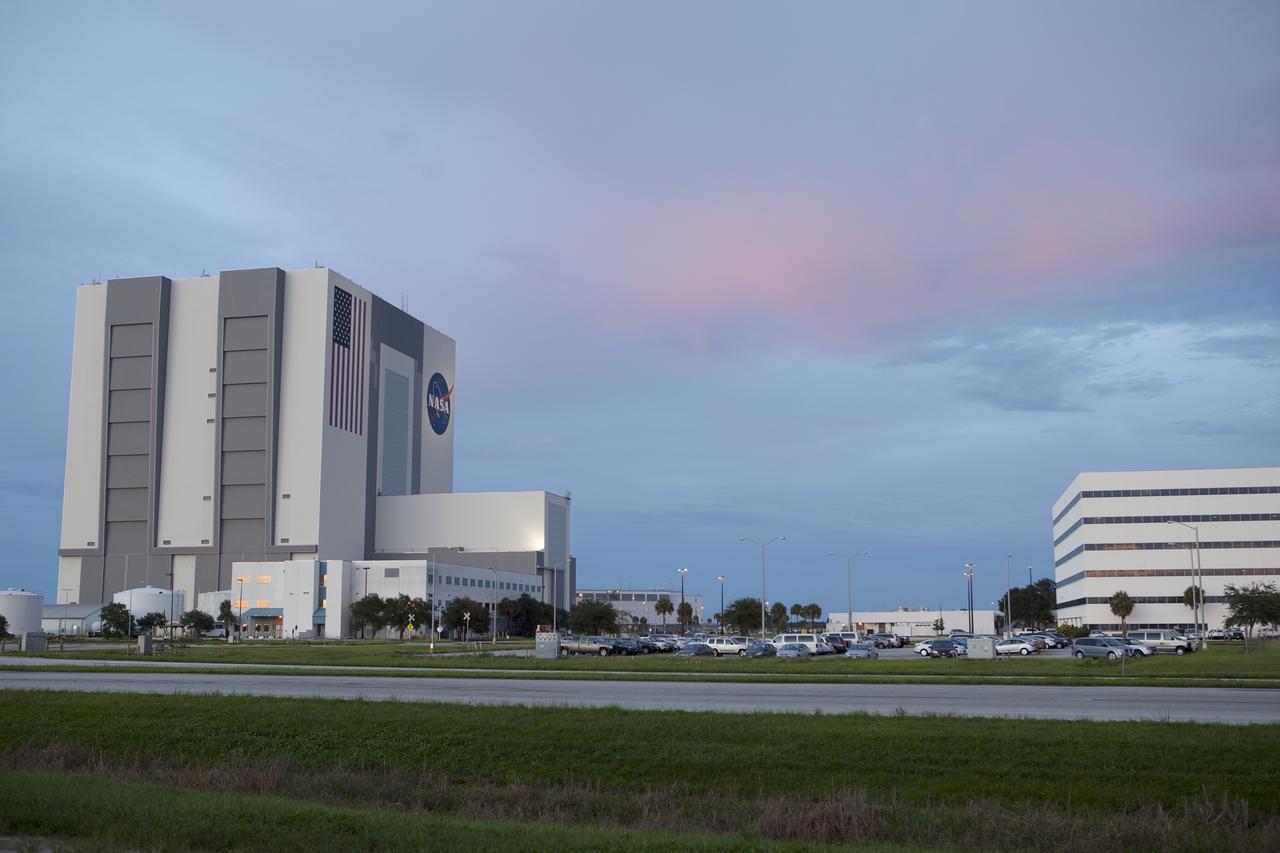
CAPE CANAVERAL, Fla. – The 525-foot-tall Vehicle Assembly Building is the lynchpin of Launch Complex 39 at NASA’s Kennedy Space Center in Florida. As night falls, bringing with it expectations of the appearance of a “supermoon,” changes are underway to transition Kennedy to a multi-user spaceport. The scientific term for the supermoon phenomenon is "perigee moon." Full moons vary in size because of the oval shape of the moon's orbit. The moon follows an elliptical path around Earth with one side about 50,000 kilometers closer than the other. Full moons that occur on the perigee side of the moon's orbit seem extra big and bright. For additional information, visit http://science.nasa.gov/science-news/science-at-nasa/2014/10jul_supermoons/. Photo credit: NASA/Ben Smegelsky
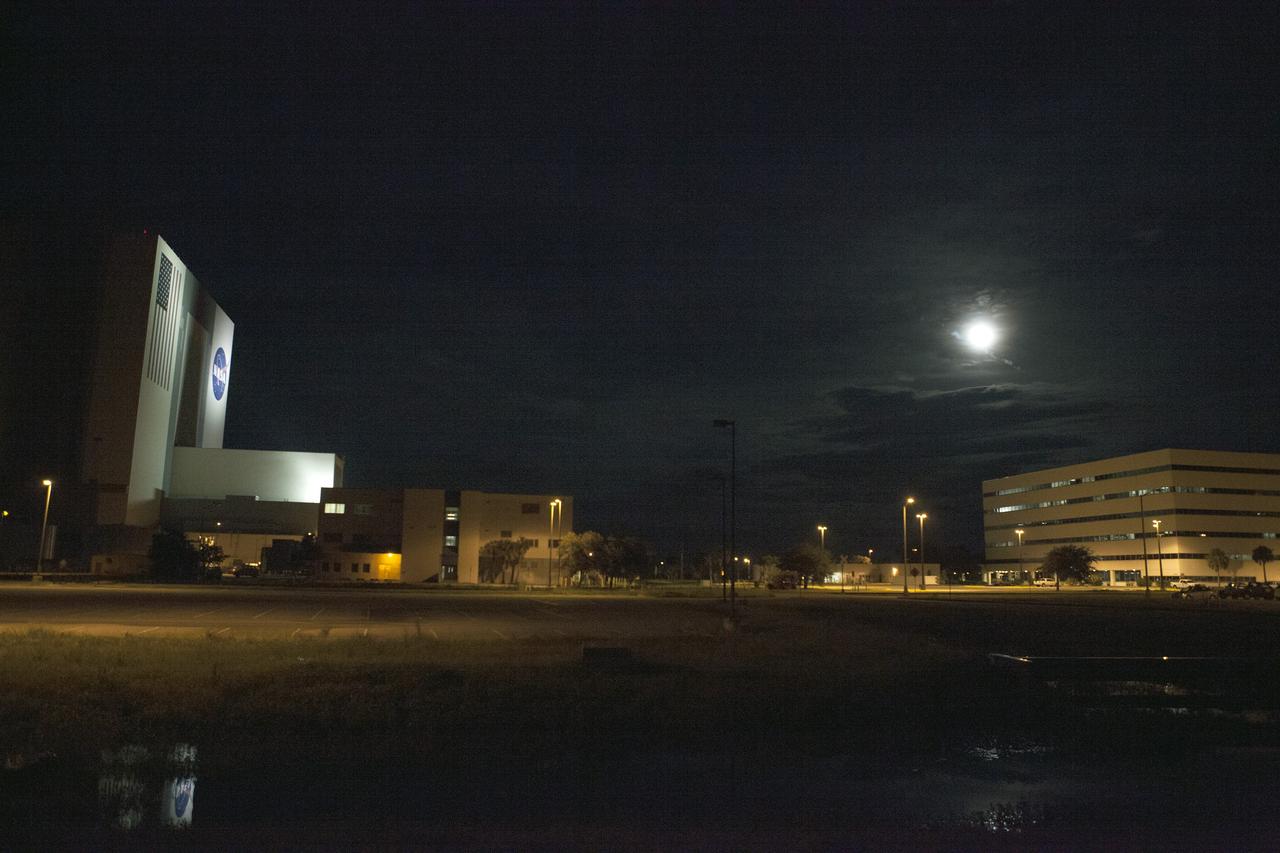
CAPE CANAVERAL, Fla. – A “supermoon” is partially obscured by the clouds over Launch Complex 39 at NASA’s Kennedy Space Center in Florida. At left, the 525-foot-tall Vehicle Assembly Building, illuminated by artificial light, threatens to outshine the moon. The scientific term for the supermoon phenomenon is "perigee moon." Full moons vary in size because of the oval shape of the moon's orbit. The moon follows an elliptical path around Earth with one side about 50,000 kilometers closer than the other. Full moons that occur on the perigee side of the moon's orbit seem extra big and bright. For additional information, visit http://science.nasa.gov/science-news/science-at-nasa/2014/10jul_supermoons/. Photo credit: NASA/Ben Smegelsky
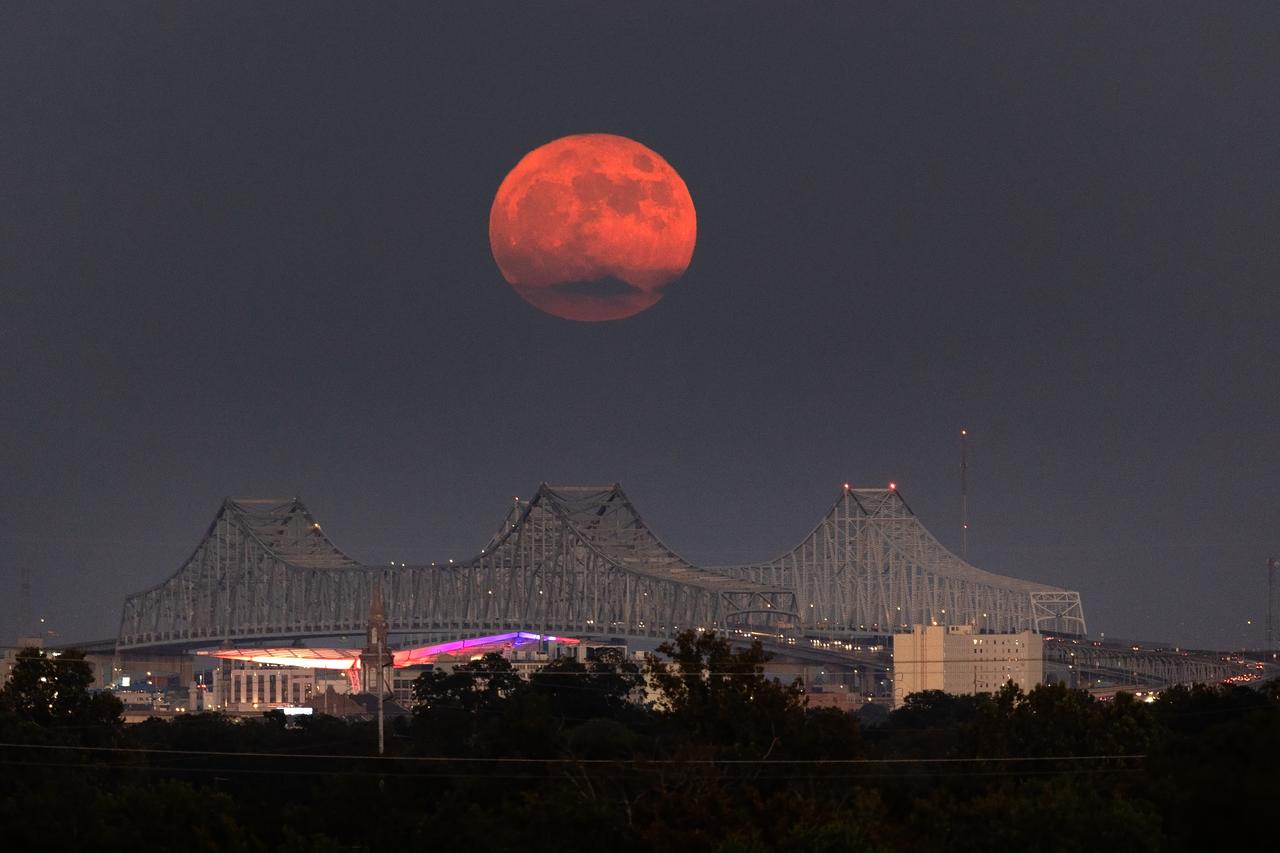
A Super Blue Moon rises above the Mississippi River and the Crescent City Connection Bridge in New Orleans, Aug. 30. The full moon is “super” because it’s slightly closer to Earth and “blue” because it’s the second full moon in a month. About 25% of all full moons are supermoons, but only 3% of full moons are blue moons. The next super blue moons will occur in a pair in January and March 2037. New Orleans is home to NASA’s Michoud Assembly Facility, where stages for NASA’s SLS (Space Launch System) rocket and structures for Orion spacecraft are produced for the Artemis missions.

The full moon is seen as it rises near the Lincoln Memorial, Saturday, March 19, 2011, in Washington. The full moon tonight is called a "Super Perigee Moon" since it is at it's closest to Earth in 2011. The last full moon so big and close to Earth occurred in March of 1993.
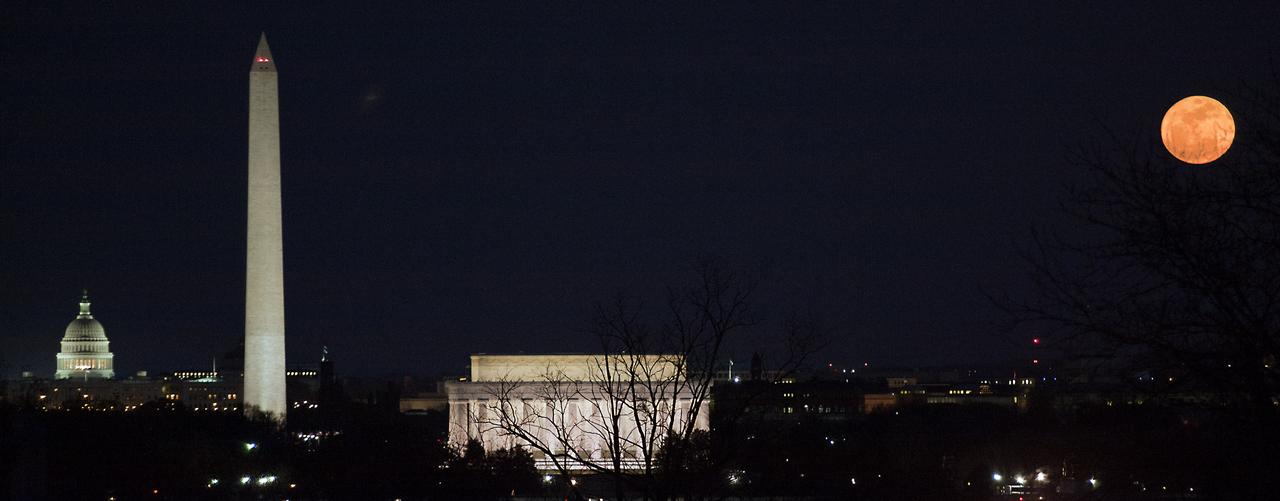
The full moon is seen as it rises near the National Mall, Saturday, March 19, 2011, in Washington. The full moon tonight is called a "Super Moon" since it is at its closest to Earth. Photo Credit: (NASA/Paul E. Alers)