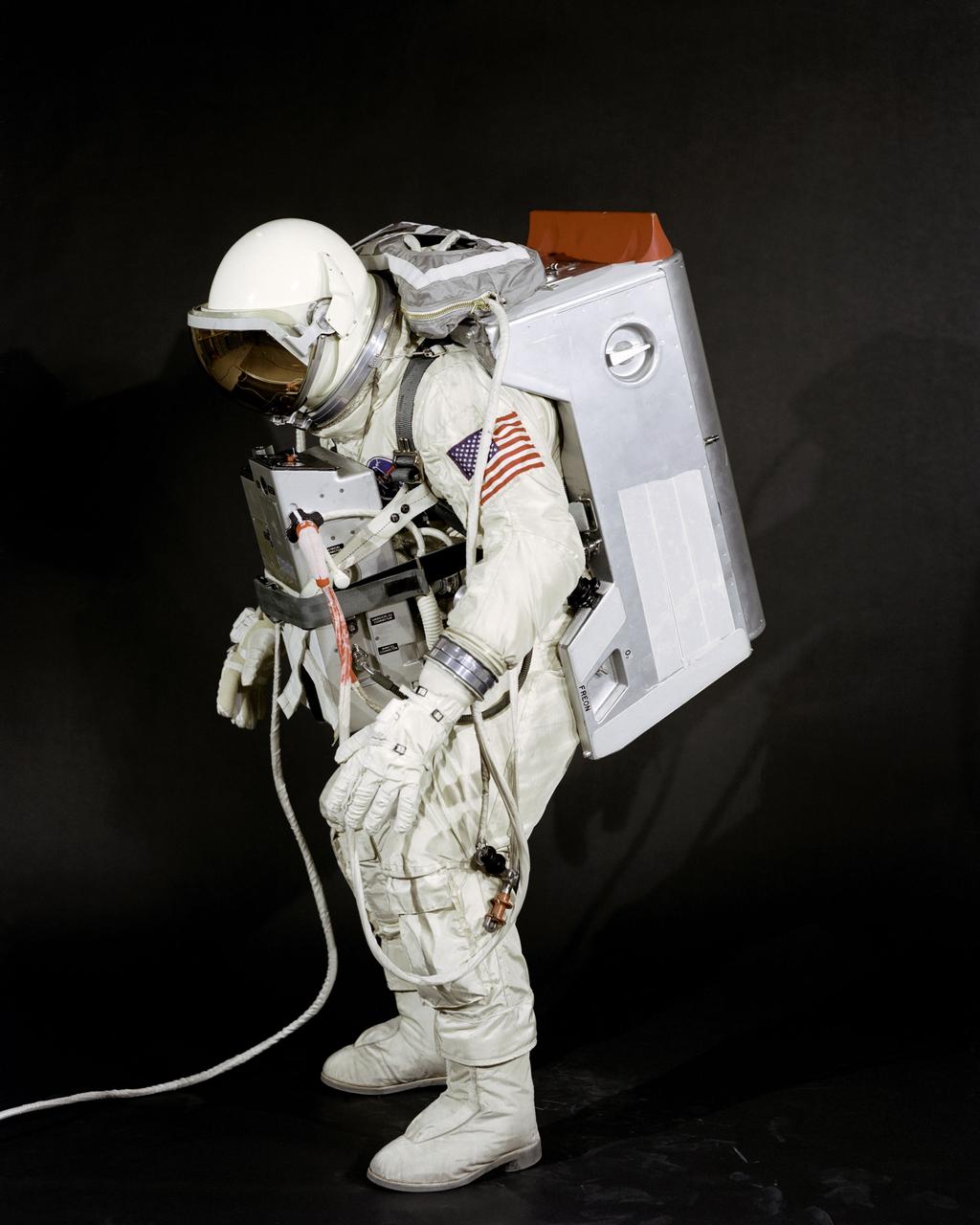
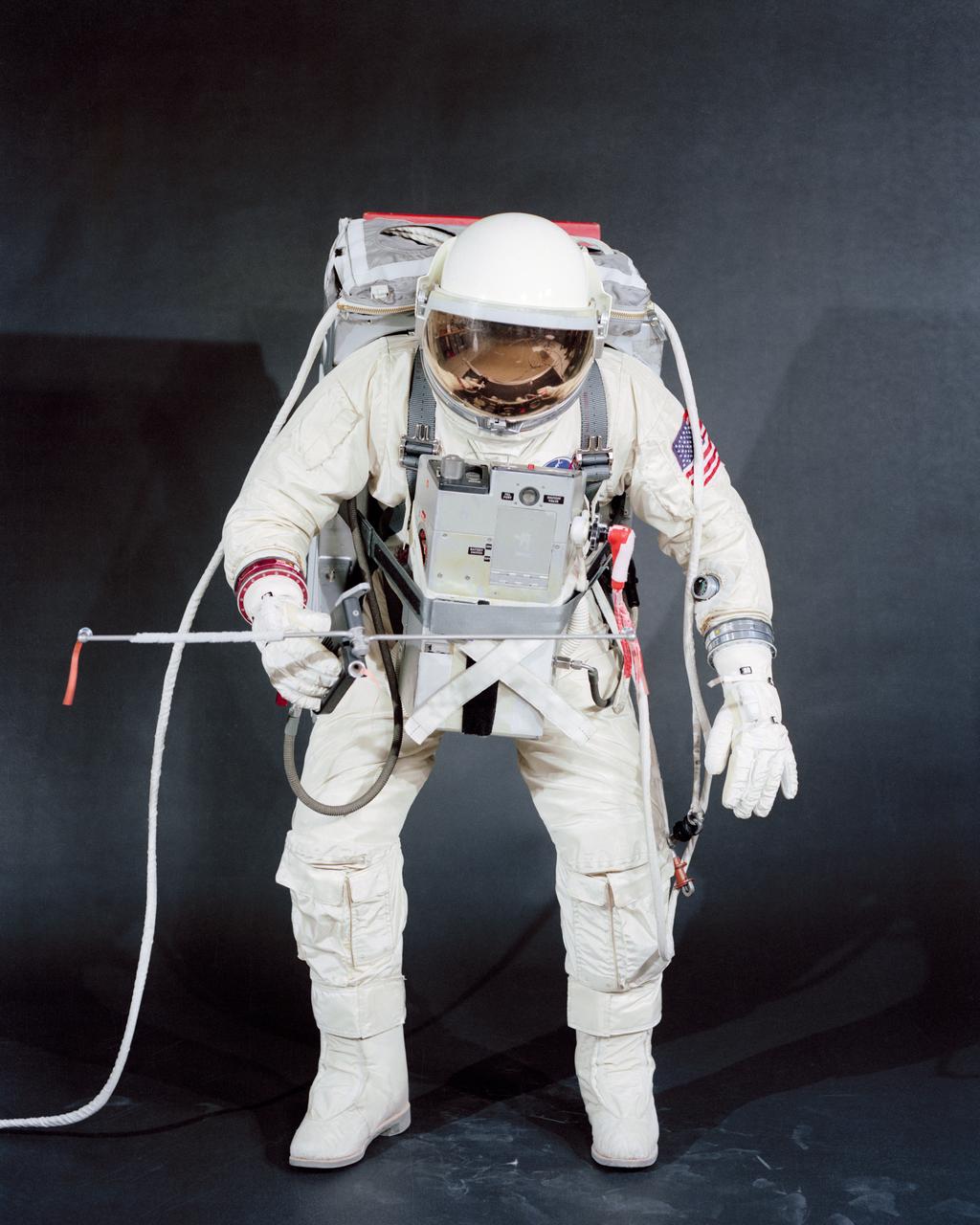
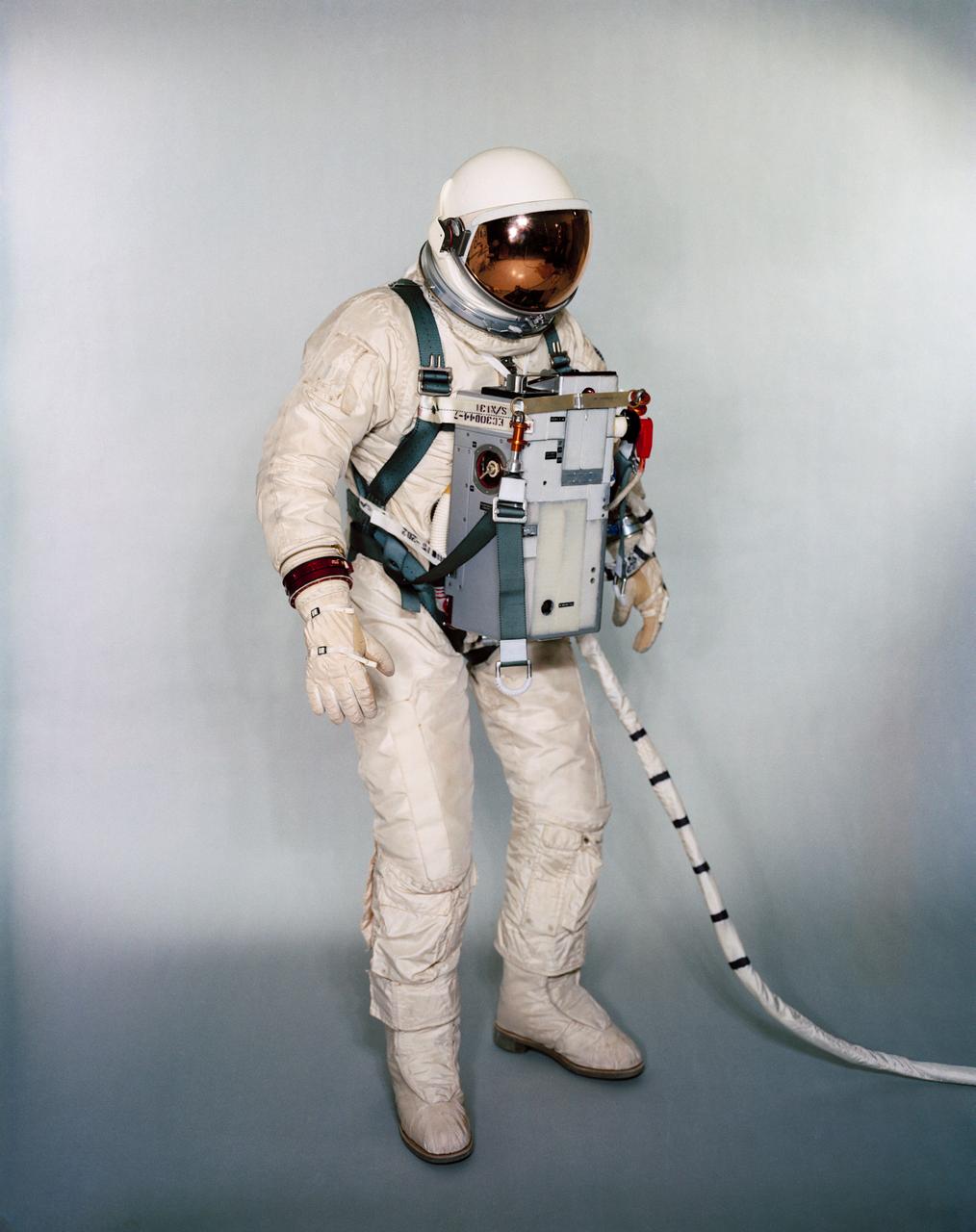
S67-24267 (1966) --- Suited test subject equipped with Gemini-12 Life Support System and waist tethers for extravehicular activity (EVA). Photo credit: NASA
Test subject equipped with Gemini 12 Life Support System and waist tethers
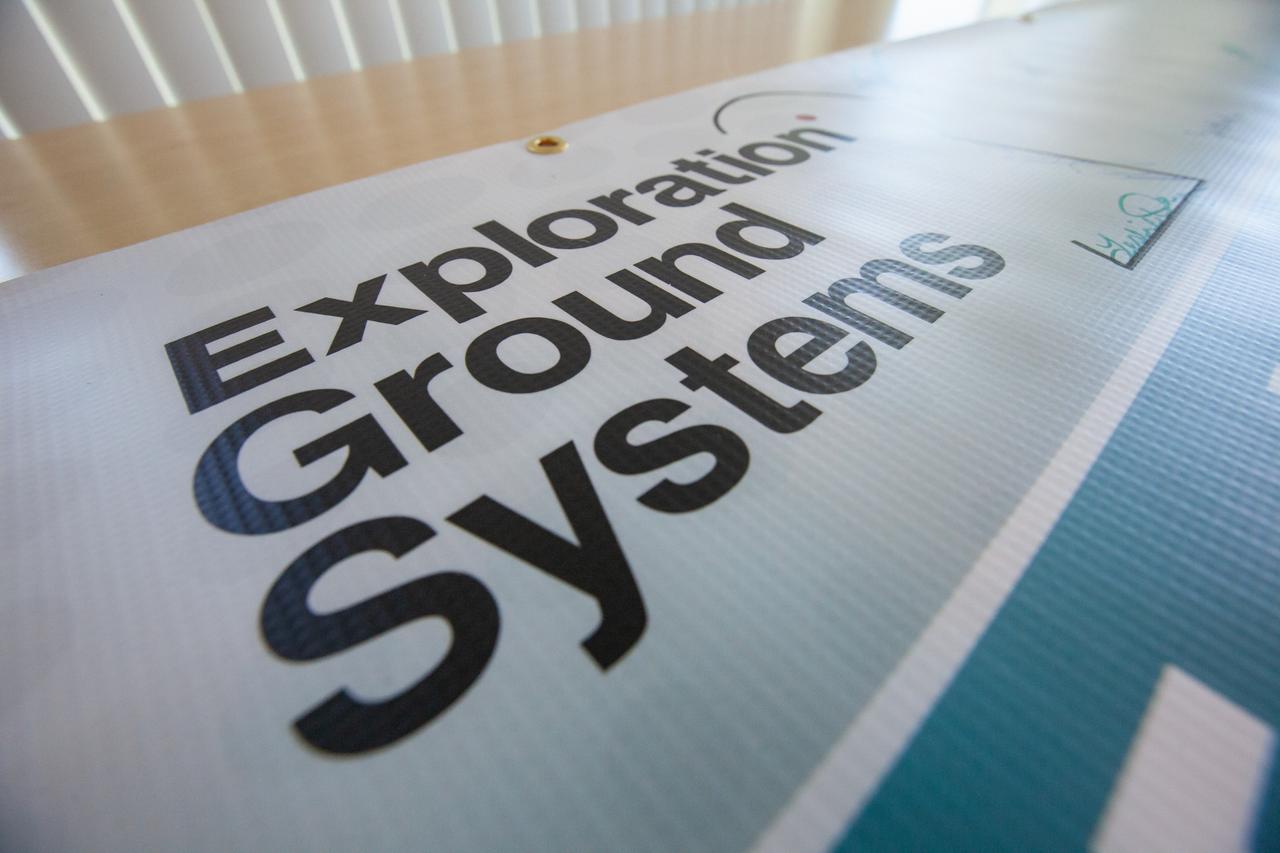
A banner signing event was held April 22, 2019, at NASA’s Kennedy Space Center in Florida, to mark the accomplishments of the Kennedy engineering team that supported the Ground Support Equipment (GSE) Subsystem Software development. This team includes the software leads, local developers, remote developers, modelers, project engineers, software quality assurance, build team members, integrators, system engineers, a chief engineer and some software managers. There are 60 unique instances of GSE Subsystem Software code. As of today, 58 of those 60 instances have completed software Level 5 Verification (L5V) and are in the process of completing Subsystem Verification & Validation.
KSC Engineering Banner Event
A banner signing event was held April 22, 2019, at NASA’s Kennedy Space Center in Florida, to mark the accomplishments of the Kennedy engineering team that supported the Ground Support Equipment (GSE) Subsystem Software development. This team includes the software leads, local developers, remote developers, modelers, project engineers, software quality assurance, build team members, integrators, system engineers, a chief engineer and some software managers. There are 60 unique instances of GSE Subsystem Software code. As of today, 58 of those 60 instances have completed software Level 5 Verification (L5V) and are in the process of completing Subsystem Verification & Validation.
KSC Engineering Banner Event
A banner signing event was held April 22, 2019, at NASA’s Kennedy Space Center in Florida, to mark the accomplishments of the Kennedy engineering team that supported the Ground Support Equipment (GSE) Subsystem Software development. This team includes the software leads, local developers, remote developers, modelers, project engineers, software quality assurance, build team members, integrators, system engineers, a chief engineer and some software managers. There are 60 unique instances of GSE Subsystem Software code. As of today, 58 of those 60 instances have completed software Level 5 Verification (L5V) and are in the process of completing Subsystem Verification & Validation.
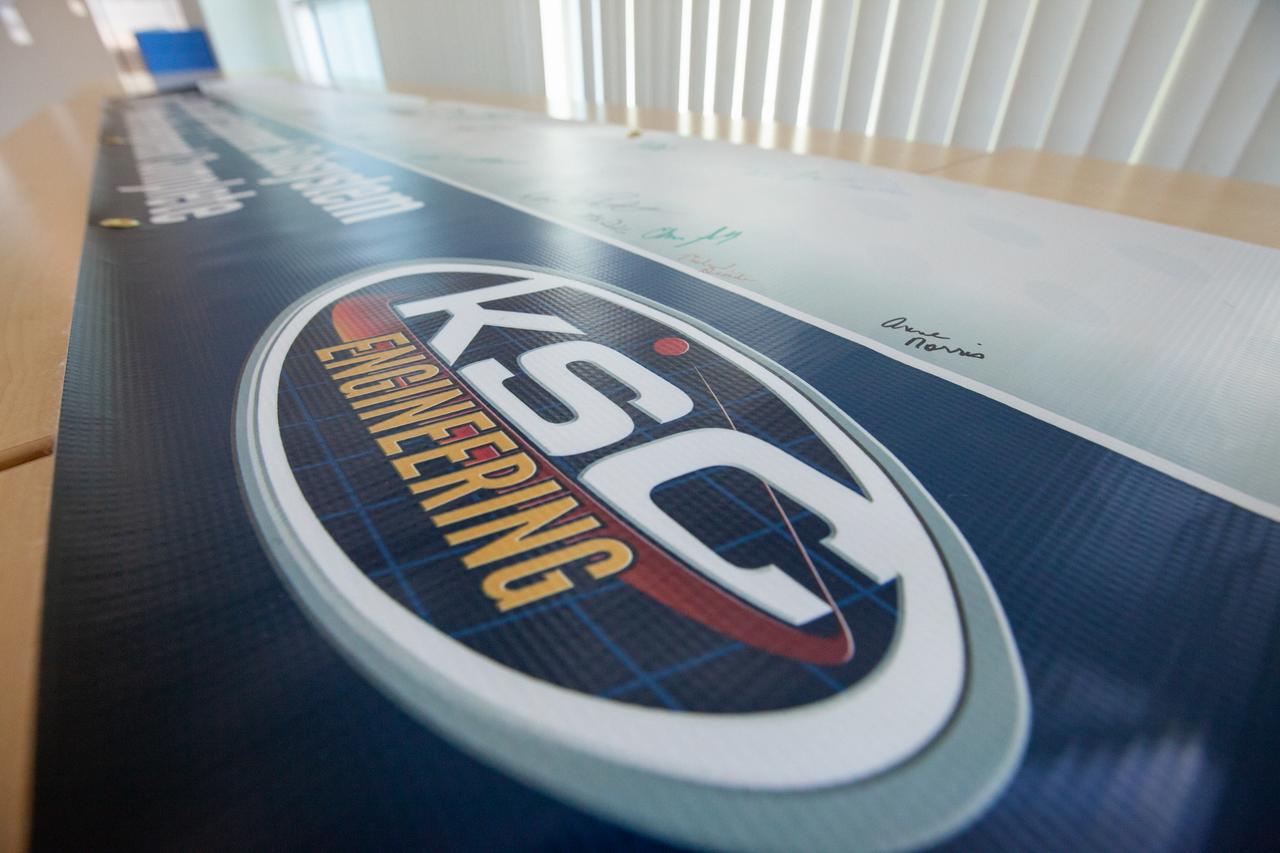
KSC Engineering Banner Event
A banner signing event was held April 22, 2019, at NASA’s Kennedy Space Center in Florida, to mark the accomplishments of the Kennedy engineering team that supported the Ground Support Equipment (GSE) Subsystem Software development. This team includes the software leads, local developers, remote developers, modelers, project engineers, software quality assurance, build team members, integrators, system engineers, a chief engineer and some software managers. There are 60 unique instances of GSE Subsystem Software code. As of today, 58 of those 60 instances have completed software Level 5 Verification (L5V) and are in the process of completing Subsystem Verification & Validation.

KSC Engineering Banner Event
A banner signing event was held April 22, 2019, at NASA’s Kennedy Space Center in Florida, to mark the accomplishments of the Kennedy engineering team that supported the Ground Support Equipment (GSE) Subsystem Software development. This team includes the software leads, local developers, remote developers, modelers, project engineers, software quality assurance, build team members, integrators, system engineers, a chief engineer and some software managers. There are 60 unique instances of GSE Subsystem Software code. As of today, 58 of those 60 instances have completed software Level 5 Verification (L5V) and are in the process of completing Subsystem Verification & Validation.
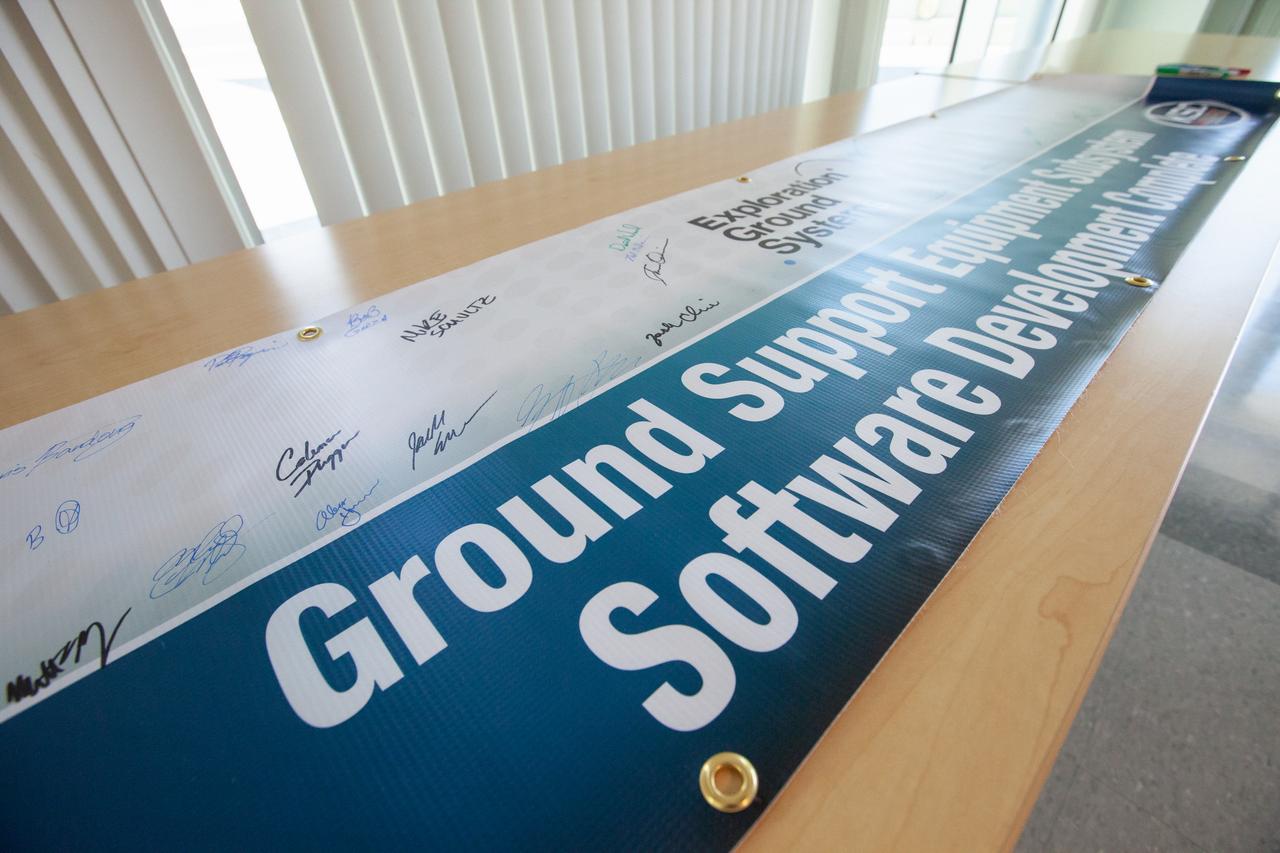
KSC Engineering Banner Event
Publicity photo from Muroc California, showing female support personnel with equipment.
Publicity Photos From Muroc
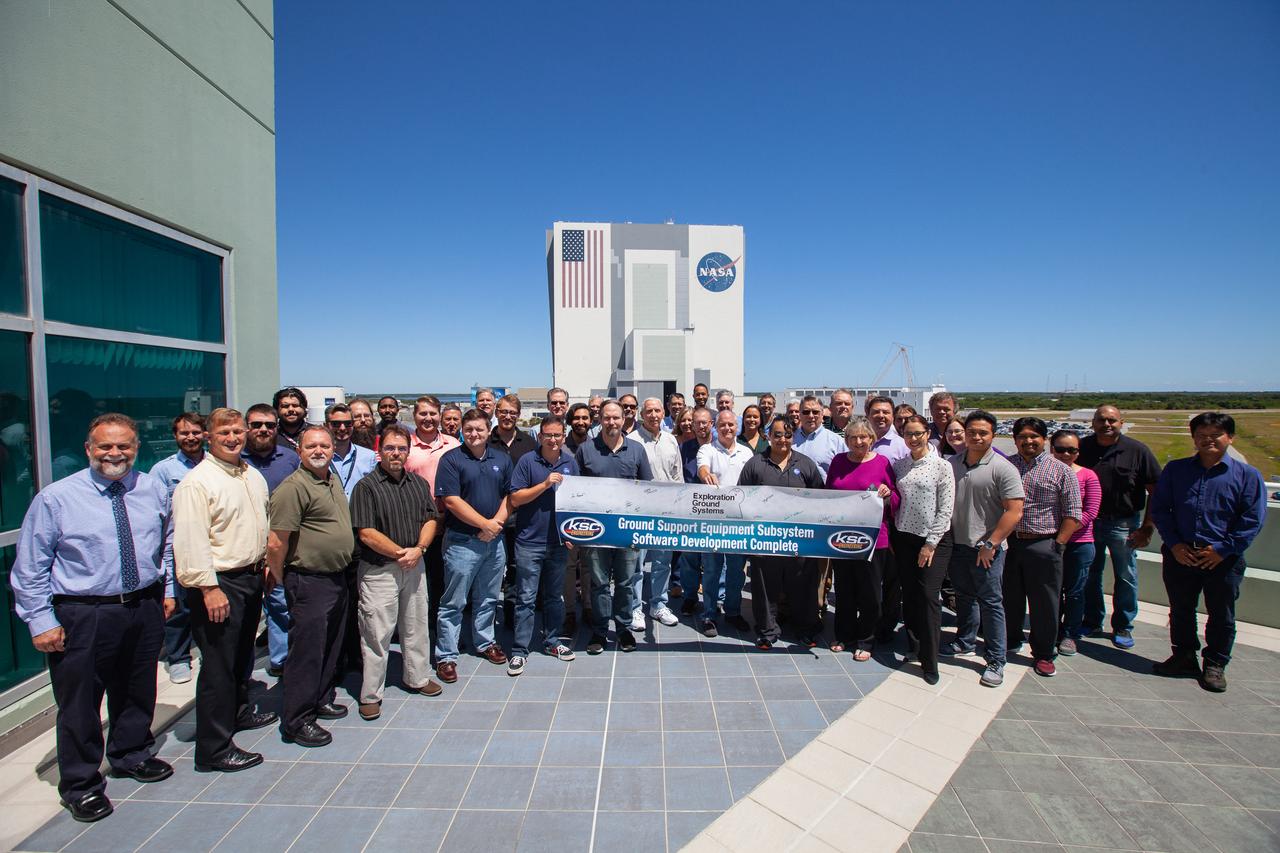
A banner signing event was held April 22, 2019, at NASA’s Kennedy Space Center in Florida, to mark the accomplishments of the Kennedy engineering team that supported the Ground Support Equipment (GSE) Subsystem Software development. The team gathered in the observation area of the Operations Support Building II with a view of the Vehicle Assembly Building behind them. This team includes the software leads, local developers, remote developers, modelers, project engineers, software quality assurance, build team members, integrators, system engineers, a chief engineer and some software managers. There are 60 unique instances of GSE Subsystem Software code. As of today, 58 of those 60 instances have completed software Level 5 Verification (L5V) and are in the process of completing Subsystem Verification & Validation.
KSC Engineering Banner Event
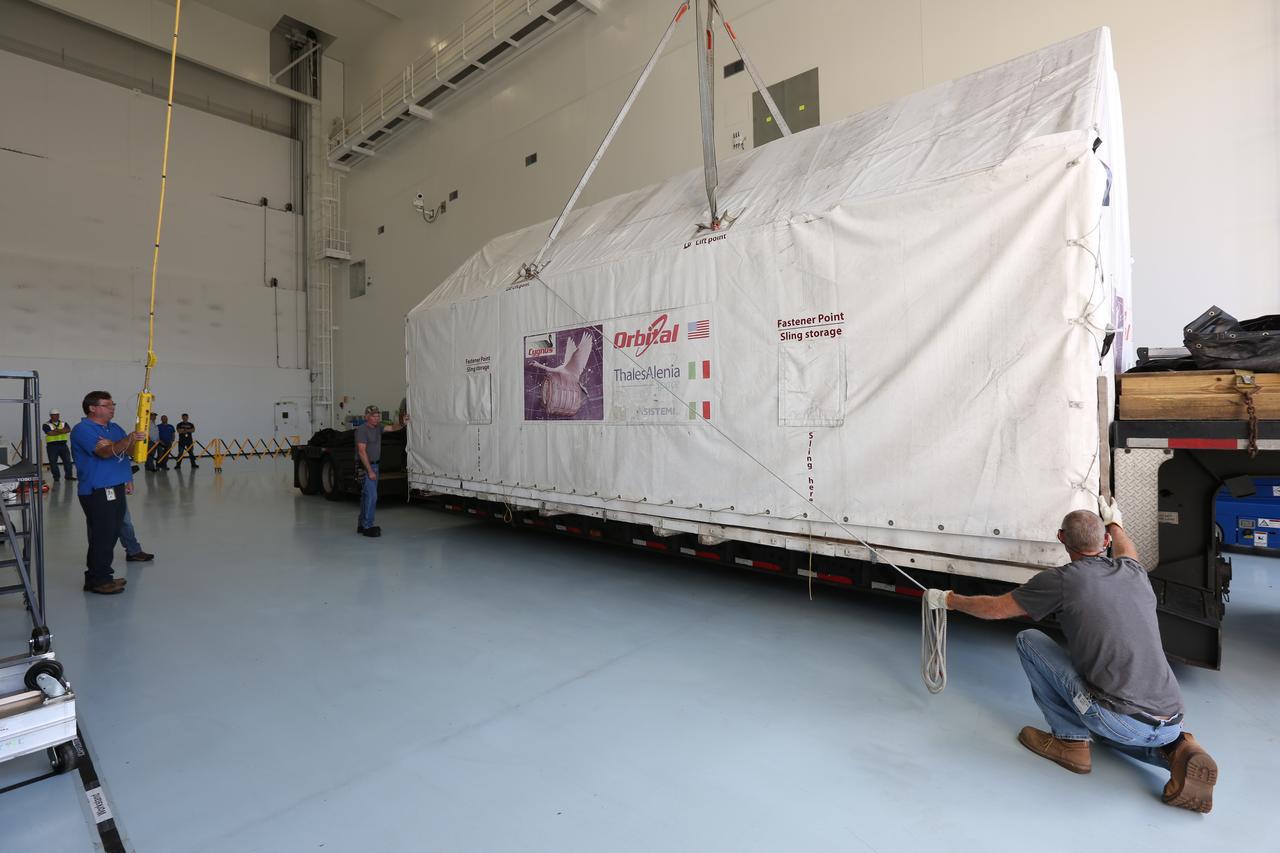
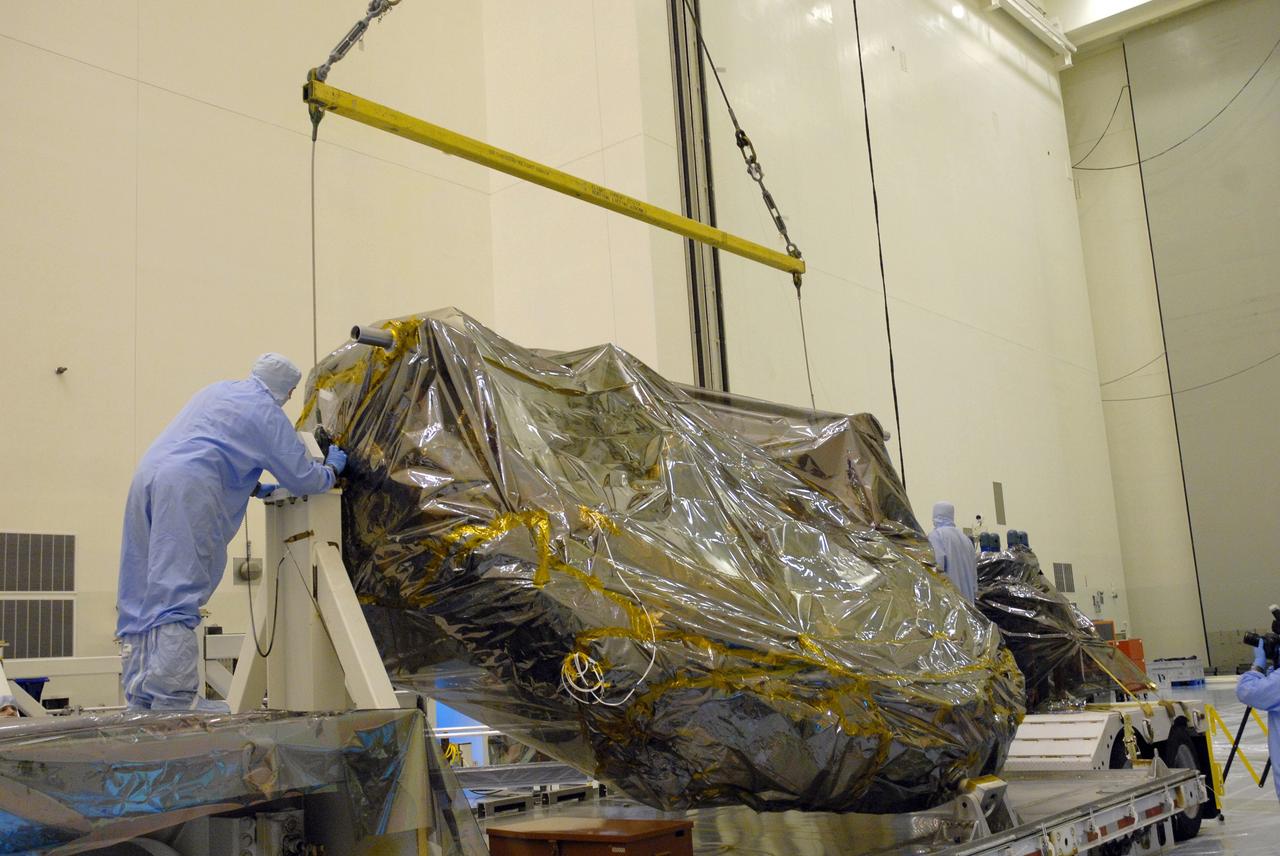
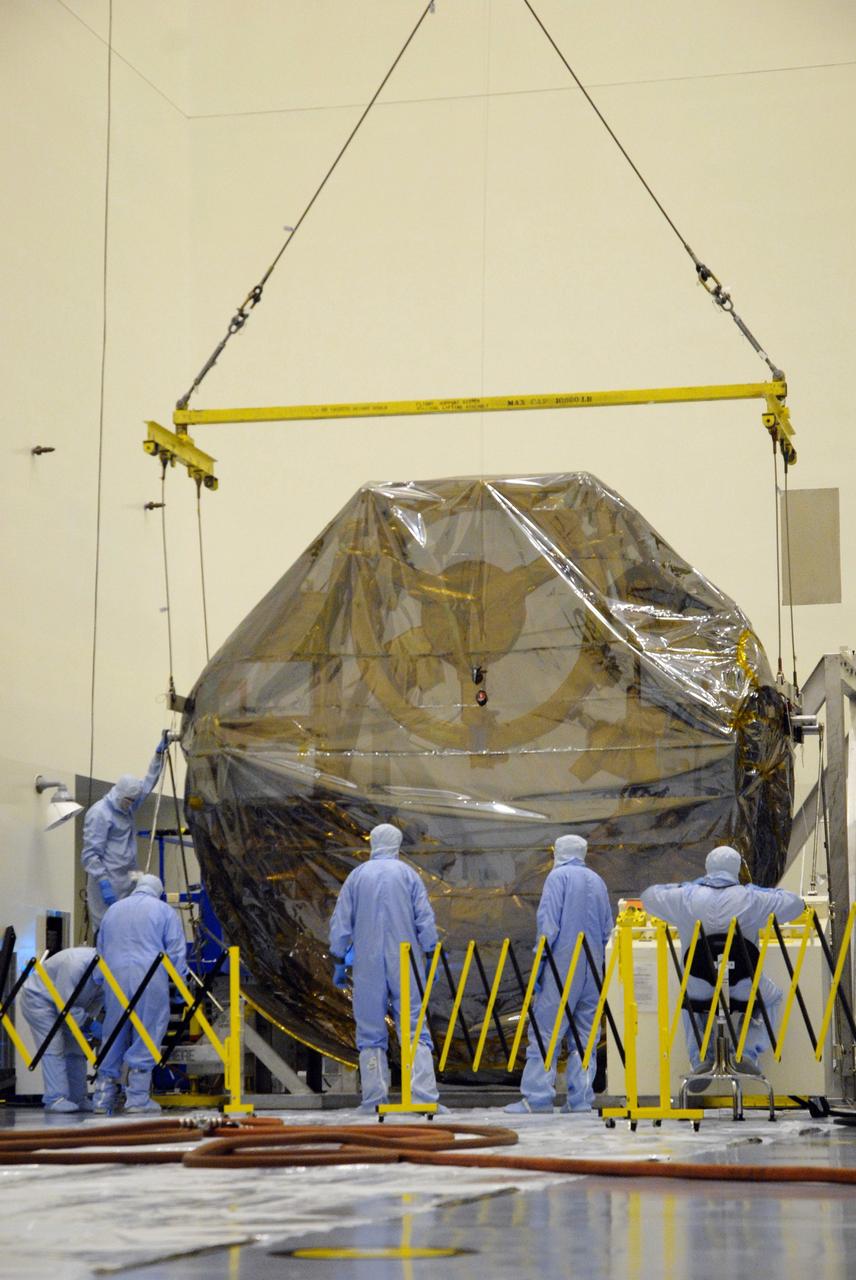
Inside the Space Station Processing Facility low bay at NASA’s Kennedy Space Center in Florida, technicians use a crane to lift the cover off ground support equipment for the Orbital ATK OA-7 commercial resupply services mission. The Orbital ATK CRS-7 with the Cygnus cargo module will lift off atop a United Launch Alliance Atlas V rocket from Space launch Complex 41 at Cape Canaveral Air Force Station. The commercial resupply services mission to the International Space Station will deliver thousands of pounds of supplies, equipment and scientific research materials that improve life on Earth and drive progress toward future space exploration.
Orbital ATK's Ground Support Equipment (GSE) Delivery for OA-7
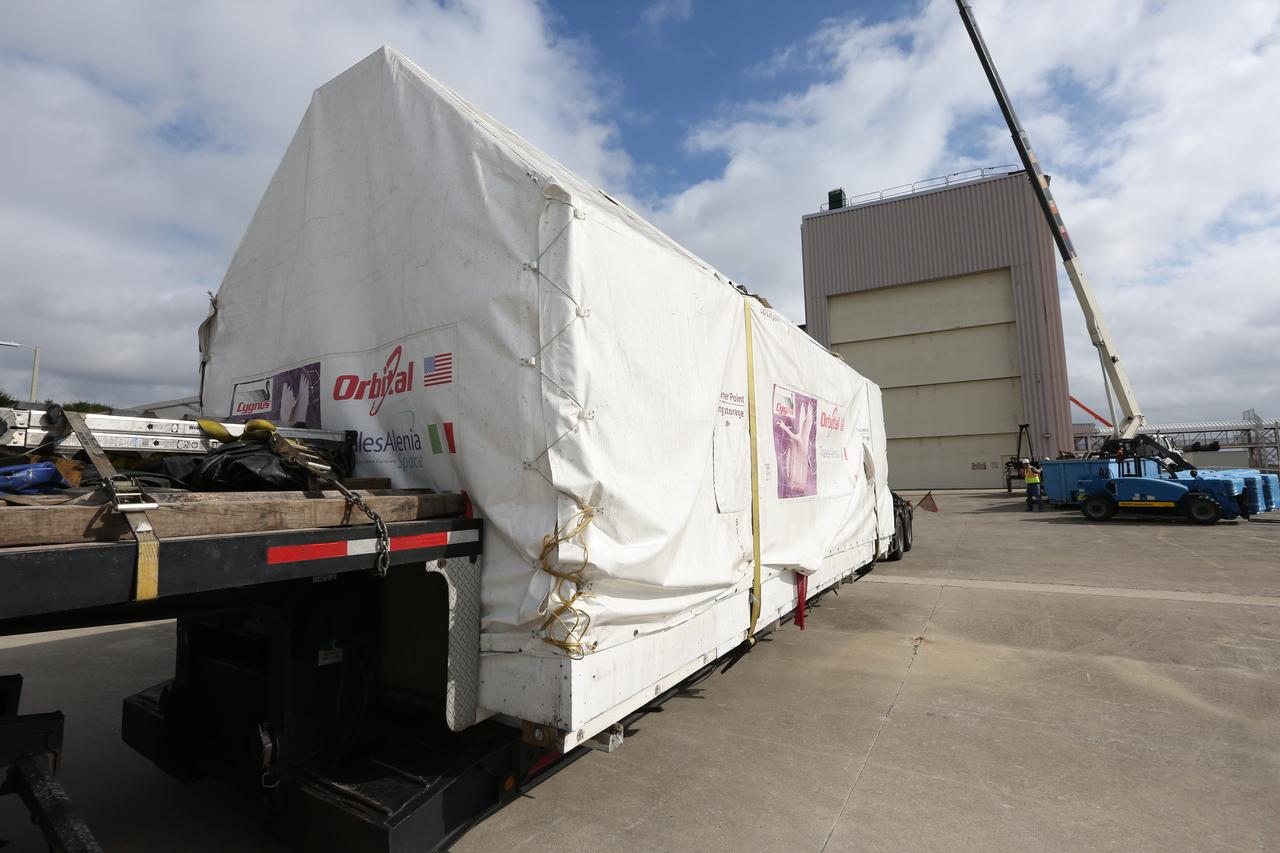
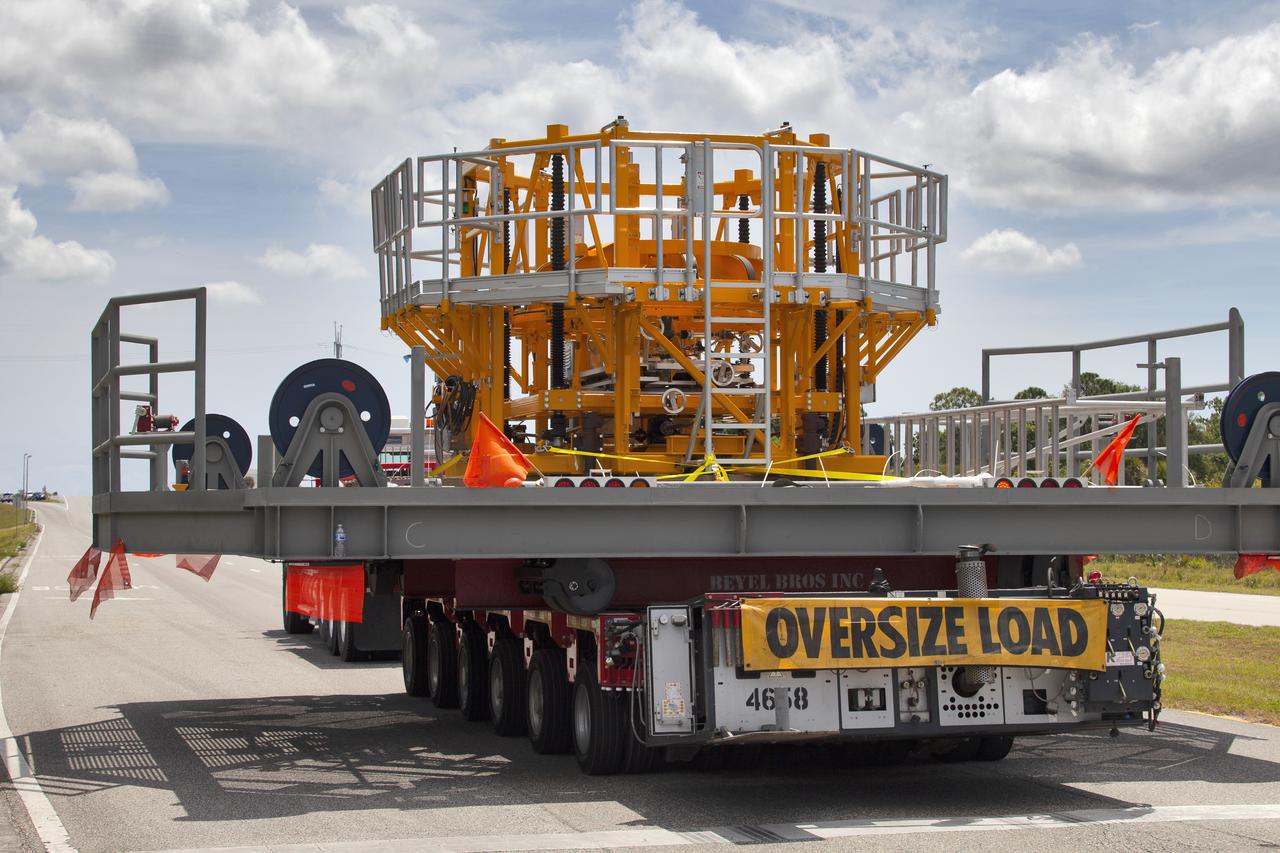
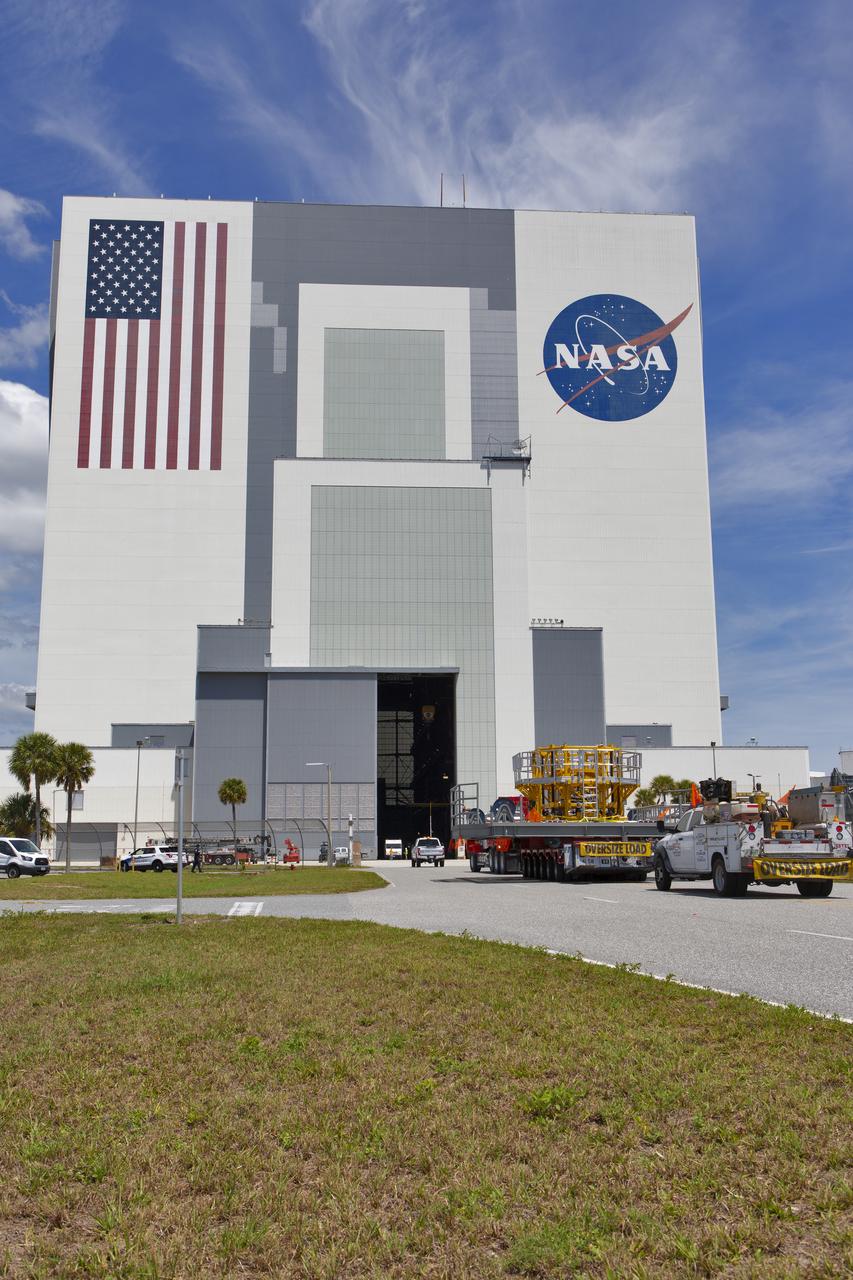
Sealed in its shipping container, the ground support equipment for the Orbital ATK OA-7 commercial resupply services mission has arrived at the Space Station Processing Facility at NASA's Kennedy Space Center in Florida. The container will be moved inside the low bay of the facility. The Orbital ATK CRS-7 with the Cygnus cargo module will lift off atop a United Launch Alliance Atlas V rocket from Space launch Complex 41 at Cape Canaveral Air Force Station. The commercial resupply services mission to the International Space Station will deliver thousands of pounds of supplies, equipment and scientific research materials that improve life on Earth and drive progress toward future space exploration.
Orbital ATK's Ground Support Equipment (GSE) Delivery for OA-7
Sealed in its shipping container, the ground support equipment for the Orbital ATK OA-7 commercial resupply services mission has arrived at the Space Station Processing Facility at NASA's Kennedy Space Center in Florida. The container will be moved inside the low bay of the facility. The Orbital ATK CRS-7 with the Cygnus cargo module will lift off atop a United Launch Alliance Atlas V rocket from Space launch Complex 41 at Cape Canaveral Air Force Station. The commercial resupply services mission to the International Space Station will deliver thousands of pounds of supplies, equipment and scientific research materials that improve life on Earth and drive progress toward future space exploration.
Orbital ATK's Ground Support Equipment (GSE) Delivery for OA-7
Inside the Space Station Processing Facility low bay at NASA’s Kennedy Space Center in Florida, technicians use a crane to lift the cover off ground support equipment for the Orbital ATK OA-7 commercial resupply services mission. The Orbital ATK CRS-7 with the Cygnus cargo module will lift off atop a United Launch Alliance Atlas V rocket from Space launch Complex 41 at Cape Canaveral Air Force Station. The commercial resupply services mission to the International Space Station will deliver thousands of pounds of supplies, equipment and scientific research materials that improve life on Earth and drive progress toward future space exploration.
Orbital ATK's Ground Support Equipment (GSE) Delivery for OA-7
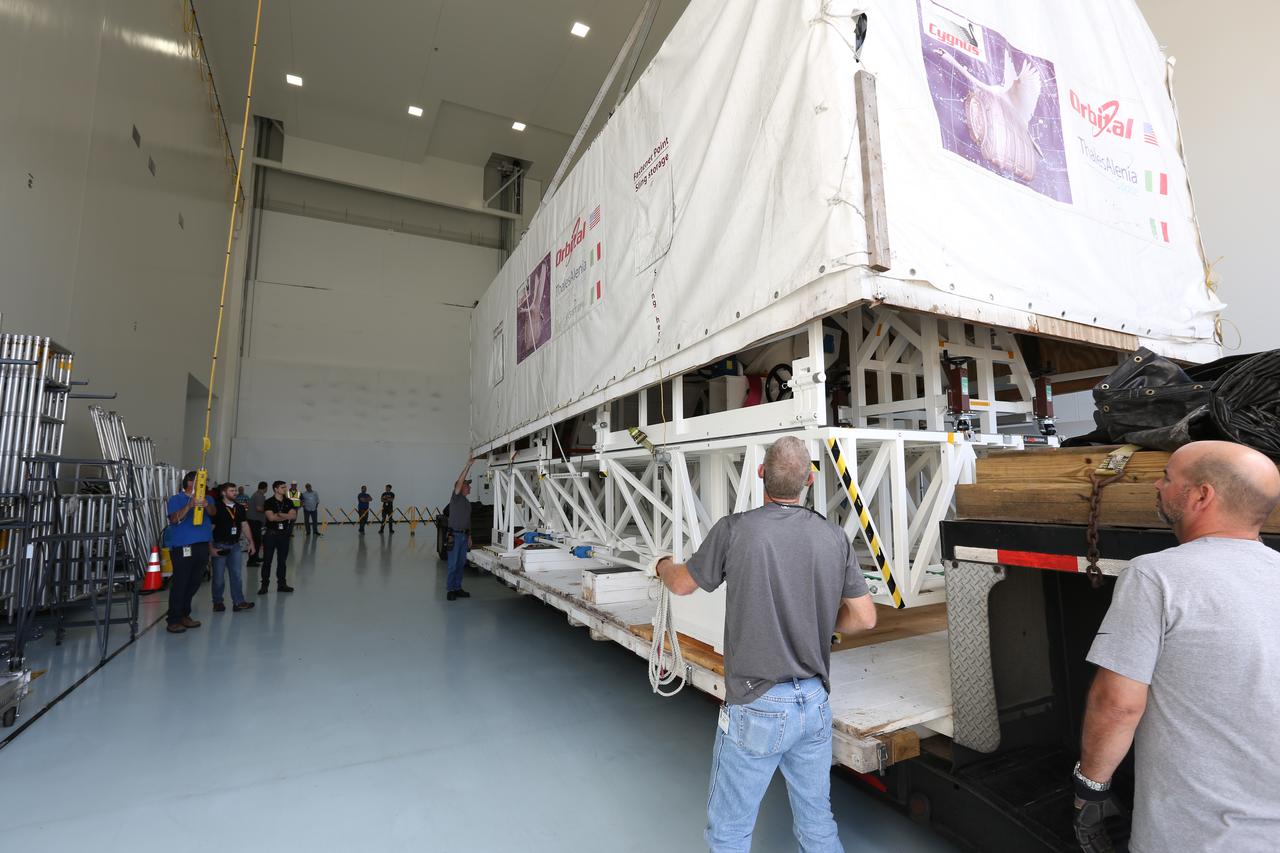
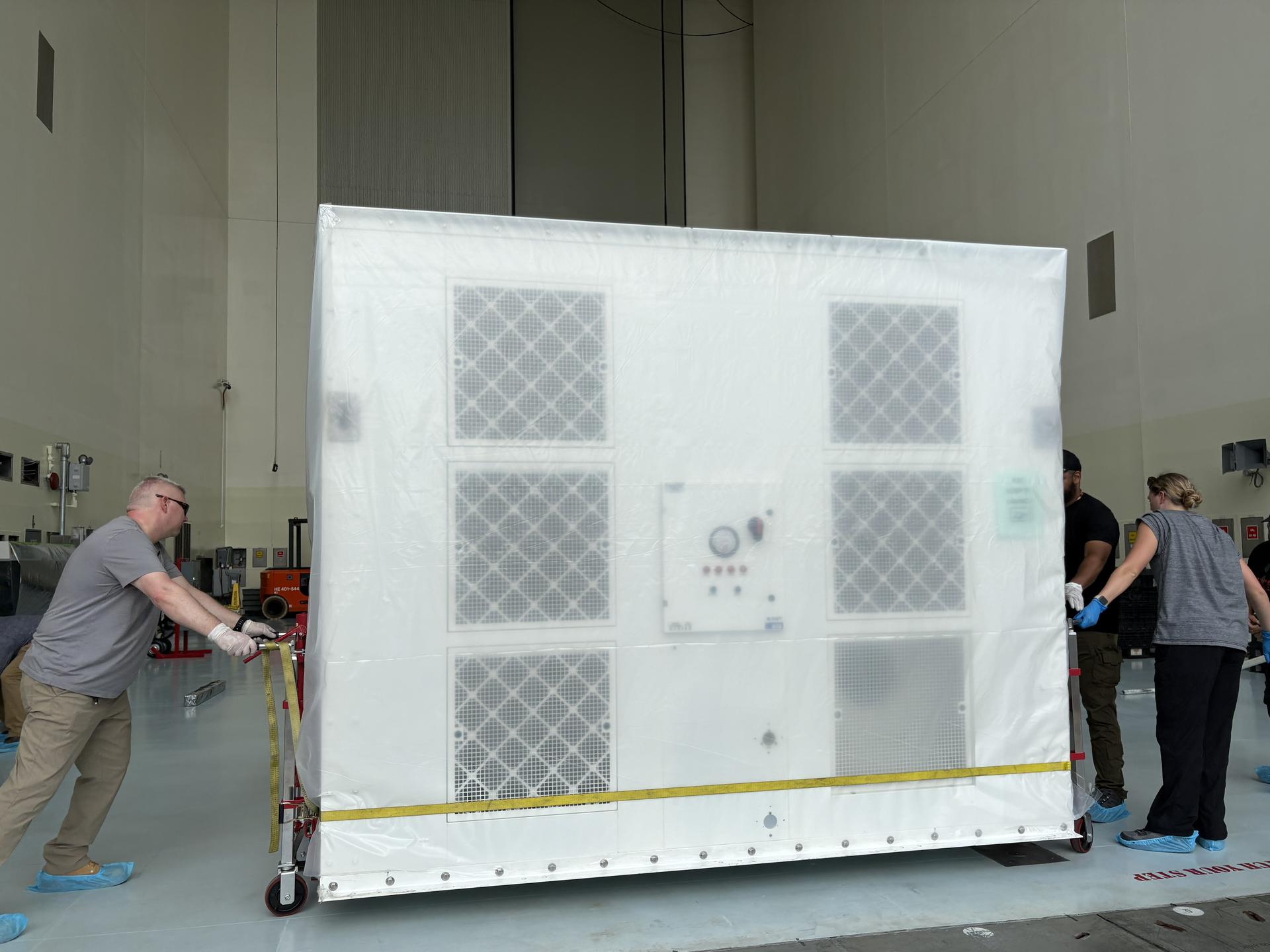
Sealed in its shipping container, the ground support equipment for the Orbital ATK OA-7 commercial resupply services mission was moved inside the low bay of the Space Station Processing Facility at NASA's Kennedy Space Center in Florida. The Orbital ATK CRS-7 with the Cygnus cargo module will lift off atop a United Launch Alliance Atlas V rocket from Space launch Complex 41 at Cape Canaveral Air Force Station. The commercial resupply services mission to the International Space Station will deliver thousands of pounds of supplies, equipment and scientific research materials that improve life on Earth and drive progress toward future space exploration.
Orbital ATK's Ground Support Equipment (GSE) Delivery for OA-7
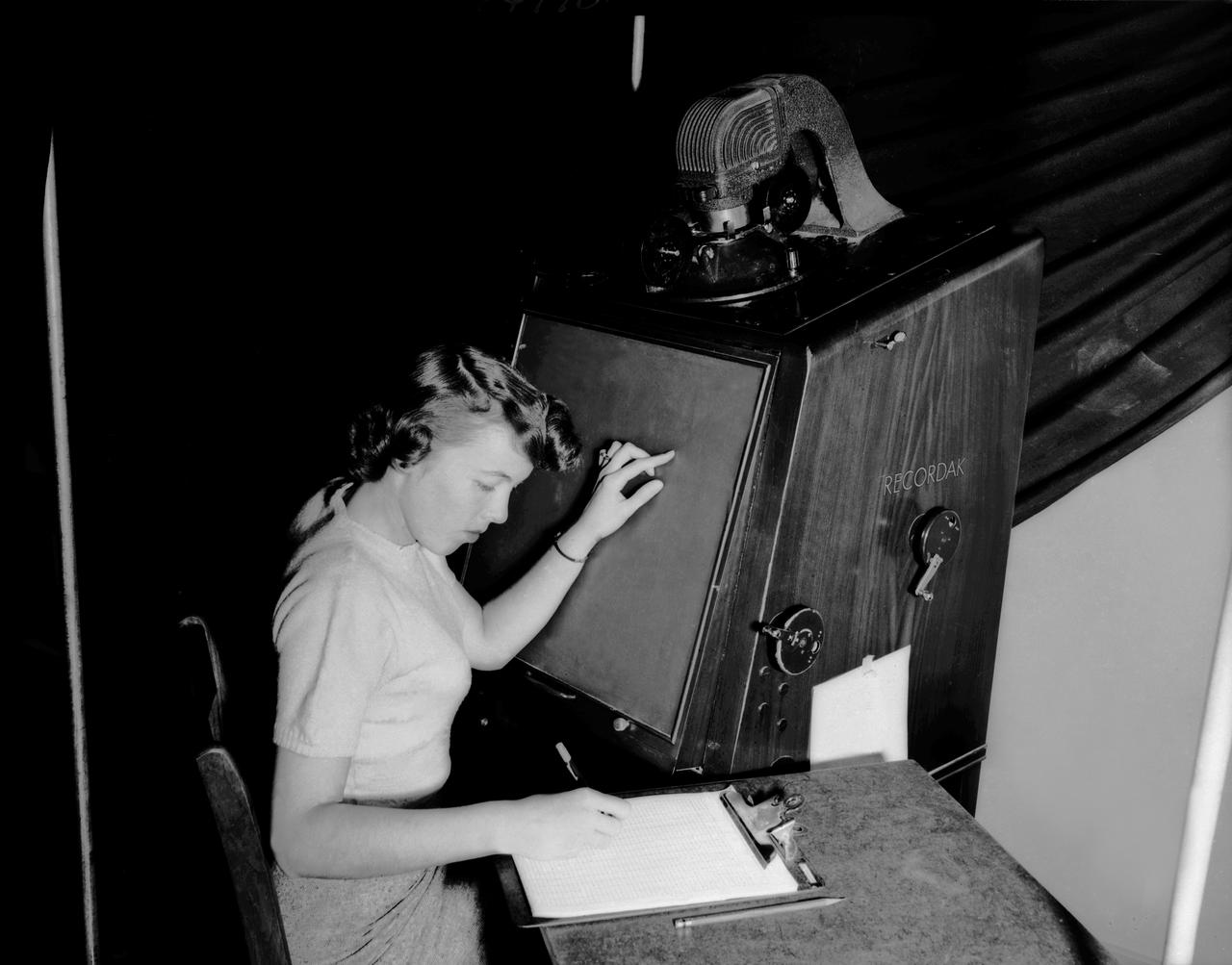
Publicity photo from Muroc California, showing female support personnel with equipment. A women working on a Kodak Recordak microfilm reader.
Publicity Photos From Muroc
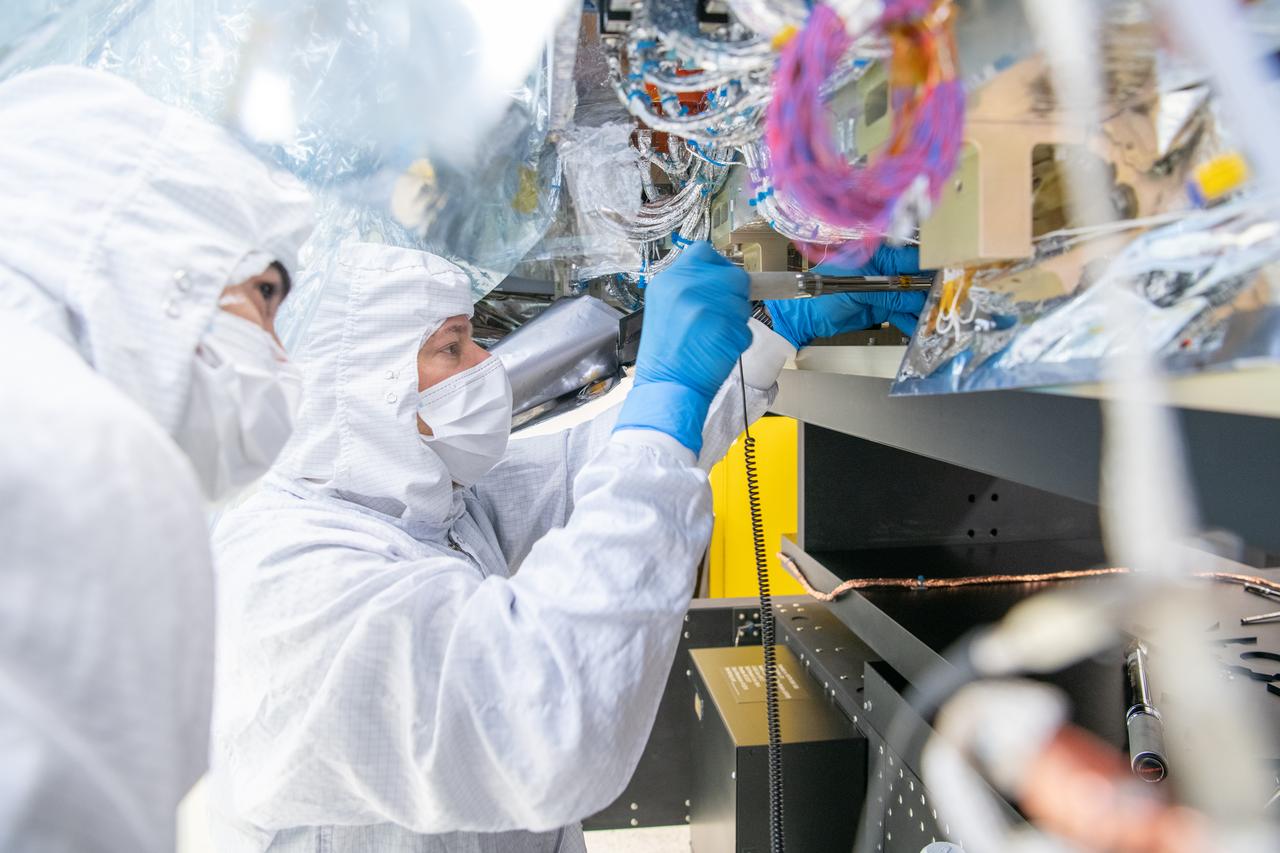
Mechanical technician, Thomas Huber, tightens bolts on the Ocean Color Instrument (OCI) is installed onto the Ground Support Equipment Application for Tilt or Rotation (GAToR) made by Newton Engineering. GAToR will allow engineers to tilt and rotate OCI in different orientations for further testing prior to integration onto the PACE (Plankton, Aerosol, Cloud, ocean Ecosystem) spacecraft.   OCI is a highly advanced optical spectrometer that will be used to measure properties of light over portions of the electromagnetic spectrum. It will enable continuous measurement of light at finer wavelength resolution than previous NASA satellite sensors, extending key system ocean color data records for climate studies. OCI is PACE's (Plankton, Aerosol, Cloud, ocean Ecosystem) primary sensor built at Goddard Space Flight Center in Greenbelt, MD.
OCI Installed to Ground Support Equipment Application for Tilt or Rotation
The Ocean Color Instrument (OCI) Electro-Magnetic Interference (EMI) & Electrical Ground Support Equipment (EGSE) Team pose in the control room. From this room, they are able to analyze the data from the test remotely and send commands through electrical cables that run through the walls into the EMI lab.  OCI is a highly advanced optical spectrometer that will be used to measure properties of light over portions of the electromagnetic spectrum. It will enable continuous measurement of light at finer wavelength resolution than previous NASA satellite sensors, extending key system ocean color data records for climate studies. OCI is PACE's (Plankton, Aerosol, Cloud, ocean Ecosystem) primary sensor built at Goddard Space Flight Center in Greenbelt, MD.
OCI Electro Magnetic Interference and Electrical Ground Support Equipment Team Photo
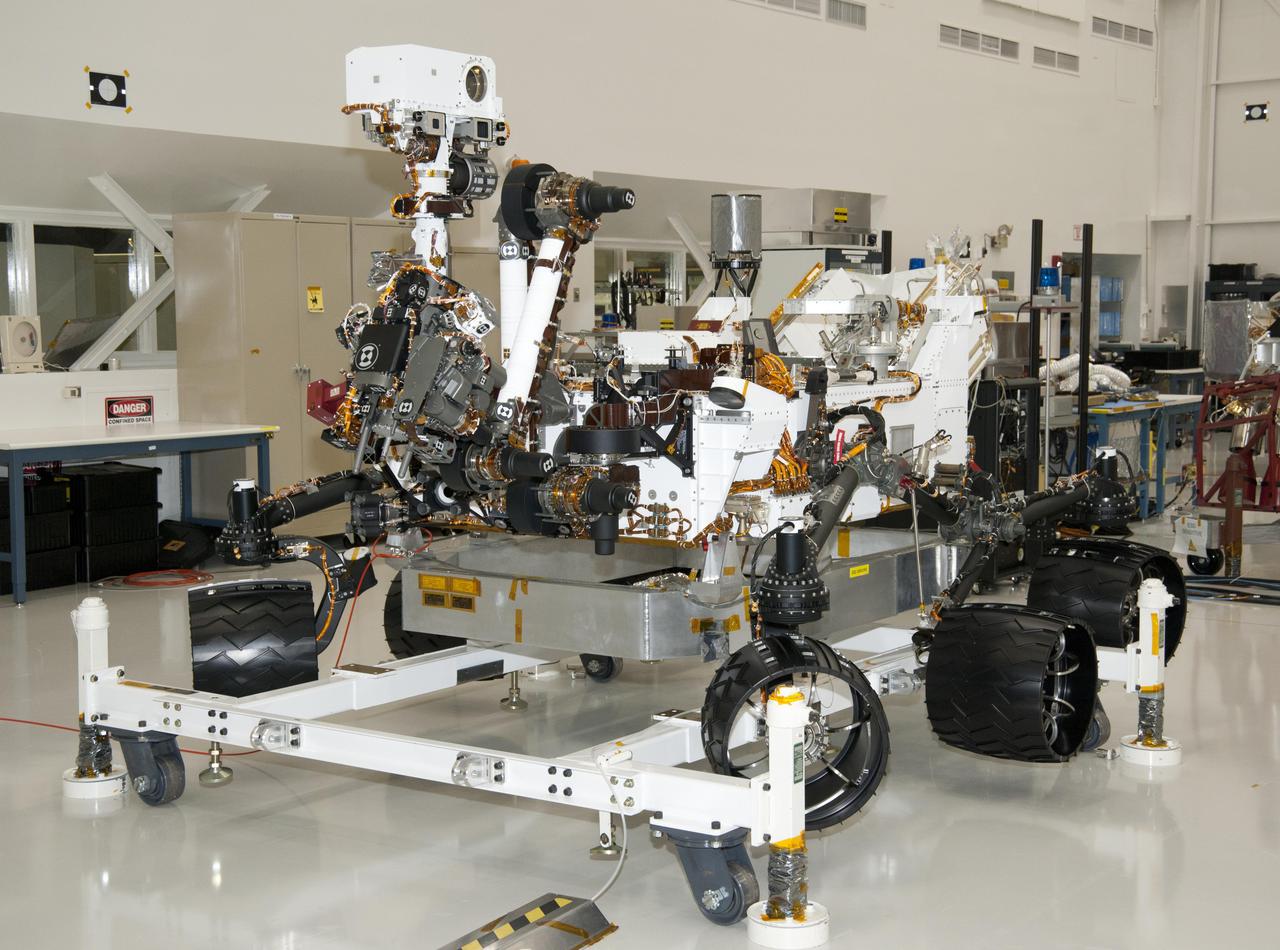
The rover for NASA Mars Science Laboratory mission, named Curiosity, is seen here inside the Spacecraft Assembly Facility at NASA Jet Propulsion Laboratory, Pasadena, Calif. Support equipment is holding the rover slightly off the floor.
NASA Mars Rover Curiosity at JPL, View from Front Left Corner
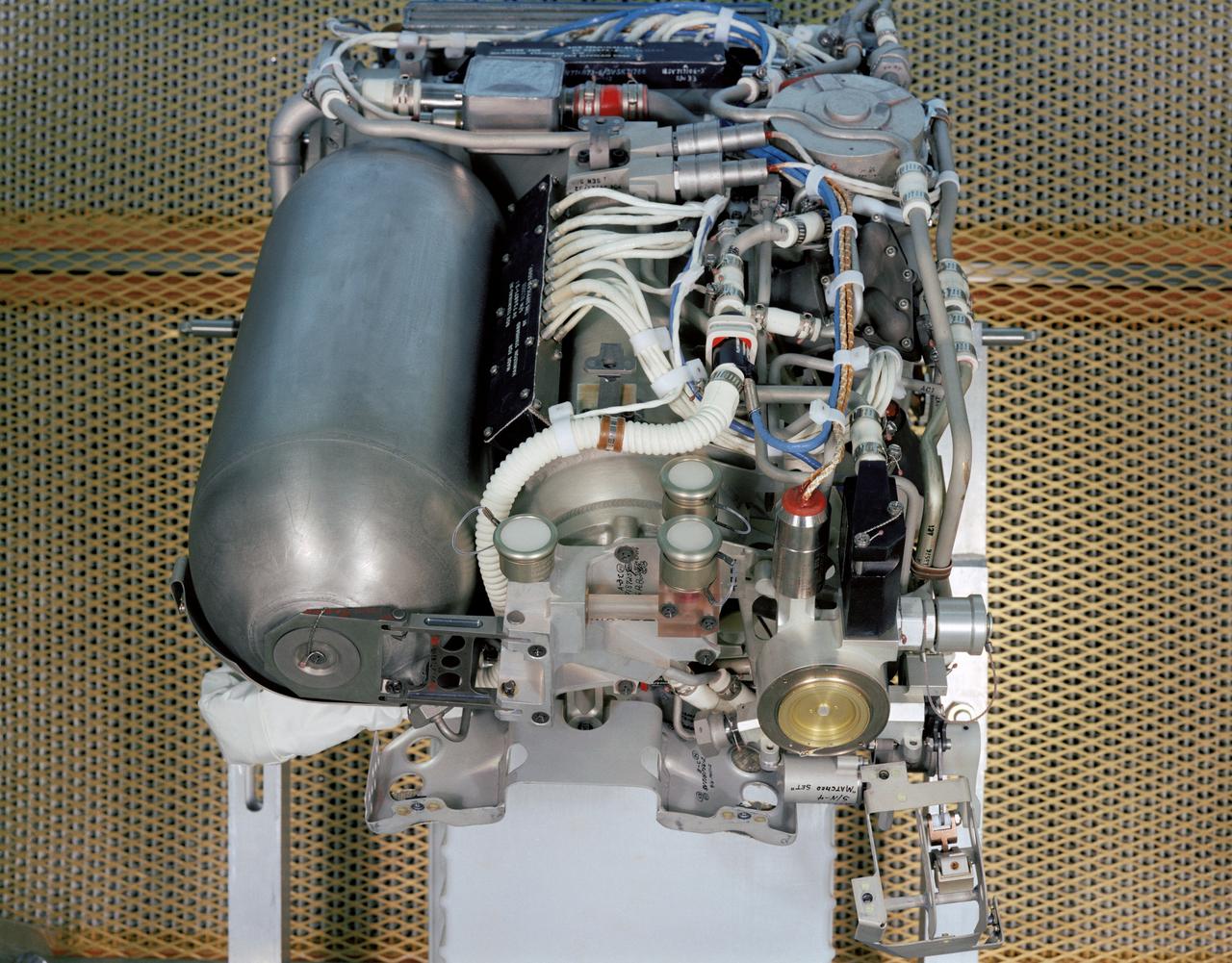
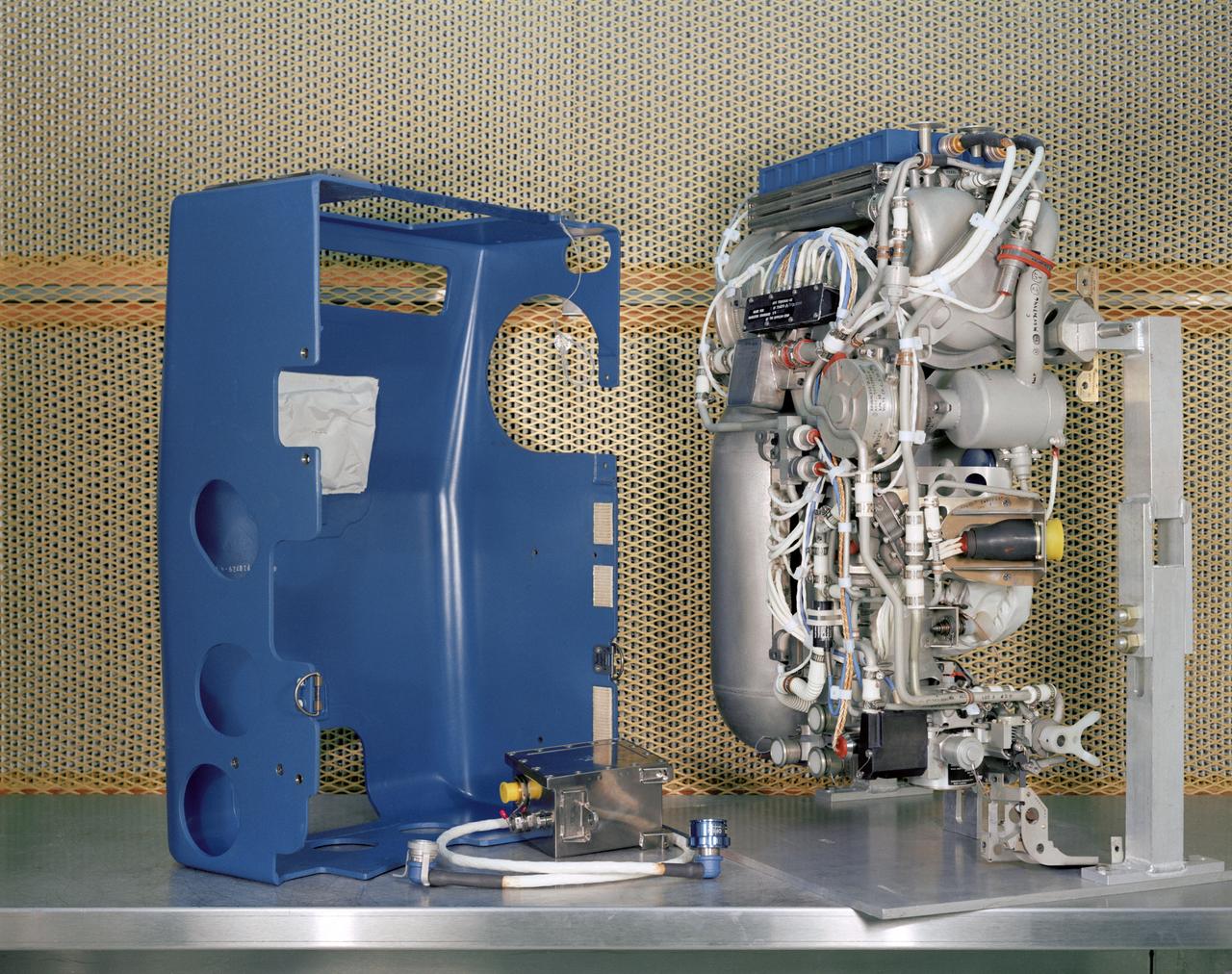
S68-34582 (1968) --- With its exterior removed, the Apollo portable life support system (PLSS) can be easily studied. The PLSS is worn as a backpack over the Extravehicular Mobility Unit (EMU) a multi-layered spacesuit used for outside-the-spacecraft activity. JSC photographic frame no. S68-34582 is a wider view of the exposed interior working parts of the PLSS and its removed cover.
Apollo Portable Life Support System
S68-34580 (1968) --- With its exterior removed, the Apollo portable life support system (PLSS) can be easily studied. The PLSS is worn as a backpack over the Extravehicular Mobility Unit (EMU), a multi-layered spacesuit used for outside-the-spacecraft activity. JSC photographic frame no. S68-34582 is a close-up view of the working parts of the PLSS.
Apollo Portable Life Support System
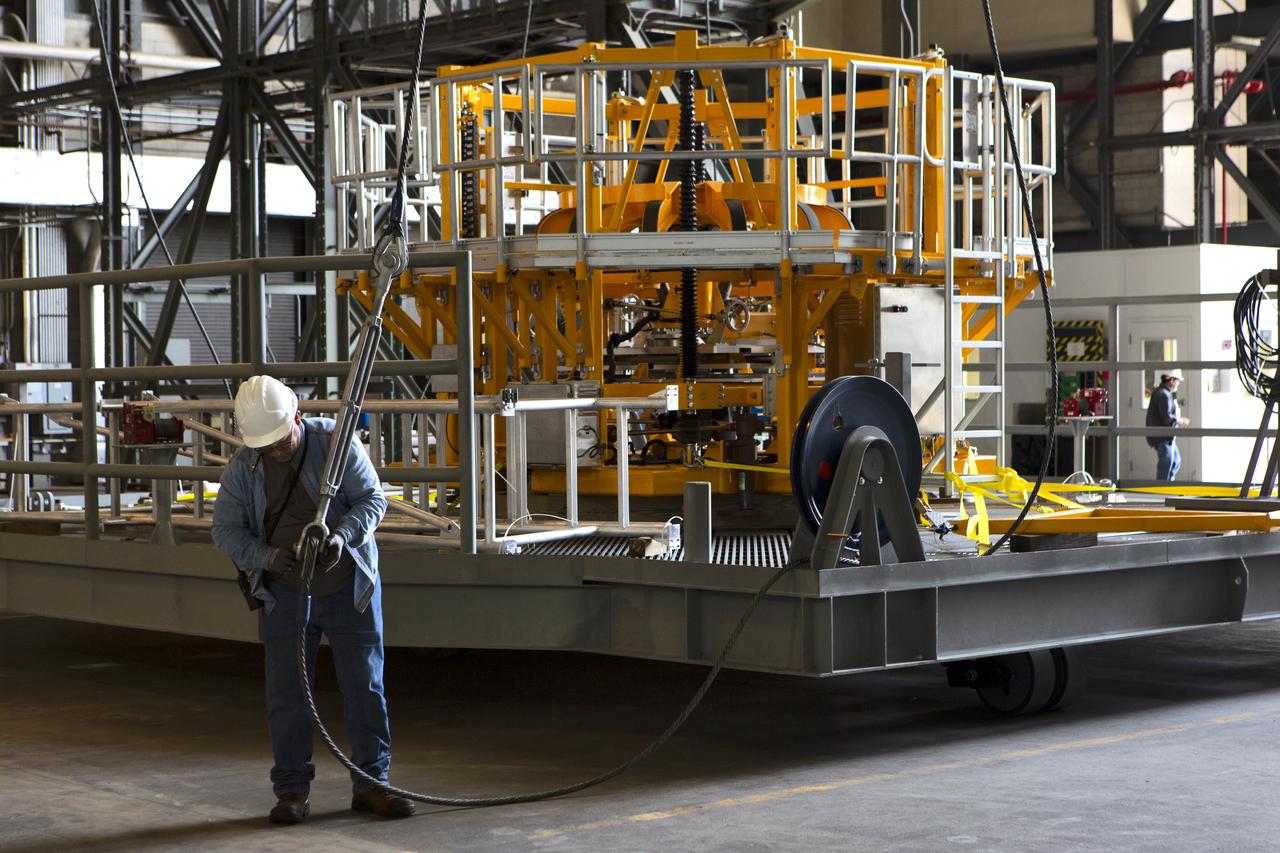
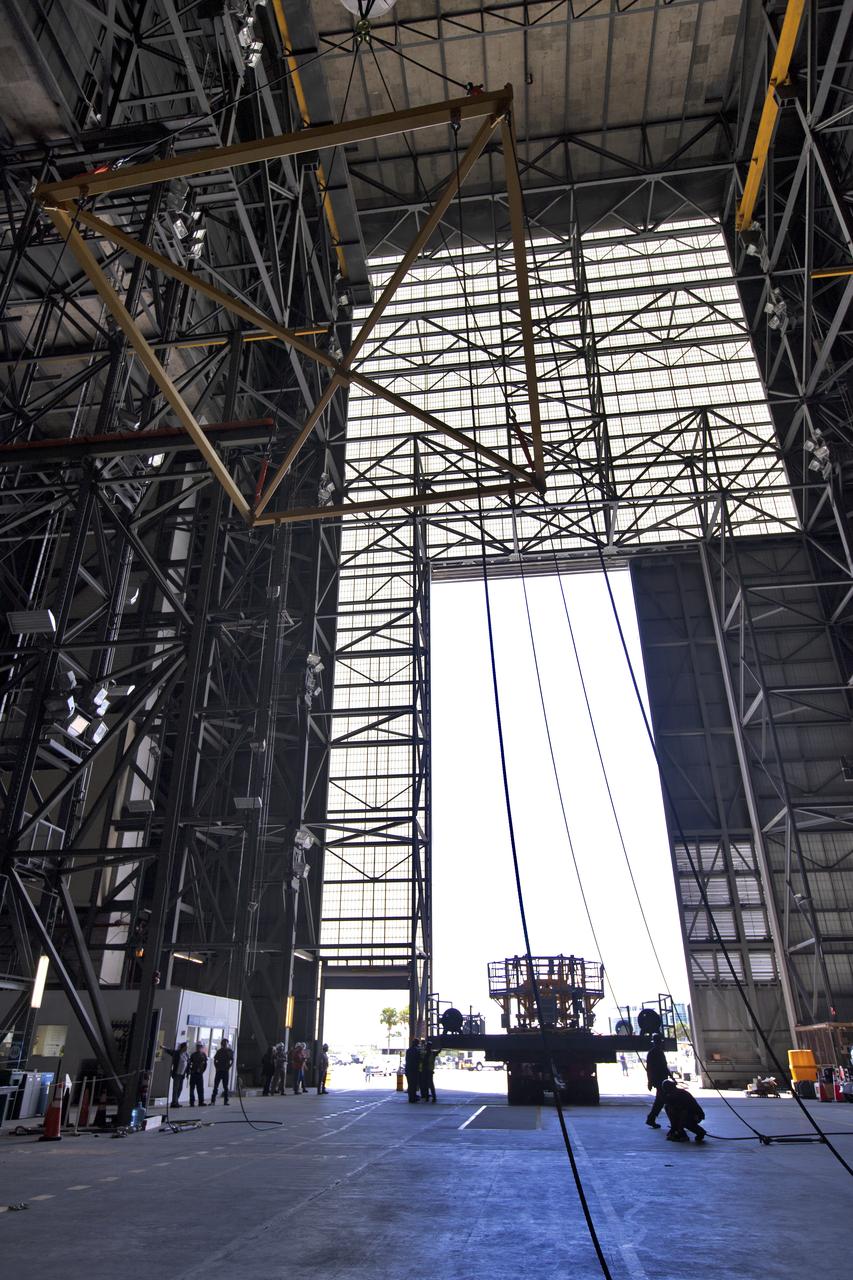
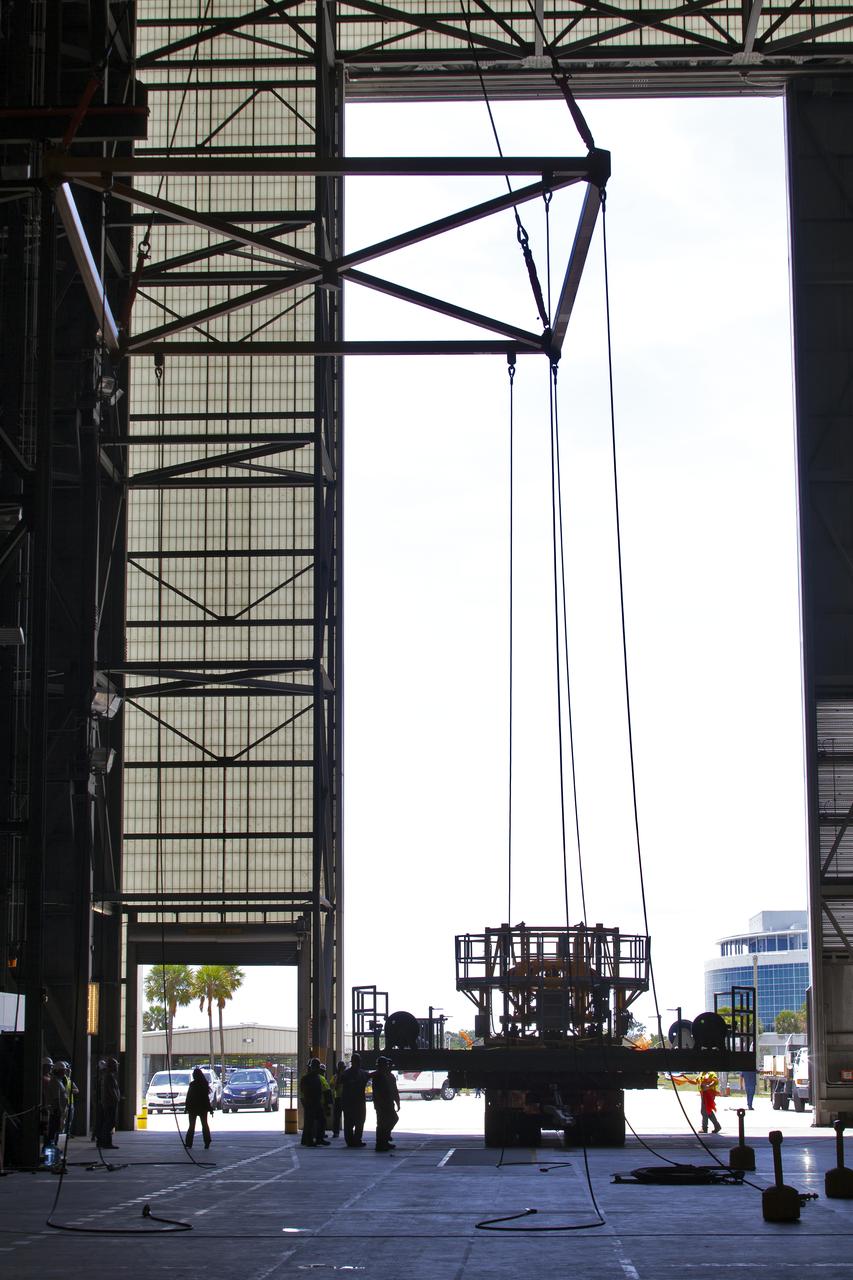
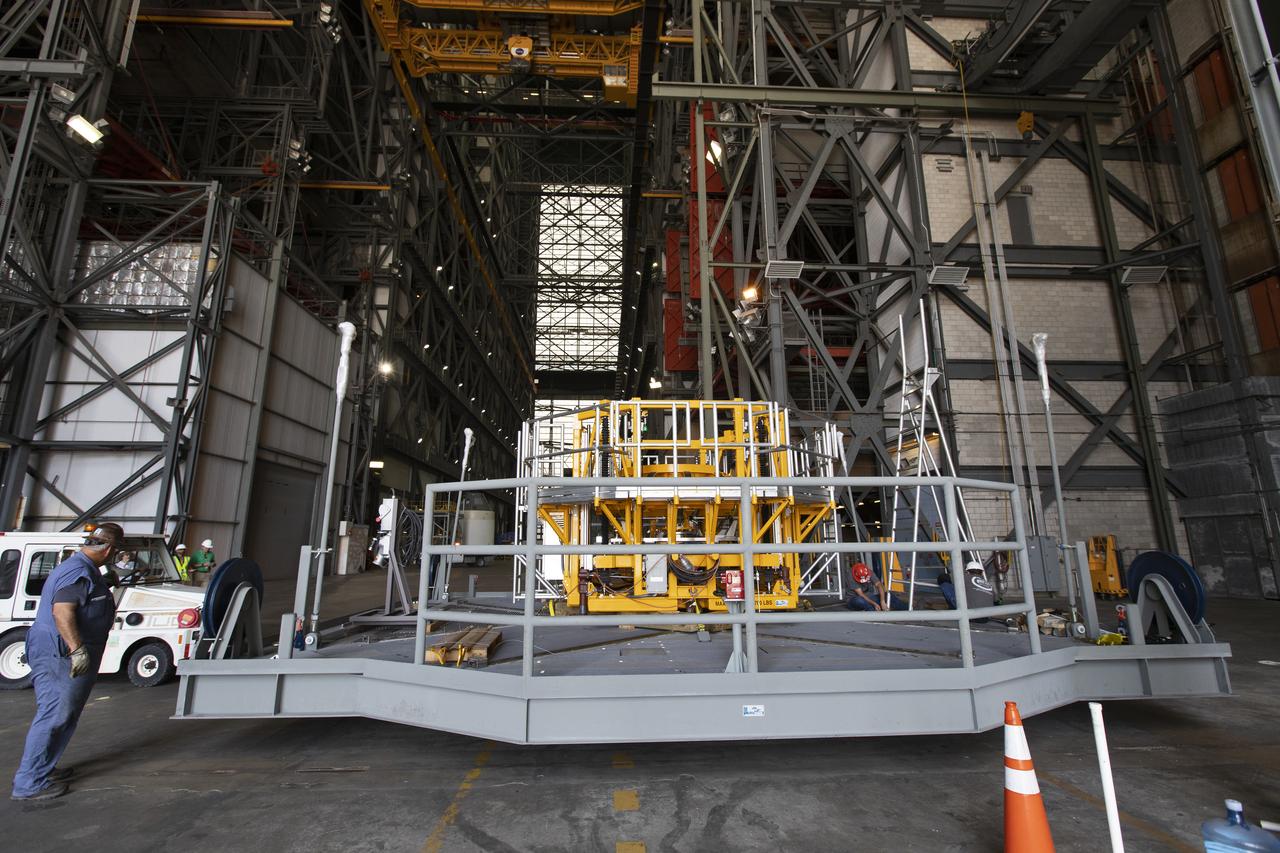
The engine vertical installer for NASA’s Space Launch System (SLS) arrives at the Vehicle Assembly at NASA’s Kennedy Space Center in Florida on April 25, 2019. The engine installer arrived from the manufacturer, Precision Fabrication and Cleaning in Canaveral Groves, Florida. The new ground support equipment will be ready for preflight processing in the event one of the four RS-25 engines on the core stage of the SLS rocket needs to be replaced. During launch of the SLS and Orion spacecraft, the four core stage engines will provide the thrust needed to lift the rocket and Orion spacecraft off Launch Pad 39B at Kennedy for Exploration Mission-1. The uncrewed Orion will travel on a three-week test mission thousands of miles beyond the Moon and back to Earth for a splashdown in the Pacific Ocean.
Engine Vertical Installer Arrival
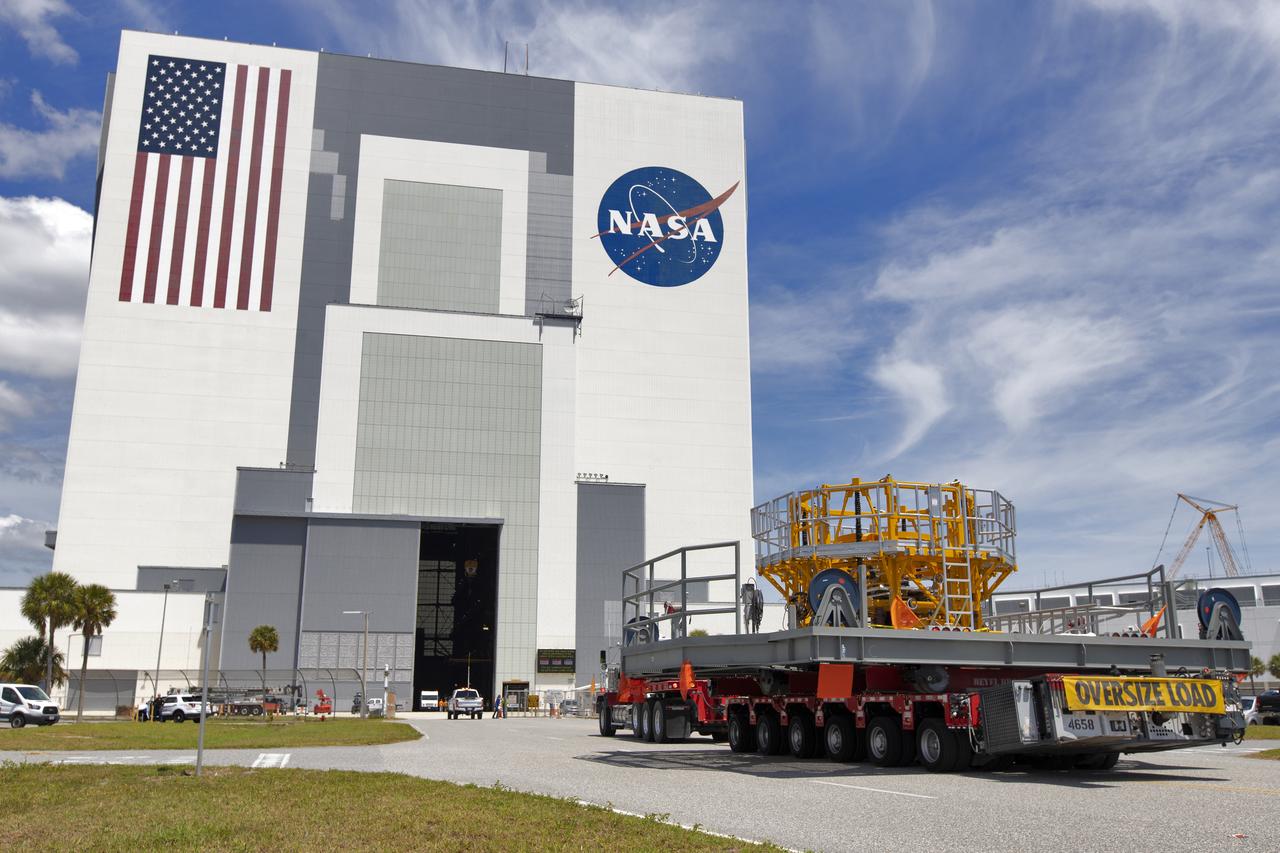
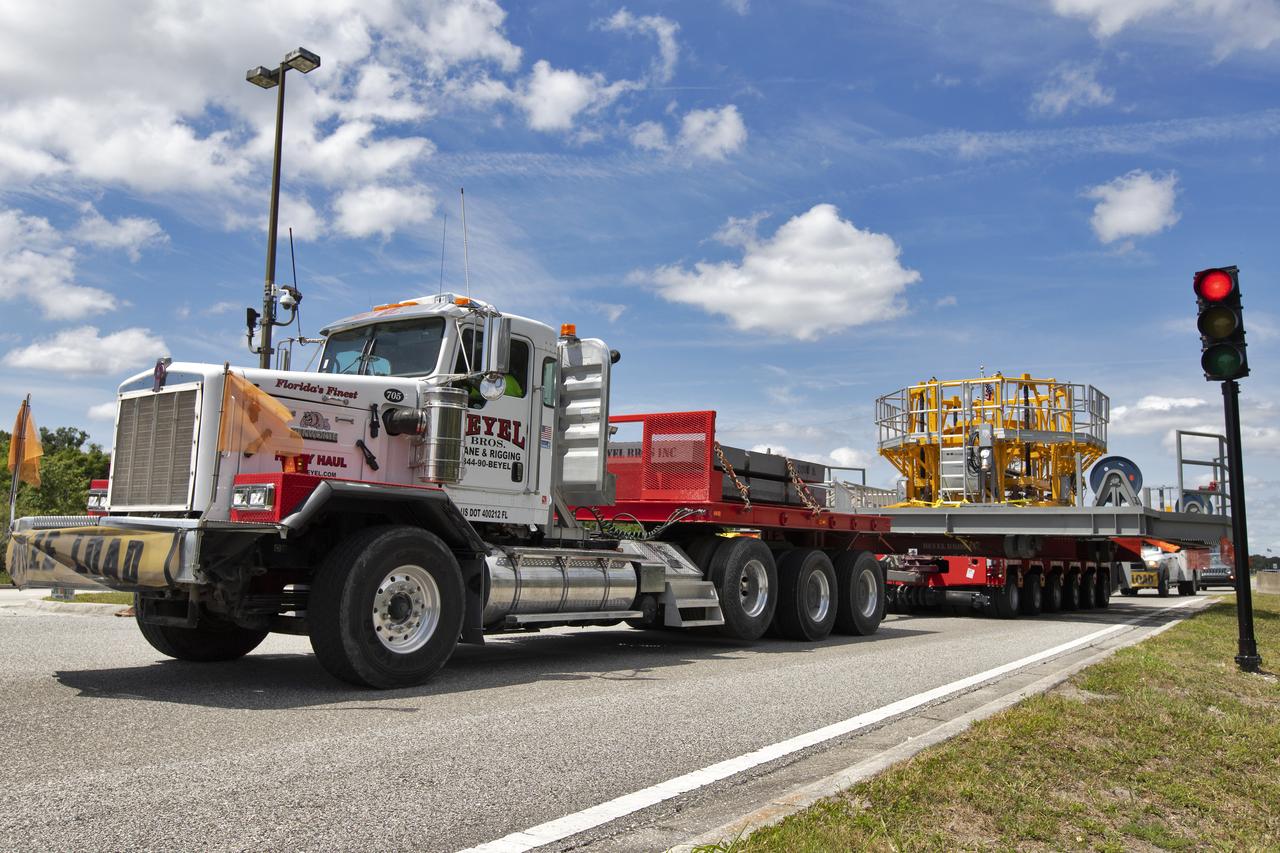
The engine vertical installer for NASA’s Space Launch System (SLS) arrives by large transport truck at NASA’s Kennedy Space Center in Florida on April 25, 2019. The engine installer arrived from the manufacturer, Precision Fabrication and Cleaning in Canaveral Groves, Florida. The new ground support equipment will be delivered to the Vehicle Assembly where it will be ready for preflight processing in the event one of the four RS-25 engines on the core stage of the SLS rocket needs to be replaced. During launch of the SLS and Orion spacecraft, the four core stage engines will provide the thrust needed to lift the rocket and Orion spacecraft off Launch Pad 39B at Kennedy for Exploration Mission-1. The uncrewed Orion will travel on a three-week test mission thousands of miles beyond the Moon and back to Earth for a splashdown in the Pacific Ocean.
Engine Vertical Installer Arrival
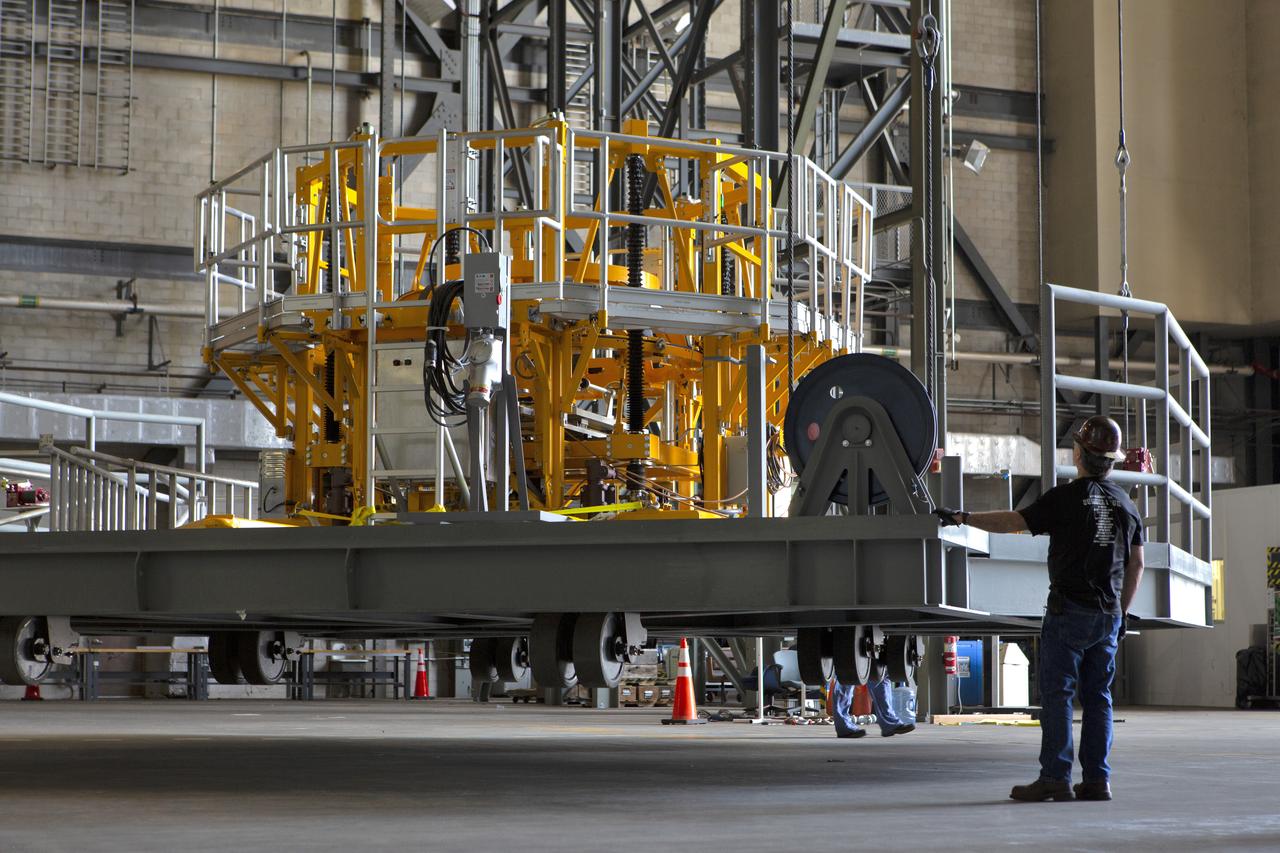
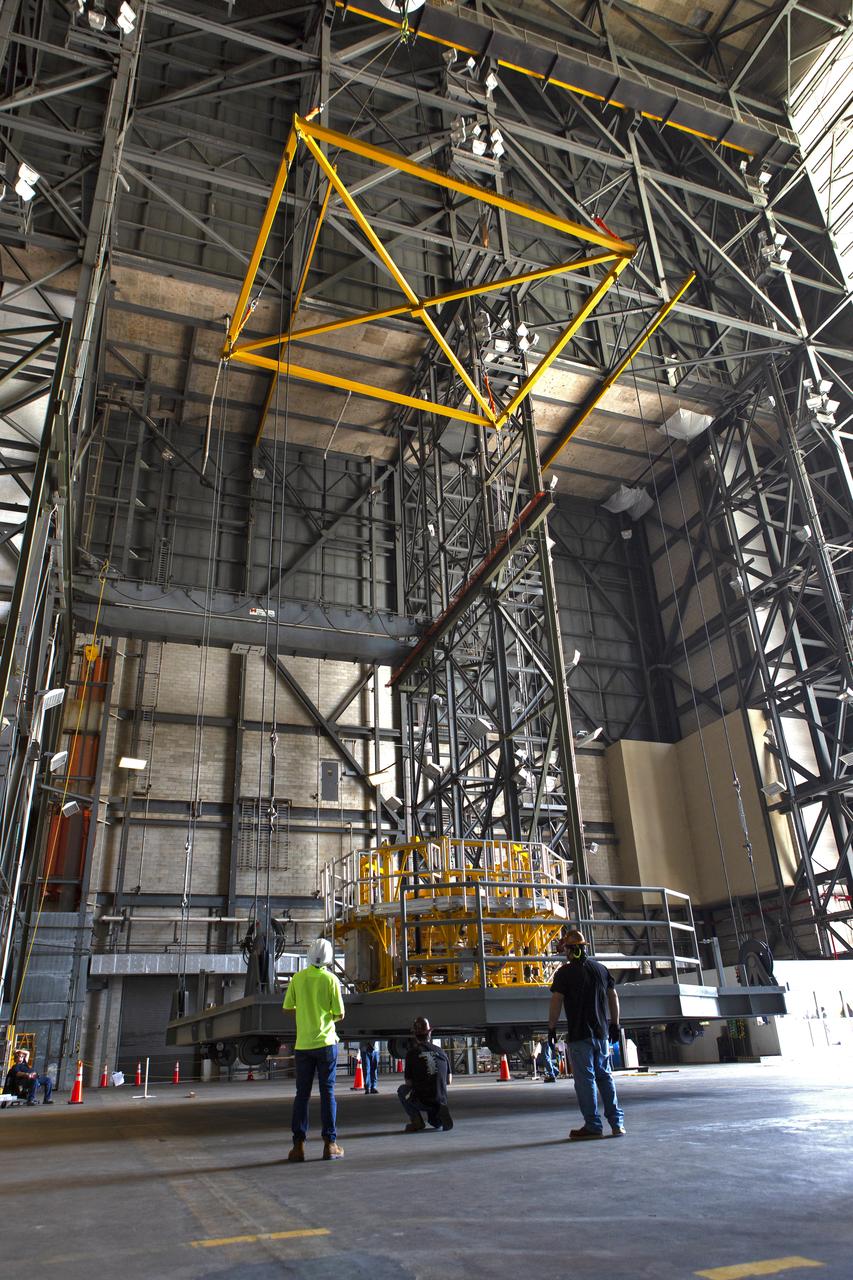
The engine vertical installer for NASA’s Space Launch System (SLS) is inside the Vehicle Assembly at NASA’s Kennedy Space Center in Florida on April 25, 2019. The engine installer will be lifted up by crane for transfer to High Bay 3. The engine installer arrived from the manufacturer, Precision Fabrication and Cleaning in Canaveral Groves, Florida. The new ground support equipment will be ready for preflight processing in the event one of the four RS-25 engines on the core stage of the SLS rocket needs to be replaced. During launch of the SLS and Orion spacecraft, the four core stage engines will provide the thrust needed to lift the rocket and Orion spacecraft off Launch Pad 39B at Kennedy for Exploration Mission-1. The uncrewed Orion will travel on a three-week test mission thousands of miles beyond the Moon and back to Earth for a splashdown in the Pacific Ocean.
Engine Vertical Installer Arrival
The engine vertical installer for NASA’s Space Launch System (SLS) is inside the Vehicle Assembly at NASA’s Kennedy Space Center in Florida on April 25, 2019. The engine installer is being lifted up by crane for transfer to High Bay 3. The engine installer arrived from the manufacturer, Precision Fabrication and Cleaning in Canaveral Groves, Florida. The new ground support equipment will be ready for preflight processing in the event one of the four RS-25 engines on the core stage of the SLS rocket needs to be replaced. During launch of the SLS and Orion spacecraft, the four core stage engines will provide the thrust needed to lift the rocket and Orion spacecraft off Launch Pad 39B at Kennedy for Exploration Mission-1. The uncrewed Orion will travel on a three-week test mission thousands of miles beyond the Moon and back to Earth for a splashdown in the Pacific Ocean.
Engine Vertical Installer Arrival
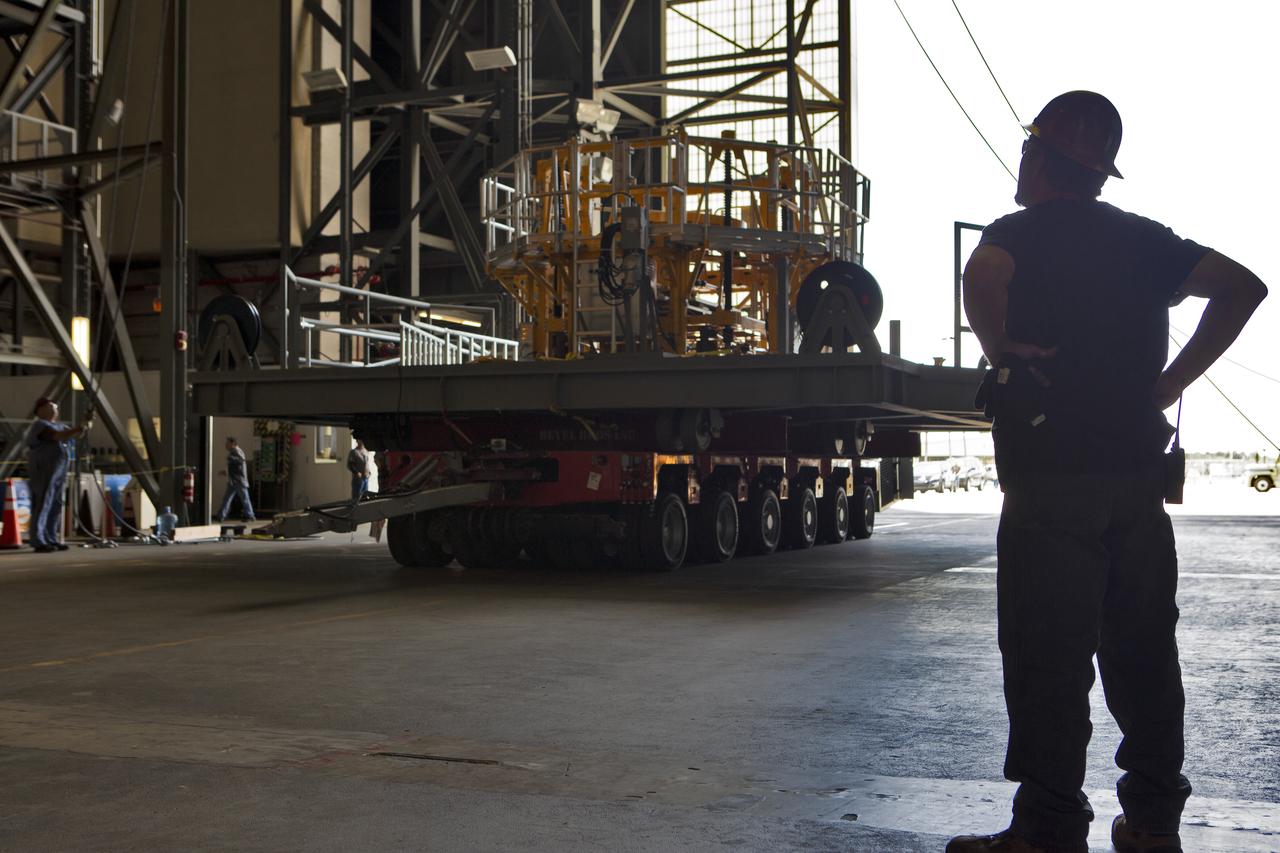
The engine vertical installer for NASA’s Space Launch System (SLS) arrives inside the Vehicle Assembly at NASA’s Kennedy Space Center in Florida on April 25, 2019. The engine installer arrived from the manufacturer, Precision Fabrication and Cleaning in Canaveral Groves, Florida. The new ground support equipment will be ready for preflight processing in the event one of the four RS-25 engines on the core stage of the SLS rocket needs to be replaced. During launch of the SLS and Orion spacecraft, the four core stage engines will provide the thrust needed to lift the rocket and Orion spacecraft off Launch Pad 39B at Kennedy for Exploration Mission-1. The uncrewed Orion will travel on a three-week test mission thousands of miles beyond the Moon and back to Earth for a splashdown in the Pacific Ocean.
Engine Vertical Installer Arrival
The engine vertical installer for NASA’s Space Launch System (SLS) is inside the Vehicle Assembly at NASA’s Kennedy Space Center in Florida on April 25, 2019. Preparations are underway to lift the engine installer up and into High Bay 3. The engine installer arrived from the manufacturer, Precision Fabrication and Cleaning in Canaveral Groves, Florida. The new ground support equipment will be ready for preflight processing in the event one of the four RS-25 engines on the core stage of the SLS rocket needs to be replaced. During launch of the SLS and Orion spacecraft, the four core stage engines will provide the thrust needed to lift the rocket and Orion spacecraft off Launch Pad 39B at Kennedy for Exploration Mission-1. The uncrewed Orion will travel on a three-week test mission thousands of miles beyond the Moon and back to Earth for a splashdown in the Pacific Ocean.
Engine Vertical Installer Arrival
The engine vertical installer for NASA’s Space Launch System (SLS) is inside the Vehicle Assembly at NASA’s Kennedy Space Center in Florida on April 25, 2019. The engine installer is being lifted up by crane for transfer to High Bay 3. The engine installer arrived from the manufacturer, Precision Fabrication and Cleaning in Canaveral Groves, Florida. The new ground support equipment will be ready for preflight processing in the event one of the four RS-25 engines on the core stage of the SLS rocket needs to be replaced. During launch of the SLS and Orion spacecraft, the four core stage engines will provide the thrust needed to lift the rocket and Orion spacecraft off Launch Pad 39B at Kennedy for Exploration Mission-1. The uncrewed Orion will travel on a three-week test mission thousands of miles beyond the Moon and back to Earth for a splashdown in the Pacific Ocean.
Engine Vertical Installer Arrival
The engine vertical installer for NASA’s Space Launch System (SLS) arrives by large transport truck at the Vehicle Assembly Building at NASA’s Kennedy Space Center in Florida on April 25, 2019. The engine installer arrived from the manufacturer, Precision Fabrication and Cleaning in Canaveral Groves, Florida. The new ground support equipment will be ready for preflight assembly in the event one of the four RS-25 engines on the core stage of the SLS rocket needs to be replaced. During launch of the SLS and Orion spacecraft, the four core stage engines will provide the thrust needed to lift the rocket and Orion spacecraft off Launch Pad 39B at Kennedy for Exploration Mission-1. The uncrewed Orion will travel on a three-week test mission thousands of miles beyond the Moon and back to Earth for a splashdown in the Pacific Ocean.
Engine Vertical Installer Arrival
The engine vertical installer for NASA’s Space Launch System (SLS) arrives inside the Vehicle Assembly at NASA’s Kennedy Space Center in Florida on April 25, 2019. The engine installer arrived from the manufacturer, Precision Fabrication and Cleaning in Canaveral Groves, Florida. The new ground support equipment will be ready for preflight processing in the event one of the four RS-25 engines on the core stage of the SLS rocket needs to be replaced. During launch of the SLS and Orion spacecraft, the four core stage engines will provide the thrust needed to lift the rocket and Orion spacecraft off Launch Pad 39B at Kennedy for Exploration Mission-1. The uncrewed Orion will travel on a three-week test mission thousands of miles beyond the Moon and back to Earth for a splashdown in the Pacific Ocean.
Engine Vertical Installer Arrival
The engine vertical installer for NASA’s Space Launch System (SLS) arrives by large transport truck at NASA’s Kennedy Space Center in Florida on April 25, 2019, from the manufacturer, Precision Fabrication and Cleaning in Canaveral Groves, Florida. The new ground support equipment will be delivered to the Vehicle Assembly Building where it will be ready for preflight assembly in the event one of the four RS-25 engines on the core stage of the SLS rocket needs to be replaced. During launch of the SLS and Orion spacecraft, the four core stage engines will provide the thrust needed to lift the rocket and Orion spacecraft off Launch Pad 39B at Kennedy for Exploration Mission-1. The uncrewed Orion will travel on a three-week test mission thousands of miles beyond the Moon and back to Earth for a splashdown in the Pacific Ocean.
Engine Vertical Installer Arrival
The engine vertical installer for NASA’s Space Launch System (SLS) arrives inside the Vehicle Assembly at NASA’s Kennedy Space Center in Florida on April 25, 2019. The engine installer arrived from the manufacturer, Precision Fabrication and Cleaning in Canaveral Groves, Florida. The new ground support equipment will be ready for preflight processing in the event one of the four RS-25 engines on the core stage of the SLS rocket needs to be replaced. During launch of the SLS and Orion spacecraft, the four core stage engines will provide the thrust needed to lift the rocket and Orion spacecraft off Launch Pad 39B at Kennedy for Exploration Mission-1. The uncrewed Orion will travel on a three-week test mission thousands of miles beyond the Moon and back to Earth for a splashdown in the Pacific Ocean.
Engine Vertical Installer Arrival
The engine vertical installer for NASA’s Space Launch System (SLS) is being lifted by crane in the Vehicle Assembly Building at NASA’s Kennedy Space Center in Florida on April 25, 2019. The engine installer arrived from the manufacturer, Precision Fabrication and Cleaning in Canaveral Groves, Florida. The new ground support equipment will be transferred into High Bay 3 where it will be ready for preflight processing in the event one of the four RS-25 engines on the core stage of the SLS rocket needs to be replaced. During launch of the SLS and Orion spacecraft, the four core stage engines will provide the thrust needed to lift the rocket and Orion spacecraft off Launch Pad 39B at Kennedy for Exploration Mission-1. The uncrewed Orion will travel on a three-week test mission thousands of miles beyond the Moon and back to Earth for a splashdown in the Pacific Ocean.
Engine Vertical Installer Arrival
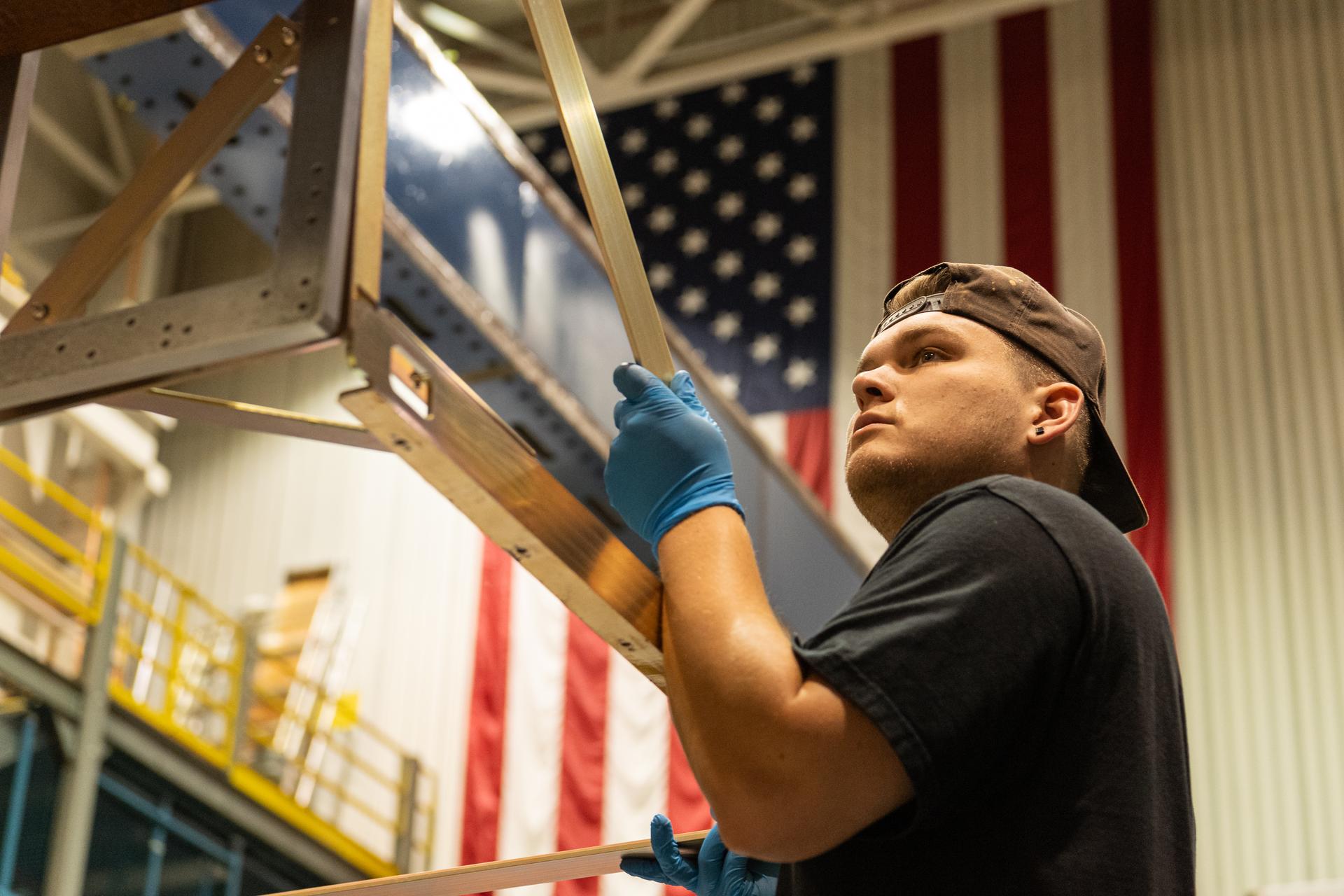
Mechanical engineering and integration technician, Lucas Keim, holds up a piece of ground support equipment during a proof test at Goddard Space Flight Center, Greenbelt Md., June 22, 2023. This photo has been reviewed by OSAM1 project management and the Export Control Office and is released for public view. NASA/Mike Guinto
GSFC_20230622_RL_038244
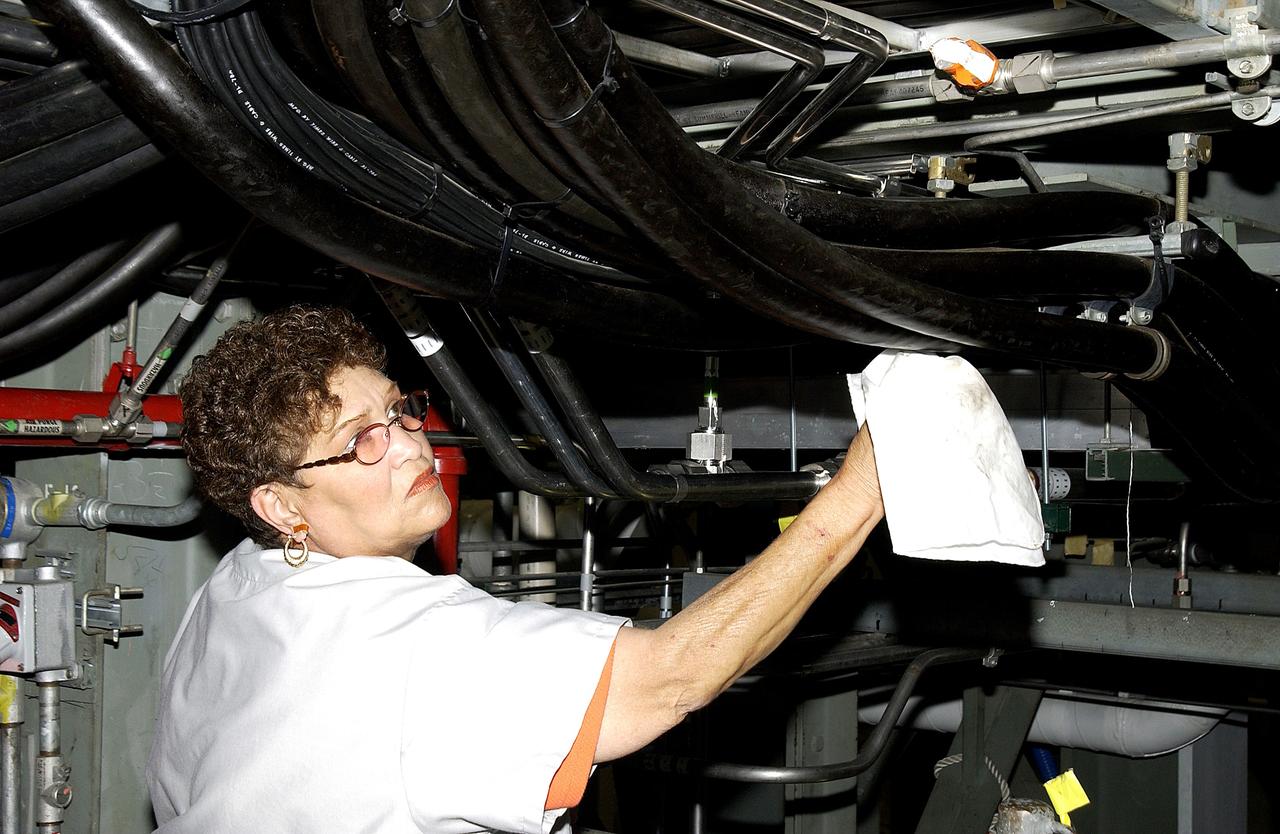
KENNEDY SPACE CENTER, FLA. - A KSC employee wipes down some of the hoses of the ground support equipment in the Orbiter Processing Facility (OPF) where Space Shuttle Atlantis is being processed for flight.  Preparations are under way for the next launch of Atlantis on mission STS-114, a utilization and logistics flight to the International Space Station.
KENNEDY SPACE CENTER, FLA. - A KSC employee wipes down some of the hoses of the ground support equipment in the Orbiter Processing Facility (OPF) where Space Shuttle Atlantis is being processed for flight. Preparations are under way for the next launch of Atlantis on mission STS-114, a utilization and logistics flight to the International Space Station.
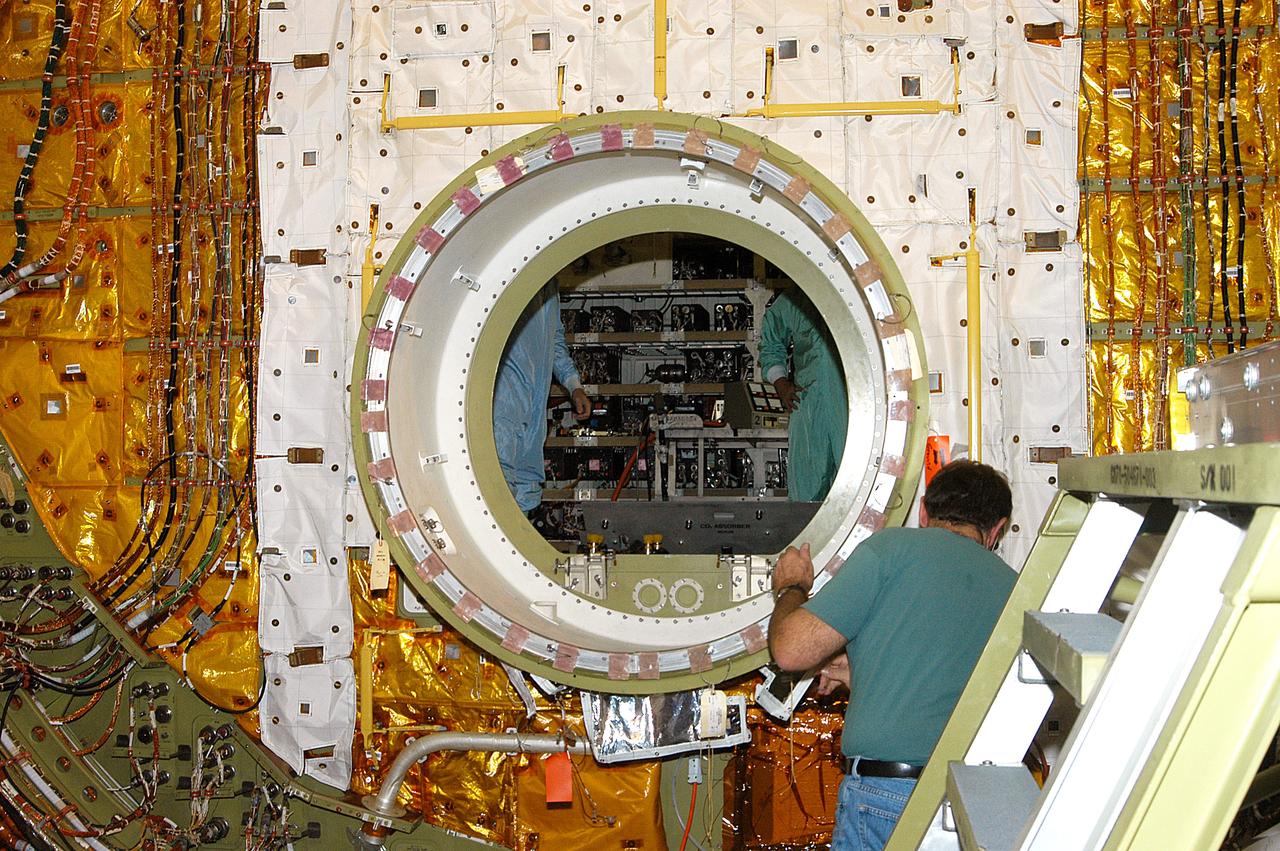
KENNEDY SPACE CENTER, FLA. -  In the Orbiter Processing Facility, a worker checks out part of the equipment in the airlock, at one end of Discovery’s payload bay.  The airlock is sized to accommodate two fully suited flight crew members simultaneously. Support functions include airlock depressurization and repressurization, extravehicular activity equipment recharge, liquid-cooled garment water cooling, EVA equipment checkout, donning and communications. The outer hatch isolates the airlock from the unpressurized payload bay when closed and permits the EVA crew members to exit from the airlock to the payload bay when open.
KENNEDY SPACE CENTER, FLA. - In the Orbiter Processing Facility, a worker checks out part of the equipment in the airlock, at one end of Discovery’s payload bay. The airlock is sized to accommodate two fully suited flight crew members simultaneously. Support functions include airlock depressurization and repressurization, extravehicular activity equipment recharge, liquid-cooled garment water cooling, EVA equipment checkout, donning and communications. The outer hatch isolates the airlock from the unpressurized payload bay when closed and permits the EVA crew members to exit from the airlock to the payload bay when open.
KENNEDY SPACE CENTER, FLA. -  Workers in KSC's Vertical Processing Facility make final adjustments to the Flight Support System (FSS) for STS-82, the second Hubble Space Telescope servicing mission.  The FSS is reusable flight hardware that provides the mechanical, structural and electrical interfaces between HST, the space support equipment and the orbiter for payload retrieval and on-orbit servicing.  Liftoff aboard Discovery is targeted Feb. 11 with a crew of seven.
KENNEDY SPACE CENTER, FLA. - Workers in KSC's Vertical Processing Facility make final adjustments to the Flight Support System (FSS) for STS-82, the second Hubble Space Telescope servicing mission. The FSS is reusable flight hardware that provides the mechanical, structural and electrical interfaces between HST, the space support equipment and the orbiter for payload retrieval and on-orbit servicing. Liftoff aboard Discovery is targeted Feb. 11 with a crew of seven.
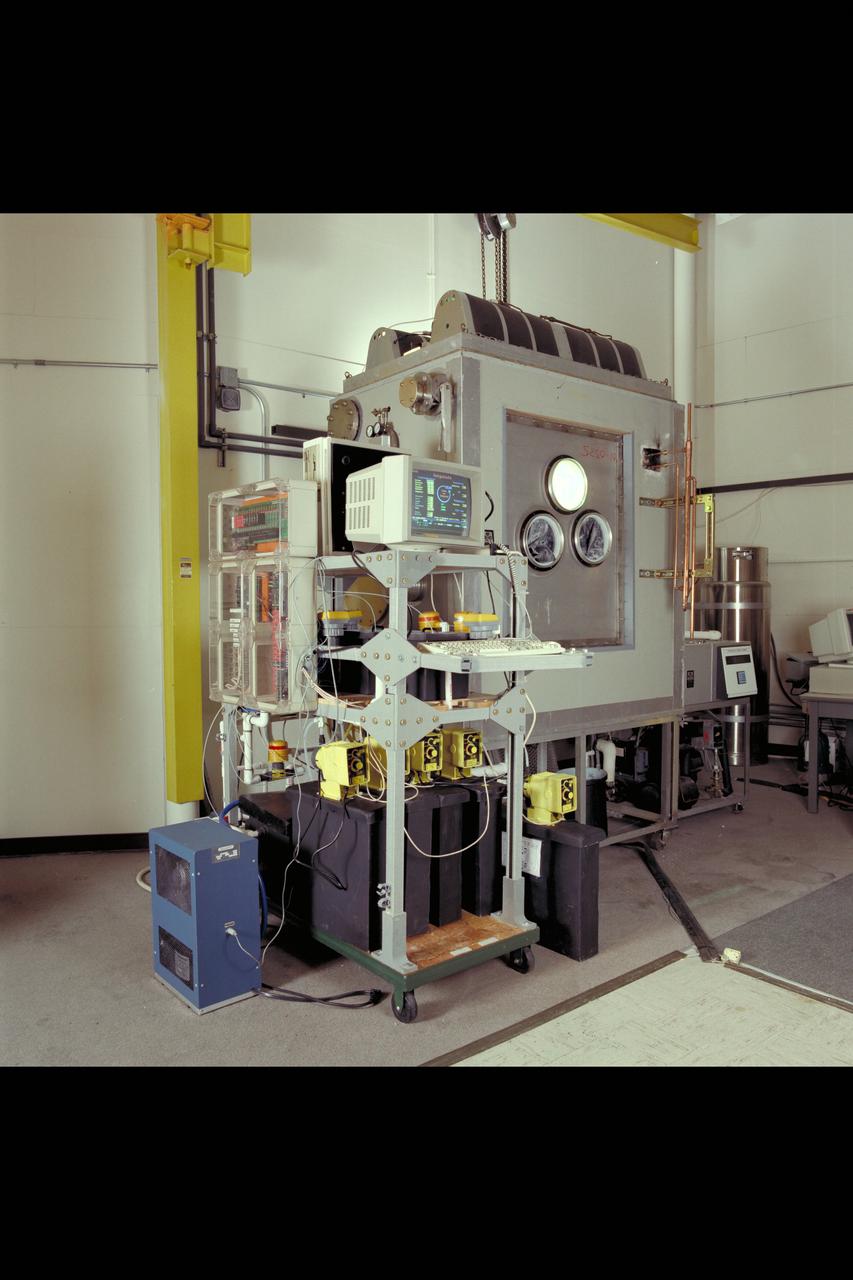
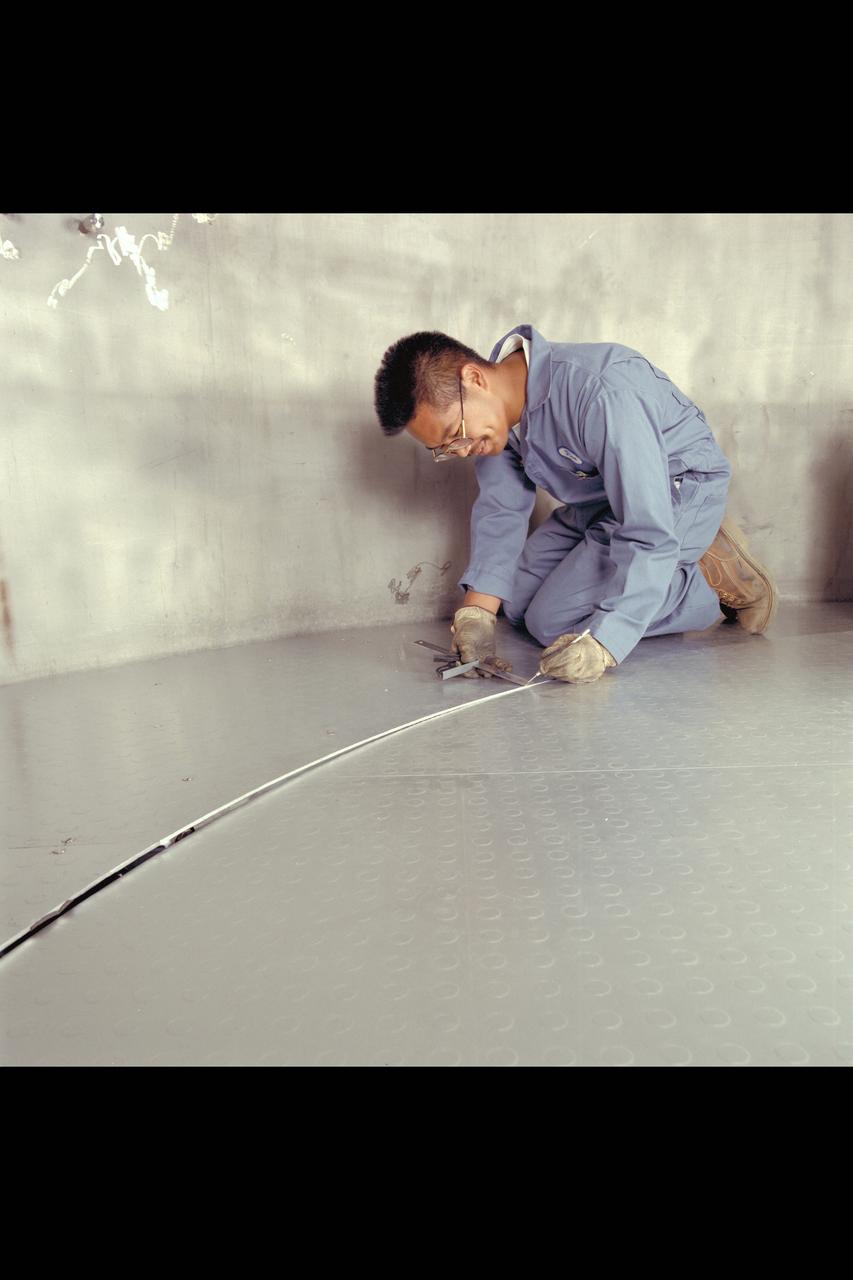
Advanced Life Support Division Equipment
ARC-1994-AC94-0308-1
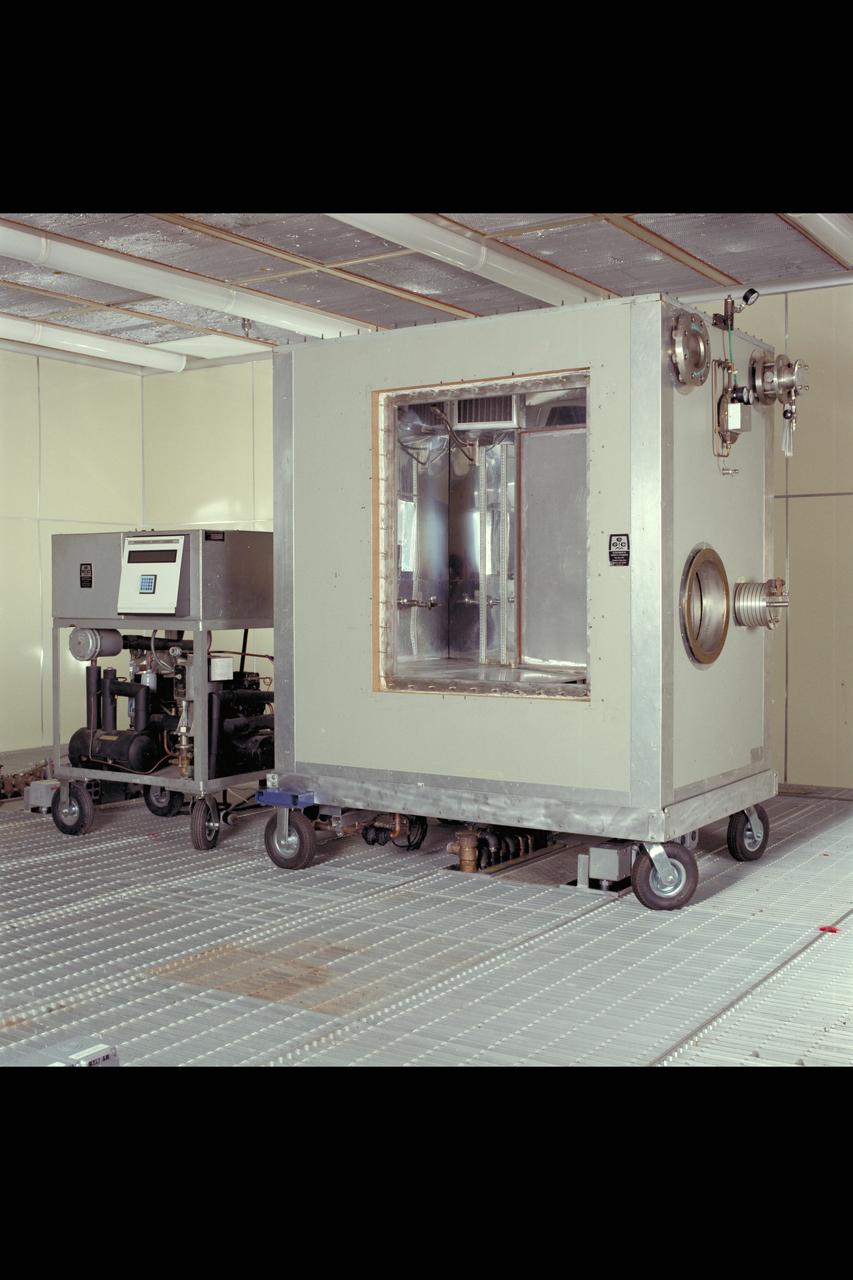
Advanced Life Support Division Equipment
ARC-1994-AC94-0308-2
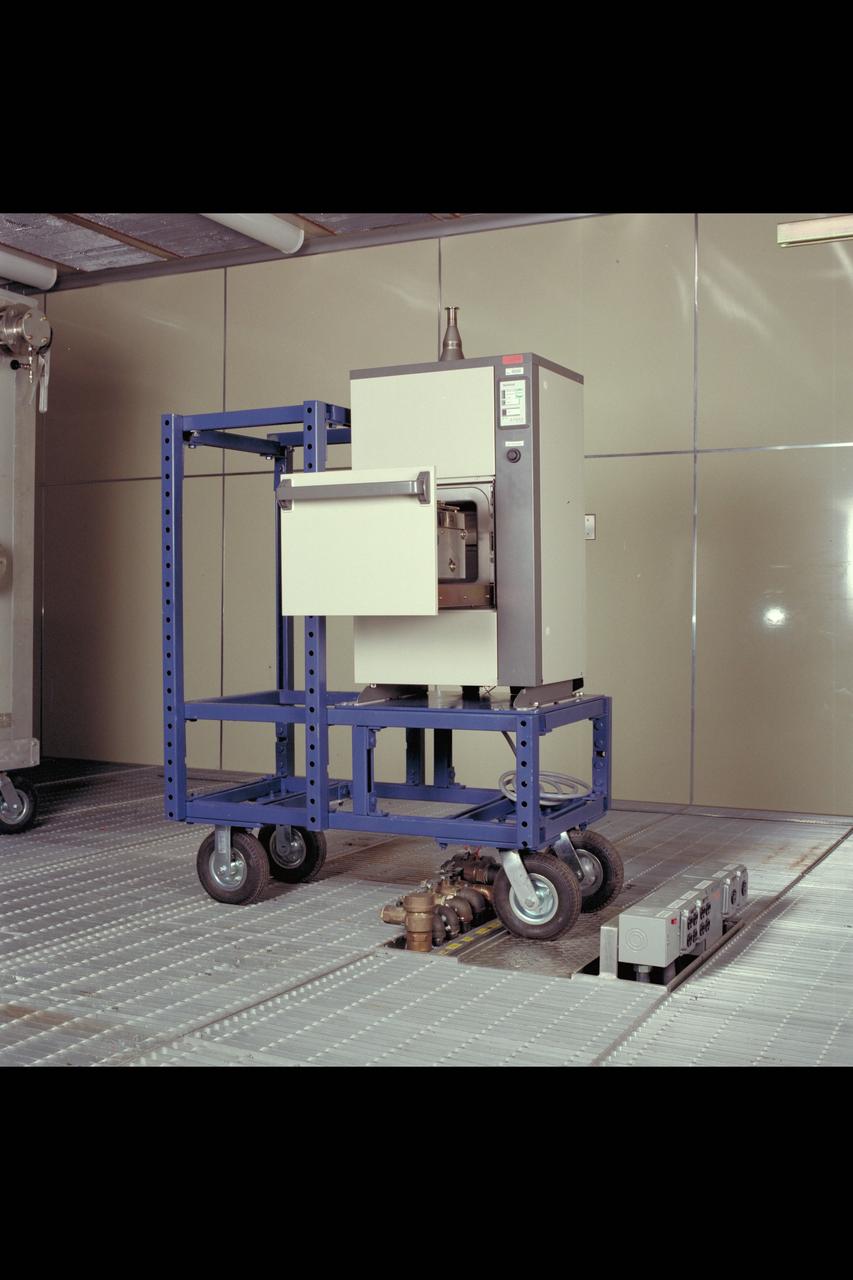
Advanced Life Support Division Equipment
ARC-1994-AC94-0308-3
Advanced Life Support Division Equipment
ARC-1994-AC94-0308-4
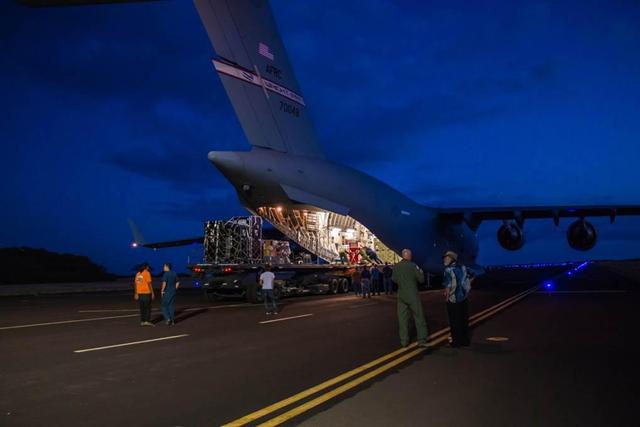
Engineers unload ground support equipment for a June engineering test flight above Kauai, Hawaii. The test flight is part of NASA LDSD project, which is investigating cutting-edge landing technologies that could fly on future Mars missions.
LDSD Test Device Arrives in Hawaii
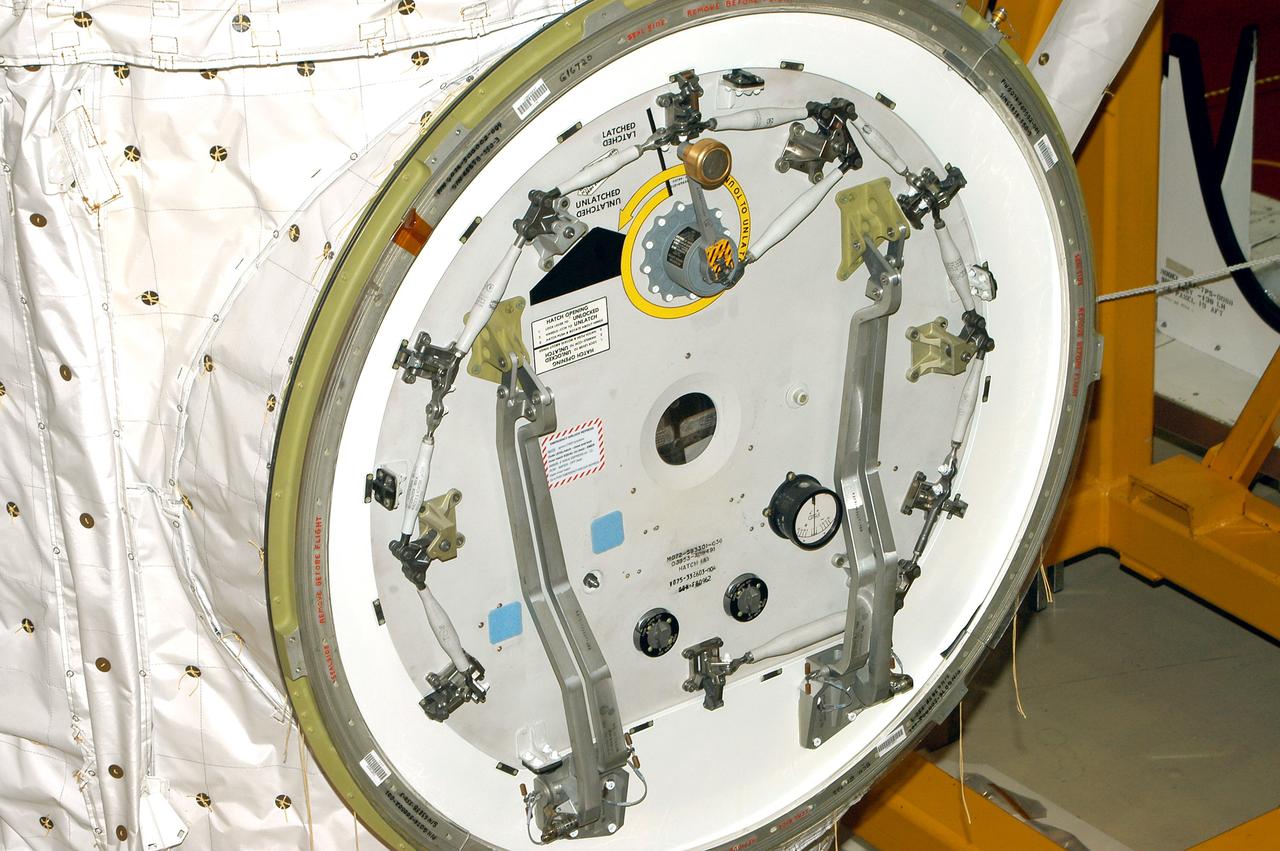
KENNEDY SPACE CENTER, FLA. -  Seen in the photo is one end of the airlock that is installed in the payload bay of orbiter Discovery.  The airlock is normally located inside the middeck of the spacecraft’s pressurized crew cabin. The airlock is sized to accommodate two fully suited flight crew members simultaneously. Support functions include airlock depressurization and repressurization, extravehicular activity equipment recharge, liquid-cooled garment water cooling, EVA equipment checkout, donning and communications. The outer hatch isolates the airlock from the unpressurized payload bay when closed and permits the EVA crew members to exit from the airlock to the payload bay when open.
KENNEDY SPACE CENTER, FLA. - Seen in the photo is one end of the airlock that is installed in the payload bay of orbiter Discovery. The airlock is normally located inside the middeck of the spacecraft’s pressurized crew cabin. The airlock is sized to accommodate two fully suited flight crew members simultaneously. Support functions include airlock depressurization and repressurization, extravehicular activity equipment recharge, liquid-cooled garment water cooling, EVA equipment checkout, donning and communications. The outer hatch isolates the airlock from the unpressurized payload bay when closed and permits the EVA crew members to exit from the airlock to the payload bay when open.
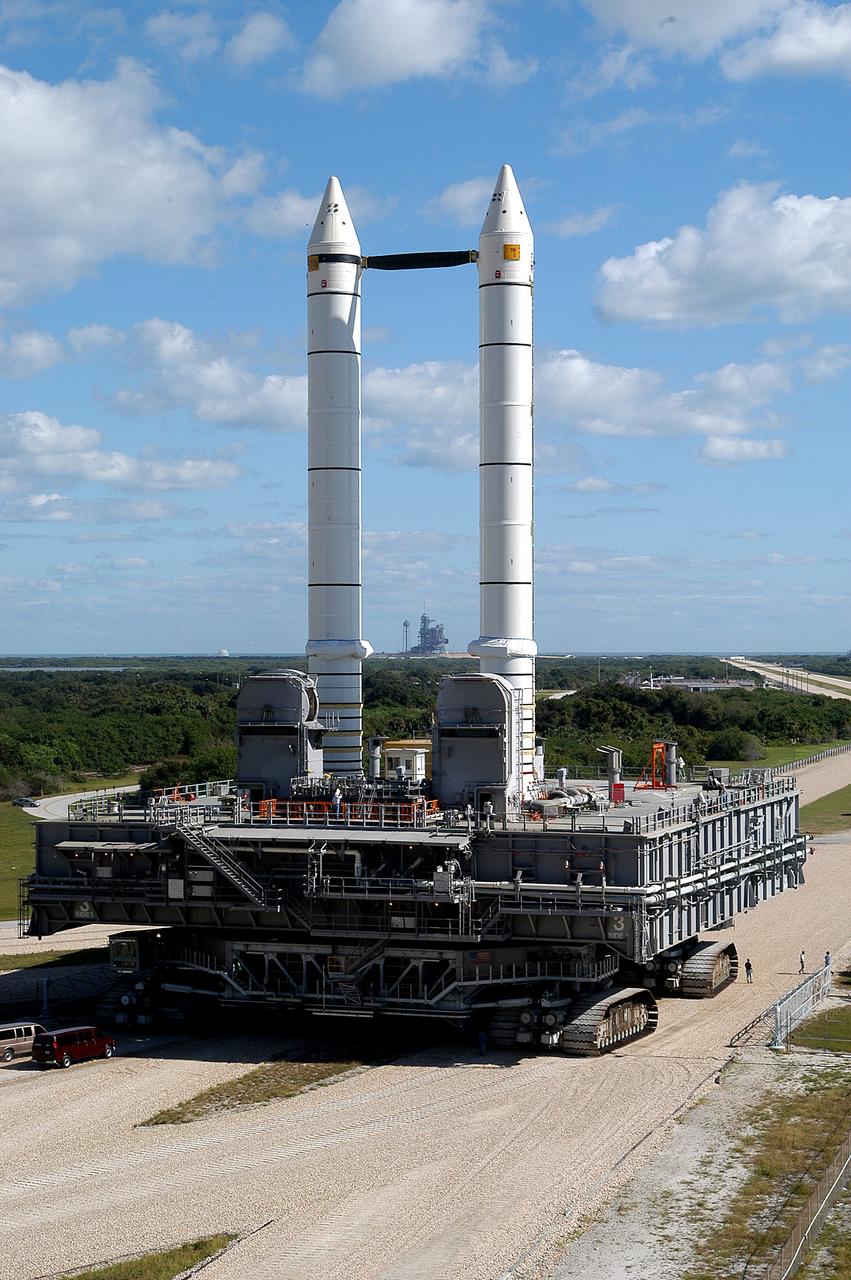
KENNEDY SPACE CENTER, FLA. -  Mobile Launcher Platform (MLP) number 3 and a set of twin solid rocket boosters, atop the crawler-transporter, inch along the crawlerway in support of the second engineering analysis vibration test on the crawler and MLP. The crawler is moving at various speeds up to 1 mph in an effort to achieve vibration data gathering goals as it leaves the VAB, travels toward Launch Pad 39A (framed between the boosters), and then returns.  The boosters are braced at the top for stability.  The primary purpose of these rollout tests is to gather data to develop future maintenance requirements on the transport equipment and the flight hardware. Various parts of the MLP and crawler transporter have been instrumented with vibration data collection equipment.
KENNEDY SPACE CENTER, FLA. - Mobile Launcher Platform (MLP) number 3 and a set of twin solid rocket boosters, atop the crawler-transporter, inch along the crawlerway in support of the second engineering analysis vibration test on the crawler and MLP. The crawler is moving at various speeds up to 1 mph in an effort to achieve vibration data gathering goals as it leaves the VAB, travels toward Launch Pad 39A (framed between the boosters), and then returns. The boosters are braced at the top for stability. The primary purpose of these rollout tests is to gather data to develop future maintenance requirements on the transport equipment and the flight hardware. Various parts of the MLP and crawler transporter have been instrumented with vibration data collection equipment.
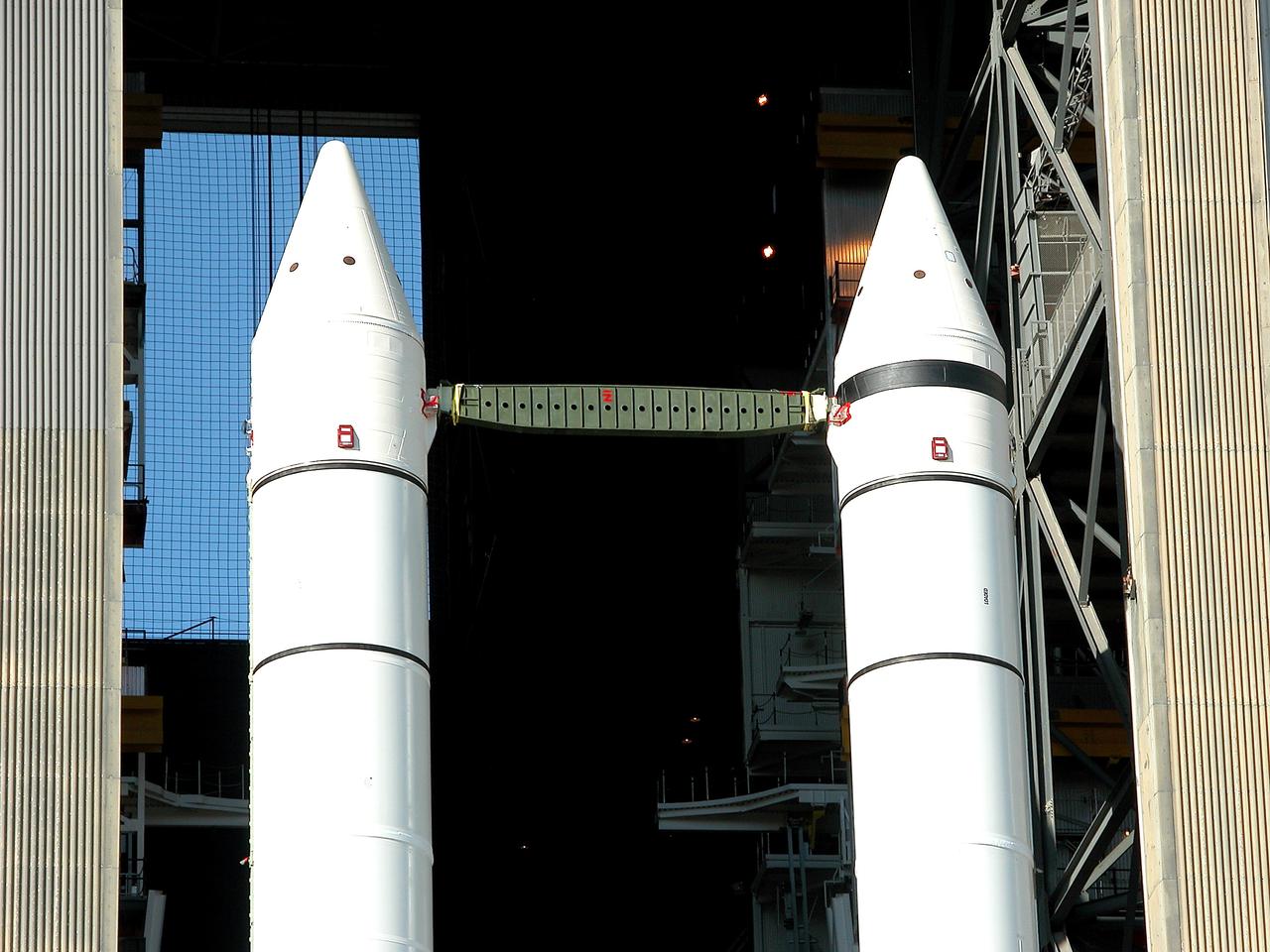
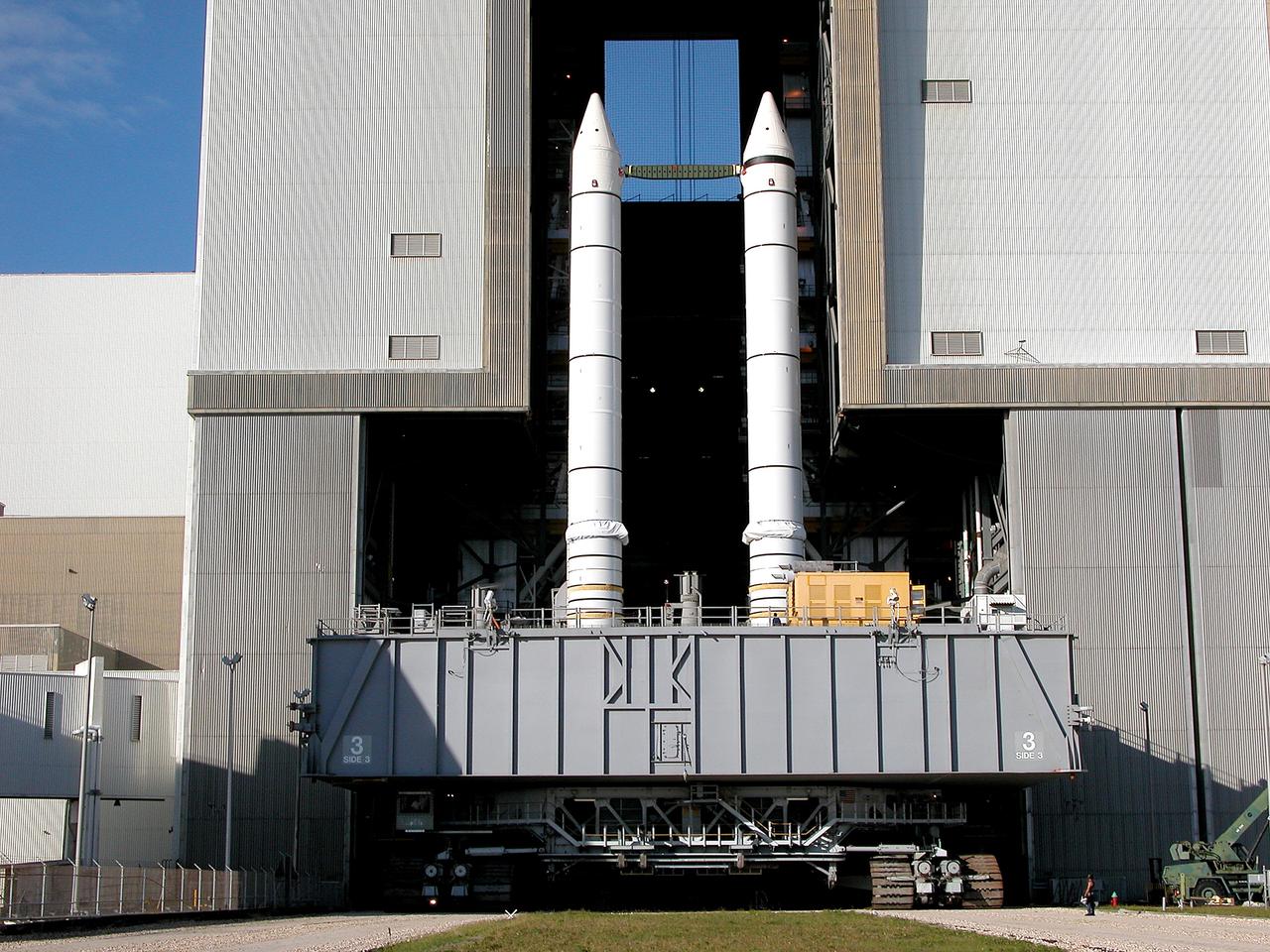
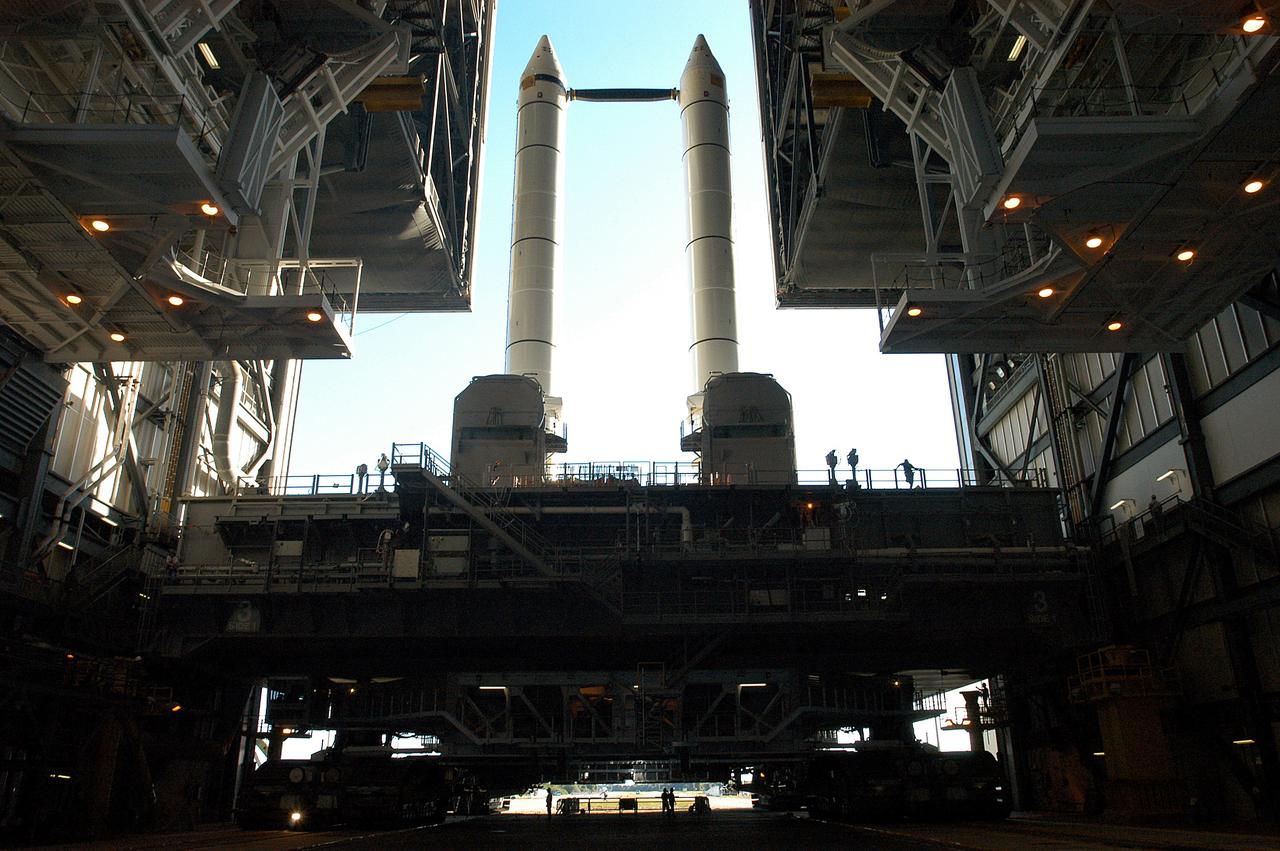
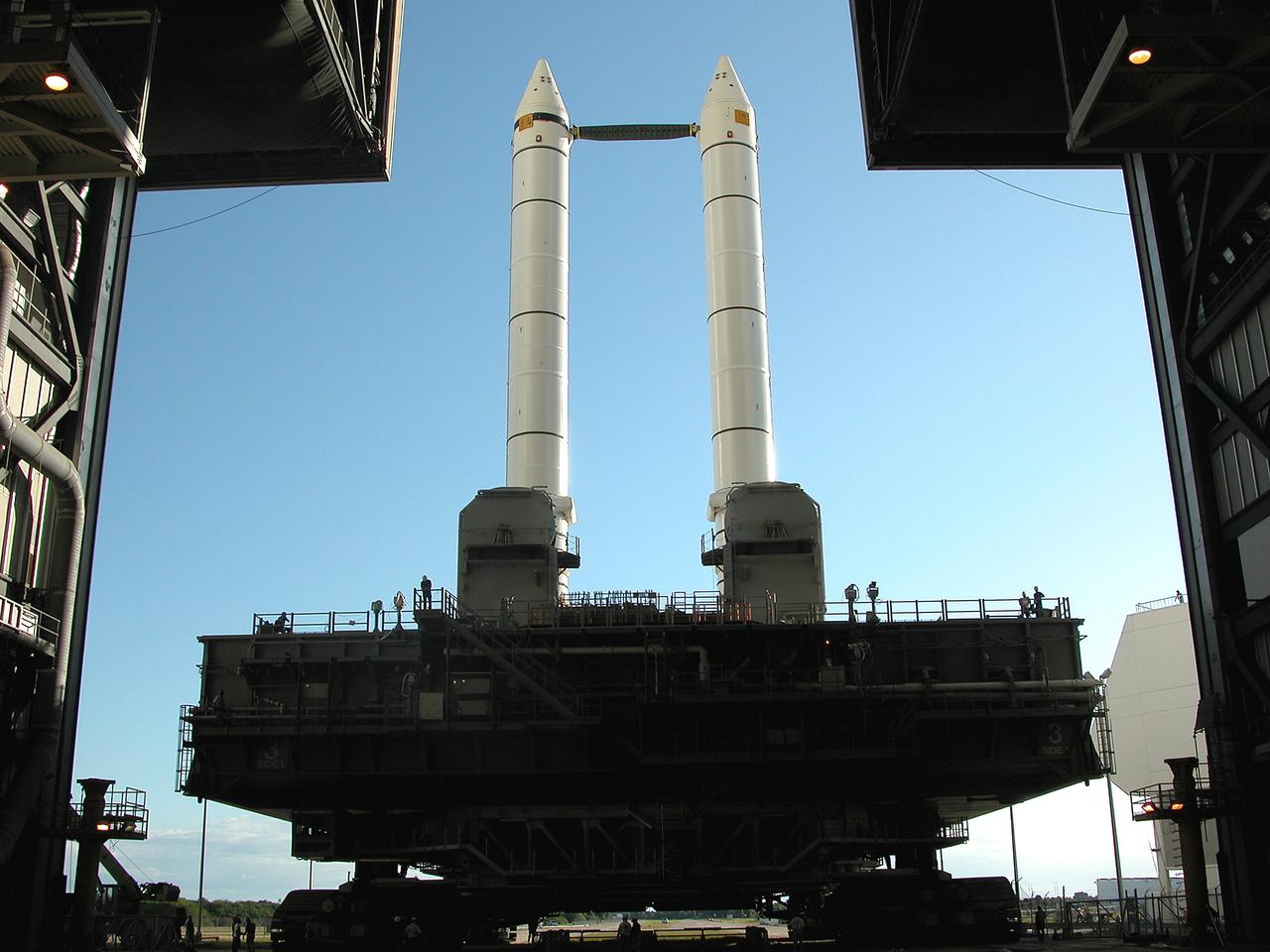
KENNEDY SPACE CENTER, FLA. -  As the crawler transporter slowly moves the Mobile Launcher Platform (MLP) out of the Vehicle Assembly Building, the two solid rocket boosters on top are framed in the doorway.  The move is in support of engineering analysis vibration tests on the crawler and MLP. The crawler is moving at various speeds up to 1 mph in an effort to achieve vibration data gathering goals as it leaves the VAB and then returns.  The boosters are braced at the top for stability.  The primary purpose of these rollout tests is to gather data to develop future maintenance requirements on the transport equipment and the flight hardware. Various parts of the MLP and crawler transporter have been instrumented with vibration data collection equipment.
KENNEDY SPACE CENTER, FLA. - As the crawler transporter slowly moves the Mobile Launcher Platform (MLP) out of the Vehicle Assembly Building, the two solid rocket boosters on top are framed in the doorway. The move is in support of engineering analysis vibration tests on the crawler and MLP. The crawler is moving at various speeds up to 1 mph in an effort to achieve vibration data gathering goals as it leaves the VAB and then returns. The boosters are braced at the top for stability. The primary purpose of these rollout tests is to gather data to develop future maintenance requirements on the transport equipment and the flight hardware. Various parts of the MLP and crawler transporter have been instrumented with vibration data collection equipment.
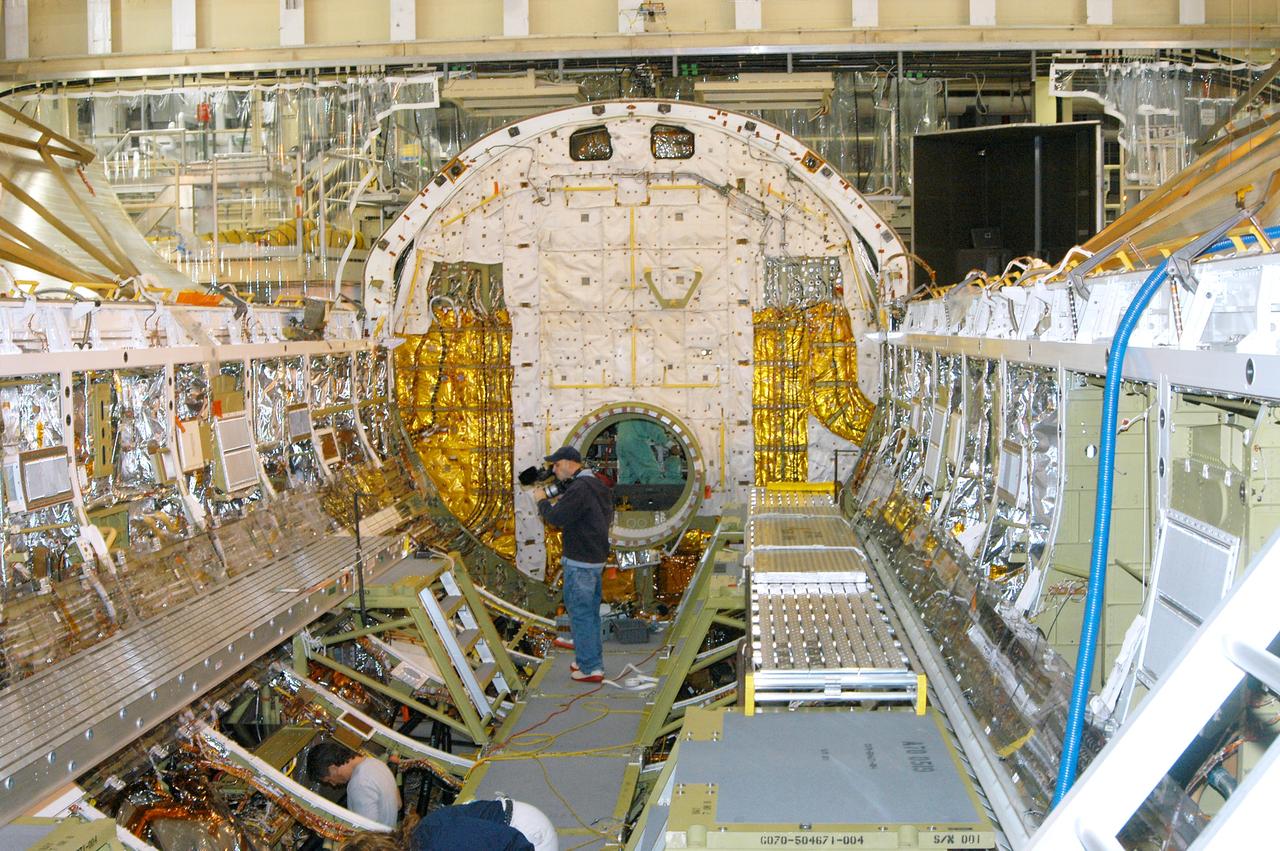
KENNEDY SPACE CENTER, FLA. -  In the Orbiter Processing Facility, a cameraman films part of Discovery’s payload bay for a special feature on the KSC Web.  In the background is the open hatch of the airlock, located inside the middeck of the spacecraft’s pressurized crew cabin. The airlock is sized to accommodate two fully suited flight crew members simultaneously. Support functions include airlock depressurization and repressurization, extravehicular activity equipment recharge, liquid-cooled garment water cooling, EVA equipment checkout, donning and communications. The outer hatch isolates the airlock from the unpressurized payload bay when closed and permits the EVA crew members to exit from the airlock to the payload bay when open.
KENNEDY SPACE CENTER, FLA. - In the Orbiter Processing Facility, a cameraman films part of Discovery’s payload bay for a special feature on the KSC Web. In the background is the open hatch of the airlock, located inside the middeck of the spacecraft’s pressurized crew cabin. The airlock is sized to accommodate two fully suited flight crew members simultaneously. Support functions include airlock depressurization and repressurization, extravehicular activity equipment recharge, liquid-cooled garment water cooling, EVA equipment checkout, donning and communications. The outer hatch isolates the airlock from the unpressurized payload bay when closed and permits the EVA crew members to exit from the airlock to the payload bay when open.
KENNEDY SPACE CENTER, FLA. -  As the crawler transporter slowly moves the Mobile Launcher Platform (MLP) out of the Vehicle Assembly Building, the two solid rocket boosters on top are framed in the doorway.  The move is in support of engineering analysis vibration tests on the crawler and MLP.  The crawler is moving at various speeds up to 1 mph in an effort to achieve vibration data gathering goals as it leaves the VAB and then returns.  The boosters are braced at the top for stability.  The primary purpose of these rollout tests is to gather data to develop future maintenance requirements on the transport equipment and the flight hardware. Various parts of the MLP and crawler transporter have been instrumented with vibration data collection equipment.
KENNEDY SPACE CENTER, FLA. - As the crawler transporter slowly moves the Mobile Launcher Platform (MLP) out of the Vehicle Assembly Building, the two solid rocket boosters on top are framed in the doorway. The move is in support of engineering analysis vibration tests on the crawler and MLP. The crawler is moving at various speeds up to 1 mph in an effort to achieve vibration data gathering goals as it leaves the VAB and then returns. The boosters are braced at the top for stability. The primary purpose of these rollout tests is to gather data to develop future maintenance requirements on the transport equipment and the flight hardware. Various parts of the MLP and crawler transporter have been instrumented with vibration data collection equipment.
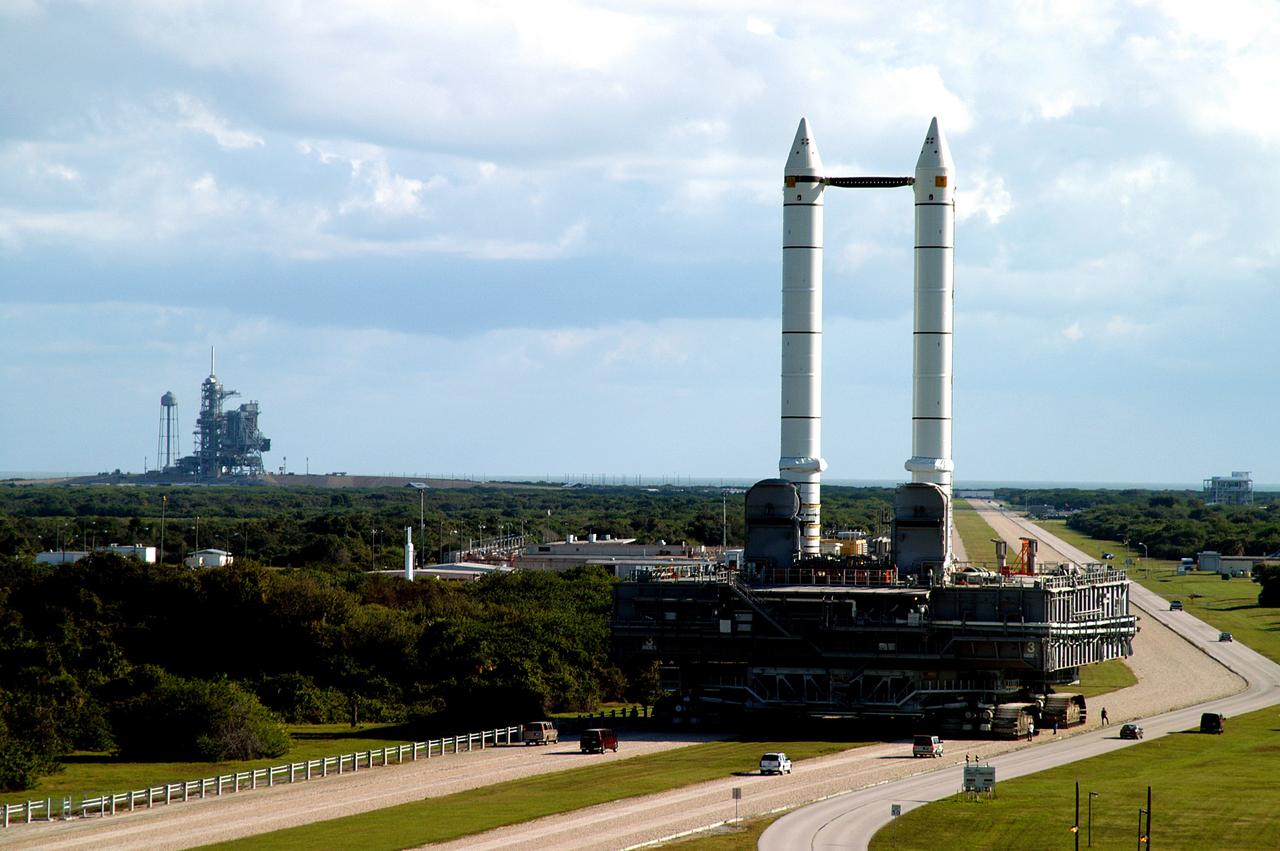
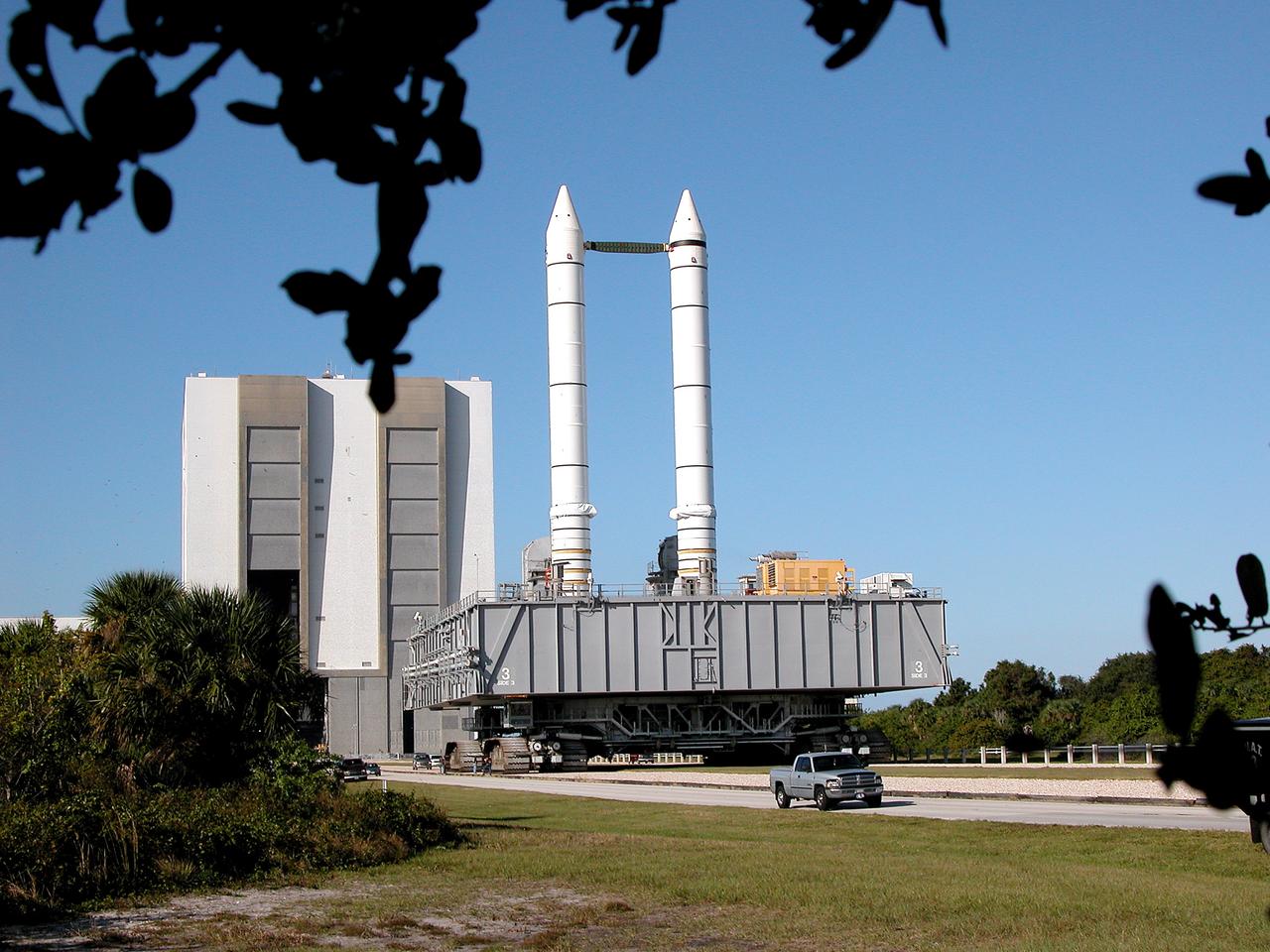
KENNEDY SPACE CENTER, FLA. -  The crawler transporter slowly moves the Mobile Launcher Platform (MLP), carrying a set of twin solid rocket boosters, along the crawlerway in support of engineering analysis vibration tests on the crawler and MLP.   In the distance, at left, is Launch Pad 39A. The crawler is moving at various speeds up to 1 mph in an effort to achieve vibration data gathering goals as it leaves the VAB and then returns.  The boosters are braced at the top for stability.  The primary purpose of these rollout tests is to gather data to develop future maintenance requirements on the transport equipment and the flight hardware. Various parts of the MLP and crawler transporter have been instrumented with vibration data collection equipment.
KENNEDY SPACE CENTER, FLA. - The crawler transporter slowly moves the Mobile Launcher Platform (MLP), carrying a set of twin solid rocket boosters, along the crawlerway in support of engineering analysis vibration tests on the crawler and MLP. In the distance, at left, is Launch Pad 39A. The crawler is moving at various speeds up to 1 mph in an effort to achieve vibration data gathering goals as it leaves the VAB and then returns. The boosters are braced at the top for stability. The primary purpose of these rollout tests is to gather data to develop future maintenance requirements on the transport equipment and the flight hardware. Various parts of the MLP and crawler transporter have been instrumented with vibration data collection equipment.
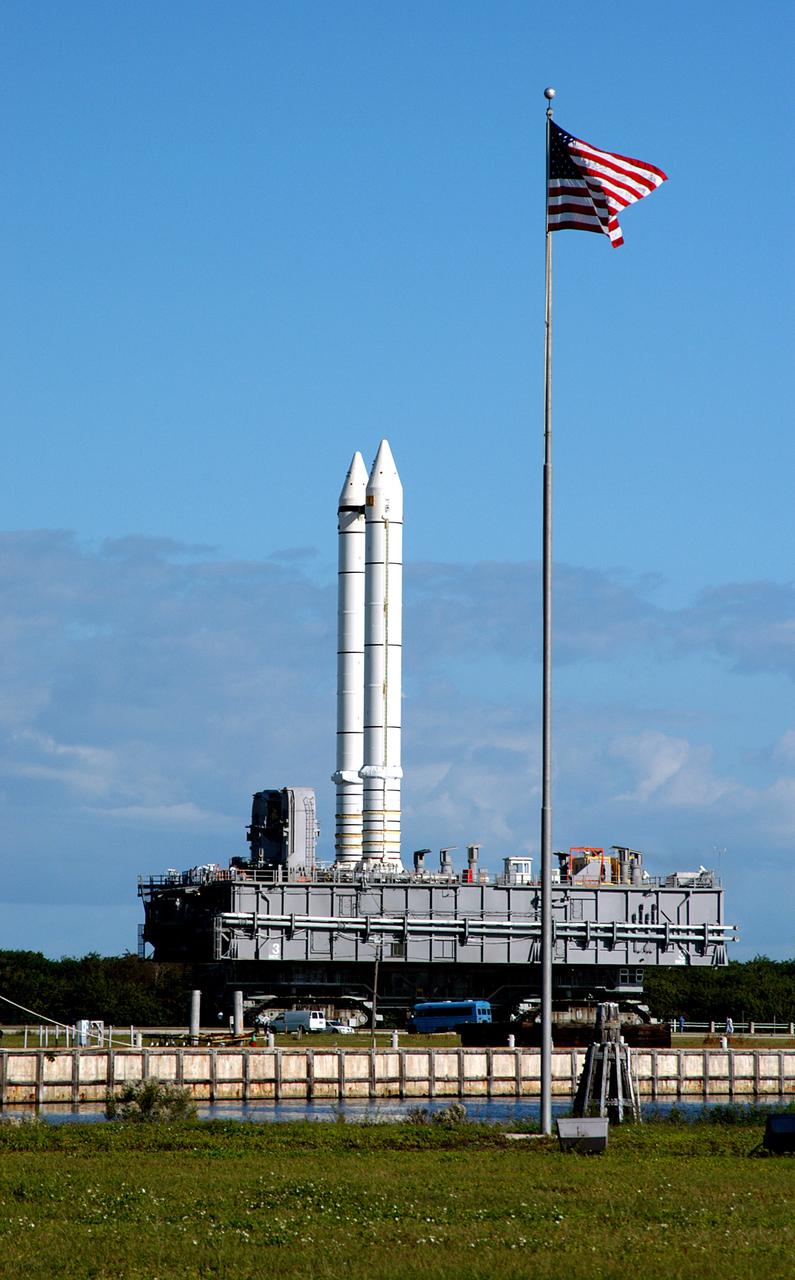
KENNEDY SPACE CENTER, FLA. - Carrying a set of twin solid rocket boosters, the crawler transporter slowly moves the Mobile Launcher Platform (MLP) past the NASA-KSC News Center where the U.S. flag flies daily.  The journey is in support of engineering analysis vibration tests on the crawler and MLP. The crawler is moving at various speeds up to 1 mph in an effort to achieve vibration data gathering goals as it leaves the VAB and then returns.  The boosters are braced at the top for stability.  The primary purpose of these rollout tests is to gather data to develop future maintenance requirements on the transport equipment and the flight hardware. Various parts of the MLP and crawler transporter have been instrumented with vibration data collection equipment.
KENNEDY SPACE CENTER, FLA. - Carrying a set of twin solid rocket boosters, the crawler transporter slowly moves the Mobile Launcher Platform (MLP) past the NASA-KSC News Center where the U.S. flag flies daily. The journey is in support of engineering analysis vibration tests on the crawler and MLP. The crawler is moving at various speeds up to 1 mph in an effort to achieve vibration data gathering goals as it leaves the VAB and then returns. The boosters are braced at the top for stability. The primary purpose of these rollout tests is to gather data to develop future maintenance requirements on the transport equipment and the flight hardware. Various parts of the MLP and crawler transporter have been instrumented with vibration data collection equipment.
KENNEDY SPACE CENTER, FLA. -  Mobile Launcher Platform (MLP) number 3 and a set of twin solid rocket boosters, atop the crawler-transporter, crawls away from the Vehicle Assembly Building in support of the second engineering analysis vibration test on the crawler and MLP. The crawler is moving at various speeds up to 1 mph in an effort to achieve vibration data gathering goals as it leaves the VAB, travels toward Launch Pad 39A and then returns.  The boosters are braced at the top for stability.  The primary purpose of these rollout tests is to gather data to develop future maintenance requirements on the transport equipment and the flight hardware. Various parts of the MLP and crawler transporter have been instrumented with vibration data collection equipment.
KENNEDY SPACE CENTER, FLA. - Mobile Launcher Platform (MLP) number 3 and a set of twin solid rocket boosters, atop the crawler-transporter, crawls away from the Vehicle Assembly Building in support of the second engineering analysis vibration test on the crawler and MLP. The crawler is moving at various speeds up to 1 mph in an effort to achieve vibration data gathering goals as it leaves the VAB, travels toward Launch Pad 39A and then returns. The boosters are braced at the top for stability. The primary purpose of these rollout tests is to gather data to develop future maintenance requirements on the transport equipment and the flight hardware. Various parts of the MLP and crawler transporter have been instrumented with vibration data collection equipment.
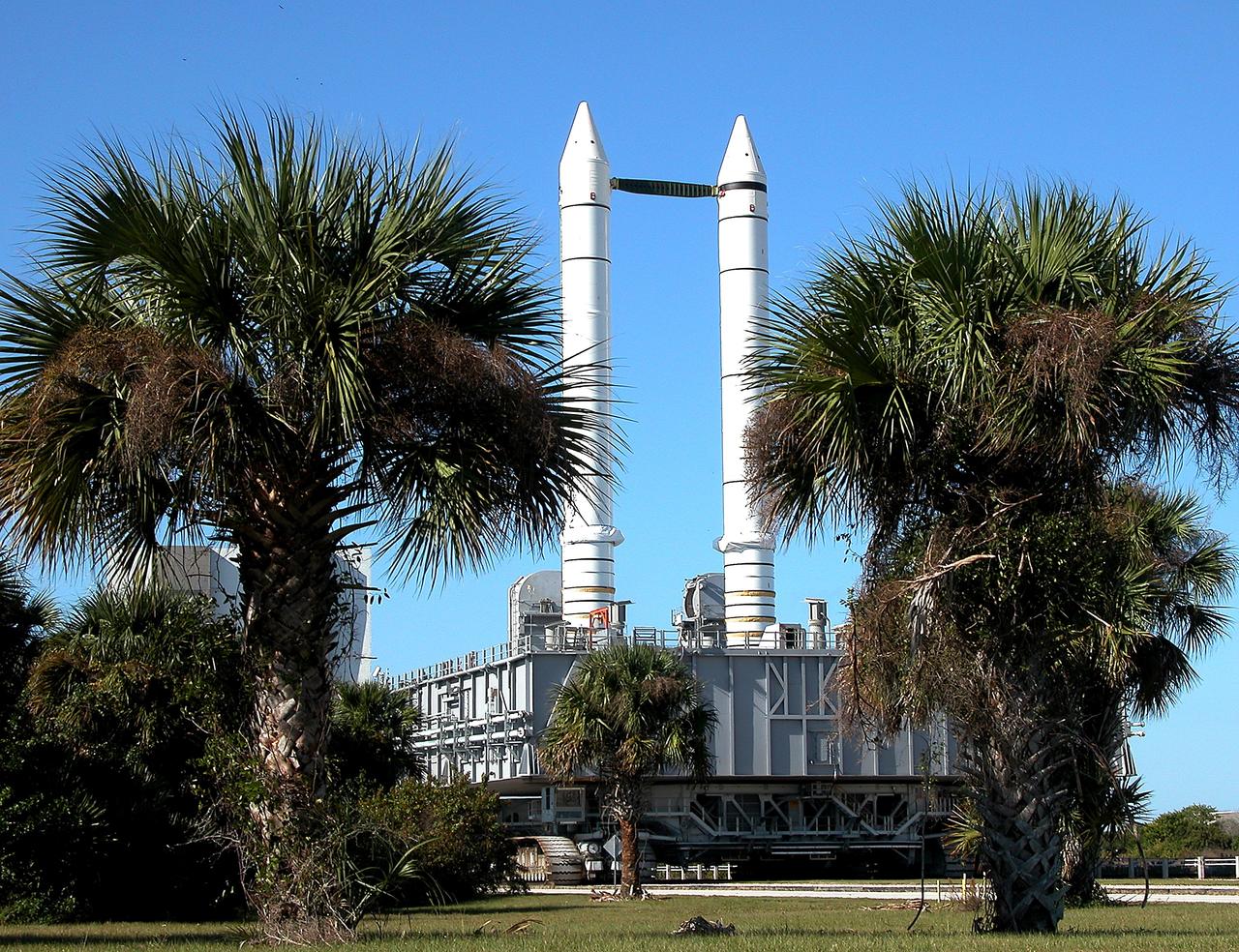
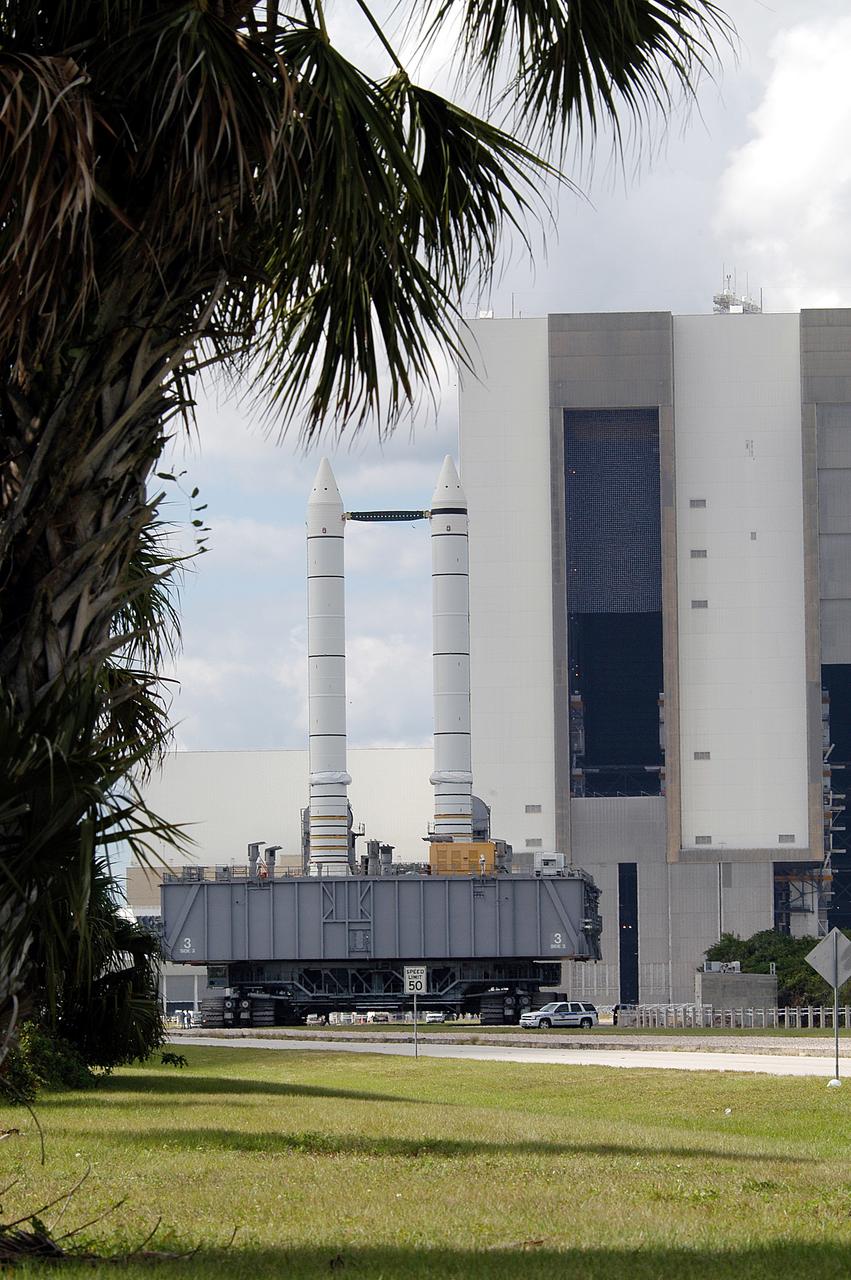
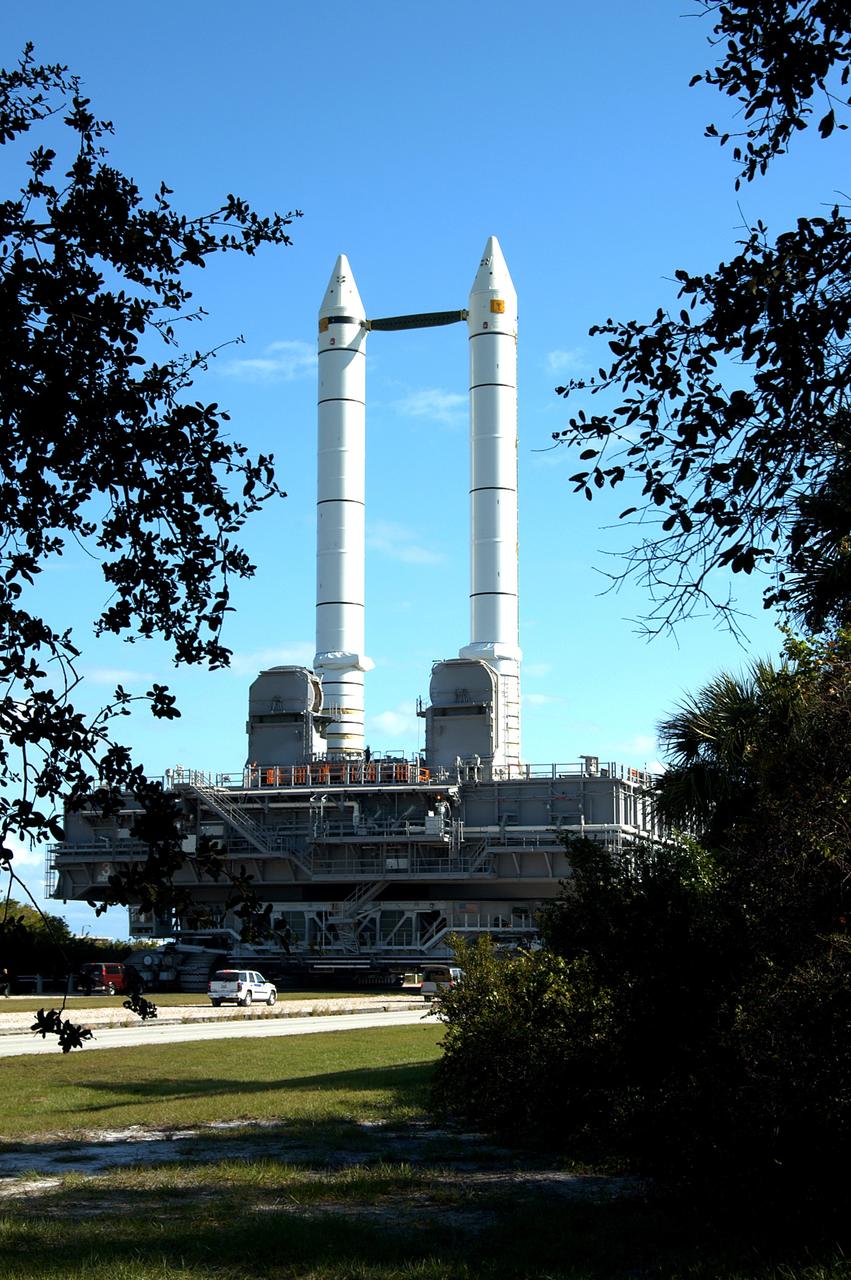
KENNEDY SPACE CENTER, FLA. -  Framed between palm trees, solid rocket boosters loom above the Mobile Launcher Platform (MLP) as the crawler transporter slowly moves it along the crawlerway.  The journey is in support of engineering analysis vibration tests on the crawler and MLP.  The crawler is moving at various speeds up to 1 mph in an effort to achieve vibration data gathering goals as it leaves the VAB and then returns.  The boosters are braced at the top for stability. The primary purpose of these rollout tests is to gather data to develop future maintenance requirements on the transport equipment and the flight hardware. Various parts of the MLP and crawler transporter have been instrumented with vibration data collection equipment.
KENNEDY SPACE CENTER, FLA. - Framed between palm trees, solid rocket boosters loom above the Mobile Launcher Platform (MLP) as the crawler transporter slowly moves it along the crawlerway. The journey is in support of engineering analysis vibration tests on the crawler and MLP. The crawler is moving at various speeds up to 1 mph in an effort to achieve vibration data gathering goals as it leaves the VAB and then returns. The boosters are braced at the top for stability. The primary purpose of these rollout tests is to gather data to develop future maintenance requirements on the transport equipment and the flight hardware. Various parts of the MLP and crawler transporter have been instrumented with vibration data collection equipment.
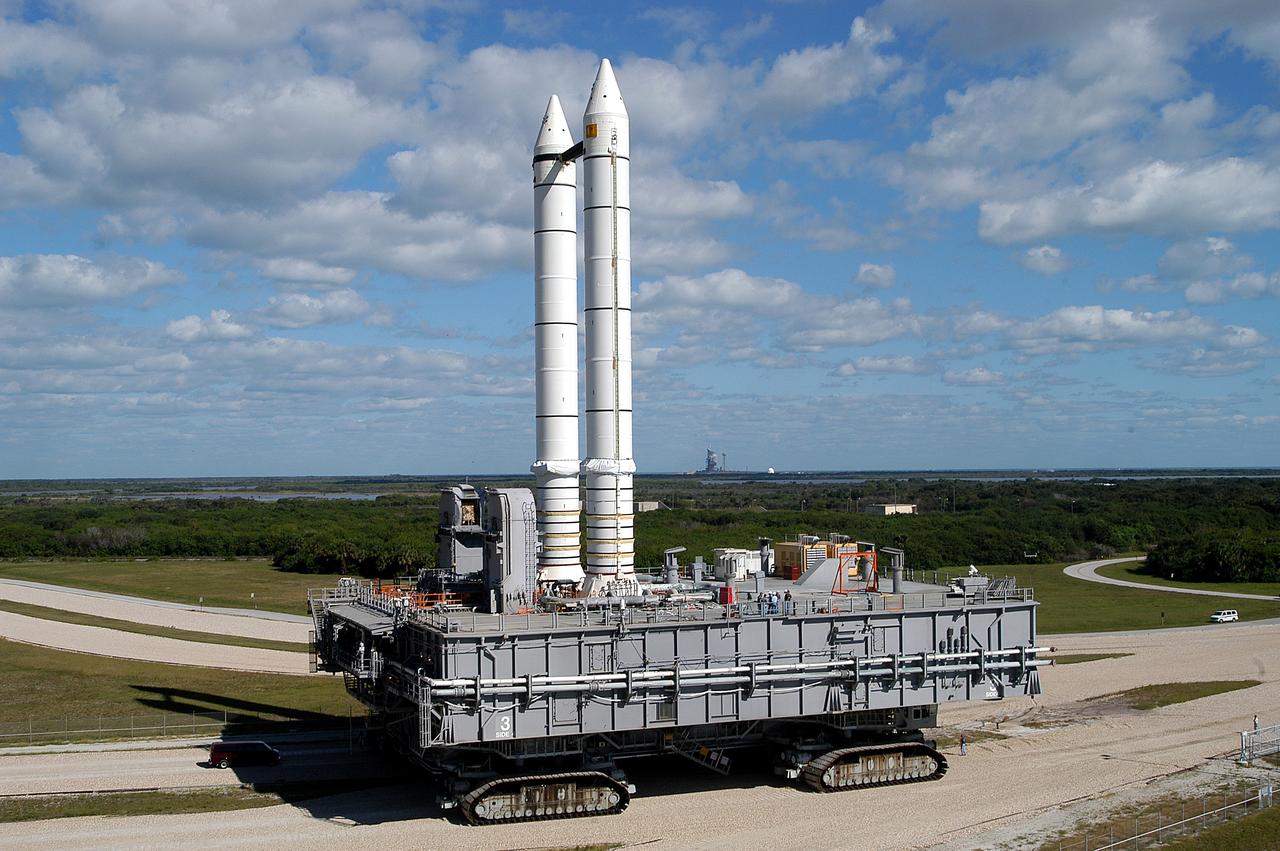
KENNEDY SPACE CENTER, FLA. -  Mobile Launcher Platform (MLP) number 3 and a set of twin solid rocket boosters, atop the crawler-transporter, inch along the crawlerway in support of the second engineering analysis vibration test on the crawler and MLP. The crawler is moving at various speeds up to 1 mph in an effort to achieve vibration data gathering goals as it leaves the VAB, travels toward Launch Pad 39A (on the horizon) and then returns.  The boosters are braced at the top for stability.  The primary purpose of these rollout tests is to gather data to develop future maintenance requirements on the transport equipment and the flight hardware. Various parts of the MLP and crawler transporter have been instrumented with vibration data collection equipment.
KENNEDY SPACE CENTER, FLA. - Mobile Launcher Platform (MLP) number 3 and a set of twin solid rocket boosters, atop the crawler-transporter, inch along the crawlerway in support of the second engineering analysis vibration test on the crawler and MLP. The crawler is moving at various speeds up to 1 mph in an effort to achieve vibration data gathering goals as it leaves the VAB, travels toward Launch Pad 39A (on the horizon) and then returns. The boosters are braced at the top for stability. The primary purpose of these rollout tests is to gather data to develop future maintenance requirements on the transport equipment and the flight hardware. Various parts of the MLP and crawler transporter have been instrumented with vibration data collection equipment.
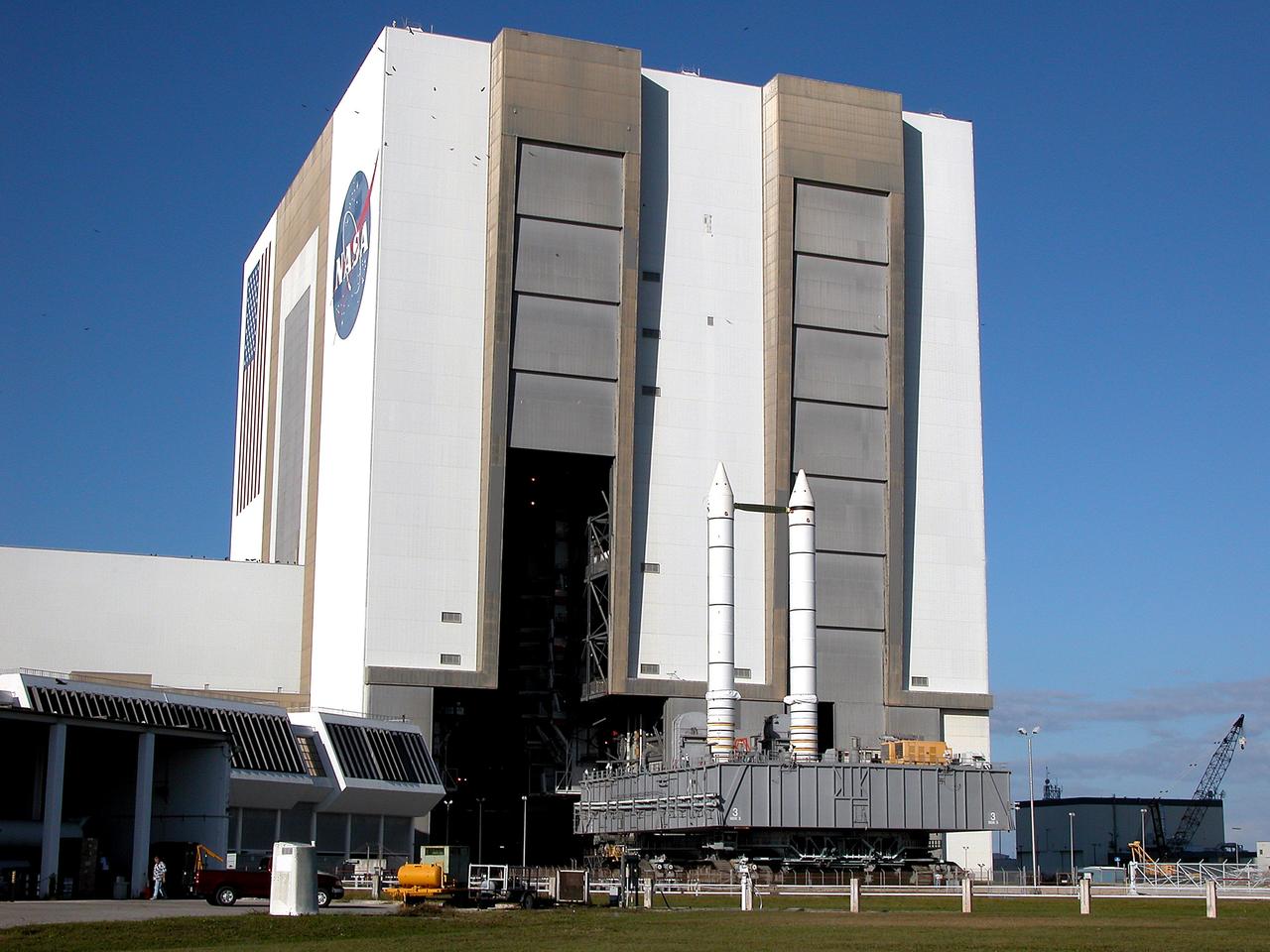
KENNEDY SPACE CENTER, FLA. -  The crawler transporter slowly moves the Mobile Launcher Platform (MLP), carrying a set of twin solid rocket boosters, away from the Vehicle Assembly Building (VAB) in support of engineering analysis vibration tests on the crawler and MLP.   The crawler is moving at various speeds up to 1 mph in an effort to achieve vibration data gathering goals as it leaves the VAB and then returns.  The boosters are braced at the top for stability.  The primary purpose of these rollout tests is to gather data to develop future maintenance requirements on the transport equipment and the flight hardware. Various parts of the MLP and crawler transporter have been instrumented with vibration data collection equipment.
KENNEDY SPACE CENTER, FLA. - The crawler transporter slowly moves the Mobile Launcher Platform (MLP), carrying a set of twin solid rocket boosters, away from the Vehicle Assembly Building (VAB) in support of engineering analysis vibration tests on the crawler and MLP. The crawler is moving at various speeds up to 1 mph in an effort to achieve vibration data gathering goals as it leaves the VAB and then returns. The boosters are braced at the top for stability. The primary purpose of these rollout tests is to gather data to develop future maintenance requirements on the transport equipment and the flight hardware. Various parts of the MLP and crawler transporter have been instrumented with vibration data collection equipment.
KENNEDY SPACE CENTER, FLA. -  Seen in the photo is one end of the airlock that is installed in the payload bay of orbiter Discovery.  The airlock is normally located inside the middeck of the spacecraft’s pressurized crew cabin. The airlock is sized to accommodate two fully suited flight crew members simultaneously. Support functions include airlock depressurization and repressurization, extravehicular activity equipment recharge, liquid-cooled garment water cooling, EVA equipment checkout, donning and communications. The outer hatch isolates the airlock from the unpressurized payload bay when closed and permits the EVA crew members to exit from the airlock to the payload bay when open.
KENNEDY SPACE CENTER, FLA. - Seen in the photo is one end of the airlock that is installed in the payload bay of orbiter Discovery. The airlock is normally located inside the middeck of the spacecraft’s pressurized crew cabin. The airlock is sized to accommodate two fully suited flight crew members simultaneously. Support functions include airlock depressurization and repressurization, extravehicular activity equipment recharge, liquid-cooled garment water cooling, EVA equipment checkout, donning and communications. The outer hatch isolates the airlock from the unpressurized payload bay when closed and permits the EVA crew members to exit from the airlock to the payload bay when open.
KENNEDY SPACE CENTER, FLA. -  The crawler transporter has slowly moved the Mobile Launcher Platform (MLP), carrying a set of twin solid rocket boosters, out of the Vehicle Assembly Building (VAB) in support of engineering analysis vibration tests on the crawler and MLP. The crawler is moving at various speeds up to 1 mph in an effort to achieve vibration data gathering goals as it leaves the VAB and then returns.  The boosters are braced at the top for stability.  The primary purpose of these rollout tests is to gather data to develop future maintenance requirements on the transport equipment and the flight hardware. Various parts of the MLP and crawler transporter have been instrumented with vibration data collection equipment.
KENNEDY SPACE CENTER, FLA. - The crawler transporter has slowly moved the Mobile Launcher Platform (MLP), carrying a set of twin solid rocket boosters, out of the Vehicle Assembly Building (VAB) in support of engineering analysis vibration tests on the crawler and MLP. The crawler is moving at various speeds up to 1 mph in an effort to achieve vibration data gathering goals as it leaves the VAB and then returns. The boosters are braced at the top for stability. The primary purpose of these rollout tests is to gather data to develop future maintenance requirements on the transport equipment and the flight hardware. Various parts of the MLP and crawler transporter have been instrumented with vibration data collection equipment.
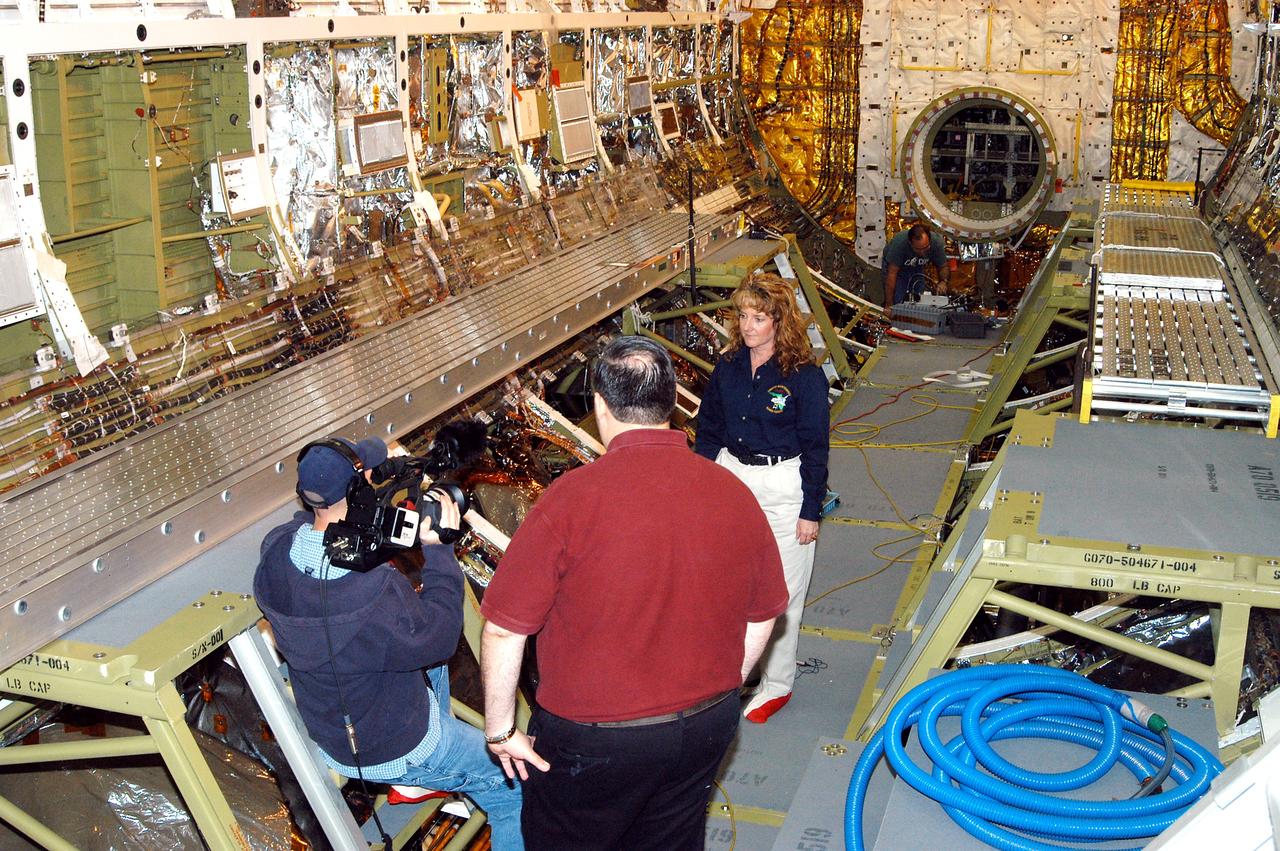
KENNEDY SPACE CENTER, FLA. -  Standing inside Discovery’s payload bay, Carol Scott (right), lead orbiter engineer, talks about her job as part of a special feature for the KSC Web.  With his back to the camera is Bill Kallus, Media manager in the KSC Web Studio.  Behind Scott can be seen the open hatch of the airlock, which provides support functions such as airlock depressurization and repressurization, extravehicular activity equipment recharge, liquid-cooled garment water cooling, EVA equipment checkout, donning and communications. The outer hatch isolates the airlock from the unpressurized payload bay when closed and permits the EVA crew members to exit from the airlock to the payload bay when open.
KENNEDY SPACE CENTER, FLA. - Standing inside Discovery’s payload bay, Carol Scott (right), lead orbiter engineer, talks about her job as part of a special feature for the KSC Web. With his back to the camera is Bill Kallus, Media manager in the KSC Web Studio. Behind Scott can be seen the open hatch of the airlock, which provides support functions such as airlock depressurization and repressurization, extravehicular activity equipment recharge, liquid-cooled garment water cooling, EVA equipment checkout, donning and communications. The outer hatch isolates the airlock from the unpressurized payload bay when closed and permits the EVA crew members to exit from the airlock to the payload bay when open.
KENNEDY SPACE CENTER, FLA. -  The crawler transporter slowly moves the Mobile Launcher Platform (MLP), carrying a set of twin solid rocket boosters, away from the Vehicle Assembly Building (VAB) in support of engineering analysis vibration tests on the crawler and MLP.   The crawler is moving at various speeds up to 1 mph in an effort to achieve vibration data gathering goals as it leaves the VAB and then returns.  The boosters are braced at the top for stability.  The primary purpose of these rollout tests is to gather data to develop future maintenance requirements on the transport equipment and the flight hardware. Various parts of the MLP and crawler transporter have been instrumented with vibration data collection equipment.
KENNEDY SPACE CENTER, FLA. - The crawler transporter slowly moves the Mobile Launcher Platform (MLP), carrying a set of twin solid rocket boosters, away from the Vehicle Assembly Building (VAB) in support of engineering analysis vibration tests on the crawler and MLP. The crawler is moving at various speeds up to 1 mph in an effort to achieve vibration data gathering goals as it leaves the VAB and then returns. The boosters are braced at the top for stability. The primary purpose of these rollout tests is to gather data to develop future maintenance requirements on the transport equipment and the flight hardware. Various parts of the MLP and crawler transporter have been instrumented with vibration data collection equipment.
KENNEDY SPACE CENTER, FLA. -  The crawler transporter slowly moves the Mobile Launcher Platform (MLP), carrying a set of twin solid rocket boosters, out of the Vehicle Assembly Building (VAB) in support of engineering analysis vibration tests on the crawler and MLP.   The crawler is moving at various speeds up to 1 mph in an effort to achieve vibration data gathering goals as it leaves the VAB and then returns.  The boosters are braced at the top for stability.  The primary purpose of these rollout tests is to gather data to develop future maintenance requirements on the transport equipment and the flight hardware. Various parts of the MLP and crawler transporter have been instrumented with vibration data collection equipment.
KENNEDY SPACE CENTER, FLA. - The crawler transporter slowly moves the Mobile Launcher Platform (MLP), carrying a set of twin solid rocket boosters, out of the Vehicle Assembly Building (VAB) in support of engineering analysis vibration tests on the crawler and MLP. The crawler is moving at various speeds up to 1 mph in an effort to achieve vibration data gathering goals as it leaves the VAB and then returns. The boosters are braced at the top for stability. The primary purpose of these rollout tests is to gather data to develop future maintenance requirements on the transport equipment and the flight hardware. Various parts of the MLP and crawler transporter have been instrumented with vibration data collection equipment.
KENNEDY SPACE CENTER, FLA. -  A worker in the Orbiter Processing Facility checks the open hatch of the airlock in Discovery’s payload bay. The airlock is normally located inside the middeck of the spacecraft’s pressurized crew cabin. The airlock is sized to accommodate two fully suited flight crew members simultaneously. Support functions include airlock depressurization and repressurization, extravehicular activity equipment recharge, liquid-cooled garment water cooling, EVA equipment checkout, donning and communications. The outer hatch isolates the airlock from the unpressurized payload bay when closed and permits the EVA crew members to exit from the airlock to the payload bay when open.
KENNEDY SPACE CENTER, FLA. - A worker in the Orbiter Processing Facility checks the open hatch of the airlock in Discovery’s payload bay. The airlock is normally located inside the middeck of the spacecraft’s pressurized crew cabin. The airlock is sized to accommodate two fully suited flight crew members simultaneously. Support functions include airlock depressurization and repressurization, extravehicular activity equipment recharge, liquid-cooled garment water cooling, EVA equipment checkout, donning and communications. The outer hatch isolates the airlock from the unpressurized payload bay when closed and permits the EVA crew members to exit from the airlock to the payload bay when open.
KENNEDY SPACE CENTER, FLA. -   The crawler transporter is slowly moving the Mobile Launcher Platform (MLP), carrying a set of twin solid rocket boosters, out of the Vehicle Assembly Building (VAB) in support of engineering analysis vibration tests on the crawler and MLP. The crawler is moving at various speeds up to 1 mph in an effort to achieve vibration data gathering goals as it leaves the VAB and then returns.  The boosters are braced at the top for stability.  The primary purpose of these rollout tests is to gather data to develop future maintenance requirements on the transport equipment and the flight hardware. Various parts of the MLP and crawler transporter have been instrumented with vibration data collection equipment.
KENNEDY SPACE CENTER, FLA. - The crawler transporter is slowly moving the Mobile Launcher Platform (MLP), carrying a set of twin solid rocket boosters, out of the Vehicle Assembly Building (VAB) in support of engineering analysis vibration tests on the crawler and MLP. The crawler is moving at various speeds up to 1 mph in an effort to achieve vibration data gathering goals as it leaves the VAB and then returns. The boosters are braced at the top for stability. The primary purpose of these rollout tests is to gather data to develop future maintenance requirements on the transport equipment and the flight hardware. Various parts of the MLP and crawler transporter have been instrumented with vibration data collection equipment.
KENNEDY SPACE CENTER, FLA. -   The crawler transporter slowly moves the Mobile Launcher Platform (MLP), carrying a set of twin solid rocket boosters, along the crawlerway in support of engineering analysis vibration tests on the crawler and MLP.  The crawler is moving at various speeds up to 1 mph in an effort to achieve vibration data gathering goals as it leaves the VAB and then returns.  The boosters are braced at the top for stability.  The primary purpose of these rollout tests is to gather data to develop future maintenance requirements on the transport equipment and the flight hardware. Various parts of the MLP and crawler transporter have been instrumented with vibration data collection equipment.
KENNEDY SPACE CENTER, FLA. - The crawler transporter slowly moves the Mobile Launcher Platform (MLP), carrying a set of twin solid rocket boosters, along the crawlerway in support of engineering analysis vibration tests on the crawler and MLP. The crawler is moving at various speeds up to 1 mph in an effort to achieve vibration data gathering goals as it leaves the VAB and then returns. The boosters are braced at the top for stability. The primary purpose of these rollout tests is to gather data to develop future maintenance requirements on the transport equipment and the flight hardware. Various parts of the MLP and crawler transporter have been instrumented with vibration data collection equipment.
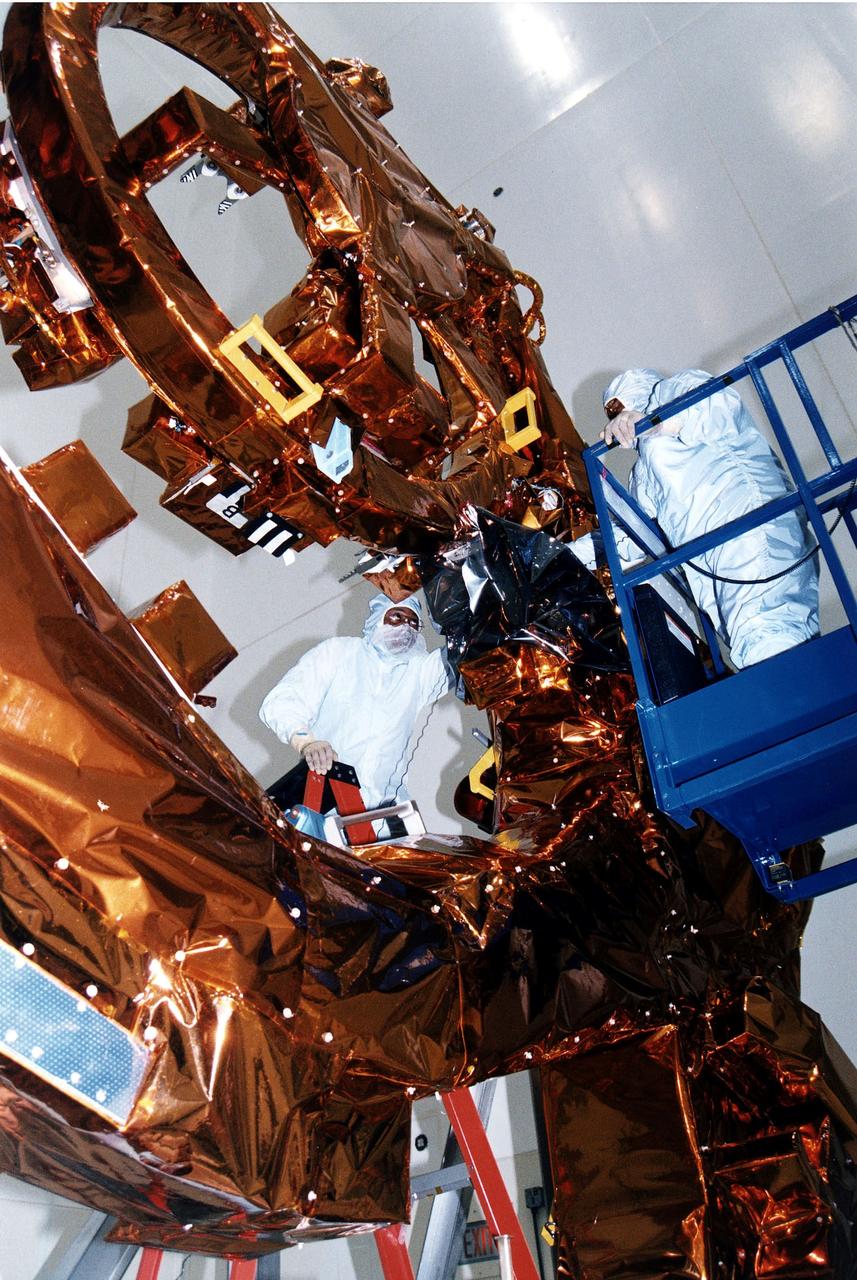
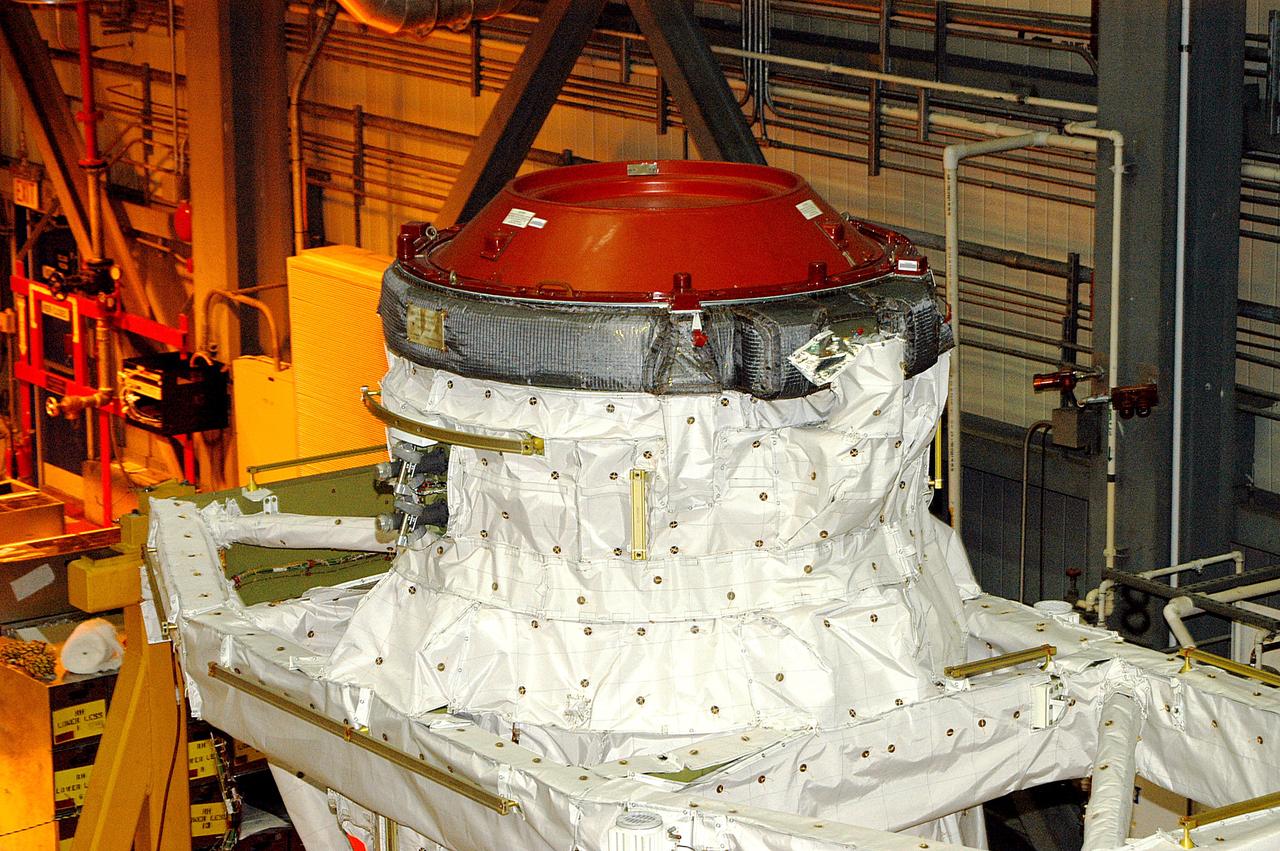
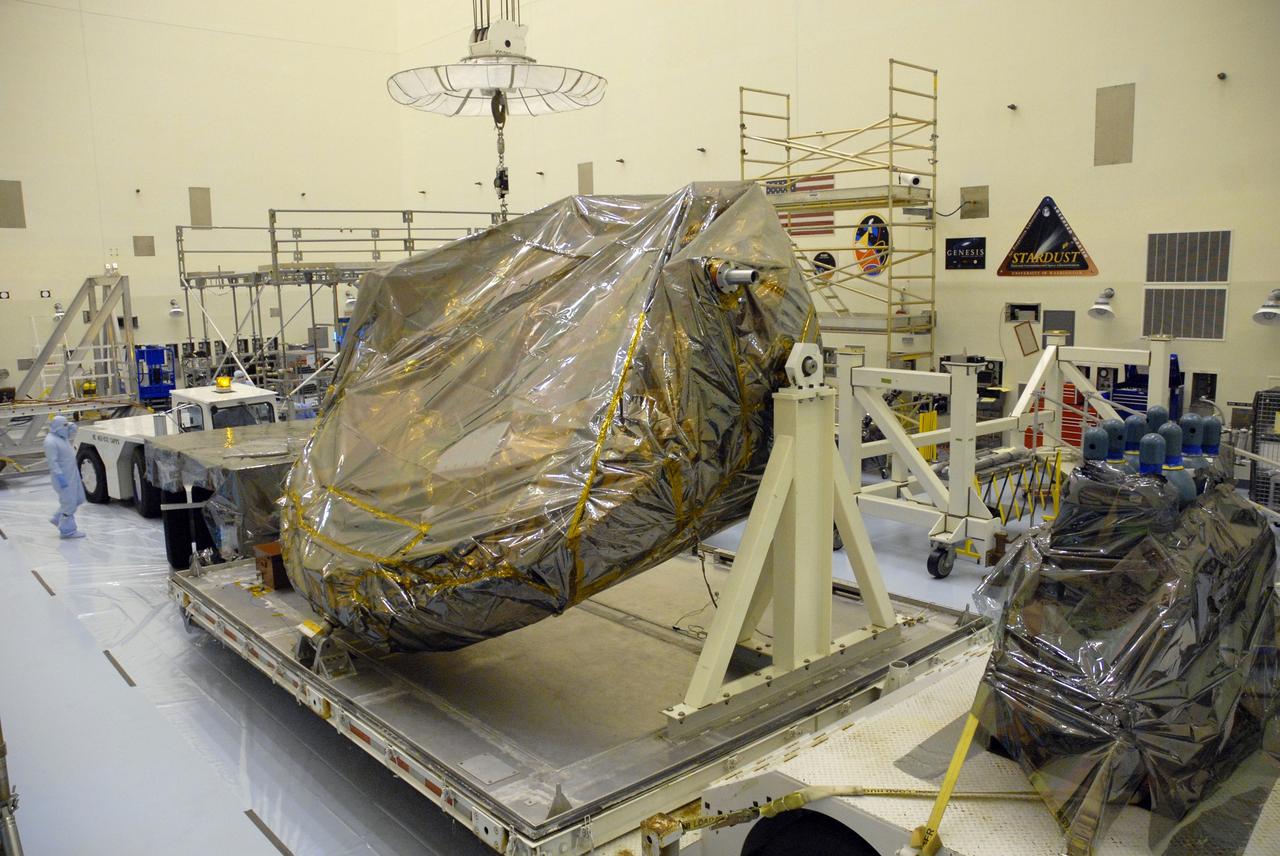
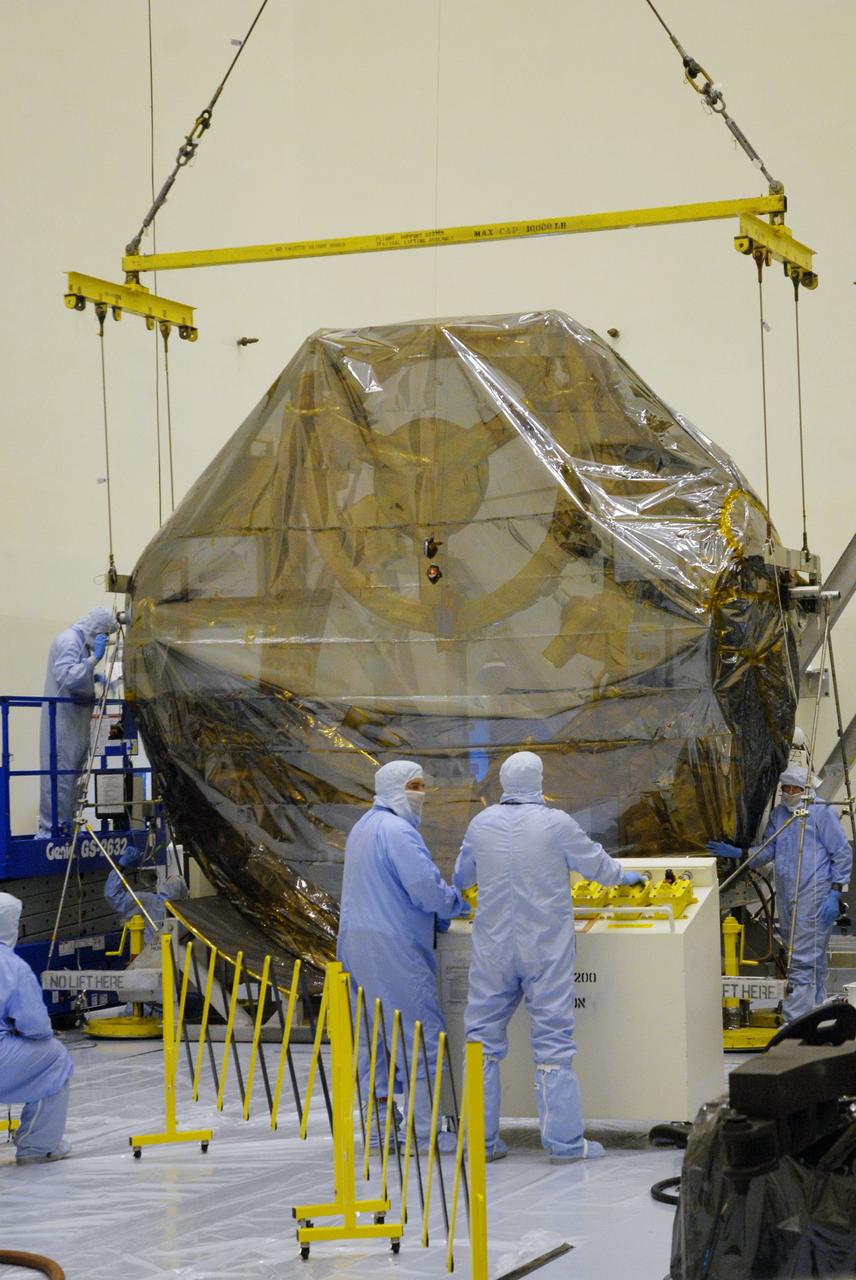
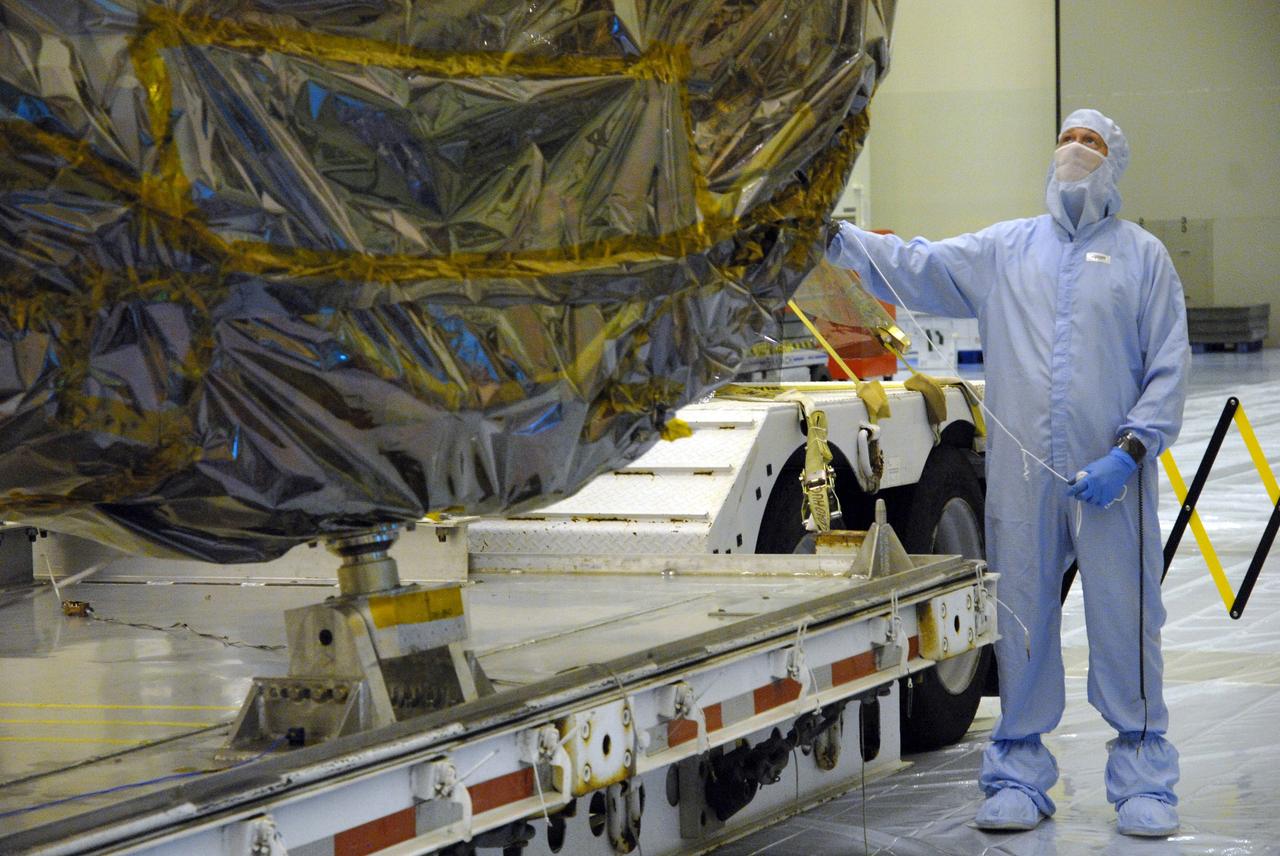
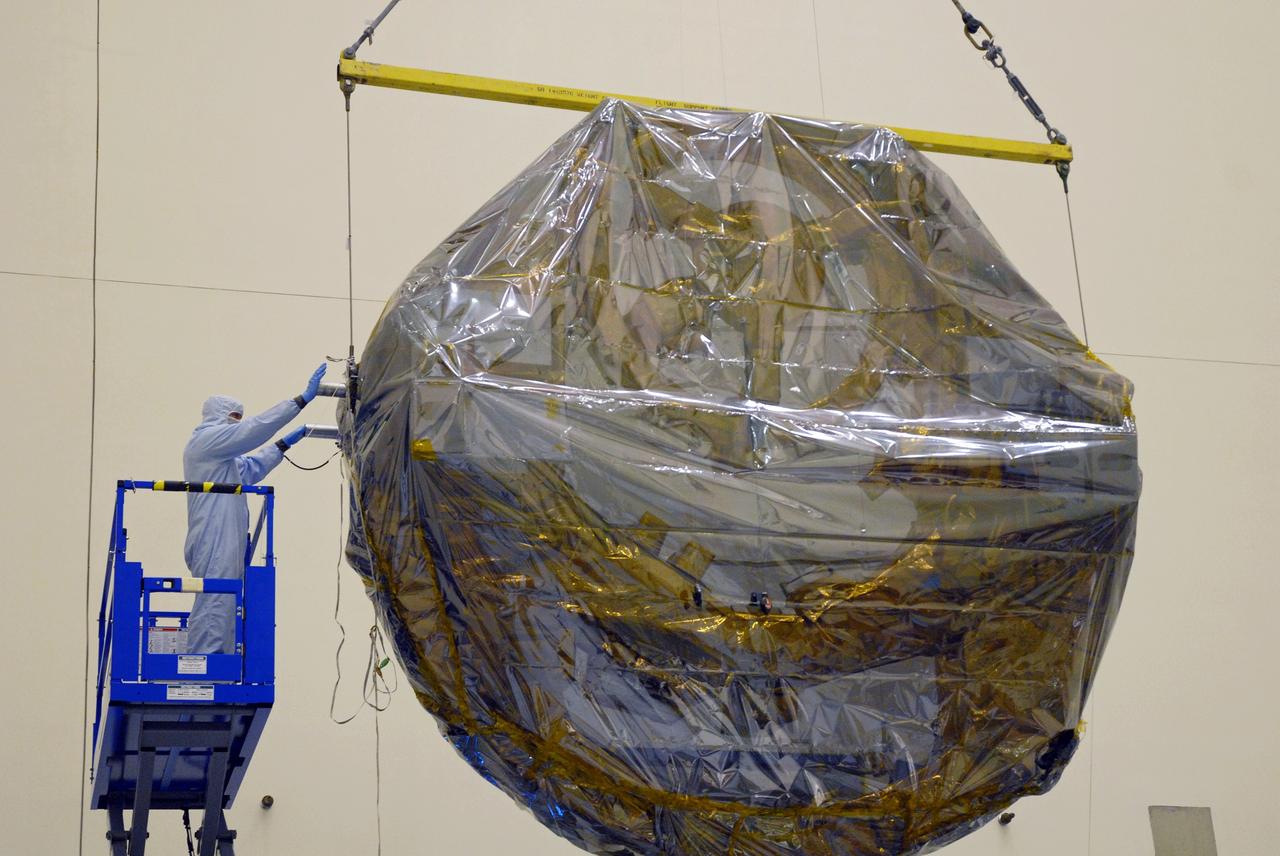
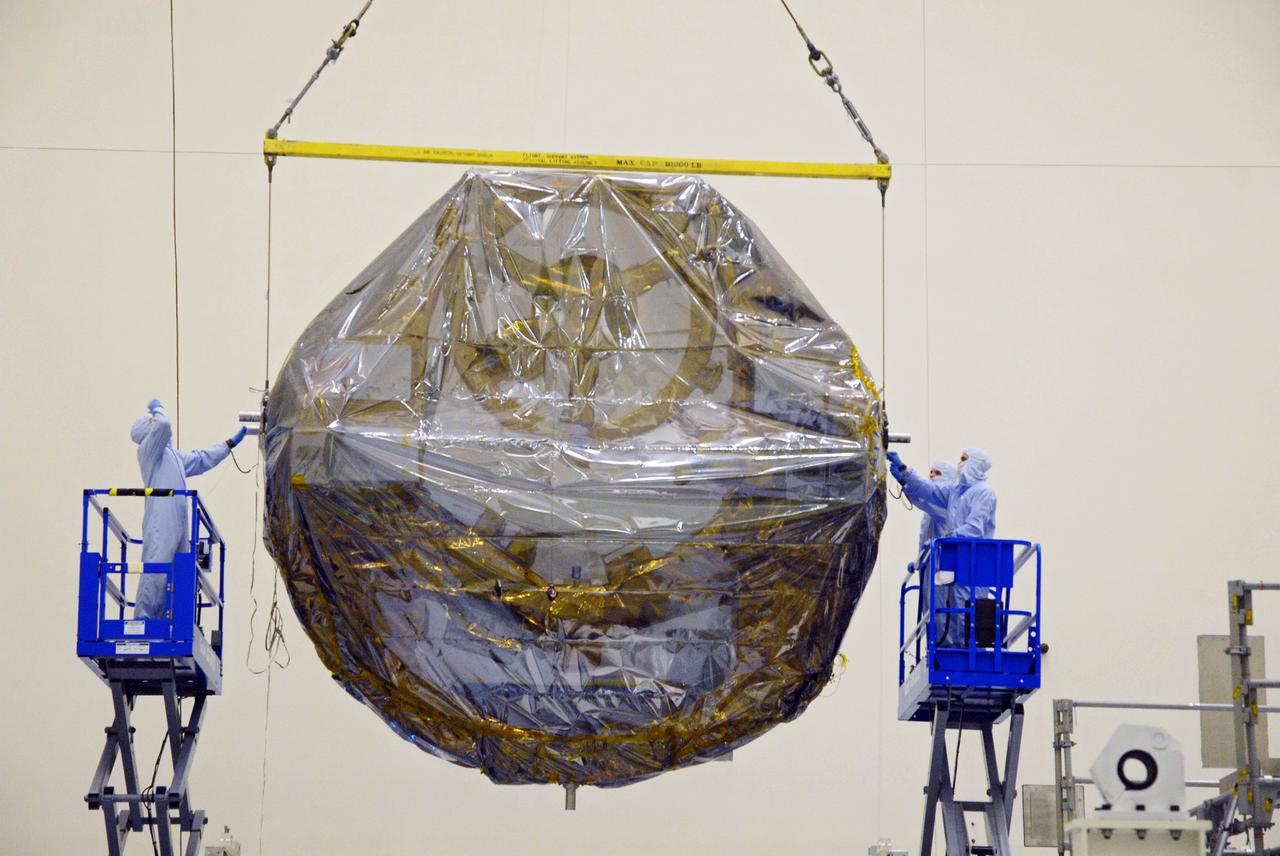
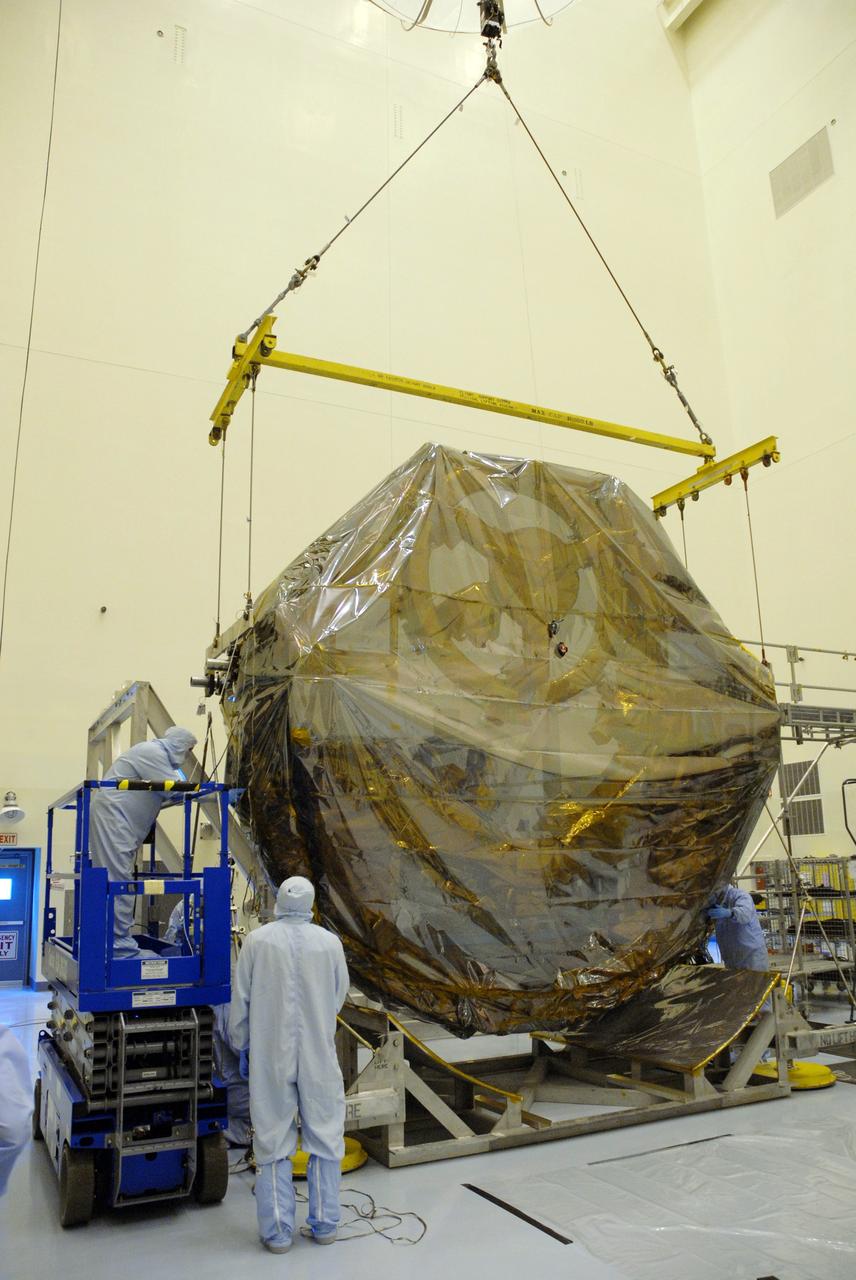
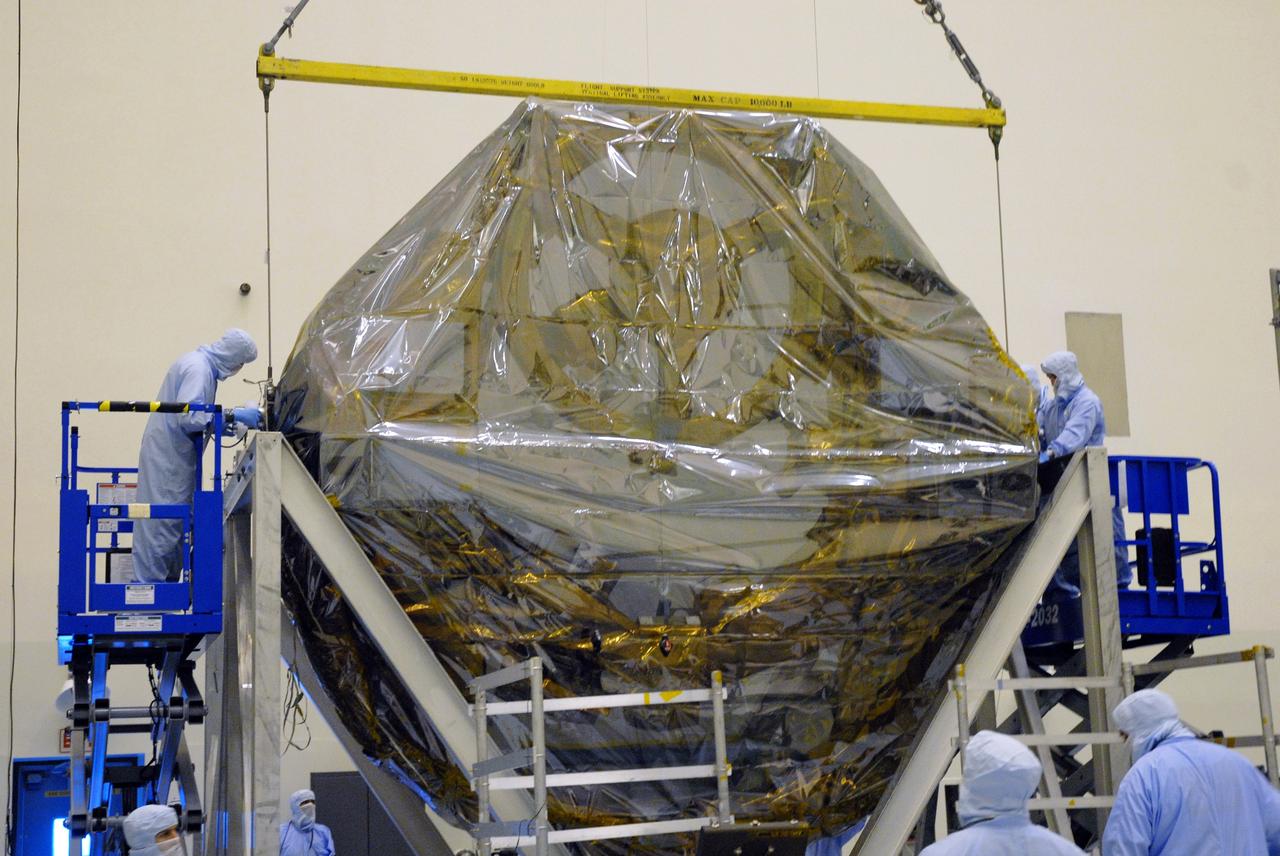
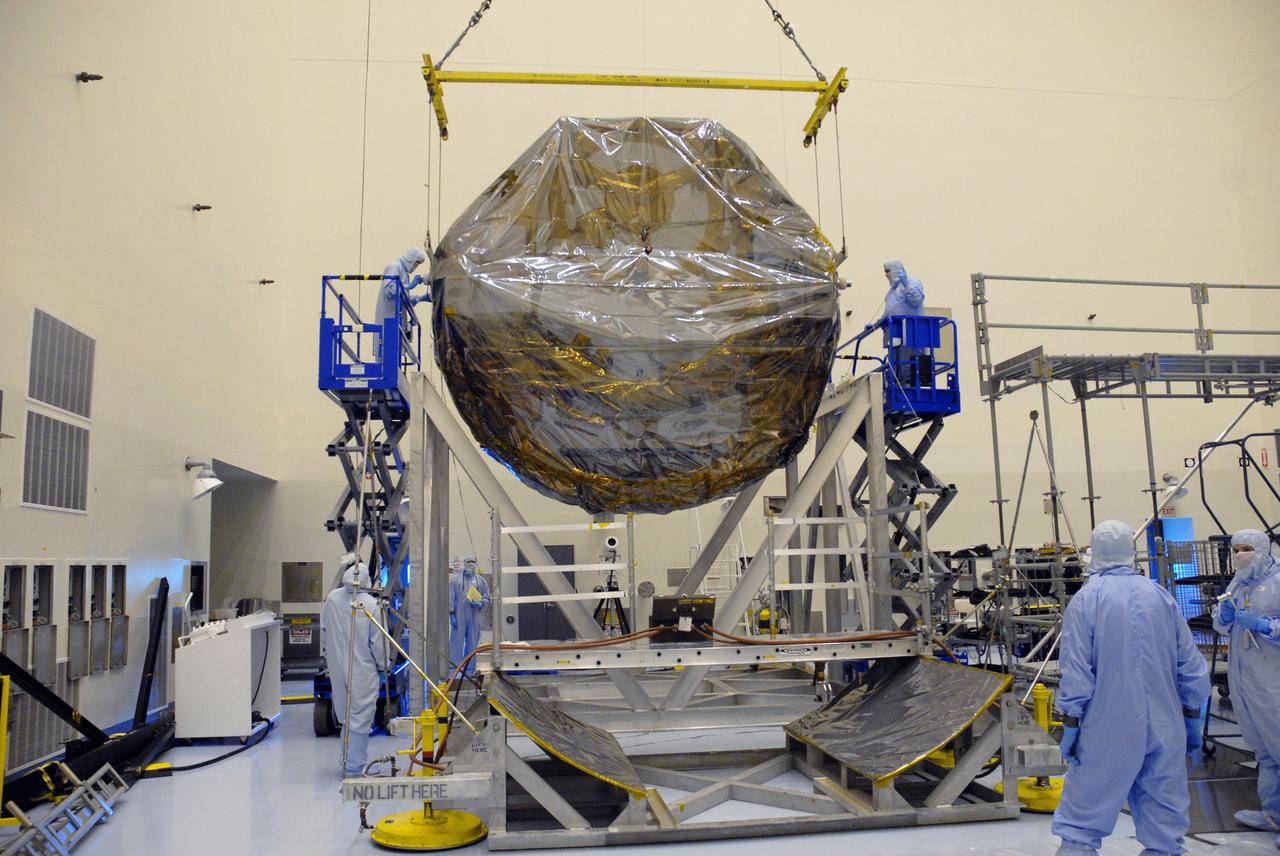
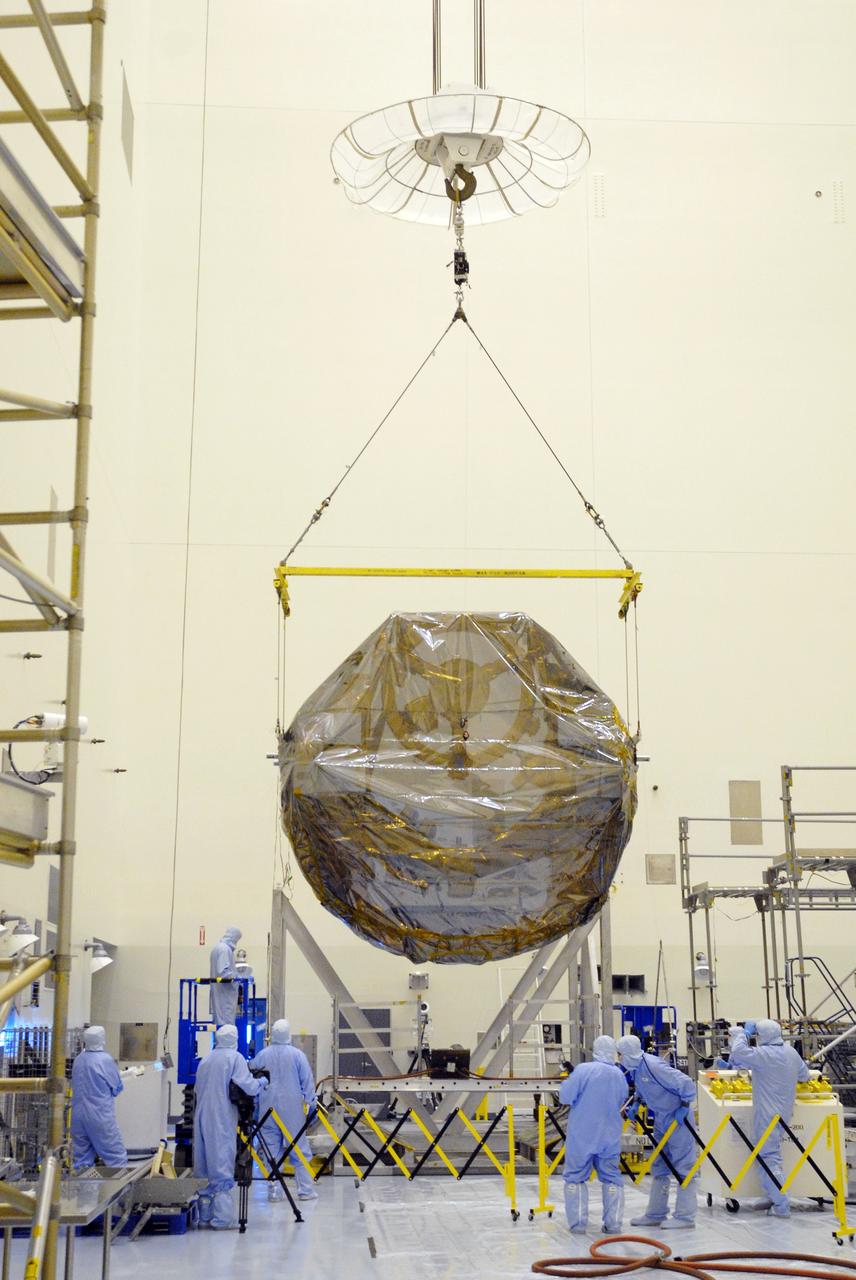
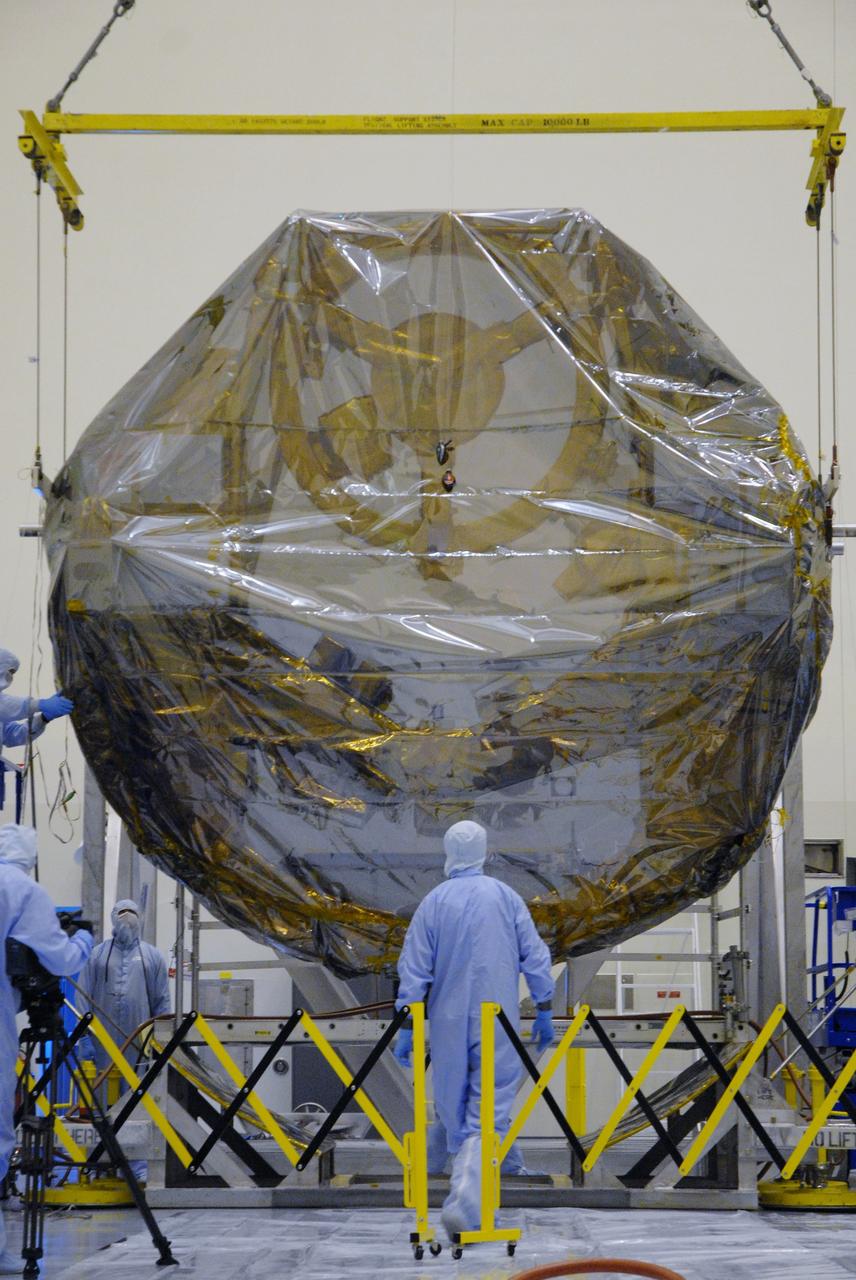
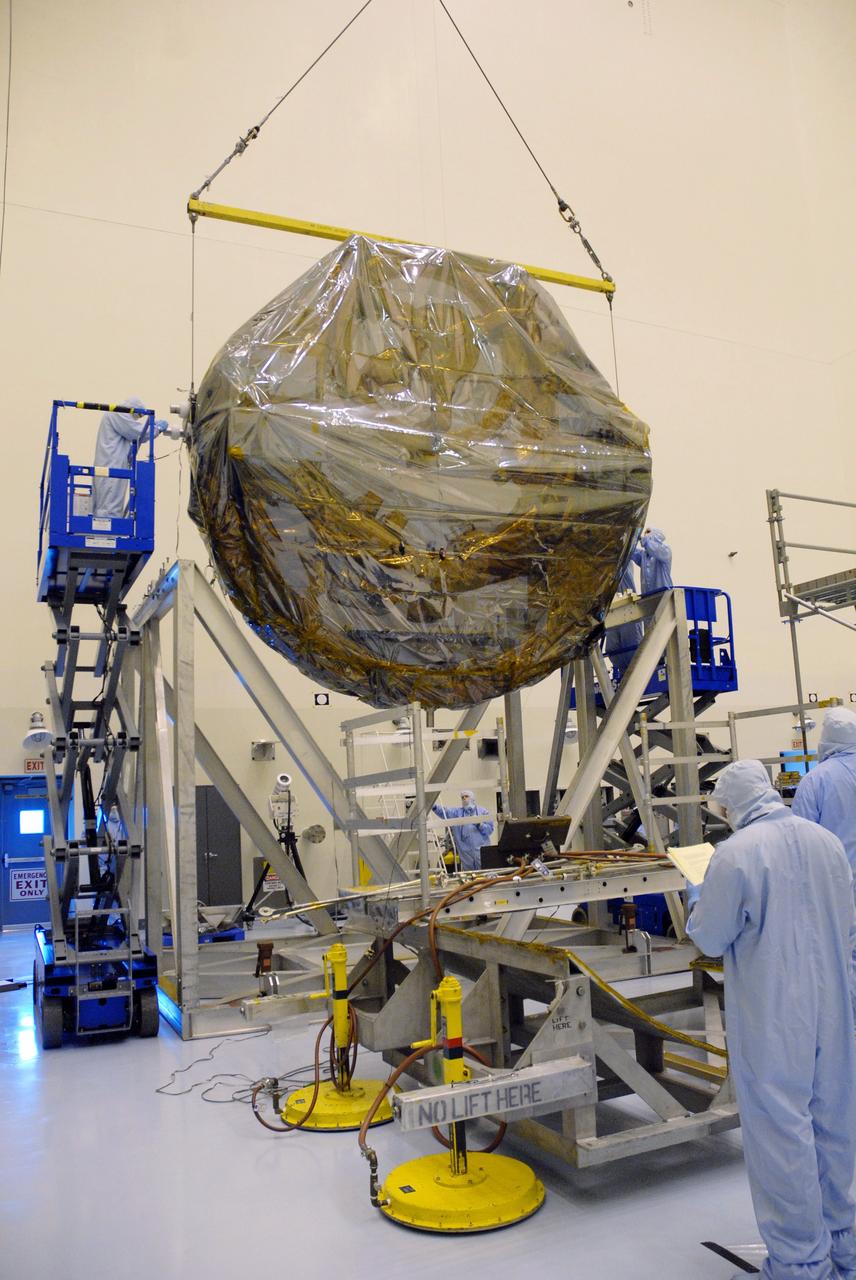
CAPE CANAVERAL, Fla. –  In the Payload Hazardous Servicing Facility at NASA's Kennedy Space Center, workers get ready to release the crane that lowered the ground support equipment for the STS-125 Hubble Servicing Mission onto a work stand. The GSE are carriers, or pallets, that will hold equipment in space shuttle Atlantis’ payload bay.  Under the protective covering of the carrier can be seen the soft capture mechanism.  The carriers will be prepared for the integration of telescope science instruments, both internal and external replacement components, as well as the flight support equipment to be used by the astronauts during the servicing mission.  The three payload carriers or pallets are the Flight Support System, the Super Lightweight Interchangeable Carrier and the Orbital Replacement Unit Carrier.  At the end of July, a fourth and final carrier, the Multi-Use Lightweight Equipment carrier will join the others in the Payload Hazardous Servicing Facility where the Hubble payload is being prepared for launch. Photo credit: NASA/Cory Huston
KSC-08pd2017
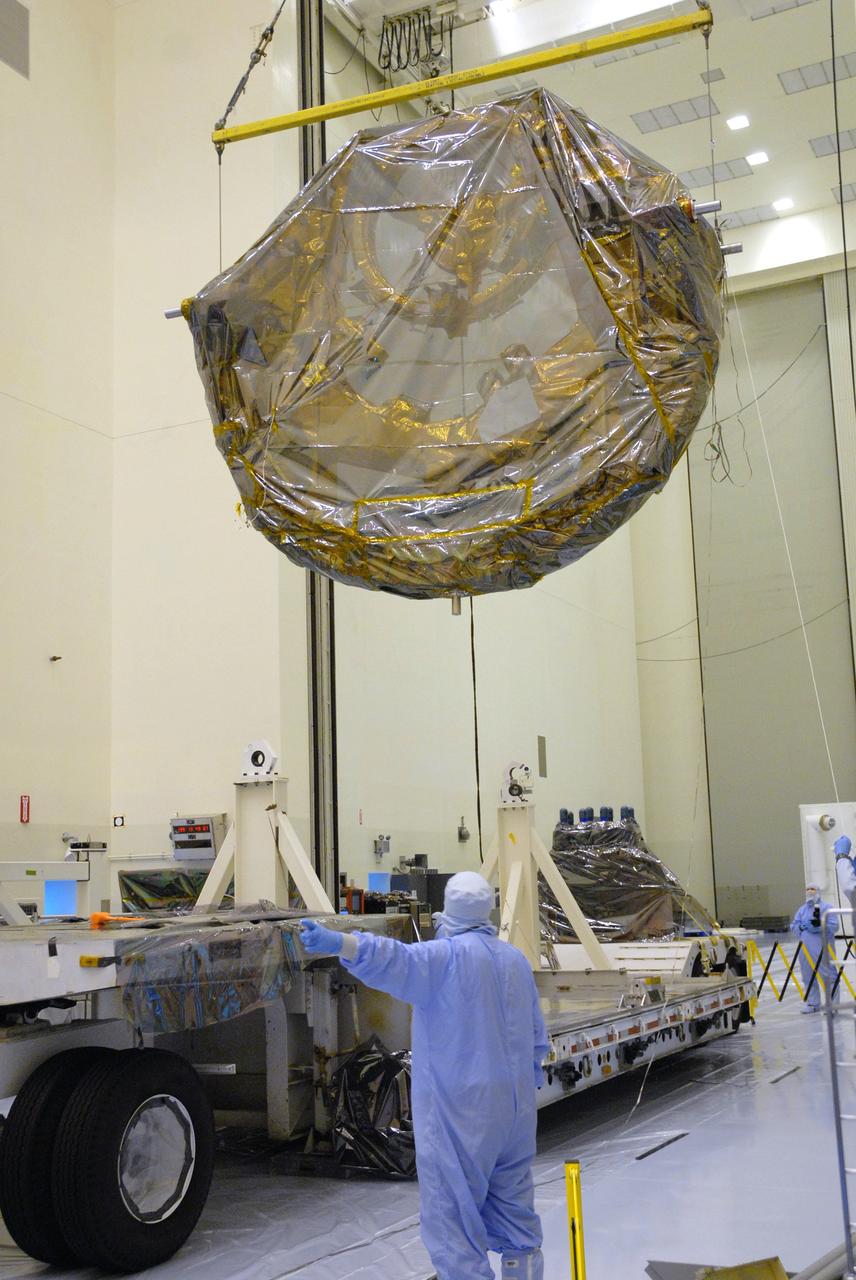
CAPE CANAVERAL, Fla. –  In the Payload Hazardous Servicing Facility at NASA's Kennedy Space Center, an overhead crane lifts the newly arrived ground support equipment for the STS-125 Hubble Servicing Mission off its transporter.  The GSE are carriers, or pallets, that will hold equipment in space shuttle Atlantis’ payload bay.  Under the protective covering of the carrier can be seen the soft capture mechanism. This carrier will be moved to a work stand.  The carriers will be prepared for the integration of telescope science instruments, both internal and external replacement components, as well as the flight support equipment to be used by the astronauts during the servicing mission.  The three payload carriers or pallets are the Flight Support System, the Super Lightweight Interchangeable Carrier and the Orbital Replacement Unit Carrier.  At the end of July, a fourth and final carrier, the Multi-Use Lightweight Equipment carrier will join the others in the Payload Hazardous Servicing Facility where the Hubble payload is being prepared for launch. Photo credit: NASA/Cory Huston
KSC-08pd2008
CAPE CANAVERAL, Fla. –  In the Payload Hazardous Servicing Facility at NASA's Kennedy Space Center, an overhead crane lifts the newly arrived ground support equipment for the STS-125 Hubble Servicing Mission off its transporter.  The GSE are carriers, or pallets, that will hold equipment in space shuttle Atlantis’ payload bay.  Under the protective covering of the carrier can be seen the soft capture mechanism. This carrier will be moved to a work stand. The carriers will be prepared for the integration of telescope science instruments, both internal and external replacement components, as well as the flight support equipment to be used by the astronauts during the servicing mission.  The three payload carriers or pallets are the Flight Support System, the Super Lightweight Interchangeable Carrier and the Orbital Replacement Unit Carrier.  At the end of July, a fourth and final carrier, the Multi-Use Lightweight Equipment carrier will join the others in the Payload Hazardous Servicing Facility where the Hubble payload is being prepared for launch. Photo credit: NASA/Cory Huston
KSC-08pd2009
CAPE CANAVERAL, Fla. –  In the Payload Hazardous Servicing Facility at NASA's Kennedy Space Center, workers check the attachments on the ground support equipment for the STS-125 Hubble Servicing Mission as it is transferred to a work stand.  The GSE are carriers, or pallets, that will hold equipment in space shuttle Atlantis’ payload bay.  Under the protective covering of the carrier can be seen the soft capture mechanism. The carriers will be prepared for the integration of telescope science instruments, both internal and external replacement components, as well as the flight support equipment to be used by the astronauts during the servicing mission.  The three payload carriers or pallets are the Flight Support System, the Super Lightweight Interchangeable Carrier and the Orbital Replacement Unit Carrier.  At the end of July, a fourth and final carrier, the Multi-Use Lightweight Equipment carrier will join the others in the Payload Hazardous Servicing Facility where the Hubble payload is being prepared for launch. Photo credit: NASA/Cory Huston
KSC-08pd2010
CAPE CANAVERAL, Fla. –  In the Payload Hazardous Servicing Facility at NASA's Kennedy Space Center, workers begin to attach a crane to part of the ground support equipment for the STS-125 Hubble Servicing Mission.  The GSE are carriers, or pallets, that will hold equipment in space shuttle Atlantis’ payload bay.  This carrier will be moved to a work stand.  The carriers will be prepared for the integration of telescope science instruments, both internal and external replacement components, as well as the flight support equipment to be used by the astronauts during the servicing mission.  The three payload carriers or pallets are the Flight Support System, the Super Lightweight Interchangeable Carrier and the Orbital Replacement Unit Carrier.  At the end of July, a fourth and final carrier, the Multi-Use Lightweight Equipment carrier will join the others in the Payload Hazardous Servicing Facility where the Hubble payload is being prepared for launch. Photo credit: NASA/Cory Huston
KSC-08pd2006
CAPE CANAVERAL, Fla. –  In the Payload Hazardous Servicing Facility at NASA's Kennedy Space Center, a worker checks the position of the ground support equipment for the STS-125 Hubble Servicing Mission as it is lifted off the transporter.  The GSE are carriers, or pallets, that will hold equipment in space shuttle Atlantis’ payload bay.  This carrier will be moved to a work stand. The carriers will be prepared for the integration of telescope science instruments, both internal and external replacement components, as well as the flight support equipment to be used by the astronauts during the servicing mission.  The three payload carriers or pallets are the Flight Support System, the Super Lightweight Interchangeable Carrier and the Orbital Replacement Unit Carrier.  At the end of July, a fourth and final carrier, the Multi-Use Lightweight Equipment carrier will join the others in the Payload Hazardous Servicing Facility where the Hubble payload is being prepared for launch. Photo credit: NASA/Cory Huston
KSC-08pd2007
CAPE CANAVERAL, Fla. –  In the Payload Hazardous Servicing Facility at NASA's Kennedy Space Center, workers get ready to release the crane that lowered the ground support equipment for the STS-125 Hubble Servicing Mission onto a work stand. The GSE are carriers, or pallets, that will hold equipment in space shuttle Atlantis’ payload bay.  Under the protective covering of the carrier can be seen the soft capture mechanism.  The carrier will be moved to a work stand. The carriers will be prepared for the integration of telescope science instruments, both internal and external replacement components, as well as the flight support equipment to be used by the astronauts during the servicing mission.  The three payload carriers or pallets are the Flight Support System, the Super Lightweight Interchangeable Carrier and the Orbital Replacement Unit Carrier.  At the end of July, a fourth and final carrier, the Multi-Use Lightweight Equipment carrier will join the others in the Payload Hazardous Servicing Facility where the Hubble payload is being prepared for launch. Photo credit: NASA/Cory Huston
KSC-08pd2018
CAPE CANAVERAL, Fla. –    Inside the Payload Hazardous Servicing Facility at NASA's Kennedy Space Center, the newly arrived ground support equipment for the STS-125 Hubble Servicing Mission waits to be moved to a work stand.  The GSE are carriers, or pallets, that will hold equipment in space shuttle Atlantis’ payload bay. The carriers will be prepared for the integration of telescope science instruments, both internal and external replacement components, as well as the flight support equipment to be used by the astronauts during the servicing mission.  The three payload carriers or pallets are the Flight Support System, the Super Lightweight Interchangeable Carrier and the Orbital Replacement Unit Carrier.  At the end of July, a fourth and final carrier, the Multi-Use Lightweight Equipment carrier will join the others in the Payload Hazardous Servicing Facility where the Hubble payload is being prepared for launch. Photo credit: NASA/Cory Huston
KSC-08pd2005
CAPE CANAVERAL, Fla. –  In the Payload Hazardous Servicing Facility at NASA's Kennedy Space Center, the overhead crane lowers the ground support equipment for the STS-125 Hubble Servicing Mission toward a work stand. The GSE are carriers, or pallets, that will hold equipment in space shuttle Atlantis’ payload bay.  Under the protective covering of the carrier can be seen the soft capture mechanism. The carriers will be prepared for the integration of telescope science instruments, both internal and external replacement components, as well as the flight support equipment to be used by the astronauts during the servicing mission.  The three payload carriers or pallets are the Flight Support System, the Super Lightweight Interchangeable Carrier and the Orbital Replacement Unit Carrier.  At the end of July, a fourth and final carrier, the Multi-Use Lightweight Equipment carrier will join the others in the Payload Hazardous Servicing Facility where the Hubble payload is being prepared for launch. Photo credit: NASA/Cory Huston
KSC-08pd2015
CAPE CANAVERAL, Fla. –  In the Payload Hazardous Servicing Facility at NASA's Kennedy Space Center, the overhead crane lowers the newly arrived ground support equipment for the STS-125 Hubble Servicing Mission toward a thermal vacuum fixture.  The GSE are carriers, or pallets, that will hold equipment in space shuttle Atlantis’ payload bay.  Under the protective covering of the carrier can be seen the soft capture mechanism.  The carriers will be prepared for the integration of telescope science instruments, both internal and external replacement components, as well as the flight support equipment to be used by the astronauts during the servicing mission.  The three payload carriers or pallets are the Flight Support System, the Super Lightweight Interchangeable Carrier and the Orbital Replacement Unit Carrier.  At the end of July, a fourth and final carrier, the Multi-Use Lightweight Equipment carrier will join the others in the Payload Hazardous Servicing Facility where the Hubble payload is being prepared for launch. Photo credit: NASA/Cory Huston
KSC-08pd2011
CAPE CANAVERAL, Fla. –  In the Payload Hazardous Servicing Facility at NASA's Kennedy Space Center, the overhead crane lowers the ground support equipment for the STS-125 Hubble Servicing Mission onto a work stand. The GSE are carriers, or pallets, that will hold equipment in space shuttle Atlantis’ payload bay.  Under the protective covering of the carrier can be seen the soft capture mechanism.  The carriers will be prepared for the integration of telescope science instruments, both internal and external replacement components, as well as the flight support equipment to be used by the astronauts during the servicing mission.  The three payload carriers or pallets are the Flight Support System, the Super Lightweight Interchangeable Carrier and the Orbital Replacement Unit Carrier.  At the end of July, a fourth and final carrier, the Multi-Use Lightweight Equipment carrier will join the others in the Payload Hazardous Servicing Facility where the Hubble payload is being prepared for launch. Photo credit: NASA/Cory Huston
KSC-08pd2016
CAPE CANAVERAL, Fla. –   In the Payload Hazardous Servicing Facility at NASA's Kennedy Space Center, the overhead crane lowers the ground support equipment for the STS-125 Hubble Servicing Mission into a thermal vacuum fixture.  The GSE are carriers, or pallets, that will hold equipment in space shuttle Atlantis’ payload bay.  Under the protective covering of the carrier can be seen the soft capture mechanism. The carriers will be prepared for the integration of telescope science instruments, both internal and external replacement components, as well as the flight support equipment to be used by the astronauts during the servicing mission.  The three payload carriers or pallets are the Flight Support System, the Super Lightweight Interchangeable Carrier and the Orbital Replacement Unit Carrier.  At the end of July, a fourth and final carrier, the Multi-Use Lightweight Equipment carrier will join the others in the Payload Hazardous Servicing Facility where the Hubble payload is being prepared for launch. Photo credit: NASA/Cory Huston
KSC-08pd2012
CAPE CANAVERAL, Fla. –   In the airlock of the Payload Hazardous Servicing Facility at NASA's Kennedy Space Center, workers prepare to move the ground support equipment for the STS-125 Hubble Servicing Mission delivered July 16.  The GSE are carriers, or pallets, that will hold equipment in space shuttle Atlantis’ payload bay.  This carrier will be moved to a work stand. The carriers will be prepared for the integration of telescope science instruments, both internal and external replacement components, as well as the flight support equipment to be used by the astronauts during the servicing mission.  The three payload carriers or pallets are the Flight Support System, the Super Lightweight Interchangeable Carrier and the Orbital Replacement Unit Carrier.  At the end of July, a fourth and final carrier, the Multi-Use Lightweight Equipment carrier will join the others in the Payload Hazardous Servicing Facility where the Hubble payload is being prepared for launch. Photo credit: NASA/Cory Huston
KSC-08pd2004
CAPE CANAVERAL, Fla. –   In the airlock of the Payload Hazardous Servicing Facility at NASA's Kennedy Space Center, workers prepare to move the ground support equipment for the STS-125 Hubble Servicing Mission delivered July 16.  The GSE are carriers, or pallets, that will hold equipment in space shuttle Atlantis’ payload bay. This carrier will be moved to a work stand.  The carriers will be prepared for the integration of telescope science instruments, both internal and external replacement components, as well as the flight support equipment to be used by the astronauts during the servicing mission.  The three payload carriers or pallets are the Flight Support System, the Super Lightweight Interchangeable Carrier and the Orbital Replacement Unit Carrier.  At the end of July, a fourth and final carrier, the Multi-Use Lightweight Equipment carrier will join the others in the Payload Hazardous Servicing Facility where the Hubble payload is being prepared for launch. Photo credit: NASA/Cory Huston
KSC-08pd2003
CAPE CANAVERAL, Fla. –  In the Payload Hazardous Servicing Facility at NASA's Kennedy Space Center, the overhead crane lifts the ground support equipment for the STS-125 Hubble Servicing Mission away from the thermal vacuum fixture.  The GSE are carriers, or pallets, that will hold equipment in space shuttle Atlantis’ payload bay.  Under the protective covering of the carrier can be seen the soft capture mechanism.  The carrier will be moved to a work stand. The carriers will be prepared for the integration of telescope science instruments, both internal and external replacement components, as well as the flight support equipment to be used by the astronauts during the servicing mission.  The three payload carriers or pallets are the Flight Support System, the Super Lightweight Interchangeable Carrier and the Orbital Replacement Unit Carrier.  At the end of July, a fourth and final carrier, the Multi-Use Lightweight Equipment carrier will join the others in the Payload Hazardous Servicing Facility where the Hubble payload is being prepared for launch. Photo credit: NASA/Cory Huston
KSC-08pd2014
CAPE CANAVERAL, Fla. –  In the Payload Hazardous Servicing Facility at NASA's Kennedy Space Center, the overhead crane lifts the ground support equipment for the STS-125 Hubble Servicing Mission out of the thermal vacuum fixture.  The GSE are carriers, or pallets, that will hold equipment in space shuttle Atlantis’ payload bay.  Under the protective covering of the carrier can be seen the soft capture mechanism.  The carriers will be prepared for the integration of telescope science instruments, both internal and external replacement components, as well as the flight support equipment to be used by the astronauts during the servicing mission.  The three payload carriers or pallets are the Flight Support System, the Super Lightweight Interchangeable Carrier and the Orbital Replacement Unit Carrier.  At the end of July, a fourth and final carrier, the Multi-Use Lightweight Equipment carrier will join the others in the Payload Hazardous Servicing Facility where the Hubble payload is being prepared for launch. Photo credit: NASA/Cory Huston
KSC-08pd2013
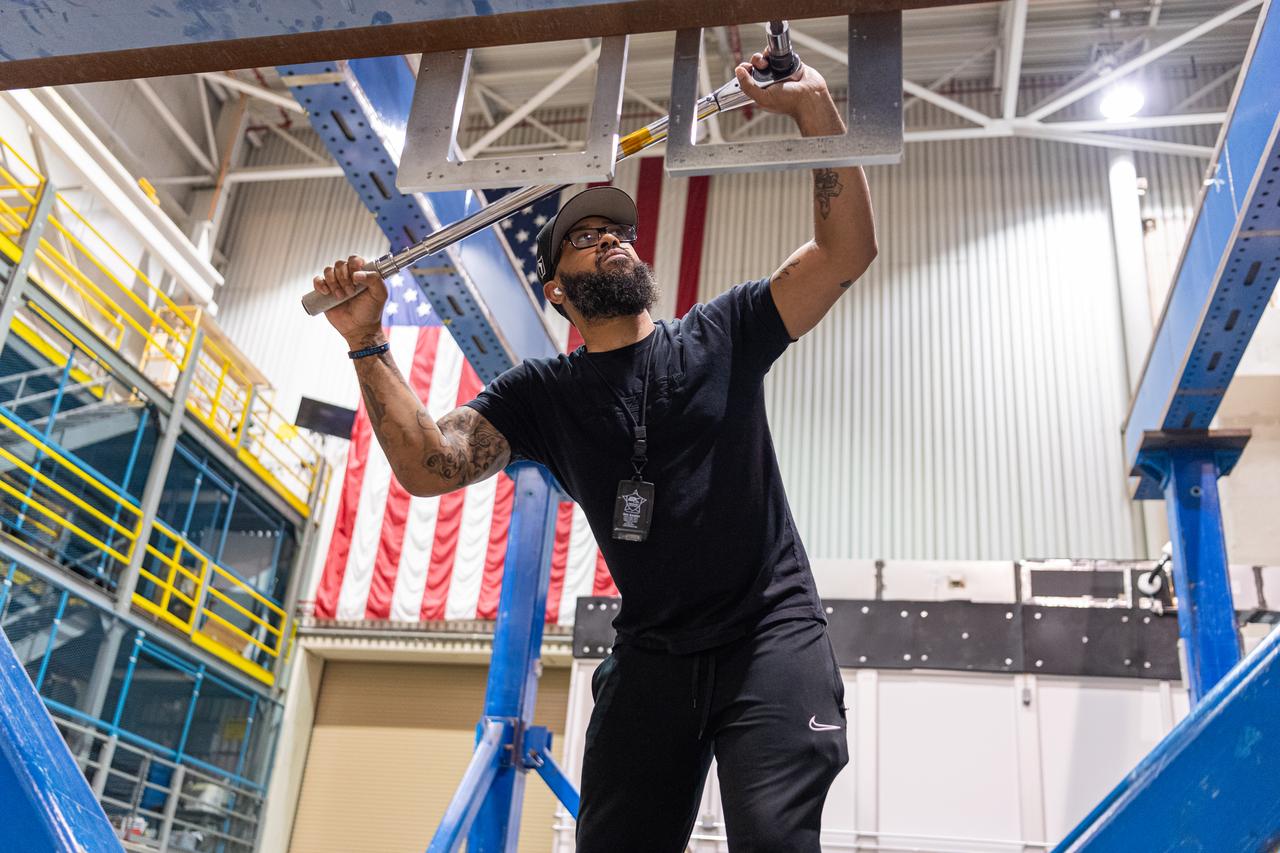
Mechanical engineering and integration technician Ivan Pratt installs brackets onto the static load testing platform in preparation of an OSAM-1 ground support equipment proof test at Goddard Space Flight Center, Greenbelt Md., July 19, 2023. This photo has been reviewed by OSAM1 project management and the Export Control Office and is released for public view. NASA/Mike Guinto
GSFC_20230719_OSAM1_006753
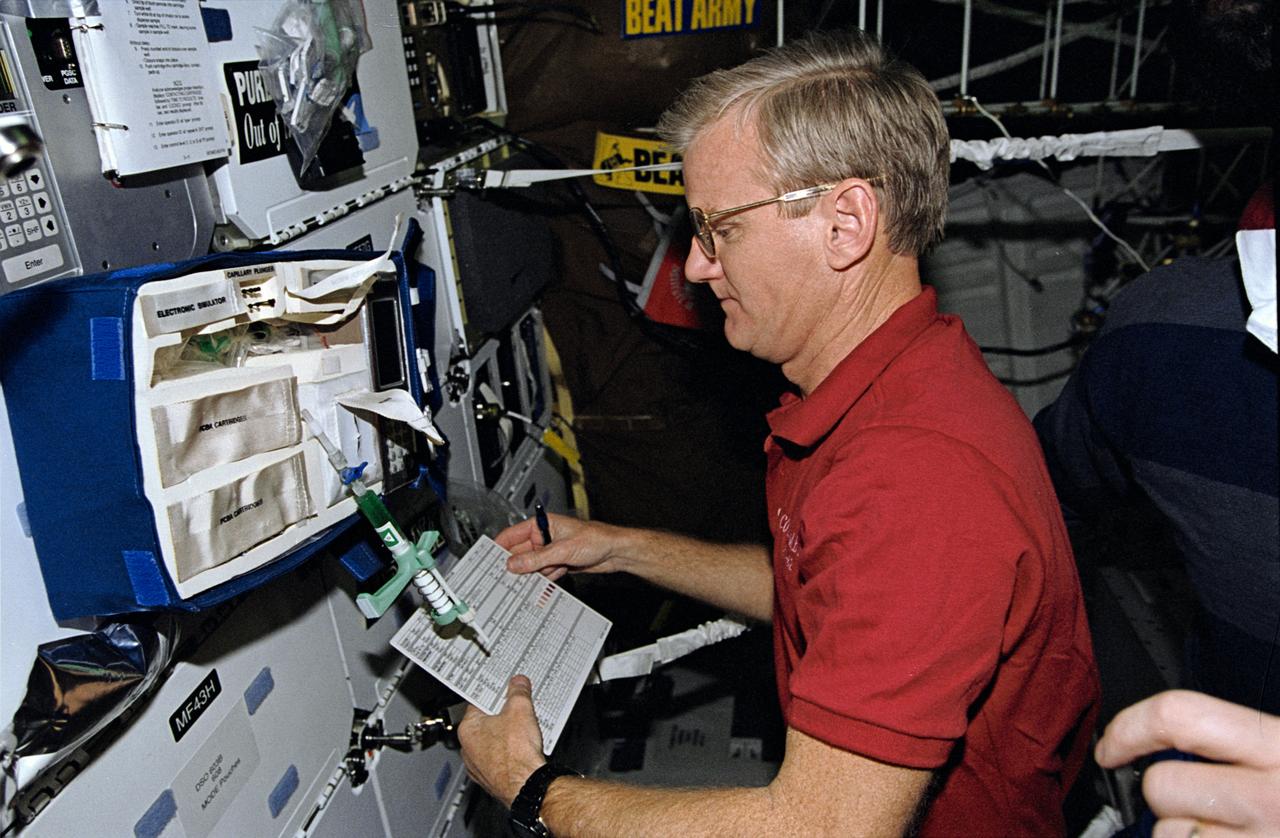
STS062-10-010 (4-18 March 1994) --- Astronaut John H. Casper, mission commander, takes stock of paraphenalia used to support medical testing onboard Columbia's middeck.  Casper was poind by four other veteran astronauts for 14 days of variegated research in earth orbit.
Astronaut John Casper checks equipment to support medical testing
Amberly Guerra, left, tries on life support equipment while Ali Zendejas, Betty Mojica and Julian Guerra, her dad, watch.
NASA Armstrong Supported 2018 Los Angeles County Air Show
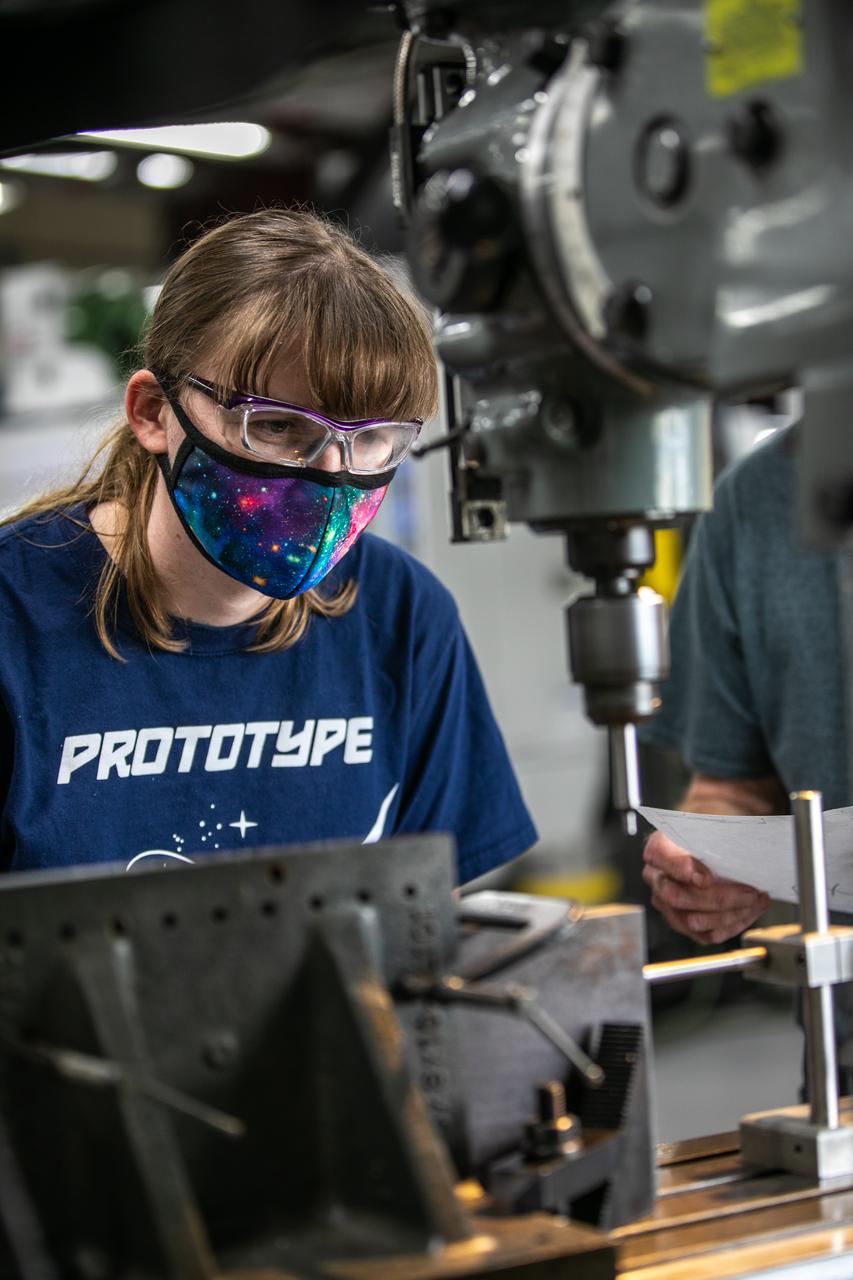
Katie Mortensen, a mechanical engineering technician, machines test article materials inside the Prototype Development Laboratory at NASA’s Kennedy Space Center in Florida on Oct. 21, 2020. The prototype laboratory designs, fabricates, and tests prototypes, test articles and test support equipment. It has a long history of providing fast solutions to complex operations problems. The lab’s teams of engineers use specialized equipment to produce exacting, one-of-a-kind items made from a range of materials depending on the design. The lab supports projects at Kennedy and at the agency level.
Engineering Labs: Prototype Development Laboratory (PDL)
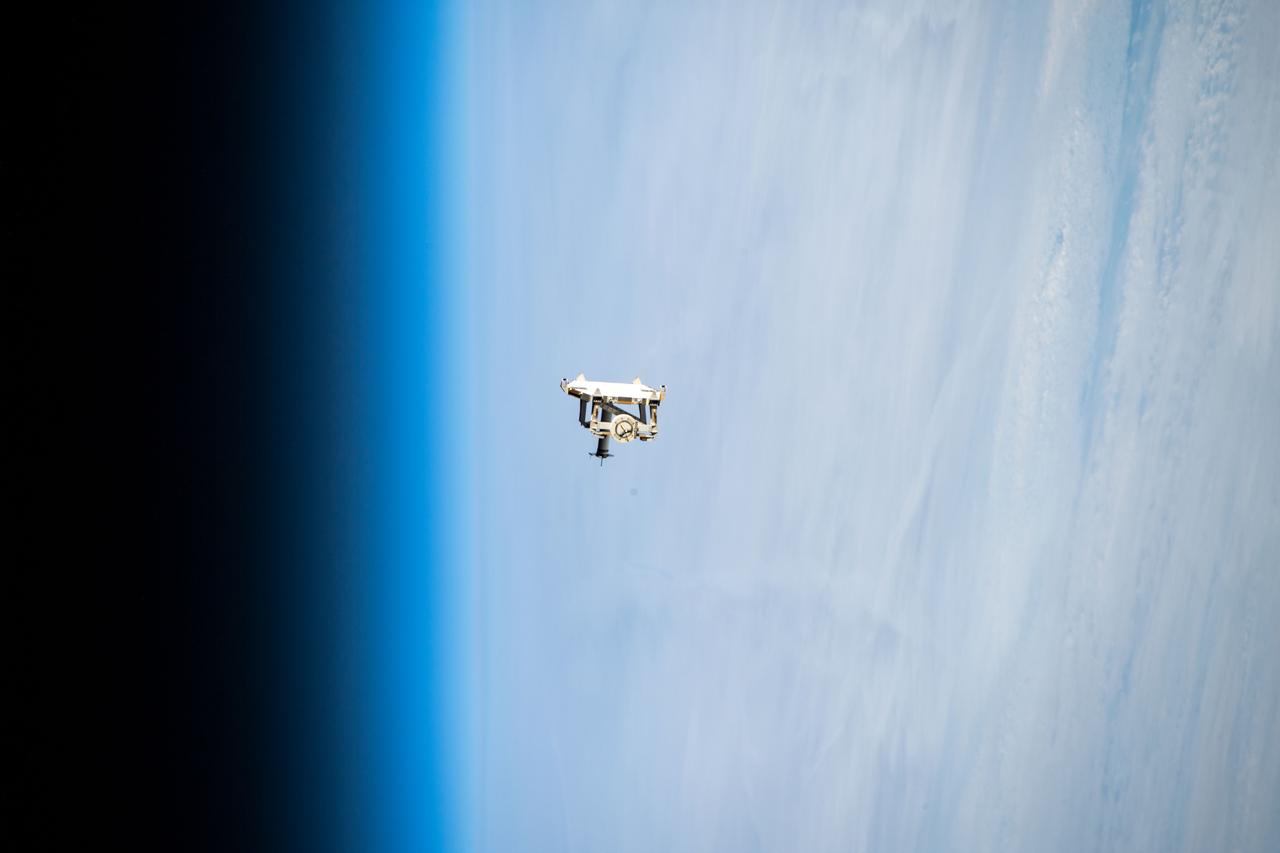
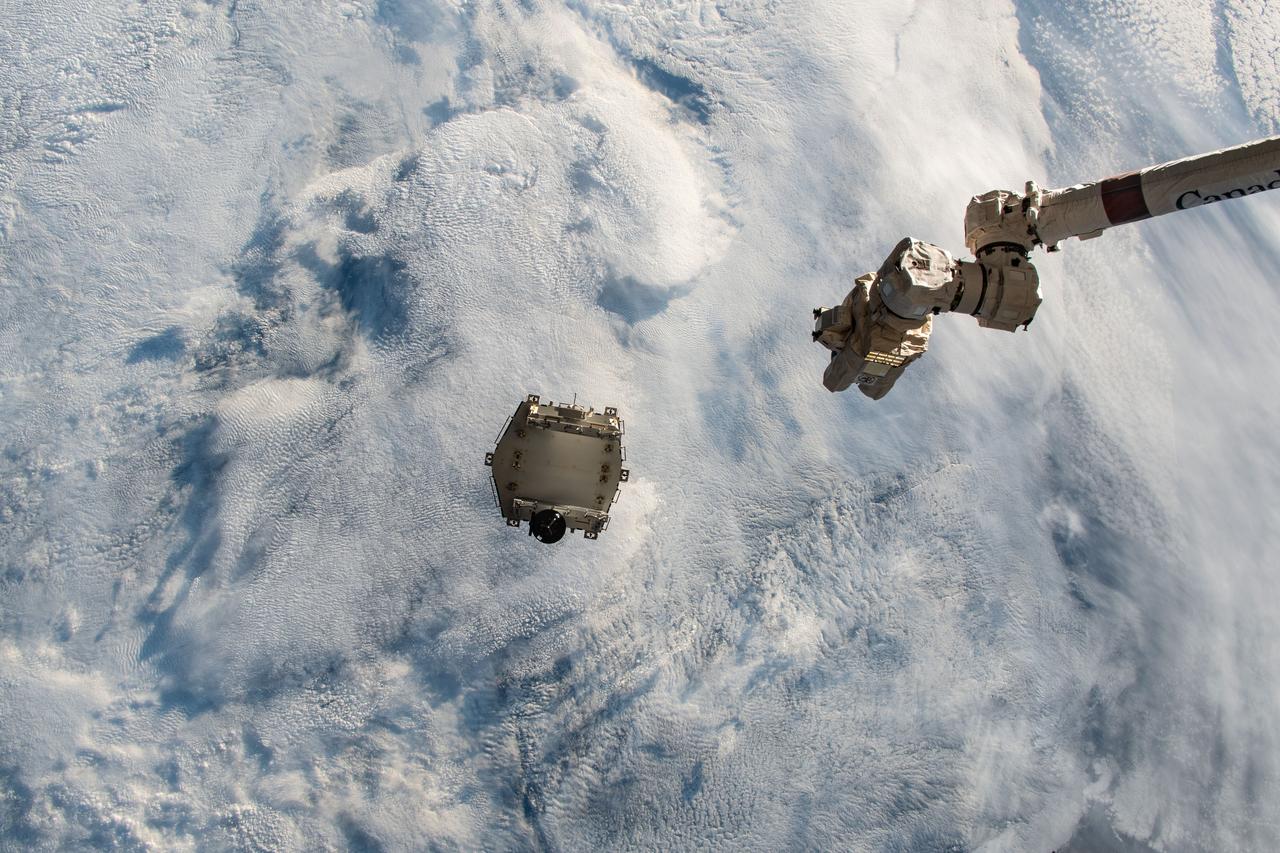
iss068e044261 (Jan. 31, 2023) --- Flight support equipment is pictured descending toward the Earth's atmosphere after being jettisoned from the grips of the Canadarm2 robotic arm. The flight hardware secured a pair of roll-out solar arrays inside SpaceX Dragon cargo ship’s trunk during its ascent to orbit and rendezvous with the International Space Station in November 2022. The jettisoned support equipment drifted safely away from the station and will eventually harmlessly burn up in the atmosphere with no chance for recontacting the space station.
iss068e044261
iss068e044174 (Jan. 31, 2023) --- The Canadarm2 robotic arm is pictured extending away from the International Space Station after jettisoning flight support equipment toward the Earth's atmosphere. The flight hardware secured a pair of roll-out solar arrays inside the SpaceX Dragon cargo ship’s trunk during its ascent to orbit and rendezvous with the space station in November 2022. The jettisoned support equipment drifted safely away from the station and will eventually harmlessly burn up in the atmosphere with no chance for recontacting the space station.
iss068e044174
S66-17475 (18 Jan. 1966) --- Test subject Fred Spress, Crew Systems Division, wears the spacesuit and extravehicular equipment planned for use by astronaut David R. Scott. The helmet is equipped with a gold-plated visor to shield the astronaut's face from unfiltered sun rays. The system is composed of a life support pack worn on the chest and a support pack worn on the back. Photo credit: NASA
GEMINI-TITAN (GT)-8 - EXTRAVEHICULAR (EV) EQUIPMENT & SUIT - MSC
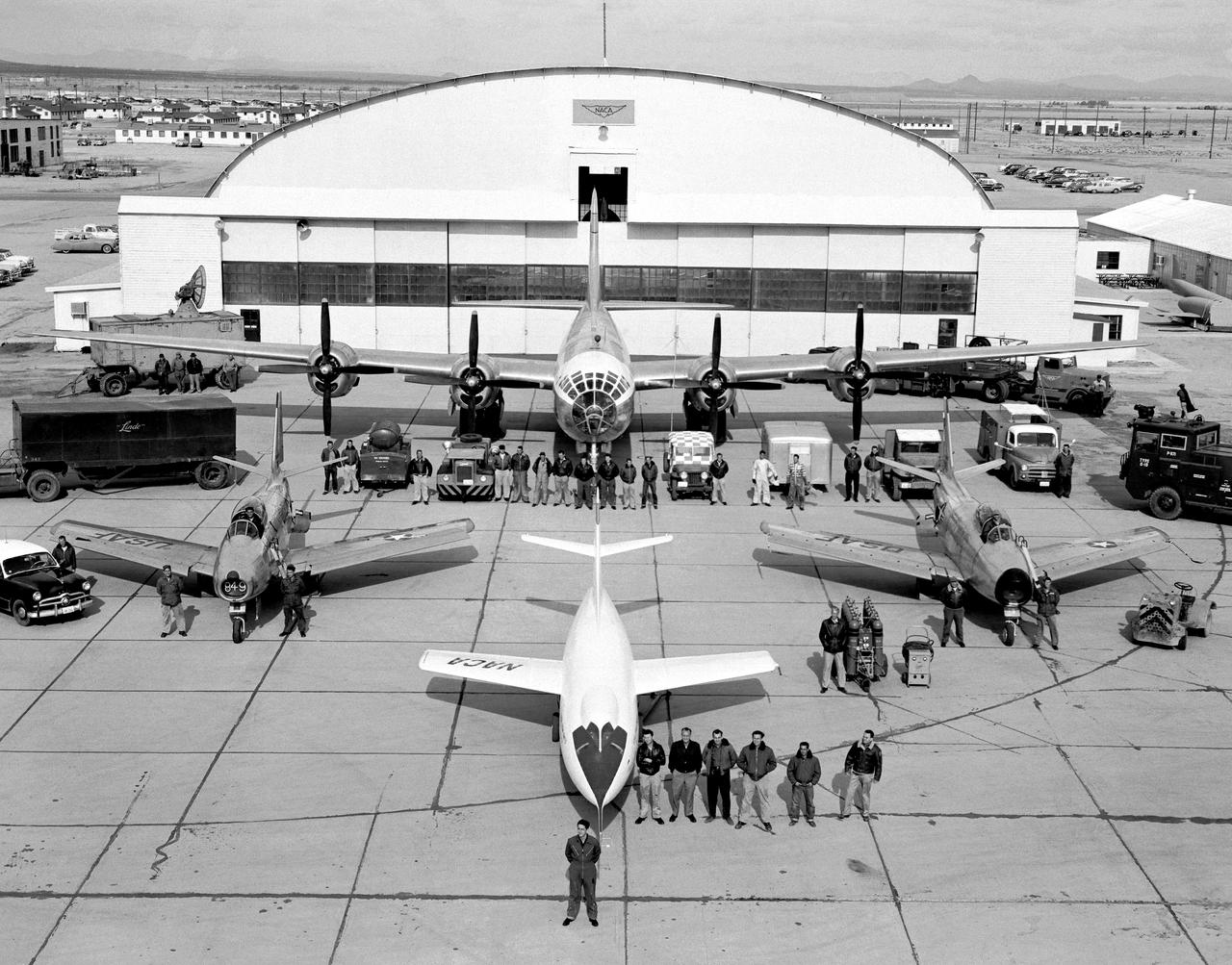
These people and this equipment supported the flight of the NACA D-558-2 Skyrocket at the High-Speed Flight Station at South Base, Edwards AFB. Note the two Sabre chase planes, the P2B-1S launch aircraft, and the profusion of ground support equipment, including communications, tracking, maintenance, and rescue vehicles. Research pilot A. Scott Crossfield stands in front of the Skyrocket.
E-1152
S66-17480 (18 Jan. 1966) --- Test subject Fred Spress, Crew Systems Division, wears the spacesuit and extravehicular equipment planned for use by astronaut David R. Scott. The helmet is equipped with a gold-plated visor to shield the astronaut's face from unfiltered sun rays. The system is composed of a life support pack worn on the chest and a support pack worn on the back. Photo credit: NASA
GEMINI-TITAN (GT)-8 - EXTRAVEHICULAR (EV) EQUIPMENT & SUIT - MSC
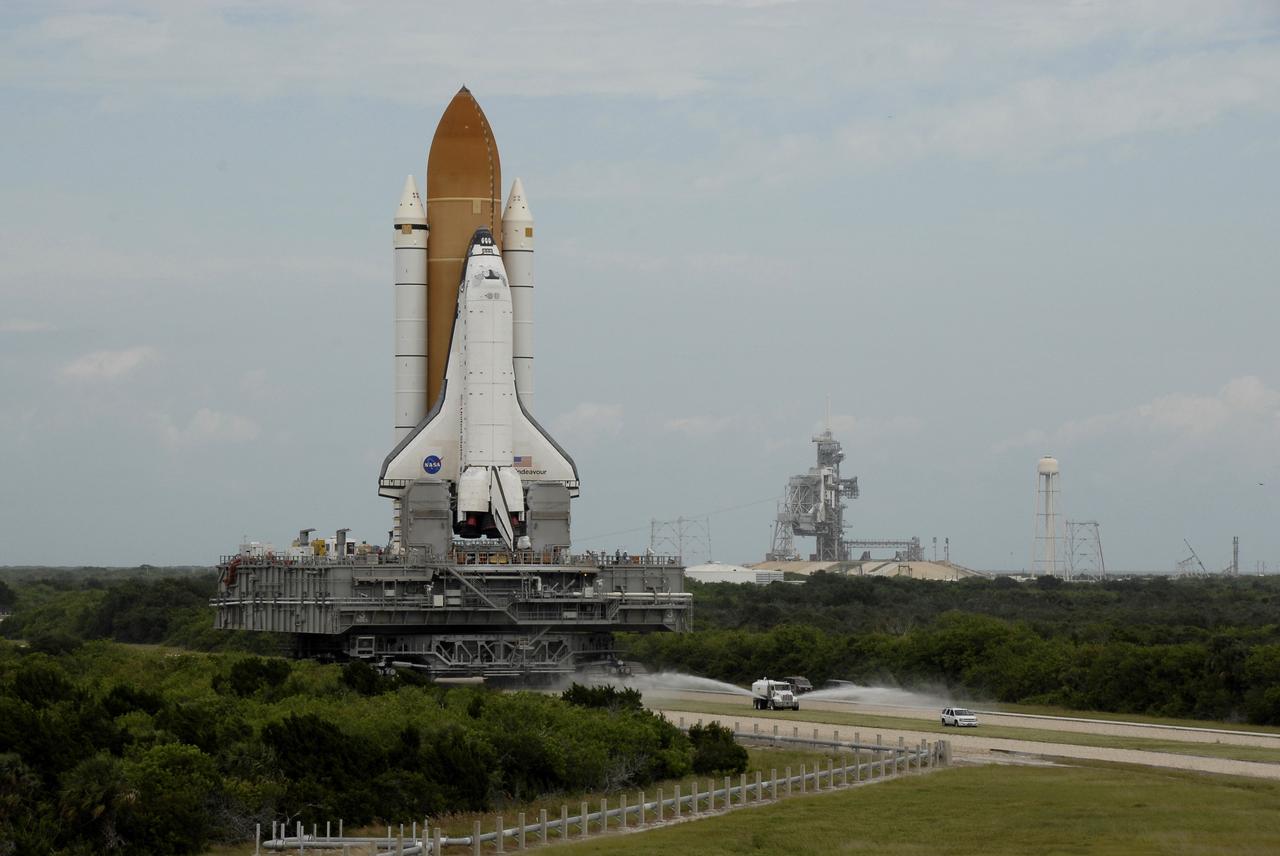
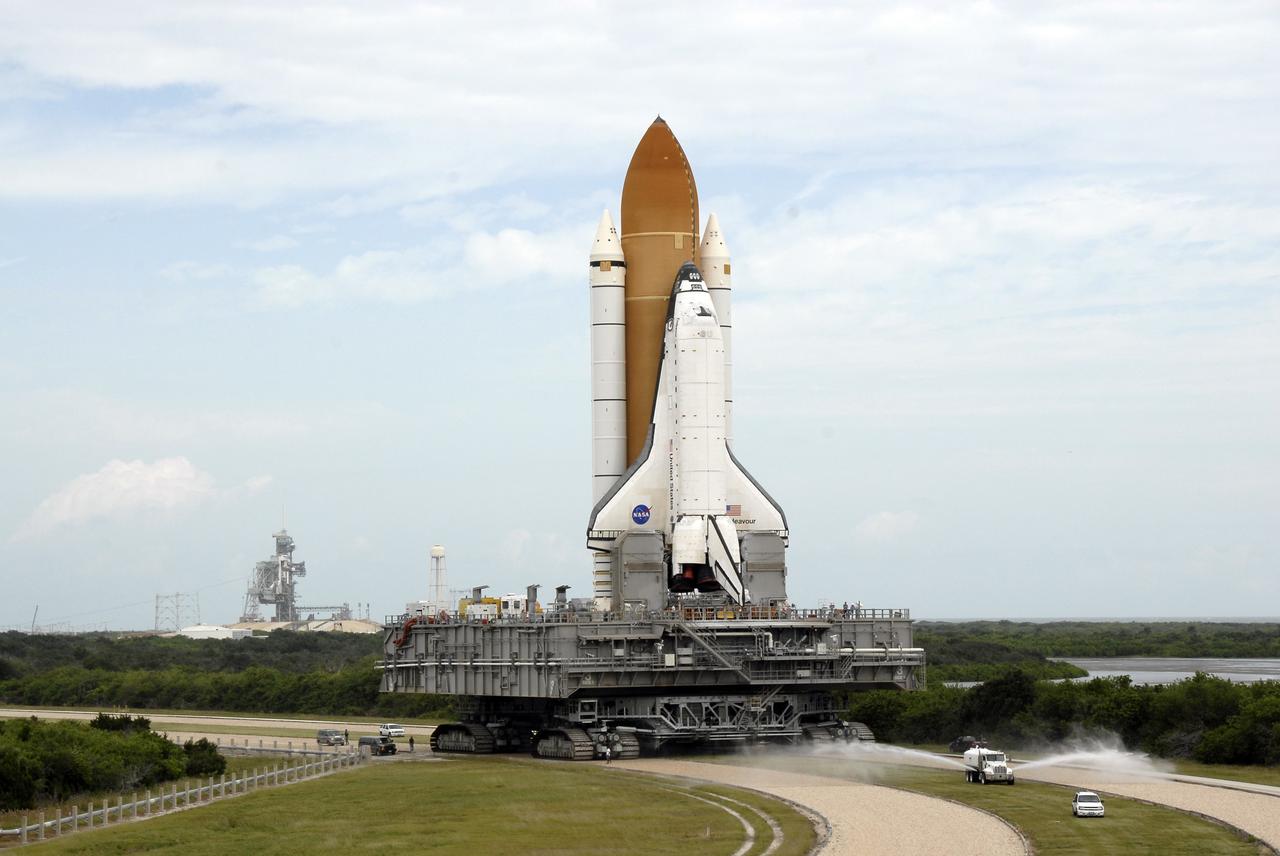
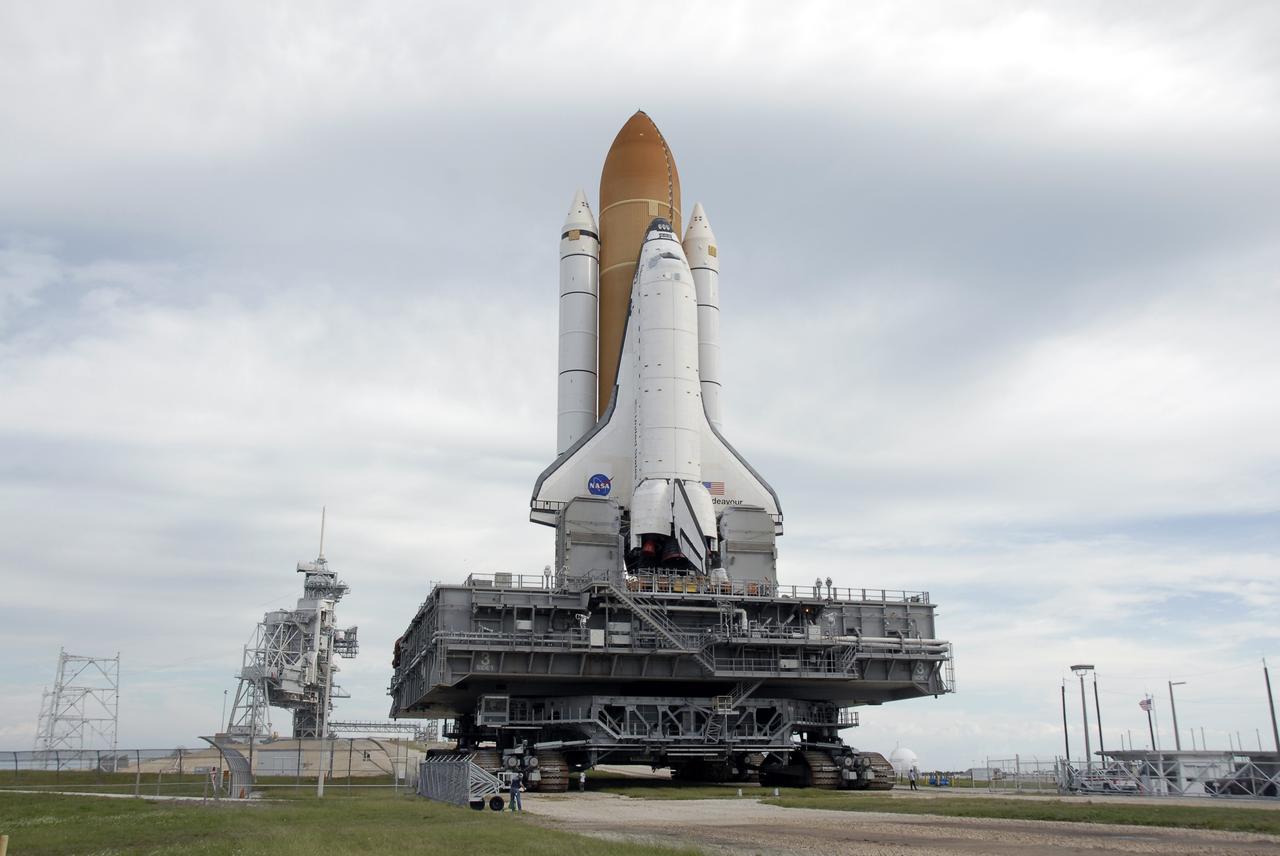
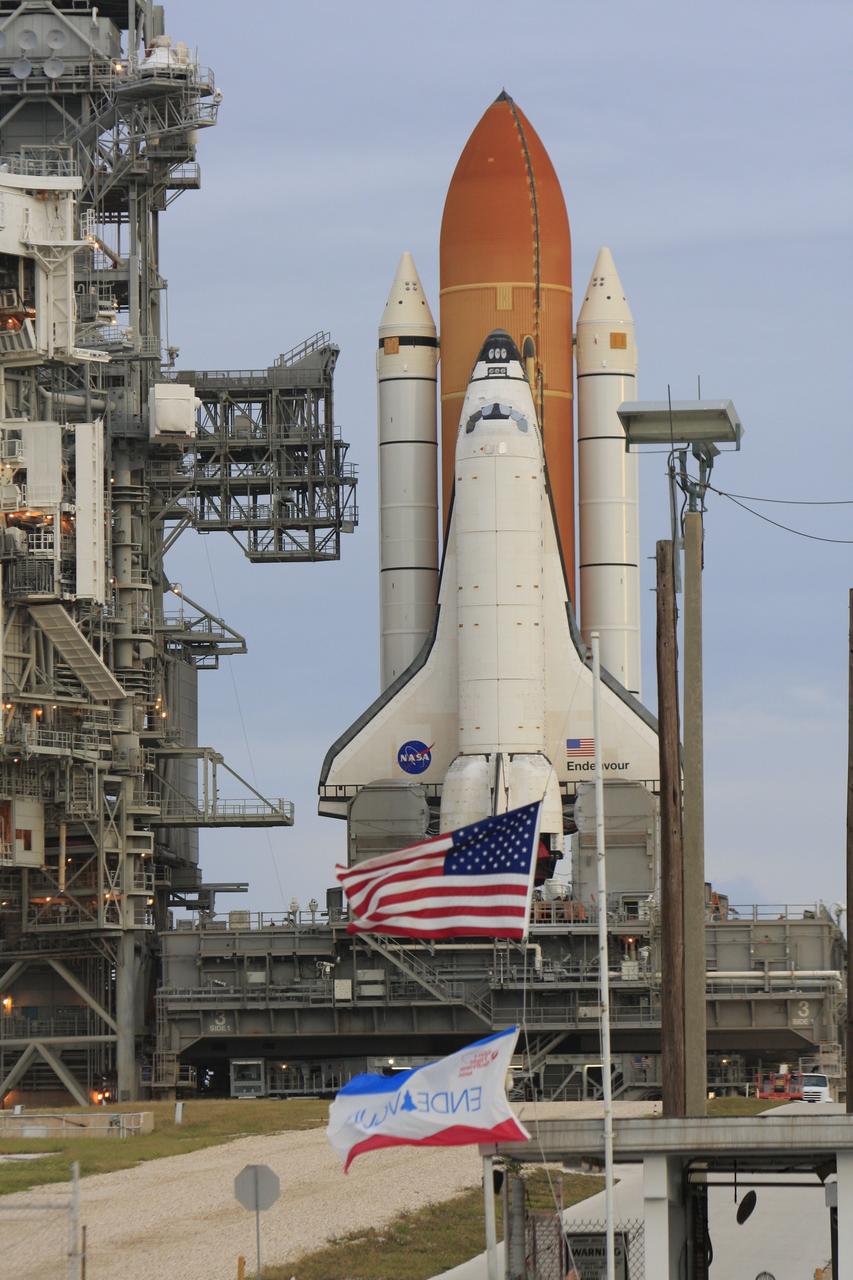
CAPE CANAVERAL, Fla. -  At NASA's Kennedy Space Center in Florida, space shuttle Endeavour is rolling off Launch Pad 39B for the 3.4-mile rollaround to Launch Pad 39A. First motion was at 8:28 a.m. EDT. Endeavour is targeted to launch Nov. 14 on the STS-126 mission.  On this 27th mission to the International Space Station, Endeavour will carry the Lightweight Multi-Purpose Experiment Support Structure Carrier and the Multi-Purpose Logistics Module Leonardo that will hold supplies and equipment, including additional crew quarters, additional exercise equipment, spare hardware and equipment for the regenerative life support system.  Photo credit: NASA/Kim Shiflett
KSC-08pd3335
CAPE CANAVERAL, Fla. -  At NASA's Kennedy Space Center in Florida, space shuttle Endeavour turns toward Launch Pad 39A after rolling off Launch Pad 39B. First motion was at 8:28 a.m. EDT.  Endeavour is targeted to launch Nov. 14 on the STS-126 mission. On this 27th mission to the International Space Station, Endeavour will carry the Lightweight Multi-Purpose Experiment Support Structure Carrier and the Multi-Purpose Logistics Module Leonardo that will hold supplies and equipment, including additional crew quarters, additional exercise equipment, spare hardware and equipment for the regenerative life support system.  Photo credit: NASA/Kim Shiflett
KSC-08pd3340
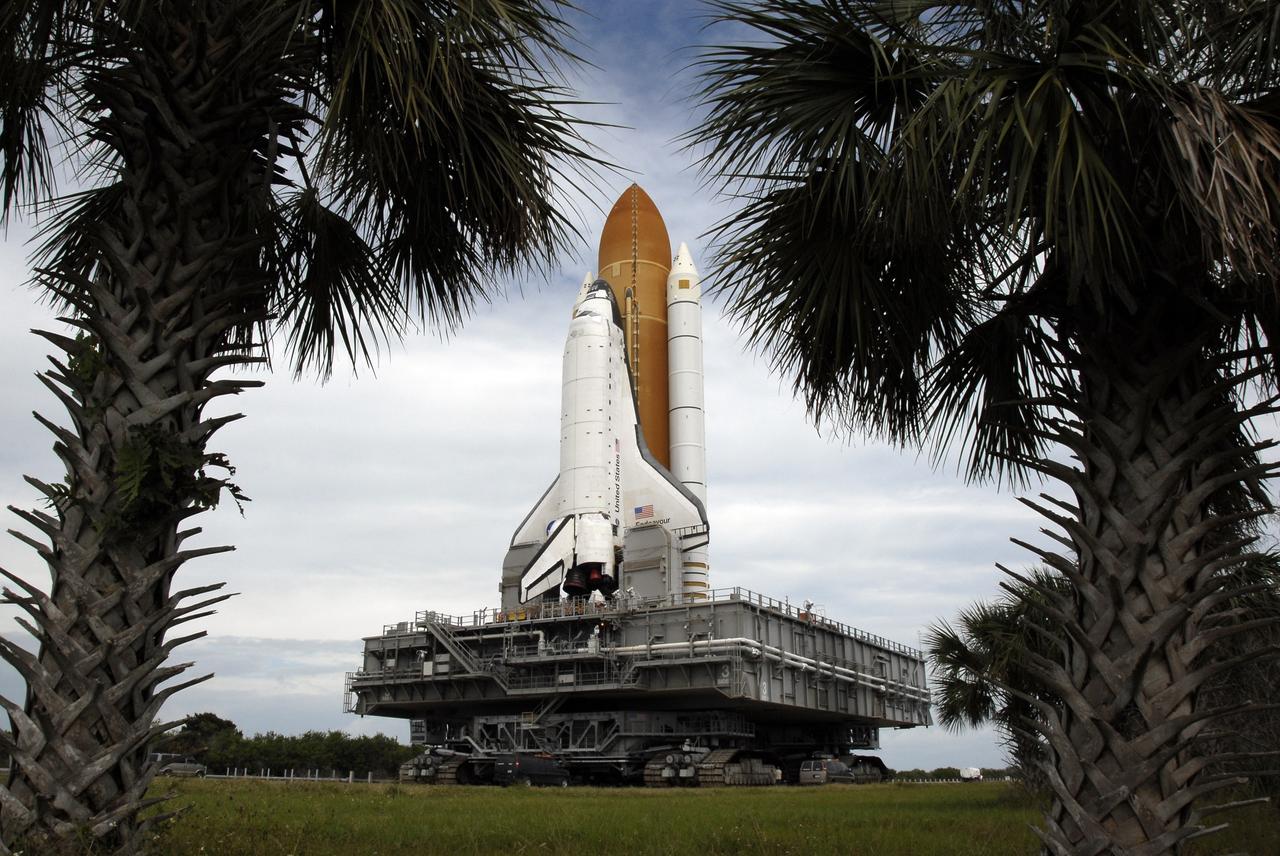
CAPE CANAVERAL, Fla. -   Palmettos appear to frame space shuttle Endeavour as it rolls toward Launch Pad 39A on NASA's Kennedy Space Center in Florida.  The shuttle earlier moved off Launch Pad 39B starting at 8:28 am. EDT and headed for pad 39A.  Endeavour is targeted to launch Nov. 14 on the STS-126 mission. On this 27th mission to the International Space Station, Endeavour will carry the Lightweight Multi-Purpose Experiment Support Structure Carrier and the Multi-Purpose Logistics Module Leonardo that will hold supplies and equipment, including additional crew quarters, additional exercise equipment, spare hardware and equipment for the regenerative life support system.  Photo credit: NASA/Kim Shiflett
KSC-08pd3343
CAPE CANAVERAL, Fla. -  At NASA's Kennedy Space Center in Florida, space shuttle Endeavour rolls off Launch Pad 39B for the 3.4-mile rollaround to Launch Pad 39A. First motion was at 8:28 a.m. EDT. Endeavour is targeted to launch Nov. 14 on the STS-126 mission. On this 27th mission to the International Space Station, Endeavour will carry the Lightweight Multi-Purpose Experiment Support Structure Carrier and the Multi-Purpose Logistics Module Leonardo that will hold supplies and equipment, including additional crew quarters, additional exercise equipment, spare hardware and equipment for the regenerative life support system.  Photo credit: NASA/Troy Cryder
KSC-08pd3355
CAPE CANAVERAL, Fla. -  At NASA's Kennedy Space Center in Florida, space shuttle Endeavour rolls toward Launch Pad 39A, at right.  The shuttle earlier moved off Launch Pad 39B starting at 8:28 am. EDT to head for pad 39A.  Endeavour is targeted to launch Nov. 14 on the STS-126 mission. On this 27th mission to the International Space Station, Endeavour will carry the Lightweight Multi-Purpose Experiment Support Structure Carrier and the Multi-Purpose Logistics Module Leonardo that will hold supplies and equipment, including additional crew quarters, additional exercise equipment, spare hardware and equipment for the regenerative life support system.  Photo credit: NASA/Kim Shiflett
KSC-08pd3344
CAPE CANAVERAL, Fla. -  At NASA's Kennedy Space Center in Florida, space shuttle Endeavour begins rolling off Launch Pad 39B for the 3.4-mile rollaround to Launch Pad 39A. First motion was at 8:28 a.m. EDT.  Endeavour is targeted to launch Nov. 14 on the STS-126 mission. On this 27th mission to the International Space Station, Endeavour will carry the Lightweight Multi-Purpose Experiment Support Structure Carrier and the Multi-Purpose Logistics Module Leonardo that will hold supplies and equipment, including additional crew quarters, additional exercise equipment, spare hardware and equipment for the regenerative life support system.  Photo credit: NASA/Troy Cryder
KSC-08pd3354
CAPE CANAVERAL, Fla. -  At NASA's Kennedy Space Center in Florida, space shuttle Endeavour atop its mobile launcher platform leave Launch Pad 39B behind as it rolls around to Launch Pad 39A. First motion was at 8:28 a.m. EDT. Endeavour is targeted to launch Nov. 14 on the STS-126 mission. On this 27th mission to the International Space Station, Endeavour will carry the Lightweight Multi-Purpose Experiment Support Structure Carrier and the Multi-Purpose Logistics Module Leonardo that will hold supplies and equipment, including additional crew quarters, additional exercise equipment, spare hardware and equipment for the regenerative life support system.  Photo credit: NASA/Kim Shiflett
KSC-08pd3339
CAPE CANAVERAL, Fla. -  At NASA's Kennedy Space Center in Florida, space shuttle Endeavour turns toward Launch Pad 39A after rolling off Launch Pad 39B. First motion from pad 39B was at 8:28 a.m. EDT.  Endeavour is targeted to launch Nov. 14 on the STS-126 mission.  On this 27th mission to the International Space Station, Endeavour will carry the Lightweight Multi-Purpose Experiment Support Structure Carrier and the Multi-Purpose Logistics Module Leonardo that will hold supplies and equipment, including additional crew quarters, additional exercise equipment, spare hardware and equipment for the regenerative life support system.  Photo credit: NASA/Kim Shiflett
KSC-08pd3341
Construction of the new remote launch vehicle hangar (right) is closer to completion. It is at the south end of the Shuttle Landing Facility at KSC. Next to the multi-purpose RLV hangar are facilities for related ground support equipment and administrative/technical support. Astronaut Road is seen near the top of the photo
KSC00pp0434
This aerial photo focuses on the remote launch vehicle (RLV) hangar, still under construction. It sits at the south end of the Shuttle Landing Facility. Adjacent to the multi-purpose RLV hangar (above it) are facilities for related ground support equipment and administrative/technical support. The top of the photo captures a portion of the parking tarmac near the runway
KSC-00pp0441
Construction of the new remote launch vehicle hangar (right) is closer to completion. It is at the south end of the Shuttle Landing Facility at KSC. Next to the multi-purpose RLV hangar are facilities for related ground support equipment and administrative/technical support. Astronaut Road is seen near the top of the photo
KSC-00pp0434
CAPE CANAVERAL, Fla. –   In the Payload Hazardous Servicing Facility, a carrier for the STS-125 Hubble Servicing Mission is on a work stand waiting to be moved to the scaffolding at right. The carrier, or pallet, will hold the flight support system equipment in space shuttle Atlantis’ payload bay. This and other carriers will be prepared for the integration of telescope science instruments, both internal and external replacement components, as well as the flight support equipment to be used by the astronauts during the servicing mission.  The three payload carriers are the Flight Support System, the Super Lightweight Interchangeable Carrier and the Orbital Replacement Unit Carrier.  At the end of July, a fourth and final carrier, the Multi-Use Lightweight Equipment carrier will join the others in the Payload Hazardous Servicing Facility where the Hubble payload is being prepared for the targeted Oct . 8 launch.  Photo credit: NASA/Jack Pfaller
KSC-08pd2027
CAPE CANAVERAL, Fla. –   In In the Payload Hazardous Servicing Facility, workers begin to move a carrier for the STS-125 Hubble Servicing Mission to nearby scaffolding.  The carrier, or pallet, will hold the flight support system equipment in space shuttle Atlantis’ payload bay. This and other carriers will be prepared for the integration of telescope science instruments, both internal and external replacement components, as well as the flight support equipment to be used by the astronauts during the servicing mission.  The three payload carriers are the Flight Support System, the Super Lightweight Interchangeable Carrier and the Orbital Replacement Unit Carrier.  At the end of July, a fourth and final carrier, the Multi-Use Lightweight Equipment carrier will join the others in the Payload Hazardous Servicing Facility where the Hubble payload is being prepared for the targeted Oct . 8 launch.  Photo credit: NASA/Jack Pfaller
KSC-08pd2030
CAPE CANAVERAL, Fla. –  In the Payload Hazardous Servicing Facility, workers move a carrier for the STS-125 Hubble Servicing Mission to scaffolding.  The carrier, or pallet, will hold the flight support system equipment in space shuttle Atlantis’ payload bay.  This and other carriers will be prepared for the integration of telescope science instruments, both internal and external replacement components, as well as the flight support equipment to be used by the astronauts during the servicing mission.  The three payload carriers are the Flight Support System, the Super Lightweight Interchangeable Carrier and the Orbital Replacement Unit Carrier.  At the end of July, a fourth and final carrier, the Multi-Use Lightweight Equipment carrier will join the others in the Payload Hazardous Servicing Facility where the Hubble payload is being prepared for the targeted Oct . 8 launch.  Photo credit: NASA/Jack Pfaller
KSC-08pd2031
CAPE CANAVERAL, Fla. –   In the Payload Hazardous Servicing Facility, workers secure a carrier for the STS-125 Hubble Servicing Mission on the work stand.  The carrier and stand will be moved to scaffolding. The carrier, or pallet, will hold the flight support system equipment in space shuttle Atlantis’ payload bay. This and other carriers will be prepared for the integration of telescope science instruments, both internal and external replacement components, as well as the flight support equipment to be used by the astronauts during the servicing mission.  The three payload carriers are the Flight Support System, the Super Lightweight Interchangeable Carrier and the Orbital Replacement Unit Carrier.  At the end of July, a fourth and final carrier, the Multi-Use Lightweight Equipment carrier will join the others in the Payload Hazardous Servicing Facility where the Hubble payload is being prepared for the targeted Oct . 8 launch.  Photo credit: NASA/Jack Pfaller
KSC-08pd2029
CAPE CANAVERAL, Fla. –  In the Payload Hazardous Servicing Facility, the flight support system carrier for the STS-125 Hubble Servicing Mission has been moved to scaffolding.  The carrier will hold the equipment in space shuttle Atlantis’ payload bay. This and other carriers will be prepared for the integration of telescope science instruments, both internal and external replacement components, as well as the flight support equipment to be used by the astronauts during the servicing mission.  The three payload carriers are the Flight Support System, the Super Lightweight Interchangeable Carrier and the Orbital Replacement Unit Carrier.  At the end of July, a fourth and final carrier, the Multi-Use Lightweight Equipment carrier will join the others in the Payload Hazardous Servicing Facility where the Hubble payload is being prepared for the targeted Oct . 8 launch.  Photo credit: NASA/Jack Pfaller
KSC-08pd2032