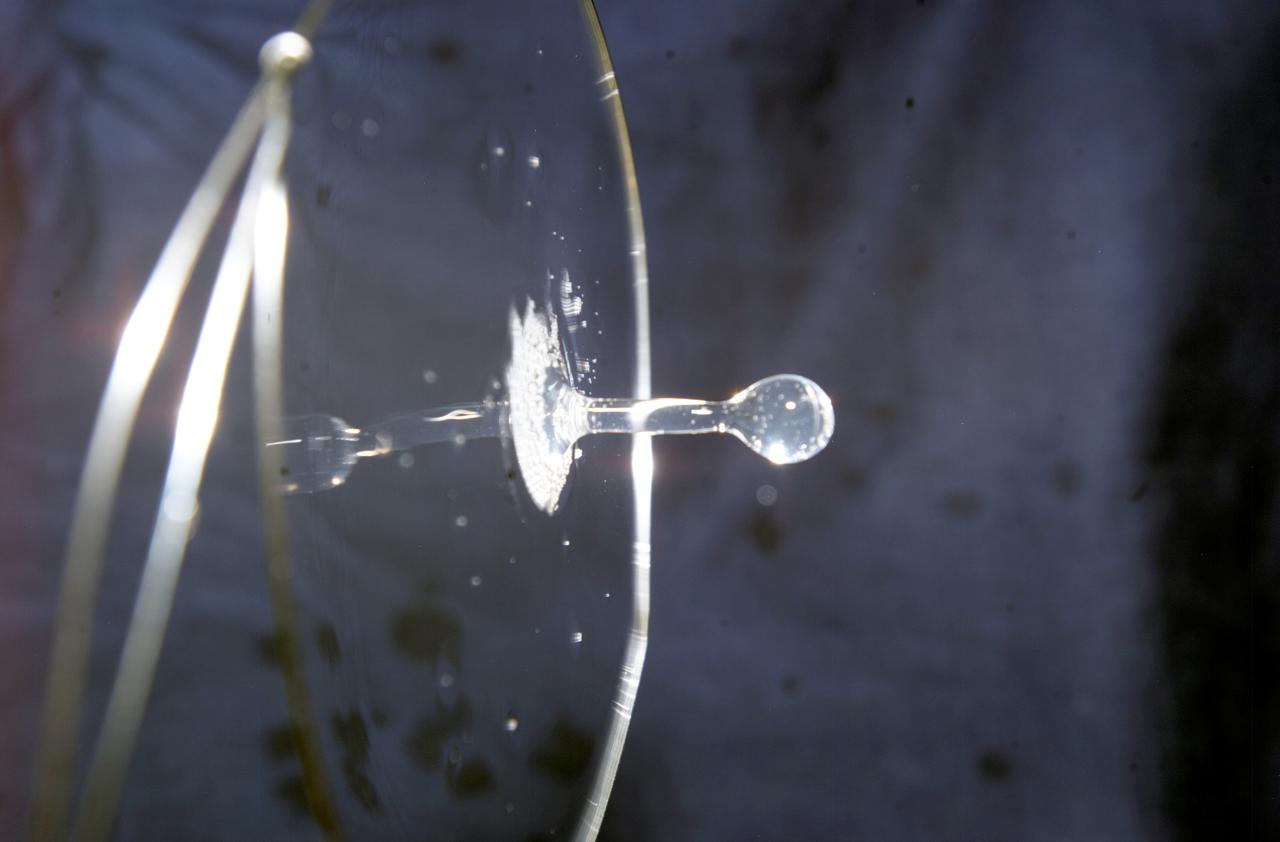
Astronaut Donald R. Pettit, Expedition Six NASA ISS science officer, photographed this view of a surface tension demonstration using water that is held in place by a metal loop. The experiment took place in the Destiny laboratory on the International Space Station (ISS). The Expedition Six crew was delivered to the station via the Space Shuttle Orbiter Endeavor STS-113 mission which was launched on November 23, 2002.
International Space Station (ISS)
Astronaut Donald R. Pettit, Expedition Six NASA ISS science officer, photographed this view of a surface tension demonstration using water that is held in place by a metal loop. The experiment took place in the Destiny laboratory on the International Space Station (ISS). The Expedition Six crew was delivered to the station via the Space Shuttle Orbiter Endeavor STS-113 mission which was launched on November 23, 2002.
International Space Station (ISS)
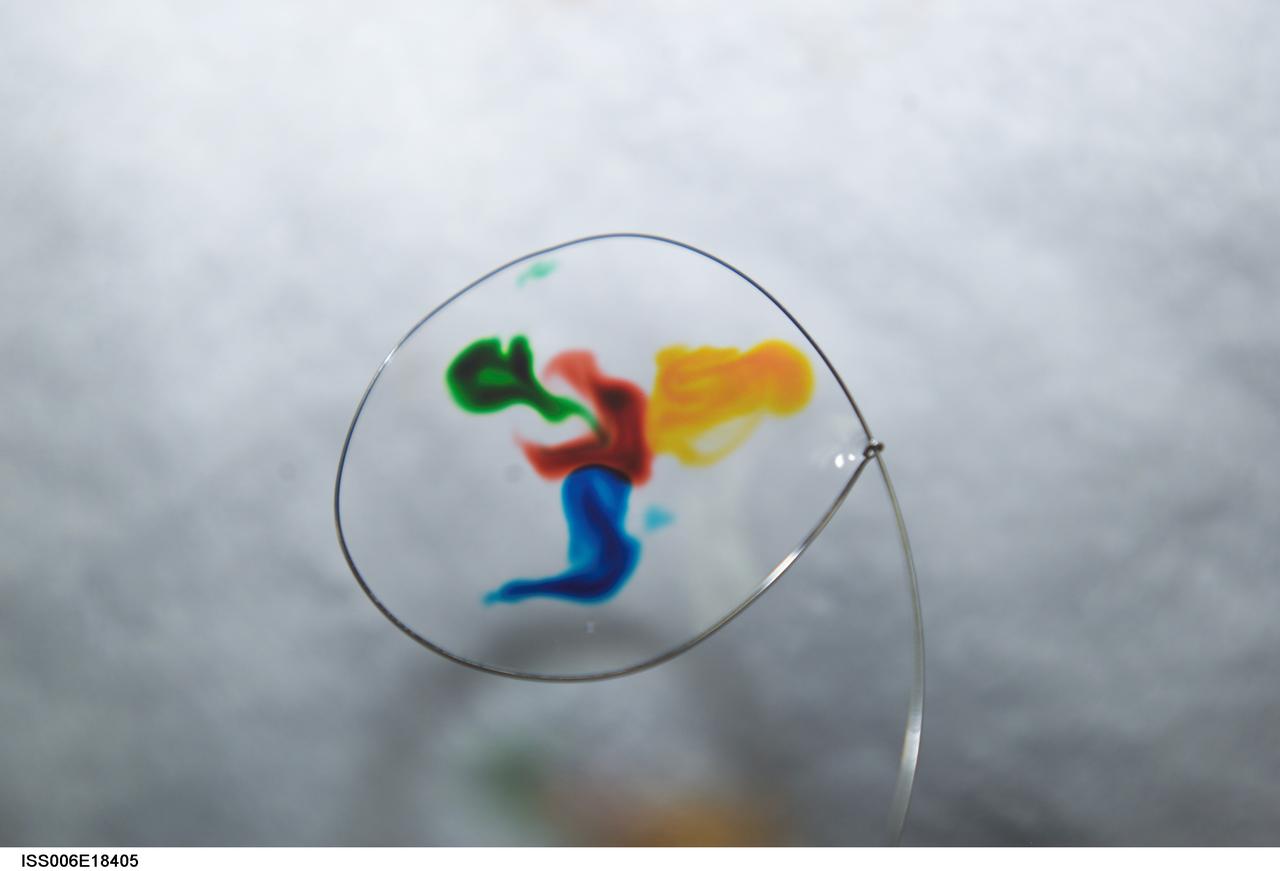
ISS006-E-18405 (19 January 2003) --- View of surface tension demonstration using water that is being held in place by a metal loop. Food coloring has been added to the water for demonstration purposes only. Astronaut Donald R. Pettit, Expedition Six NASA ISS science officer, photographed these demonstrations for educational purposes. The experiment took place in the Destiny laboratory on the International Space Station (ISS).
Surface Tension Demonstration using Water and Food Coloring in the U.S. Laboratory
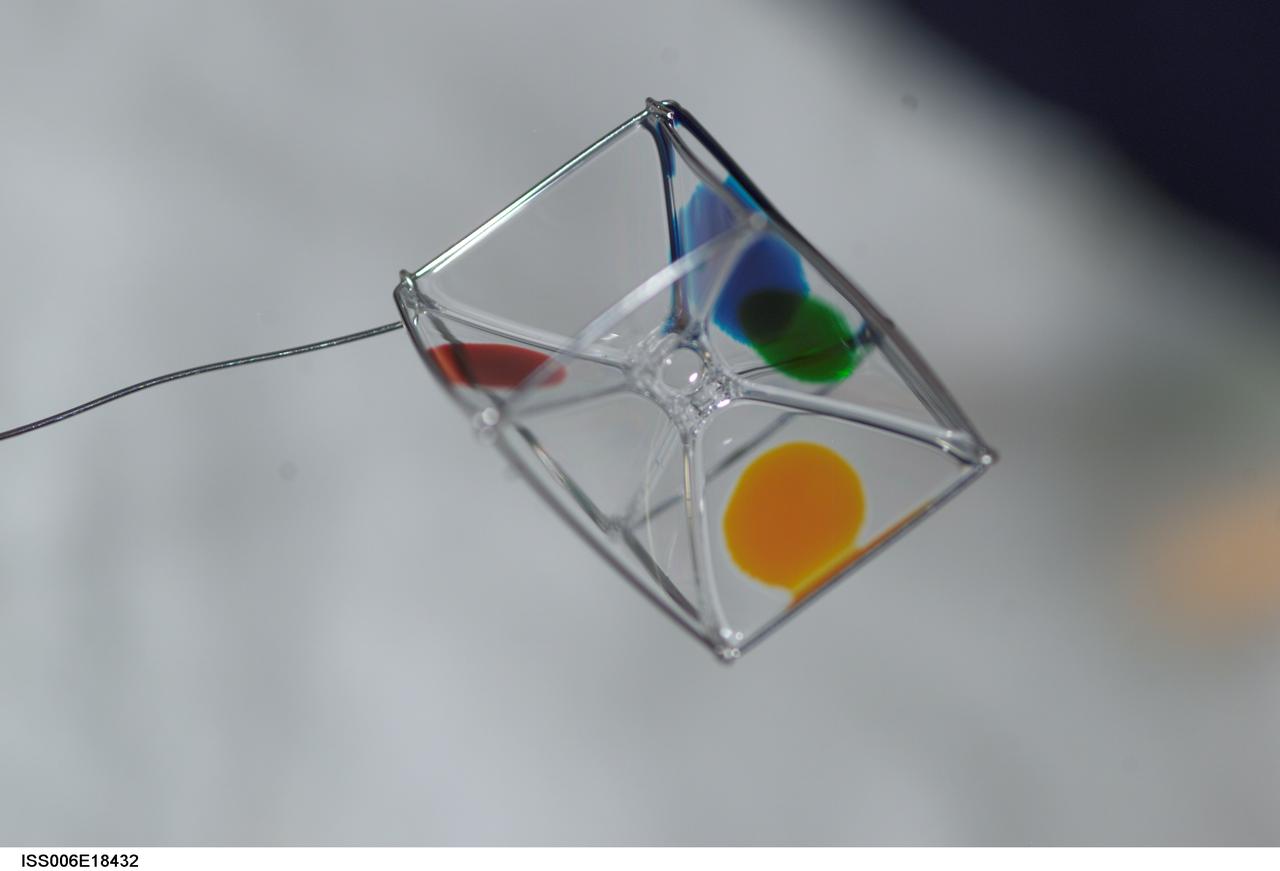
ISS006-E-18432 (19 January 2003) --- View of surface tension demonstration using water that is being held in place by a metal loop. Food coloring has been added to the water for demonstration purposes only. Astronaut Donald R. Pettit, Expedition Six NASA ISS science officer, photographed these demonstrations for educational purposes. The experiment took place in the Destiny laboratory on the International Space Station (ISS).
Surface Tension Demonstration using Water and Food Coloring in the U.S. Laboratory
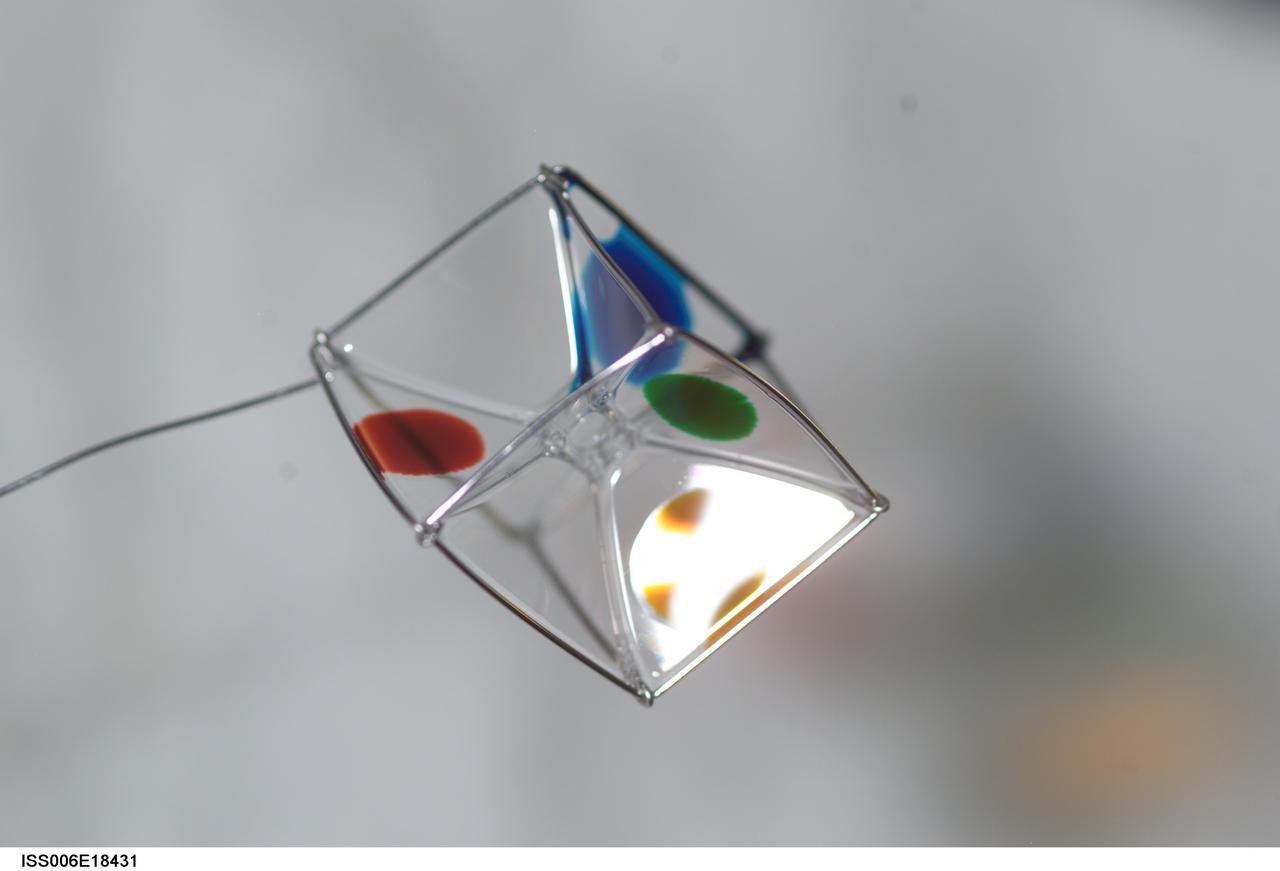
ISS006-E-18431 (19 January 2003) --- View of surface tension demonstration using water that is being held in place by a metal loop. Food coloring has been added to the water for demonstration purposes only. Astronaut Donald R. Pettit, Expedition Six NASA ISS science officer, photographed these demonstrations for educational purposes. The experiment took place in the Destiny laboratory on the International Space Station (ISS).
Surface Tension Demonstration using Water and Food Coloring in the U.S. Laboratory
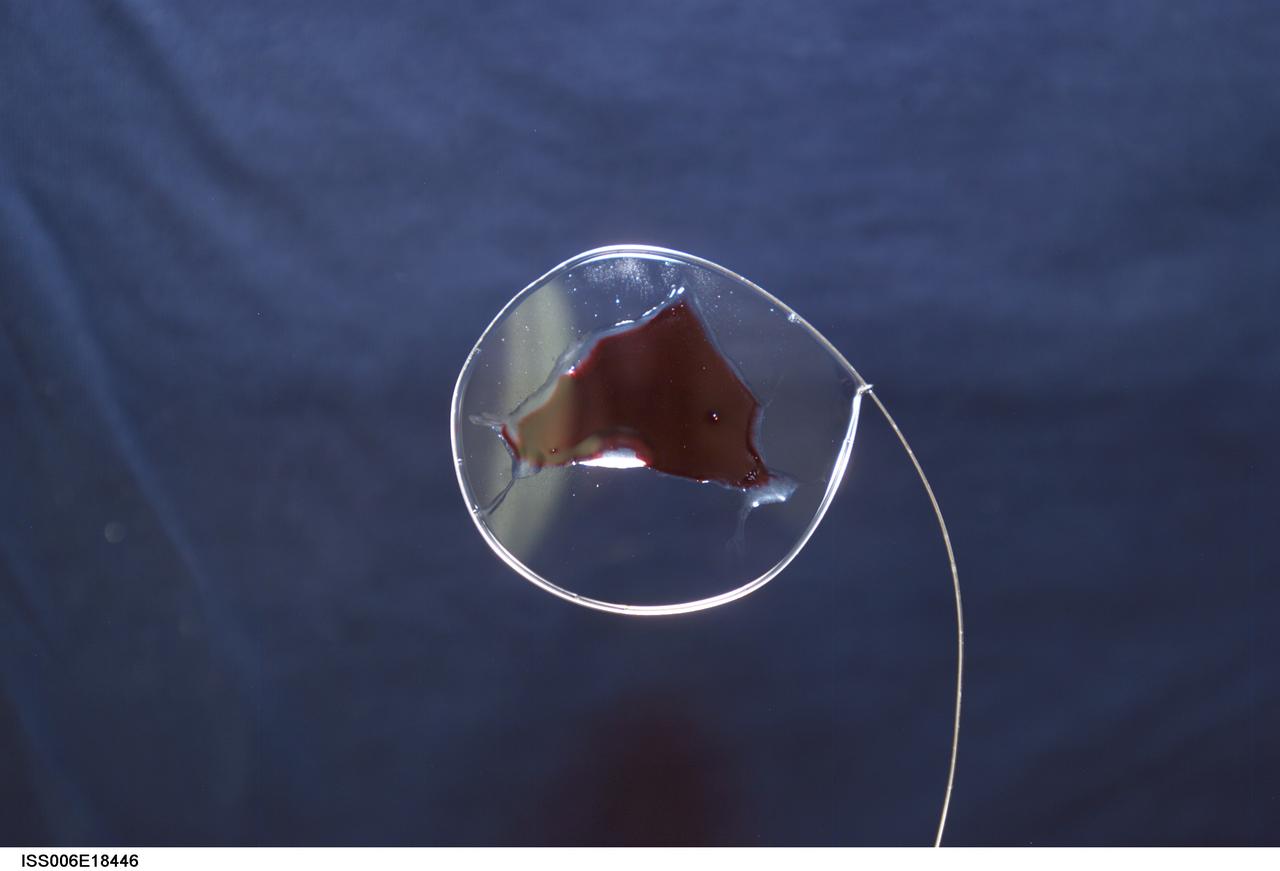
ISS006-E-18446 (19 January 2003) --- View of surface tension demonstration using water that is being held in place by a metal loop. Food coloring has been added to the water for demonstration purposes only. Astronaut Donald R. Pettit, Expedition Six NASA ISS science officer, photographed these demonstrations for educational purposes. The experiment took place in the Destiny laboratory on the International Space Station (ISS).
Surface Tension Demonstration using Water and Food Coloring in the U.S. Laboratory
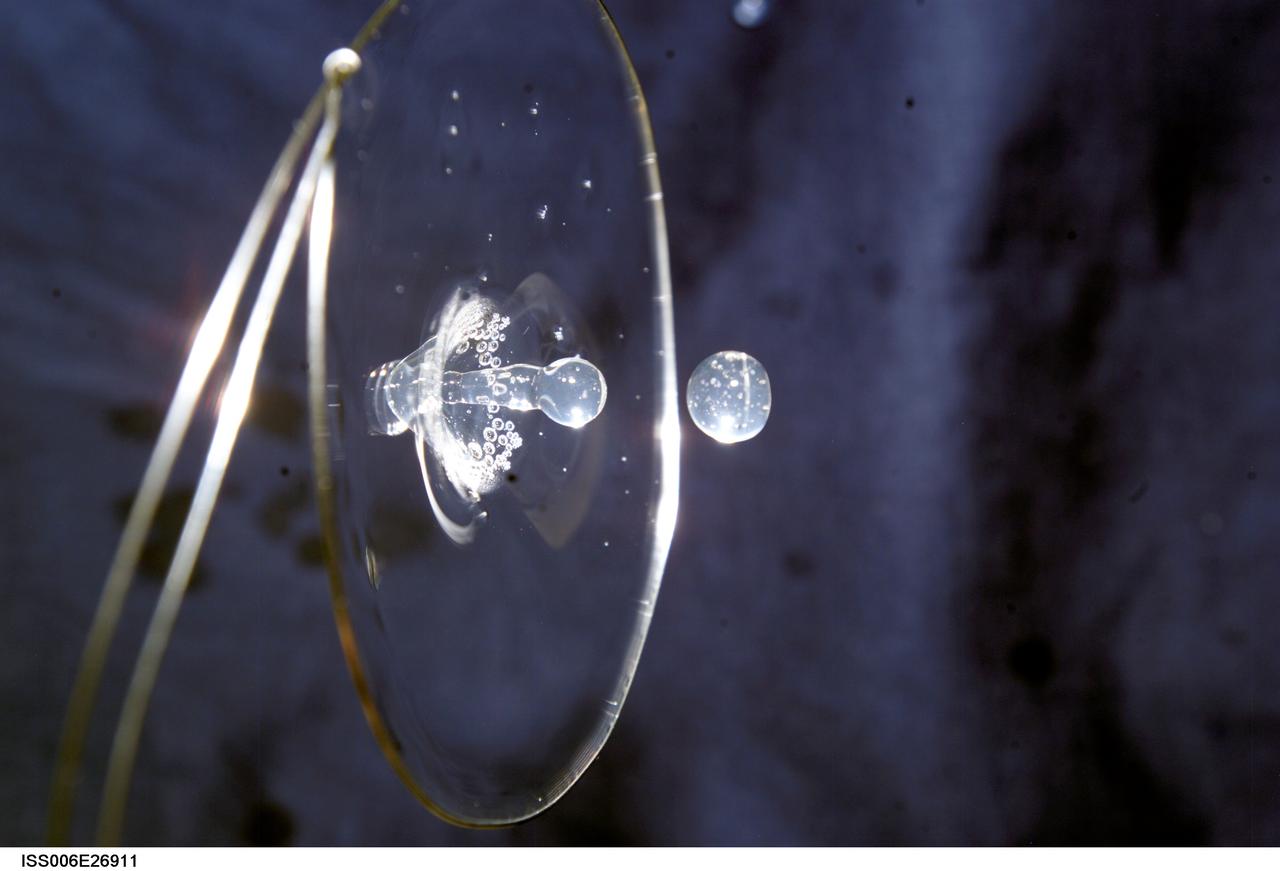
ISS006-E-26911 (16 February 2003) --- View of surface tension demonstration using water that is being held in place by a metal loop. Astronaut Donald R. Pettit, Expedition Six NASA ISS science officer, photographed these demonstrations for educational purposes. The experiment took place in the Destiny laboratory on the International Space Station (ISS).
View of a surface tension demonstration using water that is being held in place by a 50mm metal loop
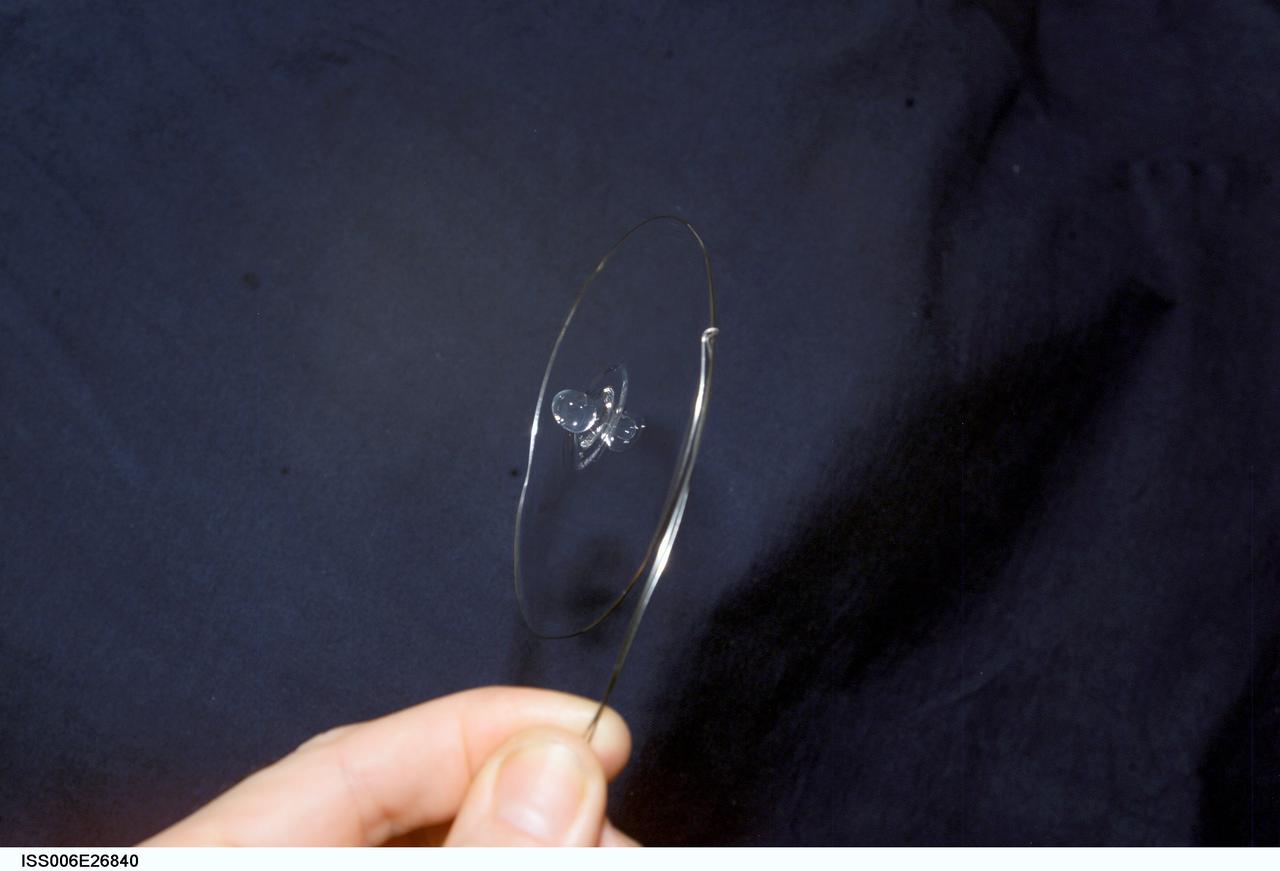
ISS006-E-26840 (16 February 2003) --- View of surface tension demonstration using water that is being held in place by a metal loop. Astronaut Donald R. Pettit, Expedition Six NASA ISS science officer, photographed these demonstrations for educational purposes. The experiment took place in the Destiny laboratory on the International Space Station (ISS).
View of a surface tension demonstration using water that is being held in place by a 50mm metal loop
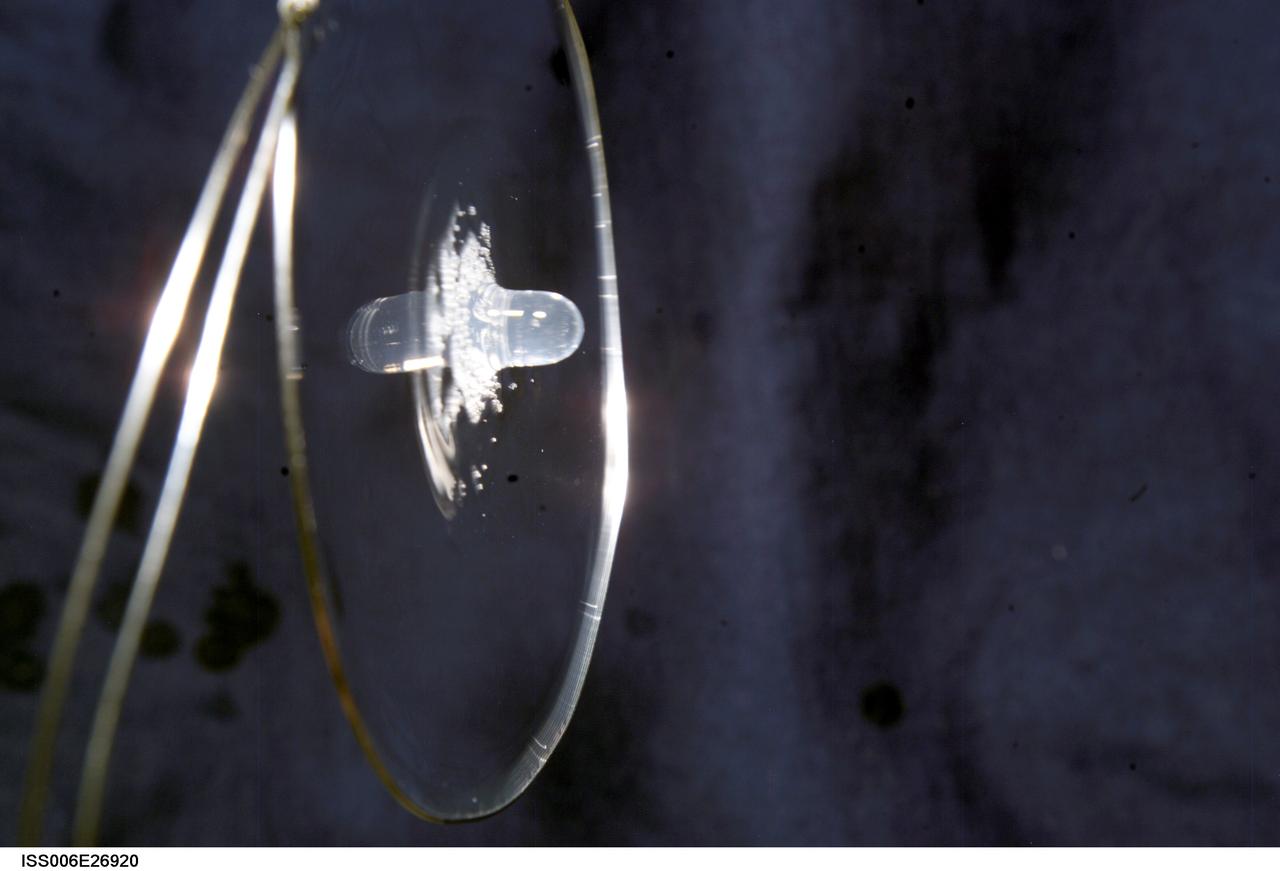
ISS006-E-26920 (16 February 2003) --- View of surface tension demonstration using water that is being held in place by a metal loop. Astronaut Donald R. Pettit, Expedition Six NASA ISS science officer, photographed these demonstrations for educational purposes. The experiment took place in the Destiny laboratory on the International Space Station (ISS).
View of a surface tension demonstration using water that is being held in place by a 50mm metal loop
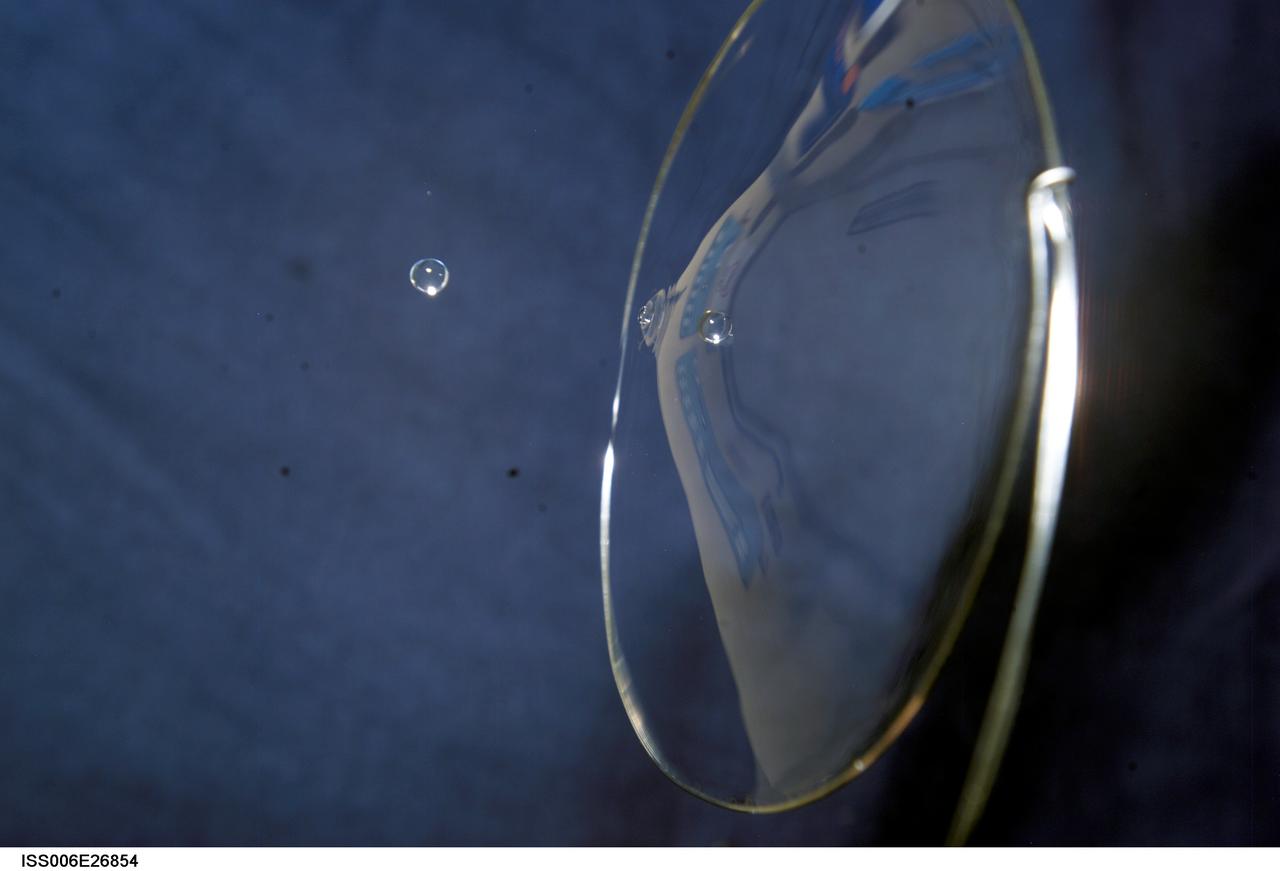
ISS006-E-26854 (16 February 2003) --- View of surface tension demonstration using water that is being held in place by a metal loop. Astronaut Donald R. Pettit, Expedition Six NASA ISS science officer, photographed these demonstrations for educational purposes. The experiment took place in the Destiny laboratory on the International Space Station (ISS).
View of a surface tension demonstration using water that is being held in place by a 50mm metal loop
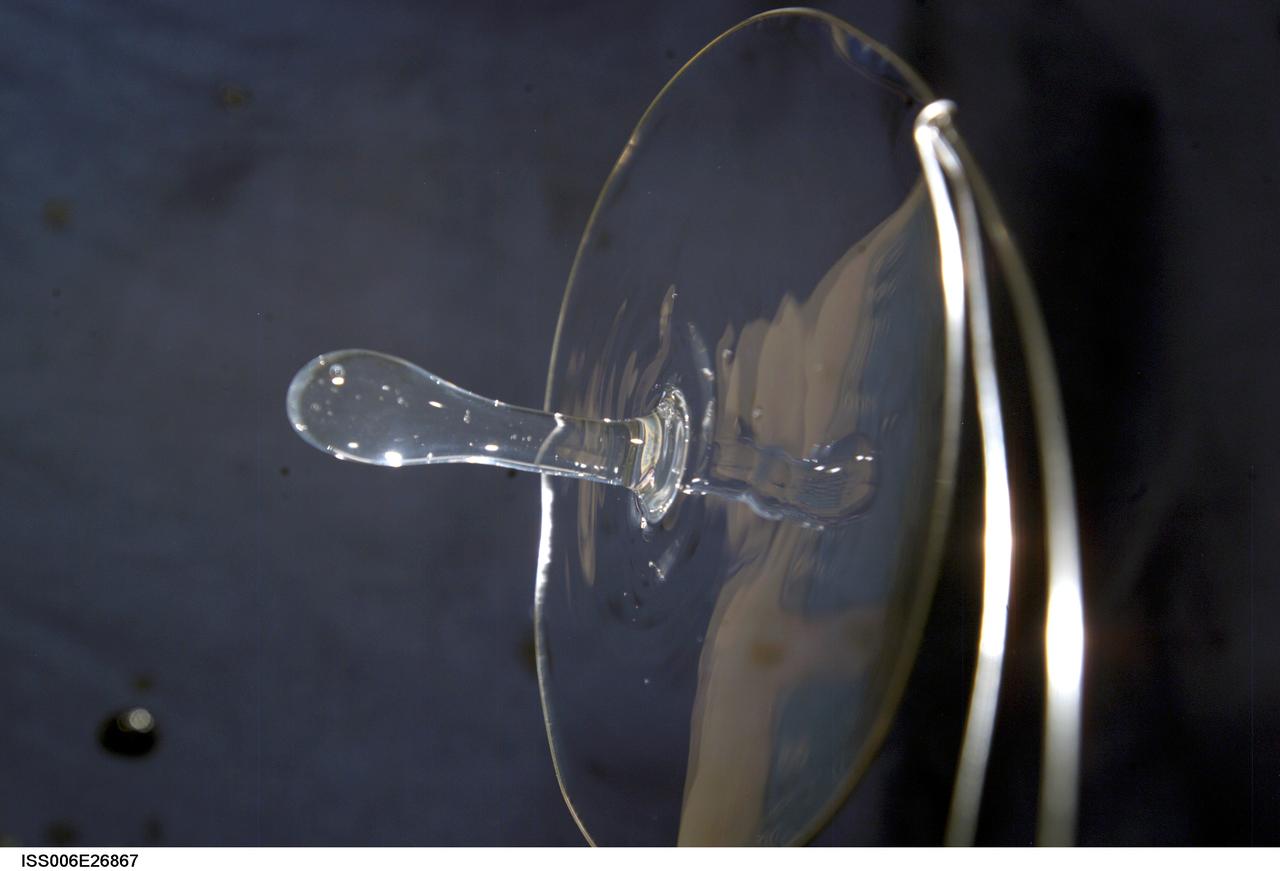
ISS006-E-26867 (16 February 2003) --- View of surface tension demonstration using water that is being held in place by a metal loop. Astronaut Donald R. Pettit, Expedition Six NASA ISS science officer, photographed these demonstrations for educational purposes. The experiment took place in the Destiny laboratory on the International Space Station (ISS).
View of a surface tension demonstration using water that is being held in place by a 50mm metal loop
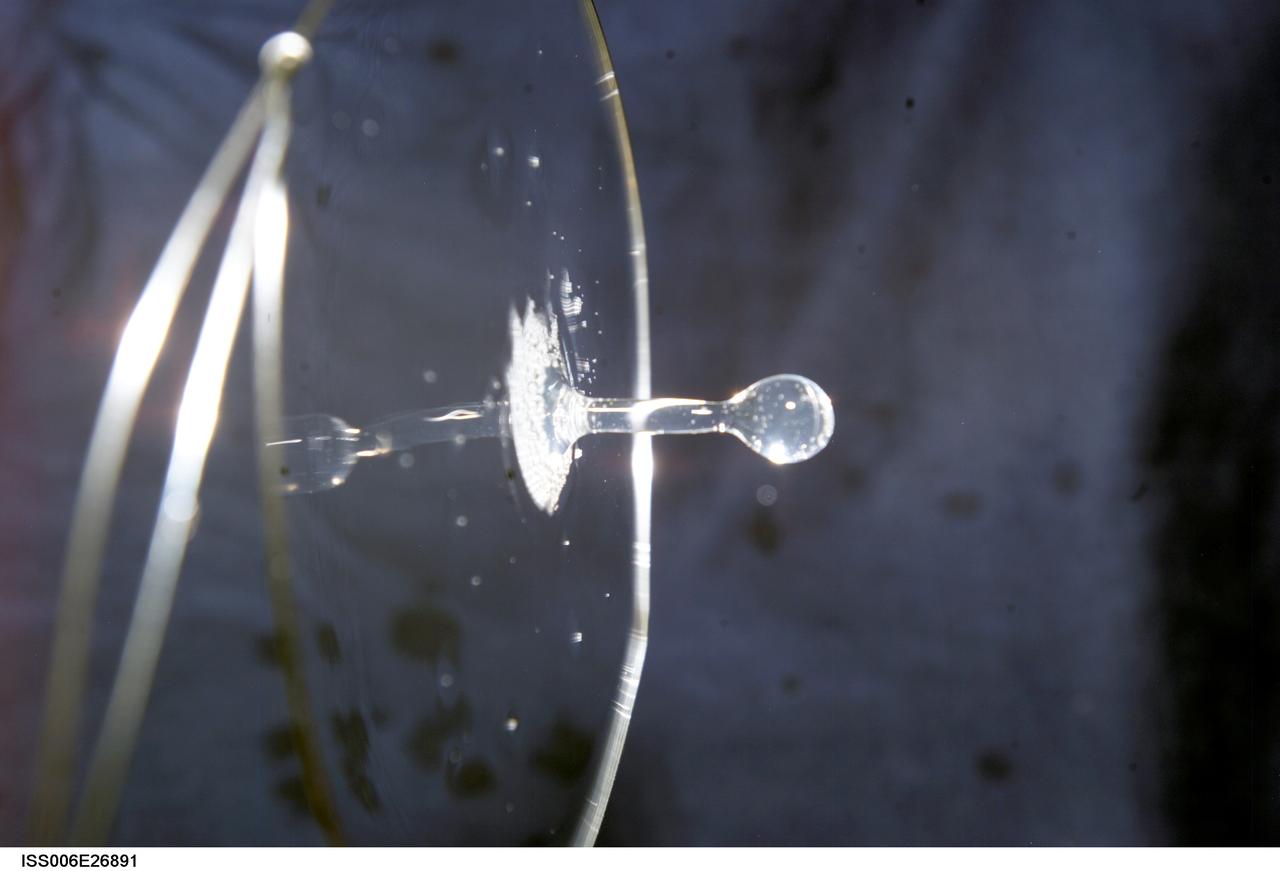
ISS006-E-26891 (16 February 2003) --- View of surface tension demonstration using water that is being held in place by a metal loop. Astronaut Donald R. Pettit, Expedition Six NASA ISS science officer, photographed these demonstrations for educational purposes. The experiment took place in the Destiny laboratory on the International Space Station (ISS).
View of a surface tension demonstration using water that is being held in place by a 50mm metal loop
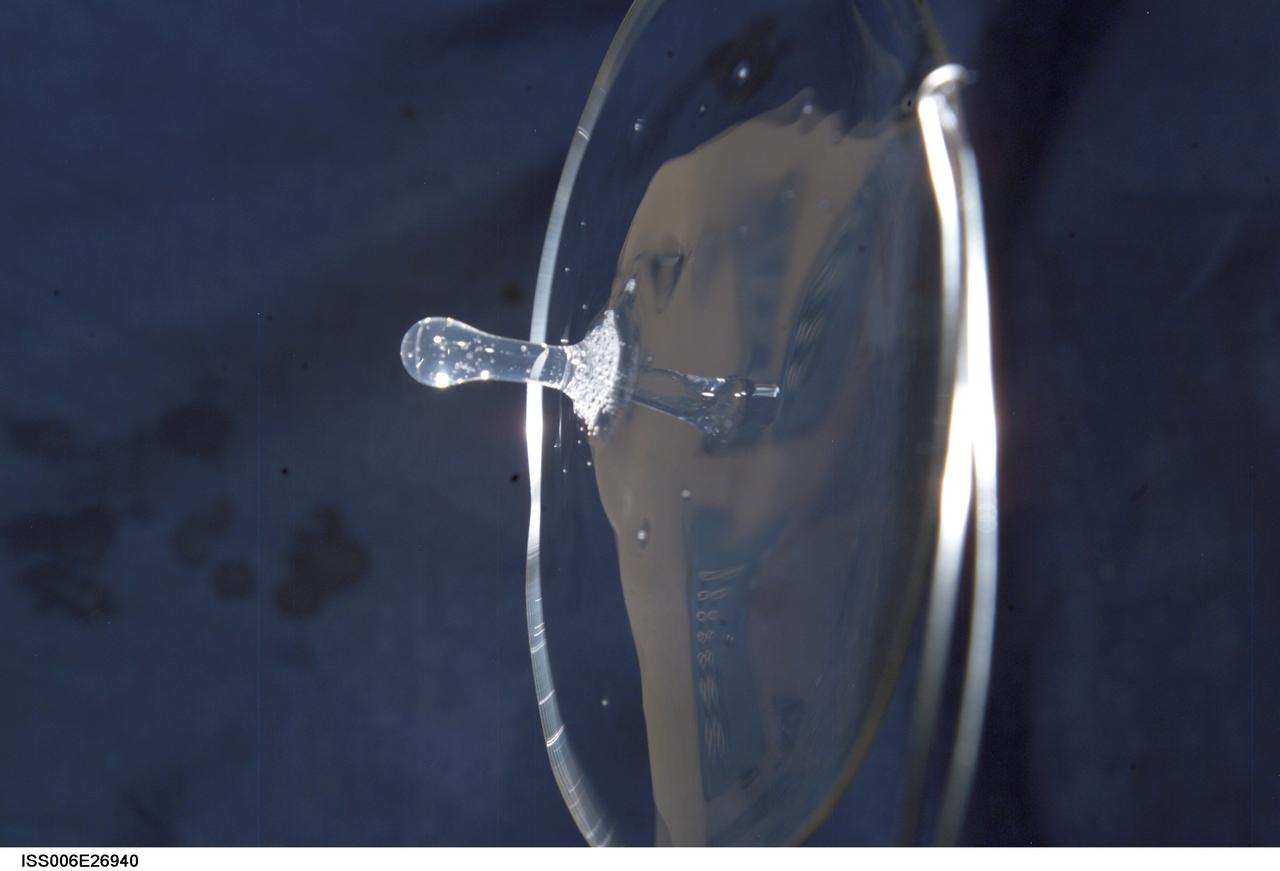
ISS006-E-26940 (16 February 2003) --- View of surface tension demonstration using water that is being held in place by a metal loop. Astronaut Donald R. Pettit, Expedition Six NASA ISS science officer, photographed these demonstrations for educational purposes. The experiment took place in the Destiny laboratory on the International Space Station (ISS).
View of a surface tension demonstration using water that is being held in place by a 50mm metal loop
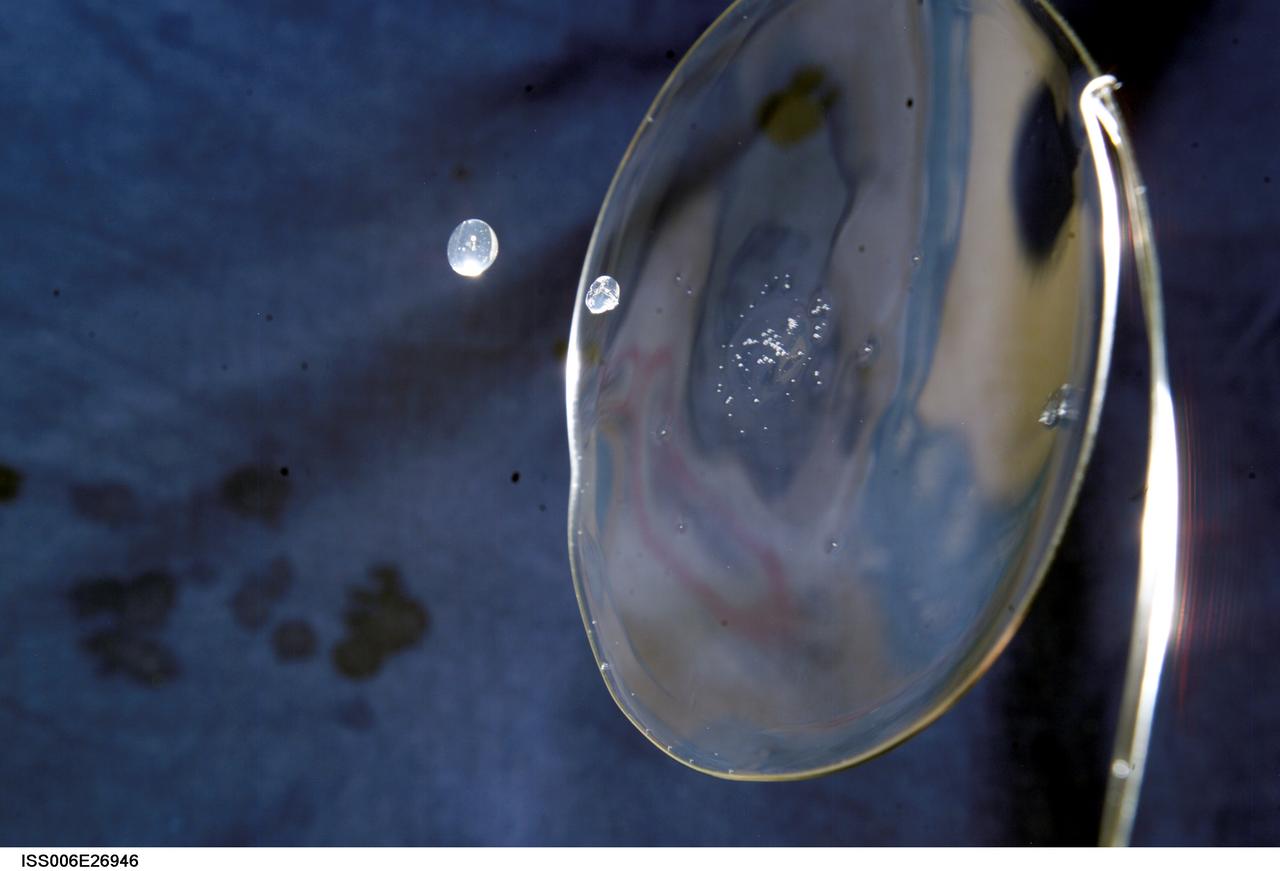
ISS006-E-26946 (16 February 2003) --- View of surface tension demonstration using water that is being held in place by a metal loop. Astronaut Donald R. Pettit, Expedition Six NASA ISS science officer, photographed these demonstrations for educational purposes. The experiment took place in the Destiny laboratory on the International Space Station (ISS).
View of a surface tension demonstration using water that is being held in place by a 50mm metal loop
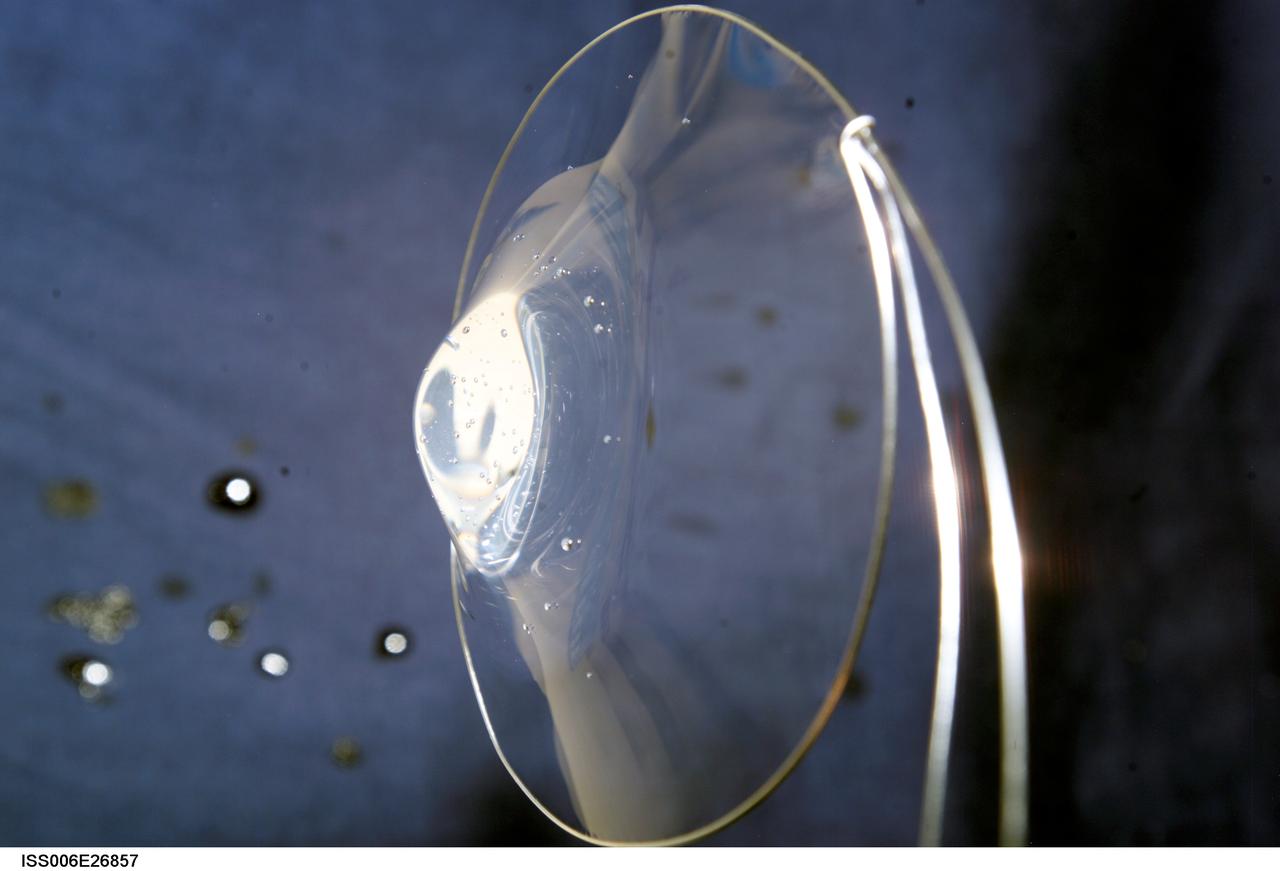
ISS006-E-26857 (16 February 2003) --- View of surface tension demonstration using water that is being held in place by a metal loop. Astronaut Donald R. Pettit, Expedition Six NASA ISS science officer, photographed these demonstrations for educational purposes. The experiment took place in the Destiny laboratory on the International Space Station (ISS).
View of a surface tension demonstration using water that is being held in place by a 50mm metal loop
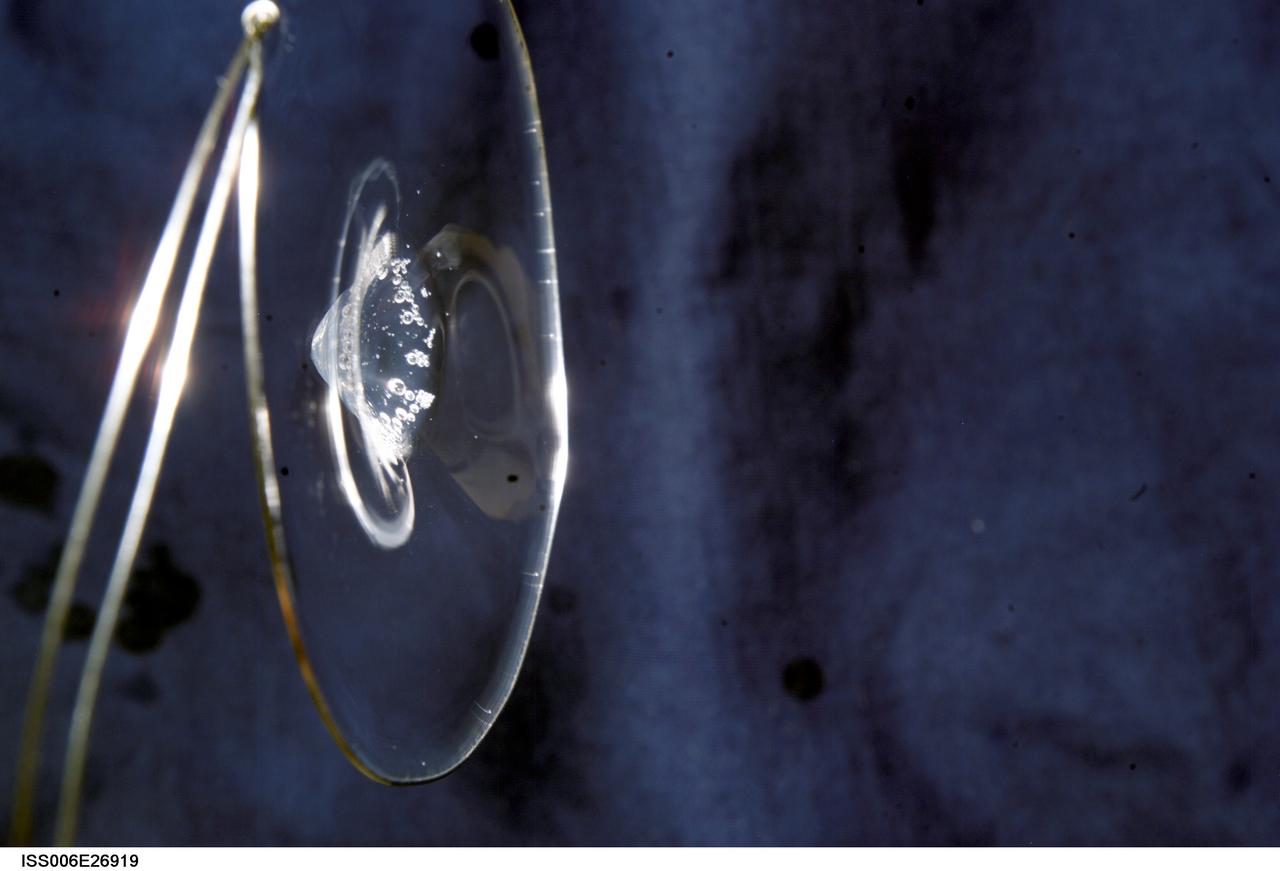
ISS006-E-26919 (16 February 2003) --- View of surface tension demonstration using water that is being held in place by a metal loop. Astronaut Donald R. Pettit, Expedition Six NASA ISS science officer, photographed these demonstrations for educational purposes. The experiment took place in the Destiny laboratory on the International Space Station (ISS).
View of a surface tension demonstration using water that is being held in place by a 50mm metal loop
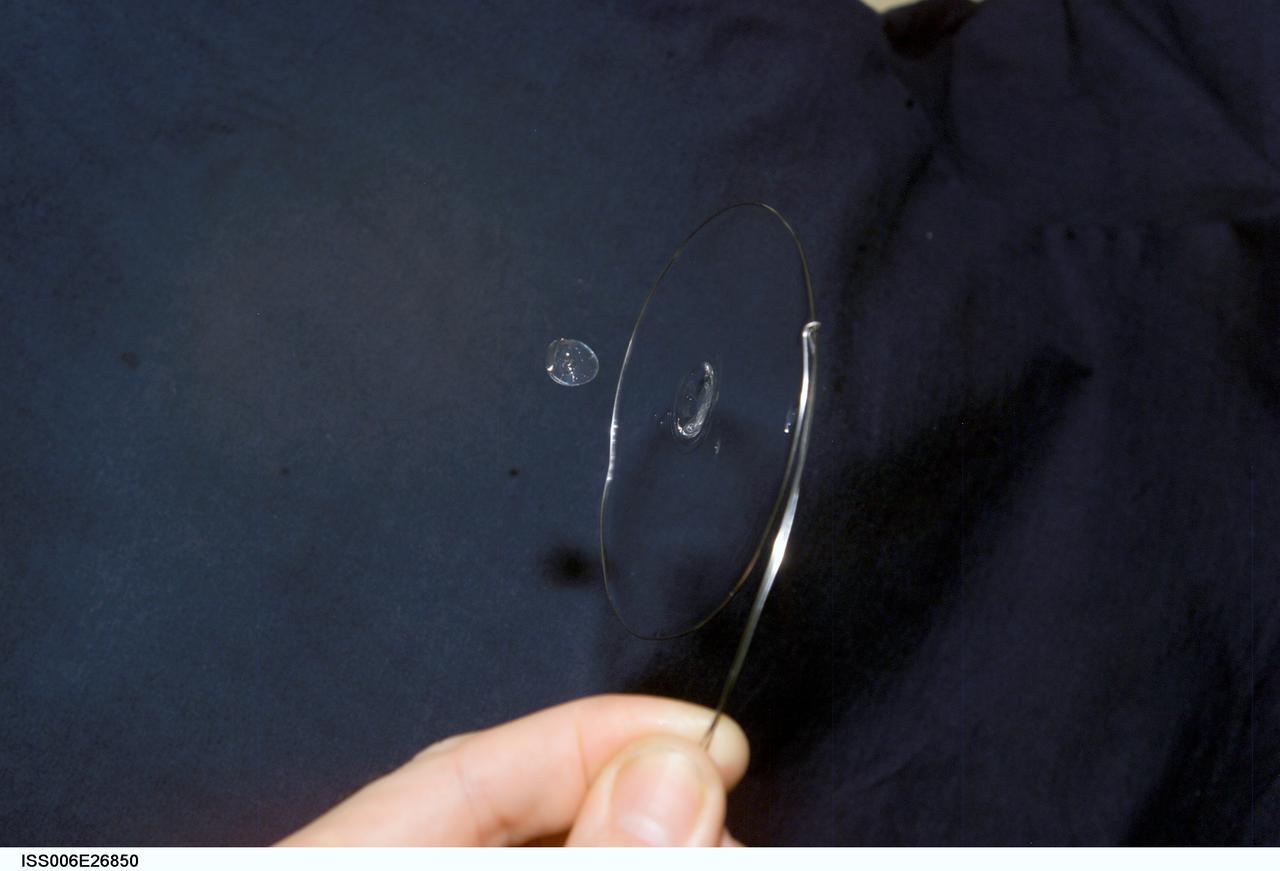
ISS006-E-26850 (16 February 2003) --- View of surface tension demonstration using water that is being held in place by a metal loop. Astronaut Donald R. Pettit, Expedition Six NASA ISS science officer, photographed these demonstrations for educational purposes. The experiment took place in the Destiny laboratory on the International Space Station (ISS).
View of a surface tension demonstration using water that is being held in place by a 50mm metal loop
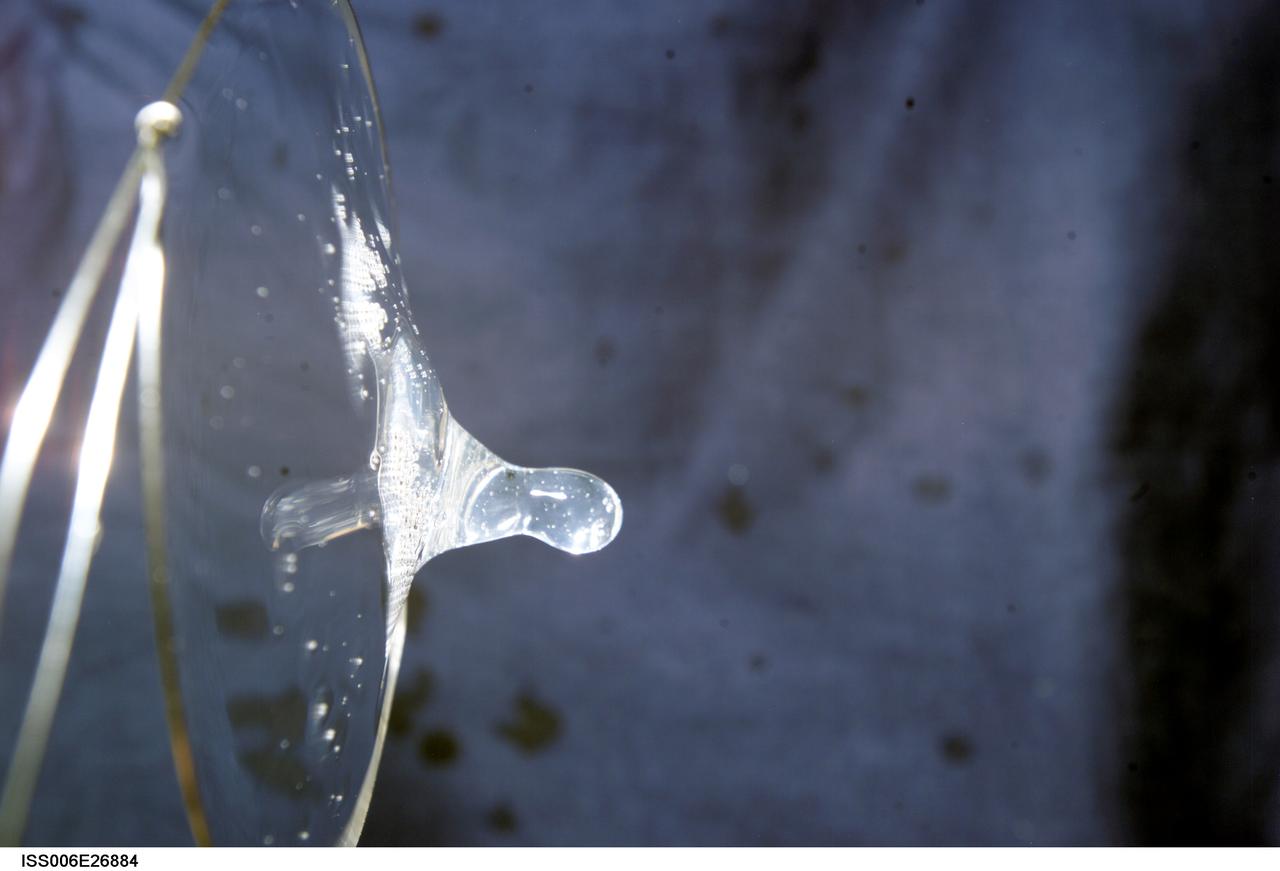
ISS006-E-26884 (16 February 2003) --- View of surface tension demonstration using water that is being held in place by a metal loop. Astronaut Donald R. Pettit, Expedition Six NASA ISS science officer, photographed these demonstrations for educational purposes. The experiment took place in the Destiny laboratory on the International Space Station (ISS).
View of a surface tension demonstration using water that is being held in place by a 50mm metal loop
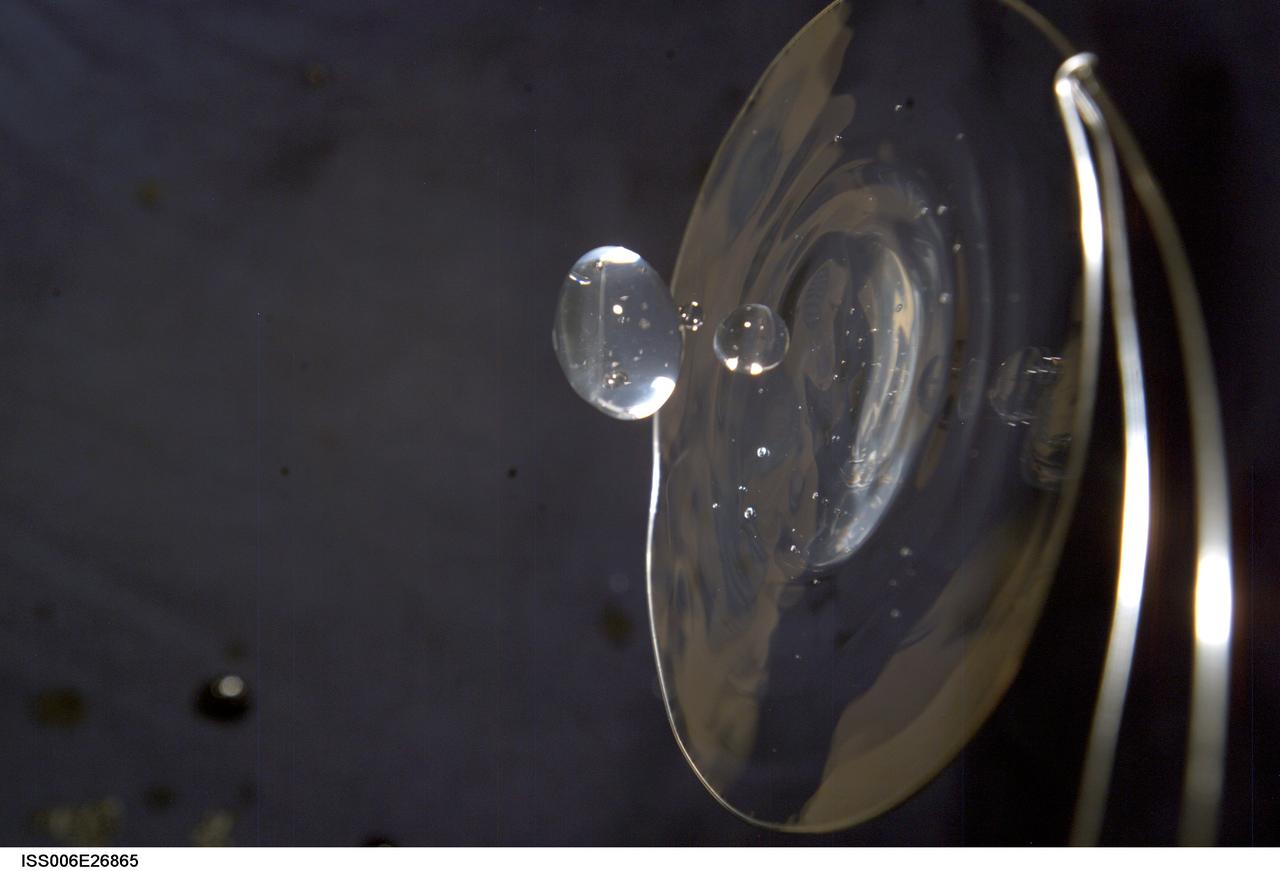
ISS006-E-26865 (16 February 2003) --- View of surface tension demonstration using water that is being held in place by a metal loop. Astronaut Donald R. Pettit, Expedition Six NASA ISS science officer, photographed these demonstrations for educational purposes. The experiment took place in the Destiny laboratory on the International Space Station (ISS).
View of a surface tension demonstration using water that is being held in place by a 50mm metal loop
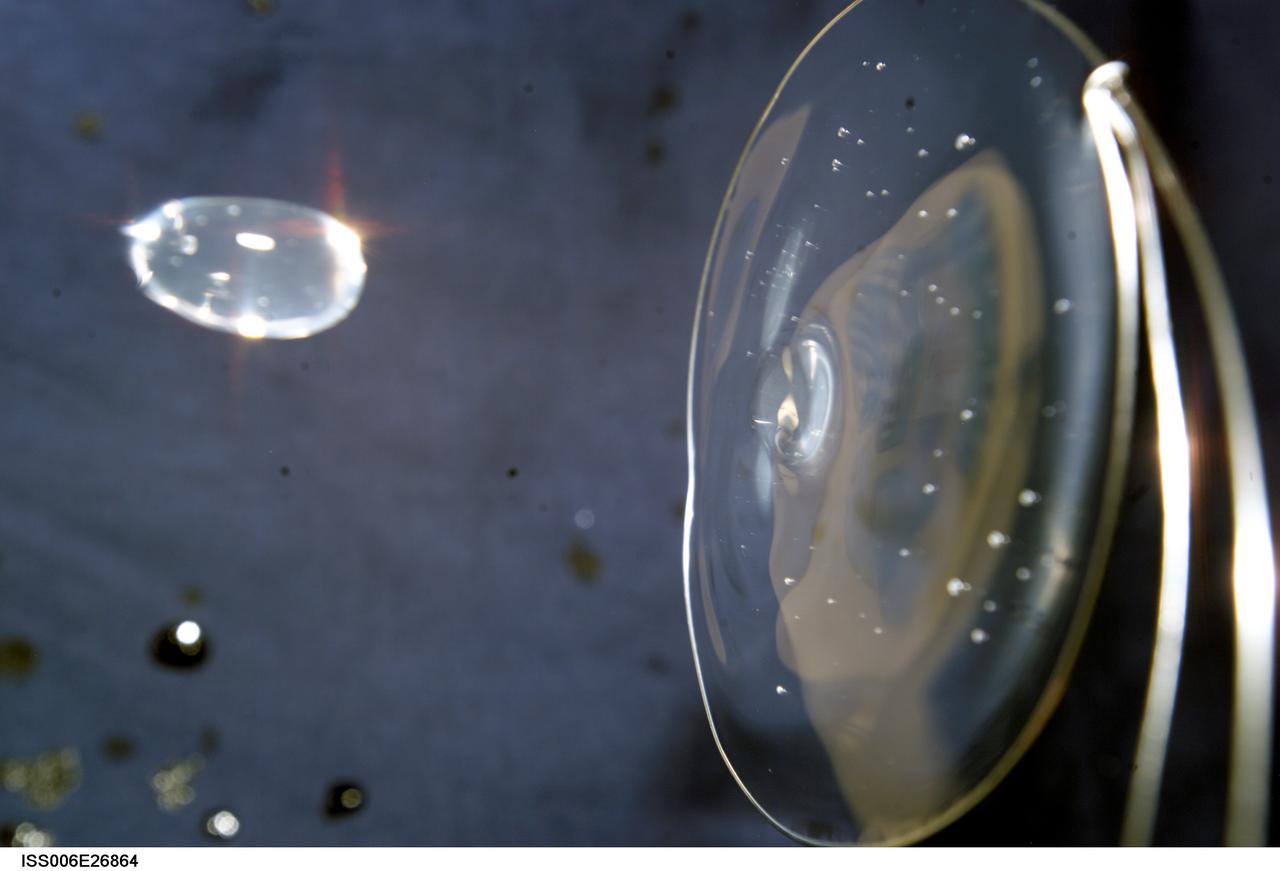
ISS006-E-26864 (16 February 2003) --- View of surface tension demonstration using water that is being held in place by a metal loop. Astronaut Donald R. Pettit, Expedition Six NASA ISS science officer, photographed these demonstrations for educational purposes. The experiment took place in the Destiny laboratory on the International Space Station (ISS).
View of a surface tension demonstration using water that is being held in place by a 50mm metal loop
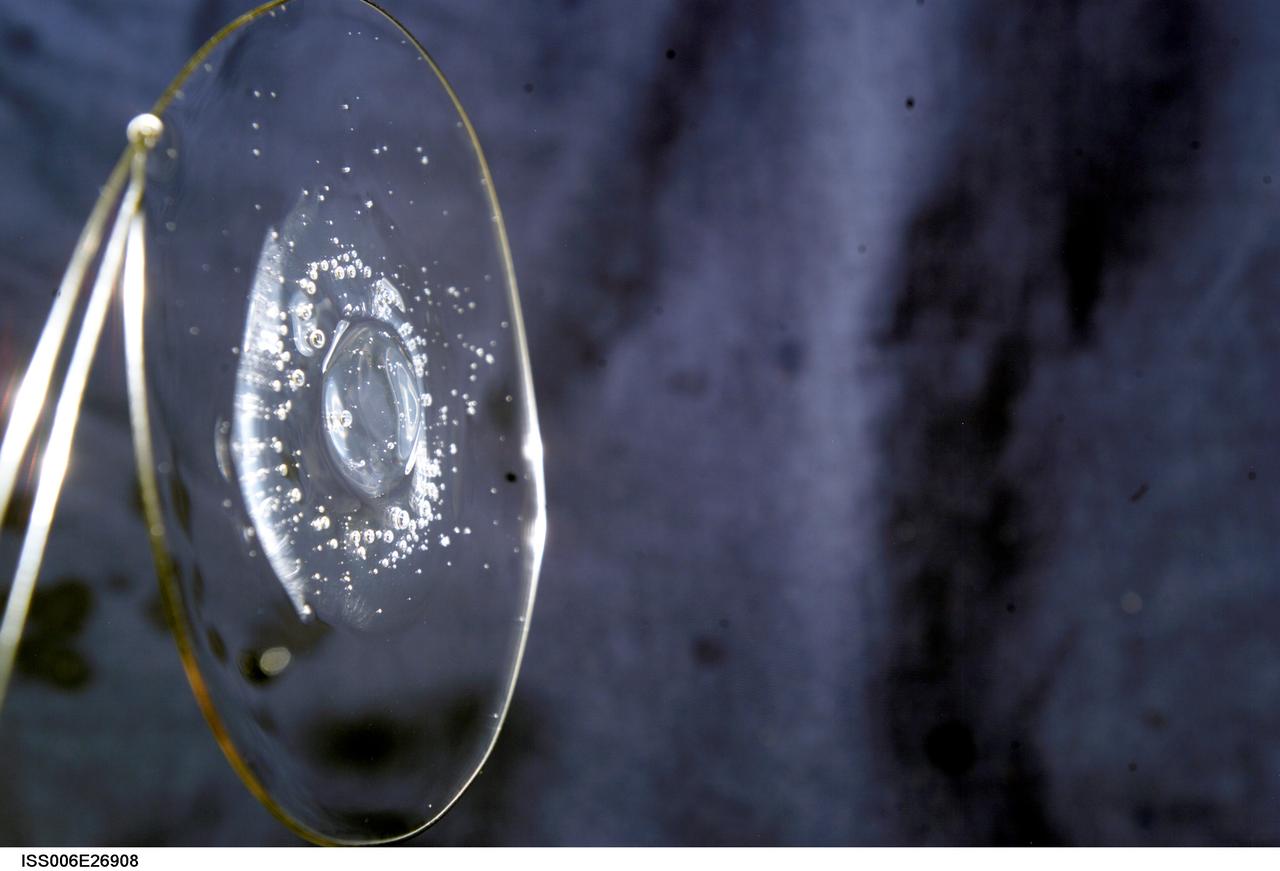
ISS006-E-26908 (16 February 2003) --- View of surface tension demonstration using water that is being held in place by a metal loop. Astronaut Donald R. Pettit, Expedition Six NASA ISS science officer, photographed these demonstrations for educational purposes. The experiment took place in the Destiny laboratory on the International Space Station (ISS).
View of a surface tension demonstration using water that is being held in place by a 50mm metal loop
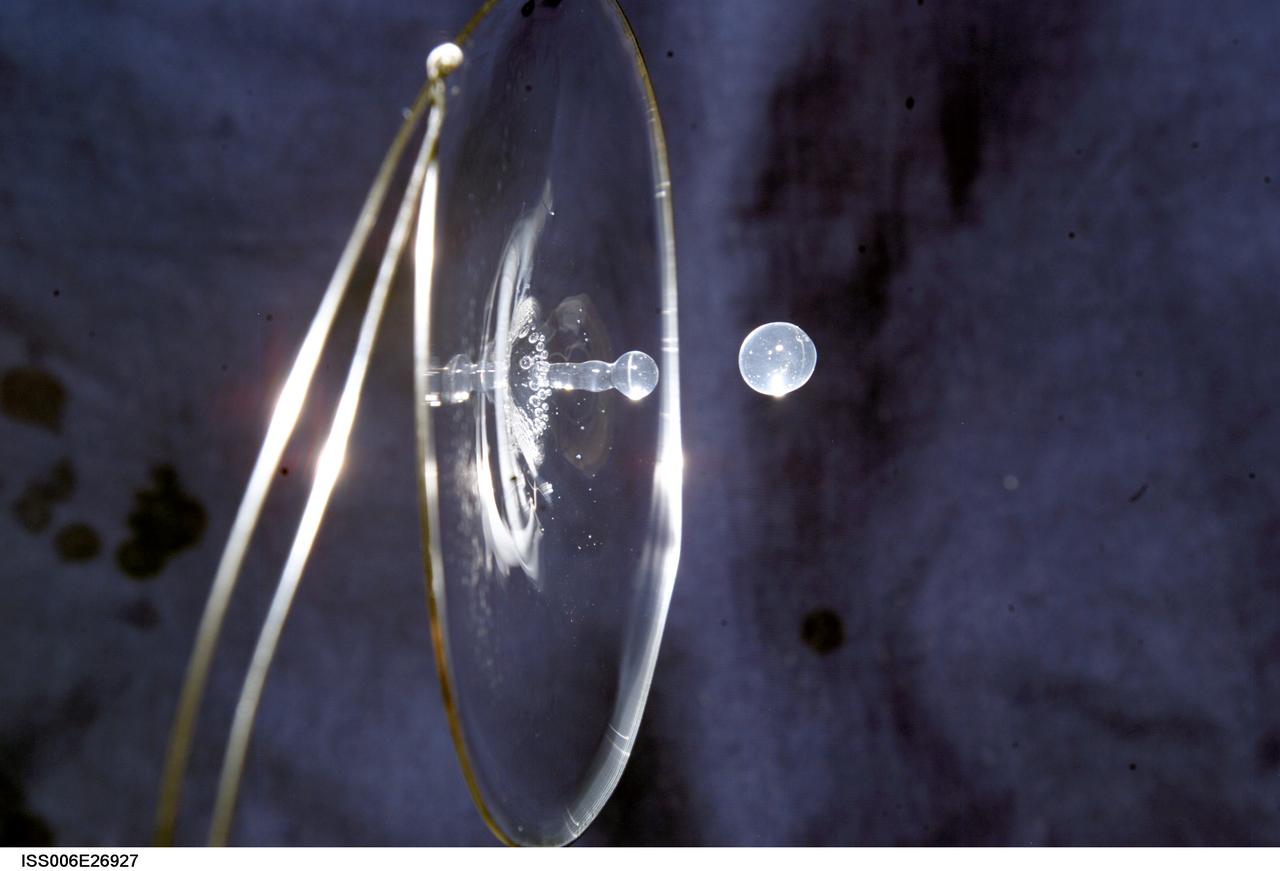
ISS006-E-26927 (16 February 2003) --- View of surface tension demonstration using water that is being held in place by a metal loop. Astronaut Donald R. Pettit, Expedition Six NASA ISS science officer, photographed these demonstrations for educational purposes. The experiment took place in the Destiny laboratory on the International Space Station (ISS).
View of a surface tension demonstration using water that is being held in place by a 50mm metal loop
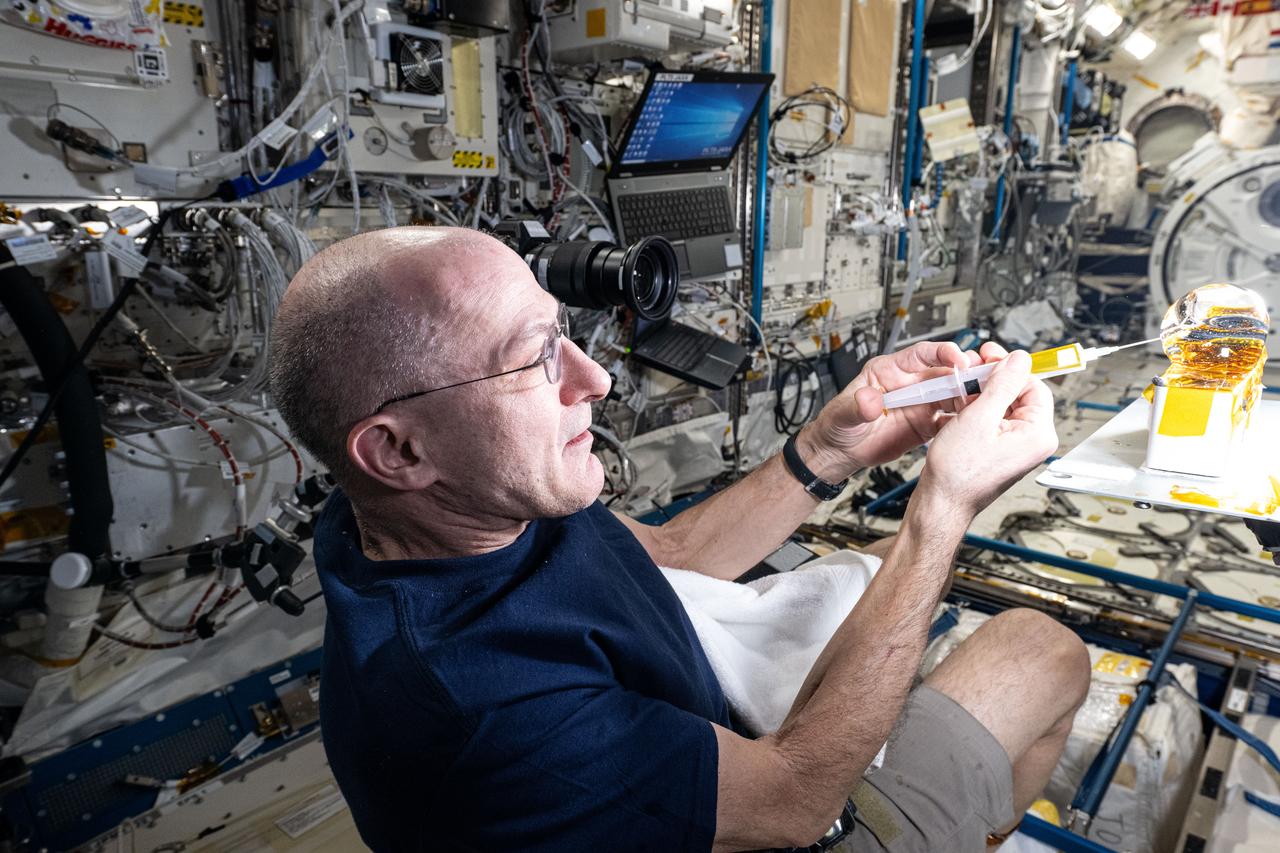
iss072e742488 (March 2, 2025) --- NASA astronaut and Expedition 72 Flight Engineer Don Pettit injects yellow ink into a ball of water shaped by microgravity and attached to research hardware by surface tension. Pettit was demonstrating simple space physics phenomena inside the International Space Station's Kibo laboratory module.
Astronaut Don Pettit injects yellow ink into a ball of water
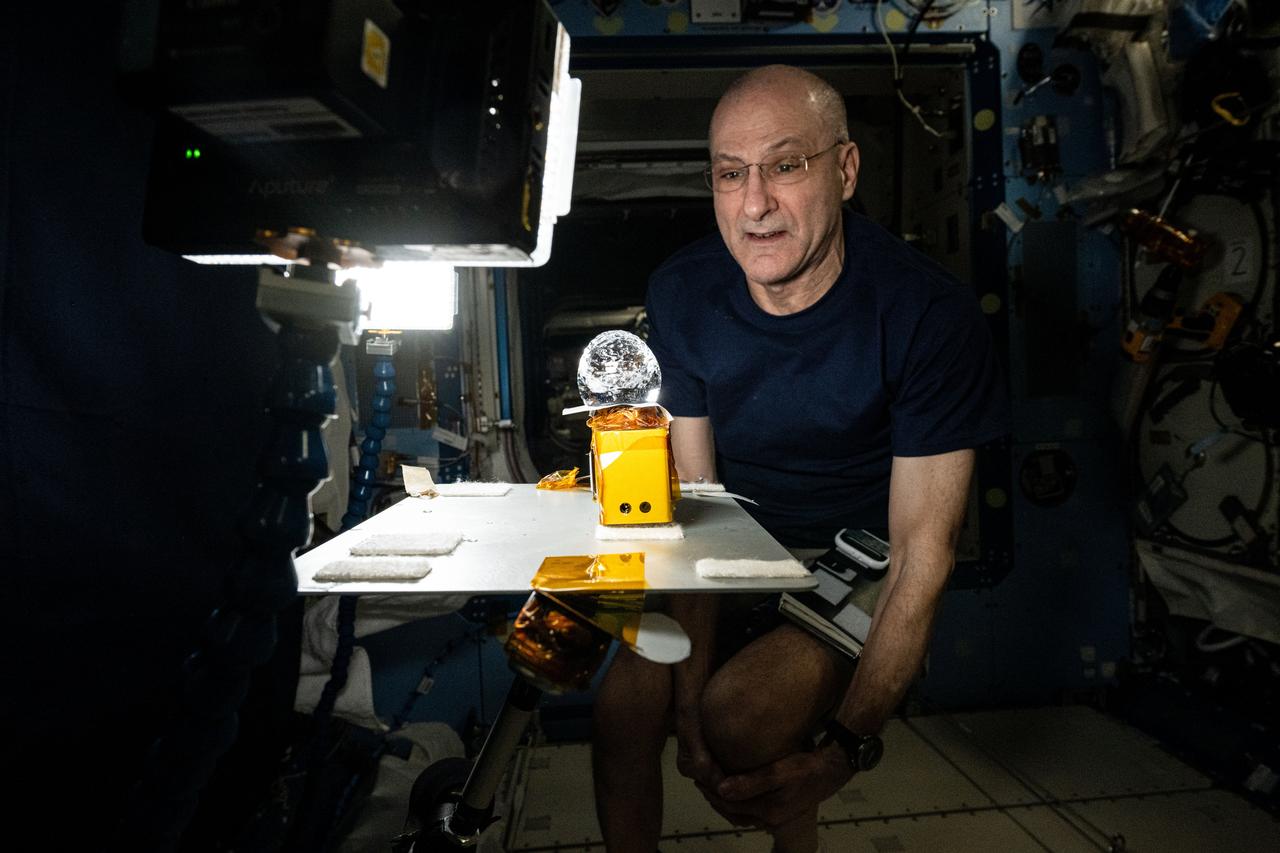
iss072e742508 (March 2, 2025) --- NASA astronaut and Expedition 72 Flight Engineer Don Pettit stares at a ball of water shaped by microgravity and attached to research hardware by surface tension. Pettit was demonstrating simple space physics phenomena inside the International Space Station's Kibo laboratory module.
Astronaut Don Pettit stares at a ball of water shaped by microgravity
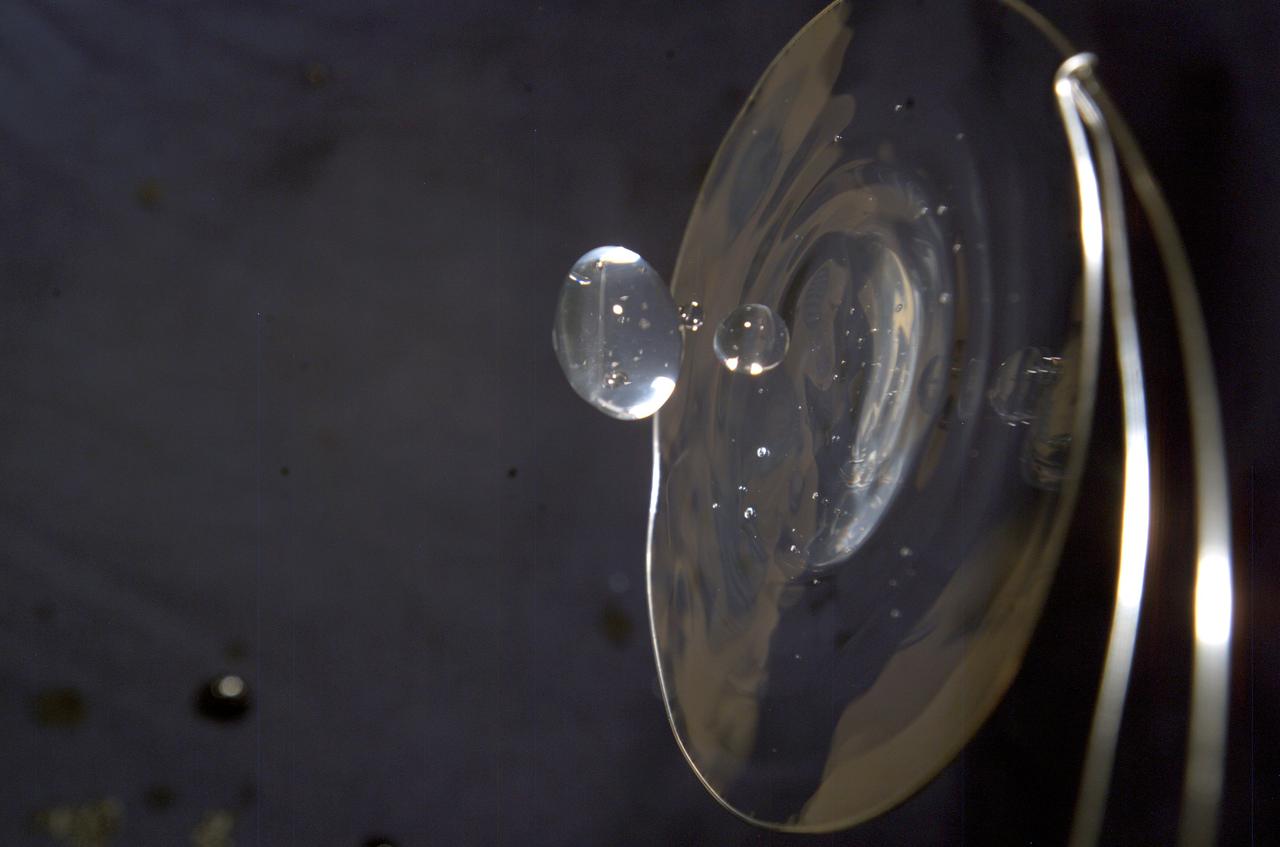
iss071e650313 (Sept. 14, 2024) --- Expedition 71 Flight Engineer (from left) Don Pettit from NASA demonstrates filling a specially-made coffee cup from a drink bag to Expedition 71 Flight Engineer Alexey Ovchinin from Roscosmos. The coffee stays inside the cup due to surface tension, a property that enables liquids to resist an external force, such as microgravity, and adhere, or stick to a surface.
iss071e650313
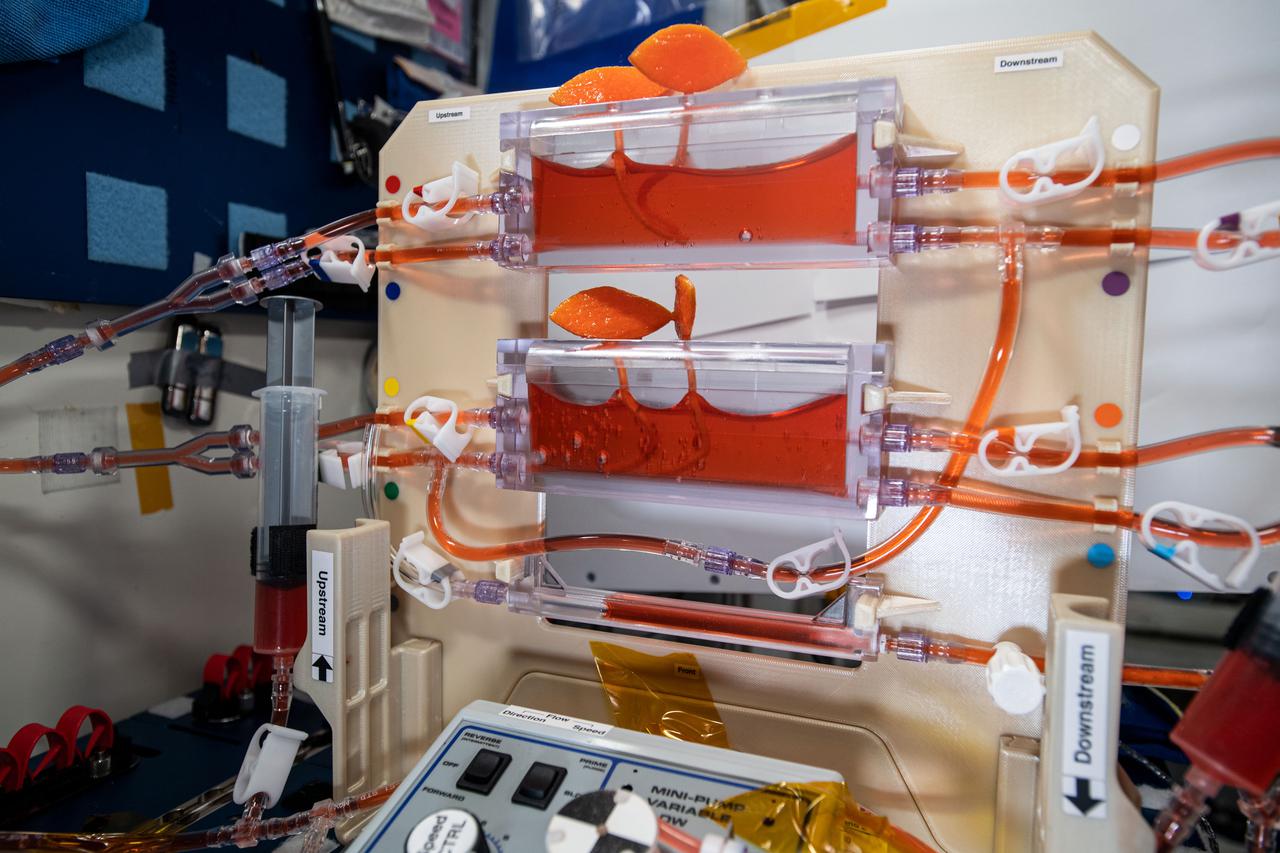
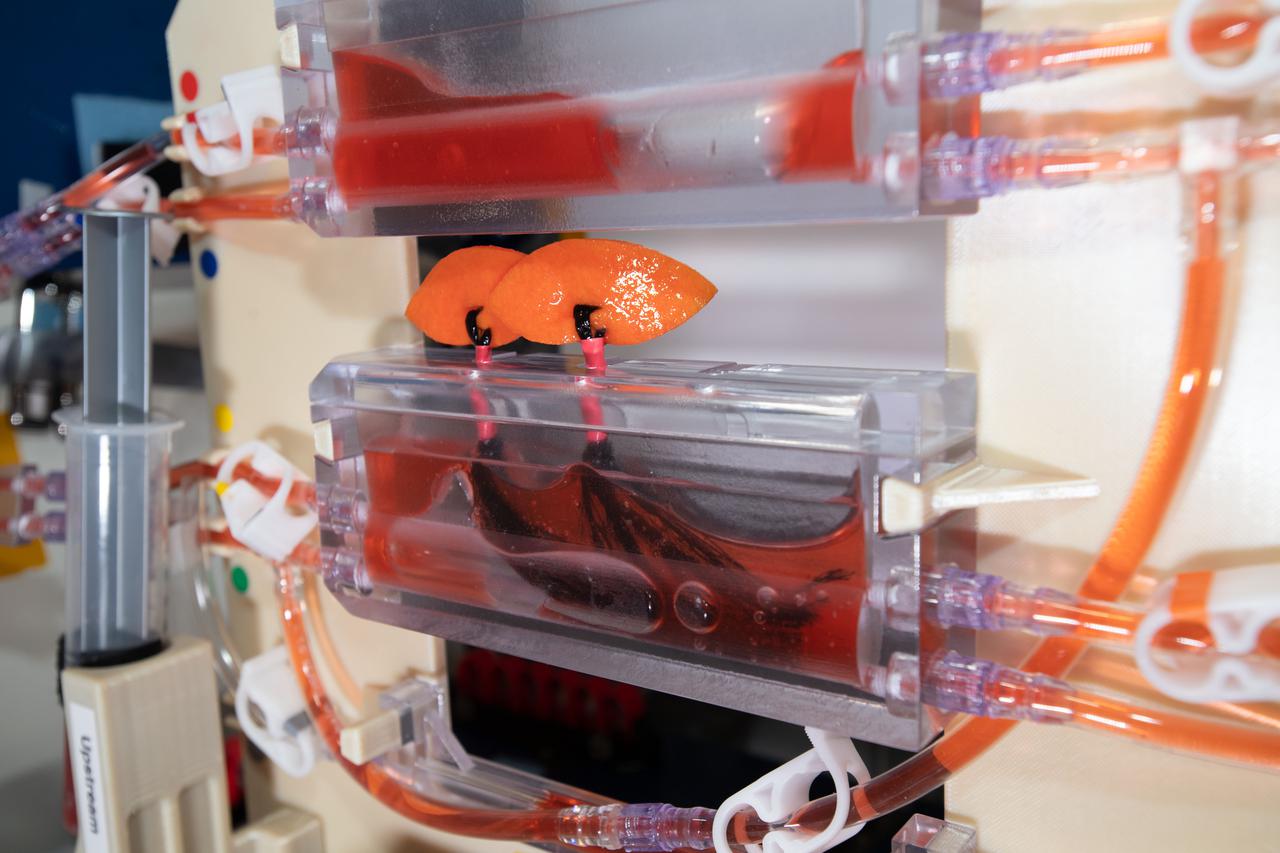
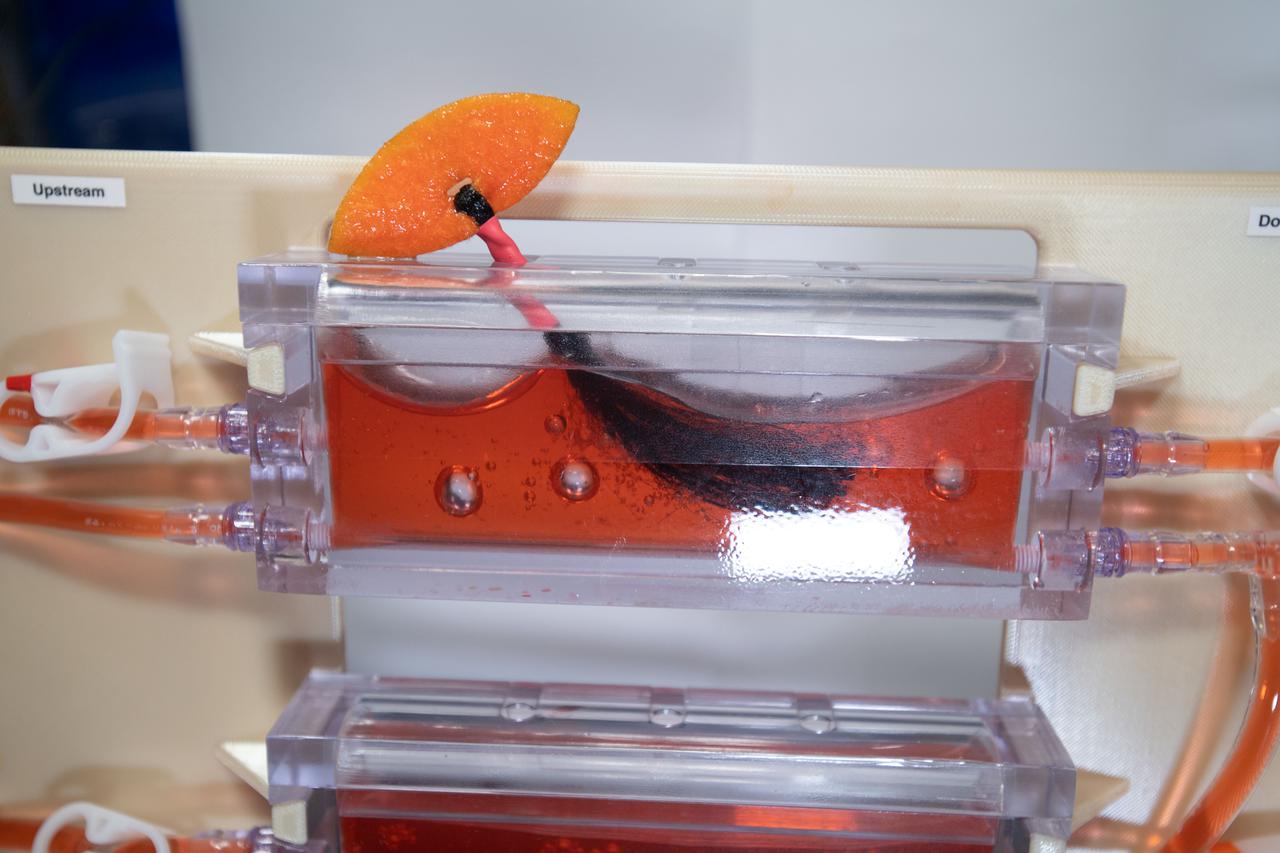
iss064e049400 (3/31/2021) ---  A view of the Plant Water Management 3 and 4 investigation aboard the International space Station (ISS). The Plant Water Management 3 and 4 investigation demonstrates passive measures for controlling fluid delivery and uptake in plant growth systems. Reduced gravity creates challenges in providing adequate fluid and nutrition for plant growth. This investigation examines using other physical properties such as surface tension, wetting and system geometry to replace the role of gravity.
iss064e049400
iss064e049289 (3/30/2021) ---  A view of the Plant Water Management 3 and 4 investigation aboard the International space Station (ISS). The Plant Water Management 3 and 4 investigation demonstrates passive measures for controlling fluid delivery and uptake in plant growth systems. Reduced gravity creates challenges in providing adequate fluid and nutrition for plant growth. This investigation examines using other physical properties such as surface tension, wetting and system geometry to replace the role of gravity.
iss064e049289
iss064e049484 (3/31/2021) ---  A view of the Plant Water Management 3 and 4 investigation aboard the International space Station (ISS). The Plant Water Management 3 and 4 investigation demonstrates passive measures for controlling fluid delivery and uptake in plant growth systems. Reduced gravity creates challenges in providing adequate fluid and nutrition for plant growth. This investigation examines using other physical properties such as surface tension, wetting and system geometry to replace the role of gravity.
iss064e049484
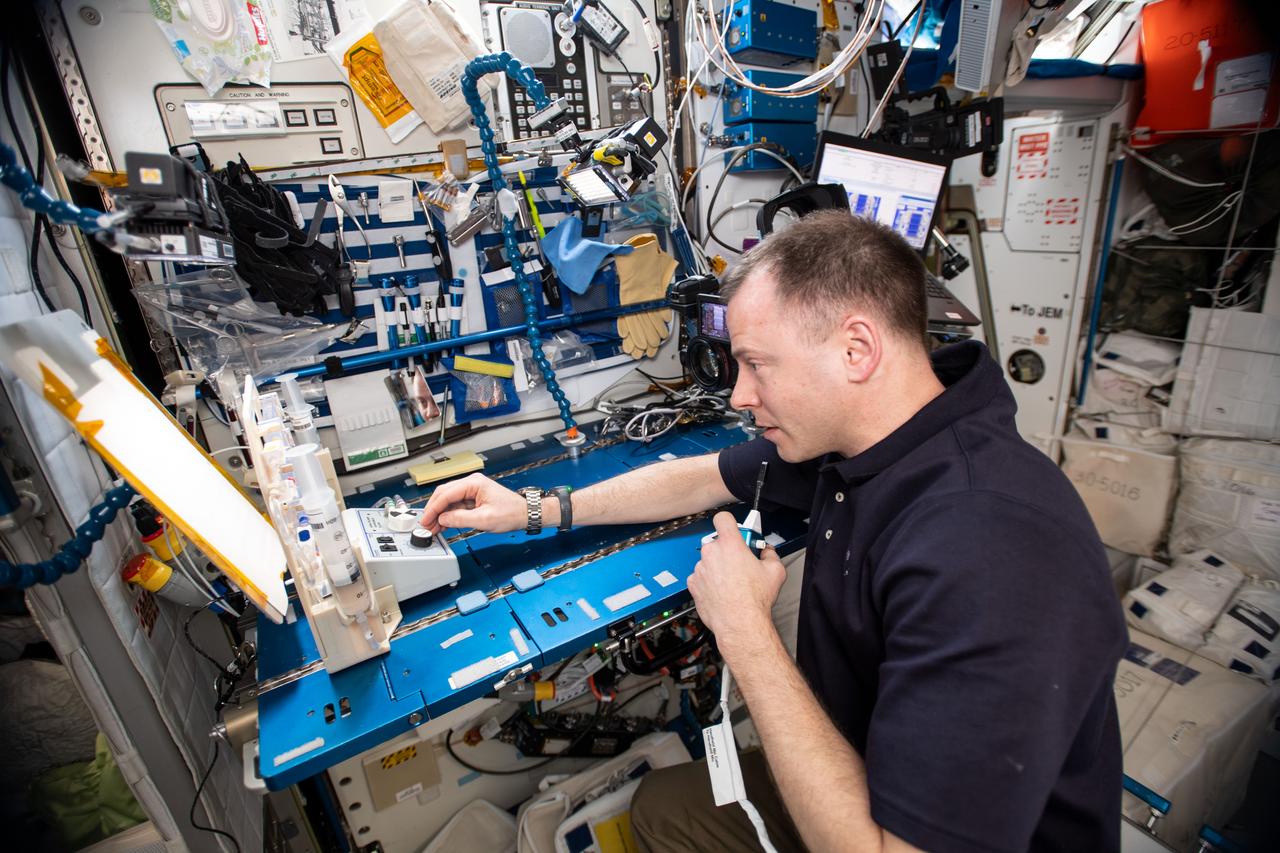
iss059e112425 (June 18, 2019) ---  Flight Engineer Nick Hague is supporting research for the Capillary Structures experiment that uses specialized hardware to demonstrate the flow of fluid and gas mixtures using surface tension and fluid dynamics. The fluid physics study is helping NASA evaluate technologies for a lightweight, advanced life support system that can recover water and remove carbon dioxide in space.
iss059e112425
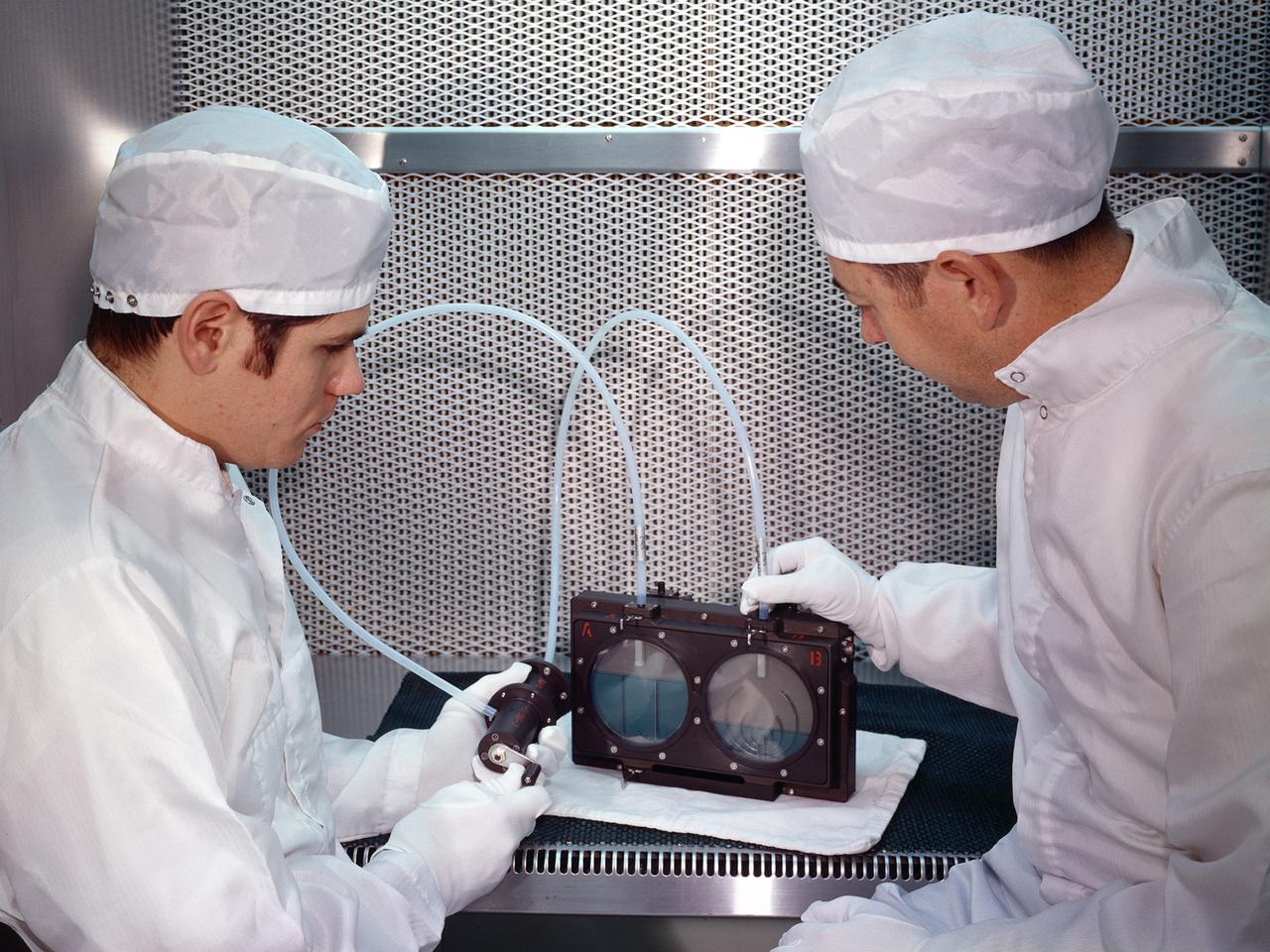
Two researchers at the National Aeronautics and Space Administration (NASA) Lewis Research Center demonstrate the test equipment they devised to study the transfer of liquid in microgravity onboard the Apollo 14 mission. The test was an early step in developing the ability to transfer liquids from a tanker vehicle to spacecraft in space. Researchers needed to know the tank’s outflow characteristics, the fluid’s behavior when entering new tank, and the effects of accelerations.    Others had performed some calculations and analytical studies, but no one had examined the complete transfer from one tank to another in microgravity. The early calculations concluded that the transfer process was impossible without devices to control the liquid and gas.     This investigation specifically sought to demonstrate the effectiveness of two different surface-tension baffle designs. The experiment was an entirely closed system with two baffled-tanks. The researchers also built a similar device without the baffles. The experiment was carried onboard the Apollo 14 spacecraft and conducted during the coast period on the way to the moon. The two surface tension baffle designs in the separate tanks were shown to be effective both as supply tanks and as receiver tanks. The liquid transferred within two percent of the design value with ingesting gas. The unbaffled tanks ingested gas after only 12-percent of the fluid had transferred.
Researchers Demonstrate Liquid Transfer Equipment for Apollo 14 Test
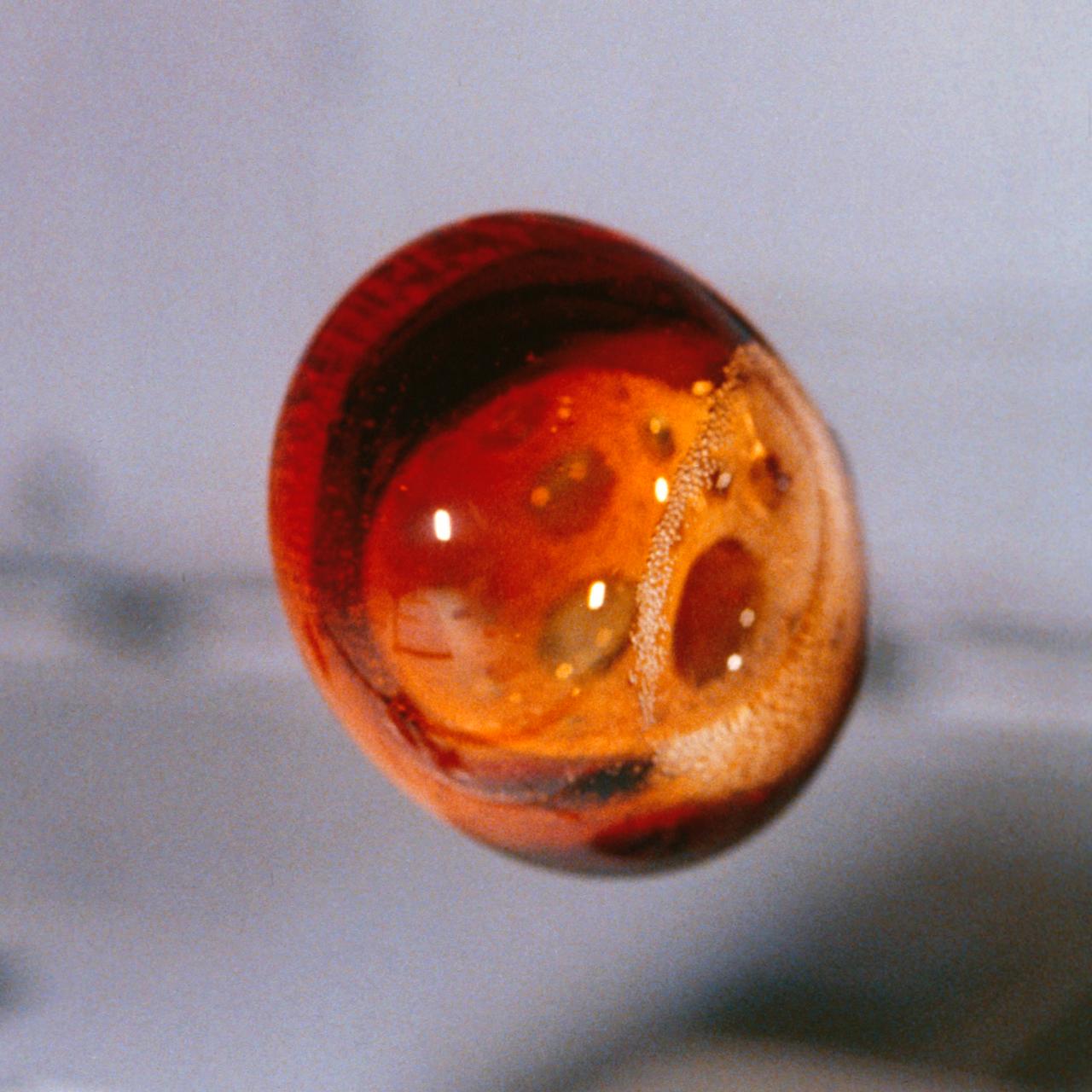
The lack of normal convection in microgravity is demonstrated by a carbonated soft drink floating in the middeck of the Space Shuttle. While the droplet is oscillating slightly and starting to assume a spherical shape, it is filled with carbon dioxide bubbles in a range of sizes. On Earth, the bubbles would quickly foat up to form a head. In space, they are suspended. They may drift with time and eventually the surface tension between individual bubbles breaks, allowing larger bubbles to form. This image was taken during STS-51F mission (Spacelab 2) which carried test models of dispensers from two pupular soft drink manufacturers. Photo credit: NASA/Johnson Space Center (JSC)
Microgravity