
Image of Surveyor 1 shadow against the lunar surface in the late lunar afternoon, with the horizon at the upper right. Surveyor 1, the first of the Surveyor missions to make a successful soft landing, proved the spacecraft design and landing technique

An artist concept of NASA Mars Global Surveyor MGS flying over Mars.
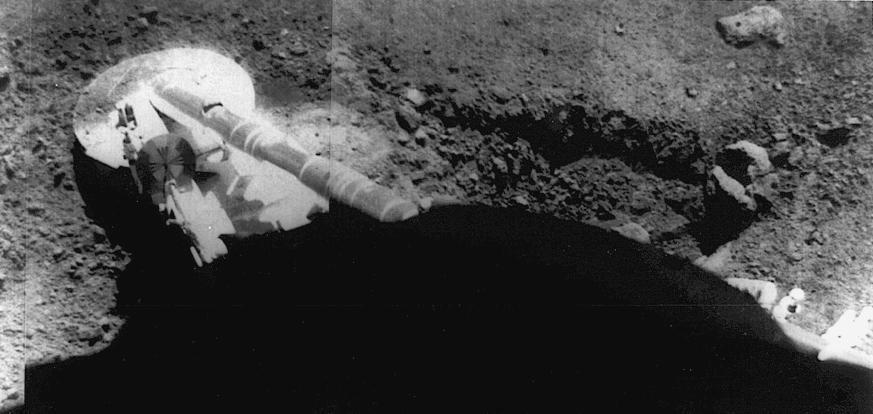
Surveyor 5 image of the footpad resting in the lunar soil. The trench at right was formed by the footpad sliding during landing. Surveyor 5 landed on the Moon on 11 September 1967 at 1.41 N, 23.18E in Mare Tranquillitatis.
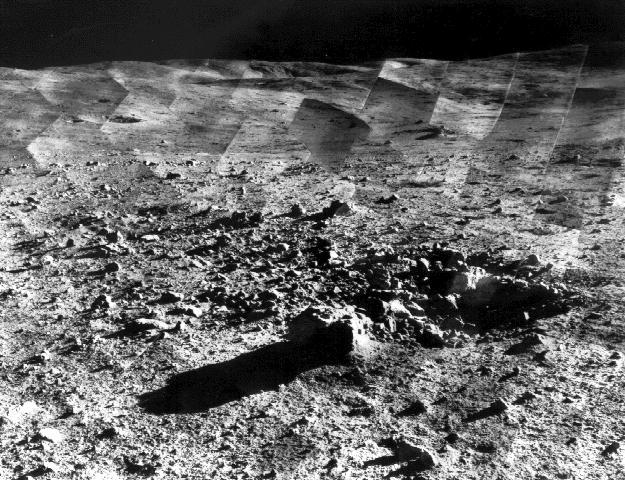
Photomosaic of lunar panorama near the Tycho crater taken by Surveyor 7. The hills on the center horizon are about eight miles away from the spacecraft.
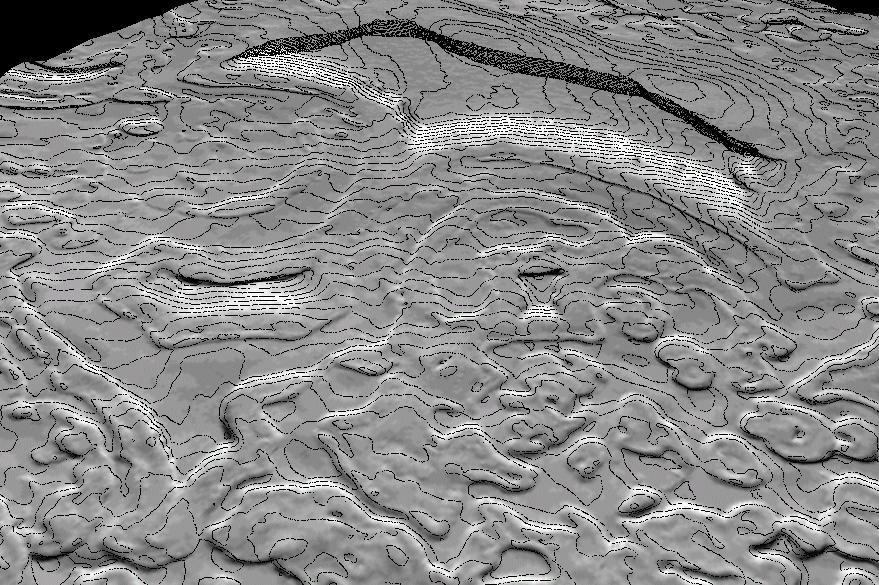
Derived Topographic Model from Mars Global Surveyor Instruments
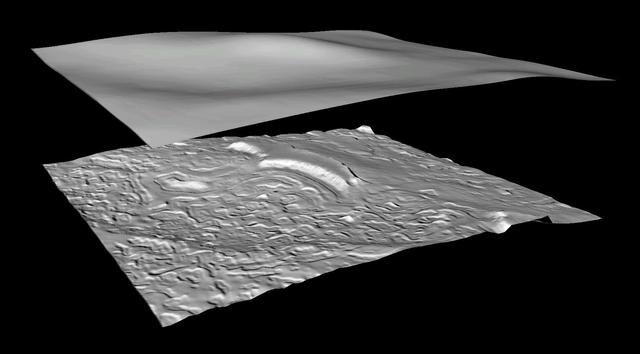
Derived Topographic Model from Mars Global Surveyor Instruments
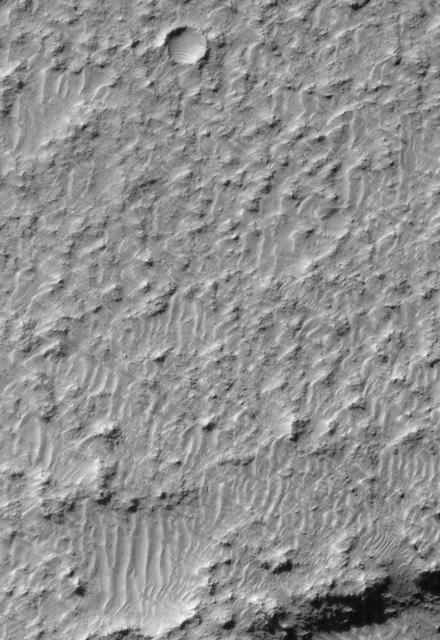
Mariner 4 Meets Mars Global Surveyor -- Mariner Crater 1965 and 1999
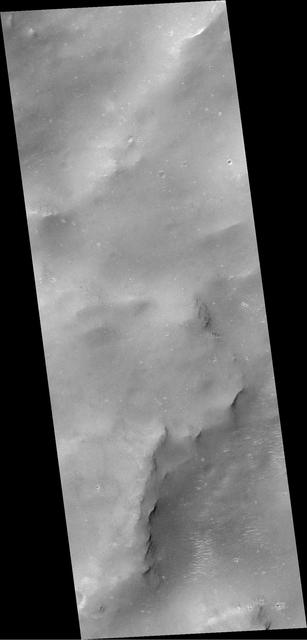
Mars Global Surveyor MOC Celebrates 2 Years in Orbit!

In this illustration showing NEO Surveyor, NASA's next-generation near-Earth object hunter, the spacecraft floats in an infrared starfield containing stars, star clusters, gas, and dust. More than 100 asteroids can be seen as red dots, with some of them visible in a track that shows how they were captured at different times as they marched across the sky. This starfield was observed by NASA's Wide-field Infrared Survey Explorer, or WISE, during its primary all-sky survey in March 2010 before it was put into hibernation a year later. In December 2013, the space telescope was reactivated to search for more asteroids as the NEOWISE mission. NASA's NEO Surveyor will build upon the successes of NEOWISE as the first space mission built specifically to find large numbers of hazardous asteroids and comets. The space telescope will launch to a region of gravitational stability between the Earth and the Sun called the L1 Lagrange point, where the spacecraft will orbit during its five-year primary mission. From this location, the space telescope will view the solar system in infrared wavelengths &ndash light that is invisible to the human eye. Because those wavelengths are mostly blocked by Earth's atmosphere, larger ground-based observatories may miss near-Earth objects that NEO Surveyor will be able to spot from space by using its modest light-collecting aperture of nearly 20 inches (50 centimeters). NEO Surveyor's cutting-edge detectors are designed to observe two heat-sensitive infrared bands that were chosen specifically so the spacecraft can track the most challenging-to-find near-Earth objects, such as dark asteroids and comets that don't reflect much visible light. In the infrared wavelengths to which NEO Surveyor is sensitive, these objects glow as they are heated by sunlight. In addition, NEO Surveyor will be able to find asteroids that approach Earth from the direction of the Sun, as well as those that lead and trail our planet's orbit, where they are typically obscured by the glare of sunlight – objects known as Earth Trojans. The mission is tasked by NASA's Planetary Science Division within the Science Mission Directorate; program oversight is provided by the PDCO, which was established in 2016 to manage the agency's ongoing efforts in planetary defense. NASA's Planetary Missions Program Office at Marshall Space Flight Center provides program management for NEO Surveyor. The project is being developed by JPL and is led by survey director Amy Mainzer at the University of Arizona. Established aerospace and engineering companies have been contracted to build the spacecraft and its instrumentation, including Ball Aerospace , Space Dynamics Laboratory, and Teledyne. The Laboratory for Atmospheric and Space Physics at the University of Colorado, Boulder will support operations, and IPAC-Caltech in Pasadena, California, is responsible for processing survey data and producing the mission's data products. Caltech manages JPL for NASA. https://photojournal.jpl.nasa.gov/catalog/PIA25253
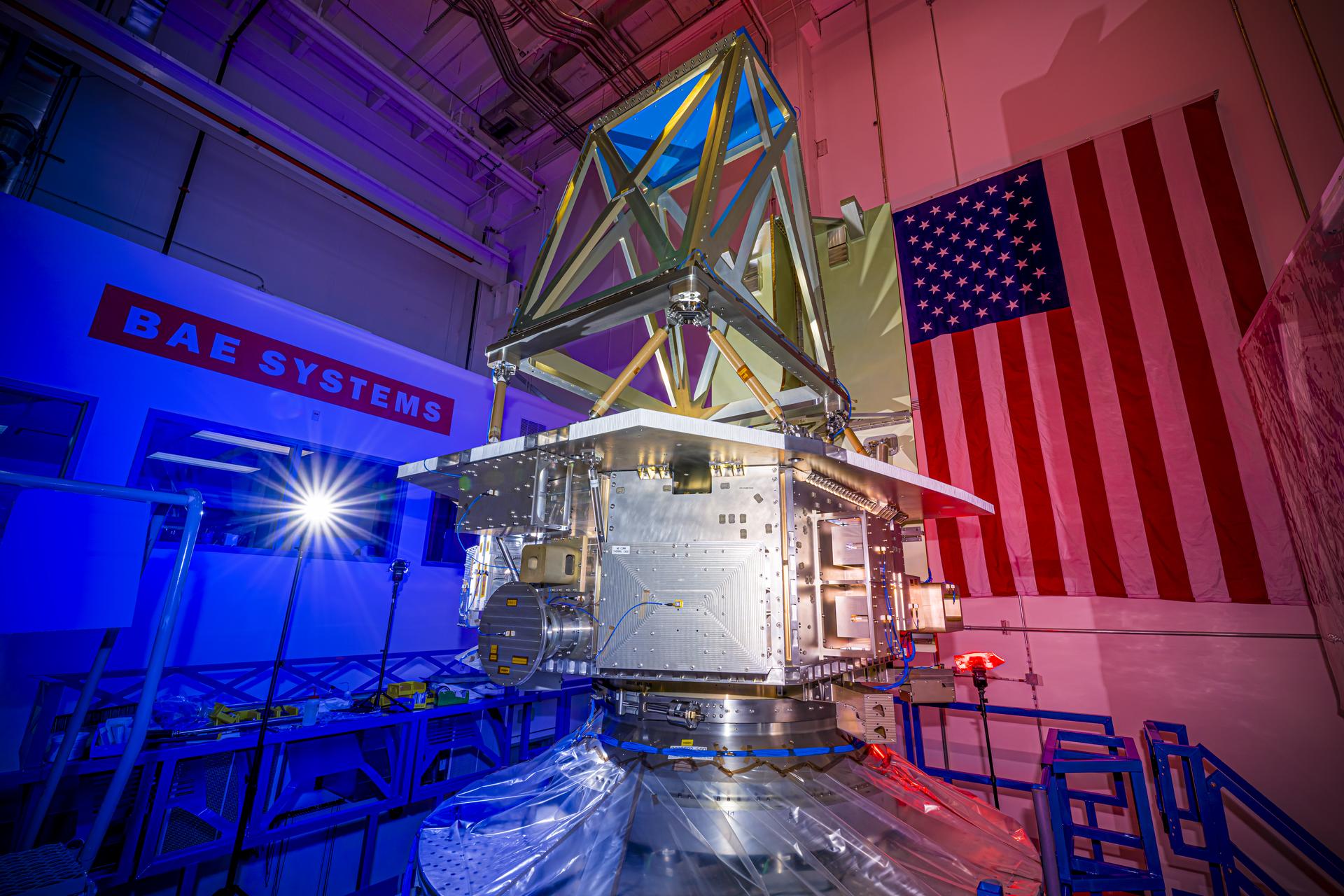
The bus structure for NASA’s Near-Earth Object (NEO) Surveyor is installed on a “shaker table” at BAE Systems Space & Mission Systems in Boulder, Colorado, during vibration testing conducted in August 2025. Mass simulators that mimic the weight and size of the spacecraft’s telescope and sunshade are also attached to the bus for the test. These mass simulators help engineers simulate the conditions flight components will experience during launch so their durability can be verified. Targeting launch in late 2027, the NEO Surveyor mission is led by Professor Amy Mainzer at the University of California, Los Angeles for NASA’s Planetary Defense Coordination Office and is being managed by the agency’s Jet Propulsion Laboratory in Southern California for the Planetary Missions Program Office at NASA’s Marshall Space Flight Center in Huntsville, Alabama. BAE Systems Space & Mission Systems and the Space Dynamics Laboratory in Logan, Utah, and Teledyne are among the companies that were contracted to build the spacecraft and its instrumentation. The Laboratory for Atmospheric and Space Physics at the University of Colorado Boulder will support operations, and IPAC at Caltech in Pasadena, California, is responsible for producing some of the mission’s data products. Caltech manages JPL for NASA. More information about NEO Surveyor is available at: https://science.nasa.gov/mission/neo-surveyor/
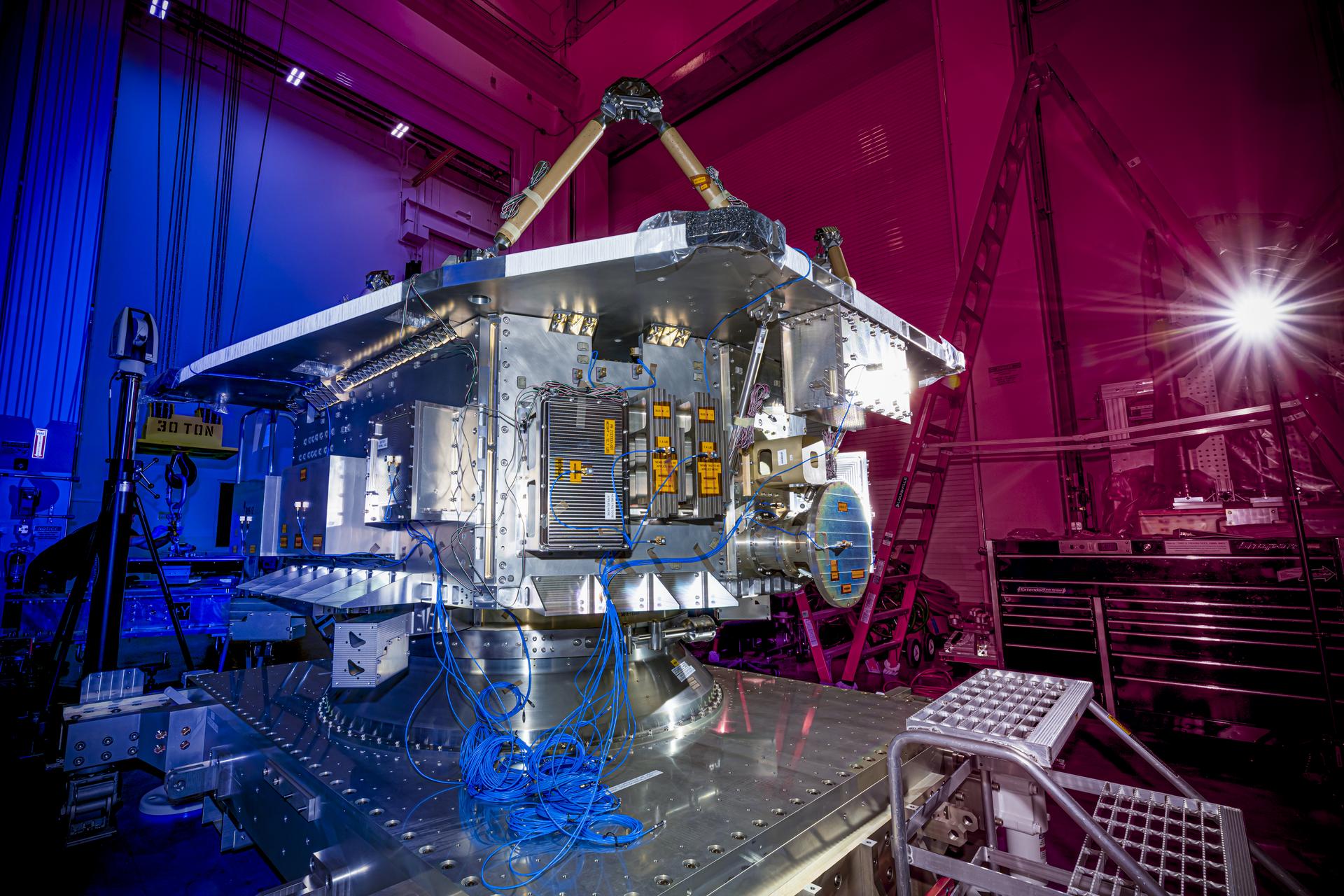
The bus structure of the Near-Earth Object (NEO) Surveyor spacecraft underwent testing at BAE Systems Space & Mission Systems in Boulder, Colorado, in August 2025. NEO Surveyor’s bus houses the power, propulsion, avionics, and communication subsystems, which are isolated from the spacecraft’s telescope and sensitive detectors. When all components are assembled, a large sunshade will be attached to the side of the bus, blocking the Sun’s glare from entering the telescope. With an aperture of nearly 20 inches (50 centimeters), the telescope features detectors sensitive to two infrared wavelengths in which near-Earth objects re-radiate solar heat. The instrument enclosure is designed to ensure heat produced by the spacecraft and instrument during operations doesn’t interfere with its infrared observations. Targeting launch in late 2027, the NEO Surveyor mission is led by Professor Amy Mainzer at the University of California, Los Angeles for NASA’s Planetary Defense Coordination Office and is being managed by the agency’s Jet Propulsion Laboratory in Southern California for the Planetary Missions Program Office at NASA’s Marshall Space Flight Center in Huntsville, Alabama. BAE Systems Space & Mission Systems and the Space Dynamics Laboratory in Logan, Utah, and Teledyne are among the companies that were contracted to build the spacecraft and its instrumentation. The Laboratory for Atmospheric and Space Physics at the University of Colorado Boulder will support operations, and IPAC at Caltech in Pasadena, California, is responsible for producing some of the mission’s data products. Caltech manages JPL for NASA. More information about NEO Surveyor is available at: https://science.nasa.gov/mission/neo-surveyor/
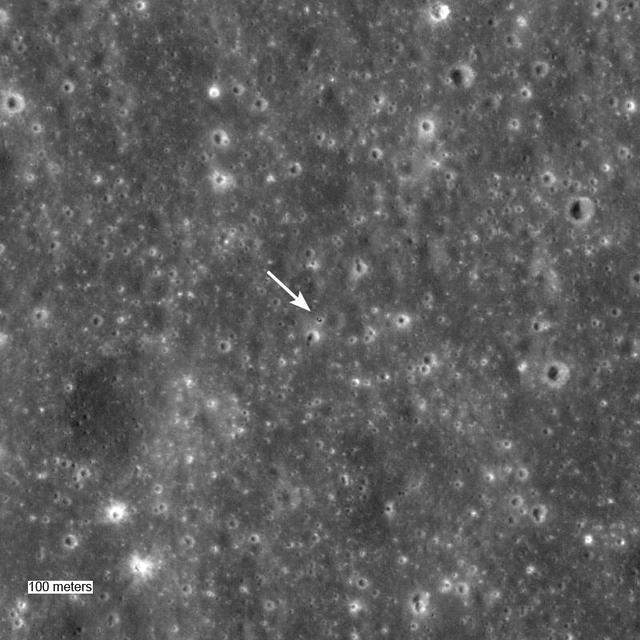
Surveyor 5 sitting in a 10-meter diameter crater. Surveyor 5 landed on Mare Tranquillitatis in September of 1967. This image was taken by NASA Lunar Reconnaissance Orbiter.
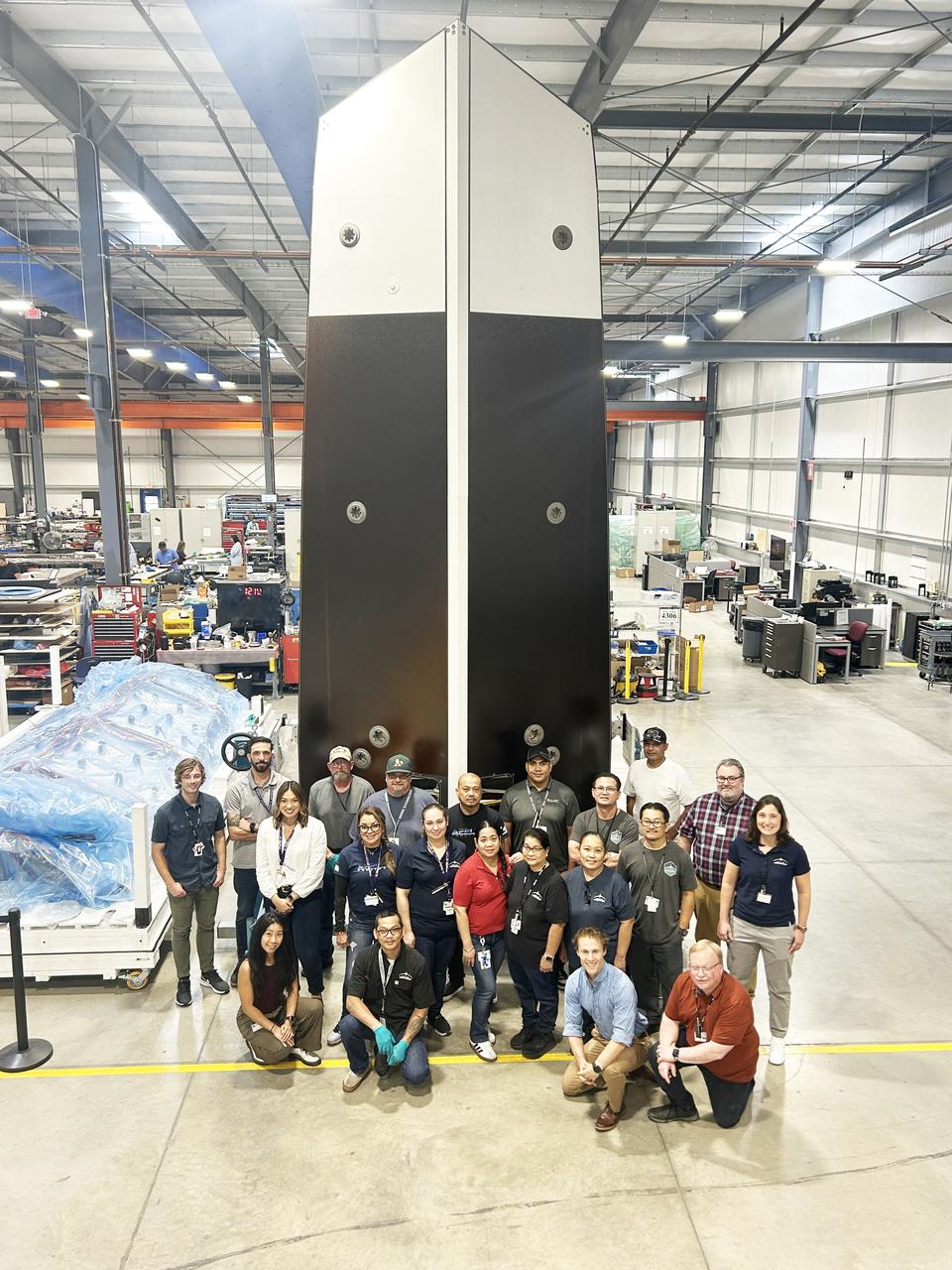
The sunshade for NASA’s Near-Earth Object (NEO) Surveyor mission towers above a fixture at supplier Applied Aerospace in Stockton, California, in September 2025. Standing at over 20 feet (6 meters) high, the sunshade is the largest component of spacecraft. The structure was next shipped to BAE Systems in Boulder, Colorado, for a “fit check” with the spacecraft bus. For scale, technicians and engineers from the project in front of the sunshade. The sunshade’s Sun-facing surface (visible here) will next be fitted with solar panels that will generate power for the spacecraft after launch. The spacecraft’s instrument enclosure, which houses the telescope and sensitive infrared cameras, will be located behind the sunshade, allowing the spacecraft to detect and track near-Earth objects that would otherwise be hidden by the Sun’s glare. Targeting launch in late 2027, the NEO Surveyor mission is led by Professor Amy Mainzer at the University of California, Los Angeles for NASA’s Planetary Defense Coordination Office and is being managed by the agency’s Jet Propulsion Laboratory in Southern California for the Planetary Missions Program Office at NASA’s Marshall Space Flight Center in Huntsville, Alabama. BAE Systems and the Space Dynamics Laboratory in Logan, Utah, and Teledyne are among the companies that were contracted to build the spacecraft and its instrumentation. The Laboratory for Atmospheric and Space Physics at the University of Colorado Boulder will support operations, and IPAC at Caltech in Pasadena, California, is responsible for producing some of the mission’s data products. Caltech manages JPL for NASA. More information about NEO Surveyor is available at: https://science.nasa.gov/mission/neo-surveyor/
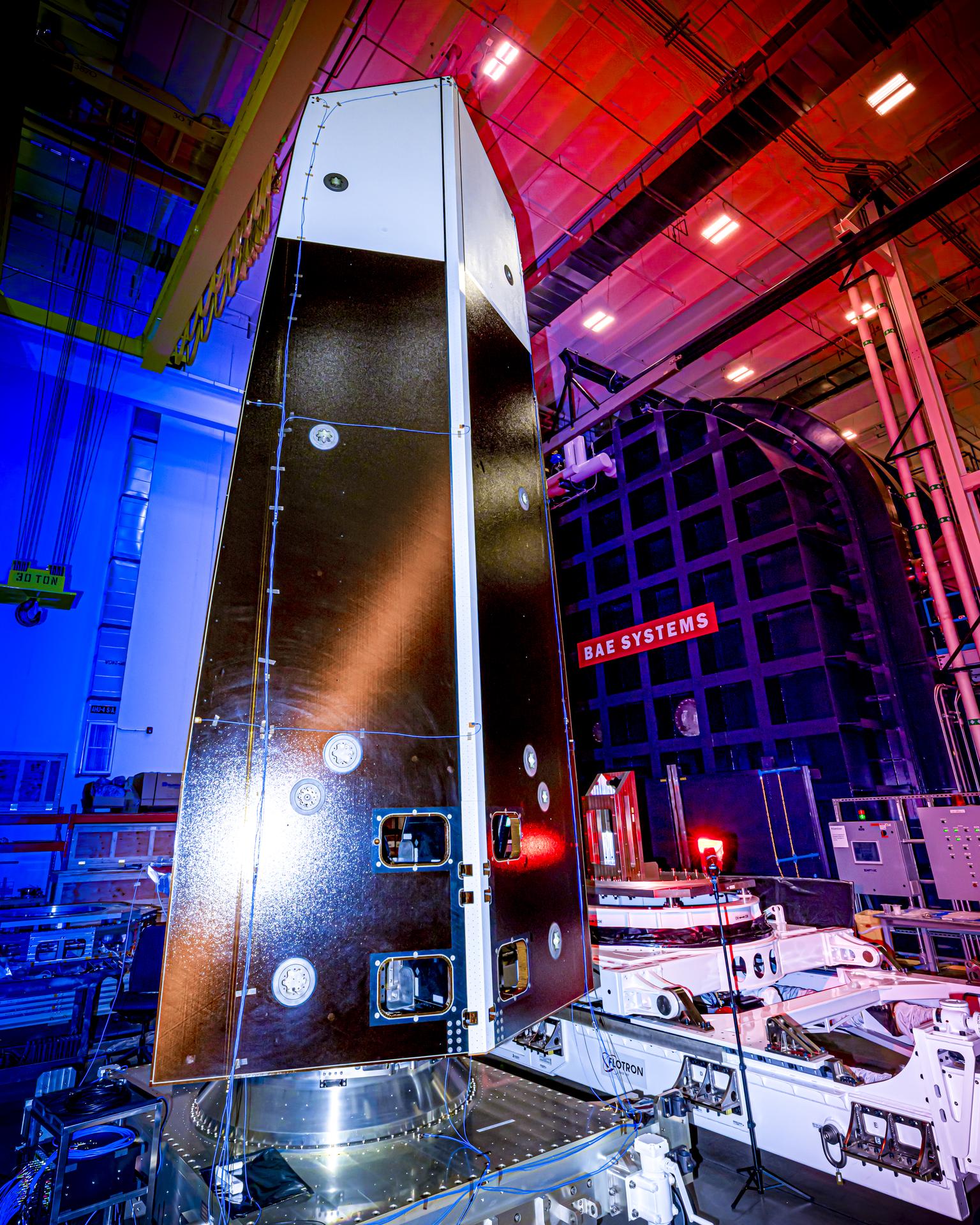
The bus structure for the Near-Earth Object (NEO) Surveyor spacecraft is installed to the sunshade during a “fit check” at BAE Systems Space & Mission Systems in Boulder, Colorado, in September 2025. This was the first time the two components were attached to one another. The sunshade is the largest component of the spacecraft, standing at over 20 feet (6 meters) high. The sunshade’s Sun-facing surface (visible here) will next be fitted with solar cells that will generate power for the spacecraft after launch. The spacecraft’s instrument enclosure, which houses the telescope and sensitive infrared cameras, will be located behind the sunshade, allowing the spacecraft to detect and track near-Earth objects that would otherwise be hidden by the Sun’s glare. Targeting launch in late 2027, the NEO Surveyor mission is led by Professor Amy Mainzer at the University of California, Los Angeles for NASA’s Planetary Defense Coordination Office and is being managed by the agency’s Jet Propulsion Laboratory in Southern California for the Planetary Missions Program Office at NASA’s Marshall Space Flight Center in Huntsville, Alabama. BAE Systems Space & Mission Systems and the Space Dynamics Laboratory in Logan, Utah, and Teledyne are among the companies that were contracted to build the spacecraft and its instrumentation. The Laboratory for Atmospheric and Space Physics at the University of Colorado Boulder will support operations, and IPAC at Caltech in Pasadena, California, is responsible for producing some of the mission’s data products. Caltech manages JPL for NASA. More information about NEO Surveyor is available at: https://science.nasa.gov/mission/neo-surveyor/
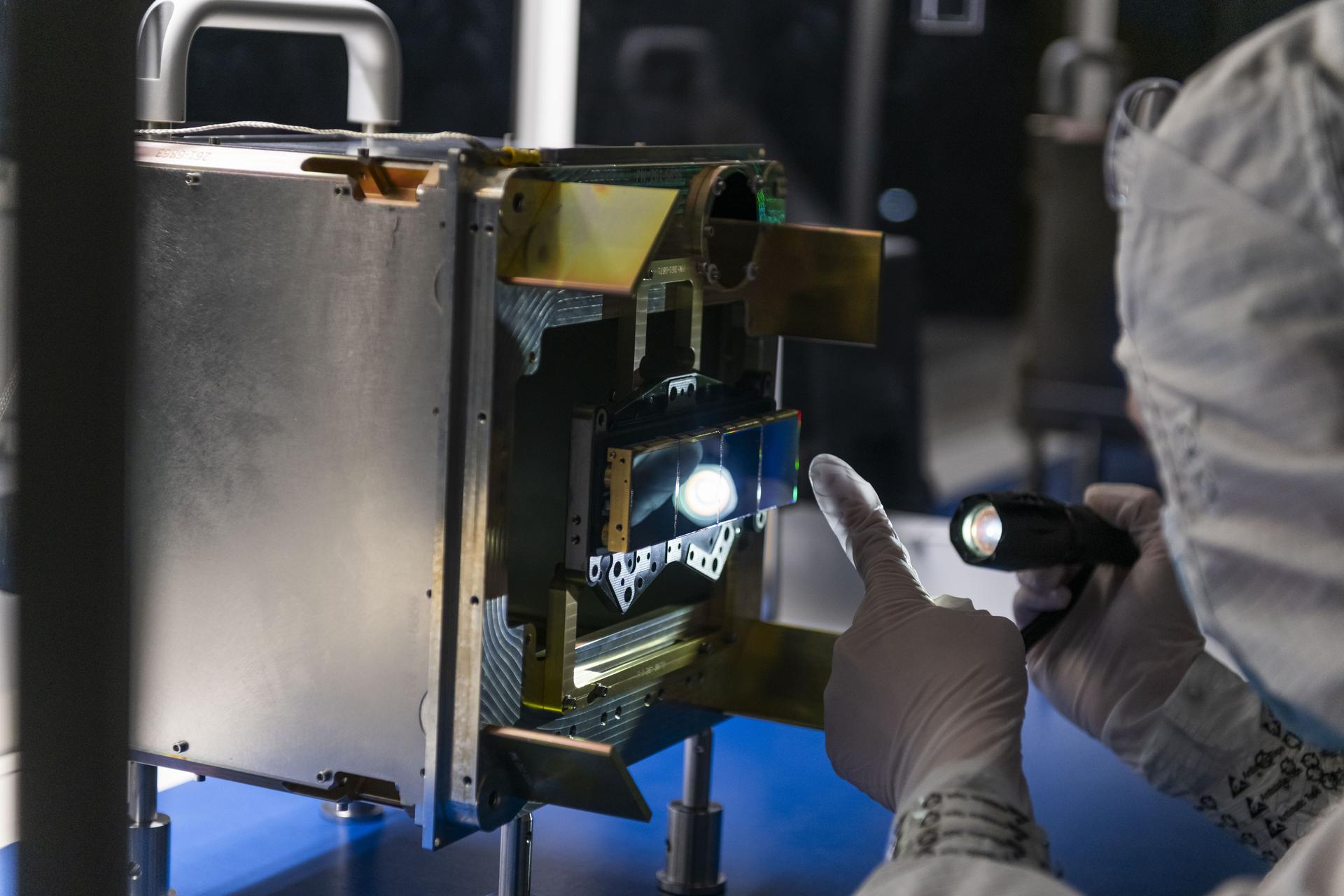
An engineer inspects the surface of four mid-wavelength infrared science detectors for NASA’s Near-Earth Object (NEO) Surveyor mission atop a clean room bench at the Space Dynamics Laboratory (SDL) in Logan, Utah. Mounted to a sensor chip assembly, the four blue-green-colored detectors are made with mercury cadmium telluride (HgCdTe), a versatile semiconducting alloy that is sensitive to infrared wavelengths. There are two such assemblies that form the heart of NEO Surveyor’s two science cameras. These state-of-the-art cameras sense solar heat re-radiated by near-Earth objects. The mission’s cameras and telescope, which has an aperture of nearly 20 inches (50 centimeters), will be housed inside the spacecraft’s instrument enclosure, a structure that is designed to ensure heat produced by the spacecraft and instrument during operations doesn’t interfere with its infrared observations. Targeting launch in late 2027, the NEO Surveyor mission is led by Professor Amy Mainzer at the University of California, Los Angeles for NASA’s Planetary Defense Coordination Office and is being managed by the agency’s Jet Propulsion Laboratory in Southern California for the Planetary Missions Program Office at NASA’s Marshall Space Flight Center in Huntsville, Alabama. BAE Systems and the Space Dynamics Laboratory in Logan, Utah, and Teledyne are among the companies that were contracted to build the spacecraft and its instrumentation. The Laboratory for Atmospheric and Space Physics at the University of Colorado Boulder will support operations, and IPAC at Caltech in Pasadena, California, is responsible for producing some of the mission’s data products. Caltech manages JPL for NASA. More information about NEO Surveyor is available at: https://science.nasa.gov/mission/neo-surveyor/
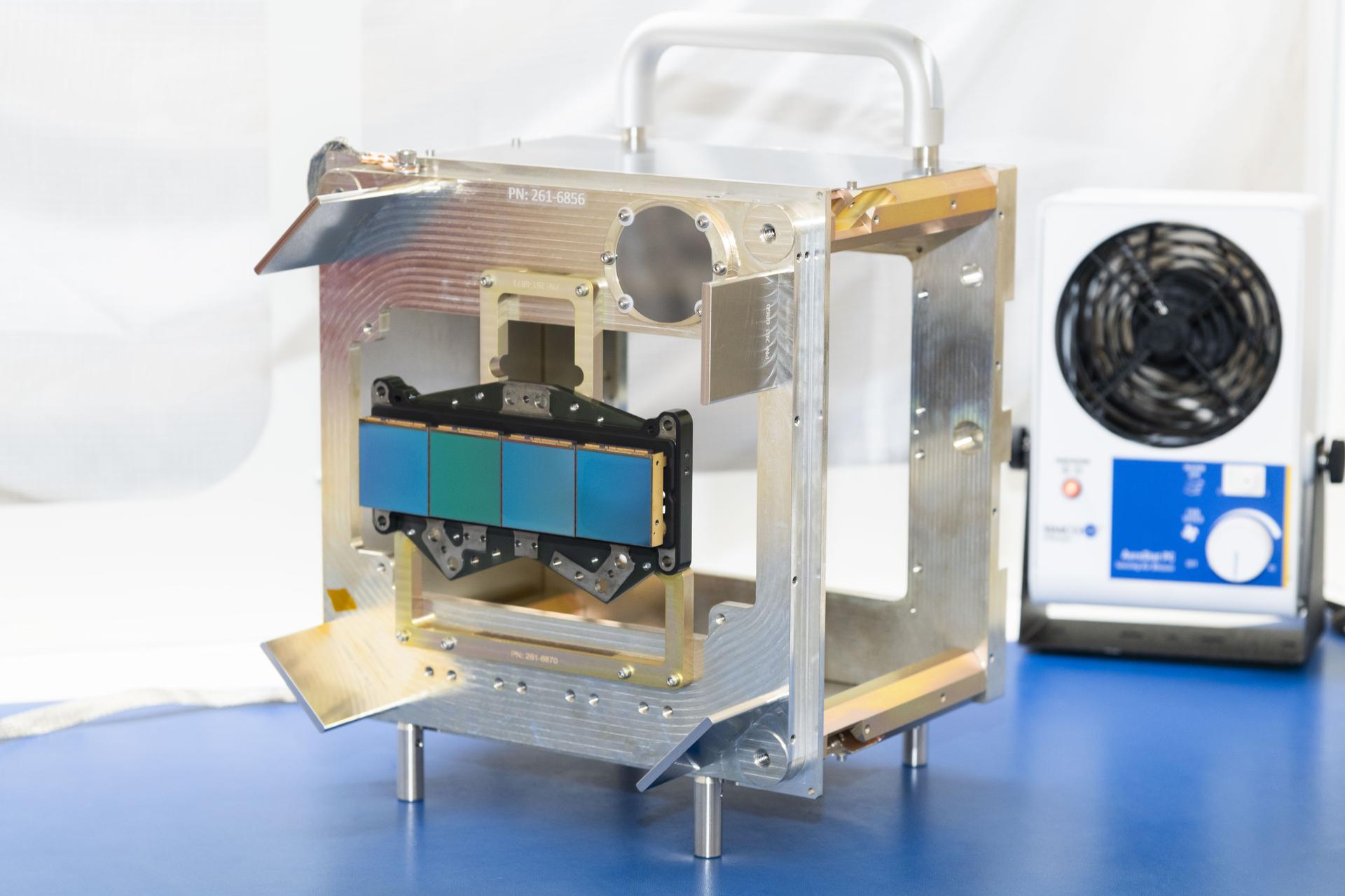
Four mid-wavelength infrared science detectors for NASA’s Near-Earth Object (NEO) Surveyor mission are shown here on a clean room bench at the Space Dynamics Laboratory (SDL) in Logan, Utah. Mounted to a sensor chip assembly, the four blue-green-colored detectors are made with mercury cadmium telluride (HgCdTe), a versatile semiconducting alloy that is sensitive to infrared wavelengths. There are two such assemblies that form the heart of NEO Surveyor’s two science cameras. These state-of-the-art cameras sense solar heat re-radiated by near-Earth objects. The mission’s cameras and telescope, which has an aperture of nearly 20 inches (50 centimeters), will be housed inside the spacecraft’s instrument enclosure, a structure that is designed to ensure heat produced by the spacecraft and instrument during operations doesn’t interfere with its infrared observations. Targeting launch in late 2027, the NEO Surveyor mission is led by Professor Amy Mainzer at the University of California, Los Angeles for NASA’s Planetary Defense Coordination Office and is being managed by the agency’s Jet Propulsion Laboratory in Southern California for the Planetary Missions Program Office at NASA’s Marshall Space Flight Center in Huntsville, Alabama. BAE Systems and the Space Dynamics Laboratory in Logan, Utah, and Teledyne are among the companies that were contracted to build the spacecraft and its instrumentation. The Laboratory for Atmospheric and Space Physics at the University of Colorado Boulder will support operations, and IPAC at Caltech in Pasadena, California, is responsible for producing some of the mission’s data products. Caltech manages JPL for NASA. More information about NEO Surveyor is available at: https://science.nasa.gov/mission/neo-surveyor/

This artist's concept depicts NASA's Near-Earth Object Surveyor (NEO Surveyor) in deep space. After launch, the spacecraft will travel a million miles to a region of gravitational stability – called the L1 Lagrange point – between Earth and the Sun. From there, its large sunshade will block the glare and heat of sunlight, allowing the mission to discover and track near-Earth objects as they approach Earth from the direction of the Sun, which is difficult for other observatories to do. The black-paneled angular structure in the belly of the spacecraft is the instrument enclosure that is being built at NASA's Jet Propulsion Laboratory in Southern California. The spacecraft's only instrument, its infrared telescope, will be installed inside the enclosure. Fabricated from dark composite material that allows heat to escape, the enclosure will help keep the telescope cool and prevent its own heat from obscuring observations. https://photojournal.jpl.nasa.gov/catalog/PIA26388
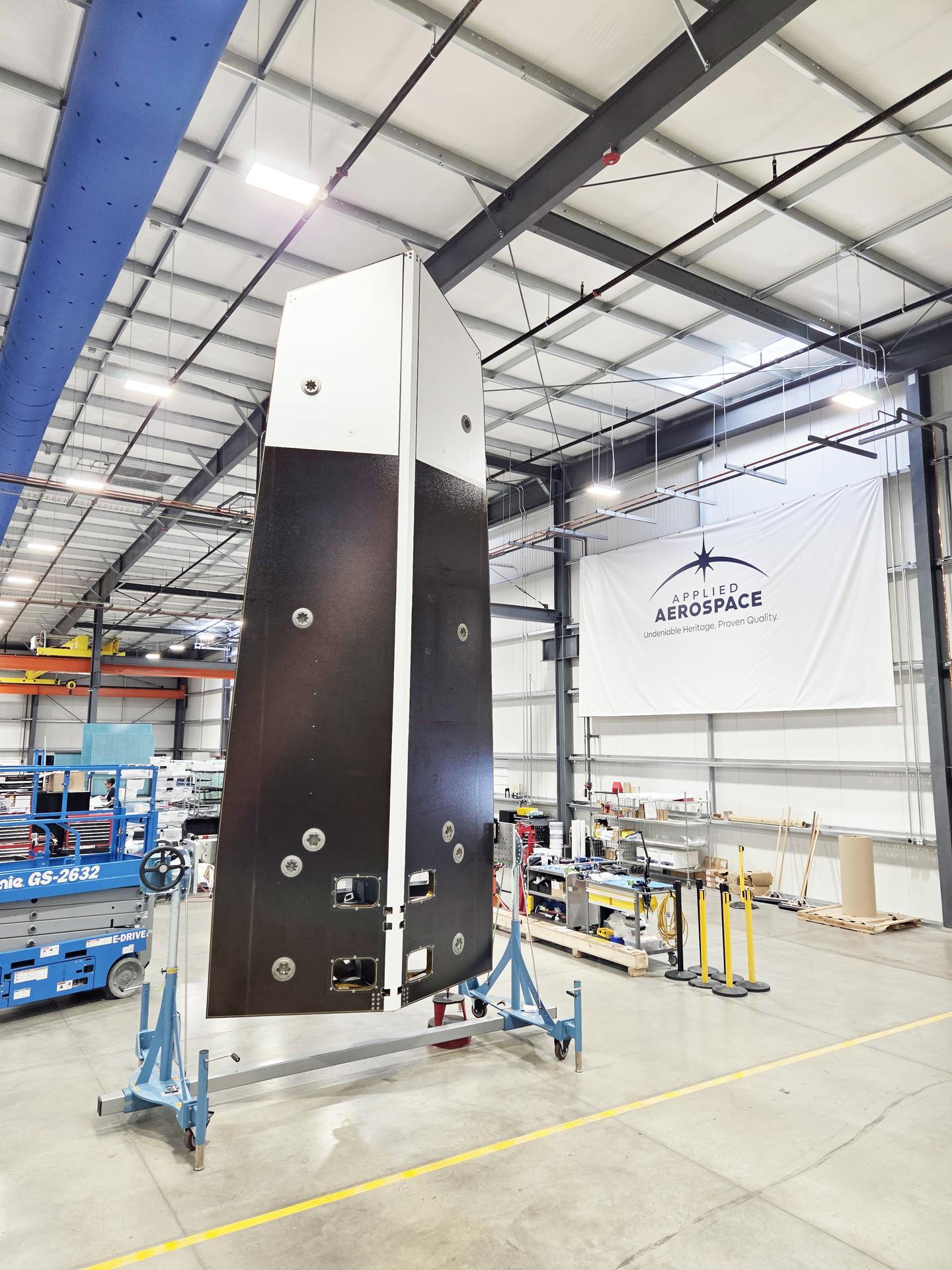
The sunshade for NASA’s Near-Earth Object (NEO) Surveyor mission towers above a fixture at supplier Applied Aerospace in Stockton, California, in September 2025. Standing at over 20 feet (6 meters) high, the sunshade is the largest component of spacecraft. The structure was next shipped to BAE Systems in Boulder, Colorado, for a “fit check” with the spacecraft bus. The sunshade’s Sun-facing surface (visible here) will next be fitted with solar panels that will generate power for the spacecraft after launch. The spacecraft’s instrument enclosure, which houses the telescope and sensitive infrared cameras, will be located behind the sunshade, allowing the spacecraft to detect and track near-Earth objects that would otherwise be hidden by the Sun’s glare. Targeting launch in late 2027, the NEO Surveyor mission is led by Professor Amy Mainzer at the University of California, Los Angeles for NASA’s Planetary Defense Coordination Office and is being managed by the agency’s Jet Propulsion Laboratory in Southern California for the Planetary Missions Program Office at NASA’s Marshall Space Flight Center in Huntsville, Alabama. BAE Systems and the Space Dynamics Laboratory in Logan, Utah, and Teledyne are among the companies that were contracted to build the spacecraft and its instrumentation. The Laboratory for Atmospheric and Space Physics at the University of Colorado Boulder will support operations, and IPAC at Caltech in Pasadena, California, is responsible for producing some of the mission’s data products. Caltech manages JPL for NASA. More information about NEO Surveyor is available at: https://science.nasa.gov/mission/neo-surveyor/

A technician operates articulating equipment to rotate the Near-Earth Object Surveyor (NEO Surveyor) mission's aluminum optical bench – part of the spacecraft's telescope – in a clean room at NASA's Jet Propulsion Laboratory in Southern California on July 17, 2024. NEO Surveyor's sole instrument is a "three-mirror anastigmat telescope," which will rely on a set of curved mirrors to focus light onto its infrared detectors in such a way that minimizes optical aberrations. When complete, the telescope will be housed inside an instrument enclosure – being built in a different JPL clean room – that is fabricated from dark composite material that allows heat to escape, helping to keep the telescope cool and prevent its own heat from obscuring observations. https://photojournal.jpl.nasa.gov/catalog/PIA26387

Procedure for Finding New Impact Sites on Mars Using the Mars Global Surveyor Mars Orbiter Camera

Mars Global Surveyor View of Gusev Crater During Spirit Entry, Descent, and Landing

This picture of the European Space Agency Mars Express spacecraft by the Mars Orbiter Camera on NASA Mars Global Surveyor is from the first successful imaging of any spacecraft orbiting Mars taken by another spacecraft orbiting Mars.
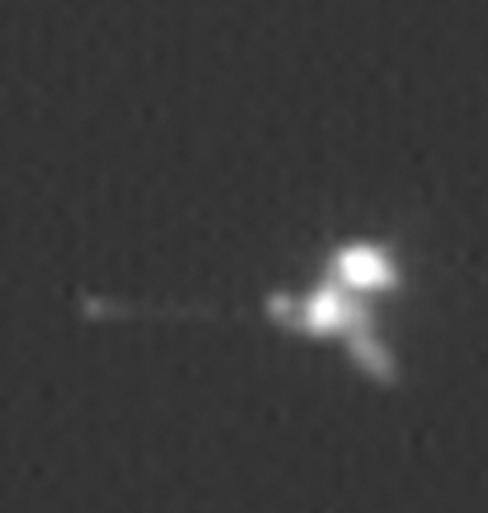
This view is an enlargement of an image of NASA Mars Odyssey spacecraft taken by the Mars Orbiter Camera aboard NASA Mars Global Surveyor while the two spacecraft were about 90 kilometers 56 miles apart.
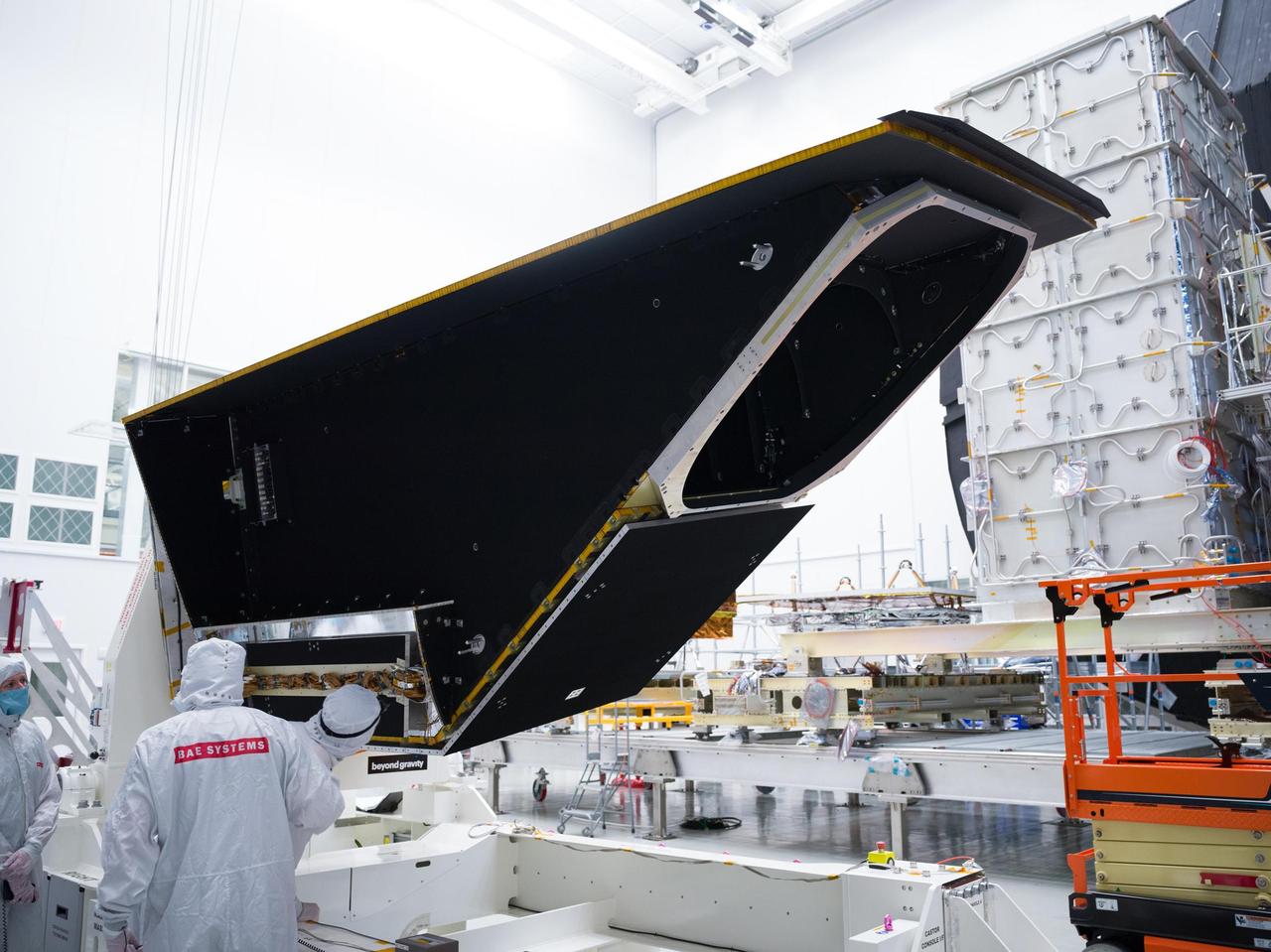
The instrument enclosure for NASA's Near-Earth Object Surveyor is prepared for environmental testing inside the historic Chamber A in the Space Environment Simulation Laboratory at the agency's Johnson Space Center in Houston in December 2024. Mounted to its articulating platform, on which it was securely positioned during assembly, the 12-foot-long (3.7-meter-long) angular structure was inspected by technicians before being placed inside the testing chamber. Figure A shows the reflective side of the instrument enclosure as it was rotated on the assembly dolly before being transferred to a testing platform. The cavernous opening to Chamber A is in the background. The instrument enclosure is designed to protect the spacecraft's infrared telescope while also removing heat from it during operations. After environmental testing was completed, the enclosure returned to NASA's Jet Propulsion Laboratory in Southern California for further work, after which it will ship to the Space Dynamics Laboratory (SDL) in Logan, Utah, and be joined to the telescope. Both the instrument enclosure and telescope were assembled at JPL. As NASA's first space-based detection mission specifically designed for planetary defense, NEO Surveyor will seek out, measure, and characterize the hardest-to-find asteroids and comets that might pose a hazard to Earth. While many near-Earth objects don't reflect much visible light, they glow brightly in infrared light due to heating by the Sun. The spacecraft's telescope, which has an aperture of nearly 20 inches (50 centimeters), features detectors sensitive to two infrared wavelengths in which near-Earth objects re-radiate solar heat. Targeting launch in late 2027, the NEO Surveyor mission is led by Prof. Amy Mainzer at UCLA for NASA's Planetary Defense Coordination Office and is being managed by JPL for the Planetary Missions Program Office at NASA's Marshall Space Flight Center in Huntsville, Alabama. BAE Systems, SDL, and Teledyne are among the companies that were contracted to build the spacecraft and its instrumentation. The Laboratory for Atmospheric and Space Physics at the University of Colorado Boulder will support operations, and Caltech/IPAC in Pasadena, California, is responsible for producing some of the mission's data products. Caltech manages JPL for NASA. https://photojournal.jpl.nasa.gov/catalog/PIA26582

The instrument enclosure of NASA's Near-Earth Object Surveyor is prepared for critical environmental tests inside the historic Chamber A at the Space Environment Simulation Laboratory at the agency's Johnson Space Center in Houston in December 2024. Wrapped in silver thermal blanketing, the 12-foot-long (3.7-meter-long) angular structure was subjected to the frigid, airless conditions that the spacecraft will experience when in deep space. The cavernous thermal-vacuum test facility is famous for testing the Apollo spacecraft that traveled to the Moon in the 1960s and '70s. The instrument enclosure is designed to protect the spacecraft's infrared telescope while also removing heat from it during operations. After environmental testing was completed, the enclosure returned to NASA's Jet Propulsion Laboratory in Southern California for further work, after which it will ship to the Space Dynamics Laboratory (SDL) in Logan, Utah, and be joined to the telescope. Both the instrument enclosure and telescope were assembled at JPL. As NASA's first space-based detection mission specifically designed for planetary defense, NEO Surveyor will seek out, measure, and characterize the hardest-to-find asteroids and comets that might pose a hazard to Earth. While many near-Earth objects don't reflect much visible light, they glow brightly in infrared light due to heating by the Sun. The spacecraft's telescope, which has an aperture of nearly 20 inches (50 centimeters), features detectors sensitive to two infrared wavelengths in which near-Earth objects re-radiate solar heat. Targeting launch in late 2027, the NEO Surveyor mission is led by Prof. Amy Mainzer at UCLA for NASA's Planetary Defense Coordination Office and is being managed by JPL for the Planetary Missions Program Office at NASA's Marshall Space Flight Center in Huntsville, Alabama. BAE Systems, SDL, and Teledyne are among the companies that were contracted to build the spacecraft and its instrumentation. The Laboratory for Atmospheric and Space Physics at the University of Colorado Boulder will support operations, and Caltech/IPAC in Pasadena, California, is responsible for producing some of the mission's data products. Caltech manages JPL for NASA. https://photojournal.jpl.nasa.gov/catalog/PIA26583

A mirror set to be installed inside the telescope for NASA's Near-Earth Object Surveyor (NEO Surveyor) is seen during an inspection of the mirror's surface at NASA's Jet Propulsion Laboratory in Southern California on July 17, 2024. Being built in a JPL clean room, the infrared telescope is the spacecraft's only instrument and it will be used to seek out some of the hardest-to-find near-Earth objects that may pose a hazard to our planet. The reflection of principal optical engineer Brian Monacelli can be seen in the mirror. Known as a "three-mirror anastigmat telescope," the instrument will rely on a set of curved mirrors to focus light onto its infrared detectors in such a way that minimizes optical aberrations. Before being installed, the mirrors were examined for any debris or damage. Then, JPL's team of optomechanical technicians and engineers attached the mirrors to the telescope's "optical bench" in August. Next, they will measure the telescope's performance and align the telescope's mirrors. When complete, the telescope will be housed inside an instrument enclosure – being built at JPL in a different clean room – that is fabricated from dark composite material that allows heat to escape, helping to keep the telescope cool and prevent its own heat from obscuring observations. https://photojournal.jpl.nasa.gov/catalog/PIA26386
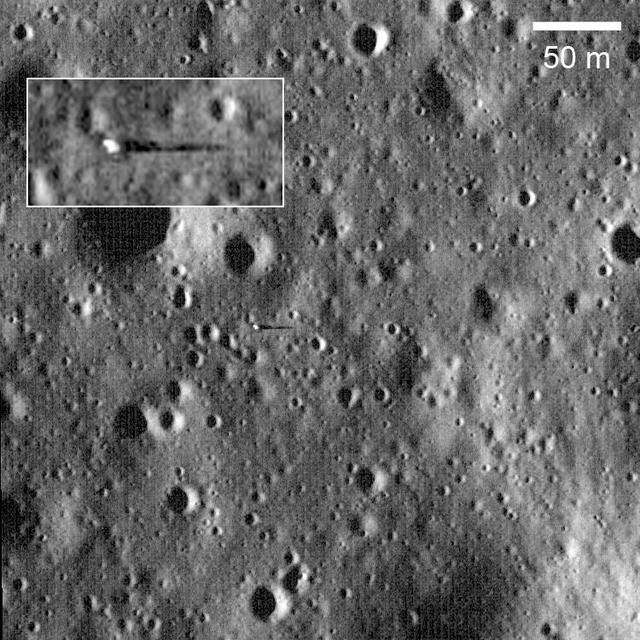
Surveyor 6 casting 18-meter long shadow with Sun just 8° above the horizon. Surveyor 6 Landed 10 November 1967 in Sinus Medii. This image was taken by NASA Lunar Reconnaissance Orbiter.
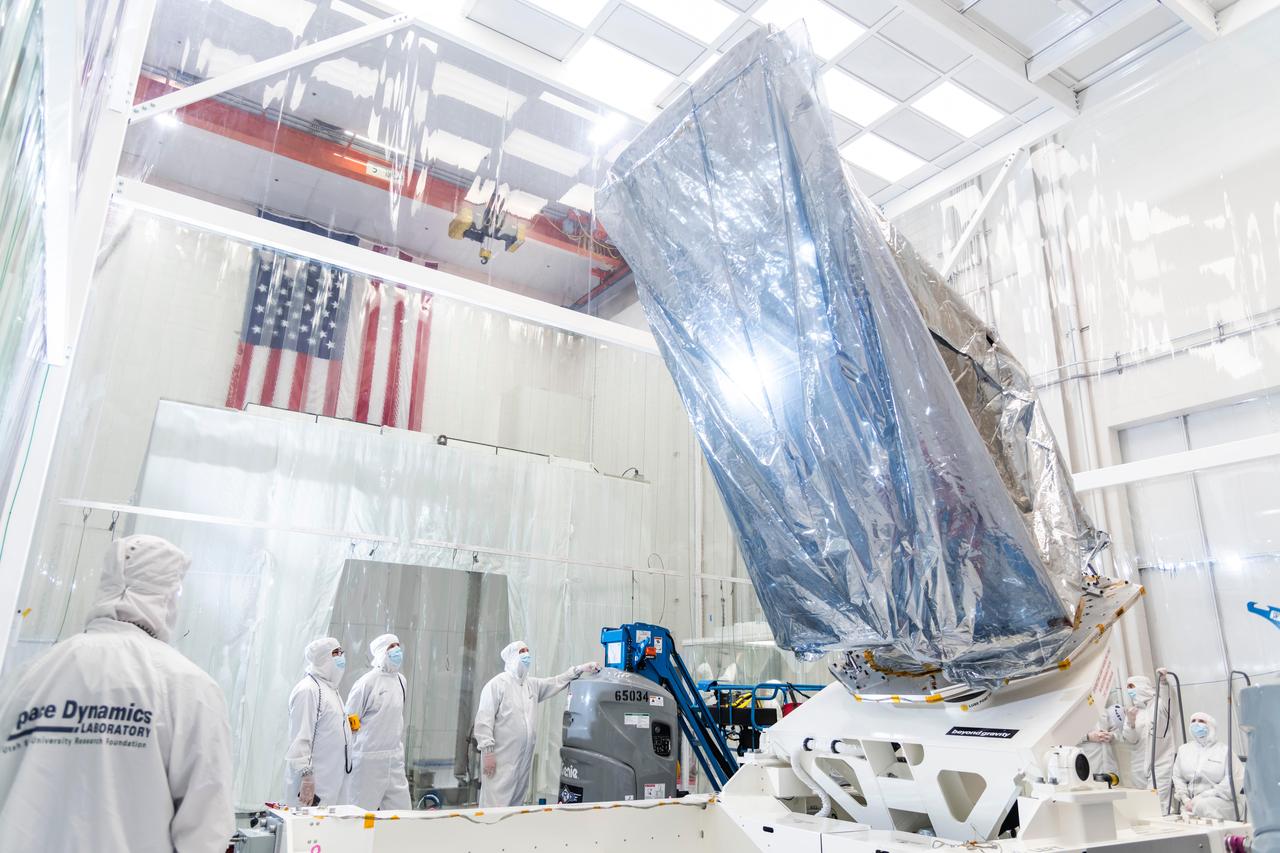
The instrument enclosure for NASA's Near-Earth Object (NEO) Surveyor on May 22, 2025, is seen in a clean room at the Space Dynamics Laboratory (SDL) in Logan, Utah, shortly after arriving from the agency's Jet Propulsion Laboratory in Southern California, where it was assembled. The instrument enclosure is attached to an articulating assembly dolly and wrapped in silver-colored material (composed of a metalized polyester film and a low charging polyethylene laminate) to protect the flight hardware from static electricity and dust particles during transport. The instrument enclosure will house the observatory's scientific instrument, which includes a three-reflection aluminum telescope, state-of-the-art infrared detectors, and an innovative passive cooling system to keep the instrument at cryogenic temperatures. The telescope, which has an aperture of nearly 20 inches (50 centimeters), features detectors sensitive to two infrared wavelengths in which near-Earth objects re-radiate solar heat. The instrument enclosure is designed to ensure heat produced by the spacecraft and instrument during operations doesn't interfere with its infrared observations. As NASA's first space-based detection mission specifically designed for planetary defense, NEO Surveyor will seek out, measure, and characterize the hardest-to-find asteroids and comets that might pose a hazard to Earth. While many near-Earth objects don't reflect much visible light, they glow brightly in infrared light due to heating by the Sun. Targeting launch in late 2027, the NEO Surveyor mission is led by Professor Amy Mainzer at UCLA for NASA's Planetary Defense Coordination Office and is being managed by JPL for the Planetary Missions Program Office at NASA's Marshall Space Flight Center in Huntsville, Alabama. BAE Systems, SDL, and are among the companies that were contracted to build the spacecraft and its instrumentation. The Laboratory for Atmospheric and Space Physics at the University of Colorado Boulder will support operations, and IPAC at Caltech in Pasadena, California, is responsible for producing some of the mission's data products. Caltech manages JPL for NASA. https://photojournal.jpl.nasa.gov/catalog/PIA26589
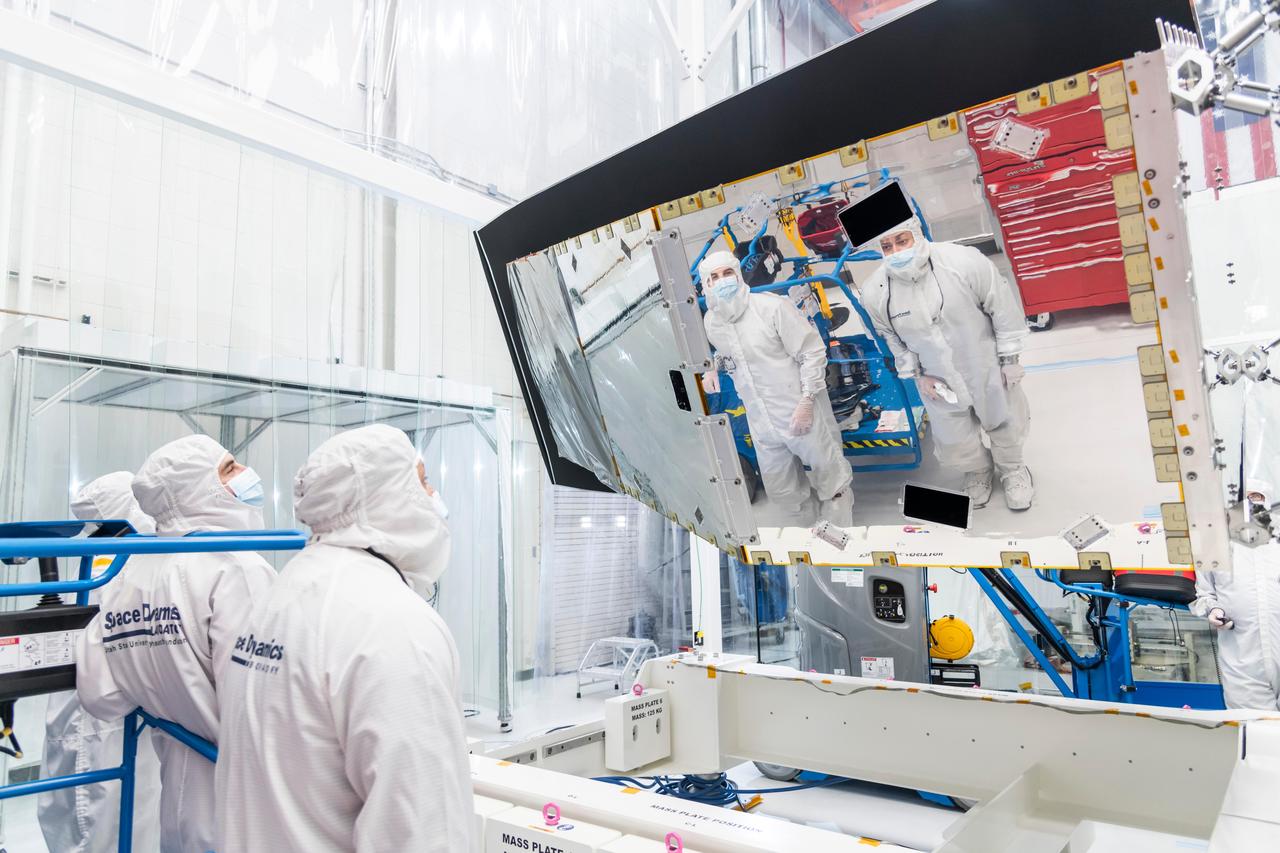
Technicians and engineers inspect NASA's Near-Earth Object (NEO) Surveyor's instrument enclosure at the Space Dynamics Laboratory (SDL) in Logan, Utah, after it arrived from the agency's Jet Propulsion Laboratory in Southern California in May 2025. The instrument enclosure will house the spacecraft's telescope, which is fitted with state-of-the-art detectors and a novel cryogenic system to keep the instrument cool. The telescope, which has an aperture of nearly 20 inches (50 centimeters), features detectors sensitive to two infrared wavelengths in which near-Earth objects re-radiate solar heat. The instrument enclosure is designed to ensure heat produced by the telescope during operations doesn't interfere with its observations. As NASA's first space-based detection mission specifically designed for planetary defense, NEO Surveyor will seek out, measure, and characterize the hardest-to-find asteroids and comets that might pose a hazard to Earth. While many near-Earth objects don't reflect much visible light, they glow brightly in infrared light due to heating by the Sun. Targeting launch in late 2027, the NEO Surveyor mission is led by Professor Amy Mainzer at UCLA for NASA's Planetary Defense Coordination Office and is being managed by JPL for the Planetary Missions Program Office at NASA's Marshall Space Flight Center in Huntsville, Alabama. BAE Systems, SDL, and are among the companies that were contracted to build the spacecraft and its instrumentation. The Laboratory for Atmospheric and Space Physics at the University of Colorado Boulder will support operations, and IPAC at Caltech in Pasadena, California, is responsible for producing some of the mission's data products. Caltech manages JPL for NASA. https://photojournal.jpl.nasa.gov/catalog/PIA26590
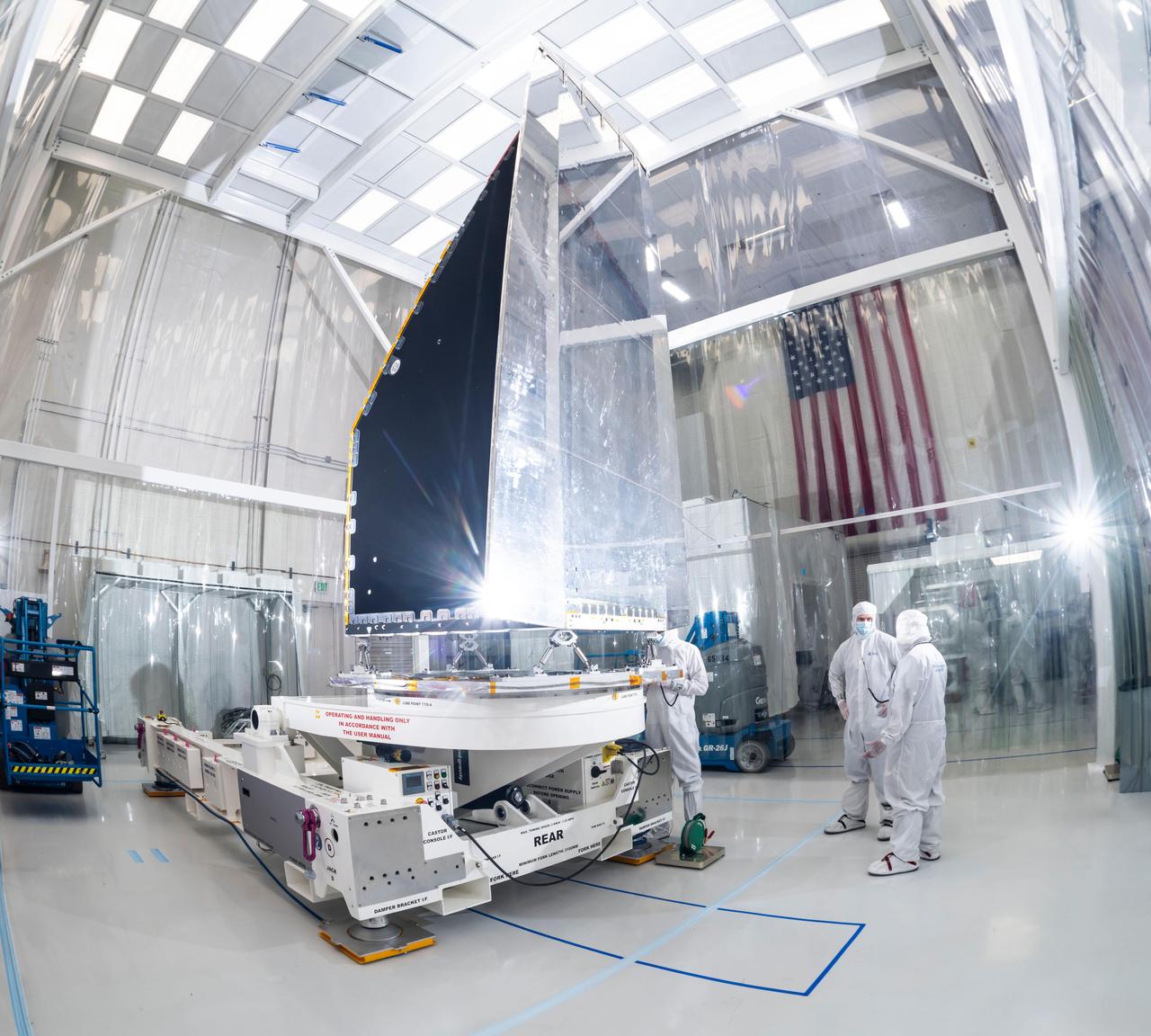
After arriving at the Space Dynamics Laboratory (SDL) in Logan, Utah, from NASA's Jet Propulsion Laboratory in Southern California in May 2025, the instrument enclosure for the agency's Near-Earth Object (NEO) Surveyor mission was inspected prior to thermal vacuum testing. Shown here, the enclosure stands vertically atop an articulating assembly dolly. The shiny and black surfaces of the enclosure optimize the reflection and radiation properties of the structure. The telescope, which has an aperture of nearly 20 inches (50 centimeters), features detectors sensitive to two infrared wavelengths in which near-Earth objects re-radiate solar heat. The instrument enclosure is designed to ensure heat produced by the telescope during operations doesn't interfere with its observations. As NASA's first space-based detection mission specifically designed for planetary defense, NEO Surveyor will seek out, measure, and characterize the hardest-to-find asteroids and comets that might pose a hazard to Earth. While many near-Earth objects don't reflect much visible light, they glow brightly in infrared light due to heating by the Sun. Targeting launch in late 2027, the NEO Surveyor mission is led by Professor Amy Mainzer at UCLA for NASA's Planetary Defense Coordination Office and is being managed by JPL for the Planetary Missions Program Office at NASA's Marshall Space Flight Center in Huntsville, Alabama. BAE Systems, SDL, and are among the companies that were contracted to build the spacecraft and its instrumentation. The Laboratory for Atmospheric and Space Physics at the University of Colorado Boulder will support operations, and IPAC at Caltech in Pasadena, California, is responsible for producing some of the mission's data products. Caltech manages JPL for NASA. https://photojournal.jpl.nasa.gov/catalog/PIA26597

A truck arrives at NASA's Jet Propulsion Laboratory in Southern California on June 3, 2024, to deliver the Medium Articulating Transportation System (MATS), which will be used during the construction and transportation of components for NASA's Near-Earth Object Surveyor mission. Originating at the aerospace company Beyond Gravity in Vienna, Austria, the MATS traveled via ship through the Panama Canal to Port Hueneme, California, before arriving by road at JPL. Construction has begun on NEO Surveyor's instrument enclosure in the High Bay 1 clean room at JPL's Spacecraft Assembly Facility. When the enclosure is complete later this year, it will be moved inside the MATS to NASA's Johnson Space Center in Houston for environmental testing. The MATS is a transportable clean room with its own filtration and climate control systems that keep the spacecraft and components clean, stable, and safe while being moved between facilities. NEO Surveyor's instrument enclosure contains the spacecraft's telescope, mirrors, and infrared sensors that will be used to detect, track, and characterize the most hazardous near-Earth objects. BAE Systems, Space Dynamics Laboratory, and Teledyne are among the aerospace and engineering companies contracted to build the spacecraft and its instrumentation. The Laboratory for Atmospheric and Space Physics at the University of Colorado, Boulder will support operations, and IPAC at Caltech in Pasadena, California, is responsible for processing survey data and producing the mission's data products. JPL manages the project; Caltech manages JPL for NASA. Launching no earlier than 2027, NEO Surveyor supports the objectives of NASA's Planetary Defense Coordination Office (PDCO) at NASA Headquarters in Washington. The NASA Authorization Act of 2005 directed NASA to discover and characterize at least 90% of the near-Earth objects more than 140 meters (460 feet) across that come within 30 million miles (48 million kilometers) of our planet's orbit. Objects of this size can cause significant regional damage, or worse, should they impact the Earth. https://photojournal.jpl.nasa.gov/catalog/PIA26381
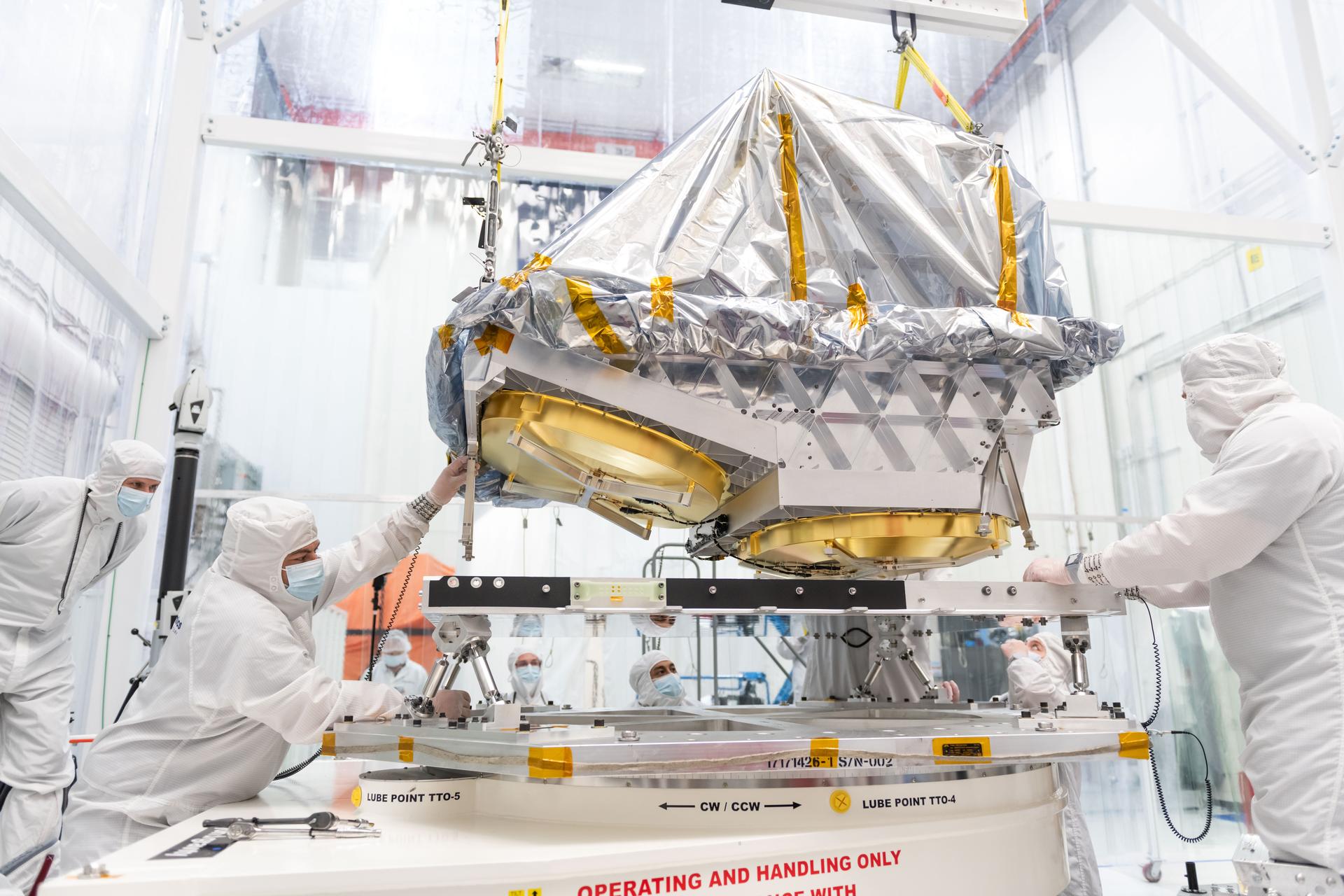
Engineers with NASA’s Near-Earth Object (NEO) Surveyor mission work in a Space Dynamics Laboratory (SDL) clean room in Logan, Utah, to attach the spacecraft’s aluminum telescope to the flight base frame in early September 2025. The telescope is connected via a system of struts that prevent heat from passing from the spacecraft to the instrument, keeping it secure, isolated, and cool. With an aperture of nearly 20 inches (50 centimeters), the telescope features detectors sensitive to two infrared wavelengths in which near-Earth objects re-radiate solar heat. The instrument enclosure is designed to ensure heat produced by the spacecraft and instrument during operations doesn’t interfere with its infrared observations. Targeting launch in late 2027, the NEO Surveyor mission is led by Professor Amy Mainzer at the University of California, Los Angeles for NASA’s Planetary Defense Coordination Office and is being managed by the agency’s Jet Propulsion Laboratory in Southern California for the Planetary Missions Program Office at NASA’s Marshall Space Flight Center in Huntsville, Alabama. BAE Systems and the Space Dynamics Laboratory in Logan, Utah, and Teledyne are among the companies that were contracted to build the spacecraft and its instrumentation. The Laboratory for Atmospheric and Space Physics at the University of Colorado Boulder will support operations, and IPAC at Caltech in Pasadena, California, is responsible for producing some of the mission’s data products. Caltech manages JPL for NASA. More information about NEO Surveyor is available at: https://science.nasa.gov/mission/neo-surveyor/

At NASA's Jet Propulsion Laboratory in Southern California, on June 7, 2024, clean room technicians use a crane to lift the lid of the Medium Articulating Transportation System (MATS) that will be used during the construction and transportation of components for NASA's Near-Earth Object Surveyor mission. Inside the MATS is the Medium Articulating Assembly Dolly (MAAD), a platform that will support the spacecraft's instrument enclosure, which is being constructed inside the High Bay 1 clean room at JPL's Spacecraft Assembly Facility. The MAAD is an articulating platform on which a spacecraft (or spacecraft components) can be mounted securely and positioned as required during assembly. It can tilt a spacecraft vertically and horizontally, rotating it 360 degrees. JPL plans to use the MAAD for future missions to reduce the number of crane lifts during assembly, test, and launch operations, known as ATLO. NEO Surveyor is the first mission to use the platform. NEO Surveyor's instrument enclosure contains the spacecraft's telescope, mirrors, and infrared sensors that will be used to detect, track, and characterize the most hazardous near-Earth objects. BAE Systems, Space Dynamics Laboratory, and Teledyne are among the aerospace and engineering companies contracted to build the spacecraft and its instrumentation. The Laboratory for Atmospheric and Space Physics at the University of Colorado, Boulder will support operations, and IPAC at Caltech in Pasadena, California, is responsible for processing survey data and producing the mission's data products. JPL manages the project; Caltech manages JPL for NASA. Launching no earlier than 2027, NEO Surveyor supports the objectives of NASA's Planetary Defense Coordination Office (PDCO) at NASA Headquarters in Washington. The NASA Authorization Act of 2005 directed NASA to discover and characterize at least 90% of the near-Earth objects more than 140 meters (460 feet) across that come within 30 million miles (48 million kilometers) of our planet's orbit. Objects of this size can cause significant regional damage, or worse, should they impact the Earth. https://photojournal.jpl.nasa.gov/catalog/PIA26382
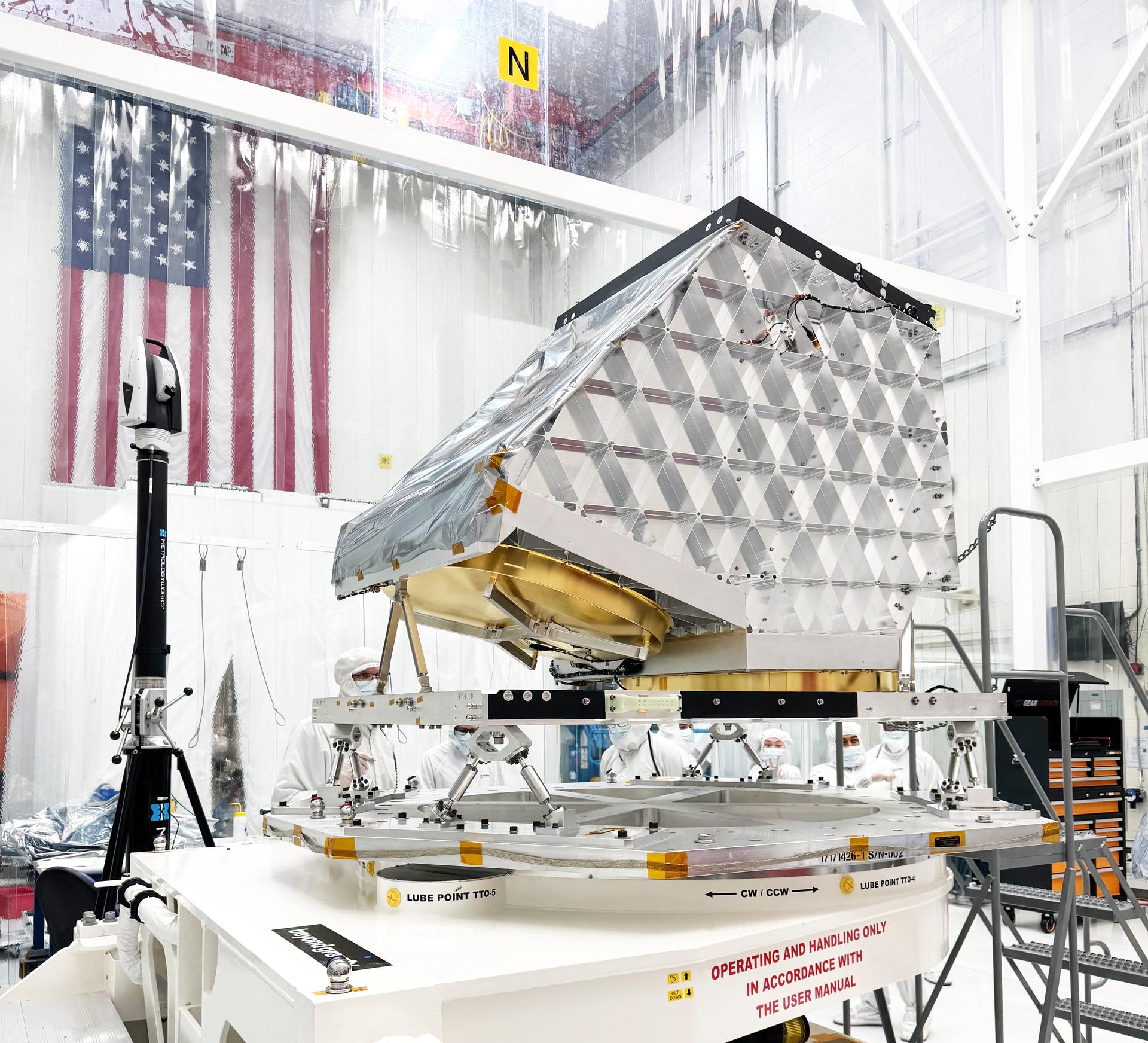
The aluminum telescope of NASA’s Near-Earth Object (NEO) Surveyor mission is shown here attached its flight base frame at a Space Dynamics Laboratory (SDL) clean room in Logan, Utah, in early September 2025. The telescope is connected via a system of struts that prevent heat from passing from the spacecraft to the instrument, keeping it secure, isolated, and cool. The spacecraft’s instrument enclosure will later be fitted over the instrumentation and then the pair will be attached to the spacecraft bus and sunshade. With an aperture of nearly 20 inches (50 centimeters), the telescope features detectors sensitive to two infrared wavelengths in which near-Earth objects re-radiate solar heat. The instrument enclosure is designed to ensure heat produced by the spacecraft and instrument during operations doesn’t interfere with its infrared observations. Targeting launch in late 2027, the NEO Surveyor mission is led by Professor Amy Mainzer at the University of California, Los Angeles for NASA’s Planetary Defense Coordination Office and is being managed by the agency’s Jet Propulsion Laboratory in Southern California for the Planetary Missions Program Office at NASA’s Marshall Space Flight Center in Huntsville, Alabama. BAE Systems and the Space Dynamics Laboratory in Logan, Utah, and Teledyne are among the companies that were contracted to build the spacecraft and its instrumentation. The Laboratory for Atmospheric and Space Physics at the University of Colorado Boulder will support operations, and IPAC at Caltech in Pasadena, California, is responsible for producing some of the mission’s data products. Caltech manages JPL for NASA. More information about NEO Surveyor is available at: https://science.nasa.gov/mission/neo-surveyor/
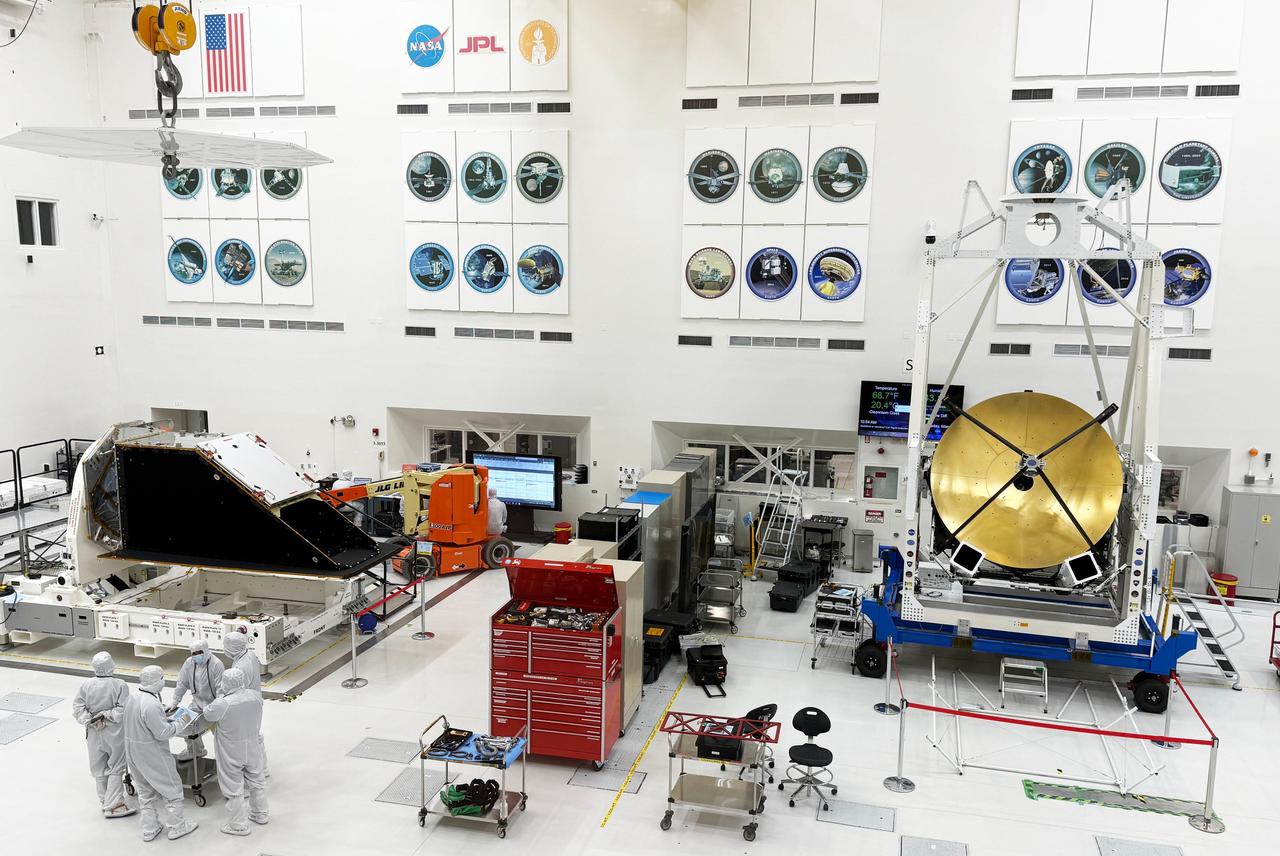
The dark, bulky instrument enclosure for NASA's NEO Surveyor is seen here (left) in the High Bay 1 clean room of the Spacecraft Assembly Facility at NASA's Jet Propulsion Laboratory in Southern California in March 2025. A major component of the mission, the instrument enclosure journeyed back to JPL in early March after completing environmental testing at NASA's Johnson Space Center in Houston. The gold-coated, circular antenna at right is part of the telescope for NASA's ASTHROS (Astrophysics Stratospheric Telescope for High Spectral Resolution Observations at Submillimeter-wavelengths), an atmospheric balloon mission; it has been in the clean room since December 2024. https://photojournal.jpl.nasa.gov/catalog/PIA26584
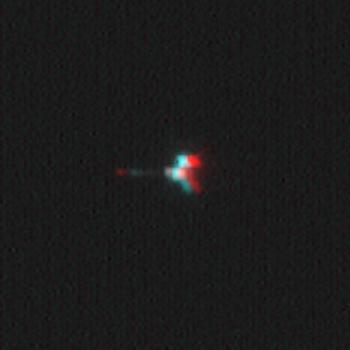
This stereoscopic picture of NASA Mars Odyssey spacecraft was created from two views of that spacecraft taken by the Mars Orbiter Camera on NASA Mars Global Surveyor. 3D glasses are necessary to view this image.
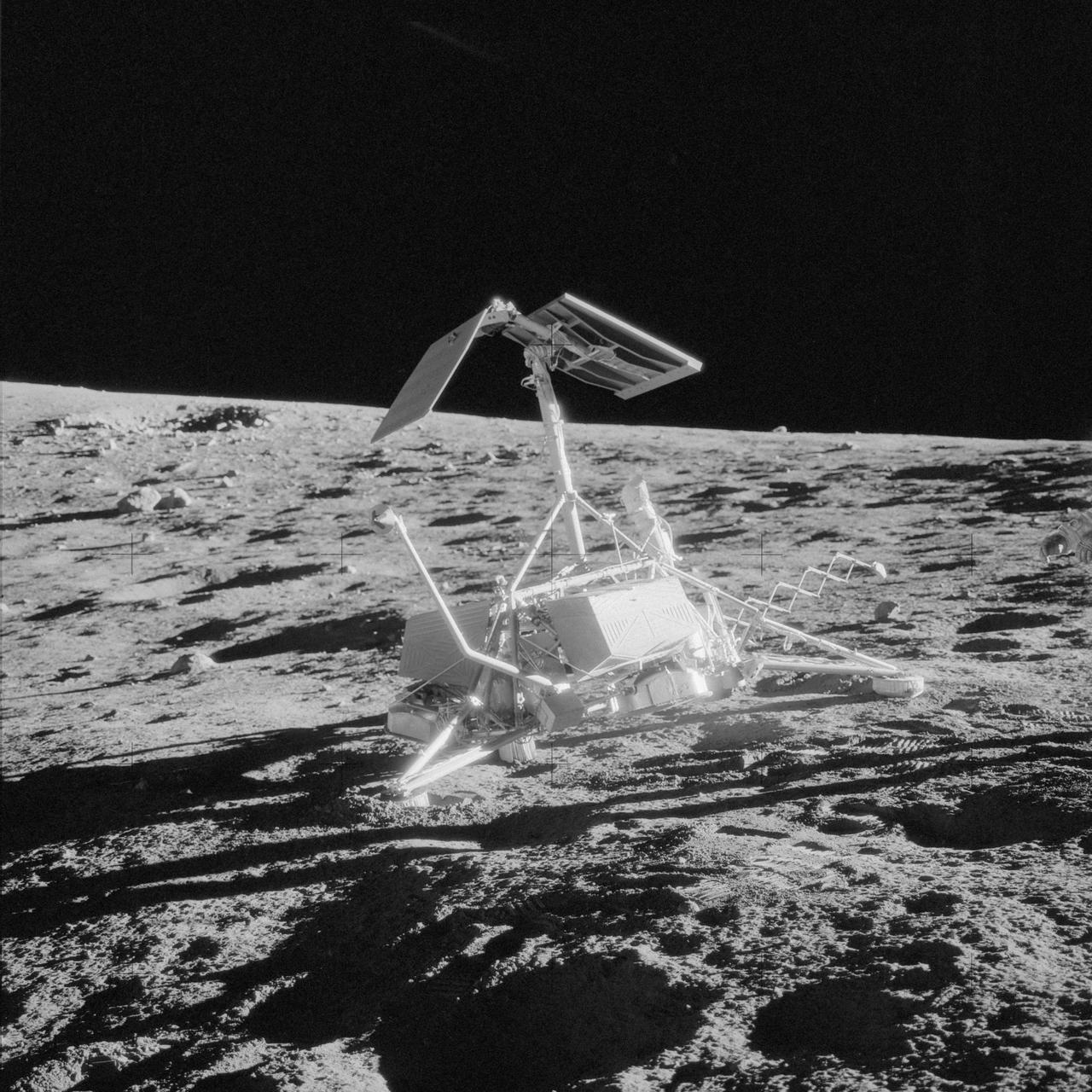
AS12-48-7121 (20 Nov. 1969) --- An excellent view of the unmanned Surveyor 3 spacecraft which was photographed during the Apollo 12 second extravehicular activity (EVA) on the surface of the moon. The Apollo 12 Lunar Module (LM), with astronauts Charles Conrad Jr., commander, and Alan L. Bean, lunar module pilot, aboard landed within 600 feet of Surveyor 3 in the Ocean of Storms. The television camera and several other pieces were taken from Surveyor 3 and brought back to Earth for scientific examination. Surveyor 3 landed on the side of this small crater in the Ocean of Storms on April 19, 1967. Astronaut Richard F. Gordon Jr., command module pilot, remained with the Apollo 12 Command and Service Modules (CSM) in lunar orbit while Conrad and Bean descended to explore the moon.
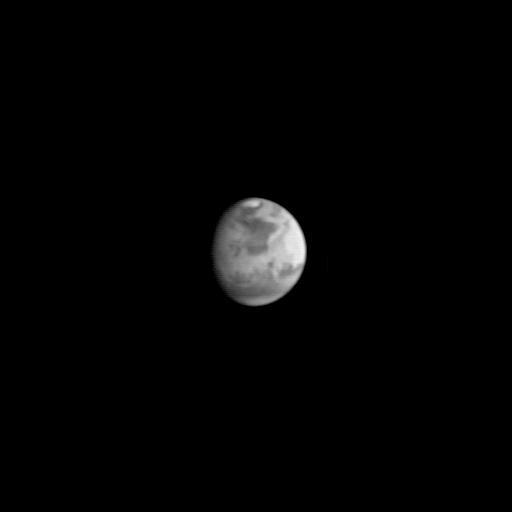
This image is the first view of Mars taken by the Mars Global Surveyor Orbiter Camera (MOC). It was acquired the afternoon of July 2, 1997 when the MGS spacecraft was 17.2 million kilometers (10.7 million miles) and 72 days from encounter. At this distance, the MOC's resolution is about 64 km per picture element, and the 6800 km (4200 mile) diameter planet is 105 pixels across. The observation was designed to show the Mars Pathfinder landing site at 19.4 N, 33.1 W approximately 48 hours prior to landing. The image shows the north polar cap of Mars at the top of the image, the dark feature Acidalia Planitia in the center with the brighter Chryse plain immediately beneath it, and the highland areas along the Martian equator including the canyons of the Valles Marineris (which are bright in this image owing to atmospheric dust). The dark features Terra Meridiani and Terra Sabaea can be seen at the 4 o`clock position, and the south polar hood (atmospheric fog and hazes) can be seen at the bottom of the image. Launched on November 7, 1996, Mars Global Surveyor will enter Mars orbit on Thursday, September 11 shortly after 6:00 PM PDT. After Mars Orbit Insertion, the spacecraft will use atmospheric drag to reduce the size of its orbit, achieving a circular orbit only 400 km (248 mi) above the surface in early March 1998, when mapping operations will begin. http://photojournal.jpl.nasa.gov/catalog/PIA00606

Hubble Watches the Red Planet as Mars Global Surveyor Begins Aerobraking
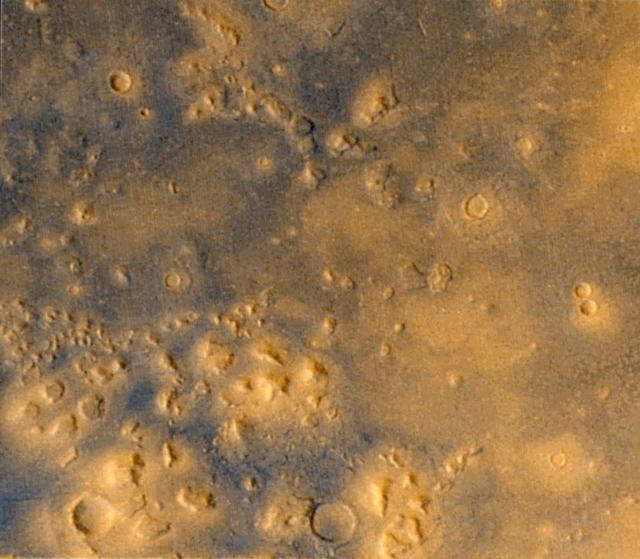
This image was taken by NASA Mars Global Surveyor Cydonia region on Mars. 3D glasses are necessary to view this image.

This anaglyph from Mars Global Surveyor MGS shows layers in Galle Crater. 3D glasses are necessary to view this image.
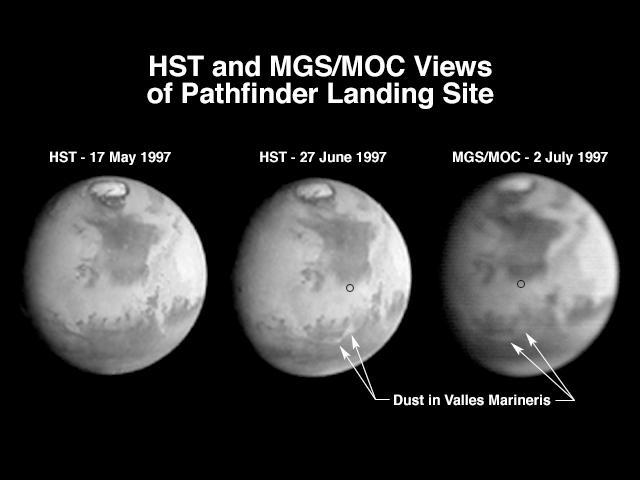
A comparison of images taken by the Hubble Space Telescope Wide Field/Planetary Camera (HST/WFPC) and the Mars Global Surveyor Orbiter Camera (MGS/MOC) shows the progress of a regional dust storm within the Valles Marineris canyons on Mars. The first HST image (left), taken in mid-May, shows no dust within the canyons. The most recent HST image (center), taken on 27 June in support of the Mars Pathfinder landing activities, shows a dust storm filling part of the canyon system and extending into the chaotic terrains at the eastern end of the canyons. The MGS/MOC image (right), acquired on July 2, shows that bright dust continues to fill the valleys. However, it does not appear to have moved significantly north of the previously observed position, suggesting that the storm remains confined to the canyon region, and does not appear to directly threaten the Pathfinder landing site (small black circle). The HST images shown here have been reduced in scale to match that of the MGS/MOC image. Although the HST is 10 times farther from Mars than MGS, its images are sharper because its resolving power is 15 times better than the MOC, and the light gathering area is almost 50 times greater. However, MGS is presently 45,000 times farther from Mars than it will be when the MOC begins its primary photography mission. At 400 km above the martian surface, the MOC wide angle camera will collect daily images at a resolution of 7.5 km/pixel, compared to HST's best of about 20 km/pixel. The narrow angle camera will observe portions of Mars at better than 1.5 m/pixel. http://photojournal.jpl.nasa.gov/catalog/PIA00607
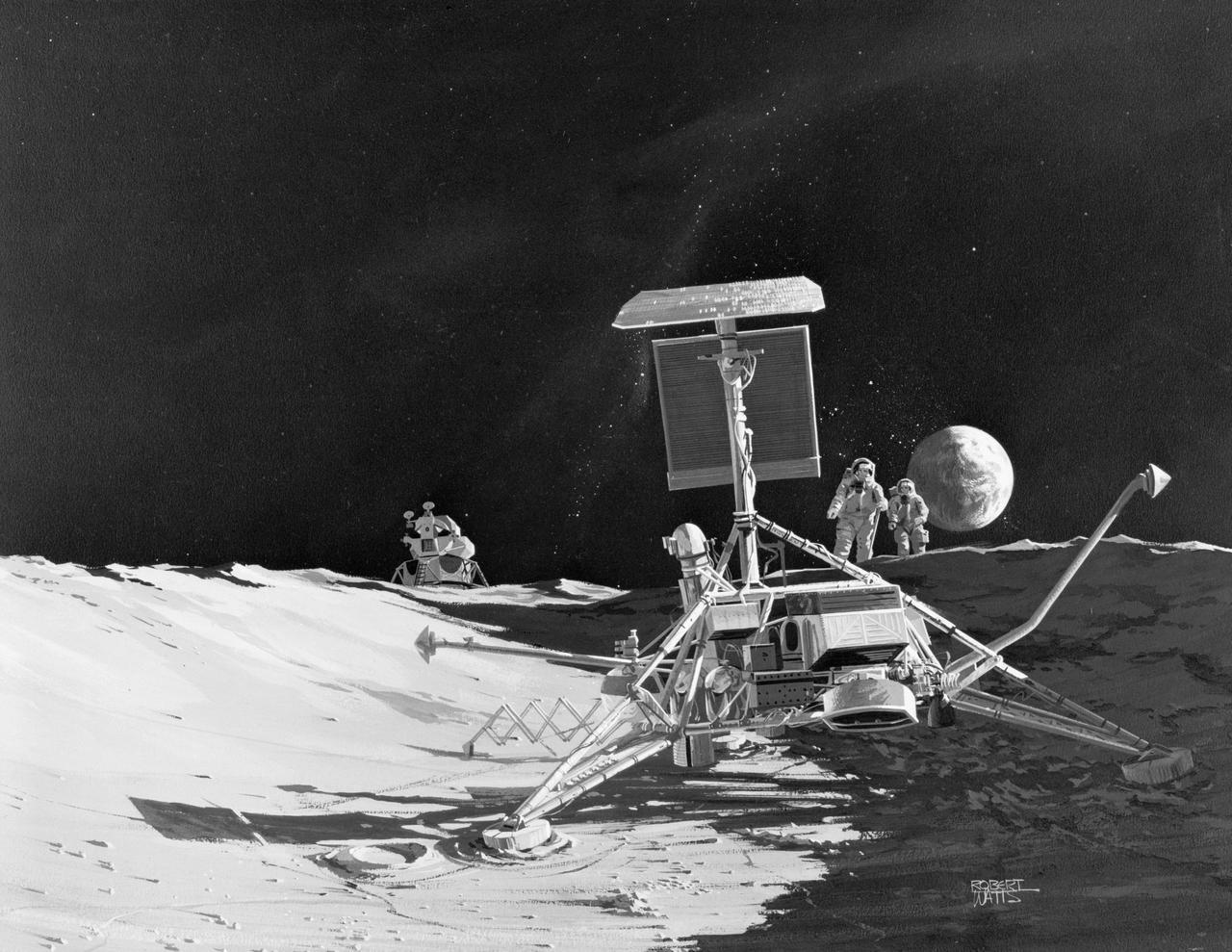
S69-55553 (October 1969) --- Ryan Aeronautical Company artist's concept depicting a close-up view of Surveyor 3 resting in the Ocean of Storms on the lunar nearside. Two Apollo 12 astronauts are seen approaching in the background. The Apollo 12 Lunar Module (LM) is in the left background. The Earth is in the right background. The inspection of Surveyor 3, which has been resting on the moon since April 1967, is an important objective of the Apollo 12 lunar landing mission. Selected pieces of Surveyor 3 will be brought back to Earth for scientific examination. Ryan landing radar has guided both Surveyor and Apollo spacecraft to soft landings on the moon.
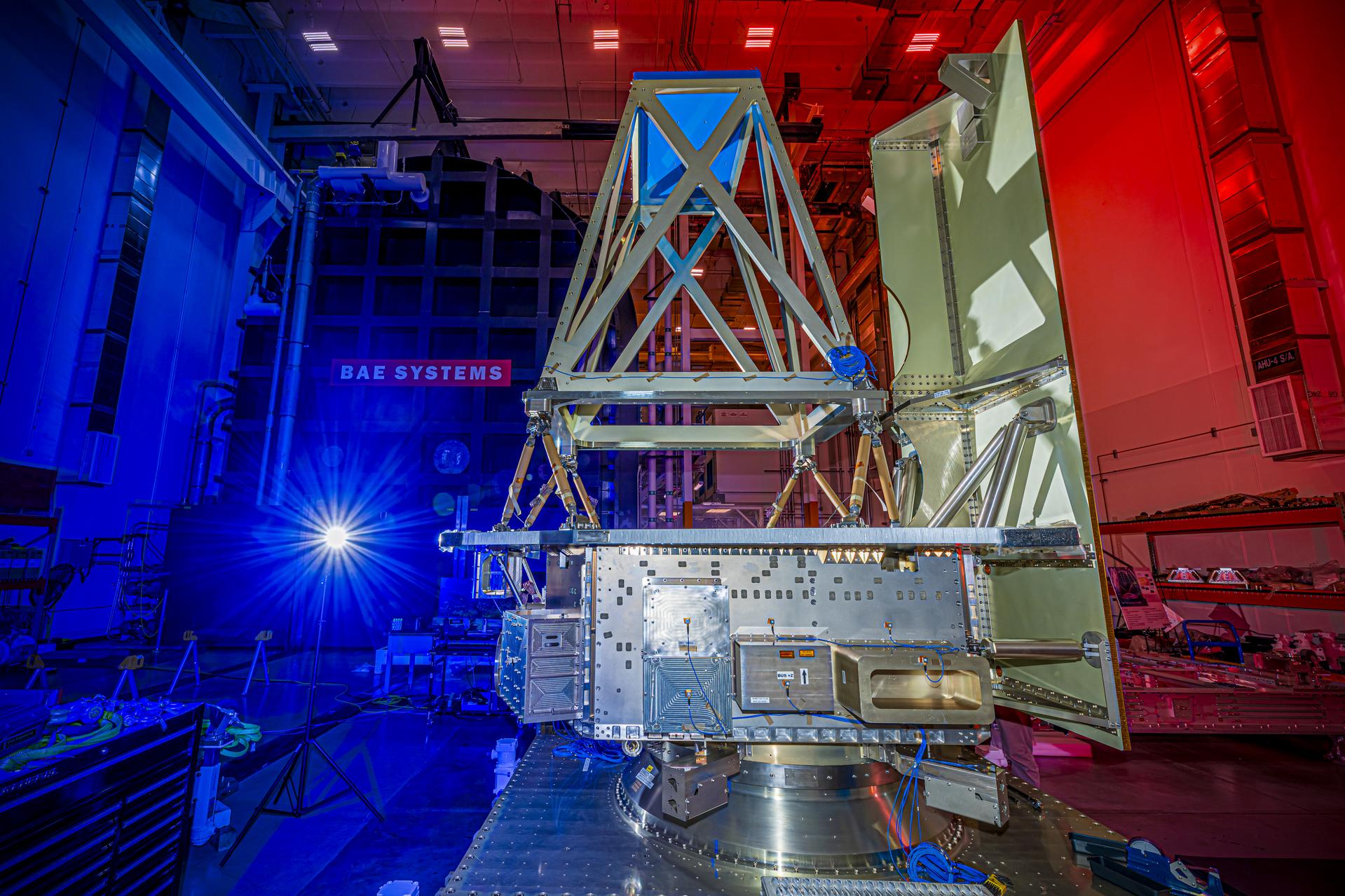
NASA’s Near-Earth Object (NEO) Surveyor sunshade mass simulator (the gray paneling to the right of the photo) is attached to the spacecraft’s bus structure in August 2025 at BAE Systems Space & Mission Systems in Boulder, Colorado. The angular assembly attached to the top of the bus via a system of struts is the instrument mass simulator. Mass simulators are used to replicate the weight and size of flight hardware during testing. Targeting launch in late 2027, the NEO Surveyor mission is led by Professor Amy Mainzer at the University of California, Los Angeles for NASA’s Planetary Defense Coordination Office and is being managed by the agency’s Jet Propulsion Laboratory in Southern California for the Planetary Missions Program Office at NASA’s Marshall Space Flight Center in Huntsville, Alabama. BAE Systems Space & Mission Systems and the Space Dynamics Laboratory in Logan, Utah, and Teledyne are among the companies that were contracted to build the spacecraft and its instrumentation. The Laboratory for Atmospheric and Space Physics at the University of Colorado Boulder will support operations, and IPAC at Caltech in Pasadena, California, is responsible for producing some of the mission’s data products. Caltech manages JPL for NASA. More information about NEO Surveyor is available at: https://science.nasa.gov/mission/neo-surveyor/
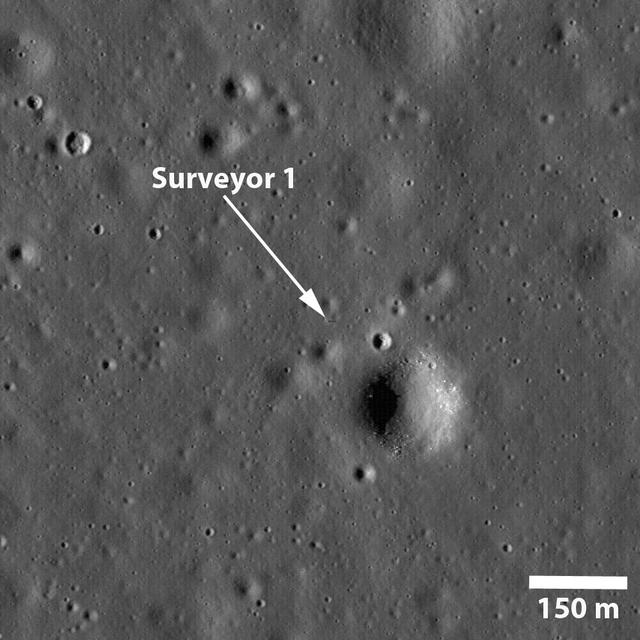
NASA Surveyor 1 spacecraft sitting silently on Oceanus Procellarum, the first US spacecraft to land on another planet on June 2, 1966 in this image taken by NASA Lunar Reconnaissance Orbiter.
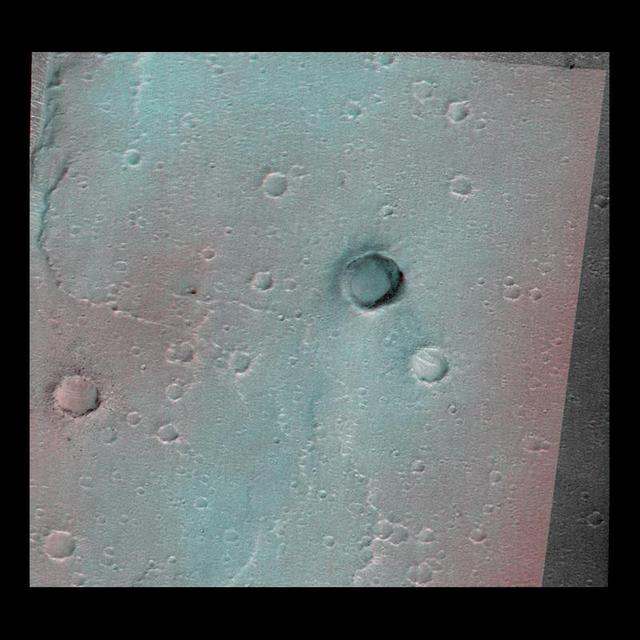
This image of the vicinity of the Viking Lander 1 was captured by NASA Mars Global Surveyor MOC camera. site. 3D glasses are necessary to identify surface detail.
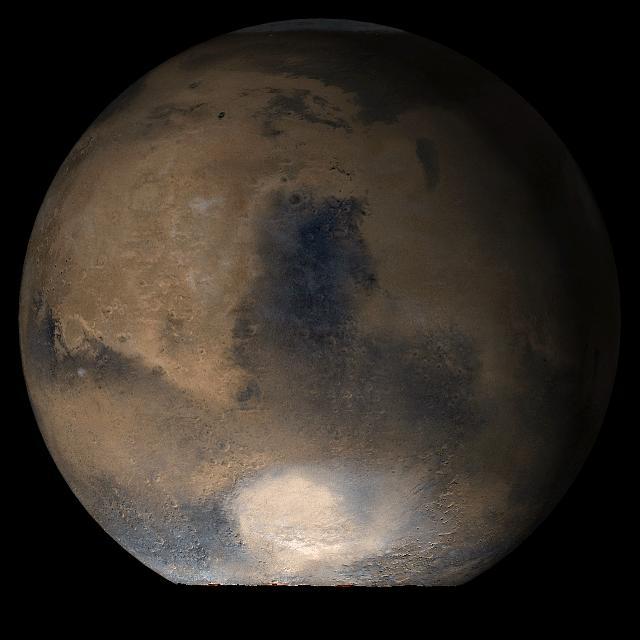
This picture is a composite of Mars Global Surveyor MGS Mars Orbiter Camera MOC daily global images acquired at Ls 66° during a previous Mars year
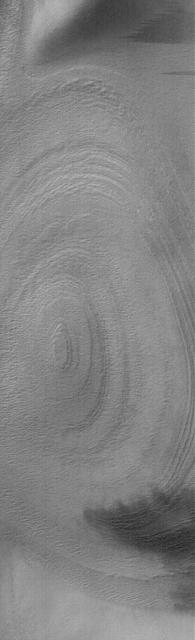
This Mars Global Surveyor MGS Mars Orbiter Camera MOC image shows an eroded stack of layered material in a crater of the south polar region of Mars
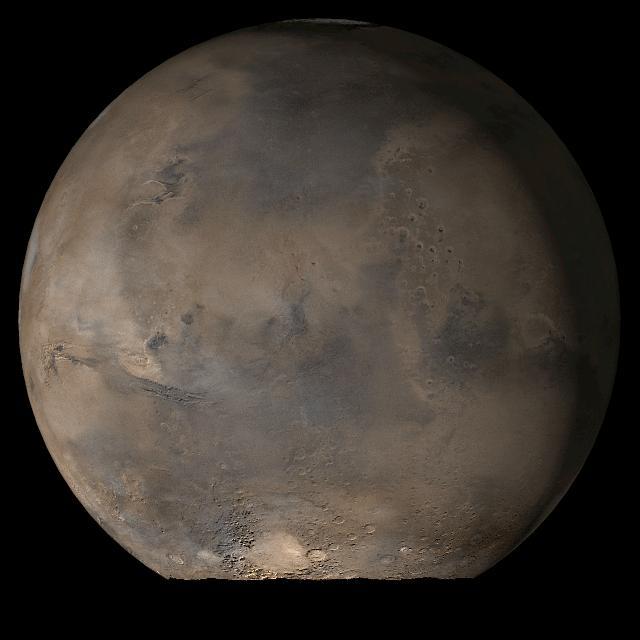
This picture is a composite of Mars Global Surveyor MGS Mars Orbiter Camera MOC daily global images acquired at Ls 79° during a previous Mars year
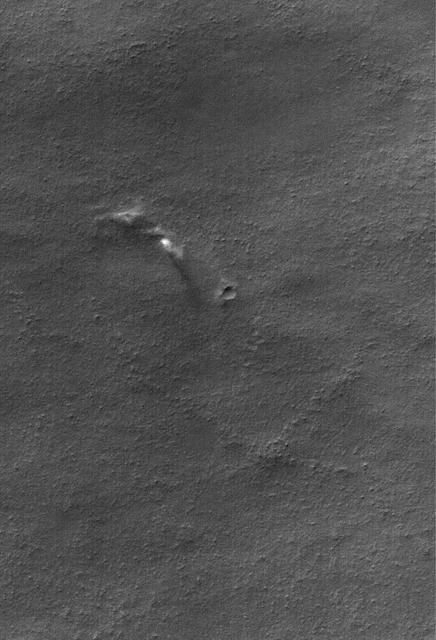
This Mars Global Surveyor MGS Mars Orbiter Camera MOC image shows dust plumes created by gusting winds on a plain southwest of Argyre Planitia
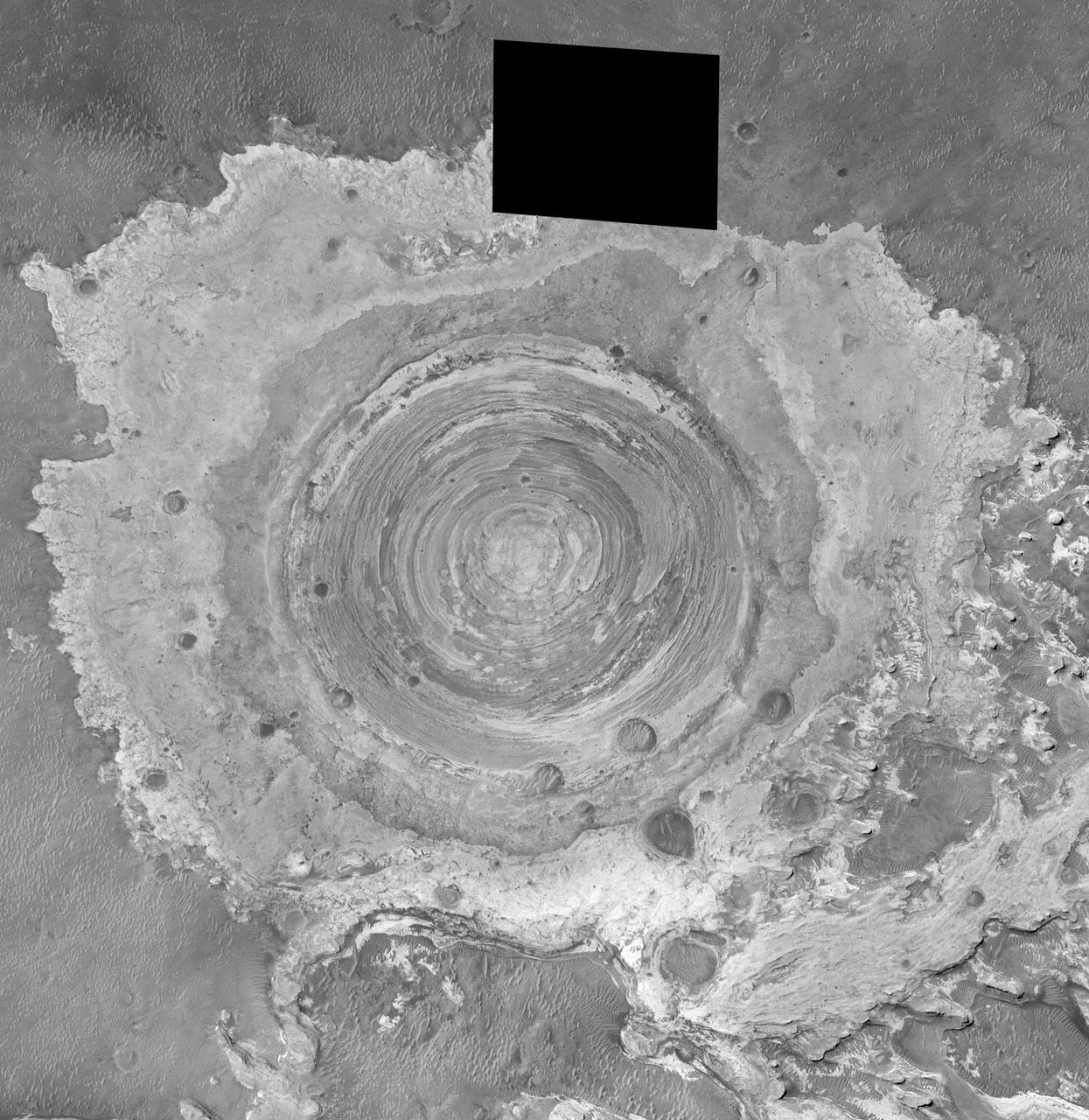
This anaglyph from NASA Mars Global Surveyor shows a circular feature in northern Terra Meridiani. 3D glasses are necessary to view this image.
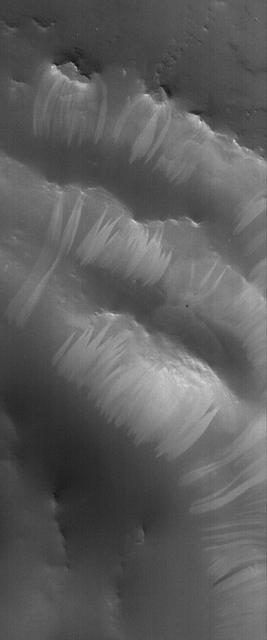
This Mars Global Surveyor MGS Mars Orbiter Camera MOC image shows a portion of the stair-stepped, north wall of a crater in Arabia Terra
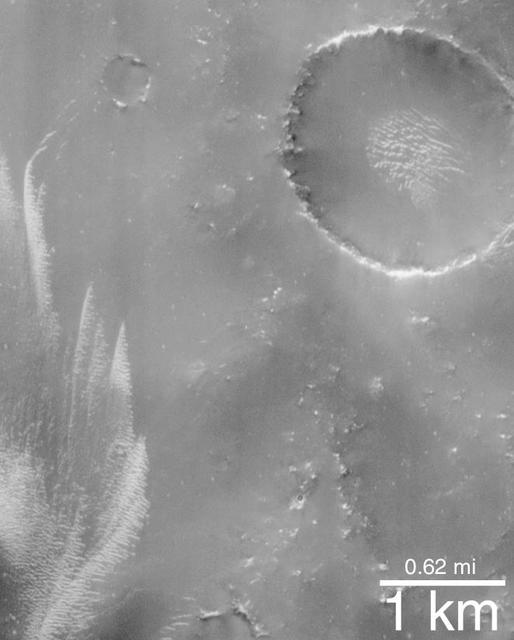
This anaglyph from NASA Mars Global Surveyor shows dark, blanketed or mantled surfaces in the Sinus Sabaeus region of Mars. 3D glasses are necessary to view this image.

This Mars Global Surveyor MGS Mars Orbiter Camera MOC image shows a complex pattern of intersecting and overlapping troughs in the Olympica Fossae region of northern Tharsis
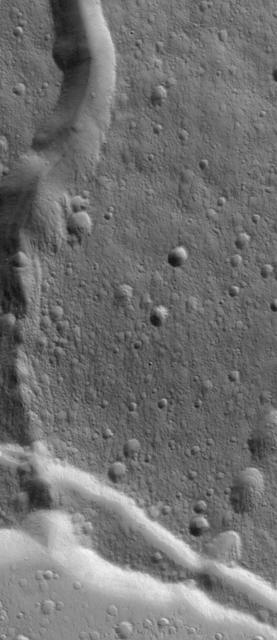
This Mars Global Surveyor MGS Mars Orbiter Camera MOC image shows a channel extending northward from the Elysium Mons caldera at the volcano summit
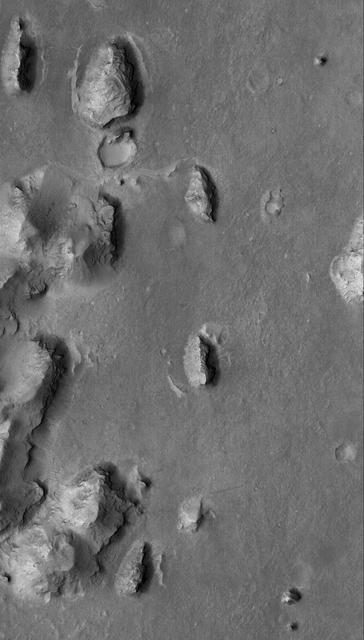
This Mars Global Surveyor MGS Mars Orbiter Camera MOC image shows layered buttes, knobs, and other landforms exposed by erosion in the Aeolis region of Mars
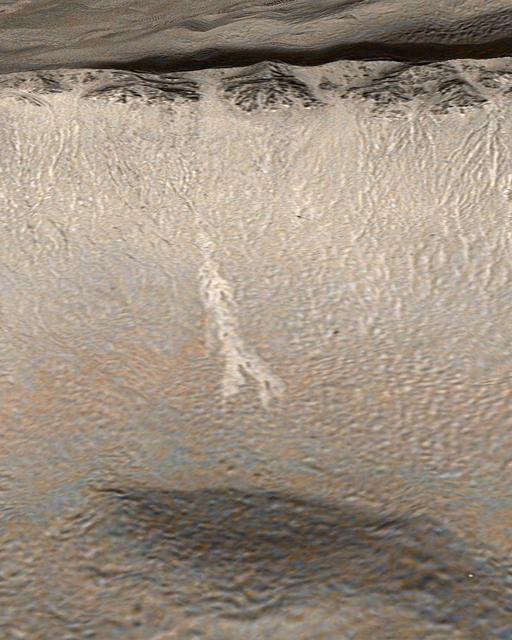
Two Martian southern mid-latitude craters have new light-toned deposit that formed in gully settings during the course of the Mars Global Surveyor mission.
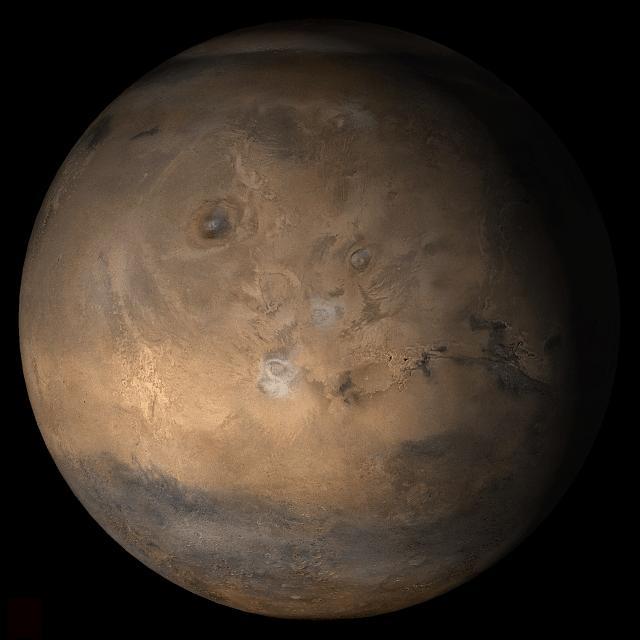
This picture is a composite of Mars Global Surveyor MGS Mars Orbiter Camera MOC daily global images acquired at Ls 12° during a previous Mars year
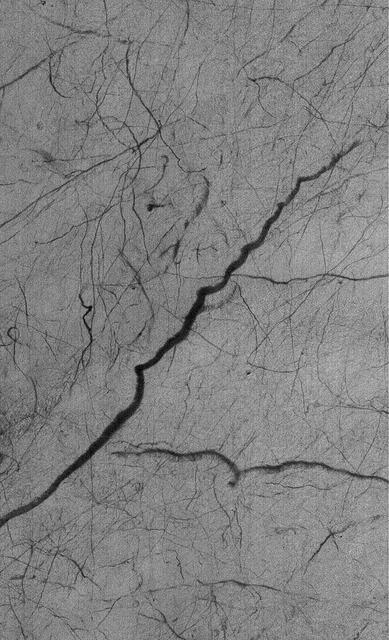
This Mars Global Surveyor MGS Mars Orbiter Camera MOC image shows dark streaks created by dust devils on a plain southwest of Hellas Planitia
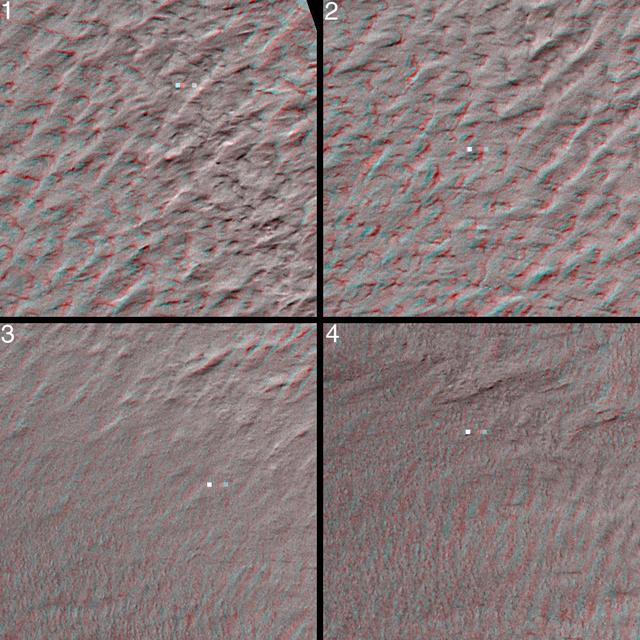
This stereo image mosaic from NASA Mars Global Surveyor is of Mars south polar terrain. 3D glasses are necessary to view this image.

This Mars Global Surveyor MGS Mars Orbiter Camera MOC image shows a spectacular summertime view of a portion of the south polar residual cap

NASA Mars Global Surveyor image shows a suite of south mid-latitude gullies on a crater wall. Gullies such as these may have formed by runoff of liquid water.

Color coding in this image of Mars represents differences in elevation, measured by NASA Mars Global Surveyor. While surface liquid water is rare and ephermal on modern Mars.

This anaglyph from NASA Mars Global Surveyor shows eroded, pitted, light-toned layer outcrops in Iani Chaos. 3D glasses are necessary to view this image.

This Mars Global Surveyor MGS Mars Orbiter Camera MOC image shows layers and dunes in Chasma Boreale, a large depression in the north polar region.

jsc2024e066519 (10/7/2024) --- The Comets set up the test tubes for the final trial of their experiment, Effects of Microgravity on Arabidopsis thaliana Seed Germination. Their experiment is part of the Nanoracks-National Center for Earth and Space Science Education-Surveyor-Student Spaceflight Experiments Program Mission 18 to ISS (Nanoracks-NCESSE-Surveyor-SSEP).

jsc2024e067106 (10/15/2024) --- Nematodes to the Rescue! - Space worms as an integral component of space agriculture is part of the Nanoracks-National Center for Earth and Space Science Education-Surveyor-Student Spaceflight Experiments Program Mission 18 to the ISS (Nanoracks-NCESSE-Surveyor-SSEP). Image courtesy of Canyons School District.

jsc2024e066522 (10/7/2024) --- Moreno Valley Unified School District students explore the effects of microgravity on a popular leafy green. Their experiment, The Effects of Microgravity on Arugula, is part of the Nanoracks-National Center for Earth and Space Science Education-Surveyor-Student Spaceflight Experiments Program Mission 18 to ISS (Nanoracks-NCESSE-Surveyor-SSEP).

jsc2024e066517 (10/4/2024) --- Young researchers work on their experiment, Production of Biomedical Purpose Hydrogels in Microgravity, part of the Nanoracks-National Center for Earth and Space Science Education-Surveyor-Student Spaceflight Experiments Program Mission 18 to ISS (Nanoracks-NCESSE-Surveyor-SSEP).

jsc2024e066530 (10/4/2024) --- Creek Valley Elementary School students prepare their experiment, Does Gravity Affect the Germination Growth of Raspberry Seeds, for space. Their experiment is part of the Nanoracks-National Center for Earth and Space Science Education-Surveyor-Student Spaceflight Experiments Program Mission 18 to ISS (Nanoracks-NCESSE-Surveyor-SSEP).
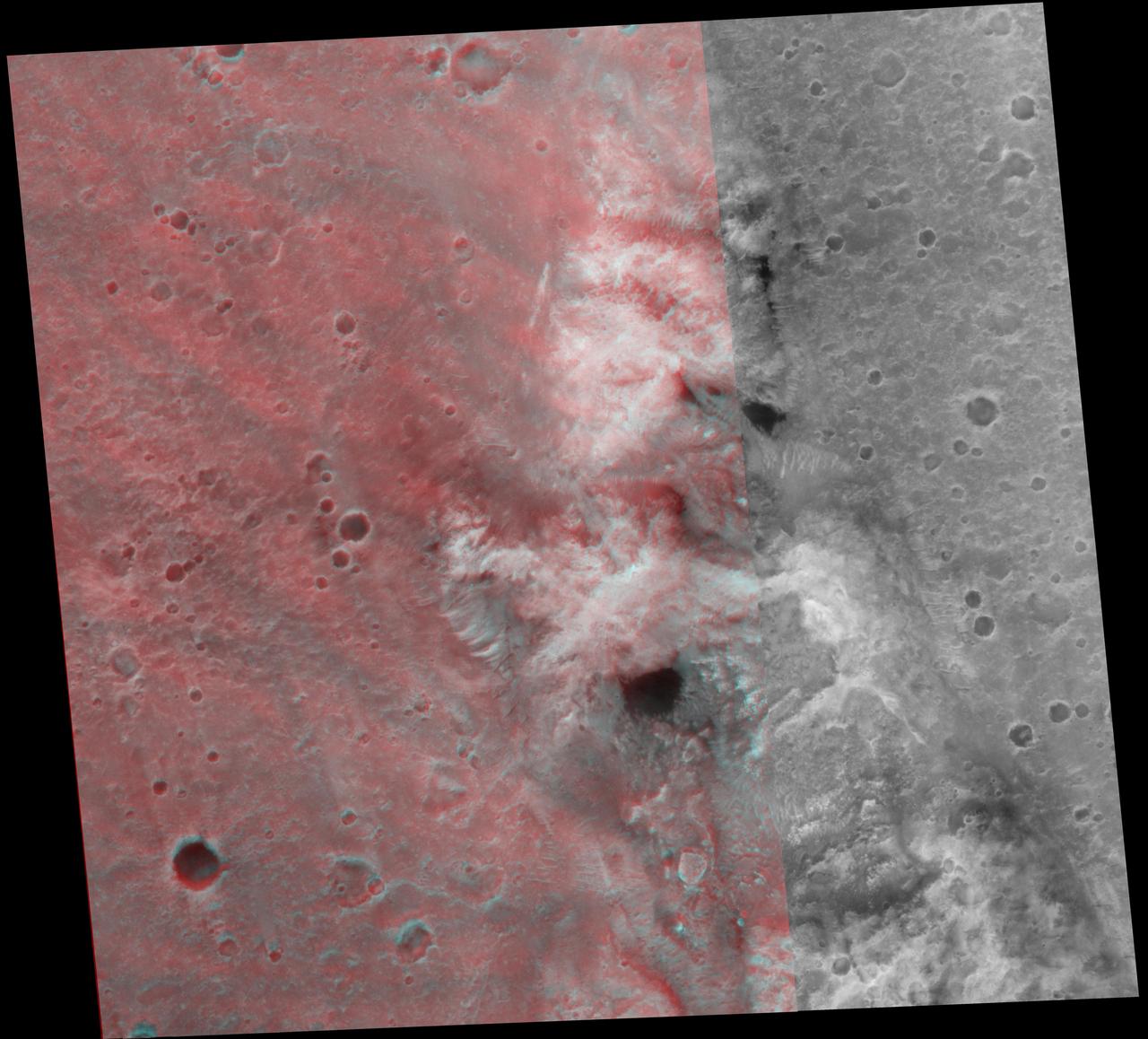
This stereo image mosaic from NASA Mars Global Surveyor is of Columbia Hills. 3D glasses are necessary to view this image.
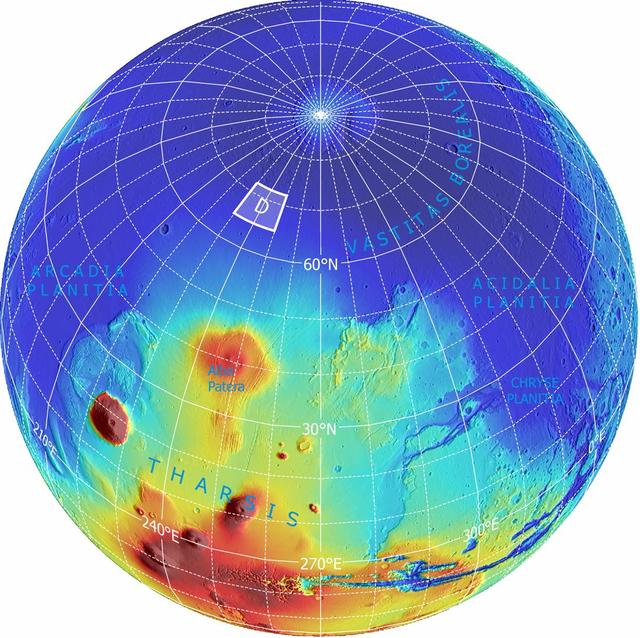
This is an orthographic projection with color-coded elevation contours and shaded relief based on data from the Mars Orbiter Laser Altimeter on NASA Mars Global Surveyor orbiter.
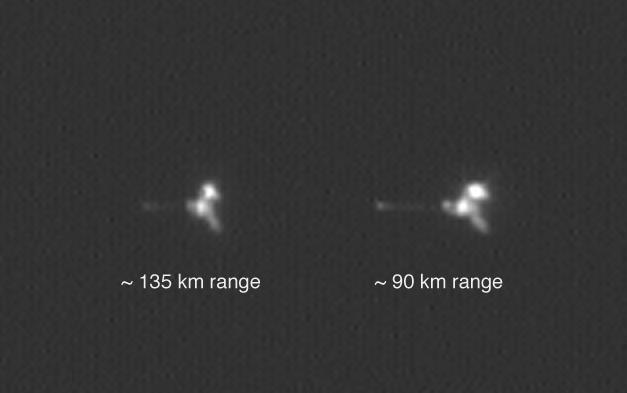
NASA Mars Odyssey spacecraft appears twice in the same frame in this image from the Mars Orbiter Camera aboard NASA Mars Global Surveyor.
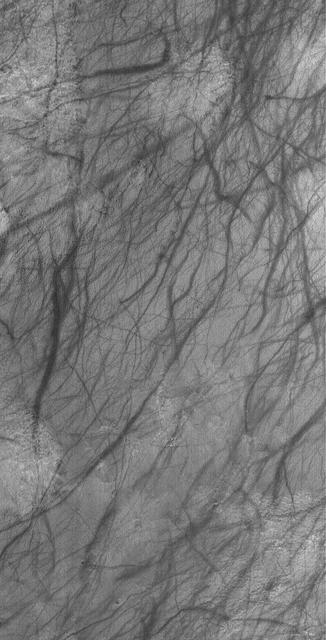
This Mars Global Surveyor MGS Mars Orbiter Camera MOC image shows a dust-mantled plain streaked by spring and summertime dust devils in southern Noachis Terra
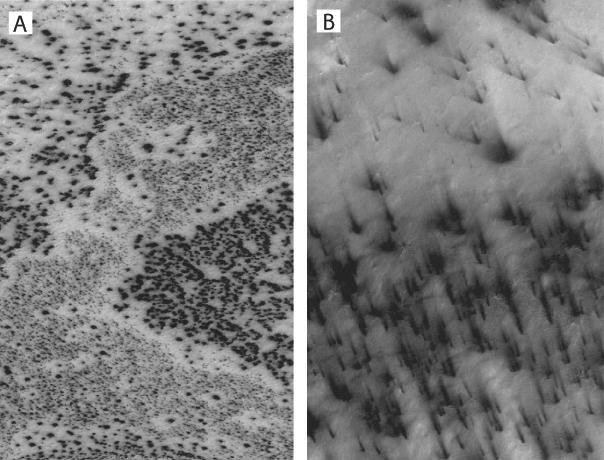
Dark spots left and fans appear to scribble dusty hieroglyphics on top of the Martian south polar cap in two high-resolution Mars Global Surveyor, Mars Orbiter Camera images taken in southern spring
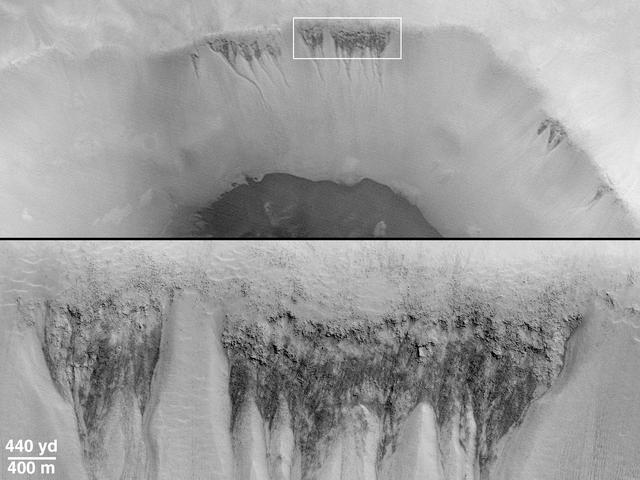
The first clue that there might be places on Mars where liquid groundwater seeps out onto the surface came from a picture taken by NASA Mars Global Surveyor. 3D glasses are necessary to identify surface detail.
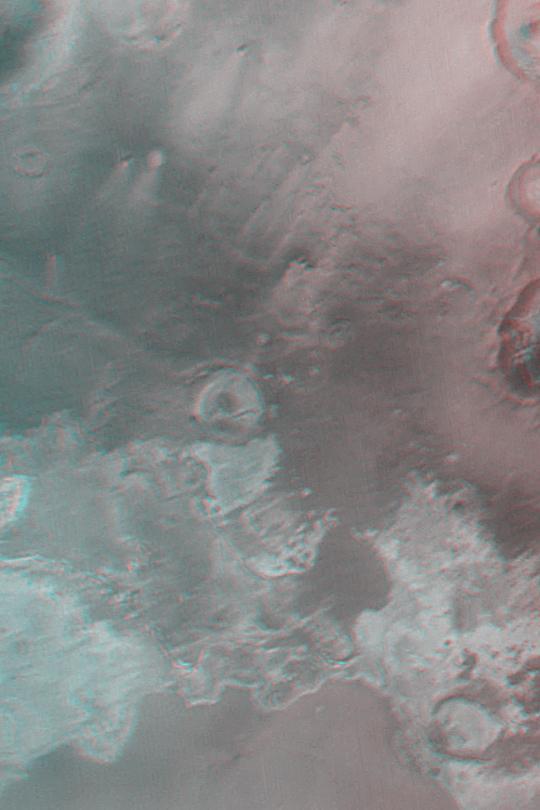
The light-toned materials at the bottom end of this anaglyph fomr NASA Mars Global Surveyor are considered to be thick exposures of sedimentary rock. 3D glasses are necessary to view this image.
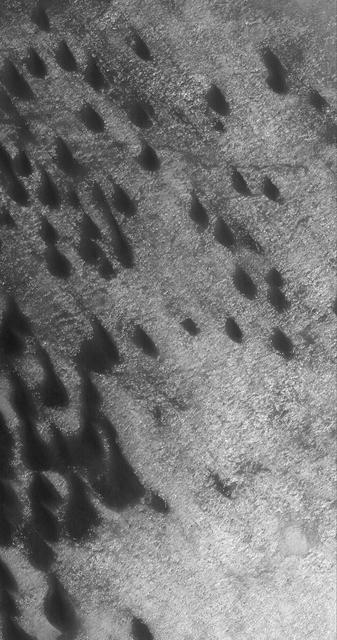
This Mars Global Surveyor MGS Mars Orbiter Camera MOC image shows a field of dark sand dunes on the northwestern floor of Brashear Crater. The dunes formed largely from winds that blew from the southeast lower right
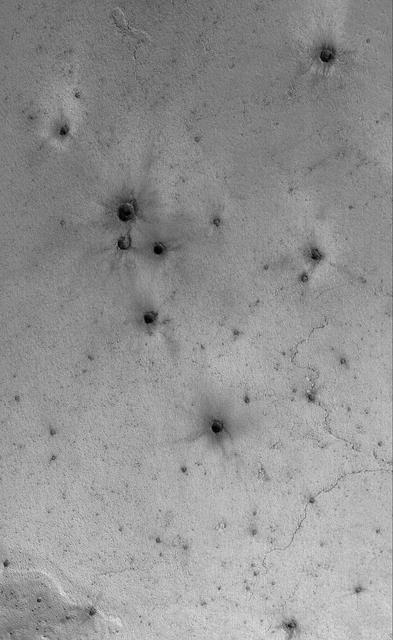
This Mars Global Surveyor MGS Mars Orbiter Camera MOC image shows a field of small craters formed by secondary debris thrown from a larger meteoritic impact on the plains south of the Cerberus region
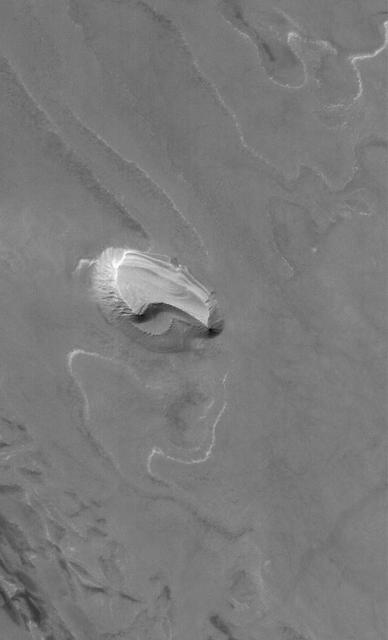
This Mars Global Surveyor MGS Mars Orbiter Camera MOC image shows a layered, light-toned mesa among other layered materials exposed in a mound that covers much of the floor of Spallanzani Crater
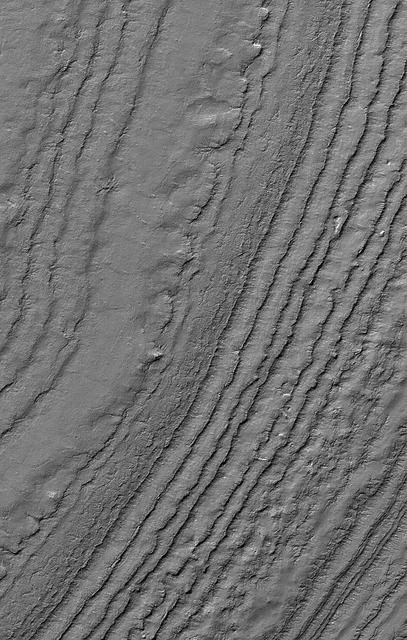
This Mars Global Surveyor MGS Mars Orbiter Camera MOC image shows layered material exposed on a slope in the south polar region of Mars. The composition of the layers, and whether they contain ice, is not known
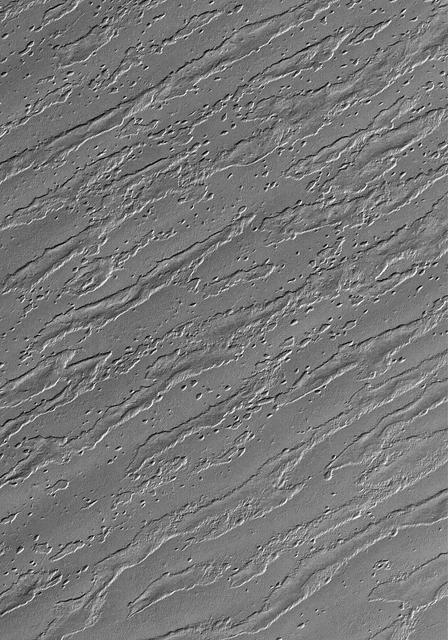
This Mars Global Surveyor MOC image shows the remains of a once more laterally extensive layer overlying undulating terrain very near the south polar residual cap

This picture is a composite of Mars Global Surveyor MGS Mars Orbiter Camera MOC daily global images acquired at Ls 93° during a previous Mars year.of the Tharsis face of Mars
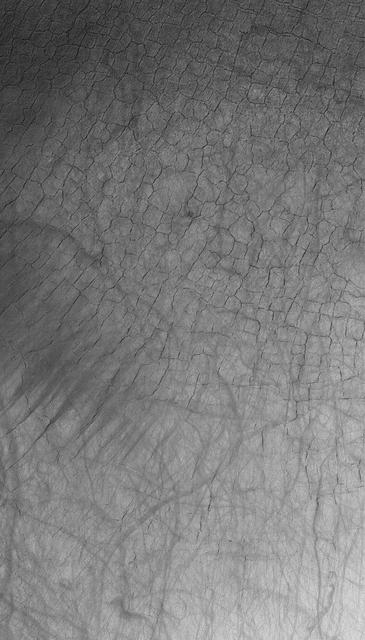
This Mars Global Surveyor MGS Mars Orbiter Camera MOC image shows polygonally patterned ground on the floor of a trough in the southern hemisphere of Mars. The polygons could be an indicator that ground ice is or was present at this location
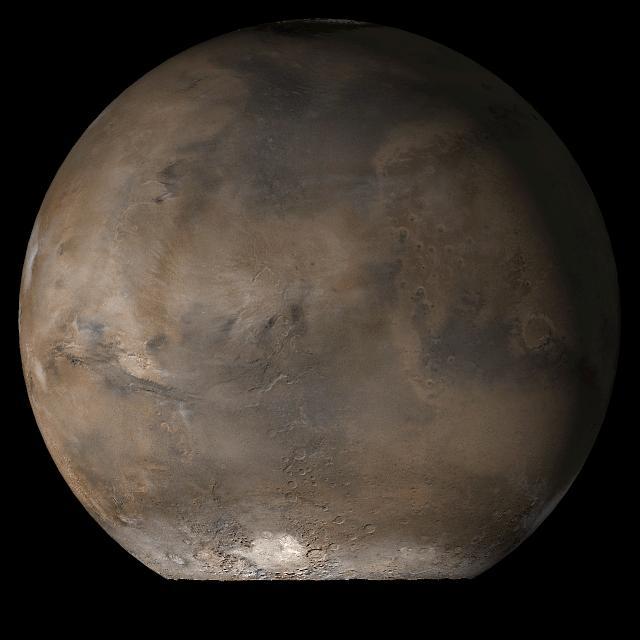
This picture is a composite of Mars Global Surveyor MGS Mars Orbiter Camera MOC daily global images acquired at Ls 107° of the Acidalia/Mare Erythraeum face during a previous Mars year

This anaglyph from NASA Mars Global Surveyor shows a circular feature in northern Terra Meridiani. The circular feature was once an impact crater. 3D glasses are necessary to view this image.
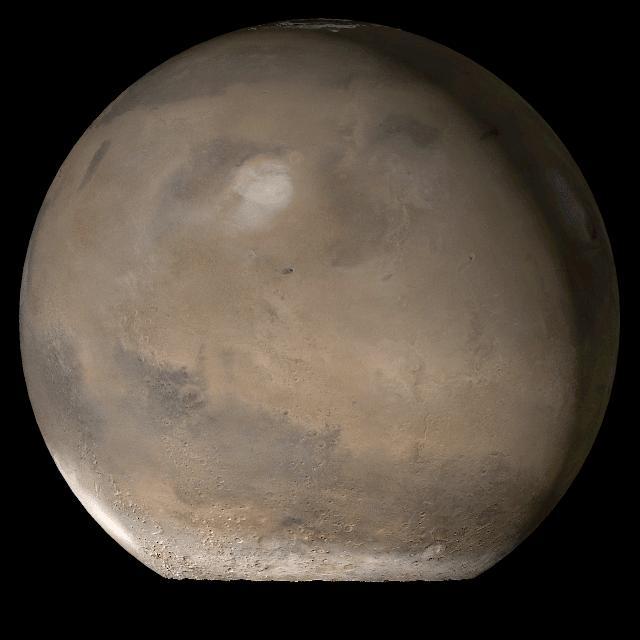
This picture is a composite of Mars Global Surveyor MGS Mars Orbiter Camera MOC daily global images acquired at L<sub>s</sub> 107° of the Elysium/Mare Cimmerium face during a previous Mars year
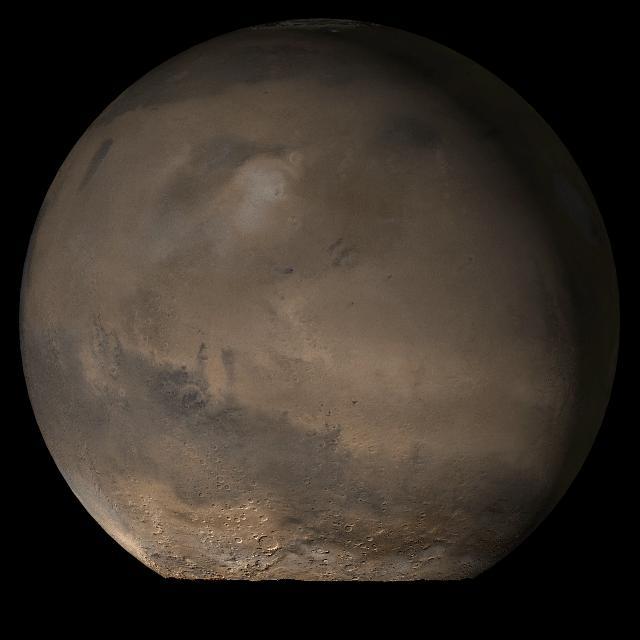
This picture is a composite of Mars Global Surveyor MGS Mars Orbiter Camera MOC daily global images acquired at Ls 79° during a previous Mars year of the Elysium/Mare Cimmerium face of Mars
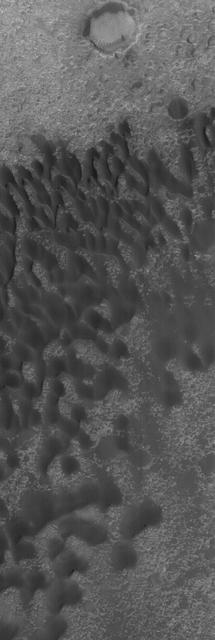
This Mars Global Surveyor MGS Mars Orbiter Camera MOC image shows a portion of a field of dark sand dunes superposed on the light-toned floor of a crater in eastern Tyrrhena Terra

What does Earth look like when viewed from Mars? At 13:00 GMT on 8 May 2003, NASA Mars Global Surveyor MGS Mars Orbiter Camera MOC had an opportunity to find out.

This Mars Global Surveyor MGS Mars Orbiter Camera MOC image shows light-toned, layered rock outcrops in Eos Chaos, located near the east end of the Valles Marineris trough system

This Mars Global Surveyor MGS Mars Orbiter Camera MOC image shows a pedestal crater in the Promethei Terra region. The ejecta from an impact crater is usually rocky
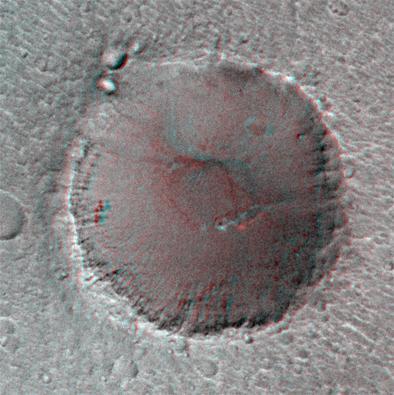
On its 256th orbit of Mars, the camera on-board NASA Mars Global Surveyor spacecraft successfully observed the vicinity of the Mars Pathfinder landing site. 3D glasses are necessary to identify surface detail.
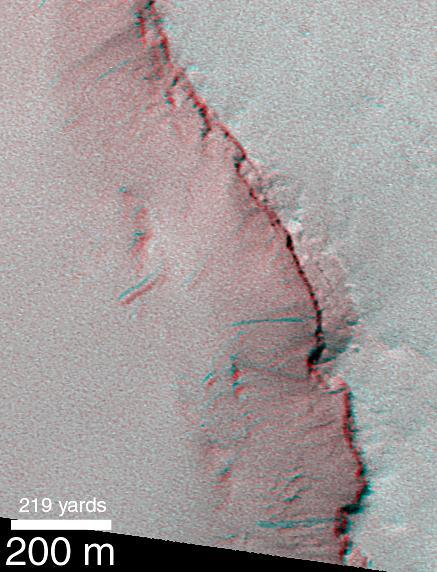
The anaglyph is helpful to see that the dark streaks really do occur on a slope in this image taken by NASA Mars Global Surveyor 1999. 3D glasses are necessary to view this image.
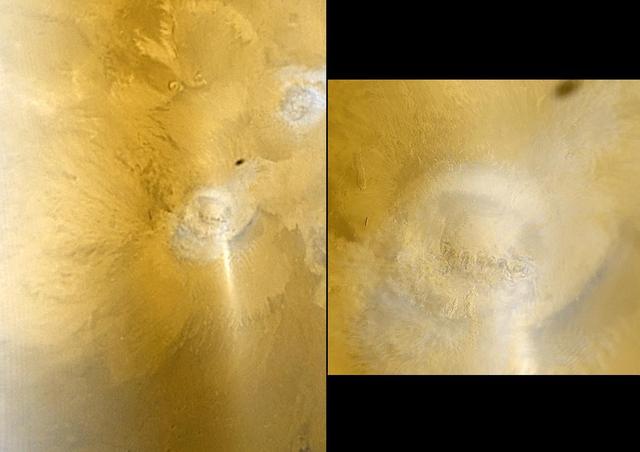
This pair of Mars Global Surveyor MGS Mars Orbiter Camera MOC color images shows early autumn clouds over the Arsia Mons volcano, plus the shadow of the innermost of the two martain moons, Phobos
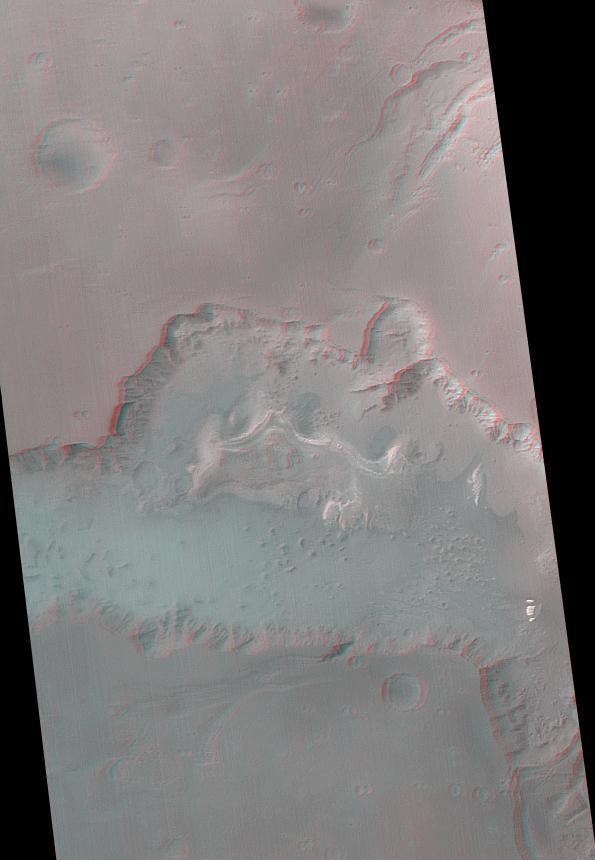
Ganges Chasma is part of the Valles Marineris trough system that stretches nearly 5,000 kilometers 3,000 miles across the western equatorial region of Mars. This stereo anaglyph is from NASA Mars Global Surveyor. 3D glasses are necessary.
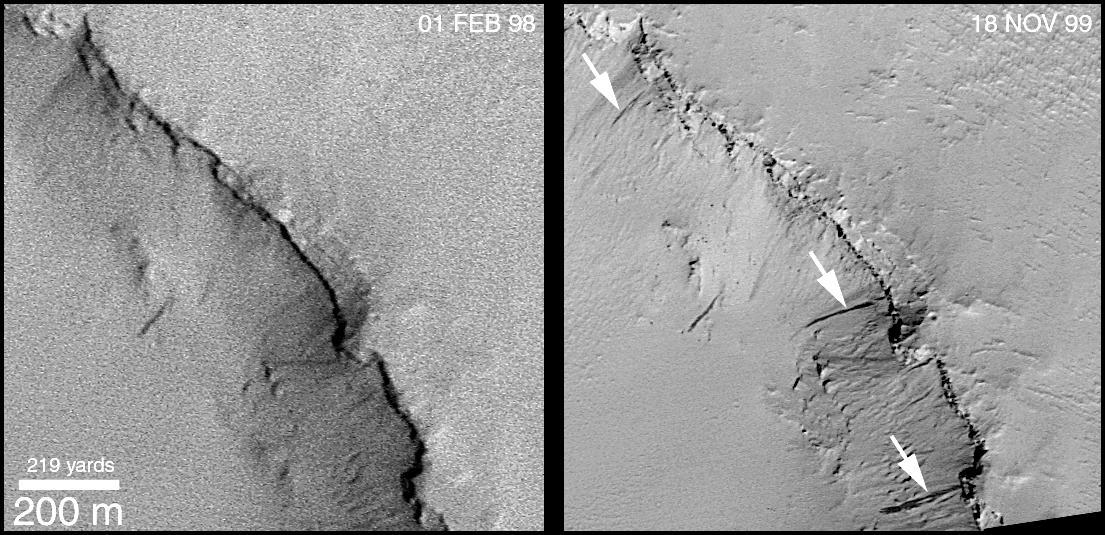
The anaglyph is helpful to see that the dark streaks really do occur on a slope in this image taken by NASA Mars Global Surveyor 1999. 3D glasses are necessary to view this image.

This picture is a composite of Mars Global Surveyor MGS Mars Orbiter Camera MOC daily global images acquired at Ls 93° during a previous Mars year.of the Acidalia/Mare Erythraeum face of Mars

Twelve orbits a day provide NASA Mars Global Surveyor MOC wide angle cameras a global napshot of weather patterns across the planet. Here, bluish-white water ice clouds hang above the Tharsis volcanoes.
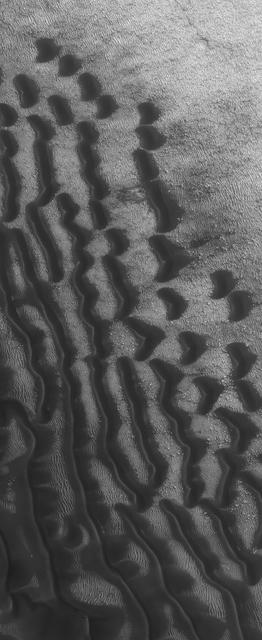
This Mars Global Surveyor MOC image shows dark dunes superposed on the rippled floor of Proctor Crater in Noachis Terra. Winds blowing predominantly from east right to west left were responsible for the formation of these dunes