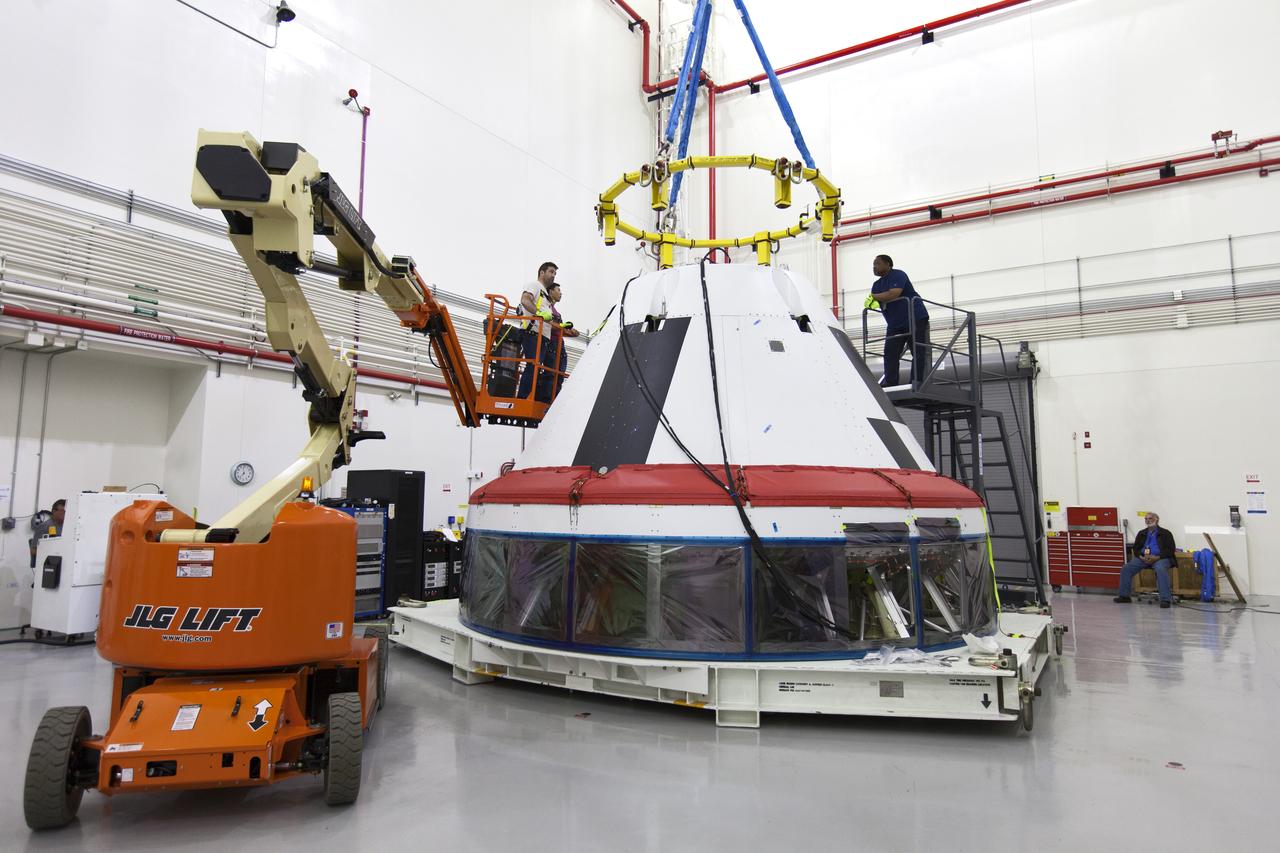
Inside the Launch Abort System Facility (LASF) at NASA’s Kennedy Space Center in Florida, workers attach a crane to a test version of the Orion crew module to integrate it with the Launch Abort System on March 13, 2019. The Orion test module and the Launch Abort System will be used for the Orion Ascent Abort-2 (AA-2) Flight Test, a full-stress test of the LAS, scheduled for spring 2019. AA-2 will launch from Space Launch Complex 46, carrying a fully functional LAS and a 22,000-pound Orion test vehicle to an altitude of 31,000 feet and traveling at more than 1,000 miles an hour. The test will verify the LAS can steer the crew module and astronauts aboard to safety in the event of an issue with the Space Launch System (SLS) rocket when the spacecraft is under the highest aerodynamic loads it will experience during a rapid climb into space. NASA's Orion and Exploration Ground Systems programs and contractors from Jacob's and Northrop Grumman in conjunction with the Air Force Space and Missile Center's Launch Operations branch are performing flight operations for AA-2.
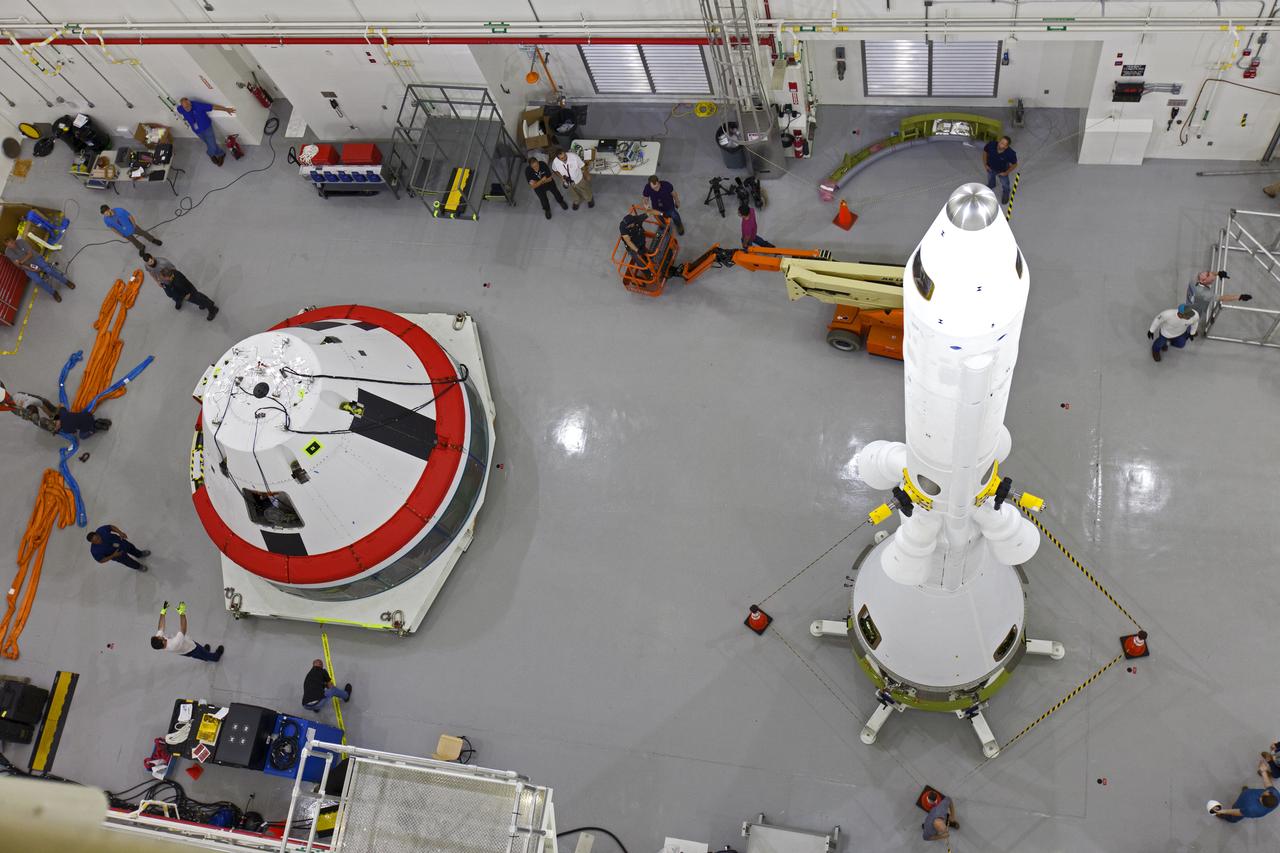
A test version of the Orion crew module, at left, and the Launch Abort System (LAS) are inside the Launch Abort System Facility (LASF) at NASA’s Kennedy Space Center in Florida on March 13, 2019, where they will be integrated. The fully functional LAS will be used for the Orion Ascent Abort-2 (AA-2) Flight Test, a full-stress test of the LAS that will launch from Space Launch Complex 46, carrying a 22,000-pound Orion test vehicle to an altitude of 31,000 feet and traveling at more than 1,000 miles an hour. The test will verify the LAS can steer the crew module and astronauts aboard to safety in the event of an issue with the Space Launch System (SLS) rocket when the spacecraft is under the highest aerodynamic loads it will experience during a rapid climb into space. NASA's Orion and Exploration Ground Systems programs and contractors from Jacob's and Northrop Grumman in conjunction with the Air Force Space and Missile Center's Launch Operations branch are performing flight operations for AA-2.
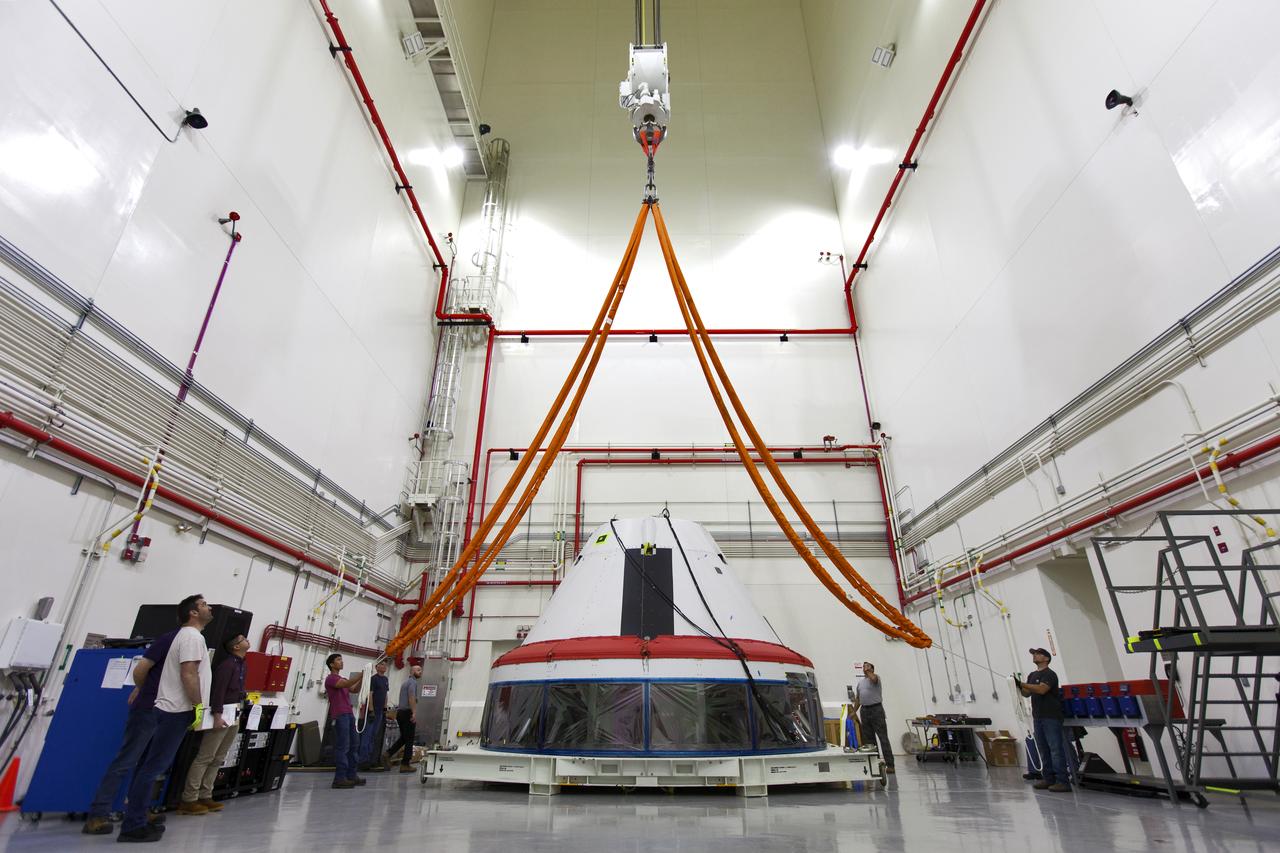
Inside the Launch Abort System Facility (LASF) at NASA’s Kennedy Space Center in Florida, workers prepare to attach a crane to a test version of the Orion crew module on March 13, 2019. The Orion test module and the Launch Abort System will be used for the Orion Ascent Abort-2 (AA-2) Flight Test, a full-stress test of the LAS, scheduled for spring 2019. AA-2 will launch from Space Launch Complex 46, carrying a fully functional LAS and a 22,000-pound Orion test vehicle to an altitude of 31,000 feet and traveling at more than 1,000 miles an hour. The test will verify the LAS can steer the crew module and astronauts aboard to safety in the event of an issue with the Space Launch System (SLS) rocket when the spacecraft is under the highest aerodynamic loads it will experience during a rapid climb into space. NASA's Orion and Exploration Ground Systems programs and contractors from Jacob's and Northrop Grumman in conjunction with the Air Force Space and Missile Center's Launch Operations branch are performing flight operations for AA-2.
Inside the Launch Abort System Facility (LASF) at NASA’s Kennedy Space Center in Florida, workers are preparing to integrate a test version of the Orion crew module with the Launch Abort System (LAS) on March 13, 2019. The test vehicle and the LAS will be used for the Orion Ascent Abort-2 (AA-2) Flight Test. AA-2 is a full-stress test of the LAS, scheduled for spring 2019. AA-2 will launch from Space Launch Complex 46, carrying a fully functional LAS and a 22,000-pound Orion test vehicle to an altitude of 31,000 feet and traveling at more than 1,000 miles an hour. The test will verify the LAS can steer the crew module and astronauts aboard to safety in the event of an issue with the Space Launch System (SLS) rocket when the spacecraft is under the highest aerodynamic loads it will experience during a rapid climb into space. NASA's Orion and Exploration Ground Systems programs and contractors from Jacob's and Northrop Grumman in conjunction with the Air Force Space and Missile Center's Launch Operations branch are performing flight operations for AA-2.
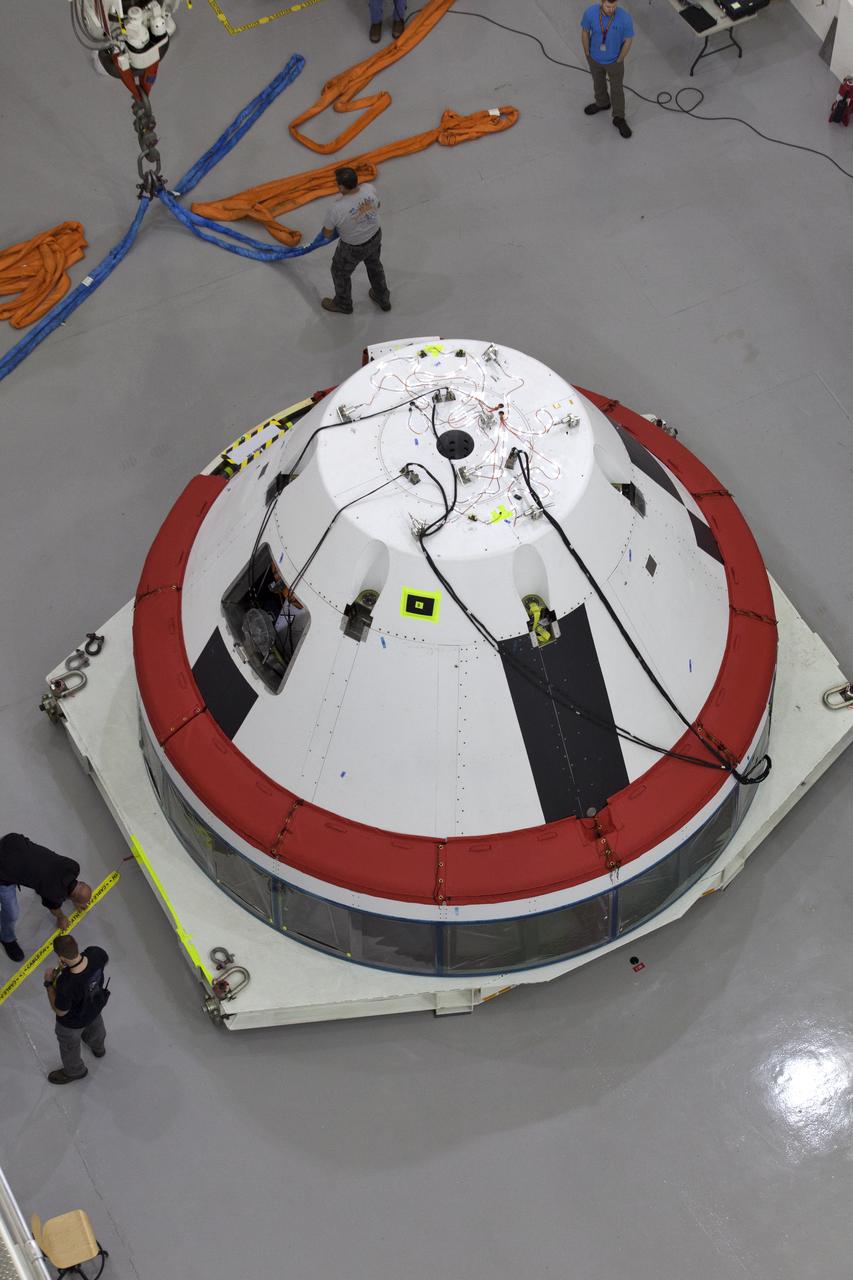
A test version of the Orion crew module is inside the Launch Abort System Facility (LASF) at NASA’s Kennedy Space Center in Florida on March 13, 2019, where they will be integrated. A fully functional Launch Abort System (LAS) will be used for the Orion Ascent Abort-2 (AA-2) Flight Test, a full-stress test of the LAS, scheduled for spring 2019. AA-2 will launch from Space Launch Complex 46, carrying the LAS and a 22,000-pound Orion test vehicle to an altitude of 31,000 feet and traveling at more than 1,000 miles an hour. The test will verify the LAS can steer the crew module and astronauts aboard to safety in the event of an issue with the Space Launch System (SLS) rocket when the spacecraft is under the highest aerodynamic loads it will experience during a rapid climb into space. NASA's Orion and Exploration Ground Systems programs and contractors from Jacob's and Northrop Grumman in conjunction with the Air Force Space and Missile Center's Launch Operations branch are performing flight operations for AA-2.
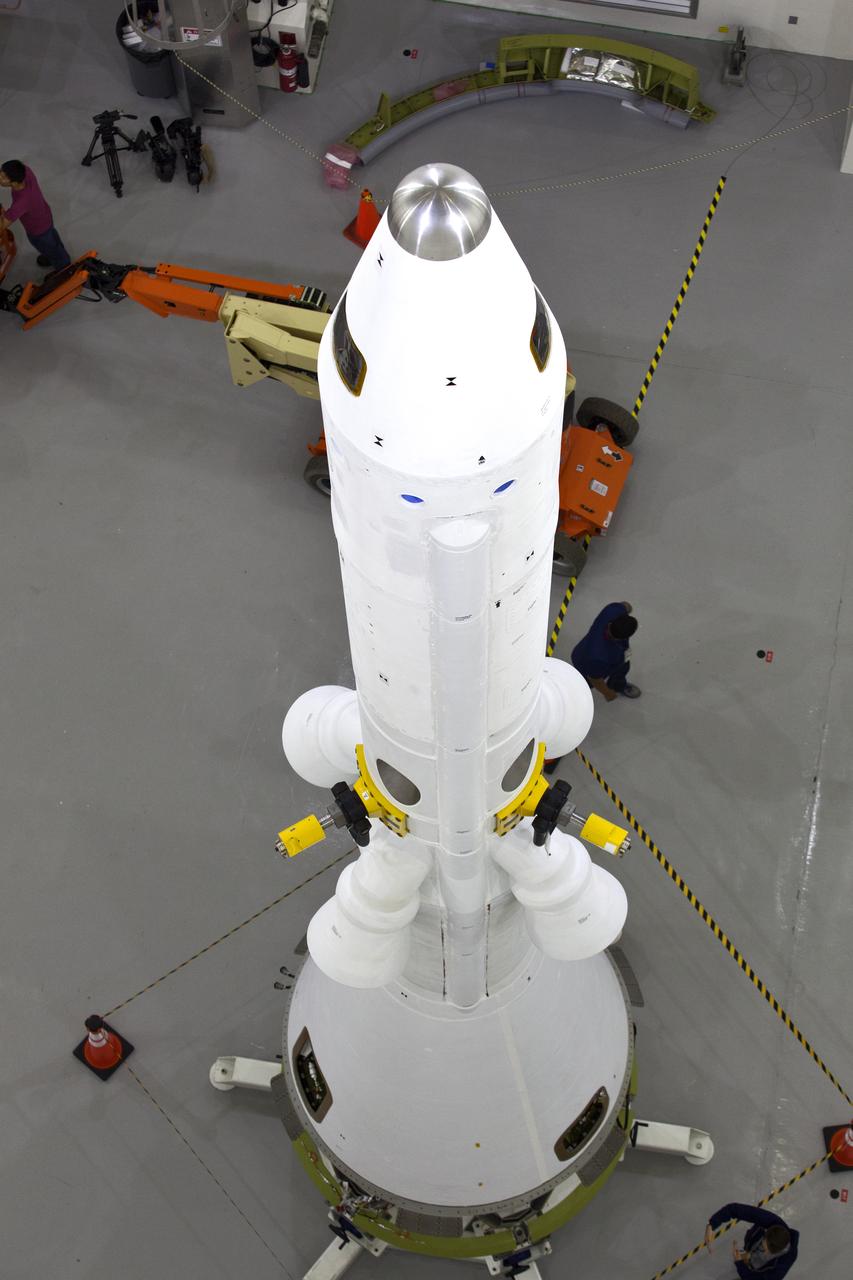
A fully functional Launch Abort System (LAS) is inside the Launch Abort System Facility (LASF) at NASA’s Kennedy Space Center in Florida on March 13, 2019. The LAS will be used for the Orion Ascent Abort-2 (AA-2) Flight Test, a full-stress test of the LAS, scheduled for spring 2019. AA-2 will launch from Space Launch Complex 46, carrying the LAS and a 22,000-pound Orion test vehicle to an altitude of 31,000 feet and traveling at more than 1,000 miles an hour. The test will verify the LAS can steer the crew module and astronauts aboard to safety in the event of an issue with the Space Launch System (SLS) rocket when the spacecraft is under the highest aerodynamic loads it will experience during a rapid climb into space. NASA's Orion and Exploration Ground Systems programs and contractors from Jacob's and Northrop Grumman in conjunction with the Air Force Space and Missile Center's Launch Operations branch are performing flight operations for AA-2.
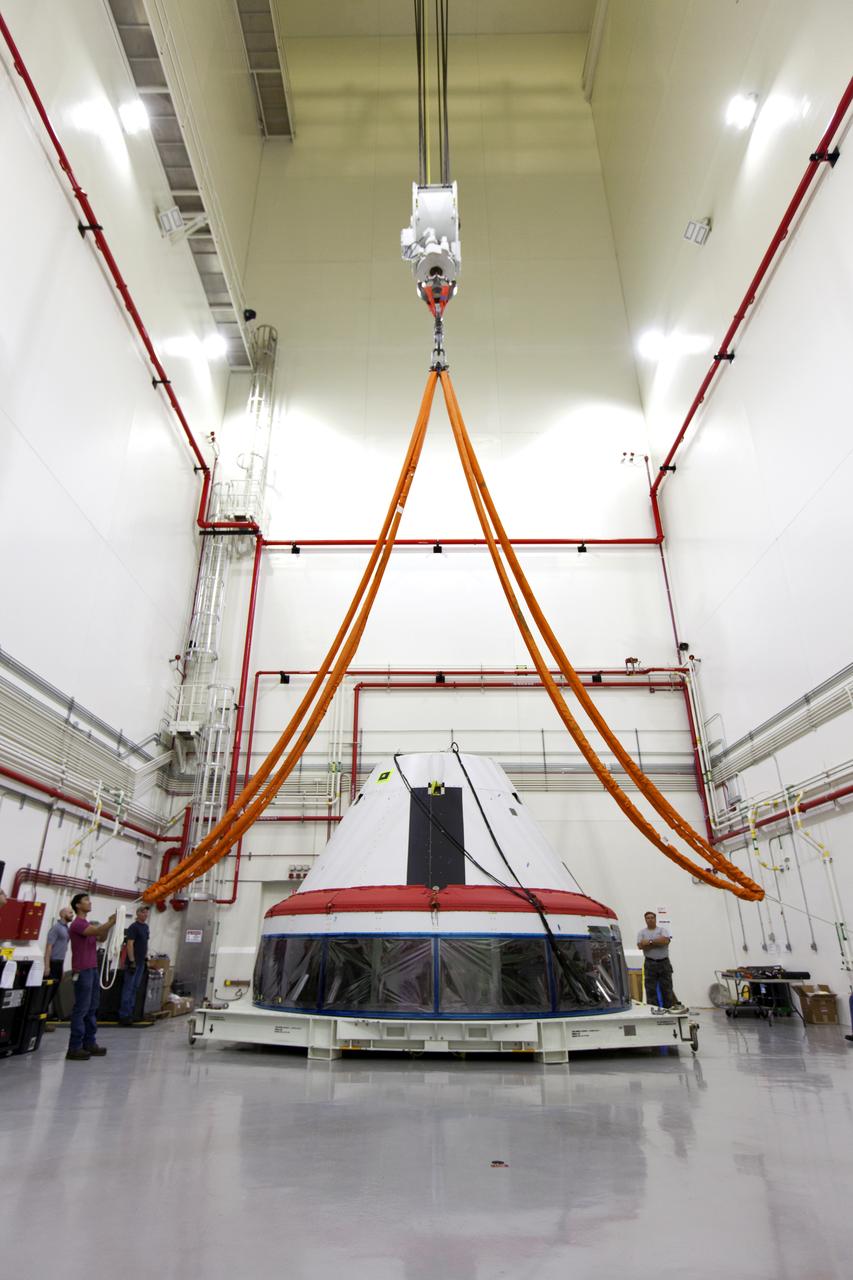
Inside the Launch Abort System Facility (LASF) at NASA’s Kennedy Space Center in Florida, workers prepare to attach a crane to a test version of the Orion crew module on March 13, 2019. The Orion test module and the Launch Abort System will be used for the Orion Ascent Abort-2 (AA-2) Flight Test, a full-stress test of the LAS, scheduled for spring 2019. AA-2 will launch from Space Launch Complex 46, carrying a fully functional LAS and a 22,000-pound Orion test vehicle to an altitude of 31,000 feet and traveling at more than 1,000 miles an hour. The test will verify the LAS can steer the crew module and astronauts aboard to safety in the event of an issue with the Space Launch System (SLS) rocket when the spacecraft is under the highest aerodynamic loads it will experience during a rapid climb into space. NASA's Orion and Exploration Ground Systems programs and contractors from Jacob's and Northrop Grumman in conjunction with the Air Force Space and Missile Center's Launch Operations branch are performing flight operations for AA-2.
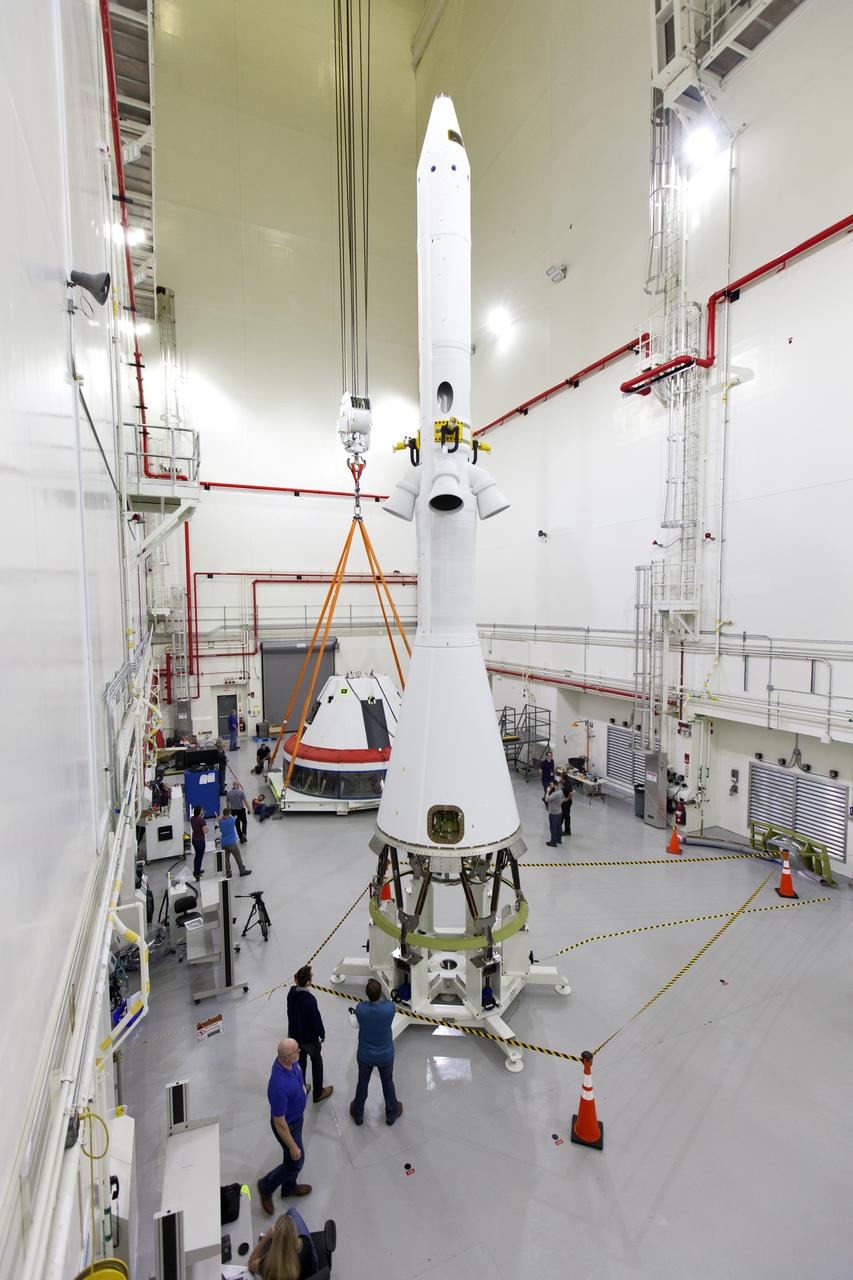
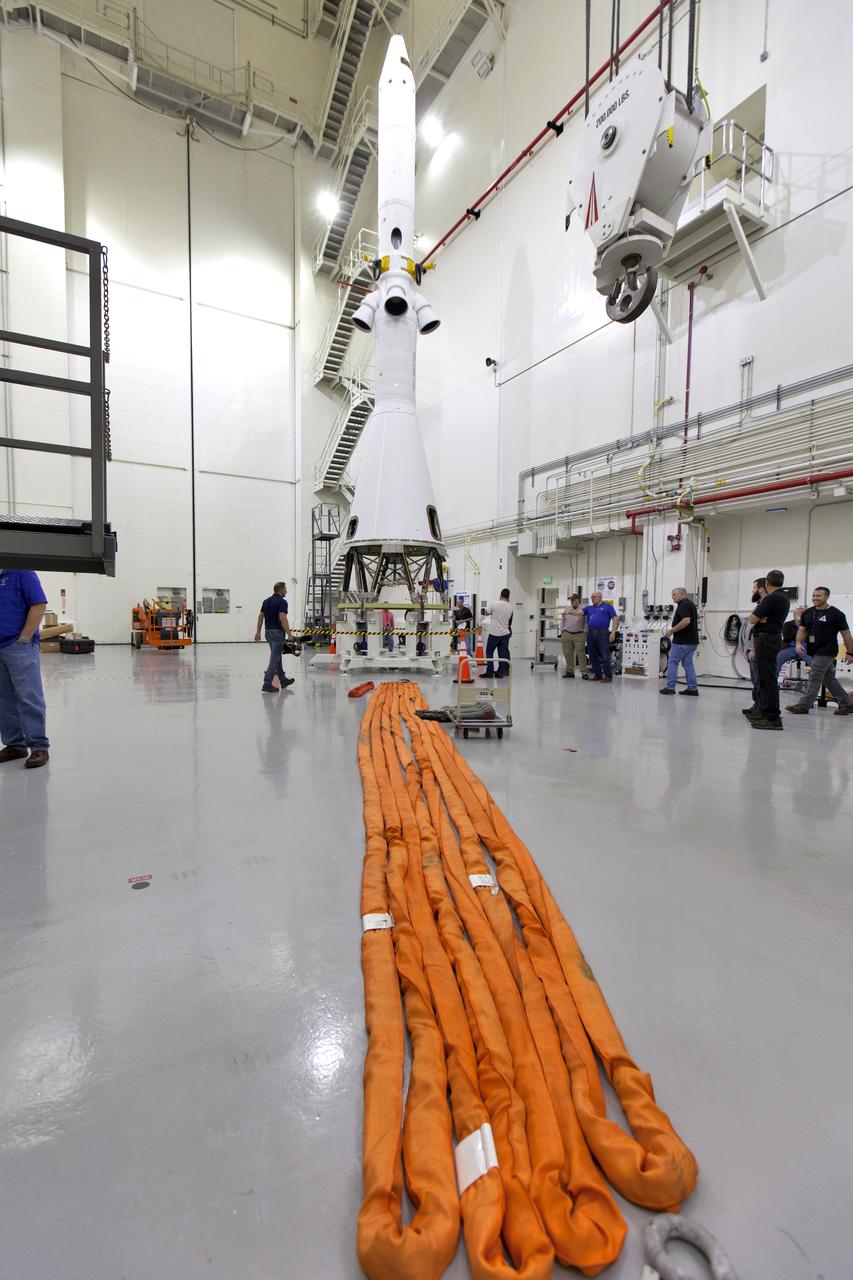
Inside the Launch Abort System Facility (LASF) at NASA’s Kennedy Space Center in Florida, the Launch Abort System (LAS) that will be used for the Orion Ascent Abort-2 (AA-2) Flight Test is in view in the foreground on March 13, 2019. In the background, workers are attaching a crane to a test version of the Orion crew module. AA-2 is a full-stress test of the LAS, scheduled for spring 2019. AA-2 will launch from Space Launch Complex 46, carrying a fully functional LAS and a 22,000-pound Orion test vehicle to an altitude of 31,000 feet and traveling at more than 1,000 miles an hour. The test will verify the LAS can steer the crew module and astronauts aboard to safety in the event of an issue with the Space Launch System (SLS) rocket when the spacecraft is under the highest aerodynamic loads it will experience during a rapid climb into space. NASA's Orion and Exploration Ground Systems programs and contractors from Jacob's and Northrop Grumman in conjunction with the Air Force Space and Missile Center's Launch Operations branch are performing flight operations for AA-2.
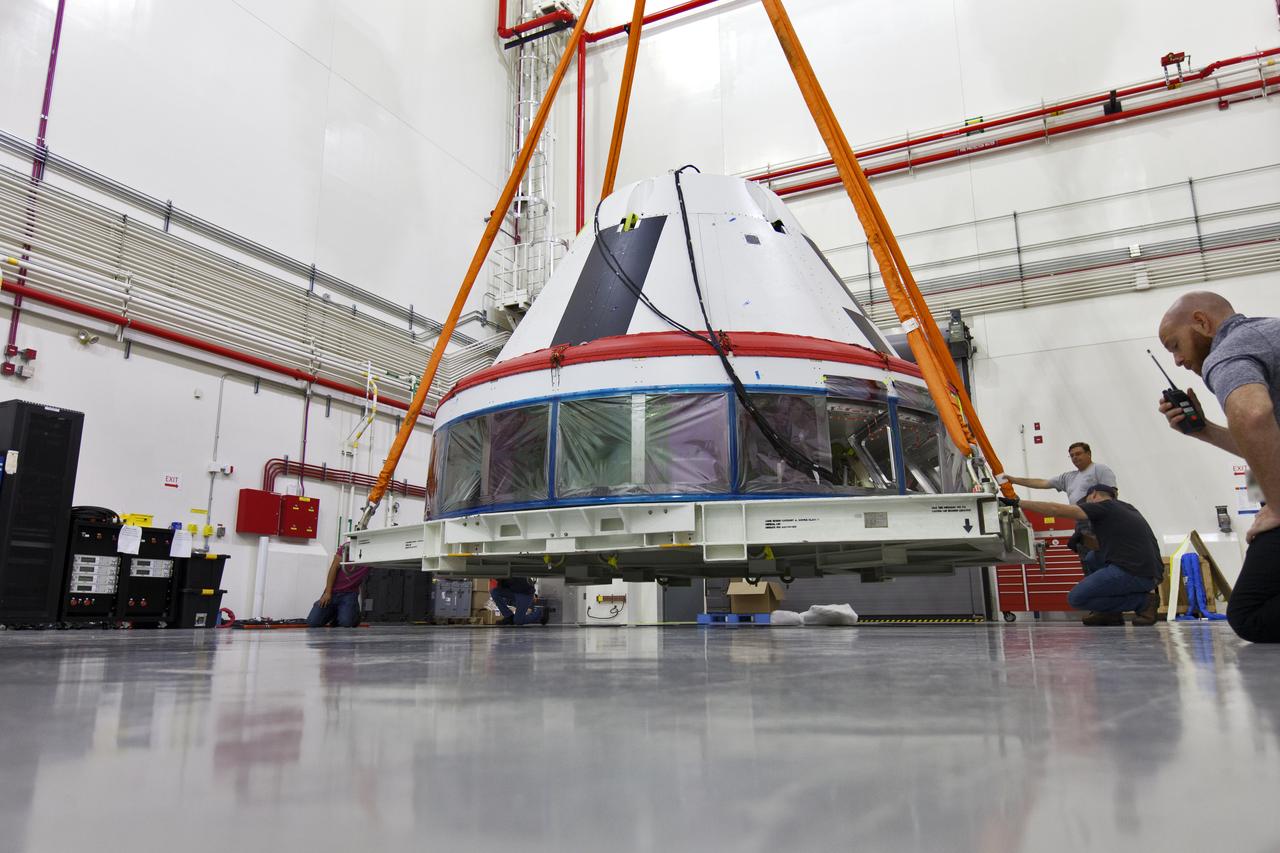
Inside the Launch Abort System Facility (LASF) at NASA’s Kennedy Space Center in Florida, workers attach a crane to a test version of the Orion crew module on March 13, 2019. The Orion test module and the Launch Abort System will be used for the Orion Ascent Abort-2 (AA-2) Flight Test, a full-stress test of the LAS, scheduled for spring 2019. AA-2 will launch from Space Launch Complex 46, carrying a fully functional LAS and a 22,000-pound Orion test vehicle to an altitude of 31,000 feet and traveling at more than 1,000 miles an hour. The test will verify the LAS can steer the crew module and astronauts aboard to safety in the event of an issue with the Space Launch System (SLS) rocket when the spacecraft is under the highest aerodynamic loads it will experience during a rapid climb into space. NASA's Orion and Exploration Ground Systems programs and contractors from Jacob's and Northrop Grumman in conjunction with the Air Force Space and Missile Center's Launch Operations branch are performing flight operations for AA-2.
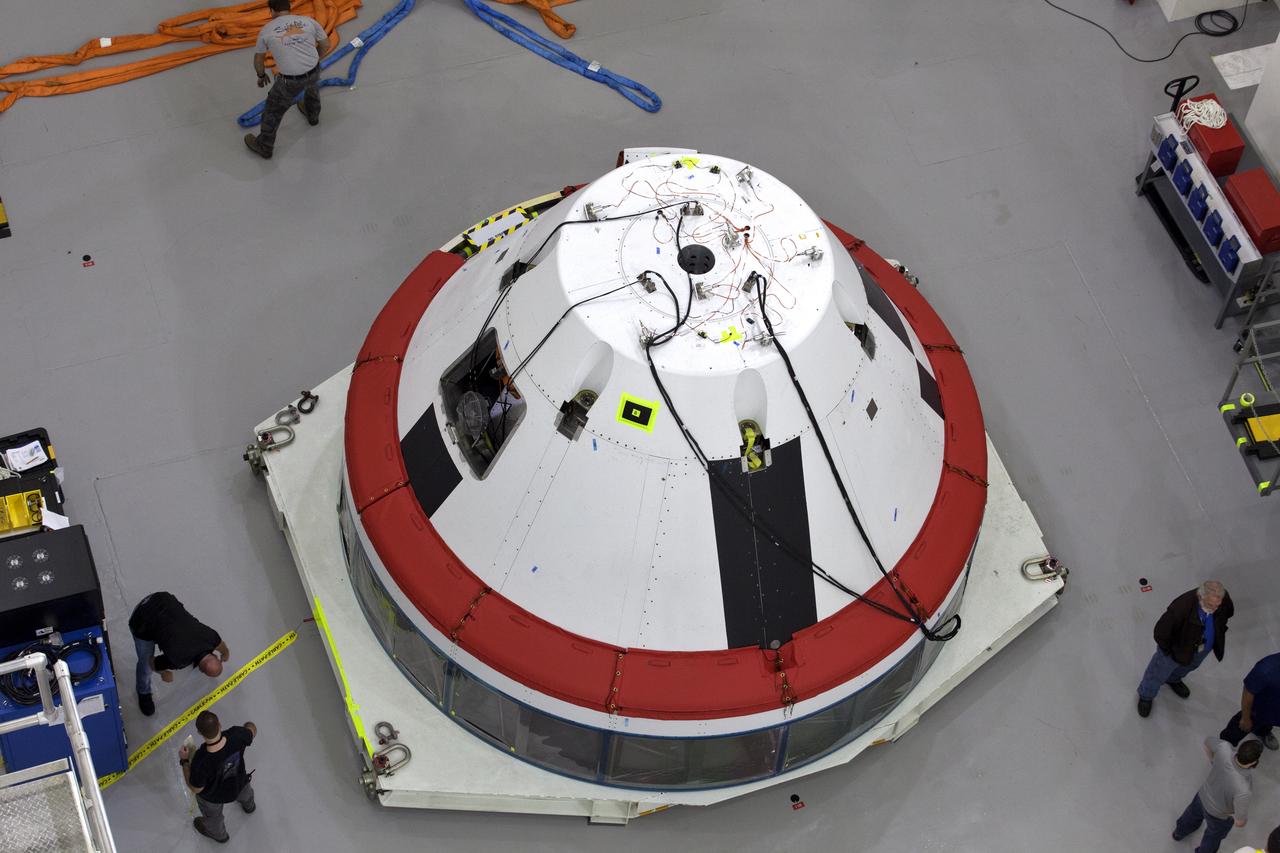
A test version of the Orion crew module is inside the Launch Abort System Facility (LASF) at NASA’s Kennedy Space Center in Florida on March 13, 2019, where they will be integrated. A fully functional Launch Abort System (LAS) will be used for the Orion Ascent Abort-2 (AA-2) Flight Test, a full-stress test of the LAS, scheduled for spring 2019. AA-2 will launch from Space Launch Complex 46, carrying the LAS and a 22,000-pound Orion test vehicle to an altitude of 31,000 feet and traveling at more than 1,000 miles an hour. The test will verify the LAS can steer the crew module and astronauts aboard to safety in the event of an issue with the Space Launch System (SLS) rocket when the spacecraft is under the highest aerodynamic loads it will experience during a rapid climb into space. NASA's Orion and Exploration Ground Systems programs and contractors from Jacob's and Northrop Grumman in conjunction with the Air Force Space and Missile Center's Launch Operations branch are performing flight operations for AA-2.
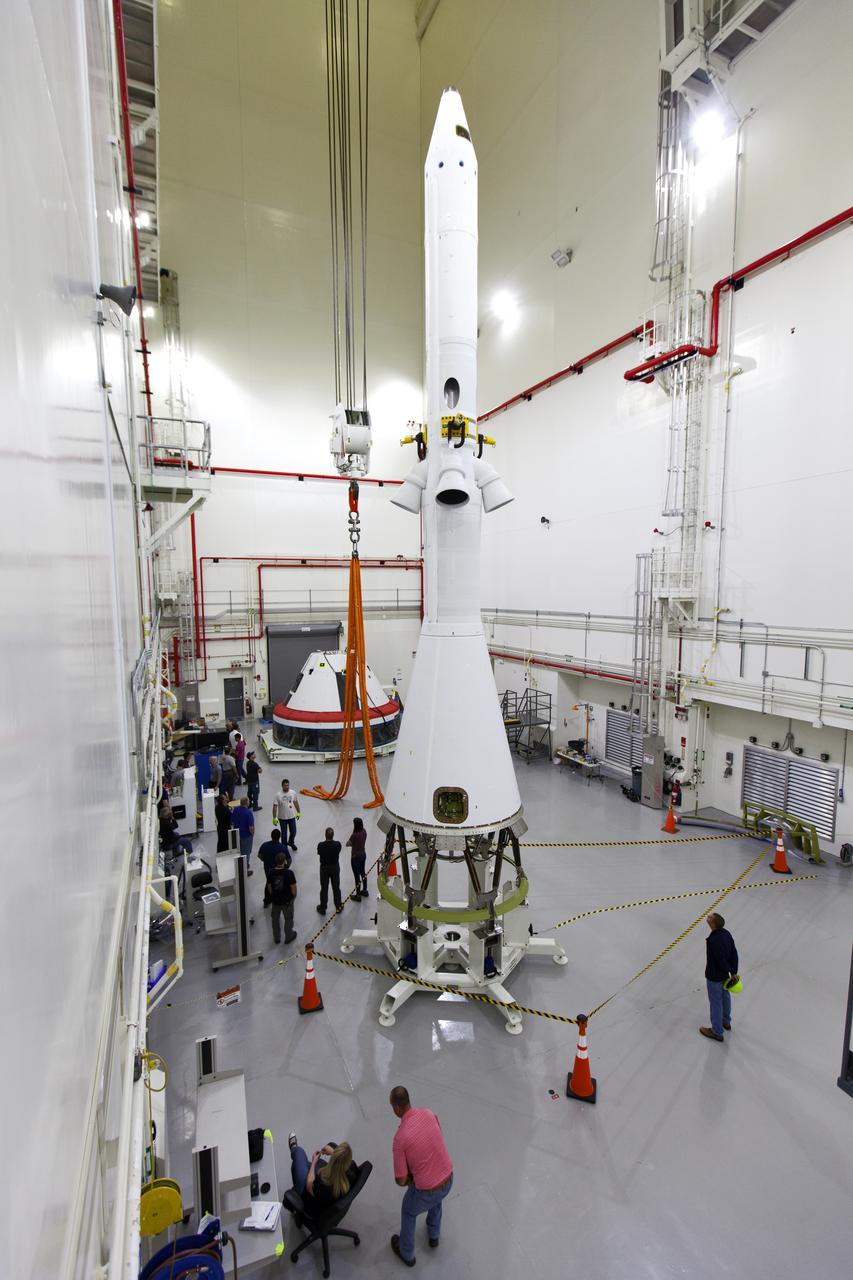
A test version of the Orion crew module is integrated with the Launch Abort System (LAS) in the Launch Abort System Facility (LASF) at NASA’s Kennedy Space Center in Florida on March 13, 2019. Workers will use a crane to practice lifting the test vehicle. The LAS, in view, will be used for the Orion Ascent Abort-2 (AA-2) Flight Test. AA-2 is a full-stress test of the LAS, scheduled for spring 2019. AA-2 will launch from Space Launch Complex 46, carrying a fully functional LAS and a 22,000-pound Orion test vehicle to an altitude of 31,000 feet and traveling at more than 1,000 miles an hour. The test will verify the LAS can steer the crew module and astronauts aboard to safety in the event of an issue with the Space Launch System (SLS) rocket when the spacecraft is under the highest aerodynamic loads it will experience during a rapid climb into space. NASA's Orion and Exploration Ground Systems programs and contractors from Jacob's and Northrop Grumman in conjunction with the Air Force Space and Missile Center's Launch Operations branch are performing flight operations for AA-2.
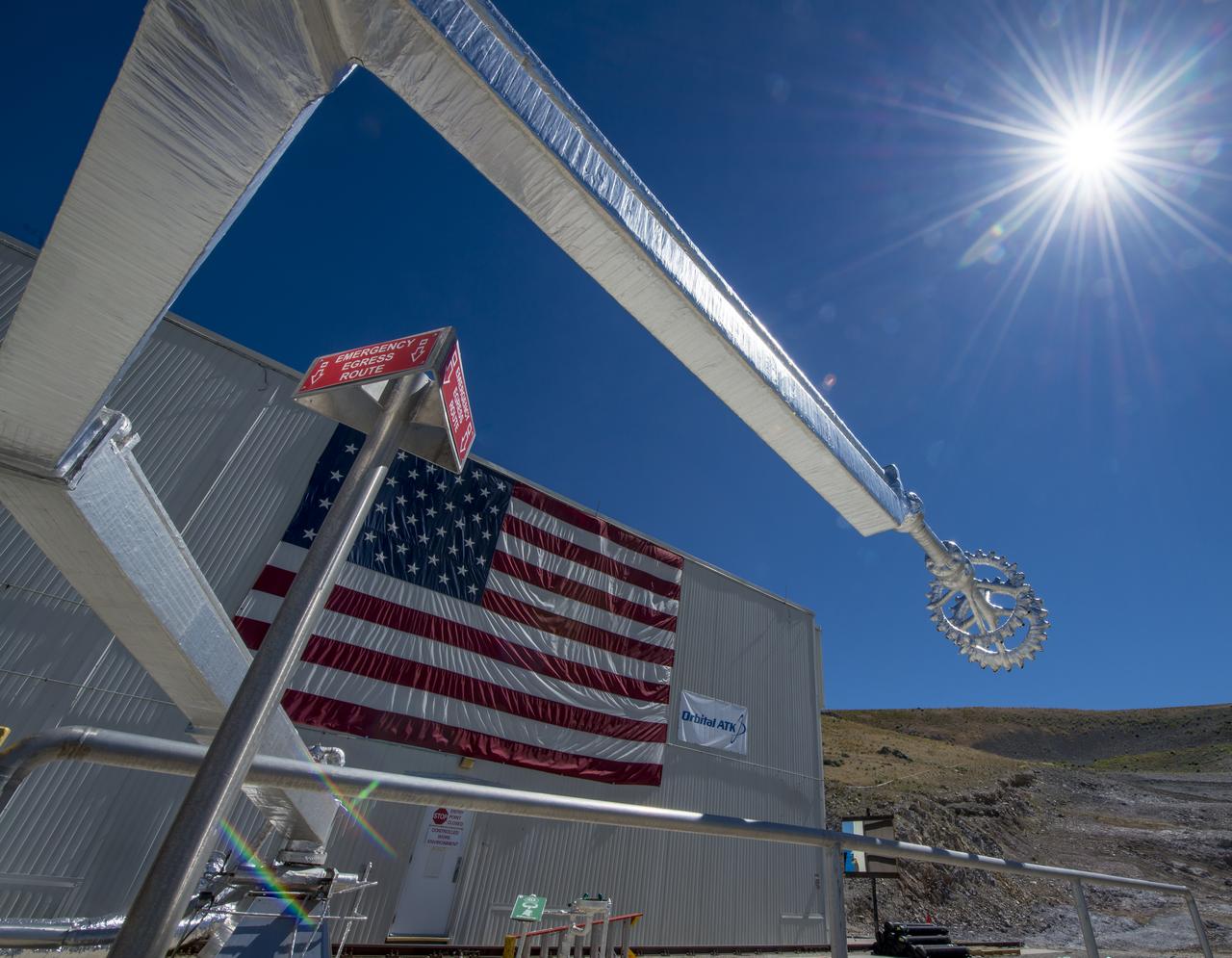
The quench system arm and nozzle are seen at the test area where the second and final qualification motor (QM-2) test for the Space Launch System’s booster will take place, Sunday, June 26, 2016, at Orbital ATK Propulsion Systems test facilities in Promontory, Utah. The test is scheduled for Tuesday, June 28 at 10:05 a.m. EDT (8:05 a.m. MDT). Photo Credit: (NASA/Bill Ingalls)
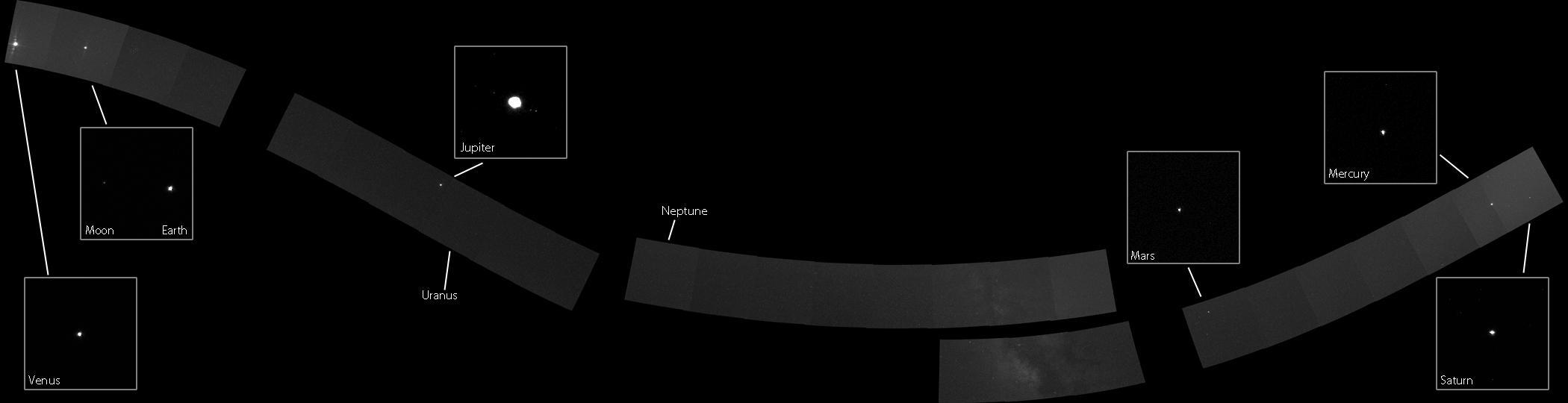
A Solar System Family Portrait, from the Inside Out.
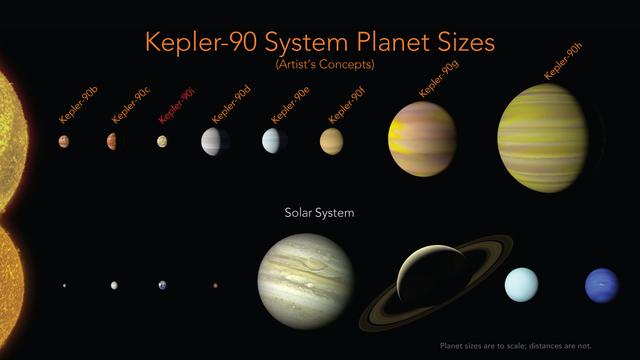
Our solar system now is tied for most number of planets around a single star, with the recent discovery of an eighth planet circling Kepler-90, a Sun-like star 2,545 light years from Earth. The planet was discovered in data from NASA's Kepler Space Telescope. This artist's concept depicts the Kepler-90 system compared with our own solar system. The newly-discovered Kepler-90i -- a sizzling hot, rocky planet that orbits its star once every 14.4 days -- was found using machine learning from Google. Machine learning is an approach to artificial intelligence in which computers "learn." In this case, computers learned to identify planets by finding in Kepler data instances where the telescope recorded changes in starlight caused by planets beyond our solar system, known as exoplanets. https://photojournal.jpl.nasa.gov/catalog/PIA22193
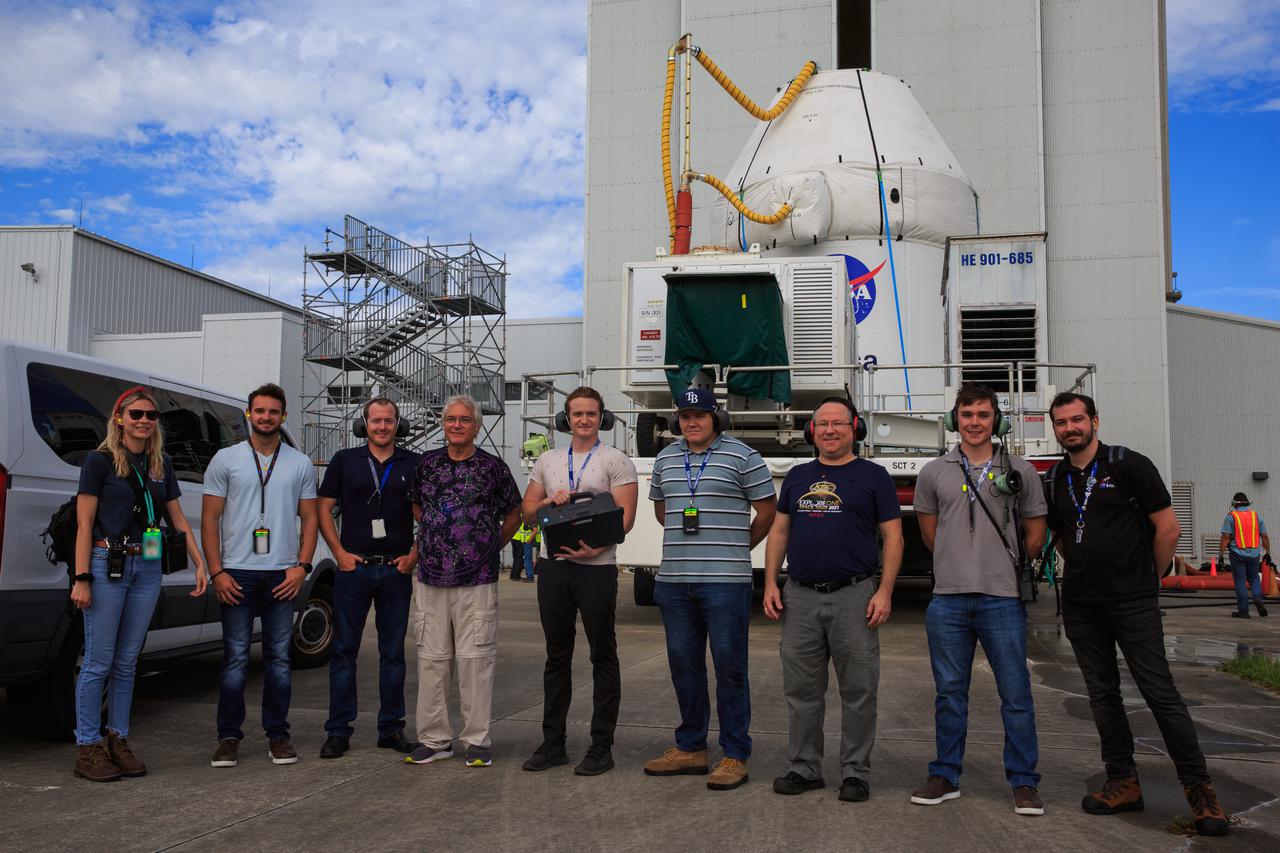
Teams from Kennedy’s Exploration Ground Systems and contractor Jacobs pose as the Orion spacecraft for the Artemis I mission is transported to the Florida spaceport’s Launch Abort System Facility on July 10, 2021. They will integrate components of the launch abort system onto the spacecraft. Launching later this year, Artemis I will be a test of the Orion spacecraft and SLS rocket as an integrated system ahead of crewed flights to the Moon.
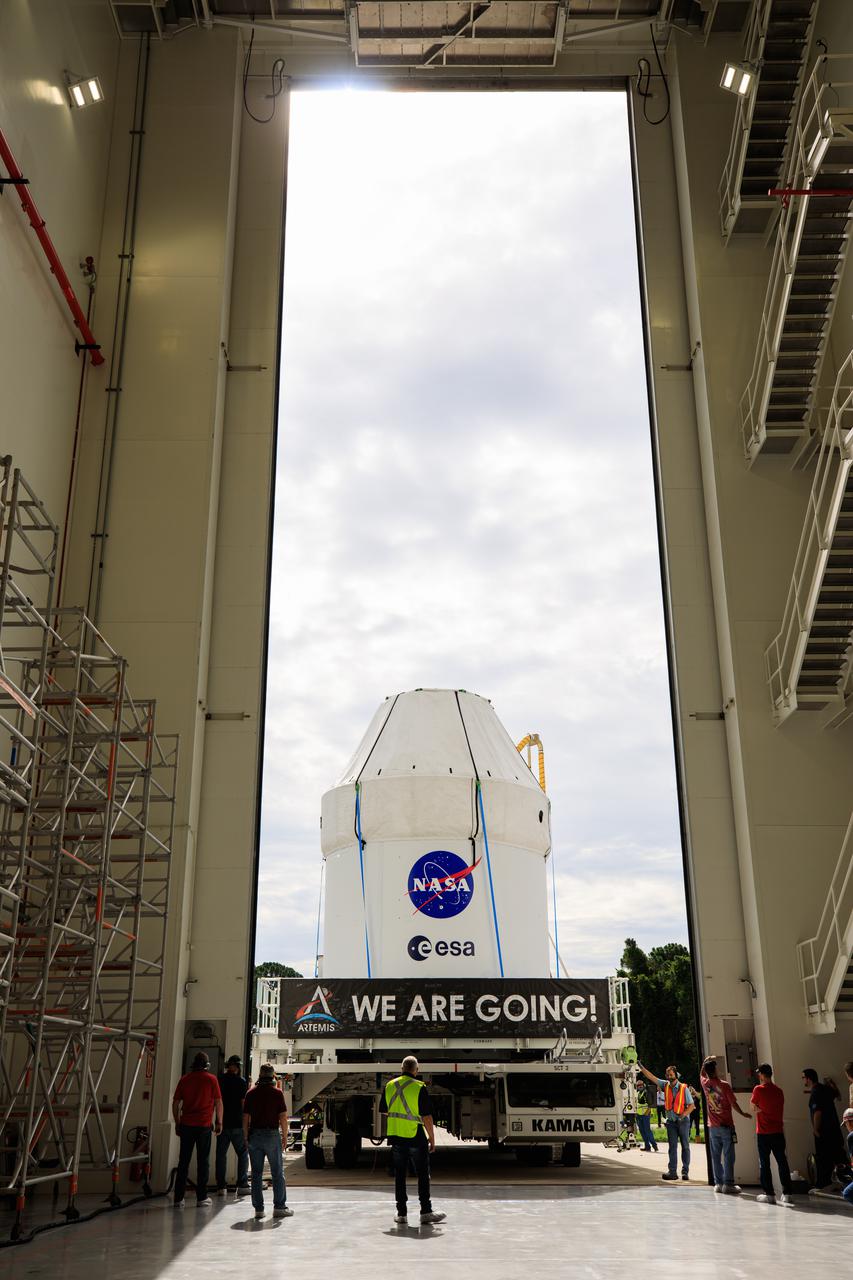
The Orion spacecraft for the Artemis I mission arrives at Kennedy Space Center’s Launch Abort System facility on July 10, 2021, after being transported from the Florida spaceport’s Multi-Payload Processing Facility earlier in the day. Teams with Exploration Ground Systems and contractor Jacobs will integrate components of the launch abort system onto the spacecraft. Launching later this year, Artemis I will be a test of the Orion spacecraft and SLS rocket as an integrated system ahead of crewed flights to the Moon.
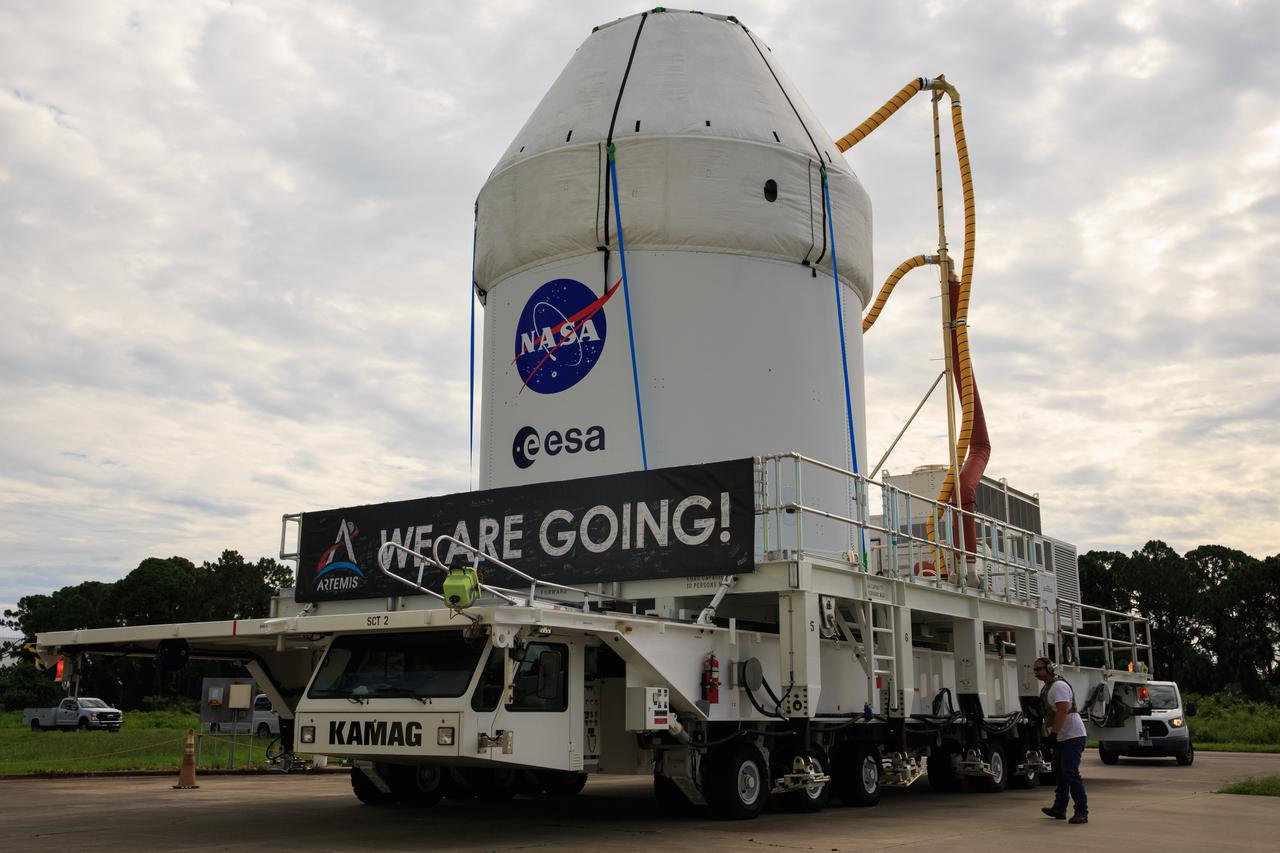
The Orion spacecraft for the Artemis I mission is transported from Kennedy Space Center’s Multi-Payload Processing Facility to the Florida spaceport’s Launch Abort System Facility on July 10, 2021. Teams with Exploration Ground Systems and contractor Jacobs will integrate components of the launch abort system onto the spacecraft. Launching later this year, Artemis I will be a test of the Orion spacecraft and SLS rocket as an integrated system ahead of crewed flights to the Moon.
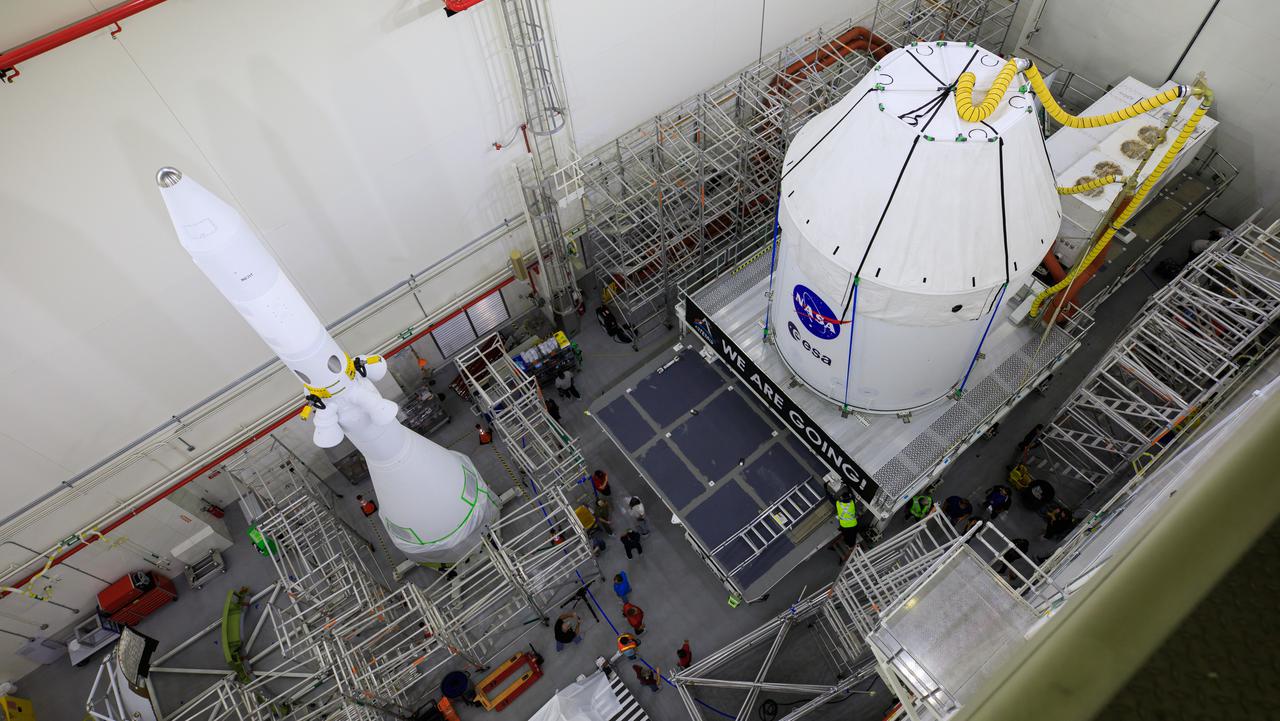
The Orion spacecraft for the Artemis I mission arrives at Kennedy Space Center’s Launch Abort System facility on July 10, 2021, after being transported from the Florida spaceport’s Multi-Payload Processing Facility earlier in the day. Teams with Exploration Ground Systems and contractor Jacobs will integrate components of the launch abort system onto the spacecraft. Launching later this year, Artemis I will be a test of the Orion spacecraft and SLS rocket as an integrated system ahead of crewed flights to the Moon.
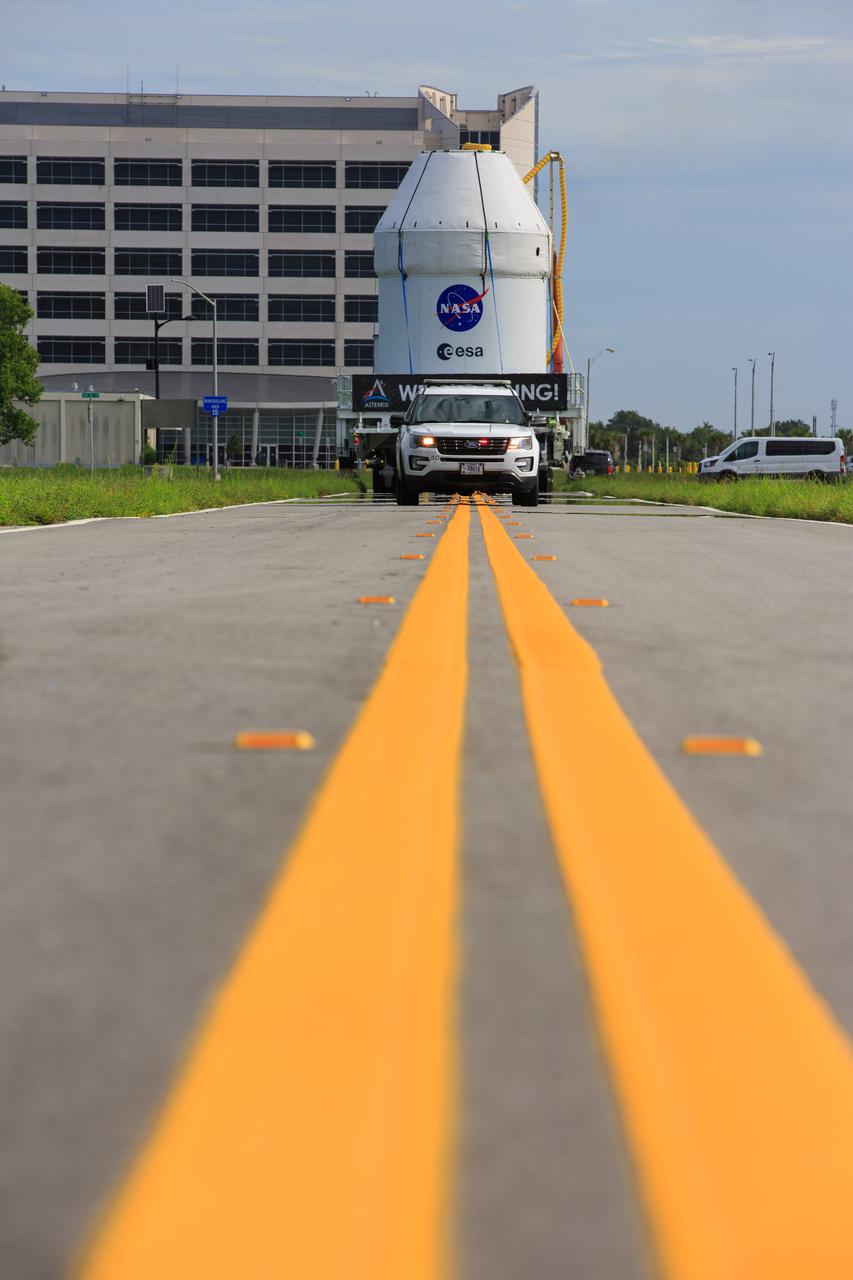
The Orion spacecraft for the Artemis I mission is transported from Kennedy Space Center’s Multi-Payload Processing Facility to the Florida spaceport’s Launch Abort System Facility on July 10, 2021. Teams with Exploration Ground Systems and contractor Jacobs will integrate components of the launch abort system onto the spacecraft. Launching later this year, Artemis I will be a test of the Orion spacecraft and SLS rocket as an integrated system ahead of crewed flights to the Moon.
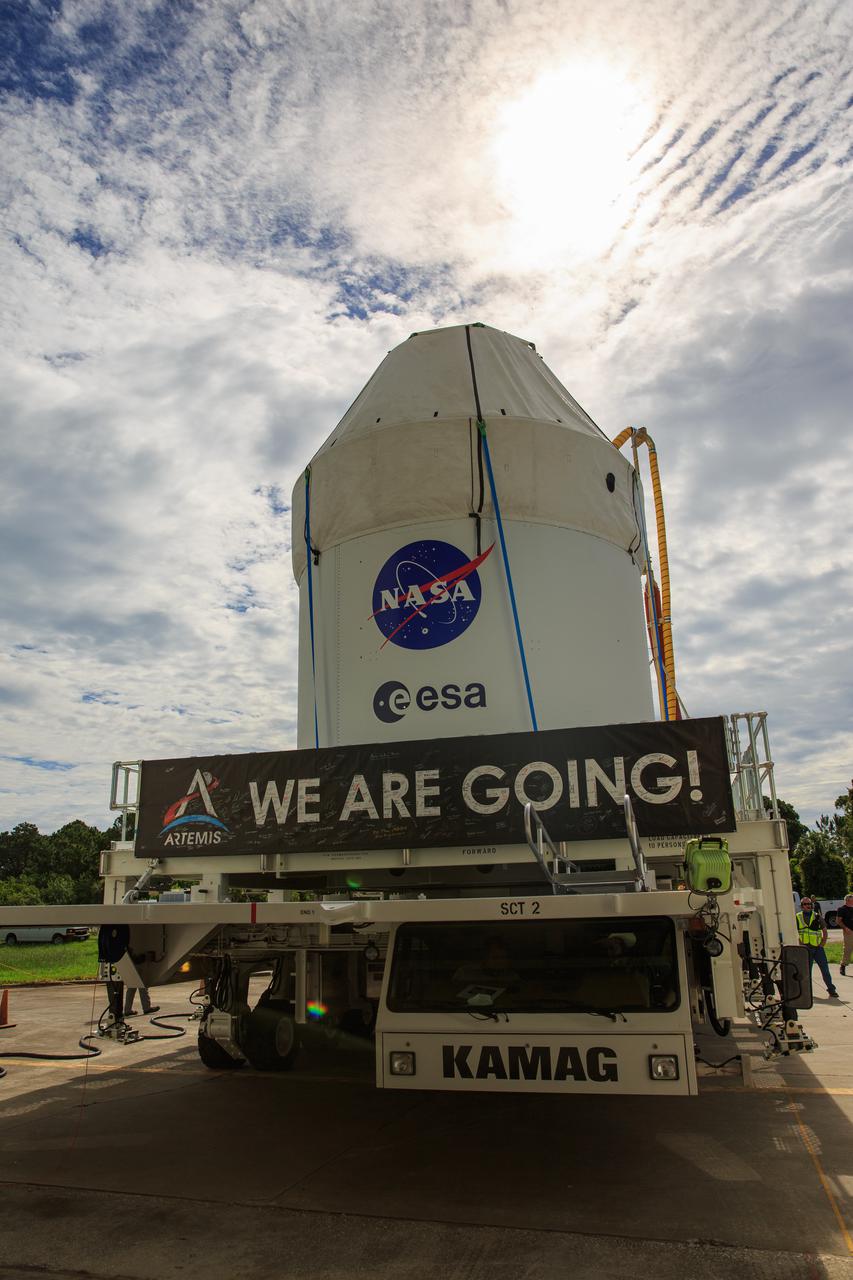
The Orion spacecraft for the Artemis I mission is transported from Kennedy Space Center’s Multi-Payload Processing Facility to the Florida spaceport’s Launch Abort System Facility on July 10, 2021. Teams with Exploration Ground Systems and contractor Jacobs will integrate components of the launch abort system onto the spacecraft. Launching later this year, Artemis I will be a test of the Orion spacecraft and SLS rocket as an integrated system ahead of crewed flights to the Moon.
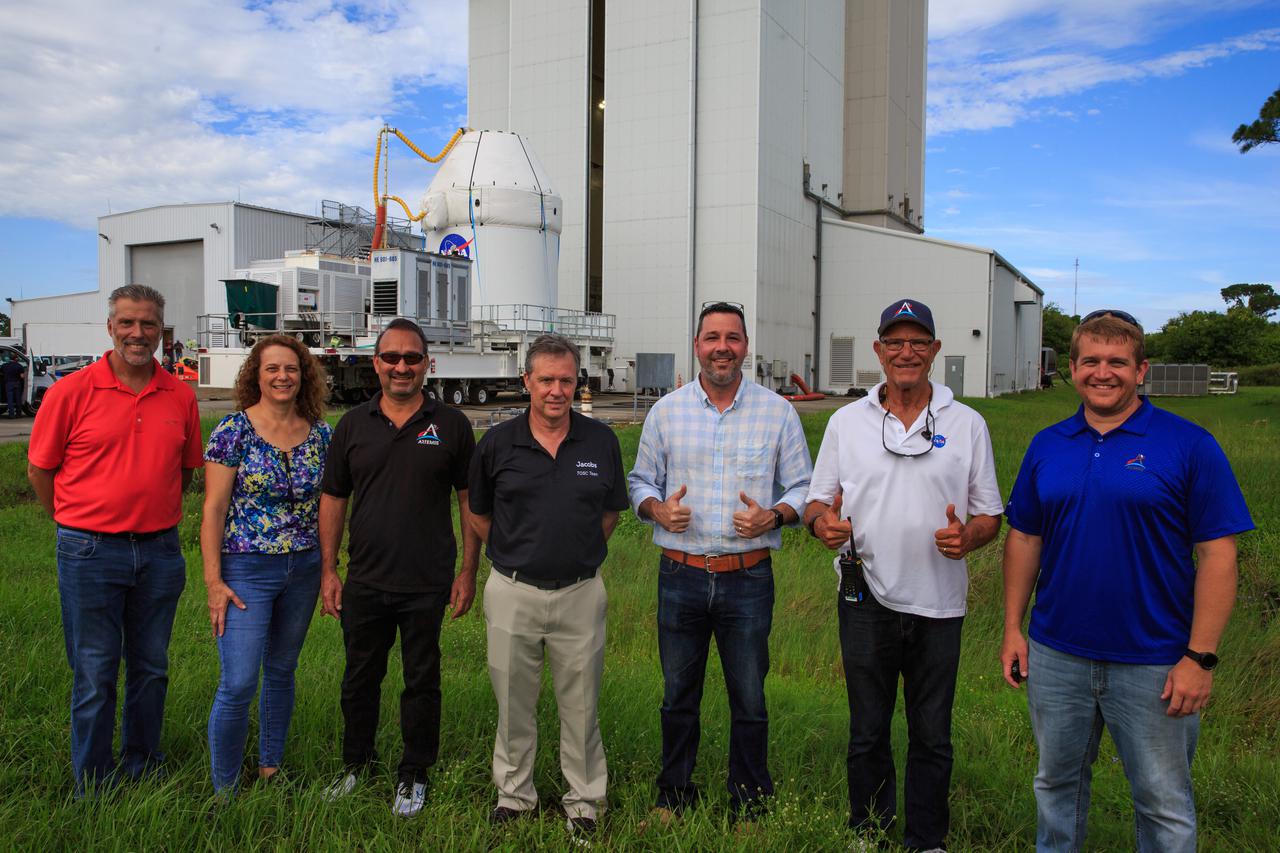
Teams from Kennedy’s Exploration Ground Systems and contractor Jacobs pose as the Orion spacecraft for the Artemis I mission is transported to the Florida spaceport’s Launch Abort System Facility on July 10, 2021. They will integrate components of the launch abort system onto the spacecraft. Launching later this year, Artemis I will be a test of the Orion spacecraft and SLS rocket as an integrated system ahead of crewed flights to the Moon.
The Orion spacecraft for the Artemis I mission arrives at Kennedy Space Center’s Launch Abort System facility on July 10, 2021, after being transported from the Florida spaceport’s Multi-Payload Processing Facility earlier in the day. Teams with Exploration Ground Systems and contractor Jacobs will integrate components of the launch abort system onto the spacecraft. Launching later this year, Artemis I will be a test of the Orion spacecraft and SLS rocket as an integrated system ahead of crewed flights to the Moon.
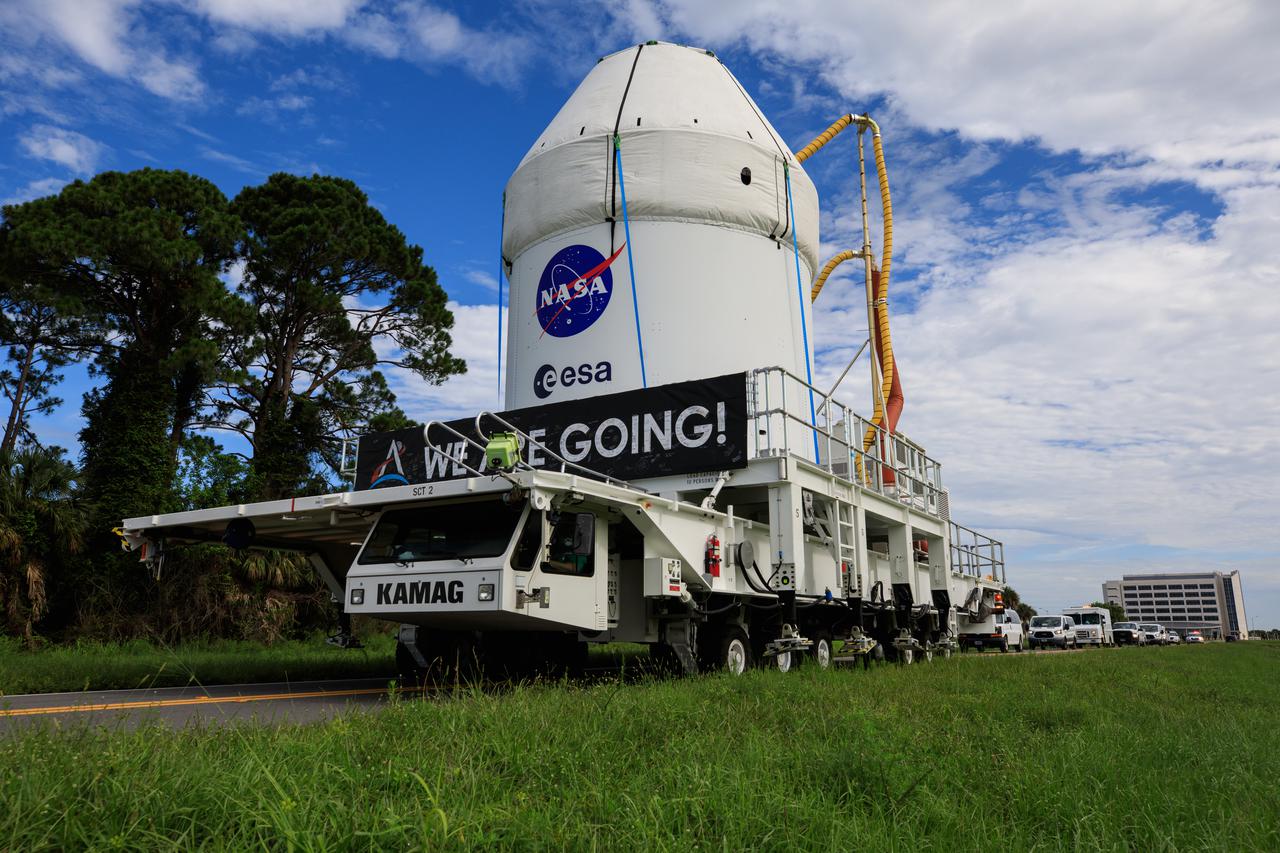
The Orion spacecraft for the Artemis I mission is transported from Kennedy Space Center’s Multi-Payload Processing Facility to the Florida spaceport’s Launch Abort System Facility on July 10, 2021. Teams with Exploration Ground Systems and contractor Jacobs will integrate components of the launch abort system onto the spacecraft. Launching later this year, Artemis I will be a test of the Orion spacecraft and SLS rocket as an integrated system ahead of crewed flights to the Moon.

Zephyria Channel System

Our solar system now is tied for most number of planets around a single star, with the recent discovery of an eighth planet circling Kepler-90, a Sun-like star 2,545 light years from Earth. The planet was discovered in data from NASA's Kepler Space Telescope. The newly-discovered Kepler-90i -- a sizzling hot, rocky planet that orbits its star once every 14.4 days -- was found using machine learning from Google. Machine learning is an approach to artificial intelligence in which computers "learn." In this case, computers learned to identify planets by finding in Kepler data instances where the telescope recorded changes in starlight caused by planets beyond our solar system, known as exoplanets. https://photojournal.jpl.nasa.gov/catalog/PIA22192
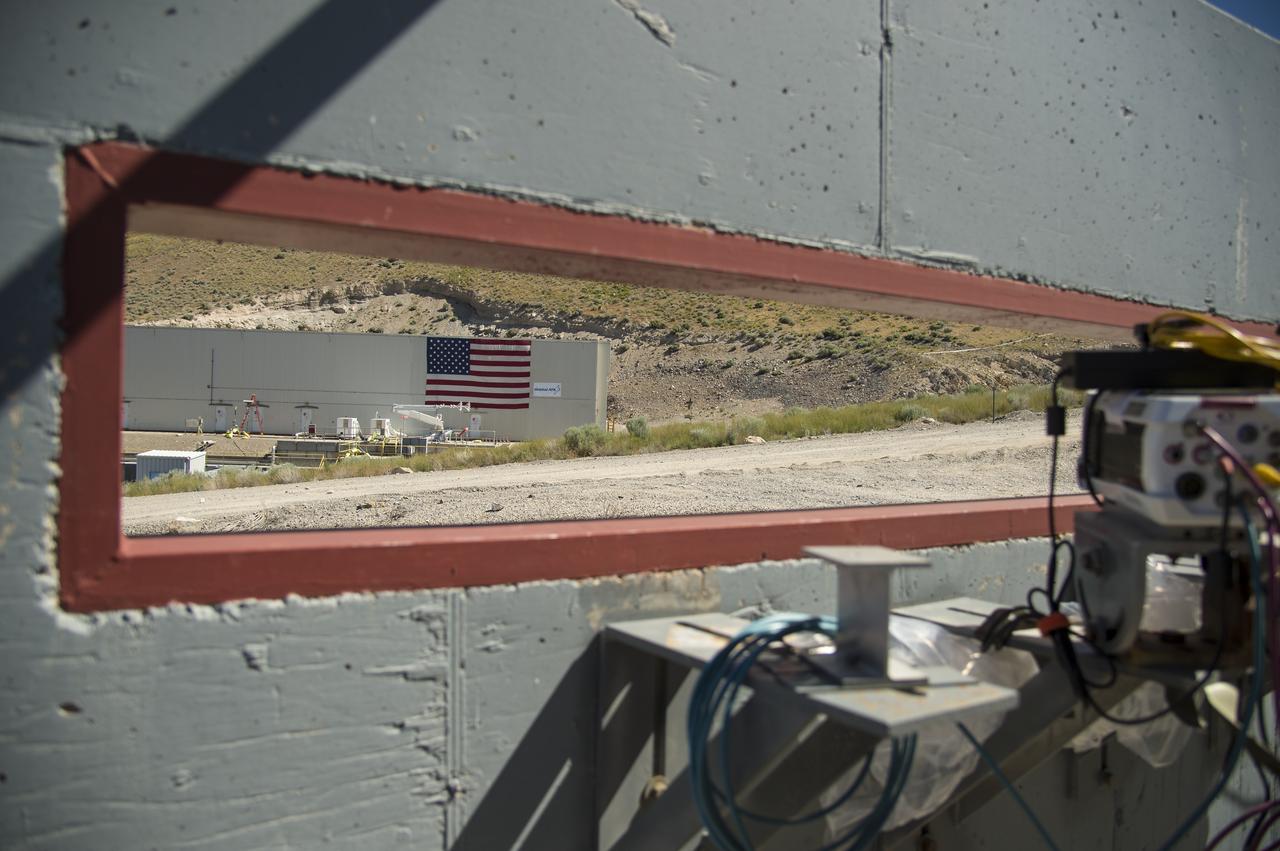
The test area where the second and final qualification motor (QM-2) test for the Space Launch System’s booster is seen through the window of a camera bunker, Sunday, June 26, 2016, at Orbital ATK Propulsion Systems test facilities in Promontory, Utah. The test is scheduled for Tuesday, June 28 at 10:05 a.m. EDT (8:05 a.m. MDT). Photo Credit: (NASA/Bill Ingalls)
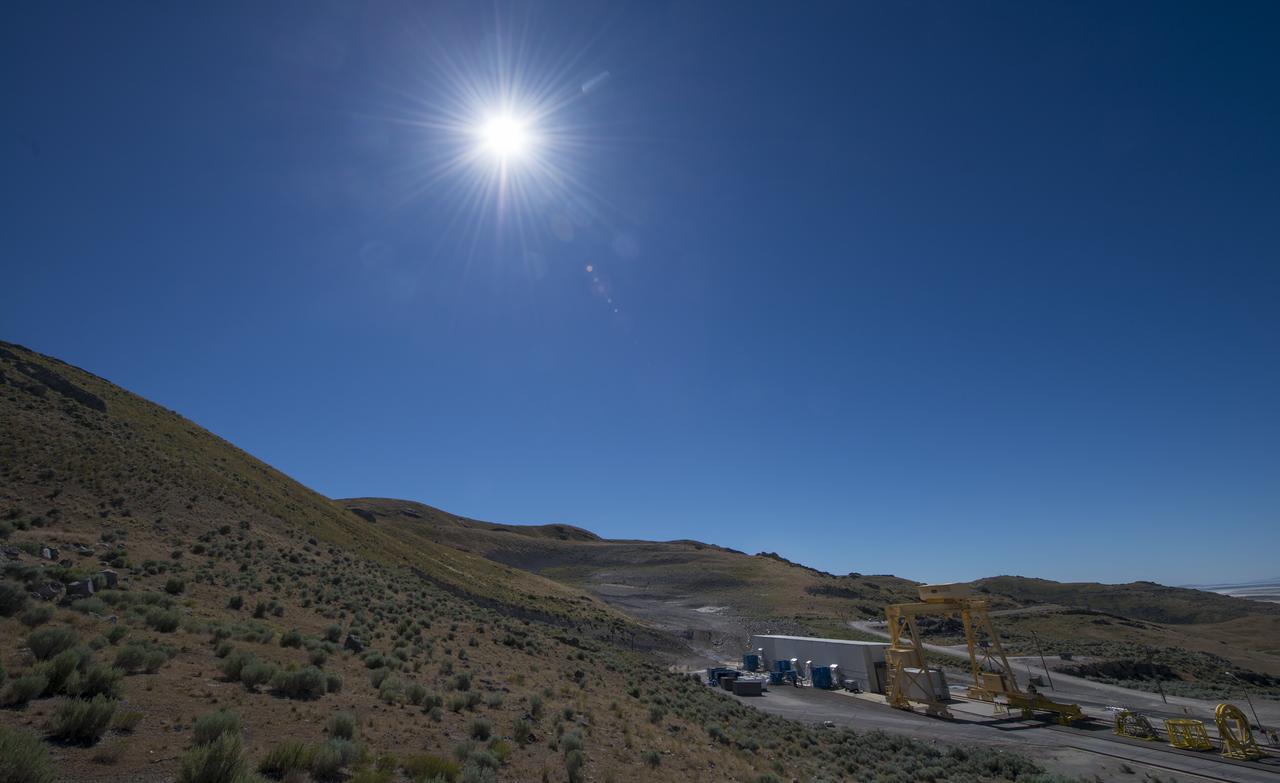
The test area where the second and final qualification motor (QM-2) test for the Space Launch System’s booster is seen Sunday, June 26, 2016, at Orbital ATK Propulsion Systems test facilities in Promontory, Utah. The test is scheduled for Tuesday, June 28 at 10:05 a.m. EDT (8:05 a.m. MDT). Photo Credit: (NASA/Bill Ingalls)
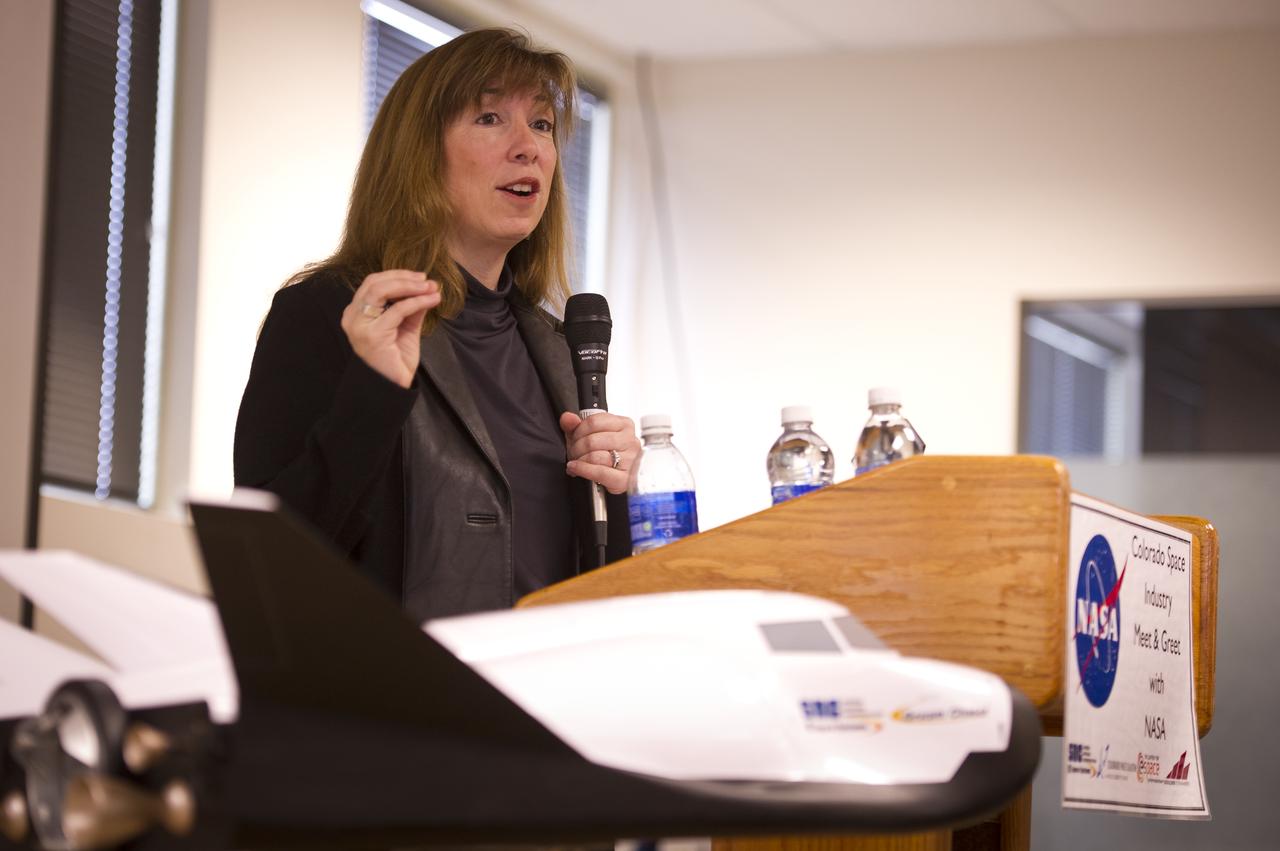
NASA Deputy Administrator Lori Garver speaks at Sierra Nevada Space Systems, on Saturday, Feb. 5, 2011, in Louisville, Colo. Sierra Nevada's Dream Chaser spacecraft is under development with support from NASA's Commercial Crew Development Program to provide crew transportation to and from low Earth orbit. NASA is helping private companies develop innovative technologies to ensure that the U.S. remains competitive in future space endeavors. Photo Credit: (NASA/Bill Ingalls)
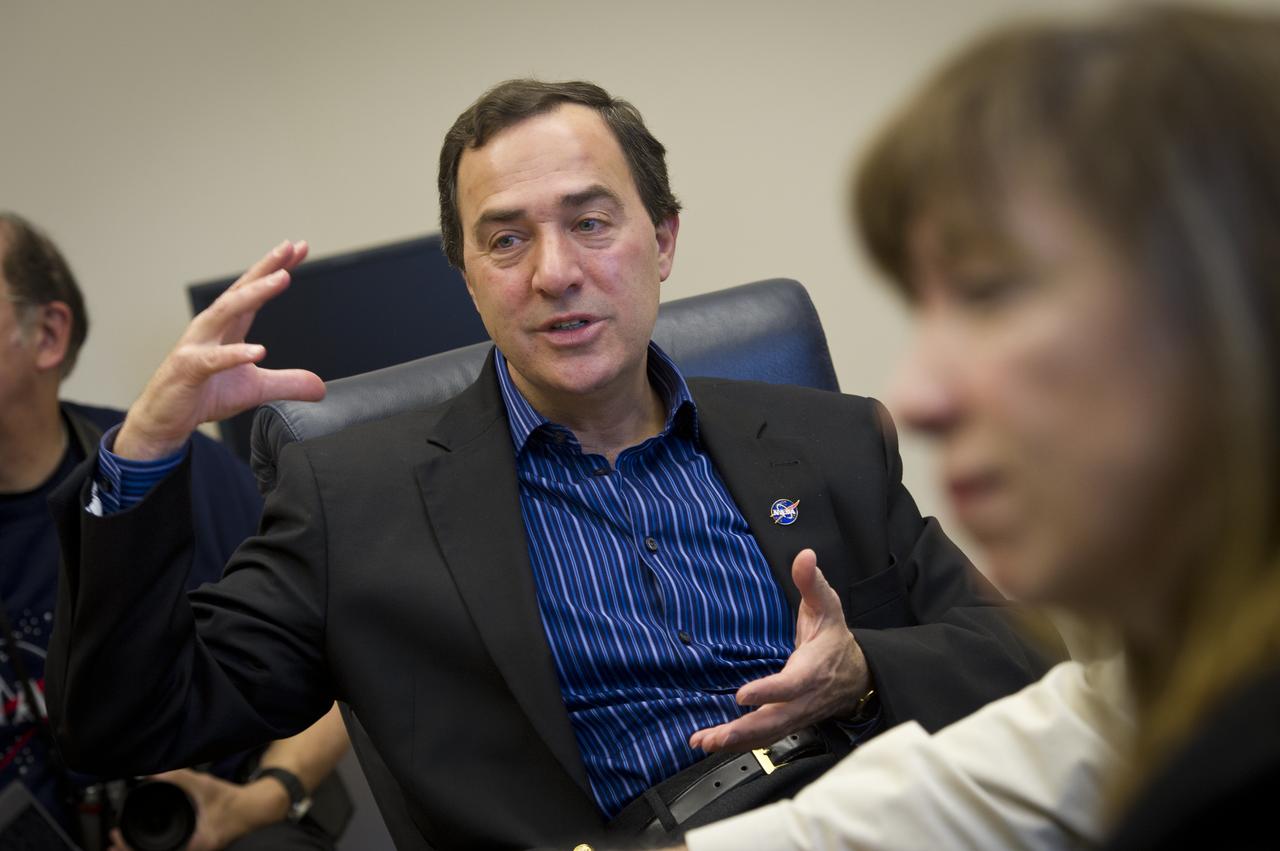
Sierra Nevada Space Systems chairman Mark Sirangello talks to NASA Deputy Administrator Lori Garver, on Saturday, Feb. 5, 2011, in Louisville, Colo. Sierra Nevada's Dream Chaser spacecraft is under development with support from NASA's Commercial Crew Development Program to provide crew transportation to and from low Earth orbit. NASA is helping private companies develop innovative technologies to ensure that the U.S. remains competitive in future space endeavors. Photo Credit: (NASA/Bill Ingalls)
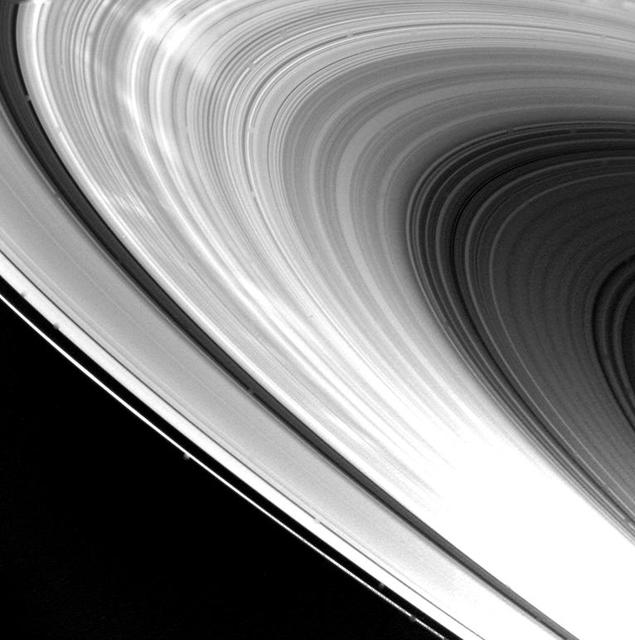
Saturn Ring System
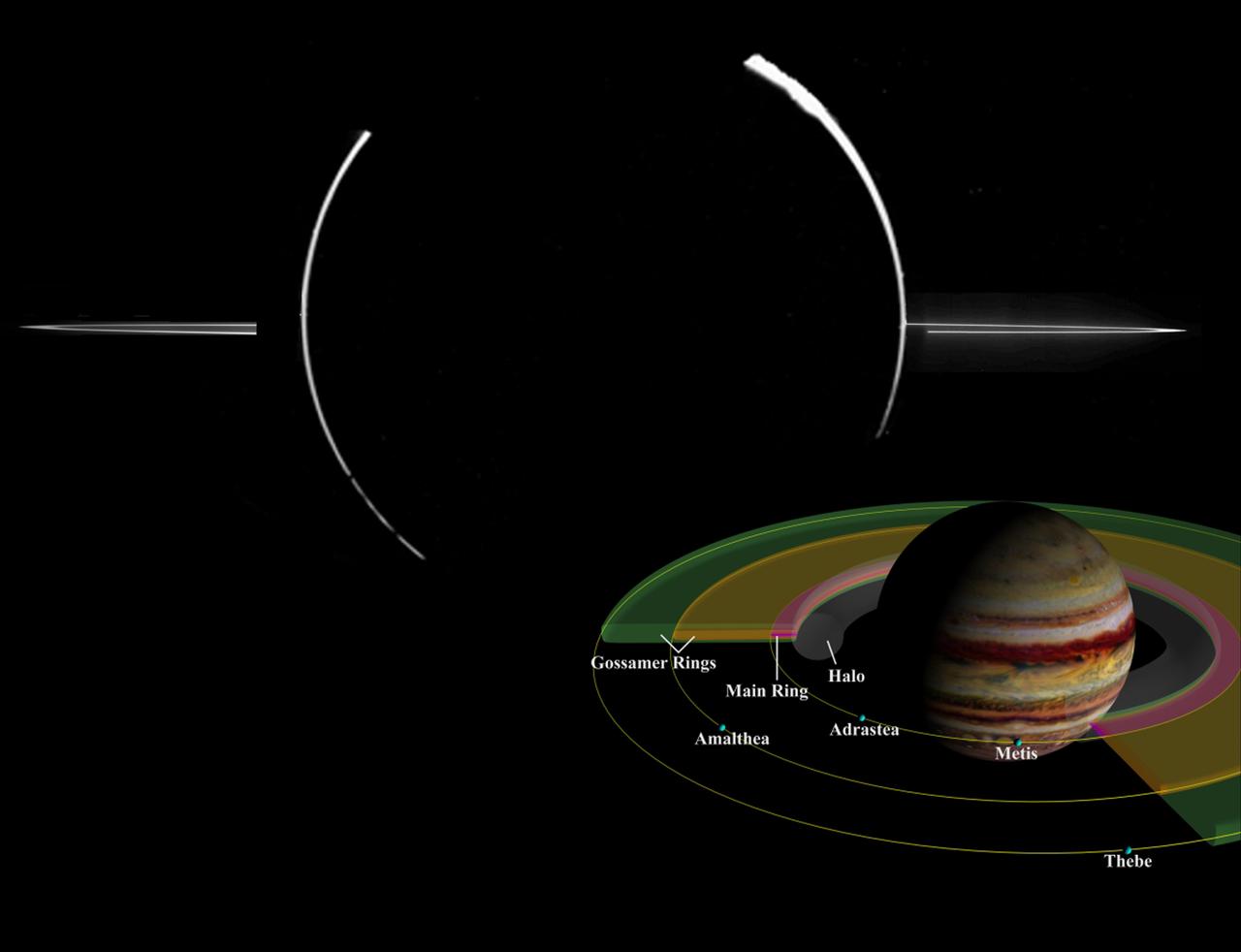
Jovian Ring System Mosaic

Jupiter System Montage

Jupiter Ring System
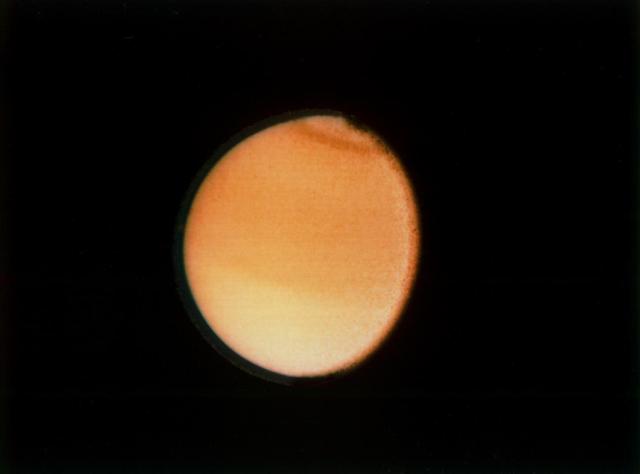
Titan Cloud Systems

Jupiter Ring System

Saturn System Montage
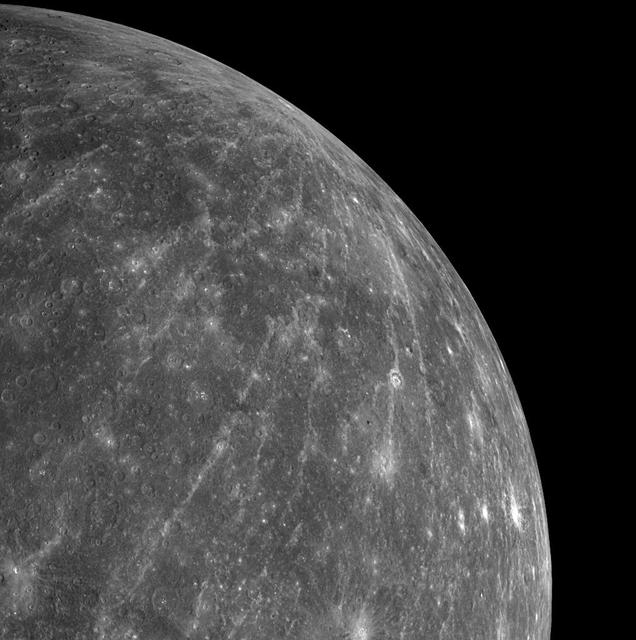
A Big and Brilliant Ray System
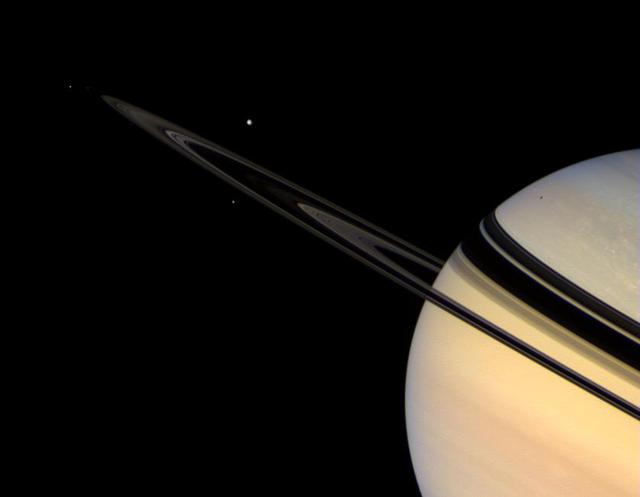
Solar System in Miniature
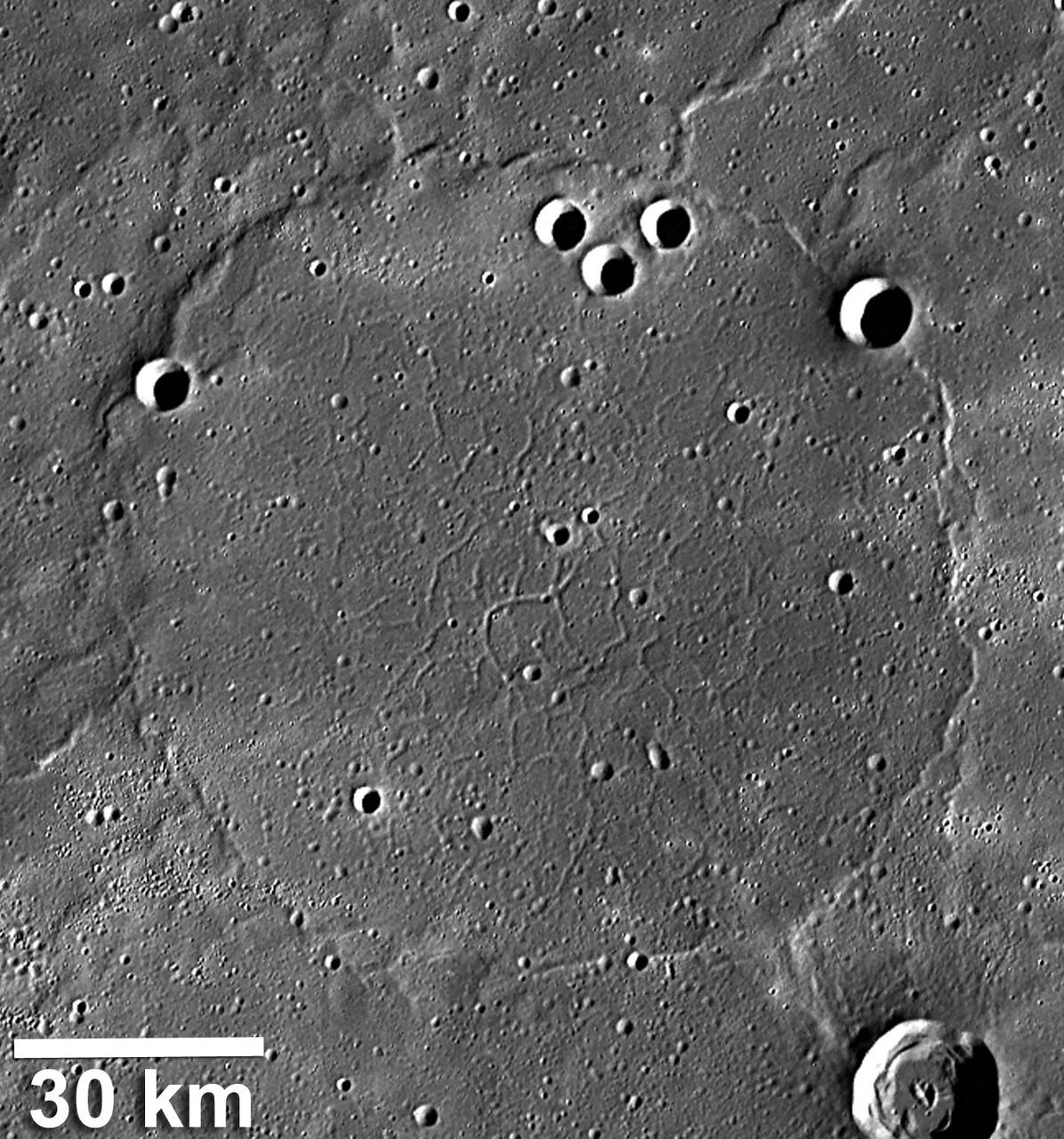
Ridge and Trough System on Mercury
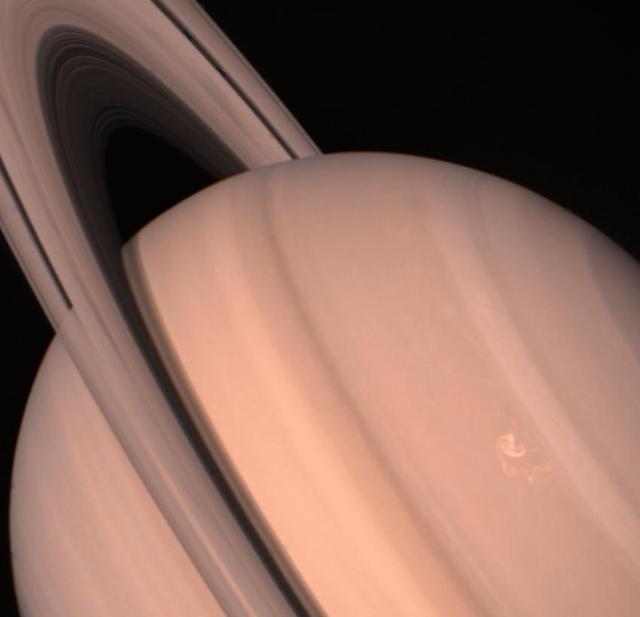
Saturn and its Ring System
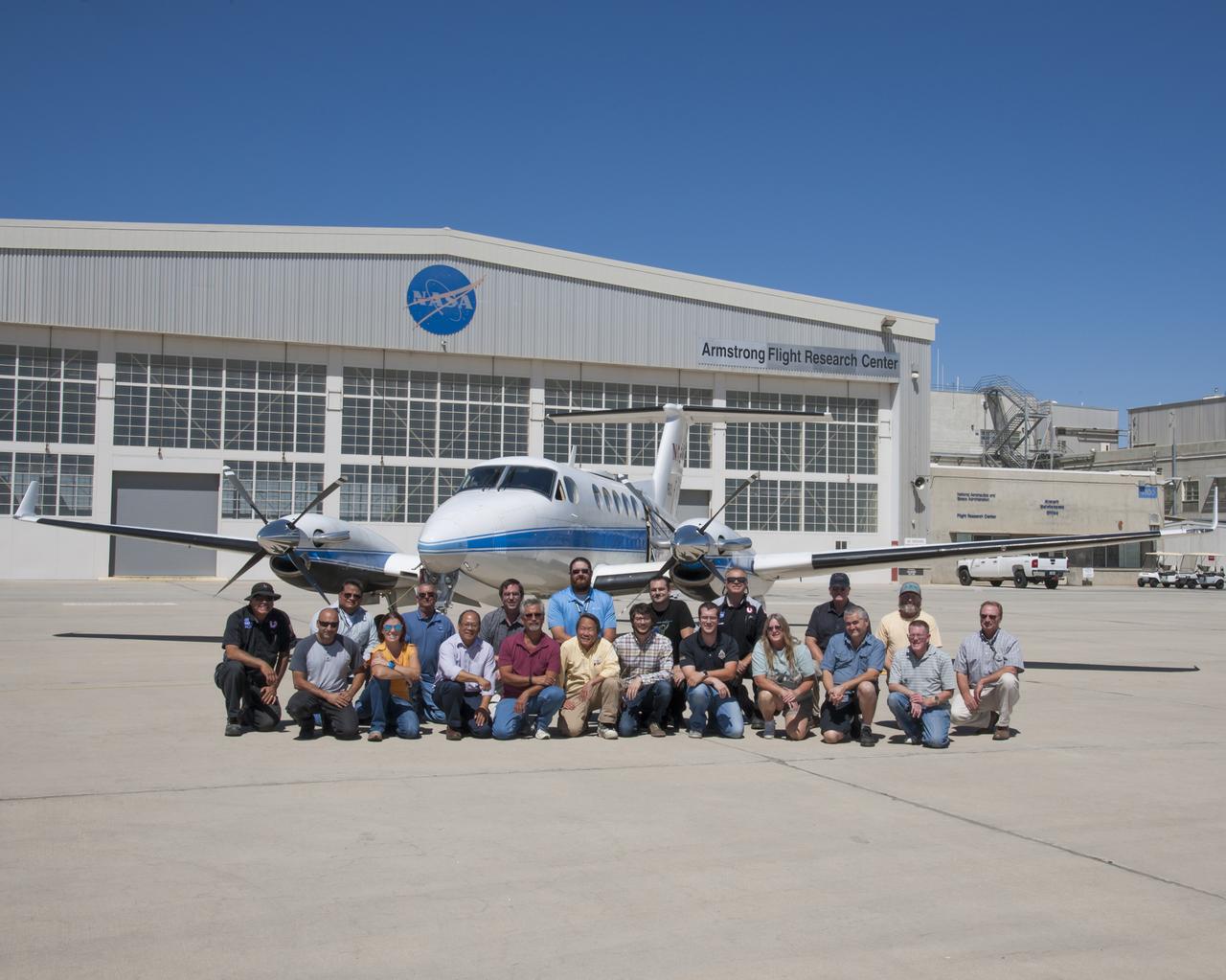
The Advanced Data Acquisition and Telemetry System team includes front row from left Mario Soto, Sam Habbal, Tiffany Titas, RIchard Hang, Randy Torres, Thang Quach, Otto Schnarr, Matthew Waldersen, Karen Estes, Andy Olvera, Stanley Wertenberger and Rick Cordes. In the second row from left are John Atherly, Doug Boston, Tom Horn, Brady Rennie, Chris Birkinbine, Jim McNally, Martin Munday and Tony Lorek.
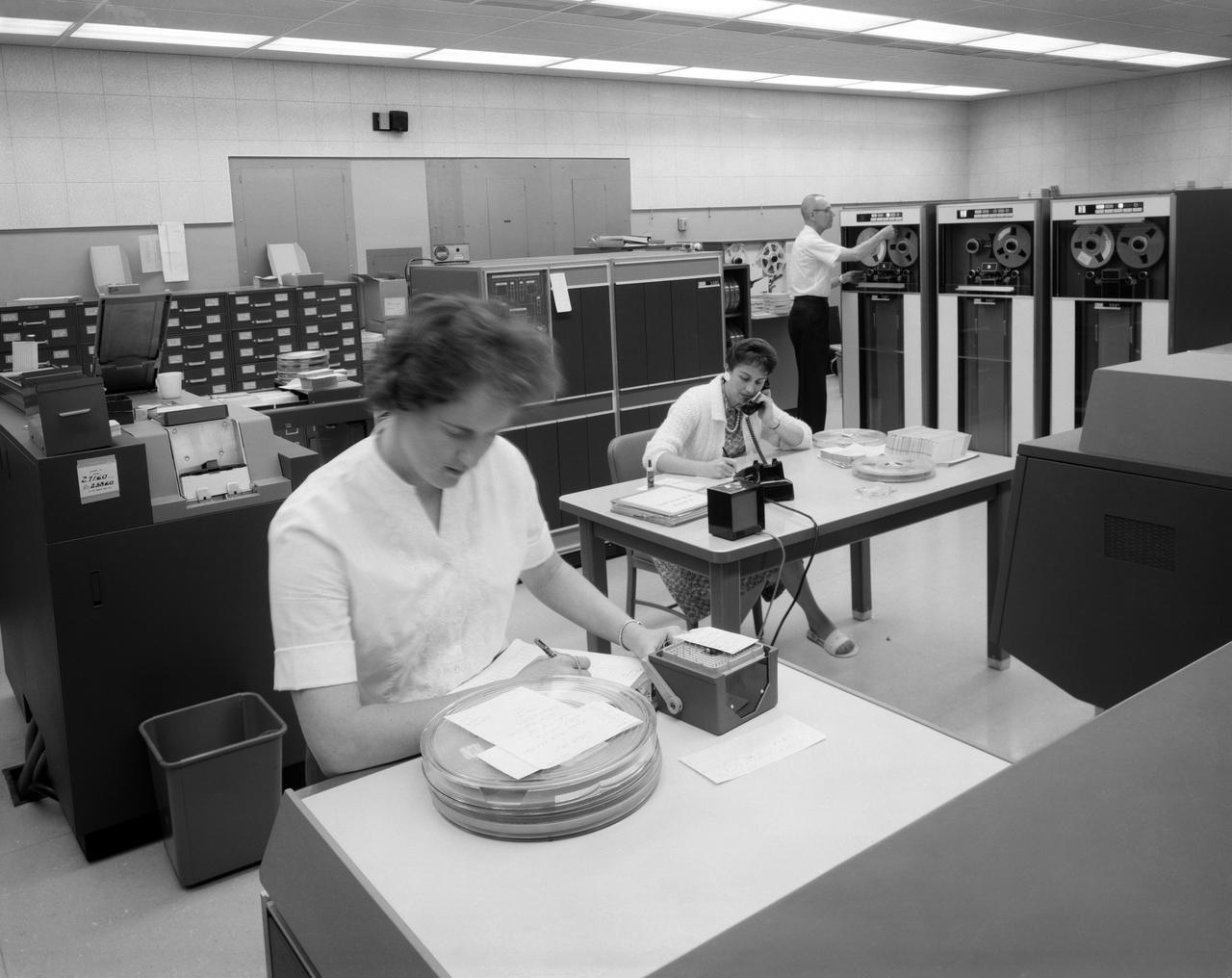
IBM 1401 Data Processing System, at NASA's Ames Research Center.
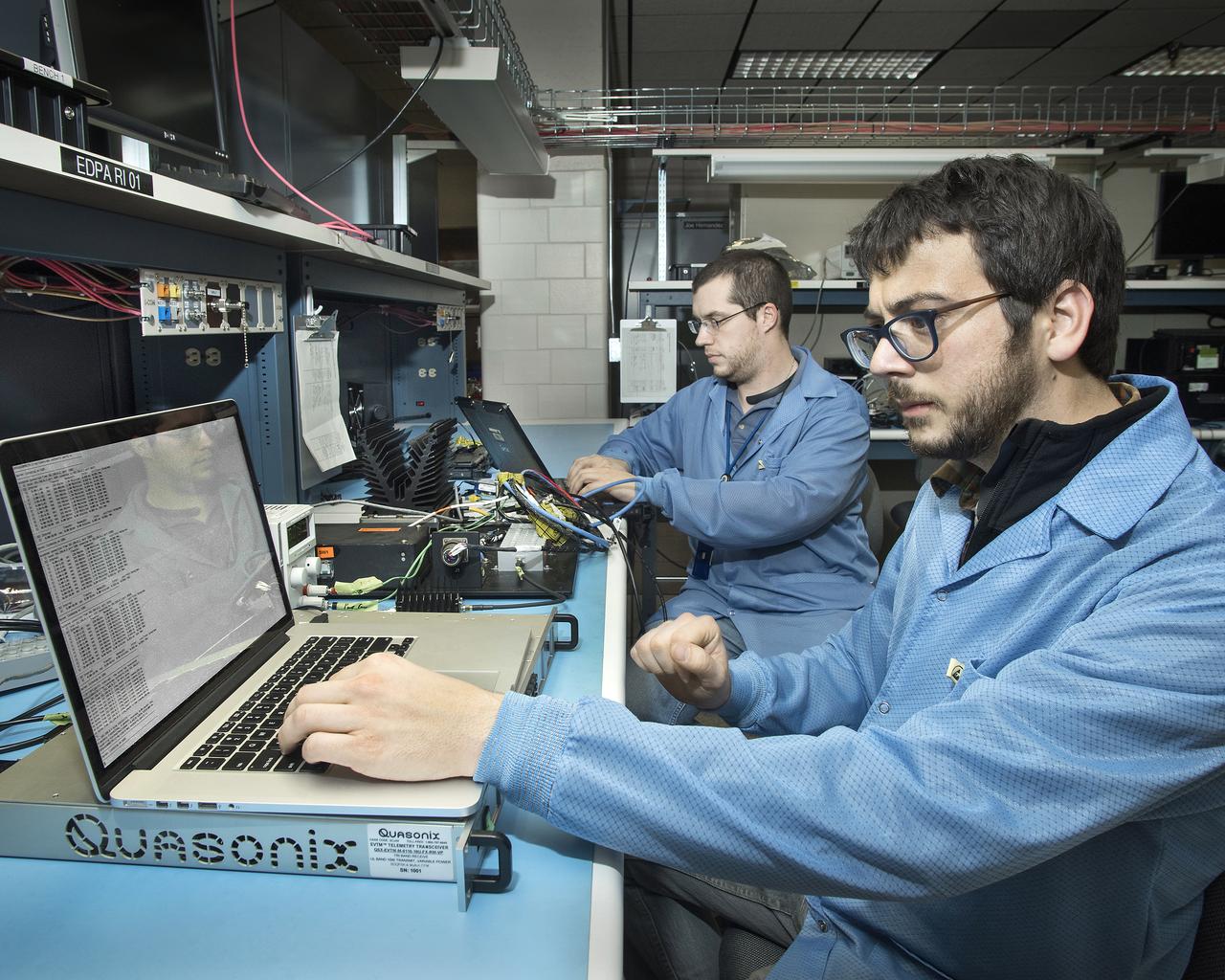
Otto Schnarr, front, and Matthew Waldersen check out the Advanced Data Acquisition and Telemetry System in an Armstrong laboratory.

Otto Schnarr and Matthew Waldersen check out the Advanced Data Acquisition and Telemetry System in an Armstrong laboratory.
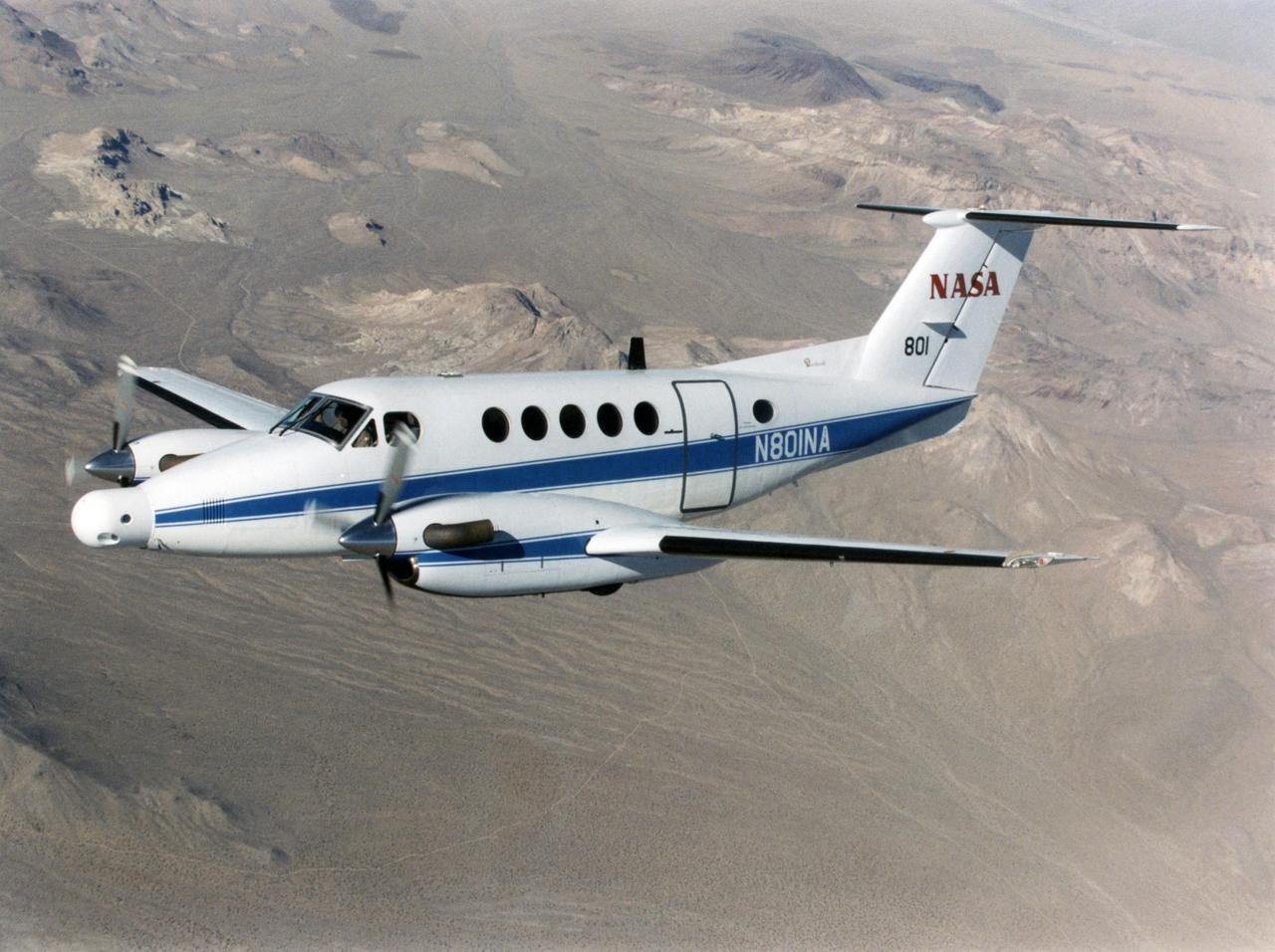
A NASA King Air successfully tested the Advanced Data Acquisition and Telemetry System during a recent series of three research flights.
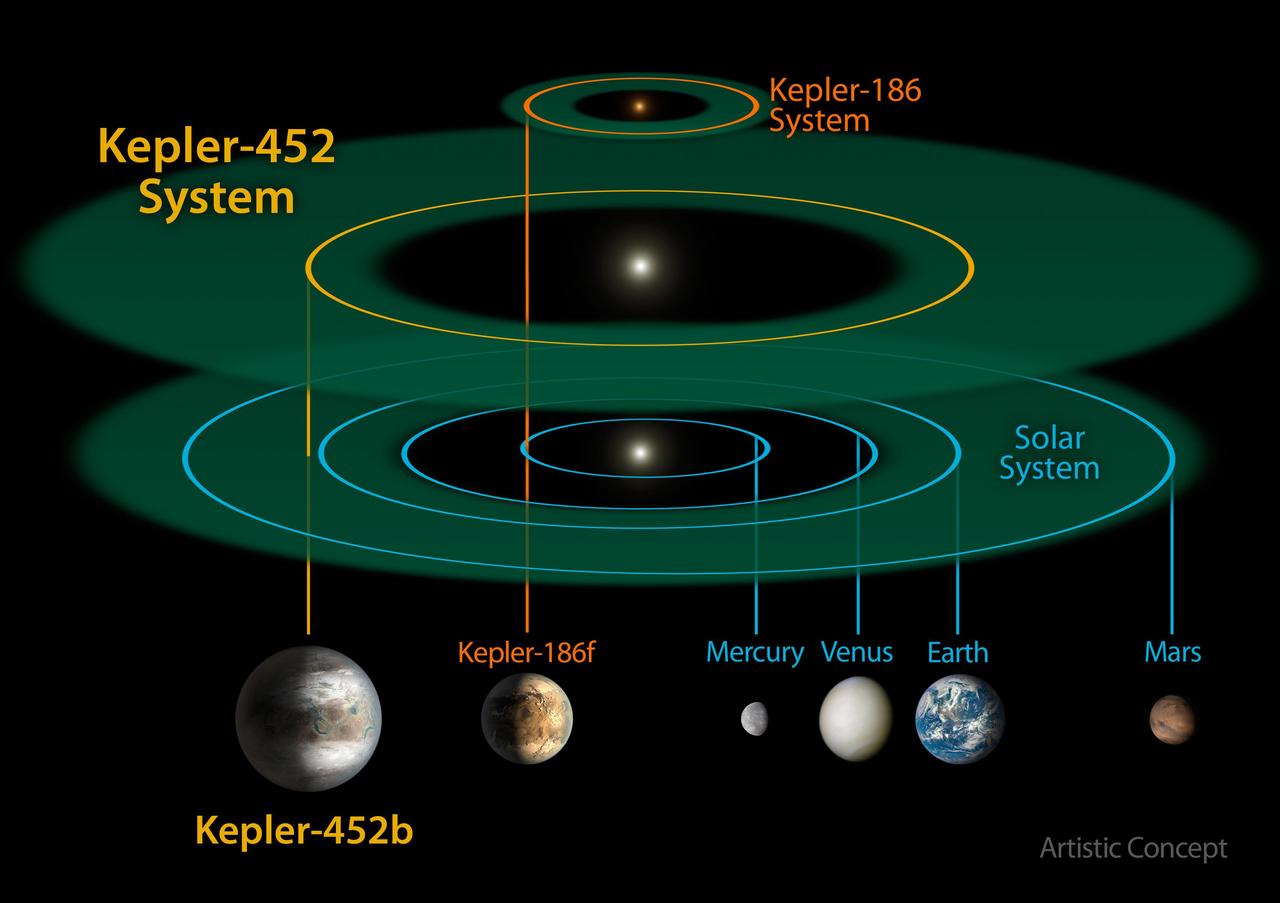
This size and scale of the Kepler-452 system compared alongside the Kepler-186 system and the solar system. Kepler-186 is a miniature solar system that would fit entirely inside the orbit of Mercury. The habitable zone of Kepler-186 is very small compared to that of Kepler-452 or the sun because it is a much smaller, cooler star. The size and extent of the habitable zone of Kepler-452 is nearly the same as that of the sun, but is slightly bigger because Kepler-452 is somewhat older, bigger and brighter. The size of the orbit of Kepler-452b is nearly the same as that of Earth at 1.05 astronomical units (an astronomical unit is the distance between Earth and the sun). Kepler-452b orbits its star once every 385 days. http://photojournal.jpl.nasa.gov/catalog/PIA19826
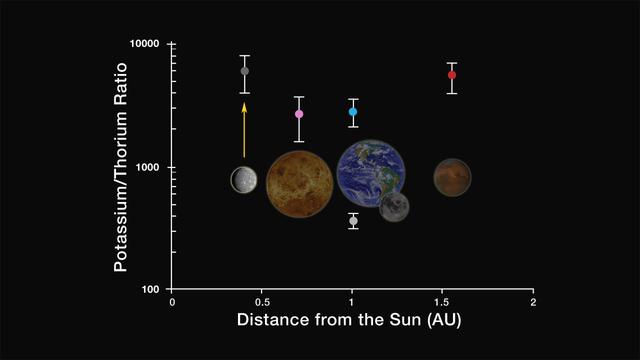
K/Th in the Inner Solar System
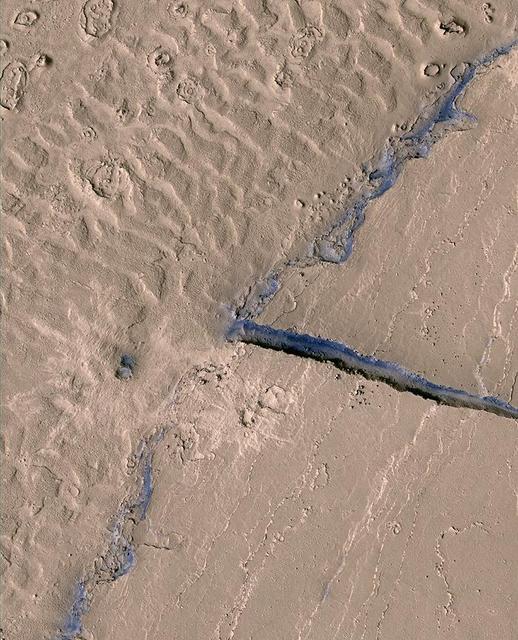
Lava-Draped Channel System on Mars
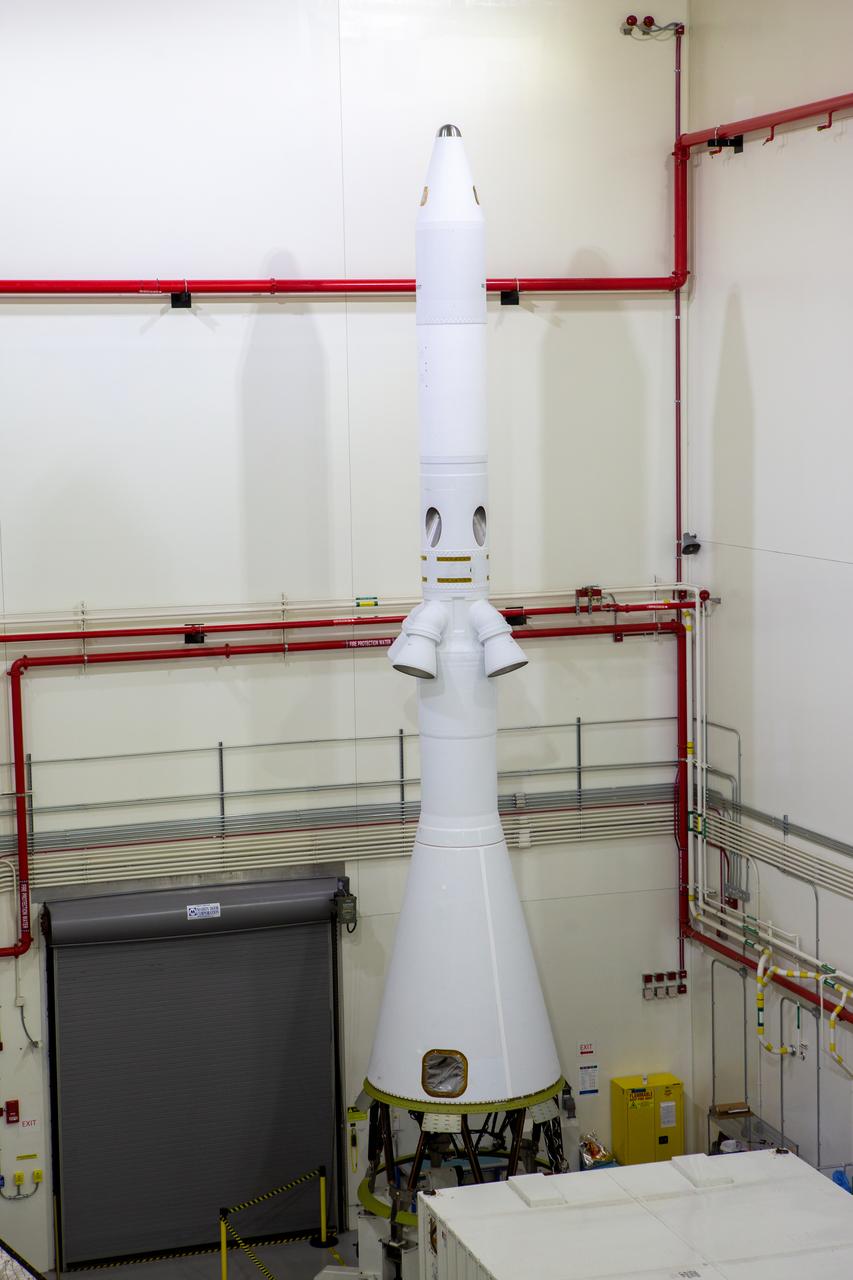
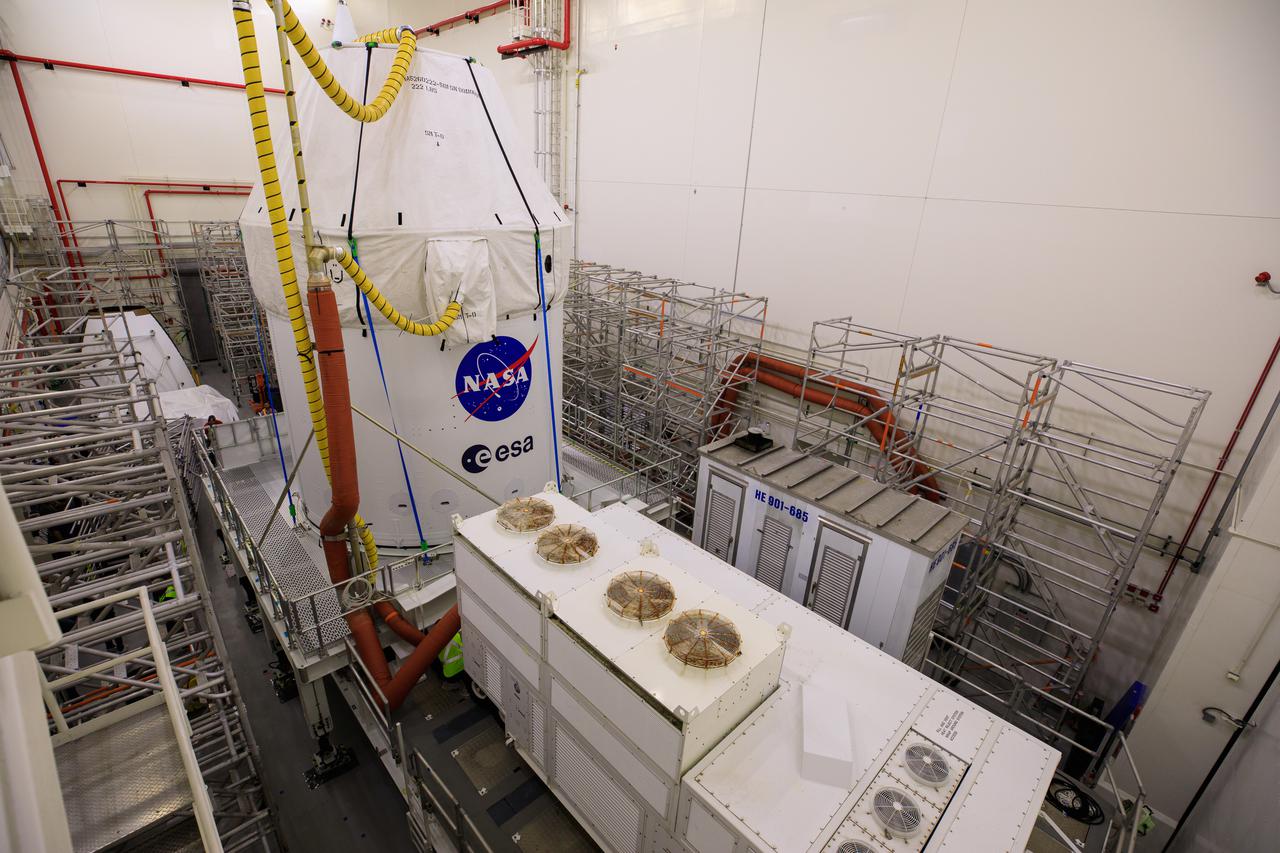
Inside the Launch Abort System Facility (LASF) at NASA’s Kennedy Space Center in Florida, the Launch Abort System (LAS) for the Orion spacecraft that will launch on Artemis I, the first of the Artemis series, awaits final processing with the spacecraft. The LAS was processed and prepared inside the LASF. During crewed launches of the Orion spacecraft atop the Space Launch System rocket, the LAS will protect the crew module and astronauts aboard to safety if an emergency occurs during launch.
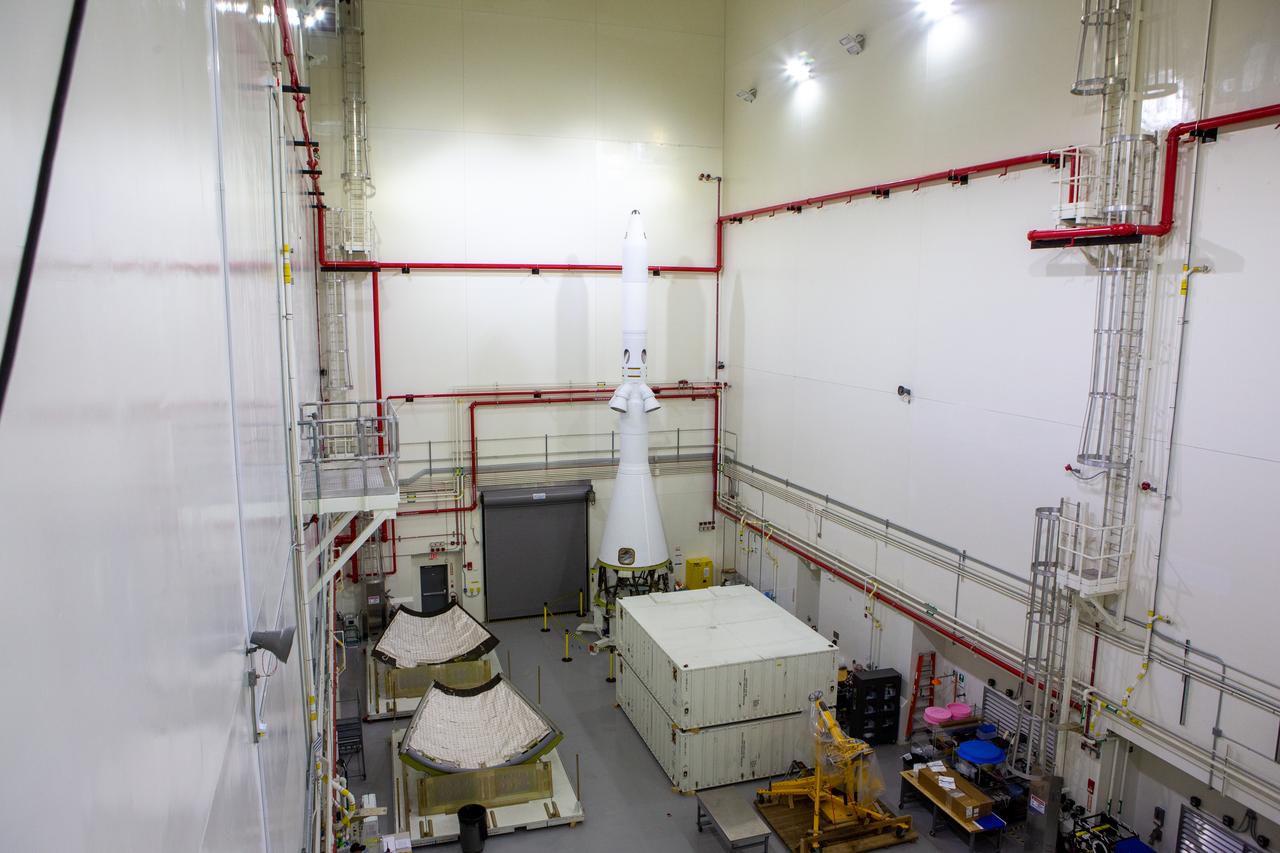
In this view from above inside the Launch Abort System Facility at NASA’s Kennedy Space Center in Florida, the Launch Abort System (LAS) for the Orion spacecraft that will launch on Artemis I, the first uncrewed mission of the Artemis series, awaits final processing with the spacecraft. The LAS was processed and prepared inside the LASF. During crewed launches of the Orion spacecraft atop the Space Launch System rocket, the LAS will protect the crew module and astronauts aboard to safety if an emergency occurs during launch.
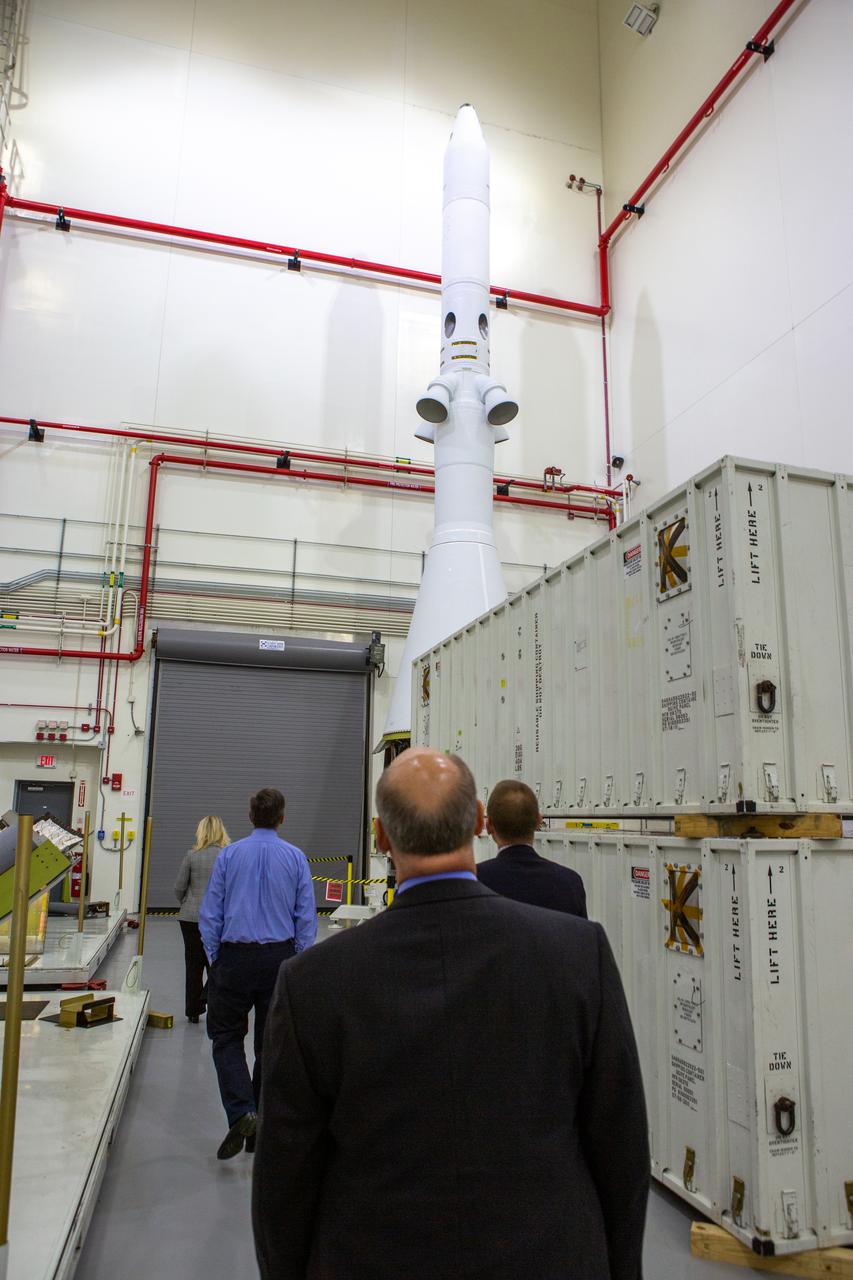
Inside the Launch Abort System Facility (LASF) at NASA’s Kennedy Space Center in Florida, the Launch Abort System (LAS) for the Orion spacecraft that will launch on Artemis I, the first of the Artemis series, awaits final processing with the spacecraft. The LAS was processed and prepared inside the LASF. During crewed launches of the Orion spacecraft atop the Space Launch System rocket, the LAS will protect the crew module and astronauts aboard to safety if an emergency occurs during launch.
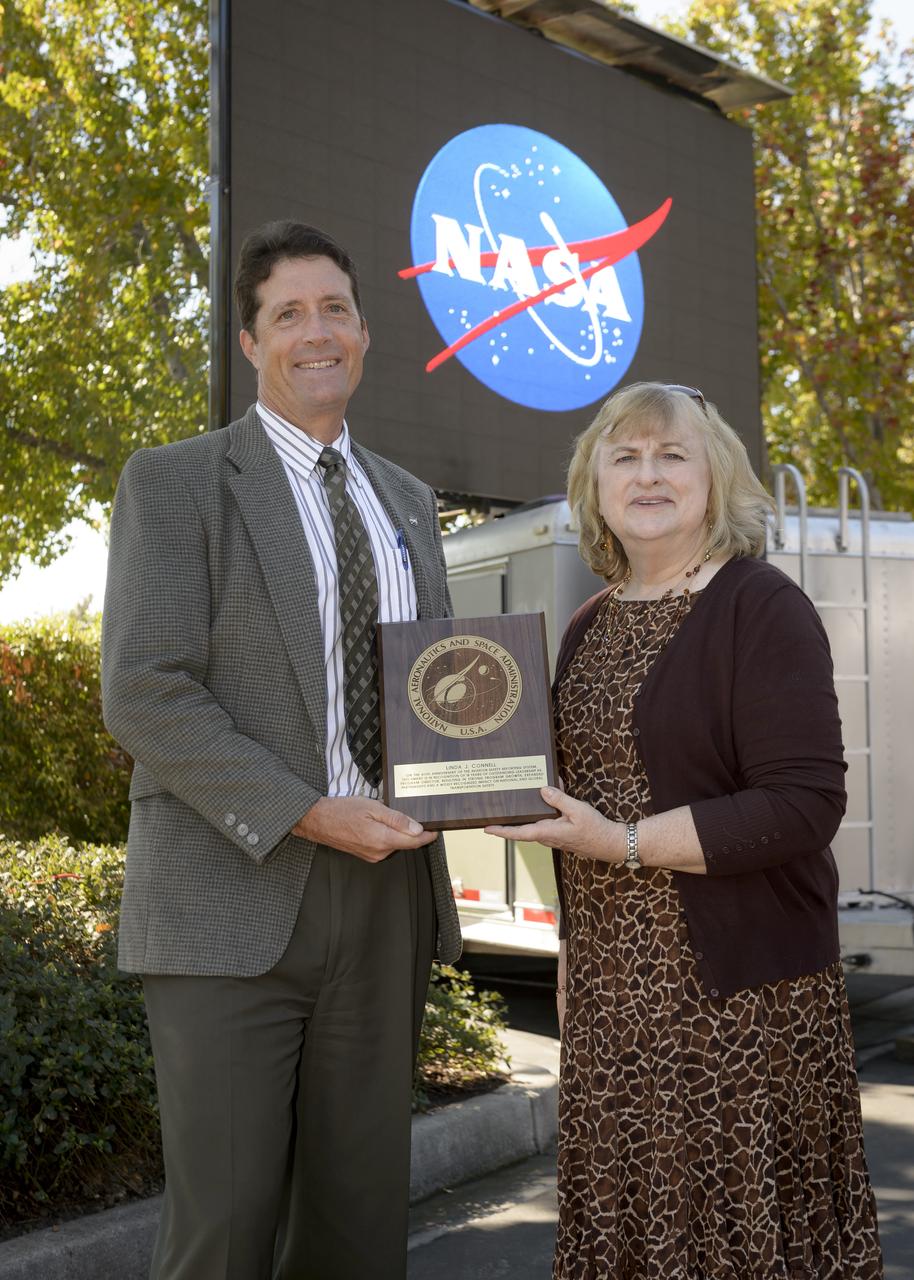
Avation Safety Reporting System (ASRS) 40th Anniversary lunch and open house at the Sunnyvale office. Thomas A Edwards, Deputy Center Director NASA Ames (Left), presents a plaque On the anniversary of the aviation safety reporting system, this award is in recognition of 18 years of outstanding leadership as Program Director, resulting in strong program growth, expanded partnership and a widely recognized impact on National and Global transportation safety. Presented to Linda J. Connell, ASRS Program Director (Right)
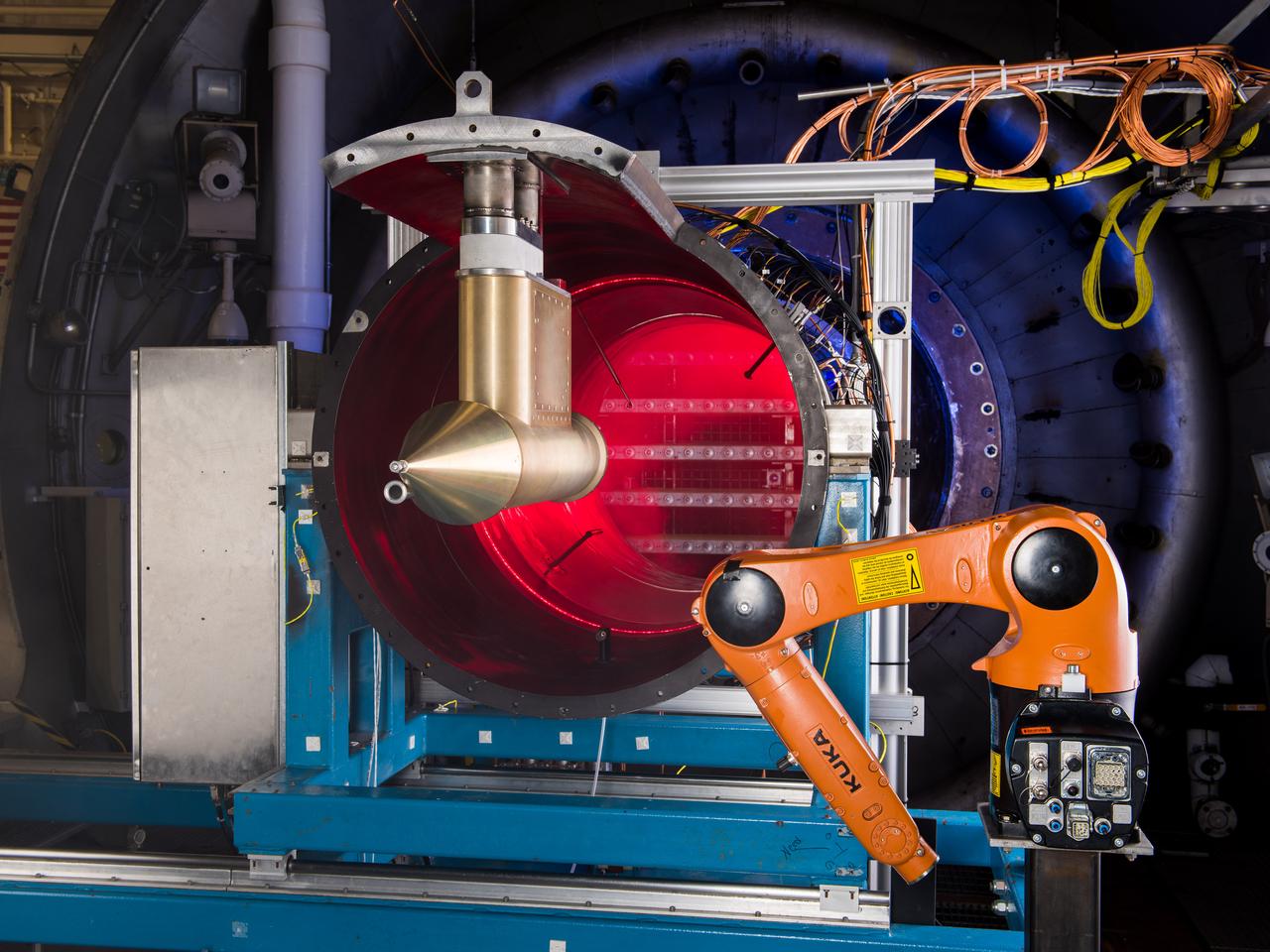
NASA Glenn’s Propulsion Systems Lab (PSL) is conducting research to characterize ice crystal clouds that can create a hazard to aircraft engines in certain conditions. With specialized equipment, scientists can create a simulated ice crystal cloud with the set of bars in the back spraying out a mist. The red area includes lasers, which measure the intensity of the cloud and a series of probes to measure everything from humidity to air pressure. The isokinetic probe (in gold) samples particles and the robotic arm (in orange) has a test tube on the end that catches ice particles for further measuring. NASA Glenn’s PSL is the only place in the world which can create these kind of ice crystal cloud conditions.
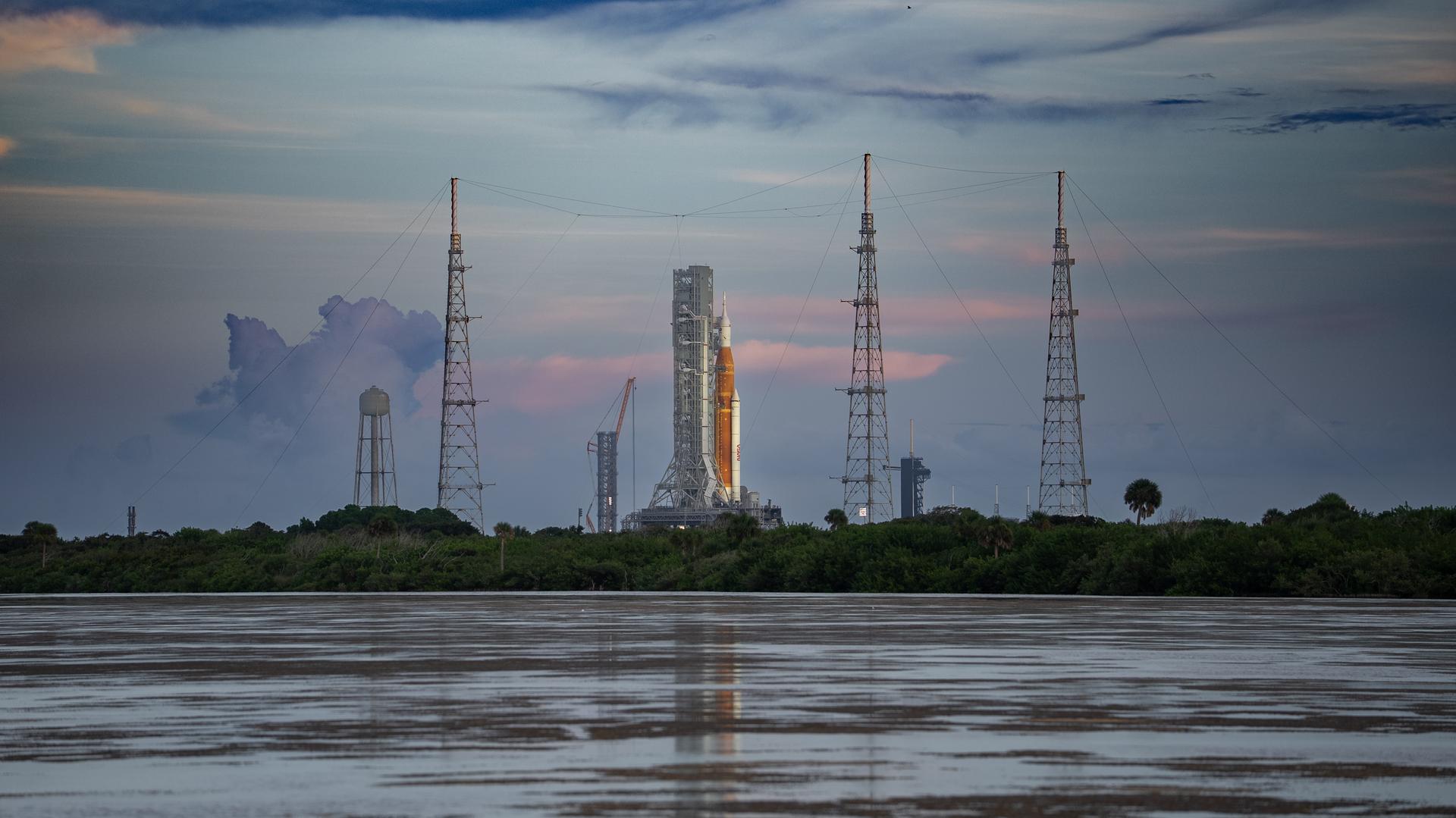
NASA’s Space Launch System (SLS) rocket with the Orion spacecraft aboard is seen atop the mobile launcher at Launch Pad 39B at NASA’s Kennedy Space Center in Florida. Artemis I mission is the first integrated test of the agency’s deep space exploration systems: the Space Launch System rocket, Orion spacecraft, and supporting ground systems. The mission is the first in a series of increasingly complex missions to the Moon. Launch of the uncrewed flight test is targeted for no earlier than Sept. 3 at 2:17 p.m. ET. With Artemis missions, NASA will land the first woman and first person of color on the Moon, using innovative technologies to explore more of the lunar surface than ever before.
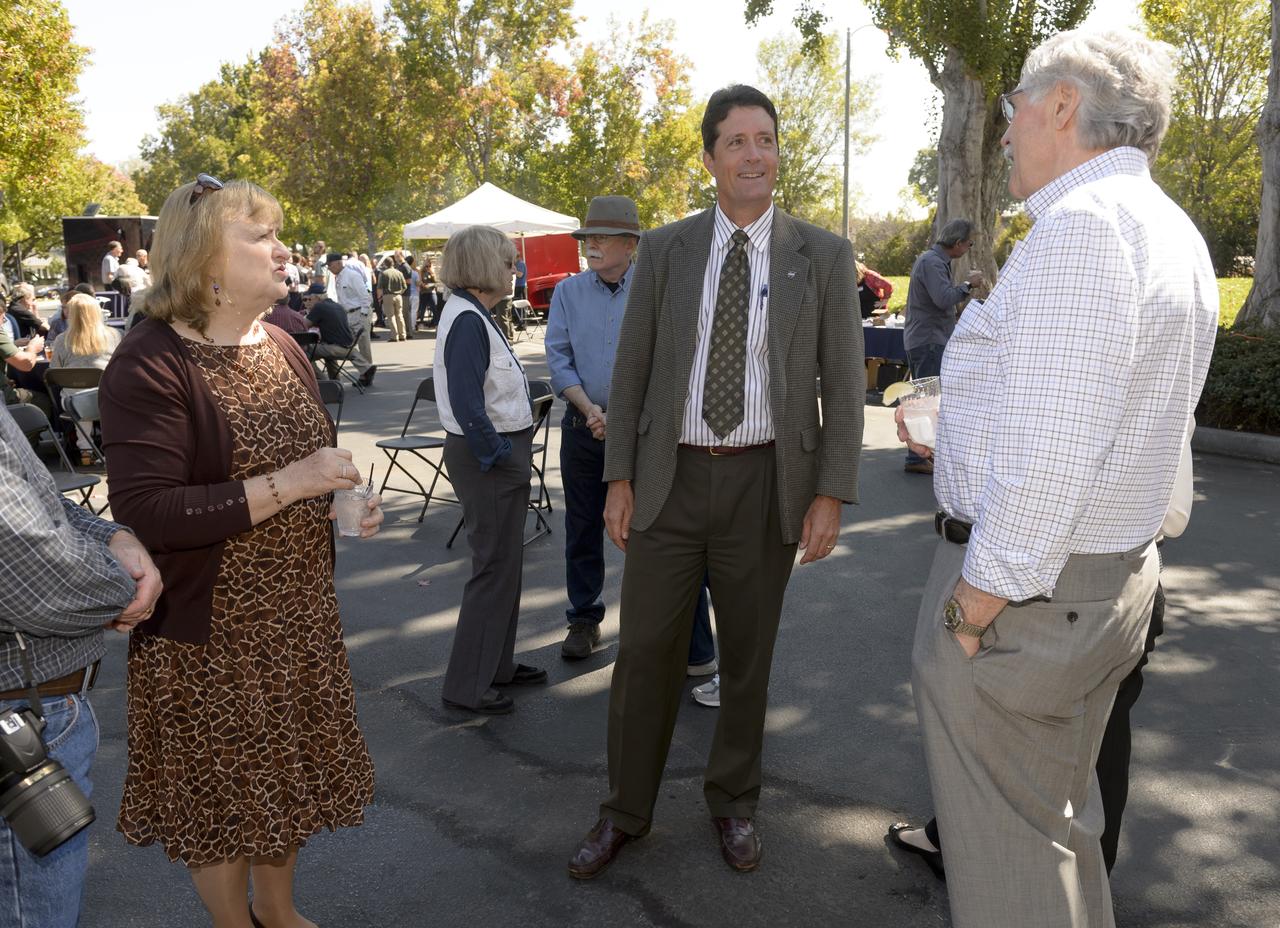
Avation Safety Reporting System (ASRS) 40th Anniversary lunch and open house at the Sunnyvale office. Linda J. Connell, ASRS Program Director (Left); Thomas A Edwards, Deputy Center Director NASA Ames; Dr. John Lauber, Resident Scientist and pioneer of the ASRS at Ames from 1972-1985 (Right).
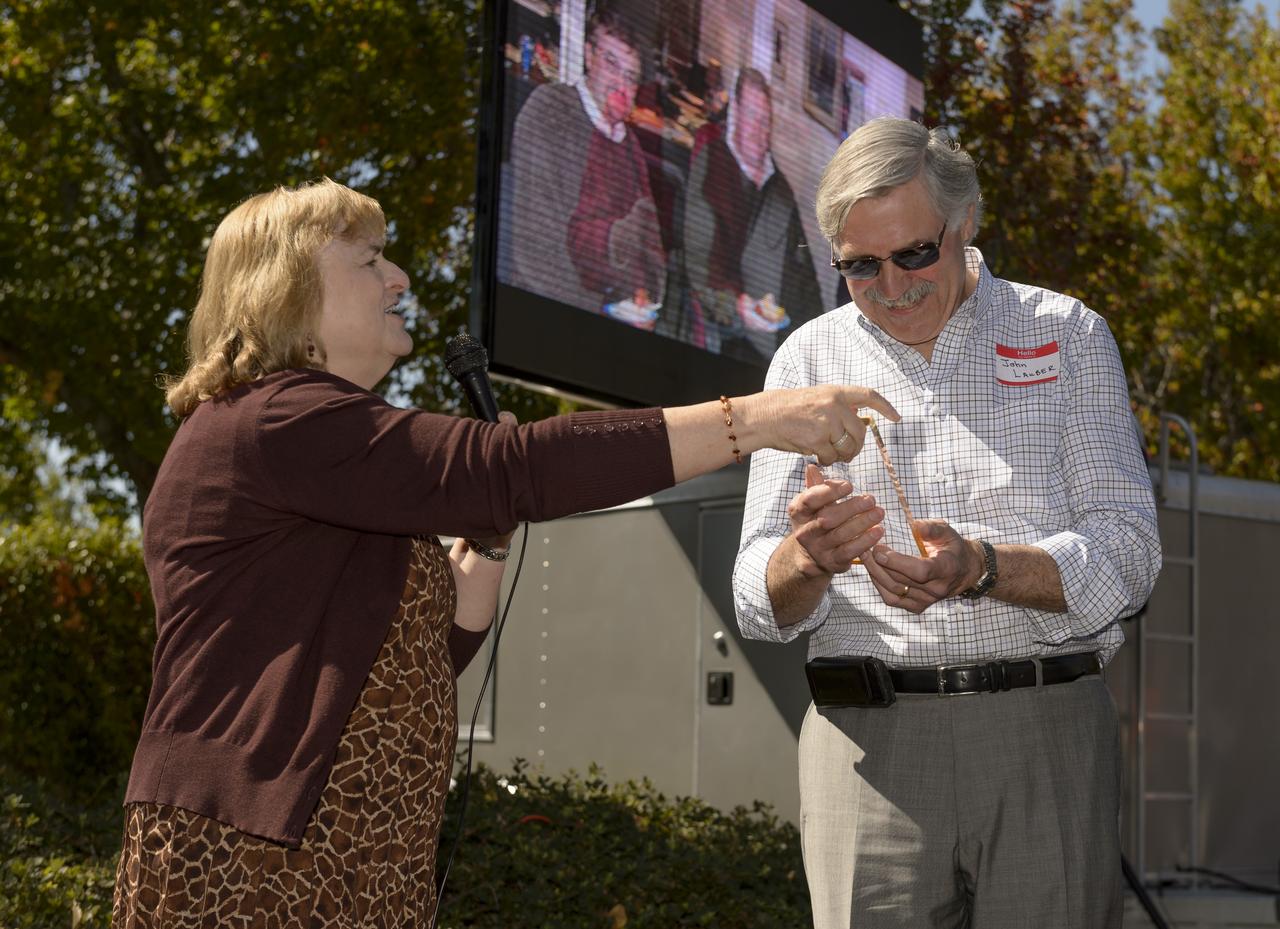
Avation Safety Reporting System (ASRS) 40th Anniversary lunch and open house at the Sunnyvale office. Linda J. Connell, ASRS Program Director (left); Dr. John Lauber, Resident Scientist and early pioneer of the ASRS at Ames, 1972-1985 (Right).

In early June, 2015 a strong low pressure system over the North Atlantic Ocean brought rain and gusty winds to Ireland and the United Kingdom. The Moderate Resolution Imaging Spectroradiometer (MODIS) aboard NASA’s Aqua satellite captured this true-color image of the spiraling system on June 5. A very deep low pressure area lies in the center of the spiral, just off the northwestern shore of emerald-green Ireland. Bands of cloud, containing rain and thunderstorms, swirl into the center of the low, and extend over the British Isles. A low pressure system will pull in air from the surrounding area, creating spiraling winds. Winds around the center of a low pressure spiral counterclockwise in the Northern Hemisphere, as we see here (clockwise in the Southern Hemisphere) and towards the center of the system. Although the system was impressive on June 5, it intensified over the next several days. According to MarkVoganWeather.com, by June 7 the pressure in the unusually deep Atlantic low, which had been hanging around 980mb, was expected to drop lower to about 978mb off of Anglesey, brining northwest gales along the Atlantic west and south coasts of Ireland, England and Wales. Winds gust of up to 80 mph were possible, along with heavy rains. Credit: Jeff Schmaltz, MODIS Land Rapid Response Team, NASA GSFC <b><a href="http://www.nasa.gov/audience/formedia/features/MP_Photo_Guidelines.html" rel="nofollow">NASA image use policy.</a></b> <b><a href="http://www.nasa.gov/centers/goddard/home/index.html" rel="nofollow">NASA Goddard Space Flight Center</a></b> enables NASA’s mission through four scientific endeavors: Earth Science, Heliophysics, Solar System Exploration, and Astrophysics. Goddard plays a leading role in NASA’s accomplishments by contributing compelling scientific knowledge to advance the Agency’s mission. <b>Follow us on <a href="http://twitter.com/NASAGoddardPix" rel="nofollow">Twitter</a></b> <b>Like us on <a href="http://www.facebook.com/pages/Greenbelt-MD/NASA-Goddard/395013845897?ref=tsd" rel="nofollow">Facebook</a></b> <b>Find us on <a href="http://instagrid.me/nasagoddard/?vm=grid" rel="nofollow">Instagram</a></b>
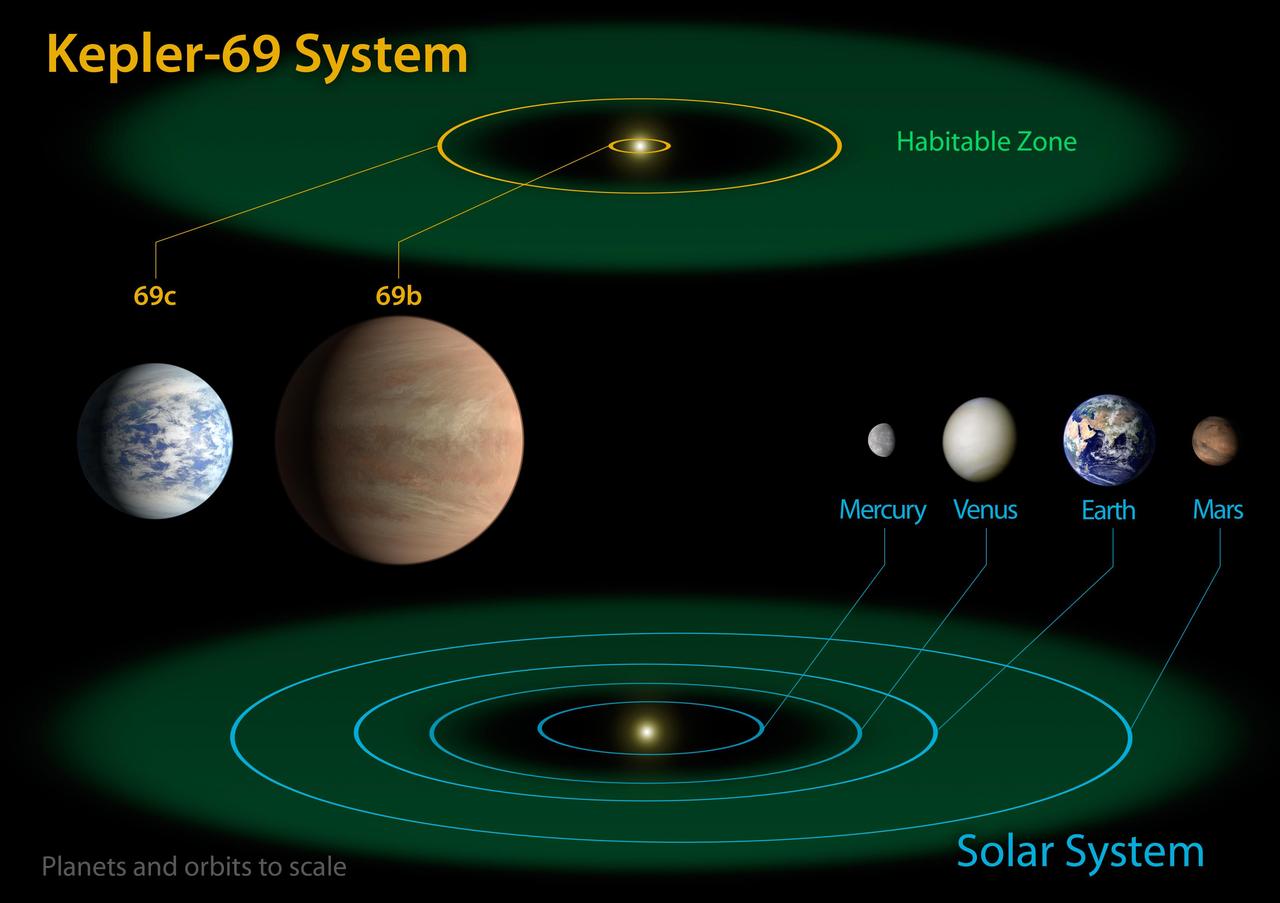
This diagram compares the planets of the inner solar system to Kepler-69, a two-planet system about 2,700 light-years from Earth in the constellation Cygnus.

This solar system montage of the nine planets and four large moons of Jupiter in our solar system are set against a false-color view of the Rosette Nebula.
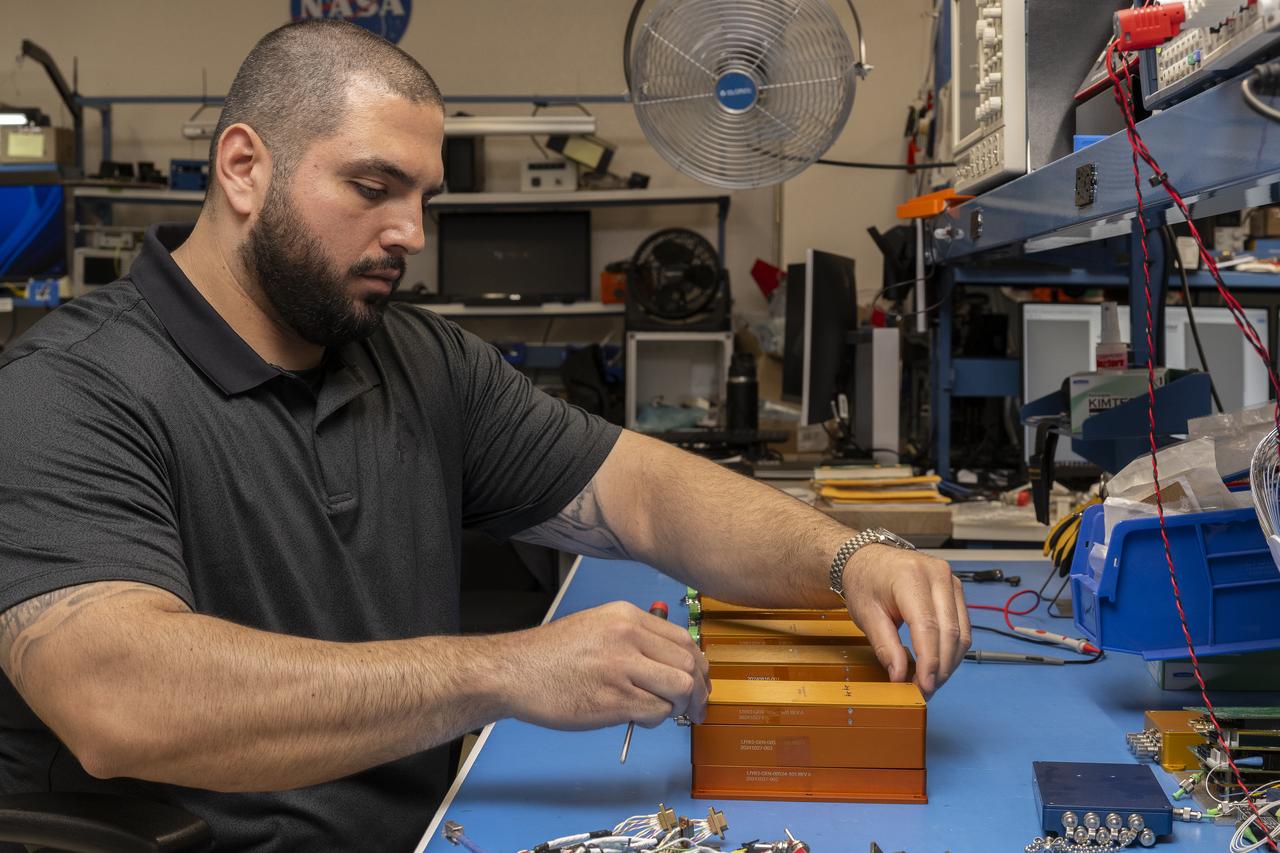
Jonathan Lopez works on a hypersonic Fiber Optic Sensing System at NASA’s Armstrong Flight Research Center in Edwards, California, on Feb. 13, 2025. The system measures strain and temperature, critical safety data for hypersonic vehicles that travel five time the speed of sound.
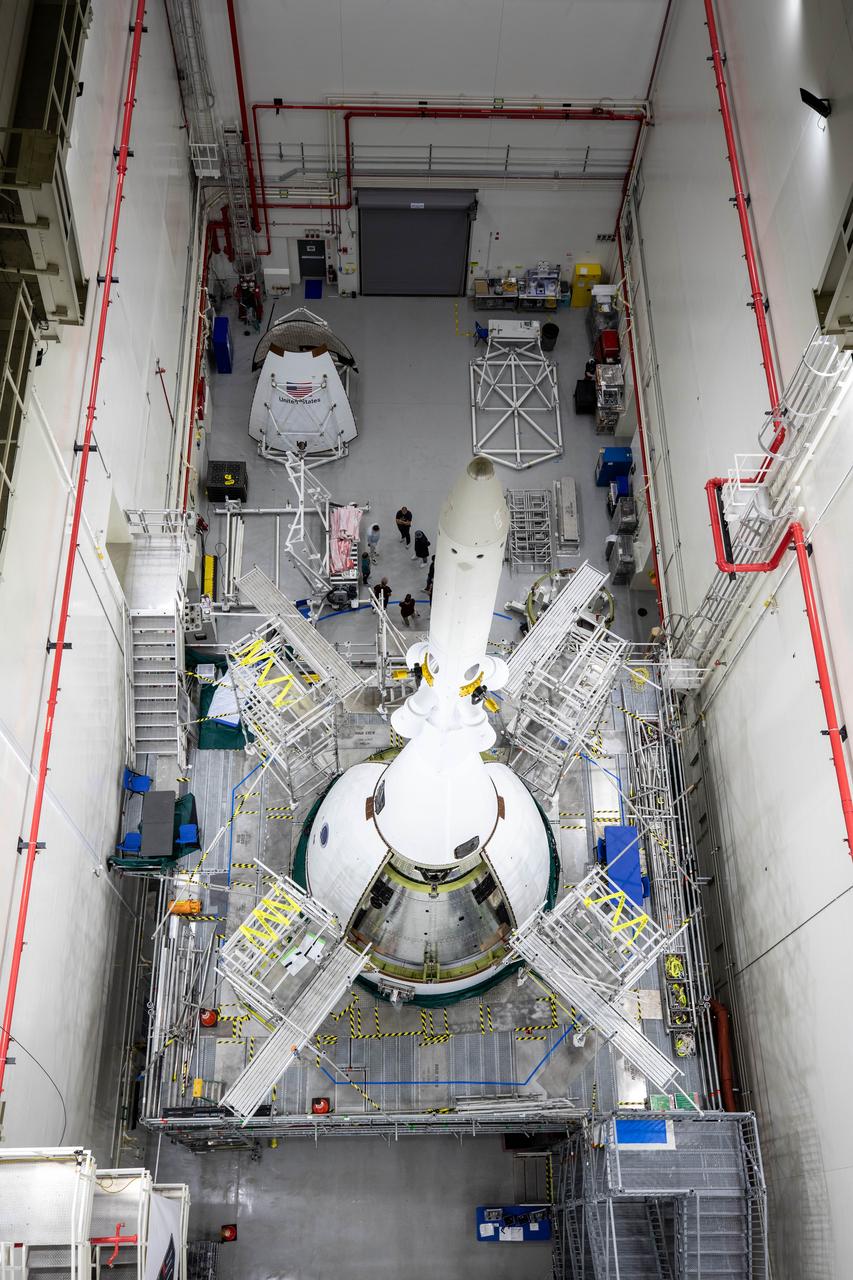
Teams with NASA’s Exploration Ground Systems completed installation of two ogive fairings onto the launch abort system inside the Launch Abort System Facility at NASA’s Kennedy Space Center in Florida on Wednesday, Sept. 10, 2025. The ogives consist of four protective panels that will shield the crew module from the severe vibrations and sounds it will experience during launch. Positioned at the top of Orion, the 44-foot-tall launch abort system is designed to carry the crew to safety in the event of an emergency during launch or ascent, with its three solid rocket motors working together to propel Orion – and astronauts inside – away from the rocket for a safe landing in the ocean, or detach from the spacecraft when it is no longer needed.
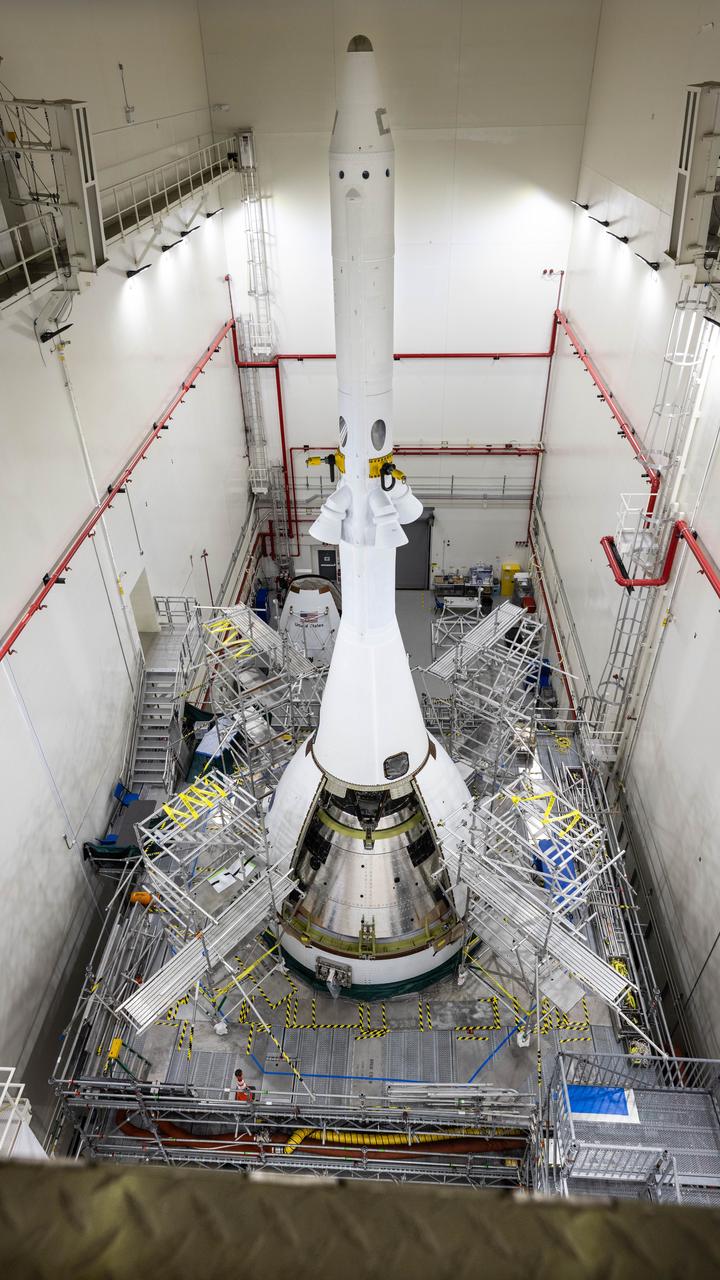
Teams with NASA’s Exploration Ground Systems completed installation of two ogive fairings onto the launch abort system inside the Launch Abort System Facility at NASA’s Kennedy Space Center in Florida on Wednesday, Sept. 10, 2025. The ogives consist of four protective panels that will shield the crew module from the severe vibrations and sounds it will experience during launch. Positioned at the top of Orion, the 44-foot-tall launch abort system is designed to carry the crew to safety in the event of an emergency during launch or ascent, with its three solid rocket motors working together to propel Orion – and astronauts inside – away from the rocket for a safe landing in the ocean, or detach from the spacecraft when it is no longer needed.
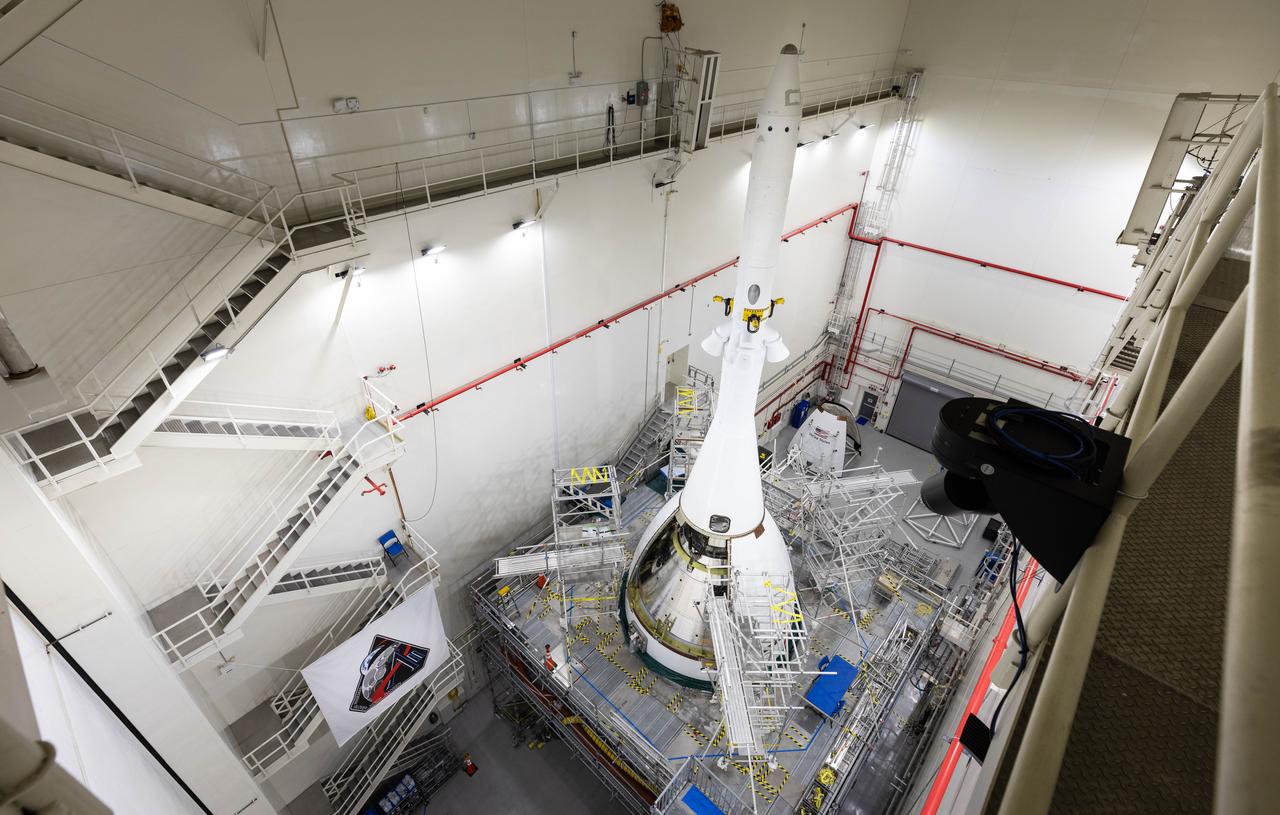
Teams with NASA’s Exploration Ground Systems completed installation of two ogive fairings onto the launch abort system inside the Launch Abort System Facility at NASA’s Kennedy Space Center in Florida on Wednesday, Sept. 10, 2025. The ogives consist of four protective panels that will shield the crew module from the severe vibrations and sounds it will experience during launch. Positioned at the top of Orion, the 44-foot-tall launch abort system is designed to carry the crew to safety in the event of an emergency during launch or ascent, with its three solid rocket motors working together to propel Orion – and astronauts inside – away from the rocket for a safe landing in the ocean, or detach from the spacecraft when it is no longer needed.
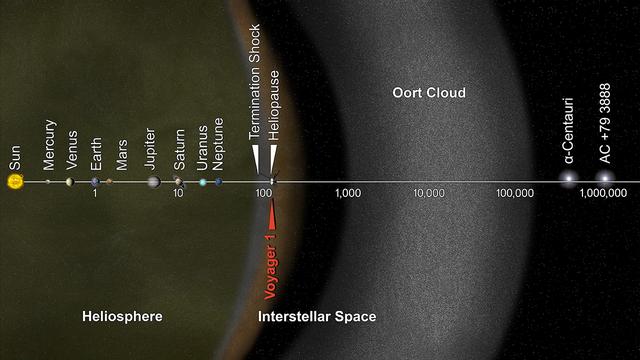
This artist's concept puts solar system distances in perspective. The scale bar is in astronomical units, with each set distance beyond 1 AU representing 10 times the previous distance. One AU is the distance from the sun to the Earth, which is about 93 million miles or 150 million kilometers. Neptune, the most distant planet from the sun, is about 30 AU. Informally, the term "solar system" is often used to mean the space out to the last planet. Scientific consensus, however, says the solar system goes out to the Oort Cloud, the source of the comets that swing by our sun on long time scales. Beyond the outer edge of the Oort Cloud, the gravity of other stars begins to dominate that of the sun. The inner edge of the main part of the Oort Cloud could be as close as 1,000 AU from our sun. The outer edge is estimated to be around 100,000 AU. NASA's Voyager 1, humankind's most distant spacecraft, is around 125 AU. Scientists believe it entered interstellar space, or the space between stars, on Aug. 25, 2012. Much of interstellar space is actually inside our solar system. It will take about 300 years for Voyager 1 to reach the inner edge of the Oort Cloud and possibly about 30,000 years to fly beyond it. Alpha Centauri is currently the closest star to our solar system. But, in 40,000 years, Voyager 1 will be closer to the star AC +79 3888 than to our own sun. AC +79 3888 is actually traveling faster toward Voyager 1 than the spacecraft is traveling toward it. The Voyager spacecraft were built and continue to be operated by NASA's Jet Propulsion Laboratory, in Pasadena, Calif. Caltech manages JPL for NASA. The Voyager missions are a part of NASA's Heliophysics System Observatory, sponsored by the Heliophysics Division of the Science Mission Directorate at NASA Headquarters in Washington. For more information about Voyager, visit: <a href="http://www.nasa.gov/voyager" rel="nofollow">www.nasa.gov/voyager</a> and <a href="http://voyager.jpl.nasa.gov" rel="nofollow">voyager.jpl.nasa.gov</a> . Image credit: NASA/JPL-Caltech <b><a href="http://www.nasa.gov/audience/formedia/features/MP_Photo_Guidelines.html" rel="nofollow">NASA image use policy.</a></b> <b><a href="http://www.nasa.gov/centers/goddard/home/index.html" rel="nofollow">NASA Goddard Space Flight Center</a></b> enables NASA’s mission through four scientific endeavors: Earth Science, Heliophysics, Solar System Exploration, and Astrophysics. Goddard plays a leading role in NASA’s accomplishments by contributing compelling scientific knowledge to advance the Agency’s mission. <b>Follow us on <a href="http://twitter.com/NASAGoddardPix" rel="nofollow">Twitter</a></b> <b>Like us on <a href="http://www.facebook.com/pages/Greenbelt-MD/NASA-Goddard/395013845897?ref=tsd" rel="nofollow">Facebook</a></b> <b>Find us on <a href="http://instagram.com/nasagoddard?vm=grid" rel="nofollow">Instagram</a></b>
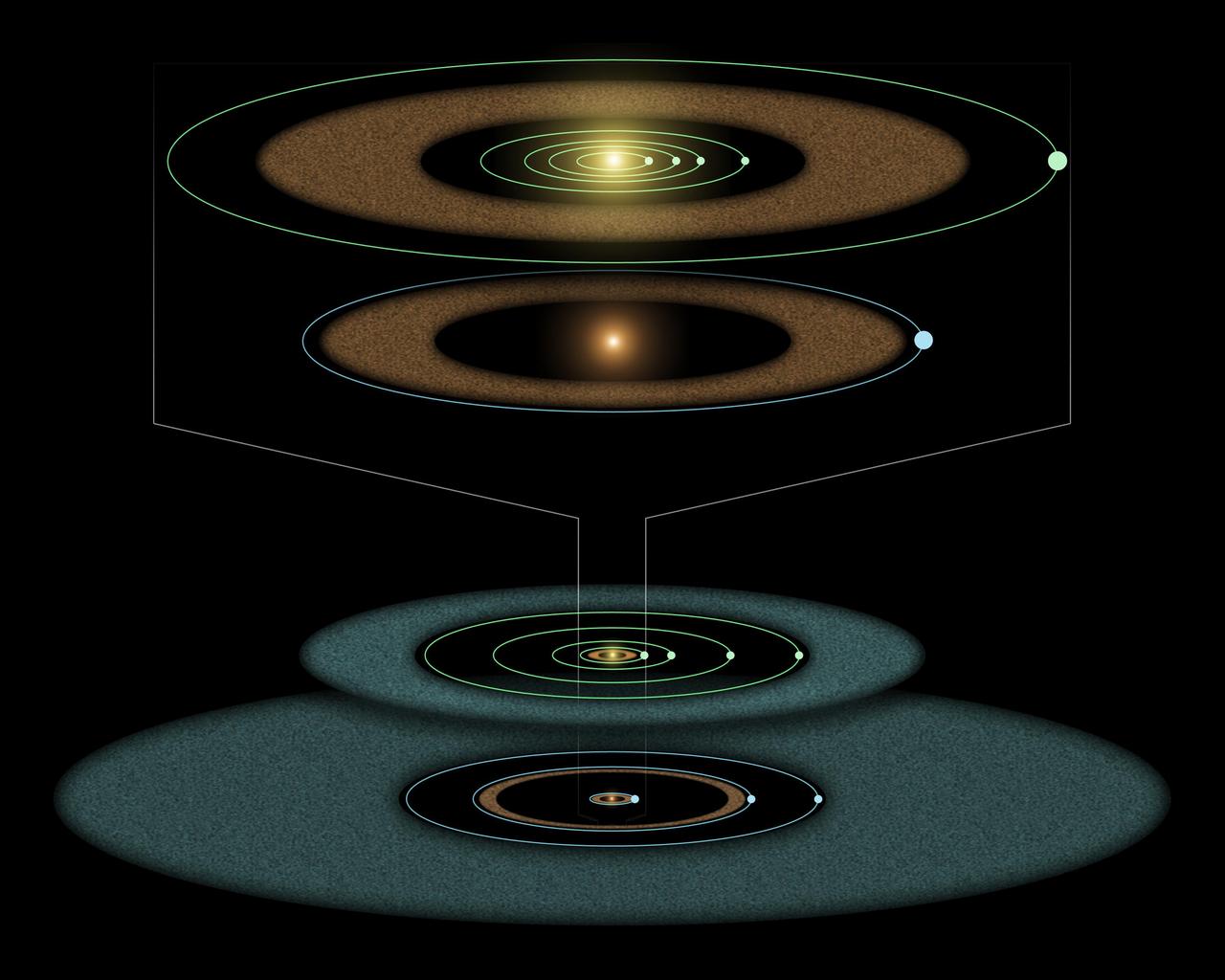
This artist diagram based on observations from NASA Spitzer Space Telescope compares the Epsilon Eridani system to our own solar system. The two systems are structure
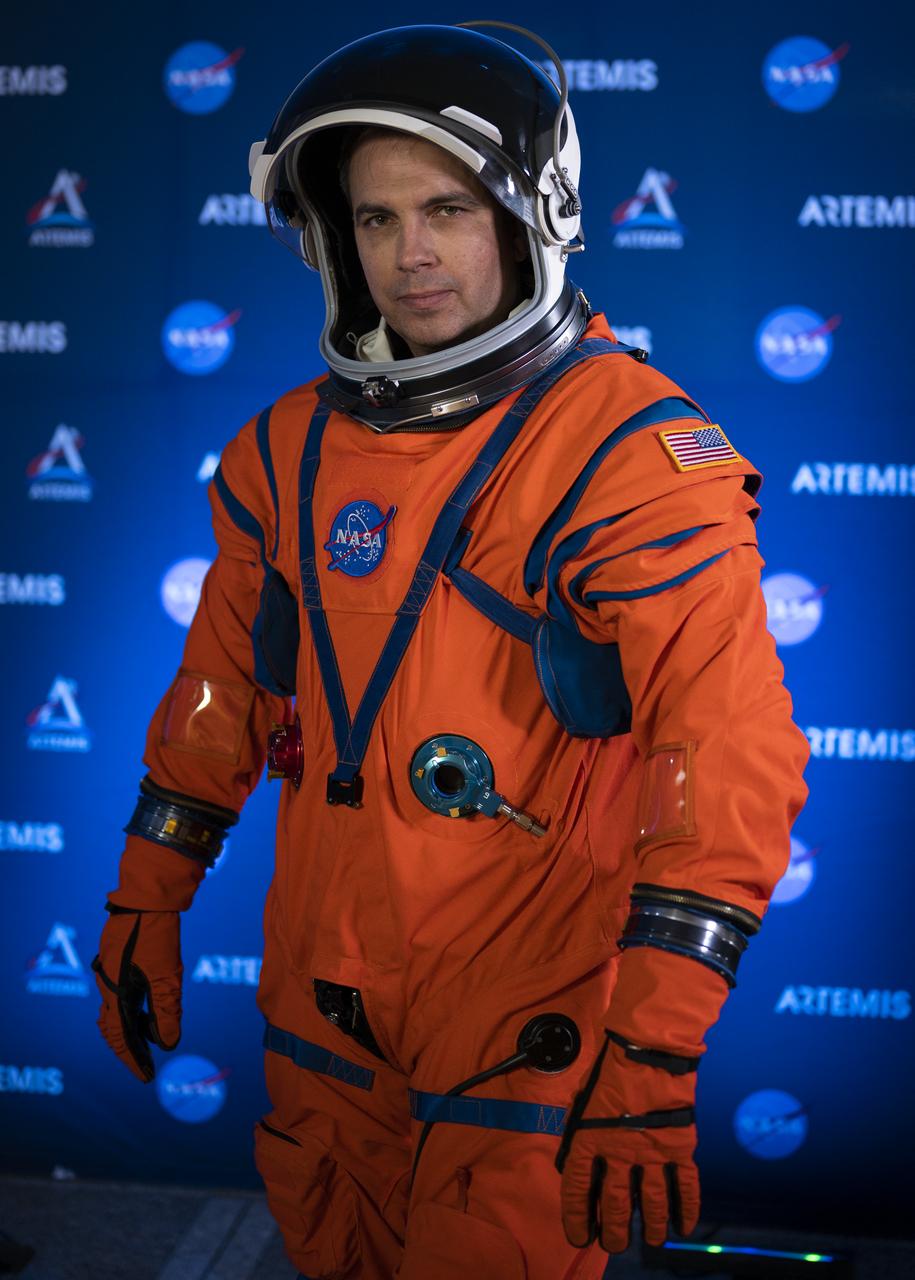
Dustin Gohmert, Orion Crew Survival Systems Project Manager at NASA’s Johnson Space Center, poses for a portrait while wearing the Orion Crew Survival System (OCSS) suit, Tuesday, Oct. 15, 2019 at NASA Headquarters in Washington, DC. The Orion suit is designed for a custom fit and incorporates safety technology and mobility features that will help protect astronauts on launch day, in emergency situations, high-risk parts of missions near the Moon, and during the high-speed return to Earth. Photo Credit: (NASA/Joel Kowsky)
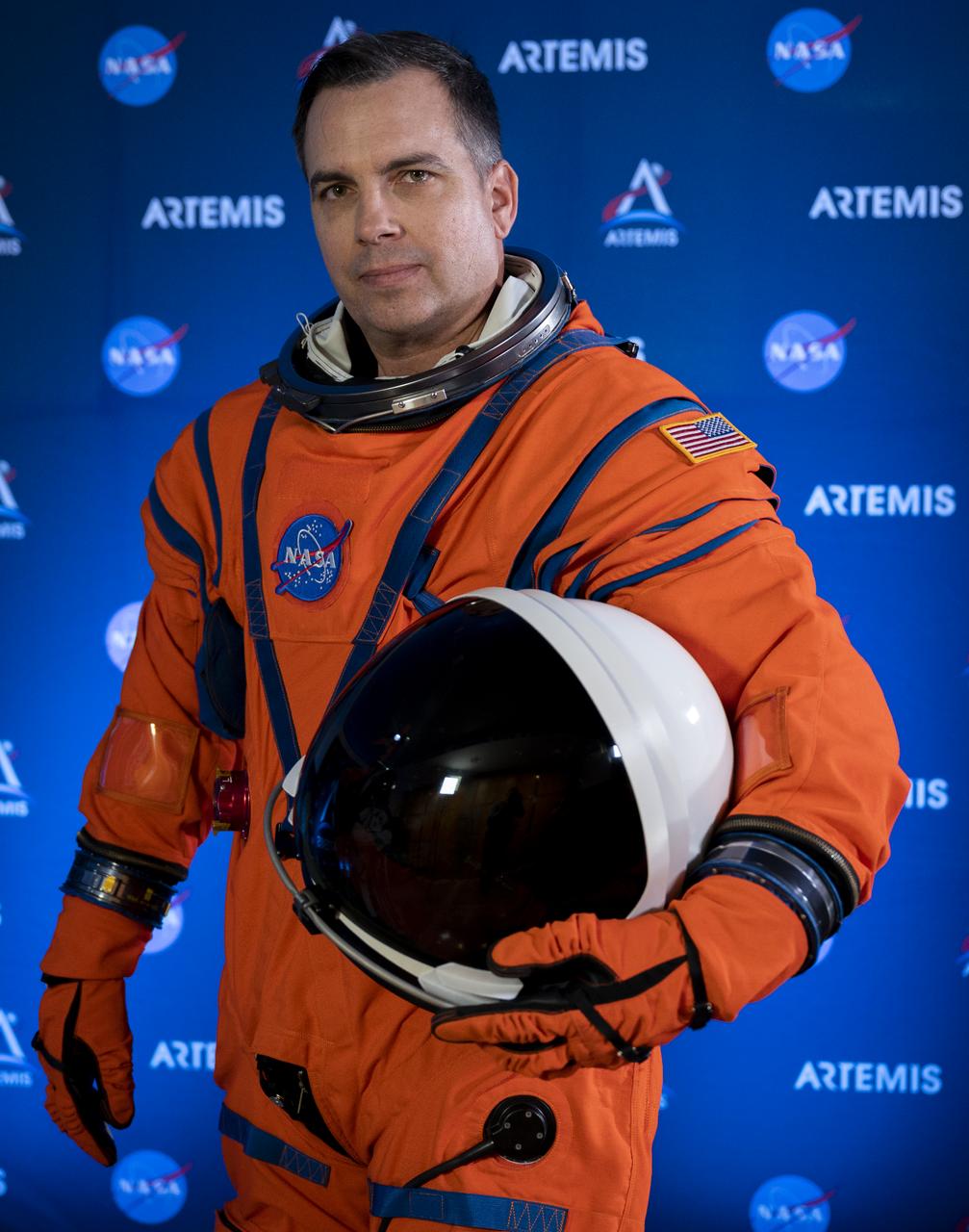
Dustin Gohmert, Orion Crew Survival Systems Project Manager at NASA’s Johnson Space Center, poses for a portrait while wearing the Orion Crew Survival System (OCSS) suit, Tuesday, Oct. 15, 2019 at NASA Headquarters in Washington, DC. The Orion suit is designed for a custom fit and incorporates safety technology and mobility features that will help protect astronauts on launch day, in emergency situations, high-risk parts of missions near the Moon, and during the high-speed return to Earth. Photo Credit: (NASA/Joel Kowsky)
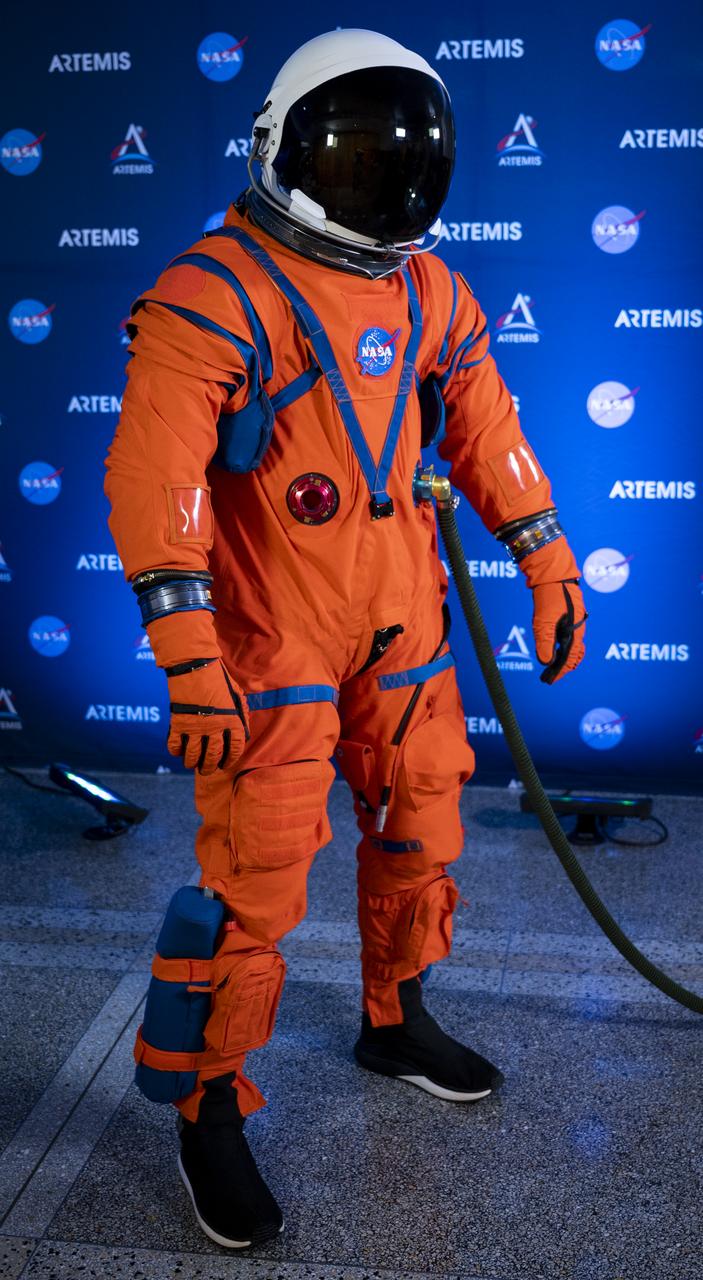
Dustin Gohmert, Orion Crew Survival Systems Project Manager at NASA’s Johnson Space Center, poses for a portrait while wearing the Orion Crew Survival System (OCSS) suit, Tuesday, Oct. 15, 2019 at NASA Headquarters in Washington, DC. The Orion suit is designed for a custom fit and incorporates safety technology and mobility features that will help protect astronauts on launch day, in emergency situations, high-risk parts of missions near the Moon, and during the high-speed return to Earth. Photo Credit: (NASA/Joel Kowsky)

Dustin Gohmert, Orion Crew Survival Systems Project Manager at NASA’s Johnson Space Center, poses for a portrait while wearing the Orion Crew Survival System (OCSS) suit, Tuesday, Oct. 15, 2019 at NASA Headquarters in Washington, DC. The Orion suit is designed for a custom fit and incorporates safety technology and mobility features that will help protect astronauts on launch day, in emergency situations, high-risk parts of missions near the Moon, and during the high-speed return to Earth. Photo Credit: (NASA/Joel Kowsky)
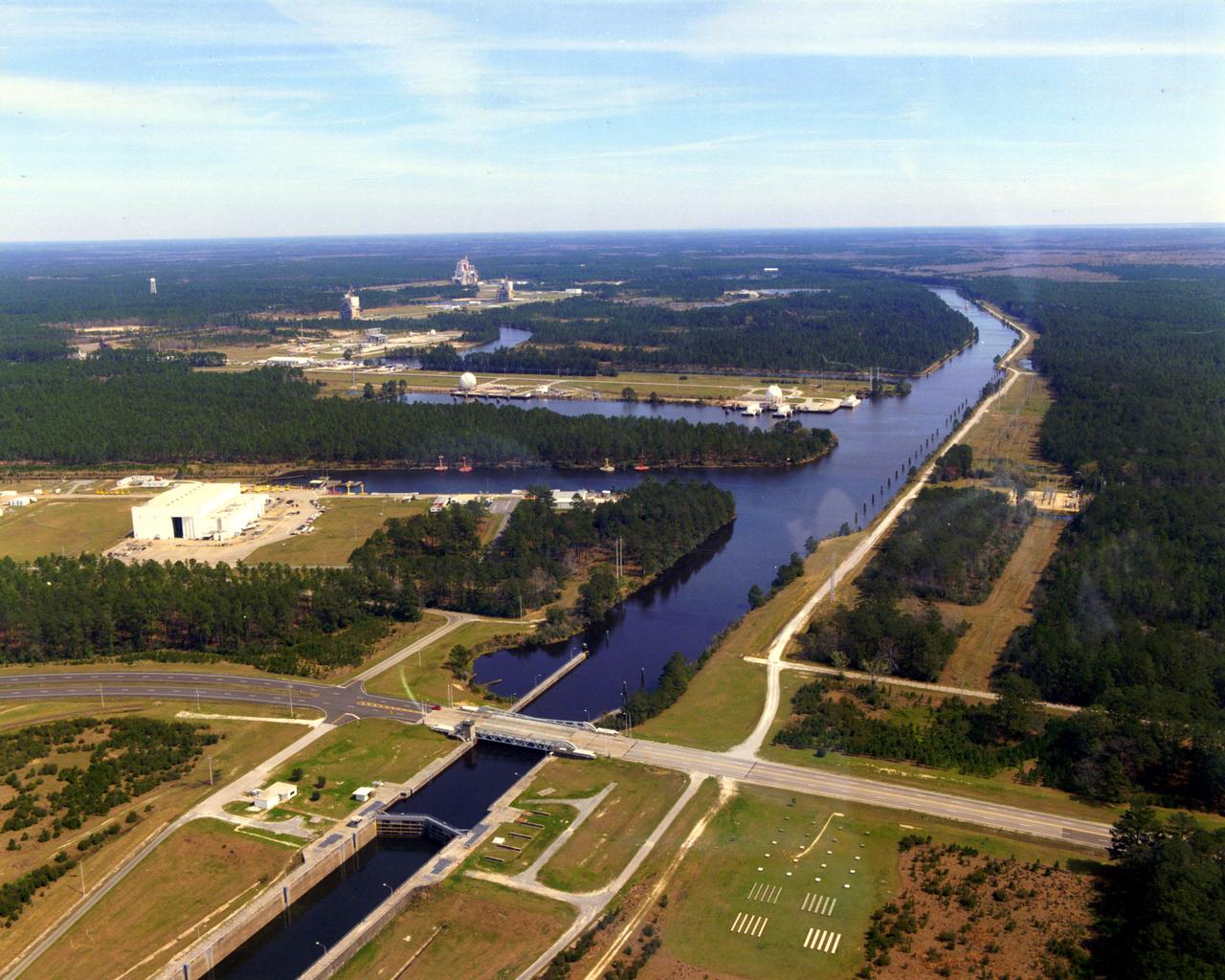
This aerial view of Stennis Space Center's unique lock and canal system
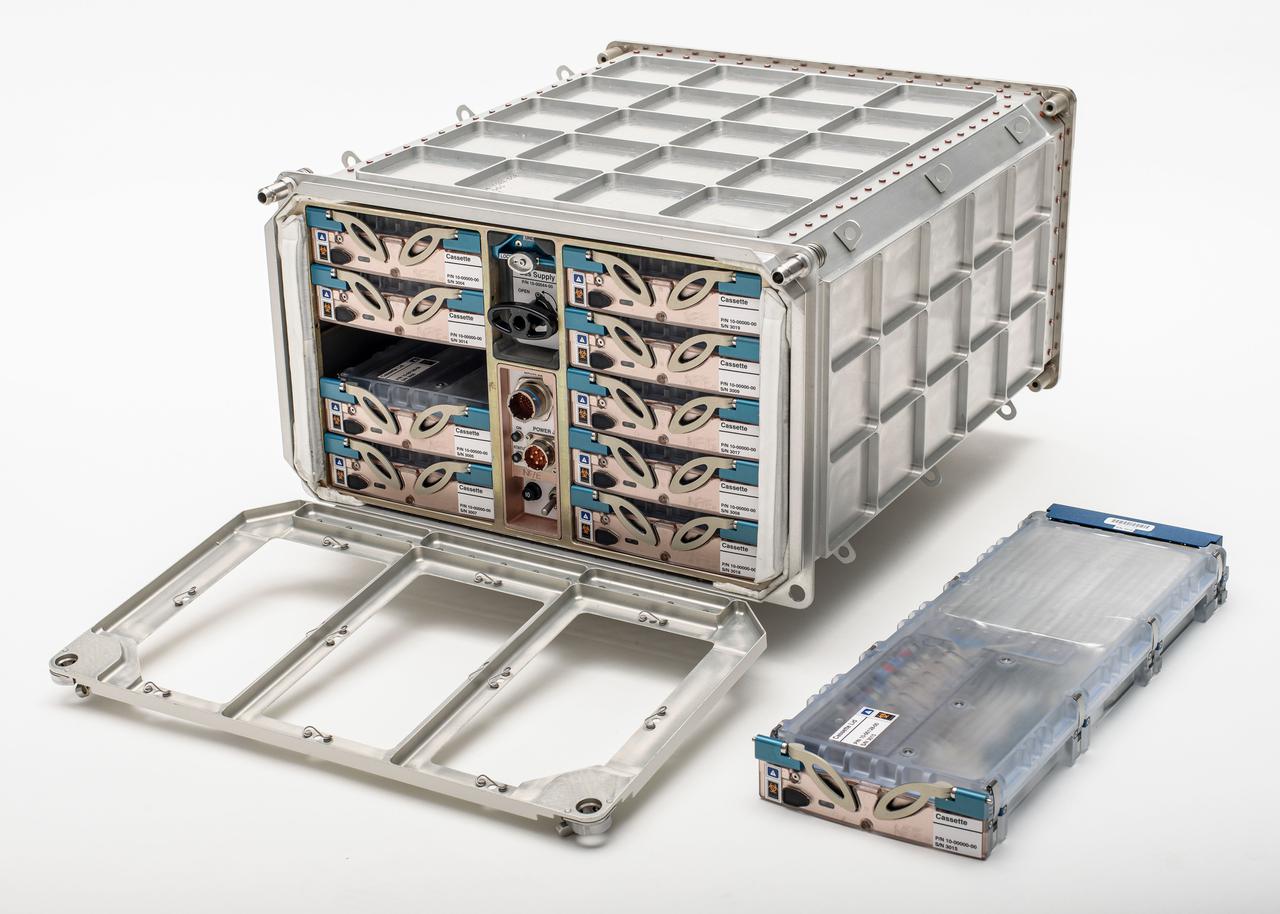
jsc2020e031188 (7/11/2014) --- A preflight view of the Bioculture System inside an ExPRESS Rack Locker. The Bioculture System is a biological science incubator for use on the International Space Station (ISS) with the capability of transporting active and stored investigations to ISS. This incubator supports a wide diversity of tissue, cell, and microbiological cultures and experiment methods to meet any spaceflight research investigation goals and objectives. The facility enables variable duration and long-duration cellular and microbiological investigations on ISS to meet the scientific needs of academic and biotechnology interests. Credits: NASA / Dominic Hart
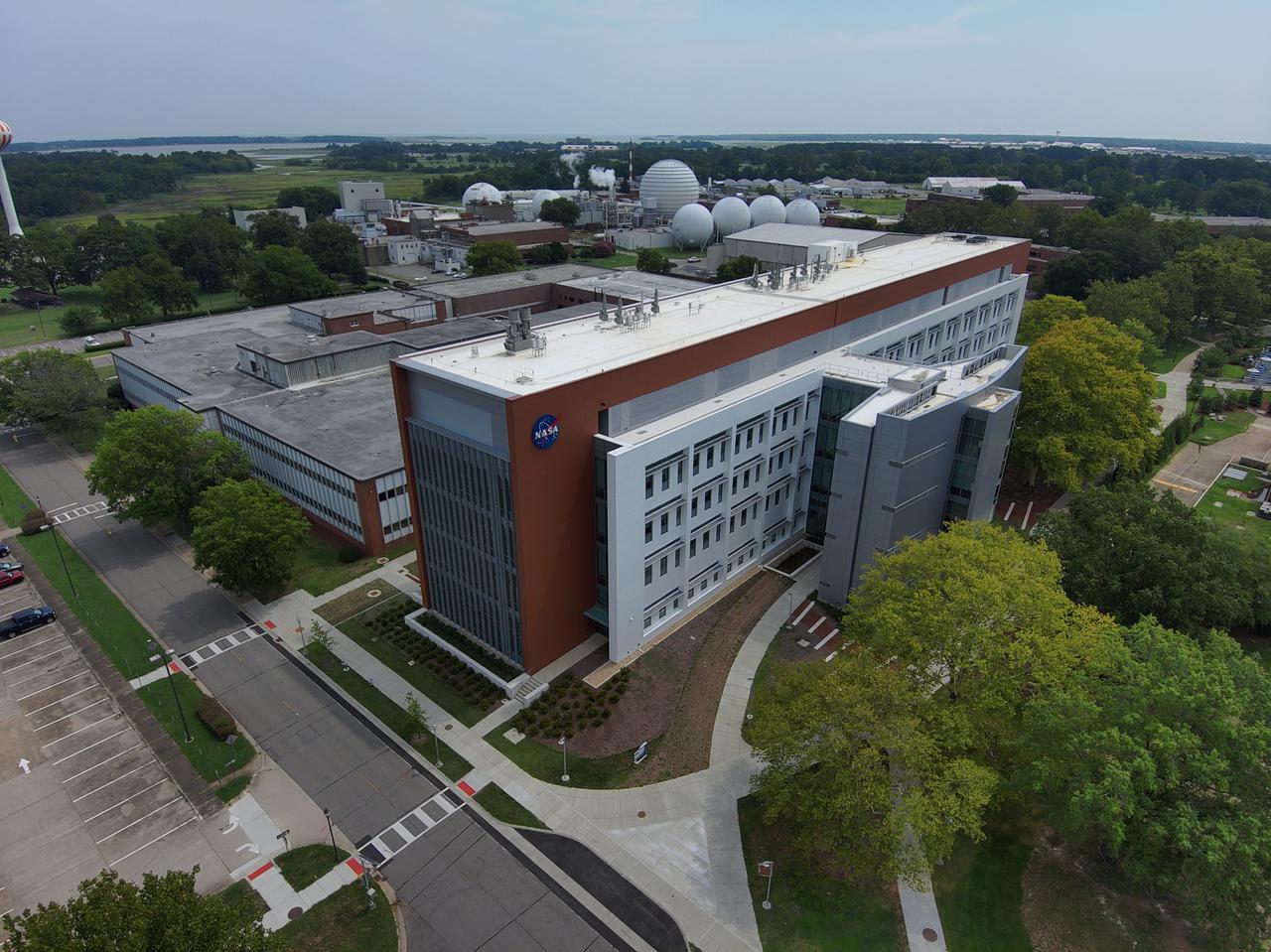
Langley’s newly built Measurement Systems Laboratory will serve as the primary research and development location for six branches within the Research and Engineering Directorates. The ribbon cutting will take place in April 2022.
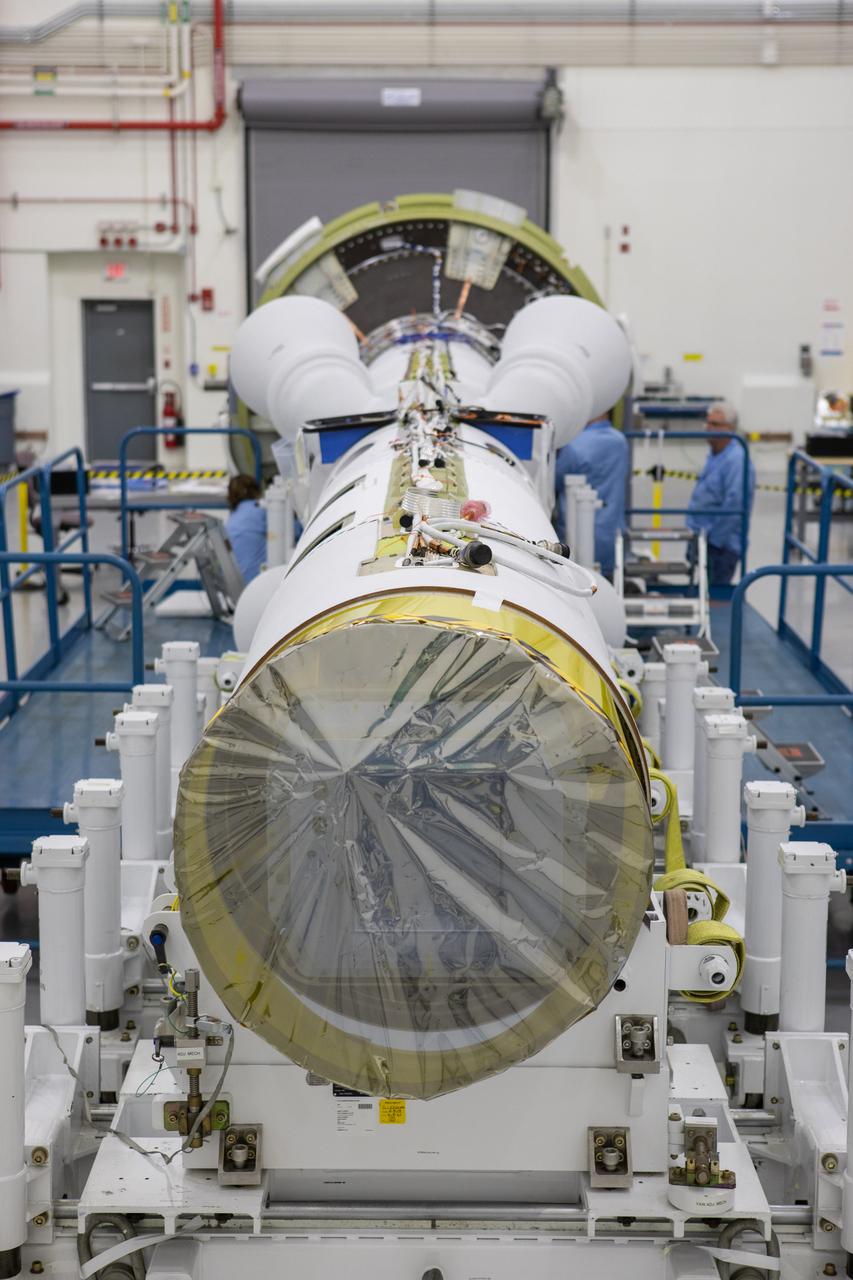
Inside the Launch Abort System Facility at NASA’s Kennedy Space Center in Florida, work is underway Aug. 21, 2019, to integrate segments of the launch abort system for the agency’s uncrewed flight test, Artemis I. During crewed launches of the Orion spacecraft atop the Space Launch System rocket, the LAS will protect the crew module and astronauts aboard to safety if an emergency occurs during launch.
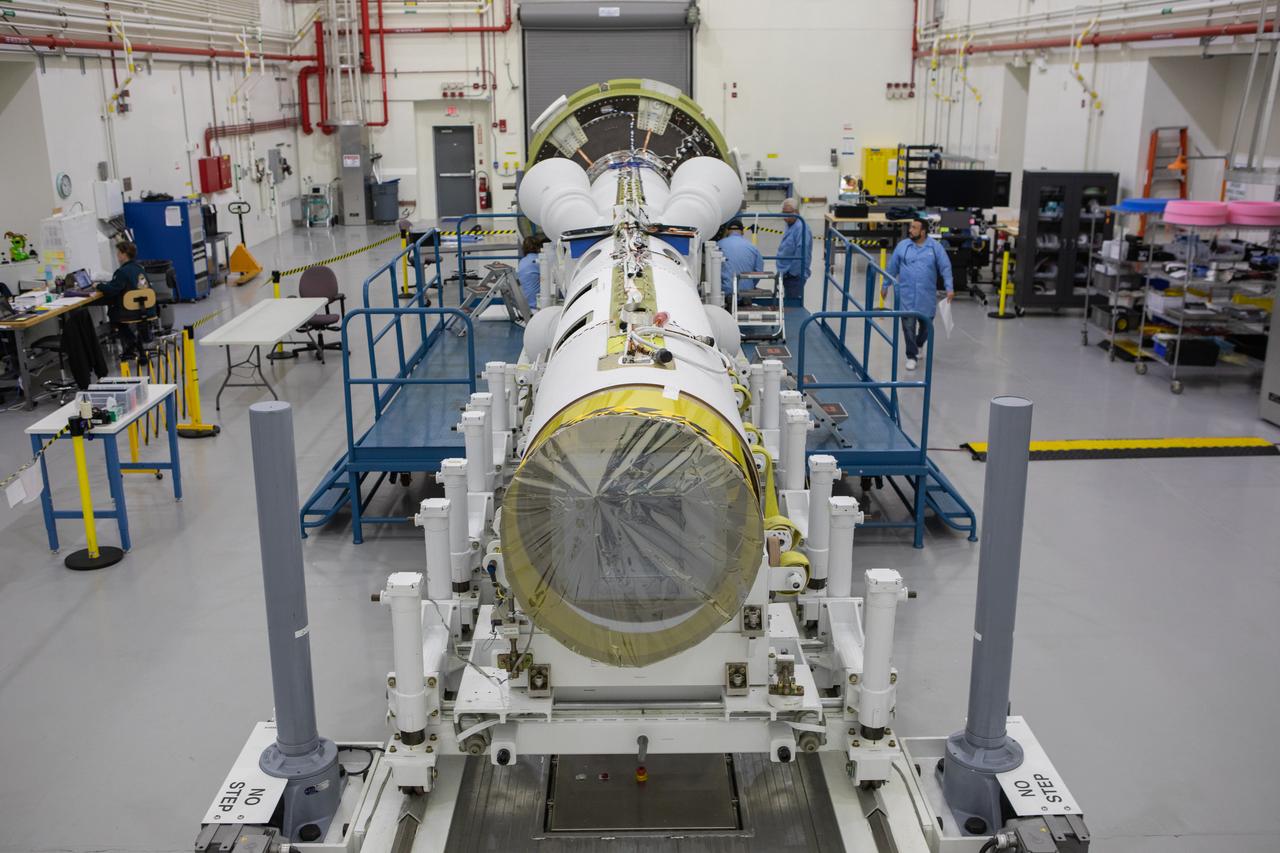
Inside the Launch Abort System Facility at NASA’s Kennedy Space Center in Florida, work is underway Aug. 21, 2019, to integrate segments of the launch abort system for the agency’s uncrewed flight test, Artemis I. During crewed launches of the Orion spacecraft atop the Space Launch System rocket, the LAS will protect the crew module and astronauts aboard to safety if an emergency occurs during launch.
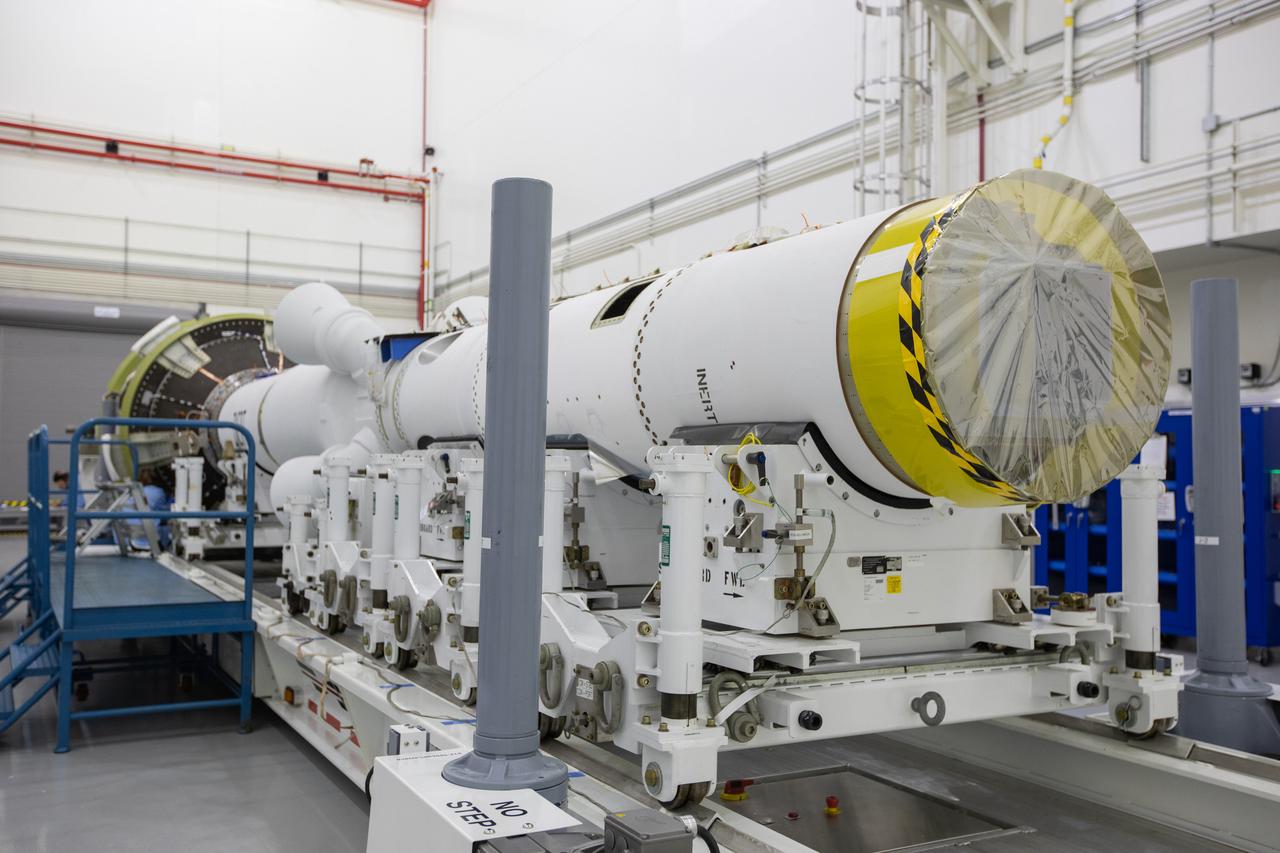
Inside the Launch Abort System Facility at NASA’s Kennedy Space Center in Florida, work is underway Aug. 21, 2019, to integrate segments of the launch abort system for the agency’s uncrewed flight test, Artemis I. During crewed launches of the Orion spacecraft atop the Space Launch System rocket, the LAS will protect the crew module and astronauts aboard to safety if an emergency occurs during launch.
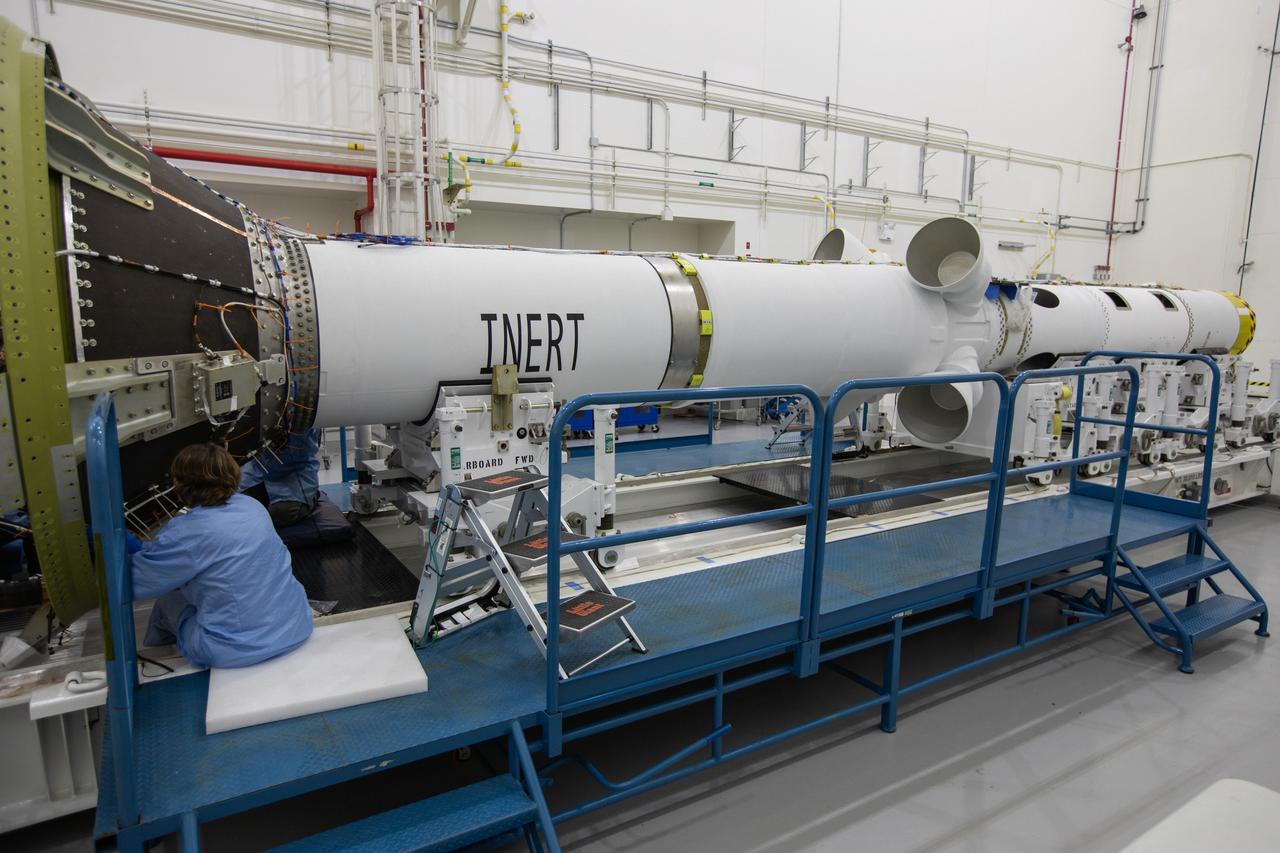
Inside the Launch Abort System Facility at NASA’s Kennedy Space Center in Florida, work is underway Aug. 21, 2019, to integrate segments of the launch abort system for the agency’s uncrewed flight test, Artemis I. During crewed launches of the Orion spacecraft atop the Space Launch System rocket, the LAS will protect the crew module and astronauts aboard to safety if an emergency occurs during launch.
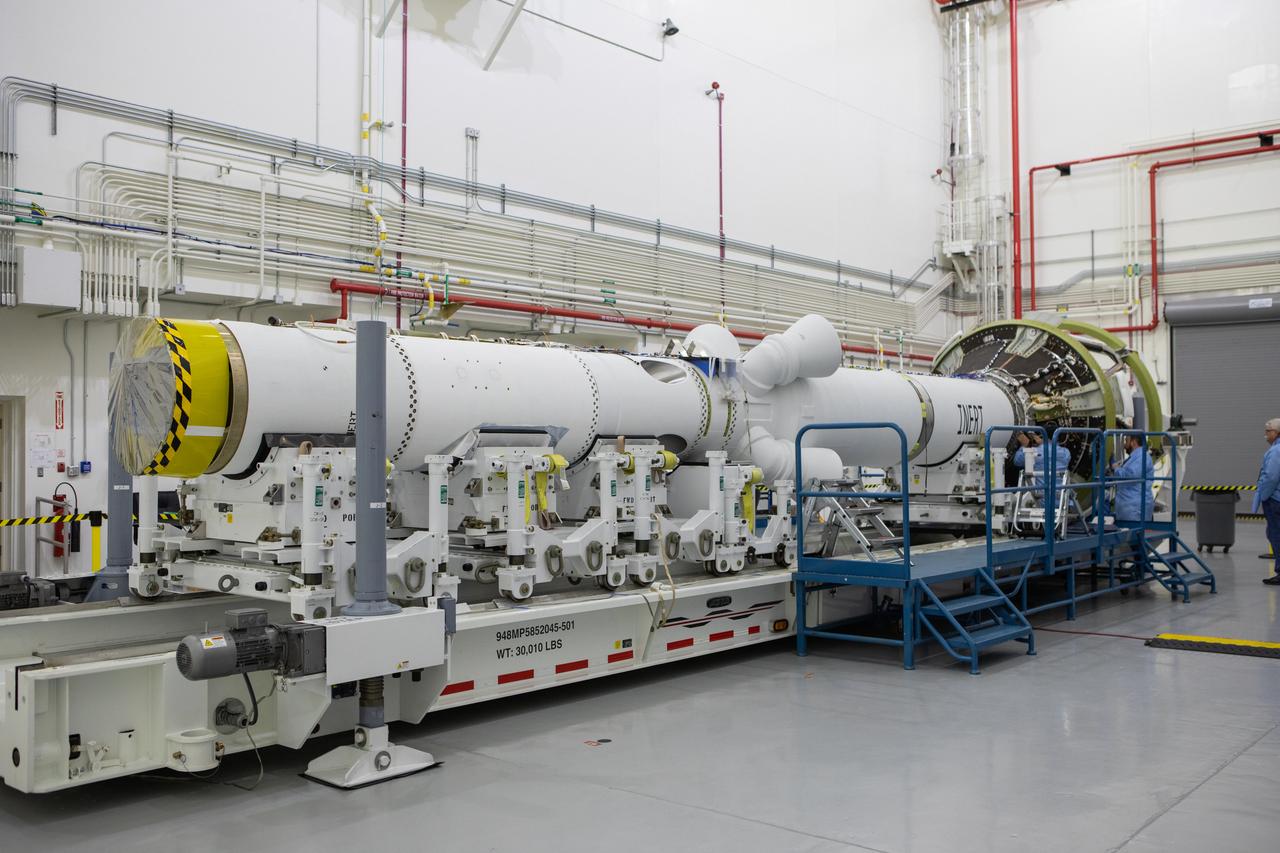
Inside the Launch Abort System Facility at NASA’s Kennedy Space Center in Florida, work is underway Aug. 21, 2019, to integrate segments of the launch abort system for the agency’s uncrewed flight test, Artemis I. During crewed launches of the Orion spacecraft atop the Space Launch System rocket, the LAS will protect the crew module and astronauts aboard to safety if an emergency occurs during launch.
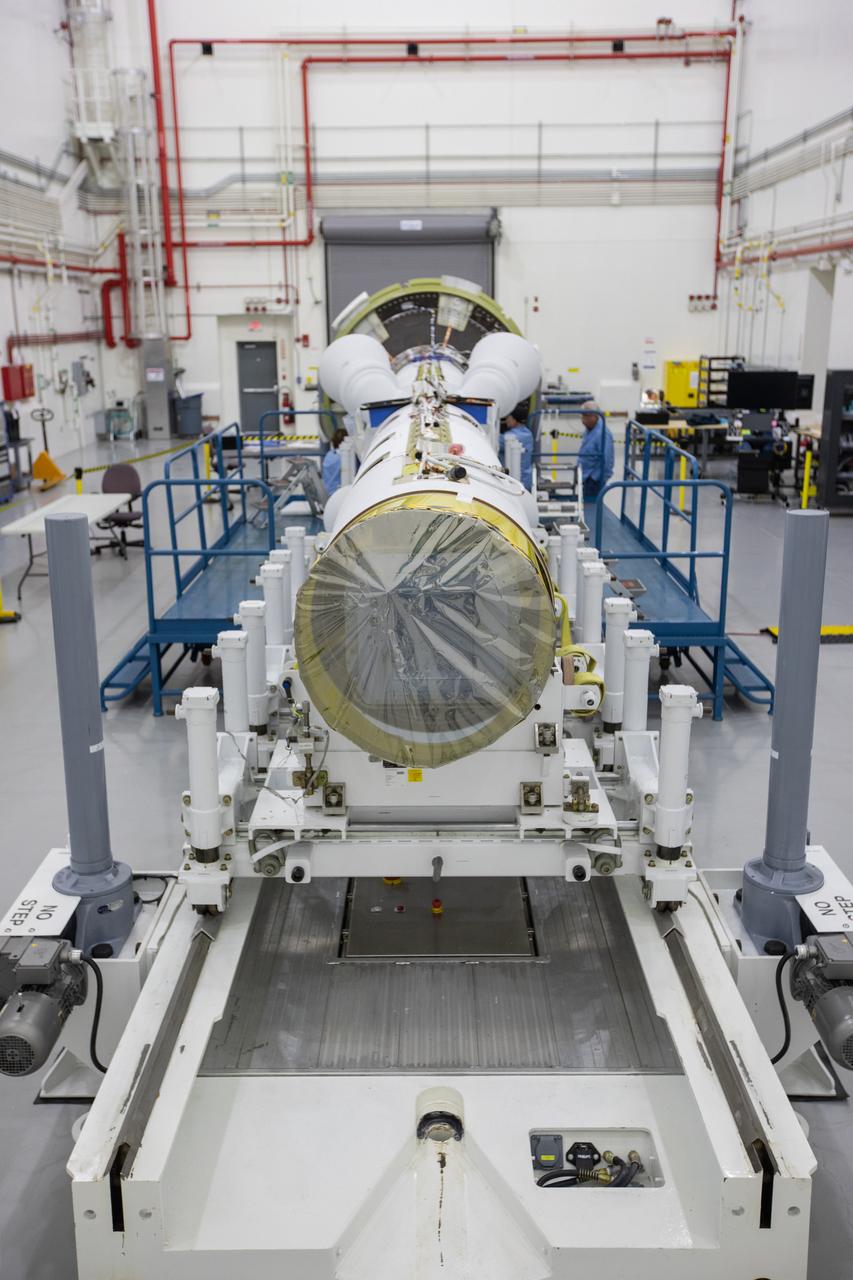
Inside the Launch Abort System Facility at NASA’s Kennedy Space Center in Florida, work is underway Aug. 21, 2019, to integrate segments of the launch abort system for the agency’s uncrewed flight test, Artemis I. During crewed launches of the Orion spacecraft atop the Space Launch System rocket, the LAS will protect the crew module and astronauts aboard to safety if an emergency occurs during launch.
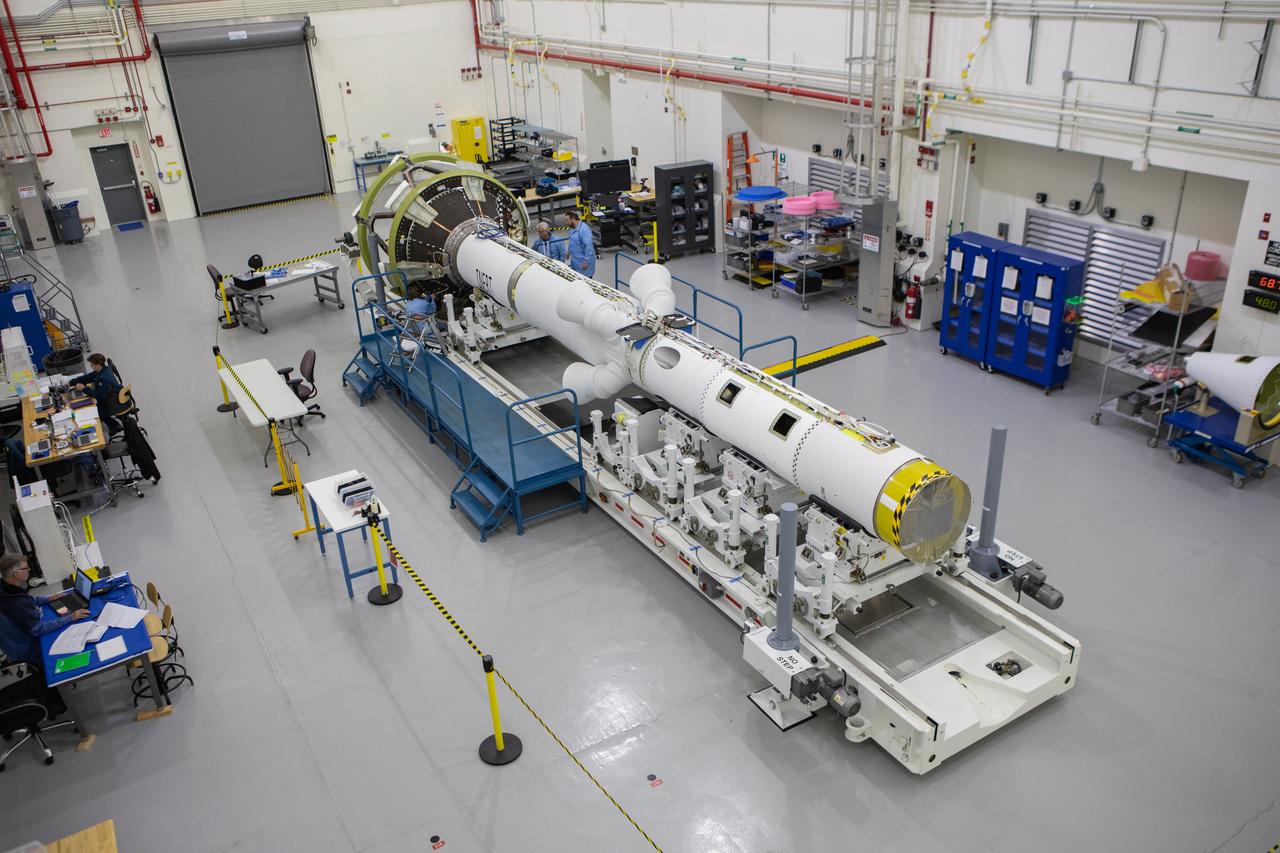
In this view from above inside the Launch Abort System Facility at NASA’s Kennedy Space Center in Florida, work is underway Aug. 21, 2019, to integrate segments of the launch abort system for the agency’s uncrewed flight test, Artemis I. During crewed launches of the Orion spacecraft atop the Space Launch System rocket, the LAS will protect the crew module and astronauts aboard to safety if an emergency occurs during launch.
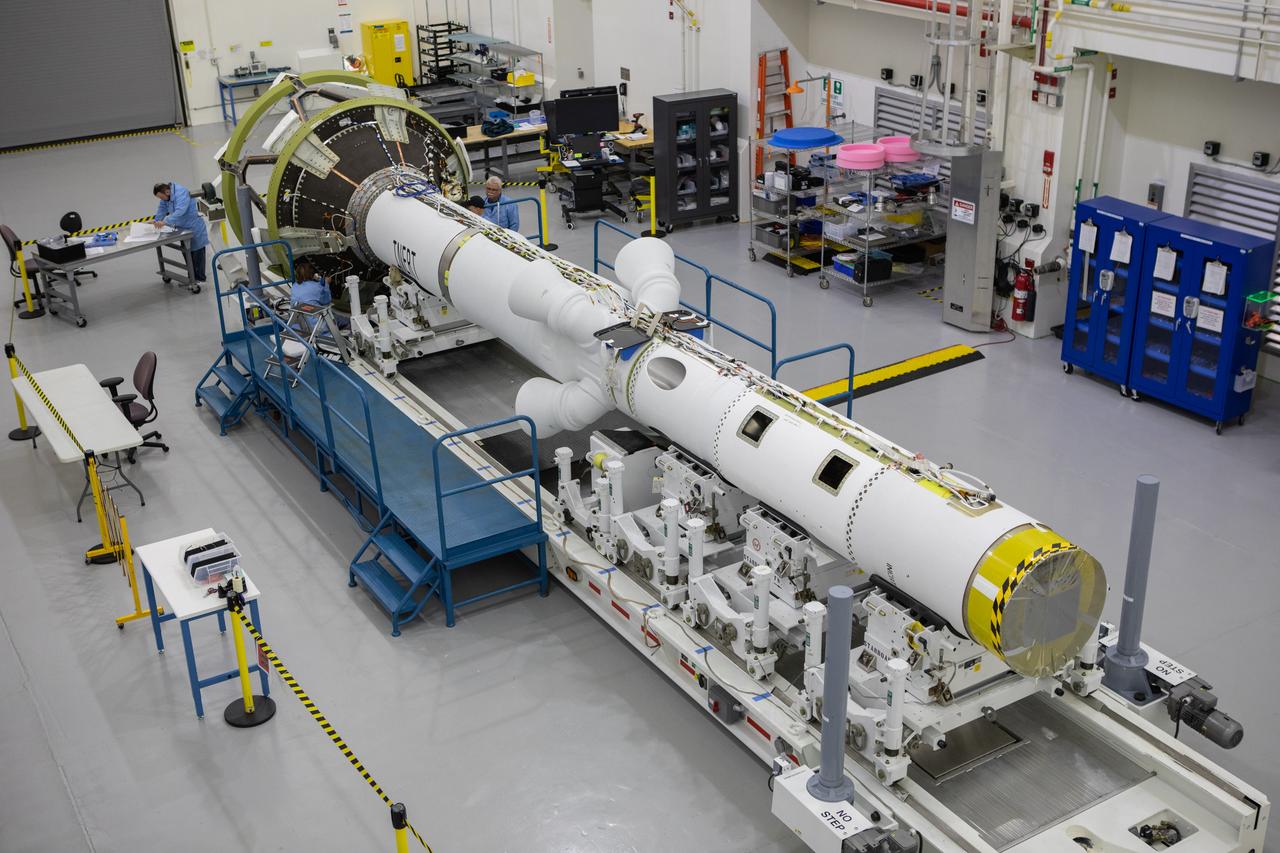
In this view from above inside the Launch Abort System Facility at NASA’s Kennedy Space Center in Florida, work is underway Aug. 21, 2019, to integrate segments of the launch abort system for the agency’s uncrewed flight test, Artemis I. During crewed launches of the Orion spacecraft atop the Space Launch System rocket, the LAS will protect the crew module and astronauts aboard to safety if an emergency occurs during launch.
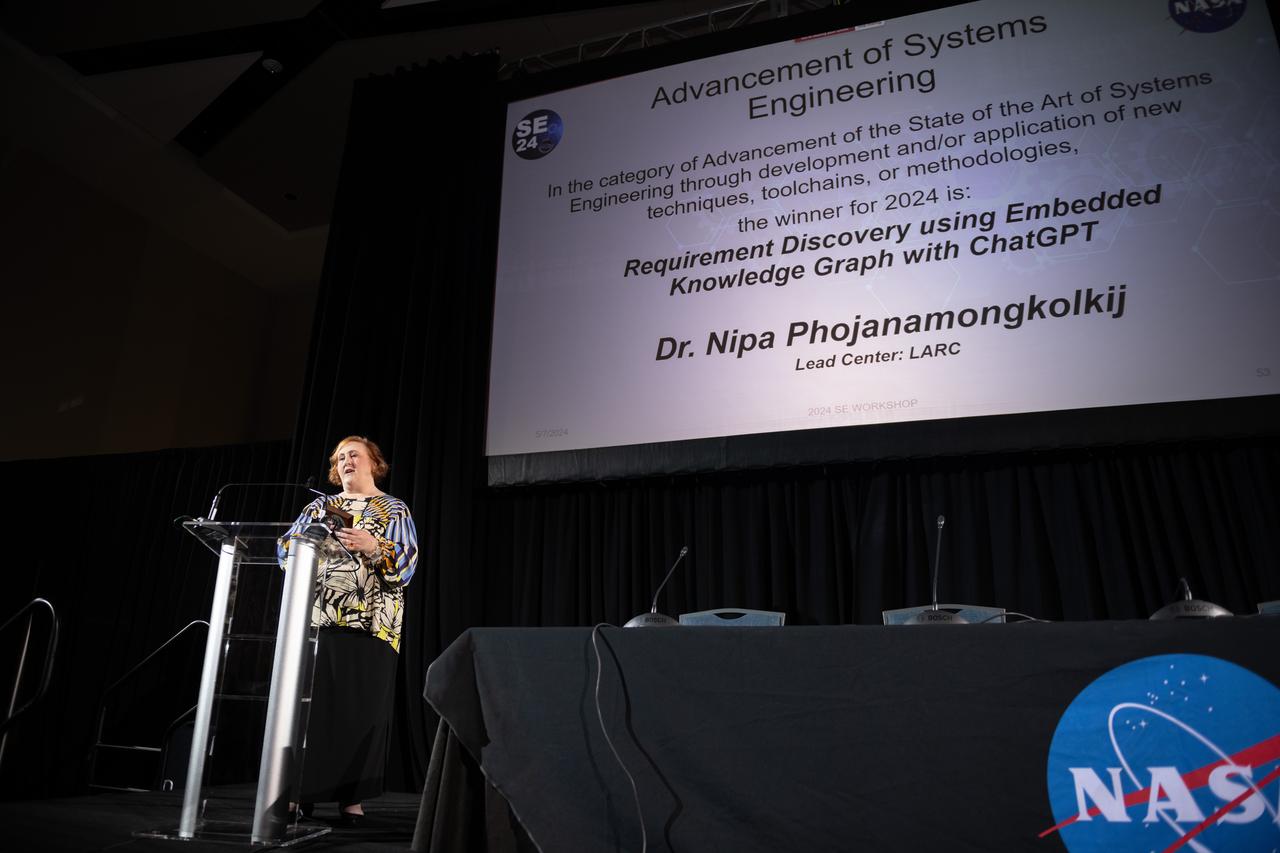
The NASA Systems Engineering Workshop is an annual event that brings together systems engineers and stakeholders from across the Agency to discuss, develop, and improve the state of the discipline as a community. The fundamental goals of the SE Workshop is to better engage and develop Systems Engineers to improve NASA mission success and improve the SE community and knowledge sharing within the discipline through focused and pertinent interactive learning. The Systems Engineering Workshop prides itself on being a "workshop". This means that attendees will be highly engaged and encouraged to share their own experiences and points of view with their colleagues throughout the event. The theme of this year's workshop hosted by Glenn Research Center on May 7-10, 2024 is "Eye on the Future" and is being held at the Hilton Cleveland Downtown in Ohio. It will feature presentations and panels of experts from across NASA and beyond! A couple of featured presentations include: "How I Learned to Stop Worrying and Love ChatGPT" and "Is MBSE Right for Me?" For more information about the schedule, see the agenda tab.

The NASA Systems Engineering Workshop is an annual event that brings together systems engineers and stakeholders from across the Agency to discuss, develop, and improve the state of the discipline as a community. The fundamental goals of the SE Workshop is to better engage and develop Systems Engineers to improve NASA mission success and improve the SE community and knowledge sharing within the discipline through focused and pertinent interactive learning. The Systems Engineering Workshop prides itself on being a "workshop". This means that attendees will be highly engaged and encouraged to share their own experiences and points of view with their colleagues throughout the event. The theme of this year's workshop hosted by Glenn Research Center on May 7-10, 2024 is "Eye on the Future" and is being held at the Hilton Cleveland Downtown in Ohio. It will feature presentations and panels of experts from across NASA and beyond! A couple of featured presentations include: "How I Learned to Stop Worrying and Love ChatGPT" and "Is MBSE Right for Me?" For more information about the schedule, see the agenda tab.
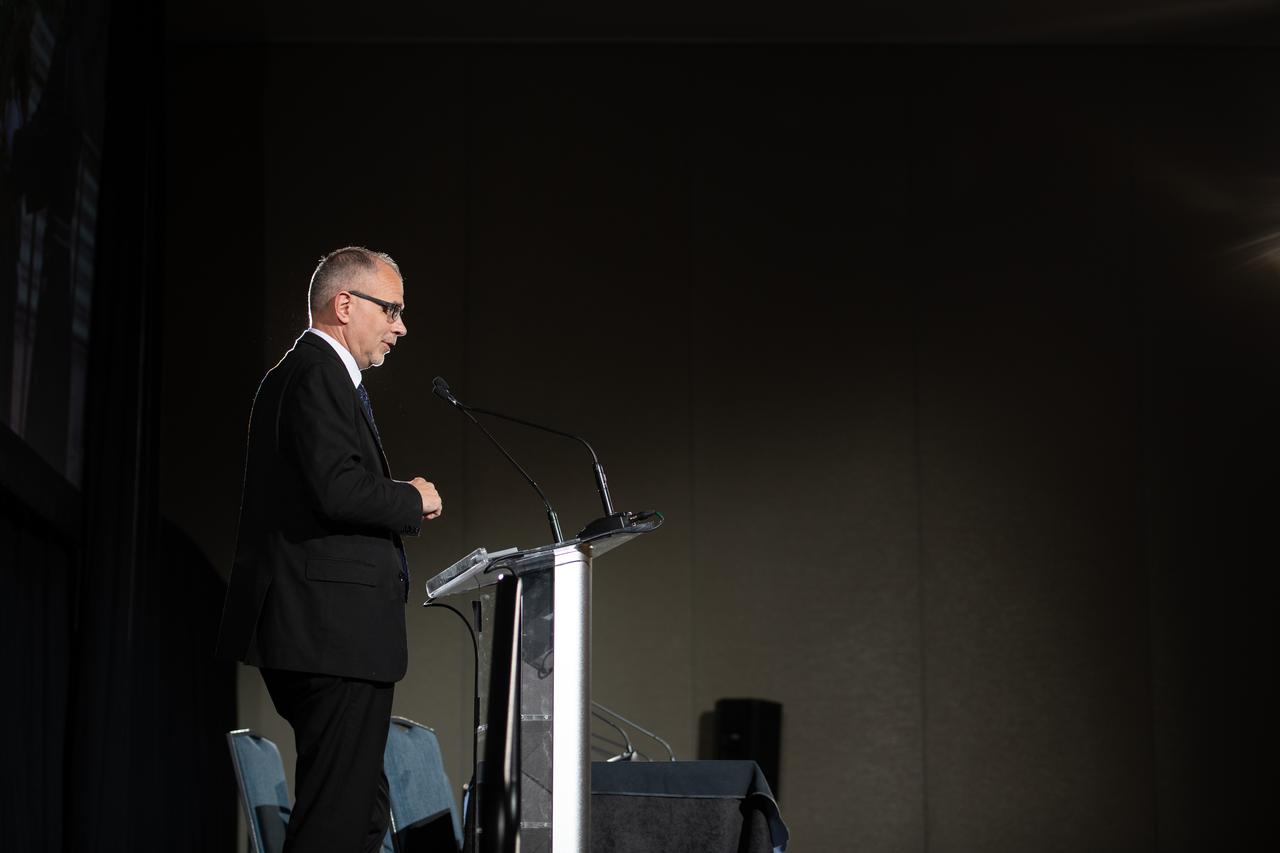
The NASA Systems Engineering Workshop is an annual event that brings together systems engineers and stakeholders from across the Agency to discuss, develop, and improve the state of the discipline as a community. The fundamental goals of the SE Workshop is to better engage and develop Systems Engineers to improve NASA mission success and improve the SE community and knowledge sharing within the discipline through focused and pertinent interactive learning. The Systems Engineering Workshop prides itself on being a "workshop". This means that attendees will be highly engaged and encouraged to share their own experiences and points of view with their colleagues throughout the event. The theme of this year's workshop hosted by Glenn Research Center on May 7-10, 2024 is "Eye on the Future" and is being held at the Hilton Cleveland Downtown in Ohio. It will feature presentations and panels of experts from across NASA and beyond! A couple of featured presentations include: "How I Learned to Stop Worrying and Love ChatGPT" and "Is MBSE Right for Me?" For more information about the schedule, see the agenda tab.
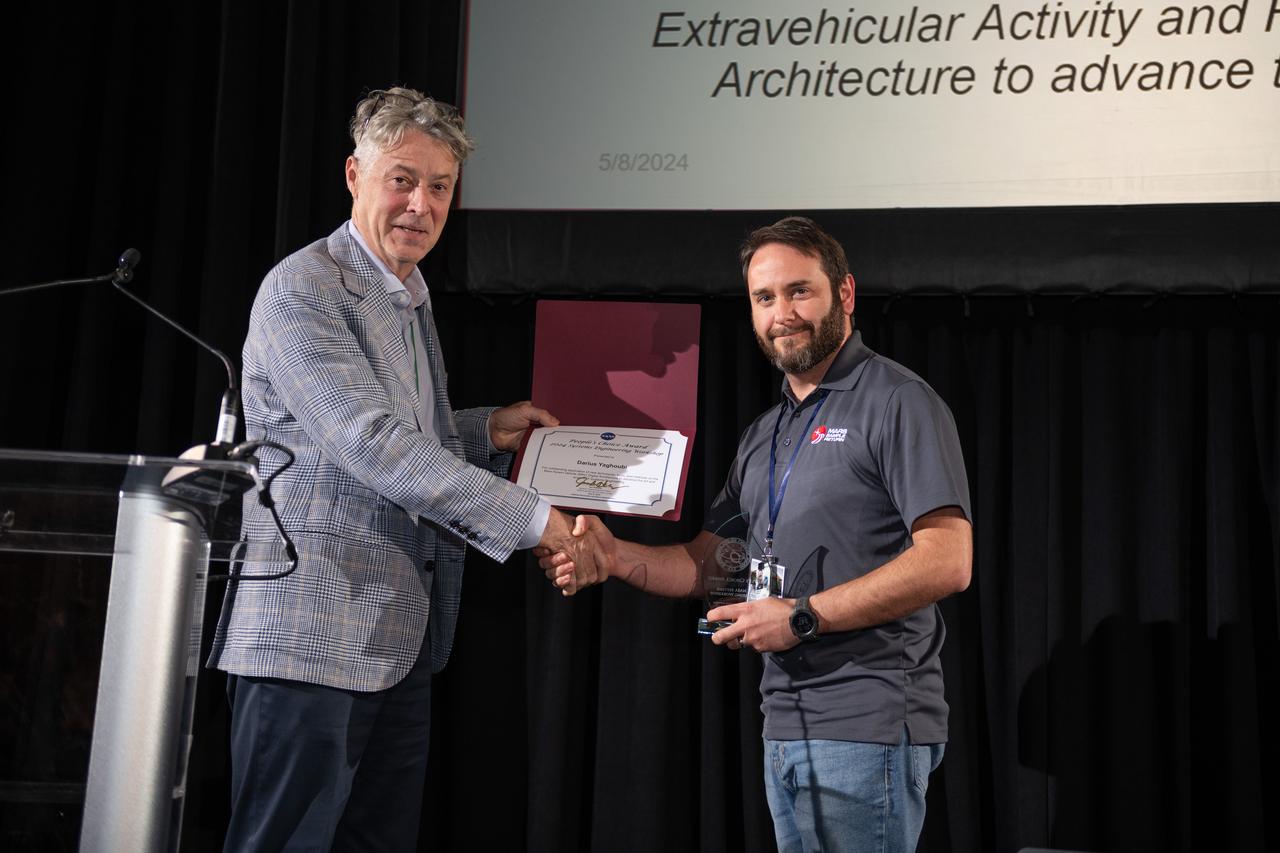
The NASA Systems Engineering Workshop is an annual event that brings together systems engineers and stakeholders from across the Agency to discuss, develop, and improve the state of the discipline as a community. The fundamental goals of the SE Workshop is to better engage and develop Systems Engineers to improve NASA mission success and improve the SE community and knowledge sharing within the discipline through focused and pertinent interactive learning. The Systems Engineering Workshop prides itself on being a "workshop". This means that attendees will be highly engaged and encouraged to share their own experiences and points of view with their colleagues throughout the event. The theme of this year's workshop hosted by Glenn Research Center on May 7-10, 2024 is "Eye on the Future" and is being held at the Hilton Cleveland Downtown in Ohio. It will feature presentations and panels of experts from across NASA and beyond! A couple of featured presentations include: "How I Learned to Stop Worrying and Love ChatGPT" and "Is MBSE Right for Me?" For more information about the schedule, see the agenda tab.
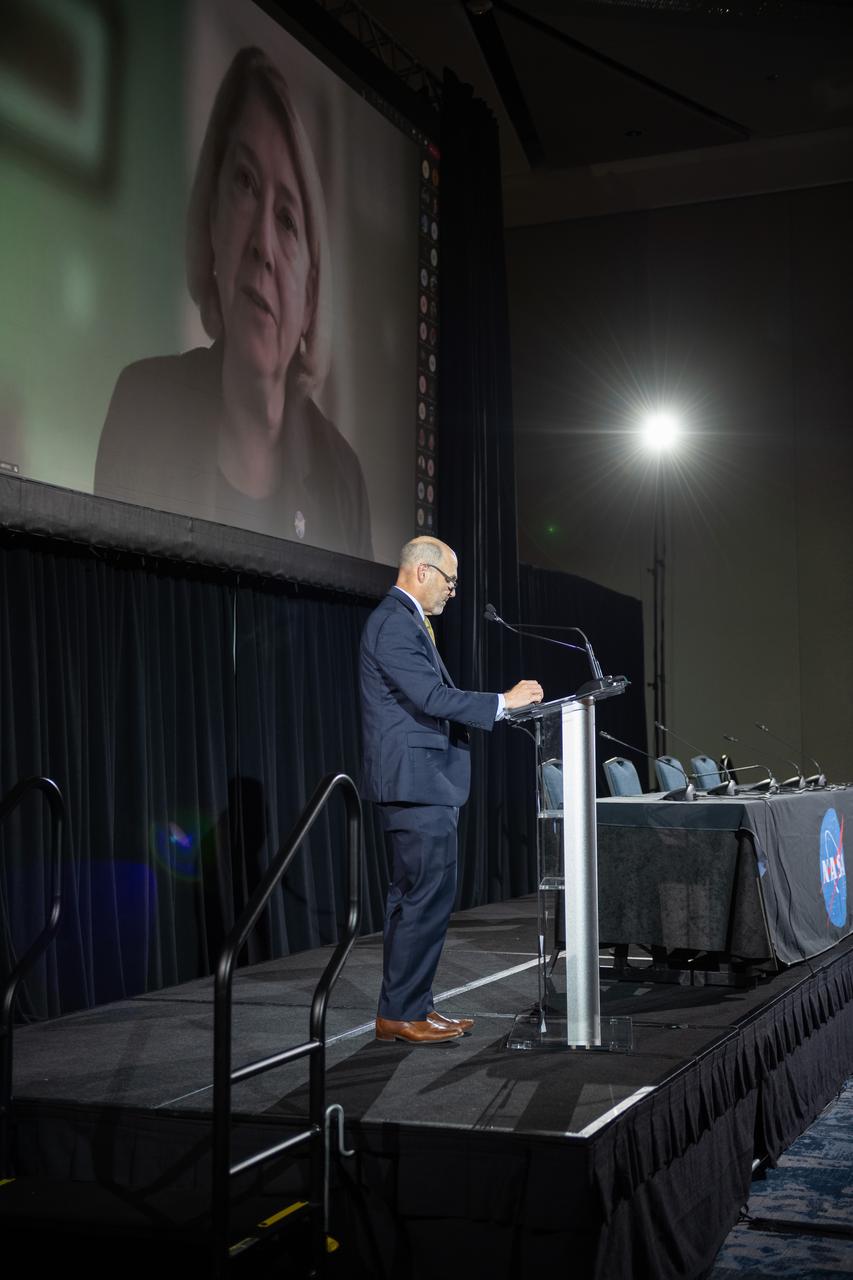
The NASA Systems Engineering Workshop is an annual event that brings together systems engineers and stakeholders from across the Agency to discuss, develop, and improve the state of the discipline as a community. The fundamental goals of the SE Workshop is to better engage and develop Systems Engineers to improve NASA mission success and improve the SE community and knowledge sharing within the discipline through focused and pertinent interactive learning. The Systems Engineering Workshop prides itself on being a "workshop". This means that attendees will be highly engaged and encouraged to share their own experiences and points of view with their colleagues throughout the event. The theme of this year's workshop hosted by Glenn Research Center on May 7-10, 2024 is "Eye on the Future" and is being held at the Hilton Cleveland Downtown in Ohio. It will feature presentations and panels of experts from across NASA and beyond! A couple of featured presentations include: "How I Learned to Stop Worrying and Love ChatGPT" and "Is MBSE Right for Me?" For more information about the schedule, see the agenda tab.
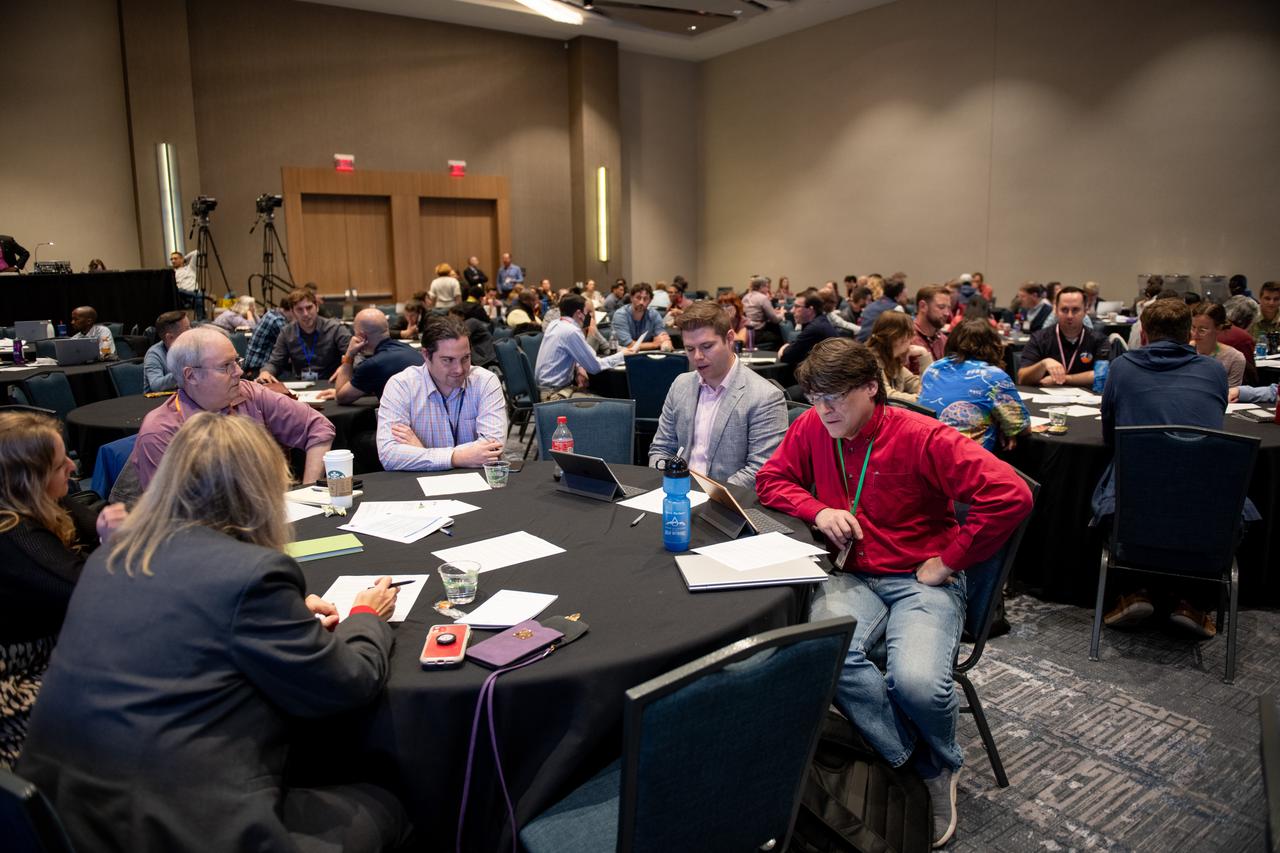
The NASA Systems Engineering Workshop is an annual event that brings together systems engineers and stakeholders from across the Agency to discuss, develop, and improve the state of the discipline as a community. The fundamental goals of the SE Workshop is to better engage and develop Systems Engineers to improve NASA mission success and improve the SE community and knowledge sharing within the discipline through focused and pertinent interactive learning. The Systems Engineering Workshop prides itself on being a "workshop". This means that attendees will be highly engaged and encouraged to share their own experiences and points of view with their colleagues throughout the event. The theme of this year's workshop hosted by Glenn Research Center on May 7-10, 2024 is "Eye on the Future" and is being held at the Hilton Cleveland Downtown in Ohio. It will feature presentations and panels of experts from across NASA and beyond! A couple of featured presentations include: "How I Learned to Stop Worrying and Love ChatGPT" and "Is MBSE Right for Me?" For more information about the schedule, see the agenda tab.
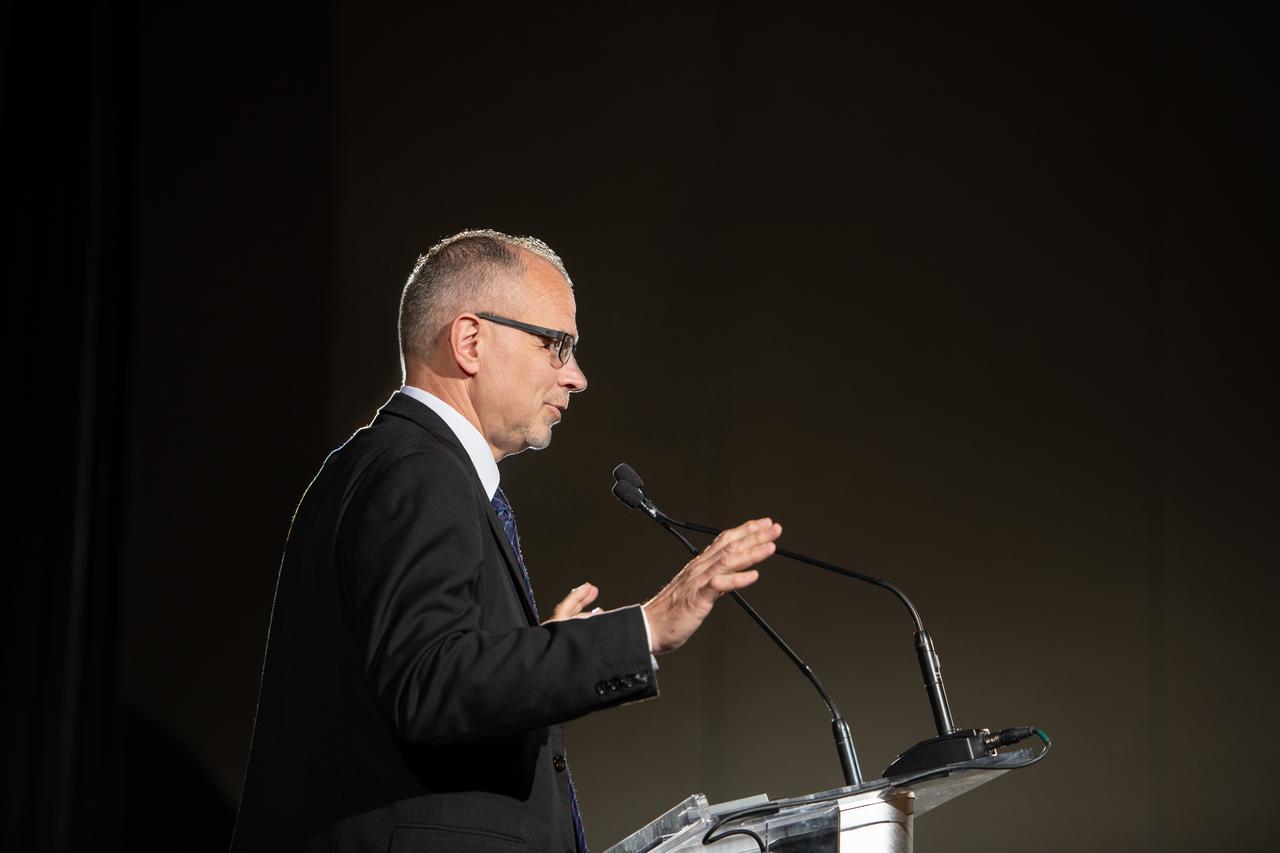
The NASA Systems Engineering Workshop is an annual event that brings together systems engineers and stakeholders from across the Agency to discuss, develop, and improve the state of the discipline as a community. The fundamental goals of the SE Workshop is to better engage and develop Systems Engineers to improve NASA mission success and improve the SE community and knowledge sharing within the discipline through focused and pertinent interactive learning. The Systems Engineering Workshop prides itself on being a "workshop". This means that attendees will be highly engaged and encouraged to share their own experiences and points of view with their colleagues throughout the event. The theme of this year's workshop hosted by Glenn Research Center on May 7-10, 2024 is "Eye on the Future" and is being held at the Hilton Cleveland Downtown in Ohio. It will feature presentations and panels of experts from across NASA and beyond! A couple of featured presentations include: "How I Learned to Stop Worrying and Love ChatGPT" and "Is MBSE Right for Me?" For more information about the schedule, see the agenda tab.

The NASA Systems Engineering Workshop is an annual event that brings together systems engineers and stakeholders from across the Agency to discuss, develop, and improve the state of the discipline as a community. The fundamental goals of the SE Workshop is to better engage and develop Systems Engineers to improve NASA mission success and improve the SE community and knowledge sharing within the discipline through focused and pertinent interactive learning. The Systems Engineering Workshop prides itself on being a "workshop". This means that attendees will be highly engaged and encouraged to share their own experiences and points of view with their colleagues throughout the event. The theme of this year's workshop hosted by Glenn Research Center on May 7-10, 2024 is "Eye on the Future" and is being held at the Hilton Cleveland Downtown in Ohio. It will feature presentations and panels of experts from across NASA and beyond! A couple of featured presentations include: "How I Learned to Stop Worrying and Love ChatGPT" and "Is MBSE Right for Me?" For more information about the schedule, see the agenda tab.
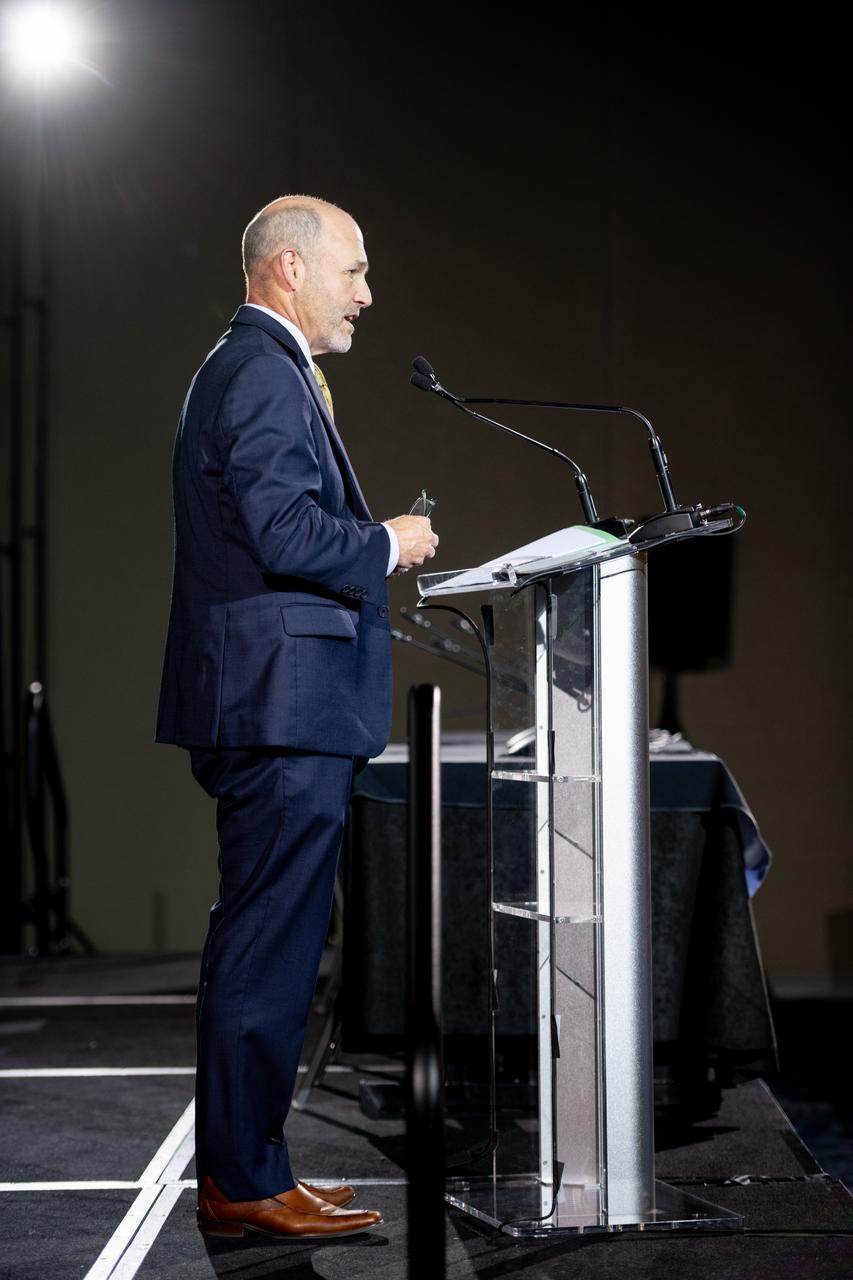
The NASA Systems Engineering Workshop is an annual event that brings together systems engineers and stakeholders from across the Agency to discuss, develop, and improve the state of the discipline as a community. The fundamental goals of the SE Workshop is to better engage and develop Systems Engineers to improve NASA mission success and improve the SE community and knowledge sharing within the discipline through focused and pertinent interactive learning. The Systems Engineering Workshop prides itself on being a "workshop". This means that attendees will be highly engaged and encouraged to share their own experiences and points of view with their colleagues throughout the event. The theme of this year's workshop hosted by Glenn Research Center on May 7-10, 2024 is "Eye on the Future" and is being held at the Hilton Cleveland Downtown in Ohio. It will feature presentations and panels of experts from across NASA and beyond! A couple of featured presentations include: "How I Learned to Stop Worrying and Love ChatGPT" and "Is MBSE Right for Me?" For more information about the schedule, see the agenda tab.
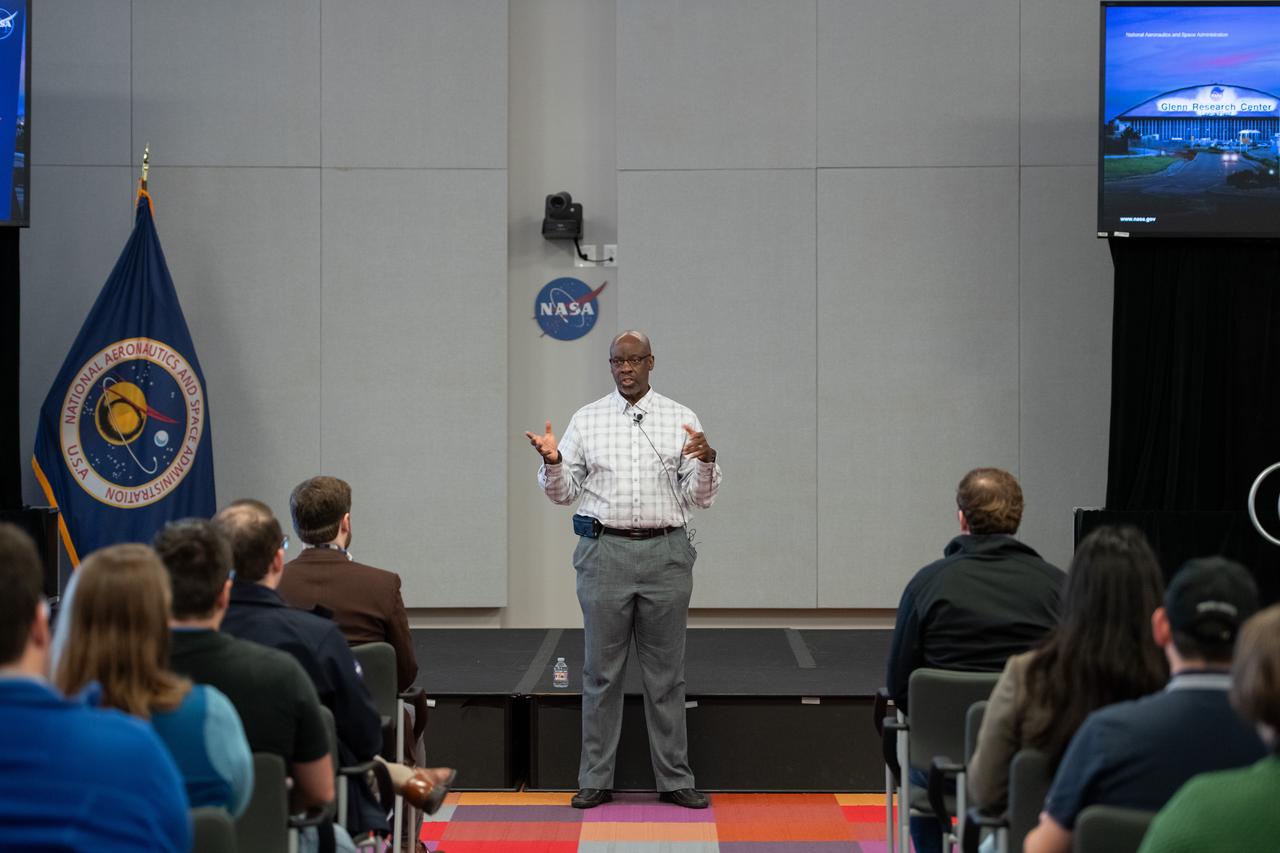
The NASA Systems Engineering Workshop is an annual event that brings together systems engineers and stakeholders from across the Agency to discuss, develop, and improve the state of the discipline as a community. The fundamental goals of the SE Workshop is to better engage and develop Systems Engineers to improve NASA mission success and improve the SE community and knowledge sharing within the discipline through focused and pertinent interactive learning. The Systems Engineering Workshop prides itself on being a "workshop". This means that attendees will be highly engaged and encouraged to share their own experiences and points of view with their colleagues throughout the event. The theme of this year's workshop hosted by Glenn Research Center on May 7-10, 2024 is "Eye on the Future" and is being held at the Hilton Cleveland Downtown in Ohio. It will feature presentations and panels of experts from across NASA and beyond! A couple of featured presentations include: "How I Learned to Stop Worrying and Love ChatGPT" and "Is MBSE Right for Me?" For more information about the schedule, see the agenda tab.
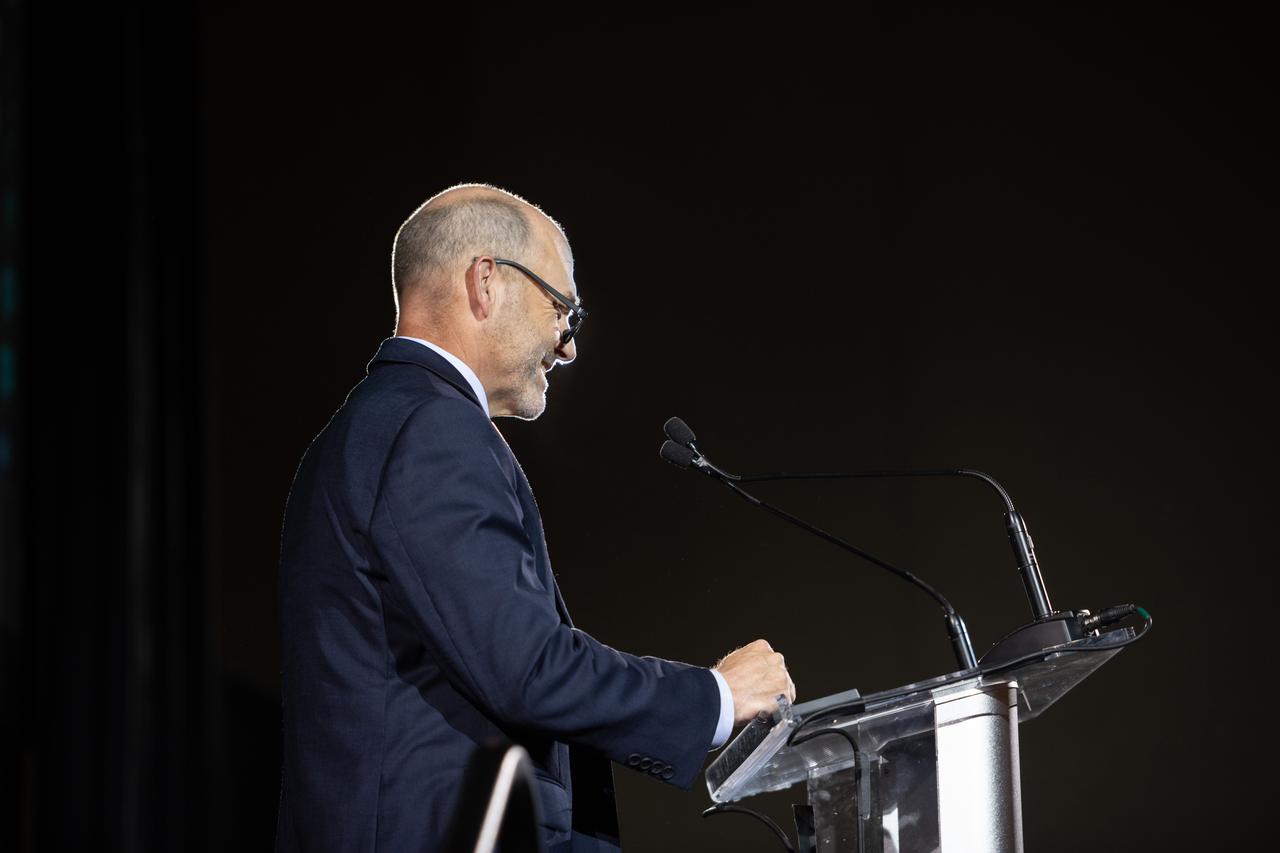
The NASA Systems Engineering Workshop is an annual event that brings together systems engineers and stakeholders from across the Agency to discuss, develop, and improve the state of the discipline as a community. The fundamental goals of the SE Workshop is to better engage and develop Systems Engineers to improve NASA mission success and improve the SE community and knowledge sharing within the discipline through focused and pertinent interactive learning. The Systems Engineering Workshop prides itself on being a "workshop". This means that attendees will be highly engaged and encouraged to share their own experiences and points of view with their colleagues throughout the event. The theme of this year's workshop hosted by Glenn Research Center on May 7-10, 2024 is "Eye on the Future" and is being held at the Hilton Cleveland Downtown in Ohio. It will feature presentations and panels of experts from across NASA and beyond! A couple of featured presentations include: "How I Learned to Stop Worrying and Love ChatGPT" and "Is MBSE Right for Me?" For more information about the schedule, see the agenda tab.
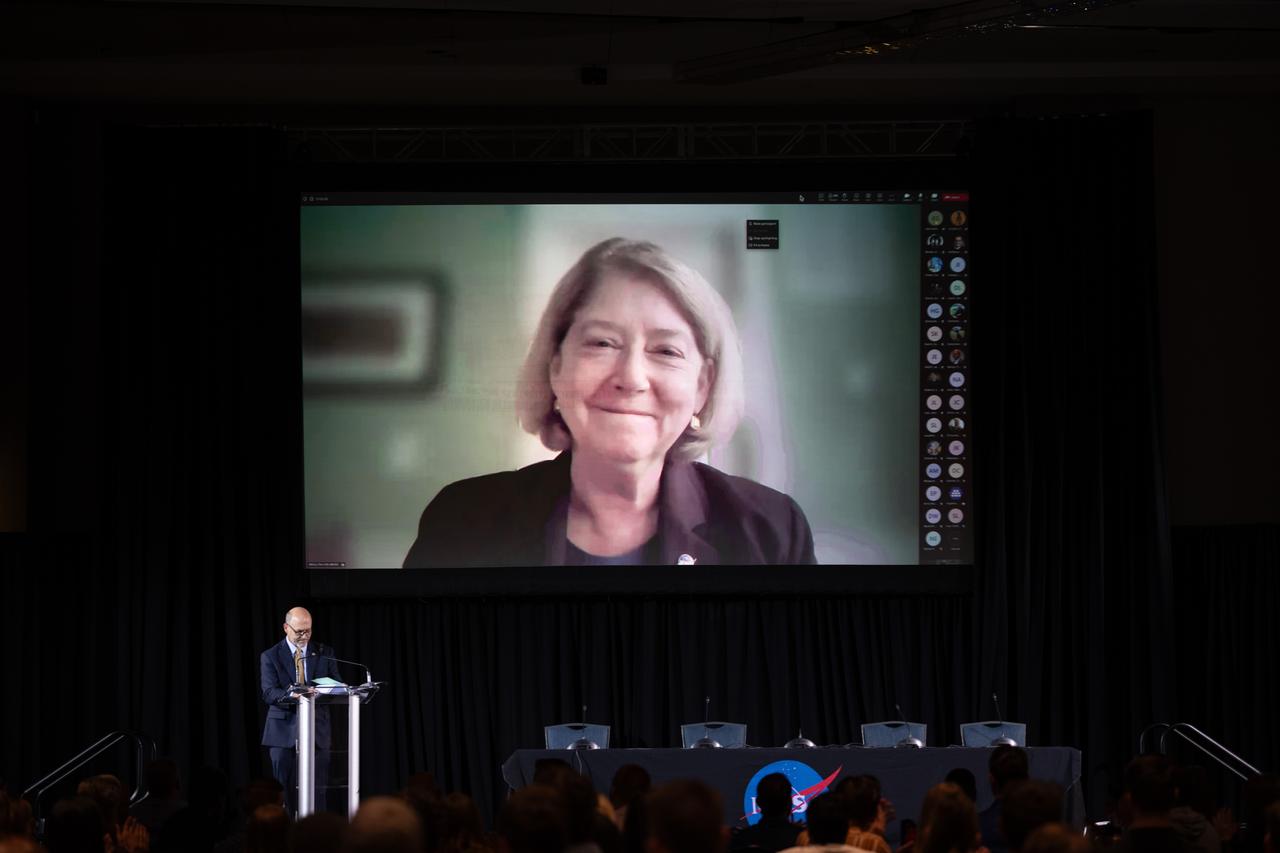
The NASA Systems Engineering Workshop is an annual event that brings together systems engineers and stakeholders from across the Agency to discuss, develop, and improve the state of the discipline as a community. The fundamental goals of the SE Workshop is to better engage and develop Systems Engineers to improve NASA mission success and improve the SE community and knowledge sharing within the discipline through focused and pertinent interactive learning. The Systems Engineering Workshop prides itself on being a "workshop". This means that attendees will be highly engaged and encouraged to share their own experiences and points of view with their colleagues throughout the event. The theme of this year's workshop hosted by Glenn Research Center on May 7-10, 2024 is "Eye on the Future" and is being held at the Hilton Cleveland Downtown in Ohio. It will feature presentations and panels of experts from across NASA and beyond! A couple of featured presentations include: "How I Learned to Stop Worrying and Love ChatGPT" and "Is MBSE Right for Me?" For more information about the schedule, see the agenda tab.
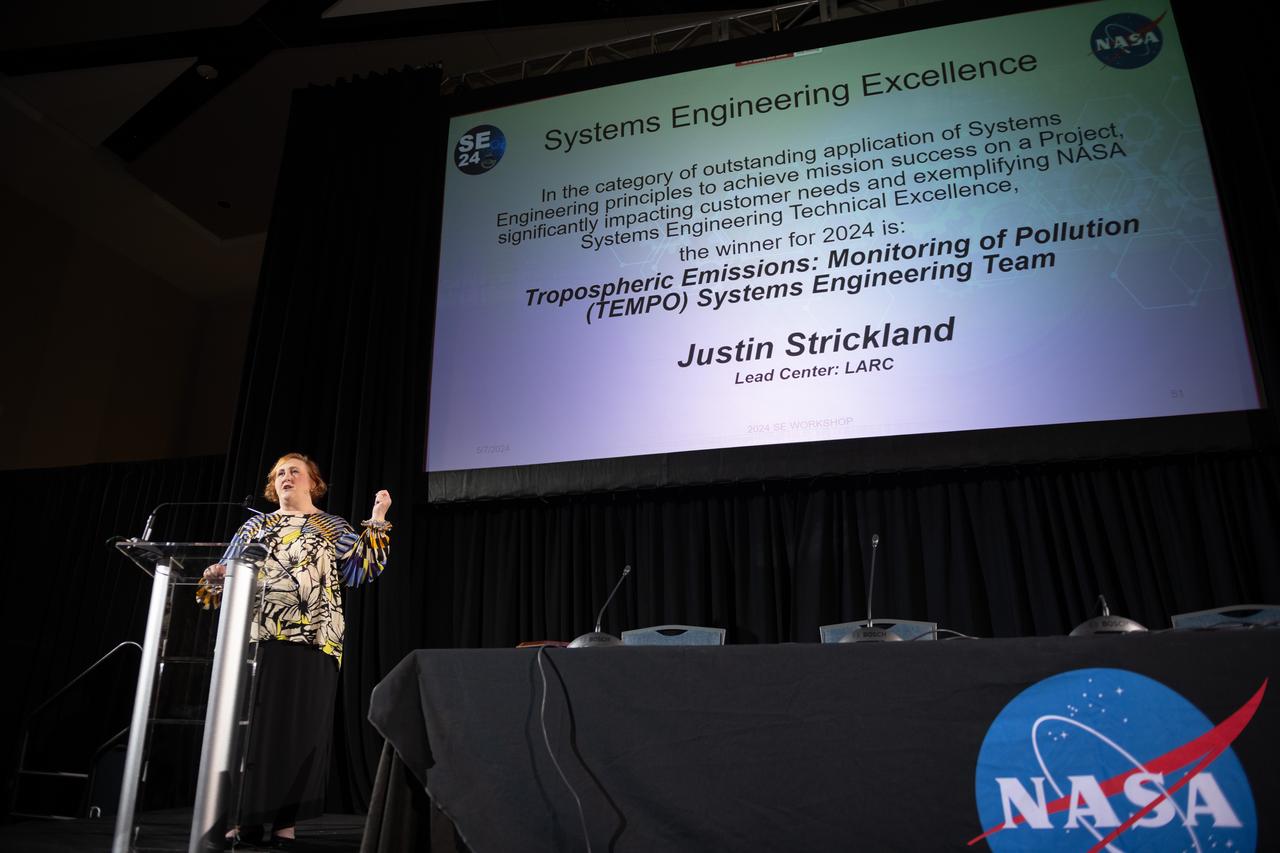
The NASA Systems Engineering Workshop is an annual event that brings together systems engineers and stakeholders from across the Agency to discuss, develop, and improve the state of the discipline as a community. The fundamental goals of the SE Workshop is to better engage and develop Systems Engineers to improve NASA mission success and improve the SE community and knowledge sharing within the discipline through focused and pertinent interactive learning. The Systems Engineering Workshop prides itself on being a "workshop". This means that attendees will be highly engaged and encouraged to share their own experiences and points of view with their colleagues throughout the event. The theme of this year's workshop hosted by Glenn Research Center on May 7-10, 2024 is "Eye on the Future" and is being held at the Hilton Cleveland Downtown in Ohio. It will feature presentations and panels of experts from across NASA and beyond! A couple of featured presentations include: "How I Learned to Stop Worrying and Love ChatGPT" and "Is MBSE Right for Me?" For more information about the schedule, see the agenda tab.
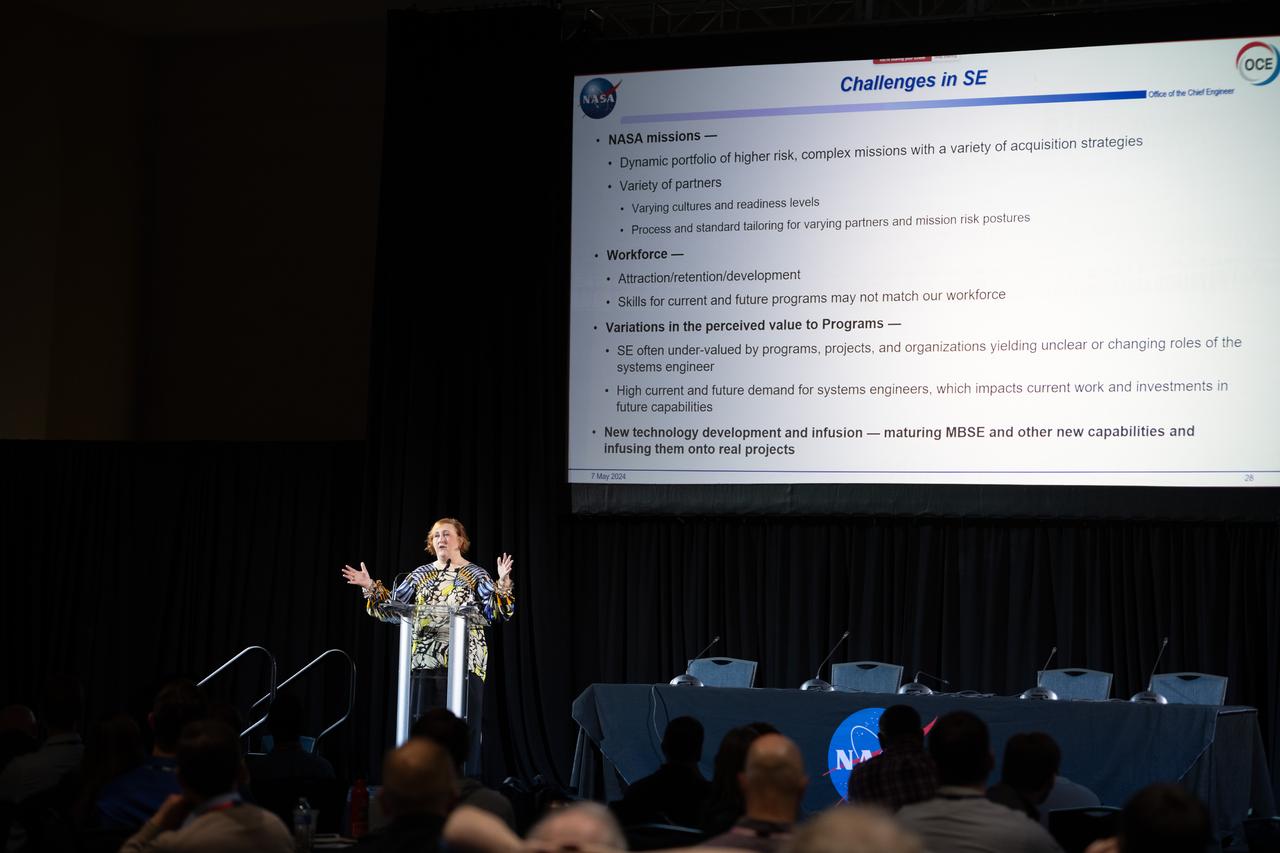
The NASA Systems Engineering Workshop is an annual event that brings together systems engineers and stakeholders from across the Agency to discuss, develop, and improve the state of the discipline as a community. The fundamental goals of the SE Workshop is to better engage and develop Systems Engineers to improve NASA mission success and improve the SE community and knowledge sharing within the discipline through focused and pertinent interactive learning. The Systems Engineering Workshop prides itself on being a "workshop". This means that attendees will be highly engaged and encouraged to share their own experiences and points of view with their colleagues throughout the event. The theme of this year's workshop hosted by Glenn Research Center on May 7-10, 2024 is "Eye on the Future" and is being held at the Hilton Cleveland Downtown in Ohio. It will feature presentations and panels of experts from across NASA and beyond! A couple of featured presentations include: "How I Learned to Stop Worrying and Love ChatGPT" and "Is MBSE Right for Me?" For more information about the schedule, see the agenda tab.

The NASA Systems Engineering Workshop is an annual event that brings together systems engineers and stakeholders from across the Agency to discuss, develop, and improve the state of the discipline as a community. The fundamental goals of the SE Workshop is to better engage and develop Systems Engineers to improve NASA mission success and improve the SE community and knowledge sharing within the discipline through focused and pertinent interactive learning. The Systems Engineering Workshop prides itself on being a "workshop". This means that attendees will be highly engaged and encouraged to share their own experiences and points of view with their colleagues throughout the event. The theme of this year's workshop hosted by Glenn Research Center on May 7-10, 2024 is "Eye on the Future" and is being held at the Hilton Cleveland Downtown in Ohio. It will feature presentations and panels of experts from across NASA and beyond! A couple of featured presentations include: "How I Learned to Stop Worrying and Love ChatGPT" and "Is MBSE Right for Me?" For more information about the schedule, see the agenda tab.
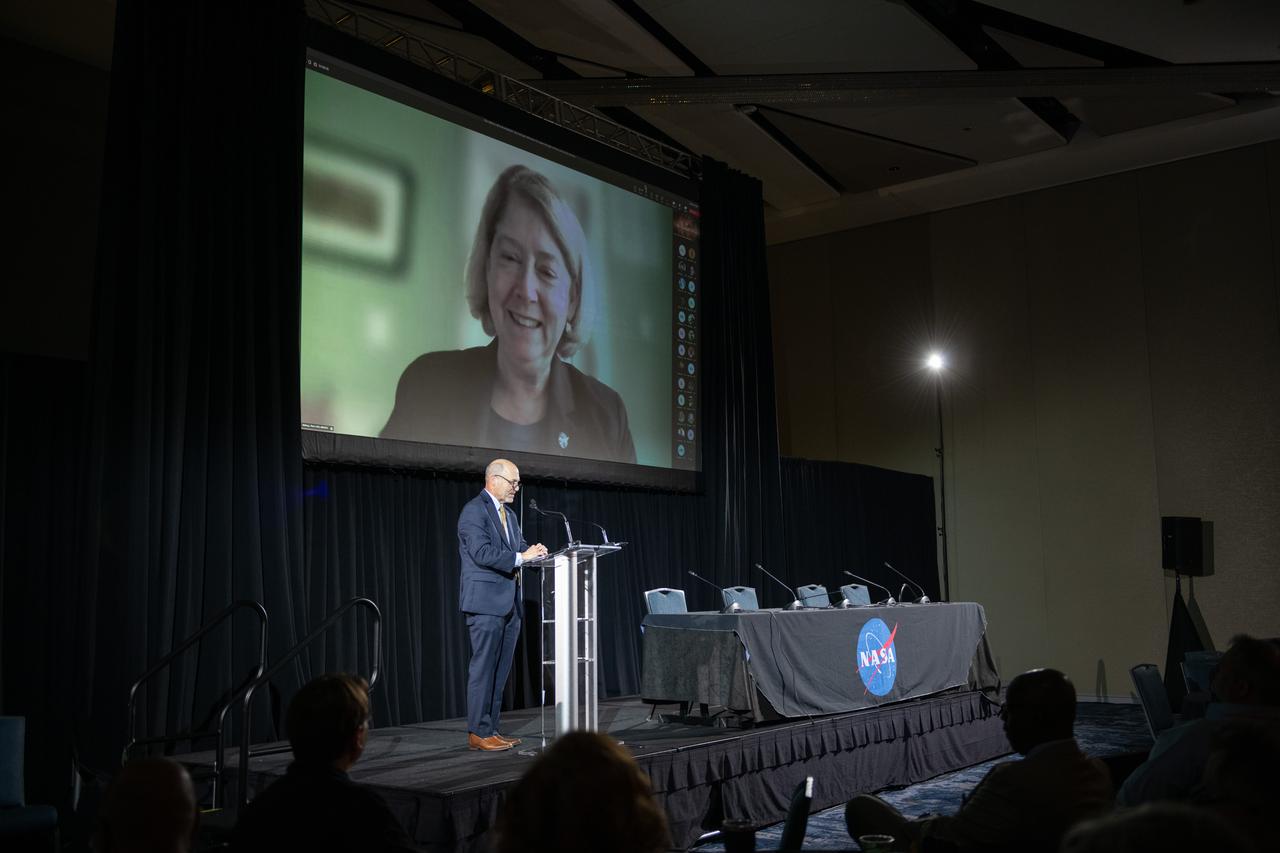
The NASA Systems Engineering Workshop is an annual event that brings together systems engineers and stakeholders from across the Agency to discuss, develop, and improve the state of the discipline as a community. The fundamental goals of the SE Workshop is to better engage and develop Systems Engineers to improve NASA mission success and improve the SE community and knowledge sharing within the discipline through focused and pertinent interactive learning. The Systems Engineering Workshop prides itself on being a "workshop". This means that attendees will be highly engaged and encouraged to share their own experiences and points of view with their colleagues throughout the event. The theme of this year's workshop hosted by Glenn Research Center on May 7-10, 2024 is "Eye on the Future" and is being held at the Hilton Cleveland Downtown in Ohio. It will feature presentations and panels of experts from across NASA and beyond! A couple of featured presentations include: "How I Learned to Stop Worrying and Love ChatGPT" and "Is MBSE Right for Me?" For more information about the schedule, see the agenda tab.

The NASA Systems Engineering Workshop is an annual event that brings together systems engineers and stakeholders from across the Agency to discuss, develop, and improve the state of the discipline as a community. The fundamental goals of the SE Workshop is to better engage and develop Systems Engineers to improve NASA mission success and improve the SE community and knowledge sharing within the discipline through focused and pertinent interactive learning. The Systems Engineering Workshop prides itself on being a "workshop". This means that attendees will be highly engaged and encouraged to share their own experiences and points of view with their colleagues throughout the event. The theme of this year's workshop hosted by Glenn Research Center on May 7-10, 2024 is "Eye on the Future" and is being held at the Hilton Cleveland Downtown in Ohio. It will feature presentations and panels of experts from across NASA and beyond! A couple of featured presentations include: "How I Learned to Stop Worrying and Love ChatGPT" and "Is MBSE Right for Me?" For more information about the schedule, see the agenda tab.
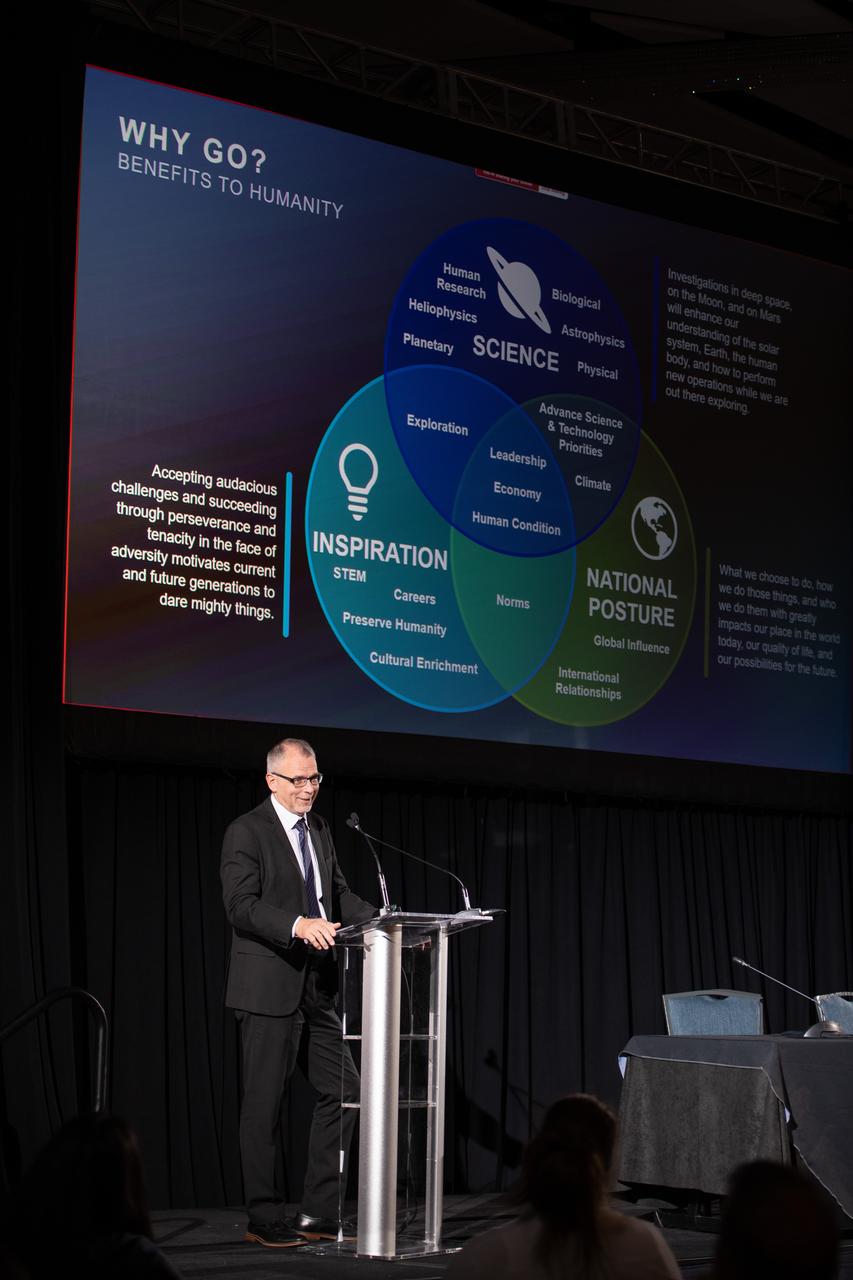
The NASA Systems Engineering Workshop is an annual event that brings together systems engineers and stakeholders from across the Agency to discuss, develop, and improve the state of the discipline as a community. The fundamental goals of the SE Workshop is to better engage and develop Systems Engineers to improve NASA mission success and improve the SE community and knowledge sharing within the discipline through focused and pertinent interactive learning. The Systems Engineering Workshop prides itself on being a "workshop". This means that attendees will be highly engaged and encouraged to share their own experiences and points of view with their colleagues throughout the event. The theme of this year's workshop hosted by Glenn Research Center on May 7-10, 2024 is "Eye on the Future" and is being held at the Hilton Cleveland Downtown in Ohio. It will feature presentations and panels of experts from across NASA and beyond! A couple of featured presentations include: "How I Learned to Stop Worrying and Love ChatGPT" and "Is MBSE Right for Me?" For more information about the schedule, see the agenda tab.
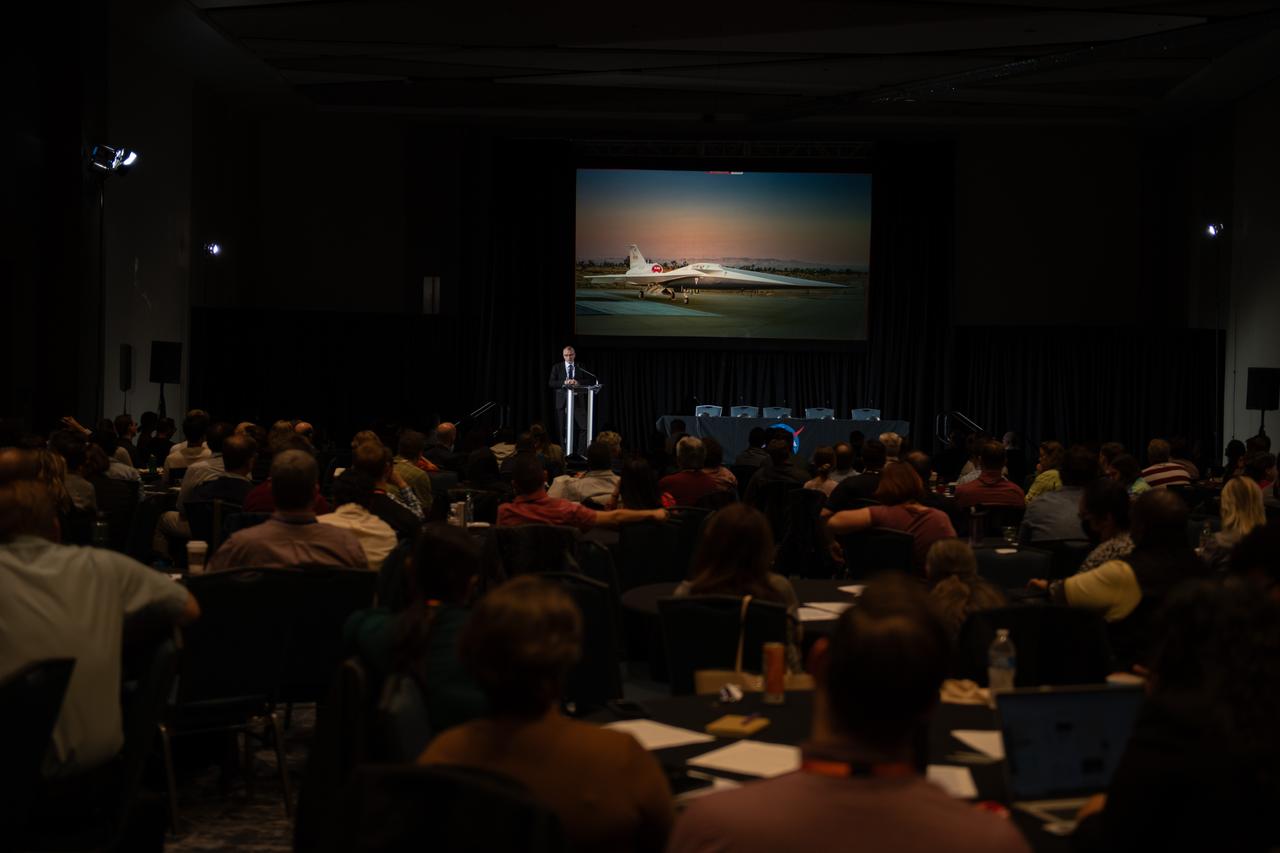
The NASA Systems Engineering Workshop is an annual event that brings together systems engineers and stakeholders from across the Agency to discuss, develop, and improve the state of the discipline as a community. The fundamental goals of the SE Workshop is to better engage and develop Systems Engineers to improve NASA mission success and improve the SE community and knowledge sharing within the discipline through focused and pertinent interactive learning. The Systems Engineering Workshop prides itself on being a "workshop". This means that attendees will be highly engaged and encouraged to share their own experiences and points of view with their colleagues throughout the event. The theme of this year's workshop hosted by Glenn Research Center on May 7-10, 2024 is "Eye on the Future" and is being held at the Hilton Cleveland Downtown in Ohio. It will feature presentations and panels of experts from across NASA and beyond! A couple of featured presentations include: "How I Learned to Stop Worrying and Love ChatGPT" and "Is MBSE Right for Me?" For more information about the schedule, see the agenda tab.
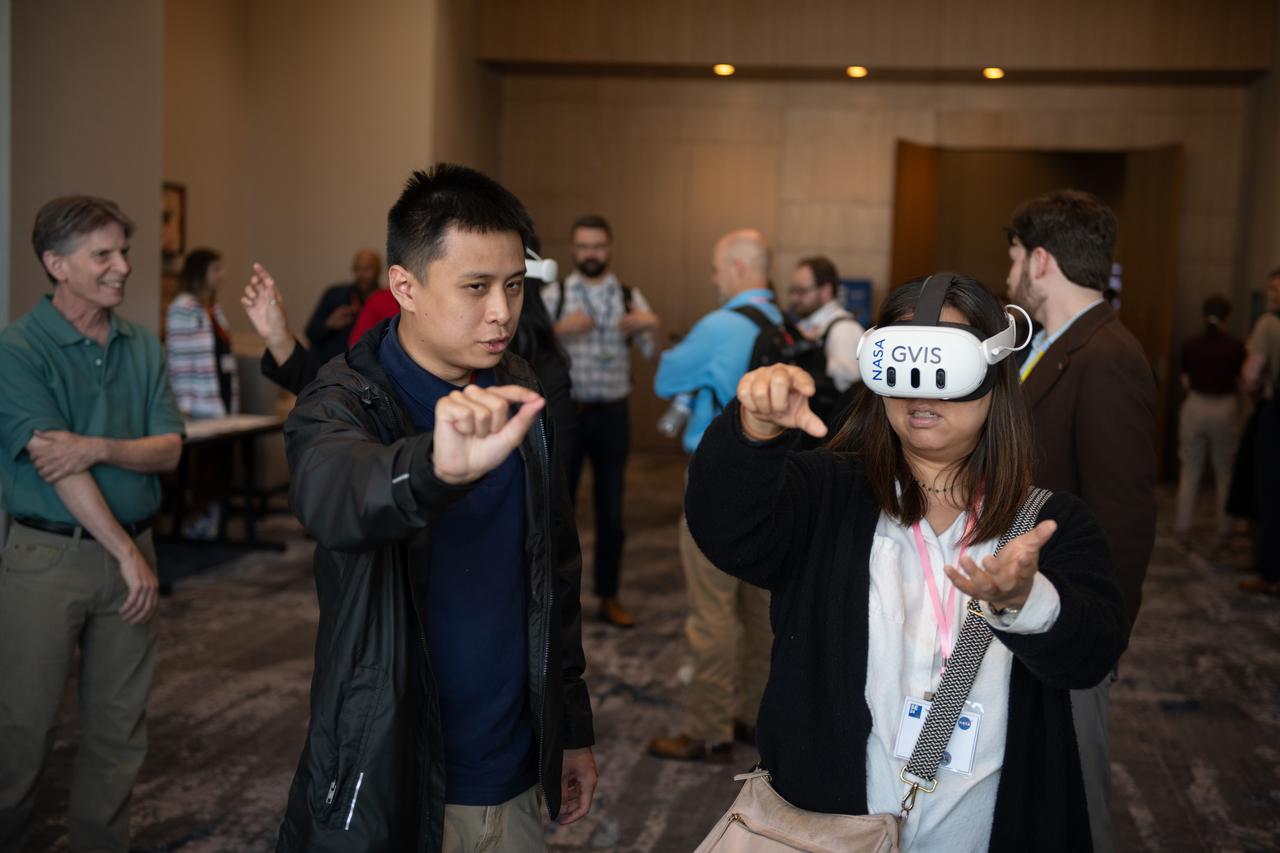
The NASA Systems Engineering Workshop is an annual event that brings together systems engineers and stakeholders from across the Agency to discuss, develop, and improve the state of the discipline as a community. The fundamental goals of the SE Workshop is to better engage and develop Systems Engineers to improve NASA mission success and improve the SE community and knowledge sharing within the discipline through focused and pertinent interactive learning. The Systems Engineering Workshop prides itself on being a "workshop". This means that attendees will be highly engaged and encouraged to share their own experiences and points of view with their colleagues throughout the event. The theme of this year's workshop hosted by Glenn Research Center on May 7-10, 2024 is "Eye on the Future" and is being held at the Hilton Cleveland Downtown in Ohio. It will feature presentations and panels of experts from across NASA and beyond! A couple of featured presentations include: "How I Learned to Stop Worrying and Love ChatGPT" and "Is MBSE Right for Me?" For more information about the schedule, see the agenda tab.