
NASA astronaut candidate Jasmin Moghbeli poses for a portrait in the Systems Engineering Simulator, a real-time, crew-in-the-loop engineering simulator for the space station and advanced spaceflight programs, Tuesday, July 9, 2019 at NASA's Johnson Space Center in Houston, Texas. Photo Credit: (NASA/Bill Ingalls)
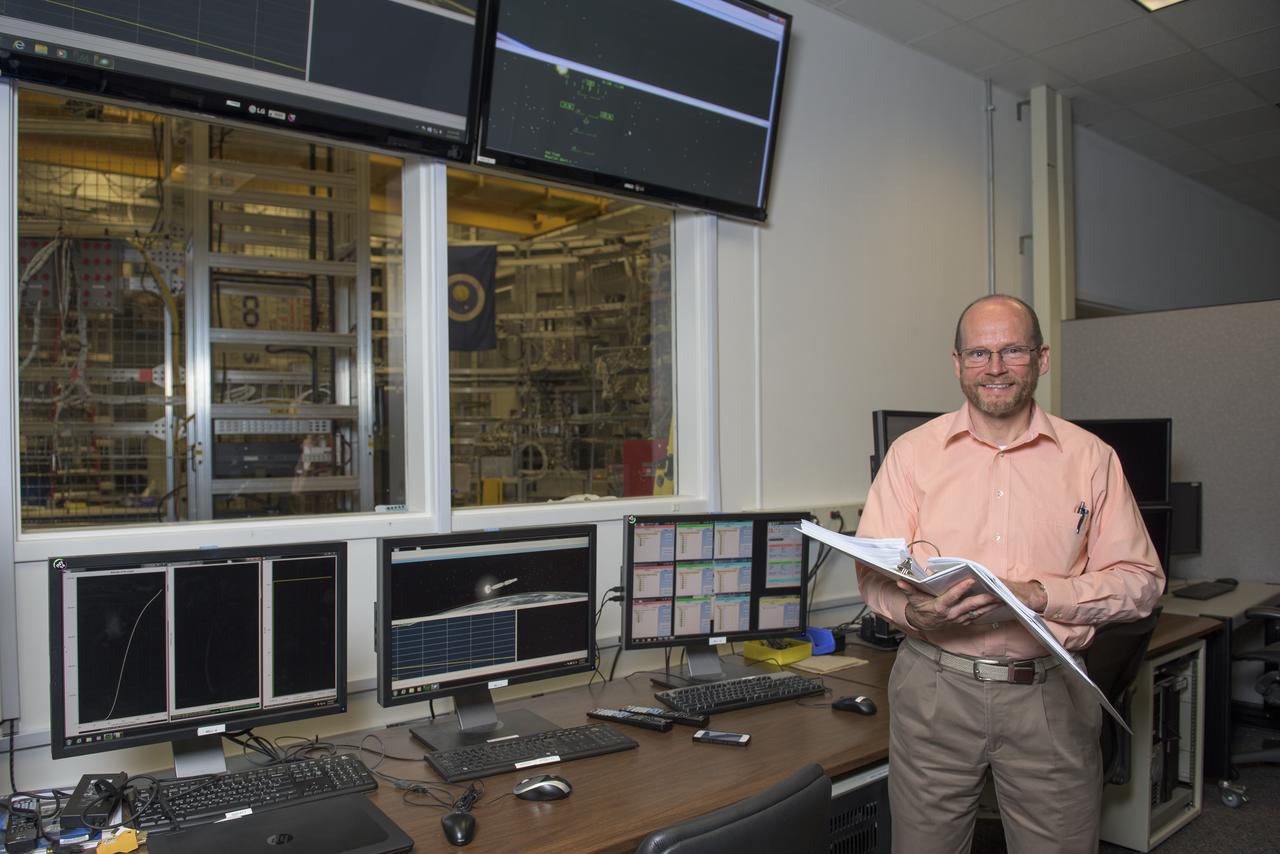
John Hanson, Alternate Lead Systems Engineer in the Spacecraft and Vehicle Systems department of the Engineering Directorate at MSFC has been honored by the American Institute of Aeronautics and Astronautics (AIAA) with the 2016 De Florez Award for flight simulation
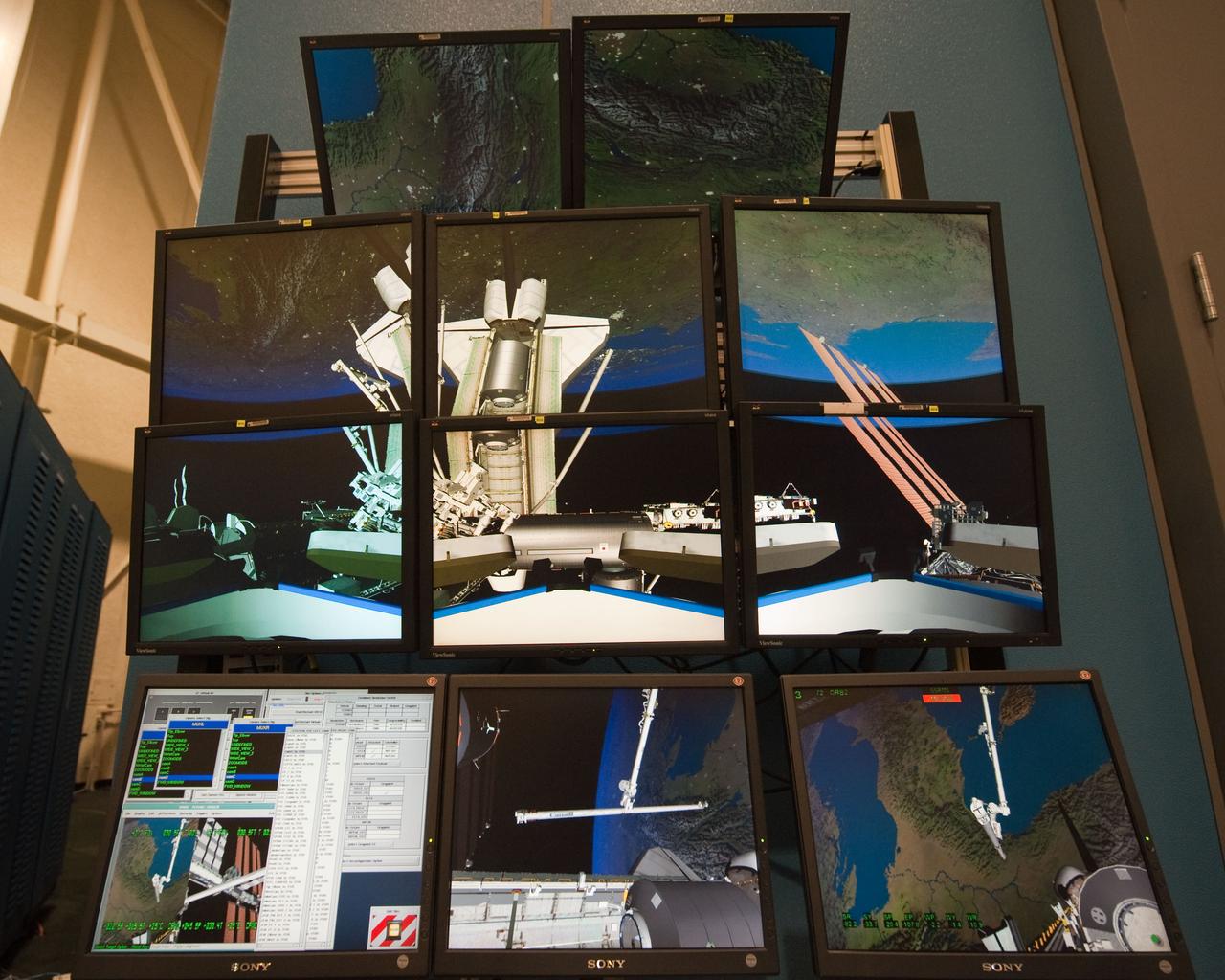
JSC2010-E-090701 (8 June 2010) --- Several computer monitors are featured in this image photographed during an STS-133 exercise in the systems engineering simulator in the Avionics Systems Laboratory at NASA's Johnson Space Center. The facility includes moving scenes of full-sized International Space Station components over a simulated Earth.
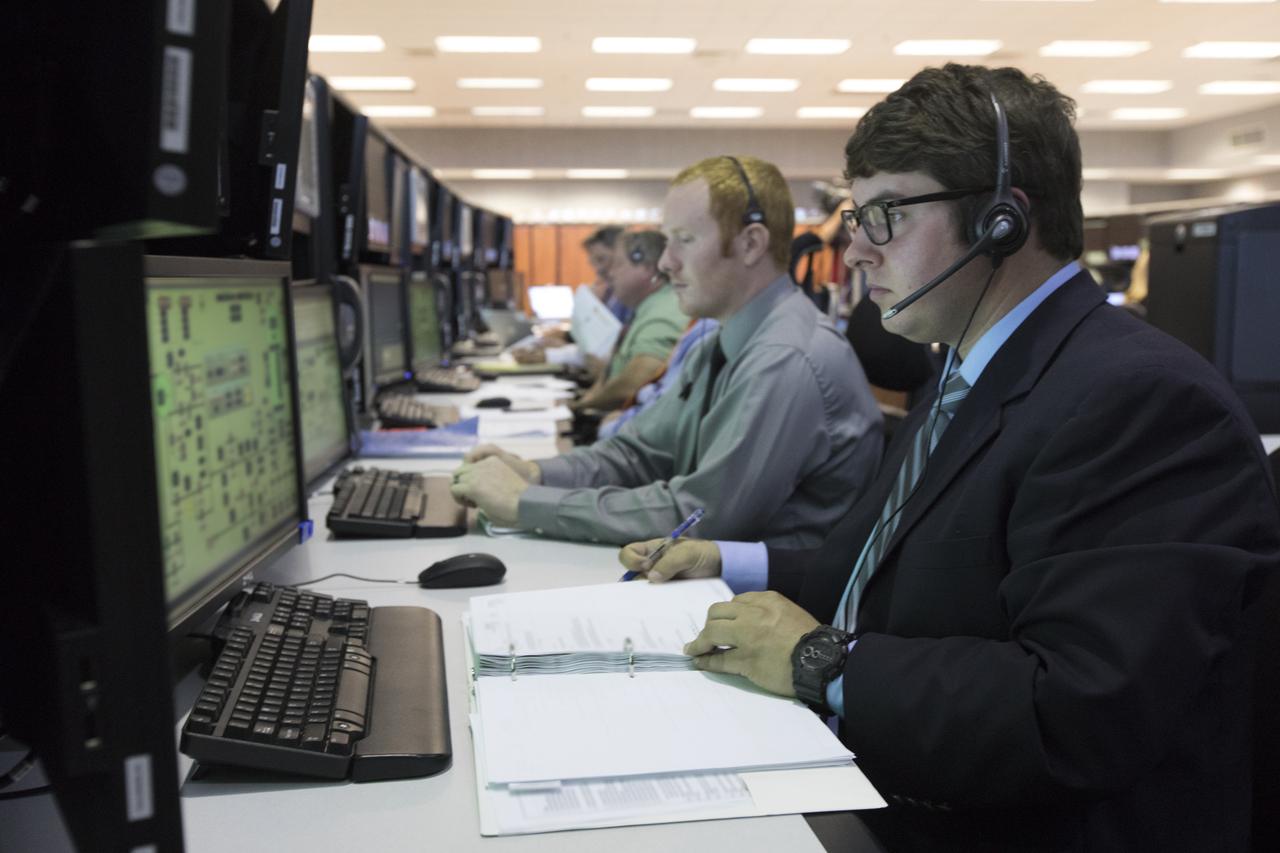
Liquid Oxygen Systems Engineer Quinten Jones, left and Liquid Oxygen Systems Engineer Andrew "Kody" Smitherman, both of Jacobs, monitor operation from his position in Firing Room 1 at the Kennedy Space Center's Launch Control Center during a countdown simulation for Exploration Mission 1. It was the agency's first simulation of a portion of the countdown for the first launch of a Space Launch System rocket and Orion spacecraft that will eventually take astronauts beyond low-Earth orbit to destinations such as the Moon and Mars.
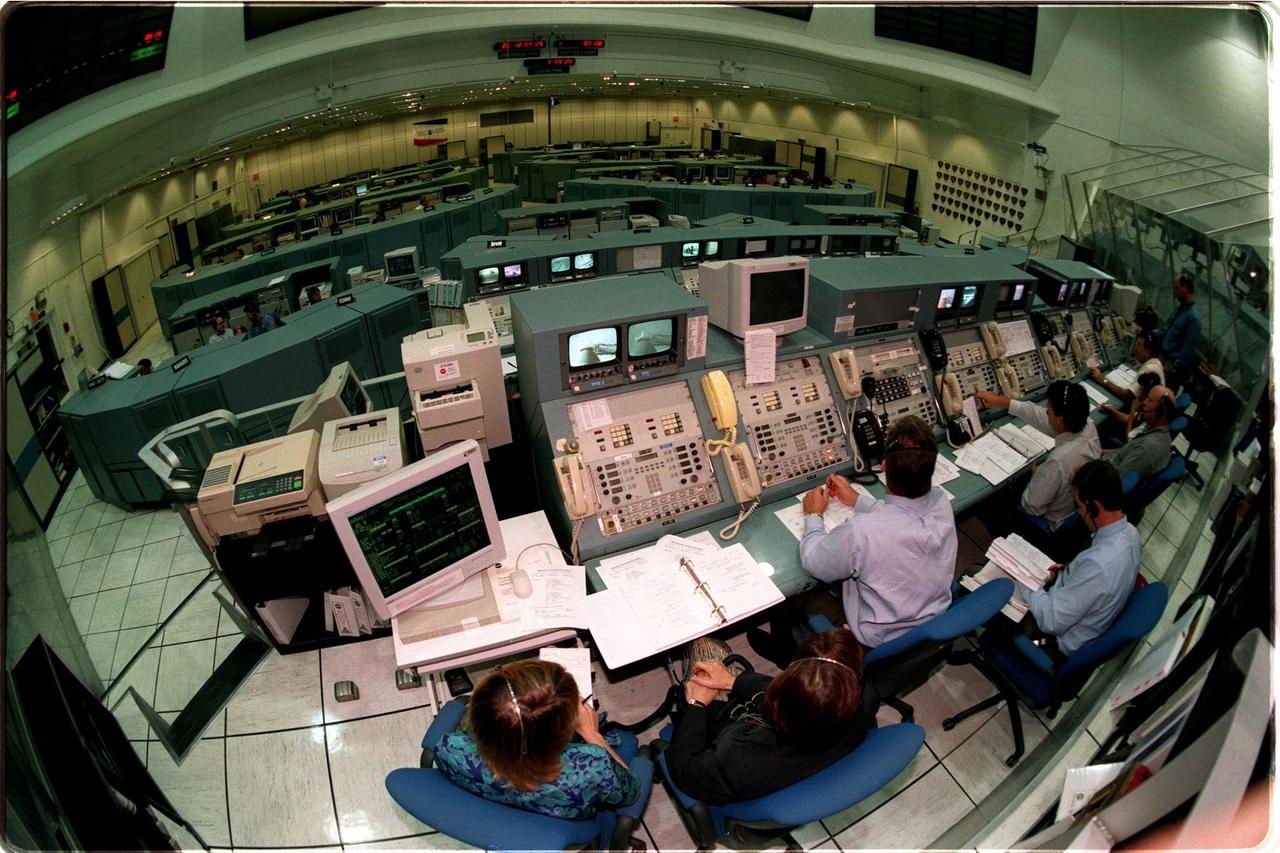
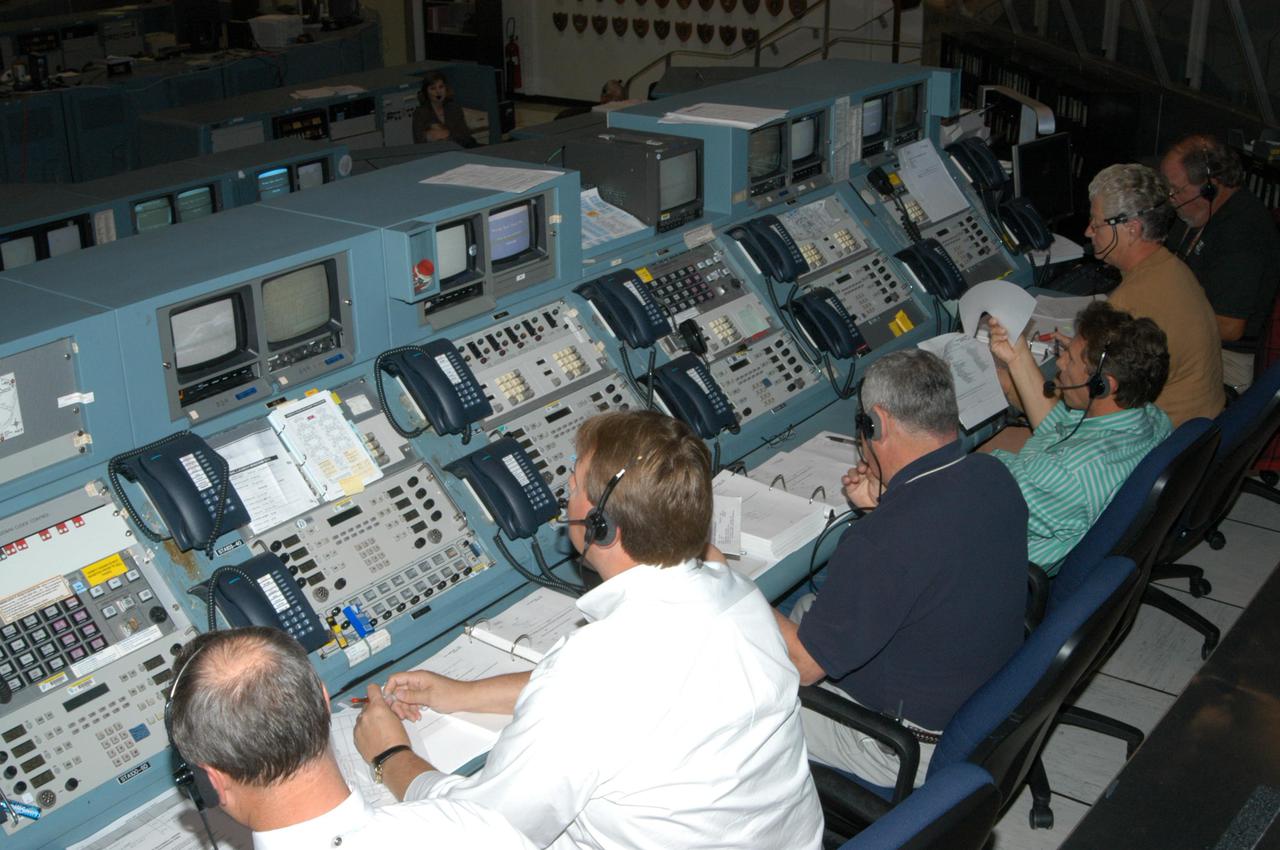
KENNEDY SPACE CENTER, FLA. -- In Firing Room 1 at KSC, Shuttle launch team members put the Shuttle system through an integrated simulation. The control room is set up with software used to simulate flight and ground systems in the launch configuration. A Simulation Team, comprisING KSC engineers, introduce 12 or more major problems to prepare the launch team for worst-case scenarios. Such tests and simulations keep the Shuttle launch team sharp and ready for liftoff. The next liftoff is targeted for Oct. 29.
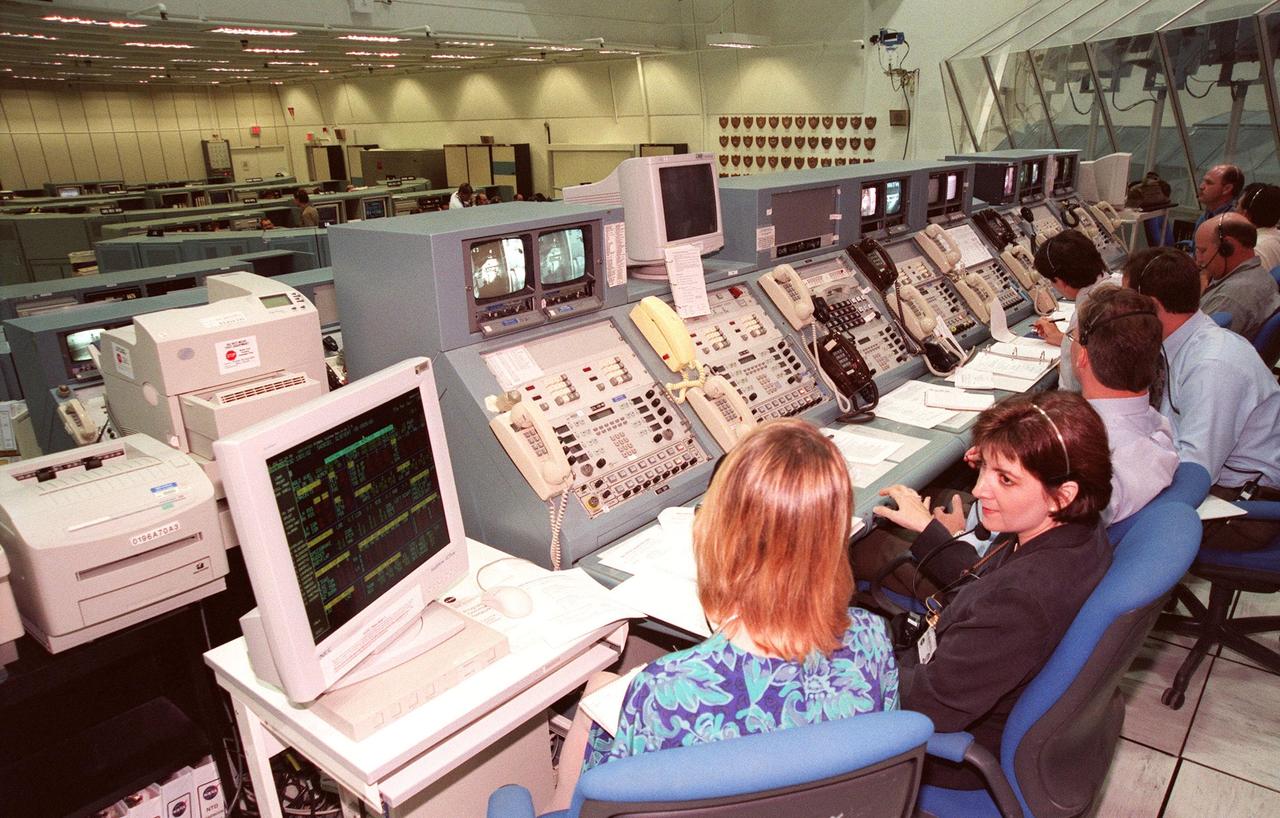
KENNEDY SPACE CENTER, FLA. -- In Firing Room 1 at KSC, Shuttle launch team members put the Shuttle system through an integrated simulation. The control room is set up with software used to simulate flight and ground systems in the launch configuration. A Simulation Team, comprising KSC engineers, introduce 12 or more major problems to prepare the launch team for worst-case scenarios. Such tests and simulations keep the Shuttle launch team sharp and ready for liftoff. The next liftoff is targeted for Oct. 29
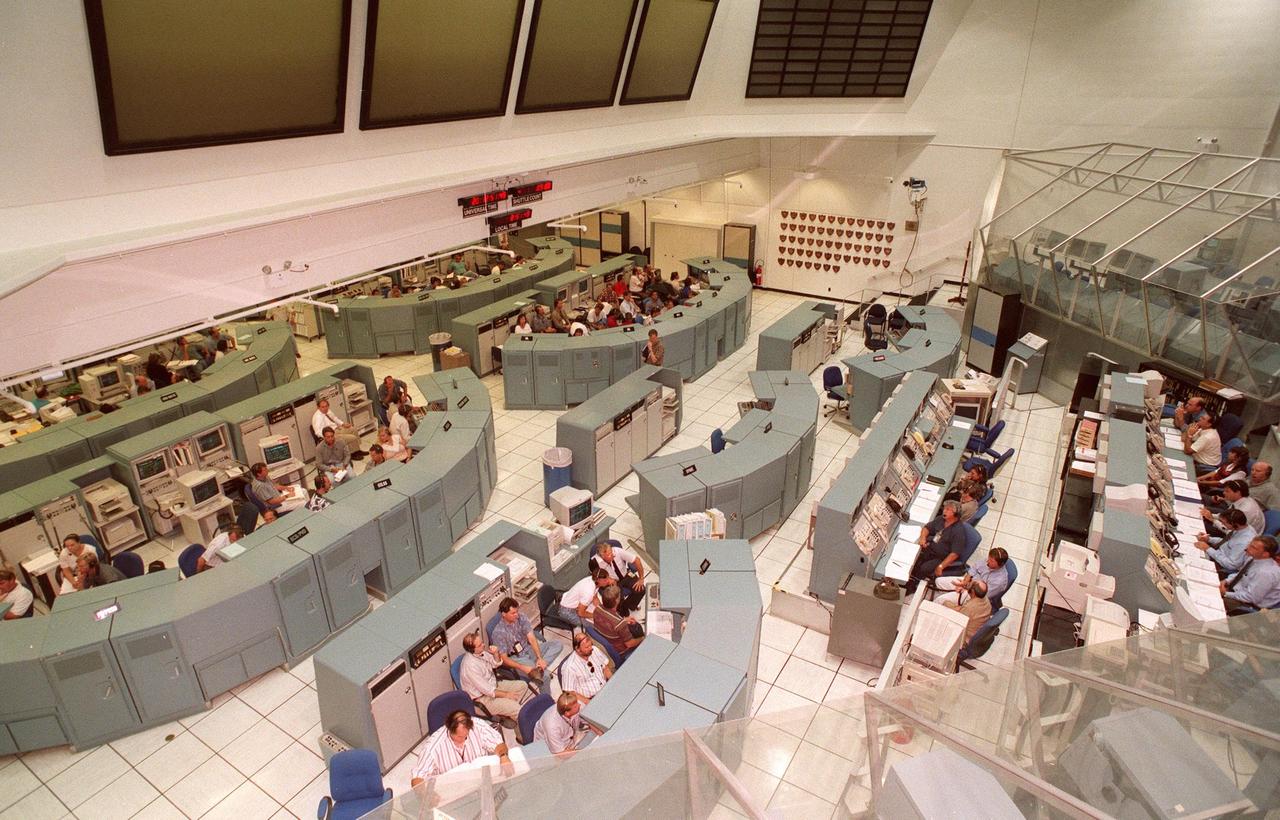
In Firing Room 1 at KSC, Shuttle launch team members put the Shuttle system through an integrated simulation. The control room is set up with software used to simulate flight and ground systems in the launch configuration. A Simulation Team, comprised of KSC engineers, introduce 12 or more major problems to prepare the launch team for worst-case scenarios. Such tests and simulations keep the Shuttle launch team sharp and ready for liftoff. The next liftoff is targeted for Oct. 29
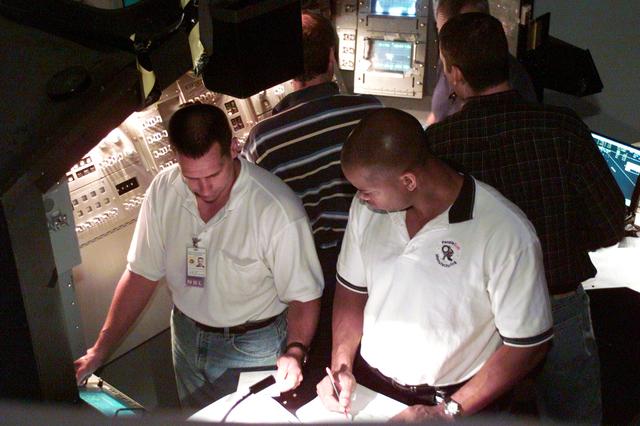
JSC2002-E-28564 (19 July 2002) --- Astronauts William A. Oefelein (left) and Robert L. Curbeam, Jr., STS-116 pilot and mission specialist, respectively, participate in a simulation exercise in the system engineering simulator in the Avionics Systems Laboratory at the Johnson Space Center (JSC). The facility includes moving scenes of full-sized International Space Station (ISS) components over a simulated Earth.
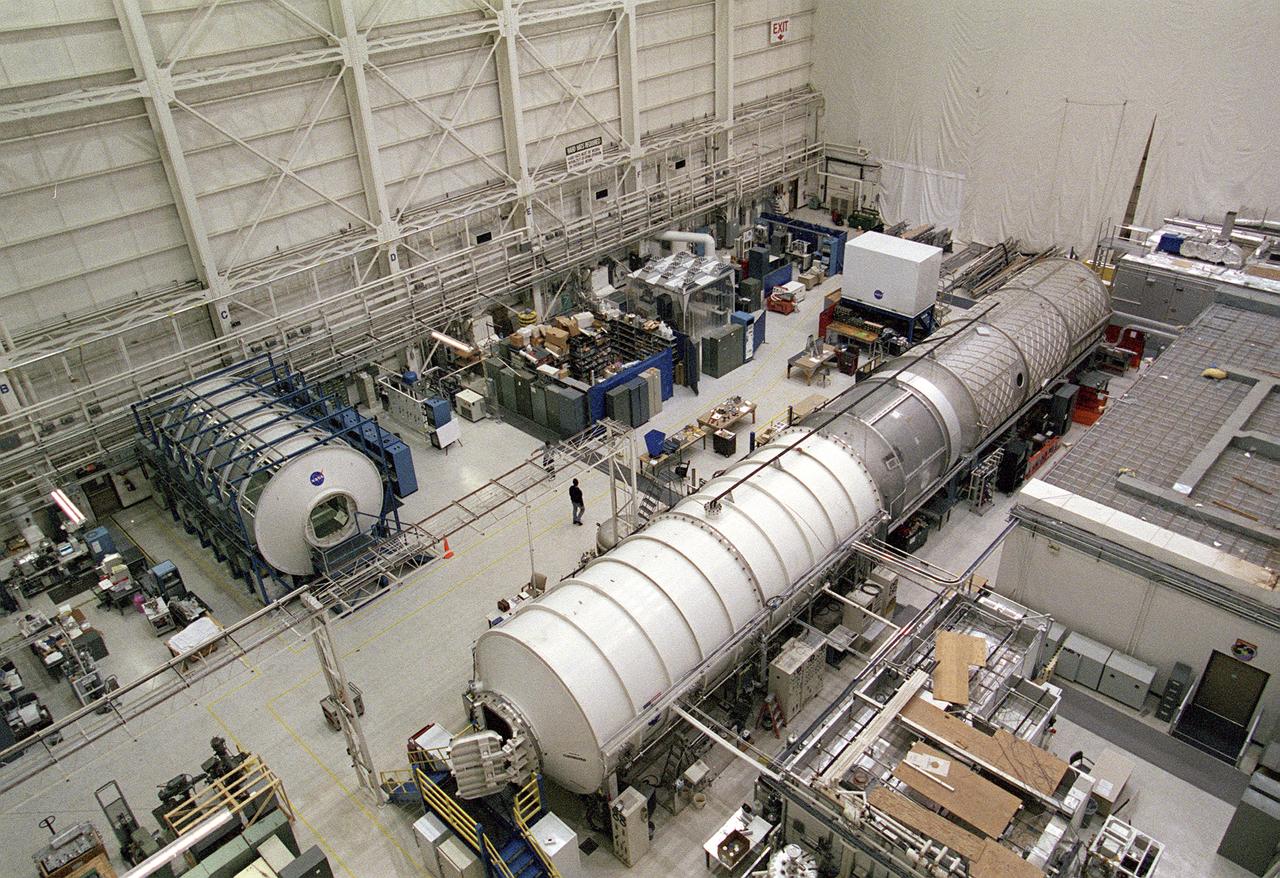
The Marshall Space Flight Center (MSFC) is responsible for designing and building the life support systems that will provide the crew of the International Space Station (ISS) a comfortable environment in which to live and work. Scientists and engineers at the MSFC are working together to provide the ISS with systems that are safe, efficient, and cost-effective. These compact and powerful systems are collectively called the Environmental Control and Life Support Systems, or simply, ECLSS. This is a view of the ECLSS and the Internal Thermal Control System (ITCS) Test Facility in building 4755, MSFC. In the foreground is the 3-module ECLSS simulator comprised of the U.S. Laboratory Module Simulator, Node 1 Simulator, and Node 3/Habitation Module Simulator. At center left is the ITCS Simulator. The main function of the ITCS is to control the temperature of equipment and hardware installed in a typical ISS Payload Rack.
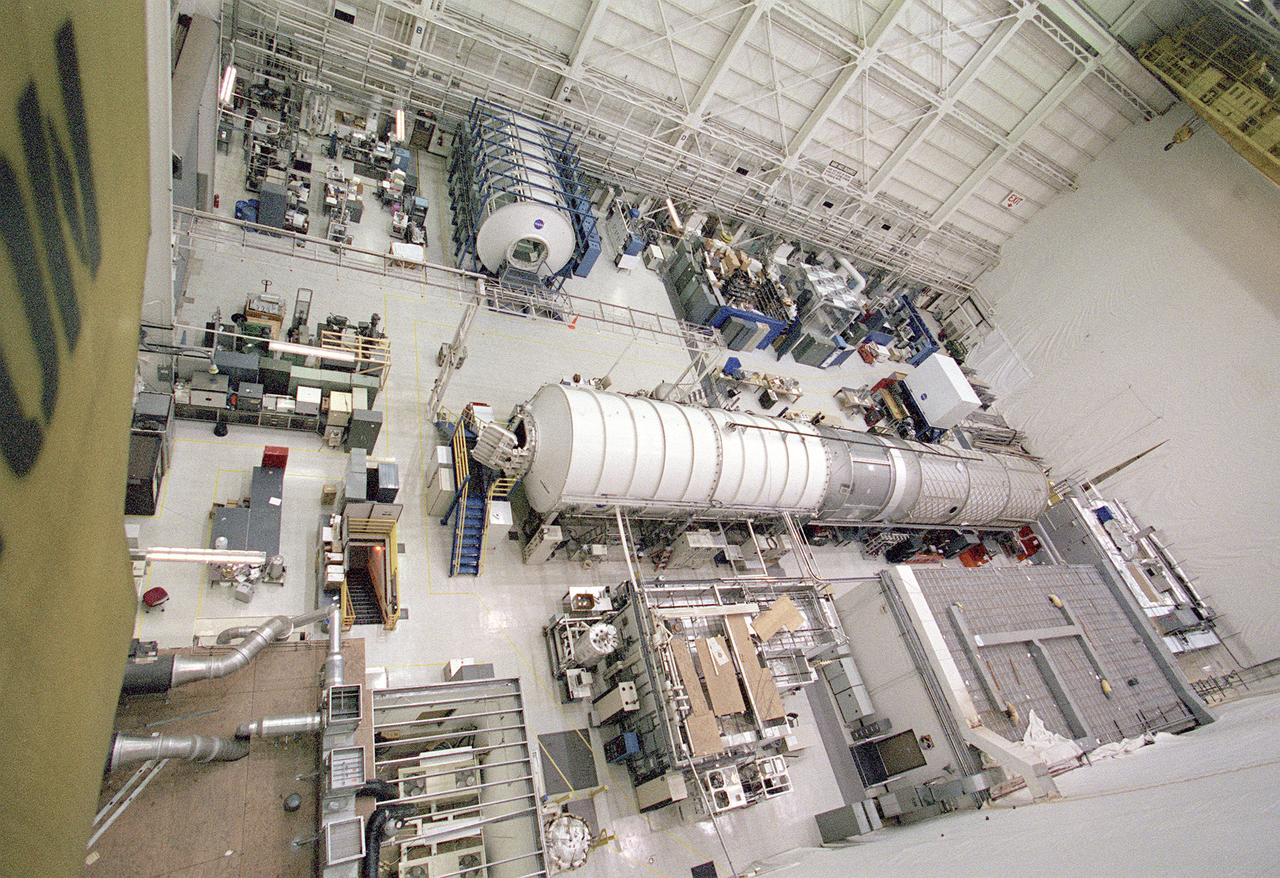
The Marshall Space Flight Center (MSFC) is responsible for designing and building the life support systems that will provide the crew of the International Space Station (ISS) a comfortable environment in which to live and work. Scientists and engineers at the MSFC are working together to provide the ISS with systems that are safe, efficient, and cost-effective. These compact and powerful systems are collectively called the Environmental Control and Life Support Systems, or simply, ECLSS. This is a view of the ECLSS and the Internal Thermal Control System (ITCS) Test Facility in building 4755, MSFC. In the foreground is the 3-module ECLSS simulator comprised of the U.S. Laboratory Module Simulator, Node 1 Simulator, and Node 3/Habitation Module Simulator. On the left is the ITCS Simulator. The main function of the ITCS is to control the temperature of equipment and hardware installed in a typical ISS Payload Rack.
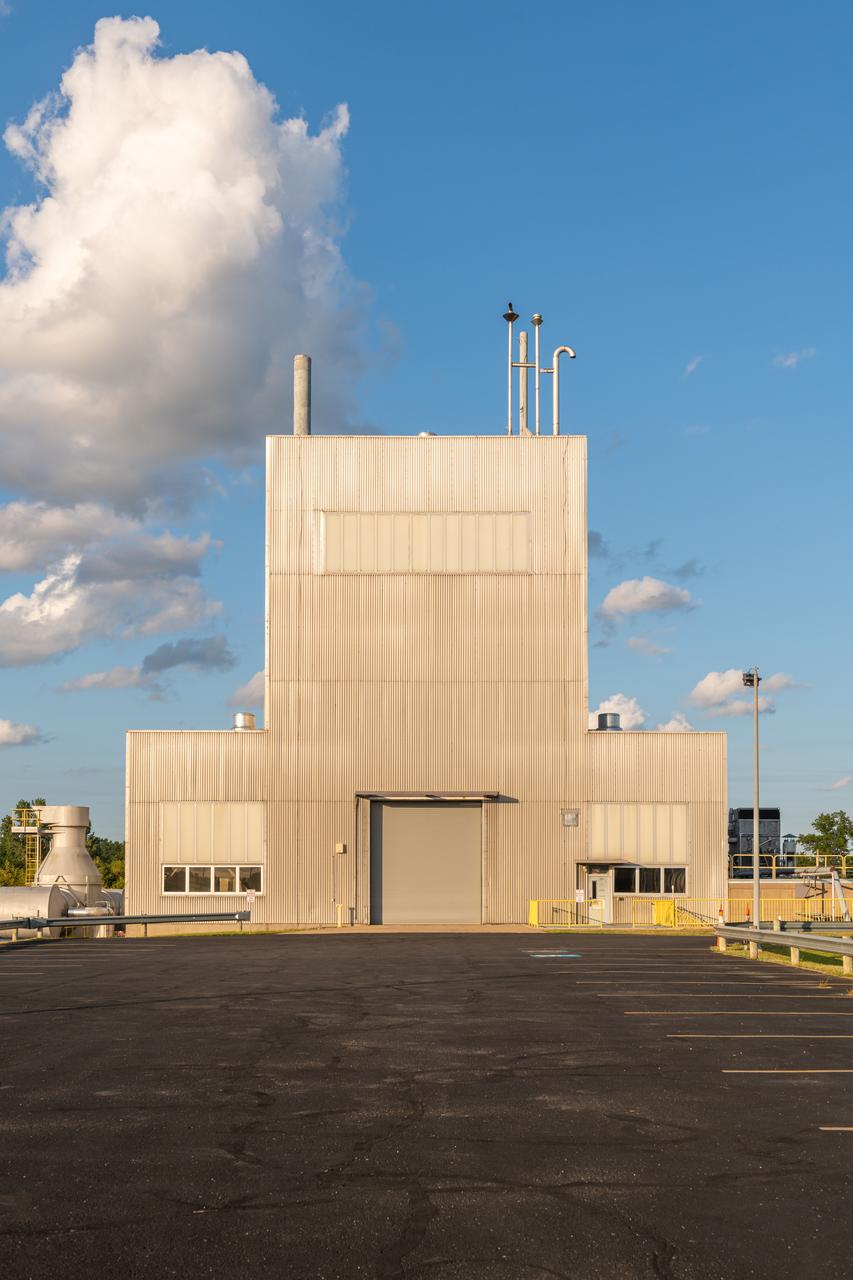
NASA’s In-Space Propulsion Facility located at Neil Armstrong Test Facility in Sandusky Ohio is the world’s only high altitude test facility capable of full-scale rocket engine and launch vehicle system level tests. The facility supports mission profile thermal vacuum simulation and engine firing. The engine or vehicle can be exposed for indefinite periods to low ambient pressures, low-background temperatures, and dynamic solar heating, simulating the environment the hardware will encounter during orbital or interplanetary travel. Photo Credit: (NASA/Jordan Salkin)
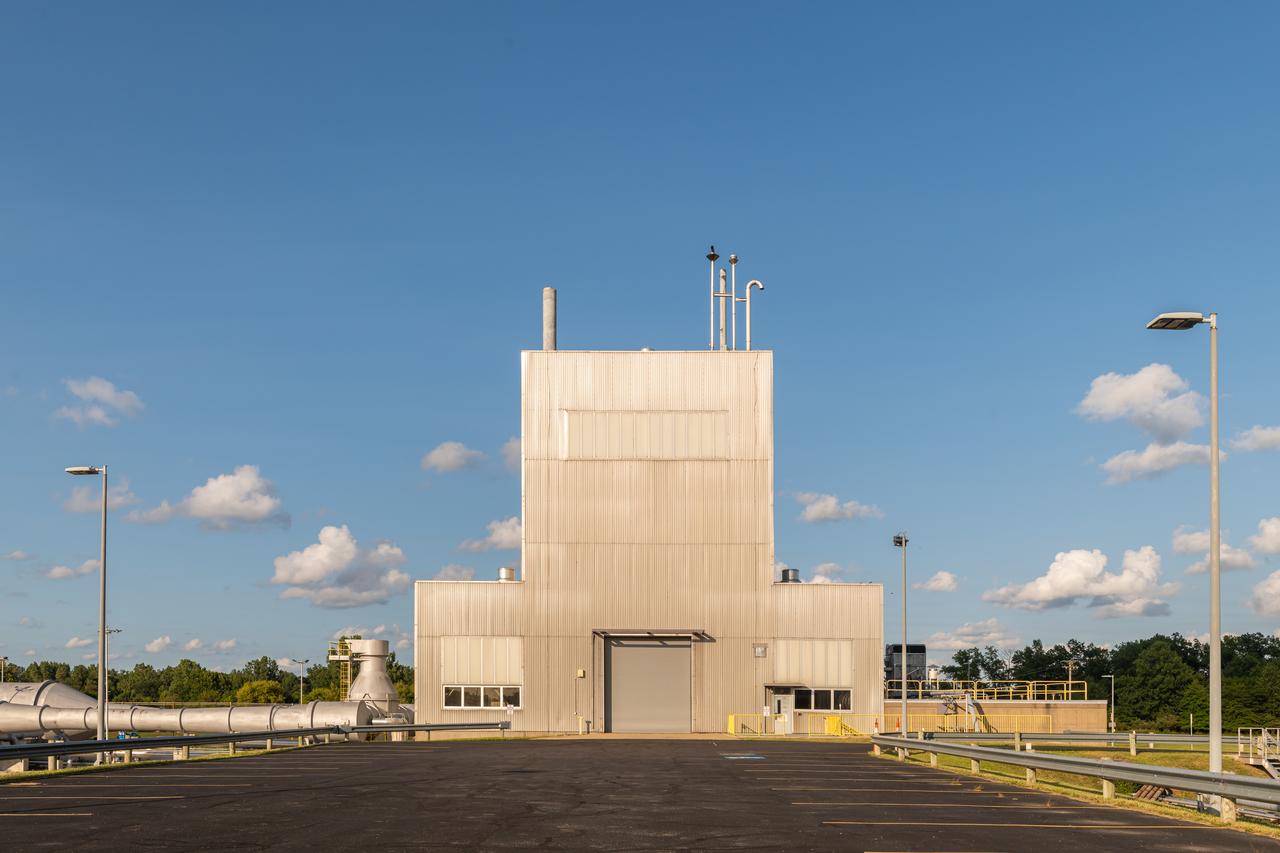
NASA’s In-Space Propulsion Facility located at Neil Armstrong Test Facility in Sandusky Ohio is the world’s only high altitude test facility capable of full-scale rocket engine and launch vehicle system level tests. The facility supports mission profile thermal vacuum simulation and engine firing. The engine or vehicle can be exposed for indefinite periods to low ambient pressures, low-background temperatures, and dynamic solar heating, simulating the environment the hardware will encounter during orbital or interplanetary travel. Photo Credit: (NASA/Jordan Salkin)
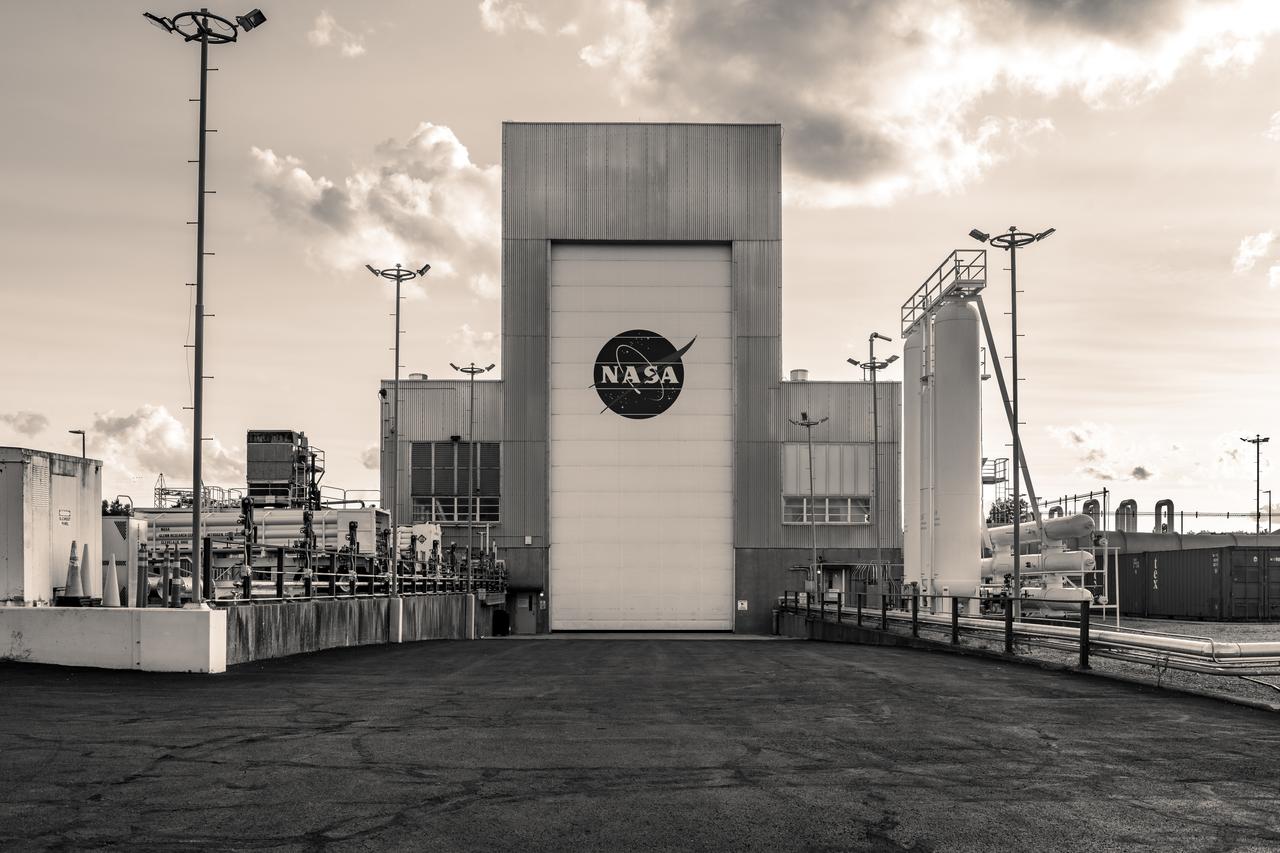
NASA’s In-Space Propulsion Facility located at Neil Armstrong Test Facility in Sandusky Ohio is the world’s only high altitude test facility capable of full-scale rocket engine and launch vehicle system level tests. The facility supports mission profile thermal vacuum simulation and engine firing. The engine or vehicle can be exposed for indefinite periods to low ambient pressures, low-background temperatures, and dynamic solar heating, simulating the environment the hardware will encounter during orbital or interplanetary travel. Photo Credit: (NASA/Jordan Salkin)
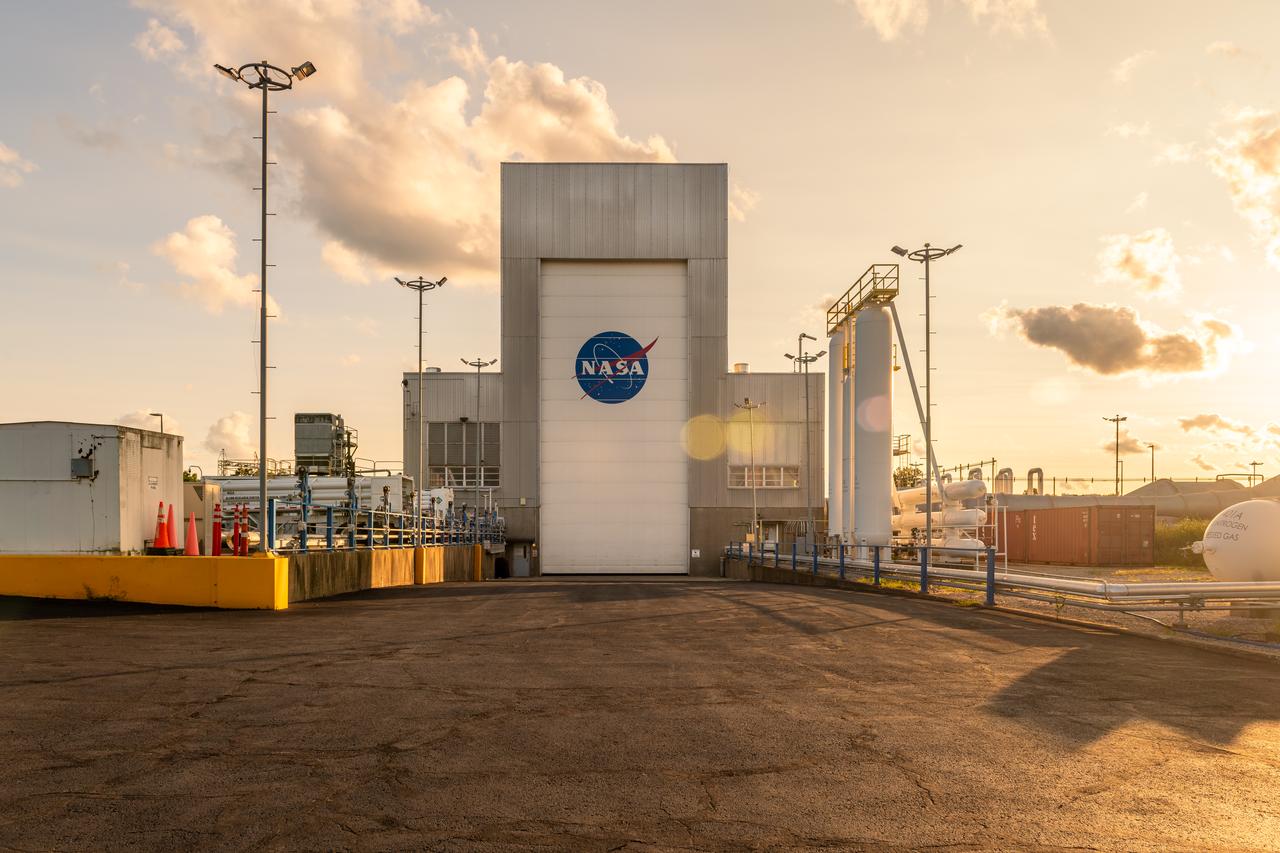
NASA’s In-Space Propulsion Facility located at Neil Armstrong Test Facility in Sandusky Ohio is the world’s only high altitude test facility capable of full-scale rocket engine and launch vehicle system level tests. The facility supports mission profile thermal vacuum simulation and engine firing. The engine or vehicle can be exposed for indefinite periods to low ambient pressures, low-background temperatures, and dynamic solar heating, simulating the environment the hardware will encounter during orbital or interplanetary travel. Photo Credit: (NASA/Jordan Salkin)
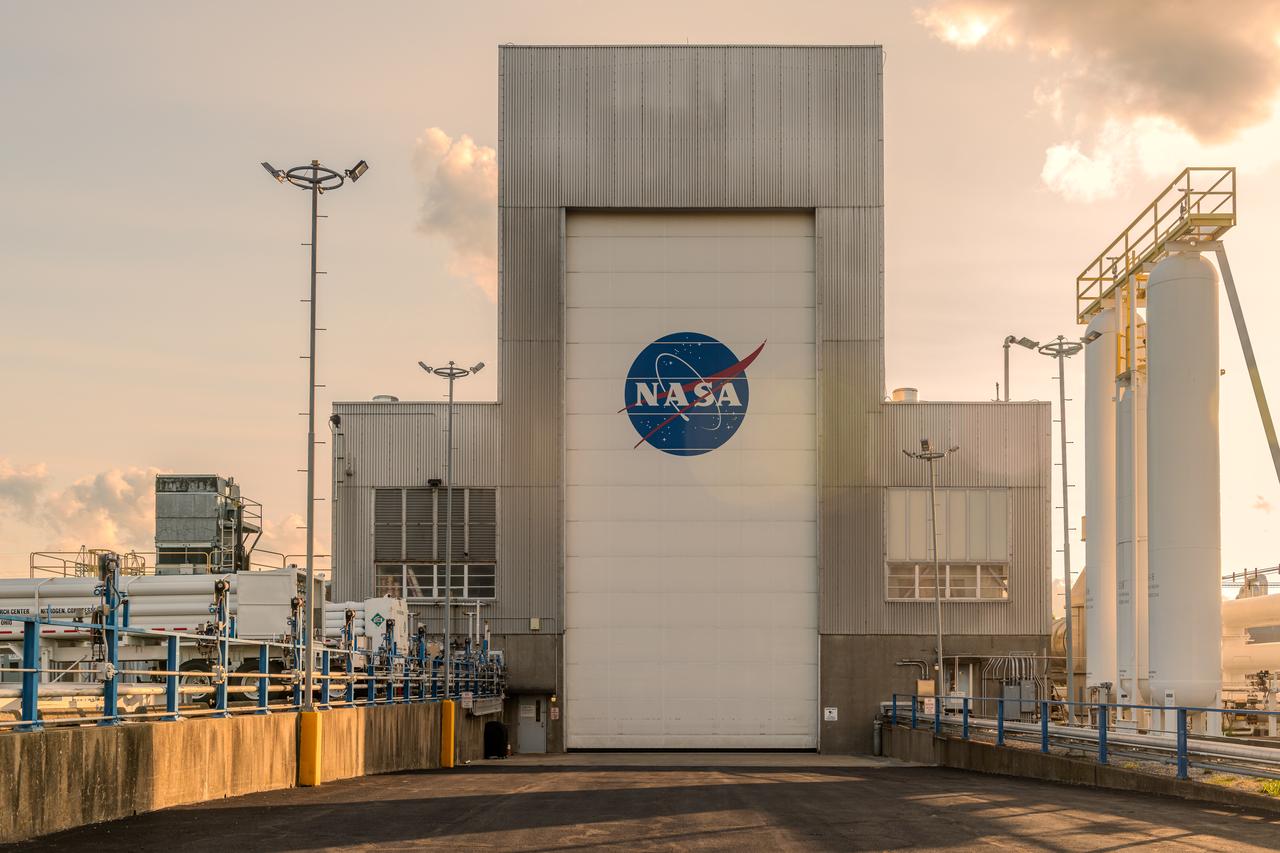
NASA’s In-Space Propulsion Facility located at Neil Armstrong Test Facility in Sandusky Ohio is the world’s only high altitude test facility capable of full-scale rocket engine and launch vehicle system level tests. The facility supports mission profile thermal vacuum simulation and engine firing. The engine or vehicle can be exposed for indefinite periods to low ambient pressures, low-background temperatures, and dynamic solar heating, simulating the environment the hardware will encounter during orbital or interplanetary travel. Photo Credit: (NASA/Jordan Salkin)
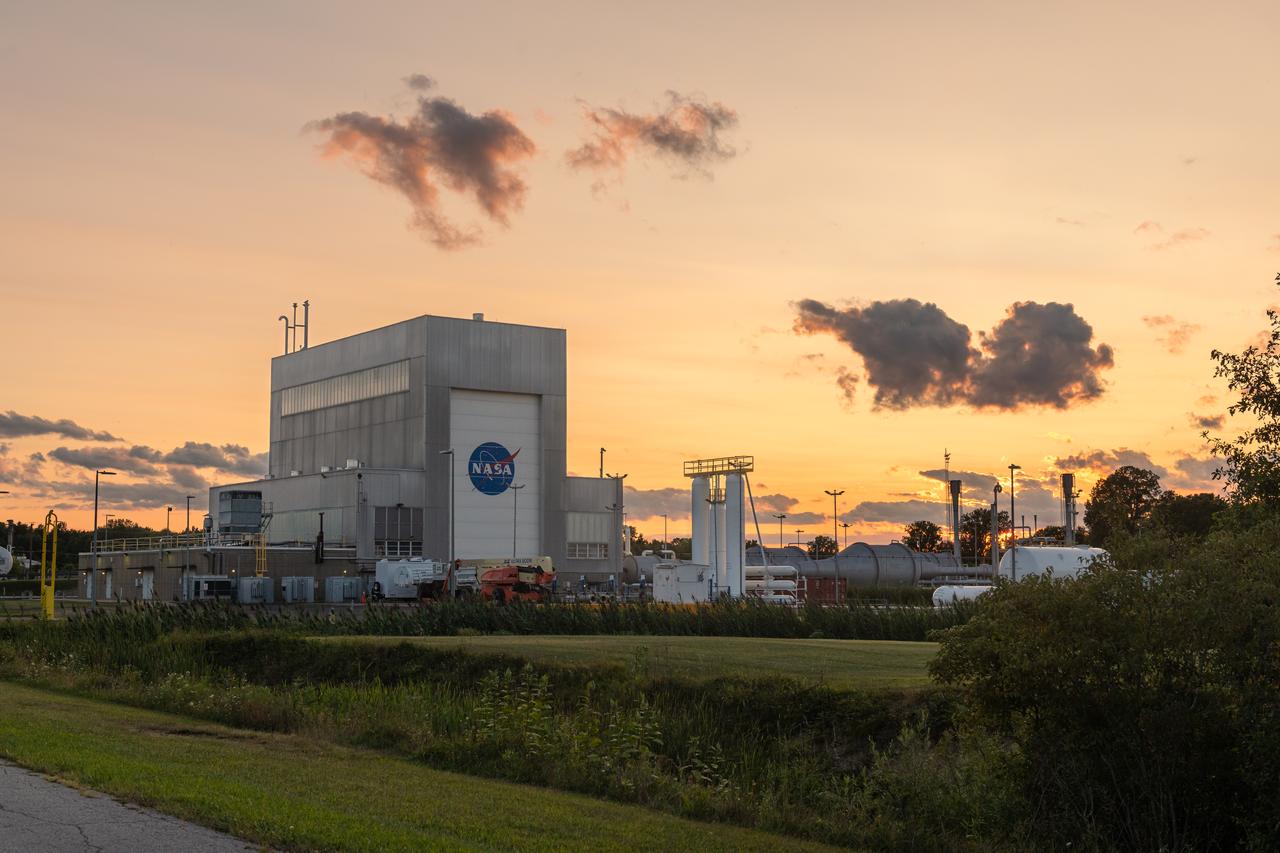
NASA’s In-Space Propulsion Facility located at Neil Armstrong Test Facility in Sandusky Ohio is the world’s only high altitude test facility capable of full-scale rocket engine and launch vehicle system level tests. The facility supports mission profile thermal vacuum simulation and engine firing. The engine or vehicle can be exposed for indefinite periods to low ambient pressures, low-background temperatures, and dynamic solar heating, simulating the environment the hardware will encounter during orbital or interplanetary travel. Photo Credit: (NASA/Jordan Salkin)
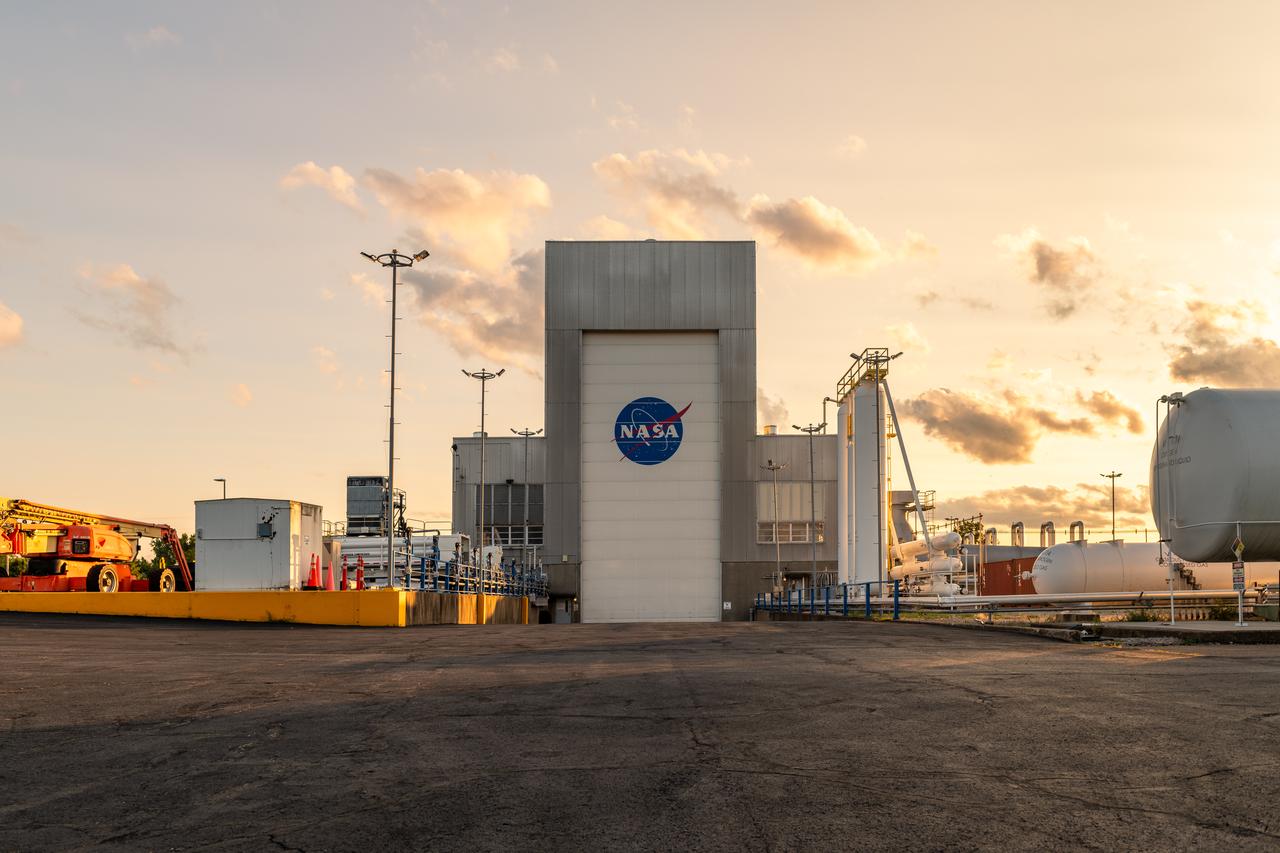
NASA’s In-Space Propulsion Facility located at Neil Armstrong Test Facility in Sandusky Ohio is the world’s only high altitude test facility capable of full-scale rocket engine and launch vehicle system level tests. The facility supports mission profile thermal vacuum simulation and engine firing. The engine or vehicle can be exposed for indefinite periods to low ambient pressures, low-background temperatures, and dynamic solar heating, simulating the environment the hardware will encounter during orbital or interplanetary travel. Photo Credit: (NASA/Jordan Salkin)
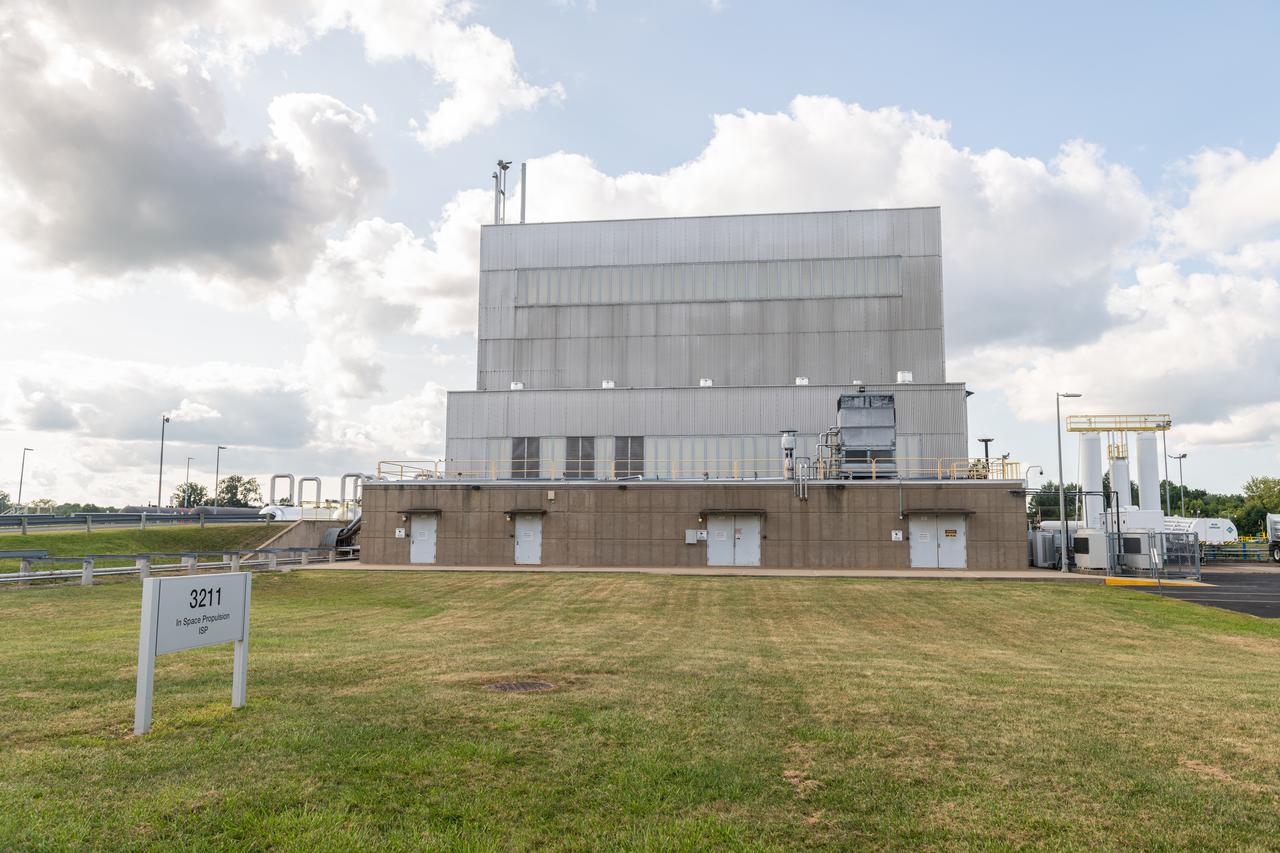
NASA’s In-Space Propulsion Facility located at Neil Armstrong Test Facility in Sandusky Ohio is the world’s only high altitude test facility capable of full-scale rocket engine and launch vehicle system level tests. The facility supports mission profile thermal vacuum simulation and engine firing. The engine or vehicle can be exposed for indefinite periods to low ambient pressures, low-background temperatures, and dynamic solar heating, simulating the environment the hardware will encounter during orbital or interplanetary travel. Photo Credit: (NASA/Jordan Salkin)
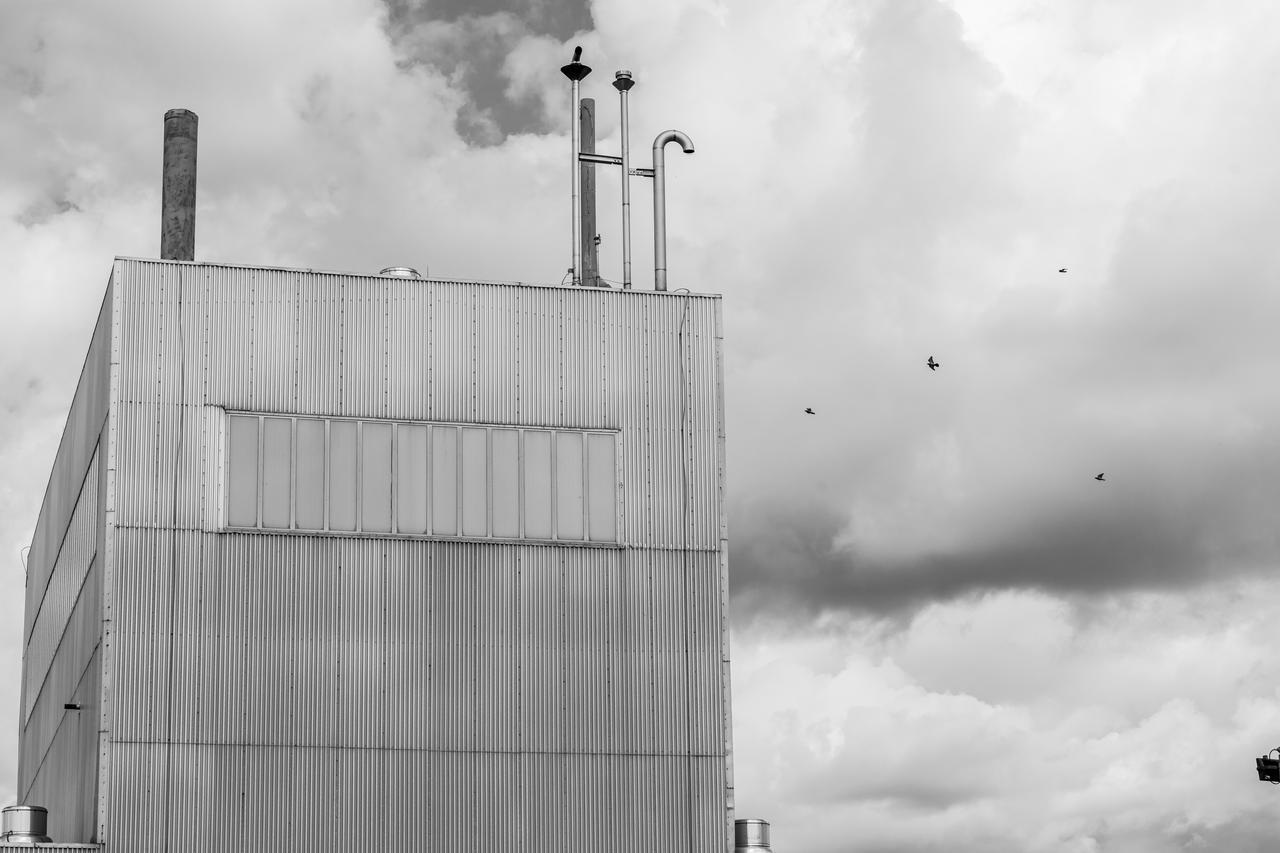
NASA’s In-Space Propulsion Facility located at Neil Armstrong Test Facility in Sandusky Ohio is the world’s only high altitude test facility capable of full-scale rocket engine and launch vehicle system level tests. The facility supports mission profile thermal vacuum simulation and engine firing. The engine or vehicle can be exposed for indefinite periods to low ambient pressures, low-background temperatures, and dynamic solar heating, simulating the environment the hardware will encounter during orbital or interplanetary travel. Photo Credit: (NASA/Jordan Salkin)
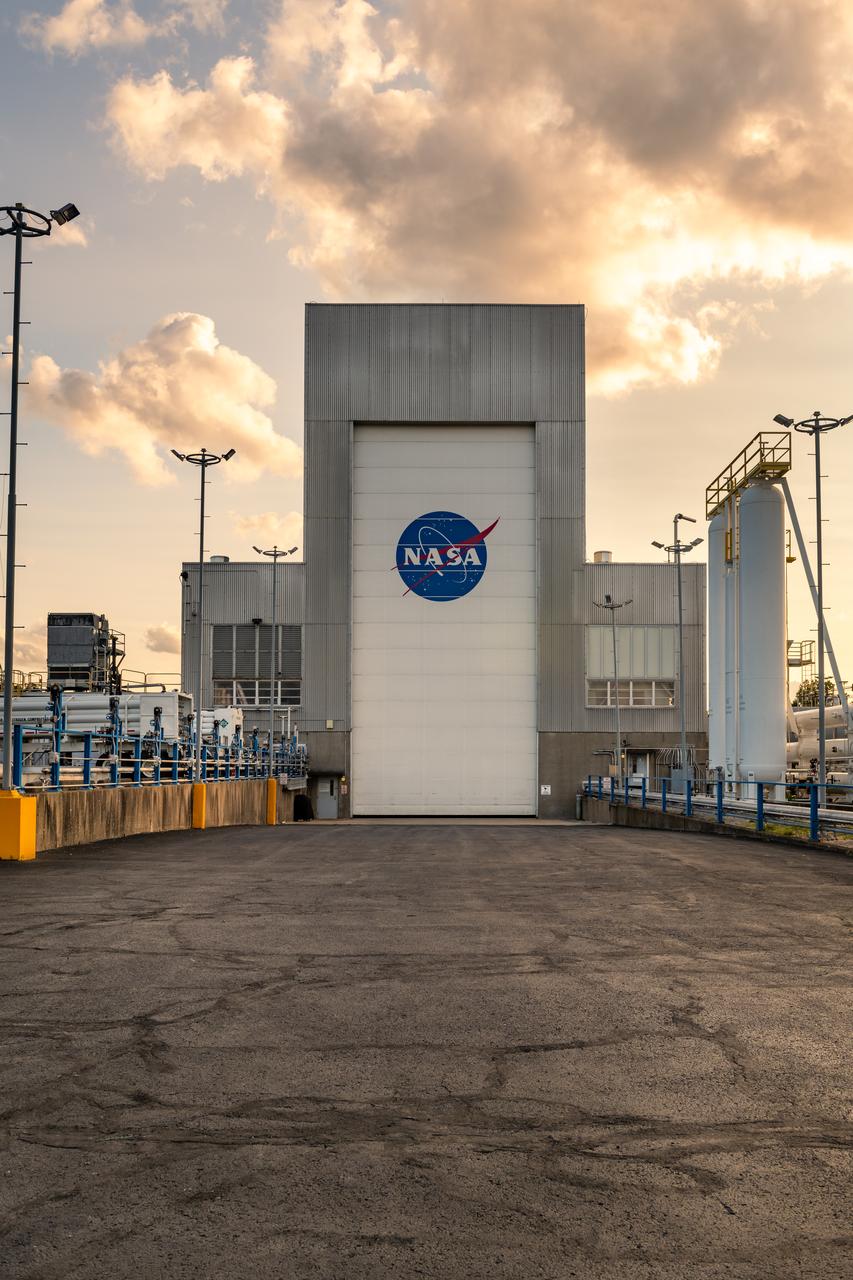
NASA’s In-Space Propulsion Facility located at Neil Armstrong Test Facility in Sandusky Ohio is the world’s only high altitude test facility capable of full-scale rocket engine and launch vehicle system level tests. The facility supports mission profile thermal vacuum simulation and engine firing. The engine or vehicle can be exposed for indefinite periods to low ambient pressures, low-background temperatures, and dynamic solar heating, simulating the environment the hardware will encounter during orbital or interplanetary travel. Photo Credit: (NASA/Jordan Salkin)
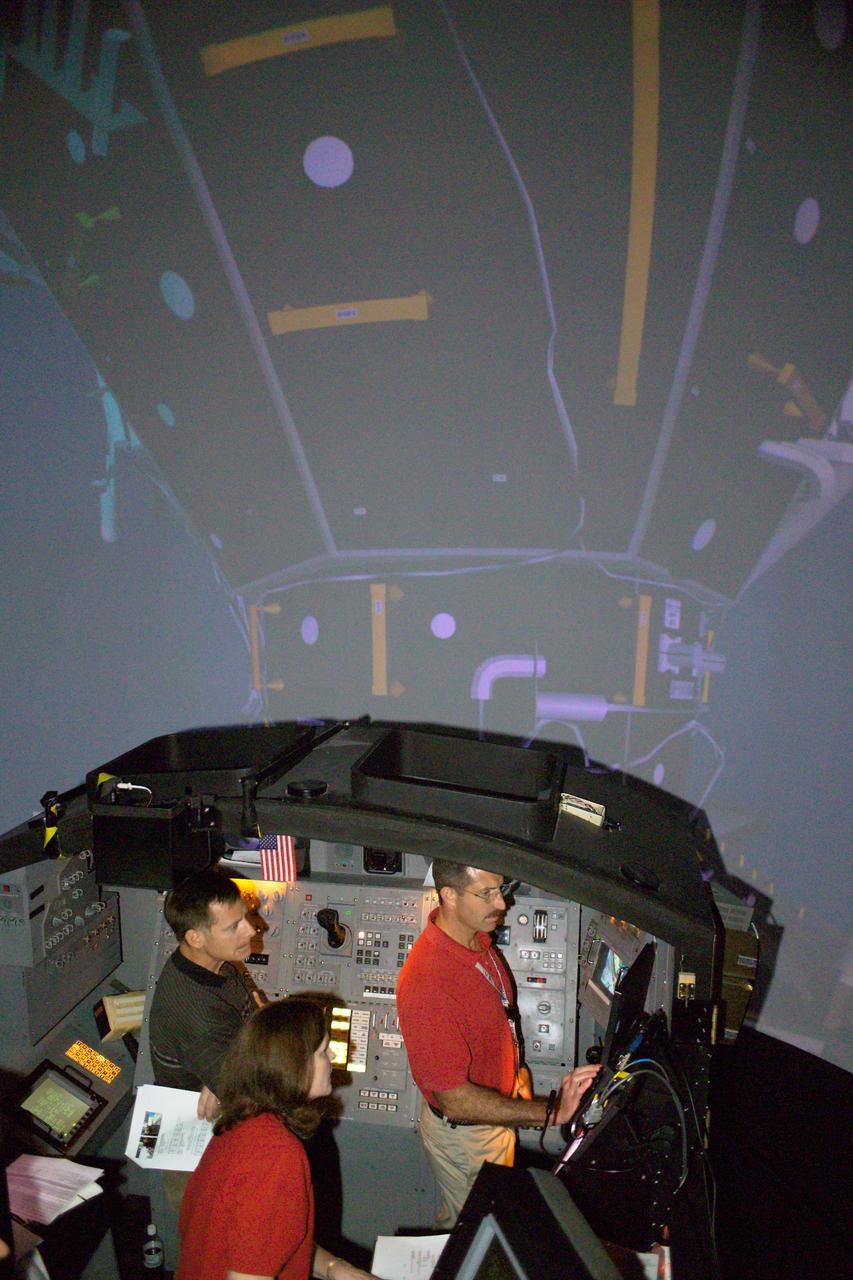
JSC2005-E-17977 (4 May 2005) --- Astronauts Christopher J. Ferguson (left), STS-115 pilot, and Daniel C. Burbank, mission specialist, participate in an exercise in the systems engineering simulator at Johnson Space Center. The facility includes moving scenes of full-sized international space station components over a simulated Earth.
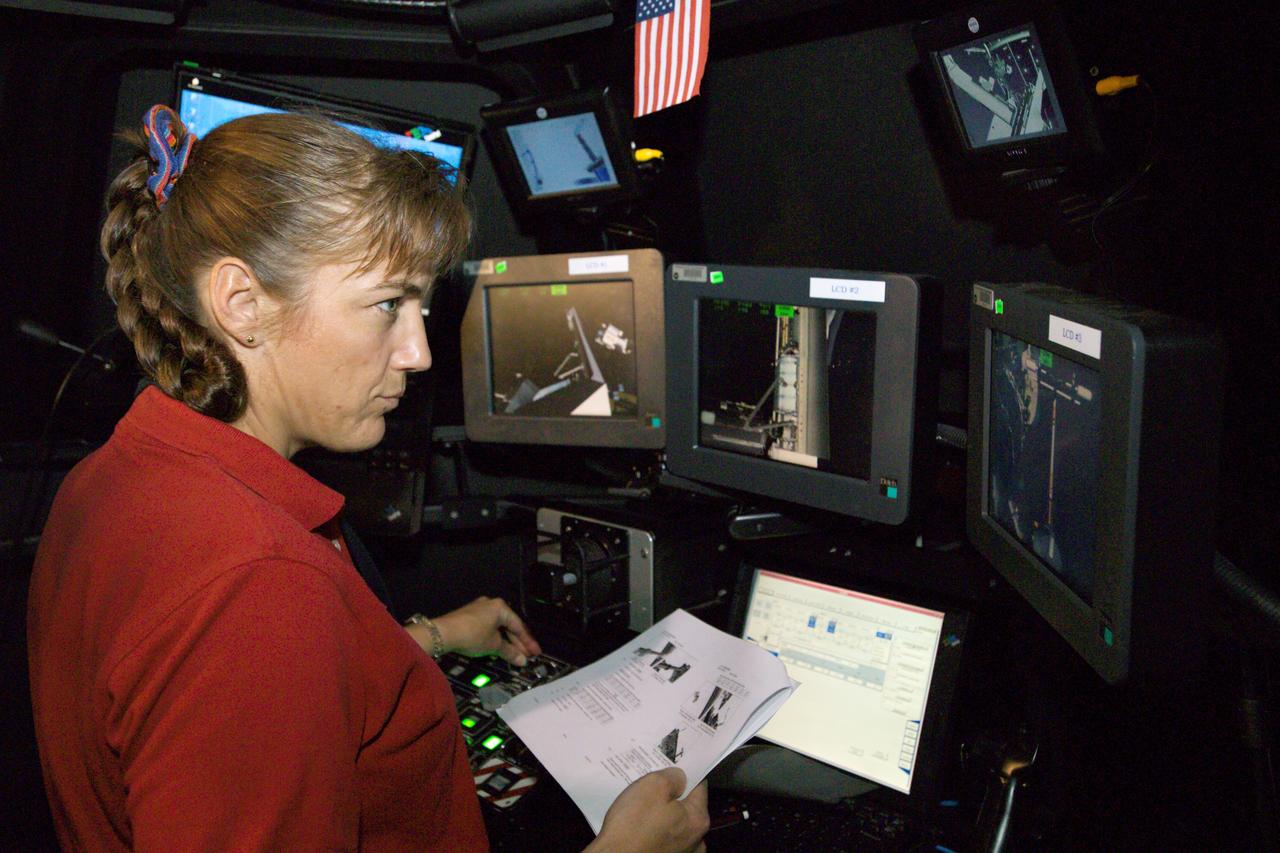
JSC2005-E-17974 (4 May 2005) --- Astronaut Heidemarie M. Stefanyshyn-Piper, STS-115 mission specialist, participates in an exercise in the systems engineering simulator at Johnson Space Center. The facility includes moving scenes of full-sized international space station components over a simulated Earth.
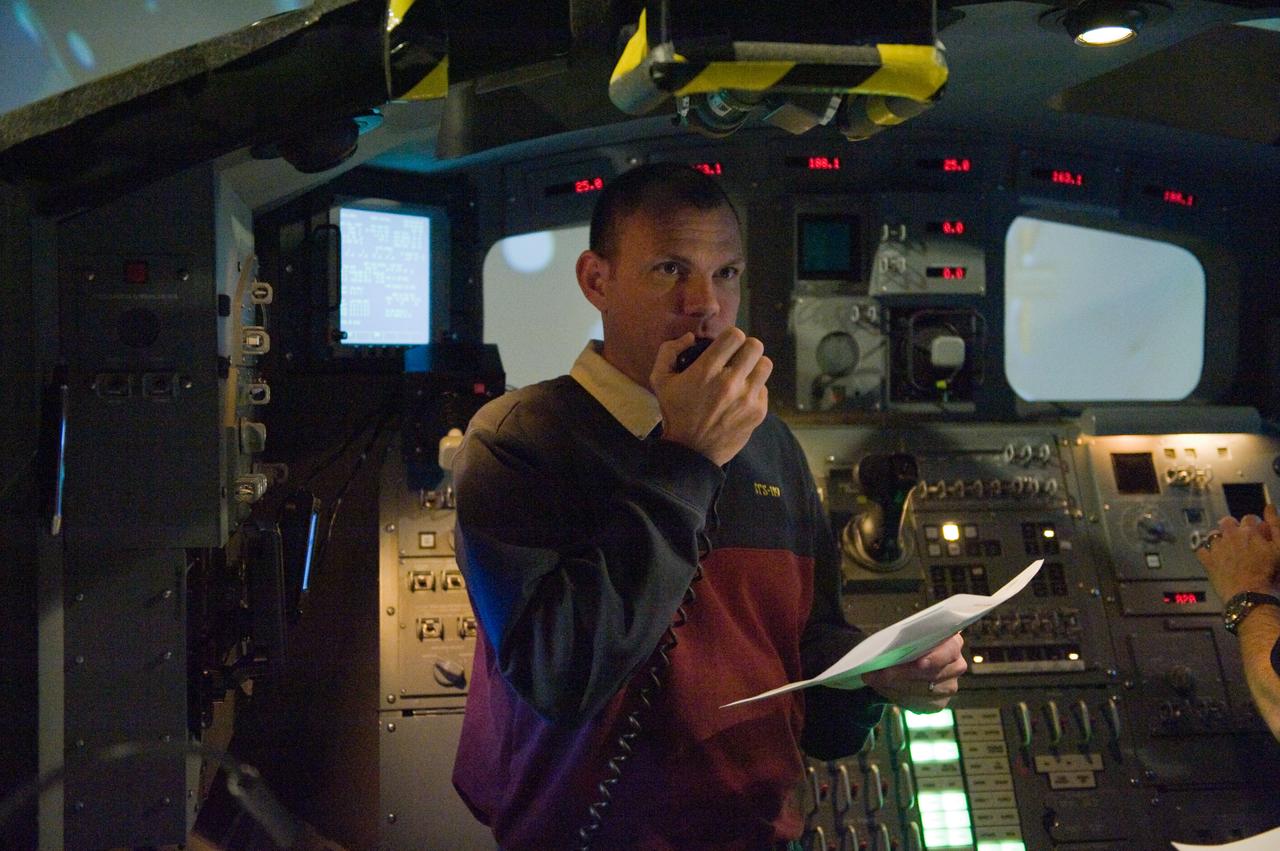
JSC2009-E-286961 (22 Dec. 2009) --- Astronaut Tony Antonelli, STS-132 pilot, uses a communication system during an exercise in the systems engineering simulator in the Avionics Systems Laboratory at NASA?s Johnson Space Center. The facility includes moving scenes of full-sized International Space Station components over a simulated Earth.
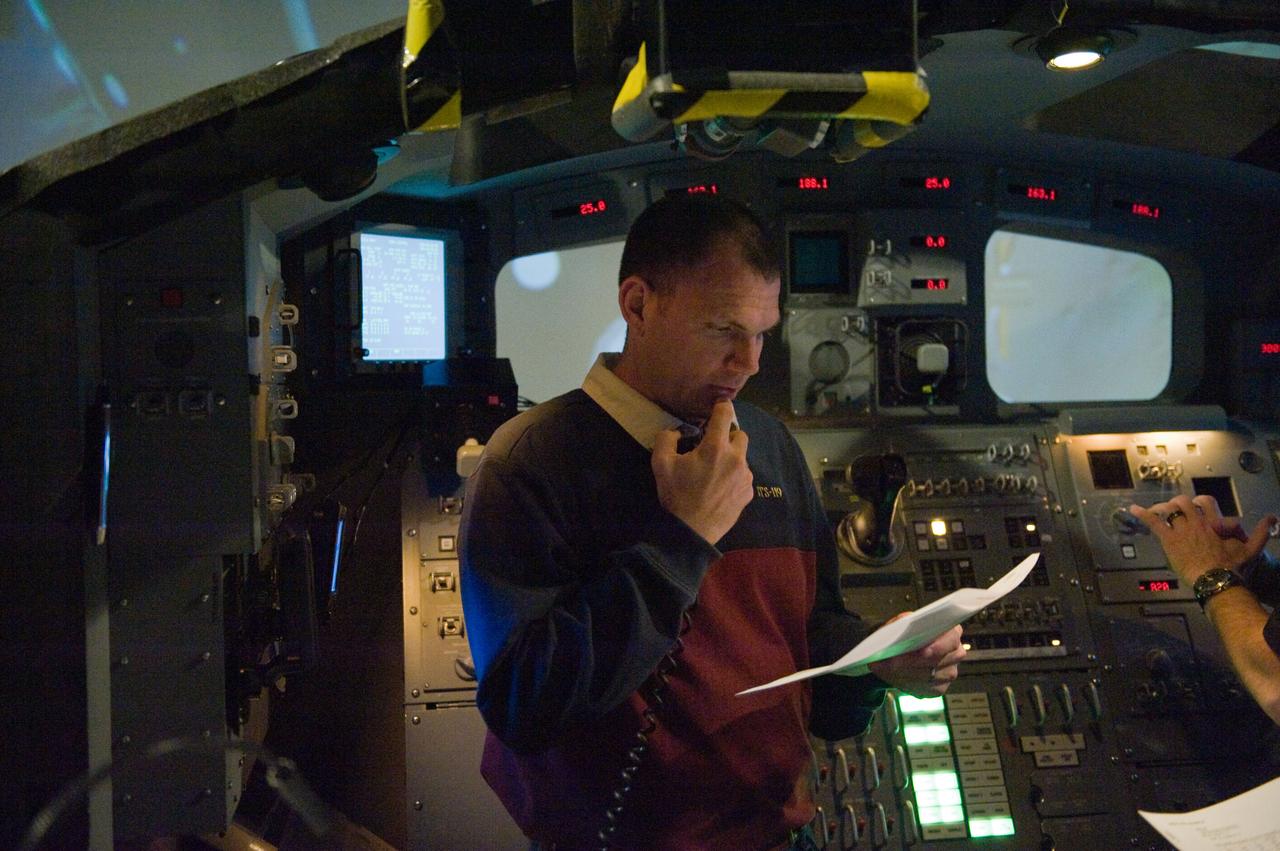
JSC2009-E-286960 (22 Dec. 2009) --- Astronaut Tony Antonelli, STS-132 pilot, uses a communication system during an exercise in the systems engineering simulator in the Avionics Systems Laboratory at NASA?s Johnson Space Center. The facility includes moving scenes of full-sized International Space Station components over a simulated Earth.
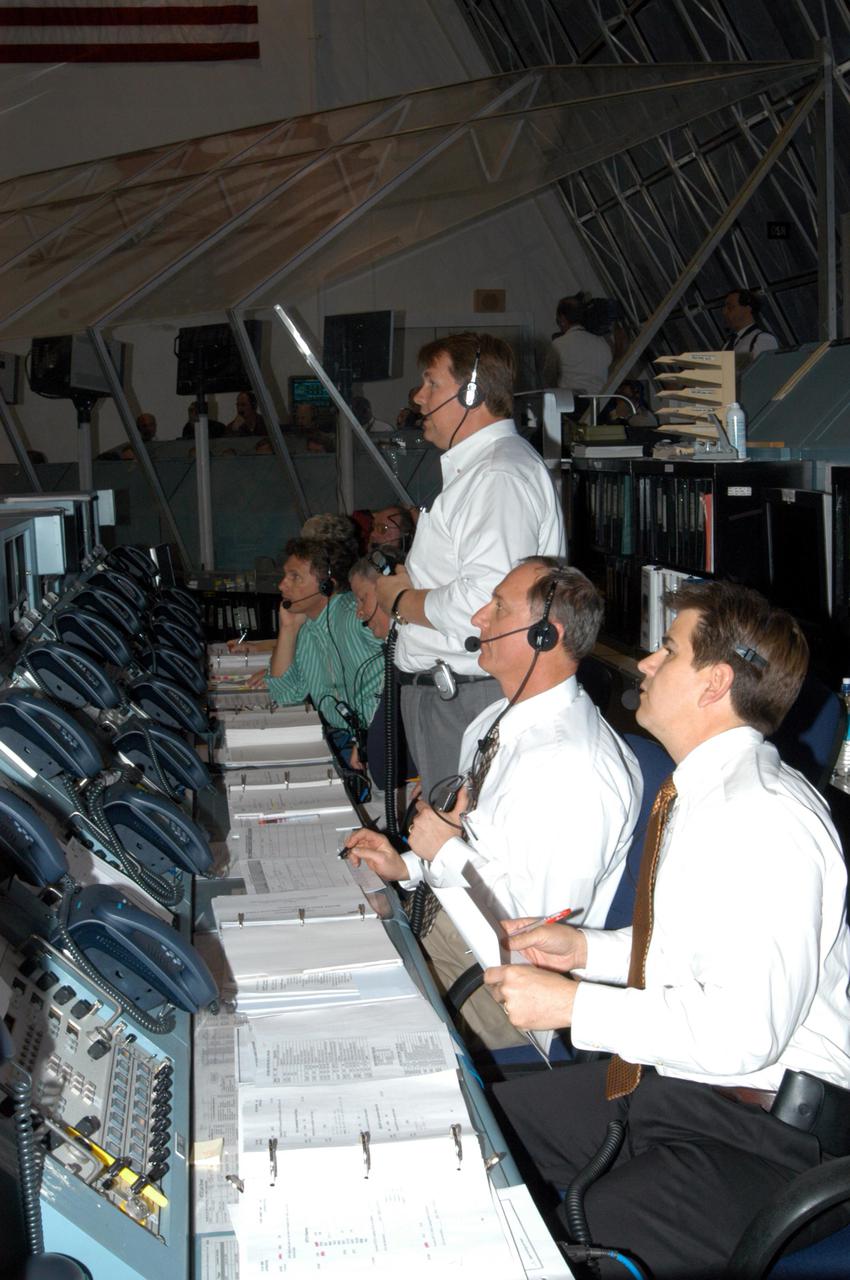
KENNEDY SPACE CENTER, FLA. - Space Shuttle Program managers, directors and engineers man the consoles in the Launch Control Center. They are taking part in an End-to-End (ETE) Mission Management Team (MMT) launch simulation at KSC. In Firing Room 1 at KSC, Shuttle launch team members put the Shuttle system through an integrated simulation. The control room is set up with software used to simulate flight and ground systems in the launch configuration. The ETE MMT simulation included L-2 and L-1 day Prelaunch MMT meetings, an external tanking_weather briefing, and a launch countdown. The ETE transitioned to the Johnson Space Center for the flight portion of the simulation, with the STS-114 crew in a simulator at JSC. Such simulations are common before a launch to keep the Shuttle launch team sharp and ready for liftoff.
KENNEDY SPACE CENTER, FLA. - Space Shuttle Program managers, directors and engineers work the consoles in the Launch Control Center. They are taking part in an End-to-End (ETE) Mission Management Team (MMT) launch simulation at KSC. In Firing Room 1 at KSC, Shuttle launch team members put the Shuttle system through an integrated simulation. The control room is set up with software used to simulate flight and ground systems in the launch configuration. The ETE MMT simulation included L-2 and L-1 day Prelaunch MMT meetings, an external tanking_weather briefing, and a launch countdown. The ETE transitioned to the Johnson Space Center for the flight portion of the simulation, with the STS-114 crew in a simulator at JSC. Such simulations are common before a launch to keep the Shuttle launch team sharp and ready for liftoff.
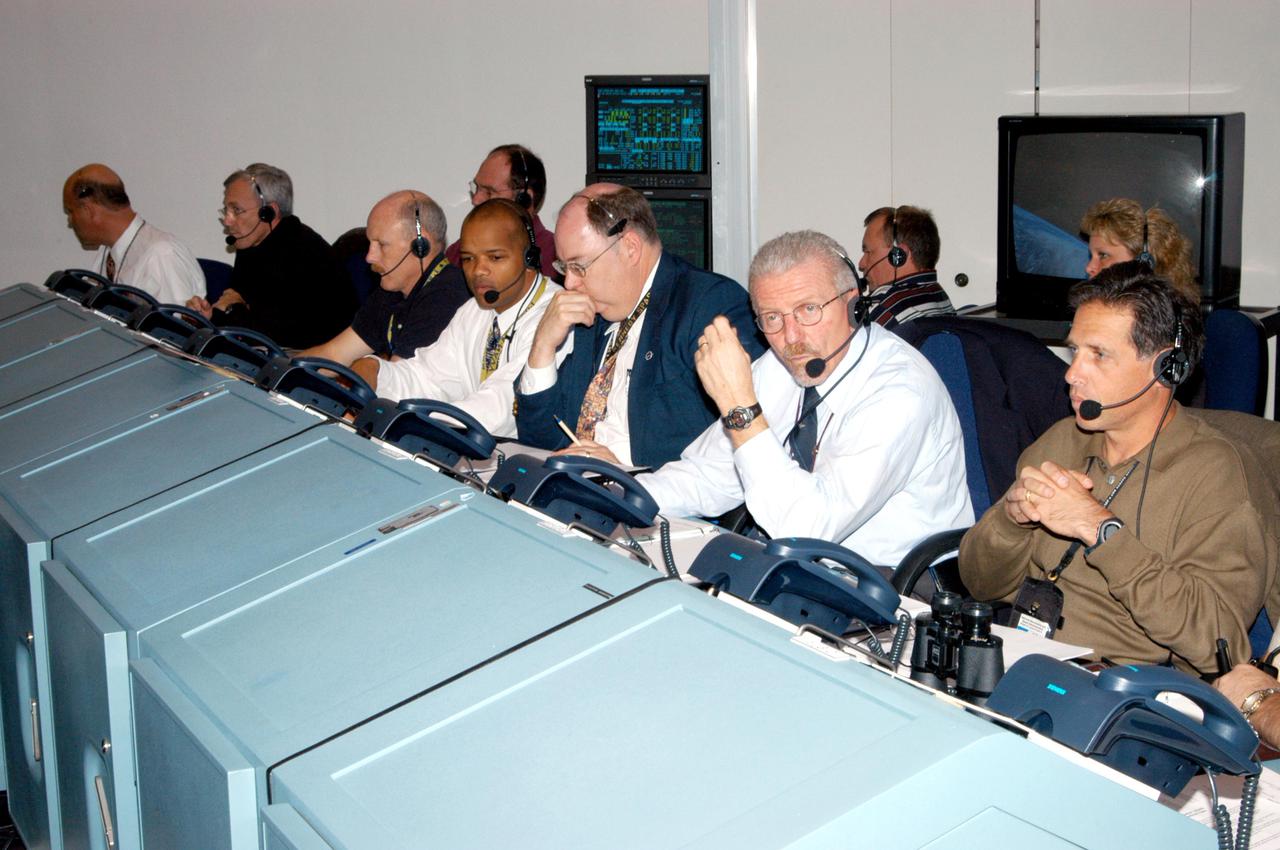
KENNEDY SPACE CENTER, FLA. - Space Shuttle Program managers, directors and engineers work the consoles in the Launch Control Center. They are taking part in an End-to-End (ETE) Mission Management Team (MMT) launch simulation at KSC. In Firing Room 1 at KSC, Shuttle launch team members put the Shuttle system through an integrated simulation. The control room is set up with software used to simulate flight and ground systems in the launch configuration. The ETE MMT simulation included L-2 and L-1 day Prelaunch MMT meetings, an external tanking_weather briefing, and a launch countdown. The ETE transitioned to the Johnson Space Center for the flight portion of the simulation, with the STS-114 crew in a simulator at JSC. Such simulations are common before a launch to keep the Shuttle launch team sharp and ready for liftoff.
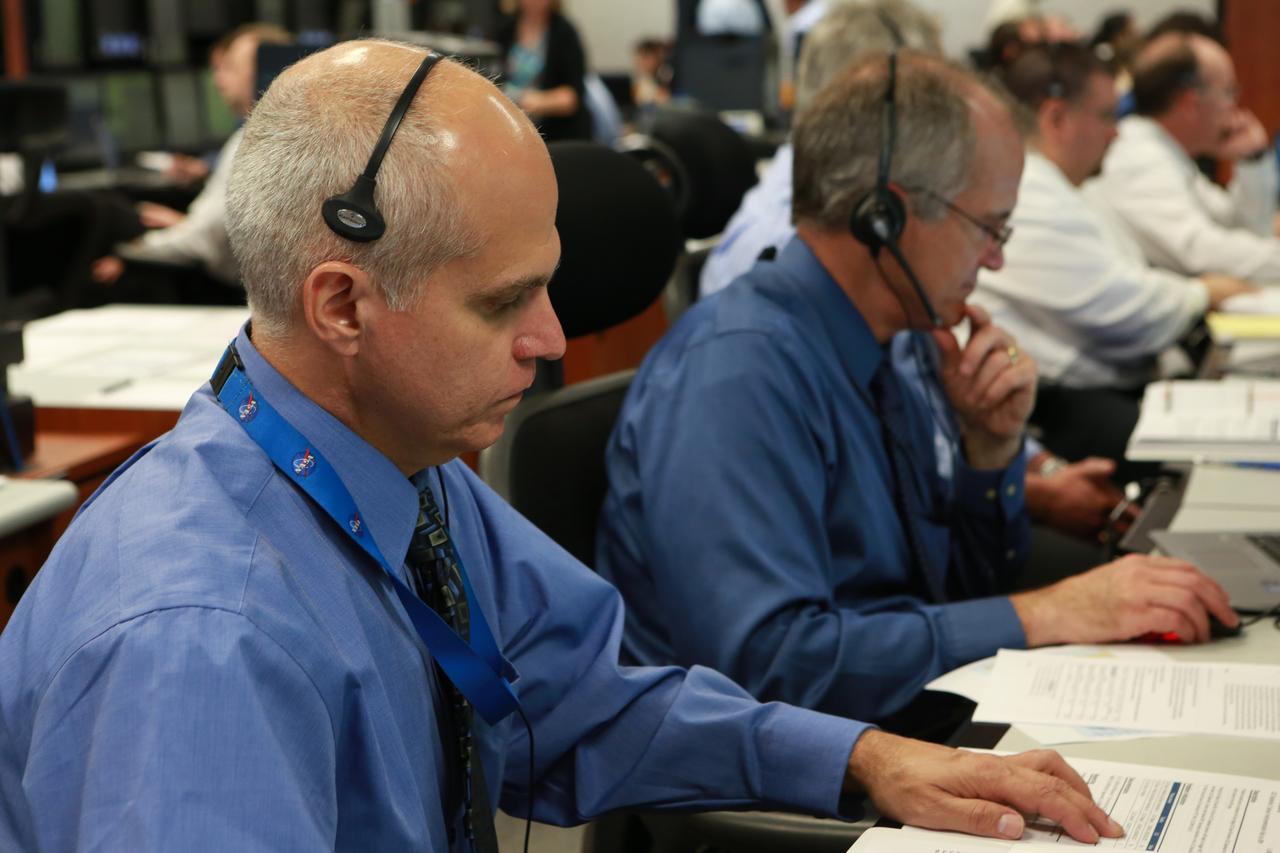
Jacobs Test Project Engineer Don Vinton, left and NASA Operations Project Engineer Doug Robertson, monitor operations from his position in Firing Room 1 at the Kennedy Space Center's Launch Control Center during a countdown simulation for Exploration Mission 1. It was the agency's first simulation of a portion of the countdown for the first launch of a Space Launch System rocket and Orion spacecraft that will eventually take astronauts beyond low-Earth orbit to destinations such as the Moon and Mars.
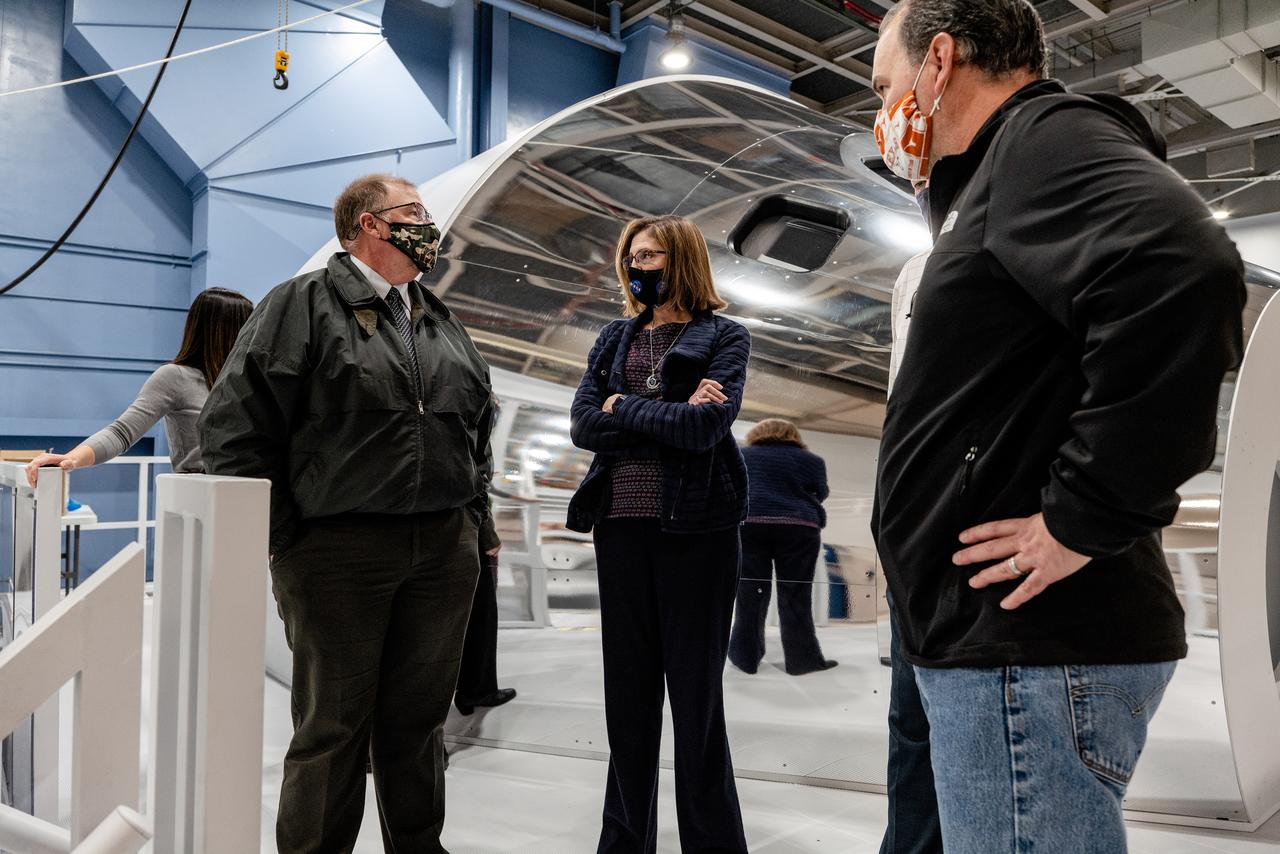
Examination of Orion spacecraft simulator that recently arrived at the agency’s Johnson Space Center in Houston on Dec. 8, 2020. The simulator provides the ability for astronauts, engineers, and flight controllers to train and practice for scenarios during Artemis missions to the Moon. The interior of the simulator is being outfitted with Orion’s display and control system and crew seats to mimic what astronaut will experience during liftoff to the lunar vicinity and on their way back home to Earth.
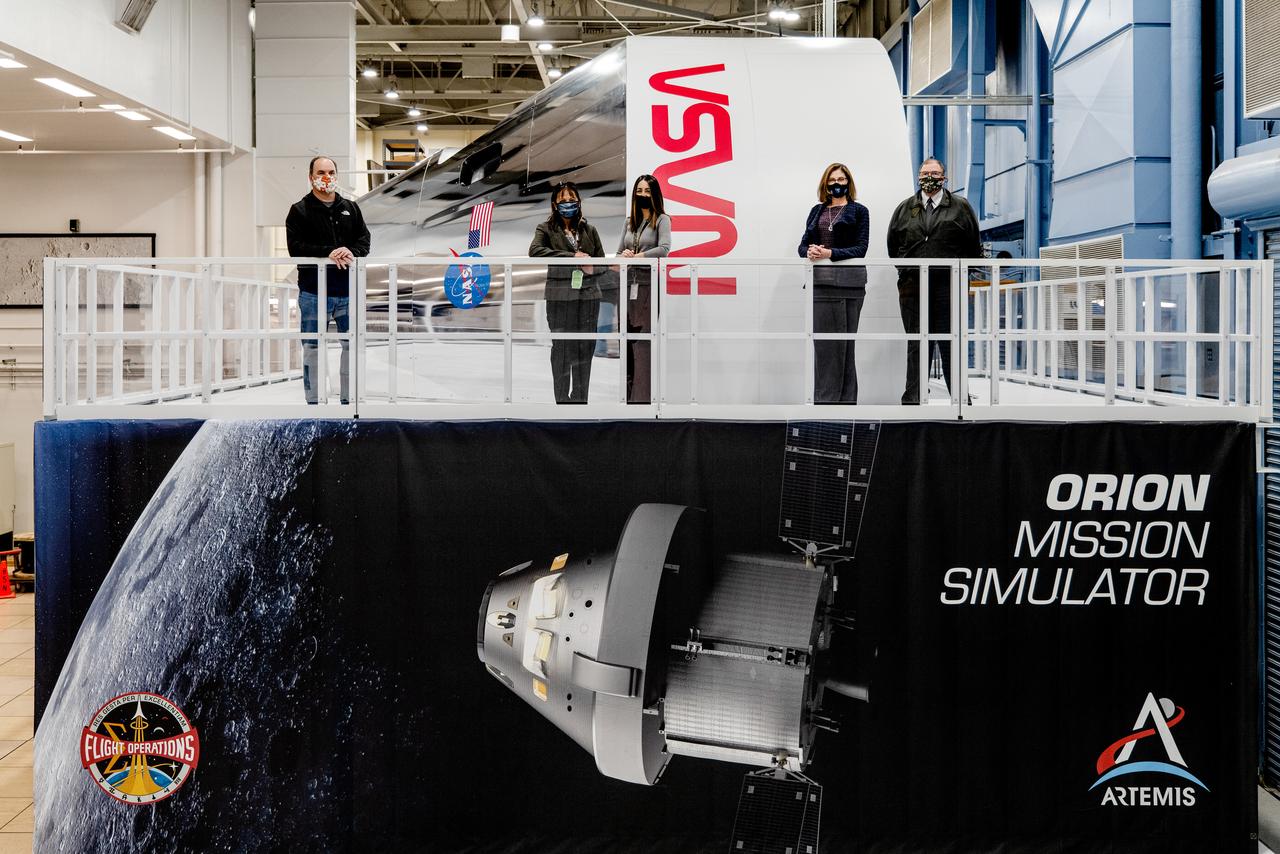
Examination of Orion spacecraft simulator that recently arrived at the agency’s Johnson Space Center in Houston on Dec. 8, 2020. The simulator provides the ability for astronauts, engineers, and flight controllers to train and practice for scenarios during Artemis missions to the Moon. The interior of the simulator is being outfitted with Orion’s display and control system and crew seats to mimic what astronaut will experience during liftoff to the lunar vicinity and on their way back home to Earth.
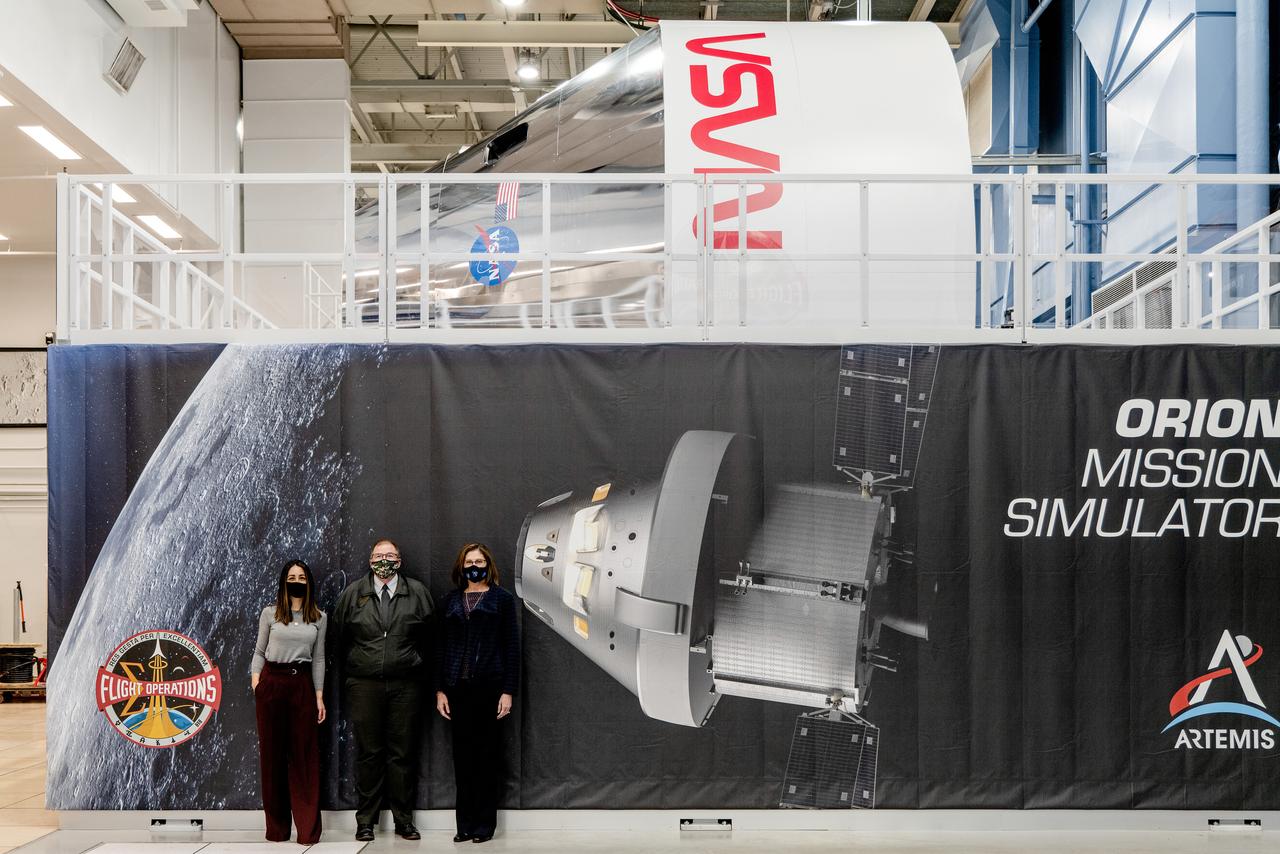
Examination of Orion spacecraft simulator that recently arrived at the agency’s Johnson Space Center in Houston on Dec. 8, 2020. The simulator provides the ability for astronauts, engineers, and flight controllers to train and practice for scenarios during Artemis missions to the Moon. The interior of the simulator is being outfitted with Orion’s display and control system and crew seats to mimic what astronaut will experience during liftoff to the lunar vicinity and on their way back home to Earth.
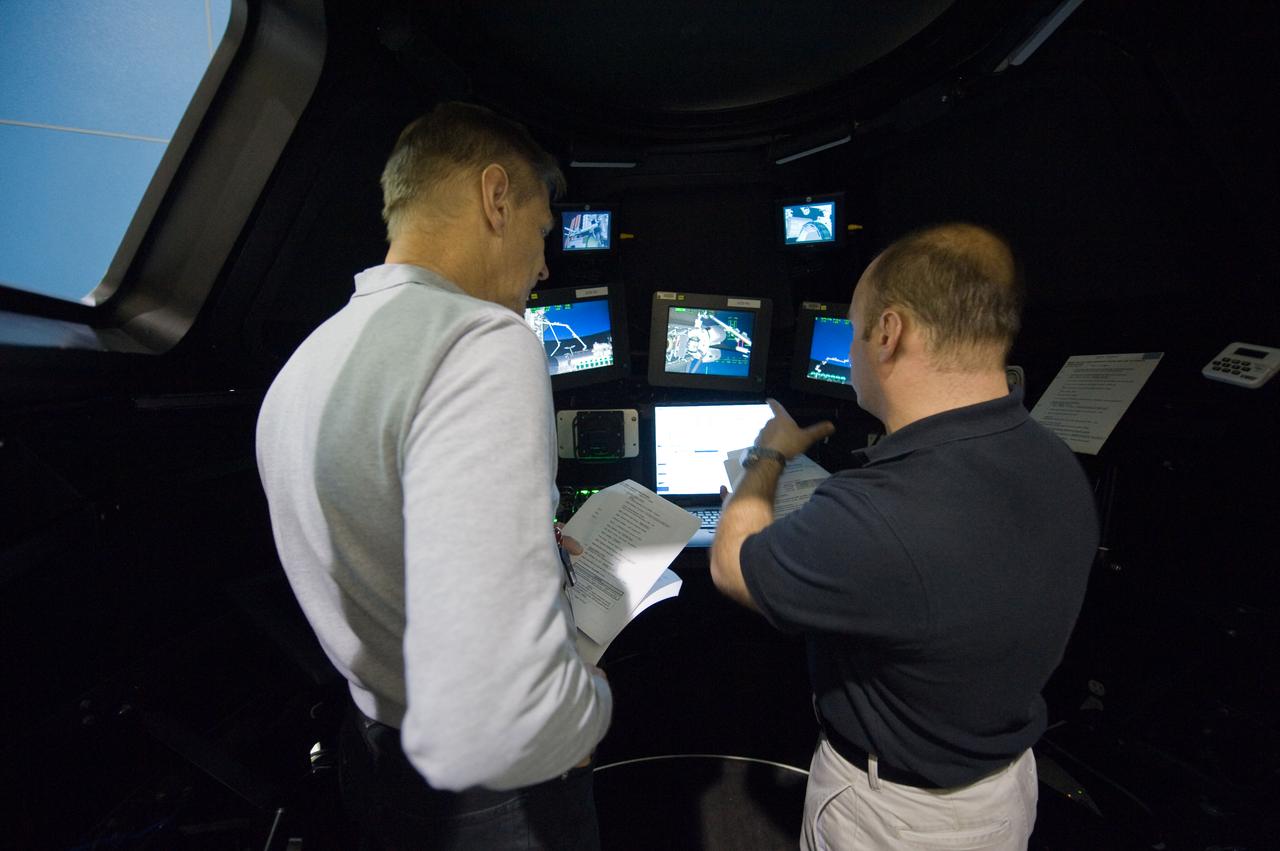
JSC2009-E-286971 (22 Dec. 2009) --- Astronauts Piers Sellers (left) and Garrett Reisman, both STS-132 mission specialists, participate in an exercise in the systems engineering simulator in the Avionics Systems Laboratory at NASA?s Johnson Space Center. The facility includes moving scenes of full-sized International Space Station components over a simulated Earth.
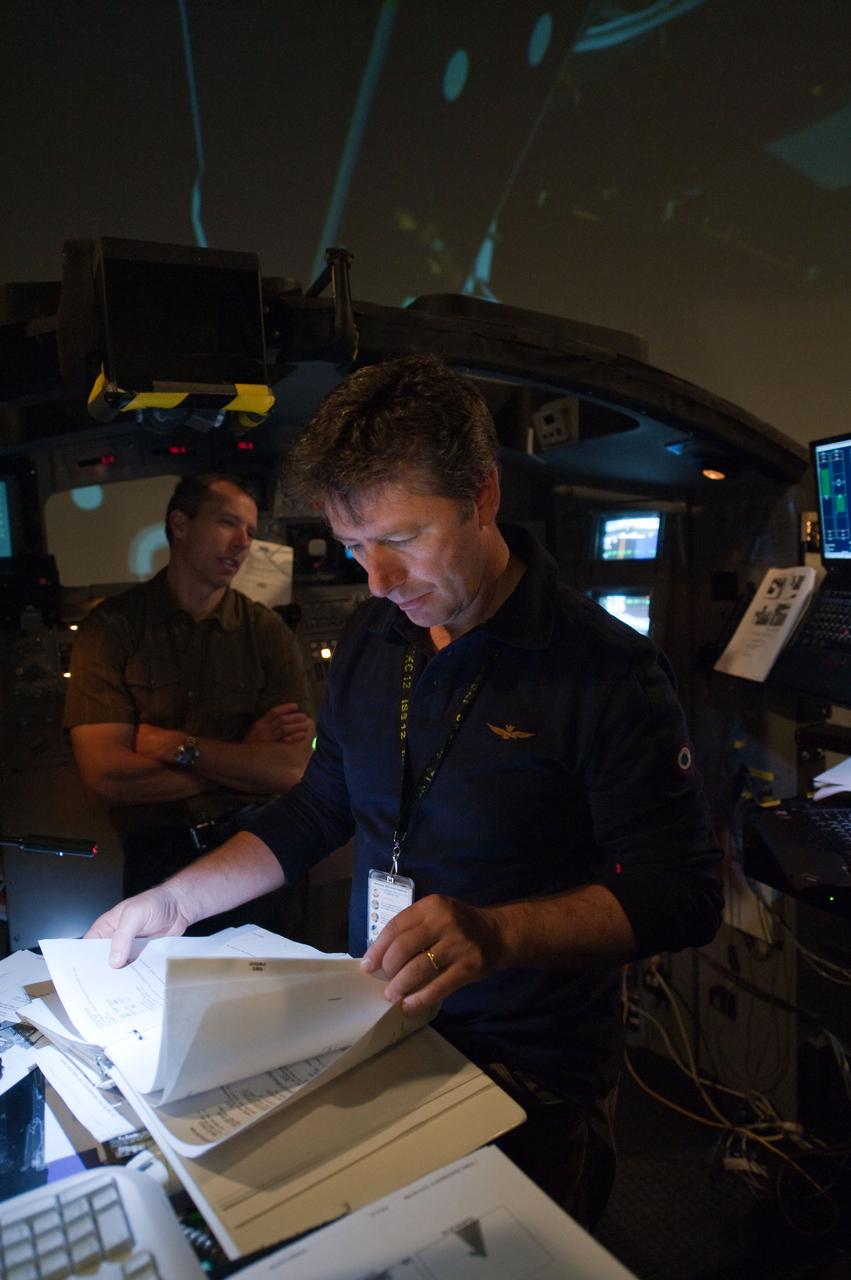
JSC2011-E-028156 (23 March 2011) --- European Space Agency astronaut Roberto Vittori (foreground) and NASA astronaut Andrew Feustel, both STS-134 mission specialists, participate in an exercise in the systems engineering simulator in the Avionics Systems Laboratory at NASA's Johnson Space Center. The facility includes moving scenes of full-sized International Space Station components over a simulated Earth. Photo credit: NASA or National Aeronautics and Space Administration
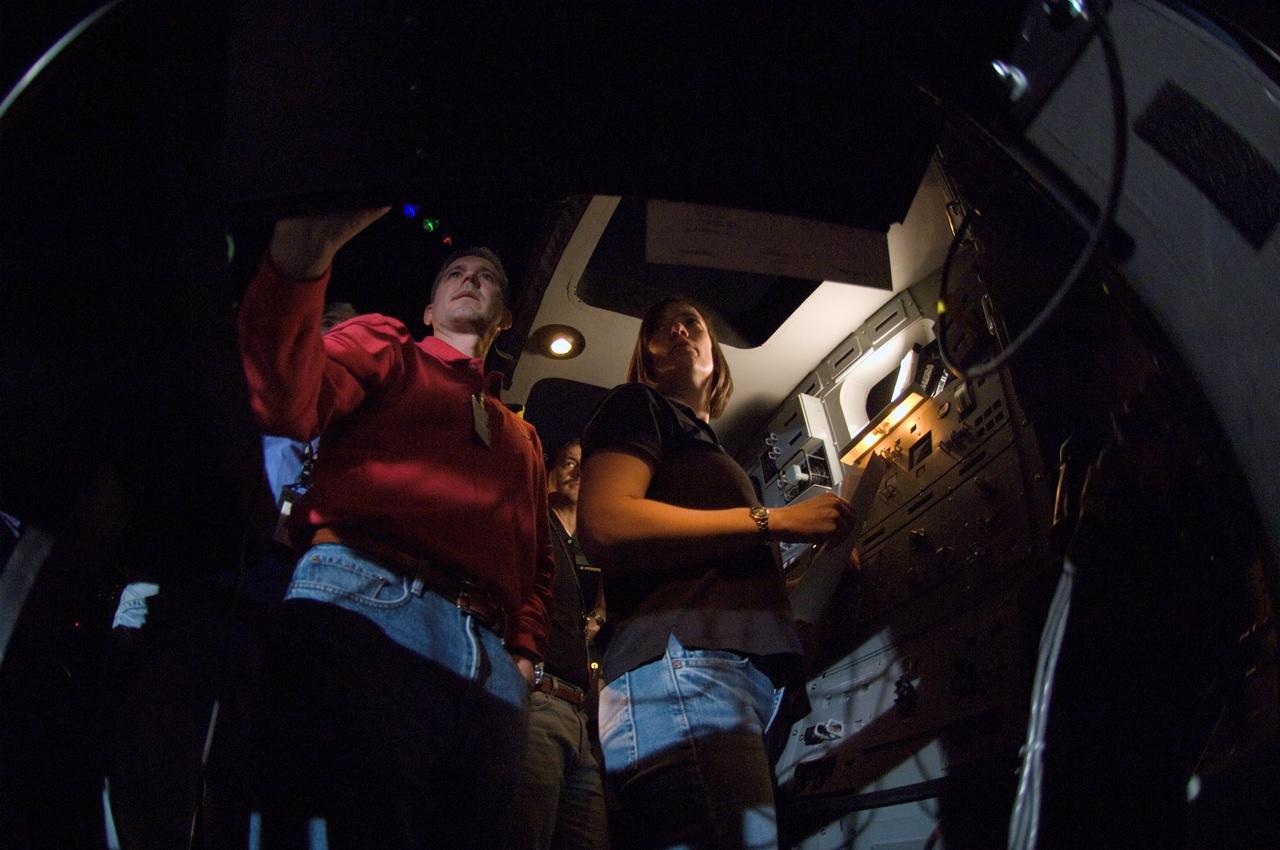
JSC2008-E-007758 (28 Jan. 2008) --- Astronaut Michael T. Good and K. Megan McArthur, both STS-125 mission specialists, participate in an exercise in the systems engineering simulator in the Avionics Systems Laboratory at Johnson Space Center. The facility includes moving scenes of full-sized Hubble Space Telescope components over a simulated Earth.
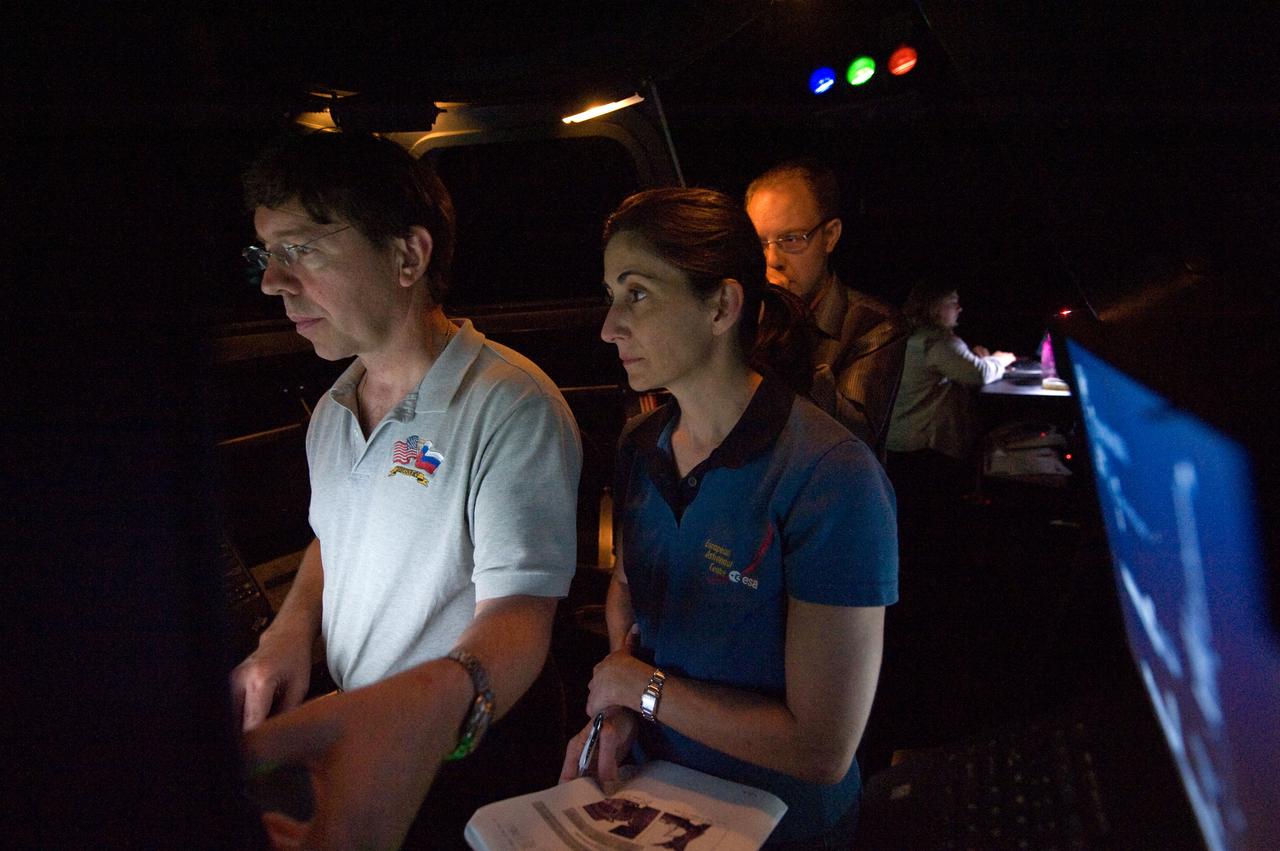
JSC2010-E-090700 (8 June 2010) --- NASA astronauts Michael Barratt and Nicole Stott, both STS-133 mission specialists, participate in an exercise in the systems engineering simulator in the Avionics Systems Laboratory at NASA's Johnson Space Center. The facility includes moving scenes of full-sized International Space Station components over a simulated Earth.
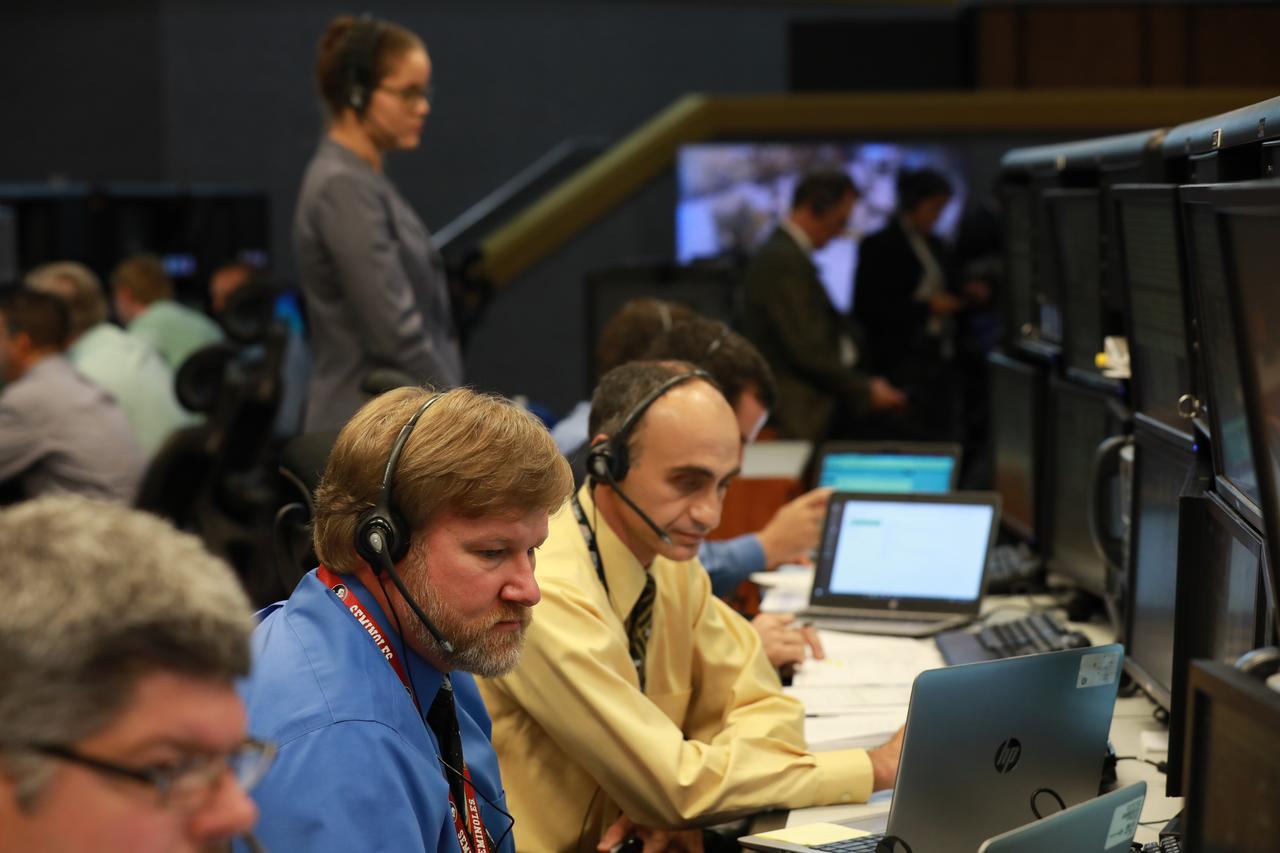
Space Launch System and Orion launch team engineers and managers monitor operations from their console in Firing Room 1 at the Kennedy Space Center's Launch Control Center during a countdown simulation for Exploration Mission 1. It was the agency's first simulation of a portion of the countdown for the first launch of a Space Launch System rocket and Orion spacecraft that will eventually take astronauts beyond low-Earth orbit to destinations such as the Moon and Mars.
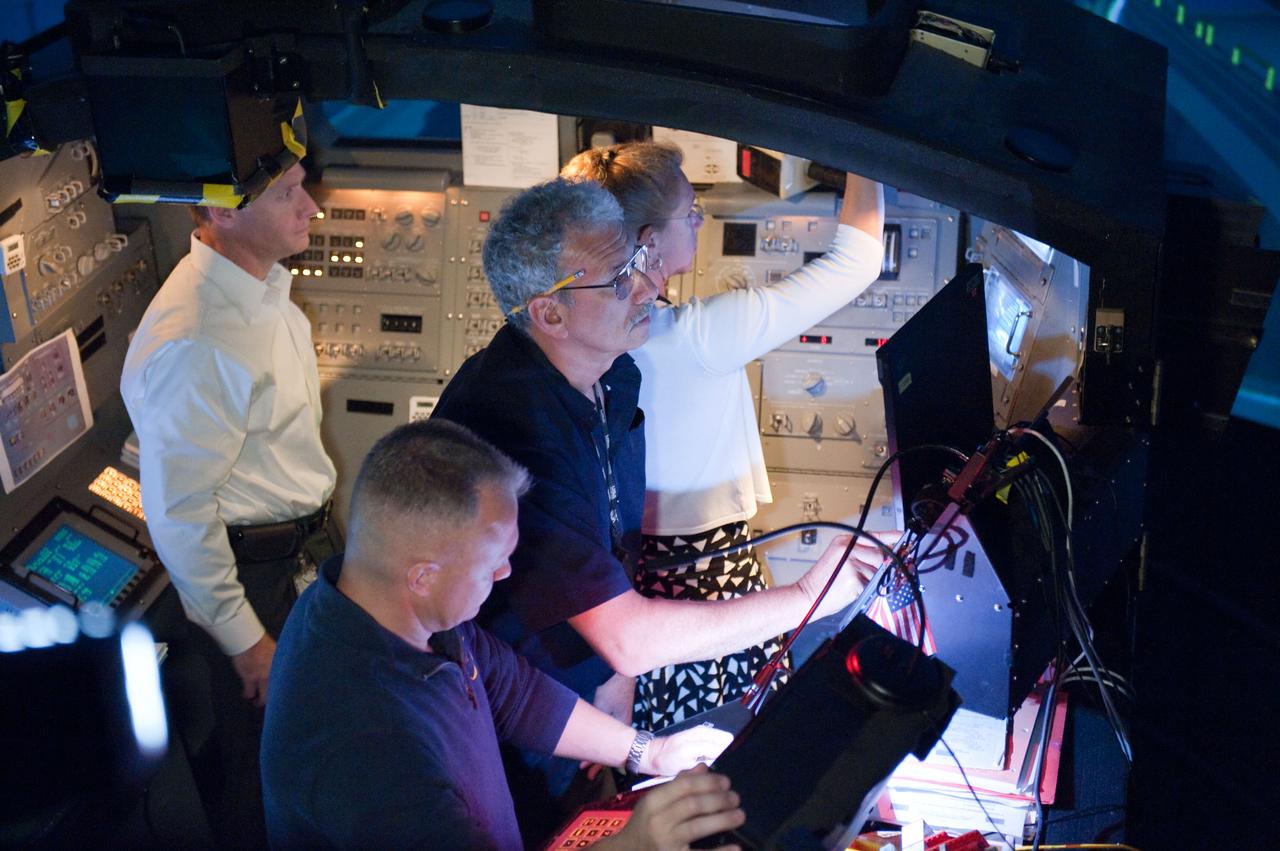
JSC2011-E-028136 (23 March 2011) --- NASA astronauts Chris Ferguson (left), STS-135 commander; Doug Hurley (foreground), pilot; and Sandy Magnus, mission specialist, participate in an exercise in the systems engineering simulator in the Avionics Systems Laboratory at NASA's Johnson Space Center. The facility includes moving scenes of full-sized International Space Station components over a simulated Earth. Photo credit: NASA or National Aeronautics and Space Administration
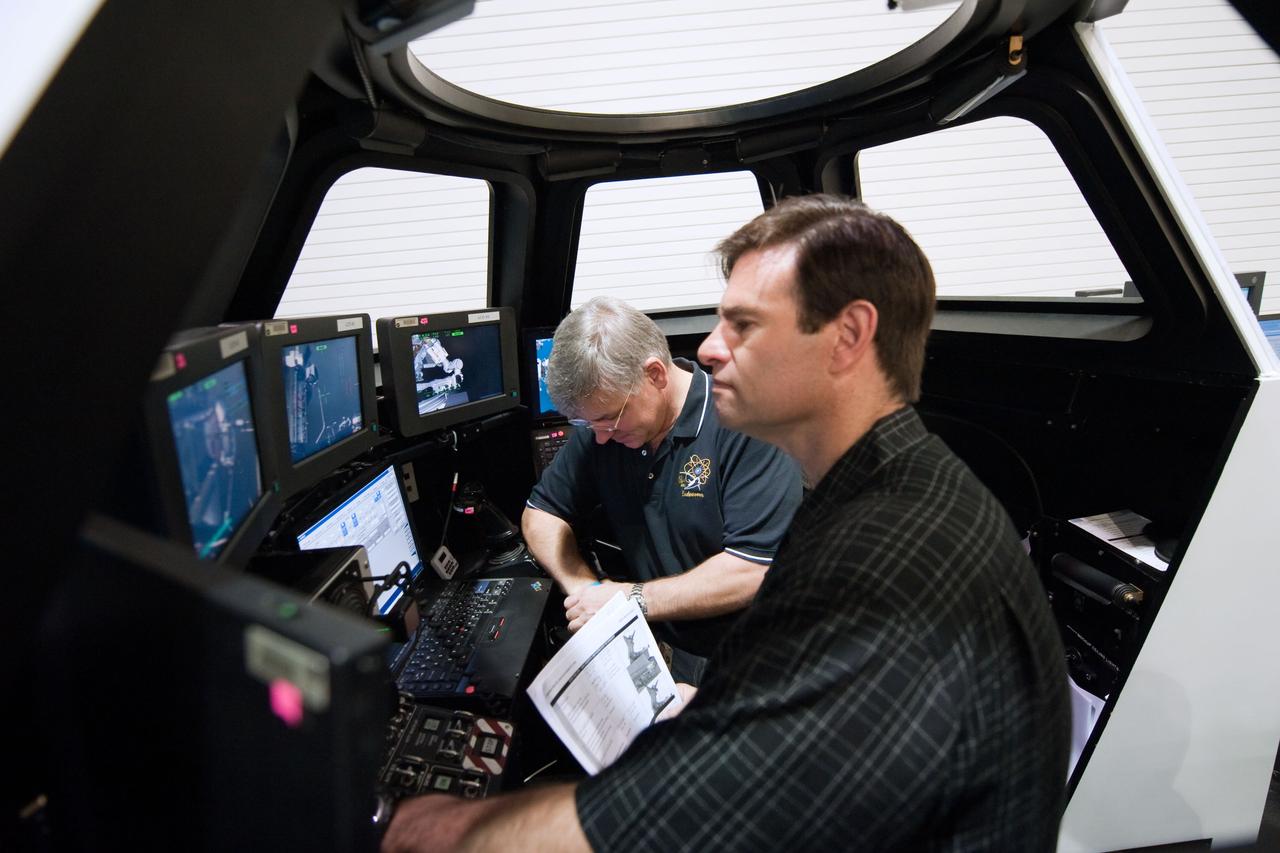
JSC2011-E-028161 (23 March 2011) --- NASA astronauts Greg Chamitoff (foreground), STS-134 mission specialist; and Greg H. Johnson, pilot, participate in an exercise in the systems engineering simulator in the Avionics Systems Laboratory at NASA's Johnson Space Center. The facility includes moving scenes of full-sized International Space Station components over a simulated Earth. Photo credit: NASA or National Aeronautics and Space Administration
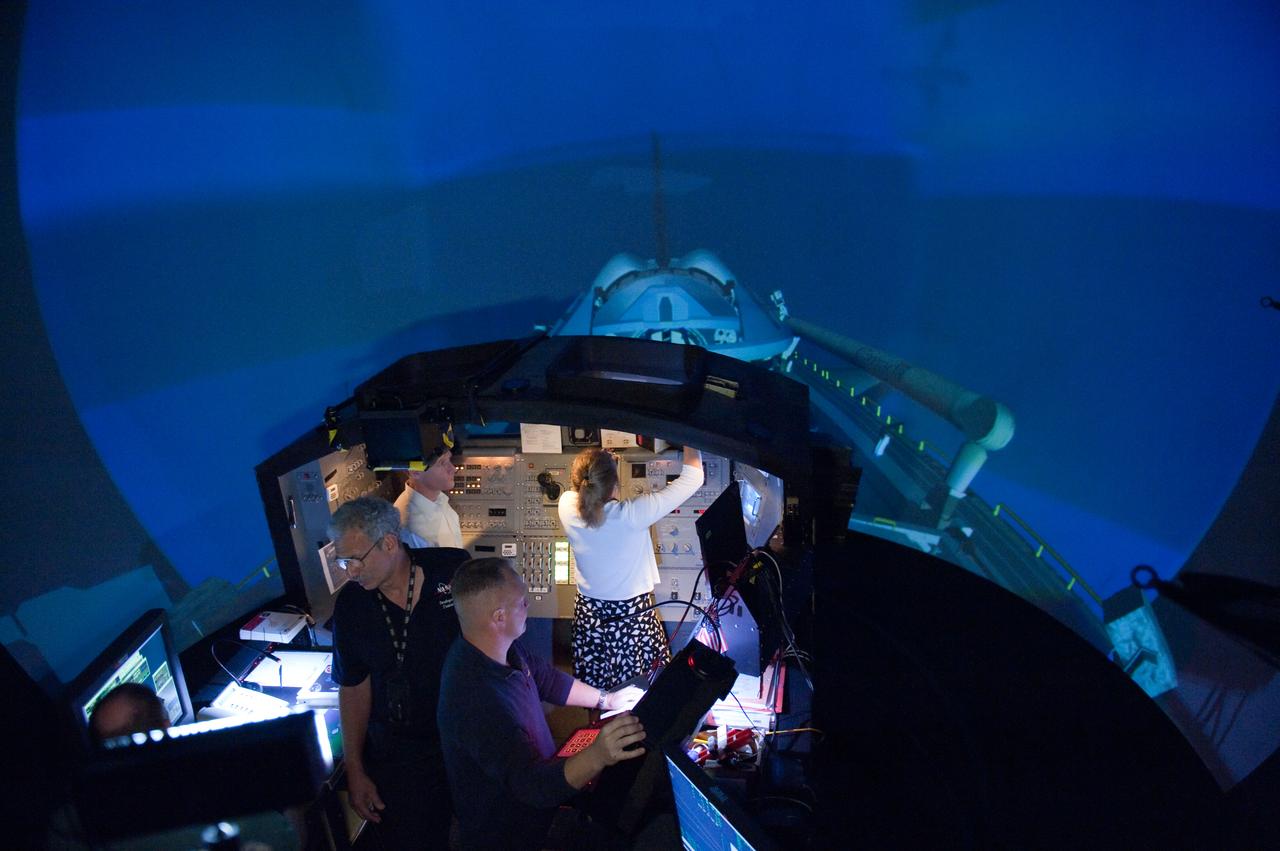
JSC2011-E-028137 (23 March 2011) --- NASA astronauts Chris Ferguson (left background), STS-135 commander; Doug Hurley (foreground), pilot; and Sandy Magnus, mission specialist, participate in an exercise in the systems engineering simulator in the Avionics Systems Laboratory at NASA's Johnson Space Center. The facility includes moving scenes of full-sized International Space Station components over a simulated Earth. Photo credit: NASA or National Aeronautics and Space Administration
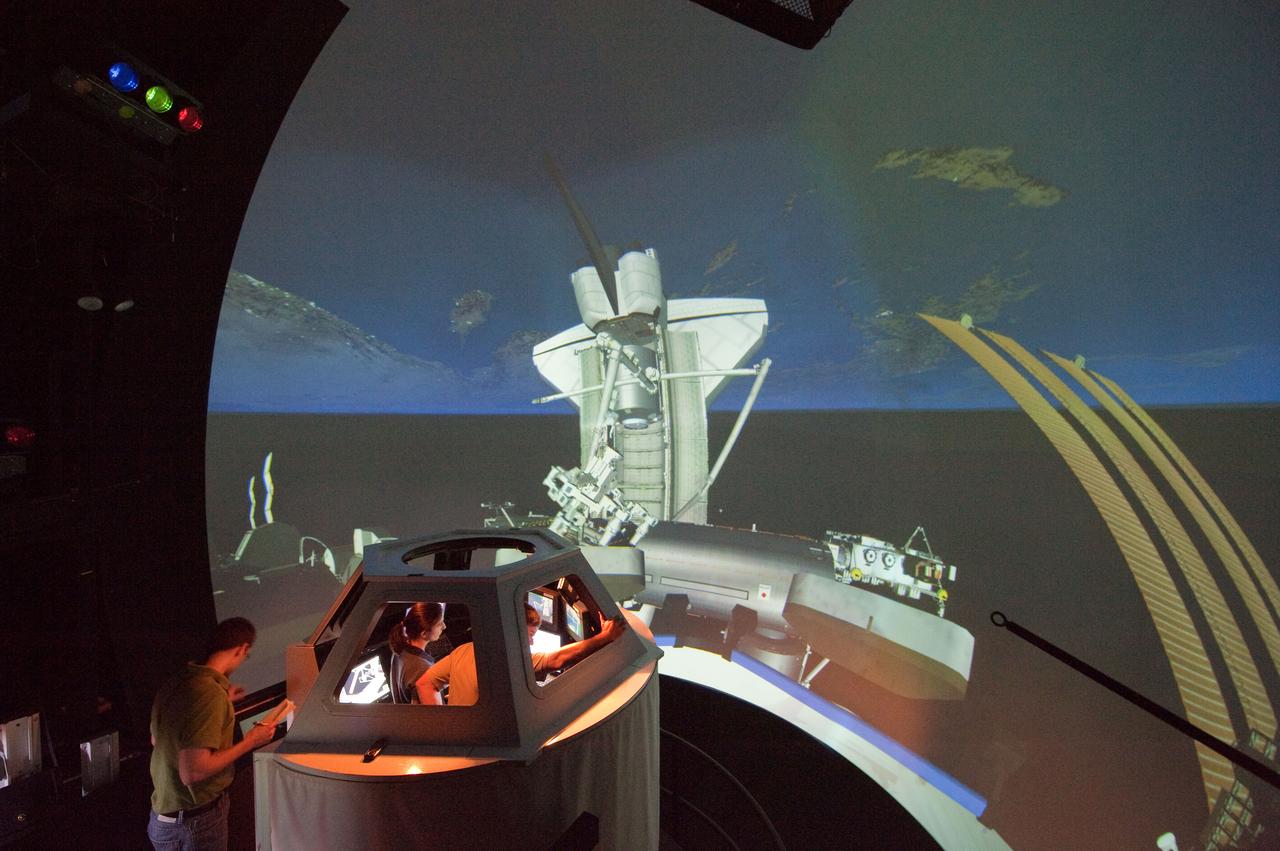
JSC2010-E-090702 (8 June 2010) --- NASA astronauts Michael Barratt and Nicole Stott, both STS-133 mission specialists, participate in an exercise in the systems engineering simulator in the Avionics Systems Laboratory at NASA's Johnson Space Center. The facility includes moving scenes of full-sized International Space Station components over a simulated Earth.
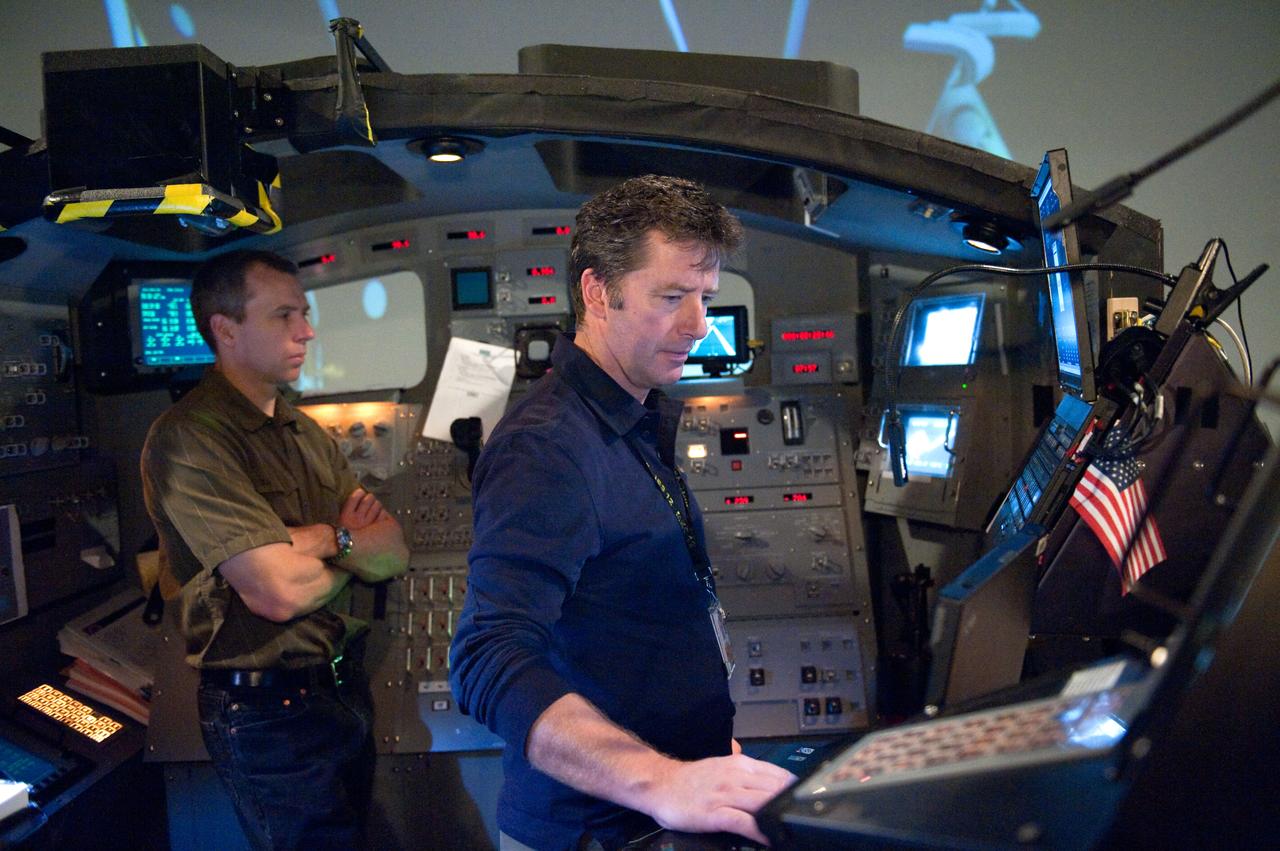
JSC2011-E-028164 (23 March 2011) --- European Space Agency astronaut Roberto Vittori (right) and NASA astronaut Andrew Feustel, both STS-134 mission specialists, participate in an exercise in the systems engineering simulator in the Avionics Systems Laboratory at NASA's Johnson Space Center. The facility includes moving scenes of full-sized International Space Station components over a simulated Earth. Photo credit: NASA or National Aeronautics and Space Administration
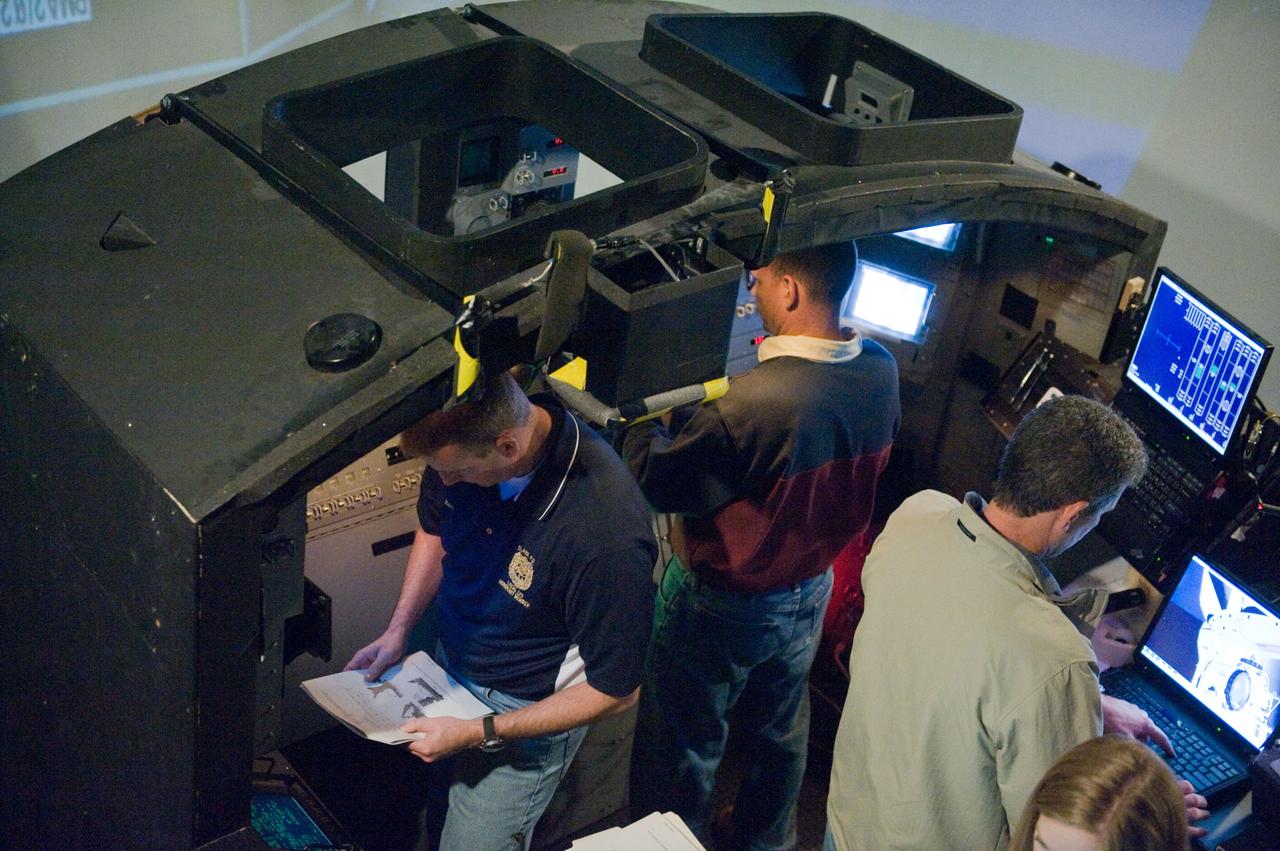
JSC2009-E-286973 (22 Dec. 2009) --- Astronauts Ken Ham (left), STS-132 commander; Tony Antonelli (center), pilot; and Mike Good, mission specialist, participate in an exercise in the systems engineering simulator in the Avionics Systems Laboratory at NASA?s Johnson Space Center. The facility includes moving scenes of full-sized International Space Station components over a simulated Earth.
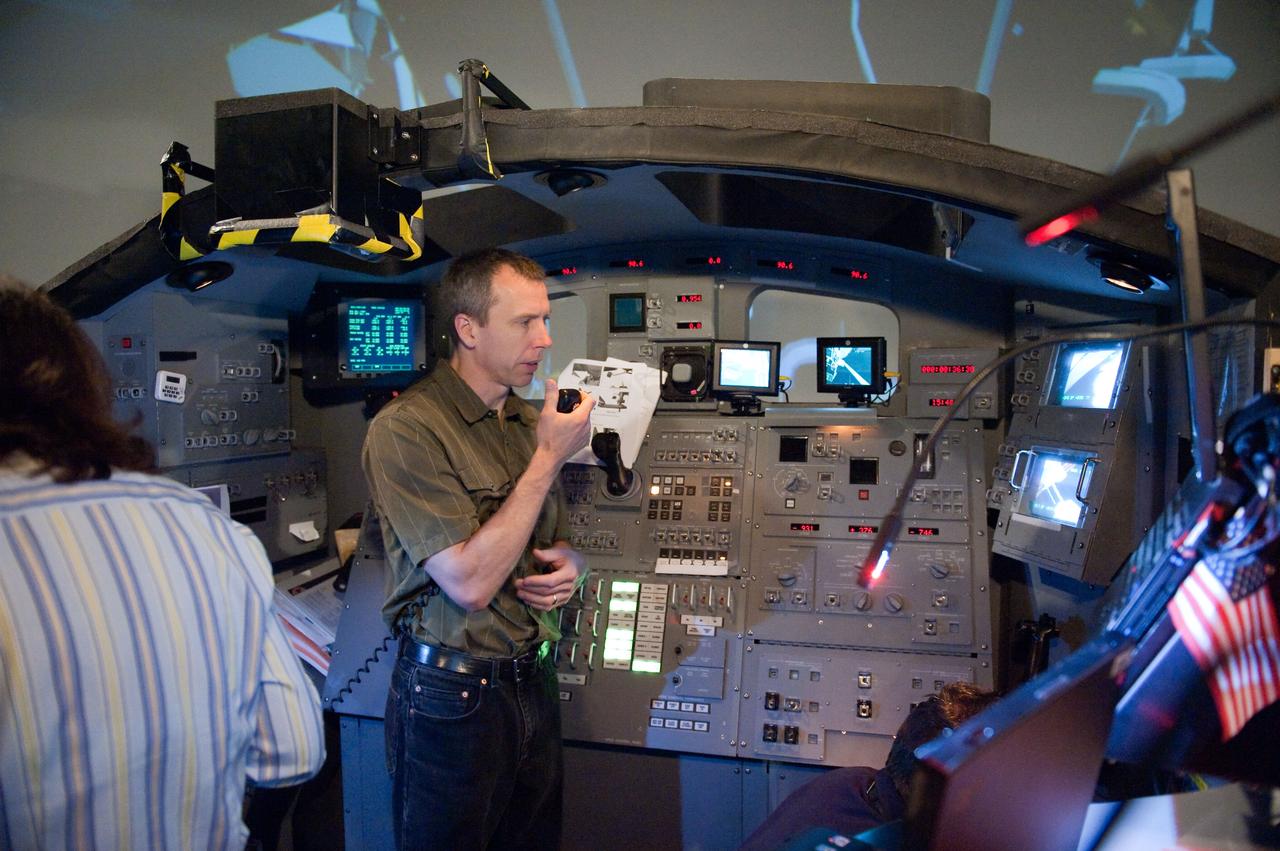
JSC2011-E-028170 (23 March 2011) --- NASA astronaut Andrew Feustel, STS-134 mission specialist, participates in an exercise in the systems engineering simulator in the Avionics Systems Laboratory at NASA's Johnson Space Center. The facility includes moving scenes of full-sized International Space Station components over a simulated Earth. Photo credit: NASA or National Aeronautics and Space Administration

JSC2011-E-028134 (23 March 2011) --- NASA astronauts Chris Ferguson (left), STS-135 commander; Doug Hurley (right), pilot; and Sandy Magnus, mission specialist, participate in an exercise in the systems engineering simulator in the Avionics Systems Laboratory at NASA's Johnson Space Center. The facility includes moving scenes of full-sized International Space Station components over a simulated Earth. Photo credit: NASA or National Aeronautics and Space Administration
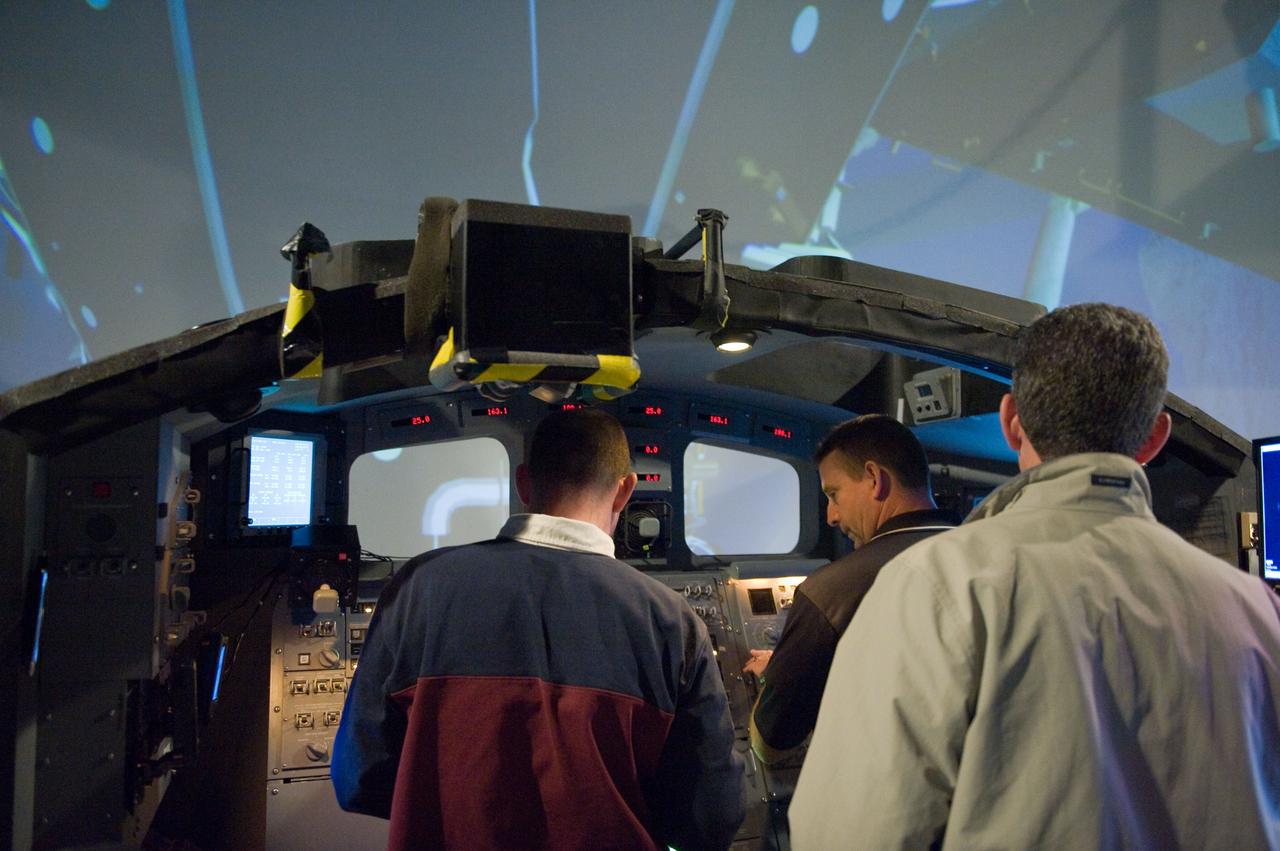
JSC2009-E-286962 (22 Dec. 2009) --- Astronauts Ken Ham (right background), STS-132 commander; Tony Antonelli (left), pilot; and Mike Good, mission specialist, participate in an exercise in the systems engineering simulator in the Avionics Systems Laboratory at NASA?s Johnson Space Center. The facility includes moving scenes of full-sized International Space Station components over a simulated Earth.
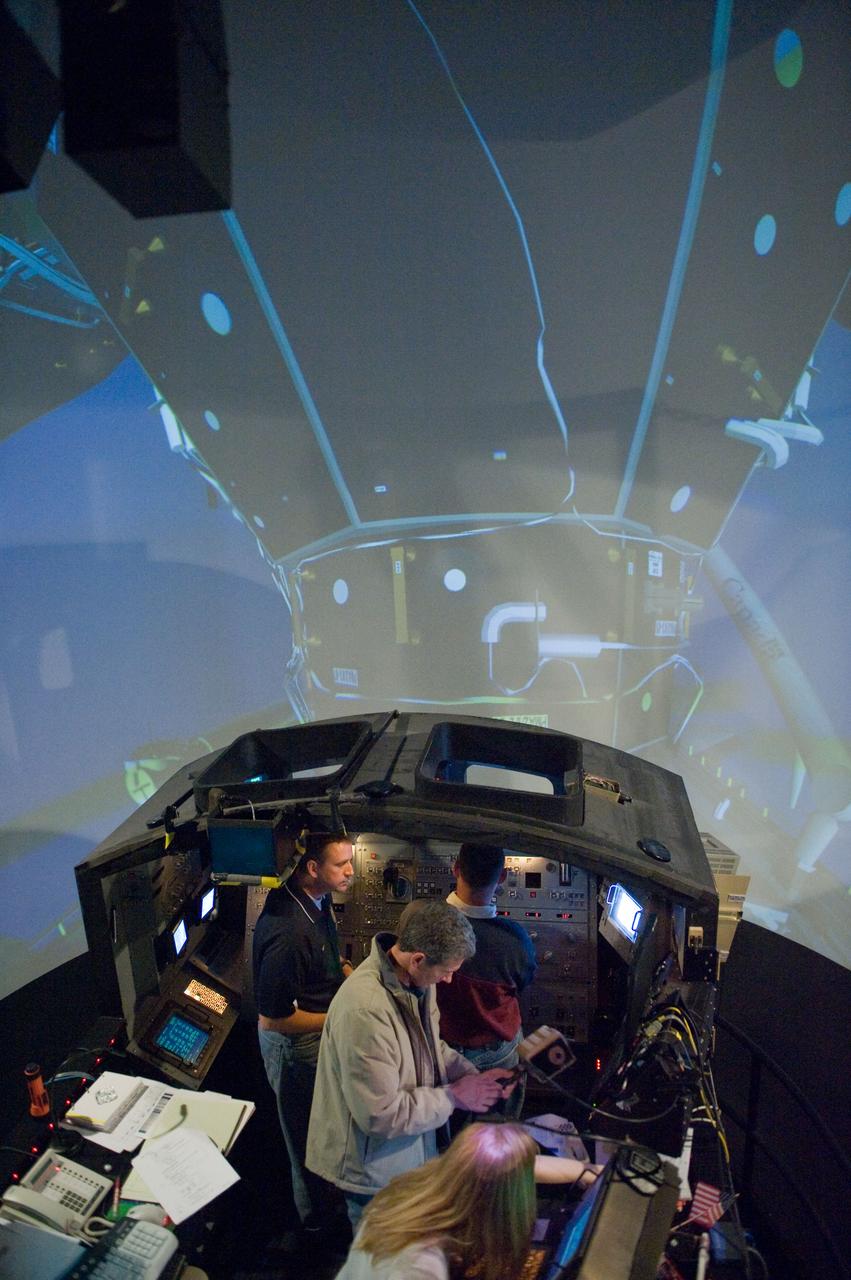
JSC2009-E-286974 (22 Dec. 2009) --- Astronauts Ken Ham (left background), STS-132 commander; Tony Antonelli (right background), pilot; and Mike Good, mission specialist, participate in an exercise in the systems engineering simulator in the Avionics Systems Laboratory at NASA?s Johnson Space Center. The facility includes moving scenes of full-sized International Space Station components over a simulated Earth.

JSC2009-E-286976 (22 Dec. 2009) --- Astronauts Ken Ham (left), STS-132 commander; Tony Antonelli (right background), pilot; and Mike Good, mission specialist, participate in an exercise in the systems engineering simulator in the Avionics Systems Laboratory at NASA?s Johnson Space Center. The facility includes moving scenes of full-sized International Space Station components over a simulated Earth.
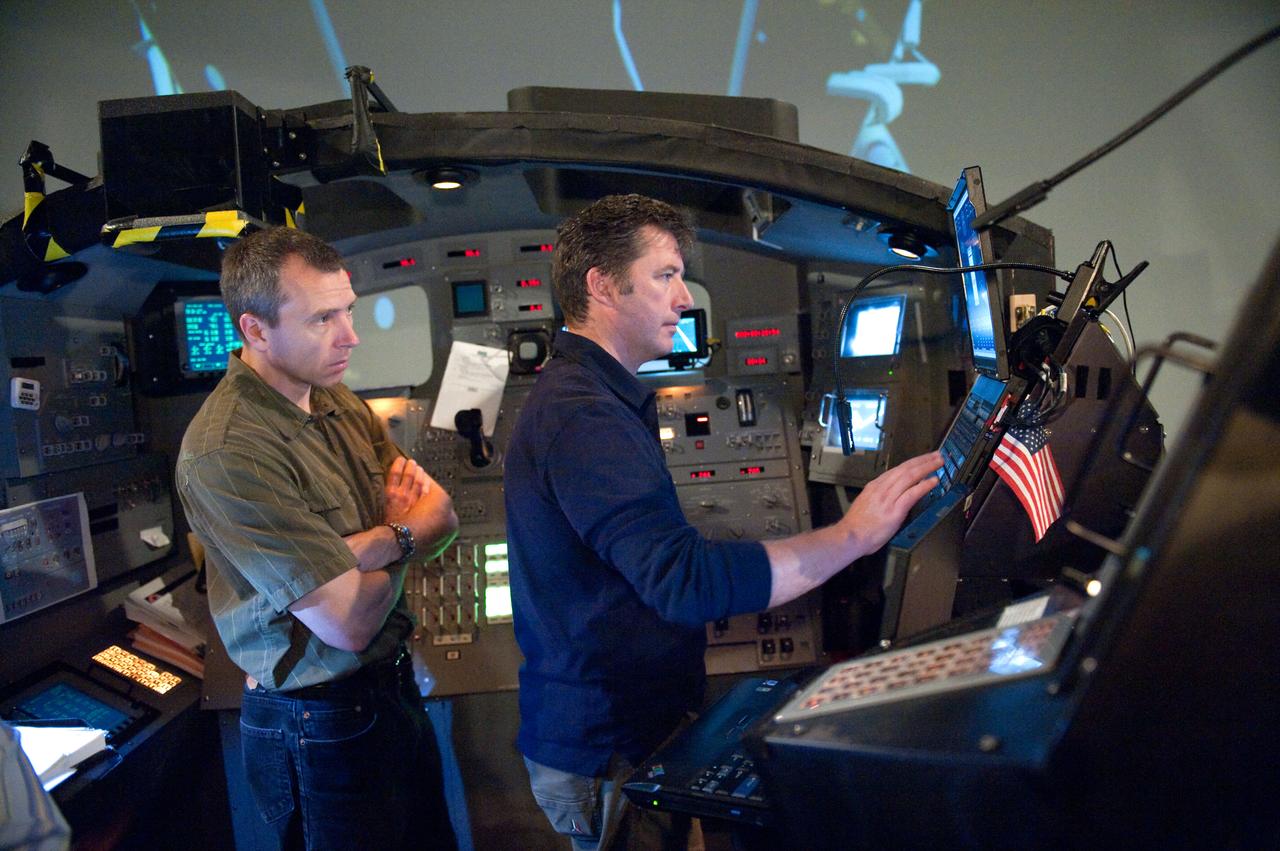
JSC2011-E-028166 (23 March 2011) --- European Space Agency astronaut Roberto Vittori (right) and NASA astronaut Andrew Feustel, both STS-134 mission specialists, participate in an exercise in the systems engineering simulator in the Avionics Systems Laboratory at NASA's Johnson Space Center. The facility includes moving scenes of full-sized International Space Station components over a simulated Earth. Photo credit: NASA or National Aeronautics and Space Administration
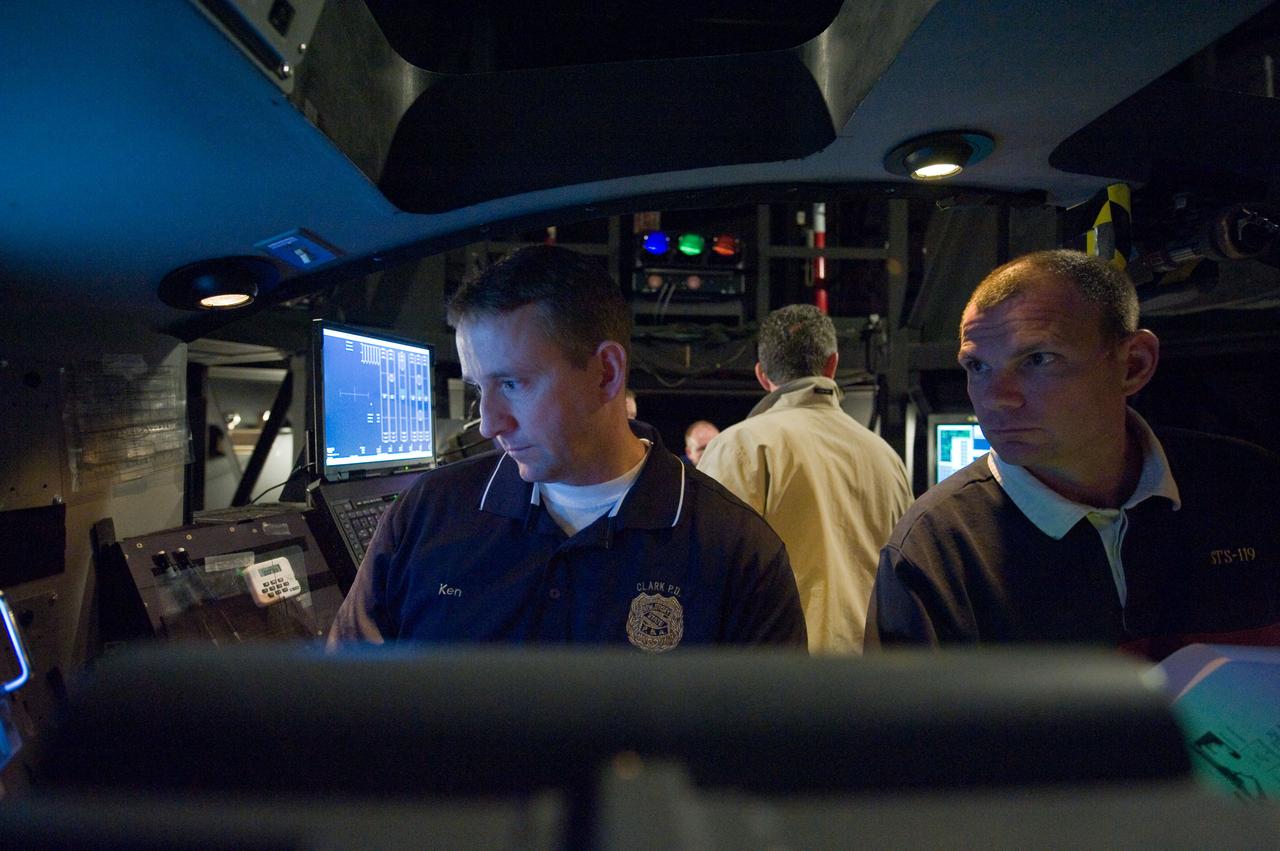
JSC2009-E-286968 (22 Dec. 2009) --- Astronauts Ken Ham (left), STS-132 commander; Tony Antonelli (right), pilot; and Mike Good, mission specialist, participate in an exercise in the systems engineering simulator in the Avionics Systems Laboratory at NASA?s Johnson Space Center. The facility includes moving scenes of full-sized International Space Station components over a simulated Earth.
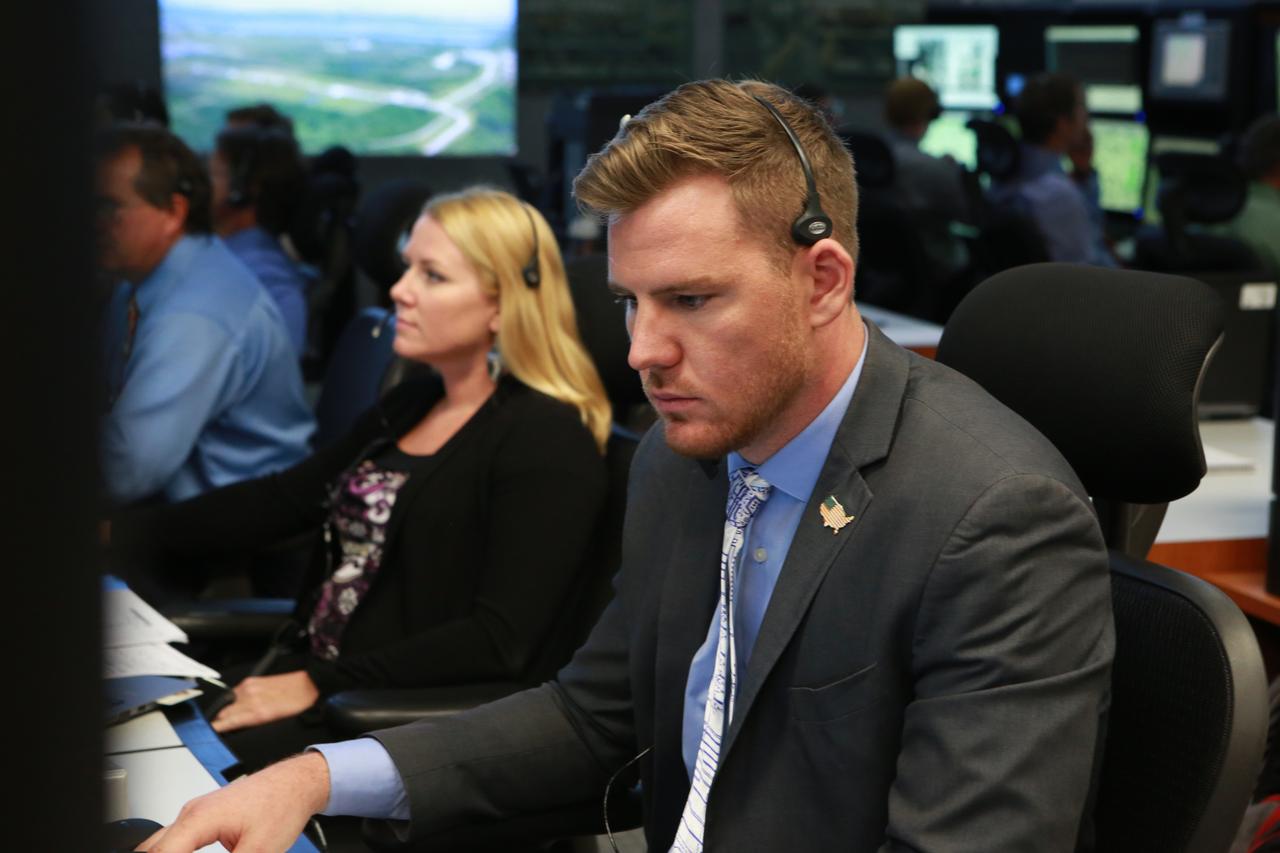
Main Propulsion System Engineers Krista Riggs, left, and Joe Pavicic, both with Jacobs, monitor operations from their consoles in Firing Room 1 at the Kennedy Space Center's Launch Control Center during a countdown simulation for Exploration Mission 1. It was the agency's first simulation of a portion of the countdown for the first launch of a Space Launch System rocket and Orion spacecraft that will eventually take astronauts beyond low-Earth orbit to destinations such as the Moon and Mars.
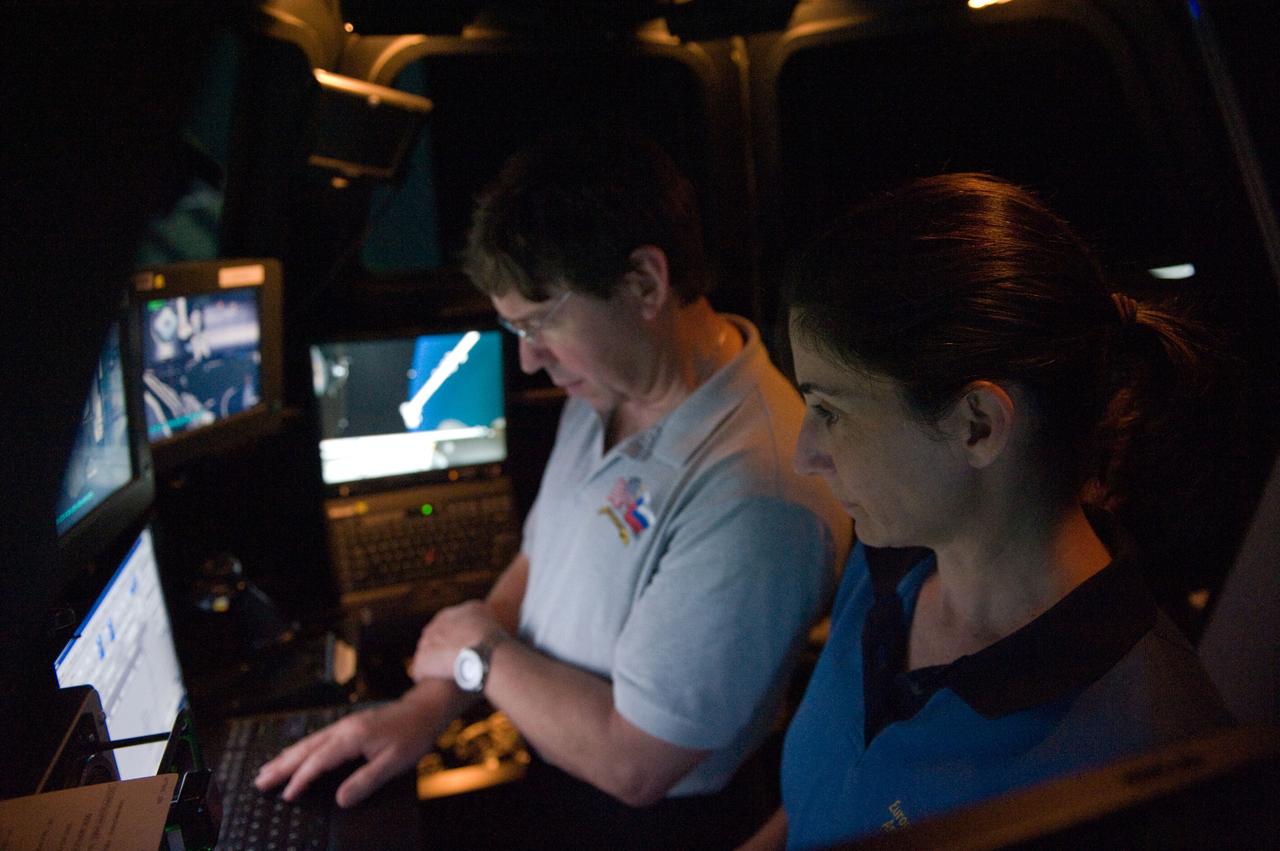
JSC2010-E-090695 (8 June 2010) --- NASA astronauts Nicole Stott and Michael Barratt, both STS-133 mission specialists, participate in an exercise in the systems engineering simulator in the Avionics Systems Laboratory at NASA's Johnson Space Center. The facility includes moving scenes of full-sized International Space Station components over a simulated Earth.
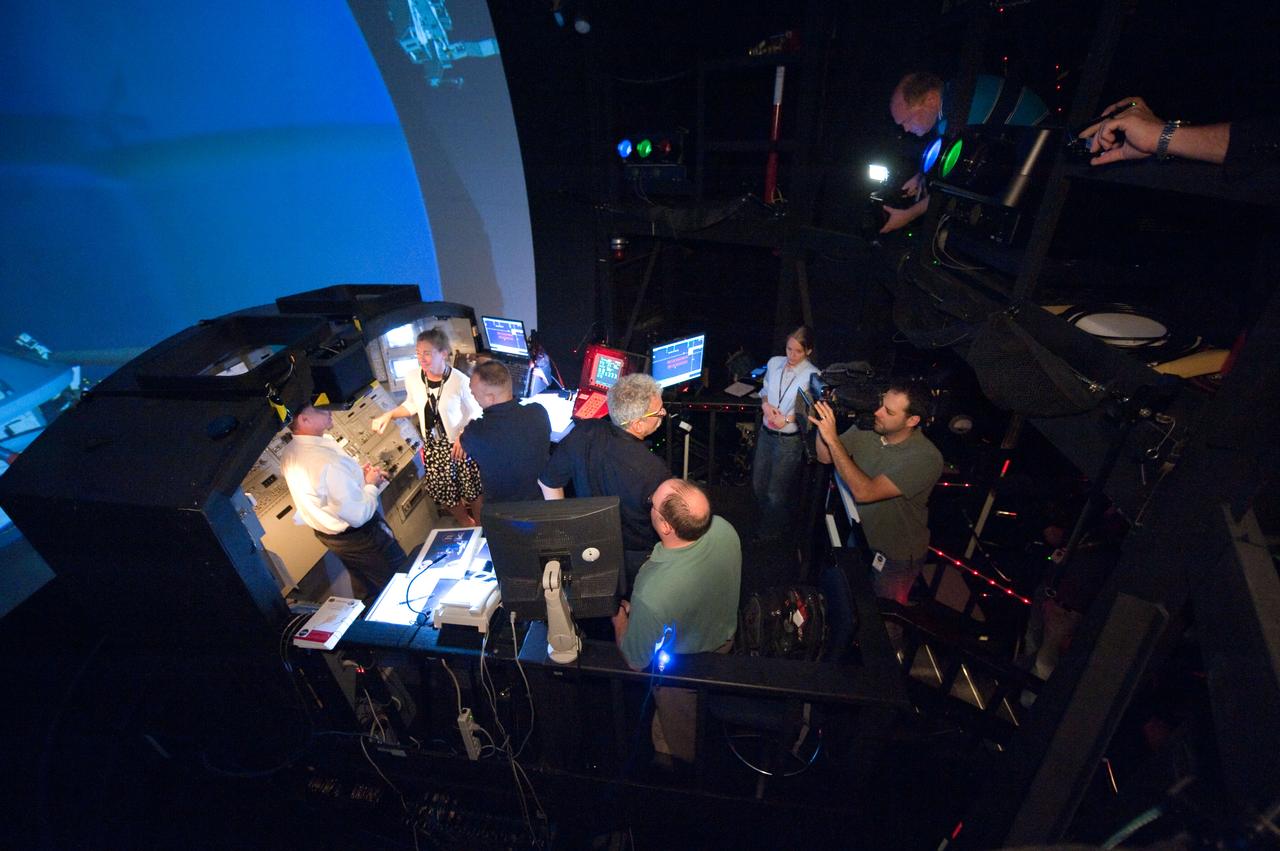
JSC2011-E-028132 (23 March 2011) --- As news media representatives look on, NASA astronauts Chris Ferguson, STS-135 commander; Doug Hurley, pilot; and Sandy Magnus, mission specialist, participate in an exercise in the systems engineering simulator in the Avionics Systems Laboratory at NASA's Johnson Space Center. The facility includes moving scenes of full-sized International Space Station components over a simulated Earth. Photo credit: NASA or National Aeronautics and Space Administration
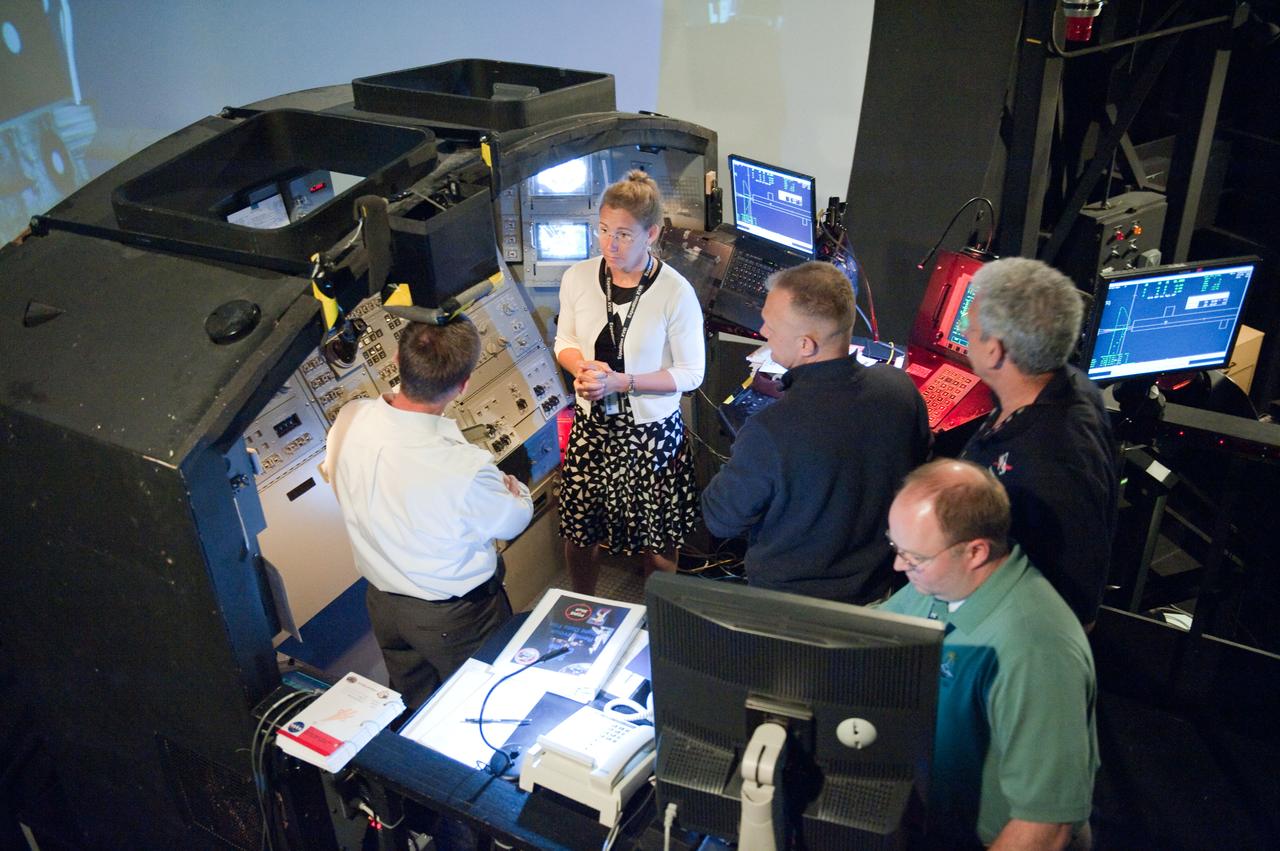
JSC2011-E-028139 (23 March 2011) --- NASA astronauts Chris Ferguson (left), STS-135 commander; Doug Hurley (center), pilot; and Sandy Magnus, mission specialist, participate in an exercise in the systems engineering simulator in the Avionics Systems Laboratory at NASA's Johnson Space Center. The facility includes moving scenes of full-sized International Space Station components over a simulated Earth. Photo credit: NASA or National Aeronautics and Space Administration
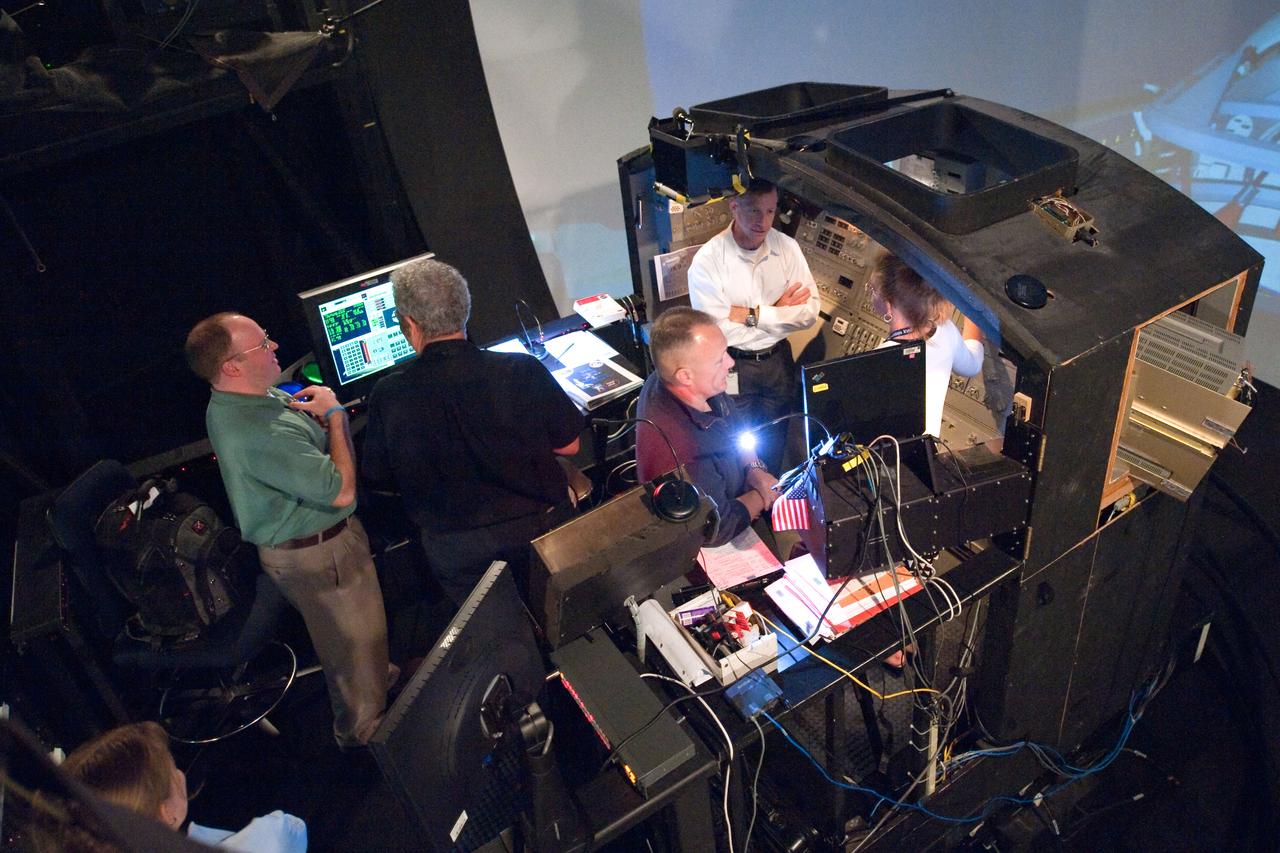
JSC2011-E-028130 (23 March 2011) --- NASA astronauts Chris Ferguson (right background), STS-135 commander; Doug Hurley (center), pilot; and Sandy Magnus, mission specialist, participate in an exercise in the systems engineering simulator in the Avionics Systems Laboratory at NASA's Johnson Space Center. The facility includes moving scenes of full-sized International Space Station components over a simulated Earth. Photo credit: NASA or National Aeronautics and Space Administration
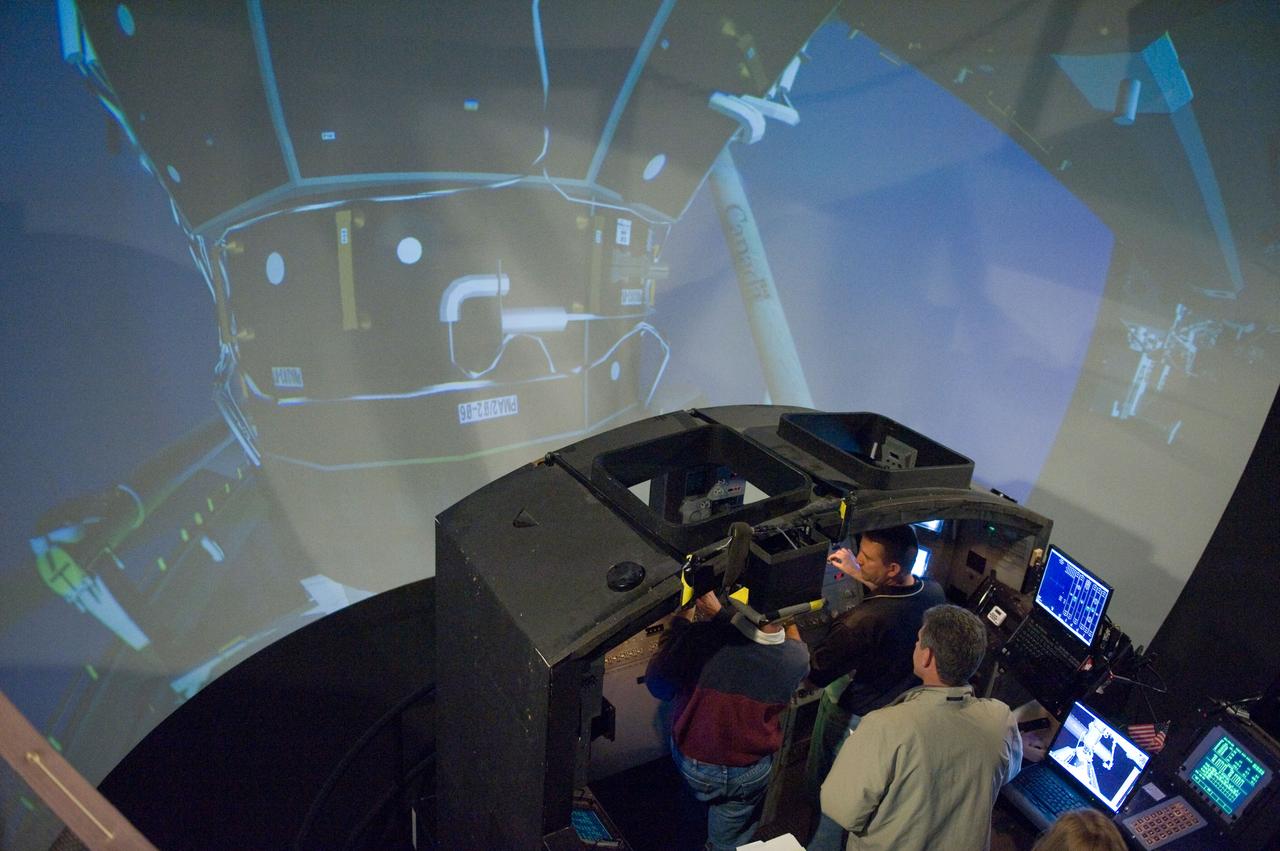
JSC2009-E-286972 (22 Dec. 2009) --- Astronauts Ken Ham (right background), STS-132 commander; Tony Antonelli (left), pilot; and Mike Good, mission specialist, participate in an exercise in the systems engineering simulator in the Avionics Systems Laboratory at NASA?s Johnson Space Center. The facility includes moving scenes of full-sized International Space Station components over a simulated Earth.
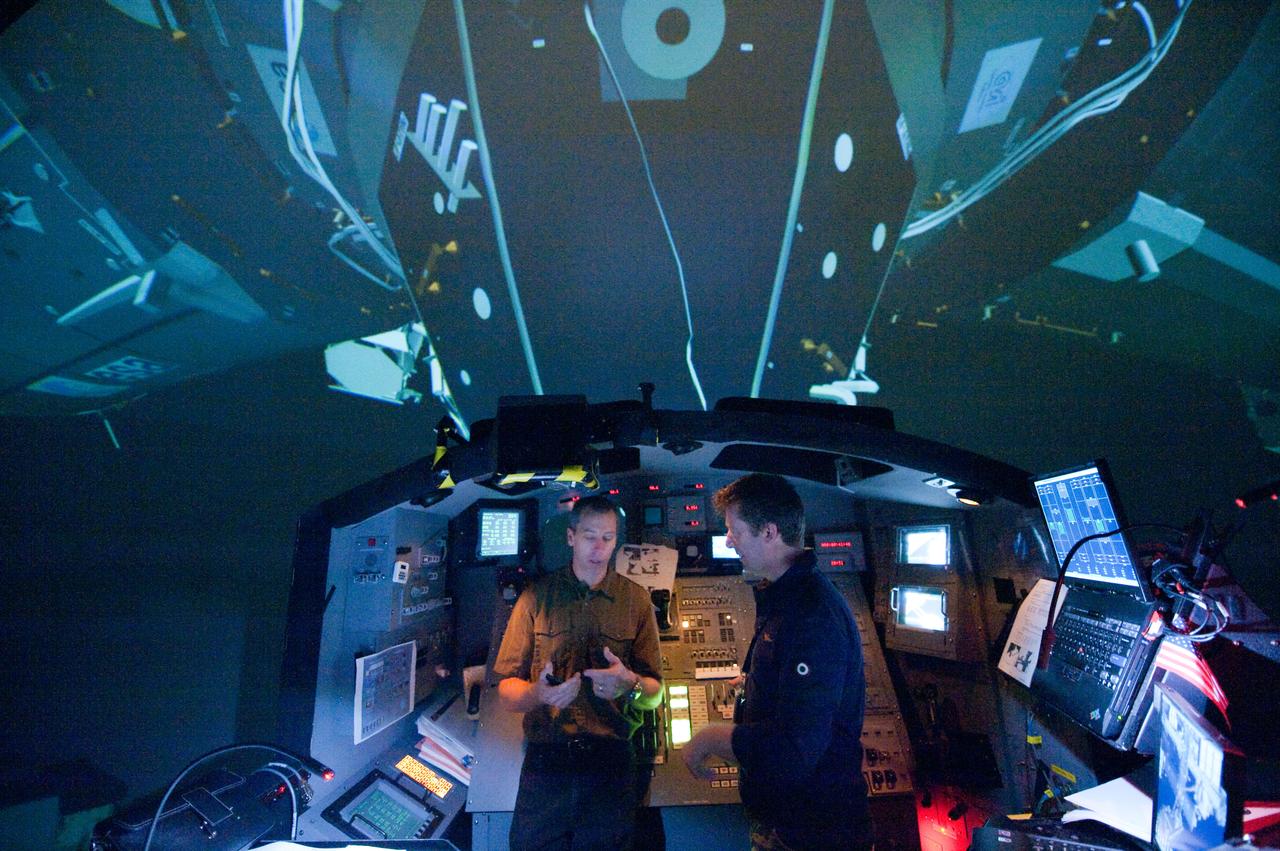
JSC2011-E-028173 (23 March 2011) --- European Space Agency astronaut Roberto Vittori (right) and NASA astronaut Andrew Feustel, both STS-134 mission specialists, participate in an exercise in the systems engineering simulator in the Avionics Systems Laboratory at NASA's Johnson Space Center. The facility includes moving scenes of full-sized International Space Station components over a simulated Earth. Photo credit: NASA or National Aeronautics and Space Administration
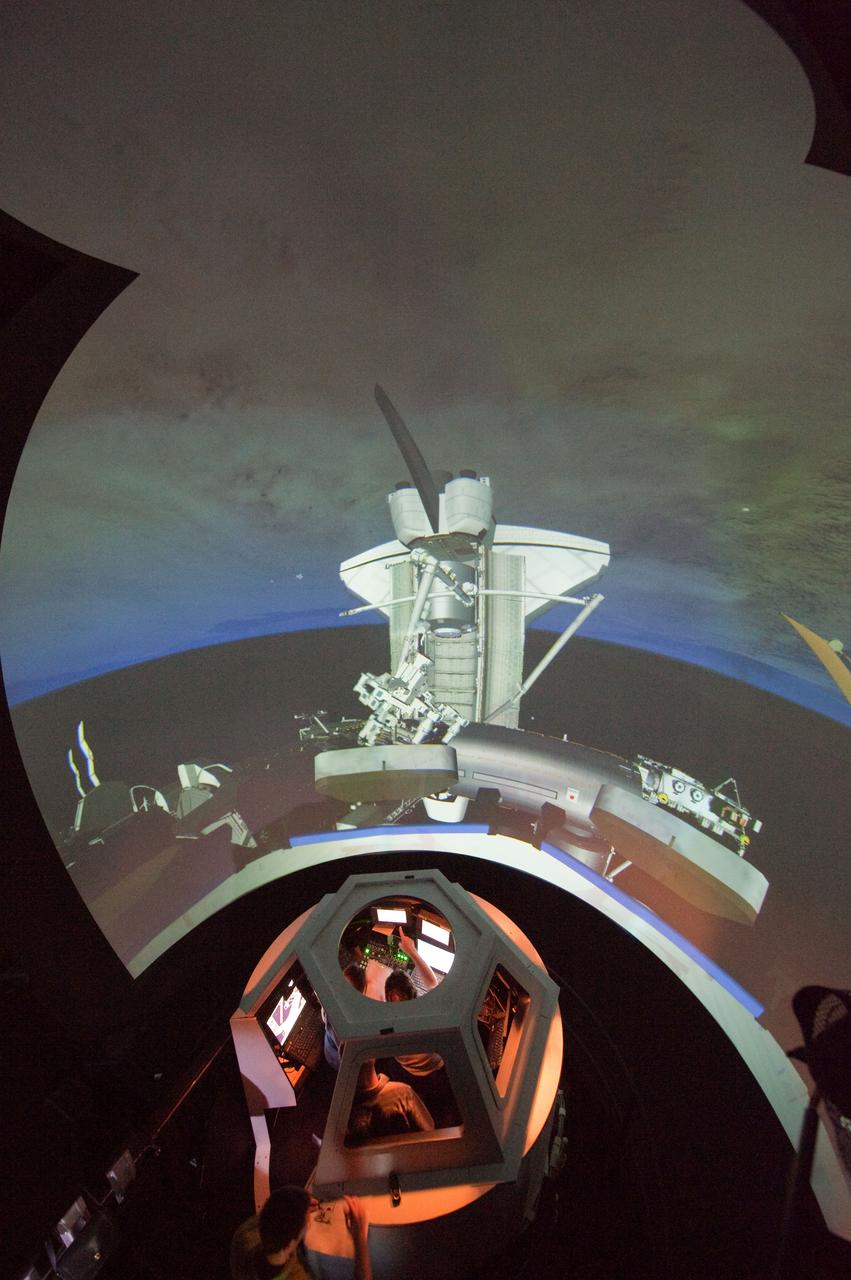
JSC2010-E-090704 (8 June 2010) --- NASA astronauts Michael Barratt and Nicole Stott, both STS-133 mission specialists, participate in an exercise in the systems engineering simulator in the Avionics Systems Laboratory at NASA's Johnson Space Center. The facility includes moving scenes of full-sized International Space Station components over a simulated Earth.
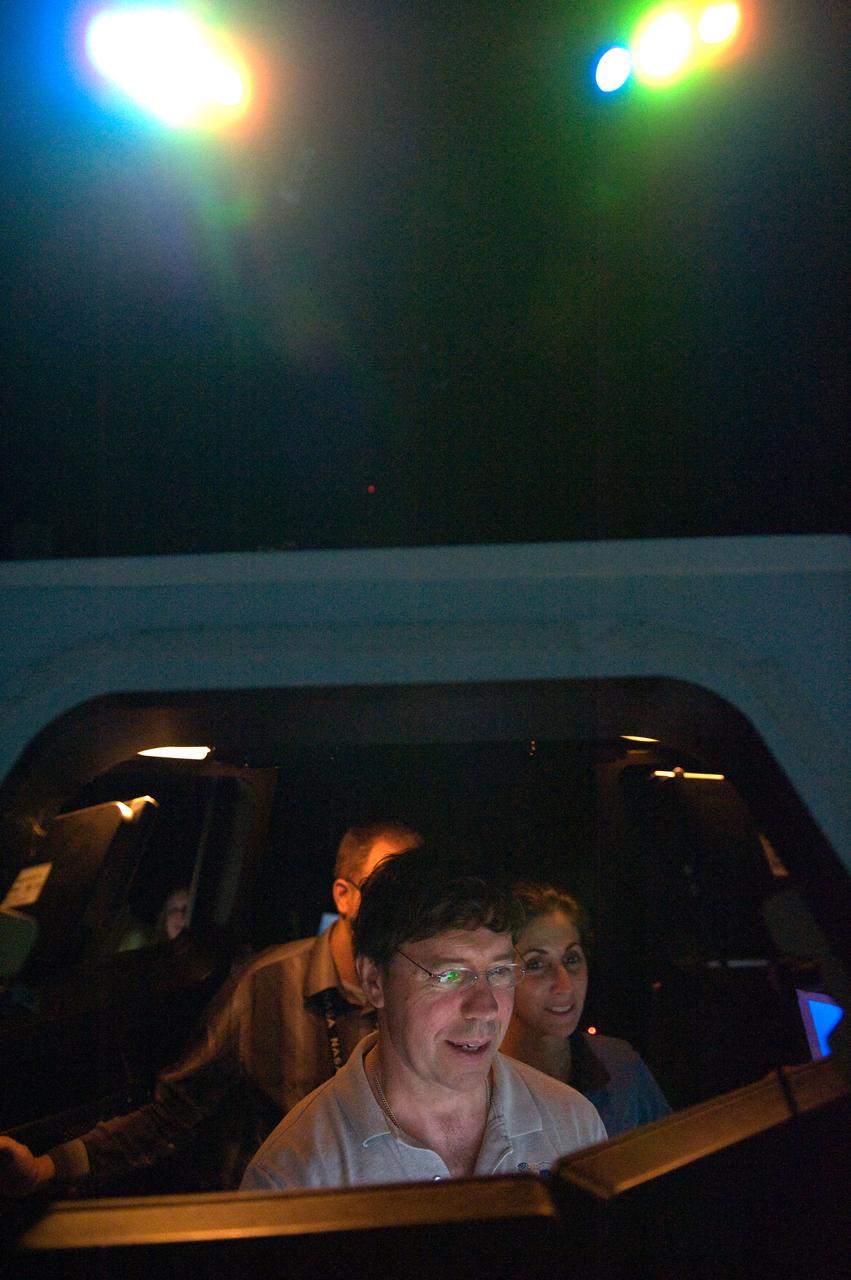
JSC2010-E-090698 (8 June 2010) --- NASA astronauts Michael Barratt and Nicole Stott, both STS-133 mission specialists, participate in an exercise in the systems engineering simulator in the Avionics Systems Laboratory at NASA's Johnson Space Center. The facility includes moving scenes of full-sized International Space Station components over a simulated Earth.
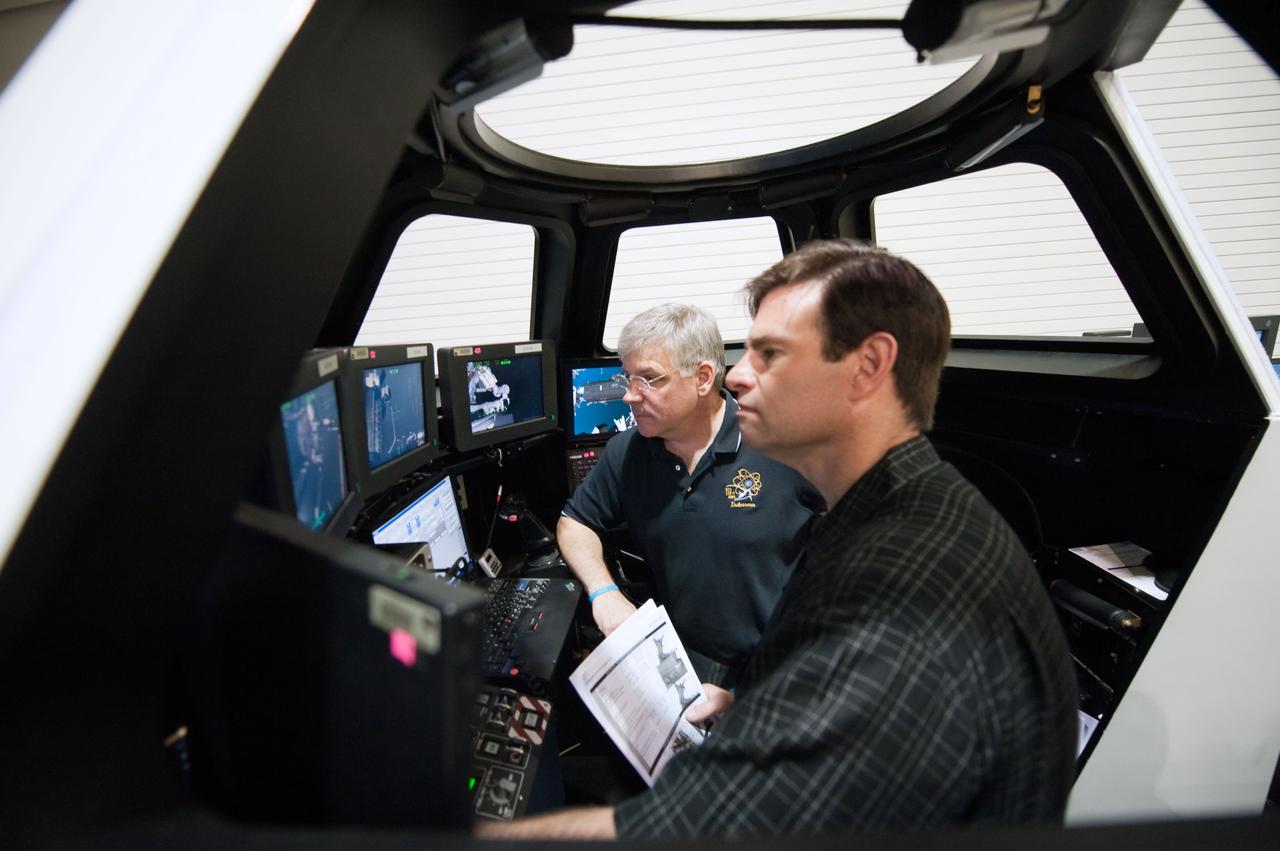
JSC2011-E-028163 (23 March 2011) --- NASA astronauts Greg Chamitoff (foreground), STS-134 mission specialist; and Greg H. Johnson, pilot, participate in an exercise in the systems engineering simulator in the Avionics Systems Laboratory at NASA's Johnson Space Center. The facility includes moving scenes of full-sized International Space Station components over a simulated Earth. Photo credit: NASA or National Aeronautics and Space Administration
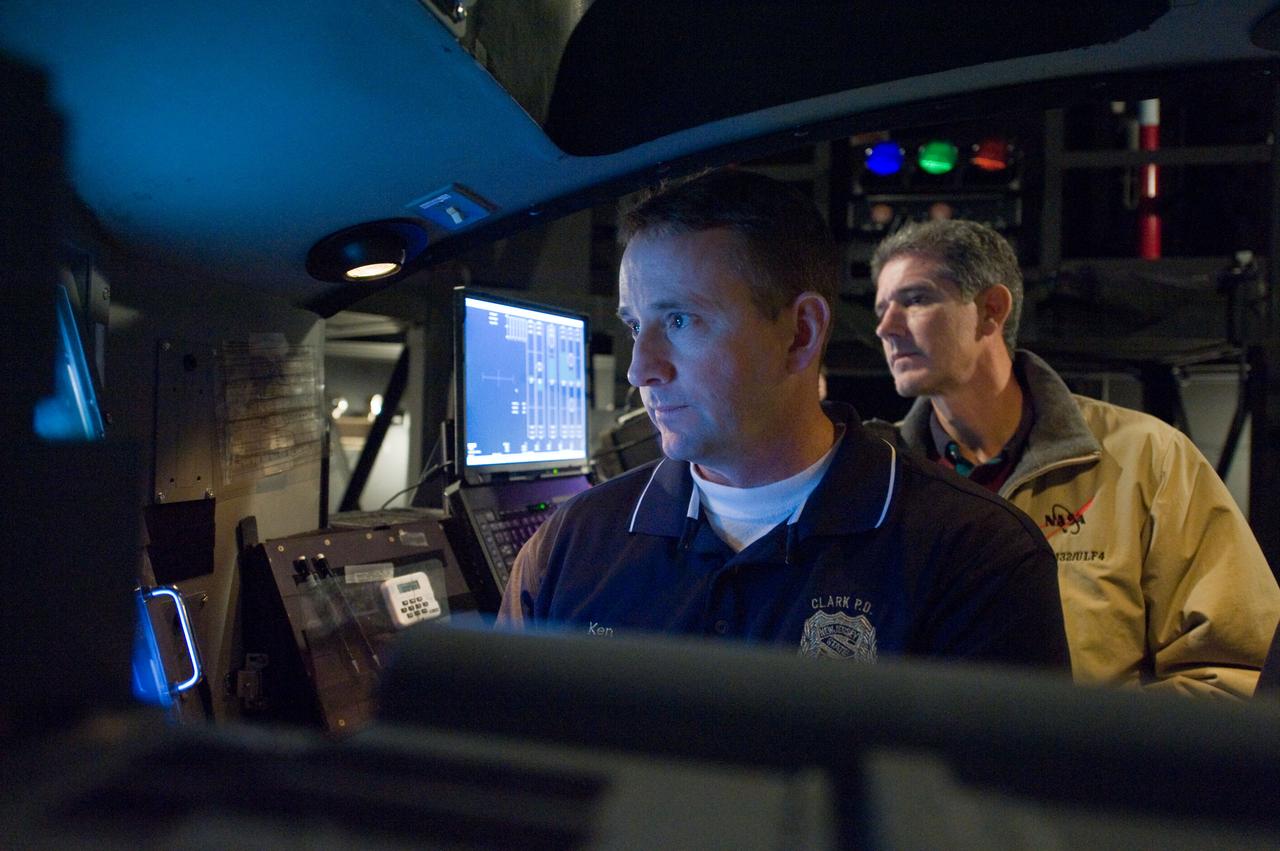
JSC2009-E-286964 (22 Dec. 2009) --- Astronauts Ken Ham (foreground), STS-132 commander; and Mike Good, mission specialist, participate in an exercise in the systems engineering simulator in the Avionics Systems Laboratory at NASA?s Johnson Space Center. The facility includes moving scenes of full-sized International Space Station components over a simulated Earth.
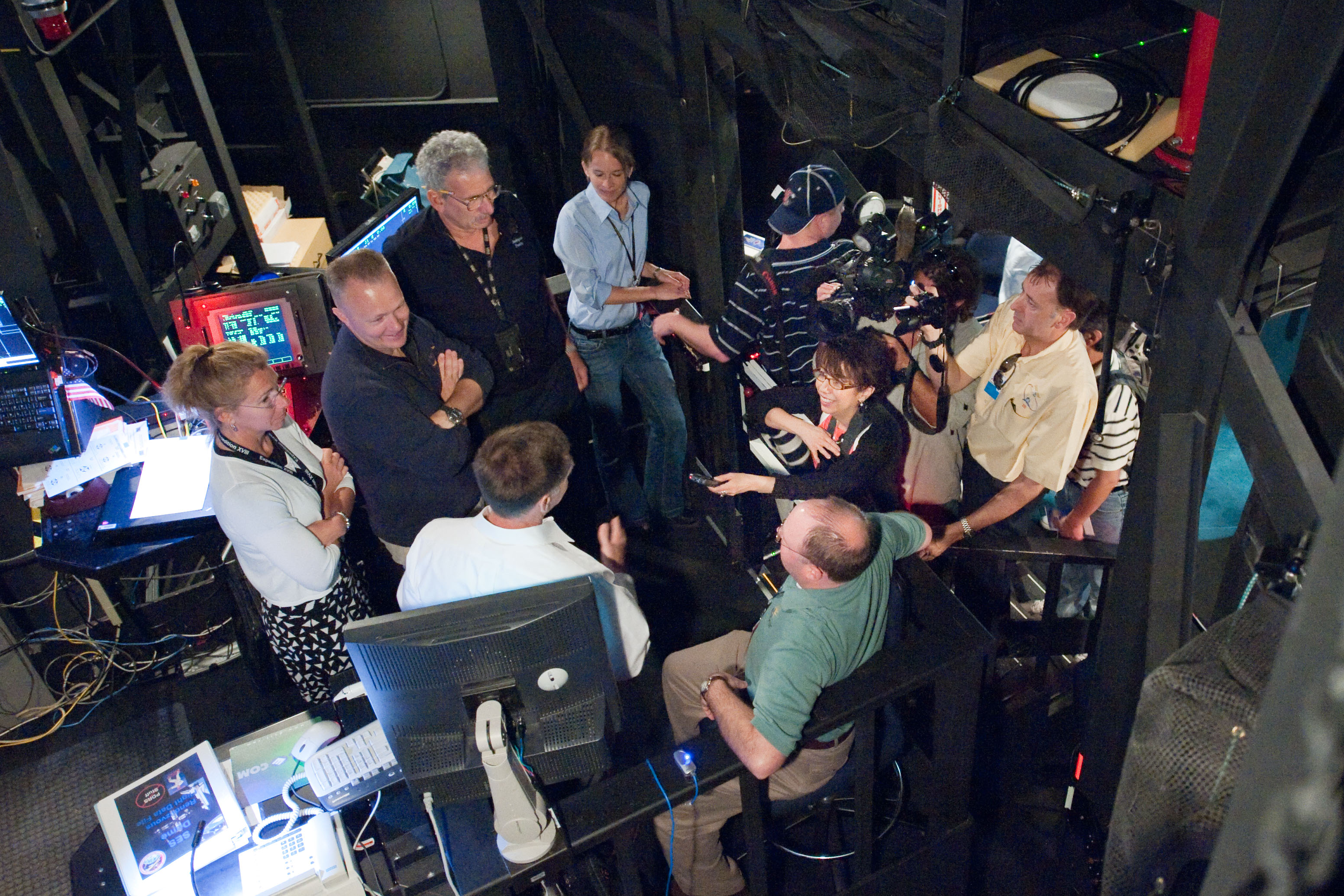
JSC2011-E-028142 (23 March 2011) --- NASA astronauts Chris Ferguson (left foreground), STS-135 commander; Doug Hurley (left background), pilot; and Sandy Magnus (left), mission specialist, speak with news media representatives during an exercise in the systems engineering simulator in the Avionics Systems Laboratory at NASA's Johnson Space Center. The facility includes moving scenes of full-sized International Space Station components over a simulated Earth. Photo credit: NASA or National Aeronautics and Space Administration
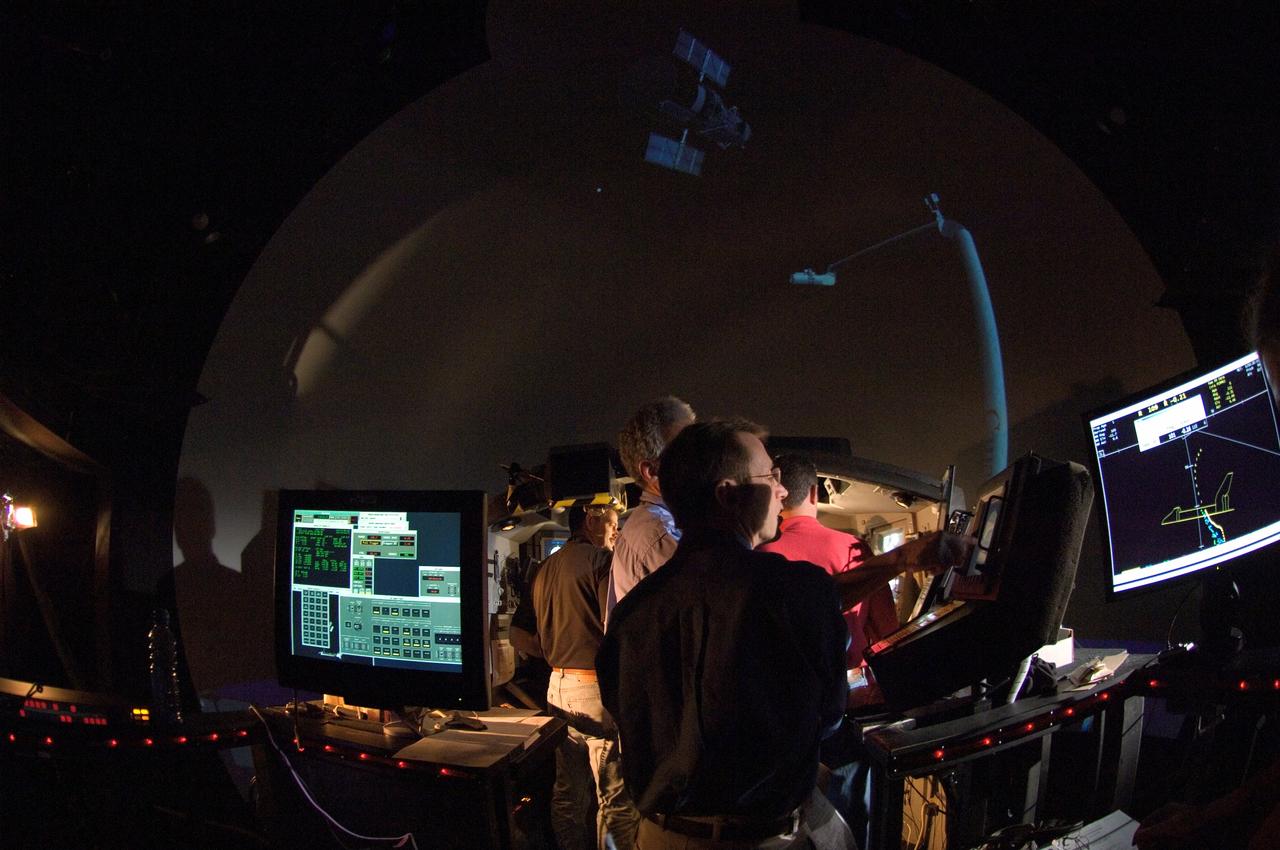
JSC2008-E-007759 (28 Jan. 2008) --- STS-125 crewmembers participate in an exercise in the systems engineering simulator in the Avionics Systems Laboratory at Johnson Space Center. The facility includes moving scenes of full-sized Hubble Space Telescope components over a simulated Earth. Pictured are astronauts Andrew J. Feustel (foreground), Michael T. Good, both mission specialists; and Scott D. Altman, commander.
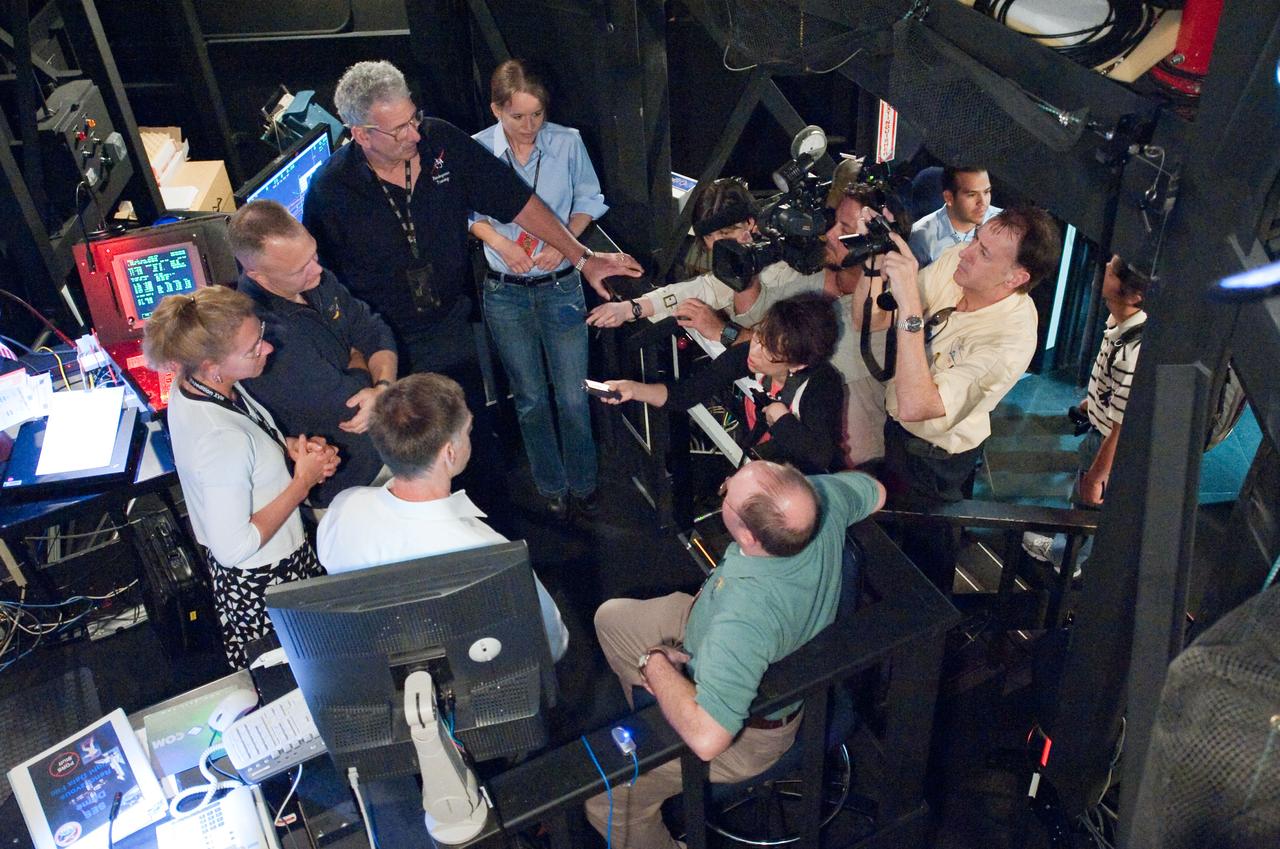
JSC2011-E-028144 (23 March 2011) --- NASA astronauts Chris Ferguson (left foreground), STS-135 commander; Doug Hurley (left background), pilot; and Sandy Magnus (left), mission specialist, speak with news media representatives during an exercise in the systems engineering simulator in the Avionics Systems Laboratory at NASA's Johnson Space Center. The facility includes moving scenes of full-sized International Space Station components over a simulated Earth. Photo credit: NASA or National Aeronautics and Space Administration
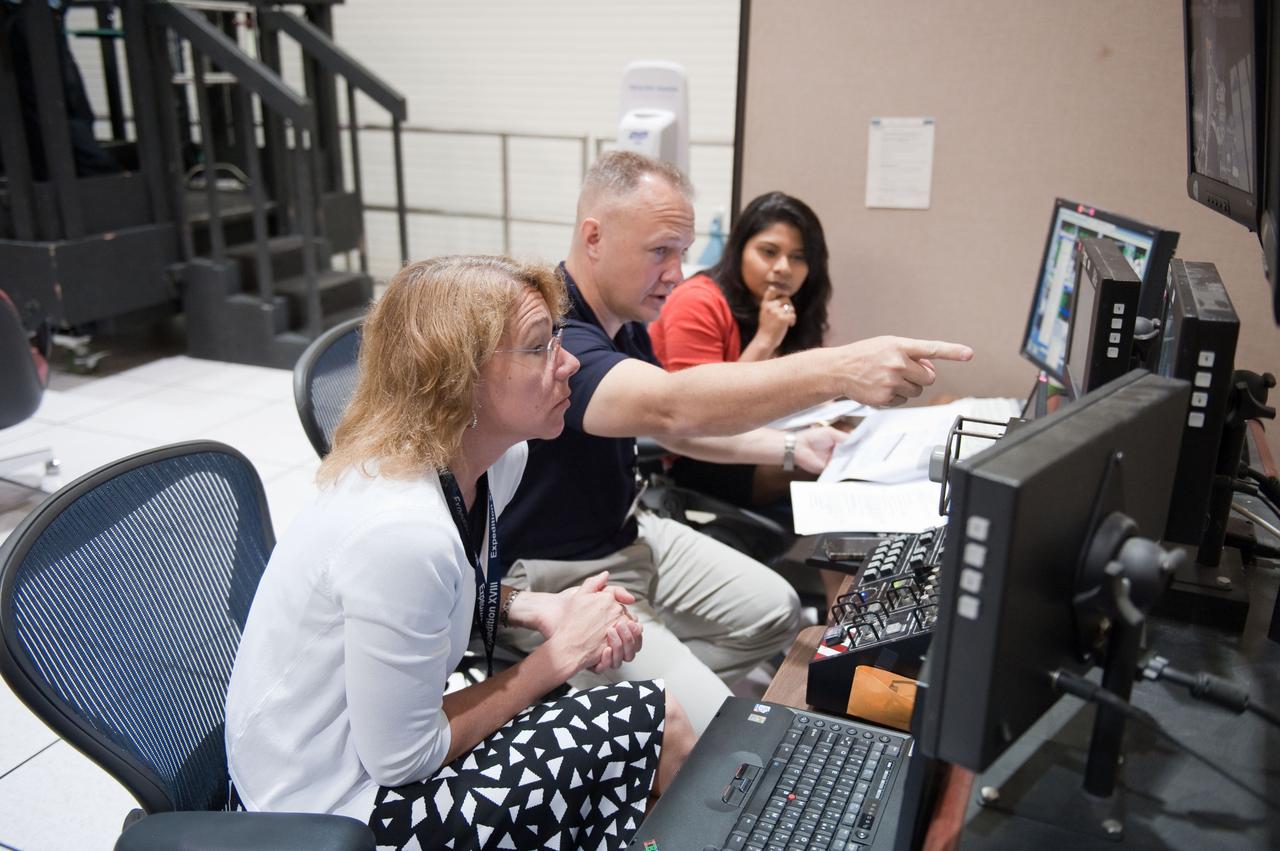
JSC2011-E-028122 (23 March 2011) --- NASA astronauts Doug Hurley, STS-135 pilot; and Sandy Magnus (foreground), mission specialist, participate in an exercise in the systems engineering simulator in the Avionics Systems Laboratory at NASA's Johnson Space Center. Photo credit: NASA or National Aeronautics and Space Administration
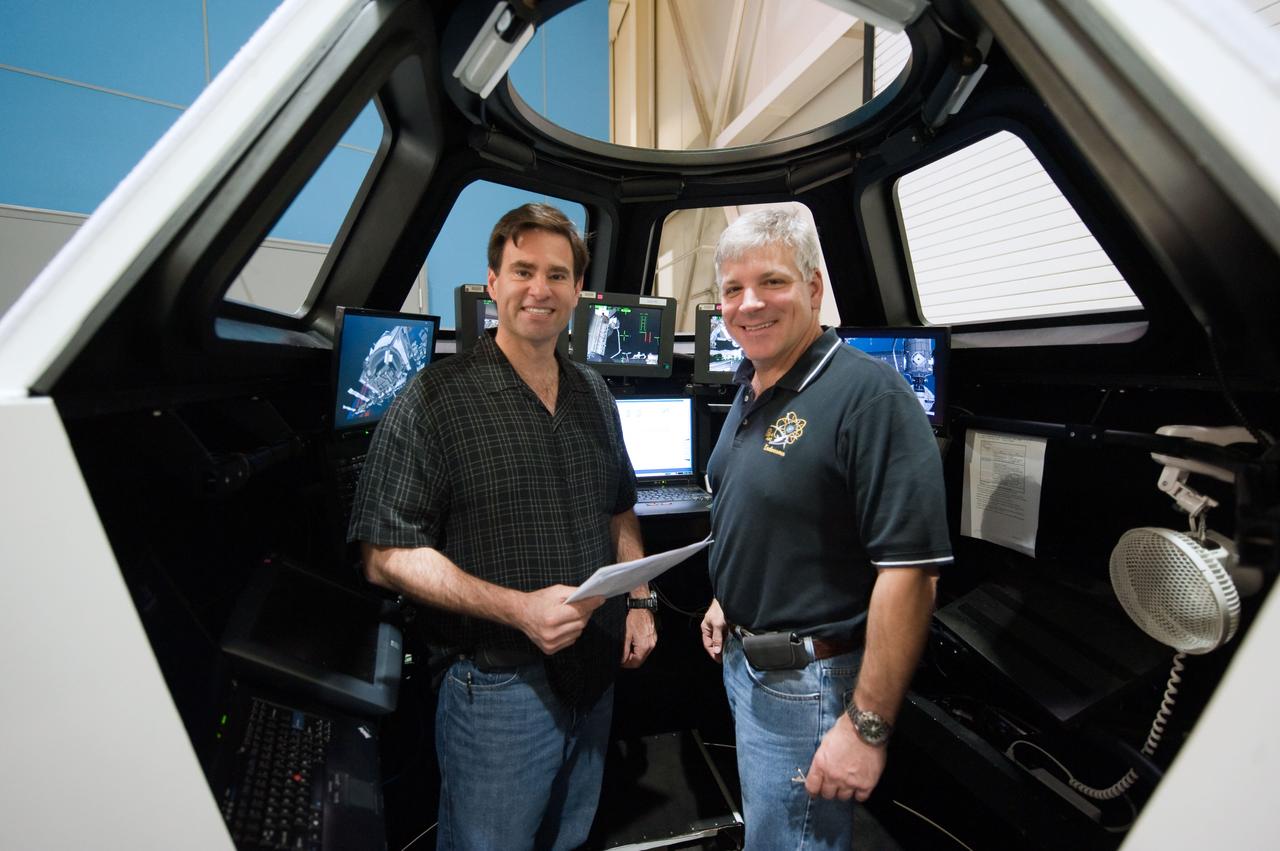
JSC2011-E-028160 (23 March 2011) --- NASA astronauts Greg H. Johnson (right), STS-134 pilot; and Greg Chamitoff, mission specialist, are pictured during an exercise in the systems engineering simulator in the Avionics Systems Laboratory at NASA's Johnson Space Center. Photo credit: NASA or National Aeronautics and Space Administration
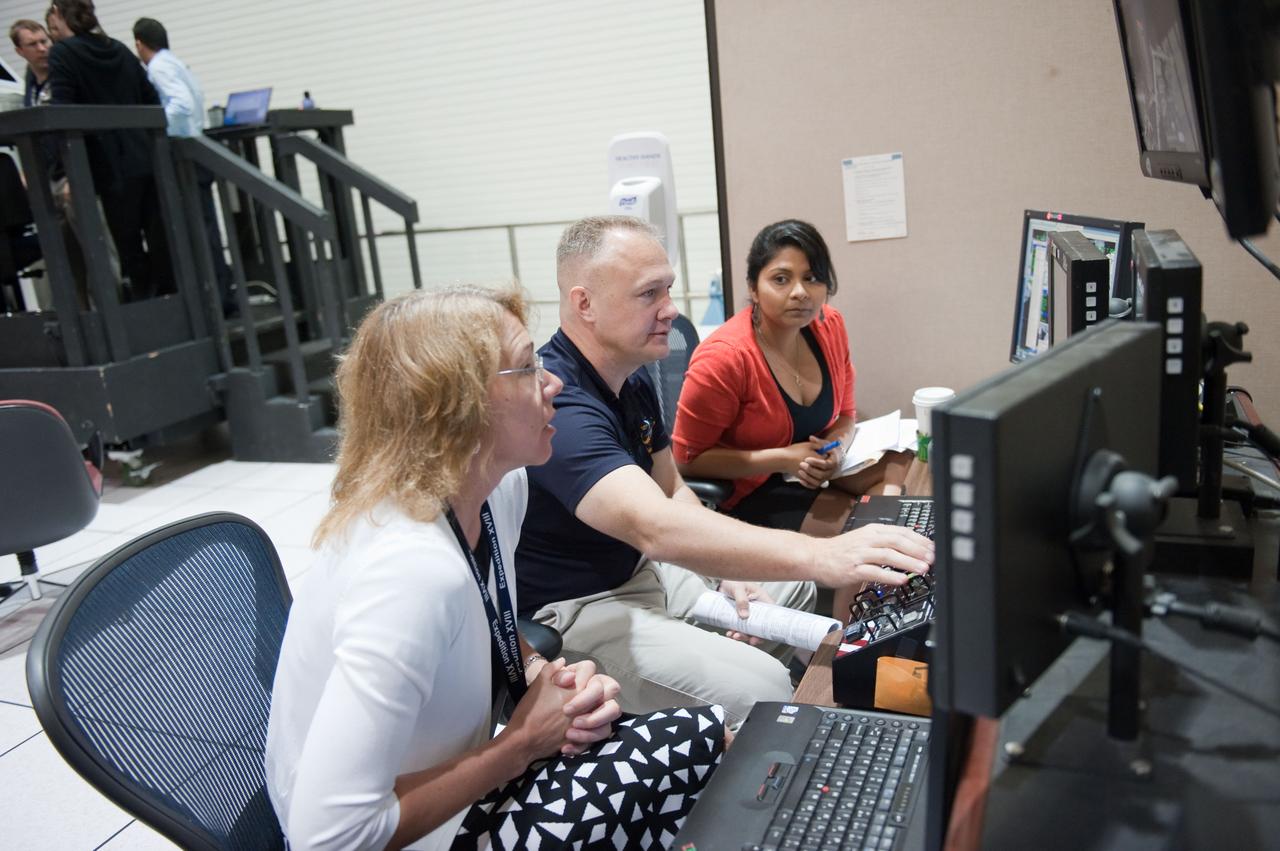
JSC2011-E-028150 (23 March 2011) --- NASA astronauts Doug Hurley, STS-135 pilot; and Sandy Magnus (foreground), mission specialist, participate in an exercise in the systems engineering simulator in the Avionics Systems Laboratory at NASA's Johnson Space Center. Photo credit: NASA or National Aeronautics and Space Administration
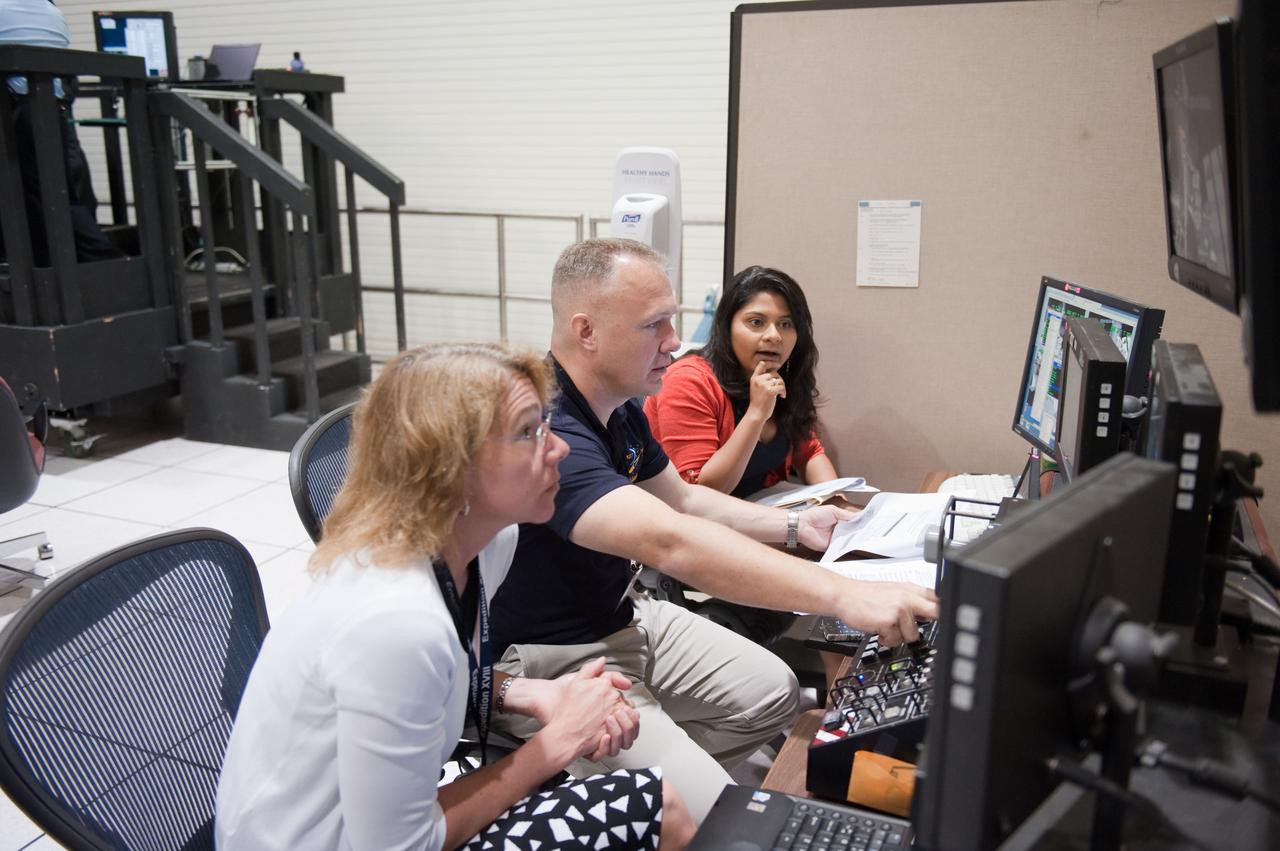
JSC2011-E-028153 (23 March 2011) --- NASA astronauts Doug Hurley, STS-135 pilot; and Sandy Magnus (foreground), mission specialist, participate in an exercise in the systems engineering simulator in the Avionics Systems Laboratory at NASA's Johnson Space Center. Photo credit: NASA or National Aeronautics and Space Administration
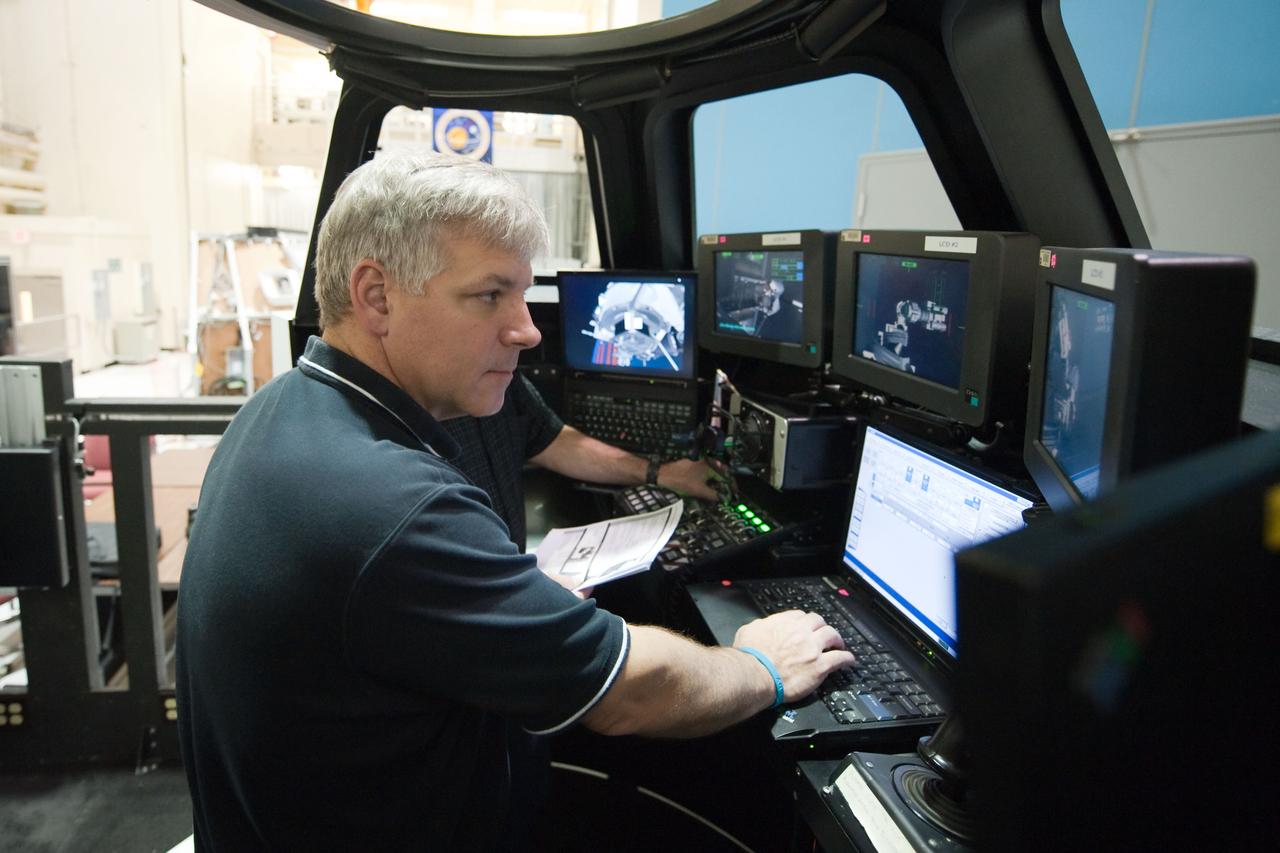
JSC2011-E-028158 (23 March 2011) --- NASA astronaut Greg H. Johnson, STS-134 pilot, participates in an exercise in the systems engineering simulator in the Avionics Systems Laboratory at NASA's Johnson Space Center. Photo credit: NASA or National Aeronautics and Space Administration
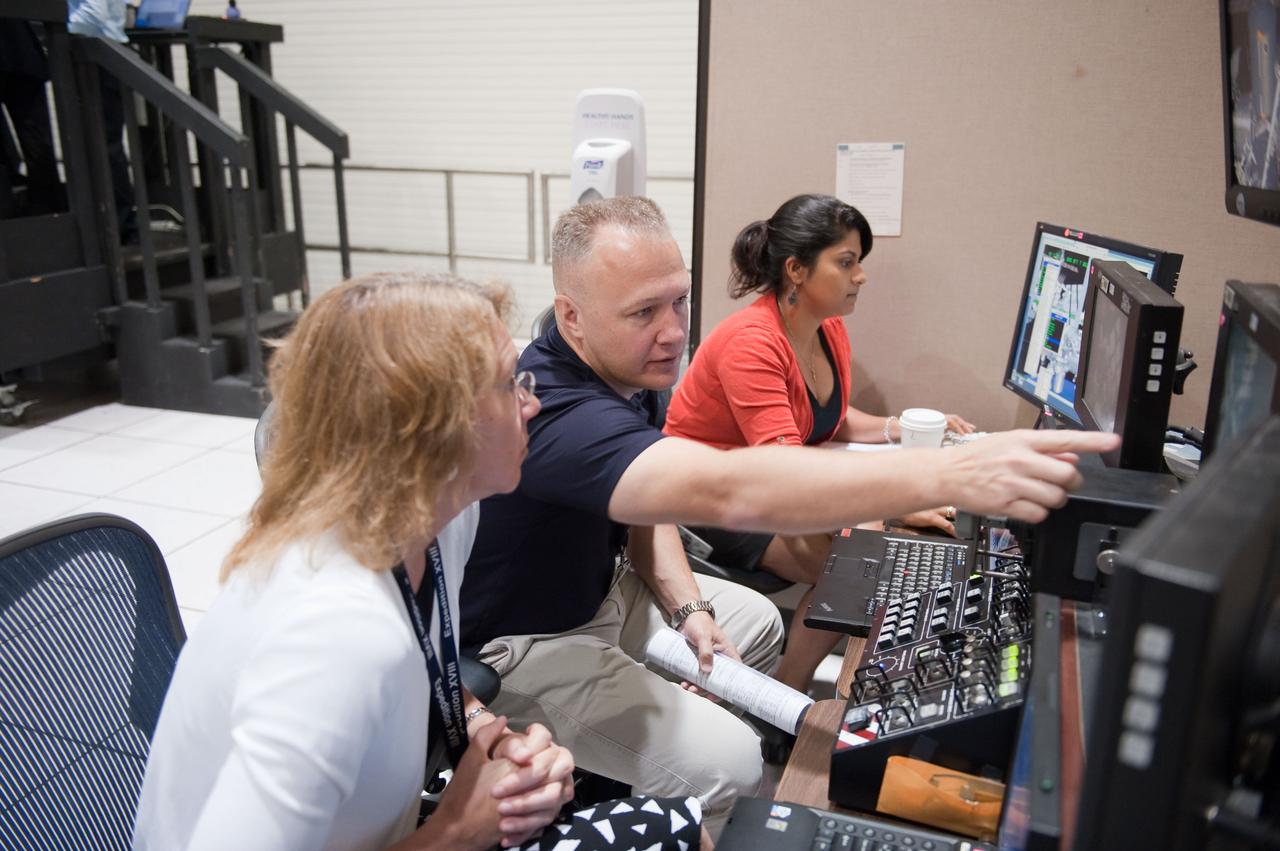
JSC2011-E-028151 (23 March 2011) --- NASA astronauts Doug Hurley, STS-135 pilot; and Sandy Magnus (foreground), mission specialist, participate in an exercise in the systems engineering simulator in the Avionics Systems Laboratory at NASA's Johnson Space Center. Photo credit: NASA or National Aeronautics and Space Administration

One of the two primary coolers at the Propulsion Systems Laboratory at the National Advisory Committee for Aeronautics (NACA) Lewis Flight Propulsion Laboratory. Engines could be run in simulated altitude conditions inside the facility’s two 14-foot-diameter and 24-foot-long test chambers. The Propulsion Systems Laboratory was the nation’s only facility that could run large full-size engine systems in controlled altitude conditions. At the time of this photograph, construction of the facility had recently been completed. Although not a wind tunnel, the Propulsion Systems Laboratory generated high-speed airflow through the interior of the engine. The air flow was pushed through the system by large compressors, adjusted by heating or refrigerating equipment, and de-moisturized by air dryers. The exhaust system served two roles: reducing the density of the air in the test chambers to simulate high altitudes and removing hot gases exhausted by the engines being tested. It was necessary to reduce the temperature of the extremely hot engine exhaust before the air reached the exhauster equipment. As the air flow exited through exhaust section of the test chamber, it entered into the giant primary cooler seen in this photograph. Narrow fins or vanes inside the cooler were filled with water. As the air flow passed between the vanes, its heat was transferred to the cooling water. The cooling water was cycled out of the system, carrying with it much of the exhaust heat.
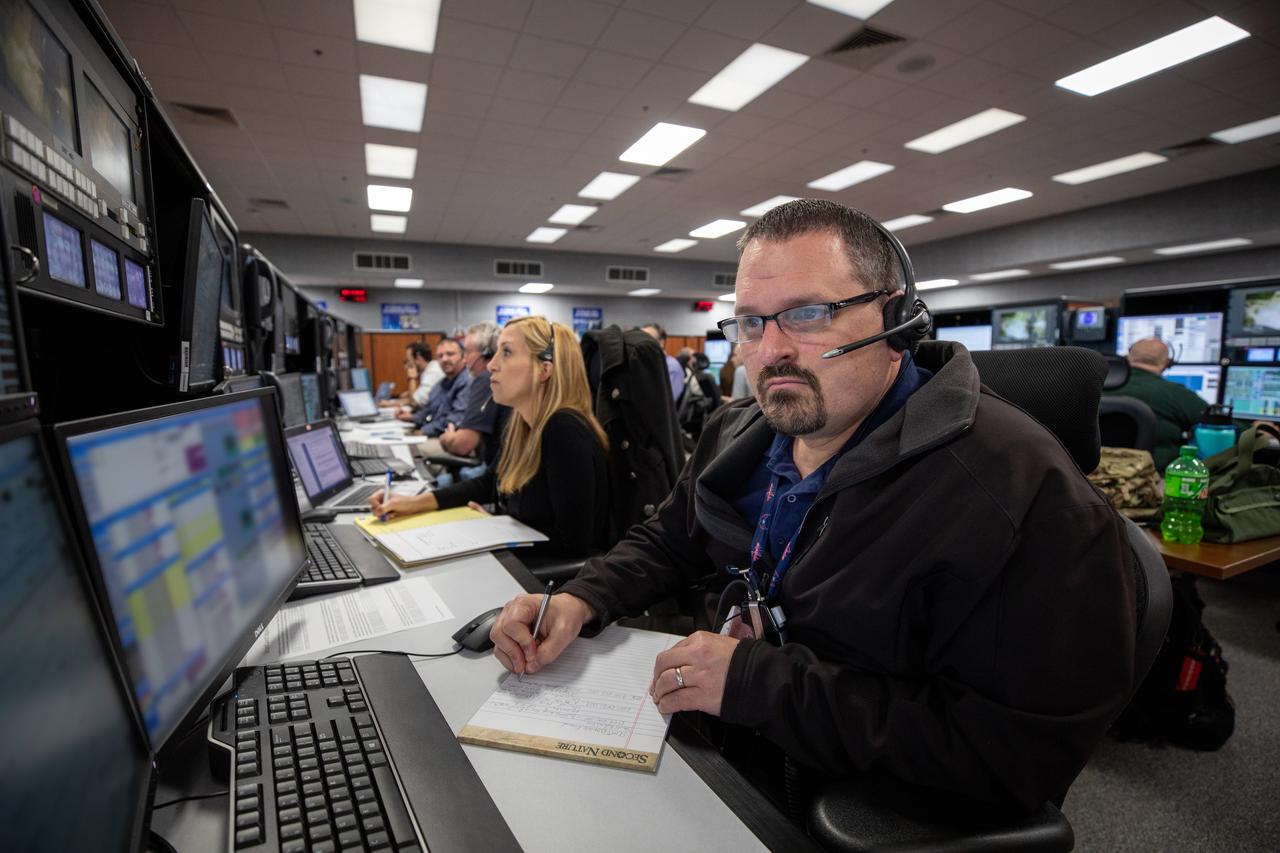
Melissa Batis (left), an operations project engineer, and John Mills, a test project engineer at NASA’s Kennedy Space Center in Florida, participate in a launch countdown simulation inside Firing Room 1 in the Launch Control Center on Feb. 3, 2020. Under the leadership of Artemis I Launch Director Charlie Blackwell-Thompson, a team of nearly 100 engineers from Orion, Space Launch System (SLS) and NASA’s Exploration Ground Systems came together to work through a series of simulated challenges, as well as a final countdown procedure. During these exercises, different issues were introduced to familiarize the team with launch day operations, while providing them with an opportunity to practice how they would handle those issues in real-time. Artemis I will be the first integrated test flight of the Orion spacecraft and SLS rocket – the system that will ultimately land the first woman and the next man on the Moon.
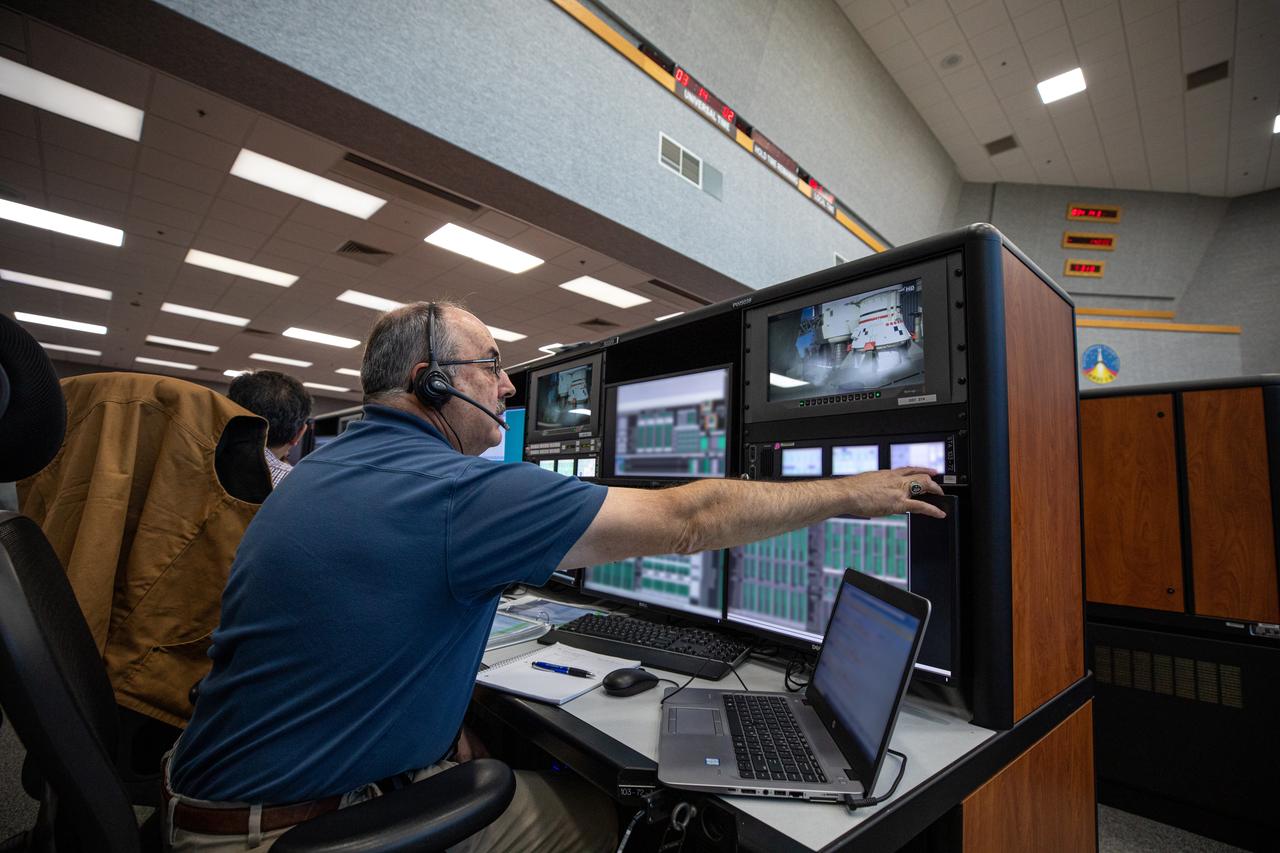
John McClelland, an engine controllers engineer at NASA’s Kennedy Space Center in Florida, participates in an Artemis I launch countdown simulation inside the Launch Control Center’s Firing Room 1. Under the leadership of Launch Director Charlie Blackwell-Thompson, nearly 100 engineers from Orion, Space Launch System (SLS) and the agency’s Exploration Ground Systems came together on Feb. 3, 2020, to work through a series of simulated challenges, as well as a final countdown procedure. During these exercises, different issues were introduced to familiarize the team with launch day operations, while providing them with an opportunity to practice how they would handle those issues in real-time. Artemis I will be the first integrated test flight of the Orion spacecraft and SLS rocket – the system that will ultimately land the first woman and the next man on the Moon.
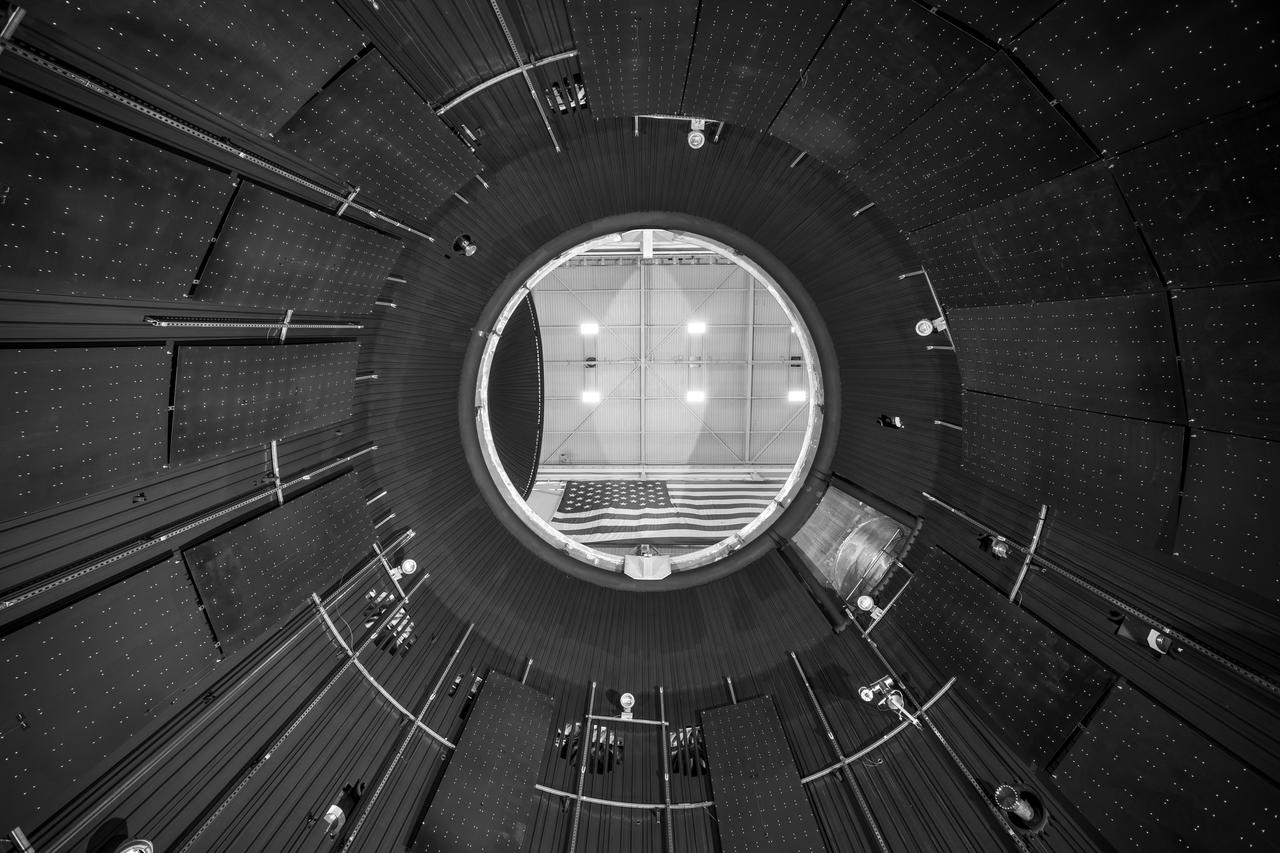
NASA’s In-Space Propulsion Facility located at Neil Armstrong Test Facility in Sandusky Ohio is the world’s only high altitude test facility capable of full-scale rocket engine and launch vehicle system level tests. The facility supports mission profile thermal vacuum simulation and engine firing. The engine or vehicle can be exposed for indefinite periods to low ambient pressures, low-background temperatures, and dynamic solar heating, simulating the environment the hardware will encounter during orbital or interplanetary travel. This is a view from inside the chamber looking up toward the American flag. Photo Credit: (NASA/Jordan Salkin)
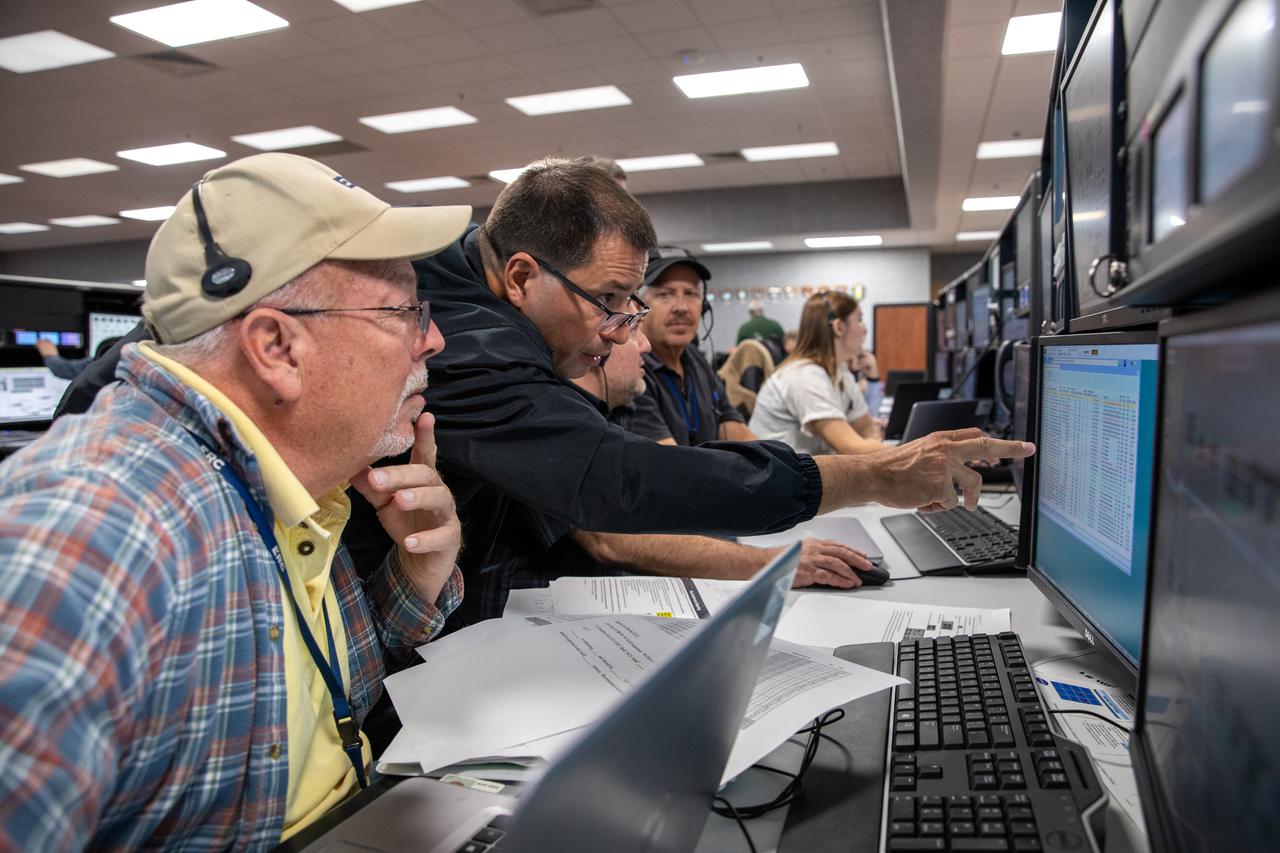
From left to right, Joe Novitsky, Martin Schnetzer, Troy Akseraylian and Will Booker, environmental control systems engineers at NASA’s Kennedy Space Center in Florida, participate in a launch countdown simulation on Feb. 3, 2020, inside the Launch Control Center’s Firing Room 1. Under the leadership of Launch Director Charlie Blackwell-Thompson, a team of nearly 100 engineers from Orion, Space Launch System (SLS) and NASA’s Exploration Ground Systems came together to work through a series of simulated challenges, as well as a final countdown procedure, in preparation for the Artemis I launch. During these exercises, different issues were introduced to familiarize the team with launch day operations, while providing them with an opportunity to practice how they would handle those issues in real-time. Artemis I will be the first integrated test flight of the Orion spacecraft and SLS rocket – the system that will ultimately land the first woman and the next man on the Moon.
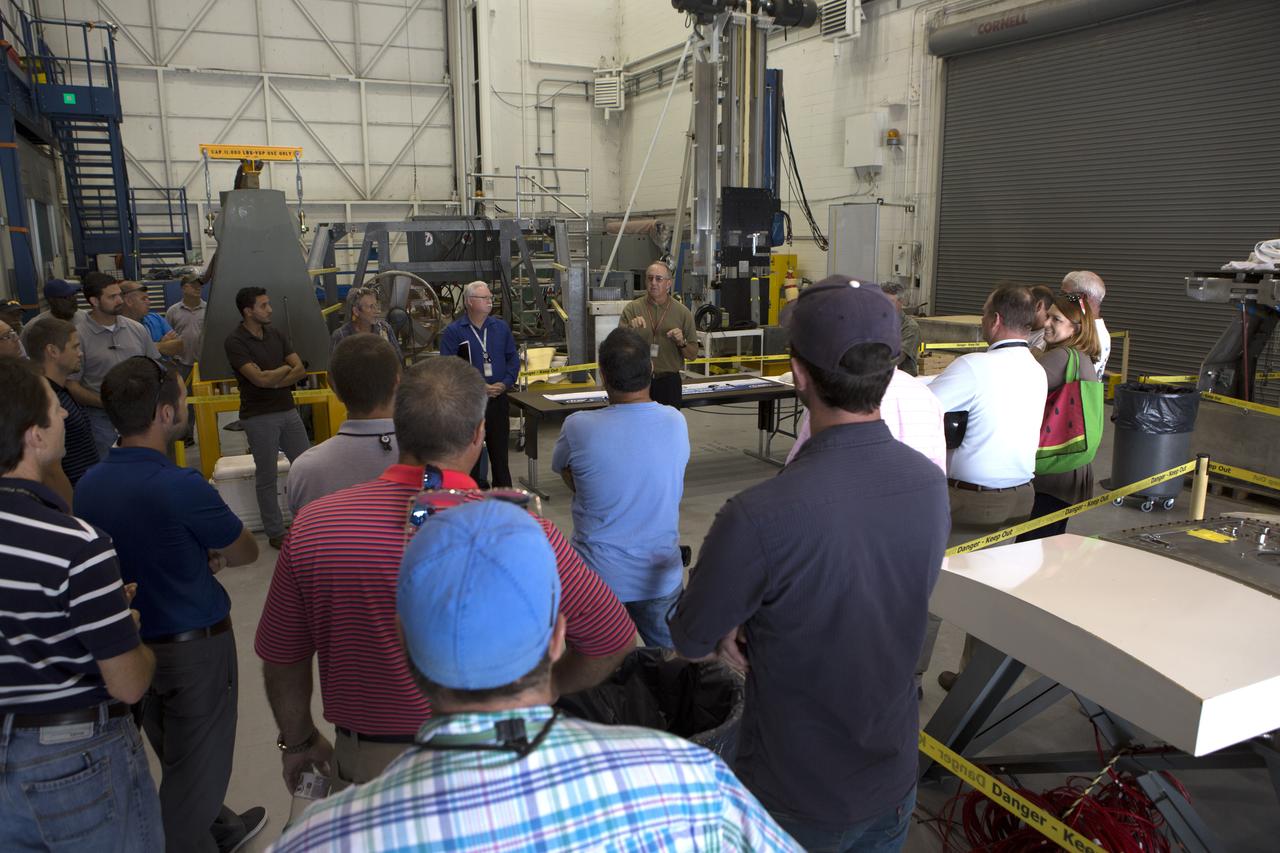
Testing of the Orion Service Module Umbilical (OSMU) was completed at the Launch Equipment Test Facility at NASA’s Kennedy Space Center in Florida. The OSMU was attached to Vehicle Motion Simulator 1 for a series of simulated launch tests to validate it for installation on the mobile launcher. Patrick Simpkins, director of Engineering, speaks to the test team during an event to mark the end of testing. The mobile launcher tower will be equipped with a number of lines, called umbilicals that will connect to the Space Launch System rocket and Orion spacecraft for Exploration Mission-1 (EM-1). The OSMU will be located high on the mobile launcher tower and, prior to launch, will transfer liquid coolant for the electronics and air for the Environmental Control System to the Orion service module that houses these critical systems to support the spacecraft. Kennedy's Engineering Directorate is providing support to the Ground Systems Development and Operations Program for testing of the OSMU. EM-1 is scheduled to launch in 2018.
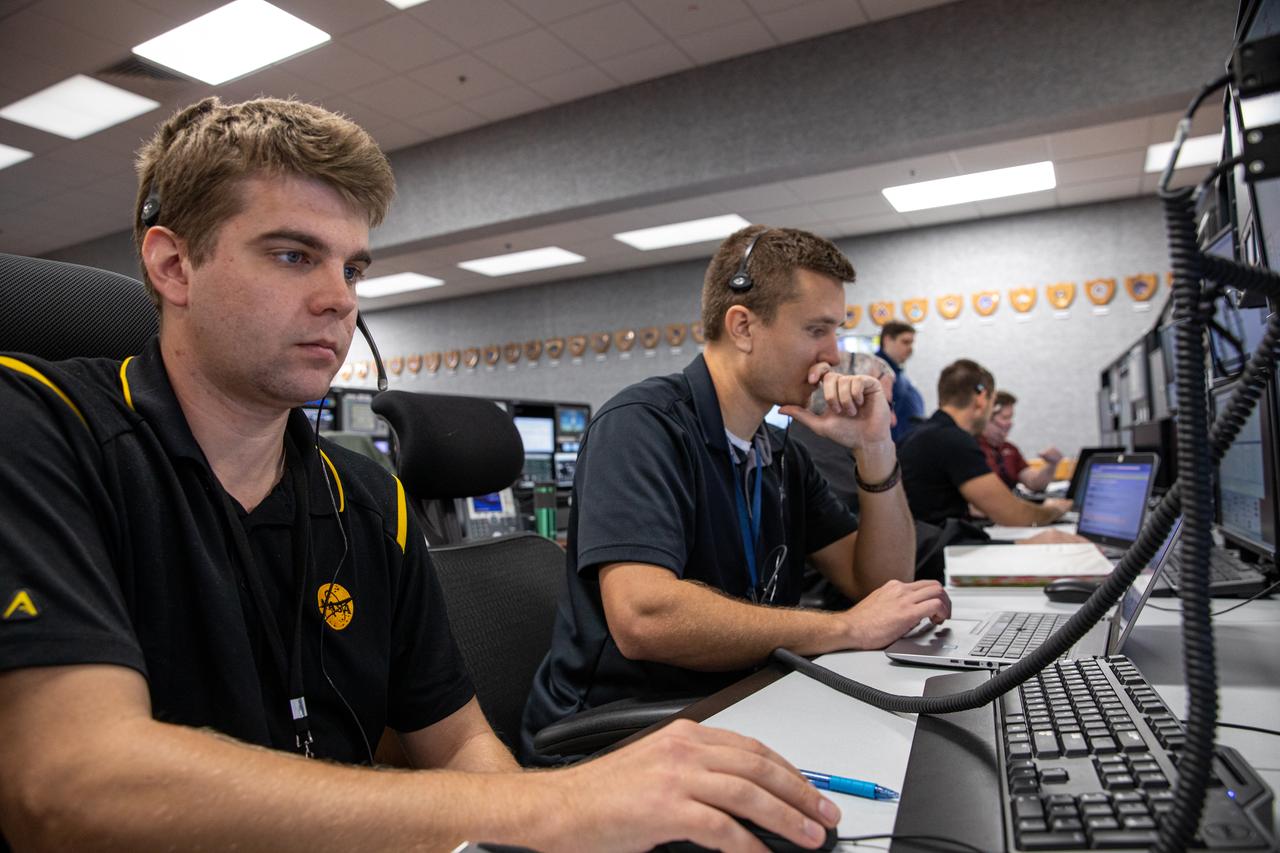
Michael Dennison, left, and James Ross, ground cooling system engineers at NASA’s Kennedy Space Center in Florida, participate in an Artemis I launch countdown training simulation on Feb. 3, 2020. Under the leadership of Launch Director Charlie Blackwell-Thompson, a team of nearly 100 engineers from Orion, Space Launch System (SLS) and NASA’s Exploration Ground Systems came together in the Launch Control Center’s Firing Room 1 to work through a series of simulated challenges, as well as a final countdown procedure. During these exercises, different issues were introduced to familiarize the team with launch day operations, while providing them with an opportunity to practice how they would handle those issues in real-time. Artemis I will be the first integrated test flight of the Orion spacecraft and SLS rocket – the system that will ultimately land the first woman and the next man on the Moon.
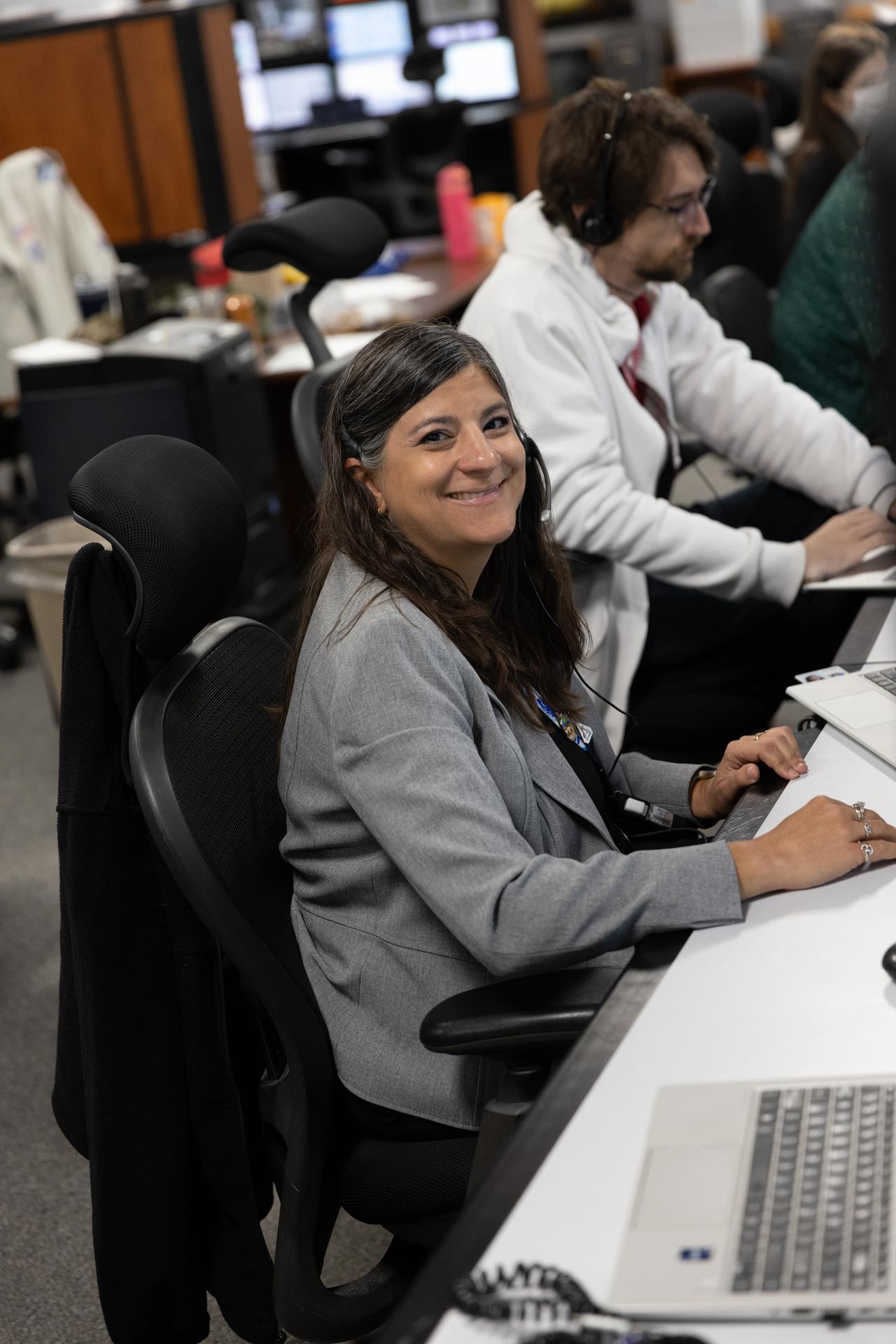
Lindsey Waitt, engineer with NASA’s Exploration Ground Systems Program, participates in a terminal countdown simulation for Artemis III on Thursday, Aug. 6, 2026, inside Firing Room 1 of the Rocco A. Petrone Launch Control Center at NASA’s Kennedy Space Center in Florida. The terminal count simulation conducted by NASA’s Exploration Ground Systems team runs through the final five hours of launch countdown, including terminal count - the remaining 10 minutes of the countdown. Artemis III will carry out a series of objectives in low Earth orbit designed to demonstrate critical systems needed for future lunar landings, beginning with Artemis IV.
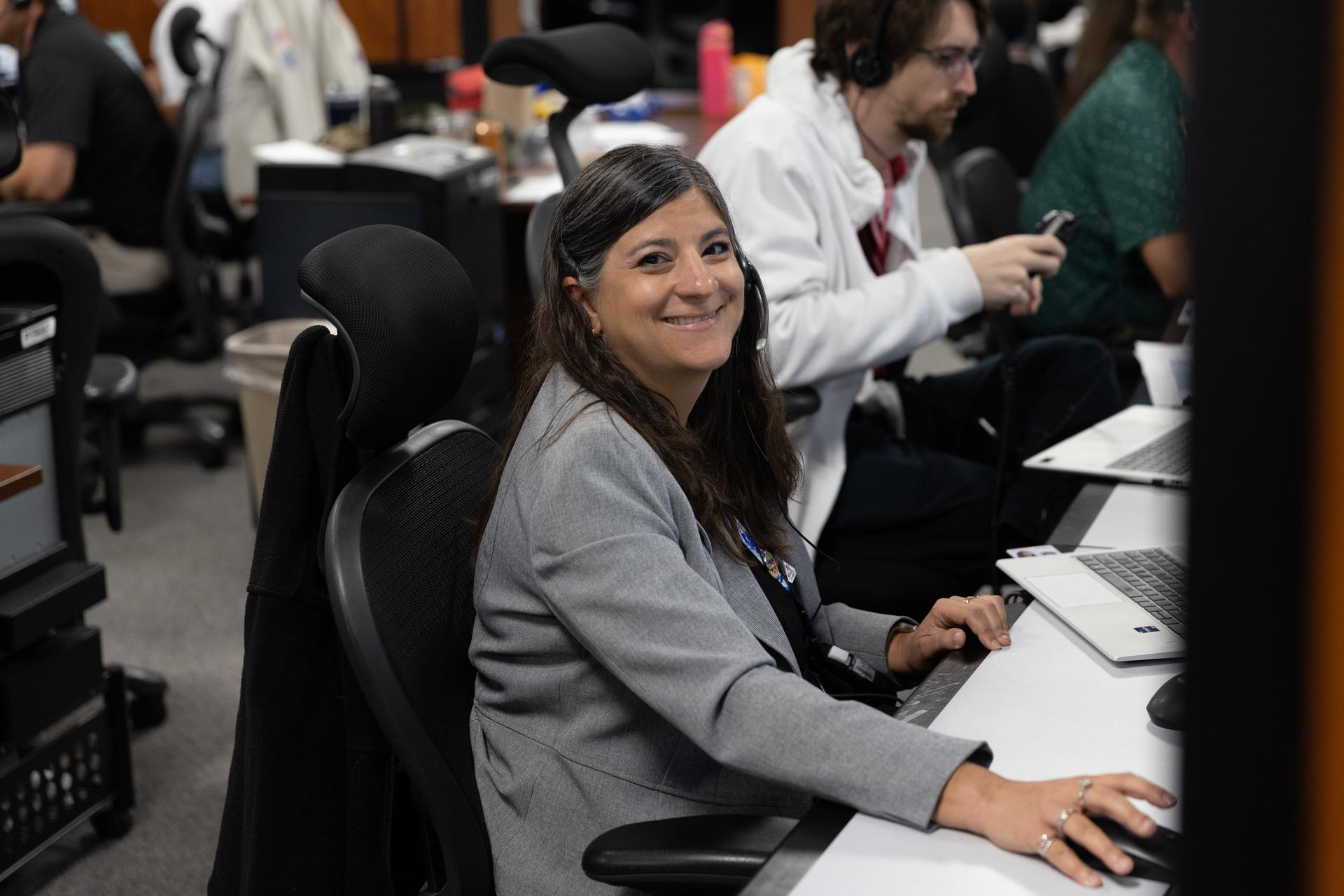
Lindsey Waitt, engineer with NASA’s Exploration Ground Systems Program, participates in a terminal countdown simulation for Artemis III on Thursday, Aug. 6, 2026, inside Firing Room 1 of the Rocco A. Petrone Launch Control Center at NASA’s Kennedy Space Center in Florida. The terminal count simulation conducted by NASA’s Exploration Ground Systems team runs through the final five hours of launch countdown, including terminal count - the remaining 10 minutes of the countdown. Artemis III will carry out a series of objectives in low Earth orbit designed to demonstrate critical systems needed for future lunar landings, beginning with Artemis IV.
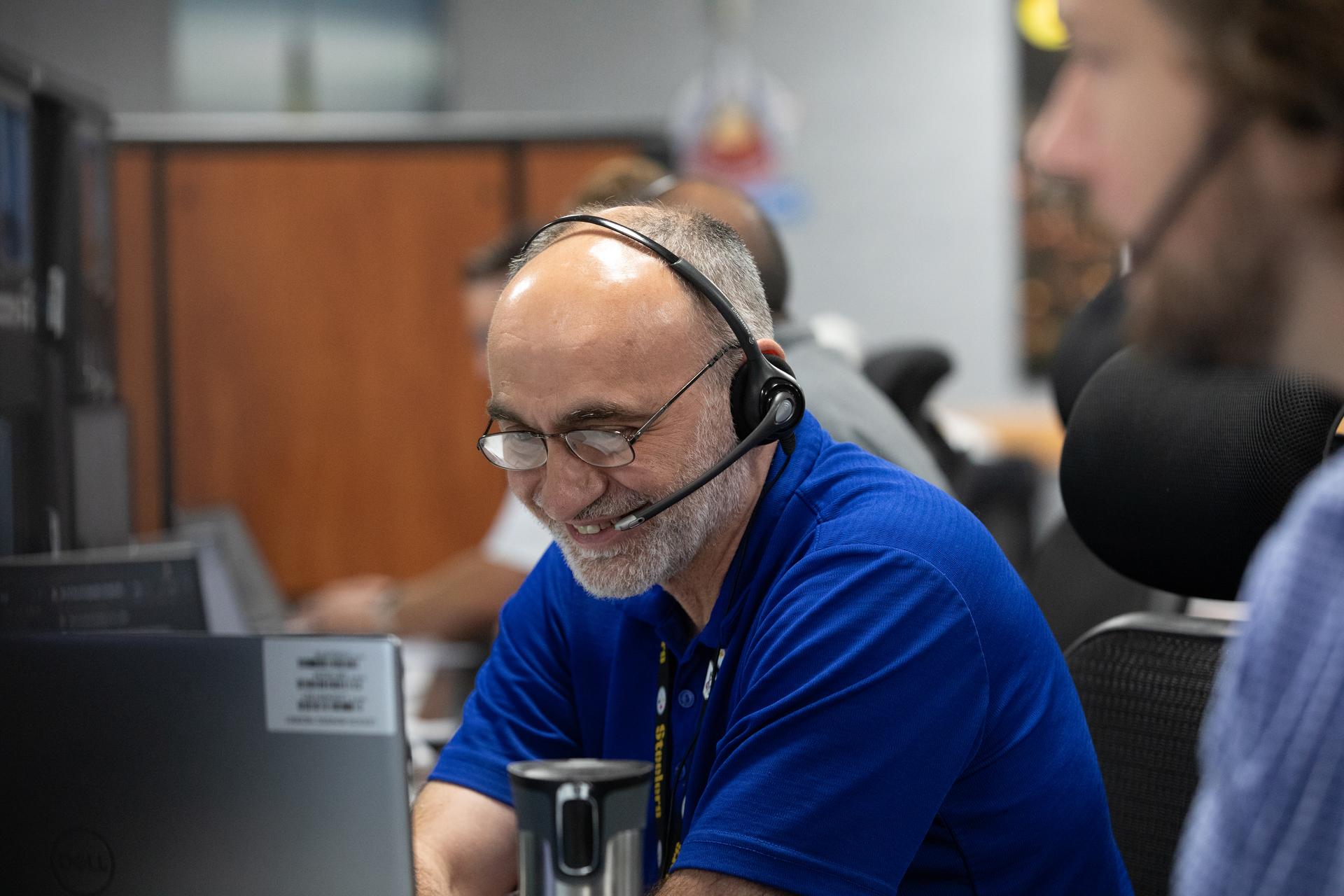
Alex Pandelos, engineer with NASA’s Exploration Ground Systems Program, participates in a terminal countdown simulation for Artemis III on Thursday, Aug. 6, 2026, inside Firing Room 1 of the Rocco A. Petrone Launch Control Center at NASA’s Kennedy Space Center in Florida. The terminal count simulation conducted by NASA’s Exploration Ground Systems team runs through the final five hours of launch countdown, including terminal count - the remaining 10 minutes of the countdown. Artemis III will carry out a series of objectives in low Earth orbit designed to demonstrate critical systems needed for future lunar landings, beginning with Artemis IV.
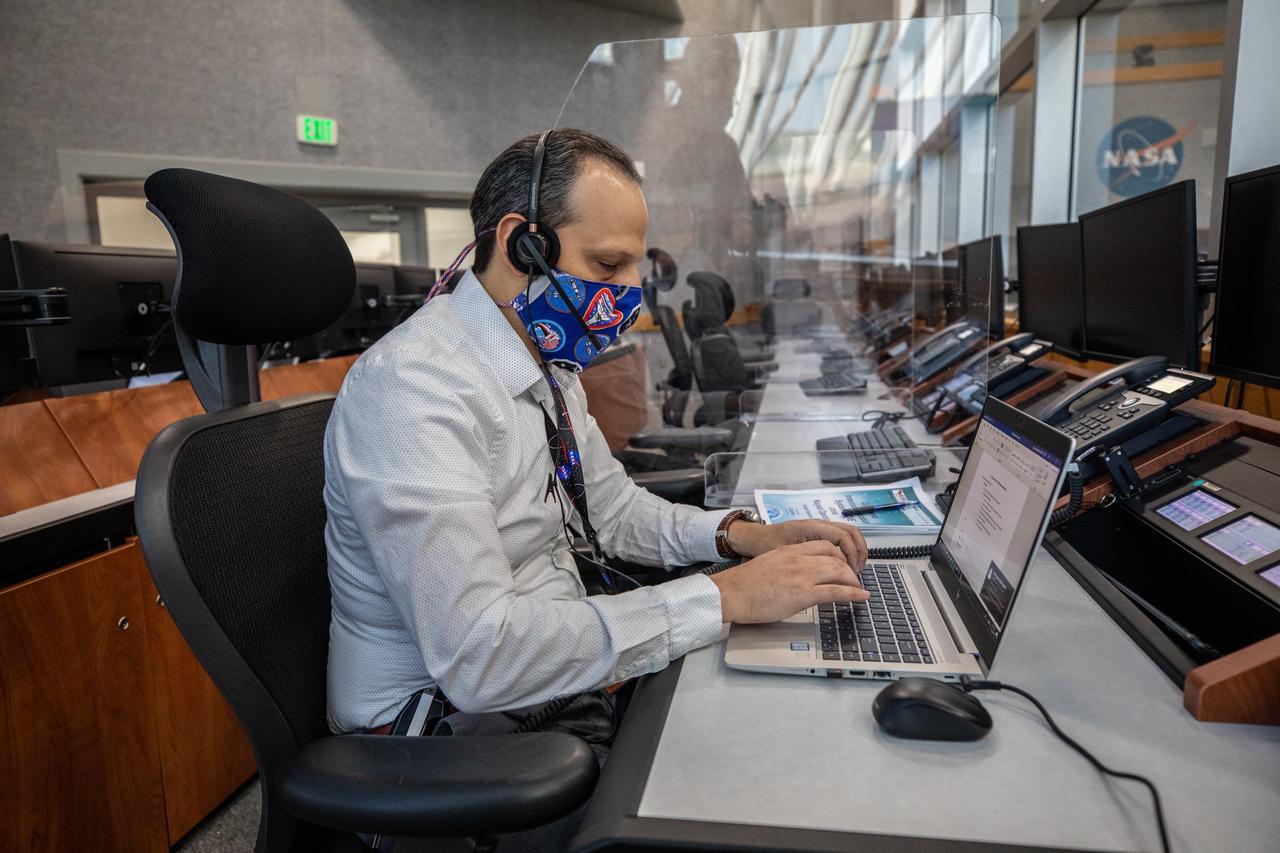
Pete Dizuzio, a system safety engineer, participates in a cryogenic propellant loading simulation inside Firing Room 1 in the Launch Control Center on Nov. 2, 2020, at NASA’s Kennedy Space Center in Florida. A team of engineers with Exploration Ground Systems and Jacobs, members of the cryogenics launch team, are rehearsing the steps to load the super-cooled liquid hydrogen and liquid oxygen into the Space Launch System’s (SLS) core and second stages to prepare for Artemis I. The first in a series of increasingly complex missions, Artemis I will test the Orion spacecraft and Space Launch System as an integrated system ahead of crewed flights to the Moon. NASA will land the first woman and the next man on the Moon in 2024.
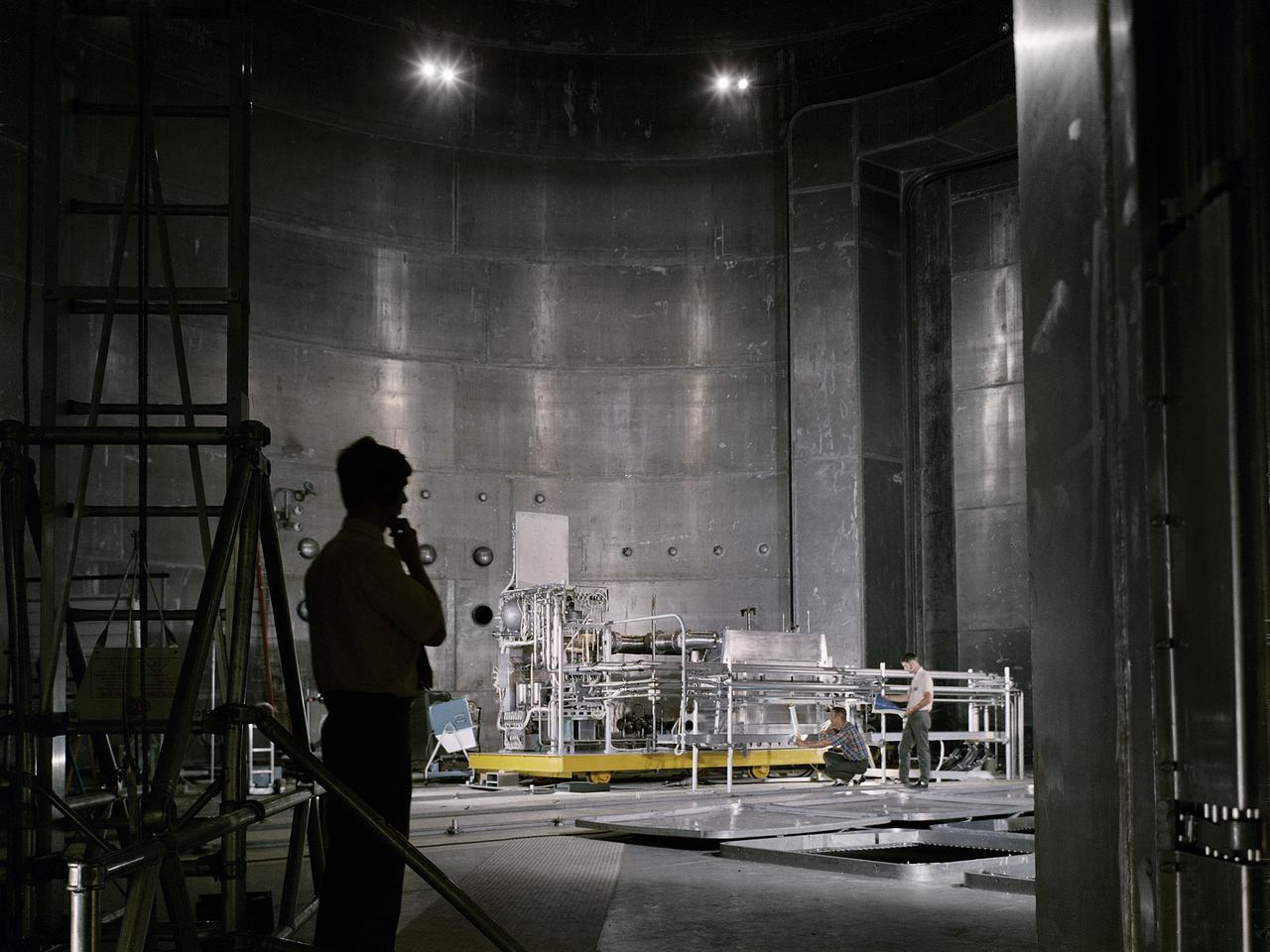
Set up of a Brayton Cycle Power System test in the Space Power Facility’s massive vacuum chamber at the National Aeronautics and Space Administration’s (NASA) Plum Brook Station in Sandusky, Ohio. The $28.4-million facility, which began operations in 1969, is the largest high vacuum chamber ever built. The chamber is 100 feet in diameter and 120 feet high. It can produce a vacuum deep enough to simulate the conditions at 300 miles altitude. The Space Power Facility was originally designed to test nuclear-power sources for spacecraft, but it was never used for that purpose. The Space Power Facility was first used to test a 15 to 20-kilowatt Brayton Cycle Power System for space applications. Three different methods of simulating solar heat were employed during the tests. Lewis researchers studied the Brayton power system extensively in the 1960s and 1970s. The Brayton engine converted solar thermal energy into electrical power. The system operated on a closed-loop Brayton thermodynamic cycle with a helium-xenon gas mixture as its working fluid. A space radiator was designed to serve as the system’s waste heat rejecter. The radiator was later installed in the vacuum chamber and tested in a simulated space environment to determine its effect on the power conversion system. The Brayton system was subjected to simulated orbits with 62 minutes of sun and 34 minutes of shade.
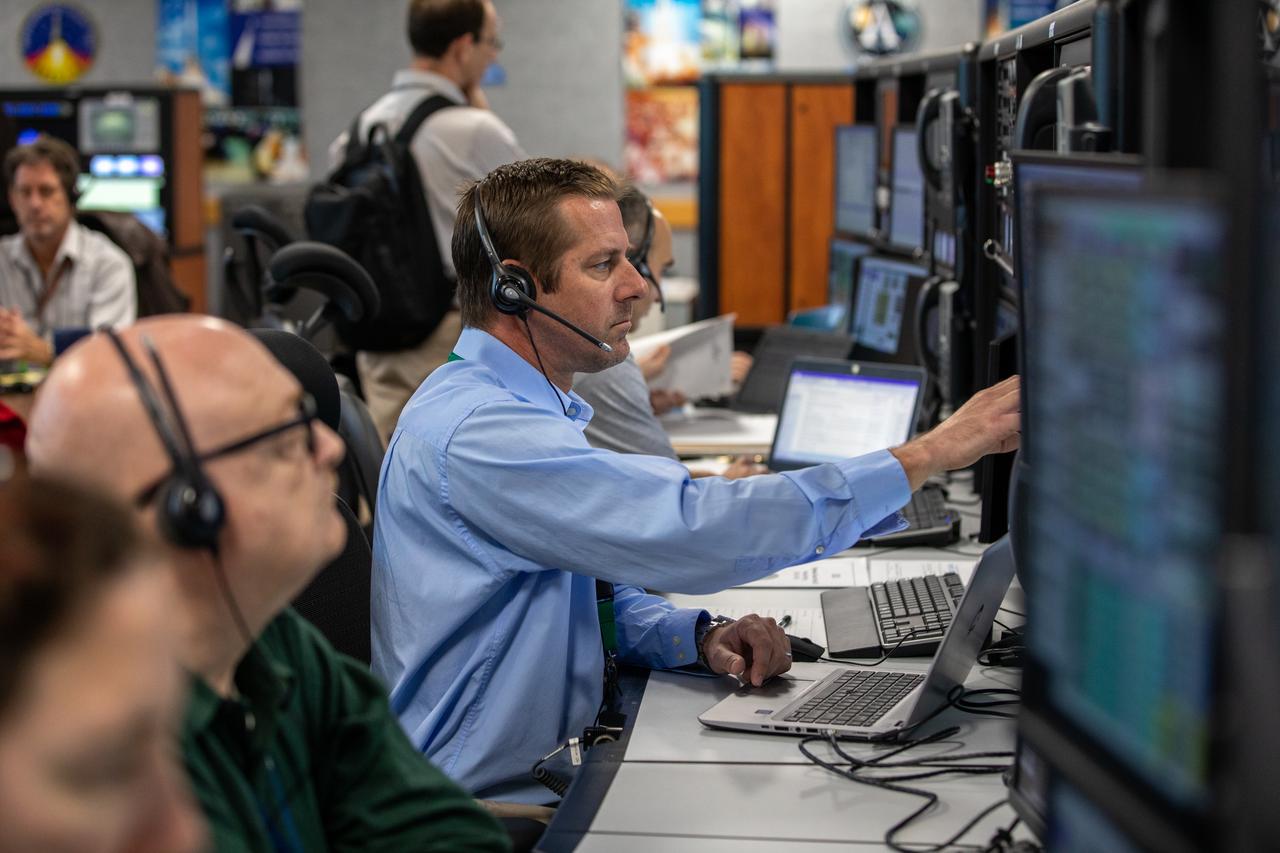
Inside the Launch Control Center’s Firing Room 1 at NASA’s Kennedy Space Center in Florida, Ryan Bowers, a ground launch sequencer support engineer, participates in an Artemis I launch countdown simulation on Feb. 3, 2020. Under the leadership of Launch Director Charlie Blackwell-Thompson, a team of nearly 100 engineers from Orion, Space Launch System (SLS) and NASA’s Exploration Ground Systems came together to work through a series of simulated challenges, as well as a final countdown procedure. During these exercises, different issues were introduced to familiarize the team with launch day operations, while providing them with an opportunity to practice how they would handle those issues in real-time. Artemis I will be the first integrated test flight of the Orion spacecraft and SLS rocket – the system that will ultimately land the first woman and the next man on the Moon.
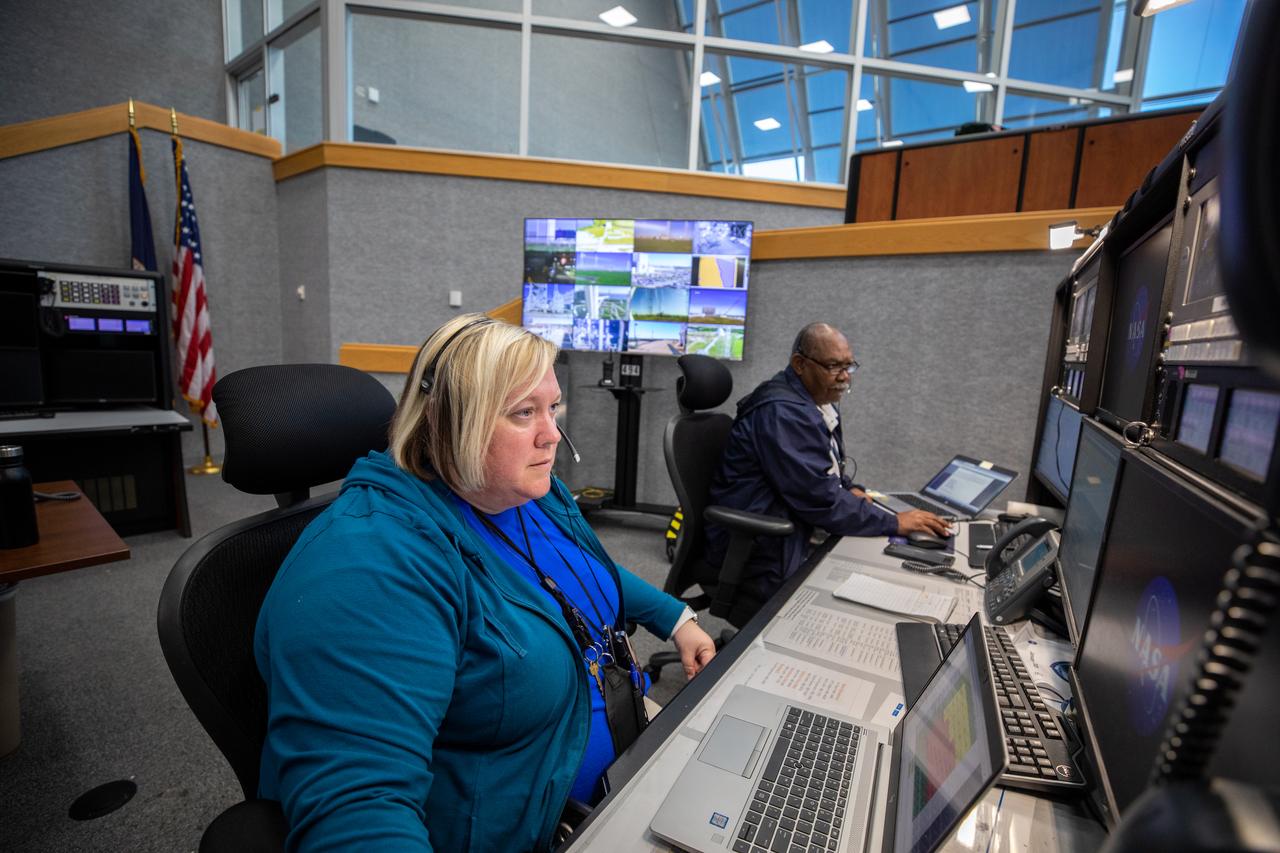
Lisa Devries (left) and Bubba Howard, safety engineers at NASA’s Kennedy Space Center in Florida, participate in a launch countdown simulation inside Firing Room 1 in the Launch Control Center on Feb. 3, 2020. Under the leadership of Artemis I Launch Director Charlie Blackwell-Thompson, a team of nearly 100 engineers from Orion, Space Launch System (SLS) and NASA’s Exploration Ground Systems came together to work through a series of simulated challenges, as well as a final countdown procedure. During these exercises, different issues were introduced to familiarize the team with launch day operations, while providing them with an opportunity to practice how they would handle those issues in real-time. Artemis I will be the first integrated test flight of the Orion spacecraft and SLS rocket – the system that will ultimately land the first woman and the next man on the Moon.
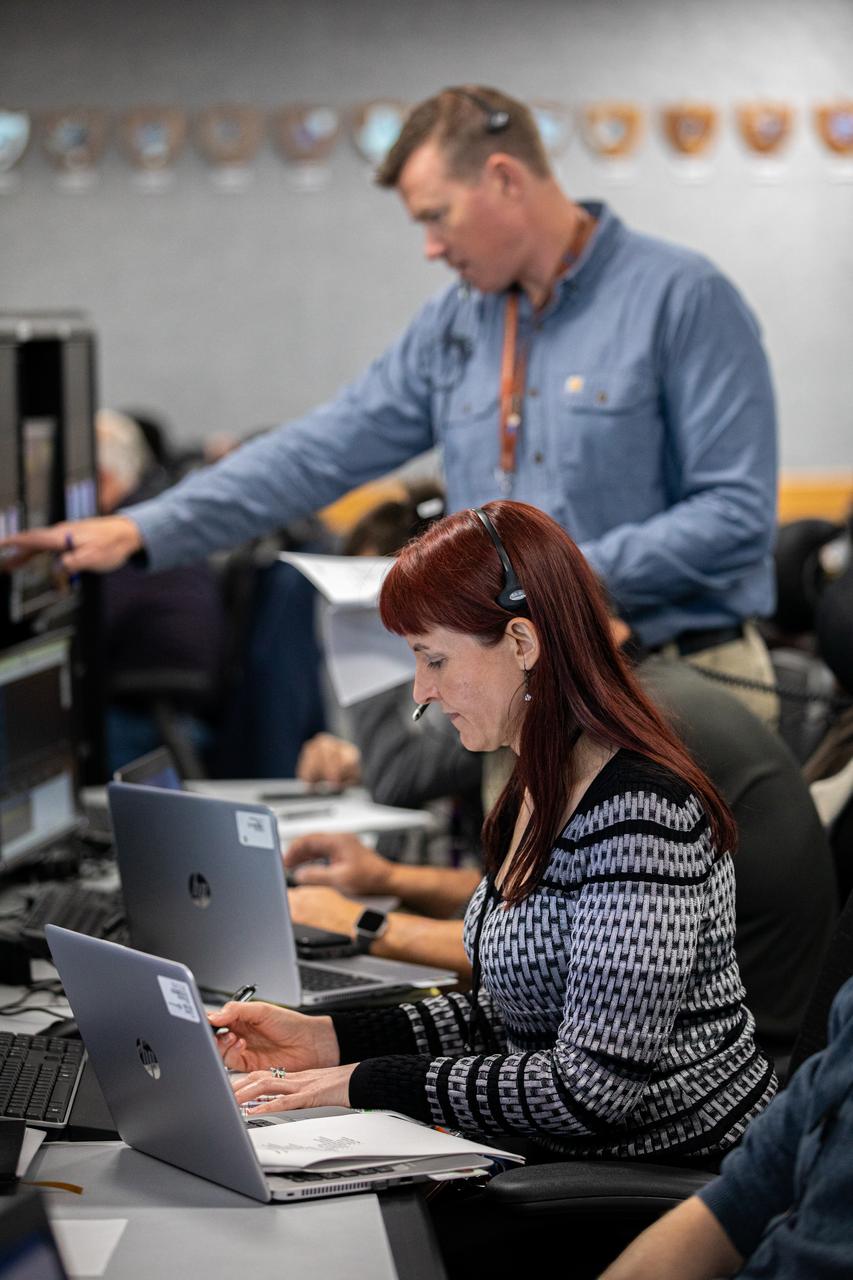
Colleen Huber (front) and Patrick Engel, hazardous gas engineers at NASA’s Kennedy Space Center in Florida, participate in a launch countdown simulation inside Firing Room 1 in the Launch Control Center on Feb. 3, 2020. Under the leadership of Launch Director Charlie Blackwell-Thompson, a team of nearly 100 engineers from Orion, Space Launch System (SLS) and NASA’s Exploration Ground Systems came together to work through a series of simulated challenges, as well as a final countdown procedure, in preparation for the Artemis I launch. During these exercises, different issues were introduced to familiarize the team with launch day operations, while providing them with an opportunity to practice how they would handle those issues in real-time. Artemis I will be the first integrated test flight of the Orion spacecraft and SLS rocket – the system that will ultimately land the first woman and the next man on the Moon.
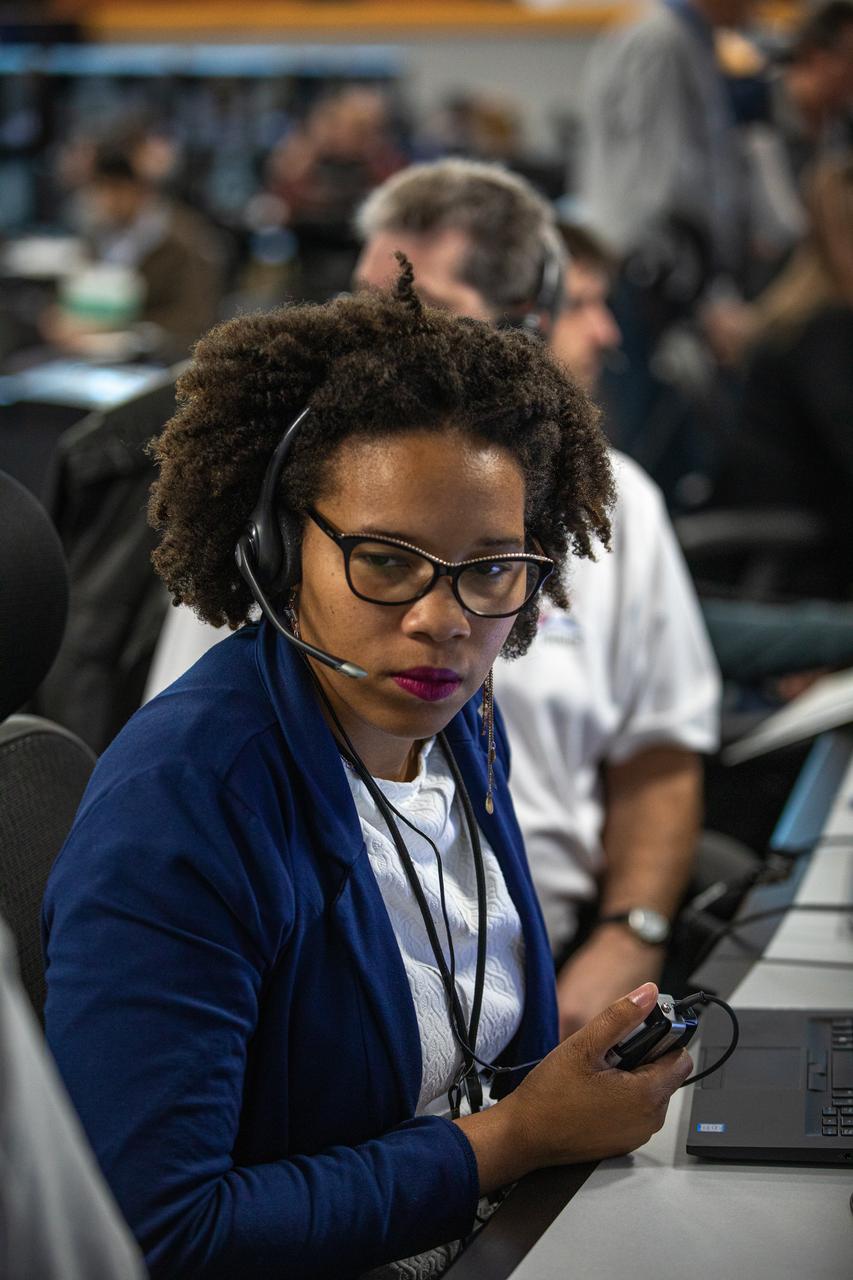
Ales-cia Winsley, a guidance, navigation and control engineer at NASA’s Kennedy Space Center in Florida, participates in an Artemis I launch countdown simulation inside Firing Room 1 in the Launch Control Center on Feb. 3, 2020. Under the leadership of Launch Director Charlie Blackwell-Thompson, a team of nearly 100 engineers from Orion, Space Launch System (SLS) and NASA’s Exploration Ground Systems came together to work through a series of simulated challenges, as well as a final countdown procedure. During these exercises, different issues were introduced to familiarize the team with launch day operations, while providing them with an opportunity to practice how they would handle those issues in real-time. Artemis I will be the first integrated test flight of the Orion spacecraft and SLS rocket – the system that will ultimately land the first woman and the next man on the Moon.

Bill Chardavoyne, left, and David Valletta, ignition overpressure/sound suppression engineers at NASA’s Kennedy Space Center in Florida, participate in an Artemis I launch countdown training simulation on Feb. 3, 2020. Under the leadership of Launch Director Charlie Blackwell-Thompson, a team of nearly 100 engineers from Orion, Space Launch System (SLS) and NASA’s Exploration Ground Systems came together in the Launch Control Center’s Firing Room 1 to work through a series of simulated challenges, as well as a final countdown procedure. During these exercises, different issues were introduced to familiarize the team with launch day operations, while providing them with an opportunity to practice how they would handle those issues in real-time. Artemis I will be the first integrated test flight of the Orion spacecraft and SLS rocket – the system that will ultimately land the first woman and the next man on the Moon.

Vanessa Stroh, project engineer, Exploration Ground Systems Program, participates in the Artemis III terminal countdown simulation on Thursday, May 7, 2026, inside Firing Room 1 of the Rocco A. Petrone Launch Control Center at NASA’s Kennedy Space Center in Florida. This marked the first simulation the launch team performed ahead of Artemis III.
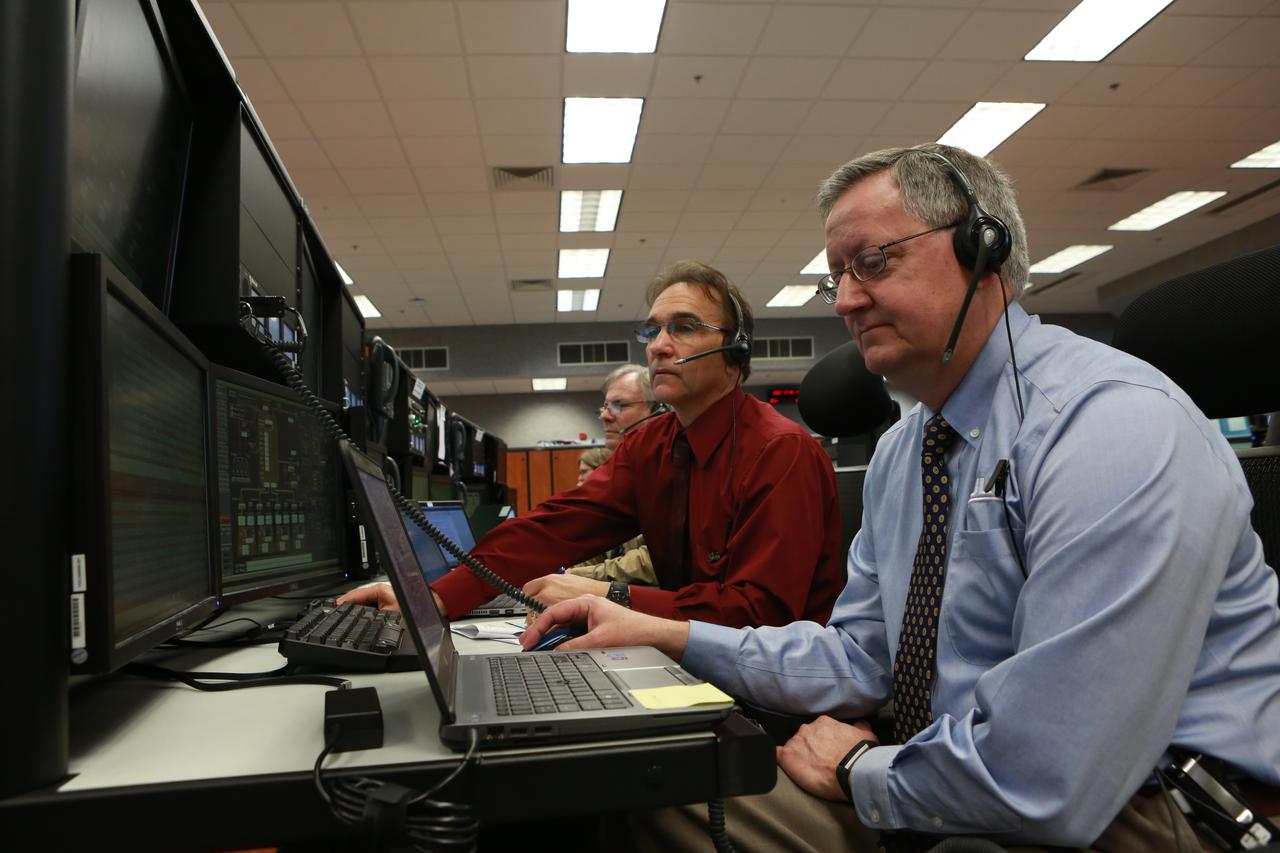
Test Project Engineer Rick Brown, left, and Master Console Operator Jason Robinson, both with Jacobs, monitor operations from their consoles in Firing Room 1 at the Kennedy Space Center's Launch Control Center during a countdown simulation for Exploration Mission 1. It was the agency's first simulation of a portion of the countdown for the first launch of a Space Launch System rocket and Orion spacecraft that will eventually take astronauts beyond low-Earth orbit to destinations such as the Moon and Mars.

Artemis launch project engineers Aaron Sherman (left) Tony Bartolone (center), and Anton Kiriwas, senior technical integration manager, Exploration Ground Systems Program, are seen participating in the Artemis III cryogenic propellant loading launch simulation on Wednesday, May 6, 2026, inside Firing Room 1 of the Rocco A. Petrone Launch Control Center at NASA’s Kennedy Space Center in Florida. This marked the first simulation the launch team performed ahead of Artemis III.
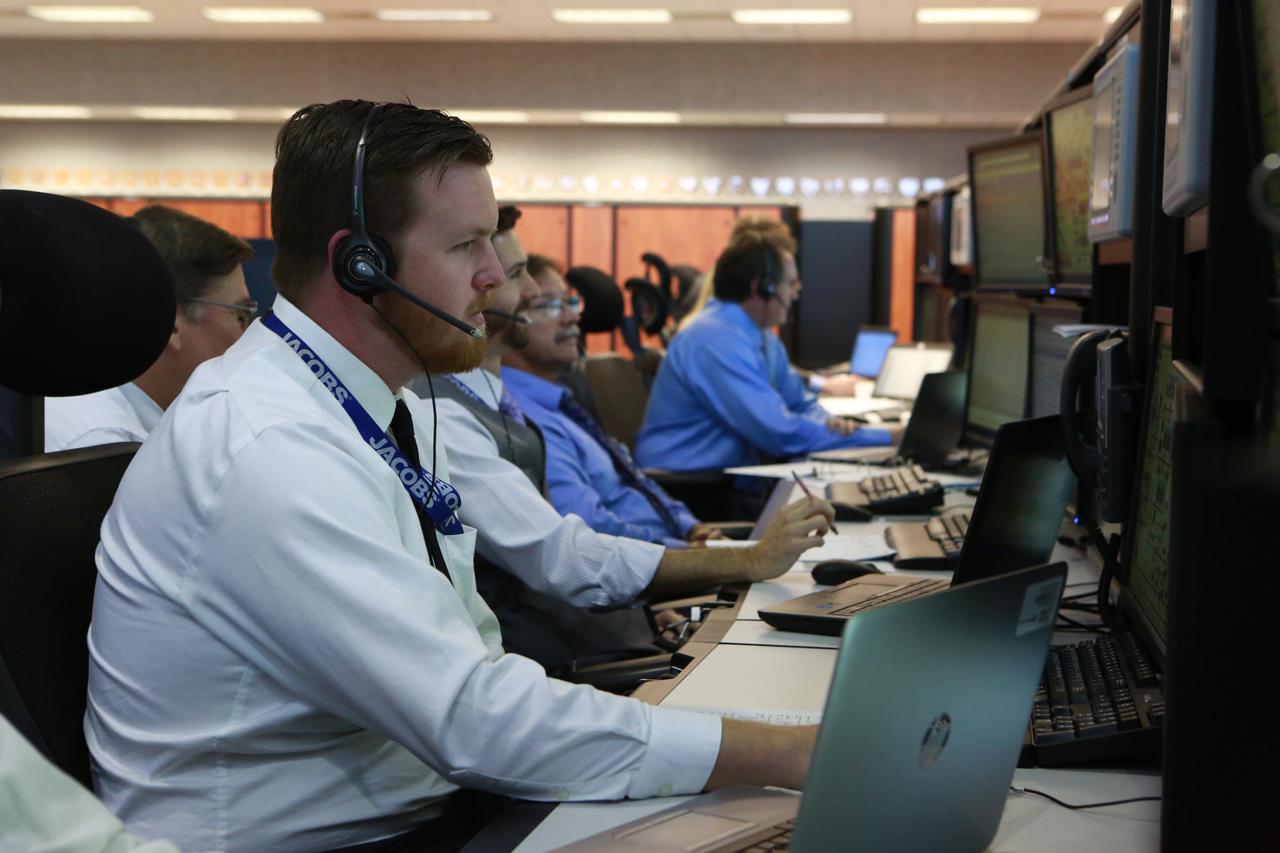
Alex Higgins, a liquid hydrogen operations engineer with Jacobs, monitors operations from his position in Firing Room 1 at the Kennedy Space Center's Launch Control Center during a countdown simulation for Exploration Mission 1. It was the agency's first simulation of a portion of the countdown for the first launch of a Space Launch System rocket and Orion spacecraft that will eventually take astronauts beyond low-Earth orbit to destinations such as the Moon and Mars.
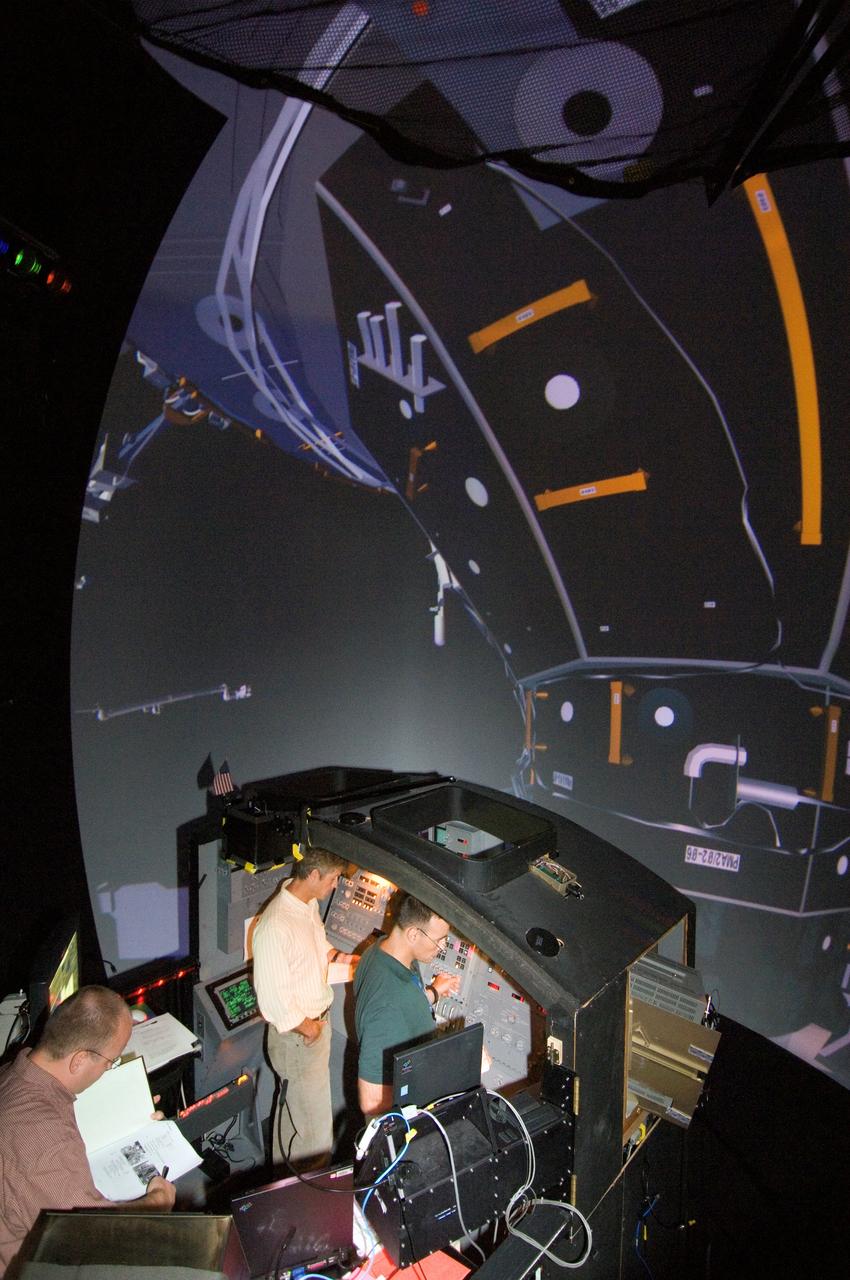
JSC2006-E-39171 (1 Sept. 2006) --- Astronauts Steven R. Swanson (center) and Lee J. Archambault (right), STS-117 mission specialist and pilot, respectively, participate in an exercise in the systems engineering simulator at NASA's Johnson Space Center. The facility includes moving scenes of full-sized International Space Station components over a simulated Earth.
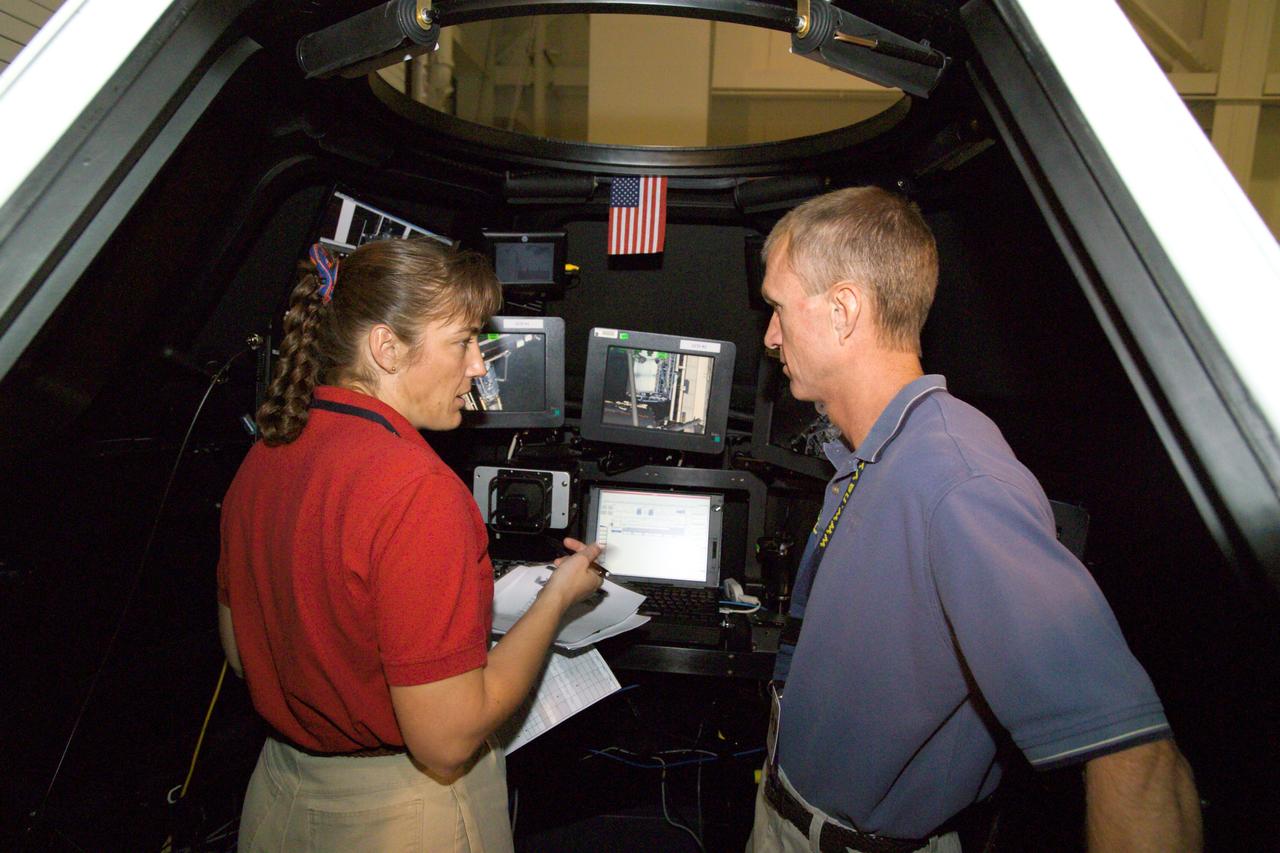
JSC2005-E-17980 (4 May 2005) --- Astronauts Heidemarie M. Stefanyshyn-Piper (left) and Brent W. Jett Jr., STS-115 mission specialist and commander, respectively, participate in an exercise in the systems engineering simulator at Johnson Space Center. The facility includes moving scenes of full-sized international space station components over a simulated Earth.
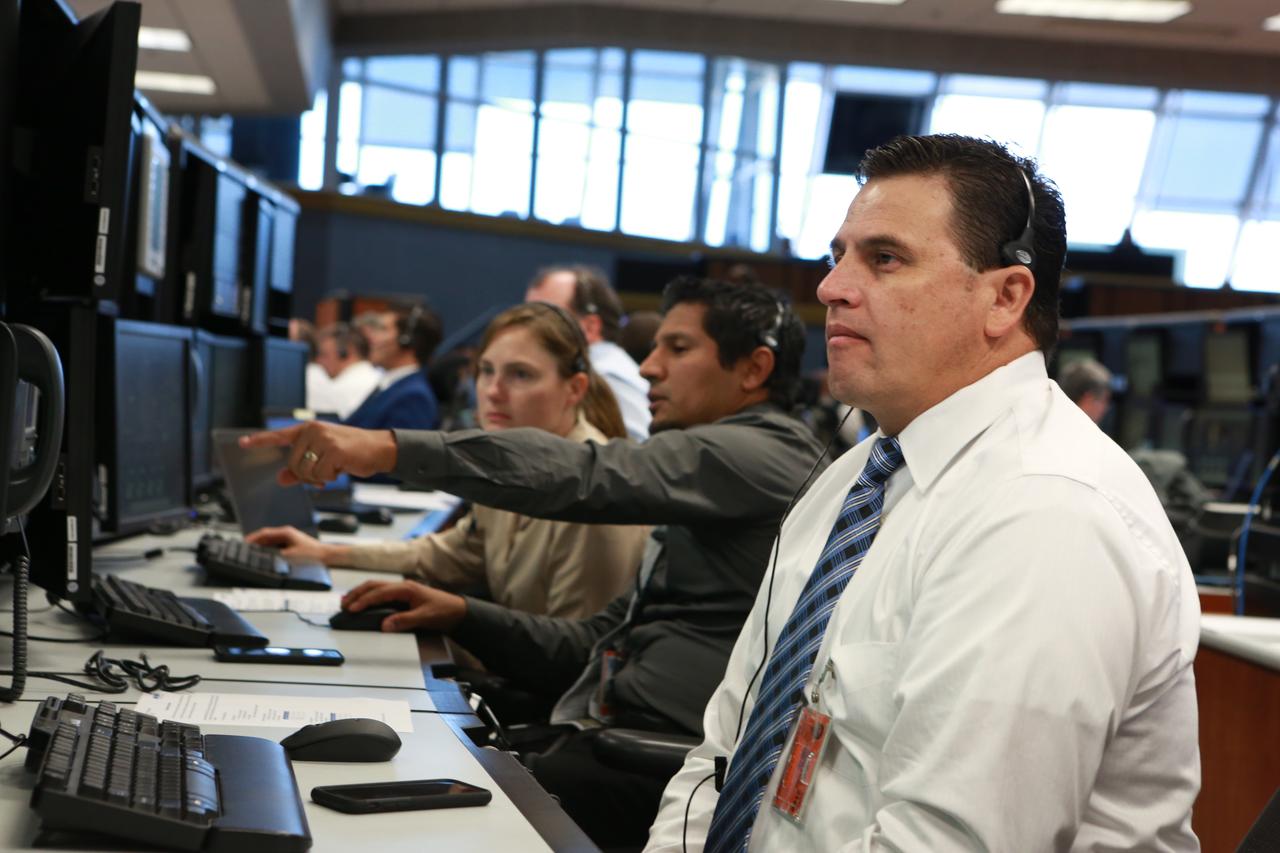
NASA Operation Project Engineer Rommel Rubio monitors operations from his position in Firing Room 1 at the Kennedy Space Center's Launch Control Center during a countdown simulation for Exploration Mission 1. It was the agency's first simulation of a portion of the countdown for the first launch of a Space Launch System rocket and Orion spacecraft that will eventually take astronauts beyond low-Earth orbit to destinations such as the Moon and Mars.
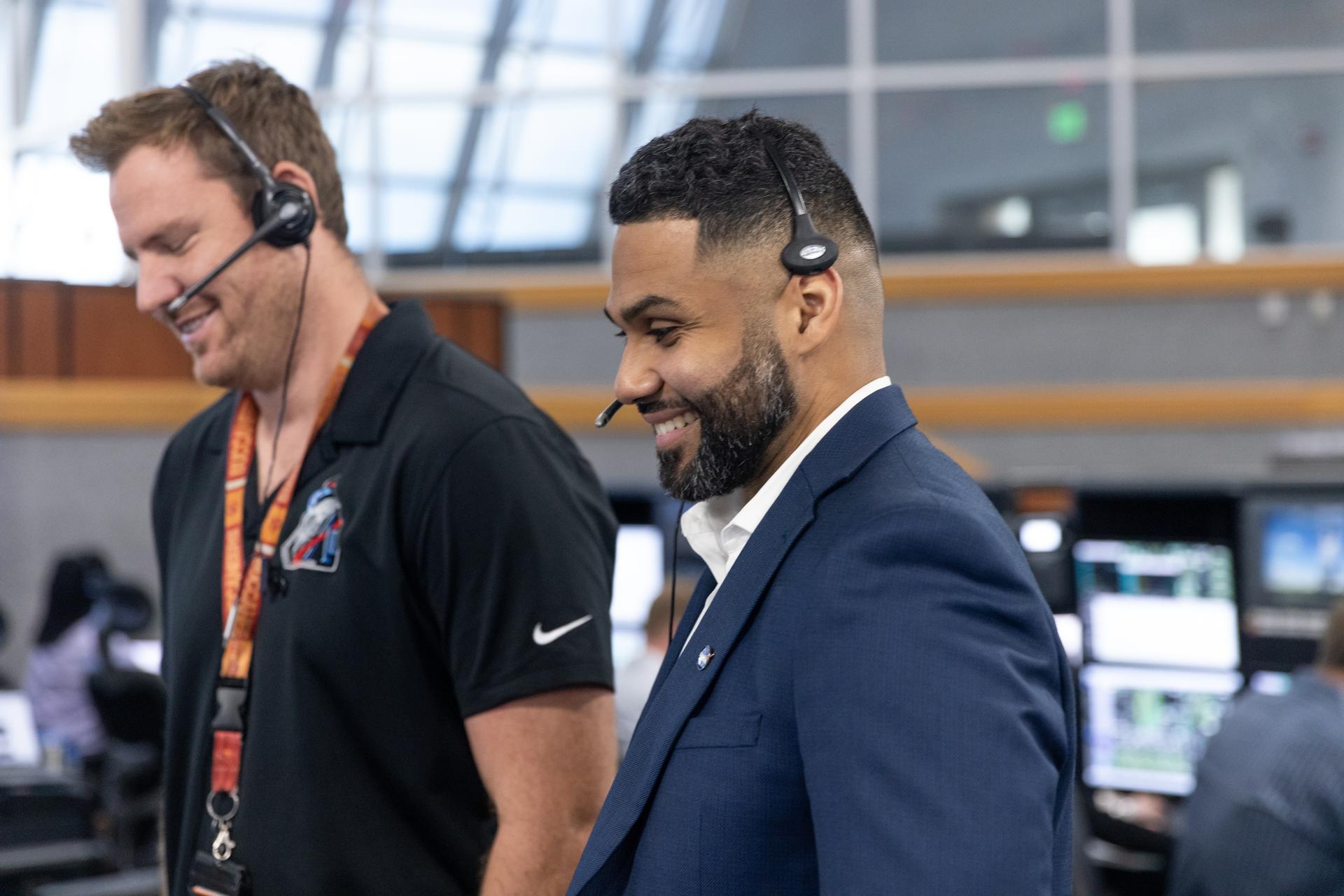
From left, Joe Pavicic, operations project engineer, and Mike Guzman, main propulsion systems engineer participate in an Artemis II launch countdown simulation inside Firing Room 1 in the Launch Control Center at NASA’s Kennedy Space Center in Florida on Wednesday, Nov. 5, 2025. The simulations go through launch day scenarios to help launch team members test software and make adjustments if needed during countdown operations. For Artemis II, four astronauts will venture around the Moon, the first crewed mission on NASA’s path to establishing a long-term presence for science and exploration through Artemis.

JSC2011-E-040265 (23 March 2011) --- A long parade of media is escorted between buildings at NASA?s Johnson Space Center in Houston for a media availability with the crew of STS-135 in the Systems Engineering Simulator March 23, 2011. Photo credit: NASA Photo/Houston Chronicle, Smiley N. Pool
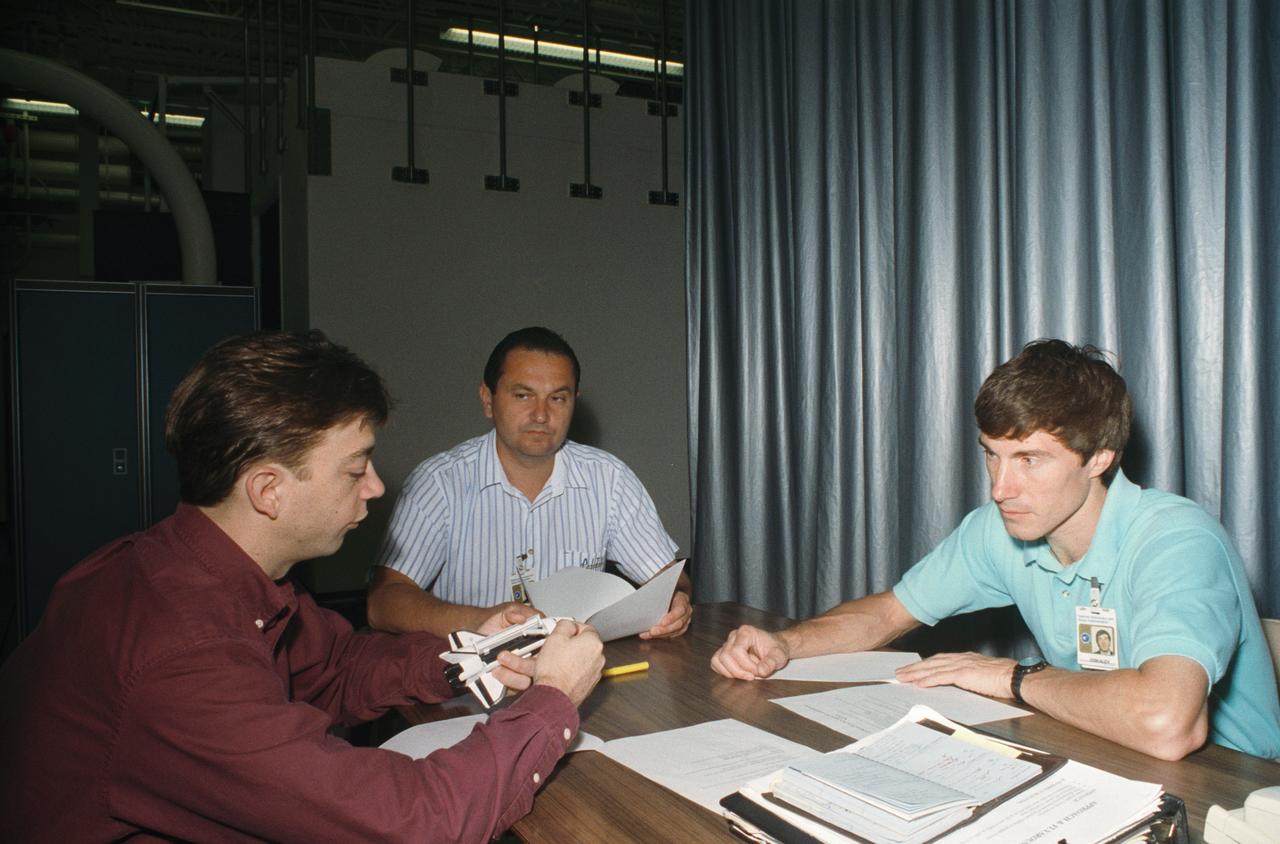
STS-60 Discovery, Orbiter Vehicle (OV) 103, Russian Mission Specialist Sergei Krikalev and Russian backup Mission Specialist Vladimir Titov work with Training Instructor Richard M. Davis (holding space shuttle model) prior to entering the Building 16 Systems Engineering Simulator (SES).
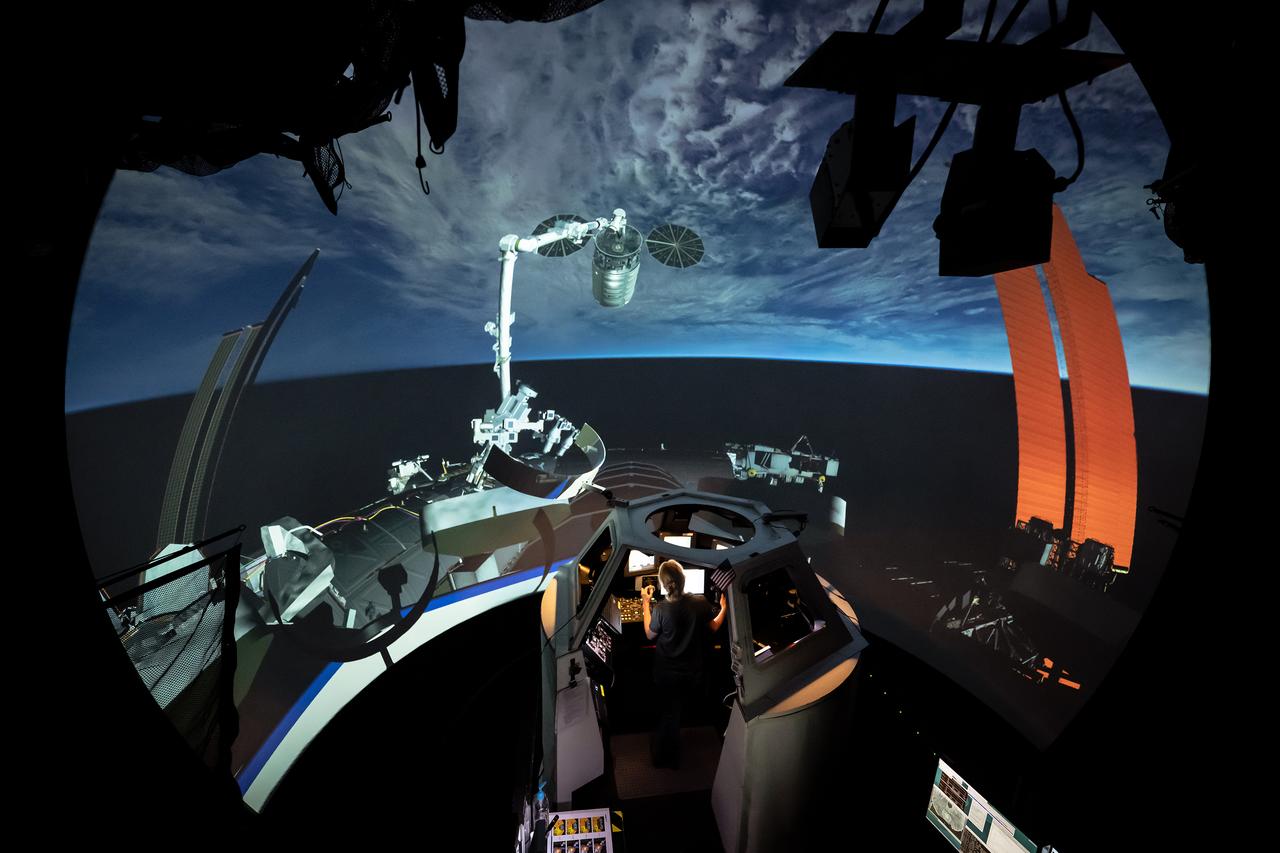
Mastering the art of space robotics, NASA astronaut Loral O’Hara commands the virtual frontier from the mock-up cupola in the Systems Engineering Simulator at NASA’s Johnson Space Center, providing a glimpse into the intense training and preparation for missions abord the International Space Station. Photographer: Josh Valcarcel – Johnson Space Center
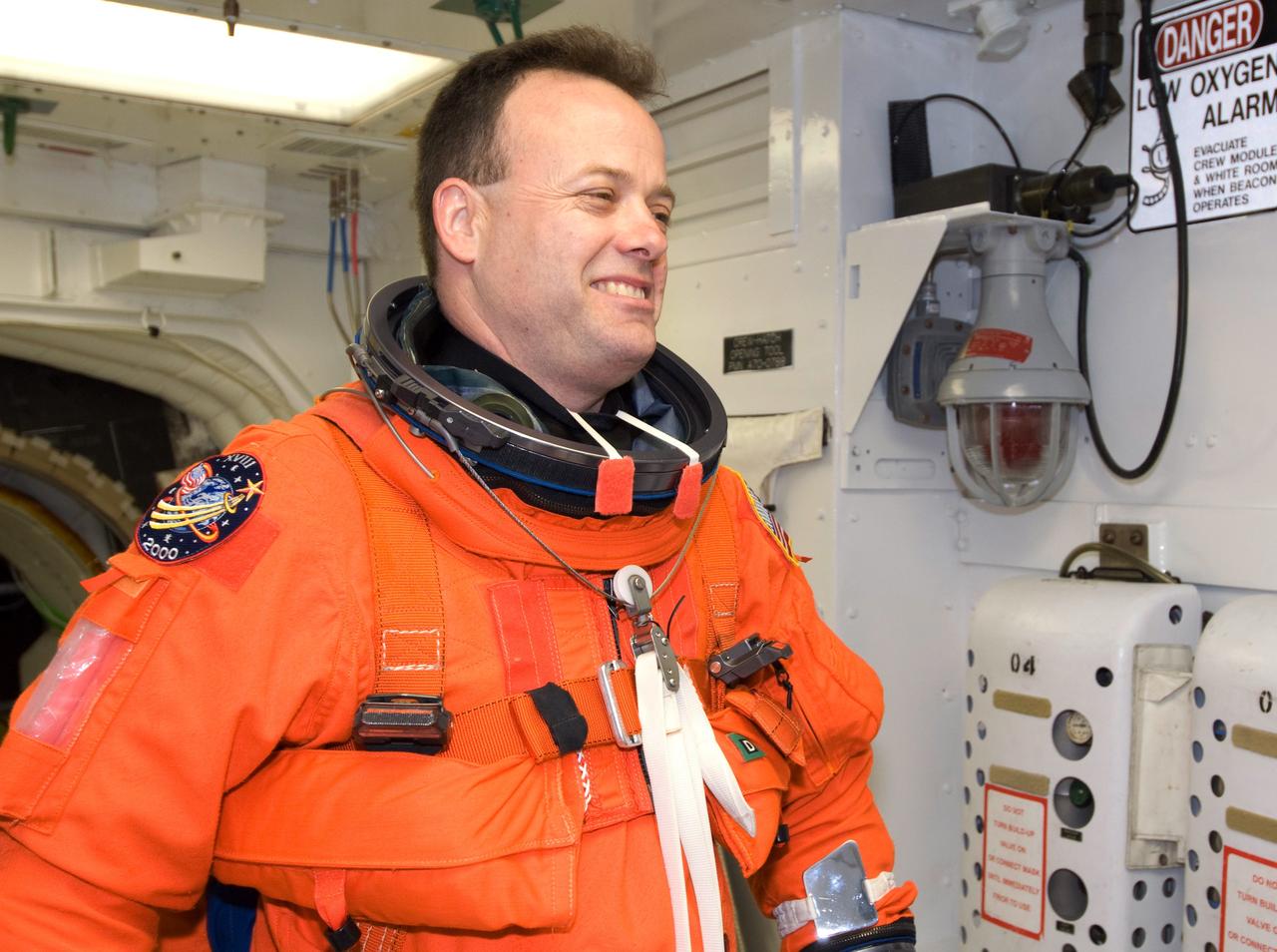
CAPE CANAVERAL, Fla. -- In the White Room on Launch Pad 39A at NASA's Kennedy Space Center, STS-124 Mission Specialist Ron Garan is ready for the simulated launch countdown, part of the launch dress rehearsal known as the terminal countdown demonstration test. The simulation serves as a practice exercise in which both the launch team and flight crew rehearse launch day time lines and procedures. The test culminates in a simulated ignition and automated shutdown of the orbiter's main engines. On the STS-124 mission, the crew will deliver and install the Japanese Experiment Module – Pressurized Module and Japanese Remote Manipulator System. Discovery's launch is targeted for May 31. Photo credit: NASA/Amanda Diller
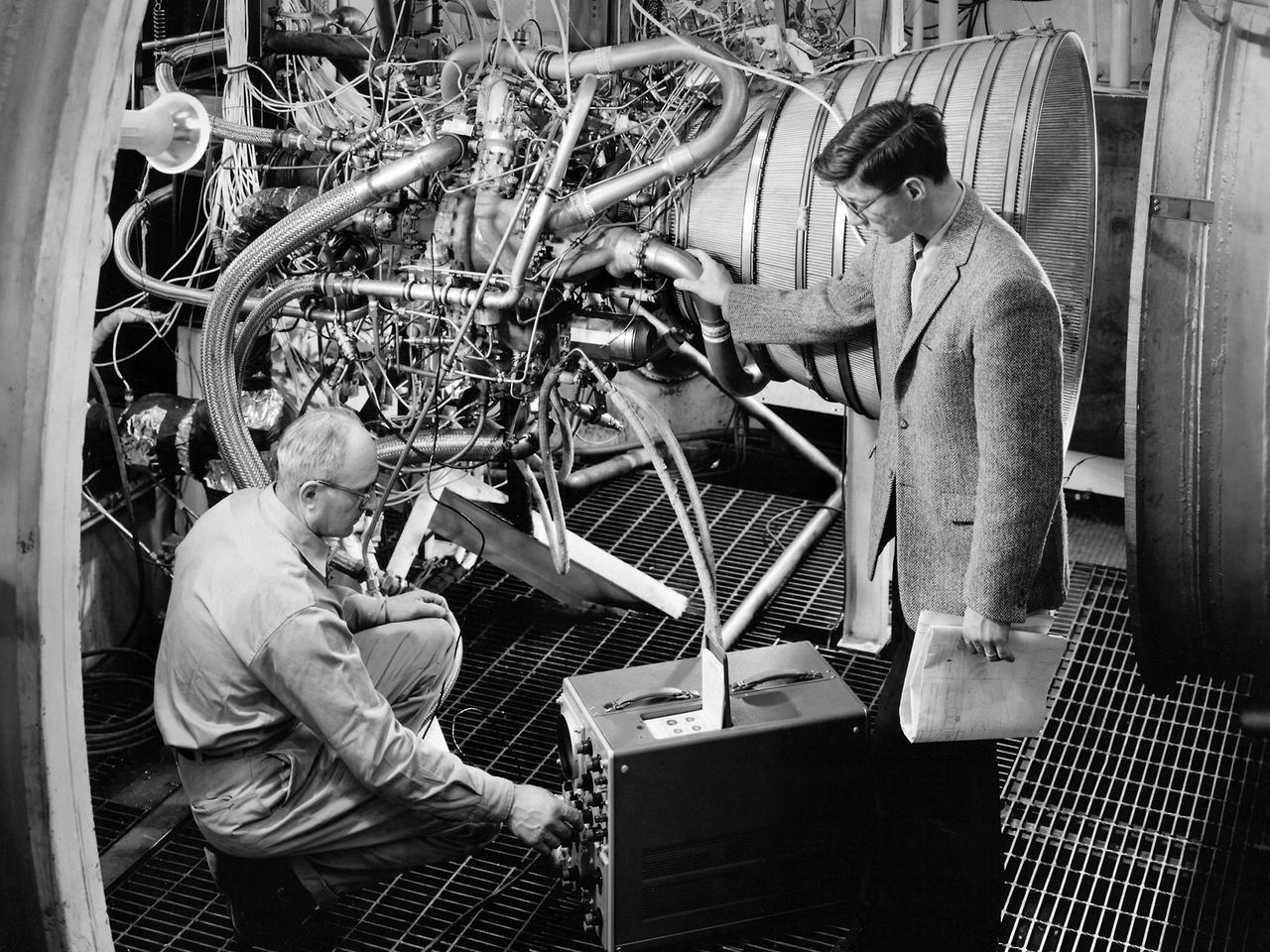
Lead Test Engineer John Kobak (right) and a technician use an oscilloscope to test the installation of a Pratt and Whitney RL-10 engine in the Propulsion Systems Laboratory at the National Aeronautics and Space Administration (NASA) Lewis Research Center. In 1955 the military asked Pratt and Whitney to develop hydrogen engines specifically for aircraft. The program was canceled in 1958, but Pratt and Whitney decided to use the experience to develop a liquid-hydrogen rocket engine, the RL-10. Two of the 15,000-pound-thrust RL-10 engines were used to power the new Centaur second-stage rocket. Centaur was designed to carry the Surveyor spacecraft on its mission to soft-land on the Moon. Pratt and Whitney ran into problems while testing the RL-10 at their facilities. NASA Headquarters assigned Lewis the responsibility for investigating the RL-10 problems because of the center’s long history of liquid-hydrogen development. Lewis’ Chemical Rocket Division began a series of tests to study the RL-10 at its Propulsion Systems Laboratory in March 1960. The facility contained two test chambers that could study powerful engines in simulated altitude conditions. The first series of RL-10 tests in early 1961 involved gimballing the engine as it fired. Lewis researchers were able to yaw and pitch the engine to simulate its behavior during a real flight.
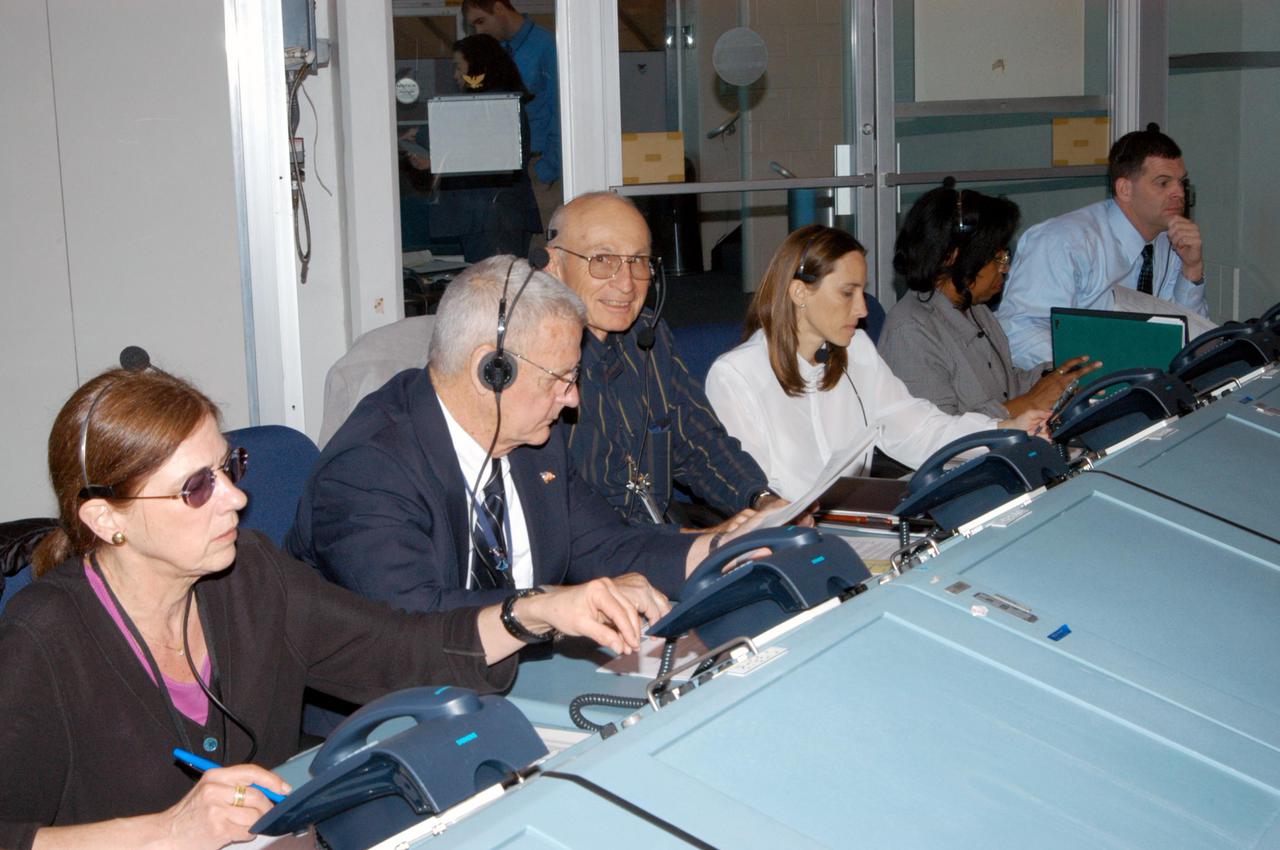
KENNEDY SPACE CENTER, FLA. - Space Shuttle Program managers, directors and engineers man the consoles in the Launch Control Center. They are taking part in an End-to-End (ETE) Mission Management Team (MMT) launch simulation at KSC. In Firing Room 1 at KSC, Shuttle launch team members put the Shuttle system through an integrated simulation. The control room is set up with software used to simulate flight and ground systems in the launch configuration. Seated in the center is Bob Sieck, a member of the Stafford-Covey Shuttle Return to Flight Task Group; at his left is Forrest McCartney, former Kennedy Space Center director. Sieck served as launch director and director of Shuttle Processing in the 80s and 90s. The ETE MMT simulation included L-2 and L-1 day Prelaunch MMT meetings, an external tanking_weather briefing, and a launch countdown. The ETE transitioned to the Johnson Space Center for the flight portion of the simulation, with the STS-114 crew in a simulator at JSC. Such simulations are common before a launch to keep the Shuttle launch team sharp and ready for liftoff.