
NASA Glenn Research Pilot Jim Demers flies the T-34C Mentor aircraft. When NASA scientists study Great Lakes algal blooms, Demers is one of the pilots at the controls.

A NASA T-34C aircraft, used for safety chase, is shown flying above the Dryden Flight Research Center, Edwards, California in March 1997. The aircraft was previously used at the Lewis Research Center in propulsion experiments involving turboprop engines, and was used as a chase aircraft at Dryden for smaller and slower research projects. Chase aircraft accompany research flights for photography and video purposes, and also as support for safety and research. At Dryden, the T-34 is used mainly for smaller remotely piloted vehicles which fly slower than NASA's F-18's, used for larger scale projects. This aircraft was returned to the U.S. Navy in May of 2002. The T-34C, built by Beech, carries a crew of 2 and is nicknamed the Mentor.

A NASA T-34C aircraft, used for safety chase, is shown flying above the Dryden Flight Research Center, Edwards, California in March 1997. The aircraft was previously used at the Lewis Research Center in propulsion experiments involving turboprop engines, and was used as a chase aircraft at Dryden for smaller and slower research projects. Chase aircraft accompany research flights for photography and video purposes, and also as support for safety and research. At Dryden, the T-34 is used mainly for smaller remotely piloted vehicles which fly slower than NASA's F-18's, used for larger scale projects. This aircraft was returned to the U.S. Navy in May of 2002. The T-34C, built by Beech, carries a crew of 2 and is nicknamed the Mentor.

The back seat instrument panel on the NASA T-34C chase plane. In its role as a military trainer, the instructor pilot would ride in the back seat, while the student would be in the front seat. As a chase plane, the back seat would be occupied by a photographer. The aircraft was previously used at the Lewis Research Center in propulsion experiments involving turboprop engines, and was used as a chase aircraft at Dryden for smaller and slower research projects. Chase aircraft accompany research flights for photography and video purposes, and also as support for safety and research. At Dryden, the T-34 is used mainly for smaller remotely piloted vehicles which fly slower than NASA's F-18's, used for larger scale projects. This aircraft was returned to the U.S. Navy in May of 2002. The T-34C, built by Beech, carries a crew of 2 and is nicknamed the Mentor.

This turboprop-powered Beech T-34C is flown by NASA's Dryden Flight Research Center for mission support and pilot proficiency.

NASA pilot Ed Lewis with the T-34C aircraft on the Dryden Flight Research Center Ramp. The aircraft was previously used at the Lewis Research Center in propulsion experiments involving turboprop engines, and was used as a chase aircraft at Dryden for smaller and slower research projects. Chase aircraft accompany research flights for photography and video purposes, and also as support for safety and research. At Dryden, the T-34 is used mainly for smaller remotely piloted vehicles which fly slower than NASA's F-18's, used for larger scale projects. This aircraft was returned to the U.S. Navy in May of 2002.

NASA's Armstrong Flight Research Center installed a conformal antenna on the door of its T-34C aircraft to test its performance parameters. The conformal antenna was designed through a cross-center collaboration through the Conformal Lightweight Antenna Structures for Aeronautical Communications Technologies project.

A Beech T-34C flown by NASA Dryden Flight Research Center for mission support descends over the Southern California desert near Edwards Air Force Base.

A Beech T-34C mission support aircraft flown by NASA Dryden Flight Research Center shows off its classic lines as it soars over the desert near Edwards Air Force Base.
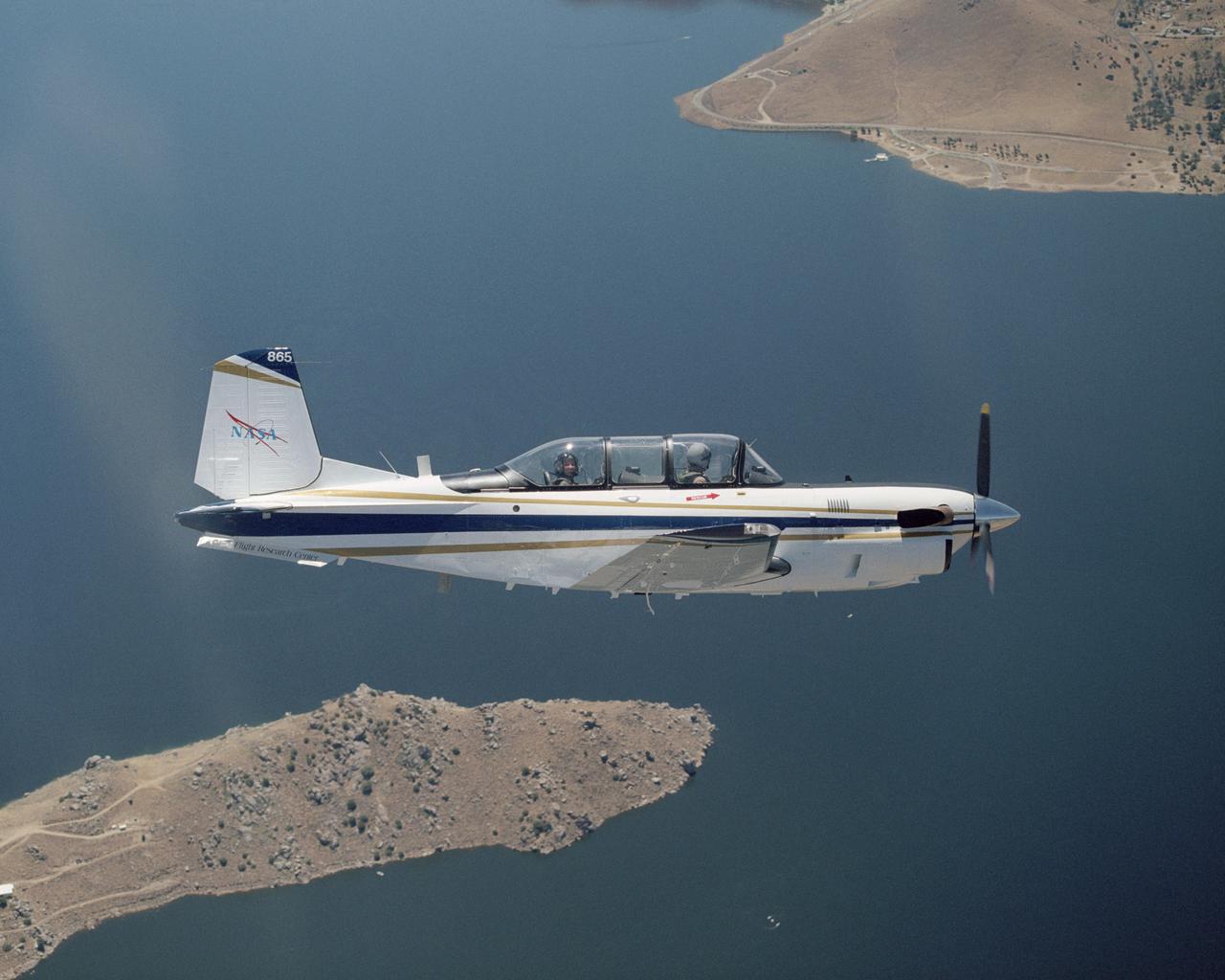
A Beech T-34C aircraft used by NASA Dryden Flight Research Center for mission support banks over Lake Isabella in Kern County during a recent flight.

A Beech T-34C aircraft used by NASA Dryden Flight Research Center for mission support banks over Lake Isabella in Kern County during a recent flight.
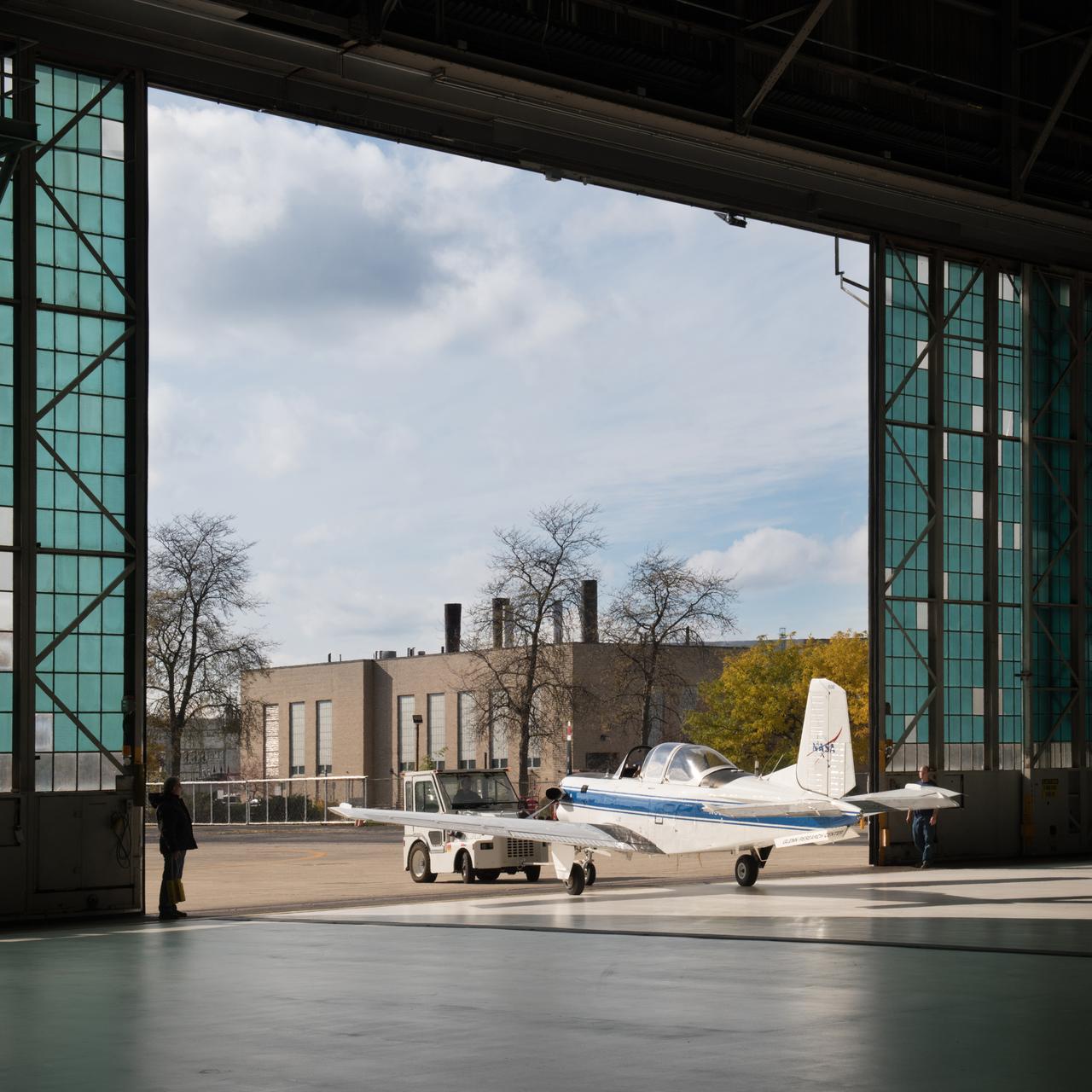
One of NASA Glenn's T-34C research aircraft is removed from the hangar prior to a flight
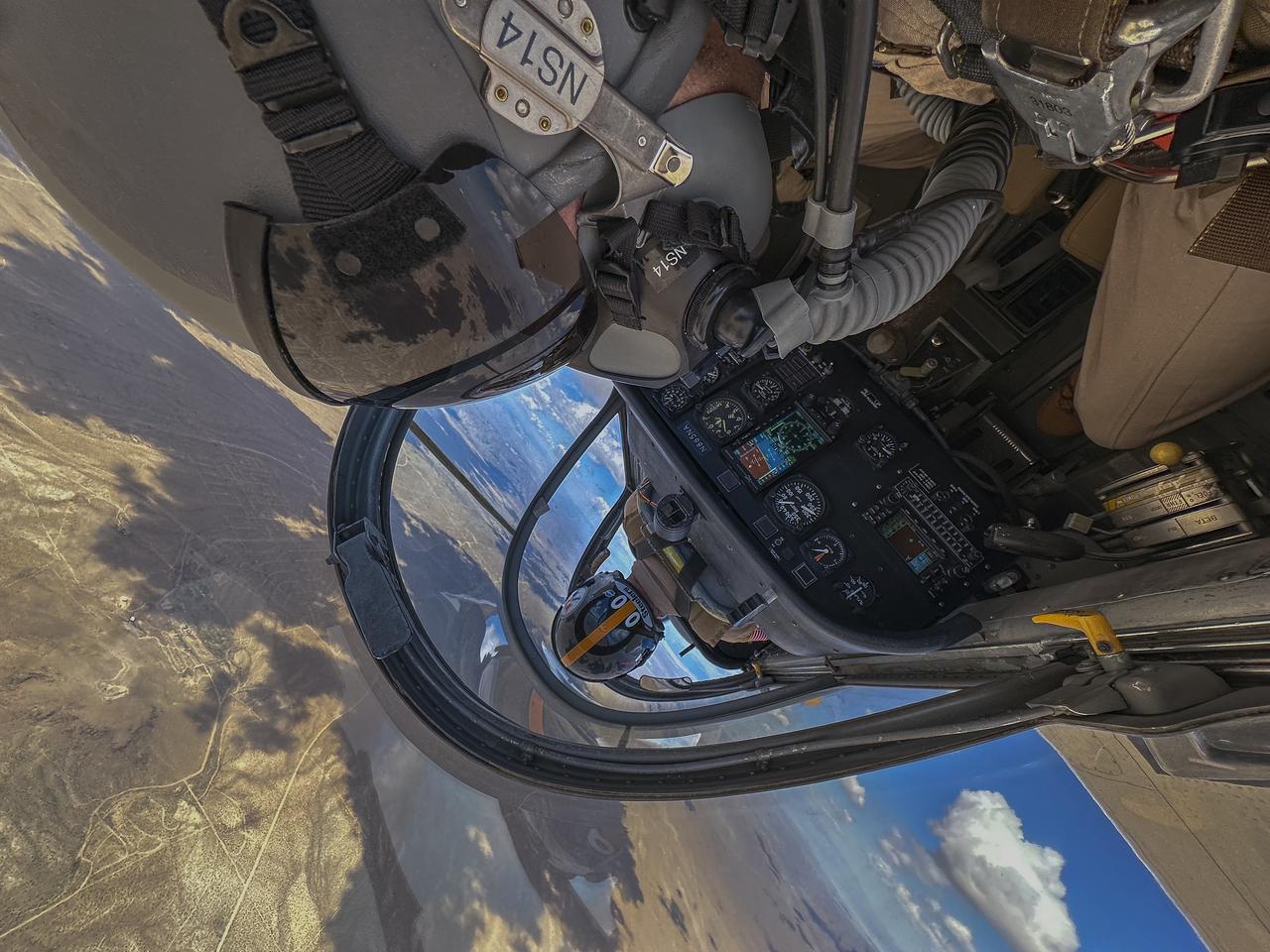
NASA research pilot Nils Larson and photographer Jim Ross complete aerobatic maneuvers in a NASA Armstrong Flight Research Center in Edwards, California owned T-34C aircraft during a proficiency flight.
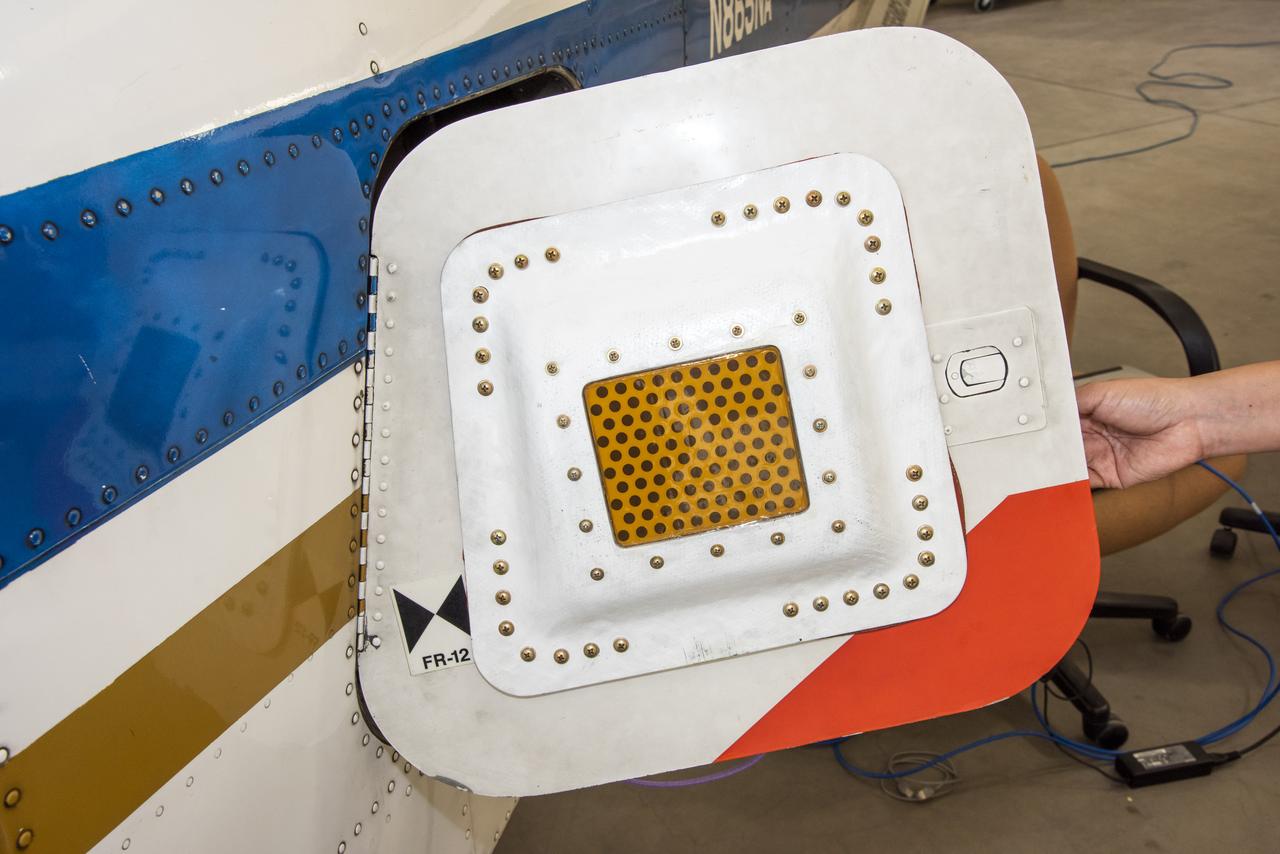
A photo of the conformal antenna installed on the door of T-34C aircraft. The conformal antenna was developed and designed by members of the Conformal Lightweight Antenna Structures for Aeronautical Communications Technologies activity within the Convergent Aeronautics Solutions project. The antenna is made of aerogels which have resulted in a thin, flexible antenna substrate with improved gain, bandwidth and efficiency.
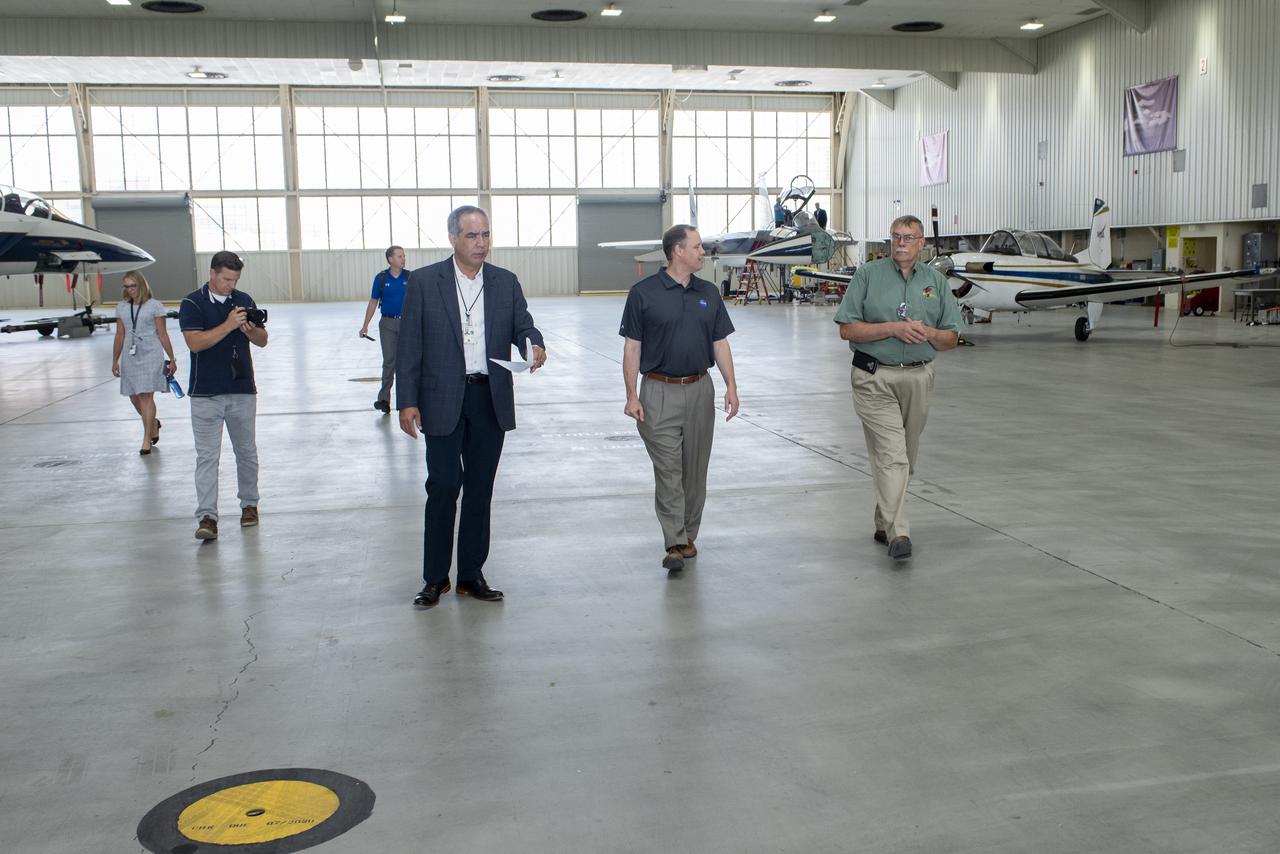
Bridenstine tours main Armstrong hangar that houses the center aircraft used for flight research and safety chase such as F/A-18, F-15B/D, King Air B-200, T-34C and TG-14 aircraft.
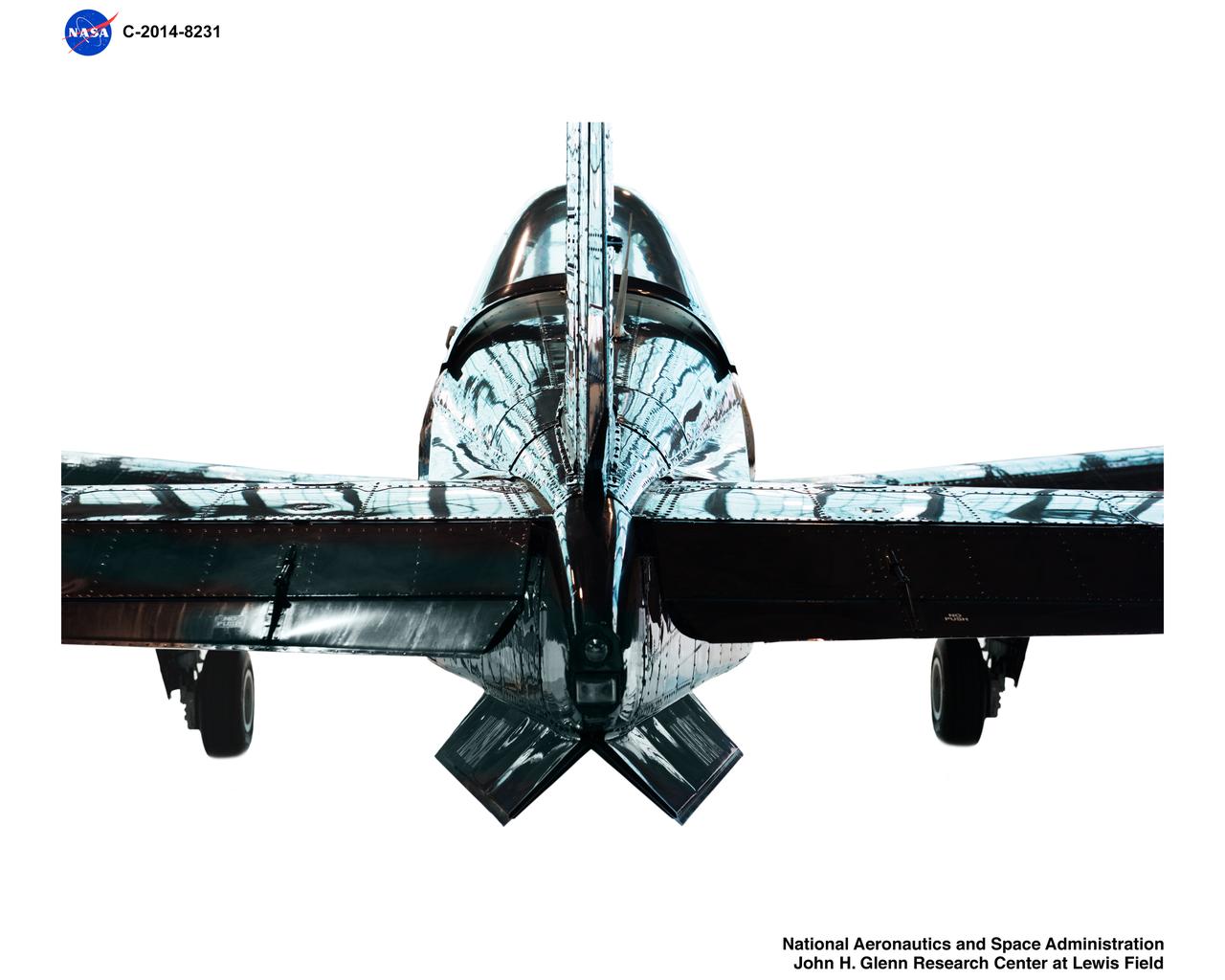
A T34-C aircraft reflects the large multi-paned windows on the Hangar doors. When NASA GRC obtained this T-34C from the Navy it was painted in ‚Äúthrowback‚Äù paint schemes from an earlier time in celebration of the 100th birthday of Naval Aviation. NASA kept it in the original paint job for posterity. This T-34C airplane will be GRCs surrogate aircraft for Unmanned Aircraft Systems in the National Airspace System aeronautics initiative. A T34-C aircraft reflects the large multi-paned windows on the Hangar doors. When NASA GRC obtained this T-34C from the Navy it was painted in “throwback” paint schemes from an earlier time in celebration of the 100th birthday of Naval Aviation. NASA kept it in the original paint job for posterity. This T-34C airplane will be GRCs surrogate aircraft for Unmanned Aircraft Systems in the National Airspace System aeronautics initiative.
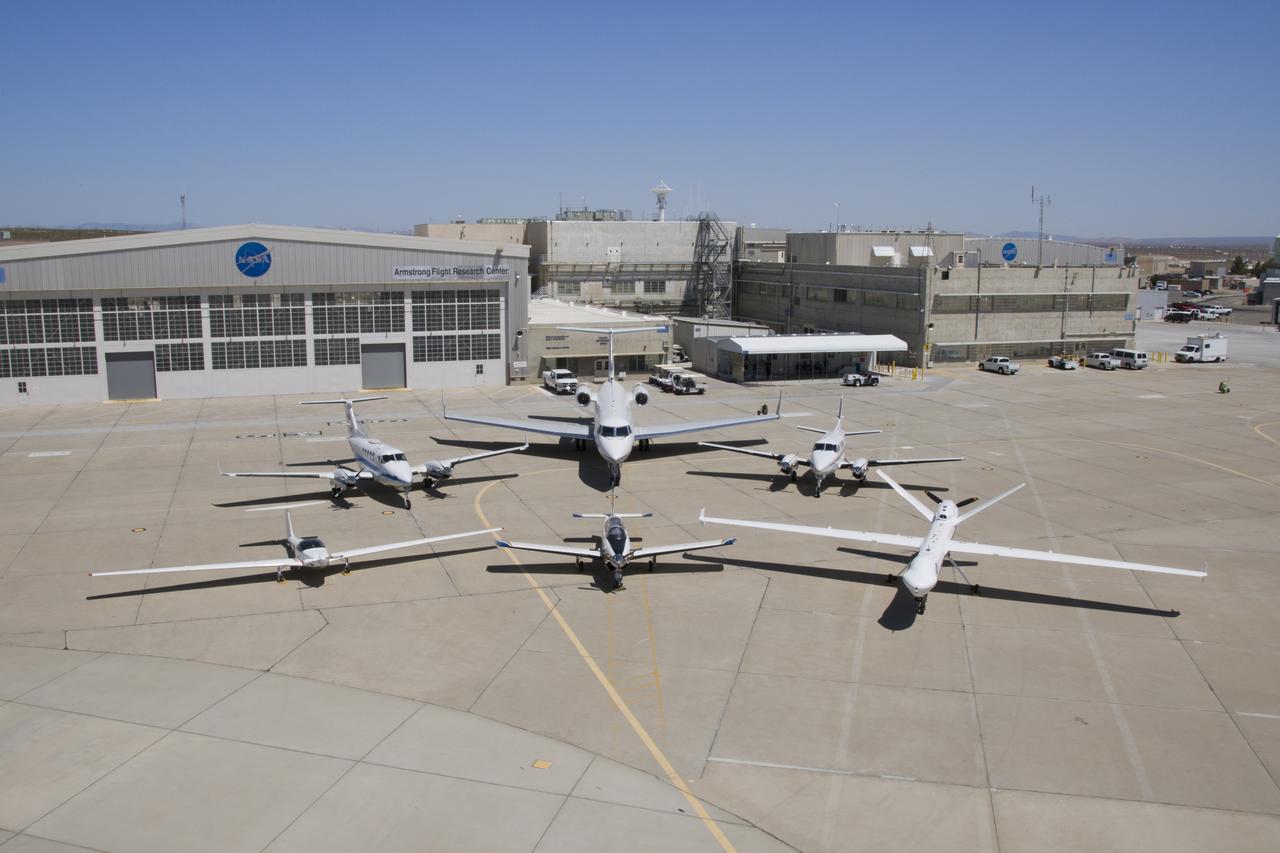
NASA’s Ikhana remotely piloted aircraft (front-right) is situated near NASA Armstrong Flight Research Center’s Hangar 4802 after an Unmanned Aircraft Systems Integration into the National Airspace System Flight Test Series 4 flight, along with five flight “intruders.” These intruders, which include NASA’s TG-14 (front-left), T-34C (front-center), B-200 King Air (back-left), Gulfstream-III (back-center) and a Honeywell C-90 King Air (back-right), fly within a pre-determined distance to Ikhana to test Detect-and-Avoid technology during research flights.
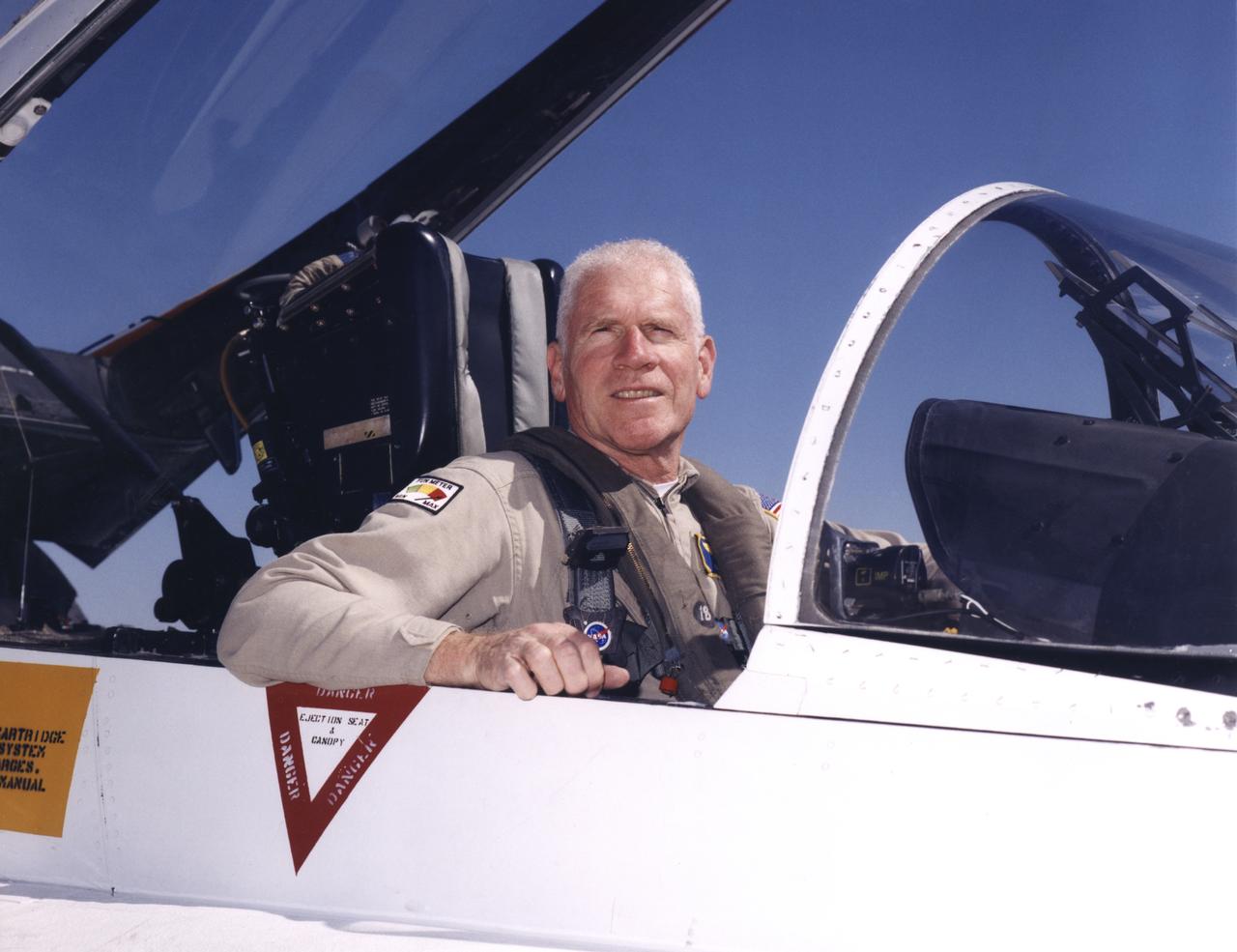
Edwin W. Lewis Jr. is a research pilot in the Airborne Science program, Flight Crew Branch, Dryden Flight Research Center, Edwards, California. He currently flies the DC-8, F/A-18, Lear Jet 24, King Air, and T-34C in support of Dryden's flight operations and is mentor pilot for the King Air and the Lear Jet. Prior to accepting this assignment Lewis was a pilot for eight years at NASA's Ames Research Center, Moffett Field, California, flying 10 different aircraft C-130B, DC-8-72, UH-1, SH-3, King Air, Lear 24, T-38A, T-39G and YO-3A in support of NASA flight missions. Lewis also flew the Kuiper Airborne Observatory (a modified civilian version of the Lockheed C-141 Starlifter). He was project pilot for Ames' 747 and T-38 programs. Lewis was born in New York City on May 19, 1936, and began flight training as a Civil Air Patrol cadet in 1951, ultimately earning his commercial pilot's certificate in 1958. He received a bachelor of arts degree in biology from Hobart College, Geneva, N.Y., and entered the U.S. Air Force through the Reserve Officer Training Corps. Following pilot training he was assigned to Moody Air Force Base, Ga., as an instructor pilot, for both the T-33 and T-37 aircraft. He served in Vietnam in 1965 and 1966, where he was a forward air controller, instructor and standardization/evaluation pilot, flying more than 1,000 hours in the O-1 "Bird Dog." Lewis separated from the regular Air Force and joined Pan American World Airways and the 129th Air Commando Group, California Air National Guard (ANG) based in Hayward, California. During his 18-year career with the California ANG he flew the U-6, U-10, C-119, HC-130 aircraft and the HH-3 helicopter. He retired as commander, 129th Air Rescue and Recovery Group, a composite combat rescue group, in the grade of colonel. During his 22 years as an airline pilot, he flew the Boeing 707, 727 and 747. He took early retirement from Pan American in 1989 to become a pilot with NASA.
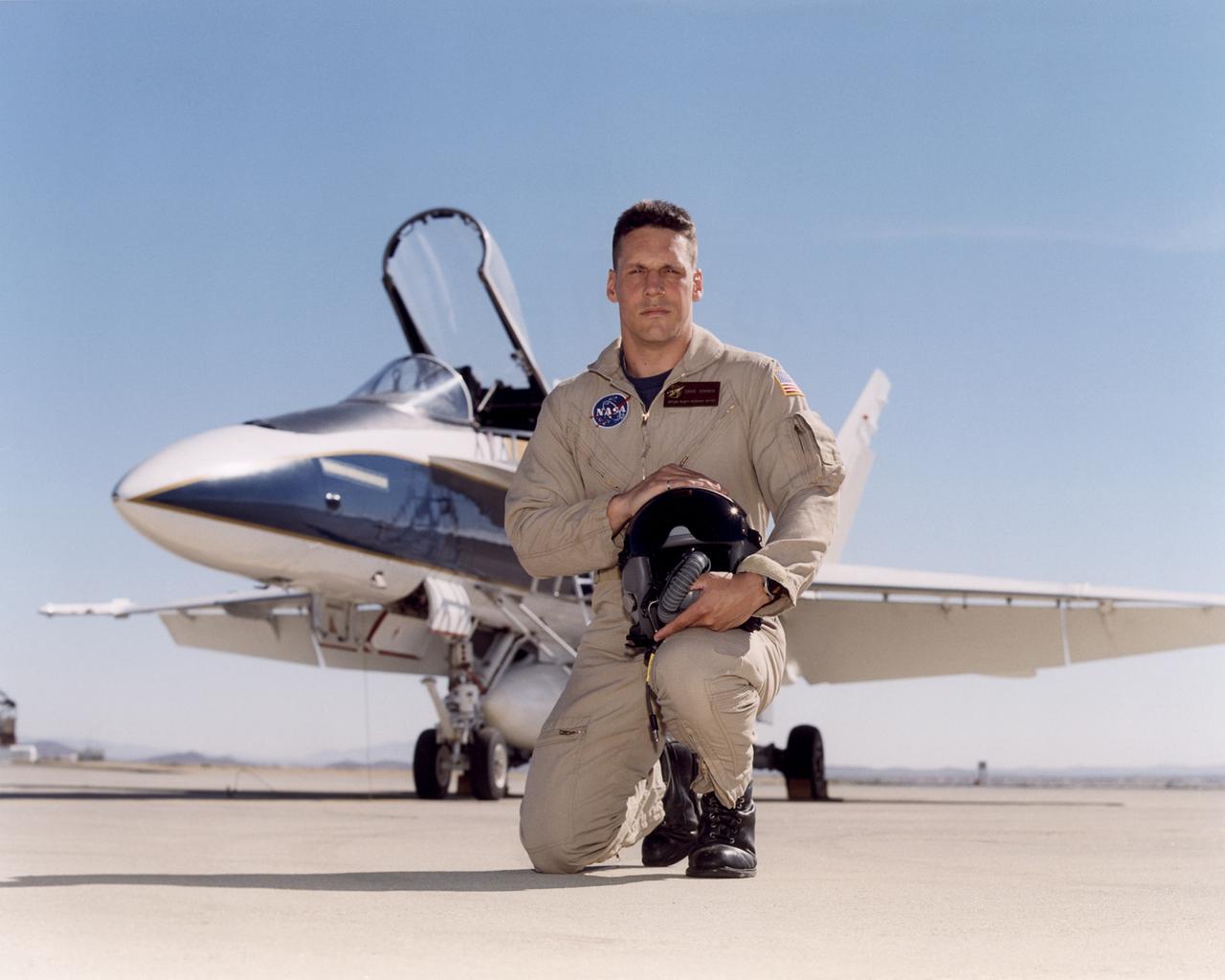
Craig R. Bomben became a pilot in the Flight Crew Branch of NASA's Dryden Flight Research Center, Edwards, Calif., in June 2001. His flying duties include a variety of research and support activities while piloting the F/A-18, DC-8, T-34C and King Air aircraft. He has more than 17 years and 3,800 hours of military and civilian flight experience in over 50 different aircraft types. Bomben came to NASA Dryden from a U.S. Navy assignment to the Personnel Exchange Program, Canada. He served as a test pilot in the Canadian Armed Forces located in Cold Lake, Alberta. He participated in numerous developmental programs to include CT-133 airborne ejection seat testing, F/A-18 weapons flutter testing and F/A-18 night vision goggles integration. Bomben performed U.S. Navy fleet service in 1995 as a strike-fighter department head. He completed two overseas deployments onboard the USS George Washington and USS Stennis. As a combat strike leader, he headed numerous multi-national missions over Iraq in support of Operation Southern Watch. Bomben graduated from the U.S. Naval Test Pilot School in 1992 and was subsequently assigned to the Naval Weapons Test Squadron at Pt. Mugu, Calif. During this tour he developed the F-14D bombsight and worked on various other F-14D and F/A-18 weapon systems developmental programs. Bomben is a 1985 graduate of Washington State University with a bachelor of science degree in electrical engineering. He graduated from naval flight training in 1987 and was recognized as a Commodore List graduate. His first assignment was to Naval Air Station Pensacola, Fla., where he was an instructor in the T-2B Buckeye. When selected to fly the F/A-18 in 1989, he joined a fleet squadron and deployed aboard the USS Forrestal. Bomben is married to the former Aissa Asuncion. They live in Lancaster, Calif., with their 3 children.
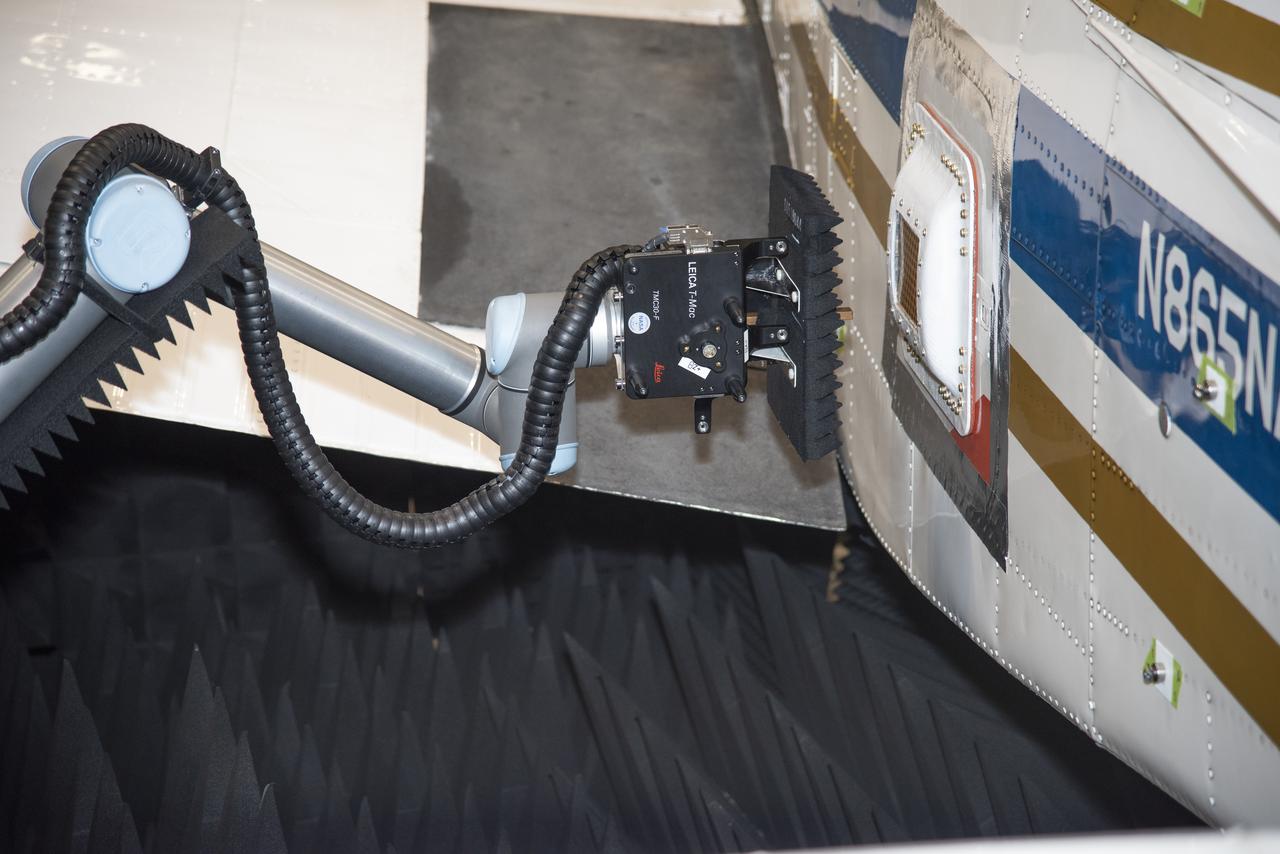
Tests were conducted with a robotic antenna scanner at NASA's Armstrong Flight Research Center in California. The scanner was used to test the in-situ radiation pattern of the conformal antenna to verify its performance parameters before being tested on an aircraft.

Mark Pestana is a research pilot and project manager at the NASA Dryden Flight Research Center, Edwards, Calif. He is a pilot for the Beech B200 King Air, the T-34C and the Predator B. He flies the F-18 Hornet as a co-pilot and flight test engineer. Pestana has accumulated more than 4,000 hours of military and civilian flight experience. He was also a flight engineer on the NASA DC-8 flying laboratory. Pestana was the project manager and pilot for the Hi–rate Wireless Airborne Network Demonstration flown on the NASA B200 research aircraft. He flew B200 research missions for the X-38 Space Integrated Inertial Navigation Global Positioning System experiment. Pestana also participated in several deployments of the DC-8, including Earth science expeditions ranging from hurricane research over the Caribbean Sea to ozone studies over the North Pole, atmospheric chemistry over the South Pacific, rain forest health in Central America, Rocky Mountain ice pack assessment, and volcanic and tectonic activity around the Pacific Rim. He came to Dryden as a DC-8 mission manager in June 1998 from NASA Johnson Space Center, Houston, where he served as the Earth and Space Science discipline manager for the International Space Station Program at Johnson. Pestana also served as a flight crew operations engineer in the Astronaut Office, developing the controls, displays, tools, crew accommodations and procedures for on-orbit assembly, test, and checkout of the International Space Station. He led the analysis and technical negotiations for modification of the Russian Soyuz spacecraft as an emergency crew return vehicle for space station crews. He joined the U.S. Air Force Reserve in 1991 and held various positions as a research and development engineer, intelligence analyst, and Delta II launch vehicle systems engineer. He retired from the U.S. Air Force Reserve with the rank of colonel in 2005. Prior to 1990, Pestana was on active duty with the U.S. Air Force as the director of mi
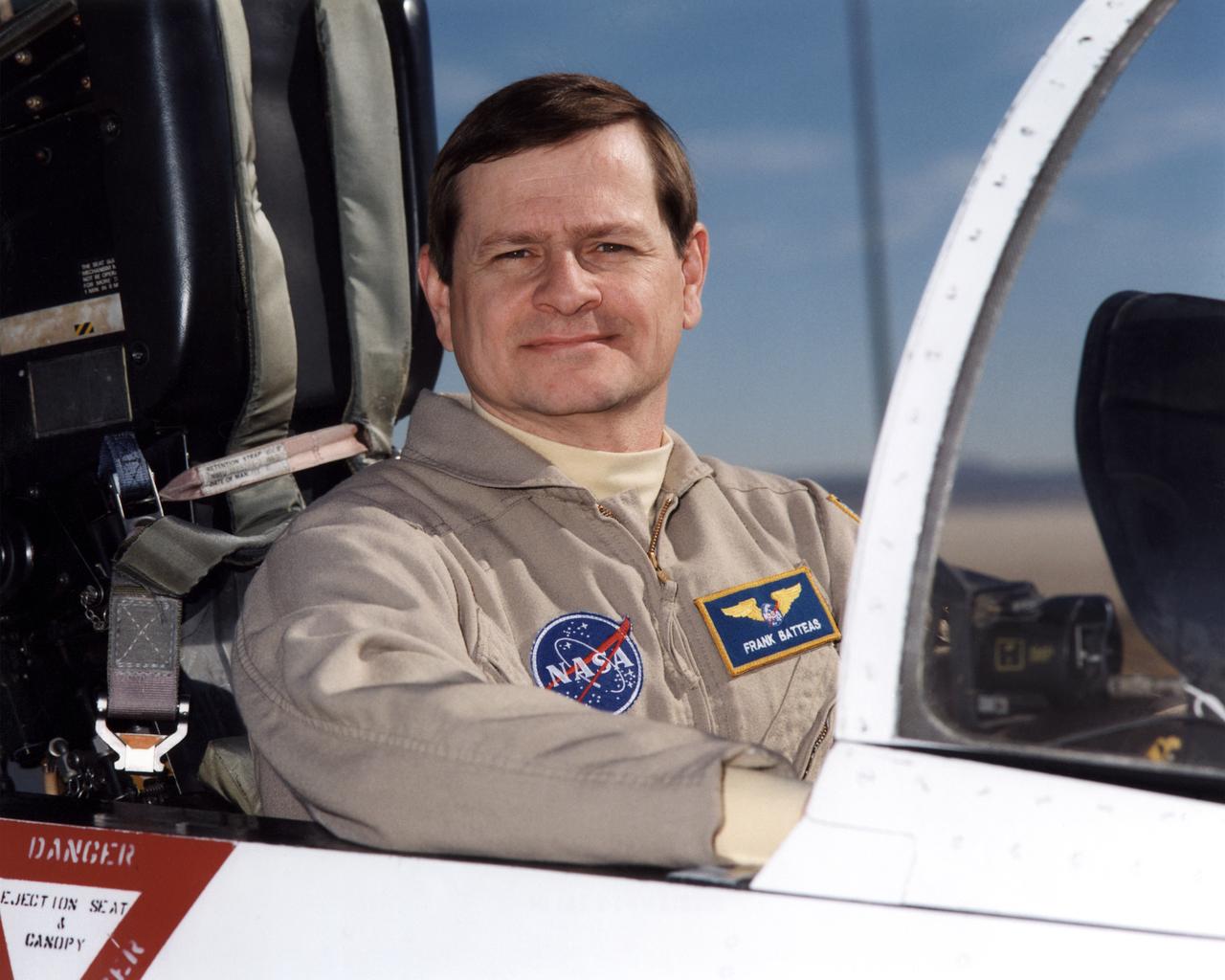
Frank Batteas is a research test pilot in the Flight Crew Branch of NASA's Dryden Flight Research Center, Edwards, California. He is currently a project pilot for the F/A-18 and C-17 flight research projects. In addition, his flying duties include operation of the DC-8 Flying Laboratory in the Airborne Science program, and piloting the B-52B launch aircraft, the King Air, and the T-34C support aircraft. Batteas has accumulated more than 4,700 hours of military and civilian flight experience in more than 40 different aircraft types. Batteas came to NASA Dryden in April 1998, following a career in the U.S. Air Force. His last assignment was at Wright-Patterson Air Force Base, Dayton, Ohio, where Lieutenant Colonel Batteas led the B-2 Systems Test and Evaluation efforts for a two-year period. Batteas graduated from Class 88A of the Air Force Test Pilot School, Edwards Air Force Base, California, in December 1988. He served more than five years as a test pilot for the Air Force's newest airlifter, the C-17, involved in nearly every phase of testing from flutter and high angle-of-attack tests to airdrop and air refueling envelope expansion. In the process, he achieved several C-17 firsts including the first day and night aerial refuelings, the first flight over the North Pole, and a payload-to-altitude world aviation record. As a KC-135 test pilot, he also was involved in aerial refueling certification tests on a number of other Air Force aircraft. Batteas received his commission as a second lieutenant in the U. S. Air Force through the Reserve Officer Training Corps and served initially as an engineer working on the Peacekeeper and Minuteman missile programs at the Ballistic Missile Office, Norton Air Force Base, Calif. After attending pilot training at Williams Air Force Base, Phoenix, Ariz., he flew operational flights in the KC-135 tanker aircraft and then was assigned to research flying at the 4950th Test Wing, Wright-Patterson. He flew extensively modified C-135
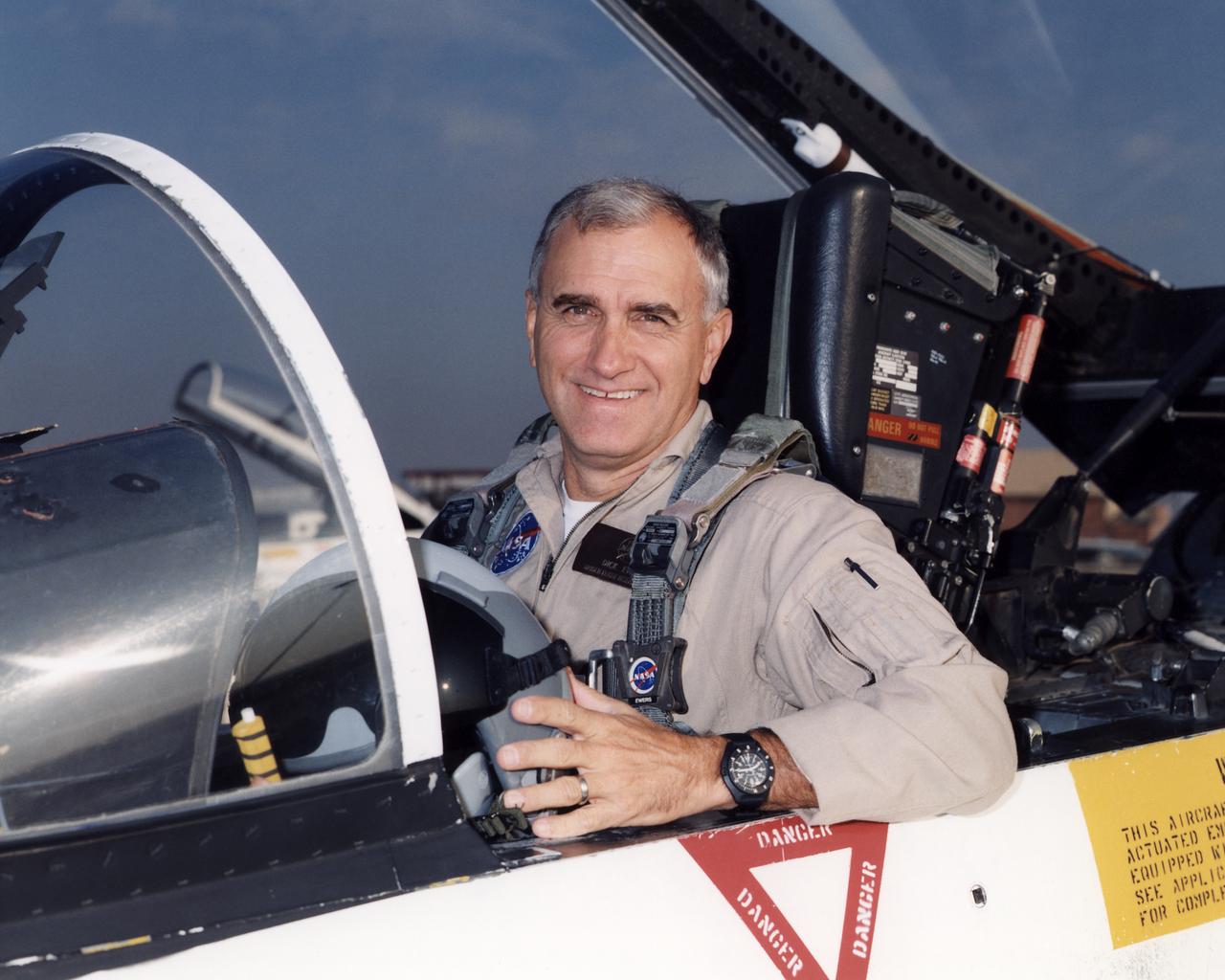
Richard G. (Dick) Ewers became a pilot in the Flight Crew Branch of NASA's Dryden Flight Research Center, Edwards, California, in May 1998. His flying duties focus on operation of the Airborne Science DC-8 and Systems Research F/A-18 aircraft, but he also maintains qualifications in the King Air and T-34C. He has more than 32 years and nearly 9,000 hours of military and civilian flight experience in all types of aircraft from jet fighters to blimps. Ewers came to NASA Dryden from a position as an engineering test pilot with Northrop Grumman's Electronic Sensors and Systems Division (formerly Westinghouse's Electronic Systems Group). He spent eight and a half years with Westinghouse flight testing radar and forward looking infrared systems under development for military and civilian use. Before going to work for Westinghouse, Ewers served for more than 21 years as a U.S. Marine Corps fighter and test pilot, flying F-4, A-4, and F/A-18 aircraft. He underwent flight training at Naval Air Station Pensacola, Fla., in 1969-70. He was subsequently assigned to both fighter/attack and reconnaissance squadrons before ultimately commanding an F-4S squadron for two years. Additionally, his flying included combat service in Vietnam and operational exchange tours with both U.S. Navy and U.S. Air Force squadrons flying F-4s around the world, including off aircraft carriers. Ewers graduated from the U.S. Naval Test Pilot School in 1981 and subsequently served two tours as a test pilot at the Naval Air Test Center, Patuxent River, Md. Most of his flight test experience was with the F/A-18 Hornet. He retired from the Marine Corps in 1989 with the rank of lieutenant colonel. Ewers graduated from the U.S. Air Force Academy in 1968 with a bachelor of science degree in engineering mechanics. He earned a master of science degree in aeronautical systems from the University of West Florida in 1970.
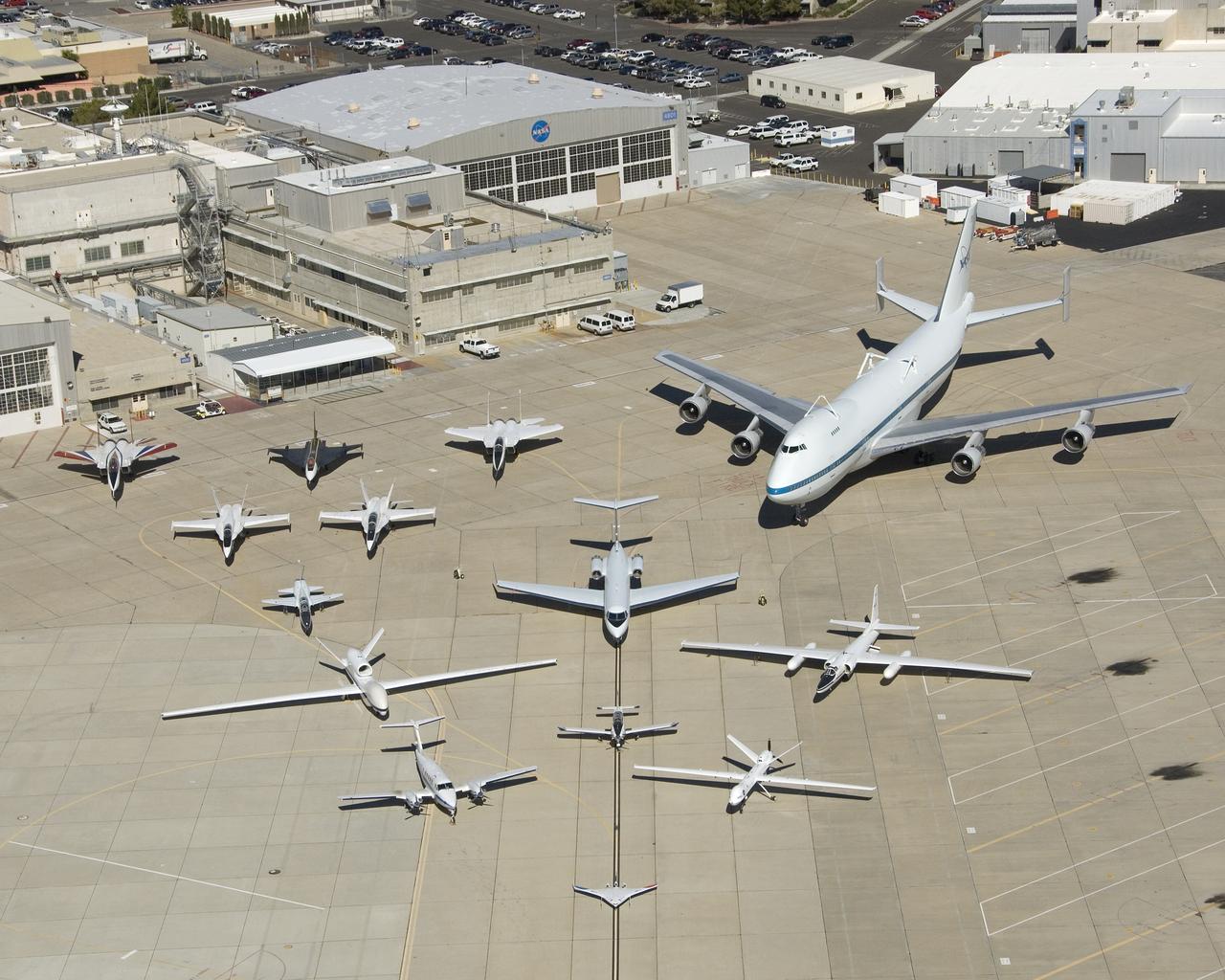
Dryden Flight Research Center - aircraft fleet on ramp