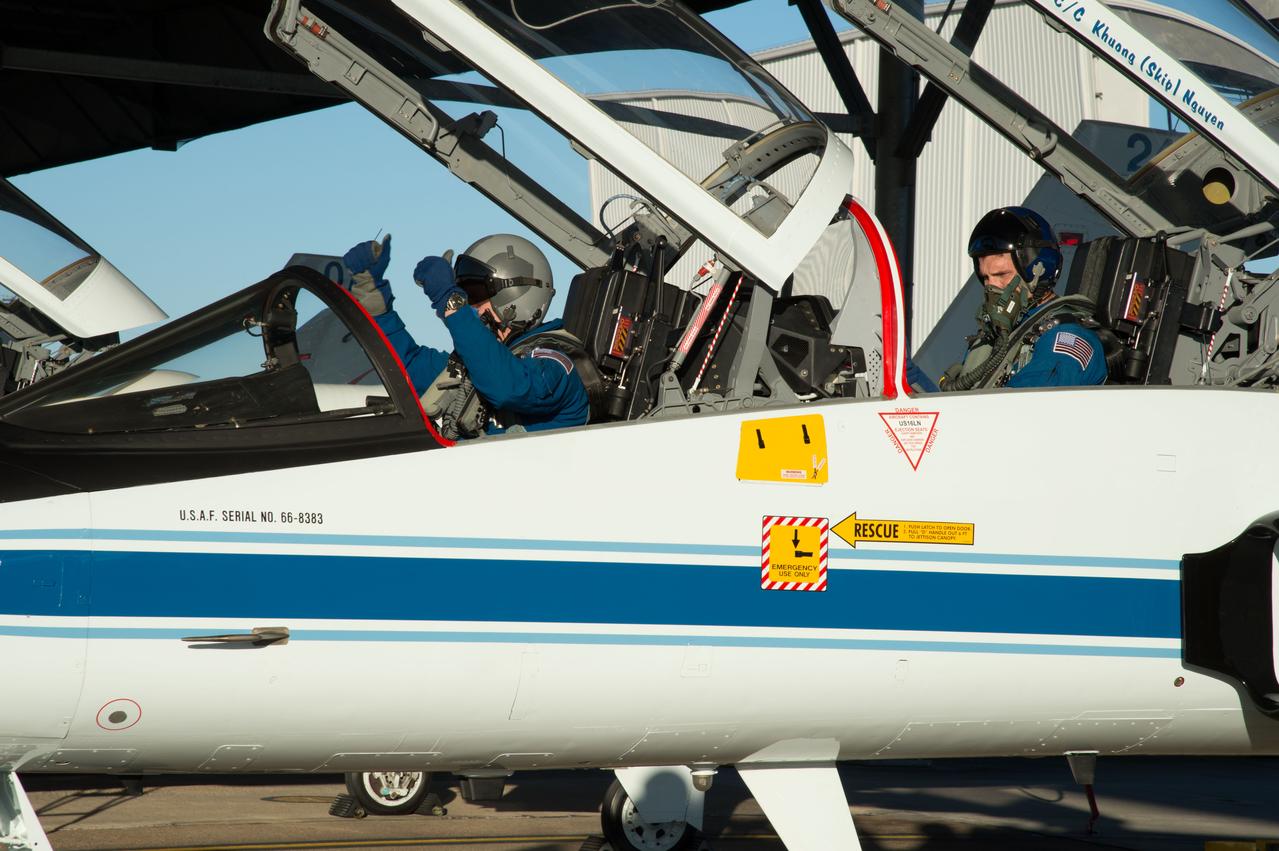
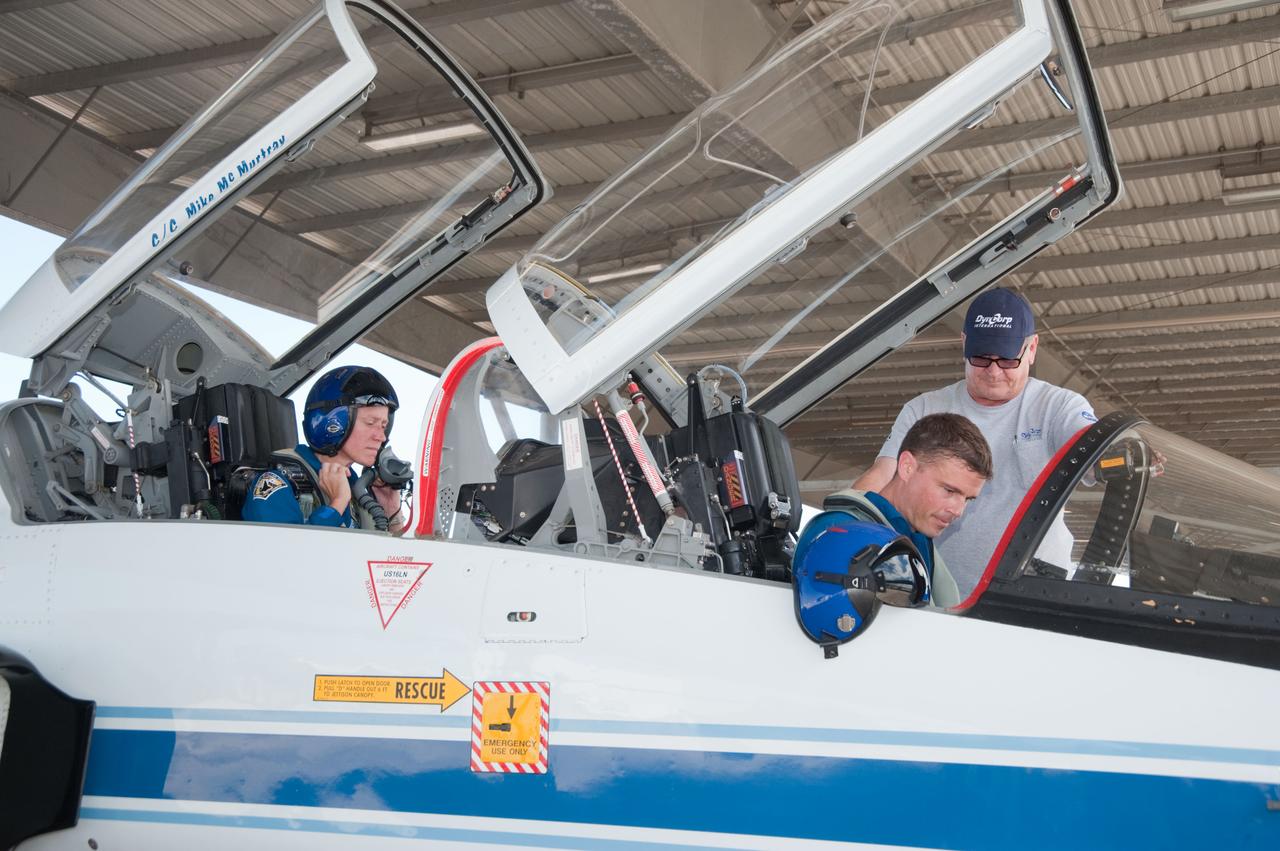
PHOTO DATE: 11/09/12 LOCATION: EFD SUBJECT: Expedition 37/38 astronaut Mike Hopkins and Exp. 41/42 astronaut Butch Wilmore preparing for T-38 flight PHOTOGRAPHER:Geeseman
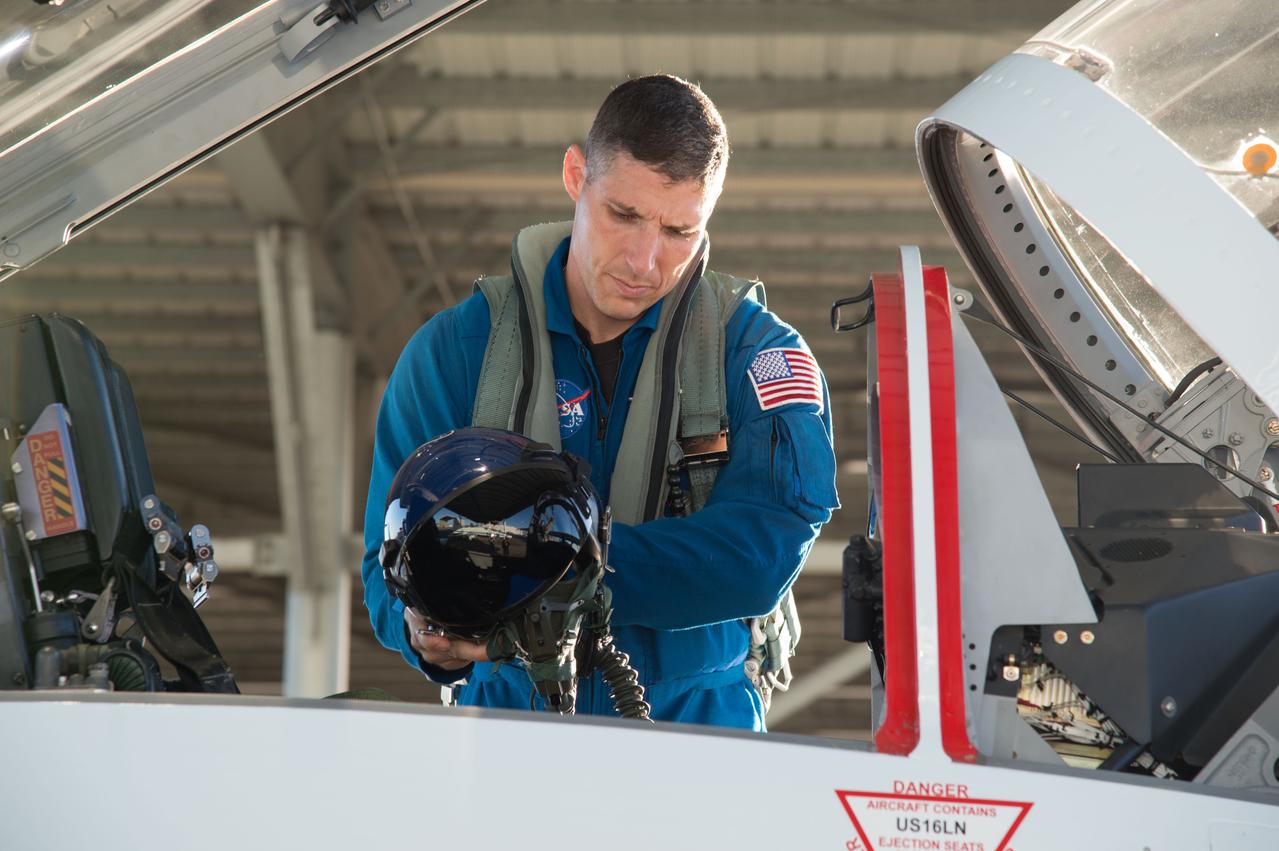
PHOTO DATE: 11/09/12 LOCATION: EFD SUBJECT: Expedition 37/38 astronaut Mike Hopkins and Exp. 41/42 astronaut Butch Wilmore preparing for T-38 flight PHOTOGRAPHER:Geeseman
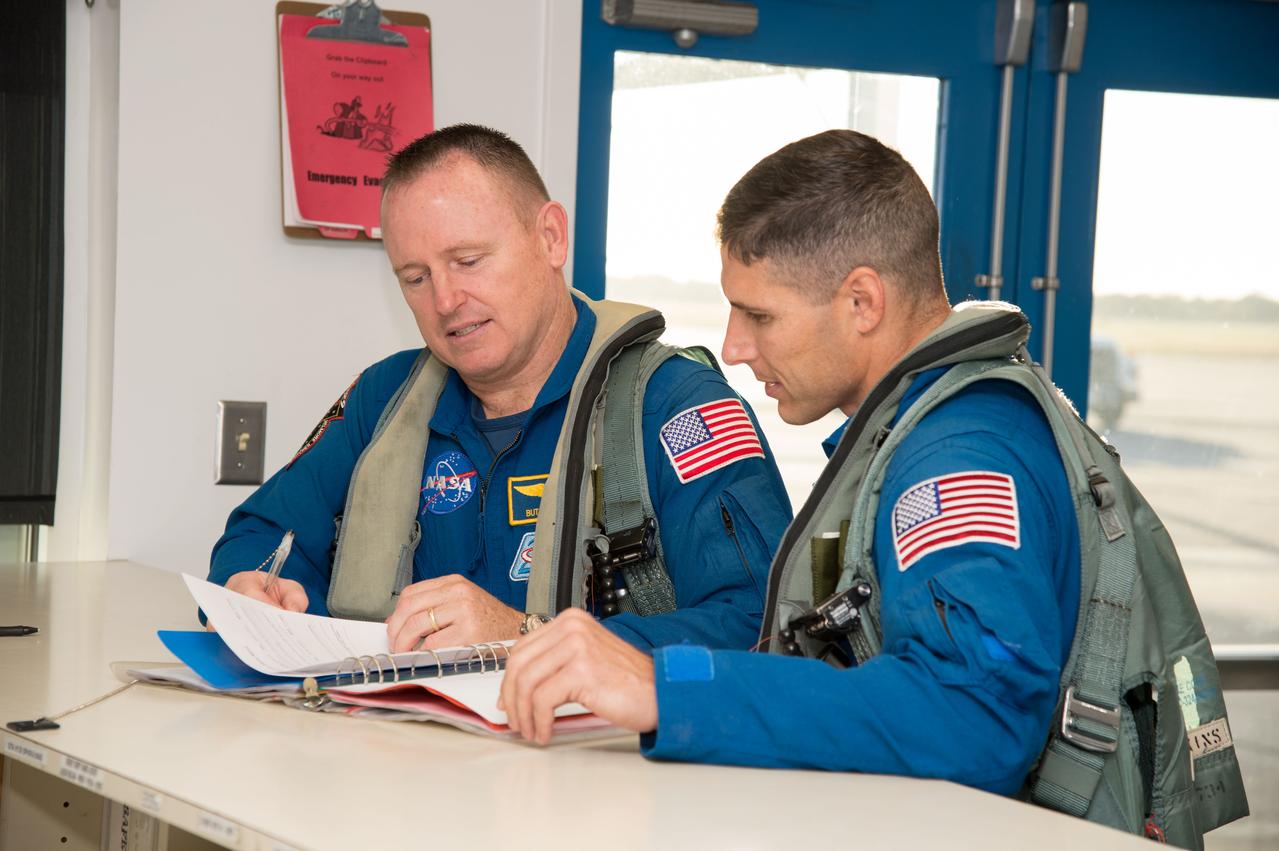
PHOTO DATE: 11/09/12 LOCATION: EFD SUBJECT: Expedition 37/38 astronaut Mike Hopkins and Exp. 41/42 astronaut Butch Wilmore preparing for T-38 flight PHOTOGRAPHER:Geeseman
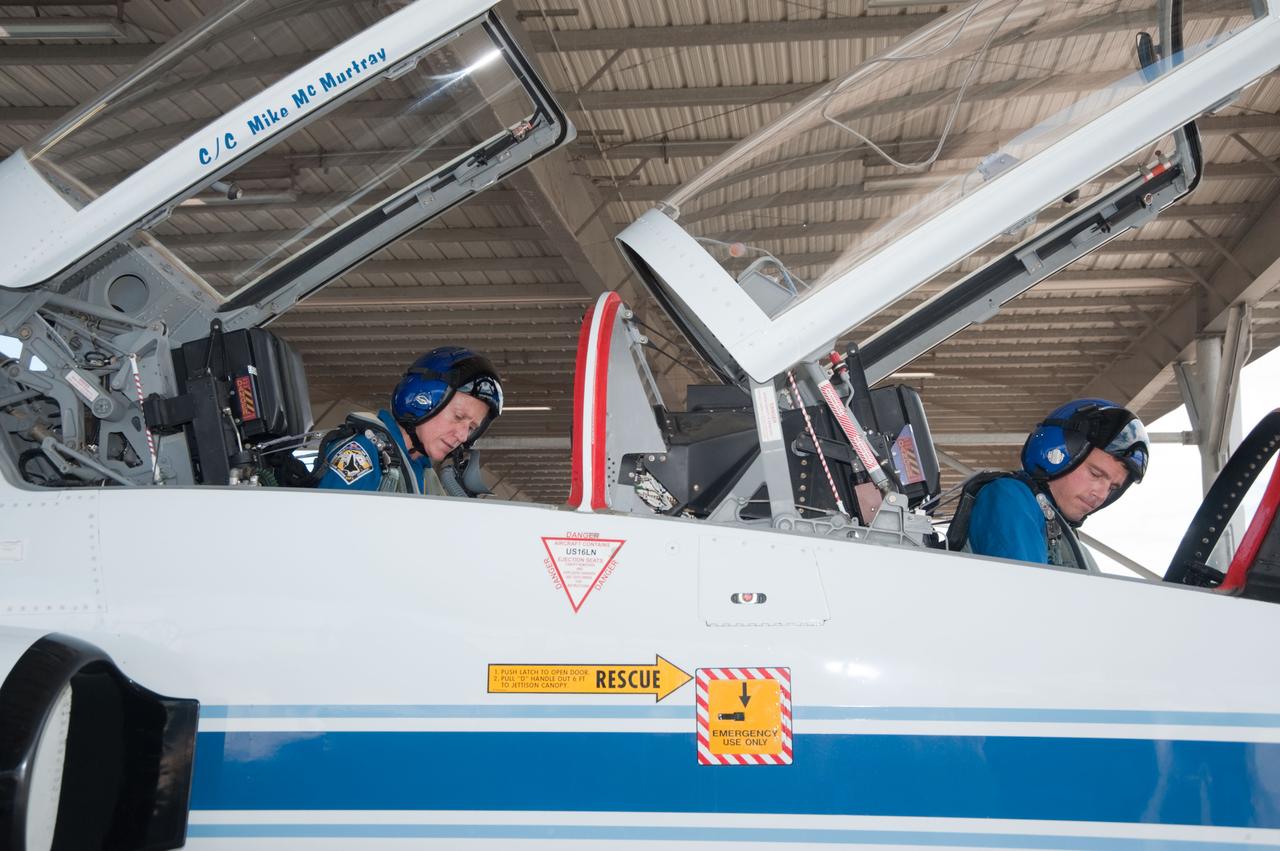
DATE: 9-10-12 LOCATION: Ellington Field - Hangar 276 - Tarmac SUBJECT: Expedition 36/37 crew member Karen Nyberg and Expedition 40/41 crew member Reid Wiseman during T-38 Out and Back exercise. PHOTOGRAPHER: Lauren Harnett
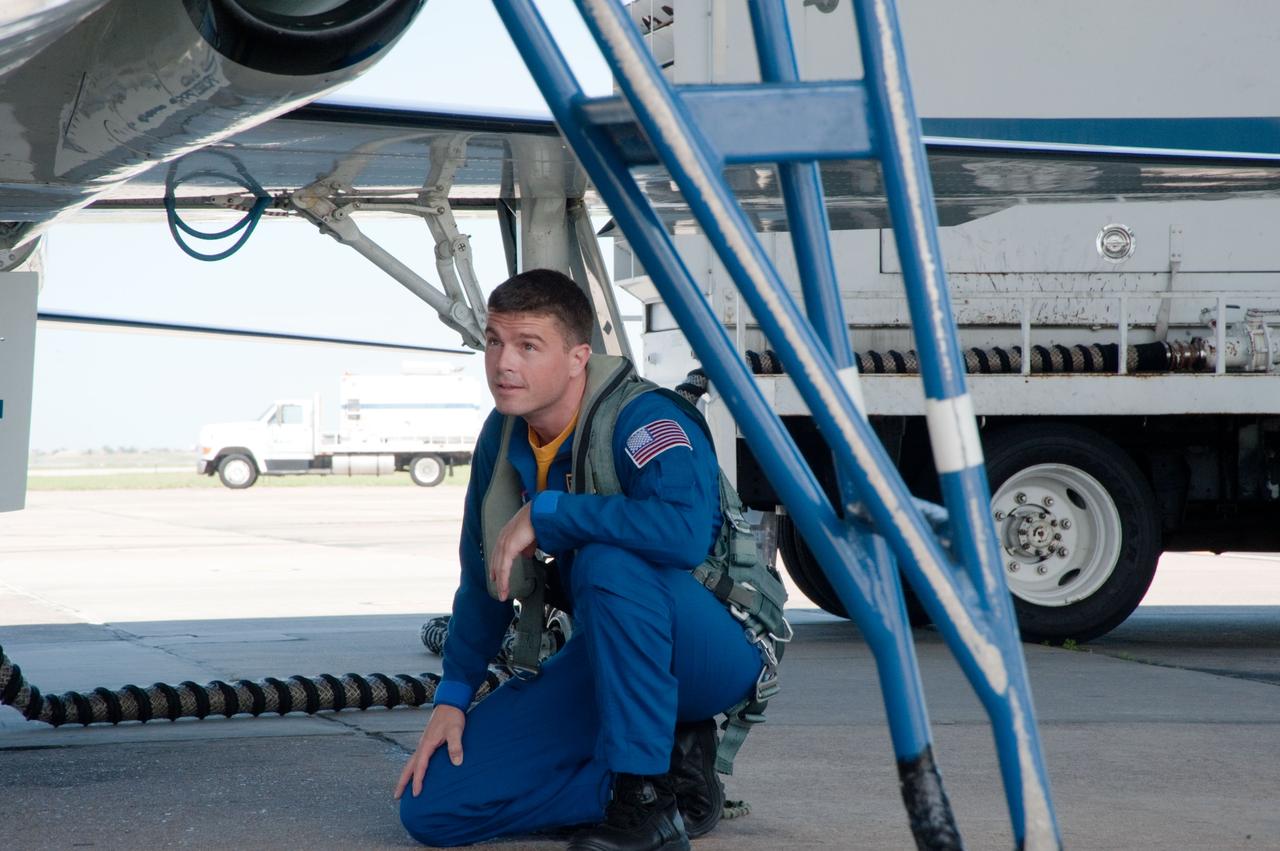
DATE: 9-10-12 LOCATION: Ellington Field - Hangar 276 - Tarmac SUBJECT: Expedition 36/37 crew member Karen Nyberg and Expedition 40/41 crew member Reid Wiseman during T-38 Out and Back exercise. PHOTOGRAPHER: Lauren Harnett
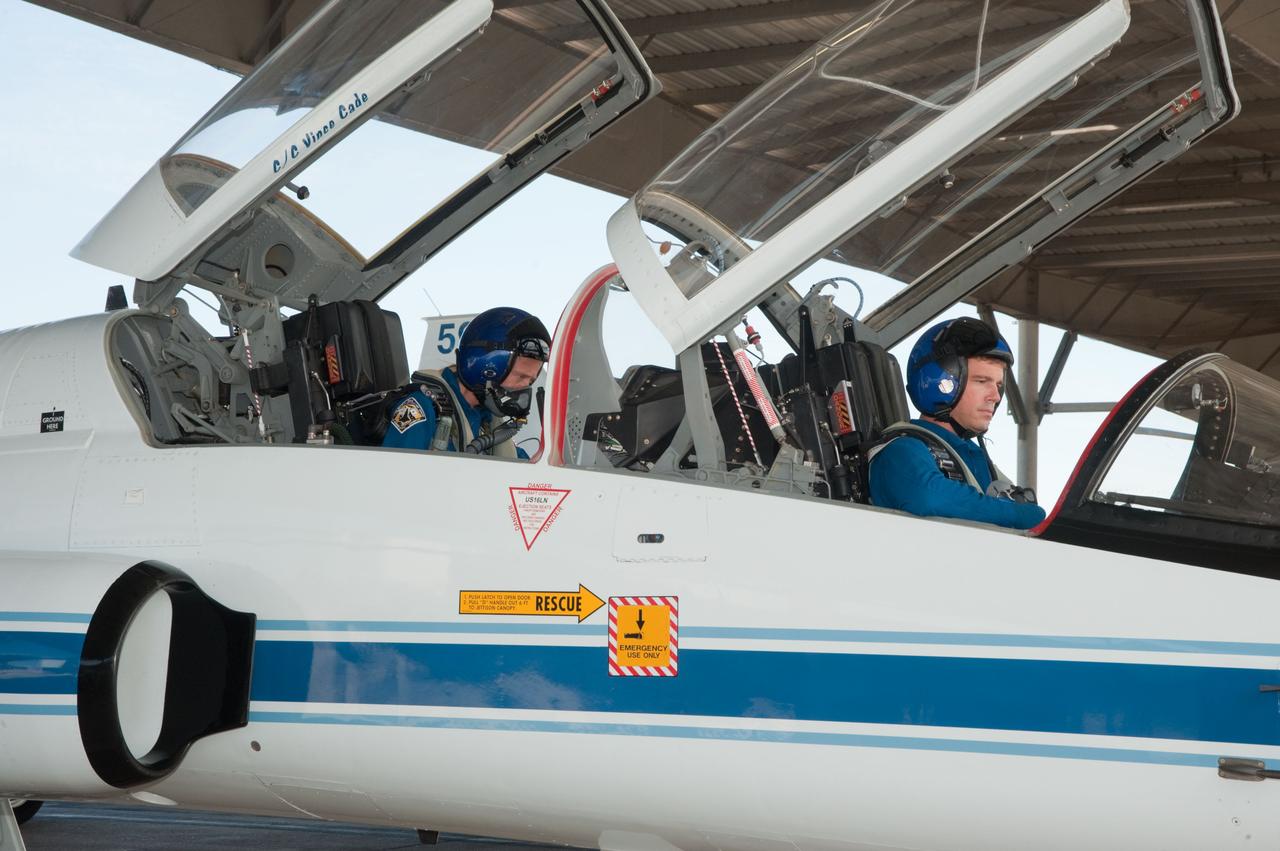
DATE: 9-10-12 LOCATION: Ellington Field - Hangar 276 - Tarmac SUBJECT: Expedition 36/37 crew member Karen Nyberg and Expedition 40/41 crew member Reid Wiseman during T-38 Out and Back exercise. PHOTOGRAPHER: Lauren Harnett
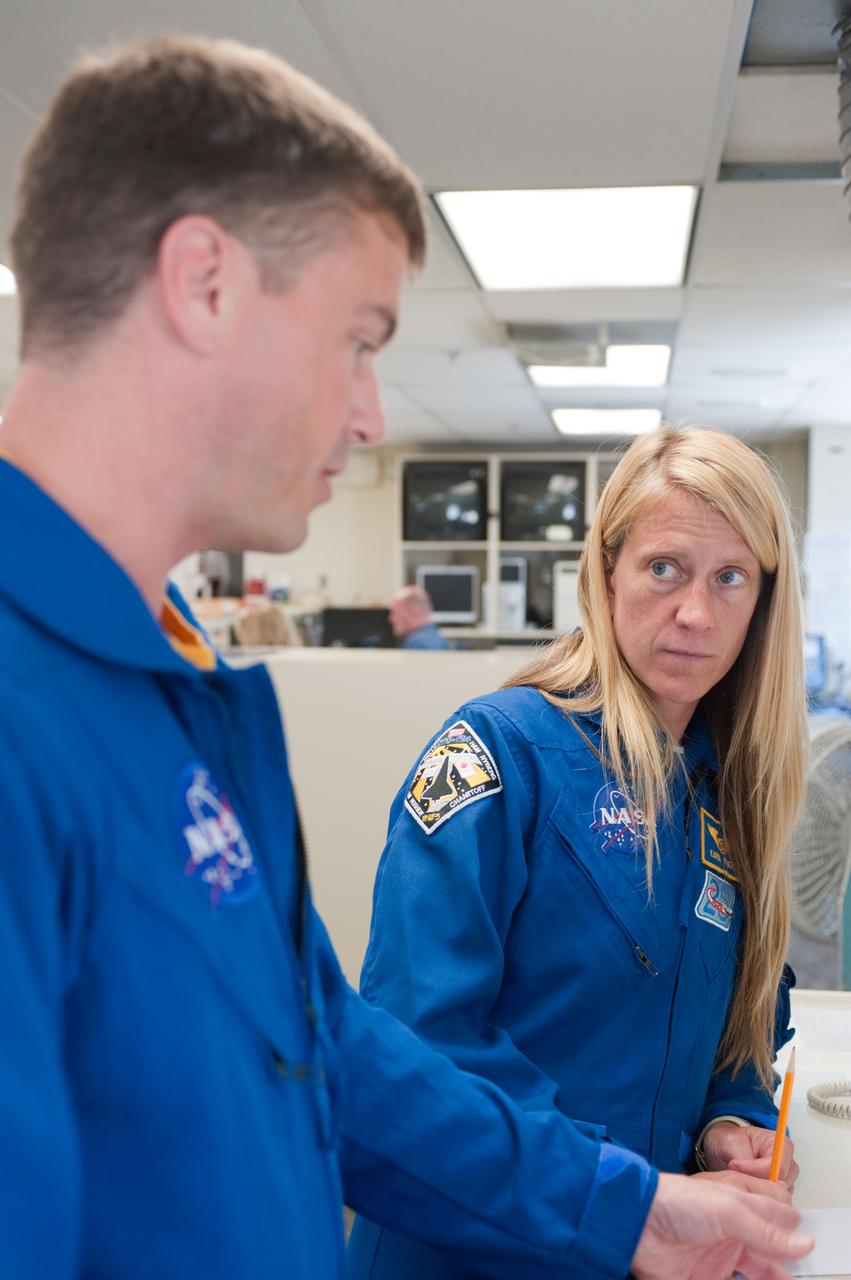
DATE: 9-10-12 LOCATION: Ellington Field - Hangar 276 - Tarmac SUBJECT: Expedition 36/37 crew member Karen Nyberg and Expedition 40/41 crew member Reid Wiseman during T-38 Out and Back exercise. PHOTOGRAPHER: Lauren Harnett
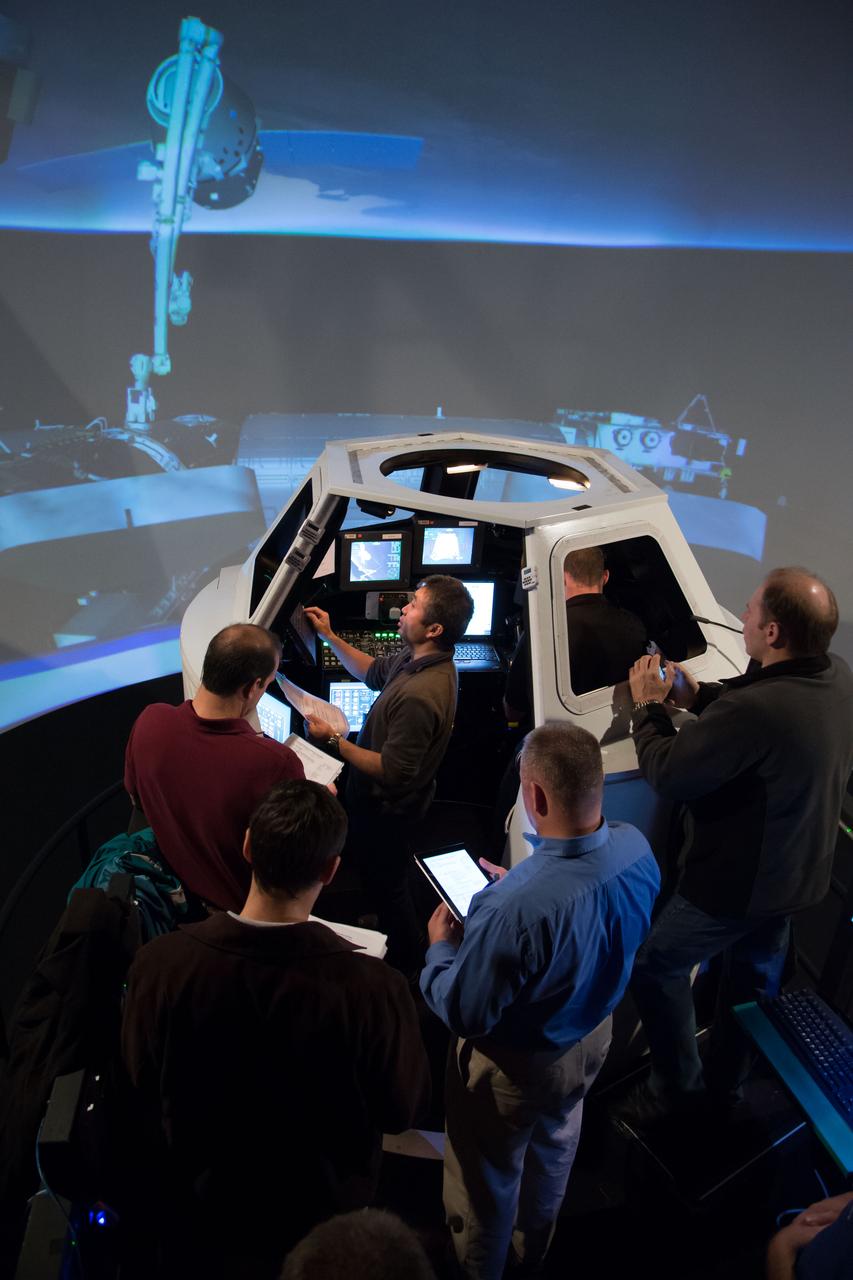
Date: 01-18-13 Location: Bldg 16, SES Dome Subject: Expedition 39 (Soyuz 37) crew members Rick Mastracchio and Koichi Wakata during FF T&C/R MINI SIM 2 training in the building 16 dome with instructor Jeffery "Tux" Tuxhorn. Photogapher: James Blair
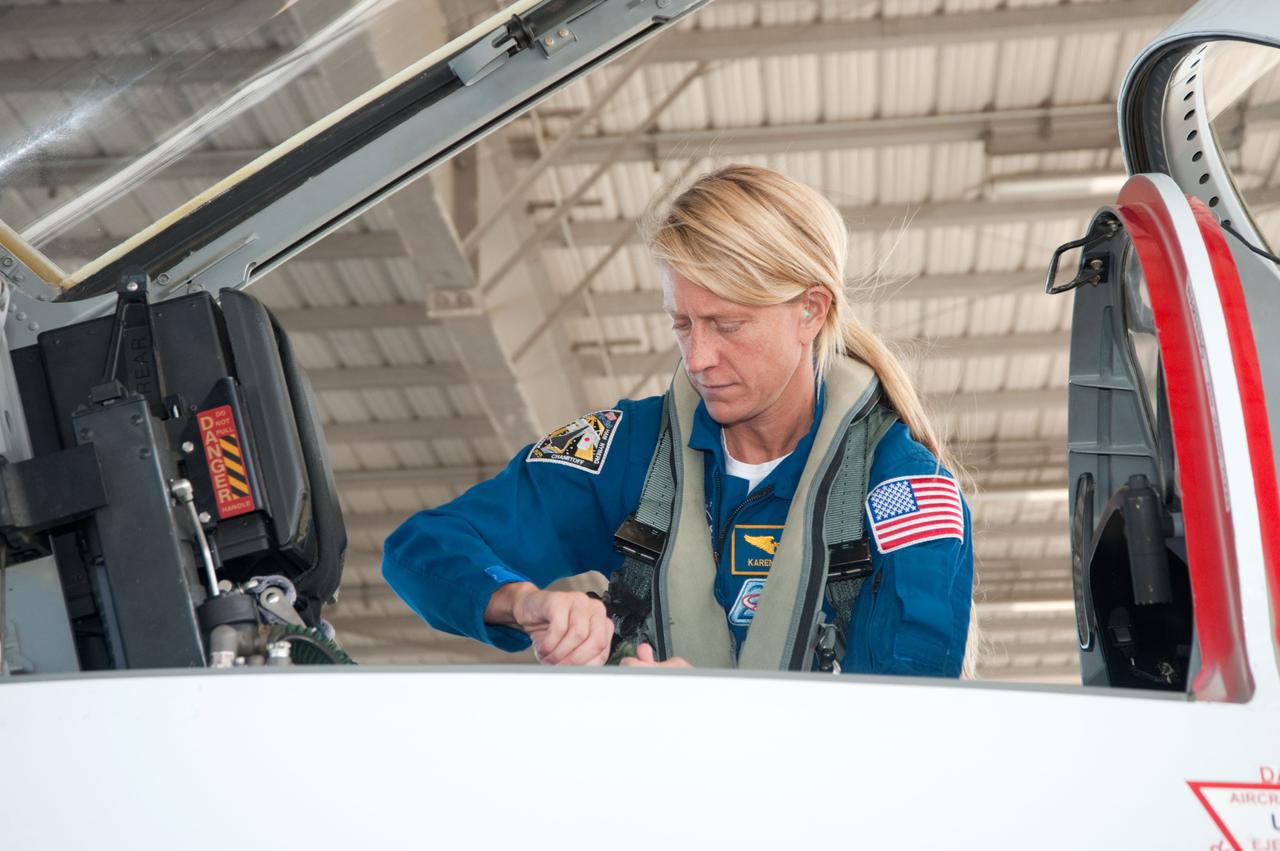
DATE: 9-10-12 LOCATION: Ellington Field - Hangar 276 - Tarmac SUBJECT: Expedition 36/37 crew member Karen Nyberg and Expedition 40/41 crew member Reid Wiseman during T-38 Out and Back exercise. PHOTOGRAPHER: Lauren Harnett
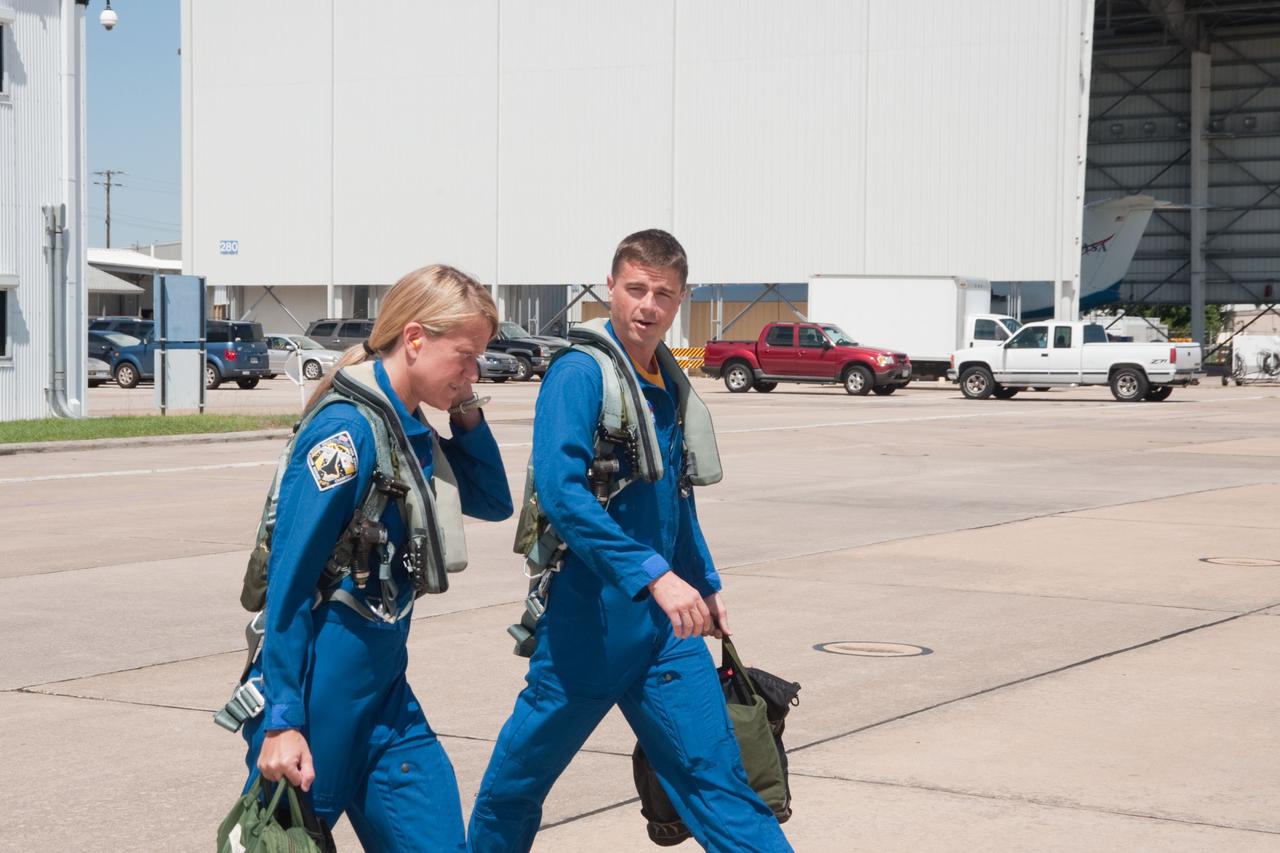
DATE: 9-10-12 LOCATION: Ellington Field - Hangar 276 - Tarmac SUBJECT: Expedition 36/37 crew member Karen Nyberg and Expedition 40/41 crew member Reid Wiseman during T-38 Out and Back exercise. PHOTOGRAPHER: Lauren Harnett
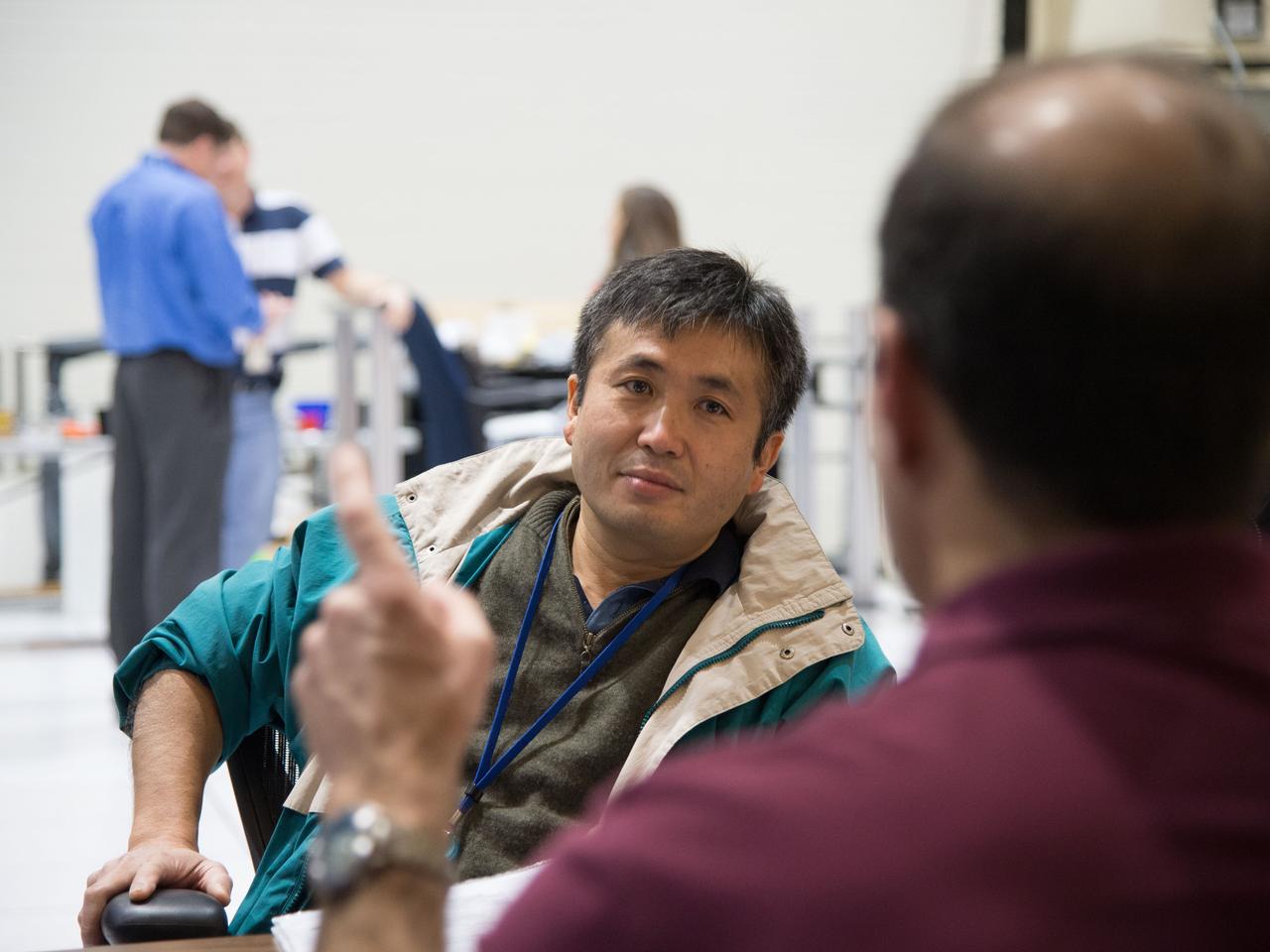
Date: 01-18-13 Location: Bldg 16, SES Dome Subject: Expedition 39 (Soyuz 37) crew members Rick Mastracchio and Koichi Wakata during FF T&C/R MINI SIM 2 training in the building 16 dome with instructor Jeffery "Tux" Tuxhorn. Photogapher: James Blair
DATE: 9-10-12 LOCATION: Ellington Field - Hangar 276 - Tarmac SUBJECT: Expedition 36/37 crew member Karen Nyberg and Expedition 40/41 crew member Reid Wiseman during T-38 Out and Back exercise. PHOTOGRAPHER: Lauren Harnett
DATE: 9-10-12 LOCATION: Ellington Field - Hangar 276 - Tarmac SUBJECT: Expedition 36/37 crew member Karen Nyberg and Expedition 40/41 crew member Reid Wiseman during T-38 Out and Back exercise. PHOTOGRAPHER: Lauren Harnett
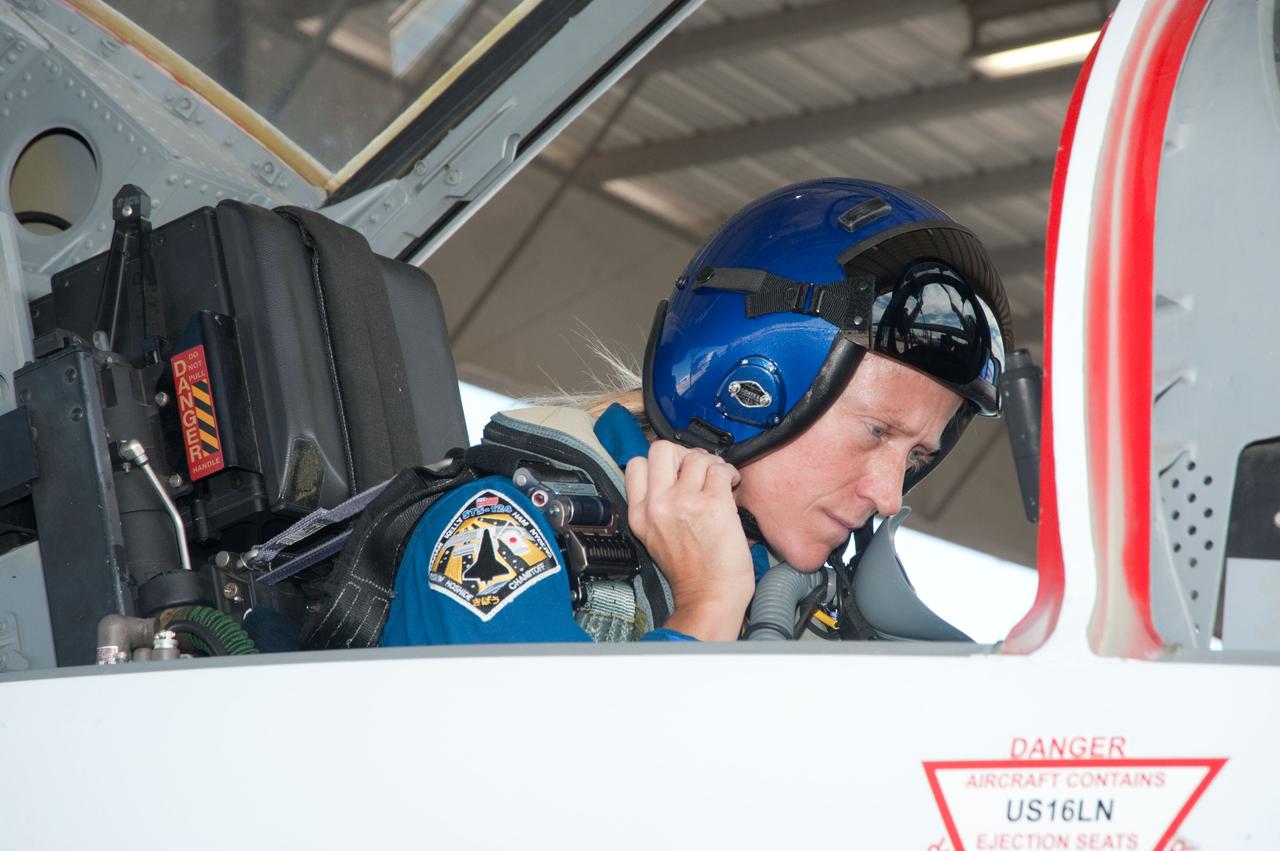
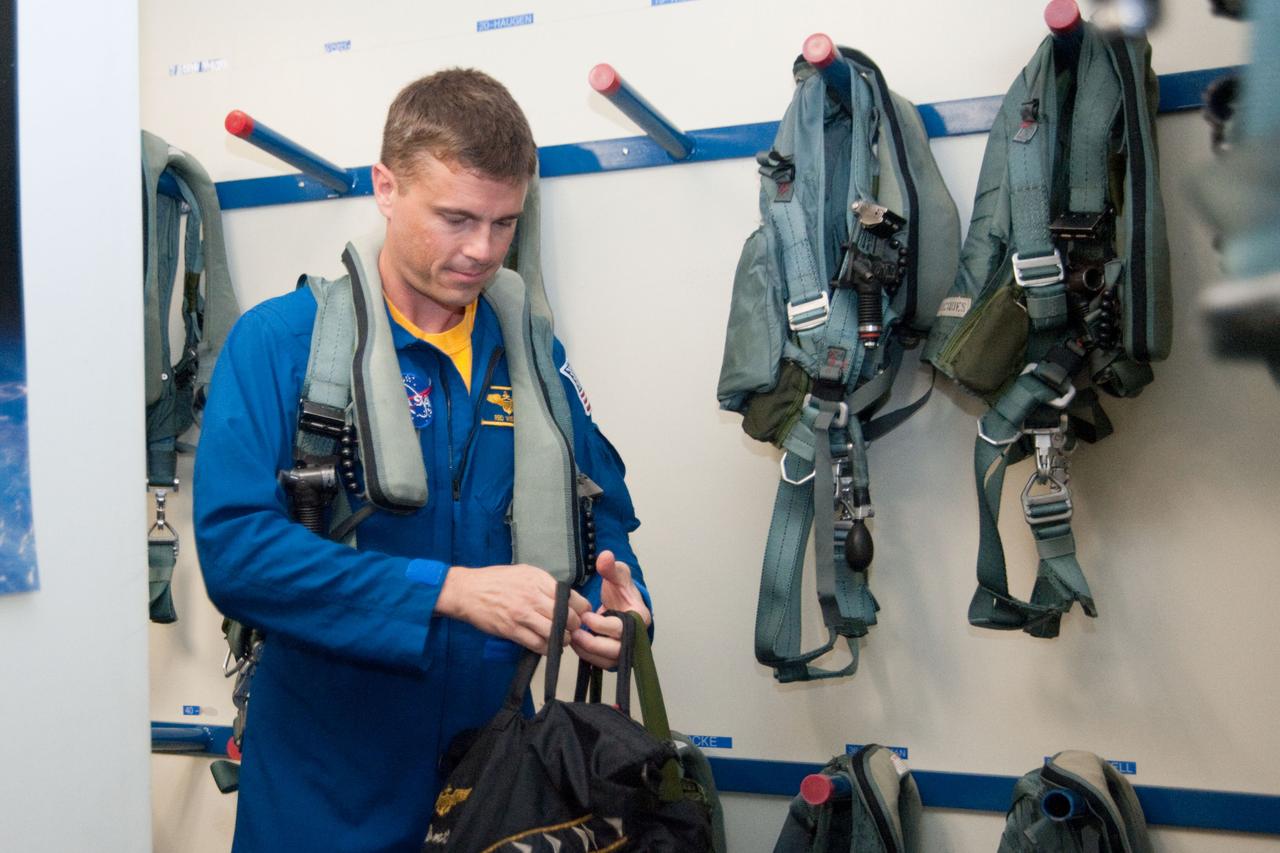
DATE: 9-10-12 LOCATION: Ellington Field - Hangar 276 - Tarmac SUBJECT: Expedition 36/37 crew member Karen Nyberg and Expedition 40/41 crew member Reid Wiseman during T-38 Out and Back exercise. PHOTOGRAPHER: Lauren Harnett
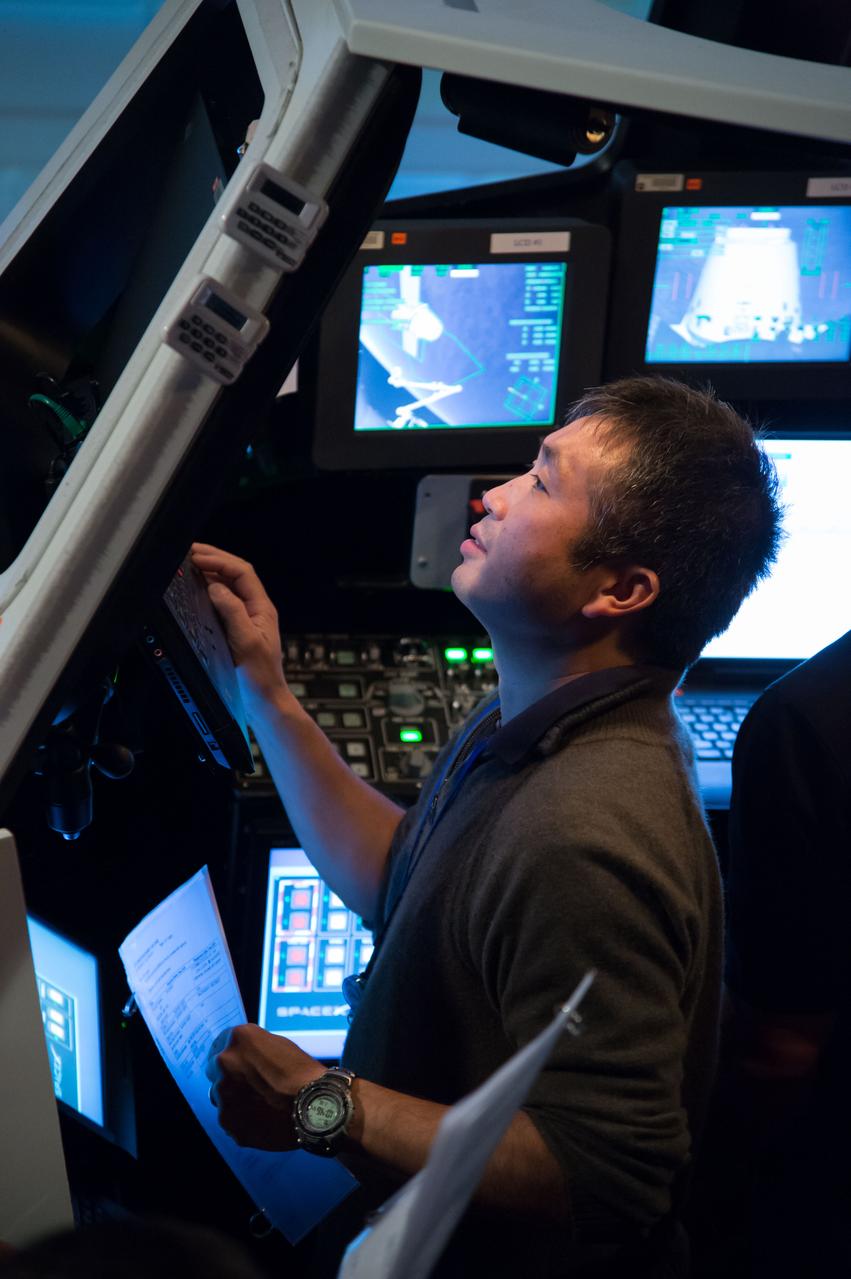
Date: 01-18-13 Location: Bldg 16, SES Dome Subject: Expedition 39 (Soyuz 37) crew members Rick Mastracchio and Koichi Wakata during FF T&C/R MINI SIM 2 training in the building 16 dome with instructor Jeffery "Tux" Tuxhorn. Photogapher: James Blair
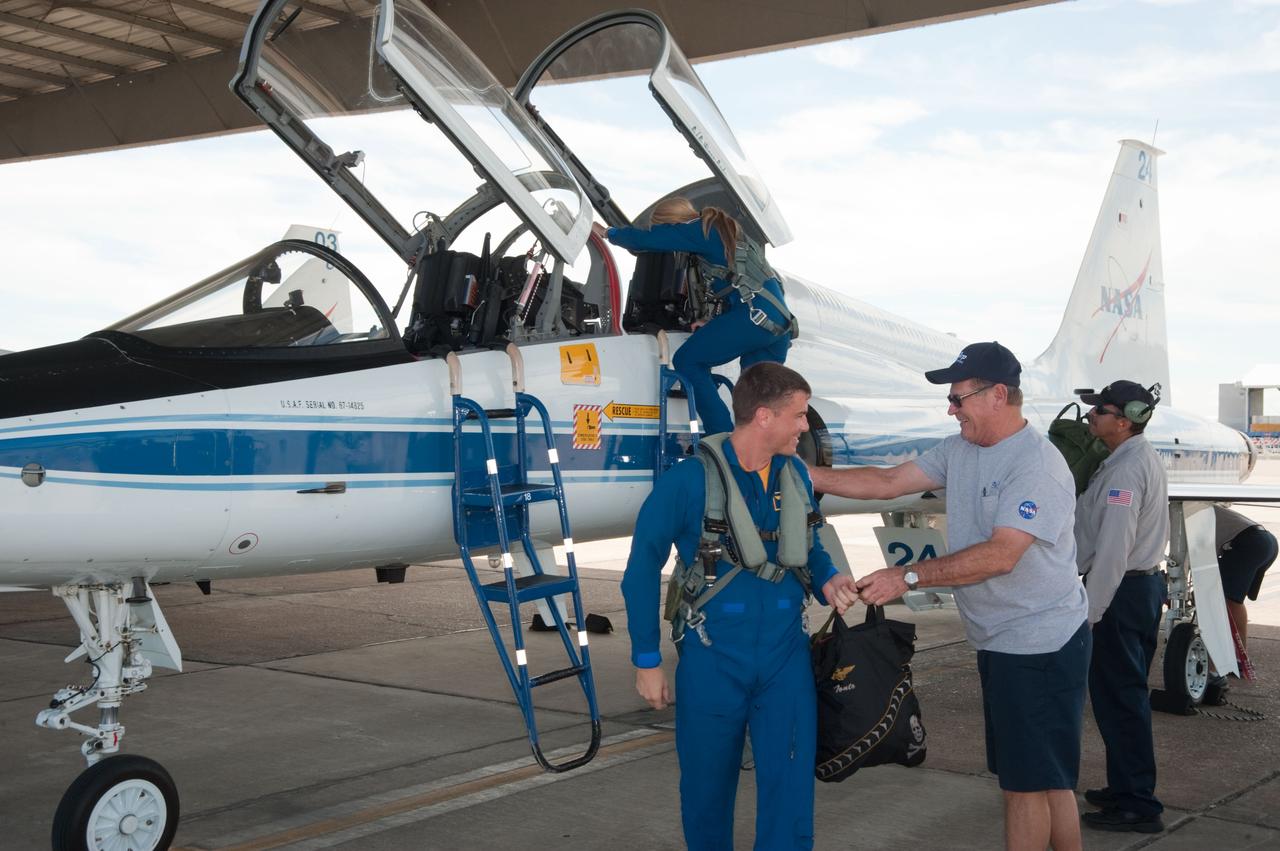
DATE: 9-10-12 LOCATION: Ellington Field - Hangar 276 - Tarmac SUBJECT: Expedition 36/37 crew member Karen Nyberg and Expedition 40/41 crew member Reid Wiseman during T-38 Out and Back exercise. PHOTOGRAPHER: Lauren Harnett
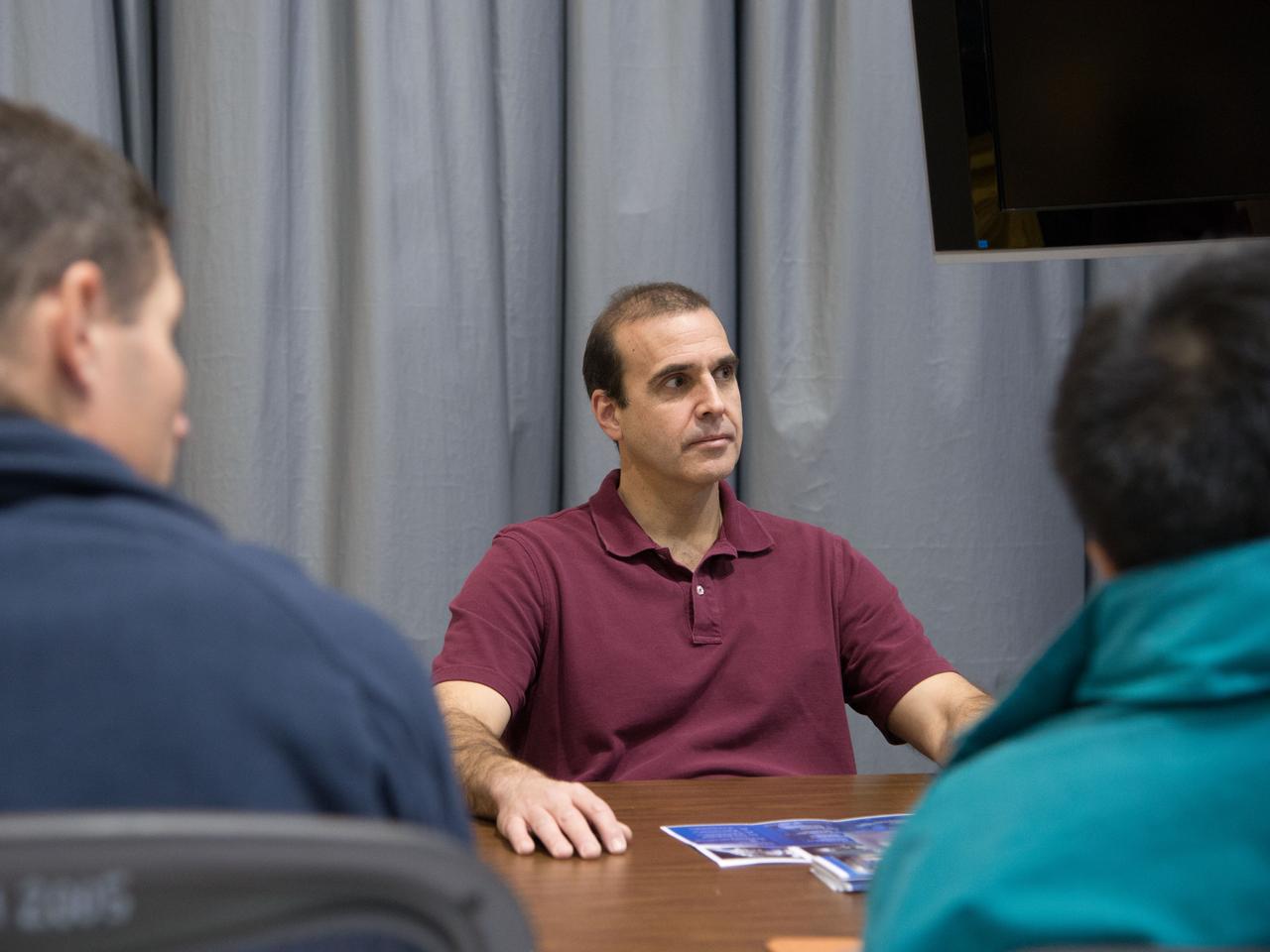
Date: 01-18-13 Location: Bldg 16, SES Dome Subject: Expedition 39 (Soyuz 37) crew members Rick Mastracchio and Koichi Wakata during FF T&C/R MINI SIM 2 training in the building 16 dome with instructor Jeffery "Tux" Tuxhorn. Photogapher: James Blair
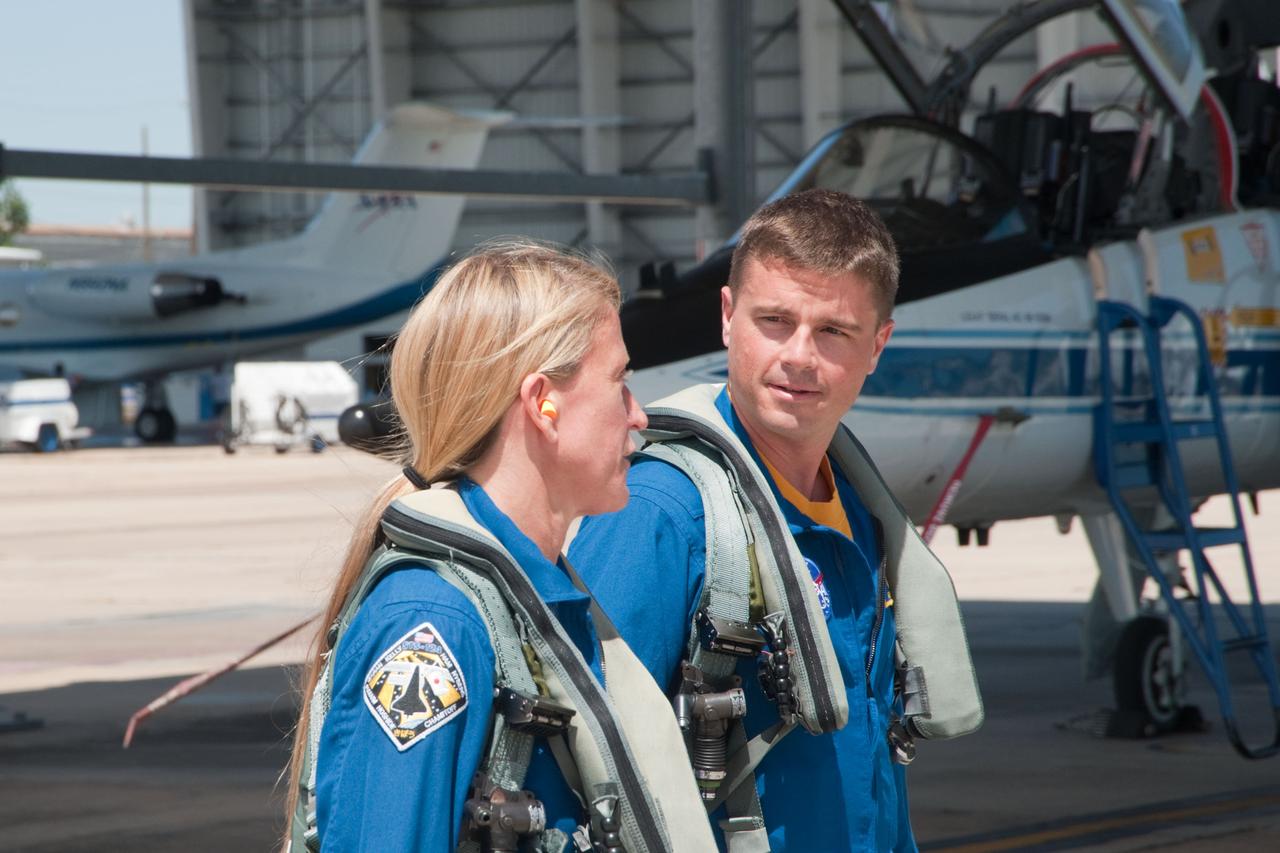
DATE: 9-10-12 LOCATION: Ellington Field - Hangar 276 - Tarmac SUBJECT: Expedition 36/37 crew member Karen Nyberg and Expedition 40/41 crew member Reid Wiseman during T-38 Out and Back exercise. PHOTOGRAPHER: Lauren Harnett

DATE: 9-10-12 LOCATION: Ellington Field - Hangar 276 - Tarmac SUBJECT: Expedition 36/37 crew member Karen Nyberg and Expedition 40/41 crew member Reid Wiseman during T-38 Out and Back exercise. PHOTOGRAPHER: Lauren Harnett
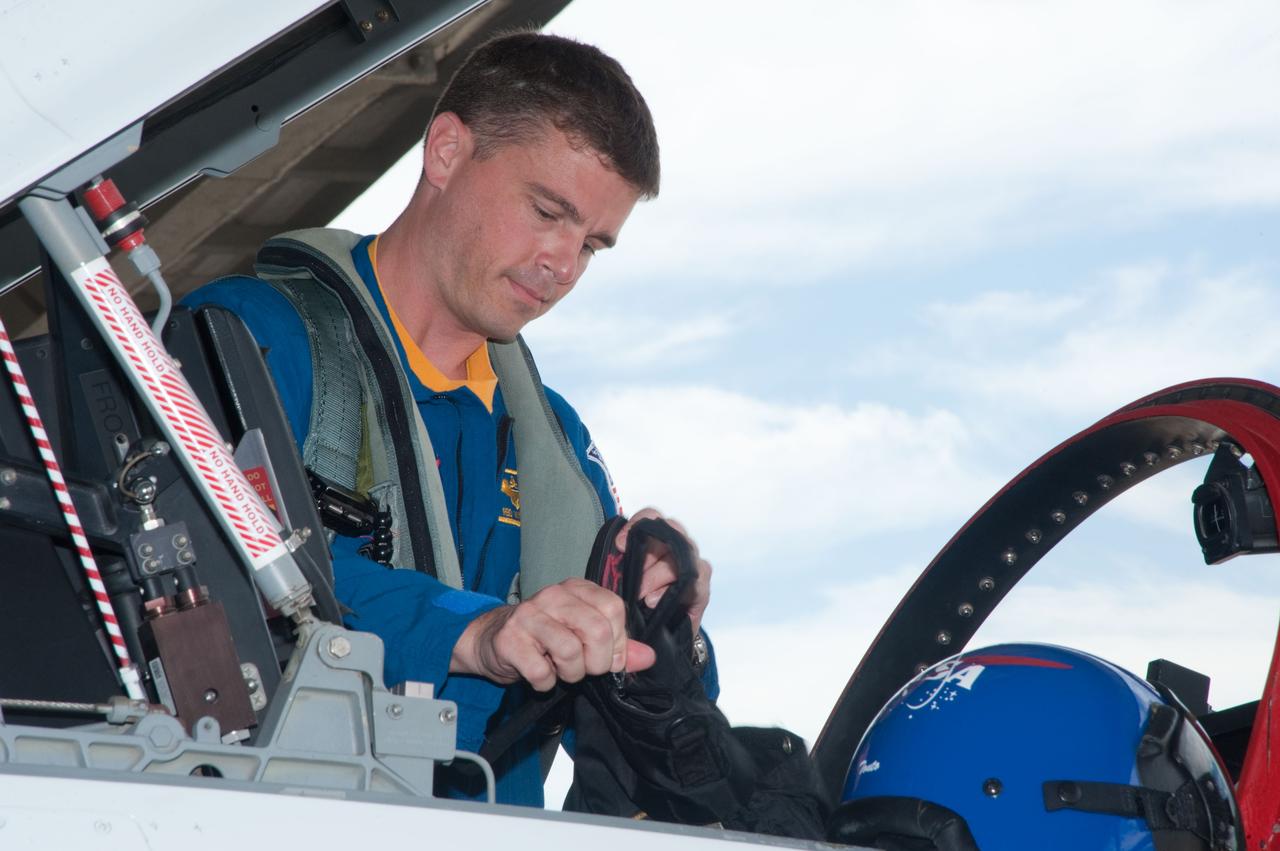
DATE: 9-10-12 LOCATION: Ellington Field - Hangar 276 - Tarmac SUBJECT: Expedition 36/37 crew member Karen Nyberg and Expedition 40/41 crew member Reid Wiseman during T-38 Out and Back exercise. PHOTOGRAPHER: Lauren Harnett
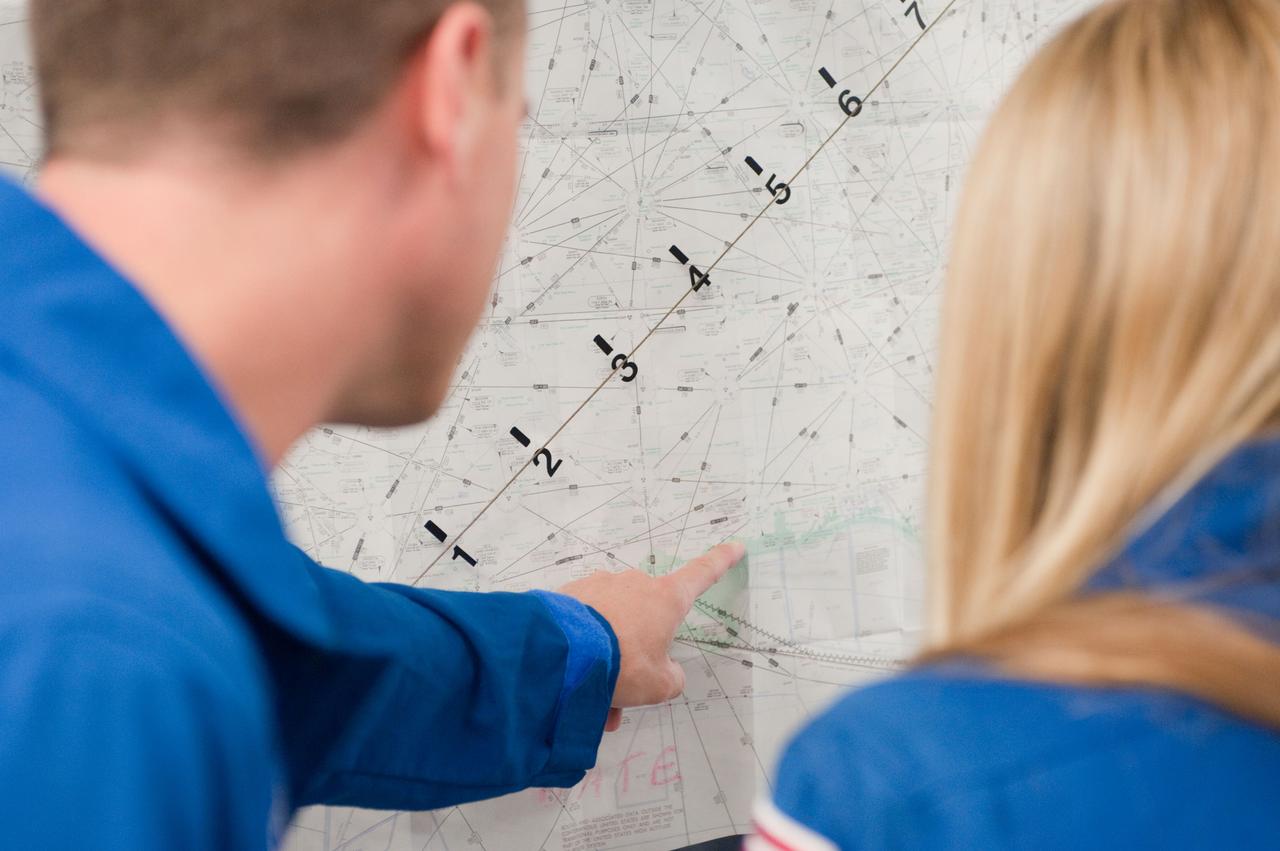
DATE: 9-10-12 LOCATION: Ellington Field - Hangar 276 - Tarmac SUBJECT: Expedition 36/37 crew member Karen Nyberg and Expedition 40/41 crew member Reid Wiseman during T-38 Out and Back exercise. PHOTOGRAPHER: Lauren Harnett
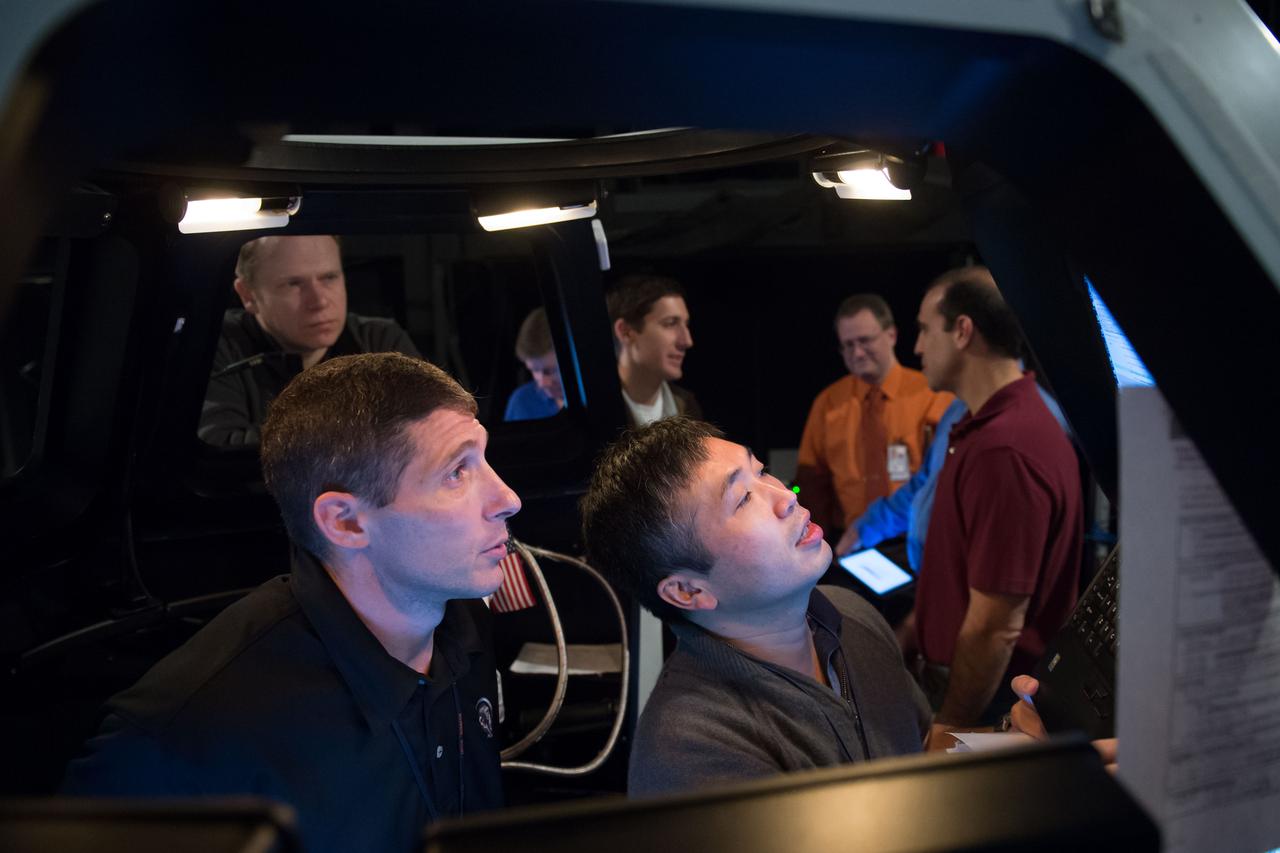
Date: 01-18-13 Location: Bldg 16, SES Dome Subject: Expedition 39 (Soyuz 37) crew members Rick Mastracchio and Koichi Wakata during FF T&C/R MINI SIM 2 training in the building 16 dome with instructor Jeffery "Tux" Tuxhorn. Photogapher: James Blair
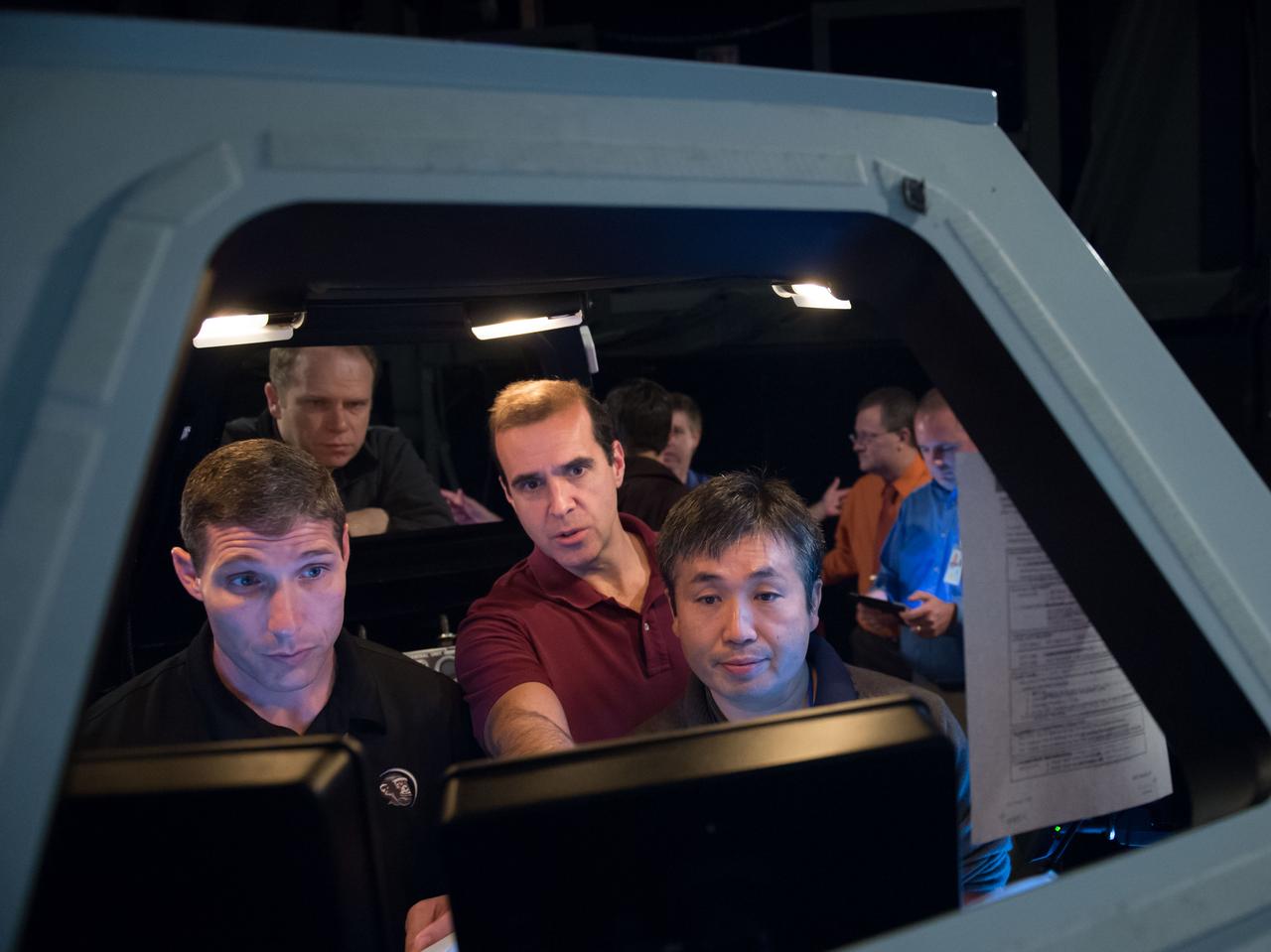
Date: 01-18-13 Location: Bldg 16, SES Dome Subject: Expedition 39 (Soyuz 37) crew members Rick Mastracchio and Koichi Wakata during FF T&C/R MINI SIM 2 training in the building 16 dome with instructor Jeffery "Tux" Tuxhorn. Photogapher: James Blair
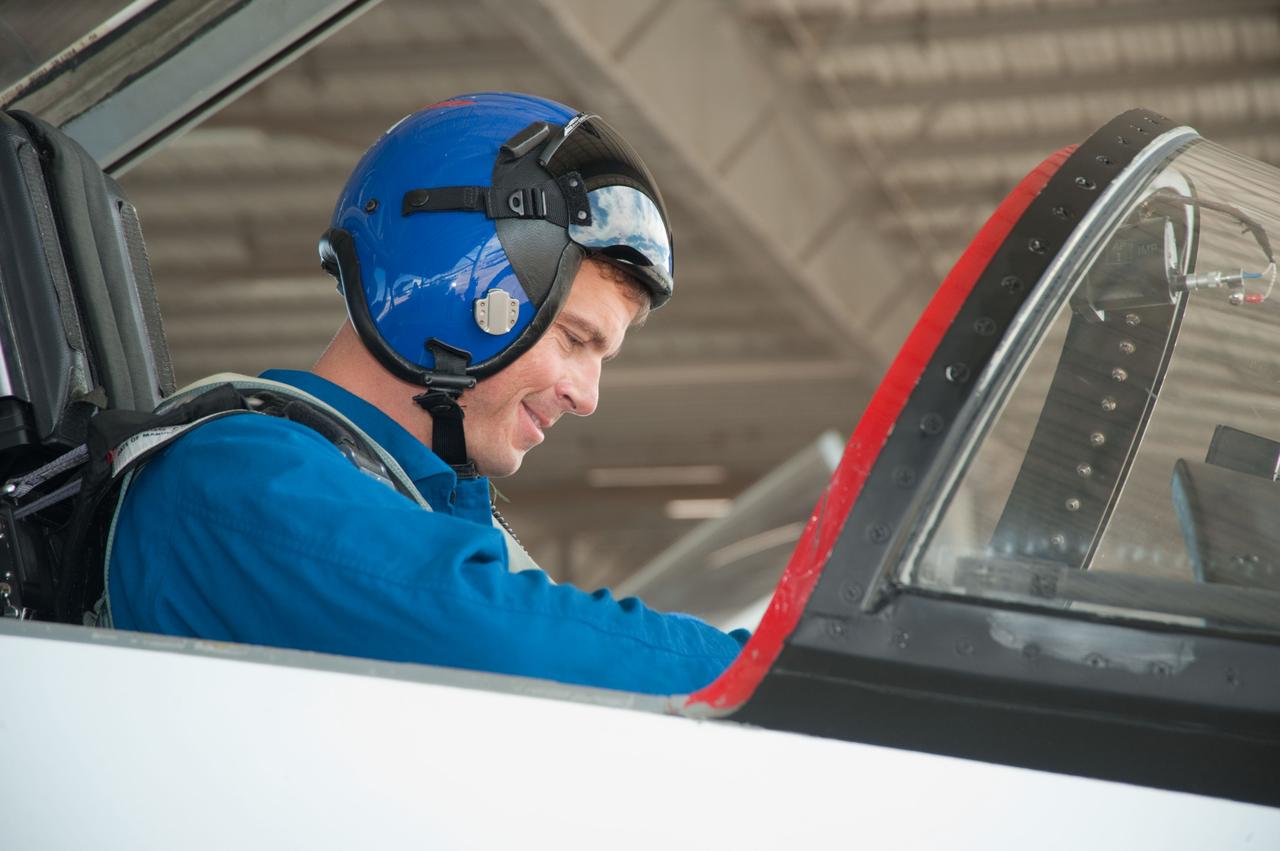
DATE: 9-10-12 LOCATION: Ellington Field - Hangar 276 - Tarmac SUBJECT: Expedition 36/37 crew member Karen Nyberg and Expedition 40/41 crew member Reid Wiseman during T-38 Out and Back exercise. PHOTOGRAPHER: Lauren Harnett
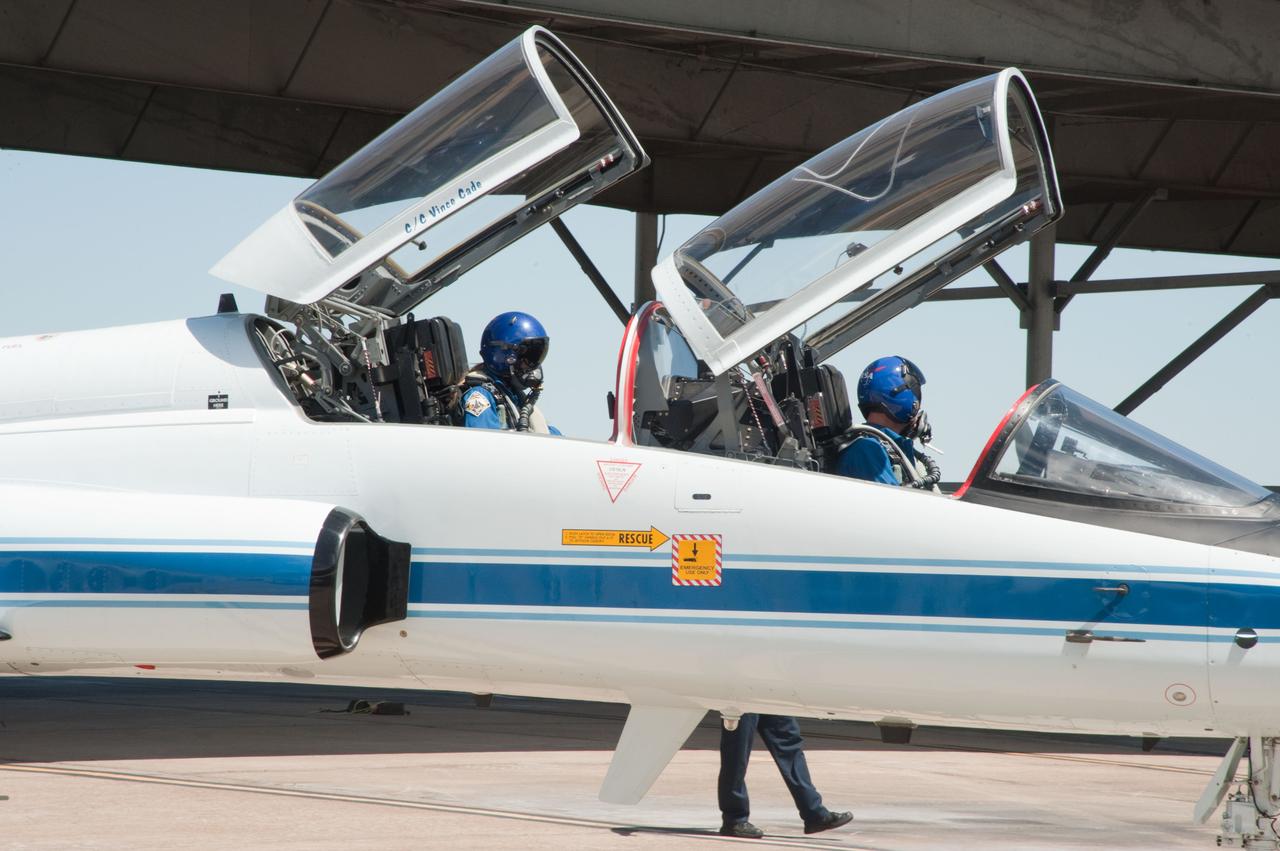
DATE: 9-10-12 LOCATION: Ellington Field - Hangar 276 - Tarmac SUBJECT: Expedition 36/37 crew member Karen Nyberg and Expedition 40/41 crew member Reid Wiseman during T-38 Out and Back exercise. PHOTOGRAPHER: Lauren Harnett
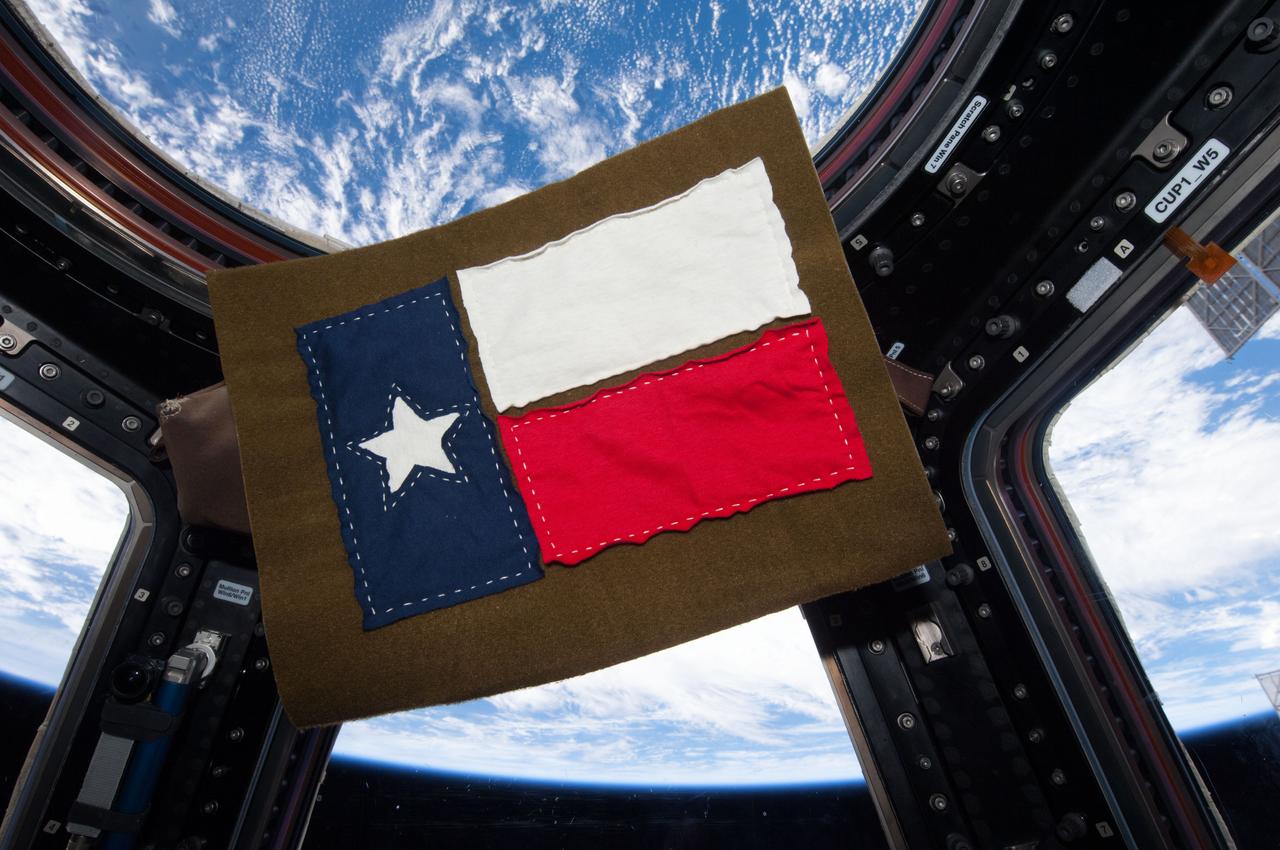
ISS037-E-004972 (27 Sept. 2013) --- Seen floating on the Cupola of the Earth-orbiting International Space Station, this quilt block, paying tribute to the state of Texas or the Lone Star state, was fashioned from T-shirts onboard the orbital outpost by Expedition 37 Flight Engineer Karen Nyberg. The NASA astronaut has spent much of her off-duty time on the station sewing and fashioning various items, using only a handful of tools she took aboard and whatever materials that have been available.
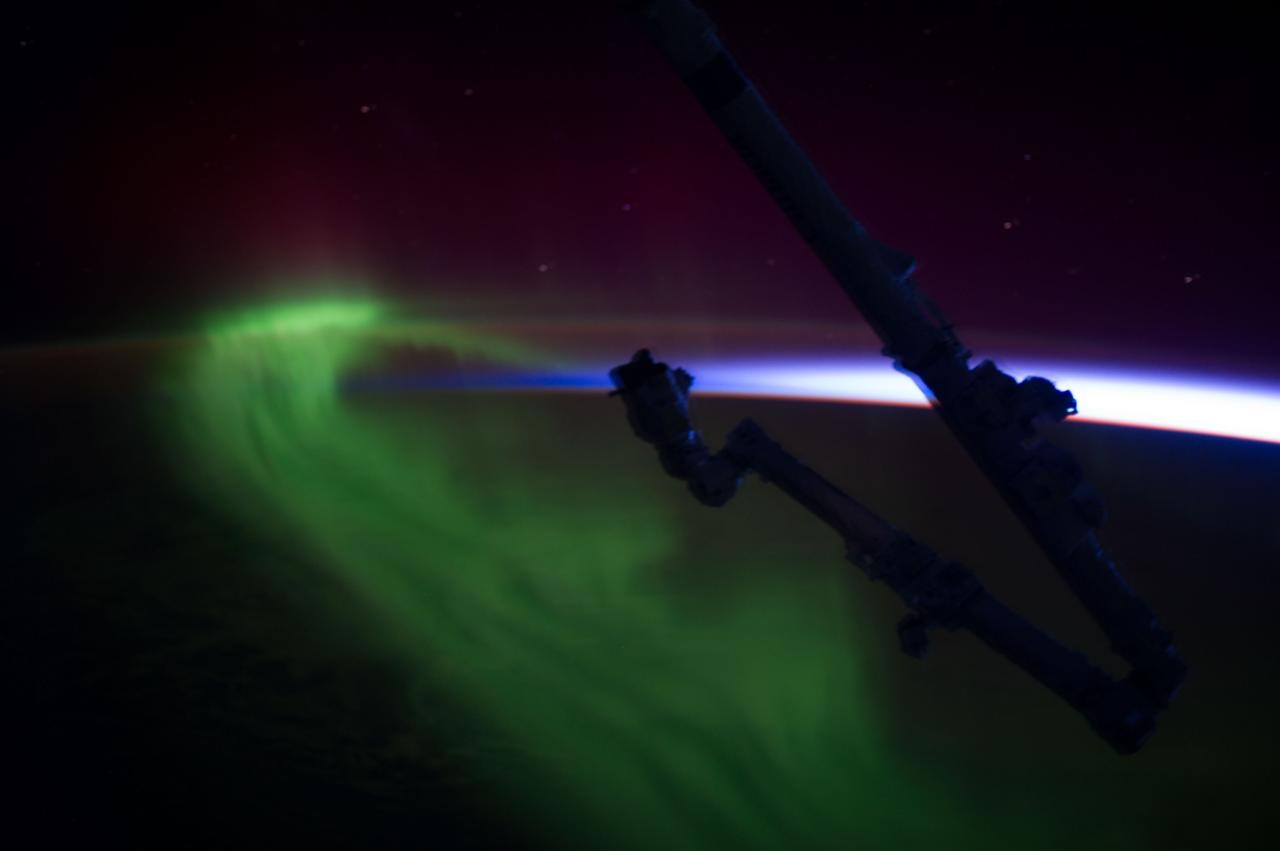
ISS037-E-022828 (30 Oct. 2013) --- This isn?t someone?s frame grab of a decorative Halloween scene, although it was photographed on Halloween eve. It is actually a picture of the Aurora Australis or Southern Lights, photographed by one of the Expedition 37 crew members on the International Space Station as the orbital complex flew over Tasmania on Oct. 30. The human-produced hardware in the picture is part of the outpost?s robotic arm system.
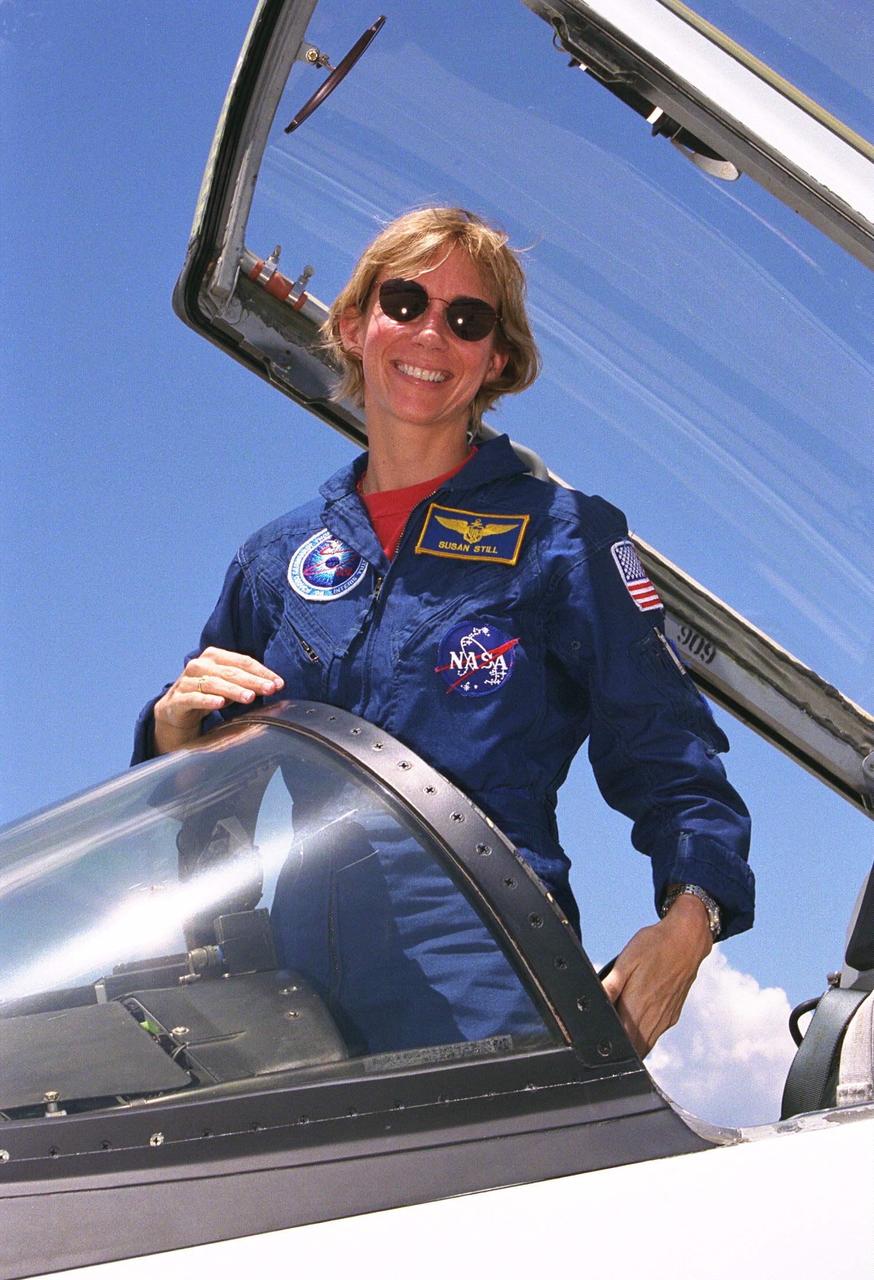
STS-94 Pilot Susan Leigh Still arrives at the Shuttle Landing Facility aboard a T-38 jet in preparation for the reflight of the Microgravity Science Laboratory-1 mission. Launch is scheduled for July 1, 1997, at 2:37 p.m. EDT. The laboratory was scheduled to fly again with the full complement of STS-83 experiments after that mission was cut short due to a faulty fuel cell. During the scheduled 16-day STS-94 mission, the experiments will be used to test some of the hardware, facilities and procedures that are planned for use on the International Space Station while the flight crew conducts combustion, protein crystal growth and materials processing experiments
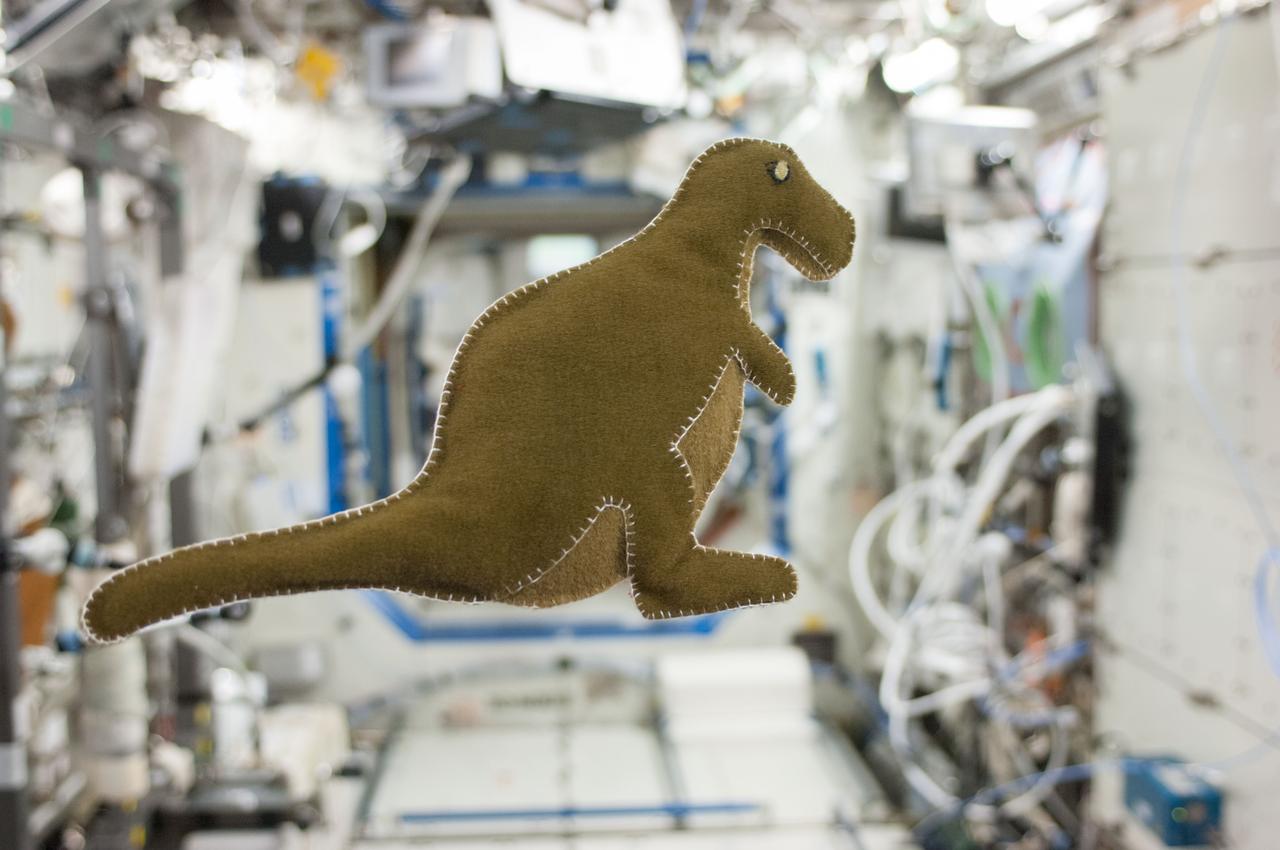
ISS037-E-002783 (22 Sept. 2013) --- NASA astronaut Karen Nyberg, Expedition 37 flight engineer, made this stuffed dinosaur toy aboard the International Space Station, using scraps of food-packaging liners and a T-shirt. She sent images of it to her young son on Sept. 22. Many of the astronaut’s hobbies lean toward artistic pursuits. She has let it be known that she loves to create different things through quilting, sewing and sketching. Nyberg took four “fat quarters” (pieces of fabric that are 18 by 22 inches) with her to the International Space Station along with needles, thread and a sketchbook when she launched to space on May 28.
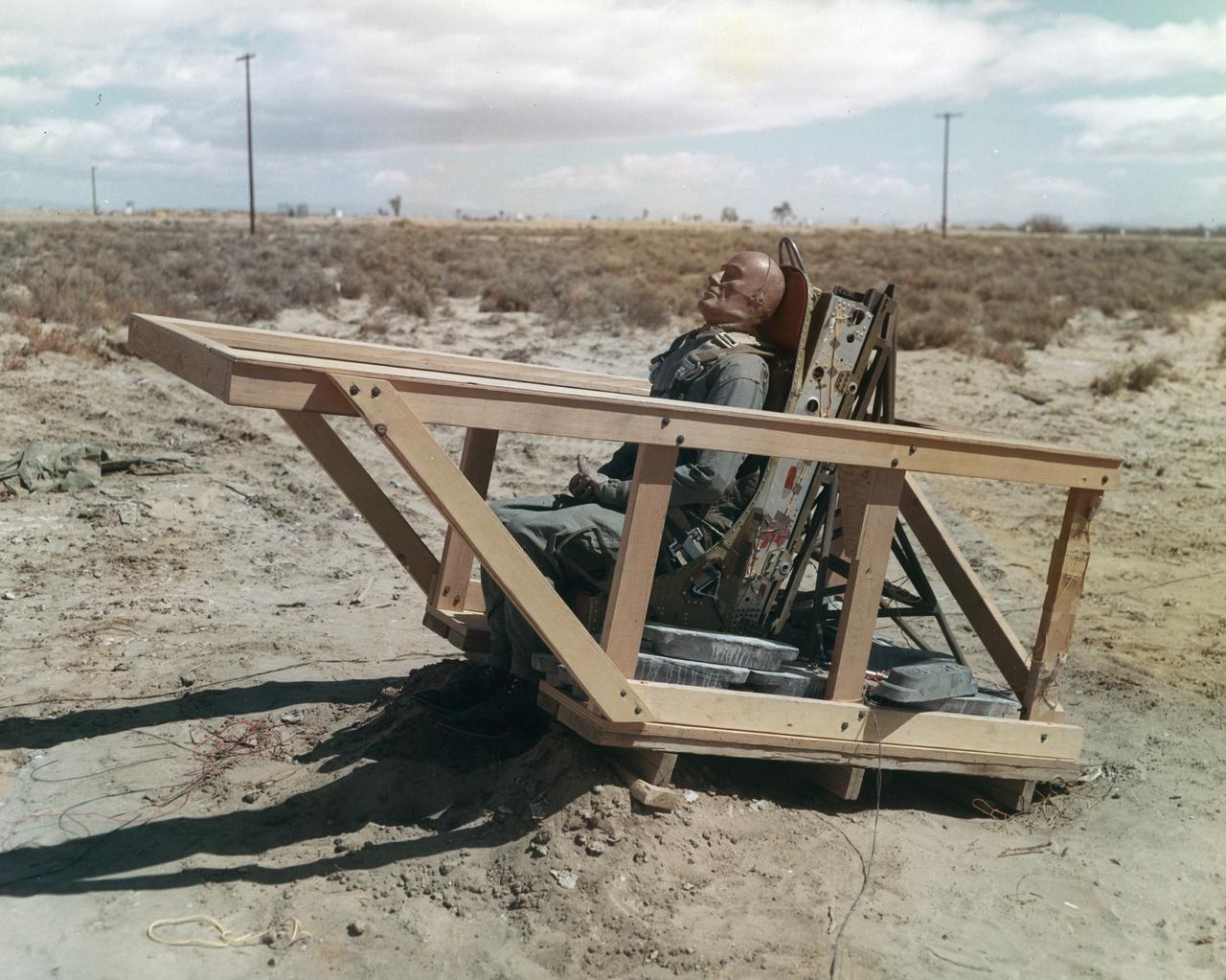
The M2-F1 was fitted with an ejection seat before the airtow flights began. The project selected the seat used in the T-37 as modified by the Weber Company to use a rocket rather than a ballistic charge for ejection. To test the ejection seat, the Flight Research Center's Dick Klein constructed a plywood mockup of the M2-F1's top deck and canopy. On the first firings, the test was unsuccessful, but on the final test the dummy in the seat landed safely. The M2-F1 ejection seat was later used in the two Lunar Landing Research Vehicles and the three Lunar Landing Training Vehicles. Three of them crashed, but in each case the pilot ejected from the vehicle successfully.
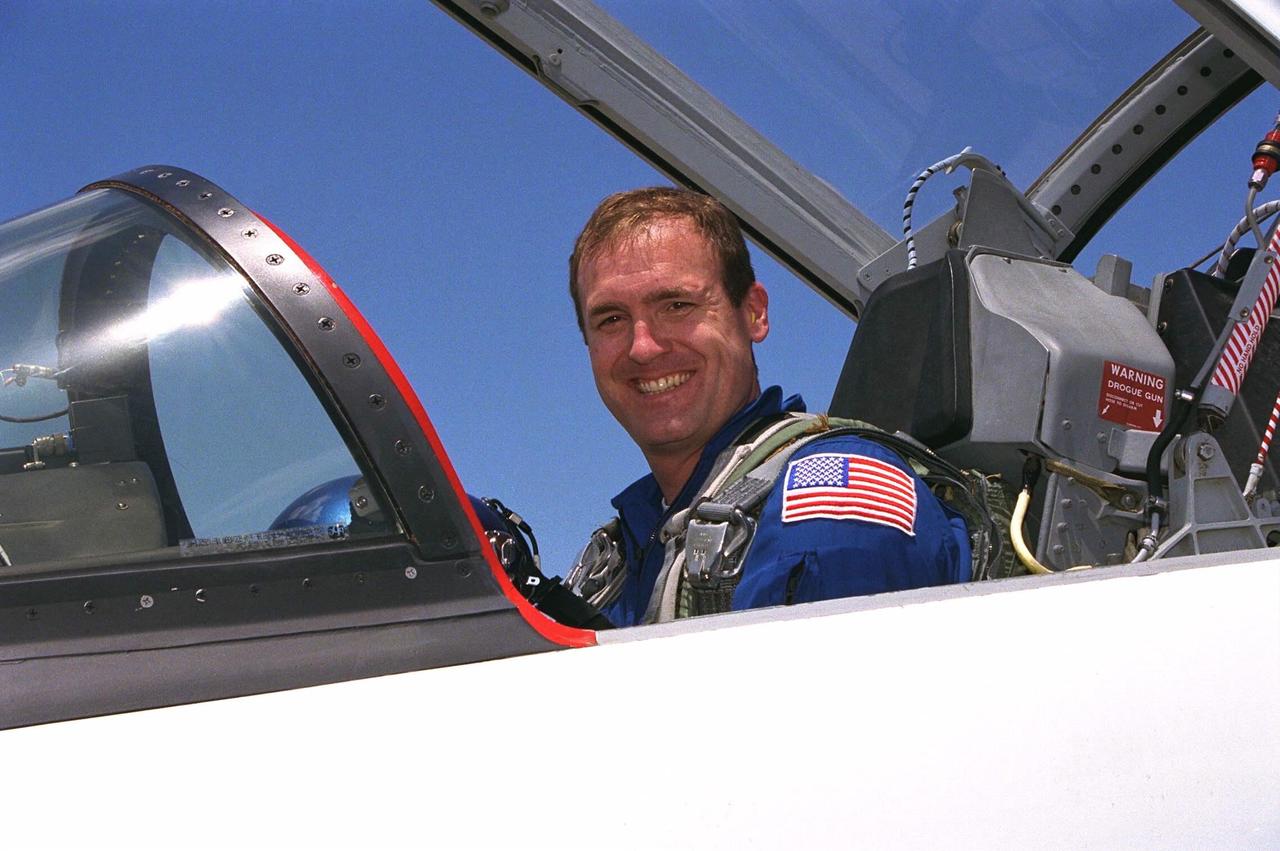
STS-94 Commander James D. Halsell, Jr., arrives at the Shuttle Landing Facility aboard a T-38 jet in preparation for the reflight of the Microgravity Science Laboratory-1 mission. Launch is scheduled for July 1, 1997, at 2:37 p.m. EDT. The laboratory was scheduled to fly again with the full complement of STS-83 experiments after that mission was cut short due to a faulty fuel cell. During the scheduled 16-day STS-94 mission, the experiments will be used to test some of the hardware, facilities and procedures that are planned for use on the International Space Station while the flight crew conducts combustion, protein crystal growth and materials processing experiments
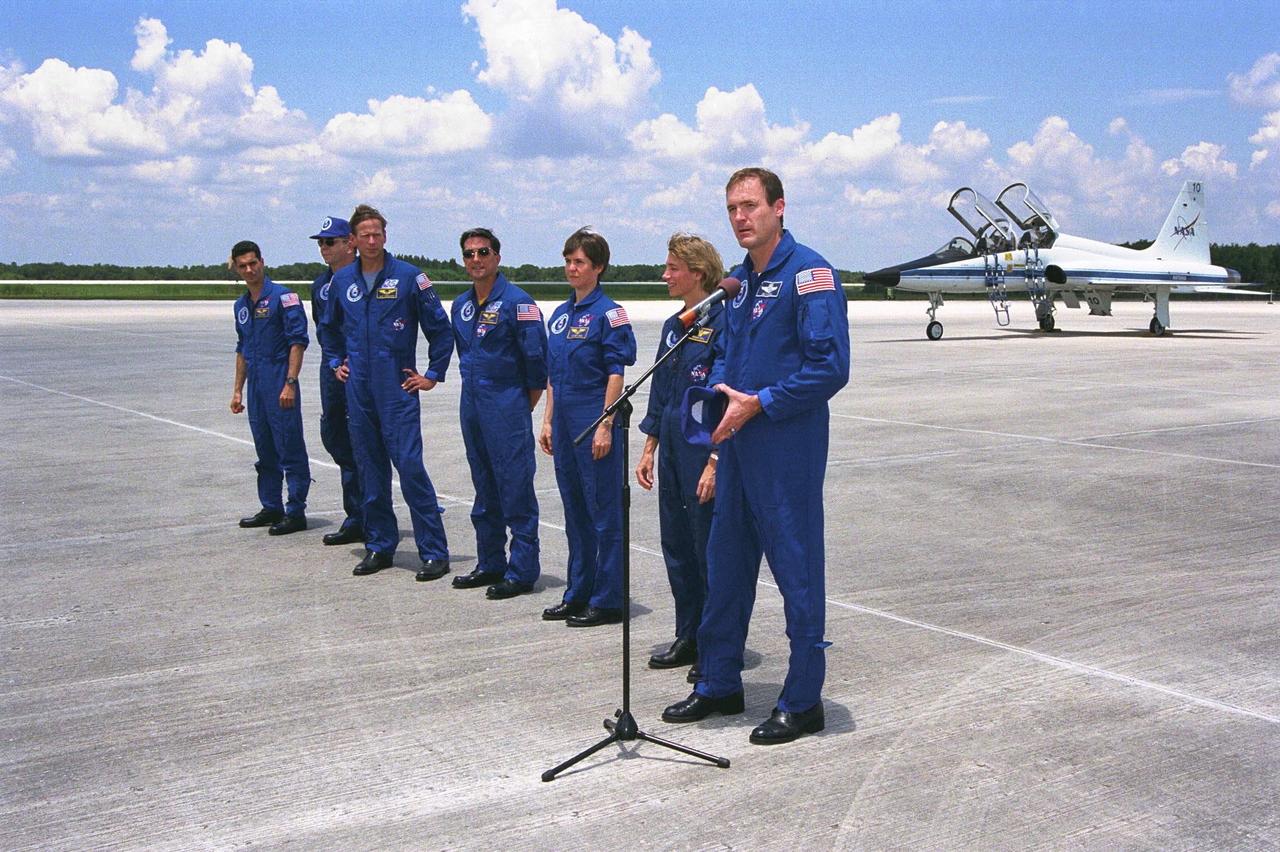
STS-94 Commander James D. Halsell, Jr., speaks to the media at the Shuttle Landing Facility after the crew arrived at Kennedy Space Center in preparation for the reflight of the Microgravity Science Laboratory-1 mission. Launch is scheduled for July 1, 1997, at 2:37 p.m. EDT. From left to right, the crew members are Payload Specialists Gregory T. Linteris and Roger K. Crouch; Mission Specialists Michael L. Gernhardt and Donald A. Thomas; Payload Commander Janice E. Voss; Pilot Susan Leigh Still and Commander James D. Halsell, Jr. One of the T-38 jets aboard which the crew arrived can be seen in the background. The laboratory was scheduled to fly again with the full complement of STS-83 experiments after that mission was cut short due to a faulty fuel cell. During the scheduled 16-day STS-94 mission, the experiments will be used to test some of the hardware, facilities and procedures that are planned for use on the International Space Station while the flight crew conducts combustion, protein crystal growth and materials processing experiments
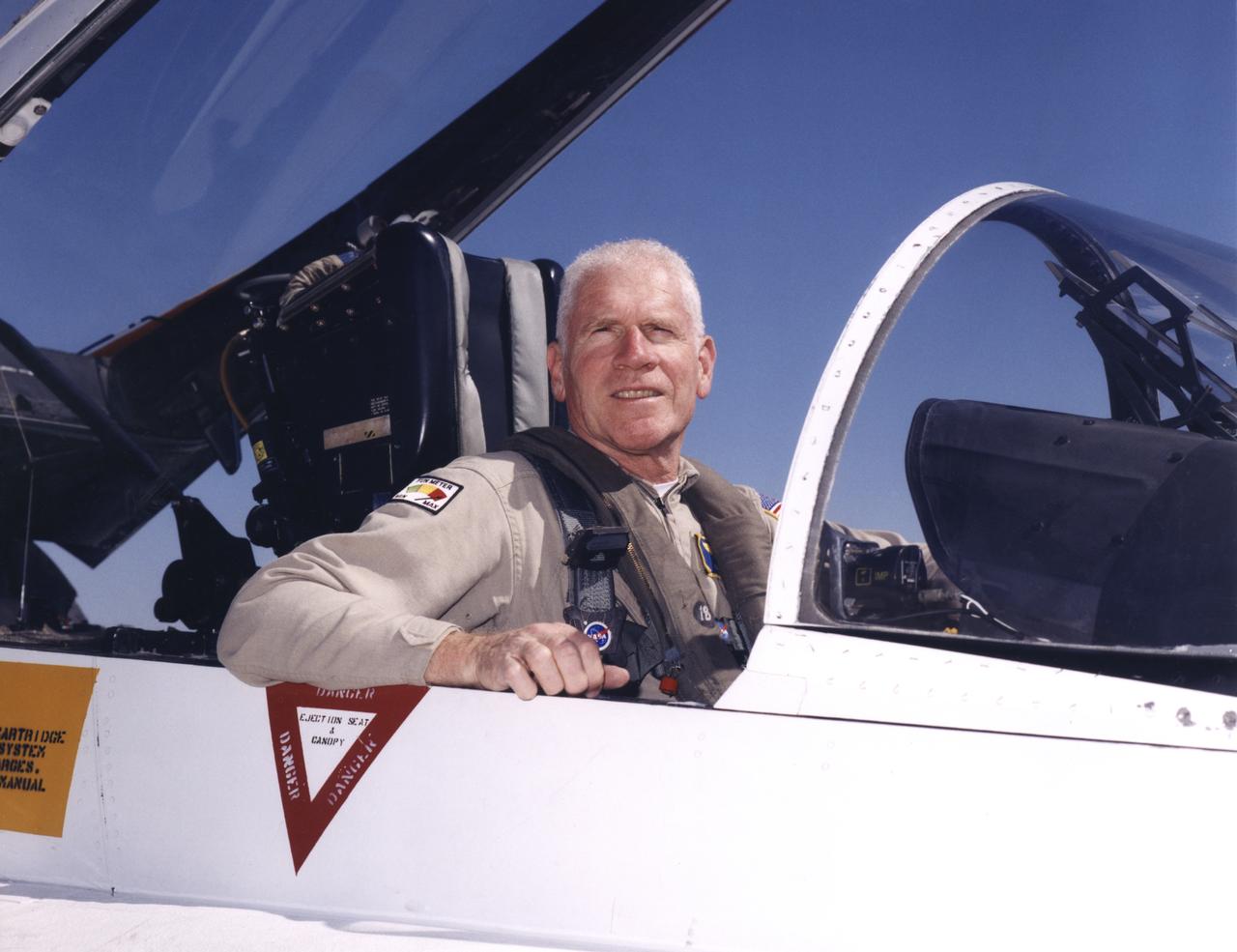
Edwin W. Lewis Jr. is a research pilot in the Airborne Science program, Flight Crew Branch, Dryden Flight Research Center, Edwards, California. He currently flies the DC-8, F/A-18, Lear Jet 24, King Air, and T-34C in support of Dryden's flight operations and is mentor pilot for the King Air and the Lear Jet. Prior to accepting this assignment Lewis was a pilot for eight years at NASA's Ames Research Center, Moffett Field, California, flying 10 different aircraft C-130B, DC-8-72, UH-1, SH-3, King Air, Lear 24, T-38A, T-39G and YO-3A in support of NASA flight missions. Lewis also flew the Kuiper Airborne Observatory (a modified civilian version of the Lockheed C-141 Starlifter). He was project pilot for Ames' 747 and T-38 programs. Lewis was born in New York City on May 19, 1936, and began flight training as a Civil Air Patrol cadet in 1951, ultimately earning his commercial pilot's certificate in 1958. He received a bachelor of arts degree in biology from Hobart College, Geneva, N.Y., and entered the U.S. Air Force through the Reserve Officer Training Corps. Following pilot training he was assigned to Moody Air Force Base, Ga., as an instructor pilot, for both the T-33 and T-37 aircraft. He served in Vietnam in 1965 and 1966, where he was a forward air controller, instructor and standardization/evaluation pilot, flying more than 1,000 hours in the O-1 "Bird Dog." Lewis separated from the regular Air Force and joined Pan American World Airways and the 129th Air Commando Group, California Air National Guard (ANG) based in Hayward, California. During his 18-year career with the California ANG he flew the U-6, U-10, C-119, HC-130 aircraft and the HH-3 helicopter. He retired as commander, 129th Air Rescue and Recovery Group, a composite combat rescue group, in the grade of colonel. During his 22 years as an airline pilot, he flew the Boeing 707, 727 and 747. He took early retirement from Pan American in 1989 to become a pilot with NASA.
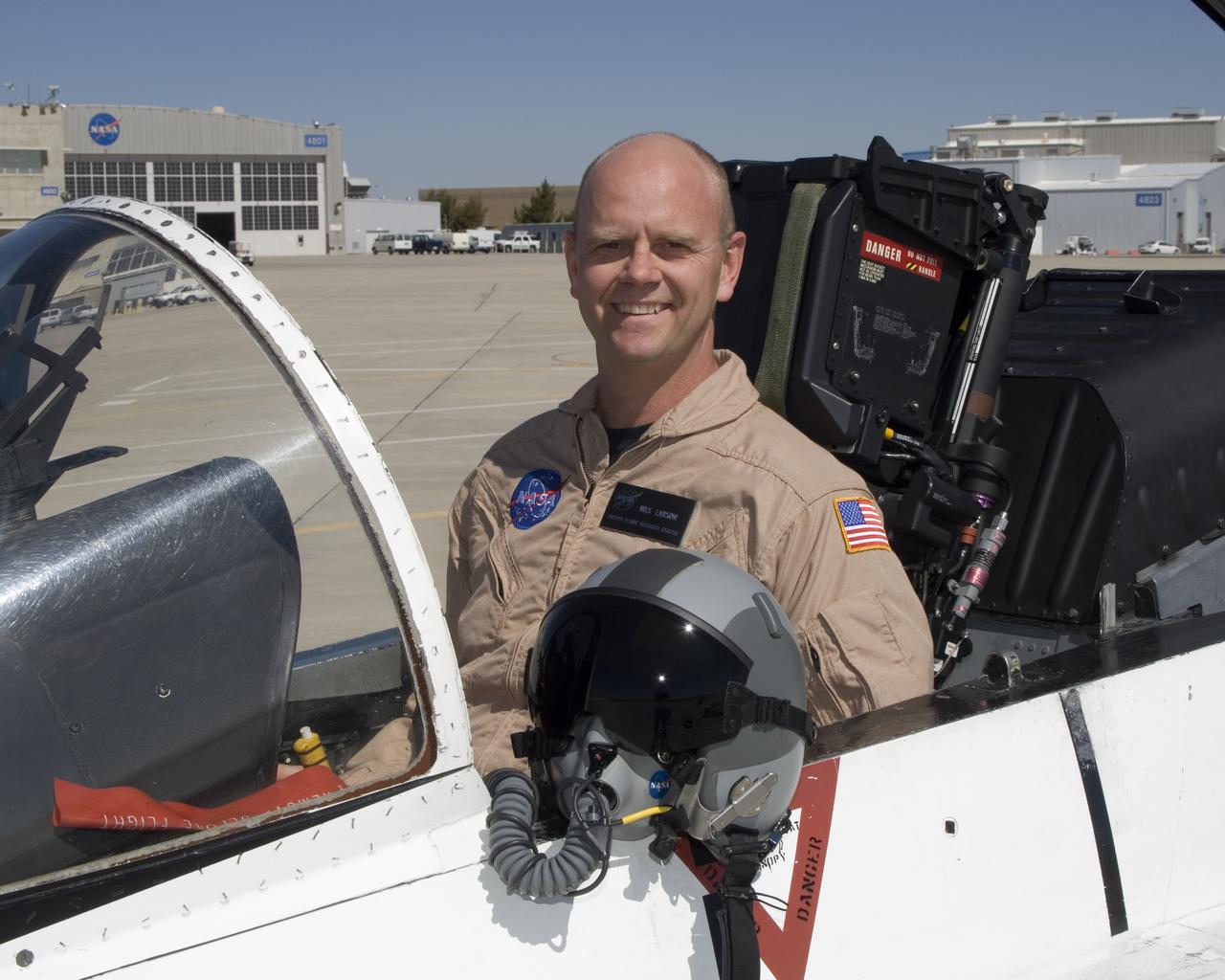
Nils Larson is a research pilot in the Flight Crew Branch of NASA's Dryden Flight Research Center, Edwards, Calif. Larson joined NASA in February 2007 and will fly the F-15, F-18, T-38 and ER-2. Prior to joining NASA, Larson was on active duty with the U.S. Air Force. He has accumulated more that 4,900 hours of military and civilian flight experience in more than 70 fixed and rotary winged aircraft. Larson completed undergraduate pilot training at Williams Air Force Base, Chandler, Ariz., in 1987. He remained at Williams as a T-37 instructor pilot. In 1991, Larson was assigned to Beale Air Force Base, Calif., as a U-2 pilot. He flew 88 operational missions from Korea, Saudi Arabia, the United Kingdom, Panama and other locations. Larson graduated from the U.S. Air Force Test Pilot School at Edwards Air Force Base, Calif., in Class 95A. He became a flight commander and assistant operations officer for the 445th squadron at Edwards. He flew the radar, avionics integration and engine tests in F-15 A-D, the early flights of the glass cockpit T-38C and airworthiness flights of the Coast Guard RU-38. He was selected to serve as an Air Force exchange instructor at the U.S. Naval Test Pilot School, Patuxent River, Md. He taught systems and fixed-wing flight test and flew as an instructor pilot in the F-18, T-2, U-6A Beaver and X-26 Schweizer sailplane. Larson commanded U-2 operations for Warner Robins Air Logistics Center's Detachment 2 located in Palmdale, Calif. In addition to flying the U-2, Larson supervised the aircraft's depot maintenance and flight test. He was the deputy group commander for the 412th Operations Group at Edwards before retiring from active duty in 2007 with the rank of lieutenant colonel. His first experience with NASA was at the Glenn Research Center, Cleveland, where he served a college summer internship working on arcjet engines. Larson is a native of Bethany, W.Va,, and received his commission from the U.S. Air Force Academy in 1986 with a
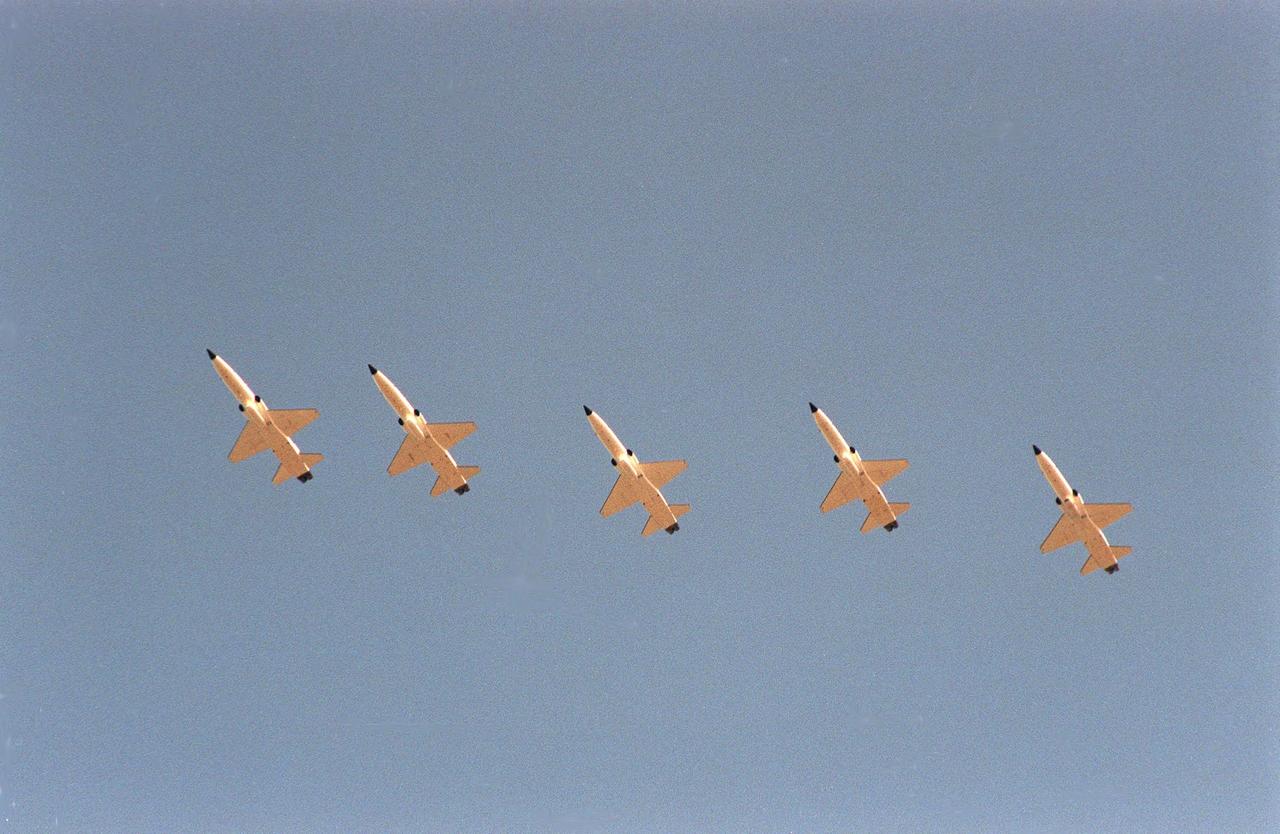
T-38 trainer jets carrying the STS-103 crew arrive in formation above Kennedy Space Center's Shuttle Landing Facility. The crew is here to take part in Terminal Countdown Demonstration Test activities this week. The TCDT provides the crew with emergency egress training, opportunities to inspect their mission payloads in the orbiter's payload bay, and simulated countdown exercises. Participating are Commander Curtis L. Brown Jr., Pilot Scott J. Kelly, and Mission Specialists Steven L. Smith, C. Michael Foale (Ph.D.), John M. Grunsfeld (Ph.D.), Claude Nicollier of Switzerland, with the European Space Agency, and Jean-François Clervoy of France, also with the European Space Agency. The mission, to service the Hubble Space Telescope, is targeted for launch Dec. 6 at 2:37 a.m. EST aboard Space Shuttle Discovery
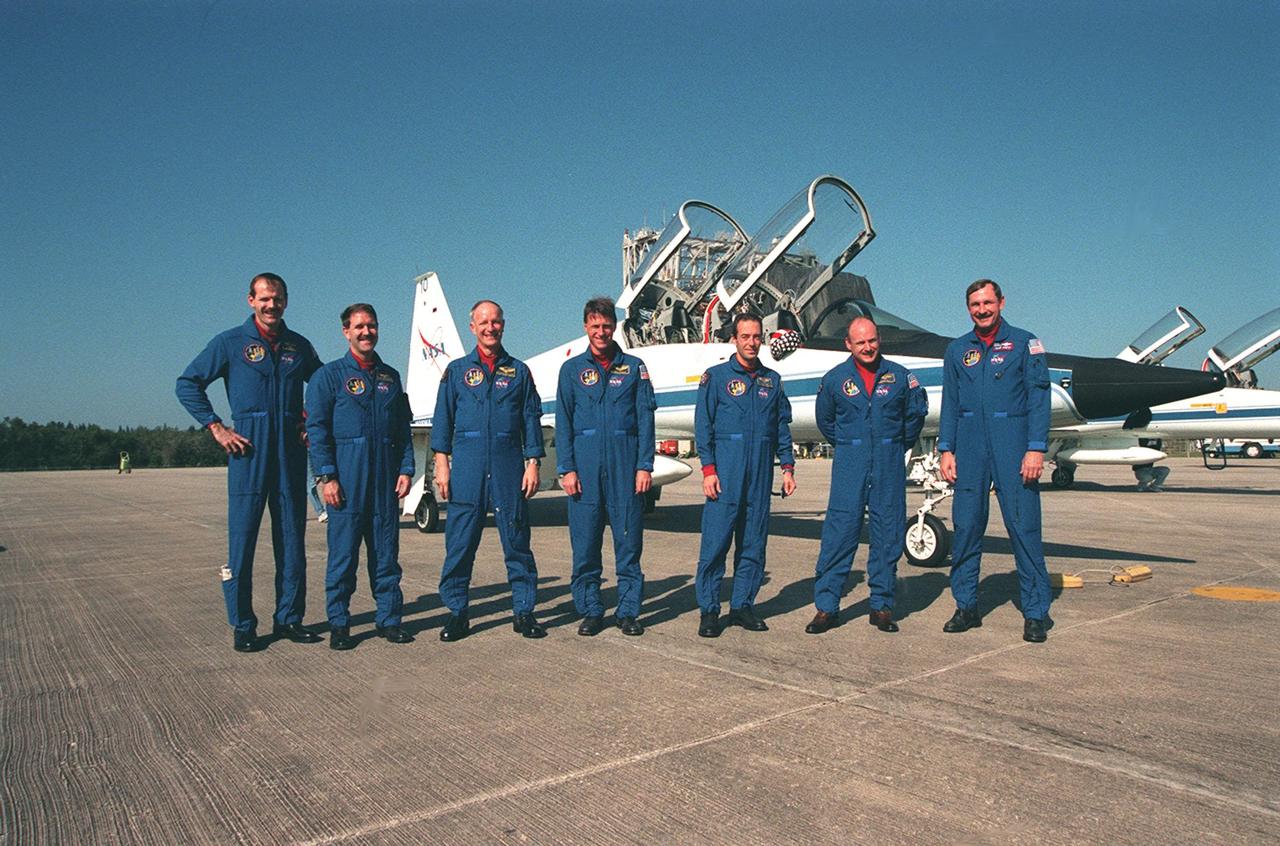
The STS-103 crew poses for photographers after landing at at Kennedy Space Center's Shuttle Landing Facility to begin Terminal Countdown Demonstration Test (TCDT) activities. Standing (left to right) in front of the T-38 jets that brought them are Mission Specialists Steven L. Smith, John M. Grunsfeld (Ph.D.), Claude Nicollier of Switzerland, with the European Space Agency, C. Michael Foale (Ph.D.), Jean-François Clervoy of France, also with the European Space Agency, Pilot Scott J. Kelly, and Commander Curtis L. Brown Jr. The TCDT provides the crew with emergency egress training, opportunities to inspect their mission payloads in the orbiter's payload bay, and simulated countdown exercises. The STS-103 mission, to service the Hubble Space Telescope, is targeted for launch Dec. 6 at 2:37 a.m. EST aboard Space Shuttle Discovery
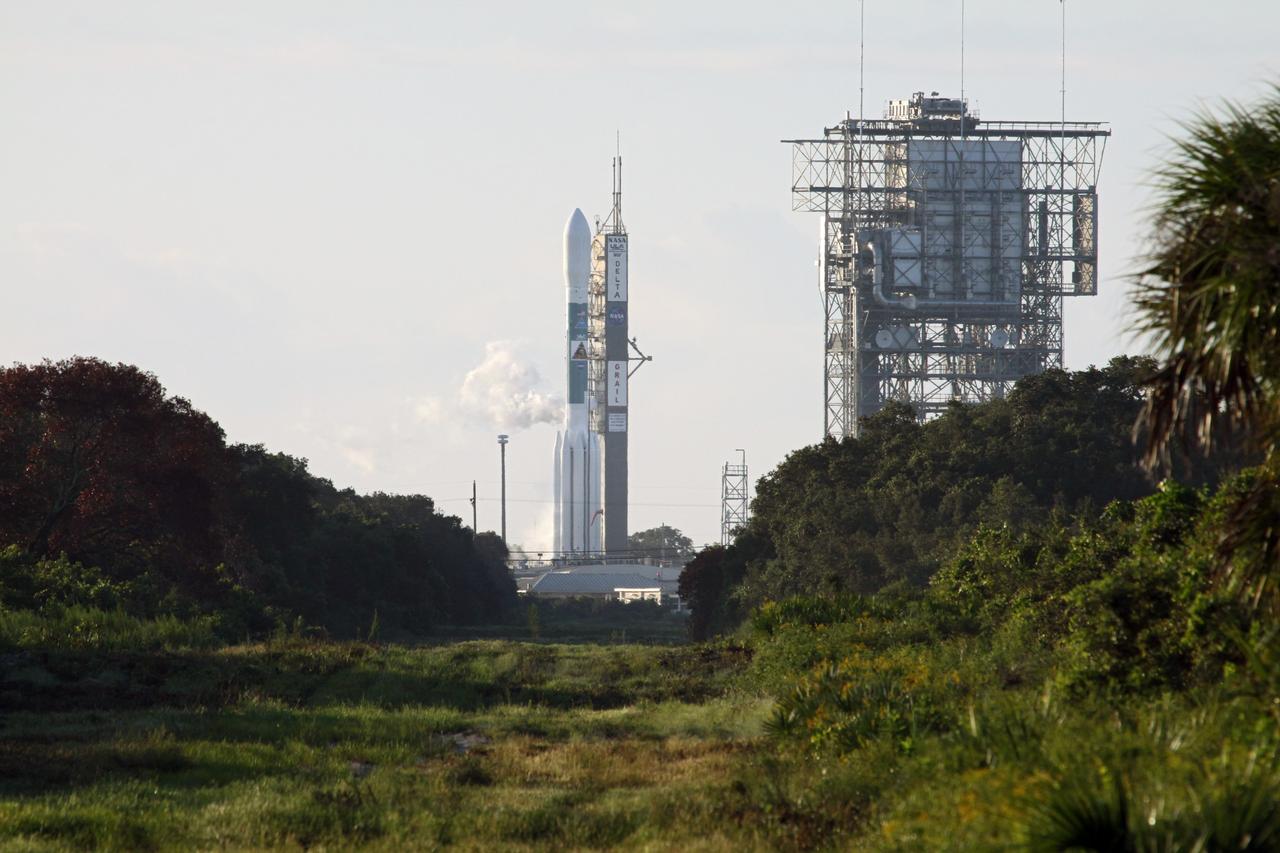
CAPE CANAVERAL, Fla. -- The countdown to launch of the United Launch Alliance Delta II Heavy rocket for NASA's Gravity Recovery and Interior Laboratory mission nears T-0 at Space Launch Complex 17B on Cape Canaveral Air Force Station. Liftoff is scheduled for 8:37:06 a.m. EDT. GRAIL will fly twin spacecraft in tandem around the moon to precisely measure and map variations in the moon's gravitational field. The mission will provide the most accurate global gravity field to date for any planet, including Earth. This detailed information will reveal differences in the density of the moon's crust and mantle and will help answer fundamental questions about the moon's internal structure, thermal evolution, and history of collisions with asteroids. The aim is to map the moon's gravity field so completely that future lunar vehicles can safely navigate anywhere on the moon’s surface. For more information, visit http://www.nasa.gov/grail. Photo credit: NASA/Ken Thornsley
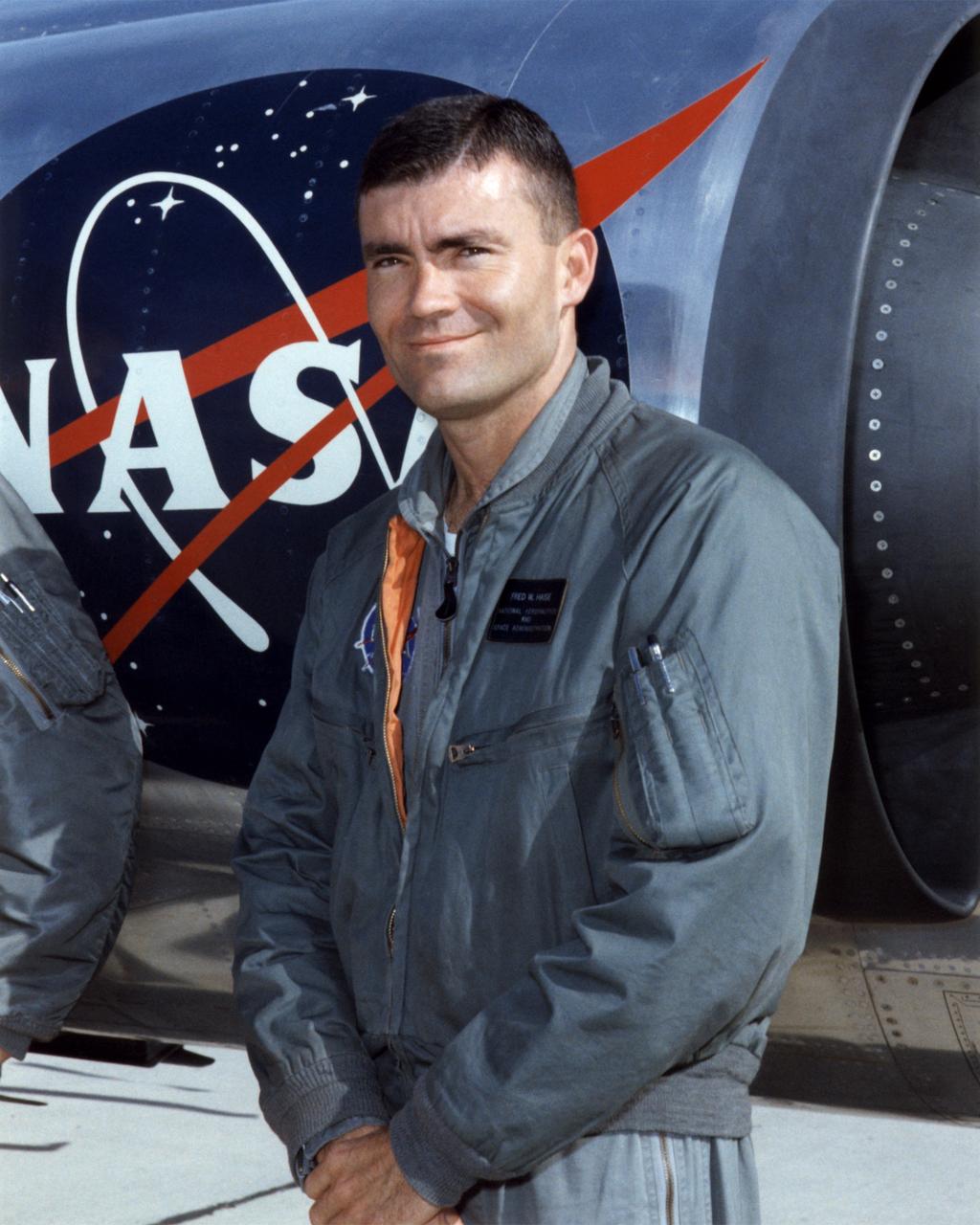
Fred W. Haise Jr. was a research pilot and an astronaut for the National Aeronautics and Space Administration from 1959 to 1979. He began flying at the Lewis Research Center in Cleveland, Ohio (today the Glenn Research Center), in 1959. He became a research pilot at the NASA Flight Research Center (FRC), Edwards, Calif., in 1963, serving NASA in that position for three years until being selected to be an astronaut in 1966 His best-known assignment at the FRC (later redesignated the Dryden Flight Research Center) was as a lifting body pilot. Shortly after flying the M2-F1 on a car tow to about 25 feet on April 22, 1966, he was assigned as an astronaut to the Johnson Space Center in Houston, Texas. While at the FRC he had also flown a variety of other research and support aircraft, including the variable-stability T-33A to simulate the M2-F2 heavyweight lifting body, some light aircraft including the Piper PA-30 to evaluate their handling qualities, the Apache helicopter, the Aero Commander, the Cessna 310, the Douglas F5D, the Lockheed F-104 and T-33, the Cessna T-37, and the Douglas C-47. After becoming an astronaut, Haise served as a backup crewmember for the Apollo 8, 11, and 16 missions. He flew on the aborted Apollo 13 lunar mission in 1970, spending 142 hours and 54 minutes in space before returning safely to Earth. In 1977, he was the commander of three free flights of the Space Shuttle prototype Enterprise when it flew its Approach and Landing Tests at Edwards Air Force Base, Calif. Meanwhile, from April 1973 to January 1976, Haise served as the Technical Assistant to the Manager of the Space Shuttle Orbiter Project. In 1979, he left NASA to become the Vice President for Space Programs with the Grumman Aerospace Corporation. He then served as President of Grumman Technical Services, an operating division of Northrop Grumman Corporation, from January 1992 until his retirement. Haise was born in Biloxi, Miss., on November 14, 1933. He underwent flight traini
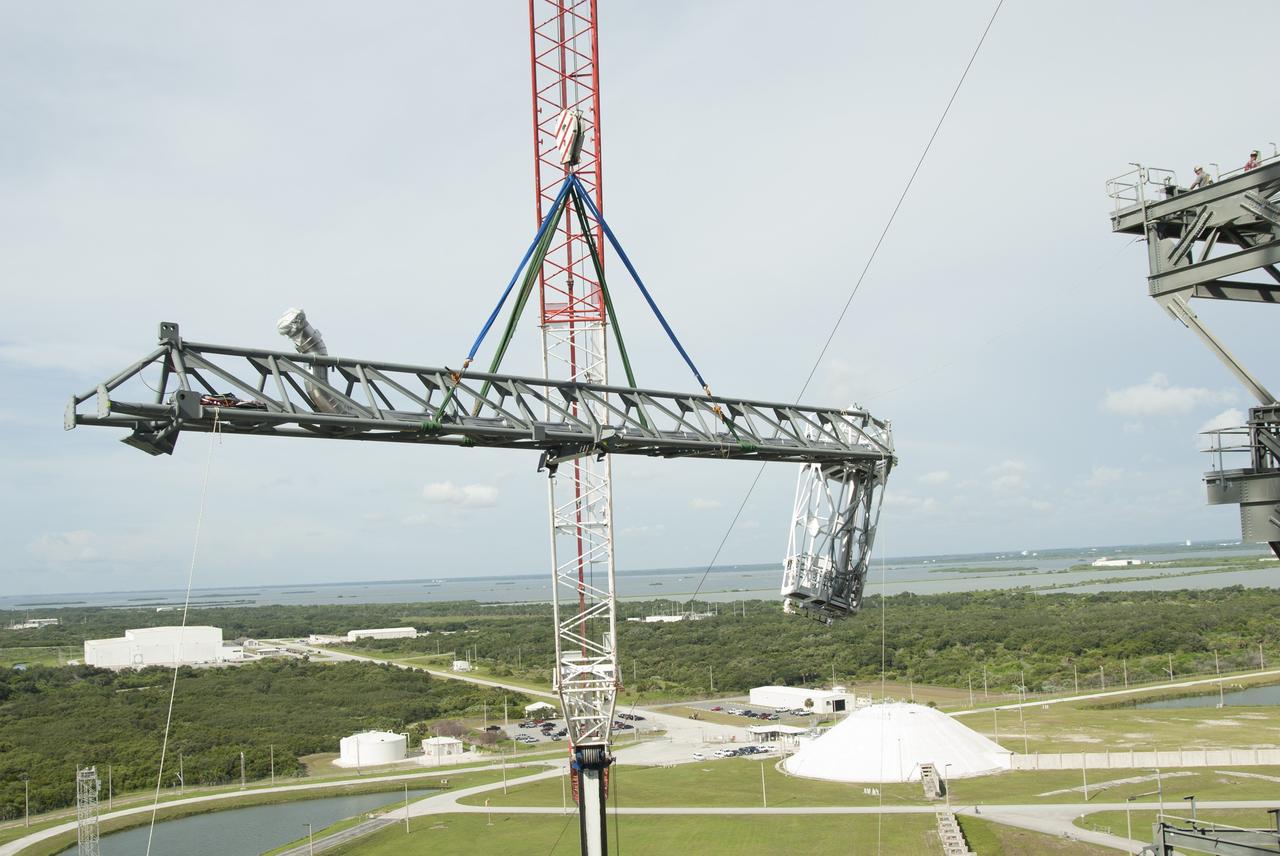
CAPE CANAVERAL, Fla. – The umbilical swing arm for Exploration Flight Test 1, or EFT-1, is lifted high by crane for installation on the fixed umbilical tower at Space Launch Complex 37 at Cape Canaveral Air Force Station in Florida. The swing arm is the uppermost of three swing arms that will be attached to the fixed umbilical tower. The swing arm will carry umbilicals that will be mated to Orion's launch abort system and environmental control system. During launch, the umbilicals will pull away from Orion and the United Launch Alliance Delta IV Heavy rocket at T-0. During the EFT-1 mission, Orion will travel farther into space than any human spacecraft has gone in more than 40 years. The data gathered during the flight will influence design decisions, validate existing computer models and innovative new approaches to space systems development, as well as reduce overall mission risks and costs for later Orion flights. Liftoff of Orion on its first flight test is planned for fall 2014. Photo credit: NASA/Jim Grossmann
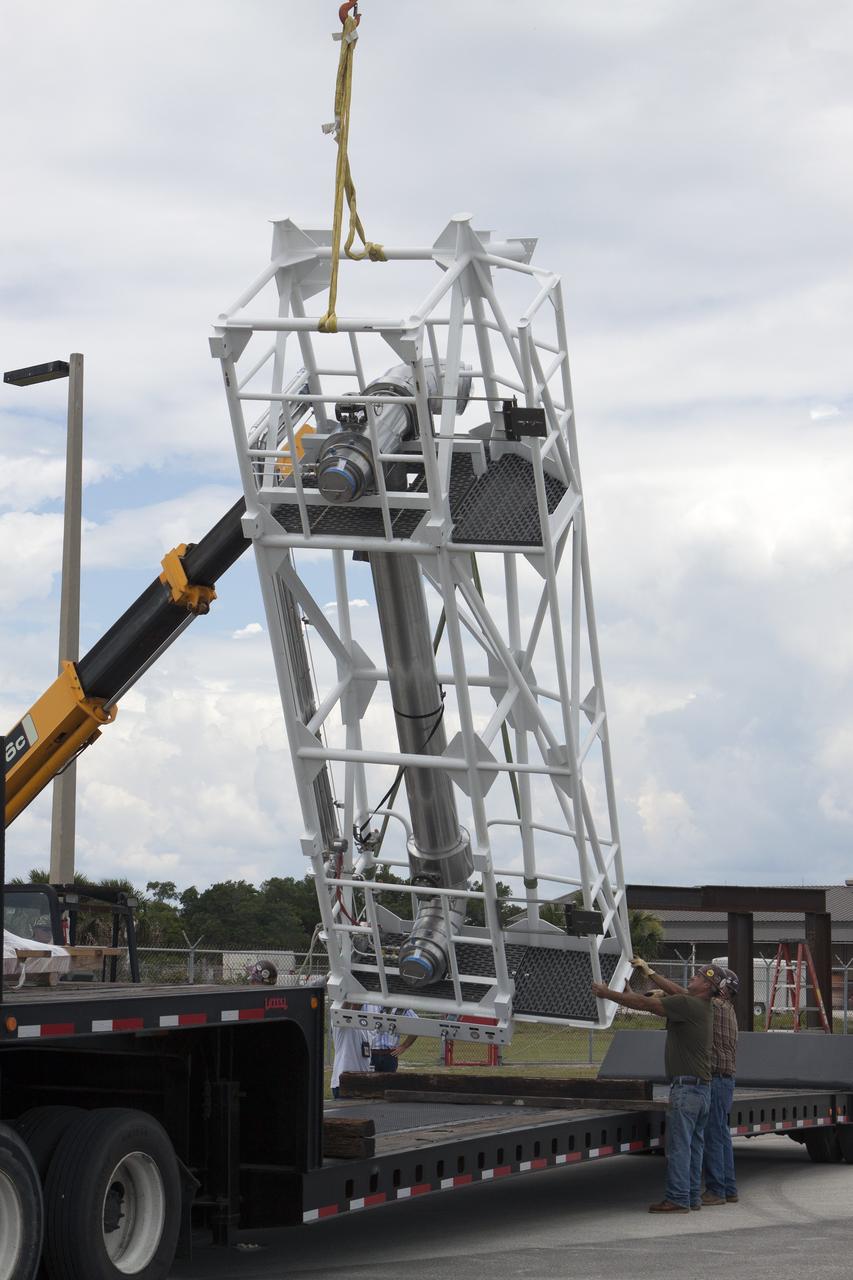
CAPE CANAVERAL, Fla. – Part of the umbilical swing arm for Exploration Flight Test 1, or EFT-1, arrives at the Horizontal Integration Facility near Space Launch Complex 37 at Cape Canaveral Air Force Station in Florida and is being lifted by crane from its transporter. The swing arm is the uppermost of three swing arms that will be attached to the fixed umbilical tower on the launch pad. The swing arm will carry umbilicals that will be mated to Orion's launch abort system and environmental control system. During launch, the umbilicals will pull away from Orion and the United Launch Alliance Delta IV Heavy rocket at T-0. During the EFT-1 mission, Orion will travel farther into space than any human spacecraft has gone in more than 40 years. The data gathered during the flight will influence design decisions, validate existing computer models and innovative new approaches to space systems development, as well as reduce overall mission risks and costs for later Orion flights. Liftoff of Orion on its first flight test is planned for fall 2014. Photo credit: NASA/Kim Shiflett
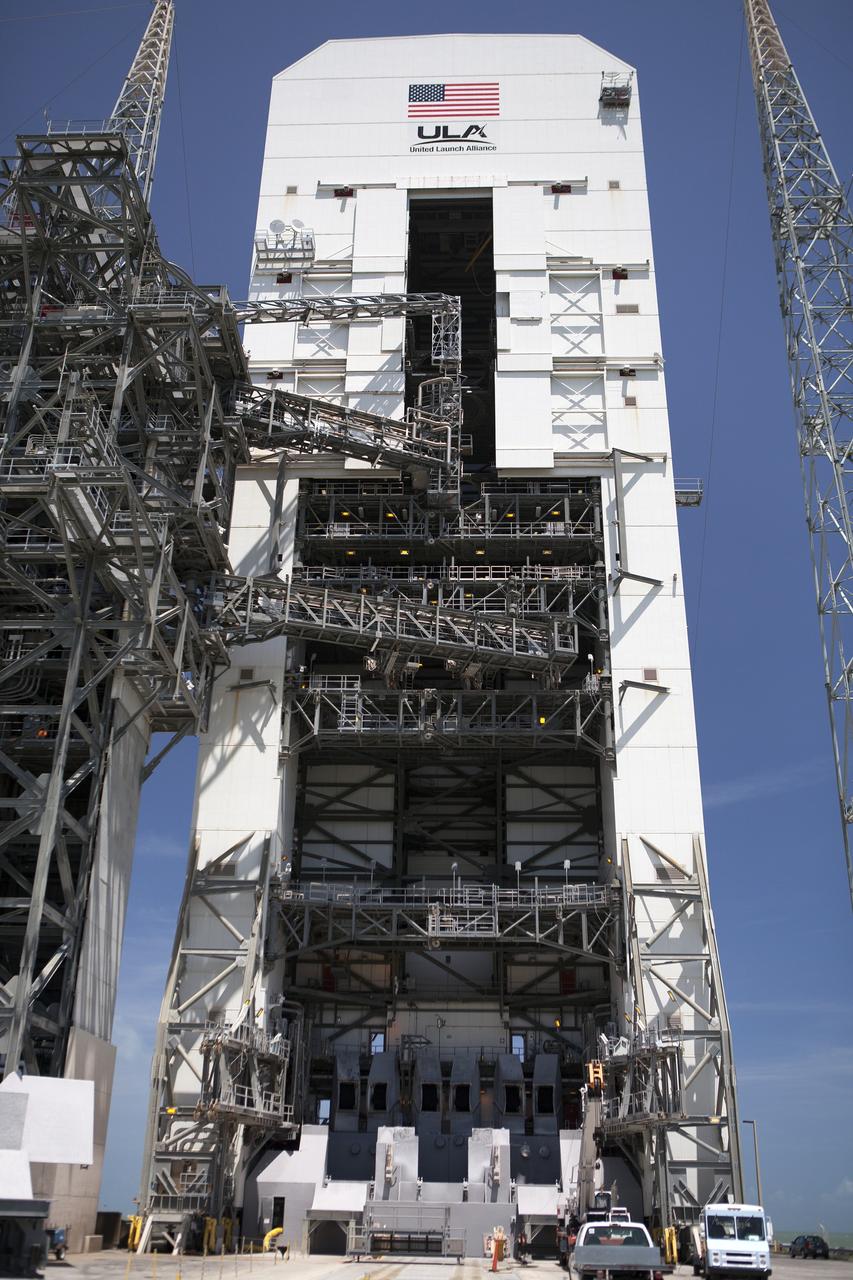
CAPE CANAVERAL, Fla. – The umbilical swing arm for Orion's Exploration Flight Test 1, or EFT-1, has been attached to the uppermost location on the fixed umbilical tower at Space Launch Complex 37 at Cape Canaveral Air Force Station in Florida. All three swing arms on the tower are undergoing tests to confirm that they are operating correctly. They are being swung out and closer to the Vertical Integration Facility at the pad. The uppermost swing arm will carry umbilicals that will be mated to Orion's launch abort system and environmental control system. During launch, all three umbilicals will pull away from Orion and the United Launch Alliance Delta IV Heavy rocket at T-0. During the EFT-1 mission, Orion will travel farther into space than any human spacecraft has gone in more than 40 years. The data gathered during the flight will influence design decisions, validate existing computer models and innovative new approaches to space systems development, as well as reduce overall mission risks and costs for later Orion flights. Liftoff of Orion on its first flight test is planned for fall 2014. Photo credit: NASA/Daniel Casper
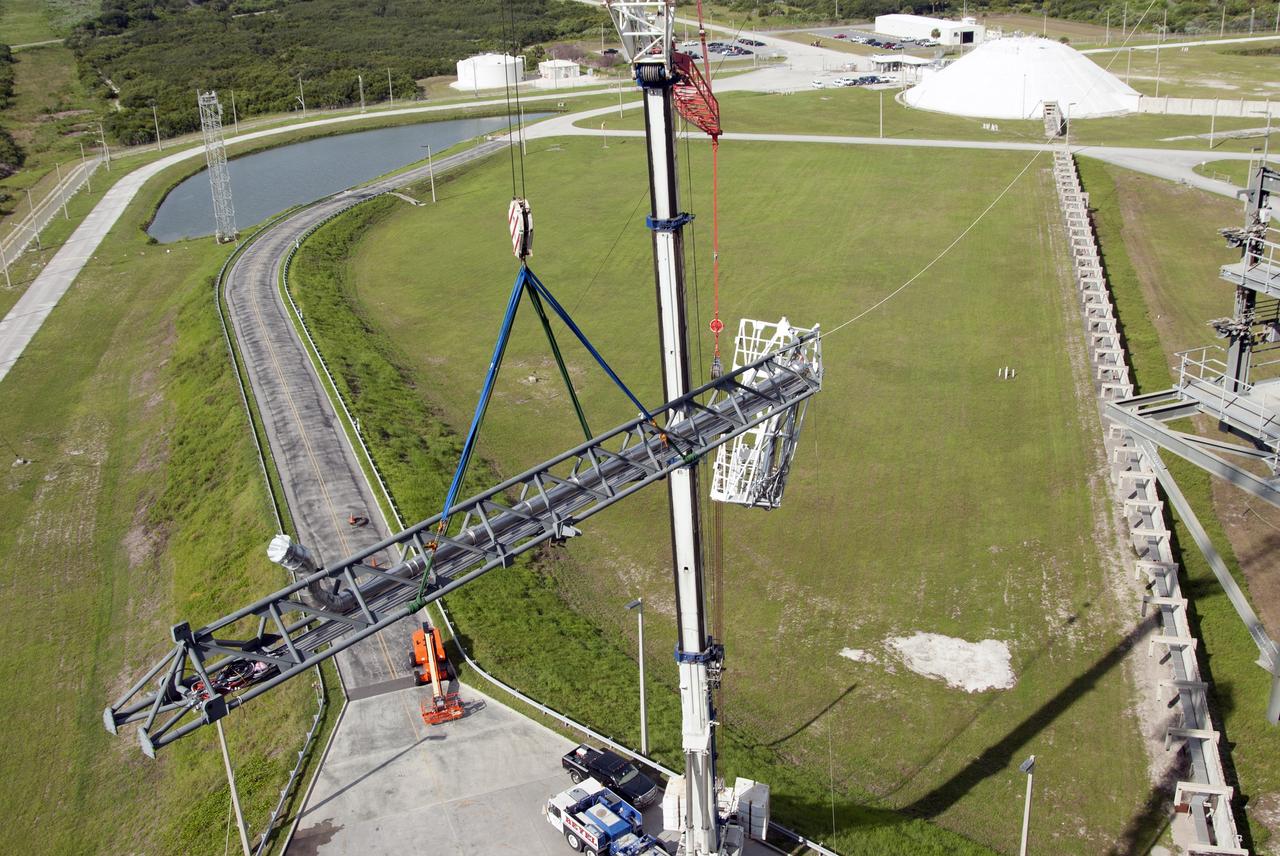
CAPE CANAVERAL, Fla. – The umbilical swing arm for Exploration Flight Test 1, or EFT-1, is lifted by crane for installation on the fixed umbilical tower at Space Launch Complex 37 at Cape Canaveral Air Force Station in Florida. The swing arm is the uppermost of three swing arms that will be attached to the fixed umbilical tower. The swing arm will carry umbilicals that will be mated to Orion's launch abort system and environmental control system. During launch, the umbilicals will pull away from Orion and the United Launch Alliance Delta IV Heavy rocket at T-0. During the EFT-1 mission, Orion will travel farther into space than any human spacecraft has gone in more than 40 years. The data gathered during the flight will influence design decisions, validate existing computer models and innovative new approaches to space systems development, as well as reduce overall mission risks and costs for later Orion flights. Liftoff of Orion on its first flight test is planned for fall 2014. Photo credit: NASA/Jim Grossmann
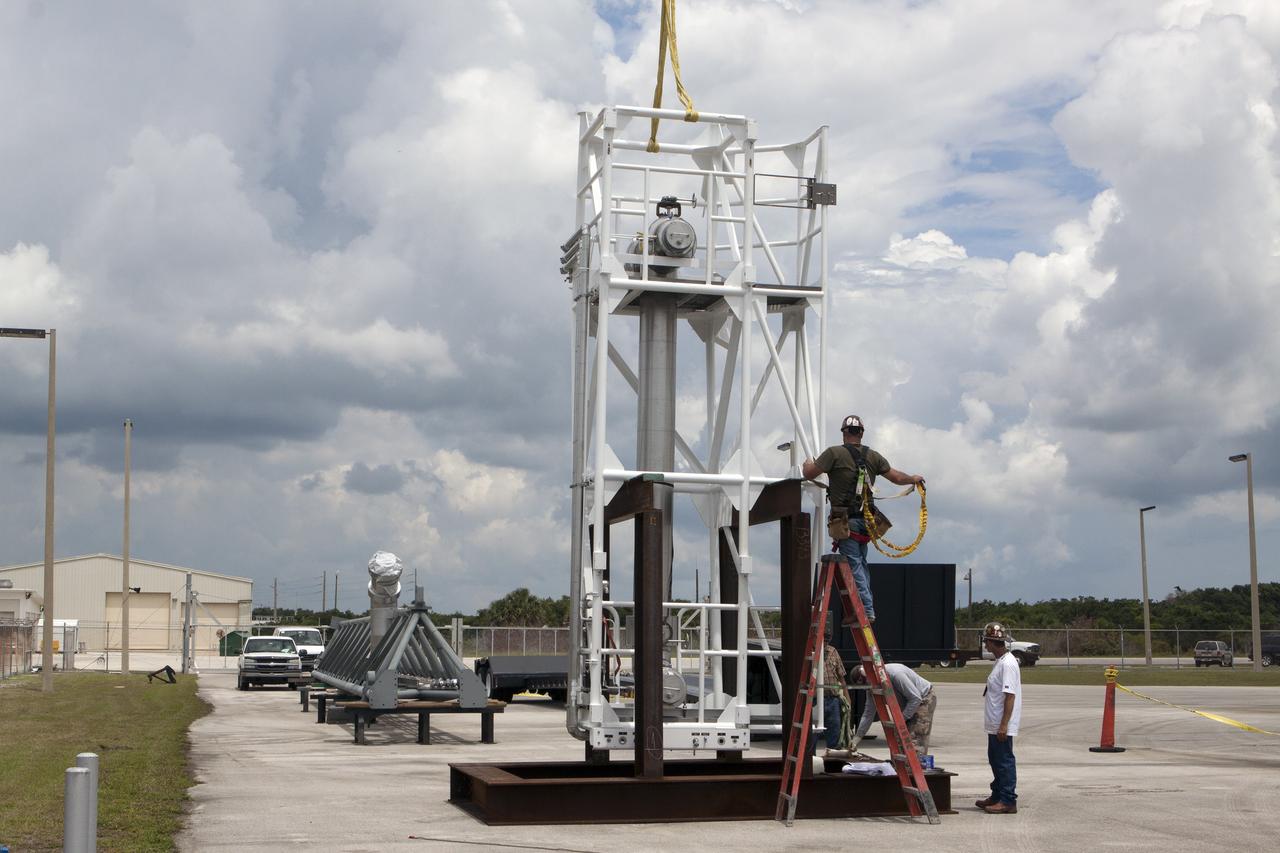
CAPE CANAVERAL, Fla. – Both parts of the umbilical swing arm for Exploration Flight Test 1, or EFT-1, have arrived at the Horizontal Integration Facility near Space Launch Complex 37 at Cape Canaveral Air Force Station in Florida. They have been removed from the transporter and placed on stands. The swing arm is the uppermost of three swing arms that will be attached to the fixed umbilical tower on the launch pad. The swing arm will carry umbilicals that will be mated to Orion's launch abort system and environmental control system. During launch, the umbilicals will pull away from Orion and the United Launch Alliance Delta IV Heavy rocket at T-0. During the EFT-1 mission, Orion will travel farther into space than any human spacecraft has gone in more than 40 years. The data gathered during the flight will influence design decisions, validate existing computer models and innovative new approaches to space systems development, as well as reduce overall mission risks and costs for later Orion flights. Liftoff of Orion on its first flight test is planned for fall 2014. Photo credit: NASA/Kim Shiflett
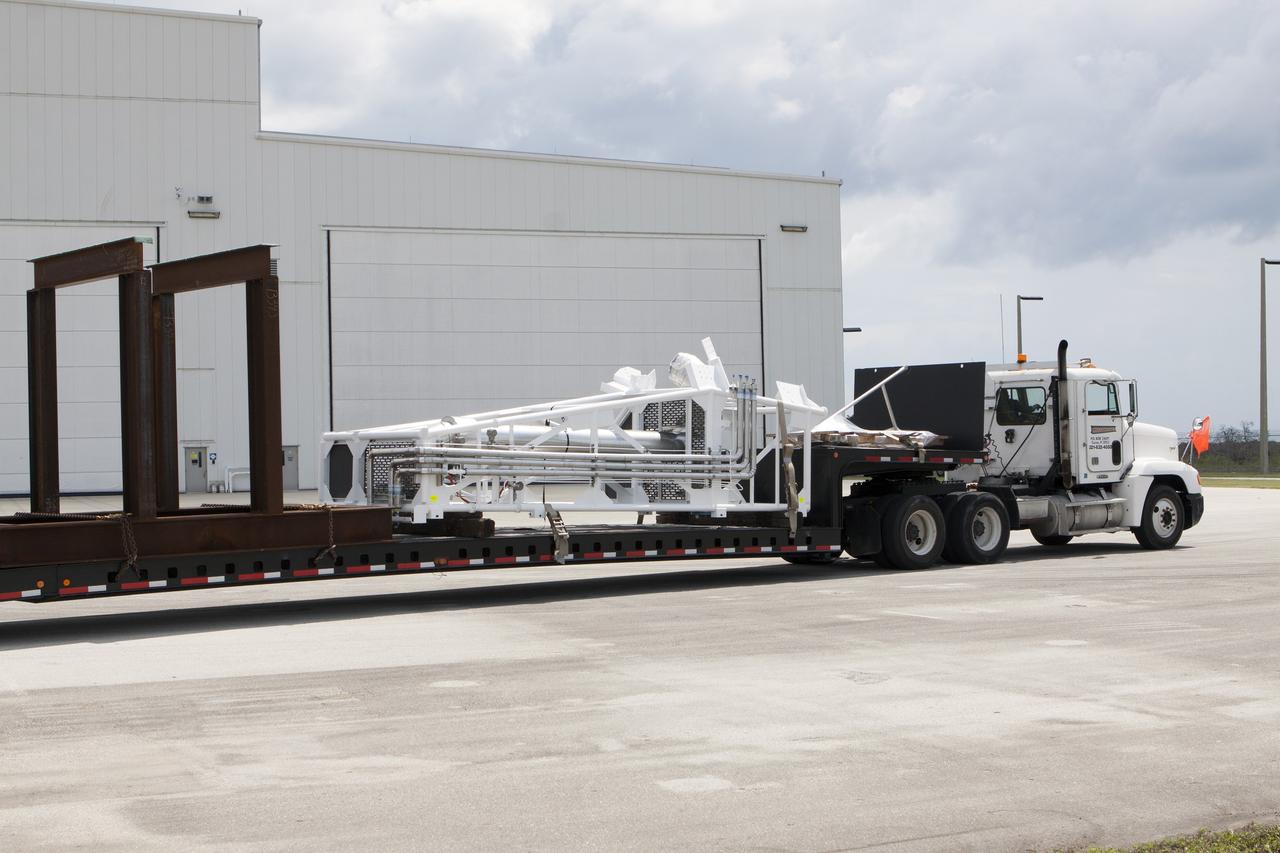
CAPE CANAVERAL, Fla. – Part of the umbilical swing arm for Exploration Flight Test 1, or EFT-1, arrives at the Horizontal Integration Facility near Space Launch Complex 37 at Cape Canaveral Air Force Station in Florida. The swing arm is the uppermost of three swing arms that will be attached to the fixed umbilical tower on the launch pad. The swing arm will carry umbilicals that will be mated to Orion's launch abort system and environmental control system. During launch, the umbilicals will pull away from Orion and the United Launch Alliance Delta IV Heavy rocket at T-0. During the EFT-1 mission, Orion will travel farther into space than any human spacecraft has gone in more than 40 years. The data gathered during the flight will influence design decisions, validate existing computer models and innovative new approaches to space systems development, as well as reduce overall mission risks and costs for later Orion flights. Liftoff of Orion on its first flight test is planned for fall 2014. Photo credit: NASA/Kim Shiflett
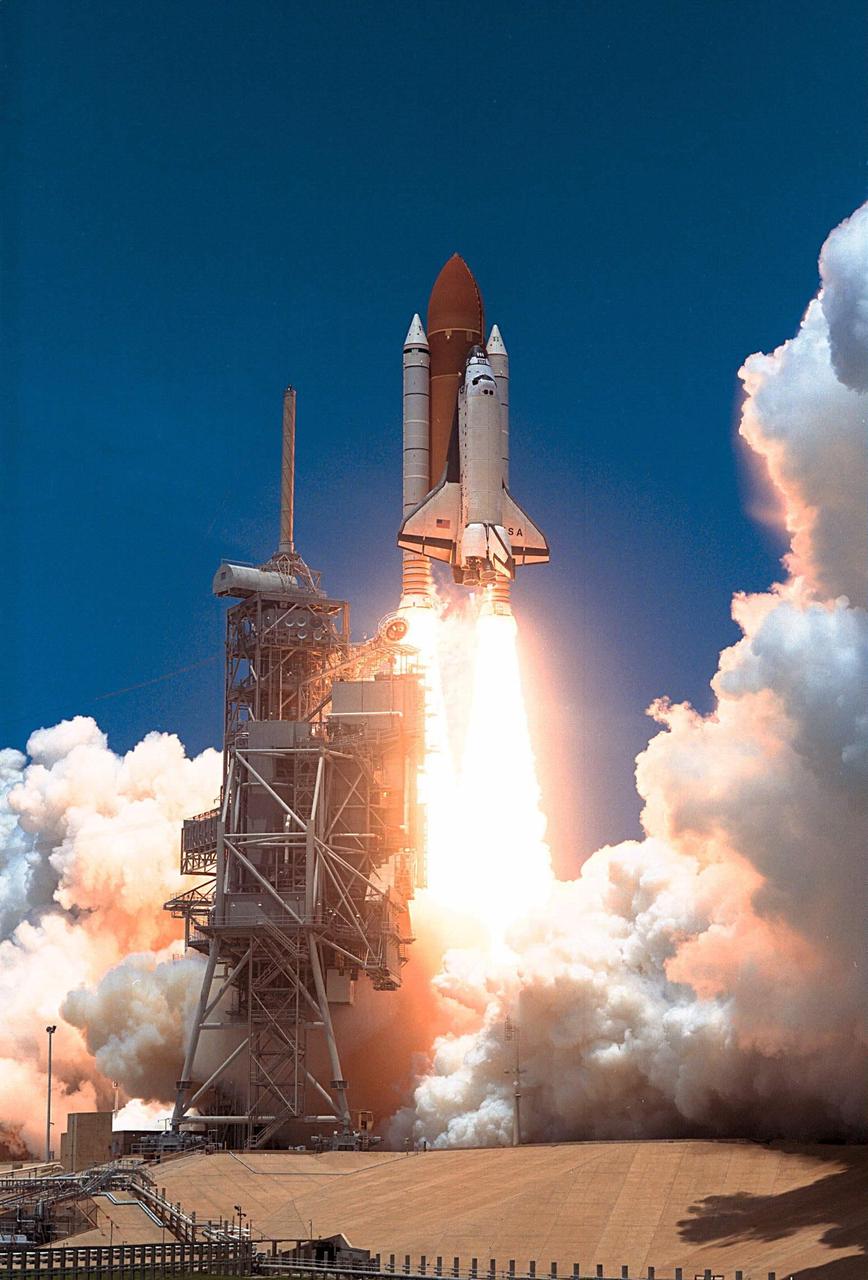
KENNEDY SPACE CENTER, Fla. -- The Space Shuttle Columbia soars from Launch Pad 39A at 2:02 p.m. EDT July 1 to begin the 16-day STS-94 Microgravity Science Laboratory-1 (MSL-1) mission. The launch window was opened 47 minutes earlier than the originally scheduled time of 2:37 p.m. to improve the opportunity to lift off before Florida summer rain showers reached the space center. The crew members are Mission Commander James D. Halsell Jr.; Pilot Susan L. Still; Payload Commander Janice Voss; Mission Specialists Michael L.Gernhardt and Donald A. Thomas; and Payload Specialists Roger K. Crouch and Gregory T. Linteris. During the space flight, the MSL-1 will be used to test some of the hardware, facilities and procedures that are planned for use on the International Space Station while the flight crew conducts combustion, protein crystal growth and materials processing experiments. Also onboard is the Hitchhiker Cryogenic Flexible Diode (CRYOFD) experiment payload, which is attached to the right side of Columbia’s payload bay. These payloads had previously flown on the STS-83 mission in April, which was cut short after nearly four days because of indications of a faulty fuel cell. STS-94 is a reflight of that mission
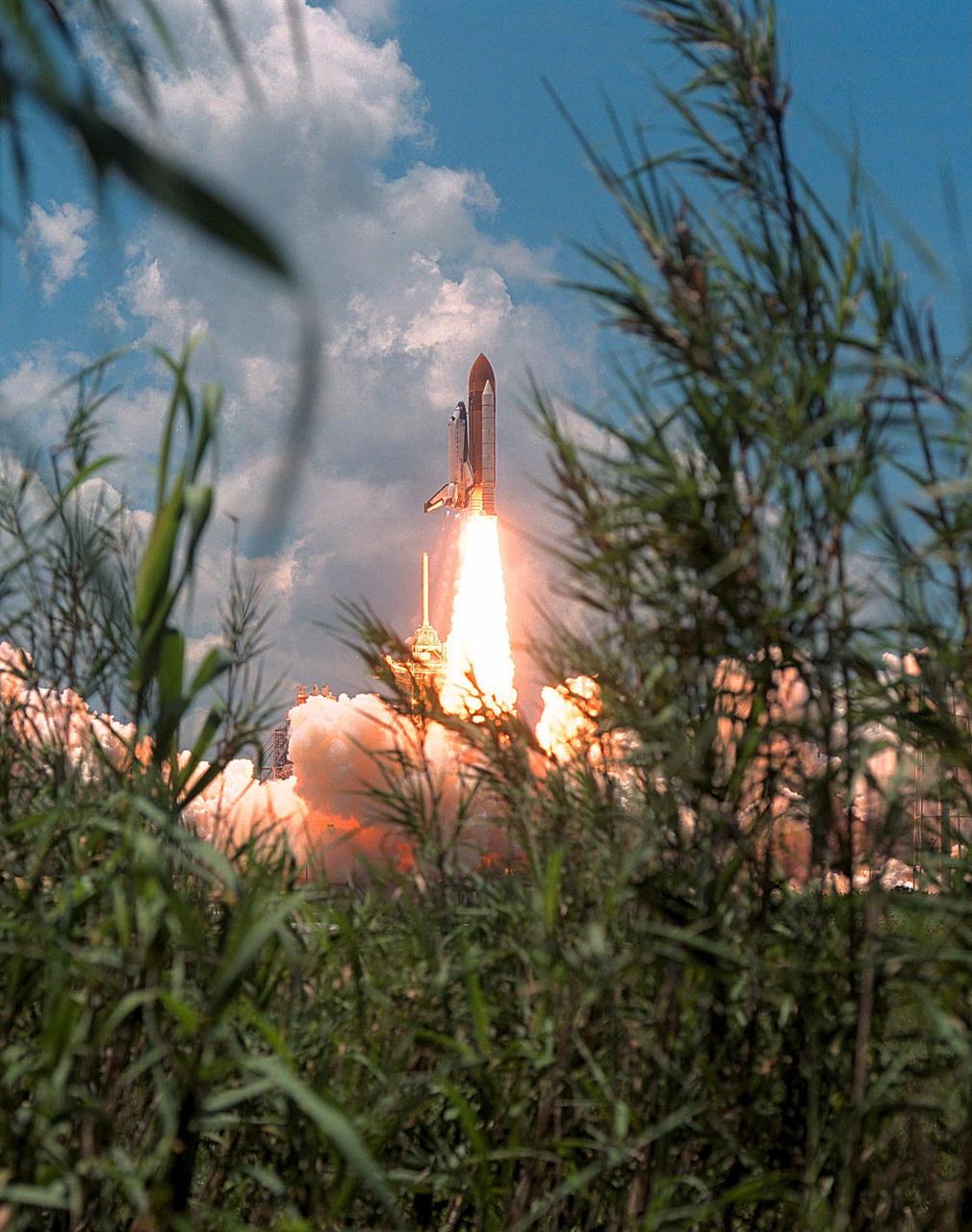
KENNEDY SPACE CENTER, Fla. -- The Space Shuttle Columbia soars from Launch Pad 39A at 2:02 p.m. EDT July 1 to begin the 16-day STS-94 Microgravity Science Laboratory-1 (MSL-1) mission. The launch window was opened 47 minutes earlier than the originally scheduled time of 2:37 p.m. to improve the opportunity to lift off before Florida summer rain showers reached the space center. The crew members are Mission Commander James D. Halsell Jr.; Pilot Susan L. Still; Payload Commander Janice Voss; Mission Specialists Michael L.Gernhardt and Donald A. Thomas; and Payload Specialists Roger K. Crouch and Gregory T. Linteris. During the space flight, the MSL-1 will be used to test some of the hardware, facilities and procedures that are planned for use on the International Space Station while the flight crew conducts combustion, protein crystal growth and materials processing experiments. Also onboard is the Hitchhiker Cryogenic Flexible Diode (CRYOFD) experiment payload, which is attached to the right side of Columbia’s payload bay. These payloads had previously flown on the STS-83 mission in April, which was cut short after nearly four days because of indications of a faulty fuel cell. STS-94 is a reflight of that mission
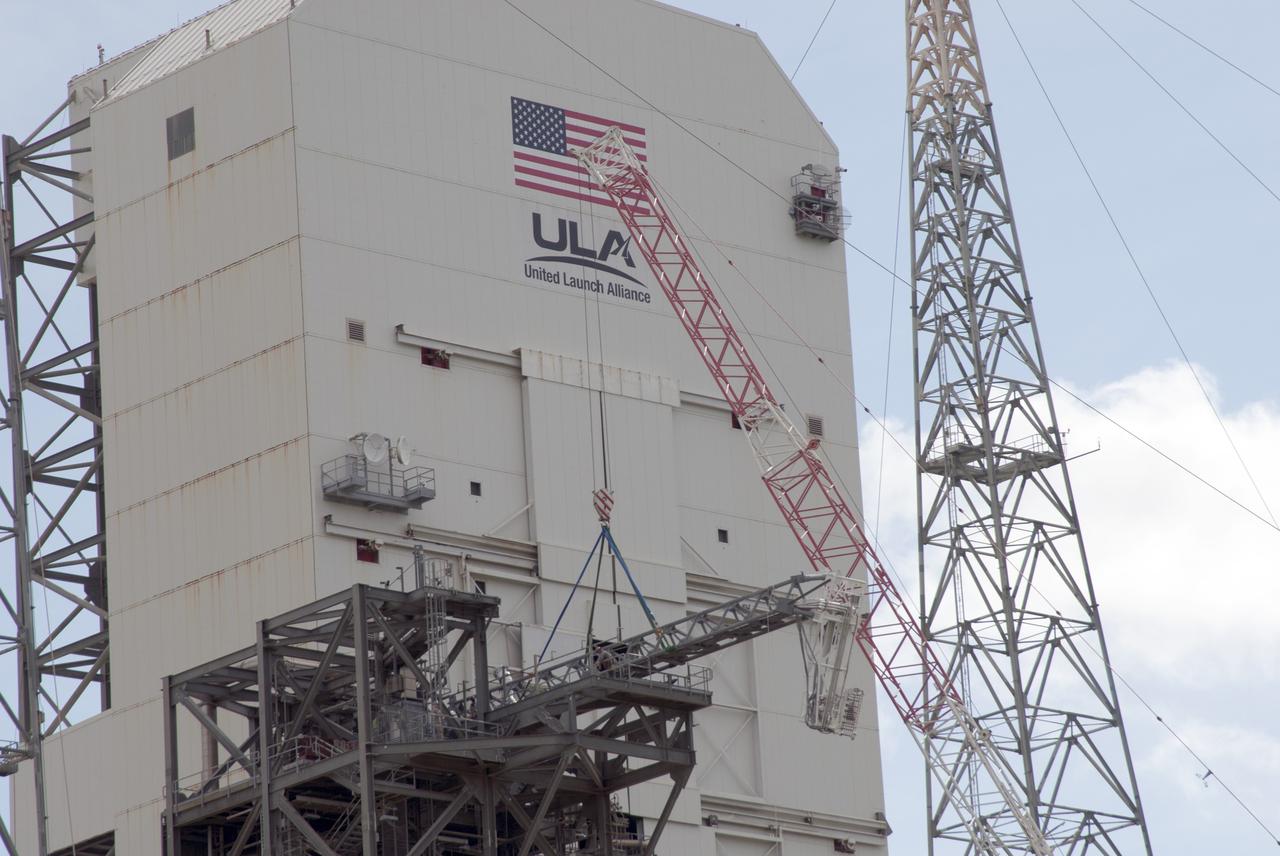
CAPE CANAVERAL, Fla. – A crane brings the umbilical swing arm for Exploration Flight Test 1, or EFT-1, closer for installation on the fixed umbilical tower at Space Launch Complex 37 at Cape Canaveral Air Force Station in Florida. The swing arm is the uppermost of three swing arms that will be attached to the fixed umbilical tower. The swing arm will carry umbilicals that will be mated to Orion's launch abort system and environmental control system. During launch, the umbilicals will pull away from Orion and the United Launch Alliance Delta IV Heavy rocket at T-0. During the EFT-1 mission, Orion will travel farther into space than any human spacecraft has gone in more than 40 years. The data gathered during the flight will influence design decisions, validate existing computer models and innovative new approaches to space systems development, as well as reduce overall mission risks and costs for later Orion flights. Liftoff of Orion on its first flight test is planned for fall 2014. Photo credit: NASA/Jim Grossmann
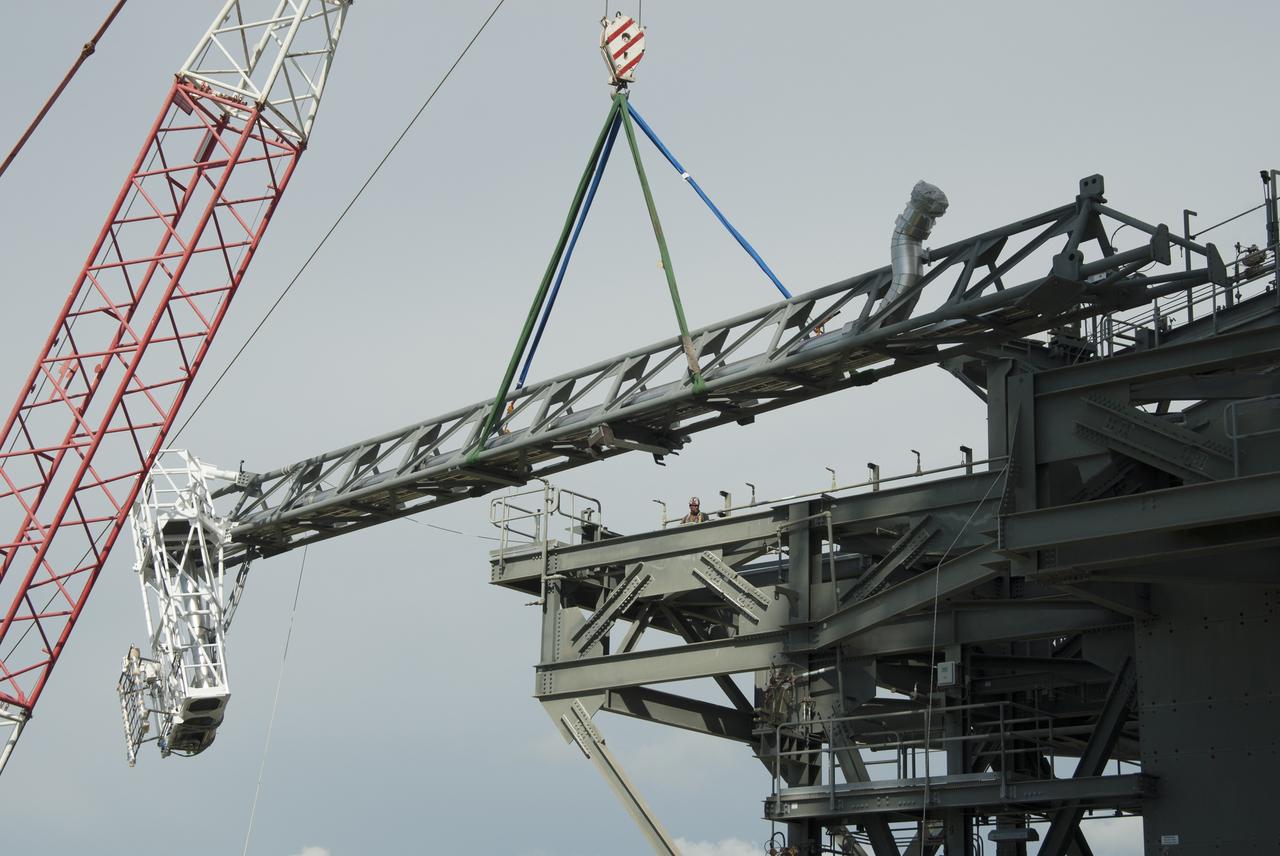
CAPE CANAVERAL, Fla. – A crane brings the umbilical swing arm for Exploration Flight Test 1, or EFT-1, closer for installation on the fixed umbilical tower at Space Launch Complex 37 at Cape Canaveral Air Force Station in Florida. The swing arm is the uppermost of three swing arms that will be attached to the fixed umbilical tower. The swing arm will carry umbilicals that will be mated to Orion's launch abort system and environmental control system. During launch, the umbilicals will pull away from Orion and the United Launch Alliance Delta IV Heavy rocket at T-0. During the EFT-1 mission, Orion will travel farther into space than any human spacecraft has gone in more than 40 years. The data gathered during the flight will influence design decisions, validate existing computer models and innovative new approaches to space systems development, as well as reduce overall mission risks and costs for later Orion flights. Liftoff of Orion on its first flight test is planned for fall 2014. Photo credit: NASA/Jim Grossmann
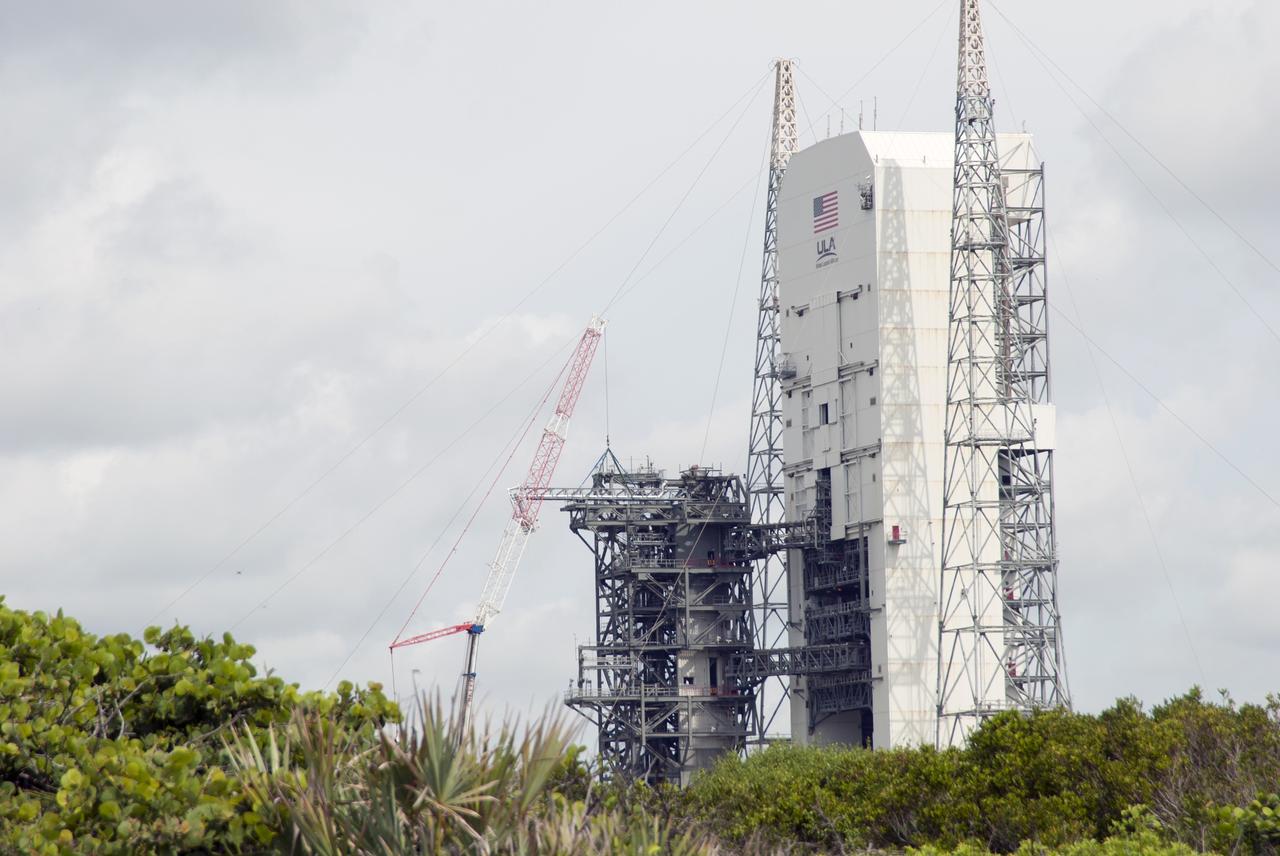
CAPE CANAVERAL, Fla. – A crane brings the umbilical swing arm for Exploration Flight Test 1, or EFT-1, closer for installation on the fixed umbilical tower at Space Launch Complex 37 at Cape Canaveral Air Force Station in Florida. The swing arm is the uppermost of three swing arms that will be attached to the fixed umbilical tower. The swing arm will carry umbilicals that will be mated to Orion's launch abort system and environmental control system. During launch, the umbilicals will pull away from Orion and the United Launch Alliance Delta IV Heavy rocket at T-0. During the EFT-1 mission, Orion will travel farther into space than any human spacecraft has gone in more than 40 years. The data gathered during the flight will influence design decisions, validate existing computer models and innovative new approaches to space systems development, as well as reduce overall mission risks and costs for later Orion flights. Liftoff of Orion on its first flight test is planned for fall 2014. Photo credit: NASA/Jim Grossmann
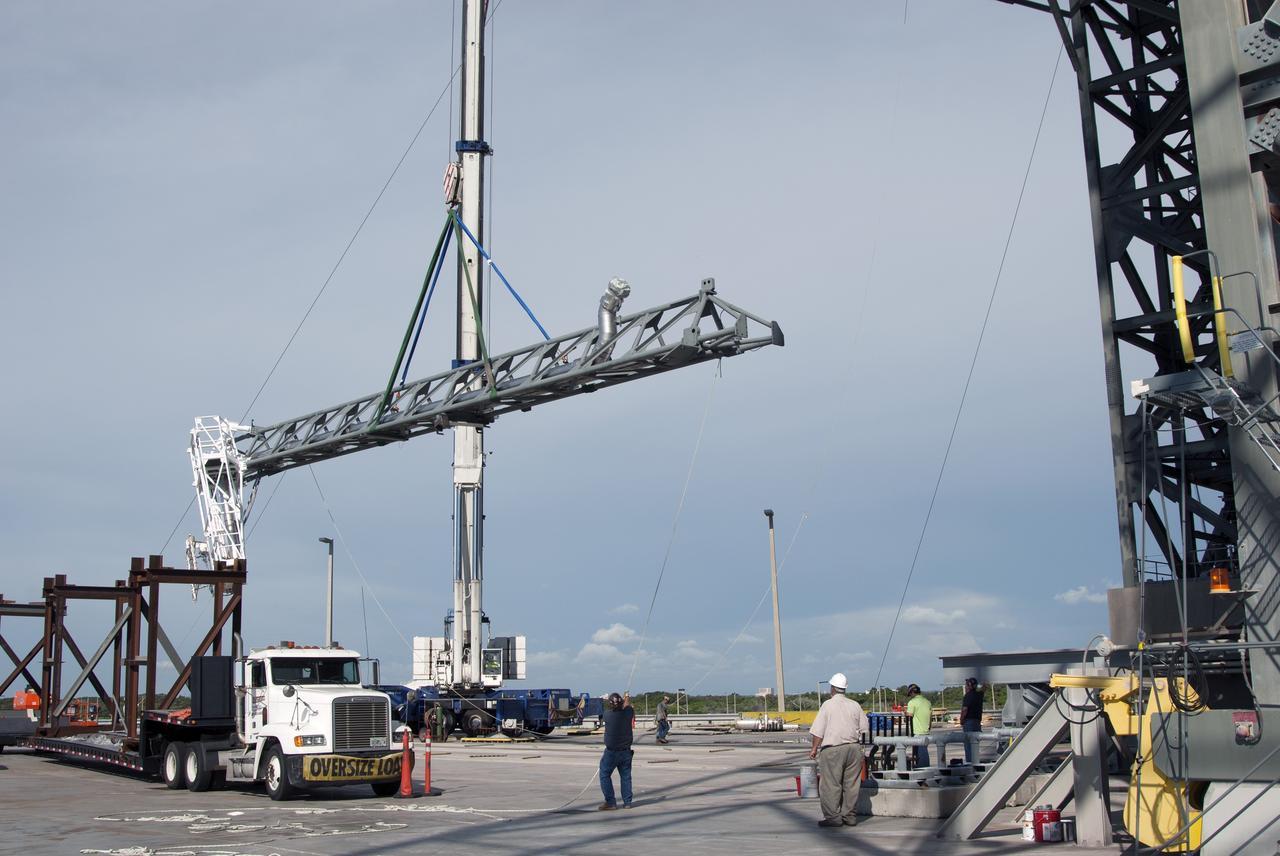
CAPE CANAVERAL, Fla. – The umbilical swing arm for Exploration Flight Test 1, or EFT-1, is lifted by crane for installation on the fixed umbilical tower at Space Launch Complex 37 at Cape Canaveral Air Force Station in Florida. The swing arm is the uppermost of three swing arms that will be attached to the fixed umbilical tower. The swing arm will carry umbilicals that will be mated to Orion's launch abort system and environmental control system. During launch, the umbilicals will pull away from Orion and the United Launch Alliance Delta IV Heavy rocket at T-0. During the EFT-1 mission, Orion will travel farther into space than any human spacecraft has gone in more than 40 years. The data gathered during the flight will influence design decisions, validate existing computer models and innovative new approaches to space systems development, as well as reduce overall mission risks and costs for later Orion flights. Liftoff of Orion on its first flight test is planned for fall 2014. Photo credit: NASA/Jim Grossmann
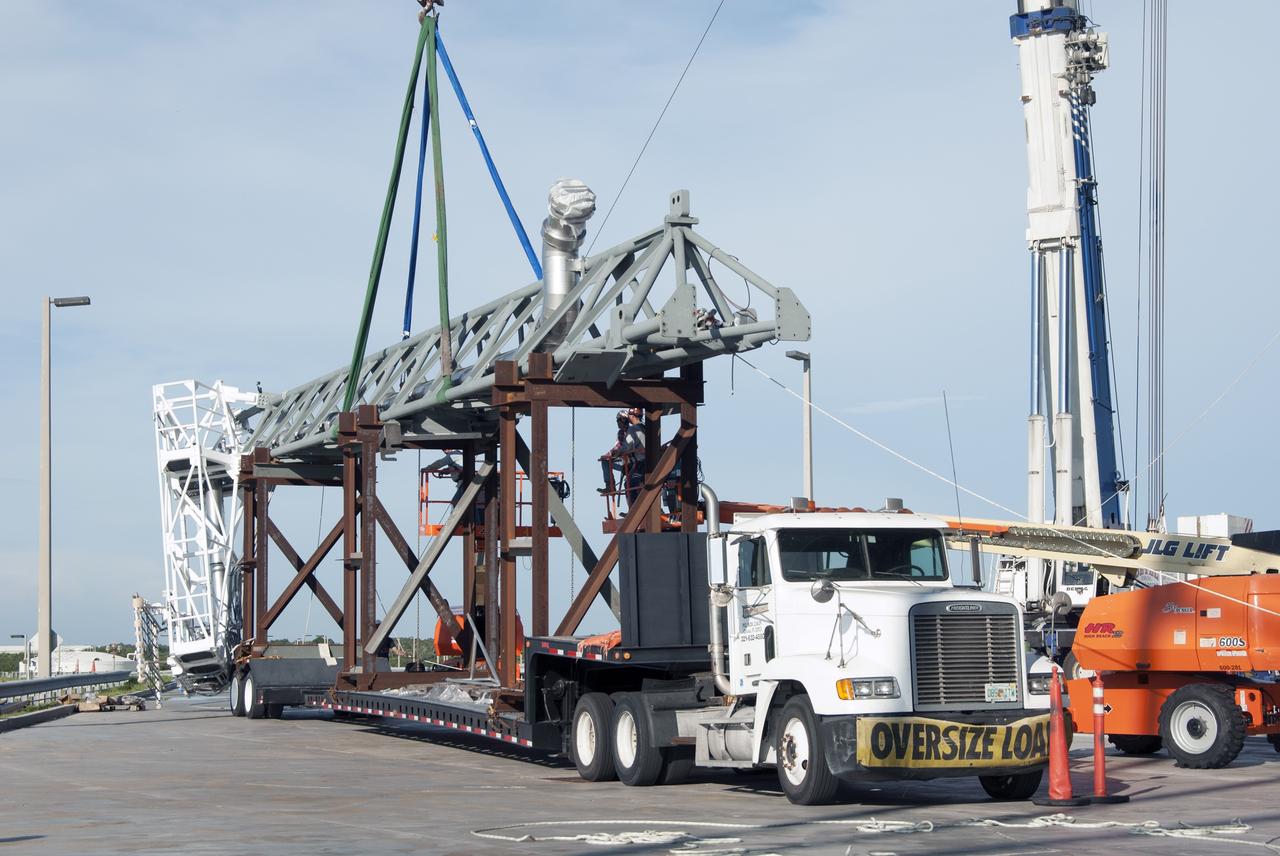
CAPE CANAVERAL, Fla. – The umbilical swing arm for Exploration Flight Test 1, or EFT-1, is being prepared to be lifted by crane and attached to the fixed umbilical tower at Space Launch Complex 37 at Cape Canaveral Air Force Station in Florida. The swing arm is the uppermost of three swing arms that will be attached to the fixed umbilical tower. The swing arm will carry umbilicals that will be mated to Orion's launch abort system and environmental control system. During launch, the umbilicals will pull away from Orion and the United Launch Alliance Delta IV Heavy rocket at T-0. During the EFT-1 mission, Orion will travel farther into space than any human spacecraft has gone in more than 40 years. The data gathered during the flight will influence design decisions, validate existing computer models and innovative new approaches to space systems development, as well as reduce overall mission risks and costs for later Orion flights. Liftoff of Orion on its first flight test is planned for fall 2014. Photo credit: NASA/Jim Grossmann
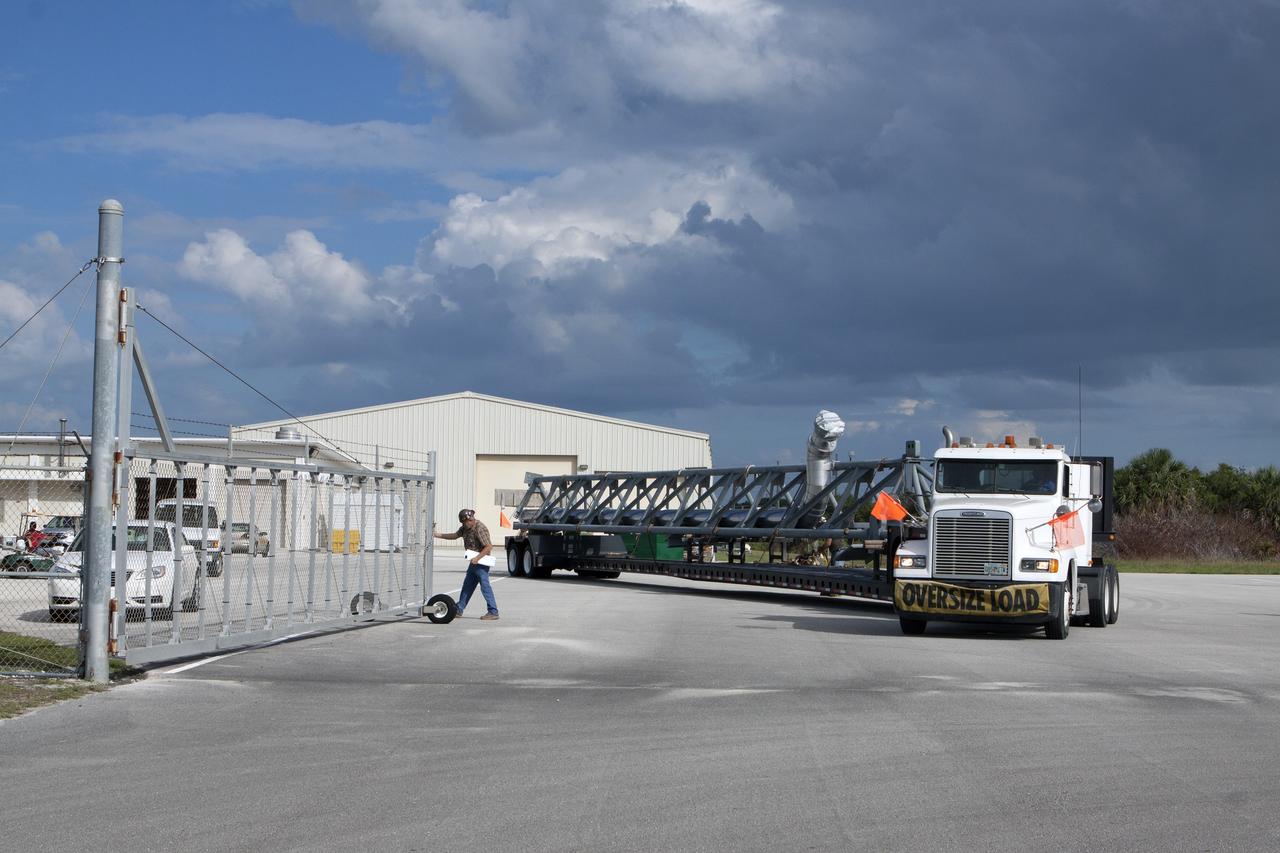
CAPE CANAVERAL, Fla. – The umbilical swing arm for Exploration Flight Test 1, or EFT-1, arrives at the Horizontal Integration Facility near Space Launch Complex 37 at Cape Canaveral Air Force Station in Florida. The swing arm is the uppermost of three swing arms that will be attached to the fixed umbilical tower on the launch pad. The swing arm will carry umbilicals that will be mated to Orion's launch abort system and environmental control system. During launch, the umbilicals will pull away from Orion and the United Launch Alliance Delta IV Heavy rocket at T-0. During the EFT-1 mission, Orion will travel farther into space than any human spacecraft has gone in more than 40 years. The data gathered during the flight will influence design decisions, validate existing computer models and innovative new approaches to space systems development, as well as reduce overall mission risks and costs for later Orion flights. Liftoff of Orion on its first flight test is planned for fall 2014. Photo credit: NASA/Kim Shiflett
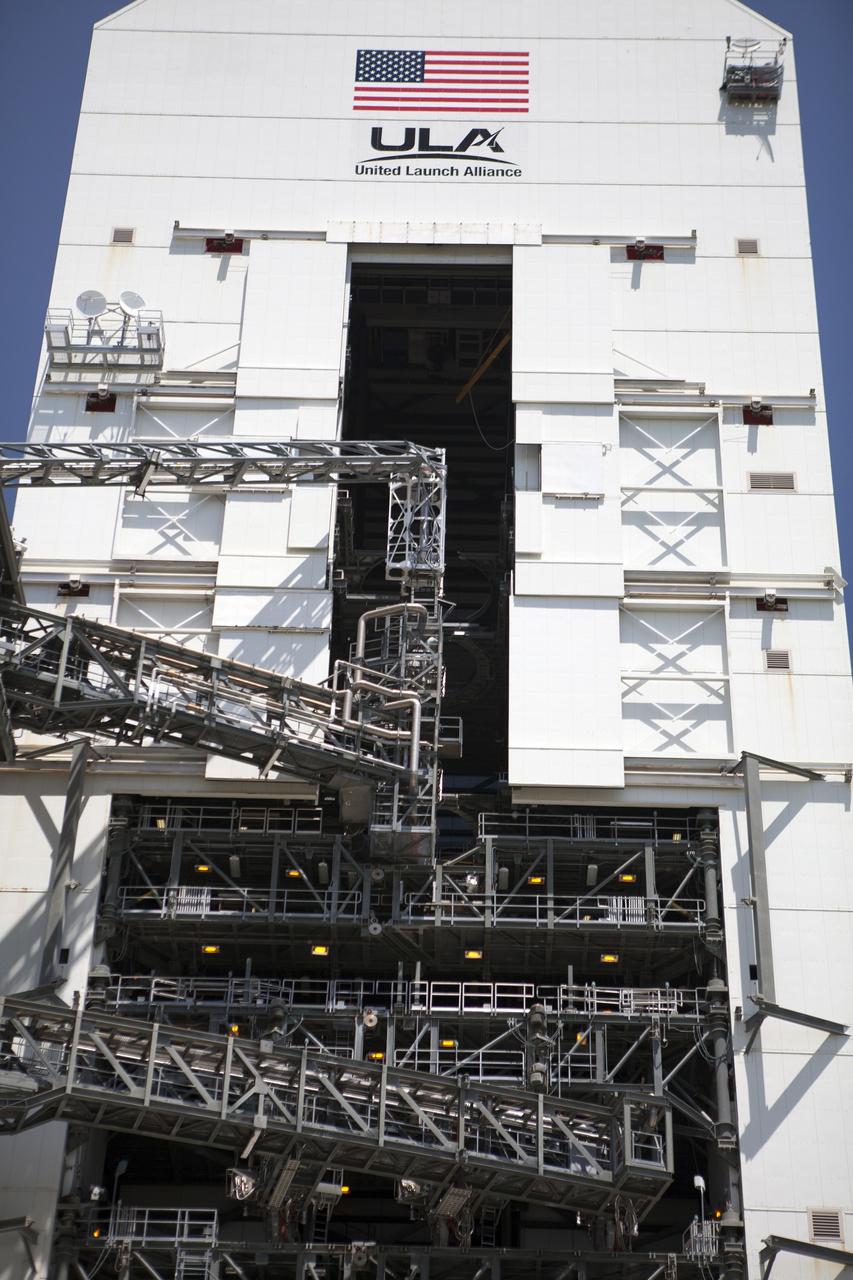
CAPE CANAVERAL, Fla. – The umbilical swing arm for Orion's Exploration Flight Test 1, or EFT-1, has been attached to the uppermost location on the fixed umbilical tower at Space Launch Complex 37 at Cape Canaveral Air Force Station in Florida. All three swing arms on the tower are undergoing tests to confirm that they are operating correctly. They are being swung out and closer to the Vertical Integration Facility at the pad. The uppermost swing arm will carry umbilicals that will be mated to Orion's launch abort system and environmental control system. During launch, all three umbilicals will pull away from Orion and the United Launch Alliance Delta IV Heavy rocket at T-0. During the EFT-1 mission, Orion will travel farther into space than any human spacecraft has gone in more than 40 years. The data gathered during the flight will influence design decisions, validate existing computer models and innovative new approaches to space systems development, as well as reduce overall mission risks and costs for later Orion flights. Liftoff of Orion on its first flight test is planned for fall 2014. Photo credit: NASA/Daniel Casper
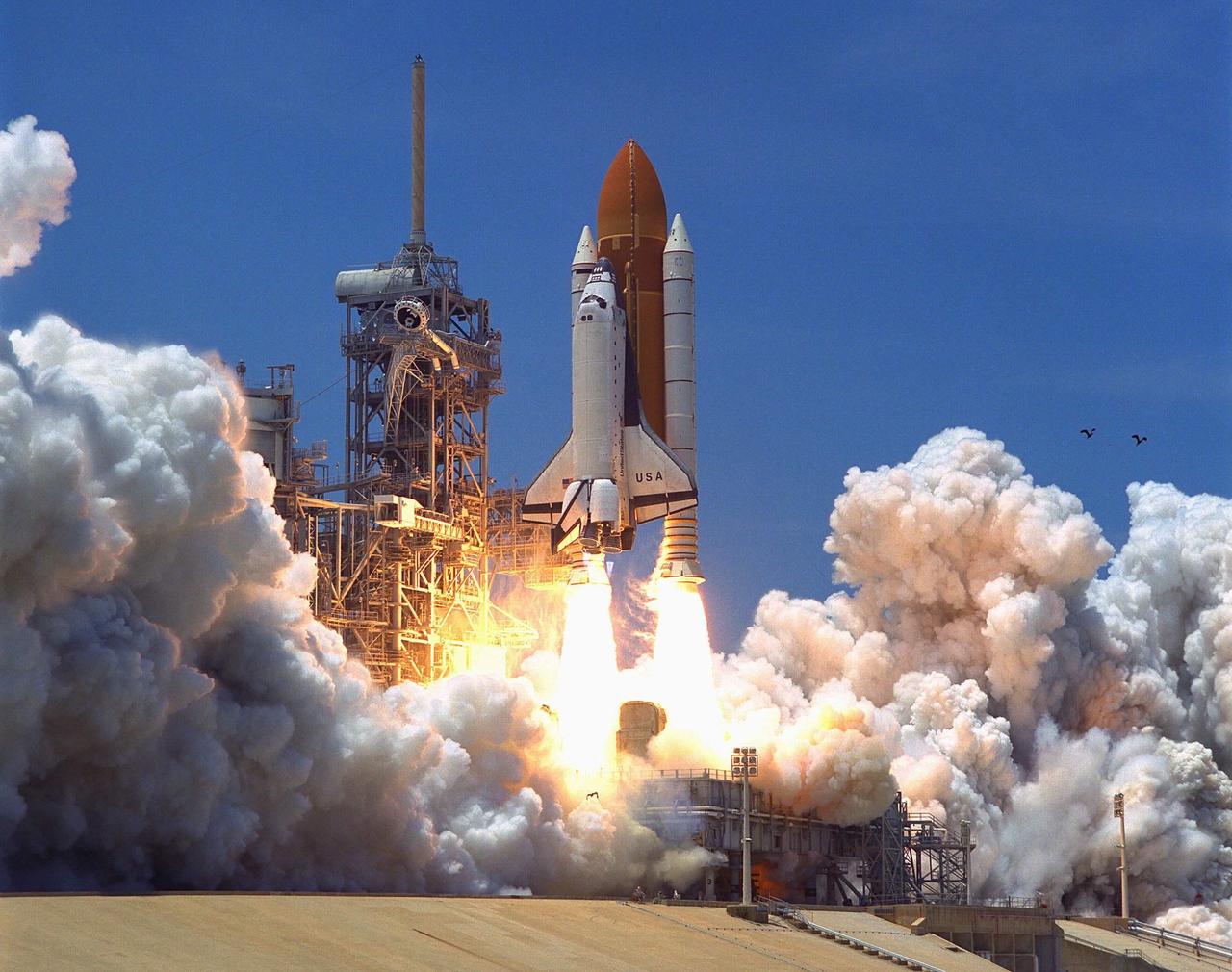
KENNEDY SPACE CENTER, Fla. -- The Space Shuttle Columbia soars from Launch Pad 39A at 2:02 p.m. EDT July 1 to begin the 16-day STS-94 Microgravity Science Laboratory-1 (MSL-1) mission. The launch window was opened 47 minutes earlier than the originally scheduled time of 2:37 p.m. to improve the opportunity to lift off before Florida summer rain showers reached the space center. The crew members are Mission Commander James D. Halsell Jr.; Pilot Susan L. Still; Payload Commander Janice Voss; Mission Specialists Michael L.Gernhardt and Donald A. Thomas; and Payload Specialists Roger K. Crouch and Gregory T. Linteris. During the space flight, the MSL-1 will be used to test some of the hardware, facilities and procedures that are planned for use on the International Space Station while the flight crew conducts combustion, protein crystal growth and materials processing experiments. Also onboard is the Hitchhiker Cryogenic Flexible Diode (CRYOFD) experiment payload, which is attached to the right side of Columbia’s payload bay. These payloads had previously flown on the STS-83 mission in April, which was cut short after nearly four days because of indications of a faulty fuel cell. STS-94 is a reflight of that mission
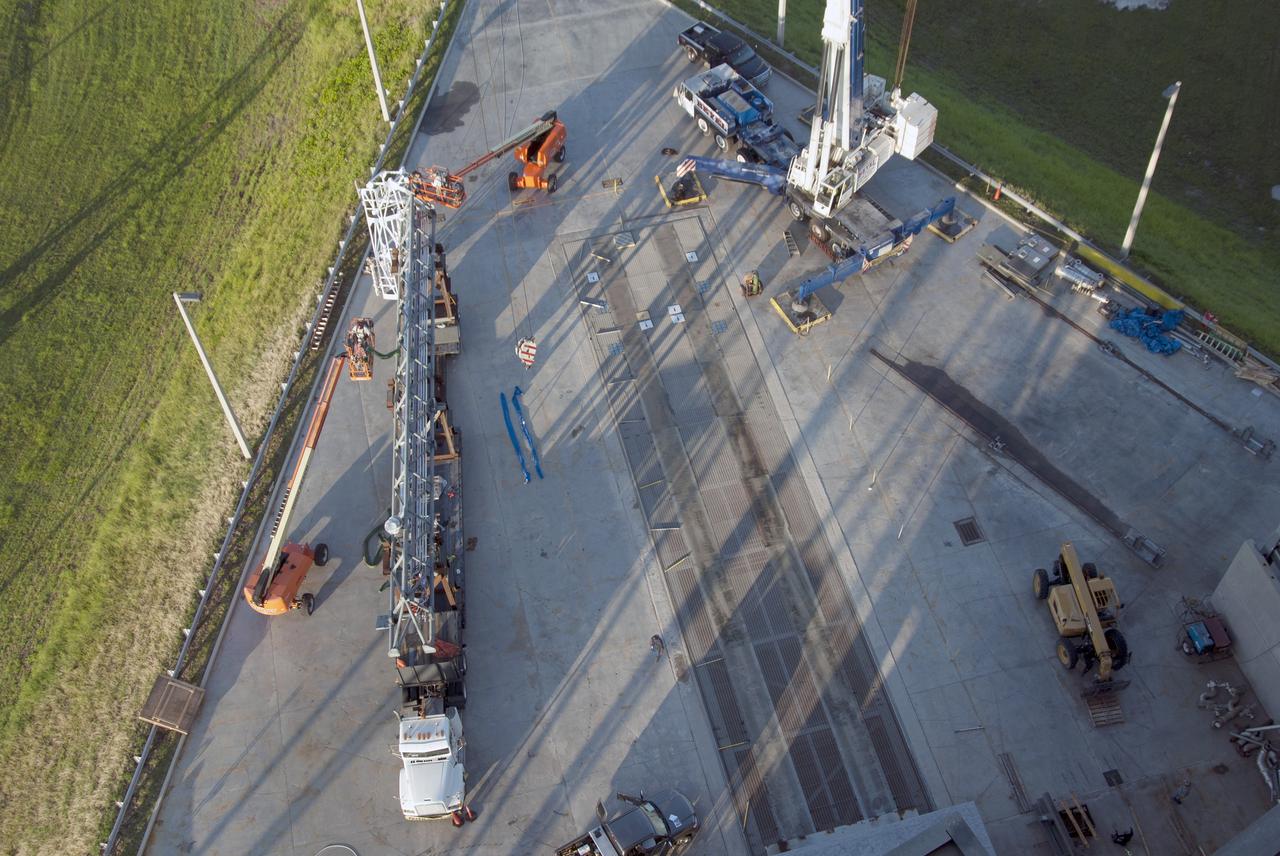
CAPE CANAVERAL, Fla. – In this view from above at Space Launch Complex 37 at Cape Canaveral Air Force Station in Florida, the umbilical swing arm for Exploration Flight Test 1, or EFT-1, is being prepared to be lifted by crane and attached to the fixed umbilical tower on the launch pad. The swing arm is the uppermost of three swing arms that will be attached to the fixed umbilical tower. The swing arm will carry umbilicals that will be mated to Orion's launch abort system and environmental control system. During launch, the umbilicals will pull away from Orion and the United Launch Alliance Delta IV Heavy rocket at T-0. During the EFT-1 mission, Orion will travel farther into space than any human spacecraft has gone in more than 40 years. The data gathered during the flight will influence design decisions, validate existing computer models and innovative new approaches to space systems development, as well as reduce overall mission risks and costs for later Orion flights. Liftoff of Orion on its first flight test is planned for fall 2014. Photo credit: NASA/Jim Grossmann
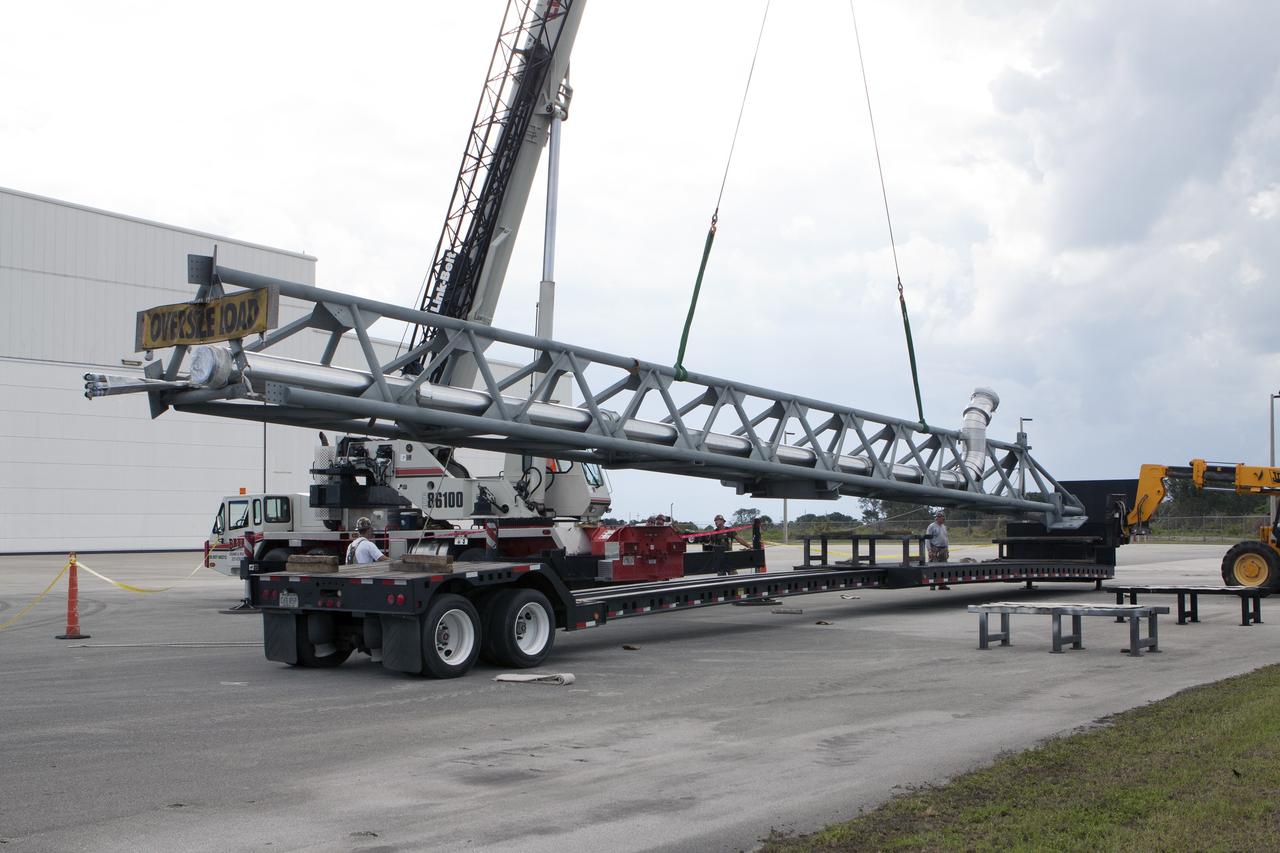
CAPE CANAVERAL, Fla. – The umbilical swing arm for Exploration Flight Test 1, or EFT-1, arrives at the Horizontal Integration Facility near Space Launch Complex 37 at Cape Canaveral Air Force Station in Florida and is being lifted by crane from its transporter. The swing arm is the uppermost of three swing arms that will be attached to the fixed umbilical tower on the launch pad. The swing arm will carry umbilicals that will be mated to Orion's launch abort system and environmental control system. During launch, the umbilicals will pull away from Orion and the United Launch Alliance Delta IV Heavy rocket at T-0. During the EFT-1 mission, Orion will travel farther into space than any human spacecraft has gone in more than 40 years. The data gathered during the flight will influence design decisions, validate existing computer models and innovative new approaches to space systems development, as well as reduce overall mission risks and costs for later Orion flights. Liftoff of Orion on its first flight test is planned for fall 2014. Photo credit: NASA/Kim Shiflett
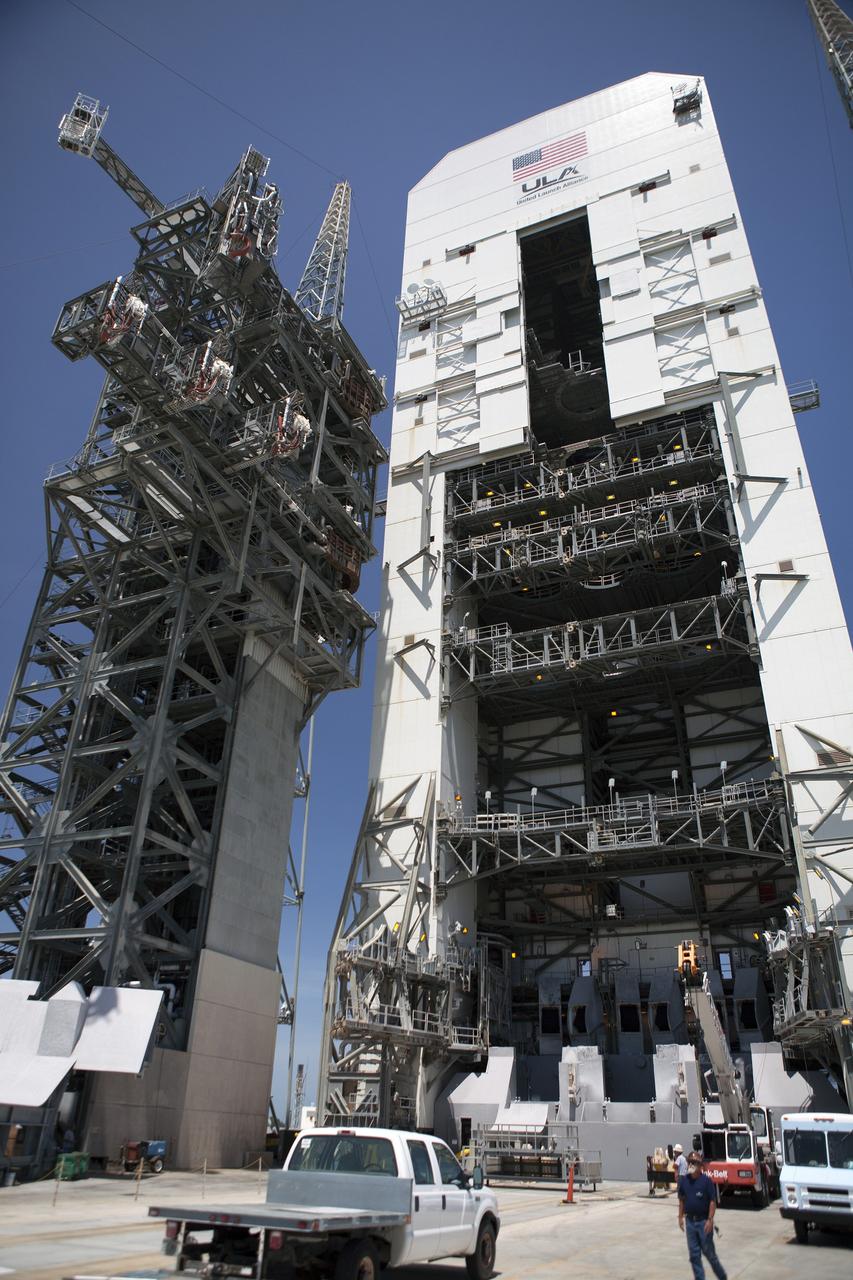
CAPE CANAVERAL, Fla. – The umbilical swing arm for Orion's Exploration Flight Test 1, or EFT-1, has been attached to the uppermost location on the fixed umbilical tower at Space Launch Complex 37 at Cape Canaveral Air Force Station in Florida. All three swing arms on the tower will undergo tests to confirm that they are operating correctly. The uppermost swing arm will carry umbilicals that will be mated to Orion's launch abort system and environmental control system. During launch, all three umbilicals will pull away from Orion and the United Launch Alliance Delta IV Heavy rocket at T-0. During the EFT-1 mission, Orion will travel farther into space than any human spacecraft has gone in more than 40 years. The data gathered during the flight will influence design decisions, validate existing computer models and innovative new approaches to space systems development, as well as reduce overall mission risks and costs for later Orion flights. Liftoff of Orion on its first flight test is planned for fall 2014. Photo credit: NASA/Daniel Casper
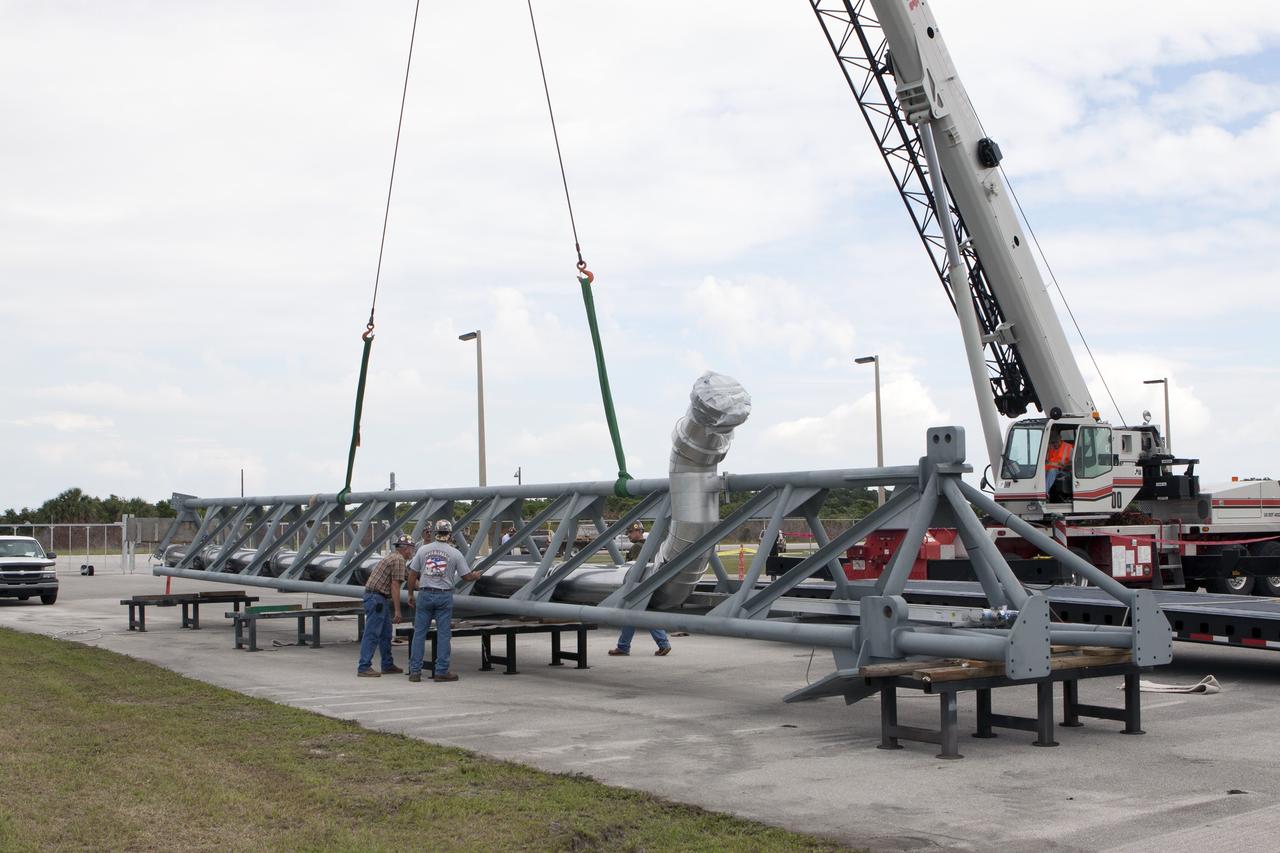
CAPE CANAVERAL, Fla. – The umbilical swing arm for Exploration Flight Test 1, or EFT-1, arrives at the Horizontal Integration Facility near Space Launch Complex 37 at Cape Canaveral Air Force Station in Florida and has been lifted by crane from its transporter. The swing arm is the uppermost of three swing arms that will be attached to the fixed umbilical tower on the launch pad. The swing arm will carry umbilicals that will be mated to Orion's launch abort system and environmental control system. During launch, the umbilicals will pull away from Orion and the United Launch Alliance Delta IV Heavy rocket at T-0. During the EFT-1 mission, Orion will travel farther into space than any human spacecraft has gone in more than 40 years. The data gathered during the flight will influence design decisions, validate existing computer models and innovative new approaches to space systems development, as well as reduce overall mission risks and costs for later Orion flights. Liftoff of Orion on its first flight test is planned for fall 2014. Photo credit: NASA/Kim Shiflett
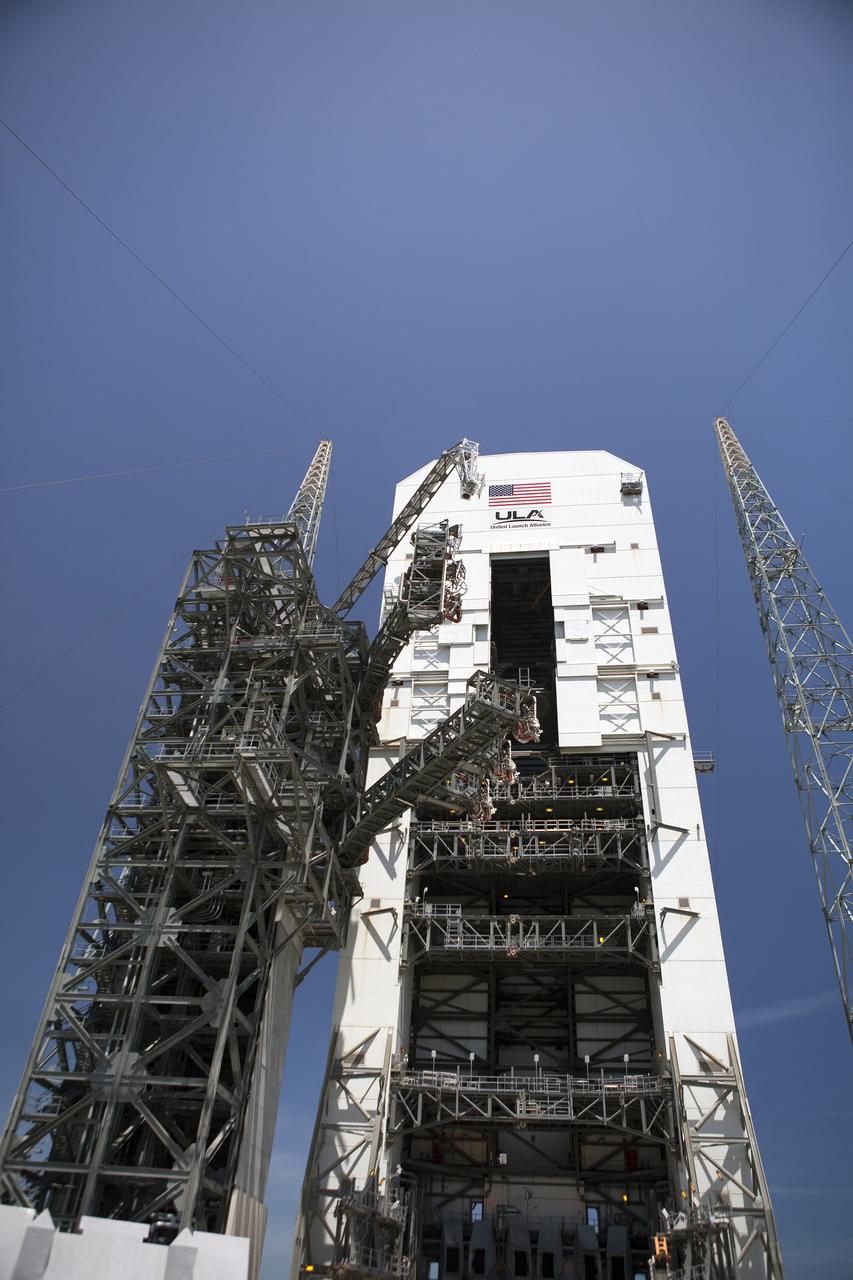
CAPE CANAVERAL, Fla. – The umbilical swing arm for Orion's Exploration Flight Test 1, or EFT-1, has been attached to the uppermost location on the fixed umbilical tower at Space Launch Complex 37 at Cape Canaveral Air Force Station in Florida. All three swing arms on the tower are undergoing tests to confirm that they are operating correctly. The uppermost swing arm will carry umbilicals that will be mated to Orion's launch abort system and environmental control system. During launch, all three umbilicals will pull away from Orion and the United Launch Alliance Delta IV Heavy rocket at T-0. During the EFT-1 mission, Orion will travel farther into space than any human spacecraft has gone in more than 40 years. The data gathered during the flight will influence design decisions, validate existing computer models and innovative new approaches to space systems development, as well as reduce overall mission risks and costs for later Orion flights. Liftoff of Orion on its first flight test is planned for fall 2014. Photo credit: NASA/Daniel Casper
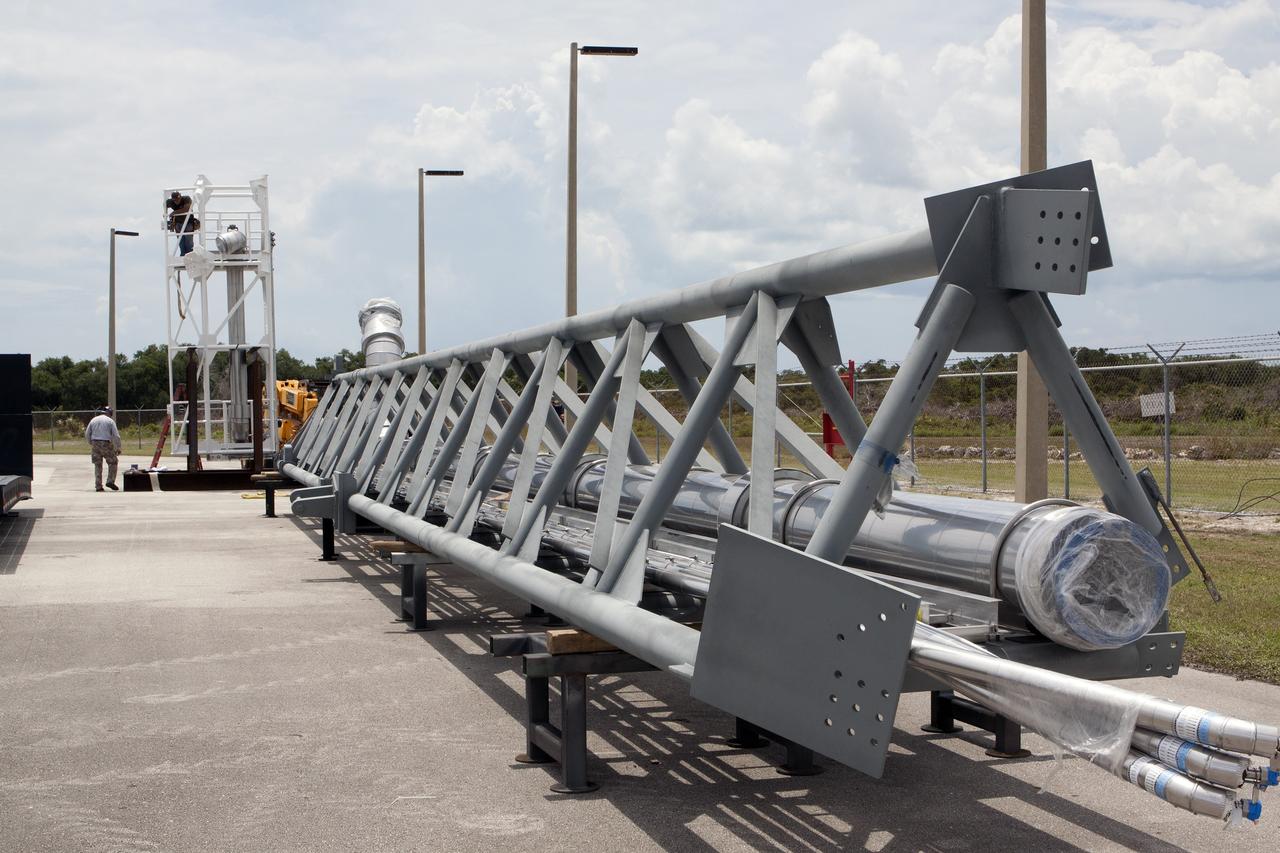
CAPE CANAVERAL, Fla. – Both parts of the umbilical swing arm for Exploration Flight Test 1, or EFT-1, have arrived at the Horizontal Integration Facility near Space Launch Complex 37 at Cape Canaveral Air Force Station in Florida. They have been removed from the transporter and placed on stands. The swing arm is the uppermost of three swing arms that will be attached to the fixed umbilical tower on the launch pad. The swing arm will carry umbilicals that will be mated to Orion's launch abort system and environmental control system. During launch, the umbilicals will pull away from Orion and the United Launch Alliance Delta IV Heavy rocket at T-0. During the EFT-1 mission, Orion will travel farther into space than any human spacecraft has gone in more than 40 years. The data gathered during the flight will influence design decisions, validate existing computer models and innovative new approaches to space systems development, as well as reduce overall mission risks and costs for later Orion flights. Liftoff of Orion on its first flight test is planned for fall 2014. Photo credit: NASA/Kim Shiflett
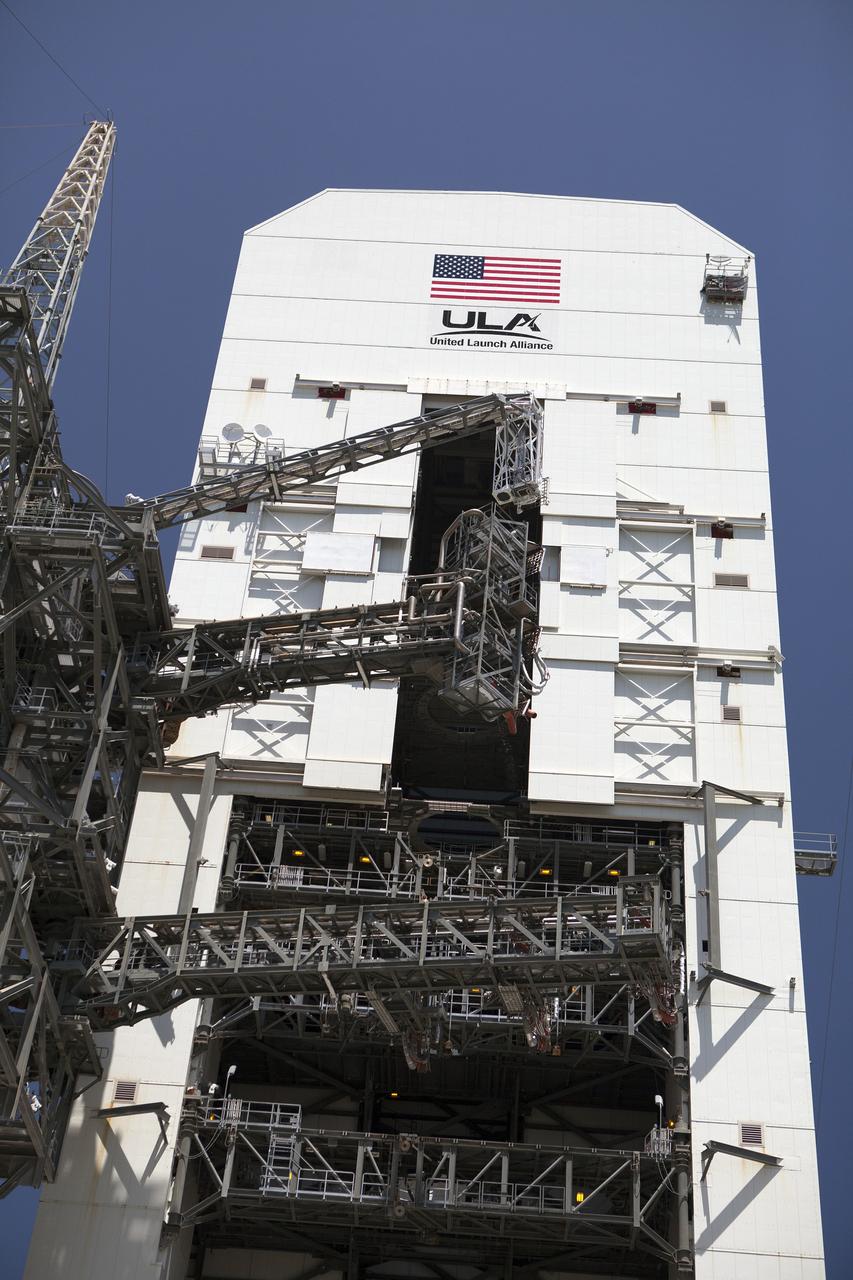
CAPE CANAVERAL, Fla. – The umbilical swing arm for Orion's Exploration Flight Test 1, or EFT-1, has been attached to the uppermost location on the fixed umbilical tower at Space Launch Complex 37 at Cape Canaveral Air Force Station in Florida. All three swing arms on the tower are undergoing tests to confirm that they are operating correctly. They are being swung out and closer to the Vertical Integration Facility at the pad. The uppermost swing arm will carry umbilicals that will be mated to Orion's launch abort system and environmental control system. During launch, all three umbilicals will pull away from Orion and the United Launch Alliance Delta IV Heavy rocket at T-0. During the EFT-1 mission, Orion will travel farther into space than any human spacecraft has gone in more than 40 years. The data gathered during the flight will influence design decisions, validate existing computer models and innovative new approaches to space systems development, as well as reduce overall mission risks and costs for later Orion flights. Liftoff of Orion on its first flight test is planned for fall 2014. Photo credit: NASA/Daniel Casper
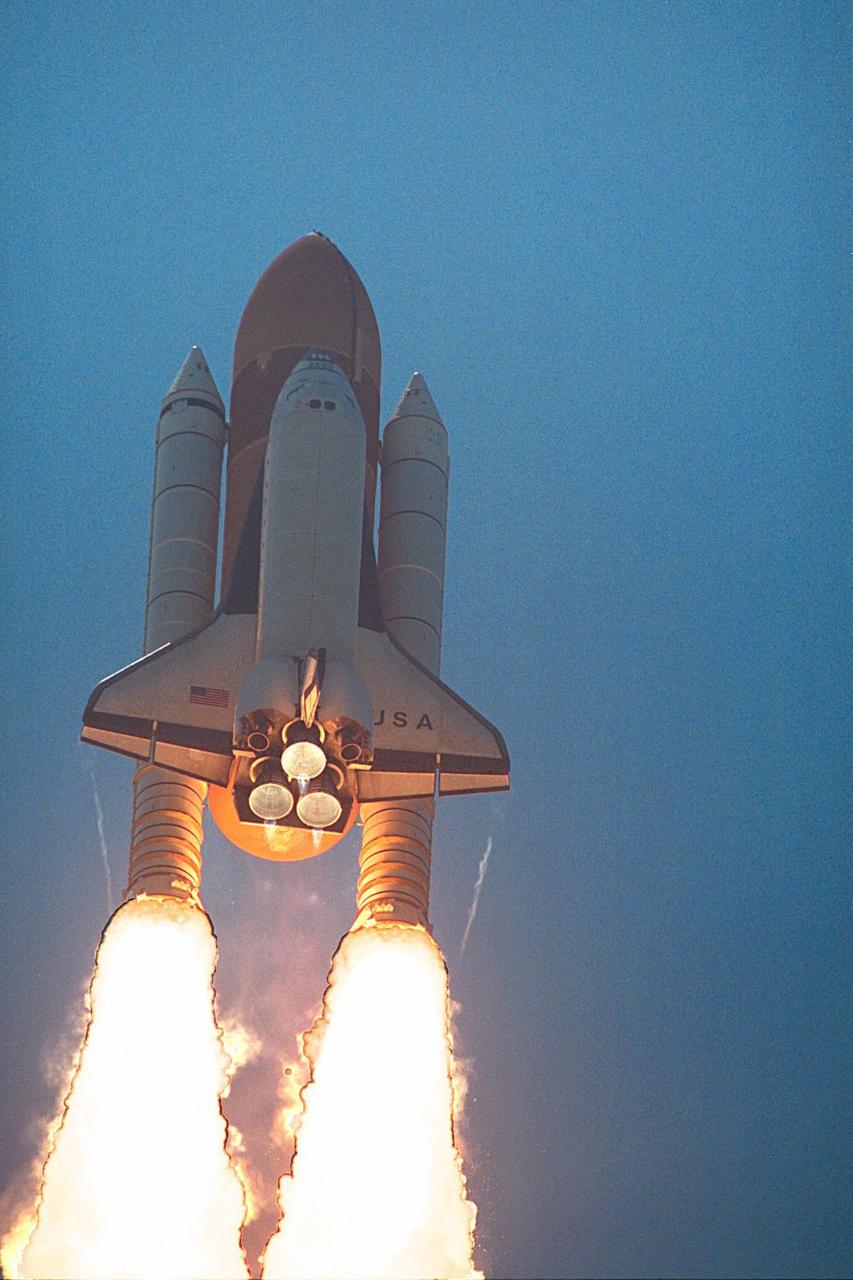
KENNEDY SPACE CENTER, Fla. -- The Space Shuttle Columbia soars from Launch Pad 39A at 2:02 p.m. EDT July 1 to begin the 16-day STS-94 Microgravity Science Laboratory-1 (MSL-1) mission. The launch window was opened 47 minutes earlier than the originally scheduled time of 2:37 p.m. to improve the opportunity to lift off before Florida summer rain showers reached the space center. The crew members are Mission Commander James D. Halsell Jr.; Pilot Susan L. Still; Payload Commander Janice Voss; Mission Specialists Michael L.Gernhardt and Donald A. Thomas; and Payload Specialists Roger K. Crouch and Gregory T. Linteris. During the space flight, the MSL-1 will be used to test some of the hardware, facilities and procedures that are planned for use on the International Space Station while the flight crew conducts combustion, protein crystal growth and materials processing experiments. Also onboard is the Hitchhiker Cryogenic Flexible Diode (CRYOFD) experiment payload, which is attached to the right side of Columbia’s payload bay. These payloads had previously flown on the STS-83 mission in April, which was cut short after nearly four days because of indications of a faulty fuel cell. STS-94 is a reflight of that mission
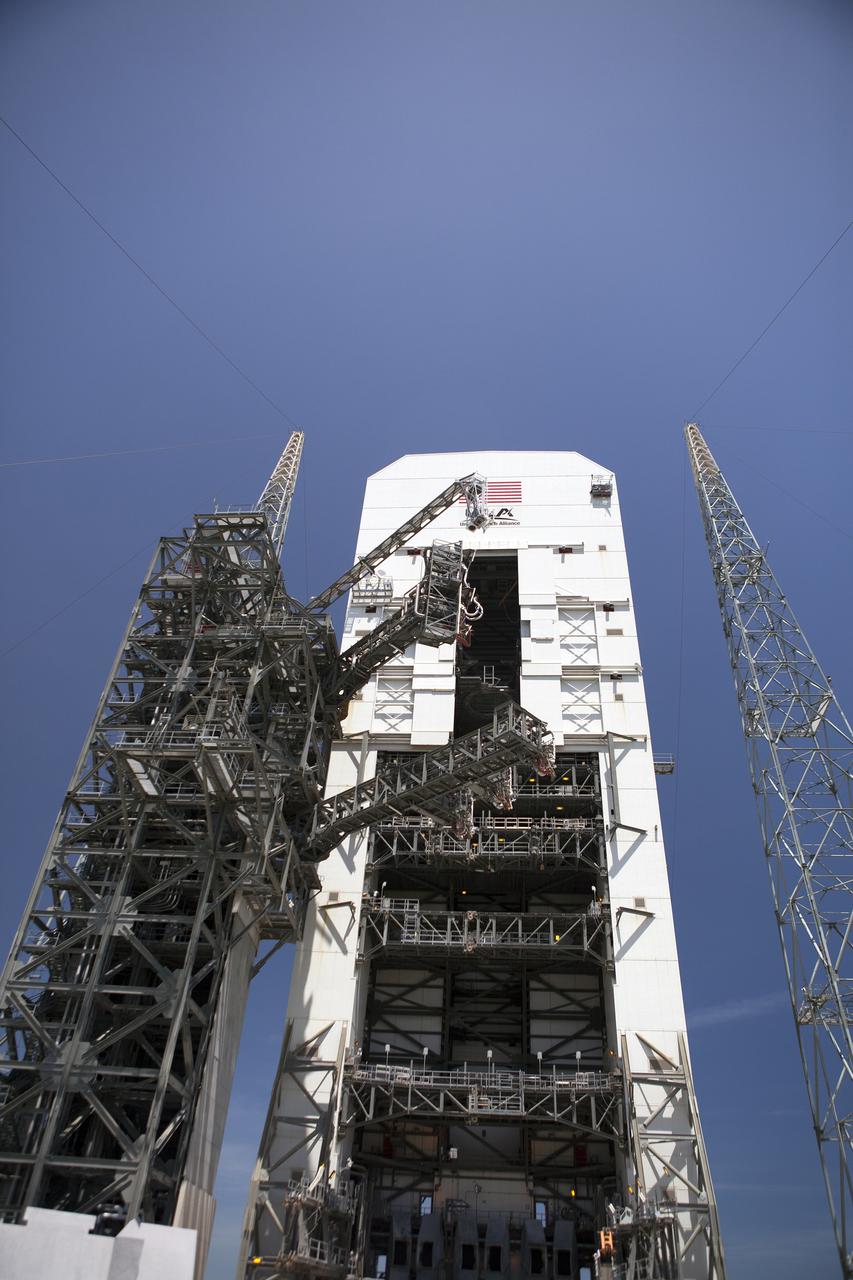
CAPE CANAVERAL, Fla. – The umbilical swing arm for Orion's Exploration Flight Test 1, or EFT-1, has been attached to the uppermost location on the fixed umbilical tower at Space Launch Complex 37 at Cape Canaveral Air Force Station in Florida. All three swing arms on the tower are undergoing tests to confirm that they are operating correctly. They are being swung out and closer to the Vertical Integration Facility at the pad. The uppermost swing arm will carry umbilicals that will be mated to Orion's launch abort system and environmental control system. During launch, all three umbilicals will pull away from Orion and the United Launch Alliance Delta IV Heavy rocket at T-0. During the EFT-1 mission, Orion will travel farther into space than any human spacecraft has gone in more than 40 years. The data gathered during the flight will influence design decisions, validate existing computer models and innovative new approaches to space systems development, as well as reduce overall mission risks and costs for later Orion flights. Liftoff of Orion on its first flight test is planned for fall 2014. Photo credit: NASA/Daniel Casper
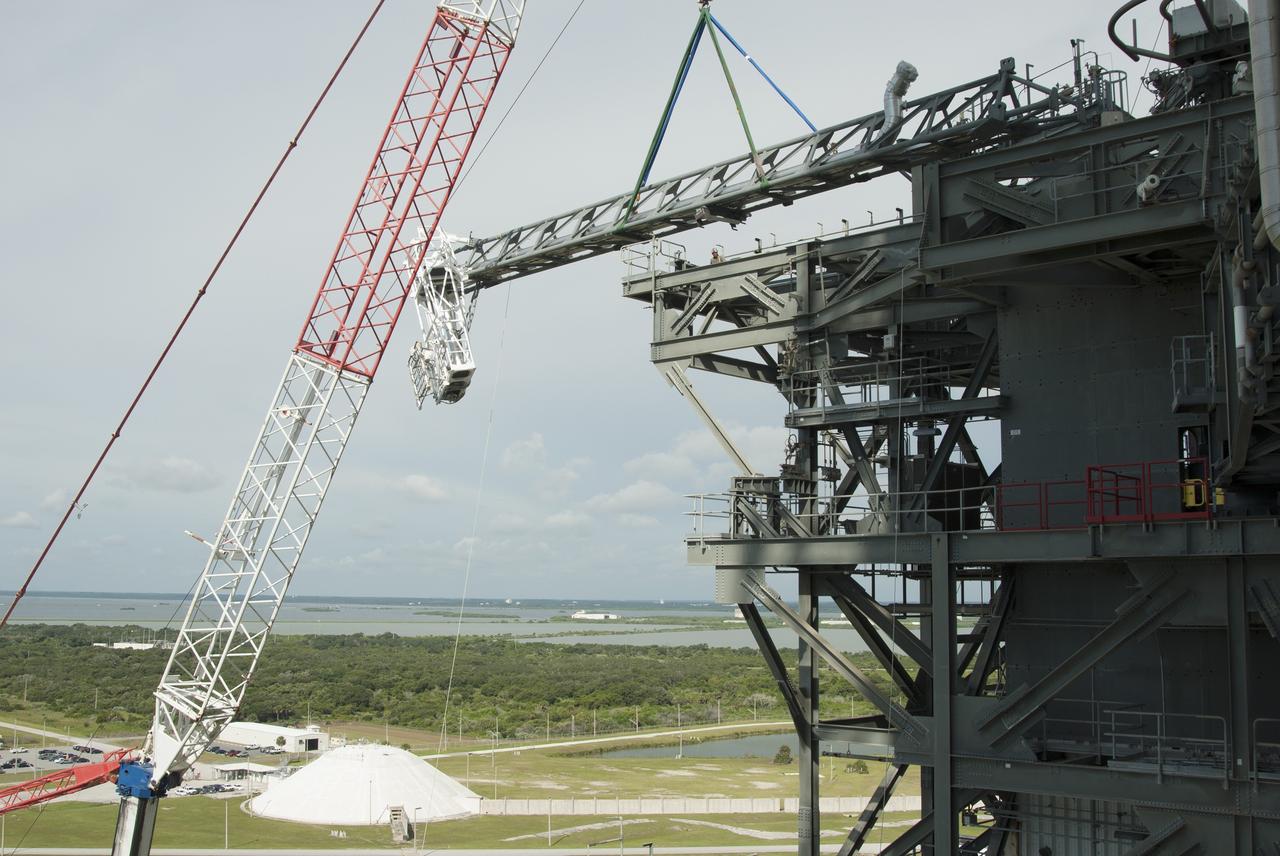
CAPE CANAVERAL, Fla. – A crane brings the umbilical swing arm for Exploration Flight Test 1, or EFT-1, closer for installation on the fixed umbilical tower at Space Launch Complex 37 at Cape Canaveral Air Force Station in Florida. The swing arm is the uppermost of three swing arms that will be attached to the fixed umbilical tower. The swing arm will carry umbilicals that will be mated to Orion's launch abort system and environmental control system. During launch, the umbilicals will pull away from Orion and the United Launch Alliance Delta IV Heavy rocket at T-0. During the EFT-1 mission, Orion will travel farther into space than any human spacecraft has gone in more than 40 years. The data gathered during the flight will influence design decisions, validate existing computer models and innovative new approaches to space systems development, as well as reduce overall mission risks and costs for later Orion flights. Liftoff of Orion on its first flight test is planned for fall 2014. Photo credit: NASA/Jim Grossmann
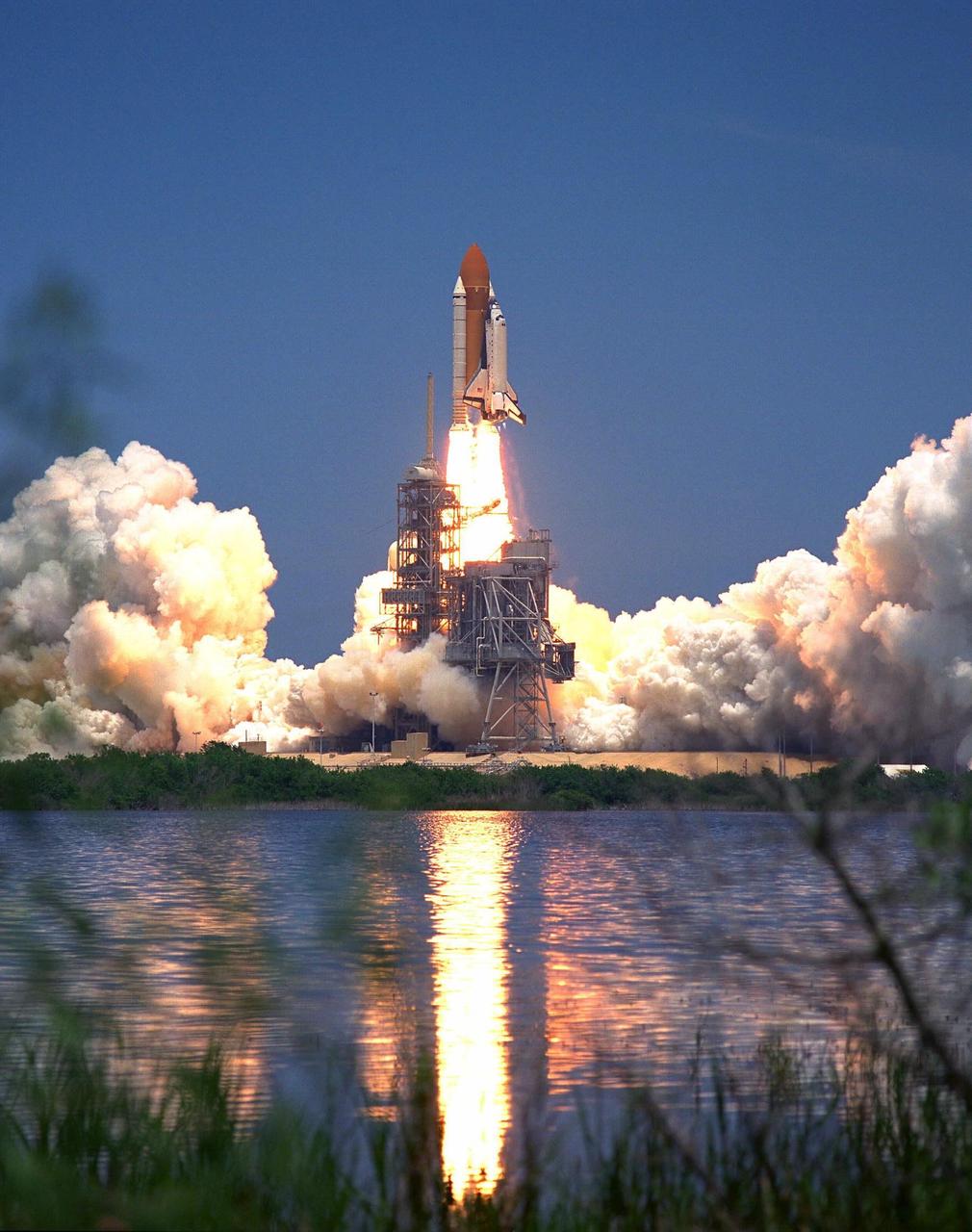
KENNEDY SPACE CENTER, Fla. -- The Space Shuttle Columbia soars from Launch Pad 39A at 2:02 p.m. EDT July 1 to begin the 16-day STS-94 Microgravity Science Laboratory-1 (MSL-1) mission. The launch window was opened 47 minutes earlier than the originally scheduled time of 2:37 p.m. to improve the opportunity to lift off before Florida summer rain showers reached the space center. The crew members are Mission Commander James D. Halsell Jr.; Pilot Susan L. Still; Payload Commander Janice Voss; Mission Specialists Michael L.Gernhardt and Donald A. Thomas; and Payload Specialists Roger K. Crouch and Gregory T. Linteris. During the space flight, the MSL-1 will be used to test some of the hardware, facilities and procedures that are planned for use on the International Space Station while the flight crew conducts combustion, protein crystal growth and materials processing experiments. Also onboard is the Hitchhiker Cryogenic Flexible Diode (CRYOFD) experiment payload, which is attached to the right side of Columbia’s payload bay. These payloads had previously flown on the STS-83 mission in April, which was cut short after nearly four days because of indications of a faulty fuel cell. STS-94 is a reflight of that mission
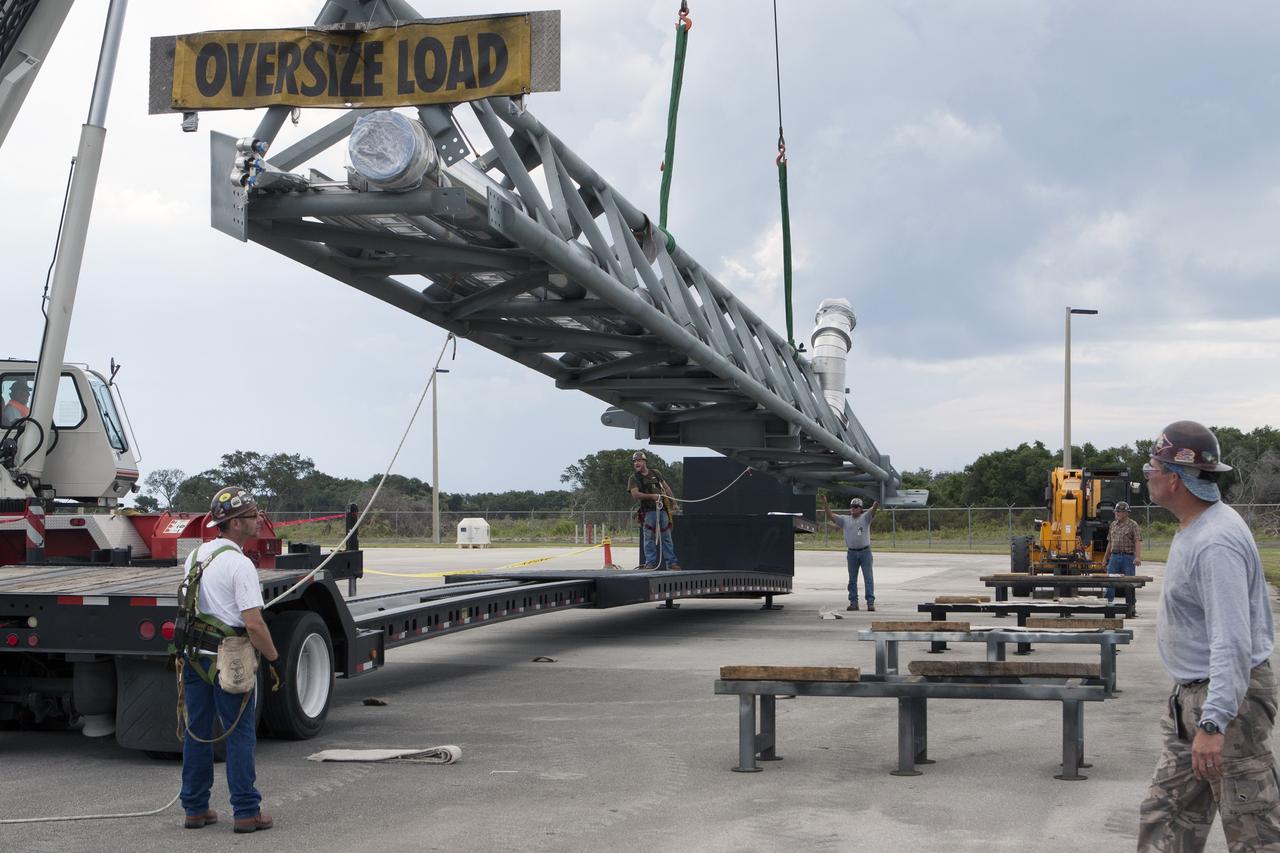
CAPE CANAVERAL, Fla. – The umbilical swing arm for Exploration Flight Test 1, or EFT-1, arrives at the Horizontal Integration Facility near Space Launch Complex 37 at Cape Canaveral Air Force Station in Florida and is being lifted by crane from its transporter. The swing arm is the uppermost of three swing arms that will be attached to the fixed umbilical tower on the launch pad. The swing arm will carry umbilicals that will be mated to Orion's launch abort system and environmental control system. During launch, the umbilicals will pull away from Orion and the United Launch Alliance Delta IV Heavy rocket at T-0. During the EFT-1 mission, Orion will travel farther into space than any human spacecraft has gone in more than 40 years. The data gathered during the flight will influence design decisions, validate existing computer models and innovative new approaches to space systems development, as well as reduce overall mission risks and costs for later Orion flights. Liftoff of Orion on its first flight test is planned for fall 2014. Photo credit: NASA/Kim Shiflett
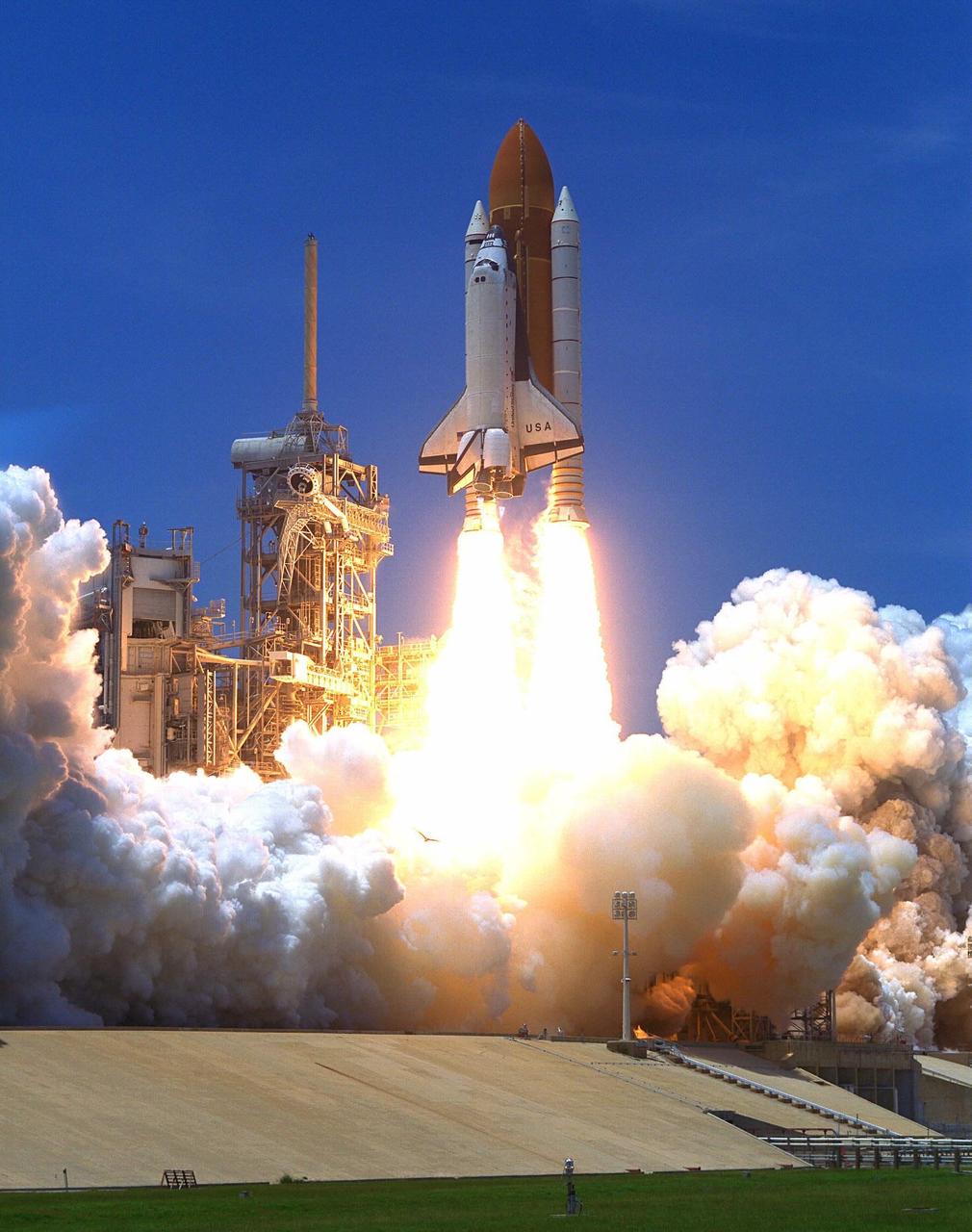
KENNEDY SPACE CENTER, Fla. -- The Space Shuttle Columbia soars from Launch Pad 39A at 2:02 p.m. EDT July 1 to begin the 16-day STS-94 Microgravity Science Laboratory-1 (MSL-1) mission. The launch window was opened 47 minutes earlier than the originally scheduled time of 2:37 p.m. to improve the opportunity to lift off before Florida summer rain showers reached the space center. The crew members are Mission Commander James D. Halsell Jr.; Pilot Susan L. Still; Payload Commander Janice Voss; Mission Specialists Michael L.Gernhardt and Donald A. Thomas; and Payload Specialists Roger K. Crouch and Gregory T. Linteris. During the space flight, the MSL-1 will be used to test some of the hardware, facilities and procedures that are planned for use on the International Space Station while the flight crew conducts combustion, protein crystal growth and materials processing experiments. Also onboard is the Hitchhiker Cryogenic Flexible Diode (CRYOFD) experiment payload, which is attached to the right side of Columbia’s payload bay. These payloads had previously flown on the STS-83 mission in April, which was cut short after nearly four days because of indications of a faulty fuel cell. STS-94 is a reflight of that mission
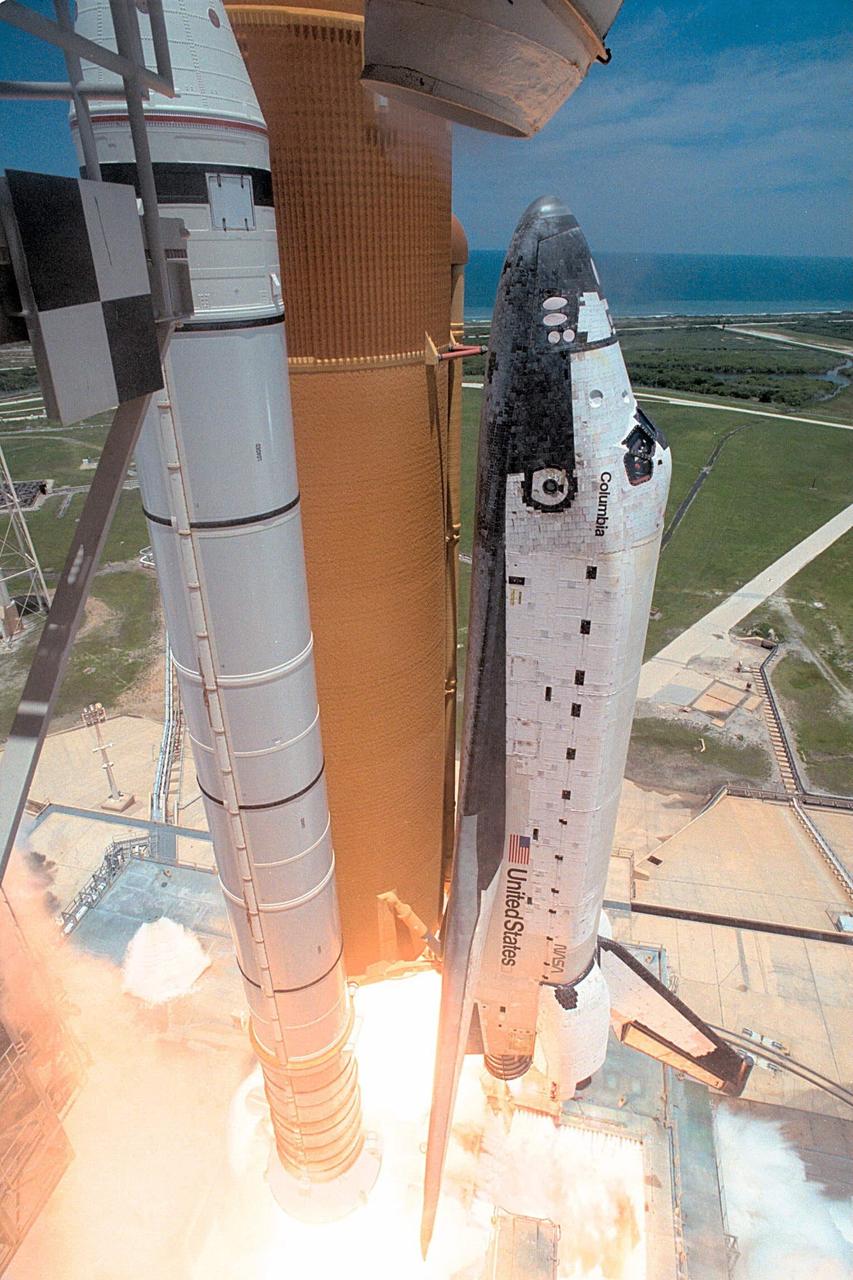
KENNEDY SPACE CENTER, Fla. -- The Space Shuttle Columbia soars from Launch Pad 39A at 2:02 p.m. EDT July 1 to begin the 16-day STS-94 Microgravity Science Laboratory-1 (MSL-1) mission. The launch window was opened 47 minutes earlier than the originally scheduled time of 2:37 p.m. to improve the opportunity to lift off before Florida summer rain showers reached the space center. The crew members are Mission Commander James D. Halsell Jr.; Pilot Susan L. Still; Payload Commander Janice Voss; Mission Specialists Michael L.Gernhardt and Donald A. Thomas; and Payload Specialists Roger K. Crouch and Gregory T. Linteris. During the space flight, the MSL-1 will be used to test some of the hardware, facilities and procedures that are planned for use on the International Space Station while the flight crew conducts combustion, protein crystal growth and materials processing experiments. Also onboard is the Hitchhiker Cryogenic Flexible Diode (CRYOFD) experiment payload, which is attached to the right side of Columbia’s payload bay. These payloads had previously flown on the STS-83 mission in April, which was cut short after nearly four days because of indications of a faulty fuel cell. STS-94 is a reflight of that mission
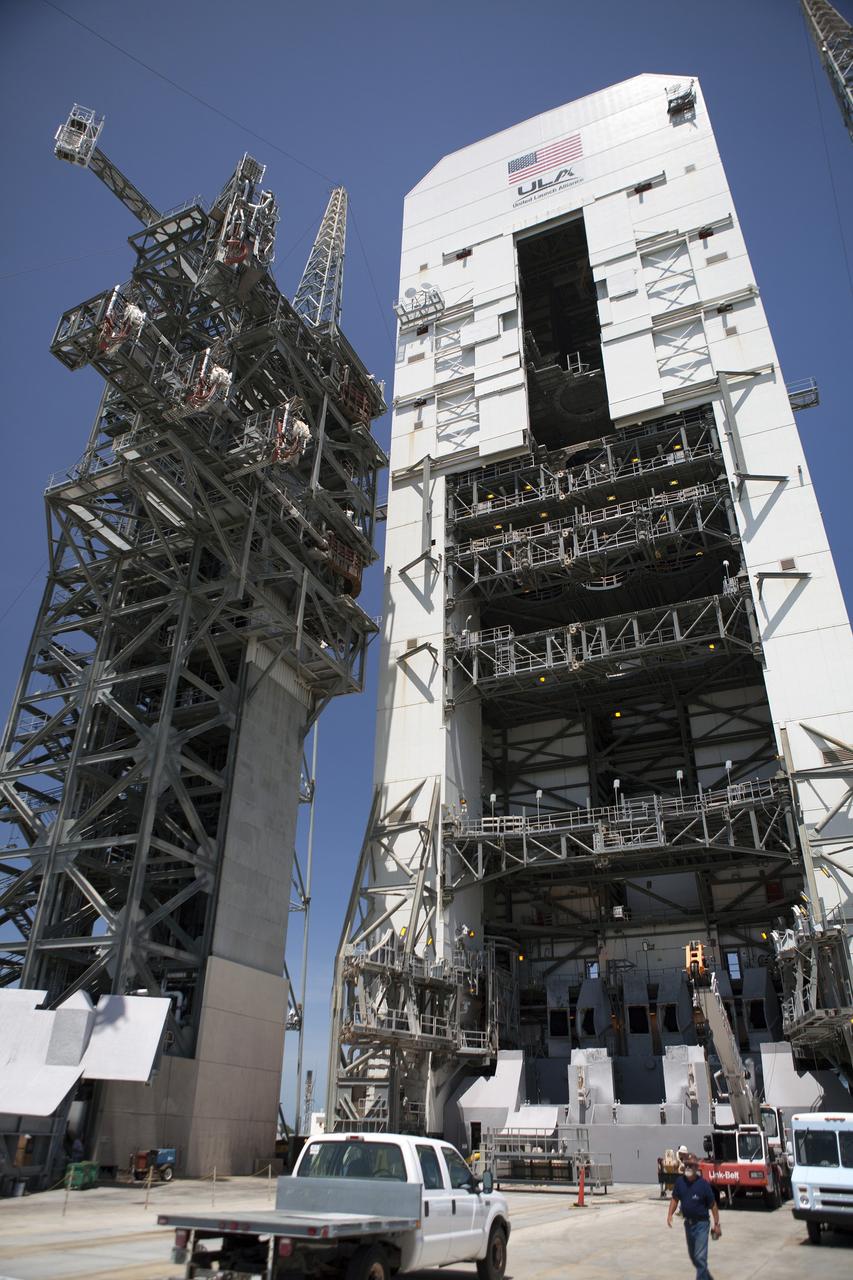
CAPE CANAVERAL, Fla. – The umbilical swing arm for Orion's Exploration Flight Test 1, or EFT-1, has been attached to the uppermost location on the fixed umbilical tower at Space Launch Complex 37 at Cape Canaveral Air Force Station in Florida. All three swing arms on the tower will undergo tests to confirm that they are operating correctly. The uppermost swing arm will carry umbilicals that will be mated to Orion's launch abort system and environmental control system. During launch, all three umbilicals will pull away from Orion and the United Launch Alliance Delta IV Heavy rocket at T-0. During the EFT-1 mission, Orion will travel farther into space than any human spacecraft has gone in more than 40 years. The data gathered during the flight will influence design decisions, validate existing computer models and innovative new approaches to space systems development, as well as reduce overall mission risks and costs for later Orion flights. Liftoff of Orion on its first flight test is planned for fall 2014. Photo credit: NASA/Daniel Casper
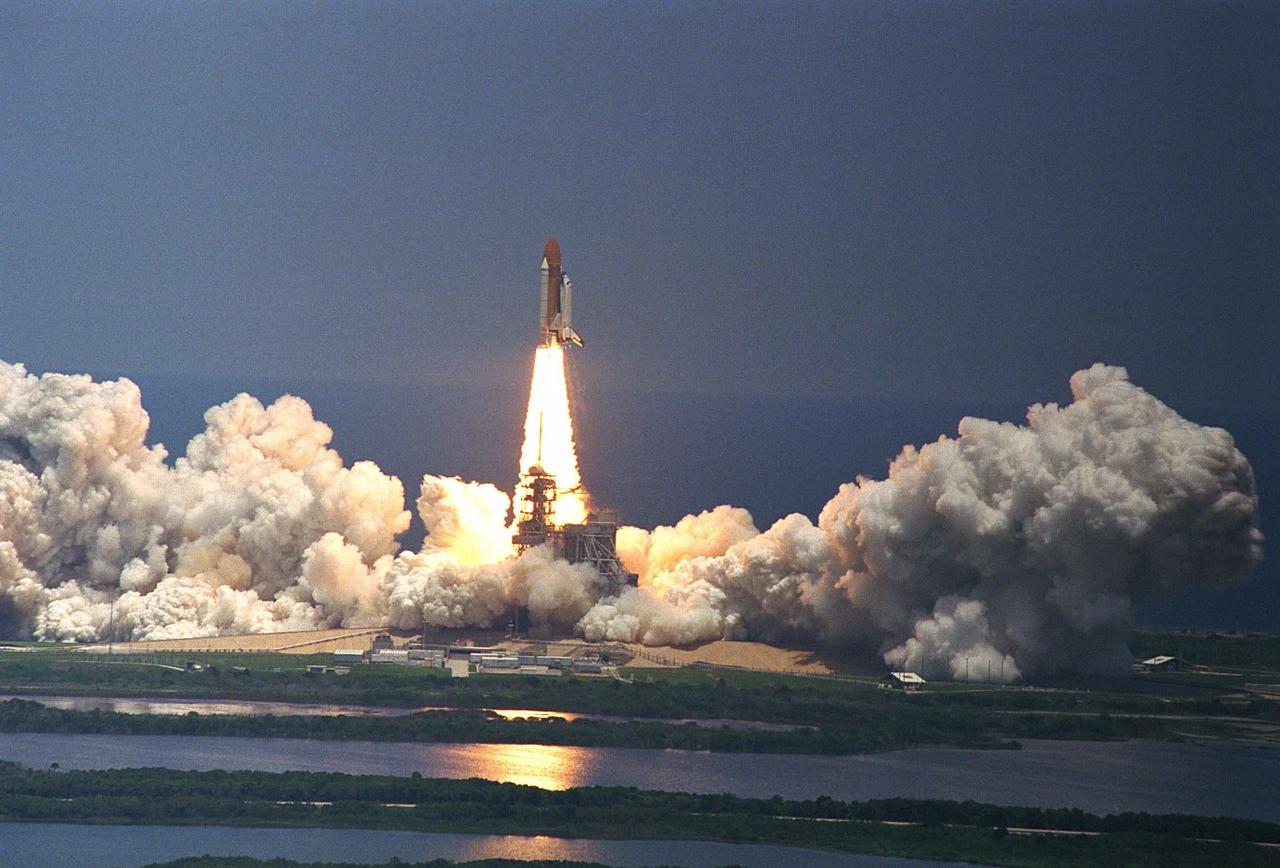
KENNEDY SPACE CENTER, Fla. -- The Space Shuttle Columbia soars from Launch Pad 39A at 2:02 p.m. EDT July 1 to begin the 16-day STS-94 Microgravity Science Laboratory-1 (MSL-1) mission. The launch window was opened 47 minutes earlier than the originally scheduled time of 2:37 p.m. to improve the opportunity to lift off before Florida summer rain showers reached the space center. The crew members are Mission Commander James D. Halsell Jr.; Pilot Susan L. Still; Payload Commander Janice Voss; Mission Specialists Michael L.Gernhardt and Donald A. Thomas; and Payload Specialists Roger K. Crouch and Gregory T. Linteris. During the space flight, the MSL-1 will be used to test some of the hardware, facilities and procedures that are planned for use on the International Space Station while the flight crew conducts combustion, protein crystal growth and materials processing experiments. Also onboard is the Hitchhiker Cryogenic Flexible Diode (CRYOFD) experiment payload, which is attached to the right side of Columbia’s payload bay. These payloads had previously flown on the STS-83 mission in April, which was cut short after nearly four days because of indications of a faulty fuel cell. STS-94 is a reflight of that mission
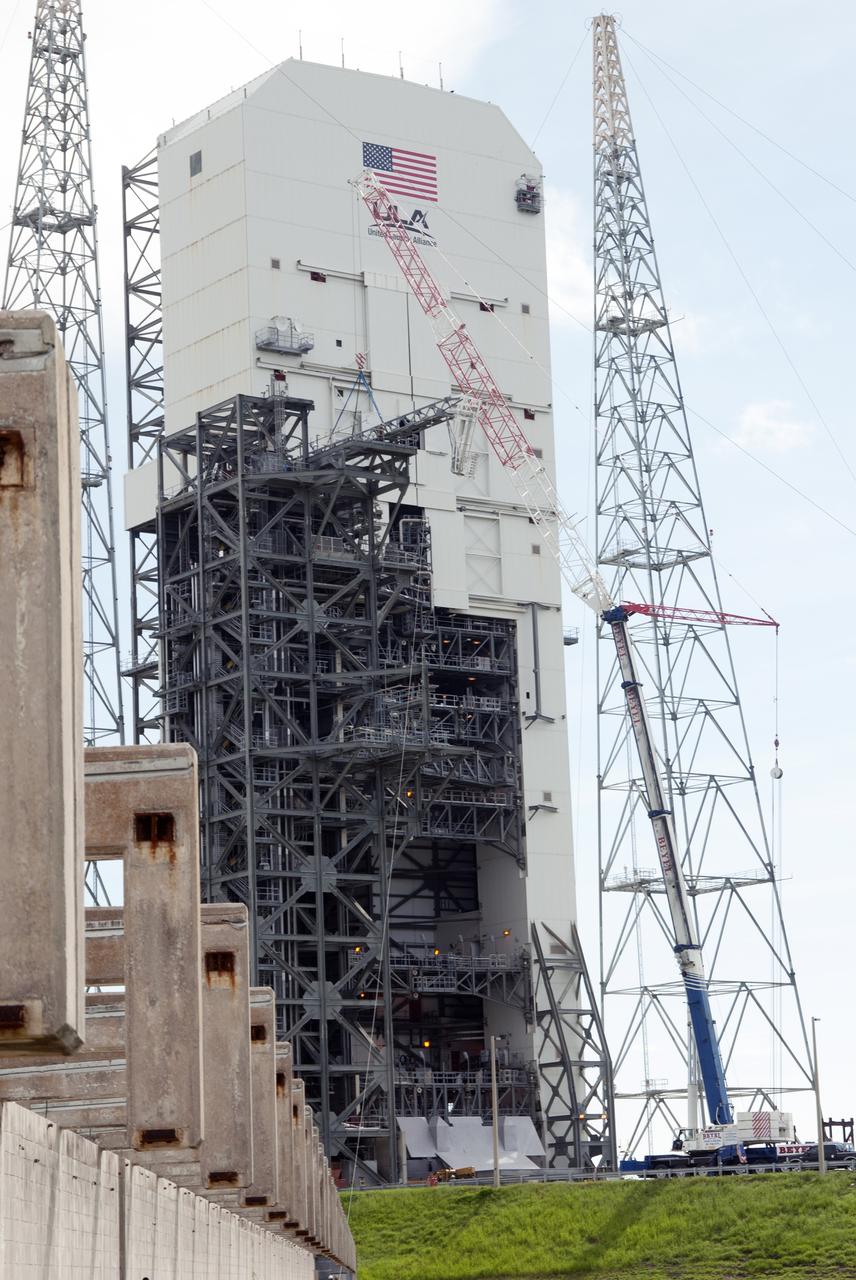
CAPE CANAVERAL, Fla. – A crane brings the umbilical swing arm for Exploration Flight Test 1, or EFT-1, closer for installation on the fixed umbilical tower at Space Launch Complex 37 at Cape Canaveral Air Force Station in Florida. The swing arm is the uppermost of three swing arms that will be attached to the fixed umbilical tower. The swing arm will carry umbilicals that will be mated to Orion's launch abort system and environmental control system. During launch, the umbilicals will pull away from Orion and the United Launch Alliance Delta IV Heavy rocket at T-0. During the EFT-1 mission, Orion will travel farther into space than any human spacecraft has gone in more than 40 years. The data gathered during the flight will influence design decisions, validate existing computer models and innovative new approaches to space systems development, as well as reduce overall mission risks and costs for later Orion flights. Liftoff of Orion on its first flight test is planned for fall 2014. Photo credit: NASA/Jim Grossmann
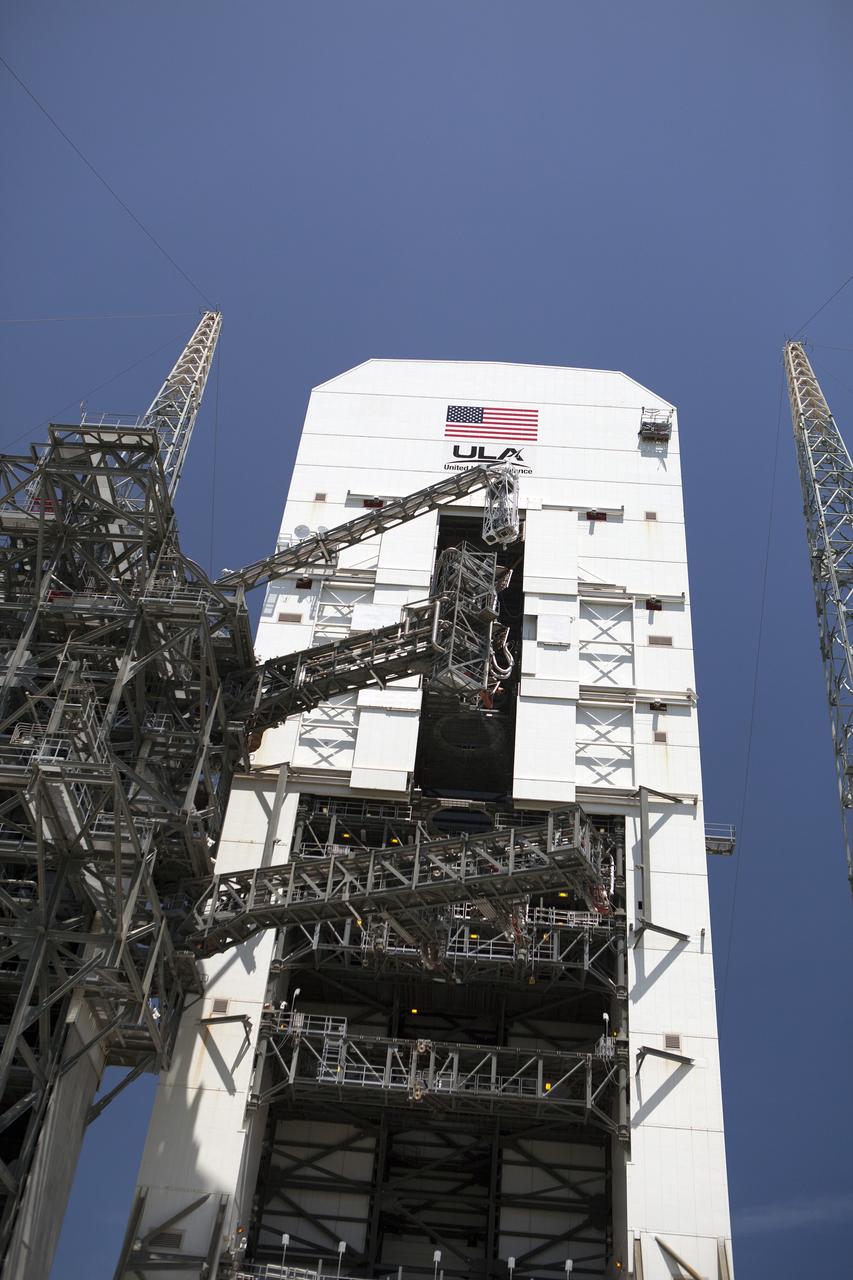
CAPE CANAVERAL, Fla. – The umbilical swing arm for Orion's Exploration Flight Test 1, or EFT-1, has been attached to the uppermost location on the fixed umbilical tower at Space Launch Complex 37 at Cape Canaveral Air Force Station in Florida. All three swing arms on the tower are undergoing tests to confirm that they are operating correctly. They are being swung out and closer to the Vertical Integration Facility at the pad. The uppermost swing arm will carry umbilicals that will be mated to Orion's launch abort system and environmental control system. During launch, all three umbilicals will pull away from Orion and the United Launch Alliance Delta IV Heavy rocket at T-0. During the EFT-1 mission, Orion will travel farther into space than any human spacecraft has gone in more than 40 years. The data gathered during the flight will influence design decisions, validate existing computer models and innovative new approaches to space systems development, as well as reduce overall mission risks and costs for later Orion flights. Liftoff of Orion on its first flight test is planned for fall 2014. Photo credit: NASA/Daniel Casper
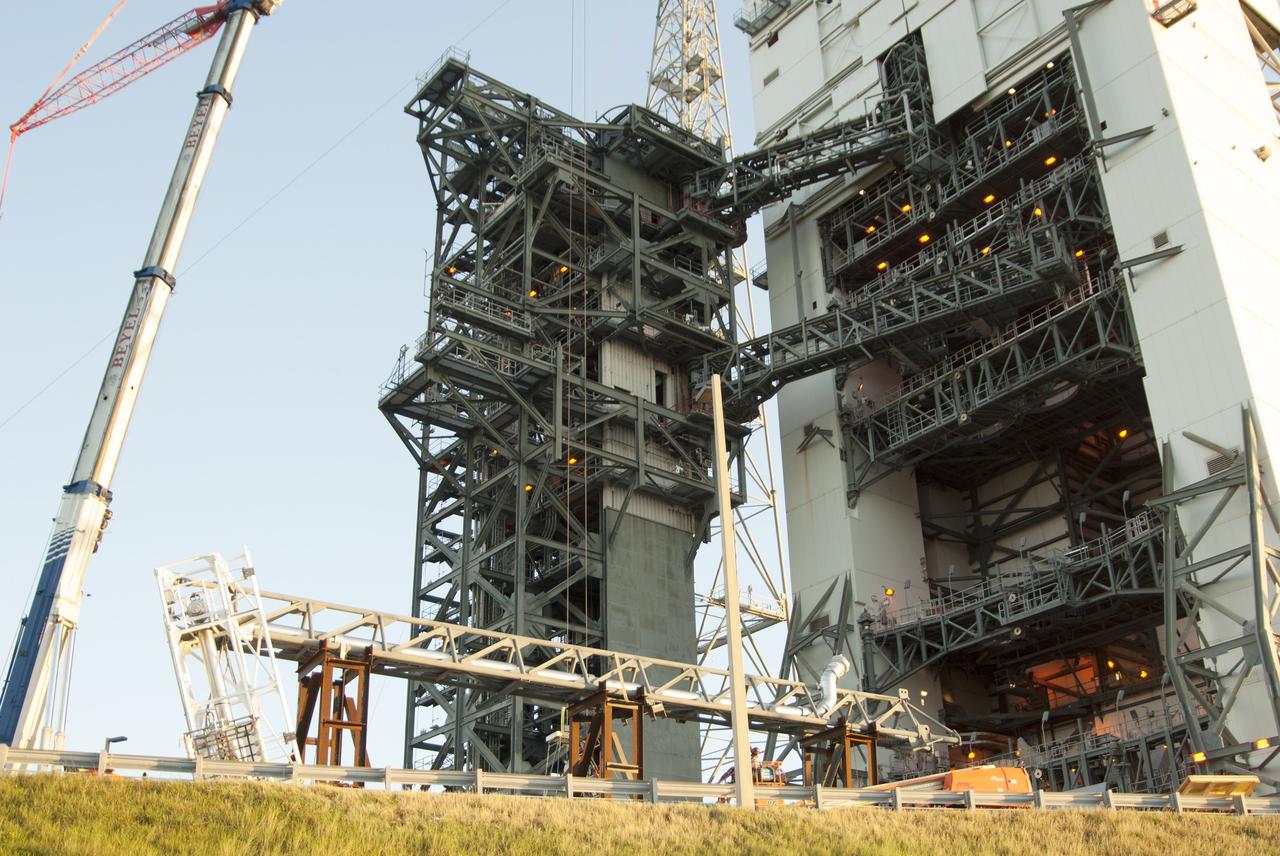
CAPE CANAVERAL, Fla. – The umbilical swing arm for Exploration Flight Test 1, or EFT-1, arrives at the launch pad at Space Launch Complex 37 at Cape Canaveral Air Force Station in Florida. The swing arm is the uppermost of three swing arms that will be attached to the fixed umbilical tower on the launch pad. The swing arm will carry umbilicals that will be mated to Orion's launch abort system and environmental control system. During launch, the umbilicals will pull away from Orion and the United Launch Alliance Delta IV Heavy rocket at T-0. During the EFT-1 mission, Orion will travel farther into space than any human spacecraft has gone in more than 40 years. The data gathered during the flight will influence design decisions, validate existing computer models and innovative new approaches to space systems development, as well as reduce overall mission risks and costs for later Orion flights. Liftoff of Orion on its first flight test is planned for fall 2014. Photo credit: NASA/Jim Grossmann
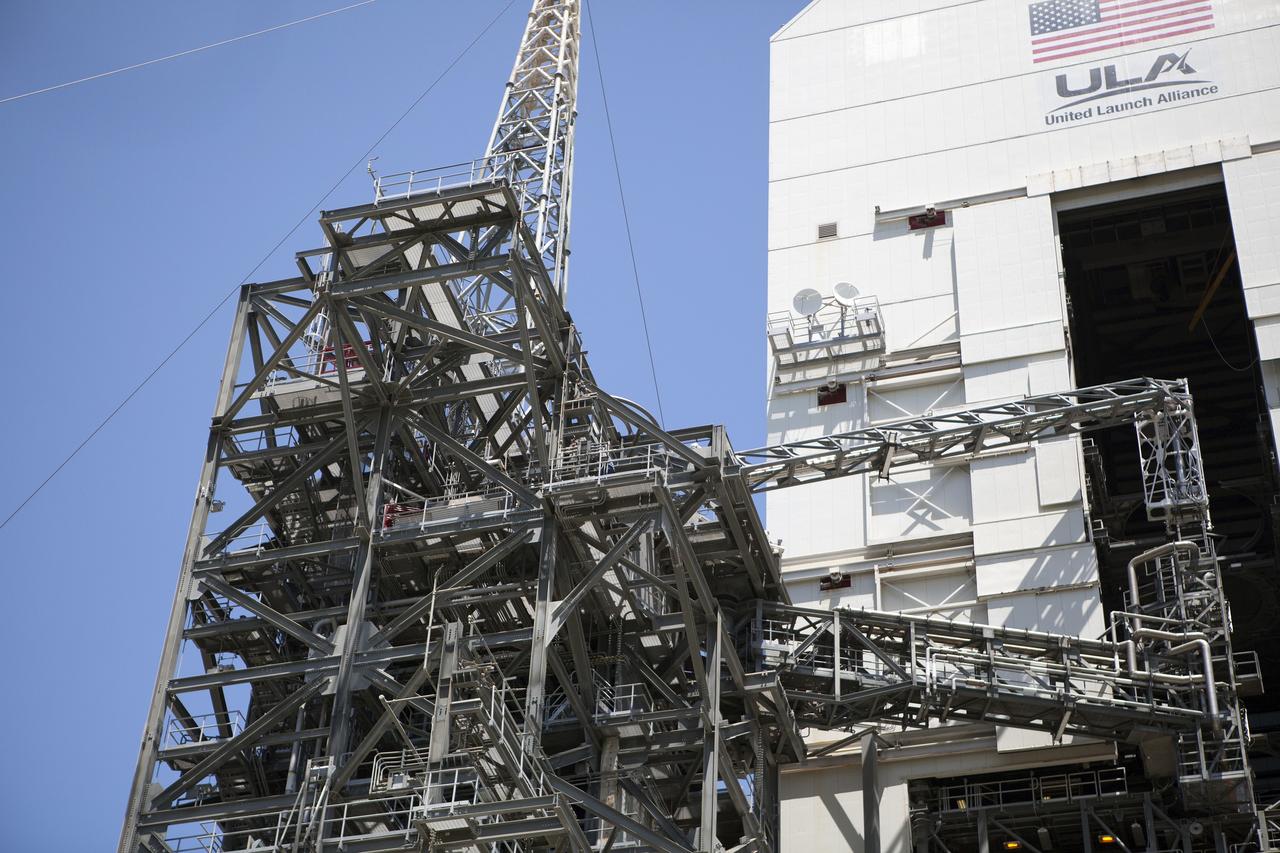
CAPE CANAVERAL, Fla. – The umbilical swing arm for Orion's Exploration Flight Test 1, or EFT-1, has been attached to the uppermost location on the fixed umbilical tower at Space Launch Complex 37 at Cape Canaveral Air Force Station in Florida. The swing arm is undergoing a test to confirm that it is operating correcting. During the test, the arm was swung out and closer to the Vertical Integration Facility at the pad. The uppermost swing arm will carry umbilicals that will be mated to Orion's launch abort system and environmental control system. During launch, all three umbilicals will pull away from Orion and the United Launch Alliance Delta IV Heavy rocket at T-0. During the EFT-1 mission, Orion will travel farther into space than any human spacecraft has gone in more than 40 years. The data gathered during the flight will influence design decisions, validate existing computer models and innovative new approaches to space systems development, as well as reduce overall mission risks and costs for later Orion flights. Liftoff of Orion on its first flight test is planned for fall 2014. Photo credit: NASA/Daniel Casper
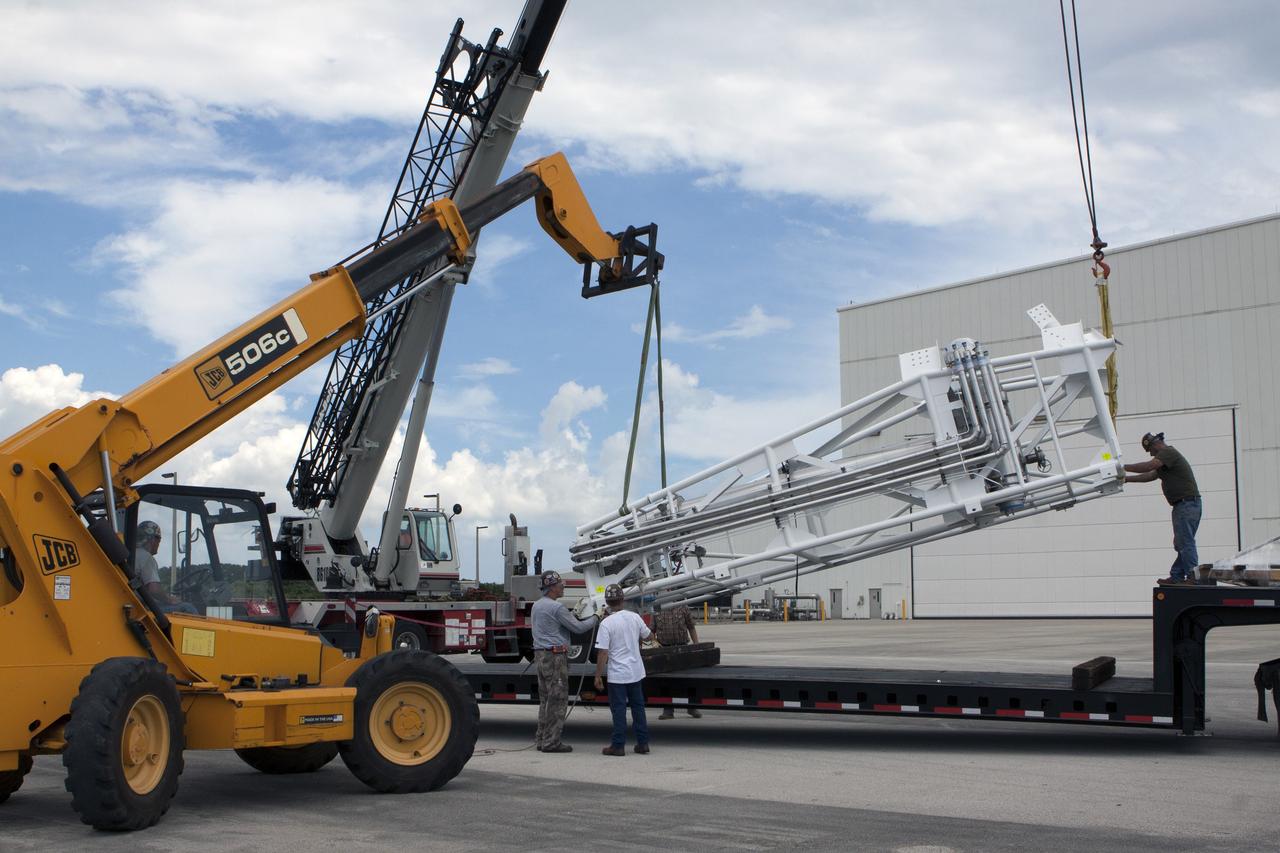
CAPE CANAVERAL, Fla. – Part of the umbilical swing arm for Exploration Flight Test 1, or EFT-1, arrives at the Horizontal Integration Facility near Space Launch Complex 37 at Cape Canaveral Air Force Station in Florida and is being lifted by crane from its transporter. The swing arm is the uppermost of three swing arms that will be attached to the fixed umbilical tower on the launch pad. The swing arm will carry umbilicals that will be mated to Orion's launch abort system and environmental control system. During launch, the umbilicals will pull away from Orion and the United Launch Alliance Delta IV Heavy rocket at T-0. During the EFT-1 mission, Orion will travel farther into space than any human spacecraft has gone in more than 40 years. The data gathered during the flight will influence design decisions, validate existing computer models and innovative new approaches to space systems development, as well as reduce overall mission risks and costs for later Orion flights. Liftoff of Orion on its first flight test is planned for fall 2014. Photo credit: NASA/Kim Shiflett
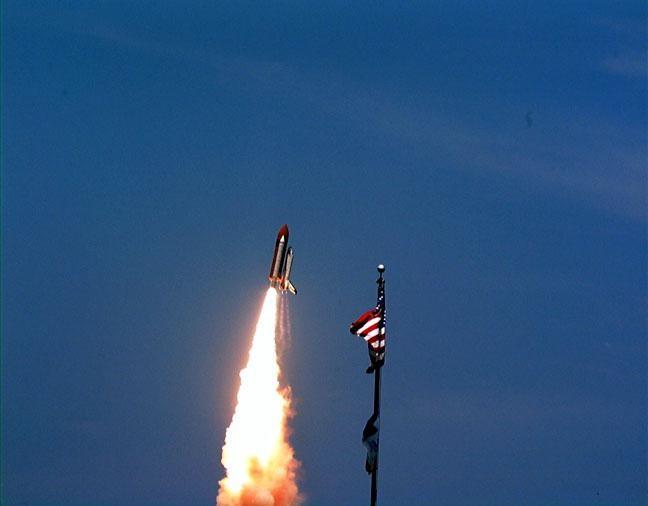
The Space Shuttle Columbia soars from Launch Pad 39A at 2:02 p.m. EDT July 1 to begin the 16-day STS-94 Microgravity Science Laboratory-1 (MSL-1) mission. The launch window was opened 47 minutes earlier than the originally scheduled time of 2:37 p.m. to improve the opportunity to lift off before Florida summer rain showers reached the space center. The crew members are Mission Commander James D. Halsell Jr.; Pilot Susan L. Still; Payload Commander Janice Voss; Mission Specialists Michael L.Gernhardt and Donald A. Thomas; and Payload Specialists Roger K. Crouch and Gregory T. Linteris. During the space flight, the MSL-1 will be used to test some of the hardware, facilities and procedures that are planned for use on the International Space Station while the flight crew conducts combustion, protein crystal growth and materials processing experiments. Also onboard is the Hitchhiker Cryogenic Flexible Diode (CRYOFD) experiment payload, which is attached to the right side of Columbia’s payload bay. These payloads had previously flown on the STS-83 mission in April, which was cut short after nearly four days because of indications of a faulty fuel cell. STS-94 is a reflight of that mission

CAPE CANAVERAL, Fla. – A crane brings the umbilical swing arm for Exploration Flight Test 1, or EFT-1, closer for installation on the fixed umbilical tower at Space Launch Complex 37 at Cape Canaveral Air Force Station in Florida. The swing arm is the uppermost of three swing arms that will be attached to the fixed umbilical tower. The swing arm will carry umbilicals that will be mated to Orion's launch abort system and environmental control system. During launch, the umbilicals will pull away from Orion and the United Launch Alliance Delta IV Heavy rocket at T-0. During the EFT-1 mission, Orion will travel farther into space than any human spacecraft has gone in more than 40 years. The data gathered during the flight will influence design decisions, validate existing computer models and innovative new approaches to space systems development, as well as reduce overall mission risks and costs for later Orion flights. Liftoff of Orion on its first flight test is planned for fall 2014. Photo credit: NASA/Jim Grossmann

James Barrilleaux is the assistant chief pilot for ER-2s in the Flight Crew Branch of NASA's Dryden Flight Research Center, Edwards, California. The ER-2s--civilian variants of the military U-2S reconnaissance aircraft--are part of NASA's Airborne Science program. The ER-2s can carry airborne scientific payloads of up to 2,600 pounds to altitudes of about 70,000 feet to investigate such matters as earth resources, celestial phenomena, atmospheric chemistry and dynamics, and oceanic processes. Barrilleaux has held his current position since February 1998. Barrilleaux joined NASA in 1986 as a U-2/ER-2 pilot with NASA's Airborne Science program at Ames Research Center, Moffett Field, California. He flew both the U-2C (until 1989) and the ER-2 on a wide variety of missions both domestic and international. Barrilleaux flew high-altitude operations over Antarctica in which scientific instruments aboard the ER-2 defined the cause of ozone depletion over the continent, known as the ozone hole. He has also flown the ER-2 over the North Pole. Barrilleaux served for 20 years in the U.S. Air Force before he joined NASA. He completed pilot training at Reese Air Force Base, Lubbock, Texas, in 1966. He flew 120 combat missions as a F-4 fighter pilot over Laos and North Vietnam in 1970 and 1971. He joined the U-2 program in 1974, becoming the commander of an overseas U-2 operation in 1982. In 1983, he became commander of the squadron responsible for training all U-2 pilots and SR-71 crews located at Beale Air Force Base, Marysville, California. He retired from the Air Force as a lieutenant colonel in 1986. On active duty, he flew the U-2, F-4 Phantom, the T-38, T-37, and the T-33. His decorations included two Distinguished Flying Crosses, 12 Air Medals, two Meritorious Service Medals, and other Air Force and South Vietnamese awards. Barrilleaux earned a bachelor of science degree in chemical engineering from Texas A&M University, College Station, in 1964 and a master of science
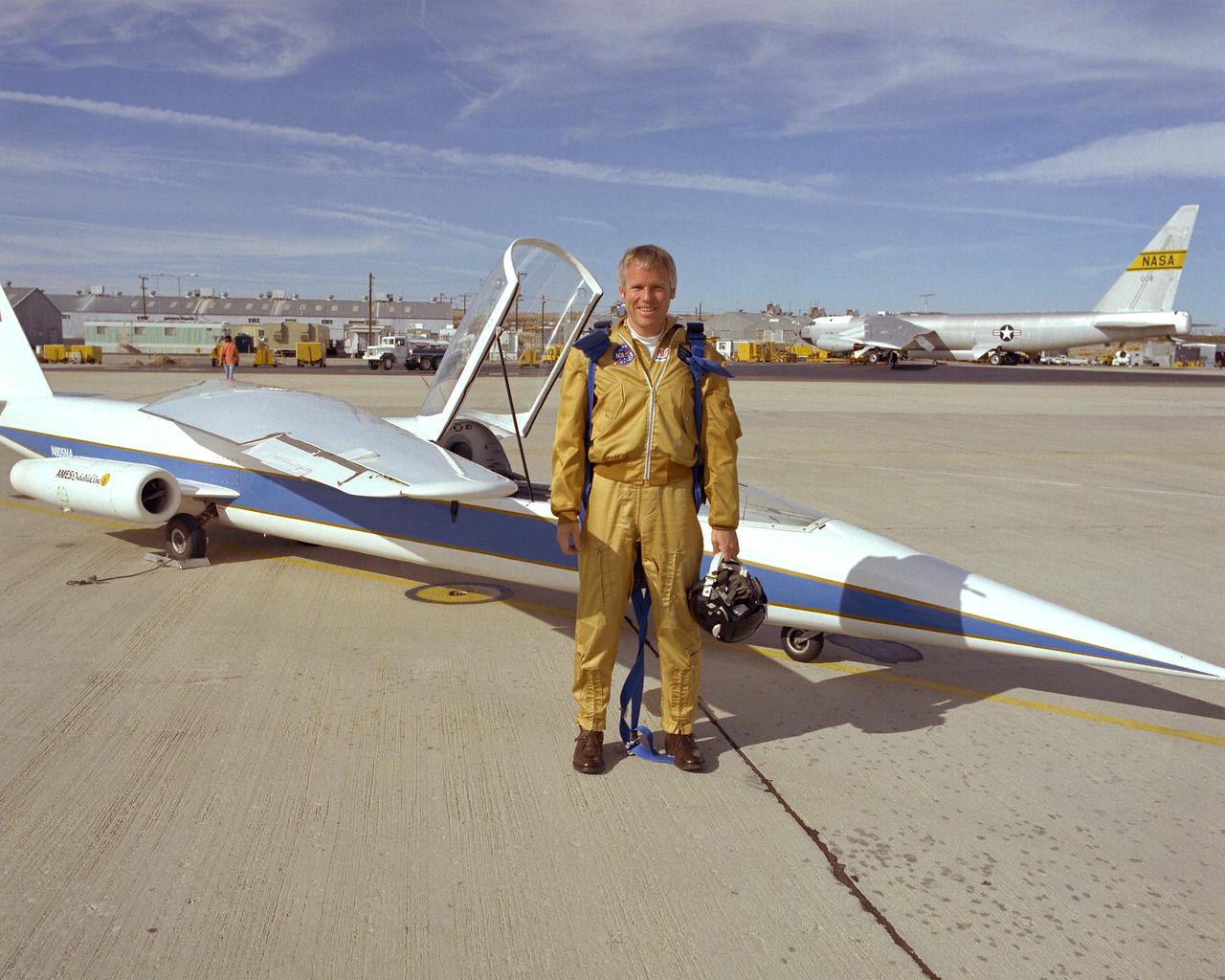
Research pilot Richard E. Gray, standing in front of the AD-1 Oblique Wing research aircraft.