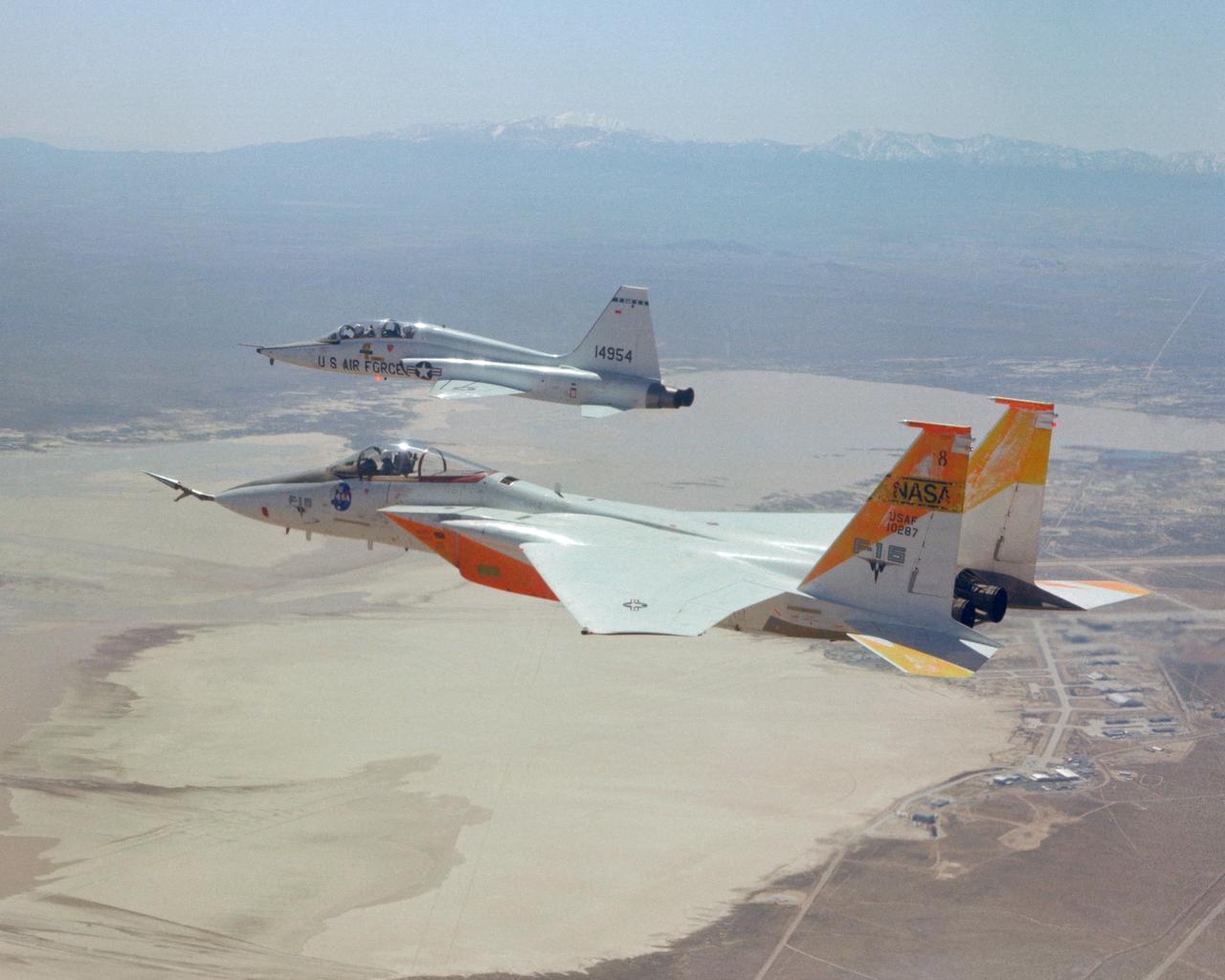
An in-flight photo of the NASA F-15A used to carry a 10 degree cone to collect aerodynamic data to calibrate the data from wind tunnels. Acting as chase for the flight was a NASA T-38 aircraft.
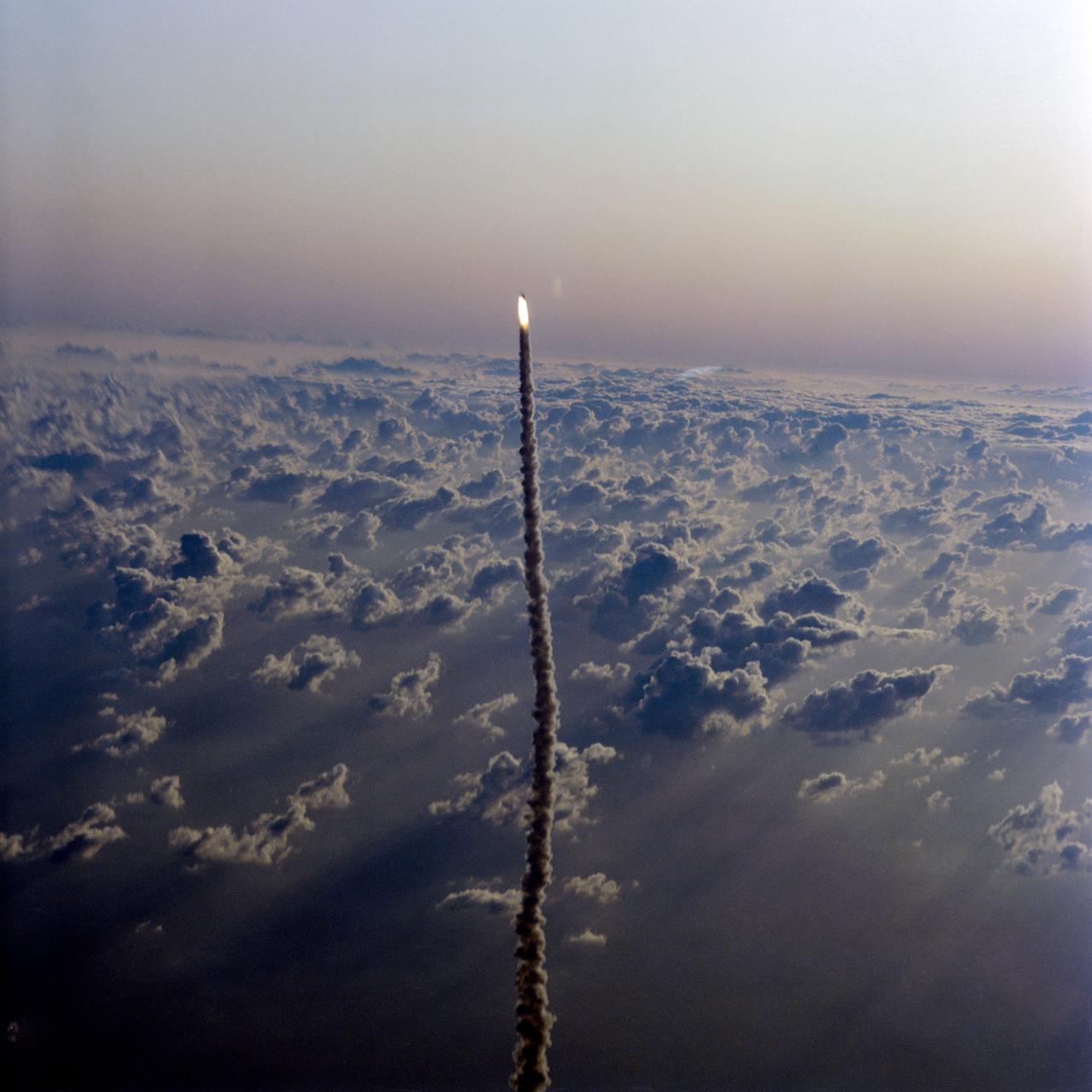
Aerial views of the STS-5 launch from T-38 chase aircraft Nov. 11, 1982. Shuttle Columbia can be seen as a small figure trailed by a line of smoke.
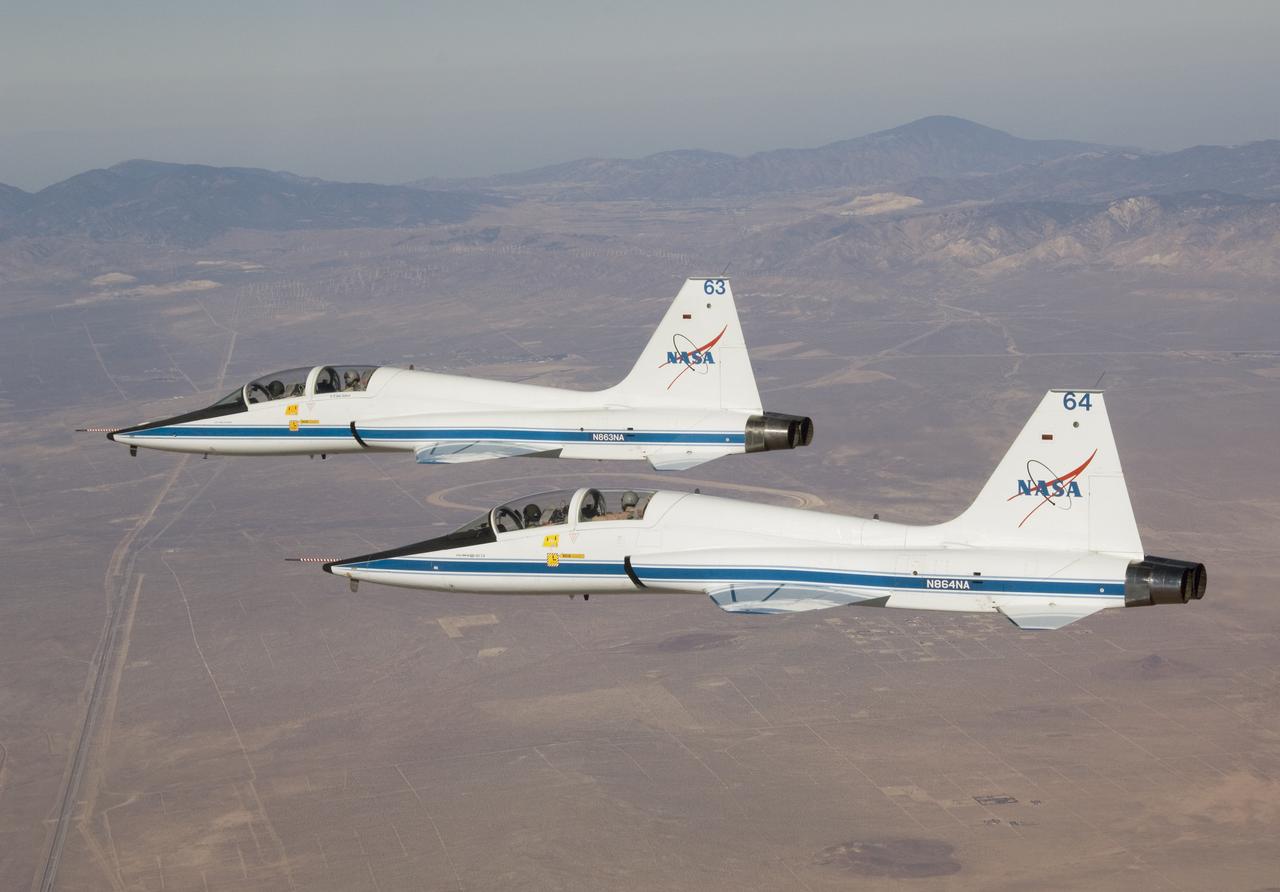
NASA Dryden Flight Research Center's two T-38A Talon mission support aircraft flew together for the first time on Sept. 26, 2007 while conducting pitot-static airspeed calibration checks during routine pilot proficiency flights. The two aircraft, flown by NASA research pilots Kelly Latimer and Frank Batteas, joined up with a NASA Dryden F/A-18 flown by NASA research pilot Dick Ewers to fly the airspeed calibrations at several speeds and altitudes that would be flown by the Stratospheric Observatory for Infrared Astronomy (SOFIA) Boeing 747SP during its initial flight test phase. The T-38s, along with F/A-18s, serve in a safety chase role during those test missions, providing critical instrument and visual monitoring for the flight test series.
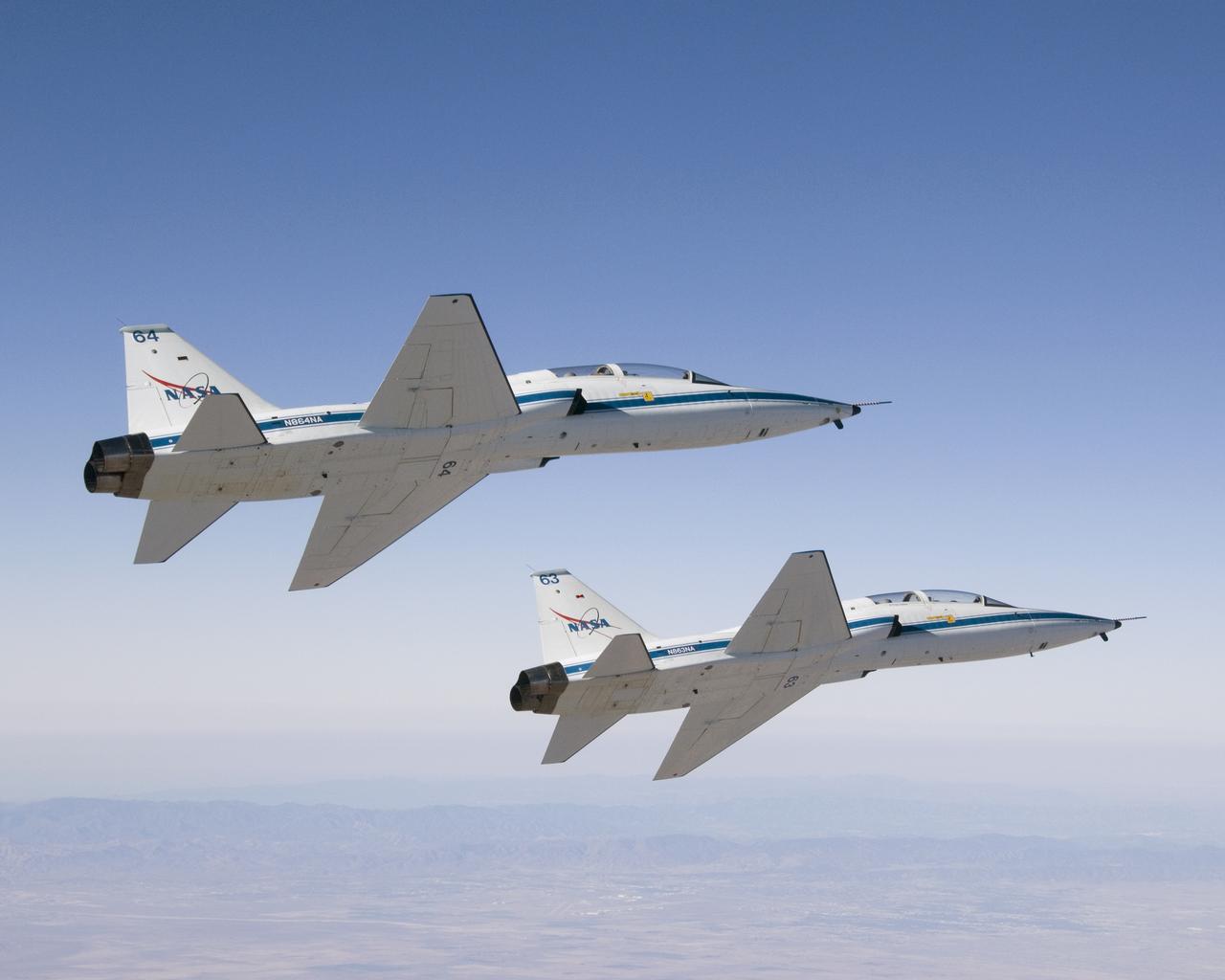
NASA Dryden Flight Research Center's two T-38A Talon mission support aircraft flew together for the first time on Sept. 26, 2007 while conducting pitot-static airspeed calibration checks during routine pilot proficiency flights. The two aircraft, flown by NASA research pilots Kelly Latimer and Frank Batteas, joined up with a NASA Dryden F/A-18 flown by NASA research pilot Dick Ewers to fly the airspeed calibrations at several speeds and altitudes that would be flown by the Stratospheric Observatory for Infrared Astronomy (SOFIA) Boeing 747SP during its initial flight test phase. The T-38s, along with F/A-18s, serve in a safety chase role during those test missions, providing critical instrument and visual monitoring for the flight test series.
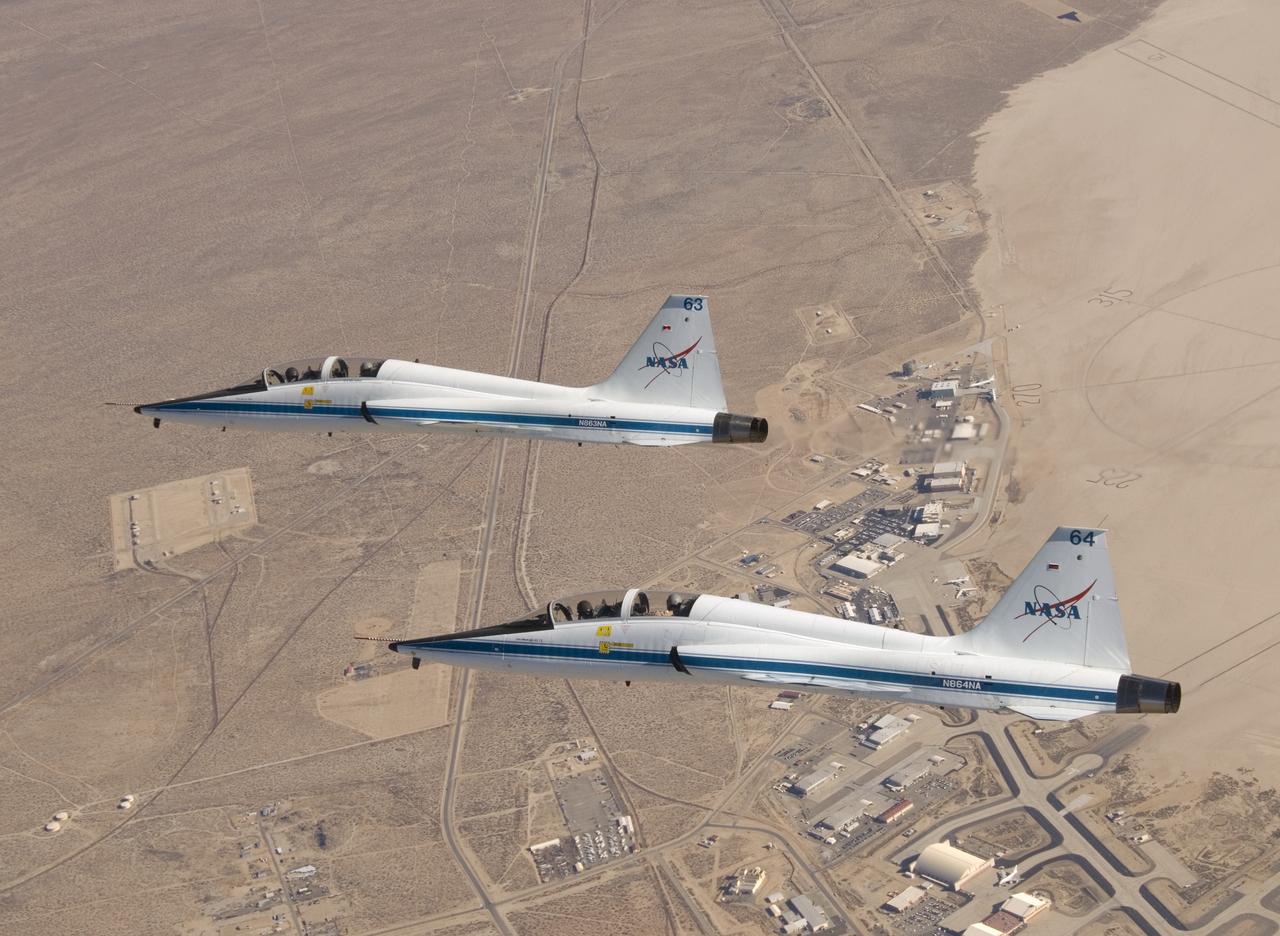
NASA Dryden Flight Research Center's two T-38A Talon mission support aircraft flew together for the first time on Sept. 26, 2007 while conducting pitot-static airspeed calibration checks during routine pilot proficiency flights. The two aircraft, flown by NASA research pilots Kelly Latimer and Frank Batteas, joined up with a NASA Dryden F/A-18 flown by NASA research pilot Dick Ewers to fly the airspeed calibrations at several speeds and altitudes that would be flown by the Stratospheric Observatory for Infrared Astronomy (SOFIA) Boeing 747SP during its initial flight test phase. The T-38s, along with F/A-18s, serve in a safety chase role during those test missions, providing critical instrument and visual monitoring for the flight test series.
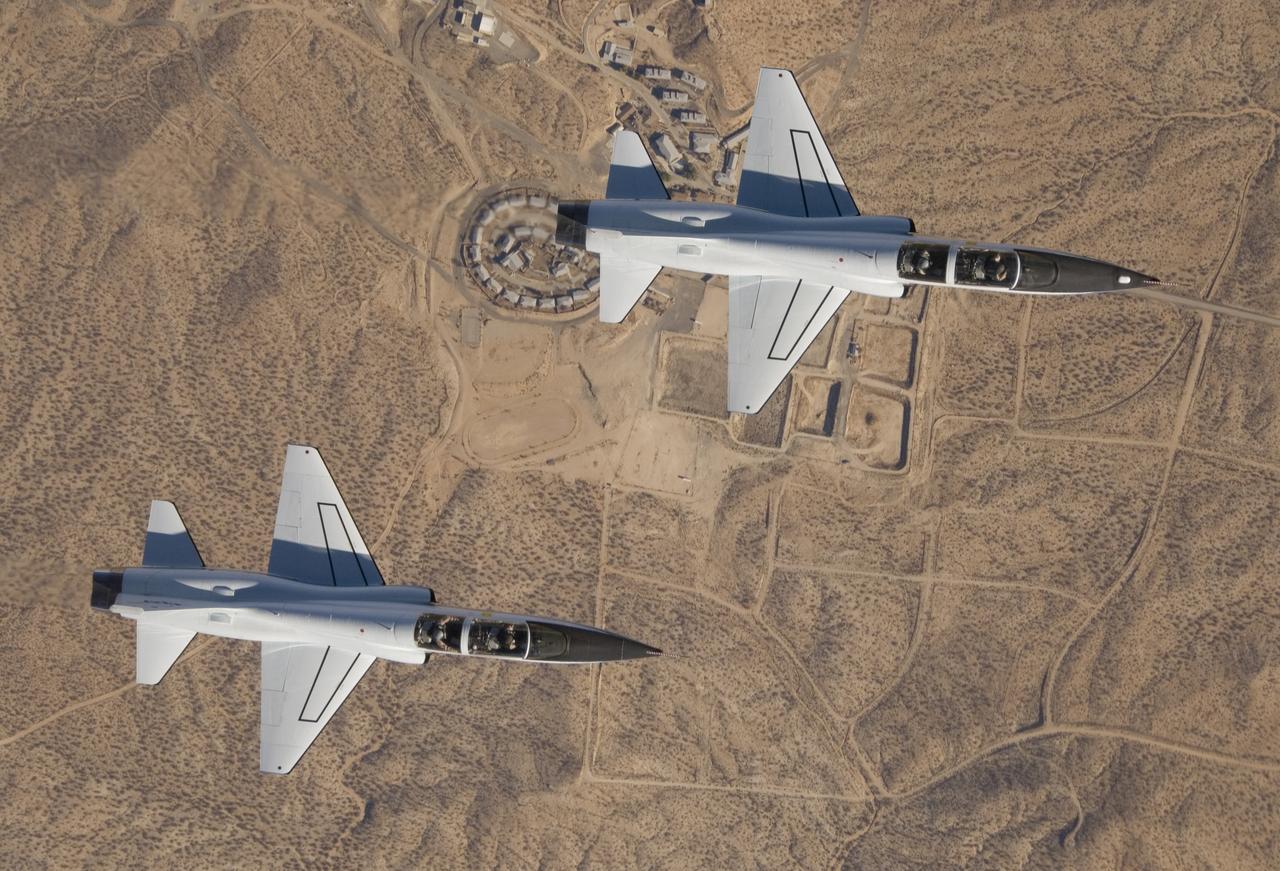
NASA Dryden Flight Research Center's two T-38A Talon mission support aircraft flew together for the first time on Sept. 26, 2007 while conducting pitot-static airspeed calibration checks during routine pilot proficiency flights. The two aircraft, flown by NASA research pilots Kelly Latimer and Frank Batteas, joined up with a NASA Dryden F/A-18 flown by NASA research pilot Dick Ewers to fly the airspeed calibrations at several speeds and altitudes that would be flown by the Stratospheric Observatory for Infrared Astronomy (SOFIA) Boeing 747SP during its initial flight test phase. The T-38s, along with F/A-18s, serve in a safety chase role during those test missions, providing critical instrument and visual monitoring for the flight test series.
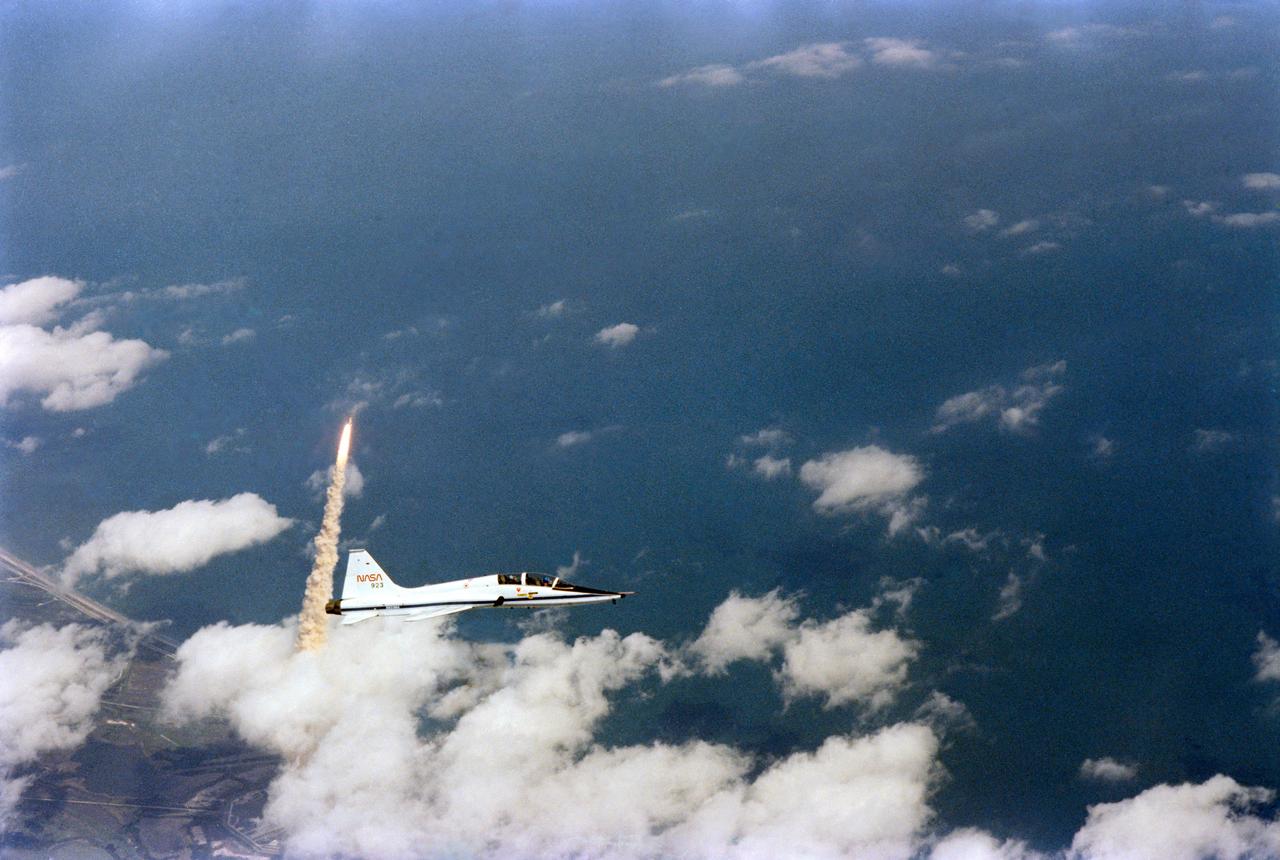
Air-to-air views of STS-3 Launch from T-38 Chase Aircraft. KSC, FL
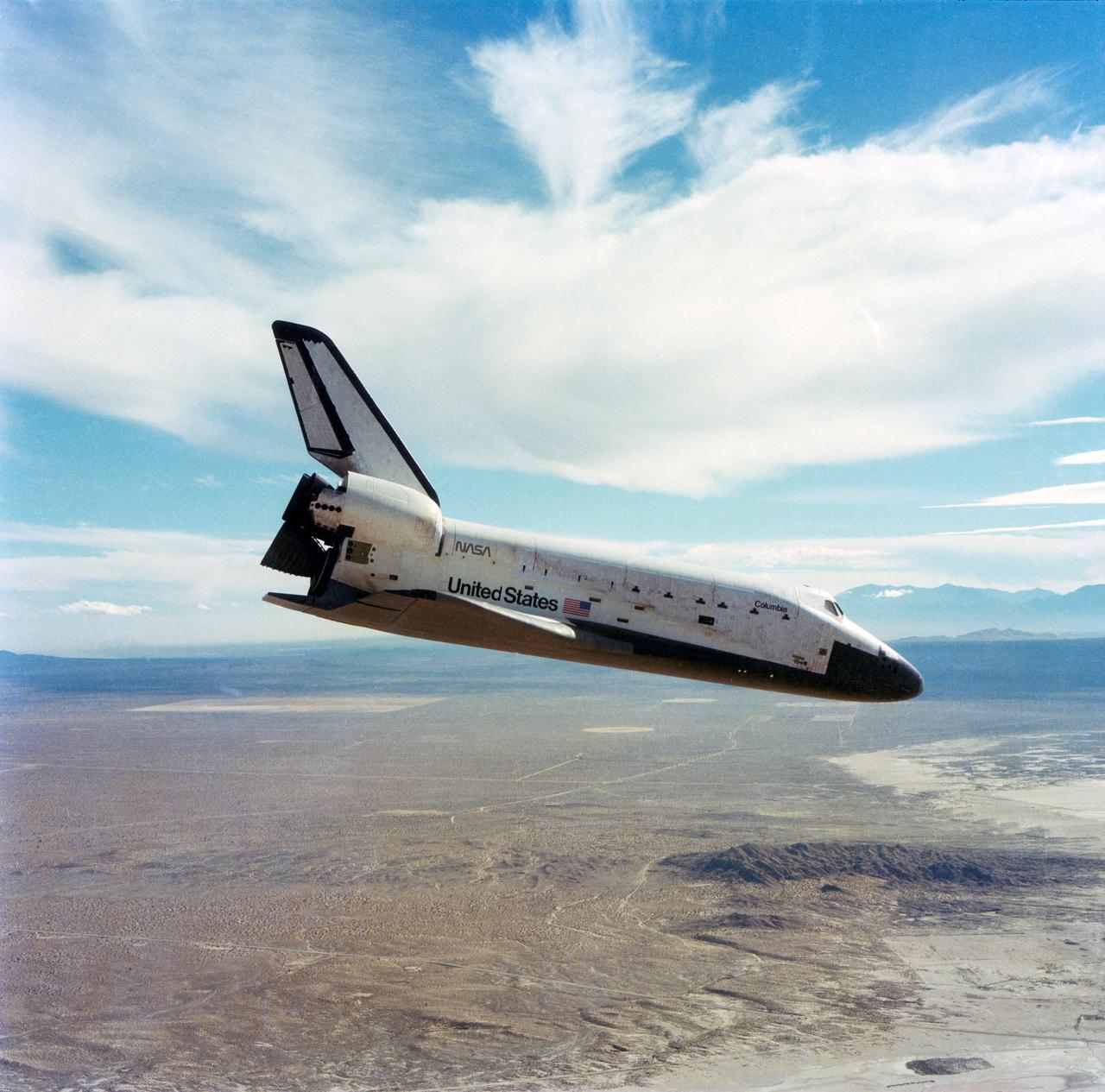
Several views of Columbia in the landing maneuver at the EAFB from T-38 Chase Aircraft and ground views. EAFB, CA
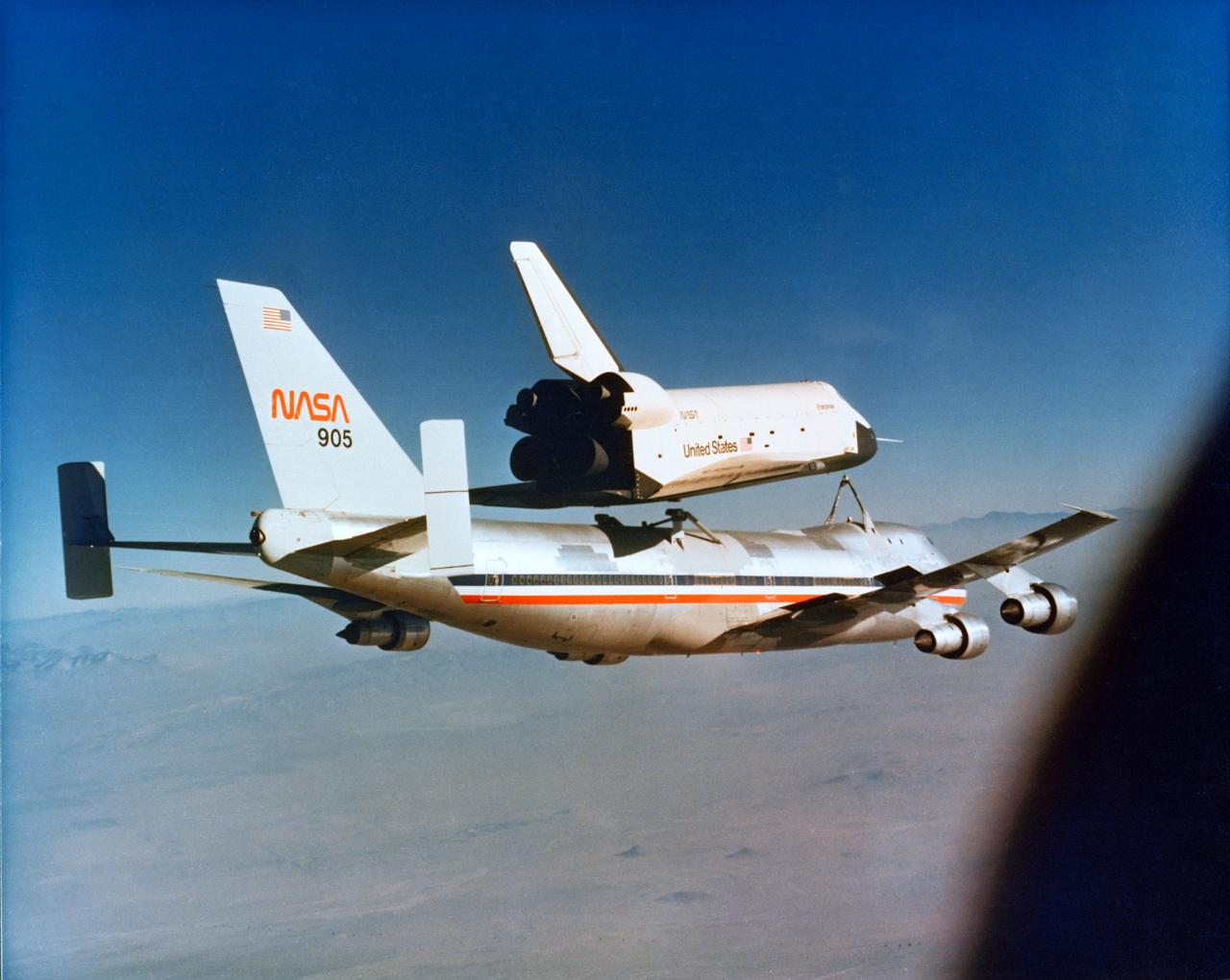
PAO news release material for the 5th and final FF of the ALT series. Precise moment of separation captured by camera from a T-38 chase plane.
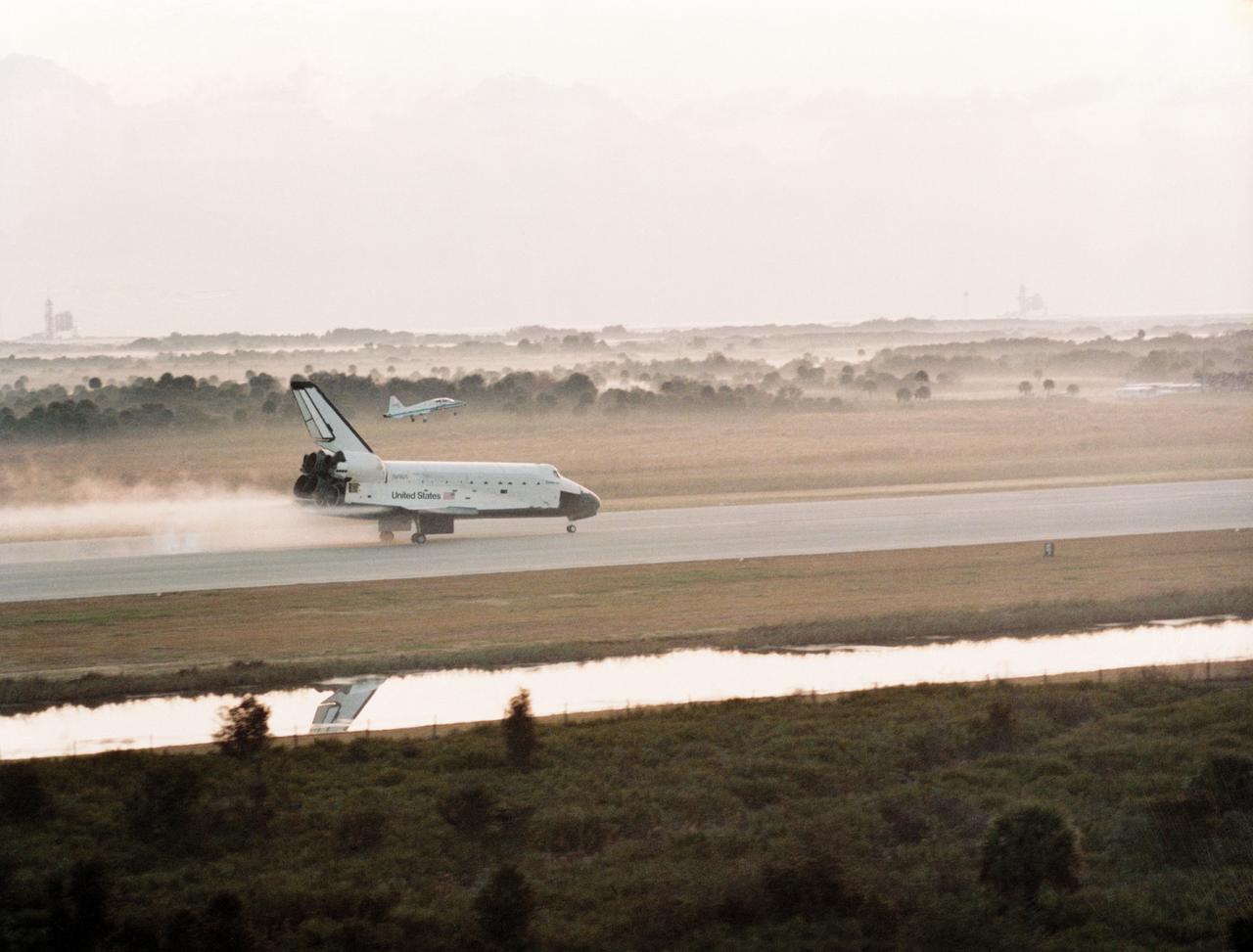
S84-27717 (11 Feb 1984) --- A chase plane gets a "front row" position to view the touchdown of the total landing gear of the Space Shuttle Challenger as the reusable spacecraft makes NASA's first landing on the runway at the Kennedy Space Center's (KSC) landing facility. This photograph was taken from another T-38 chase plane.
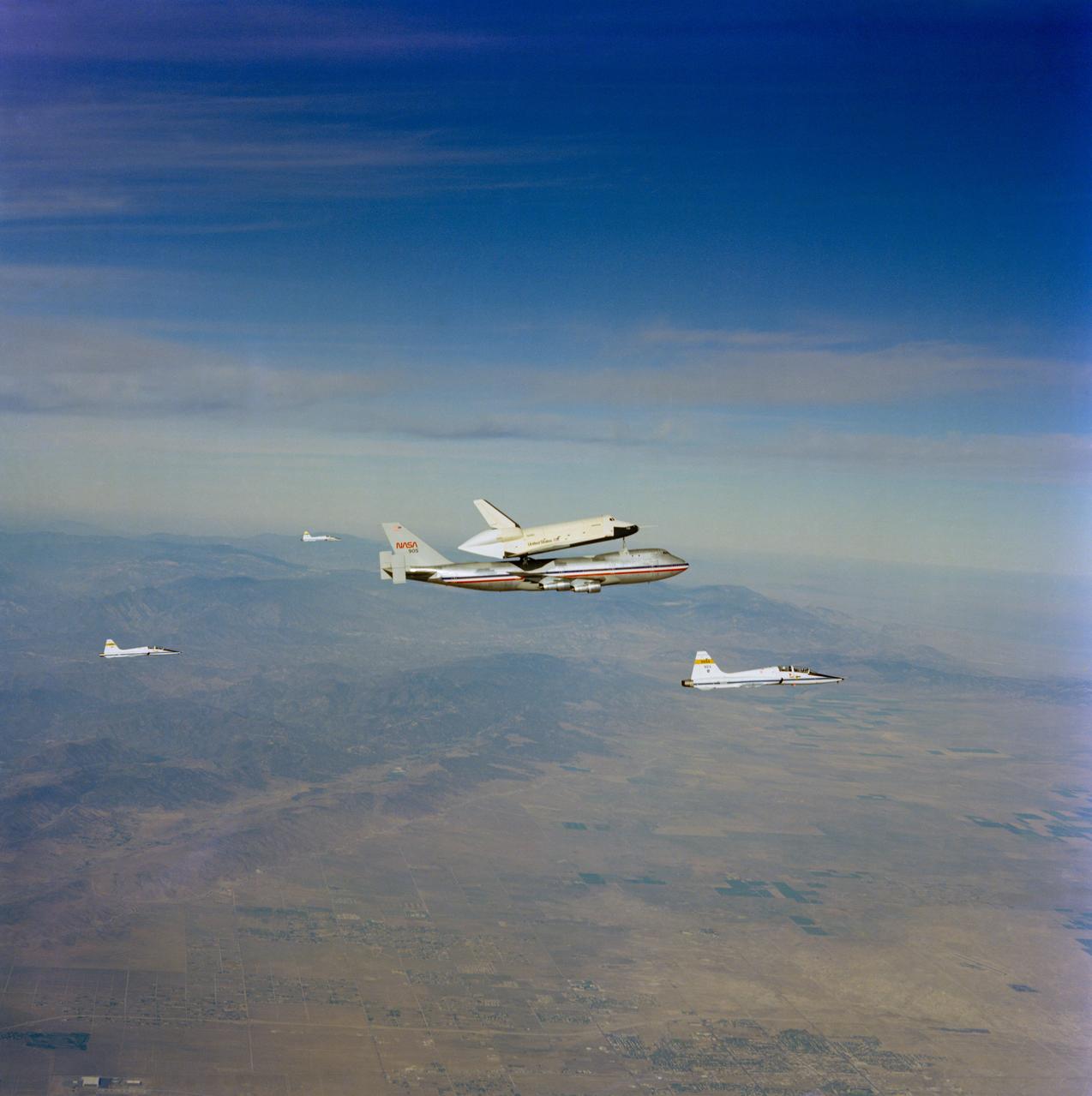
S77-28649 (23 Sept 1977) --- The shuttle Orbiter 101 "Enterprise" sits atop the NASA 747 carrier aircraft in a piggy-back configuration prior to separation for the third free flight of the Shuttle Approach and Landing Tests (ALT) conducted on September 23, 1977, at the Dryden Flight Research Center (DFRC) in Southern California. The crew of the "enterprise" consisted of astronauts Fred W. Haise Jr., commander, and C. Gordon Fullerton, pilot. This photo was shot from one of the T-38 chase planes accompanying the ALT craft. Three other T-38 chase planes are pictured.
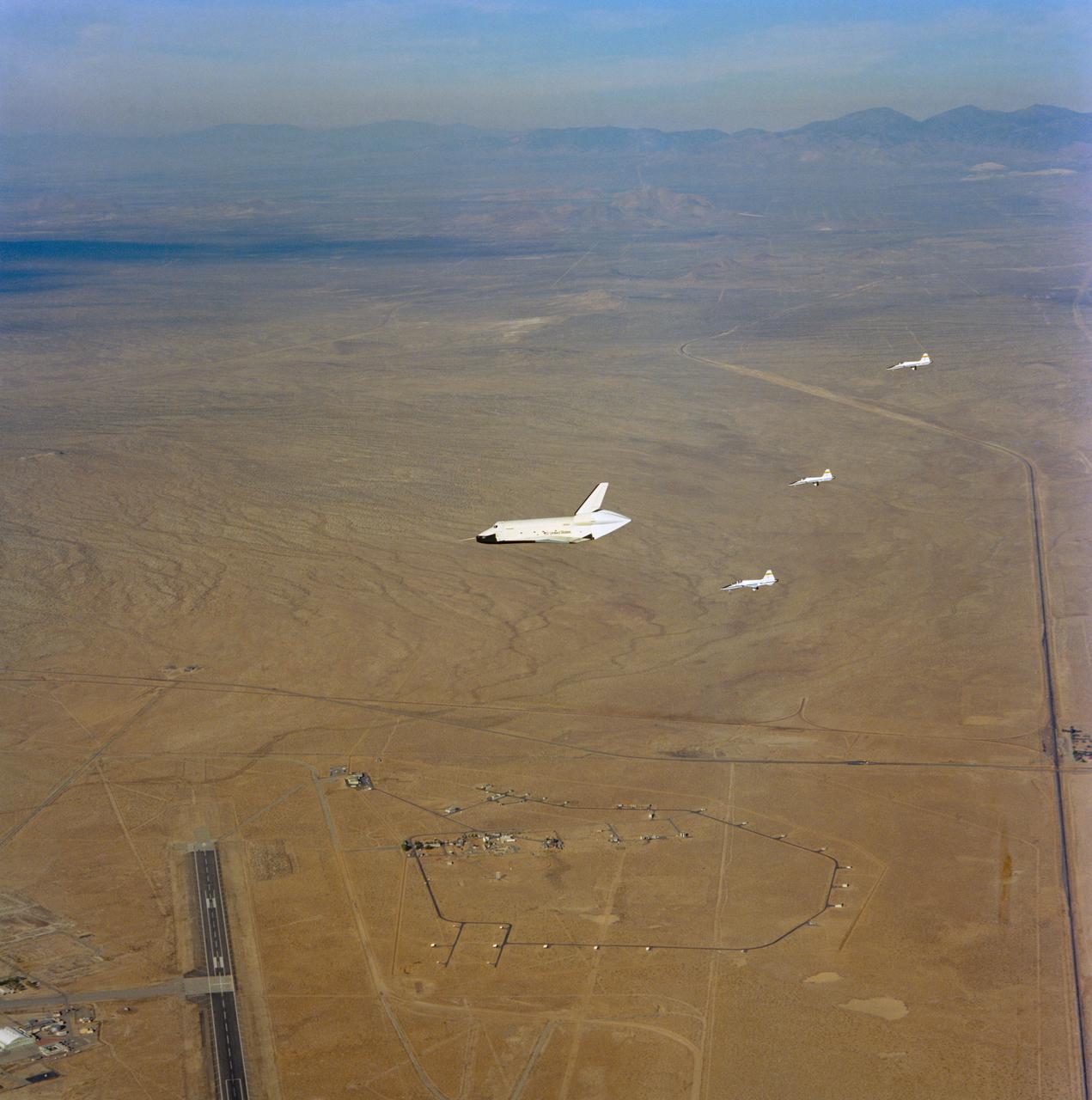
S77-28667 (23 Sept 1977) --- The shuttle Orbiter 101 "Enterprise" soars above the North Base area of Edwards Air Force Base during its five-minute, 34-second unpowered flight, the third of a series of manned Shuttle Approach and Landing Tests (ALT). Moments earlier the "Enterprise" had separated from its 747 carrier aircraft, atop which it sat upon takeoff from the Dryden Flight Research Center (DFRC), with its crew of astronauts Fred W. Haise Jr., commander, and C. Gordon Fullerton, pilot. Three T-38 chase planes follow. This photograph was taken from a fourth T-38 chase plane.
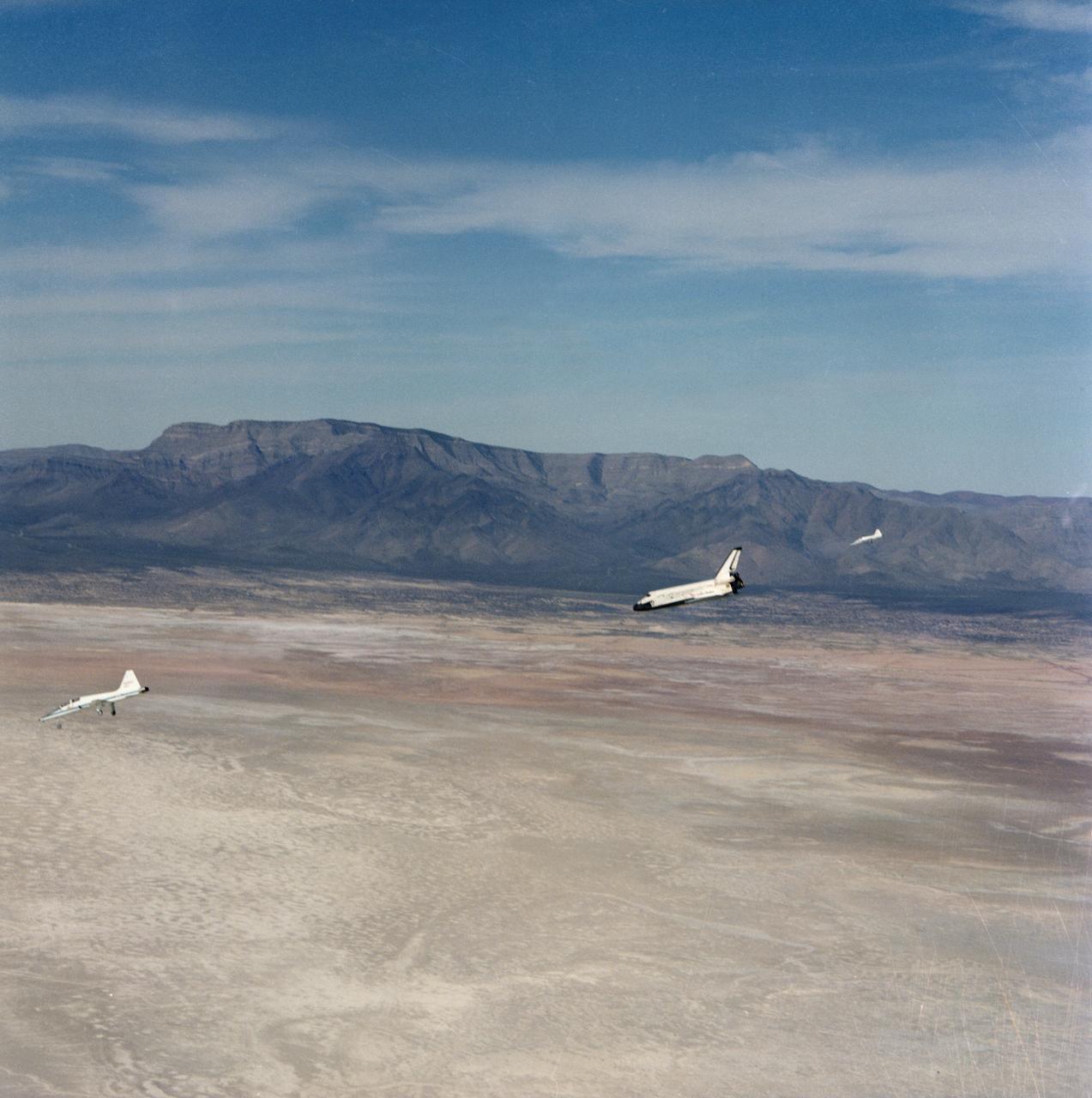
S82-28840 (30 March 1982) --- T-38 chase planes remain relatively close to the NASA reusable space shuttle Columbia (STS-3) as it heads for a completion of an eight-day mission on the White Sands Missile Range's Northrup strip. Astronauts Jack R. Lousma and C. Gordon Fullerton were aboard the craft. This view was photographed from another T-38. Photo credit: NASA
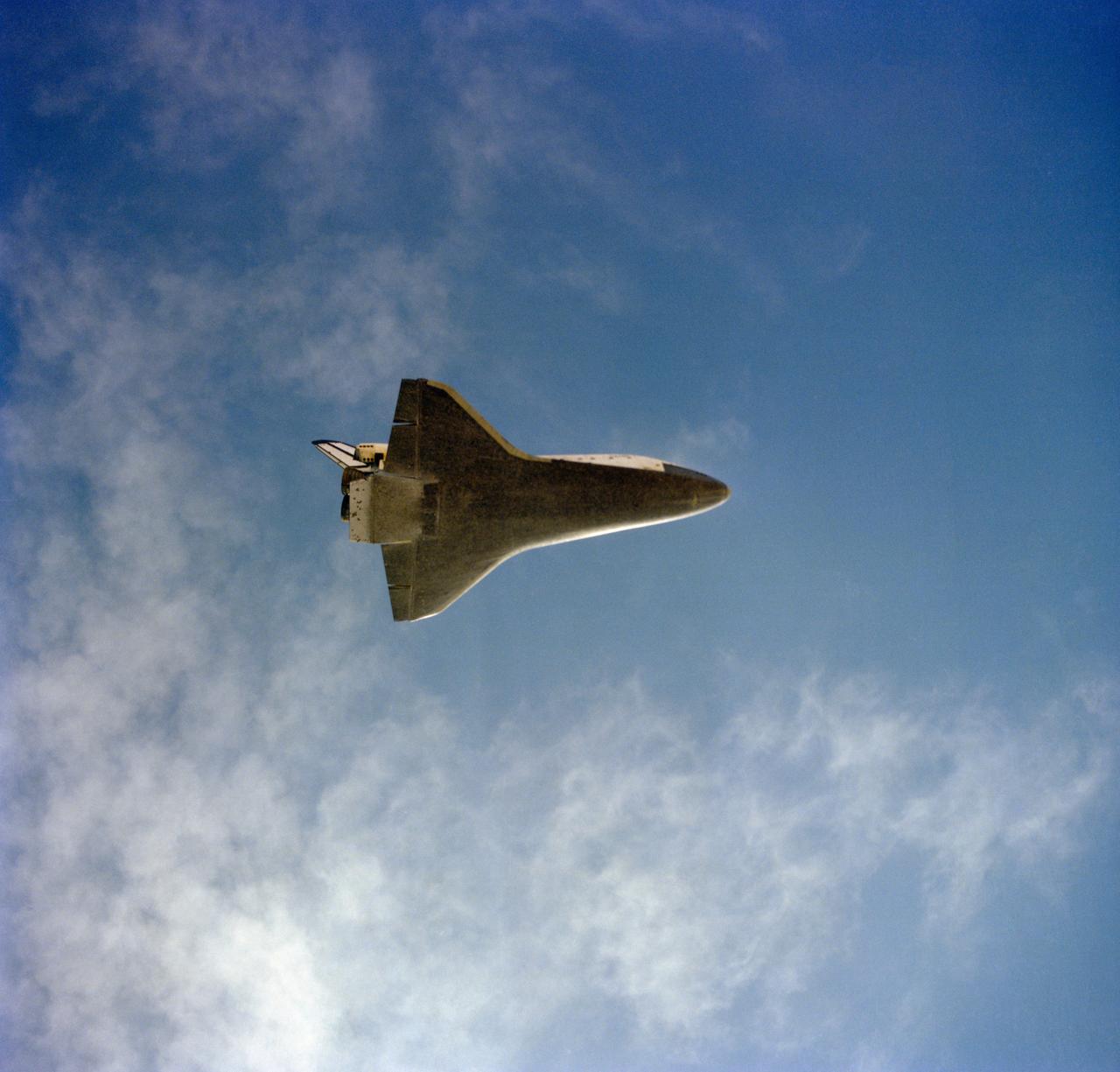
S82-28835 (30 March 1982) --- This unique view of the underside of the space shuttle orbiter Columbia was taken with a handheld camera aboard a T-38 chase plane over the White Sands Missile Range in New Mexico. Bad weather here yesterday vanished and the STS-3 crew of astronaut Jack R. Lousma and C. Gordon Fullerton greeted a pleasant climate along with a large crowd of spectators upon their landing. The successful landing was the first attempted in the actual orbiter on New Mexico soil. Photo credit: NASA
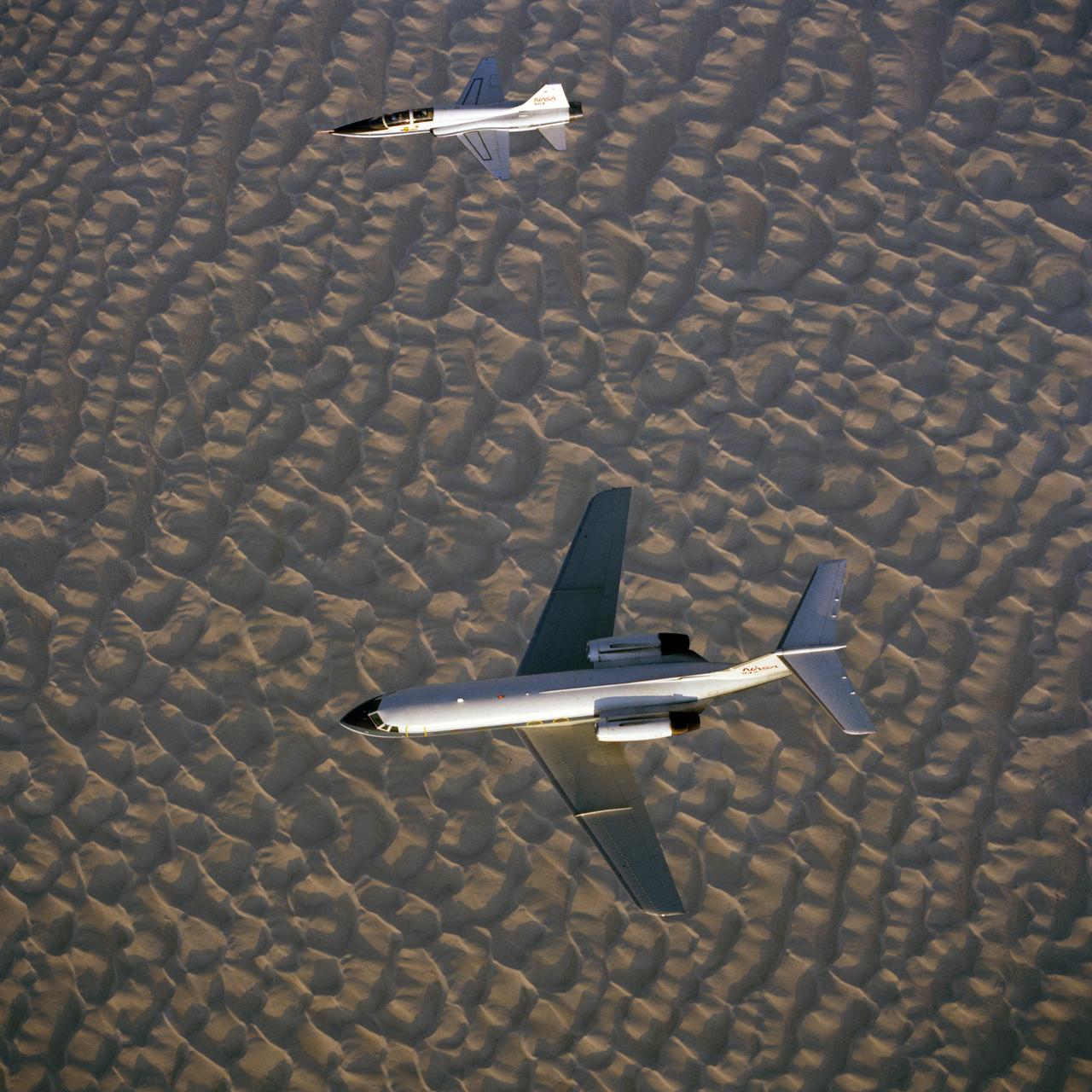
S82-32204 (October 1982) --- NASA 947 and NASA 904, two aircraft stationed at Ellington Air Base for the Johnson Space Center (JSC), are captured during a training and familiarization flight over White Sands, New Mexico. The Gulfstream aircraft (bottom) is NASA?s Space Shuttle Training Aircraft (STA) and the T-38 jet serves as a chase plane. Photo credit: NASA
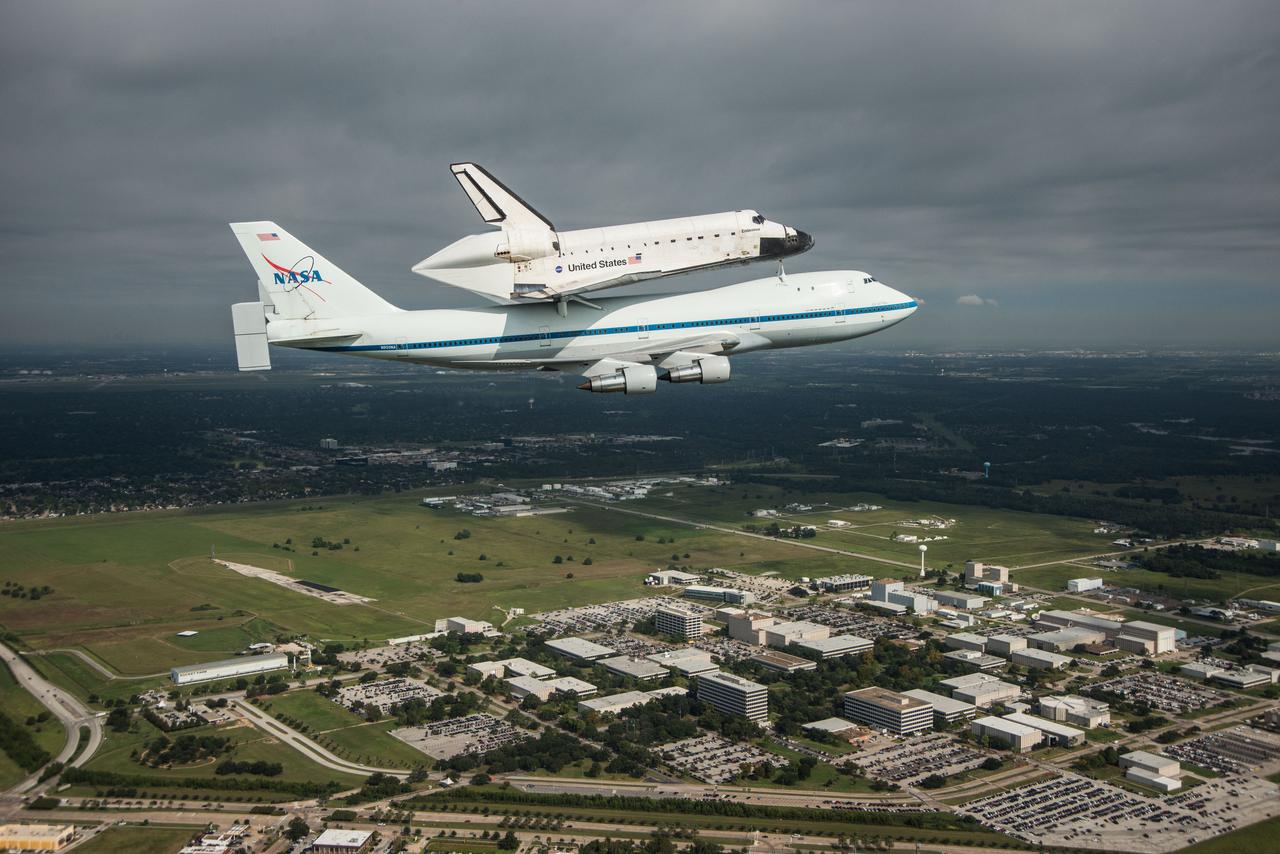
Space Shuttle Endeavour is ferried by NASA's Shuttle Carrier Aircraft (SCA) over the Johnson Space Center in Houston, Texas on September 19, 2012. NASA pilots Jeff Moultrie and Bill Rieke are at the controls of the Shuttle Carrier Aircraft. Photo taken by NASA photographer Sheri Locke in the backseat of a NASA T-38 chase plane with NASA pilot Thomas E. Parent at the controls. Photo Credit: NASA/ Sheri Locke
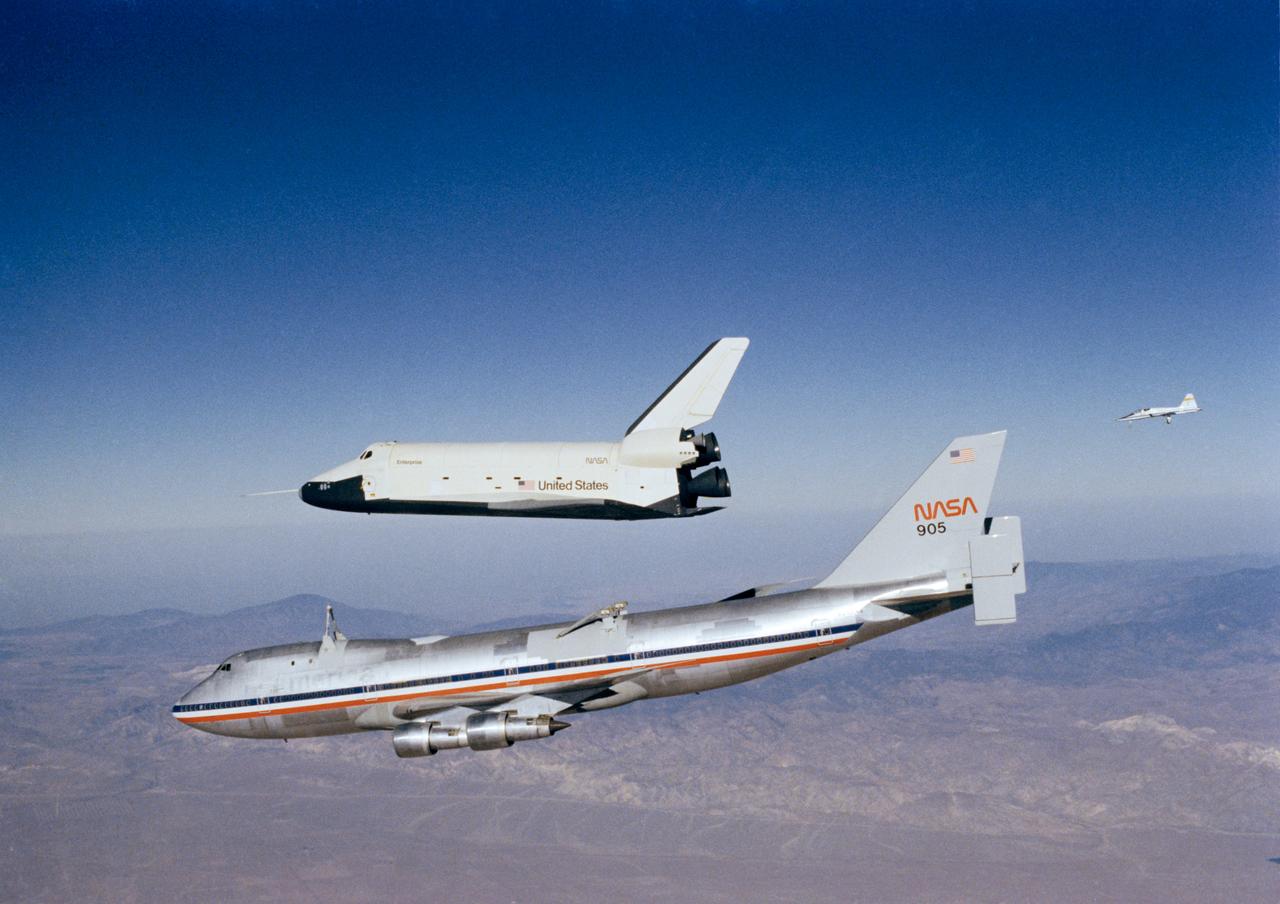
S77-28931 (12 Oct. 1977) --- The Orbiter 101 "Enterprise" separates from the NASA 747 carrier aircraft to begin its first "tailcone-off" unpowered flight over desert and mountains of Southern California. A T-38 chase plane follows in right background. This was the fourth in a series of five piloted free flights. Photo credit: NASA
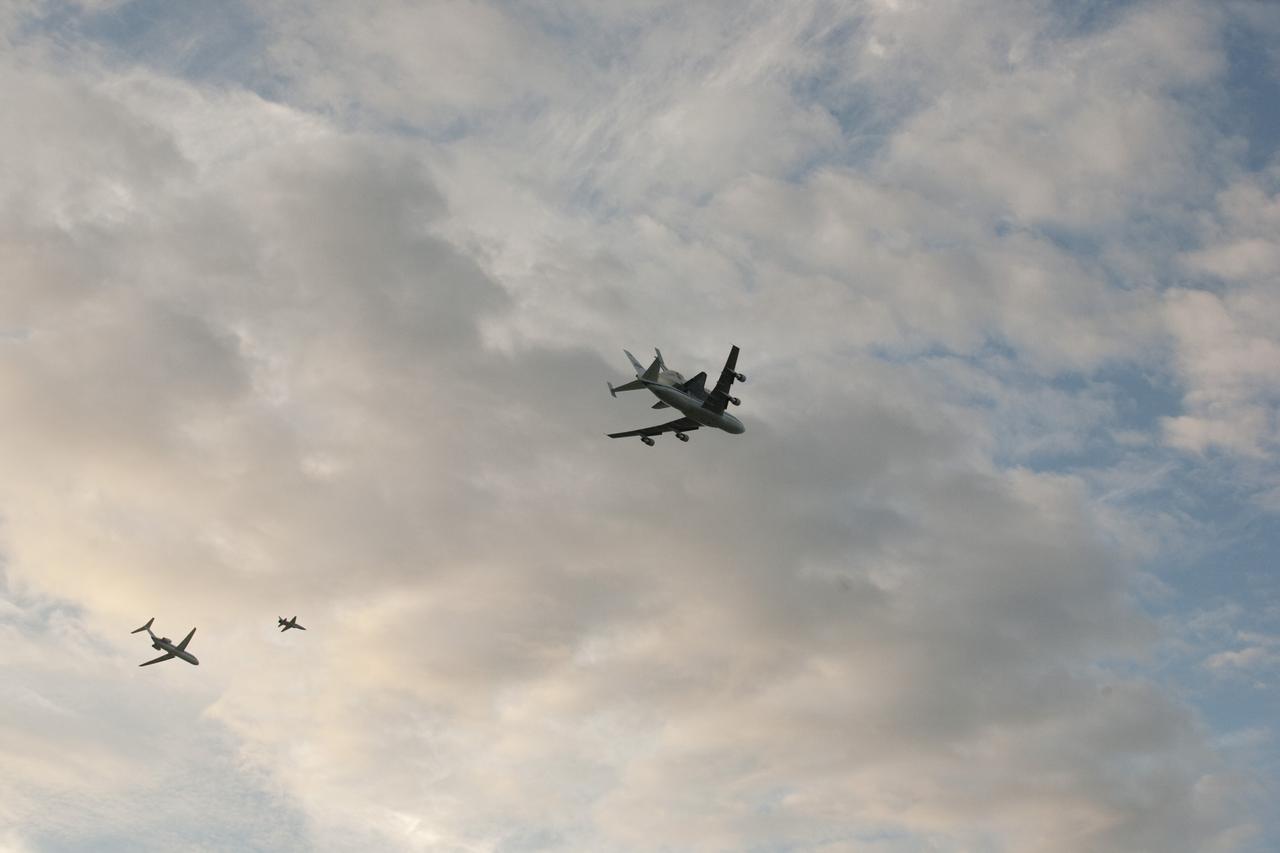
COCOA BEACH, Fla. – NASA's Shuttle Carrier Aircraft, or SCA, with the space shuttle Endeavour mounted atop, right, is accompanied by a T-38 chase aircraft, center, and a pathfinder aircraft flying along Cocoa Beach. The SCA, a modified 747 jetliner, will fly Endeavour to Los Angeles where it will be placed on public display at the California Science Center. This is the final ferry flight scheduled in the Space Shuttle Program era. For more information on the shuttles' transition and retirement, visit http://www.nasa.gov/transition. Photo credit: NASA/Alan Ault
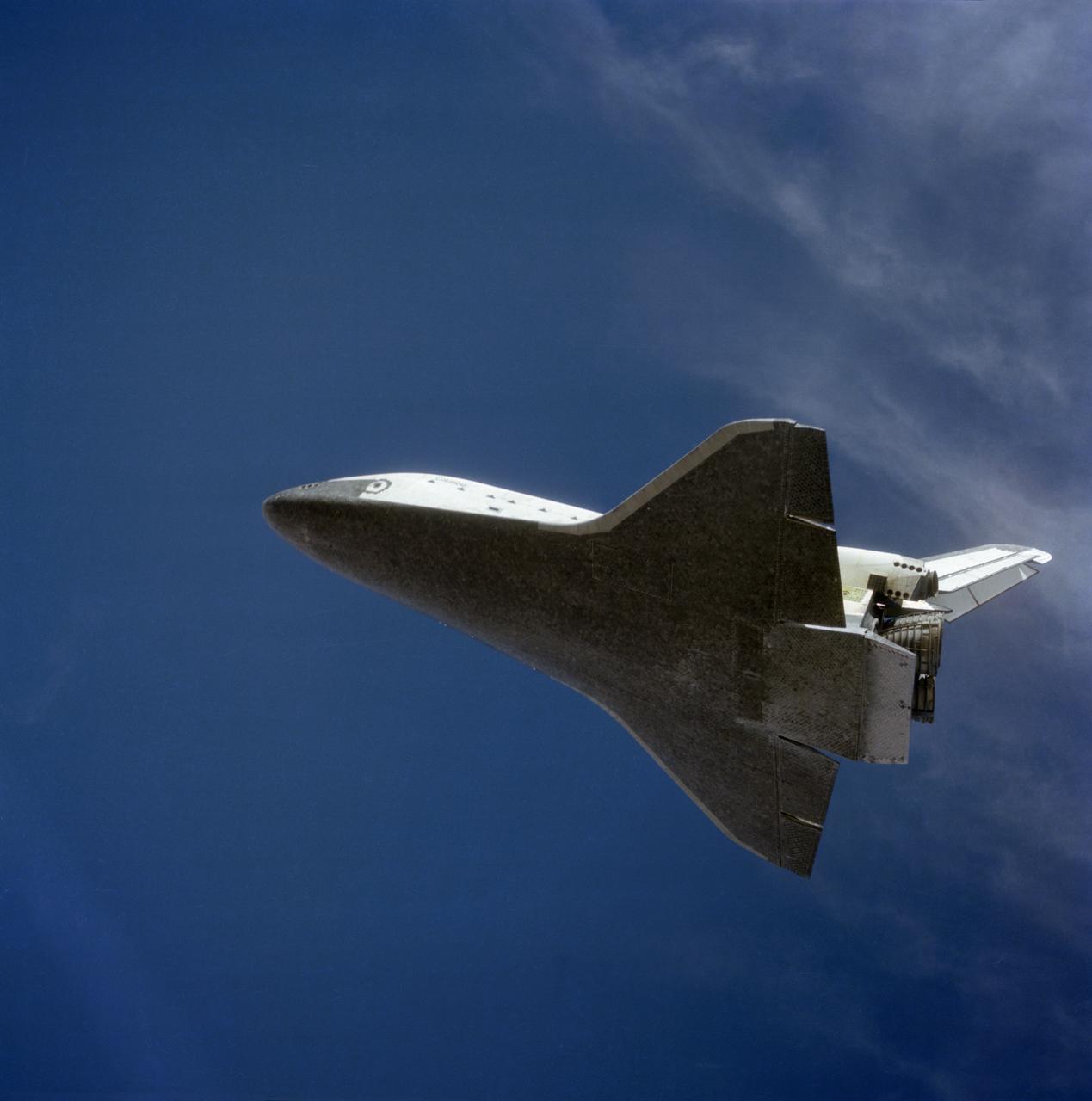
S81-39564 (14 Nov. 1981) --- This view of the space shuttle Columbia (STS-2) was made with a hand-held 70mm camera in the rear station of the T-38 chase plane. Mission specialist/astronaut Kathryn D. Sullivan exposed the frame as astronauts Joe N. Engle and Richard H. Truly aboard the Columbia guided the vehicle to an unpowered but smooth landing on the desert area of Edwards Air Force base in California. The picture provides a good view of the underside of the returning spacecraft. Photo credit: NASA
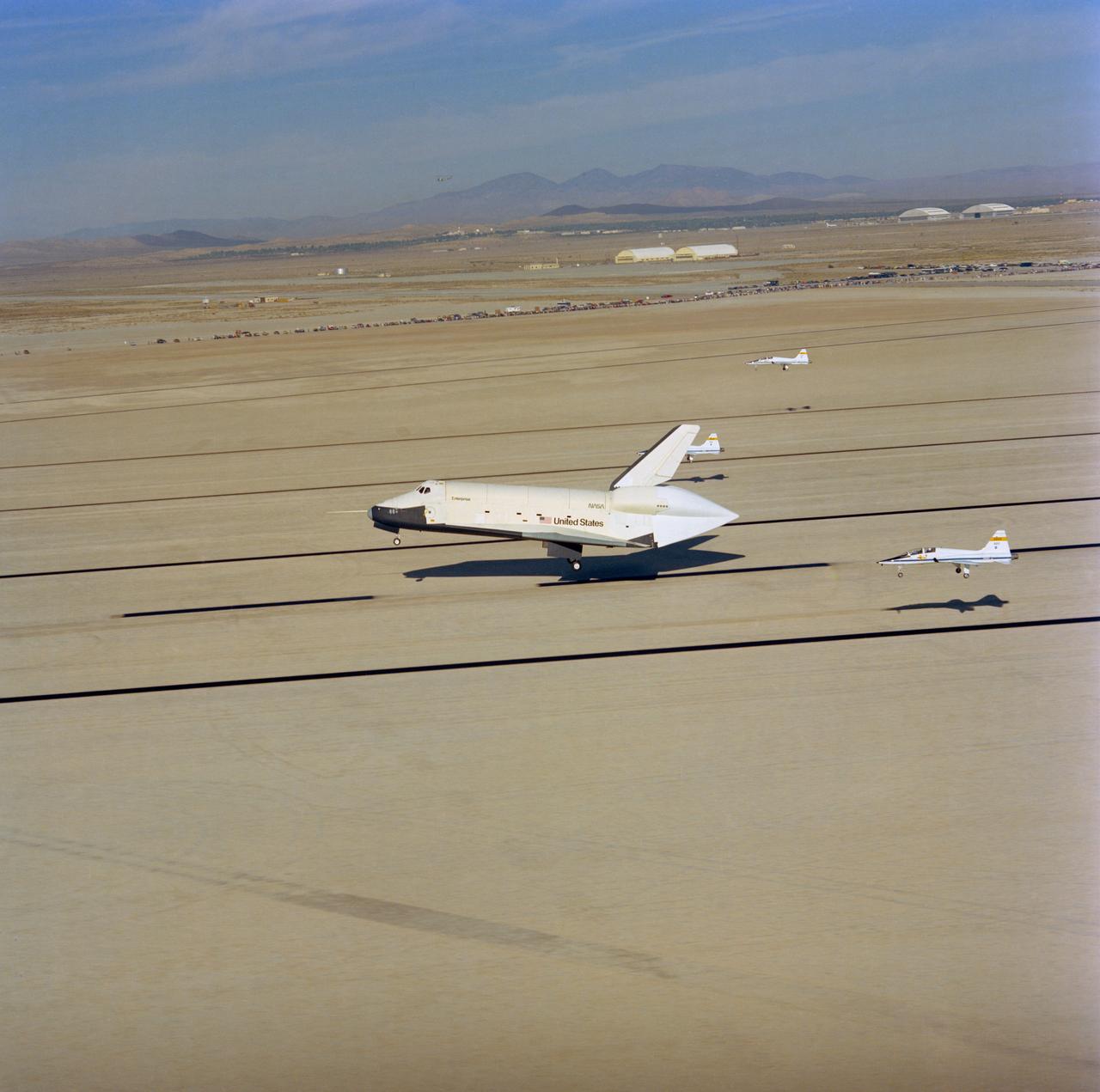
S77-28668 (23 Sept 1977) --- The shuttle Orbiter 101 "Enterprise" approaches touchdown on the runway at Edwards Air Force Base to conclude a five-minute, 34-second unpowered flight, the third of Shuttle Approach and Landing Tests (ALT) series, on September 23, 1977. Thress T-38 chase planes follow close by. Astronauts Fred W. Haise Jr., commander, and C. Gordon Fullerton, pilot, were the crew aboard the "Enterprise" for this flight.
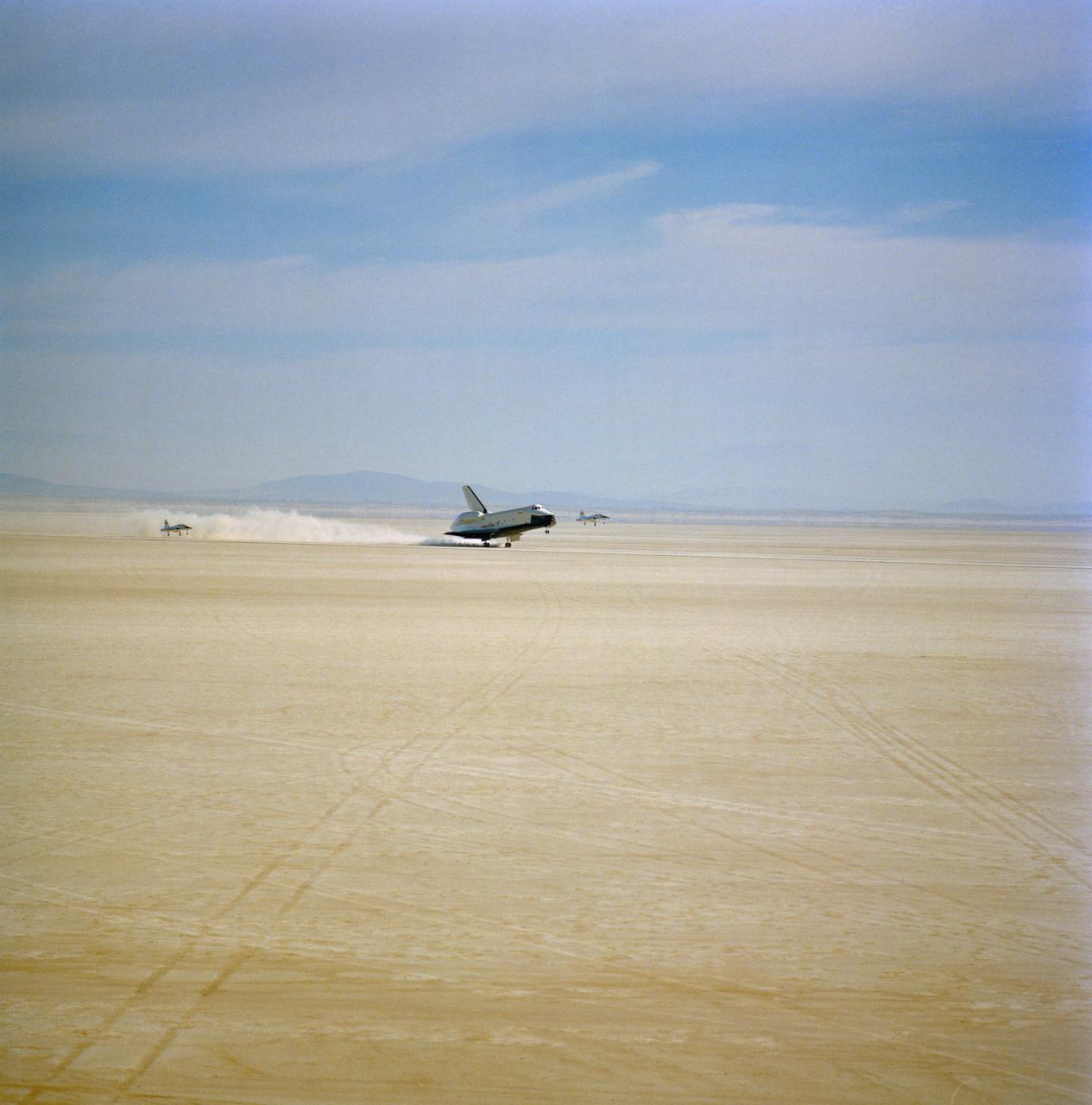
S77-28209 (13 Sept 1977) --- The shuttle orbiter 101 "Enterprise" lands on the desert at Edwards Air Force Base to conclude a five-minute, 31-second unpowered flight during the second free-flight of the Shuttle Approach and Landing Test (ALT) series, on September 13, 1977. Two T-38 chase planes remain with the "Enterprise" for the landing. Asstronauts Joe H. Engle, commander, and Richard H. Truly, pilot, were the crewmen for the flight.
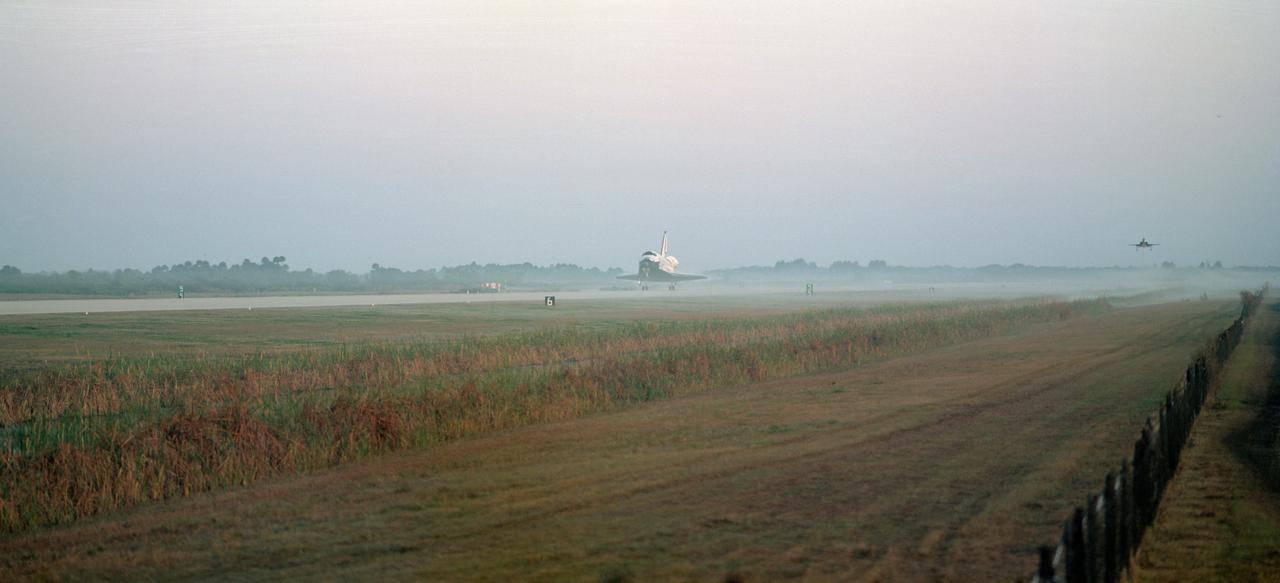
S84-27154 (11 Feb 1984) --- The first Space Shuttle landing on the Kennedy Space Center?s landing facility was recorded by a ground camera on February 11, 1984. A T-38 chase plane trails the Challenger. The nose gear has not yet touched down in this scene. Aboard the spacecraft were Astronauts Vance D. Brand, commander; Robert L. Gibson, pilot; and Bruce McCandless II, Ronald R. McNair and Robert L. Stewart, all mission specialists.
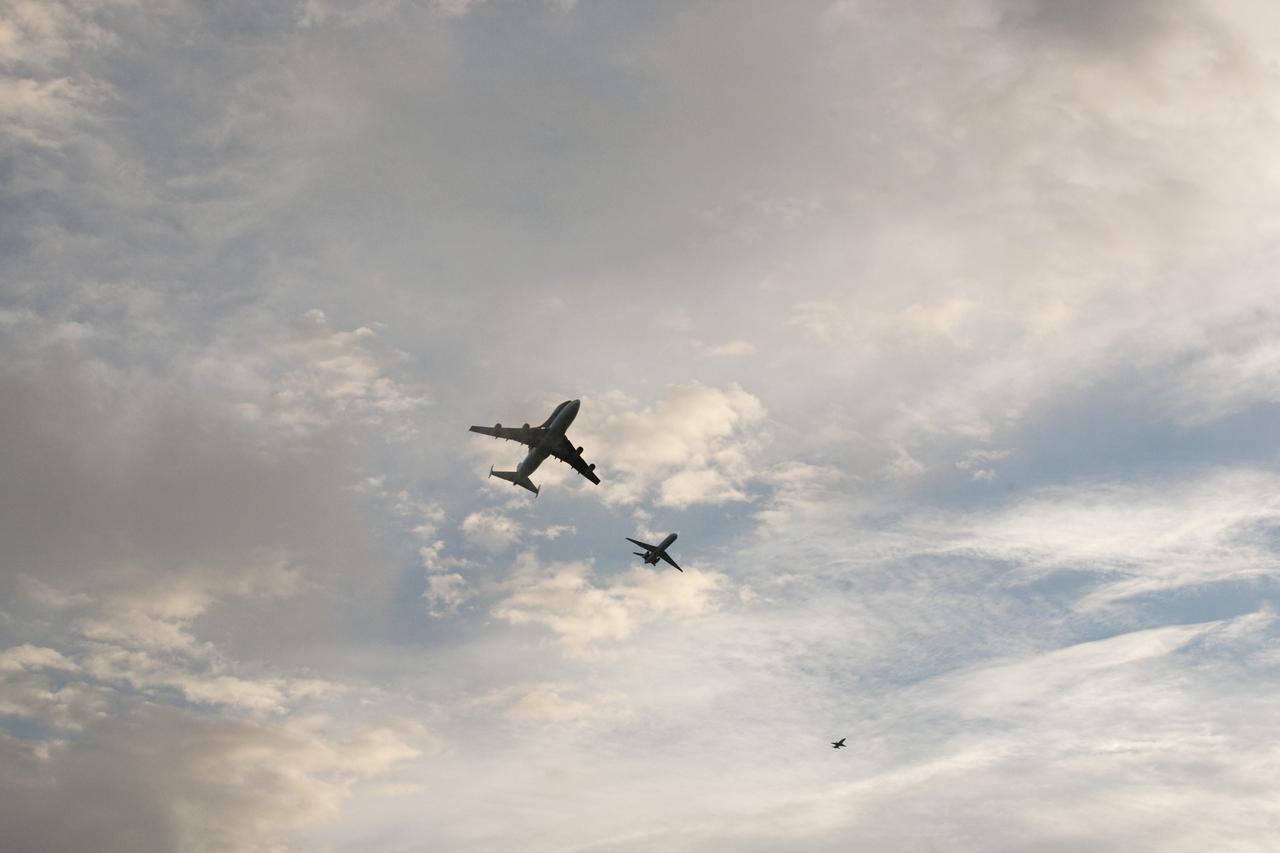
COCOA BEACH, Fla. – NASA's Shuttle Carrier Aircraft, or SCA, with the space shuttle Endeavour mounted atop, left, is accompanied by its pathfinder aircraft, center, and a T-38 chase aircraft flying along Cocoa Beach. The SCA, a modified 747 jetliner, will fly Endeavour to Los Angeles where it will be placed on public display at the California Science Center. This is the final ferry flight scheduled in the Space Shuttle Program era. For more information on the shuttles' transition and retirement, visit http://www.nasa.gov/transition. Photo credit: NASA/Alan Ault
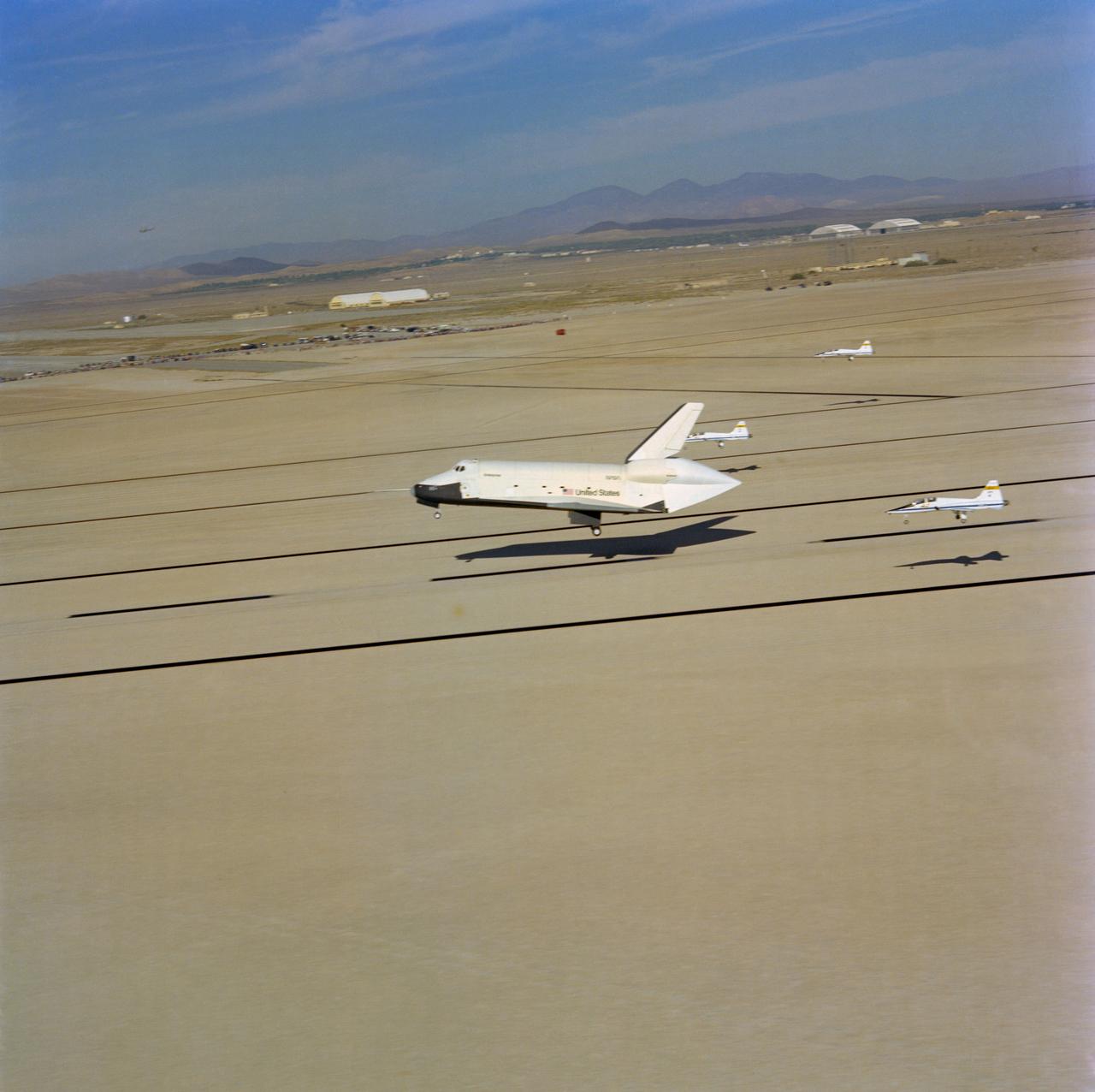
S77-28540 (23 Sept 1977) --- The shuttle Orbiter 101 "Enterprise" approaches touchdown on the runway at Edwards Air Force Base to conclude a five-minute, 34-second unpowered flight, the third of Shuttle Approach and Landing Tests (ALT) series, on September 23, 1977. Thress T-38 chase planes follow close by. Astronauts Fred W. Haise Jr., commander, and C. Gordon Fullerton, pilot, were the crew aboard the "Enterprise" for this flight.
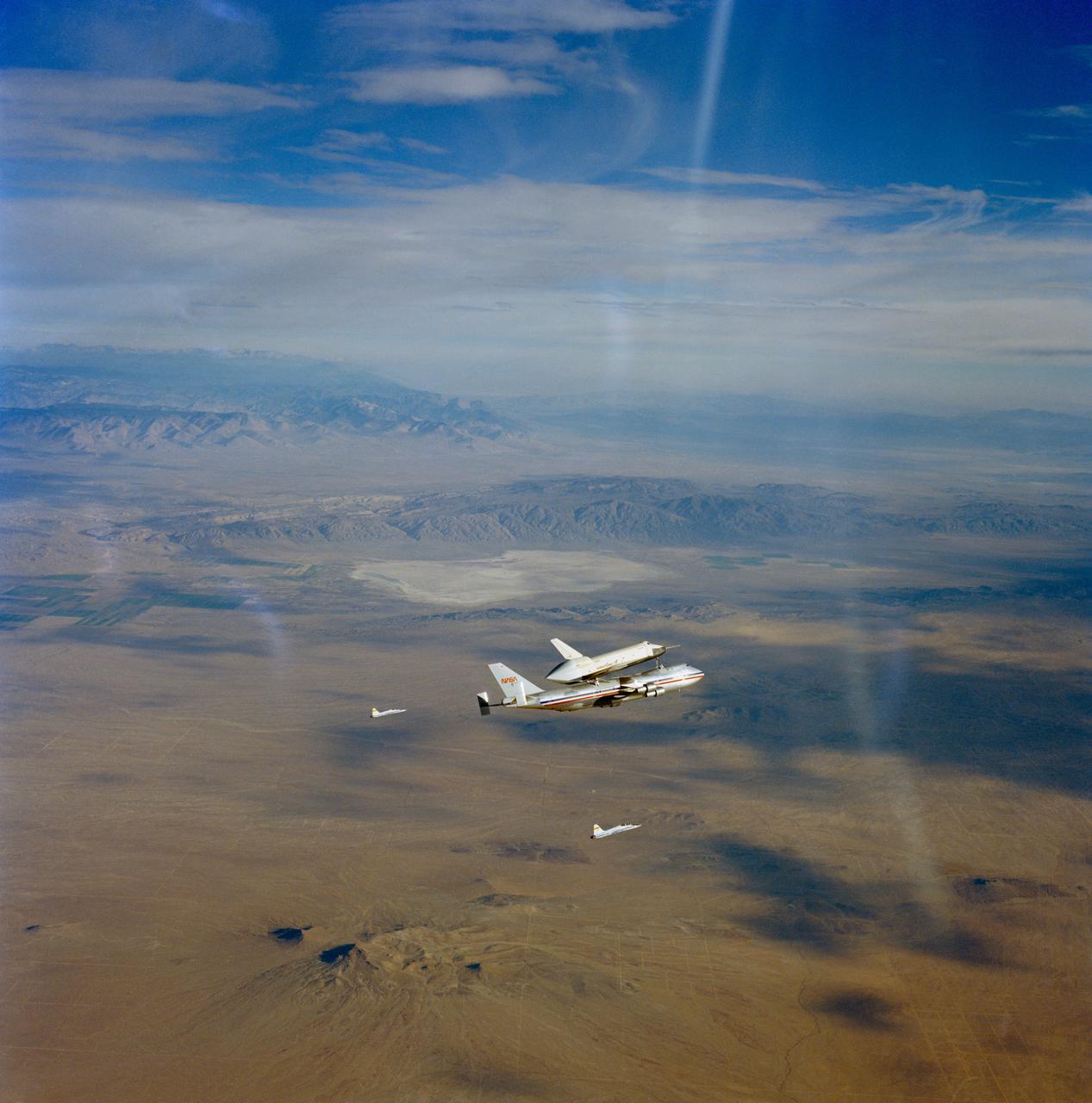
S77-28139 (13 Sept 1977) --- The Orbiter 101 "Enterprise" is seen riding "piggy-back" atope the NASA 747 carrier aircraft during the second free flight of the Shuttle Approach and Landing Tests (ALT) conducted on September 13, 1977, at the Dryden Flight Research Center in Southern California. Moments later the Orbiter 101 separated from the 747 and made a five-minute, 28-second unpowered flight before landing. Astronauts Joe H. Engle, commander, and Richard H. Truly, pilot, were the crew of the "Enterprise." two T-38 chase planes are seen in the background. The ALT free flights are designed to verify orbiter subsonic airworthiness, integrated systems operations and pilot-guided approach andlanding capability and satisfy prerequisites to automatic flight control and navigation mode. Astronaut Vance D. Brand took this picture while riding in T-38 chase plane number five. He used a 70mm Hasselblad camera with an 80mm lens.

NASA T-38s fly in formation above the Space Launch System rocket and Orion spacecraft on Launch Pad 39B at NASA's Kennedy Space Center in Florida. Aircraft designations and passengers: NASA 901: Chris Condon / Astronaut Zena Cardman. 902: Astronaut Candidate Nicole Ayers / Astronaut Christina Koch. 903: Canadian Space Agency Astronaut Jeremy Hansen / Astronaut Drew Morgan. 904: Chief Astronaut Reid Wiseman / Astronaut Joe Acaba. 905 (Photo Chase): Astronaut Candidate Jack Hathaway / Josh Valcarcel. Credit: NASA/Josh Valcarcel
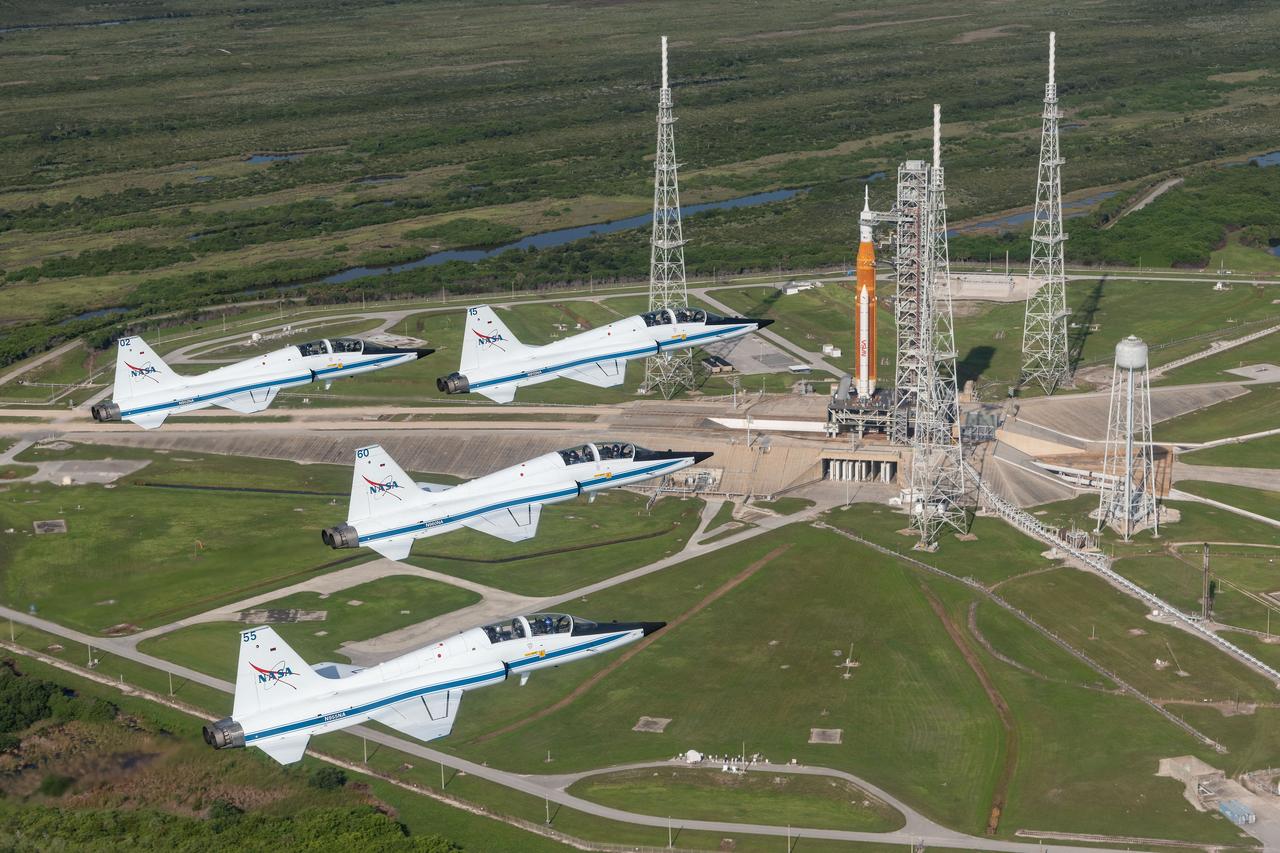
NASA's T-38 jets fly in formation above the Space Launch System rocket on Launch Pad 39B at NASA's Kennedy Space Center. Aircraft designations and passengers: NASA 901: Chris Condon / Astronaut Zena Cardman. 902: Astronaut Candidate Nicole Ayers / Astronaut Christina Koch. 903: Canadian Space Agency Astronaut Jeremy Hansen / Astronaut Drew Morgan. 904: Chief Astronaut Reid Wiseman / Astronaut Joe Acaba. 905 (Photo Chase): Astronaut Candidate Jack Hathaway / Josh Valcarcel Credit: NASA/Josh Valcarcel
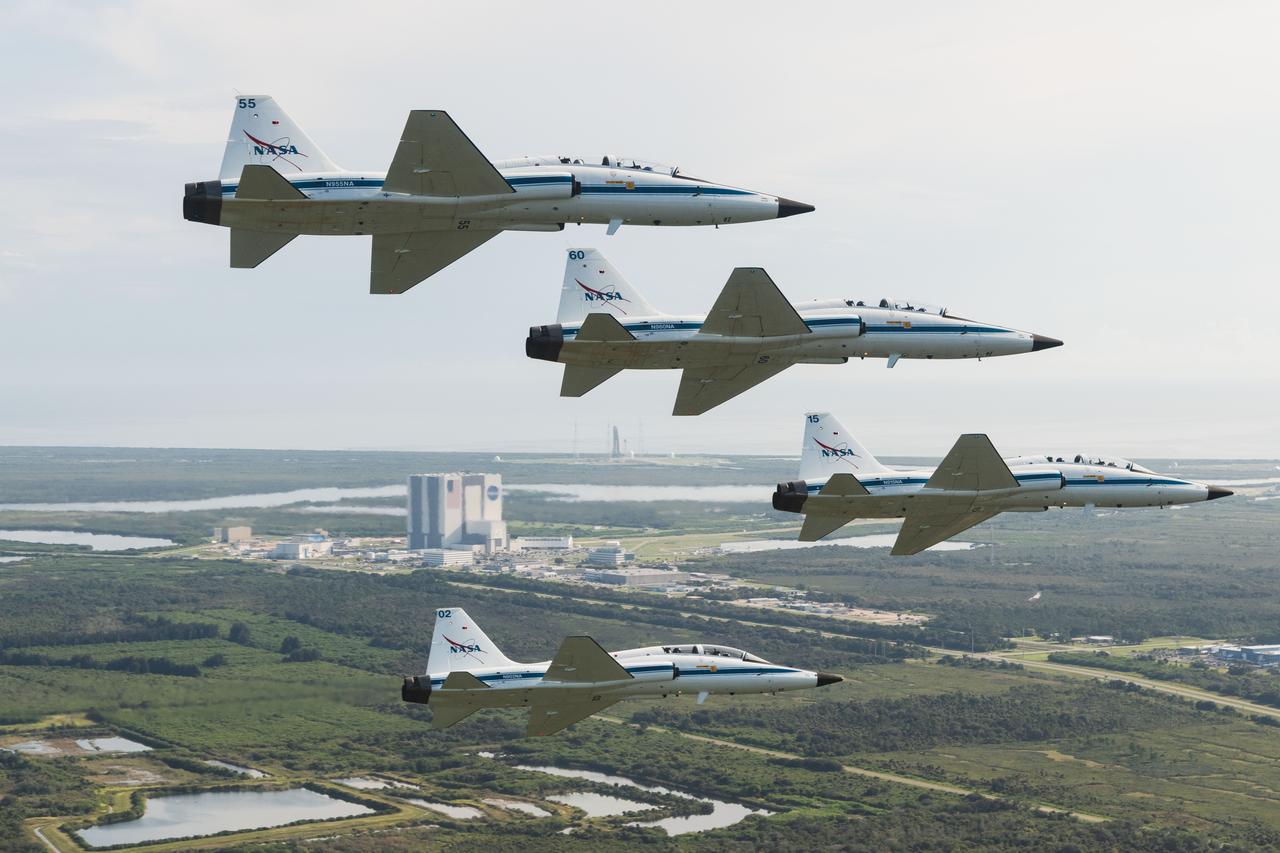
NASA's T-38 jets fly in formation above NASA's Kennedy Space Center. Several astronauts and astronaut candidates flew in to support the Artemis I launch and various pre-launch activities. Aircraft designations and passengers: NASA 901: Chris Condon / Astronaut Zena Cardman. 902: Astronaut Candidate Nicole Ayers / Astronaut Christina Koch. 903: Canadian Space Agency Astronaut Jeremy Hansen / Astronaut Drew Morgan. 904: Chief Astronaut Reid Wiseman / Astronaut Joe Acaba. 905 (Photo Chase): Astronaut Candidate Jack Hathaway / Josh Valcarcel Credit: NASA/Josh Valcarcel
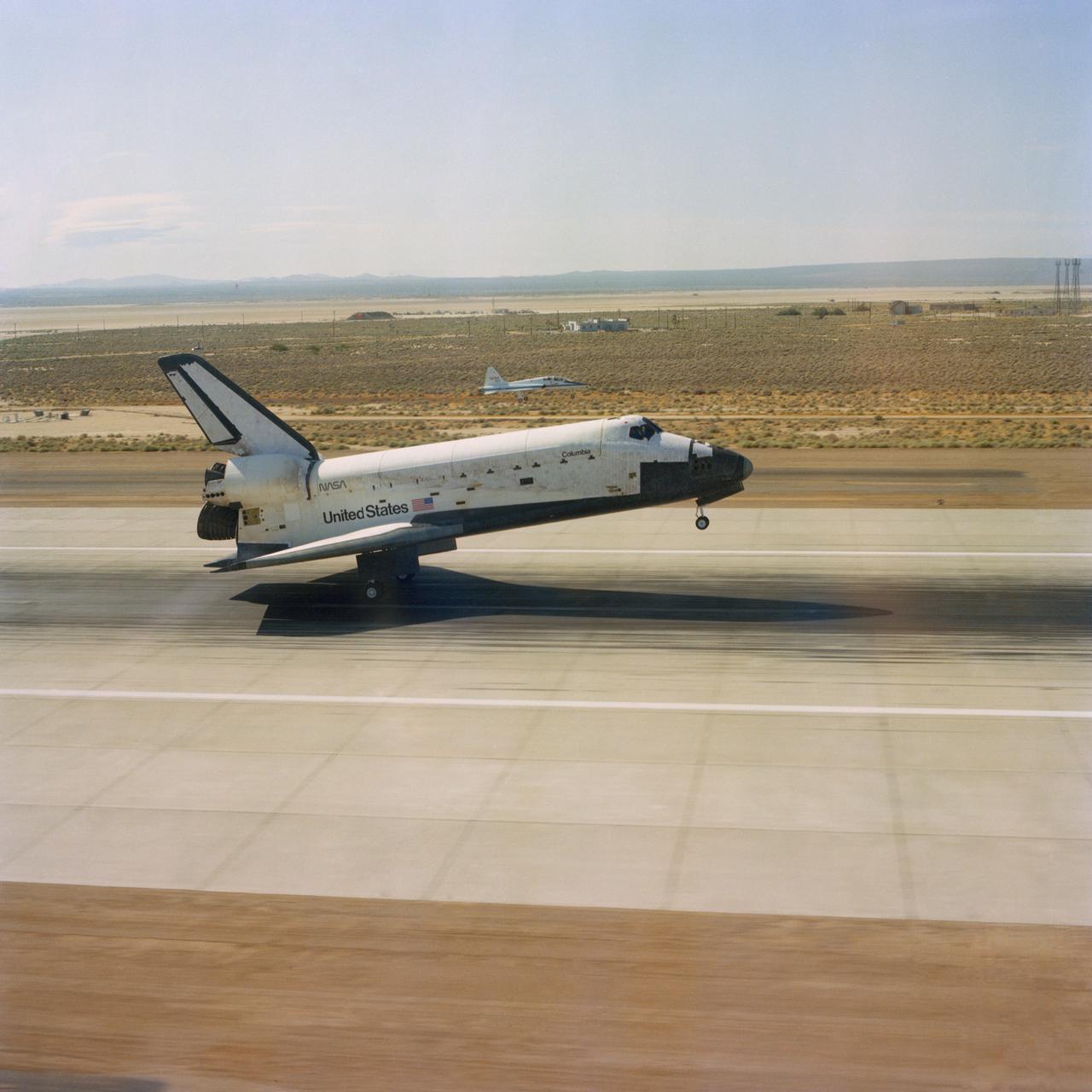
S82-33420 (4 July 1982) --- The aft wheels of the space shuttle Columbia ease down on the runway at Edwards Air Force Base (AFB) today to successfully complete a week-long spaceflight for astronauts Thomas K. Mattingly II, and Henry W. Hartsfield Jr. A T-38 aircraft serves as a chase plane (just above center of photo) in the background. Not long after this photograph was made and the crew had egressed their craft, President Ronald Reagan addressed a giant crowd on hand at Edwards AFB for a special kind of July 4 celebration. Photo credit: NASA
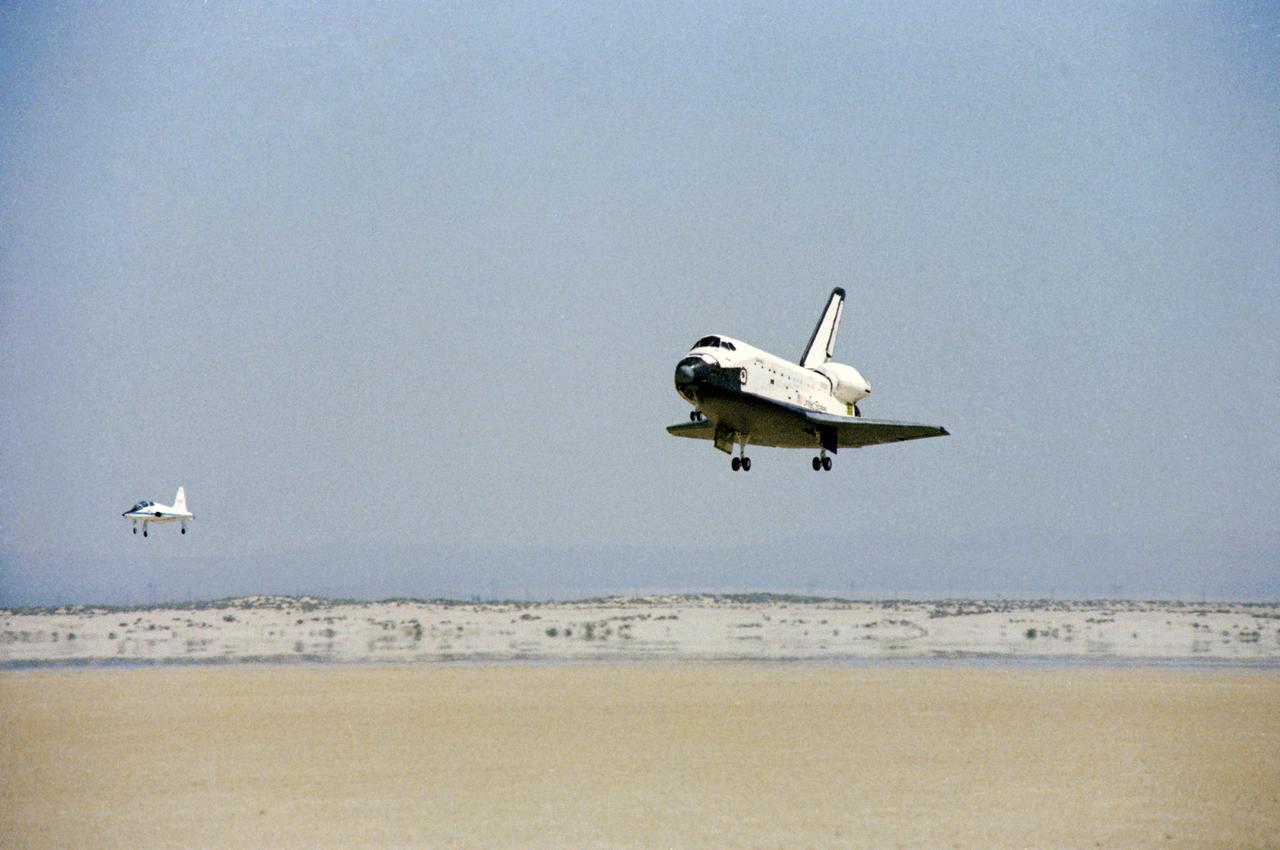
S81-30425 (14 April 1981) --- The space shuttle orbiter Columbia is seen from the front as it heads for a touchdown atop a dry lake bed at Edwards Air Force Base in southern California. A T-38 chase plane follows it in at left. Aboard Columbia were astronauts John W. Young, STS-1 commander, and Robert L. Crippen, pilot. Their landing marked the completion of a successful two-and-a-third day flight in space and the beginning of a new era of space transportation. A series of additional test flights will follow before the Space Shuttle Program becomes fully operational later in this decade. Photo credit: NASA
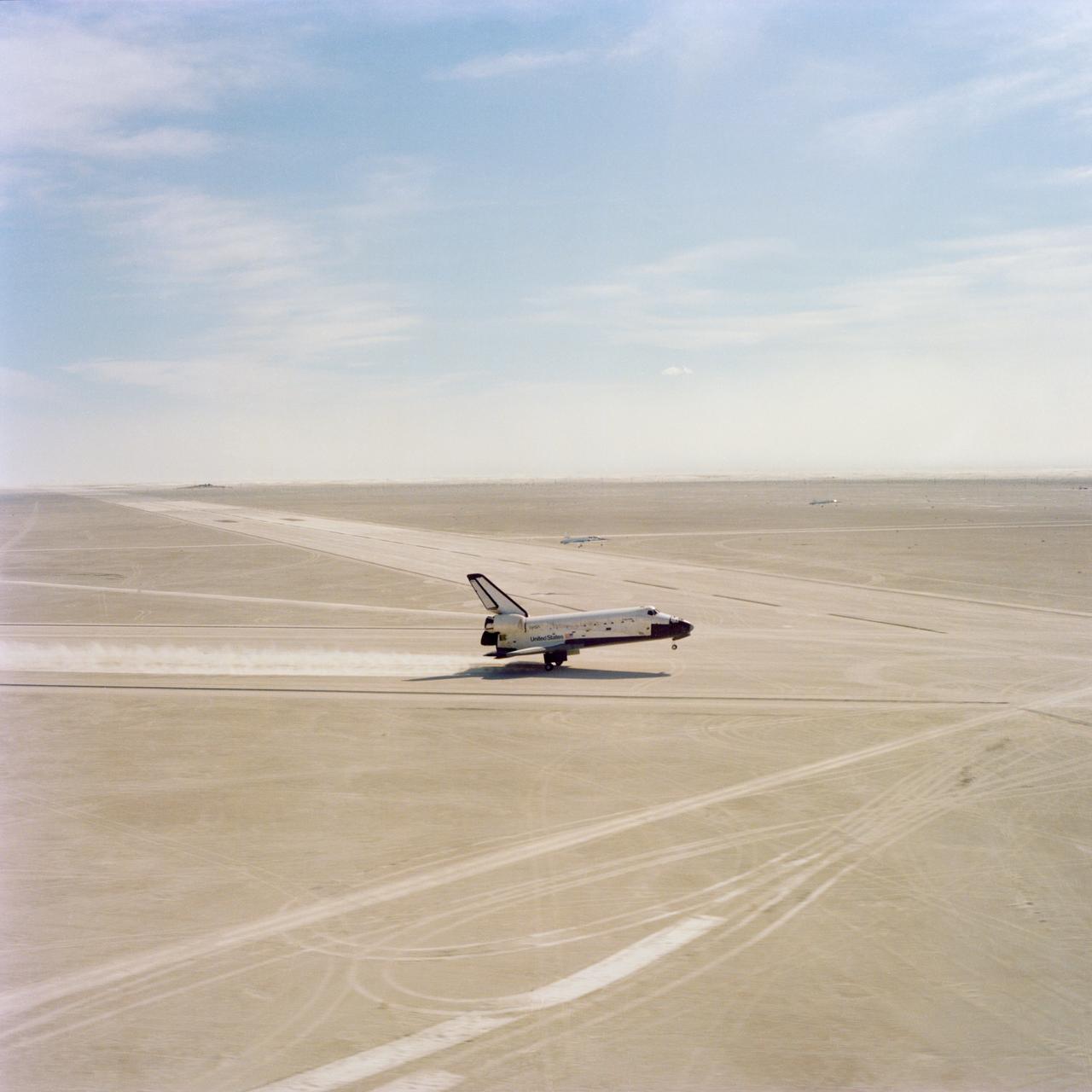
S82-28838 (30 March 1982) --- The space shuttle Columbia (STS-3) touches down on the Northrup Strip at White Sands Missile Range, New Mexico, marking the first time in its three-flight history that it has touched New Mexico soil. T-38 chase plane passenger, Mission Specialist-Astronaut Ronald E. McNair, who also shot some launch photography this flight, recorded a number of frames on 70mm film. Touchdown was shortly after 9 a.m. Mountain Standard Time, March 30, 1982. Photo credit: NASA
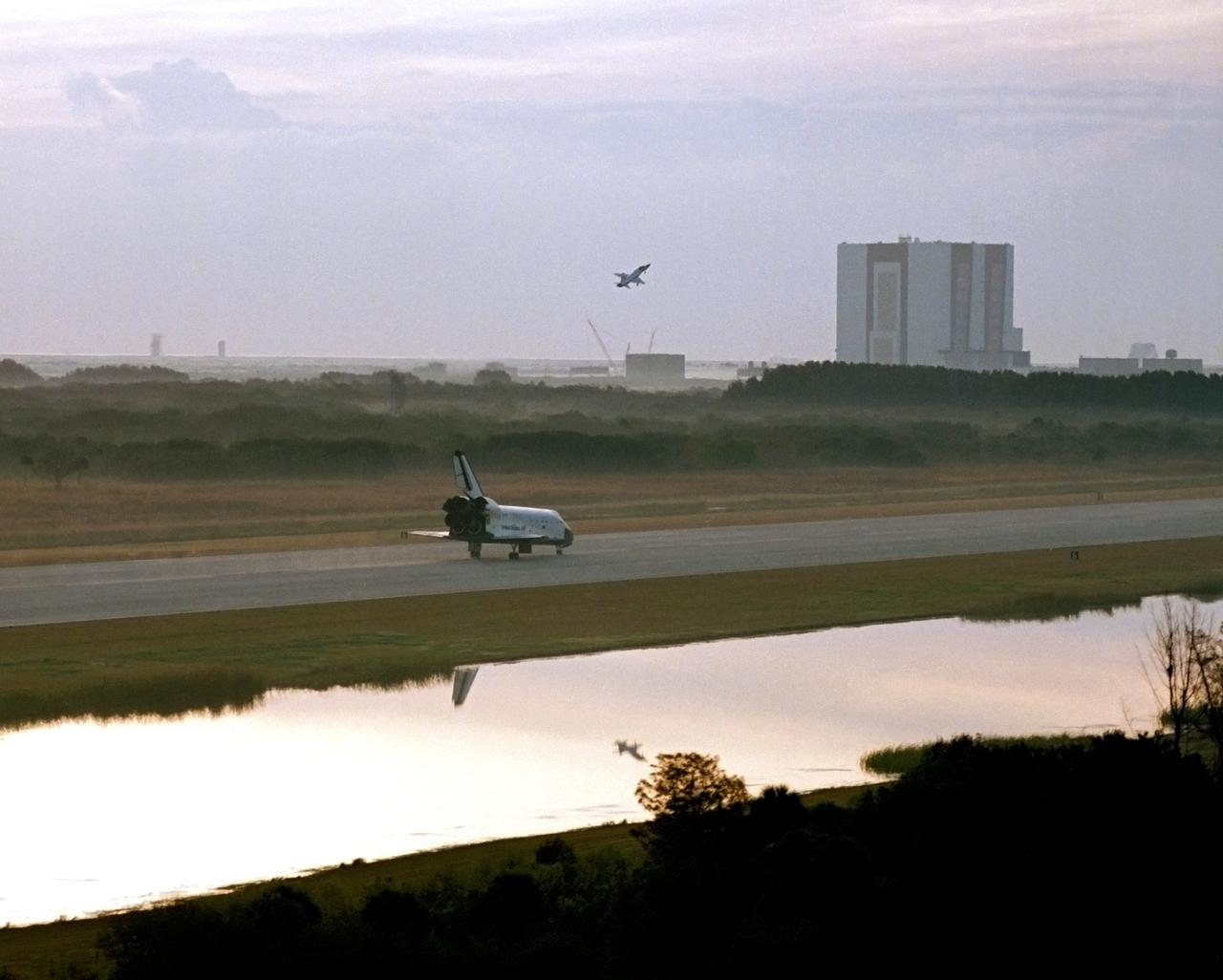
CAPE CANAVERAL, Fla. -- Shortly after sunrise the space shuttle orbiter Challenger touches down on the KSC runway at 7:16 a.m. The T-38 escort chase plane is seen just above the orbiter. The historic first landing at KSC brought to a conclusion an eight-day mission that started at 8:00 a.m. Feb. 3, 1984. The STS 41-B mission had several other firsts including an un-tethered spacewalk made by two of the astronauts. The Vehicle Assembly Building can be seen in the right side of the photograph. Photo credit: NASA
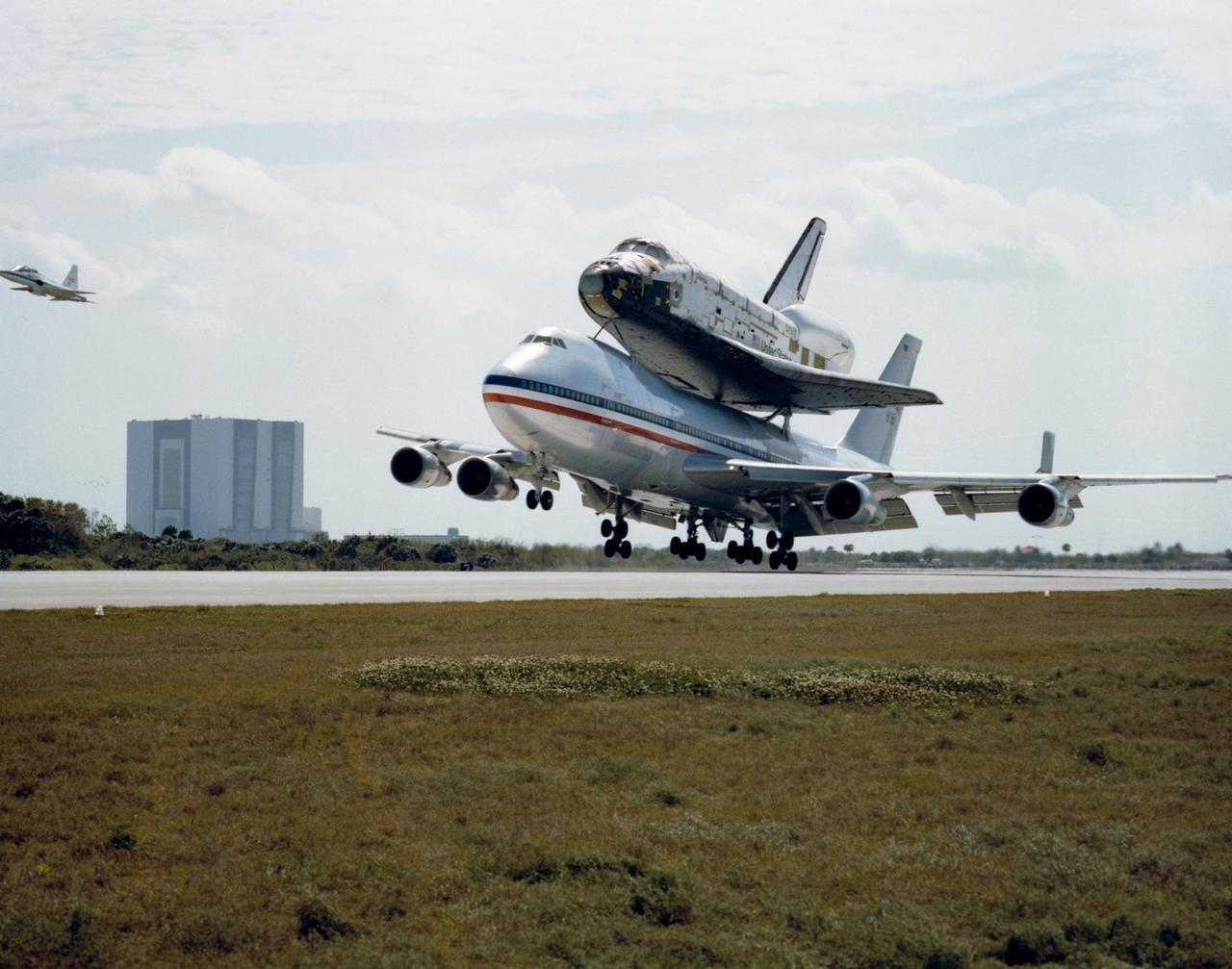
S79-30819 (24 March 1979) --- The space shuttle orbiter 102 Columbia riding ?piggyback? on NASA 905, a 747 carrier aircraft, is only seconds away from landing on Kennedy Space Center?s Shuttle landing facility, ending a 2,400-mile ferry flight from California. The T-38 chase plane at left is flown by Donald K. Slayton, manager for the orbital fight test (OFT) program. Columbia will be used for the OFT program, and it will be manned by astronauts John W. Young and Robert L. Crippen the first time it flies in space. The vehicle assembly building (VAB) is in right background. Photo credit: NASA
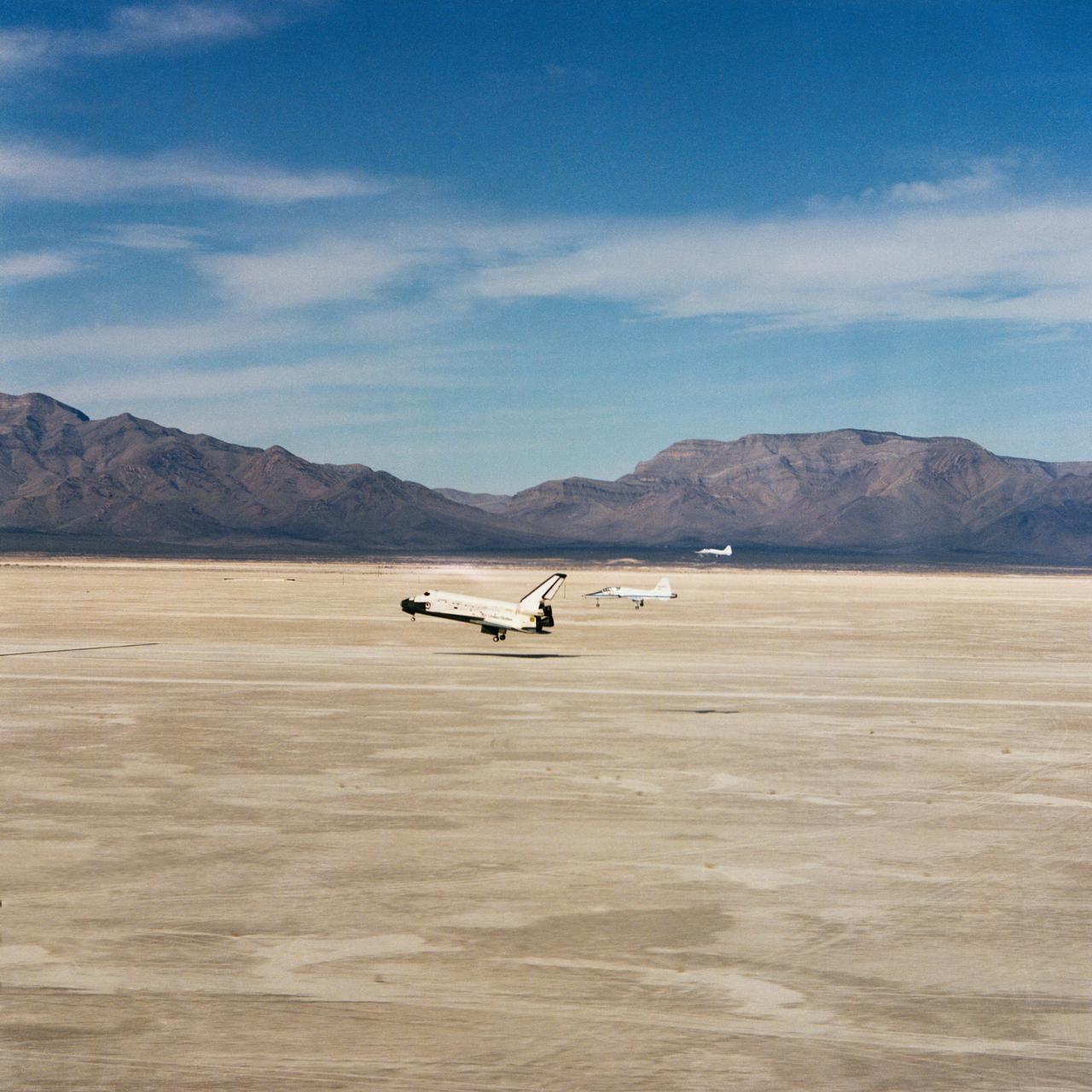
S82-28839 (30 March 1982) --- Seconds from touchdown, the space shuttle Columbia (STS-3), with astronauts Jack R. Lousma and C. Gordon Fullerton aboard, comes into view of a large crowd on hand to greet it at the Northrup strip on White Sands Missile Range in New Mexico. The successful eight-day mission was the first to end on New Mexico soil. Two T-38 chase planes can be seen in the photograph, while a third (out of view) was carrying the photographer that took this frame with a hand-held camera. Photo credit: NASA

NASA astronauts and astronaut candidates fly in formation aboard T-38 jets over NASA's Kennedy Space Center in Florida. They flew in to support the Artemis I mission and various pre-launch activities. Aircraft designations and passengers: NASA 901: Chris Condon / Astronaut Zena Cardman. 902: Astronaut Candidate Nicole Ayers / Astronaut Christina Koch. 903: Canadian Space Agency Astronaut Jeremy Hansen / Astronaut Drew Morgan. 904: Chief Astronaut Reid Wiseman / Astronaut Joe Acaba. 905 (Photo Chase): Astronaut Candidate Jack Hathaway / Josh Valcarcel Credit: NASA/Josh Valcarcel
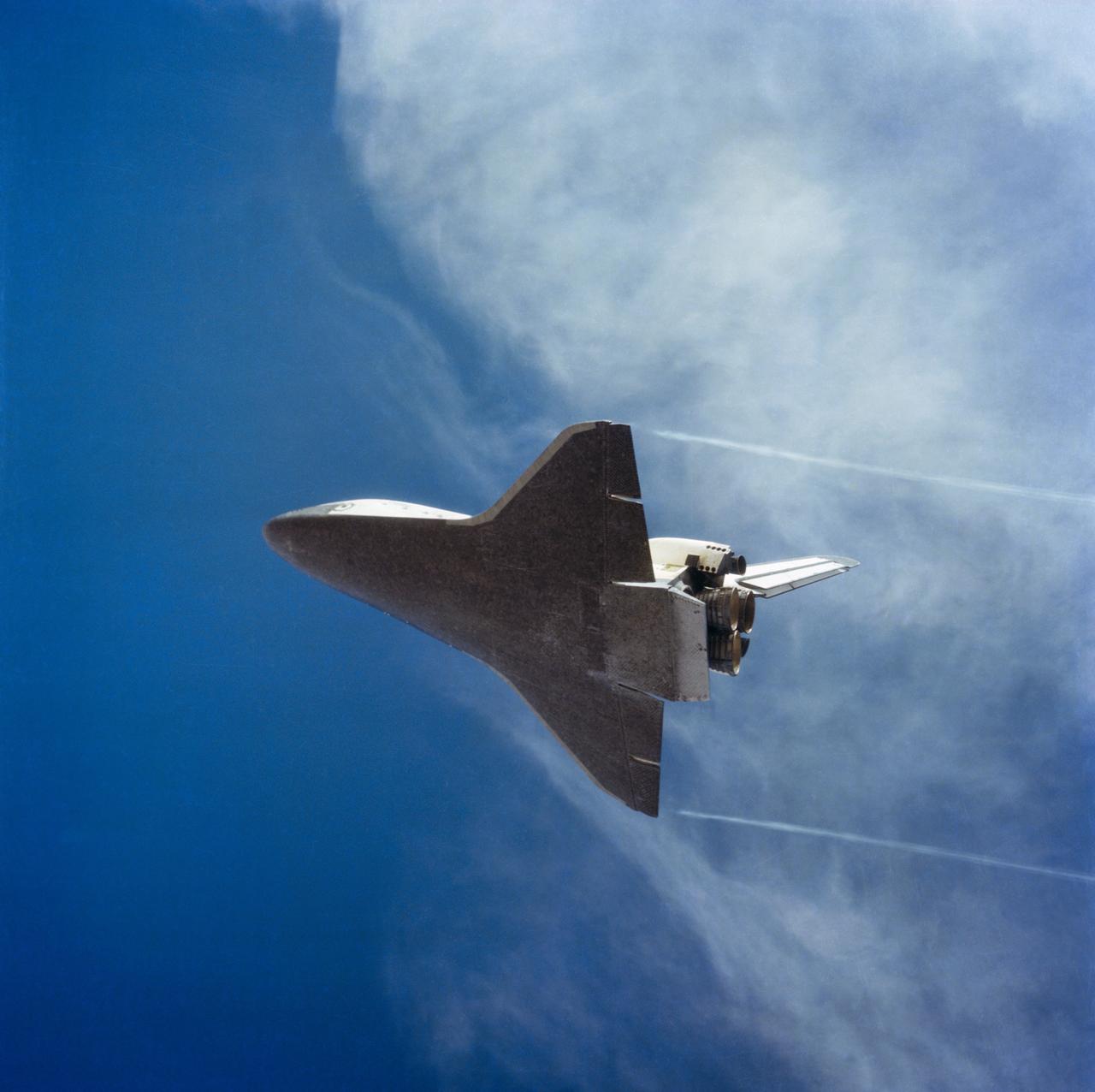
S81-39563 (14 Nov. 1981) --- This view of the space shuttle Columbia (STS-2) was made with a hand-held 70mm camera in the rear station of the T-38 chase plane. Mission specialist/astronaut Kathryn D. Sullivan exposed the frame as astronauts Joe N. Engle and Richard H. Truly aboard the Columbia guided the vehicle to an unpowered but smooth landing on the desert area of Edwards Air Force base in California. The view provides a good study of the high temperature protection material on the underside of the spacecraft which is exposed to the friction on the atmospheric entry on the return to Earth. Also note trails from the wing tips. Photo credit: NASA
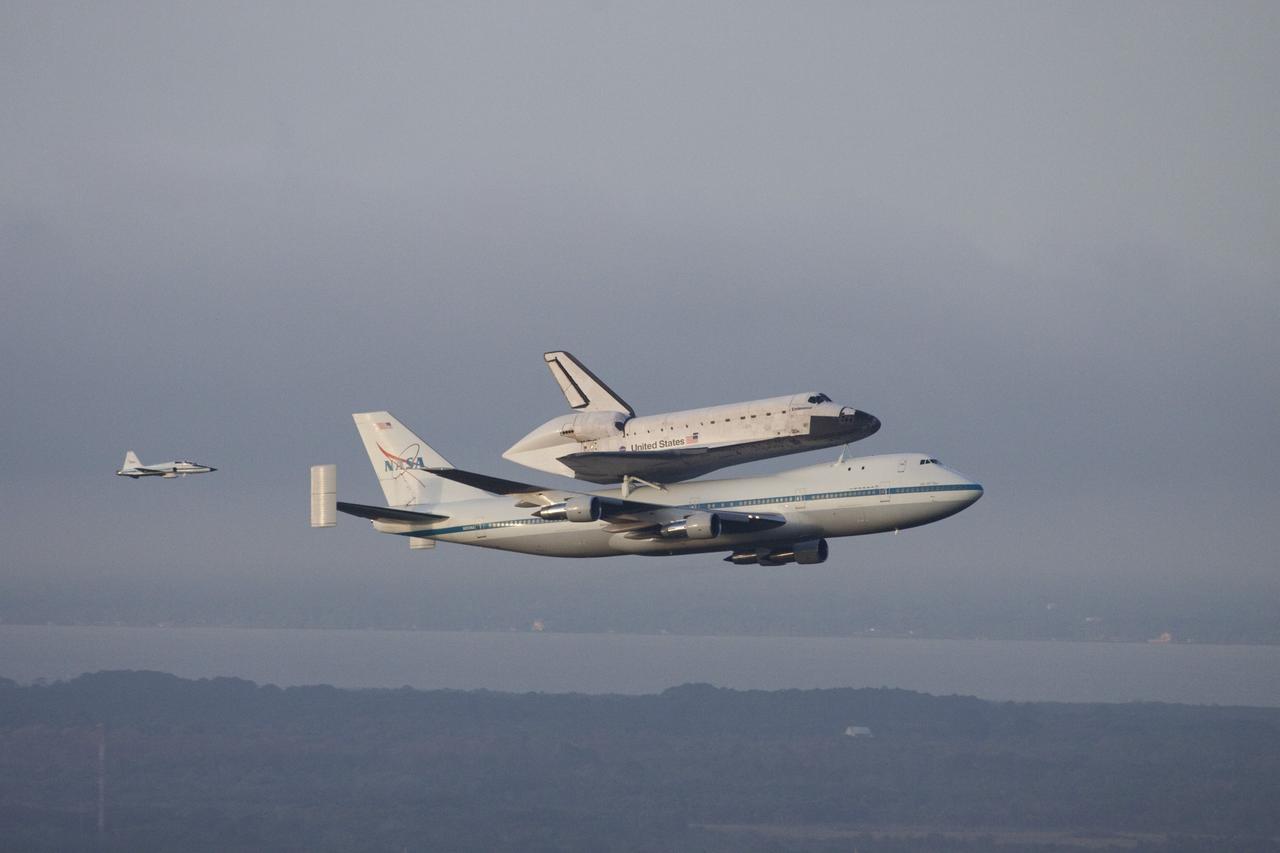
CAPE CANAVERAL, Fla. – At NASA's Kennedy Space Center in Florida, NASA's Shuttle Carrier Aircraft, or SCA, with the space shuttle Endeavour mounted atop, makes a low-level pass over the Shuttle Landing Facility. Following behind the SCA-shuttle combination is a T-38 chase aircraft. After making several low-level passes over several locations on Florida's Space Coast the SCA-Shuttle will head west for its ferry flight to California. The SCA, a modified 747 jetliner, will fly Endeavour to Los Angeles where it will be placed on public display at the California Science Center. This is the final ferry flight scheduled in the Space Shuttle Program era. For more information on the shuttles' transition and retirement, visit http://www.nasa.gov/transition. Photo credit: NASA/Jim Grossmann
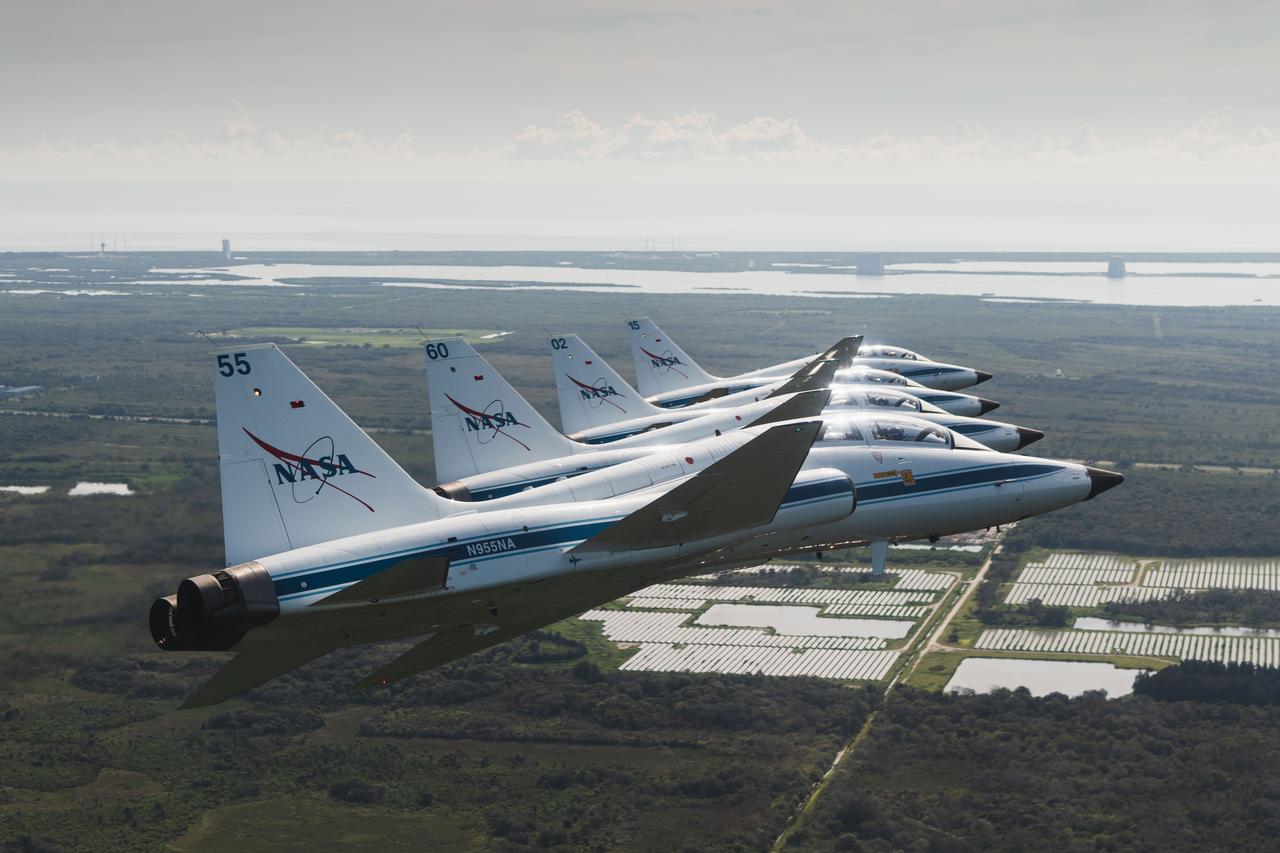
NASA T-38s fly in formation above NASA's Kennedy Space Center in Florida. Several astronauts and astronaut candidates traveled to view the Space Launch System rocket and Orion spacecraft on Launch Pad 39B, as well as support various pre-launch activities. Aircraft designations and passengers: NASA 901: Chris Condon / Astronaut Zena Cardman. 902: Astronaut Candidate Nicole Ayers / Astronaut Christina Koch. 903: Canadian Space Agency Astronaut Jeremy Hansen / Astronaut Drew Morgan. 904: Chief Astronaut Reid Wiseman / Astronaut Joe Acaba. 905 (Photo Chase): Astronaut Candidate Jack Hathaway / Josh Valcarcel. Credit: NASA/Josh Valcarcel PHOTOGRAPHER: Josh Valcarcel
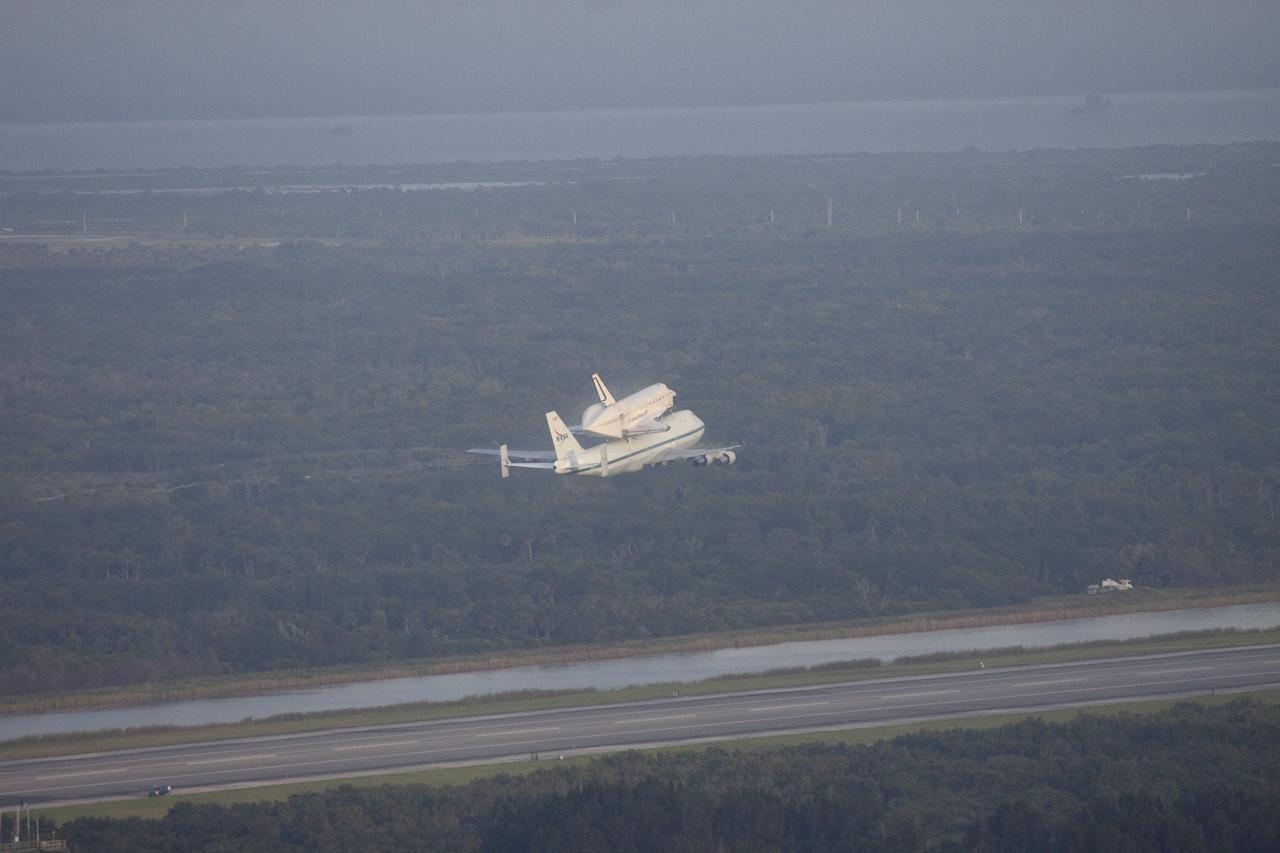
CAPE CANAVERAL, Fla. – At NASA's Kennedy Space Center in Florida, NASA's Shuttle Carrier Aircraft, or SCA, with the space shuttle Endeavour mounted atop, makes a low-level pass over the Shuttle Landing Facility. Following behind the SCA-shuttle combination is a T-38 chase aircraft. After making several low-level passes over several locations on Florida's Space Coast the SCA-Shuttle will head west for its ferry flight to California. The SCA, a modified 747 jetliner, will fly Endeavour to Los Angeles where it will be placed on public display at the California Science Center. This is the final ferry flight scheduled in the Space Shuttle Program era. For more information on the shuttles' transition and retirement, visit http://www.nasa.gov/transition. Photo credit: NASA/Jim Grossmann
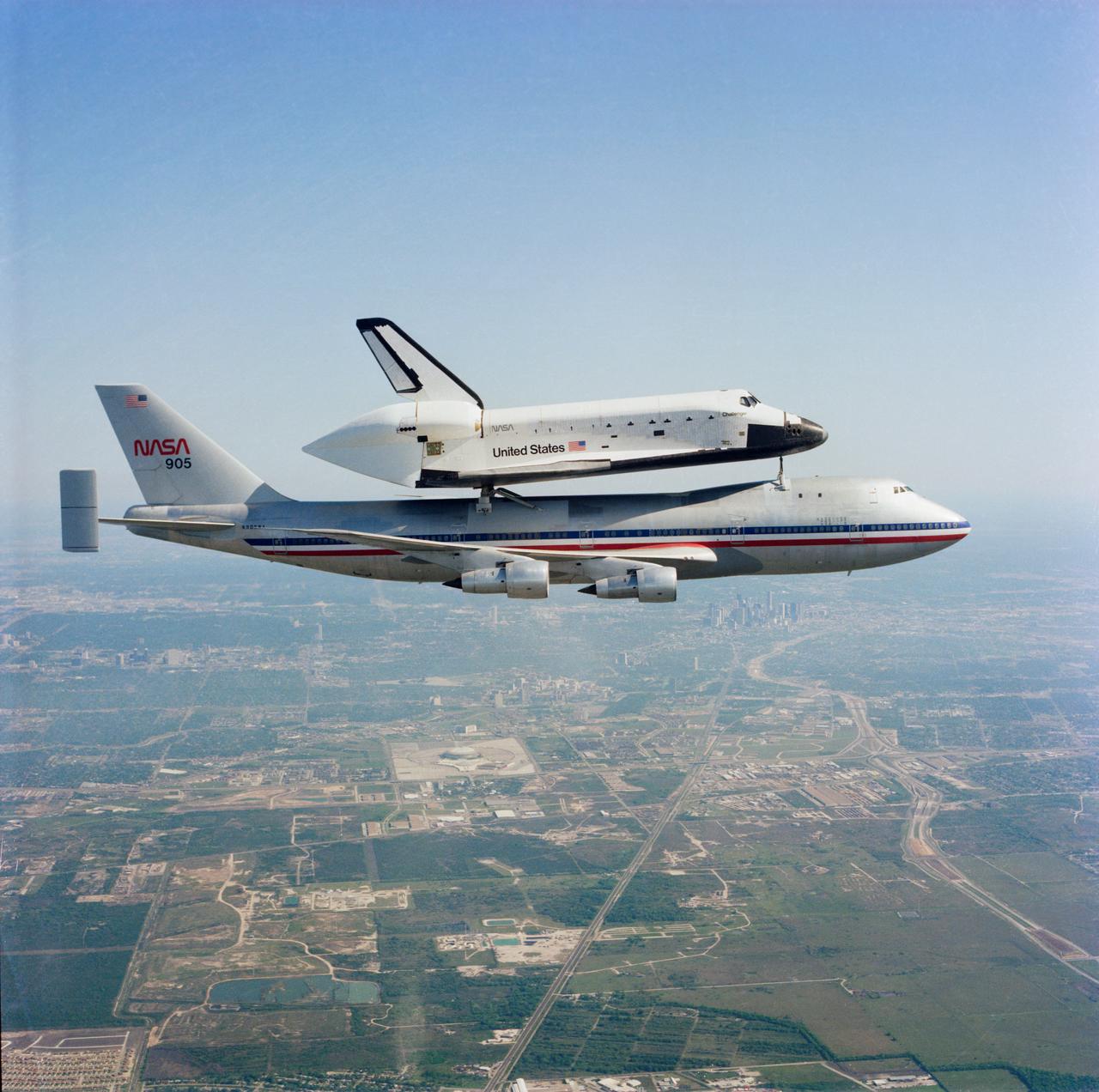
S83-30237 (16 April 1983) --- Downtown Houston and southern portions of that city form the backdrop for this picture of the Space Transportation System?s Challenger flying to the Kennedy Space Center in Florida from its California landing site. It is ferried by NASA 905, a modified 747 aircraft. The crew inside the 747 was as follows: Pilot Joseph S. Algranti; Co-pilot Francis R. (Dick) Scobee; Flight Engineers Louis E. (Skip) Guidry Jr. and Glen O. Pingry. The frame was exposed by Bob Gray from the rear station of a nearby T-38 chase plane piloted by David L. Mumme. The Harris County Domed Stadium (Astrodome) can be seen near center. Photo credit: NASA
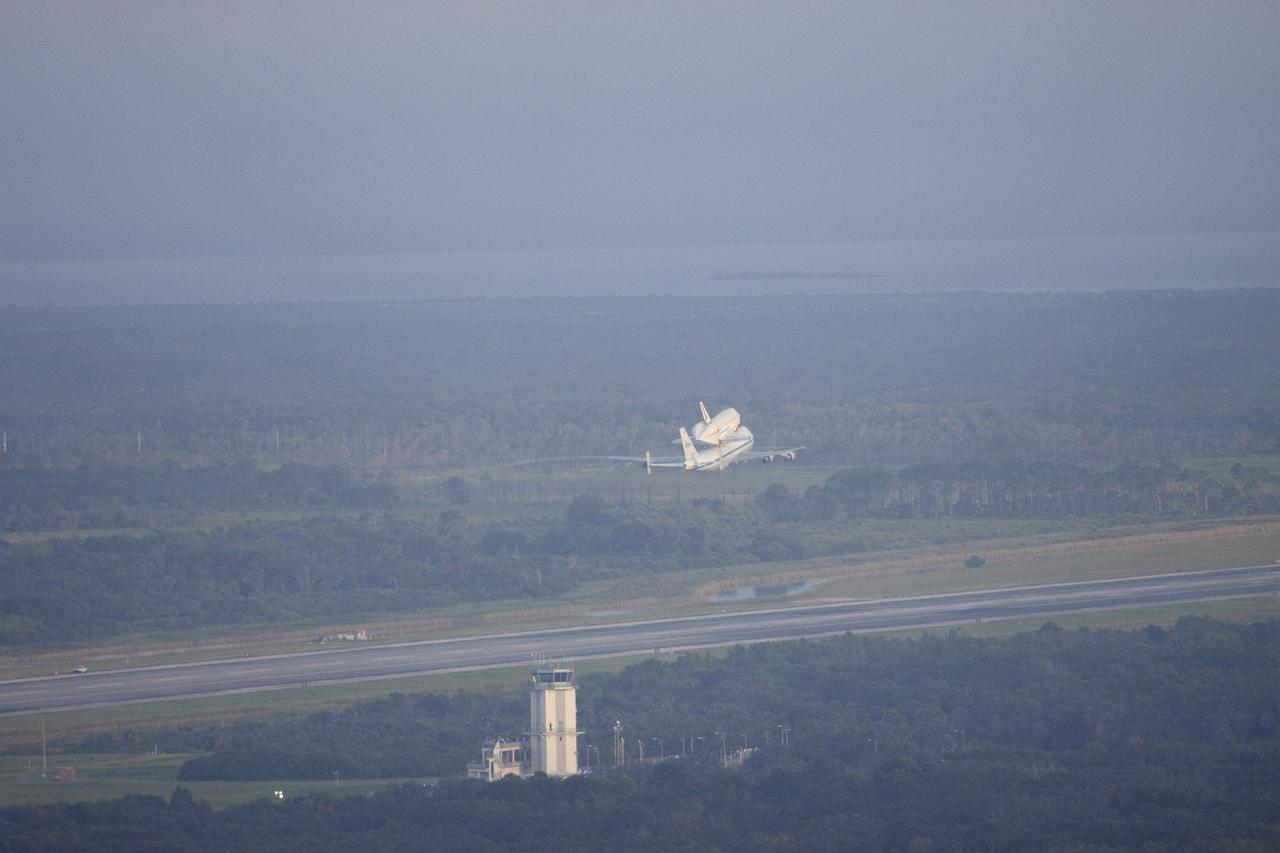
CAPE CANAVERAL, Fla. – At NASA's Kennedy Space Center in Florida, NASA's Shuttle Carrier Aircraft, or SCA, with the space shuttle Endeavour mounted atop, makes a low-level pass over the Shuttle Landing Facility. Following behind the SCA-shuttle combination is a T-38 chase aircraft. After making several low-level passes over several locations on Florida's Space Coast the SCA-Shuttle will head west for its ferry flight to California. The SCA, a modified 747 jetliner, will fly Endeavour to Los Angeles where it will be placed on public display at the California Science Center. This is the final ferry flight scheduled in the Space Shuttle Program era. For more information on the shuttles' transition and retirement, visit http://www.nasa.gov/transition. Photo credit: NASA/Jim Grossmann
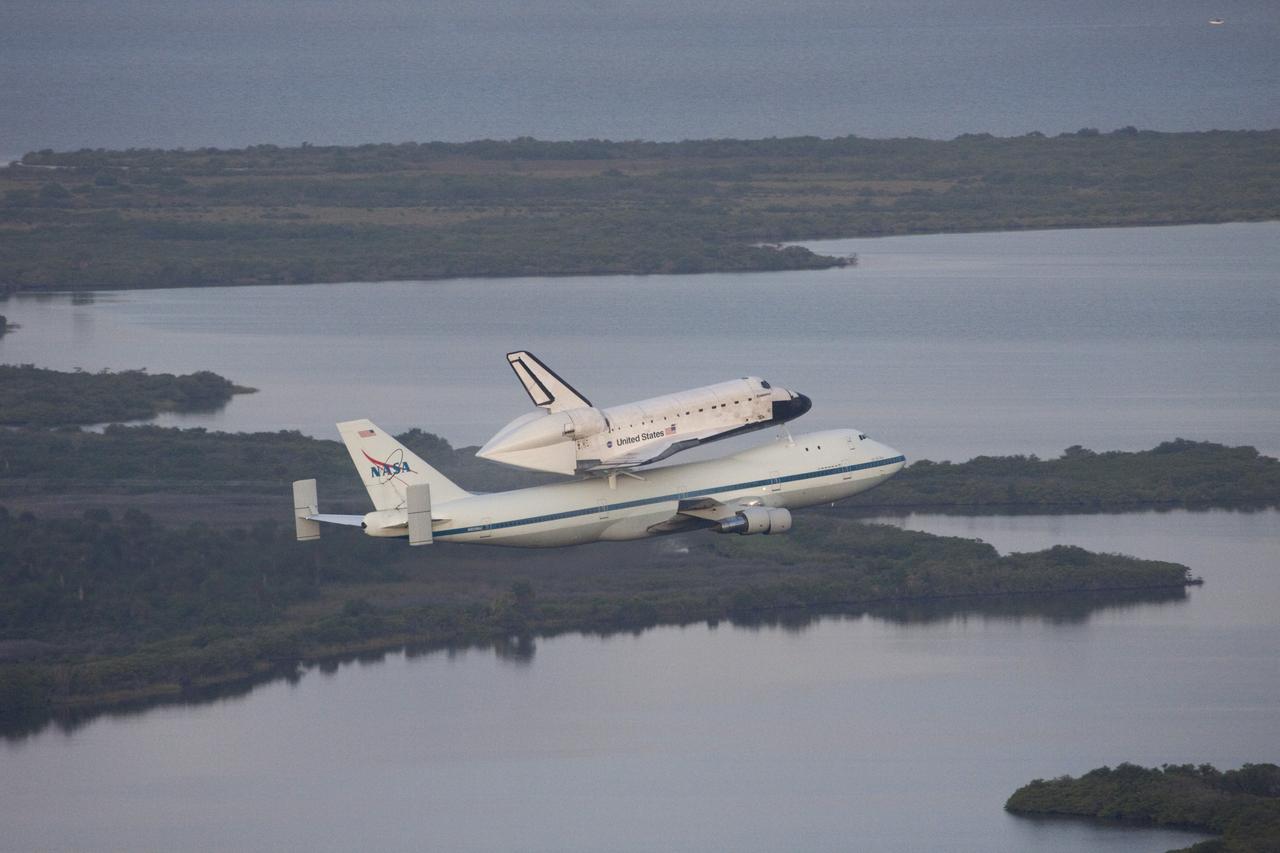
CAPE CANAVERAL, Fla. – At NASA's Kennedy Space Center in Florida, NASA's Shuttle Carrier Aircraft, or SCA, with the space shuttle Endeavour mounted atop, makes a low-level pass over the Shuttle Landing Facility. Following behind the SCA-shuttle combination is a T-38 chase aircraft. After making several low-level passes over several locations on Florida's Space Coast the SCA-Shuttle will head west for its ferry flight to California. The SCA, a modified 747 jetliner, will fly Endeavour to Los Angeles where it will be placed on public display at the California Science Center. This is the final ferry flight scheduled in the Space Shuttle Program era. For more information on the shuttles' transition and retirement, visit http://www.nasa.gov/transition. Photo credit: NASA/Jim Grossmann
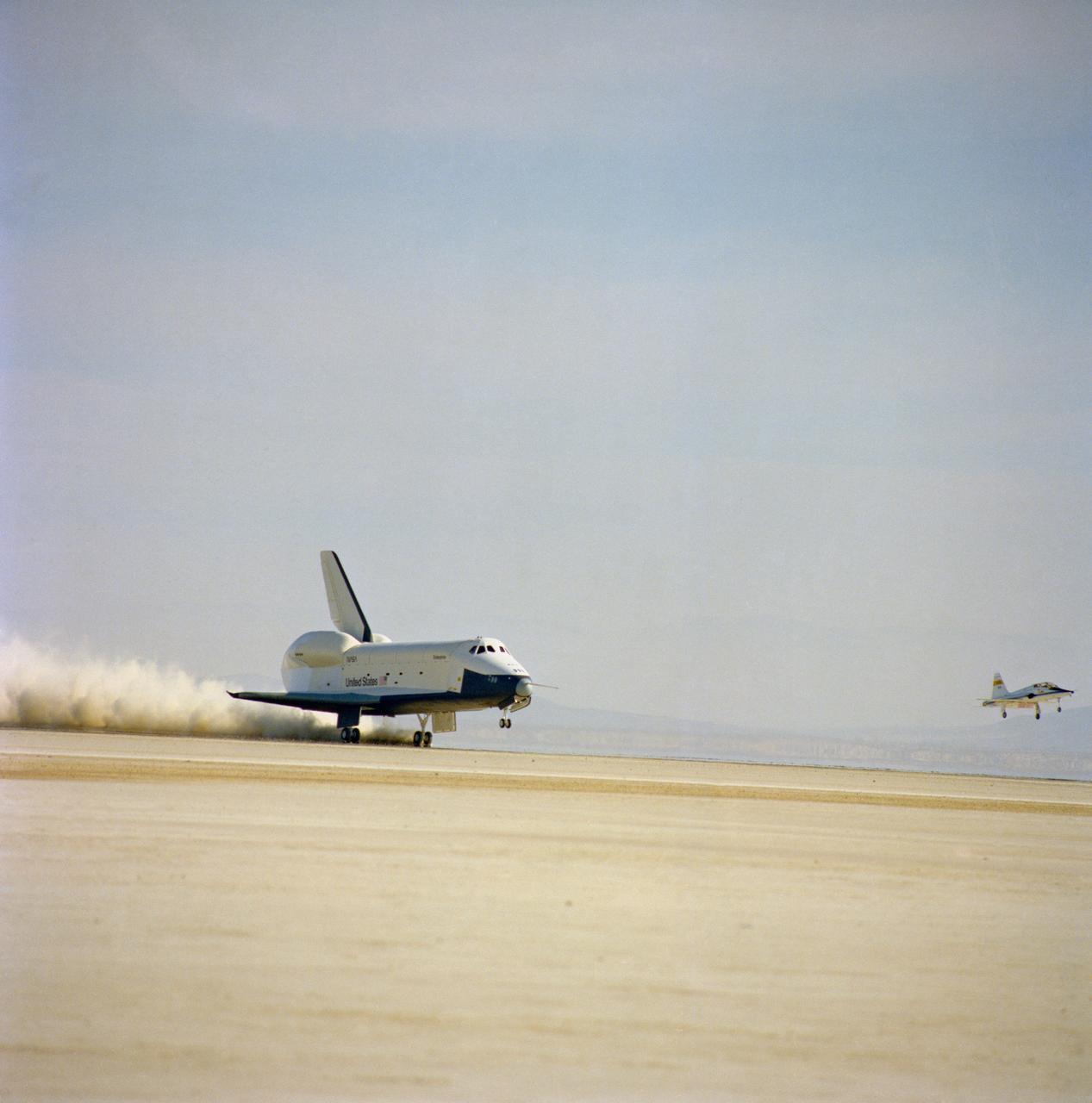
S77-28144 (13 Sept 1977) --- The shuttle orbiter 101 "Enterprise" stirs up a cloud of desert sand and dust as it lands to conclude a five-minute, 28-second unpowered flight during the second free flight of the Shuttle Approach and Landing Tests (ALT) conduced on September 13, 1977 at the Dryden Flight Research Center in Southern California. The Orbiter 101 crew astronauts Joe H. Engle, commander, and Richard H. Truly, pilot. The ALT free flights are designed to verify orbiter subsonic airworthiness, integrated systems operations and pilot-guided approach and landing capability and satisfy prerequisites to automatic flight control and navigation mode. On the right a T-38 chase plane comes in for a landing, also. This picture was taken with an Air Force Test Center 70mm Hasselblad camera installed on a tracking mount parked on the lake bed.
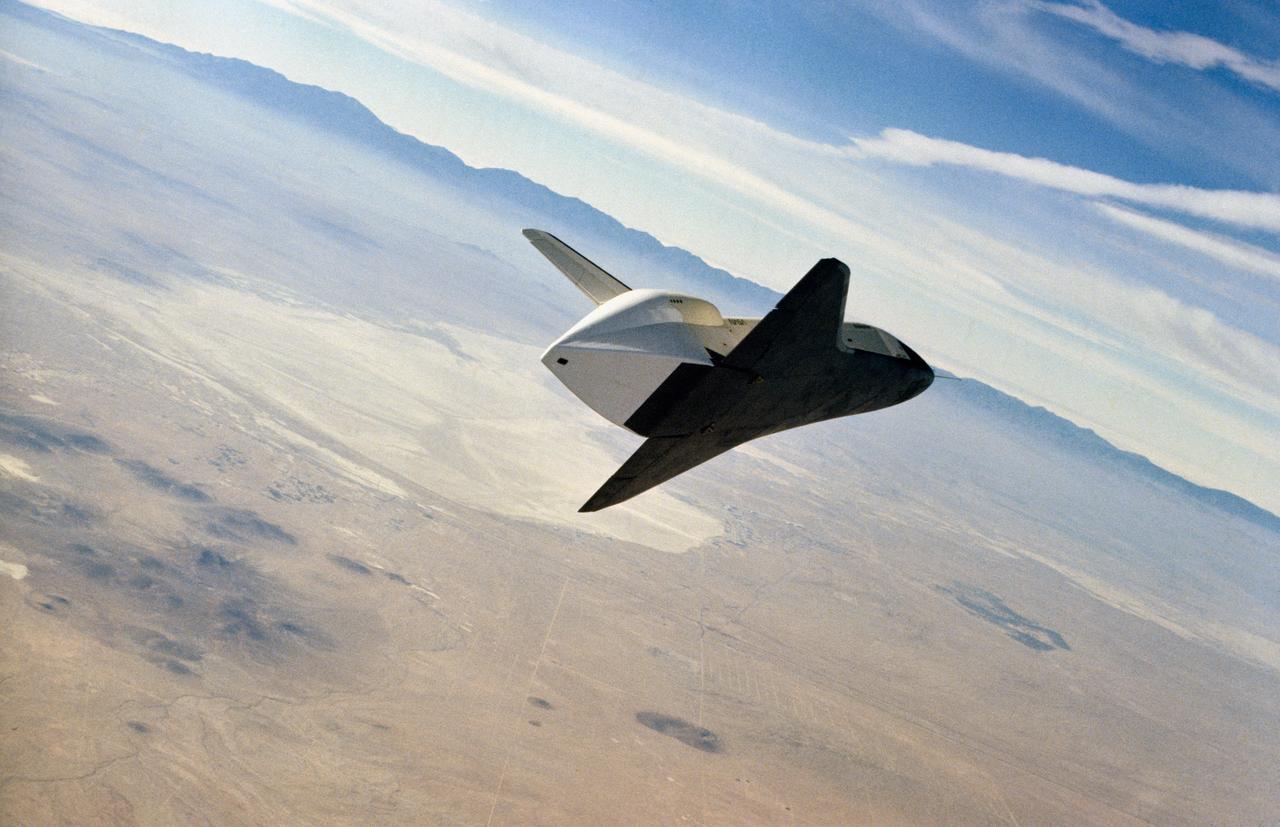
S77-28138 (13 Sept 1977) --- The shuttle Orbiter 101 "Enterprise" makes a slight turn and bank maneuver during the second free flight of the Shuttle Approach and Landing Tests (ALT) conducted on September 13, 1977, at the Dryden Flight Research Center in Southern California. The "Enterprise" separated from the NASA 747 carrier aircraft and landed following a five-minute, 28-second unpowered flight. The Orbiter 101 crew was astronauts Joe H. Engle, commander, and Richard H. Truly, pilot. The ALT free flights are designed to verify orbiter subsonic airworthiness, integrated systems operations and pilot-guided approach and landing capability and satisfy prerequisites to automatic flight control and navigation mode. The orbiter soars above the dry California desert in this post-separation view. Astronaut C. Gordon Fullerton took this picture while riding in T-38 chase plane number one. He used a 35mm Nikon camera with a 50mm lens.
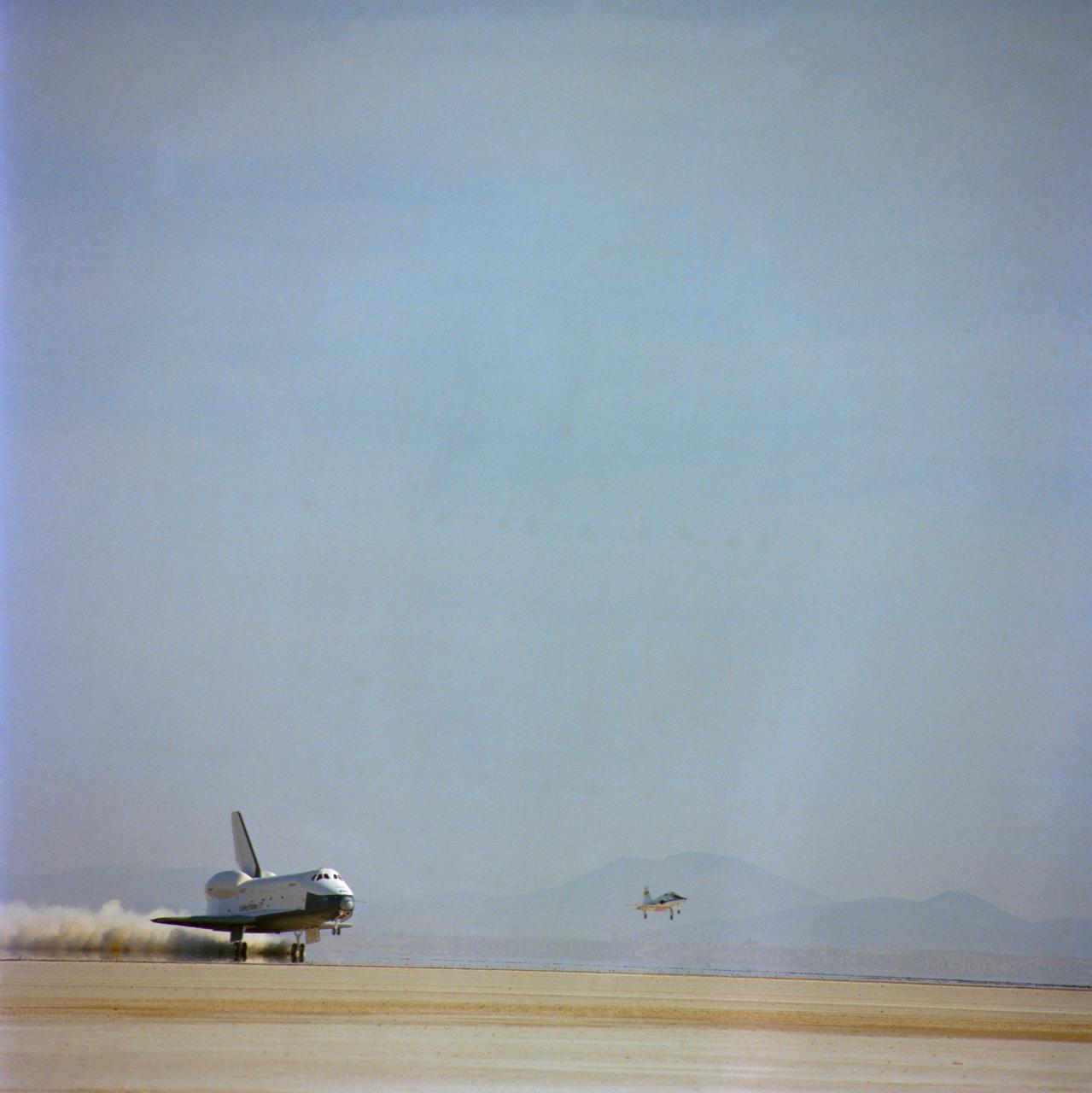
S77-28327 (13 Sept 1977) --- The shuttle orbiter 101 "Enterprise" stirs up a cloud of desert sand and dust as it lands to conclude a five-minute, 28-second unpowered flight during the second free flight of the Shuttle Approach and Landing Tests (ALT) conduced on September 13, 1977 at the Dryden Flight Research Center in Southern California. The Orbiter 101 crew astronauts Joe H. Engle, commander, and Richard H. Truly, pilot. The ALT free flights are designed to verify orbiter subsonic airworthiness, integrated systems operations and pilot-guided approach and landing capability and satisfy prerequisites to automatic flight control and navigation mode. On the right a T-38 chase plane comes in for a landing, also. This picture was taken with an Air Force Test Center 70mm Hasselblad camera installed on a tracking mount parked on the lake bed.
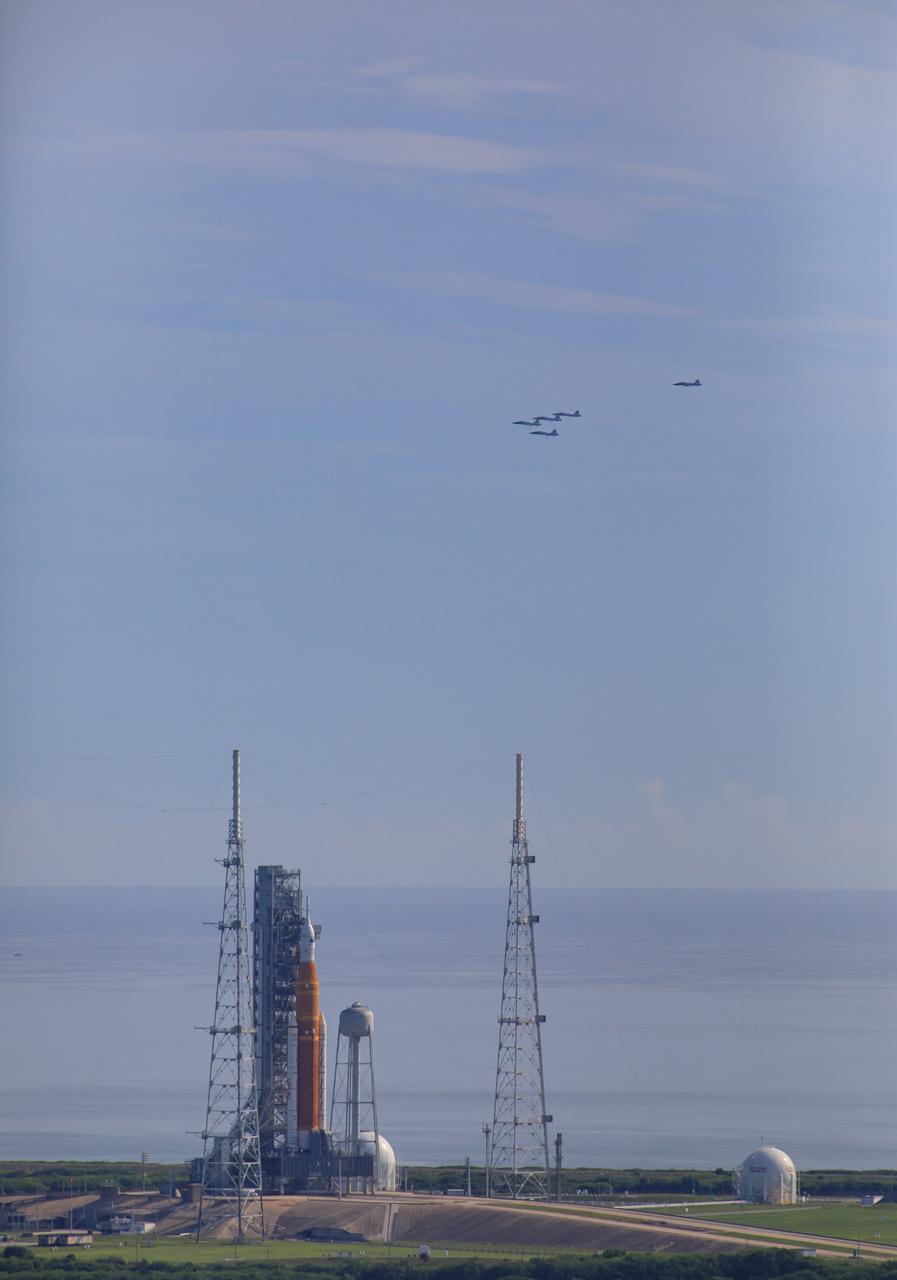
Ahead of NASA’s Artemis I launch, a flight of T-38 supersonic trainer aircraft from the Johnson Space Center Aircraft Operations Division flies in formation over the agency’s Space Launch System and Orion spacecraft on the pad at Launch Complex 39B at Kennedy Space Center in Florida, on Aug. 23, 2022. Pilots and passengers of the five aircraft include NASA Research Pilot Chris Condon and NASA Astronaut Zena Cardman in the lead plane, followed by NASA astronaut candidate Nicole Ayers and NASA astronaut Christina Koch in the second plane, Canadian Space Agency astronaut Jeremy Hansen and NASA astronaut Drew Morgan in the third plane, NASA astronaut Reid Wiseman and NASA astronaut Joe Acaba in the fourth plane, and NASA astronaut candidate Jack Hathaway and Josh Valcarcel, NASA photographer, in the chase plane. Artemis I is scheduled to launch at 8:33 a.m. EDT on Aug. 29, 2022. The first in a series of increasingly complex missions, Artemis I will provide a foundation for human deep space exploration and demonstrate our commitment and capability to extend human presence to the Moon and beyond. The primary goal of Artemis I is to thoroughly test the integrated systems before crewed missions by operating the spacecraft in a deep space environment, testing Orion’s heat shield, and recovering the crew module after reentry, descent, and splashdown.

CAPE CANAVERAL, Fla. – At NASA Kennedy Space Center’s Shuttle Landing Facility in Florida, A T-38 chase aircraft sits on runway 15 waiting for clearance from Kennedy’s air traffic control tower to begin takeoff prior to the Shuttle Carrier Aircraft, or SCA, with space shuttle Discovery attached atop. The aircraft, known as an SCA, is a Boeing 747 jet, originally manufactured for commercial use, which was modified by NASA to transport the shuttles between destinations on Earth. This SCA, designated NASA 905, is assigned to the remaining ferry missions, delivering the shuttles to their permanent public display sites. NASA 905 is scheduled to ferry Discovery to the Washington Dulles International Airport in Virginia on April 17, after which the shuttle will be placed on display in the Smithsonian’s National Air and Space Museum, Steven F. Udvar-Hazy Center in Chantilly, Va. For more information on the SCA, visit http://www.nasa.gov/centers/dryden/news/FactSheets/FS-013-DFRC.html. For more information on shuttle transition and retirement activities, visit http://www.nasa.gov/transition. Photo credit: NASA/Glenn Benson
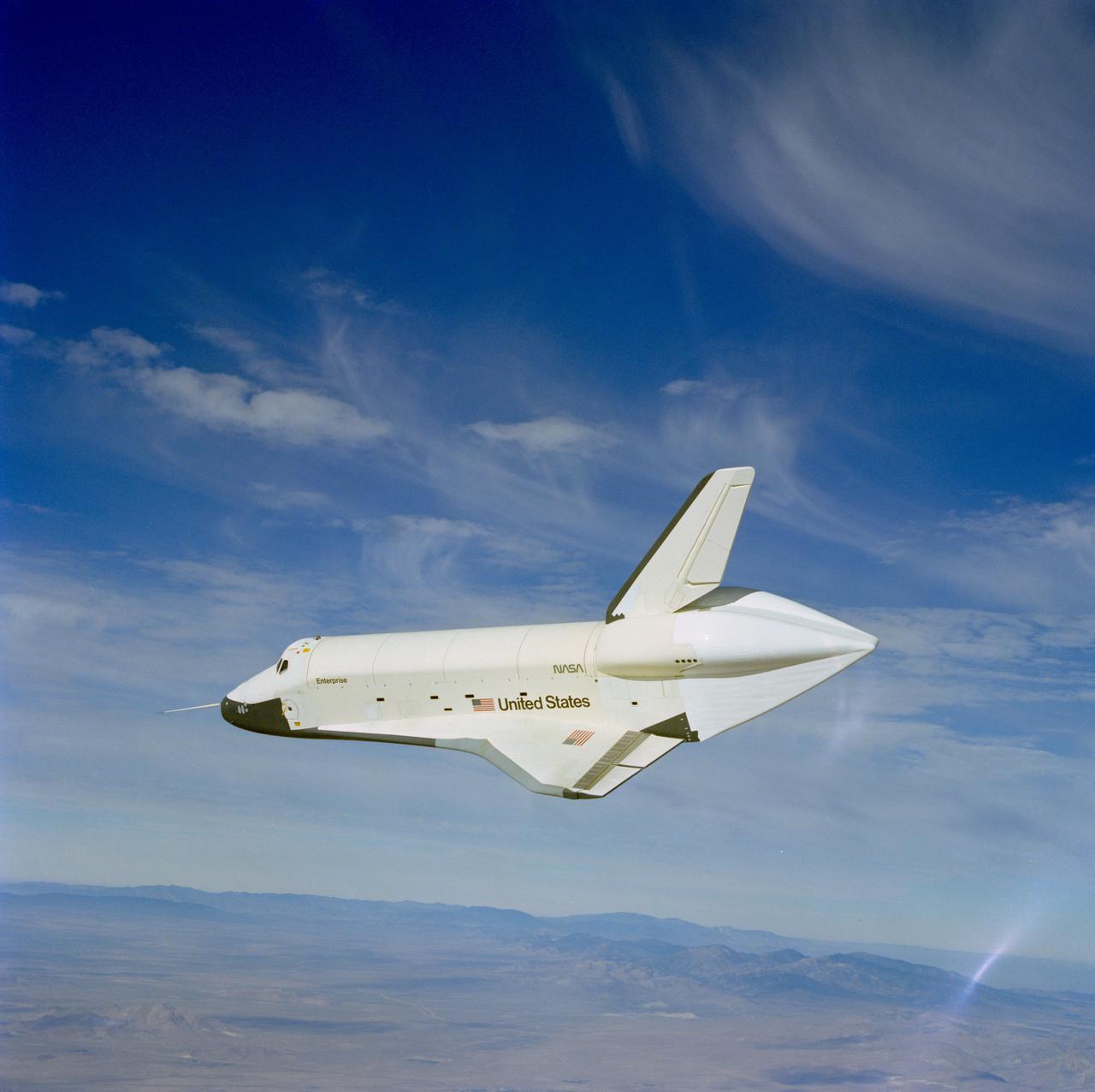
S77-28141 (13 Sept 1977) --- The shuttle Orbiter 101 "Enterprise" makes a slight turn and bank maneuver during the second free flight of the Shuttle Approach and Landing Tests (ALT) conducted on September 13, 1977, at the Dryden Flight Research Center in Southern California. The "Enterprise" separated from the NASA 747 carrier aircraft and landed following a five-minute, 28-second unpowered flight. The Orbiter 101 crew was astronauts Joe H. Engle, commander, and Richard H. Truly, pilot. The ALT free flights are designed to verify orbiter subsonic airworthiness, integrated systems operations and pilot-guided approach and landing capability and satisfy prerequisites to automatic flight control and navigation mode. The orbiter soars above the dry California desert in this post-separation view. Photographer Bill Blunck of JSC's Photographic Technology Laboratory took this picture while riding in T-38 chase plane number two. He used a 70mm Hasselblad camera with an 80mm lens.
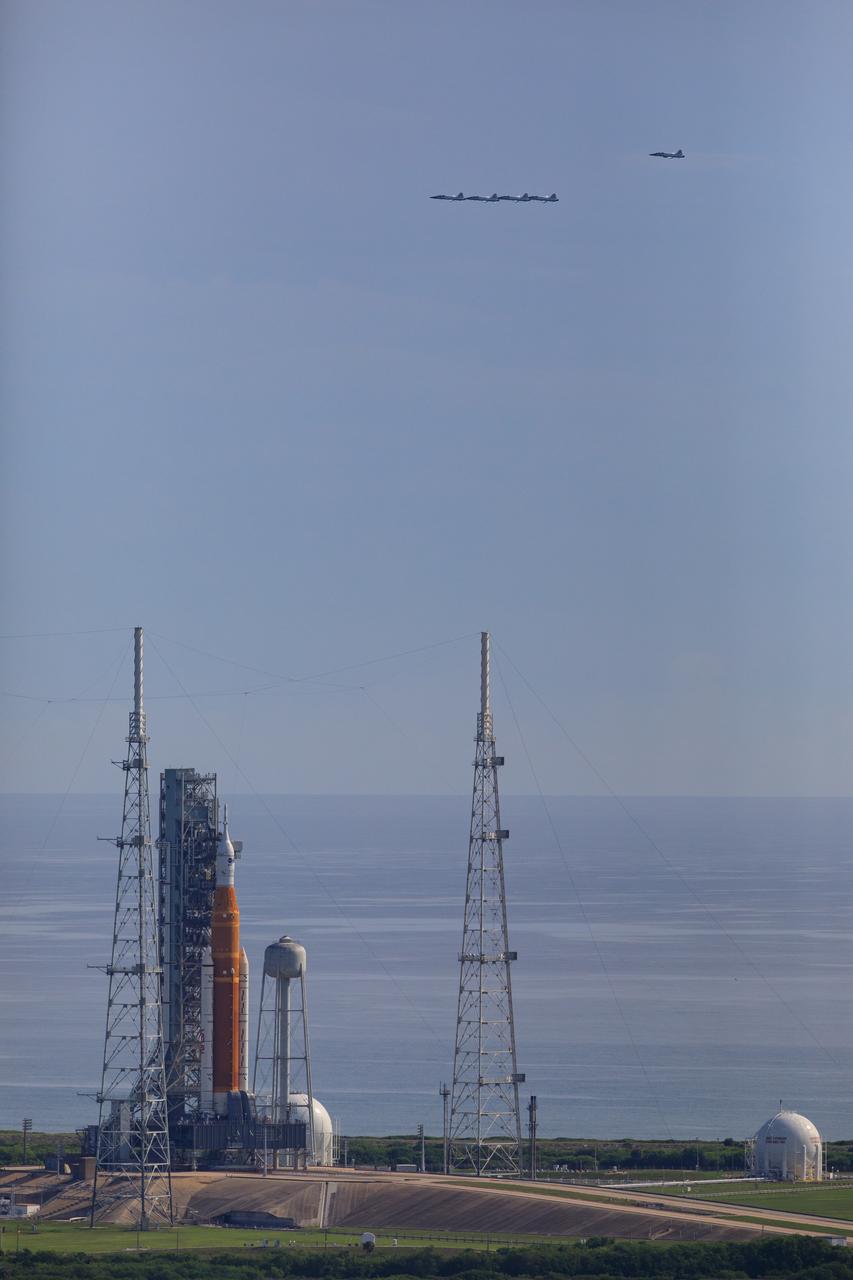
Ahead of NASA’s Artemis I launch, a flight of T-38 supersonic trainer aircraft from the Johnson Space Center Aircraft Operations Division flies in formation over the agency’s Space Launch System and Orion spacecraft on the pad at Launch Complex 39B at Kennedy Space Center in Florida, on Aug. 23, 2022. Pilots and passengers of the five aircraft include NASA Research Pilot Chris Condon and NASA Astronaut Zena Cardman in the lead plane, followed by NASA astronaut candidate Nicole Ayers and NASA astronaut Christina Koch in the second plane, Canadian Space Agency astronaut Jeremy Hansen and NASA astronaut Drew Morgan in the third plane, NASA astronaut Reid Wiseman and NASA astronaut Joe Acaba in the fourth plane, and NASA astronaut candidate Jack Hathaway and Josh Valcarcel, NASA photographer, in the chase plane. Artemis I is scheduled to launch at 8:33 a.m. EDT on Aug. 29, 2022. The first in a series of increasingly complex missions, Artemis I will provide a foundation for human deep space exploration and demonstrate our commitment and capability to extend human presence to the Moon and beyond. The primary goal of Artemis I is to thoroughly test the integrated systems before crewed missions by operating the spacecraft in a deep space environment, testing Orion’s heat shield, and recovering the crew module after reentry, descent, and splashdown.