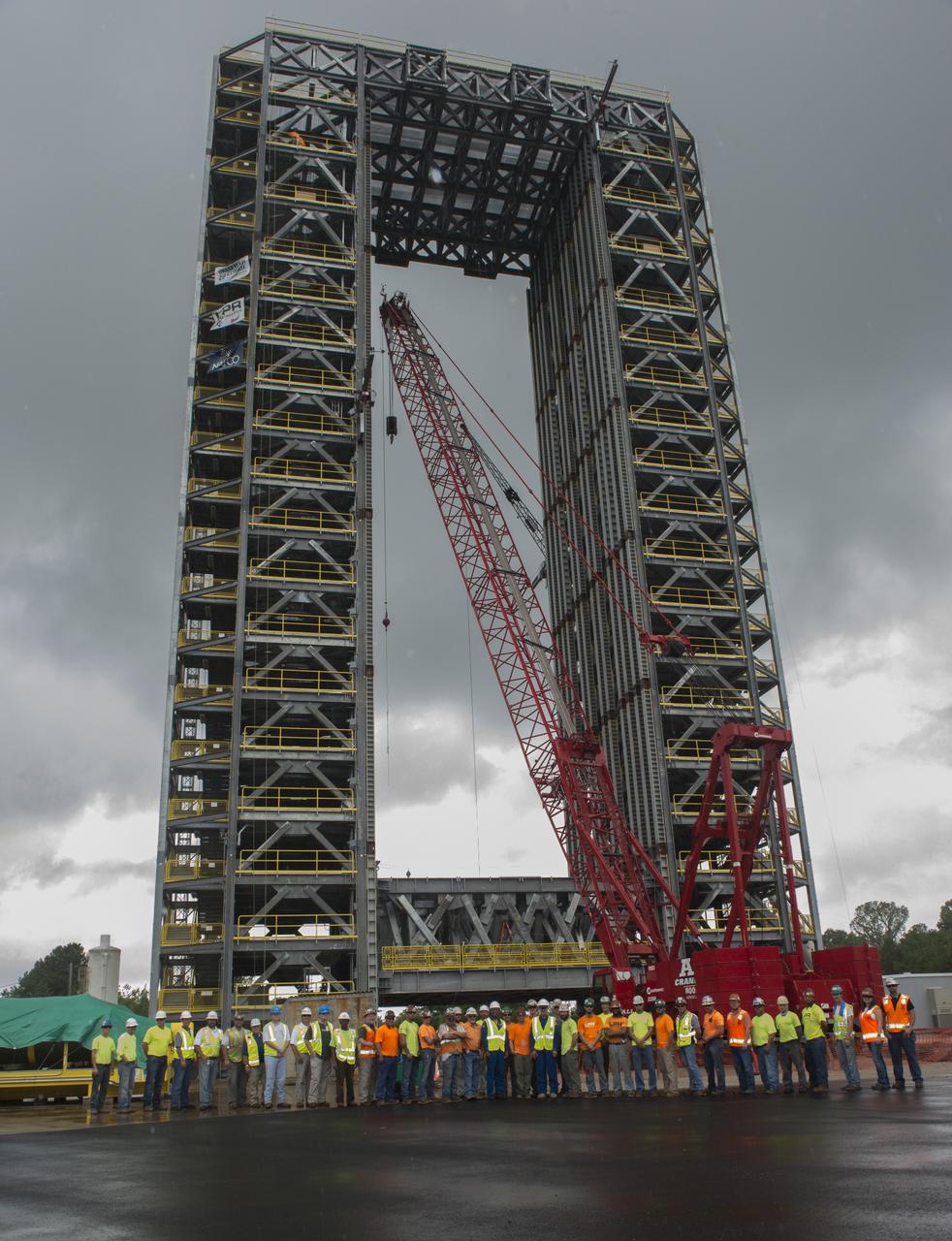
T-38 JETS FLY-OVER TEST STAND 4693 AND ASTRONAUTS DON PETTIT AND VICTOR GLOVER VISIT WITH CONSTRUCTION PERSONNEL.
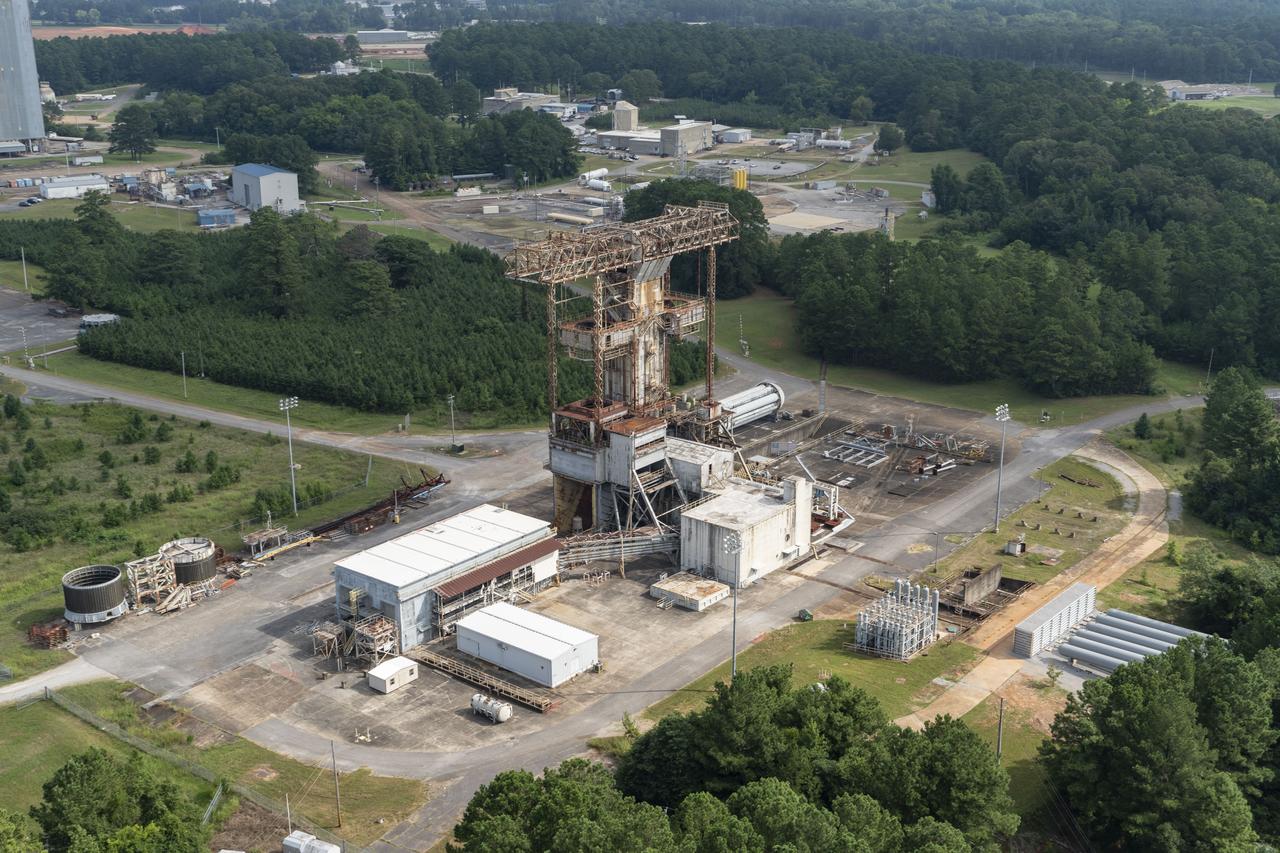
Aerial photograph of the MSFC West Test area with the T-Stand in the foreground
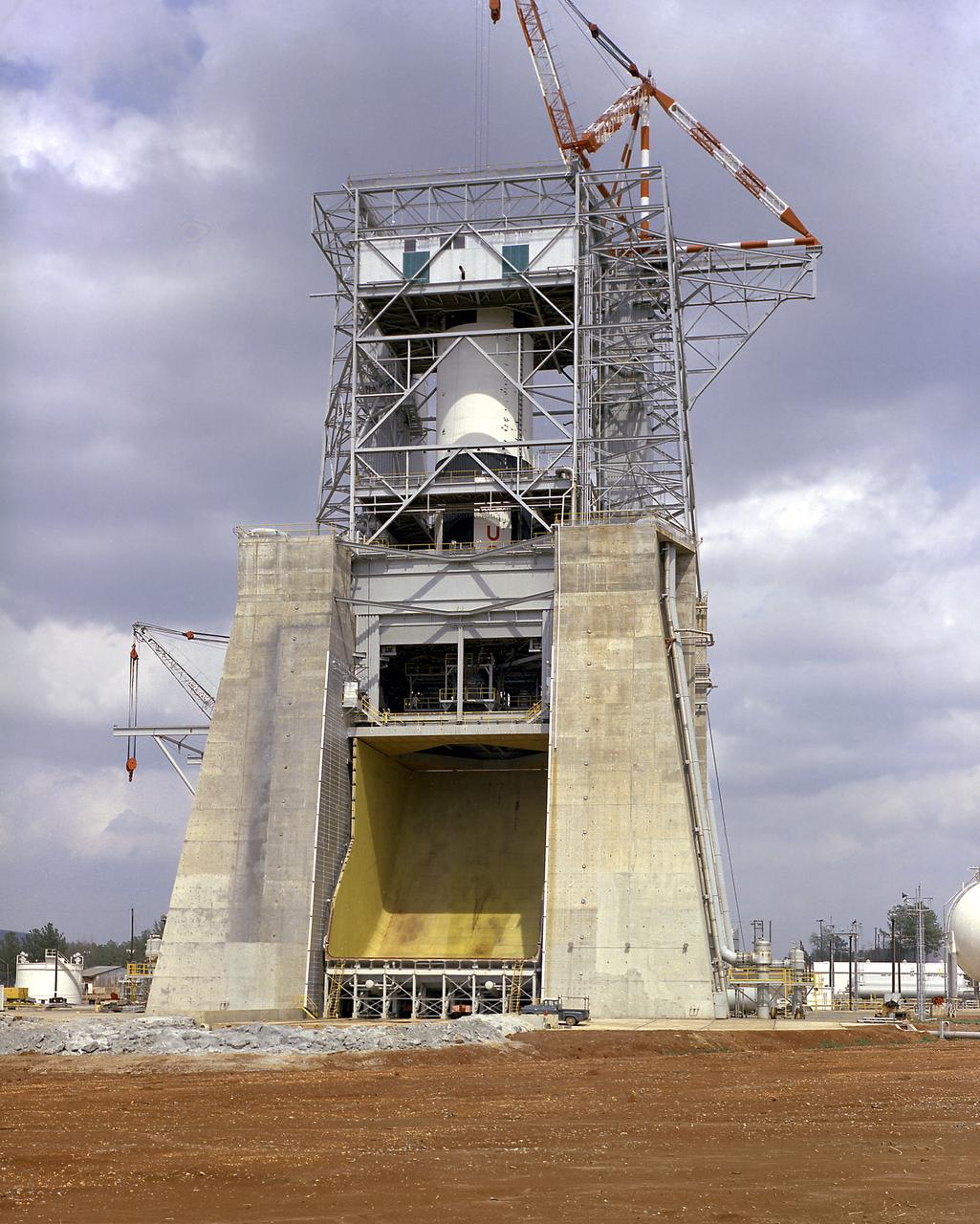
The S-IC-T stage (static firing stage) is installed and awaits the first static firing of all five F-1 engines at the Marshall Space Flight Center S-IC static test stand. Constructed in 1964, the S-IC static test stand was designed and constructed to develop and test the first stage of the Saturn V launch vehicle that used five F-1 engines. Each F-1 engine developed 1,500,000 pounds of thrust for a total liftoff thrust of 7,500,000 pounds. To handle this research and development effort, the stand contains 12,000,000 pounds of concrete on its base legs that are planted down to bedrock 40 feet below ground level. Of concrete and steel construction, the stand foundation walls are 4 feet thick, and topped by a crane with a 135-foot boom. With the boom in the up position, the stand is given an overall height of 405 feet, placing it among the highest structures in Alabama at the time.
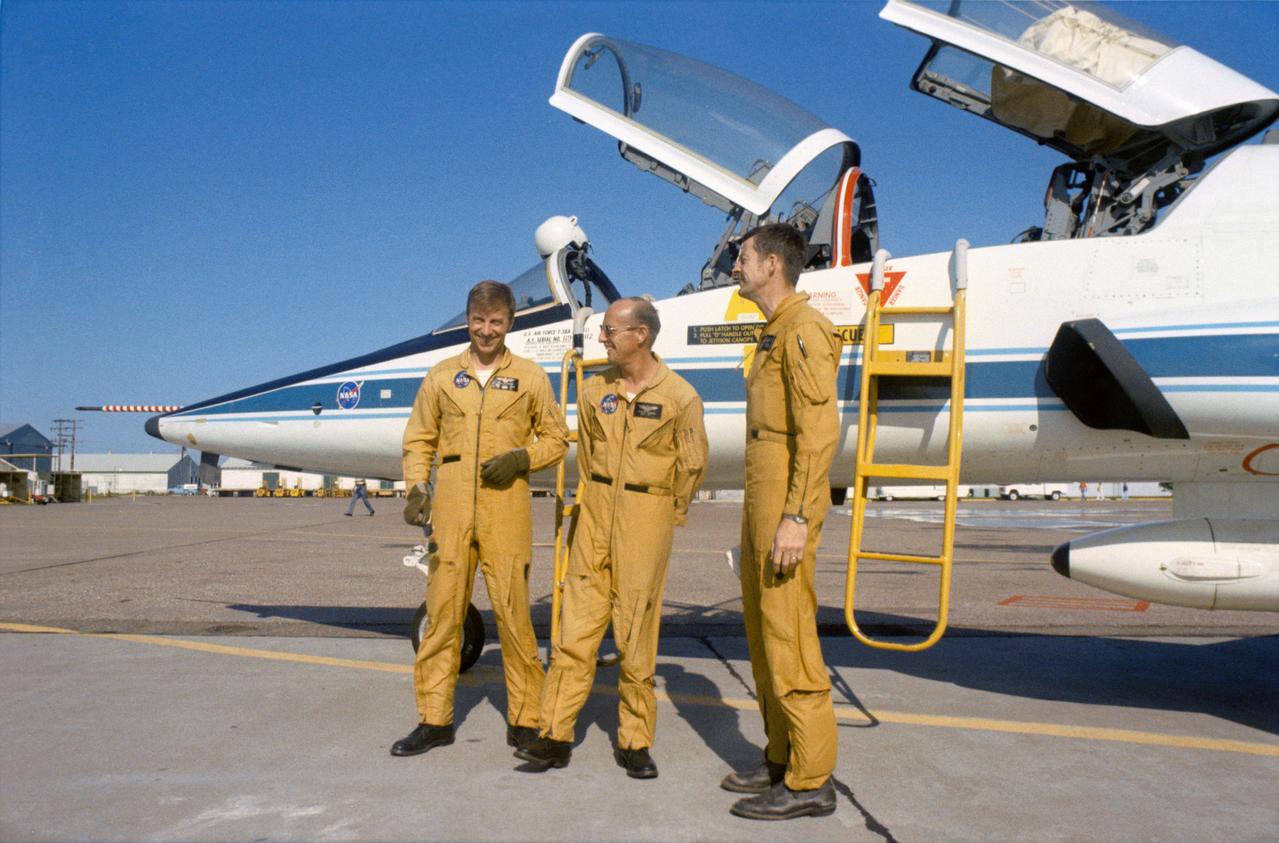
S73-25714 (13 May 1973) --- Members of the prime crew of the first manned Skylab Mission (Skylab 2) stand beside a NASA T-38 jet aircraft trainer at nearby Ellington Air Force Base prior to take off for the Kennedy Space Center, Florida. They are (left to right) astronauts Paul J. Weitz, mission pilot; Charles Conrad Jr., commander; and scientist Joseph P. Kerwin, science pilot. The three crewmen have completed their prelaunch training at JSC. Photo credit: NASA
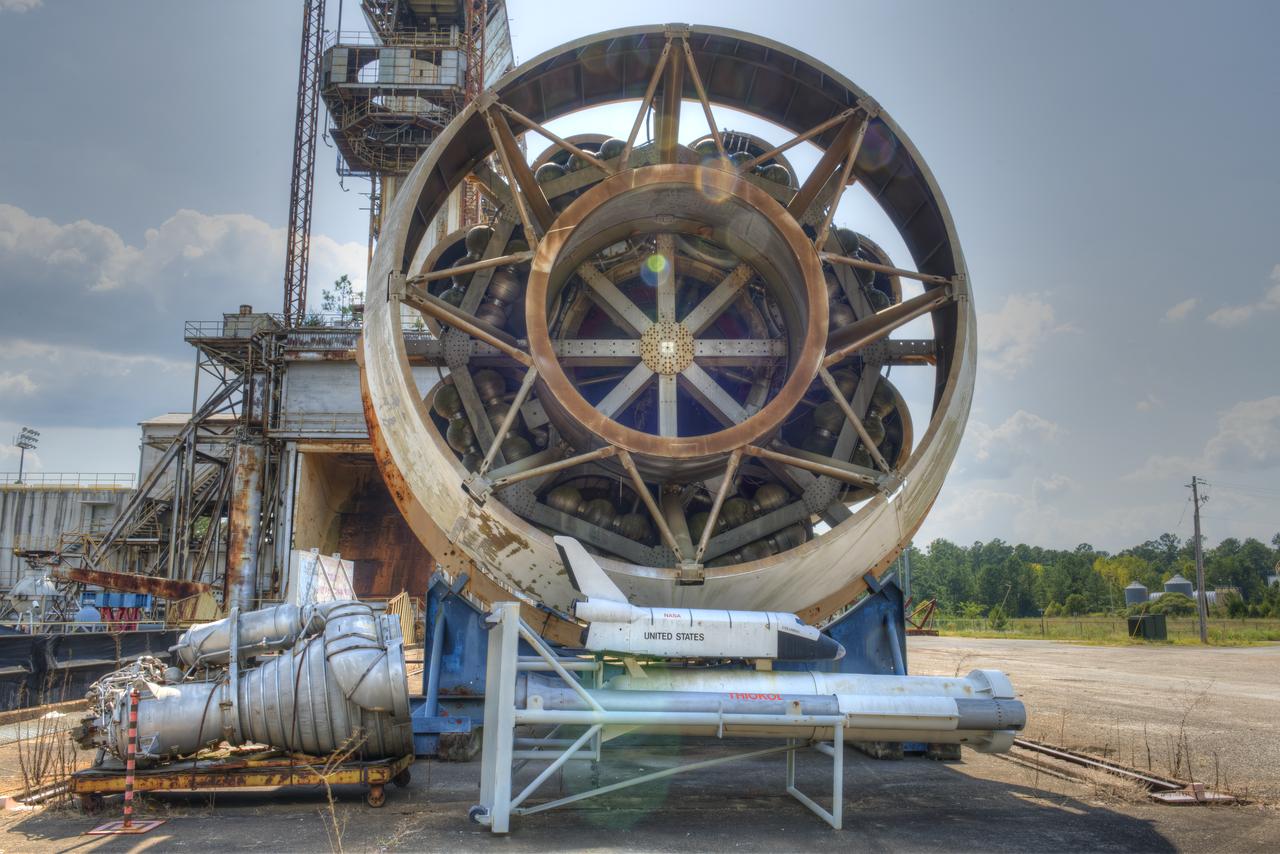
FORWARD END OF SATURN S-1B STAGE (SA-T) NEAR PROPULSION AND STRUCTURAL TEST FACILITY (BUILDING 4572) AT THE GEORGE C. MARSHALL SPACE FLIGHT CENTER IN HUNTSVILLE, ALABAMA
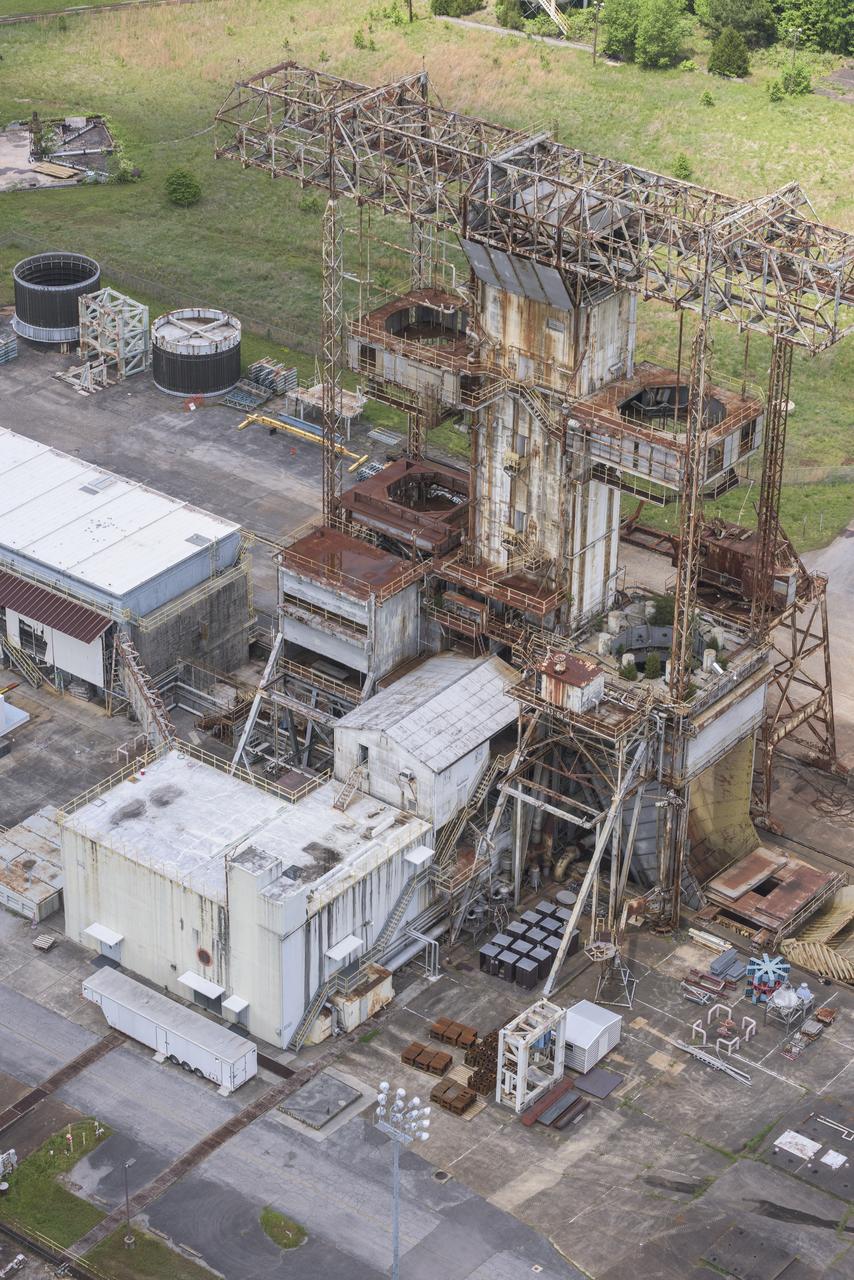
AERIAL PHOTOGRAPHS OF MSFC-4572 T-TEST STAND
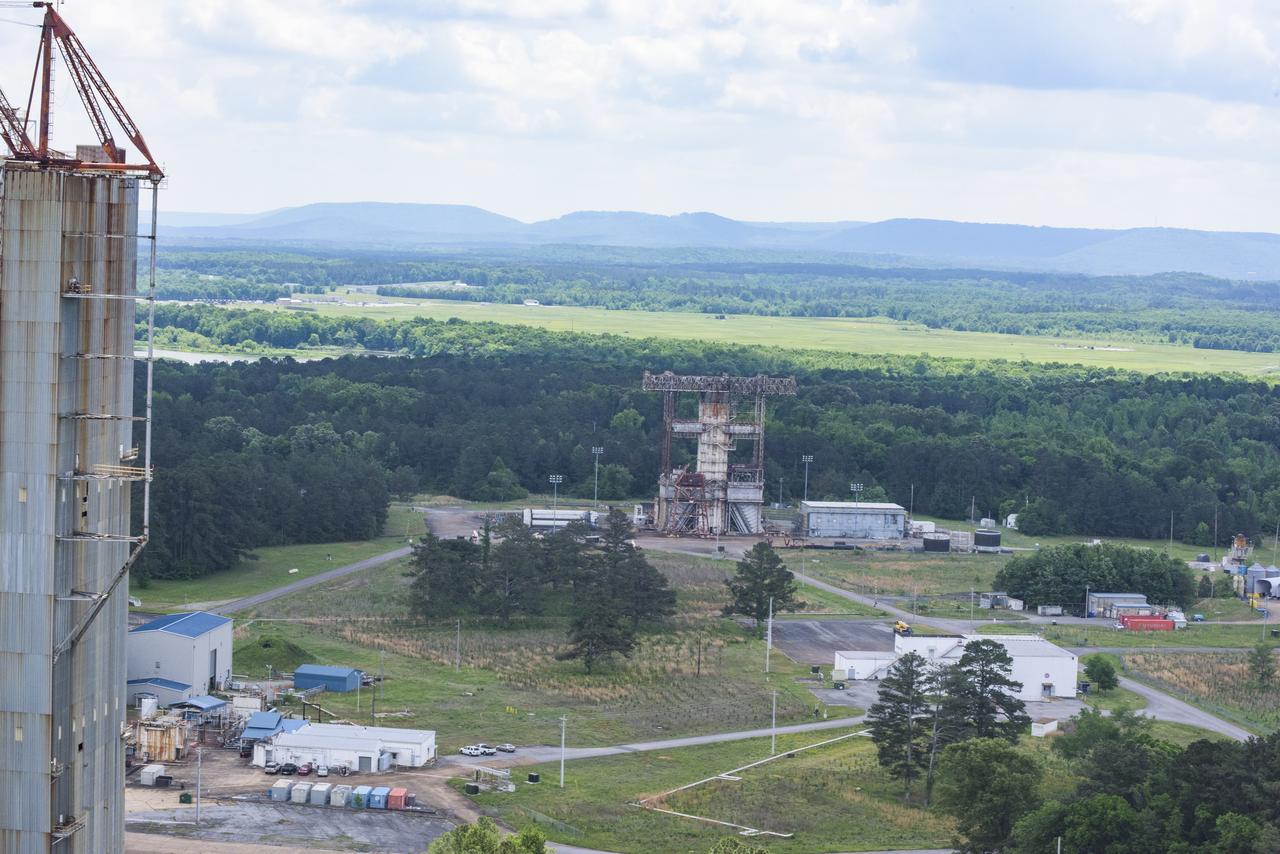
AERIAL PHOTOGRAPHS OF MSFC-4582 T-STAND
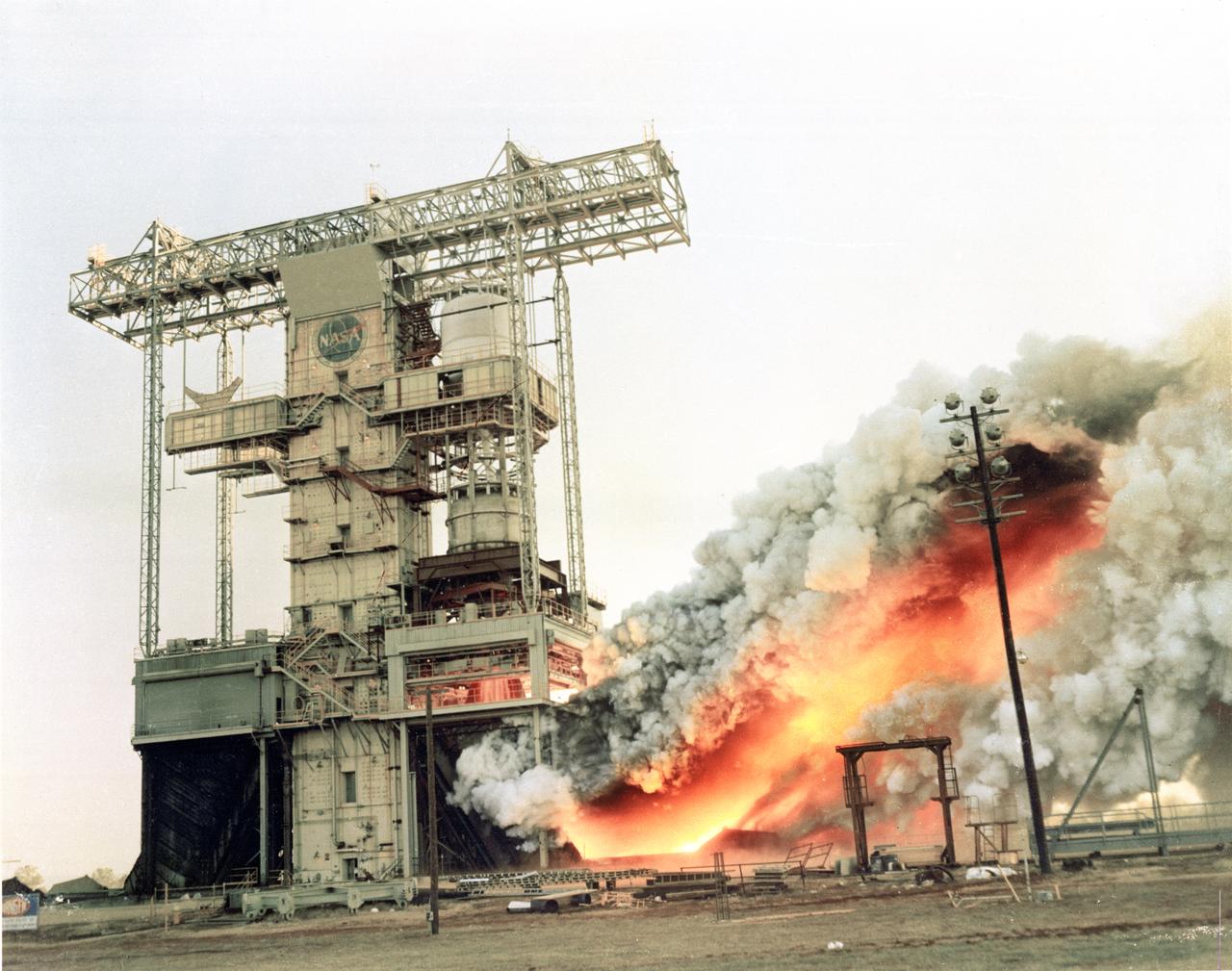
Pictured is a dual position Saturn I/IB test at the T-Stand at Marshall Space Flight Center. This stand was built to test two articles at the same time, thus providing engineers at MSFC with the opportunity to compare identical burns.
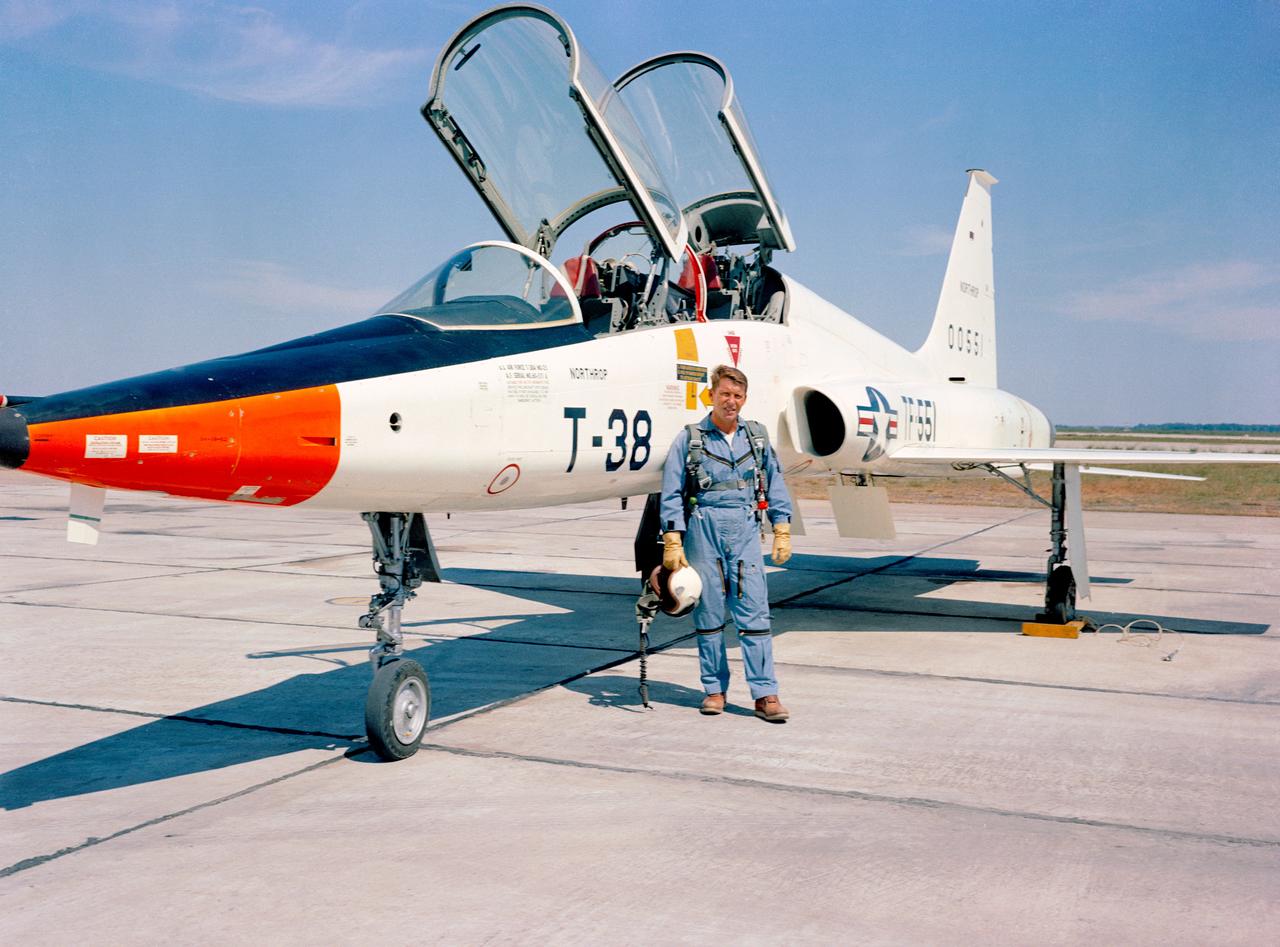
S63-18249 (1963) --- Astronaut Walter M. Schirra Jr. standing beside T-38. Photo credit: NASA
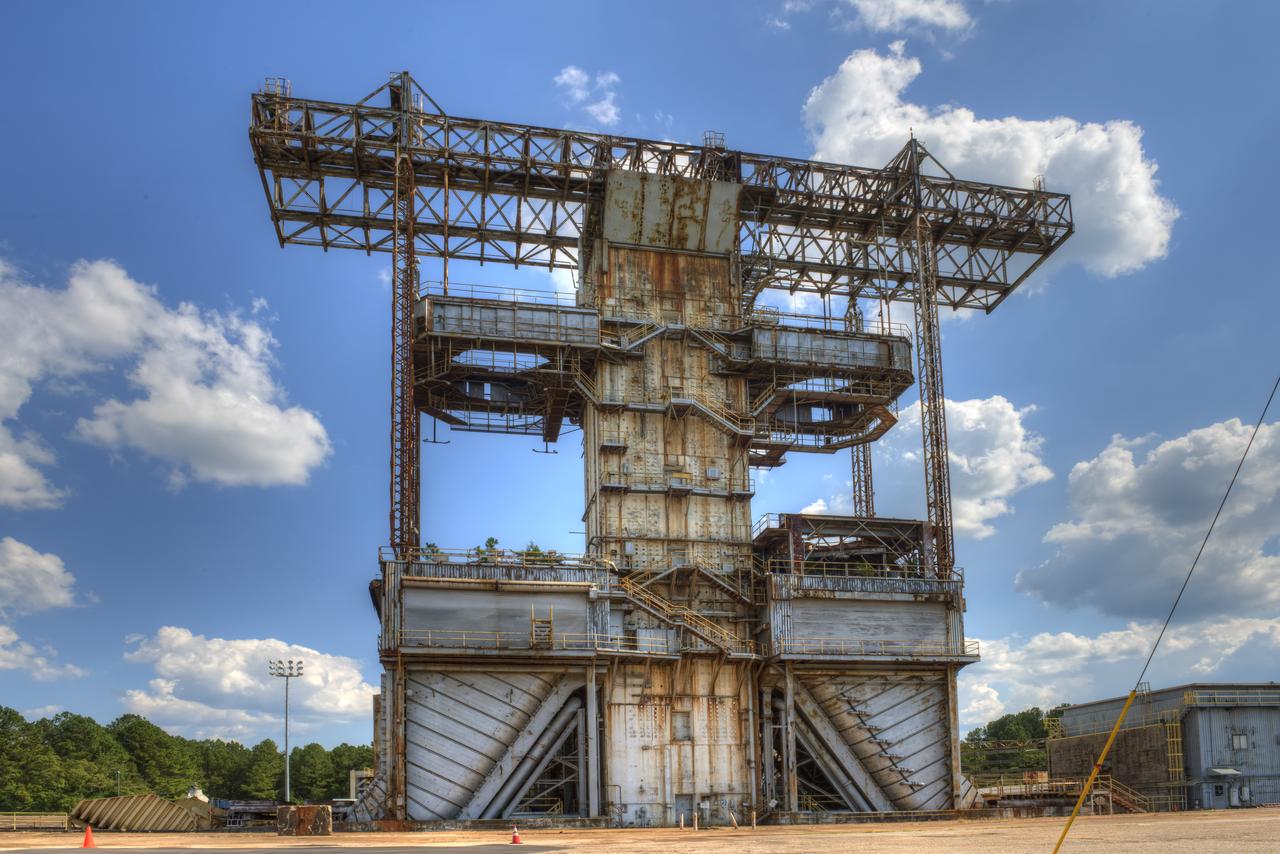
PROPULSION AND STRUCTURAL TEST FACILITY (BUILDING 4572) AT THE GEORGE C. MARSHALL SPACE FLIGHT CENTER IN HUNTSVILLE, ALABAMA
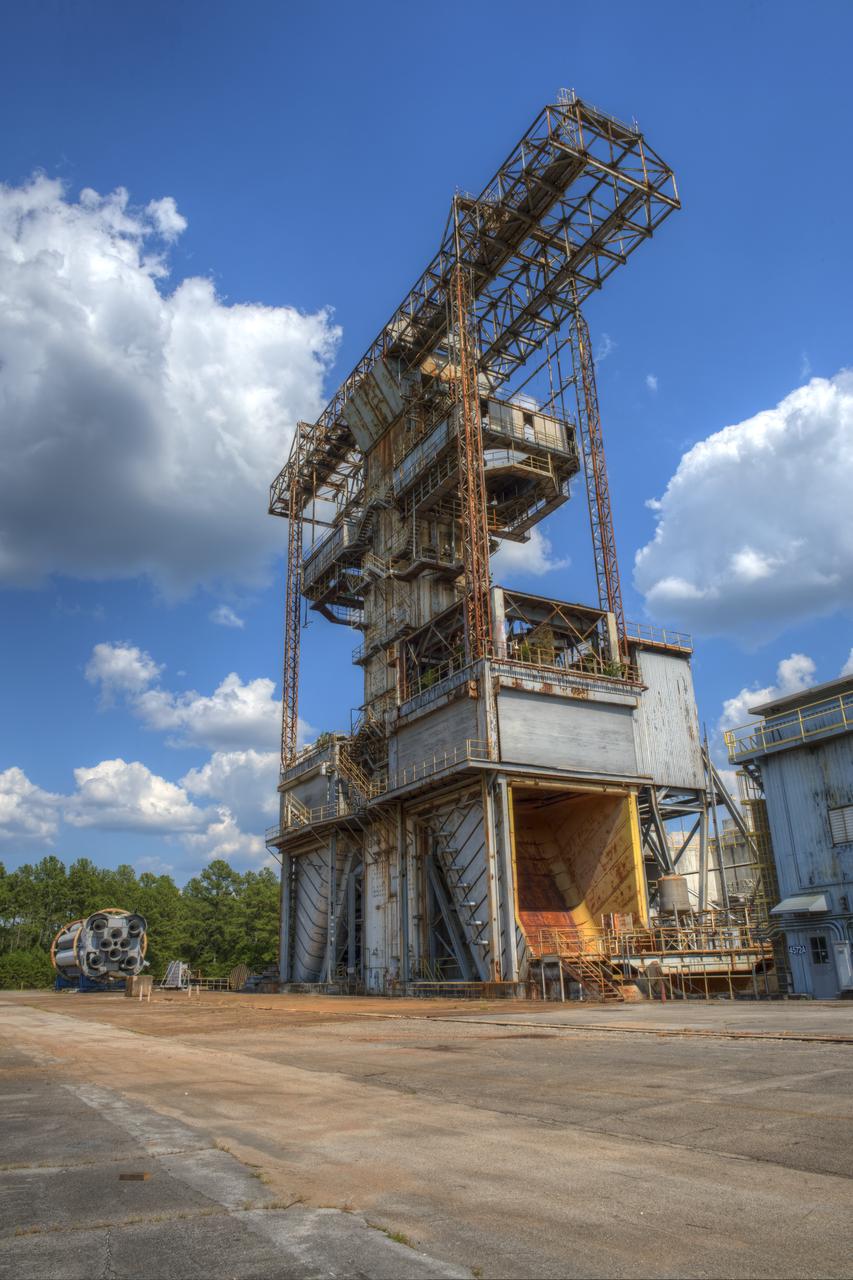
PROPULSION AND STRUCTURAL TEST FACILITY (BUILDING 4572) AT THE GEORGE C. MARSHALL SPACE FLIGHT CENTER IN HUNTSVILLE, ALABAMA
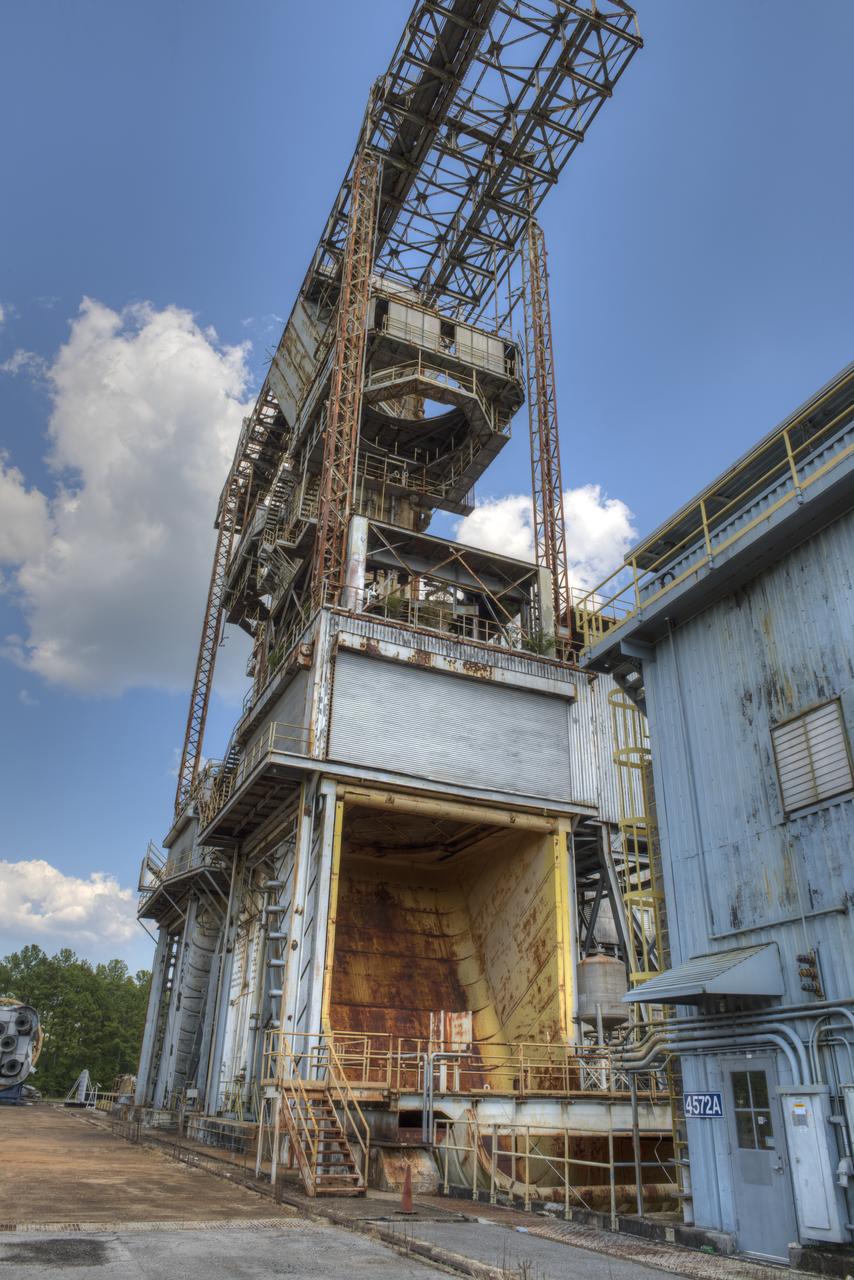
PROPULSION AND STRUCTURAL TEST FACILITY (BUILDING 4572) AT THE GEORGE C. MARSHALL SPACE FLIGHT CENTER IN HUNTSVILLE, ALABAMA
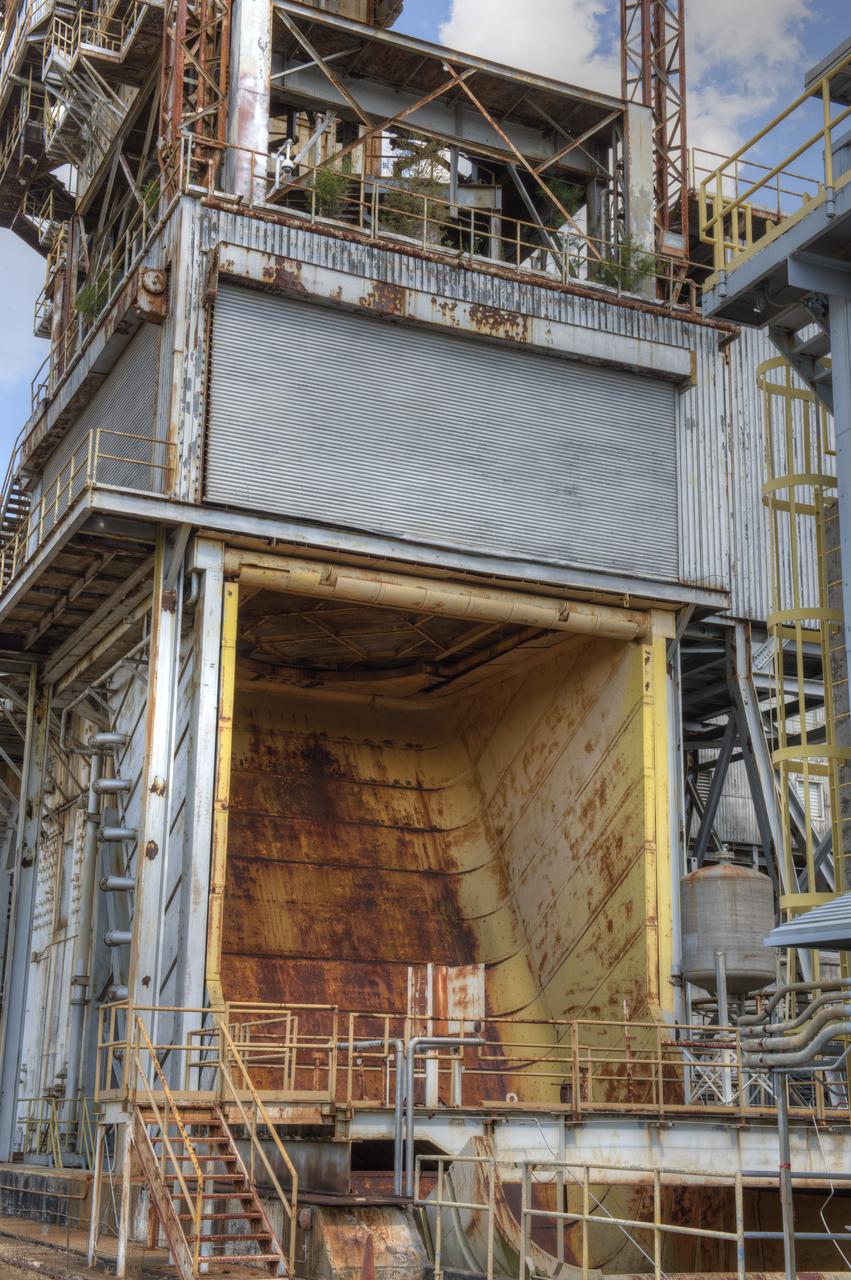
PROPULSION AND STRUCTURAL TEST FACILITY (BUILDING 4572) AT THE GEORGE C. MARSHALL SPACE FLIGHT CENTER IN HUNTSVILLE, ALABAMA
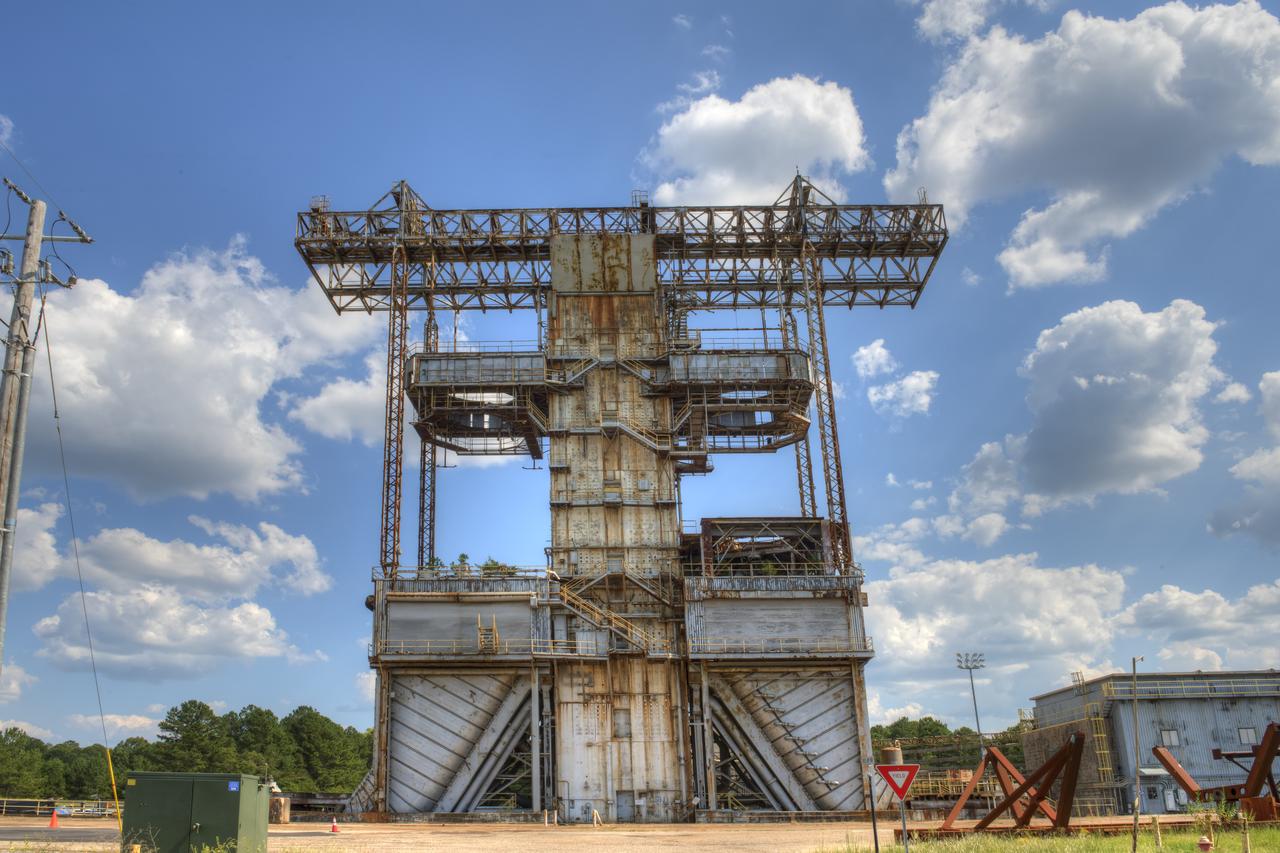
PROPULSION AND STRUCTURAL TEST FACILITY (BUILDING 4572) AT THE GEORGE C. MARSHALL SPACE FLIGHT CENTER IN HUNTSVILLE, ALABAMA
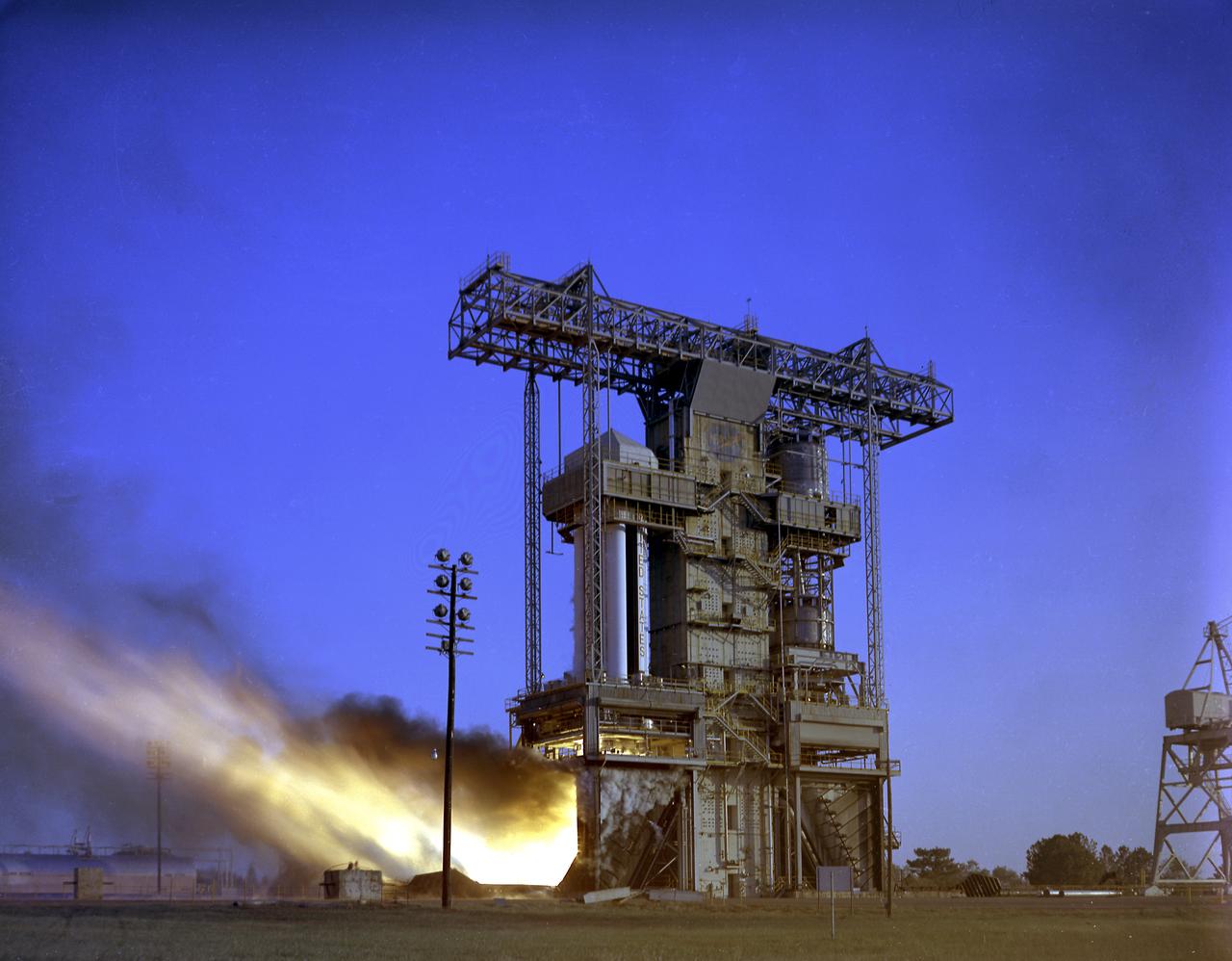
Test firing of the Saturn I S-I Stage (S-1-10) at the Marshall Space Flight Center. This test stand was originally constructed in 1951 and sometimes called the Redstone or T tower. In l961, the test stand was modified to permit static firing of the S-I/S-IB stages, which produced a total thrust of 1,600,000 pounds. The name of the stand was then changed to the S-IB Static Test Stand.
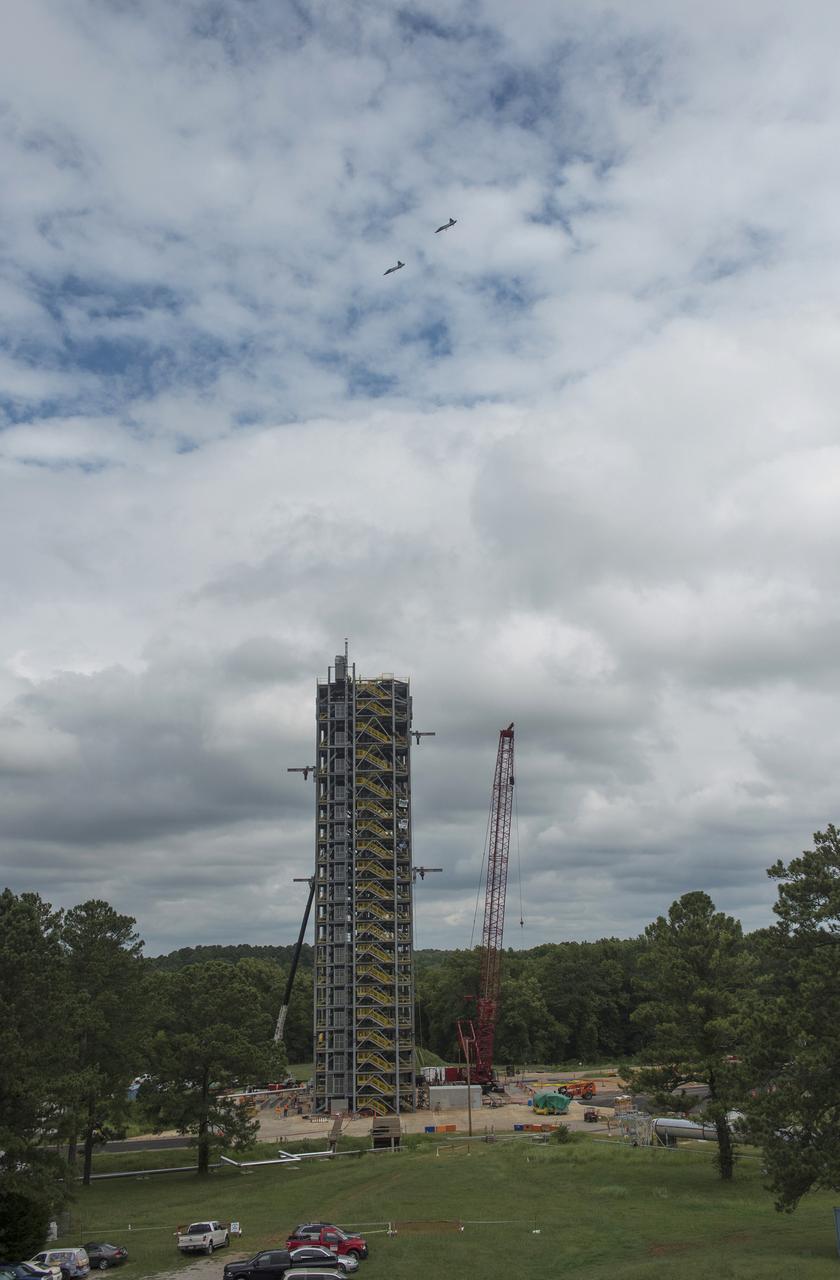
ASTRONAUTS BARRY "BUTCH” WILMORE, VICTOR GLOVER, DON PETTIT AND STEPHANIE WILSON SOAR ABOVE TEST STAND 4693 IN #NASA T-38 JETS ON AUG. 9, 2016
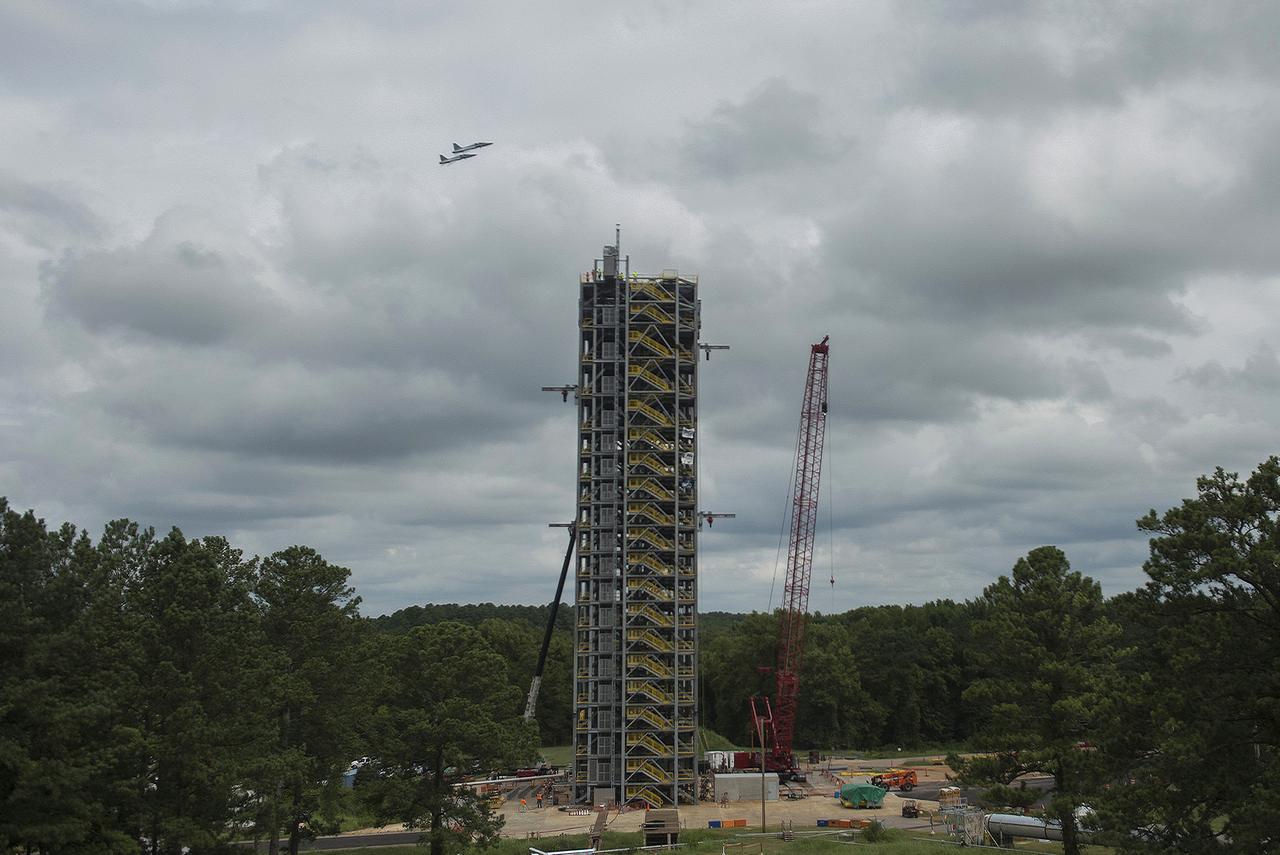
ASTRONAUTS BARRY "BUTCH” WILMORE, VICTOR GLOVER, DON PETTIT AND STEPHANIE WILSON SOAR ABOVE TEST STAND 4693 IN #NASA T-38 JETS ON AUG. 9, 2016
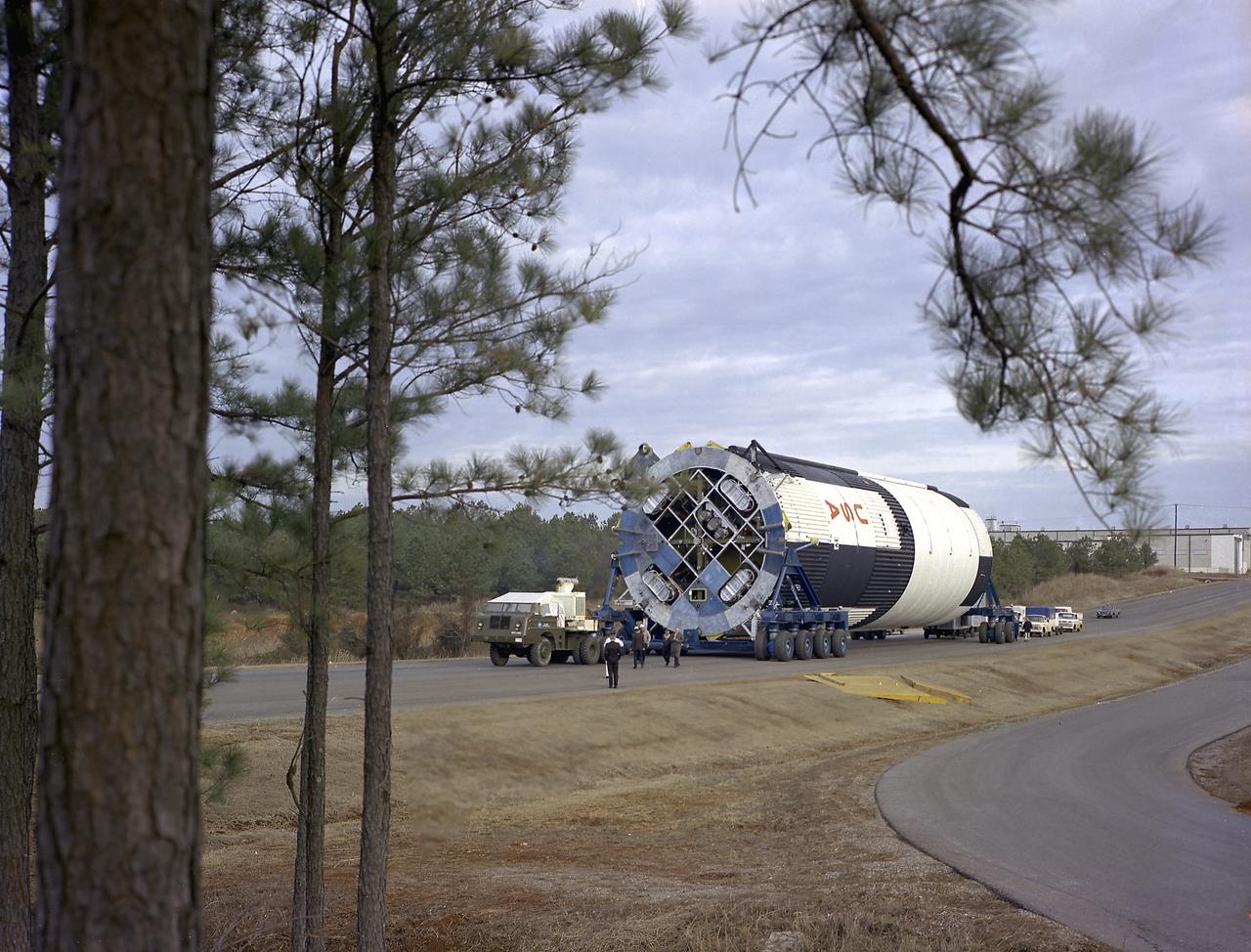
The Saturn V S-IC-T stage (static testing stage) was enroute from the Manufacturing Engineering Laboratory to the newly-built S-1C Static Test Stand at the Marshall Space Flight Center west test area. Known as S-IC-T, the stage was a static test vehicle not intended for flight. It was ground tested repeatedly over a period of many months proving the vehicle's propulsion system.
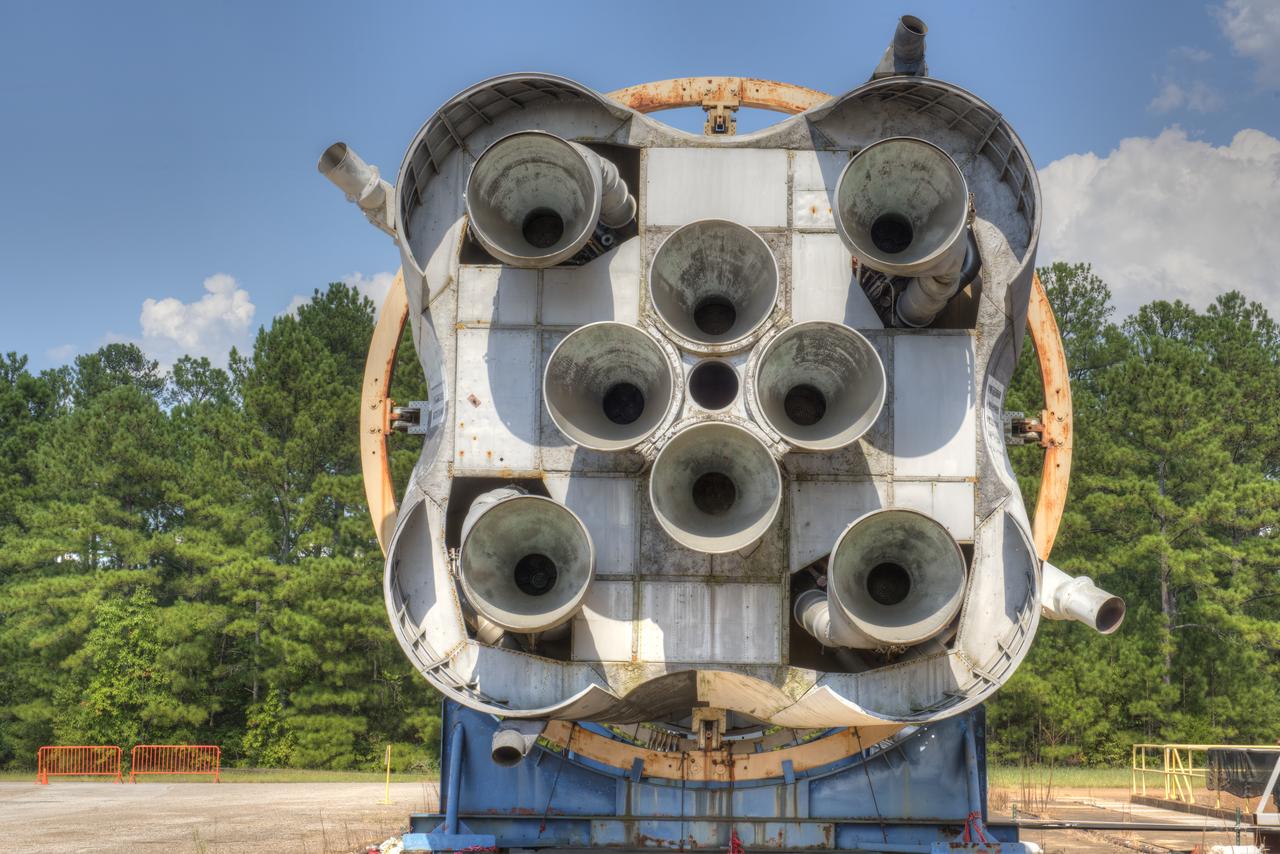
CLOSE-UP OF AFT END OF SATURN S-1B STAGE (SA-T) NEAR PROPULSION AND STRUCTURAL TEST FACILITY (BUILDING 4572) AT THE GEORGE C. MARSHALL SPACE FLIGHT CENTER IN HUNTSVILLE, ALABAMA.
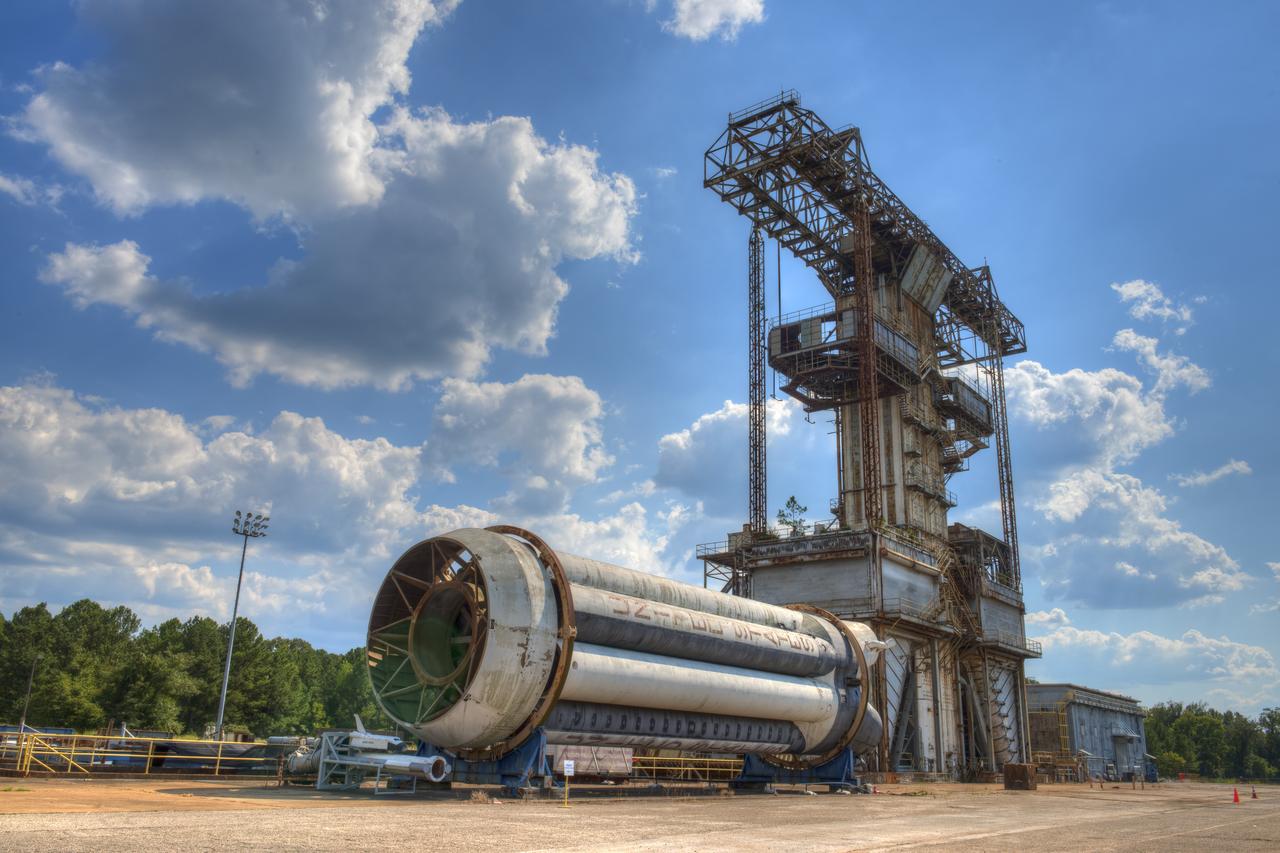
SATURN S-1B STAGE (SA-T) WITH PROPULSION AND STRUCTURAL TEST FACILITY (BUILDING 4572) IN BACKGROUND
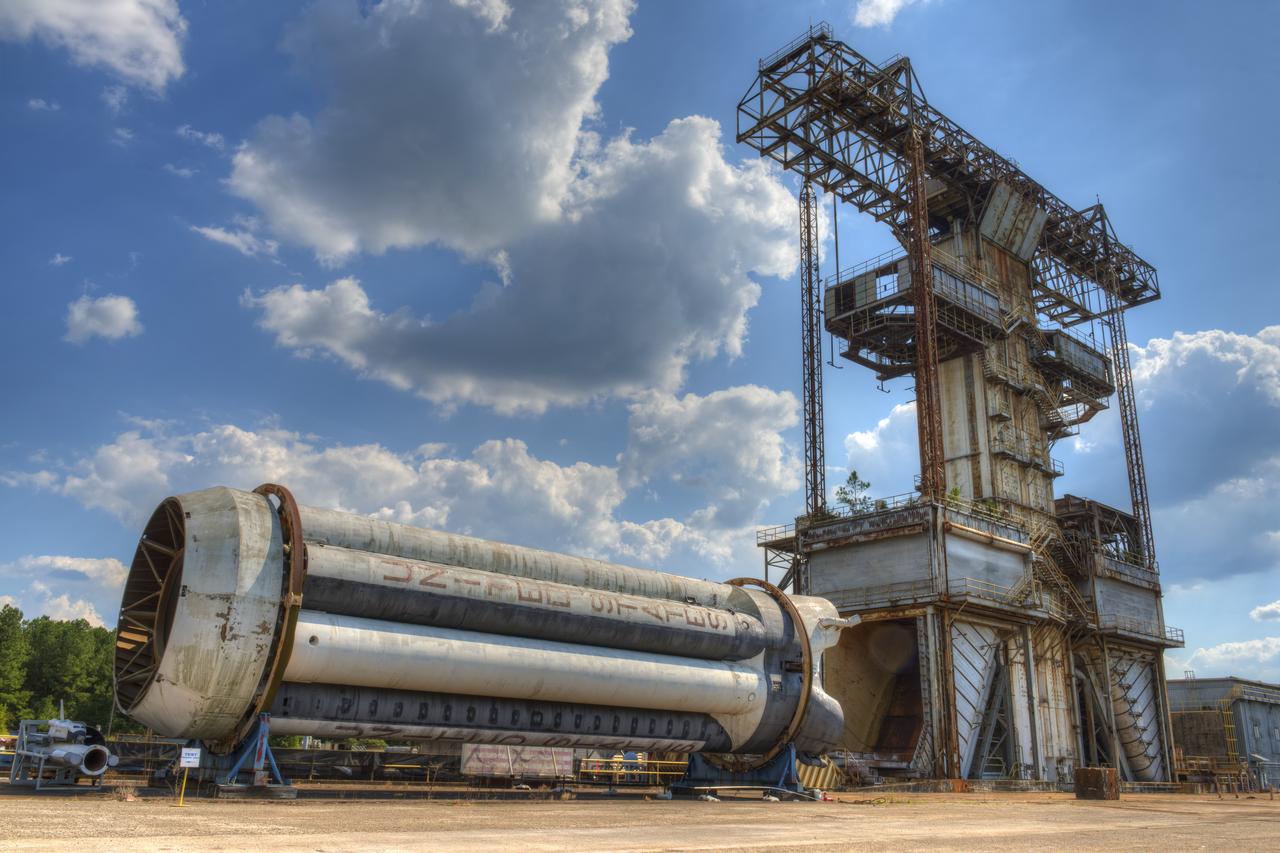
PROPULSION AND STRUCTURAL TEST FACILITY (BUILDING 4572) AT THE GEORGE C. MARSHALL SPACE FLIGHT CENTER IN HUNTSVILLE, ALABAMA WITH THE SATURN S-1B STAGE (SA-) IN FOREGROUND
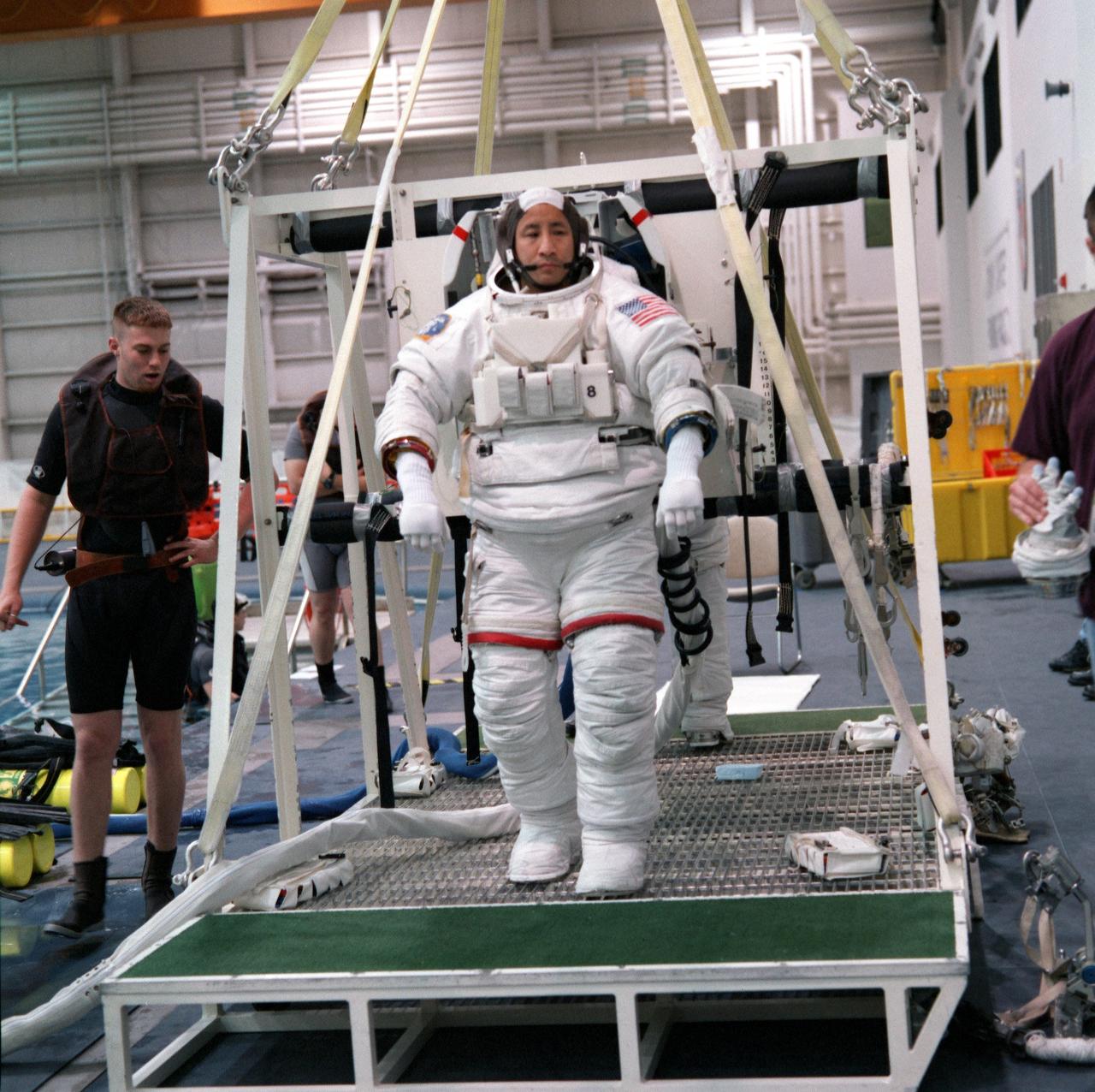
JSC2000-02187 (March 2000) --- Astronaut Edward T. Lu, attired in a training version of the extravehicular mobility unit (EMU), stands on a platform used to lower him into the Neutral Buoyancy Laboratory's pool. Lu is scheduled for space walk duty on the STS-106 mission.
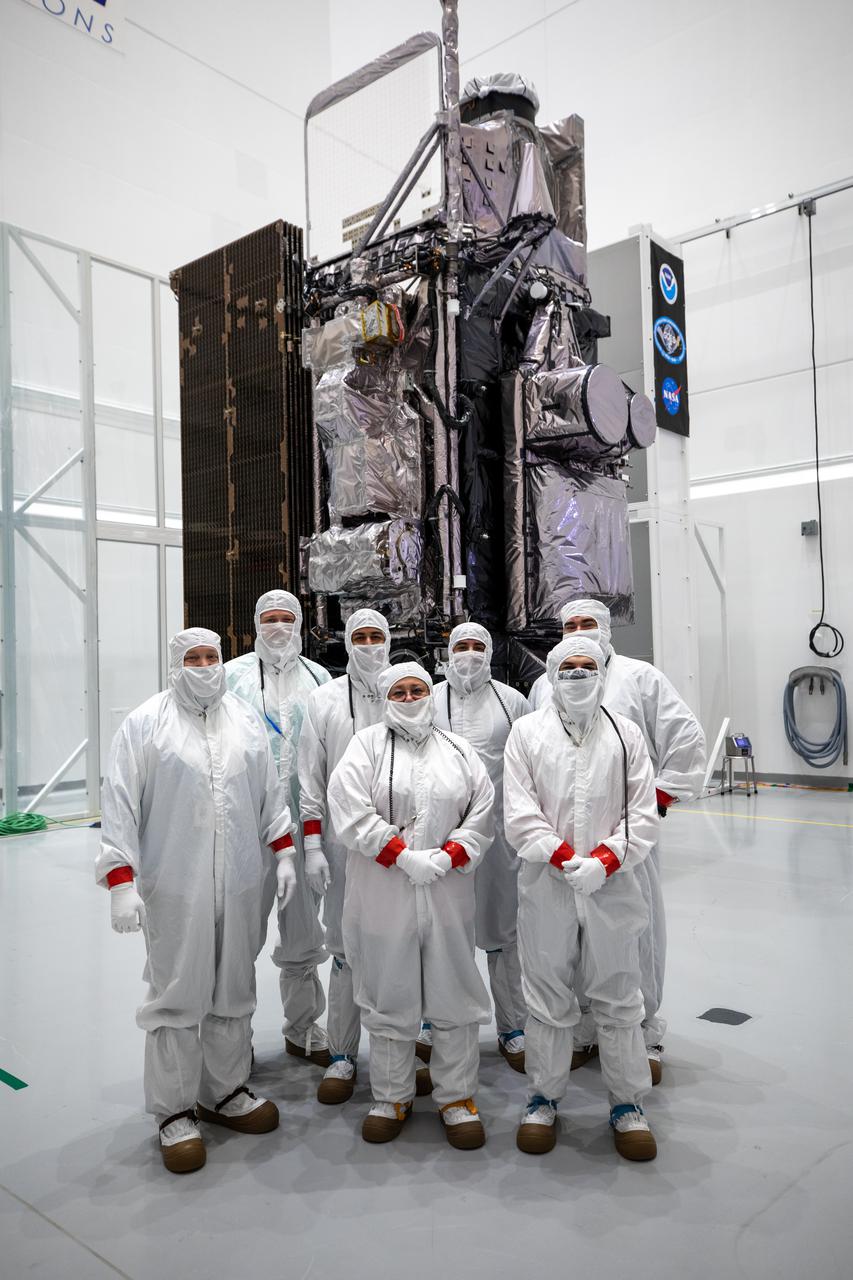
Dressed in clean-room suits, processing team members stand in front of NOAA’s Geostationary Operational Environmental Satellite-T (GOES-T) inside the Astrotech Space Operations facility in Titusville, Florida, on Jan. 20, 2022. GOES-T is scheduled to launch on March 1, 2022, atop a United Launch Alliance (ULA) Atlas V 541 rocket from Space Launch Complex 41 at Cape Canaveral Space Force Station. GOES-T is the third satellite in the GOES-R series that will continue to help meteorologists observe and predict local weather events that affect public safety. The launch is being managed by NASA’s Launch Services Program based at Kennedy Space Center in Florida, America’s multi-user spaceport.
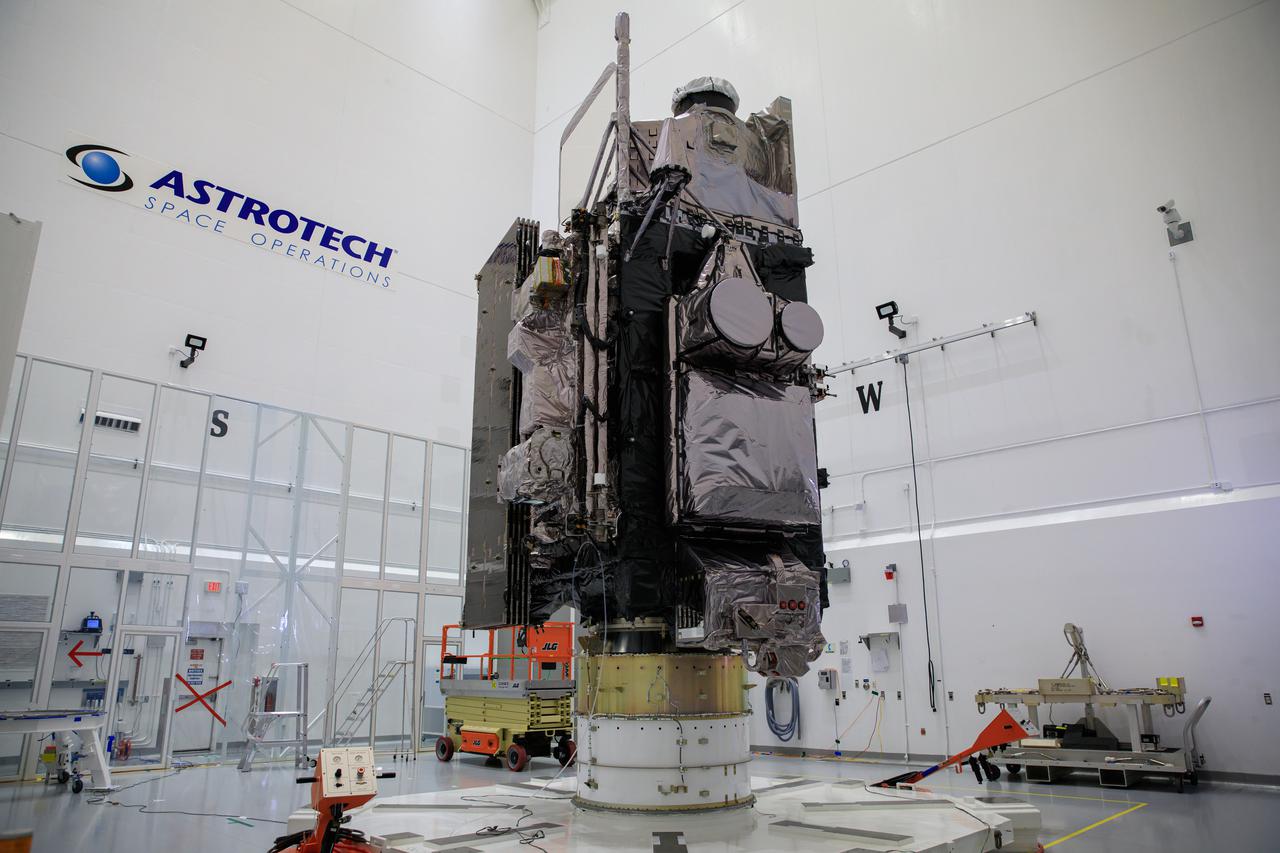
NOAA’s Geostationary Operational Environmental Satellite-T (GOES-T) is secured on a work stand inside the Astrotech Space Operations facility in Titusville, Florida, on Jan. 28, 2022, as it is being prepared for encapsulation. GOES-T is scheduled to launch on March 1, 2022, atop a United Launch Alliance (ULA) Atlas V 541 rocket from Space Launch Complex 41 at Cape Canaveral Space Force Station. GOES-T is the third satellite in the GOES-R series that will continue to help meteorologists observe and predict local weather events that affect public safety. The launch is being managed by NASA’s Launch Services Program based at Kennedy Space Center in Florida, America’s multi-user spaceport.
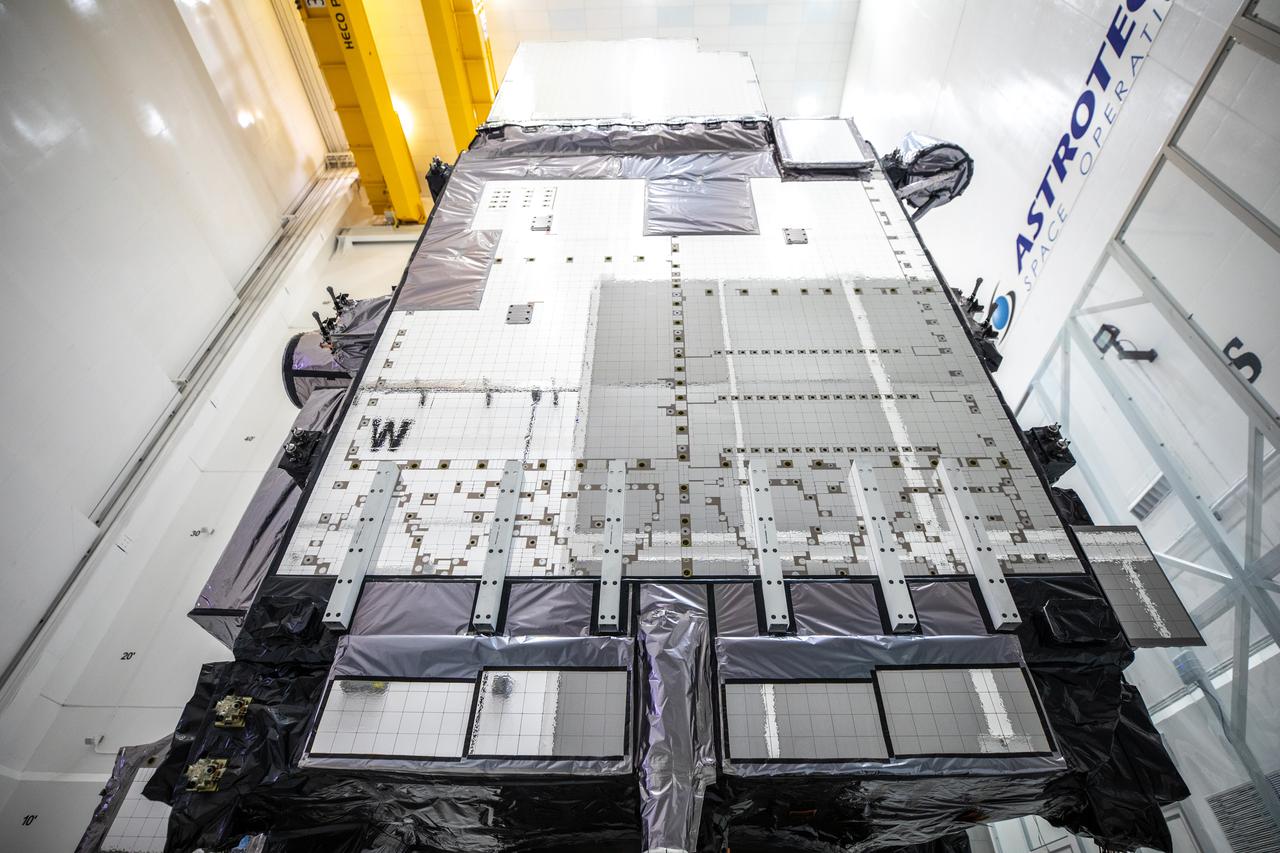
In this view looking up, NOAA’s Geostationary Operational Environmental Satellite-T (GOES-T) is secured on a work stand inside the Astrotech Space Operations facility in Titusville, Florida, on Jan. 20, 2022. GOES-T is scheduled to launch on March 1, 2022, atop a United Launch Alliance (ULA) Atlas V 541 rocket from Space Launch Complex 41 at Cape Canaveral Space Force Station. GOES-T is the third satellite in the GOES-R series that will continue to help meteorologists observe and predict local weather events that affect public safety. The launch is being managed by NASA’s Launch Services Program based at Kennedy Space Center in Florida, America’s multi-user spaceport.
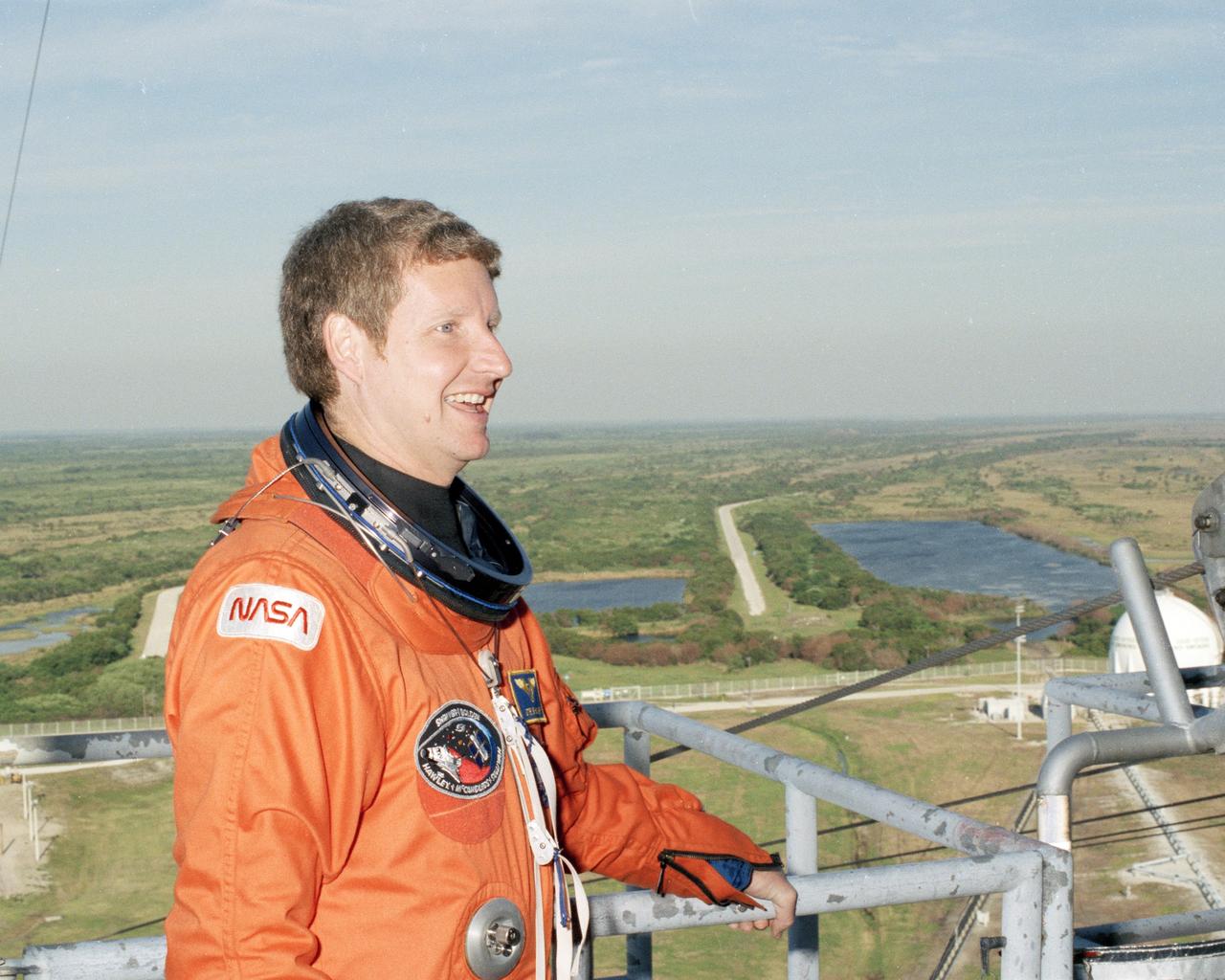
Wide-open Florida terrain creates a dramatic backas STS-31 Mission Specialist Steven A. Hawley stands near the emergency exit system at the 194-foot level of Launch Pad 39B during the Terminal Countdown Demonstration Test, or TCDT. Conducted March 19-20, the TCDT is a dress rehearsal for launch, simulating final countdown from the T-24 hour mark up to T-5 seconds. Space shuttle mission STS-31 is set to lift off on April 12, carrying a five-member crew and the Hubble Space Telescope. Photo credit: NASA
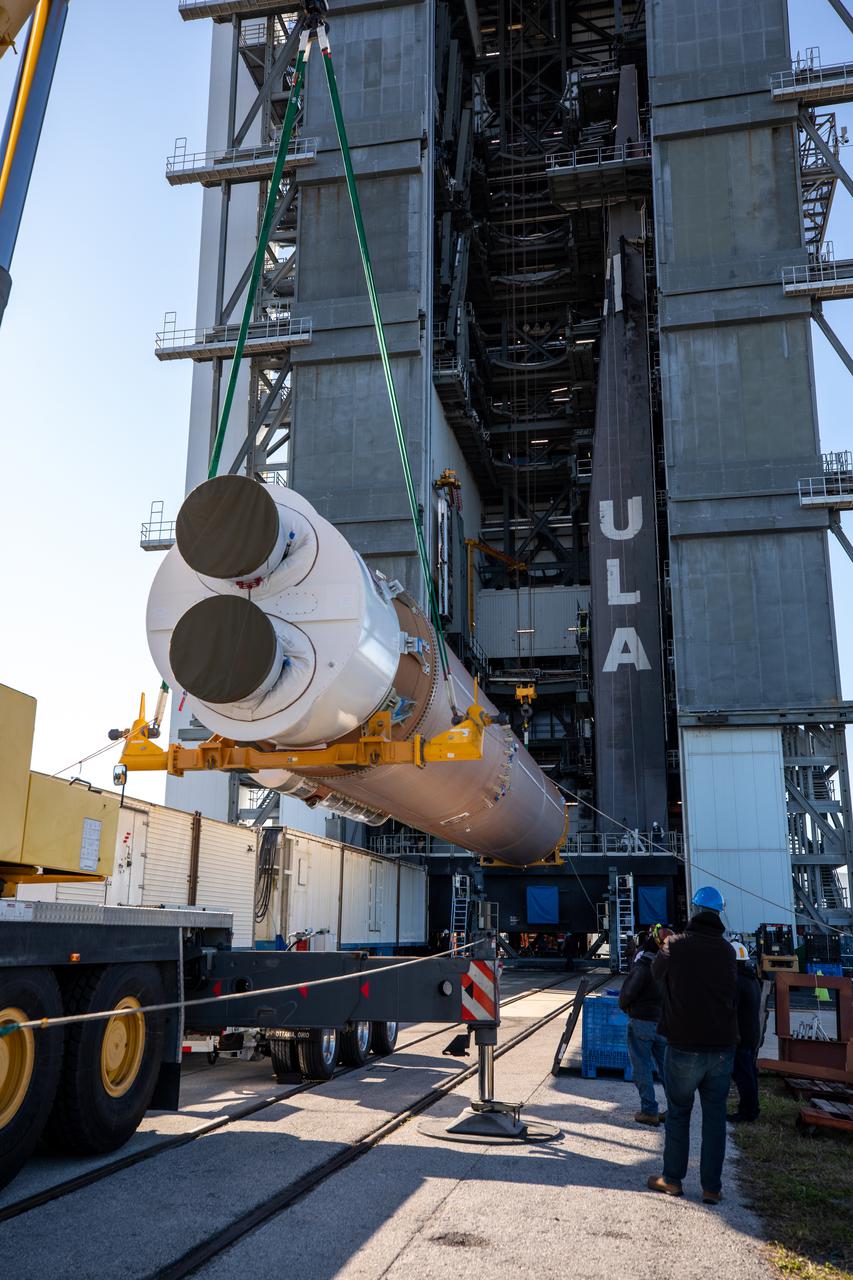
A United Launch Alliance (ULA) Atlas V 541 rocket first stage is lifted up at the Space Launch Complex-41 Vertical Integration Facility at Cape Canaveral Space Force Station in Florida on Jan. 31, 2022. The Atlas V will launch the National Oceanic and Atmospheric Administration’s (NOAA) Geostationary Operational Environmental Satellite T (GOES-T). GOES-T is the third satellite in the GOES-R series that will continue to help meteorologists observe and predict local weather events that affect public safety. GOES-T is scheduled to launch from Space Launch Complex-41 on March 1, 2022. The launch is being managed by NASA’s Launch Services Program based at Kennedy Space Center, America’s multi-user spaceport.
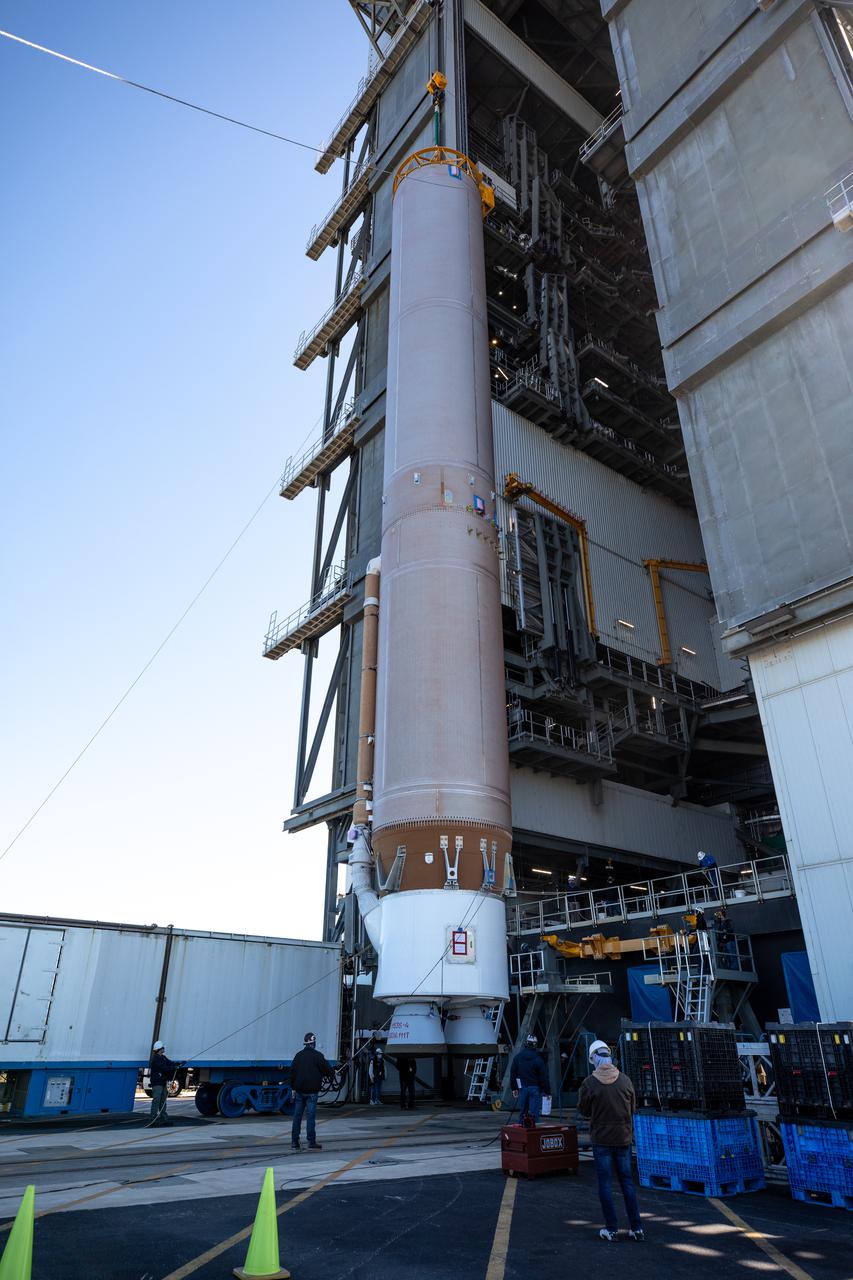
A crane is used to lift the United Launch Alliance’s (ULA) first stage of the Atlas V 541 rocket vertical for its move into the Space Launch Complex-41 Vertical Integration Facility at Cape Canaveral Space Force Station in Florida on Jan. 31, 2022. The Atlas V will launch the National Oceanic and Atmospheric Administration’s (NOAA) Geostationary Operational Environmental Satellite T (GOES-T). GOES-T is the third satellite in the GOES-R series that will continue to help meteorologists observe and predict local weather events that affect public safety. GOES-T is scheduled to launch from Space Launch Complex-41 on March 1, 2022. The launch is being managed by NASA’s Launch Services Program based at Kennedy Space Center, America’s multi-user spaceport.
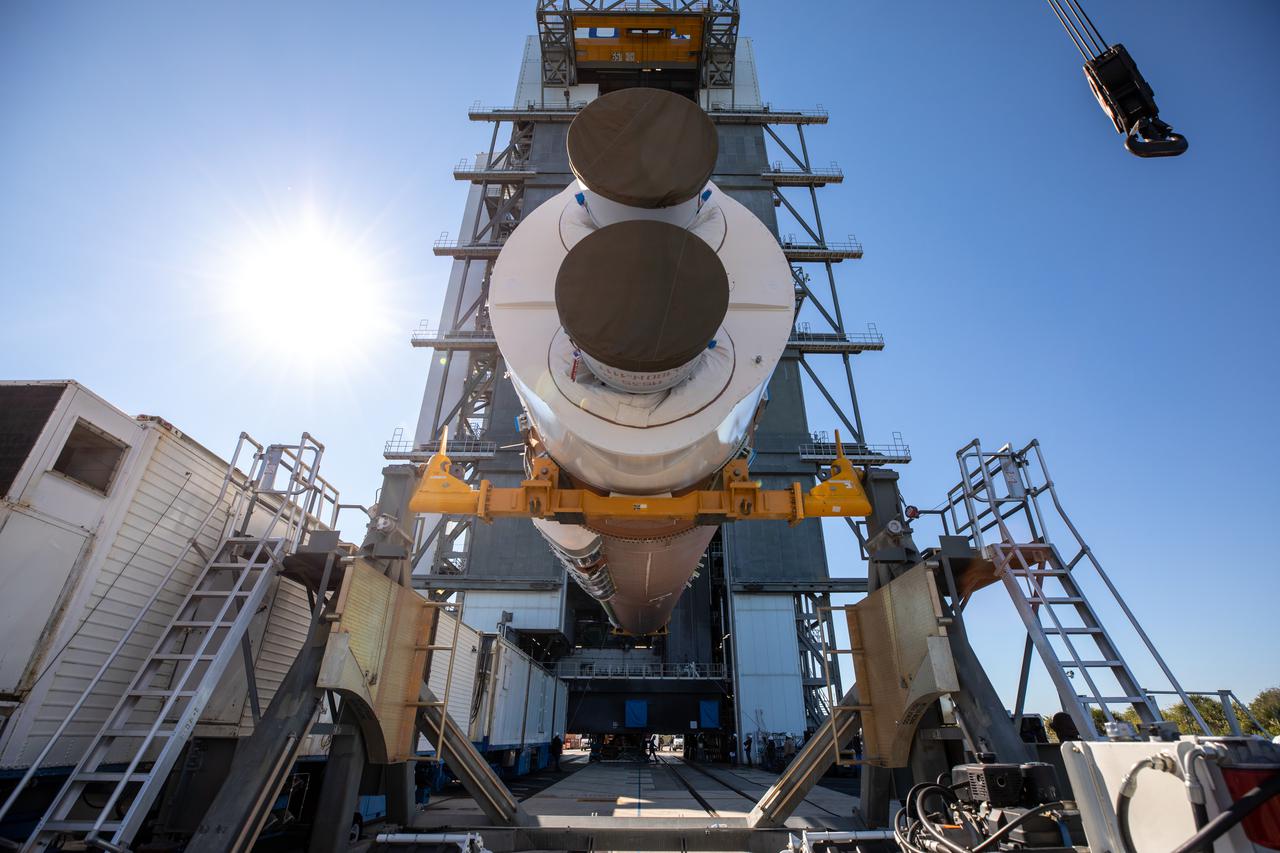
United Launch Alliance’s (ULA) first stage of the Atlas V 541 rocket is lifted up at the Space Launch Complex-41 Vertical Integration Facility at Cape Canaveral Space Force Station in Florida on Jan. 31, 2022. The Atlas V will launch the National Oceanic and Atmospheric Administration’s (NOAA) Geostationary Operational Environmental Satellite T (GOES-T). GOES-T is the third satellite in the GOES-R series that will continue to help meteorologists observe and predict local weather events that affect public safety. GOES-T is scheduled to launch from Space Launch Complex-41 on March 1, 2022. The launch is being managed by NASA’s Launch Services Program based at Kennedy Space Center, America’s multi-user spaceport.
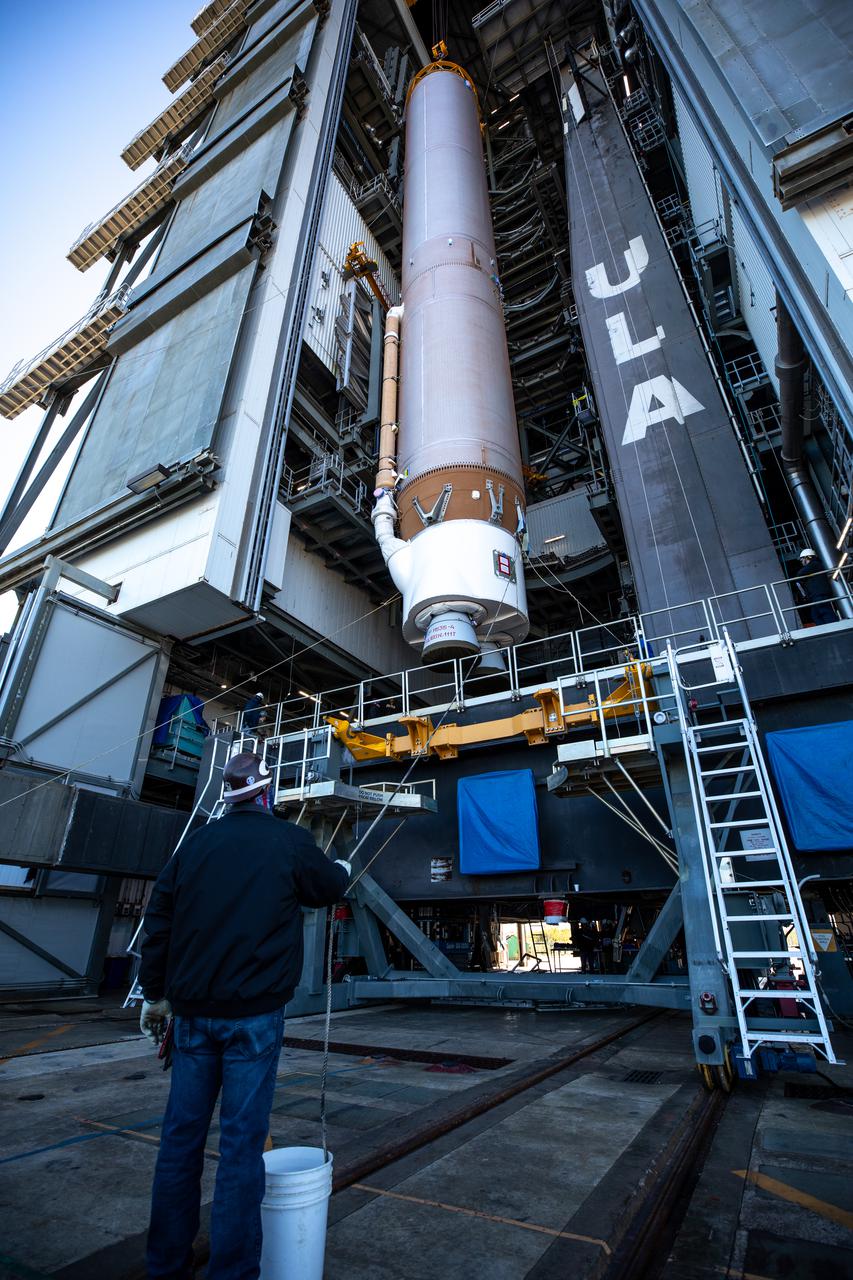
The United Launch Alliance’s (ULA) Atlas V 541 rocket first stage is lifted vertical for its move into the Space Launch Complex-41 Vertical Integration Facility at Cape Canaveral Space Force Station in Florida on Jan. 31, 2022. The Atlas V will launch the National Oceanic and Atmospheric Administration’s (NOAA) Geostationary Operational Environmental Satellite T (GOES-T). GOES-T is the third satellite in the GOES-R series that will continue to help meteorologists observe and predict local weather events that affect public safety. GOES-T is scheduled to launch from Space Launch Complex-41 on March 1, 2022. The launch is being managed by NASA’s Launch Services Program based at Kennedy Space Center, America’s multi-user spaceport.
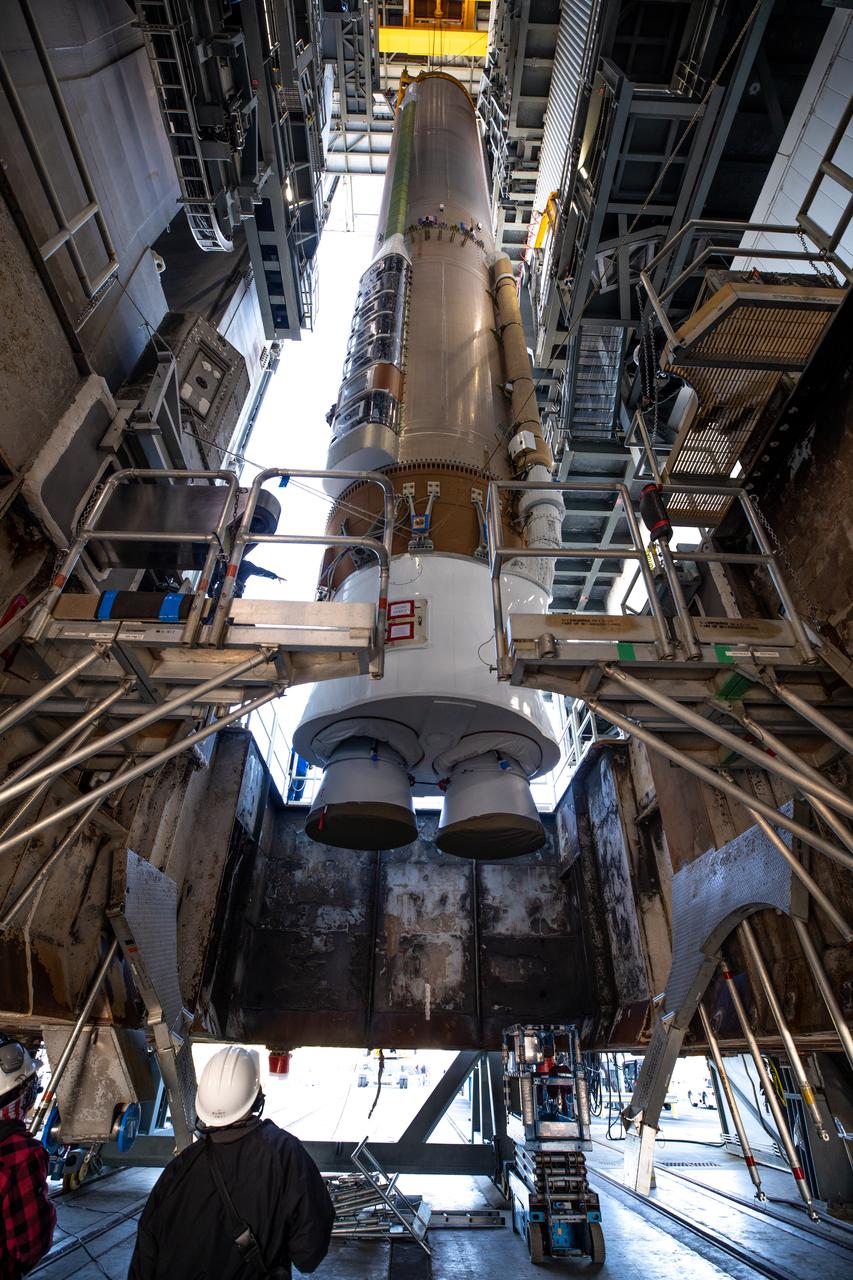
The United Launch Alliance’s (ULA) Atlas V 541 rocket first stage is in the vertical position and moved into the Space Launch Complex-41 Vertical Integration Facility at Cape Canaveral Space Force Station in Florida on Jan. 31, 2022. The Atlas V will launch the National Oceanic and Atmospheric Administration’s (NOAA) Geostationary Operational Environmental Satellite T (GOES-T). GOES-T is the third satellite in the GOES-R series that will continue to help meteorologists observe and predict local weather events that affect public safety. GOES-T is scheduled to launch from Space Launch Complex-41 on March 1, 2022. The launch is being managed by NASA’s Launch Services Program based at Kennedy Space Center, America’s multi-user spaceport.
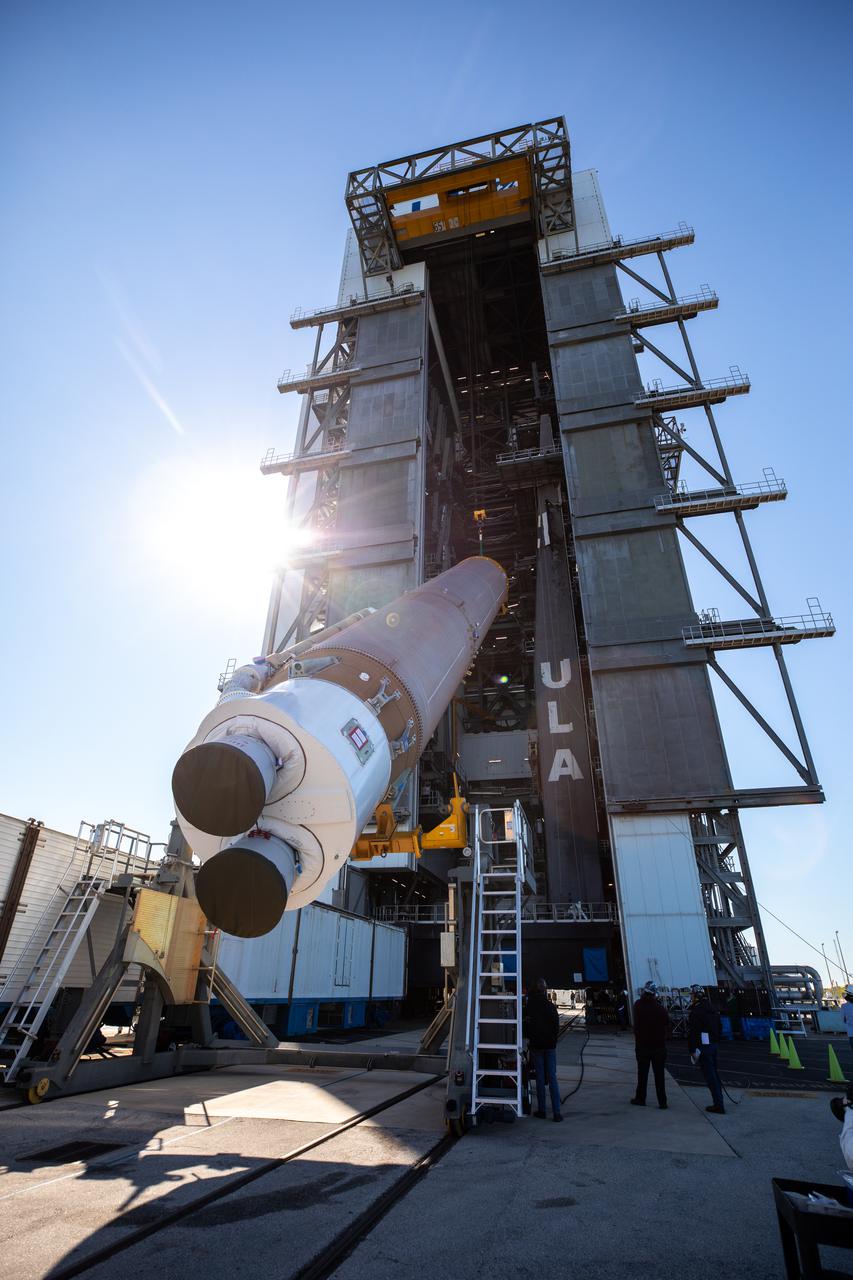
A crane is used to lift the United Launch Alliance’s (ULA) first stage of the Atlas V 541 rocket at the Space Launch Complex-41 Vertical Integration Facility at Cape Canaveral Space Force Station in Florida on Jan. 31, 2022. The Atlas V will launch the National Oceanic and Atmospheric Administration’s (NOAA) Geostationary Operational Environmental Satellite T (GOES-T). GOES-T is the third satellite in the GOES-R series that will continue to help meteorologists observe and predict local weather events that affect public safety. GOES-T is scheduled to launch from Space Launch Complex-41 on March 1, 2022. The launch is being managed by NASA’s Launch Services Program based at Kennedy Space Center, America’s multi-user spaceport.

The United Launch Alliance’s (ULA) Atlas V 541 rocket first stage is secured inside the Space Launch Complex-41 Vertical Integration Facility at Cape Canaveral Space Force Station in Florida on Jan. 31, 2022. The Atlas V will launch the National Oceanic and Atmospheric Administration’s (NOAA) Geostationary Operational Environmental Satellite T (GOES-T). GOES-T is the third satellite in the GOES-R series that will continue to help meteorologists observe and predict local weather events that affect public safety. GOES-T is scheduled to launch from Space Launch Complex-41 on March 1, 2022. The launch is being managed by NASA’s Launch Services Program based at Kennedy Space Center, America’s multi-user spaceport.
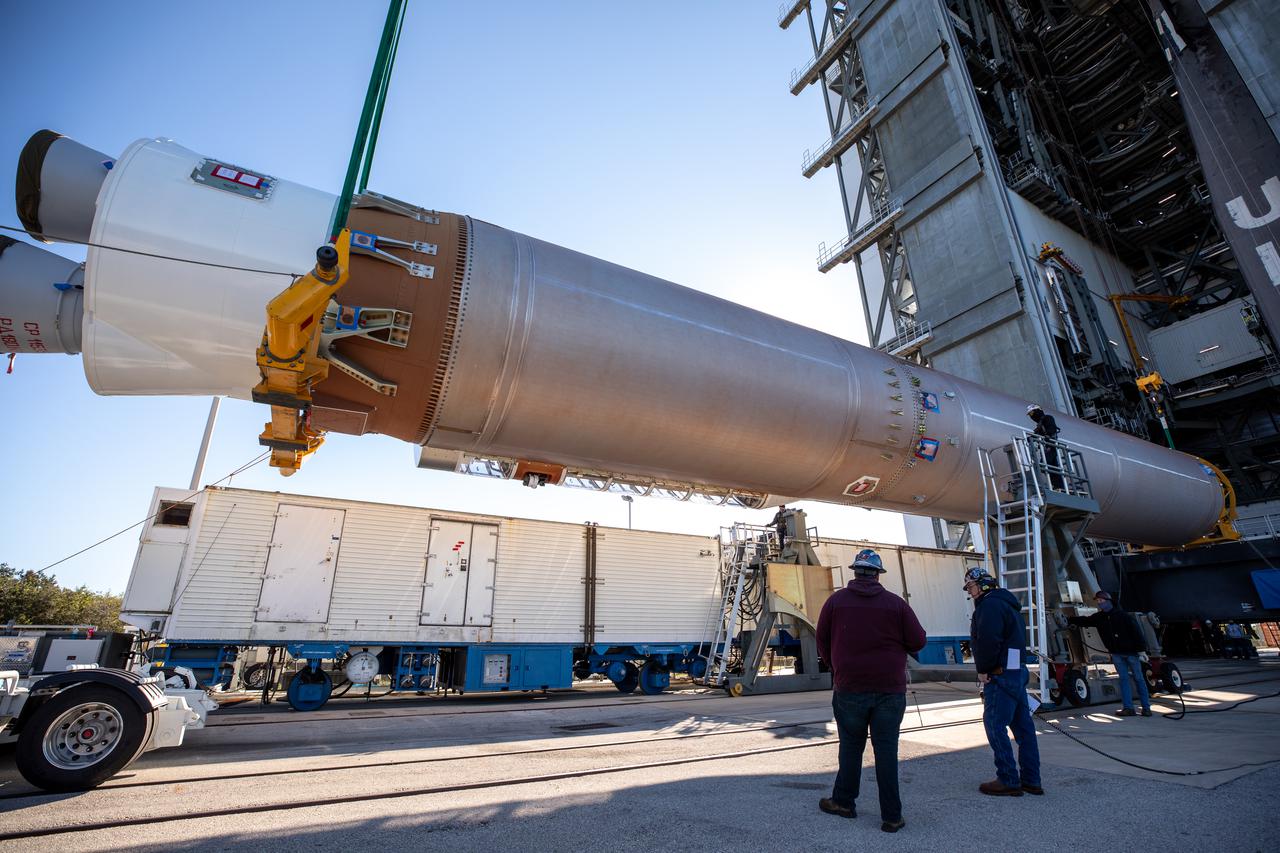
United Launch Alliance’s (ULA) first stage of the Atlas V 541 rocket is lifted up at the Space Launch Complex-41 Vertical Integration Facility at Cape Canaveral Space Force Station in Florida on Jan. 31, 2022. The Atlas V will launch the National Oceanic and Atmospheric Administration’s (NOAA) Geostationary Operational Environmental Satellite T (GOES-T). GOES-T is the third satellite in the GOES-R series that will continue to help meteorologists observe and predict local weather events that affect public safety. GOES-T is scheduled to launch from Space Launch Complex-41 on March 1, 2022. The launch is being managed by NASA’s Launch Services Program based at Kennedy Space Center, America’s multi-user spaceport.
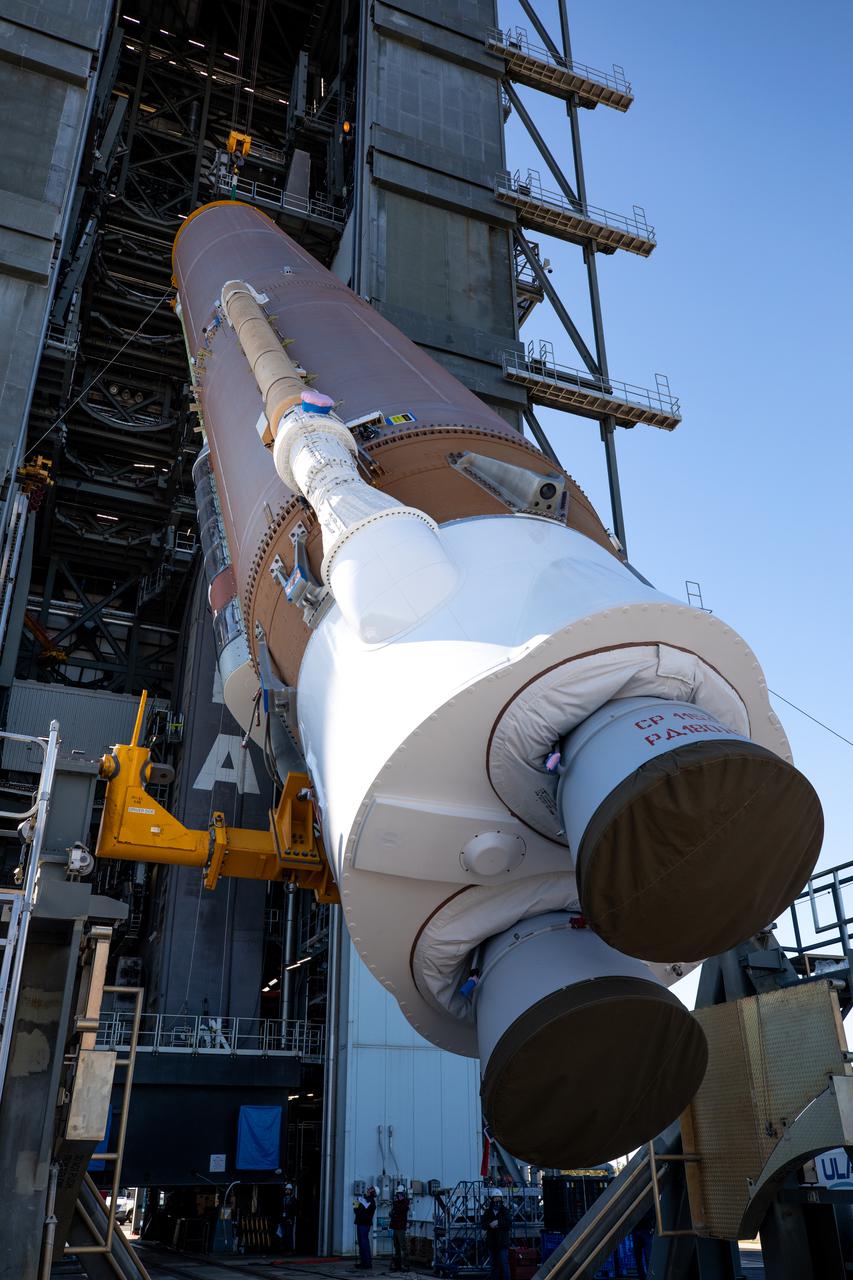
A crane is used to lift the United Launch Alliance’s (ULA) first stage of the Atlas V 541 rocket for its move into the Space Launch Complex-41 Vertical Integration Facility at Cape Canaveral Space Force Station in Florida on Jan. 31, 2022. The Atlas V will launch the National Oceanic and Atmospheric Administration’s (NOAA) Geostationary Operational Environmental Satellite T (GOES-T). GOES-T is the third satellite in the GOES-R series that will continue to help meteorologists observe and predict local weather events that affect public safety. GOES-T is scheduled to launch from Space Launch Complex-41 on March 1, 2022. The launch is being managed by NASA’s Launch Services Program based at Kennedy Space Center, America’s multi-user spaceport.
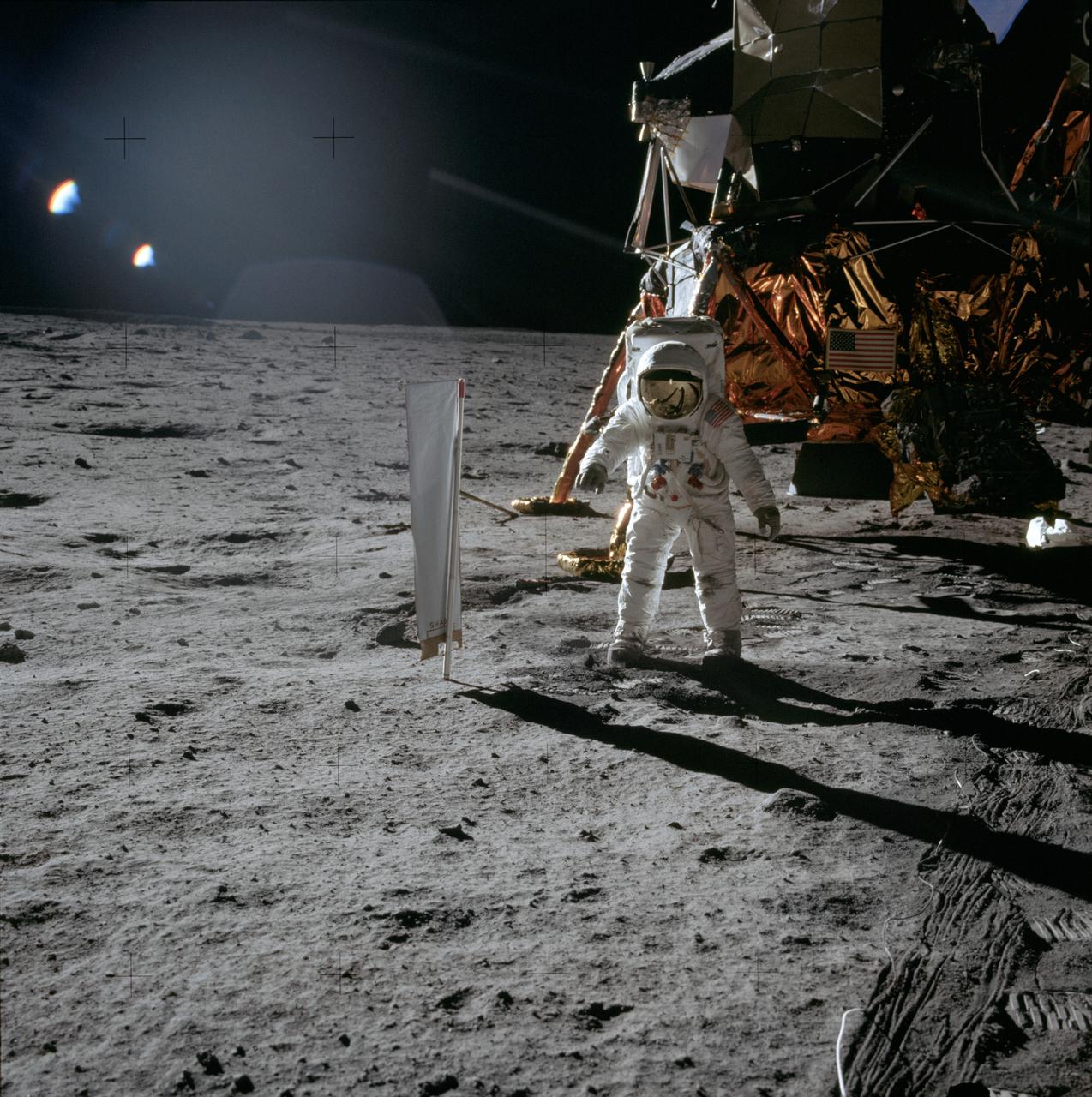
AS11-40-5873 (20 July 1969) --- Astronaut Edwin E. Aldrin Jr., lunar module pilot, is photographed during the Apollo 11 extravehicular activity (EVA) on the lunar surface. In the right background is the lunar module. On Aldrin's right is the Solar Wind Composition (SWC) experiment, already deployed. This photograph was taken by astronaut Neil A. Armstrong, commander, with a 70mm lunar surface camera.
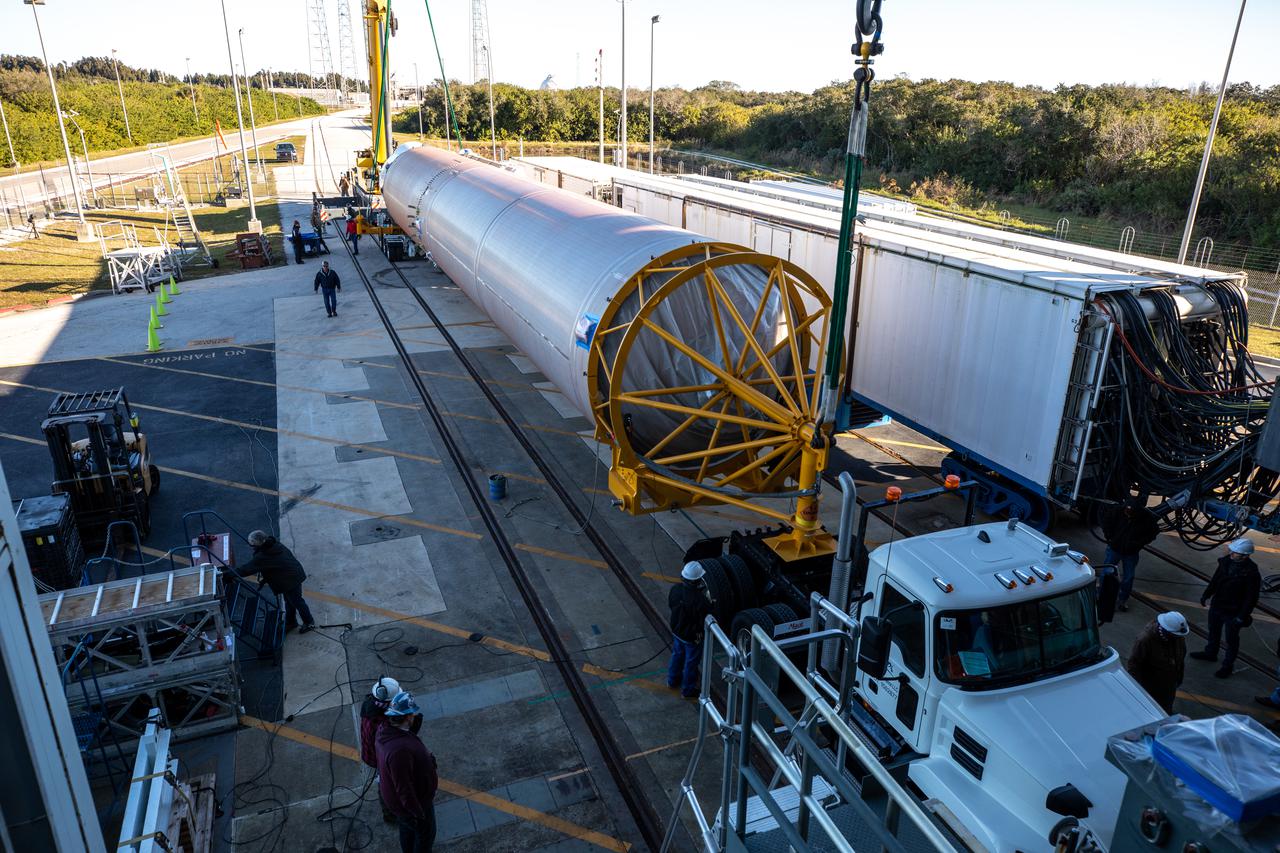
A United Launch Alliance (ULA) Atlas V 541 rocket first stage arrives at the Space Launch Complex-41 Vertical Integration Facility at Cape Canaveral Space Force Station in Florida on Jan. 31, 2022. The Atlas V will launch the National Oceanic and Atmospheric Administration’s (NOAA) Geostationary Operational Environmental Satellite T (GOES-T). GOES-T is the third satellite in the GOES-R series that will continue to help meteorologists observe and predict local weather events that affect public safety. GOES-T is scheduled to launch from Space Launch Complex-41 on March 1, 2022. The launch is being managed by NASA’s Launch Services Program based at Kennedy Space Center, America’s multi-user spaceport.
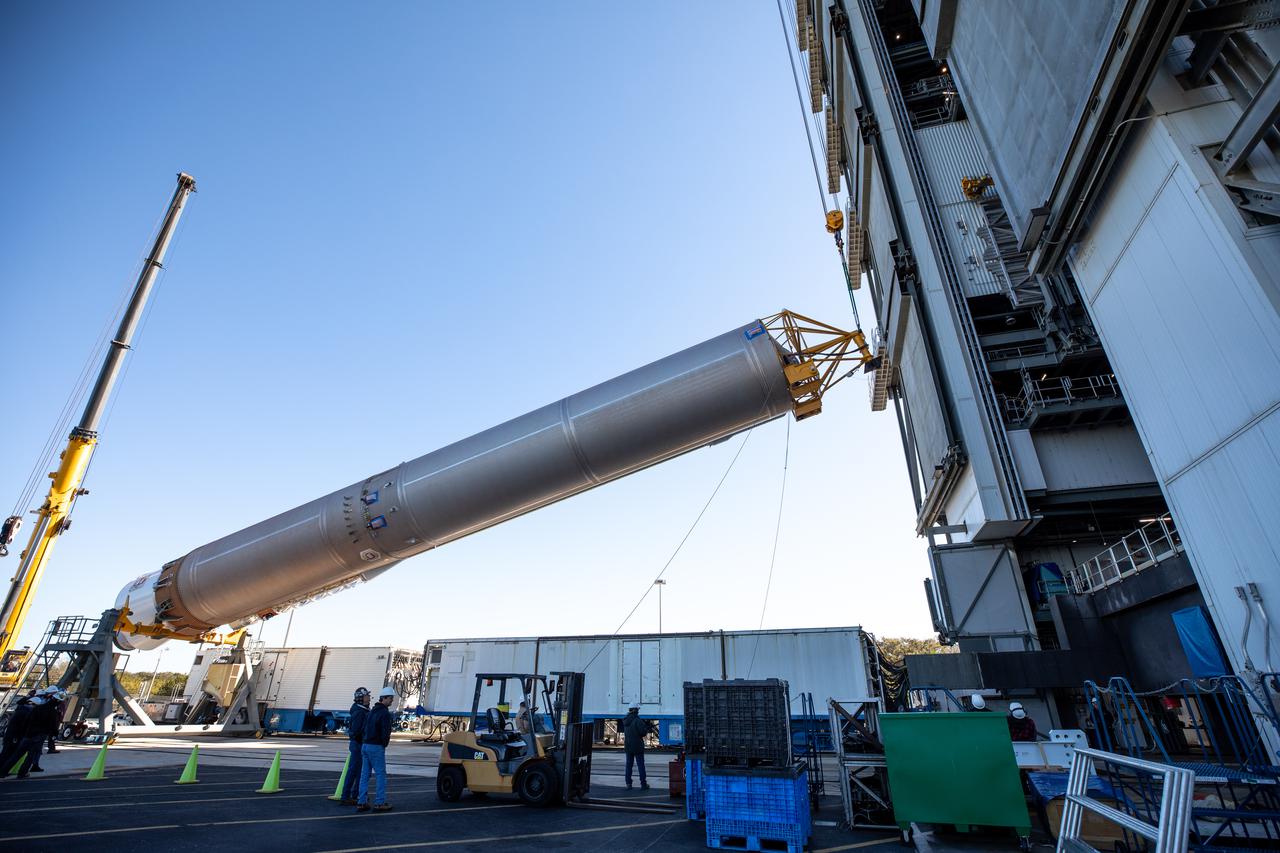
A crane is used to lift the United Launch Alliance’s (ULA) first stage of the Atlas V 541 rocket at the Space Launch Complex-41 Vertical Integration Facility at Cape Canaveral Space Force Station in Florida on Jan. 31, 2022. The Atlas V will launch the National Oceanic and Atmospheric Administration’s (NOAA) Geostationary Operational Environmental Satellite T (GOES-T). GOES-T is the third satellite in the GOES-R series that will continue to help meteorologists observe and predict local weather events that affect public safety. GOES-T is scheduled to launch from Space Launch Complex-41 on March 1, 2022. The launch is being managed by NASA’s Launch Services Program based at Kennedy Space Center, America’s multi-user spaceport.
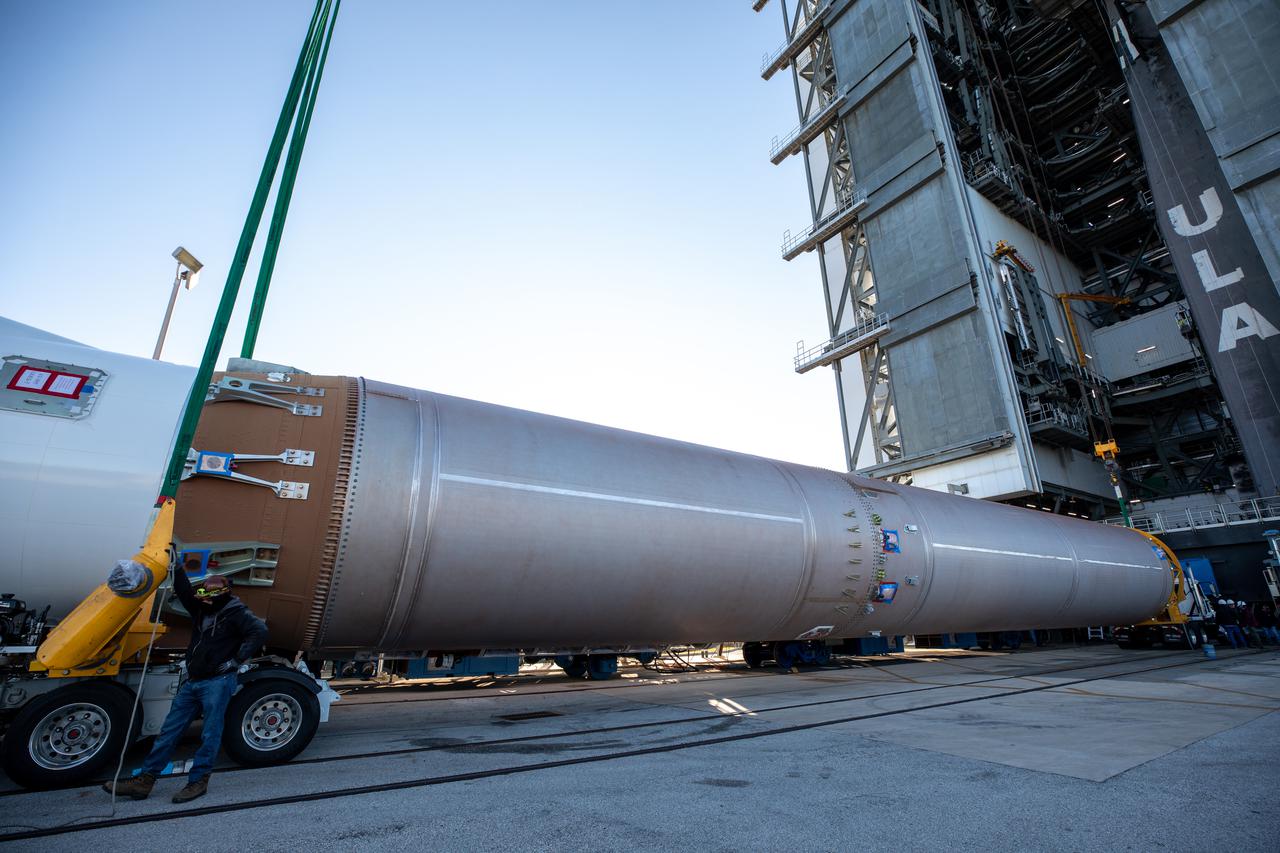
A United Launch Alliance (ULA) Atlas V 541 rocket first stage arrives at the Space Launch Complex-41 Vertical Integration Facility at Cape Canaveral Space Force Station in Florida on Jan. 31, 2022. The Atlas V will launch the National Oceanic and Atmospheric Administration’s (NOAA) Geostationary Operational Environmental Satellite T (GOES-T). GOES-T is the third satellite in the GOES-R series that will continue to help meteorologists observe and predict local weather events that affect public safety. GOES-T is scheduled to launch from Space Launch Complex-41 on March 1, 2022. The launch is being managed by NASA’s Launch Services Program based at Kennedy Space Center, America’s multi-user spaceport.
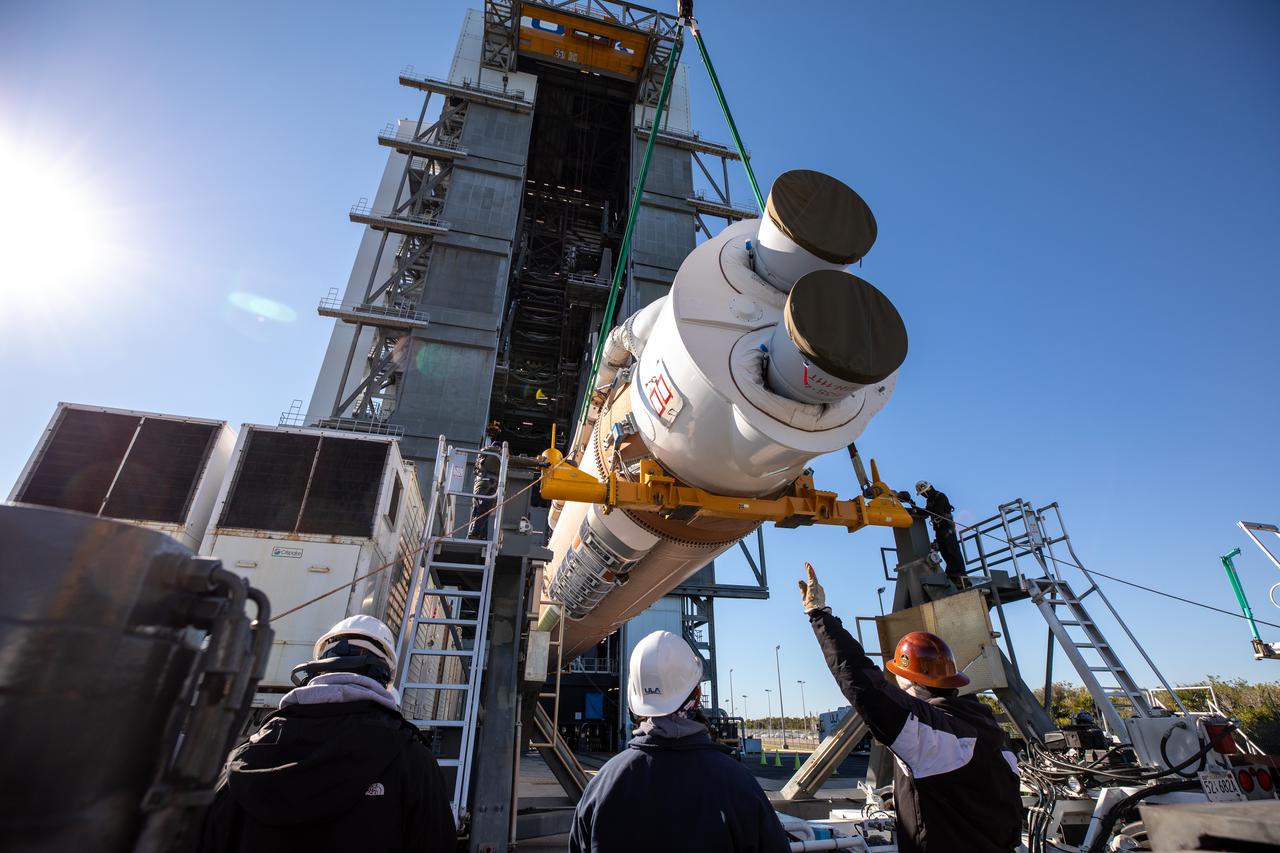
United Launch Alliance’s (ULA) first stage of the Atlas V 541 rocket is lifted up at the Space Launch Complex-41 Vertical Integration Facility at Cape Canaveral Space Force Station in Florida on Jan. 31, 2022. The Atlas V will launch the National Oceanic and Atmospheric Administration’s (NOAA) Geostationary Operational Environmental Satellite T (GOES-T). GOES-T is the third satellite in the GOES-R series that will continue to help meteorologists observe and predict local weather events that affect public safety. GOES-T is scheduled to launch from Space Launch Complex-41 on March 1, 2022. The launch is being managed by NASA’s Launch Services Program based at Kennedy Space Center, America’s multi-user spaceport.
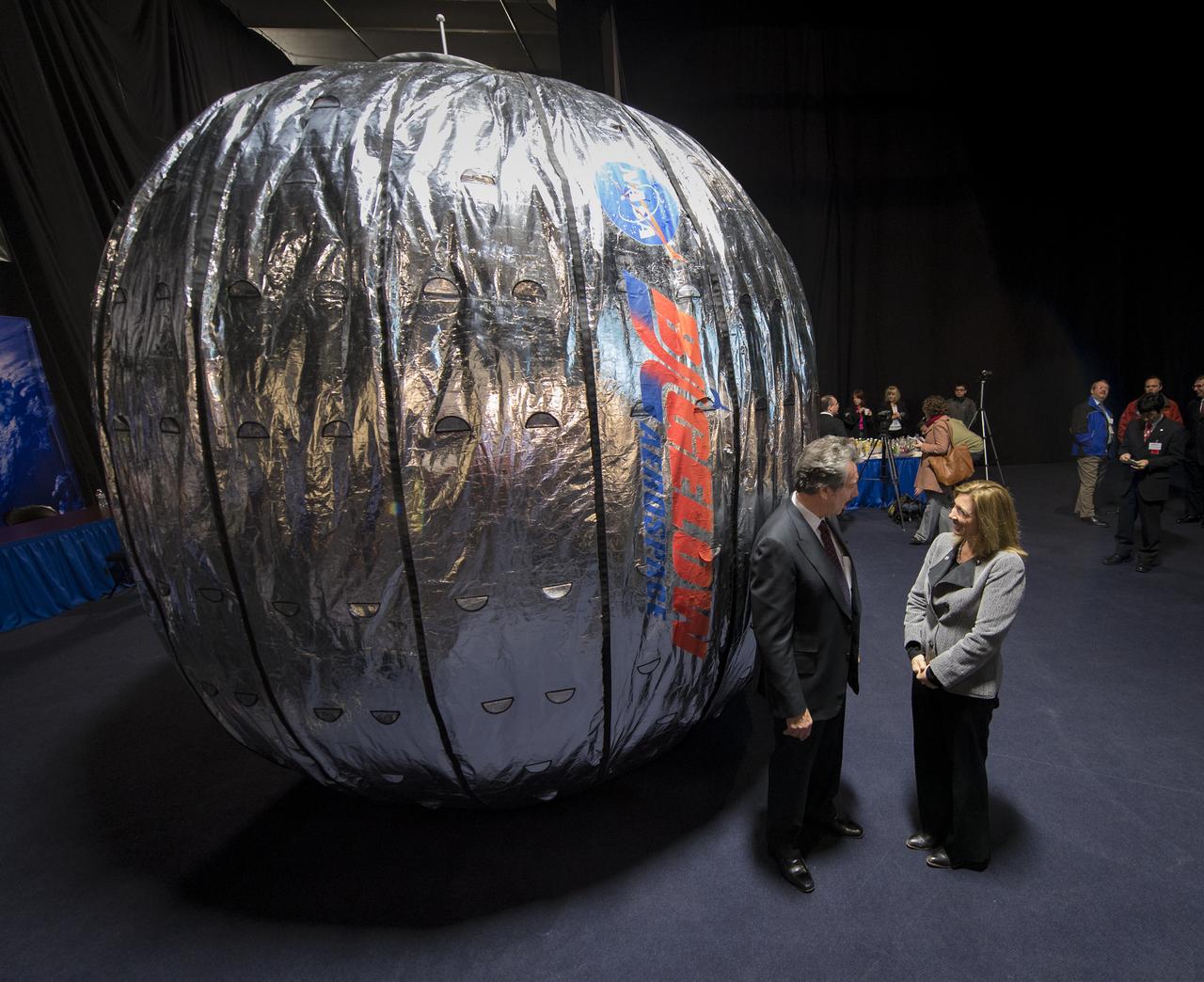
NASA Deputy Administrator Lori Garver and President and founder of Bigelow Aerospace Robert T. Bigelow talk while standing next to the Bigelow Expandable Activity Module (BEAM) during a media briefing where it is was announced that the BEAM expandable space habitat technology will be tested on the International Space Station, Wednesday, Jan. 16, 2013 in Las Vegas. BEAM is scheduled to arrive at the space station in 2015 for a two-year technology demonstration. Photo Credit: (NASA/Bill Ingalls)
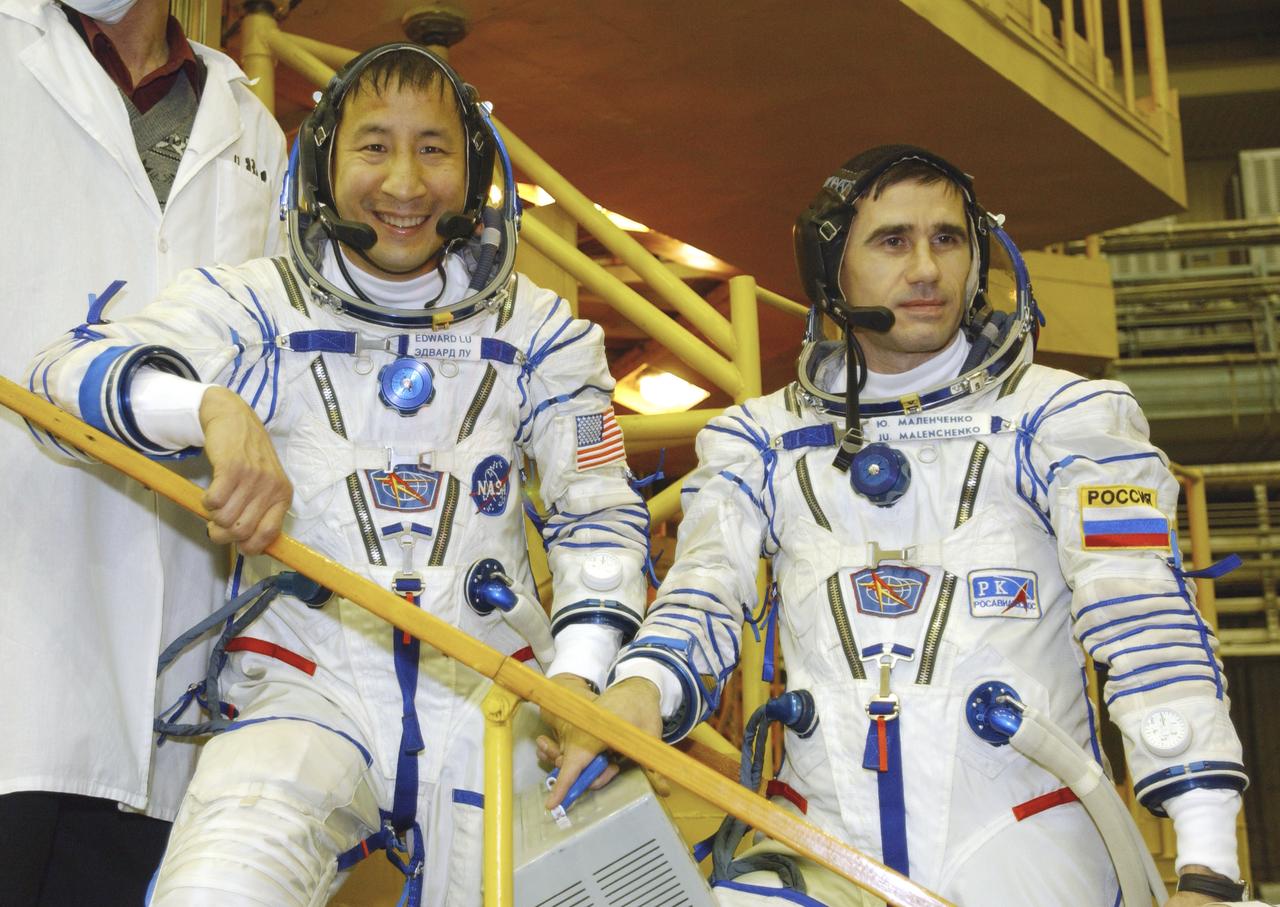
Astronaut Edward T. Lu, NASA International Space Station science officer and flight engineer for Expedition 7, left and Cosmonaut Yuri I. Malenchenko, Expedition 7 commander, pause for a photograph on the Soyuz stand after the Soyuz inspection and seat liner check at the Baikonur Cosmodrome, Building 254, Soyuz Integration Facility in Kazakhstan, Thursday, April 10, 2003. Photo Credit: (NASA/Bill Ingalls)
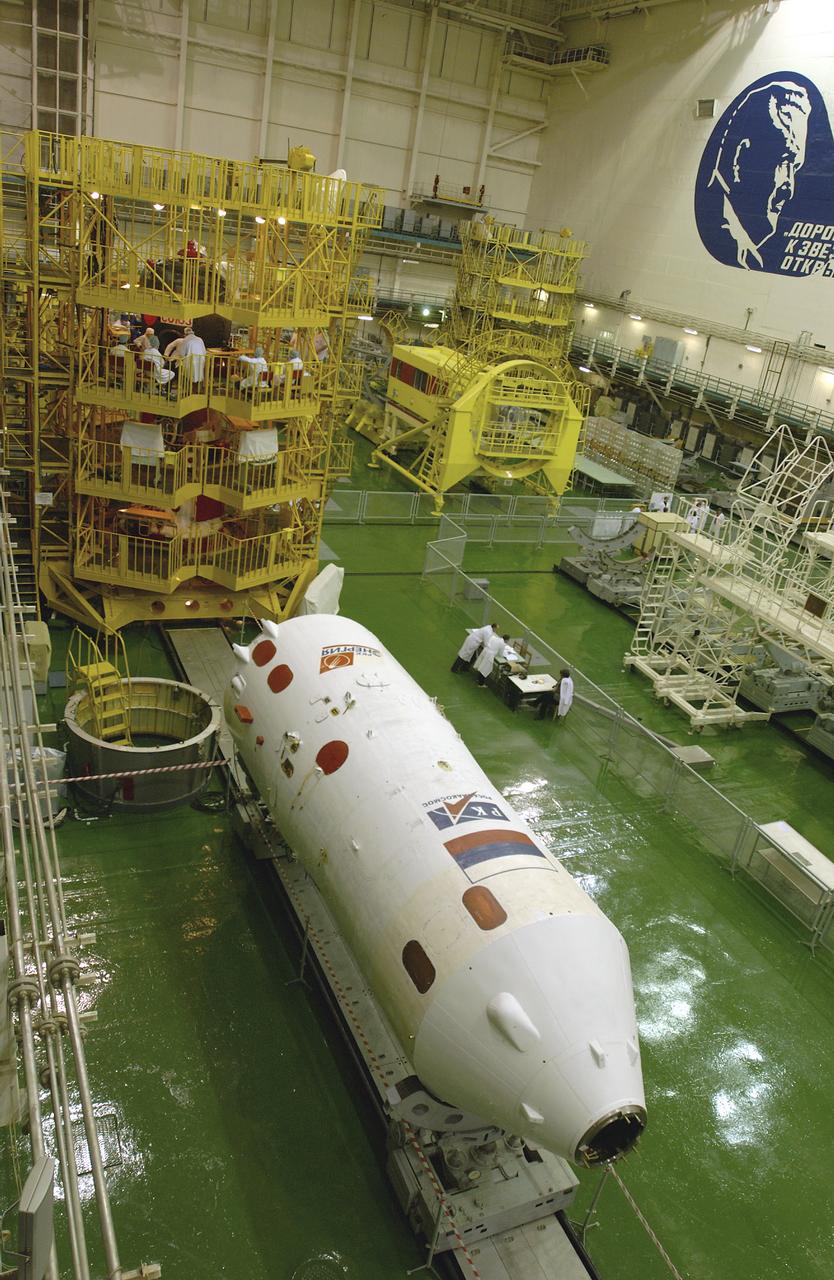
The interior of the Soyuz Integration Facility at the Baikonur Cosmodrome in Baikonur, Kazakhstan is seen, Thursday, April 10, 2003. The Soyuz module is in the yellow work stand with its payload fairing ready in the foreground. Expedition 7 NASA International Space Station Science Officer and Flight Engineer Edward T. Lu and Expedition 7 Commander Yuri I. Malenchenko (both out of view) are in the Soyuz TMA-2 capsule for an inspection and seat liner check.
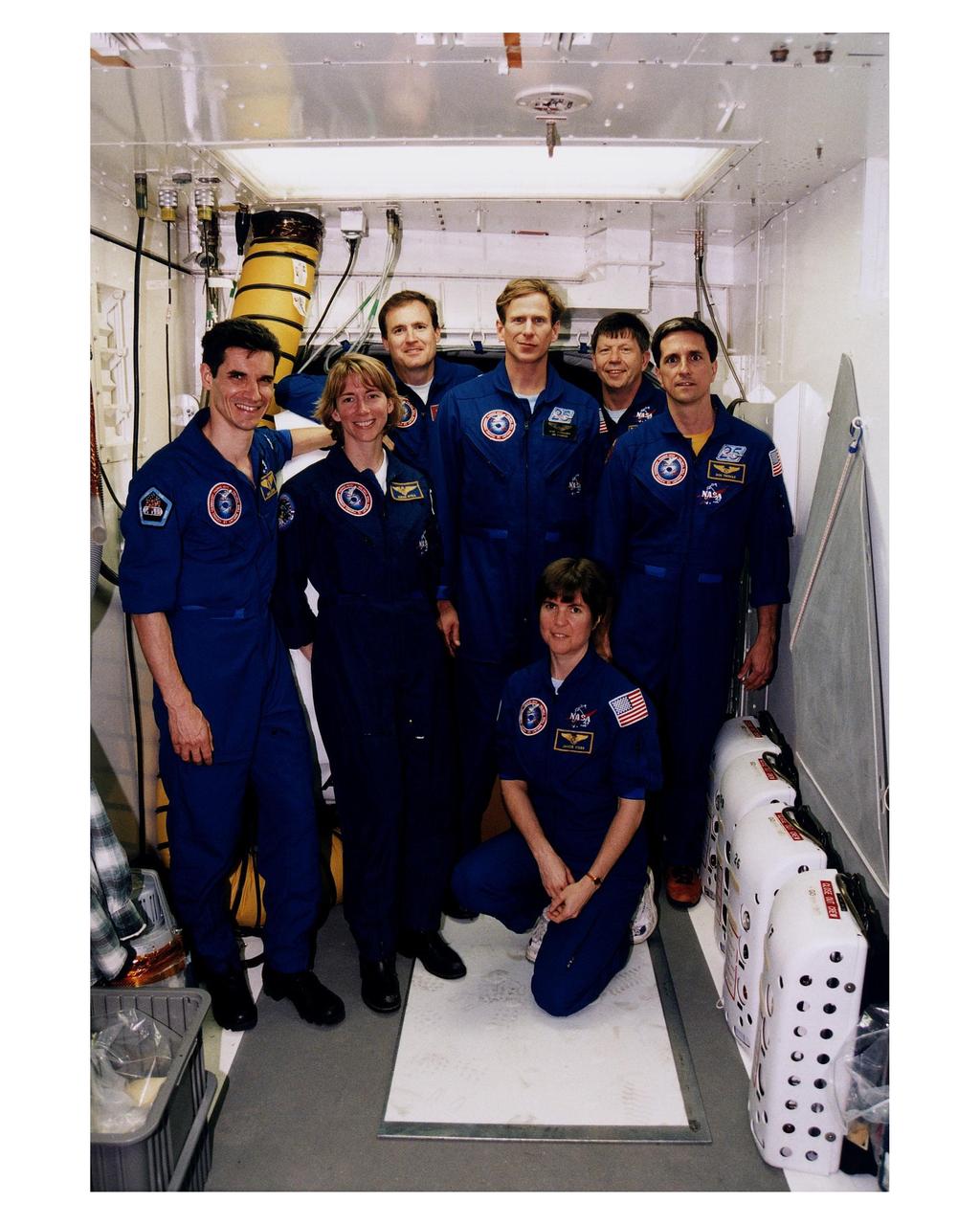
The STS-83 crew poses in the White Room at Launch Complex 39A during the crew's <a href="http://www-pao.ksc.nasa.gov/kscpao/release/1997/40-97.htm">Terminal Countdown Demonstration Test (TCDT).</a> From left to right, standing, they are Payload Specialist Gregory T. Linteris, Pilot Susan L. Still, Mission Commander James D. Halsell, Mission Specialist Michael L. Gernhardt, Payload Specialist Roger K. Crouch, and Mission Specialist Donald Thomas. Mission Specialist Janice E. Voss is kneeling
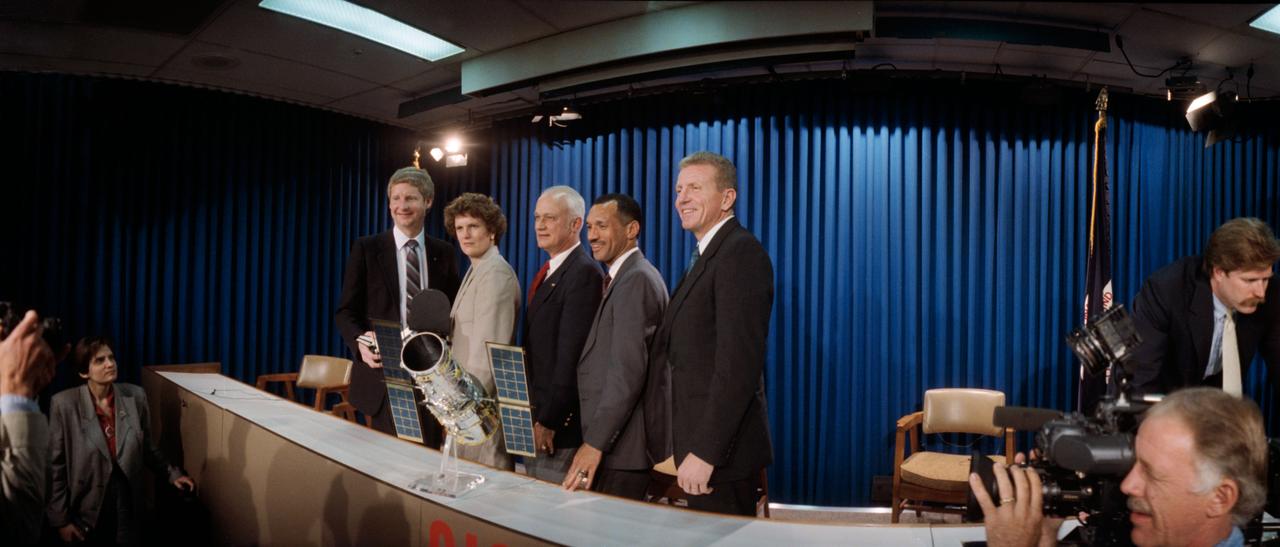
STS-31 Discovery, Orbiter Vehicle (OV) 103, crewmembers pose for an informal portrait after the T-30 (thirty days before launch) briefing at JSC's Auditorium and Public Affairs Facility Bldg 2. Standing behind the conference table are (left to right) Mission Specialist (MS) Steven A. Hawley, MS Kathryn D. Sullivan, MS Bruce McCandless II, Pilot Charles F. Bolden, and Commander Loren J. Shriver.
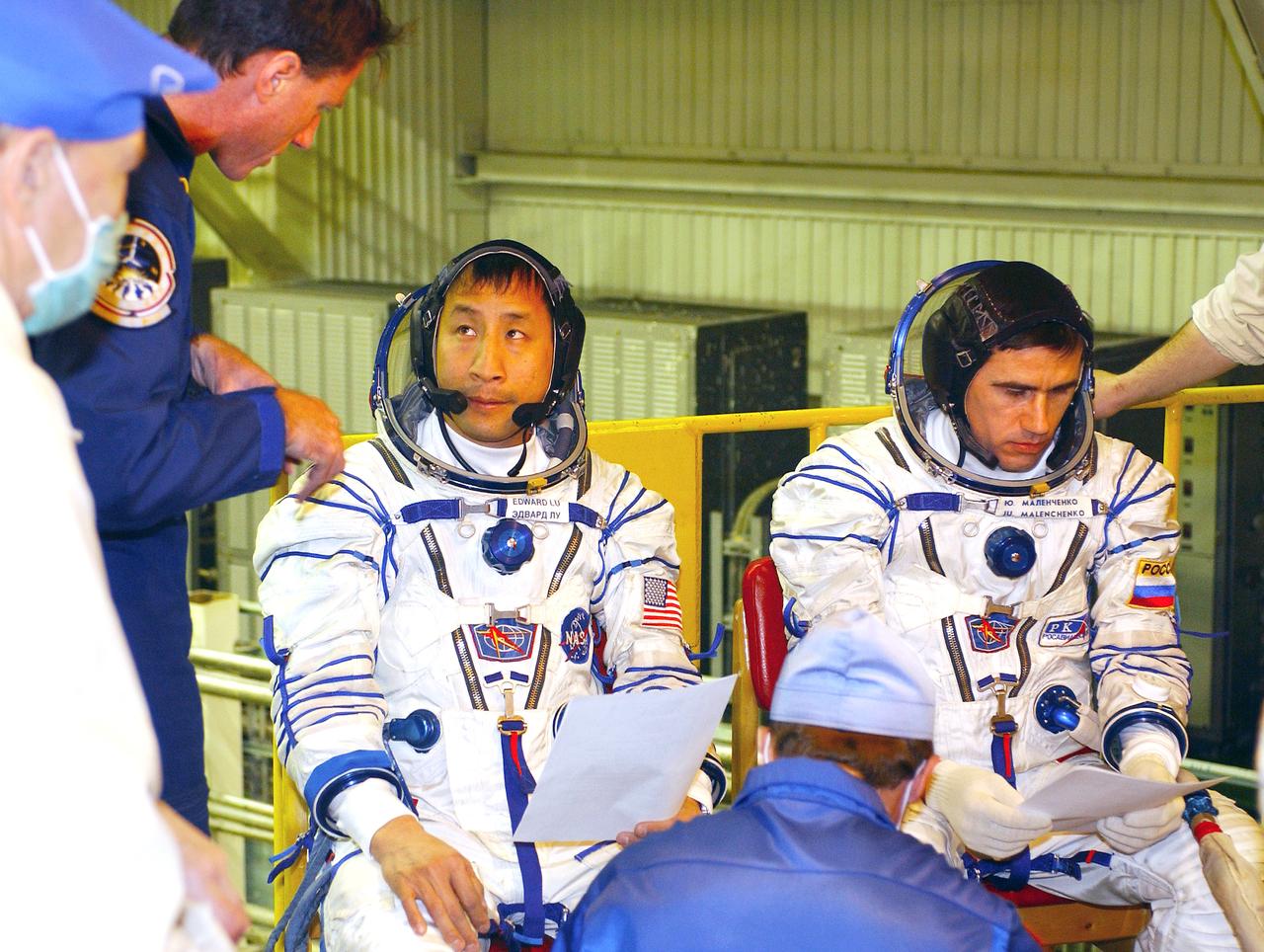
April 10, 2003. Baikonur Cosmodrome, Kazakhstan. Building 254, Soyuz Integration Facility. Astronaut Michael Foale (left standing), backup crew for Expedition Seven, talks with Astronaut Edward T. Lu, NASA ISS science officer and flight engineer for Expedition Seven. Seated on the right is Cosmonaut Yuri I. Malenchenko, Expedition Seven commander. The crew is reviewing documents prior to entering the Soyuz TMA-2 capsule for inspection and seat liner check. Photo Credit: "NASA/Bill Ingalls"
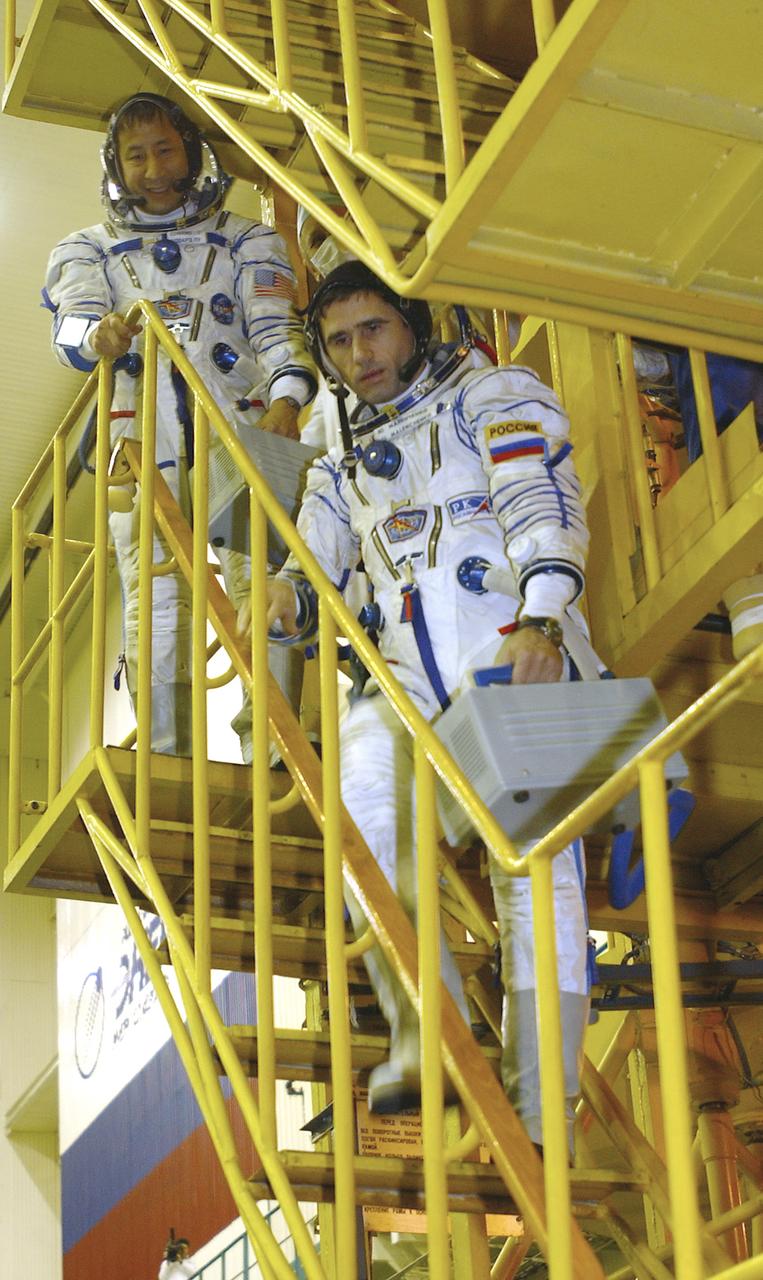
Cosmonaut Yuri I. Malenchenko, Expedition 7 commander, foreground and astronaut Edward T. Lu, NASA International Space Station science officer and flight engineer for Expedition 7, walk down the Soyuz stand after the Soyuz inspection and seat liner check at the Baikonur Cosmodrome, Building 254, Soyuz Integration Facility in Kazakhstan, Thursday, April 10, 2003. Photo Credit: (NASA/Bill Ingalls)
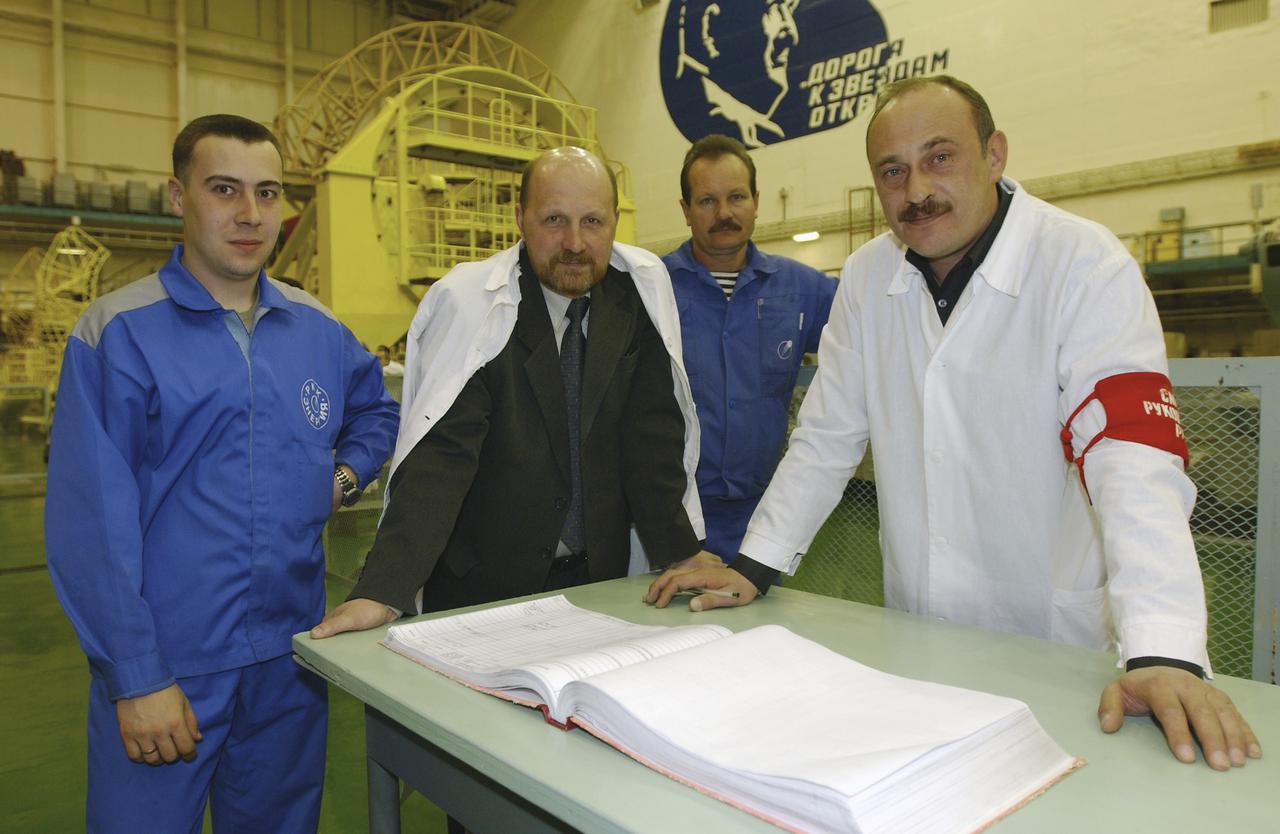
Engineers check the paperwork near the Soyuz integration stand. NASA International Space Station science officer and flight engineer for Expedition 7 astronaut Edward T. Lu and Expedition 7 commander cosmonaut Yuri I. Malenchenko are in the Soyuz TMA-2 capsule for inspection and seat liner check at the Baikonur Cosmodrome, Building 254, Soyuz Integration Facility in Kazakhstan, Thursday, April 10, 2003. Photo Credit: (NASA/Bill Ingalls)
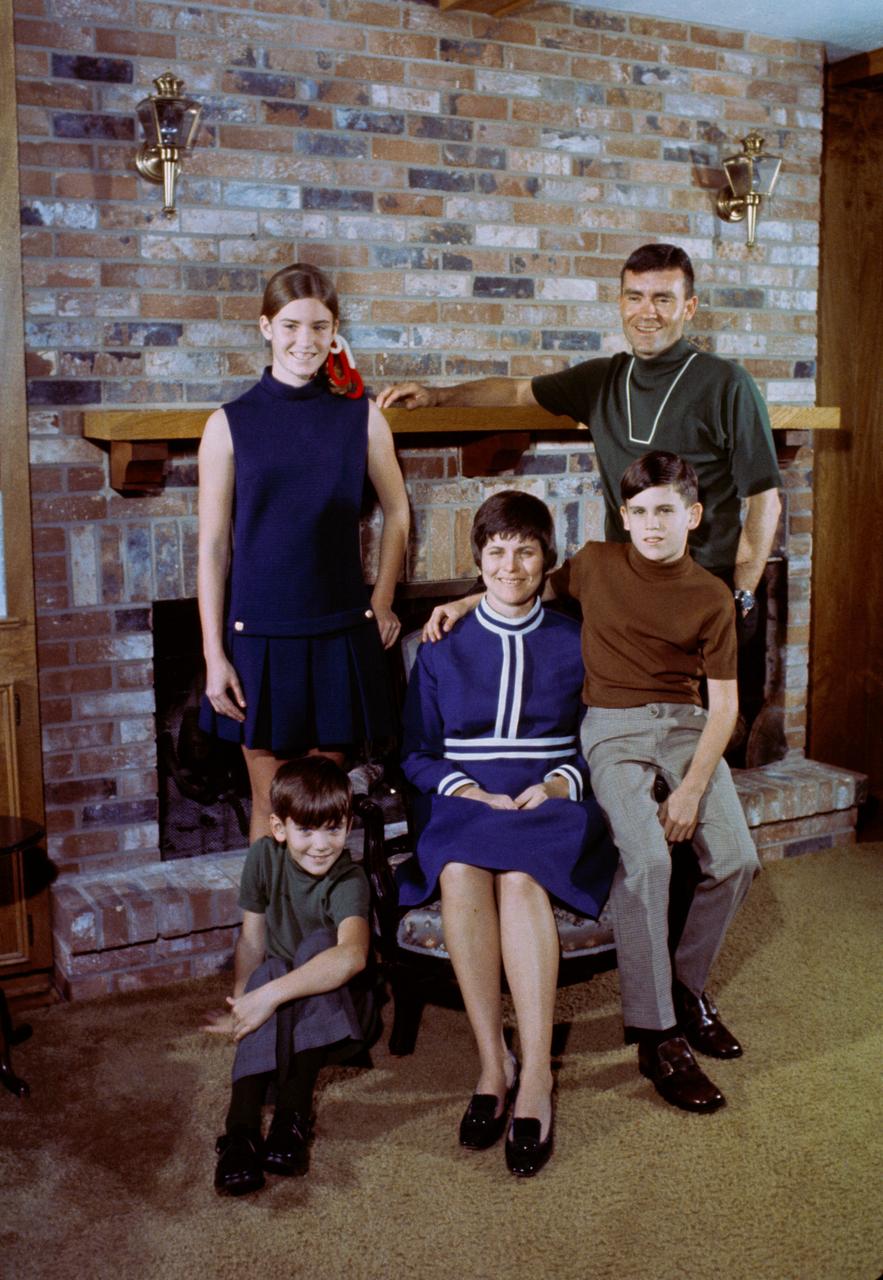
S70-30580 (March 1970) --- This is a family portrait of astronaut Fred W. Haise Jr. and his family. Haise is the lunar module pilot of the Apollo 13 lunar landing mission. The family includes: Mary M. (standing on left), born on Jan. 25, 1956; Frederick T. (seated on arm of chair), born on May 13, 1958; Stephen W. (seated on floor), born on June 30, 1961; and Mrs. Haise, the former Mary Griffin Grant.
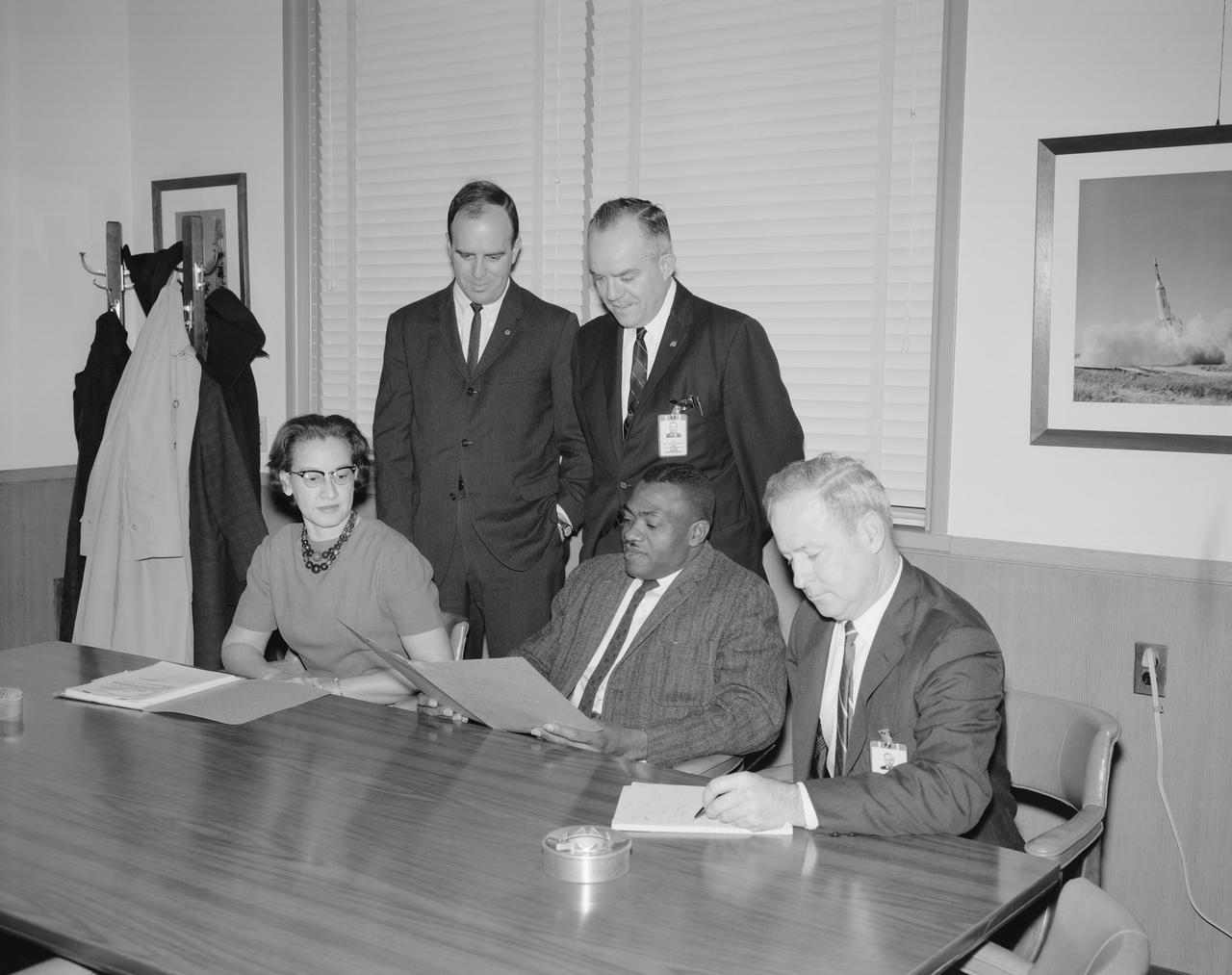
Seated from From Left: Katherine G Johnson, Lawrence W Brown, and J Norwood Evans, Employment Officer. Standing from Left: John J Cox, secretary; and Edward T Maher, chairman. Absent when picture was taken: Vernon S Courtney. Members are shown as they review the Center's Affirmative Action Program. The committee serves in an advisory capacity to the Personnel Division and Center management officials and seeks to explore realistic approaches to accomplishment of the objectives of the Affirmative Action program.
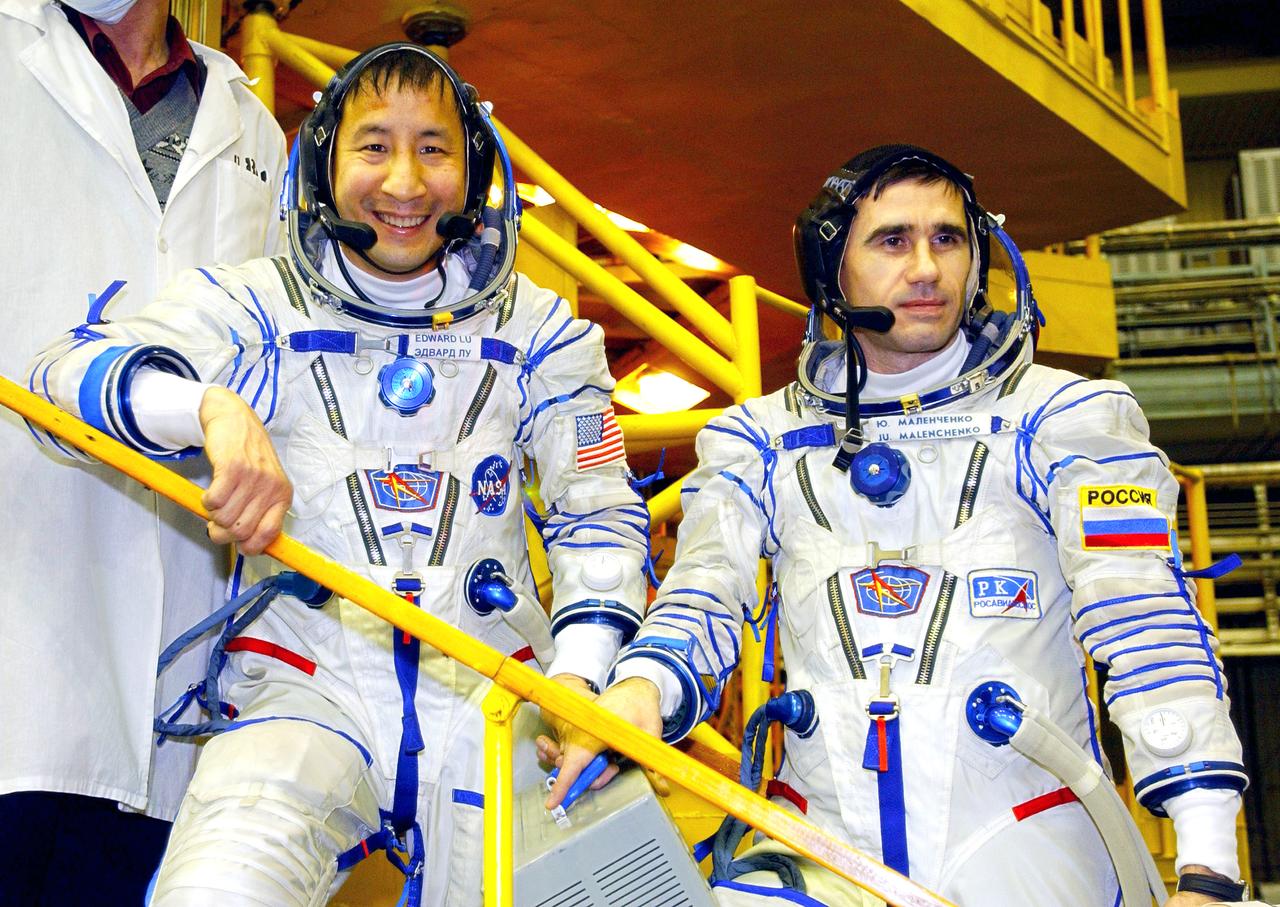
April 10, 2003. Baikonur Cosmodrome, Kazakhstan. Building 254, Soyuz Integration Facility. Cosmonaut Yuri I. Malenchenko (right), Expedition Seven commander and Astronaut Edward T. Lu, NASA ISS science officer and flight engineer for Expedition Seven pause for a photograph on the Soyuz stand after the Soyuz inspection, seat liner check. Photo Credit: "NASA/Bill Ingalls"
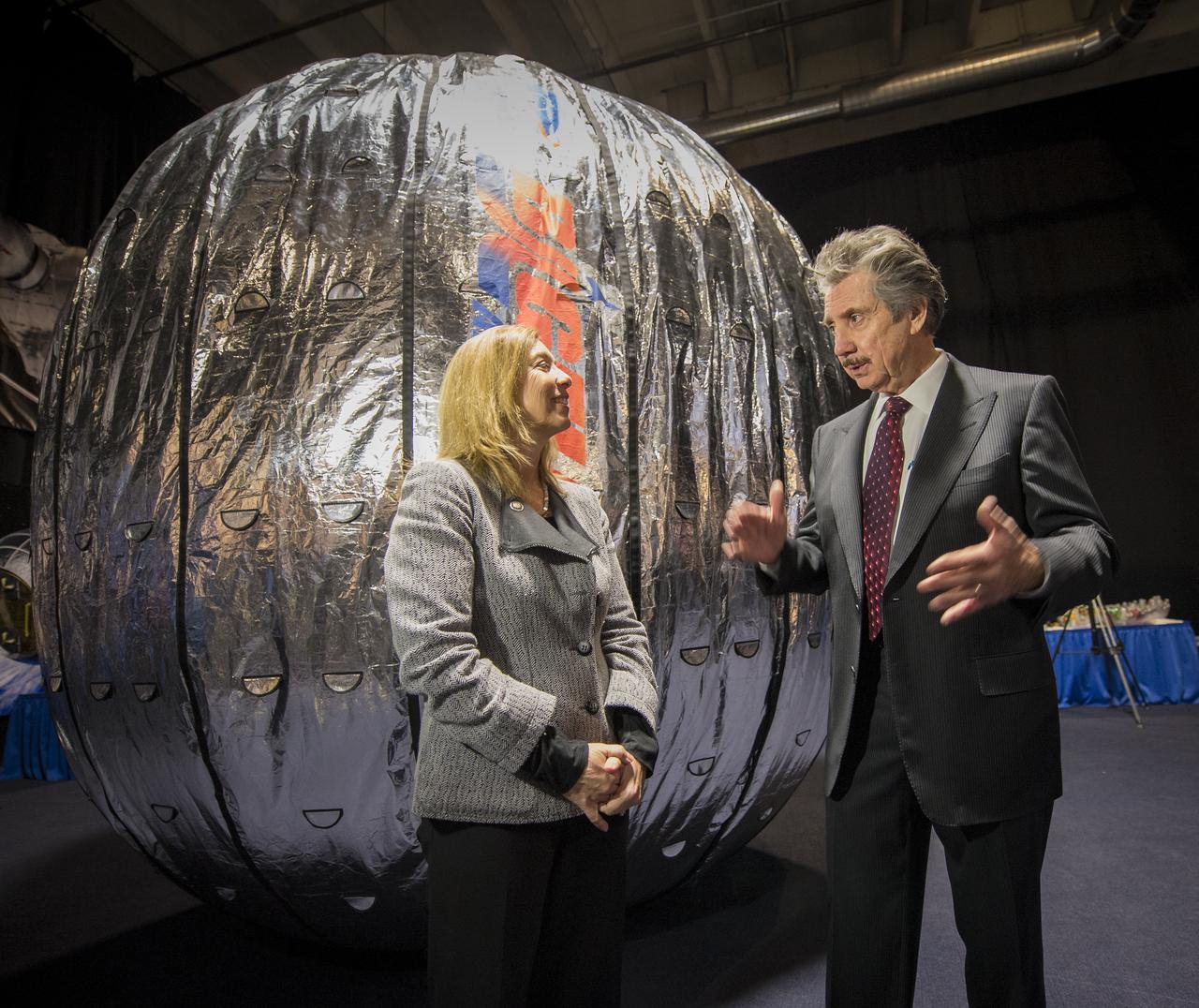
NASA Deputy Administrator Lori Garver and President and founder of Bigelow Aerospace Robert T. Bigelow talk while standing next to the Bigelow Expandable Activity Module (BEAM) during a media briefing where is was announced that the BEAM expandable space habitat technology will be tested on the International Space Station, Wednesday, Jan. 16, 2013 in Las Vegas. BEAM is scheduled to arrive at the space station in 2015 for a two-year technology demonstration. Photo Credit: (NASA/Bill Ingalls)
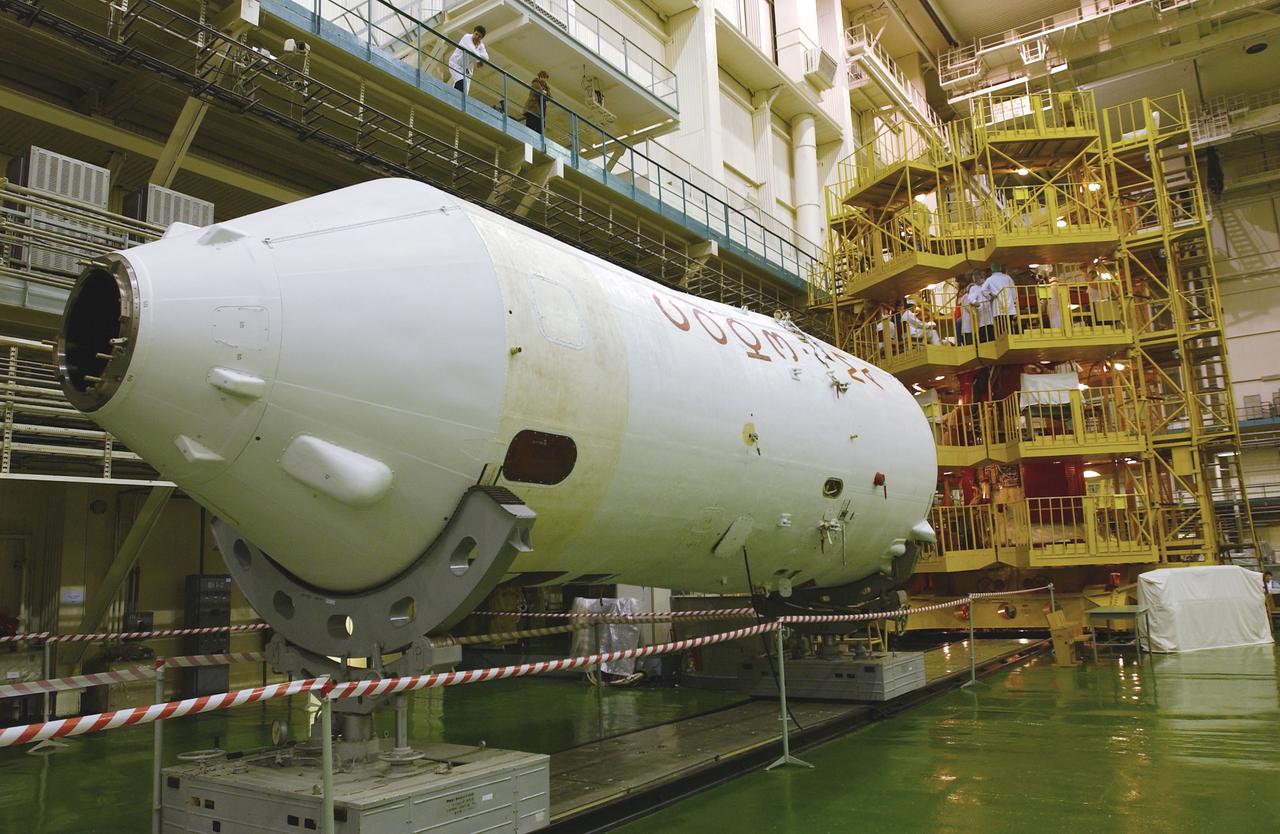
The interior of the Soyuz Integration Facility at the Baikonur Cosmodrome in Baikonur, Kazakhstan is seen, Thursday, April 10, 2003. The Soyuz module is in the yellow work stand with its payload fairing ready in the foreground. Expedition 7 NASA International Space Station Science Officer and Flight Engineer Edward T. Lu and Expedition 7 Commander Yuri I. Malenchenko (both out of view) are in the Soyuz TMA-2 capsule for an inspection and seat liner check.
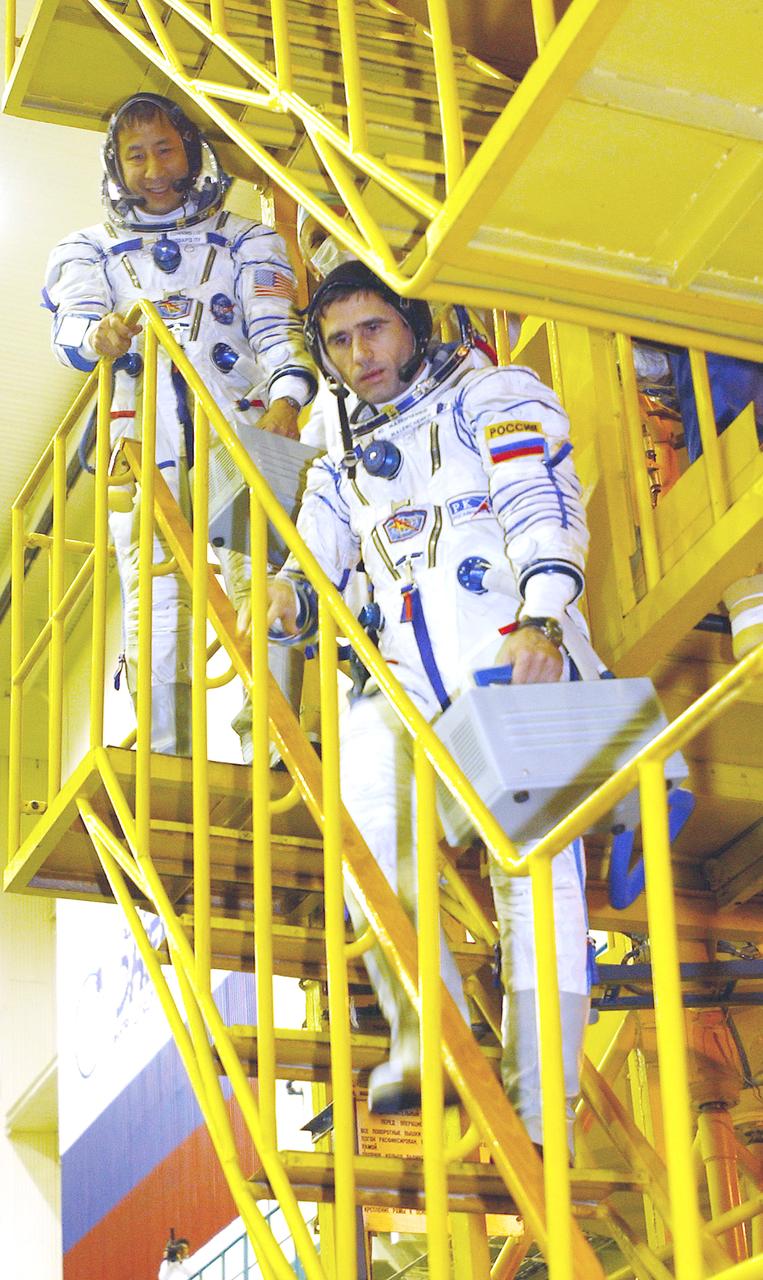
April 10, 2003. Baikonur Cosmodrome, Kazakhstan. Building 254, Soyuz Integration Facility. Cosmonaut Yuri I. Malenchenko (forground), Expedition Seven commander and Astronaut Edward T. Lu, NASA ISS science officer and flight engineer for Expedition Seven walk down the Soyuz stand after the Soyuz inspection, seat liner check. Photo Credit: "NASA/Bill Ingalls"
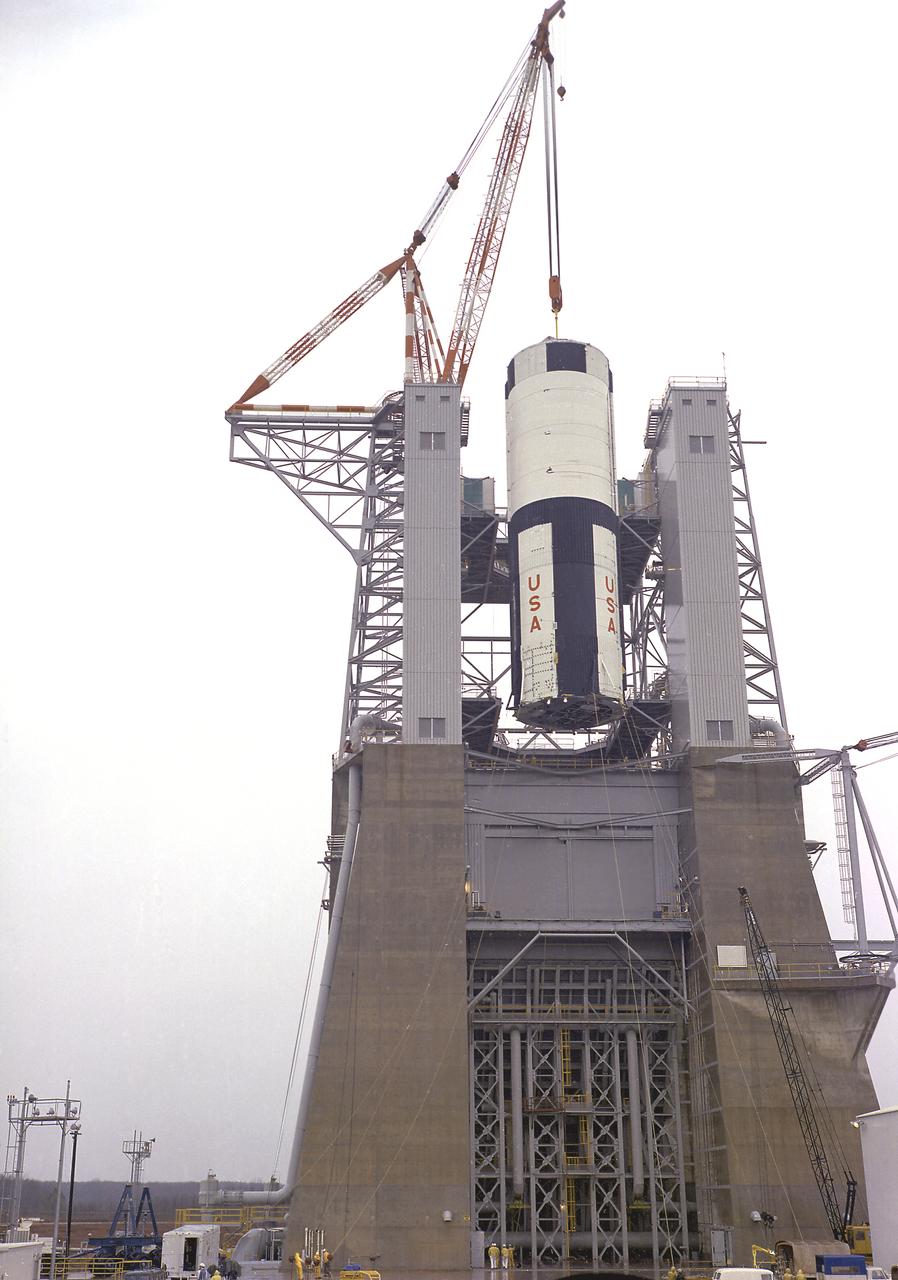
The S-IC-T stage is hoisted into the S-IC static test stand at the Marshall Space Flight Center. The S-IC-T stage is a static test vehicle not intended for flight. It was ground tested repeatedly over a period of many months proving the vehicle's propulsion system. The 280,000-pound stage, 138 feet long and 33 feet in diameter, houses the fuel and liquid oxygen tanks that hold a total of 4,400,000 pounds of liquid oxygen and kerosene. The two tanks are cornected by a 26-foot-long intertank section. Other parts of the booster included the forward skirt and the thrust structure, on which the engines were to be mounted. Five F-1 engines, each weighing 10 tons, gave the booster a total thrust of 7,500,000 pounds, roughly equivalent to 160 million horsepower.
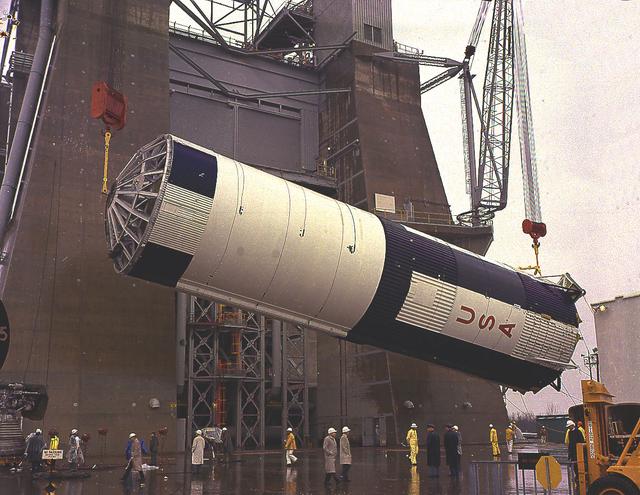
The S-IC-T stage was hoisted into the S-IC Static Test Stand at the Marshall Space Flight Center. The S-IC-T stage was a static test vehicle, not intended for flight. It was ground tested repeatedly over a period of many months to prove the vehicle's propulsion system. The 280,000-pound stage, 138 feet long and 33 feet in diameter, housed the fuel and liquid oxygen tanks that held a total of 4,400,000 pounds of liquid oxygen and kerosene. The two tanks were cornected by a 26-foot intertank section. Other parts of the booster included the forward skirt and the thrust structure, on which the engines were to be mounted. Five F-1 engines, each weighing 10 tons, gave the booster a total thrust of 7,500,000 pounds, roughly equivalent to 160 million horsepower.
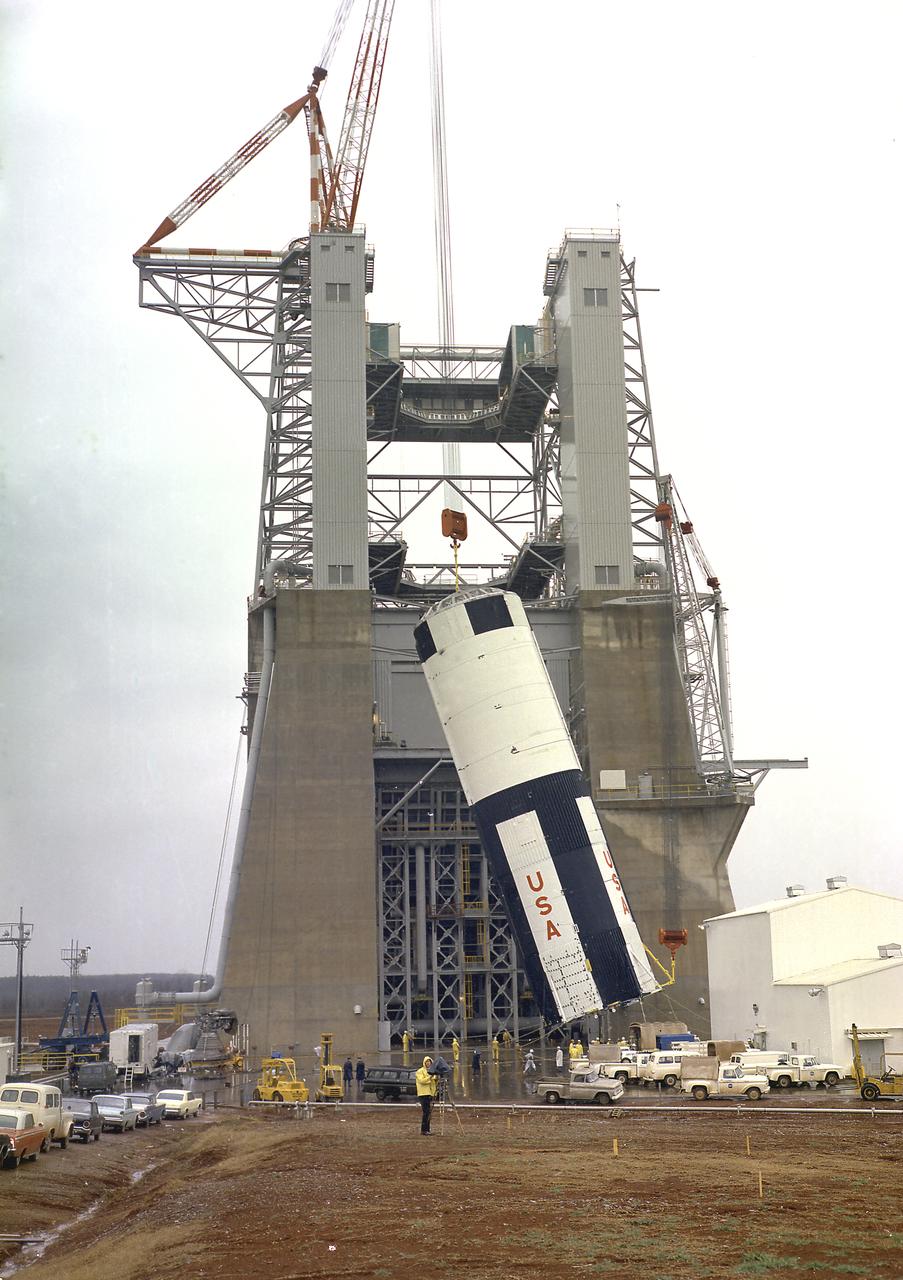
The S-IC-T stage was hoisted into the S-IC static test stand at the Marshall Space Flight Center. The S-IC-T stage was a static test vehicle not intended for flight. It was ground tested repeatedly over a period of many months to prove the vehicle's propulsion system. The 280,000-pound stage, 138 feet long and 33 feet in diameter, housed the fuel and liquid oxygen tanks that held a total of 4,400,000 pounds of liquid oxygen and kerosene. The two tanks are cornected by a 26-foot-long intertank section. Other parts of the booster included the forward skirt and the thrust structure, on which the engines were to be mounted. Five F-1 engines, each weighing 10 tons, gave the booster a total thrust of 7,500,000 pounds, roughly equivalent to 160 million horsepower.
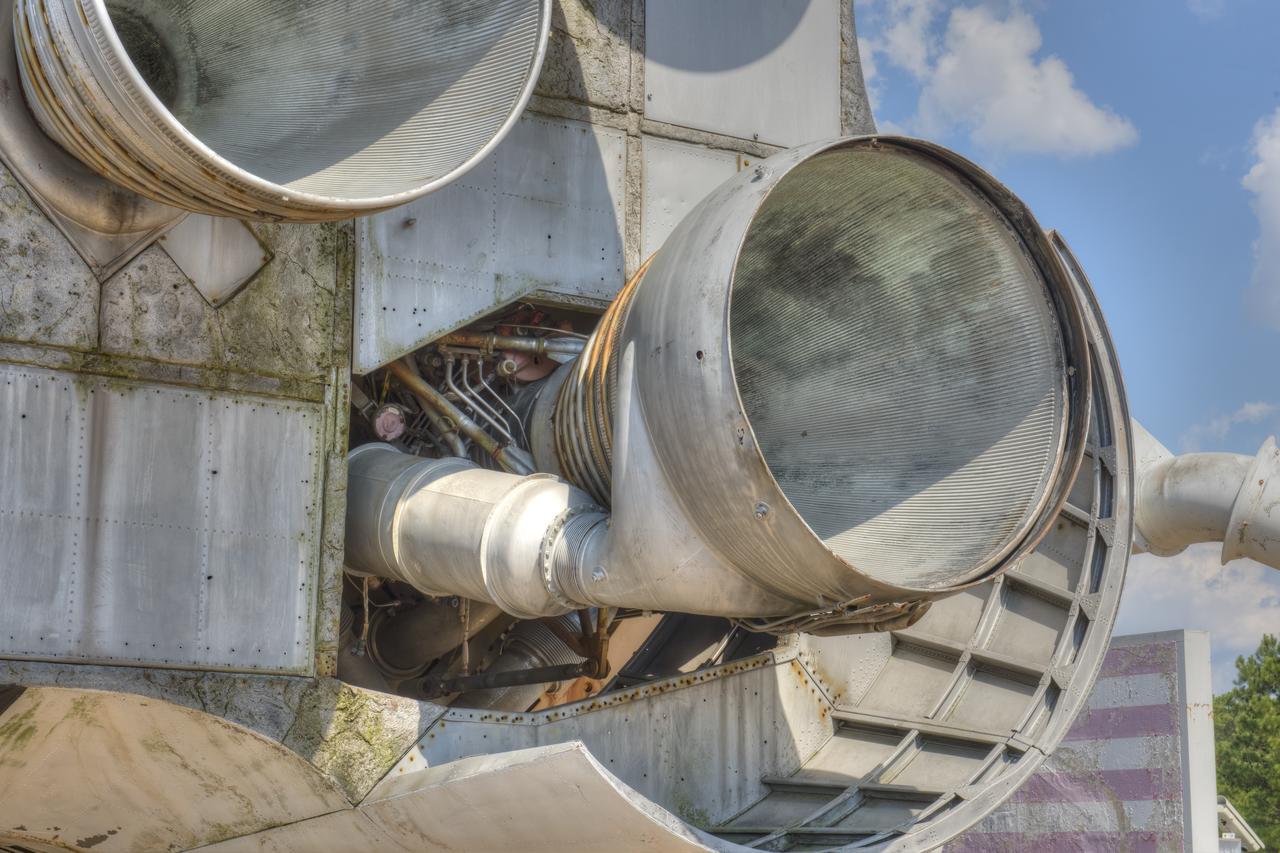
CLOSE-UP OF H-1 ENGINE INSTALLED ON SATURN S-1B STAGE (SA-T) NEAR PROPULSION AND STRUCTURAL TEST FACILITY (BUILDING 4572) AT THE GEORGE C. MARSHALL SPACE FLIGHT CENTER.
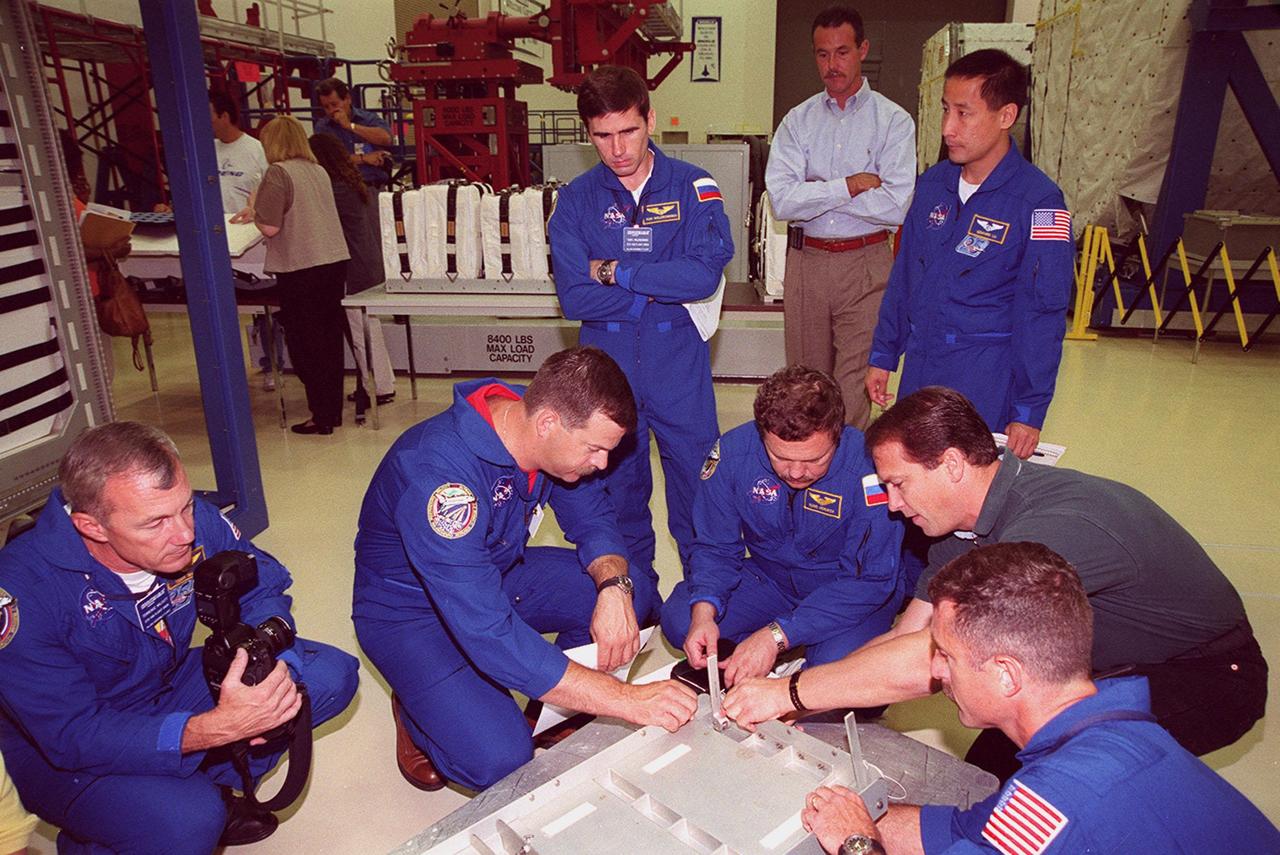
KENNEDY SPACE CENTER, FLA. -- At SPACEHAB members of the STS-106 crew check out equipment they will be using during their mission to the International Space Station. From left are Commander Terrence W. Wilcutt, Pilot Scott D. Altman, and Mission Specialists Yuri I. Malenchenko (standing), Boris V. Morukov, Edward T. Lu (also standing), and (in the foreground, right) Daniel C. Burbank. Malenchenko and Morukov represent the Russian Aviation and Space Agency. STS-106 is scheduled to launch Sept. 8, 2000, at 8:31 a.m. EDT from Launch Pad 39B on an 11-day mission. The seven-member crew will prepare the Space Station for its first resident crew and begin outfitting the newly arrived Zvezda Service Module. They will perform support tasks on orbit, transfer supplies and prepare the Zvezda living quarters for the first long-duration crew, dubbed “Expedition One,” which is due to arrive at the Station in late fall
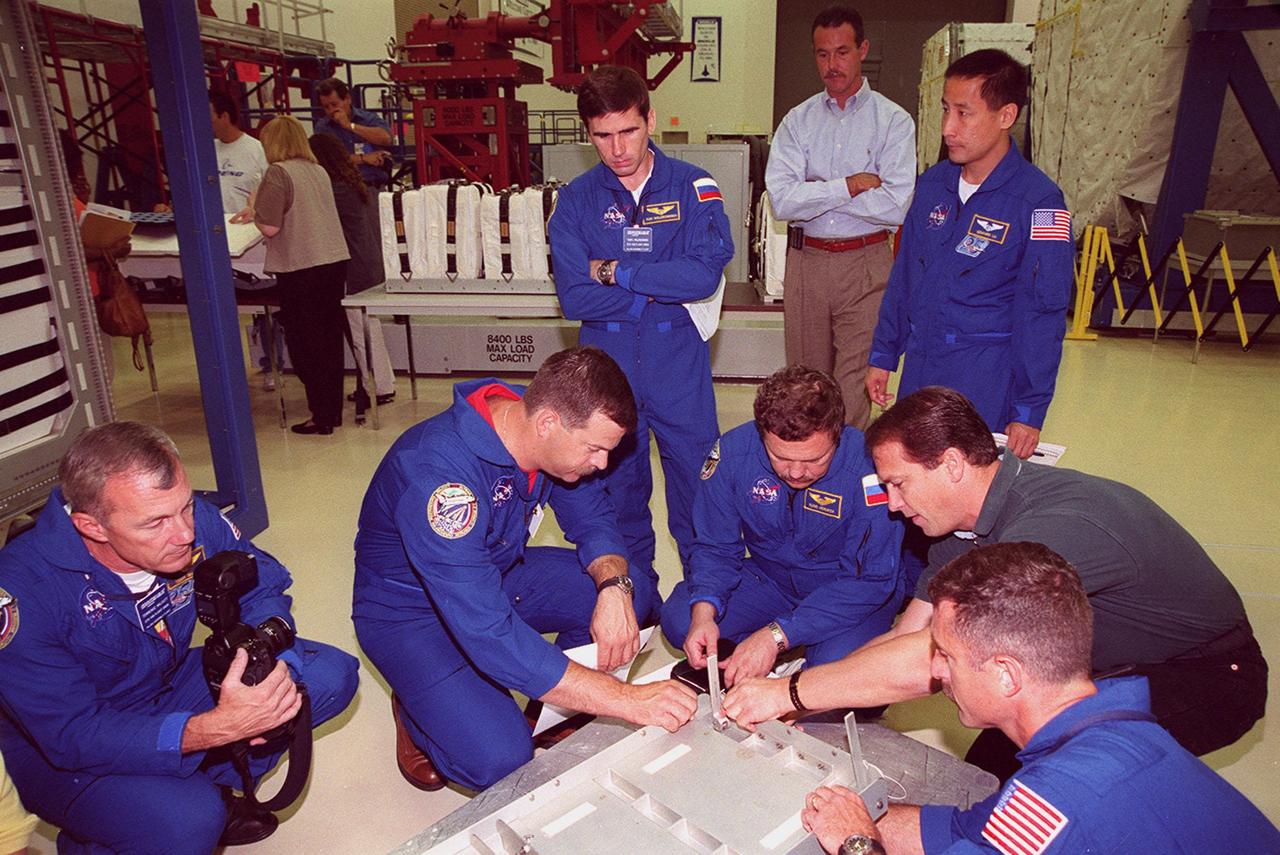
KENNEDY SPACE CENTER, FLA. -- At SPACEHAB members of the STS-106 crew check out equipment they will be using during their mission to the International Space Station. From left are Commander Terrence W. Wilcutt, Pilot Scott D. Altman, and Mission Specialists Yuri I. Malenchenko (standing), Boris V. Morukov, Edward T. Lu (also standing), and (in the foreground, right) Daniel C. Burbank. Malenchenko and Morukov represent the Russian Aviation and Space Agency. STS-106 is scheduled to launch Sept. 8, 2000, at 8:31 a.m. EDT from Launch Pad 39B on an 11-day mission. The seven-member crew will prepare the Space Station for its first resident crew and begin outfitting the newly arrived Zvezda Service Module. They will perform support tasks on orbit, transfer supplies and prepare the Zvezda living quarters for the first long-duration crew, dubbed “Expedition One,” which is due to arrive at the Station in late fall

KENNEDY SPACE CENTER, Fla. -- Workers clean the mobile launcher platform on which sits Space Shuttle Atlantis. They are standing in front of one of two tail service masts on either side of the Shuttle, in front of each wing. The masts support the fluid, gas and electrical requirements of the orbiter’s liquid oxygen and liquid hydrogen aft T-0 umbilicals. Launch on mission STS-104 is scheduled for 5:04 a.m. July 12. The launch is the 10th assembly flight to the International Space Station. Along with a crew of five, Atlantis will carry the joint airlock module as primary payload
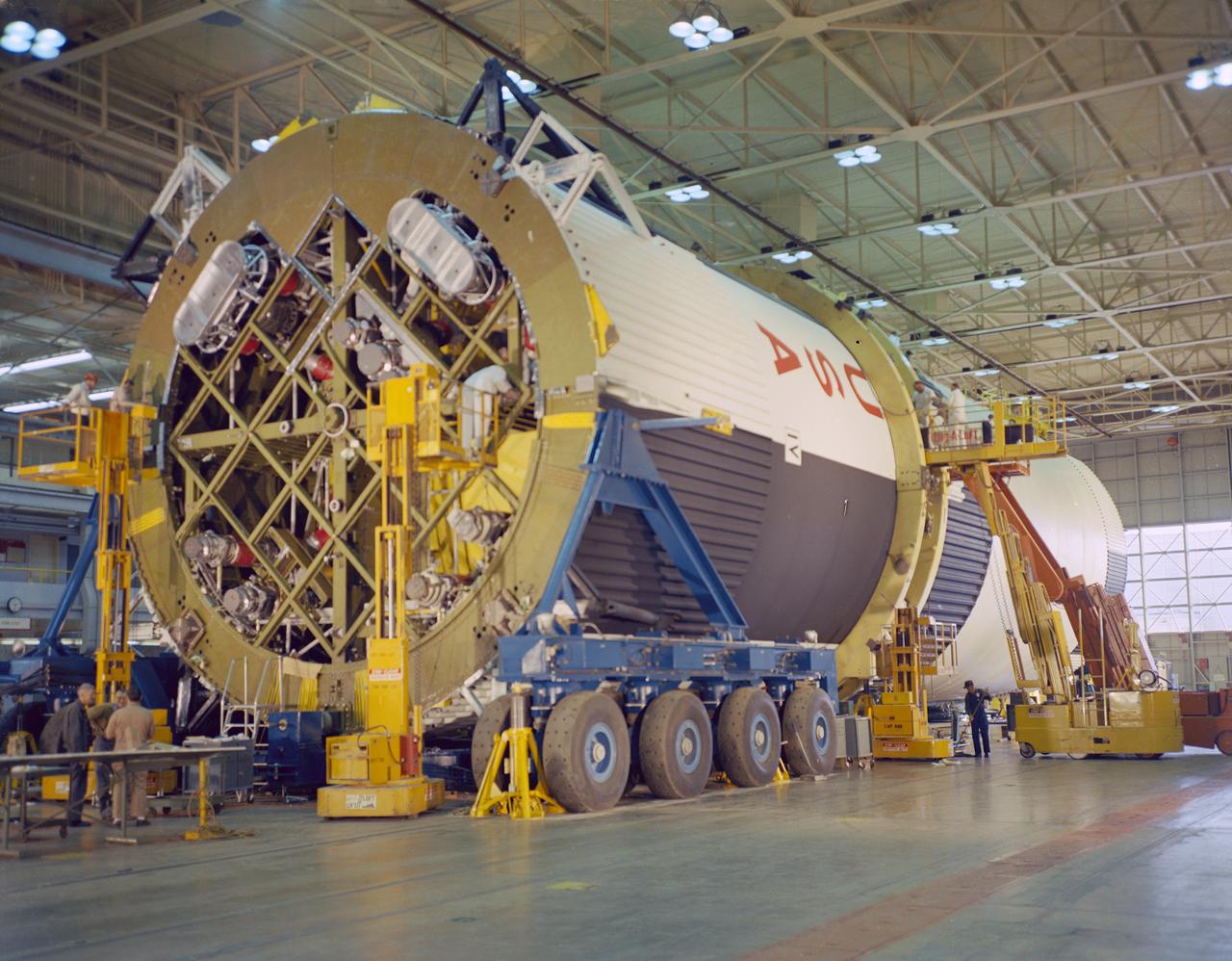
At the Marshall Space Flight Center (MSFC), the fuel tank assembly for the Saturn V S-IC-T (static test stage) fuel tank assembly is mated to the liquid oxygen (LOX) tank in building 4705. This stage underwent numerous static firings at the newly-built S-IC Static Test Stand at the MSFC west test area. The S-IC (first) stage used five F-1 engines that produced a total thrust of 7,500,000 pounds as each engine produced 1,500,000 pounds of thrust. The S-IC stage lifted the Saturn V vehicle and Apollo spacecraft from the launch pad.
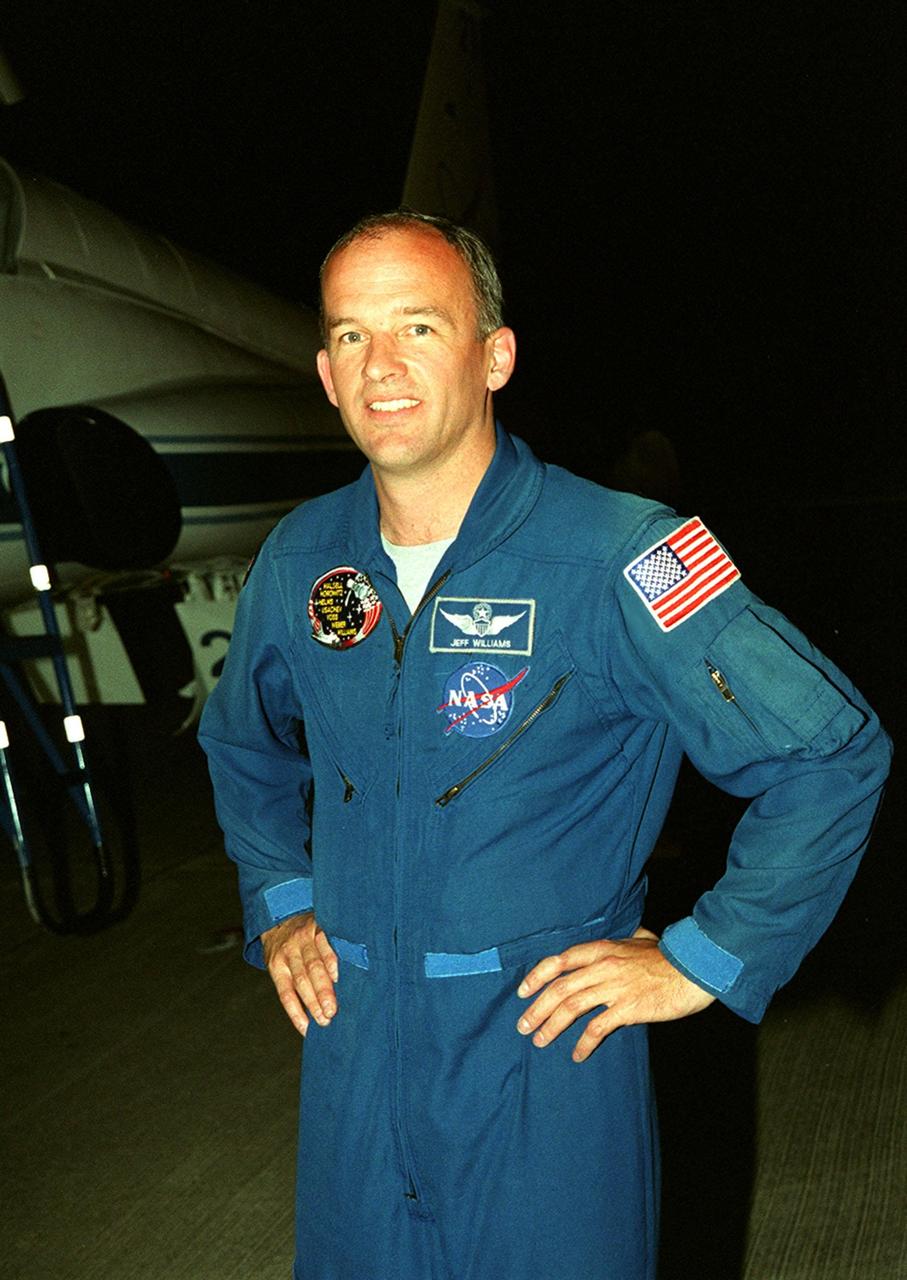
STS-101 Mission Specialist Jeffrey N. Williams stands ready to begin preparations for the launch on May 18 after arriving at KSC's Shuttle Landing Facility aboard a T-38 jet aircraft. The mission will take the crew of seven to the International Space Station, delivering logistics and supplies, plus preparing the Station for the arrival of the Zvezda Service Module, expected to be launched by Russia in July 2000. Also, the crew will conduct one space walk to perform maintenance on the Space Station. This will be the third assembly flight for the Space Station. STS-101 is targeted for liftoff at 6:38 a.m. EDT from Launch Pad 39A
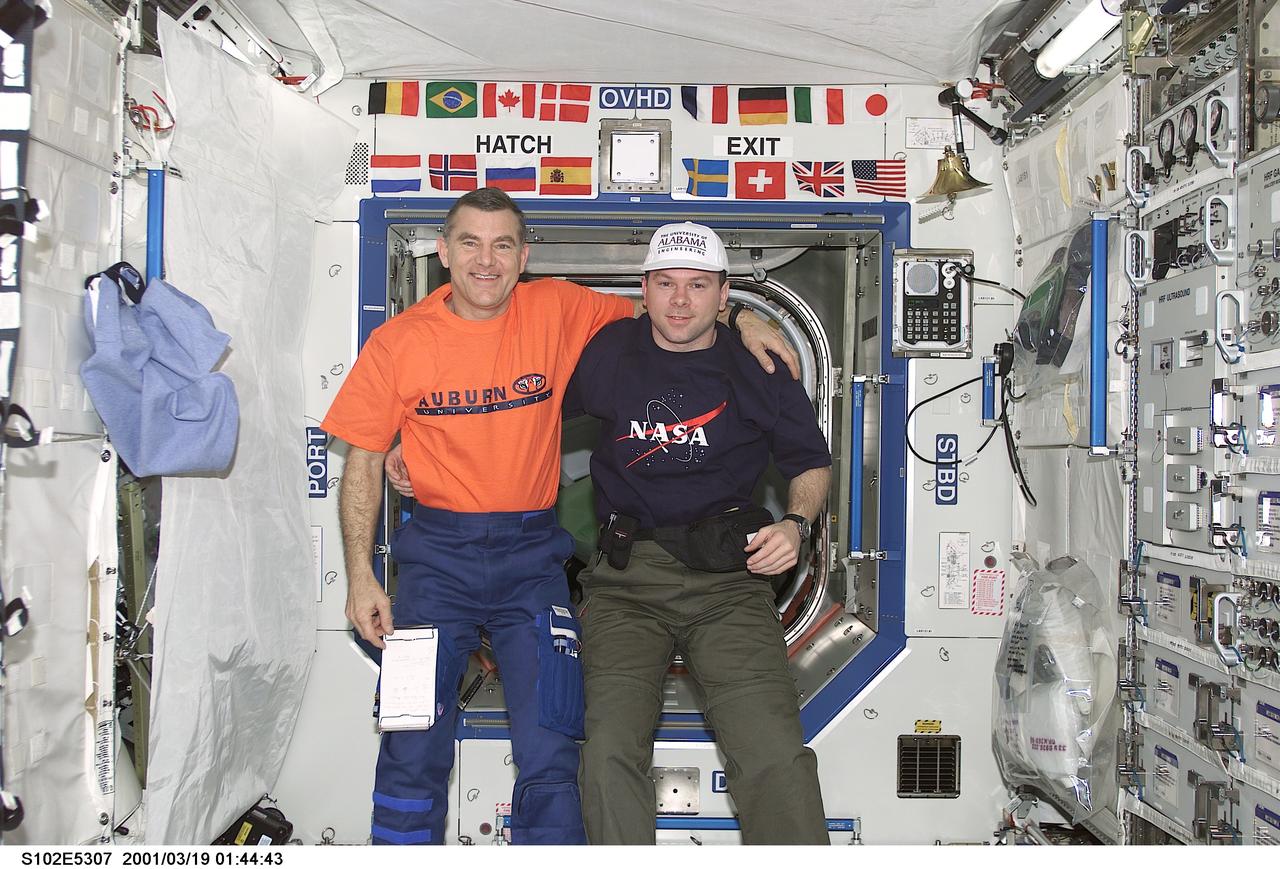
STS102-E-5307 (19 March 2001) --- Astronauts James S. Voss (left) and James M. Kelly share a friendly moment onboard the International Space Station's U.S. laboratory Destiny in spite of the long-standing academic/athletic rivalry between their respective alma maters--Auburn University and the University of Alabama. Voss, STS-102 mission specialist-turned Expedition Two flight engineer and a 1972 alumnus of Auburn with a bachelor of science degree in aerospace engineering, sports a T-shirt paying tribute to his university. Kelly, STS-102 pilot and masters of science degree graduate in aerospace engineering from the University of Alabama in 1996, is wearing a cap from that institution of higher learning.
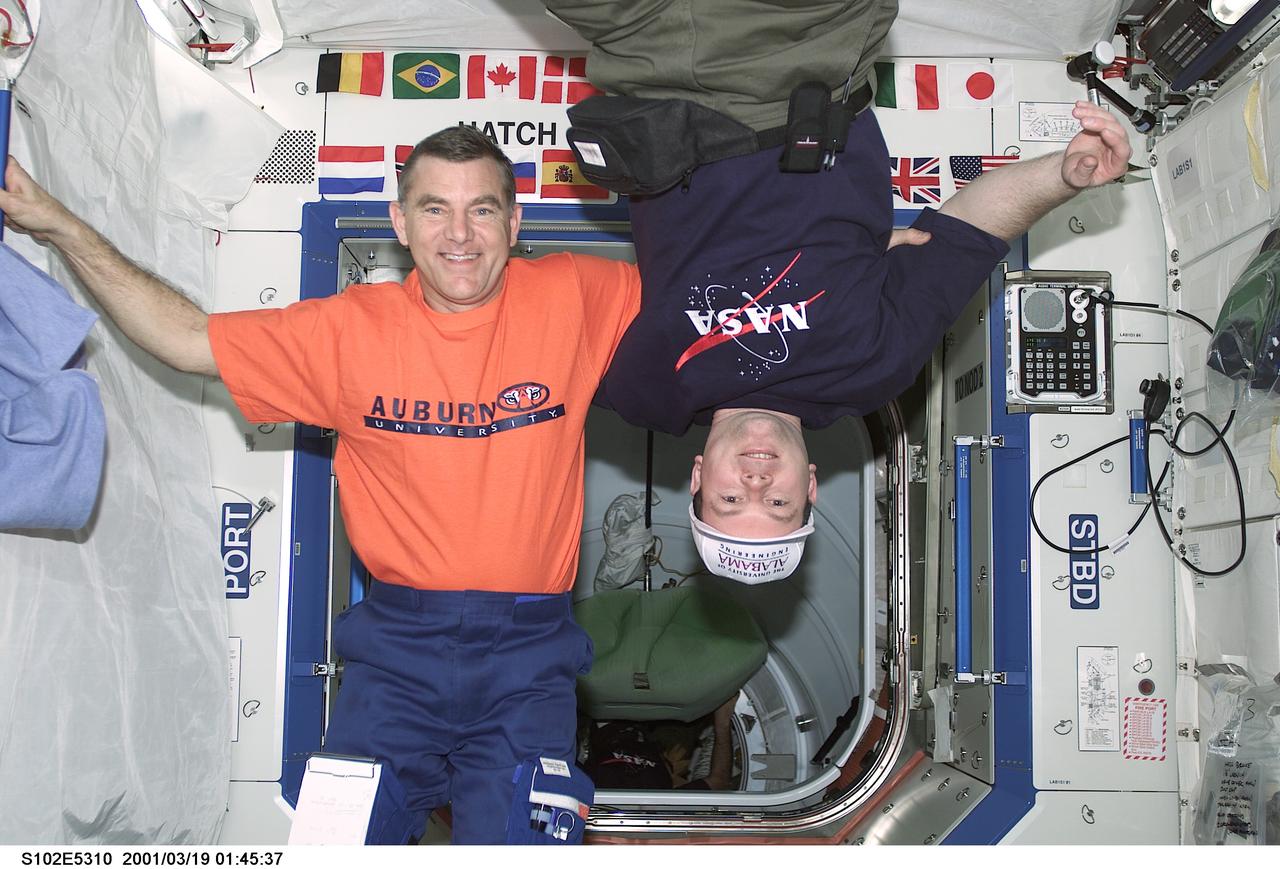
STS102-E-5310 (19 March 2001) --- Astronauts James S. Voss (left) and James M. Kelly share a friendly moment onboard the International Space Station's U.S. laboratory Destiny in spite of the long-standing academic/athletic rivalry between their respective alma maters--Auburn University and the University of Alabama. Voss, STS-102 mission specialist-turned Expedition Two flight engineer and a 1972 alumnus of Auburn with a bachelor of science degree in aerospace engineering, sports a T-shirt paying tribute to his university. Kelly, STS-102 pilot and masters of science degree graduate in aerospace engineering from the University of Alabama in 1996, is wearing a cap from that institution of higher learning.
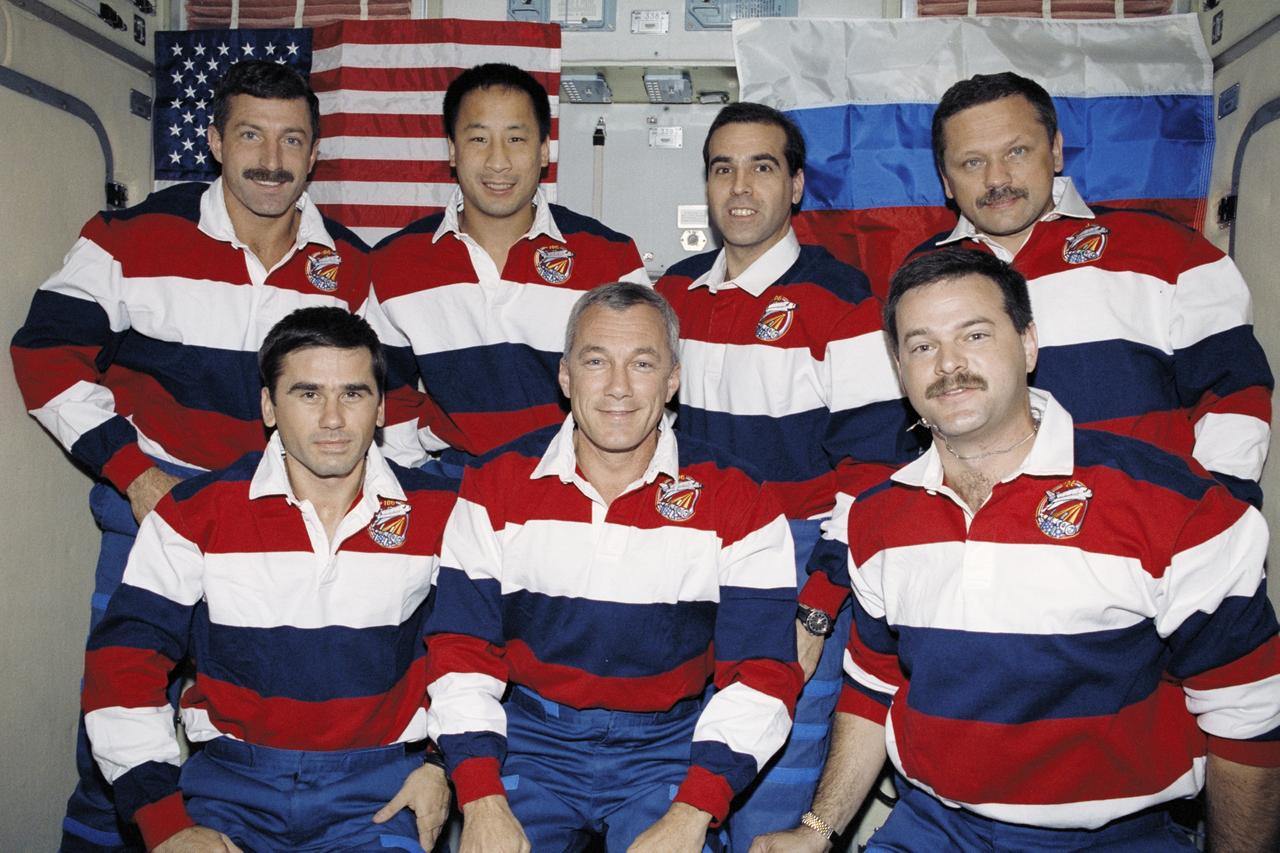
STS106-373-019 (8-20 September 2000) --- Five astronauts and two cosmonauts pose for the STS-106 version of the traditional inflight crew portrait. Though the tradition is long standing, this portrait represents a relatively new element as it was taken onboard the International Space Station, docked for a few days with the Space Shuttle Atlantis. In front, from the left, are cosmonaut Yuri I. Malenchenko, mission specialist; Terrence W. Wilcutt, mission commander; and Scott D. Altman, pilot. In back are, from left, astronauts Daniel C. Burbank, Edward T. Lu and Richard A. Mastracchio, along with cosmonaut Boris V. Morukov. Morukov and Malenchenko represent the Russian Aviaition and Space Agency.
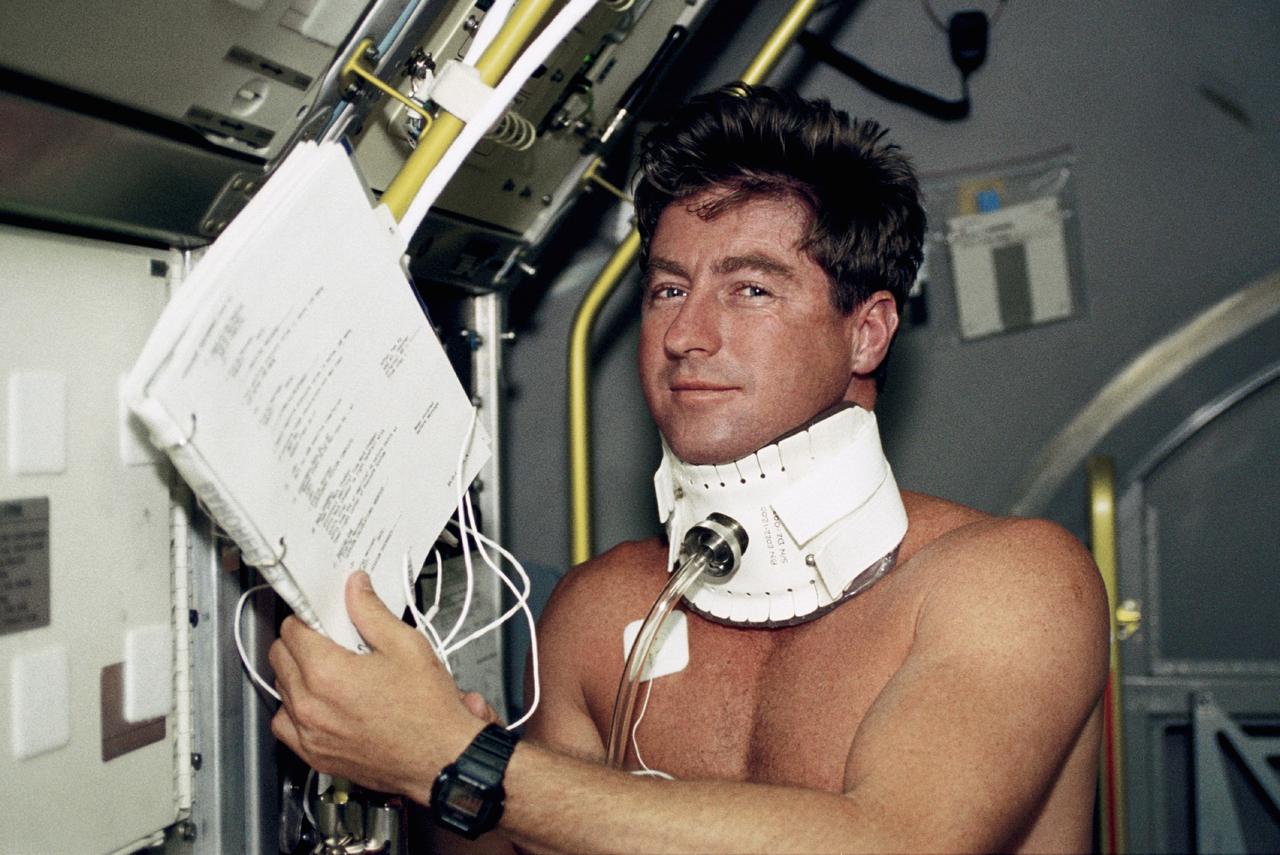
STS055-233-019 (26 April-6 May 1993) --- Terence T. (Tom) Henricks, STS-55 pilot, wears a special collar for a space adaptation experiment in the science module onboard the Earth-orbiting Space Shuttle Columbia. The Baroreflex (BA) experiment is designed to investigate the theory that light-headedness and a reduction in blood pressures upon standing after landing may arise because the normal reflex system regulating blood pressure behaves differently after having adapted to a microgravity environment. These space-based measurements of the baroreflex will be compared to ground measurements to determine if microgravity affects the reflex.
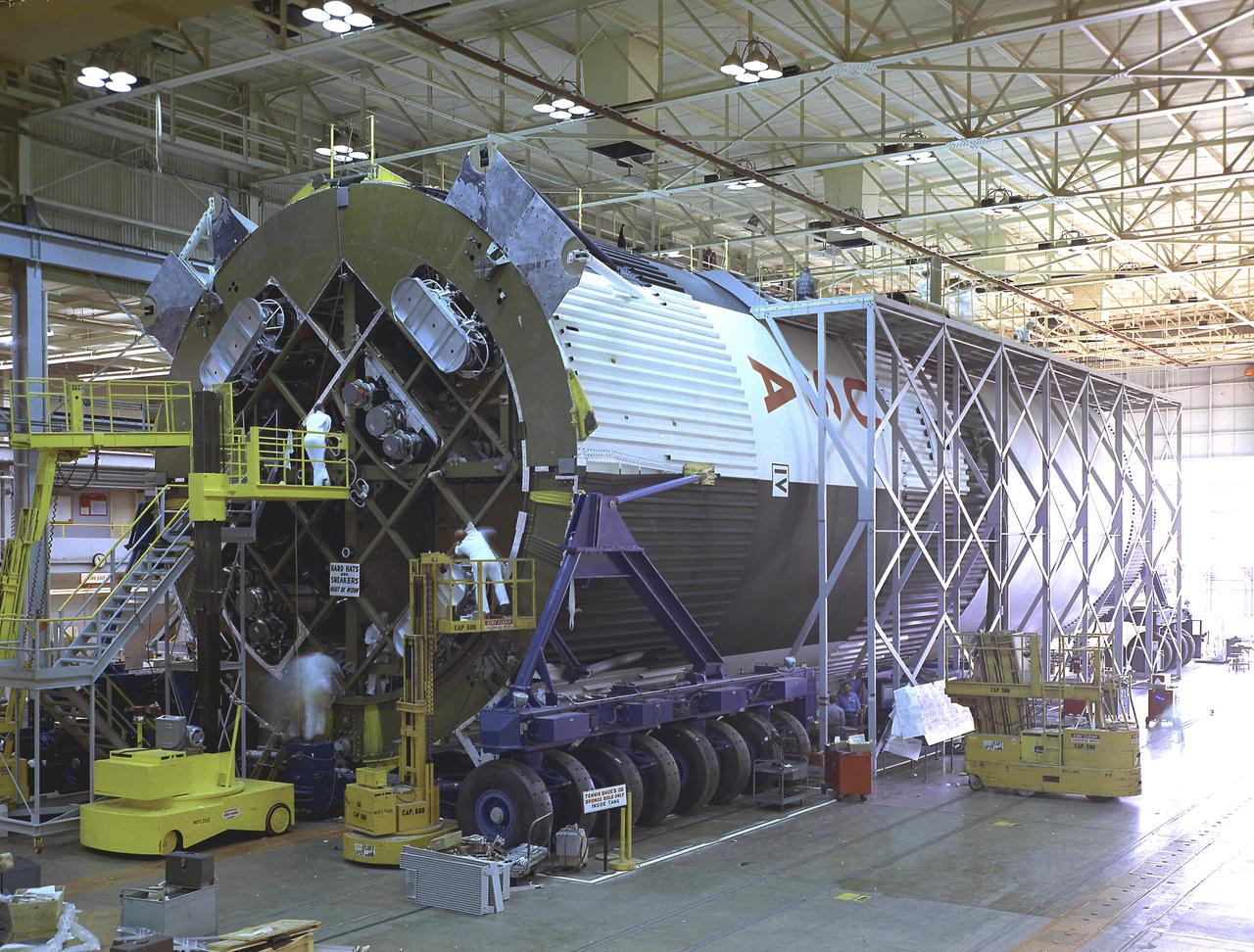
Pictured is the Saturn V S-IC-T stage (static testing stage) being assembled in the horizontal assembly station at the Marshall Space Flight Center (MSFC), building 4705. This stage underwent numerous static firings at the newly-built S-IC Static Test Stand at the MSFC west test area. The S-IC (first) stage used five F-1 engines that produced a total thrust of 7,500,000 pounds as each engine produced 1,500,000 pounds of thrust. The S-IC stage lifted the Saturn V vehicle and Apollo spacecraft from the launch pad.
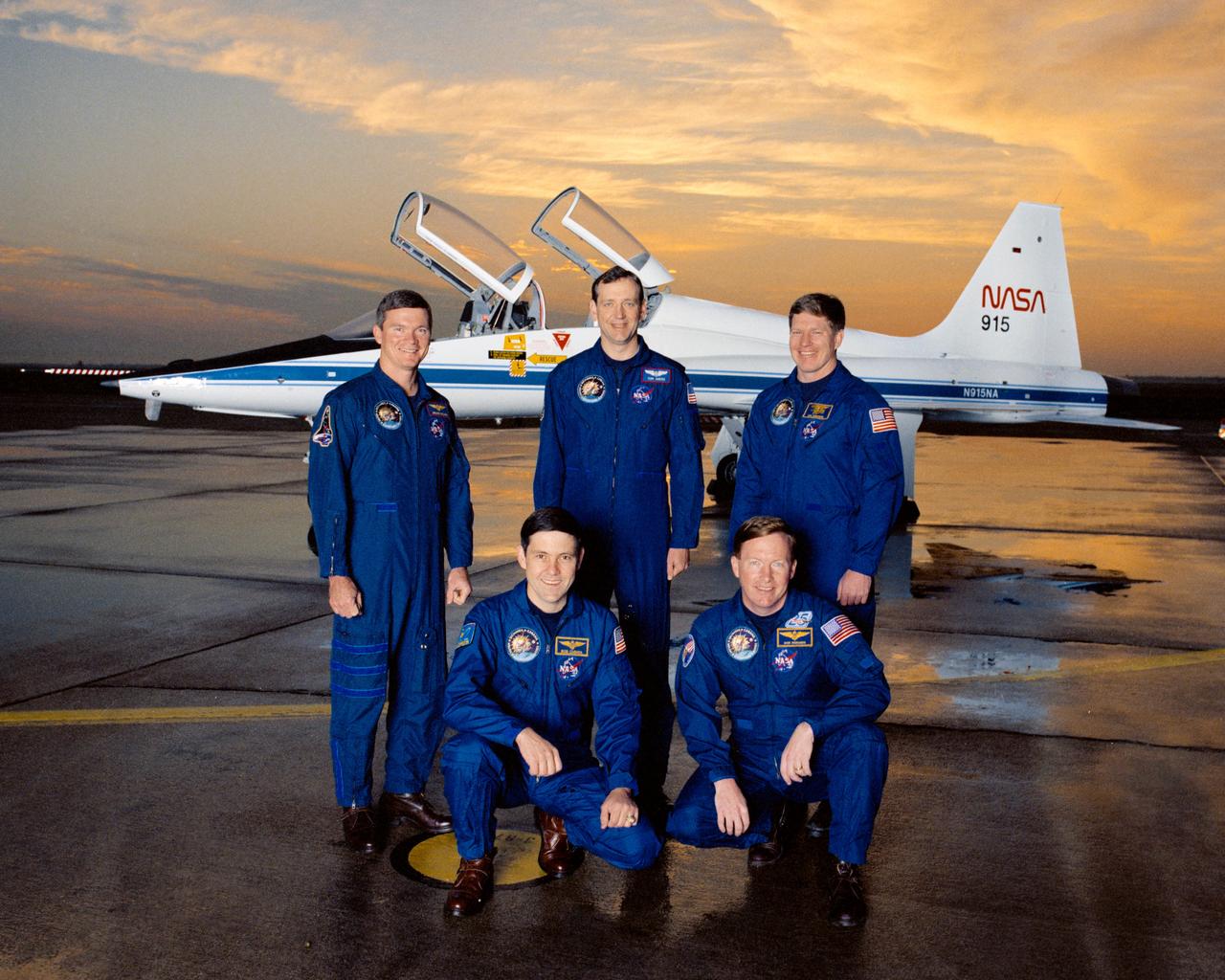
STS041-S-002 (7 May 1990) --- These five astronauts have been assigned to fly the STS-41 mission for the National Aeronautics and Space Administration (NASA). Pictured near the flight line at Ellington Field prior to an early morning flight in NASA T-38s are (kneeling, from the left) Robert D. Cabana, pilot; and Richard N. Richards, mission commander; and (standing, from left) Bruce E. Melnick, Thomas D. Akers and William M. Shepherd, all mission specialists. Primary payload for the Space Shuttle Discovery on the STS 41 mission is Ulysses.
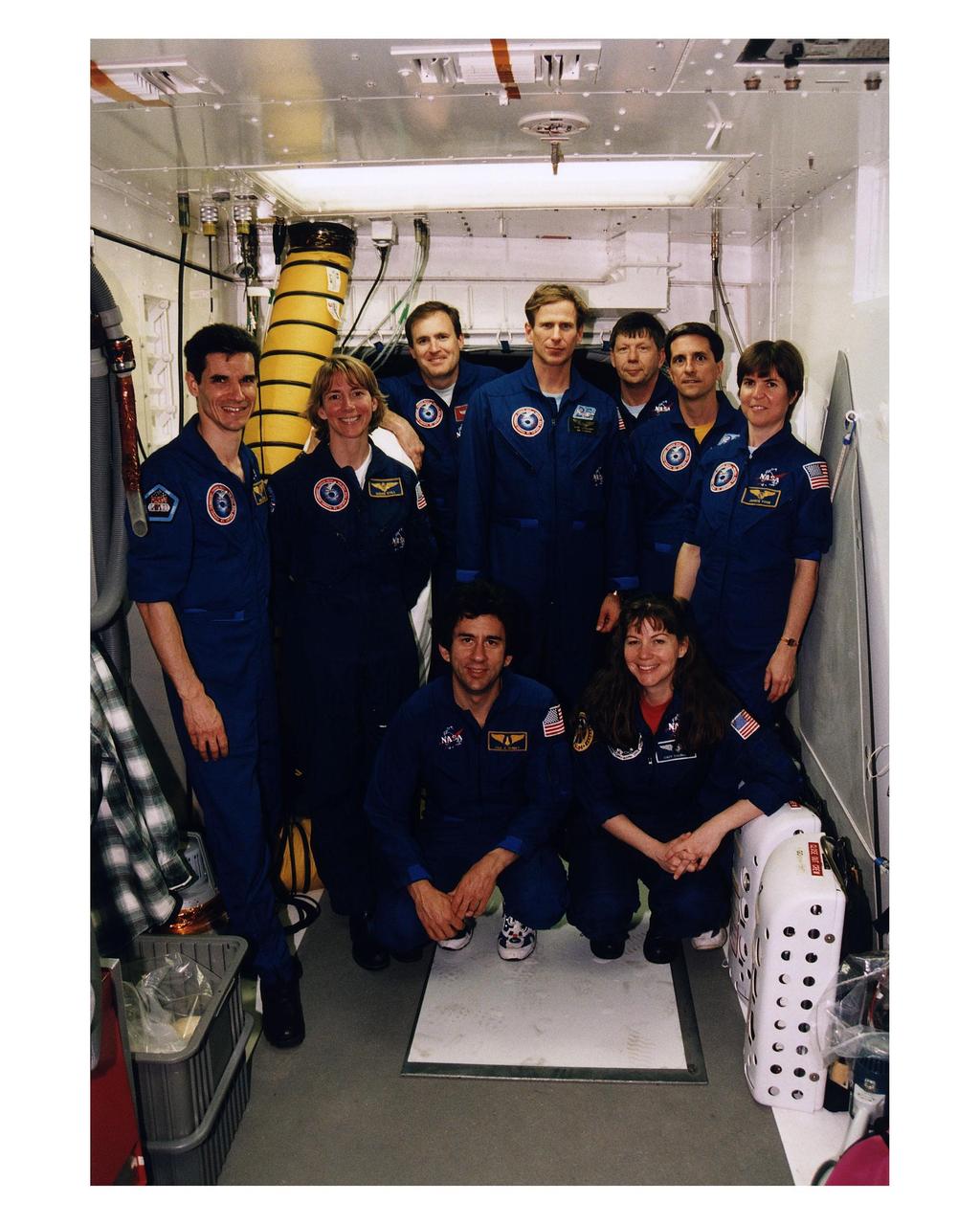
The STS-83 crew poses in the White Room at Launch Complex 39A during the crew's <a href="http://www-pao.ksc.nasa.gov/kscpao/release/1997/40-97.htm">Terminal Countdown Demonstration Test (TCDT).</a> From left to right, standing, they are Payload Specialist Gregory T. Linteris, Pilot Susan L. Still, Mission Commander James D. Halsell, Mission Specialist Michael L. Gernhardt, Payload Specialist Roger K. Crouch, and Mission Specialists Donald Thomas and Janice E. Voss. Cady Coleman, the backup Mission Specialist for Donald Thomas, is kneeling on the right
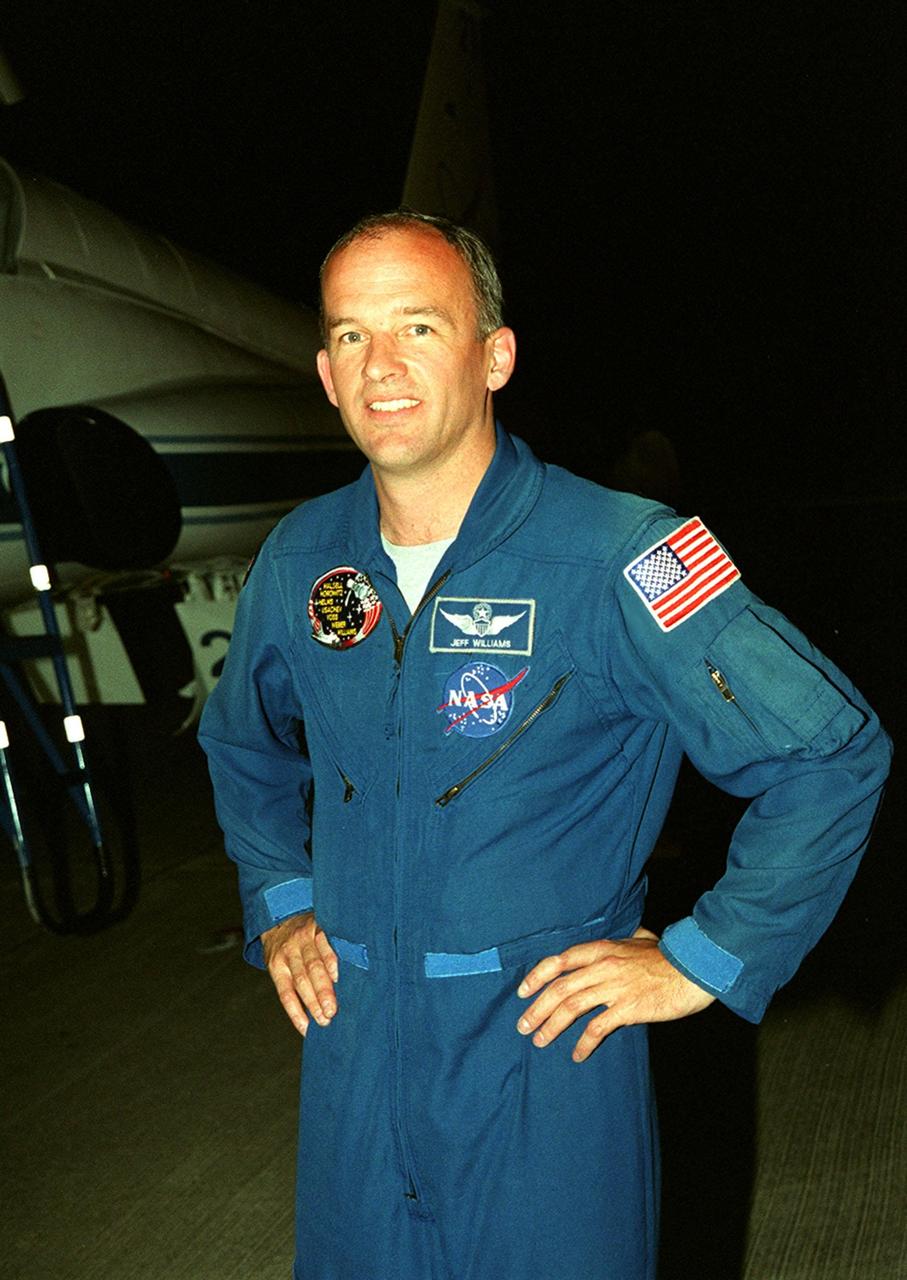
STS-101 Mission Specialist Jeffrey N. Williams stands ready to begin preparations for the launch on May 18 after arriving at KSC's Shuttle Landing Facility aboard a T-38 jet aircraft. The mission will take the crew of seven to the International Space Station, delivering logistics and supplies, plus preparing the Station for the arrival of the Zvezda Service Module, expected to be launched by Russia in July 2000. Also, the crew will conduct one space walk to perform maintenance on the Space Station. This will be the third assembly flight for the Space Station. STS-101 is targeted for liftoff at 6:38 a.m. EDT from Launch Pad 39A
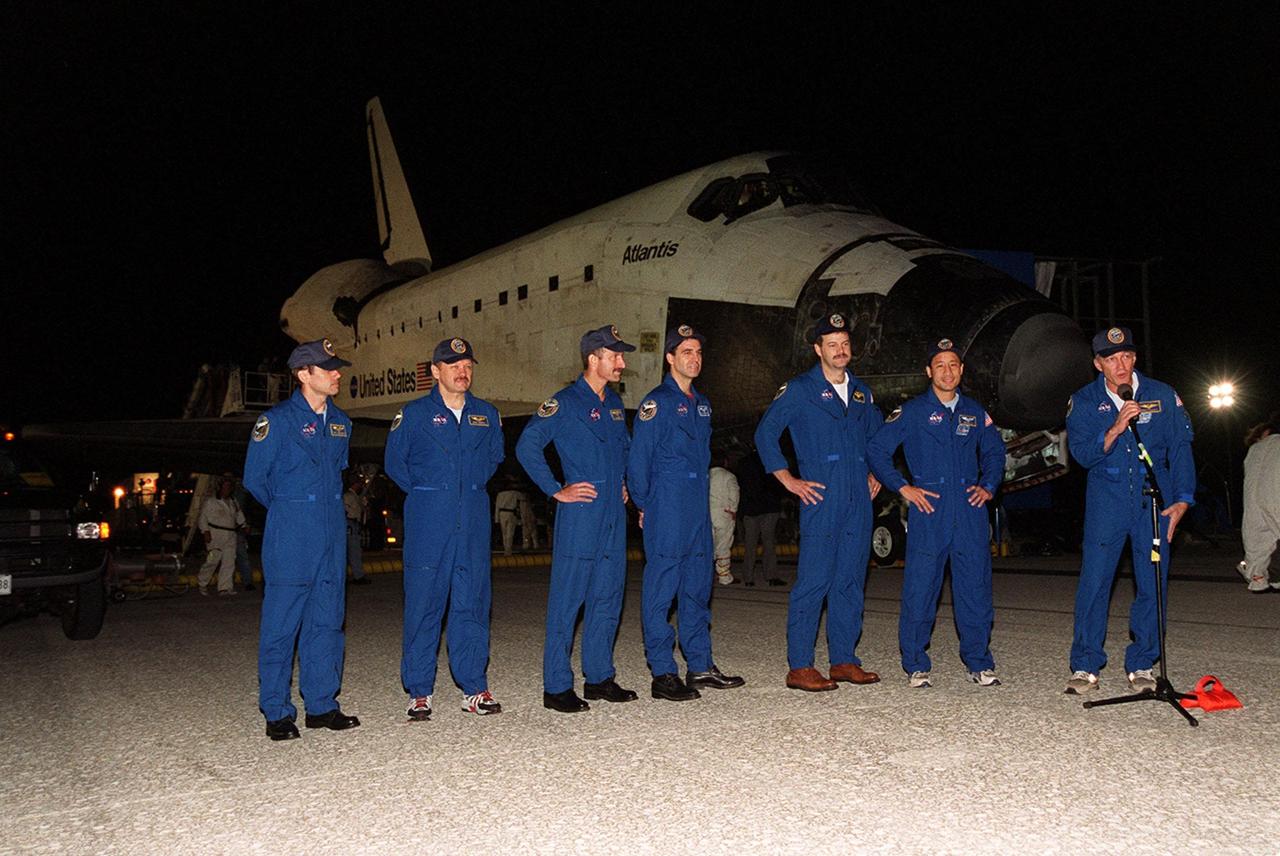
KENNEDY SPACE CENTER, FLA. -- Standing in front of the orbiter Atlantis after a successful landing at the Shuttle Landing Facility, the STS-106 crew greets the media and onlookers. Standing, left to right, are Mission Specialists Yuri I. Malenchenko, Boris V. Morukov, Daniel C. Burbank and Richard A. Mastracchio; Pilot Scott D. Altman; Mission Specialist Edward T. Lu; and Commander Terrence W. Wilcutt at the microphone. Main gear touchdown occurred on-time at 3:56:48 a.m. EDT.; Atlantis and crew traveled 4.9 million miles on the 11-day, 19-hour, 11-minute STS-106 mission. During the mission to the International Space Station, the crew transferred nearly 5,000 pounds of equipment and supplies for use by the first resident crew expected to arrive in November. STs-106 was the 99th flight in the Shuttle program and the 22nd for Atlantis. STS-106 also marked the 15th nighttime landing in Shuttle history and the 23rd consecutive landing at KSC
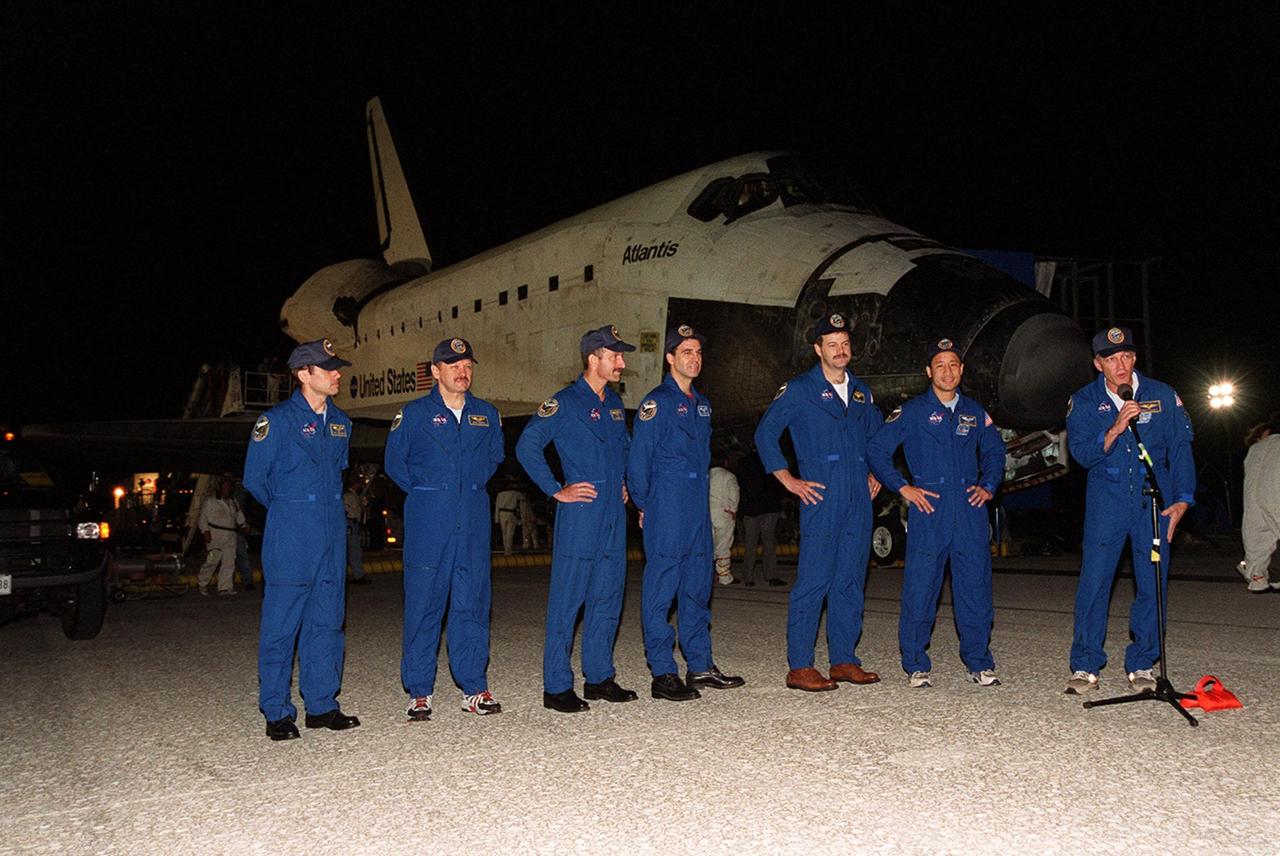
KENNEDY SPACE CENTER, FLA. -- Standing in front of the orbiter Atlantis after a successful landing at the Shuttle Landing Facility, the STS-106 crew greets the media and onlookers. Standing, left to right, are Mission Specialists Yuri I. Malenchenko, Boris V. Morukov, Daniel C. Burbank and Richard A. Mastracchio; Pilot Scott D. Altman; Mission Specialist Edward T. Lu; and Commander Terrence W. Wilcutt at the microphone. Main gear touchdown occurred on-time at 3:56:48 a.m. EDT.; Atlantis and crew traveled 4.9 million miles on the 11-day, 19-hour, 11-minute STS-106 mission. During the mission to the International Space Station, the crew transferred nearly 5,000 pounds of equipment and supplies for use by the first resident crew expected to arrive in November. STs-106 was the 99th flight in the Shuttle program and the 22nd for Atlantis. STS-106 also marked the 15th nighttime landing in Shuttle history and the 23rd consecutive landing at KSC
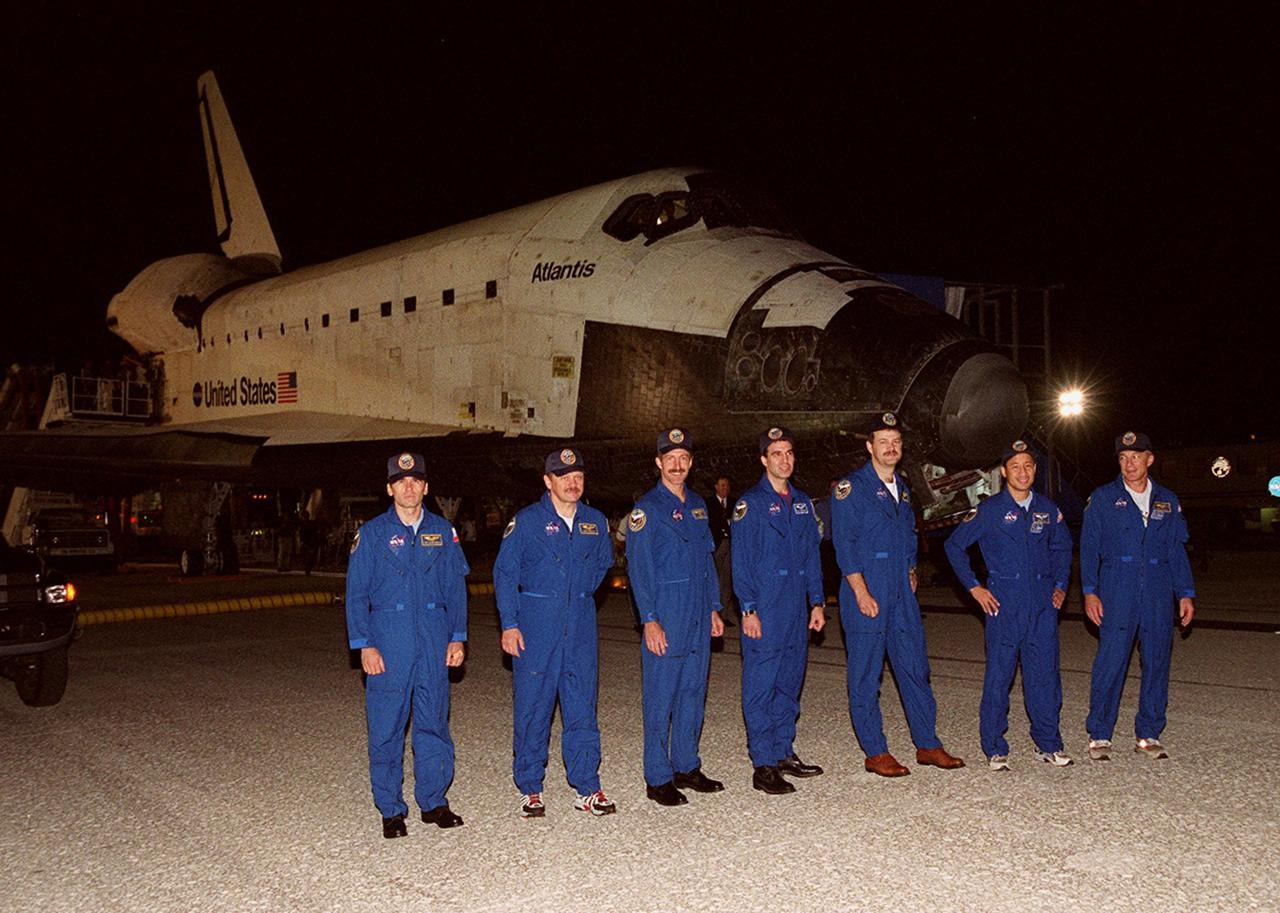
KENNEDY SPACE CENTER, FLA. -- The STS-106 crew poses for a photograph after a successful mission and landing. Standing, left to right, are Mission Specialists Yuri I. Malenchenko, Boris V. Morukov, Daniel C. Burbank and Richard A. Mastracchio; Pilot Scott D. Altman; Mission Specialist Edward T. Lu; and Commander Terrence W. Wilcutt.; Main gear touchdown occurred on-time at 3:56:48 a.m. EDT.; Atlantis and crew traveled 4.9 million miles on the 11-day, 19-hour, 11-minute STS-106 mission. During the mission to the International Space Station, the crew transferred nearly 5,000 pounds of equipment and supplies for use by the first resident crew expected to arrive in November. STS-106 was the 99th flight in the Shuttle program and the 22nd for Atlantis. STS-106 also marked the 15th nighttime landing in Shuttle history and the 23rd consecutive landing at KSC
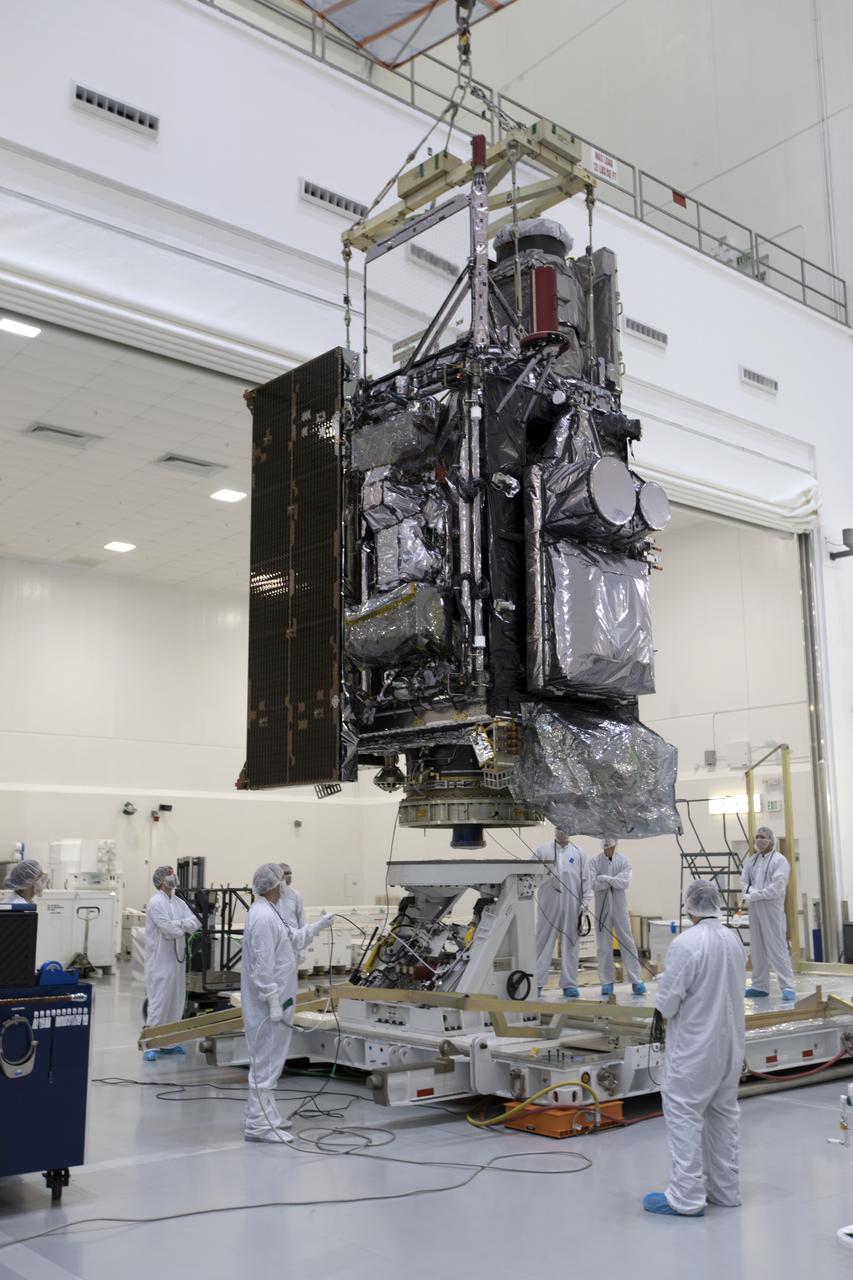
At Astrotech Space Operations in Titusville, Florida, technicians and engineers keep a watchful eye on NOAA's Geostationary Operational Environmental Satellite-S (GOES-S) as it is moved to a work stand. The facility is located near NASA's Kennedy Space Center. GOES-S is the second in a series of four advanced geostationary weather satellites. The GOES-R series - consisting of the GOES-R, GOES-S, GOES-T and GOES-U spacecraft - will significantly improve the detection and observation of environmental phenomena that directly affect public safety, protection of property and the nation's economic health and prosperity. GOES-S is slated to launch March 1, 2018 aboard a United Launch Alliance Atlas V rocket from Cape Canaveral Air Force Station in Florida.
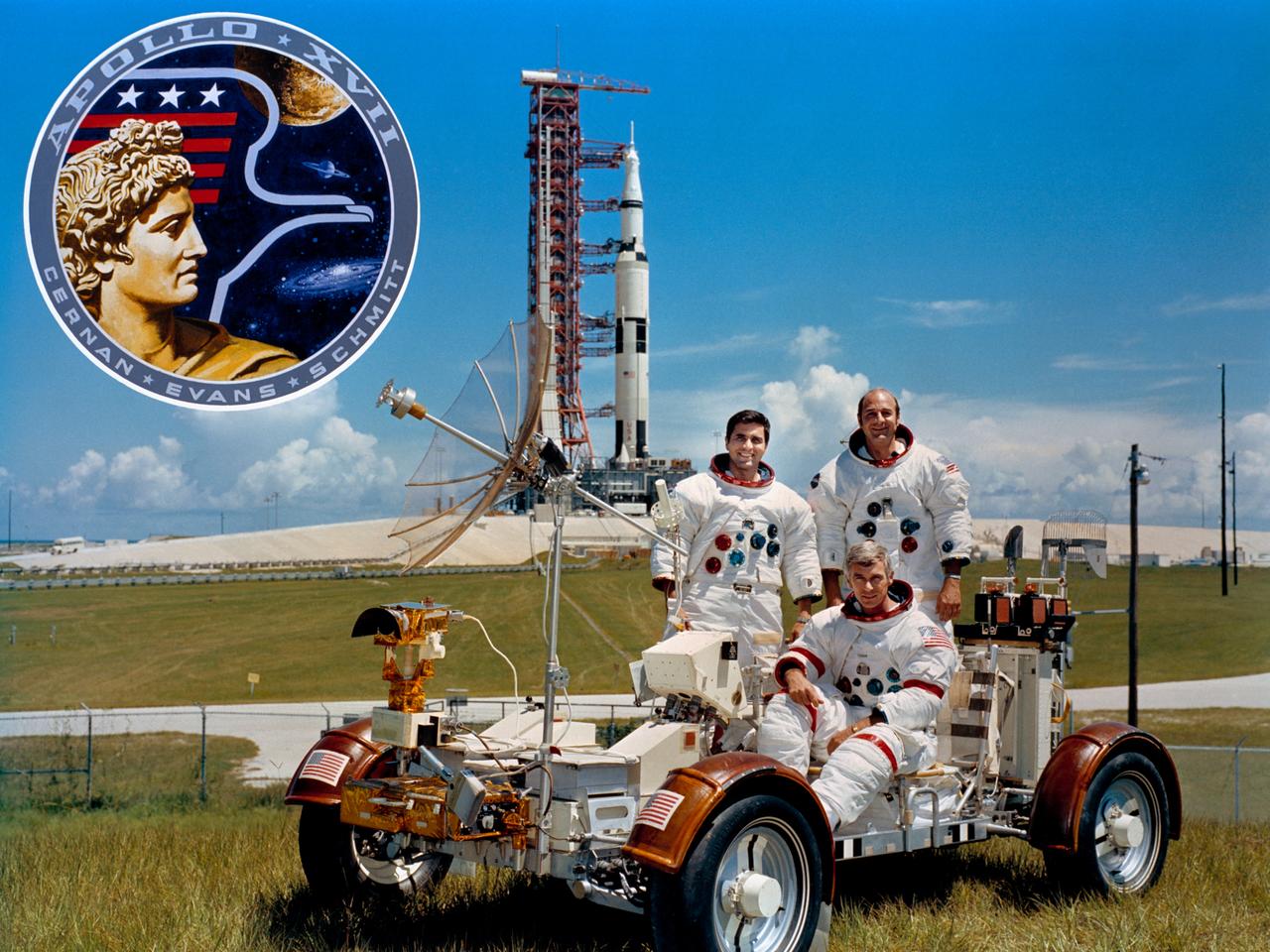
S72-50438 (September 1972) --- These three astronauts are the prime crew members of the Apollo 17 lunar landing mission. They are Eugene A. Cernan (seated), commander; Ronald E. Evans (standing on right), command module pilot; and Harrison H. Schmitt, lunar module pilot. They are photographed with a Lunar Roving Vehicle (LRV) trainer. Cernan and Schmitt will use an LRV during their exploration of the Taurus-Littrow landing site. The Apollo 17 Saturn V space vehicle is in the background. This picture was taken at Pad A, Launch Complex 39, Kennedy Space Center (KSC), Florida. The Apollo 17 insignia is in the photo insert at upper left. The insignia, designed by artist Robert T. McCall in collaboration with the crewmen, is dominated by the image of Apollo, the Greek sun god.
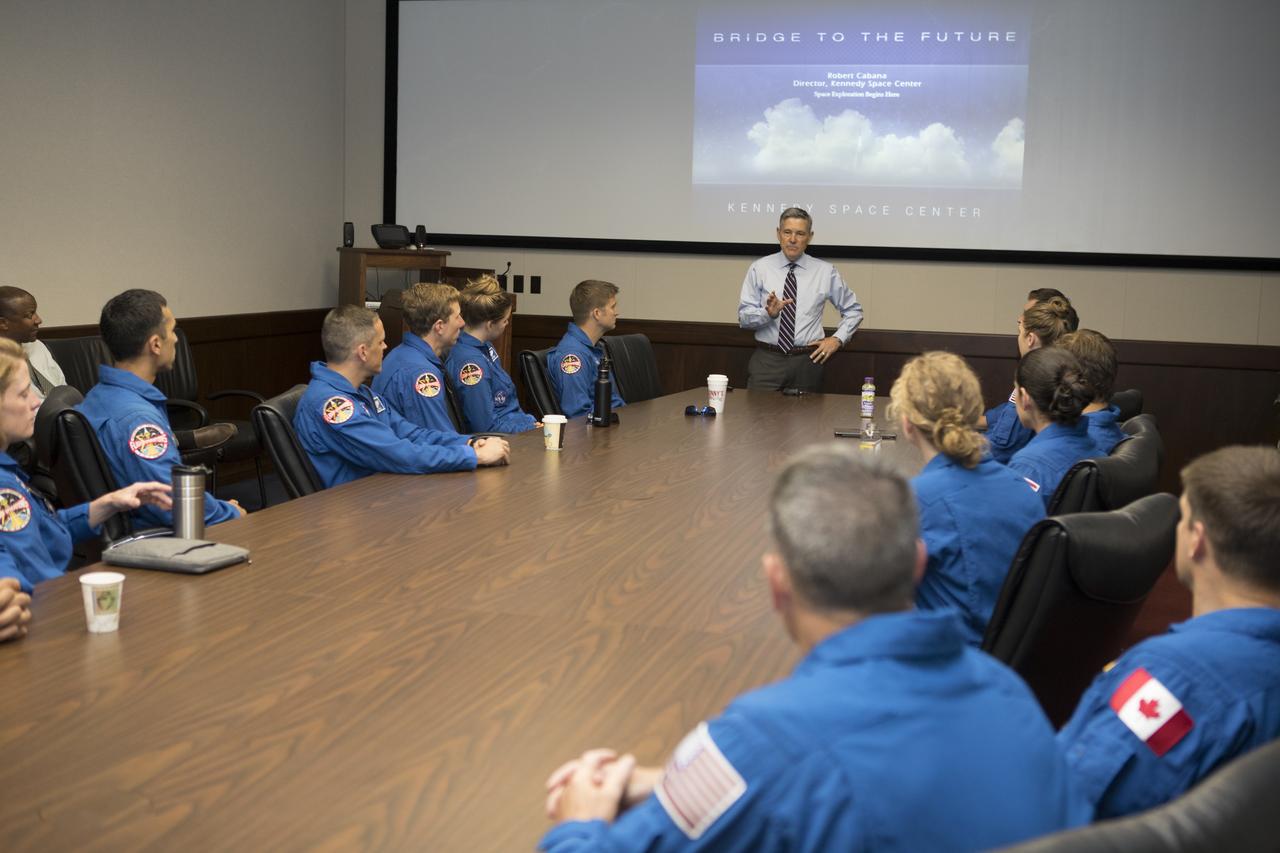
The 2017 class of astronaut candidates listen to NASA Kennedy Space Center Director Bob Cabana, standing, during their tour and familiarization with the center. The candidates toured center facilities, including the Vehicle Assembly Building, Launch Control Center, Neil Armstrong Operations and Checkout Building, Launch Pad 39B, and the Space Station Processing Facility. They also toured Boeing's Commercial Crew and Cargo Facility, United Launch Alliance's Space Launch Complex 41 at Cape Canaveral Air Force Station, and SpaceX's Launch Pad 39A at Kennedy. The candidates will spend about two years getting to know the space station systems and learning how to spacewalk, speak Russian, control the International Space Station's robotic arm and fly T-38s, before they're eligible to be assigned to a mission.
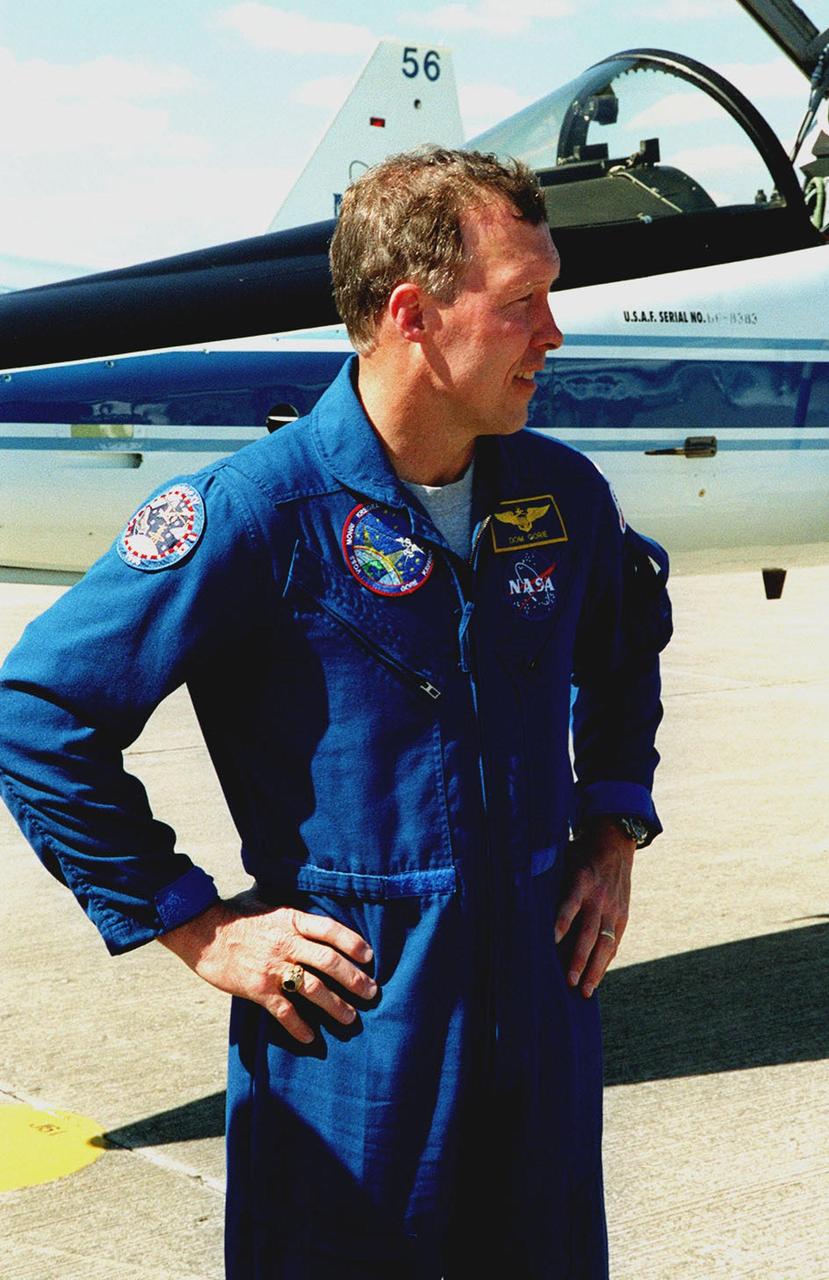
After landing at the Shuttle Landing Facility aboard a T-38 jet aircraft, STS-99 Pilot Dominic Gorie stands ready to prepare for the second launch attempt of Endeavour Feb. 11 at 12:30 p.m. EST from Launch Pad 39A. The earlier launch scheduled for Jan. 31 was scrubbed due to poor weather and a faulty Enhanced Master Events Controller in the orbiter's aft compartment. Over the next few days, the crew will review mission procedures, conduct test flights in the Shuttle Training Aircraft and undergo routine preflight medical exams. STS-99 is the Shuttle Radar Topography Mission, which will produce unrivaled 3-D images of the Earth's surface. The result of the Shuttle Radar Topography Mission could be close to 1 trillion measurements of the Earth's topography. Landing is expected at KSC on Feb. 22 at 4:36 p.m. EST
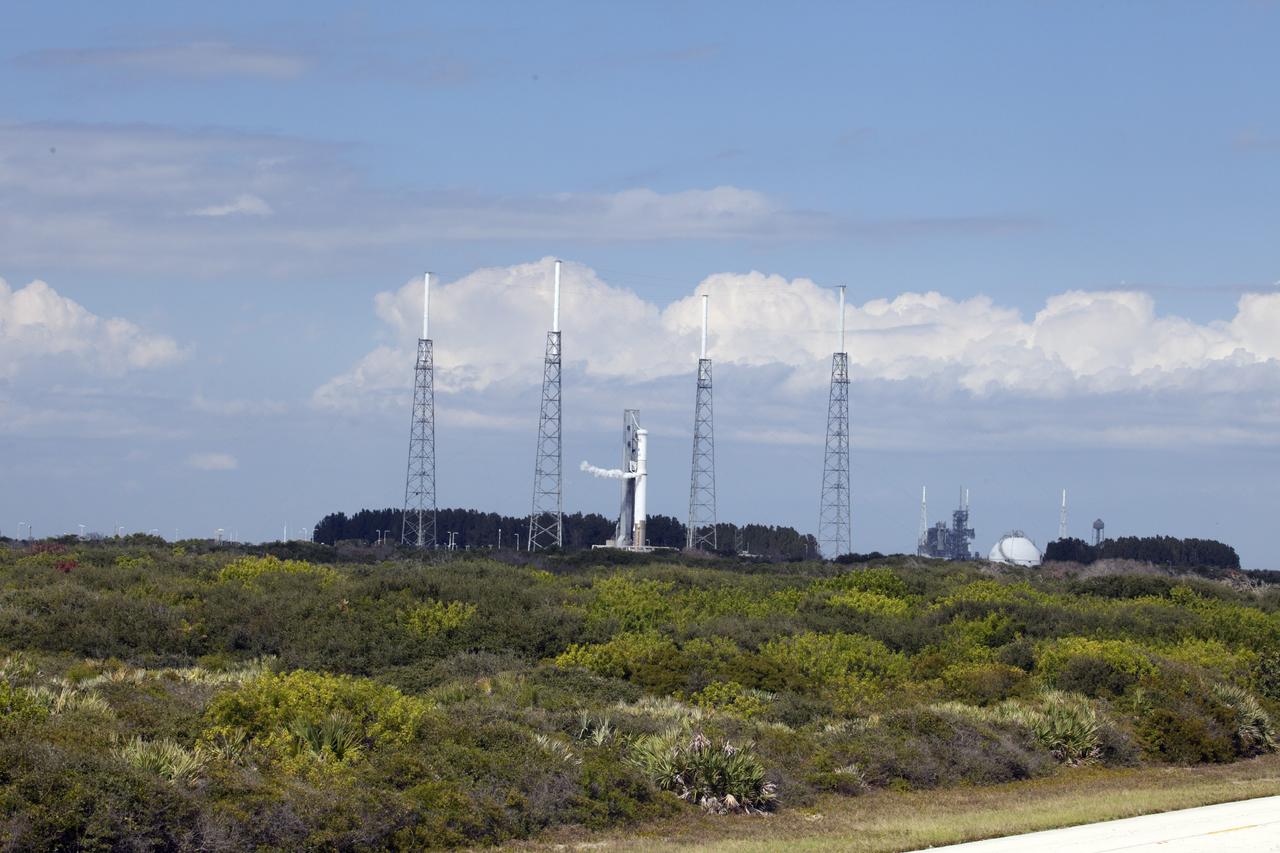
CAPE CANAVERAL, Fla. – The United Launch Alliance Atlas V rocket stands at Launch Complex 41 on Cape Canaveral Air Force Station in Florida during a "wet dress rehearsal." The test called for the launch vehicle to be fully loaded with propellants and put through a countdown procedure, ending just before the T-0 mark. The spacecraft is undergoing prelaunch processing activities in the Kennedy Space Center's Payload Hazardous Servicing Facility and was not atop the rocket for this rehearsal. The Atlas V rocket is slated to launch the Mars Atmosphere and Volatile Evolution, or MAVEN, spacecraft on a journey to the Red Planet on Nov. 18. The spacecraft is undergoing prelaunch processing activities in the Kennedy Space Center's Payload Hazardous Servicing Facility and was not atop the rocket for this rehearsal. Positioned in an orbit above the Red Planet, MAVEN will study the upper atmosphere of Mars in unprecedented detail. For more information, visit: http://www.nasa.gov/mission_pages/maven/main/index.html Photo credit: NASA/Daniel Cooper
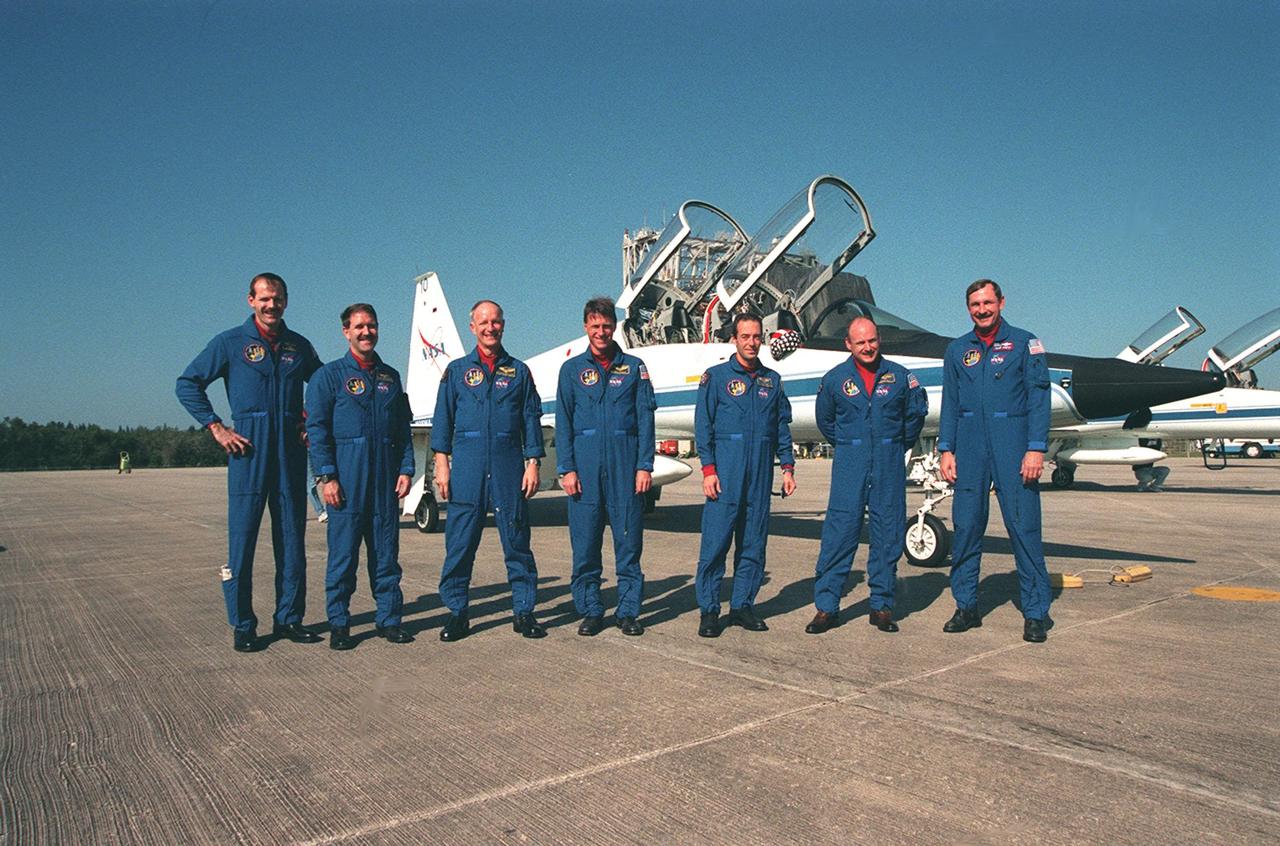
The STS-103 crew poses for photographers after landing at at Kennedy Space Center's Shuttle Landing Facility to begin Terminal Countdown Demonstration Test (TCDT) activities. Standing (left to right) in front of the T-38 jets that brought them are Mission Specialists Steven L. Smith, John M. Grunsfeld (Ph.D.), Claude Nicollier of Switzerland, with the European Space Agency, C. Michael Foale (Ph.D.), Jean-François Clervoy of France, also with the European Space Agency, Pilot Scott J. Kelly, and Commander Curtis L. Brown Jr. The TCDT provides the crew with emergency egress training, opportunities to inspect their mission payloads in the orbiter's payload bay, and simulated countdown exercises. The STS-103 mission, to service the Hubble Space Telescope, is targeted for launch Dec. 6 at 2:37 a.m. EST aboard Space Shuttle Discovery
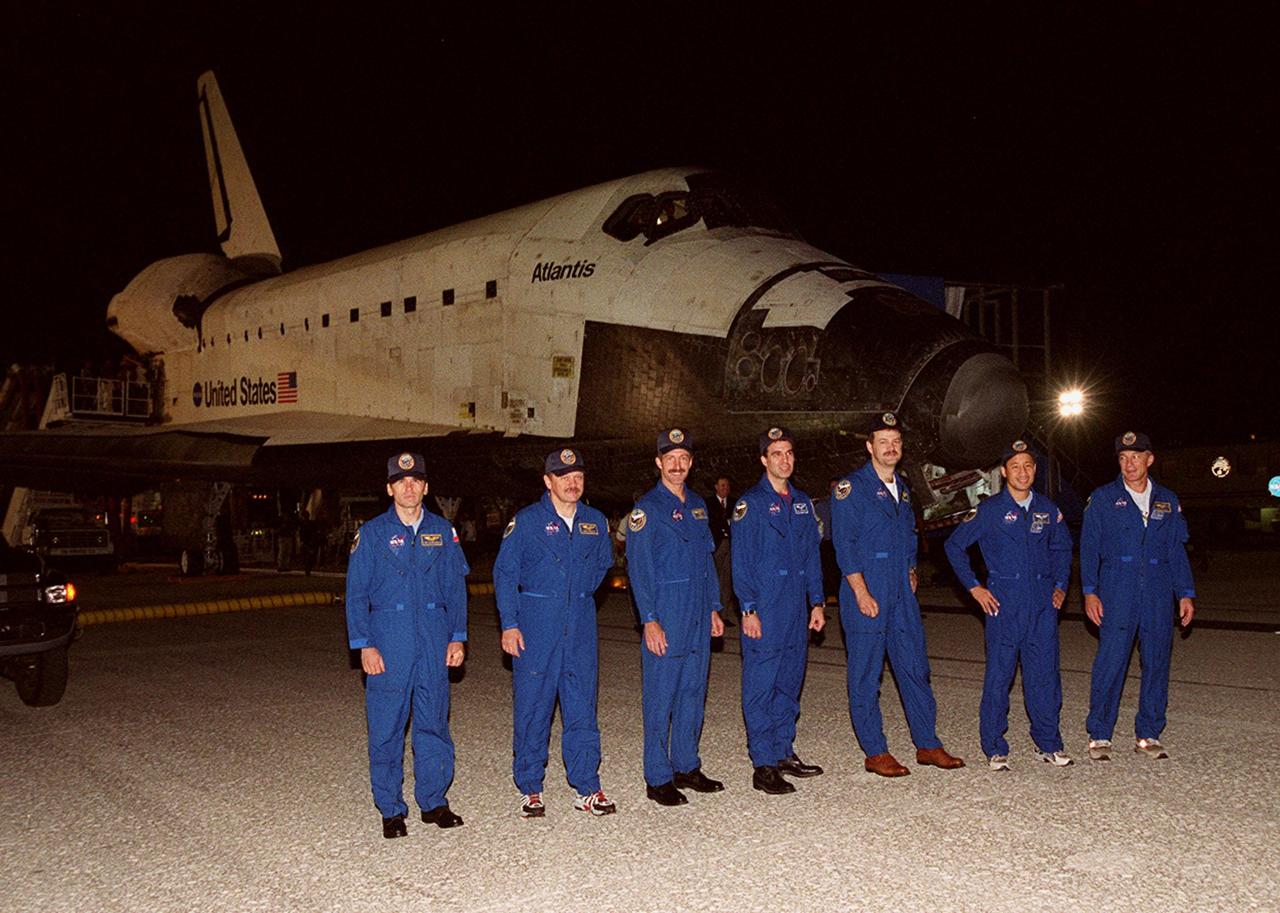
KENNEDY SPACE CENTER, FLA. -- The STS-106 crew poses for a photograph after a successful mission and landing. Standing, left to right, are Mission Specialists Yuri I. Malenchenko, Boris V. Morukov, Daniel C. Burbank and Richard A. Mastracchio; Pilot Scott D. Altman; Mission Specialist Edward T. Lu; and Commander Terrence W. Wilcutt.; Main gear touchdown occurred on-time at 3:56:48 a.m. EDT.; Atlantis and crew traveled 4.9 million miles on the 11-day, 19-hour, 11-minute STS-106 mission. During the mission to the International Space Station, the crew transferred nearly 5,000 pounds of equipment and supplies for use by the first resident crew expected to arrive in November. STS-106 was the 99th flight in the Shuttle program and the 22nd for Atlantis. STS-106 also marked the 15th nighttime landing in Shuttle history and the 23rd consecutive landing at KSC
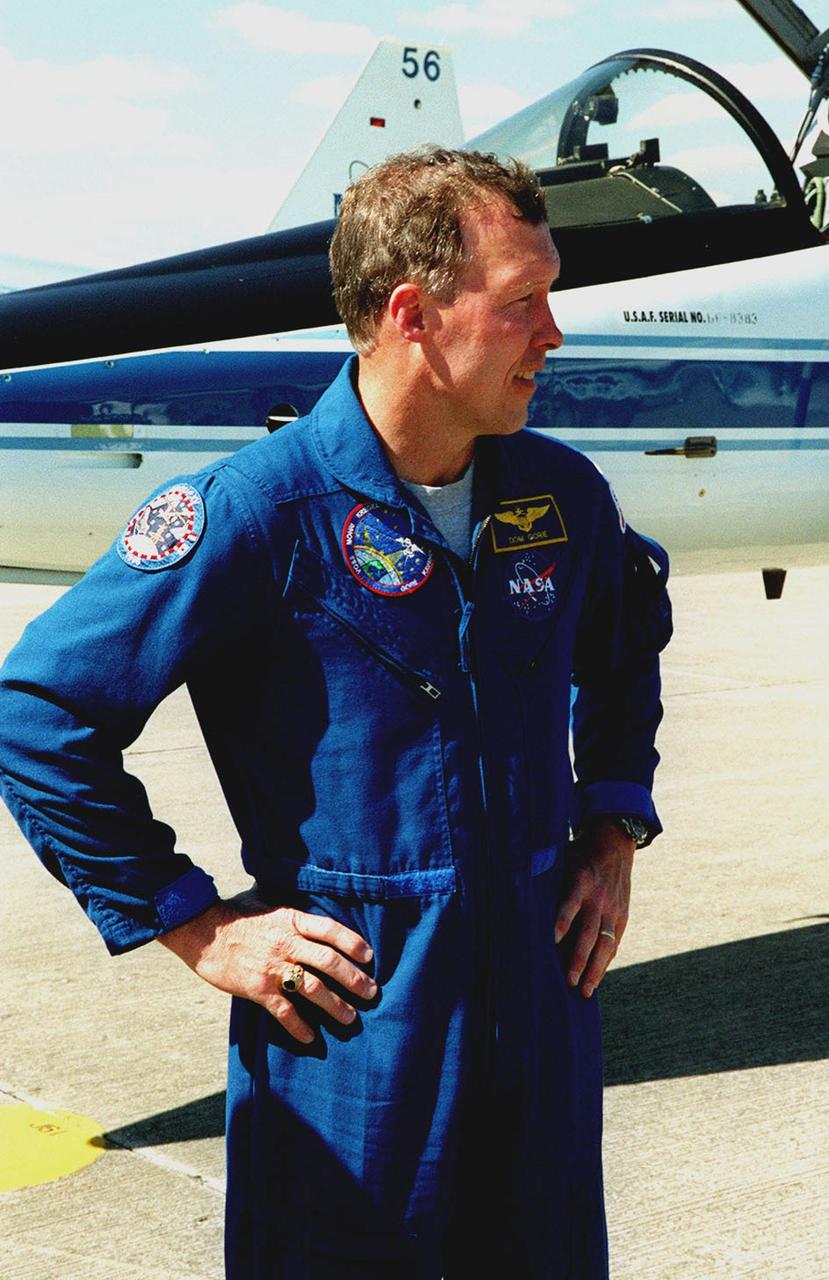
After landing at the Shuttle Landing Facility aboard a T-38 jet aircraft, STS-99 Pilot Dominic Gorie stands ready to prepare for the second launch attempt of Endeavour Feb. 11 at 12:30 p.m. EST from Launch Pad 39A. The earlier launch scheduled for Jan. 31 was scrubbed due to poor weather and a faulty Enhanced Master Events Controller in the orbiter's aft compartment. Over the next few days, the crew will review mission procedures, conduct test flights in the Shuttle Training Aircraft and undergo routine preflight medical exams. STS-99 is the Shuttle Radar Topography Mission, which will produce unrivaled 3-D images of the Earth's surface. The result of the Shuttle Radar Topography Mission could be close to 1 trillion measurements of the Earth's topography. Landing is expected at KSC on Feb. 22 at 4:36 p.m. EST
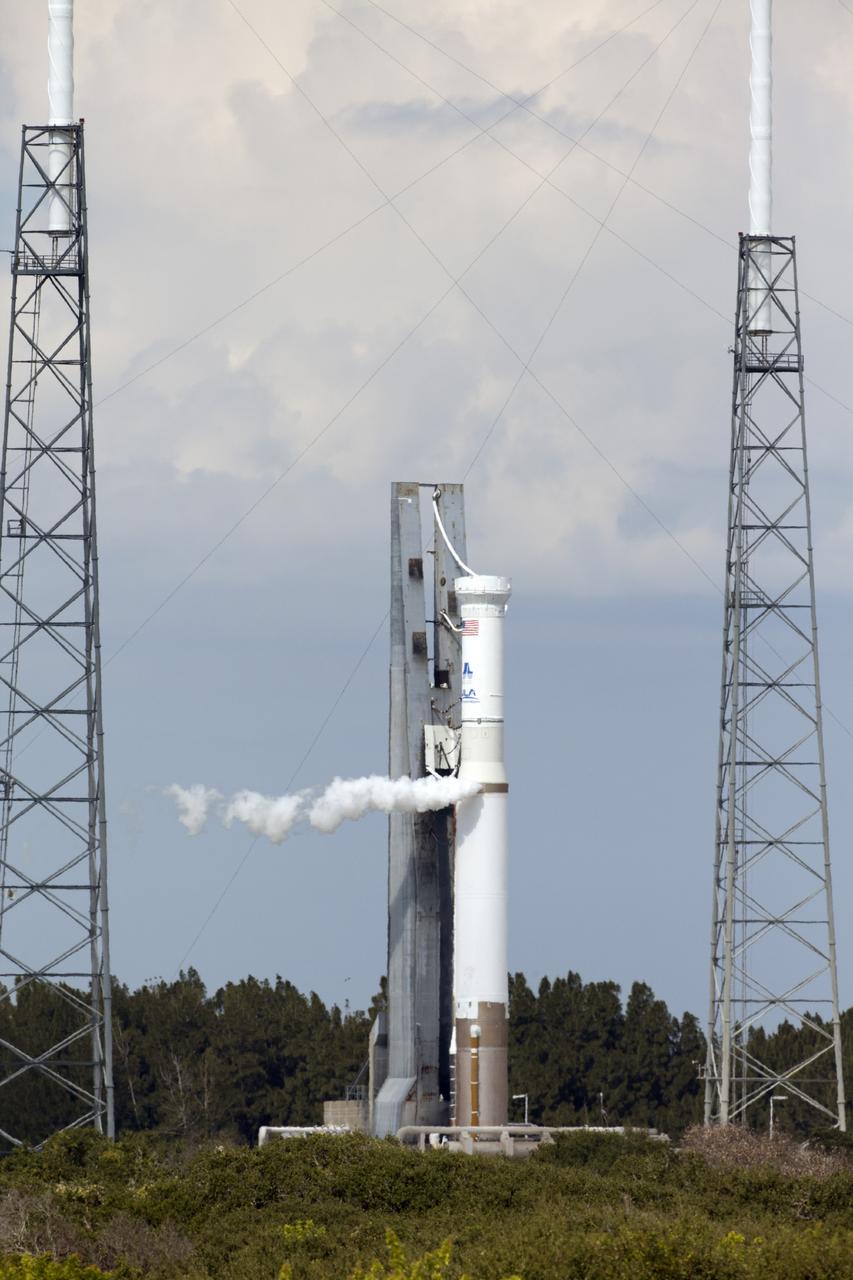
CAPE CANAVERAL, Fla. – The United Launch Alliance Atlas V rocket stands at Launch Complex 41 on Cape Canaveral Air Force Station in Florida during a "wet dress rehearsal." The test called for the launch vehicle to be fully loaded with propellants and put through a countdown procedure, ending just before the T-0 mark. The spacecraft is undergoing prelaunch processing activities in the Kennedy Space Center's Payload Hazardous Servicing Facility and was not atop the rocket for this rehearsal. The Atlas V rocket is slated to launch the Mars Atmosphere and Volatile Evolution, or MAVEN, spacecraft on a journey to the Red Planet on Nov. 18. The spacecraft is undergoing prelaunch processing activities in the Kennedy Space Center's Payload Hazardous Servicing Facility and was not atop the rocket for this rehearsal. Positioned in an orbit above the Red Planet, MAVEN will study the upper atmosphere of Mars in unprecedented detail. For more information, visit: http://www.nasa.gov/mission_pages/maven/main/index.html Photo credit: NASA/Daniel Cooper
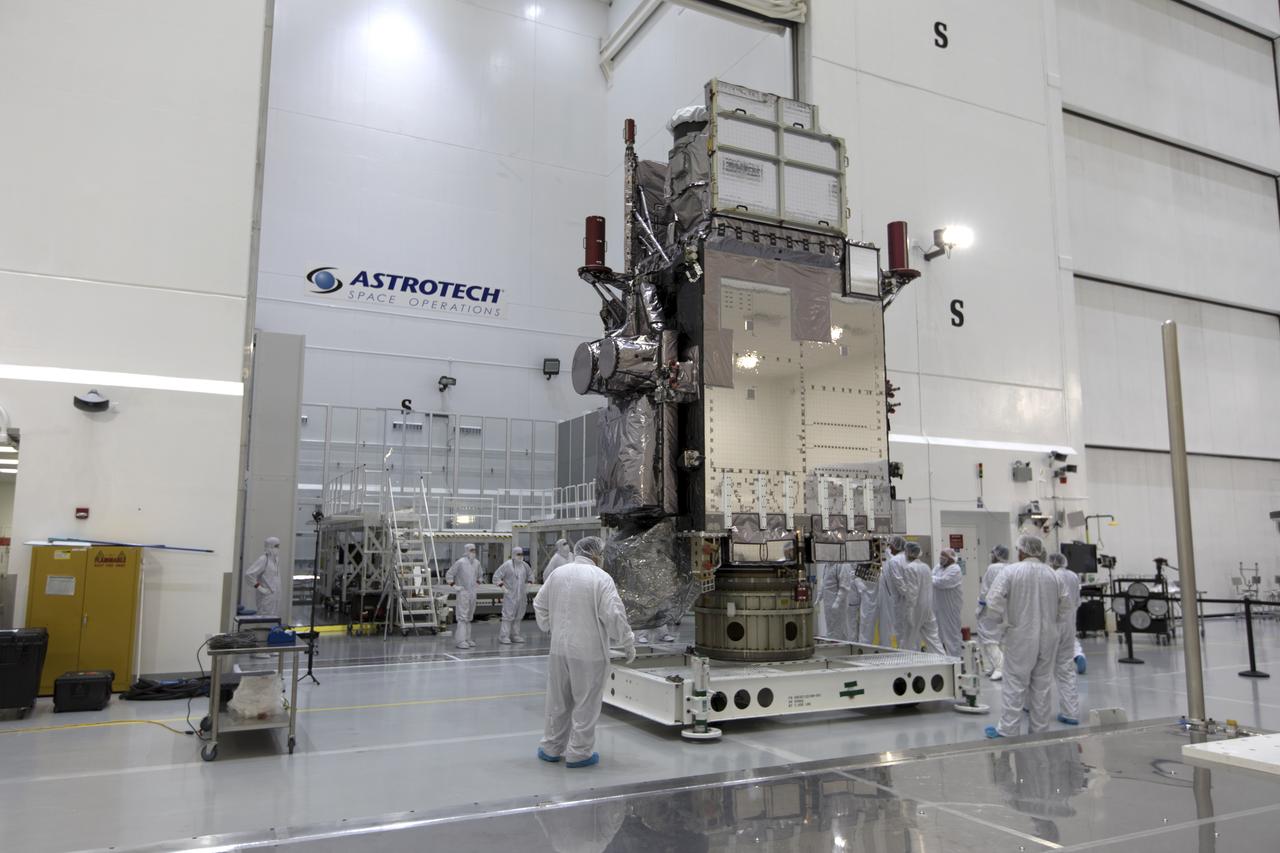
At Astrotech Space Operations in Titusville, Florida, technicians and engineers inspect NOAA's Geostationary Operational Environmental Satellite-S (GOES-S) after it was positioned on a work stand. The facility is located near NASA's Kennedy Space Center. GOES-S is the second in a series of four advanced geostationary weather satellites. The GOES-R series - consisting of the GOES-R, GOES-S, GOES-T and GOES-U spacecraft - will significantly improve the detection and observation of environmental phenomena that directly affect public safety, protection of property and the nation's economic health and prosperity. GOES-S is slated to launch March 1, 2018 aboard a United Launch Alliance Atlas V rocket from Cape Canaveral Air Force Station in Florida.
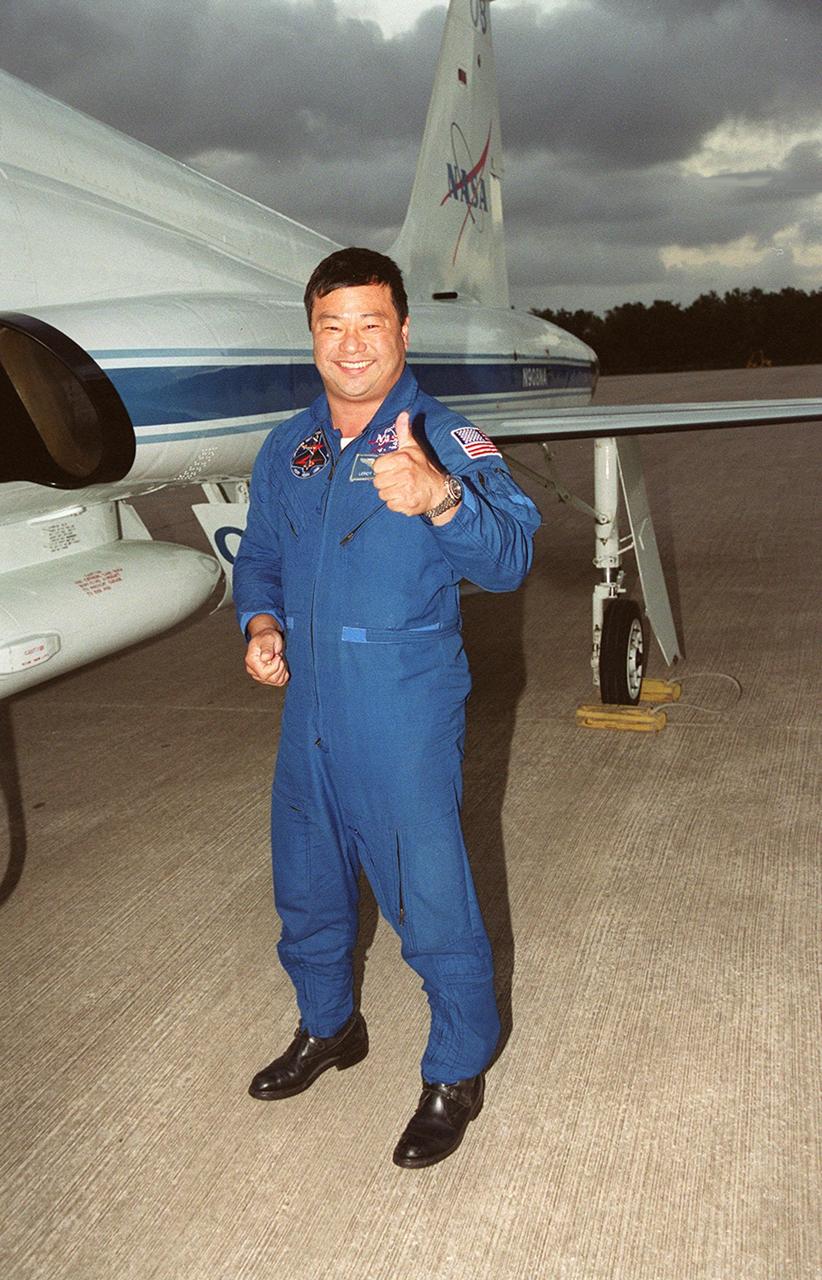
KENNEDY SPACE CENTER, FLA. -- STS-92 Mission Specialist Leroy Chiao gives a thumbs-up to his arrival at KSC for launch of Space Shuttle Discovery on Oct. 5. Chiao is standing next to the T-38 jet aircraft that brought him from Houston. He and other crew members Commander Brian Duffy, Pilot Pamela Ann Melroy and Mission Specialists Koichi Wakata of Japan, Peter J.K. “Jeff” Wisoff, Michael E. Lopez-Alegria and William S. McArthur Jr. expressed their eagerness to launch to a waiting group of media at the Shuttle Landing Facility. The mission is the fifth flight for the construction of the International Space Station. The payload includes the Integrated Truss Structure Z-1 and the third Pressurized Mating Adapter. During the 11-day mission, four extravehicular activities (EVAs), or space walks, are planned
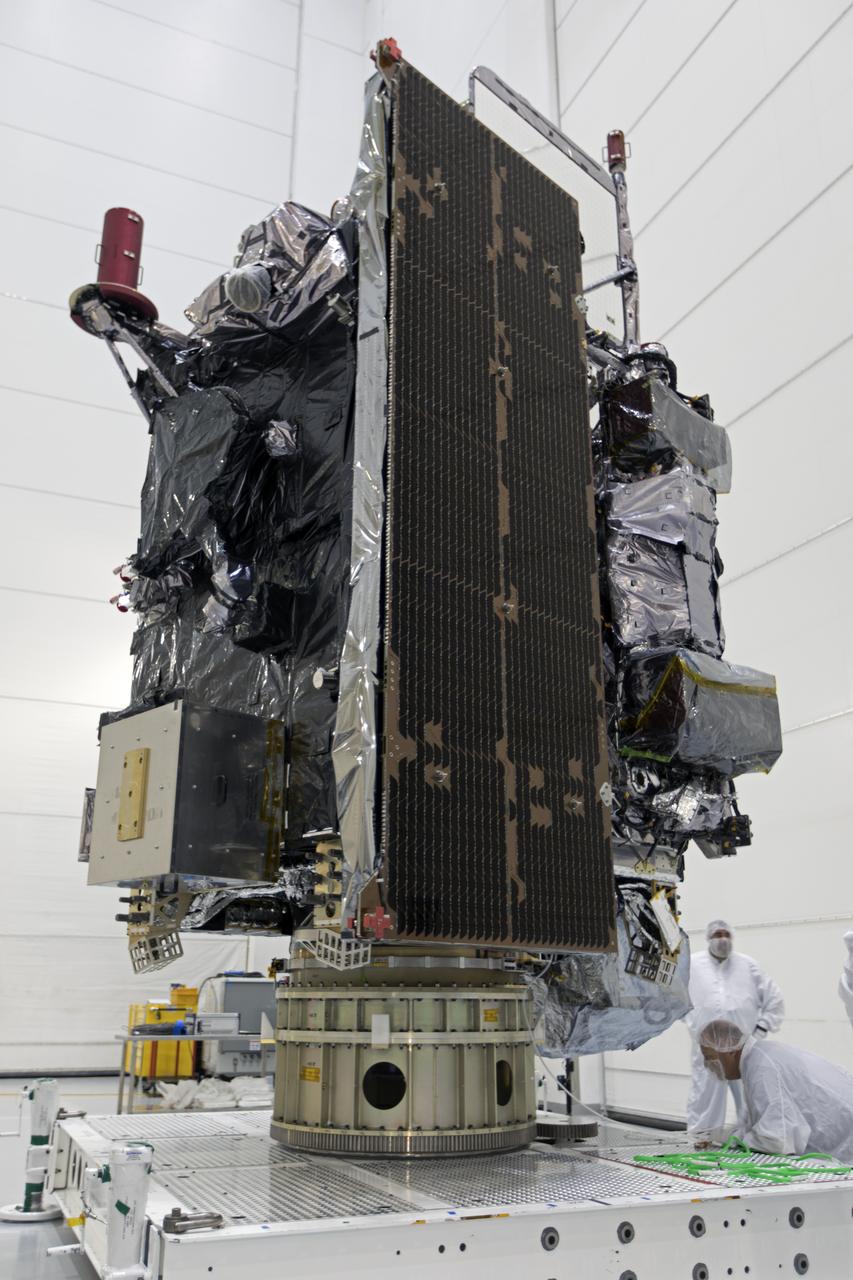
At Astrotech Space Operations in Titusville, Florida, technicians and engineers inspect NOAA's Geostationary Operational Environmental Satellite-S (GOES-S) after it was positioned on a work stand. The facility is located near NASA's Kennedy Space Center. GOES-S is the second in a series of four advanced geostationary weather satellites. The GOES-R series - consisting of the GOES-R, GOES-S, GOES-T and GOES-U spacecraft - will significantly improve the detection and observation of environmental phenomena that directly affect public safety, protection of property and the nation's economic health and prosperity. GOES-S is slated to launch March 1, 2018 aboard a United Launch Alliance Atlas V rocket from Cape Canaveral Air Force Station in Florida.
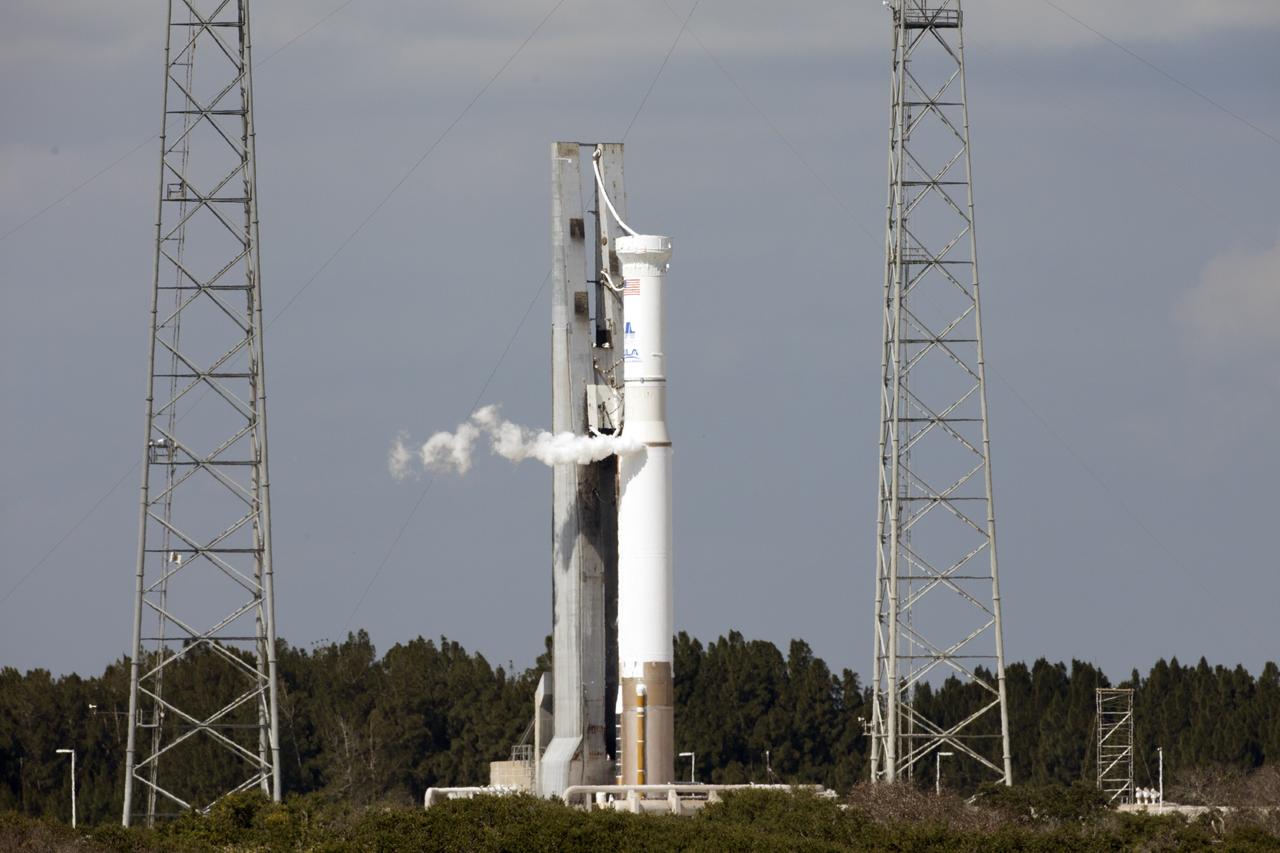
CAPE CANAVERAL, Fla. – The United Launch Alliance Atlas V rocket stands at Launch Complex 41 on Cape Canaveral Air Force Station in Florida during a "wet dress rehearsal." The test called for the launch vehicle to be fully loaded with propellants and put through a countdown procedure, ending just before the T-0 mark. The spacecraft is undergoing prelaunch processing activities in the Kennedy Space Center's Payload Hazardous Servicing Facility and was not atop the rocket for this rehearsal. The Atlas V rocket is slated to launch the Mars Atmosphere and Volatile Evolution, or MAVEN, spacecraft on a journey to the Red Planet on Nov. 18. The spacecraft is undergoing prelaunch processing activities in the Kennedy Space Center's Payload Hazardous Servicing Facility and was not atop the rocket for this rehearsal. Positioned in an orbit above the Red Planet, MAVEN will study the upper atmosphere of Mars in unprecedented detail. For more information, visit: http://www.nasa.gov/mission_pages/maven/main/index.html Photo credit: NASA/Daniel Cooper
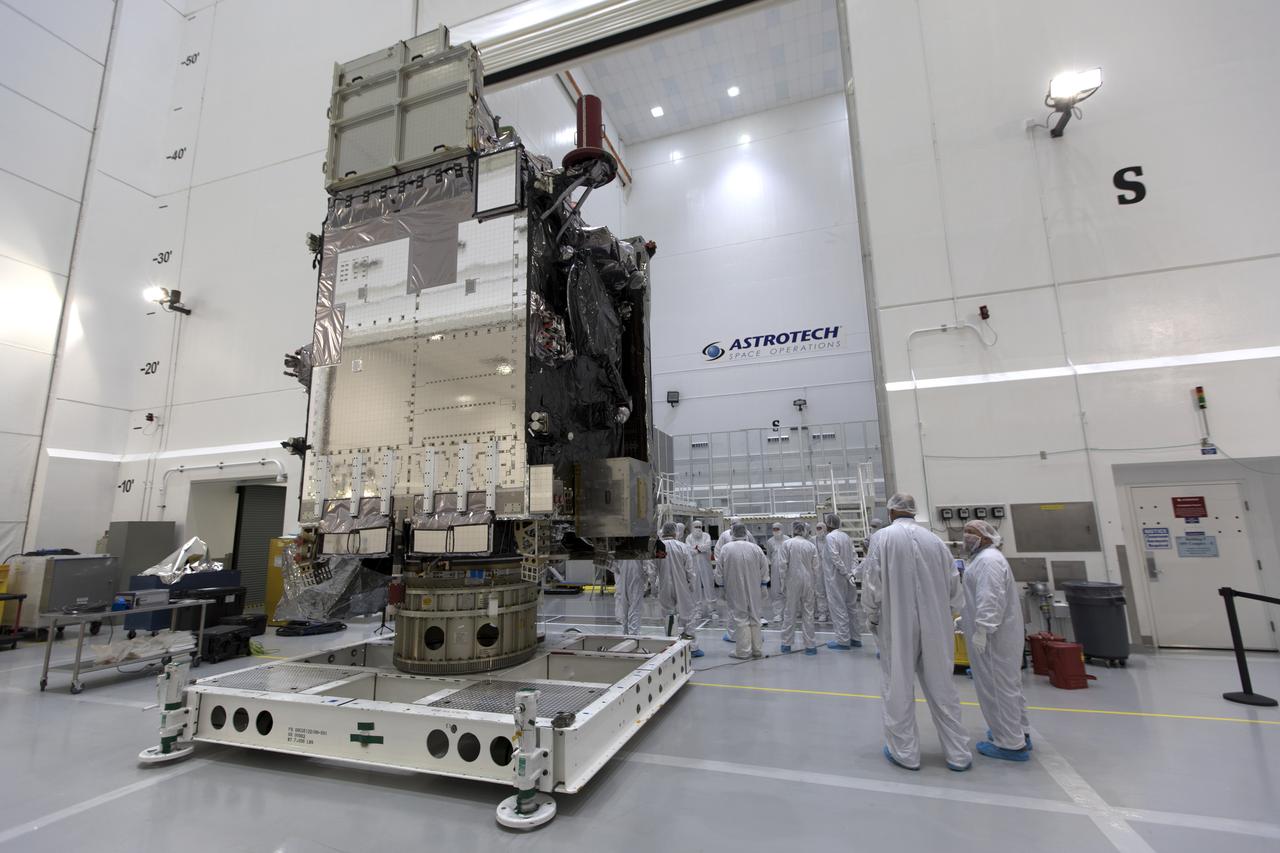
At Astrotech Space Operations in Titusville, Florida, NOAA's Geostationary Operational Environmental Satellite-S (GOES-S) has been positioned on a work stand. The facility is located near NASA's Kennedy Space Center. GOES-S is the second in a series of four advanced geostationary weather satellites. The GOES-R series - consisting of the GOES-R, GOES-S, GOES-T and GOES-U spacecraft - will significantly improve the detection and observation of environmental phenomena that directly affect public safety, protection of property and the nation's economic health and prosperity. GOES-S is slated to launch March 1, 2018 aboard a United Launch Alliance Atlas V rocket from Cape Canaveral Air Force Station in Florida.
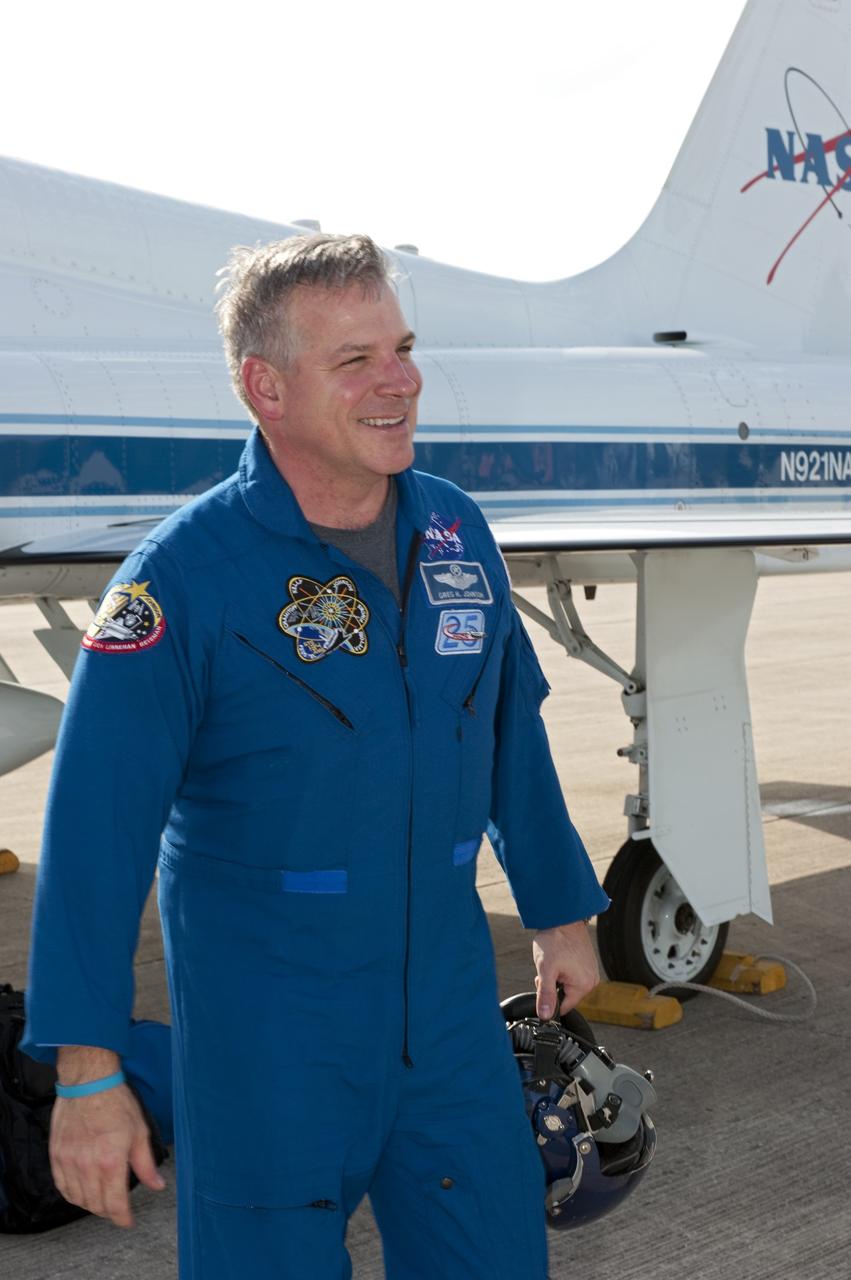
CAPE CANAVERAL, Fla. -- STS-134 Pilot Greg H. Johnson stands in front of a T-38 jet on the Shuttle Landing Facility at NASA's Kennedy Space Center in Florida. While at Kennedy, space shuttle Endeavour's crew will participate in a launch countdown dress rehearsal called the Terminal Countdown Demonstration Test (TCDT) and related training in preparation for the upcoming STS-134 mission. Endeavour and its six STS-134 crew members will deliver the Express Logistics Carrier-3, Alpha Magnetic Spectrometer-2 (AMS), a high-pressure gas tank, additional spare parts for the Dextre robotic helper and micrometeoroid debris shields to the International Space Station. This will be the final spaceflight for Endeavour. Launch is targeted for April 19 at 7:48 p.m. EDT. For more information visit, www.nasa.gov/mission_pages/shuttle/shuttlemissions/sts134/index.html. Photo credit: NASA/Kim Shiflett
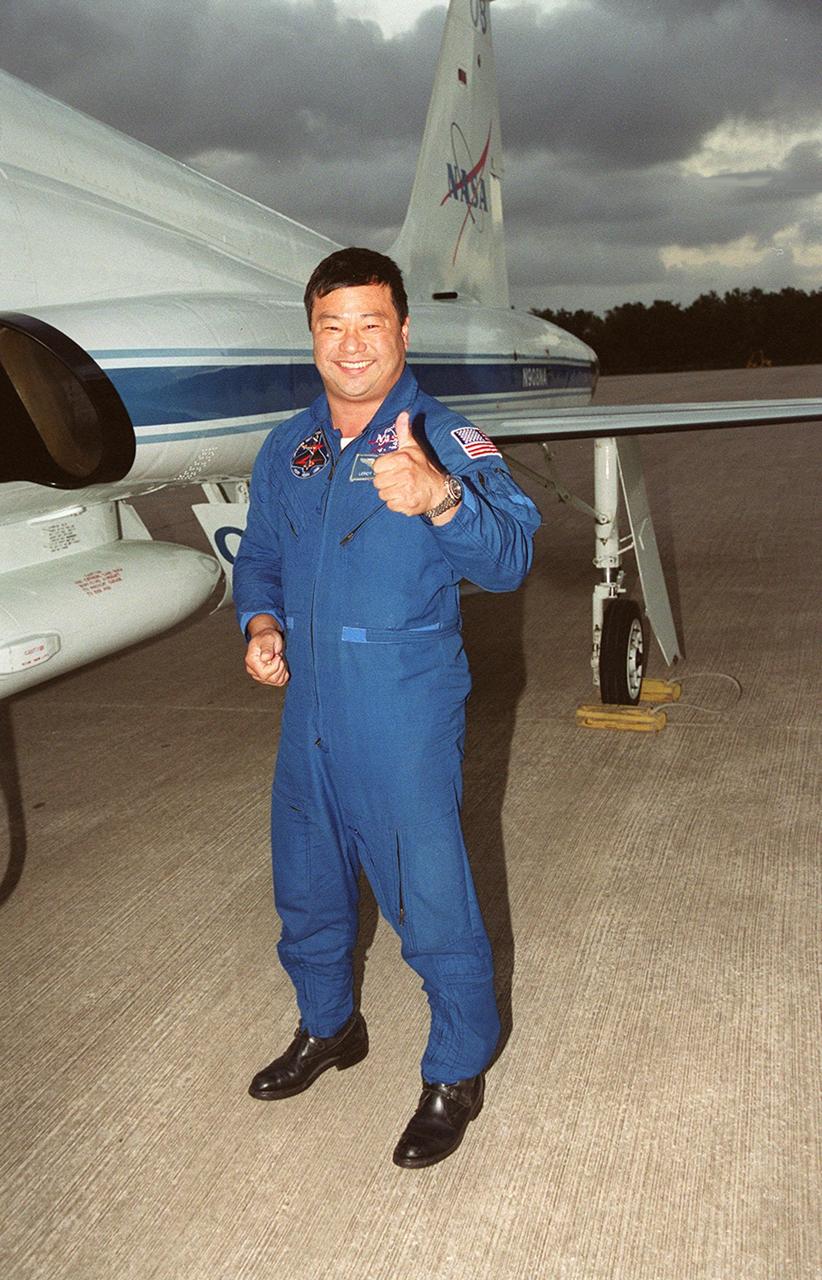
KENNEDY SPACE CENTER, FLA. -- STS-92 Mission Specialist Leroy Chiao gives a thumbs-up to his arrival at KSC for launch of Space Shuttle Discovery on Oct. 5. Chiao is standing next to the T-38 jet aircraft that brought him from Houston. He and other crew members Commander Brian Duffy, Pilot Pamela Ann Melroy and Mission Specialists Koichi Wakata of Japan, Peter J.K. “Jeff” Wisoff, Michael E. Lopez-Alegria and William S. McArthur Jr. expressed their eagerness to launch to a waiting group of media at the Shuttle Landing Facility. The mission is the fifth flight for the construction of the International Space Station. The payload includes the Integrated Truss Structure Z-1 and the third Pressurized Mating Adapter. During the 11-day mission, four extravehicular activities (EVAs), or space walks, are planned
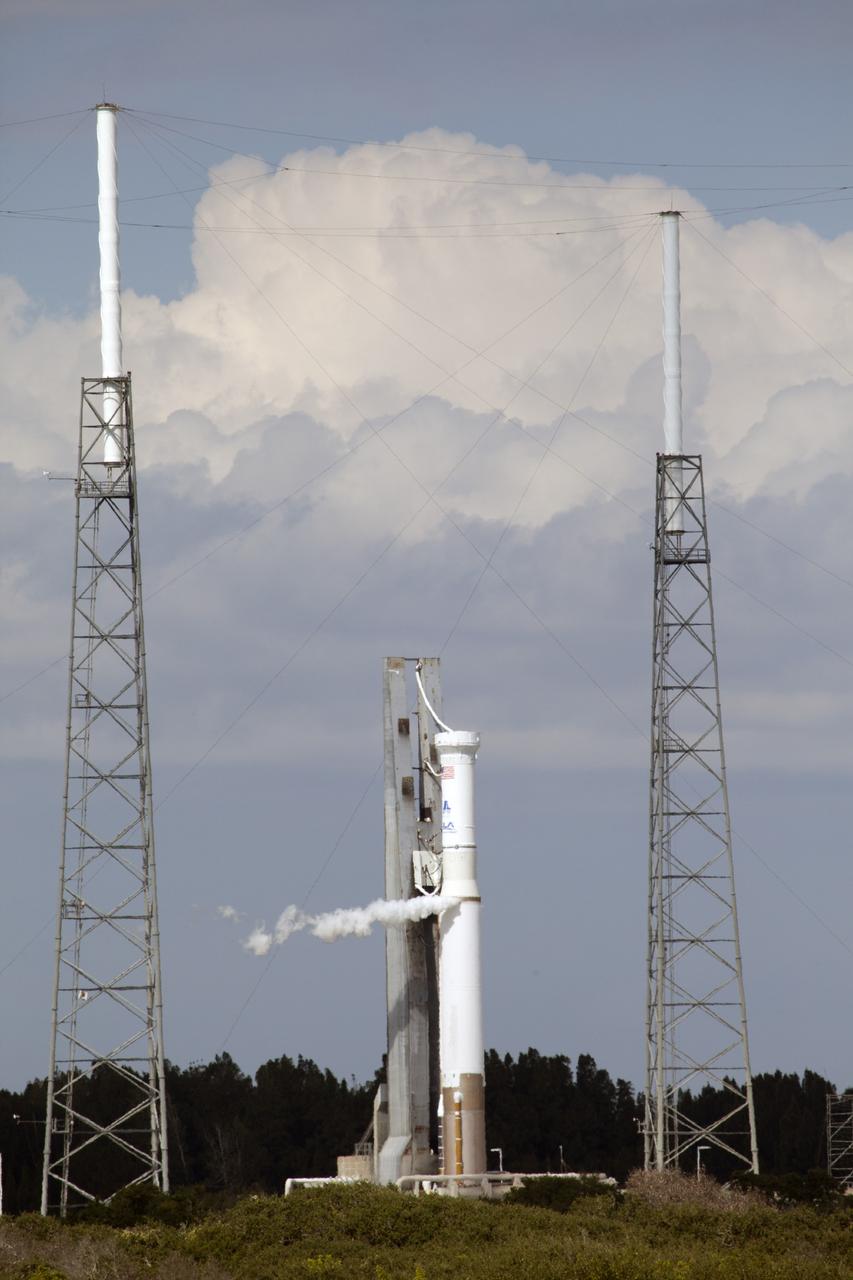
CAPE CANAVERAL, Fla. – The United Launch Alliance Atlas V rocket stands at Launch Complex 41 on Cape Canaveral Air Force Station in Florida during a "wet dress rehearsal." The test called for the launch vehicle to be fully loaded with propellants and put through a countdown procedure, ending just before the T-0 mark. The spacecraft is undergoing prelaunch processing activities in the Kennedy Space Center's Payload Hazardous Servicing Facility and was not atop the rocket for this rehearsal. The Atlas V rocket is slated to launch the Mars Atmosphere and Volatile Evolution, or MAVEN, spacecraft on a journey to the Red Planet on Nov. 18. The spacecraft is undergoing prelaunch processing activities in the Kennedy Space Center's Payload Hazardous Servicing Facility and was not atop the rocket for this rehearsal. Positioned in an orbit above the Red Planet, MAVEN will study the upper atmosphere of Mars in unprecedented detail. For more information, visit: http://www.nasa.gov/mission_pages/maven/main/index.html Photo credit: NASA/Daniel Cooper
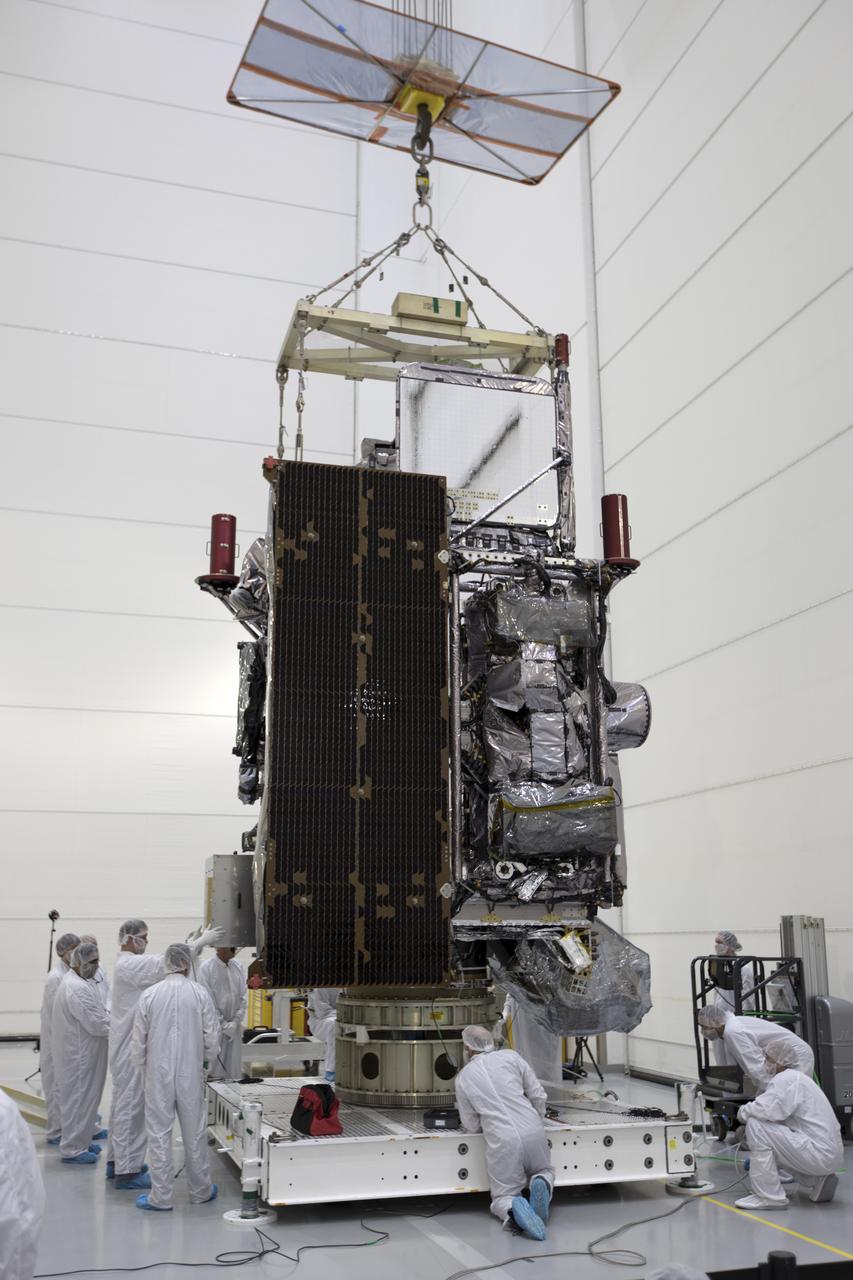
At Astrotech Space Operations in Titusville, Florida, technicians and engineers keep a watchful eye on NOAA's Geostationary Operational Environmental Satellite-S (GOES-S) as it is positioned on a work stand. The facility is located near NASA's Kennedy Space Center. GOES-S is the second in a series of four advanced geostationary weather satellites. The GOES-R series - consisting of the GOES-R, GOES-S, GOES-T and GOES-U spacecraft - will significantly improve the detection and observation of environmental phenomena that directly affect public safety, protection of property and the nation's economic health and prosperity. GOES-S is slated to launch March 1, 2018 aboard a United Launch Alliance Atlas V rocket from Cape Canaveral Air Force Station in Florida.
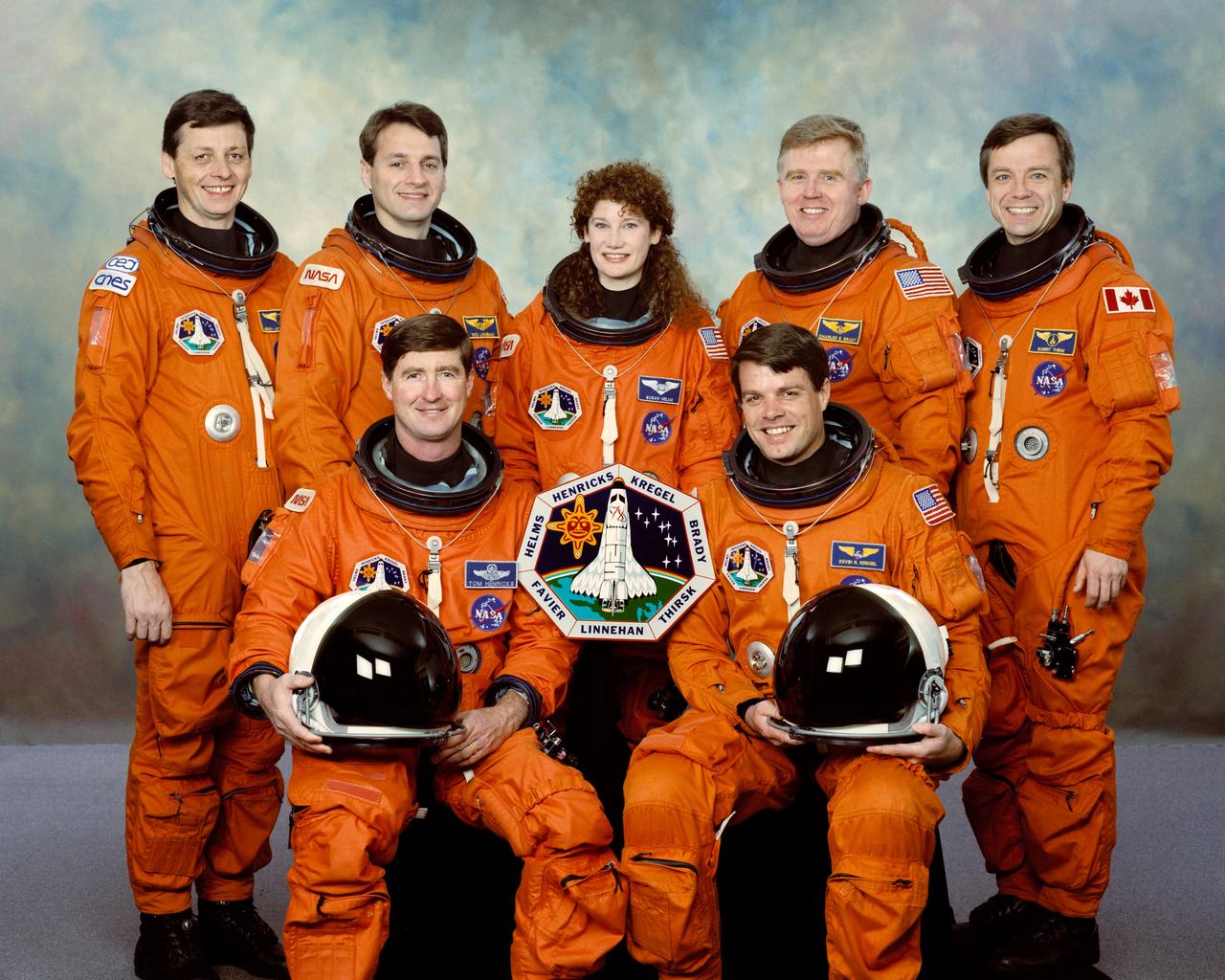
STS078-S-002 (April 1996) --- These seven crew members will spend 16 days aboard the Space Shuttle Columbia, scheduled for launch in early summer 1996. Seated are astronauts Terrence T. (Tom) Henricks (left), mission commander, and Kevin R. Kregel, pilot. Standing, from the left, are payload specialist Jean-Jacques Favier, along with astronauts Richard M. Linnehan, Susan J. Helms and Charles E. Brady, Jr., all mission specialists; and payload specialist Robert B. Thirsk. Thirsk is with the Canadian Space Agency (CSA) and Favier is with the French Atomic Energy Commission (FAEC) and represents the French Space Agency (CNES). The twentieth flight of the Space Shuttle Columbia will be devoted to the Life and Microgravity Spacelab (LMS).
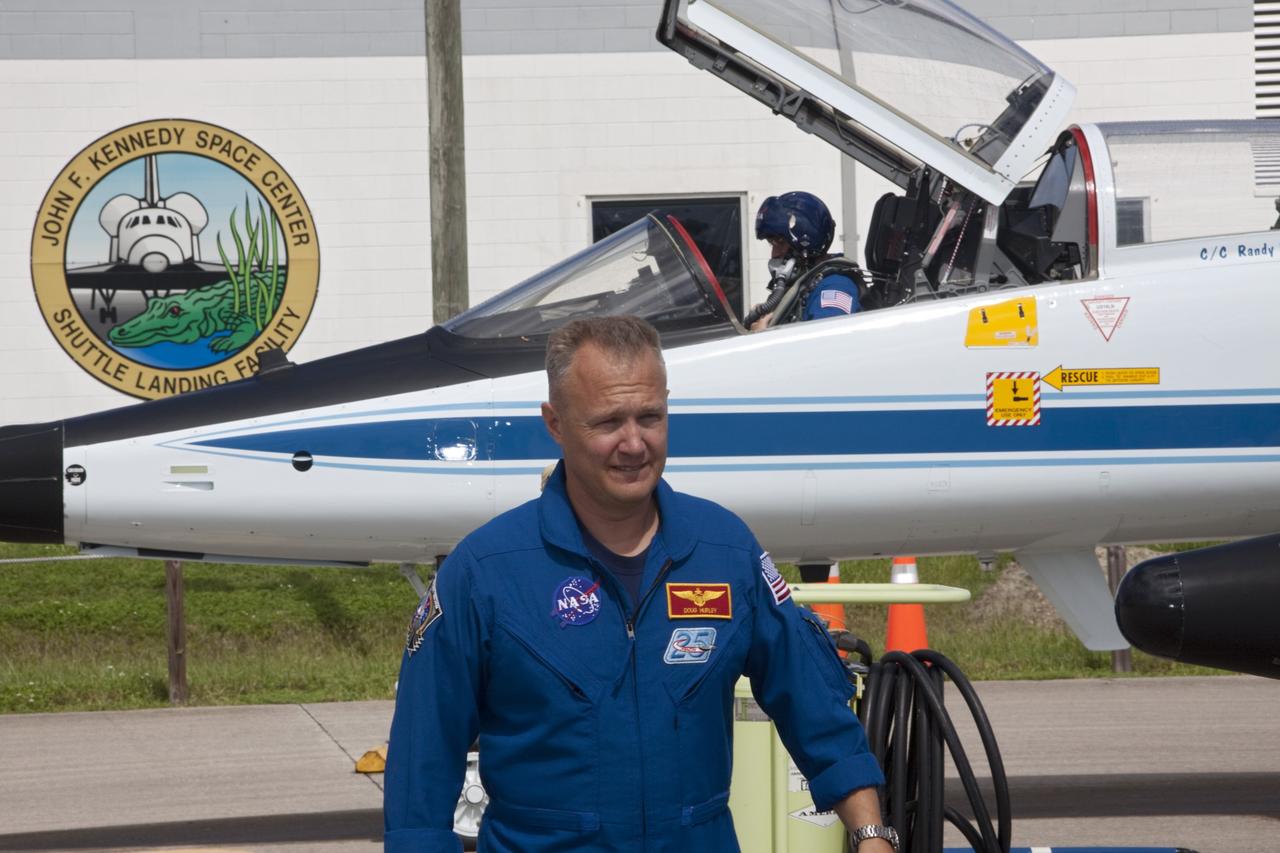
CAPE CANAVERAL, Fla. – At the Shuttle Landing Facility at NASA's Kennedy Space Center in Florida, STS-135 Pilot Doug Hurley stands in front of a T-38 training jet. Hurley, along with Commander Chris Ferguson and Mission Specialist Sandra Magnus, was at the center for the traditional post-flight crew return presentation. STS-135 Mission Specialist Rex Walheim was unable to attend the Kennedy event. In July 2011, Atlantis and its crew delivered to the International Space Station the Raffaello multi-purpose logistics module packed with more than 9,400 pounds of spare parts, equipment and supplies that will sustain station operations for the next year. STS-135 was the 33rd and final flight for Atlantis and the final mission of the Space Shuttle Program. For more information, visit www.nasa.gov/mission_pages/shuttle/shuttlemissions/sts135/index.html. Photo credit: NASA/Jim Grossmann
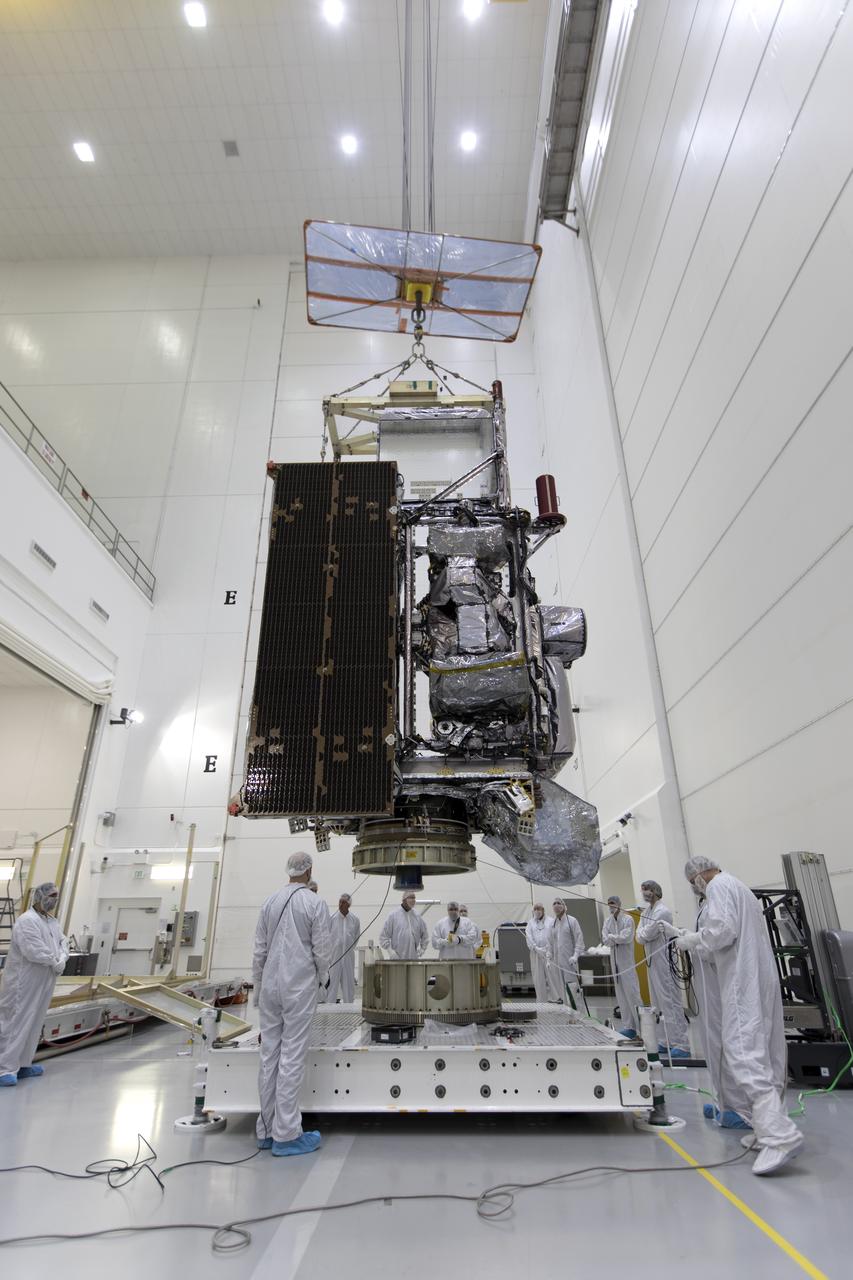
At Astrotech Space Operations in Titusville, Florida, technicians and engineers keep a watchful eye on NOAA's Geostationary Operational Environmental Satellite-S (GOES-S) as it is positioned on a work stand. The facility is located near NASA's Kennedy Space Center. GOES-S is the second in a series of four advanced geostationary weather satellites. The GOES-R series - consisting of the GOES-R, GOES-S, GOES-T and GOES-U spacecraft - will significantly improve the detection and observation of environmental phenomena that directly affect public safety, protection of property and the nation's economic health and prosperity. GOES-S is slated to launch March 1, 2018 aboard a United Launch Alliance Atlas V rocket from Cape Canaveral Air Force Station in Florida.
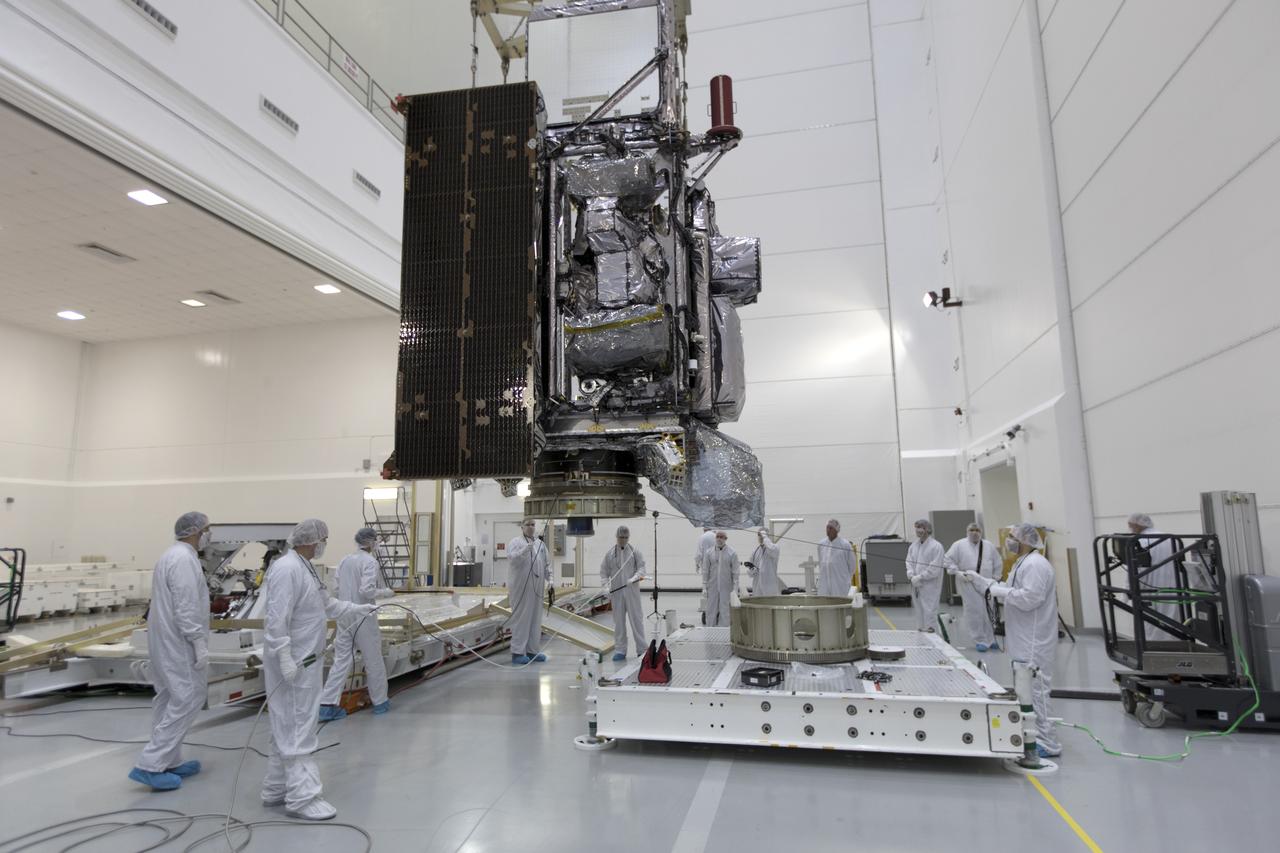
At Astrotech Space Operations in Titusville, Florida, technicians and engineers keep a watchful eye on NOAA's Geostationary Operational Environmental Satellite-S (GOES-S) as it is moved to a work stand. The facility is located near NASA's Kennedy Space Center. GOES-S is the second in a series of four advanced geostationary weather satellites. The GOES-R series - consisting of the GOES-R, GOES-S, GOES-T and GOES-U spacecraft - will significantly improve the detection and observation of environmental phenomena that directly affect public safety, protection of property and the nation's economic health and prosperity. GOES-S is slated to launch March 1, 2018 aboard a United Launch Alliance Atlas V rocket from Cape Canaveral Air Force Station in Florida.
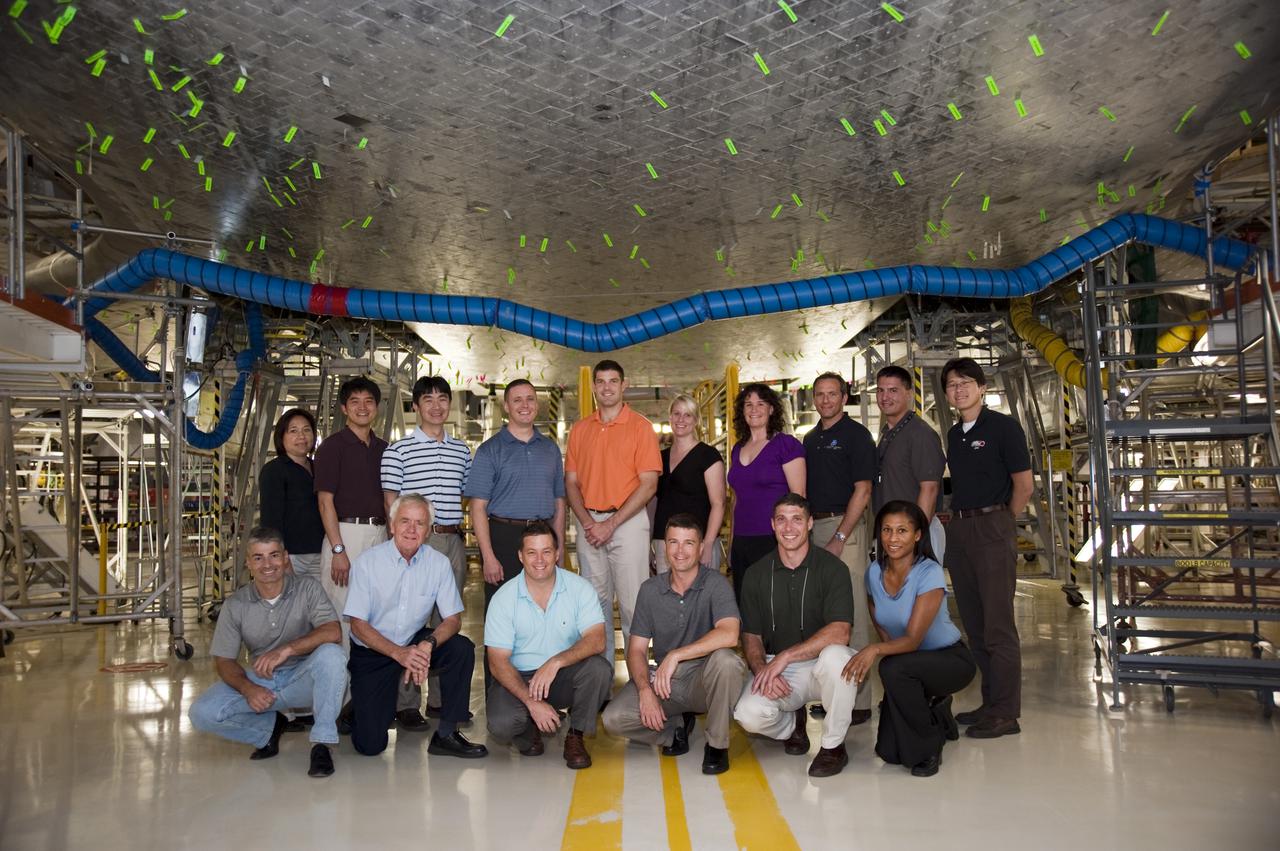
CAPE CANAVERAL, Fla. --- At NASA's Kennedy Space Center in Florida, the Class of 2009 Astronaut Candidates, also called ASCANs, take a picture under space shuttle Atlantis in Orbiter Processing Facility-1. Standing, from left, are Astronaut Office Training Specialist Debbie Trainor, JAXA's Takuya Onishi and Kimiya Yui, NASA's Air Force Maj. Jack D. Fischer, CSA's Jeremy Hansen, NASA's Kathleen 'Kate' Rubins and Serena M. Aunon, CSA's David Saint-Jacques, NASA's Kjell N. Lindgren, and JAXA's Norishige Kanai. Kneeling, from left, are NASA's Army Lt. Col. Mark T. Vande, Chief of the Astronaut Candidate Program Duane Ross, Navy Cmdr. Scott D. Tingle, Navy Lt. Cmdr. Gregory R. 'Reid' Wiseman, Air Force Lt. Col. Michael S. Hopkins, and Jeanette J. Epps. Photo Credit: NASA_Kim Shiflett
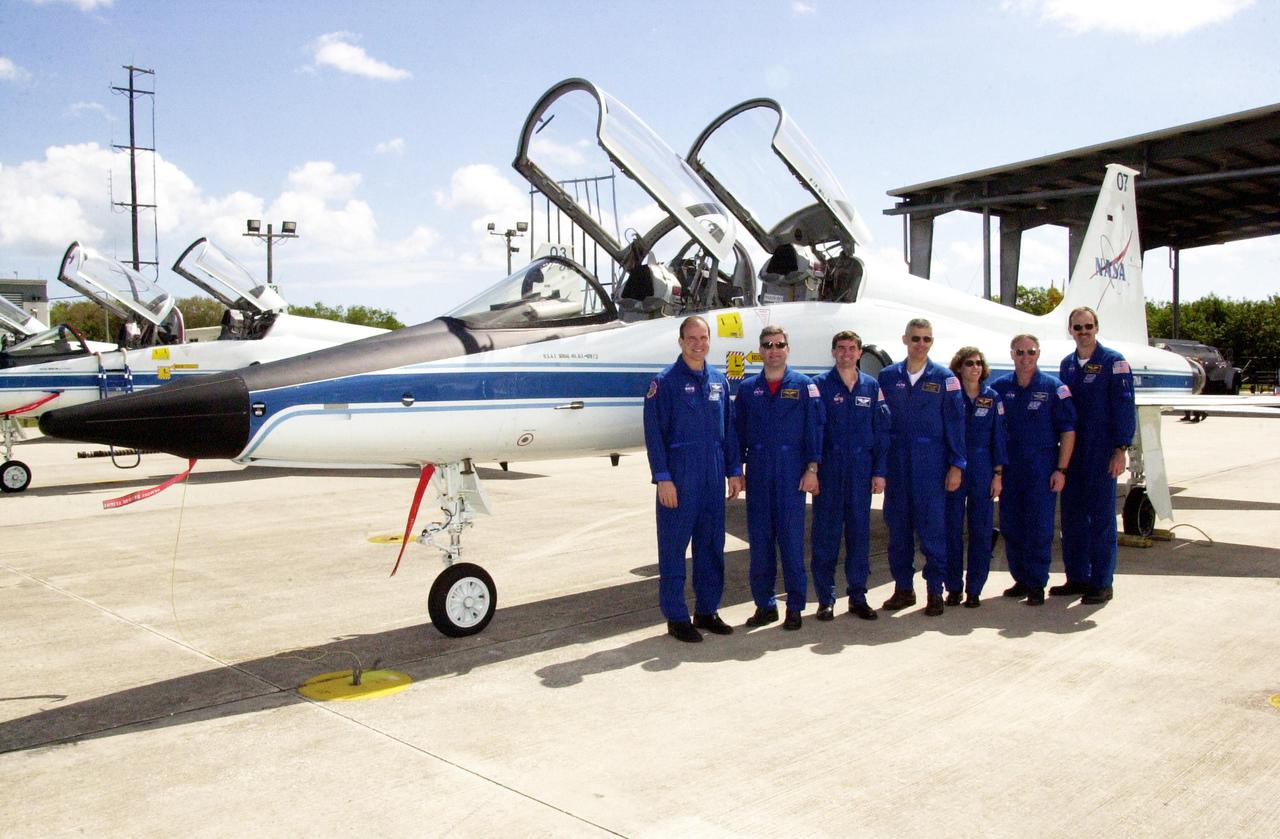
KENNEDY SPACE CENTER, FLA. -- The STS-110 crew poses in front of a T-38 jet aircraft at the Shuttle Landing Facility before departing for Houston. Standing left to right are Commander Michael Bloomfield, Pilot Stephen Frick and Mission Specialists Rex Walheim, Lee Morin, Ellen Ochoa, Jerry Ross and Steven Smith. The crew was at KSC for Terminal Countdown Demonstration Test activities that included payload familiarization and a simulated launch countdown. Scheduled for launch April 4, the 11-day STS-110 mission will feature Space Shuttle Atlantis docking with the International Space Station (ISS) and delivering the S0 truss, the centerpiece-segment of the primary truss structure that will eventually extend over 300 feet
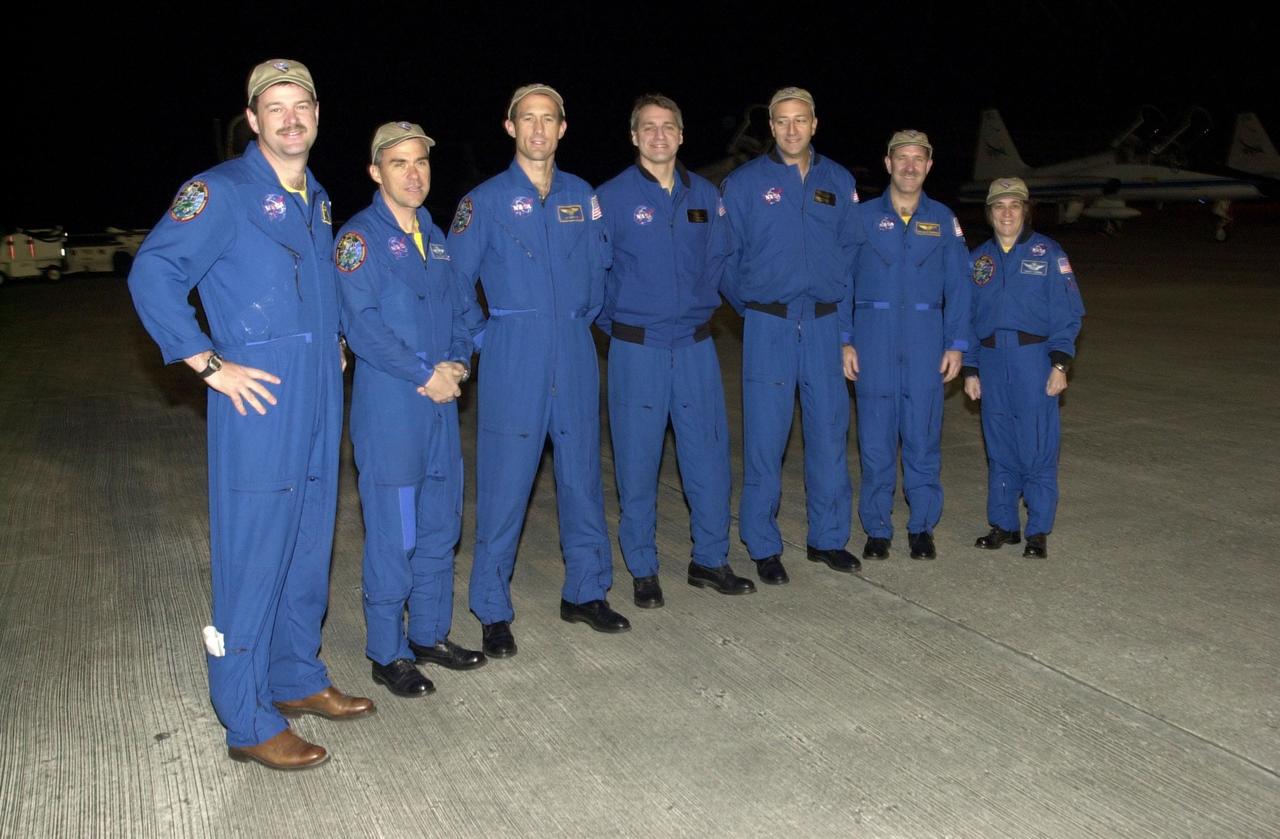
KENNEDY SPACE CENTER, Fla. - The STS-109 crew stops for a photograph after arriving at KSC aboard a T-38 jet aircraft to begin launch preparations. Standing left to right are Commander Scott Altman, Pilot Duane Carey, and Mission Specialists James Newman, Richard Linnehan and Michael Massimino, Payload Commander John Grunsfeld, and Mission Specialist Nancy Currie. The goal of the 11-day mission is repair and maintenance on the Hubble Space Telescope. Five spacewalks are planned to replace Solar Array 2 with Solar Array 3, replace the Power Control Unit, remove the Faint Object Camera and install the Advanced Camera for Surveys (ACS), install the Near Infrared Camera and Multi-Object Spectrometer (NICMOS) Cooling System, and install New Outer Blanket Layer insulation. Launch is scheduled for Feb. 28 at 6:48 a.m. EST
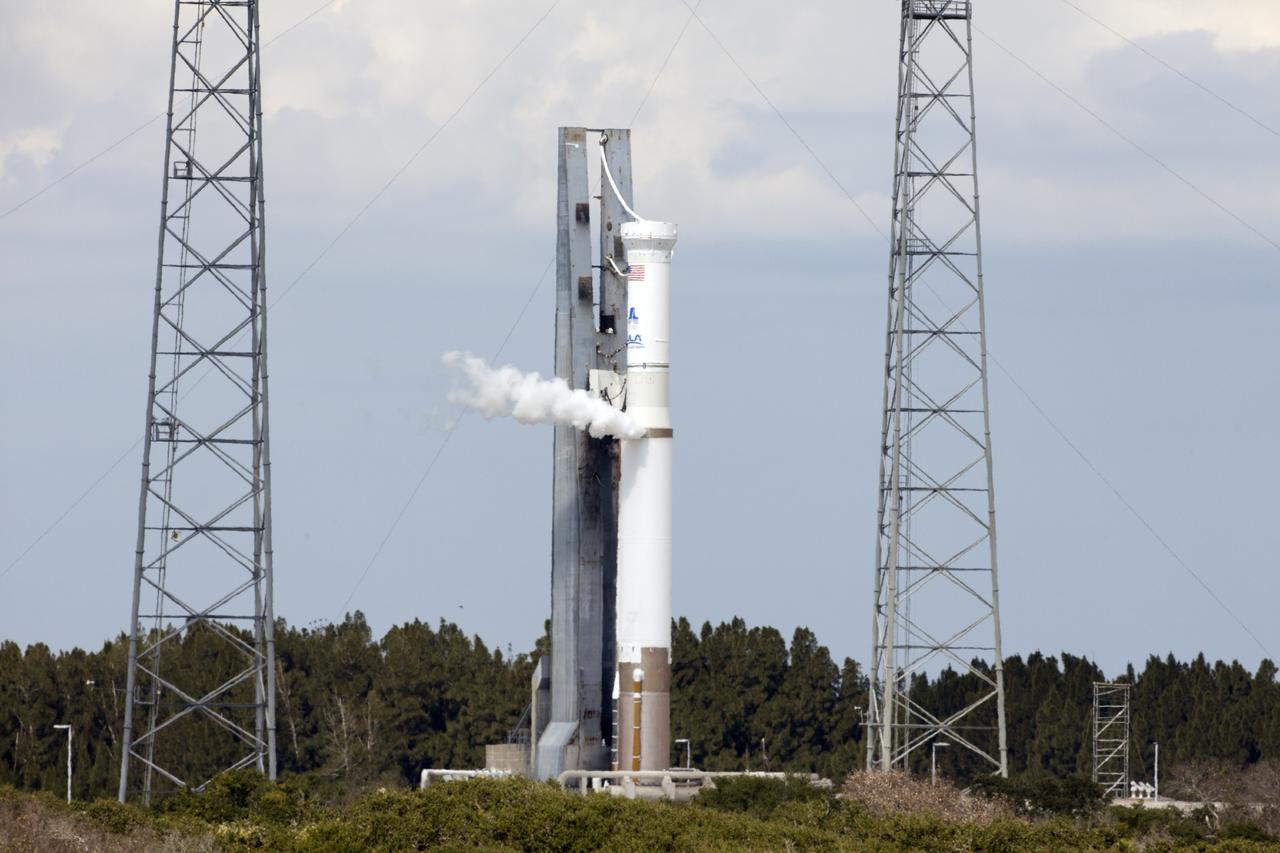
CAPE CANAVERAL, Fla. – The United Launch Alliance Atlas V rocket stands at Launch Complex 41 on Cape Canaveral Air Force Station in Florida during a "wet dress rehearsal." The test called for the launch vehicle to be fully loaded with propellants and put through a countdown procedure, ending just before the T-0 mark. The spacecraft is undergoing prelaunch processing activities in the Kennedy Space Center's Payload Hazardous Servicing Facility and was not atop the rocket for this rehearsal. The Atlas V rocket is slated to launch the Mars Atmosphere and Volatile Evolution, or MAVEN, spacecraft on a journey to the Red Planet on Nov. 18. The spacecraft is undergoing prelaunch processing activities in the Kennedy Space Center's Payload Hazardous Servicing Facility and was not atop the rocket for this rehearsal. Positioned in an orbit above the Red Planet, MAVEN will study the upper atmosphere of Mars in unprecedented detail. For more information, visit: http://www.nasa.gov/mission_pages/maven/main/index.html Photo credit: NASA/Daniel Cooper