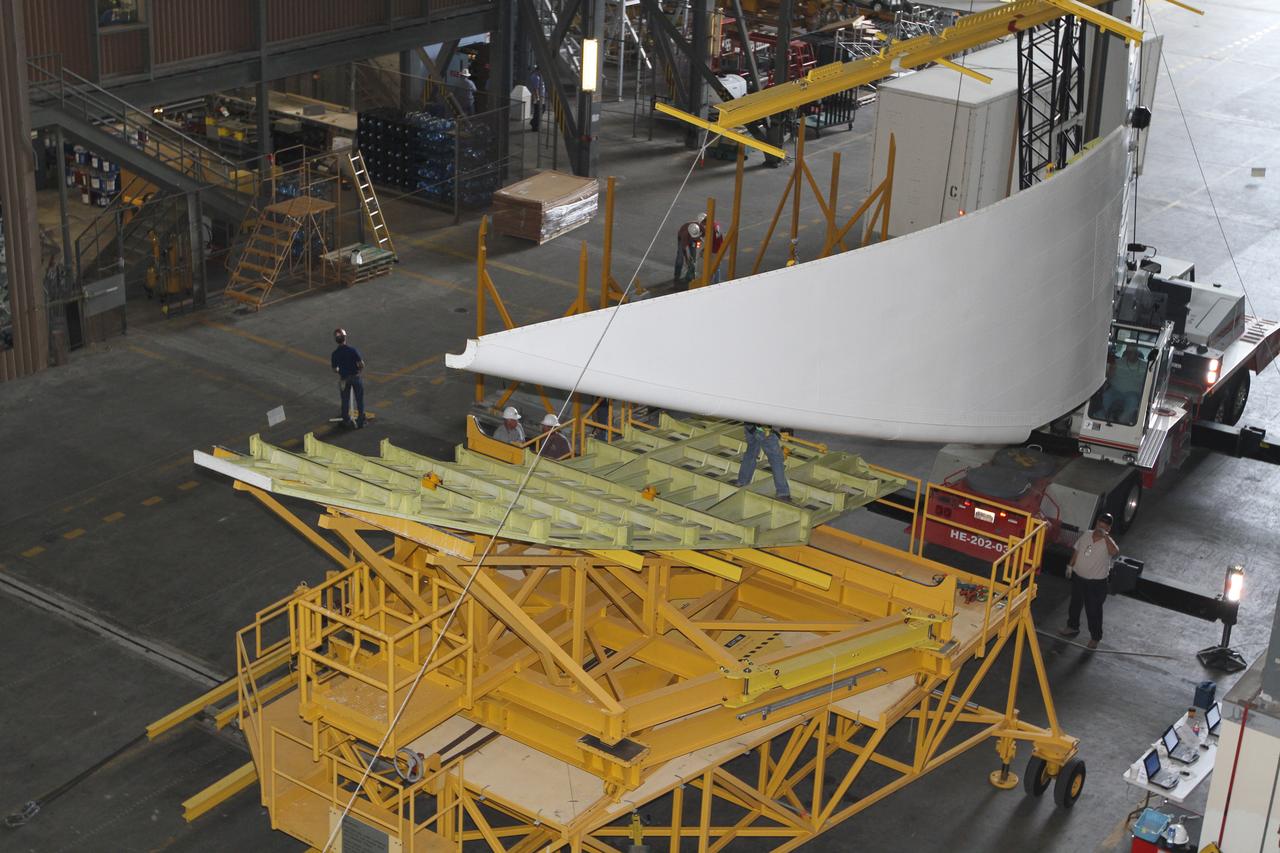
T&R Endeavour Right Side Tail Cone Buildup
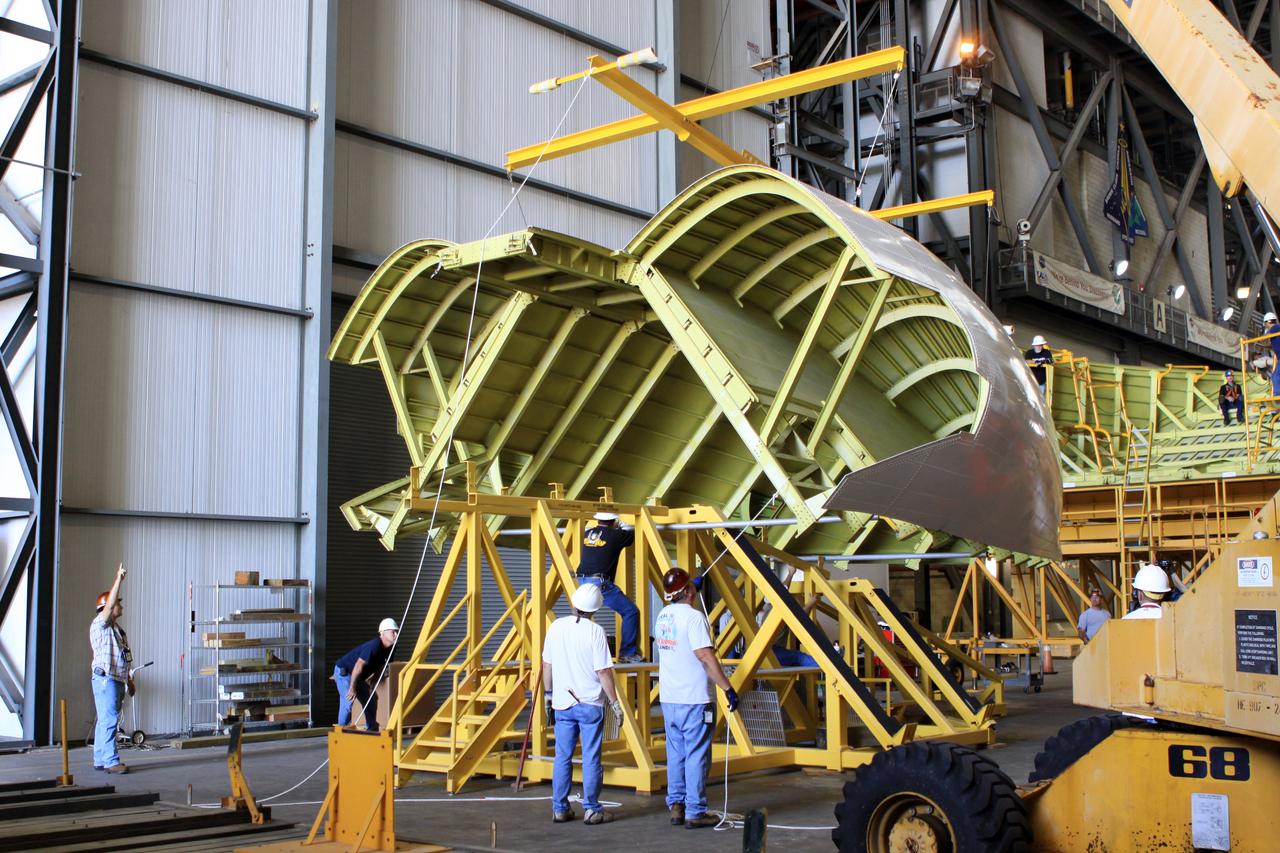
T&R Endeavour, Final Buildup of Tail Cover for Ferry Flight
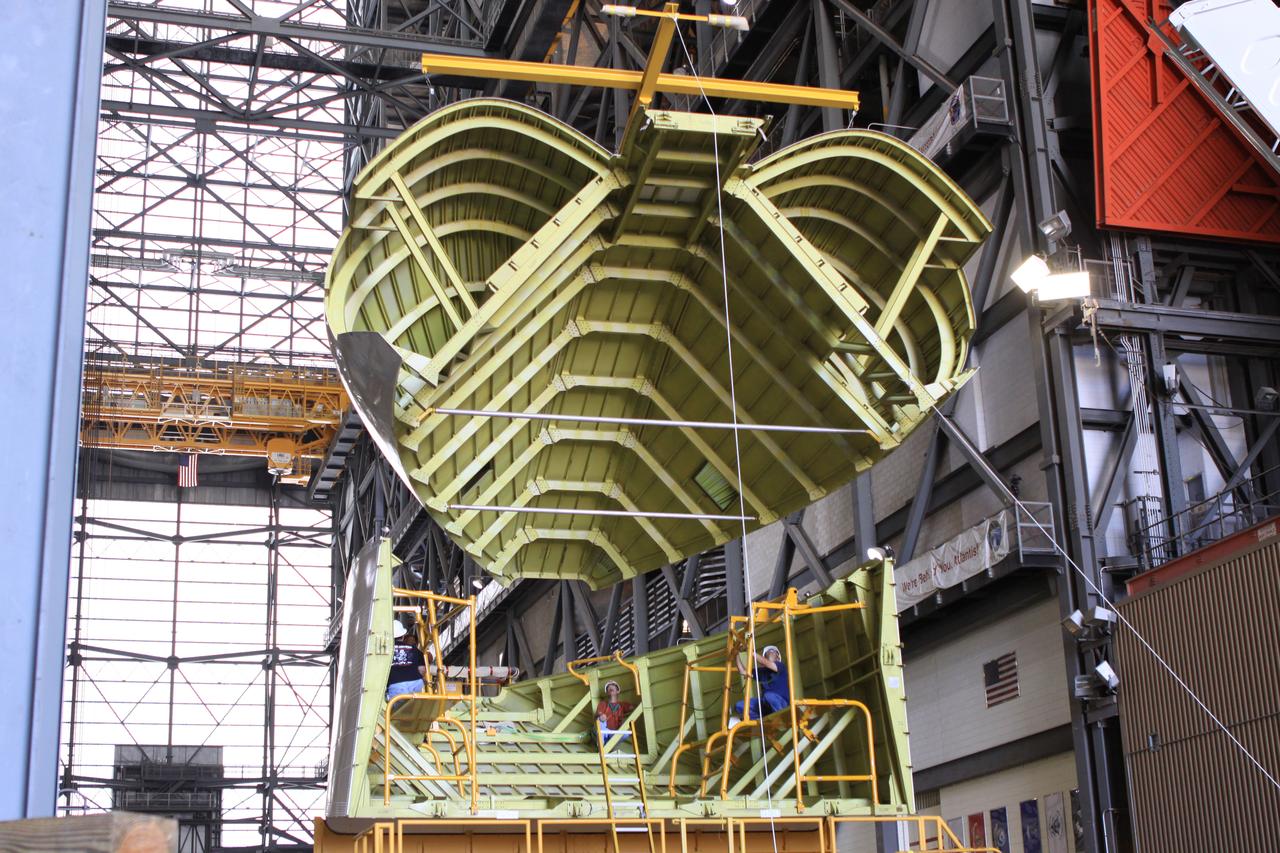
T&R Endeavour, Final Buildup of Tail Cover for Ferry Flight
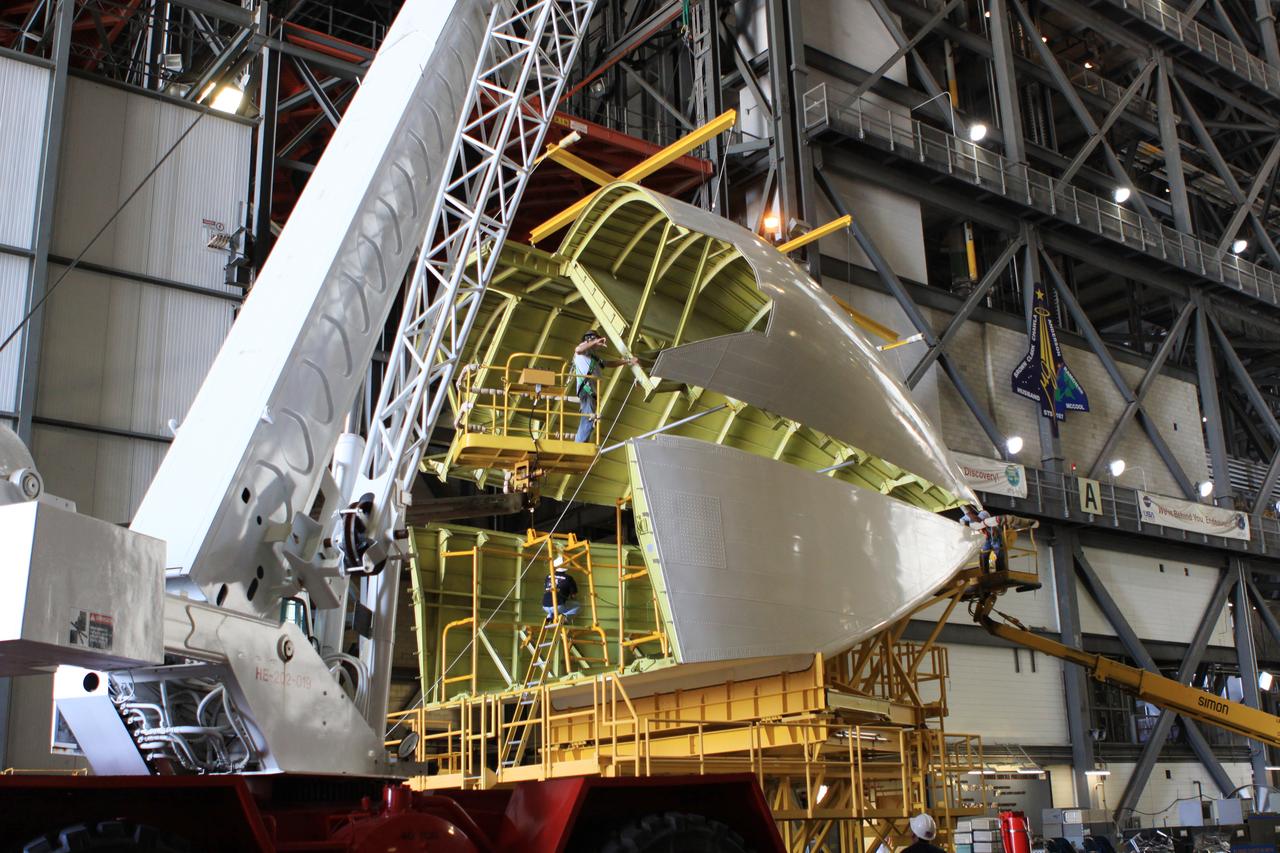
T&R Endeavour, Final Buildup of Tail Cover for Ferry Flight
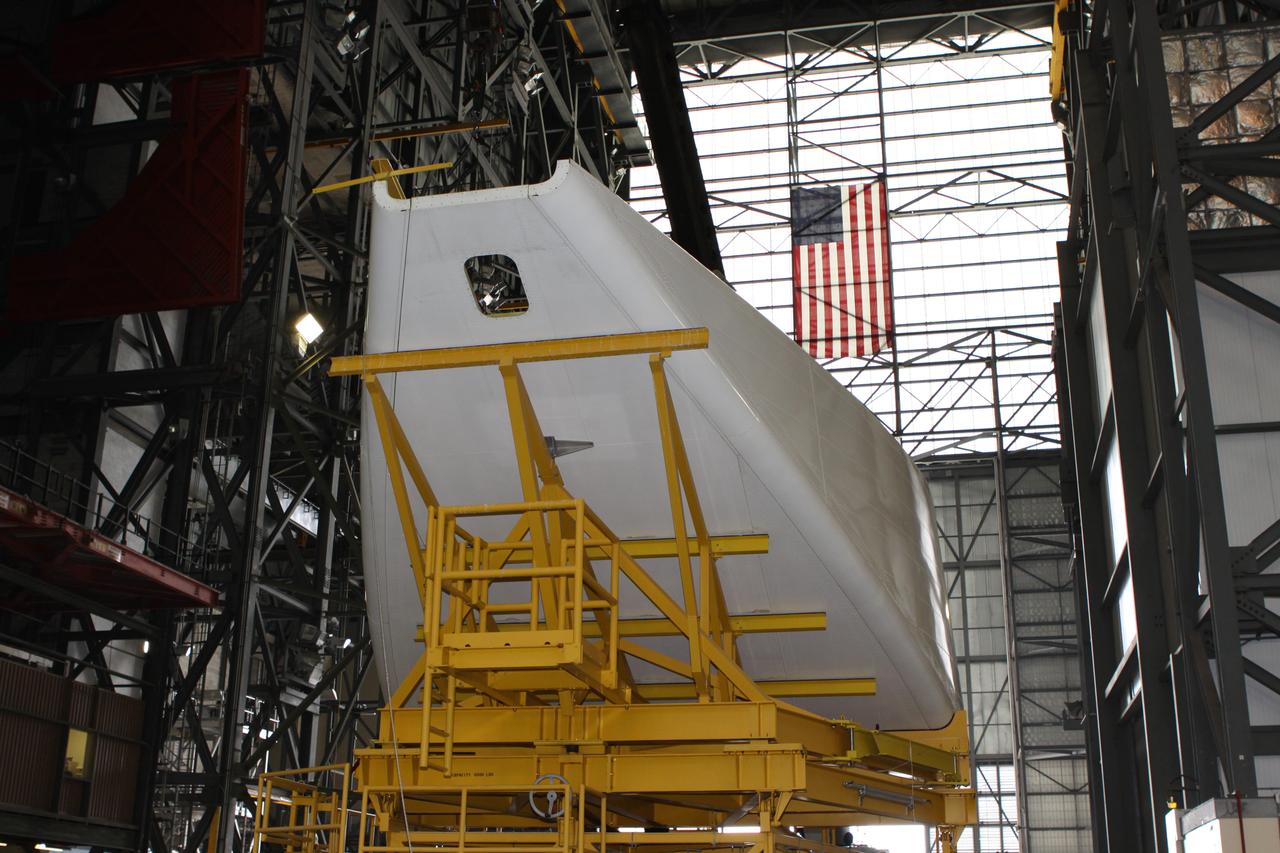
T&R Endeavour Left Side Tail Cone Buildup
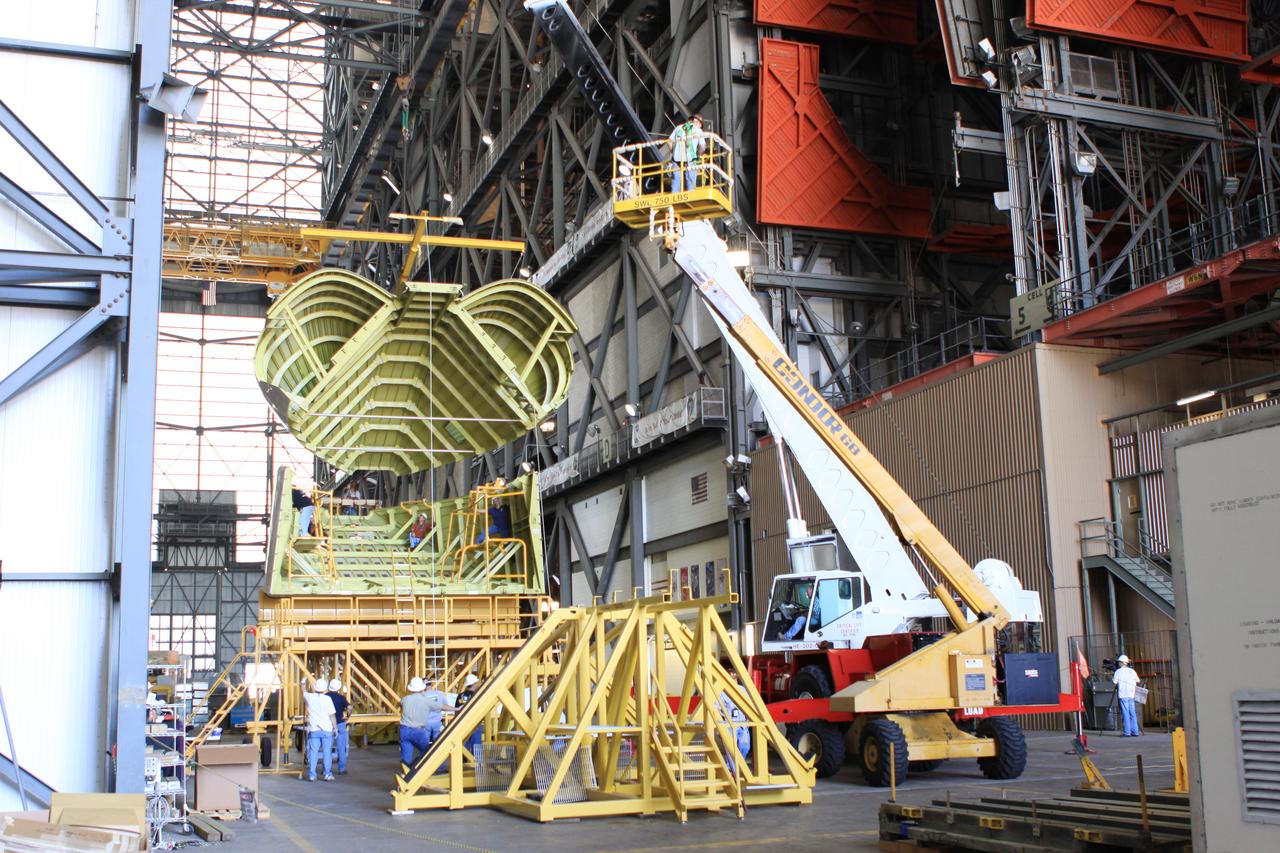
T&R Endeavour, Final Buildup of Tail Cover for Ferry Flight
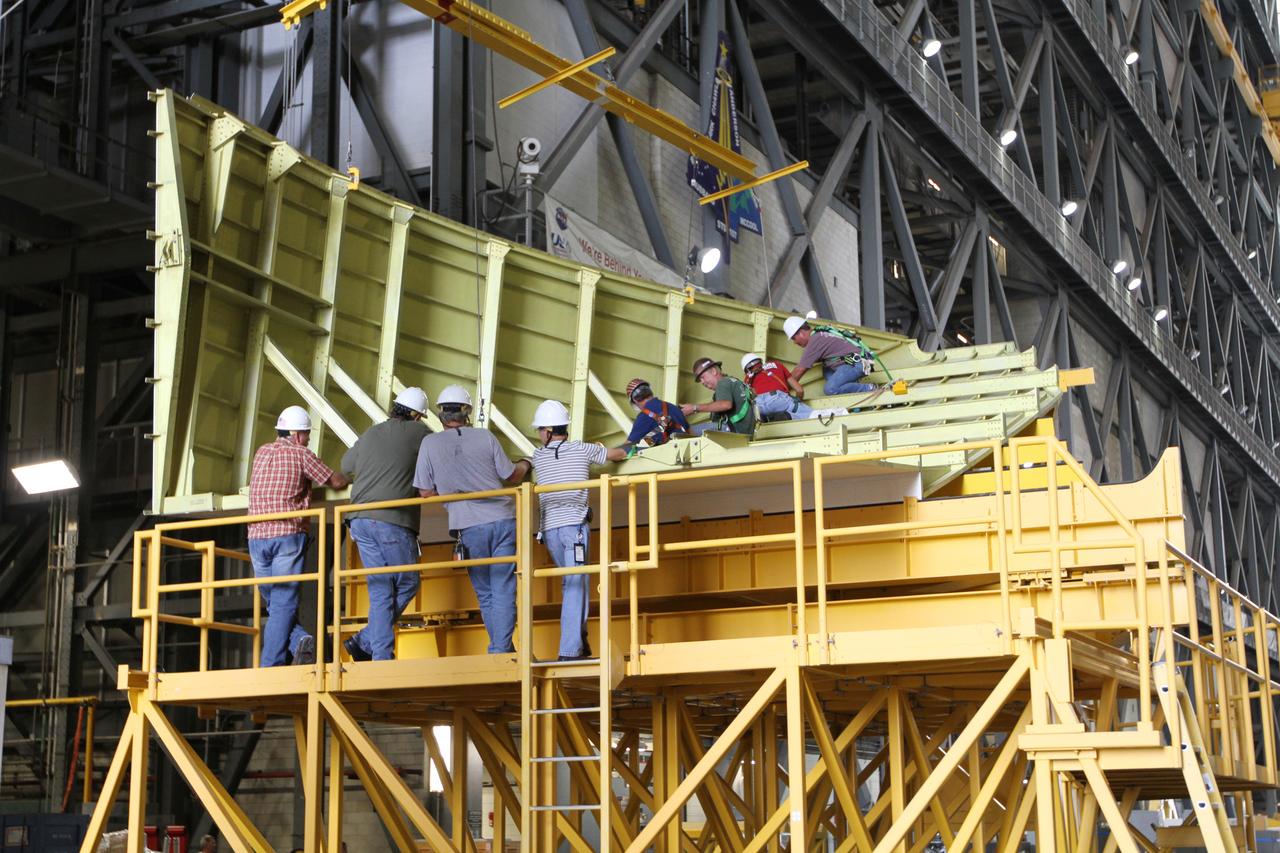
T&R Endeavour Right Side Tail Cone Buildup
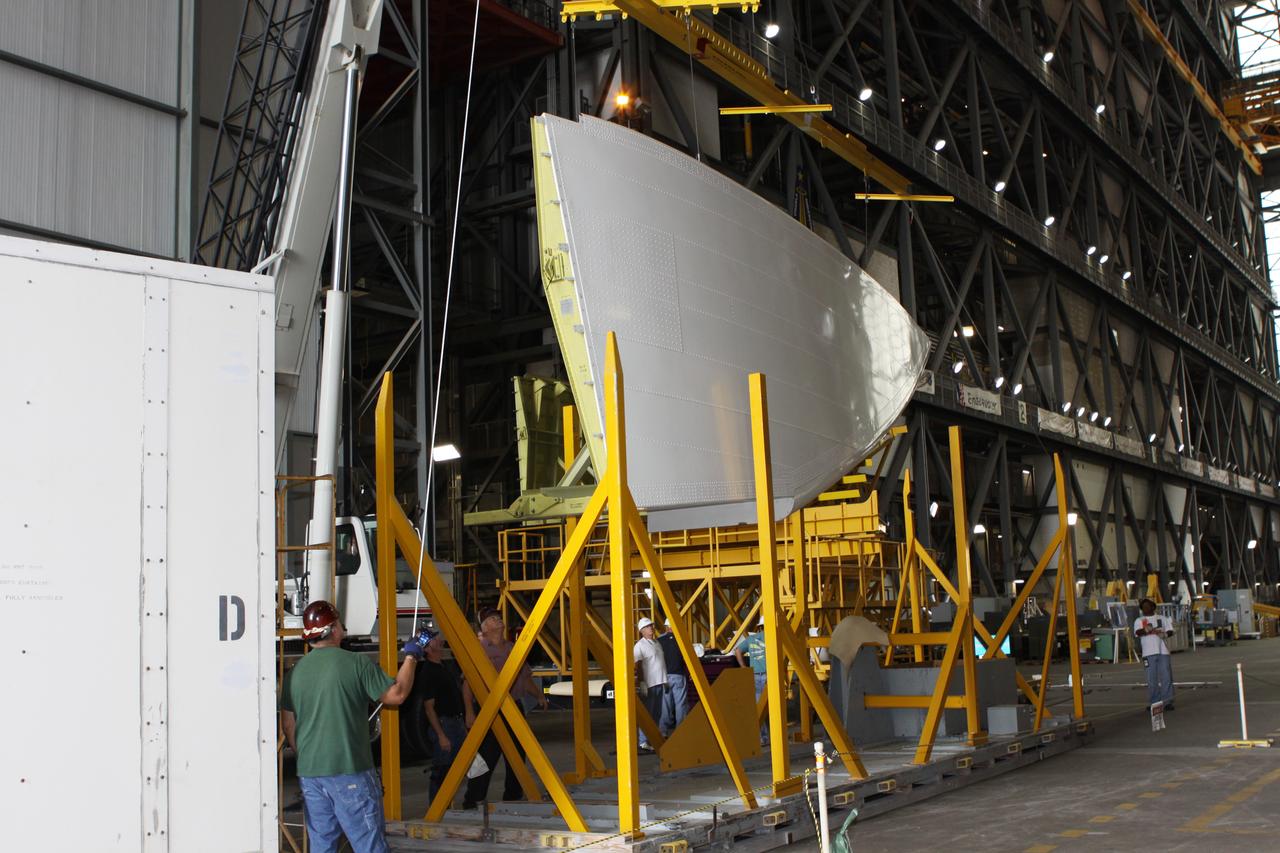
T&R Endeavour Left Side Tail Cone Buildup
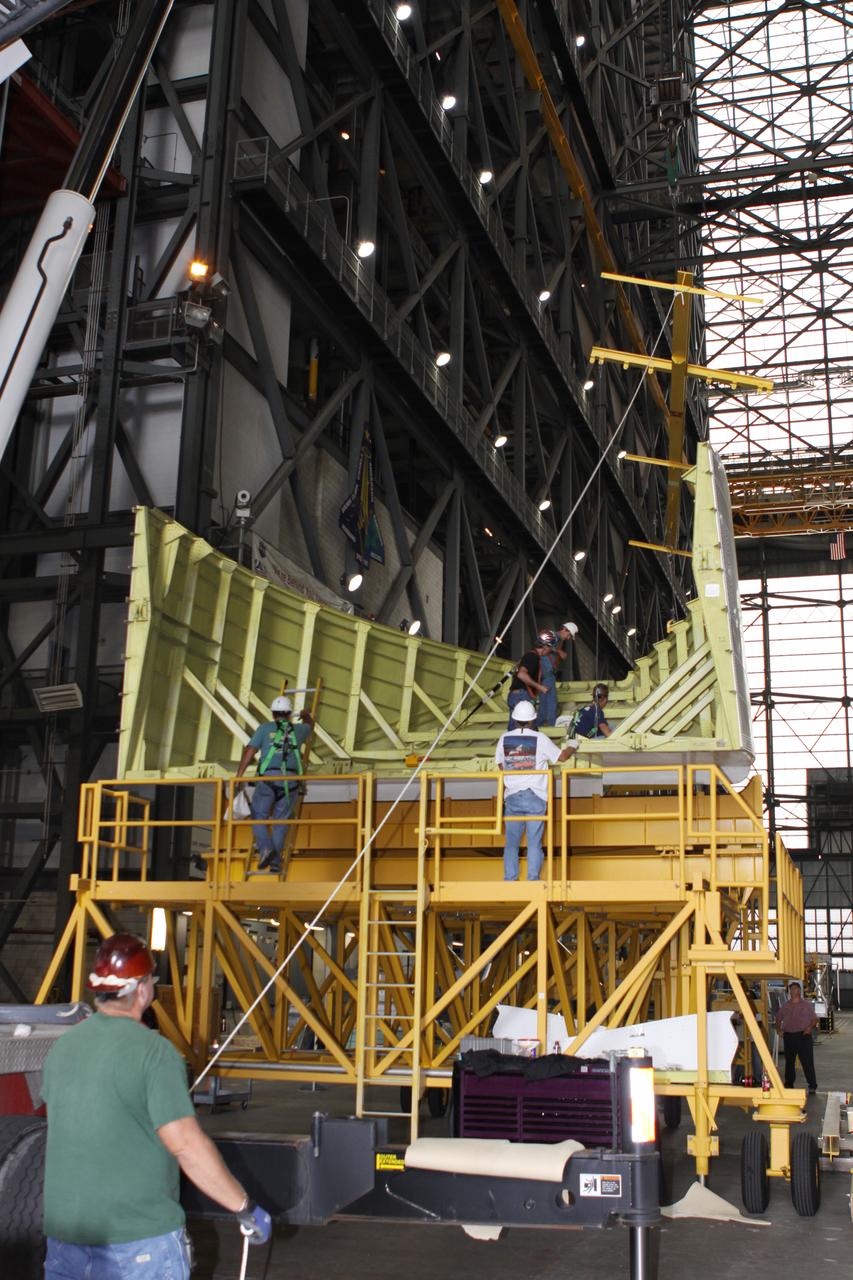
T&R Endeavour Left Side Tail Cone Buildup
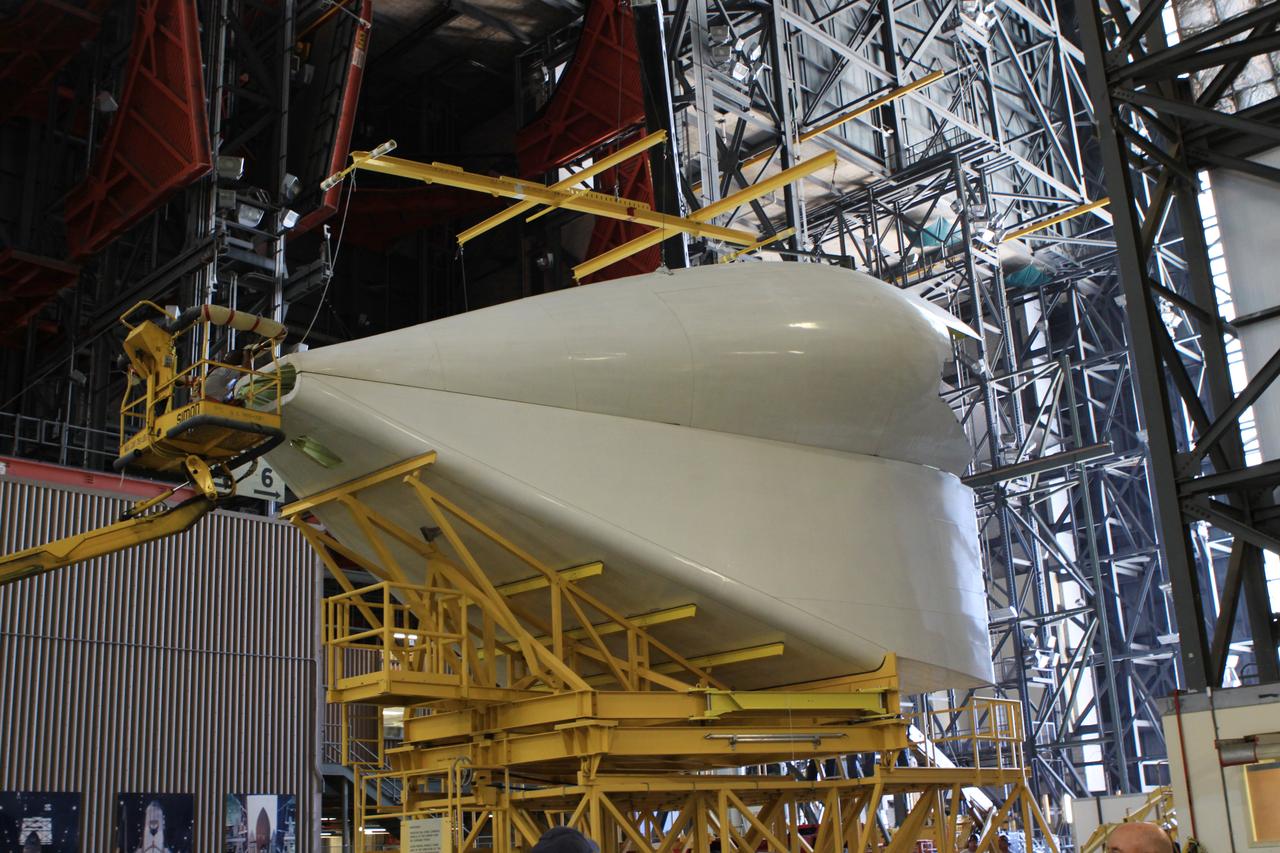
T&R Endeavour, Final Buildup of Tail Cover for Ferry Flight
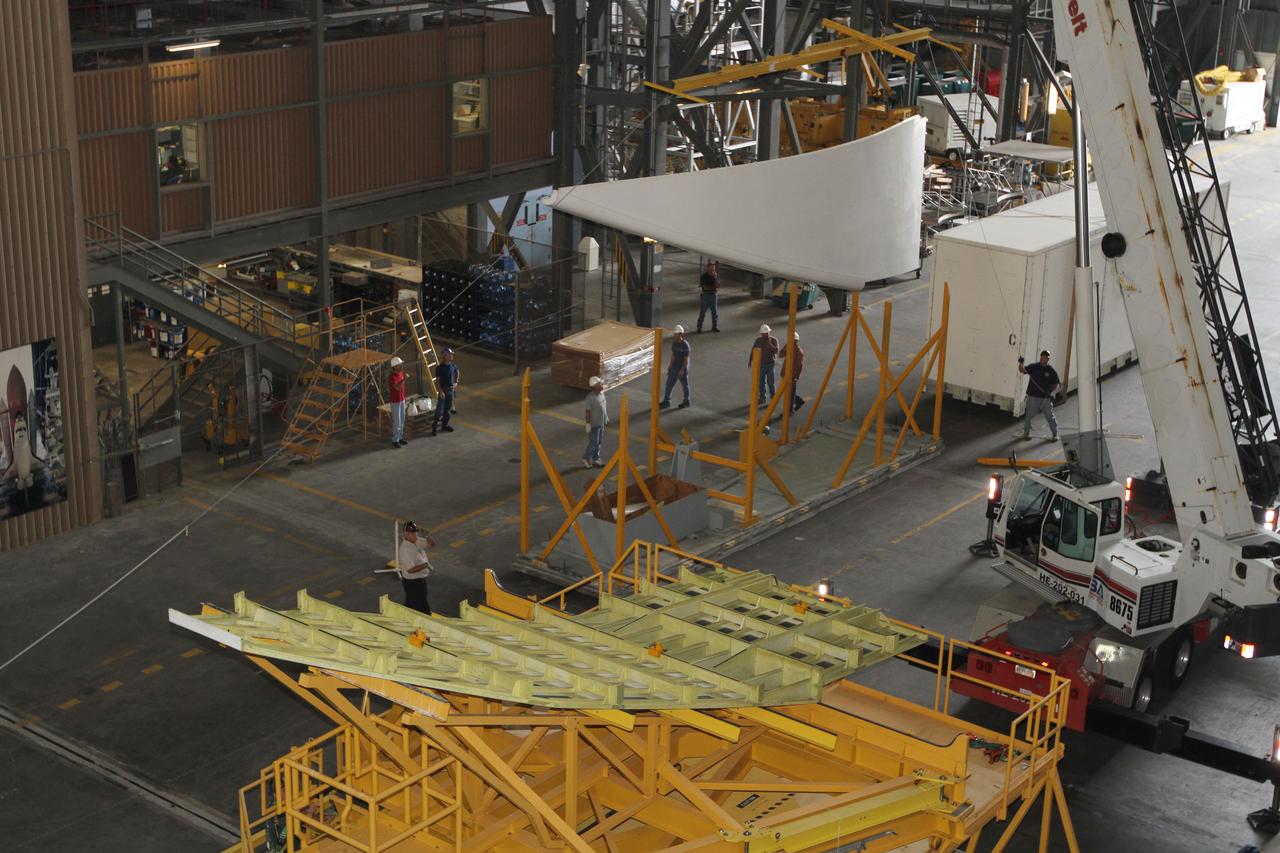
T&R Endeavour Right Side Tail Cone Buildup
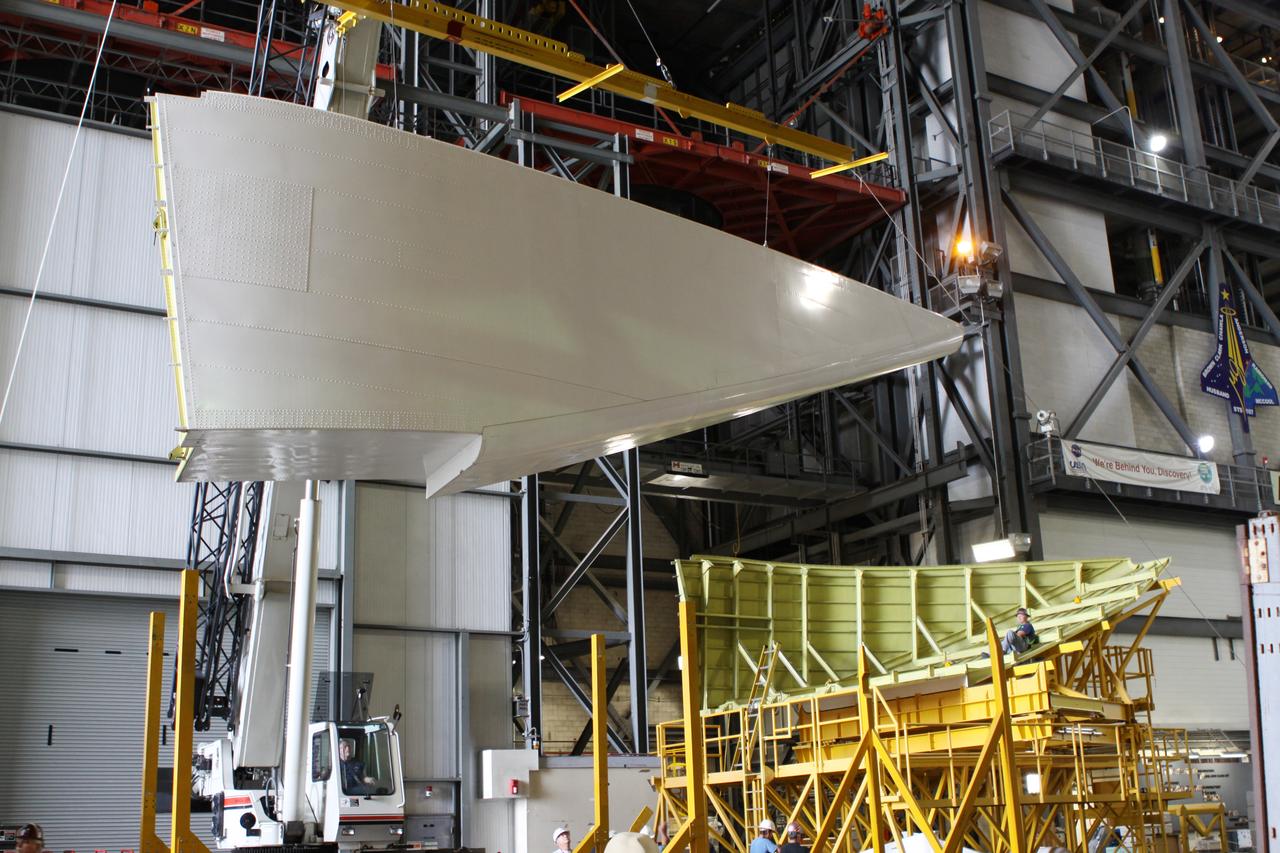
T&R Endeavour Left Side Tail Cone Buildup
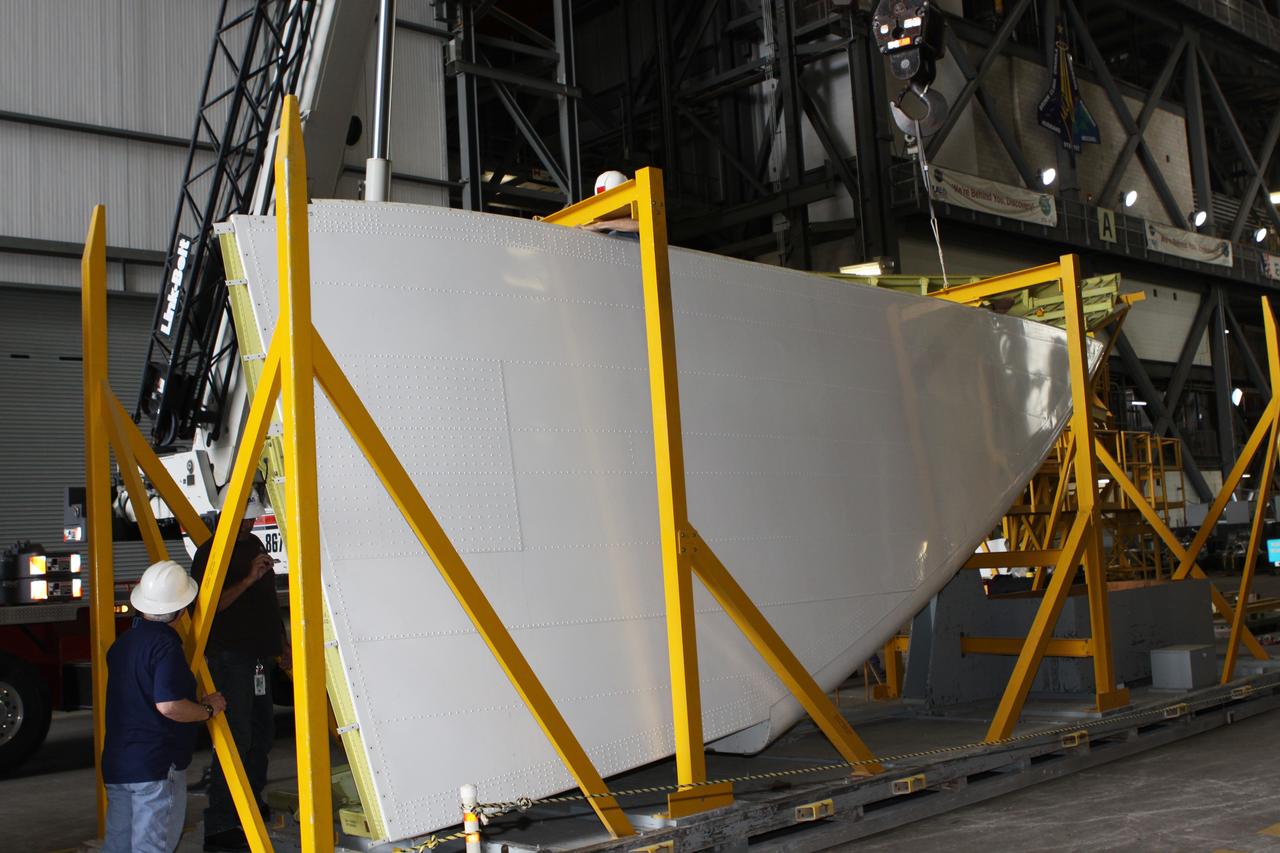
T&R Endeavour Left Side Tail Cone Buildup
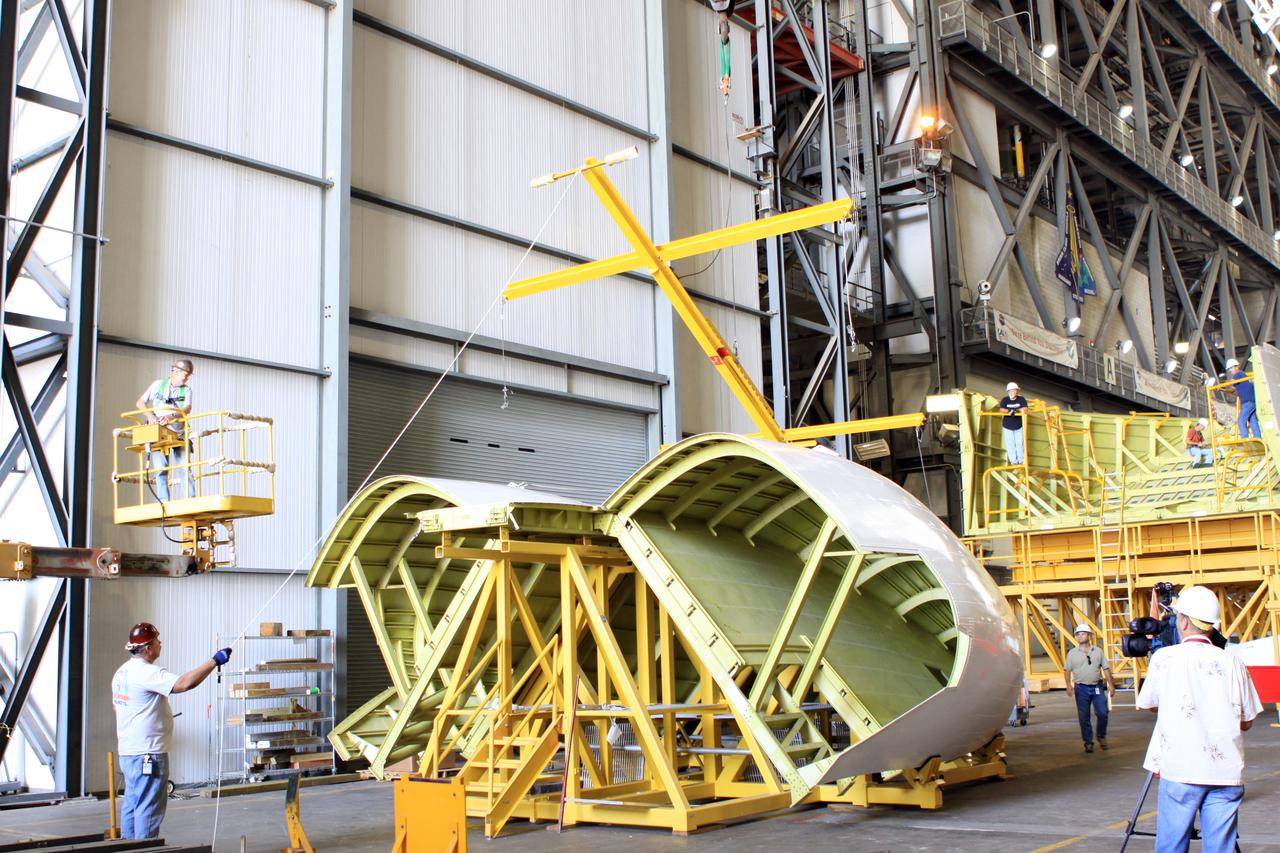
T&R Endeavour, Final Buildup of Tail Cover for Ferry Flight
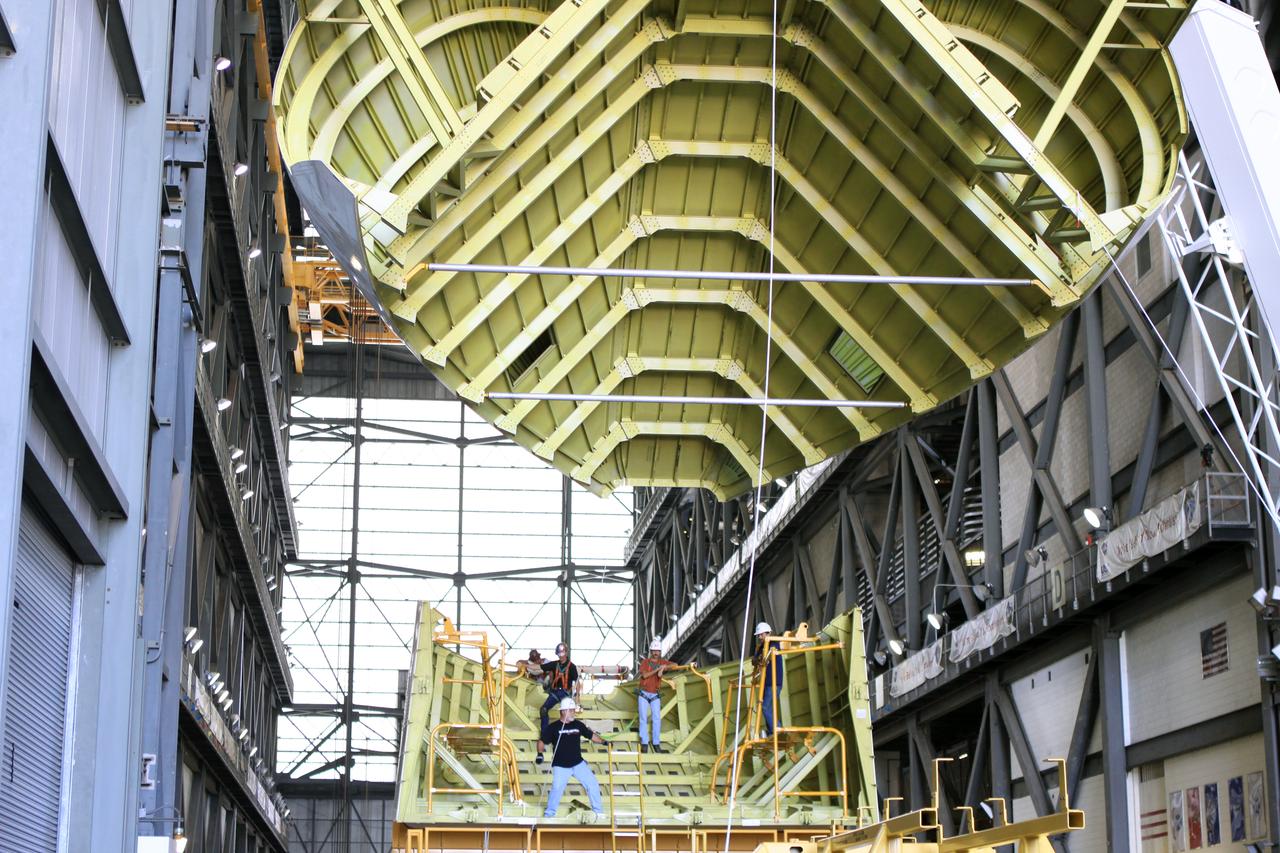
T&R Endeavour, Final Buildup of Tail Cover for Ferry Flight
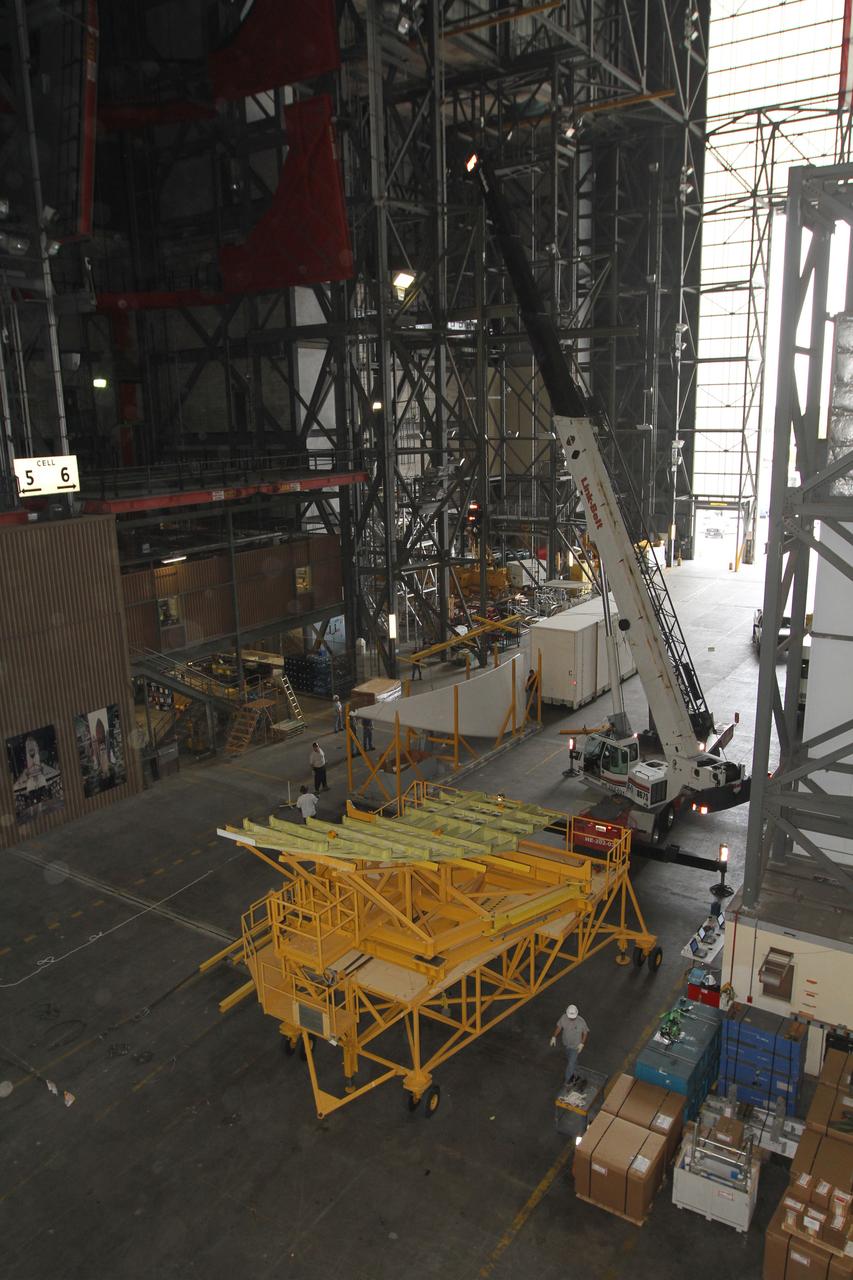
T&R Endeavour Right Side Tail Cone Buildup
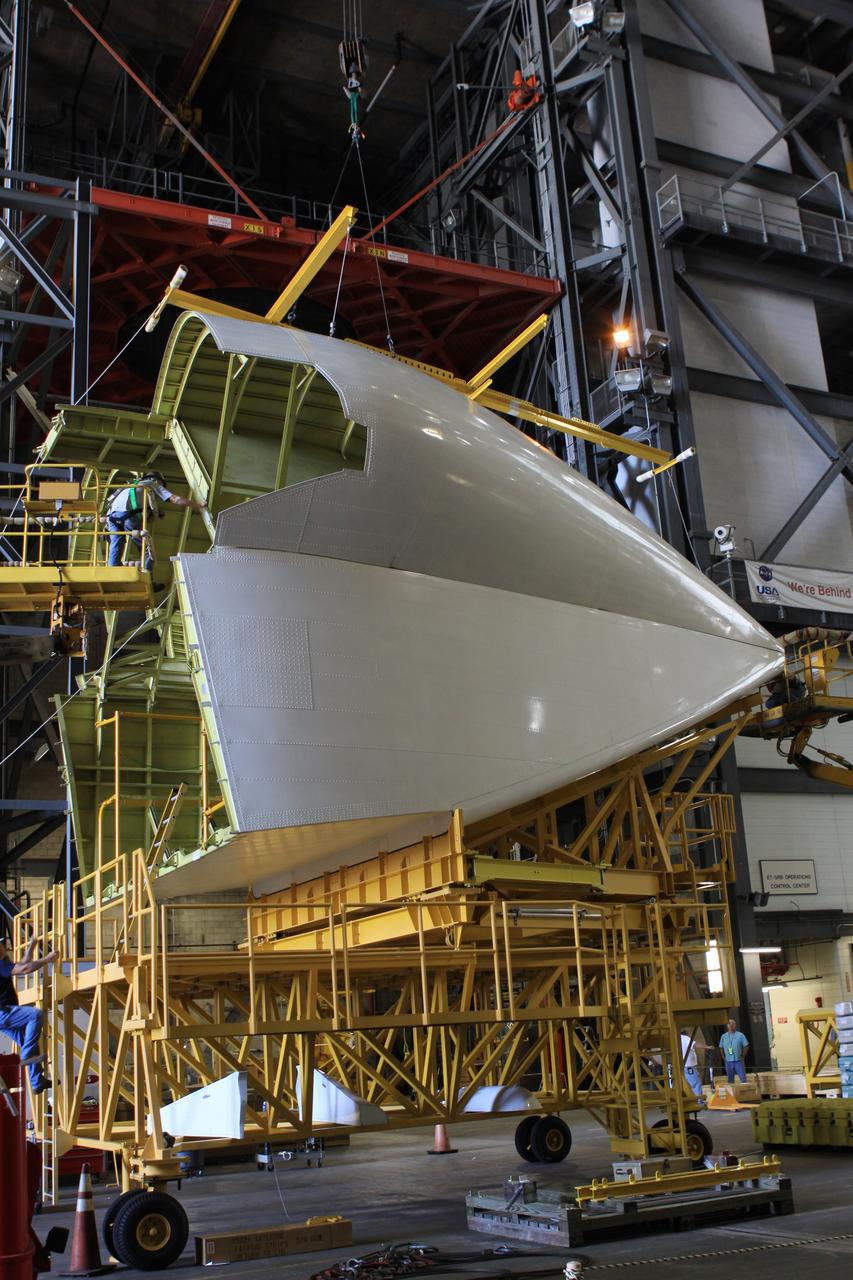
T&R Endeavour, Final Buildup of Tail Cover for Ferry Flight
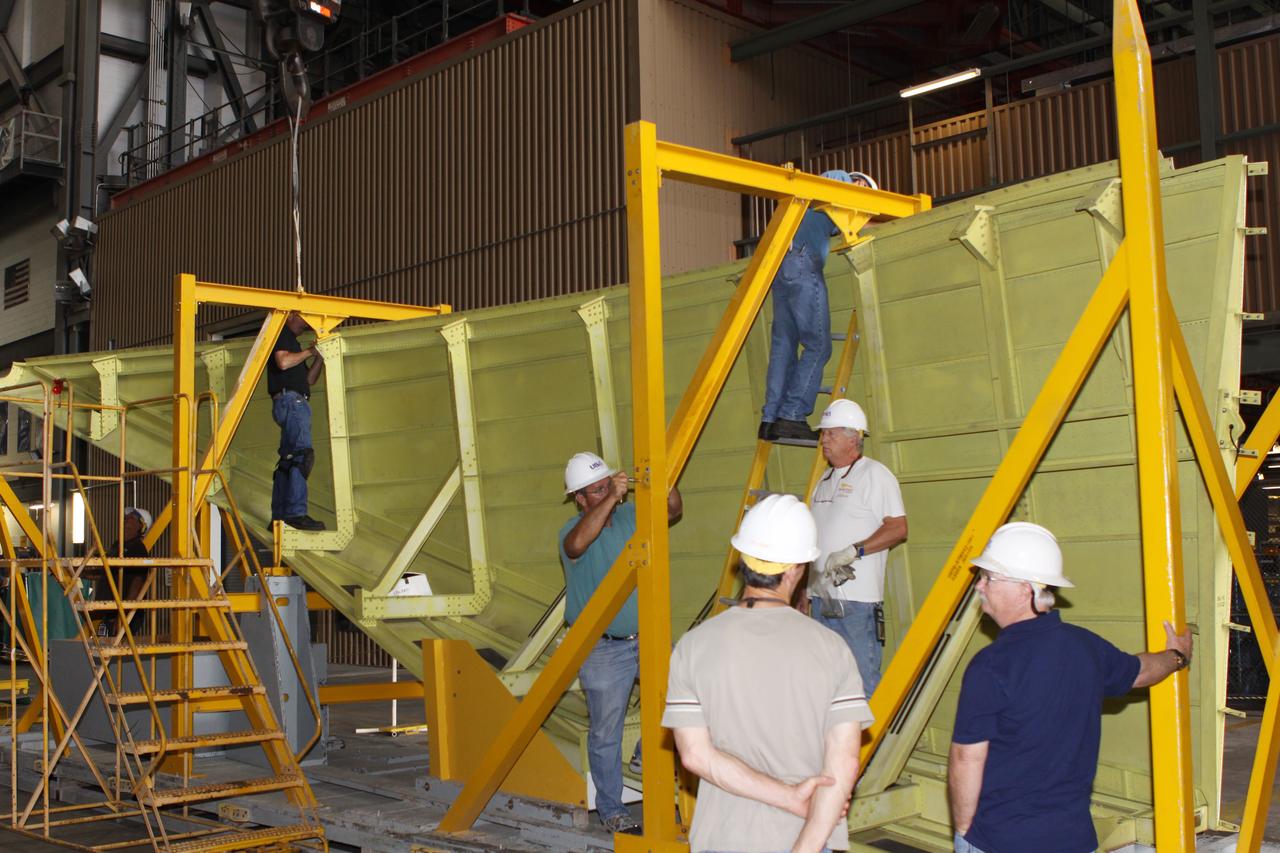
T&R Endeavour Left Side Tail Cone Buildup
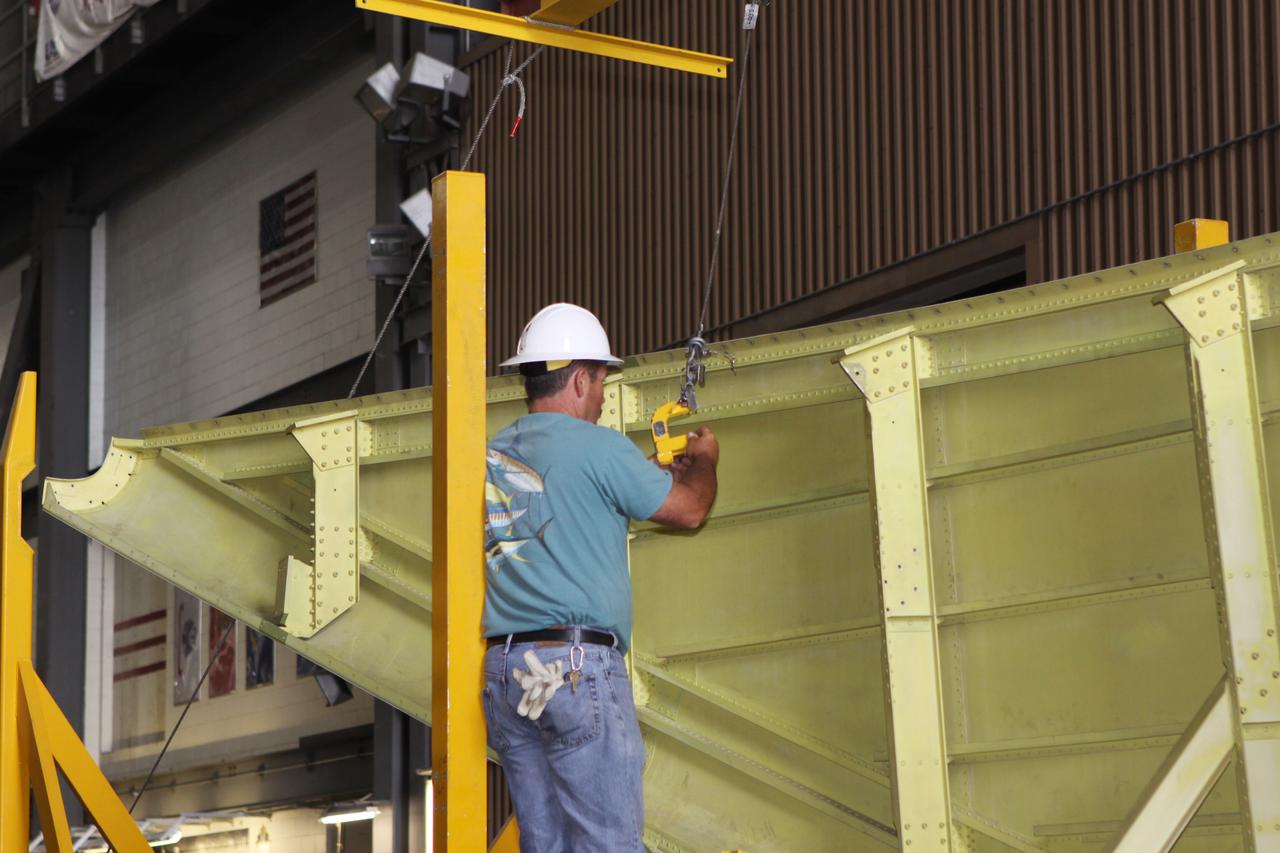
T&R Endeavour Left Side Tail Cone Buildup
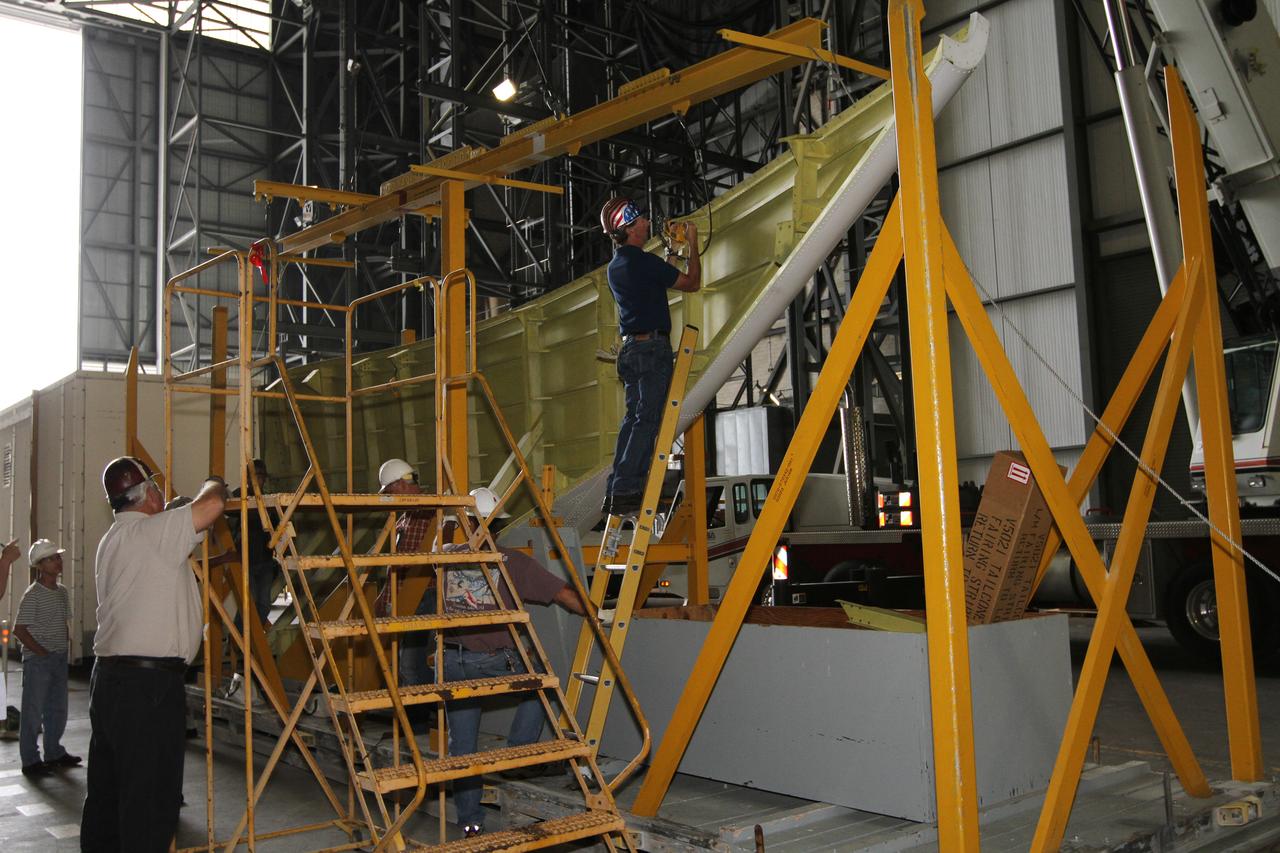
T&R Endeavour Right Side Tail Cone Buildup
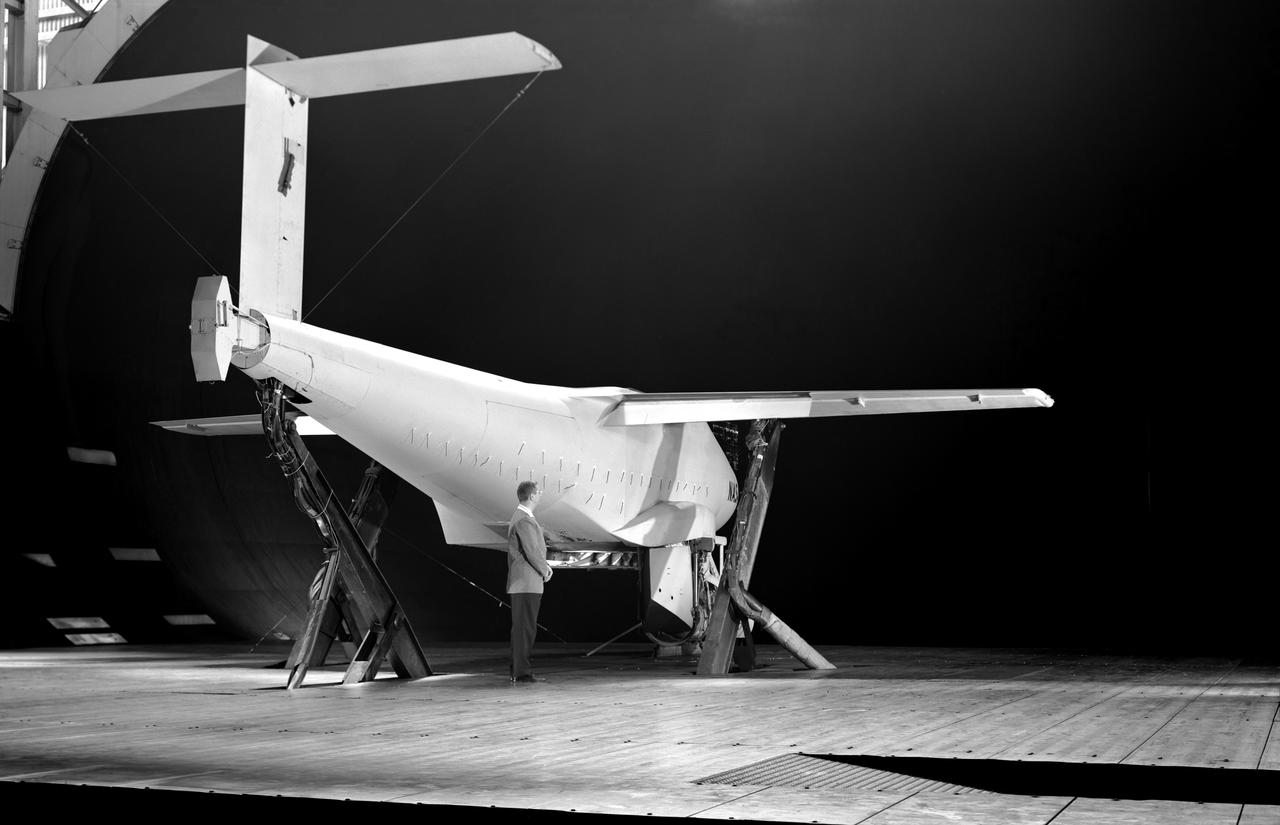
G.E. Fan-in-fuselage model (lifting). 3/4 rear view of fan at low G.P. position. Lift fan on variable height strut for ground effects studies with reaction control. T-Tail.
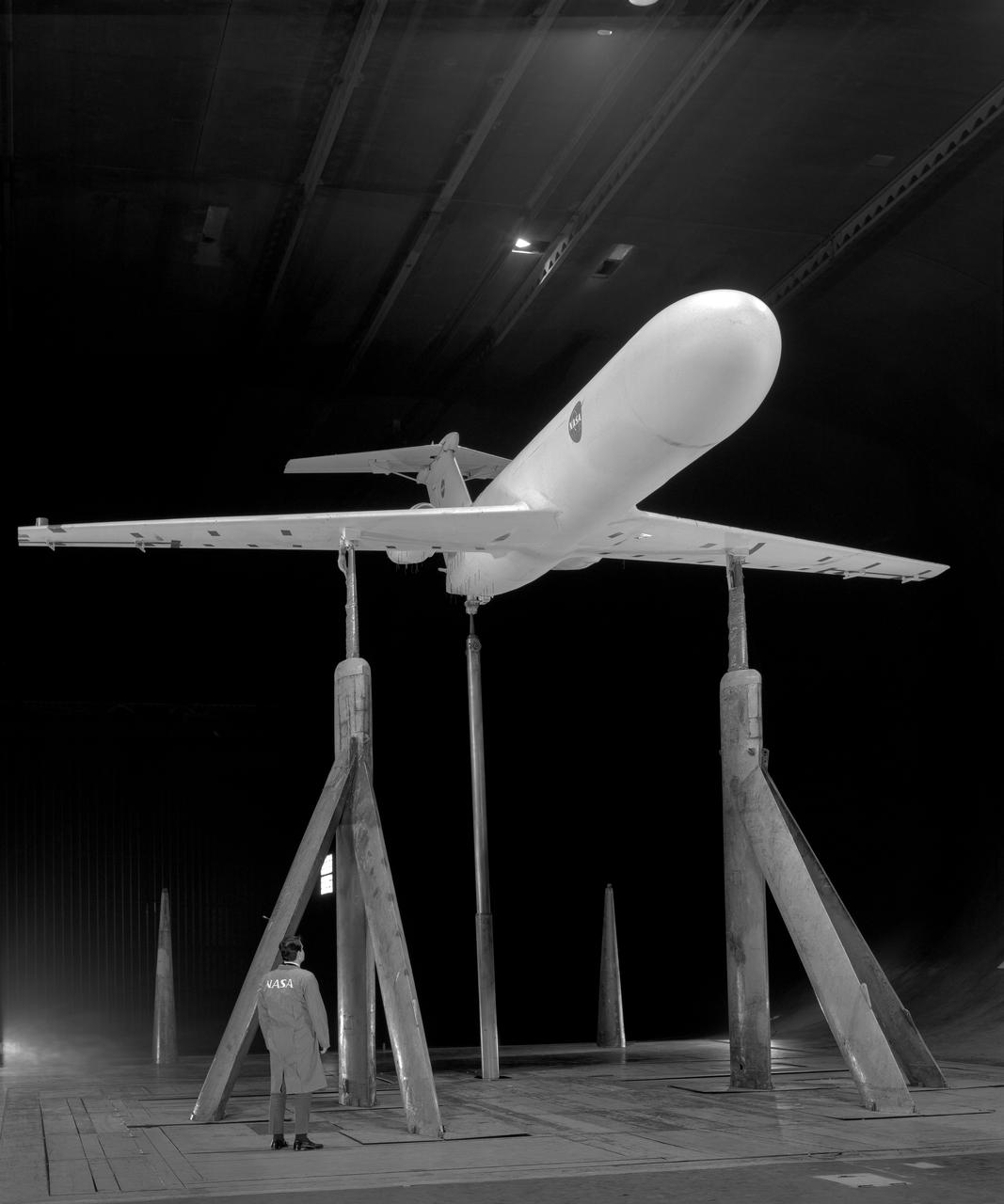
Deep Stall Model in Ames 40x80 foot Wind Tunnel. 3/4 front view from below of swept wing jet transport with T-Tail and Aft Engins, with Art Morris.
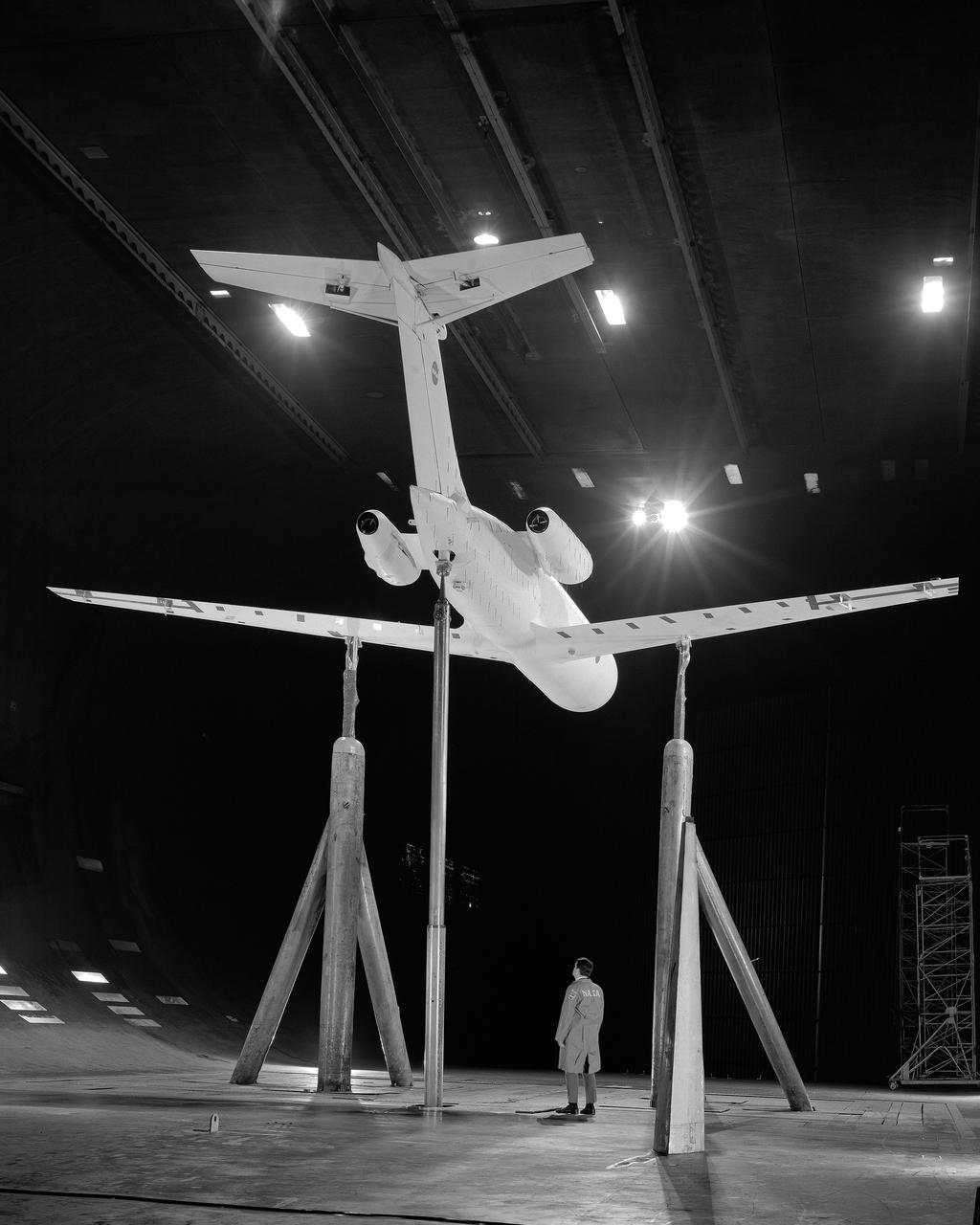
3/4 rear view from below of swept wing jet transport with T-Tail and Aft Engins, with Art Morris. Deep Stall Model in Ames 40x80 foot Wind Tunnel.
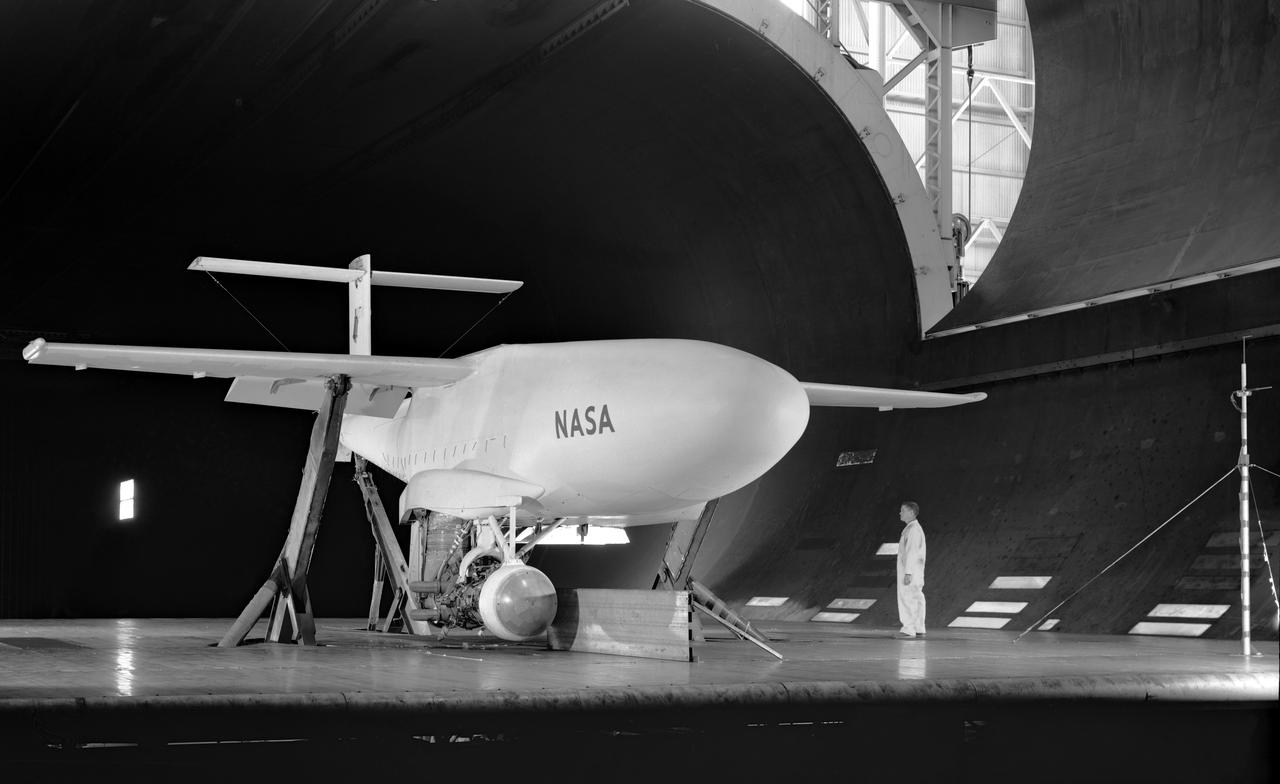
G.E. Fan-in-fuselage model (lifting). 3/4 front view of fan at low G.P. position. Lift fan on variable height strut for ground effects studies. T-Tail
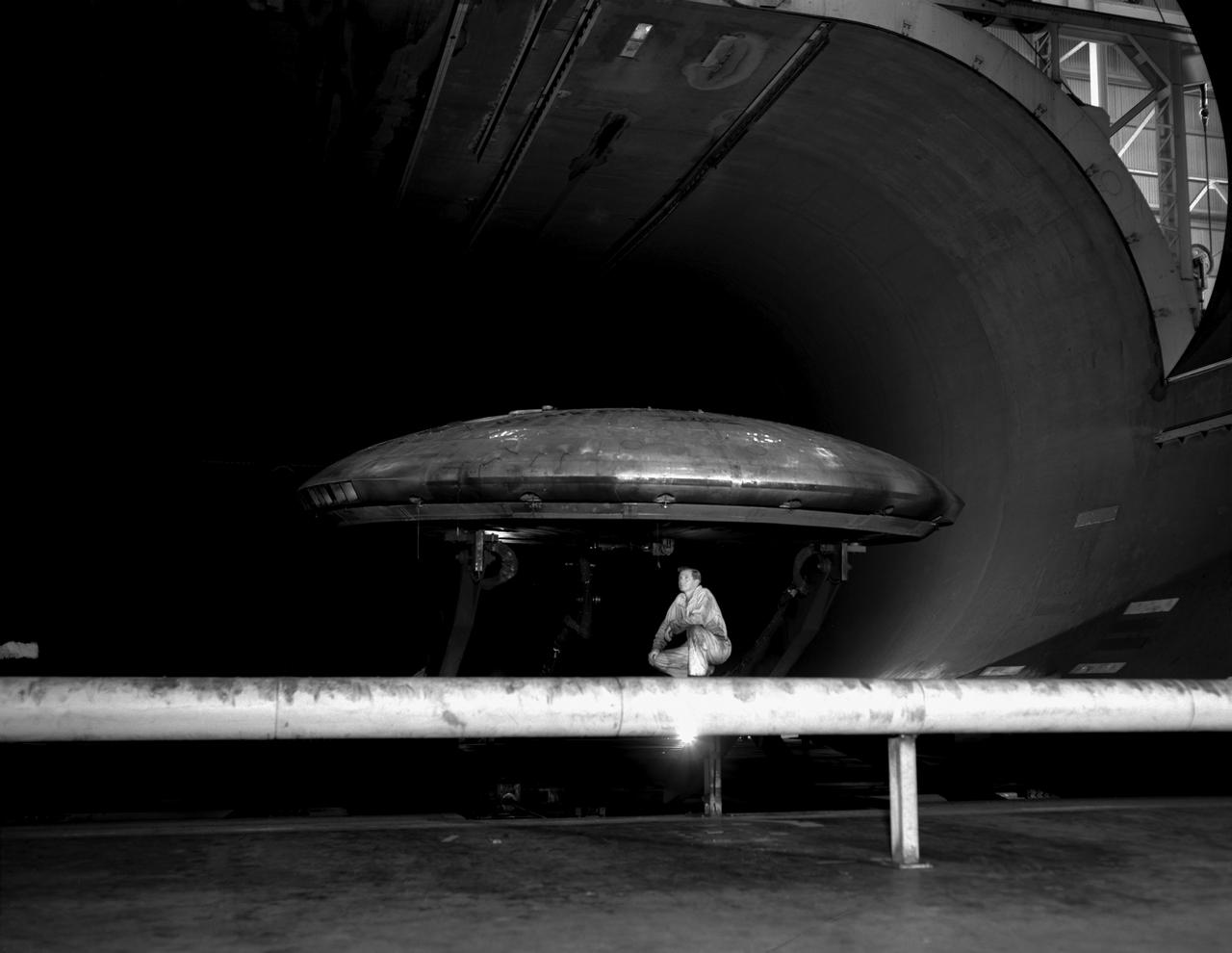
3/4 front view of Avrocar without tail, showing ground board and variable height struts. The ground board minimizes the boundary layer on the floor under the model. black and white negative: KODAK T-MAX 100 Professional. SBA settings neutral SBA on, color SBA on
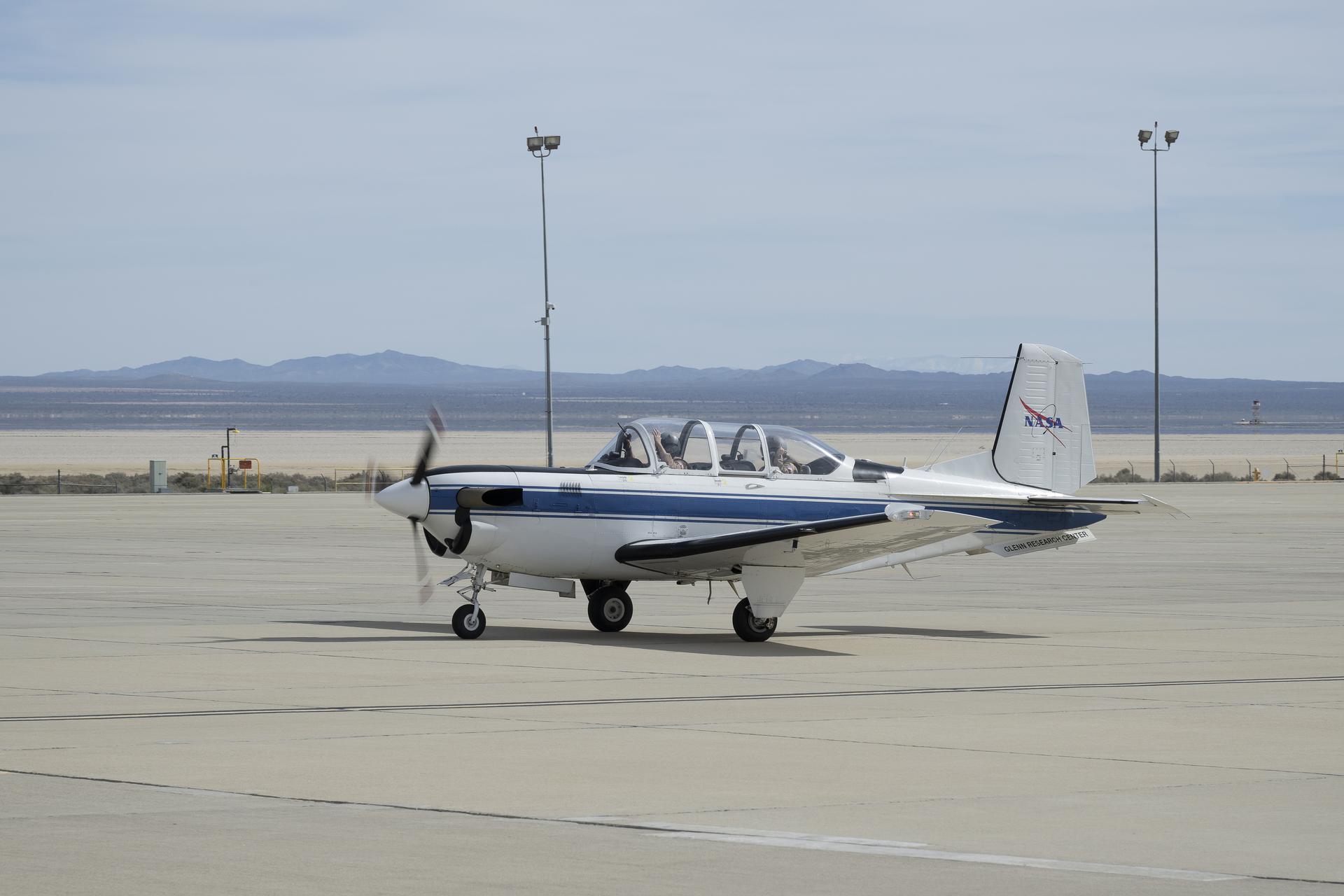
A NASA T-34 aircraft, tail number 602, arrived at NASA’s Armstrong Flight Research Center in Edwards, California, on Feb. 14, 2026. This aircraft was flown from NASA’s Glenn Research Center in Cleveland, to NASA Armstrong, to be evaluated for use as a flight research and pilot training platform for the center.
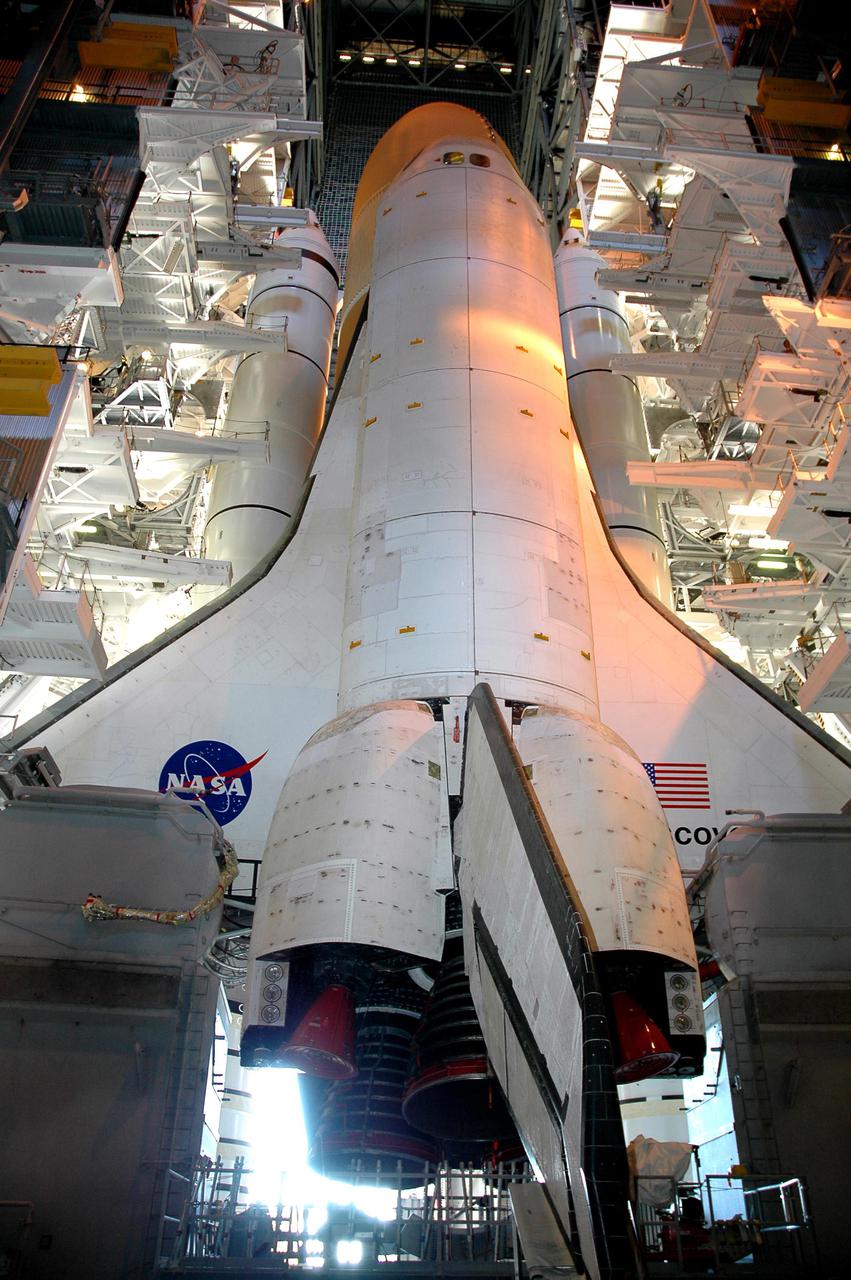
KENNEDY SPACE CENTER, FLA. - Framed in lights both inside and from outside, Space Shuttle Discovery waits on top of the Mobile Launcher Platform in the Vehicle Assembly Building for rollout to Launch Pad 39B. Rollout is expected to begin about 12:01 a.m. June 15 for the 4-mile, 6-hour trip to the pad. On either side of Discovery’s tail and orbital maneuvering system pods are the Tail Masts that support the fluid, gas and electrical requirements of the orbiter’s liquid oxygen and liquid hydrogen aft T-0 umbilicals. Space Shuttle Discovery's Return to Flight mission STS-114 is scheduled for liftoff in a window extending from July 13 to July 31.
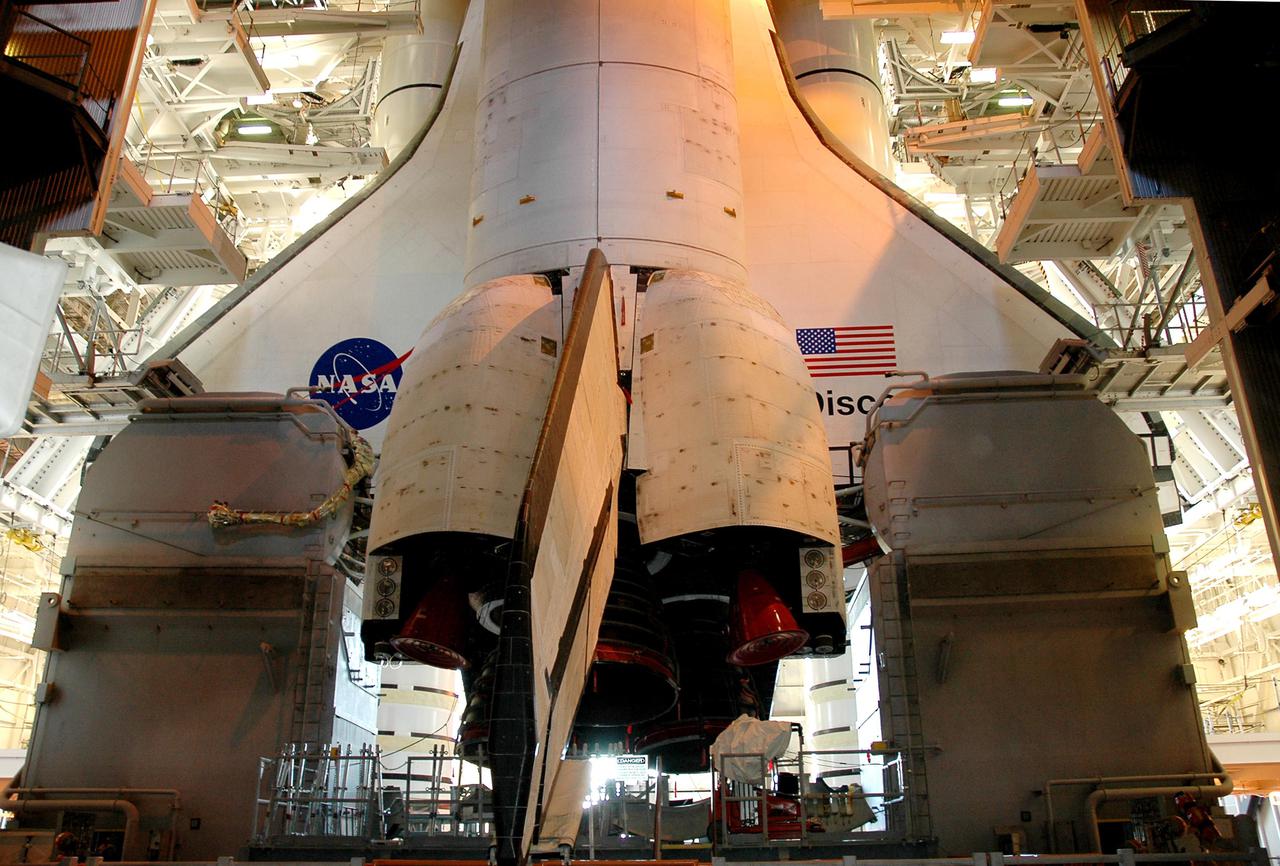
KENNEDY SPACE CENTER, FLA. - Lights inside the Vehicle Assembly Building cast an orange glow on Space Shuttle Discovery as waits on top of the Mobile Launcher Platform for rollout to Launch Pad 39B. Rollout is expected to begin about 12:01 a.m. June 15 for the 4-mile, 6-hour trip to the pad. On either side of Discovery’s tail and orbital maneuvering system pods are the Tail Masts that support the fluid, gas and electrical requirements of the orbiter’s liquid oxygen and liquid hydrogen aft T-0 umbilicals. Space Shuttle Discovery's Return to Flight mission STS-114 is scheduled for liftoff in a window extending from July 13 to July 31.
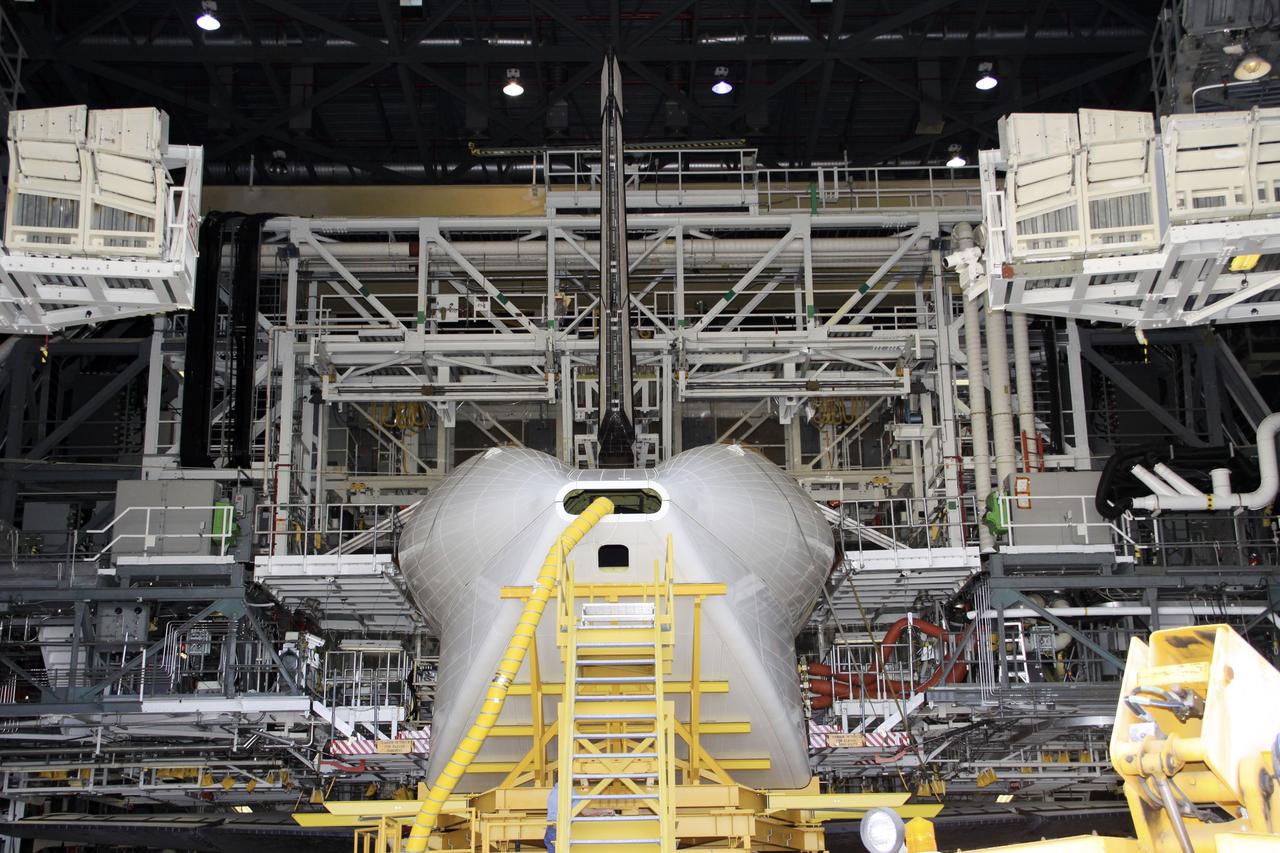
CAPE CANAVERAL, Fla. -- Inside Orbiter Processing Facility-1 at NASA’s Kennedy Space Center in Florida, the tail cone is installed around space shuttle Discovery’s three replica shuttle main engines for protection. The work is part of the Space Shuttle Program’s transition and retirement processing of shuttle Discovery. Discovery is being prepared for display at the Smithsonian’s National Air and Space Museum, Steven F. Udvar-Hazy Center in Chantilly, Va. For more information, visit http://www.nasa.gov/shuttle. Photo credit: NASA/Jim Grossmann
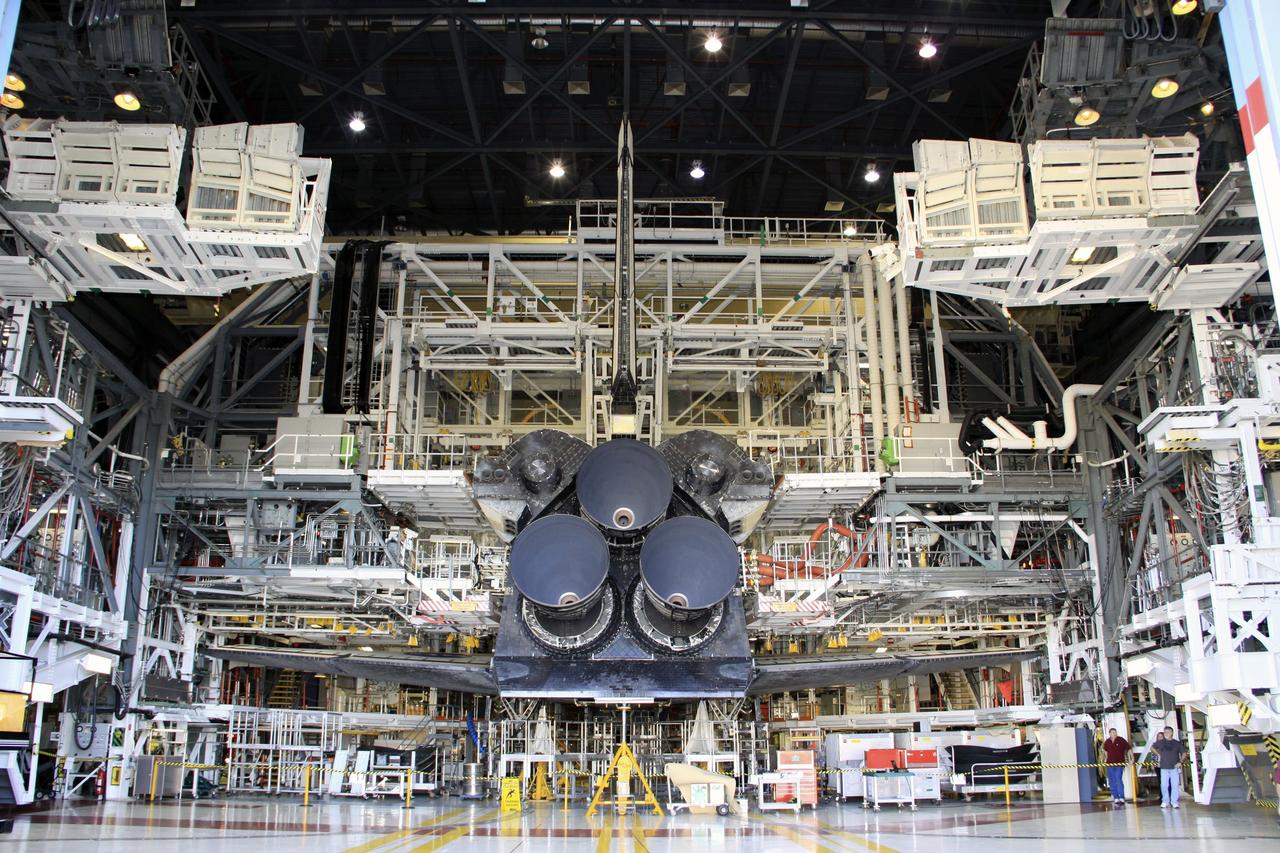
CAPE CANAVERAL, Fla. -- Inside Orbiter Processing Facility-1 at NASA’s Kennedy Space Center in Florida, space shuttle Discovery’s three replica shuttle main engines (RSMEs) are in view as technicians await the arrival of the tail cone. The tail cone will be installed around Discovery’s RSMEs for protection. The work is part of the Space Shuttle Program’s transition and retirement processing of shuttle Discovery. Discovery is being prepared for display at the Smithsonian’s National Air and Space Museum, Steven F. Udvar-Hazy Center in Chantilly, Va. For more information, visit http://www.nasa.gov/shuttle. Photo credit: NASA/Jim Grossmann

CAPE CANAVERAL, Fla. -- Inside Orbiter Processing Facility-1 at NASA’s Kennedy Space Center in Florida, technicians monitor the progress as the tail cone for space shuttle Discovery’s three replica shuttle main engines (RSMEs) arrives. The tail cone will be installed around Discovery’s RSMEs for protection. The work is part of the Space Shuttle Program’s transition and retirement processing of shuttle Discovery. Discovery is being prepared for display at the Smithsonian’s National Air and Space Museum, Steven F. Udvar-Hazy Center in Chantilly, Va. For more information, visit http://www.nasa.gov/shuttle. Photo credit: NASA/Jim Grossmann
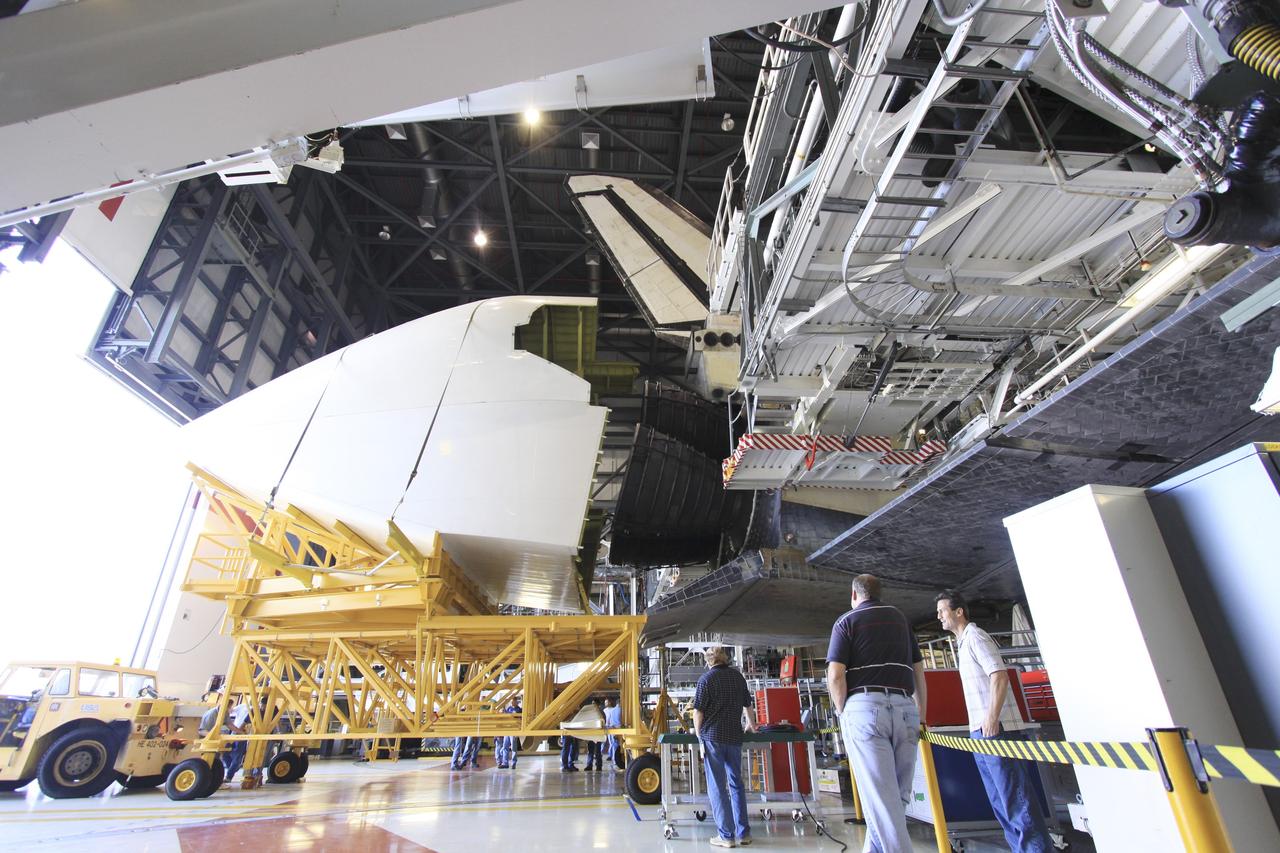
CAPE CANAVERAL, Fla. -- Inside Orbiter Processing Facility-1 at NASA’s Kennedy Space Center in Florida, technicians monitor the progress as the tail cone is installed around space shuttle Discovery’s three replica shuttle main engines for protection. The work is part of the Space Shuttle Program’s transition and retirement processing of shuttle Discovery. Discovery is being prepared for display at the Smithsonian’s National Air and Space Museum, Steven F. Udvar-Hazy Center in Chantilly, Va. For more information, visit http://www.nasa.gov/shuttle. Photo credit: NASA/Jim Grossmann

CAPE CANAVERAL, Fla. -- The tail cone for space shuttle Discovery’s three replica shuttle main engines (RSMEs) arrives at Orbiter Processing Facility-1 at NASA’s Kennedy Space Center in Florida. The tail cone will be installed around Discovery’s RSMEs for protection. The work is part of the Space Shuttle Program’s transition and retirement processing of shuttle Discovery. Discovery is being prepared for display at the Smithsonian’s National Air and Space Museum, Steven F. Udvar-Hazy Center in Chantilly, Va. For more information, visit http://www.nasa.gov/shuttle. Photo credit: NASA/Jim Grossmann
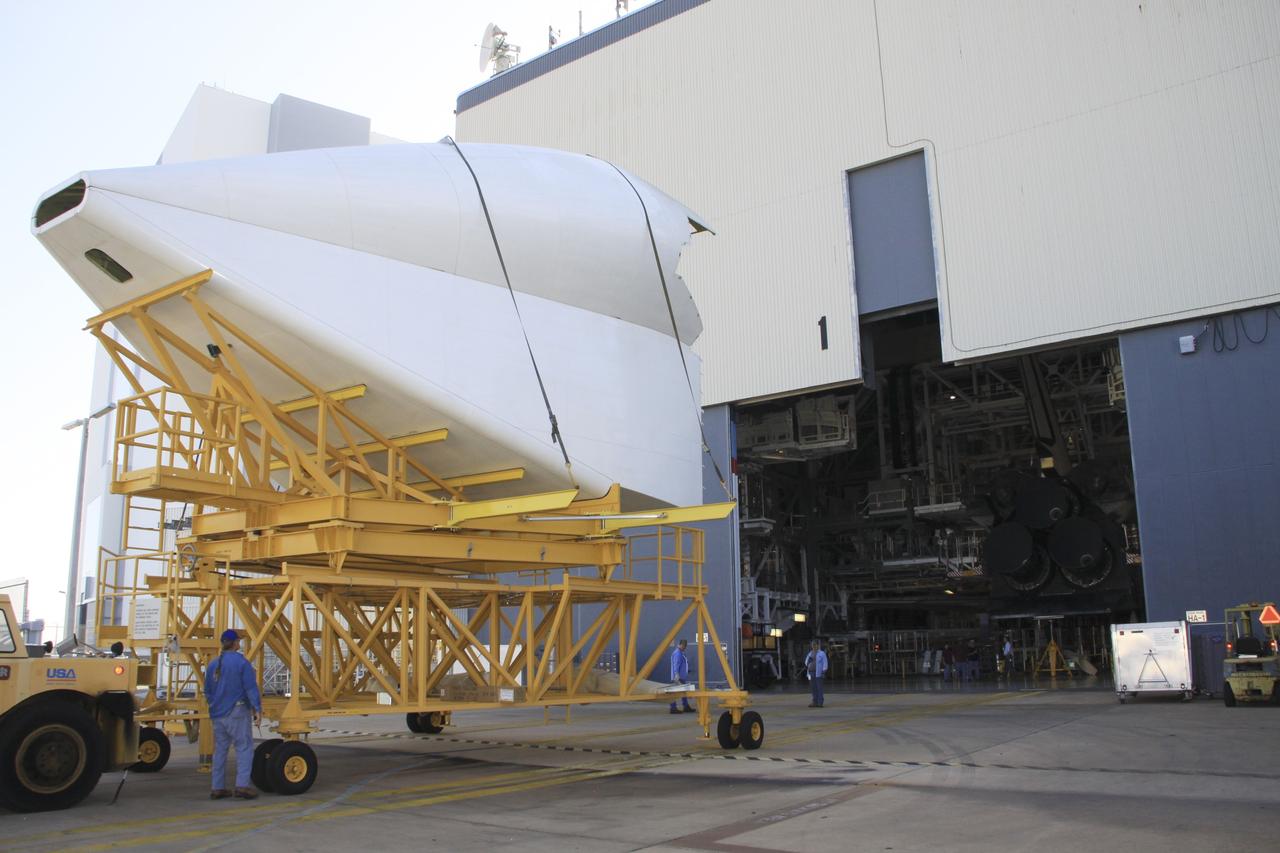
CAPE CANAVERAL, Fla. -- The tail cone for space shuttle Discovery’s three replica shuttle main engines (RSMEs) arrives at Orbiter Processing Facility-1 at NASA’s Kennedy Space Center in Florida. The tail cone will be installed around Discovery’s RSMEs for protection. The work is part of the Space Shuttle Program’s transition and retirement processing of shuttle Discovery. Discovery is being prepared for display at the Smithsonian’s National Air and Space Museum, Steven F. Udvar-Hazy Center in Chantilly, Va. For more information, visit http://www.nasa.gov/shuttle. Photo credit: NASA/Jim Grossmann
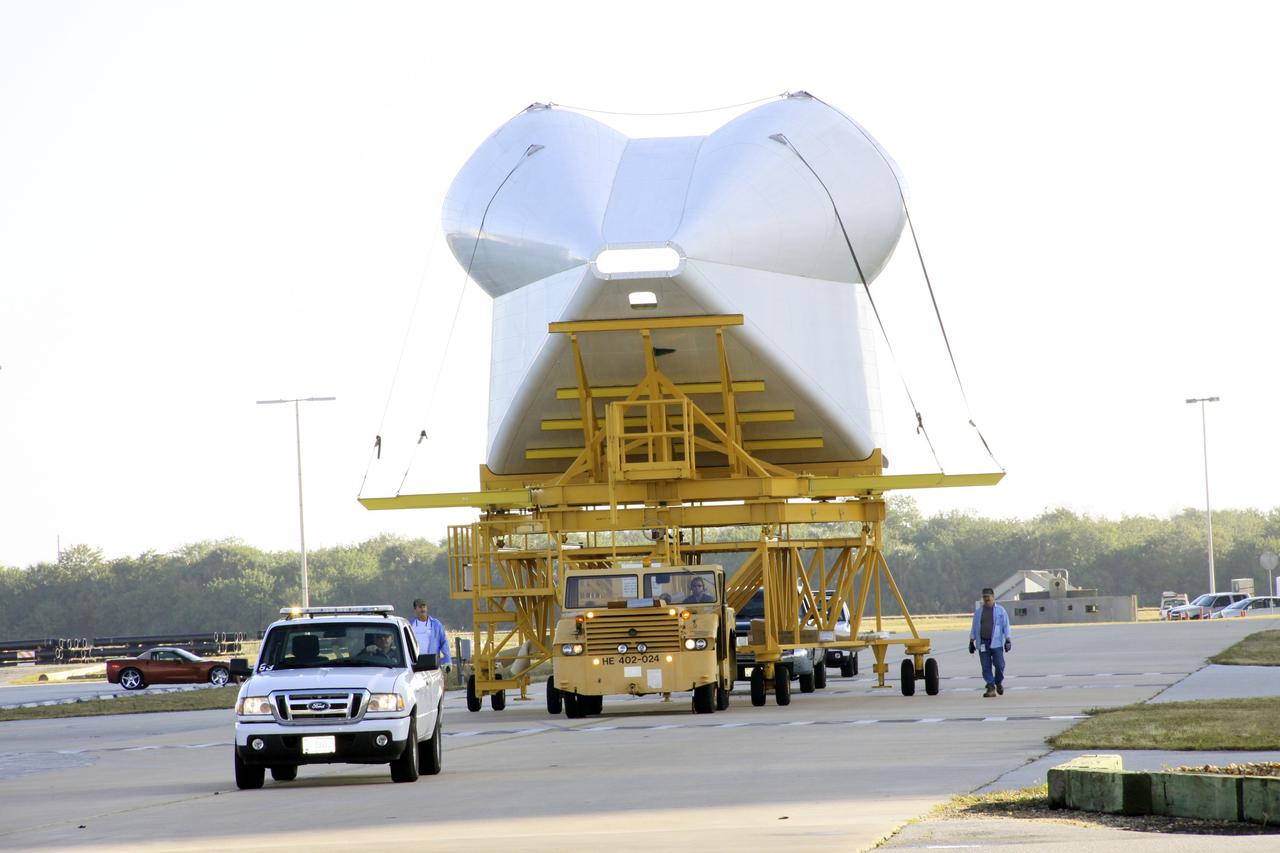
CAPE CANAVERAL, Fla. -- The tail cone for space shuttle Discovery’s three replica shuttle main engines (RSMEs) is being transported to Orbiter processing Facility-1 at NASA’s Kennedy Space Center in Florida. The tail cone will be installed around Discovery’s RSMEs for protection. The work is part of the Space Shuttle Program’s transition and retirement processing of shuttle Discovery. Discovery is being prepared for display at the Smithsonian’s National Air and Space Museum, Steven F. Udvar-Hazy Center in Chantilly, Va. For more information, visit http://www.nasa.gov/shuttle. Photo credit: NASA/Jim Grossmann
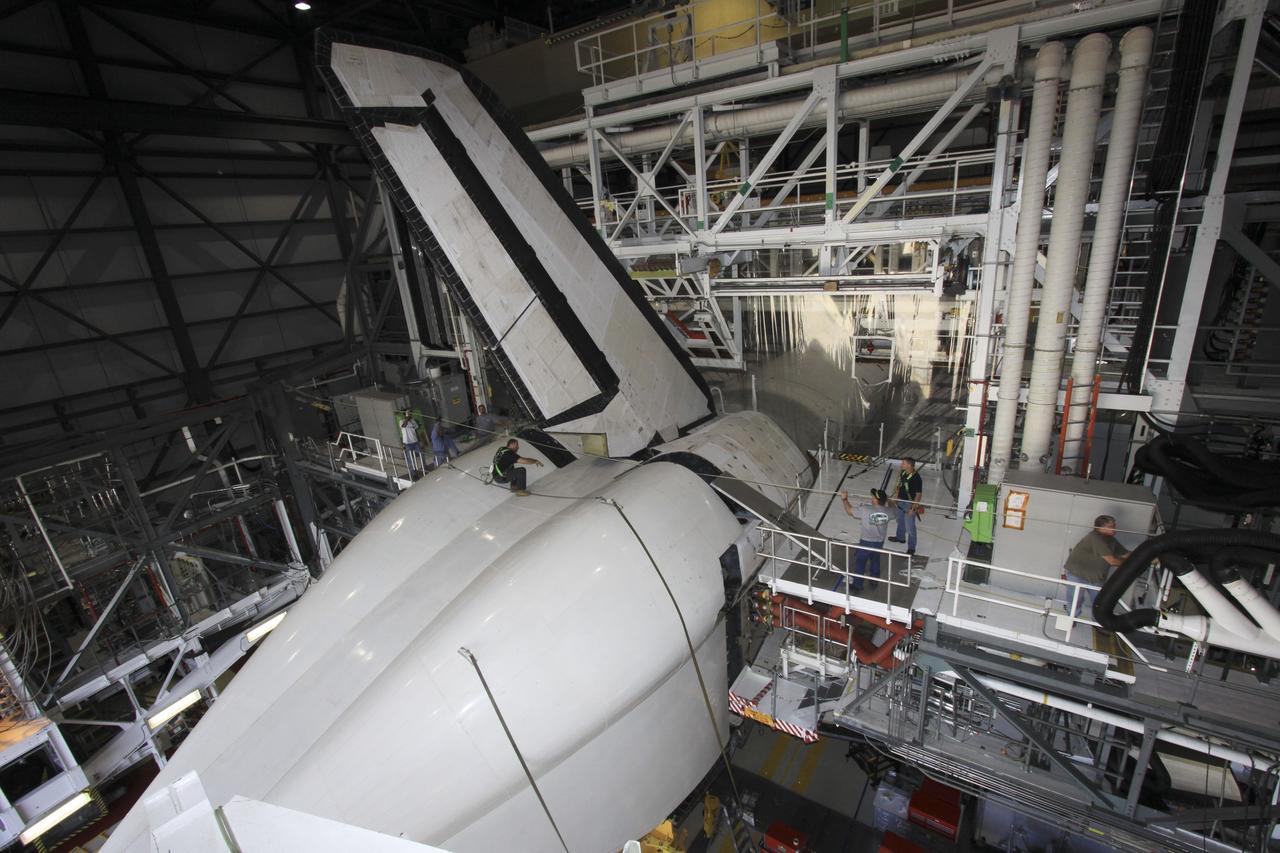
CAPE CANAVERAL, Fla. -- Inside Orbiter Processing Facility-1 at NASA’s Kennedy Space Center in Florida, technicians help secure the tail cone around space shuttle Discovery’s three replica shuttle main engines for protection. The work is part of the Space Shuttle Program’s transition and retirement processing of shuttle Discovery. Discovery is being prepared for display at the Smithsonian’s National Air and Space Museum, Steven F. Udvar-Hazy Center in Chantilly, Va. For more information, visit http://www.nasa.gov/shuttle. Photo credit: NASA/Jim Grossmann
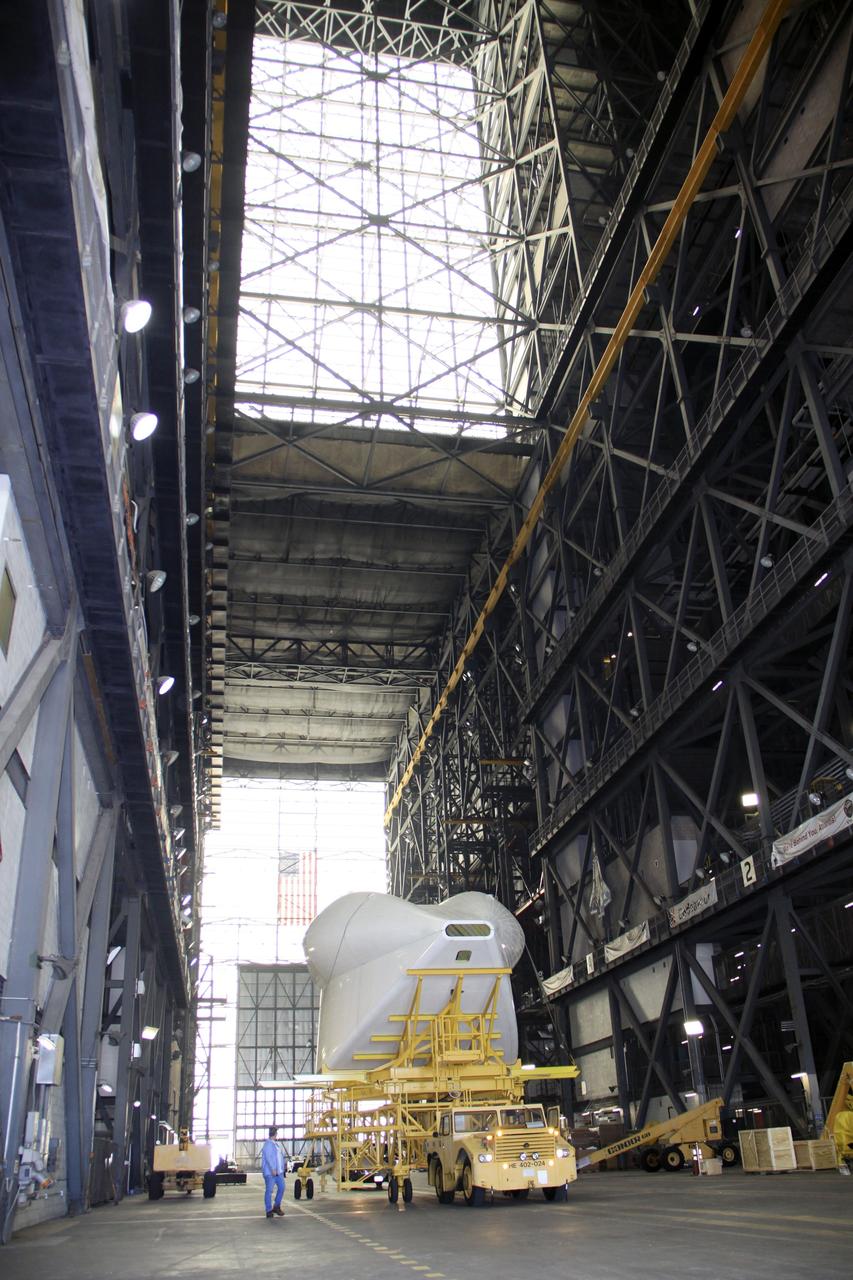
CAPE CANAVERAL, Fla. -- In the transfer aisle of the Vehicle Assembly Building at NASA’s Kennedy Space Center in Florida, the tail cone for space shuttle Discovery’s three replica shuttle main engines (RSMEs) is being transported to Orbiter Processing Facility-1. The tail cone will be installed around Discovery’s RSMEs for protection. The work is part of the Space Shuttle Program’s transition and retirement processing of shuttle Discovery. Discovery is being prepared for display at the Smithsonian’s National Air and Space Museum, Steven F. Udvar-Hazy Center in Chantilly, Va. For more information, visit http://www.nasa.gov/shuttle. Photo credit: NASA/Jim Grossmann
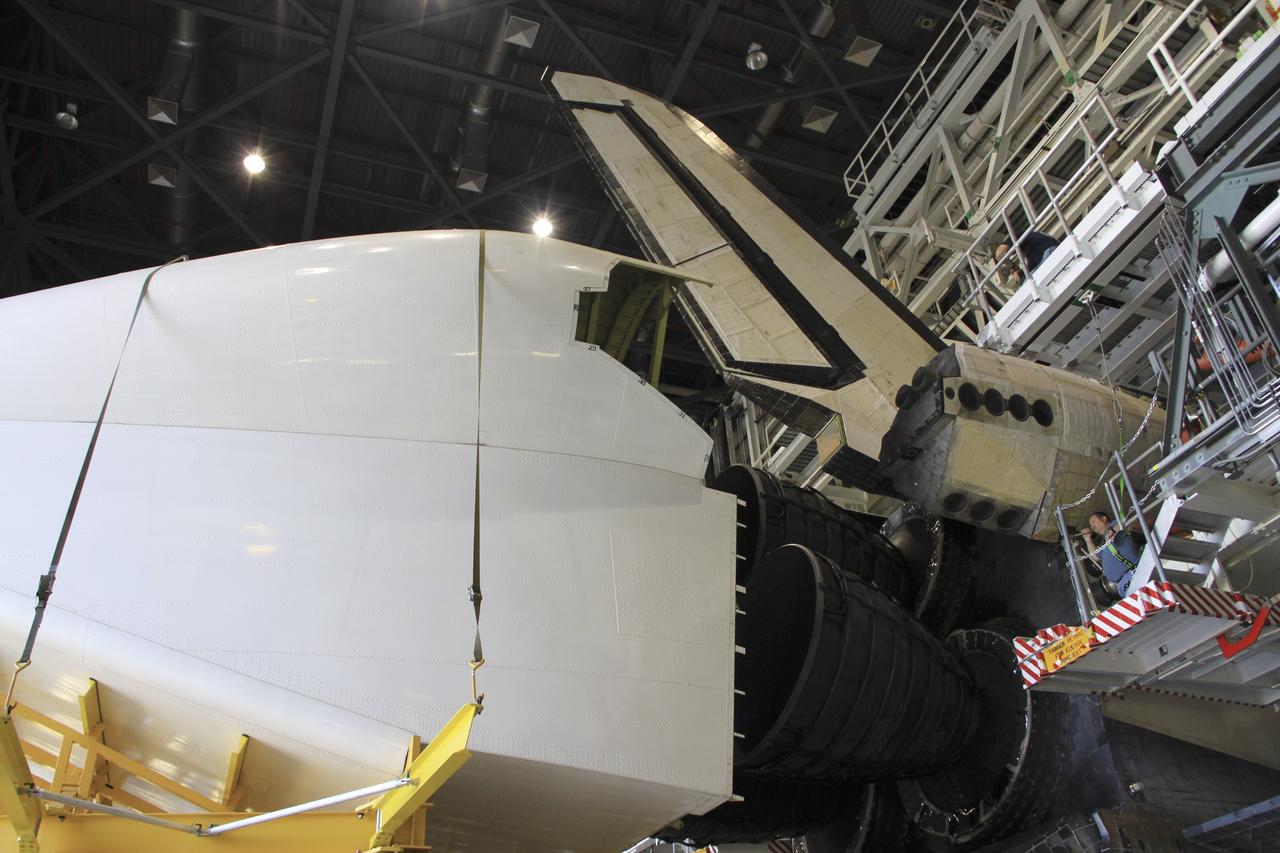
CAPE CANAVERAL, Fla. -- Inside Orbiter Processing Facility-1 at NASA’s Kennedy Space Center in Florida, a technician monitors the progress as the tail cone is installed around space shuttle Discovery’s three replica shuttle main engines for protection. The work is part of the Space Shuttle Program’s transition and retirement processing of shuttle Discovery. Discovery is being prepared for display at the Smithsonian’s National Air and Space Museum, Steven F. Udvar-Hazy Center in Chantilly, Va. For more information, visit http://www.nasa.gov/shuttle. Photo credit: NASA/Jim Grossmann

CAPE CANAVERAL, Fla. -- Inside Orbiter Processing Facility-1 at NASA’s Kennedy Space Center in Florida, a view from inside the tail cone reveals space shuttle Discovery’s three replica shuttle main engines (RSMEs). The tail cone is being installed around the RSMEs for protection. The work is part of the Space Shuttle Program’s transition and retirement processing of shuttle Discovery. Discovery is being prepared for display at the Smithsonian’s National Air and Space Museum, Steven F. Udvar-Hazy Center in Chantilly, Va. For more information, visit http://www.nasa.gov/shuttle. Photo credit: NASA/Jim Grossmann
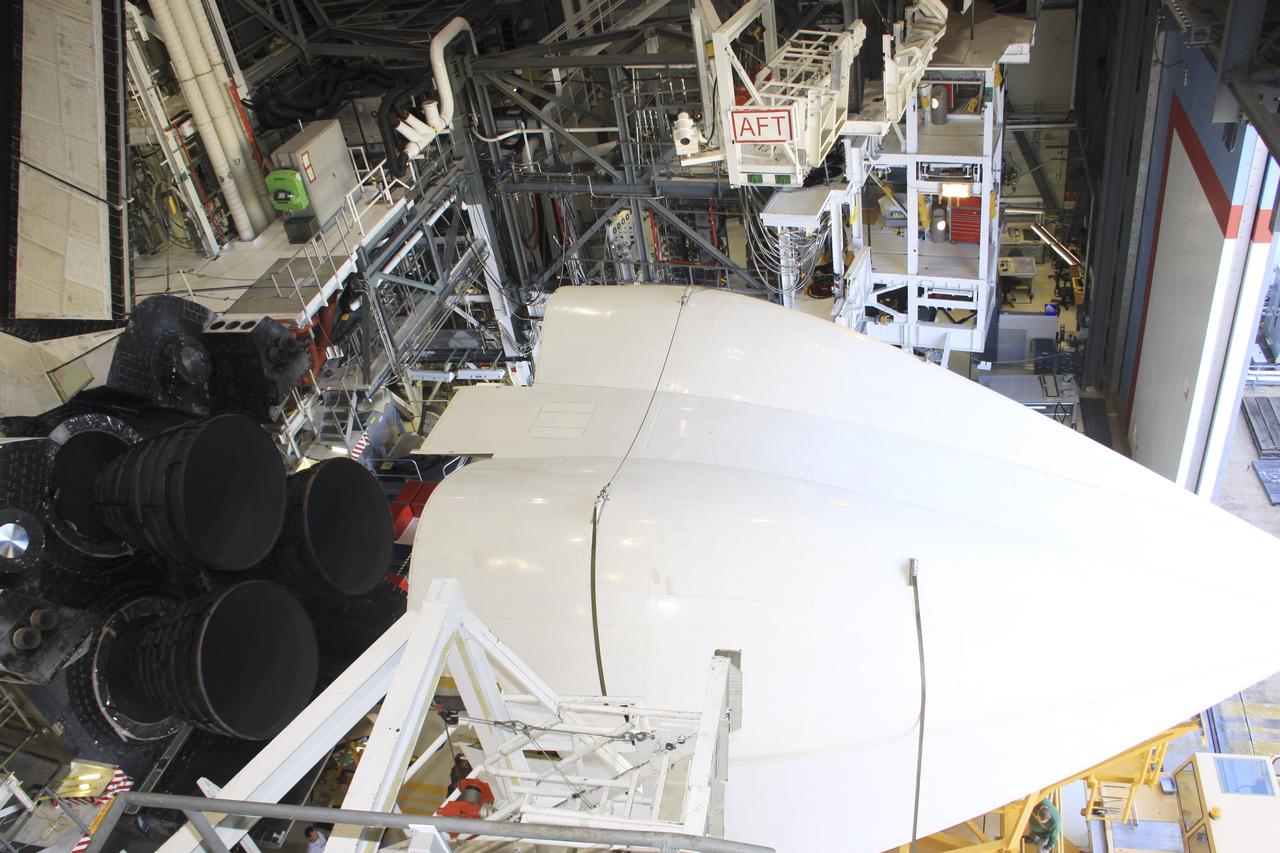
CAPE CANAVERAL, Fla. -- Inside Orbiter Processing Facility-1 at NASA’s Kennedy Space Center in Florida, the tail cone is being installed around Discovery’s three replica shuttle main engines for protection. The work is part of the Space Shuttle Program’s transition and retirement processing of shuttle Discovery. Discovery is being prepared for display at the Smithsonian’s National Air and Space Museum, Steven F. Udvar-Hazy Center in Chantilly, Va. For more information, visit http://www.nasa.gov/shuttle. Photo credit: NASA/Jim Grossmann
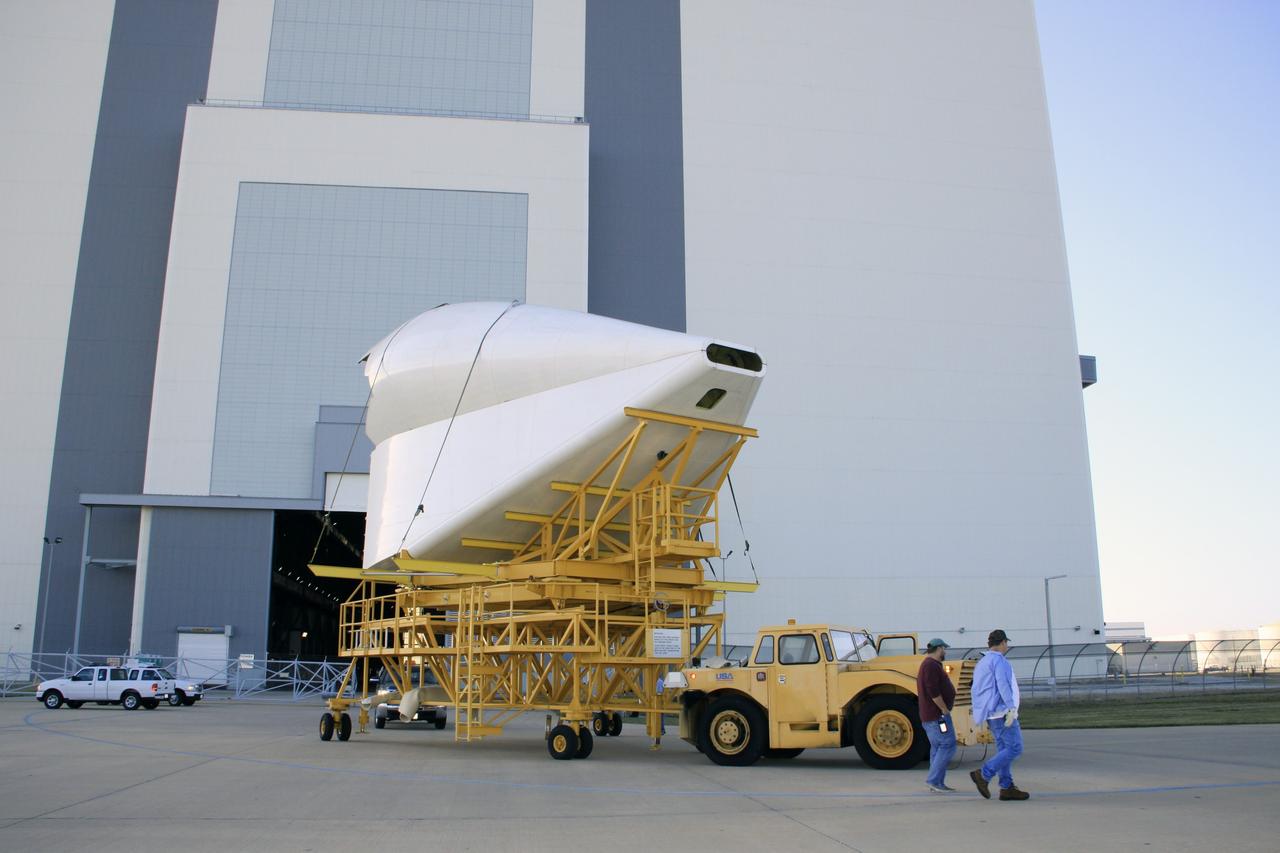
CAPE CANAVERAL, Fla. -- The tail cone for space shuttle Discovery’s three replica shuttle main engines (RSMEs) is being transported from the Vehicle Assembly Building to Orbiter Processing Facility-1 at NASA’s Kennedy Space Center in Florida. The tail cone will be installed around Discovery’s RSMEs for protection. The work is part of the Space Shuttle Program’s transition and retirement processing of shuttle Discovery. Discovery is being prepared for display at the Smithsonian’s National Air and Space Museum, Steven F. Udvar-Hazy Center in Chantilly, Va. For more information, visit http://www.nasa.gov/shuttle. Photo credit: NASA/Jim Grossmann
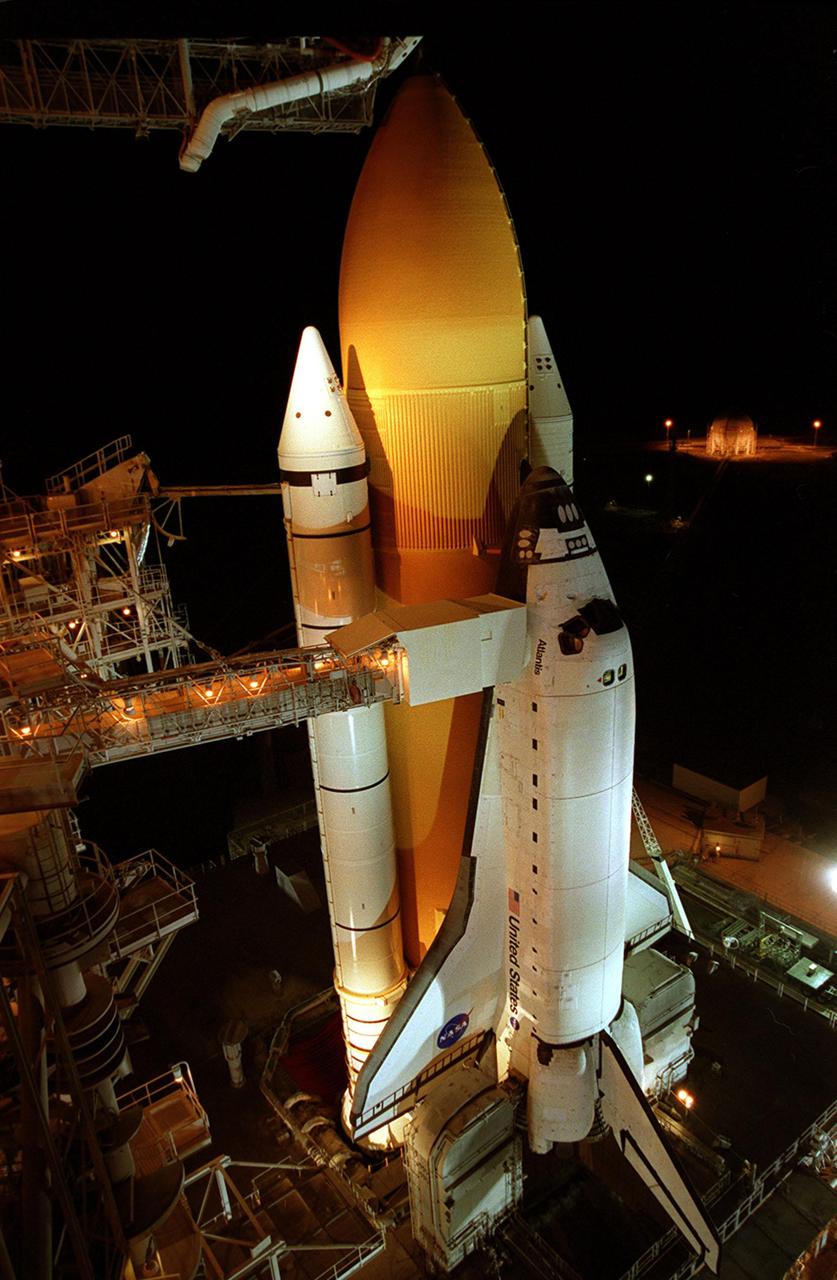
This closeup reveals Space Shuttle Atlantis after rollback of the Rotating Service Structure. Extended to the side of Atlantis is the orbiter access arm, with the White Room at its end. The White Room provides entry for the crew into Atlantis’s cockpit. Below Atlantis, on either side of the tail, are the tail service masts. They support the fluid, gas and electrical requirements of the orbiter’s liquid oxygen and liquid hydrogen aft T-0 umbilicals. Atlantis is carrying the U.S. Laboratory Destiny, a key module in the growth of the International Space Station. Destiny will be attached to the Unity node on the Space Station using the Shuttle’s robotic arm. Three spacewalks are required to complete the planned construction work during the 11-day mission. Launch is targeted for 6:11 p.m. EST and the planned landing at KSC Feb. 18 about 1:39 p.m. This mission marks the seventh Shuttle flight to the Space Station, the 23rd flight of Atlantis and the 102nd flight overall in NASA’s Space Shuttle program
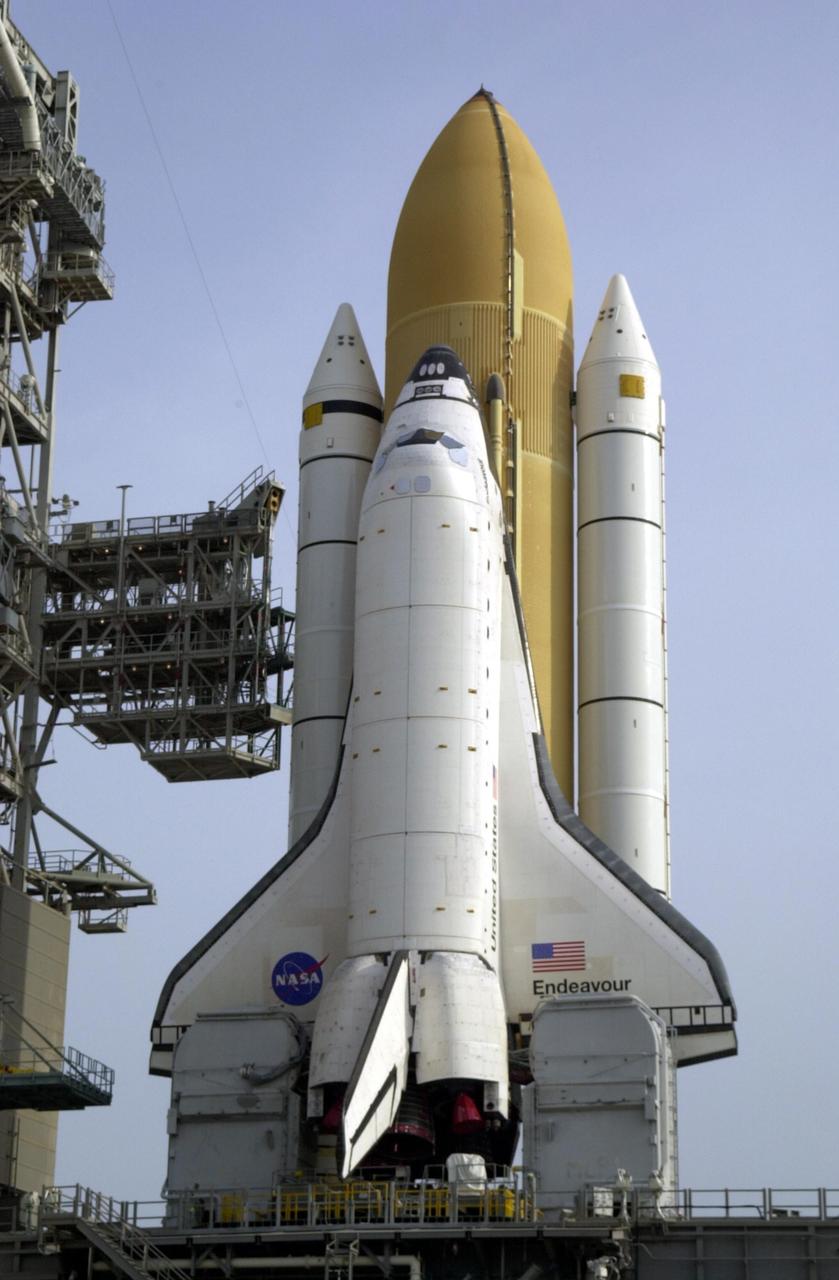
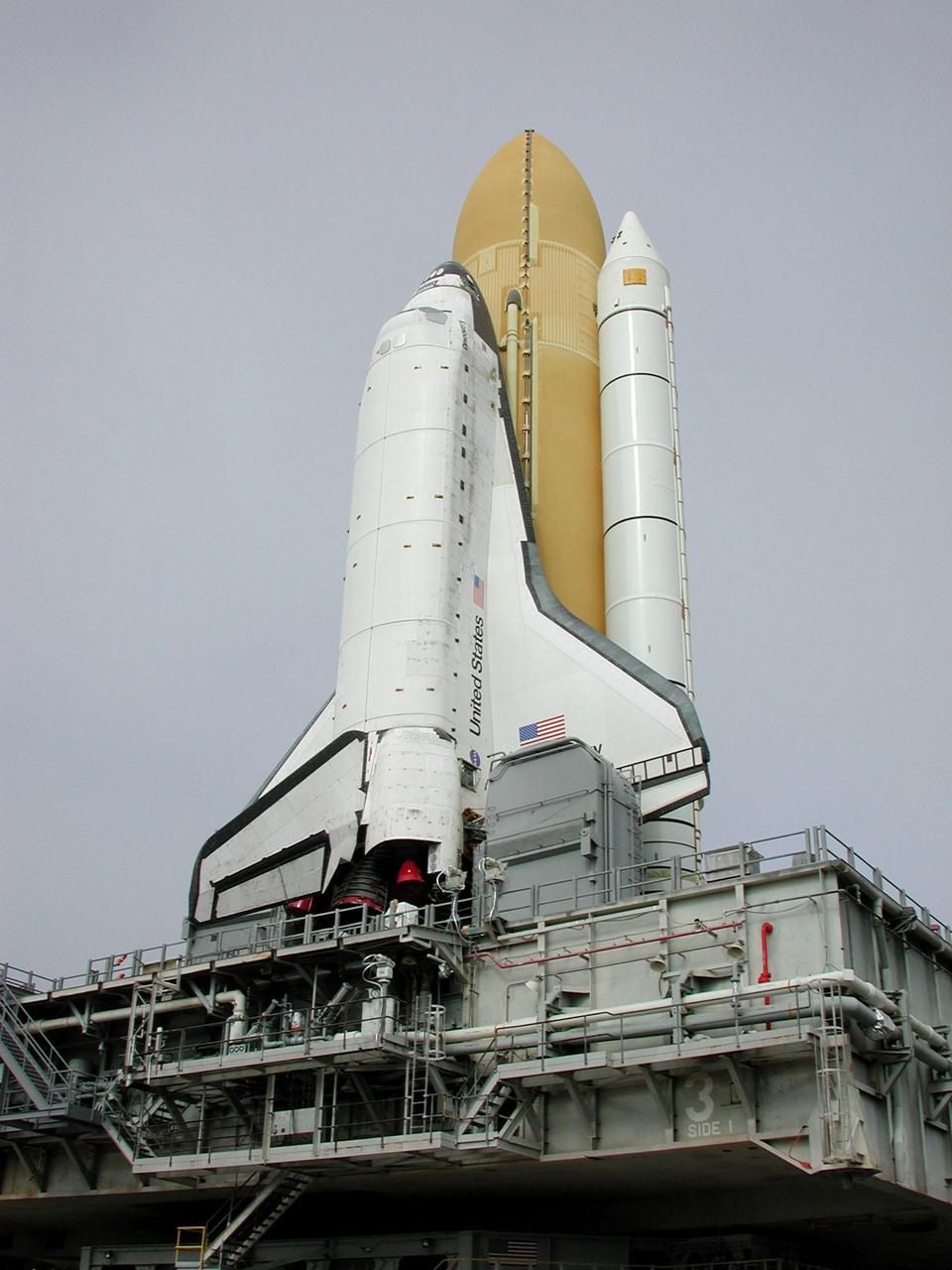
KENNEDY SPACE CENTER, FLA. -- Space Shuttle Endeavour rests on Launch Pad 39A after rollout from the Vehicle Assembly Building. The Shuttle comprises the orbiter, in front, and the taller orange external tank behind it flanked by twin solid rocket boosters. On either side of Endeavour's tail and main engines are the tail service masts that support the fluid,, gas and electrical requirements of the orbiter's liquid oxyen and liquid hydrogen aft T-0 umbilicals. Mission STS-111 is designated UF-2, the 14th assembly flight to the International Space Station. Endeavour's payload includes the Multi-Purpose Logistics Module Leonardo and Mobile Base System. The mission also will swap resident crews on the Station, carrying the Expedition 5 crew and returning to Earth Expedition 4. Liftoff of Endeavour is scheduled between 4 and 8 p.m. May 30, 2002
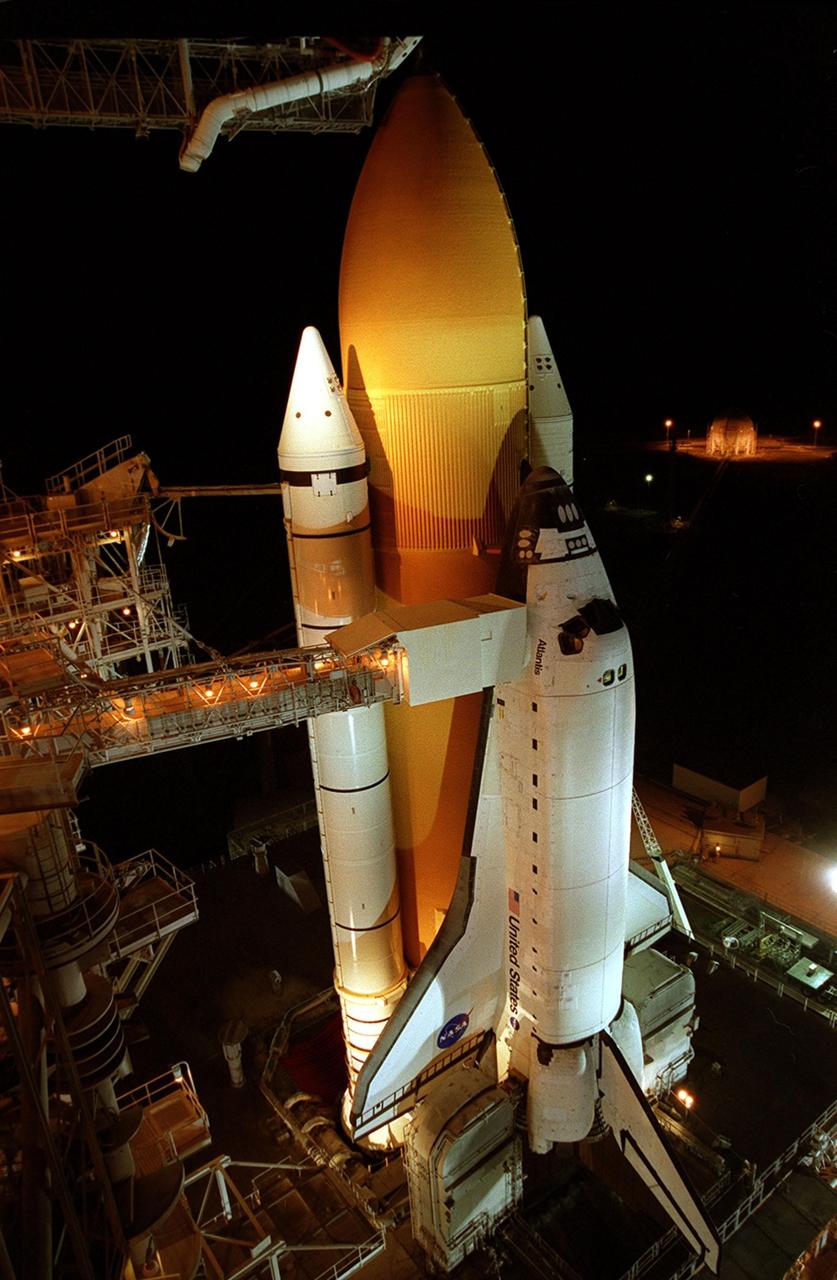
This closeup reveals Space Shuttle Atlantis after rollback of the Rotating Service Structure. Extended to the side of Atlantis is the orbiter access arm, with the White Room at its end. The White Room provides entry for the crew into Atlantis’s cockpit. Below Atlantis, on either side of the tail, are the tail service masts. They support the fluid, gas and electrical requirements of the orbiter’s liquid oxygen and liquid hydrogen aft T-0 umbilicals. Atlantis is carrying the U.S. Laboratory Destiny, a key module in the growth of the International Space Station. Destiny will be attached to the Unity node on the Space Station using the Shuttle’s robotic arm. Three spacewalks are required to complete the planned construction work during the 11-day mission. Launch is targeted for 6:11 p.m. EST and the planned landing at KSC Feb. 18 about 1:39 p.m. This mission marks the seventh Shuttle flight to the Space Station, the 23rd flight of Atlantis and the 102nd flight overall in NASA’s Space Shuttle program
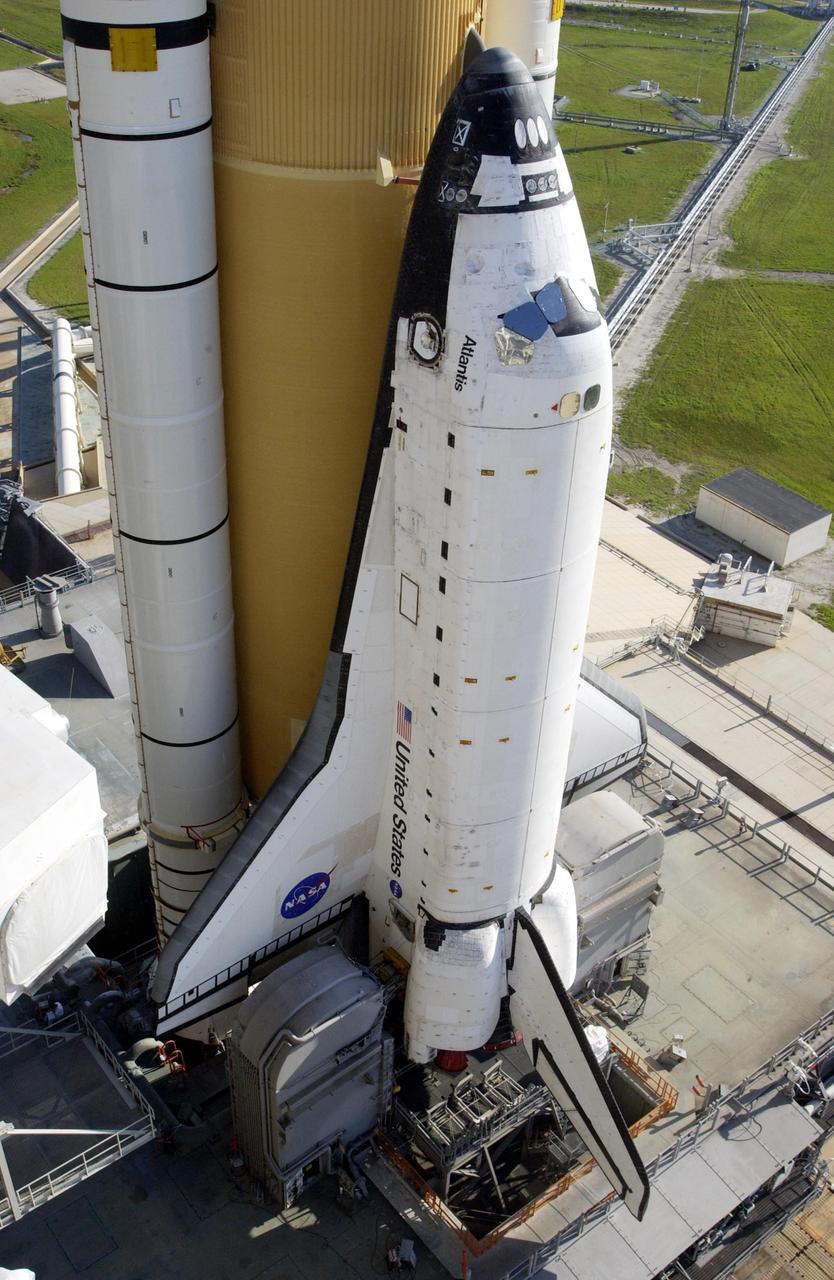
KENNEDY SPACE CENTER, FLA. -- After an early morning rollout, Space Shuttle Atlantis sits on the launch pad. Visible near the tail are the tail service masts that support the fluid, gas and electrical requirements of the orbiter's liquid oxygen and liquid hydrogen aft T-0 umbilicals. After being stacked with its solid rocket boosters and external tank, Atlantis began its rollout to Launch Pad 39B at 2:27 a.m. EDT in preparation for launch to the International Space Station. The Shuttle arrived at the Pad and was hard down at 9:38 a.m. Launch is scheduled no earlier than Oct. 2 for mission STS-112, the 15th assembly flight to the International Space Station. Atlantis will carry the S1 Integrated Truss Structure, which will be attached to the central truss segment, the S0 truss, during the mission.
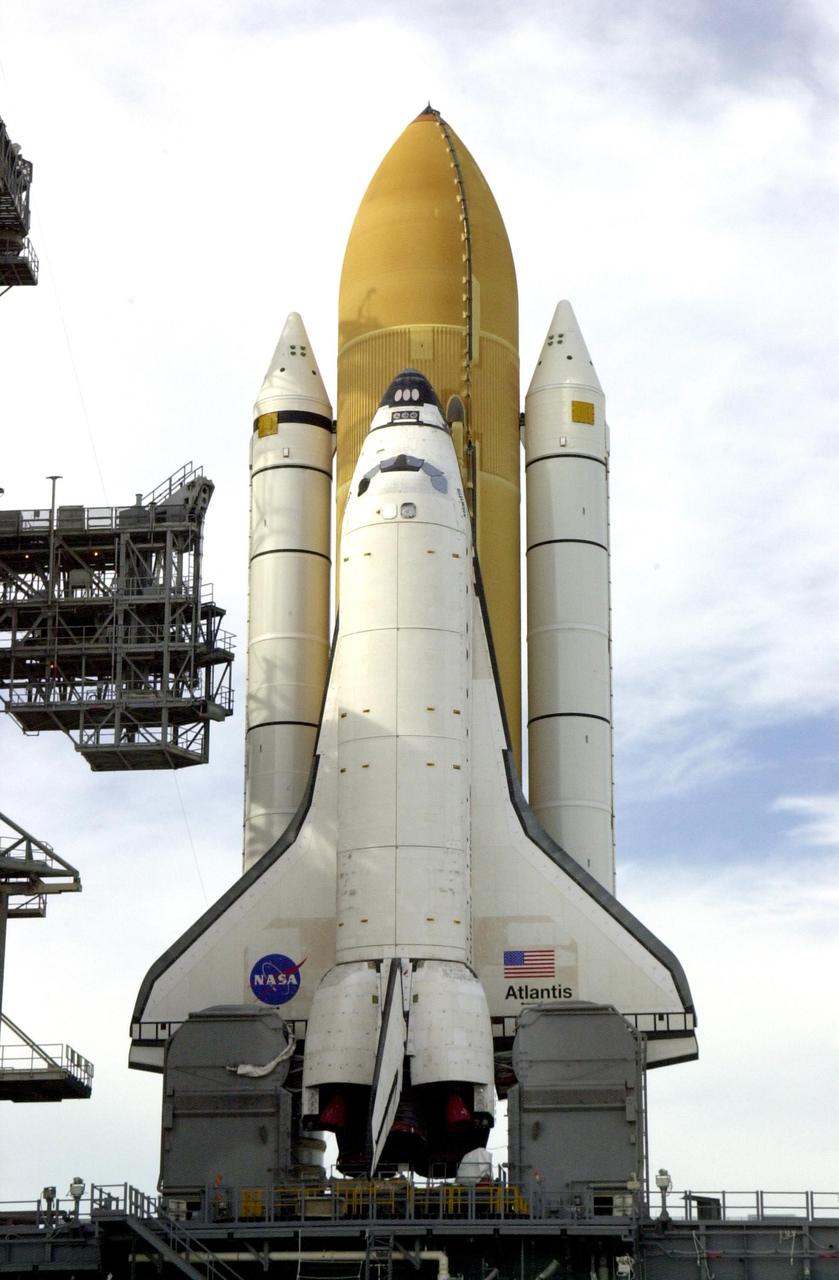
KENNEDY SPACE CENTER, FLA. -- Space Shuttle Atlantis is hard down on the launch pad after its mid-day rollout from the Vehicle Assembly Building. Part of the Fixed Service Structure is at left. On either side of the tail of Atlantis are the tail service masts, which support the fluid, gas and electrical requirements of the orbiter's liquid oxygen and liquid hydrogen aft T-0 umbilicals. Atlantis is scheduled for launch April 4 on mission STS-110, which will install the S0 truss, the framework that eventually will hold the power and cooling systems needed for future international research laboratories on the International Space Station. The Canadarm2 robotic arm will be used exclusively to hoist the 13-ton truss from the payload bay to the Station. The S0 truss will be the first major U.S. component launched to the Station since the addition of the Quest airlock in July 2001. The four spacewalks planned for the construction will all originate from the airlock. The mission will be Atlantis' 25th trip to space
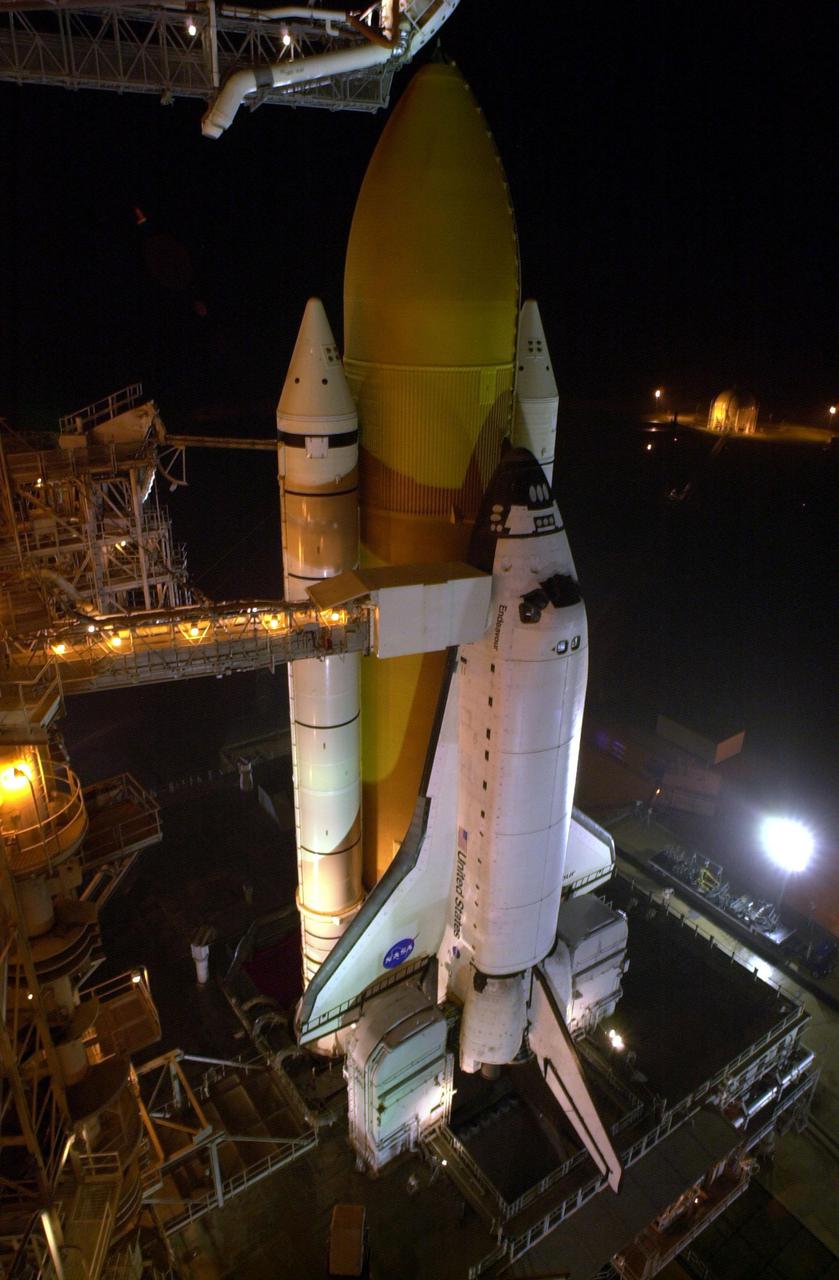
KENNEDY SPACE CENTER, Fla. -- After rollback of the Rotating Service Structure on Launch Pad 39B, Space Shuttle Endeavour is bathed in light. Twin solid rocket boosters flank the orange external tank behind Endeavour. Above the external tank is the Gaseous Oxygen Vent Arm that vents gaseous oxygen vapors away from the Shuttle. The vent hood assembly at the end is often referred to as the 'beanie cap.' Stretching to the crew hatch on the side of Endeavour is the Orbiter Access Arm with its environmentally controlled White Room at the end, through which the crew enters the vehicle. The Shuttle sits on the Mobile Launcher Platform with the two service tail masts on either side of the main engines. The tail masts support the fluid, gas and electrical requirements of the orbiter's liquid oxygen and liquid hydrogen aft T-0 umbilicals. Each tail mast is 31 feet (9.4 meters) high, 15 feet (4.6 meters) long and 9 feet (3.1 meters) wide. Endeavour is scheduled to launch on mission STS-108 Dec. 4 at 5:45 p.m. EST. On this 12th flight to the International Space Station, known as a Utilization Flight, Endeavour will carry a crew of four plus the Expedition 4 crew, who will replace Expedition 3 aboard the ISS. The payload includes the Multi-Purpose Logistics Module Raffaello, filled with supplies, equipment and experiments
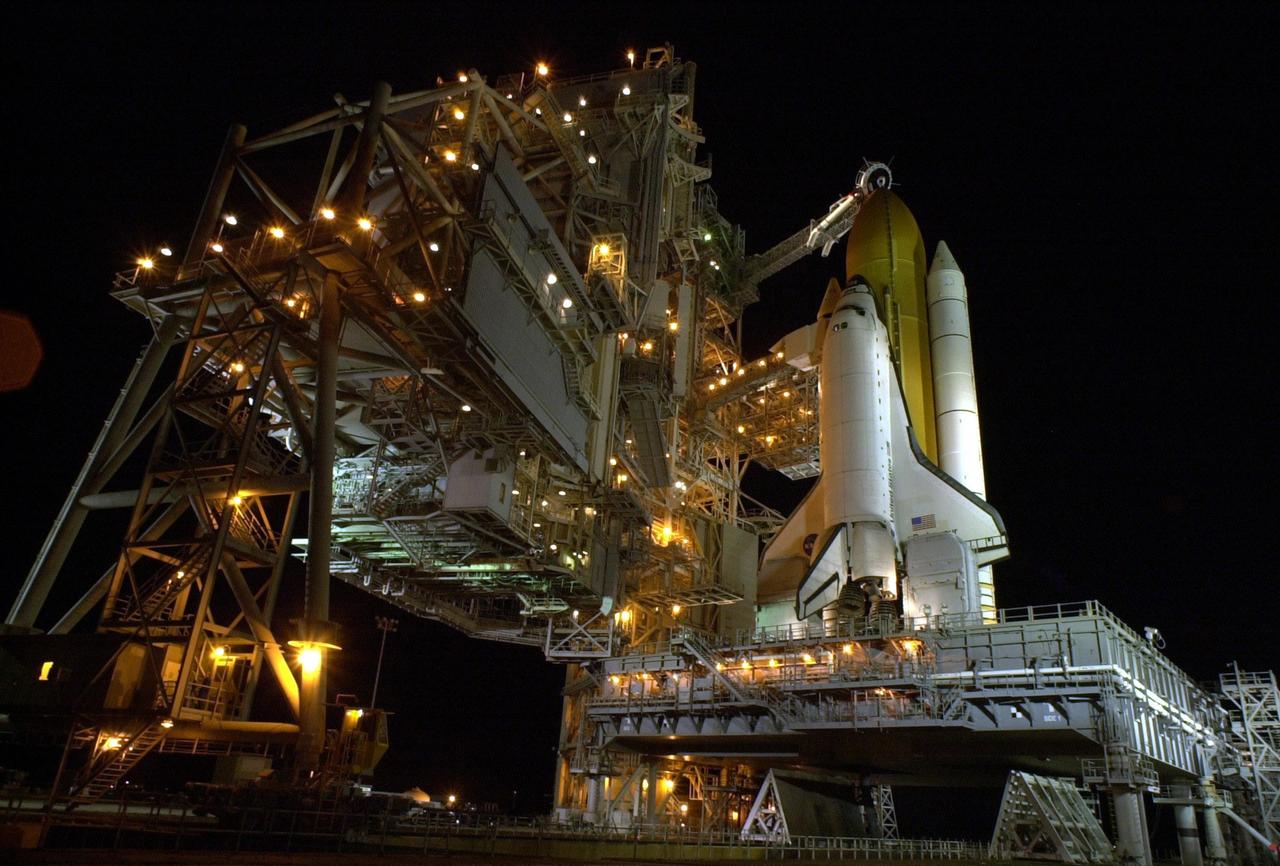
KENNEDY SPACE CENTER, Fla. -- After rollback of the Rotating Service Structure on Launch Pad 39B, Space Shuttle Endeavour is bathed in light. Seen is one of the twin solid rocket boosters that flank the orange external tank. Above the external tank is the Gaseous Oxygen Vent Arm that vents gaseous oxygen vapors away from the Shuttle. The vent hood assembly at the end is often referred to as the "beanie cap." Stretching to the crew hatch on the side is the Orbiter Access Arm with its environmentally controlled White Room at the end. The Shuttle sits on the Mobile Launcher Platform with the two service tail masts on either side of the main engines. The tail masts support the fluid, gas and electrical requirements of the orbiter's liquid oxygen and liquid hydrogen aft T-0 umbilicals. Each tail mast is 31 feet (9.4 meters) high, 15 feet (4.6 meters) long and 9 feet (3.1 meters) wide. Endeavour is scheduled to launch on mission STS-108 Nov. 29 at 7:41 p.m. On this 12th flight to the International Space Station, known as a Utilization Flight, Endeavour will carry a crew of four plus the Expedition 4 crew, who will replace Expedition 3 aboard the ISS. The payload includes the Multi-Purpose Logistics Module Raffaello, filled with supplies, equipment and experiments
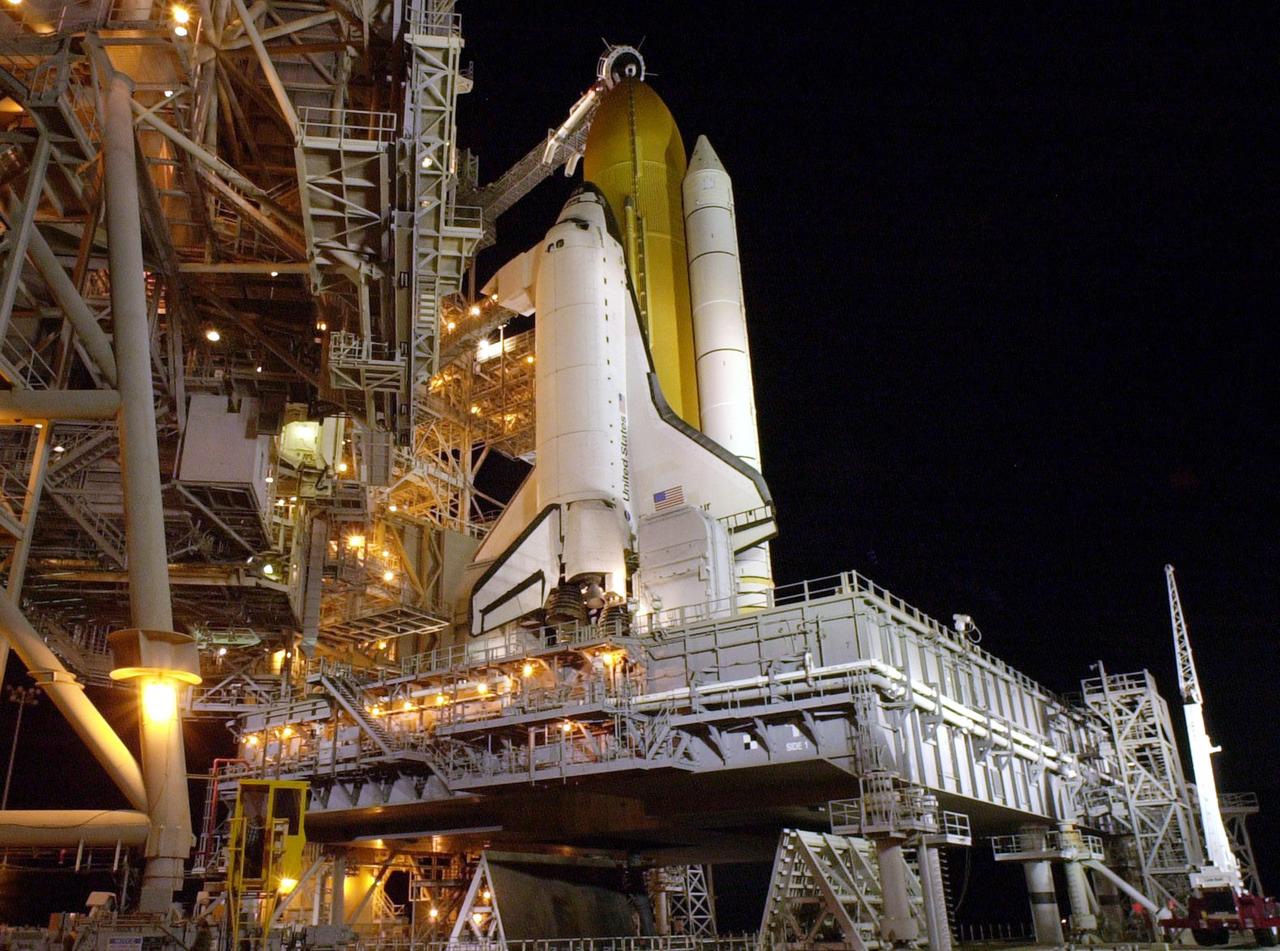
KENNEDY SPACE CENTER, Fla. -- Space Shuttle Endeavour is revealed after rollback of the Rotating Service Structure on Launch Pad 39B. Seen is one of the twin solid rocket boosters that flank the orange external tank. Above the external tank is the Gaseous Oxygen Vent Arm that vents gaseous oxygen vapors away from the Shuttle. The vent hood assembly at the end is often referred to as the "beanie cap." Stretching to the crew hatch on the side is the Orbiter Access Arm with its environmentally controlled White Room at the end. The Shuttle sits on the Mobile Launcher Platform with the two service tail masts on either side of the main engines. The tail masts support the fluid, gas and electrical requirements of the orbiter's liquid oxygen and liquid hydrogen aft T-0 umbilicals. Each tail mast is 31 feet (9.4 meters) high, 15 feet (4.6 meters) long and 9 feet (3.1 meters) wide. Endeavour is scheduled to launch on mission STS-108 Nov. 29 at 7:41 p.m. On this 12th flight to the International Space Station, known as a Utilization Flight, Endeavour will carry a crew of four plus the Expedition 4 crew, who will replace Expedition 3 aboard the ISS. The payload includes the Multi-Purpose Logistics Module Raffaello, filled with supplies, equipment and experiments
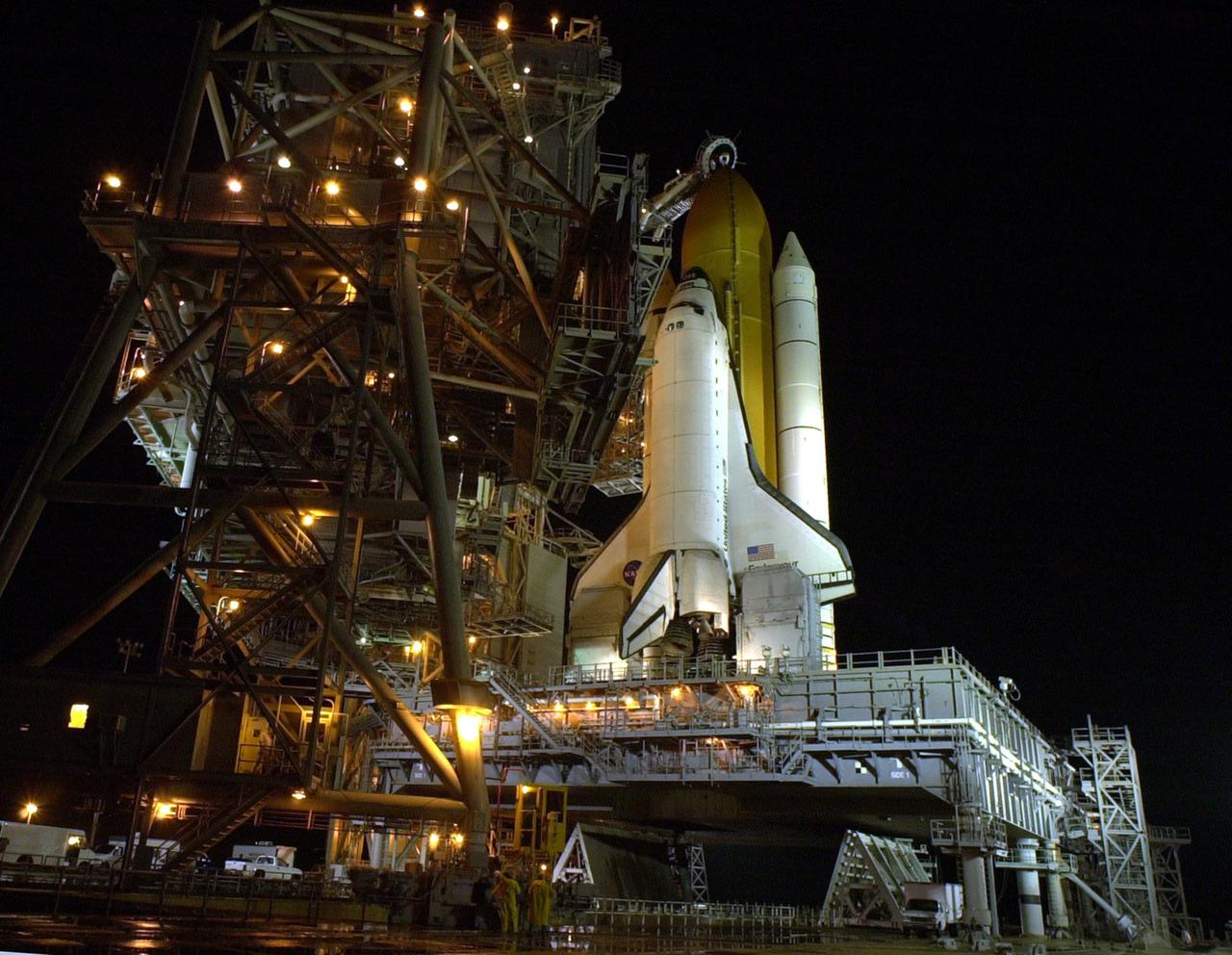
KENNEDY SPACE CENTER, Fla. -- The Rotating Service Structure on Launch Pad 39B rolls away from Space Shuttle Endeavour atop the Mobile Launcher Platform. The Space Shuttle comprises the orbiter and an external tank flanked by twin solid rocket boosters. Above the external tank is the Gaseous Oxygen Vent Arm that vents gaseous oxygen vapors away from the Shuttle. The vent hood assembly at the end is often referred to as the "beanie cap." On either side of the orbiter's tail and main engines are two tail masts that support the fluid, gas and electrical requirements of the orbiter's liquid oxygen and liquid hydrogen aft T-0 umbilicals. . Each tail mast is 31 feet (9.4 meters) high, 15 feet (4.6 meters) long and 9 feet (3.1 meters) wide. Endeavour is scheduled to launch on mission STS-108 Dec. 4 at 5:45 p.m. EST. On this 12th flight to the International Space Station, known as a Utilization Flight, Endeavour will carry a crew of four plus the Expedition 4 crew, who will replace Expedition 3 aboard the ISS. The payload includes the Multi-Purpose Logistics Module Raffaello, filled with supplies, equipment and experiments
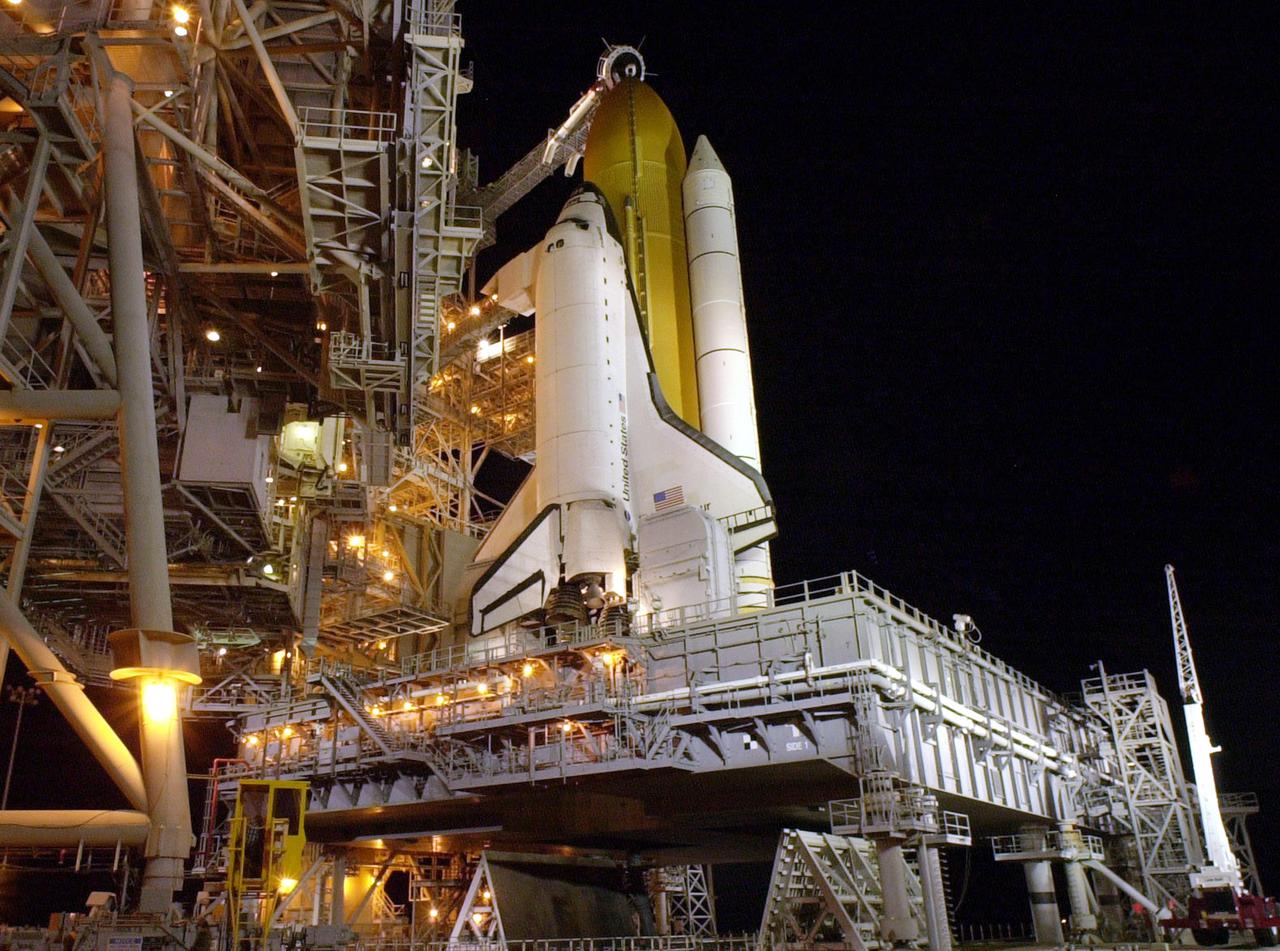
KENNEDY SPACE CENTER, Fla. -- Space Shuttle Endeavour is revealed after rollback of the Rotating Service Structure on Launch Pad 39B. Seen is one of the twin solid rocket boosters that flank the orange external tank. Above the external tank is the Gaseous Oxygen Vent Arm that vents gaseous oxygen vapors away from the Shuttle. The vent hood assembly at the end is often referred to as the 'beanie cap.' Stretching to the crew hatch on the side is the Orbiter Access Arm with its environmentally controlled White Room at the end. The Shuttle sits on the Mobile Launcher Platform with the two service tail masts on either side of the main engines. The tail masts support the fluid, gas and electrical requirements of the orbiter's liquid oxygen and liquid hydrogen aft T-0 umbilicals. Each tail mast is 31 feet (9.4 meters) high, 15 feet (4.6 meters) long and 9 feet (3.1 meters) wide. Endeavour is scheduled to launch on mission STS-108 Nov. 29 at 7:41 p.m. On this 12th flight to the International Space Station, known as a Utilization Flight, Endeavour will carry a crew of four plus the Expedition 4 crew, who will replace Expedition 3 aboard the ISS. The payload includes the Multi-Purpose Logistics Module Raffaello, filled with supplies, equipment and experiments
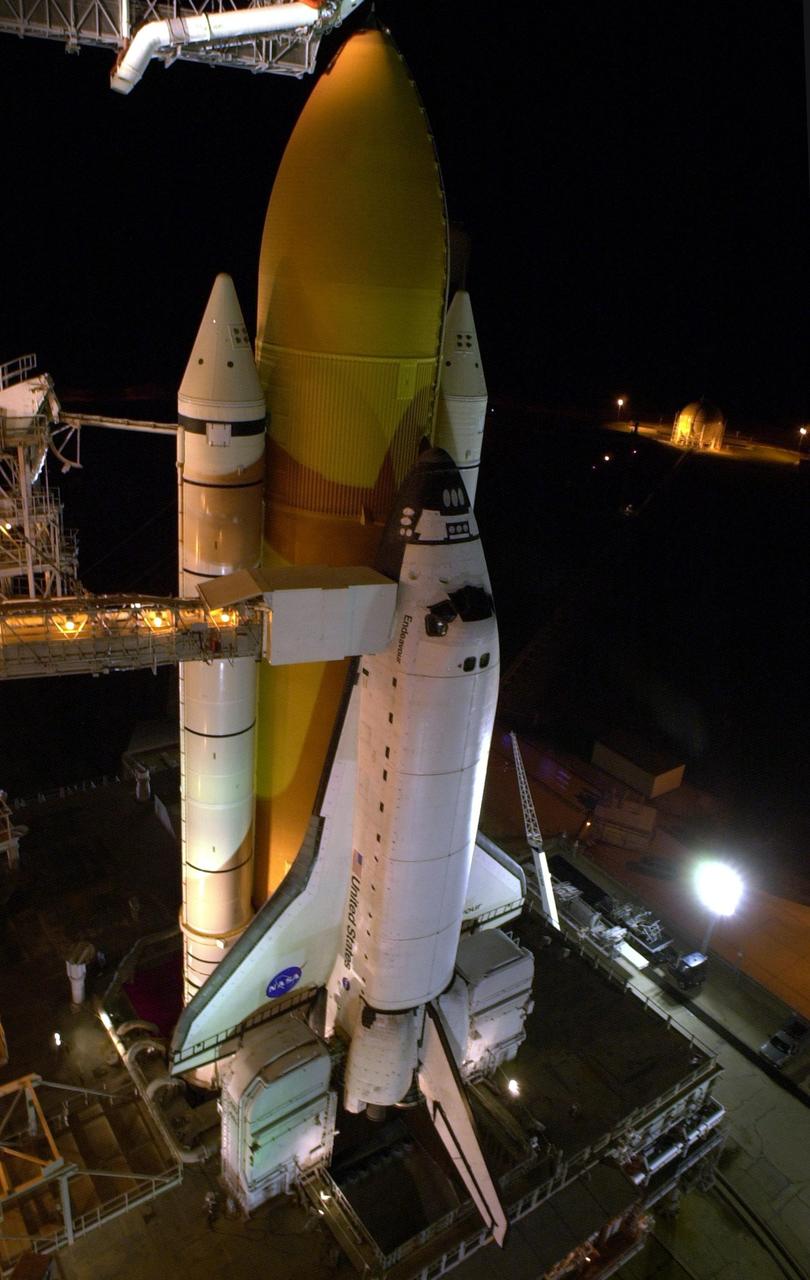
KENNEDY SPACE CENTER, Fla. -- Space Shuttle Endeavour stands ready for launch after rollback of the Rotating Service Structure on Launch Pad 39B. Seen are the twin solid rocket boosters flanking the orange external tank. Stretching to the crew hatch on the side is the Orbiter Access Arm with its environmentally controlled White Room at the end. Below Endeavour is the Mobile Launcher Platform with the two service tail masts on either side of the main engines. The tail masts support the fluid, gas and electrical requirements of the orbiter's liquid oxygen and liquid hydrogen aft T-0 umbilicals. Each tail mast is 31 feet (9.4 meters) high, 15 feet (4.6 meters) long and 9 feet (3.1 meters) wide. Endeavour is scheduled to launch on mission STS-108 Nov. 29 at 7:41 p.m. On this 12th flight to the International Space Station, known as a Utilization Flight, Endeavour will carry a crew of four plus the Expedition 4 crew, who will replace Expedition 3 aboard the ISS. The payload includes the Multi-Purpose Logistics Module Raffaello, filled with supplies, equipment and experiments
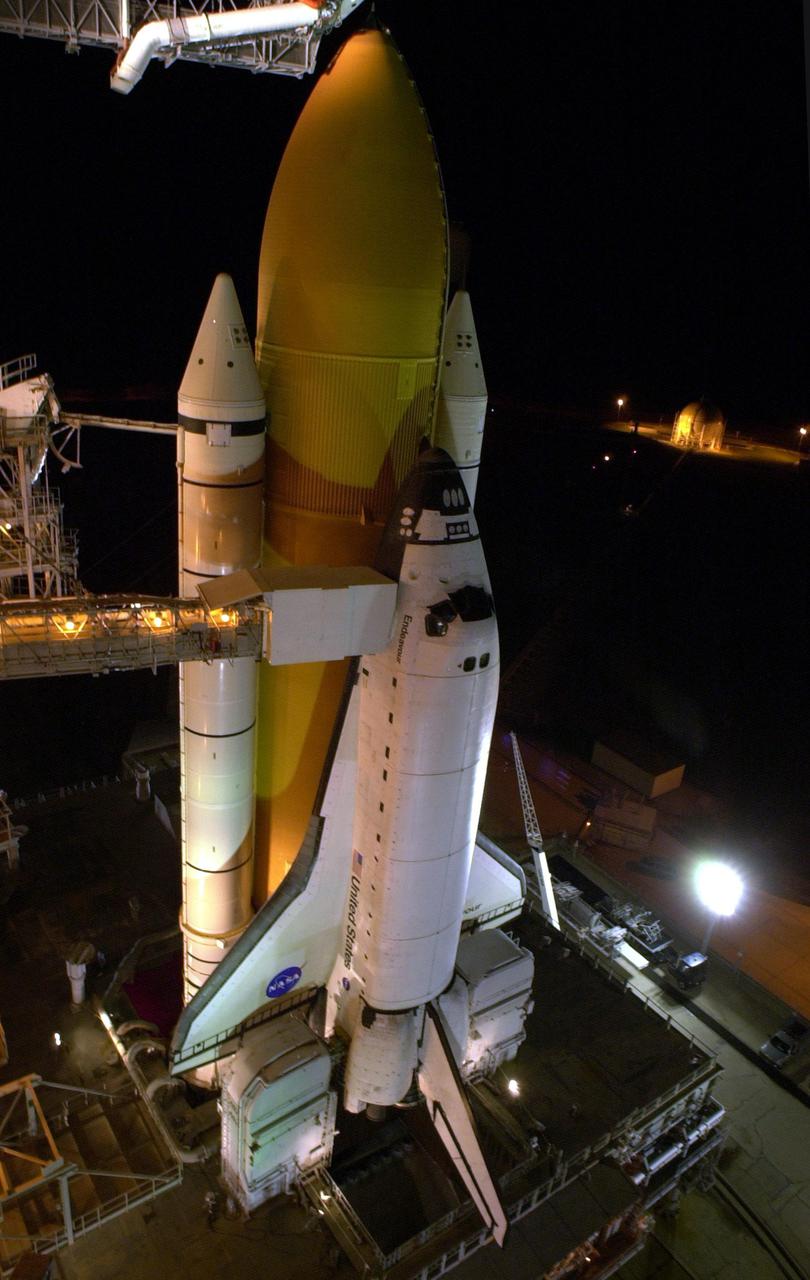
KENNEDY SPACE CENTER, Fla. -- Space Shuttle Endeavour stands ready for launch after rollback of the Rotating Service Structure on Launch Pad 39B. Seen are the twin solid rocket boosters flanking the orange external tank. Stretching to the crew hatch on the side is the Orbiter Access Arm with its environmentally controlled White Room at the end. Below Endeavour is the Mobile Launcher Platform with the two service tail masts on either side of the main engines. The tail masts support the fluid, gas and electrical requirements of the orbiter's liquid oxygen and liquid hydrogen aft T-0 umbilicals. Each tail mast is 31 feet (9.4 meters) high, 15 feet (4.6 meters) long and 9 feet (3.1 meters) wide. Endeavour is scheduled to launch on mission STS-108 Nov. 29 at 7:41 p.m. On this 12th flight to the International Space Station, known as a Utilization Flight, Endeavour will carry a crew of four plus the Expedition 4 crew, who will replace Expedition 3 aboard the ISS. The payload includes the Multi-Purpose Logistics Module Raffaello, filled with supplies, equipment and experiments

KENNEDY SPACE CENTER, Fla. -- After rollback of the Rotating Service Structure on Launch Pad 39B, Space Shuttle Endeavour is bathed in light. Twin solid rocket boosters flank the orange external tank behind Endeavour. Above the external tank is the Gaseous Oxygen Vent Arm that vents gaseous oxygen vapors away from the Shuttle. The vent hood assembly at the end is often referred to as the "beanie cap." Stretching to the crew hatch on the side of Endeavour is the Orbiter Access Arm with its environmentally controlled White Room at the end, through which the crew enters the vehicle. The Shuttle sits on the Mobile Launcher Platform with the two service tail masts on either side of the main engines. The tail masts support the fluid, gas and electrical requirements of the orbiter's liquid oxygen and liquid hydrogen aft T-0 umbilicals. Each tail mast is 31 feet (9.4 meters) high, 15 feet (4.6 meters) long and 9 feet (3.1 meters) wide. Endeavour is scheduled to launch on mission STS-108 Dec. 4 at 5:45 p.m. EST. On this 12th flight to the International Space Station, known as a Utilization Flight, Endeavour will carry a crew of four plus the Expedition 4 crew, who will replace Expedition 3 aboard the ISS. The payload includes the Multi-Purpose Logistics Module Raffaello, filled with supplies, equipment and experiments
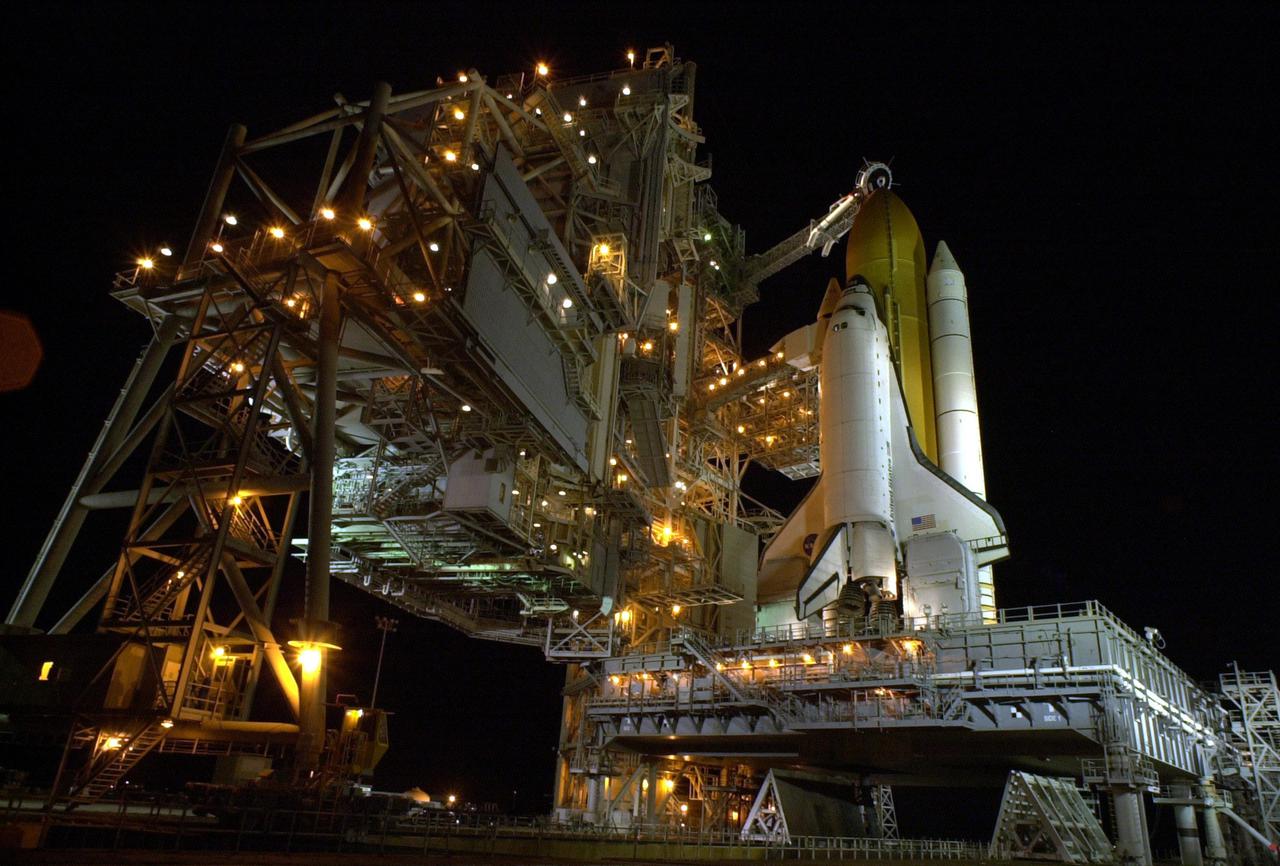
KENNEDY SPACE CENTER, Fla. -- After rollback of the Rotating Service Structure on Launch Pad 39B, Space Shuttle Endeavour is bathed in light. Seen is one of the twin solid rocket boosters that flank the orange external tank. Above the external tank is the Gaseous Oxygen Vent Arm that vents gaseous oxygen vapors away from the Shuttle. The vent hood assembly at the end is often referred to as the 'beanie cap.' Stretching to the crew hatch on the side is the Orbiter Access Arm with its environmentally controlled White Room at the end. The Shuttle sits on the Mobile Launcher Platform with the two service tail masts on either side of the main engines. The tail masts support the fluid, gas and electrical requirements of the orbiter's liquid oxygen and liquid hydrogen aft T-0 umbilicals. Each tail mast is 31 feet (9.4 meters) high, 15 feet (4.6 meters) long and 9 feet (3.1 meters) wide. Endeavour is scheduled to launch on mission STS-108 Nov. 29 at 7:41 p.m. On this 12th flight to the International Space Station, known as a Utilization Flight, Endeavour will carry a crew of four plus the Expedition 4 crew, who will replace Expedition 3 aboard the ISS. The payload includes the Multi-Purpose Logistics Module Raffaello, filled with supplies, equipment and experiments

KENNEDY SPACE CENTER, Fla. -- Workers clean the mobile launcher platform on which sits Space Shuttle Atlantis. They are standing in front of one of two tail service masts on either side of the Shuttle, in front of each wing. The masts support the fluid, gas and electrical requirements of the orbiter’s liquid oxygen and liquid hydrogen aft T-0 umbilicals. Launch on mission STS-104 is scheduled for 5:04 a.m. July 12. The launch is the 10th assembly flight to the International Space Station. Along with a crew of five, Atlantis will carry the joint airlock module as primary payload
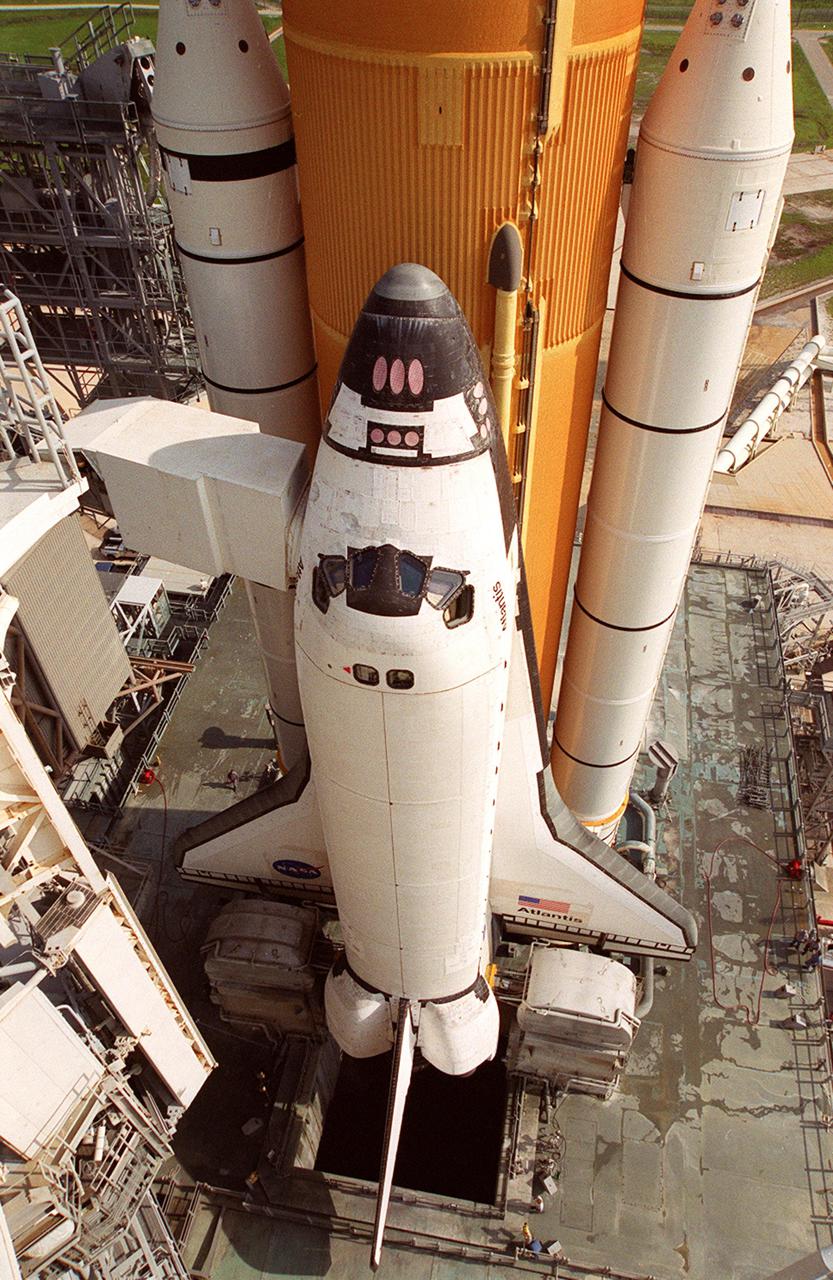
KENNEDY SPACE CENTER, Fla. -- This view from above Space Shuttle Atlantis reduces the workers below to appearing like ants. Seen below the Shuttle is the opening over the exhaust hole containing flame detectors. On either side of the Atlantis, in front of the wings, are two tail service masts. The masts support the fluid, gas and electrical requirements of the orbiter’s liquid oxygen and liquid hydrogen aft T-0 umbilicals. Launch on mission STS-104 is scheduled for 5:04 a.m. July 12. The launch is the 10th assembly flight to the International Space Station. Along with a crew of five, Atlantis will carry the joint airlock module as primary payload
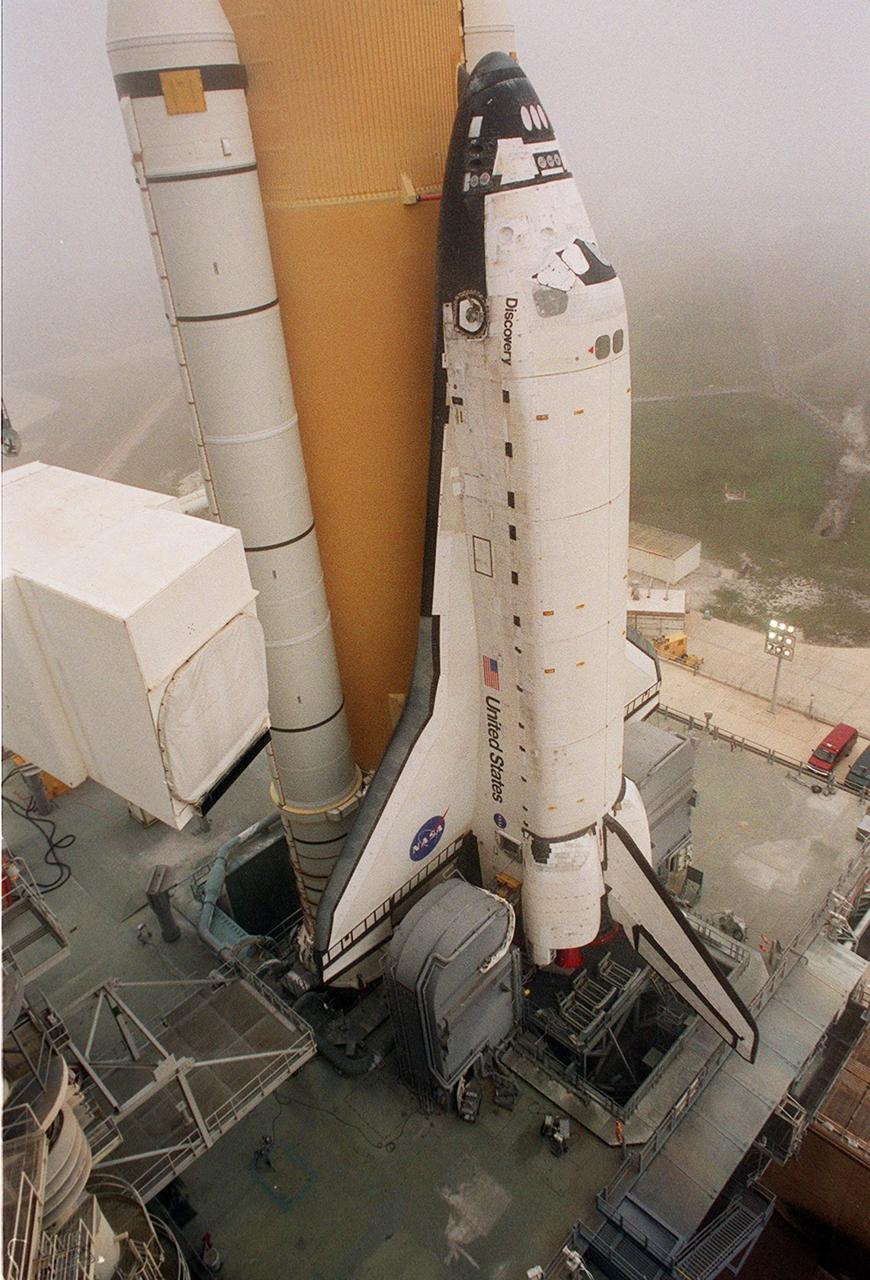
KENNEDY SPACE CENTER, Fla. -- Space Shuttle Discovery sits on Launch Pad 39B after its approximately 5-hour rollout from the Vehicle Assembly Building. At center left can be seen the White Room, the environmentally controlled chamber that provides entry into the orbiter for the astronaut crews. The chamber is at the end of the Orbiter Access Arm, which has not been extended yet. At the bottom of Discovery’s left wing is the tail service mast, one of two belonging to the Mobile Launcher Platform on which the Shuttle rests. The tail service mast is 31 feet high, 15 feet long and 9 feet wide. A second TSM is on the other side. They support the fluid, gas and electrical requirements of the orbiter’s liquid oxygen and liquid hydrogen aft T-0 umbilicals. Discovery will be flying on mission STS-102 to the International Space Station. Its payload is the Multi-Purpose Logistics Module Leonardo, a “moving van,” to carry laboratory racks filled with equipment, experiments and supplies to and from the Space Station aboard the Space Shuttle. The flight will also carry the Expedition Two crew up to the Space Station, replacing Expedition One, who will return to Earth on Discovery. Launch is scheduled for March 8 at 6:45 a.m. EST
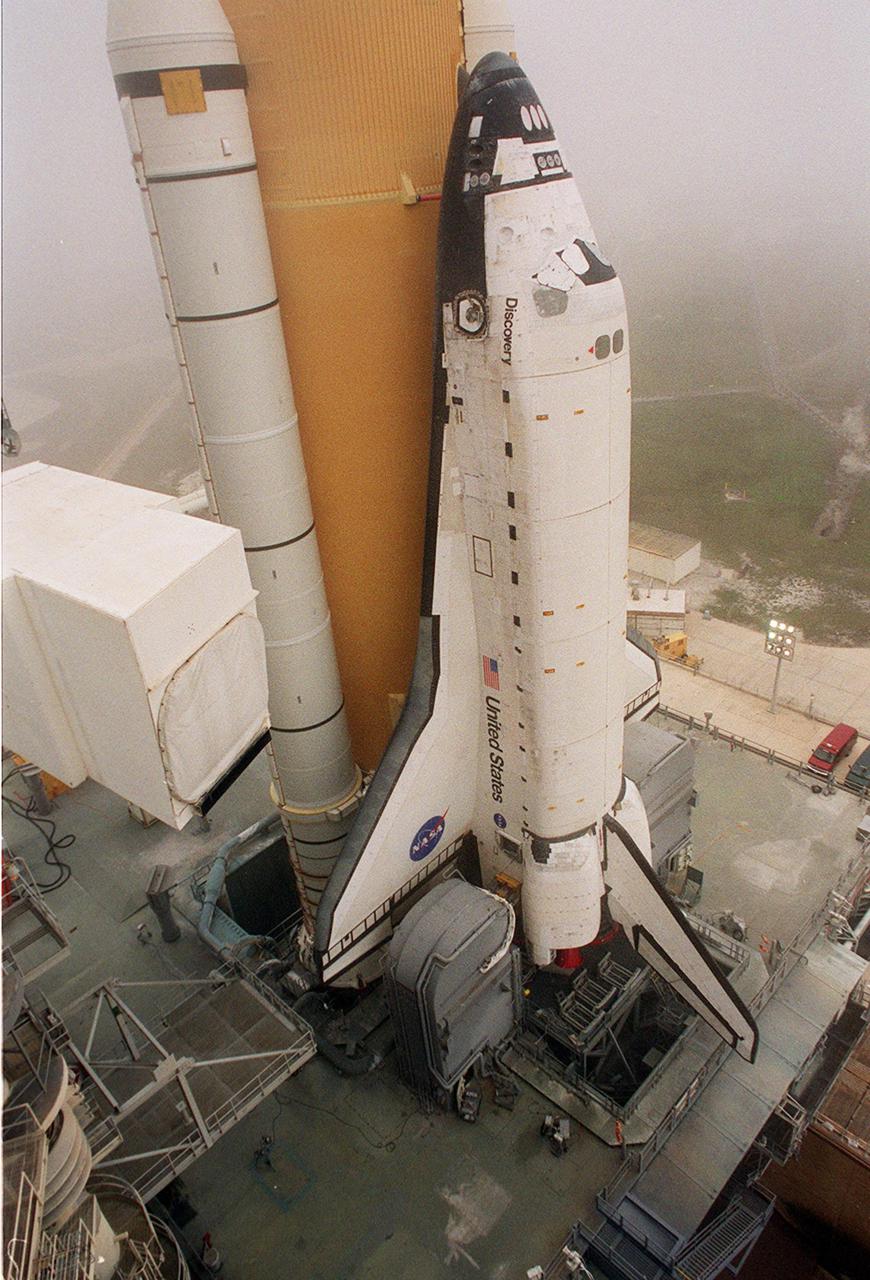
KENNEDY SPACE CENTER, Fla. -- Space Shuttle Discovery sits on Launch Pad 39B after its approximately 5-hour rollout from the Vehicle Assembly Building. At center left can be seen the White Room, the environmentally controlled chamber that provides entry into the orbiter for the astronaut crews. The chamber is at the end of the Orbiter Access Arm, which has not been extended yet. At the bottom of Discovery’s left wing is the tail service mast, one of two belonging to the Mobile Launcher Platform on which the Shuttle rests. The tail service mast is 31 feet high, 15 feet long and 9 feet wide. A second TSM is on the other side. They support the fluid, gas and electrical requirements of the orbiter’s liquid oxygen and liquid hydrogen aft T-0 umbilicals. Discovery will be flying on mission STS-102 to the International Space Station. Its payload is the Multi-Purpose Logistics Module Leonardo, a “moving van,” to carry laboratory racks filled with equipment, experiments and supplies to and from the Space Station aboard the Space Shuttle. The flight will also carry the Expedition Two crew up to the Space Station, replacing Expedition One, who will return to Earth on Discovery. Launch is scheduled for March 8 at 6:45 a.m. EST
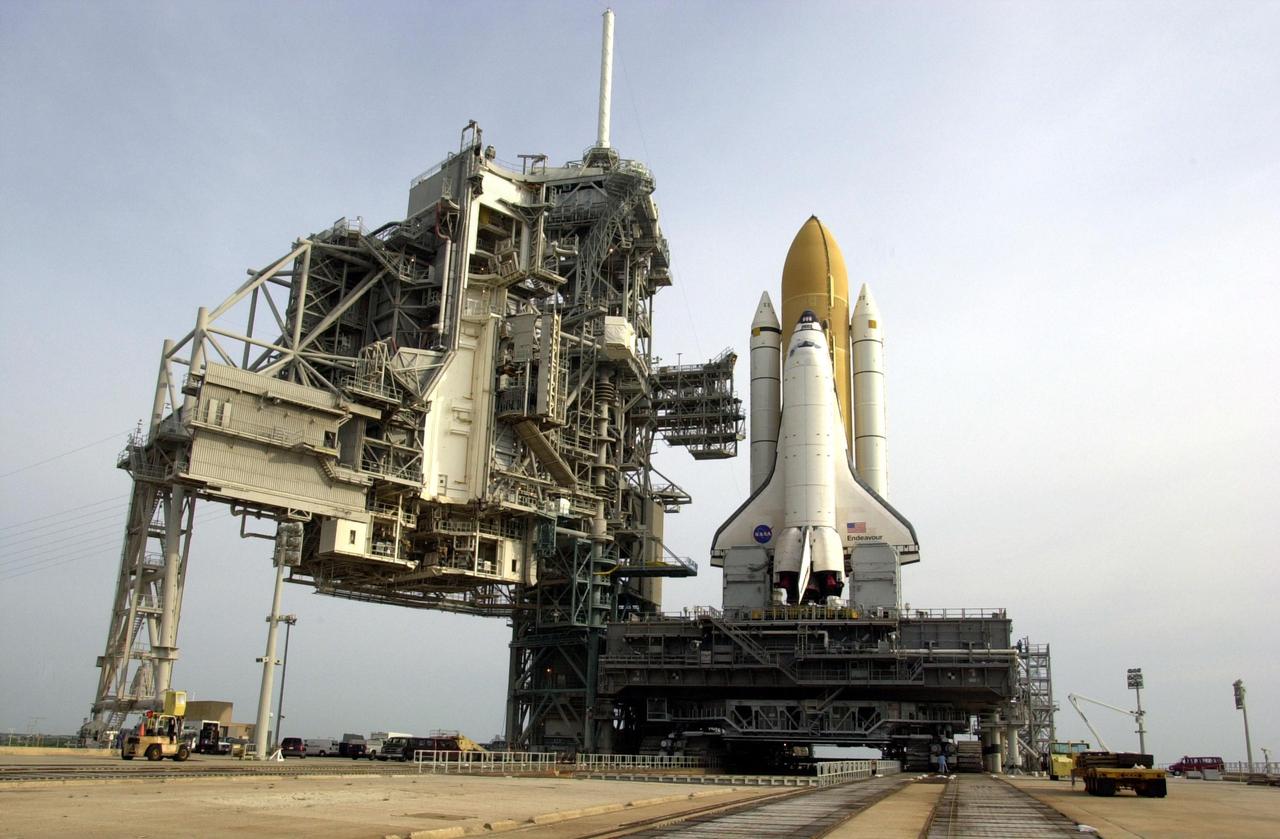
KENNEDY SPACE CENTER, FLA. -- Space Shuttle Endeavour rests on Launch Pad 39A after rollout from the Vehicle Assembly Building. The Shuttle comprises the orbiter, in front, and the taller orange external tank behind it flanked by twin solid rocket boosters. The Shuttle sits on the Mobile Launcher Platform that straddles the flame trench below. On either side of Endeavour's tail and main engines are the tail service masts that support the fluid,, gas and electrical requirements of the orbiter's liquid oxyen and liquid hydrogen aft T-0 umbilicals. At left is the open Rotating Service Structure and the Fixed Service Structure to its right, with its 80-foot lightning mast on top. Mission STS-111 is designated UF-2, the 14th assembly flight to the International Space Station. Endeavour's payload includes the Multi-Purpose Logistics Module Leonardo and Mobile Base System. The mission also will swap resident crews on the Station, carrying the Expedition 5 crew and returning to Earth Expedition 4. Liftoff of Endeavour is scheduled between 4 and 8 p.m. May 30, 2002
KENNEDY SPACE CENTER, Fla. -- This closeup shows Space Shuttle Discovery as it travels to Launch Pad 39B. Underneath Discovery is the Mobile Launcher Platform, a two-story movable launch base. Part of the MPLM is the tail service mast, seen here at the bottom of the wind and next to the Shuttle’s main engines. The tail service mast is 31 feet high, 15 feet long and 9 feet wide. A second TSM is on the other side. They support the fluid, gas and electrical requirements of the orbiter’s liquid oxygen and liquid hydrogen aft T-0 umbilicals. Discovery will be flying on mission STS-102 to the International Space Station. Its payload is the Multi-Purpose Logistics Module Leonardo, a “moving van,” to carry laboratory racks filled with equipment, experiments and supplies to and from the Space Station aboard the Space Shuttle. The flight will also carry the Expedition Two crew up to the Space Station, replacing Expedition One, who will return to Earth on Discovery. Launch is scheduled for March 8 at 6:45 a.m. EST
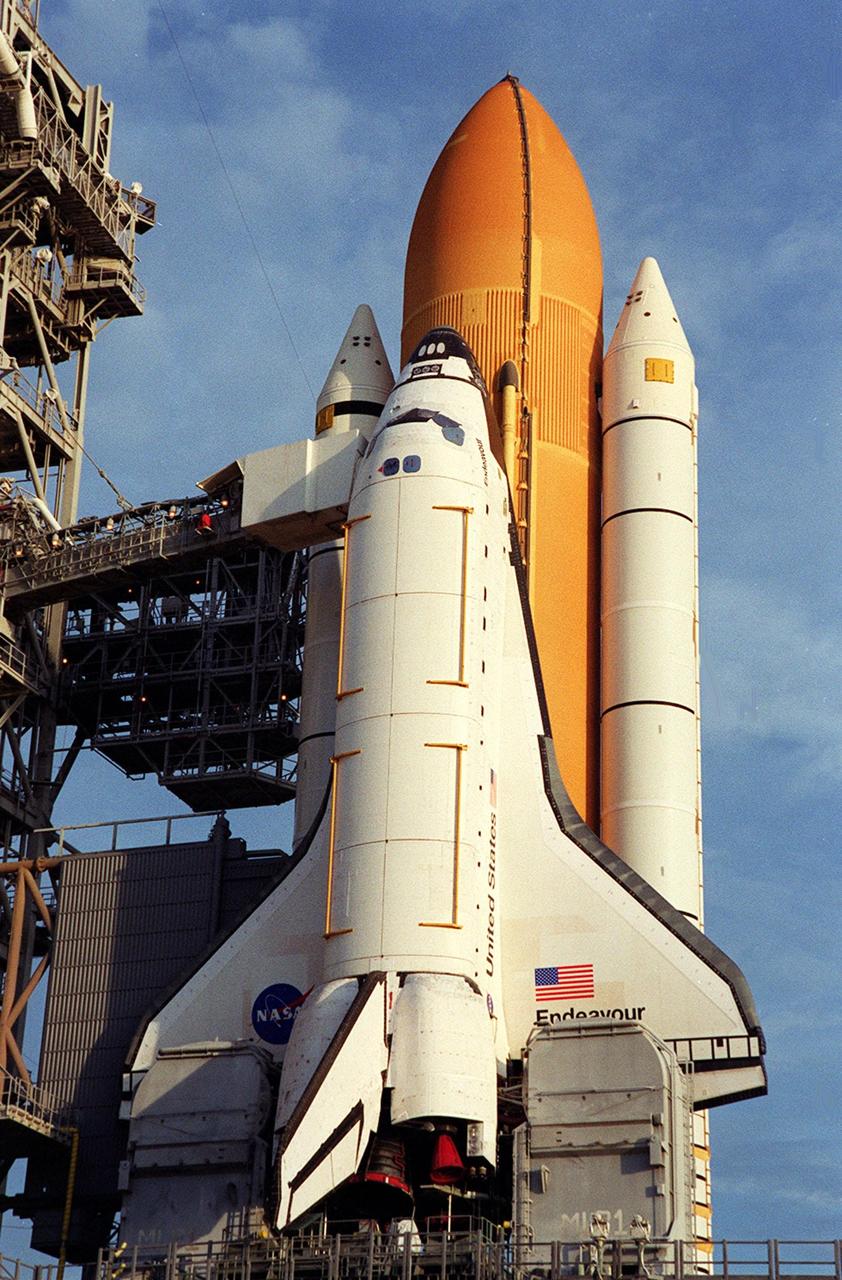
KENNEDY SPACE CENTER, FLA. -- Space Shuttle Endeavour waits on Launch Pad 39B for launch on mission STS-97. Behind it are the orange external tank flanked by two solid rocket boosters. On either side of Endeavour’s tail are the tail service masts, which support the fluid, gas and electrical requirements of the orbiter’s liquid oxygen and liquid hydrogen aft T-0 umbilicals. The masts also protect the ground half of those umbilicals from the harsh launch environment. At launch, the masts rotate backward, triggering a compressed-gas thruster and causing a protective hood to move into place and completely seal the structure from the main engine exhaust. At the end of the orbiter access arm, near the nose of Endeavour, is the White Room, an environmental chamber that provides both entrance to the orbiter and emergency egress, if needed. The arm remains extended until 7 minutes, 24 seconds before launch. The arm extends from the Fixed Service Structure. In the center of Endeavour are the payload bay doors. Endeavour is scheduled to launch Nov. 30 at 10:06 p.m. EST
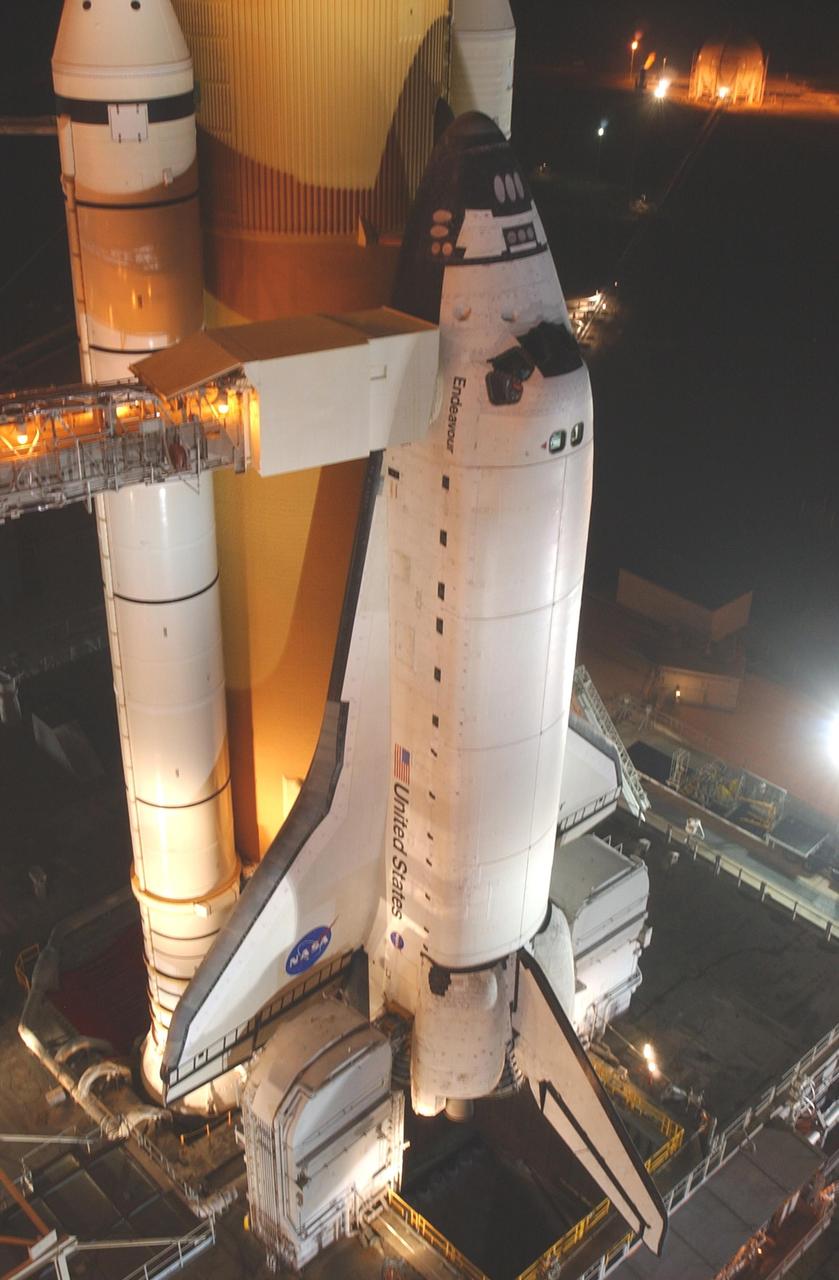
KENNEDY SPACE CENTER, FLA. -- After rollback of the Rotating Service Structure in the early morning hours, Space Shuttle Endeavour sits bathed in light on its Mobile Launcher Platform on Launch Pad 39A. Seen extending to the cockpit area of Endeavour is the orbiter access arm. At the end of the arm is the White Room, an environmental chamber. Below, on either side of Endeavour's tail, are the tail service masts that support fluid, gas and electrical requirements of the orbiter's liquid oxygen and liquid hydrogen aft T-0 umbilicals. STS-111 is the second Utilization Flight to the International Space Station, carrying the Multi-Purpose Logistics Module Leonardo, the Mobile Base System (MBS), and a replacement wrist/roll joint for the Canadarm 2. Also onboard Space Shuttle Endeavour is the Expedition 5 crew who will replace Expedition 4 on board the Station. The MBS will be installed on the Mobile Transporter to complete the Canadian Mobile Servicing System, or MSS. The mechanical arm will then have the capability to "inchworm" from the U.S. Lab Destiny to the MSS and travel along the truss to work sites. Expedition 4 crew members will return to Earth with the STS-111 crew on Endeavour. Launch is scheduled for 7:44 p.m. EDT, May 30, 2002
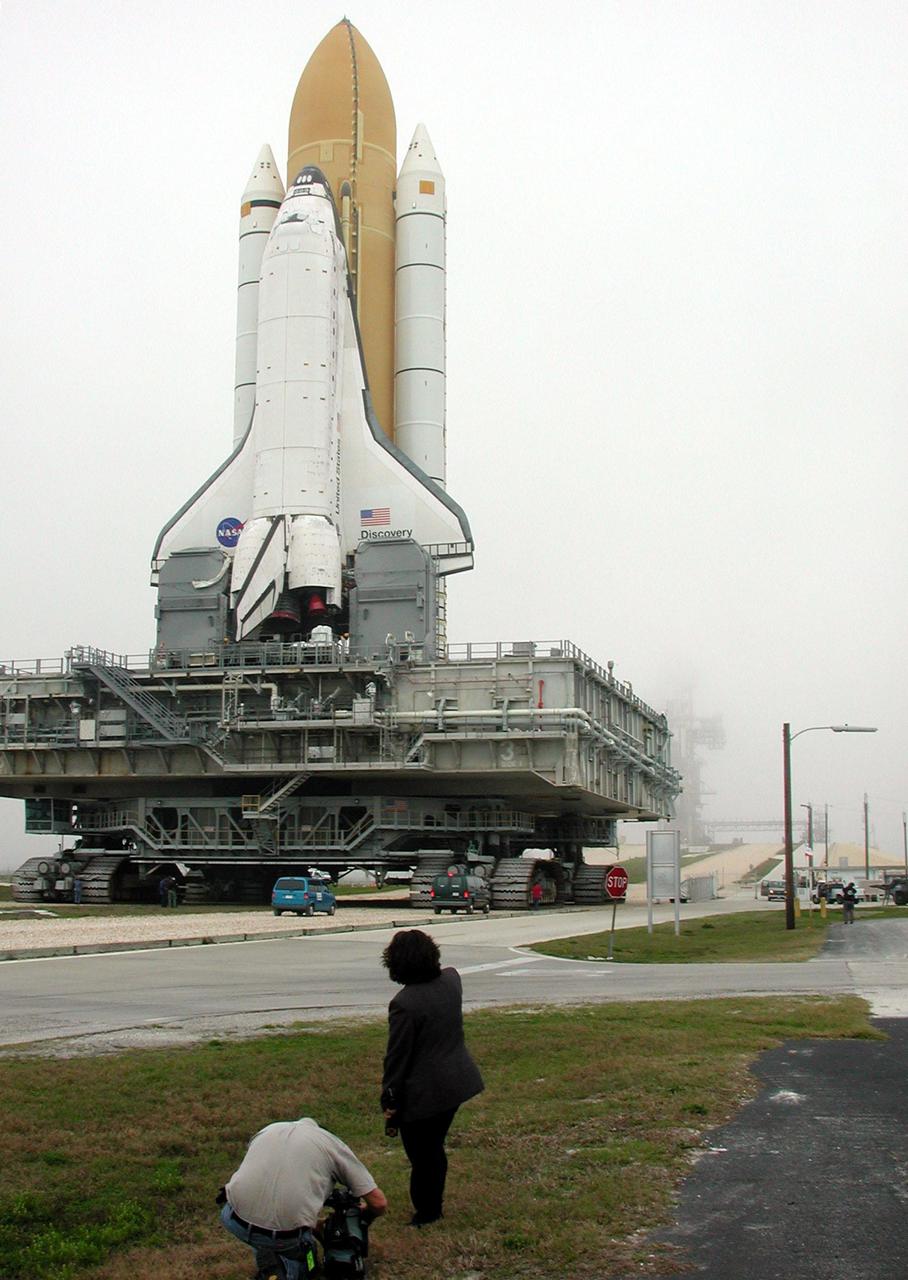
KENNEDY SPACE CENTER, Fla. -- This closeup shows Space Shuttle Discovery as it travels to Launch Pad 39B. Underneath Discovery is the Mobile Launcher Platform, a two-story movable launch base. Part of the MPLM is the tail service mast, seen here at the bottom of the wind and next to the Shuttle’s main engines. The tail service mast is 31 feet high, 15 feet long and 9 feet wide. A second TSM is on the other side. They support the fluid, gas and electrical requirements of the orbiter’s liquid oxygen and liquid hydrogen aft T-0 umbilicals. Discovery will be flying on mission STS-102 to the International Space Station. Its payload is the Multi-Purpose Logistics Module Leonardo, a “moving van,” to carry laboratory racks filled with equipment, experiments and supplies to and from the Space Station aboard the Space Shuttle. The flight will also carry the Expedition Two crew up to the Space Station, replacing Expedition One, who will return to Earth on Discovery. Launch is scheduled for March 8 at 6:45 a.m. EST
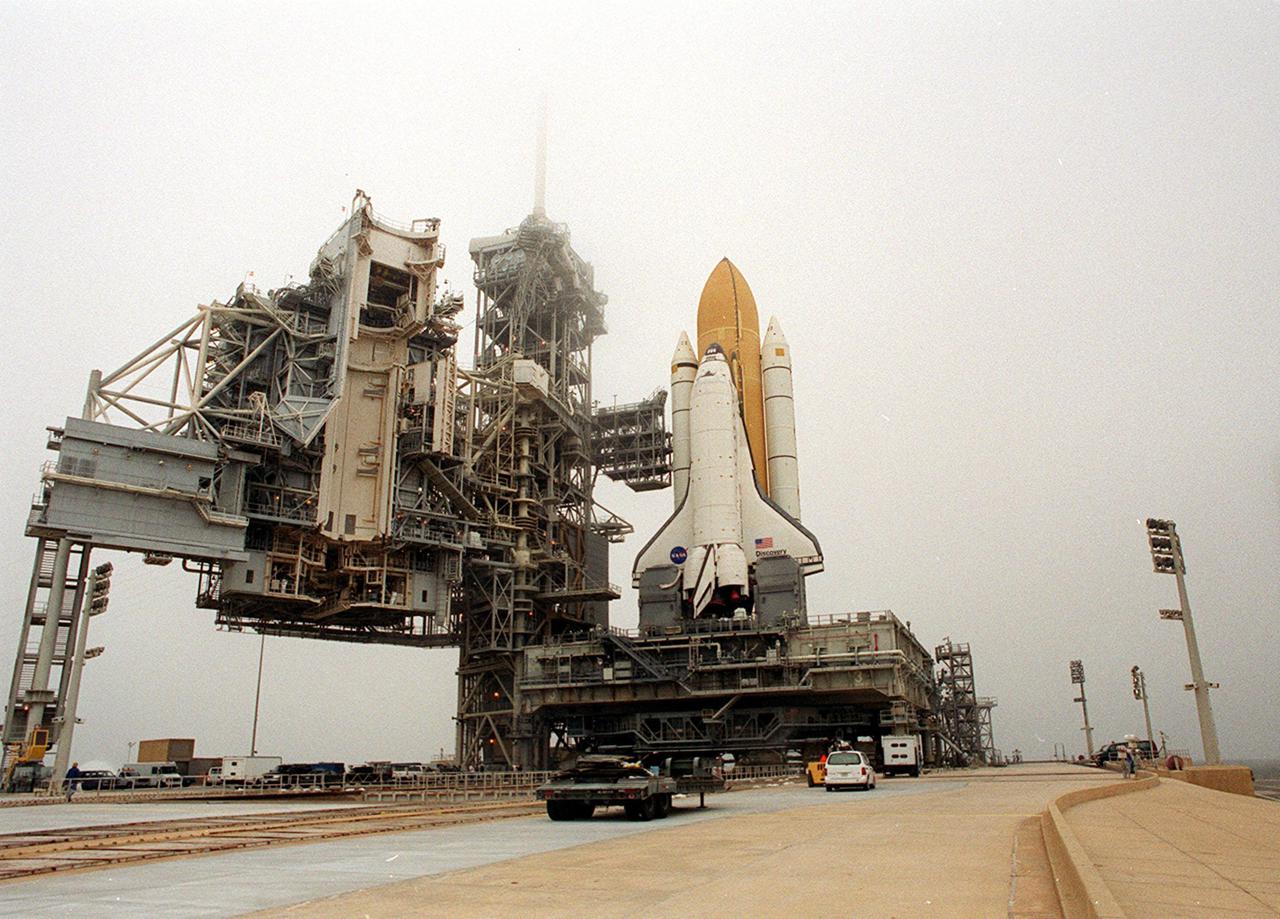
KENNEDY SPACE CENTER, Fla. -- Space Shuttle Discovery sits on Launch Pad 39B after its approximately 5-hour rollout from the Vehicle Assembly Building. At center left can be seen the White Room, the environmentally controlled chamber that provides entry into the orbiter for the astronaut crews. The chamber is at the end of the Orbiter Access Arm, which has not been extended yet. At the bottom of Discovery’s left wing is the tail service mast, one of two belonging to the Mobile Launcher Platform on which the Shuttle rests. The tail service mast is 31 feet high, 15 feet long and 9 feet wide. A second TSM is on the other side. They support the fluid, gas and electrical requirements of the orbiter’s liquid oxygen and liquid hydrogen aft T-0 umbilicals. Discovery will be flying on mission STS-102 to the International Space Station. Its payload is the Multi-Purpose Logistics Module Leonardo, a “moving van,” to carry laboratory racks filled with equipment, experiments and supplies to and from the Space Station aboard the Space Shuttle. The flight will also carry the Expedition Two crew up to the Space Station, replacing Expedition One, who will return to Earth on Discovery. Launch is scheduled for March 8 at 6:45 a.m. EST
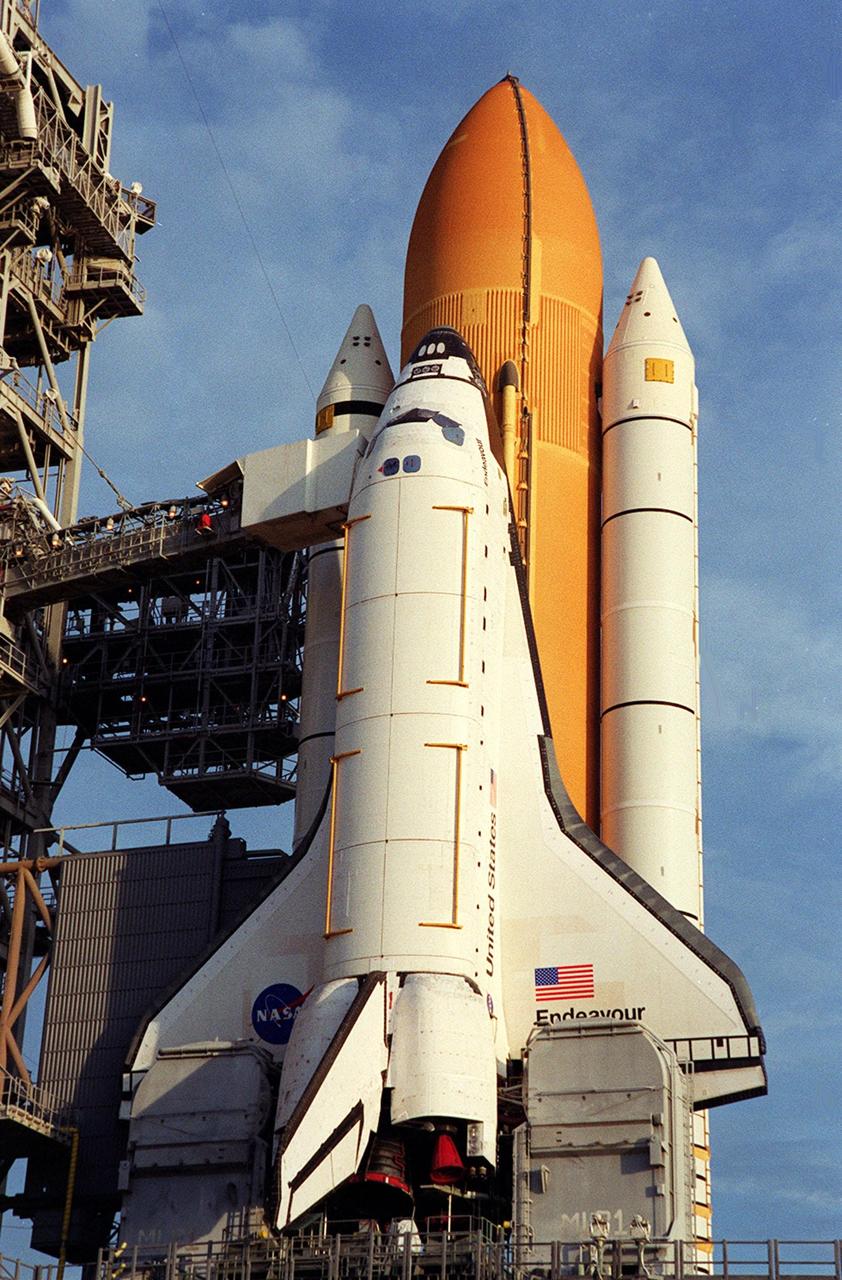
KENNEDY SPACE CENTER, FLA. -- Space Shuttle Endeavour waits on Launch Pad 39B for launch on mission STS-97. Behind it are the orange external tank flanked by two solid rocket boosters. On either side of Endeavour’s tail are the tail service masts, which support the fluid, gas and electrical requirements of the orbiter’s liquid oxygen and liquid hydrogen aft T-0 umbilicals. The masts also protect the ground half of those umbilicals from the harsh launch environment. At launch, the masts rotate backward, triggering a compressed-gas thruster and causing a protective hood to move into place and completely seal the structure from the main engine exhaust. At the end of the orbiter access arm, near the nose of Endeavour, is the White Room, an environmental chamber that provides both entrance to the orbiter and emergency egress, if needed. The arm remains extended until 7 minutes, 24 seconds before launch. The arm extends from the Fixed Service Structure. In the center of Endeavour are the payload bay doors. Endeavour is scheduled to launch Nov. 30 at 10:06 p.m. EST
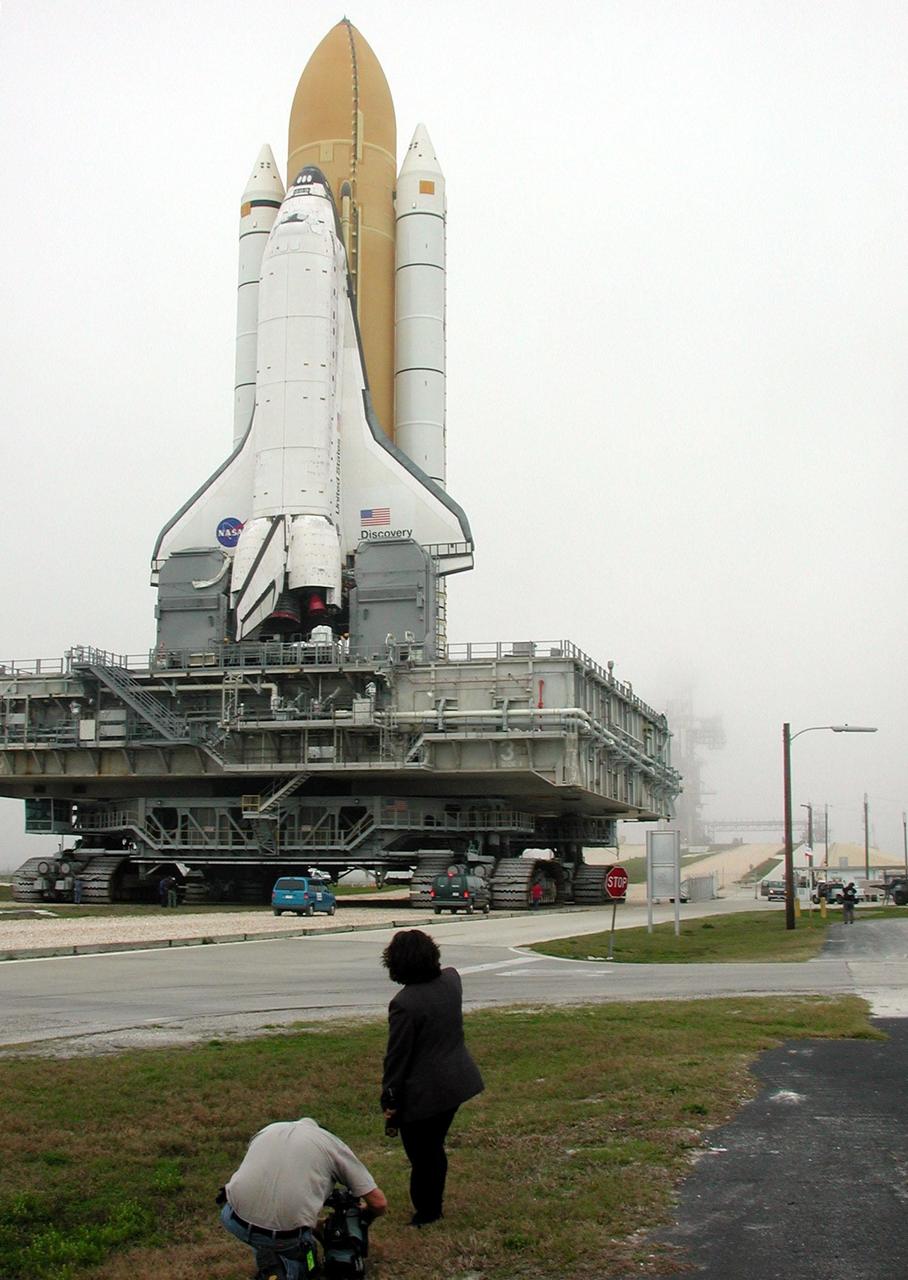
KENNEDY SPACE CENTER, Fla. -- This closeup shows Space Shuttle Discovery as it travels to Launch Pad 39B. Underneath Discovery is the Mobile Launcher Platform, a two-story movable launch base. Part of the MPLM is the tail service mast, seen here at the bottom of the wind and next to the Shuttle’s main engines. The tail service mast is 31 feet high, 15 feet long and 9 feet wide. A second TSM is on the other side. They support the fluid, gas and electrical requirements of the orbiter’s liquid oxygen and liquid hydrogen aft T-0 umbilicals. Discovery will be flying on mission STS-102 to the International Space Station. Its payload is the Multi-Purpose Logistics Module Leonardo, a “moving van,” to carry laboratory racks filled with equipment, experiments and supplies to and from the Space Station aboard the Space Shuttle. The flight will also carry the Expedition Two crew up to the Space Station, replacing Expedition One, who will return to Earth on Discovery. Launch is scheduled for March 8 at 6:45 a.m. EST
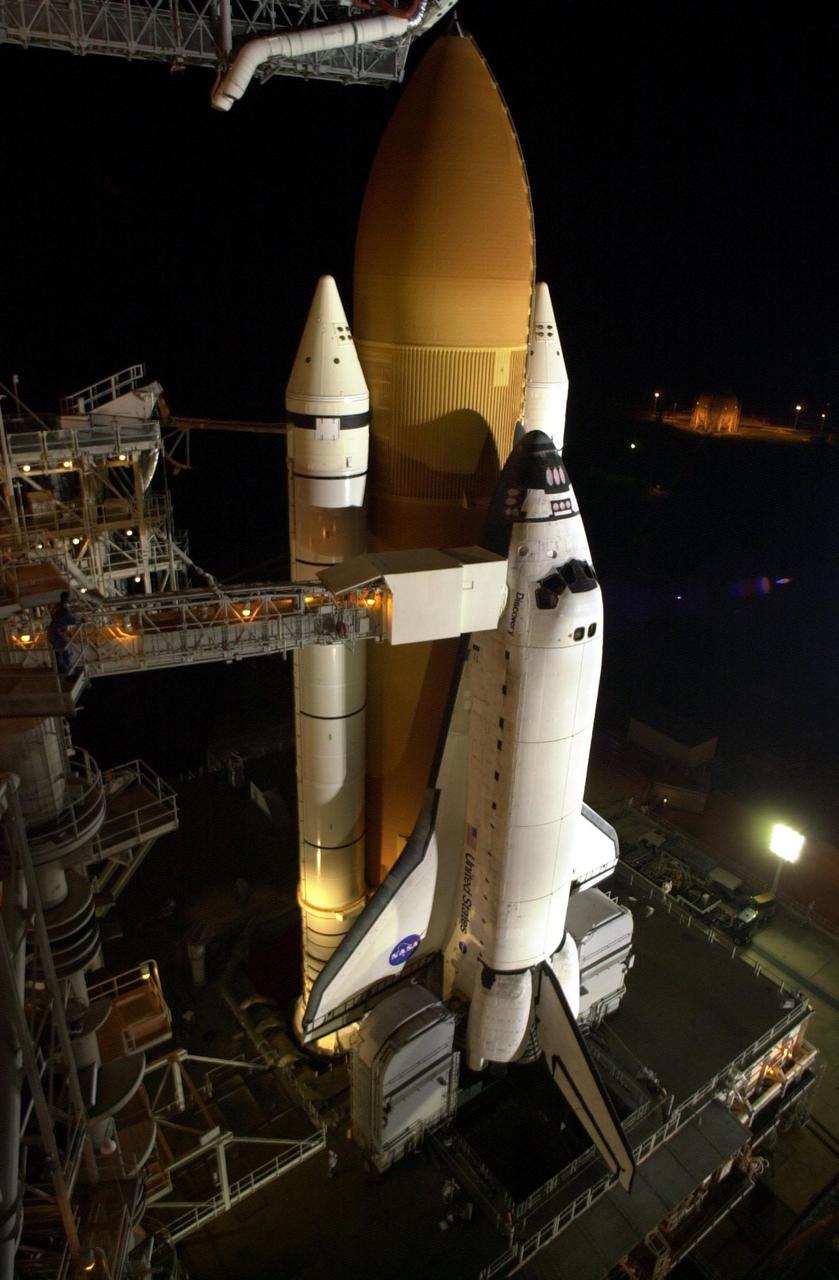
KENNEDY SPACE CENTER, Fla. -- Space Shuttle Discovery is bathed in light after rollback of the Rotating Service Structure in preparation for launch on mission STS-105. The Shuttle comprises the two solid rocket boosters, external tank and orbiter, all of which are secured on the mobile launcher platform beneath them. Extending toward Discovery from the fixed service structure at left is the orbiter access arm. At the end of the arm is the White Room, an environmental chamber that mates with the orbiter and allows personnel to enter the crew compartment. Below, on either side of the orbiter’s tail are the tail service masts that support the fluid, gas and electrical requirements of the orbiter’s liquid oxygen and liquid hydrogen aft T-0 umbilicals. On mission STS-105, Discovery will be transporting the Expedition Three crew and several payloads and scientific experiments to the ISS, including the Early Ammonia Servicer (EAS) tank. The EAS, which will support the thermal control subsystems until a permanent system is activated, will be attached to the Station during two spacewalks. The three-member Expedition Two crew will be returning to Earth aboard Discovery after a five-month stay on the Station. Launch is scheduled for 5:38 p.m. EDT Aug. 9
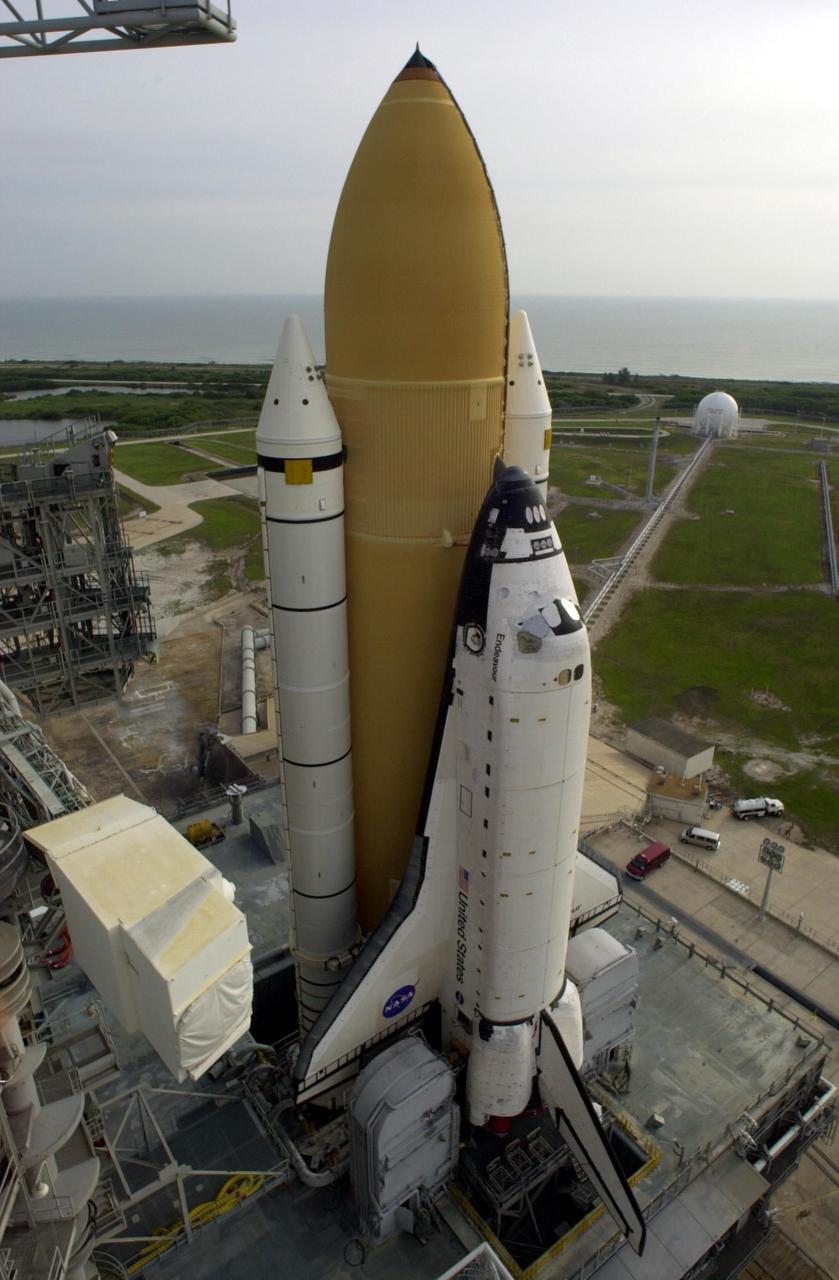
KENNEDY SPACE CENTER, FLA. - Space Shuttle Endeavour rests on Launch Pad 39A after rollout from the Vehicle Assembly Building. The Shuttle comprises the orbiter, in front, and the taller orange external tank behind it flanked by twin solid rocket boosters. The Shuttle sits on the Mobile Launcher Platform that straddles the flame trench below. On either side of Endeavour's tail and main engines are the tail service masts that support the fluid,, gas and electrical requirements of the orbiter's liquid oxyen and liquid hydrogen aft T-0 umbilicals. In the foreground, left, is the White Room, located at the end of the orbiter access arm. This environmentally controlled area provides access to the cockpit of the orbiter. Mission STS-111 is designated UF-2, the 14th assembly flight to the International Space Station. Endeavour's payload includes the Multi-Purpose Logistics Module Leonardo and Mobile Base System. The mission also will swap resident crews on the Station, carrying the Expedition 5 crew and returning to Earth Expedition 4. Liftoff of Endeavour is scheduled between 4 and 8 p.m. May 30, 2002
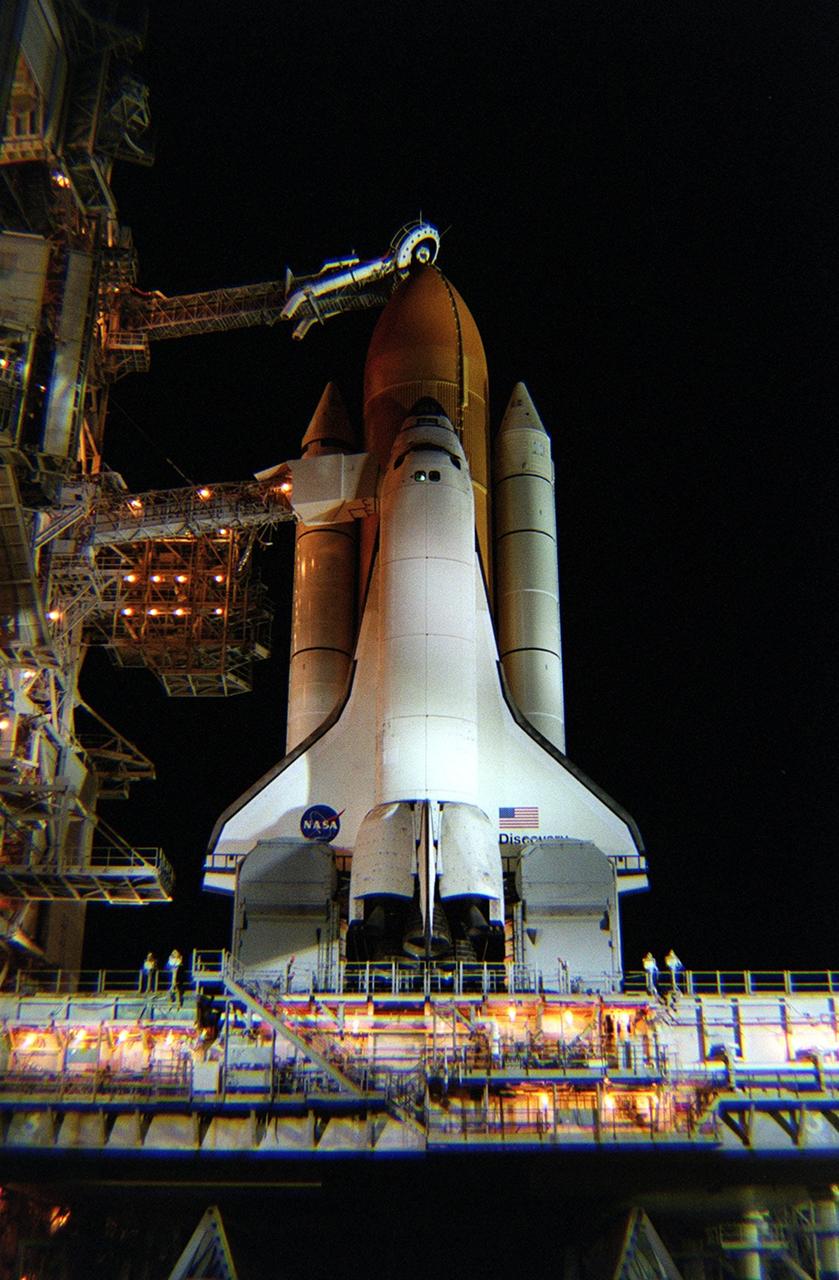
KENNEDY SPACE CENTER, Fla. -- Floodlights reveal the Space Shuttle Discovery after rollback of the Rotating Service Structure in preparation for launch on mission STS-105. Above the external tank, the “beanie cap” is poised, waiting for loading of the propellants. The cap, or vent hood, is on the end of the gaseous oxygen vent arm that allows gaseous oxygen vapors to vent away from the Space Shuttle. Below, on either side of the orbiter’s tail are the tail service masts that support the fluid, gas and electrical requirements of the orbiter’s liquid oxygen and liquid hydrogen aft T-0 umbilicals. On the mission, Discovery will be transporting the Expedition Three crew and several scientific experiments and payloads to the International Space Station, including the Early Ammonia Servicer (EAS) tank. The EAS, which will support the thermal control subsystems until a permanent system is activated, will be attached to the Station during two spacewalks. The three-member Expedition Two crew will be returning to Earth aboard Discovery after a five-month stay on the Station. Launch is scheduled for 5:38 p.m. EDT Aug. 9
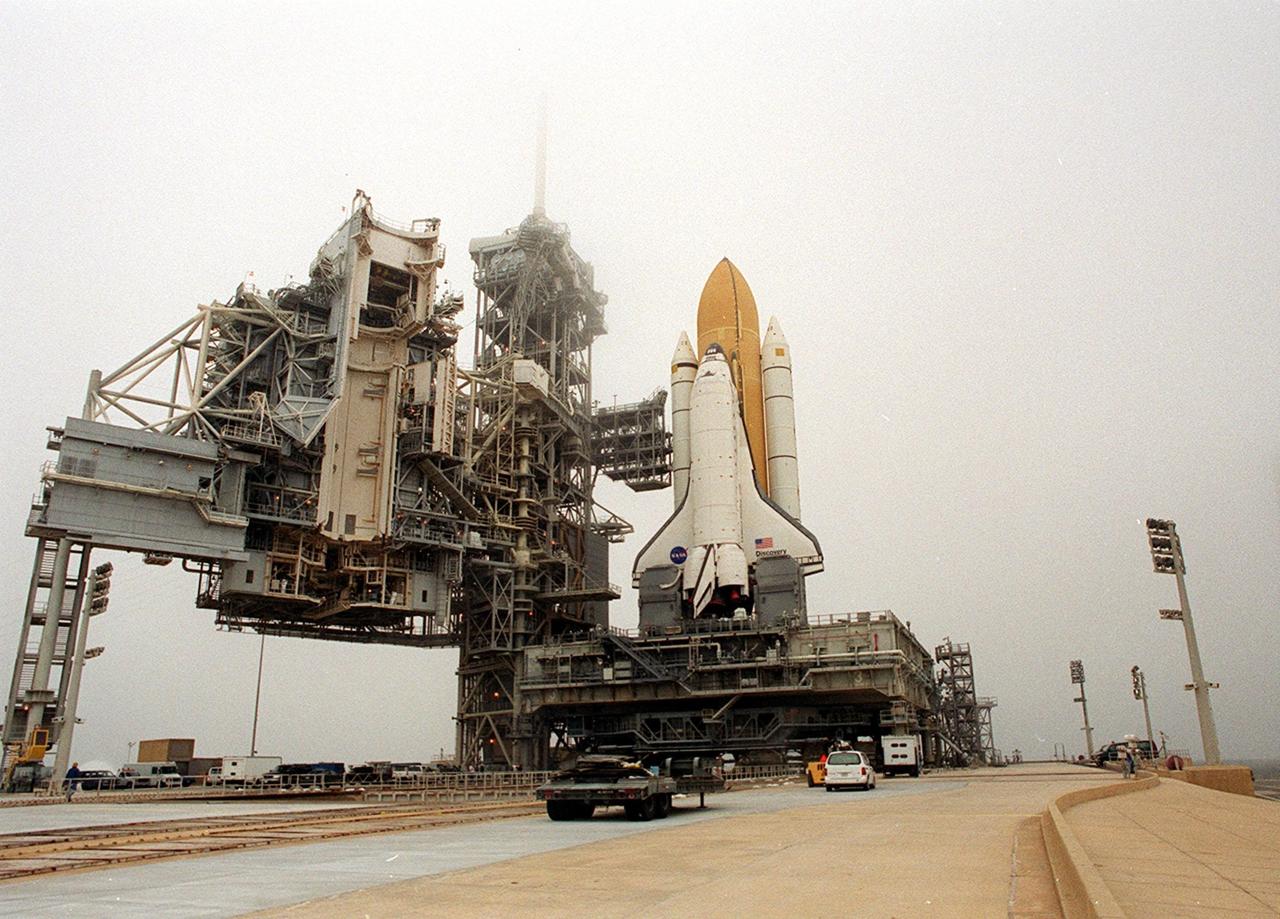
KENNEDY SPACE CENTER, Fla. -- Space Shuttle Discovery sits on Launch Pad 39B after its approximately 5-hour rollout from the Vehicle Assembly Building. At center left can be seen the White Room, the environmentally controlled chamber that provides entry into the orbiter for the astronaut crews. The chamber is at the end of the Orbiter Access Arm, which has not been extended yet. At the bottom of Discovery’s left wing is the tail service mast, one of two belonging to the Mobile Launcher Platform on which the Shuttle rests. The tail service mast is 31 feet high, 15 feet long and 9 feet wide. A second TSM is on the other side. They support the fluid, gas and electrical requirements of the orbiter’s liquid oxygen and liquid hydrogen aft T-0 umbilicals. Discovery will be flying on mission STS-102 to the International Space Station. Its payload is the Multi-Purpose Logistics Module Leonardo, a “moving van,” to carry laboratory racks filled with equipment, experiments and supplies to and from the Space Station aboard the Space Shuttle. The flight will also carry the Expedition Two crew up to the Space Station, replacing Expedition One, who will return to Earth on Discovery. Launch is scheduled for March 8 at 6:45 a.m. EST
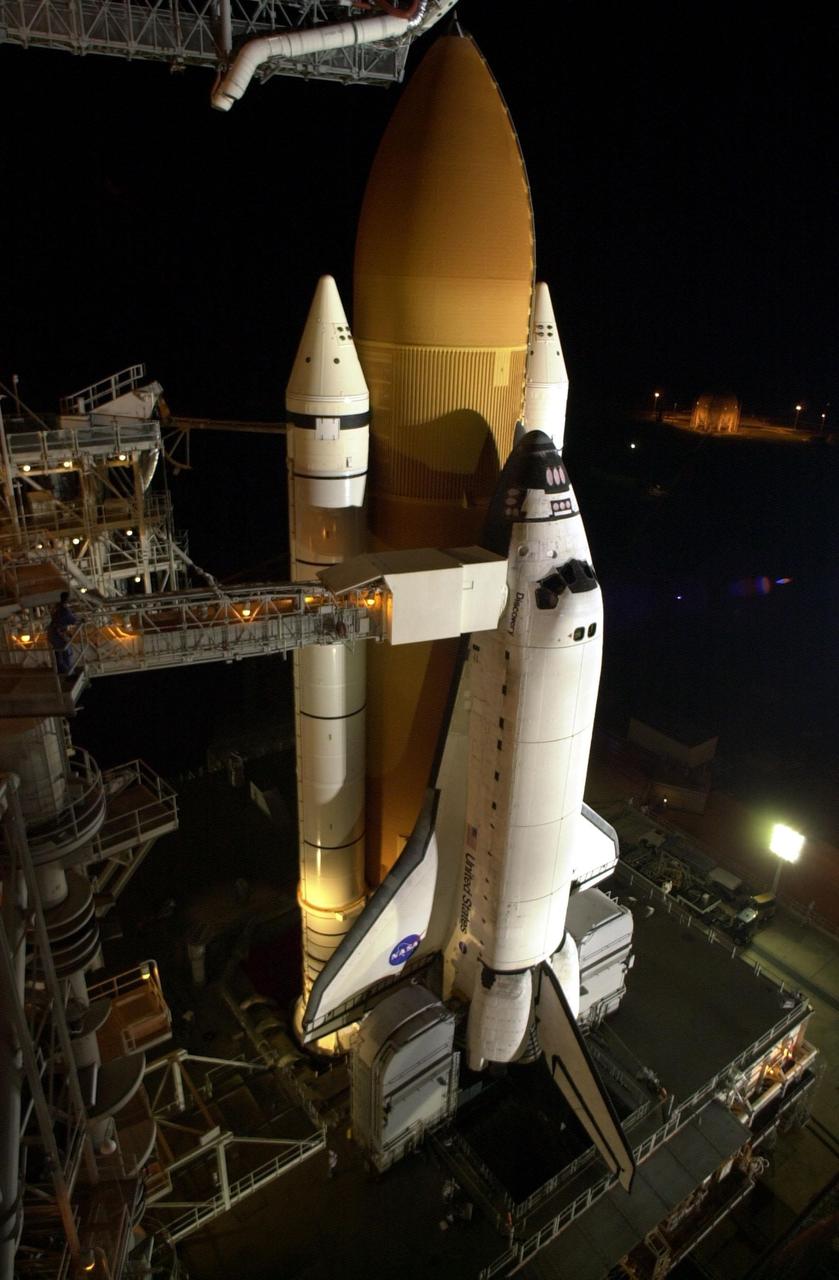
KENNEDY SPACE CENTER, Fla. -- Space Shuttle Discovery is bathed in light after rollback of the Rotating Service Structure in preparation for launch on mission STS-105. The Shuttle comprises the two solid rocket boosters, external tank and orbiter, all of which are secured on the mobile launcher platform beneath them. Extending toward Discovery from the fixed service structure at left is the orbiter access arm. At the end of the arm is the White Room, an environmental chamber that mates with the orbiter and allows personnel to enter the crew compartment. Below, on either side of the orbiter’s tail are the tail service masts that support the fluid, gas and electrical requirements of the orbiter’s liquid oxygen and liquid hydrogen aft T-0 umbilicals. On mission STS-105, Discovery will be transporting the Expedition Three crew and several payloads and scientific experiments to the ISS, including the Early Ammonia Servicer (EAS) tank. The EAS, which will support the thermal control subsystems until a permanent system is activated, will be attached to the Station during two spacewalks. The three-member Expedition Two crew will be returning to Earth aboard Discovery after a five-month stay on the Station. Launch is scheduled for 5:38 p.m. EDT Aug. 9
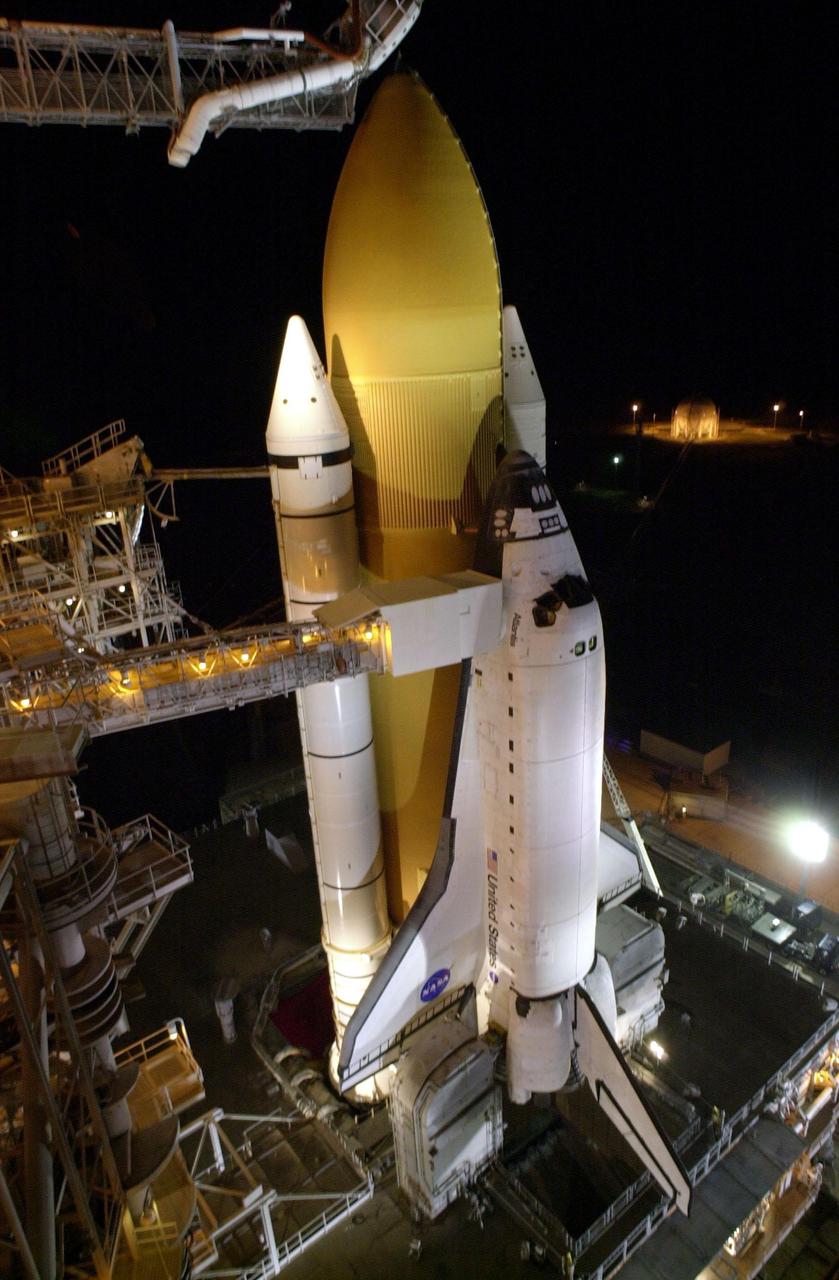
KENNEDY SPACE CENTER, Fla. -- This closeup reveals Space Shuttle Atlantis after rollback of the Rotating Service Structure. Extended to the side of Atlantis is the orbiter access arm, with the White Room at its end. The White Room provides entry for the crew into Atlantis’s cockpit. Below Atlantis, on either side of the tail are the tail service masts. They support the fluid, gas and electrical requirements of the orbiter’s liquid oxygen and liquid hydrogen aft T-0 umbilicals. Atlantis is carrying the U.S. Laboratory Destiny, a key module in the growth of the International Space Station. Destiny will be attached to the Unity node on the Space Station using the Shuttle’s robotic arm. Three spacewalks are required to complete the planned construction work during the 11-day mission. Launch is targeted for 6:11 p.m. EST and the planned landing at KSC Feb. 18 about 1:39 p.m. This mission marks the seventh Shuttle flight to the Space Station, the 23rd flight of Atlantis and the 102nd flight overall in NASA’s Space Shuttle program
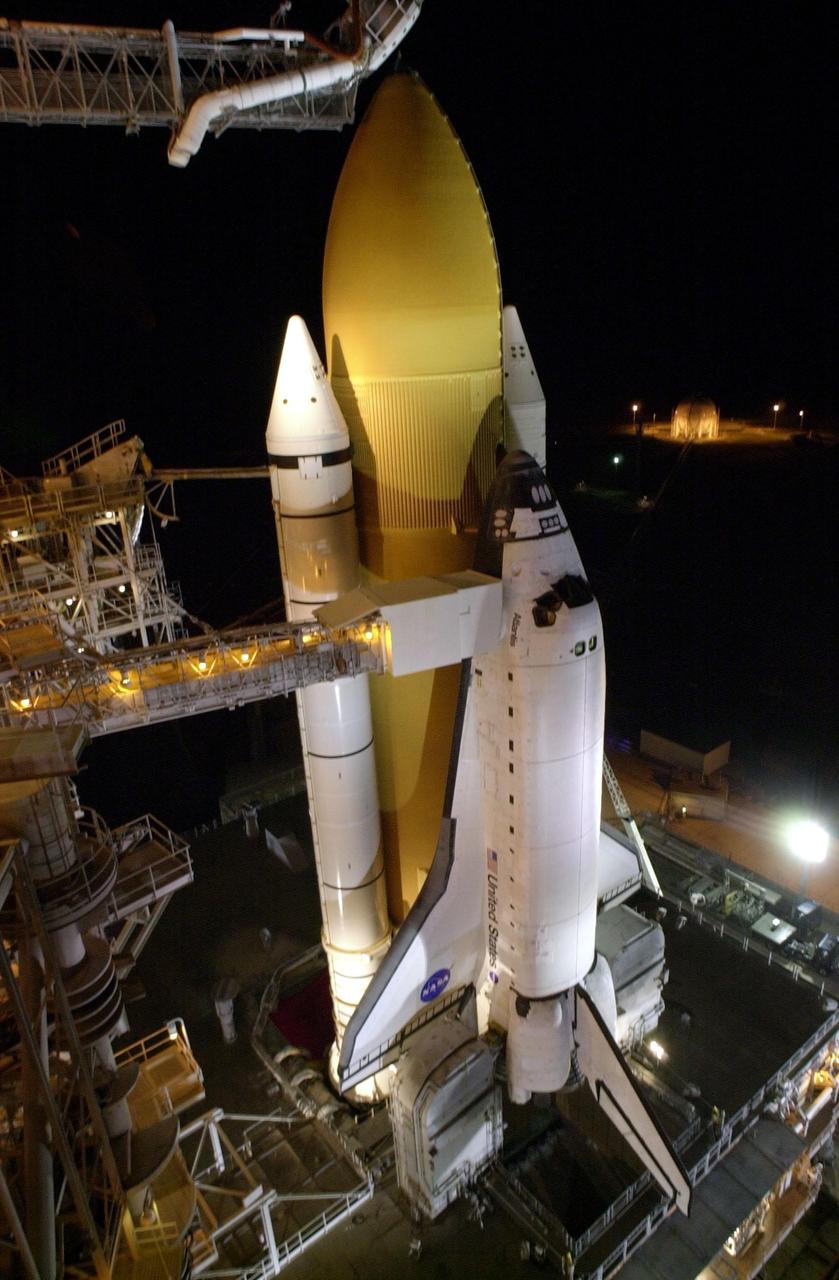
KENNEDY SPACE CENTER, Fla. -- This closeup reveals Space Shuttle Atlantis after rollback of the Rotating Service Structure. Extended to the side of Atlantis is the orbiter access arm, with the White Room at its end. The White Room provides entry for the crew into Atlantis’s cockpit. Below Atlantis, on either side of the tail are the tail service masts. They support the fluid, gas and electrical requirements of the orbiter’s liquid oxygen and liquid hydrogen aft T-0 umbilicals. Atlantis is carrying the U.S. Laboratory Destiny, a key module in the growth of the International Space Station. Destiny will be attached to the Unity node on the Space Station using the Shuttle’s robotic arm. Three spacewalks are required to complete the planned construction work during the 11-day mission. Launch is targeted for 6:11 p.m. EST and the planned landing at KSC Feb. 18 about 1:39 p.m. This mission marks the seventh Shuttle flight to the Space Station, the 23rd flight of Atlantis and the 102nd flight overall in NASA’s Space Shuttle program
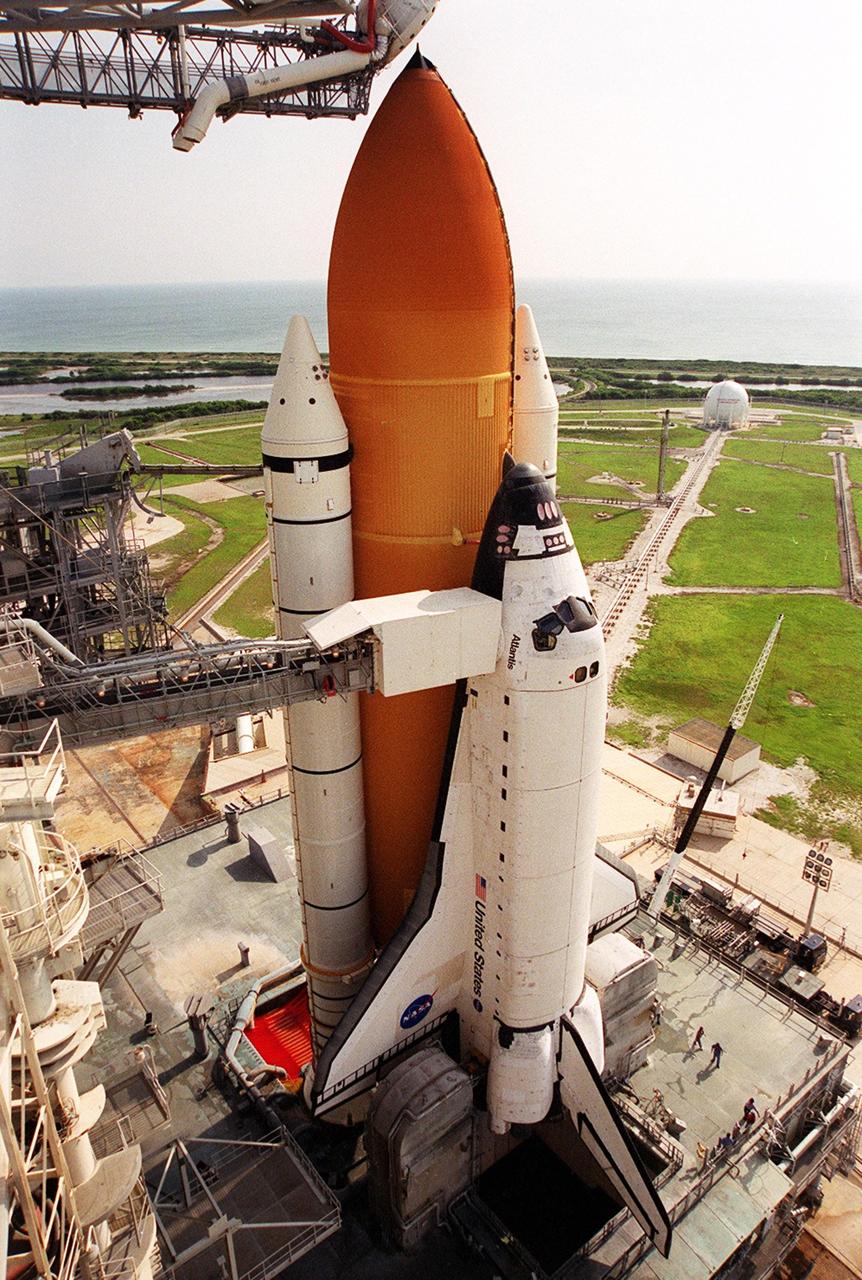
KENNEDY SPACE CENTER, Fla. -- Space Shuttle Atlantis is ready for final launch preparations. The orbiter access arm is extended to the orbiter to allow entry into Atlantis. The White Room at the end is the point of entry, and is an environmentally controlled room where the Shuttle crew have final adjustments made to their launch and entry suits. At the lower end of Atlantis are the tail service masts, in front of either wing. The masts support the fluid, gas and electrical requirements of the orbiter’s liquid oxygen and liquid hydrogen aft T-0 umbilicals. Viewed in the background is the Atlantic Ocean. Launch on mission STS-104 is scheduled for 5:04 a.m. July 12. The launch is the 10th assembly flight to the International Space Station. Along with a crew of five, Atlantis will carry the joint airlock module as primary payload
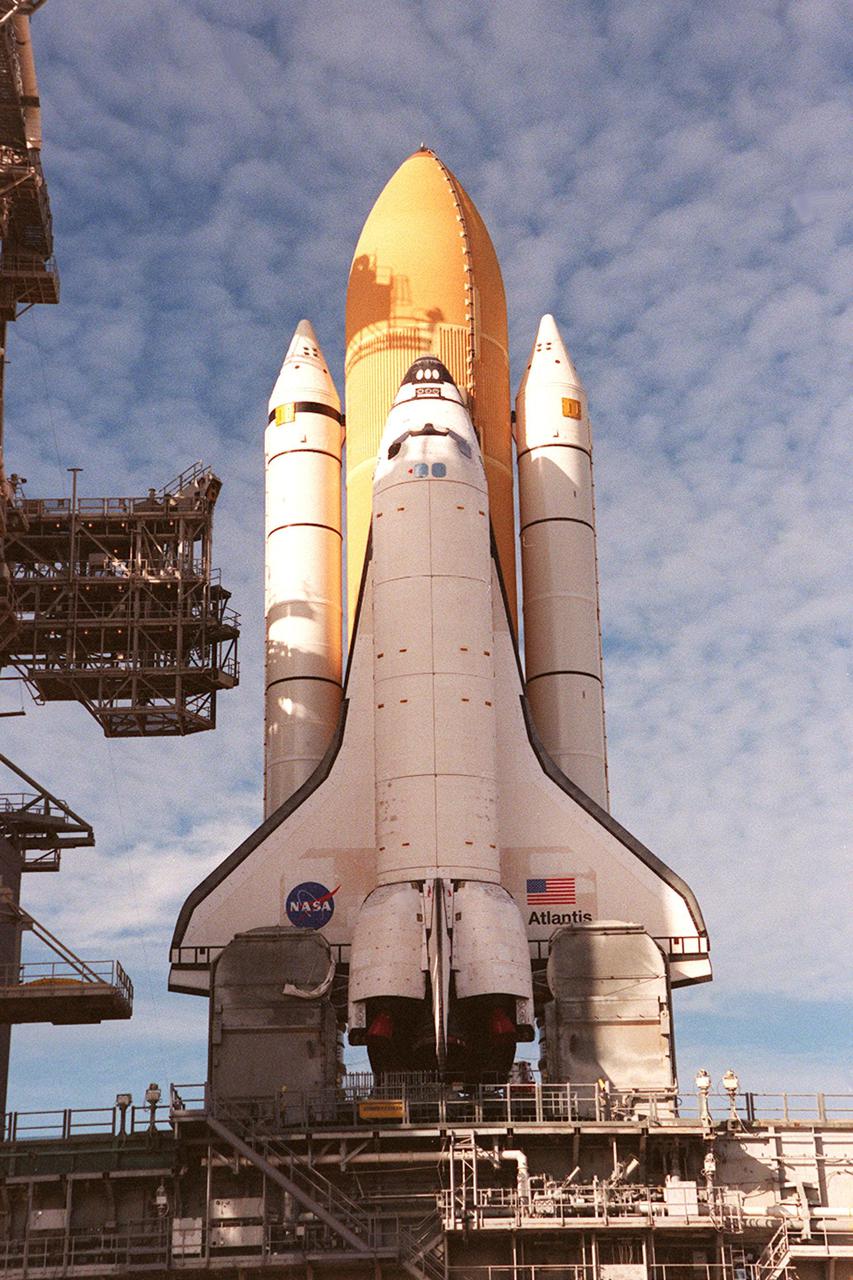
KENNEDY SPACE CENTER, Fla. -- Bright morning sun shines on Space Shuttle Atlantis as it sits on Launch Pad 39A. In front of the wings, on either side of the orbiter are tail service masts, which support the fluid, gas and electrical requirements of the orbiter’s liquid oxygen and liquid hydrogen aft T-0 umbilicals. Atlantis will fly on mission STS-98, the seventh construction flight to the International Space Station, carrying the U.S. Laboratory, named Destiny. The lab has five system racks already installed inside the module. After delivery of electronics in the lab, electrically powered attitude control for Control Moment Gyroscopes will be activated. Atlantis is scheduled for launch no earlier than Jan. 19, 2001, with a crew of five

KENNEDY SPACE CENTER, Fla. -- Bright morning sun shines on Space Shuttle Atlantis as it sits on Launch Pad 39A. In front of the wings, on either side of the orbiter are tail service masts, which support the fluid, gas and electrical requirements of the orbiter’s liquid oxygen and liquid hydrogen aft T-0 umbilicals. Atlantis will fly on mission STS-98, the seventh construction flight to the International Space Station, carrying the U.S. Laboratory, named Destiny. The lab has five system racks already installed inside the module. After delivery of electronics in the lab, electrically powered attitude control for Control Moment Gyroscopes will be activated. Atlantis is scheduled for launch no earlier than Jan. 19, 2001, with a crew of five
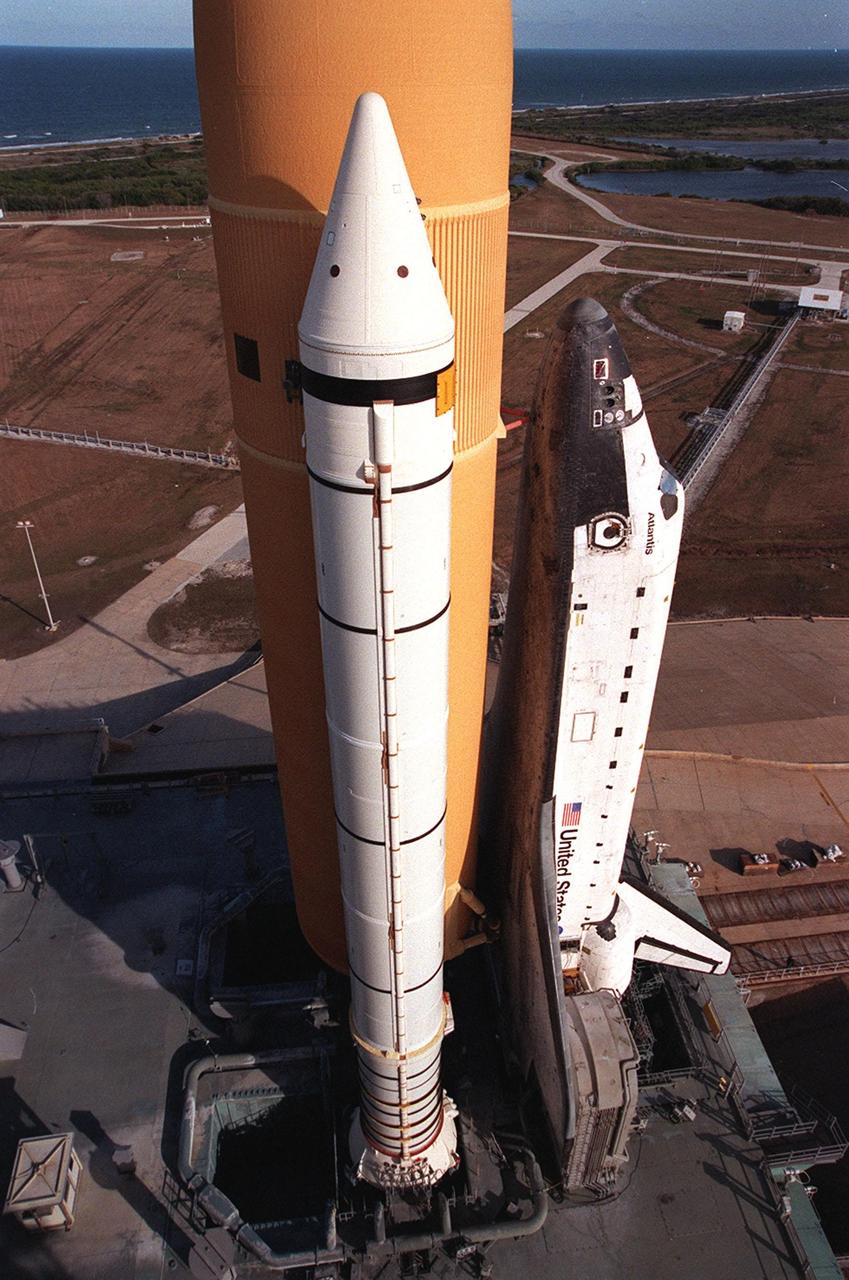
KENNEDY SPACE CENTER, Fla. -- Resting atop the Mobile Launcher Platform, Space Shuttle Atlantis is viewed from a high level on the Fixed Service Structure. Seen is one of its solid rocket boosters and the external tank. Next to the wing of the orbiter is one of two tail service masts, which support the fluid, gas and electrical requirements of the orbiter’s liquid oxygen and liquid hydrogen aft T-0 umbilicals. On the horizon is the Atlantic Ocean. Atlantis will fly on mission STS-98, the seventh construction flight to the International Space Station, carrying the U.S. Laboratory, named Destiny. The lab has five system racks already installed inside the module. After delivery of electronics in the lab, electrically powered attitude control for Control Moment Gyroscopes will be activated. Atlantis is scheduled for launch no earlier than Jan. 19, 2001, with a crew of five
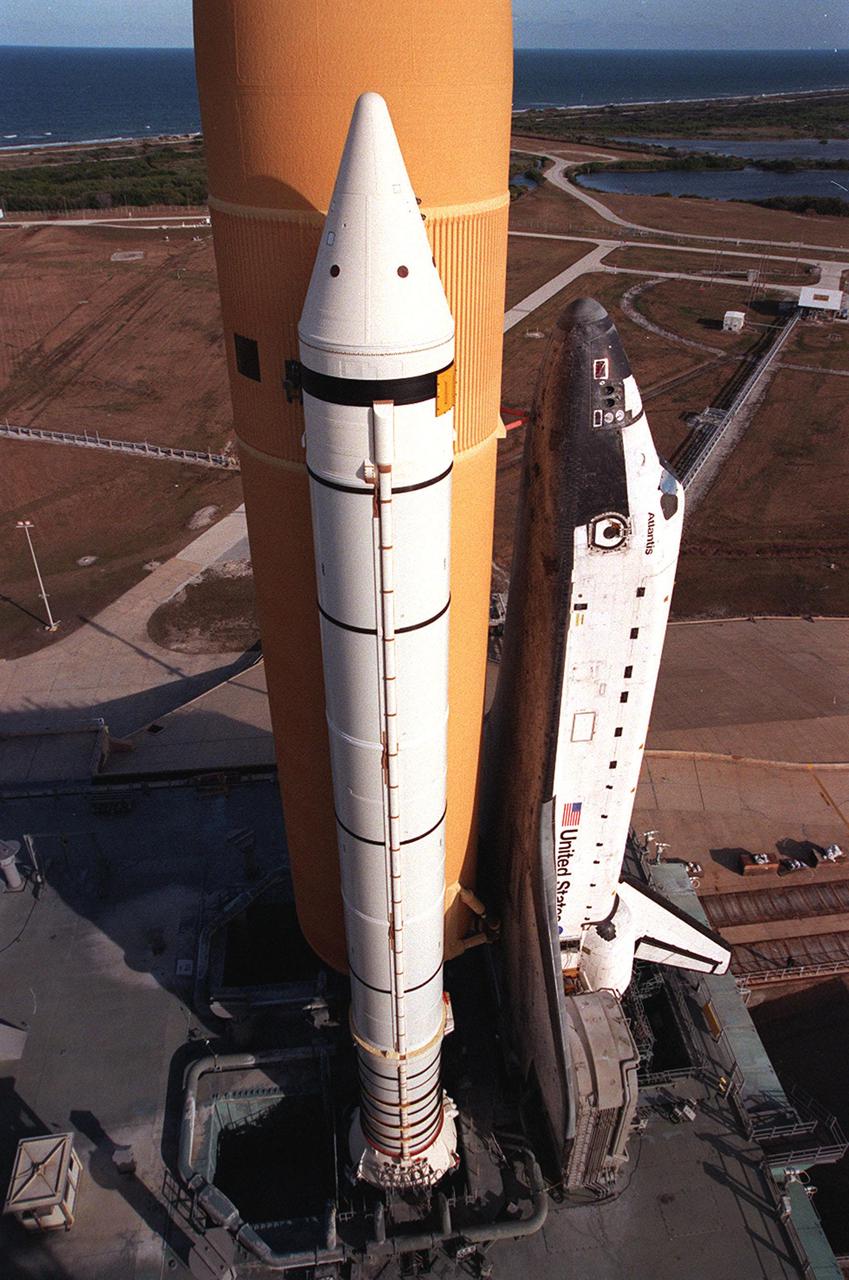
KENNEDY SPACE CENTER, Fla. -- Resting atop the Mobile Launcher Platform, Space Shuttle Atlantis is viewed from a high level on the Fixed Service Structure. Seen is one of its solid rocket boosters and the external tank. Next to the wing of the orbiter is one of two tail service masts, which support the fluid, gas and electrical requirements of the orbiter’s liquid oxygen and liquid hydrogen aft T-0 umbilicals. On the horizon is the Atlantic Ocean. Atlantis will fly on mission STS-98, the seventh construction flight to the International Space Station, carrying the U.S. Laboratory, named Destiny. The lab has five system racks already installed inside the module. After delivery of electronics in the lab, electrically powered attitude control for Control Moment Gyroscopes will be activated. Atlantis is scheduled for launch no earlier than Jan. 19, 2001, with a crew of five
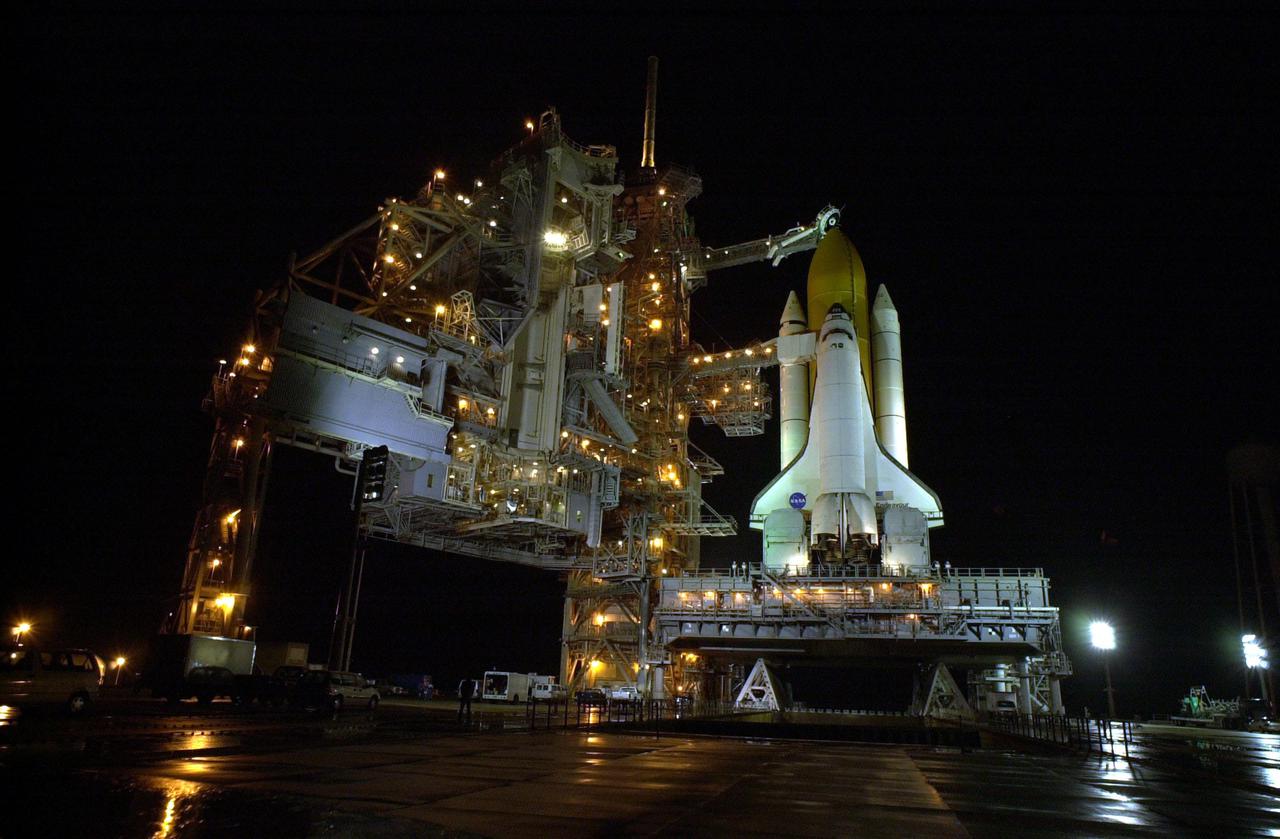
KENNEDY SPACE CENTER, Fla. -- Rain on the ground around Space Shuttle Endeavour on Launch Pad 39B reflects the many lights illluminating the Rotating Service Structure (at left), Fixed Service Structure and Shuttle. Twin solid rocket boosters flank the orange external tank behind Endeavour. Above the external tank is the Gaseous Oxygen Vent Arm that vents gaseous oxygen vapors away from the Shuttle. The vent hood assembly at the end is often referred to as the 'beanie cap.' Stretching from the FSS to the crew hatch on the side of Endeavour is the Orbiter Access Arm with its environmentally controlled White Room at the end, through which the crew enters the vehicle. The Shuttle sits on the Mobile Launcher Platform with the two service tail masts on either side of the main engines. The tail masts support the fluid, gas and electrical requirements of the orbiter's liquid oxygen and liquid hydrogen aft T-0 umbilicals. Each tail mast is 31 feet (9.4 meters) high, 15 feet (4.6 meters) long and 9 feet (3.1 meters) wide. Endeavour is scheduled to launch on mission STS-108 Dec. 4 at 5:45 p.m. EST. On this 12th flight to the International Space Station, known as a Utilization Flight, Endeavour will carry a crew of four plus the Expedition 4 crew, who will replace Expedition 3 aboard the ISS. The payload includes the Multi-Purpose Logistics Module Raffaello, filled with supplies, equipment and experiments
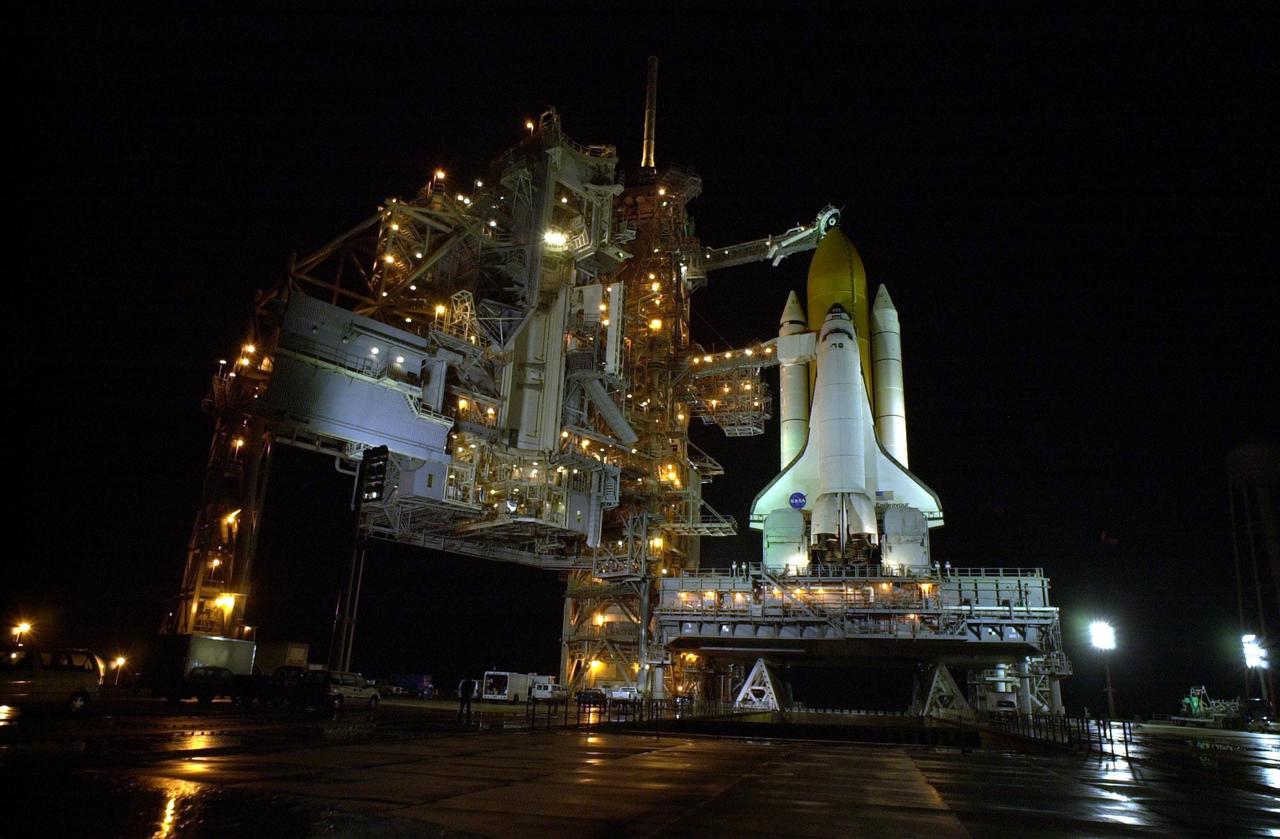
KENNEDY SPACE CENTER, Fla. -- Rain on the ground around Space Shuttle Endeavour on Launch Pad 39B reflects the many lights illluminating the Rotating Service Structure (at left), Fixed Service Structure and Shuttle. Twin solid rocket boosters flank the orange external tank behind Endeavour. Above the external tank is the Gaseous Oxygen Vent Arm that vents gaseous oxygen vapors away from the Shuttle. The vent hood assembly at the end is often referred to as the "beanie cap." Stretching from the FSS to the crew hatch on the side of Endeavour is the Orbiter Access Arm with its environmentally controlled White Room at the end, through which the crew enters the vehicle. The Shuttle sits on the Mobile Launcher Platform with the two service tail masts on either side of the main engines. The tail masts support the fluid, gas and electrical requirements of the orbiter's liquid oxygen and liquid hydrogen aft T-0 umbilicals. Each tail mast is 31 feet (9.4 meters) high, 15 feet (4.6 meters) long and 9 feet (3.1 meters) wide. Endeavour is scheduled to launch on mission STS-108 Dec. 4 at 5:45 p.m. EST. On this 12th flight to the International Space Station, known as a Utilization Flight, Endeavour will carry a crew of four plus the Expedition 4 crew, who will replace Expedition 3 aboard the ISS. The payload includes the Multi-Purpose Logistics Module Raffaello, filled with supplies, equipment and experiments
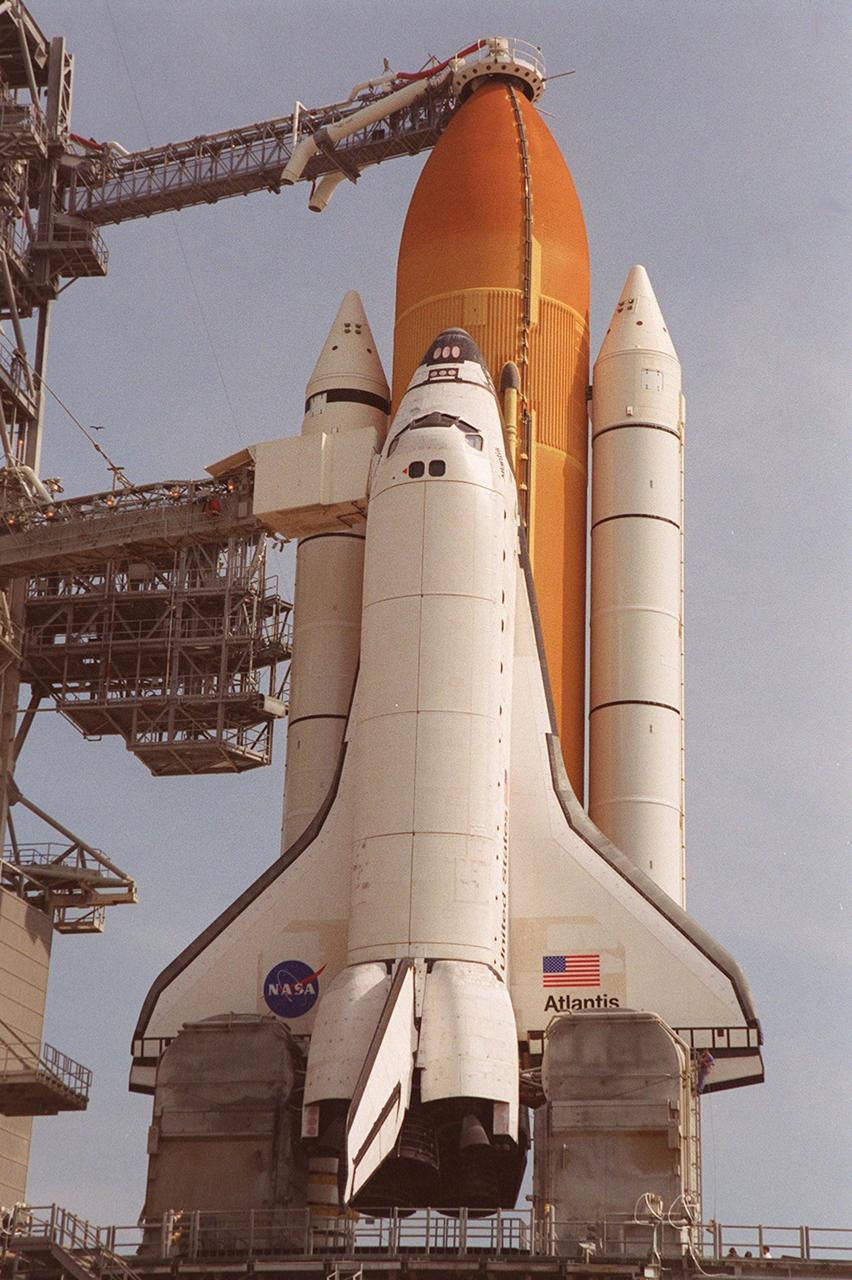
KENNEDY SPACE CENTER, Fla. -- After RSS rollback, Space Shuttle Atlantis is ready for final launch preparations. The orbiter access arm, with the environmentally controlled White Room at the end, is extended to the orbiter to allow entry into Atlantis. Above it is the gaseous oxygen vent arm with its characteristic “beanie cap” or hood placed over the external tank. The retractable arm and vent hood assembly allows gaseous oxygen vapors to vent away from the Space Shuttle vehicle. The vapors are created as the liquid oxygen in the external tank boils off. At the lower end of Atlantis are the tail service masts, in front of either wing. The masts support the fluid, gas and electrical requirements of the orbiter’s liquid oxygen and liquid hydrogen aft T-0 umbilicals. Launch on mission STS-104 is scheduled for 5:04 a.m. July 12. The launch is the 10th assembly flight to the International Space Station. Along with a crew of five, Atlantis will carry the joint airlock module as primary payload

Event: Horizontal Stabilator Install The Low Boom Flight Demonstrator manufacturing team installed the horizontal stabilizers to the aircraft. These are used along with the flight control computers to keep the airplane flying safely and providing the pitch control so that the pilot can fly the missions envisioned for the X-59

Event: Horizontal Stabilator Install The Low Boom Flight Demonstrator manufacturing team installed the horizontal stabilizers to the aircraft. These are used along with the flight control computers to keep the airplane flying safely and providing the pitch control so that the pilot can fly the missions envisioned for the X-59.

Event: Horizontal Stabilator Install The Low Boom Flight Demonstrator manufacturing team installed the horizontal stabilizers to the aircraft. These are used along with the flight control computers to keep the airplane flying safely and providing the pitch control so that the pilot can fly the missions envisioned for the X-59.

Event: Horizontal Stabilator Install The Low Boom Flight Demonstrator manufacturing team installed the horizontal stabilizers to the aircraft. These are used along with the flight control computers to keep the airplane flying safely and providing the pitch control so that the pilot can fly the missions envisioned for the X-59.