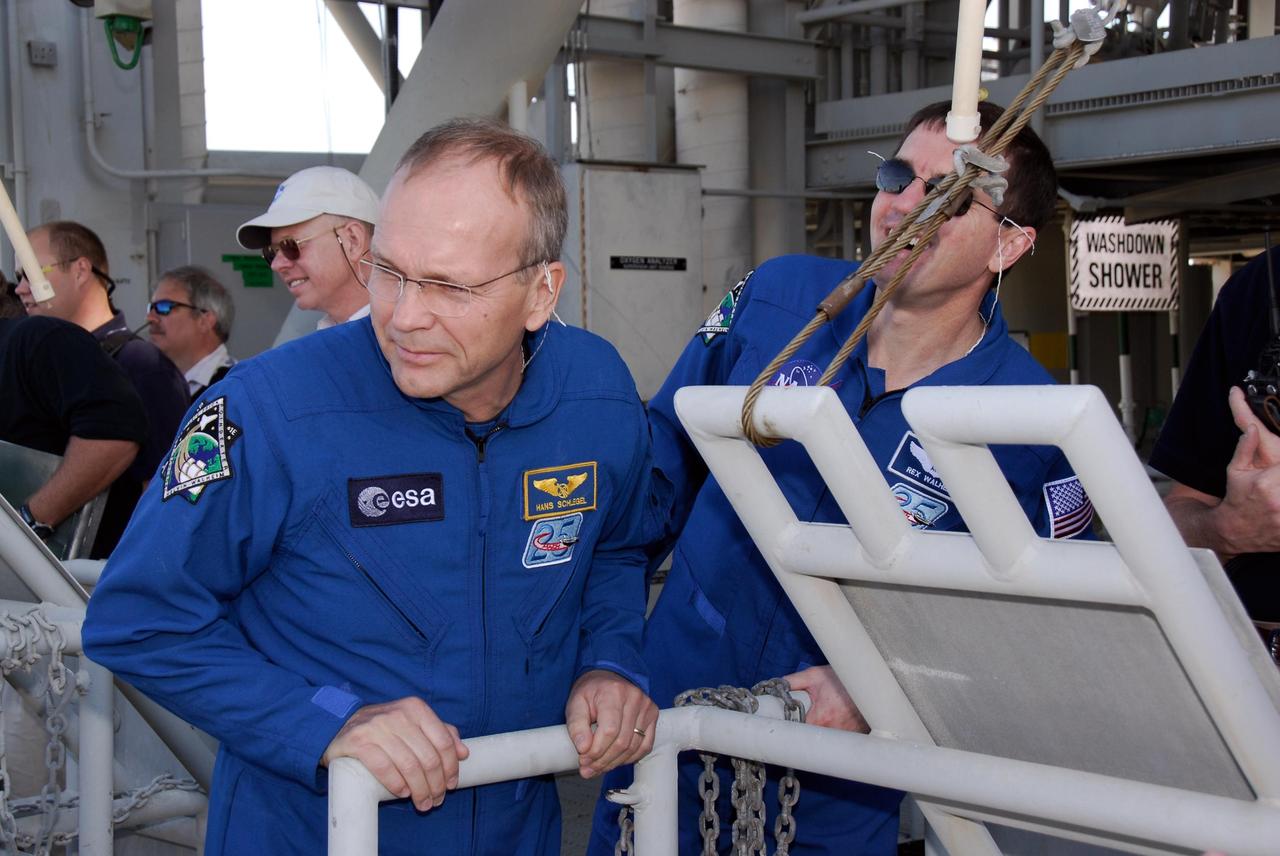
KENNEDY SPACE CENTER, FLA. -- During a training session on emergency exit from the fixed service structure on Launch Pad 39A, space shuttle Atlantis STS-122 Mission Specialists Hans Schlegel, left, and Rex Walheim watch a slidewire basket descend to the landing zone. Schlegel is with the European Space Agency. Seven slidewire baskets are available to carry the crew from the level of the pad's Orbiter Access Arm to a safe landing site below, if needed. Each basket can hold up to three people. A braking system catch net and drag chain slow, and then halt, the baskets as they travel down the wire at approximately 55 miles per hour. The journey takes about half a minute. A bunker is located in the landing zone 1,200 feet west of the pad, with an M-113 armored personnel carrier stationed nearby. The STS-122 crew is at NASA's Kennedy Space Center to take part in terminal countdown demonstration test, or TCDT, activities, a standard part of launch preparations. The TCDT provides astronauts and ground crews with equipment familiarization and a simulated launch countdown before launch. On mission STS-122, Atlantis will deliver the European Space Agency's Columbus module to the International Space Station. Columbus is a multifunctional, pressurized laboratory that will be permanently attached to U.S. Node 2, called Harmony, and will expand the research facilities aboard the station. Launch is targeted for Dec. 6. Photo credit: NASA/Kim Shiflett
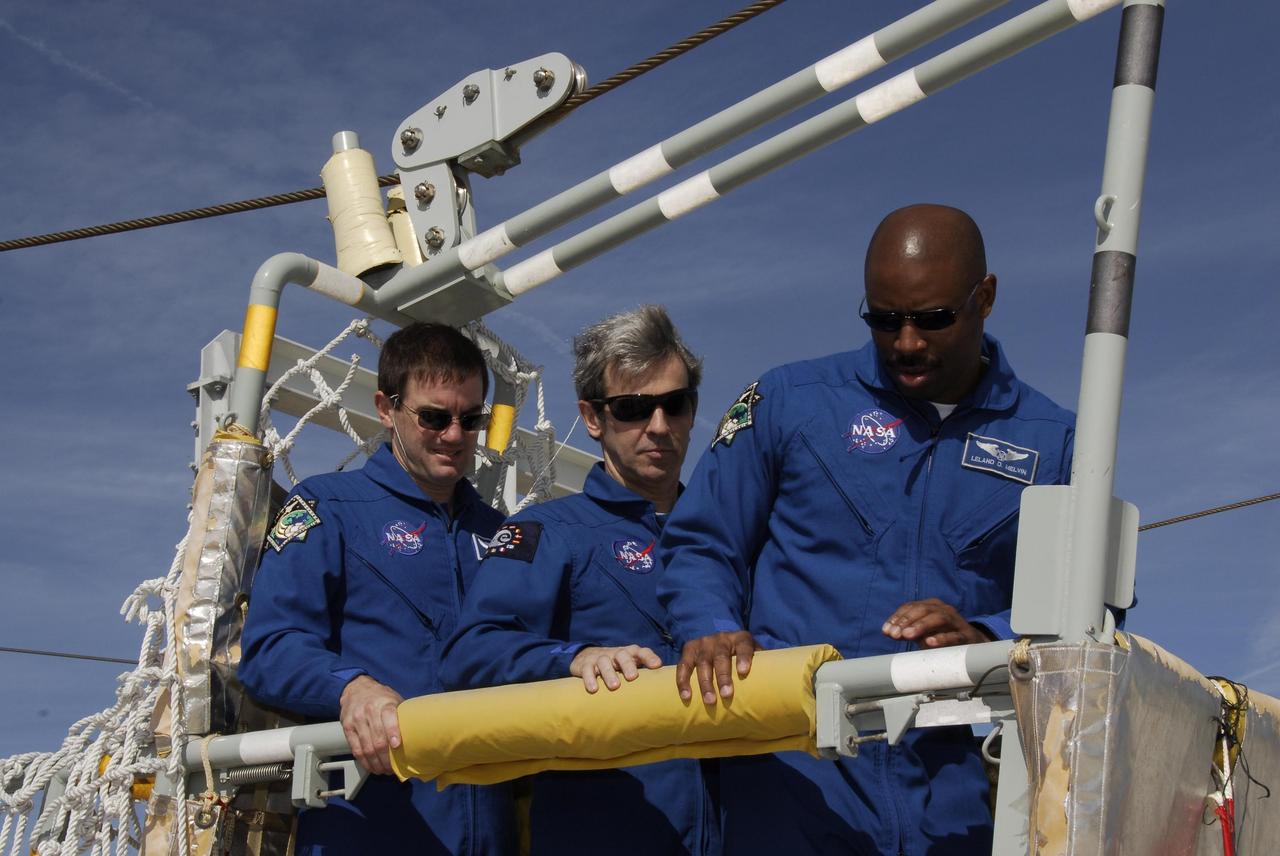
KENNEDY SPACE CENTER, FLA. -- The space shuttle Atlantis STS-122 crew receives instruction on slidewire basket operation, part of the emergency exit system on the fixed service structure on Launch Pad 39A. From left, Mission Specialists Rex Walheim, Leopold Eyharts and Leland Melvin gain first-hand experience inside one of the baskets. Seven slidewire baskets are available to carry the crew from the level of the pad's Orbiter Access Arm to this landing site, if needed. Each basket can hold up to three people. A braking system catch net and drag chain slow, and then halt, the baskets as they travel down the wire at approximately 55 miles per hour. The journey takes about half a minute. A bunker is located in the landing zone 1,200 feet west of the pad, with an M-113 armored personnel carrier stationed nearby. The STS-122 crew is at NASA's Kennedy Space Center to take part in terminal countdown demonstration test, or TCDT, activities, a standard part of launch preparations. The TCDT provides astronauts and ground crews with equipment familiarization and a simulated launch countdown before launch. On mission STS-122, Atlantis will deliver the European Space Agency's Columbus module to the International Space Station. Columbus is a multifunctional, pressurized laboratory that will be permanently attached to U.S. Node 2, called Harmony, and will expand the research facilities aboard the station. Launch is targeted for Dec. 6. Photo credit: NASA/Kim Shiflett
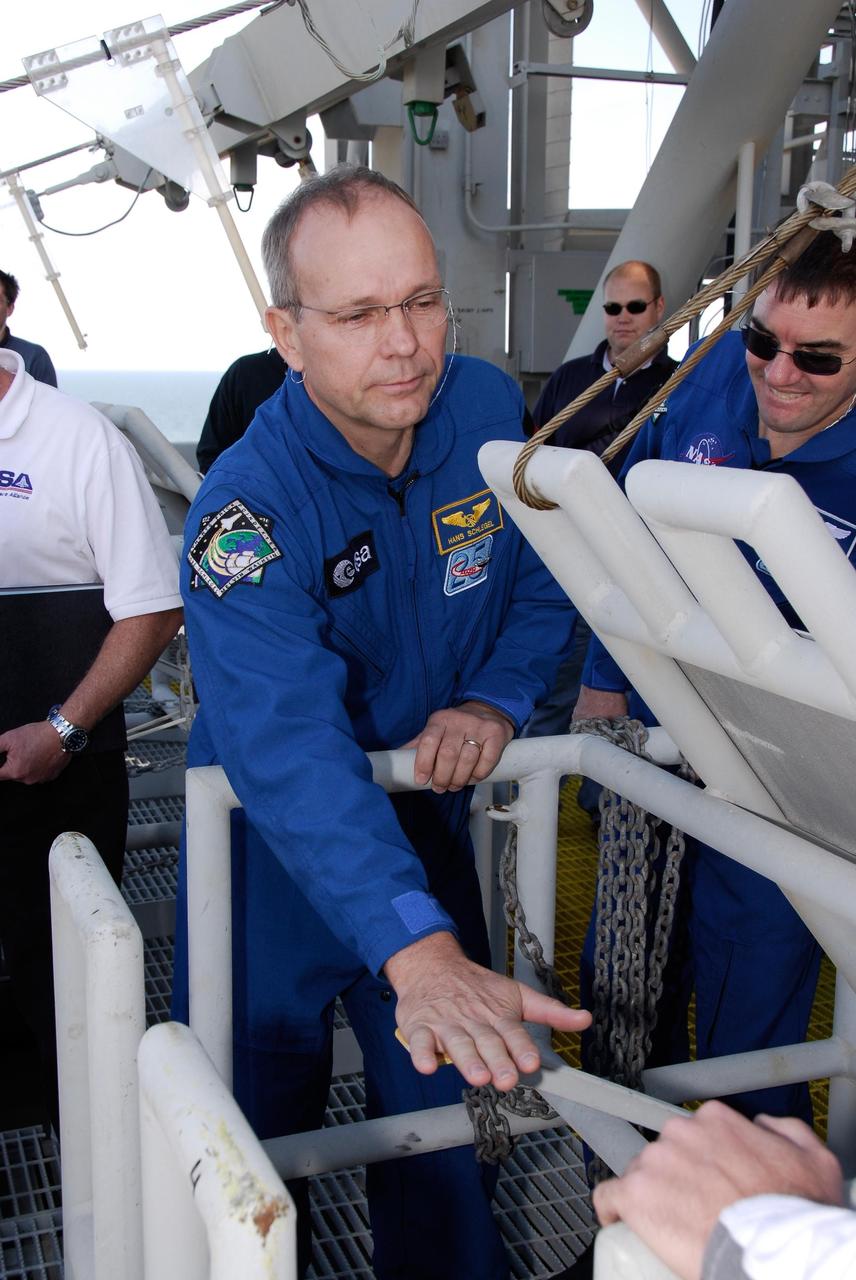
KENNEDY SPACE CENTER, FLA. -- During a training session, space shuttle Atlantis STS-122 Mission Specialist Hans Schlegel releases a slidewire basket, part of the emergency exit system on the fixed service structure on Launch Pad 39A, as Mission Specialist Rex Walheim looks on. Schlegel is with the European Space Agency. Seven slidewire baskets are available to carry the crew from the level of the pad's Orbiter Access Arm to a safe landing site below, if needed. Each basket can hold up to three people. A braking system catch net and drag chain slow, and then halt, the baskets as they travel down the wire at approximately 55 miles per hour. The journey takes about half a minute. A bunker is located in the landing zone 1,200 feet west of the pad, with an M-113 armored personnel carrier stationed nearby. The STS-122 crew is at NASA's Kennedy Space Center to take part in terminal countdown demonstration test, or TCDT, activities, a standard part of launch preparations. The TCDT provides astronauts and ground crews with equipment familiarization and a simulated launch countdown before launch. On mission STS-122, Atlantis will deliver the European Space Agency's Columbus module to the International Space Station. Columbus is a multifunctional, pressurized laboratory that will be permanently attached to U.S. Node 2, called Harmony, and will expand the research facilities aboard the station. Launch is targeted for Dec. 6. Photo credit: NASA/Kim Shiflett
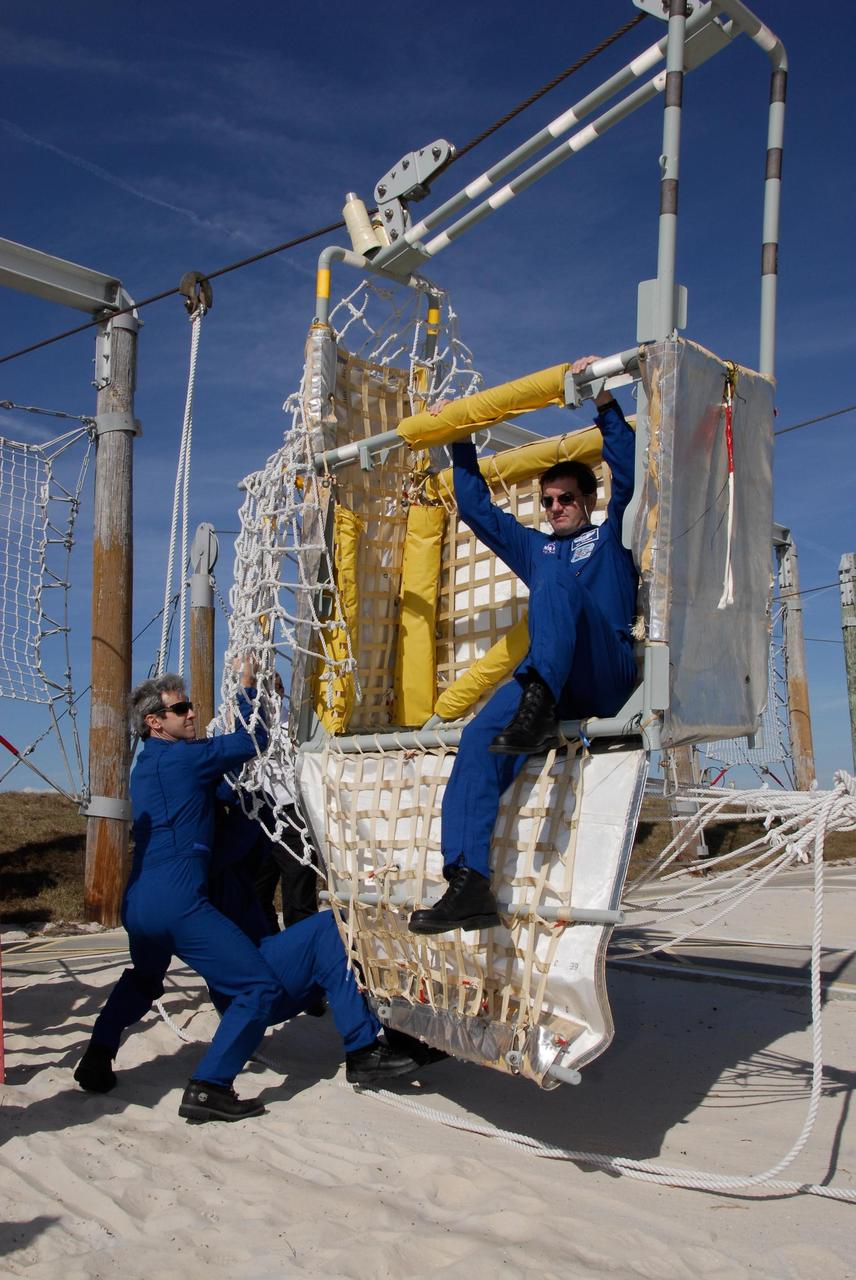
KENNEDY SPACE CENTER, FLA. -- The space shuttle Atlantis STS-122 crew receives instruction on slidewire basket operation, part of the emergency exit system on the fixed service structure on Launch Pad 39A. Here, Mission Specialist Rex Walheim practices getting out of one of the baskets as Mission Specialists Leopold Eyharts and Leland Melvin steady it. Seven slidewire baskets are available to carry the crew from the level of the pad's Orbiter Access Arm to this landing site, if needed. Each basket can hold up to three people. A braking system catch net and drag chain slow, and then halt, the baskets as they travel down the wire at approximately 55 miles per hour. The journey takes about half a minute. A bunker is located in the landing zone 1,200 feet west of the pad, with an M-113 armored personnel carrier stationed nearby. The STS-122 crew is at NASA's Kennedy Space Center to take part in terminal countdown demonstration test, or TCDT, activities, a standard part of launch preparations. The TCDT provides astronauts and ground crews with equipment familiarization and a simulated launch countdown before launch. On mission STS-122, Atlantis will deliver the European Space Agency's Columbus module to the International Space Station. Columbus is a multifunctional, pressurized laboratory that will be permanently attached to U.S. Node 2, called Harmony, and will expand the research facilities aboard the station. Launch is targeted for Dec. 6. Photo credit: NASA/Kim Shiflett
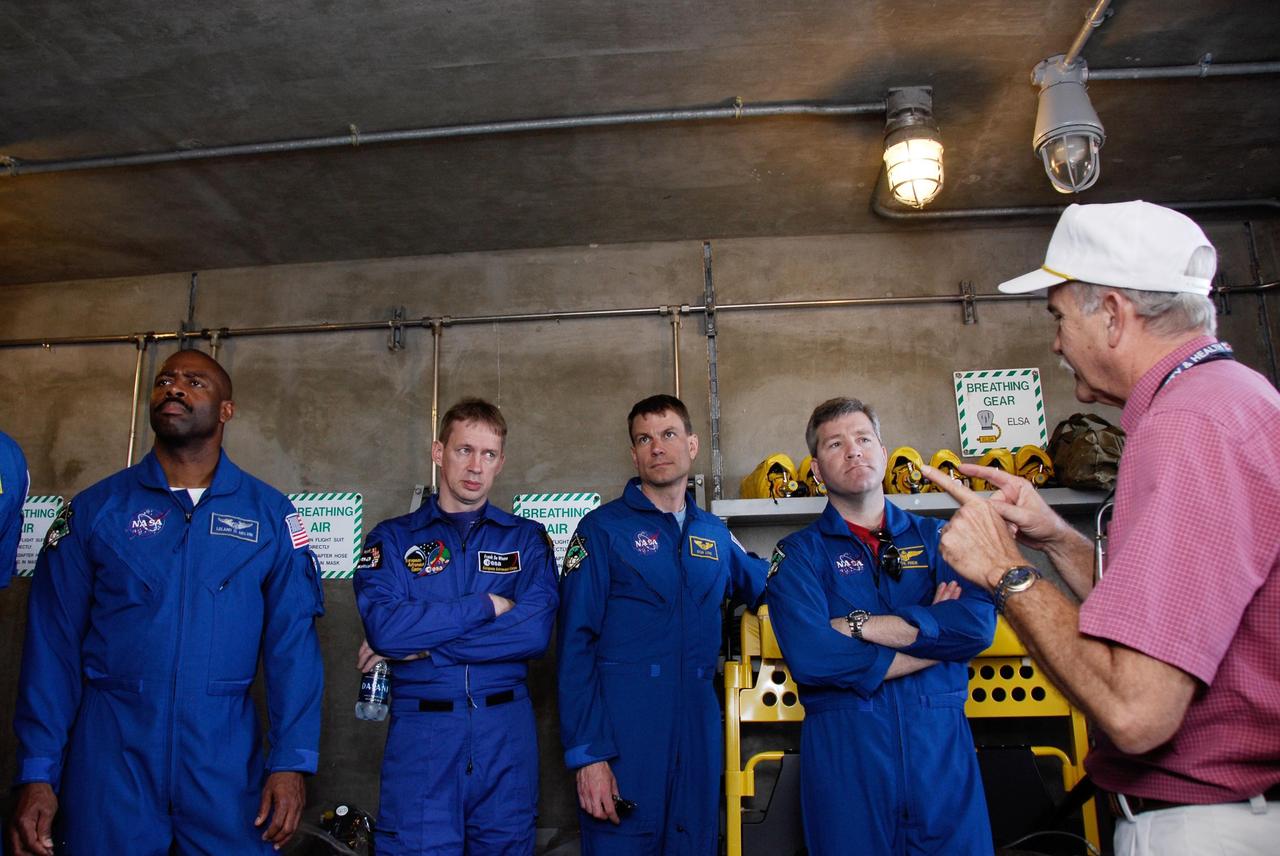
KENNEDY SPACE CENTER, FLA. -- The space shuttle Atlantis STS-122 crew receives instruction on the emergency exit system on Launch Pad 39A. Inside the bunker at the foot of the pad, from left, Mission Specialist Leland Melvin; astronaut Frank De Winne of the European Space Agency, backup for Expedition 16 Flight Engineer Leopold Eyharts; Mission Specialist Stanley Love; and Commander Steve Frick listen intently to their trainer. Seven slidewire baskets are available to carry the crew from the level of the pad's Orbiter Access Arm to a safe landing site below, if needed. Each basket can hold up to three people. A braking system catch net and drag chain slow, and then halt, the baskets as they travel down the wire at approximately 55 miles per hour. The journey takes about half a minute. A bunker is located in the landing zone 1,200 feet west of the pad, with an M-113 armored personnel carrier stationed nearby. The STS-122 crew is at NASA's Kennedy Space Center to take part in terminal countdown demonstration test, or TCDT, activities, a standard part of launch preparations. The TCDT provides astronauts and ground crews with equipment familiarization and a simulated launch countdown before launch. On mission STS-122, Atlantis will deliver the European Space Agency's Columbus module to the International Space Station. Columbus is a multifunctional, pressurized laboratory that will be permanently attached to U.S. Node 2, called Harmony, and will expand the research facilities aboard the station. Launch is targeted for Dec. 6. Photo credit: NASA/Kim Shiflett
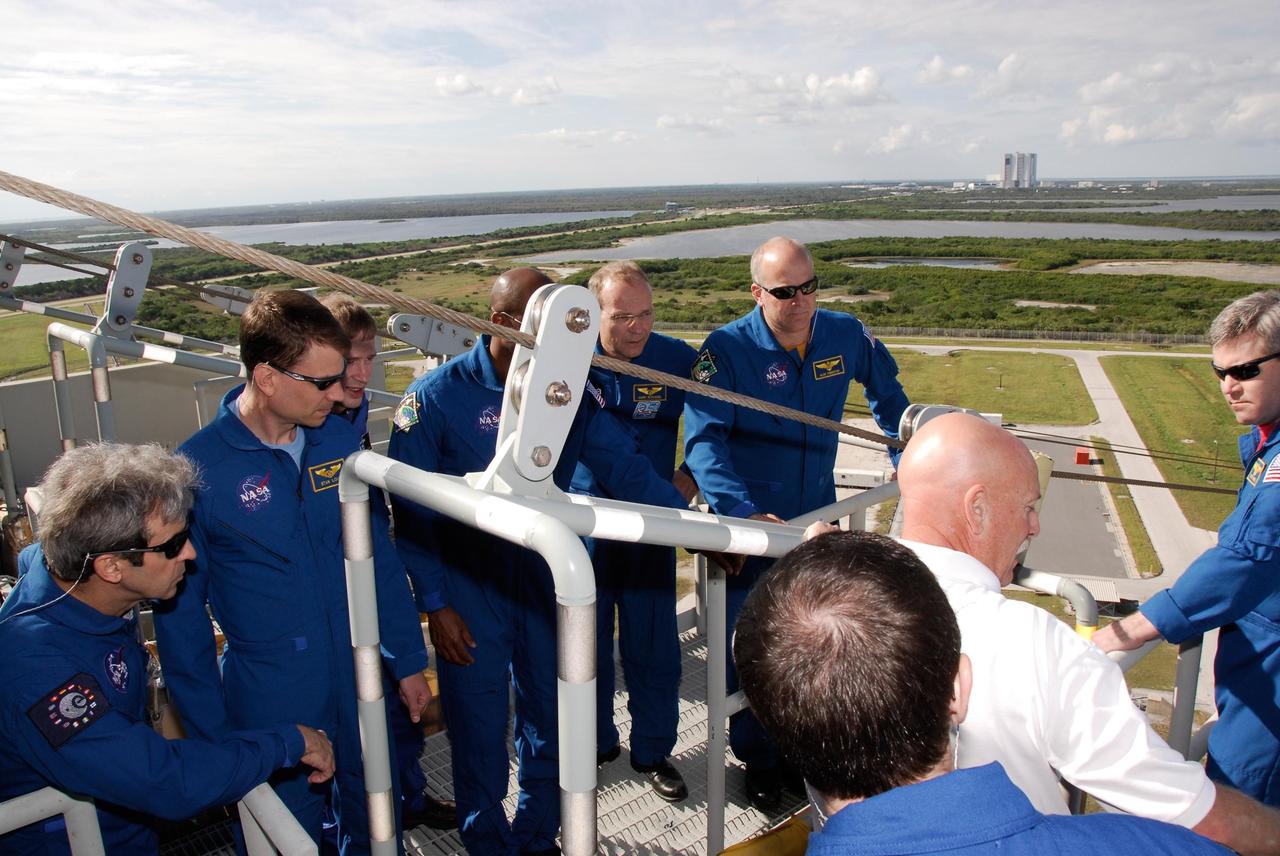
KENNEDY SPACE CENTER, FLA. -- The space shuttle Atlantis STS-122 crew receives instruction on emergency exit from the fixed service structure on Launch Pad 39A. Clockwise, from left, are Mission Specialists Leopold Eyharts and Stanley Love, Eyharts' backup Frank De Winne, Mission Specialists Leland Melvin and Hans Schlegel, Pilot Alan Poindexter, Commander Steve Frick and Mission Specialist Rex Walheim with his back to the camera. Schlegel, Eyharts and De Winne are with the European Space Agency. Eyharts will remain on the International Space Station as a flight engineer for Expedition 16 following the STS-122 mission. The STS-122 crew is at NASA's Kennedy Space Center to take part in terminal countdown demonstration test, or TCDT, activities, a standard part of launch preparations. The TCDT provides astronauts and ground crews with equipment familiarization and a simulated launch countdown before launch. On mission STS-122, Atlantis will deliver the European Space Agency's Columbus module to the International Space Station. Columbus is a multifunctional, pressurized laboratory that will be permanently attached to U.S. Node 2, called Harmony, and will expand the research facilities aboard the station. Launch is targeted for Dec. 6. Photo credit: NASA/Kim Shiflett
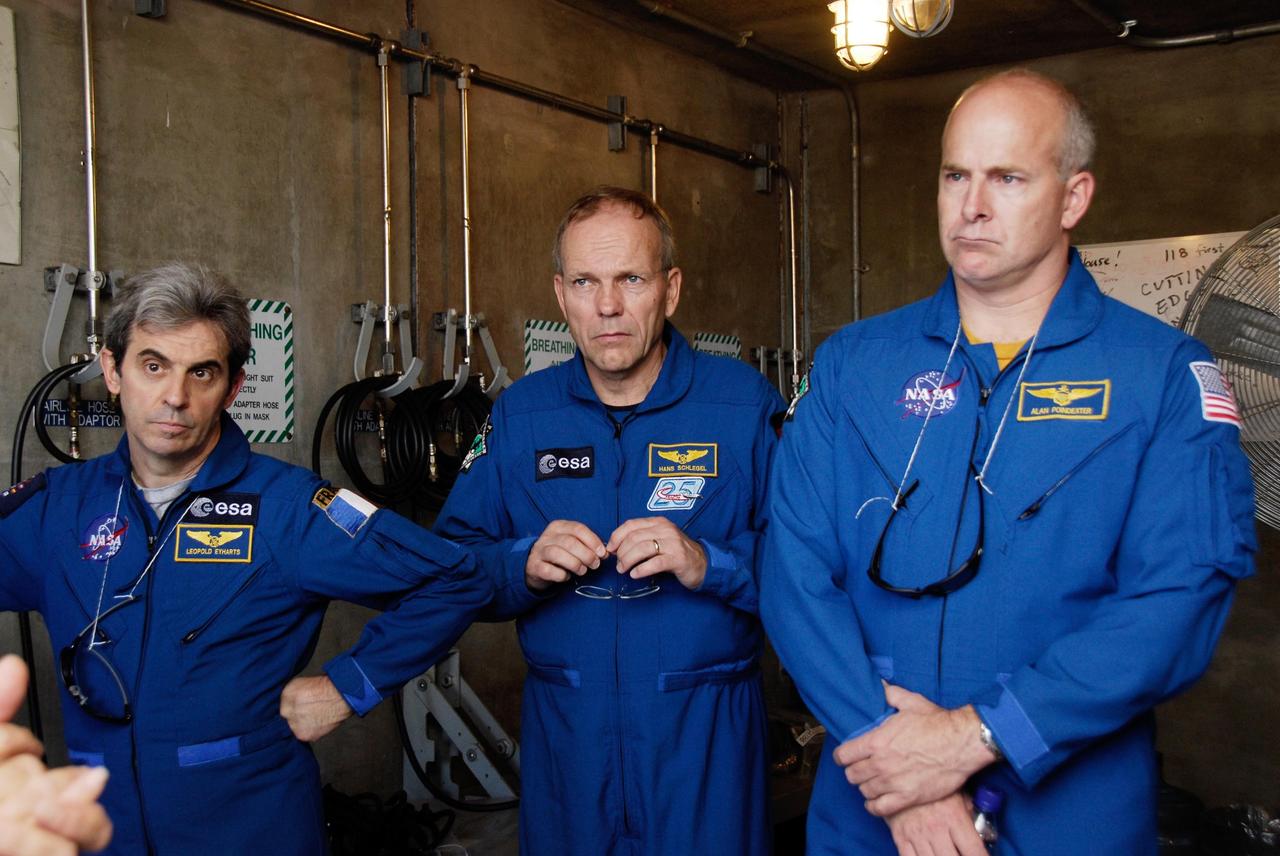
KENNEDY SPACE CENTER, FLA. -- The space shuttle Atlantis STS-122 crew receives instruction on the emergency exit system on Launch Pad 39A. Inside the bunker at the foot of the pad, Mission Specialists Leopold Eyharts and Hans Schlegel, both with the European Space Agency, and Pilot Alan Poindexter give their full attention to their trainer. Seven slidewire baskets are available to carry the crew from the level of the pad's Orbiter Access Arm to a safe landing site below, if needed. Each basket can hold up to three people. A braking system catch net and drag chain slow, and then halt, the baskets as they travel down the wire at approximately 55 miles per hour. The journey takes about half a minute. A bunker is located in the landing zone 1,200 feet west of the pad, with an M-113 armored personnel carrier stationed nearby. The STS-122 crew is at NASA's Kennedy Space Center to take part in terminal countdown demonstration test, or TCDT, activities, a standard part of launch preparations. The TCDT provides astronauts and ground crews with equipment familiarization and a simulated launch countdown before launch. On mission STS-122, Atlantis will deliver the European Space Agency's Columbus module to the International Space Station. Columbus is a multifunctional, pressurized laboratory that will be permanently attached to U.S. Node 2, called Harmony, and will expand the research facilities aboard the station. Launch is targeted for Dec. 6. Photo credit: NASA/Kim Shiflett
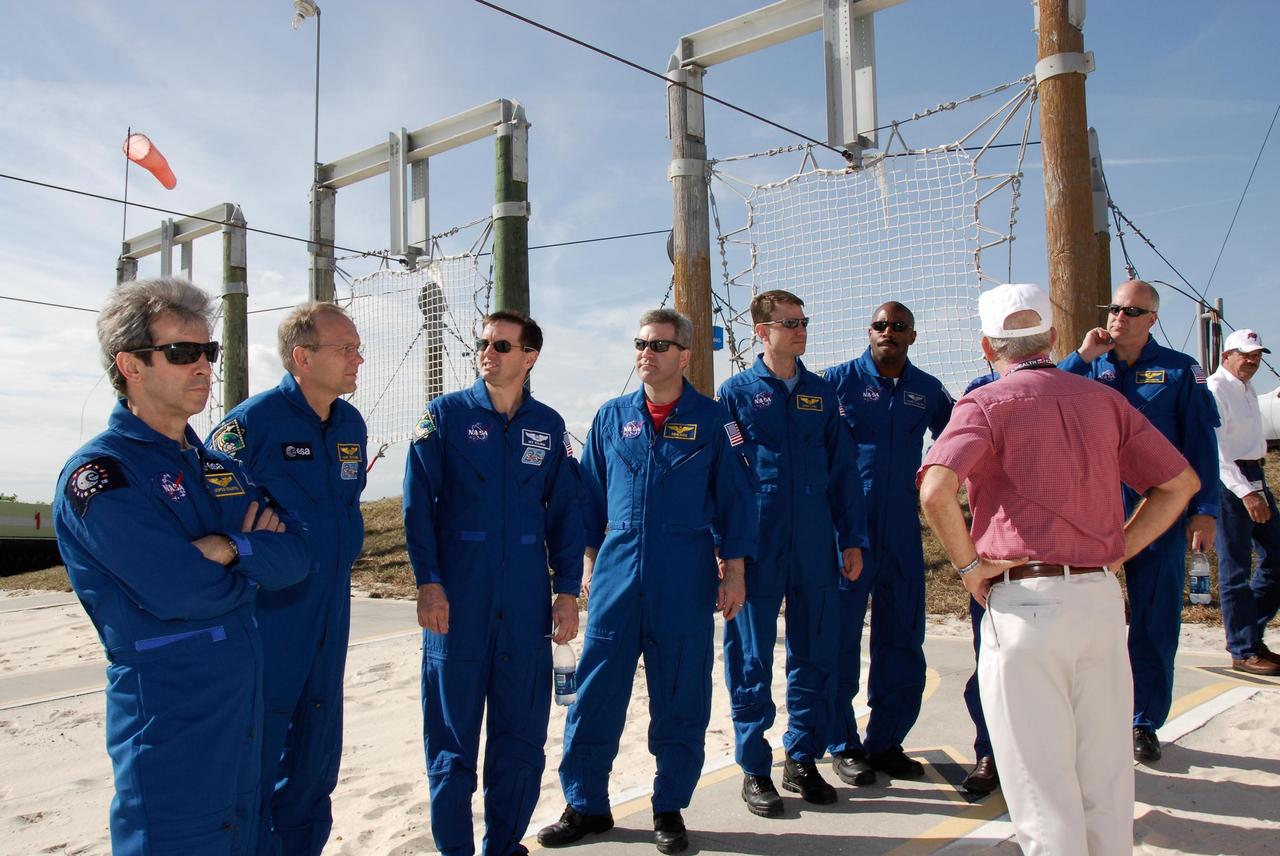
KENNEDY SPACE CENTER, FLA. -- The space shuttle Atlantis STS-122 crew receives instruction on slidewire basket operation, part of the emergency exit system on the fixed service structure on Launch Pad 39A. Seen here near the catch nets in the landing zone are, from left, Mission Specialists Leopold Eyharts, Hans Schlegel and Rex Walheim; Commander Steve Frick; Mission Specialists Stanley Love and Leland Melvin; and Pilot Alan Poindexter. Seven slidewire baskets are available to carry the crew from the level of the pad's Orbiter Access Arm to this landing site, if needed. Each basket can hold up to three people. A braking system catch net and drag chain slow, and then halt, the baskets as they travel down the wire at approximately 55 miles per hour. The journey takes about half a minute. A bunker is located in the landing zone 1,200 feet west of the pad, with an M-113 armored personnel carrier stationed nearby. The STS-122 crew is at NASA's Kennedy Space Center to take part in terminal countdown demonstration test, or TCDT, activities, a standard part of launch preparations. The TCDT provides astronauts and ground crews with equipment familiarization and a simulated launch countdown before launch. On mission STS-122, Atlantis will deliver the European Space Agency's Columbus module to the International Space Station. Columbus is a multifunctional, pressurized laboratory that will be permanently attached to U.S. Node 2, called Harmony, and will expand the research facilities aboard the station. Launch is targeted for Dec. 6. Photo credit: NASA/Kim Shiflett
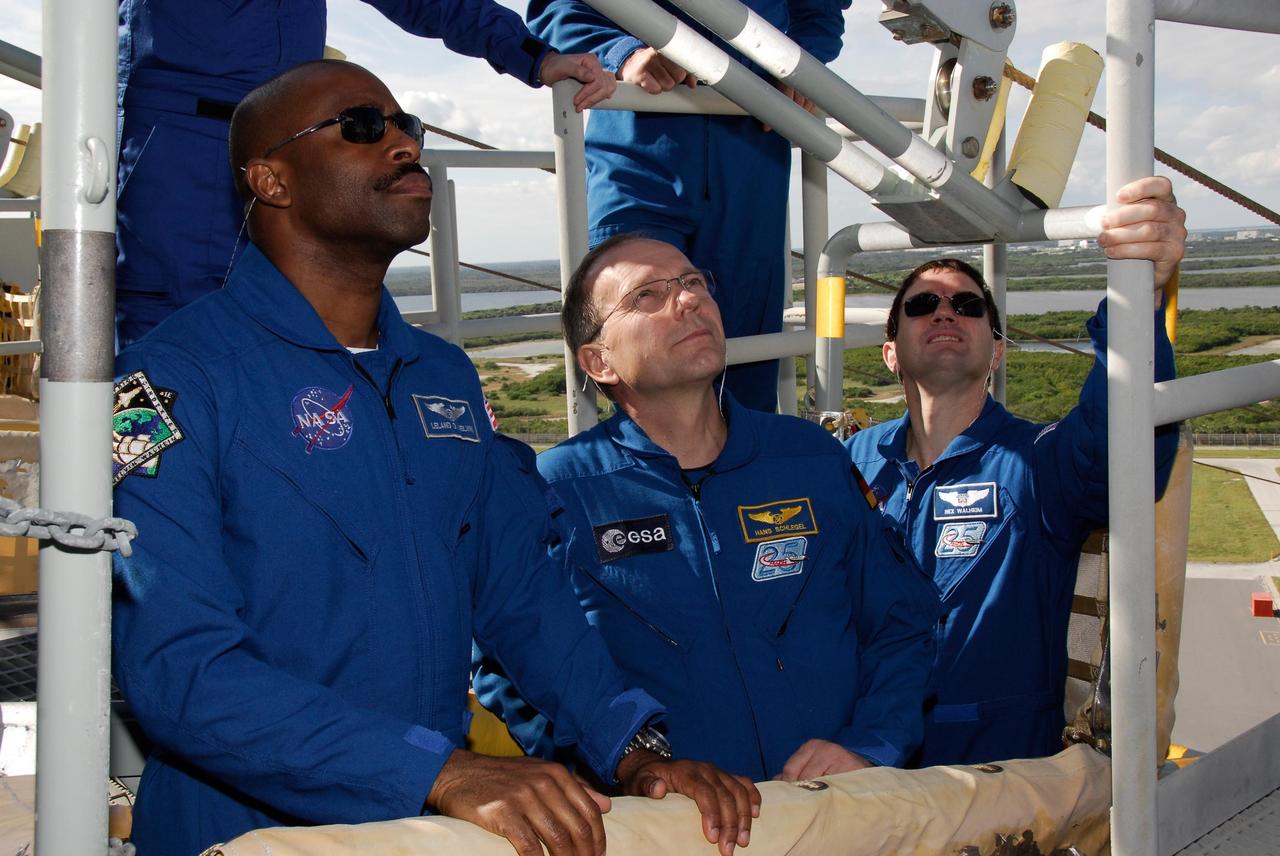
KENNEDY SPACE CENTER, FLA. -- The space shuttle Atlantis STS-122 crew receives instruction on slidewire basket operation, part of the emergency exit system on the fixed service structure on Launch Pad 39A. Standing in the basket, from left, are Mission Specialists Leland Melvin, Hans Schlegel and Rex Walheim. Schlegel is with the European Space Agency. Seven slidewire baskets are available to carry the crew from the level of the pad's Orbiter Access Arm to a safe landing site below, if needed. Each basket can hold up to three people. A braking system catch net and drag chain slow, and then halt, the baskets as they travel down the wire at approximately 55 miles per hour. The journey takes about half a minute. A bunker is located in the landing zone 1,200 feet west of the pad, with an M-113 armored personnel carrier stationed nearby. The STS-122 crew is at NASA's Kennedy Space Center to take part in terminal countdown demonstration test, or TCDT, activities, a standard part of launch preparations. The TCDT provides astronauts and ground crews with equipment familiarization and a simulated launch countdown before launch. On mission STS-122, Atlantis will deliver the European Space Agency's Columbus module to the International Space Station. Columbus is a multifunctional, pressurized laboratory that will be permanently attached to U.S. Node 2, called Harmony, and will expand the research facilities aboard the station. Launch is targeted for Dec. 6. Photo credit: NASA/Kim Shiflett
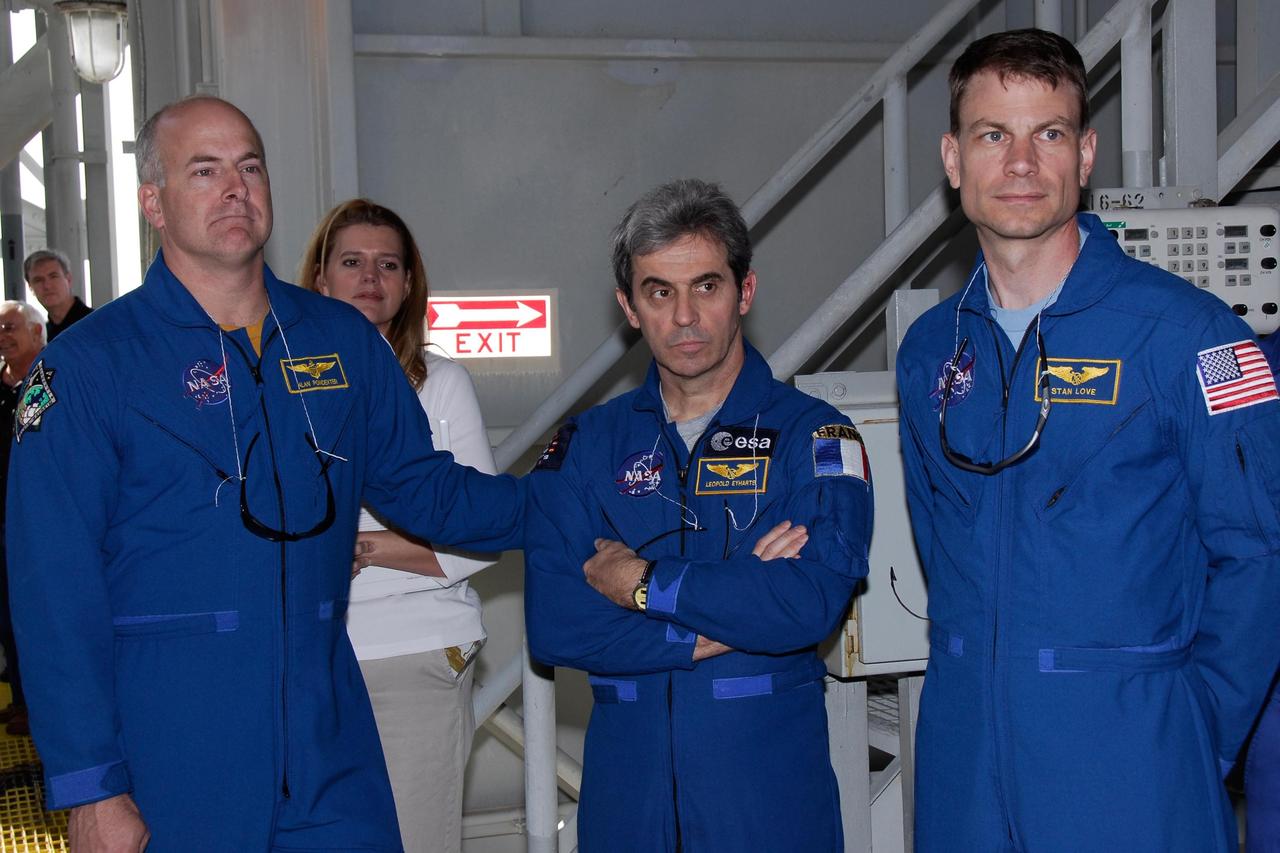
KENNEDY SPACE CENTER, FLA. -- The space shuttle Atlantis STS-122 crew receives instruction on emergency exit from the fixed service structure on Launch Pad 39A. From left are Pilot Alan Poindexter and Mission Specialists Leopold Eyharts and Stanley Love. Eyharts is with the European Space Agency and will remain on the International Space Station as a flight engineer for Expedition 16 following the STS-122 mission. The STS-122 crew is at NASA's Kennedy Space Center to take part in terminal countdown demonstration test, or TCDT, activities, a standard part of launch preparations. The TCDT provides astronauts and ground crews with equipment familiarization and a simulated launch countdown before launch. On mission STS-122, Atlantis will deliver the European Space Agency's Columbus module to the International Space Station. Columbus is a multifunctional, pressurized laboratory that will be permanently attached to U.S. Node 2, called Harmony, and will expand the research facilities aboard the station. Launch is targeted for Dec. 6. Photo credit: NASA/Kim Shiflett
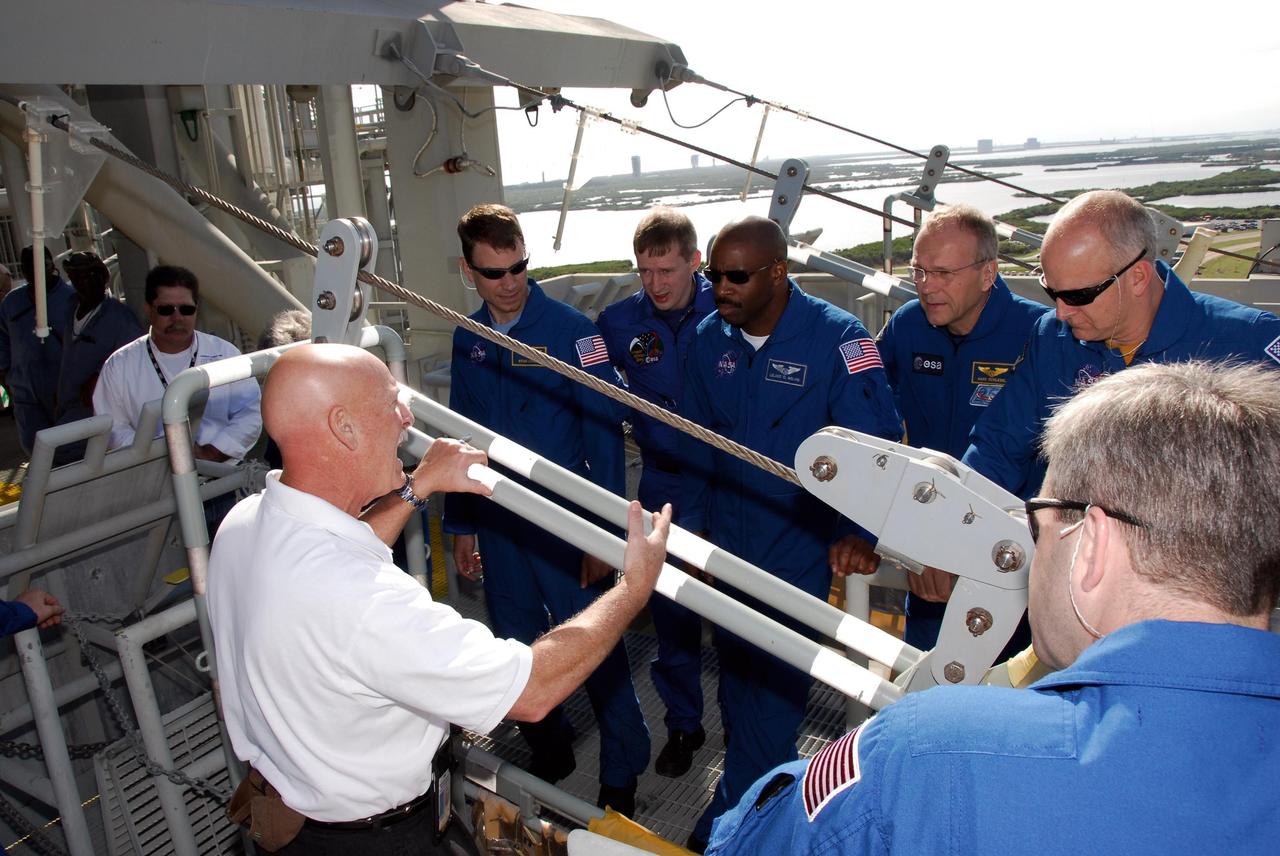
KENNEDY SPACE CENTER, FLA. -- The space shuttle Atlantis STS-122 crew receives instruction on slidewire basket operation, part of the emergency exit system on the fixed service structure on Launch Pad 39A. From left are Mission Specialists Stanley Love; Leopold Eyharts' backup, Frank De Winne; Leland Melvin and Hans Schlegel; Pilot Alan Poindexter; and Commander Steve Frick, with his back to the camera. Schlegel, Eyharts and De Winne are with the European Space Agency. Eyharts will remain on the International Space Station as a flight engineer for Expedition 16 following the STS-122 mission. Seven slidewire baskets are available to carry the crew from the level of the pad's Orbiter Access Arm to a safe landing site below, if needed. Each basket can hold up to three people. A braking system catch net and drag chain slow, and then halt, the baskets as they travel down the wire at approximately 55 miles per hour. The journey takes about half a minute. A bunker is located in the landing zone 1,200 feet west of the pad, with an M-113 armored personnel carrier stationed nearby. The STS-122 crew is at NASA's Kennedy Space Center to take part in terminal countdown demonstration test, or TCDT, activities, a standard part of launch preparations. The TCDT provides astronauts and ground crews with equipment familiarization and a simulated launch countdown before launch. On mission STS-122, Atlantis will deliver the European Space Agency's Columbus module to the International Space Station. Columbus is a multifunctional, pressurized laboratory that will be permanently attached to U.S. Node 2, called Harmony, and will expand the research facilities aboard the station. Launch is targeted for Dec. 6. Photo credit: NASA/Kim Shiflett
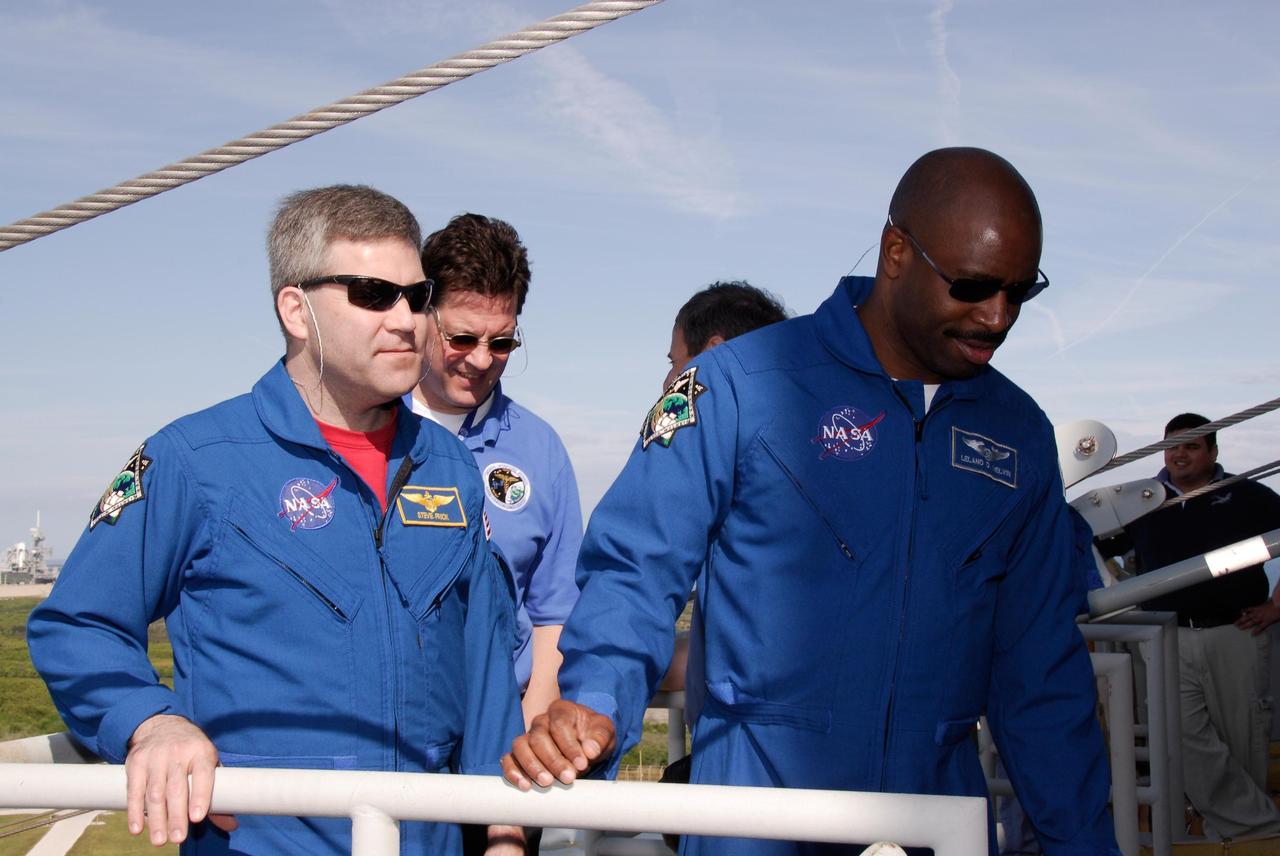
KENNEDY SPACE CENTER, FLA. -- During a training session on emergency exit from the fixed service structure on Launch Pad 39A, space shuttle Atlantis STS-122 Commander Steve Frick, left, and Mission Specialist Leland Melvin watch a slidewire basket descend to the landing zone. Seven slidewire baskets are available to carry the crew from the level of the pad's Orbiter Access Arm to a safe landing site below, if needed. Each basket can hold up to three people. A braking system catch net and drag chain slow, and then halt, the baskets as they travel down the wire at approximately 55 miles per hour. The journey takes about half a minute. A bunker is located in the landing zone 1,200 feet west of the pad, with an M-113 armored personnel carrier stationed nearby. The STS-122 crew is at NASA's Kennedy Space Center to take part in terminal countdown demonstration test, or TCDT, activities, a standard part of launch preparations. The TCDT provides astronauts and ground crews with equipment familiarization and a simulated launch countdown before launch. On mission STS-122, Atlantis will deliver the European Space Agency's Columbus module to the International Space Station. Columbus is a multifunctional, pressurized laboratory that will be permanently attached to U.S. Node 2, called Harmony, and will expand the research facilities aboard the station. Launch is targeted for Dec. 6. Photo credit: NASA/Kim Shiflett
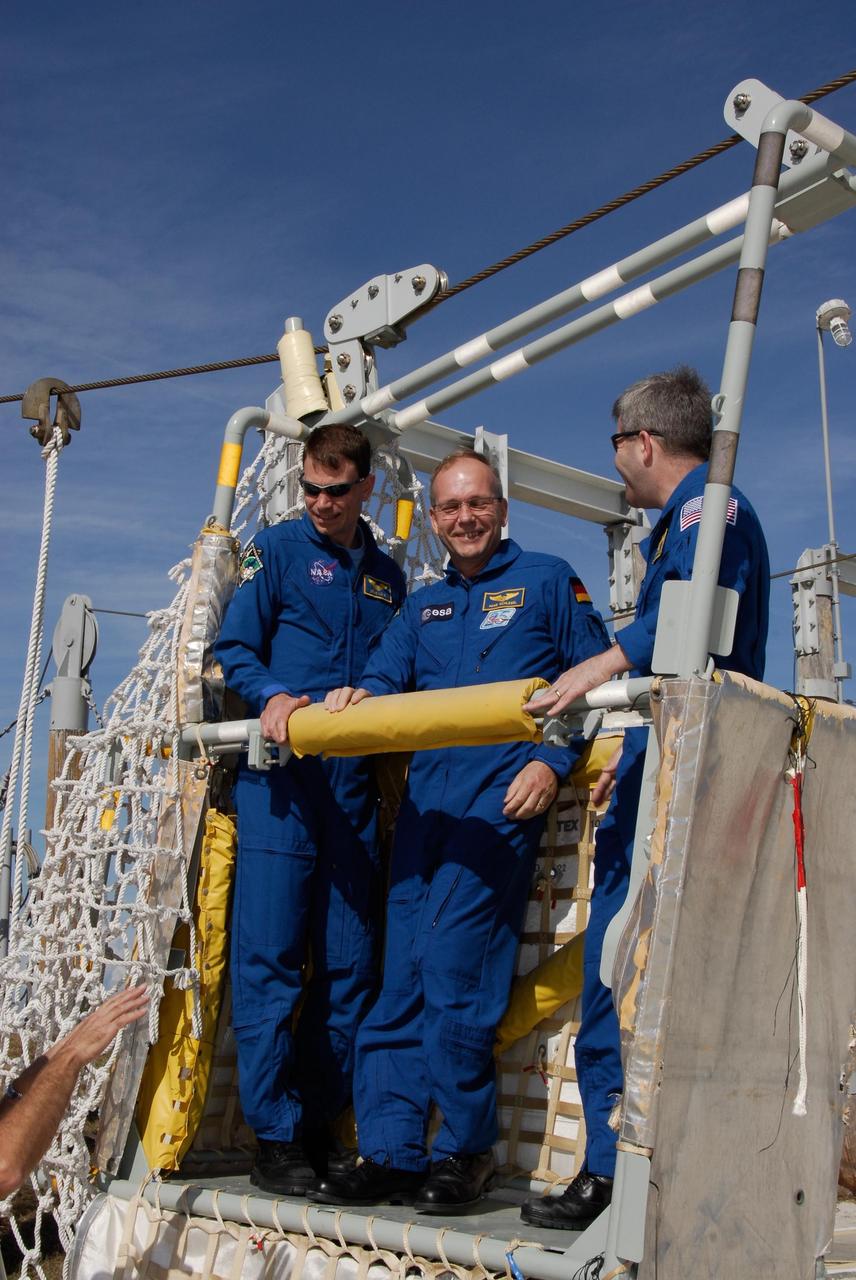
KENNEDY SPACE CENTER, FLA. -- The space shuttle Atlantis STS-122 crew receives instruction on slidewire basket operation, part of the emergency exit system on the fixed service structure on Launch Pad 39A. From left, Mission Specialists Stanley Love and Hans Schlegel and Commander Steve Frick gain first-hand experience inside one of the baskets. Seven slidewire baskets are available to carry the crew from the level of the pad's Orbiter Access Arm to this landing site, if needed. Each basket can hold up to three people. A braking system catch net and drag chain slow, and then halt, the baskets as they travel down the wire at approximately 55 miles per hour. The journey takes about half a minute. A bunker is located in the landing zone 1,200 feet west of the pad, with an M-113 armored personnel carrier stationed nearby. The STS-122 crew is at NASA's Kennedy Space Center to take part in terminal countdown demonstration test, or TCDT, activities, a standard part of launch preparations. The TCDT provides astronauts and ground crews with equipment familiarization and a simulated launch countdown before launch. On mission STS-122, Atlantis will deliver the European Space Agency's Columbus module to the International Space Station. Columbus is a multifunctional, pressurized laboratory that will be permanently attached to U.S. Node 2, called Harmony, and will expand the research facilities aboard the station. Launch is targeted for Dec. 6. Photo credit: NASA/Kim Shiflett
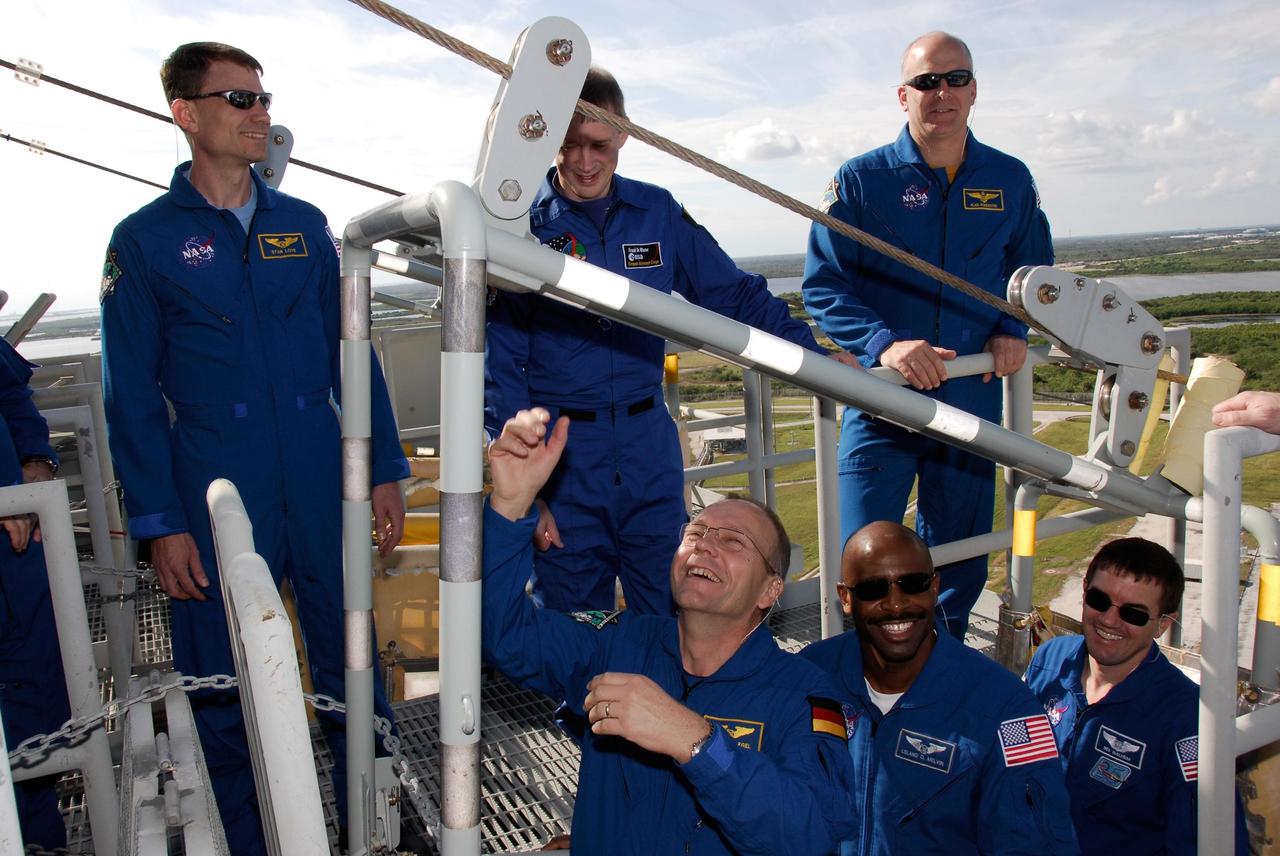
KENNEDY SPACE CENTER, FLA. -- The space shuttle Atlantis STS-122 crew receives instruction on slidewire basket operation, part of the emergency exit system on the fixed service structure on Launch Pad 39A. Standing, from left, are Mission Specialists Stanley Love; Leopold Eyharts' backup, Frank De Winne; and Pilot Alan Poindexter. Standing in the basket, from left, are Mission Specialists Hans Schlegel, Leland Melvin and Rex Walheim. Schlegel, Eyharts and De Winne are with the European Space Agency. Eyharts will remain on the International Space Station as a flight engineer for Expedition 16 following the STS-122 mission. Seven slidewire baskets are available to carry the crew from the level of the pad's Orbiter Access Arm to a safe landing site below, if needed. Each basket can hold up to three people. A braking system catch net and drag chain slow, and then halt, the baskets as they travel down the wire at approximately 55 miles per hour. The journey takes about half a minute. A bunker is located in the landing zone 1,200 feet west of the pad, with an M-113 armored personnel carrier stationed nearby. The STS-122 crew is at NASA's Kennedy Space Center to take part in terminal countdown demonstration test, or TCDT, activities, a standard part of launch preparations. The TCDT provides astronauts and ground crews with equipment familiarization and a simulated launch countdown before launch. On mission STS-122, Atlantis will deliver the European Space Agency's Columbus module to the International Space Station. Columbus is a multifunctional, pressurized laboratory that will be permanently attached to U.S. Node 2, called Harmony, and will expand the research facilities aboard the station. Launch is targeted for Dec. 6. Photo credit: NASA/Kim Shiflett