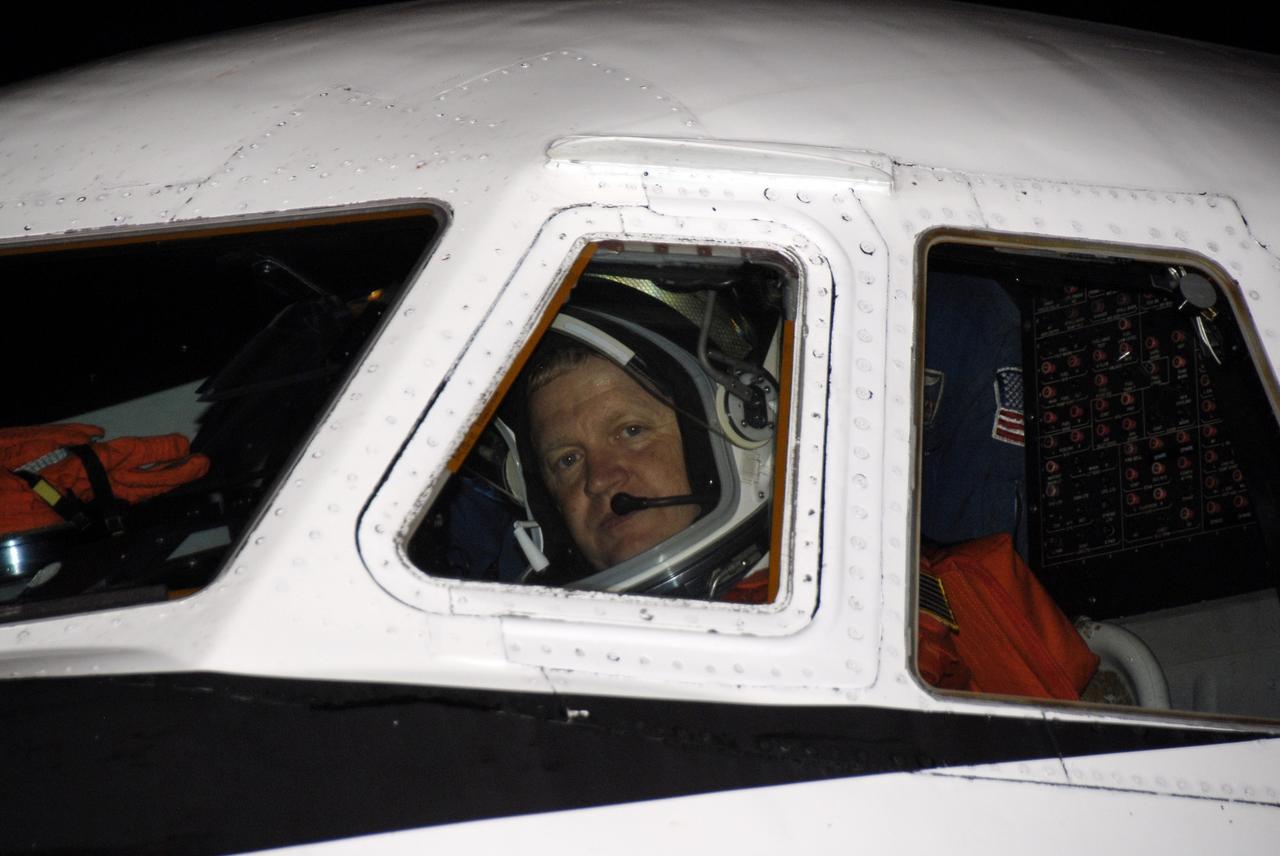
CAPE CANAVERAL, Fla. - At the Shuttle Landing Facility at NASA's Kennedy Space Center in Florida, STS-126 Pilot Eric Boe peers out the cockpit window of the Shuttle Training Aircraft, or STA, before taking off to practice shuttle landings. The STA is a Grumman American Aviation-built Gulf Stream II jet that was modified to simulate a shuttle’s cockpit, motion and visual cues, and handling qualities. In flight, the aircraft duplicates the shuttle’s atmospheric descent trajectory from approximately 35,000 feet to landing. The practice is part of the Terminal Countdown Demonstration Test, which includes equipment familiarization, emergency exit procedures and a simulated launch countdown. On the STS-126 mission, space shuttle Endeavour's crew will deliver equipment and supplies to the International Space Station in preparation for expansion from a three- to six-person resident crew aboard the complex. The mission also will include four spacewalks to service the station’s Solar Alpha Rotary Joints. Endeavour is targeted to launch Nov. 14. Photo credit: NASA/Kim Shiflett

CAPE CANAVERAL, Fla. - From the Shuttle Landing Facility at NASA's Kennedy Space Center in Florida, the Shuttle Training Aircraft, or STA, with STS-126 Commander Chris Ferguson and Pilot Eric Boe on board, takes off. Ferguson and Boe will practice shuttle landings on the STA, a Grumman American Aviation-built Gulf Stream II jet that was modified to simulate a shuttle’s cockpit, motion and visual cues, and handling qualities. In flight, the aircraft duplicates the shuttle’s atmospheric descent trajectory from approximately 35,000 feet to landing. The practice is part of the Terminal Countdown Demonstration Test, which includes equipment familiarization, emergency exit procedures and a simulated launch countdown. On the STS-126 mission, space shuttle Endeavour's crew will deliver equipment and supplies to the International Space Station in preparation for expansion from a three- to six-person resident crew aboard the complex. The mission also will include four spacewalks to service the station’s Solar Alpha Rotary Joints. Endeavour is targeted to launch Nov. 14. Photo credit: NASA/Kim Shiflett
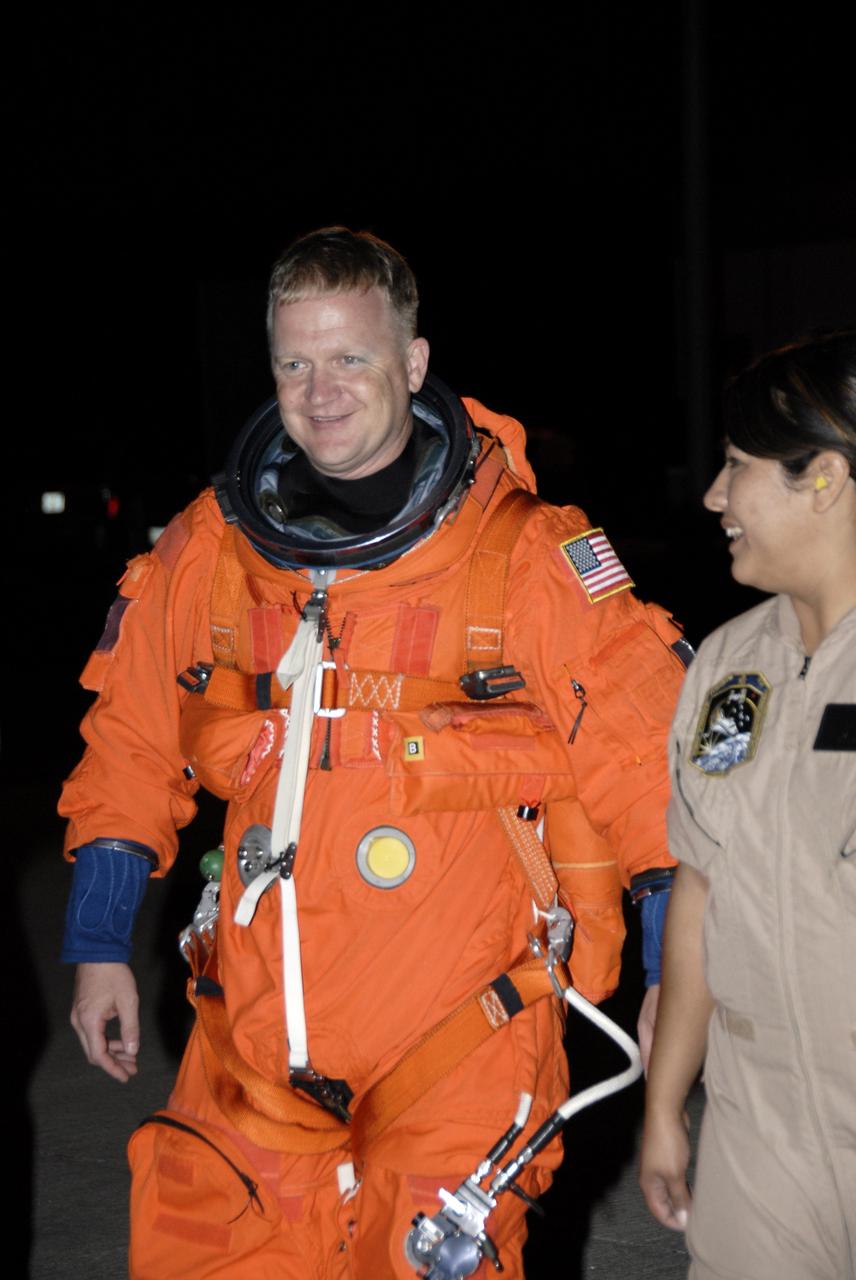
CAPE CANAVERAL, Fla. - At NASA's Kennedy Space Center in Florida, STS-126 Pilot Eric Boe heads across the parking apron of the Shuttle Landing Facility to the Shuttle Training Aircraft, or STA. He will practice shuttle landings in the STA, a Grumman American Aviation-built Gulf Stream II jet that was modified to simulate a shuttle’s cockpit, motion and visual cues, and handling qualities. In flight, the aircraft duplicates the shuttle’s atmospheric descent trajectory from approximately 35,000 feet to landing. The practice is part of the Terminal Countdown Demonstration Test, which includes equipment familiarization, emergency exit procedures and a simulated launch countdown. On the STS-126 mission, space shuttle Endeavour's crew will deliver equipment and supplies to the International Space Station in preparation for expansion from a three- to six-person resident crew aboard the complex. The mission also will include four spacewalks to service the station’s Solar Alpha Rotary Joints. Endeavour is targeted to launch Nov. 14. Photo credit: NASA/Kim Shiflett
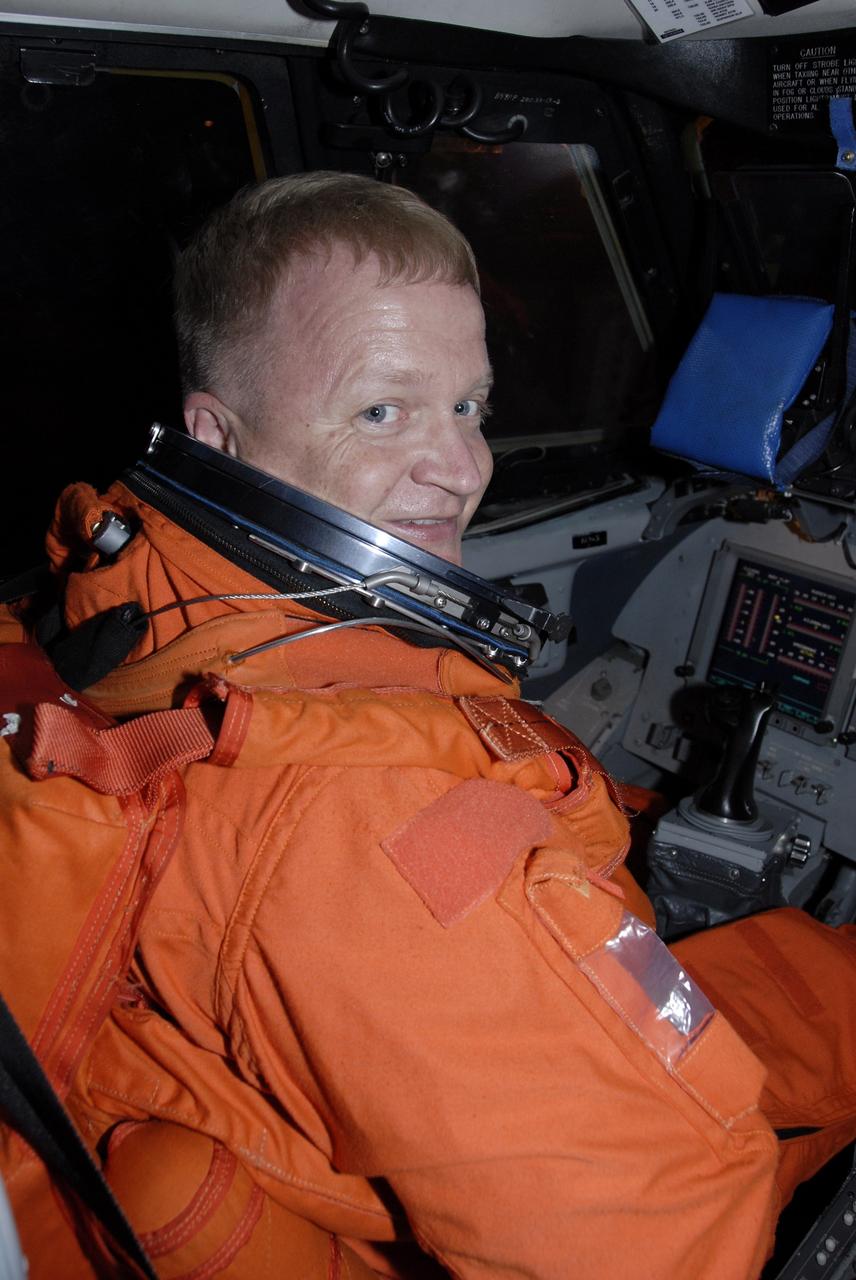
CAPE CANAVERAL, Fla. - At the Shuttle Landing Facility at NASA's Kennedy Space Center in Florida, STS-126 Pilot Eric Boe takes his seat in the cockpit of the Shuttle Training Aircraft, or STA. He will practice shuttle landings in the STA, a Grumman American Aviation-built Gulf Stream II jet that was modified to simulate a shuttle’s cockpit, motion and visual cues, and handling qualities. In flight, the aircraft duplicates the shuttle’s atmospheric descent trajectory from approximately 35,000 feet to landing. The practice is part of the Terminal Countdown Demonstration Test, which includes equipment familiarization, emergency exit procedures and a simulated launch countdown. On the STS-126 mission, space shuttle Endeavour's crew will deliver equipment and supplies to the International Space Station in preparation for expansion from a three- to six-person resident crew aboard the complex. The mission also will include four spacewalks to service the station’s Solar Alpha Rotary Joints. Endeavour is targeted to launch Nov. 14. Photo credit: NASA/Kim Shiflett
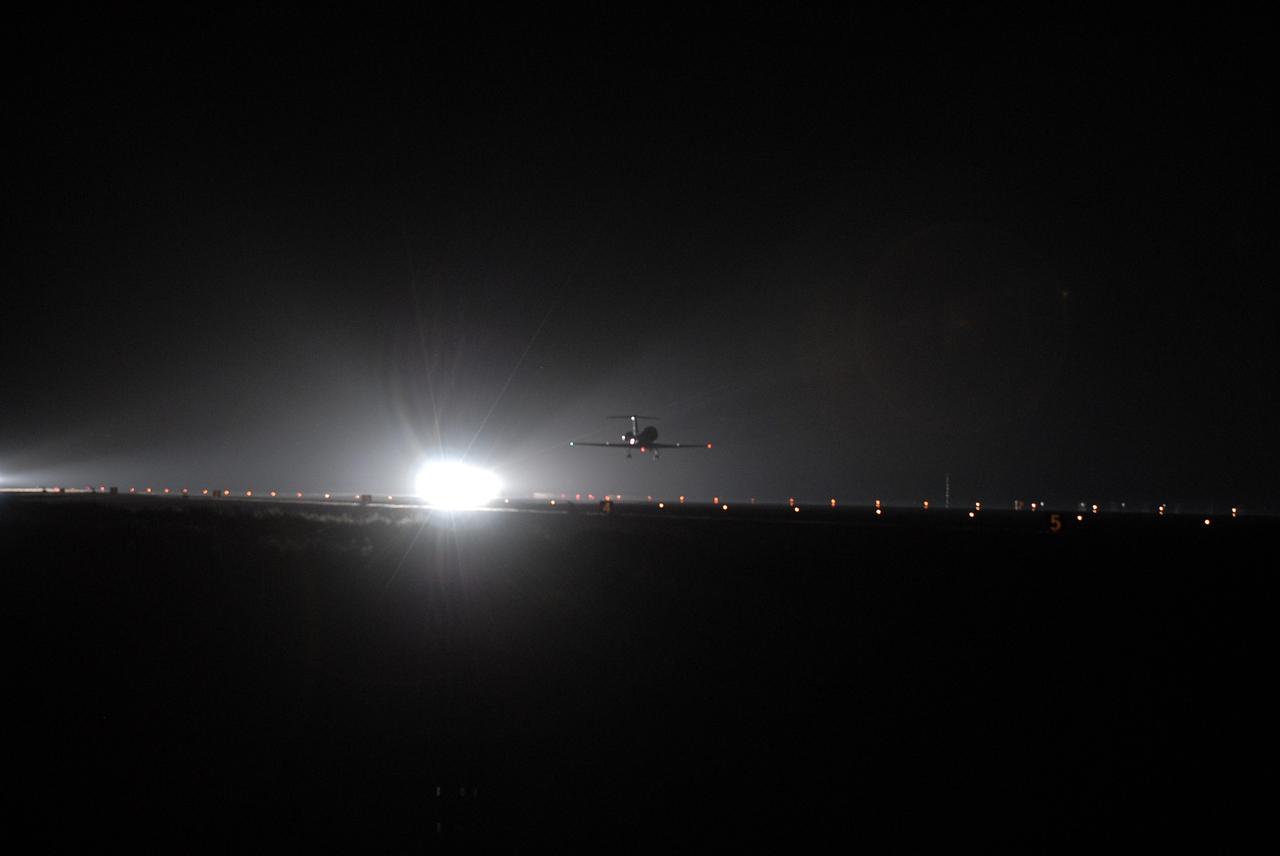
CAPE CANAVERAL, Fla. - From the Shuttle Landing Facility at NASA's Kennedy Space Center in Florida, the Shuttle Training Aircraft, or STA, with STS-126 Commander Chris Ferguson and Pilot Eric Boe on board, takes off. Ferguson and Boe will practice shuttle landings on the STA, a Grumman American Aviation-built Gulf Stream II jet that was modified to simulate a shuttle’s cockpit, motion and visual cues, and handling qualities. In flight, the aircraft duplicates the shuttle’s atmospheric descent trajectory from approximately 35,000 feet to landing. The practice is part of the Terminal Countdown Demonstration Test, which includes equipment familiarization, emergency exit procedures and a simulated launch countdown. On the STS-126 mission, space shuttle Endeavour's crew will deliver equipment and supplies to the International Space Station in preparation for expansion from a three- to six-person resident crew aboard the complex. The mission also will include four spacewalks to service the station’s Solar Alpha Rotary Joints. Endeavour is targeted to launch Nov. 14. Photo credit: NASA/Kim Shiflett
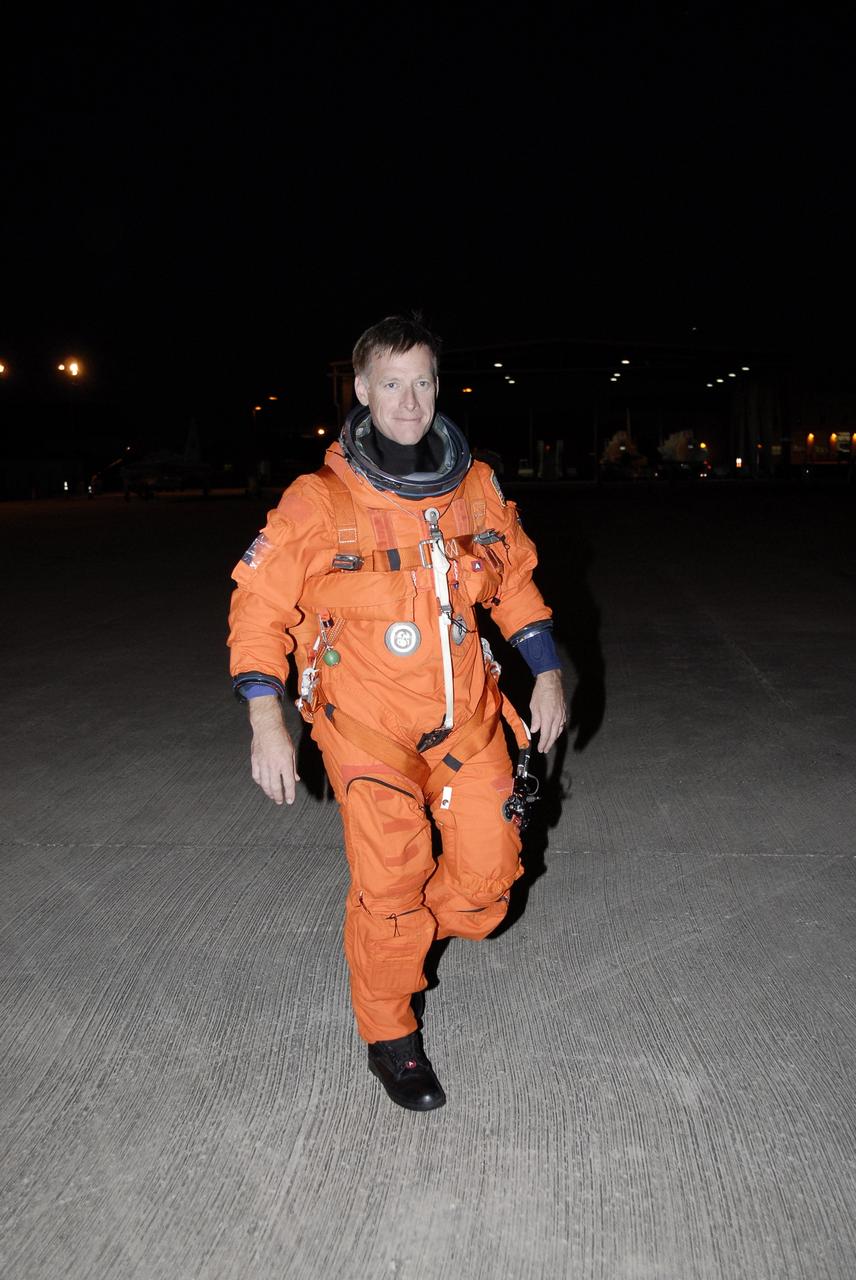
CAPE CANAVERAL, Fla. - At NASA's Kennedy Space Center in Florida, STS-126 Commander Chris Ferguson walks away from the Shuttle Training Aircraft, or STA, after practicing shuttle landings. The STA is a Grumman American Aviation-built Gulf Stream II jet that was modified to simulate a shuttle’s cockpit, motion and visual cues, and handling qualities. In flight, the aircraft duplicates the shuttle’s atmospheric descent trajectory from approximately 35,000 feet to landing. The practice is part of the Terminal Countdown Demonstration Test, which includes equipment familiarization, emergency exit procedures and a simulated launch countdown. On the STS-126 mission, space shuttle Endeavour's crew will deliver equipment and supplies to the International Space Station in preparation for expansion from a three- to six-person resident crew aboard the complex. The mission also will include four spacewalks to service the station’s Solar Alpha Rotary Joints. Endeavour is targeted to launch Nov. 14. Photo credit: NASA/Kim Shiflett
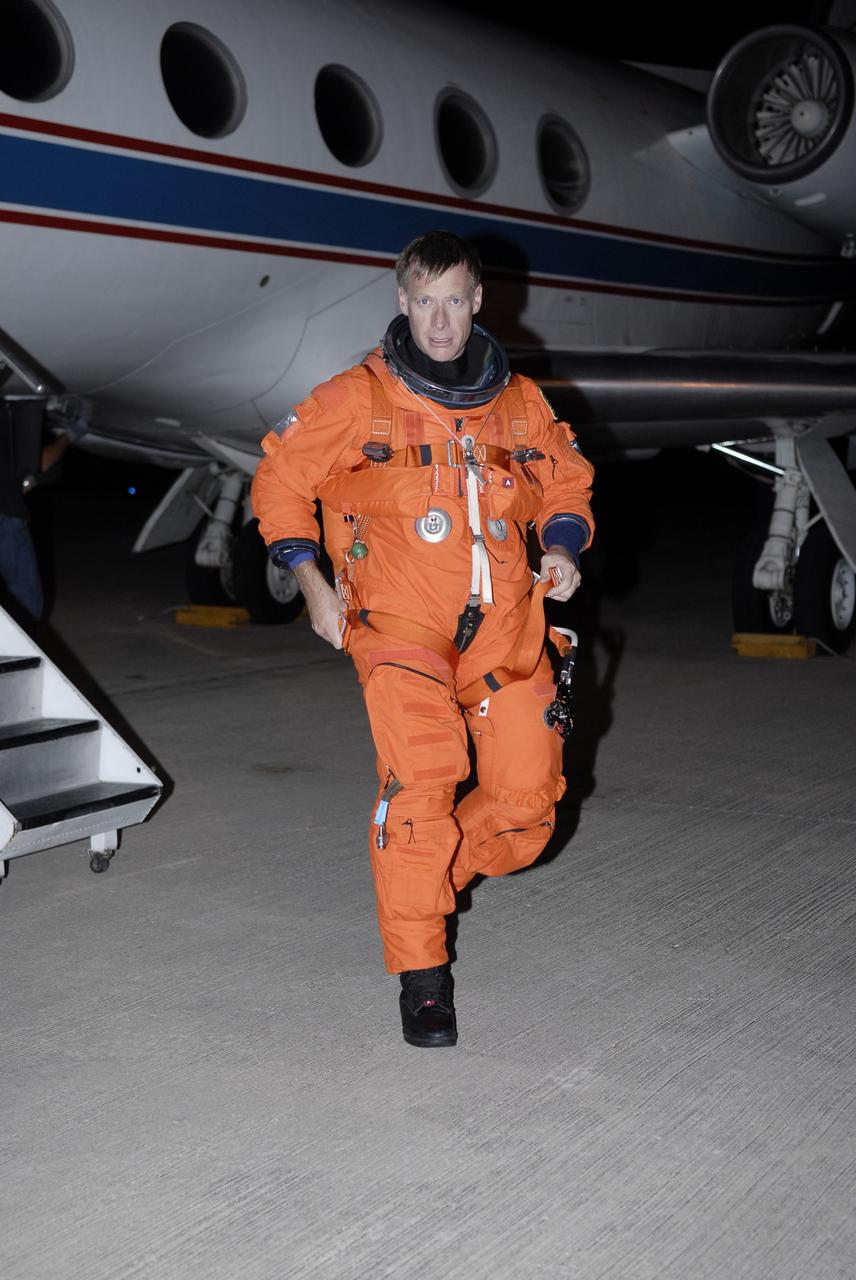
CAPE CANAVERAL, Fla. - At NASA's Kennedy Space Center in Florida, STS-126 Commander Chris Ferguson heads across the parking apron of the Shuttle Landing Facility to the Shuttle Training Aircraft, or STA. He will practice shuttle landings in the STA, a Grumman American Aviation-built Gulf Stream II jet that was modified to simulate a shuttle’s cockpit, motion and visual cues, and handling qualities. In flight, the aircraft duplicates the shuttle’s atmospheric descent trajectory from approximately 35,000 feet to landing. The practice is part of the Terminal Countdown Demonstration Test, which includes equipment familiarization, emergency exit procedures and a simulated launch countdown. On the STS-126 mission, space shuttle Endeavour's crew will deliver equipment and supplies to the International Space Station in preparation for expansion from a three- to six-person resident crew aboard the complex. The mission also will include four spacewalks to service the station’s Solar Alpha Rotary Joints. Endeavour is targeted to launch Nov. 14. Photo credit: NASA/Kim Shiflett
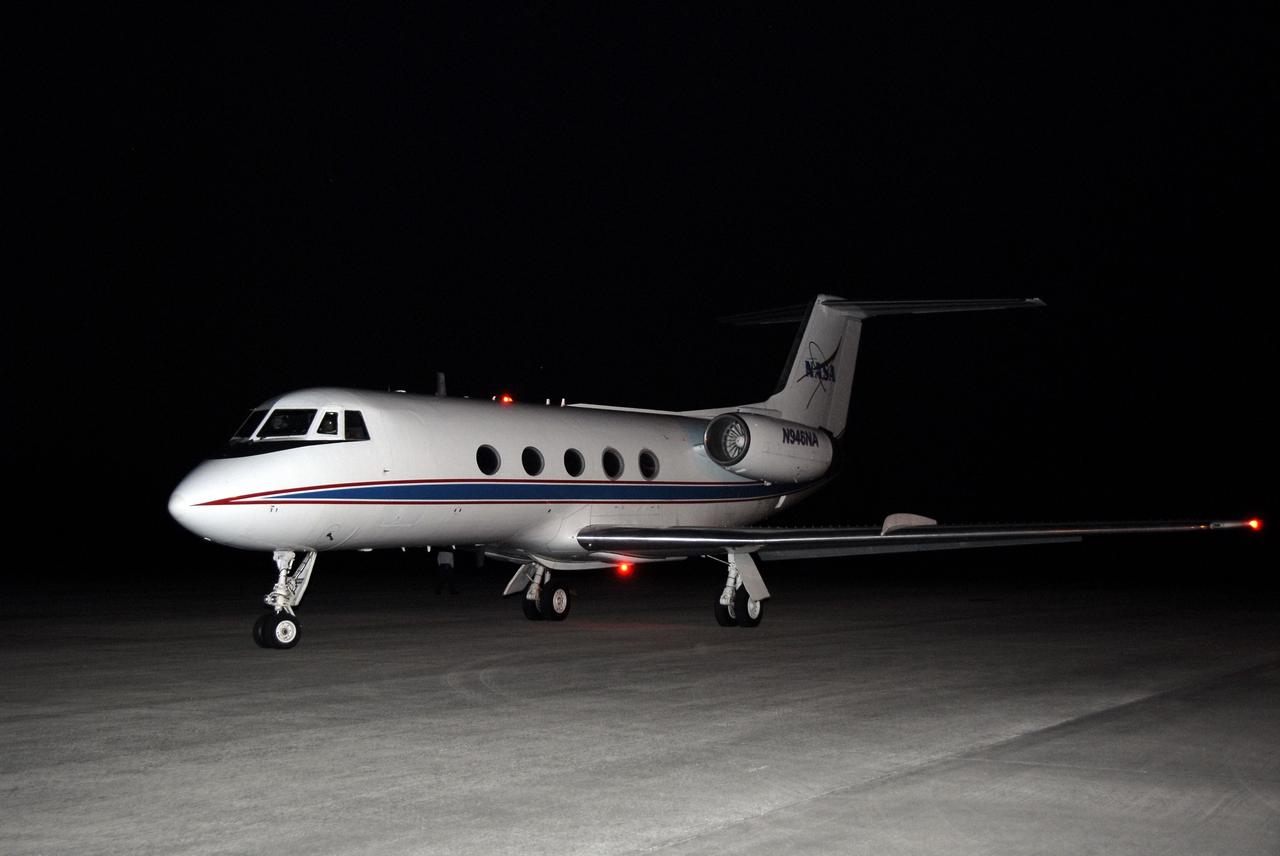
CAPE CANAVERAL, Fla. - At the Shuttle Landing Facility at NASA's Kennedy Space Center in Florida, the Shuttle Training Aircraft, or STA, with STS-126 Commander Chris Ferguson and Pilot Eric Boe on board, is ready to take off. Ferguson and Boe will practice shuttle landings on the STA, a Grumman American Aviation-built Gulf Stream II jet that was modified to simulate a shuttle’s cockpit, motion and visual cues, and handling qualities. In flight, the aircraft duplicates the shuttle’s atmospheric descent trajectory from approximately 35,000 feet to landing. The practice is part of the Terminal Countdown Demonstration Test, which includes equipment familiarization, emergency exit procedures and a simulated launch countdown. On the STS-126 mission, space shuttle Endeavour's crew will deliver equipment and supplies to the International Space Station in preparation for expansion from a three- to six-person resident crew aboard the complex. The mission also will include four spacewalks to service the station’s Solar Alpha Rotary Joints. Endeavour is targeted to launch Nov. 14. Photo credit: NASA/Kim Shiflett
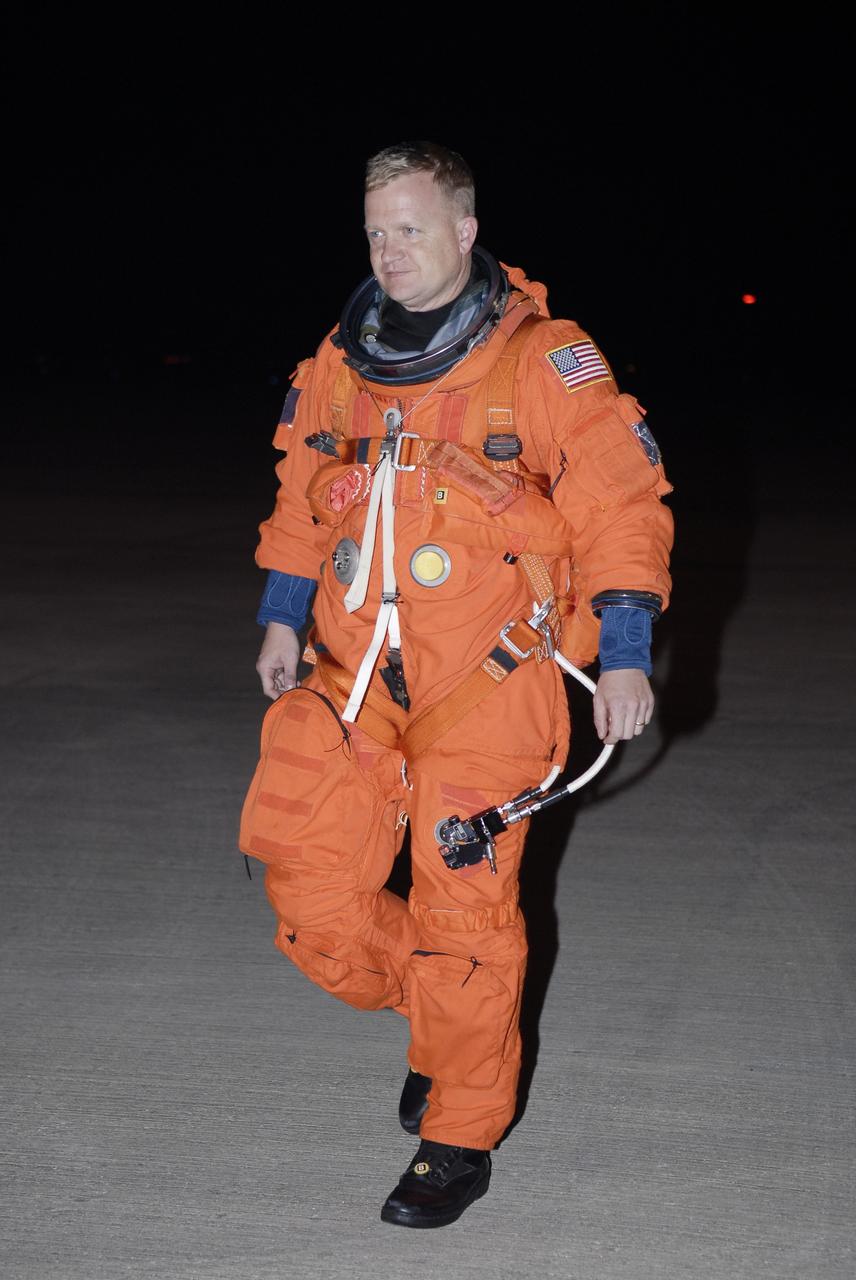
CAPE CANAVERAL, Fla. - At NASA's Kennedy Space Center in Florida, STS-126 Pilot Eric Boe walks away from the Shuttle Training Aircraft, or STA, after practicing shuttle landings. The STA is a Grumman American Aviation-built Gulf Stream II jet that was modified to simulate a shuttle’s cockpit, motion and visual cues, and handling qualities. In flight, the aircraft duplicates the shuttle’s atmospheric descent trajectory from approximately 35,000 feet to landing. The practice is part of the Terminal Countdown Demonstration Test, which includes equipment familiarization, emergency exit procedures and a simulated launch countdown. On the STS-126 mission, space shuttle Endeavour's crew will deliver equipment and supplies to the International Space Station in preparation for expansion from a three- to six-person resident crew aboard the complex. The mission also will include four spacewalks to service the station’s Solar Alpha Rotary Joints. Endeavour is targeted to launch Nov. 14. Photo credit: NASA/Kim Shiflett
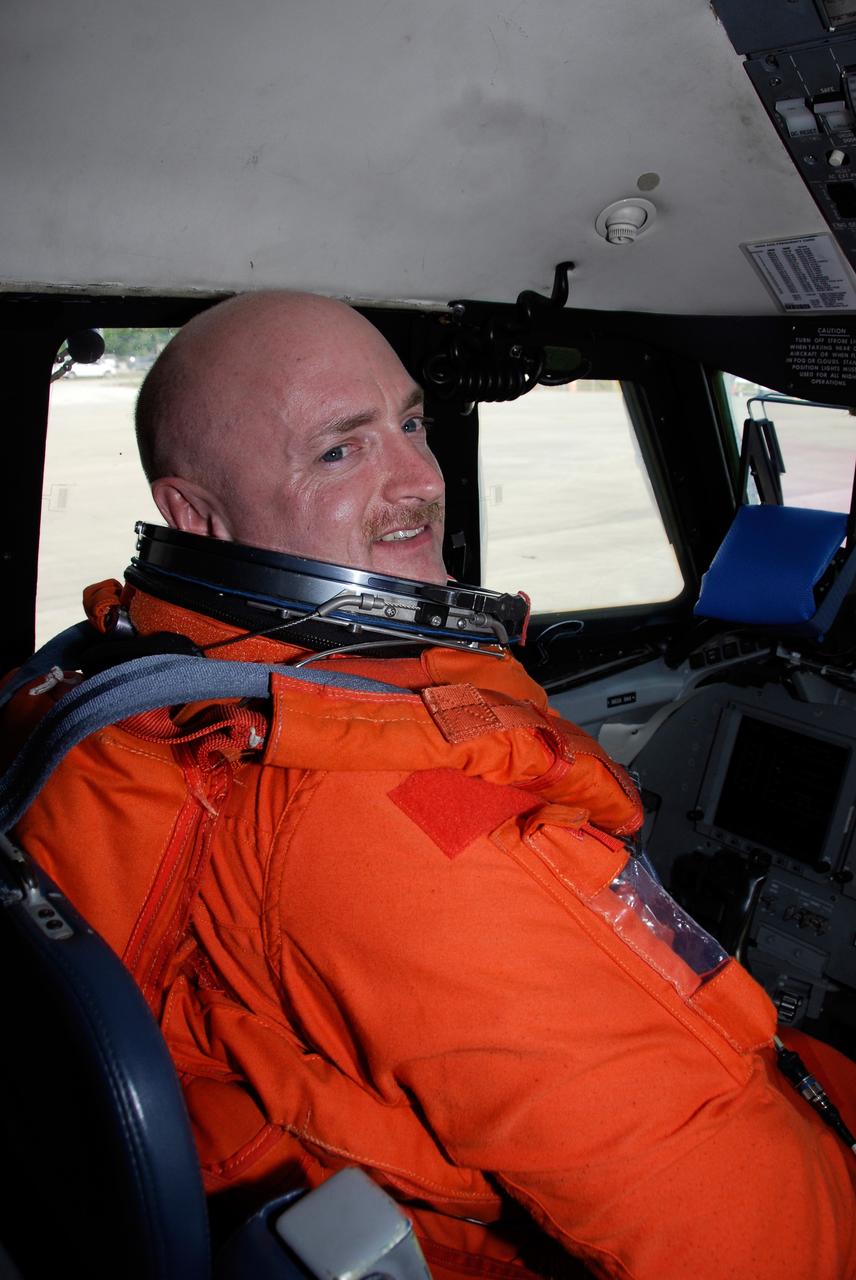
CAPE CANAVERAL, Fla. -- STS-124 Commander Mark Kelly sits in the cockpit of NASA's Shuttle Training Aircraft, or STA, preparing to practice space shuttle landings. The STA is a Grumman American Aviation-built Gulf Stream II jet that was modified to simulate an orbiter's cockpit, motion and visual cues, and handling qualities. In flight, the STA duplicates the orbiter's atmospheric descent trajectory from approximately 35,000 feet altitude to landing on a runway. Because the orbiter is unpowered during re-entry and landing, its high-speed glide must be perfectly executed the first time. The crew for space shuttle Discovery's STS-124 mission is at Kennedy for a full launch dress rehearsal, known as the terminal countdown demonstration test, or TCDT. Providing astronauts and ground crews with an opportunity to participate in various simulated countdown activities, TCDT includes equipment familiarization and emergency training. Discovery's launch is targeted for May 31. Photo credit: NASA/Kim Shiflett
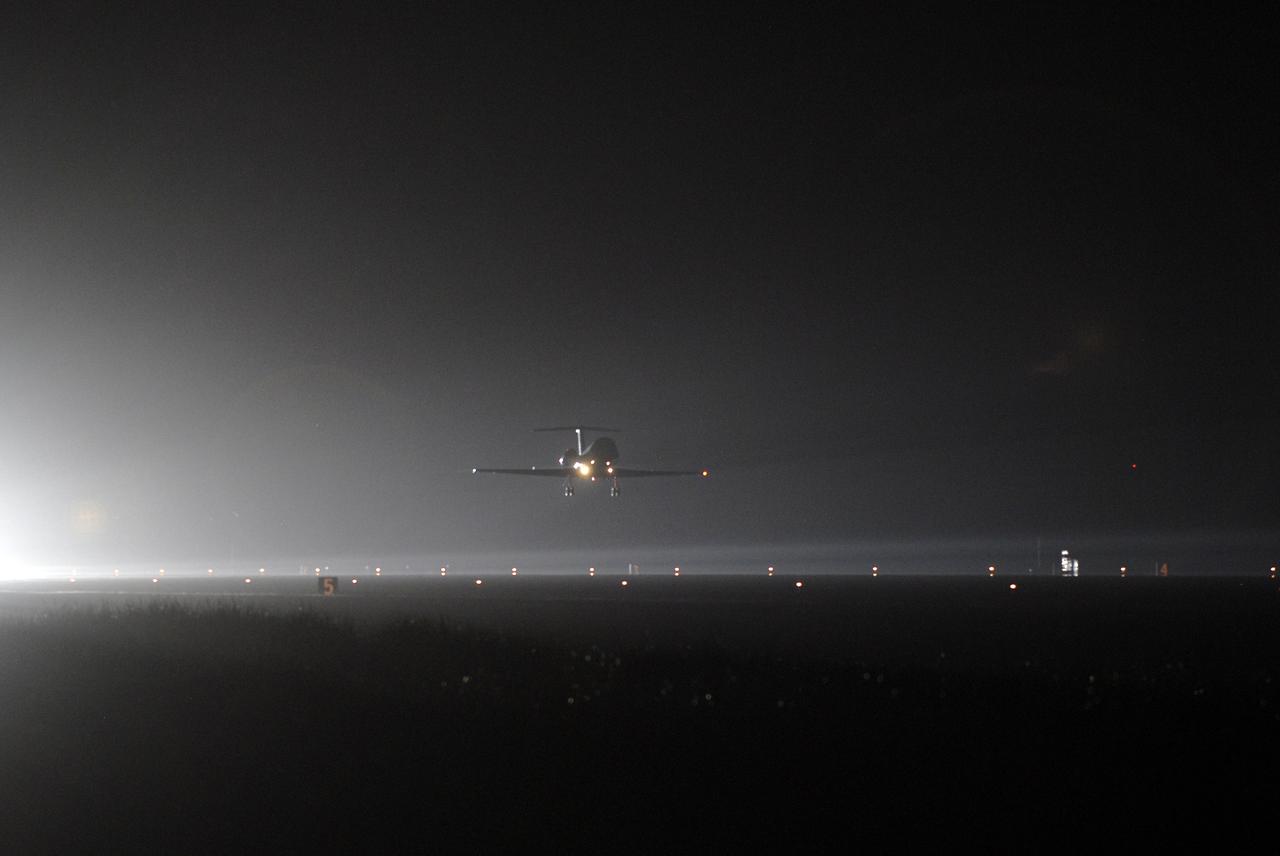
CAPE CANAVERAL, Fla. –At the Shuttle Landing Facility at NASA's Kennedy Space Center in Florida, a Shuttle Training Aircraft, or STA, approaches the runway during landing practice. STS-128 Commander Rick Sturckow and Pilot Kevin Ford are using the STAs to practice shuttle landings. The practice is in preparation for launch of space shuttle Discovery's STS-128 mission in late August to the International Space Station. The STA is a Grumman American Aviation-built Gulfstream II jet that was modified to simulate a shuttle’s cockpit, motion and visual cues, and handling qualities. The STS-128 crew is at Kennedy for a launch dress rehearsal called the terminal countdown demonstration test, or TCDT, which includes emergency exit training and equipment familiarization, as well as a simulated launch countdown. Discovery will deliver 33,000 pounds of equipment to the station, including science and storage racks, a freezer to store research samples, a new sleeping compartment and the COLBERT treadmill. Photo credit: NASA/Kim Shiflett
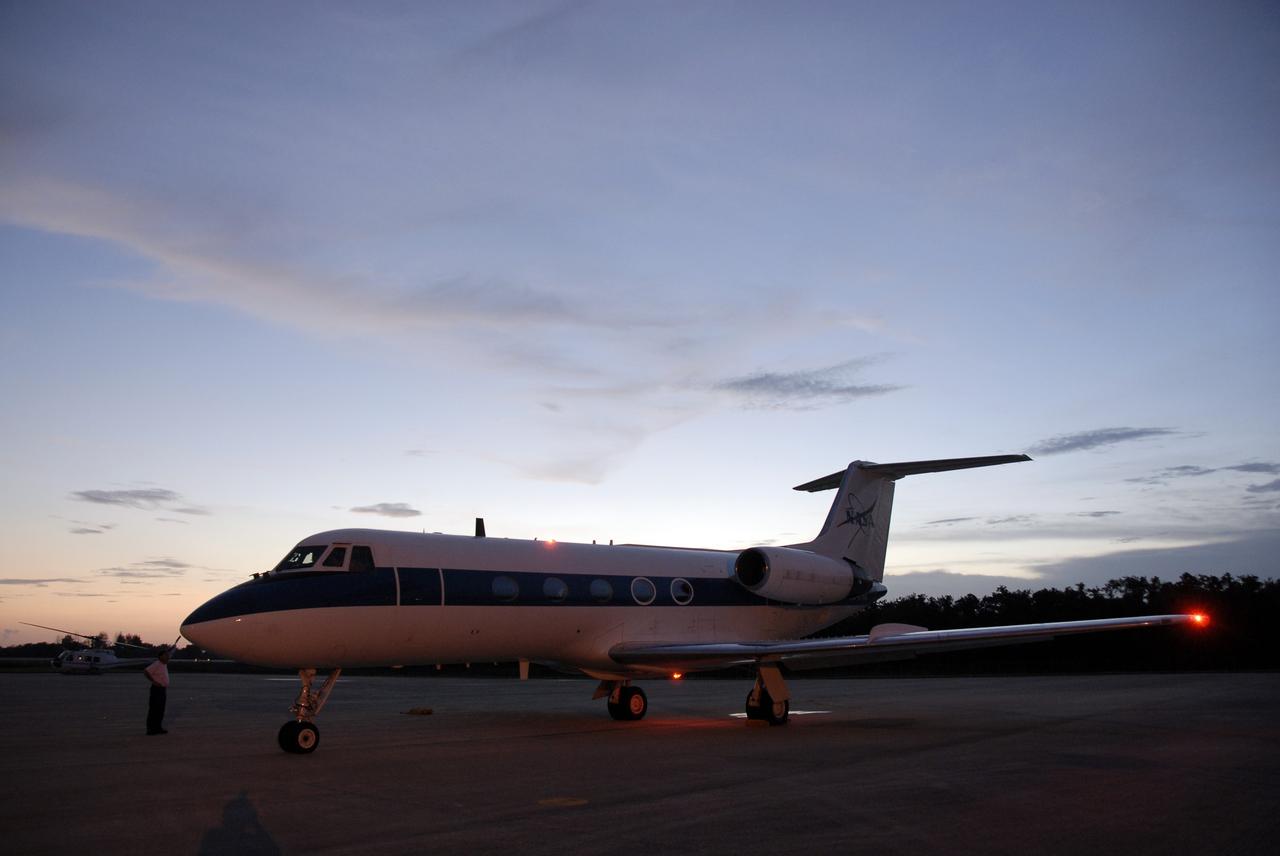
CAPE CANAVERAL, Fla. –At the Shuttle Landing Facility at NASA's Kennedy Space Center in Florida, one of the two Shuttle Training Aircraft, or STAs, waits to taxi to the runway. STS-128 Commander Rick Sturckow and Pilot Kevin Ford are using the STAs to practice shuttle landings. The practice is in preparation for launch of space shuttle Discovery's STS-128 mission in late August to the International Space Station. The STA is a Grumman American Aviation-built Gulfstream II jet that was modified to simulate a shuttle’s cockpit, motion and visual cues, and handling qualities. The STS-128 crew is at Kennedy for a launch dress rehearsal called the terminal countdown demonstration test, or TCDT, which includes emergency exit training and equipment familiarization, as well as a simulated launch countdown. Discovery will deliver 33,000 pounds of equipment to the station, including science and storage racks, a freezer to store research samples, a new sleeping compartment and the COLBERT treadmill. Photo credit: NASA/Kim Shiflett
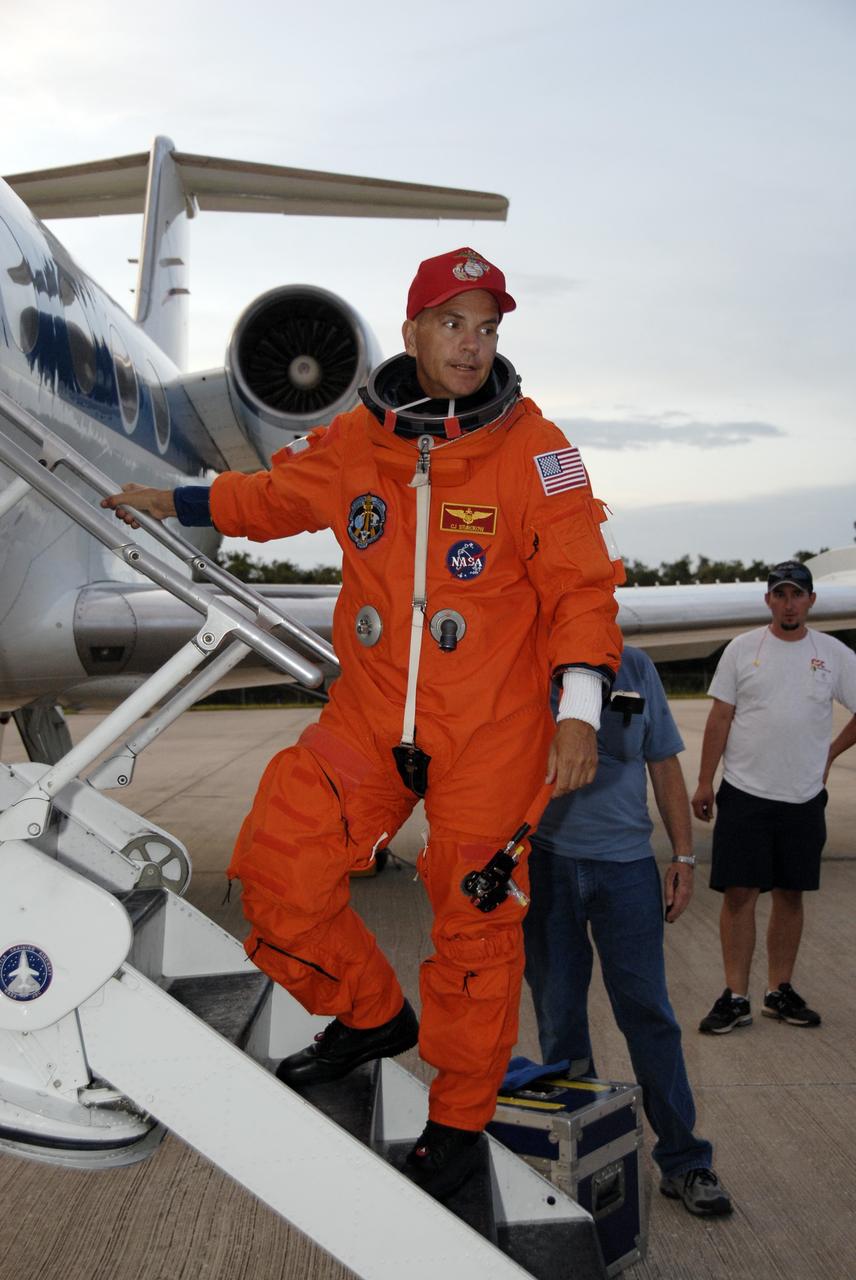
CAPE CANAVERAL, Fla. – At the Shuttle Landing Facility at NASA's Kennedy Space Center in Florida, STS-128 Commander Rick Sturckow heads up the stairs to the cockpit of the Shuttle Training Aircraft, or STA, to practice shuttle landings. The practice is in preparation for launch of space shuttle Discovery's STS-128 mission in late August to the International Space Station. The STA is a Grumman American Aviation-built Gulfstream II jet that was modified to simulate a shuttle’s cockpit, motion and visual cues, and handling qualities. The STS-128 crew is at Kennedy for a launch dress rehearsal called the terminal countdown demonstration test, or TCDT, which includes emergency exit training and equipment familiarization, as well as a simulated launch countdown. Discovery will deliver 33,000 pounds of equipment to the station, including science and storage racks, a freezer to store research samples, a new sleeping compartment and the COLBERT treadmill. Photo credit: NASA/Kim Shiflett
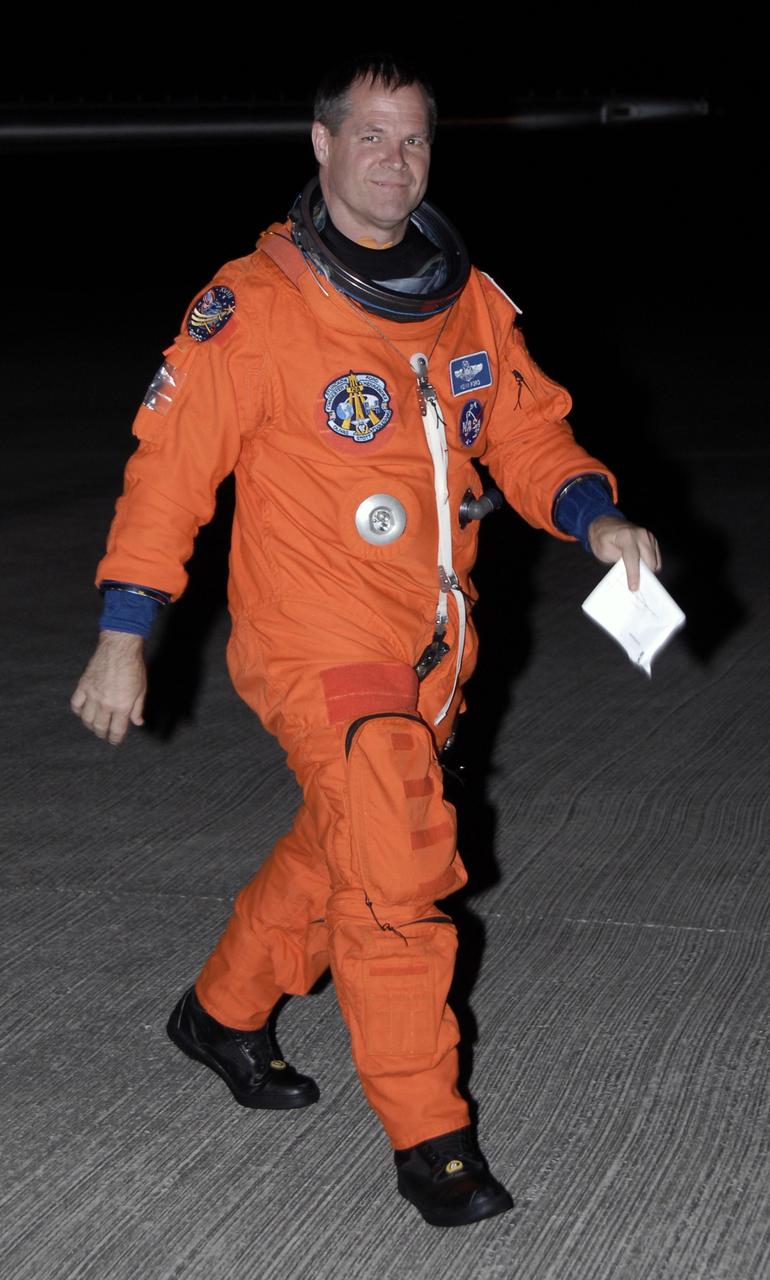
CAPE CANAVERAL, Fla. –At the Shuttle Landing Facility at NASA's Kennedy Space Center in Florida, STS-128 Pilot Kevin Ford walks away from the Shuttle Training Aircraft, or STA, after completing shuttle landing practice. The practice is in preparation for launch of space shuttle Discovery's STS-128 mission in late August to the International Space Station. The STA is a Grumman American Aviation-built Gulfstream II jet that was modified to simulate a shuttle’s cockpit, motion and visual cues, and handling qualities. The STS-128 crew is at Kennedy for a launch dress rehearsal called the terminal countdown demonstration test, or TCDT, which includes emergency exit training and equipment familiarization, as well as a simulated launch countdown. Discovery will deliver 33,000 pounds of equipment to the station, including science and storage racks, a freezer to store research samples, a new sleeping compartment and the COLBERT treadmill. Photo credit: NASA/Kim Shiflett
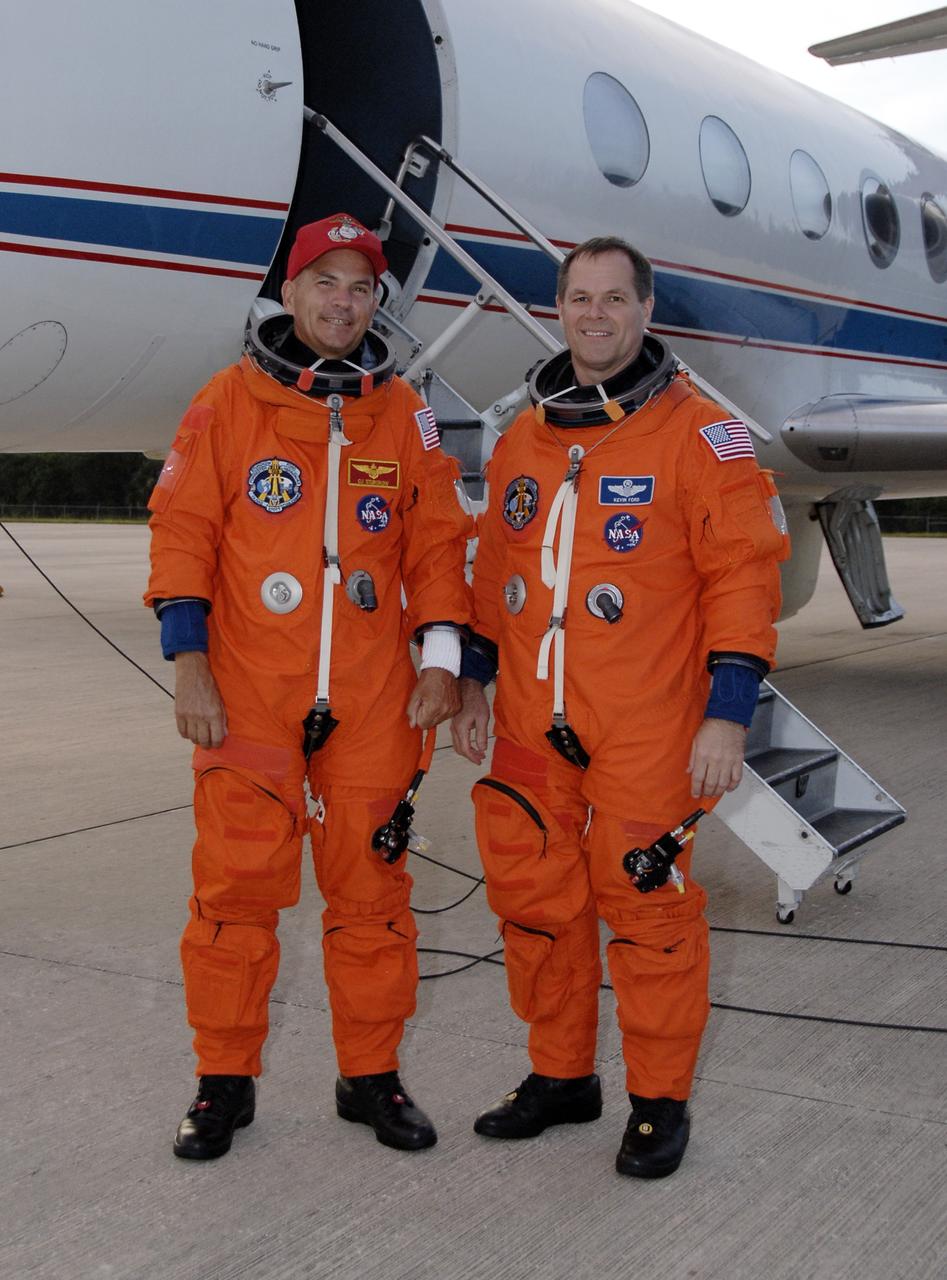
CAPE CANAVERAL, Fla. – At the Shuttle Landing Facility at NASA's Kennedy Space Center in Florida, STS-128 Commander Rick Sturckow (left) and Pilot Kevin Ford are ready to begin practicing shuttle landings in the Shuttle Training Aircraft, or STA. The practice is in preparation for launch of space shuttle Discovery's STS-128 mission in late August to the International Space Station. The STA is a Grumman American Aviation-built Gulfstream II jet that was modified to simulate a shuttle’s cockpit, motion and visual cues, and handling qualities. The STS-128 crew is at Kennedy for a launch dress rehearsal called the terminal countdown demonstration test, or TCDT, which includes emergency exit training and equipment familiarization, as well as a simulated launch countdown. Discovery will deliver 33,000 pounds of equipment to the station, including science and storage racks, a freezer to store research samples, a new sleeping compartment and the COLBERT treadmill. Photo credit: NASA/Kim Shiflett
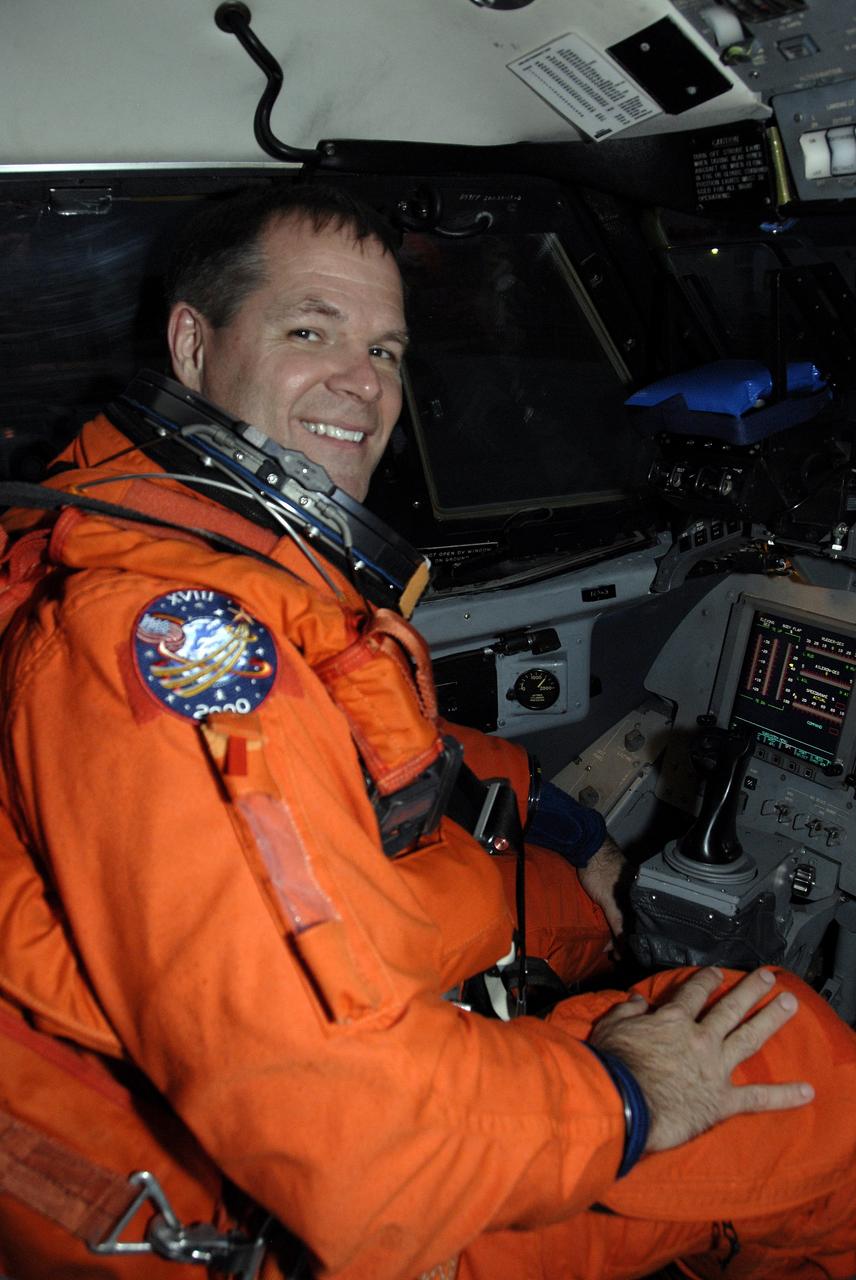
CAPE CANAVERAL, Fla. –At the Shuttle Landing Facility at NASA's Kennedy Space Center in Florida, STS-128 Pilot Kevin Ford settles in the cockpit of the Shuttle Training Aircraft, or STA, to practice shuttle landings. The practice is in preparation for launch of space shuttle Discovery's STS-128 mission in late August to the International Space Station. The STA is a Grumman American Aviation-built Gulfstream II jet that was modified to simulate a shuttle’s cockpit, motion and visual cues, and handling qualities. The STS-128 crew is at Kennedy for a launch dress rehearsal called the terminal countdown demonstration test, or TCDT, which includes emergency exit training and equipment familiarization, as well as a simulated launch countdown. Discovery will deliver 33,000 pounds of equipment to the station, including science and storage racks, a freezer to store research samples, a new sleeping compartment and the COLBERT treadmill. Photo credit: NASA/Kim Shiflett
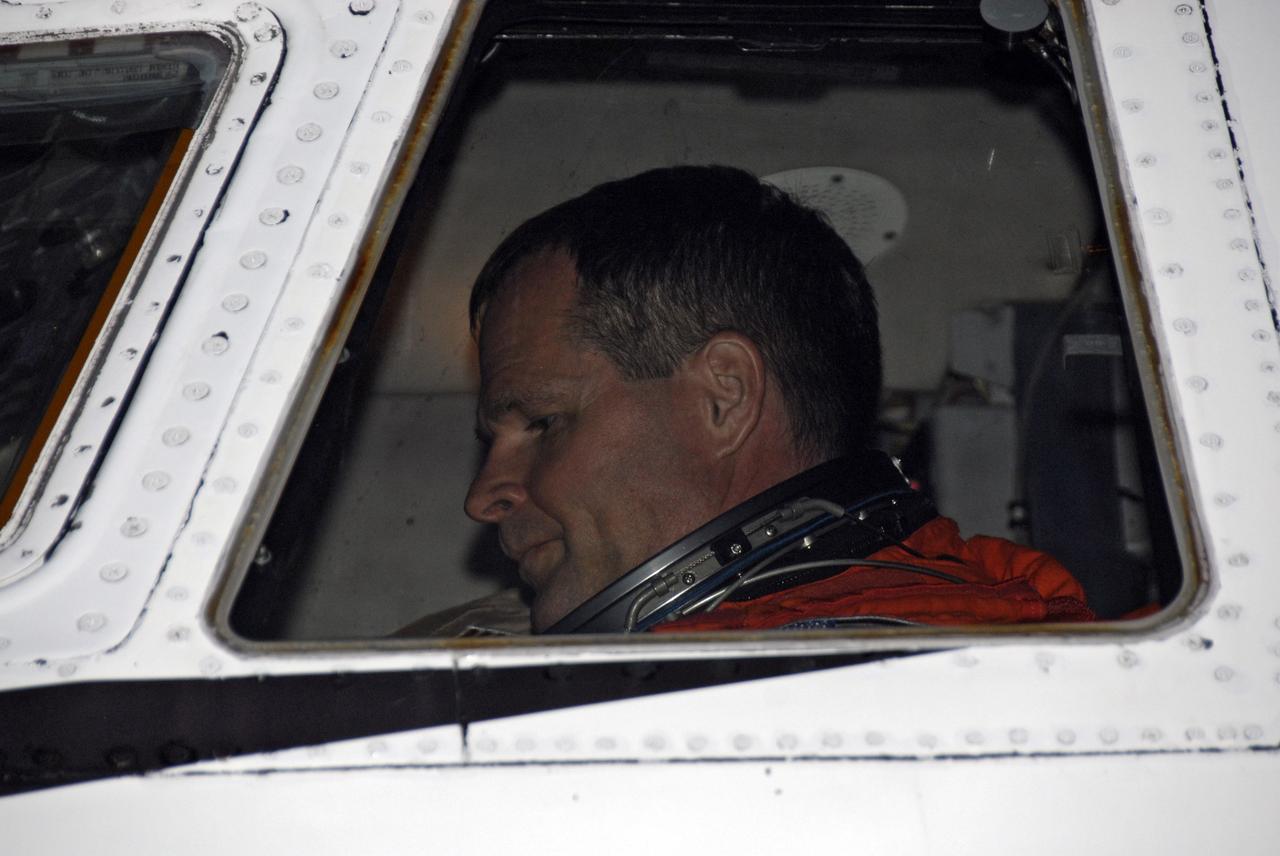
CAPE CANAVERAL, Fla. –At the Shuttle Landing Facility at NASA's Kennedy Space Center in Florida, STS-128 Pilot Kevin Ford settles in the cockpit of the Shuttle Training Aircraft, or STA, to practice shuttle landings. The practice is in preparation for launch of space shuttle Discovery's STS-128 mission in late August to the International Space Station. The STA is a Grumman American Aviation-built Gulfstream II jet that was modified to simulate a shuttle’s cockpit, motion and visual cues, and handling qualities. The STS-128 crew is at Kennedy for a launch dress rehearsal called the terminal countdown demonstration test, or TCDT, which includes emergency exit training and equipment familiarization, as well as a simulated launch countdown. Discovery will deliver 33,000 pounds of equipment to the station, including science and storage racks, a freezer to store research samples, a new sleeping compartment and the COLBERT treadmill. Photo credit: NASA/Kim Shiflett
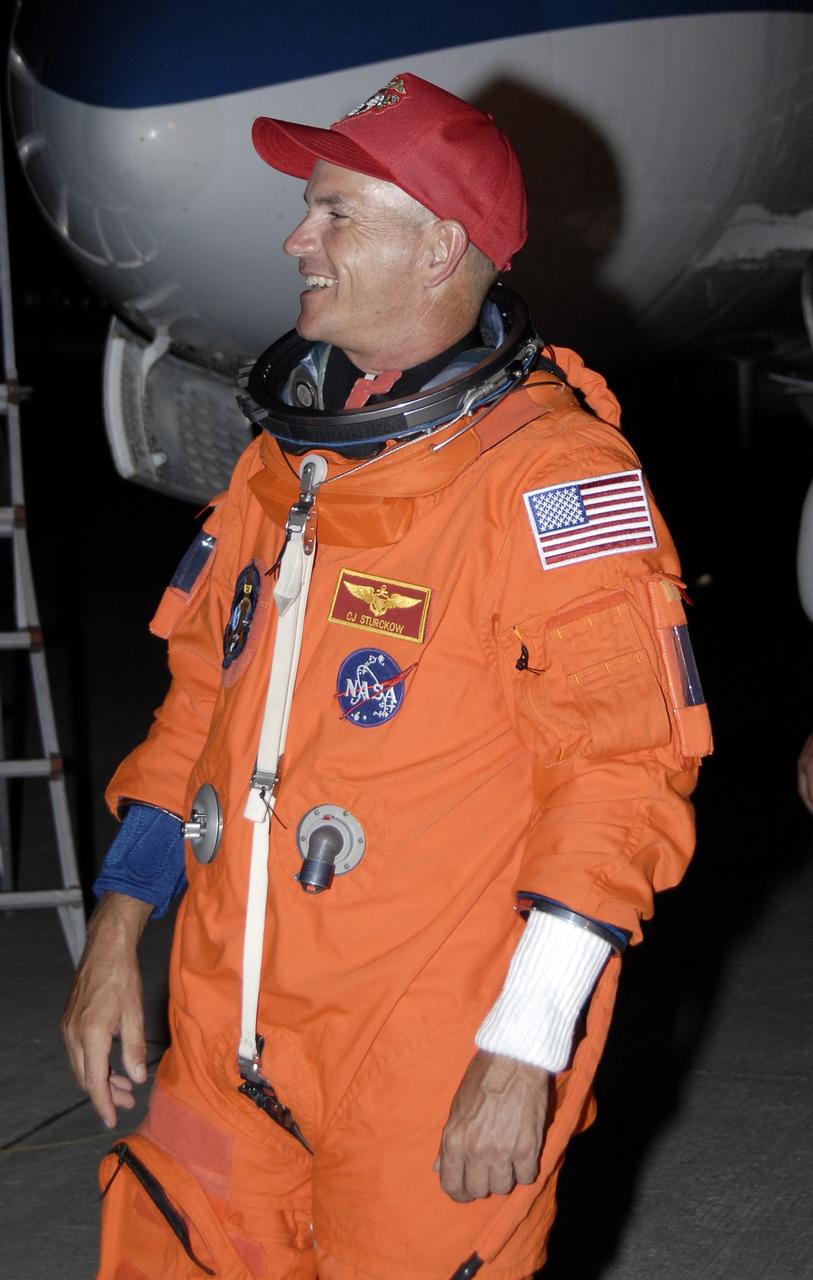
CAPE CANAVERAL, Fla. – At the Shuttle Landing Facility at NASA's Kennedy Space Center in Florida, STS-128 Commander Rick Sturckow is pleased with the shuttle landing practice he completed in the Shuttle Training Aircraft, or STA. The practice is in preparation for launch of space shuttle Discovery's STS-128 mission in late August to the International Space Station. The STA is a Grumman American Aviation-built Gulfstream II jet that was modified to simulate a shuttle’s cockpit, motion and visual cues, and handling qualities. The STS-128 crew is at Kennedy for a launch dress rehearsal called the terminal countdown demonstration test, or TCDT, which includes emergency exit training and equipment familiarization, as well as a simulated launch countdown. Discovery will deliver 33,000 pounds of equipment to the station, including science and storage racks, a freezer to store research samples, a new sleeping compartment and the COLBERT treadmill. Photo credit: NASA/Kim Shiflett
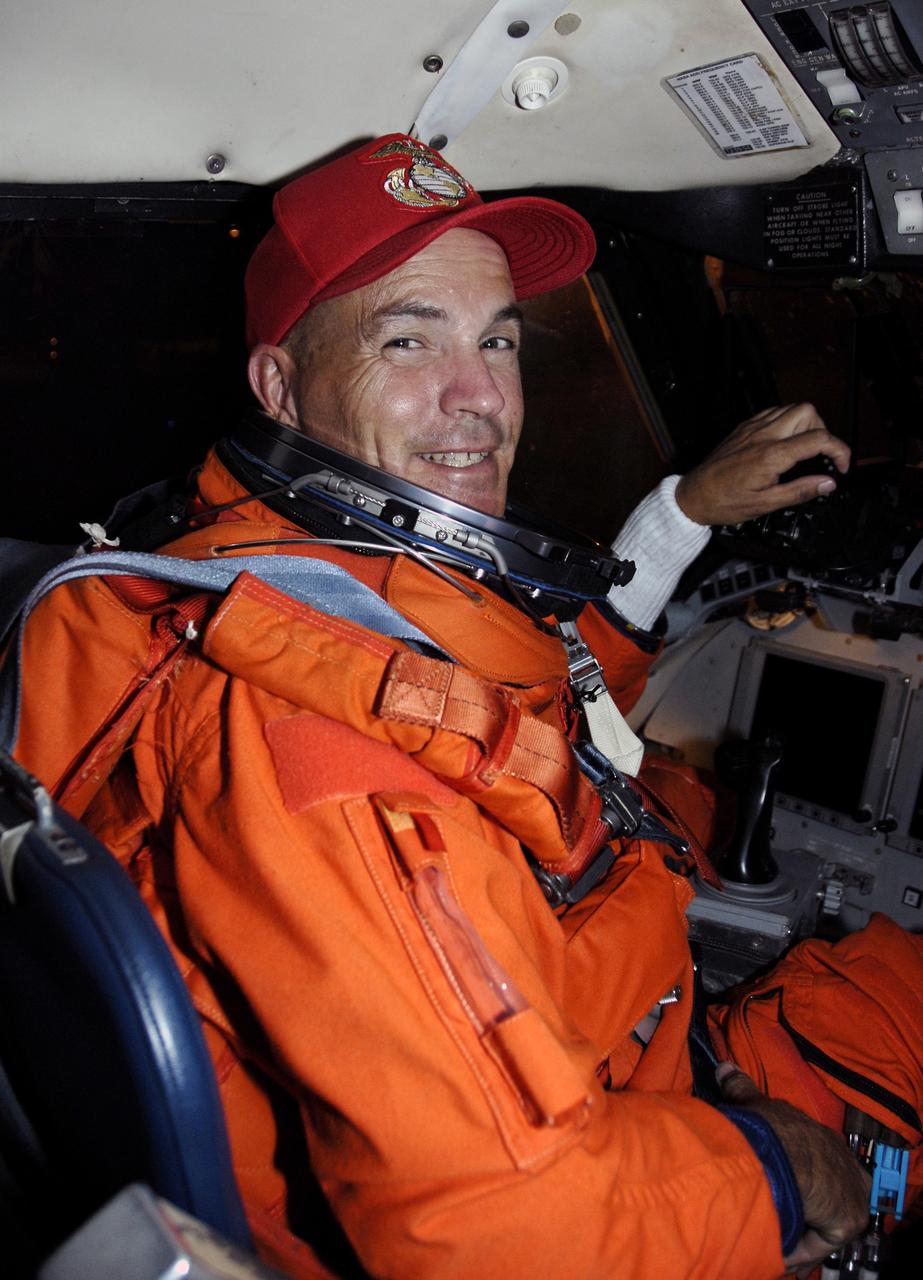
CAPE CANAVERAL, Fla. – At the Shuttle Landing Facility at NASA's Kennedy Space Center in Florida, STS-128 Commander Rick Sturckow completes shuttle landing practice in the Shuttle Training Aircraft, or STA. The practice is in preparation for launch of space shuttle Discovery's STS-128 mission in late August to the International Space Station. The STA is a Grumman American Aviation-built Gulfstream II jet that was modified to simulate a shuttle’s cockpit, motion and visual cues, and handling qualities. The STS-128 crew is at Kennedy for a launch dress rehearsal called the terminal countdown demonstration test, or TCDT, which includes emergency exit training and equipment familiarization, as well as a simulated launch countdown. Discovery will deliver 33,000 pounds of equipment to the station, including science and storage racks, a freezer to store research samples, a new sleeping compartment and the COLBERT treadmill. Photo credit: NASA/Kim Shiflett
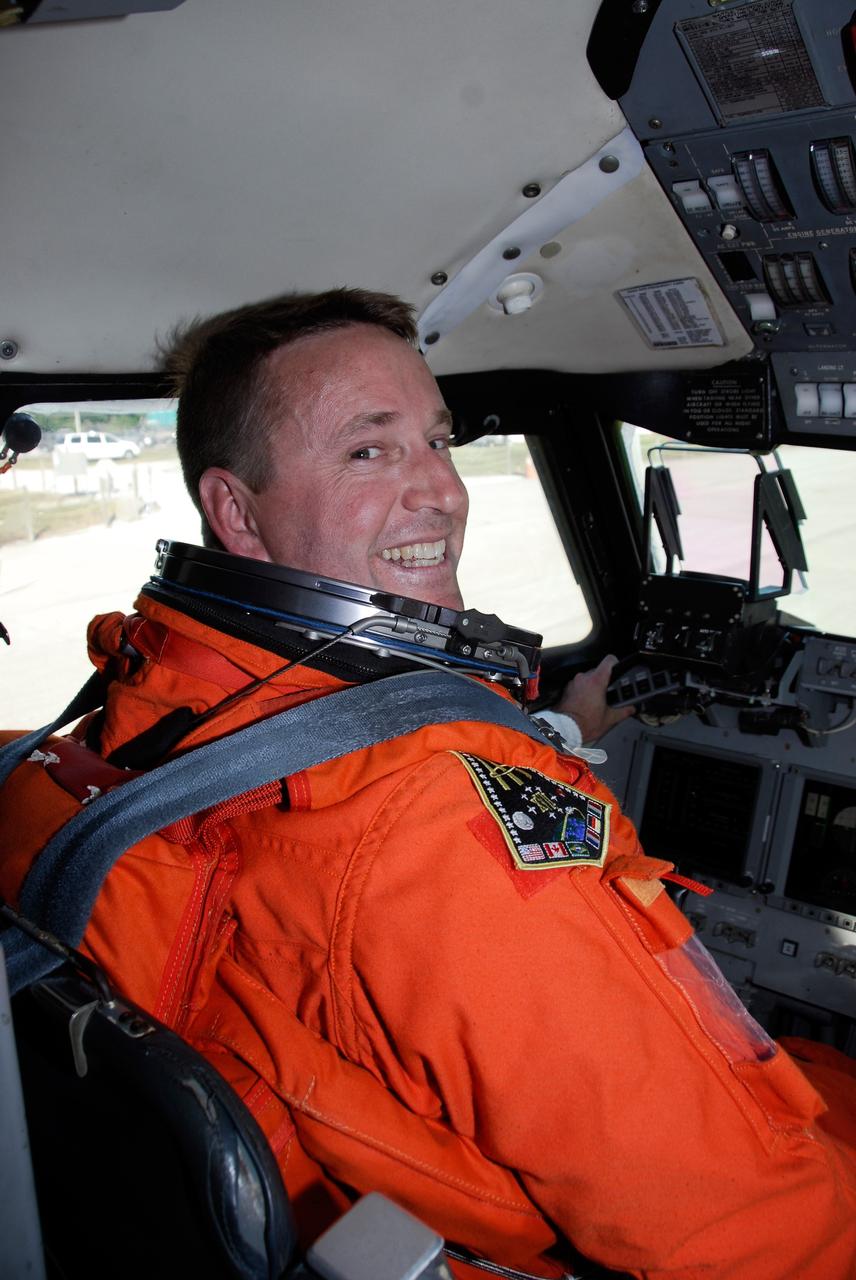
CAPE CANAVERAL, Fla. -- STS-124 Pilot Ken Ham takes his seat in the cockpit of NASA's Shuttle Training Aircraft, or STA, preparing to practice space shuttle landings. The STA is a Grumman American Aviation-built Gulf Stream II jet that was modified to simulate an orbiter's cockpit, motion and visual cues, and handling qualities. In flight, the STA duplicates the orbiter's atmospheric descent trajectory from approximately 35,000 feet altitude to landing on a runway. Because the orbiter is unpowered during re-entry and landing, its high-speed glide must be perfectly executed the first time. The crew for space shuttle Discovery's STS-124 mission is at Kennedy for a full launch dress rehearsal, known as the terminal countdown demonstration test, or TCDT. Providing astronauts and ground crews with an opportunity to participate in various simulated countdown activities, TCDT includes equipment familiarization and emergency training. Discovery's launch is targeted for May 31. Photo credit: NASA/Kim Shiflett
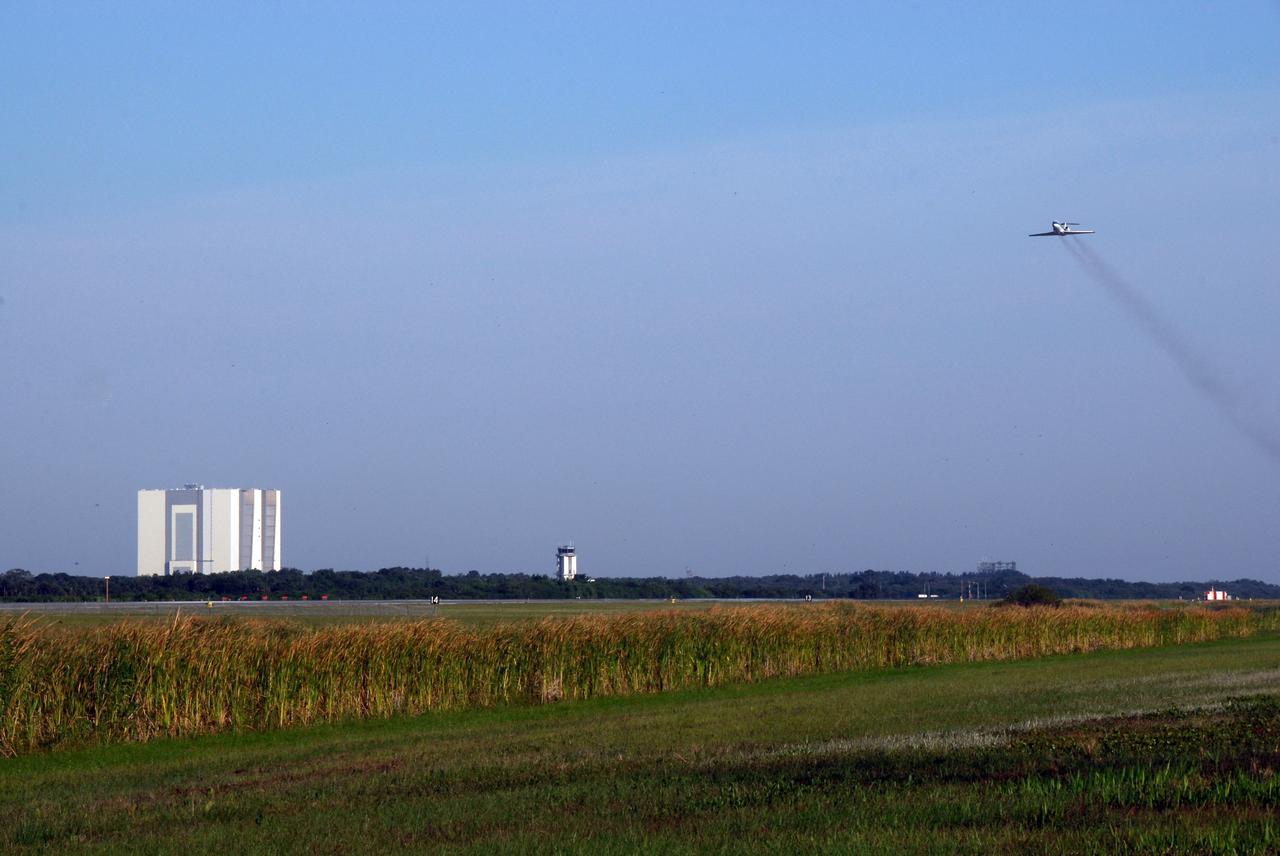
CAPE CANAVERAL, Fla. -- NASA's Shuttle Training Aircraft, or STA, soars into the sky (at right) over the NASA Kennedy Space Center Shuttle Landing Facility. At the controls is either STS-124 Commander Mark Kelly or Pilot Ken Ham, who are practicing space shuttle landings. At left, in the background, is the Vehicle Assembly Building. The STA is a Grumman American Aviation-built Gulf Stream II jet that was modified to simulate an orbiter's cockpit, motion and visual cues, and handling qualities. In flight, the STA duplicates the orbiter's atmospheric descent trajectory from approximately 35,000 feet altitude to landing on a runway. Because the orbiter is unpowered during re-entry and landing, its high-speed glide must be perfectly executed the first time. The crew for space shuttle Discovery's STS-124 mission is at Kennedy for a full launch dress rehearsal, known as the terminal countdown demonstration test, or TCDT. Providing astronauts and ground crews with an opportunity to participate in various simulated countdown activities, TCDT includes equipment familiarization and emergency training. Discovery's launch is targeted for May 31. Photo credit: NASA/Kim Shiflett
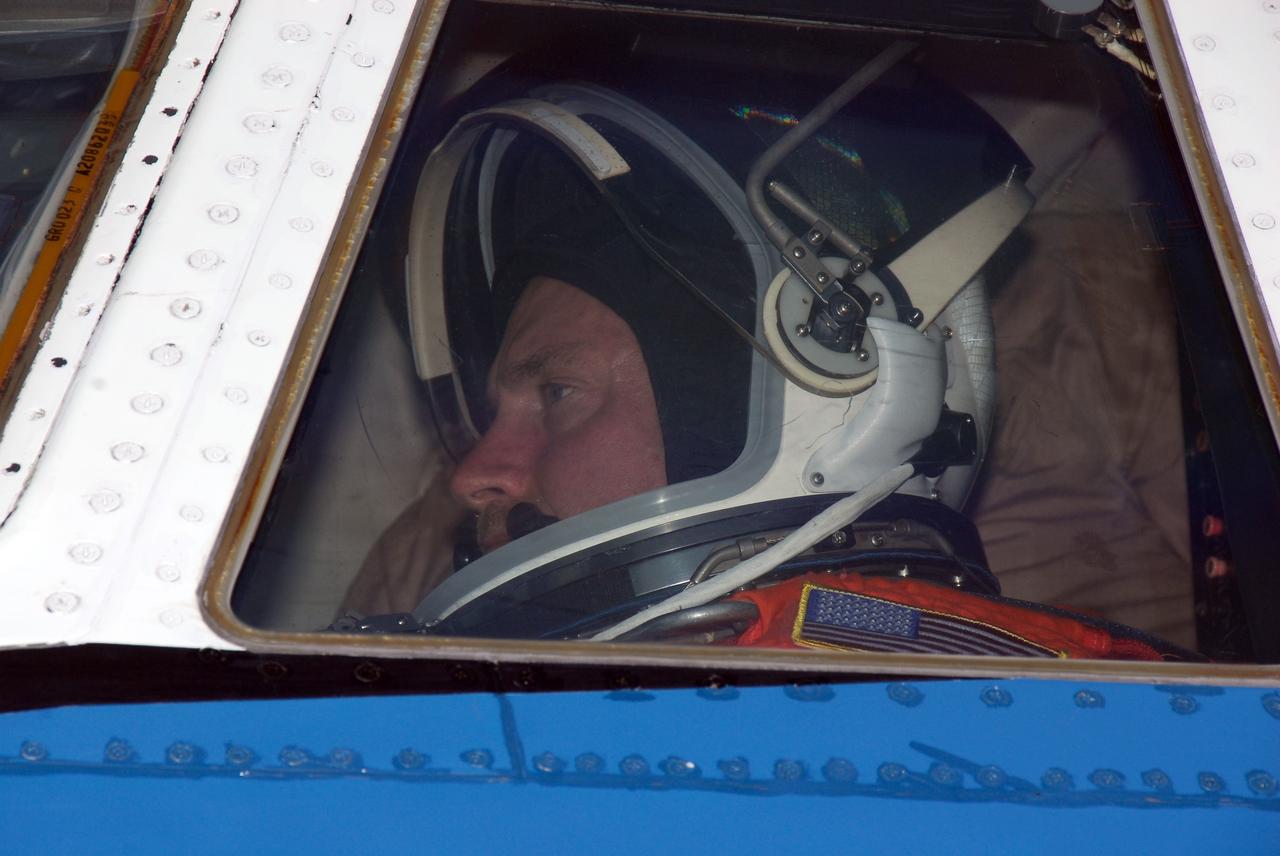
CAPE CANAVERAL, Fla. -- STS-124 Commander Mark Kelly is seen through the cockpit window of NASA's Shuttle Training Aircraft, or STA, before taxiing to the runway at the NASA Kennedy Space Center Shuttle Landing Facility to practice space shuttle landings. The STA is a Grumman American Aviation-built Gulf Stream II jet that was modified to simulate an orbiter's cockpit, motion and visual cues, and handling qualities. In flight, the STA duplicates the orbiter's atmospheric descent trajectory from approximately 35,000 feet altitude to landing on a runway. Because the orbiter is unpowered during re-entry and landing, its high-speed glide must be perfectly executed the first time. The crew for space shuttle Discovery's STS-124 mission is at Kennedy for a full launch dress rehearsal, known as the terminal countdown demonstration test, or TCDT. Providing astronauts and ground crews with an opportunity to participate in various simulated countdown activities, TCDT includes equipment familiarization and emergency training. Discovery's launch is targeted for May 31. Photo credit: NASA/Kim Shiflett
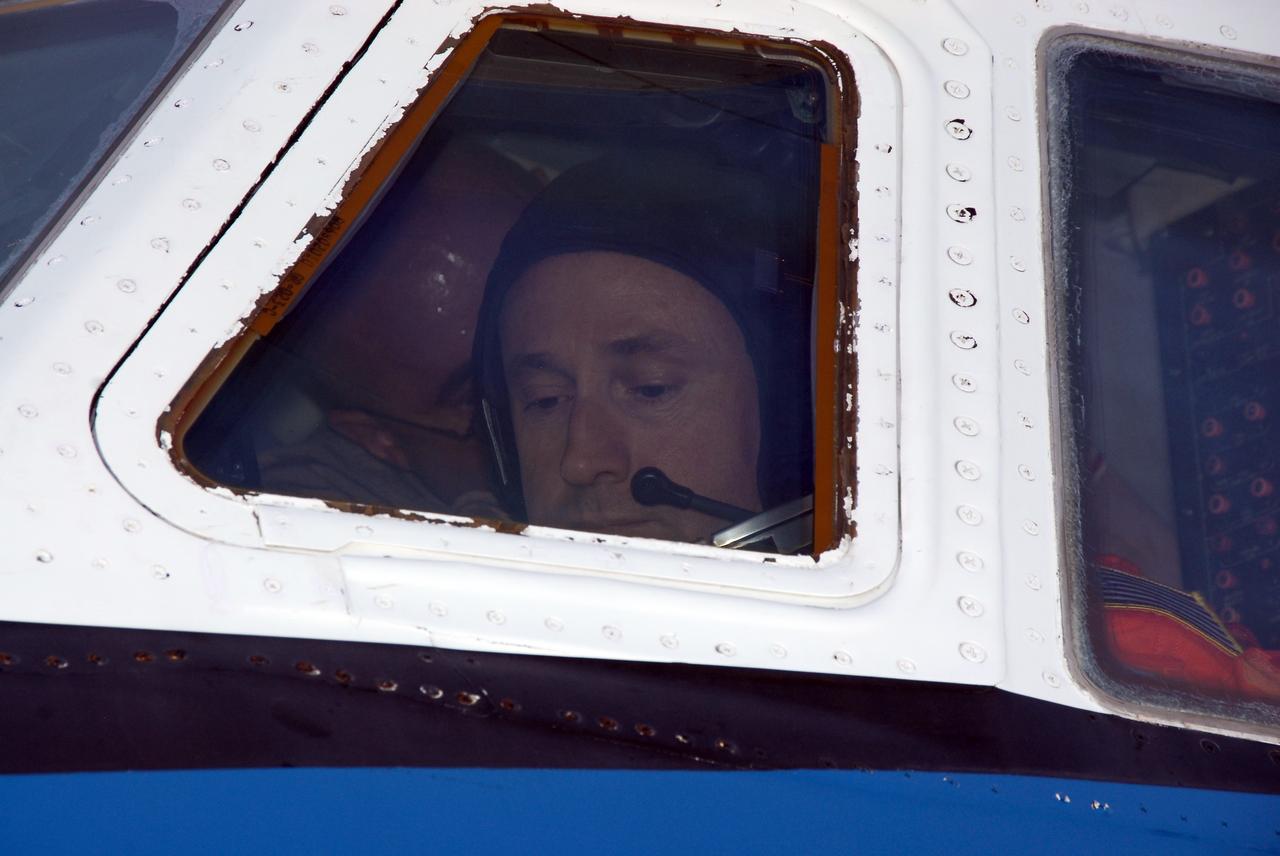
CAPE CANAVERAL, Fla. -- STS-124 Pilot Ken Ham is seen through the cockpit window of NASA's Shuttle Training Aircraft, or STA, before taxiing to the runway at the NASA Kennedy Space Center Shuttle Landing Facility to practice space shuttle landings. The STA is a Grumman American Aviation-built Gulf Stream II jet that was modified to simulate an orbiter's cockpit, motion and visual cues, and handling qualities. In flight, the STA duplicates the orbiter's atmospheric descent trajectory from approximately 35,000 feet altitude to landing on a runway. Because the orbiter is unpowered during re-entry and landing, its high-speed glide must be perfectly executed the first time. The crew for space shuttle Discovery's STS-124 mission is at Kennedy for a full launch dress rehearsal, known as the terminal countdown demonstration test, or TCDT. Providing astronauts and ground crews with an opportunity to participate in various simulated countdown activities, TCDT includes equipment familiarization and emergency training. Discovery's launch is targeted for May 31. Photo credit: NASA/Kim Shiflett
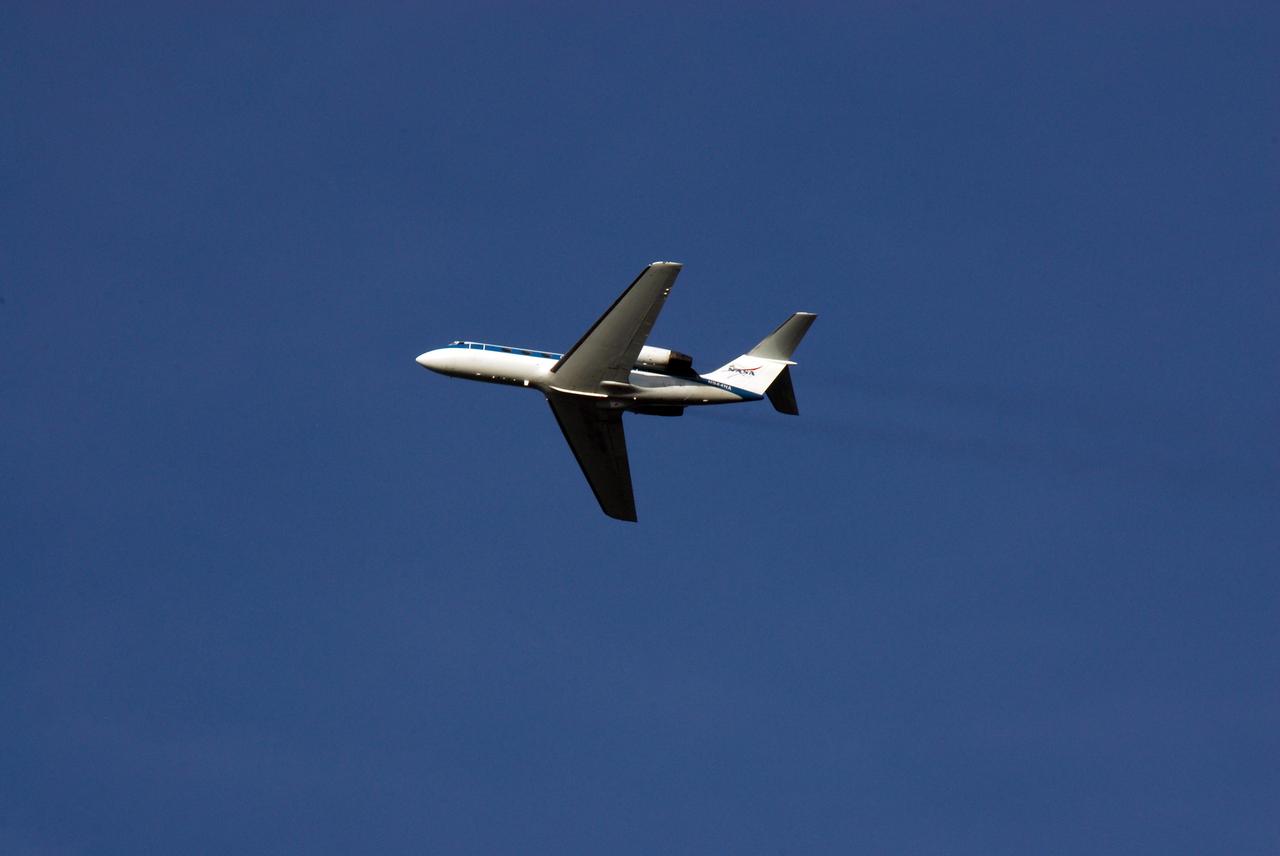
CAPE CANAVERAL, Fla. -- NASA's Shuttle Training Aircraft, or STA, soars into the blue Florida sky to begin the space shuttle landing practice. STS-124 Commander Mark Kelly or Pilot Ken Ham is at the controls. The STA is a Grumman American Aviation-built Gulf Stream II jet that was modified to simulate an orbiter's cockpit, motion and visual cues, and handling qualities. In flight, the STA duplicates the orbiter's atmospheric descent trajectory from approximately 35,000 feet altitude to landing on a runway. Because the orbiter is unpowered during re-entry and landing, its high-speed glide must be perfectly executed the first time. The crew for space shuttle Discovery's STS-124 mission is at Kennedy for a full launch dress rehearsal, known as the terminal countdown demonstration test, or TCDT. Providing astronauts and ground crews with an opportunity to participate in various simulated countdown activities, TCDT includes equipment familiarization and emergency training. Discovery's launch is targeted for May 31. Photo credit: NASA/Kim Shiflett
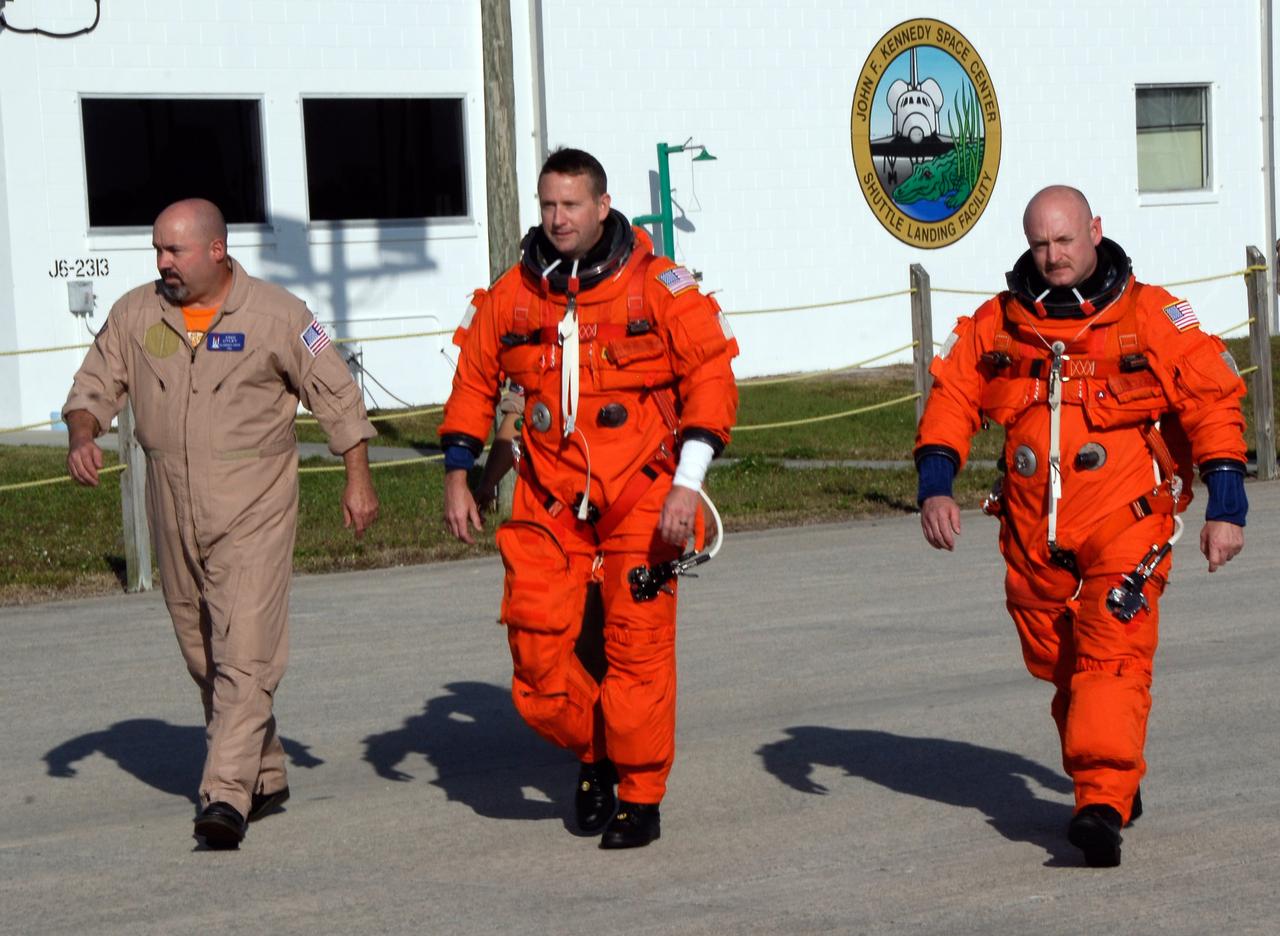
CAPE CANAVERAL, Fla. -- After their arrival at the NASA Kennedy Space Center Shuttle Landing Facility, STS-124 Pilot Ken Ham (center) and Commander Mark Kelly (right) head for the runway to practice space shuttle landings using NASA's Shuttle Training Aircraft, or STA. The STA is a Grumman American Aviation-built Gulf Stream II jet that was modified to simulate an orbiter's cockpit, motion and visual cues, and handling qualities. In flight, the STA duplicates the orbiter's atmospheric descent trajectory from approximately 35,000 feet altitude to landing on a runway. Because the orbiter is unpowered during re-entry and landing, its high-speed glide must be perfectly executed the first time. The crew for space shuttle Discovery's STS-124 mission is at Kennedy for a full launch dress rehearsal, known as the terminal countdown demonstration test, or TCDT. Providing astronauts and ground crews with an opportunity to participate in various simulated countdown activities, TCDT includes equipment familiarization and emergency training. Discovery's launch is targeted for May 31. Photo credit: NASA/Kim Shiflett
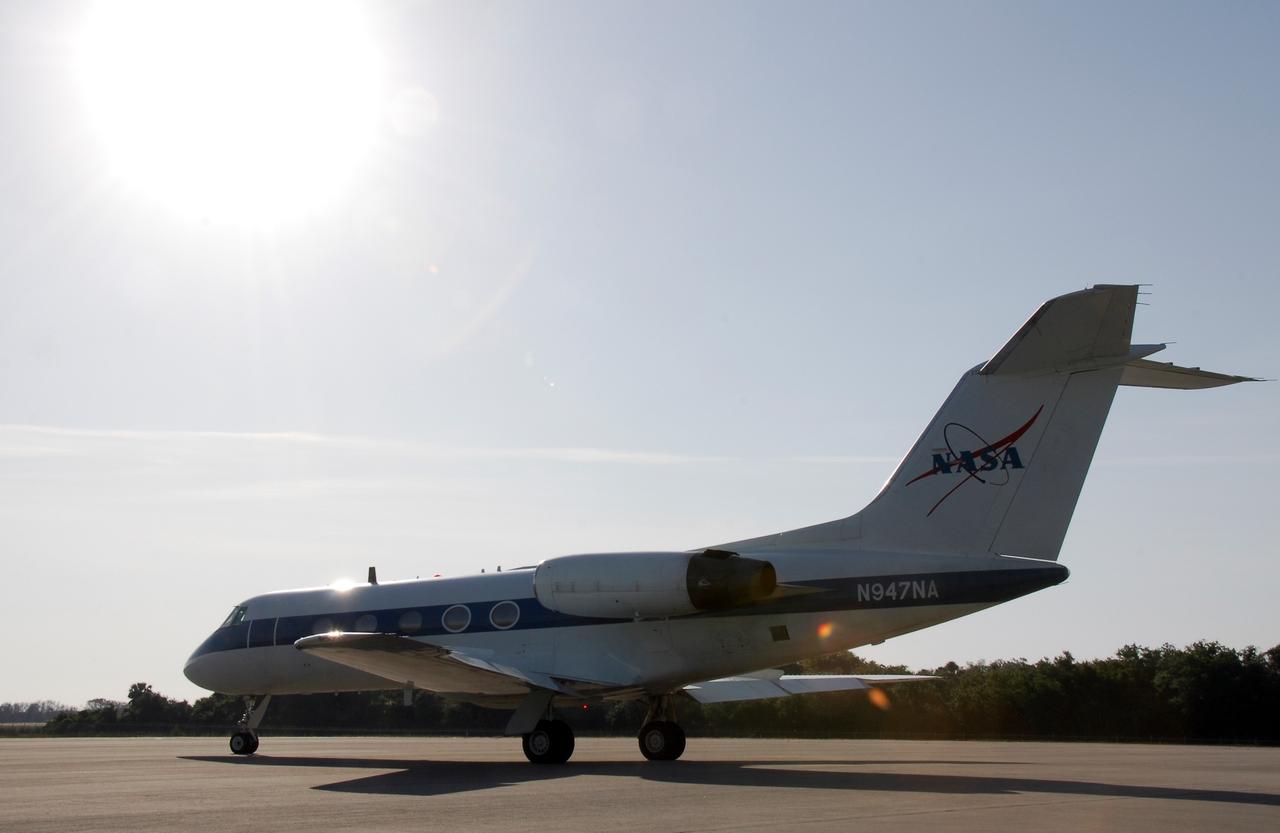
CAPE CANAVERAL, Fla. -- NASA's Shuttle Training Aircraft, or STA, taxis to the runway at the NASA Kennedy Space Center Shuttle Landing Facility. STS-124 Commander Mark Kelly and Pilot Ken Ham are practicing space shuttle landings. The STA is a Grumman American Aviation-built Gulf Stream II jet that was modified to simulate an orbiter's cockpit, motion and visual cues, and handling qualities. In flight, the STA duplicates the orbiter's atmospheric descent trajectory from approximately 35,000 feet altitude to landing on a runway. Because the orbiter is unpowered during re-entry and landing, its high-speed glide must be perfectly executed the first time. The crew for space shuttle Discovery's STS-124 mission is at Kennedy for a full launch dress rehearsal, known as the terminal countdown demonstration test, or TCDT. Providing astronauts and ground crews with an opportunity to participate in various simulated countdown activities, TCDT includes equipment familiarization and emergency training. Discovery's launch is targeted for May 31. Photo credit: NASA/Kim Shiflett
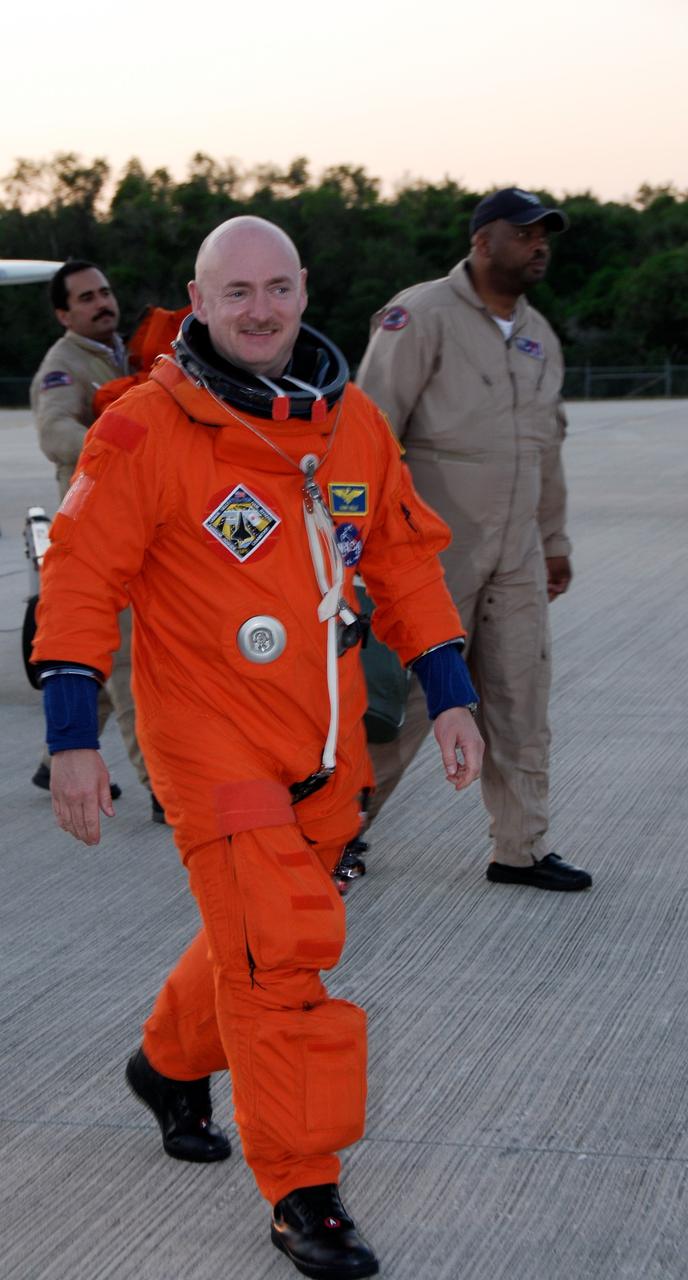
CAPE CANAVERAL, Fla. -- Back at the NASA Kennedy Space Center Shuttle Landing Facility, STS-124 Commander Mark Kelly happily crosses the parking area after the successful space shuttle landing practice aboard NASA's Shuttle Training Aircraft, or STA. The STA is a Grumman American Aviation-built Gulf Stream II jet that was modified to simulate an orbiter's cockpit, motion and visual cues, and handling qualities. In flight, the STA duplicates the orbiter's atmospheric descent trajectory from approximately 35,000 feet altitude to landing on a runway. Because the orbiter is unpowered during re-entry and landing, its high-speed glide must be perfectly executed the first time. The crew for space shuttle Discovery's STS-124 mission is at Kennedy for a full launch dress rehearsal, known as the terminal countdown demonstration test, or TCDT. Providing astronauts and ground crews with an opportunity to participate in various simulated countdown activities, TCDT includes equipment familiarization and emergency training. Discovery's launch is targeted for May 31. Photo credit: NASA/Kim Shiflett
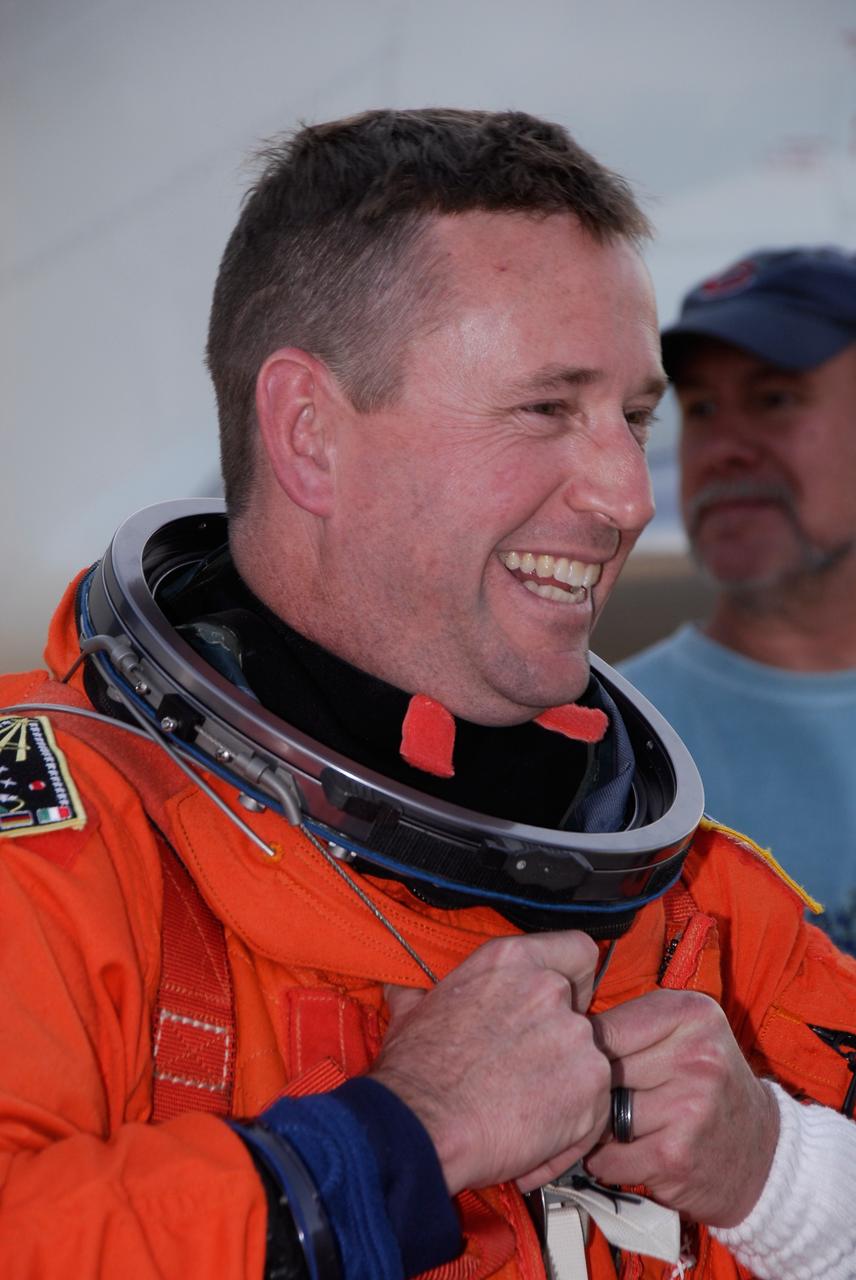
CAPE CANAVERAL, Fla. -- Back at the NASA Kennedy Space Center Shuttle Landing Facility, STS-124 Pilot Ken Ham is happy with the successful space shuttle landing practice aboard NASA's Shuttle Training Aircraft, or STA. Building. Kelly and Ham will be practicing space shuttle landings. The STA is a Grumman American Aviation-built Gulf Stream II jet that was modified to simulate an orbiter's cockpit, motion and visual cues, and handling qualities. In flight, the STA duplicates the orbiter's atmospheric descent trajectory from approximately 35,000 feet altitude to landing on a runway. Because the orbiter is unpowered during re-entry and landing, its high-speed glide must be perfectly executed the first time. The crew for space shuttle Discovery's STS-124 mission is at Kennedy for a full launch dress rehearsal, known as the terminal countdown demonstration test, or TCDT. Providing astronauts and ground crews with an opportunity to participate in various simulated countdown activities, TCDT includes equipment familiarization and emergency training. Discovery's launch is targeted for May 31. Photo credit: NASA/Kim Shiflett
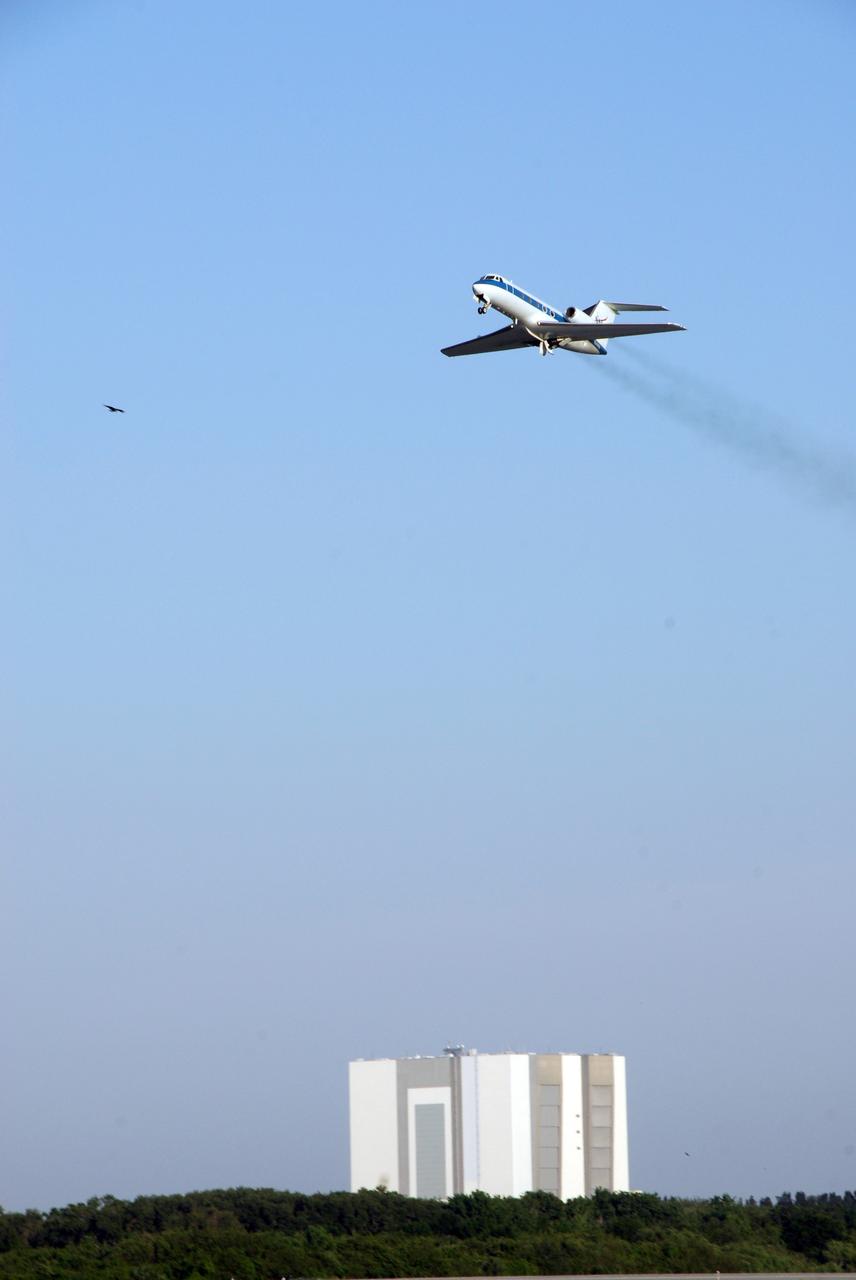
CAPE CANAVERAL, Fla. -- NASA's Shuttle Training Aircraft, or STA, soars into the sky from the NASA Kennedy Space Center Shuttle Landing Facility with STS-124 Commander Mark Kelly or Pilot Ken Ham at the controls. Below is the Vehicle Assembly Building. Kelly and Ham are practicing space shuttle landings. The STA is a Grumman American Aviation-built Gulf Stream II jet that was modified to simulate an orbiter's cockpit, motion and visual cues, and handling qualities. In flight, the STA duplicates the orbiter's atmospheric descent trajectory from approximately 35,000 feet altitude to landing on a runway. Because the orbiter is unpowered during re-entry and landing, its high-speed glide must be perfectly executed the first time. The crew for space shuttle Discovery's STS-124 mission is at Kennedy for a full launch dress rehearsal, known as the terminal countdown demonstration test, or TCDT. Providing astronauts and ground crews with an opportunity to participate in various simulated countdown activities, TCDT includes equipment familiarization and emergency training. Discovery's launch is targeted for May 31. Photo credit: NASA/Kim Shiflett
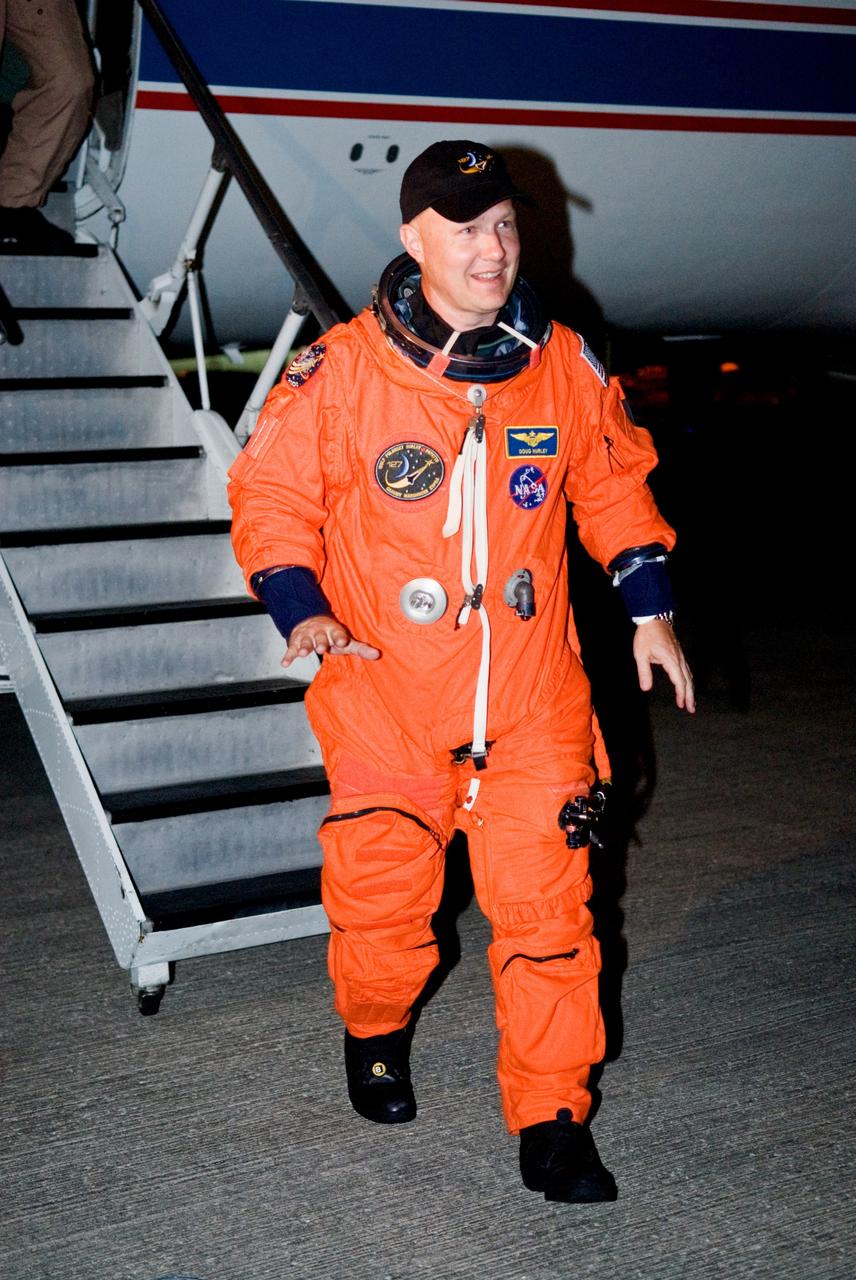
CAPE CANAVERAL, Fla. – On the Shuttle Landing Facility at NASA's Kennedy Space Center in Florida, STS-127 Pilot Doug Hurley exits the Shuttle Training Aircraft. He and Commander Mark Polansky have been practicing shuttle landings in preparation for launch of space shuttle Endeavour on the STS-127 mission, targeted for June 13. The STA is a Grumman American Aviation-built Gulf Stream II jet that was modified to simulate a shuttle’s cockpit, motion and visual cues, and handling qualities. The crew is at Kennedy for a launch dress rehearsal called the terminal countdown demonstration test, or TCDT, which includes emergency egress training and equipment familiarization. The STS-127 mission is the final of three flights dedicated to the assembly of the Japanese Kibo laboratory complex on the International Space Station. It is the 127th shuttle flight and the 29th in the assembly of the space station. Photo credit: NASA/Kim Shiflett
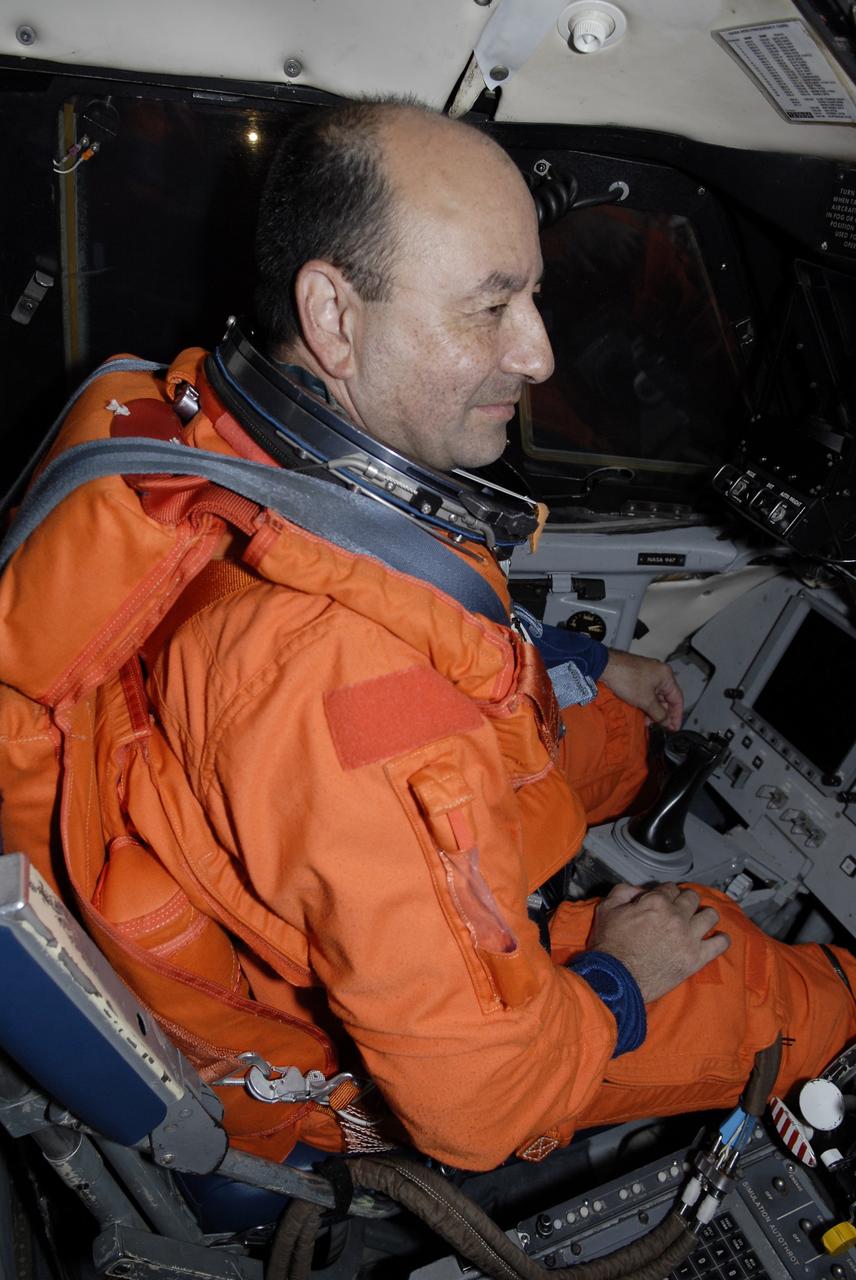
CAPE CANAVERAL, Fla. – On the Shuttle Landing Facility at NASA's Kennedy Space Center in Florida, STS-127 Commander Mark Polansky is wearing his complete launch-and-entry suit in the cockpit of the Shuttle Training Aircraft. He is preparing to practice shuttle landings in preparation for launch of space shuttle Endeavour on the STS-127 mission, targeted for June 13. The STA is a Grumman American Aviation-built Gulf Stream II jet that was modified to simulate a shuttle’s cockpit, motion and visual cues, and handling qualities. The crew is at Kennedy for a launch dress rehearsal called the terminal countdown demonstration test, or TCDT, which includes emergency egress training and equipment familiarization. The STS-127 mission is the final of three flights dedicated to the assembly of the Japanese Kibo laboratory complex on the International Space Station. It is the 127th shuttle flight and the 29th in the assembly of the space station. Photo credit: NASA/Kim Shiflett
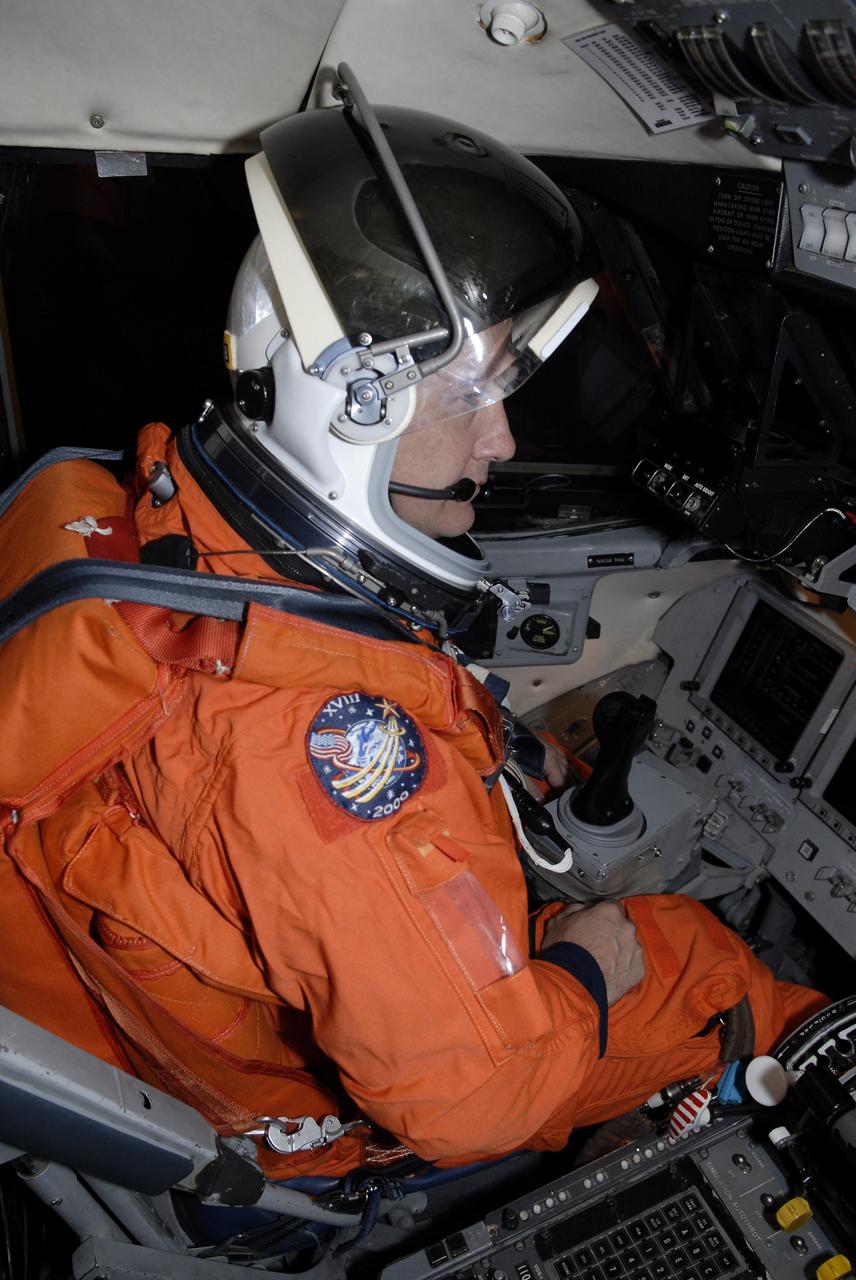
CAPE CANAVERAL, Fla. – On the Shuttle Landing Facility at NASA's Kennedy Space Center in Florida, STS-127 Pilot Doug Hurley is wearing his complete launch-and-entry suit in the cockpit of the Shuttle Training Aircraft. He is preparing to practice shuttle landings in preparation for launch of space shuttle Endeavour on the STS-127 mission, targeted for June 13. The STA is a Grumman American Aviation-built Gulf Stream II jet that was modified to simulate a shuttle’s cockpit, motion and visual cues, and handling qualities. The crew is at Kennedy for a launch dress rehearsal called the terminal countdown demonstration test, or TCDT, which includes emergency egress training and equipment familiarization. The STS-127 mission is the final of three flights dedicated to the assembly of the Japanese Kibo laboratory complex on the International Space Station. It is the 127th shuttle flight and the 29th in the assembly of the space station. Photo credit: NASA/Kim Shiflett
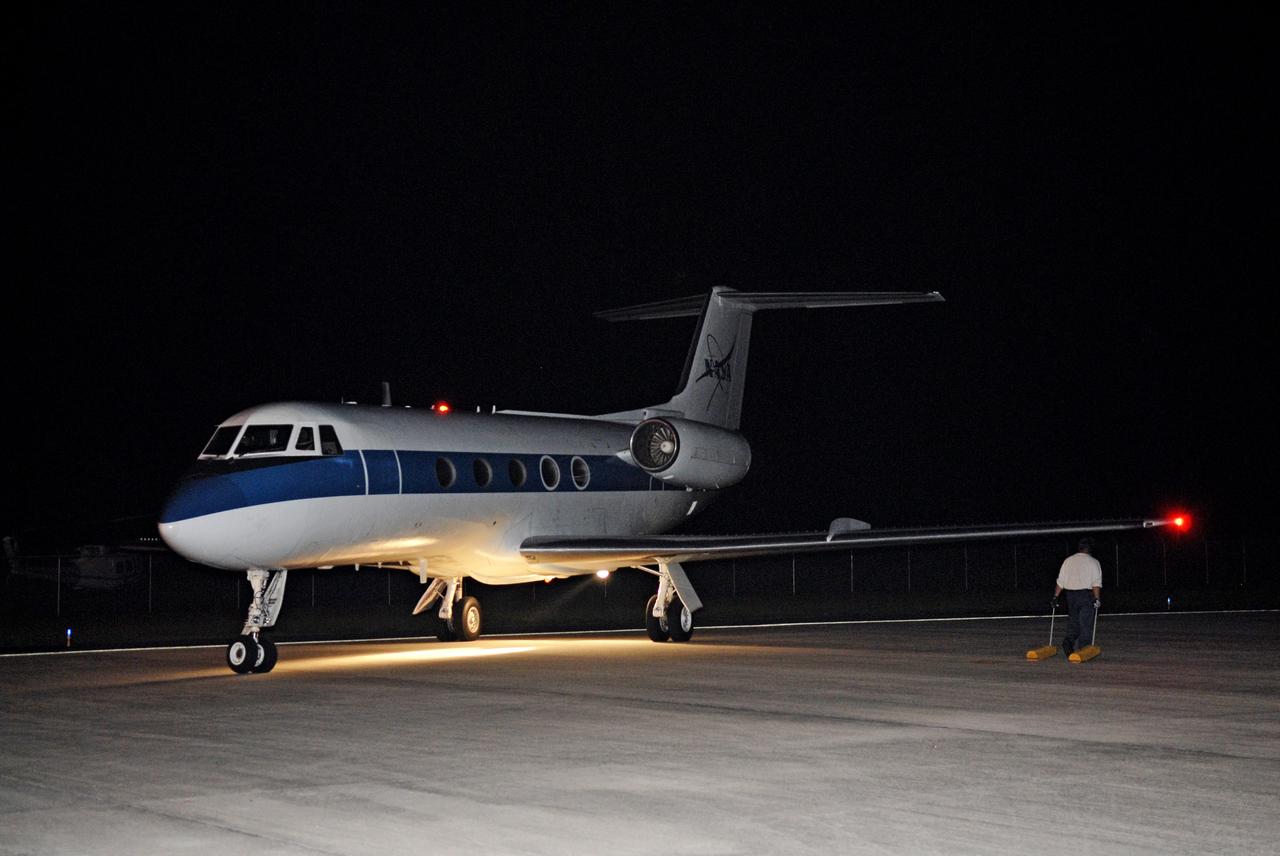
CAPE CANAVERAL, Fla. – A Shuttle Training Aircraft returns to the Shuttle Landing Facility at NASA's Kennedy Space Center in Florida. STS-127 Commander Mark Polansky and Pilot Doug Hurley have been practicing shuttle landings in preparation for launch of space shuttle Endeavour on the STS-127 mission, targeted for June 13. The STA is a Grumman American Aviation-built Gulf Stream II jet that was modified to simulate a shuttle’s cockpit, motion and visual cues, and handling qualities. The crew is at Kennedy for a launch dress rehearsal called the terminal countdown demonstration test, or TCDT, which includes emergency egress training and equipment familiarization. The STS-127 mission is the final of three flights dedicated to the assembly of the Japanese Kibo laboratory complex on the International Space Station. It is the 127th shuttle flight and the 29th in the assembly of the space station. Photo credit: NASA/Kim Shiflett
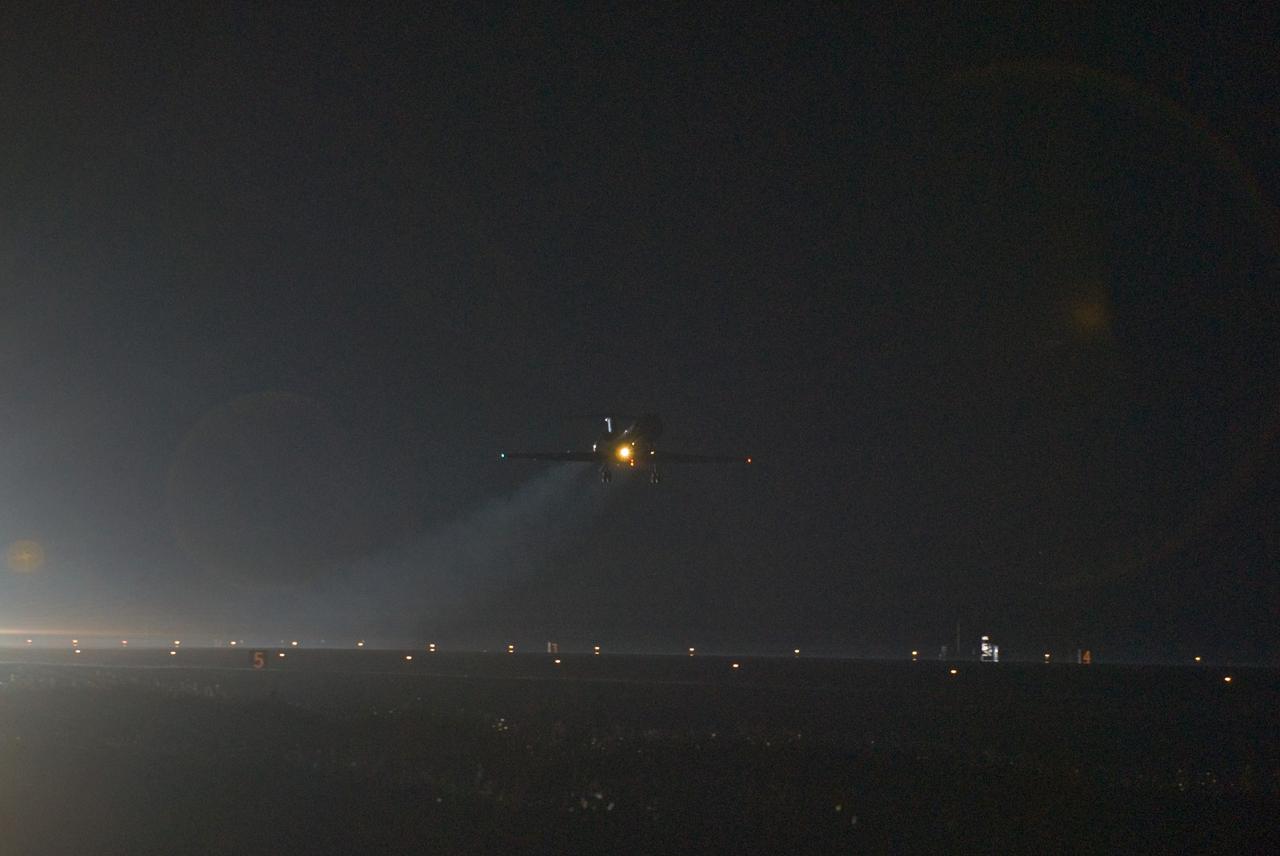
CAPE CANAVERAL, Fla. – From the Shuttle Landing Facility at NASA's Kennedy Space Center in Florida, the Shuttle Training Aircraft takes off with STS-127 Commander Mark Polansky or Pilot Doug Hurley in the cockpit. They are practicing shuttle landings in preparation for launch of space shuttle Endeavour on the STS-127 mission, targeted for June 13. The STA is a Grumman American Aviation-built Gulf Stream II jet that was modified to simulate a shuttle’s cockpit, motion and visual cues, and handling qualities. The crew is at Kennedy for a launch dress rehearsal called the terminal countdown demonstration test, or TCDT, which includes emergency egress training and equipment familiarization. The STS-127 mission is the final of three flights dedicated to the assembly of the Japanese Kibo laboratory complex on the International Space Station. It is the 127th shuttle flight and the 29th in the assembly of the space station. Photo credit: NASA/Kim Shiflett
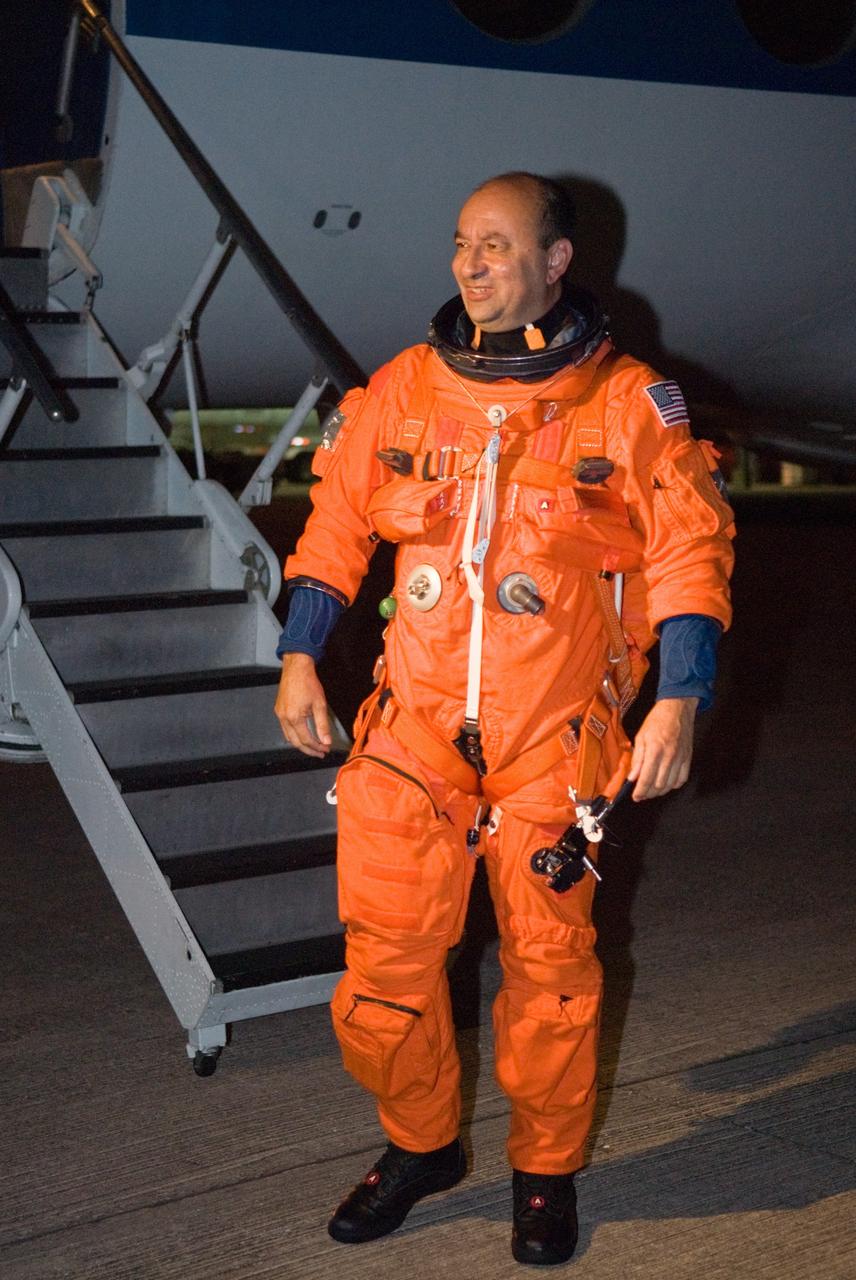
CAPE CANAVERAL, Fla. – On the Shuttle Landing Facility at NASA's Kennedy Space Center in Florida, STS-127 Commander Mark Polansky exits the Shuttle Training Aircraft. He and Pilot Doug Hurley have been practicing shuttle landings in preparation for launch of space shuttle Endeavour on the STS-127 mission, targeted for June 13. The STA is a Grumman American Aviation-built Gulf Stream II jet that was modified to simulate a shuttle’s cockpit, motion and visual cues, and handling qualities. The crew is at Kennedy for a launch dress rehearsal called the terminal countdown demonstration test, or TCDT, which includes emergency egress training and equipment familiarization. The STS-127 mission is the final of three flights dedicated to the assembly of the Japanese Kibo laboratory complex on the International Space Station. It is the 127th shuttle flight and the 29th in the assembly of the space station. Photo credit: NASA/Kim Shiflett
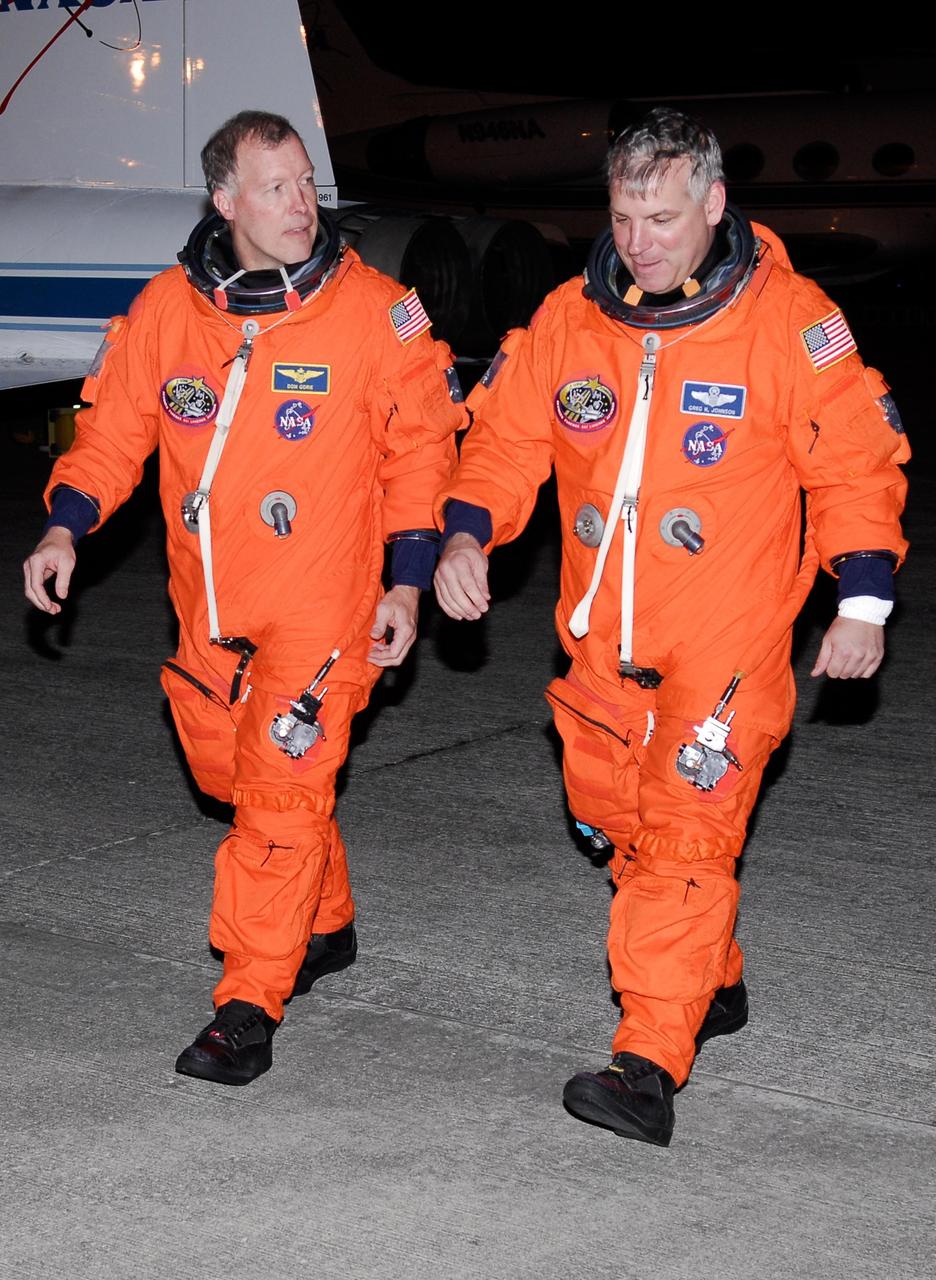
KENNEDY SPACE CENTER, FLA. -- At NASA Kennedy Space Center's Shuttle Landing Facility, STS-123 Commander Dominic Gorie , left, and Pilot Gregory H. Johnson head for crew quarters following a practice session of space shuttle landings aboard NASA's Shuttle Training Aircraft, or STAs. The STA is a Grumman American Aviation-built Gulf Stream II jet that was modified to simulate an orbiter's cockpit, motion and visual cues, and handling qualities. In flight, the STA duplicates the orbiter's atmospheric descent trajectory from approximately 35,000 feet altitude to landing on a runway. Because the orbiter is unpowered during re-entry and landing, its high-speed glide must be perfectly executed the first time. The crew for space shuttle Endeavour's STS-123 mission is at Kennedy for a full launch dress rehearsal, known as the terminal countdown demonstration test or TCDT. The terminal countdown demonstration test provides astronauts and ground crews with an opportunity to participate in various simulated countdown activities, including equipment familiarization and emergency training. Endeavour is targeted to launch March 11 at 2:28 a.m. EDT on a 16-day mission to the International Space Station. On the mission, Endeavour and its crew will deliver the first section of the Japan Aerospace Exploration Agency's Kibo laboratory and the Canadian Space Agency's two-armed robotic system, Dextre. Photo credit: NASA/Kim Shiflett
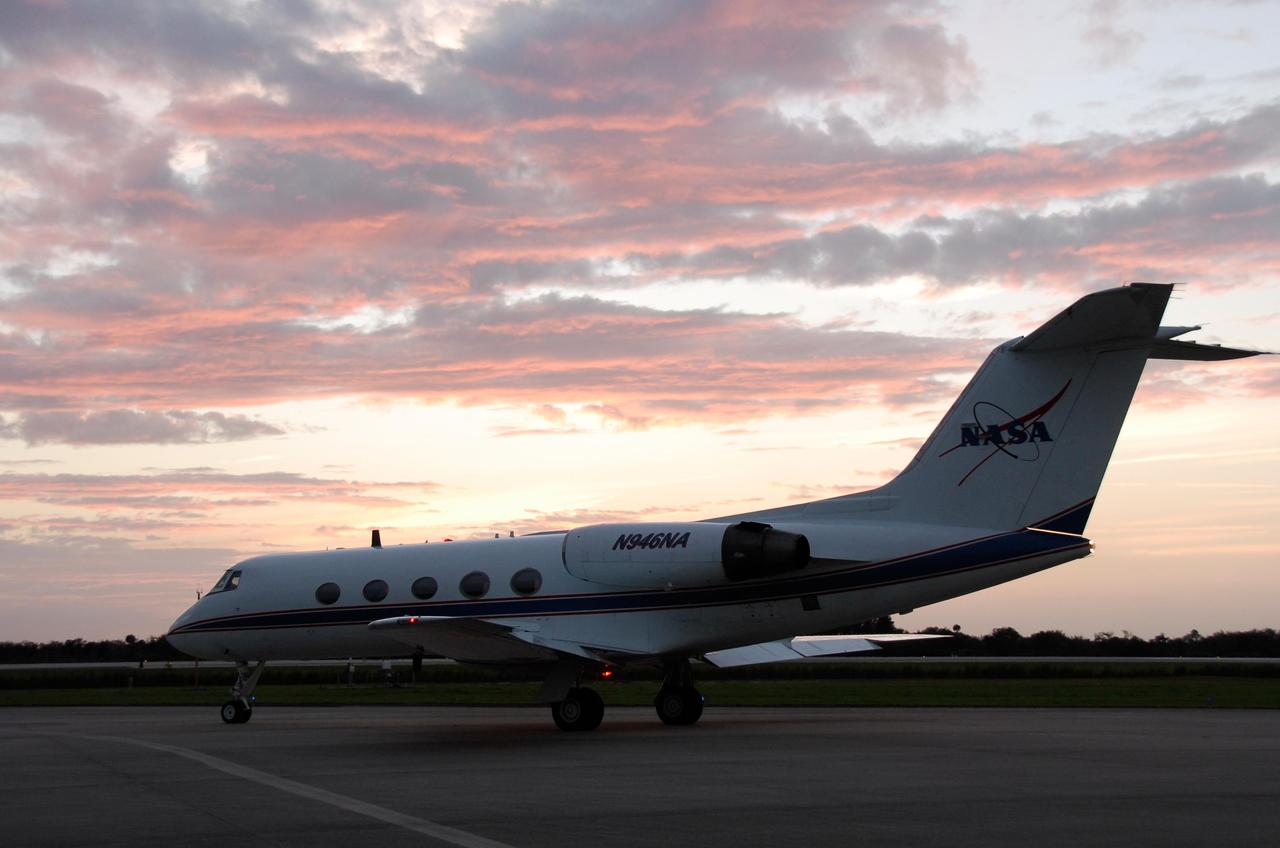
KENNEDY SPACE CENTER, FLA. -- At NASA Kennedy Space Center's Shuttle Landing Facility, a Shuttle Training Aircraft, or STA, is preparing to take off for practice space shuttle landings. The STA is a Grumman American Aviation-built Gulf Stream II jet that was modified to simulate an orbiter's cockpit, motion and visual cues, and handling qualities. In flight, the STA duplicates the orbiter's atmospheric descent trajectory from approximately 35,000 feet altitude to landing on a runway. Because the orbiter is unpowered during re-entry and landing, its high-speed glide must be perfectly executed the first time. The crew for space shuttle Endeavour's STS-123 mission is at Kennedy for a full launch dress rehearsal, known as the terminal countdown demonstration test or TCDT. The terminal countdown demonstration test provides astronauts and ground crews with an opportunity to participate in various simulated countdown activities, including equipment familiarization and emergency training. Endeavour is targeted to launch March 11 at 2:28 a.m. EDT on a 16-day mission to the International Space Station. On the mission, Endeavour and its crew will deliver the first section of the Japan Aerospace Exploration Agency's Kibo laboratory and the Canadian Space Agency's two-armed robotic system, Dextre. Photo credit: NASA/Kim Shiflett
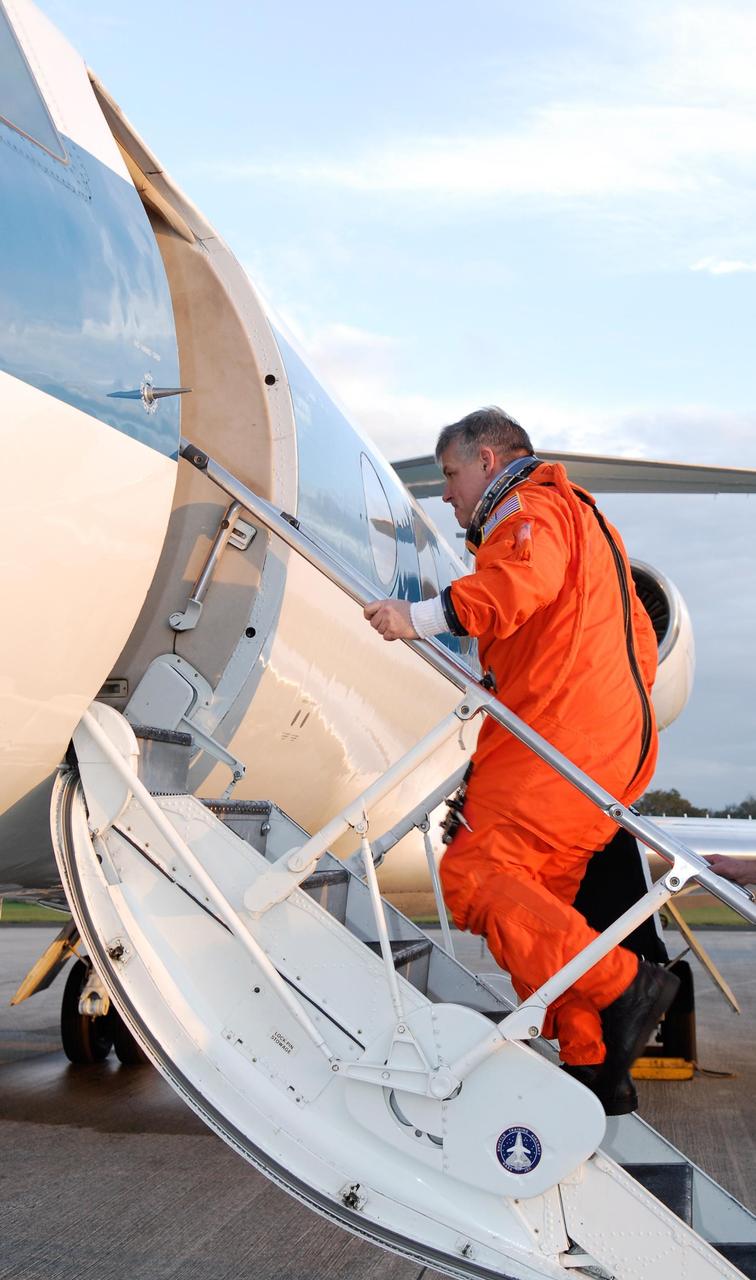
KENNEDY SPACE CENTER, FLA. -- At NASA Kennedy Space Center's Shuttle Landing Facility, STS-123 Pilot Gregory H. Johnson boards a Shuttle Training Aircraft, or STA, to practice space shuttle landings. The STA is a Grumman American Aviation-built Gulf Stream II jet that was modified to simulate an orbiter's cockpit, motion and visual cues, and handling qualities. In flight, the STA duplicates the orbiter's atmospheric descent trajectory from approximately 35,000 feet altitude to landing on a runway. Because the orbiter is unpowered during re-entry and landing, its high-speed glide must be perfectly executed the first time. The crew for space shuttle Endeavour's STS-123 mission is at Kennedy for a full launch dress rehearsal, known as the terminal countdown demonstration test or TCDT. The terminal countdown demonstration test provides astronauts and ground crews with an opportunity to participate in various simulated countdown activities, including equipment familiarization and emergency training. Endeavour is targeted to launch March 11 at 2:28 a.m. EDT on a 16-day mission to the International Space Station. On the mission, Endeavour and its crew will deliver the first section of the Japan Aerospace Exploration Agency's Kibo laboratory and the Canadian Space Agency's two-armed robotic system, Dextre. Photo credit: NASA/Kim Shiflett
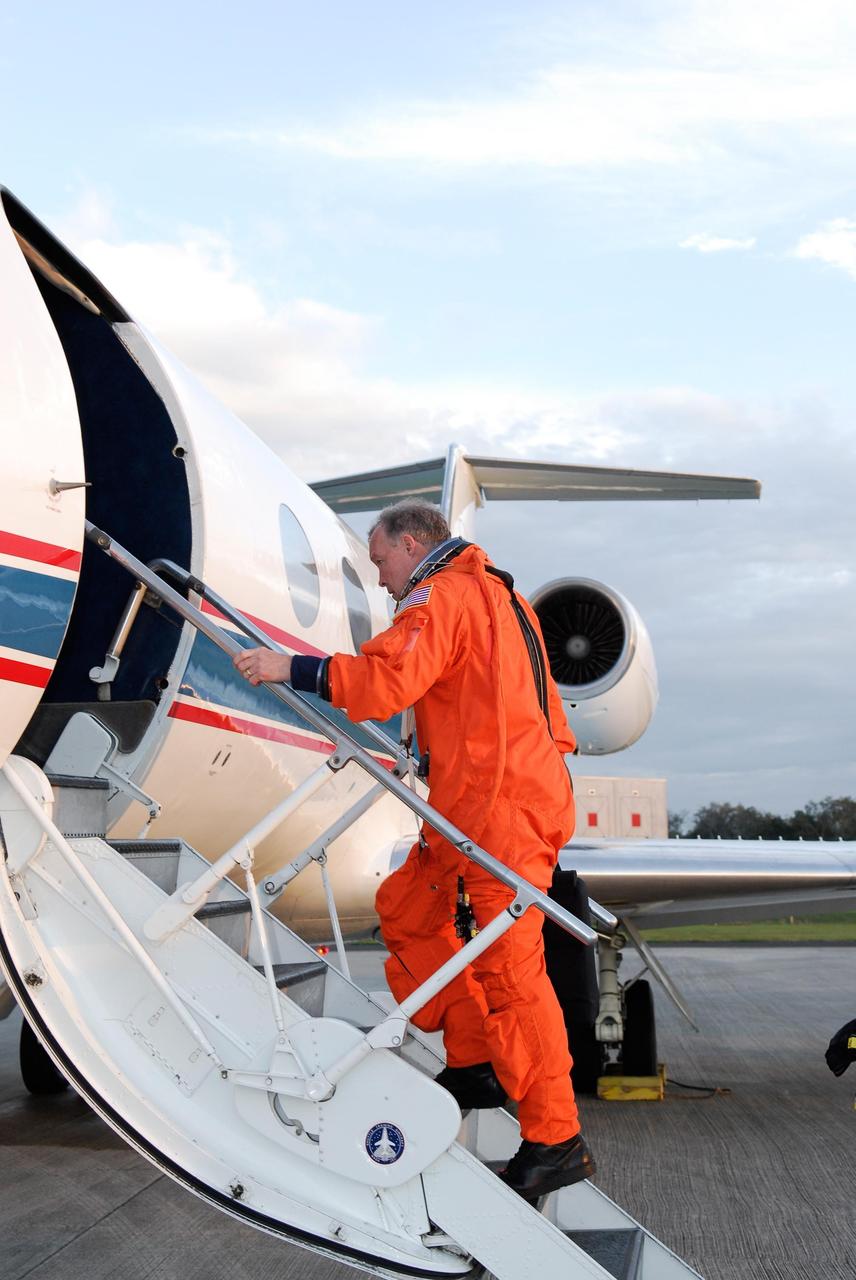
KENNEDY SPACE CENTER, FLA. -- At NASA Kennedy Space Center's Shuttle Landing Facility, STS-123 Commander Dominic Gorie boards a Shuttle Training Aircraft, or STA, to practice space shuttle landings. The STA is a Grumman American Aviation-built Gulf Stream II jet that was modified to simulate an orbiter's cockpit, motion and visual cues, and handling qualities. In flight, the STA duplicates the orbiter's atmospheric descent trajectory from approximately 35,000 feet altitude to landing on a runway. Because the orbiter is unpowered during re-entry and landing, its high-speed glide must be perfectly executed the first time. The crew for space shuttle Endeavour's STS-123 mission is at Kennedy for a full launch dress rehearsal, known as the terminal countdown demonstration test or TCDT. The terminal countdown demonstration test provides astronauts and ground crews with an opportunity to participate in various simulated countdown activities, including equipment familiarization and emergency training. Endeavour is targeted to launch March 11 at 2:28 a.m. EDT on a 16-day mission to the International Space Station. On the mission, Endeavour and its crew will deliver the first section of the Japan Aerospace Exploration Agency's Kibo laboratory and the Canadian Space Agency's two-armed robotic system, Dextre. Photo credit: NASA/Kim Shiflett
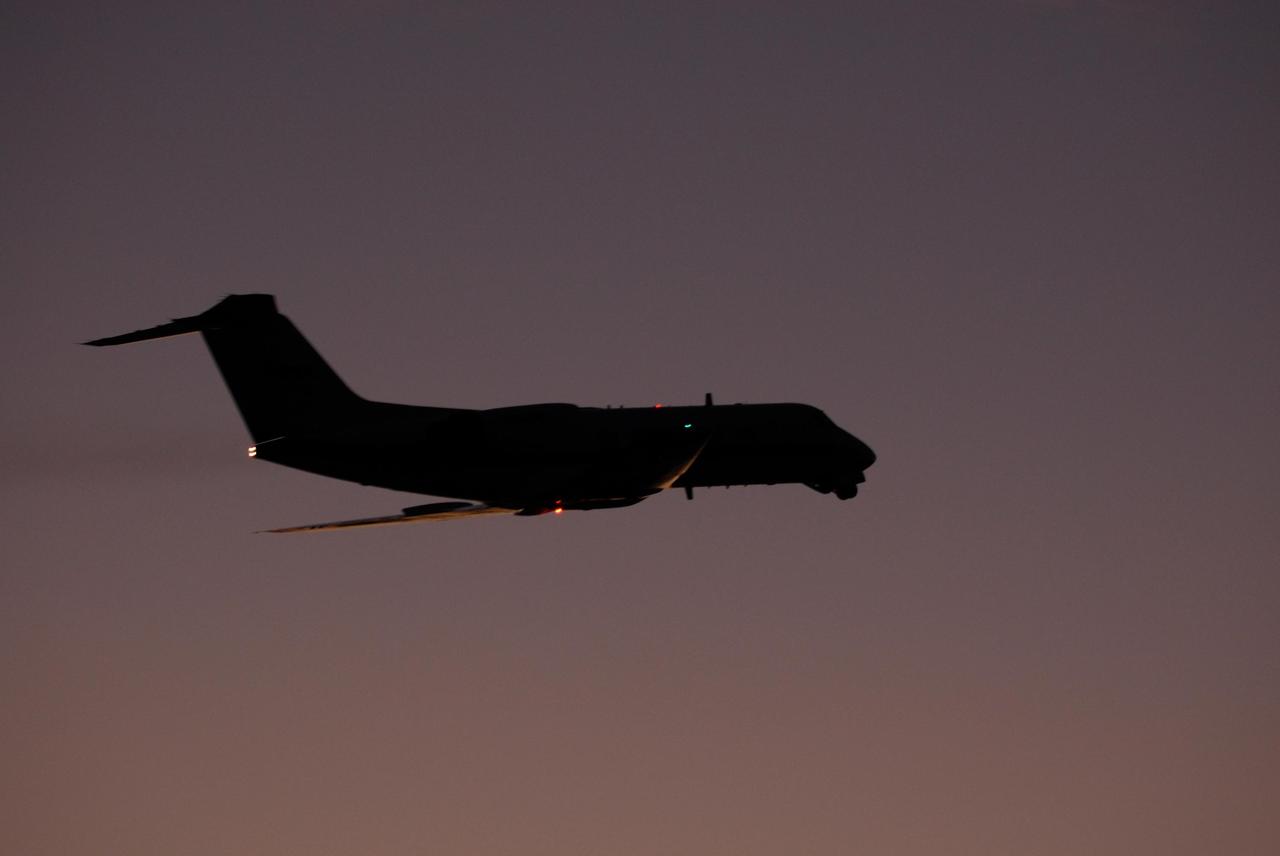
KENNEDY SPACE CENTER, FLA. -- At NASA Kennedy Space Center's Shuttle Landing Facility, a Shuttle Training Aircraft, or STA, takes flight for practice space shuttle landings. The STA is a Grumman American Aviation-built Gulf Stream II jet that was modified to simulate an orbiter's cockpit, motion and visual cues, and handling qualities. In flight, the STA duplicates the orbiter's atmospheric descent trajectory from approximately 35,000 feet altitude to landing on a runway. Because the orbiter is unpowered during re-entry and landing, its high-speed glide must be perfectly executed the first time. The crew for space shuttle Endeavour's STS-123 mission is at Kennedy for a full launch dress rehearsal, known as the terminal countdown demonstration test or TCDT. The terminal countdown demonstration test provides astronauts and ground crews with an opportunity to participate in various simulated countdown activities, including equipment familiarization and emergency training. Endeavour is targeted to launch March 11 at 2:28 a.m. EDT on a 16-day mission to the International Space Station. On the mission, Endeavour and its crew will deliver the first section of the Japan Aerospace Exploration Agency's Kibo laboratory and the Canadian Space Agency's two-armed robotic system, Dextre. Photo credit: NASA/Kim Shiflett
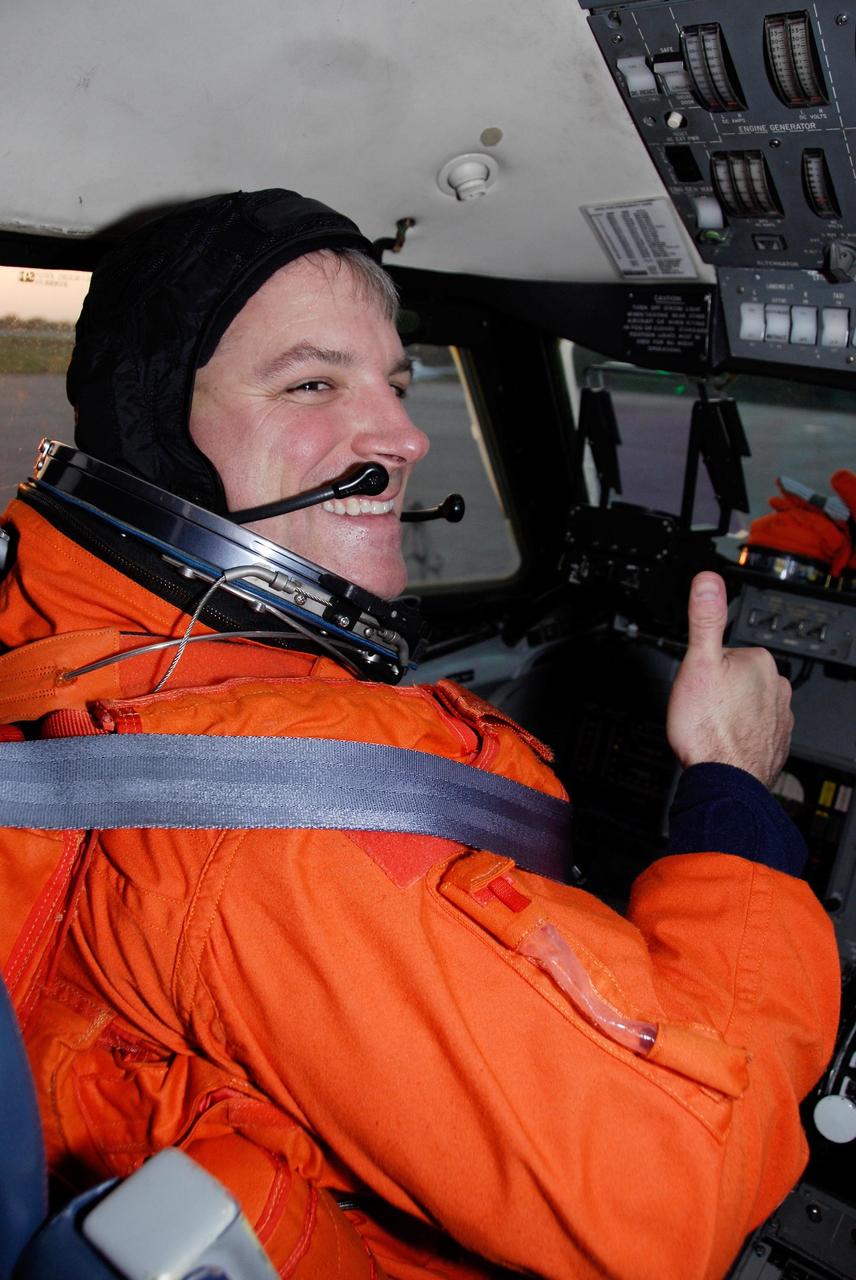
KENNEDY SPACE CENTER, FLA. -- At NASA Kennedy Space Center's Shuttle Landing Facility, STS-123 Pilot Gregory H. Johnson prepares for takeoff in a Shuttle Training Aircraft, or STA, to practice space shuttle landings. The STA is a Grumman American Aviation-built Gulf Stream II jet that was modified to simulate an orbiter's cockpit, motion and visual cues, and handling qualities. In flight, the STA duplicates the orbiter's atmospheric descent trajectory from approximately 35,000 feet altitude to landing on a runway. Because the orbiter is unpowered during re-entry and landing, its high-speed glide must be perfectly executed the first time. The crew for space shuttle Endeavour's STS-123 mission is at Kennedy for a full launch dress rehearsal, known as the terminal countdown demonstration test or TCDT. The terminal countdown demonstration test provides astronauts and ground crews with an opportunity to participate in various simulated countdown activities, including equipment familiarization and emergency training. Endeavour is targeted to launch March 11 at 2:28 a.m. EDT on a 16-day mission to the International Space Station. On the mission, Endeavour and its crew will deliver the first section of the Japan Aerospace Exploration Agency's Kibo laboratory and the Canadian Space Agency's two-armed robotic system, Dextre. Photo credit: NASA/Kim Shiflett
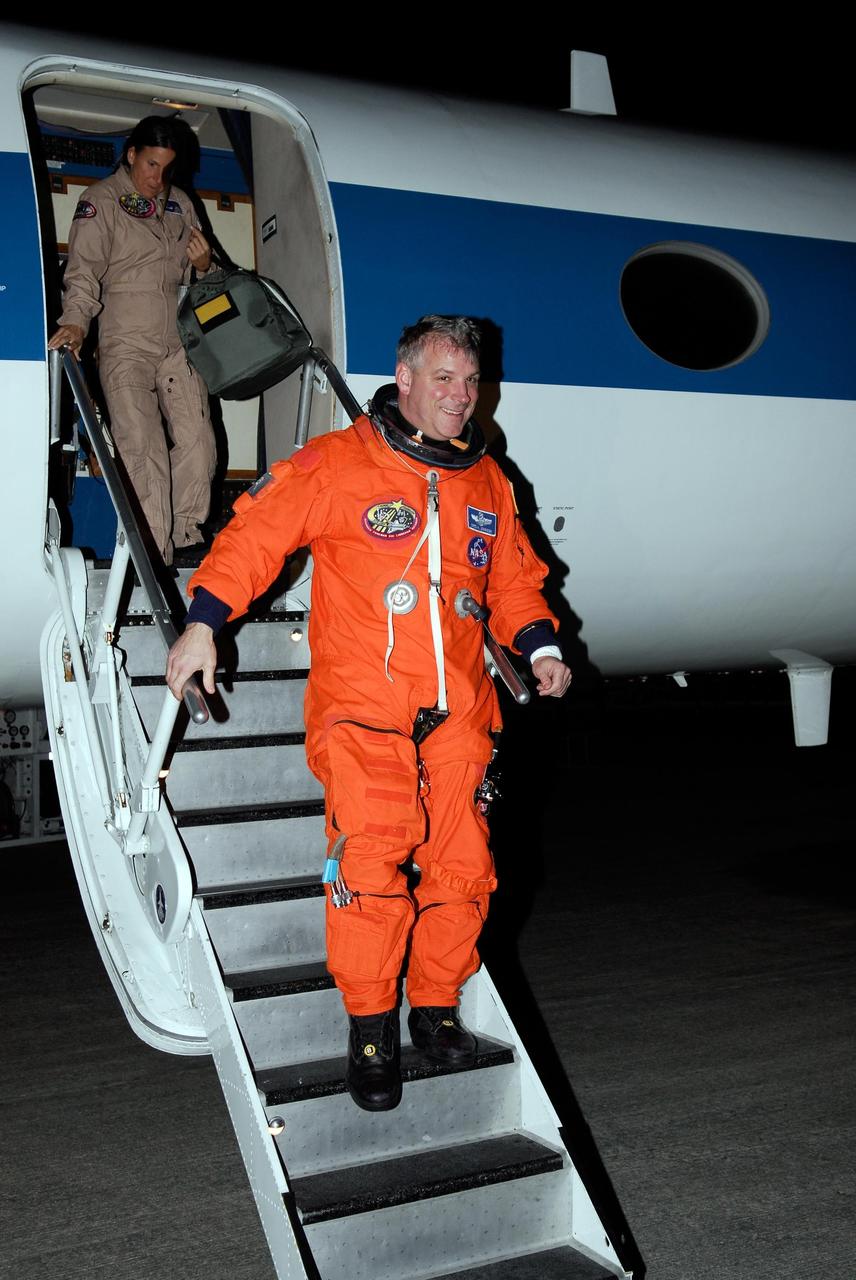
KENNEDY SPACE CENTER, FLA. -- At NASA Kennedy Space Center's Shuttle Landing Facility, STS-123 Pilot Gregory H. Johnson disembarks from a Shuttle Training Aircraft, or STA, following a practice session of space shuttle landings. The STA is a Grumman American Aviation-built Gulf Stream II jet that was modified to simulate an orbiter's cockpit, motion and visual cues, and handling qualities. In flight, the STA duplicates the orbiter's atmospheric descent trajectory from approximately 35,000 feet altitude to landing on a runway. Because the orbiter is unpowered during re-entry and landing, its high-speed glide must be perfectly executed the first time. The crew for space shuttle Endeavour's STS-123 mission is at Kennedy for a full launch dress rehearsal, known as the terminal countdown demonstration test or TCDT. The terminal countdown demonstration test provides astronauts and ground crews with an opportunity to participate in various simulated countdown activities, including equipment familiarization and emergency training. Endeavour is targeted to launch March 11 at 2:28 a.m. EDT on a 16-day mission to the International Space Station. On the mission, Endeavour and its crew will deliver the first section of the Japan Aerospace Exploration Agency's Kibo laboratory and the Canadian Space Agency's two-armed robotic system, Dextre. Photo credit: NASA/Kim Shiflett
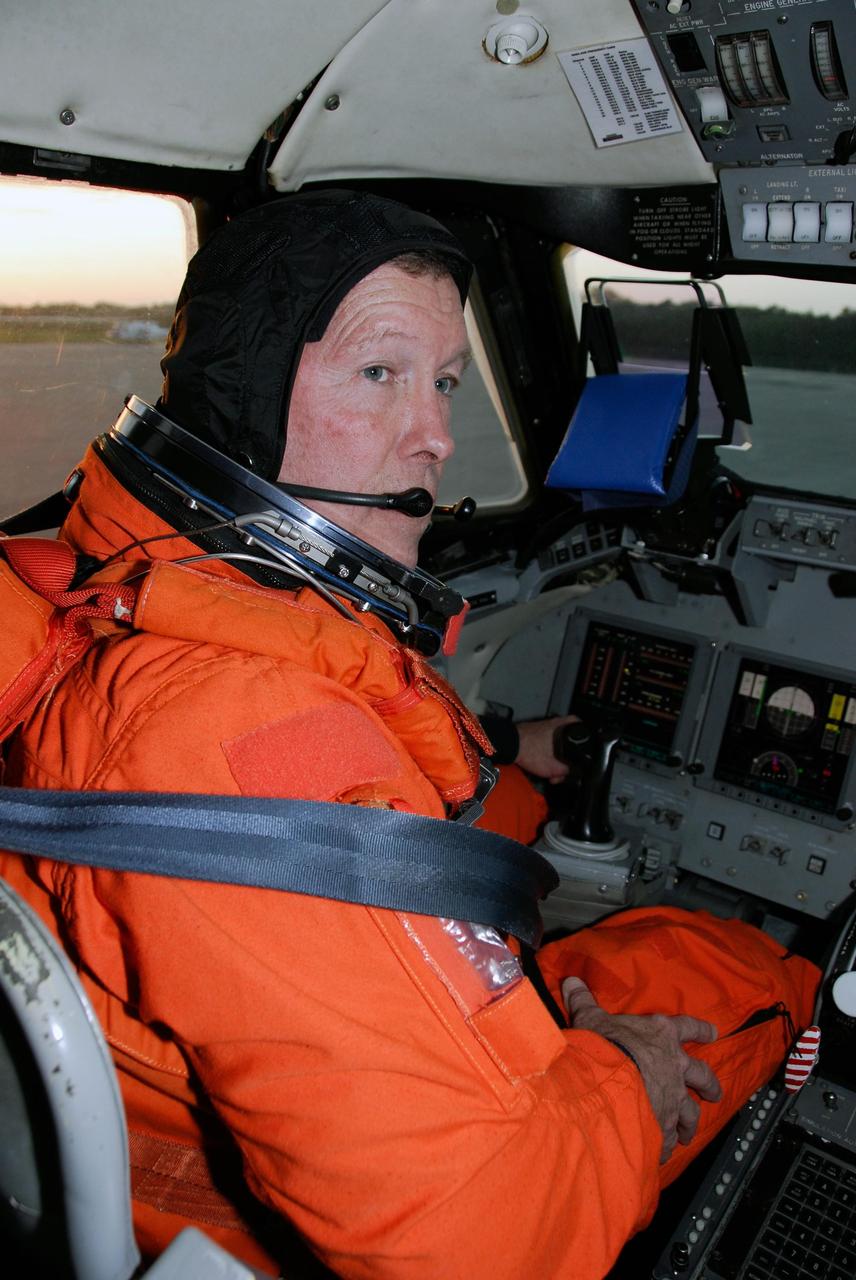
KENNEDY SPACE CENTER, FLA. -- At NASA Kennedy Space Center's Shuttle Landing Facility, STS-123 Commander Dominic Gorie prepares for takeoff in a Shuttle Training Aircraft, or STA, to practice space shuttle landings. The STA is a Grumman American Aviation-built Gulf Stream II jet that was modified to simulate an orbiter's cockpit, motion and visual cues, and handling qualities. In flight, the STA duplicates the orbiter's atmospheric descent trajectory from approximately 35,000 feet altitude to landing on a runway. Because the orbiter is unpowered during re-entry and landing, its high-speed glide must be perfectly executed the first time. The crew for space shuttle Endeavour's STS-123 mission is at Kennedy for a full launch dress rehearsal, known as the terminal countdown demonstration test or TCDT. The terminal countdown demonstration test provides astronauts and ground crews with an opportunity to participate in various simulated countdown activities, including equipment familiarization and emergency training. Endeavour is targeted to launch March 11 at 2:28 a.m. EDT on a 16-day mission to the International Space Station. On the mission, Endeavour and its crew will deliver the first section of the Japan Aerospace Exploration Agency's Kibo laboratory and the Canadian Space Agency's two-armed robotic system, Dextre. Photo credit: NASA/Kim Shiflett
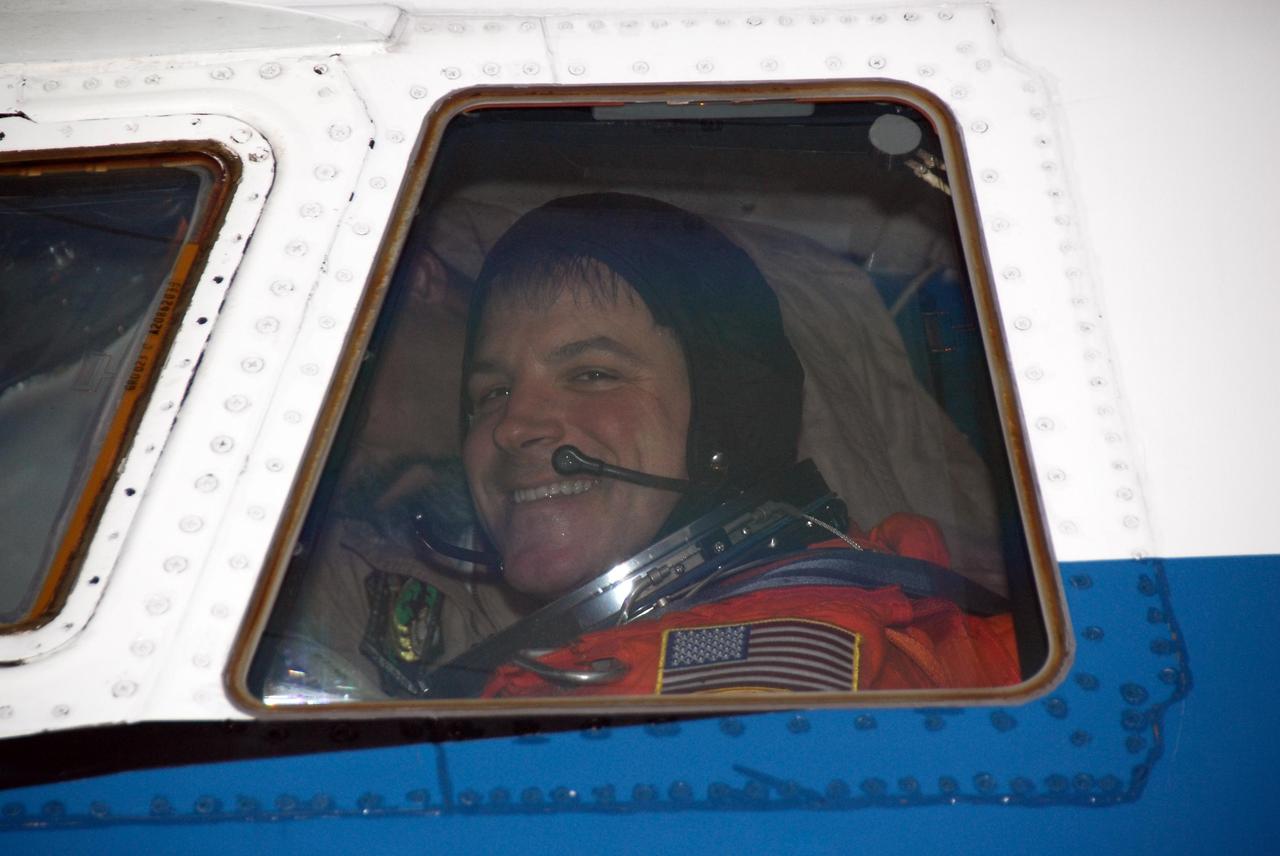
KENNEDY SPACE CENTER, FLA. -- At NASA Kennedy Space Center's Shuttle Landing Facility, STS-123 Pilot Gregory H. Johnson is seen through the window of a Shuttle Training Aircraft, or STA, as he prepares to practice space shuttle landings. The STA is a Grumman American Aviation-built Gulf Stream II jet that was modified to simulate an orbiter's cockpit, motion and visual cues, and handling qualities. In flight, the STA duplicates the orbiter's atmospheric descent trajectory from approximately 35,000 feet altitude to landing on a runway. Because the orbiter is unpowered during re-entry and landing, its high-speed glide must be perfectly executed the first time. The crew for space shuttle Endeavour's STS-123 mission is at Kennedy for a full launch dress rehearsal, known as the terminal countdown demonstration test or TCDT. The terminal countdown demonstration test provides astronauts and ground crews with an opportunity to participate in various simulated countdown activities, including equipment familiarization and emergency training. Endeavour is targeted to launch March 11 at 2:28 a.m. EDT on a 16-day mission to the International Space Station. On the mission, Endeavour and its crew will deliver the first section of the Japan Aerospace Exploration Agency's Kibo laboratory and the Canadian Space Agency's two-armed robotic system, Dextre. Photo credit: NASA/Kim Shiflett
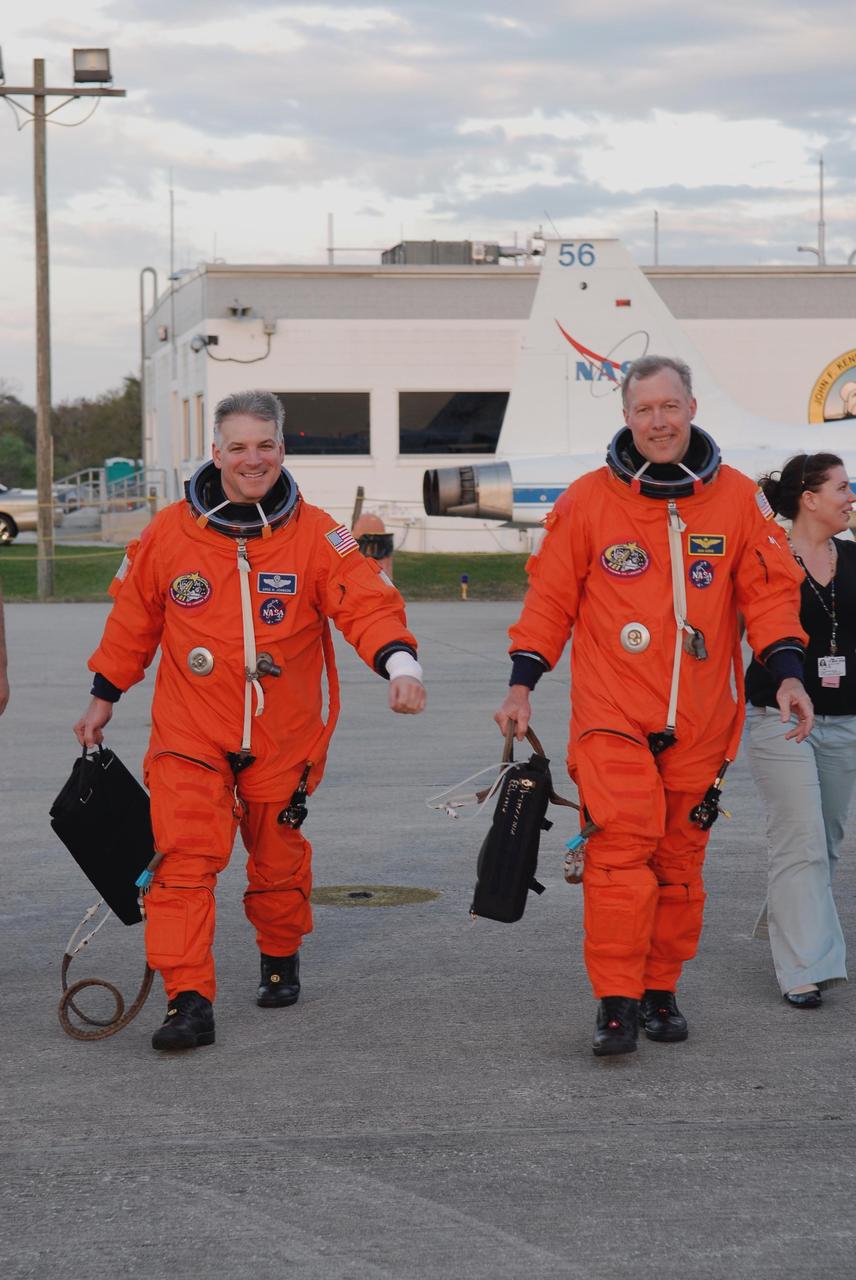
KENNEDY SPACE CENTER, FLA. -- At NASA Kennedy Space Center's Shuttle Landing Facility, STS-123 Pilot Gregory H. Johnson, left, and Commander Dominic Gorie prepare to practice space shuttle landings using NASA's Shuttle Training Aircraft, or STA. The STA is a Grumman American Aviation-built Gulf Stream II jet that was modified to simulate an orbiter's cockpit, motion and visual cues, and handling qualities. In flight, the STA duplicates the orbiter's atmospheric descent trajectory from approximately 35,000 feet altitude to landing on a runway. Because the orbiter is unpowered during re-entry and landing, its high-speed glide must be perfectly executed the first time. The crew for space shuttle Endeavour's STS-123 mission is at Kennedy for a full launch dress rehearsal, known as the terminal countdown demonstration test or TCDT. The terminal countdown demonstration test provides astronauts and ground crews with an opportunity to participate in various simulated countdown activities, including equipment familiarization and emergency training. Endeavour is targeted to launch March 11 at 2:28 a.m. EDT on a 16-day mission to the International Space Station. On the mission, Endeavour and its crew will deliver the first section of the Japan Aerospace Exploration Agency's Kibo laboratory and the Canadian Space Agency's two-armed robotic system, Dextre. Photo credit: NASA/Kim Shiflett
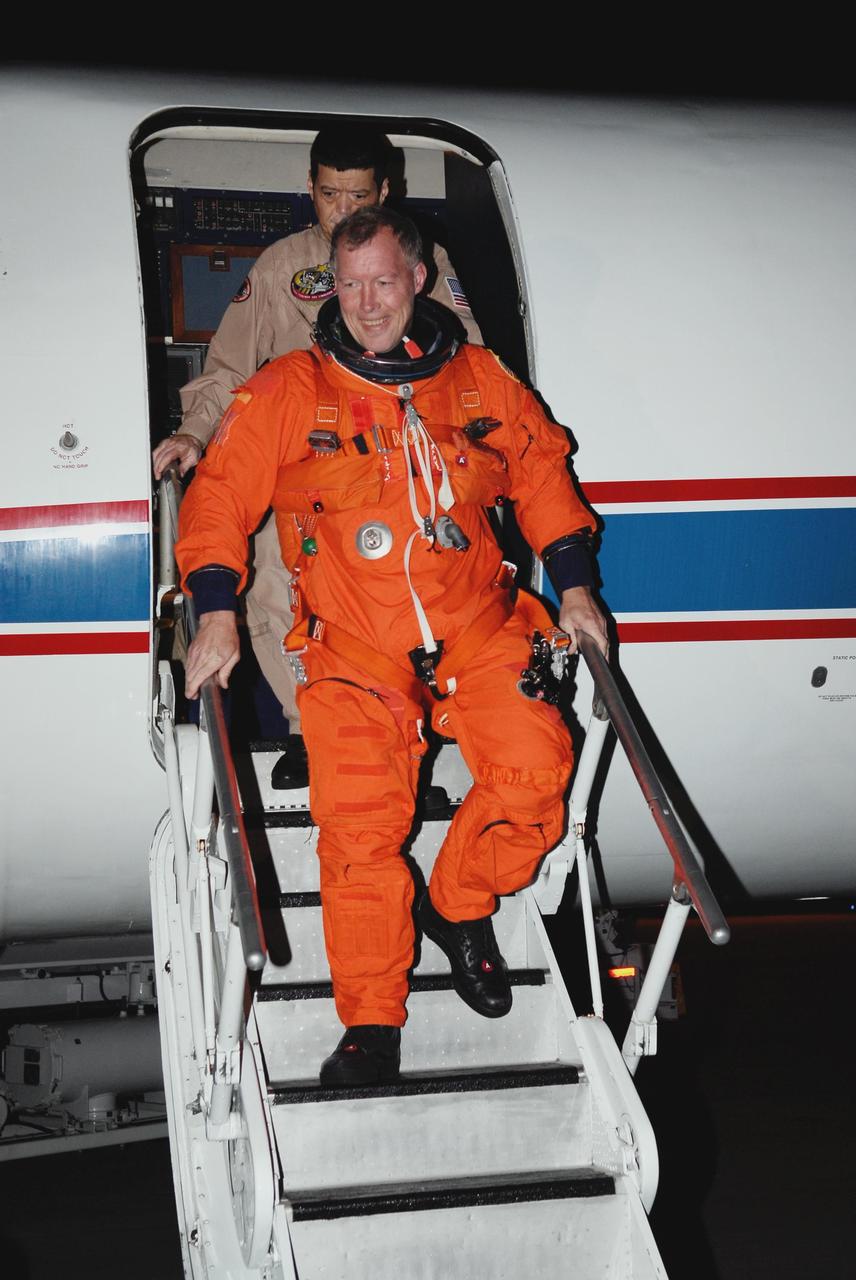
KENNEDY SPACE CENTER, FLA. -- At NASA Kennedy Space Center's Shuttle Landing Facility, STS-123 Commander Dominic Gorie disembarks from a Shuttle Training Aircraft, or STA, following a practice session of space shuttle landings. The STA is a Grumman American Aviation-built Gulf Stream II jet that was modified to simulate an orbiter's cockpit, motion and visual cues, and handling qualities. In flight, the STA duplicates the orbiter's atmospheric descent trajectory from approximately 35,000 feet altitude to landing on a runway. Because the orbiter is unpowered during re-entry and landing, its high-speed glide must be perfectly executed the first time. The crew for space shuttle Endeavour's STS-123 mission is at Kennedy for a full launch dress rehearsal, known as the terminal countdown demonstration test or TCDT. The terminal countdown demonstration test provides astronauts and ground crews with an opportunity to participate in various simulated countdown activities, including equipment familiarization and emergency training. Endeavour is targeted to launch March 11 at 2:28 a.m. EDT on a 16-day mission to the International Space Station. On the mission, Endeavour and its crew will deliver the first section of the Japan Aerospace Exploration Agency's Kibo laboratory and the Canadian Space Agency's two-armed robotic system, Dextre. Photo credit: NASA/Kim Shiflett