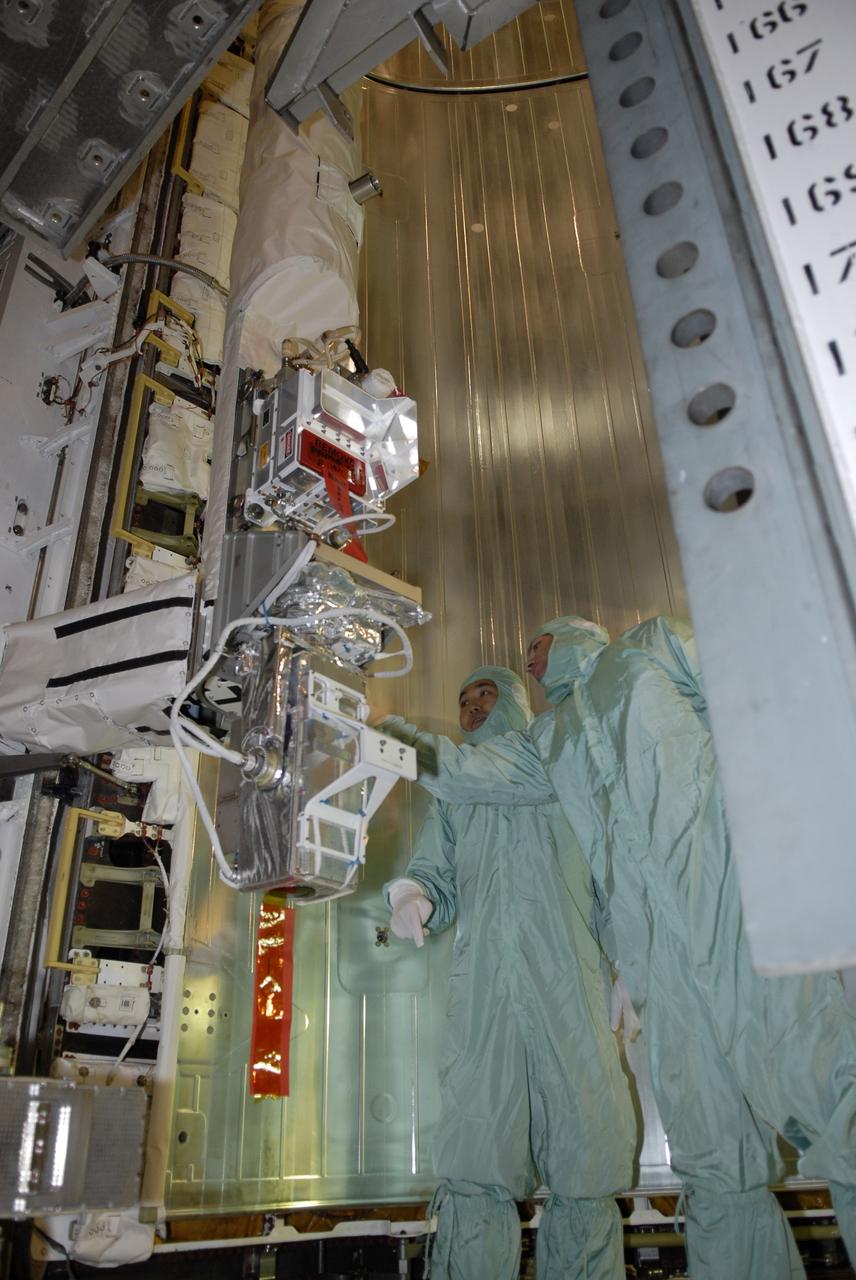
CAPE CANAVERAL, Fla. – On Launch Pad 39A at NASA's Kennedy Space Center in Florida, STS-119 crew members get a close look at the cargo installed in space shuttle Discovery's payload bay. On the left is Mission Specialist Koichi Wakata. The cargo consists of the integrated truss structure S6 and solar arrays. The astronauts are at Kennedy to prepare for launch through Terminal Countdown Demonstration Test activities. The TCDT includes equipment familiarization and a simulated launch countdown. Discovery is targeted to launch on the STS-119 mission Feb. 12. During Discovery's 14-day mission, the crew will install the S6 truss segment and solar arrays to the starboard side of the International Space Station, completing the station's truss, or backbone. Photo credit: NASA/Kim Shiflett
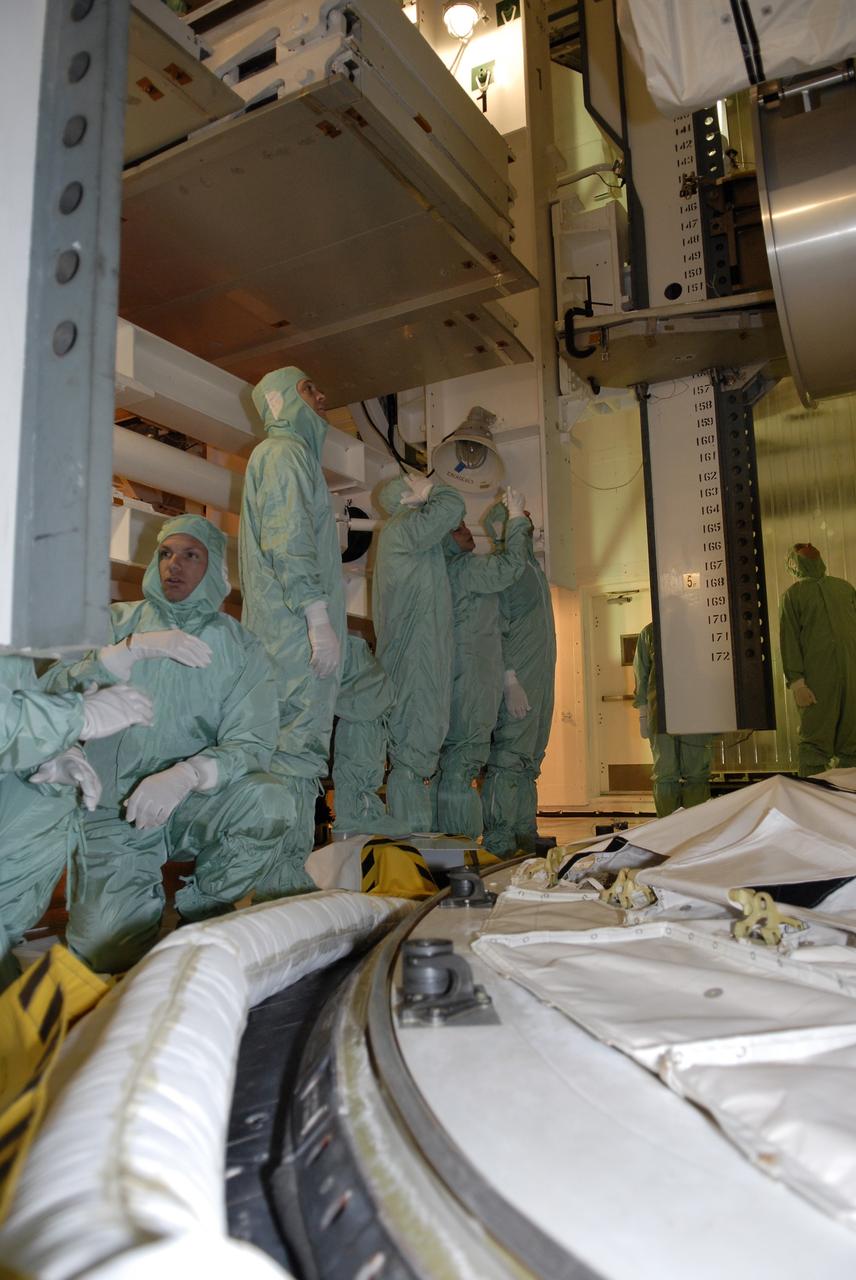
CAPE CANAVERAL, Fla. – On Launch Pad 39A at NASA's Kennedy Space Center in Florida, STS-119 crew members get a close look at the cargo installed in space shuttle Discovery's payload bay. The cargo consists of the integrated truss structure S6 and solar arrays. The astronauts are at Kennedy to prepare for launch through Terminal Countdown Demonstration Test activities. The TCDT includes equipment familiarization and a simulated launch countdown. Discovery is targeted to launch on the STS-119 mission Feb. 12. During Discovery's 14-day mission, the crew will install the S6 truss segment and solar arrays to the starboard side of the International Space Station, completing the station's truss, or backbone. Photo credit: NASA/Kim Shiflett
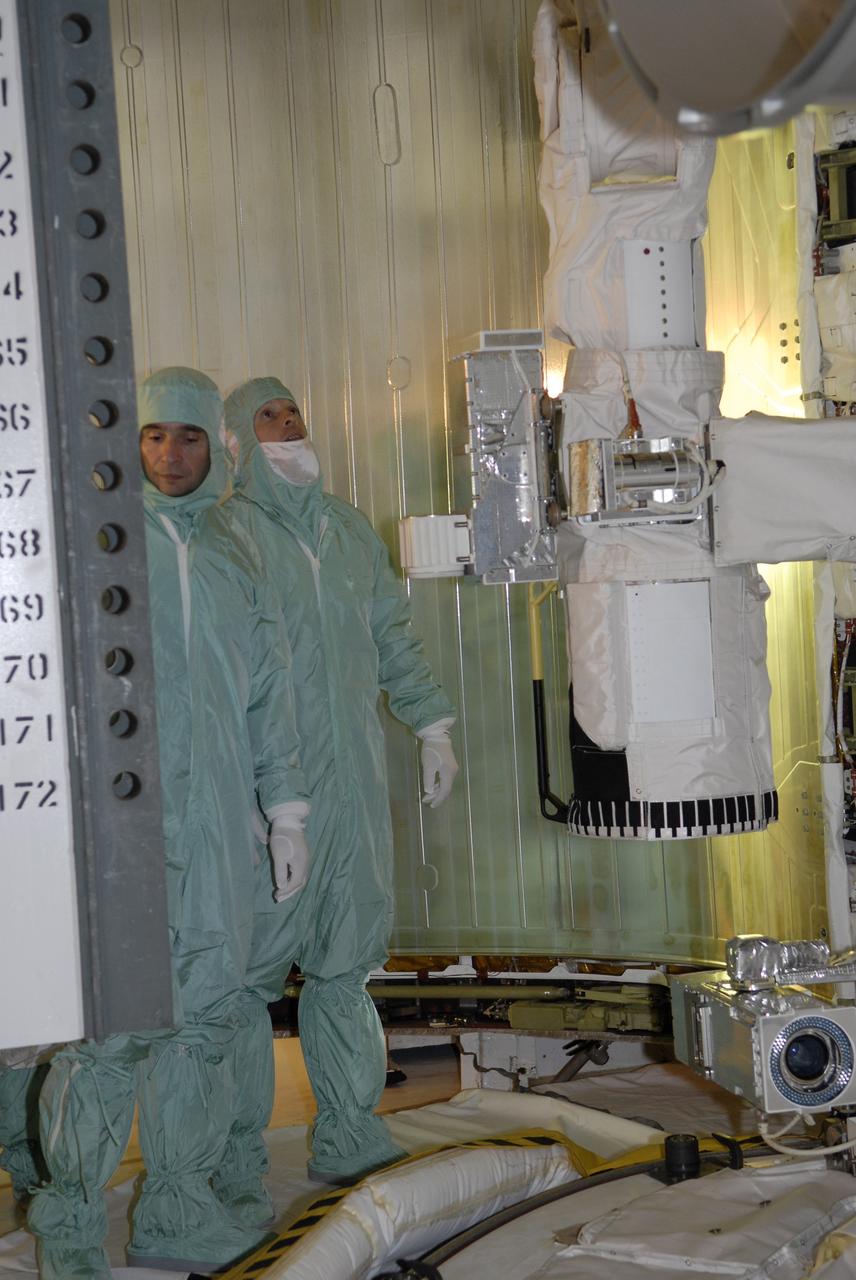
CAPE CANAVERAL, Fla. – On Launch Pad 39A at NASA's Kennedy Space Center in Florida, STS-119 crew members get a close look at the cargo – the integrated truss structure S6 and solar arrays -- installed in space shuttle Discovery's payload bay. Seen here are Commander Lee Archambault (left) and Mission Specialist Joseph Acaba. The astronauts are at Kennedy to prepare for launch through Terminal Countdown Demonstration Test activities. The TCDT includes equipment familiarization and a simulated launch countdown. Discovery is targeted to launch on the STS-119 mission Feb. 12. During Discovery's 14-day mission, the crew will install the S6 truss segment and solar arrays to the starboard side of the International Space Station, completing the station's truss, or backbone. Photo credit: NASA/Kim Shiflett
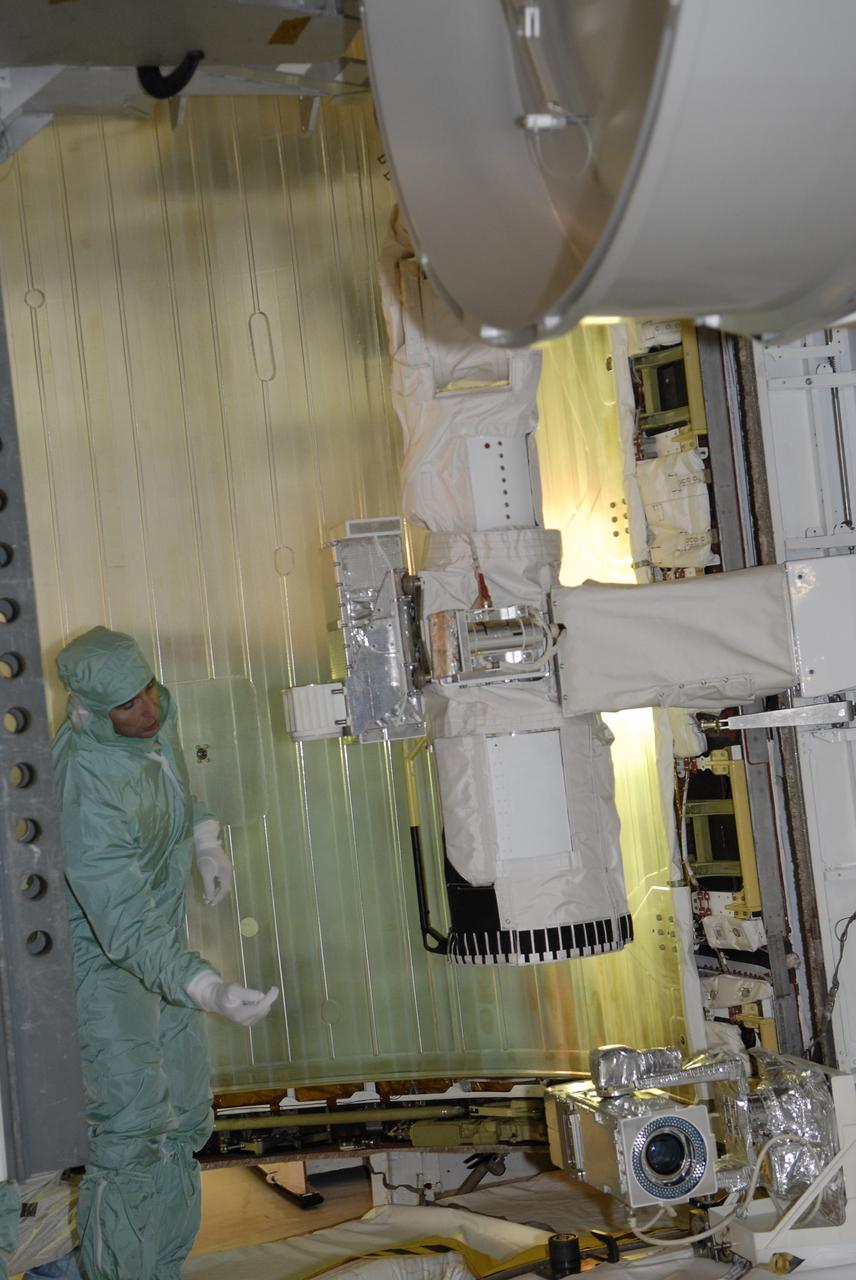
CAPE CANAVERAL, Fla. – On Launch Pad 39A at NASA's Kennedy Space Center in Florida, STS-119 Commander Lee Archambault inspects part of the cargo installed in space shuttle Discovery's payload bay. The cargo consists of the integrated truss structure S6 and solar arrays. The astronauts are at Kennedy to prepare for launch through Terminal Countdown Demonstration Test activities. The TCDT includes equipment familiarization and a simulated launch countdown. Discovery is targeted to launch on the STS-119 mission Feb. 12. During Discovery's 14-day mission, the crew will install the S6 truss segment and solar arrays to the starboard side of the International Space Station, completing the station's truss, or backbone. Photo credit: NASA/Kim Shiflett
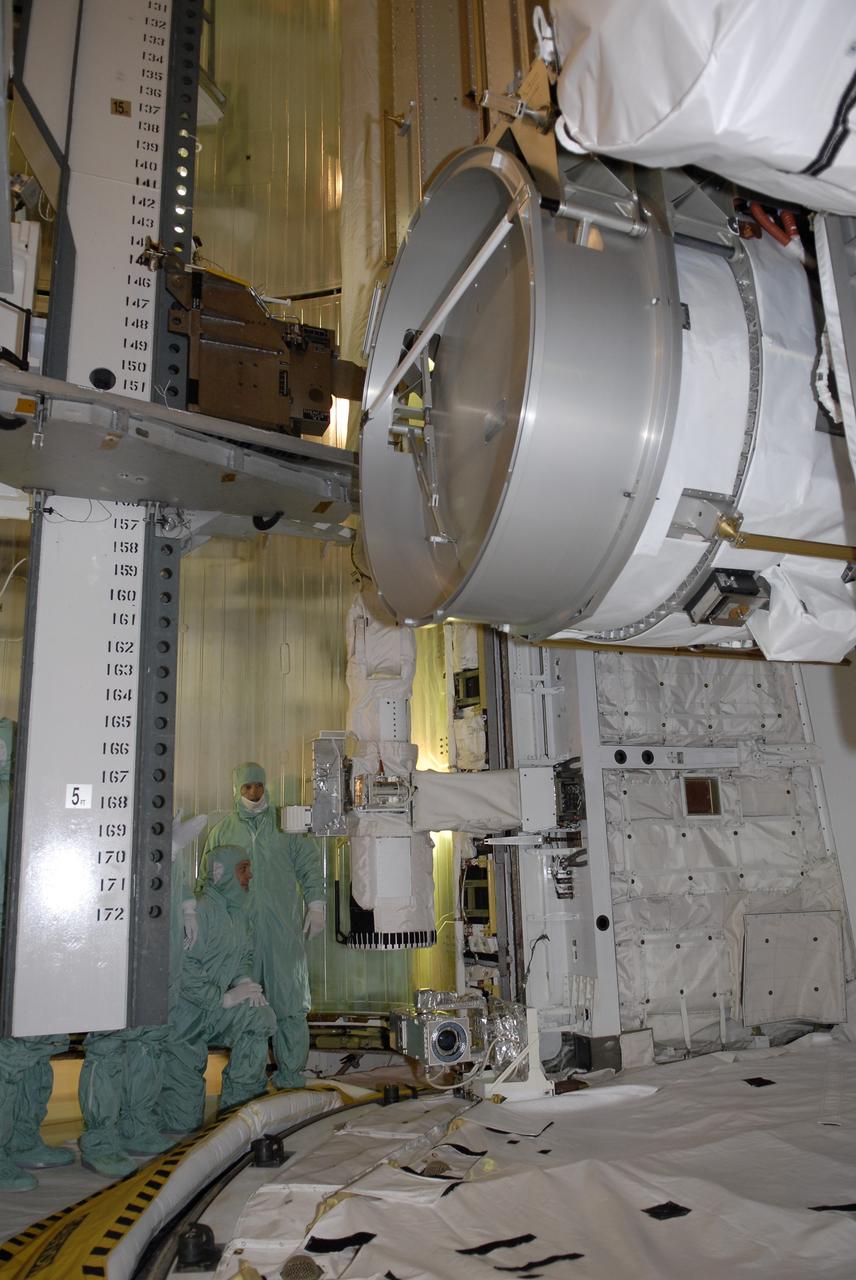
CAPE CANAVERAL, Fla. – On Launch Pad 39A at NASA's Kennedy Space Center in Florida, STS-119 crew members get a close look at the cargo – the integrated truss structure S6 and solar arrays -- installed in space shuttle Discovery's payload bay. Seen here are Commander Lee Archambault (left) and Mission Specialist Joseph Acaba. The astronauts are at Kennedy to prepare for launch through Terminal Countdown Demonstration Test activities. The TCDT includes equipment familiarization and a simulated launch countdown. Discovery is targeted to launch on the STS-119 mission Feb. 12. During Discovery's 14-day mission, the crew will install the S6 truss segment and solar arrays to the starboard side of the International Space Station, completing the station's truss, or backbone. Photo credit: NASA/Kim Shiflett
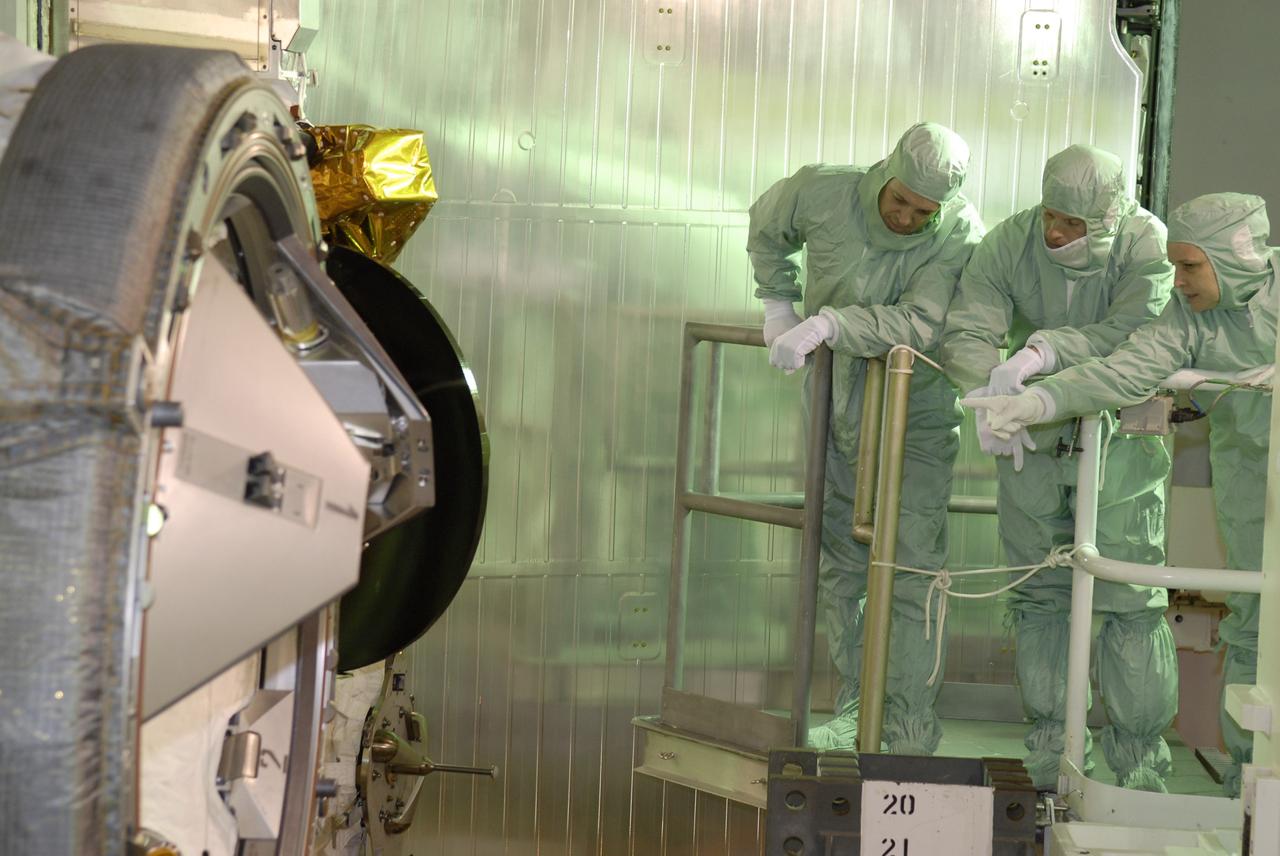
CAPE CANAVERAL, Fla. – On Launch Pad 39A at NASA's Kennedy Space Center in Florida, STS-119 crew members get a close look at the docking adapter installed in space shuttle Discovery's payload bay. At left is Mission Specialist Richard Arnold and at center is Mission Specialist Joseph Acaba. The astronauts are at Kennedy to prepare for launch through Terminal Countdown Demonstration Test activities. The TCDT includes equipment familiarization and a simulated launch countdown. Discovery is targeted to launch on the STS-119 mission Feb. 12. During Discovery's 14-day mission, the crew will install the S6 truss segment and solar arrays to the starboard side of the International Space Station, completing the station's truss, or backbone. Photo credit: NASA/Kim Shiflett
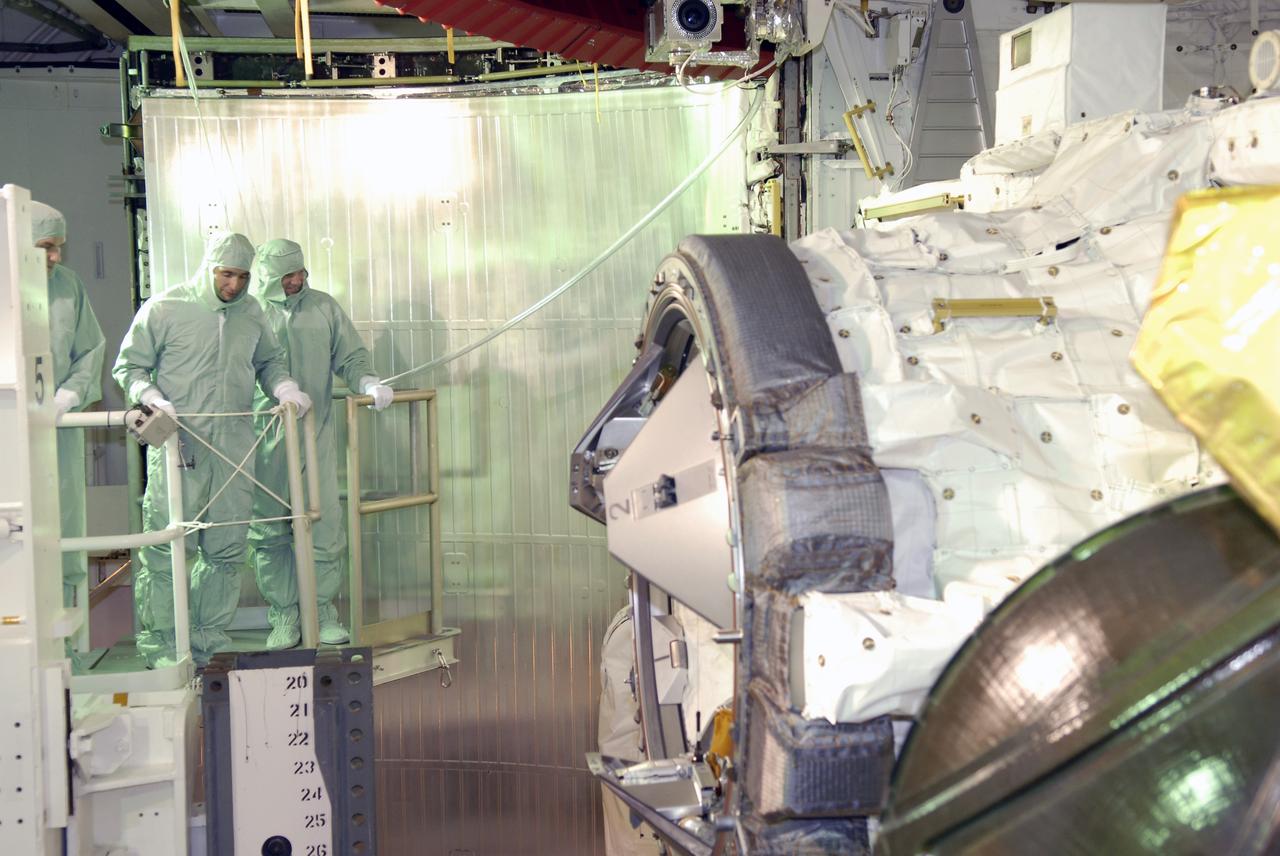
CAPE CANAVERAL, Fla. – On Launch Pad 39A at NASA's Kennedy Space Center in Florida, STS-119 crew members get a close look at the cargo and other hardware installed in space shuttle Discovery's payload bay. At center is Commander Lee Archambault; on his right is Pilot Tony Antonelli. Seen at right in the payload bay is the docking adapter. The astronauts are at Kennedy to prepare for launch through Terminal Countdown Demonstration Test activities. The TCDT includes equipment familiarization and a simulated launch countdown. Discovery is targeted to launch on the STS-119 mission Feb. 12. During Discovery's 14-day mission, the crew will install the S6 truss segment and solar arrays to the starboard side of the International Space Station, completing the station's truss, or backbone. Photo credit: NASA/Kim Shiflett

STS-130 TCDT - PAYLOAD BAY WALKDOWN

STS-130 TCDT - PAYLOAD BAY WALKDOWN
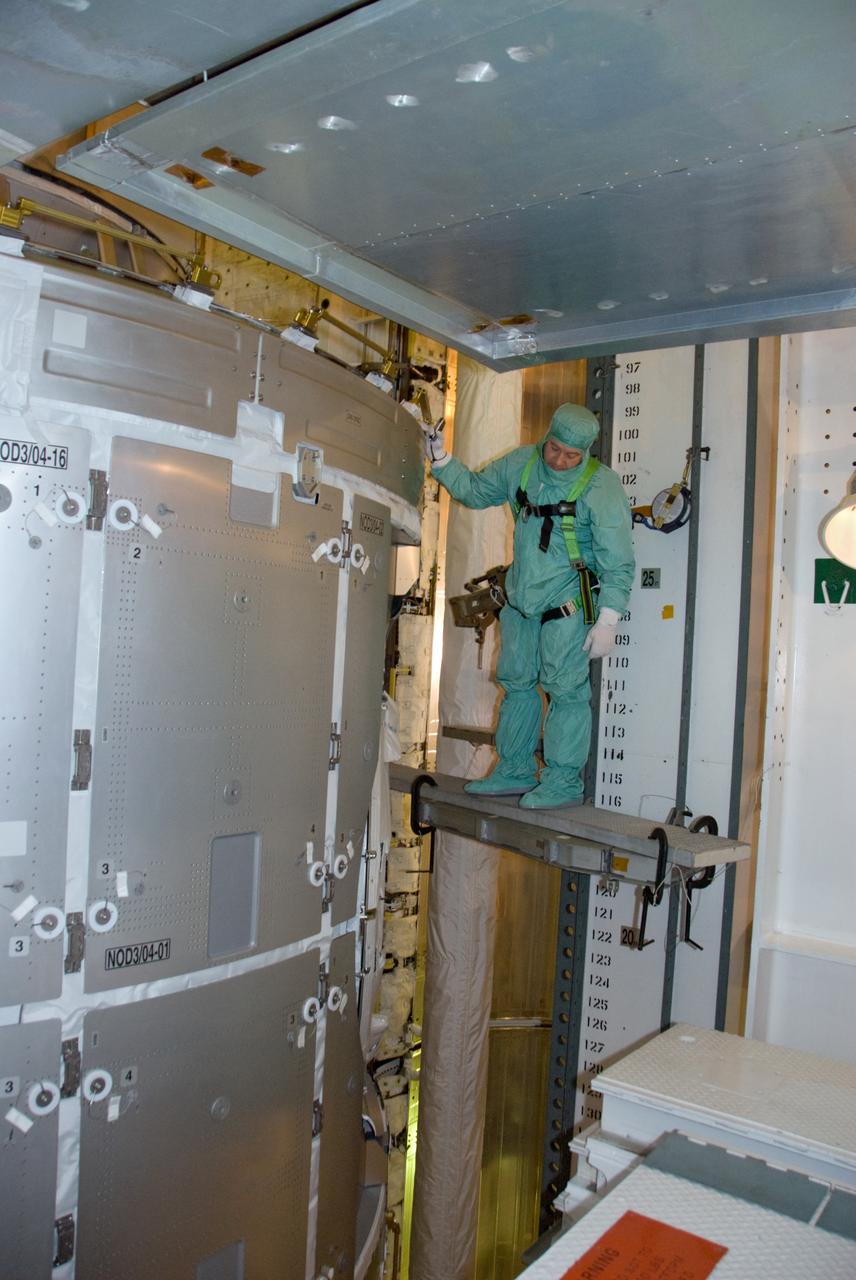
STS-130 TCDT - PAYLOAD BAY WALKDOWN

STS-130 TCDT - PAYLOAD BAY WALKDOWN
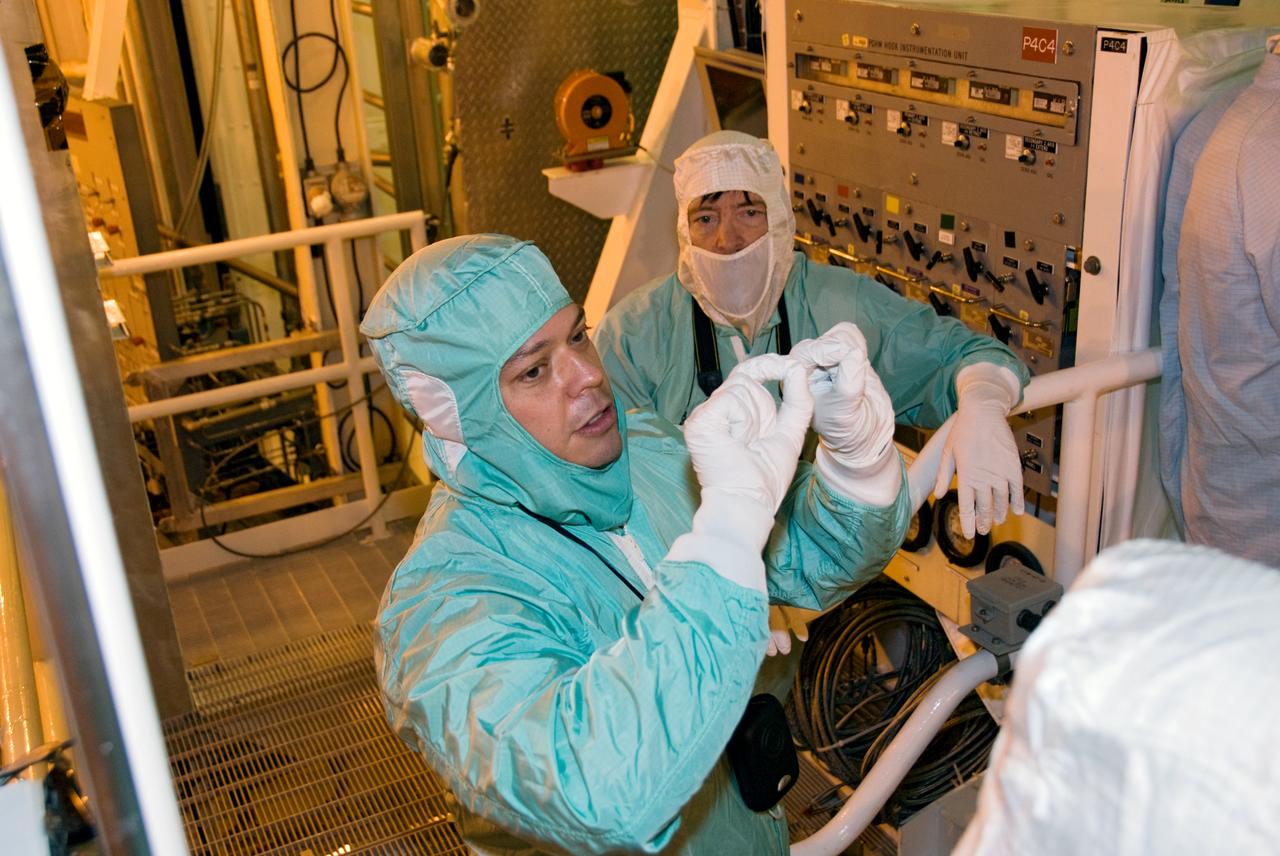
STS-130 TCDT - PAYLOAD BAY WALKDOWN
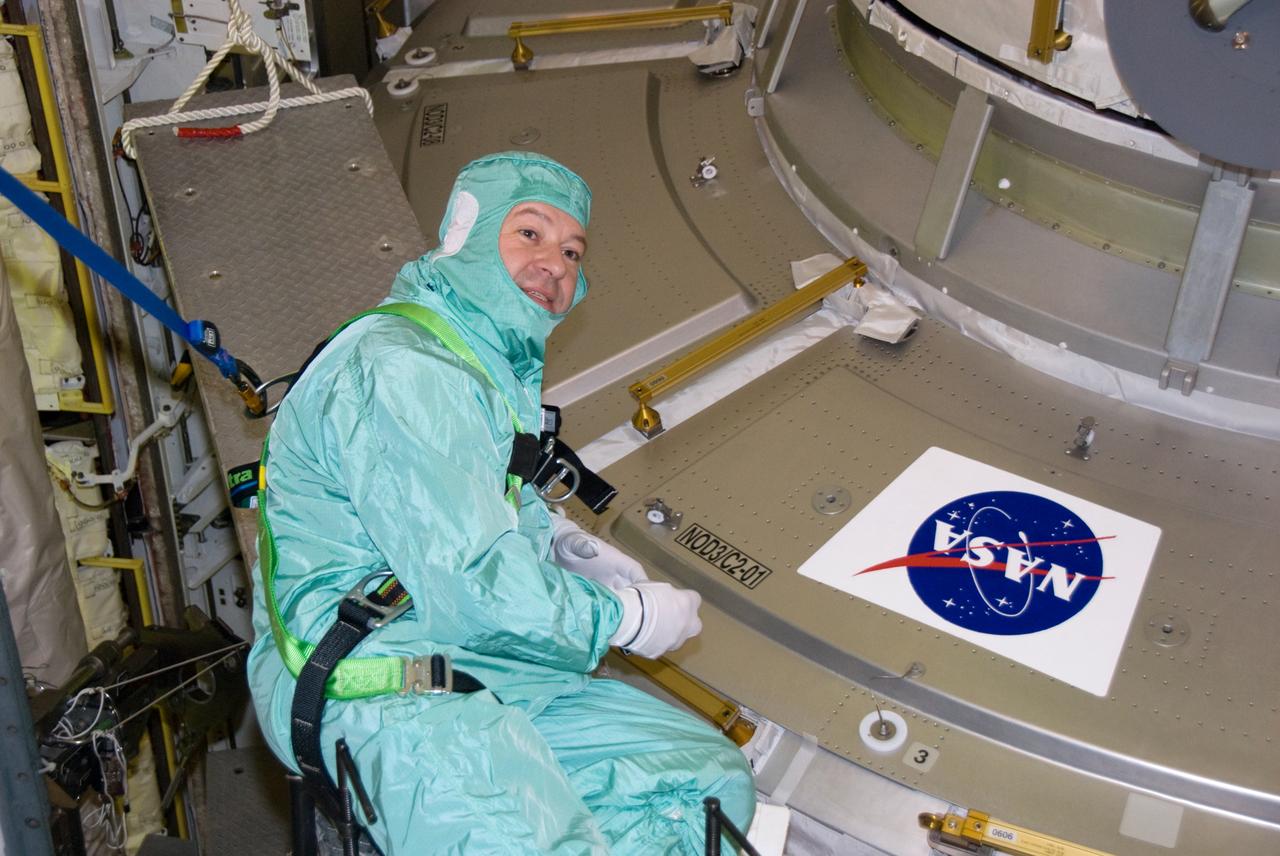
STS-130 TCDT - PAYLOAD BAY WALKDOWN

STS-130 TCDT - PAYLOAD BAY WALKDOWN

STS-130 TCDT - PAYLOAD BAY WALKDOWN

STS-130 TCDT - PAYLOAD BAY WALKDOWN

STS-100 Pilot Jeffrey S. Ashby returns to KSC to complete Terminal Countdown Demonstration Test activities that were postponed earlier. The TCDT includes emergency escape training, payload bay walkdown, and a simulated launch countdown. The primary payload comprises the Canadian robotic arm, SSRMS, and Multi-Purpose Logistics Module, Raffaello. Launch of Space Shuttle Endeavour on mission STS-100 is targeted for April 19 at 2:41 p.m. EDT from Launch Pad 39A
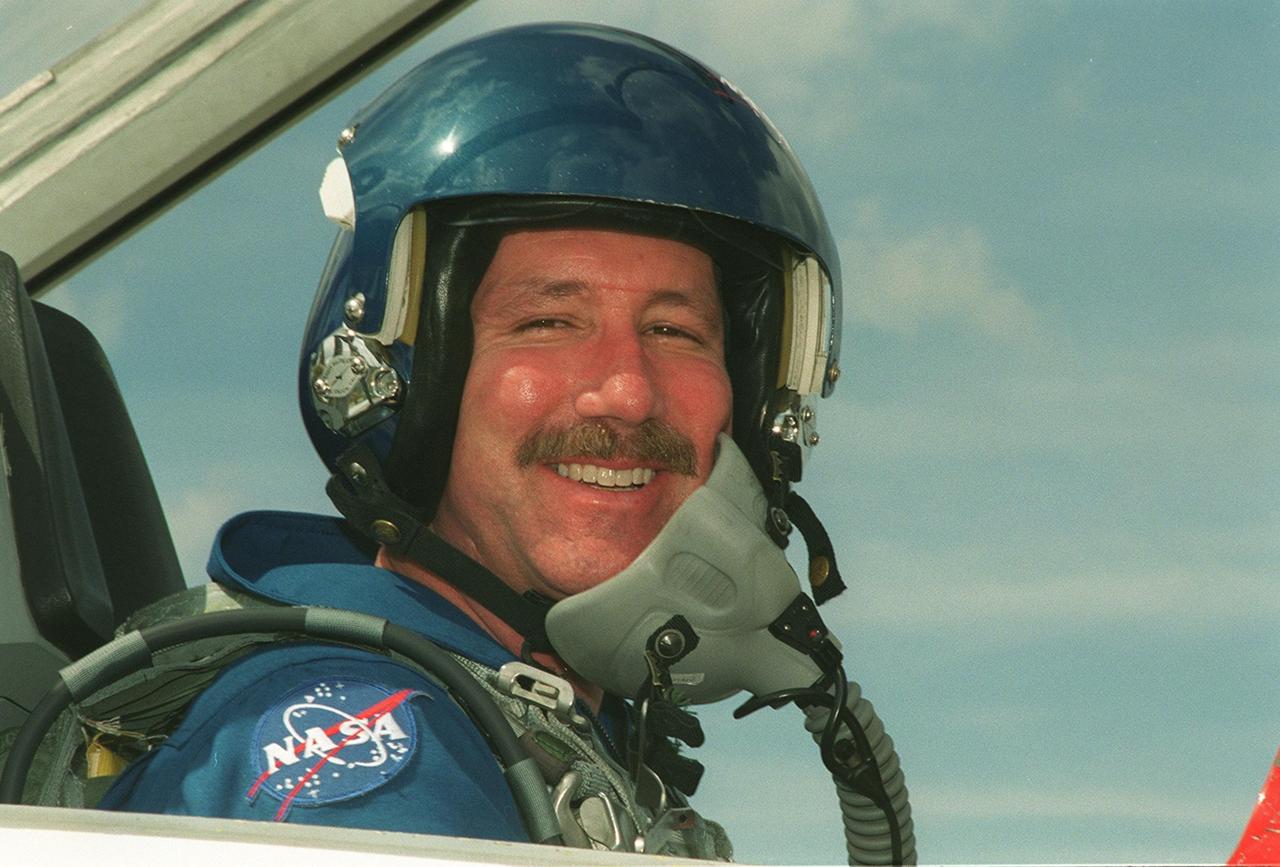
STS-100 Commander Kent V. Rominger returns to KSC to complete Terminal Countdown Demonstration Test activities that were postponed earlier. The TCDT includes emergency escape training, payload bay walkdown, and a simulated launch countdown. The primary payload comprises the Canadian robotic arm, SSRMS, and Multi-Purpose Logistics Module, Raffaello. Launch of Space Shuttle Endeavour on mission STS-100 is targeted for April 19 at 2:41 p.m. EDT from Launch Pad 39A
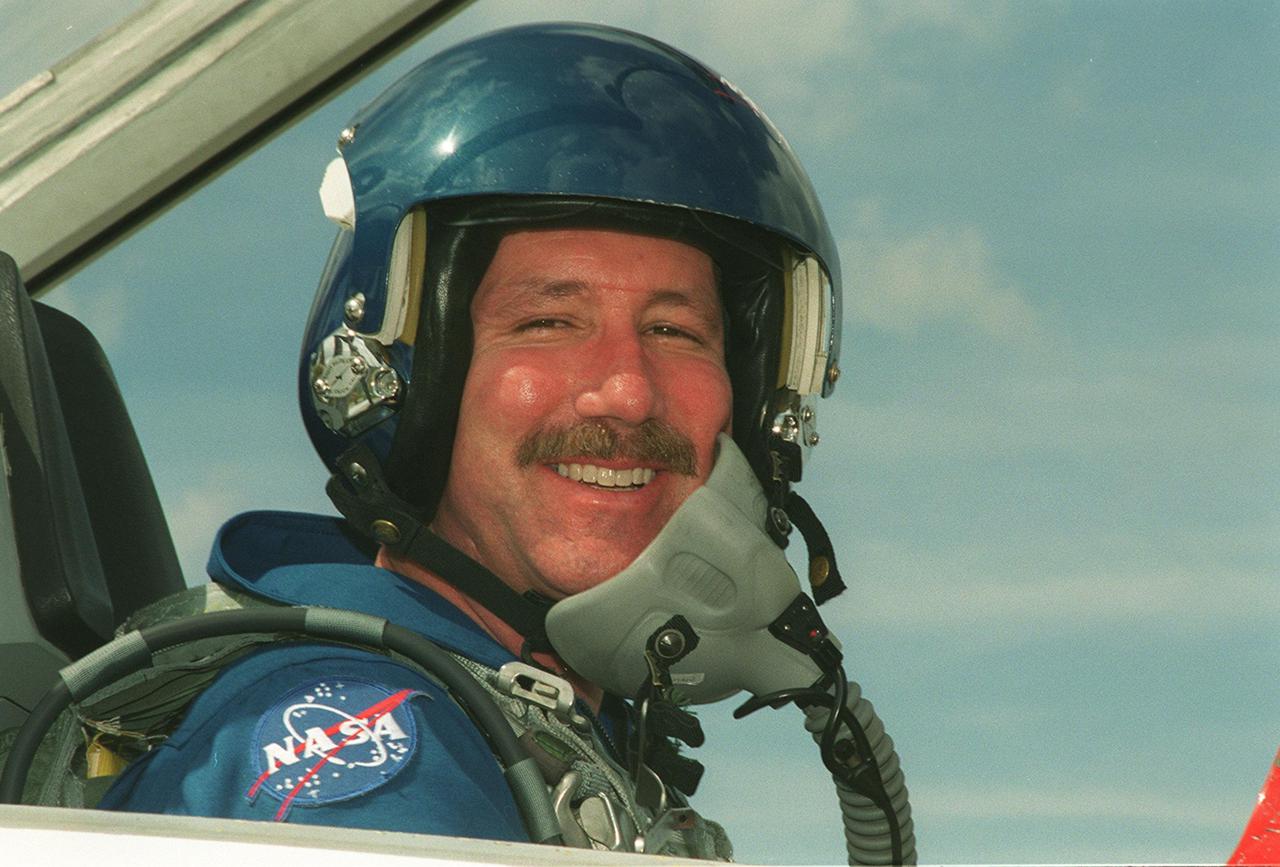
STS-100 Commander Kent V. Rominger returns to KSC to complete Terminal Countdown Demonstration Test activities that were postponed earlier. The TCDT includes emergency escape training, payload bay walkdown, and a simulated launch countdown. The primary payload comprises the Canadian robotic arm, SSRMS, and Multi-Purpose Logistics Module, Raffaello. Launch of Space Shuttle Endeavour on mission STS-100 is targeted for April 19 at 2:41 p.m. EDT from Launch Pad 39A
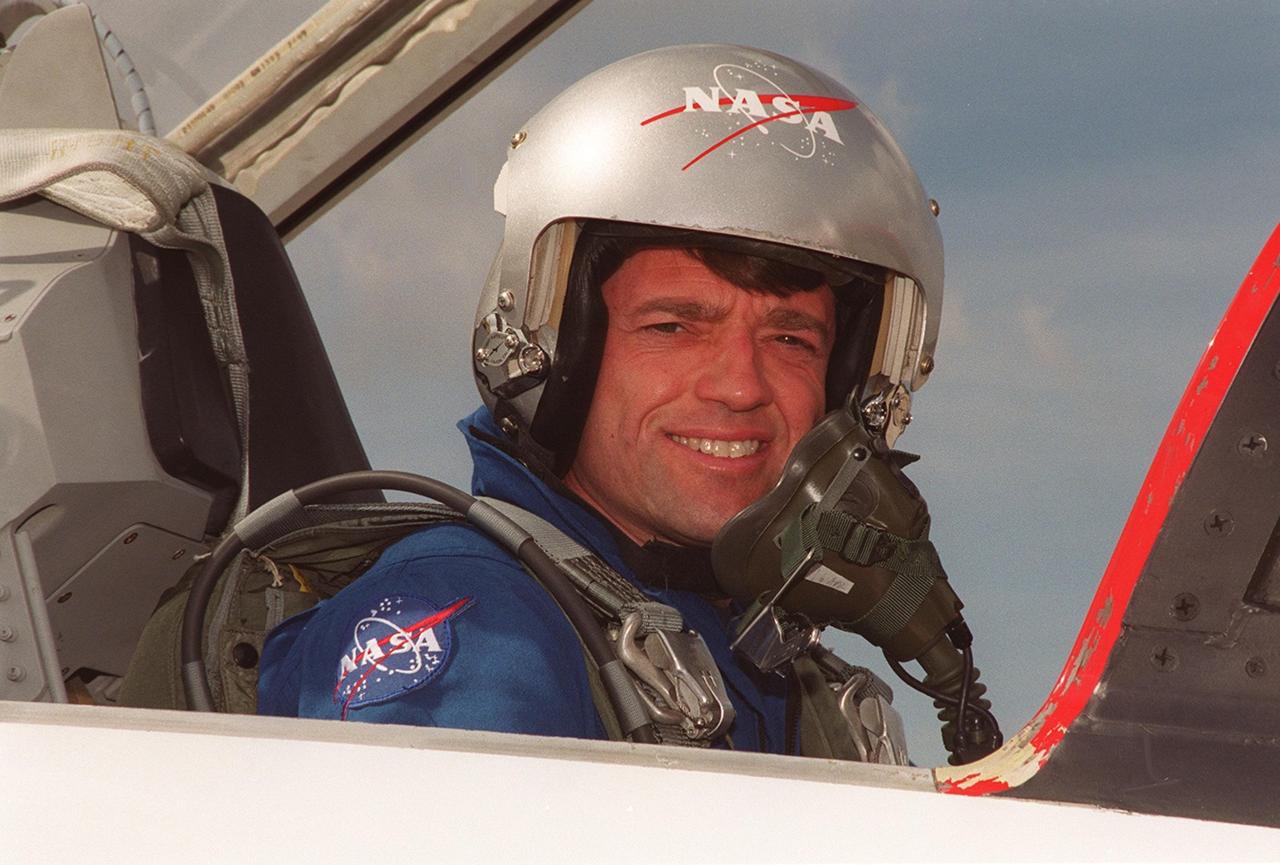
STS-100 Pilot Jeffrey S. Ashby returns to KSC to complete Terminal Countdown Demonstration Test activities that were postponed earlier. The TCDT includes emergency escape training, payload bay walkdown, and a simulated launch countdown. The primary payload comprises the Canadian robotic arm, SSRMS, and Multi-Purpose Logistics Module, Raffaello. Launch of Space Shuttle Endeavour on mission STS-100 is targeted for April 19 at 2:41 p.m. EDT from Launch Pad 39A

Members of the STS-100 crew look over the mission payload recently installed in the Space Shuttle Endeavour’s payload bay. The crew is at KSC to complete Terminal Countdown Demonstration Test activities that were postponed earlier. The TCDT includes emergency escape training, payload bay walkdown, and a simulated launch countdown. The primary payload comprises the Canadian robotic arm, SSRMS, and Multi-Purpose Logistics Module, Raffaello. Launch of Space Shuttle Endeavour on mission STS-100 is targeted for April 19 at 2:41 p.m. EDT from Launch Pad 39A

Members of the STS-100 crew look over the mission payload recently installed in the Space Shuttle Endeavour’s payload bay. The crew is at KSC to complete Terminal Countdown Demonstration Test activities that were postponed earlier. The TCDT includes emergency escape training, payload bay walkdown, and a simulated launch countdown. The primary payload comprises the Canadian robotic arm, SSRMS, and Multi-Purpose Logistics Module, Raffaello. Launch of Space Shuttle Endeavour on mission STS-100 is targeted for April 19 at 2:41 p.m. EDT from Launch Pad 39A
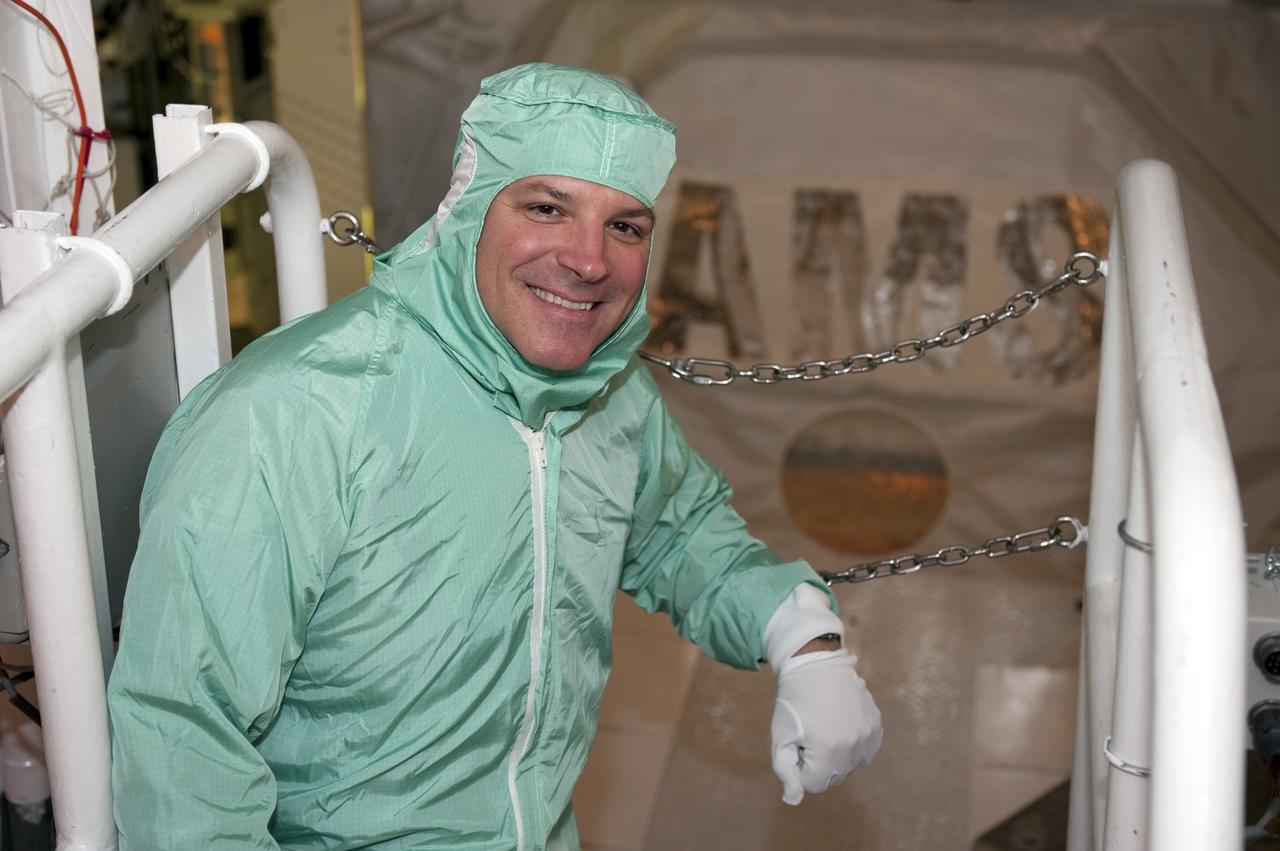
CAPE CANAVERAL, Fla. -- STS-134 Pilot Greg H. Johnson performs a walkdown of space shuttle Endeavour's payload bay. The Express Logistics Carrier-3 packed with spare parts and the Alpha Magnetic Spectrometer-2 (AMS) are inside the bay for the STS-134 mission to the International Space Station. Endeavour's six crew members are at Kennedy for the launch countdown dress rehearsal called the Terminal Countdown Demonstration Test (TCDT) and related training. Endeavour is targeted to launch April 19 at 7:48 p.m. EDT on its final spaceflight mission. For more information visit, www.nasa.gov/mission_pages/shuttle/shuttlemissions/sts134/index.html. Photo credit: NASA/Kim Shiflett

Members of the STS-100 crew look over the payload in Space Shuttle Endeavour’s payload bay. The bay doors are open to the Payload Changeout Room where the payload transfer took place. The crew is at KSC to complete Terminal Countdown Demonstration Test activities that were postponed earlier. The TCDT includes emergency escape training, payload bay walkdown, and a simulated launch countdown. The primary payload comprises the Canadian robotic arm, SSRMS, and Multi-Purpose Logistics Module, Raffaello. Launch of Space Shuttle Endeavour on mission STS-100 is targeted for April 19 at 2:41 p.m. EDT from Launch Pad 39A
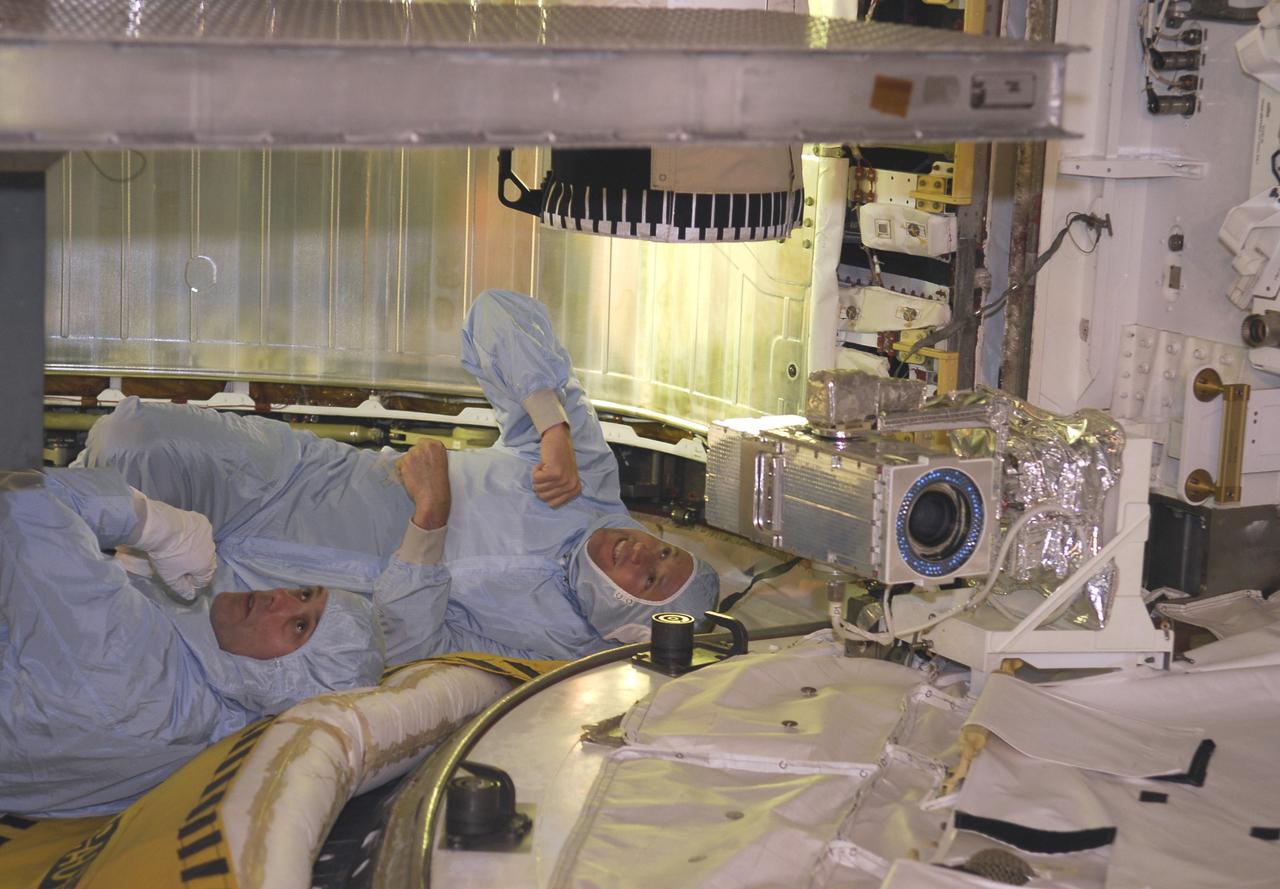
CAPE CANAVERAL, Fla. -- On Launch Pad 39A at NASA's Kennedy Space Center, STS-124 Pilot Ken Ham (right) and Mission Specialist Ron Garan get on their backs for a different view of the payload in space shuttle Discovery's payload bay. The payload bay walkdown is part of the launch dress rehearsal called the terminal countdown demonstration test. TCDT provides astronauts and ground crews with an opportunity to participate in various simulated countdown activities, including equipment familiarization and emergency training. On the STS-124 mission, the crew will deliver and install the Japanese Experiment Module – Pressurized Module and Japanese Remote Manipulator System. Discovery's launch is targeted for May 31. Photo credit: NASA/Kim Shiflett
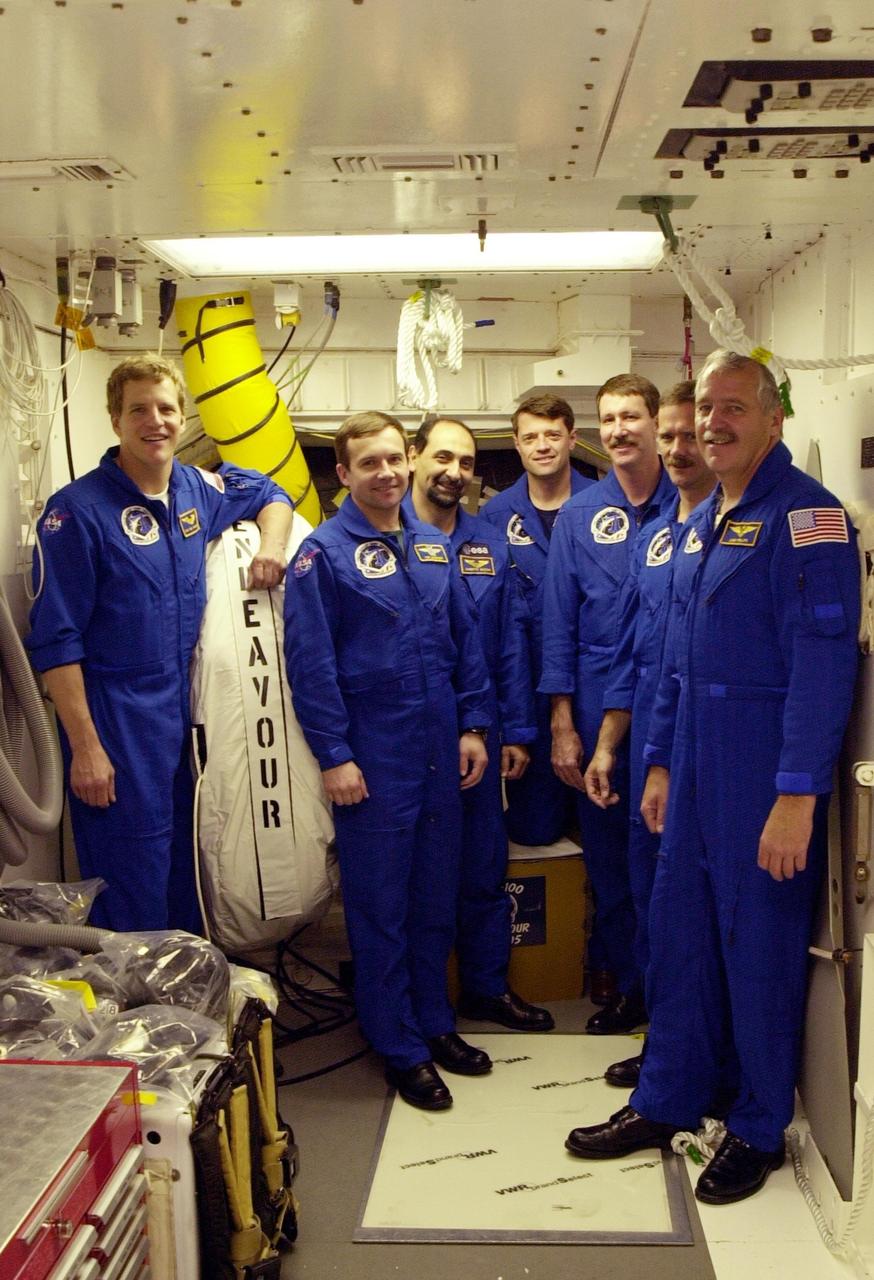
The crew on mission STS-100 poses in the White Room during Terminal Countdown Demonstration Test activities. Standing, from left, are Mission Specialists Scott E. Parazynski, Yuri Lonchakov, and Umberto Guidoni; Pilot Jeffrey S. Ashby; Commander Kent V. Rominger; Mission Specialist Chris A. Hadfield; and Mission Specialist John L. Phillips. The TCDT includes emergency escape training, payload bay walkdown, and a simulated launch countdown. Launch of Space Shuttle Endeavour on mission STS-100 is targeted for April 19 at 2:41 p.m. EDT from Launch Pad 39A
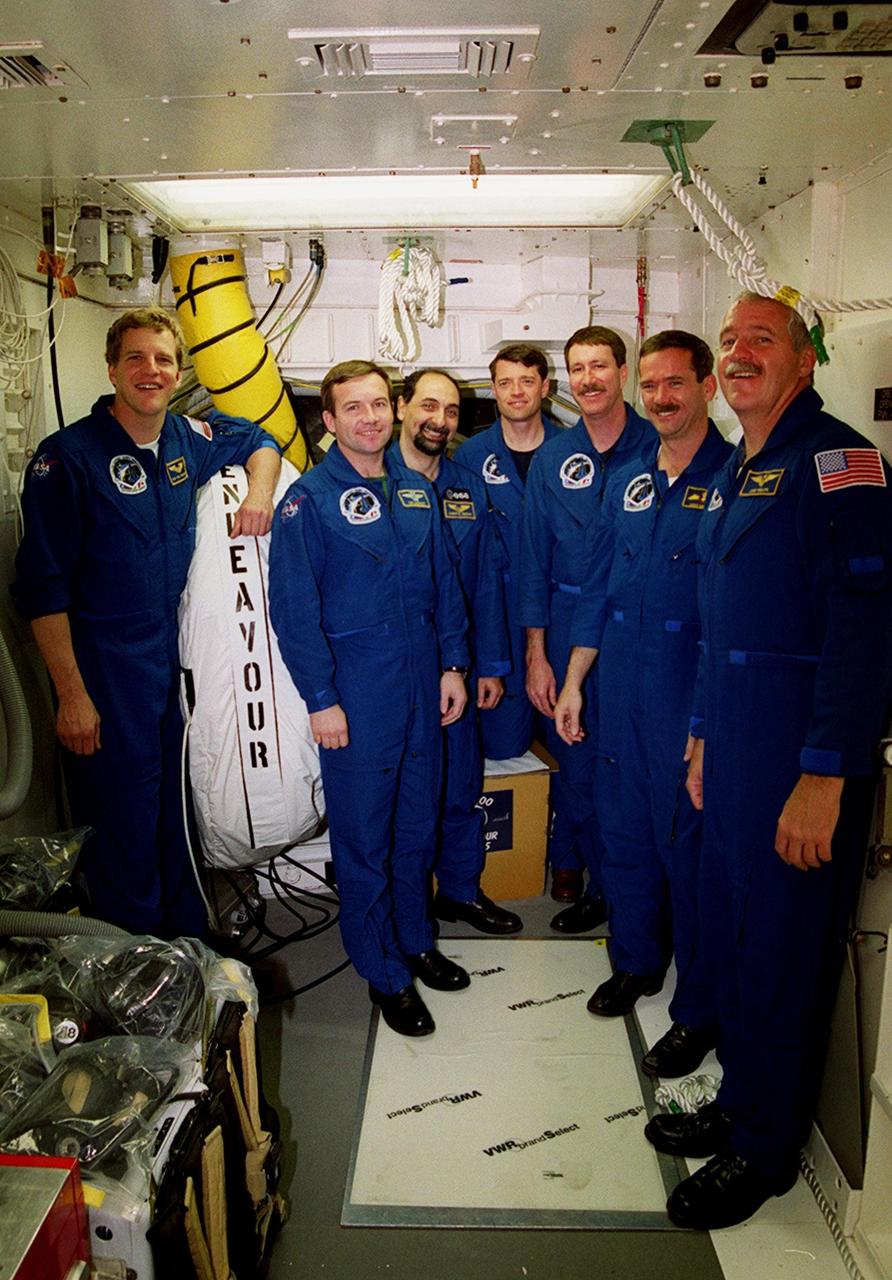
The crew on mission STS-100 poses in the White Room during Terminal Countdown Demonstration Test activities. Standing, from left, are Mission Specialists Scott E. Parazynski, Yuri Lonchakov, and Umberto Guidoni; Pilot Jeffrey S. Ashby; Commander Kent V. Rominger; and Mission Specialists Chris A. Hadfield and John L. Phillips. The TCDT includes emergency escape training, payload bay walkdown, and a simulated launch countdown. The primary payload comprises the Canadian robotic arm, SSRMS, and Multi-Purpose Logistics Module, Raffaello. Launch of Space Shuttle Endeavour on mission STS-100 is targeted for April 19 at 2:41 p.m. EDT from Launch Pad 39A

Members of the STS-100 crew look over the payload in Space Shuttle Endeavour’s payload bay. The bay doors are open to the Payload Changeout Room where the payload transfer took place. The crew is at KSC to complete Terminal Countdown Demonstration Test activities that were postponed earlier. The TCDT includes emergency escape training, payload bay walkdown, and a simulated launch countdown. The primary payload comprises the Canadian robotic arm, SSRMS, and Multi-Purpose Logistics Module, Raffaello. Launch of Space Shuttle Endeavour on mission STS-100 is targeted for April 19 at 2:41 p.m. EDT from Launch Pad 39A
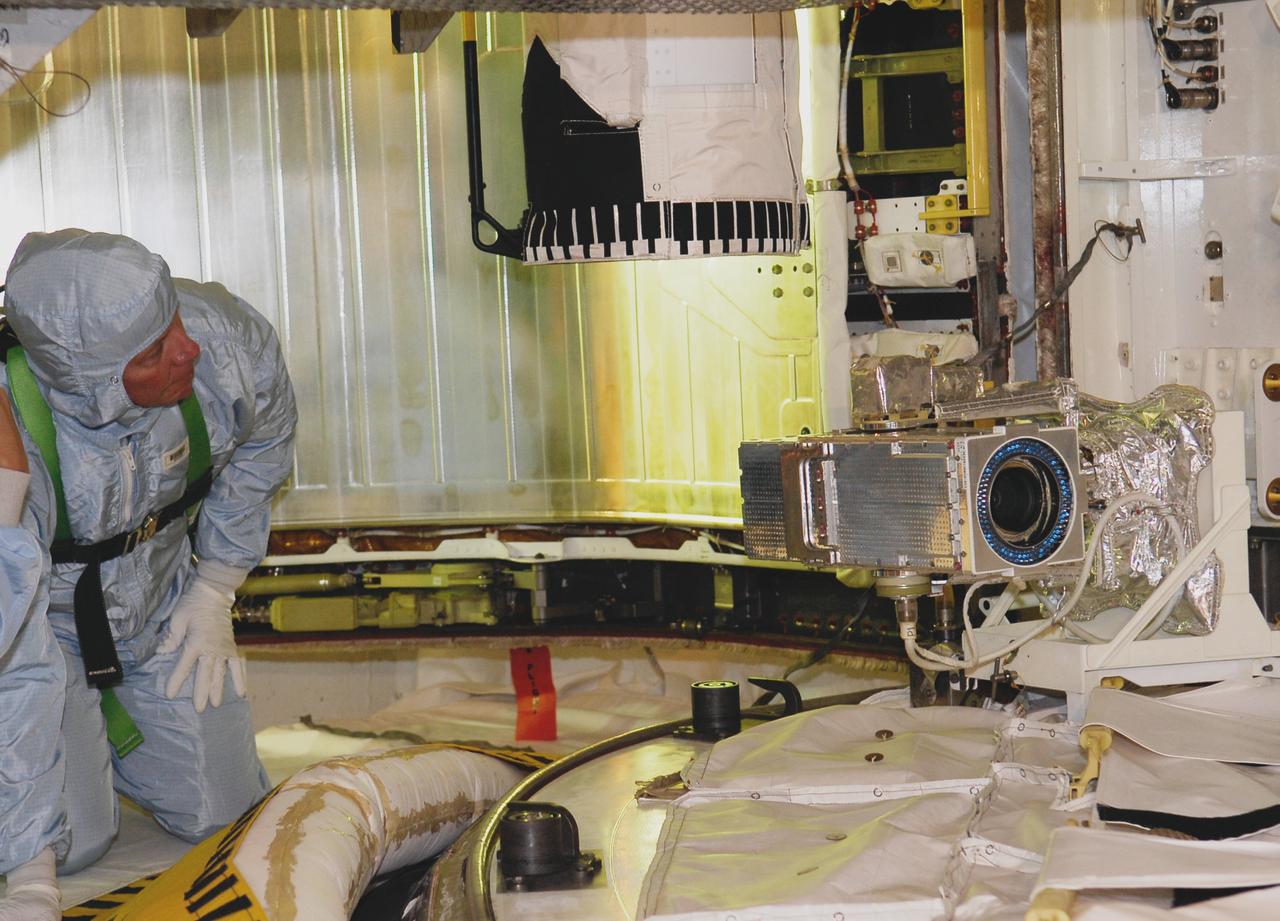
CAPE CANAVERAL, Fla. -- On Launch Pad 39A at NASA's Kennedy Space Center, STS-124 Mission Specialist Mike Fossum gets a close look the bottom of the Japanese Experiment Module – Pressurized Module in space shuttle Discovery's payload bay. The payload bay walkdown is part of the launch dress rehearsal called the terminal countdown demonstration test. TCDT provides astronauts and ground crews with an opportunity to participate in various simulated countdown activities, including equipment familiarization and emergency training. On the STS-124 mission, the crew will deliver and install the Japanese Experiment Module – Pressurized Module and Japanese Remote Manipulator System. Discovery's launch is targeted for May 31. Photo credit: NASA/Kim Shiflett

CAPE CANAVERAL, Fla. -- On Launch Pad 39A at NASA's Kennedy Space Center, STS-124 crew members get a close look at the orbital docking system in space shuttle Discovery's payload bay. Seen from left are Mission Specialists Ron Garan, Mike Fossum and Greg Chamitoff. The payload bay walkdown is part of the launch dress rehearsal called the terminal countdown demonstration test. TCDT provides astronauts and ground crews with an opportunity to participate in various simulated countdown activities, including equipment familiarization and emergency training. On the STS-124 mission, the crew will deliver and install the Japanese Experiment Module – Pressurized Module and Japanese Remote Manipulator System. Discovery's launch is targeted for May 31. Photo credit: NASA/Kim Shiflett
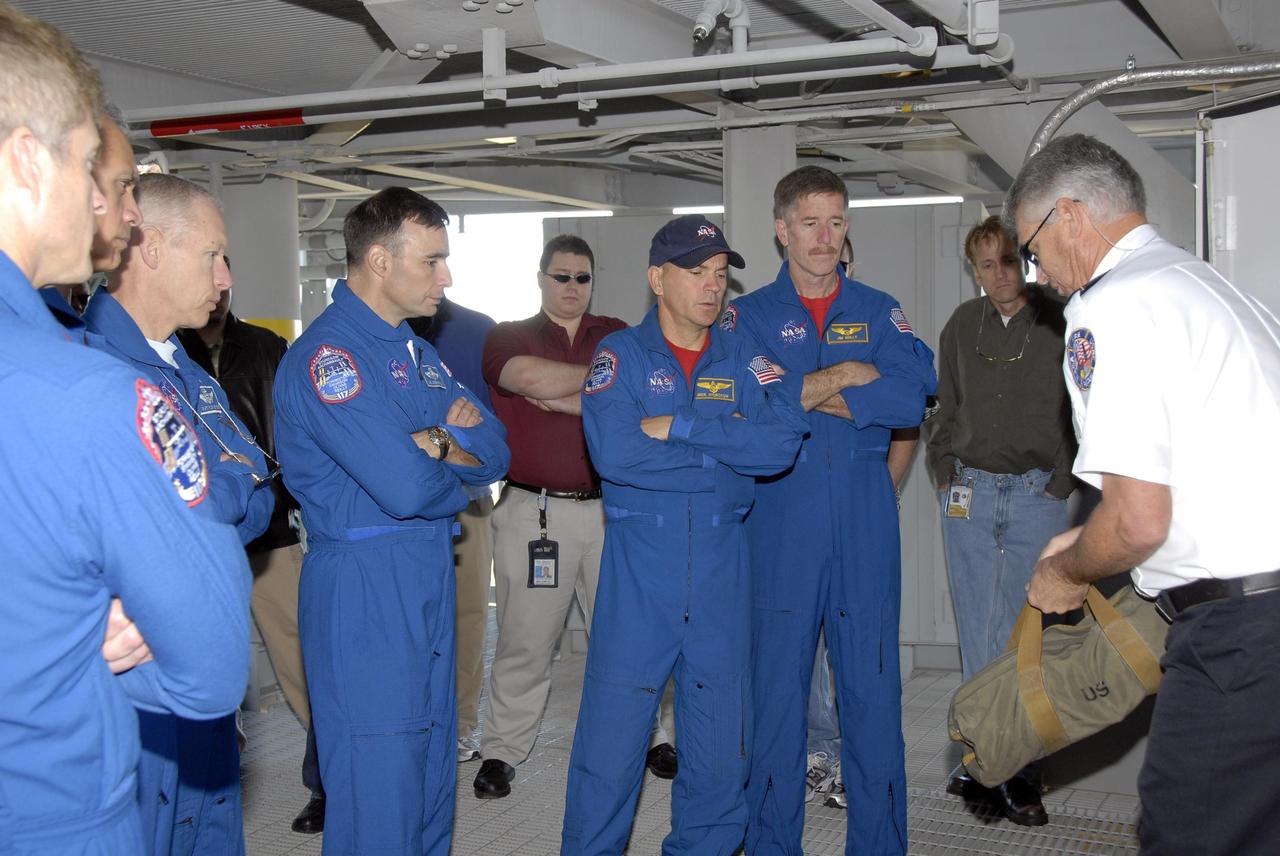
KENNEDY SPACE CENTER, FLA. -- During Terminal Countdown Demonstration Test activities, the Mission STS-117 crew members receive instruction on emergency egress during a walkdown of the 195-foot level of the fixed service structure at Launch Pad 39A. From the left are Mission Specialists Steven Swanson, Danny Olivas and Patrick Forrester, Pilot Lee Archambault, Commander Rick Sturckow and Mission Specialist James Reilly. The TCDT also includes M-113 armored personnel carrier training, and a simulated launch countdown. The mission payload aboard Space Shuttle Atlantis is the S3/S4 integrated truss structure, along with a third set of solar arrays and batteries. The crew of six astronauts will install the truss to continue assembly of the International Space Station. Photo credit: NASA/Kim Shiflett
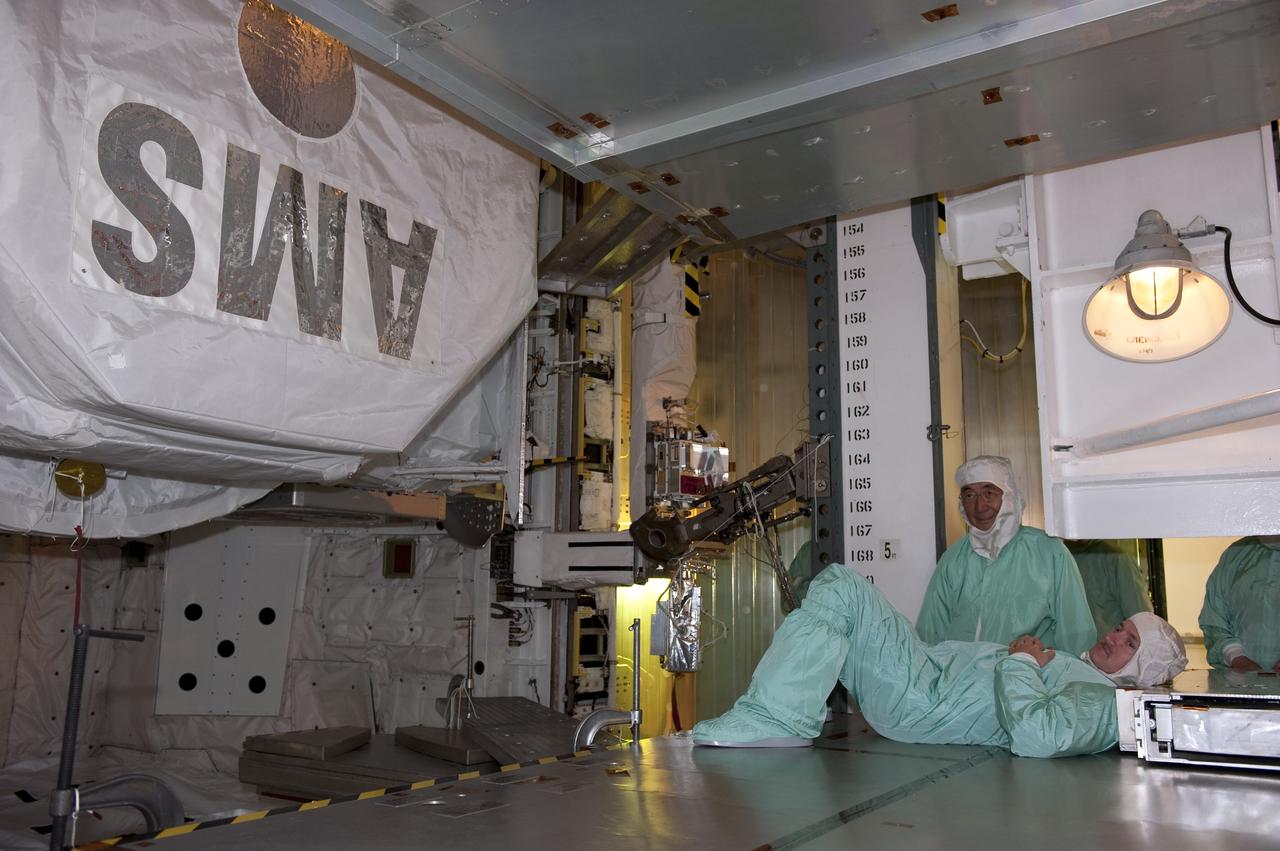
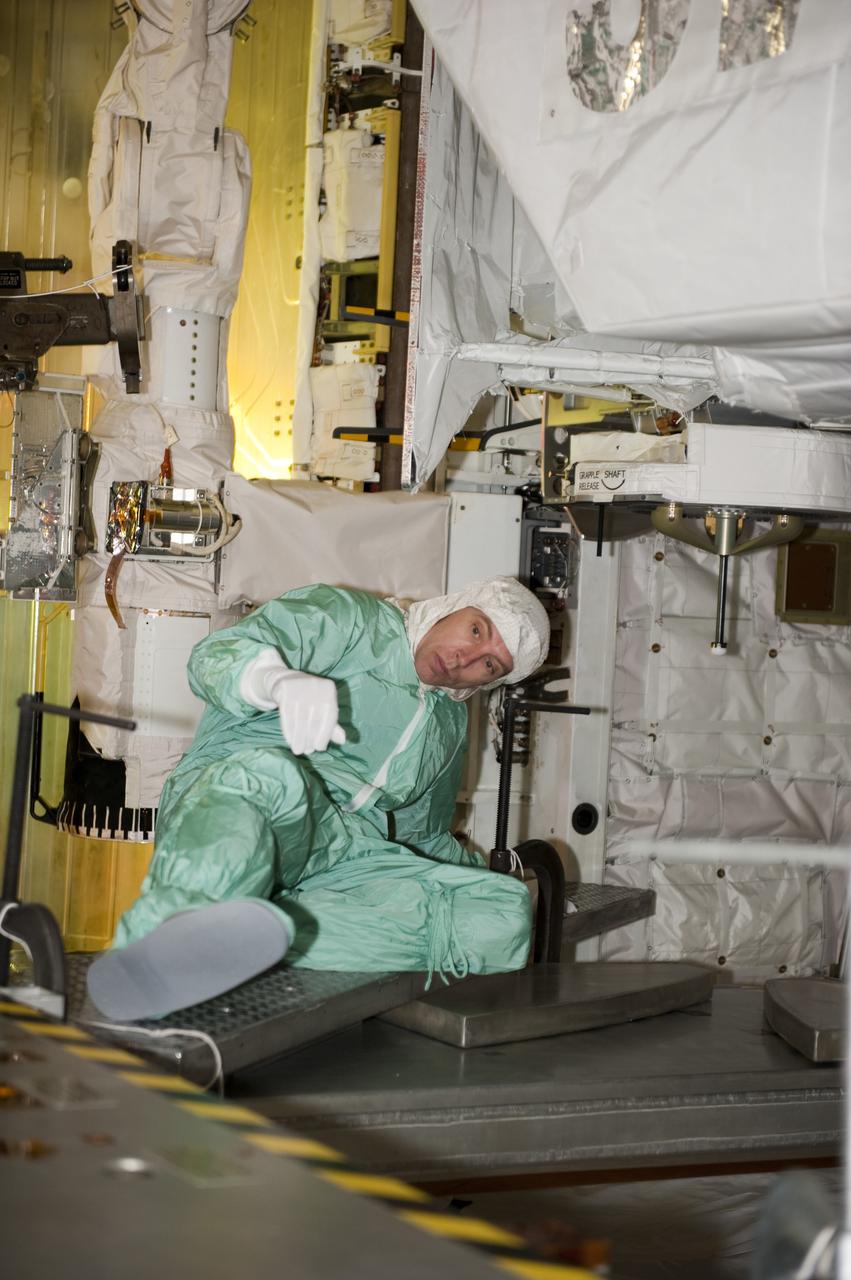
CAPE CANAVERAL, Fla. -- STS-134 Commander Mark Kelly, lying down, and Professor Sam Ting, Alpha Magnetic Spectrometer-2 (AMS) principal investigator at the Massachusetts Institute of Technology, perform a walkdown of space shuttle Endeavour's payload bay. The Express Logistics Carrier-3 packed with spare parts and the (AMS) are inside the bay for the STS-134 mission to the International Space Station. Endeavour's six crew members are at Kennedy for the launch countdown dress rehearsal called the Terminal Countdown Demonstration Test (TCDT) and related training. Endeavour is targeted to launch April 19 at 7:48 p.m. EDT on its final spaceflight mission. For more information visit, www.nasa.gov/mission_pages/shuttle/shuttlemissions/sts134/index.html. Photo credit: NASA/Kim Shiflett
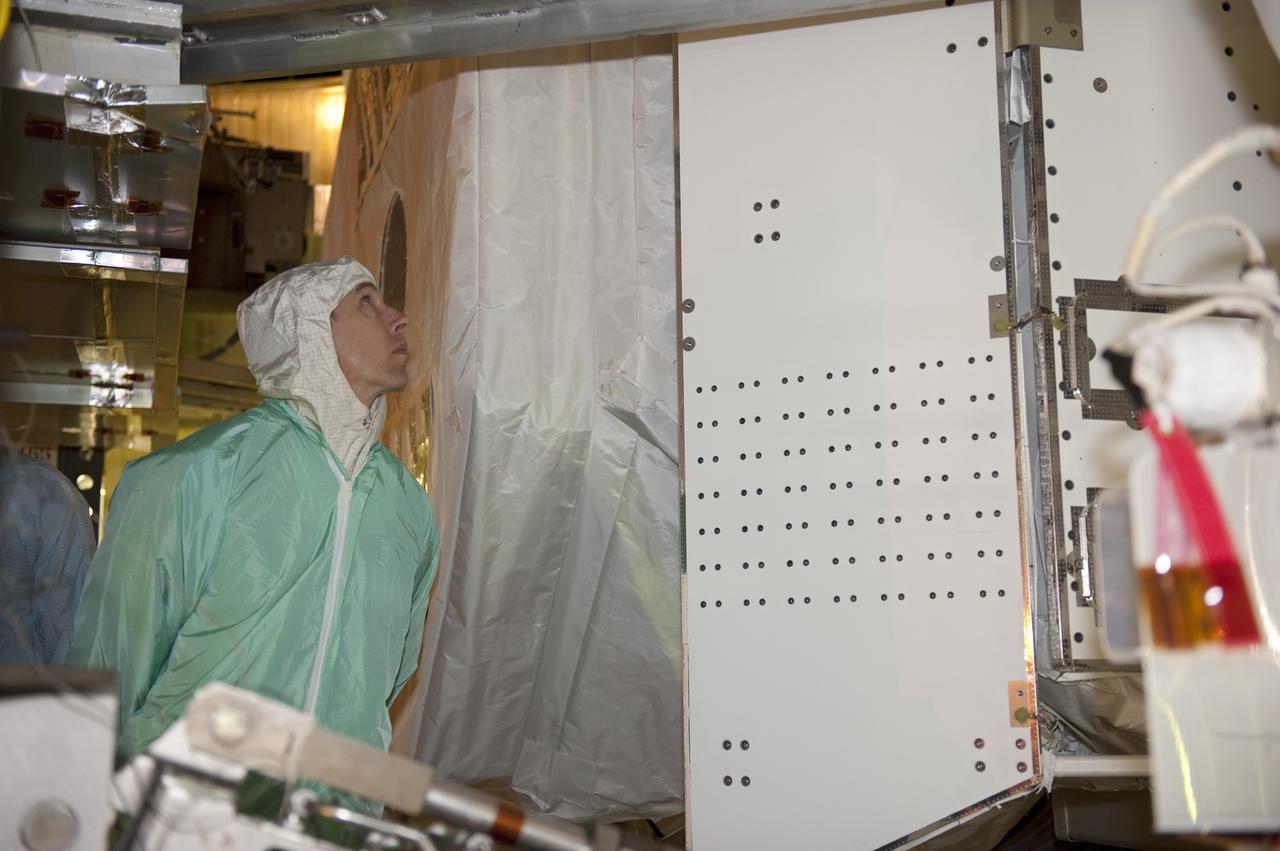
CAPE CANAVERAL, Fla. -- STS-134 Mission Specialist Andrew Feustel performs a walkdown of space shuttle Endeavour's payload bay. The Express Logistics Carrier-3 packed with spare parts and the Alpha Magnetic Spectrometer-2 (AMS) are inside the bay for the STS-134 mission to the International Space Station. Feustel and fellow Mission Specialists Greg Chamitoff and Michael Fincke are the designated spacewalkers for the mission. Endeavour's six crew members are at Kennedy for the launch countdown dress rehearsal called the Terminal Countdown Demonstration Test (TCDT) and related training. Endeavour is targeted to launch April 19 at 7:48 p.m. EDT on its final spaceflight mission. For more information visit, www.nasa.gov/mission_pages/shuttle/shuttlemissions/sts134/index.html. Photo credit: NASA/Kim Shiflett
CAPE CANAVERAL, Fla. -- STS-134 Mission Specialist Andrew Feustel performs a walkdown of space shuttle Endeavour's payload bay. The Express Logistics Carrier-3 packed with spare parts and the Alpha Magnetic Spectrometer-2 (AMS) are inside the bay for the STS-134 mission to the International Space Station. Feustel and fellow Mission Specialists Greg Chamitoff and Michael Fincke are the designated spacewalkers for the mission. Endeavour's six crew members are at Kennedy for the launch countdown dress rehearsal called the Terminal Countdown Demonstration Test (TCDT) and related training. Endeavour is targeted to launch April 19 at 7:48 p.m. EDT on its final spaceflight mission. For more information visit, www.nasa.gov/mission_pages/shuttle/shuttlemissions/sts134/index.html. Photo credit: NASA/Kim Shiflett

From the Payload Changeout Room, members of the STS-100 crew look over part of the mission payload, the SSRMS, in Space Shuttle Endeavour’s payload bay. The SSRMS, or Canadian robotic arm, is capable of handling large payloads and assisting with docking the Space Shuttle. It is crucial to the continued assembly of the International Space Station. The crew is at KSC to complete Terminal Countdown Demonstration Test activities that were postponed earlier. The TCDT includes emergency escape training, payload bay walkdown, and a simulated launch countdown. The primary payload also includes Multi-Purpose Logistics Module, Raffaello. Launch of Space Shuttle Endeavour on mission STS-100 is targeted for April 19 at 2:41 p.m. EDT from Launch Pad 39A

From the Payload Changeout Room, members of the STS-100 crew look over part of the mission payload, the SSRMS, in Space Shuttle Endeavour’s payload bay. The SSRMS, or Canadian robotic arm, is capable of handling large payloads and assisting with docking the Space Shuttle. It is crucial to the continued assembly of the International Space Station. The crew is at KSC to complete Terminal Countdown Demonstration Test activities that were postponed earlier. The TCDT includes emergency escape training, payload bay walkdown, and a simulated launch countdown. The primary payload also includes Multi-Purpose Logistics Module, Raffaello. Launch of Space Shuttle Endeavour on mission STS-100 is targeted for April 19 at 2:41 p.m. EDT from Launch Pad 39A
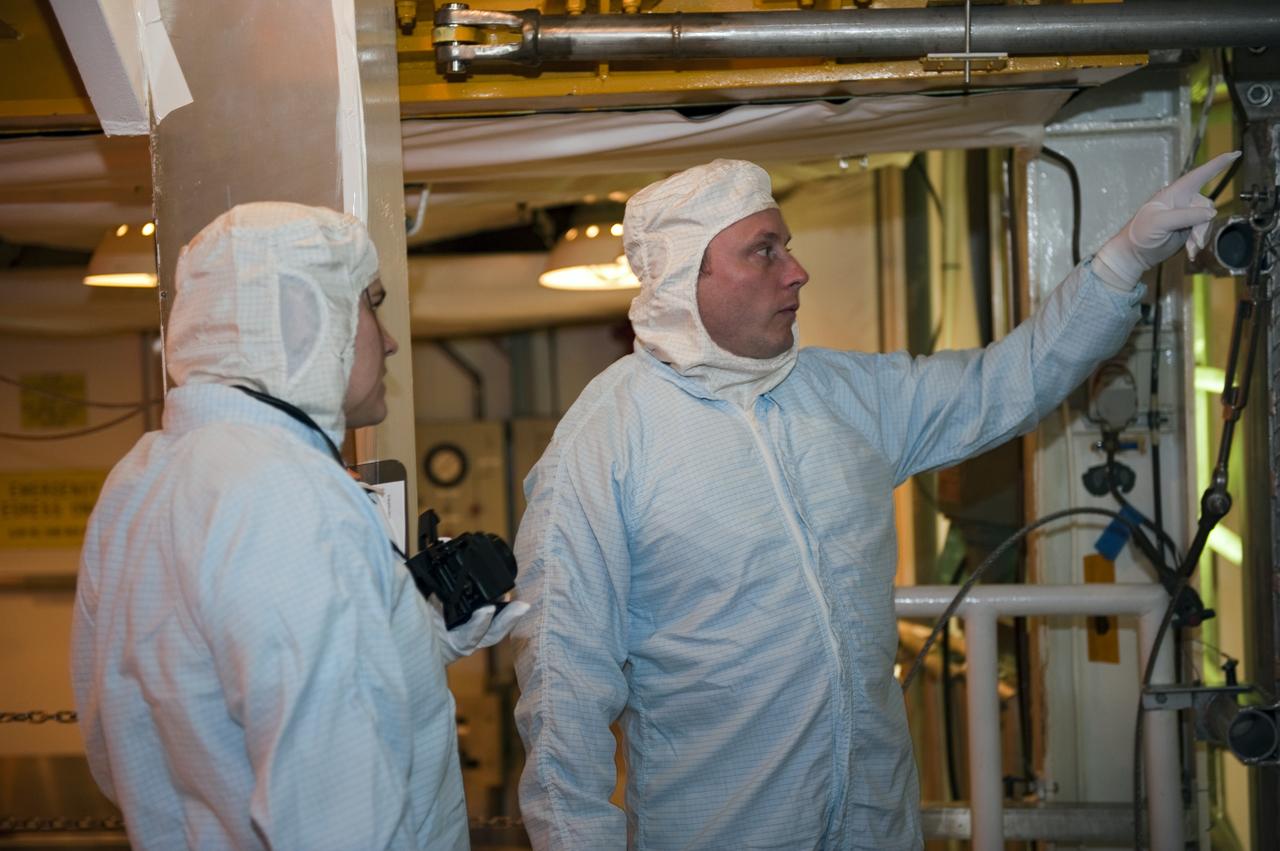
CAPE CANAVERAL, Fla. -- STS-134 Mission Specialist Michael Fincke, right, performs a walkdown of space shuttle Endeavour's payload bay with a shuttle technician. The Express Logistics Carrier-3 packed with spare parts and the Alpha Magnetic Spectrometer-2 (AMS) are inside the bay for the STS-134 mission to the International Space Station. Fincke and fellow Mission Specialists Greg Chamitoff and Andrew Feustel are the designated spacewalkers for the mission. Endeavour's six crew members are at Kennedy for the launch countdown dress rehearsal called the Terminal Countdown Demonstration Test (TCDT) and related training. Endeavour is targeted to launch April 19 at 7:48 p.m. EDT on its final spaceflight mission. For more information visit, www.nasa.gov/mission_pages/shuttle/shuttlemissions/sts134/index.html. Photo credit: NASA/Kim Shiflett
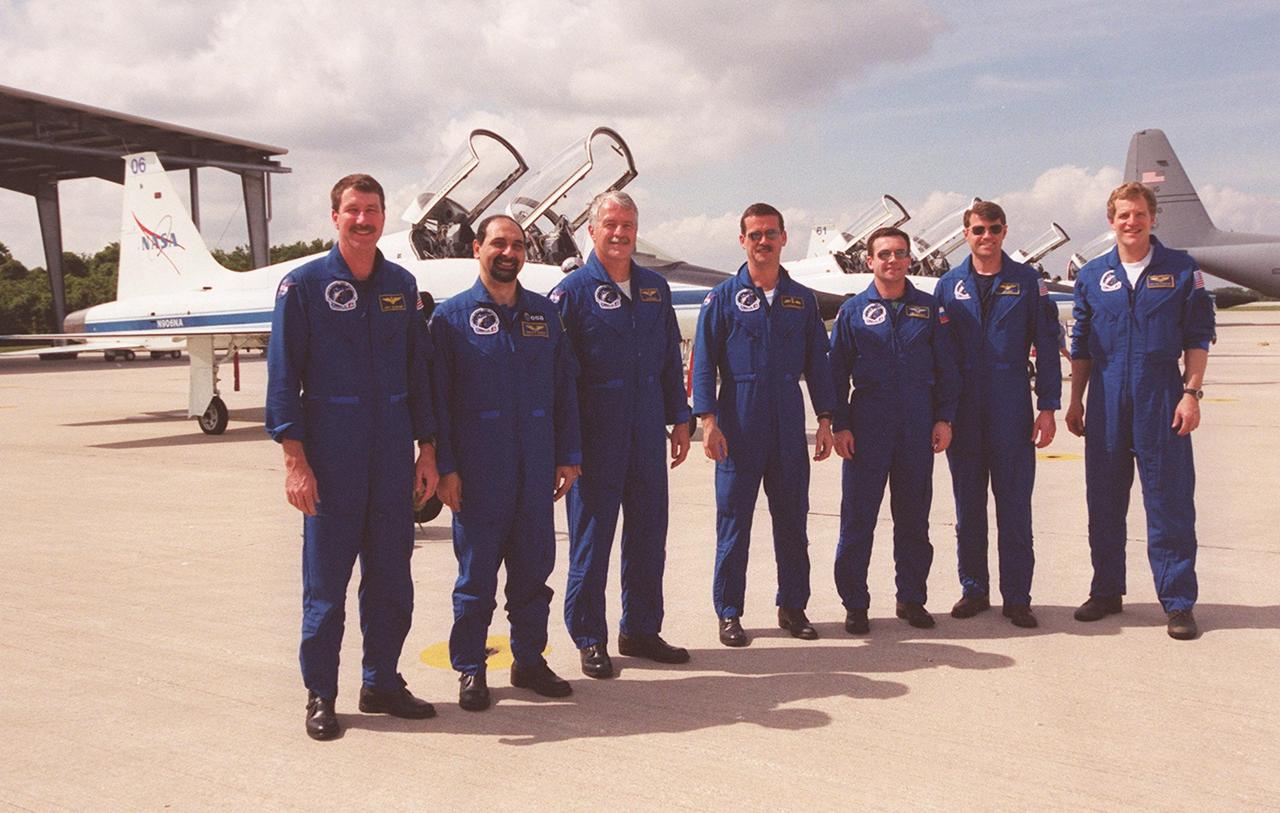
The STS-100 crew poses for a photo after their arrival at KSC to complete Terminal Countdown Demonstration Test activities that were postponed earlier. Standing, from left, are Commander Kent V. Rominger; Mission Specialists Umberto Guidoni, John L. Phillips, Chris A. Hadfield and Yuri V. Lonchakov; Pilot Jeffrey S. Ashby; and Mission Specialist Scott E. Parazynski. An international crew, Guidoni is with the European Space Agency, Hadfield the Canadian Space Agency, and Lonchakov the Russian Space and Aviation Agency. The TCDT includes emergency escape training, payload bay walkdown, and a simulated launch countdown. The primary payload comprises the Canadian robotic arm, SSRMS, and Multi-Purpose Logistics Module, Raffaello. Launch of Space Shuttle Endeavour on mission STS-100 is targeted for April 19 at 2:41 p.m. EDT from Launch Pad 39A
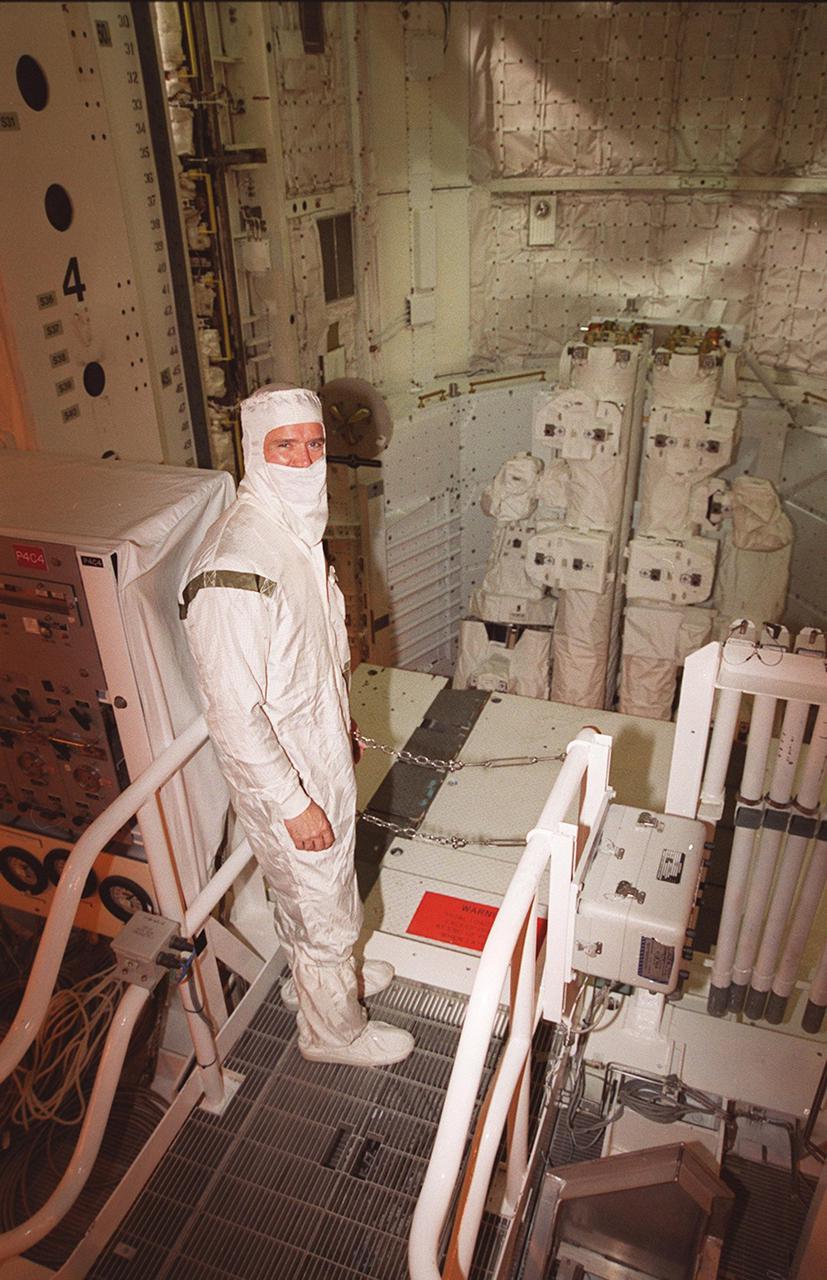
STS-100 Mission Specialist Chris A. Hadfield, who is with the Canadian Space Agency, pauses for the photographer while looking over part of the mission payload, the Canadian robotic arm (SSRMS). The SSRMS is capable of handling large payloads and assisting with docking the Space Shuttle. It is crucial to the continued assembly of the International Space Station. Hadfield and the rest of the crew are at KSC to complete Terminal Countdown Demonstration Test activities that were postponed earlier. The TCDT includes emergency escape training, payload bay walkdown, and a simulated launch countdown. The primary payload also includes Multi-Purpose Logistics Module, Raffaello. Launch of Space Shuttle Endeavour on mission STS-100 is targeted for April 19 at 2:41 p.m. EDT from Launch Pad 39A
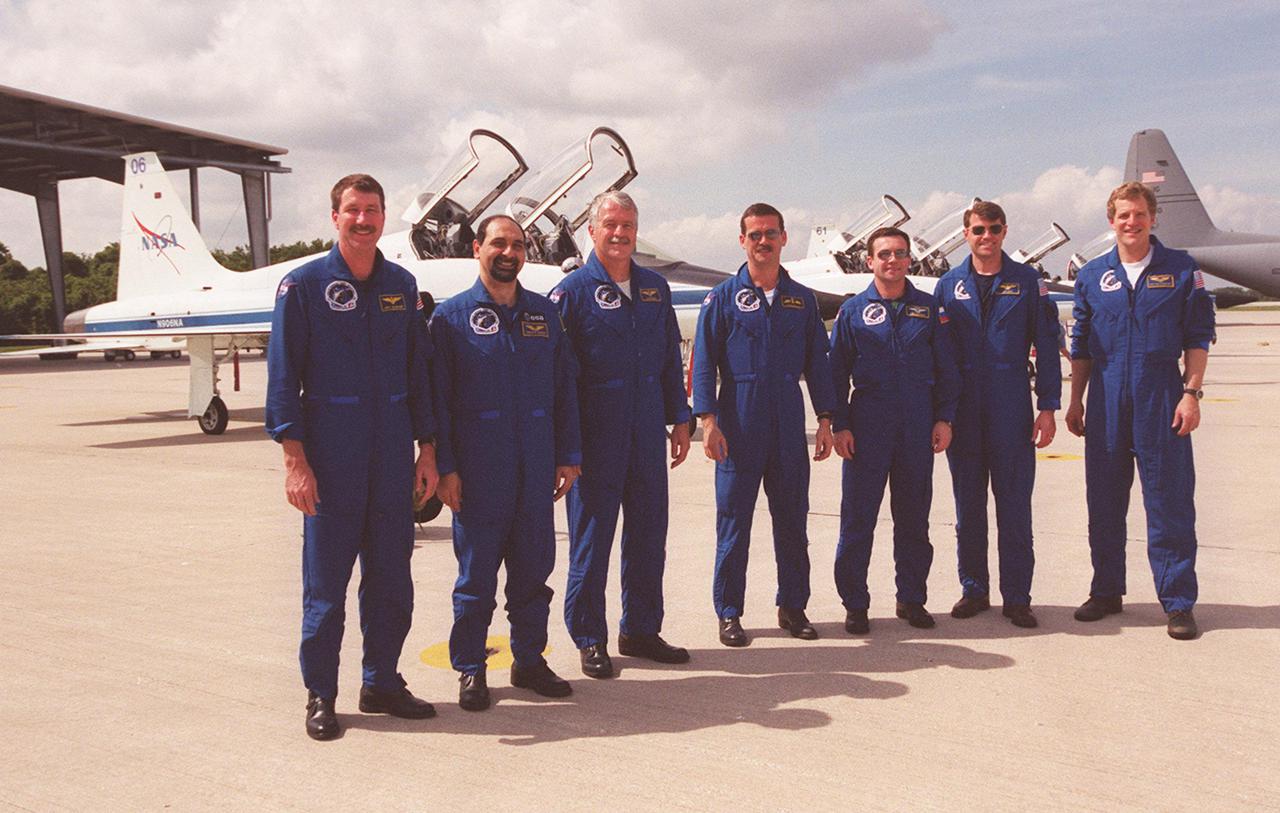
The STS-100 crew poses for a photo after their arrival at KSC to complete Terminal Countdown Demonstration Test activities that were postponed earlier. Standing, from left, are Commander Kent V. Rominger; Mission Specialists Umberto Guidoni, John L. Phillips, Chris A. Hadfield and Yuri V. Lonchakov; Pilot Jeffrey S. Ashby; and Mission Specialist Scott E. Parazynski. An international crew, Guidoni is with the European Space Agency, Hadfield the Canadian Space Agency, and Lonchakov the Russian Space and Aviation Agency. The TCDT includes emergency escape training, payload bay walkdown, and a simulated launch countdown. The primary payload comprises the Canadian robotic arm, SSRMS, and Multi-Purpose Logistics Module, Raffaello. Launch of Space Shuttle Endeavour on mission STS-100 is targeted for April 19 at 2:41 p.m. EDT from Launch Pad 39A
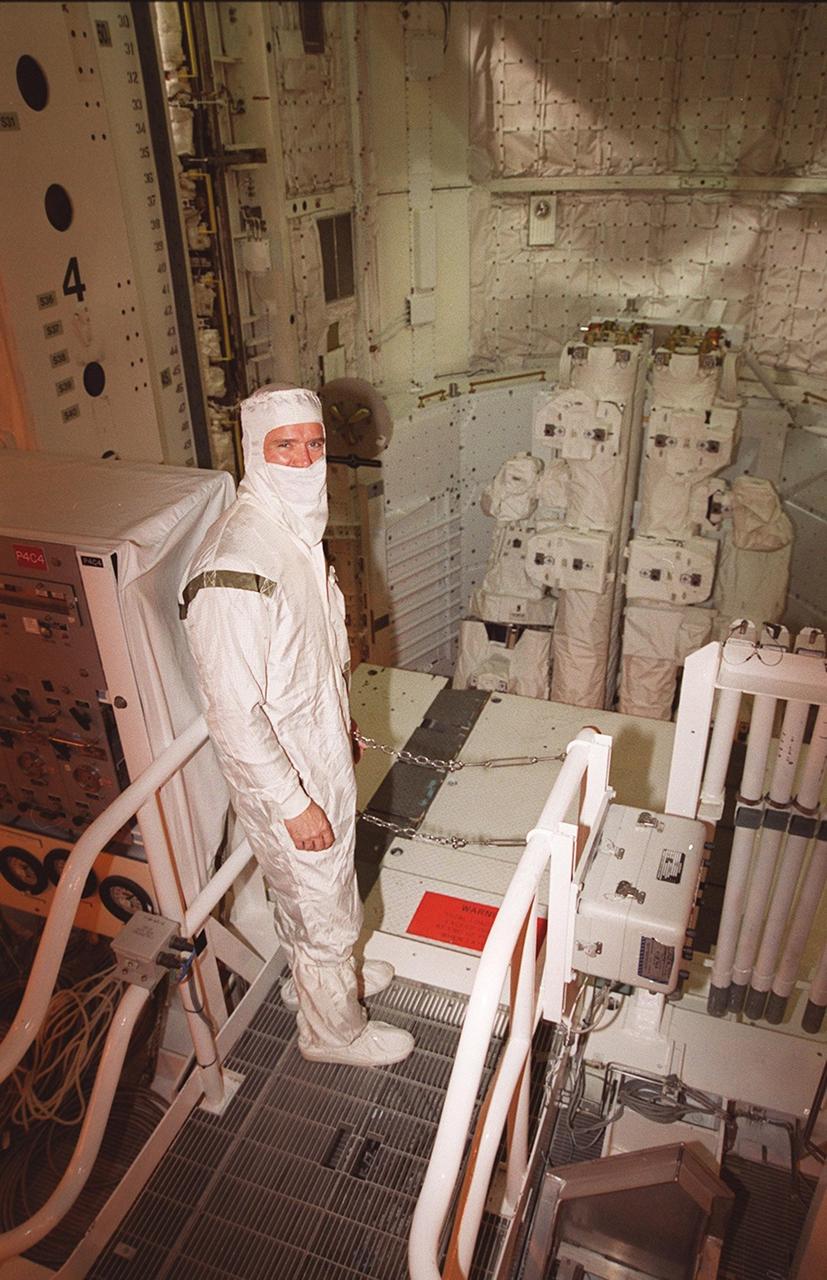
STS-100 Mission Specialist Chris A. Hadfield, who is with the Canadian Space Agency, pauses for the photographer while looking over part of the mission payload, the Canadian robotic arm (SSRMS). The SSRMS is capable of handling large payloads and assisting with docking the Space Shuttle. It is crucial to the continued assembly of the International Space Station. Hadfield and the rest of the crew are at KSC to complete Terminal Countdown Demonstration Test activities that were postponed earlier. The TCDT includes emergency escape training, payload bay walkdown, and a simulated launch countdown. The primary payload also includes Multi-Purpose Logistics Module, Raffaello. Launch of Space Shuttle Endeavour on mission STS-100 is targeted for April 19 at 2:41 p.m. EDT from Launch Pad 39A
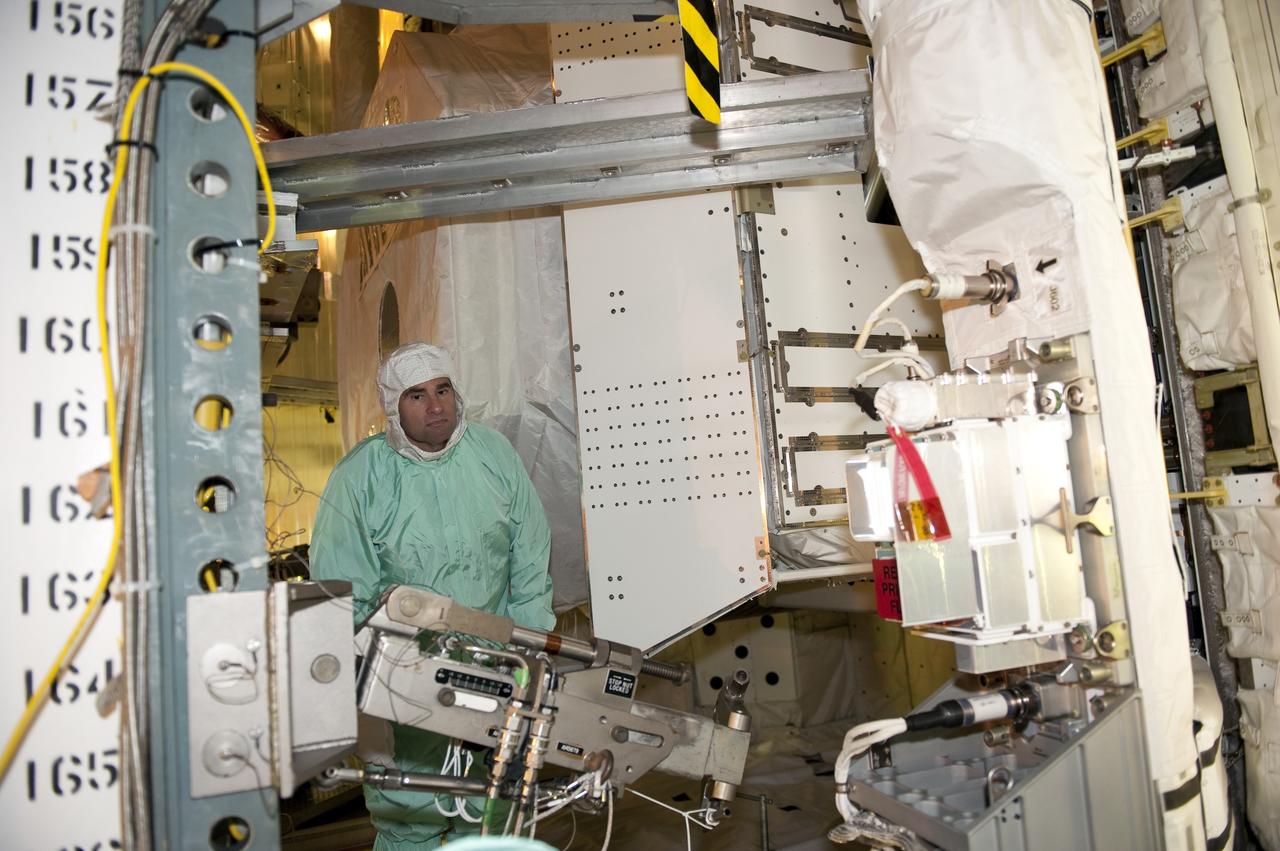
CAPE CANAVERAL, Fla. -- STS-134 Mission Specialist Greg Chamitoff performs a walkdown of space shuttle Endeavour's payload bay. The Express Logistics Carrier-3 packed with spare parts and the Alpha Magnetic Spectrometer-2 (AMS) are inside the bay for the STS-134 mission to the International Space Station. Chamitoff and fellow Mission Specialists Andrew Feustel and Michael Fincke are the designated spacewalkers for the mission. Endeavour's six crew members are at Kennedy for the launch countdown dress rehearsal called the Terminal Countdown Demonstration Test (TCDT) and related training. Endeavour is targeted to launch April 19 at 7:48 p.m. EDT on its final spaceflight mission. For more information visit, www.nasa.gov/mission_pages/shuttle/shuttlemissions/sts134/index.html. Photo credit: NASA/Kim Shiflett
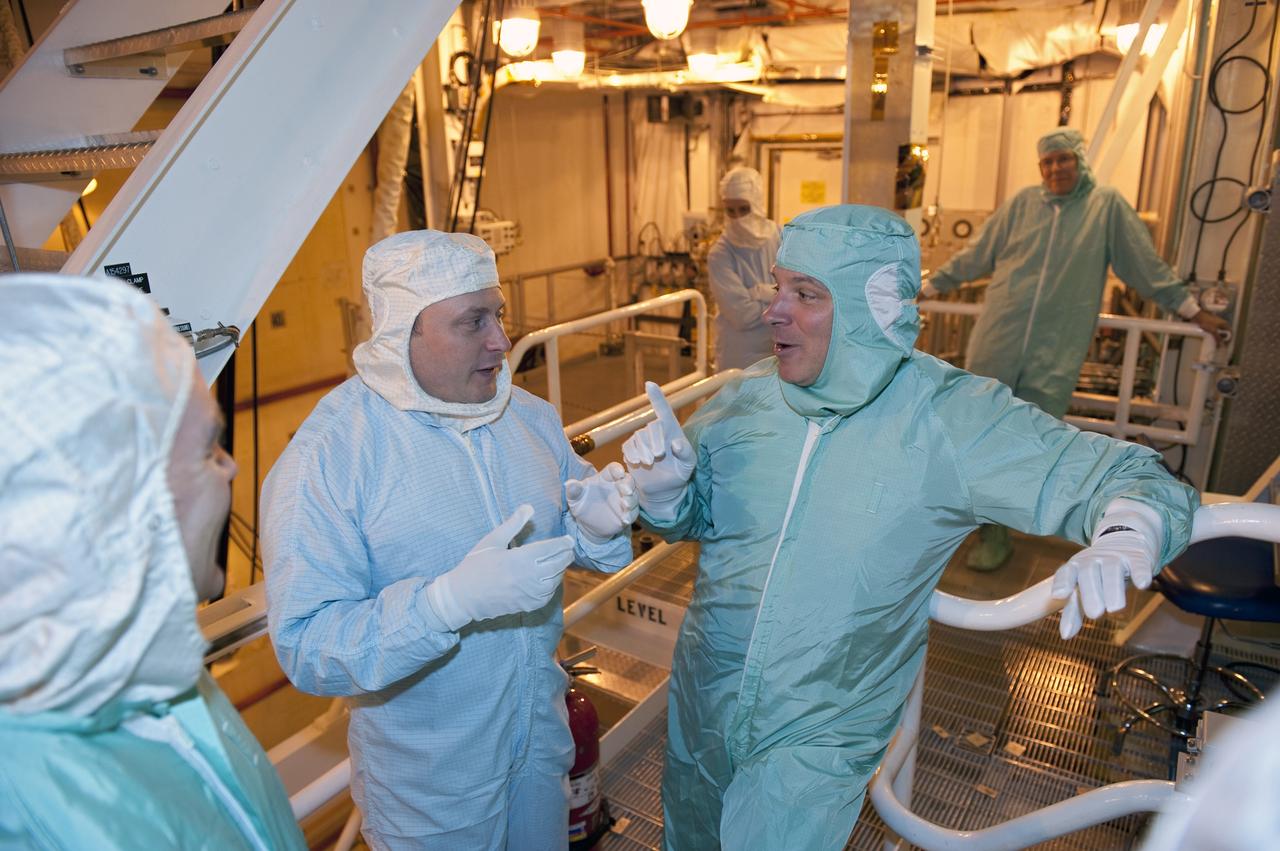
CAPE CANAVERAL, Fla. -- STS-134 Mission Specialist Michael Fincke, right, and Pilot Greg H. Johnson, center, perform a walkdown of space shuttle Endeavour's payload bay with shuttle technicians. The Express Logistics Carrier-3 packed with spare parts and the Alpha Magnetic Spectrometer-2 (AMS) are inside the bay for the STS-134 mission to the International Space Station. Endeavour's six crew members are at Kennedy for the launch countdown dress rehearsal called the Terminal Countdown Demonstration Test (TCDT) and related training. Endeavour is targeted to launch April 19 at 7:48 p.m. EDT on its final spaceflight mission. For more information visit, www.nasa.gov/mission_pages/shuttle/shuttlemissions/sts134/index.html. Photo credit: NASA/Kim Shiflett
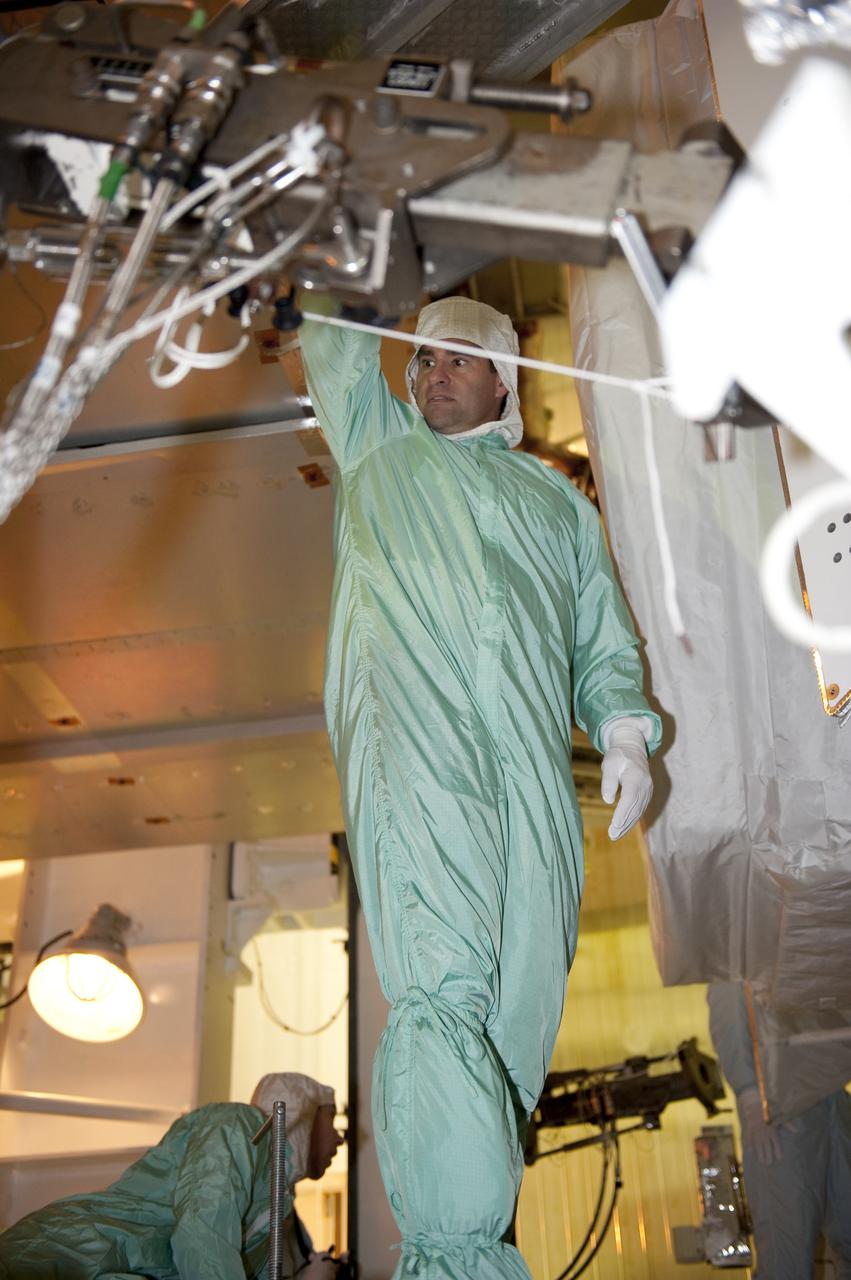
CAPE CANAVERAL, Fla. -- STS-134 Mission Specialists Greg Chamitoff, standing, and Andrew Feustel perform a walkdown of space shuttle Endeavour's payload bay. The Express Logistics Carrier-3 packed with spare parts and the Alpha Magnetic Spectrometer-2 (AMS) are inside the bay for the STS-134 mission to the International Space Station. Chamitoff, Feustel and fellow Mission Specialist Michael Fincke are the designated spacewalkers for the mission. Endeavour's six crew members are at Kennedy for the launch countdown dress rehearsal called the Terminal Countdown Demonstration Test (TCDT) and related training. Endeavour is targeted to launch April 19 at 7:48 p.m. EDT on its final spaceflight mission. For more information visit, www.nasa.gov/mission_pages/shuttle/shuttlemissions/sts134/index.html. Photo credit: NASA/Kim Shiflett

CAPE CANAVERAL, Fla. -- On Launch Pad 39A at NASA's Kennedy Space Center, STS-124 Mission Specialists Mike Fossum (left) and Ron Garan team up to look at the Japanese Remote Manipulator System in space shuttle Discovery's payload bay. The payload bay walkdown is part of the launch dress rehearsal called the terminal countdown demonstration test. TCDT provides astronauts and ground crews with an opportunity to participate in various simulated countdown activities, including equipment familiarization and emergency training. On the STS-124 mission, the crew will deliver and install the Japanese Experiment Module – Pressurized Module and Japanese Remote Manipulator System. Discovery's launch is targeted for May 31. Photo credit: NASA/Kim Shiflett
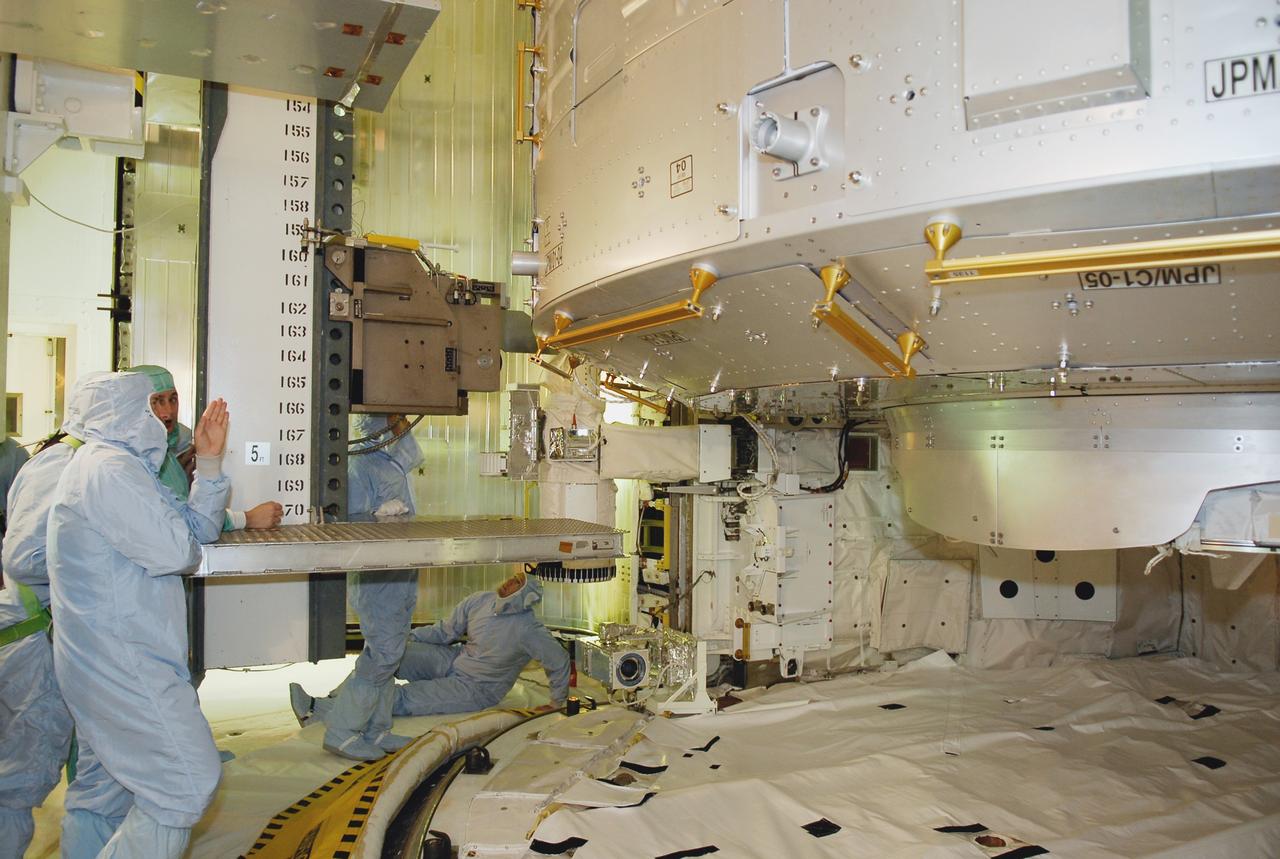
CAPE CANAVERAL, Fla. -- On Launch Pad 39A at NASA's Kennedy Space Center, STS-124 crew members get a close look at the Japanese Experiment Module – Pressurized Module and other equipment in space shuttle Discovery's payload bay. At left is Commander Mark Kelly; on the floor looking up is Pilot Ken Ham. The payload bay walkdown is part of the launch dress rehearsal called the terminal countdown demonstration test. TCDT provides astronauts and ground crews with an opportunity to participate in various simulated countdown activities, including equipment familiarization and emergency training. On the STS-124 mission, the crew will deliver and install the Japanese Experiment Module – Pressurized Module and Japanese Remote Manipulator System. Discovery's launch is targeted for May 31. Photo credit: NASA/Kim Shiflett
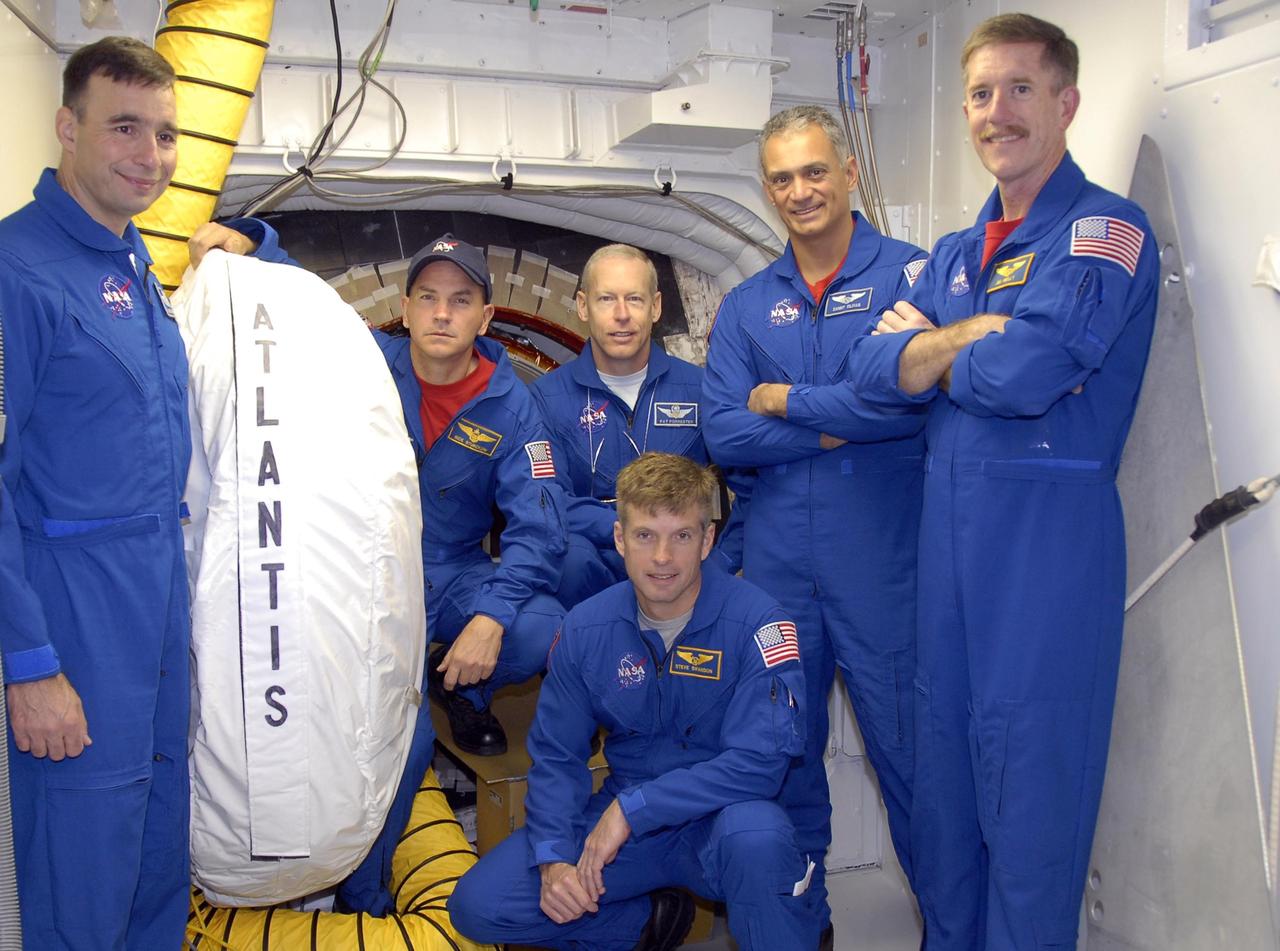
KENNEDY SPACE CENTER, FLA. -- During Terminal Countdown Demonstration Test activities, the Mission STS-117 crew members participate in an emergency egress walkdown at Launch Pad 39A. On the 195-foot level of the fixed service structure inside the white room are Mission Specialist Steven Swanson (kneeling), and standing from left, Pilot Lee Archambault, Commander Rick Sturckow, and Mission Specialists Patrick Forrester, Danny Olivas and James Reilly. The TCDT also includes M-113 armored personnel carrier training, and a simulated launch countdown. The mission payload aboard Space Shuttle Atlantis is the S3/S4 integrated truss structure, along with a third set of solar arrays and batteries. The crew of six astronauts will install the truss to continue assembly of the International Space Station. Photo credit: NASA/Kim Shiflett
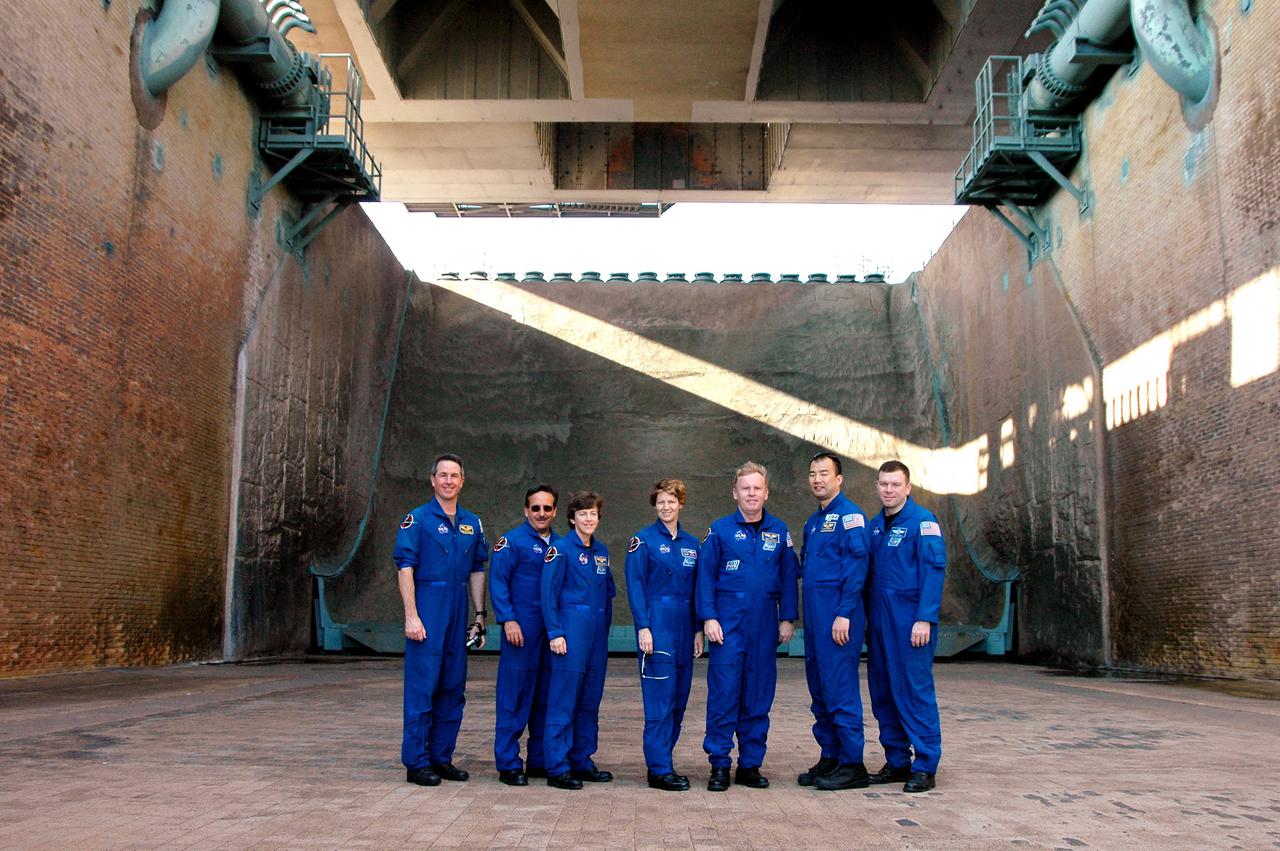
KENNEDY SPACE CENTER, FLA. - During a walkdown of Launch Pad 39B, the STS-114 crew pauses for a photograph in the flame trench underneath the pad. The flame trench, built with concrete and refractory brick, bisects the pad at ground level. It is 490 feet long, 58 feet wide and 42 feet deep. The flame deflector system includes an inverted, V-shaped steel structure covered with a high-temperature concrete material five inches thick that extends across the center of the flame trench. One side of the “V” receives and deflects the flames from the Orbiter main engines; the opposite side deflects the flames from the Solid Rocket Boosters. There are also two movable deflectors at the top of the trench to provide additional protection to Shuttle hardware from the Solid Rocket Booster flames. STS-114 is designated the first Return to Flight mission, with a launch window extending from July 13 to July 31. The crew is at KSC for Terminal Countdown Demonstration Test (TCDT) activities. The TCDT is held at KSC prior to each Space Shuttle flight. It provides the crew of each mission an opportunity to participate in simulated countdown activities. The test ends with a mock launch countdown culminating in a simulated main engine cutoff. The crew also spends time undergoing emergency egress training exercises at the launch pad.
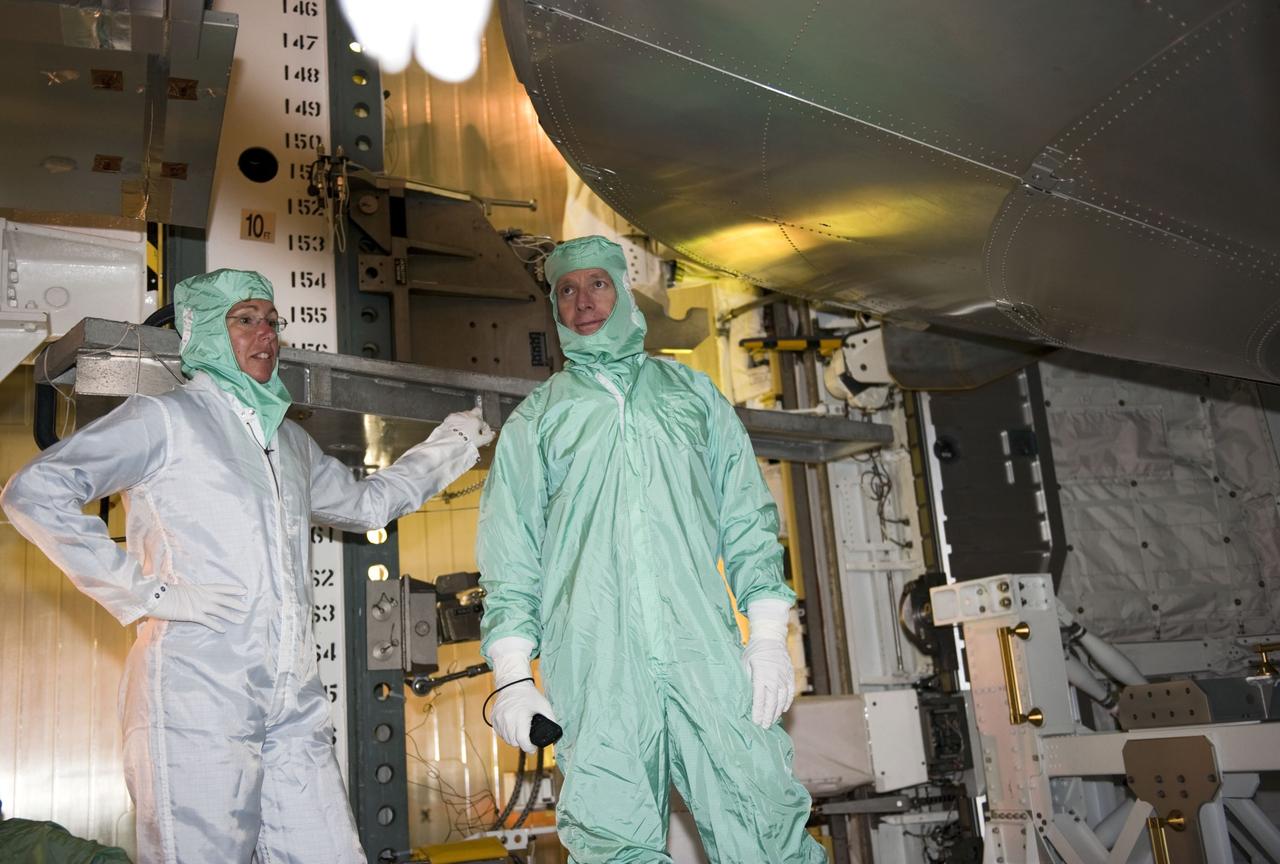
CAPE CANAVERAL, Fla. -- At Launch Pad 39A at NASA's Kennedy Space Center in Florida, space shuttle Atlantis' STS-135 crew members take part in a payload bay walkdown to check out the cargo secured in Atlantis' bay. Seen here are Mission Specialist Sandy Magnus (left) and Commander Chris Ferguson. The astronauts are at Kennedy to participate in a launch countdown dress rehearsal called the Terminal Countdown Demonstration Test (TCDT) and related training. Atlantis and its crew are targeted to lift off July 8, taking with them the Raffaello multi-purpose logistics module packed with supplies and spare parts to the International Space Station. The STS-135 mission also will fly a system to investigate the potential for robotically refueling existing satellites and return a failed ammonia pump module to help NASA better understand the failure mechanism and improve pump designs for future systems. STS-135 will be the 33rd flight of Atlantis, the 37th shuttle mission to the space station, and the 135th and final mission of NASA's Space Shuttle Program. For more information visit, www.nasa.gov/mission_pages/shuttle/shuttlemissions/sts135/index.html. Photo credit: NASA/Kim Shiflett
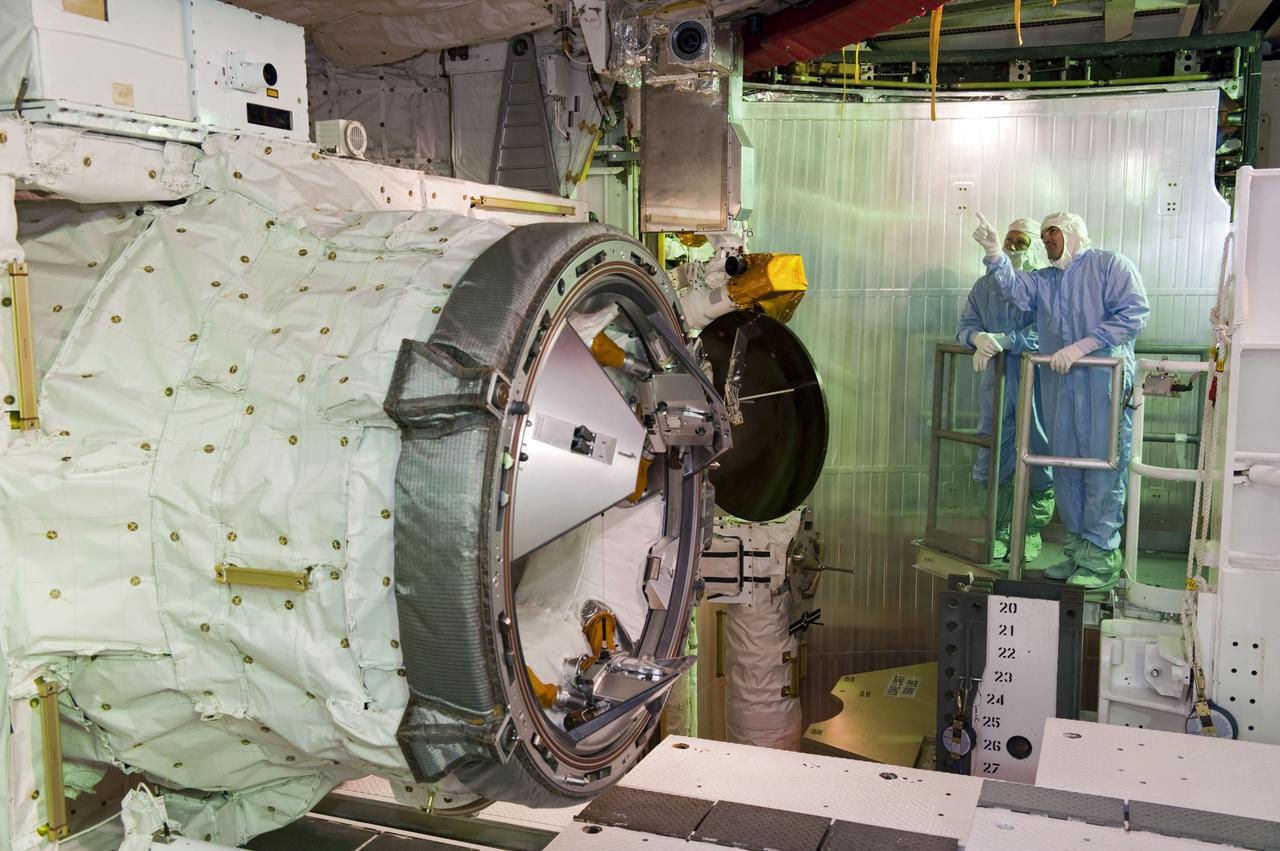
CAPE CANAVERAL, Fla. -- At Launch Pad 39A at NASA's Kennedy Space Center in Florida, space shuttle Atlantis' STS-135 crew members take part in a payload bay walkdown to check out the cargo secured in Atlantis' bay. Seen here inspecting the airlock are Pilot Doug Hurley (left) and Mission Specialist Rex Walheim. The astronauts are at Kennedy to participate in a launch countdown dress rehearsal called the Terminal Countdown Demonstration Test (TCDT) and related training. Atlantis and its crew are targeted to lift off July 8, taking with them the Raffaello multi-purpose logistics module packed with supplies and spare parts to the International Space Station. The STS-135 mission also will fly a system to investigate the potential for robotically refueling existing satellites and return a failed ammonia pump module to help NASA better understand the failure mechanism and improve pump designs for future systems. STS-135 will be the 33rd flight of Atlantis, the 37th shuttle mission to the space station, and the 135th and final mission of NASA's Space Shuttle Program. For more information visit, www.nasa.gov/mission_pages/shuttle/shuttlemissions/sts135/index.html. Photo credit: NASA/Kim Shiflett
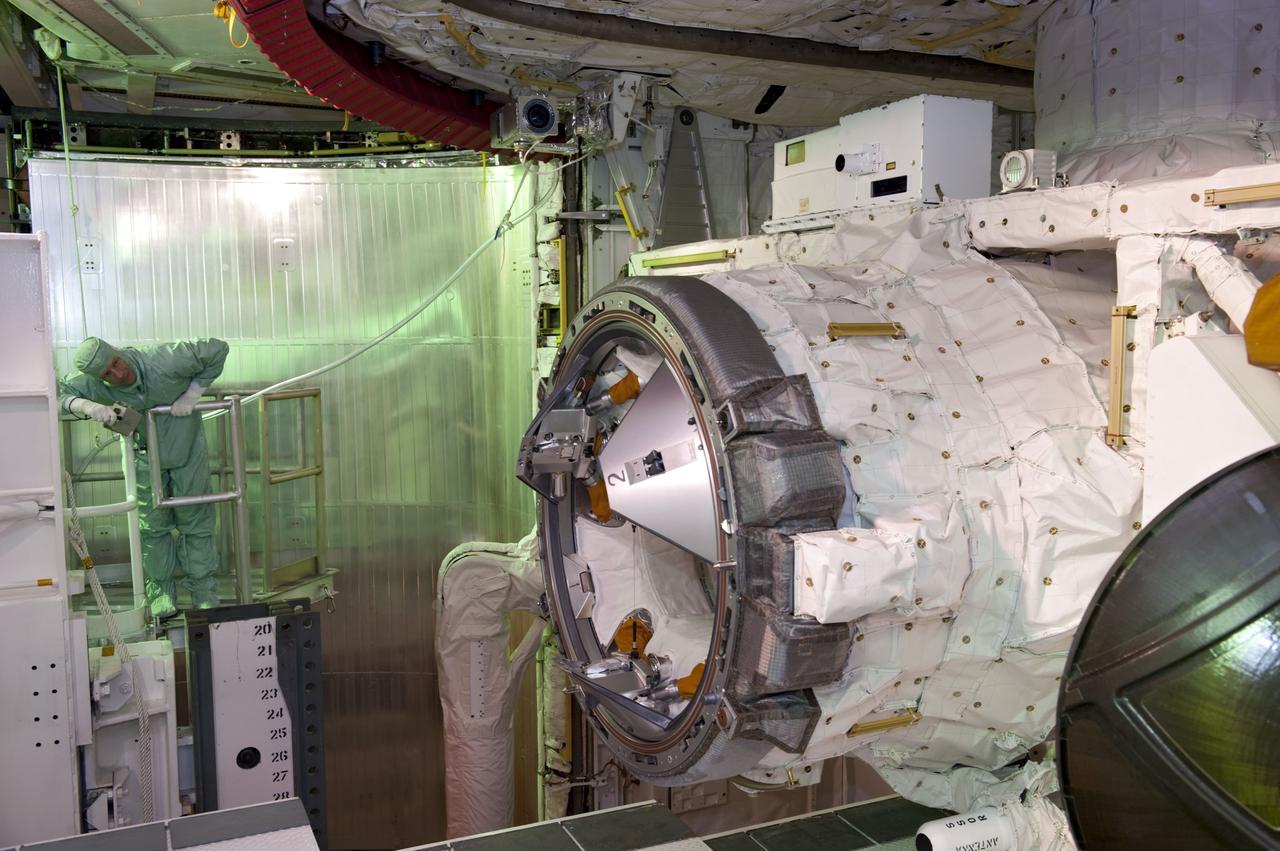
CAPE CANAVERAL, Fla. -- At Launch Pad 39A at NASA's Kennedy Space Center in Florida, space shuttle Atlantis' STS-135 crew members take part in a payload bay walkdown to check out the cargo secured in Atlantis' bay. Seen here inspecting the airlock is Commander Chris Ferguson. The astronauts are at Kennedy to participate in a launch countdown dress rehearsal called the Terminal Countdown Demonstration Test (TCDT) and related training. Atlantis and its crew are targeted to lift off July 8, taking with them the Raffaello multi-purpose logistics module packed with supplies and spare parts to the International Space Station. The STS-135 mission also will fly a system to investigate the potential for robotically refueling existing satellites and return a failed ammonia pump module to help NASA better understand the failure mechanism and improve pump designs for future systems. STS-135 will be the 33rd flight of Atlantis, the 37th shuttle mission to the space station, and the 135th and final mission of NASA's Space Shuttle Program. For more information visit, www.nasa.gov/mission_pages/shuttle/shuttlemissions/sts135/index.html. Photo credit: NASA/Kim Shiflett
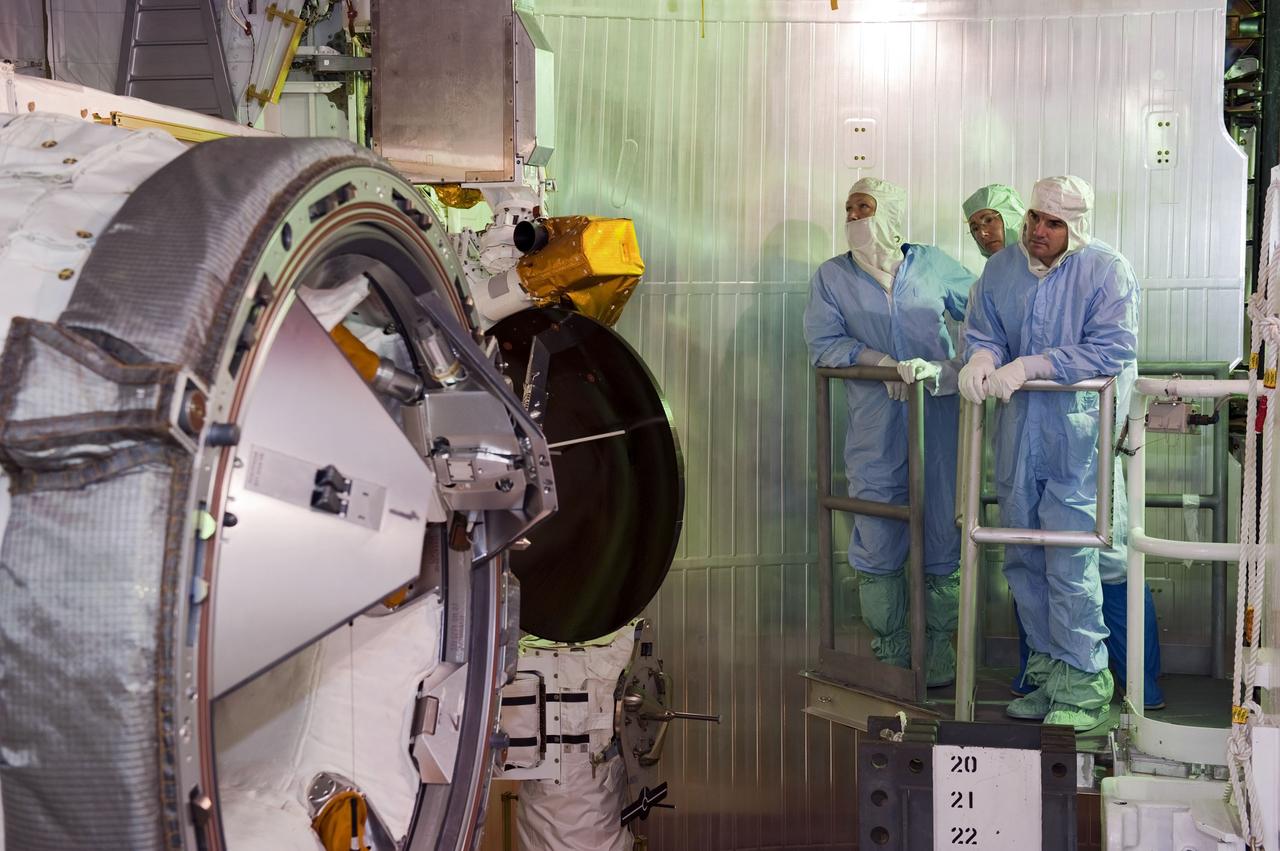
CAPE CANAVERAL, Fla. -- At Launch Pad 39A at NASA's Kennedy Space Center in Florida, space shuttle Atlantis' STS-135 crew members take part in a payload bay walkdown to check out the cargo secured in Atlantis' bay. Seen here inspecting the airlock are Pilot Doug Hurley (left), and Mission Specialists Sandy Magnus and Rex Walheim. The astronauts are at Kennedy to participate in a launch countdown dress rehearsal called the Terminal Countdown Demonstration Test (TCDT) and related training. Atlantis and its crew are targeted to lift off July 8, taking with them the Raffaello multi-purpose logistics module packed with supplies and spare parts to the International Space Station. The STS-135 mission also will fly a system to investigate the potential for robotically refueling existing satellites and return a failed ammonia pump module to help NASA better understand the failure mechanism and improve pump designs for future systems. STS-135 will be the 33rd flight of Atlantis, the 37th shuttle mission to the space station, and the 135th and final mission of NASA's Space Shuttle Program. For more information visit, www.nasa.gov/mission_pages/shuttle/shuttlemissions/sts135/index.html. Photo credit: NASA/Kim Shiflett
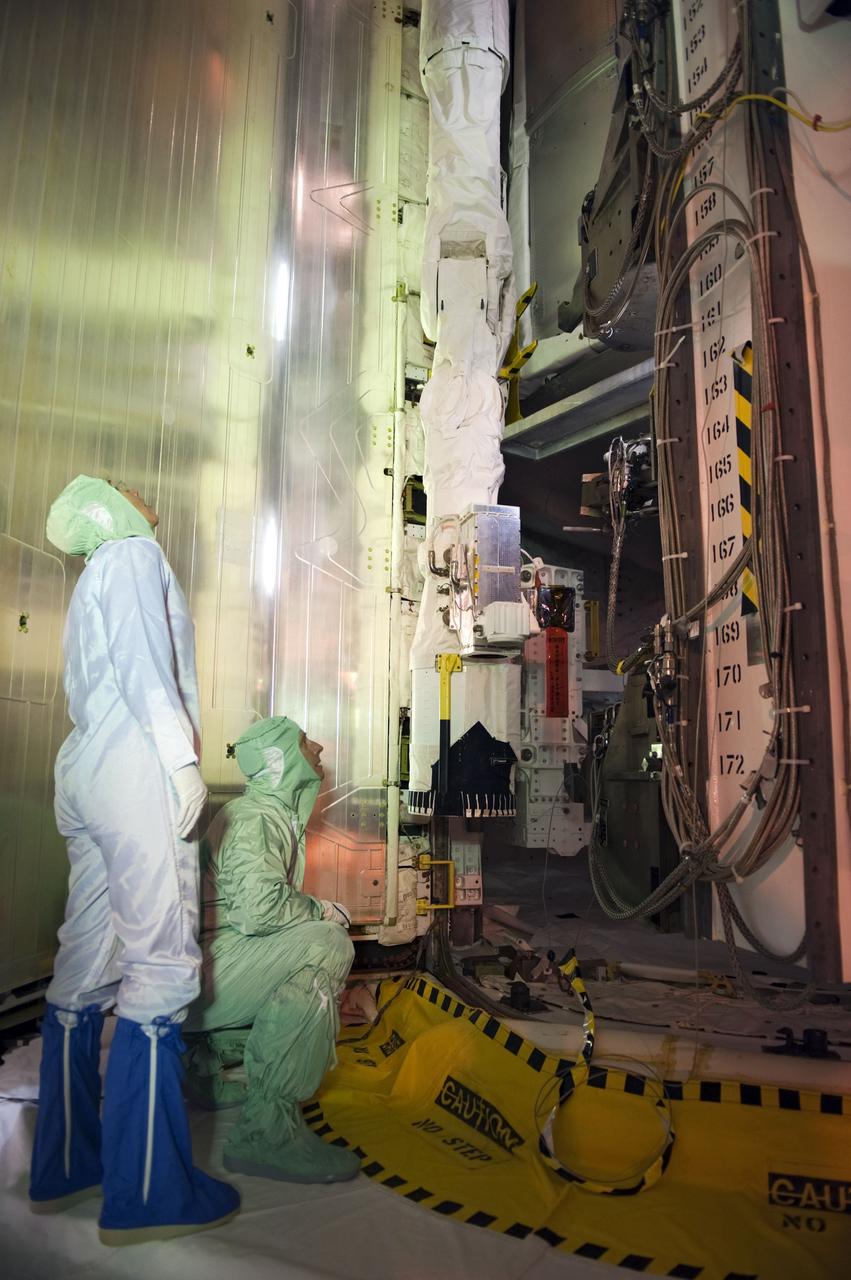
CAPE CANAVERAL, Fla. -- At Launch Pad 39A at NASA's Kennedy Space Center in Florida, space shuttle Atlantis' STS-135 crew members take part in a payload bay walkdown to check out the cargo secured in Atlantis' bay. Seen here are Mission Specialist Sandy Magnus (left) and Commander Chris Ferguson. The astronauts are at Kennedy to participate in a launch countdown dress rehearsal called the Terminal Countdown Demonstration Test (TCDT) and related training. Atlantis and its crew are targeted to lift off July 8, taking with them the Raffaello multi-purpose logistics module packed with supplies and spare parts to the International Space Station. The STS-135 mission also will fly a system to investigate the potential for robotically refueling existing satellites and return a failed ammonia pump module to help NASA better understand the failure mechanism and improve pump designs for future systems. STS-135 will be the 33rd flight of Atlantis, the 37th shuttle mission to the space station, and the 135th and final mission of NASA's Space Shuttle Program. For more information visit, www.nasa.gov/mission_pages/shuttle/shuttlemissions/sts135/index.html. Photo credit: NASA/Kim Shiflett