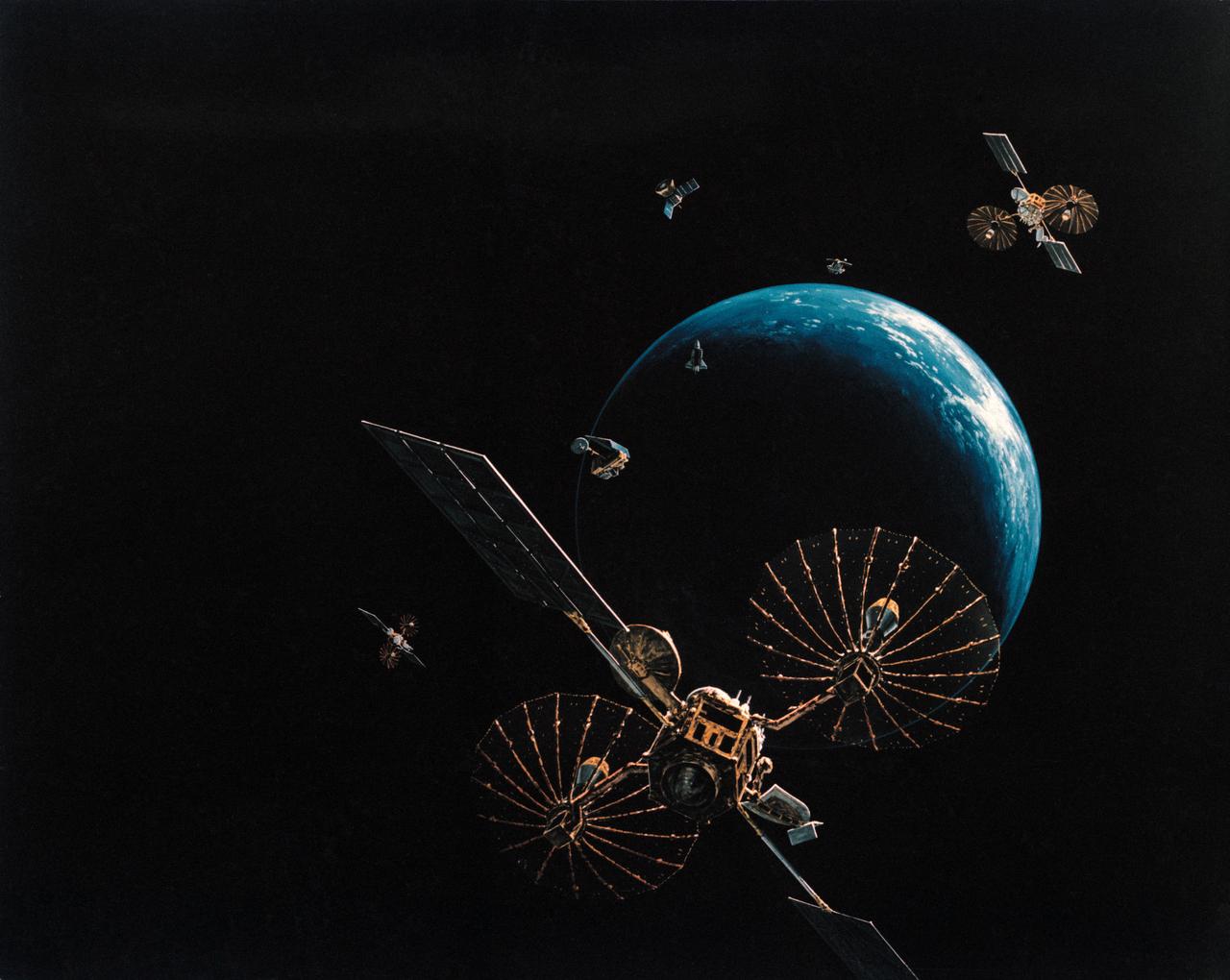
Artist concept shows the Tracking and Data Relay Satellite E (TDRS-E) augmenting a sophisticated TDRS system (TDRSS) communications network after deployment during STS-43 from Atlantis, Orbiter Vehicle (OV) 104. TDRS, built by TRW, will be placed in a geosynchronous orbit and after onorbit testing, which requires several weeks, will be designated TDRS-5. The communications satellite will replace TDRS-3 at 174 degrees West longitude. The backbone of NASA's space-to-ground communications, the TDRSs have increased NASA's ability to send and receive data to spacecraft in low-earth orbit to more than 85 percent of the time. Before TDRS, NASA relied solely on a system of ground stations that permitted communications only 15 percent of the time. Increased coverage has allowed onorbit repairs, live television broadcast from space and continuous dialogues between astronaut crews and ground control during critical periods such as Space Shuttle landings.
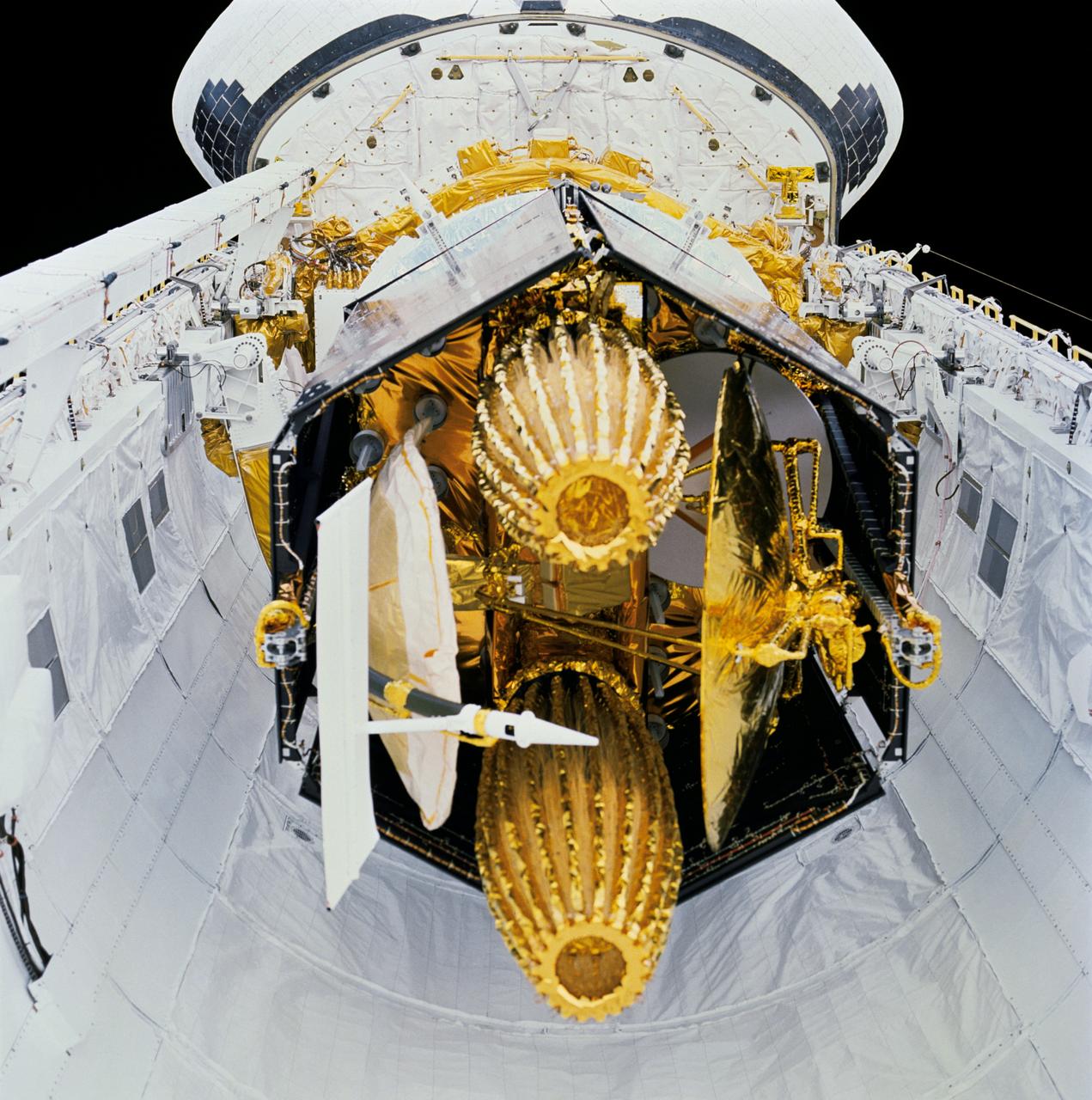
STS029-71-000AE (13-18 March 1989) --- STS-29 onboard view shows Space Shuttle Discovery's payload bay with tracking and data relay satellite D (TDRS-D) in stowed, pre-deployment position. In this head-on view, TDRS-D stowed components including single access #1 and #2, solar cell panels, SGL, S-Band omni antenna, and C-Band antenna are visible. TDRS-D rests in airborne support equipment (ASE) forward cradle and aft frame tilt actuator (AFTA). Discovery's aft bulkhead and orbital maneuvering system (OMS) pods are visible in the background.
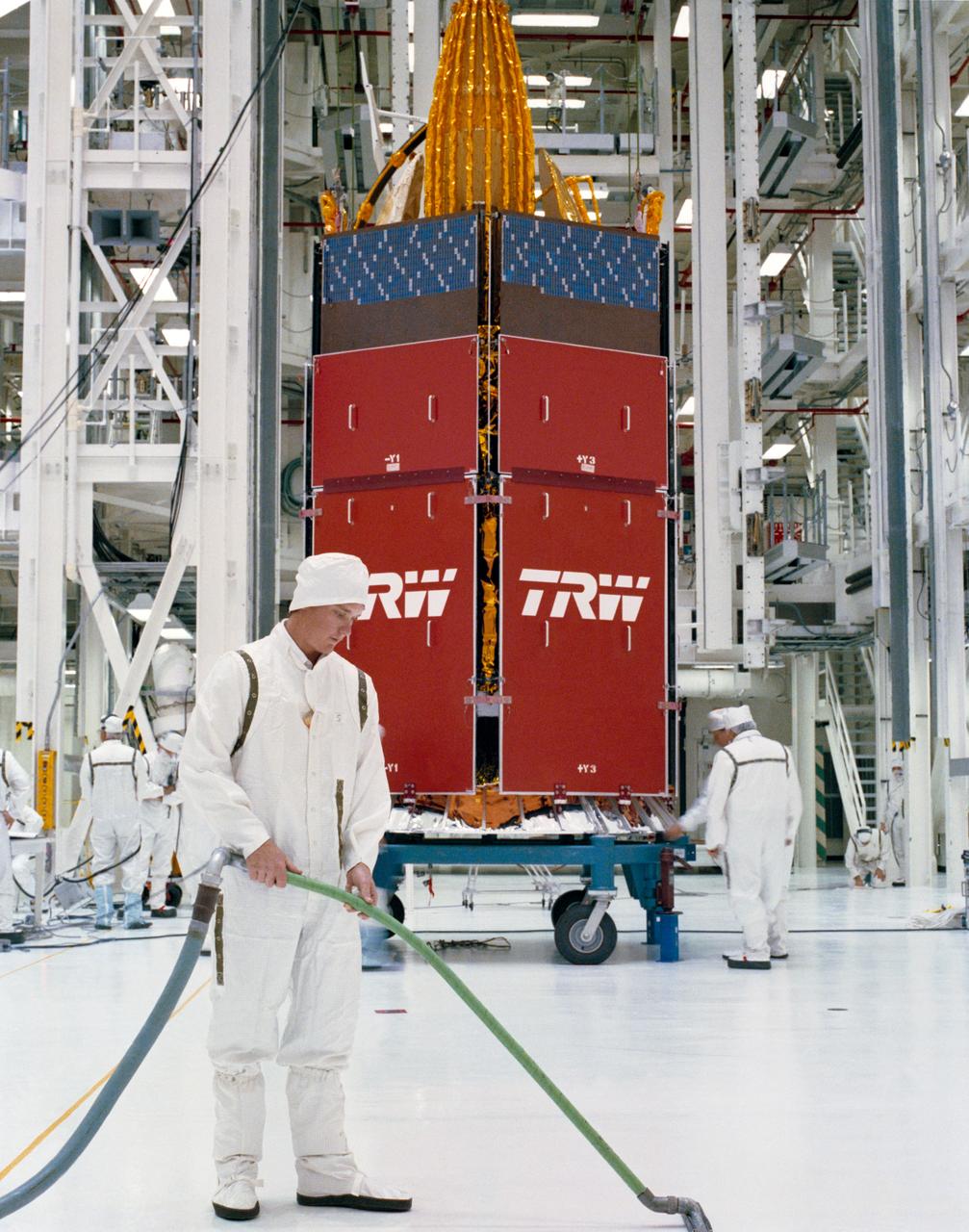
S89-27382 (29 Dec 1988) --- Technicians and engineers in the Kennedy Space Center's Vertical Processing Facility prepare to participate in the mating of the STS-29 tracking and data relay satellite (TDRS-D) with its inertial upper stage (IUS-9, out of frame).
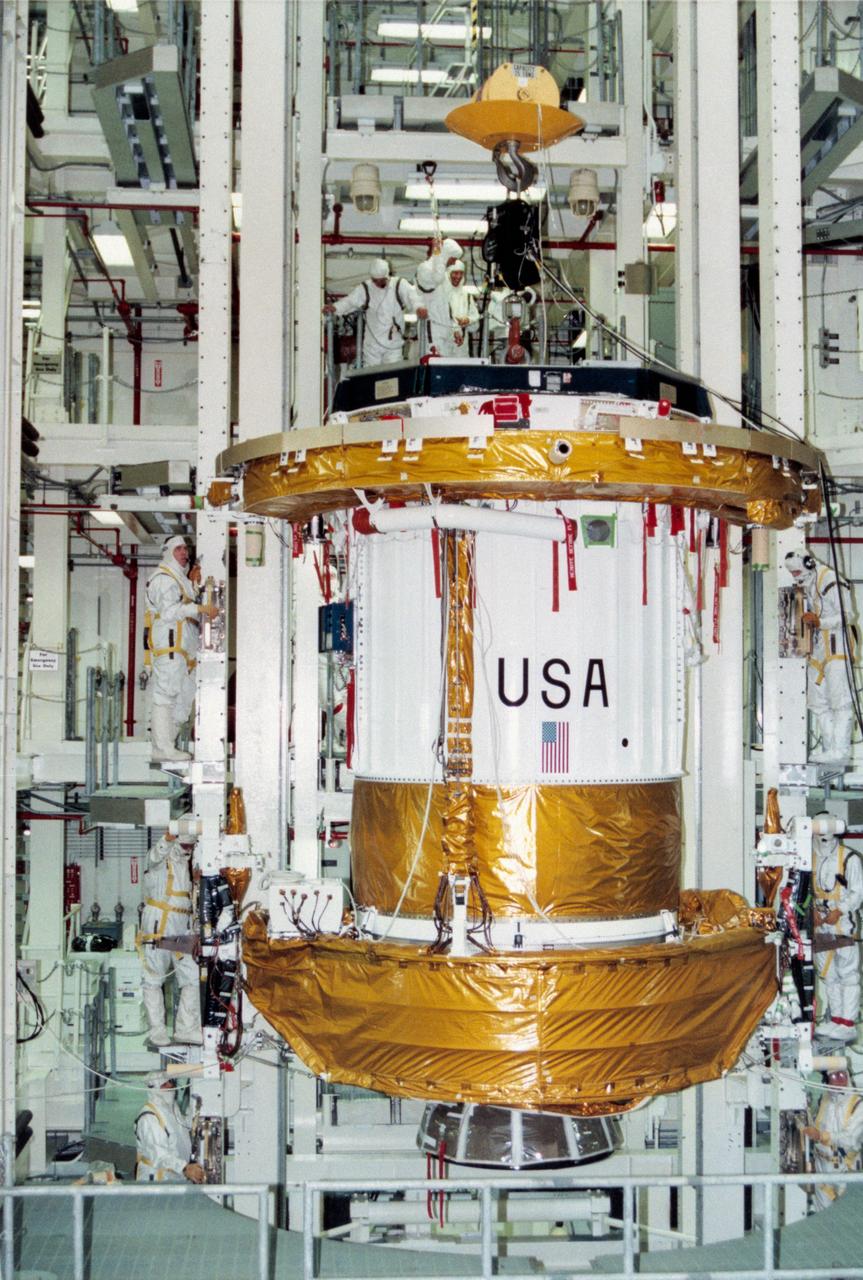
S95-08961 (4 APRIL 1995) --- Workers in the Vertical Processing Facility (VPF) oversee and control the lowering of the Inertial Upper Stage (IUS) booster into a work stand for preflight processing. The IUS will be attached to the Tracking and Data Relay Satellite (TDRS-G), which will be deployed by the Space Shuttle Discovery on the STS-70 mission. The IUS is scheduled to be mated to the TDRS satellite later in April. Liftoff of STS-70 is slated for no earlier than June 8, 1995.
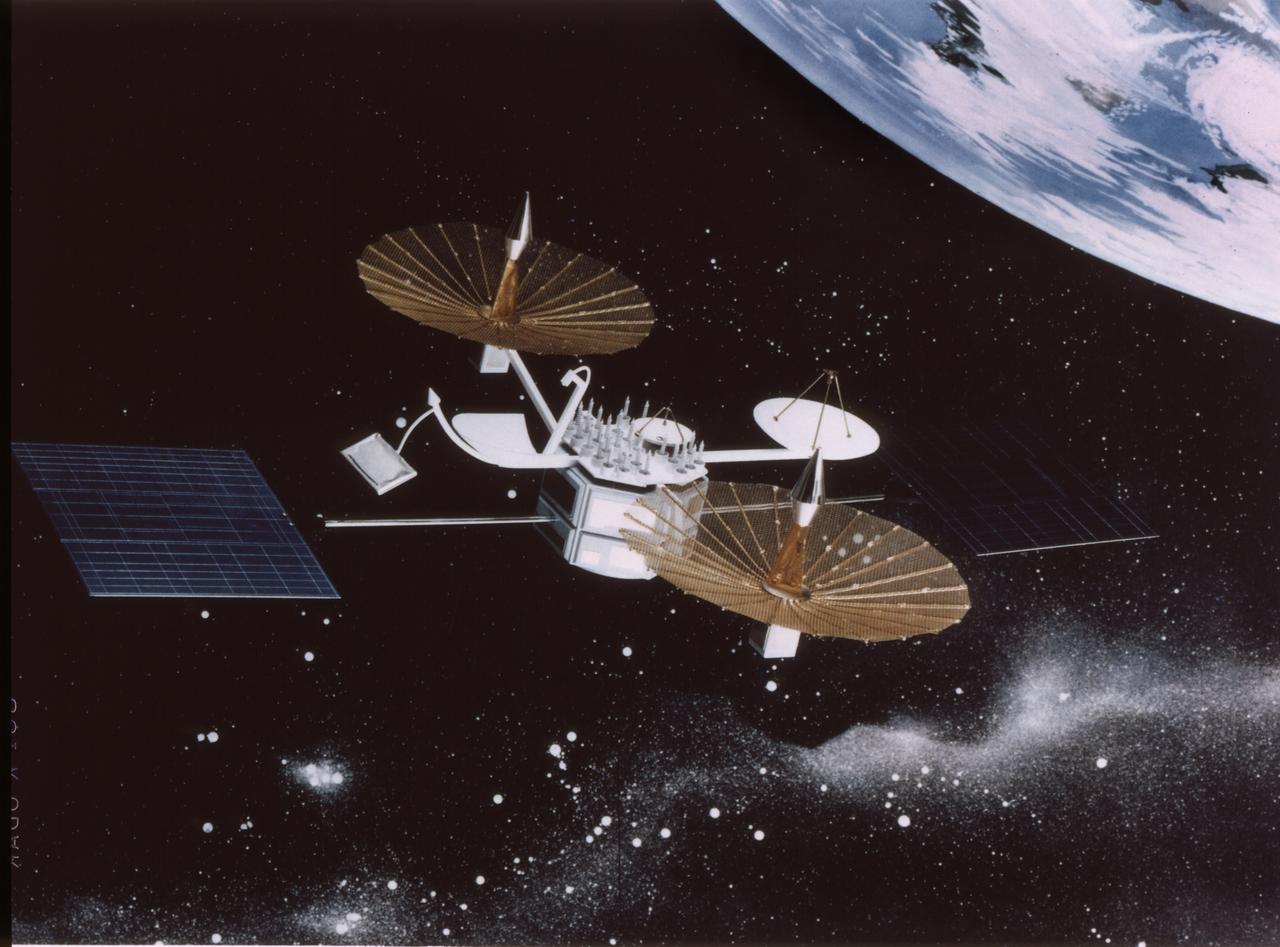
This artist's concept drawing depicts the Tracking and Data Relay Satellite-C (TDRS-C), which was the primary payload of the Space Shuttle Discovery on the STS-26 mission, launched on September 29, 1988. The TDRS system provides almost uninterrupted communications with Earth-orbiting Shuttles and satellites, and had replaced the intermittent coverage provided by globe-encircling ground tracking stations used during the early space program. The TDRS can transmit and receive data, and track a user spacecraft in a low Earth orbit. The deployment of TDRS-G on the STS-70 mission being the latest in the series, NASA has successfully launched six TDRSs.
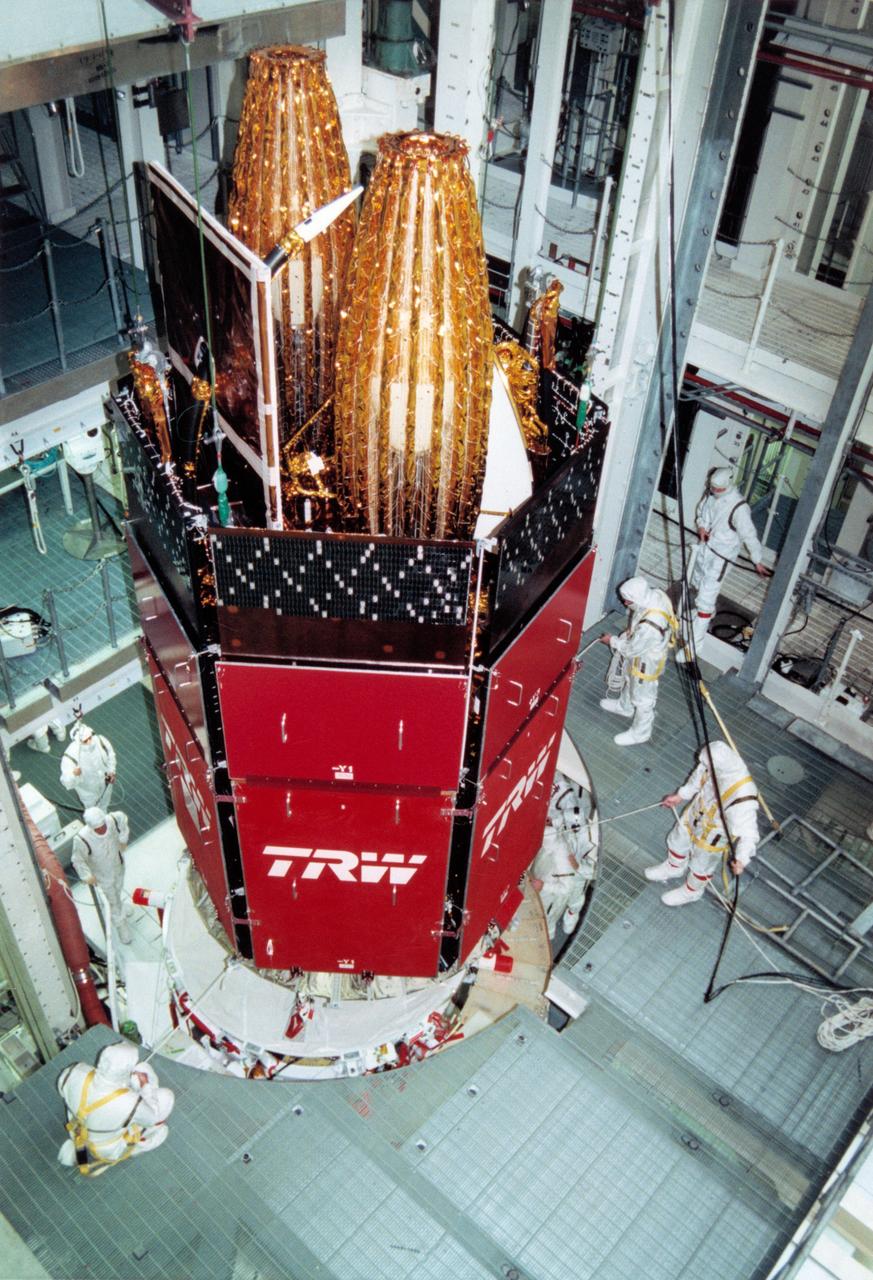
S95-08962 (12 APRIL 1995) --- Members of the Kennedy Space Center (KSC) Payload Processing Team hoist the Tracking and Data Relay Satellite (TDRS-G) into a work stand in the Vertical Processing Facility (VPF) for mating with its Inertial Upper Stage (IUS). After testing and final checkout, TDRS-G and the IUS will be transported to Launch Pad 39B and installed into the Space Shuttle Discovery's payload bay for launch on the STS-70 mission, scheduled for launch June 8, 1995.
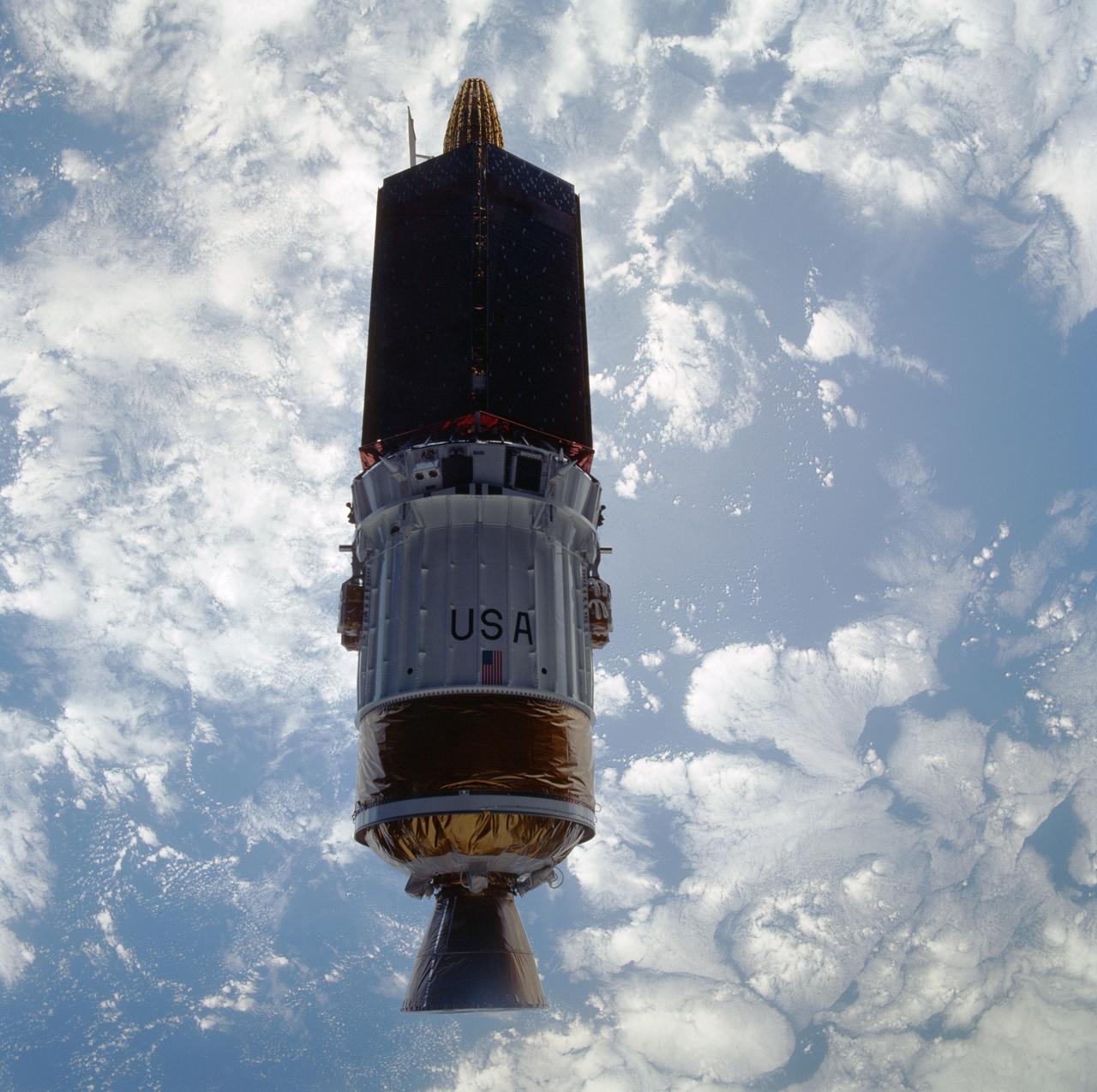
STS043-601-033 (2 Aug 1991) --- The Tracking and Data Relay Satellite (TDRS-E), is seen almost as a silhouette in this 70mm image. The TDRS spacecraft was captured on film as it moved away from the earth-orbiting Atlantis a mere six hours after the shuttle was launched from Pad 39A at Kennedy Space Center, Florida. TDRS, built by TRW, will be placed in a geosynchronous orbit and after on-orbit testing, which requires several weeks, will be designated TDRS-5. The communications satellite will replace TDRS-3 at 174 degrees west longitude. The backbone of NASA's space-to-ground communications, the Tracking and Data Relay Satellites have increased NASA's ability to send and receive data to spacecraft in low-earth orbit to more than 85 percent of the time. Before TDRS, NASA relied solely on a system of ground stations that permitted communications only 15 percent of the time. Increased coverage has allowed on-orbit repairs, live television broadcast from space and continuous dialogues between astronaut crews and ground control during critical periods such as space shuttle landings. The five astronauts of the STS-43 are John E. Blaha, mission commander, Michael a. Baker, pilot, and mission specialists Shannon W. Lucid, G. David Low and James C. Adamson.
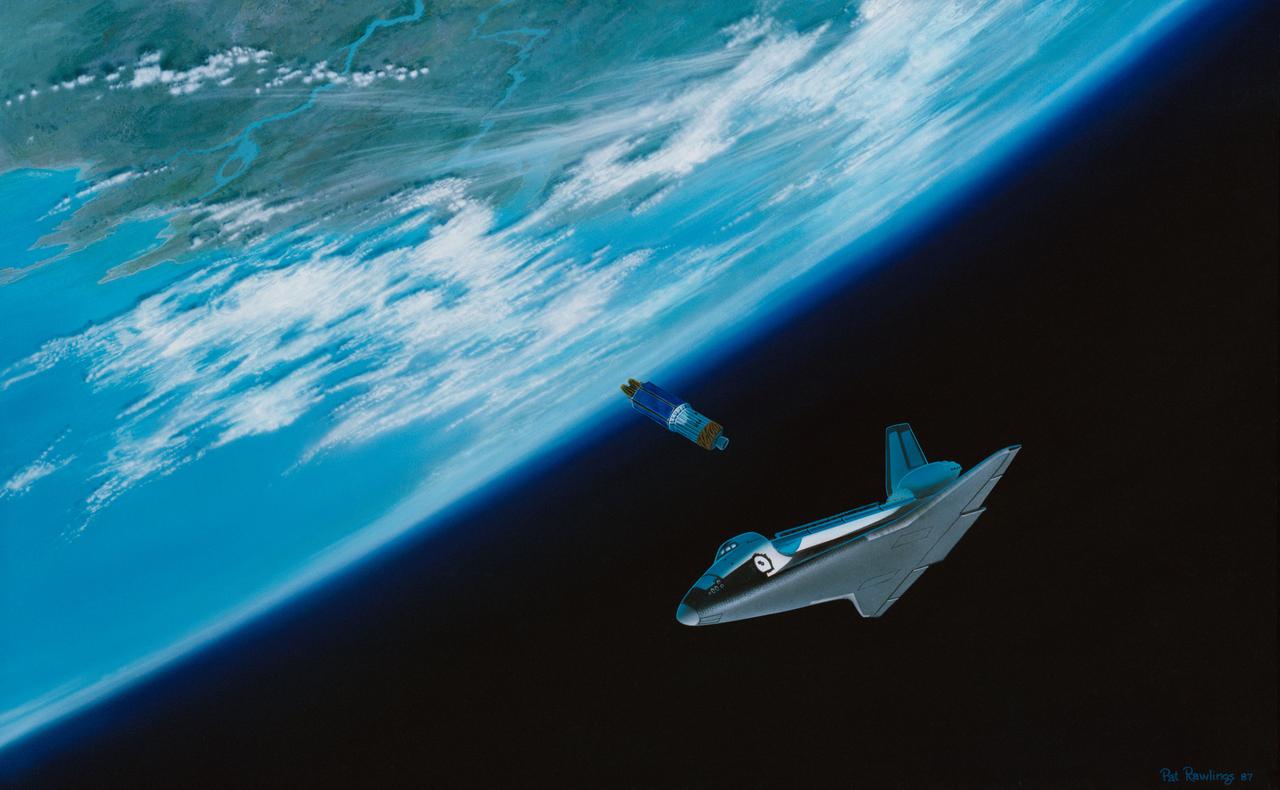
STS-26 Discovery, Orbiter Vehicle (OV) 103, artwork depicts tracking and data relay satellite C (TDRS-C) deployment. OV-103 orbits above Earth in bottom-to-sun attitude, moments after TDRS-C's release into space. TDRS-C is seen just below open payload bay (PLB). Artwork was done by Pat Rawlings of Eagle Engineering.

The primary payload of the STS-43 mission, Tracking and Data Relay Satellite-E (TDRS-E) attached to an Inertial Upper Stage (IUS) was photographed at the moment of its release from the cargo bay of the Space Shuttle Orbiter Atlantis. The TDRS-E was boosted by the IUS into geosynchronous orbit and positioned to remain stationary 22,400 miles above the Pacific Ocean southwest of Hawaii. The TDRS system provides almost uninterrupted communications with Earth-orbiting Shuttles and satellites, and had replaced the intermittent coverage provided by globe-encircling ground tracking stations used during the early space program. The TDRS can transmit and receive data, and track a user spacecraft in a low Earth orbit. The IUS is an unmarned transportation system designed to ferry payloads from low Earth orbit to higher orbits that are unattainable by the Shuttle. The launch of STS-43 occurred on August 2, 1991.

The free-flying Tracking and Data Relay Satellite-E (TDRS-E), still attached to an Inertial Upper Stage (IUS), was photographed by one of the crewmembers during the STS-43 mission. The TDRS-E was boosted by the IUS into geosynchronous orbit and positioned to remain stationary 22,400 miles above the Pacific Ocean southwest of Hawaii. The TDRS system provides almost uninterrupted communications with Earth-orbiting Shuttles and satellites, and had replaced the intermittent coverage provided by globe-encircling ground tracking stations used during the early space program. The TDRS can transmit and receive data, and track a user spacecraft in a low Earth orbit. The IUS is an unmarned transportation system designed to ferry payloads from low Earth orbit to higher orbits that are unattainable by the Shuttle. The Space Shuttle Orbiter Atlantis for the STS-43 mission was launched on August 2, 1991.
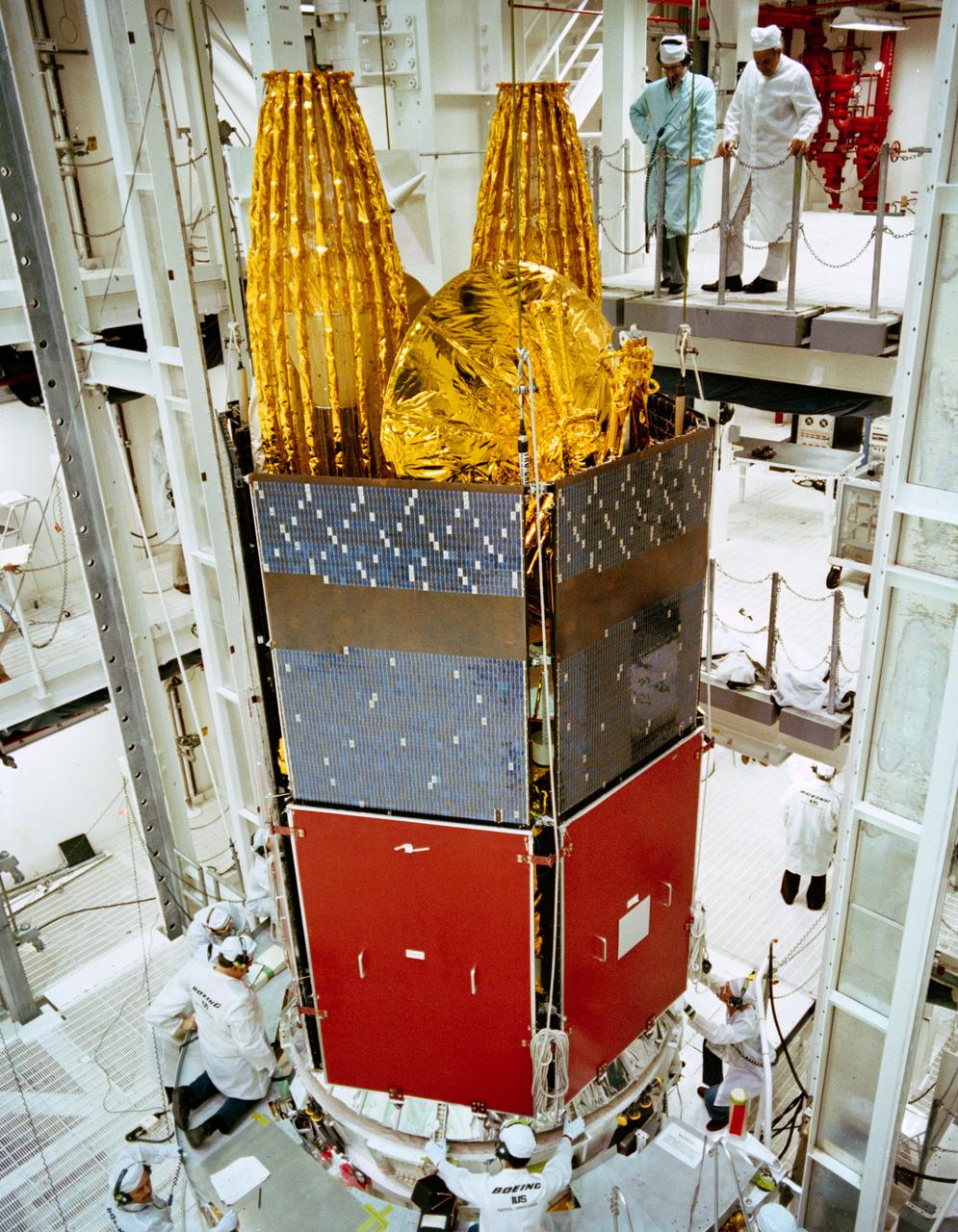
S82-41171 (29 Nov. 1982) --- NASA?s tracking and data relay satellite (TDRS) is gently mated to its inertial upper stage (IUS), which will propel the satellite to a higher geosynchronous orbit after it is ejected from the Challenger?s cargo bay during STS-6. Another TDRS will be placed in orbit on a later shuttle mission. The two will provide communications between orbiting shuttle mission craft and the ground, resulting in increased real-time communication and eliminating the need for much of NASA?s extensive world-wide system of ground tracking stations. A more distant plan is to launch other TDRS to be used for commercial telecommunications and for handling peak loads. Photo credit: NASA
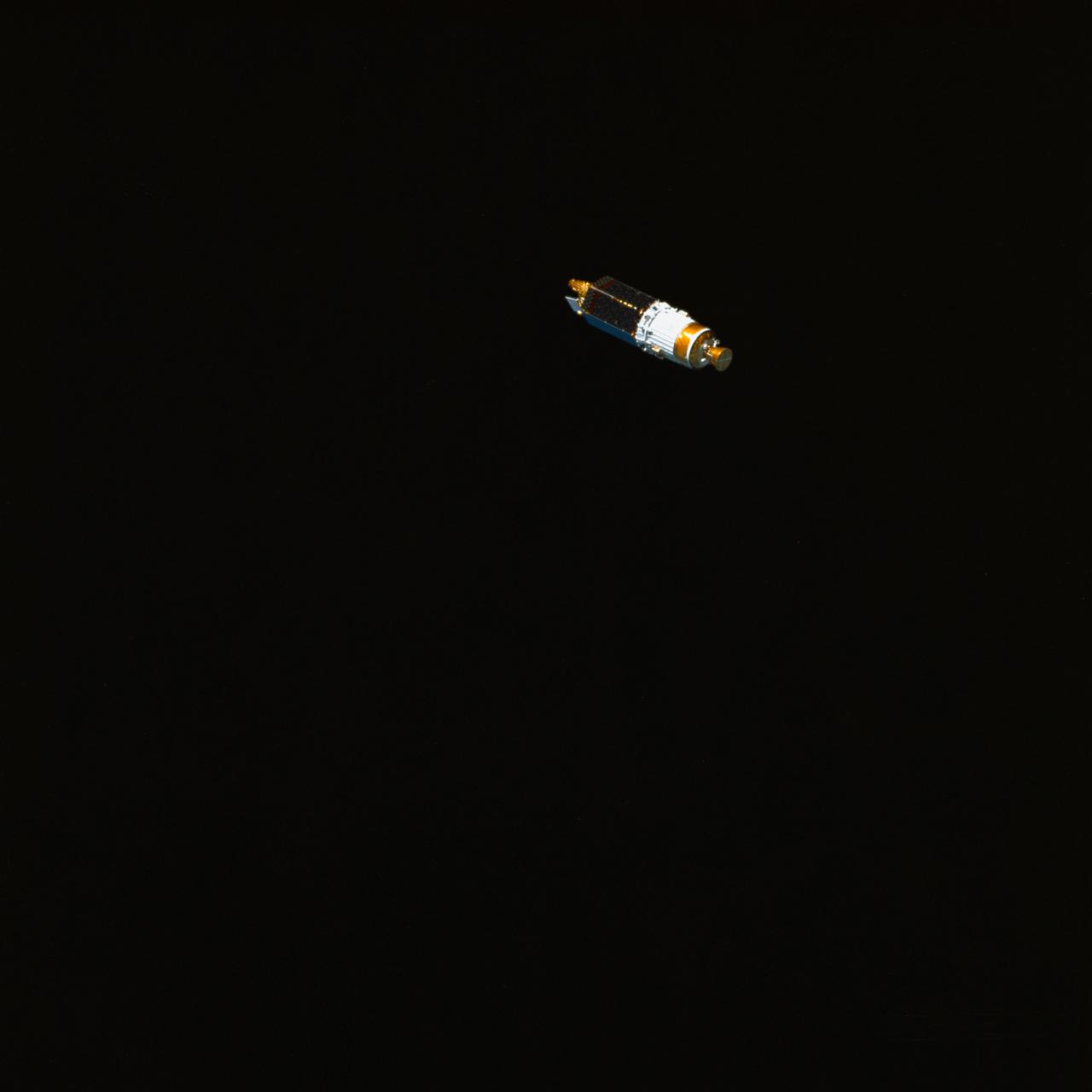
STS029-78-019 (13 March 1989) --- Headed on its way to a much higher orbit is another Tracking and Data Relay Satellite (TDRS-D), as photographed with a 70mm camera from inside Discovery's cabin. Moments earlier, the STS-29 crewmembers released the cylindrical form into space from Discovery's cargo bay. When at its final destination high above Earth, TDRS-D will no longer maintain its cylindrical form, having transformed into an operational satellite with antenna spanned out in various directions and its Interim Upper Stage (IUS), covered with gold foil and forward-most in this frame, discarded.
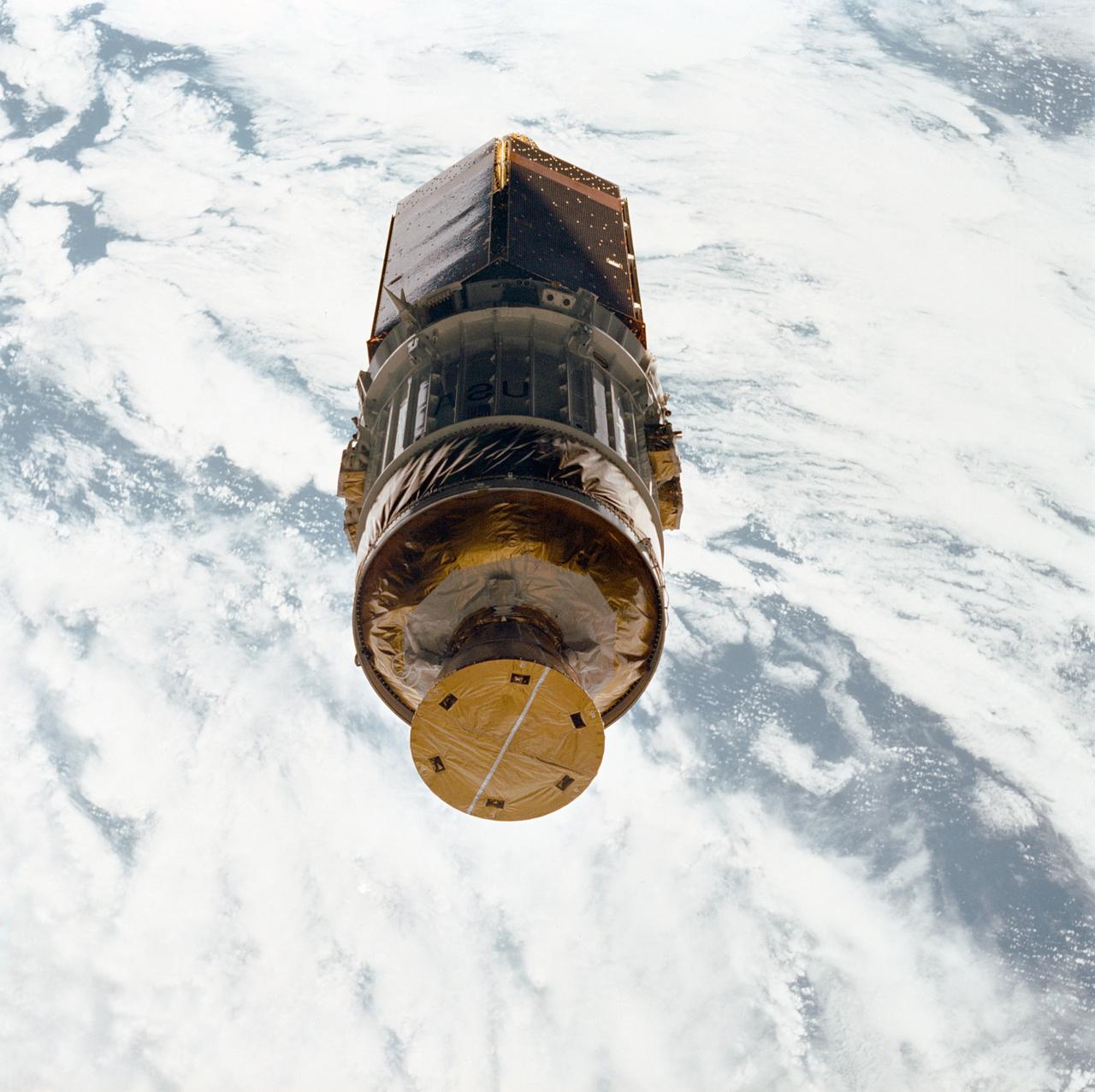
STS026-31-071 (3 Oct 1988) --- After deployment from Discovery, Orbiter Vehicle (OV) 103, the inertial upper stage (IUS) with the tracking and data relay satellite C (TDRS-C) drifts above the cloud-covered Earth surface. TDRS-C, in stowed configuration (solar array panels visible), is mounted atop the IUS with the interstage and solid rocket motor and nozzle seen in the foreground.
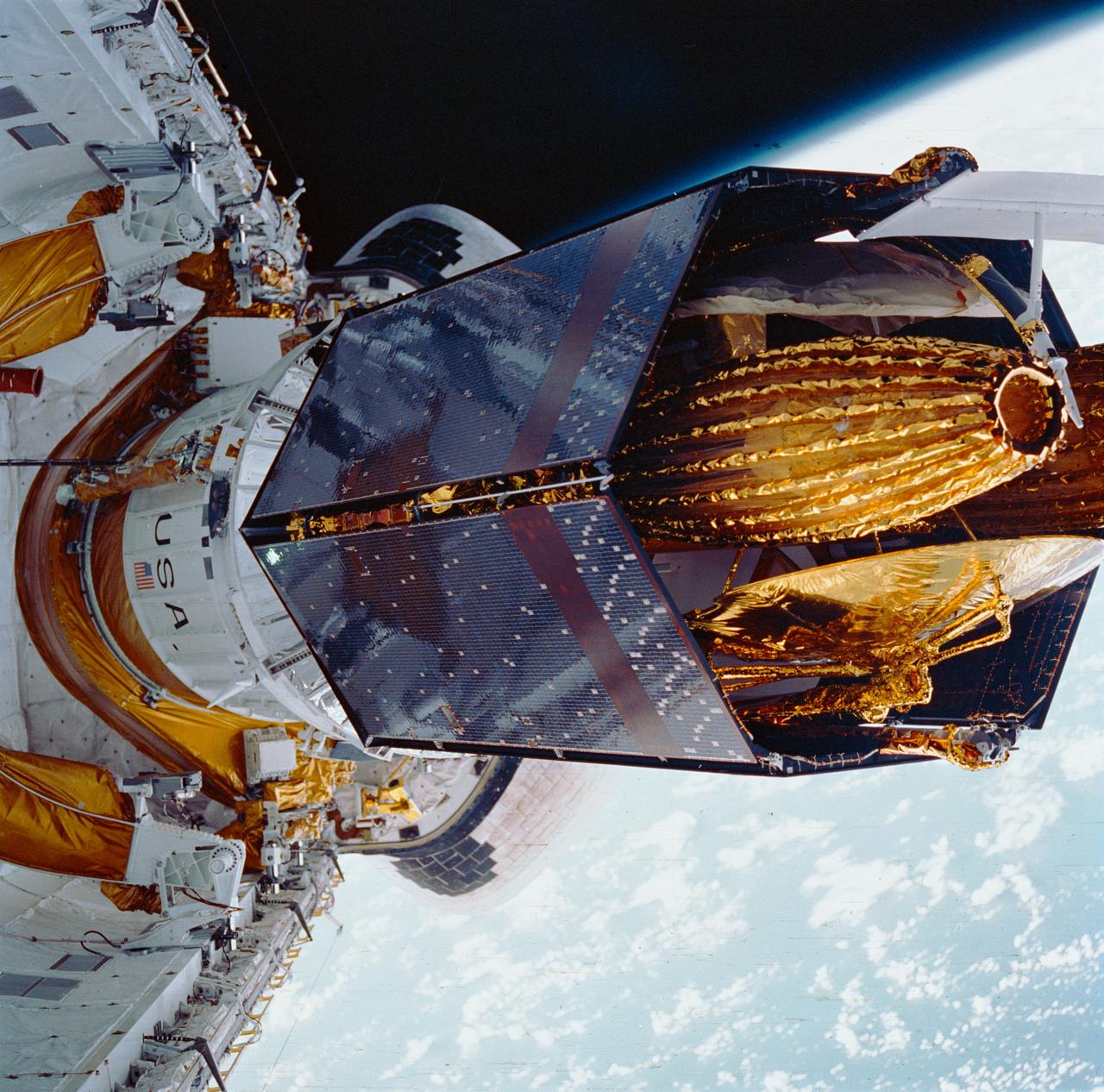
During STS-26, inertial upper stage (IUS) with tracking and data relay satellite C (TDRS-C) located in the payload bay (PLB) of Discovery, Orbiter Vehicle (OV) 103, is positioned into its proper deployment attitude (an angle of 50 degrees) by the airborne support equipment (ASE). In the foreground, the ASE forward cradle is visible. The IUS is mounted in the ASE aft frame tilt actuator (AFTA) table. TDRS-C components in stowed configuration include solar array panels, TDRS single access #1 and #2, TDRS SGL, and S-Band omni antenna. In the background are the orbital maneuvering system (OMS) pods, the Earth's cloud-covered surface, and the Earth's limb.
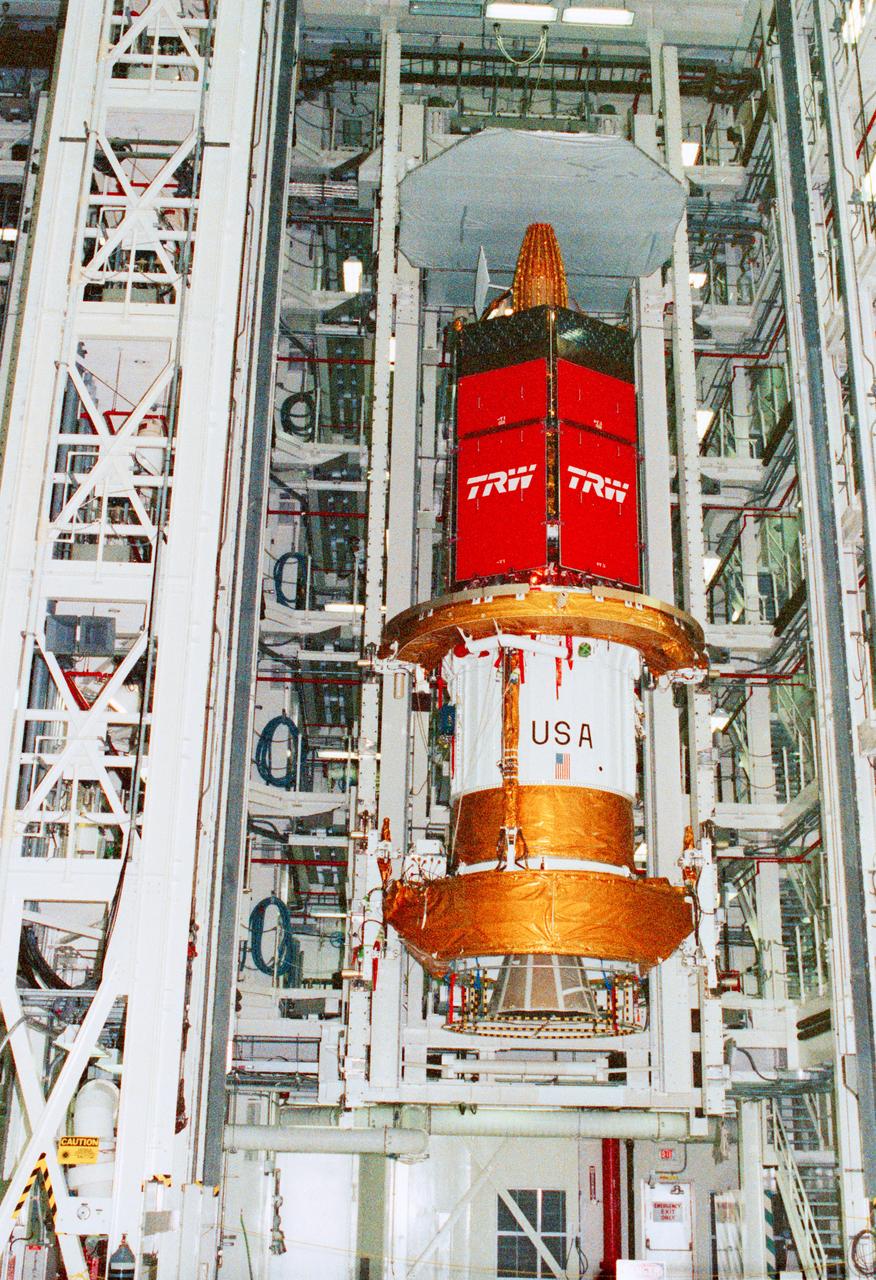
STS-43 Tracking and Data Relay Satellite E (TDRS-E) undergoes preflight processing in the Kennedy Space Center's (KSC's) Vertical Processing Facility (VPF) before being loaded into a payload canister for transfer to the launch pad and eventually into Atlantis', Orbiter Vehicle (OV) 104's, payload bay (PLB). This side of the TDRS-E will rest at the bottom of the PLB therefore the airborne support equipment (ASE) forward frame keel pin (at center of spacecraft) and the umbilical boom running between the two ASE frames are visible. The solar array panels are covered with protective TRW shields. Above the shields the stowed antenna and solar sail are visible. The inertial upper stage (IUS) booster is the white portion of the spacecraft and rests in the ASE forward frame and ASE aft frame tilt actuator (AFTA) frame (at the bottom of the IUS). The IUS booster nozzle extends beyond the AFTA frame. View provided by KSC with alternate number KSC-91PC-1079.

S89-28093 (29 Dec 1988) --- In the clean room of the vertical processing facility, the TDRS-D satellite is hoisted, thus beginning the mating process with the inertial upper stage (IUS), located in an adjacent test cell.
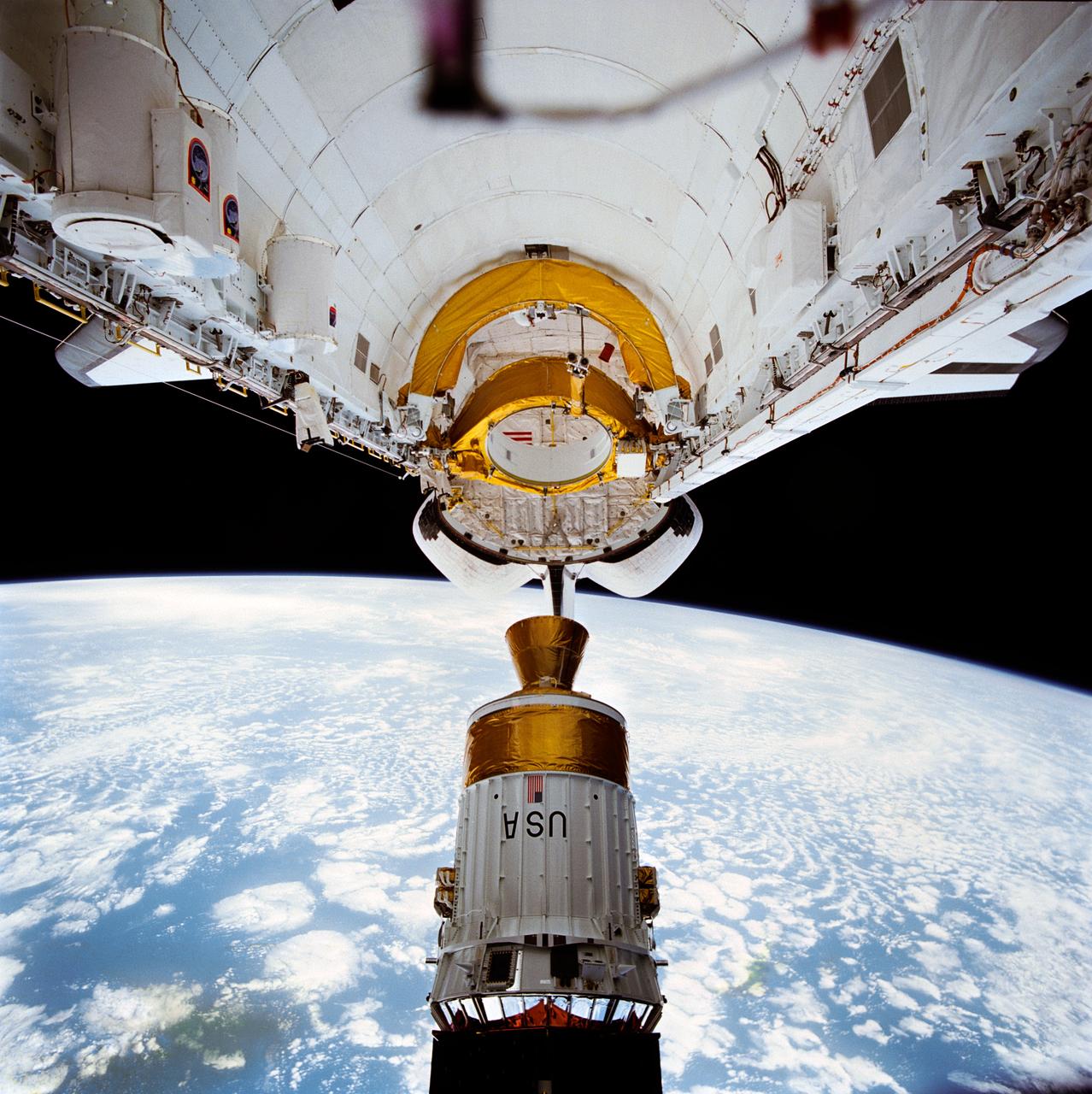
STS043-72-059 (2 Aug 1991) --- The Tracking and Data Relay Satellite (TDRS-E), leaves the payload bay of the earth-orbiting Atlantis a mere six hours after the Space Shuttle was launched from Pad 39A at Kennedy Space Center, Florida. TDRS, built by TRW, will be placed in a geosynchronous orbit and after on-orbit testing, which requires several weeks, will be designated TDRS-5. The communications satellite will replace TDRS-3 at 174 degrees West longitude. The backbone of NASA's space-to-ground communications, the Tracking and Data Relay satellites have increased NASA's ability to send and receive data to spacecraft in low-earth orbit to more than 85 percent of the time. The five astronauts of the STS 43 mission are John E. Blaha, mission commander, Michael A. Baker, pilot, and Shannon W. Lucid, G. David Low, and James C. Adamson, all mission specialists.
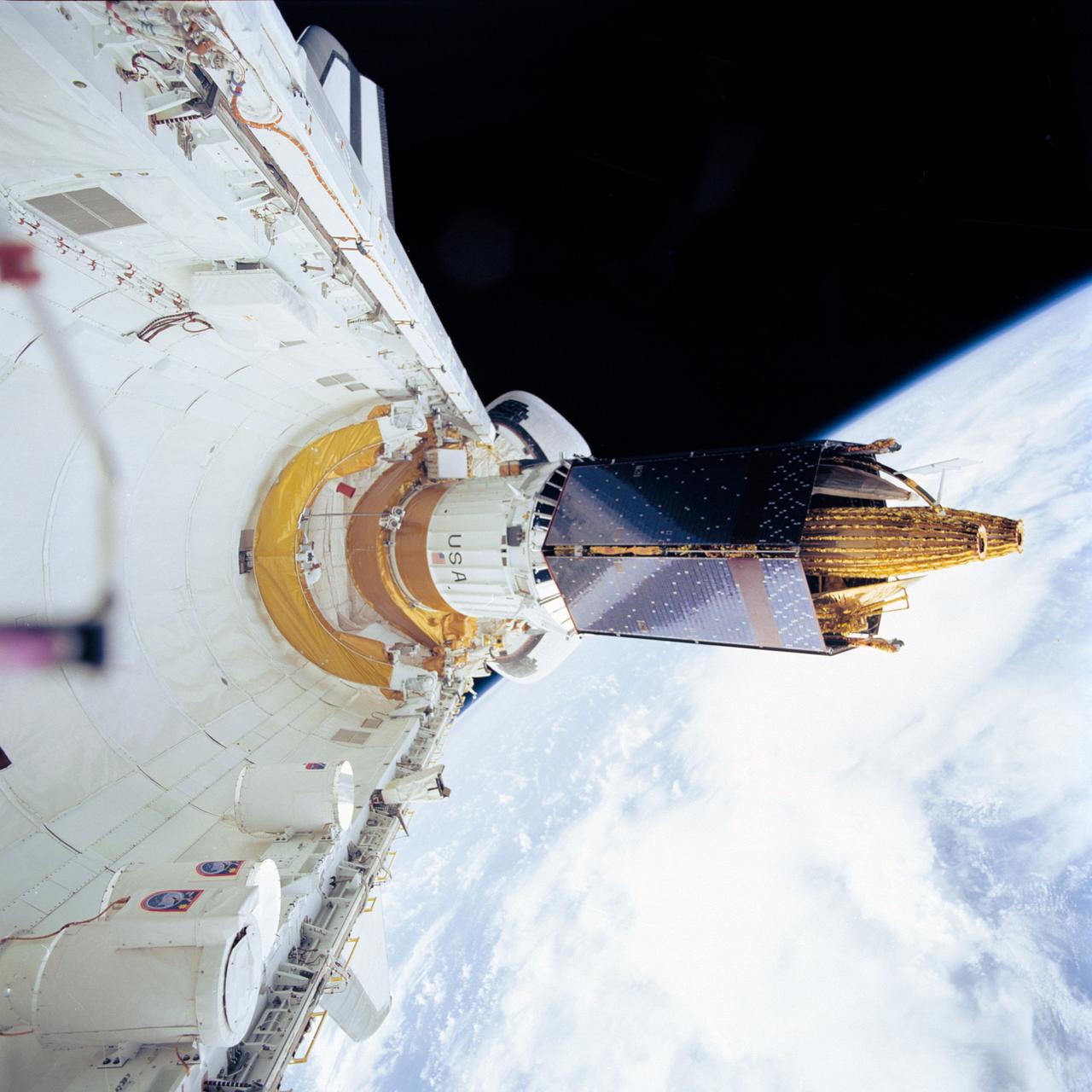
STS043-72-002 (2 Aug 1991) --- The Tracking and Data Relay Satellite (TDRS-E), leaves the payload bay of the earth-orbiting Atlantis a mere six hours after the Space Shuttle was launched from Pad 39A at Kennedy Space Center, Florida. TDRS, built by TRW, will be placed in a geosynchronous orbit and after on-orbit testing, which requires several weeks, will be designated TDRS-5. The communications satellite will replace TDRS-3 at 174 degrees West longitude. The backbone of NASA's space-to-ground communications, the Tracking and Data Relay satellites have increased NASA's ability to send and receive data to spacecraft in low-earth orbit to more than 85 percent of the time. The five astronauts of the STS 43 mission are John E. Blaha, mission commander, Michael A. Baker, pilot, and Shannon W. Lucid, G. David Low, and James C. Adamson, all mission specialists.
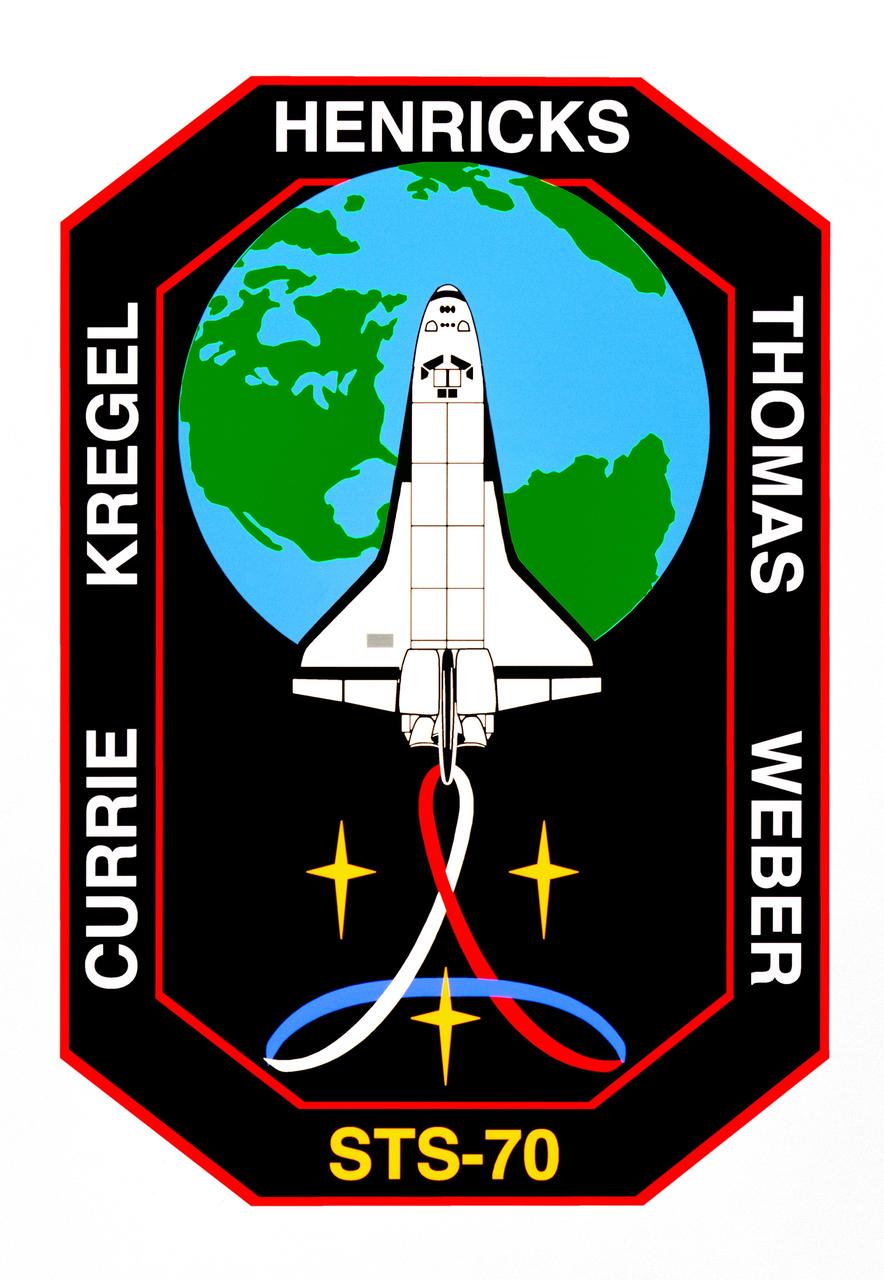
STS070-S-001 (March 1995) --- Designed by the crew members, the STS-70 crew patch depicts the space shuttle Discovery orbiting Earth in the vast blackness of space. The primary mission of deploying a NASA Tracking and Data Relay Satellite (TDRS) is depicted by three gold stars. They represent the triad composed of spacecraft transmitting data to Earth through the Tracking and Data Relay Satellite System (TDRSS). The stylized red, white and blue ribbon represents the American goal of linking space exploration to the advancement of all humankind. Surnames of the five astronaut crew members are spaced around the periphery of the patch. The NASA insignia design for space shuttle flights is reserved for use by the astronauts and for other official use as the NASA Administrator may authorize. Public availability has been approved only in the forms of illustrations by the various news media. When and if there is any change in this policy, which is not anticipated, the change will be publicly announced. Photo credit: NASA
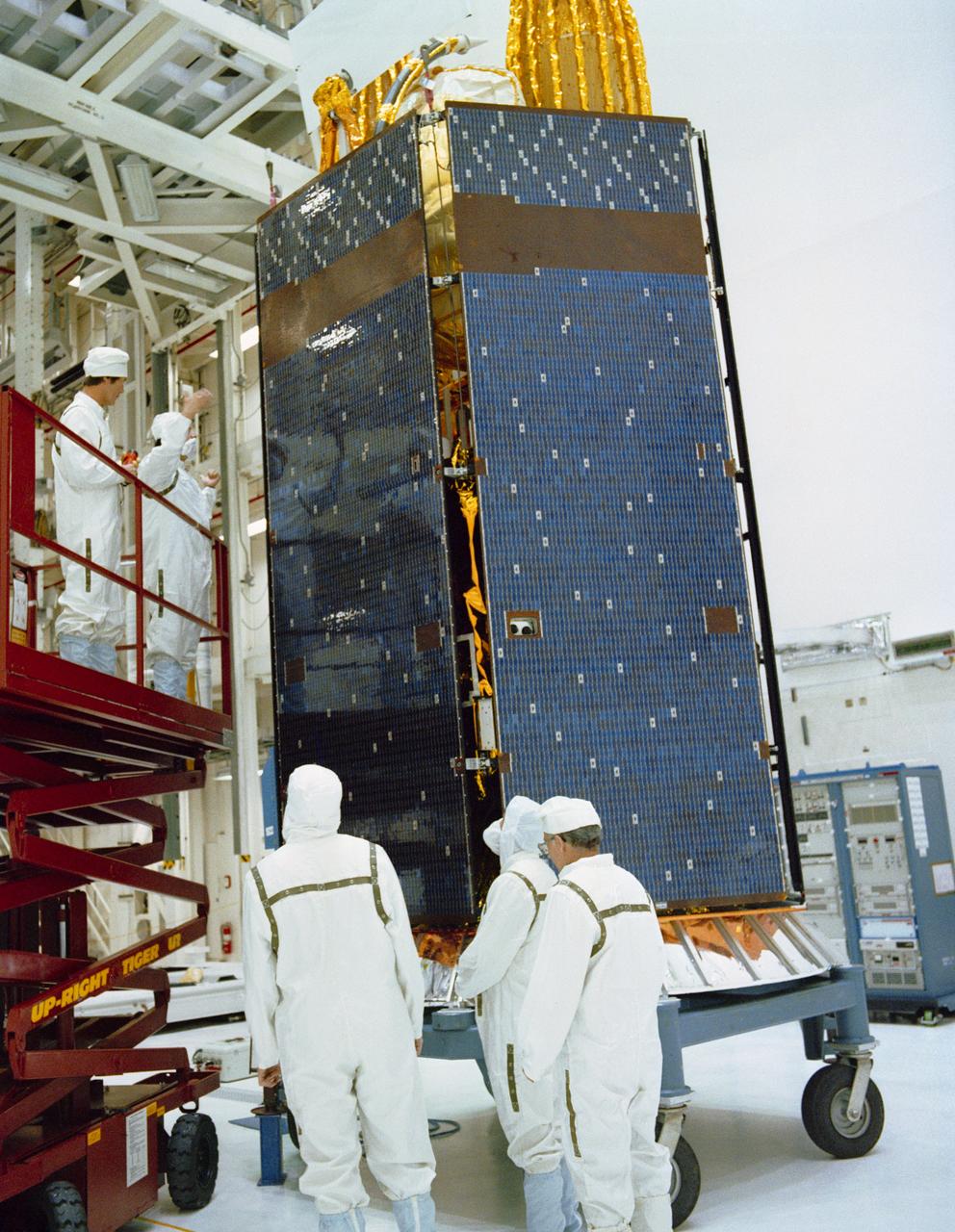
S89-27381 (29 Dec 1988) --- Technicians and engineers in the Kennedy Space Center's Vertical Processing Facility clean room prepare to participate in the mating of the STS 29 tracking and data relay satellite (TDRS-D) with its inertial upper stage (IUS-9, out of frame).
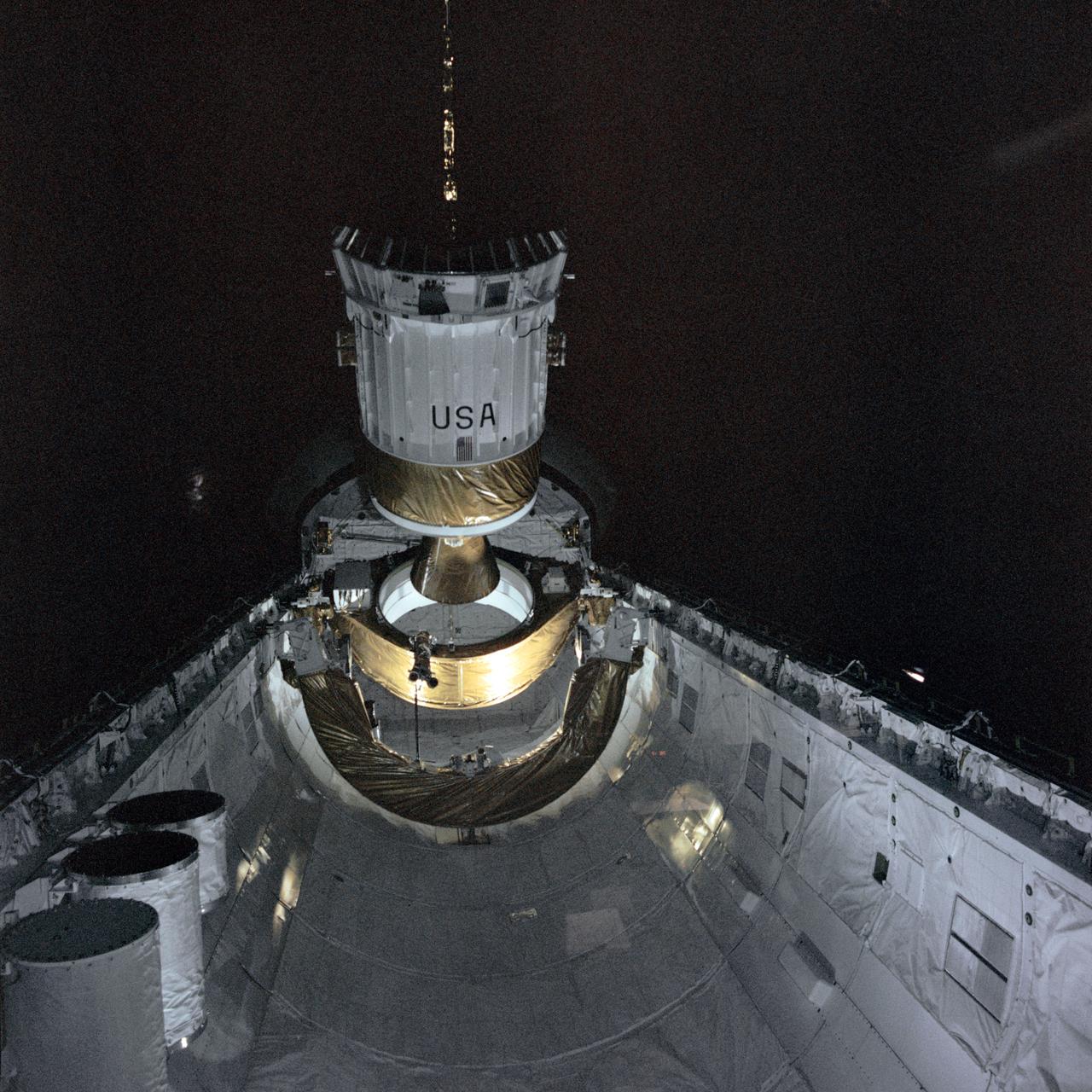
STS006-38-894 (4 April 1983) --- The tracking and data relay satellite (TDRS) leaves the 18-meter (60-ft) long cargo bay of the Earth-orbiting space shuttle Challenger about ten hours following launch of NASA’s second reusable space vehicle. The inertial upper stage (IUS) which gives power necessary to place the TDRS in its desired orbit is clearly seen in this view, photographed with a 70mm camera aimed through the aft flight deck windows of the Challenger. The cylindrical canisters in the left foreground contain scientific experiments from subscribers to NASA’s getaway special (GAS) program. Photo credit: NASA
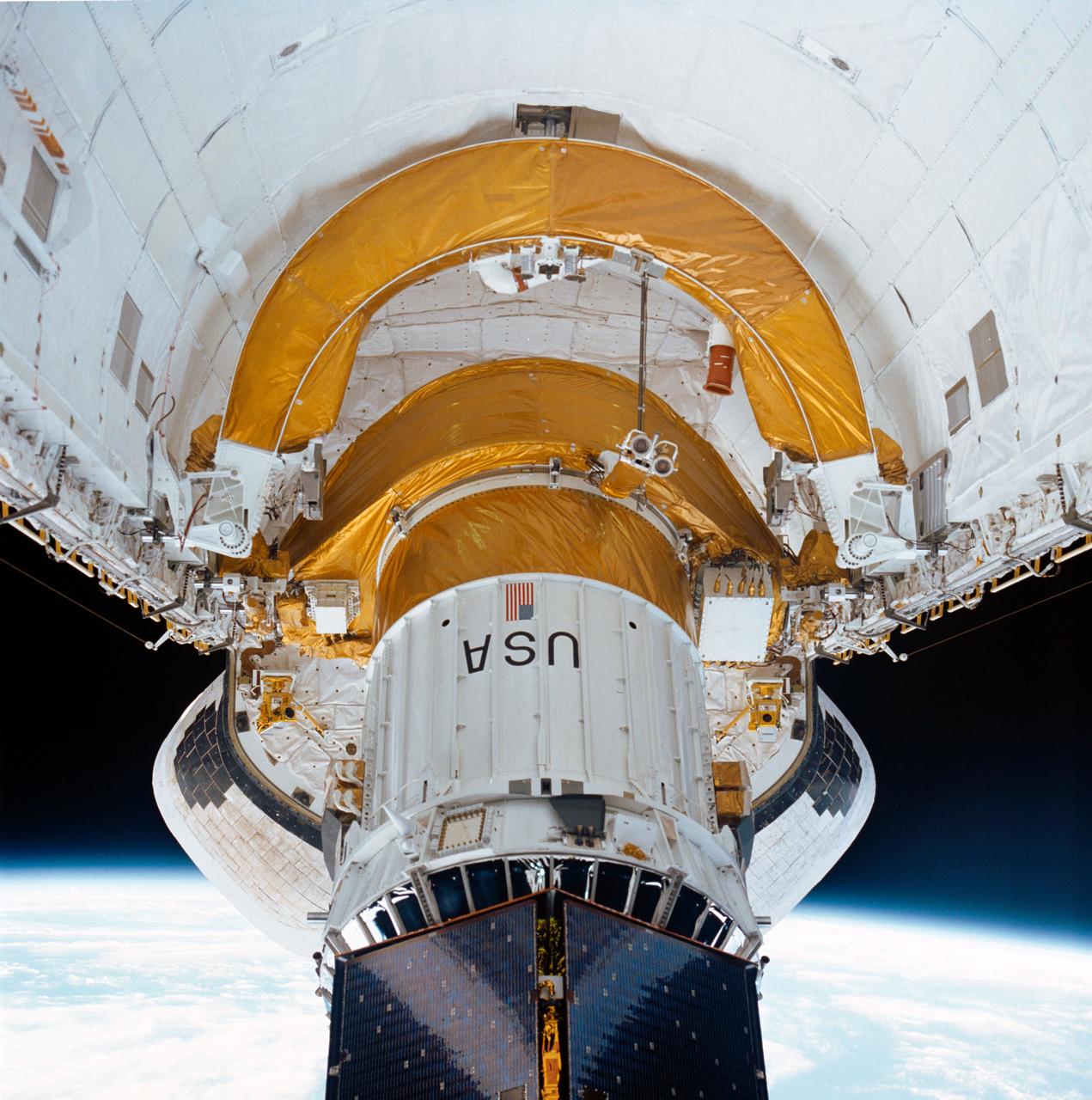
During STS-26, inertial upper stage (IUS) with the tracking and data relay satellite C (TDRS-C) located in the payload bay (PLB) of Discovery, Orbiter Vehicle (OV) 103, is raised into deployment attitude (an angle of 50 degrees) by the airborne support equipment (ASE). ASE aft frame tilt actuator (AFTA) table supports the IUS as it is positioned in the PLB and the ASE umbilical boom drifts away from IUS toward ASE forward cradle. TDRS-C solar array panels (in stowed configuration) are visible on top of the IUS. In the background are the orbital maneuvering system (OMS) pods and the Earth's limb.
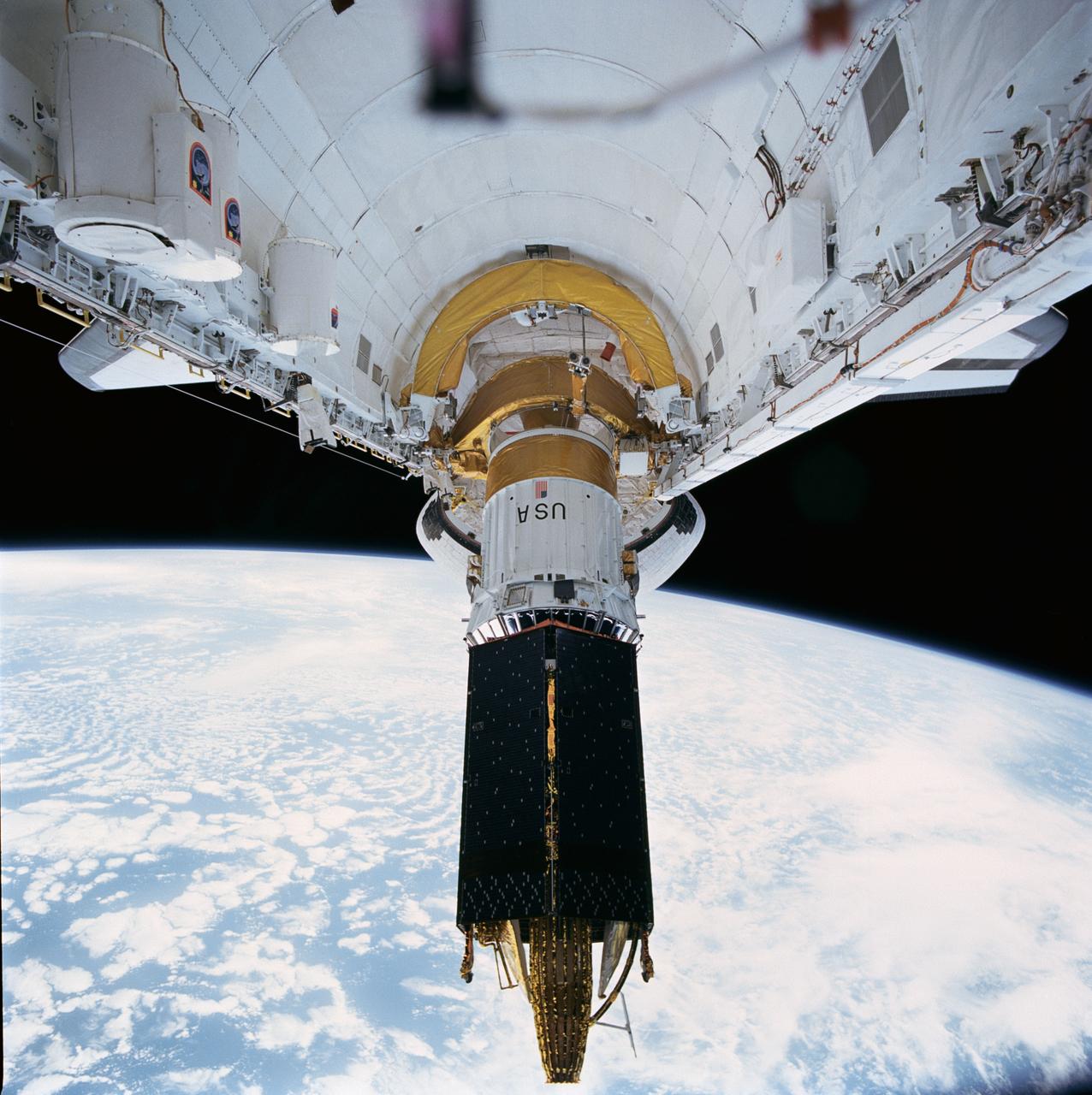
STS043-72-020 (2 Aug 1991) --- The Tracking and Data Relay Satellite (TDRS-E), is loosened from its restraint device and begins to leave the payload bay of the earth-orbiting Atlantis. The deployment came a mere six hours after the Space Shuttle was launched from Pad 39A at Kennedy Space Center, Florida. TDRS, built by TRW, will be placed in a geosynchronous orbit and after on-orbit testing, which requires several weeks, will be designated TDRS-5. The communications satellite will replace TDRS-3 at 174 degrees West longitude. The backbone of NASA's space-to-ground communications, the Tracking and Data Relay satellites have increased NASA's ability to send and receive data to spacecraft in low-earth orbit to more than 85 percent of the time. The five astronauts of the STS 43 mission are John E. Blaha, mission commander, Michael A. Baker, pilot, and Shannon W. Lucid, G. David Low, and James C. Adamson, all mission specialists.
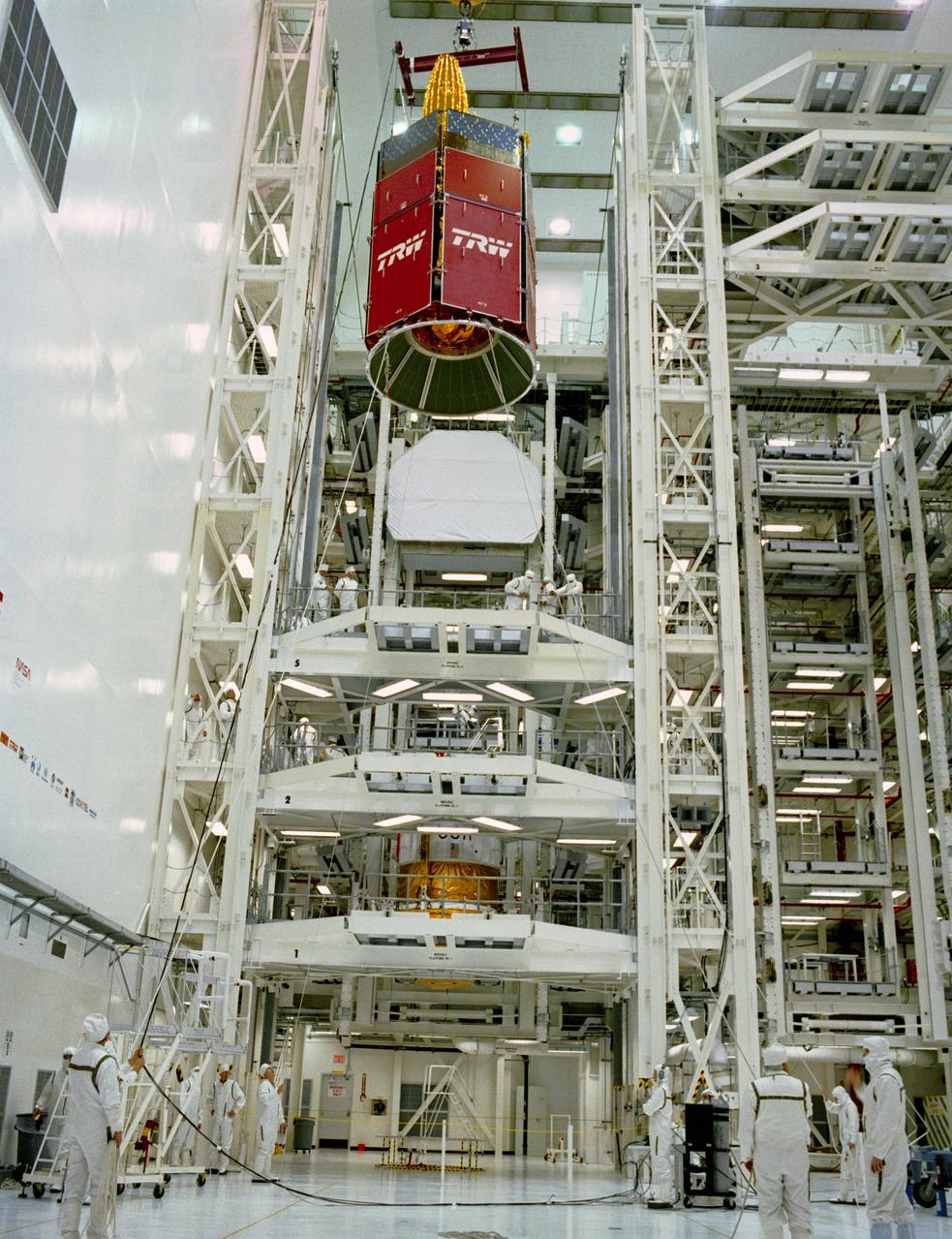
S89-27383 (29 Dec 1988) --- This wide shot of a test cell in KSC's Vertical Processing Facility affords an overall scene of the mating process of the STS 29 tracking and data relay satellite (TDRS-D, in foreground) with its inertial upper stage (IUS-9, in lower part of frame). Later the tandem will be loaded into the cargo bay of Discovery.

STS054-71-087 (13 Jan 1993) --- The Tracking and Data Relay Satellite (TDRS) is backdropped against the blackness of space, minutes after its release from the Space Shuttle Endeavour. Onboard NASA's newest Shuttle for the six-day mission are astronauts John H. Casper, mission commander; Donald R. McMonagle, pilot; and Mario Runco Jr., Gregory J. Harbaugh and Susan J. Helms, mission specialists. The photograph was taken with a 70mm camera.
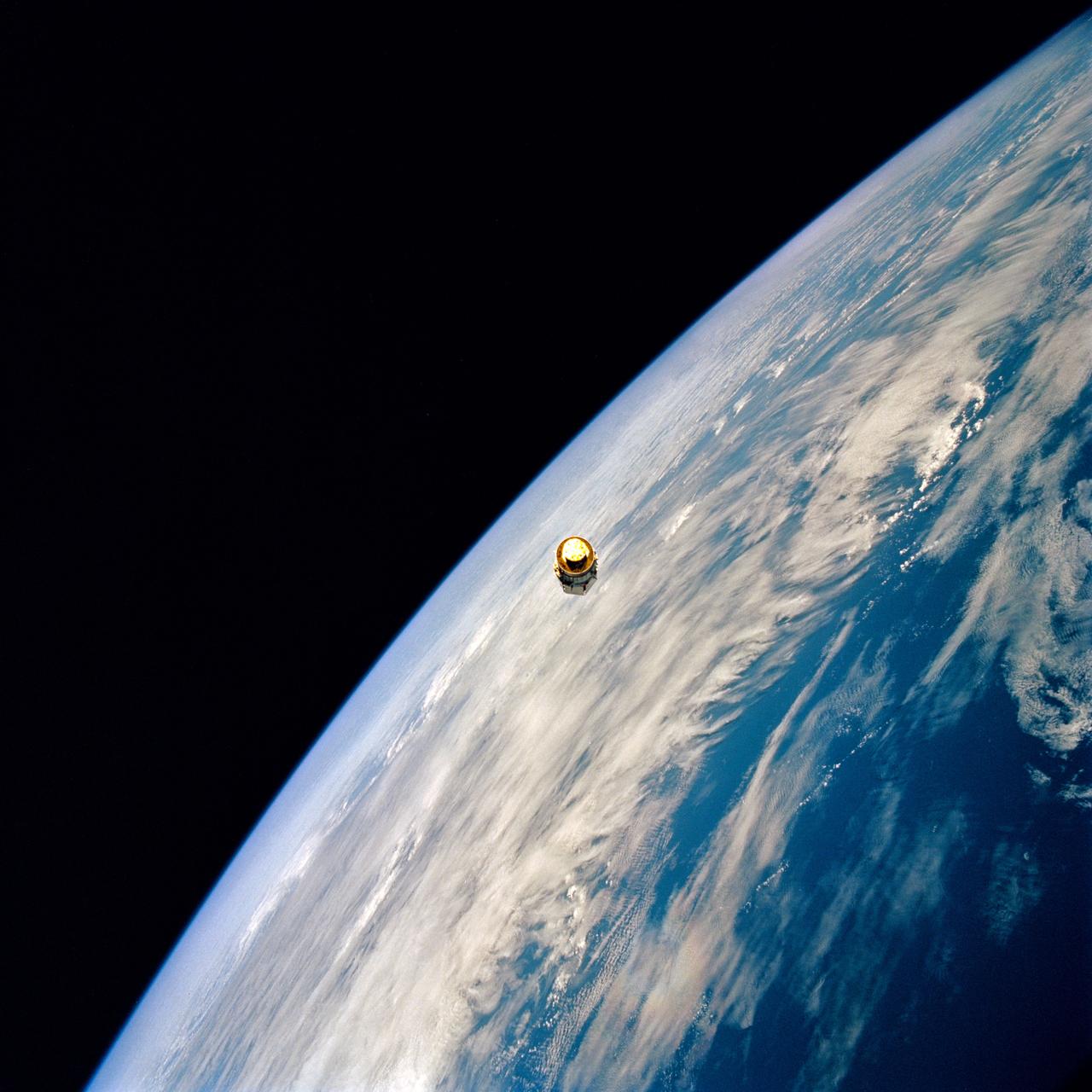
STS054-71-077 (13 Jan 1993) --- The Tracking and Data Relay Satellite (TDRS) quickly moves away from the Space Shuttle Endeavour following deployment on the first day of the six-day mission. Onboard NASA's newest Shuttle for the six-day mission are astronauts John H. Casper, mission commander; Donald R. McMonagle, pilot; and Mario Runco Jr., Gregory J. Harbaugh and Susan J. Helms, mission specialists. The photograph was taken with a 70mm camera.
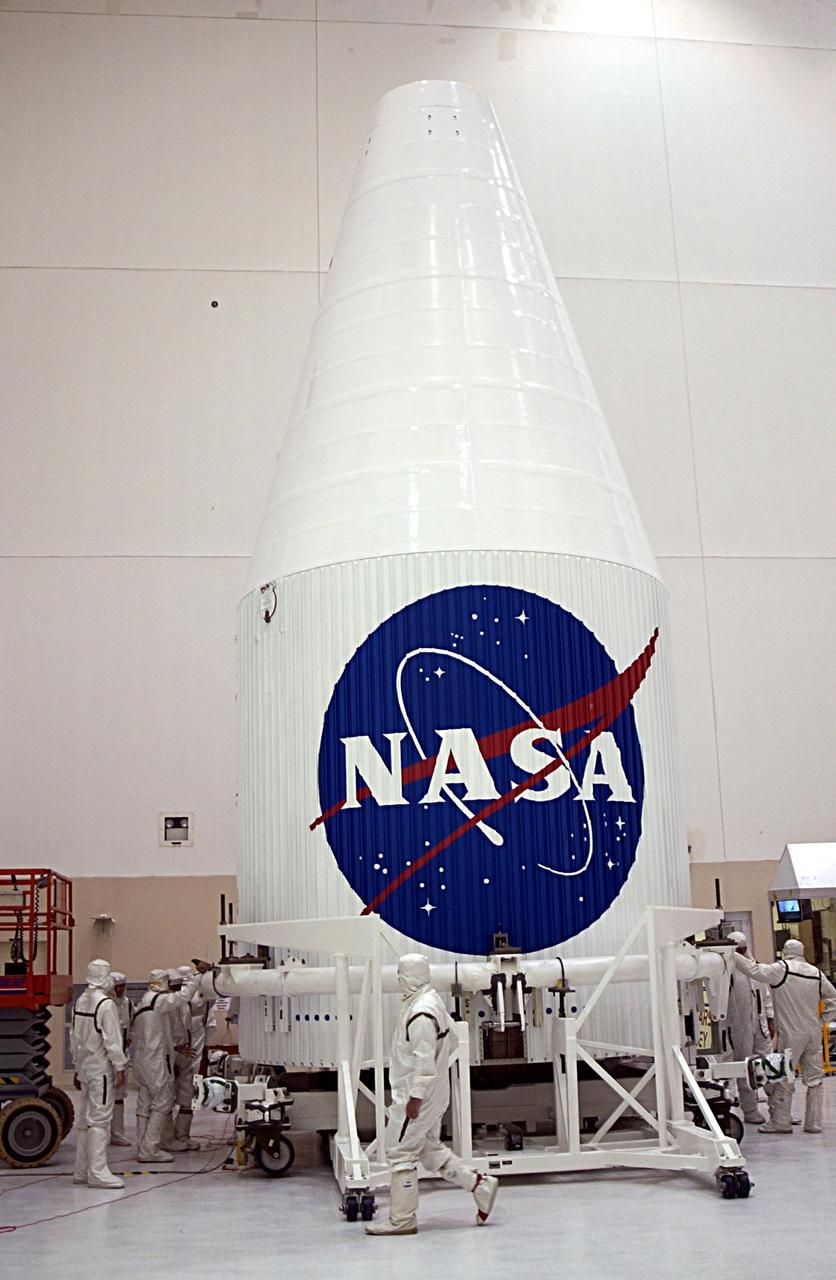
KENNEDY SPACE CENTER, FLA. -- The TDRS-J satellite is fully encapsulated and ready for transport to Launch Complex 36-A, Cape Canaveral Air Force Station, Fla. There it will be mated with the Lockheed Martin Atlas IIA-Centaur rocket for launch on Dec. 4. The third in a series of telemetry satellites, TDRS-J will help replenish the current constellation of geosynchronous TDRS satellites. The TDRS System is the primary source of space-to-ground voice, data and telemetry for the Space Shuttle. It also provides communications with the International Space Station and scientific spacecraft in low-Earth orbit such as the Hubble Space Telescope. This new advanced series of satellites will extend the availability of TDRS communications services until about 2017.
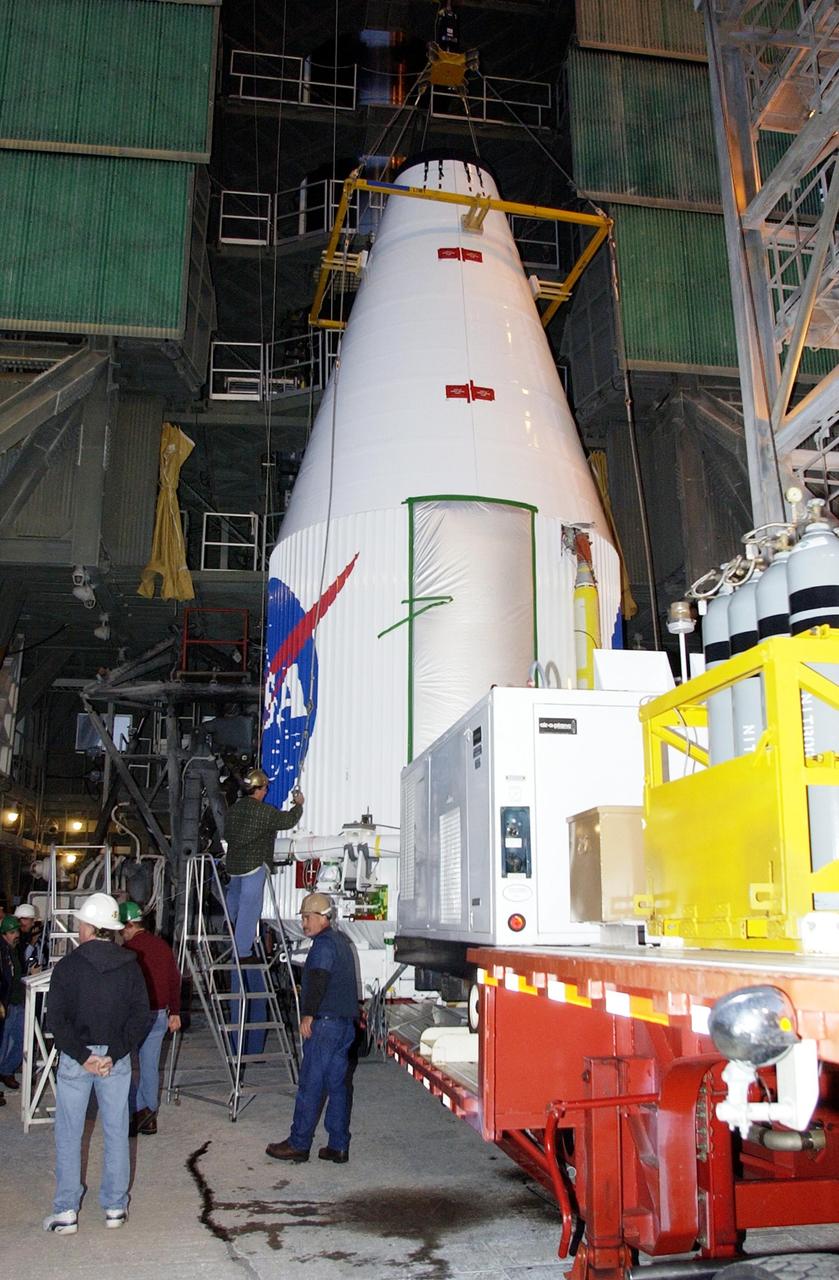
KENNEDY SPACE CENTER, FLA. - The TDRS-J satellite arrives at the gantry on Launch Complex 36-A, Cape Canaveral Air Force Station. The satellite is scheduled to be launched Dec. 4 aboard an Atlas IIA vehicle. The launch window is 9:42 to 10:22 p.m. EST. TDRS-J, the third in a series of telemetry satellites, will help replenish the current constellation of geosynchronous TDRS satellites that are the primary source of space-to-ground voice, data and telemetry for the Space Shuttle. The satellites also provide communications with the International Space Station and scientific spacecraft in low-Earth orbit such as the Hubble Space Telescope. This new advanced series of satellites will extend the availability of TDRS communications services until about 2017.
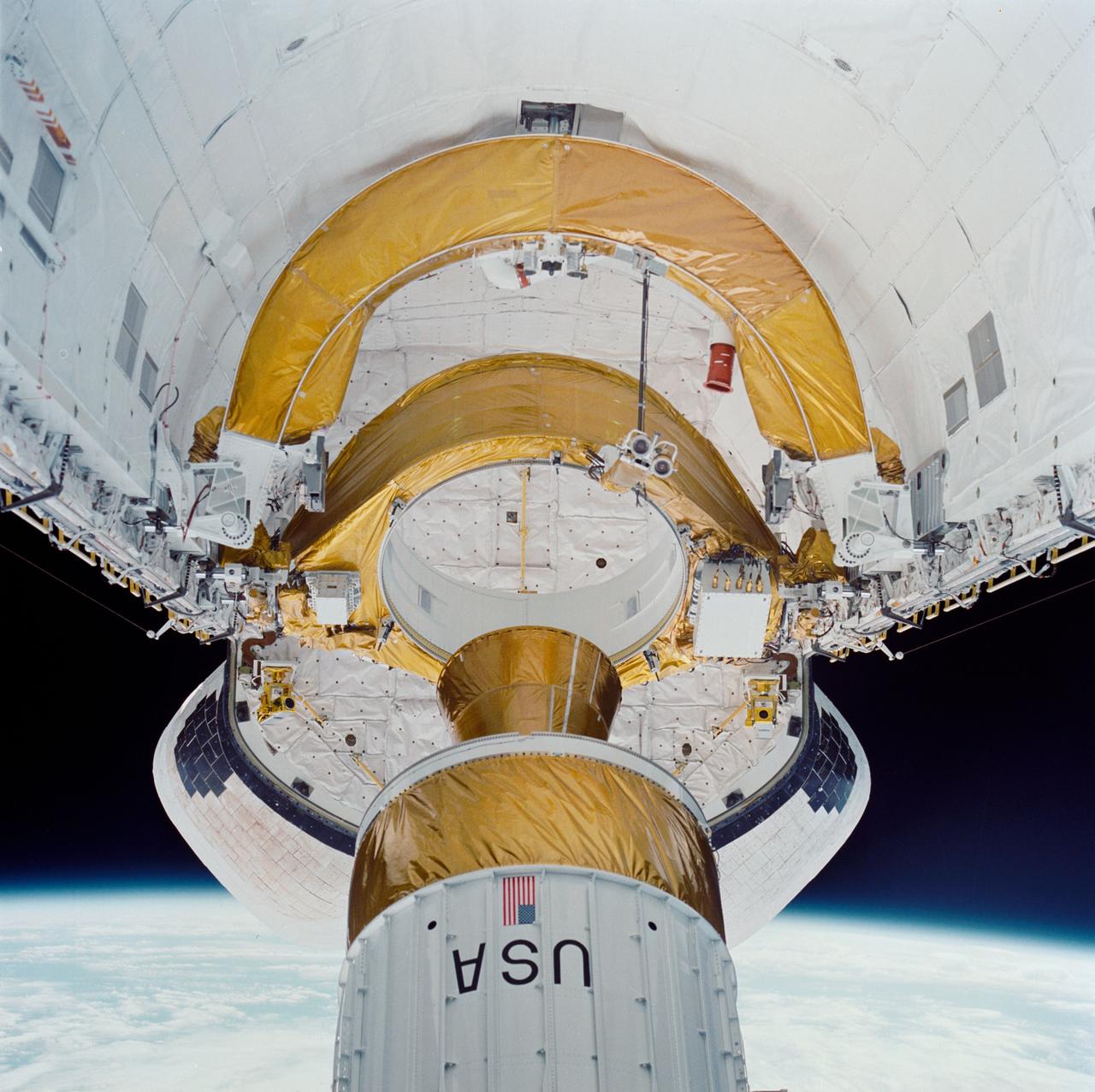
During STS-26, inertial upper stage (IUS) with the tracking and data relay satellite C (TDRS-C) drifts above Discovery, Orbiter Vehicle (OV) 103, payload bay (PLB) after being positioned in deployment attitude (an angle of 50 degrees) by the airborne support equipment (ASE). IUS vacates the ASE aft frame tilt actuator (AFTA) table in the PLB while the disconnected ASE umbilical boom floats above ASE forward cradle. IUS first stage rocket motor and nozzle and the interstage are visible as the IUS is deployed. In the background are the orbital maneuvering system (OMS) pods and the Earth's limb.
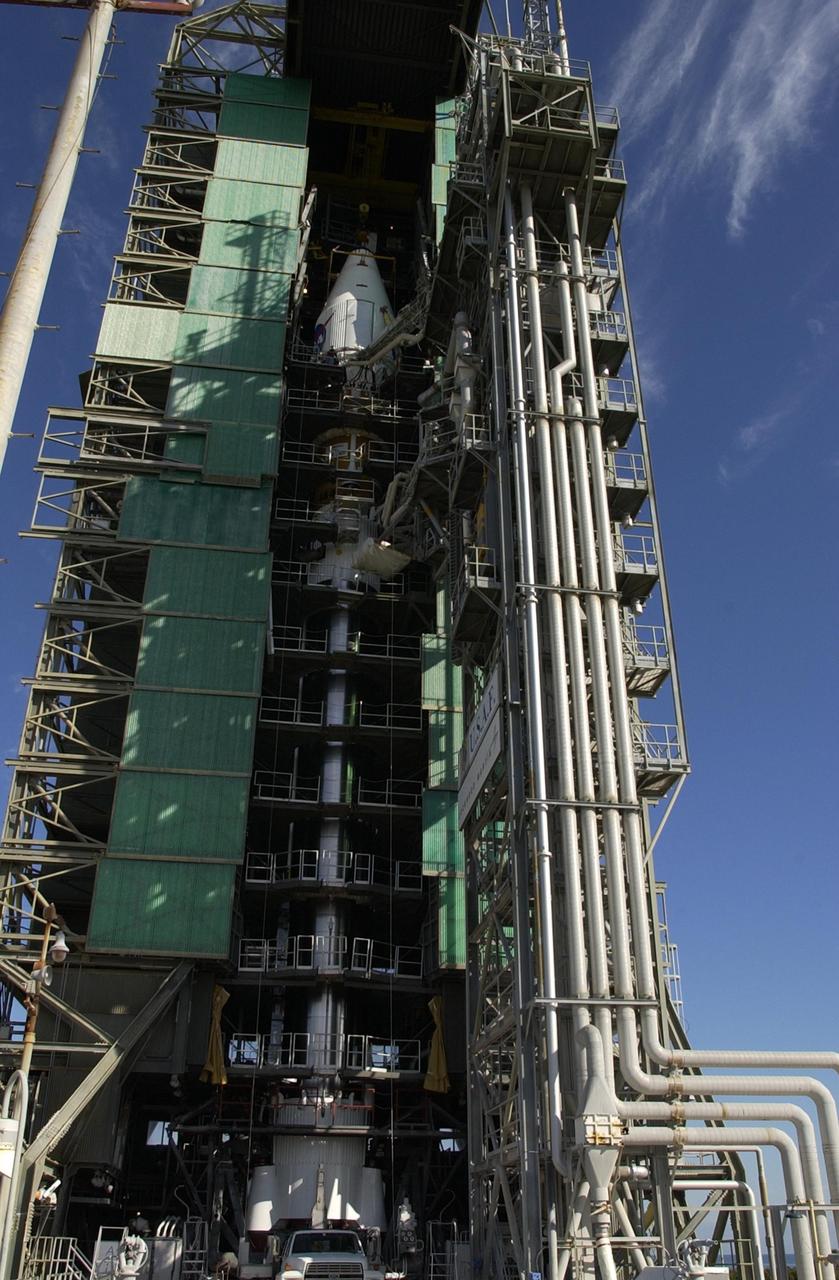
KENNEDY SPACE CENTER, FLA. - On Launch Complex 36-A, Cape Canaveral Air Force Station, the Atlas IIA launch vehicle with the TDRS-J satellite aboard is ready for launch Dec. 4. The launch window is 9:42 to 10:22 p.m. EST. TDRS-J, the third in a series of telemetry satellites, will help replenish the current constellation of geosynchronous TDRS satellites that are the primary source of space-to-ground voice, data and telemetry for the Space Shuttle. The satellites also provide communications with the International Space Station and scientific spacecraft in low-Earth orbit such as the Hubble Space Telescope. This new advanced series of satellites will extend the availability of TDRS communications services until about 2017.
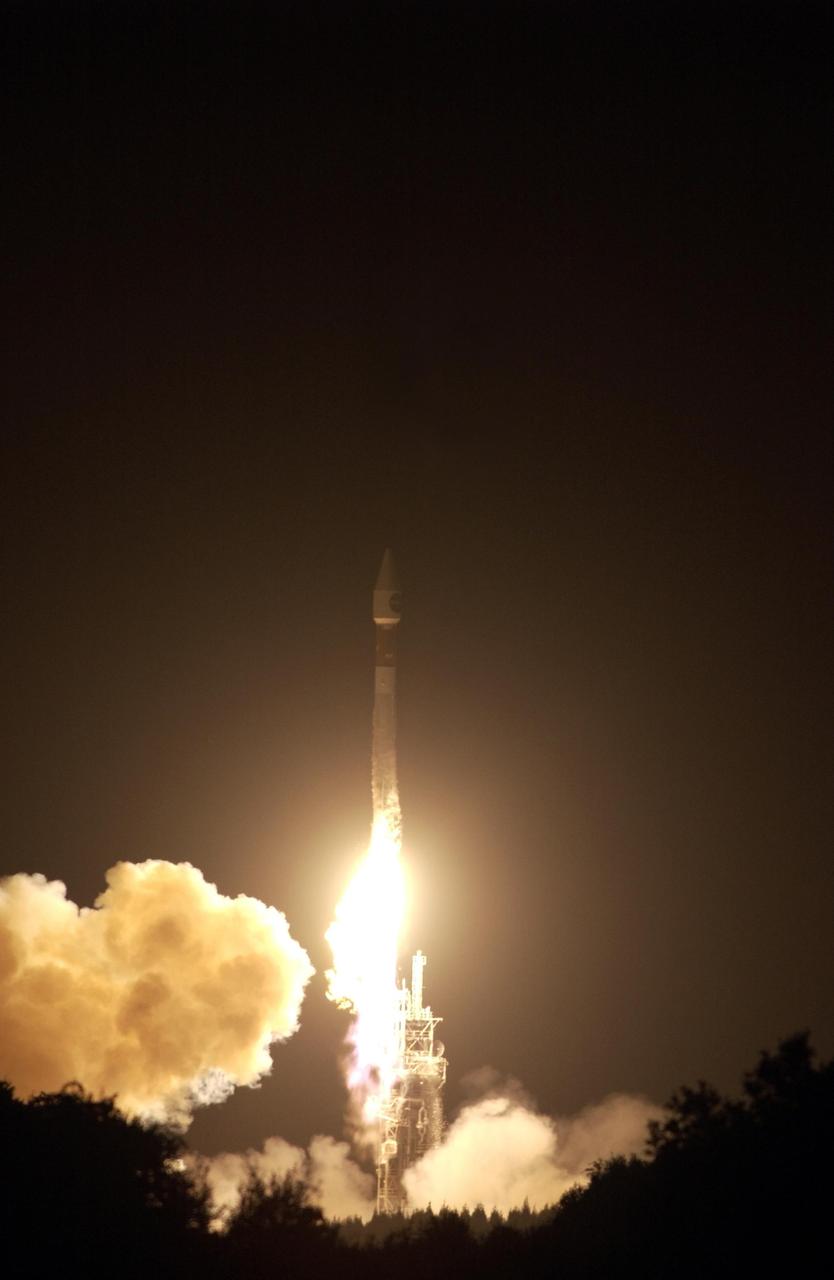
KENNEDY SPACE CENTER, FLA. - At Launch Complex 36-A, Cape Canaveral Air Force Station, the TDRS-J satellite launches aboard an Atlas IIA vehicle on Dec. 4 at the beginning of the launch window at 9:42 p.m. EST. TDRS-J, the third in a series of telemetry satellites, will help replenish the current constellation of geosynchronous TDRS satellites that are the primary source of space-to-ground voice, data and telemetry for the Space Shuttle. The satellites also provide communications with the International Space Station and scientific spacecraft in low-Earth orbit such as the Hubble Space Telescope. This new advanced series of satellites will extend the availability of TDRS communications services until about 2017.

KENNEDY SPACE CENTER, FLA. --At Launch Complex 36-A, Cape Canaveral Air Force Station, the TDRS-J satellite clears the tower as it launches aboard an Atlas IIA vehicle at the beginning of the launch window at 9:42 p.m. EST. TDRS-J, the third in a series of telemetry satellites and 10th overall, will help replenish the current constellation of geosynchronous TDRS satellites that are the primary source of space-to-ground voice, data and telemetry for the Space Shuttle. The satellites also provide communications with the International Space Station and scientific spacecraft in low-Earth orbit such as the Hubble Space Telescope. This new advanced series of satellites will extend the availability of TDRS communications services until about 2017.
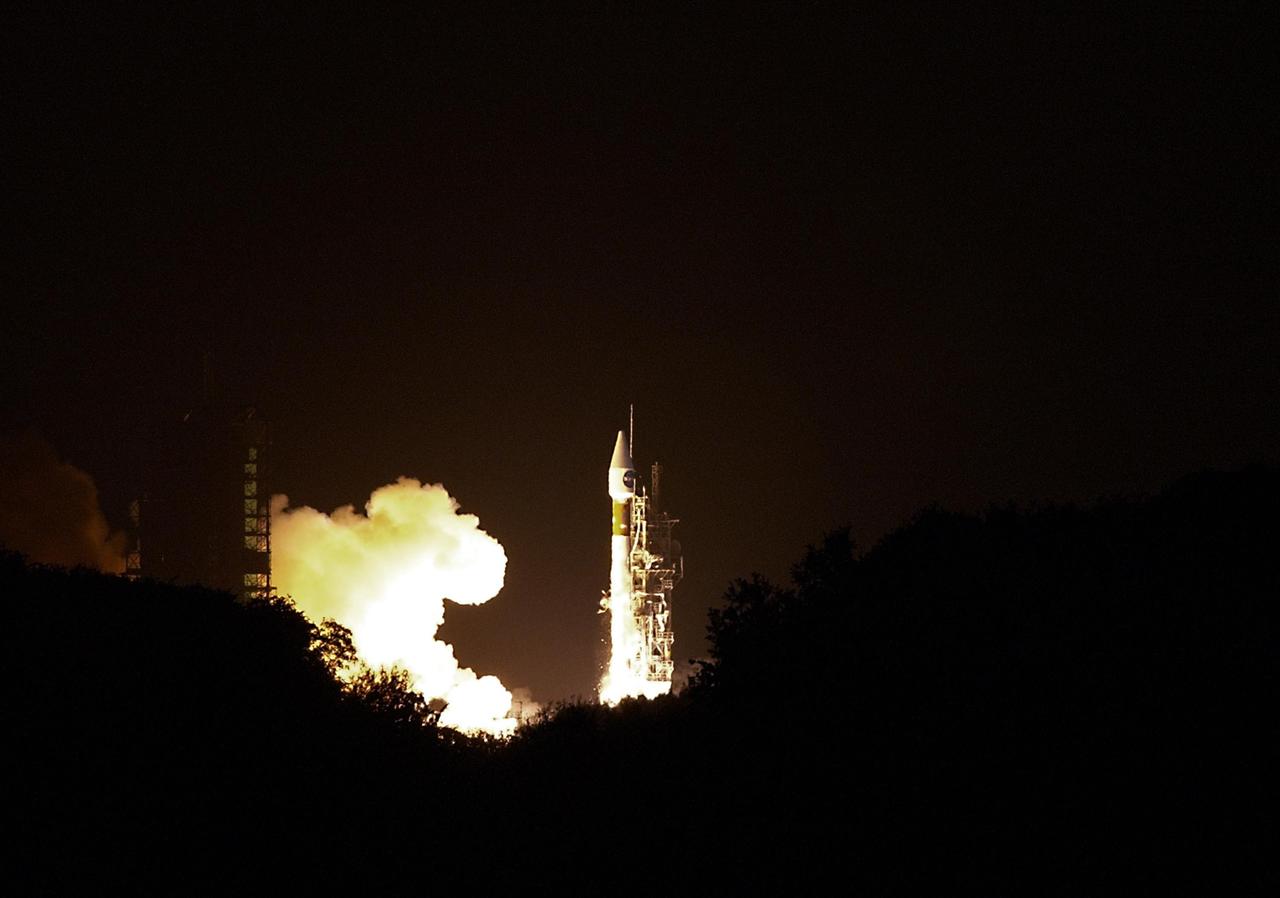
KENNEDY SPACE CENTER, FLA. - At Launch Complex 36-A, Cape Canaveral Air Force Station, the TDRS-J satellite launches aboard an Atlas IIA vehicle on Dec. 4 at the beginning of the launch window at 9:42 p.m. EST. TDRS-J, the third in a series of telemetry satellites, will help replenish the current constellation of geosynchronous TDRS satellites that are the primary source of space-to-ground voice, data and telemetry for the Space Shuttle. The satellites also provide communications with the International Space Station and scientific spacecraft in low-Earth orbit such as the Hubble Space Telescope. This new advanced series of satellites will extend the availability of TDRS communications services until about 2017.
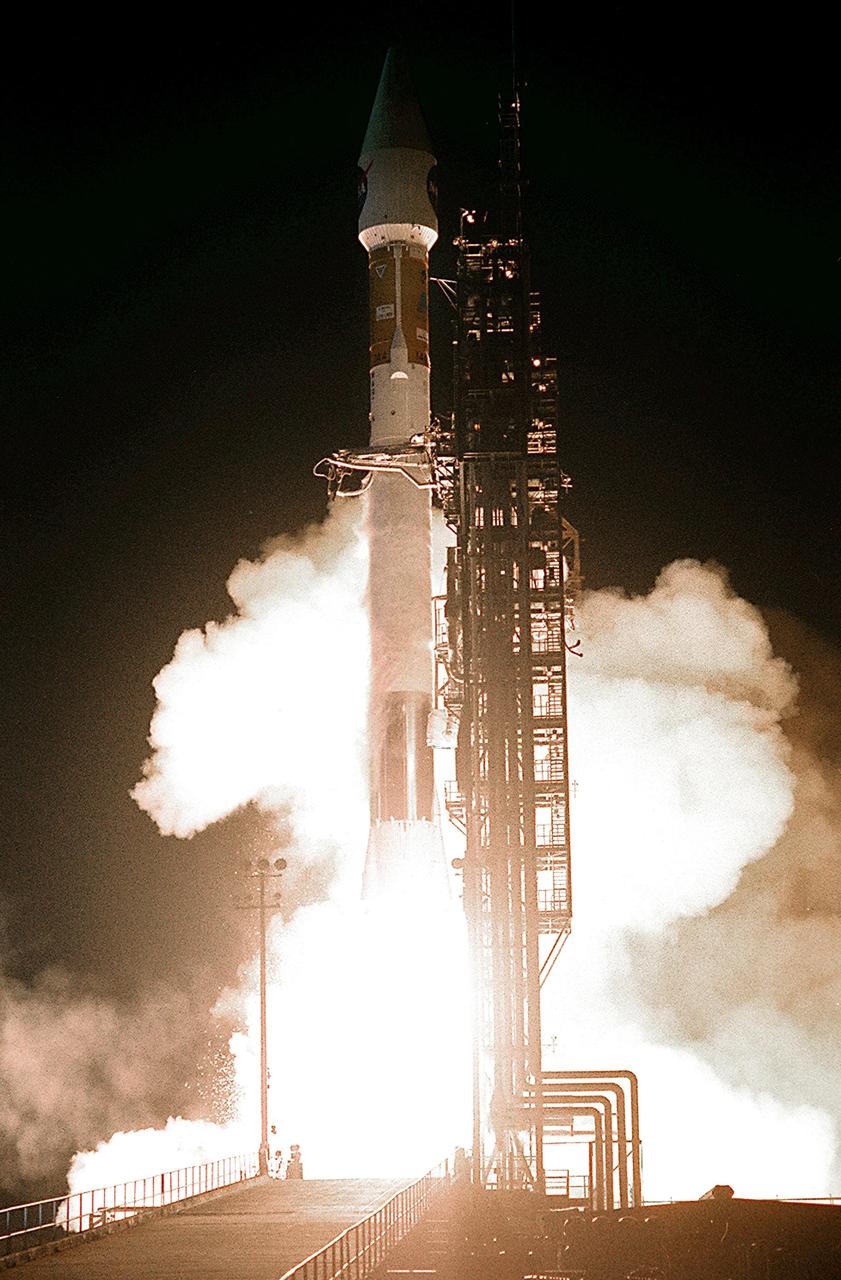
KENNEDY SPACE CENTER, FLA. --At Launch Complex 36-A, Cape Canaveral Air Force Station, the TDRS-J satellite launches aboard an Atlas IIA vehicle at the beginning of the launch window at 9:42 p.m. EST. TDRS-J, the third in a series of telemetry satellites, will help replenish the current constellation of geosynchronous TDRS satellites that are the primary source of space-to-ground voice, data and telemetry for the Space Shuttle. The satellites also provide communications with the International Space Station and scientific spacecraft in low-Earth orbit such as the Hubble Space Telescope. This new advanced series of satellites will extend the availability of TDRS communications services until about 2017.
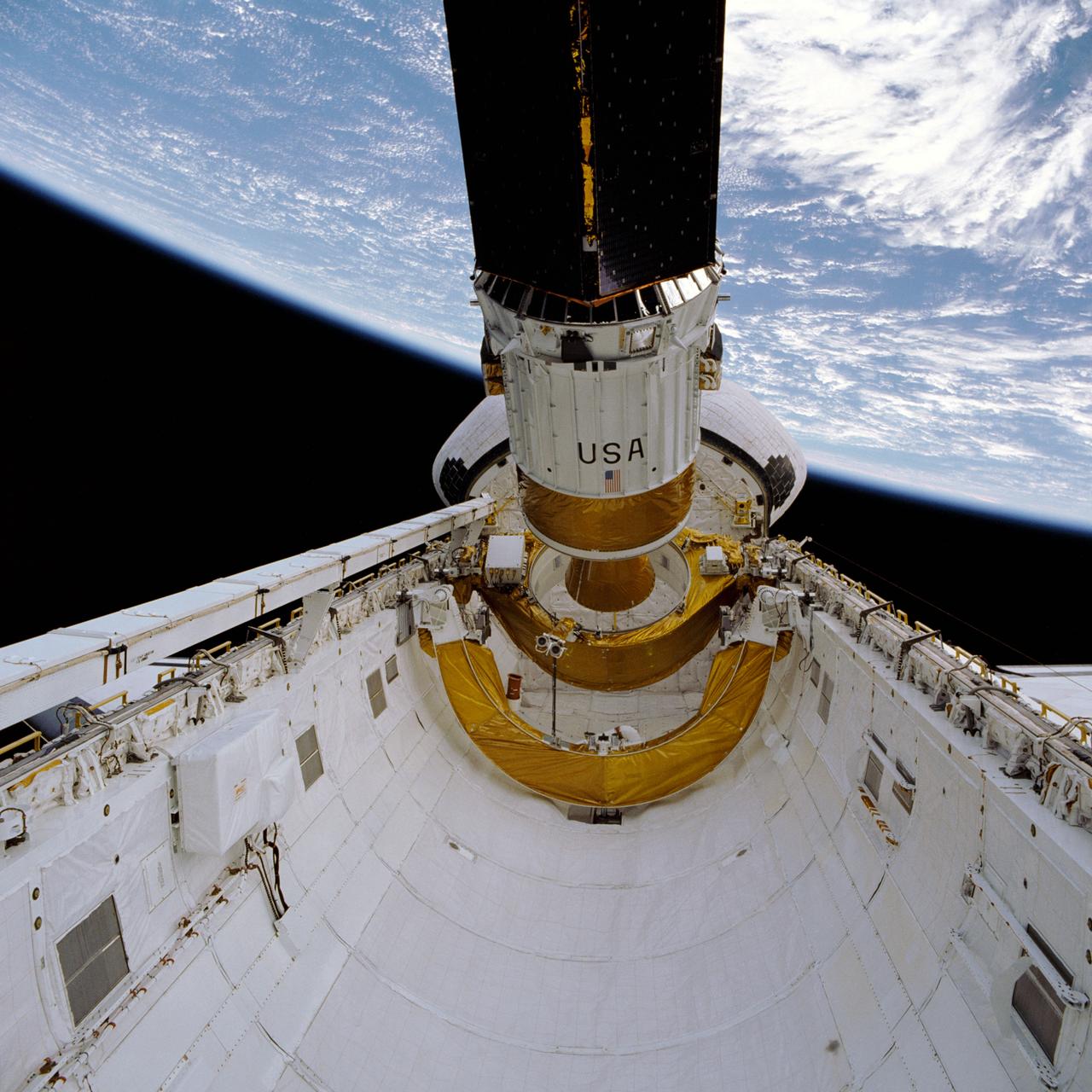
STS029-71-026 (13 March 1989) --- The Tracking and Data Relay Satellite (TDRS-D) is tilted in the cargo bay prior to its release via a remote system on Discovery's flight deck. This photographic frame was among NASA's third STS-29 photo release. Monday, March 20, 1989. Crewmembers were Astronauts Michael L. Coats, John E. Blaha, James F. Buchli, Robert C. Springer and James P. Bagian.
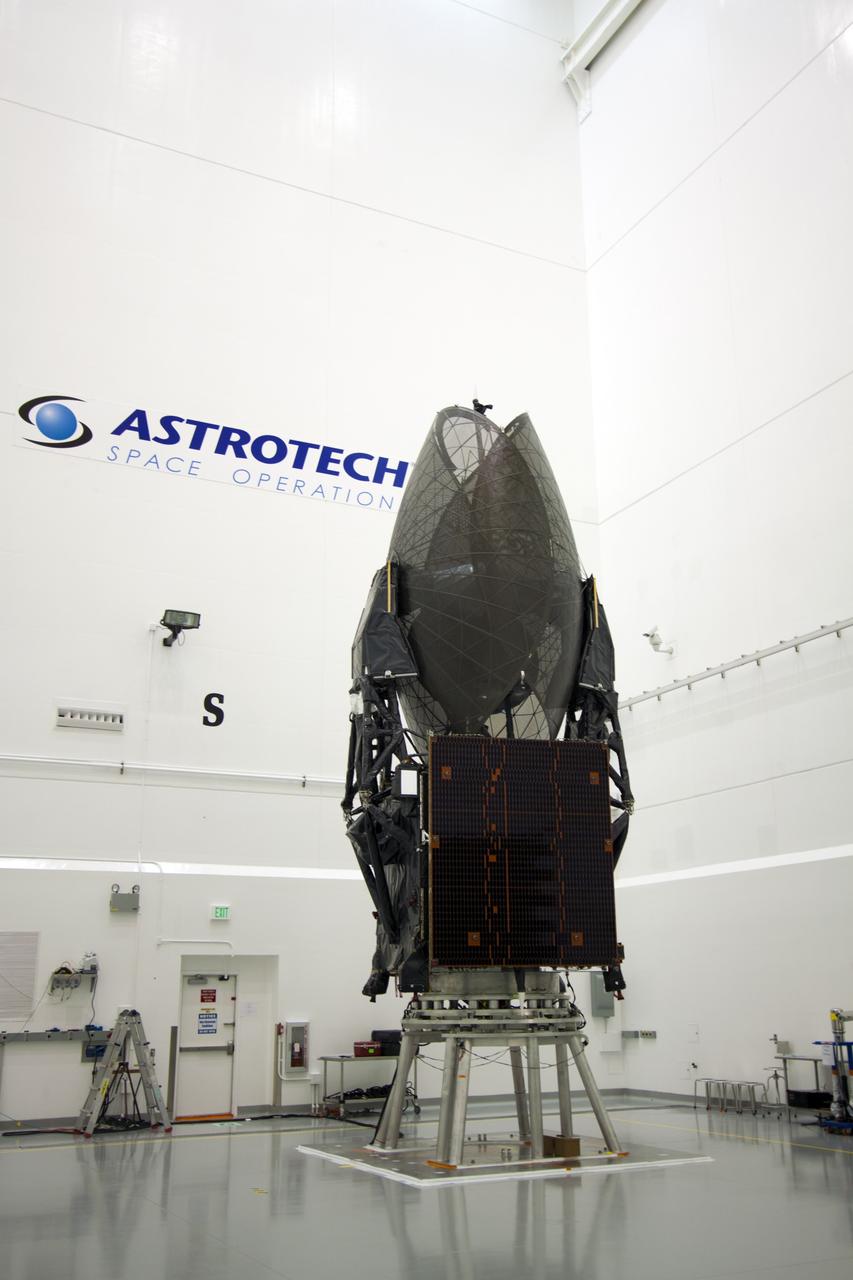
TITUSVILLE, Fla. - Inside the Astrotech payload processing facility in Titusville, Fla. near NASA’s Kennedy Space Center, the Tracking and Data Relay Satellite, TDRS-K, has been checked out and awaits the arrival of the TDRS-K. Launch of the TDRS-K on the Atlas V rocket is planned for January 29, 2013. The TDRS-K spacecraft is part of the next-generation series in the Tracking and Data Relay Satellite System, a constellation of space-based communication satellites providing tracking, telemetry, command and high-bandwidth data return services. For more information, visit http://www.nasa.gov/mission_pages/tdrs/index.html Photo credit: NASA/Jim Grossmann
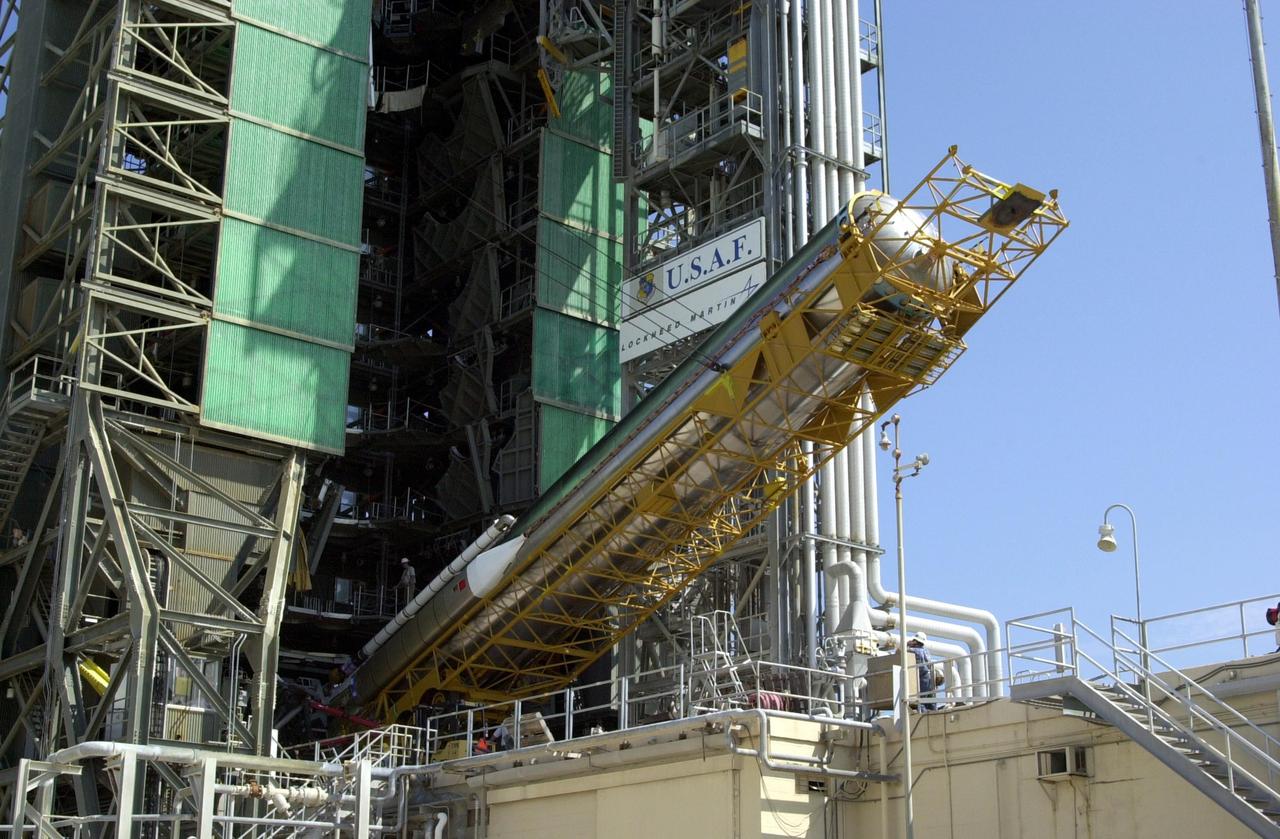
KENNEDY SPACE CENTER, FLA. -- The first stage of an Atlas/Centaur booster (AC-144) is lifted into an upright position at Launch Complex 36A at Cape Canaveral Air Force Station in preparation for the launch of TDRS-J. The third in a series of telemetry satellites, TDRS-J will help replenish the current constellation of geosynchronous TDRS satellites. The TDRS System is the primary source of space-to-ground voice, data and telemetry for the Space Shuttle. It also provides communications with the International Space Station and scientific spacecraft in low-Earth orbit, such as the Hubble Space Telescope. This new advanced series of satellites will extend the availability of TDRS communications services until about 2017.
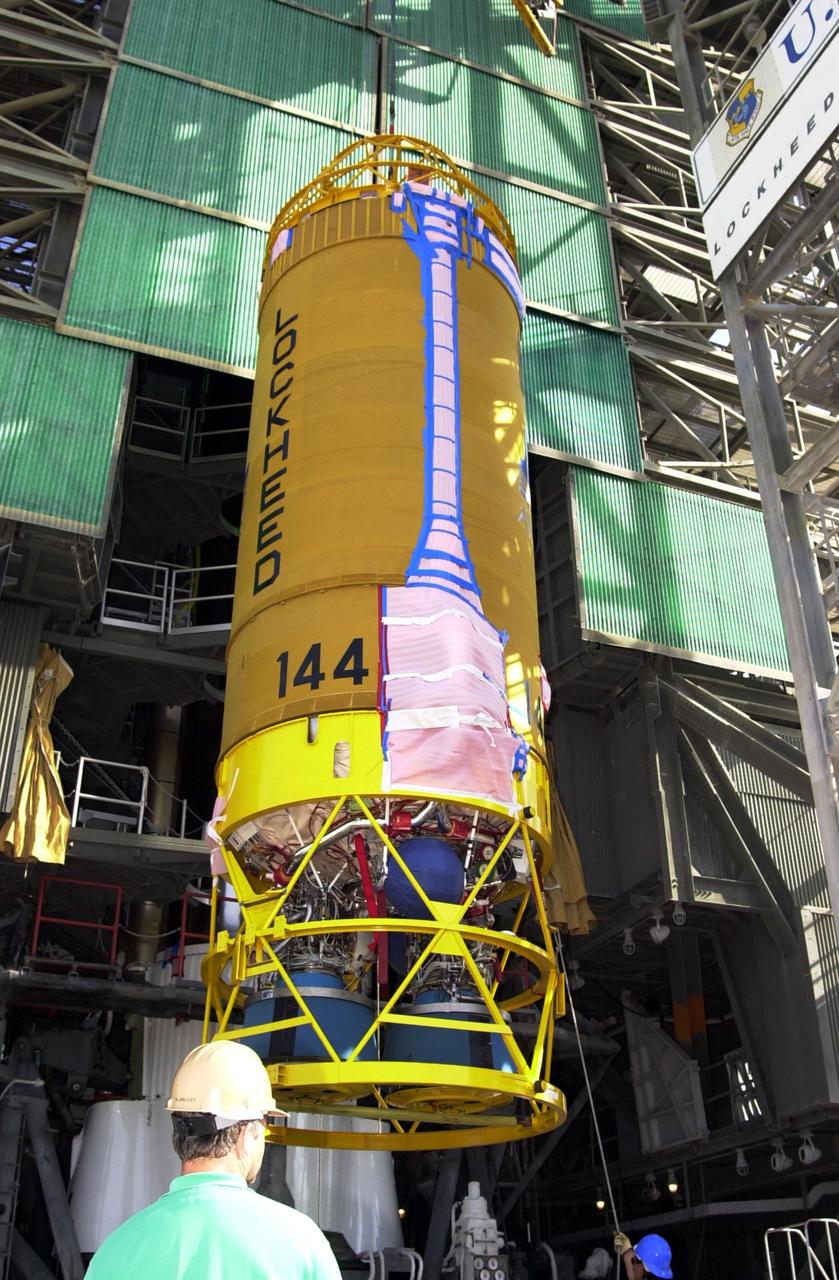
KENNEDY SPACE CENTER, FLA. -- At Launch Complex 36-A, Cape Canaveral Air Force Station, a Lockheed Martin Atlas Centaur IIA (AC-144) rocket is lifted up the launch tower. The rocket will be used in the launch of TDRS-J, scheduled for Nov. 20. The third in a series of telemetry satellites, TDRS-J will help replenish the current constellation of geosynchronous TDRS satellites. The TDRS System is the primary source of space-to-ground voice, data and telemetry for the Space Shuttle. It also provides communications with the International Space Station and scientific spacecraft in low-Earth orbit such as the Hubble Space Telescope. This new advanced series of satellites will extend the availability of TDRS communications services until about 2017.
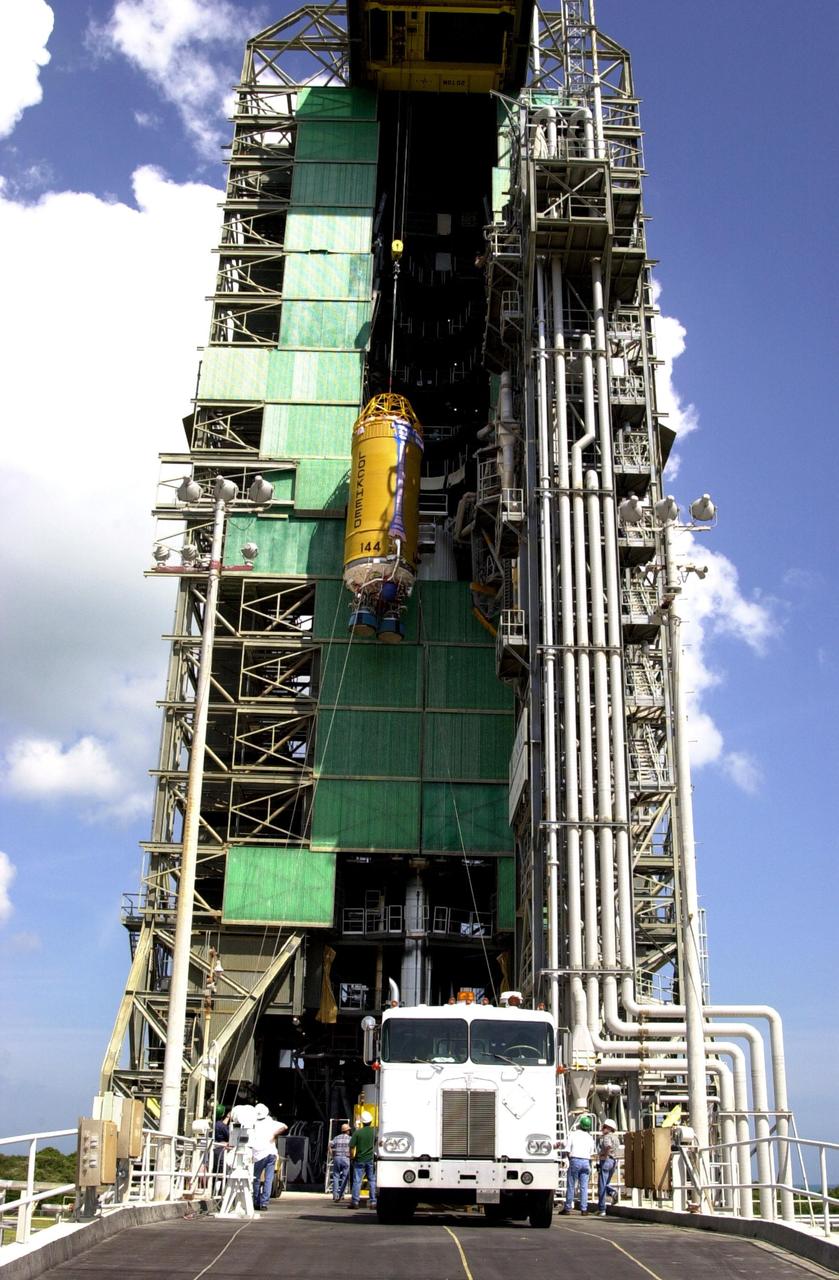
KENNEDY SPACE CENTER, FLA. -- At Launch Complex 36-A, Cape Canaveral Air Force Station, a Lockheed Martin Atlas Centaur IIA (AC-144) rocket is halfway up the launch tower . The rocket will be used in the launch of TDRS-J, scheduled for Nov. 20. The third in a series of telemetry satellites, TDRS-J will help replenish the current constellation of geosynchronous TDRS satellites. The TDRS System is the primary source of space-to-ground voice, data and telemetry for the Space Shuttle. It also provides communications with the International Space Station and scientific spacecraft in low-Earth orbit such as the Hubble Space Telescope. This new advanced series of satellites will extend the availability of TDRS communications services until about 2017.
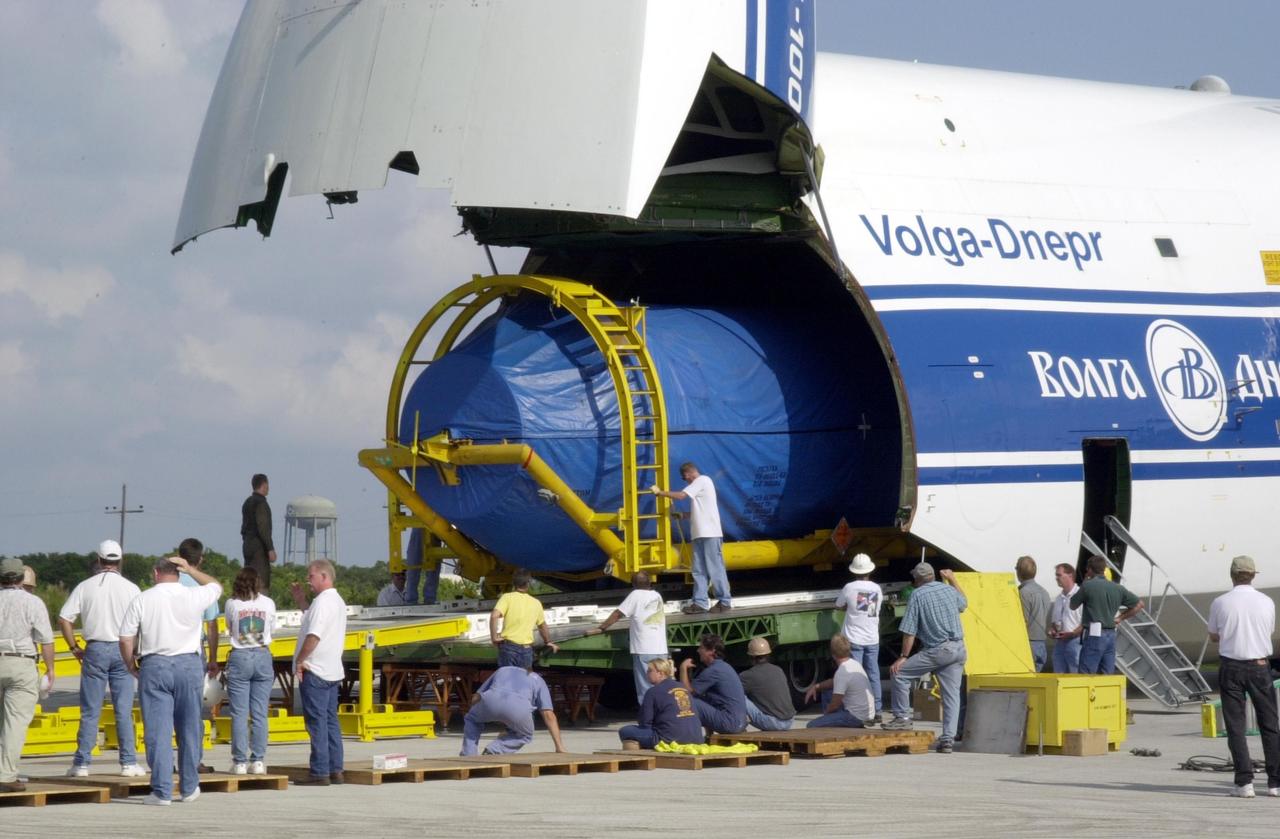
KENNEDY SPACE CENTER, FLA. -- An Atlas/Centaur booster arrives at Cape Canaveral Air Force Station in preparation for the launch of TDRS-J. The third in a series of telemetry satellites, TDRS-J will help replenish the current constellation of geosynchronous TDRS satellites. The TDRS System is the primary source of space-to-ground voice, data and telemetry for the Space Shuttle. It also provides communications with the International Space Station and scientific spacecraft in low-Earth orbit such as the Hubble Space Telescope. This new advanced series of satellites will extend the availability of TDRS communications services until about 2017.
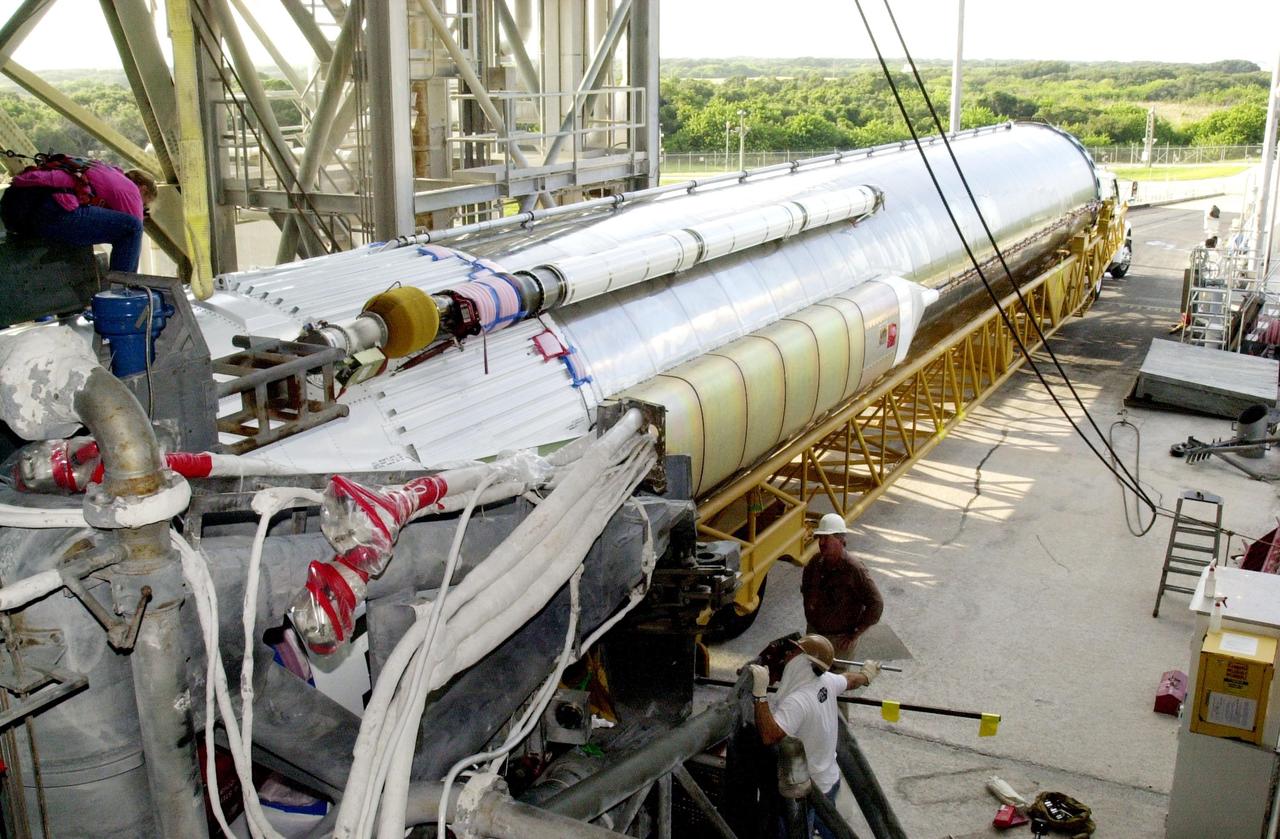
KENNEDY SPACE CENTER, FLA. -- The first stage of an Atlas/Centaur booster (AC-144) is delivered to Launch Complex 36A at Cape Canaveral Air Force Station in preparation for the launch of TDRS-J. The third in a series of telemetry satellites, TDRS-J will help replenish the current constellation of geosynchronous TDRS satellites. The TDRS System is the primary source of space-to-ground voice, data and telemetry for the Space Shuttle. It also provides communications with the International Space Station and scientific spacecraft in low-Earth orbit, such as the Hubble Space Telescope. This new advanced series of satellites will extend the availability of TDRS communications services until about 2017.
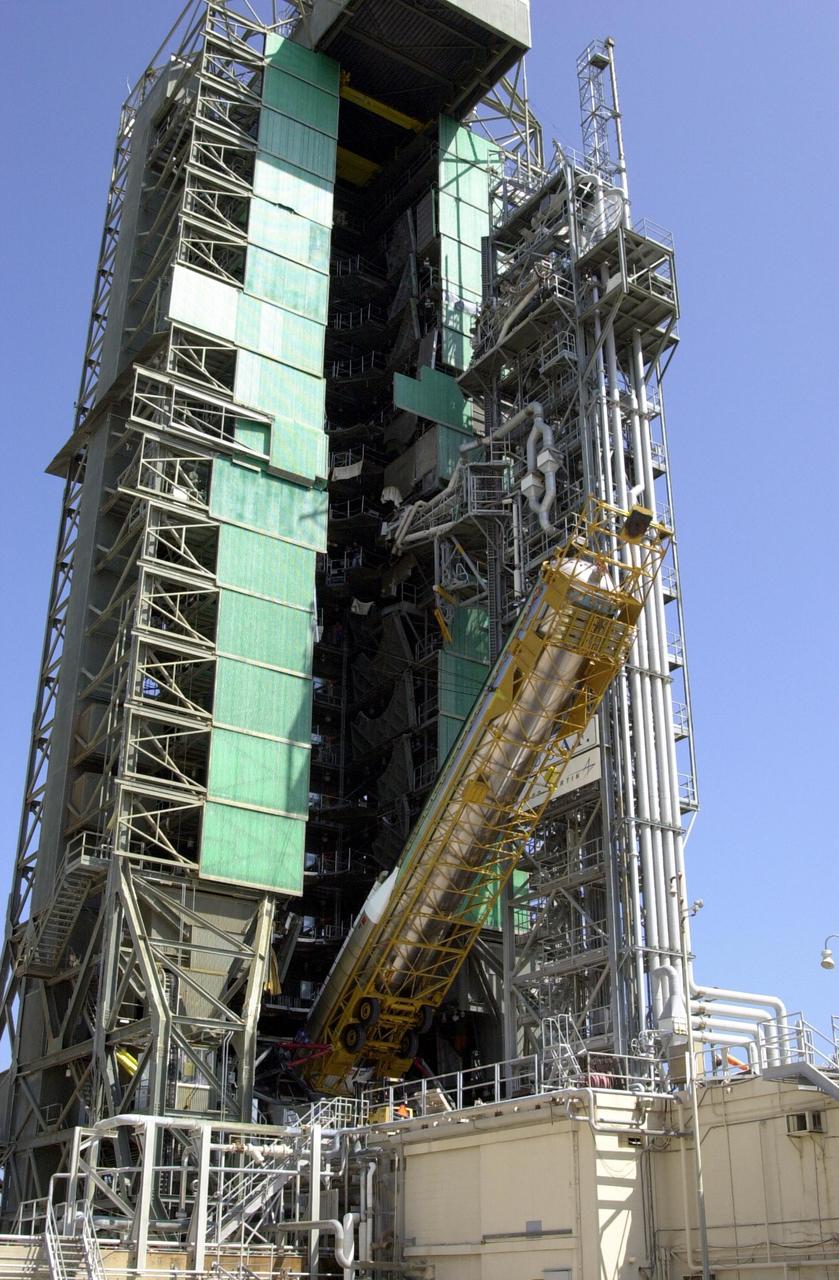
KENNEDY SPACE CENTER, FLA. -- The first stage of an Atlas/Centaur booster (AC-144) is lifted into an upright position at Launch Complex 36A at Cape Canaveral Air Force Station in preparation for the launch of TDRS-J. The third in a series of telemetry satellites, TDRS-J will help replenish the current constellation of geosynchronous TDRS satellites. The TDRS System is the primary source of space-to-ground voice, data and telemetry for the Space Shuttle. It also provides communications with the International Space Station and scientific spacecraft in low-Earth orbit, such as the Hubble Space Telescope. This new advanced series of satellites will extend the availability of TDRS communications services until about 2017.
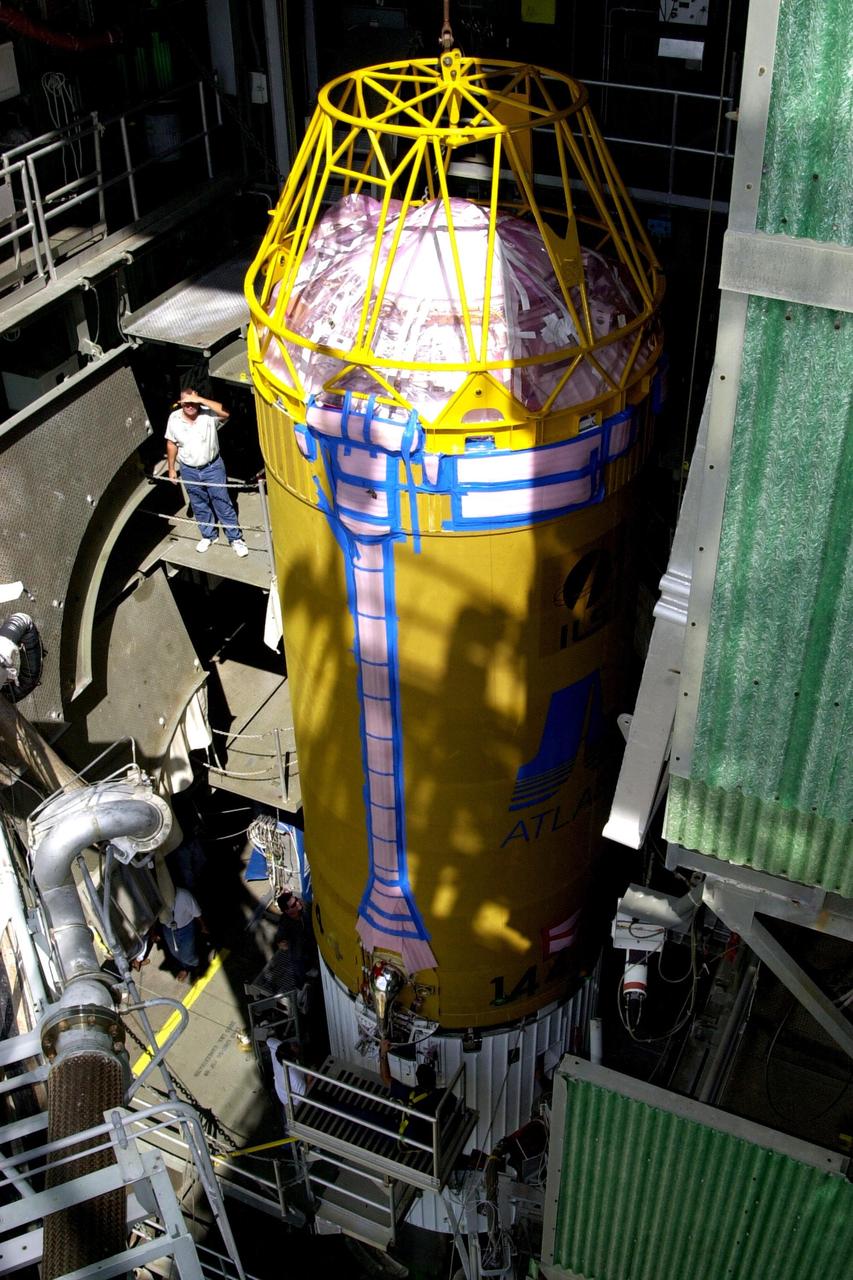
KENNEDY SPACE CENTER, FLA. -- At Launch Complex 36-A, Cape Canaveral Air Force Station, a Lockheed Martin Atlas Centaur IIA (AC-144) rocket arrives at the top of the launch tower. The rocket will be used in the launch of TDRS-J, scheduled for Nov. 20. The third in a series of telemetry satellites, TDRS-J will help replenish the current constellation of geosynchronous TDRS satellites. The TDRS System is the primary source of space-to-ground voice, data and telemetry for the Space Shuttle. It also provides communications with the International Space Station and scientific spacecraft in low-Earth orbit such as the Hubble Space Telescope. This new advanced series of satellites will extend the availability of TDRS communications services until about 2017.
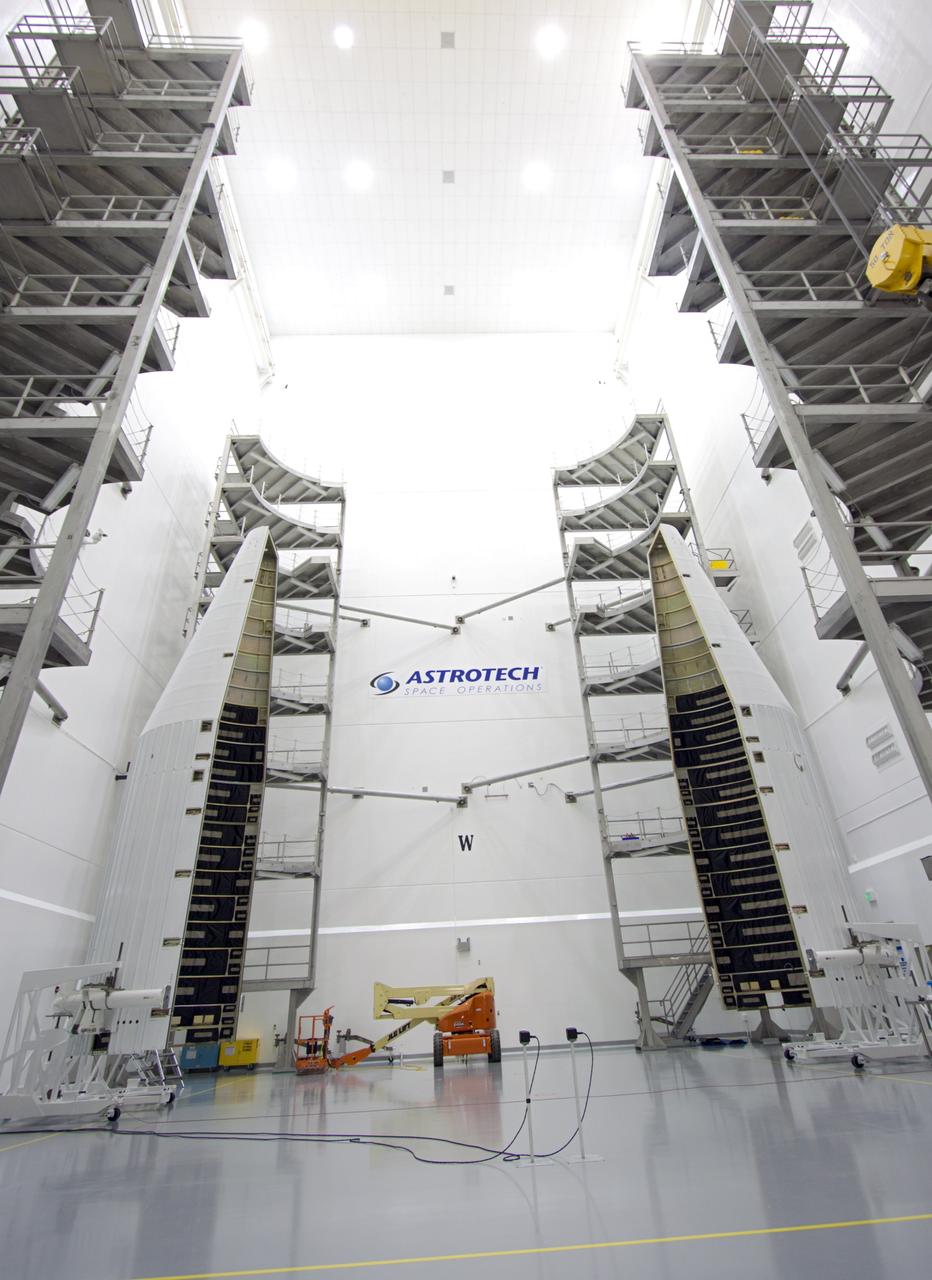
TITUSVILLE, Fla. - In the Astrotech payload processing facility in Titusville, Fla. near NASA’s Kennedy Space Center, the payload faring for the Tracking and Data Relay Satellite, TDRS-K, has been checked out and awaits the arrival of the TDRS-K. Launch of the TDRS-K on the Atlas V rocket is planned for January 29, 2013. The TDRS-K spacecraft is part of the next-generation series in the Tracking and Data Relay Satellite System, a constellation of space-based communication satellites providing tracking, telemetry, command and high-bandwidth data return services. For more information, visit http://www.nasa.gov/mission_pages/tdrs/index.html Photo credit: NASA/Jim Grossmann
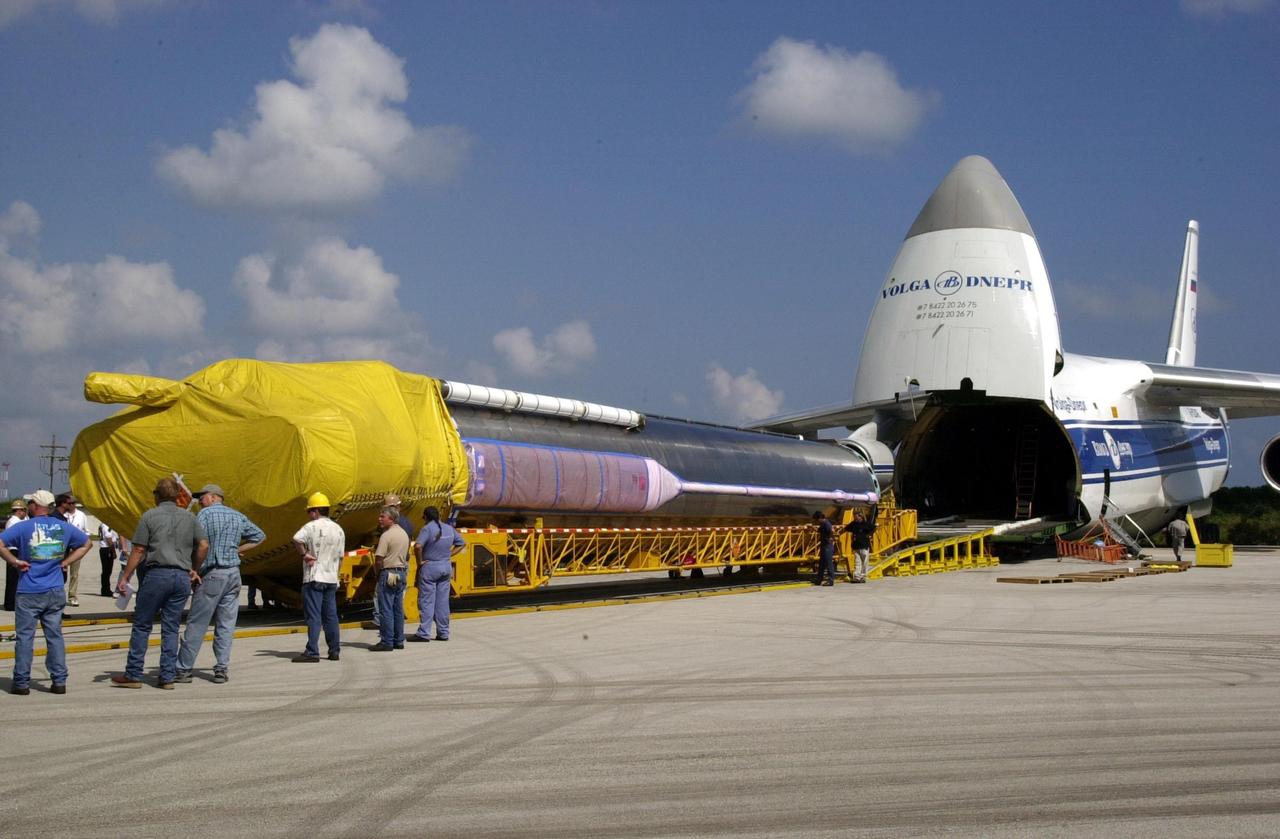
KENNEDY SPACE CENTER, FLA. -- Following its arrival at Cape Canaveral Air Force Station, an Atlas/Centaur booster is ready for its move to Launch Pad 36A in preparation for the launch of TDRS-J. The third in a series of telemetry satellites, TDRS-J will help replenish the current constellation of geosynchronous TDRS satellites. The TDRS System is the primary source of space-to-ground voice, data and telemetry for the Space Shuttle. It also provides communications with the International Space Station and scientific spacecraft in low-Earth orbit such as the Hubble Space Telescope. This new advanced series of satellites will extend the availability of TDRS communications services until about 2017.
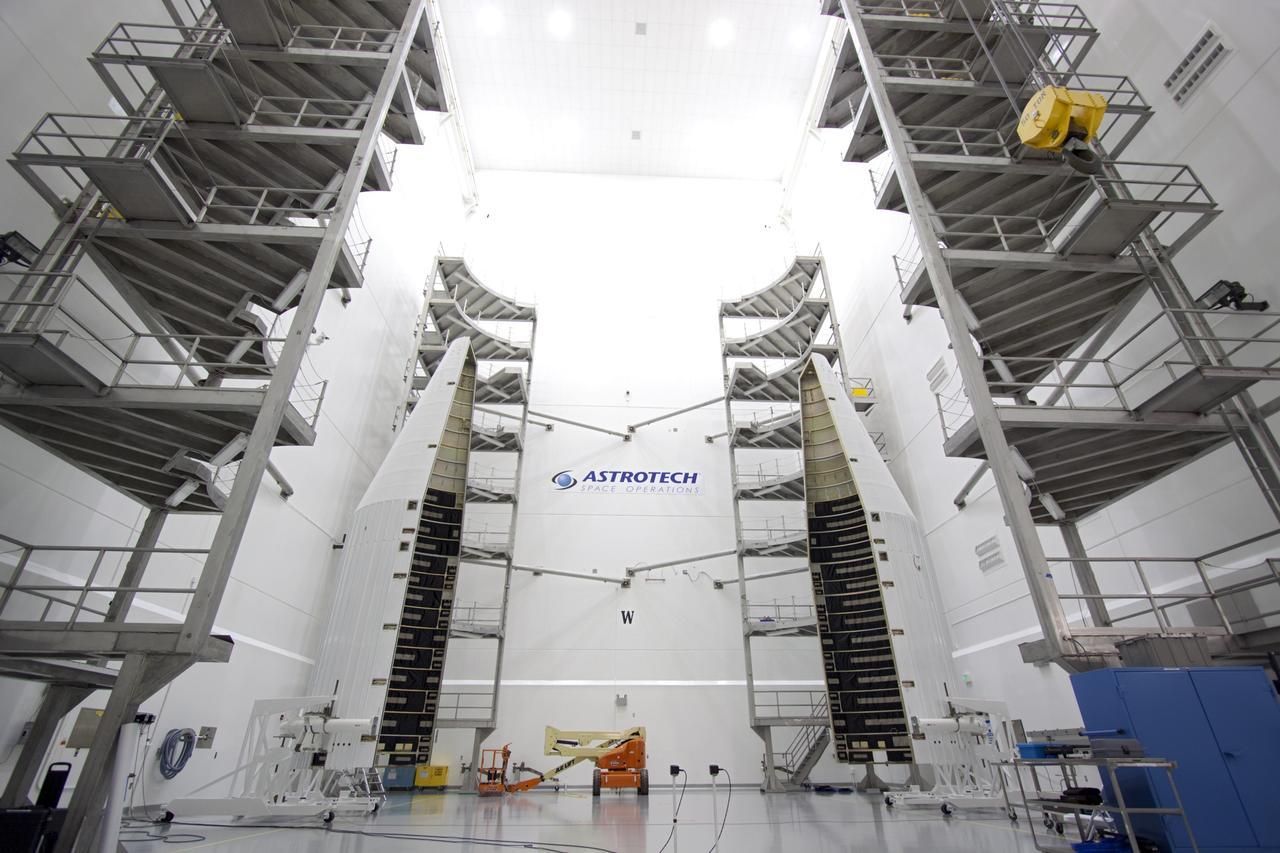
TITUSVILLE, Fla. - In the Astrotech payload processing facility in Titusville, Fla. near NASA’s Kennedy Space Center, the payload faring for the Tracking and Data Relay Satellite, TDRS-K, has been checked out and awaits the arrival of the TDRS-K. Launch of the TDRS-K on the Atlas V rocket is planned for January 29, 2013. The TDRS-K spacecraft is part of the next-generation series in the Tracking and Data Relay Satellite System, a constellation of space-based communication satellites providing tracking, telemetry, command and high-bandwidth data return services. For more information, visit http://www.nasa.gov/mission_pages/tdrs/index.html Photo credit: NASA/Jim Grossmann

KENNEDY SPACE CENTER, FLA. -- Following its arrival at Cape Canaveral Air Force Station, an Atlas/Centaur booster emerges from the nose of its transport aircraft. The booster is being offloaded and readied to move to Launch Pad 36A in preparation for the launch of TDRS-J. The third in a series of telemetry satellites, TDRS-J will help replenish the current constellation of geosynchronous TDRS satellites. The TDRS System is the primary source of space-to-ground voice, data and telemetry for the Space Shuttle. It also provides communications with the International Space Station and scientific spacecraft in low-Earth orbit such as the Hubble Space Telescope. This new advanced series of satellites will extend the availability of TDRS communications services until about 2017.
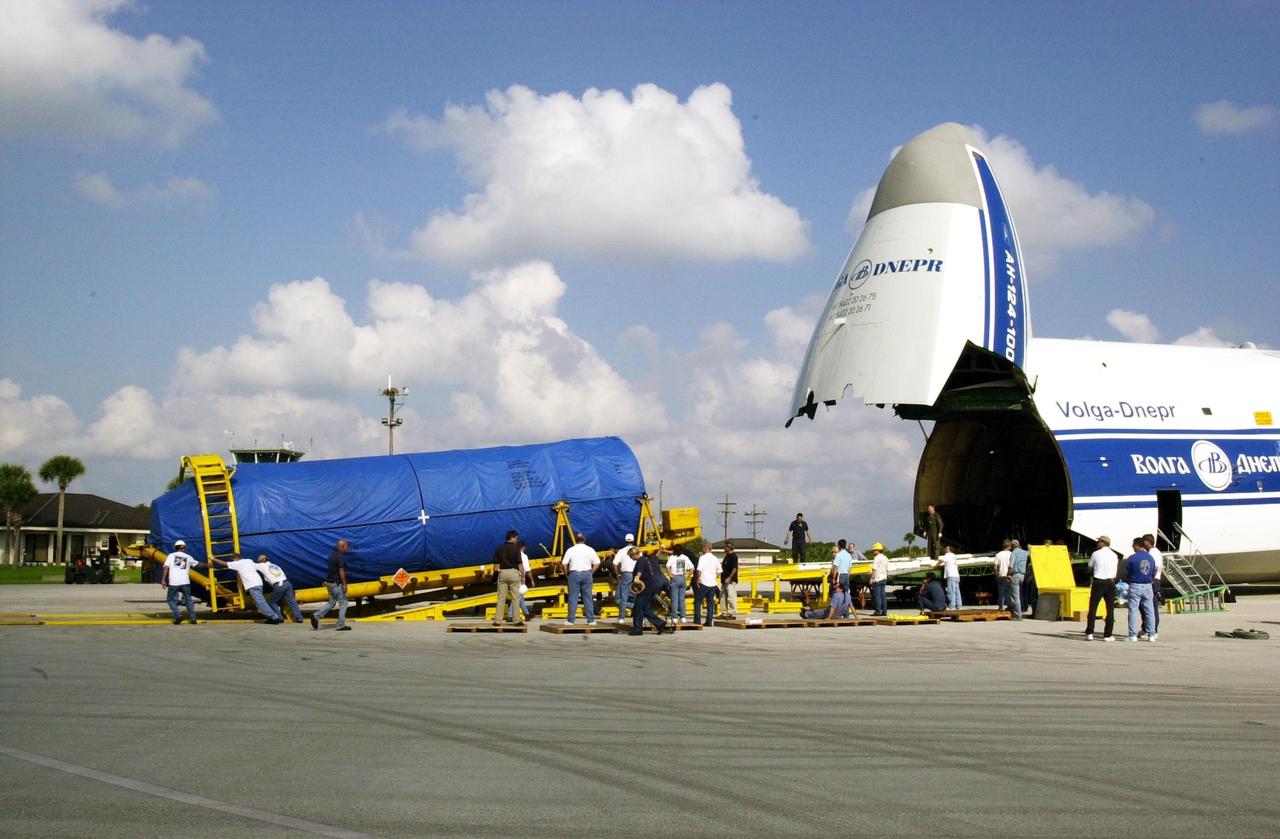
KENNEDY SPACE CENTER, FLA. -- Following its arrival at Cape Canaveral Air Force Station, an Atlas/Centaur booster is offloaded and readied for its move to Launch Pad 36A in preparation for the launch of TDRS-J. The third in a series of telemetry satellites, TDRS-J will help replenish the current constellation of geosynchronous TDRS satellites. The TDRS System is the primary source of space-to-ground voice, data and telemetry for the Space Shuttle. It also provides communications with the International Space Station and scientific spacecraft in low-Earth orbit such as the Hubble Space Telescope. This new advanced series of satellites will extend the availability of TDRS communications services until about 2017.
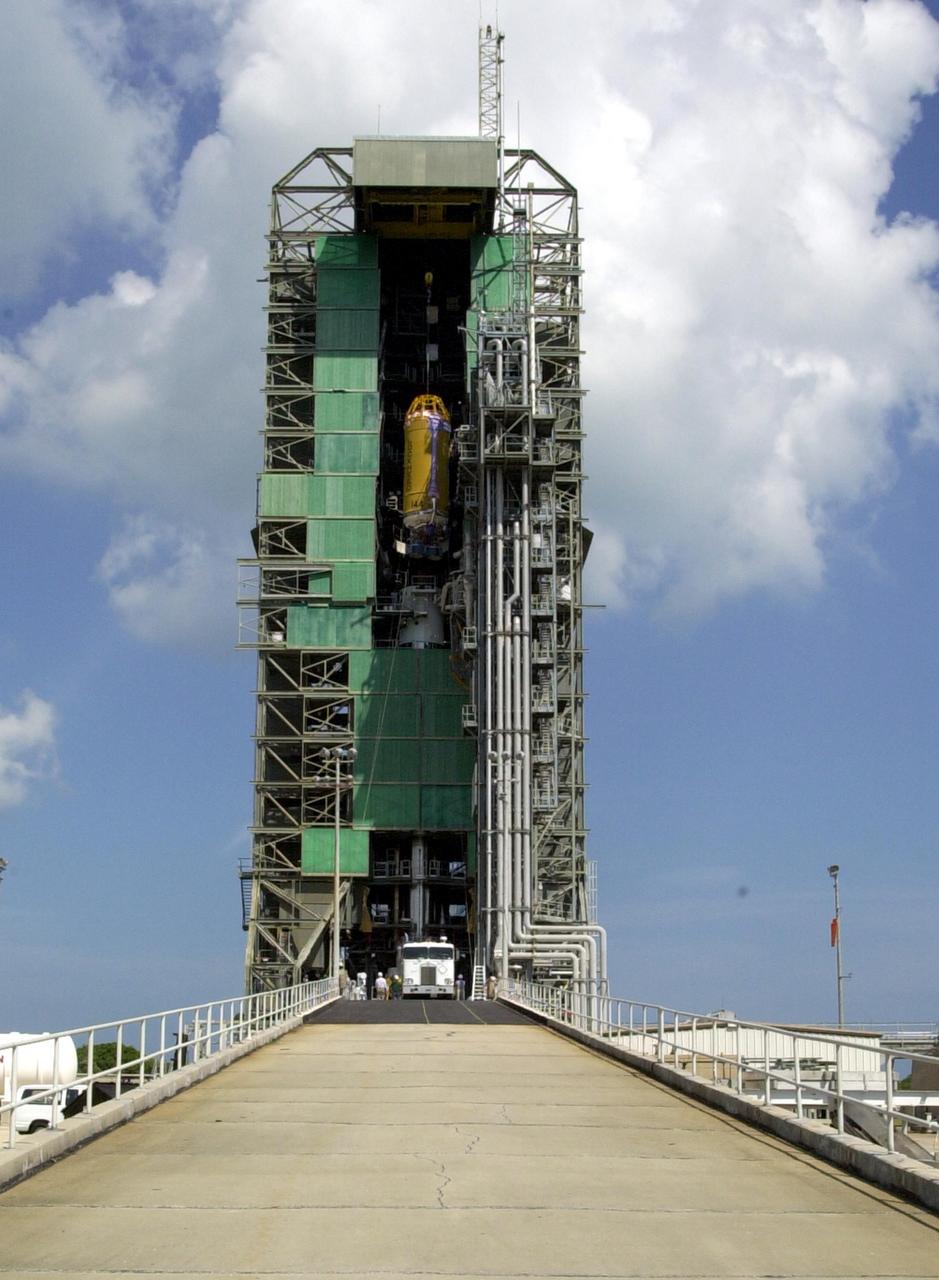
KENNEDY SPACE CENTER, FLA. -- At Launch Complex 36-A, Cape Canaveral Air Force Station, a Lockheed Martin Atlas Centaur IIA (AC-144) rocket nears the top of the launch tower. The rocket will be used in the launch of TDRS-J, scheduled for Nov. 20. The third in a series of telemetry satellites, TDRS-J will help replenish the current constellation of geosynchronous TDRS satellites. The TDRS System is the primary source of space-to-ground voice, data and telemetry for the Space Shuttle. It also provides communications with the International Space Station and scientific spacecraft in low-Earth orbit such as the Hubble Space Telescope. This new advanced series of satellites will extend the availability of TDRS communications services until about 2017.
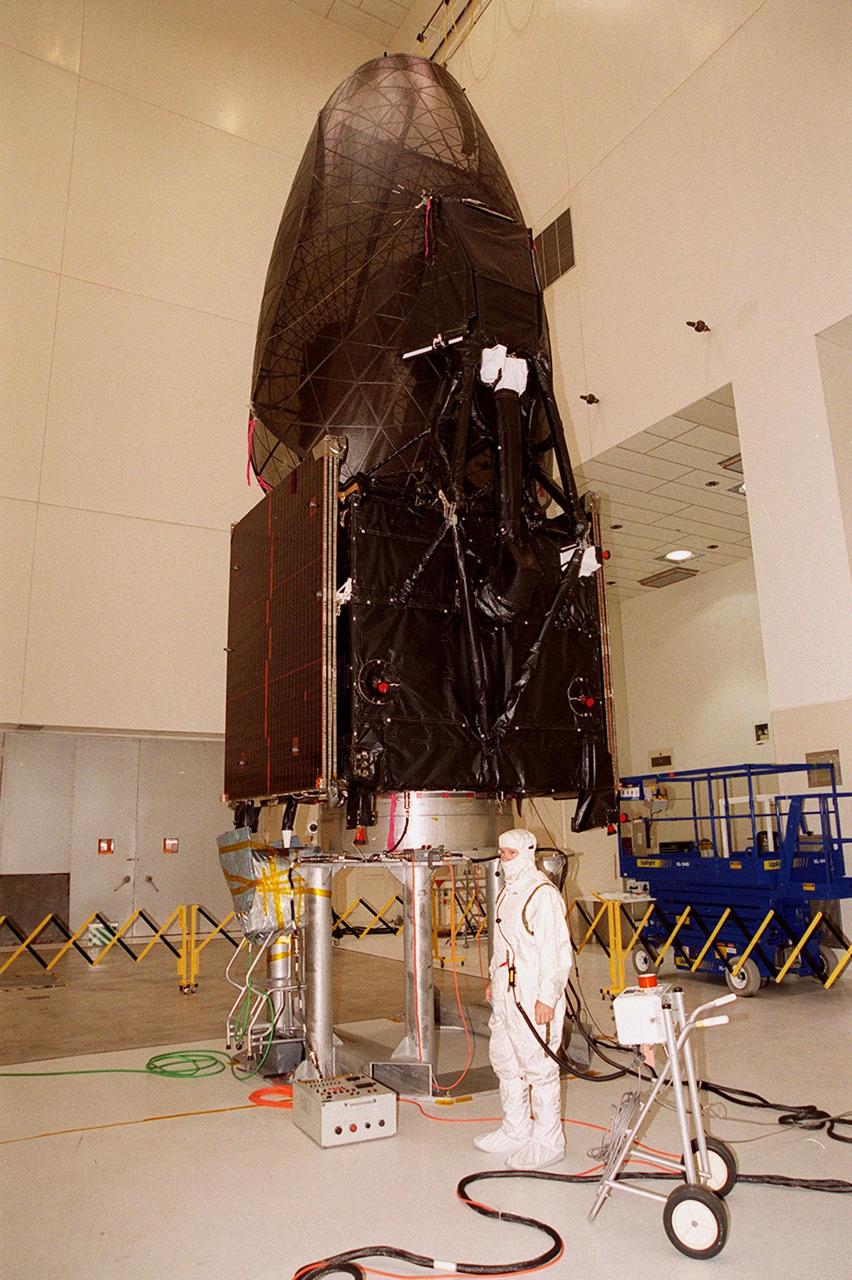
The Tracking and Data Relay Satellite (TDRS-H) sits on a workstand in KSC’s Spacecraft Assembly and Encapsulation Facility (SAEF-2) in order to undergo electrical testing. The TDRS is scheduled to be launched from CCAFS June 29 aboard an Atlas IIA/Centaur rocket. One of three satellites (labeled H, I and J) being built in the Hughes Space and Communications Company Integrated Satellite Factory in El Segundo, Calif., the latest TDRS uses an innovative springback antenna design. A pair of 15-foot-diameter, flexible mesh antenna reflectors fold up for launch, then spring back into their original cupped circular shape on orbit. The new satellites will augment the TDRS system’s existing Sand Ku-band frequencies by adding Ka-band capability. TDRS will serve as the sole means of continuous, high-data-rate communication with the space shuttle, with the International Space Station upon its completion, and with dozens of unmanned scientific satellites in low earth orbit
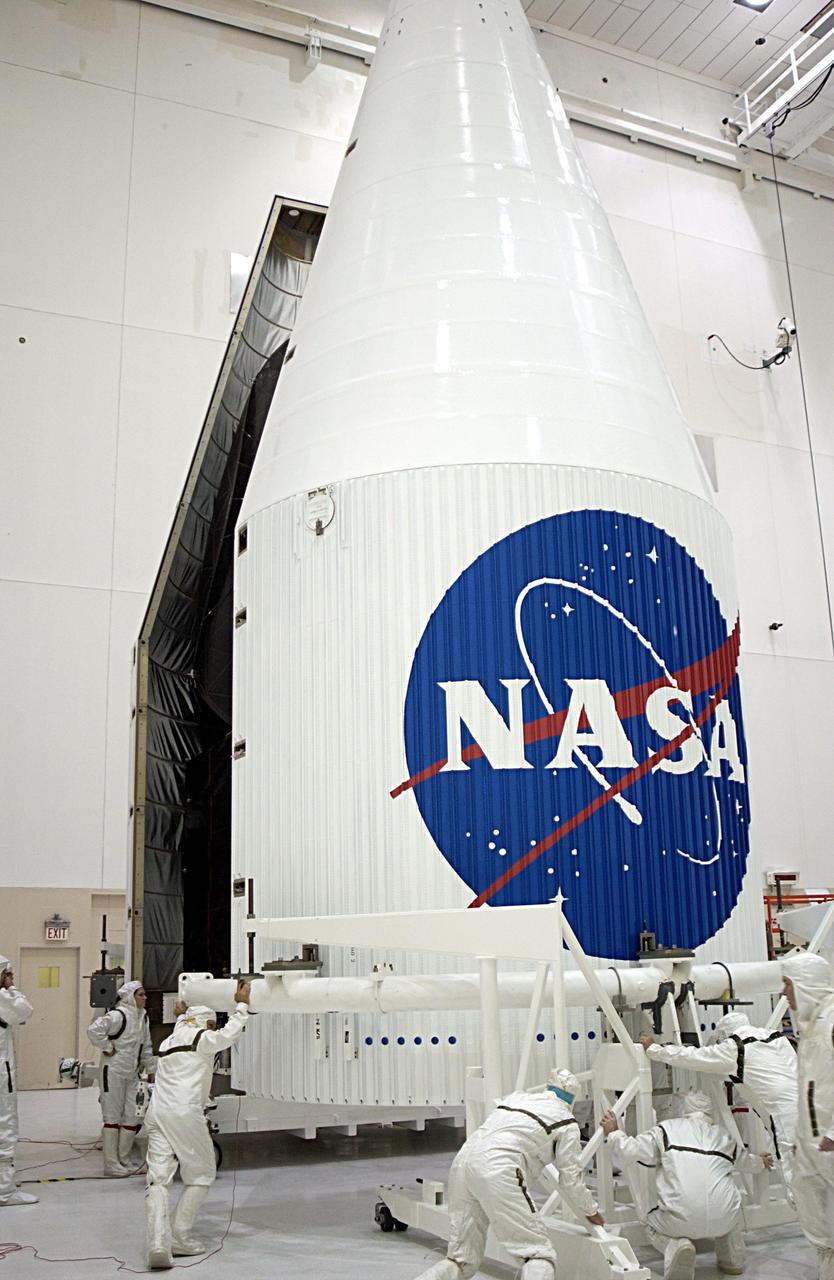
KENNEDY SPACE CENTER, FLA. -- Workers move the second half of the fairing around the TDRS-J satellite to complete encapsulation. The satellite is scheduled to be launched aboard a Lockheed Martin Atlas IIA-Centaur rocket from Launch Complex 36-A, Cape Canaveral Air Force Station, Fla., on Dec. 4. The third in a series of telemetry satellites, TDRS-J will help replenish the current constellation of geosynchronous TDRS satellites. The TDRS System is the primary source of space-to-ground voice, data and telemetry for the Space Shuttle. It also provides communications with the International Space Station and scientific spacecraft in low-Earth orbit such as the Hubble Space Telescope. This new advanced series of satellites will extend the availability of TDRS communications services until about 2017.
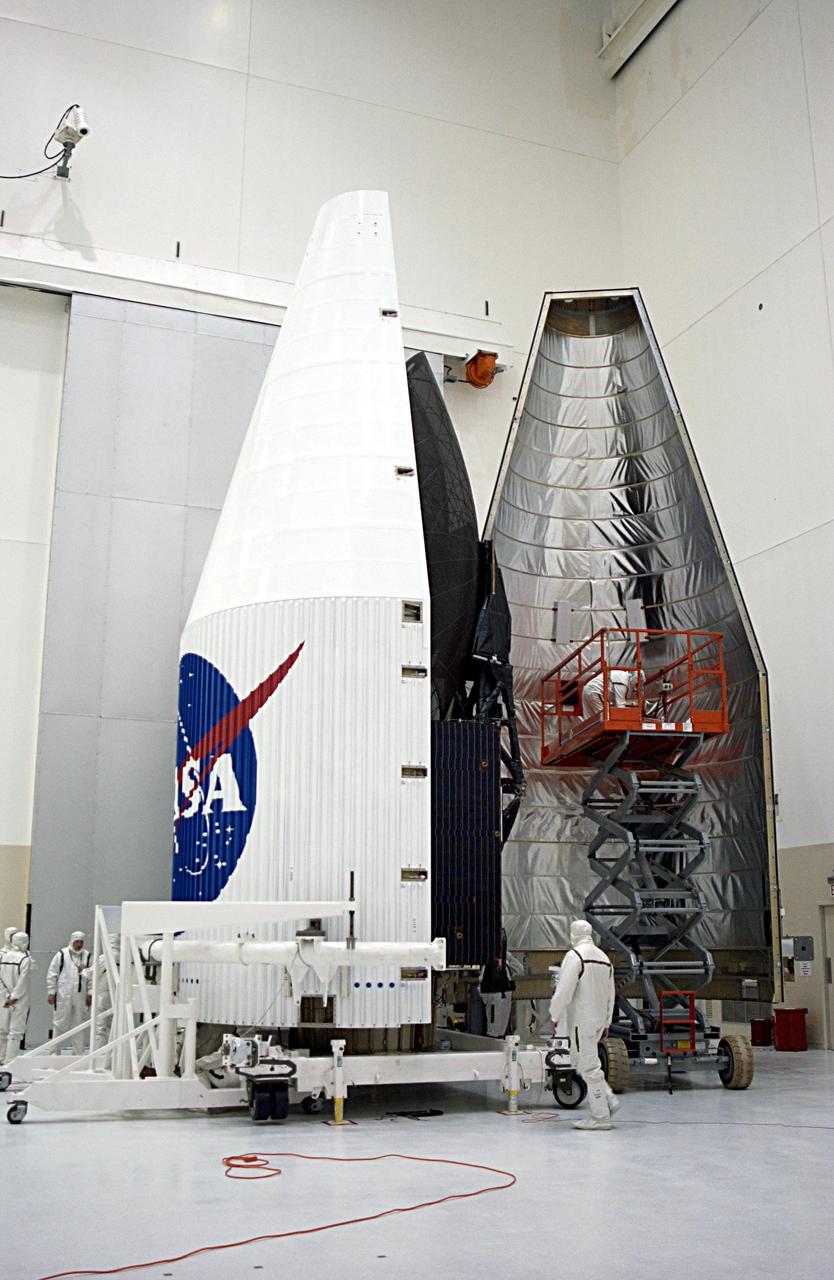
KENNEDY SPACE CENTER, FLA. -- The second half of the fairing (right) is prepared for mating with the first half and encapsulating the TDRS-J satellite for launch. The satellite is scheduled to be launched aboard a Lockheed Martin Atlas IIA-Centaur rocket from Launch Complex 36-A, Cape Canaveral Air Force Station, Fla., on Dec. 4. The third in a series of telemetry satellites, TDRS-J will help replenish the current constellation of geosynchronous TDRS satellites. The TDRS System is the primary source of space-to-ground voice, data and telemetry for the Space Shuttle. It also provides communications with the International Space Station and scientific spacecraft in low-Earth orbit such as the Hubble Space Telescope. This new advanced series of satellites will extend the availability of TDRS communications services until about 2017.

Workers in KSC’s Spacecraft Assembly and Encapsulation Facility (SAEF-2) prepare the Tracking and Data Relay Satellite (TDRS-H) above them for electrical testing. The TDRS is scheduled to be launched from CCAFS June 29 aboard an Atlas IIA/Centaur rocket. One of three satellites (labeled H, I and J) being built in the Hughes Space and Communications Company Integrated Satellite Factory in El Segundo, Calif., the latest TDRS uses an innovative springback antenna design. A pair of 15-foot-diameter, flexible mesh antenna reflectors fold up for launch, then spring back into their original cupped circular shape on orbit. The new satellites will augment the TDRS system’s existing Sand Ku-band frequencies by adding Ka-band capability. TDRS will serve as the sole means of continuous, high-data-rate communication with the space shuttle, with the International Space Station upon its completion, and with dozens of unmanned scientific satellites in low earth orbit

KENNEDY SPACE CENTER, FLA. -- The TDRS-J satellite rests inside the first half of the fairing during encapsulation. The satellite is scheduled to be launched aboard a Lockheed Martin Atlas IIA-Centaur rocket from Launch Complex 36-A, Cape Canaveral Air Force Station, Fla., on Dec. 4. The third in a series of telemetry satellites, TDRS-J will help replenish the current constellation of geosynchronous TDRS satellites. The TDRS System is the primary source of space-to-ground voice, data and telemetry for the Space Shuttle. It also provides communications with the International Space Station and scientific spacecraft in low-Earth orbit such as the Hubble Space Telescope. This new advanced series of satellites will extend the availability of TDRS communications services until about 2017.
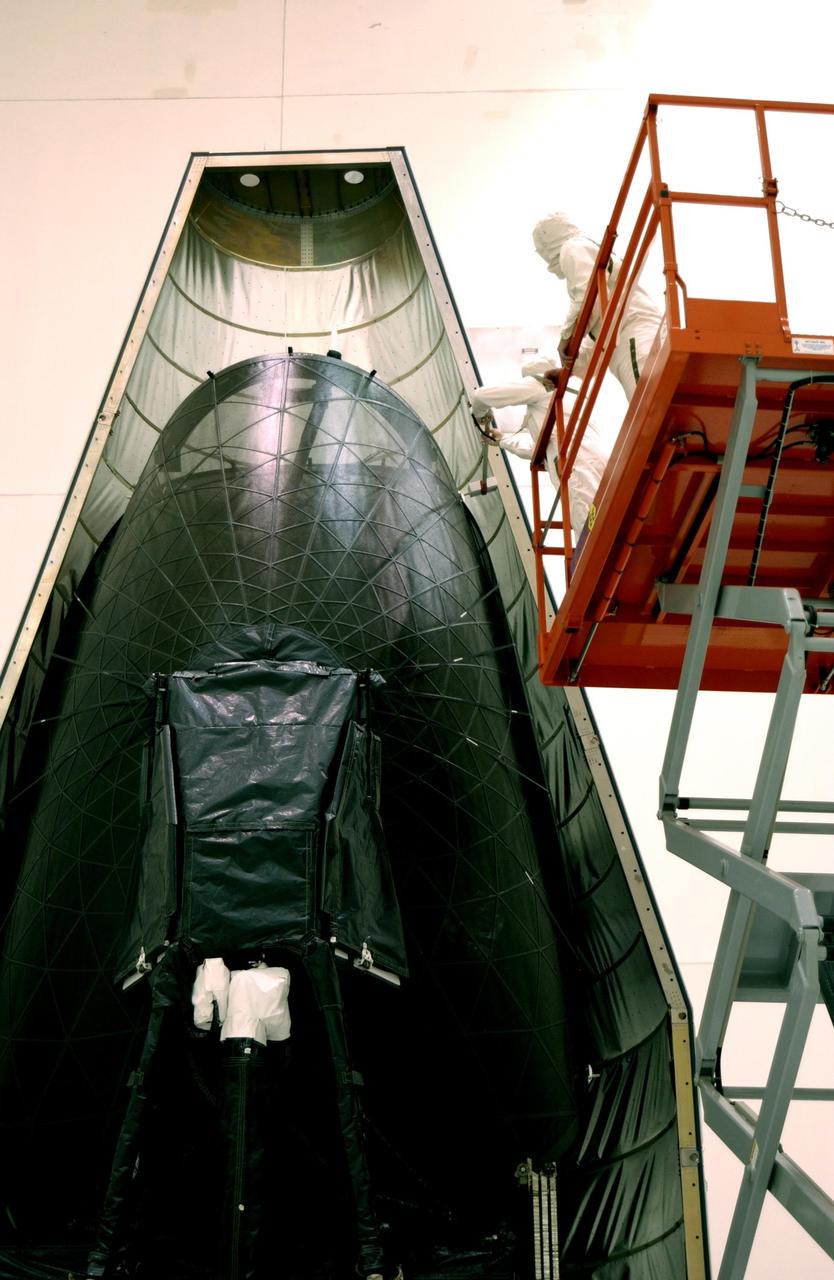
KENNEDY SPACE CENTER, FLA. -- The TDRS-J satellite rests inside the first half of the fairing during encapsulation. The satellite is scheduled to be launched aboard a Lockheed Martin Atlas IIA-Centaur rocket from Launch Complex 36-A, Cape Canaveral Air Force Station, Fla., on Dec. 4. The third in a series of telemetry satellites, TDRS-J will help replenish the current constellation of geosynchronous TDRS satellites. The TDRS System is the primary source of space-to-ground voice, data and telemetry for the Space Shuttle. It also provides communications with the International Space Station and scientific spacecraft in low-Earth orbit such as the Hubble Space Telescope. This new advanced series of satellites will extend the availability of TDRS communications services until about 2017.
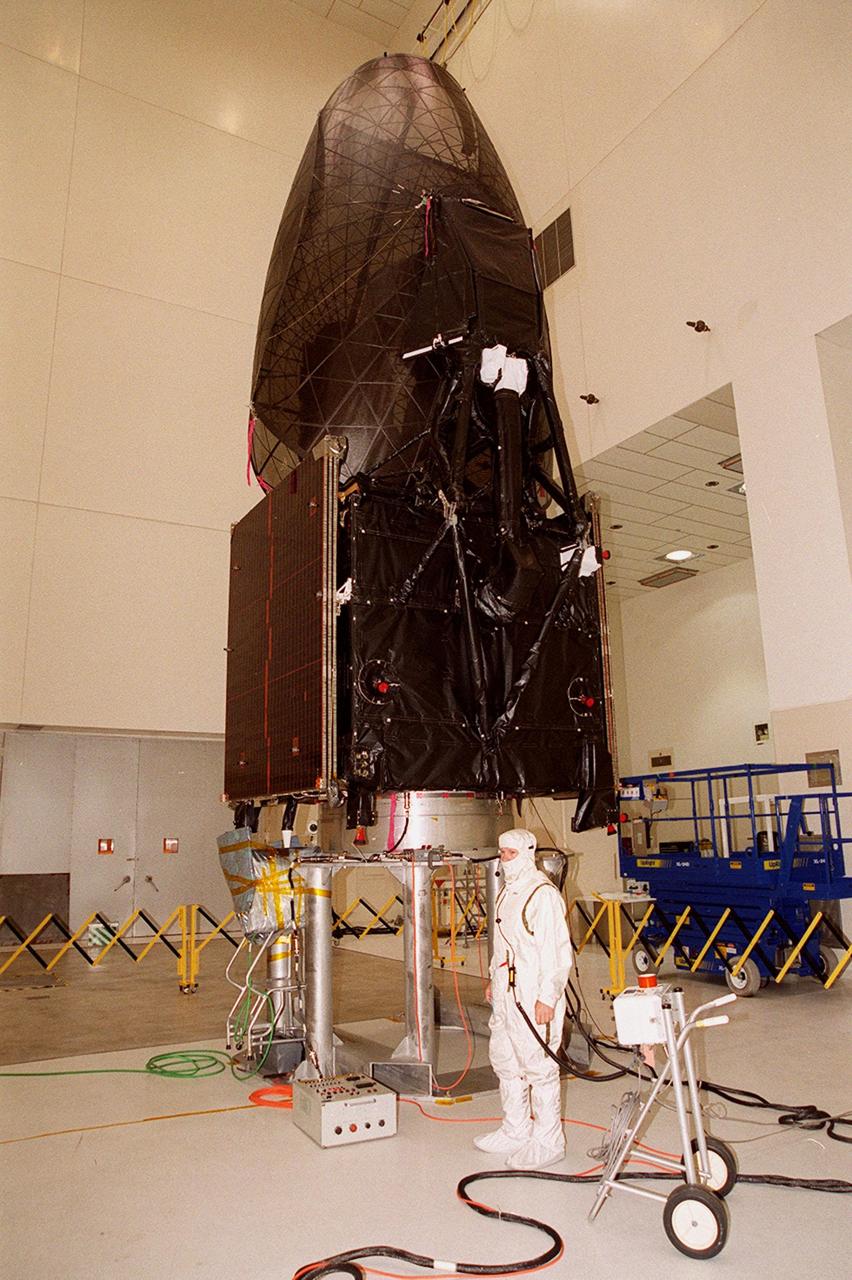
The Tracking and Data Relay Satellite (TDRS-H) sits on a workstand in KSC’s Spacecraft Assembly and Encapsulation Facility (SAEF-2) in order to undergo electrical testing. The TDRS is scheduled to be launched from CCAFS June 29 aboard an Atlas IIA/Centaur rocket. One of three satellites (labeled H, I and J) being built in the Hughes Space and Communications Company Integrated Satellite Factory in El Segundo, Calif., the latest TDRS uses an innovative springback antenna design. A pair of 15-foot-diameter, flexible mesh antenna reflectors fold up for launch, then spring back into their original cupped circular shape on orbit. The new satellites will augment the TDRS system’s existing Sand Ku-band frequencies by adding Ka-band capability. TDRS will serve as the sole means of continuous, high-data-rate communication with the space shuttle, with the International Space Station upon its completion, and with dozens of unmanned scientific satellites in low earth orbit

KENNEDY SPACE CENTER, FLA. -- The TDRS-J satellite sits between the two halves of the fairing before encapsulation for launch. The satellite is scheduled to be launched aboard a Lockheed Martin Atlas IIA-Centaur rocket from Launch Complex 36-A, Cape Canaveral Air Force Station, Fla., on Dec. 4. The third in a series of telemetry satellites, TDRS-J will help replenish the current constellation of geosynchronous TDRS satellites. The TDRS System is the primary source of space-to-ground voice, data and telemetry for the Space Shuttle. It also provides communications with the International Space Station and scientific spacecraft in low-Earth orbit such as the Hubble Space Telescope. This new advanced series of satellites will extend the availability of TDRS communications services until about 2017.
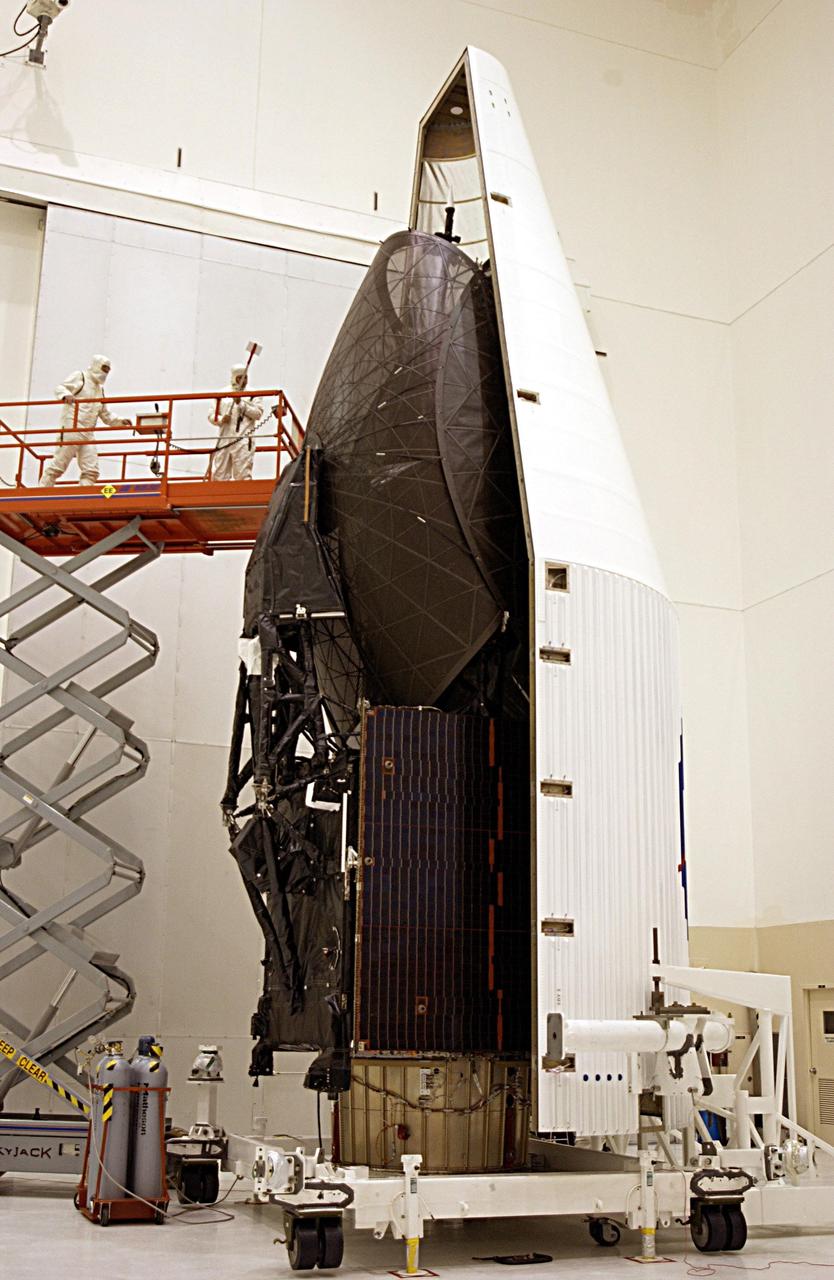
KENNEDY SPACE CENTER, FLA. -- Workers make adjustments on the first part of the fairing around the TDRS-J satellite before encapsulation continues. The satellite is scheduled to be launched aboard a Lockheed Martin Atlas IIA-Centaur rocket from Launch Complex 36-A, Cape Canaveral Air Force Station, Fla., on Dec. 4. The third in a series of telemetry satellites, TDRS-J will help replenish the current constellation of geosynchronous TDRS satellites. The TDRS System is the primary source of space-to-ground voice, data and telemetry for the Space Shuttle. It also provides communications with the International Space Station and scientific spacecraft in low-Earth orbit such as the Hubble Space Telescope. This new advanced series of satellites will extend the availability of TDRS communications services until about 2017.
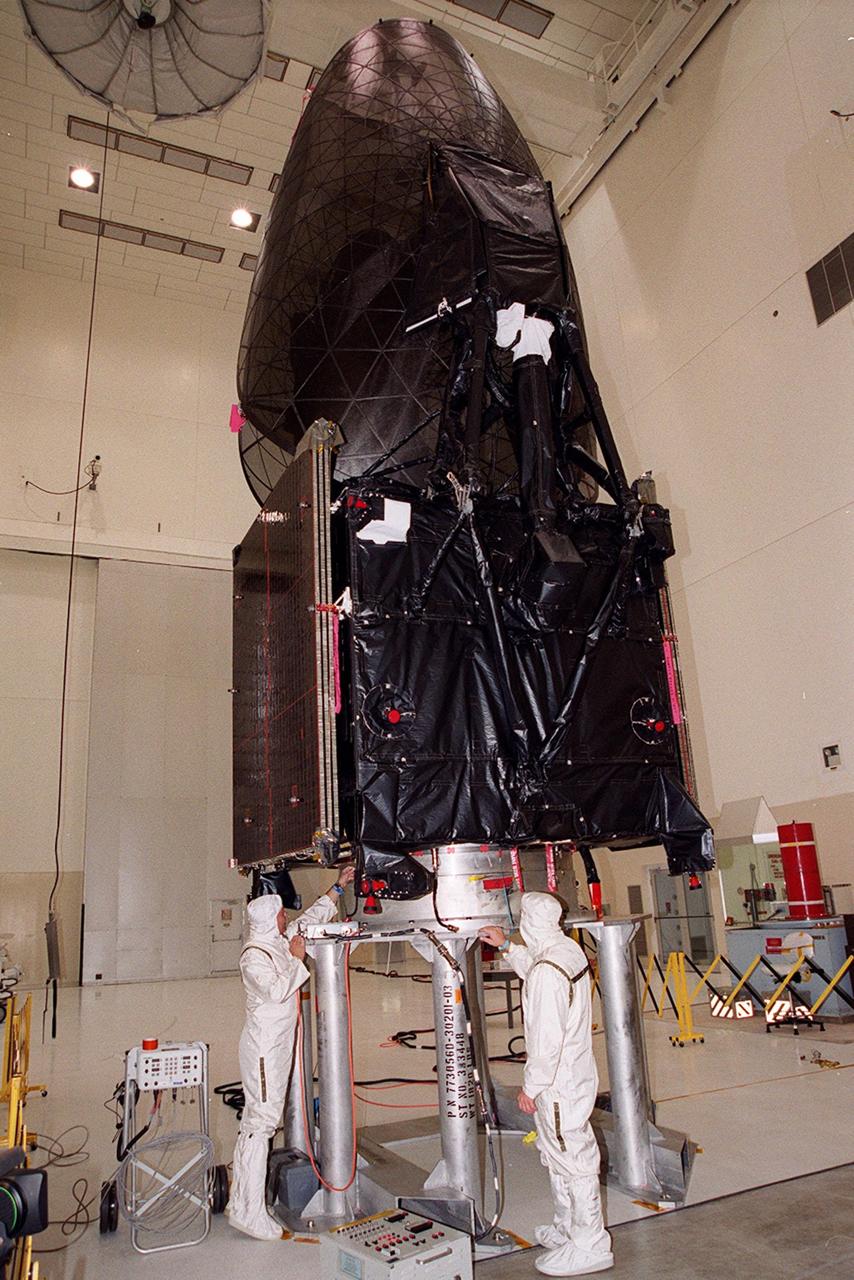
Workers in KSC’s Spacecraft Assembly and Encapsulation Facility (SAEF-2) conduct electrical testing on the Tracking and Data Relay Satellite (TDRS-H) above them. The TDRS is scheduled to be launched from CCAFS June 29 aboard an Atlas IIA/Centaur rocket. One of three satellites (labeled H, I and J) being built in the Hughes Space and Communications Company Integrated Satellite Factory in El Segundo, Calif., the latest TDRS uses an innovative springback antenna design. A pair of 15-foot-diameter, flexible mesh antenna reflectors fold up for launch, then spring back into their original cupped circular shape on orbit. The new satellites will augment the TDRS system’s existing Sand Ku-band frequencies by adding Ka-band capability. TDRS will serve as the sole means of continuous, high-data-rate communication with the space shuttle, with the International Space Station upon its completion, and with dozens of unmanned scientific satellites in low earth orbit
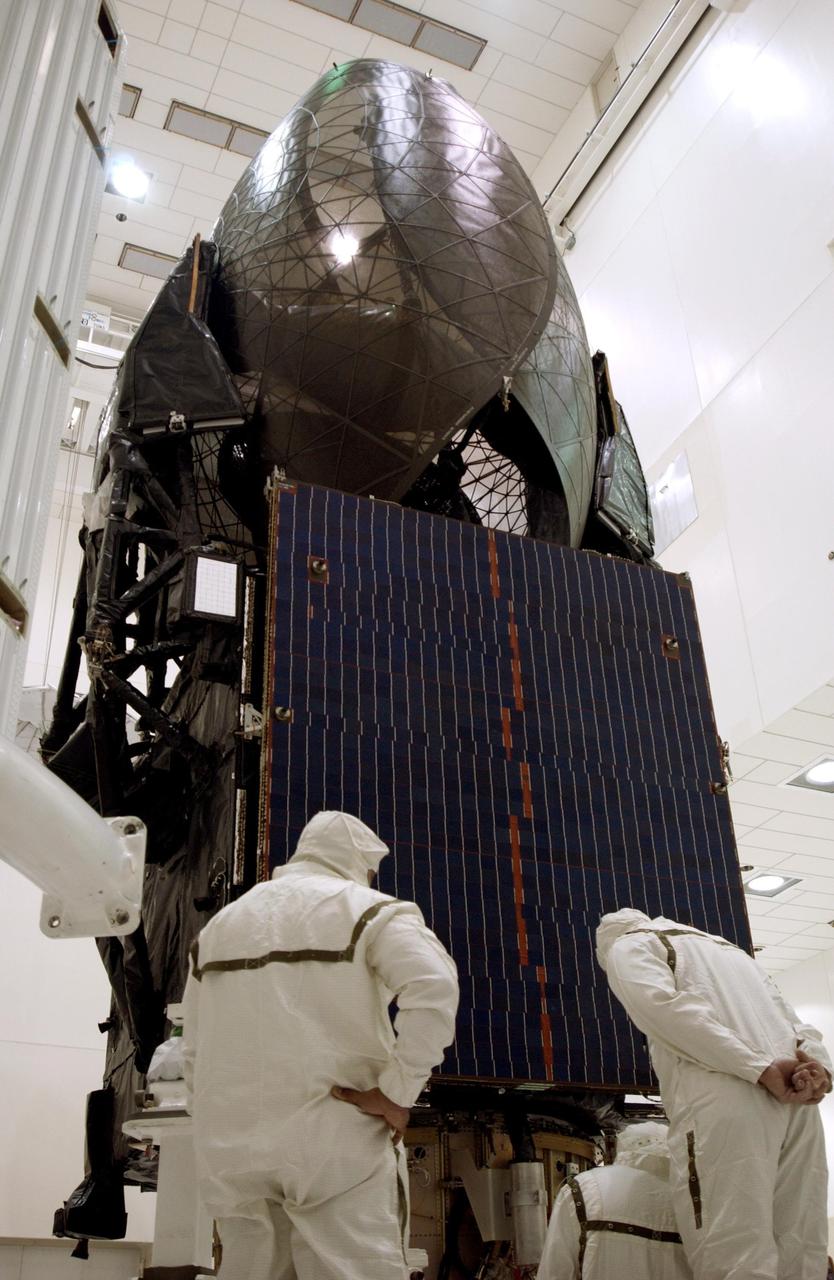
KENNEDY SPACE CENTER, FLA. -- Workers keep check on the TDRS-J satellite (foreground) as the fairing (background) moves toward it for encapsulation. The satellite is scheduled to be launched aboard a Lockheed Martin Atlas IIA-Centaur rocket from Launch Complex 36-A, Cape Canaveral Air Force Station, Fla., on Dec. 4. The third in a series of telemetry satellites, TDRS-J will help replenish the current constellation of geosynchronous TDRS satellites. The TDRS System is the primary source of space-to-ground voice, data and telemetry for the Space Shuttle. It also provides communications with the International Space Station and scientific spacecraft in low-Earth orbit such as the Hubble Space Telescope. This new advanced series of satellites will extend the availability of TDRS communications services until about 2017.
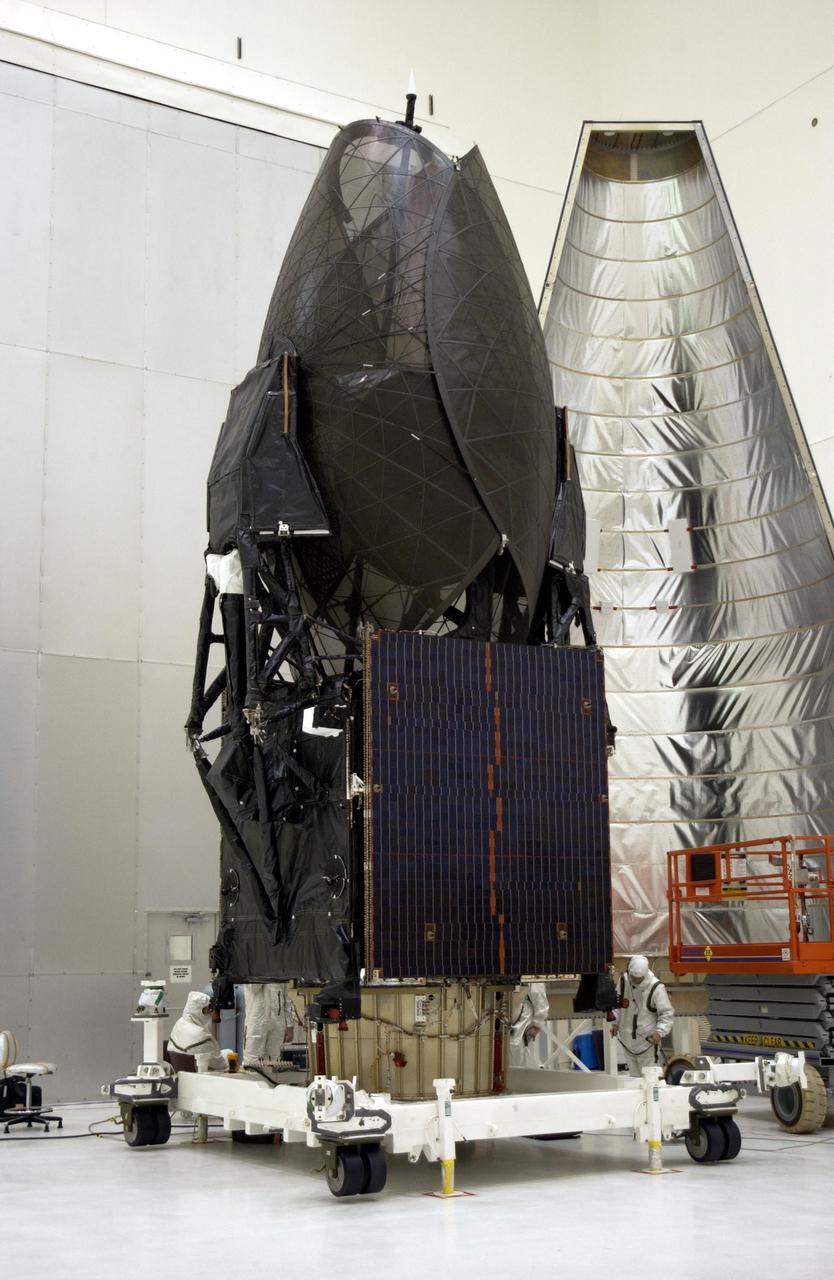
KENNEDY SPACE CENTER, FLA. -- The fairing (left) is moved toward the TDRS-J satellite (right) for encapsulation. The satellite is scheduled to be launched aboard a Lockheed Martin Atlas IIA-Centaur rocket from Launch Complex 36-A, Cape Canaveral Air Force Station, Fla., on Dec. 4. The third in a series of telemetry satellites, TDRS-J will help replenish the current constellation of geosynchronous TDRS satellites. The TDRS System is the primary source of space-to-ground voice, data and telemetry for the Space Shuttle. It also provides communications with the International Space Station and scientific spacecraft in low-Earth orbit such as the Hubble Space Telescope. This new advanced series of satellites will extend the availability of TDRS communications services until about 2017.
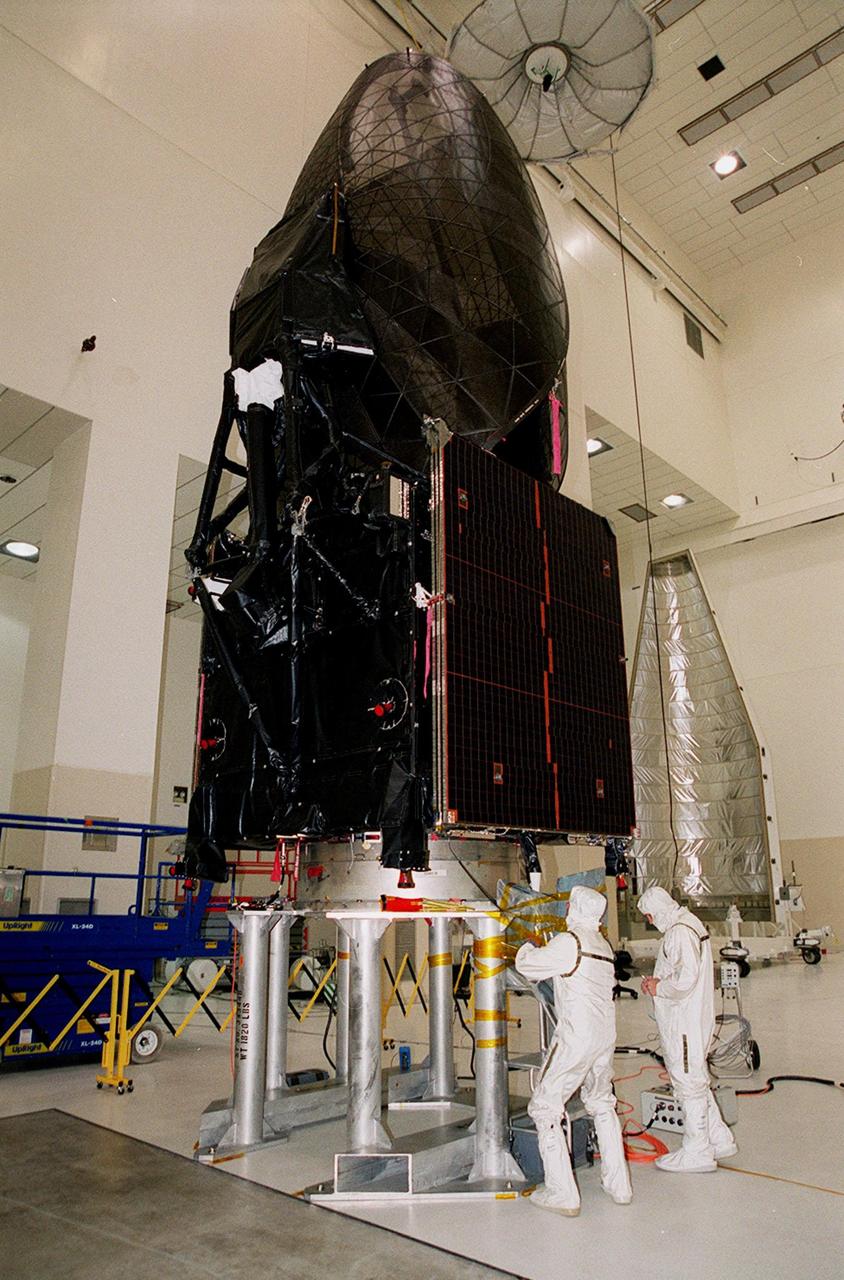
Workers in KSC’s Spacecraft Assembly and Encapsulation Facility (SAEF-2) prepare the Tracking and Data Relay Satellite (TDRS-H) above them for electrical testing. The TDRS is scheduled to be launched from CCAFS June 29 aboard an Atlas IIA/Centaur rocket. One of three satellites (labeled H, I and J) being built in the Hughes Space and Communications Company Integrated Satellite Factory in El Segundo, Calif., the latest TDRS uses an innovative springback antenna design. A pair of 15-foot-diameter, flexible mesh antenna reflectors fold up for launch, then spring back into their original cupped circular shape on orbit. The new satellites will augment the TDRS system’s existing Sand Ku-band frequencies by adding Ka-band capability. TDRS will serve as the sole means of continuous, high-data-rate communication with the space shuttle, with the International Space Station upon its completion, and with dozens of unmanned scientific satellites in low earth orbit
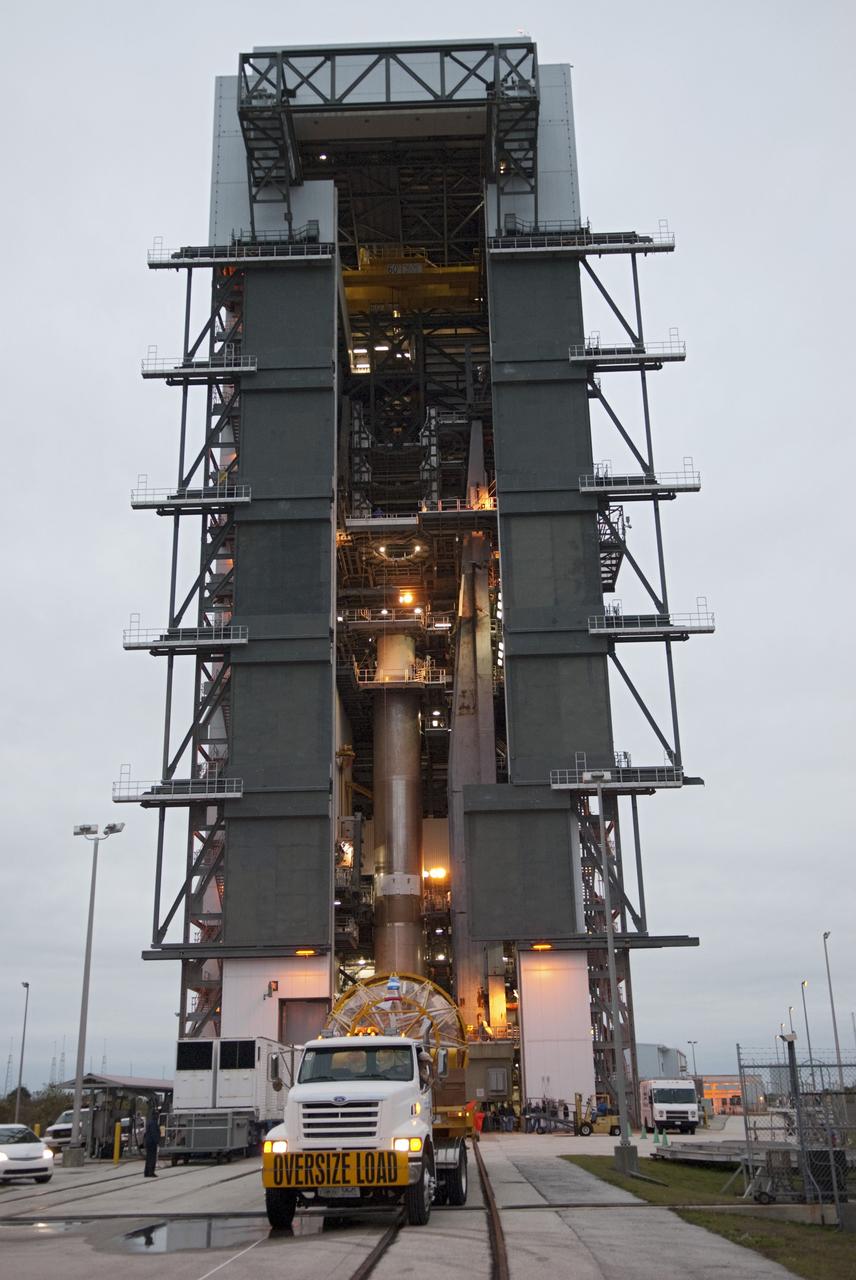
CAPE CANAVERAL, Fla. -- The Centaur stage which will help boost the Tracking and Data Relay Satellite, TDRS-K, into orbit arrives by transport truck at Cape Canaveral Air Force Station's Space Launch Complex 41 in Florida for mating to an Atlas V rocket. Launch of the TDRS-K on the Atlas V rocket is planned for January 29, 2013. The TDRS-K spacecraft is part of the next-generation series in the Tracking and Data Relay Satellite System, a constellation of space-based communication satellites providing tracking, telemetry, command and high-bandwidth data return services. For more information, visit http://www.nasa.gov/mission_pages/tdrs/index.html Photo credit: NASA/Charisse Nahser
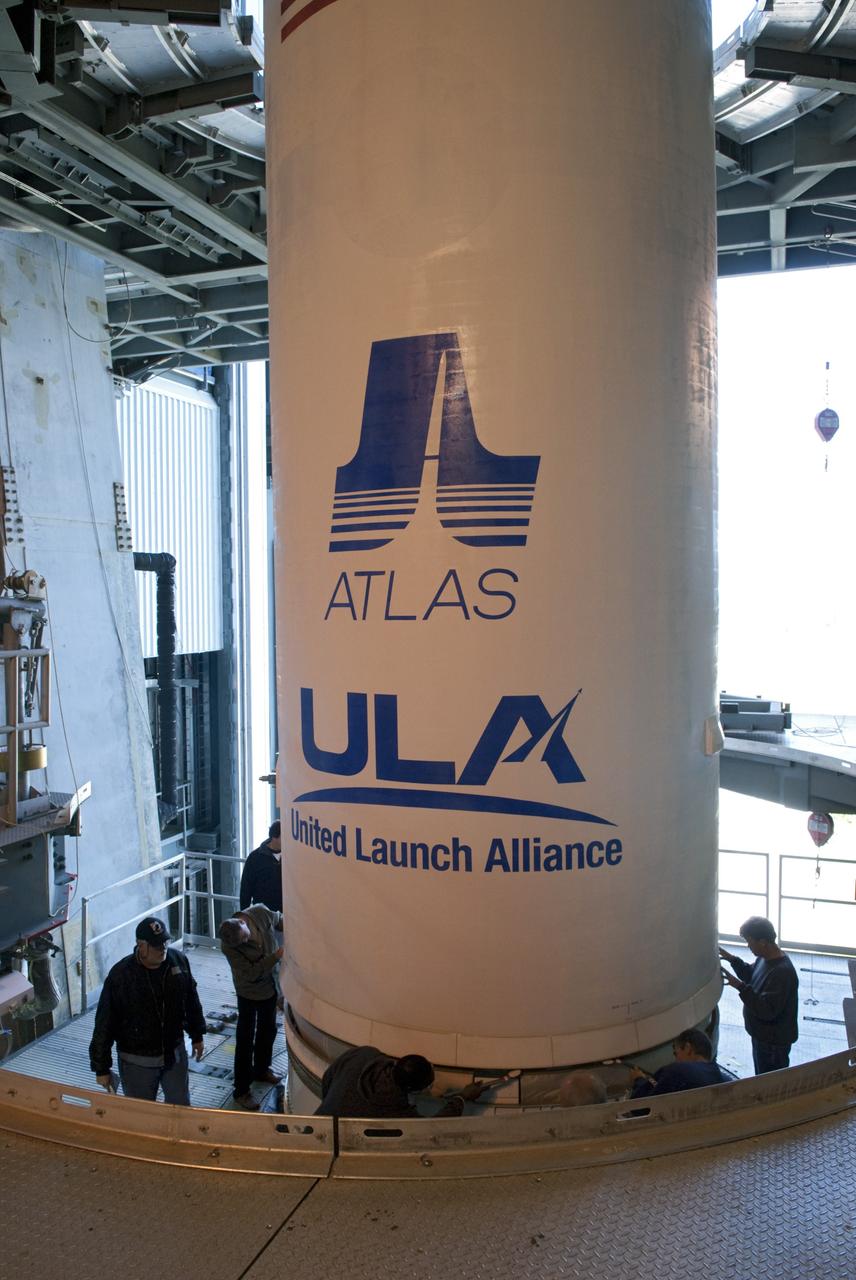
CAPE CANAVERAL, Fla. -- At Cape Canaveral Air Force Station's Space Launch Complex 41 in Florida, United Launch Alliance technicians support operations to mate the Centaur stage to the Atlas V rocket that will carry the Tracking and Data Relay Satellite, TDRS-K, into orbit. Launch of the TDRS-K on the Atlas V rocket is planned for January 29, 2013. The TDRS-K spacecraft is part of the next-generation series in the Tracking and Data Relay Satellite System, a constellation of space-based communication satellites providing tracking, telemetry, command and high-bandwidth data return services. For more information, visit http://www.nasa.gov/mission_pages/tdrs/index.html Photo credit: NASA/Charisse Nahser
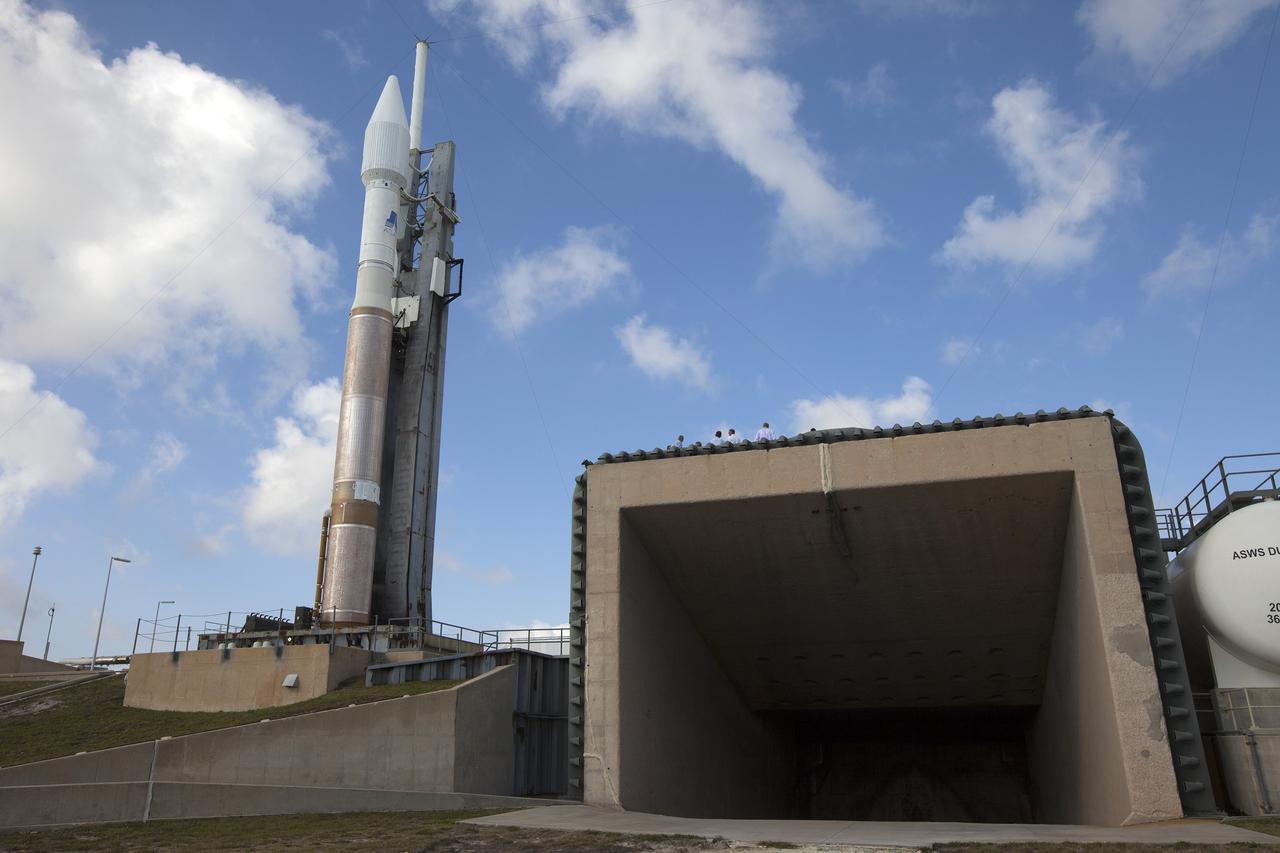
CAPE CANAVERAL, Fla. -- At Cape Canaveral Air Force Station's Space Launch Complex 41, the United Launch Alliance Atlas V rocket set to carry NASA's Tracking and Data Relay Satellite, TDRS-K, nears the launch pad after leaving the Vertical Integration Facility. Liftoff for the TDRS-K is planned for Jan. 30, 2013. The TDRS-K spacecraft is part of the next-generation series in the Tracking and Data Relay Satellite System, a constellation of space-based communication satellites providing tracking, telemetry, command and high-bandwidth data return services. For more information, visit http://www.nasa.gov/mission_pages/tdrs/index.html Photo credit: NASA/Kim Shiflett
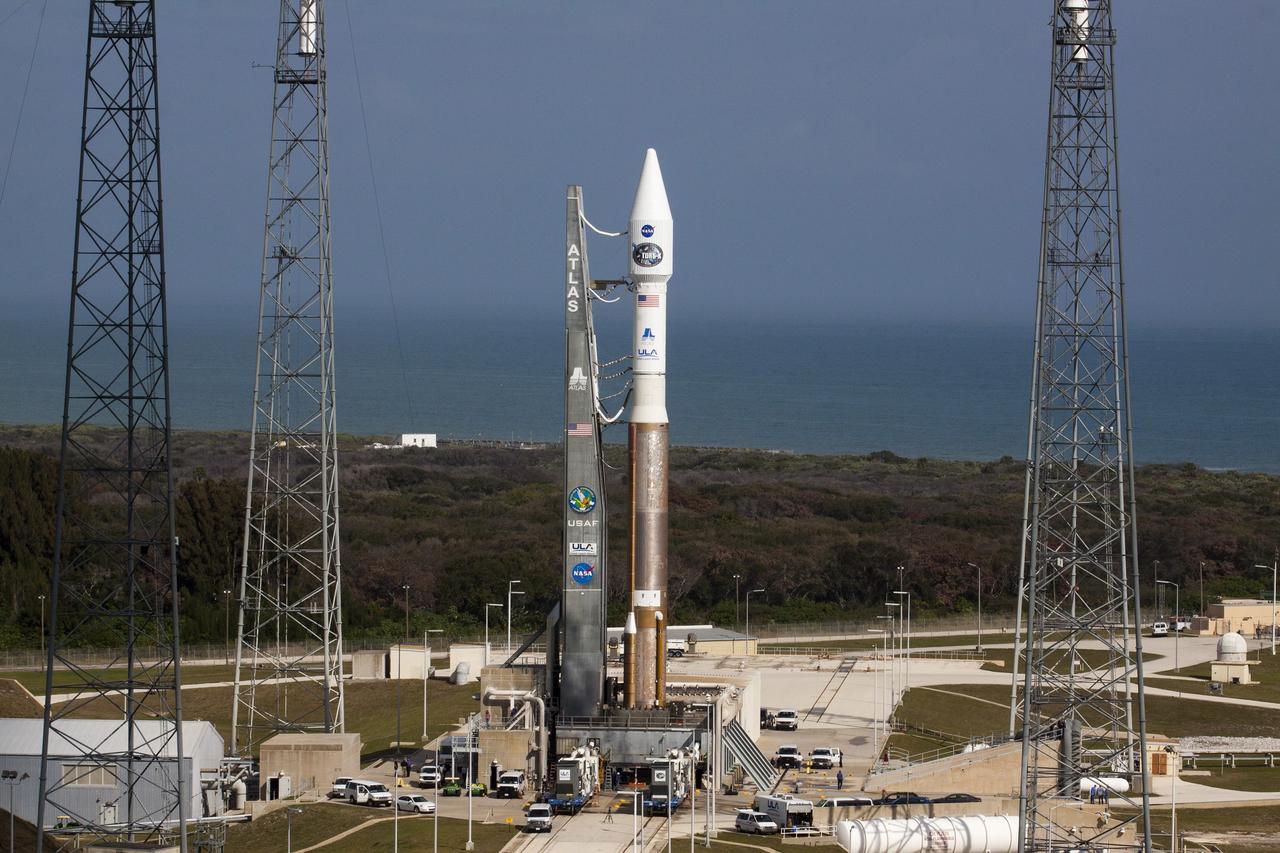
CAPE CANAVERAL, Fla. -- At Cape Canaveral Air Force Station's Space Launch Complex 41, the United Launch Alliance Atlas V rocket set to carry NASA's Tracking and Data Relay Satellite, TDRS-K, stands at the launch pad after leaving the Vertical Integration Facility. Liftoff for the TDRS-K is planned for Jan. 30, 2013. The TDRS-K spacecraft is part of the next-generation series in the Tracking and Data Relay Satellite System, a constellation of space-based communication satellites providing tracking, telemetry, command and high-bandwidth data return services. For more information, visit http://www.nasa.gov/mission_pages/tdrs/index.html Photo credit: NASA/Kim Shiflett
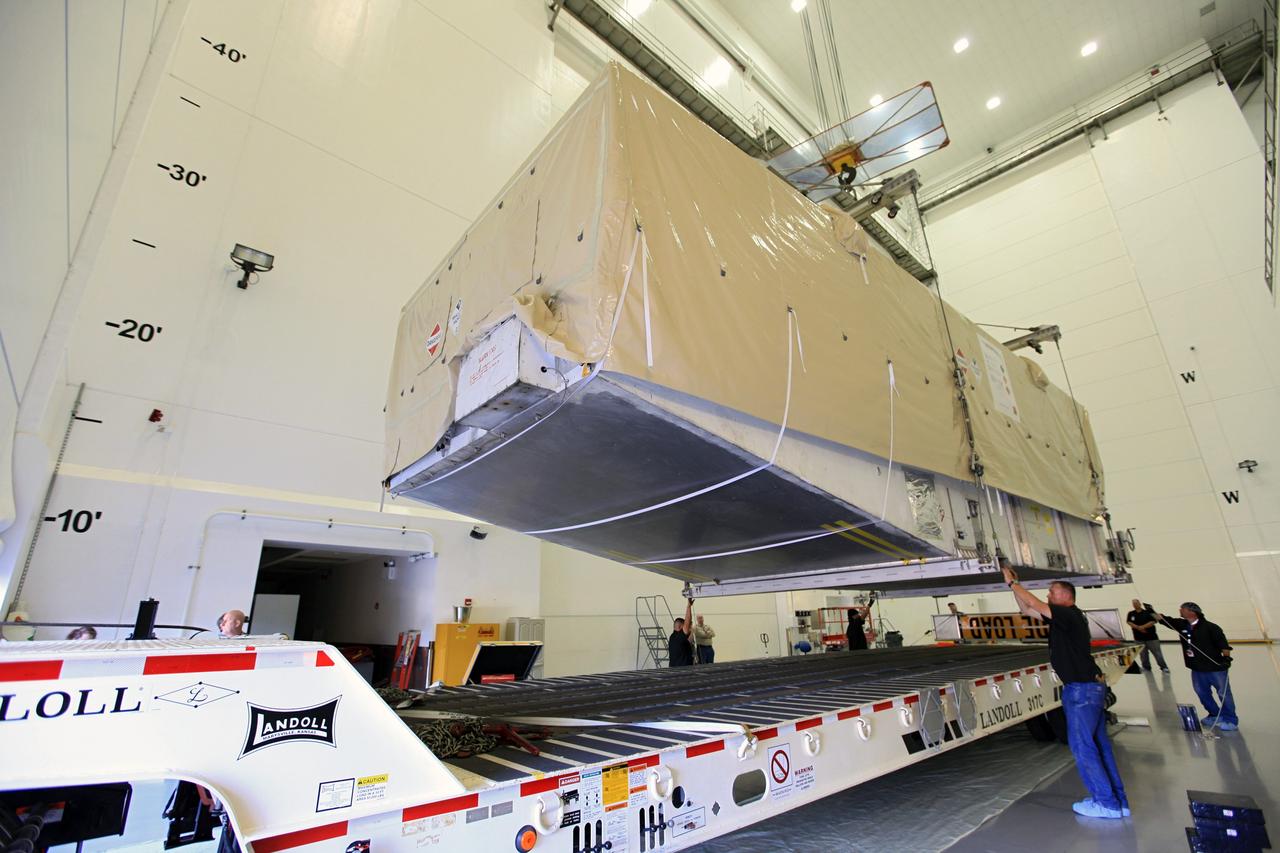
TITUSVILLE, Fla. - Technicians use a crane to lift the Tracking and Data Relay Satellite, TDRS-K, after arrival at the Astrotech payload processing facility in Titusville, Fla. near NASA’s Kennedy Space Center. Launch of the TDRS-K on the Atlas V rocket is planned for January 29, 2013. The TDRS-K spacecraft is part of the next-generation series in the Tracking and Data Relay Satellite System, a constellation of space-based communication satellites providing tracking, telemetry, command and high-bandwidth data return services. For more information, visit http://www.nasa.gov/mission_pages/tdrs/index.html Photo credit: NASA/Kim Shiflett
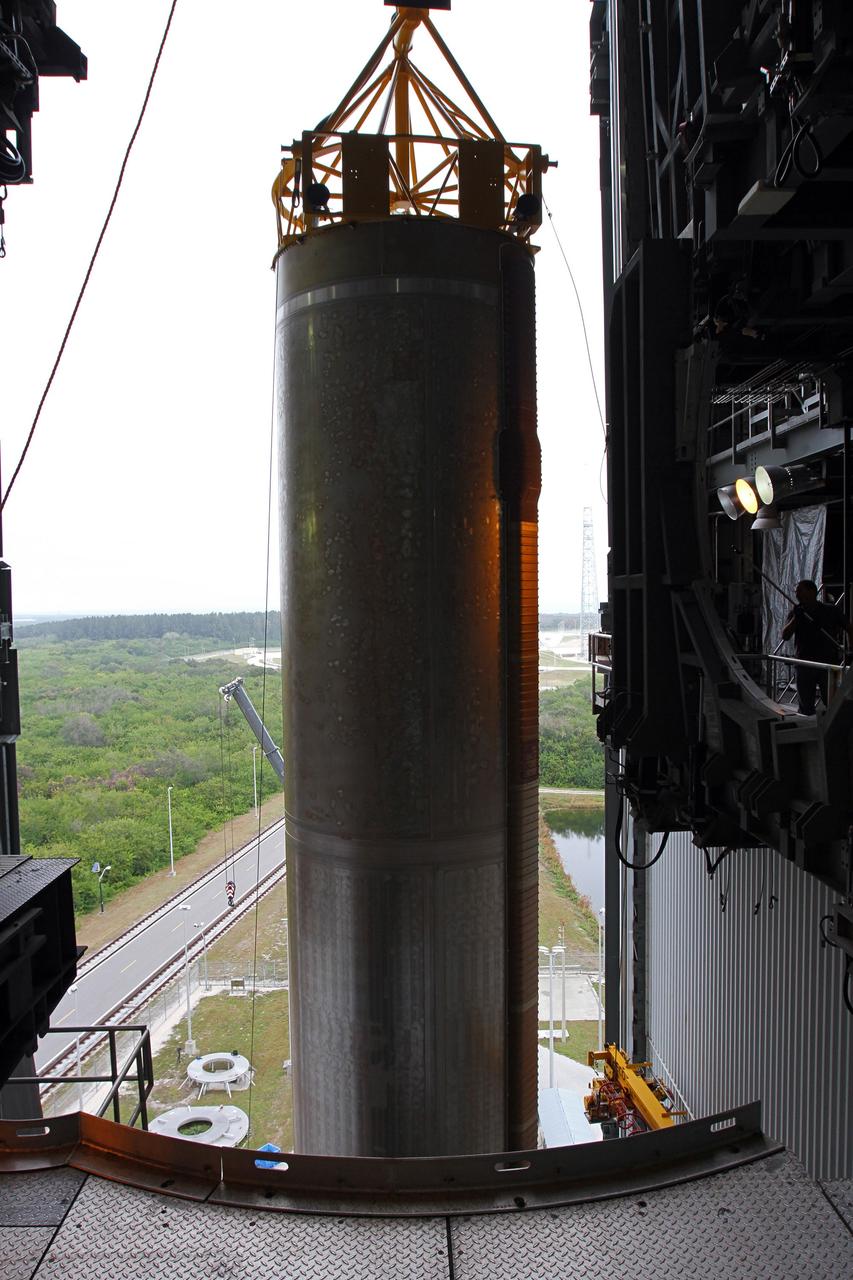
CAPE CANAVERAL, Fla. -- At Cape Canaveral Air Force Station's Space Launch Complex 41 in Florida, operations are underway to erect the first stage of the Atlas V rocket that will carry the Tracking and Data Relay Satellite, TDRS-K, into orbit. Launch of the TDRS-K on the Atlas V rocket is planned for January 29, 2013. The TDRS-K spacecraft is part of the next-generation series in the Tracking and Data Relay Satellite System, a constellation of space-based communication satellites providing tracking, telemetry, command and high-bandwidth data return services. For more information, visit http://www.nasa.gov/mission_pages/tdrs/index.html Photo credit: NASA/ Ben Smegelsky
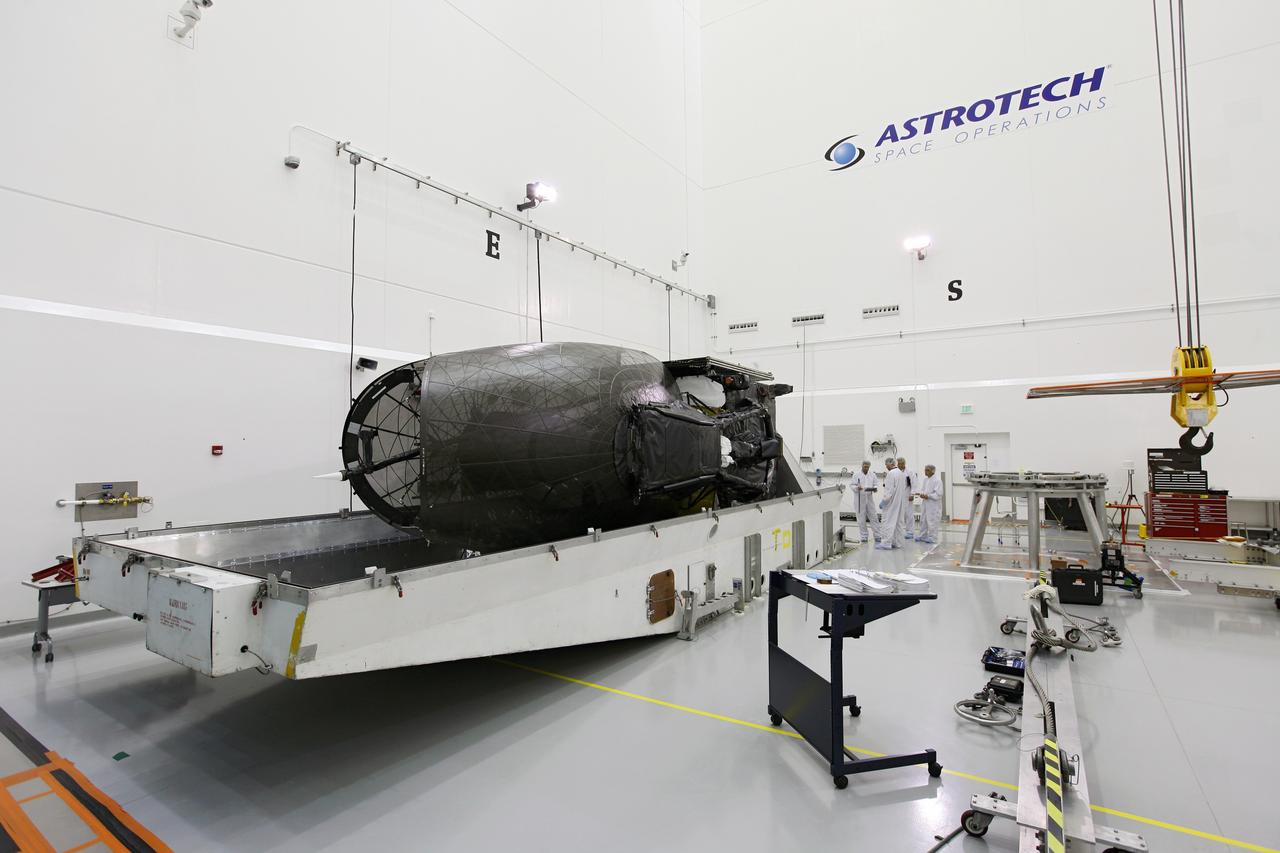
TITUSVILLE, Fla. - Technicians inspect the Tracking and Data Relay Satellite, TDRS-K, after arrival at the Astrotech payload processing facility in Titusville, Fla. near NASA’s Kennedy Space Center. Launch of the TDRS-K on the Atlas V rocket is planned for January 29, 2013. The TDRS-K spacecraft is part of the next-generation series in the Tracking and Data Relay Satellite System, a constellation of space-based communication satellites providing tracking, telemetry, command and high-bandwidth data return services. For more information, visit http://www.nasa.gov/mission_pages/tdrs/index.html Photo credit: NASA/Kim Shiflett

CAPE CANAVERAL, Fla. -- In the morning fog at Cape Canaveral Air Force Station's Space Launch Complex 41 in Florida, operations are underway to erect the first stage of the Atlas V rocket that will carry the Tracking and Data Relay Satellite, TDRS-K, into orbit. Launch of the TDRS-K on the Atlas V rocket is planned for January 29, 2013. The TDRS-K spacecraft is part of the next-generation series in the Tracking and Data Relay Satellite System, a constellation of space-based communication satellites providing tracking, telemetry, command and high-bandwidth data return services. For more information, visit http://www.nasa.gov/mission_pages/tdrs/index.html Photo credit: NASA/ Ben Smegelsky

TITUSVILLE, Fla. - Technicians unpack the Tracking and Data Relay Satellite, TDRS-K, after arrival at the Astrotech payload processing facility in Titusville, Fla. near NASA’s Kennedy Space Center. Launch of the TDRS-K on the Atlas V rocket is planned for January 29, 2013. The TDRS-K spacecraft is part of the next-generation series in the Tracking and Data Relay Satellite System, a constellation of space-based communication satellites providing tracking, telemetry, command and high-bandwidth data return services. For more information, visit http://www.nasa.gov/mission_pages/tdrs/index.html Photo credit: NASA/Kim Shiflett
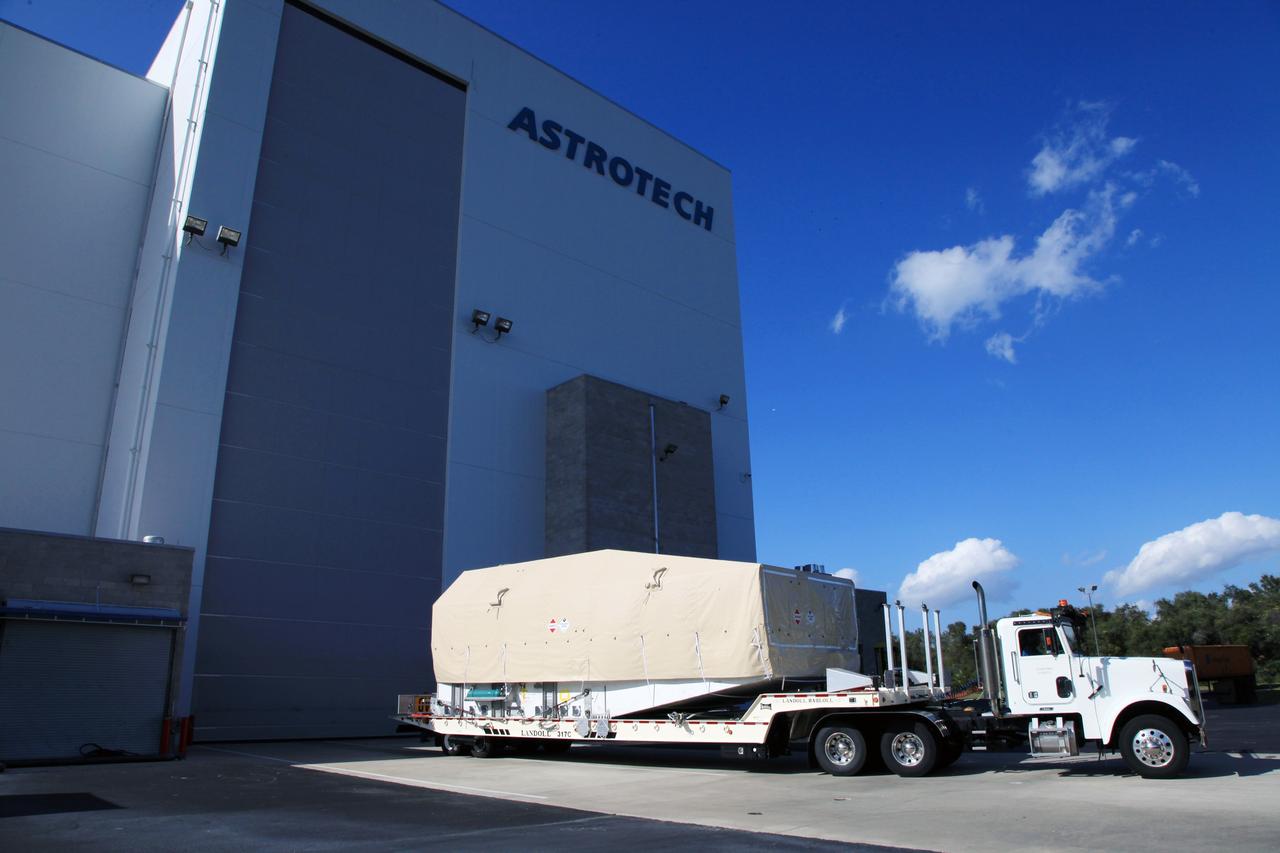
TITUSVILLE, Fla. - A truck transporting the Tracking and Data Relay Satellite, TDRS-K, arrives at the Astrotech payload processing facility in Titusville, Fla. near NASA’s Kennedy Space Center. Launch of the TDRS-K on the Atlas V rocket is planned for January 29, 2013. The TDRS-K spacecraft is part of the next-generation series in the Tracking and Data Relay Satellite System, a constellation of space-based communication satellites providing tracking, telemetry, command and high-bandwidth data return services. For more information, visit http://www.nasa.gov/mission_pages/tdrs/index.html Photo credit: NASA/Kim Shiflett
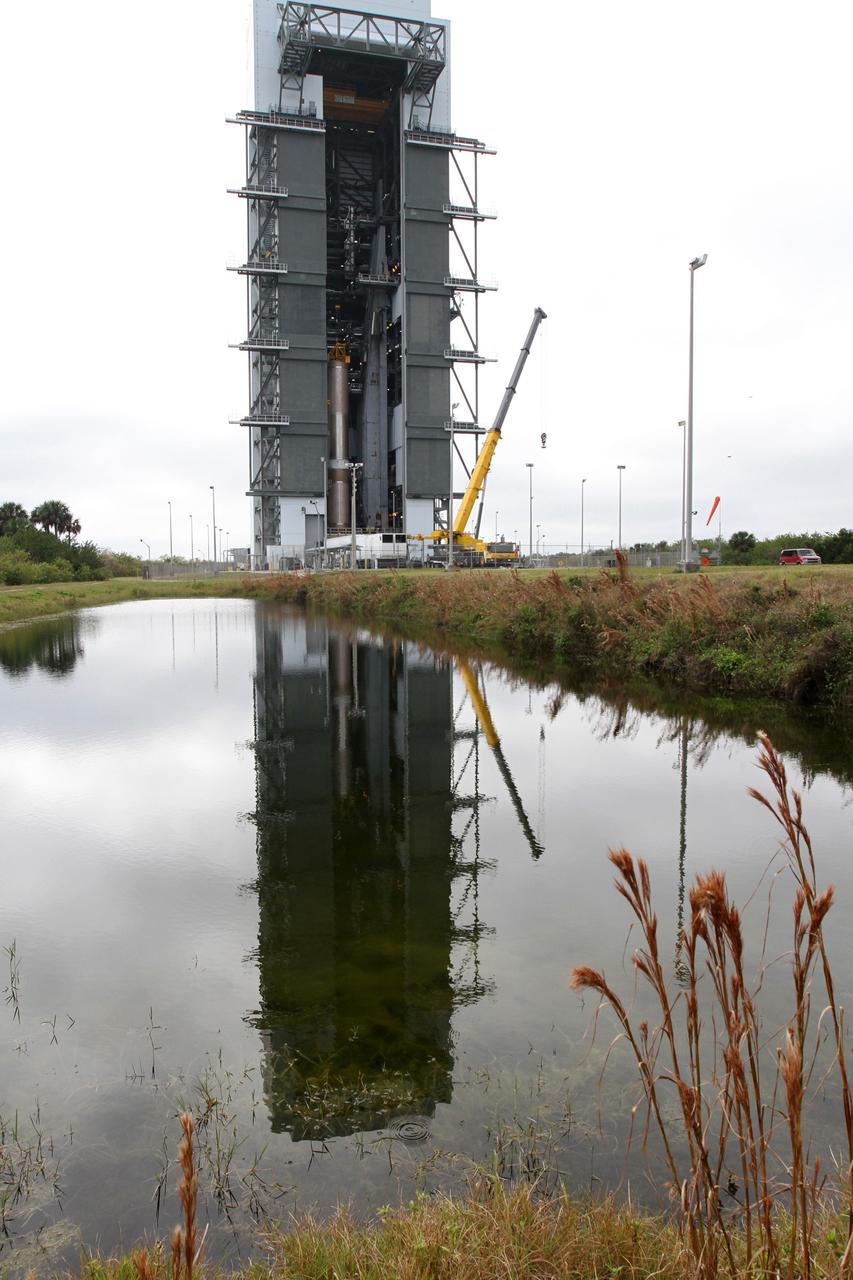
CAPE CANAVERAL, Fla. -- The first stage of the Atlas V rocket that will carry the Tracking and Data Relay Satellite, TDRS-K, into orbit has been erected at Cape Canaveral Air Force Station's Space Launch Complex 41 in Florida. Launch of the TDRS-K on the Atlas V rocket is planned for January 29, 2013. The TDRS-K spacecraft is part of the next-generation series in the Tracking and Data Relay Satellite System, a constellation of space-based communication satellites providing tracking, telemetry, command and high-bandwidth data return services. For more information, visit http://www.nasa.gov/mission_pages/tdrs/index.html Photo credit: NASA/ Ben Smegelsky
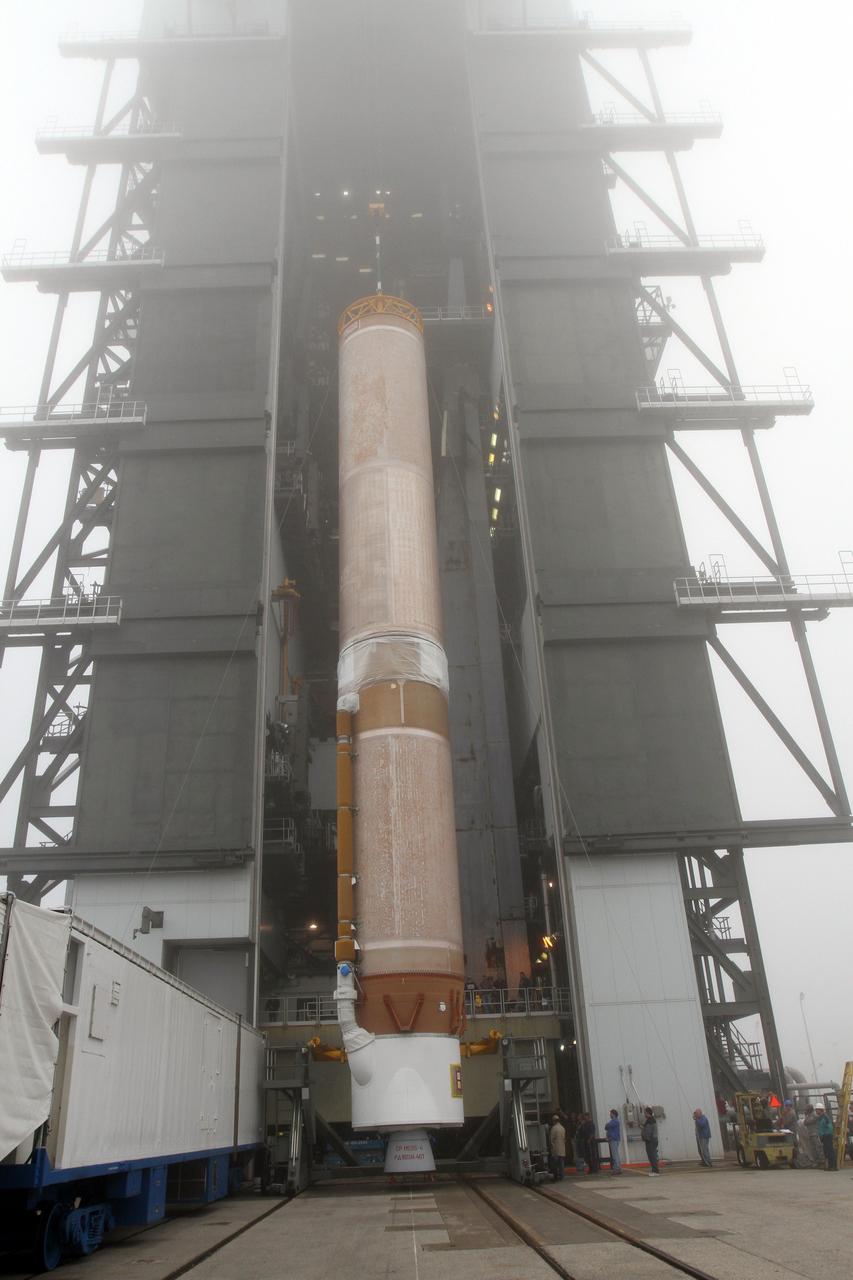
CAPE CANAVERAL, Fla. -- In the morning fog at Cape Canaveral Air Force Station's Space Launch Complex 41 in Florida, operations are underway to erect the first stage of the Atlas V rocket that will carry the Tracking and Data Relay Satellite, TDRS-K, into orbit. Launch of the TDRS-K on the Atlas V rocket is planned for January 29, 2013. The TDRS-K spacecraft is part of the next-generation series in the Tracking and Data Relay Satellite System, a constellation of space-based communication satellites providing tracking, telemetry, command and high-bandwidth data return services. For more information, visit http://www.nasa.gov/mission_pages/tdrs/index.html Photo credit: NASA/ Ben Smegelsky
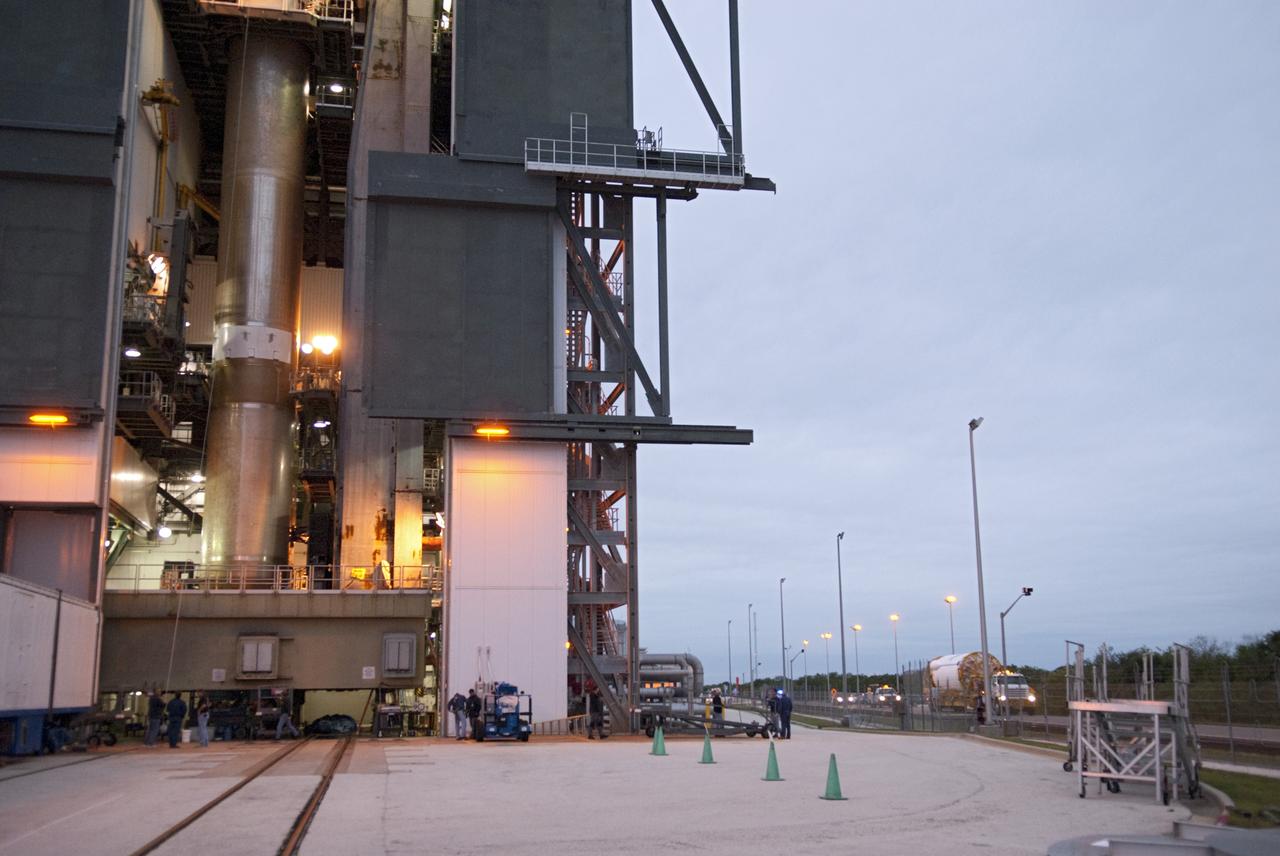
CAPE CANAVERAL, Fla. -- At Cape Canaveral Air Force Station's Space Launch Complex 41 in Florida, preparations are underway to mate the Centaur stage to the Atlas V rocket that will carry the Tracking and Data Relay Satellite, TDRS-K, into orbit. Launch of the TDRS-K on the Atlas V rocket is planned for January 29, 2013. The TDRS-K spacecraft is part of the next-generation series in the Tracking and Data Relay Satellite System, a constellation of space-based communication satellites providing tracking, telemetry, command and high-bandwidth data return services. For more information, visit http://www.nasa.gov/mission_pages/tdrs/index.html Photo credit: NASA/Charisse Nahser
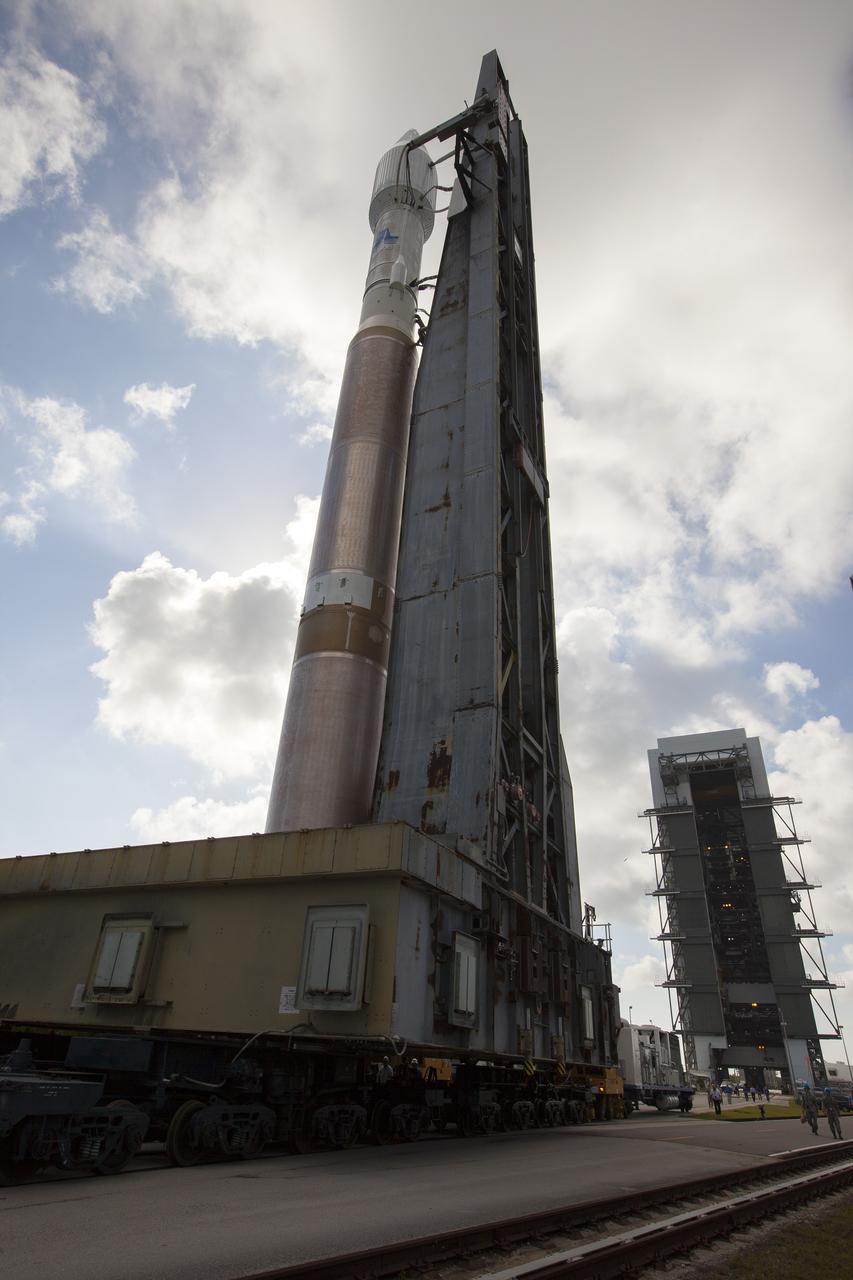
CAPE CANAVERAL, Fla. -- At Cape Canaveral Air Force Station's Space Launch Complex 41, the United Launch Alliance Atlas V rocket set to carry NASA's Tracking and Data Relay Satellite, TDRS-K, moves from the Vertical Integration Facility to the launch pad. Liftoff for the TDRS-K is planned for Jan. 30, 2013. The TDRS-K spacecraft is part of the next-generation series in the Tracking and Data Relay Satellite System, a constellation of space-based communication satellites providing tracking, telemetry, command and high-bandwidth data return services. For more information, visit http://www.nasa.gov/mission_pages/tdrs/index.html Photo credit: NASA/Kim Shiflett
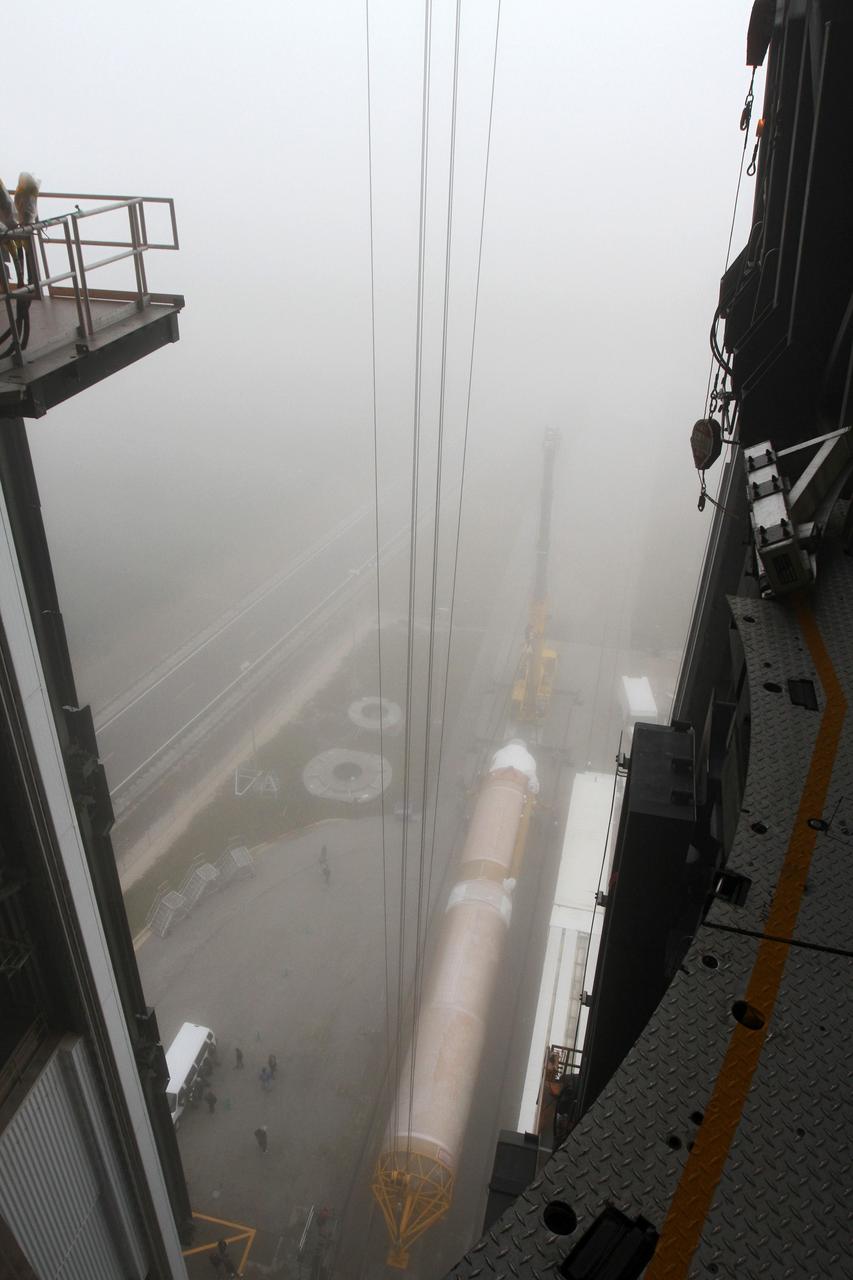
CAPE CANAVERAL, Fla. -- In the morning fog at Cape Canaveral Air Force Station's Space Launch Complex 41 in Florida, operations are underway to erect the first stage of the Atlas V rocket that will carry the Tracking and Data Relay Satellite, TDRS-K, into orbit. Launch of the TDRS-K on the Atlas V rocket is planned for January 29, 2013. The TDRS-K spacecraft is part of the next-generation series in the Tracking and Data Relay Satellite System, a constellation of space-based communication satellites providing tracking, telemetry, command and high-bandwidth data return services. For more information, visit http://www.nasa.gov/mission_pages/tdrs/index.html Photo credit: NASA/ Ben Smegelsky
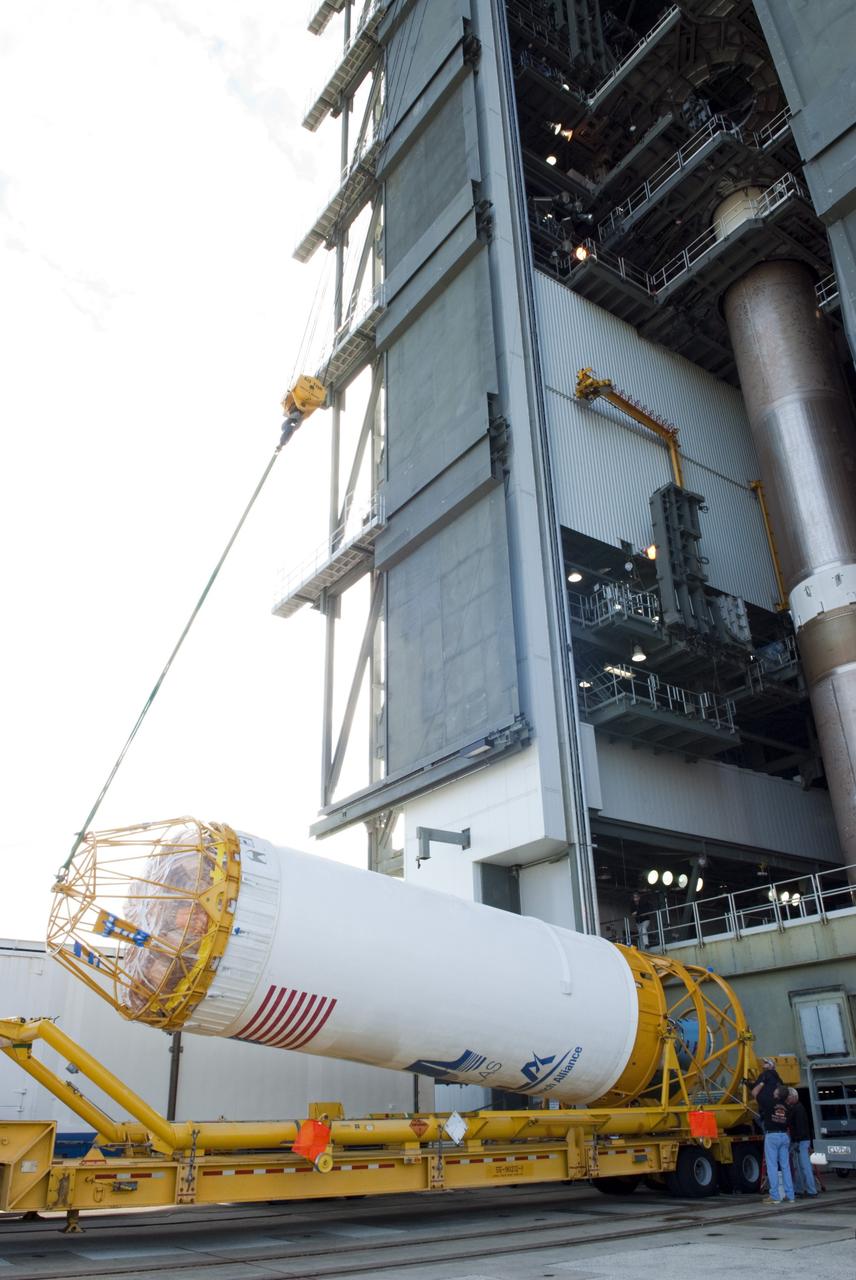
CAPE CANAVERAL, Fla. -- At Cape Canaveral Air Force Station's Space Launch Complex 41 in Florida, operations are underway to lift the Centaur stage for mating to the Atlas V rocket that will carry the Tracking and Data Relay Satellite, TDRS-K, into orbit. Launch of the TDRS-K on the Atlas V rocket is planned for January 29, 2013. The TDRS-K spacecraft is part of the next-generation series in the Tracking and Data Relay Satellite System, a constellation of space-based communication satellites providing tracking, telemetry, command and high-bandwidth data return services. For more information, visit http://www.nasa.gov/mission_pages/tdrs/index.html Photo credit: NASA/Charisse Nahser
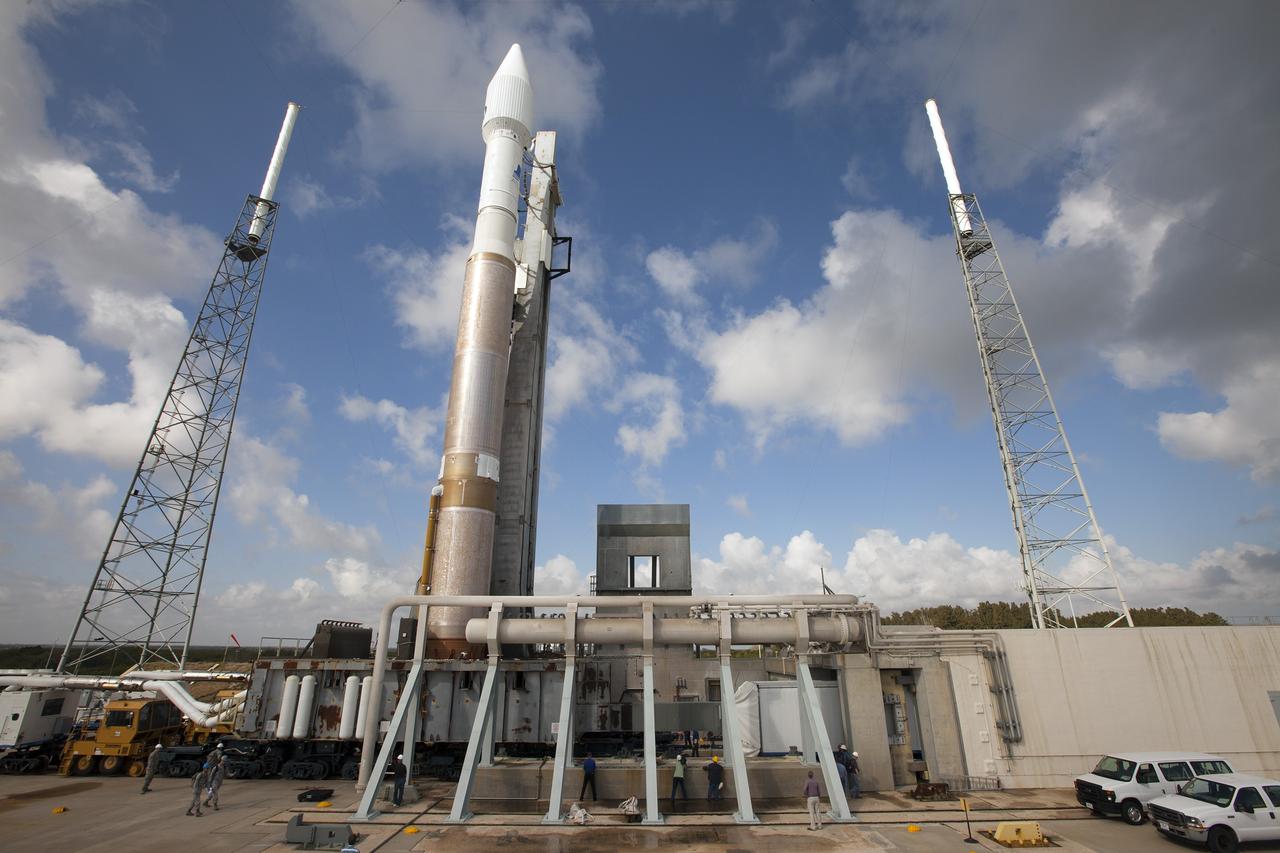
CAPE CANAVERAL, Fla. -- At Cape Canaveral Air Force Station's Space Launch Complex 41, the United Launch Alliance Atlas V rocket set to carry NASA's Tracking and Data Relay Satellite, TDRS-K, arrives at the launch pad after leaving the Vertical Integration Facility. Liftoff for the TDRS-K is planned for Jan. 30, 2013. The TDRS-K spacecraft is part of the next-generation series in the Tracking and Data Relay Satellite System, a constellation of space-based communication satellites providing tracking, telemetry, command and high-bandwidth data return services. For more information, visit http://www.nasa.gov/mission_pages/tdrs/index.html Photo credit: NASA/Kim Shiflett
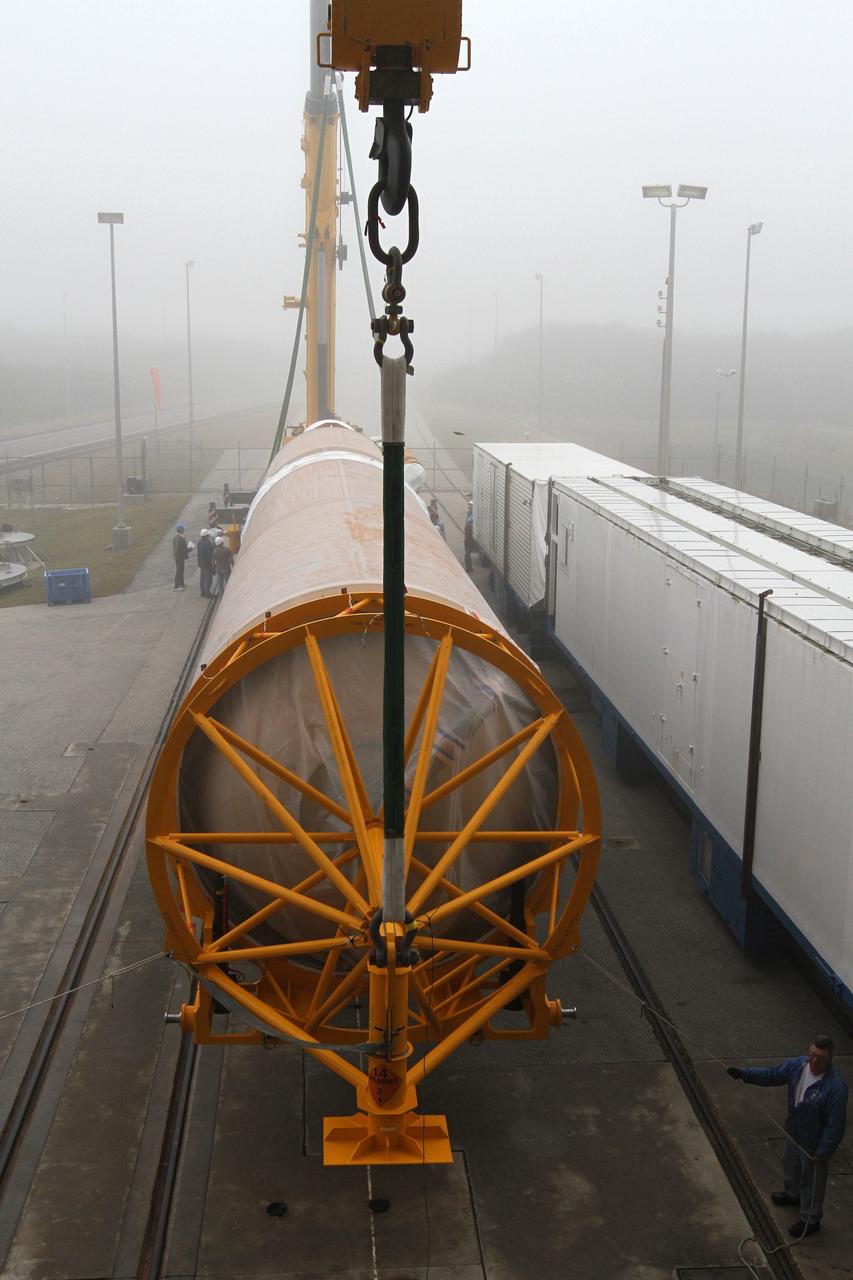
CAPE CANAVERAL, Fla. -- In the morning fog at Cape Canaveral Air Force Station's Space Launch Complex 41 in Florida, preparations are underway to erect the first stage of the Atlas V rocket that will carry the Tracking and Data Relay Satellite, TDRS-K, into orbit. Launch of the TDRS-K on the Atlas V rocket is planned for January 29, 2013. The TDRS-K spacecraft is part of the next-generation series in the Tracking and Data Relay Satellite System, a constellation of space-based communication satellites providing tracking, telemetry, command and high-bandwidth data return services. For more information, visit http://www.nasa.gov/mission_pages/tdrs/index.html Photo credit: NASA/ Ben Smegelsky
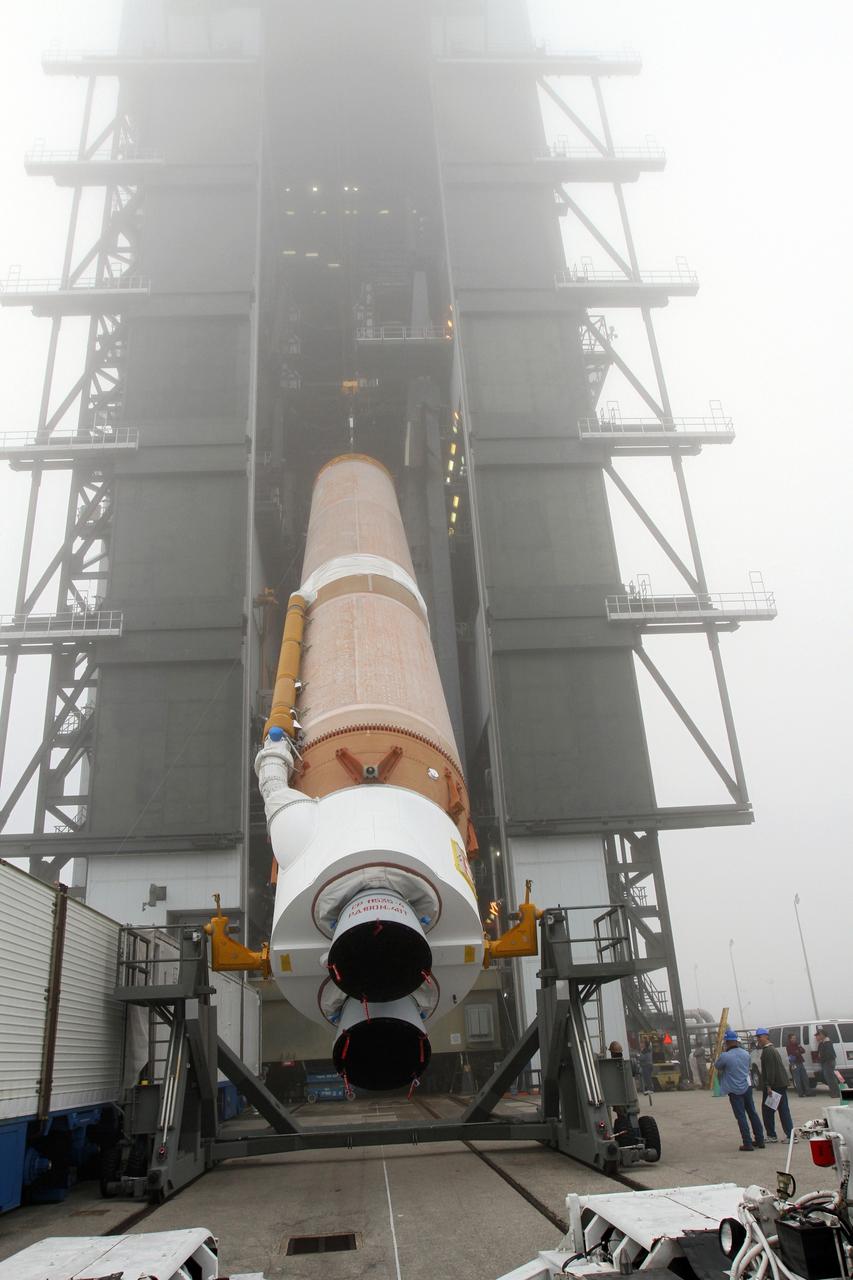
CAPE CANAVERAL, Fla. -- At Cape Canaveral Air Force Station's Space Launch Complex 41 in Florida, operations are underway to erect the first stage of the Atlas V rocket that will carry the Tracking and Data Relay Satellite, TDRS-K, into orbit. Launch of the TDRS-K on the Atlas V rocket is planned for January 29, 2013. The TDRS-K spacecraft is part of the next-generation series in the Tracking and Data Relay Satellite System, a constellation of space-based communication satellites providing tracking, telemetry, command and high-bandwidth data return services. For more information, visit http://www.nasa.gov/mission_pages/tdrs/index.html Photo credit: NASA/ Ben Smegelsky
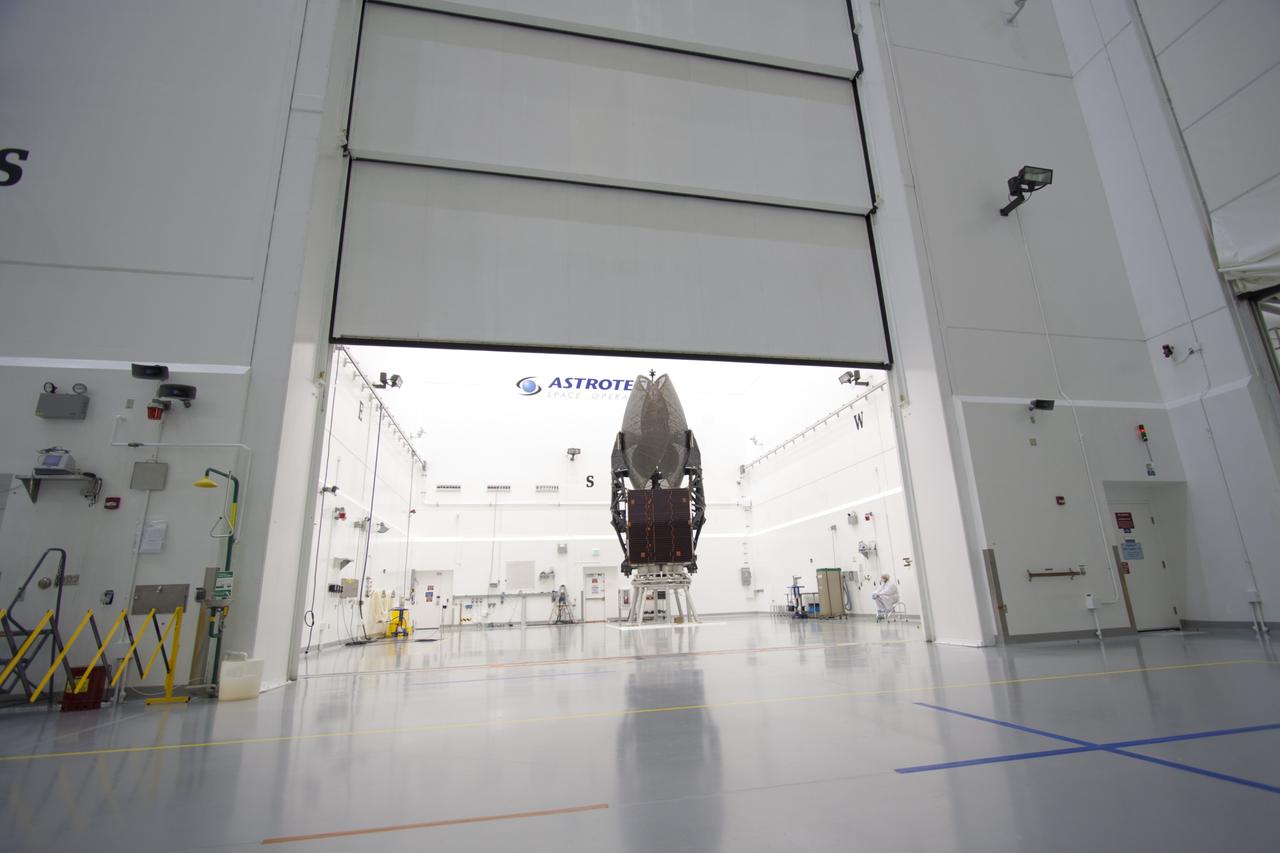
TITUSVILLE, Fla. - Inside the Astrotech payload processing facility in Titusville, Fla. near NASA’s Kennedy Space Center, the Tracking and Data Relay Satellite, TDRS-K, is being checked out prior to being encapsulated in the nose faring. Launch of the TDRS-K on the Atlas V rocket is planned for January 29, 2013. The TDRS-K spacecraft is part of the next-generation series in the Tracking and Data Relay Satellite System, a constellation of space-based communication satellites providing tracking, telemetry, command and high-bandwidth data return services. For more information, visit http://www.nasa.gov/mission_pages/tdrs/index.html Photo credit: NASA/Jim Grossmann
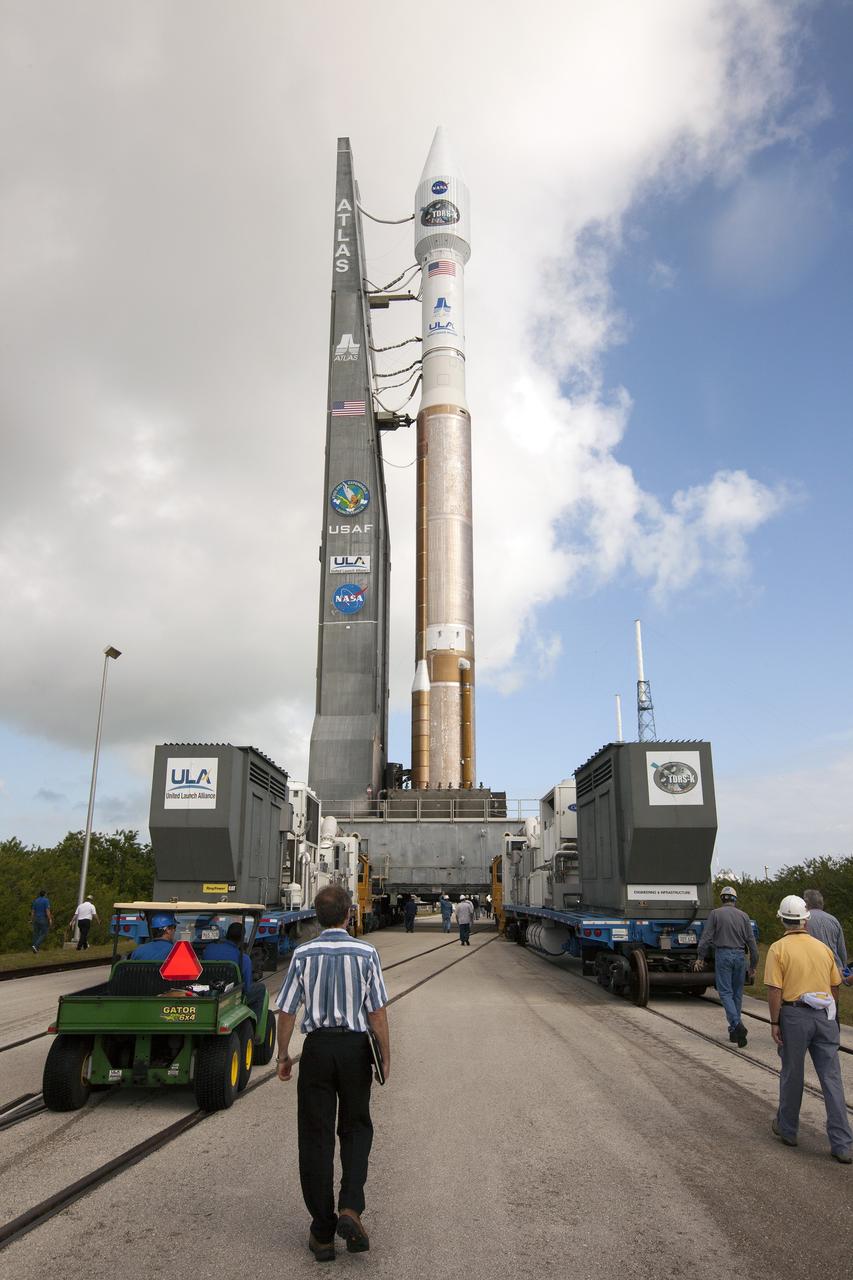
CAPE CANAVERAL, Fla. -- At Cape Canaveral Air Force Station's Space Launch Complex 41, the United Launch Alliance Atlas V rocket set to carry NASA's Tracking and Data Relay Satellite, TDRS-K, moves toward the launch pad after leaving the Vertical Integration Facility. . Liftoff for the TDRS-K is planned for Jan. 30, 2013. The TDRS-K spacecraft is part of the next-generation series in the Tracking and Data Relay Satellite System, a constellation of space-based communication satellites providing tracking, telemetry, command and high-bandwidth data return services. For more information, visit http://www.nasa.gov/mission_pages/tdrs/index.html Photo credit: NASA/Kim Shiflett
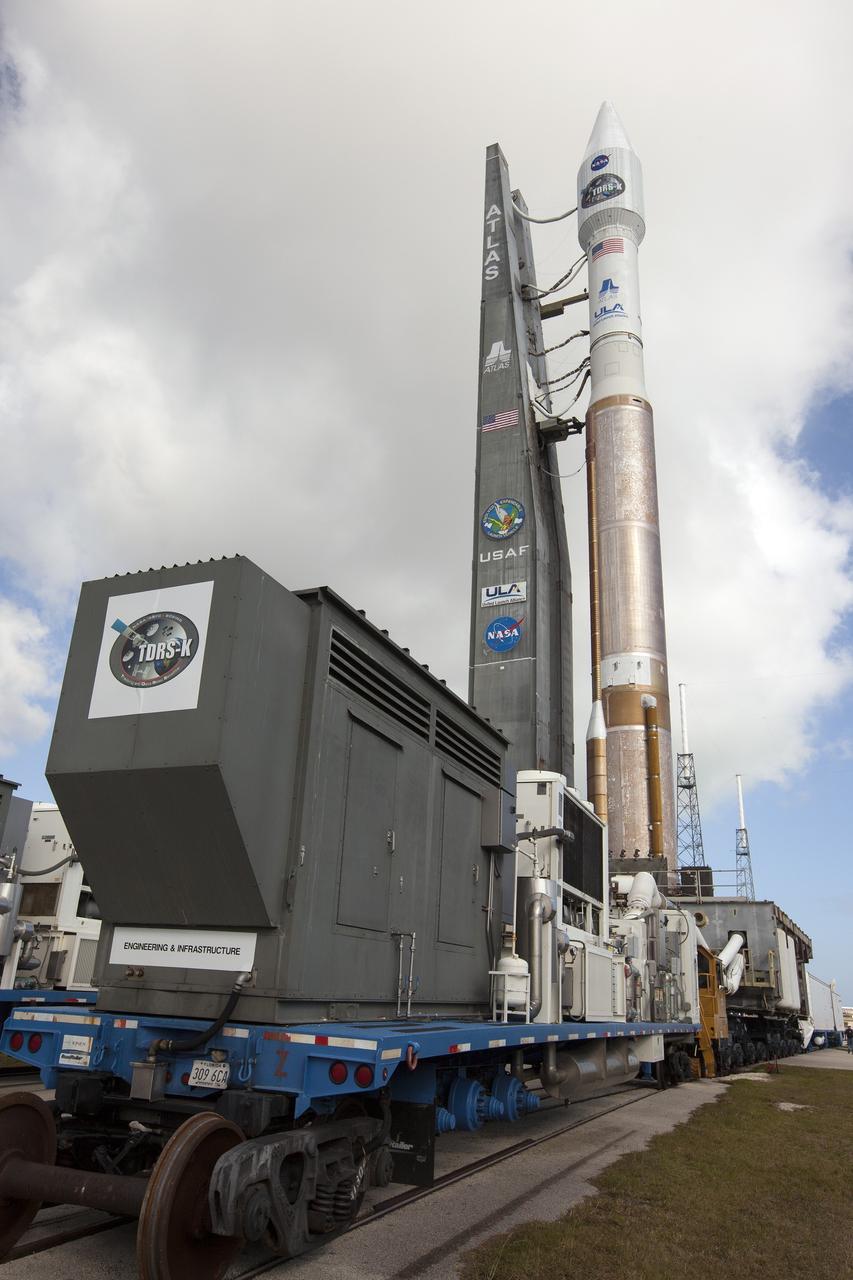
CAPE CANAVERAL, Fla. -- At Cape Canaveral Air Force Station's Space Launch Complex 41, the United Launch Alliance Atlas V rocket set to carry NASA's Tracking and Data Relay Satellite, TDRS-K, moves toward the launch pad after leaving the Vertical Integration Facility. . Liftoff for the TDRS-K is planned for Jan. 30, 2013. The TDRS-K spacecraft is part of the next-generation series in the Tracking and Data Relay Satellite System, a constellation of space-based communication satellites providing tracking, telemetry, command and high-bandwidth data return services. For more information, visit http://www.nasa.gov/mission_pages/tdrs/index.html Photo credit: NASA/Kim Shiflett

CAPE CANAVERAL, Fla. -- At Cape Canaveral Air Force Station's Space Launch Complex 41 in Florida, preparations are underway to mate the Centaur stage to the Atlas V rocket that will carry the Tracking and Data Relay Satellite, TDRS-K, into orbit. Launch of the TDRS-K on the Atlas V rocket is planned for January 29, 2013. The TDRS-K spacecraft is part of the next-generation series in the Tracking and Data Relay Satellite System, a constellation of space-based communication satellites providing tracking, telemetry, command and high-bandwidth data return services. For more information, visit http://www.nasa.gov/mission_pages/tdrs/index.html Photo credit: NASA/Charisse Nahser
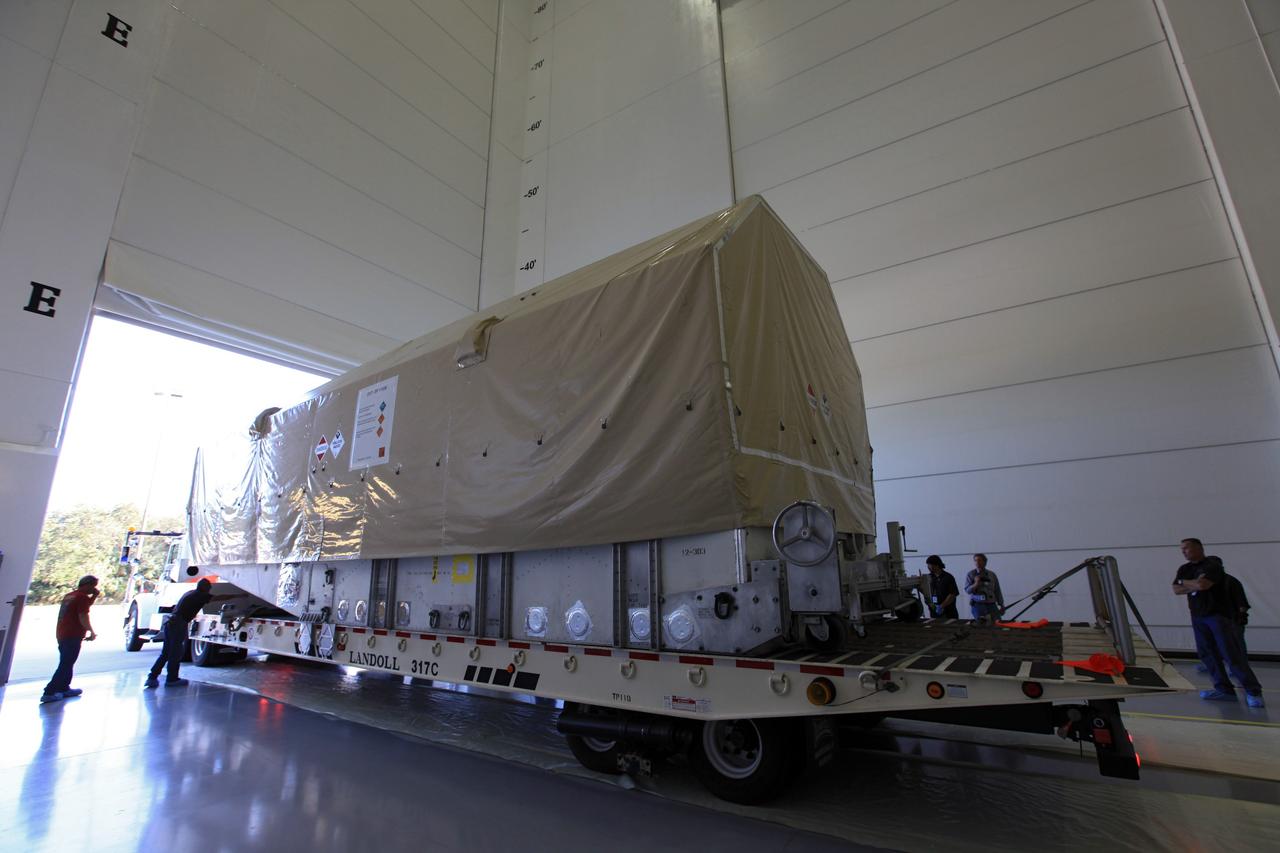
TITUSVILLE, Fla. - A truck transporting the Tracking and Data Relay Satellite, TDRS-K, arrives at the Astrotech payload processing facility in Titusville, Fla. near NASA’s Kennedy Space Center. Launch of the TDRS-K on the Atlas V rocket is planned for January 29, 2013. The TDRS-K spacecraft is part of the next-generation series in the Tracking and Data Relay Satellite System, a constellation of space-based communication satellites providing tracking, telemetry, command and high-bandwidth data return services. For more information, visit http://www.nasa.gov/mission_pages/tdrs/index.html Photo credit: NASA/Kim Shiflett

CAPE CANAVERAL, Fla. -- At Cape Canaveral Air Force Station's Space Launch Complex 41, the United Launch Alliance Atlas V rocket set to carry NASA's Tracking and Data Relay Satellite, TDRS-K, arrives at the launch pad after leaving the Vertical Integration Facility. Liftoff for the TDRS-K is planned for Jan. 30, 2013. The TDRS-K spacecraft is part of the next-generation series in the Tracking and Data Relay Satellite System, a constellation of space-based communication satellites providing tracking, telemetry, command and high-bandwidth data return services. For more information, visit http://www.nasa.gov/mission_pages/tdrs/index.html Photo credit: NASA/Kim Shiflett
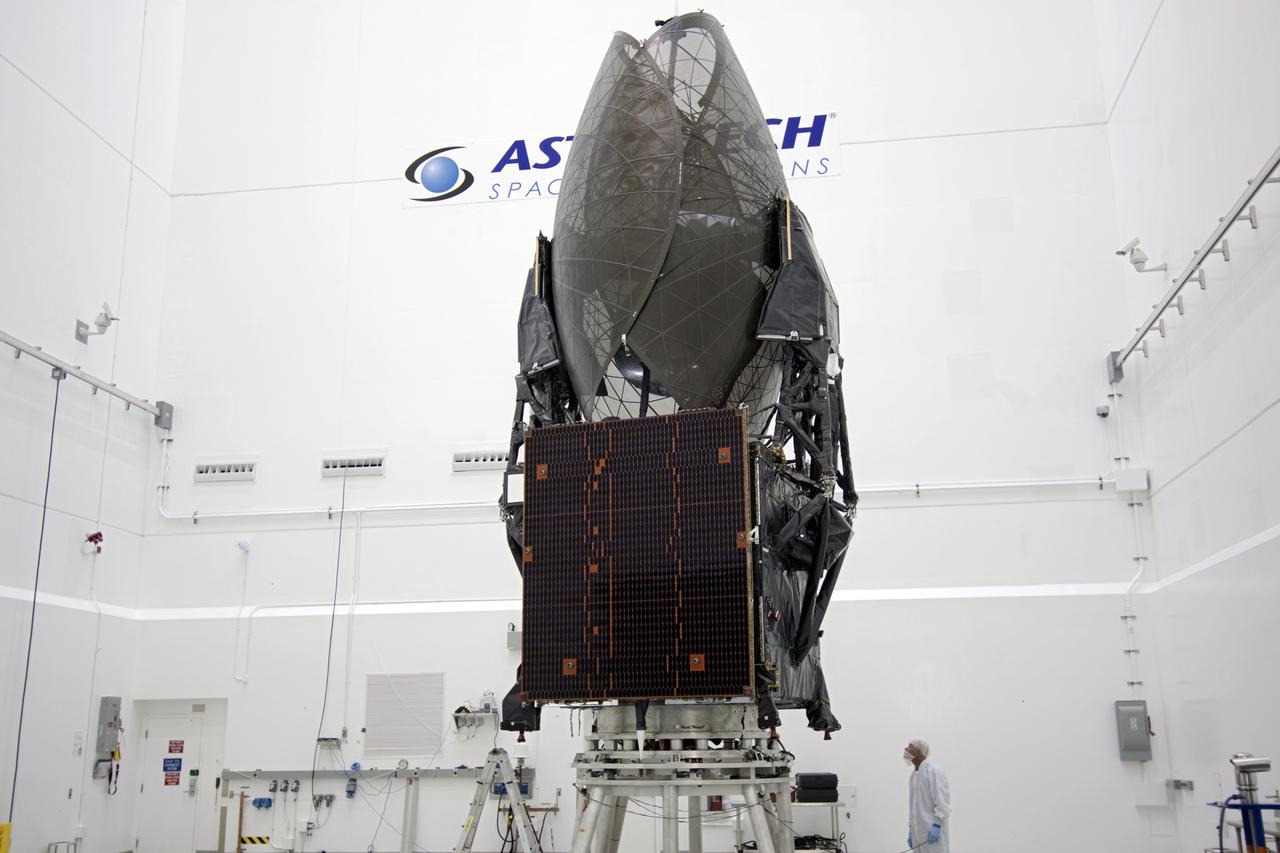
TITUSVILLE, Fla. - In the Astrotech payload processing facility in Titusville, Fla. near NASA’s Kennedy Space Center, a Boeing technician checks out the Tracking and Data Relay Satellite, TDRS-K. Launch of the TDRS-K on the Atlas V rocket is planned for January 29, 2013. The TDRS-K spacecraft is part of the next-generation series in the Tracking and Data Relay Satellite System, a constellation of space-based communication satellites providing tracking, telemetry, command and high-bandwidth data return services. For more information, visit http://www.nasa.gov/mission_pages/tdrs/index.html Photo credit: NASA/Jim Grossmann
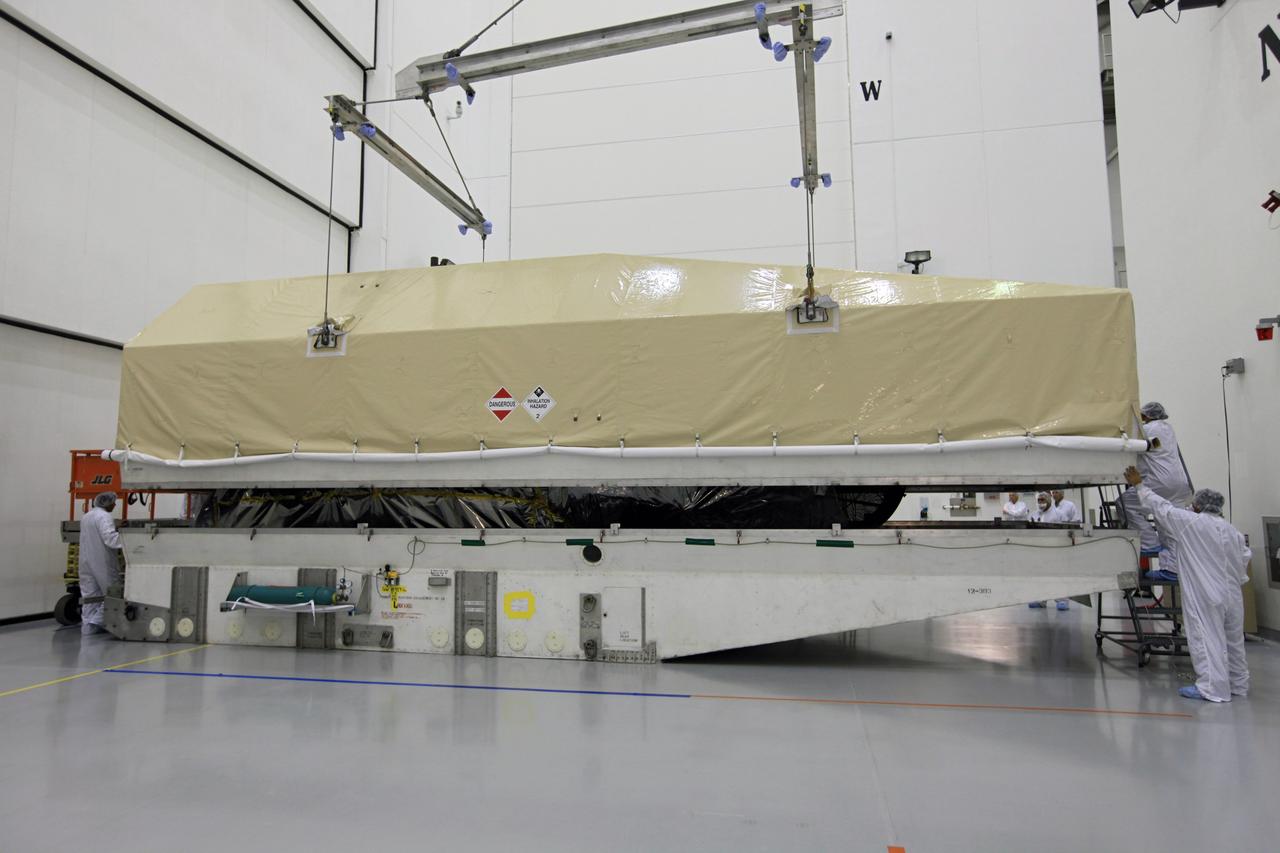
TITUSVILLE, Fla. - Technicians begin the process of removing the Tracking and Data Relay Satellite, TDRS-K, from the shipping container after arrival at the Astrotech payload processing facility in Titusville, Fla. near NASA’s Kennedy Space Center. Launch of the TDRS-K on the Atlas V rocket is planned for January 29, 2013. The TDRS-K spacecraft is part of the next-generation series in the Tracking and Data Relay Satellite System, a constellation of space-based communication satellites providing tracking, telemetry, command and high-bandwidth data return services. For more information, visit http://www.nasa.gov/mission_pages/tdrs/index.html Photo credit: NASA/Kim Shiflett
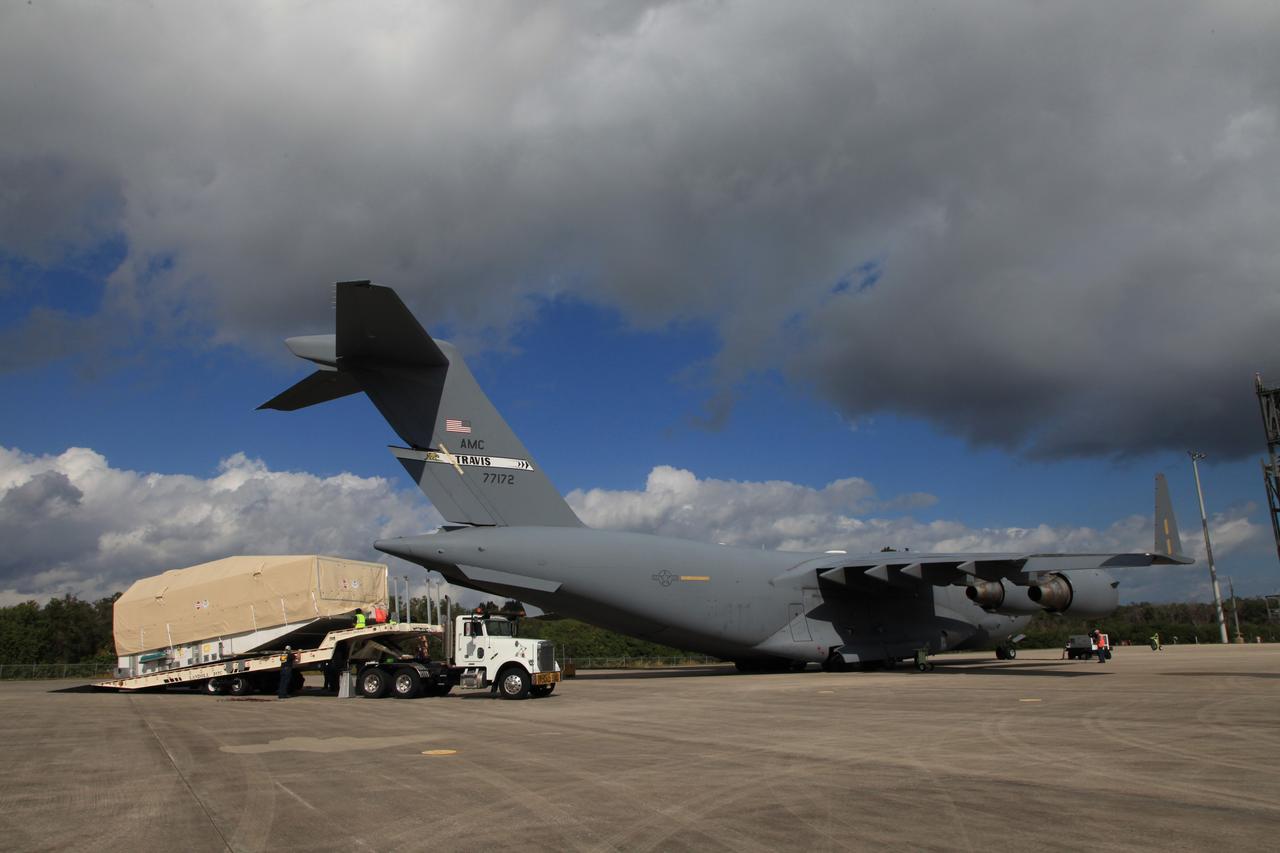
CAPE CANAVERAL, Fla. - The Tracking and Data Relay Satellite, TDRS-K, is off-loaded from a military transport aircraft after its arrival at the Shuttle Landing Facility at NASA's Kennedy Space Center in Florida. Launch of the TDRS-K on the Atlas V rocket is planned for January 29, 2013. The TDRS-K spacecraft is part of the next-generation series in the Tracking and Data Relay Satellite System, a constellation of space-based communication satellites providing tracking, telemetry, command and high-bandwidth data return services. For more information, visit http://www.nasa.gov/mission_pages/tdrs/index.html Photo credit: NASA/Kim Shiflett
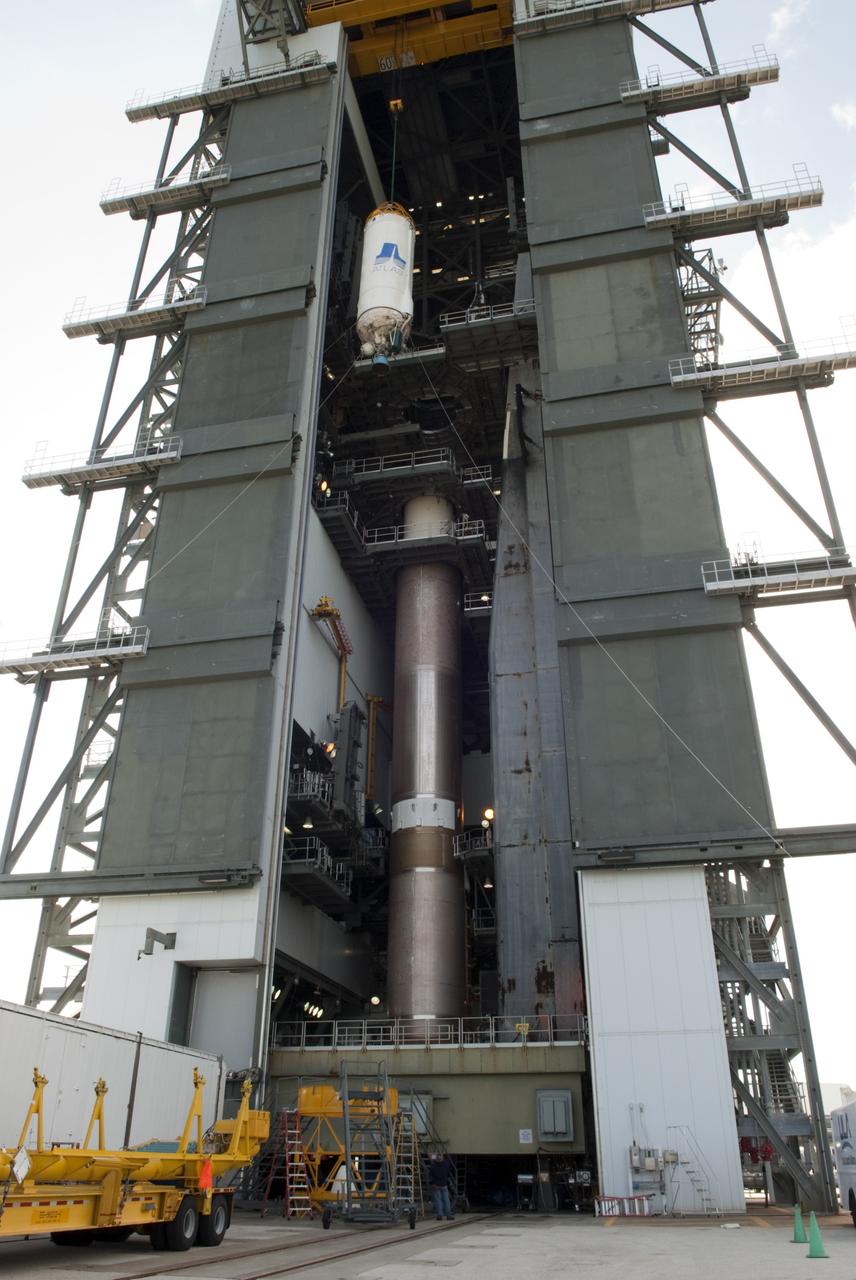
CAPE CANAVERAL, Fla. -- At Cape Canaveral Air Force Station's Space Launch Complex 41 in Florida, operations are underway to lift the Centaur stage for mating to the Atlas V rocket that will carry the Tracking and Data Relay Satellite, TDRS-K, into orbit. Launch of the TDRS-K on the Atlas V rocket is planned for January 29, 2013. The TDRS-K spacecraft is part of the next-generation series in the Tracking and Data Relay Satellite System, a constellation of space-based communication satellites providing tracking, telemetry, command and high-bandwidth data return services. For more information, visit http://www.nasa.gov/mission_pages/tdrs/index.html Photo credit: NASA/Charisse Nahser
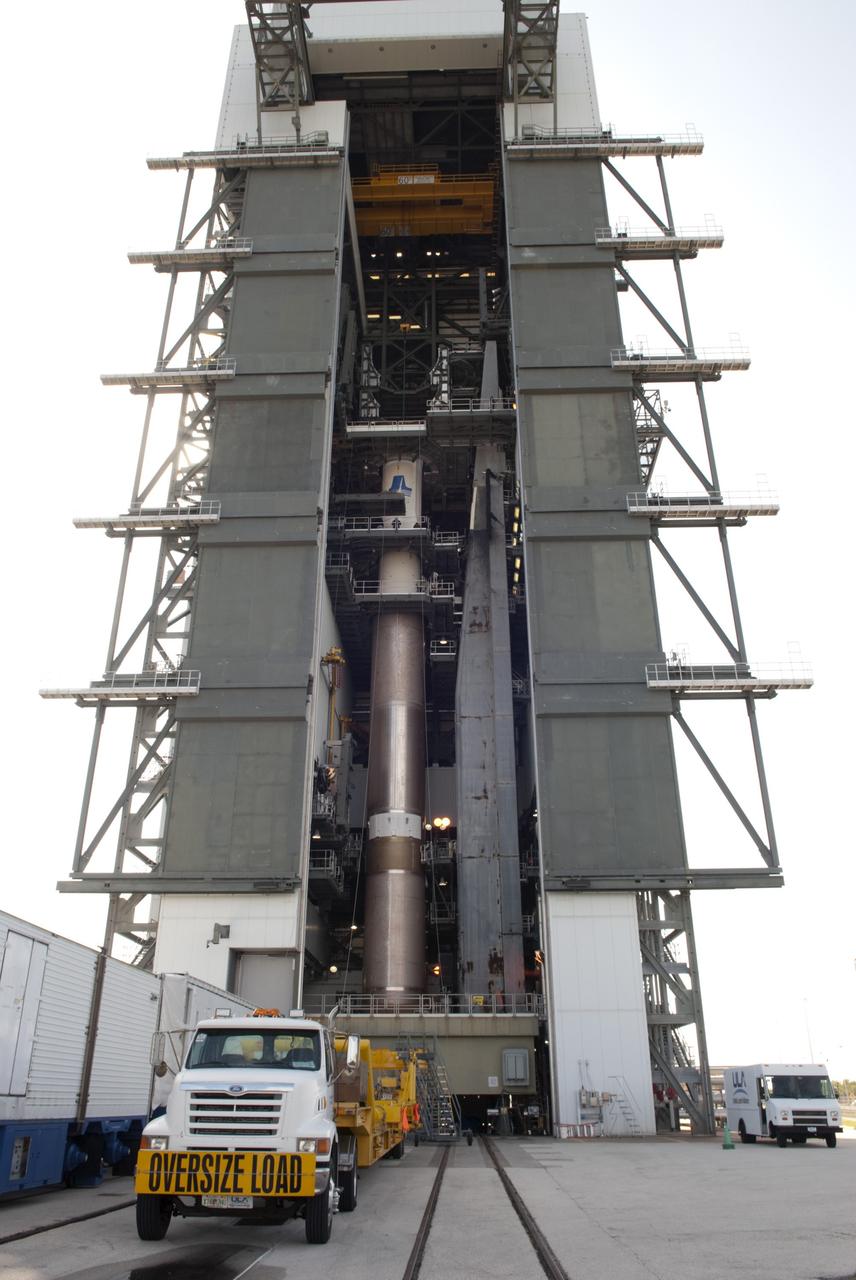
CAPE CANAVERAL, Fla. -- At Cape Canaveral Air Force Station's Space Launch Complex 41 in Florida, the Centaur stage has been mated to the Atlas V rocket that will carry the Tracking and Data Relay Satellite, TDRS-K, into orbit. Launch of the TDRS-K on the Atlas V rocket is planned for January 29, 2013. The TDRS-K spacecraft is part of the next-generation series in the Tracking and Data Relay Satellite System, a constellation of space-based communication satellites providing tracking, telemetry, command and high-bandwidth data return services. For more information, visit http://www.nasa.gov/mission_pages/tdrs/index.html Photo credit: NASA/Charisse Nahser
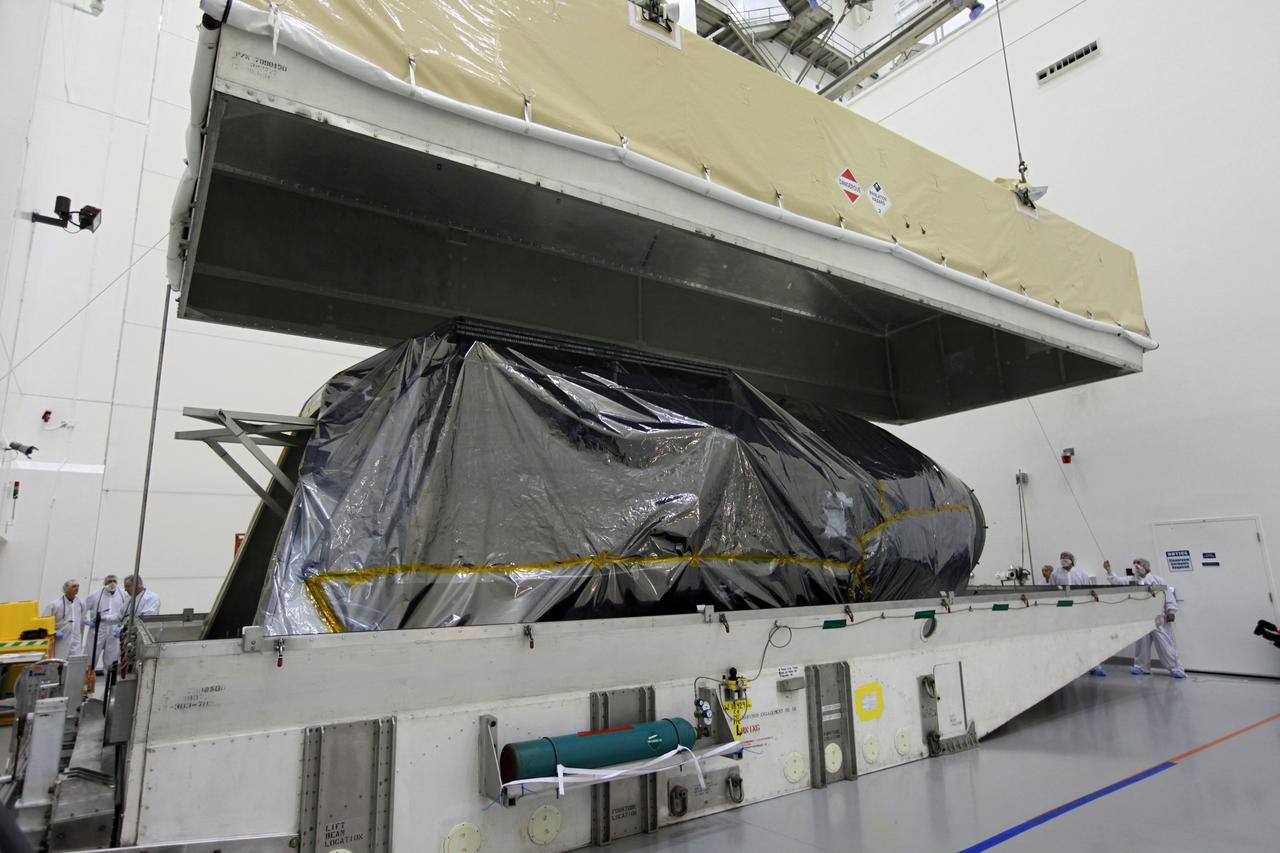
TITUSVILLE, Fla. - Technicians unpack the Tracking and Data Relay Satellite, TDRS-K, after arrival at the Astrotech payload processing facility in Titusville, Fla. near NASA’s Kennedy Space Center. Launch of the TDRS-K on the Atlas V rocket is planned for January 29, 2013. The TDRS-K spacecraft is part of the next-generation series in the Tracking and Data Relay Satellite System, a constellation of space-based communication satellites providing tracking, telemetry, command and high-bandwidth data return services. For more information, visit http://www.nasa.gov/mission_pages/tdrs/index.html Photo credit: NASA/Kim Shiflett
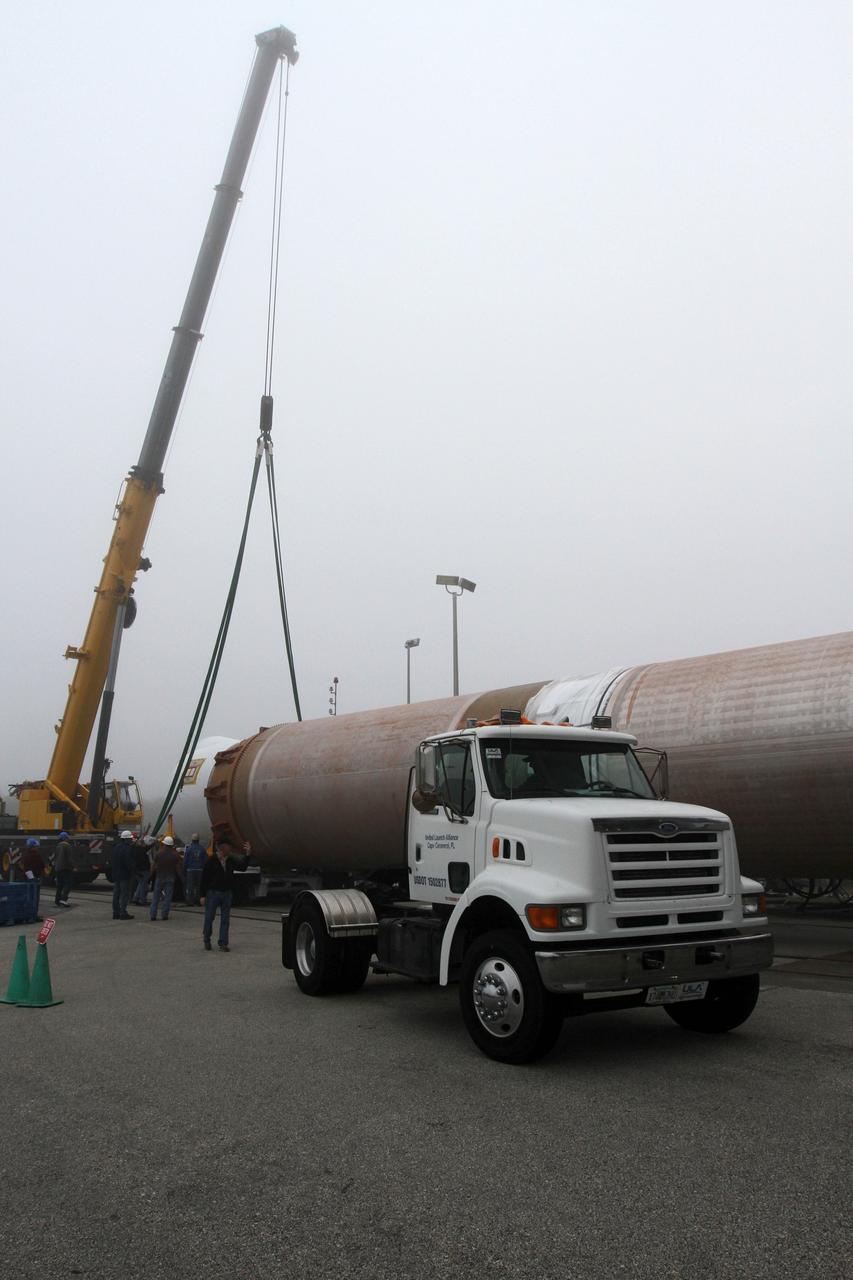
CAPE CANAVERAL, Fla. -- In the morning fog at Cape Canaveral Air Force Station's Space Launch Complex 41 in Florida, preparations are underway to erect the first stage of the Atlas V rocket that will carry the Tracking and Data Relay Satellite, TDRS-K, into orbit. Launch of the TDRS-K on the Atlas V rocket is planned for January 29, 2013. The TDRS-K spacecraft is part of the next-generation series in the Tracking and Data Relay Satellite System, a constellation of space-based communication satellites providing tracking, telemetry, command and high-bandwidth data return services. For more information, visit http://www.nasa.gov/mission_pages/tdrs/index.html Photo credit: NASA/ Ben Smegelsky
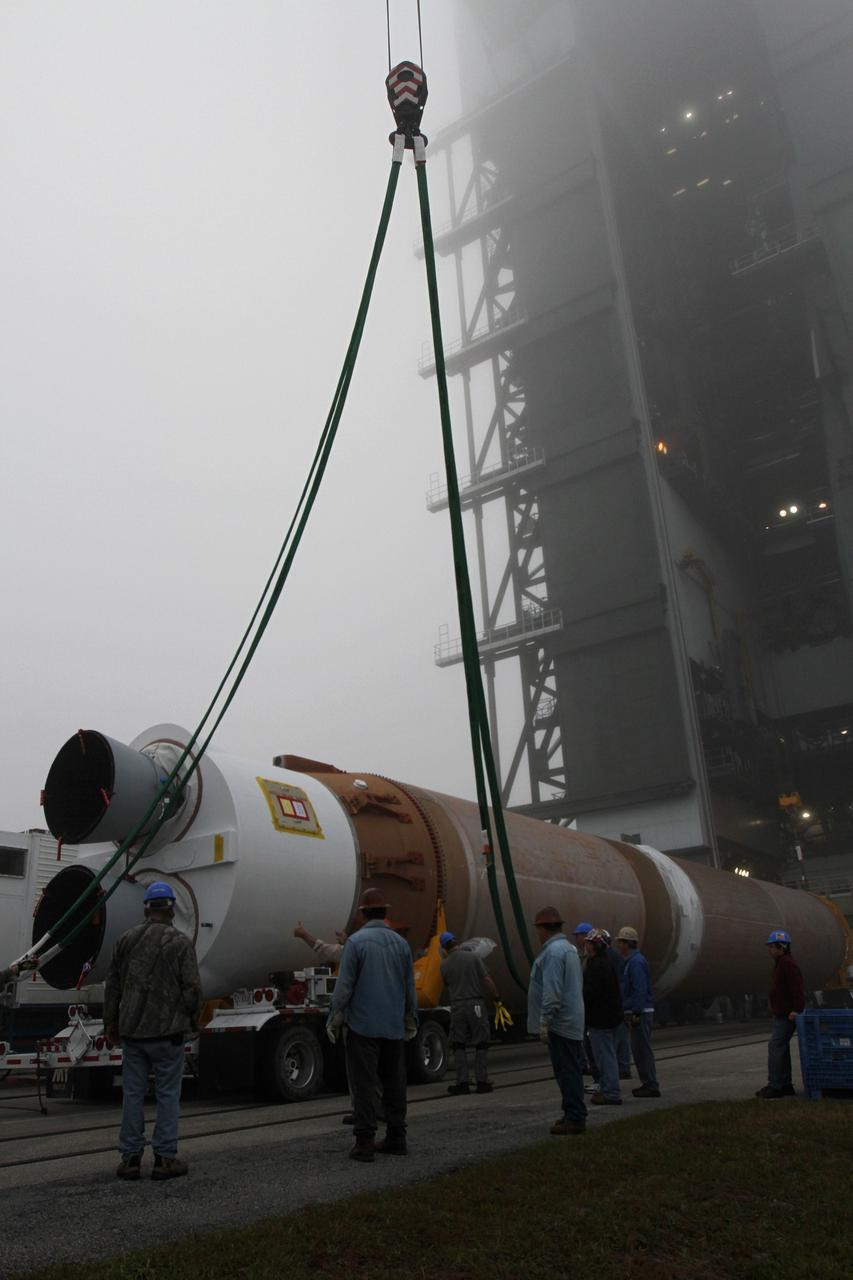
CAPE CANAVERAL, Fla. -- In the morning fog at Cape Canaveral Air Force Station's Space Launch Complex 41 in Florida, preparations are underway to erect the first stage of the Atlas V rocket that will carry the Tracking and Data Relay Satellite, TDRS-K, into orbit. Launch of the TDRS-K on the Atlas V rocket is planned for January 29, 2013. The TDRS-K spacecraft is part of the next-generation series in the Tracking and Data Relay Satellite System, a constellation of space-based communication satellites providing tracking, telemetry, command and high-bandwidth data return services. For more information, visit http://www.nasa.gov/mission_pages/tdrs/index.html Photo credit: NASA/ Ben Smegelsky
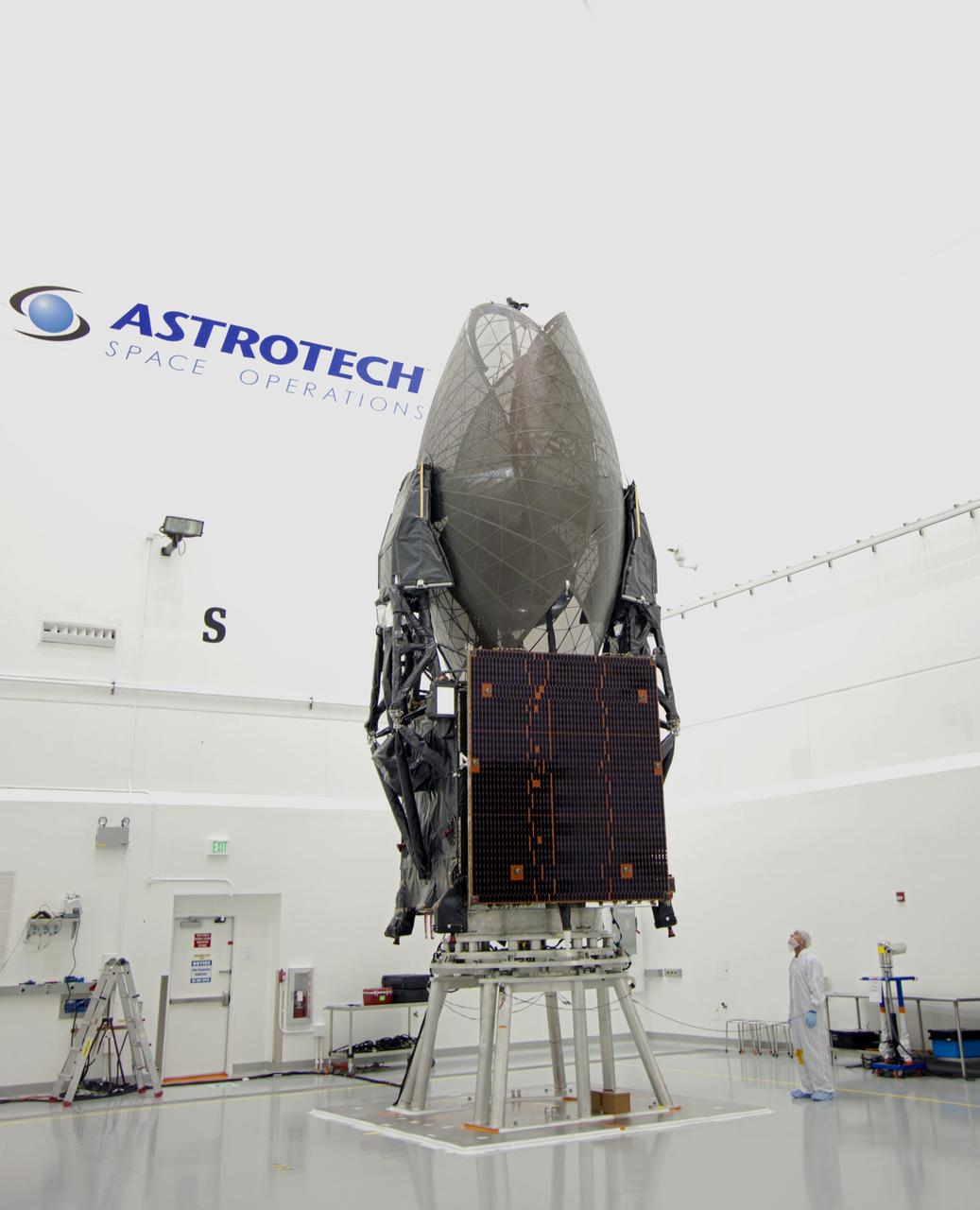
TITUSVILLE, Fla. - In the Astrotech payload processing facility in Titusville, Fla. near NASA’s Kennedy Space Center, a t Boeing technician checks out the Tracking and Data Relay Satellite, TDRS-K. Launch of the TDRS-K on the Atlas V rocket is planned for January 29, 2013. The TDRS-K spacecraft is part of the next-generation series in the Tracking and Data Relay Satellite System, a constellation of space-based communication satellites providing tracking, telemetry, command and high-bandwidth data return services. For more information, visit http://www.nasa.gov/mission_pages/tdrs/index.html Photo credit: NASA/Jim Grossmann
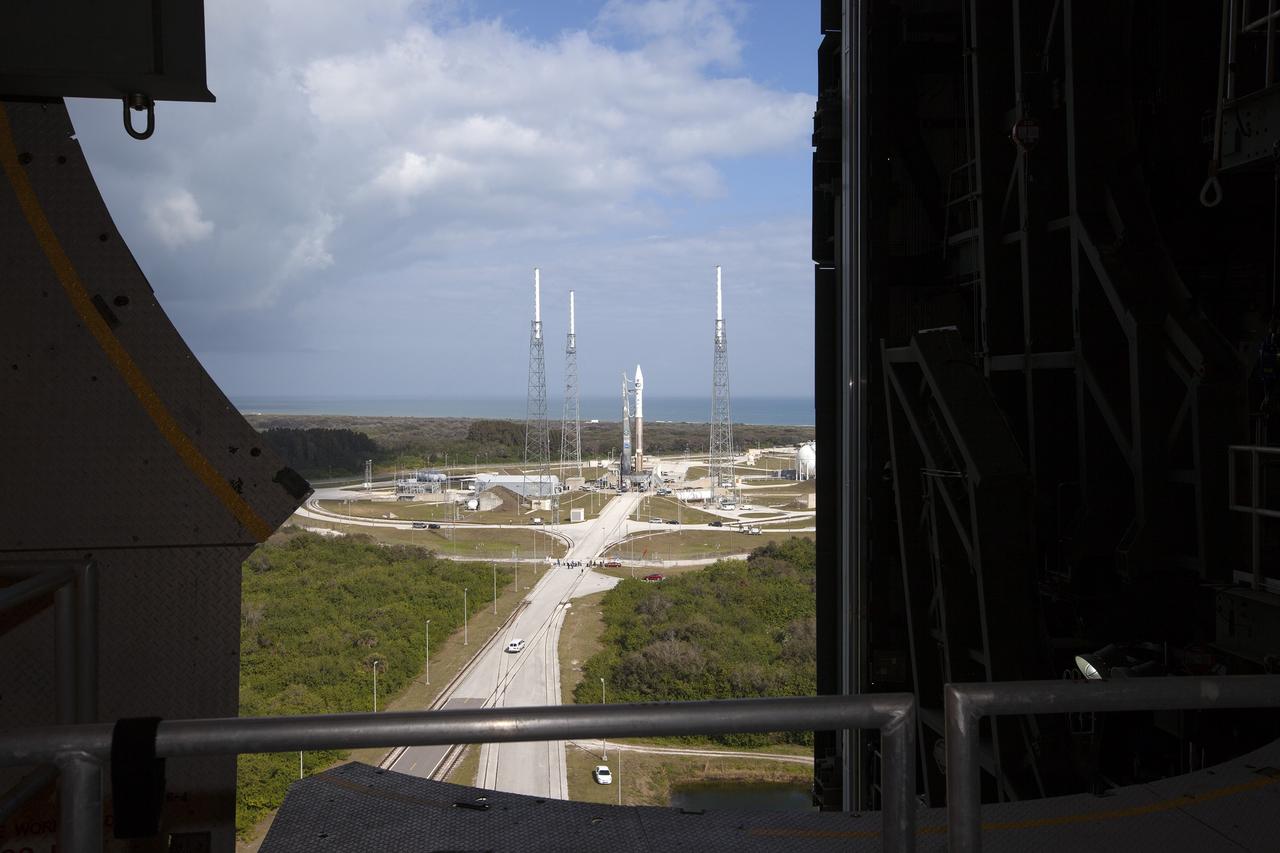
CAPE CANAVERAL, Fla. -- At Cape Canaveral Air Force Station's Space Launch Complex 41, the United Launch Alliance Atlas V rocket set to carry NASA's Tracking and Data Relay Satellite, TDRS-K, stands at the launch pad after leaving the Vertical Integration Facility. Liftoff for the TDRS-K is planned for Jan. 30, 2013. The TDRS-K spacecraft is part of the next-generation series in the Tracking and Data Relay Satellite System, a constellation of space-based communication satellites providing tracking, telemetry, command and high-bandwidth data return services. For more information, visit http://www.nasa.gov/mission_pages/tdrs/index.html Photo credit: NASA/Kim Shiflett
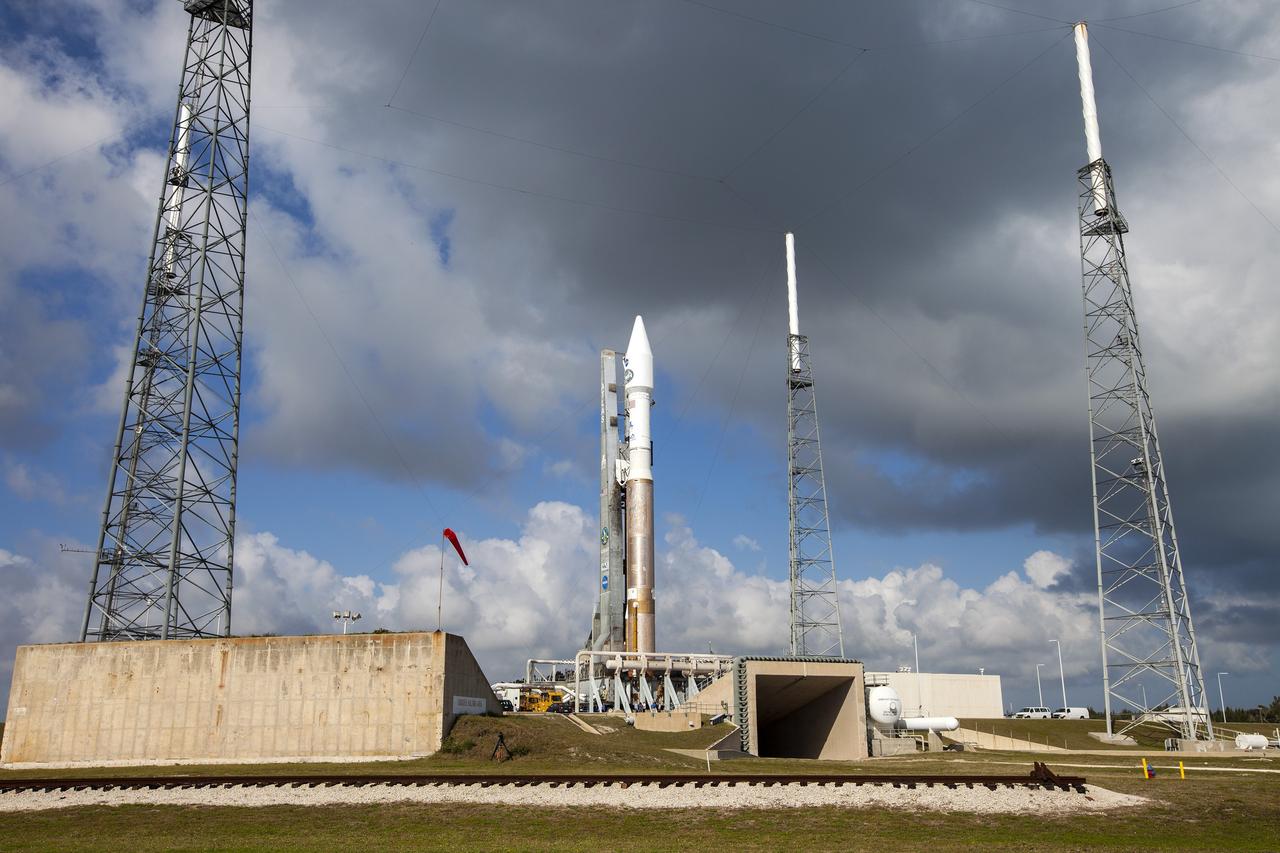
CAPE CANAVERAL, Fla. -- At Cape Canaveral Air Force Station's Space Launch Complex 41, the United Launch Alliance Atlas V rocket set to carry NASA's Tracking and Data Relay Satellite, TDRS-K, stands at the launch pad after leaving the Vertical Integration Facility. Liftoff for the TDRS-K is planned for Jan. 30, 2013. The TDRS-K spacecraft is part of the next-generation series in the Tracking and Data Relay Satellite System, a constellation of space-based communication satellites providing tracking, telemetry, command and high-bandwidth data return services. For more information, visit http://www.nasa.gov/mission_pages/tdrs/index.html Photo credit: NASA/Kim Shiflett
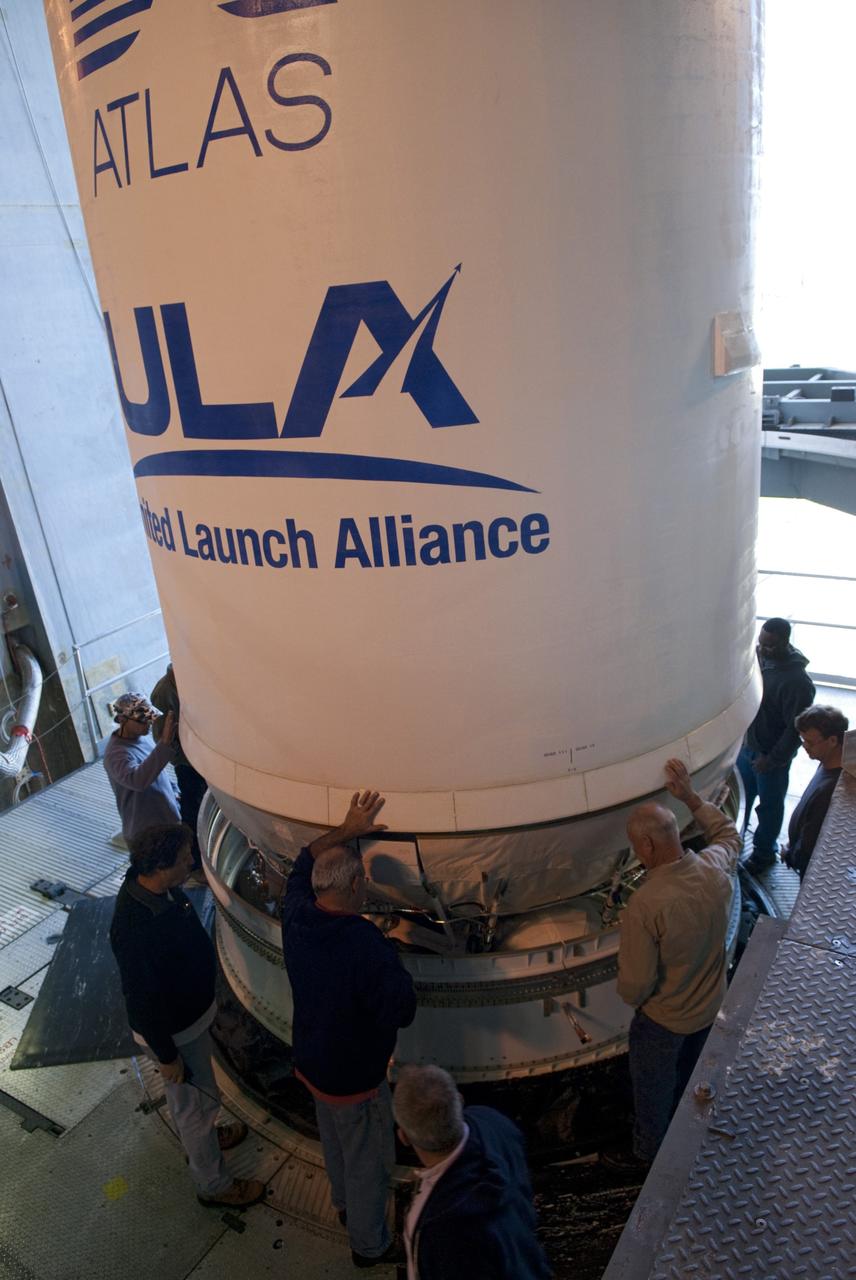
CAPE CANAVERAL, Fla. -- At Cape Canaveral Air Force Station's Space Launch Complex 41 in Florida, United Launch Alliance technicians support operations to mate the Centaur stage to the Atlas V rocket that will carry the Tracking and Data Relay Satellite, TDRS-K, into orbit. Launch of the TDRS-K on the Atlas V rocket is planned for January 29, 2013. The TDRS-K spacecraft is part of the next-generation series in the Tracking and Data Relay Satellite System, a constellation of space-based communication satellites providing tracking, telemetry, command and high-bandwidth data return services. For more information, visit http://www.nasa.gov/mission_pages/tdrs/index.html Photo credit: NASA/Charisse Nahser
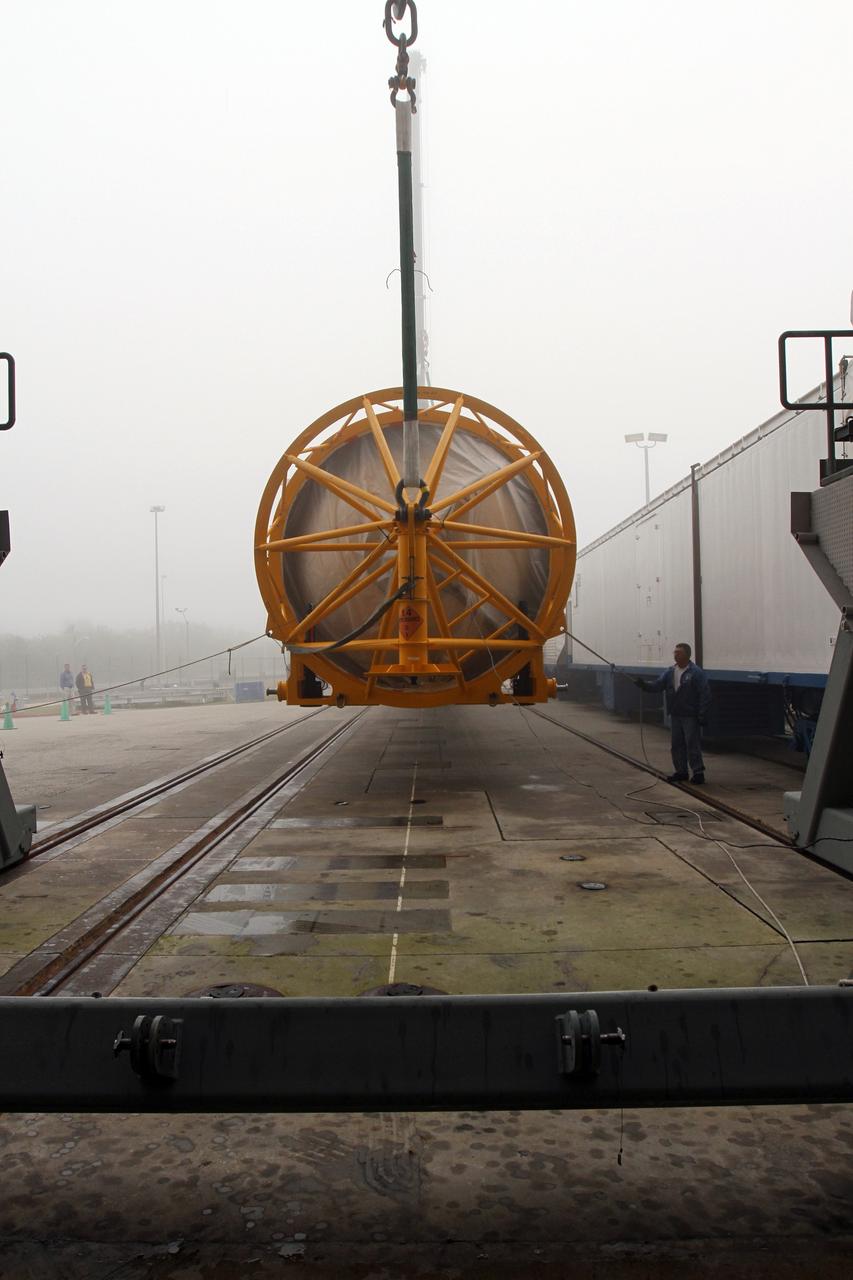
CAPE CANAVERAL, Fla. -- In the morning fog at Cape Canaveral Air Force Station's Space Launch Complex 41 in Florida, operations are underway to erect the first stage of the Atlas V rocket that will carry the Tracking and Data Relay Satellite, TDRS-K, into orbit. Launch of the TDRS-K on the Atlas V rocket is planned for January 29, 2013. The TDRS-K spacecraft is part of the next-generation series in the Tracking and Data Relay Satellite System, a constellation of space-based communication satellites providing tracking, telemetry, command and high-bandwidth data return services. For more information, visit http://www.nasa.gov/mission_pages/tdrs/index.html Photo credit: NASA/ Ben Smegelsky