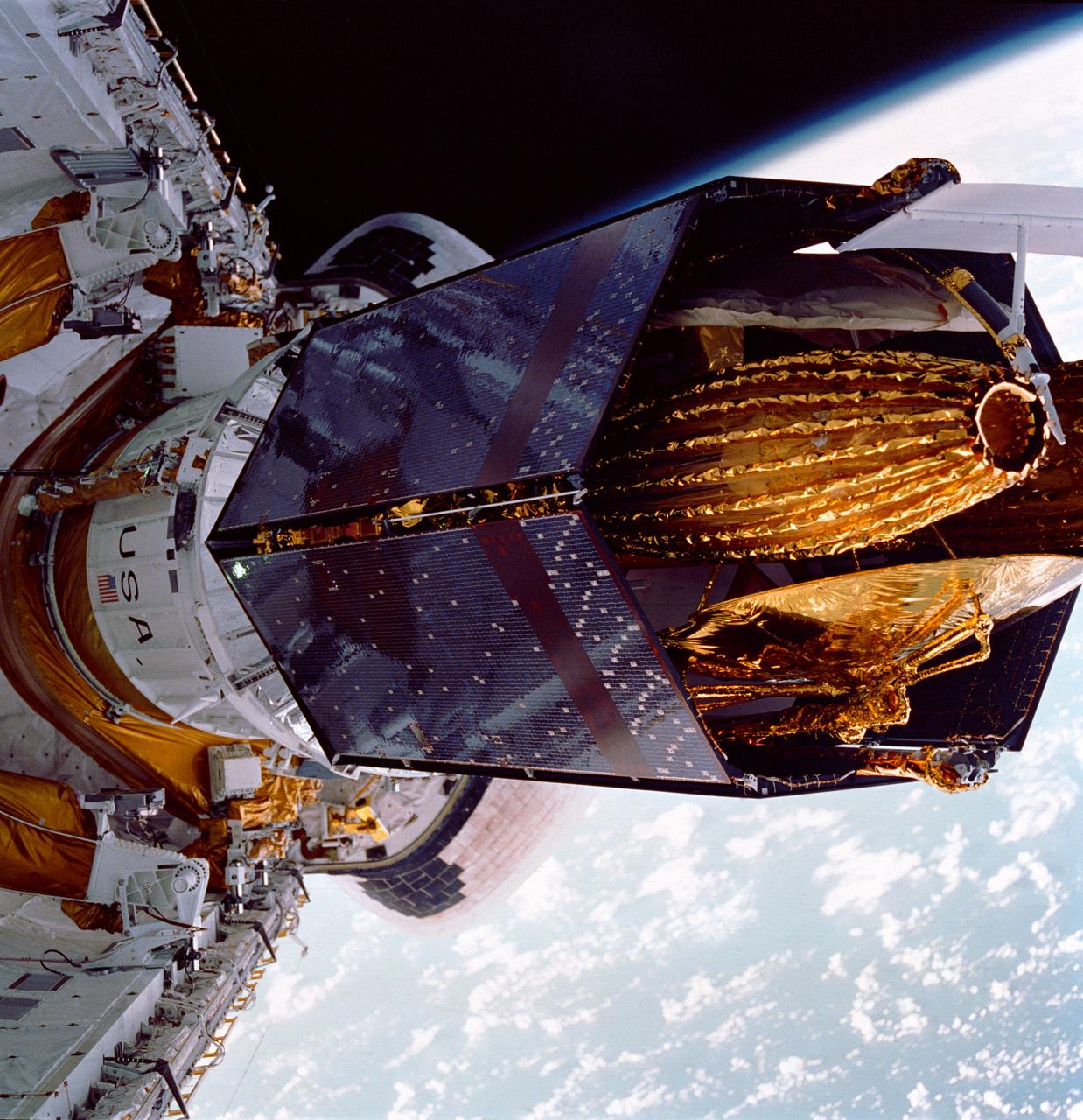
S26-31-012 (29 Sept. 1988) ) --- Discovery was used for NASA's Return to Flight Mission following the Challenger accident, during which the STS-26 crew delivered the TDRS-C satellite to Earth orbit. Photo credit: NASA or National Aeronautics and Space Administration
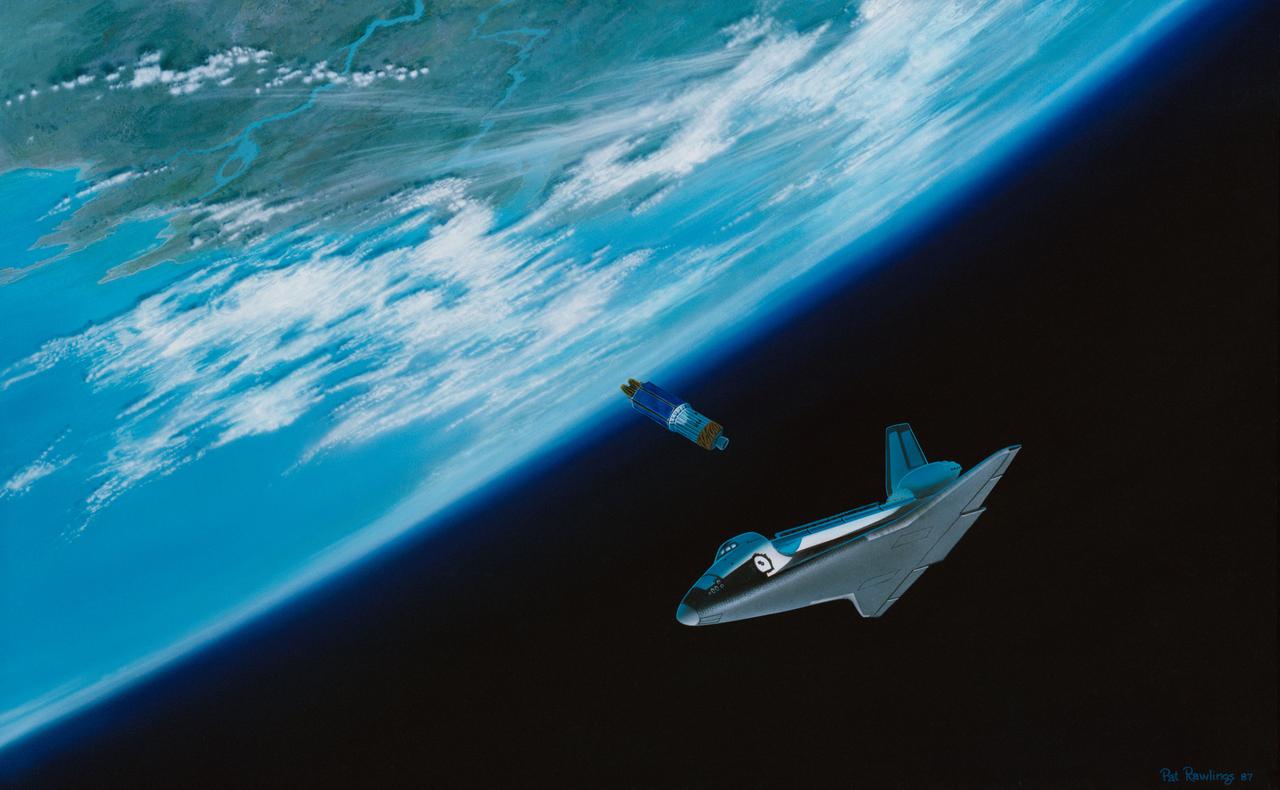
STS-26 Discovery, Orbiter Vehicle (OV) 103, artwork depicts tracking and data relay satellite C (TDRS-C) deployment. OV-103 orbits above Earth in bottom-to-sun attitude, moments after TDRS-C's release into space. TDRS-C is seen just below open payload bay (PLB). Artwork was done by Pat Rawlings of Eagle Engineering.
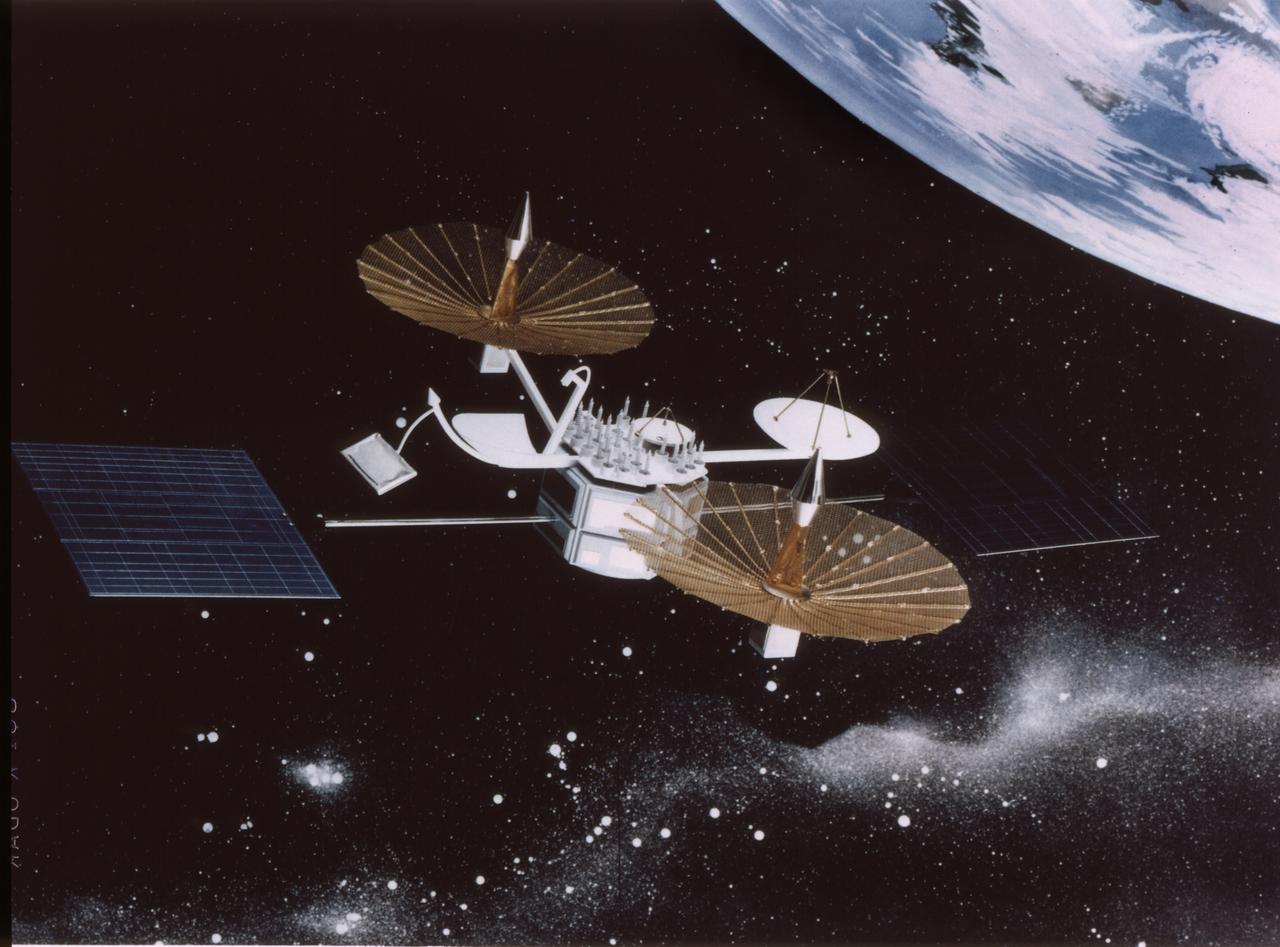
This artist's concept drawing depicts the Tracking and Data Relay Satellite-C (TDRS-C), which was the primary payload of the Space Shuttle Discovery on the STS-26 mission, launched on September 29, 1988. The TDRS system provides almost uninterrupted communications with Earth-orbiting Shuttles and satellites, and had replaced the intermittent coverage provided by globe-encircling ground tracking stations used during the early space program. The TDRS can transmit and receive data, and track a user spacecraft in a low Earth orbit. The deployment of TDRS-G on the STS-70 mission being the latest in the series, NASA has successfully launched six TDRSs.
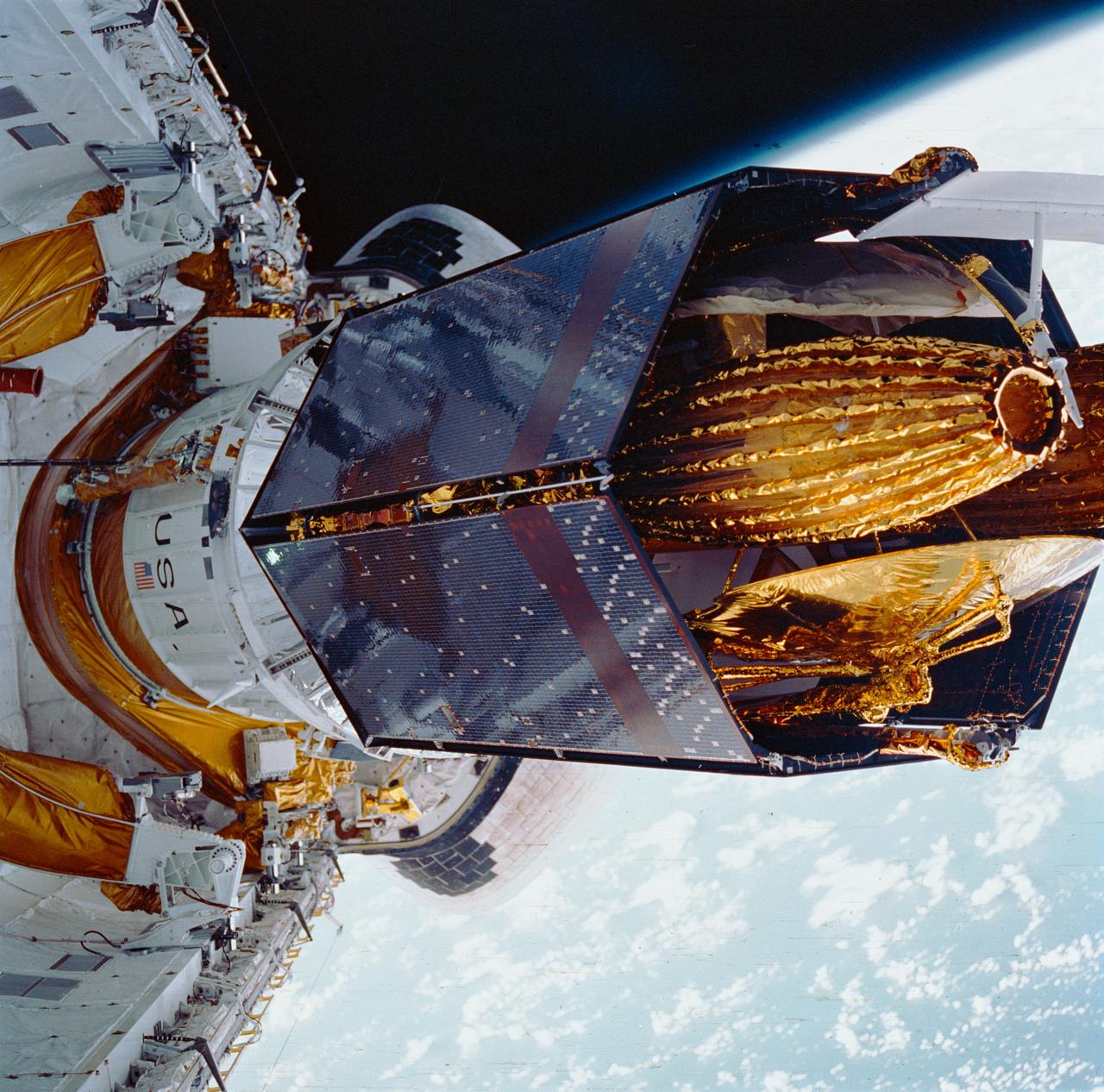
During STS-26, inertial upper stage (IUS) with tracking and data relay satellite C (TDRS-C) located in the payload bay (PLB) of Discovery, Orbiter Vehicle (OV) 103, is positioned into its proper deployment attitude (an angle of 50 degrees) by the airborne support equipment (ASE). In the foreground, the ASE forward cradle is visible. The IUS is mounted in the ASE aft frame tilt actuator (AFTA) table. TDRS-C components in stowed configuration include solar array panels, TDRS single access #1 and #2, TDRS SGL, and S-Band omni antenna. In the background are the orbital maneuvering system (OMS) pods, the Earth's cloud-covered surface, and the Earth's limb.
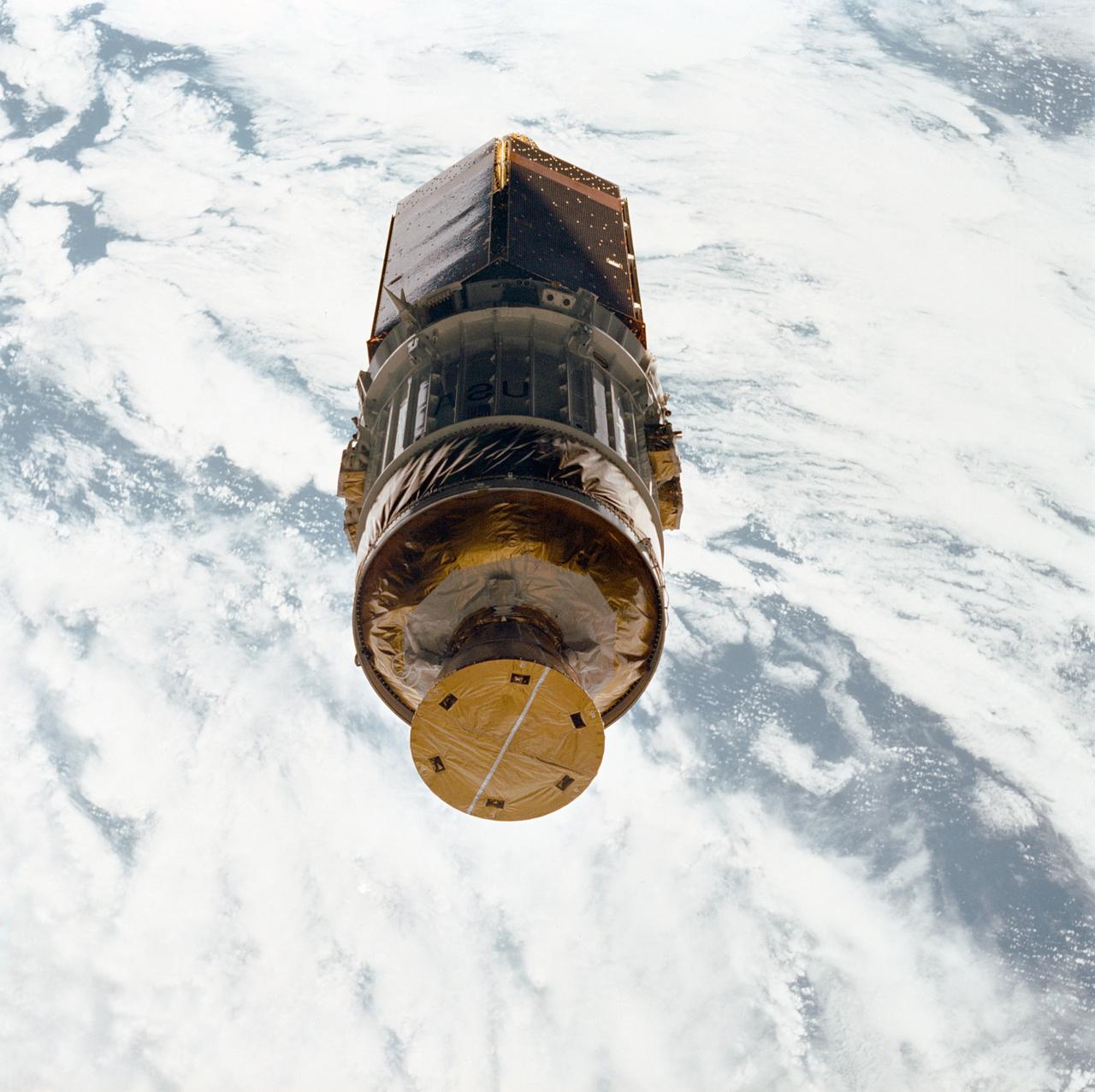
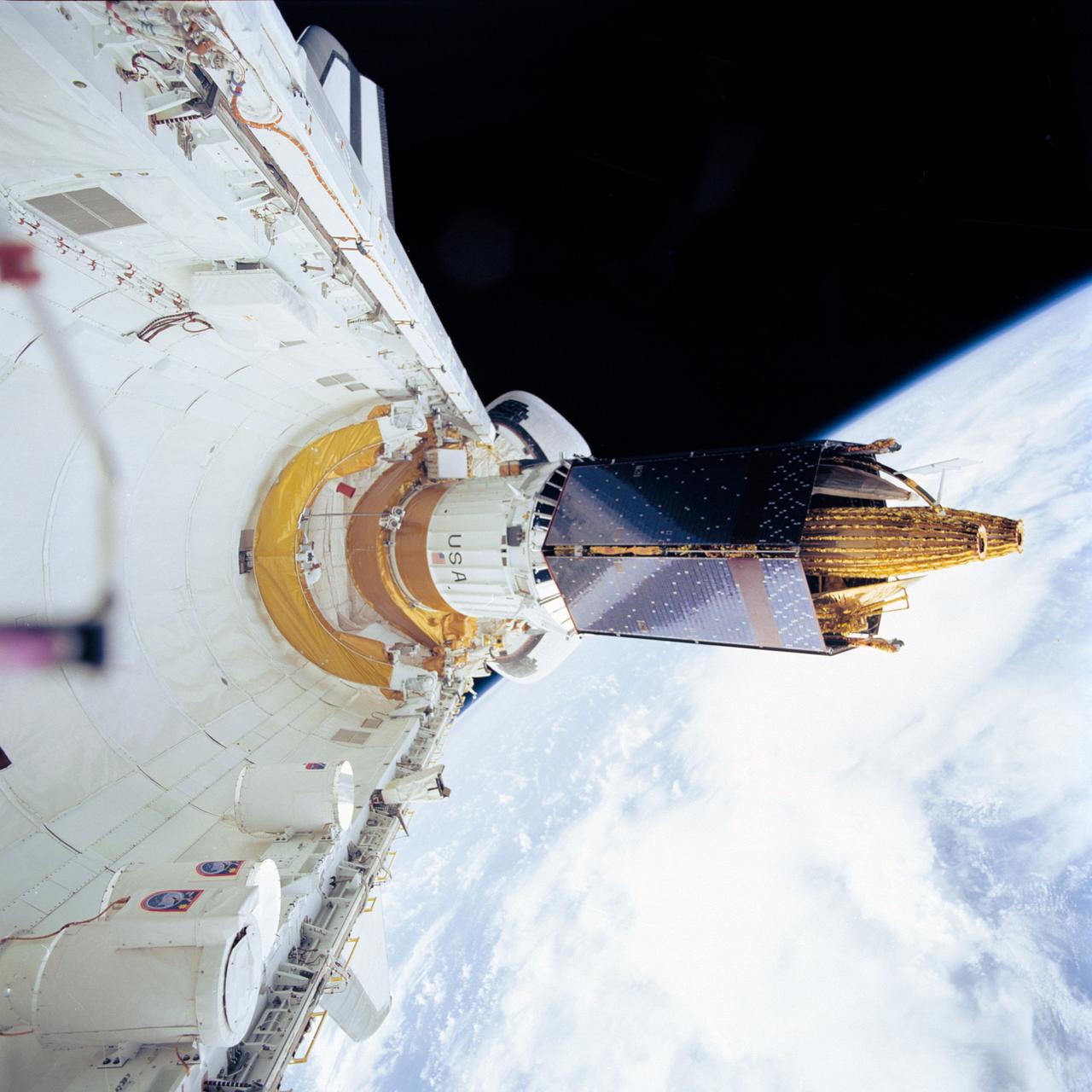
STS026-31-071 (3 Oct 1988) --- After deployment from Discovery, Orbiter Vehicle (OV) 103, the inertial upper stage (IUS) with the tracking and data relay satellite C (TDRS-C) drifts above the cloud-covered Earth surface. TDRS-C, in stowed configuration (solar array panels visible), is mounted atop the IUS with the interstage and solid rocket motor and nozzle seen in the foreground.
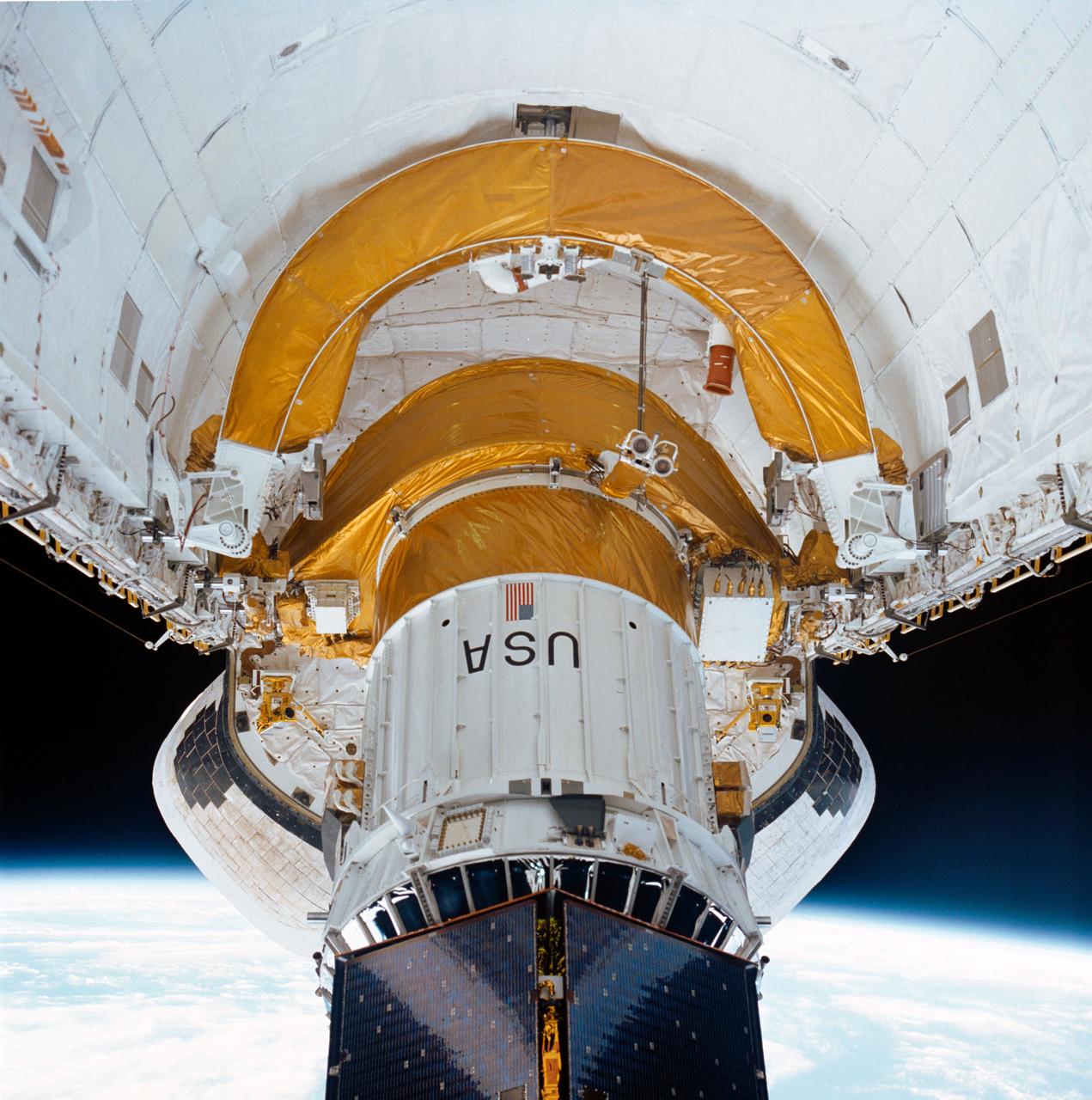
During STS-26, inertial upper stage (IUS) with the tracking and data relay satellite C (TDRS-C) located in the payload bay (PLB) of Discovery, Orbiter Vehicle (OV) 103, is raised into deployment attitude (an angle of 50 degrees) by the airborne support equipment (ASE). ASE aft frame tilt actuator (AFTA) table supports the IUS as it is positioned in the PLB and the ASE umbilical boom drifts away from IUS toward ASE forward cradle. TDRS-C solar array panels (in stowed configuration) are visible on top of the IUS. In the background are the orbital maneuvering system (OMS) pods and the Earth's limb.
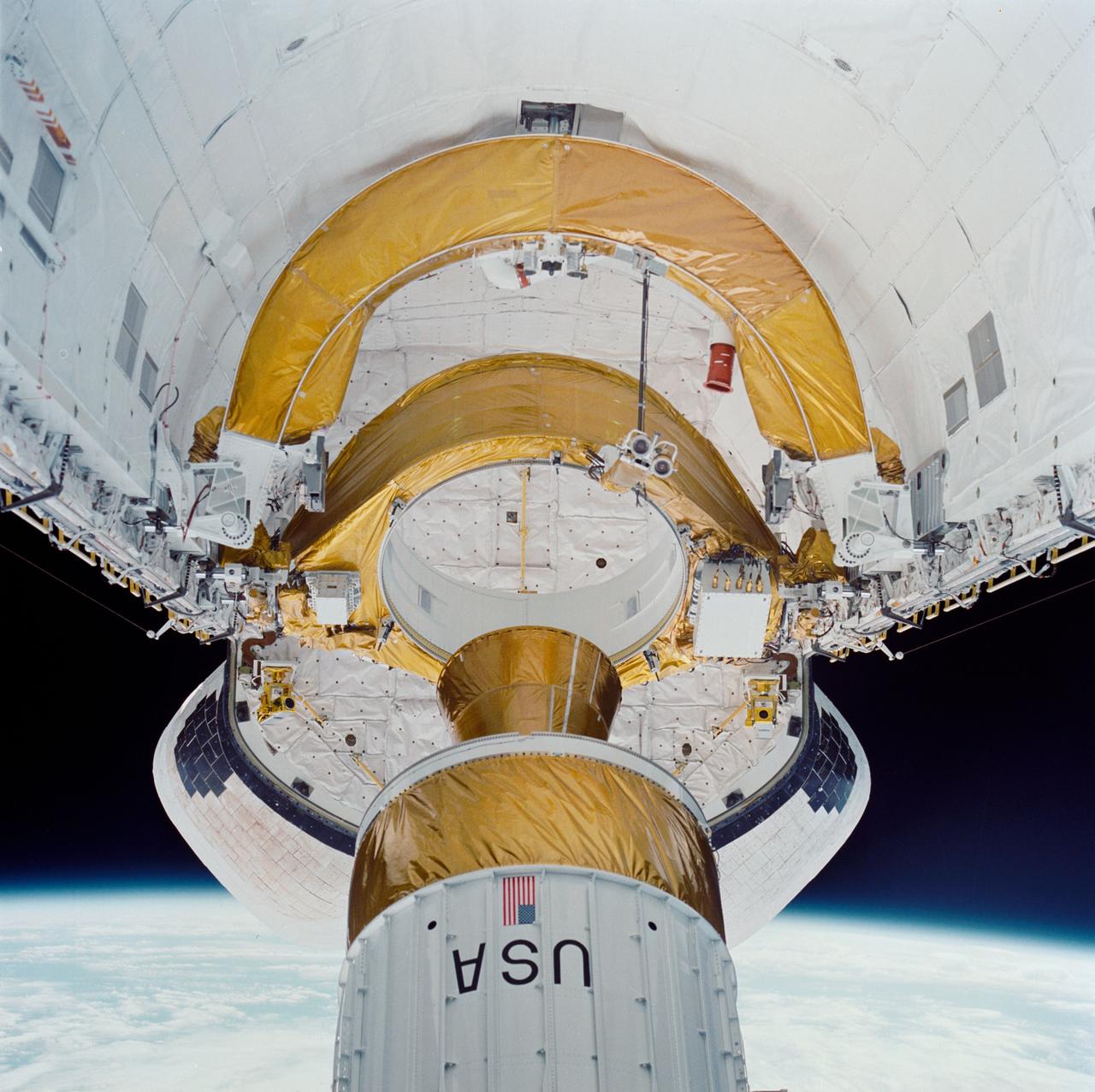
During STS-26, inertial upper stage (IUS) with the tracking and data relay satellite C (TDRS-C) drifts above Discovery, Orbiter Vehicle (OV) 103, payload bay (PLB) after being positioned in deployment attitude (an angle of 50 degrees) by the airborne support equipment (ASE). IUS vacates the ASE aft frame tilt actuator (AFTA) table in the PLB while the disconnected ASE umbilical boom floats above ASE forward cradle. IUS first stage rocket motor and nozzle and the interstage are visible as the IUS is deployed. In the background are the orbital maneuvering system (OMS) pods and the Earth's limb.
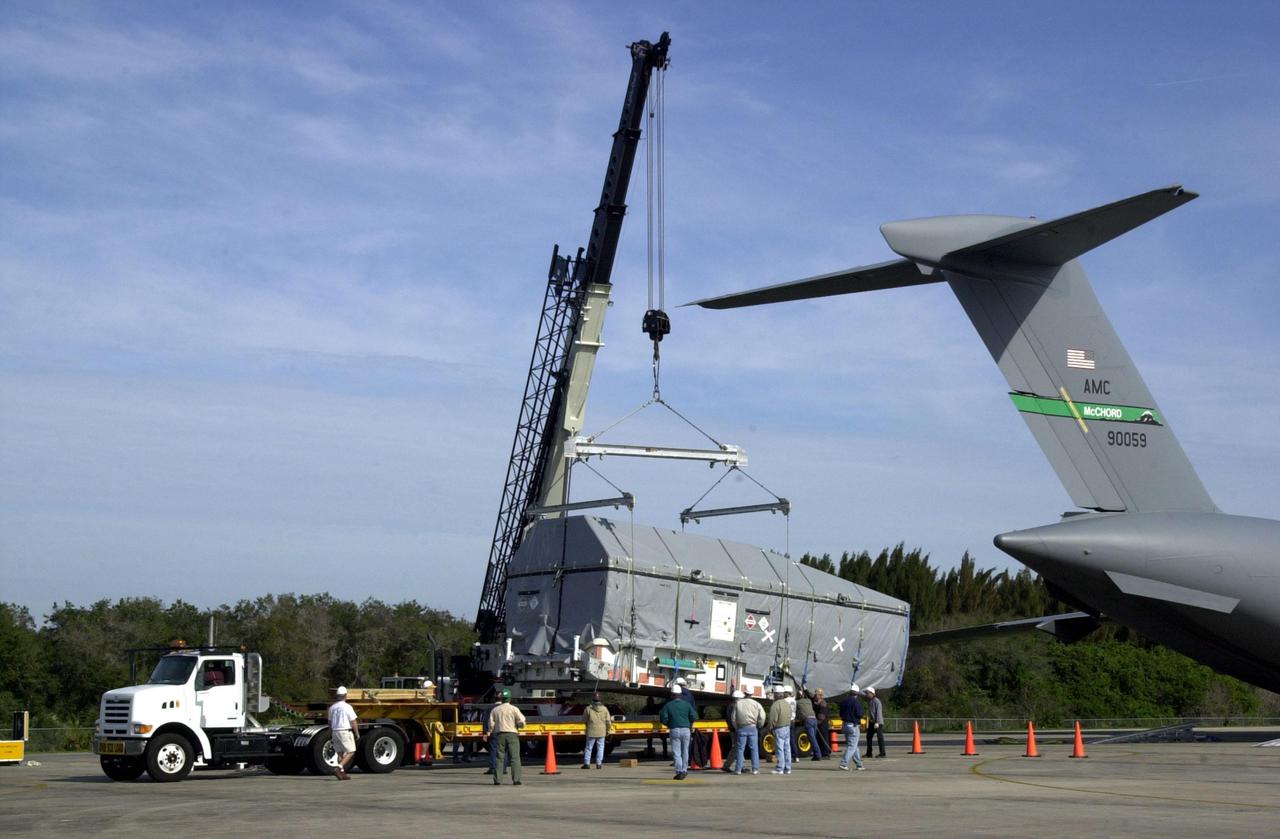
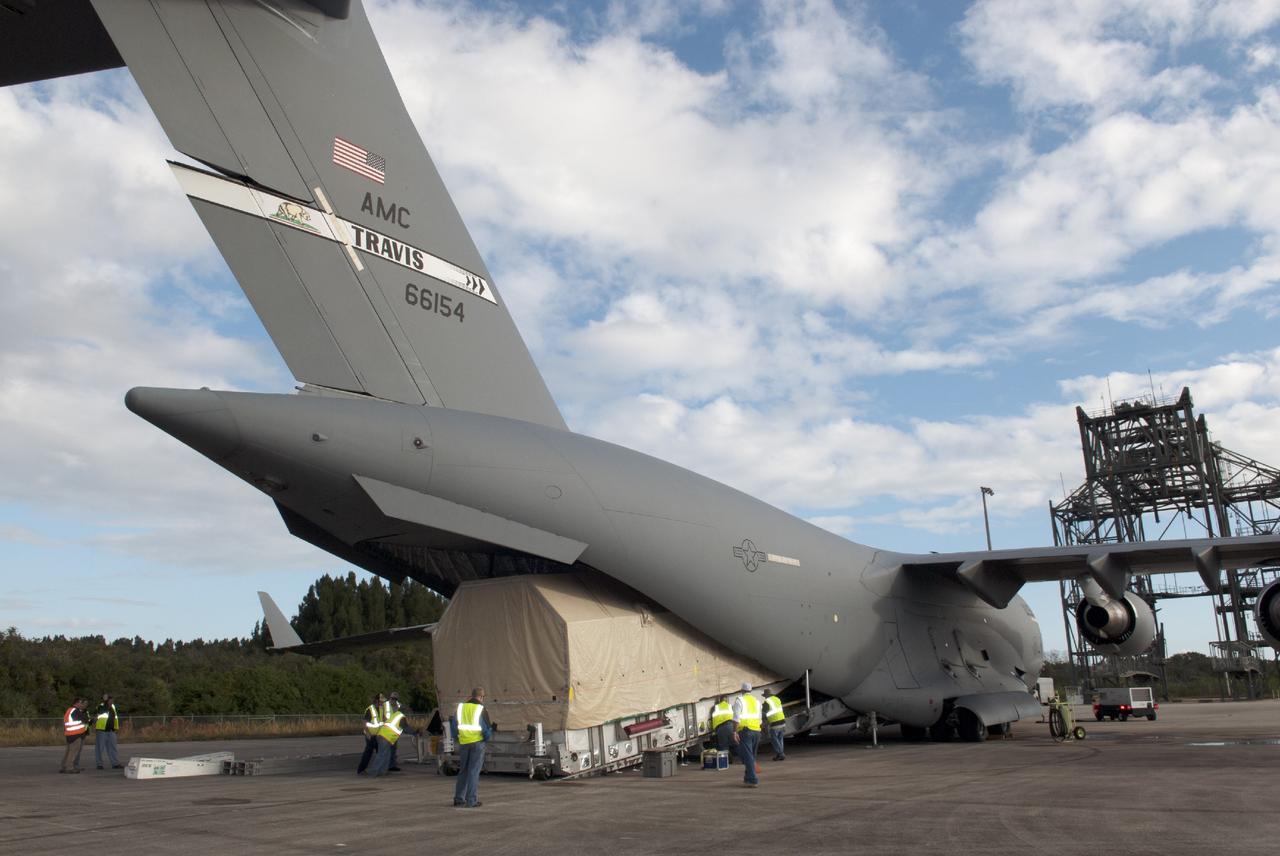
KENNEDY SPACE CENTER, FLA. -- At KSC's Shuttle Landing Facility, the Tracking and Data Relay Satellite-I (TDRS-I) is lifted onto a transporter after being offloaded from the Air Force C-17 air cargo plane at right. The second in a new series of telemetry satellites, TDRS-I replenishes the existing on-orbit fleet of six spacecraft. The TDRS System is the primary source of space-to-ground voice, data and telemetry for the Space Shuttle. It also provides communications with the International Space Station and scientific spacecraft in low-Earth orbit such as the Hubble Space Telescope. This new advanced series of satellites will extend the availability of TDRS communications services until about 2017. TDRS-I will undergo processing in the Spacecraft Assembly and Encapsulation Facility-2 (SAEF-2) to prepare it for launch March 8 aboard a Lockheed Martin Atlas IIA rocket from Pad 36-A, Cape Canaveral Air Force Station
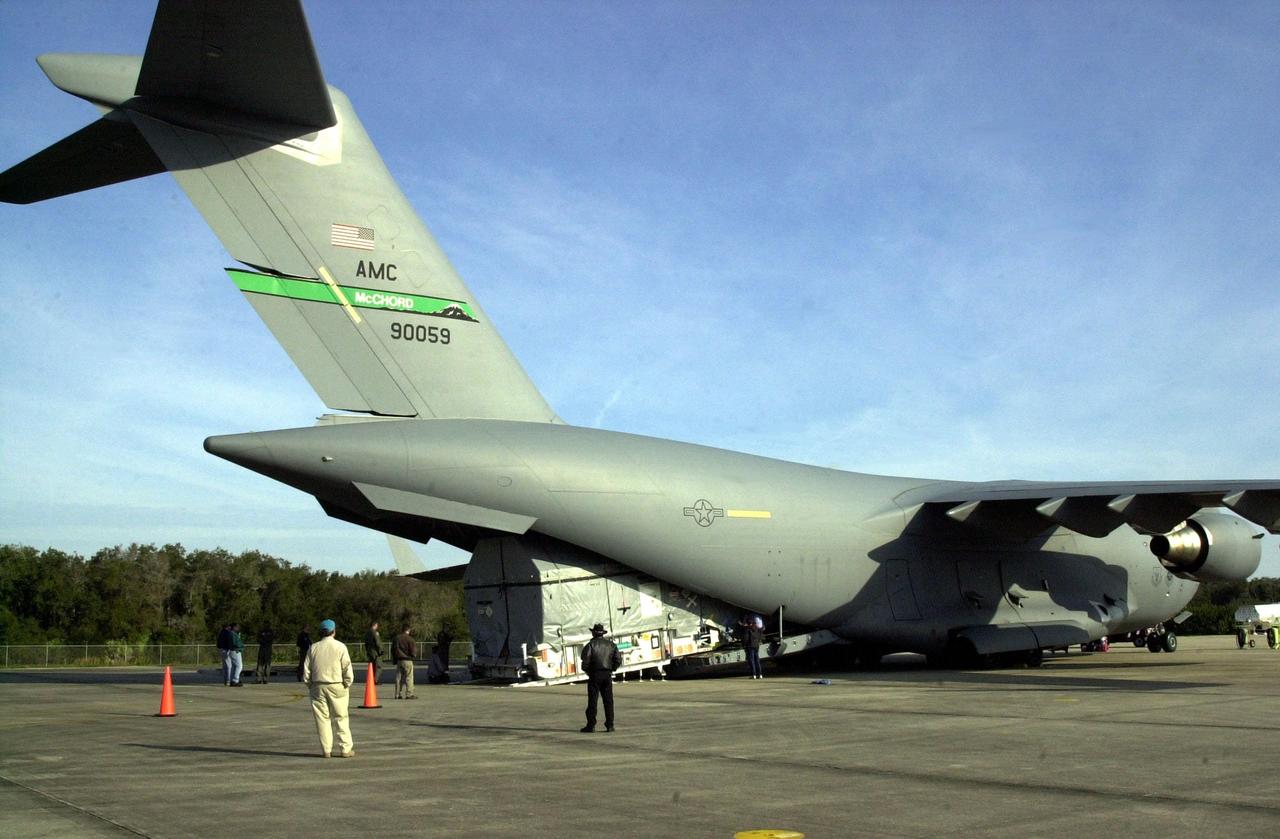
KENNEDY SPACE CENTER, FLA. -- At KSC's Shuttle Landing Facility, the Air Force C-17 air cargo plane offloads the Tracking and Data Relay Satellite-I (TDRS-I). The second in a new series of telemetry satellites, TDRS-I replenishes the existing on-orbit fleet of six spacecraft. The TDRS System is the primary source of space-to-ground voice, data and telemetry for the Space Shuttle. It also provides communications with the International Space Station and scientific spacecraft in low-Earth orbit such as the Hubble Space Telescope. This new advanced series of satellites will extend the availability of TDRS communications services until about 2017. TDRS-I will undergo processing in the Spacecraft Assembly and Encapsulation Facility-2 (SAEF-2) to prepare it for launch March 8 aboard a Lockheed Martin Atlas IIA rocket from Pad 36-A, Cape Canaveral Air Force Station
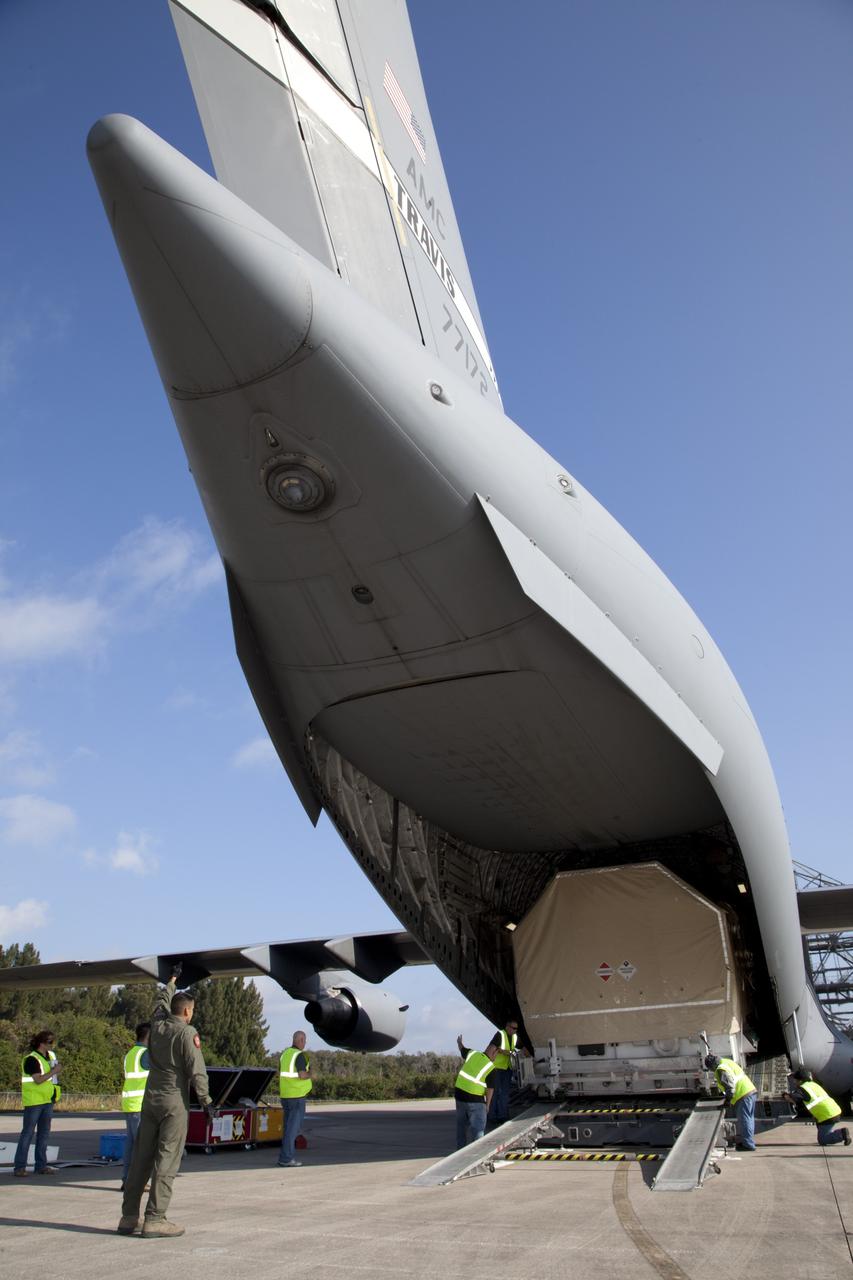
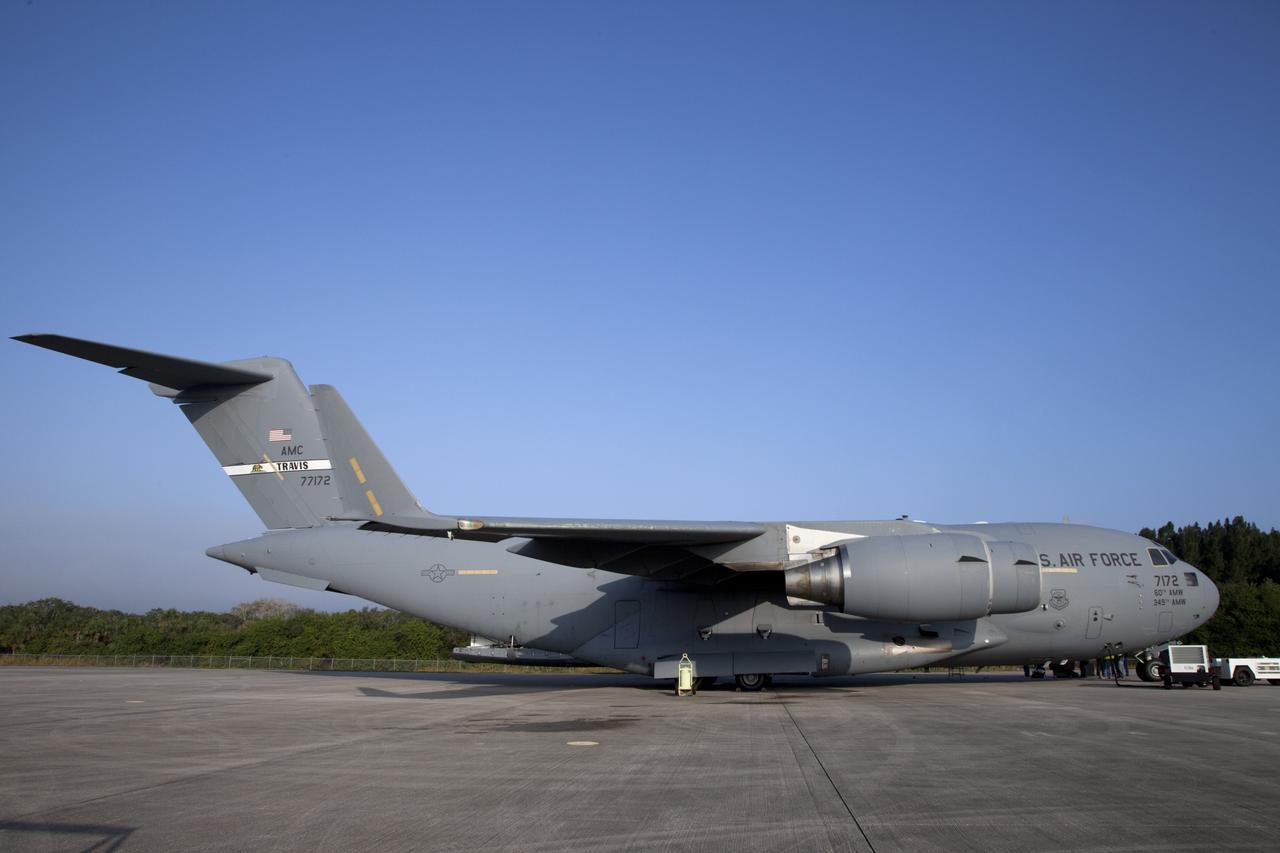
CAPE CANAVERAL, Fla. -- The Tracking and Data Relay Satellite known as TDRS-K arrives at NASA's Kennedy Space Center in Florida aboard an Air Force C-17 transport aircraft at 8:29 a.m. Dec. 18 at the agency's Kennedy Space Center in Florida in preparation for a Jan. 29 launch to a location in geostationary orbit. TDRS-K flew aboard a U.S. Air Force C-17 from the Boeing Space and Intelligence Systems assembly facility in El Segundo, Calif., for final preparation to launch aboard a United Launch Alliance Atlas V rocket. TDRS-K is the first of three next-generation satellites designed to ensure vital operational continuity for NASA by expanding the lifespan of the fleet. Each of the new satellites has a higher performance solar panel design to provide more spacecraft power. This upgrade will return signal processing for the S-Band multiple access service to the ground -- the same as the first-generation TDRS spacecraft. Ground-based processing allows TDRS to service more customers with different and evolving communication requirements. For more information, visit http://tdrs.gsfc.nasa.gov/ Photo credit: NASA/Kim Shiflett
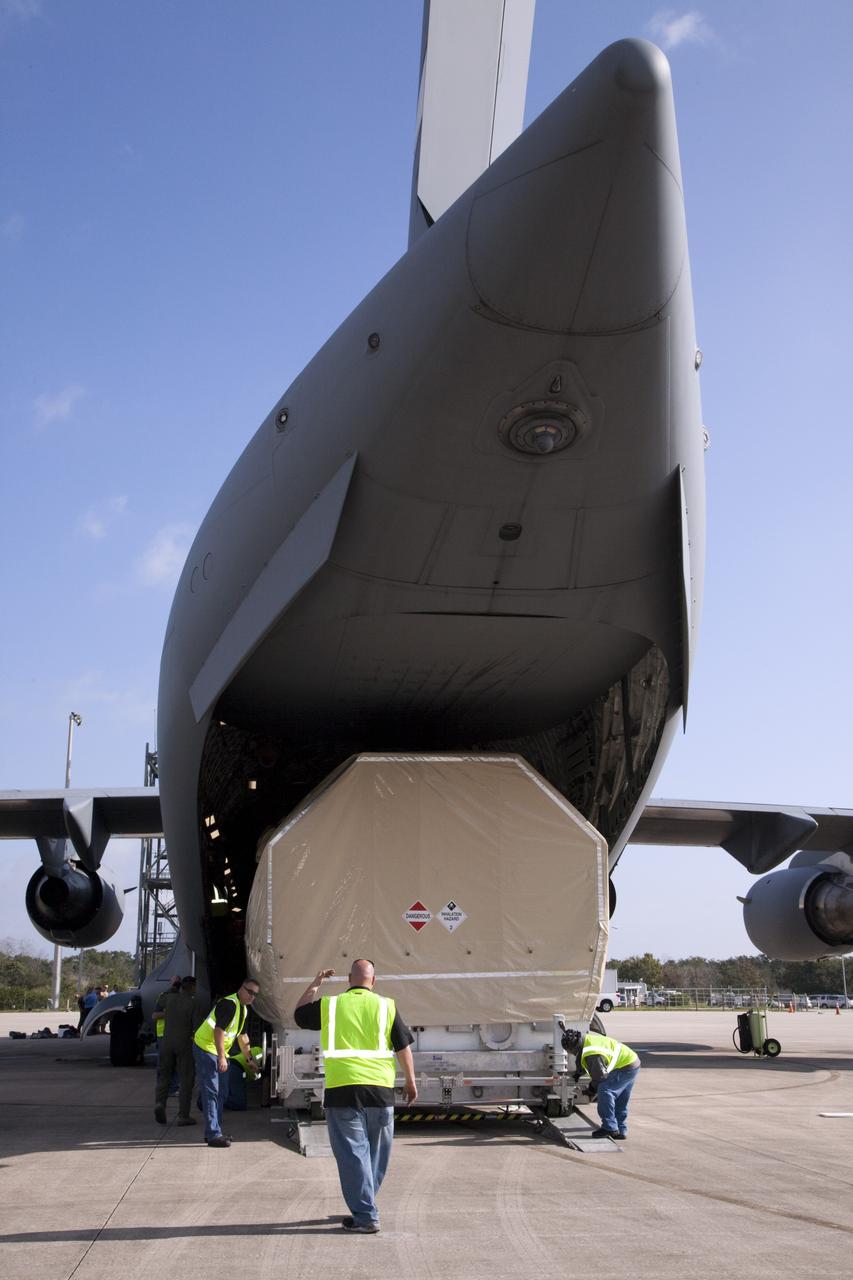
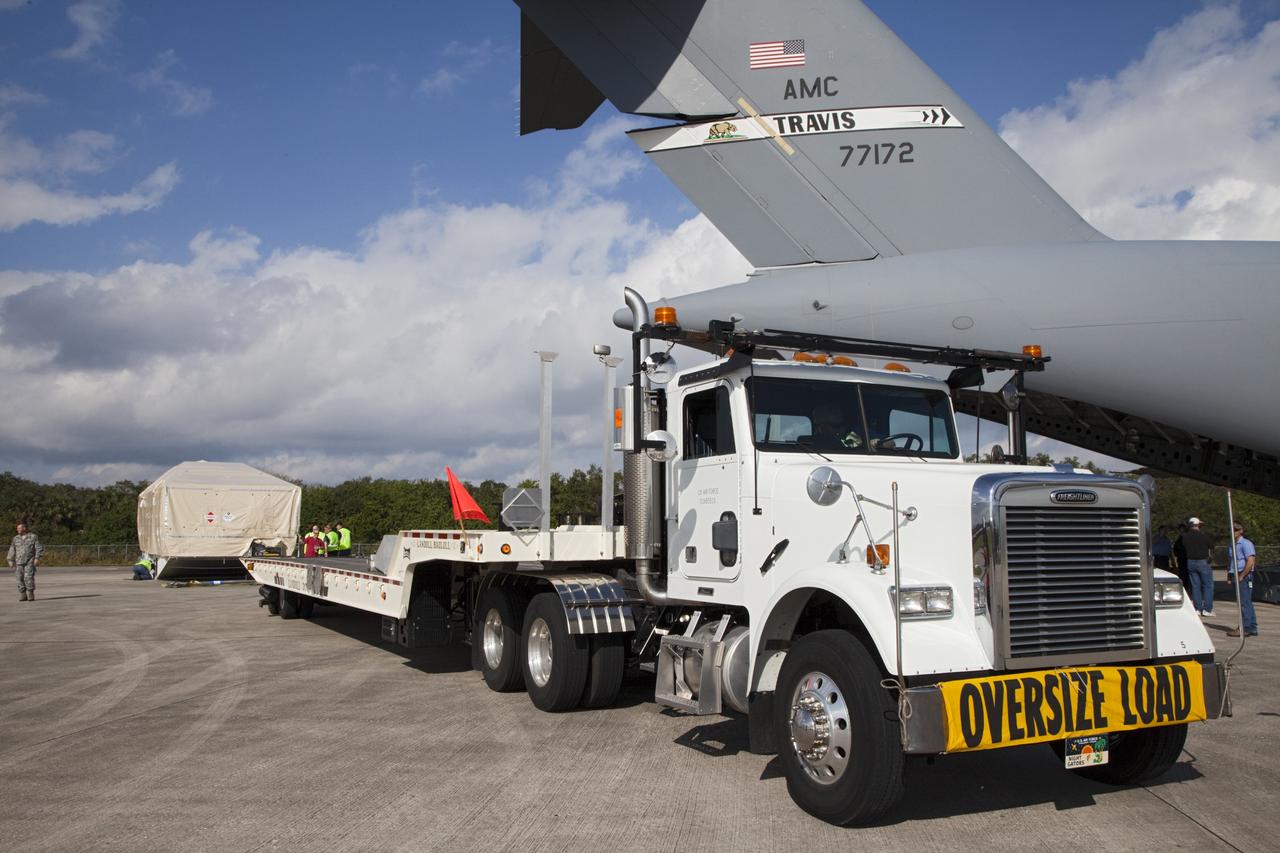
CAPE CANAVERAL, Fla. -- The Tracking and Data Relay Satellite known as TDRS-K arrives at NASA's Kennedy Space Center in Florida aboard an Air Force C-17 transport aircraft at 8:29 a.m. Dec. 18 at the agency's Kennedy Space Center in Florida in preparation for a Jan. 29 launch to a location in geostationary orbit. TDRS-K flew aboard a U.S. Air Force C-17 from the Boeing Space and Intelligence Systems assembly facility in El Segundo, Calif., for final preparation to launch aboard a United Launch Alliance Atlas V rocket. TDRS-K is the first of three next-generation satellites designed to ensure vital operational continuity for NASA by expanding the lifespan of the fleet. Each of the new satellites has a higher performance solar panel design to provide more spacecraft power. This upgrade will return signal processing for the S-Band multiple access service to the ground -- the same as the first-generation TDRS spacecraft. Ground-based processing allows TDRS to service more customers with different and evolving communication requirements. For more information, visit http://tdrs.gsfc.nasa.gov/ Photo credit: NASA/Kim Shiflett
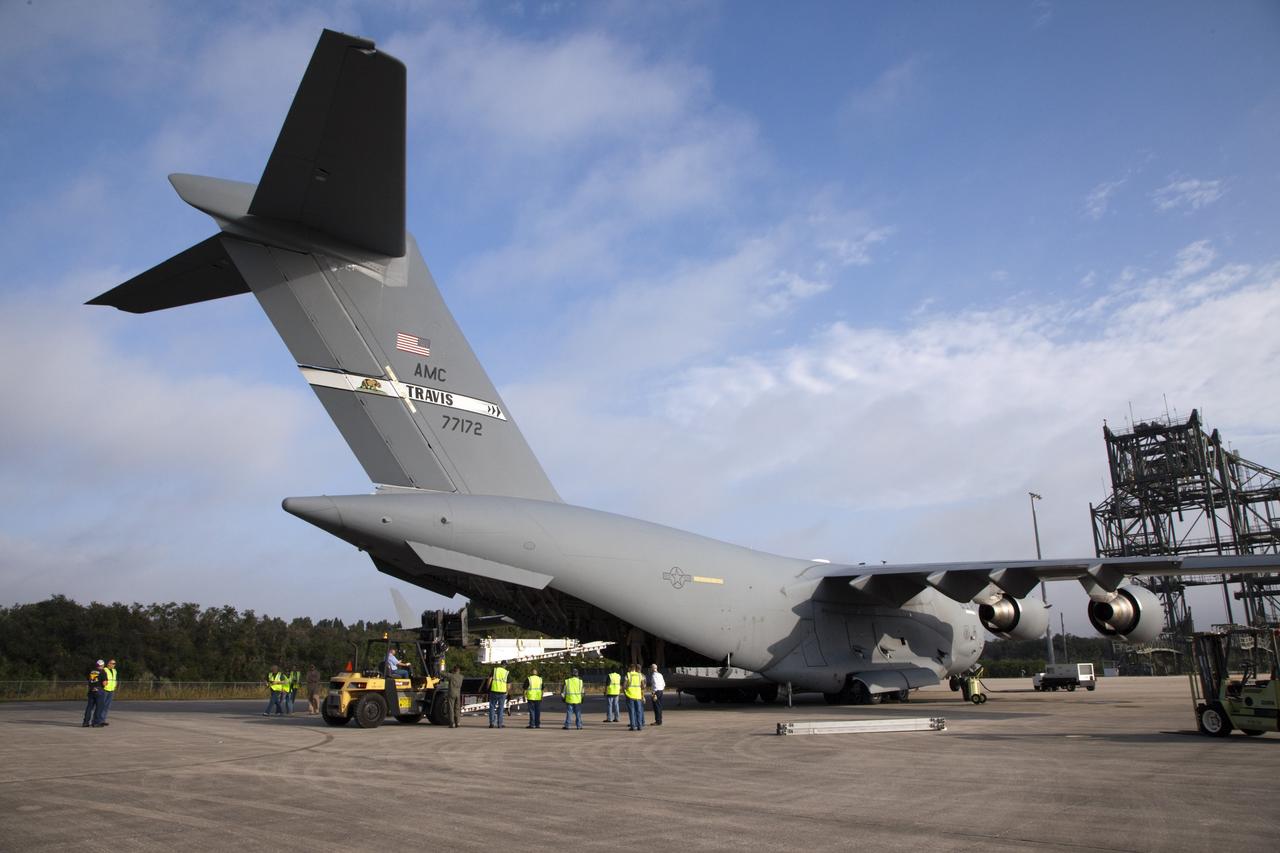
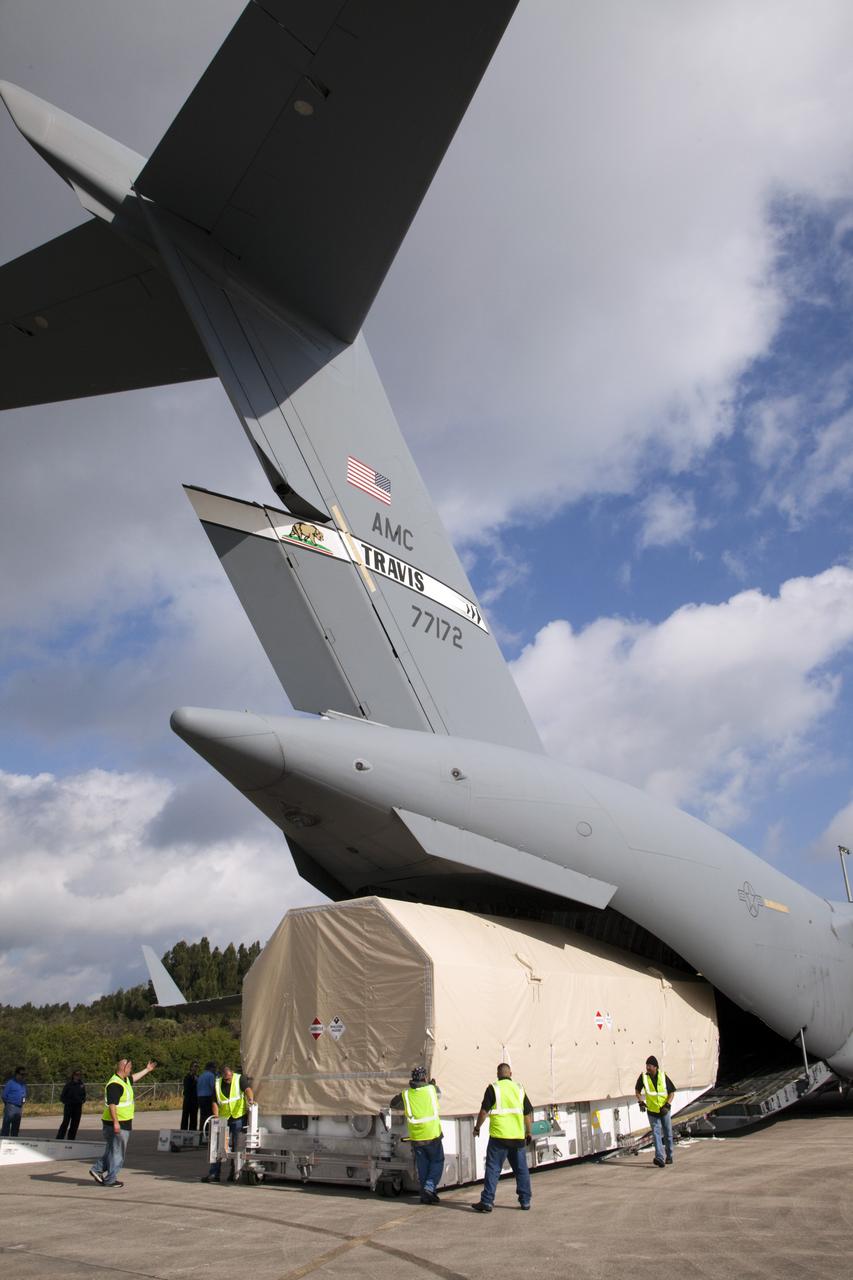
CAPE CANAVERAL, Fla. -- The Tracking and Data Relay Satellite known as TDRS-K arrives at NASA's Kennedy Space Center in Florida aboard an Air Force C-17 transport aircraft at 8:29 a.m. Dec. 18 at the agency's Kennedy Space Center in Florida in preparation for a Jan. 29 launch to a location in geostationary orbit. TDRS-K flew aboard a U.S. Air Force C-17 from the Boeing Space and Intelligence Systems assembly facility in El Segundo, Calif., for final preparation to launch aboard a United Launch Alliance Atlas V rocket. TDRS-K is the first of three next-generation satellites designed to ensure vital operational continuity for NASA by expanding the lifespan of the fleet. Each of the new satellites has a higher performance solar panel design to provide more spacecraft power. This upgrade will return signal processing for the S-Band multiple access service to the ground -- the same as the first-generation TDRS spacecraft. Ground-based processing allows TDRS to service more customers with different and evolving communication requirements. For more information, visit http://tdrs.gsfc.nasa.gov/ Photo credit: NASA/Kim Shiflett
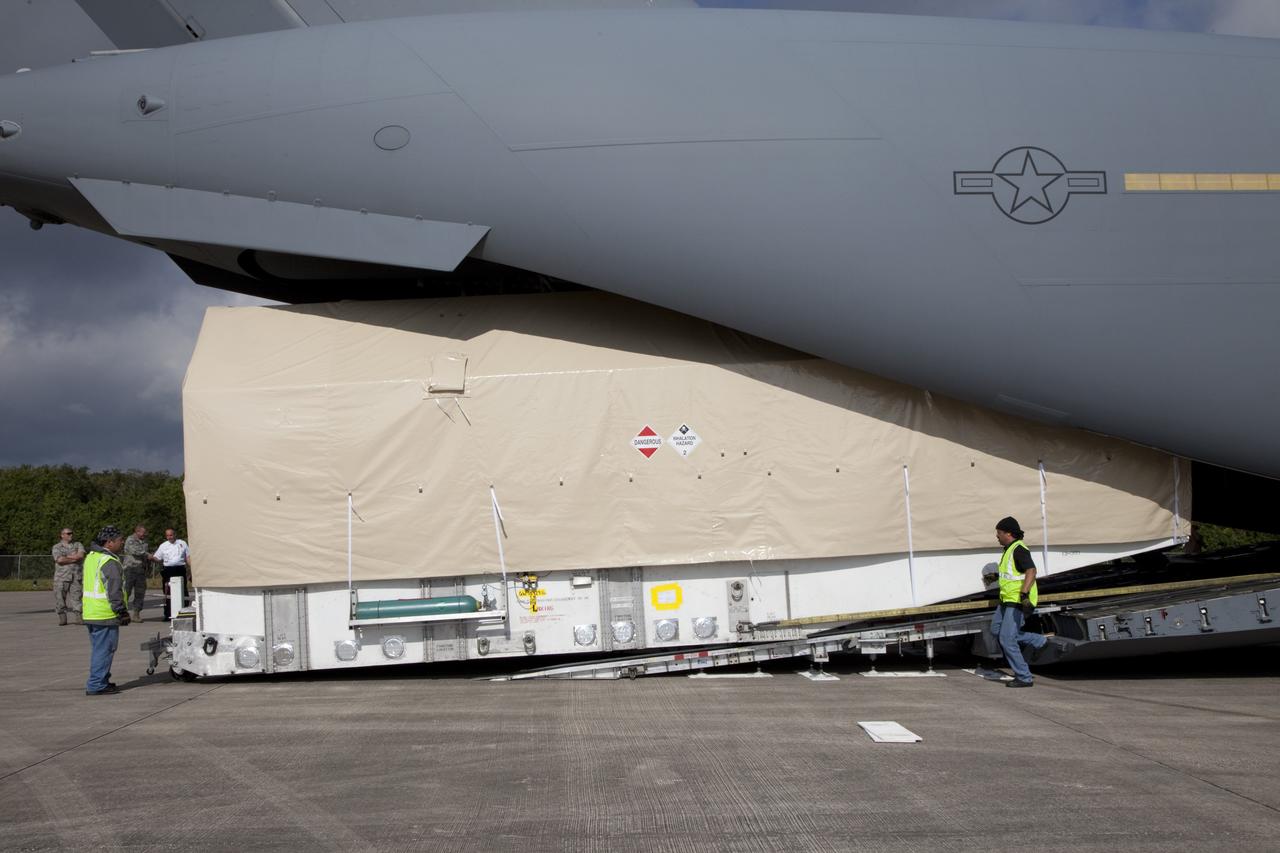
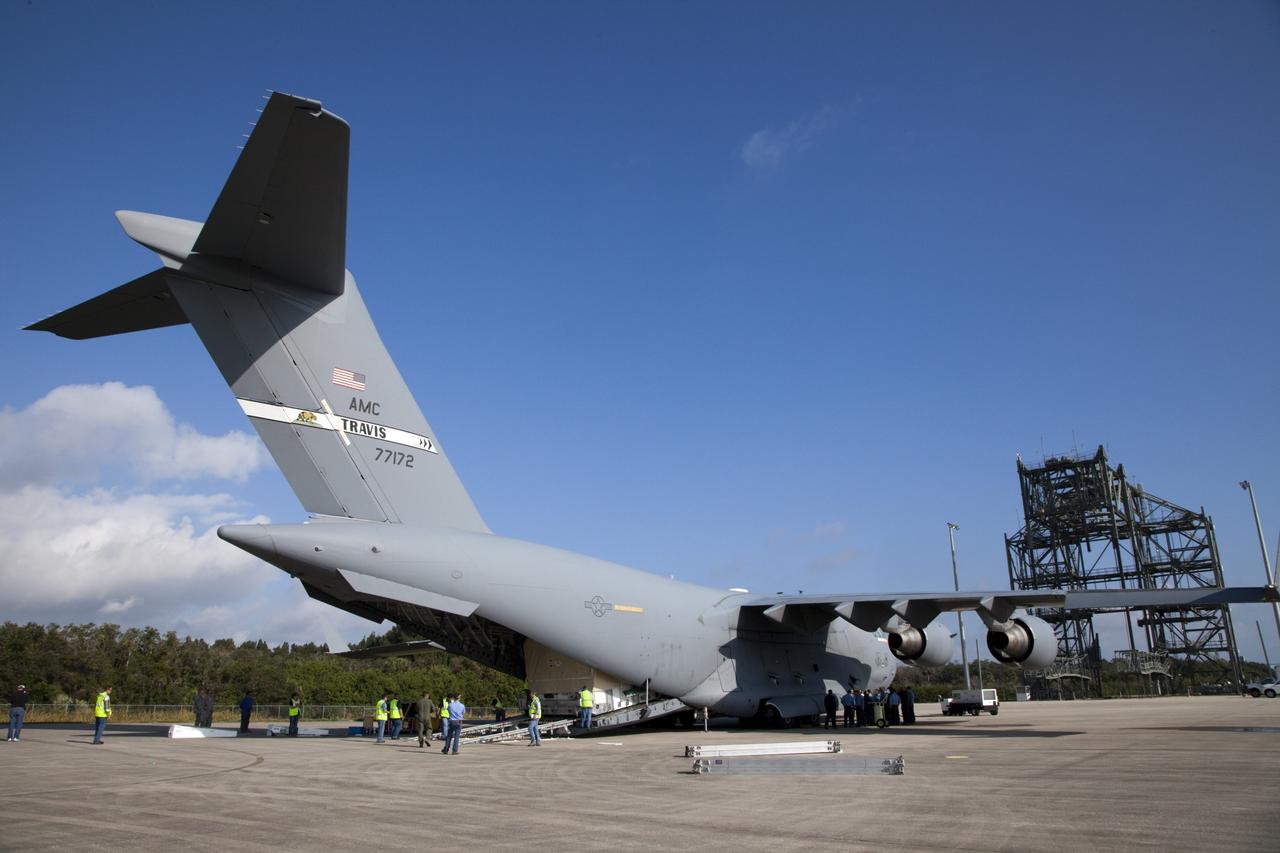
CAPE CANAVERAL, Fla. -- The Tracking and Data Relay Satellite known as TDRS-K arrives at NASA's Kennedy Space Center in Florida aboard an Air Force C-17 transport aircraft at 8:29 a.m. Dec. 18 at the agency's Kennedy Space Center in Florida in preparation for a Jan. 29 launch to a location in geostationary orbit. TDRS-K flew aboard a U.S. Air Force C-17 from the Boeing Space and Intelligence Systems assembly facility in El Segundo, Calif., for final preparation to launch aboard a United Launch Alliance Atlas V rocket. TDRS-K is the first of three next-generation satellites designed to ensure vital operational continuity for NASA by expanding the lifespan of the fleet. Each of the new satellites has a higher performance solar panel design to provide more spacecraft power. This upgrade will return signal processing for the S-Band multiple access service to the ground -- the same as the first-generation TDRS spacecraft. Ground-based processing allows TDRS to service more customers with different and evolving communication requirements. For more information, visit http://tdrs.gsfc.nasa.gov/ Photo credit: NASA/Kim Shiflett
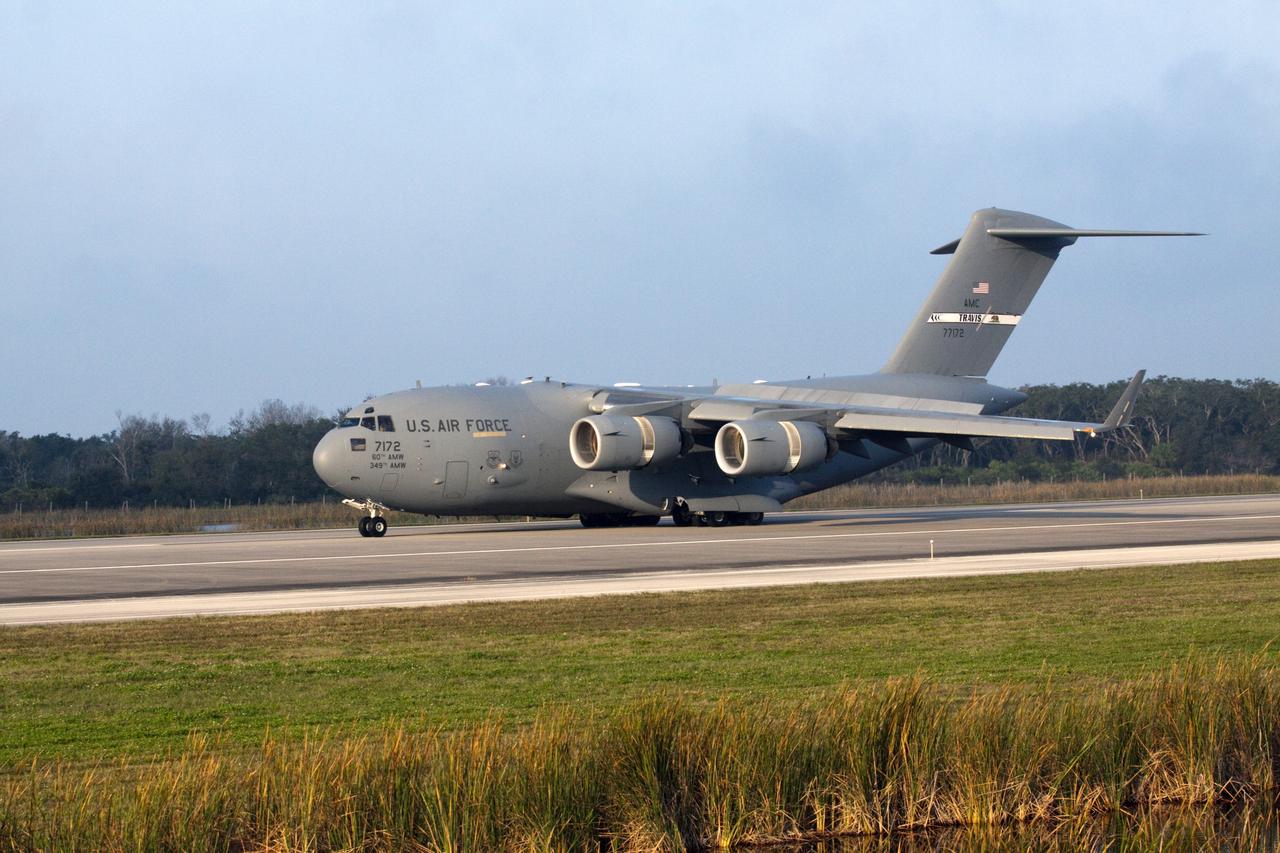
CAPE CANAVERAL, Fla. -- The Tracking and Data Relay Satellite known as TDRS-K arrives at NASA's Kennedy Space Center in Florida aboard an Air Force C-17 transport aircraft at 8:29 a.m. Dec. 18 at the agency's Kennedy Space Center in Florida in preparation for a Jan. 29 launch to a location in geostationary orbit. TDRS-K flew aboard a U.S. Air Force C-17 from the Boeing Space and Intelligence Systems assembly facility in El Segundo, Calif., for final preparation to launch aboard a United Launch Alliance Atlas V rocket. TDRS-K is the first of three next-generation satellites designed to ensure vital operational continuity for NASA by expanding the lifespan of the fleet. Each of the new satellites has a higher performance solar panel design to provide more spacecraft power. This upgrade will return signal processing for the S-Band multiple access service to the ground -- the same as the first-generation TDRS spacecraft. Ground-based processing allows TDRS to service more customers with different and evolving communication requirements. For more information, visit http://tdrs.gsfc.nasa.gov/ Photo credit: NASA/Kim Shiflett

CAPE CANAVERAL, Fla. -- The Tracking and Data Relay Satellite known as TDRS-K arrives at NASA's Kennedy Space Center in Florida aboard an Air Force C-17 transport aircraft at 8:29 a.m. Dec. 18 at the agency's Kennedy Space Center in Florida in preparation for a Jan. 29 launch to a location in geostationary orbit. TDRS-K flew aboard a U.S. Air Force C-17 from the Boeing Space and Intelligence Systems assembly facility in El Segundo, Calif., for final preparation to launch aboard a United Launch Alliance Atlas V rocket. TDRS-K is the first of three next-generation satellites designed to ensure vital operational continuity for NASA by expanding the lifespan of the fleet. Each of the new satellites has a higher performance solar panel design to provide more spacecraft power. This upgrade will return signal processing for the S-Band multiple access service to the ground -- the same as the first-generation TDRS spacecraft. Ground-based processing allows TDRS to service more customers with different and evolving communication requirements. For more information, visit http://tdrs.gsfc.nasa.gov/ Photo credit: NASA/Kim Shiflett
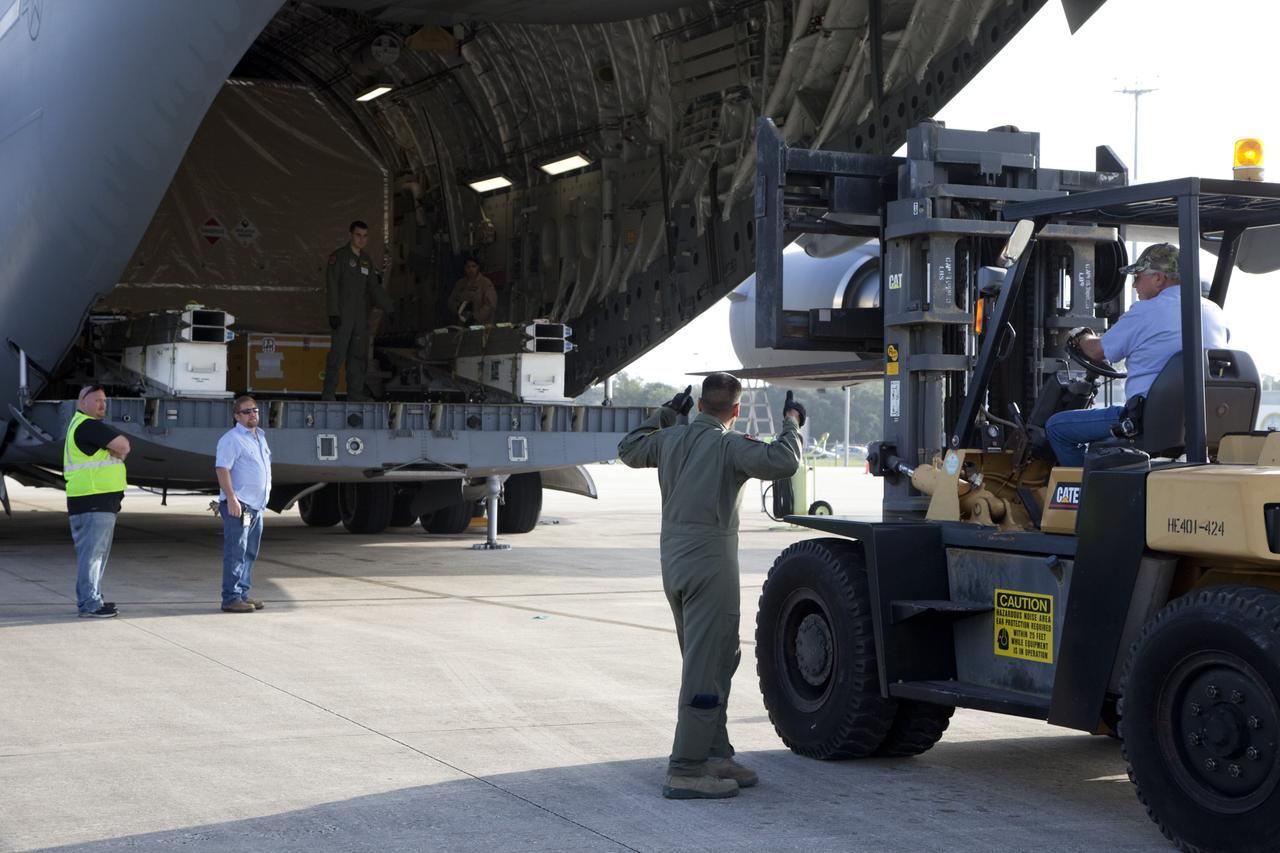
CAPE CANAVERAL, Fla. -- The Tracking and Data Relay Satellite known as TDRS-K arrives at NASA's Kennedy Space Center in Florida aboard an Air Force C-17 transport aircraft at 8:29 a.m. Dec. 18 at the agency's Kennedy Space Center in Florida in preparation for a Jan. 29 launch to a location in geostationary orbit. TDRS-K flew aboard a U.S. Air Force C-17 from the Boeing Space and Intelligence Systems assembly facility in El Segundo, Calif., for final preparation to launch aboard a United Launch Alliance Atlas V rocket. TDRS-K is the first of three next-generation satellites designed to ensure vital operational continuity for NASA by expanding the lifespan of the fleet. Each of the new satellites has a higher performance solar panel design to provide more spacecraft power. This upgrade will return signal processing for the S-Band multiple access service to the ground -- the same as the first-generation TDRS spacecraft. Ground-based processing allows TDRS to service more customers with different and evolving communication requirements. For more information, visit http://tdrs.gsfc.nasa.gov/ Photo credit: NASA/Kim Shiflett
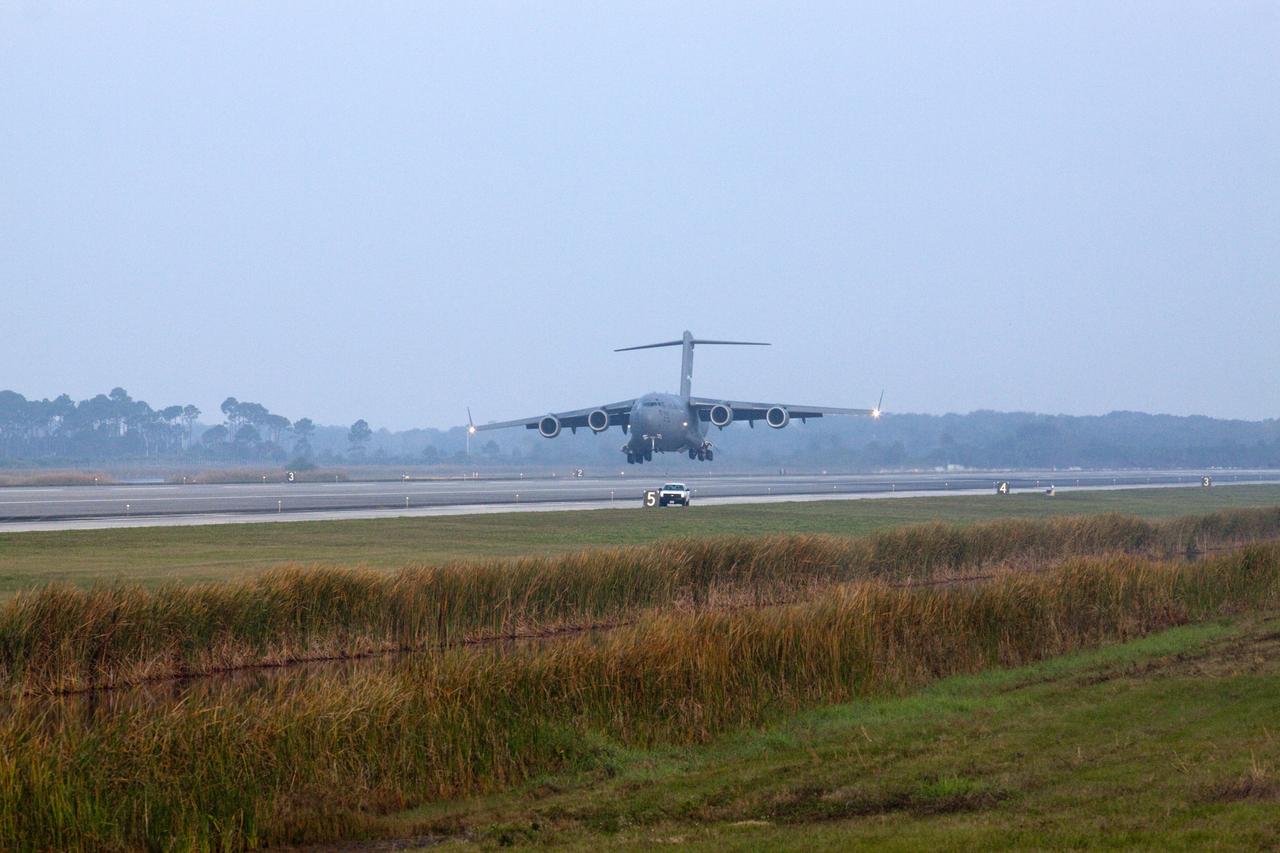
CAPE CANAVERAL, Fla. -- The Tracking and Data Relay Satellite known as TDRS-K arrives at NASA's Kennedy Space Center in Florida aboard an Air Force C-17 transport aircraft at 8:29 a.m. Dec. 18 at the agency's Kennedy Space Center in Florida in preparation for a Jan. 29 launch to a location in geostationary orbit. TDRS-K flew aboard a U.S. Air Force C-17 from the Boeing Space and Intelligence Systems assembly facility in El Segundo, Calif., for final preparation to launch aboard a United Launch Alliance Atlas V rocket. TDRS-K is the first of three next-generation satellites designed to ensure vital operational continuity for NASA by expanding the lifespan of the fleet. Each of the new satellites has a higher performance solar panel design to provide more spacecraft power. This upgrade will return signal processing for the S-Band multiple access service to the ground -- the same as the first-generation TDRS spacecraft. Ground-based processing allows TDRS to service more customers with different and evolving communication requirements. For more information, visit http://tdrs.gsfc.nasa.gov/ Photo credit: NASA/Kim Shiflett
CAPE CANAVERAL, Fla. -- The Tracking and Data Relay Satellite known as TDRS-K arrives at NASA's Kennedy Space Center in Florida aboard an Air Force C-17 transport aircraft at 8:29 a.m. Dec. 18 at the agency's Kennedy Space Center in Florida in preparation for a Jan. 29 launch to a location in geostationary orbit. TDRS-K flew aboard a U.S. Air Force C-17 from the Boeing Space and Intelligence Systems assembly facility in El Segundo, Calif., for final preparation to launch aboard a United Launch Alliance Atlas V rocket. TDRS-K is the first of three next-generation satellites designed to ensure vital operational continuity for NASA by expanding the lifespan of the fleet. Each of the new satellites has a higher performance solar panel design to provide more spacecraft power. This upgrade will return signal processing for the S-Band multiple access service to the ground -- the same as the first-generation TDRS spacecraft. Ground-based processing allows TDRS to service more customers with different and evolving communication requirements. For more information, visit http://tdrs.gsfc.nasa.gov/ Photo credit: NASA/Kim Shiflett
CAPE CANAVERAL, Fla. -- The Tracking and Data Relay Satellite known as TDRS-K arrives at NASA's Kennedy Space Center in Florida aboard an Air Force C-17 transport aircraft at 8:29 a.m. Dec. 18 at the agency's Kennedy Space Center in Florida in preparation for a Jan. 29 launch to a location in geostationary orbit. TDRS-K flew aboard a U.S. Air Force C-17 from the Boeing Space and Intelligence Systems assembly facility in El Segundo, Calif., for final preparation to launch aboard a United Launch Alliance Atlas V rocket. TDRS-K is the first of three next-generation satellites designed to ensure vital operational continuity for NASA by expanding the lifespan of the fleet. Each of the new satellites has a higher performance solar panel design to provide more spacecraft power. This upgrade will return signal processing for the S-Band multiple access service to the ground -- the same as the first-generation TDRS spacecraft. Ground-based processing allows TDRS to service more customers with different and evolving communication requirements. For more information, visit http://tdrs.gsfc.nasa.gov/ Photo credit: NASA/Kim Shiflett

CAPE CANAVERAL, Fla. -- The Tracking and Data Relay Satellite known as TDRS-K arrives at NASA's Kennedy Space Center in Florida aboard an Air Force C-17 transport aircraft at 8:29 a.m. Dec. 18 at the agency's Kennedy Space Center in Florida in preparation for a Jan. 29 launch to a location in geostationary orbit. TDRS-K flew aboard a U.S. Air Force C-17 from the Boeing Space and Intelligence Systems assembly facility in El Segundo, Calif., for final preparation to launch aboard a United Launch Alliance Atlas V rocket. TDRS-K is the first of three next-generation satellites designed to ensure vital operational continuity for NASA by expanding the lifespan of the fleet. Each of the new satellites has a higher performance solar panel design to provide more spacecraft power. This upgrade will return signal processing for the S-Band multiple access service to the ground -- the same as the first-generation TDRS spacecraft. Ground-based processing allows TDRS to service more customers with different and evolving communication requirements. For more information, visit http://tdrs.gsfc.nasa.gov/ Photo credit: NASA/Kim Shiflett
CAPE CANAVERAL, Fla. -- The Tracking and Data Relay Satellite known as TDRS-K arrives at NASA's Kennedy Space Center in Florida aboard an Air Force C-17 transport aircraft at 8:29 a.m. Dec. 18 at the agency's Kennedy Space Center in Florida in preparation for a Jan. 29 launch to a location in geostationary orbit. TDRS-K flew aboard a U.S. Air Force C-17 from the Boeing Space and Intelligence Systems assembly facility in El Segundo, Calif., for final preparation to launch aboard a United Launch Alliance Atlas V rocket. TDRS-K is the first of three next-generation satellites designed to ensure vital operational continuity for NASA by expanding the lifespan of the fleet. Each of the new satellites has a higher performance solar panel design to provide more spacecraft power. This upgrade will return signal processing for the S-Band multiple access service to the ground -- the same as the first-generation TDRS spacecraft. Ground-based processing allows TDRS to service more customers with different and evolving communication requirements. For more information, visit http://tdrs.gsfc.nasa.gov/ Photo credit: NASA/Kim Shiflett
CAPE CANAVERAL, Fla. -- The Tracking and Data Relay Satellite known as TDRS-K arrives at NASA's Kennedy Space Center in Florida aboard an Air Force C-17 transport aircraft at 8:29 a.m. Dec. 18 at the agency's Kennedy Space Center in Florida in preparation for a Jan. 29 launch to a location in geostationary orbit. TDRS-K flew aboard a U.S. Air Force C-17 from the Boeing Space and Intelligence Systems assembly facility in El Segundo, Calif., for final preparation to launch aboard a United Launch Alliance Atlas V rocket. TDRS-K is the first of three next-generation satellites designed to ensure vital operational continuity for NASA by expanding the lifespan of the fleet. Each of the new satellites has a higher performance solar panel design to provide more spacecraft power. This upgrade will return signal processing for the S-Band multiple access service to the ground -- the same as the first-generation TDRS spacecraft. Ground-based processing allows TDRS to service more customers with different and evolving communication requirements. For more information, visit http://tdrs.gsfc.nasa.gov/ Photo credit: NASA/Kim Shiflett
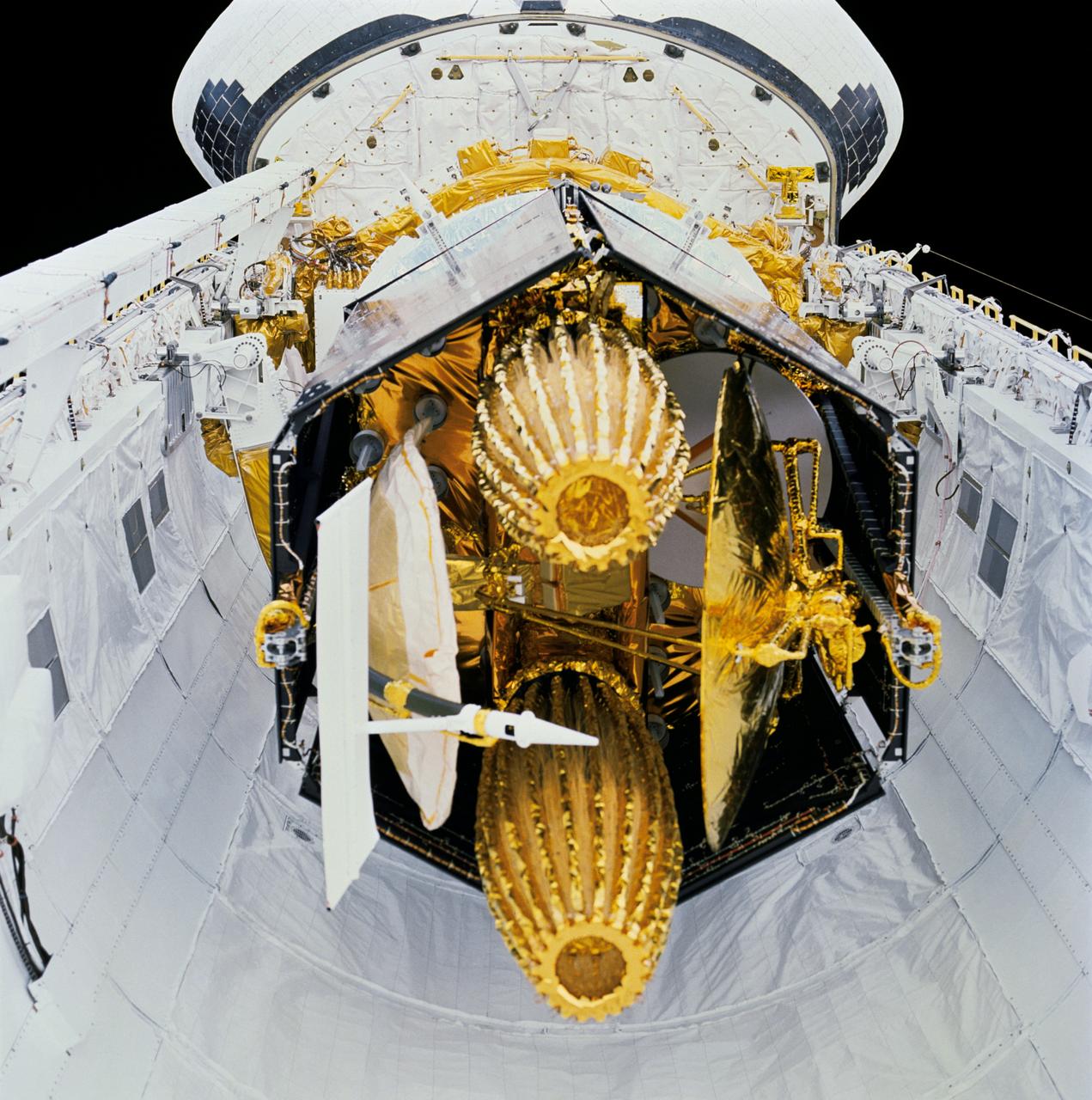
STS029-71-000AE (13-18 March 1989) --- STS-29 onboard view shows Space Shuttle Discovery's payload bay with tracking and data relay satellite D (TDRS-D) in stowed, pre-deployment position. In this head-on view, TDRS-D stowed components including single access #1 and #2, solar cell panels, SGL, S-Band omni antenna, and C-Band antenna are visible. TDRS-D rests in airborne support equipment (ASE) forward cradle and aft frame tilt actuator (AFTA). Discovery's aft bulkhead and orbital maneuvering system (OMS) pods are visible in the background.
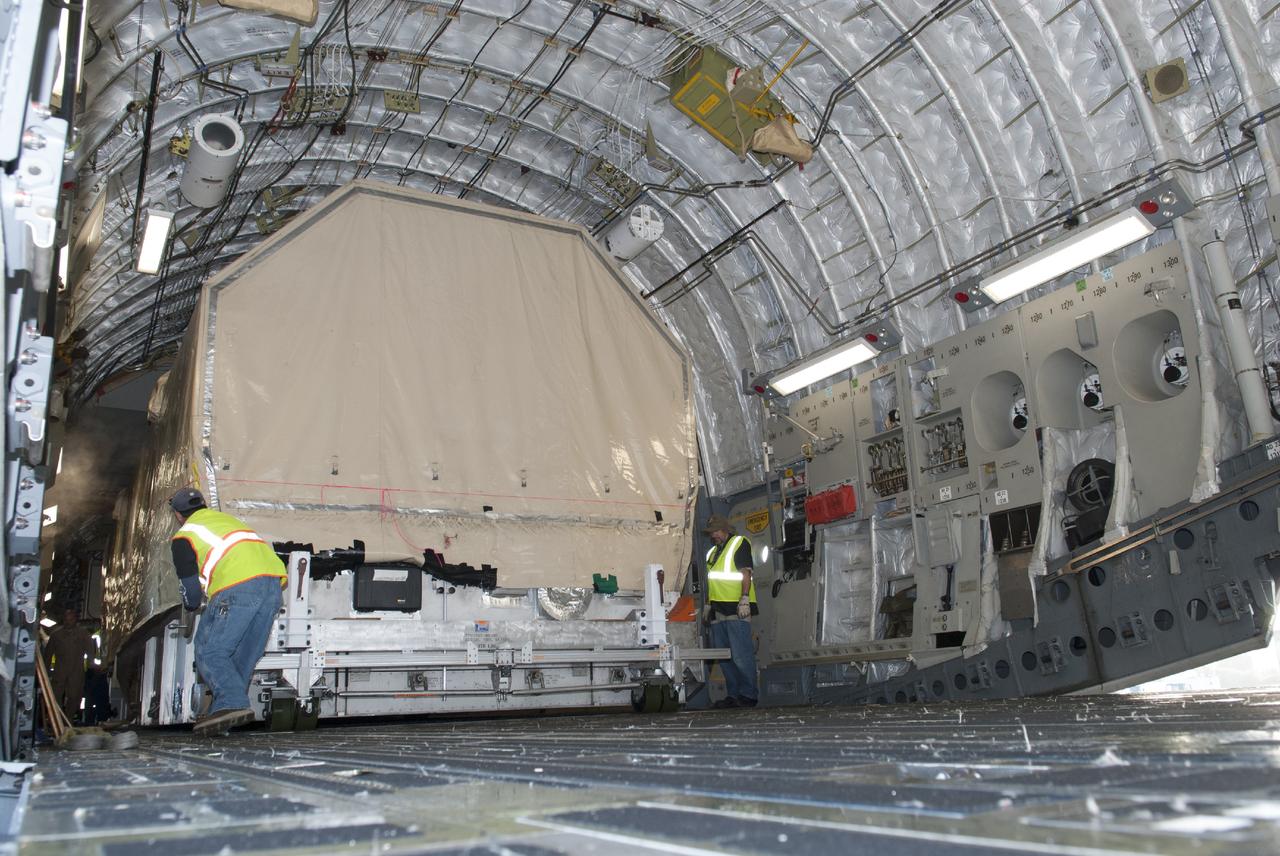
CAPE CANAVERAL, Fla. – Workers unload NASA's TDRS-L satellite from the hold of a C-17 transport aircraft at the Shuttle Landing Facility at NASA's Kennedy Space Center in Florida. The TDRS is the latest spacecraft destined for the agency's constellation of communications satellites that allows nearly continuous contact with orbiting spacecraft ranging from the International Space Station and Hubble Space Telescope to the array of scientific observatories. Photo credit: NASA/Charisse Nahser
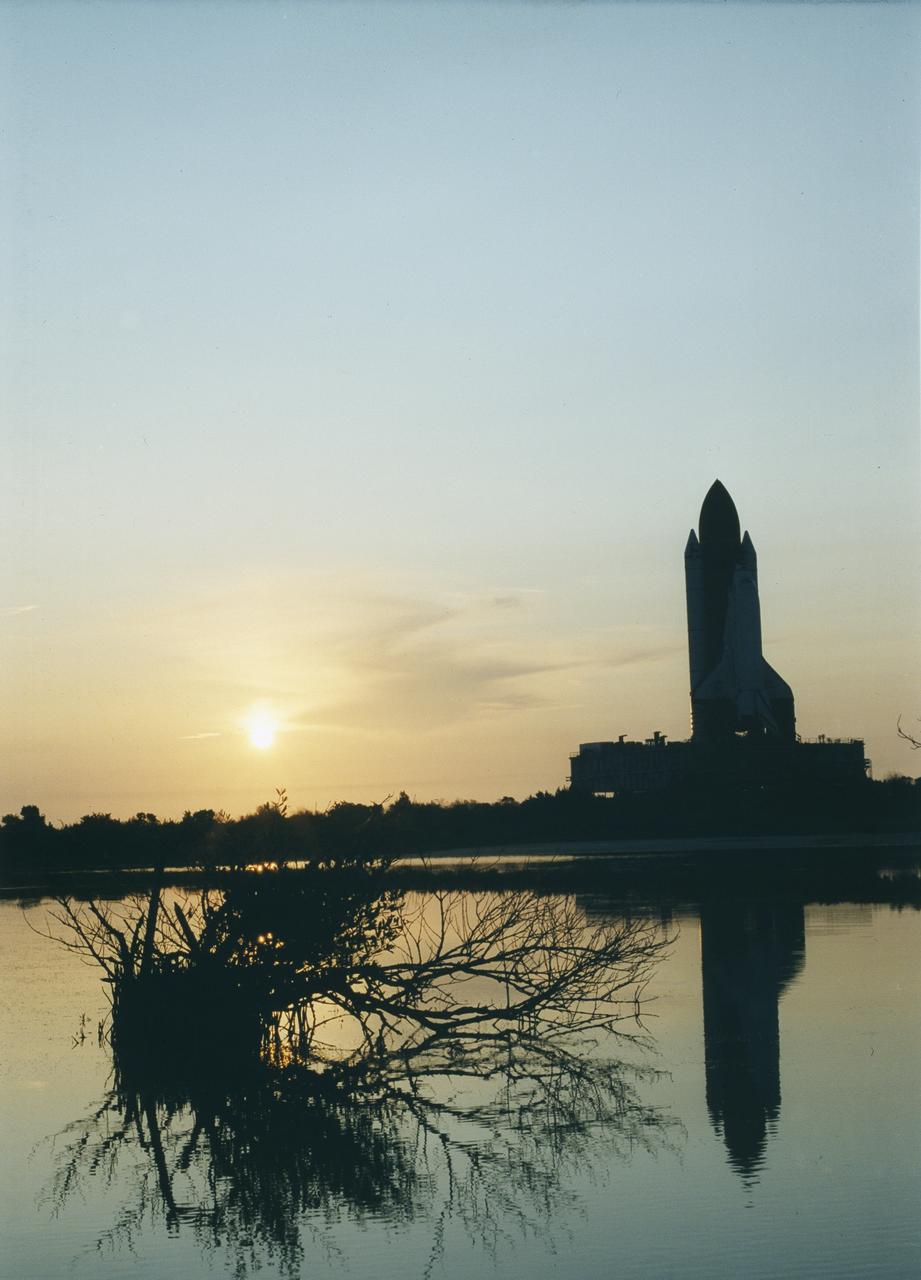
Launched aboard the Space Shuttle Atlantis on August 2, 1991, the STS-43 mission’s primary payload was the Tracking and Data Relay Satellite 5 (TDRS-5) attached to an Inertial Upper Stage (IUS), which became the 4th member of an orbiting TDRS cluster. The flight crew consisted of five astronauts: John E. Blaha, commander; Michael A. Baker, pilot; Shannon W. Lucid, mission specialist 1; James C. Adamson, mission specialist 2; and G. David Low, mission specialist 3.
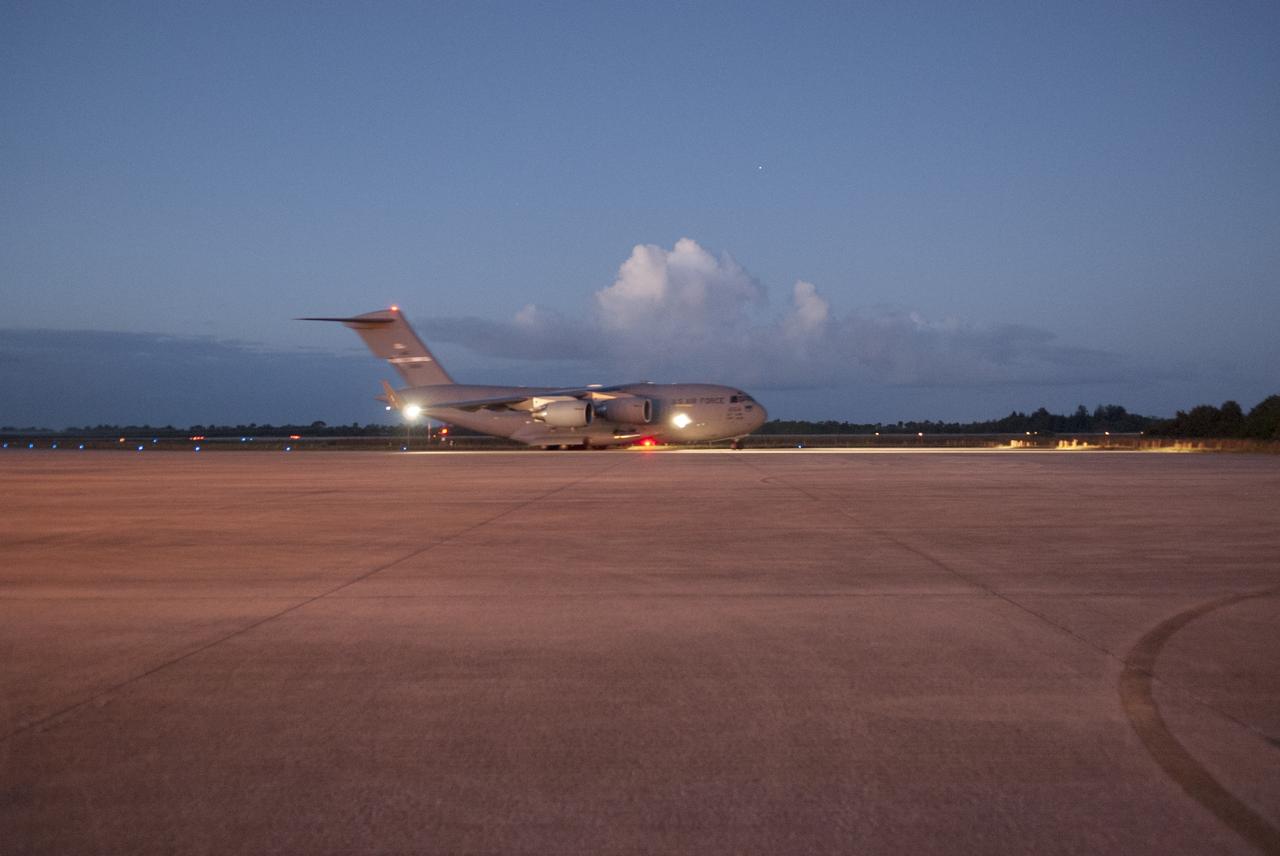
CAPE CANAVERAL, Fla. – A C-17 transport aircraft carrying NASA's TDRS-L satellite pulls to the ramp at the Shuttle Landing Facility at NASA's Kennedy Space Center in Florida. The TDRS is the latest spacecraft destined for the agency's constellation of communications satellites that allows nearly continuous contact with orbiting spacecraft ranging from the International Space Station and Hubble Space Telescope to the array of scientific observatories. Photo credit: NASA/Charisse Nahser
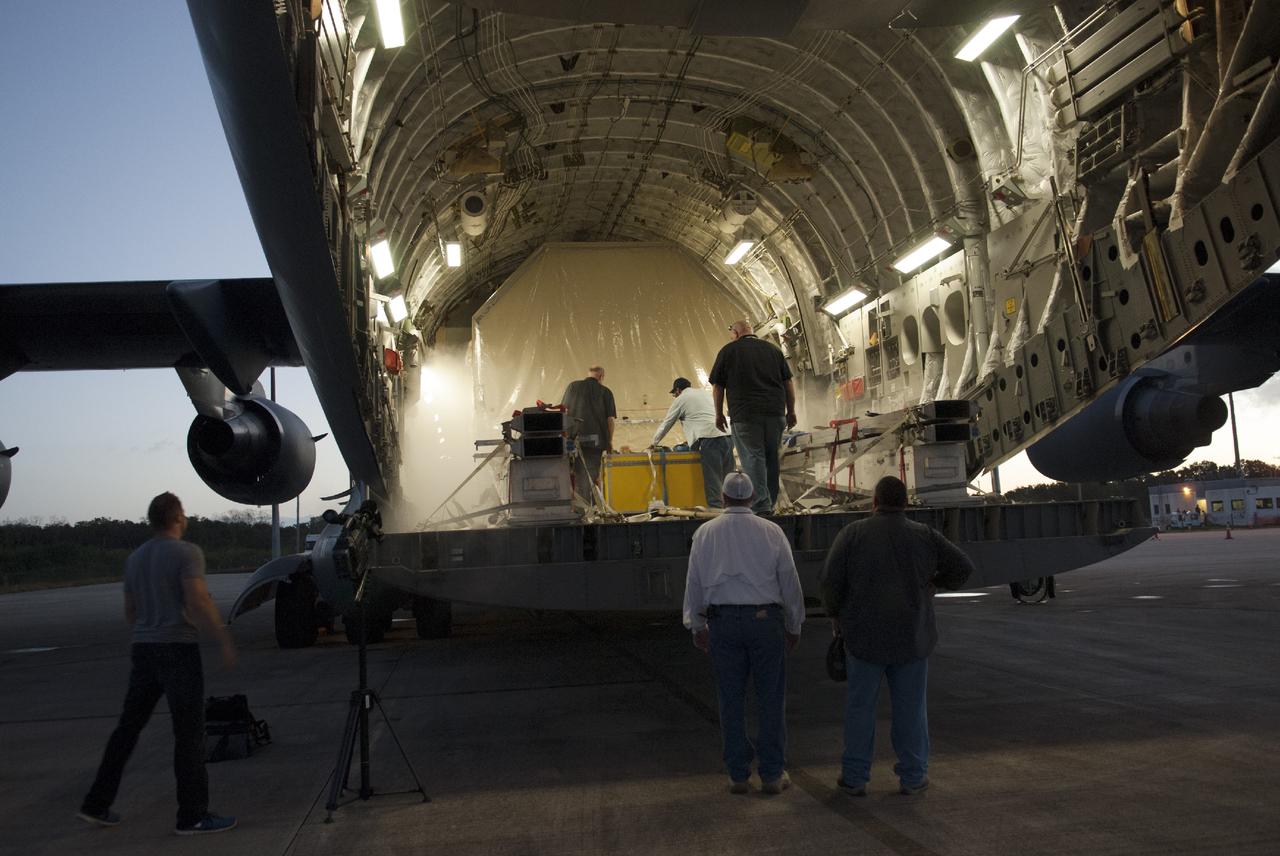
CAPE CANAVERAL, Fla. – A C-17 transport aircraft carrying NASA's TDRS-L satellite opens its cargo doors on the ramp at the Shuttle Landing Facility at NASA's Kennedy Space Center in Florida. The TDRS is the latest spacecraft destined for the agency's constellation of communications satellites that allows nearly continuous contact with orbiting spacecraft ranging from the International Space Station and Hubble Space Telescope to the array of scientific observatories. Photo credit: NASA/Charisse Nahser
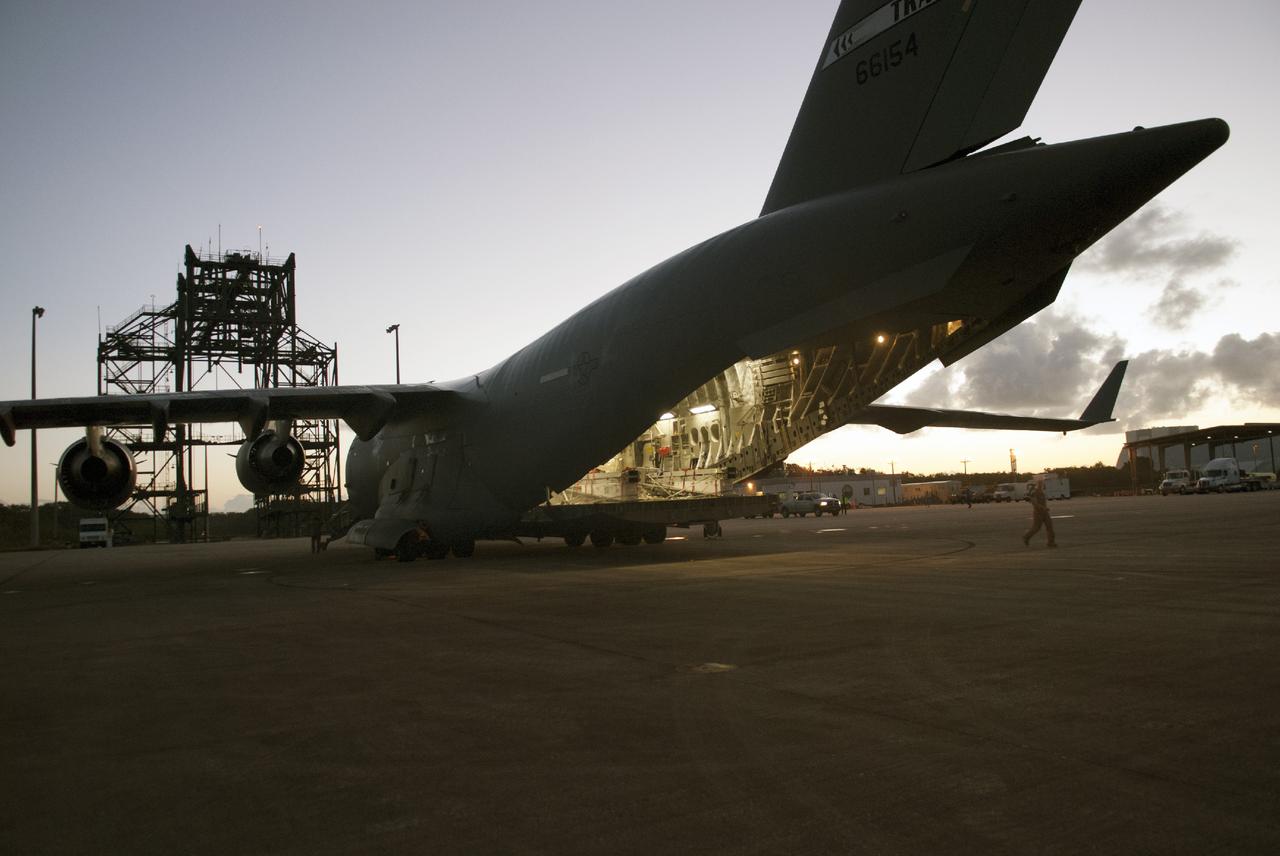
CAPE CANAVERAL, Fla. – A C-17 transport aircraft carrying NASA's TDRS-L satellite opens its cargo doors on the ramp at the Shuttle Landing Facility at NASA's Kennedy Space Center in Florida. The TDRS is the latest spacecraft destined for the agency's constellation of communications satellites that allows nearly continuous contact with orbiting spacecraft ranging from the International Space Station and Hubble Space Telescope to the array of scientific observatories. Photo credit: NASA/Charisse Nahser
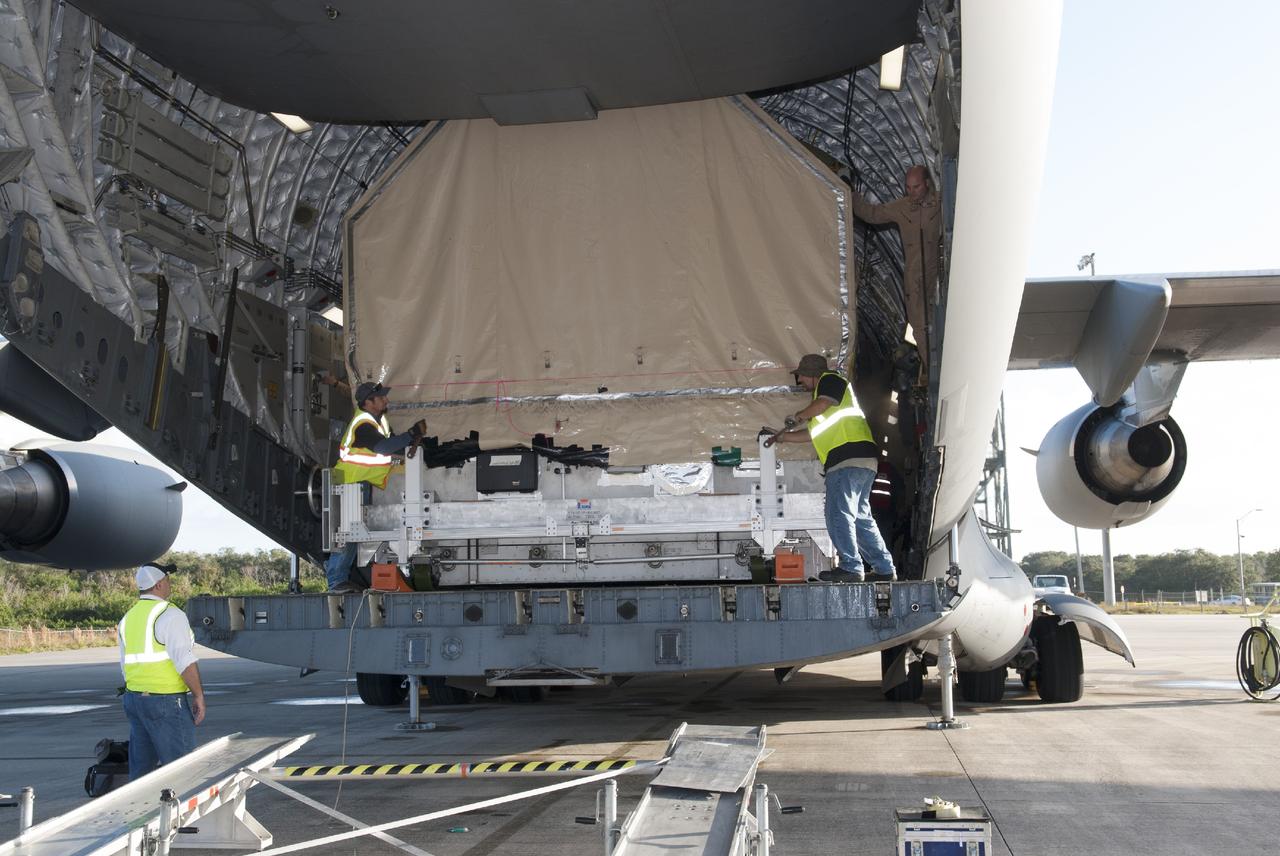
CAPE CANAVERAL, Fla. – Workers unload NASA's TDRS-L satellite from the hold of a C-17 transport aircraft at the Shuttle Landing Facility at NASA's Kennedy Space Center in Florida. The TDRS is the latest spacecraft destined for the agency's constellation of communications satellites that allows nearly continuous contact with orbiting spacecraft ranging from the International Space Station and Hubble Space Telescope to the array of scientific observatories. Photo credit: NASA/Charisse Nahser
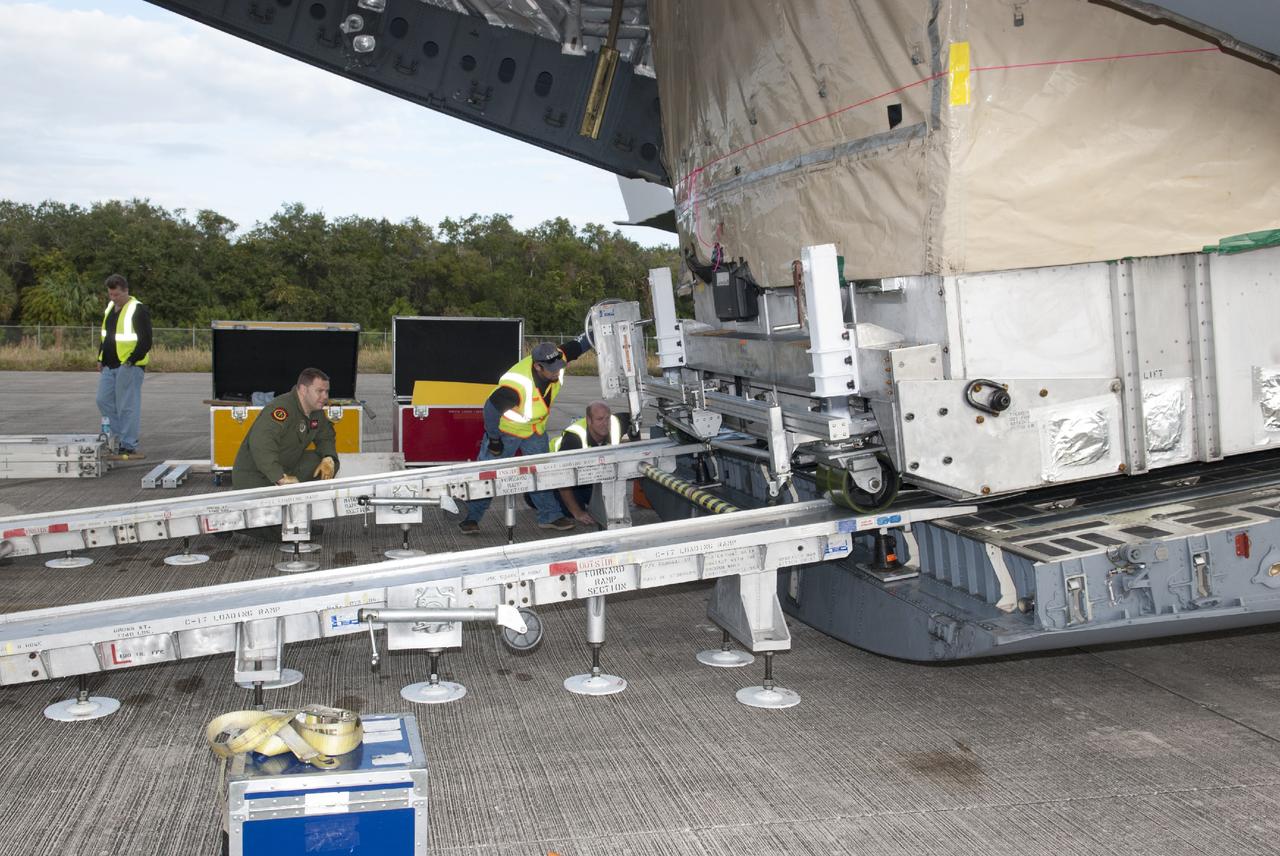
CAPE CANAVERAL, Fla. – Workers unload NASA's TDRS-L satellite from the hold of a C-17 transport aircraft at the Shuttle Landing Facility at NASA's Kennedy Space Center in Florida. The TDRS is the latest spacecraft destined for the agency's constellation of communications satellites that allows nearly continuous contact with orbiting spacecraft ranging from the International Space Station and Hubble Space Telescope to the array of scientific observatories. Photo credit: NASA/Charisse Nahser
CAPE CANAVERAL, Fla. – Workers unload NASA's TDRS-L satellite from the hold of a C-17 transport aircraft at the Shuttle Landing Facility at NASA's Kennedy Space Center in Florida. The TDRS is the latest spacecraft destined for the agency's constellation of communications satellites that allows nearly continuous contact with orbiting spacecraft ranging from the International Space Station and Hubble Space Telescope to the array of scientific observatories. Photo credit: NASA/Charisse Nahser
Launched aboard the Space Shuttle Atlantis on August 2, 1991, the STS-43 mission’s primary payload was the Tracking and Data Relay Satellite 5 (TDRS-5) attached to an Inertial Upper Stage (IUS), which became the 4th member of an orbiting TDRS cluster. The flight crew consisted of 5 astronauts: John E. Blaha, commander; Michael A. Baker, pilot; Shannon W. Lucid, mission specialist 1; James C. Adamson, mission specialist 2; and G. David Low, mission specialist 3.
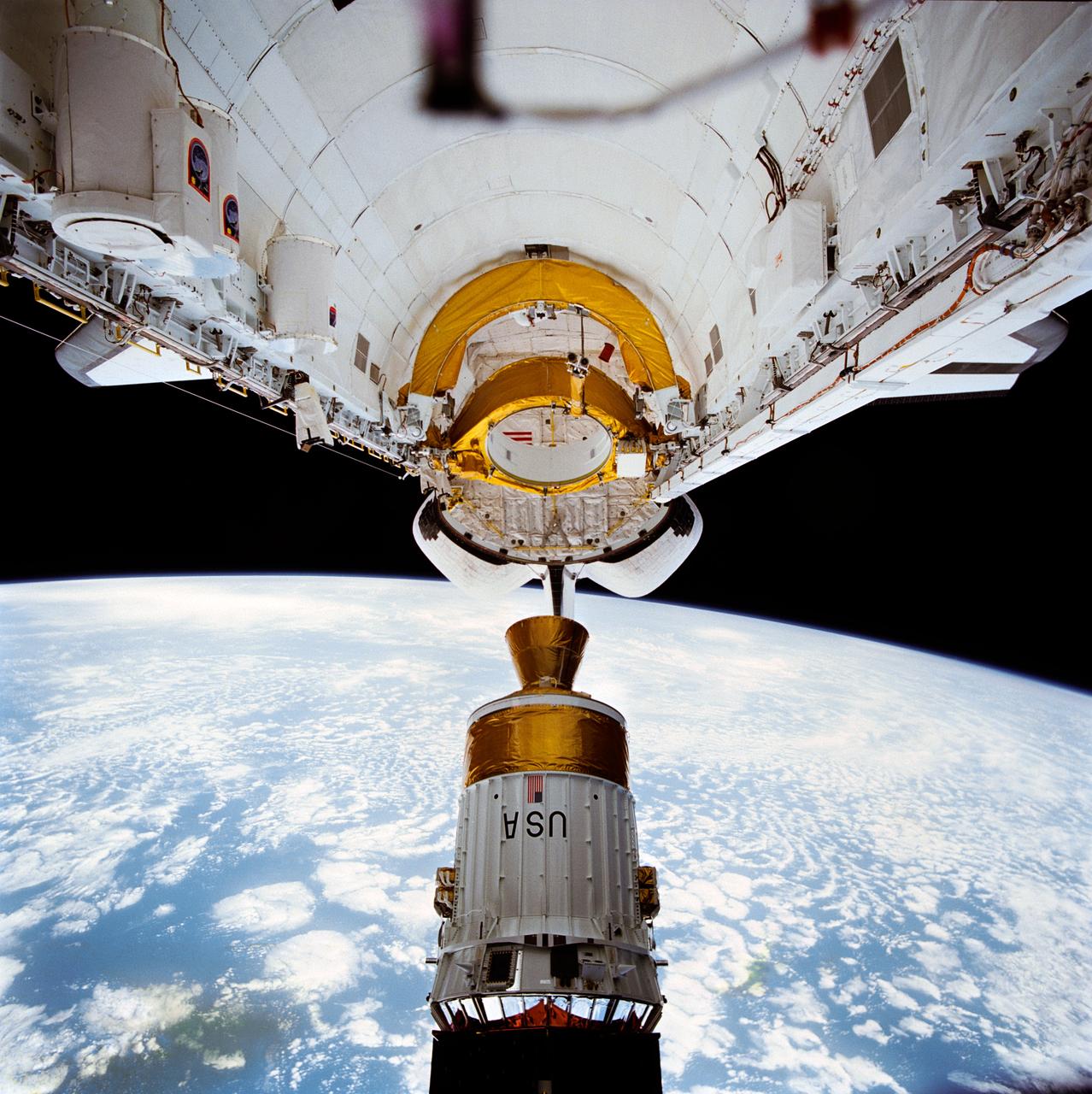
STS043-72-059 (2 Aug 1991) --- The Tracking and Data Relay Satellite (TDRS-E), leaves the payload bay of the earth-orbiting Atlantis a mere six hours after the Space Shuttle was launched from Pad 39A at Kennedy Space Center, Florida. TDRS, built by TRW, will be placed in a geosynchronous orbit and after on-orbit testing, which requires several weeks, will be designated TDRS-5. The communications satellite will replace TDRS-3 at 174 degrees West longitude. The backbone of NASA's space-to-ground communications, the Tracking and Data Relay satellites have increased NASA's ability to send and receive data to spacecraft in low-earth orbit to more than 85 percent of the time. The five astronauts of the STS 43 mission are John E. Blaha, mission commander, Michael A. Baker, pilot, and Shannon W. Lucid, G. David Low, and James C. Adamson, all mission specialists.
STS043-72-002 (2 Aug 1991) --- The Tracking and Data Relay Satellite (TDRS-E), leaves the payload bay of the earth-orbiting Atlantis a mere six hours after the Space Shuttle was launched from Pad 39A at Kennedy Space Center, Florida. TDRS, built by TRW, will be placed in a geosynchronous orbit and after on-orbit testing, which requires several weeks, will be designated TDRS-5. The communications satellite will replace TDRS-3 at 174 degrees West longitude. The backbone of NASA's space-to-ground communications, the Tracking and Data Relay satellites have increased NASA's ability to send and receive data to spacecraft in low-earth orbit to more than 85 percent of the time. The five astronauts of the STS 43 mission are John E. Blaha, mission commander, Michael A. Baker, pilot, and Shannon W. Lucid, G. David Low, and James C. Adamson, all mission specialists.
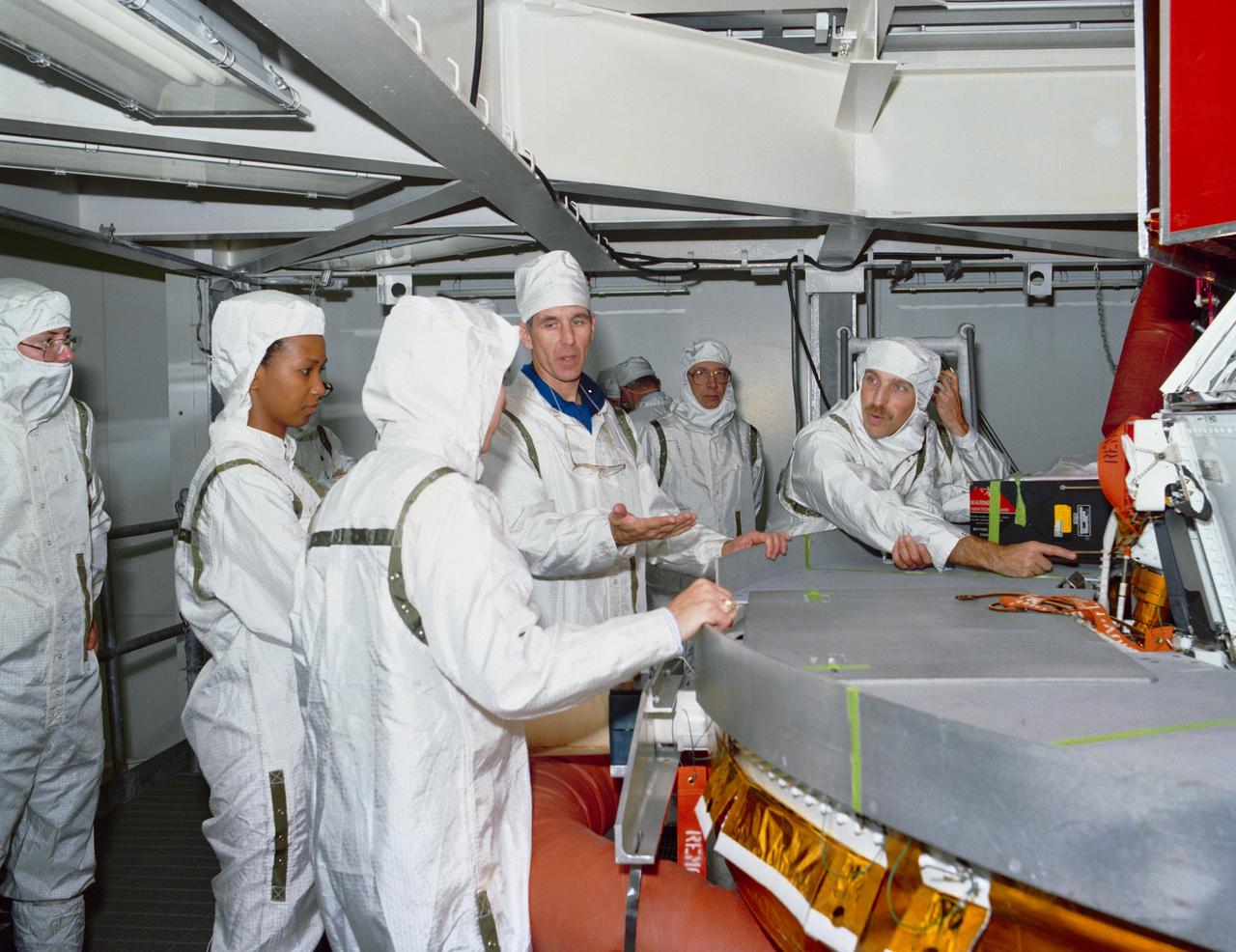
S89-28108 --- Astronaut Mae C. Jemison and STS-29 Mission Specialist James P. Bagian and Robert C. Springer inspect the interface between the tracking and data relay satellite D (TDRS-D) and inertial upper stage (IUS-9) in a test cell located in the Kennedy Space Center (KSC) Vertical Processing Facility (VPF). The clean-suited astronauts, engineers, and technicians discuss the payload. Photo credit: NASA
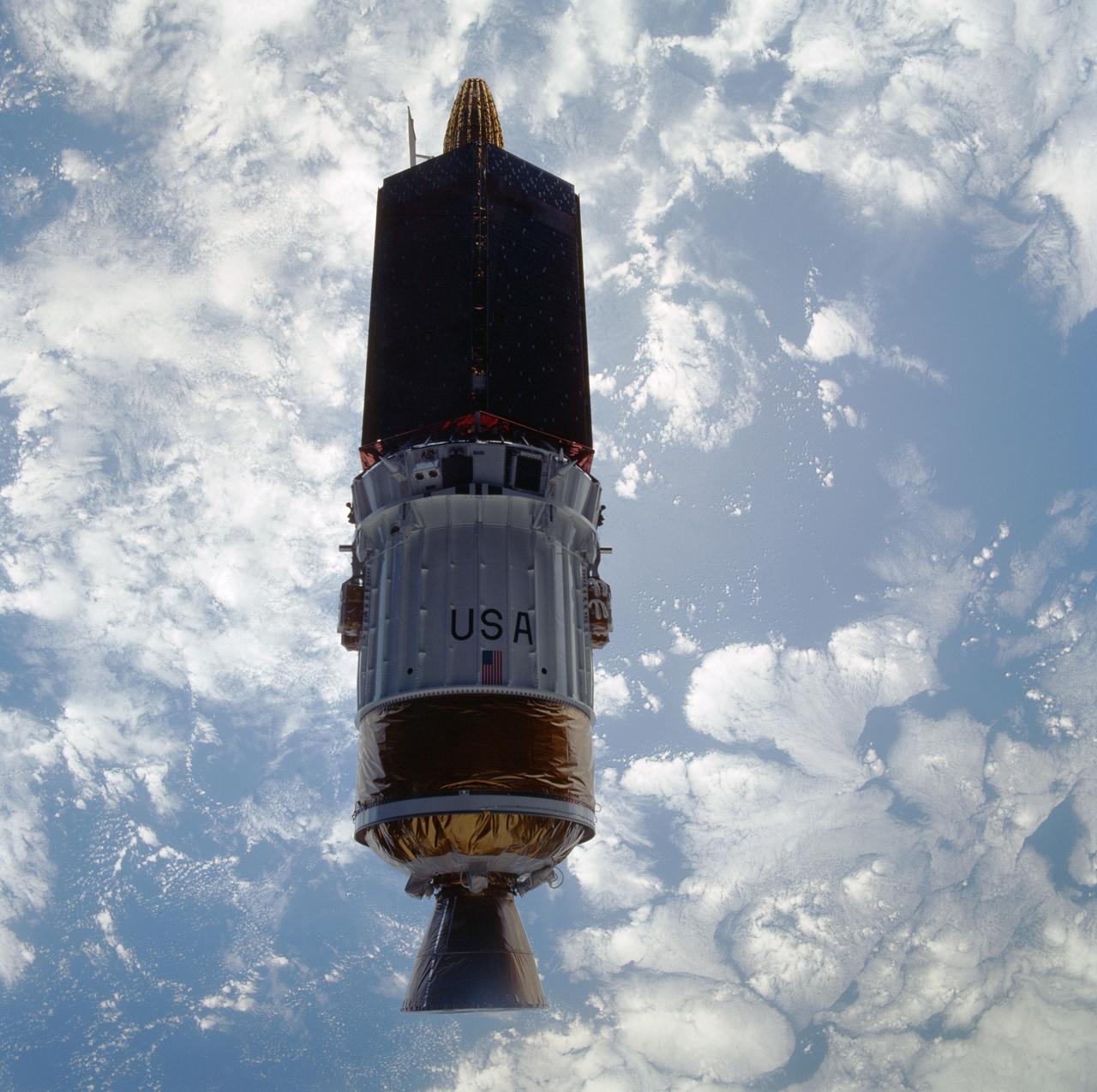
STS043-601-033 (2 Aug 1991) --- The Tracking and Data Relay Satellite (TDRS-E), is seen almost as a silhouette in this 70mm image. The TDRS spacecraft was captured on film as it moved away from the earth-orbiting Atlantis a mere six hours after the shuttle was launched from Pad 39A at Kennedy Space Center, Florida. TDRS, built by TRW, will be placed in a geosynchronous orbit and after on-orbit testing, which requires several weeks, will be designated TDRS-5. The communications satellite will replace TDRS-3 at 174 degrees west longitude. The backbone of NASA's space-to-ground communications, the Tracking and Data Relay Satellites have increased NASA's ability to send and receive data to spacecraft in low-earth orbit to more than 85 percent of the time. Before TDRS, NASA relied solely on a system of ground stations that permitted communications only 15 percent of the time. Increased coverage has allowed on-orbit repairs, live television broadcast from space and continuous dialogues between astronaut crews and ground control during critical periods such as space shuttle landings. The five astronauts of the STS-43 are John E. Blaha, mission commander, Michael a. Baker, pilot, and mission specialists Shannon W. Lucid, G. David Low and James C. Adamson.
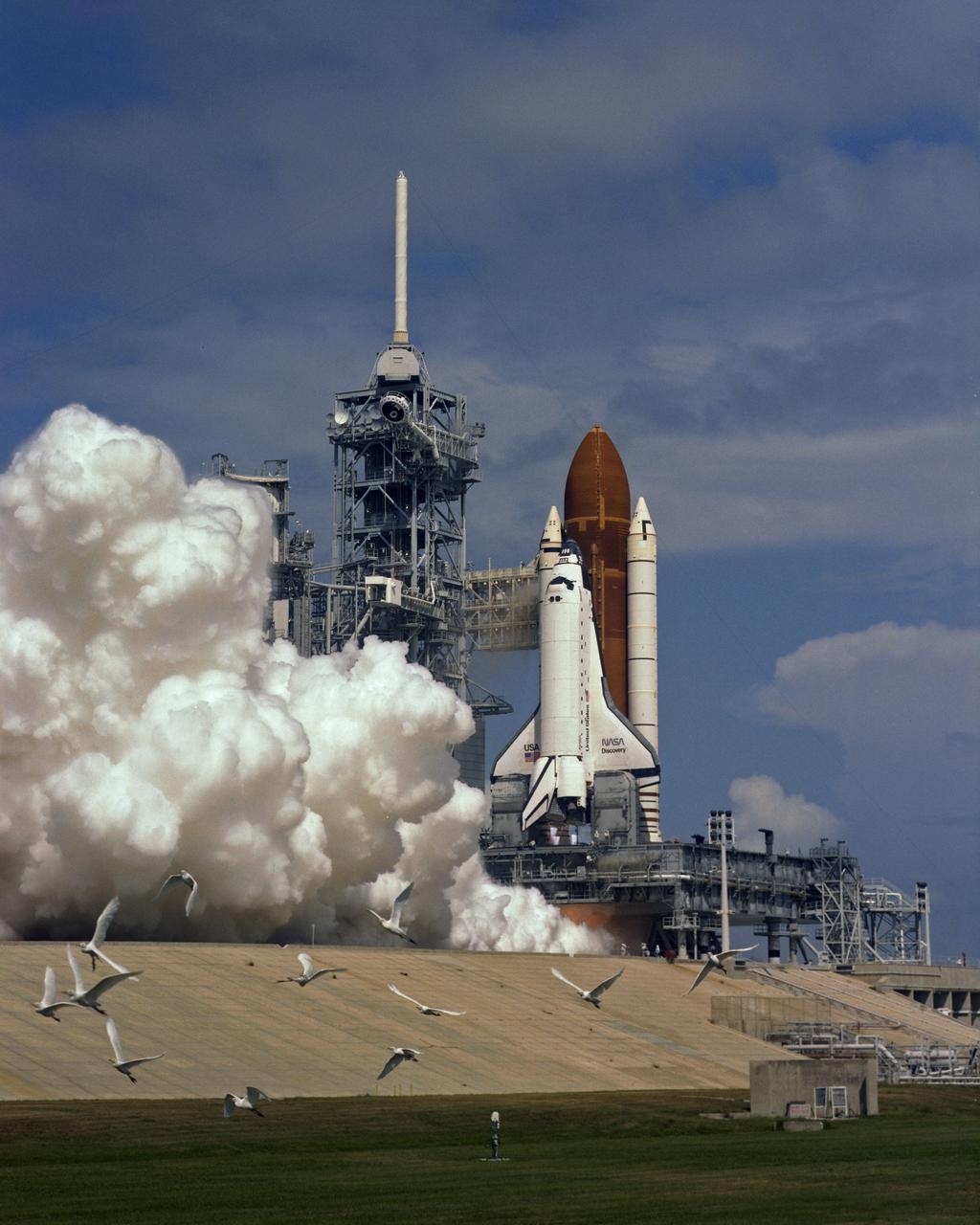
CAPE CANAVERAL, Fla. - The space shuttle Discovery and its five-man crew is launched from pad 39B at 11:37 a.m. as STS-26 embarks on a four-day mission marking America's return to space. On the first day of orbit, the crew will deploy from the orbiter's payload bay the primary payload, the Tracking and Date Relay Satellite, or TDRS-C. The inertial upper stage, or IUS, will boost the satellite to a geosynchronous altitude from low Earth orbit. When it place, TDRS-C will relay date from low Earth orbiting spacecraft and air-to-ground voice communications sand television from shape shuttle orbiters during missions. The crew members of STST-26 are Commander Rick Hauck, Pilot Richard Covey, and Mission Specialists Dave Hilmers, Mike Lounge and George "Pinky" Nelson. Photo Credit: NASA
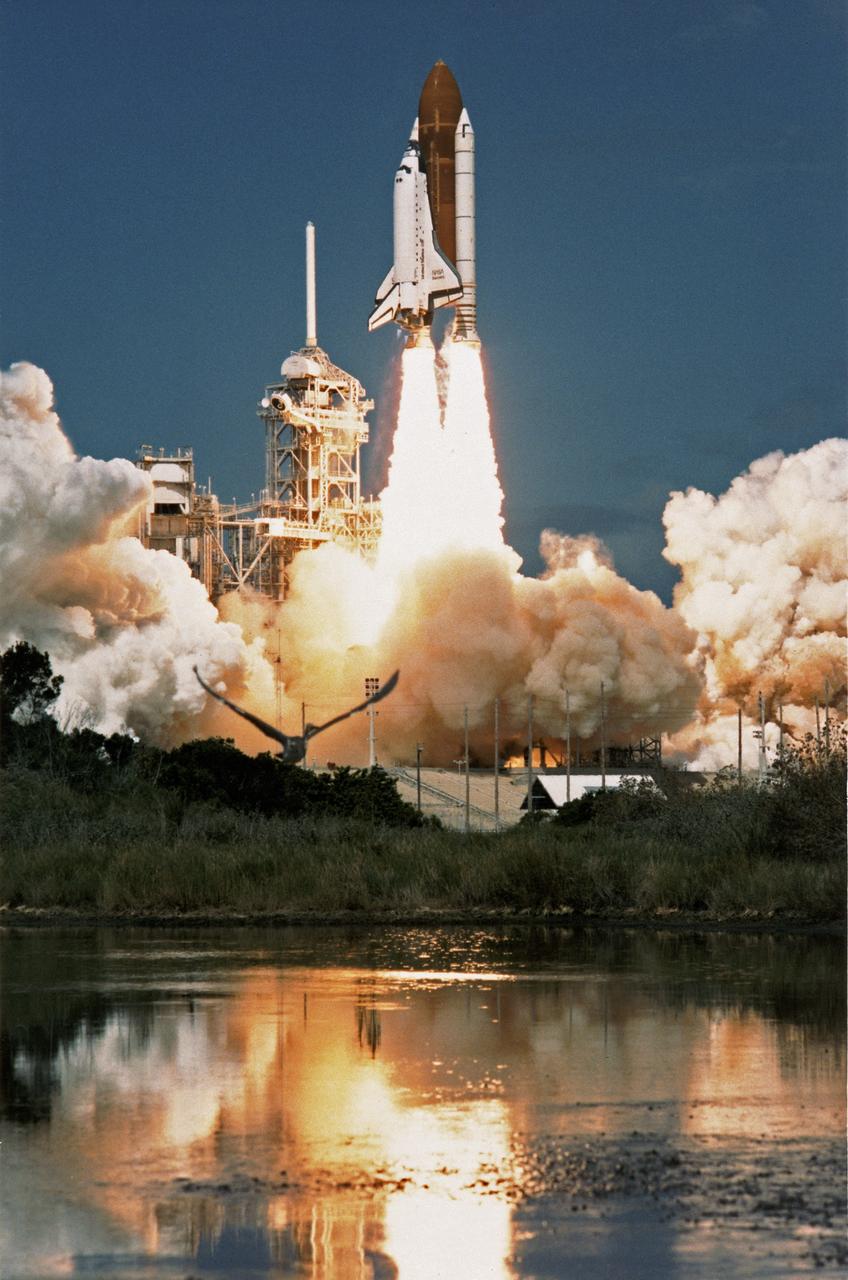
CAPE CANAVERAL, Fla. - The space shuttle Discovery and its five-man crew is launched from pad 39B at 11:37 a.m. as STS-26 embarks on a four-day mission marking America's return to space. On the first day of orbit, the crew will deploy from the orbiter's payload bay the primary payload, the Tracking and Data Relay Satellite, or TDRS-C. The inertial upper stage, or IUS, will boost the satellite to a geosynchronous altitude from low Earth orbit. When it place, TDRS-C will relay date from low Earth orbiting spacecraft and air-to-ground voice communications sand television from shape shuttle orbiters during missions. The crew members of STST-26 are Commander Rick Hauck, Pilot Richard Covey, and mission specialists Dave Hilmers, Mike Lounge and George "Pinky" Nelson. Photo Credit: NASA
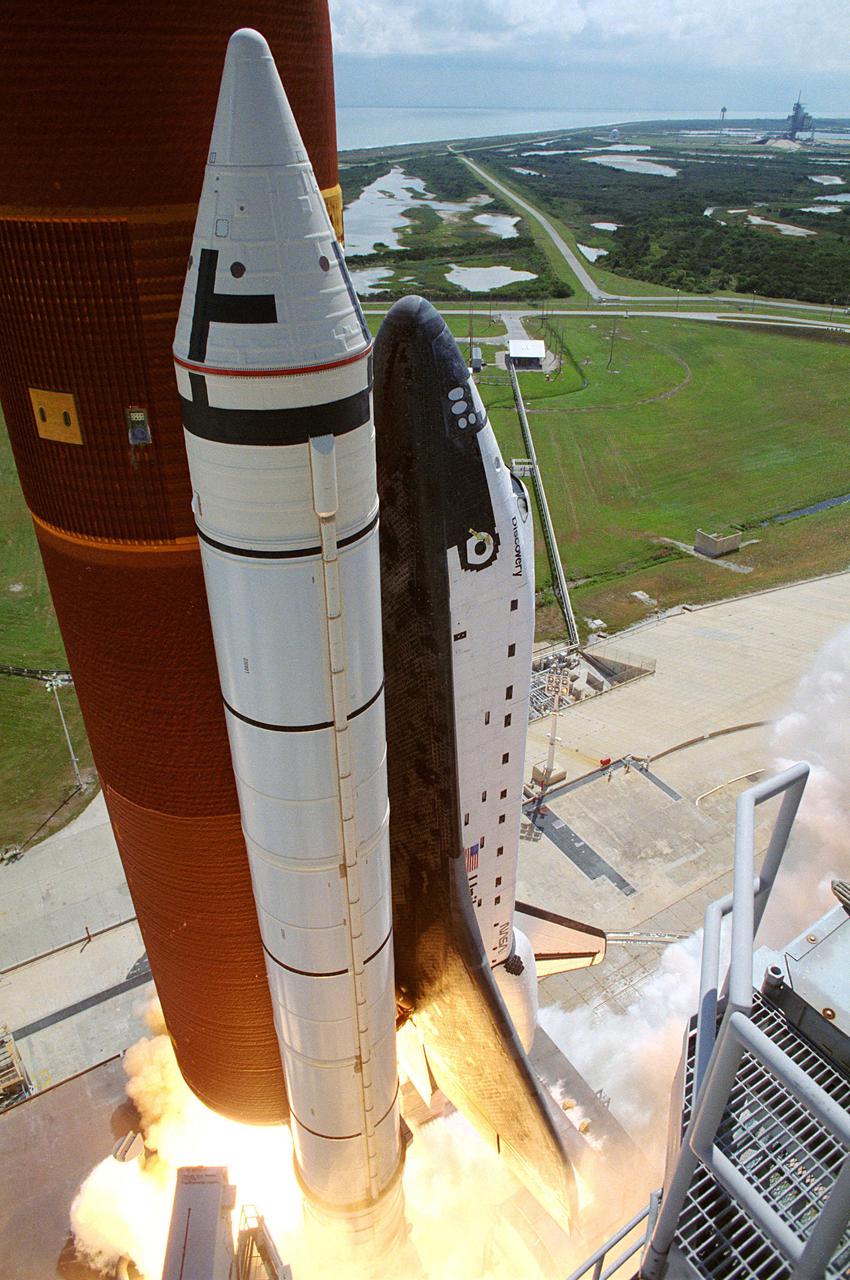
KENNEDY SPACE CENTER, FLA. -- The Space Shuttle Discovery and its five-man crew is launched from pad 39B at 11:37 a.m. as STS-26 embarks on a four-day mission, marking America's return to space. On the first day of orbit, the crew will deploy from the orbiter's payload bay the primary payload, the Tracking and Data Relay Satellite (TDRS-C). The Inertial Upper Stage (IUS) will boost the satellite to a geosynchronous altitude from low-Earth orbit. When in place, TDRS-C will relay data from low-Earth orbiting spacecraft, and air-to-ground voice communications and television from Space Shuttle orbiters during missions. The crew members of STS-26 are Commander Rick Hauck, Pilot Richard Covey, and Mission Specialists Dave Hilmers, Mike Lounge, and George 'Pinky' Nelson.
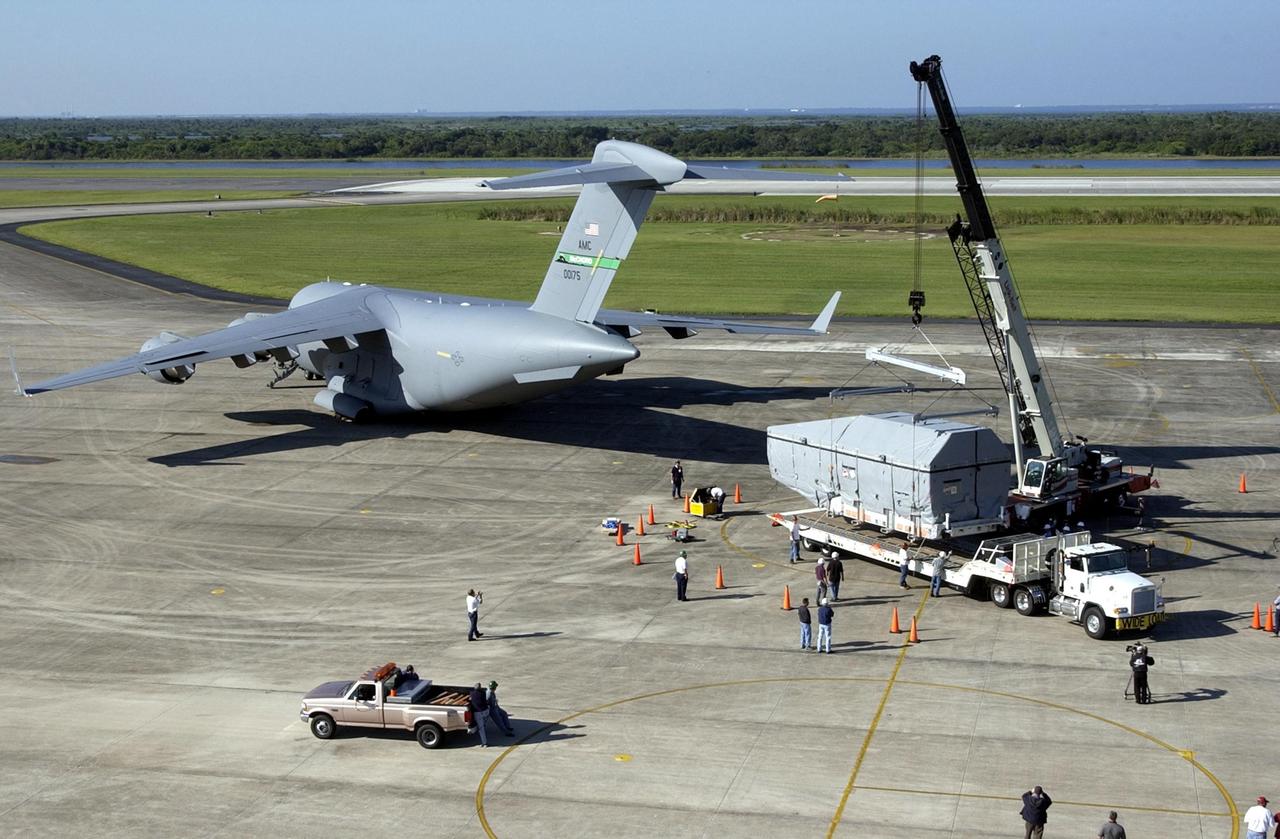
KENNEDY SPACE CENTER, FLA. - At the KSC Shuttle Landing Facility, an overhead crane lifts the container with the TDRS-J spacecraft onto a transport vehicle. In the background is the Air Force C-17 air cargo plane that delivered it. TDRS-J is the third in the current series of three Tracking and Data Relay Satellites designed to replenish the existing on-orbit fleet of six spacecraft, the first of which was launched in 1983. The Tracking and Data Relay Satellite System is the primary source of space-to-ground voice, data and telemetry for the Space Shuttle. It also provides communications with the International Space Station and scientific spacecraft in low-earth orbit such as the Hubble Space Telescope, and launch support for some expendable vehicles. This new advanced series of satellites will extend the availability of TDRS communications services until approximately 2017.
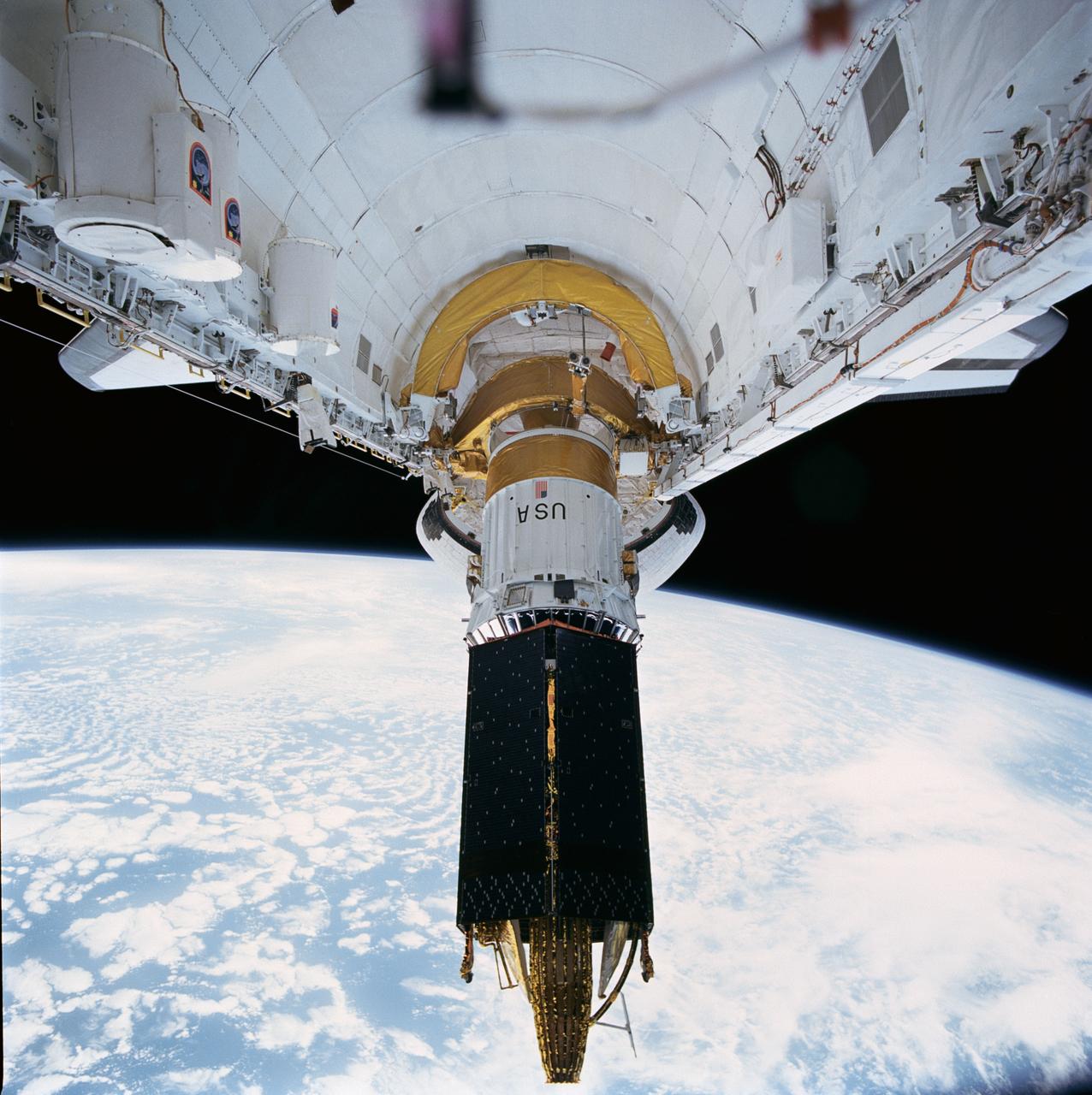
STS043-72-020 (2 Aug 1991) --- The Tracking and Data Relay Satellite (TDRS-E), is loosened from its restraint device and begins to leave the payload bay of the earth-orbiting Atlantis. The deployment came a mere six hours after the Space Shuttle was launched from Pad 39A at Kennedy Space Center, Florida. TDRS, built by TRW, will be placed in a geosynchronous orbit and after on-orbit testing, which requires several weeks, will be designated TDRS-5. The communications satellite will replace TDRS-3 at 174 degrees West longitude. The backbone of NASA's space-to-ground communications, the Tracking and Data Relay satellites have increased NASA's ability to send and receive data to spacecraft in low-earth orbit to more than 85 percent of the time. The five astronauts of the STS 43 mission are John E. Blaha, mission commander, Michael A. Baker, pilot, and Shannon W. Lucid, G. David Low, and James C. Adamson, all mission specialists.
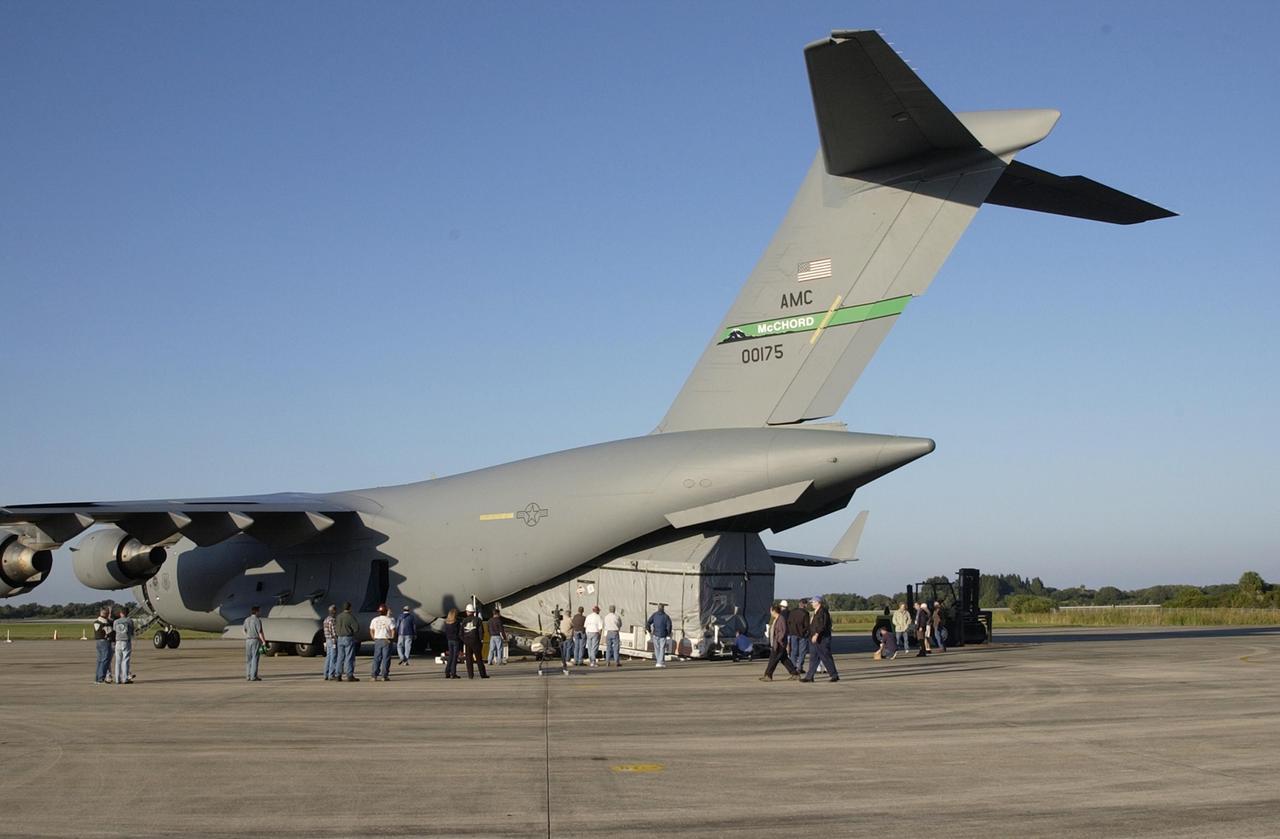
KENNEDY SPACE CENTER, FLA. -- The Tracking and Data Relay Satellite-J (TDRS-J) is offloaded at the KSC Shuttle Landing Facility from an Air Force C-17 air cargo plane. It will be transferred to the Spacecraft Assembly and Encapsulation Facility-2 (SAEF-2). TDRS-J weighs 3,338 pounds, but at launch will weigh 7,031 pounds when fully fueled with its propellants consisting of monomethylhydrazine fuel and nitrogen tetroxide oxidizer. The solar arrays, when deployed, will supply the spacecraft with up to 2,200 watts of power. TDRS-J is the third in the current series of three Tracking and Data Relay Satellites designed to replenish the existing on-orbit fleet of six spacecraft, the first of which was launched in 1983. The Tracking and Data Relay Satellite System is the primary source of space-to-ground voice, data and telemetry for the Space Shuttle. It also provides communications with the International Space Station and scientific spacecraft in low-earth orbit such as the Hubble Space Telescope, and launch support for some expendable vehicles. This new advanced series of satellites will extend the availability of TDRS communications services until approximately 2017.
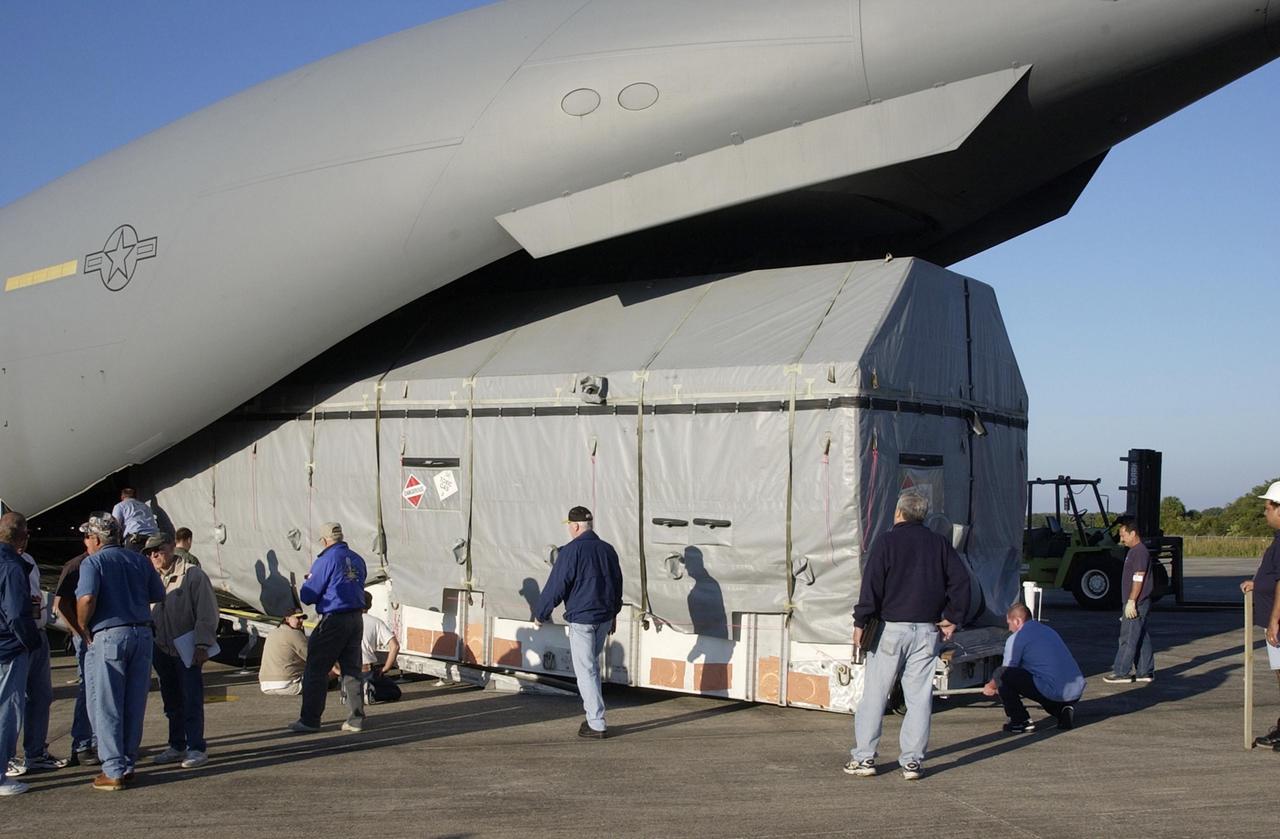
KENNEDY SPACE CENTER, FLA. -- The Tracking and Data Relay Satellite-J (TDRS-J) is being offloaded at the KSC Shuttle Landing Facility from an Air Force C-17 air cargo plane. It will be transferred to the Spacecraft Assembly and Encapsulation Facility-2 (SAEF-2). TDRS-J weighs 3,338 pounds, but at launch will weigh 7,031 pounds when fully fueled with its propellants consisting of monomethylhydrazine fuel and nitrogen tetroxide oxidizer. The solar arrays, when deployed, will supply the spacecraft with up to 2,200 watts of power. TDRS-J is the third in the current series of three Tracking and Data Relay Satellites designed to replenish the existing on-orbit fleet of six spacecraft, the first of which was launched in 1983. The Tracking and Data Relay Satellite System is the primary source of space-to-ground voice, data and telemetry for the Space Shuttle. It also provides communications with the International Space Station and scientific spacecraft in low-earth orbit such as the Hubble Space Telescope, and launch support for some expendable vehicles. This new advanced series of satellites will extend the availability of TDRS communications services until approximately 2017.
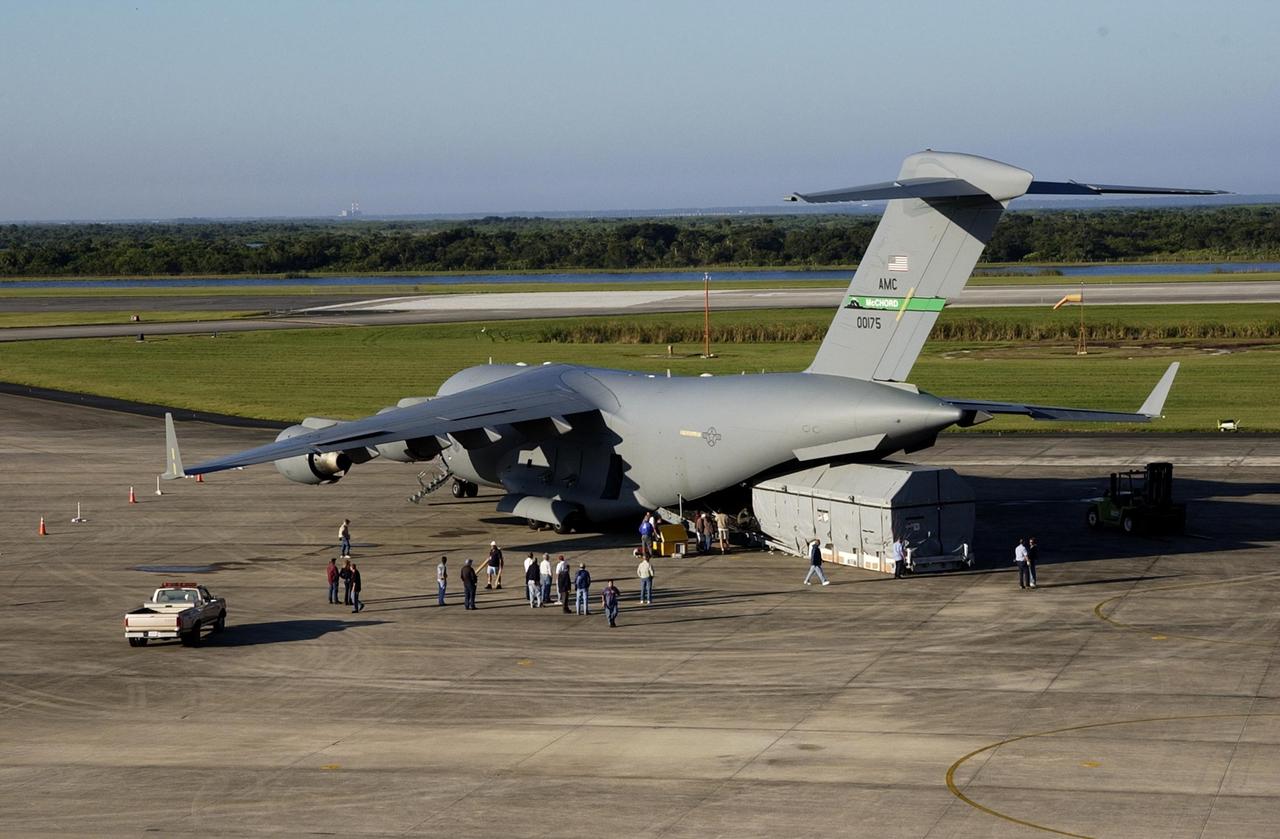
KENNEDY SPACE CENTER, FLA. -- The Tracking and Data Relay Satellite-J (TDRS-J) has been offloaded at the KSC Shuttle Landing Facility from an Air Force C-17 air cargo plane. It will be transferred to the Spacecraft Assembly and Encapsulation Facility-2 (SAEF-2). TDRS-J weighs 3,338 pounds, but at launch will weigh 7,031 pounds when fully fueled with its propellants consisting of monomethylhydrazine fuel and nitrogen tetroxide oxidizer. The solar arrays, when deployed, will supply the spacecraft with up to 2,200 watts of power. TDRS-J is the third in the current series of three Tracking and Data Relay Satellites designed to replenish the existing on-orbit fleet of six spacecraft, the first of which was launched in 1983. The Tracking and Data Relay Satellite System is the primary source of space-to-ground voice, data and telemetry for the Space Shuttle. It also provides communications with the International Space Station and scientific spacecraft in low-earth orbit such as the Hubble Space Telescope, and launch support for some expendable vehicles. This new advanced series of satellites will extend the availability of TDRS communications services until approximately 2017.
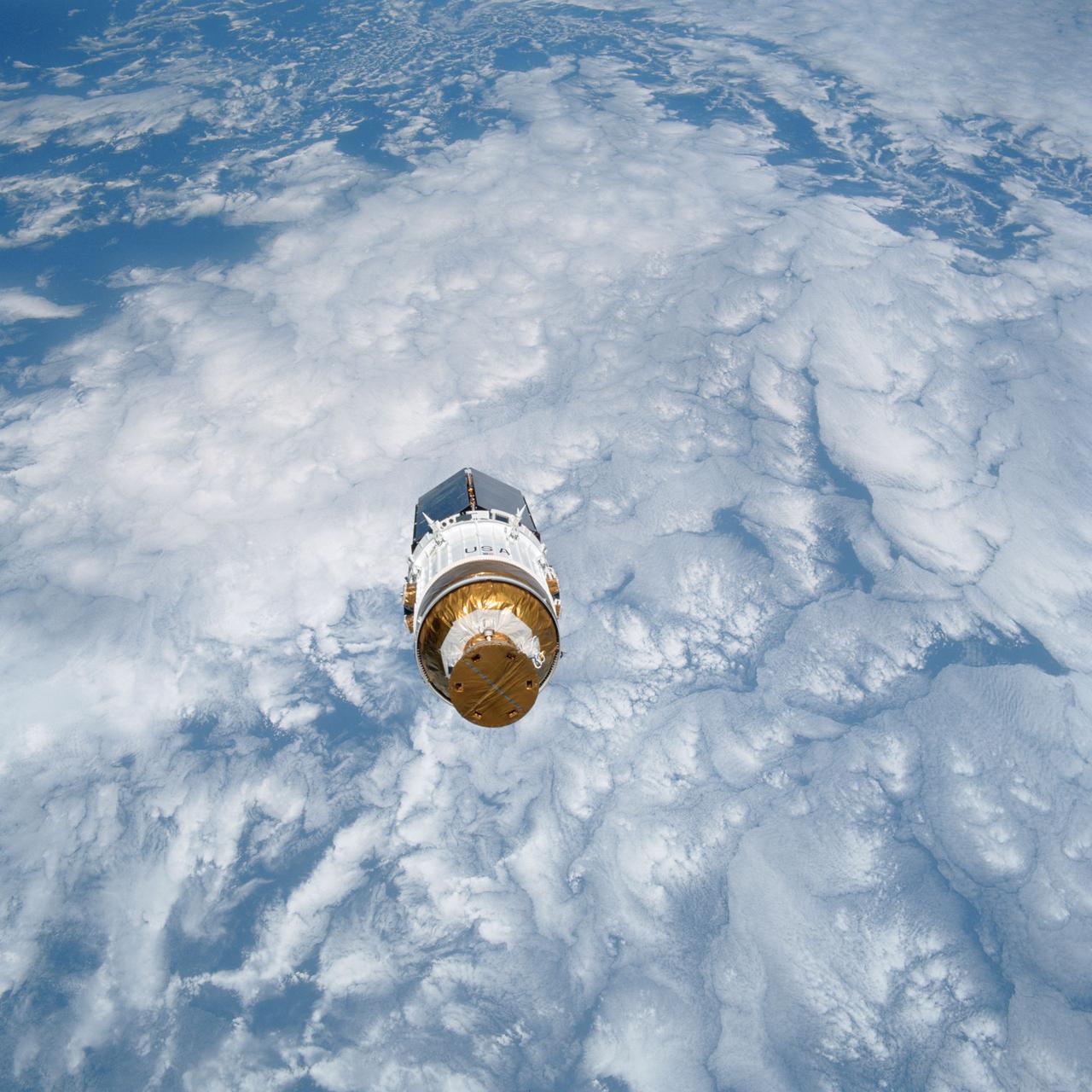
STS043-601-042 (2 Aug 1991) --- The Tracking and Data Relay Satellite (TDRS-E), is backdropped against an interesting cloud pattern over blue water soon after leaving the payload bay of the Earth-orbiting Space Shuttle Atlantis. The deployment came a mere six hours after the Space Shuttle was launched from Pad 39A at Kennedy Space Center (KSC), Florida. TDRS, built by TRW, will be placed in a geosynchronous-orbit and after on orbit testing, which requires several weeks, will be designated TDRS-5. The communications satellite will replace TDRS-3 at 174 degrees west longitude. The backbone of NASA's space-to-ground communications, the Tracking and Data Relay satellites have increased NASA's ability to send and receive data to spacecraft in low-Earth orbit to more than 85 percent of the time. The five astronauts of the STS-43 mission are John E. Blaha, mission commander, Michael A. Baker, pilot, and Shannon W. Lucid, G. David Low, and James C. Adamson, all mission specialists.
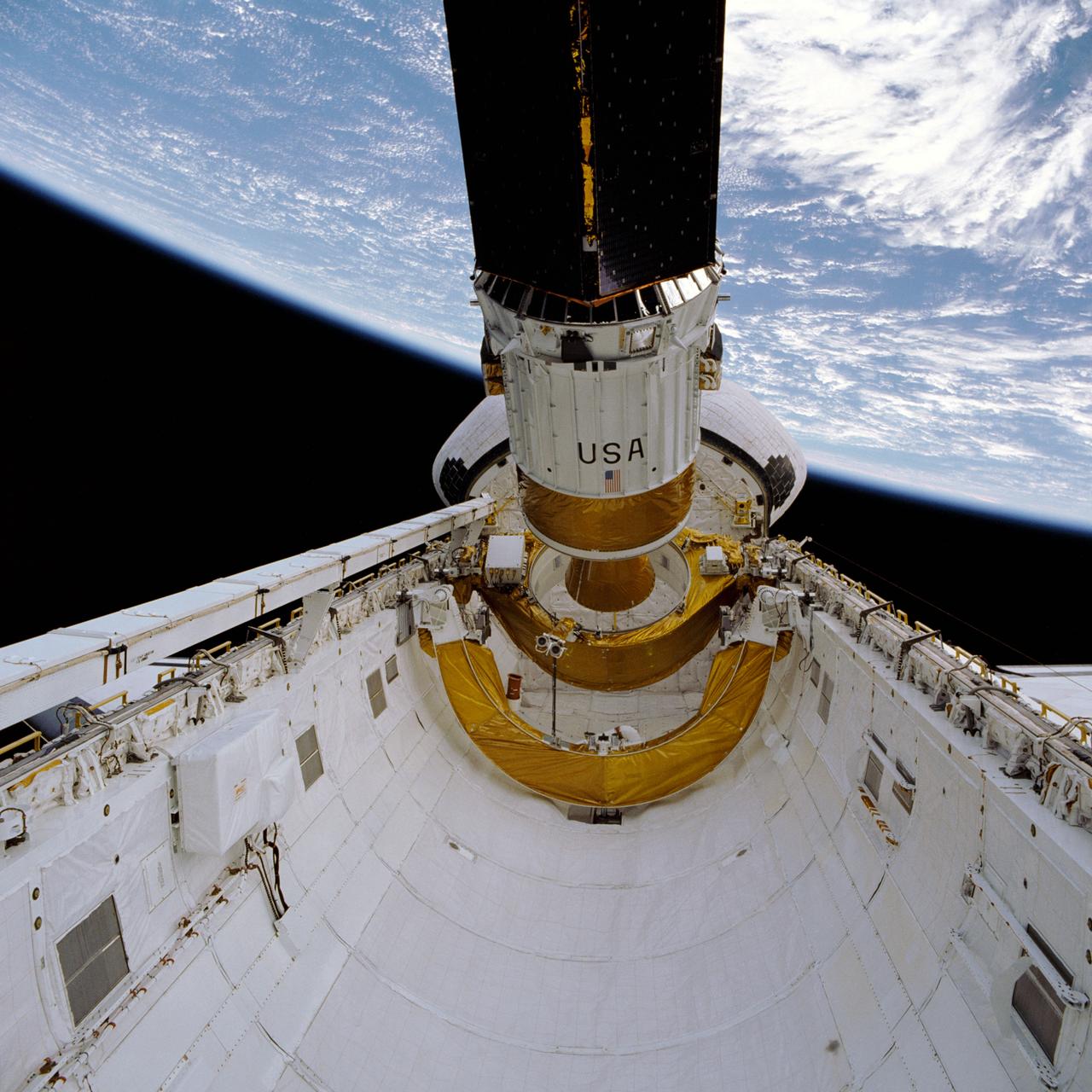
STS029-71-026 (13 March 1989) --- The Tracking and Data Relay Satellite (TDRS-D) is tilted in the cargo bay prior to its release via a remote system on Discovery's flight deck. This photographic frame was among NASA's third STS-29 photo release. Monday, March 20, 1989. Crewmembers were Astronauts Michael L. Coats, John E. Blaha, James F. Buchli, Robert C. Springer and James P. Bagian.
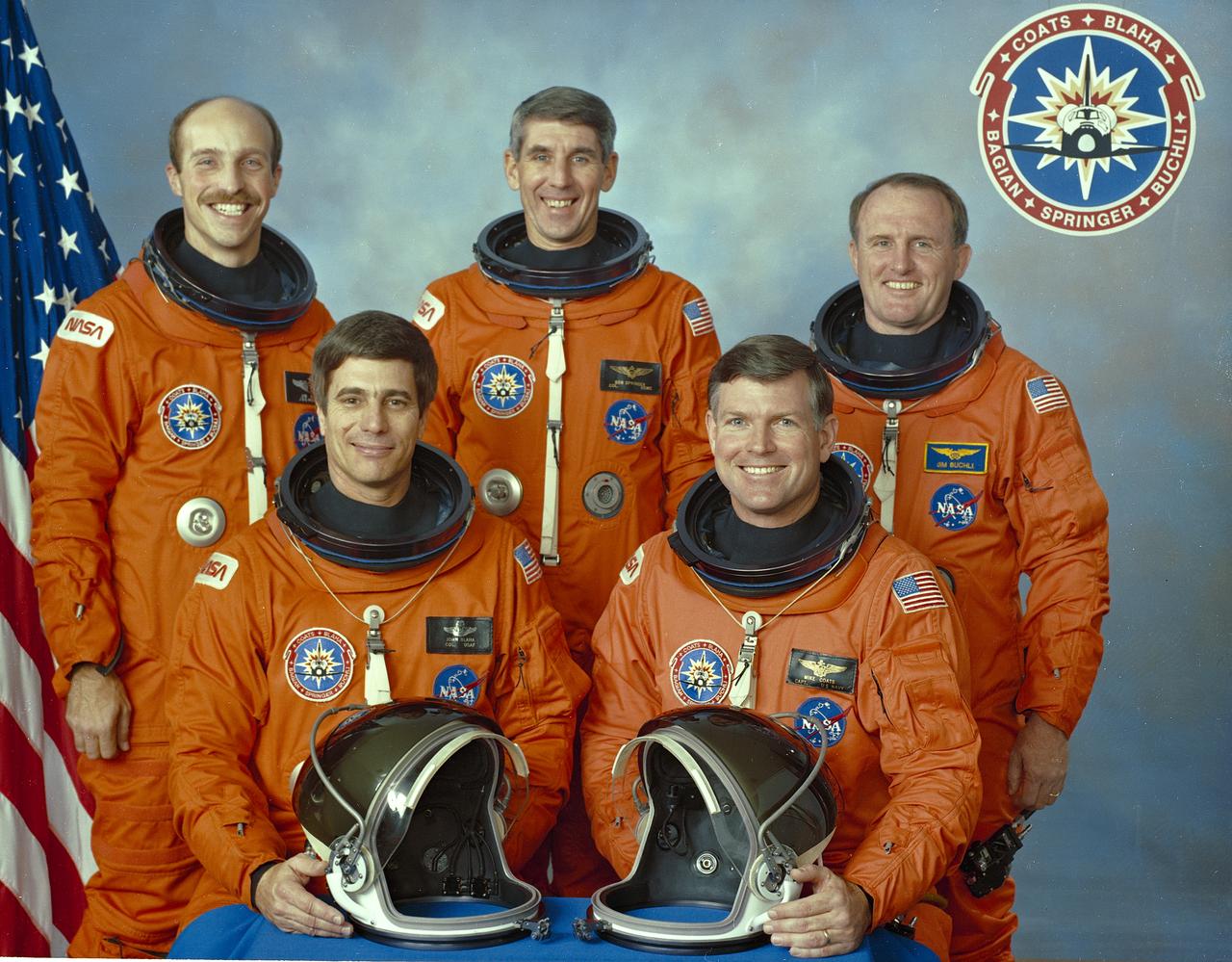
Five astronauts composed the STS-29 crew. Standing (left ot right) are James P. Bagian, mission specialist 1; Robert C. Springer, mission specialist 3; and James F. (Jim) Buchli, mission specialist 2. Seated (left to right) are John E. Blaha, pilot, and Michael L. Coats, commander. STS-29 launched aboard the Space Shuttle Discovery on March 13, 1989 at 9:57 am (EST). The primary payload was the Tracking and Data Relay Satellite- 4 (TDRS-4).
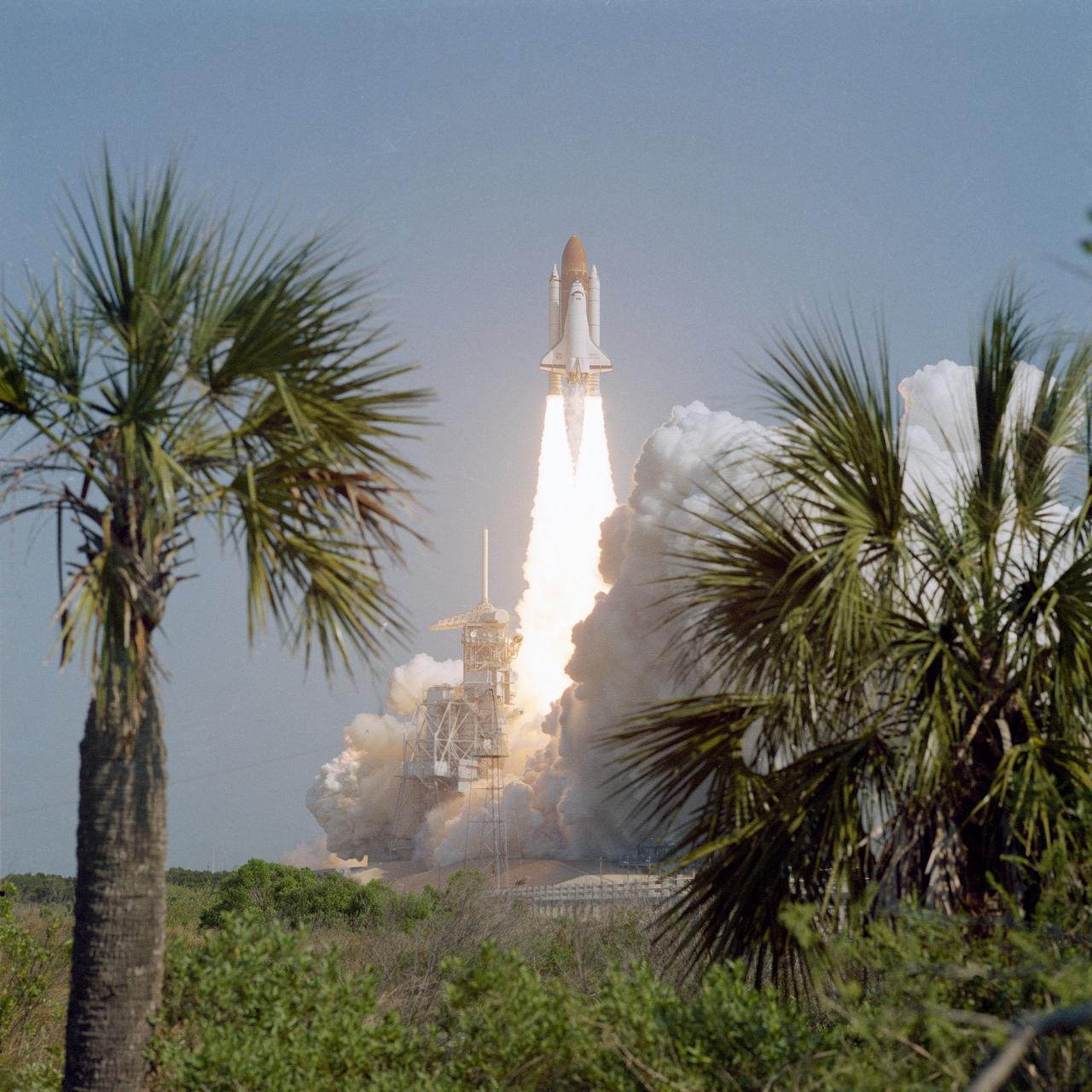
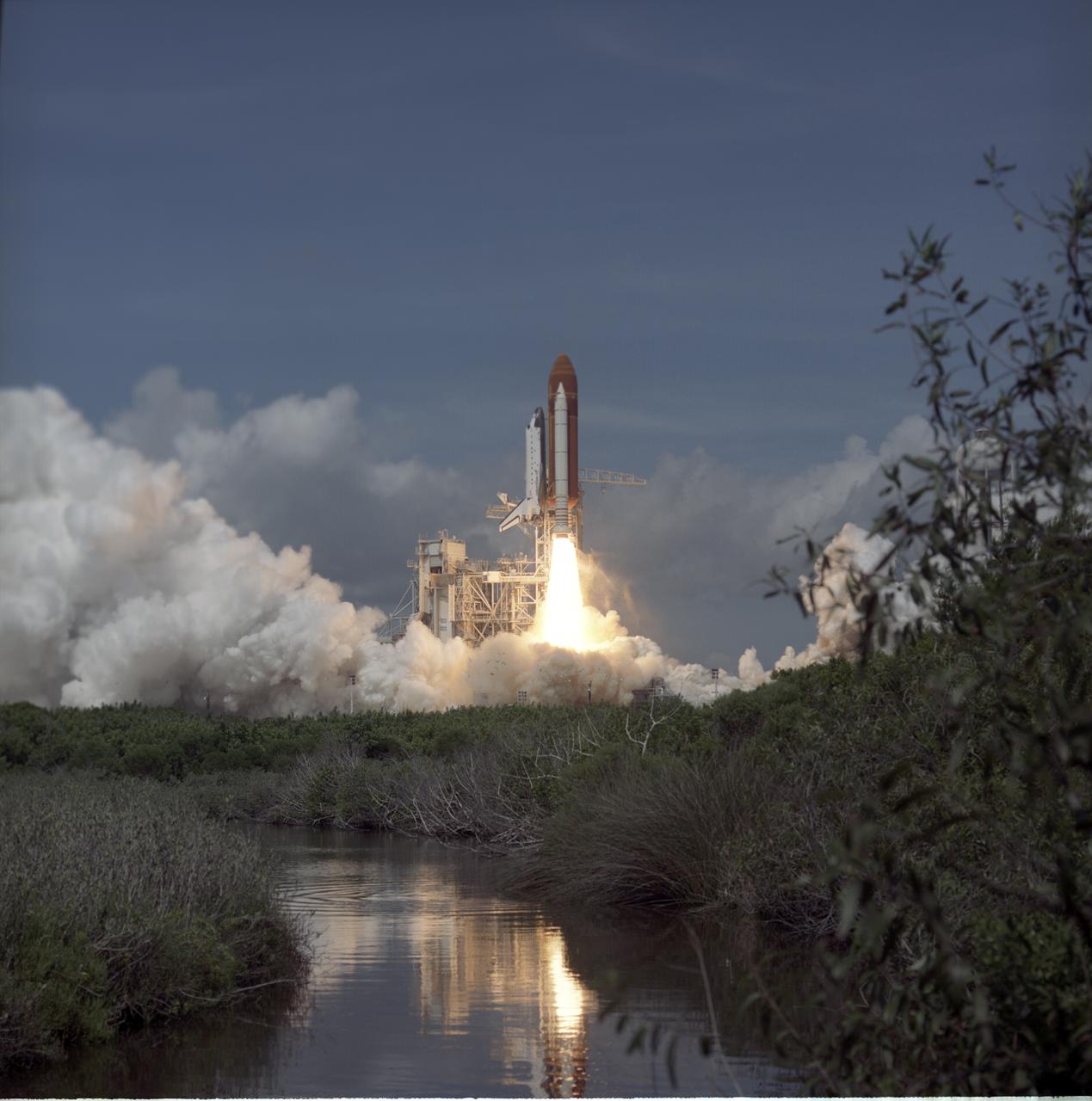
STS029-S-027 (13 March 1989) --- From Launch Pad 39D, the Space Shuttle Discovery is launched on mission STS-29. Discovery lifted off at 9:57 a.m. (EST), March 13, 1989, carrying the tracking and data relay satellite (TDRS-1) into orbit. Florida vegetation frames the launch scene. Onboard the spacecraft were astronauts Michael L. Coats, commander; John E. Blaha, pilot; and James F. Buchli, James P. Bagian and Robert C. Springer, all mission specialists.
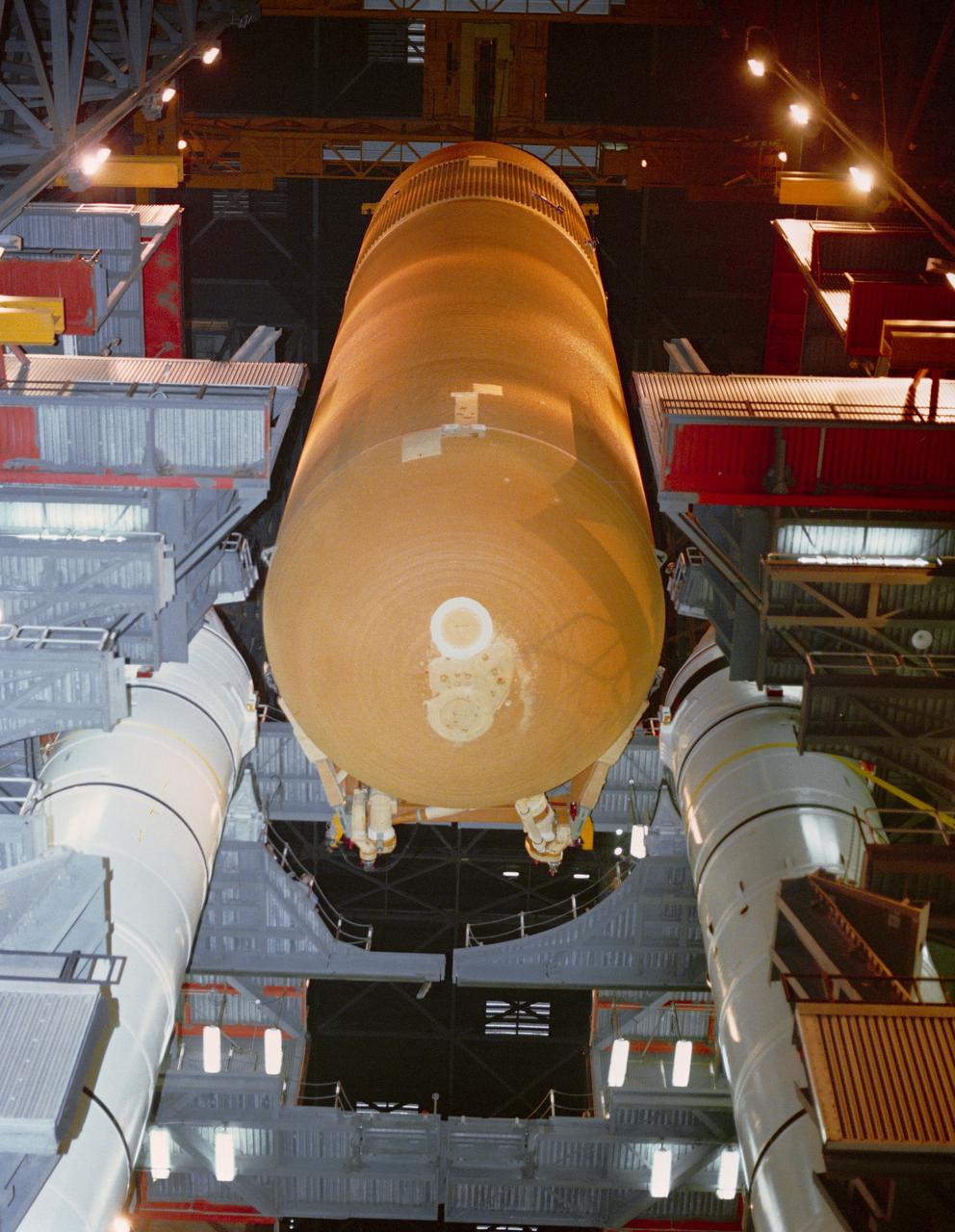
S89-27380 (15 Dec 1988) --- The 155-ft. long external fuel tank (ET) is slowly lowered for mating with the twin solid rocket boosters (SRB) in Bay 1 of the Vehicle Assembly Building at KSC, as preparations continue for a March 1989 launch of Discovery. Primary payload for the mission will be the tracking and data relay satellite (TDRS-D). Crewmembers are astronauts Michael L. Coats, John E. Blaha, James F. Buchli, Robert C. Springer and James P. Bagain.
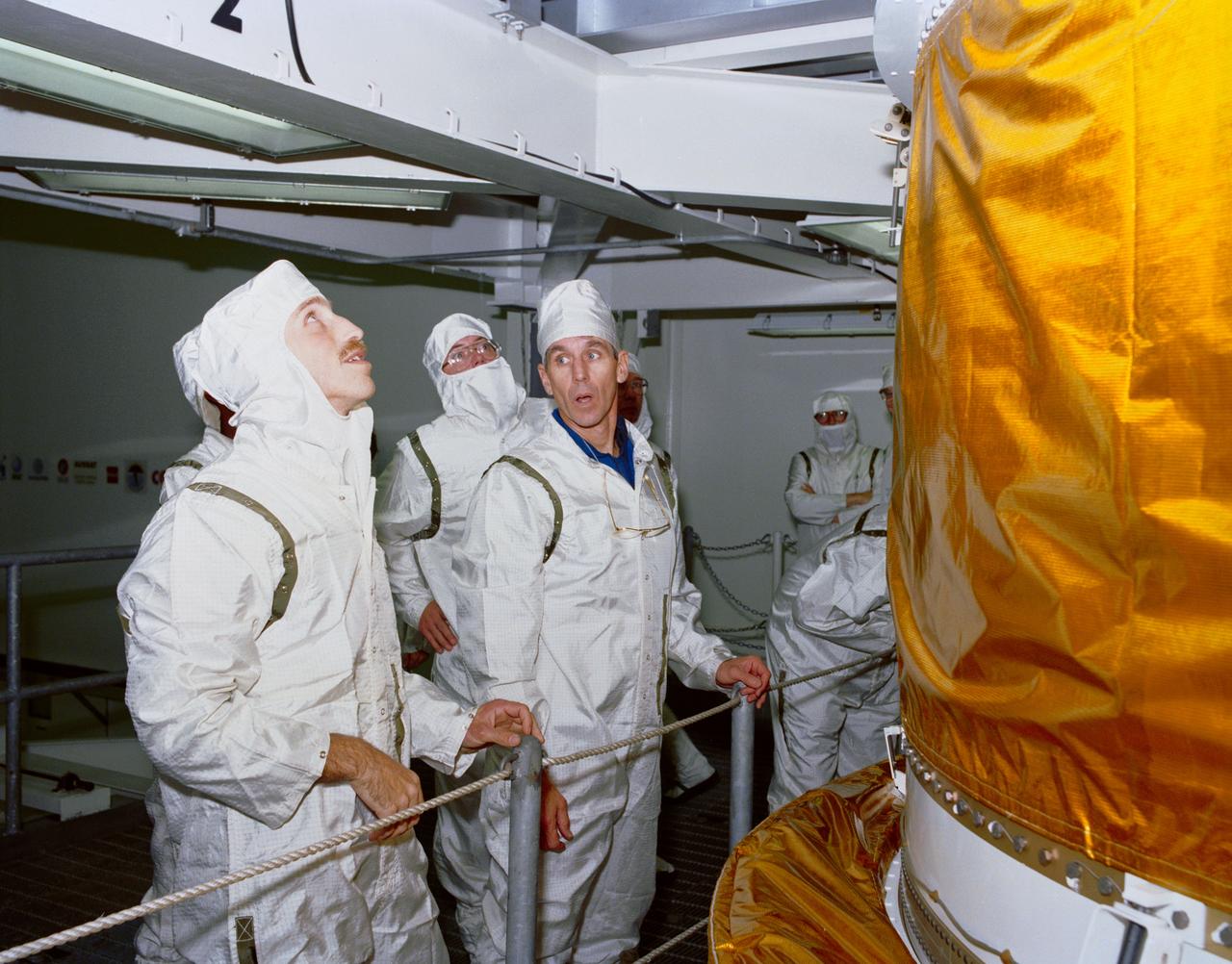
S89-27384 (5 Jan 1989) --- Astronauts James P. Bagian, left, and Robert C. Springer inspect a portion of the first stage of the Inertial Upper Stage (IUS-9) in a test cell of the KSC vertical processing facility. The two, along with three other NASA astronauts, will fly aboard Discovery and are responsible for the deployment of the tracking and data relay satellite (TDRS).
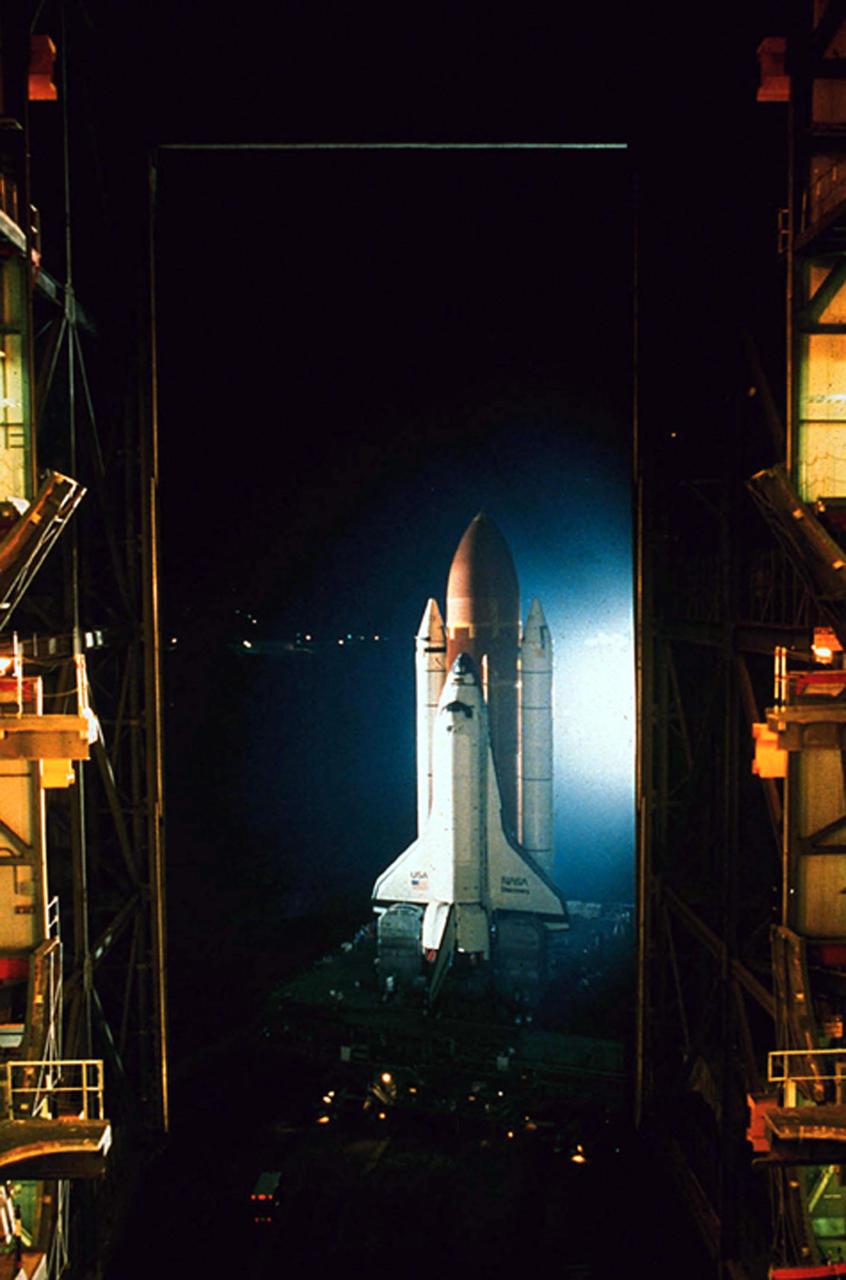
KENNEDY SPACE CENTER, FLA. -- A view from inside bay three of the Vehicle Assembly Building (VAB) shows the Space Shuttle Discovery washed in white xenon light as it makes a nighttime departure from the VAB on its way to pad 39B. Discovery will fly for mission STS-26 now scheduled for launch in earlly September with its five-man crew and the TDRS-C payload. First motion in the Shuttle's move from the VAB toward the pad came at 12:50 a.m. July 4, 1988.

S89-28089 (24 Jan 1989) --- The Space Shuttle Discovery is lowered for mating to the external tank and two solid rockert boosters in the vehicle assembly building (VAB) at the Kennedy Space Center. Onboard the spacecraft in mid-March for a five-day mission, on which will be deployed a third tracking and data relay satellite (TDRS-D), will be Astronauts Michael L. Coats, John E. Blaha, James F. Buchli, James P. Bagian and Robert C. Springer.

Five astronauts launched aboard the Space Shuttle Discovery on March 13, 1989 at 9:57 am (EST) for the STS-29 mission. Included were James P. Bagian, mission specialist 1; Robert C. Springer, mission specialist 3; James F. (Jim) Buchli, mission specialist 2; John E. Blaha, pilot; and Michael L. Coats, commander. The mission’s primary payload was the Tracking and Data Relay Satellite-4 (TDRS-4).

Five astronauts launched aboard the Space Shuttle Discovery on March 13, 1989 at 9:57 am (EST) for the STS-29 mission. Included were James P. Bagian, mission specialist 1; Robert C. Springer, mission specialist 3; James F. (Jim) Buchli, mission specialist 2; John E. Blaha, pilot; and Michael L. Coats, commander. The mission’s primary payload was the Tracking and Data Relay Satellite-4 (TDRS-4).
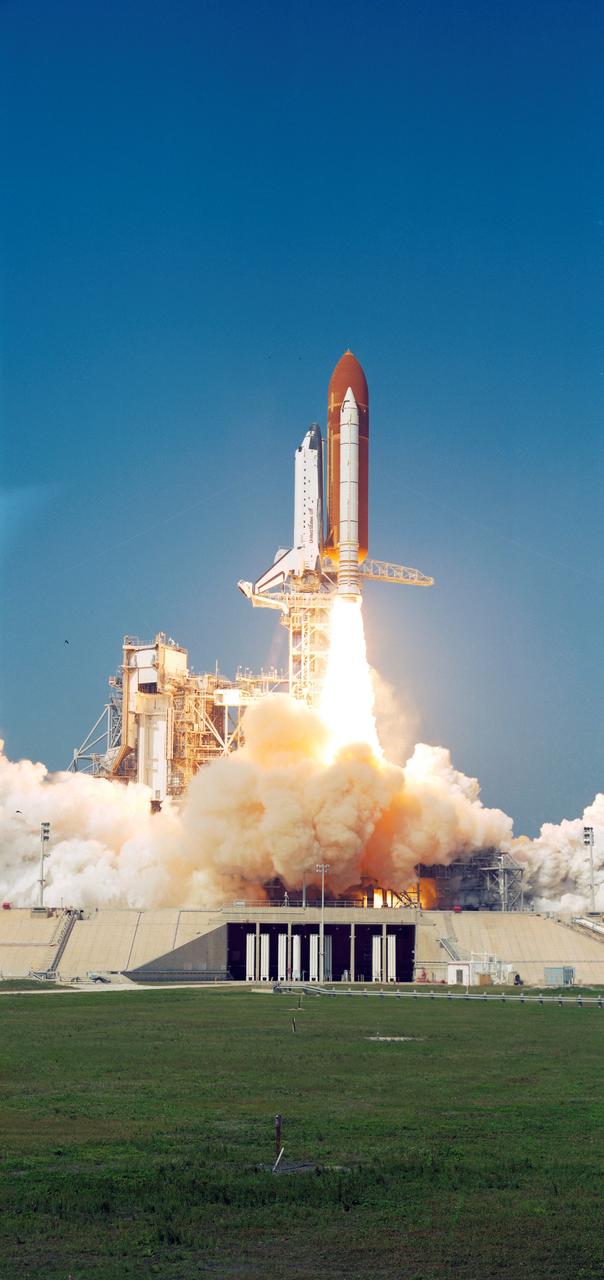
STS029-S-028 (13 March 1989) --- From Launch Pad 39B, the Space Shuttle Discovery is launched on Mission STS-29. Discovery lifted off at 9:57 a.m. (EST), March 13, 1989, carrying the tracking and data relay satellite (TDRS-1) into orbit. Onboard the spacecraft were astronauts Michael L. Coats, commander; John E. Blaha, pilot; and James F. Buchli, James P. Bagian and Robert C. Springer, all mission specialists.
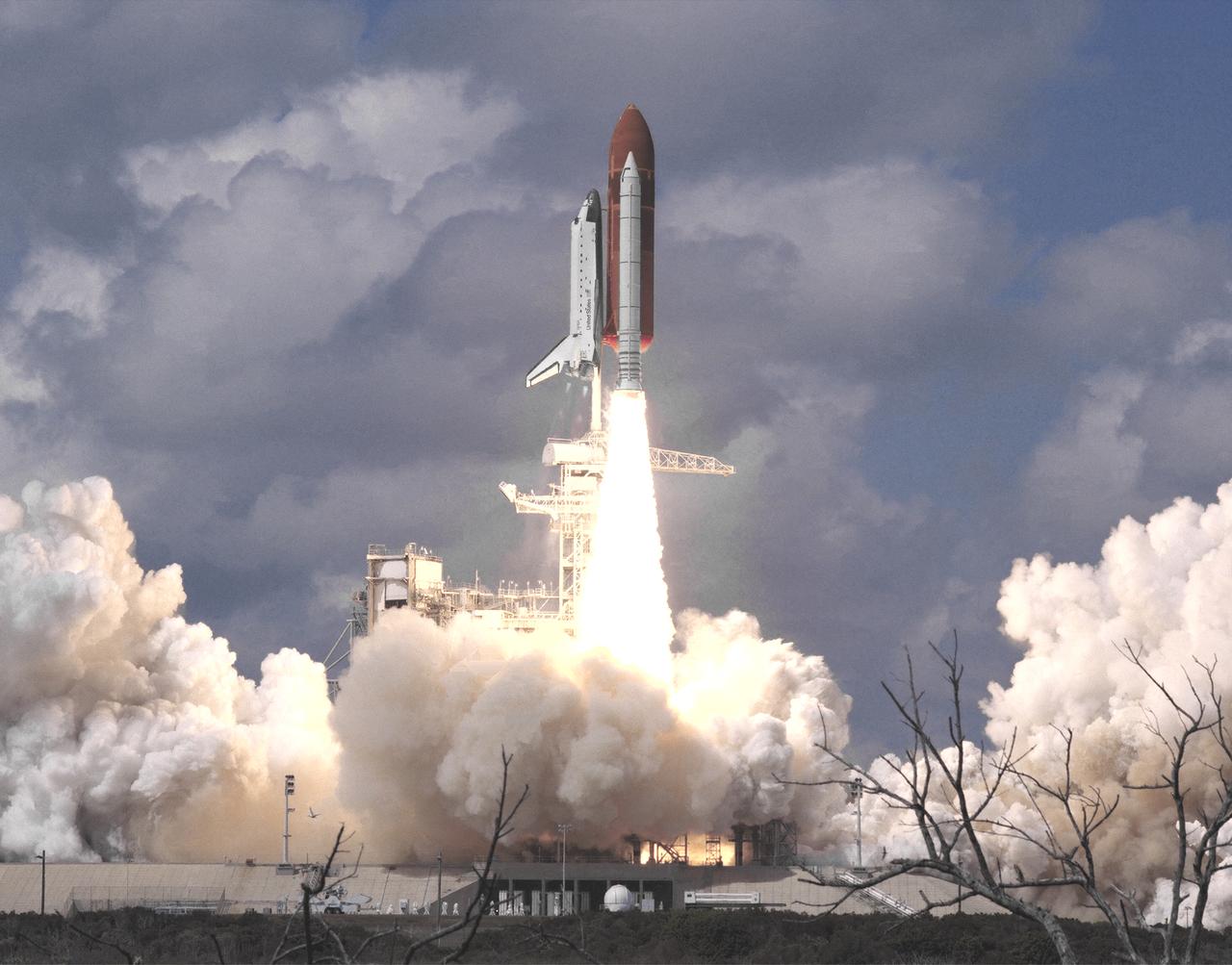
The Space Shuttle Discovery takes off from Launch Pad 39B at the Kennedy Space Center, Florida, to being Mission STS-26 on 29 September 1988,11:37:00 a.m. EDT. The 26th shuttle mission lasted four days, one hour, zero minutes, and 11 seconds. Discovery landed 3 October 1988, 9:37:11 a.m. PDT, on Runway 17 at Edwards Air Force Base, California. Its primary payload, NASA Tracking and Data Relay Satellite-3 (TDRS-3) attached to an Inertial Upper Stage (IUS), became the second TDRS deployed. After deployment, IUS propelled the satellite to a geosynchronous orbit. The crew consisted of Frederick H. Hauck, Commander; Richard O. Covey, Pilot; John M. Lounge, Mission Specialist 1; George D. Nelson, Mission Specialist 2; and David C. Hilmers, Mission Specialist 3.
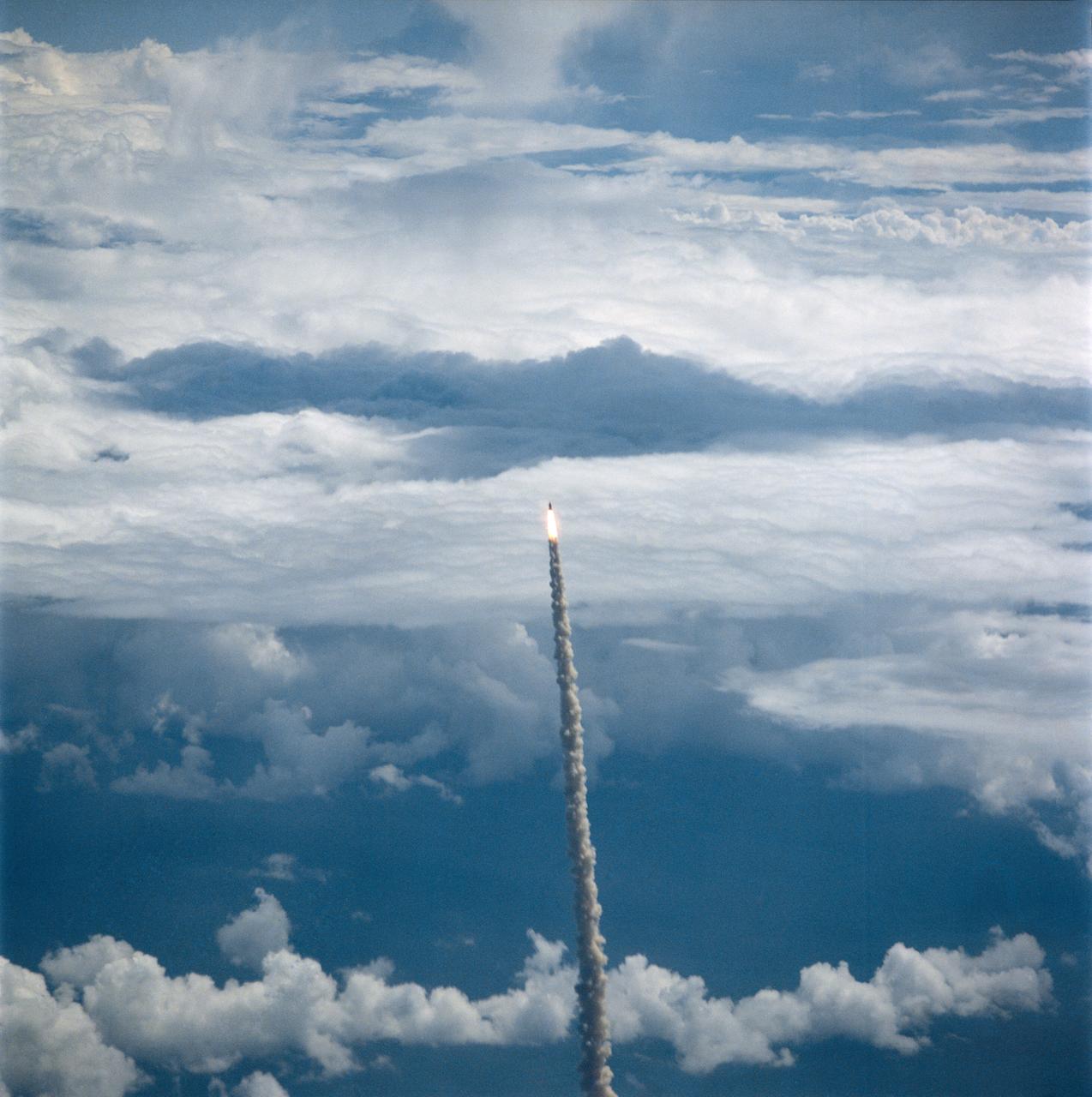
S26-S-026 (29 Sept. 1988) --- The STS-26 launch was captured on film from the NASA Shuttle Training Aircraft, piloted by astronaut Daniel C. Brandenstein, chief of JSC's Astronaut Office. Discovery?s mission was the first flight to be flown after the Challenger accident. The flight crew included astronauts Rick Hauck, commander; Dick Covey, pilot; and three mission specialists, Dave Hilmers, Mike Lounge, and George (Pinky) Nelson. During the four-day mission, the crew deployed the Tracking and Data Relay Satellite (TDRS-C) and operated eleven mid-deck experiments. Discovery completed 64 orbits of the earth before landing at Edwards Air Force Base, California, on October 3, 1988. Photo credit: NASA or National Aeronautics and Space Administration
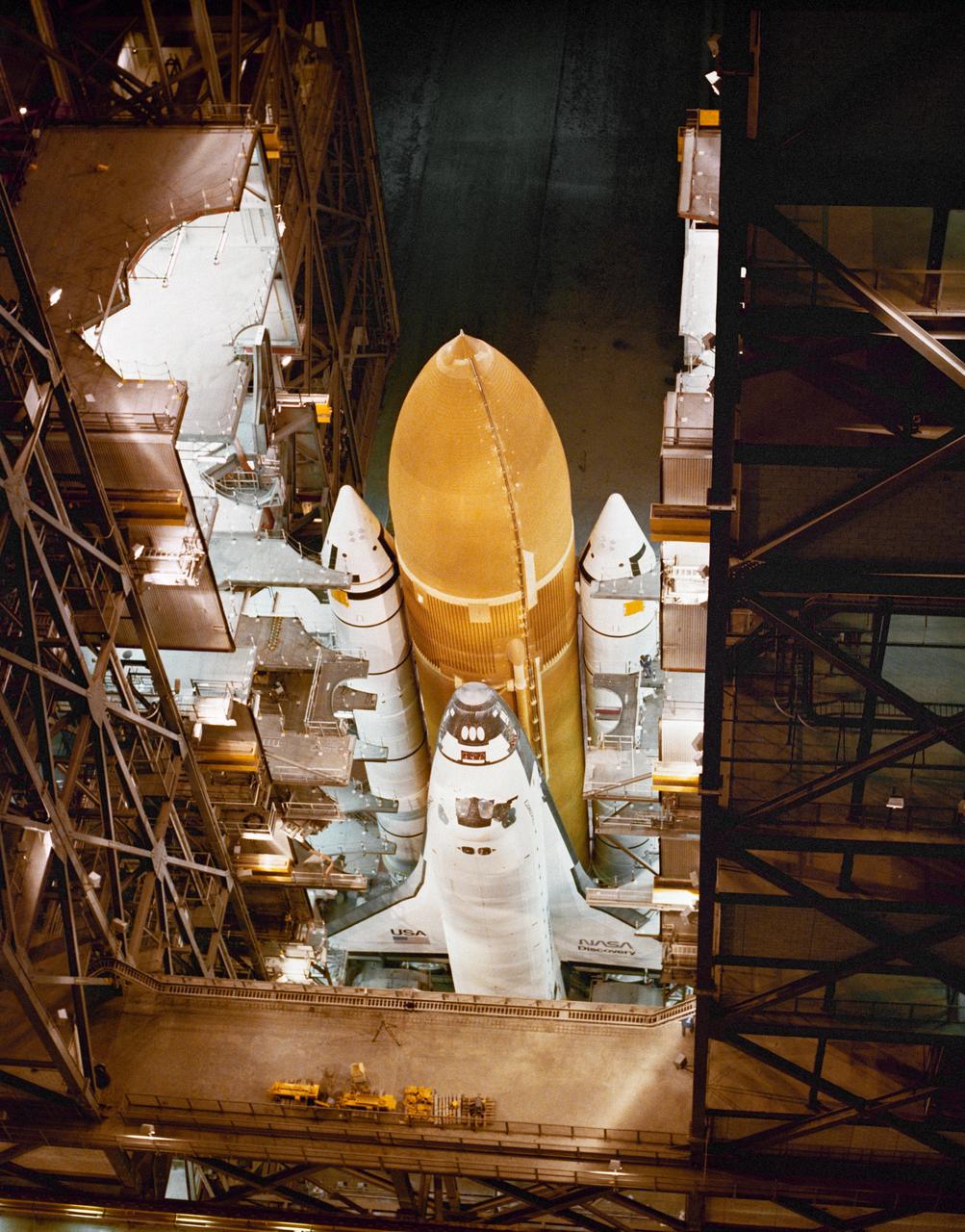
S89-28111 (3 Feb 1989) --- The Space Shuttle Discovery, atop a mobile launch platform, is rolled through the doors of the huge vehicle assembly building (VAB) at 6 a.m., Feb. 3, 1989 on its way to Launch Complex 39. The trip to the pad takes approximately 5 and 1/2 hours. Onboard the spacecraft in mid-March for a five-day mission, on which will be deployed a third tracking and data relay satellite (TDRS-D), will be Astronauts Michael L. Coats, John E. Blaha, James F. Buchli, James P. Bagian and Robert C. Springer.
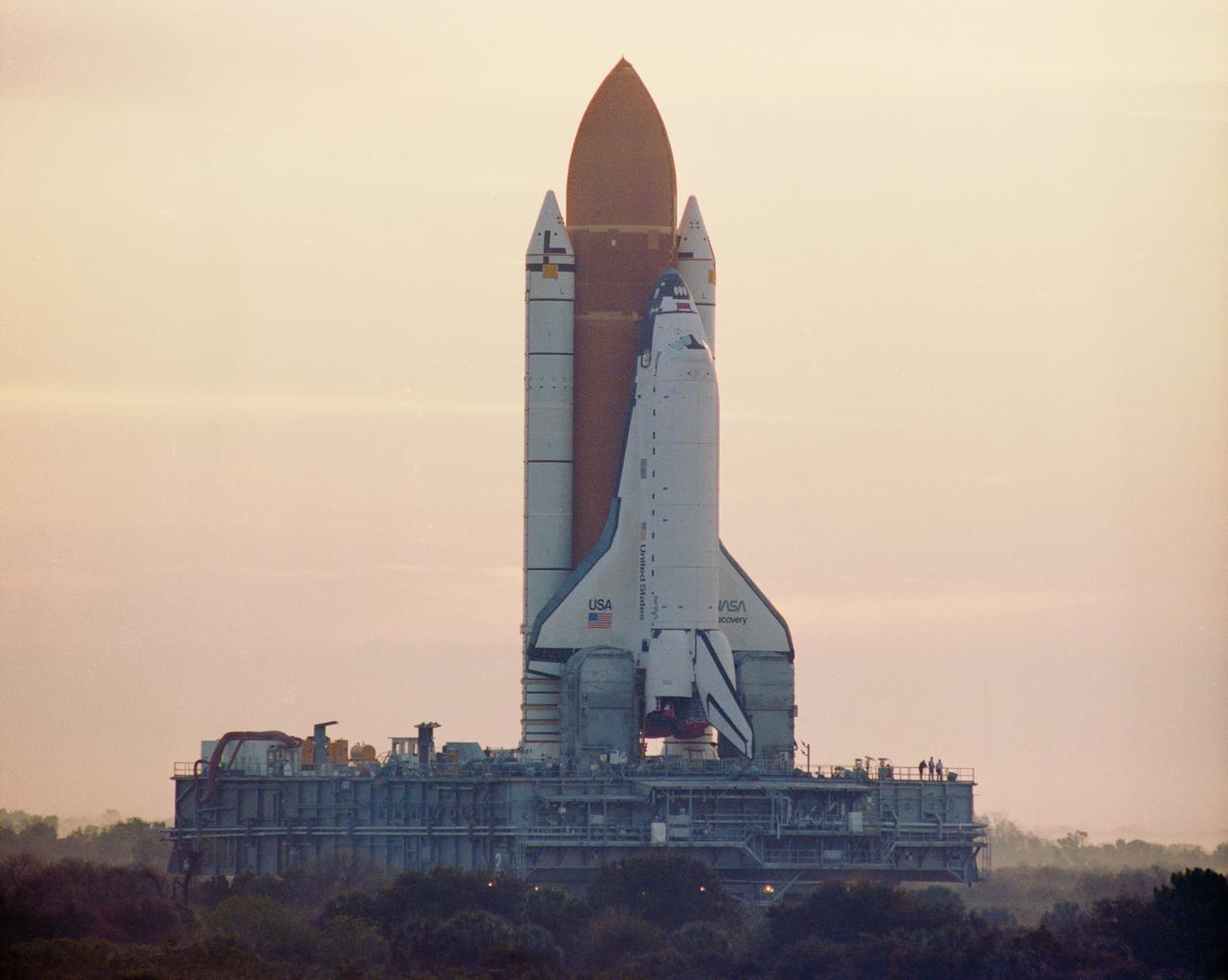
S89-28112 (3 Feb 1989) --- The Space Shuttle Discovery, atop a mobile launch platform, is rolled toward Kennedy Space Center's Launch Pad 39-B in the early morning hours of Feb. 3, l989. It rolled through the doors of the huge vehicle assembly building (VAB) at 6 a.m. The trip to the pad takes approximately 5 and 1/2 hours. Onboard the spacecraft in mid-March for a five-day mission, on which will be deployed a third tracking and data relay satellite (TDRS-D), will be Astronauts Michael L. Coats, John E. Blaha, James F. Buchli, James P. Bagian and Robert C. Springer.
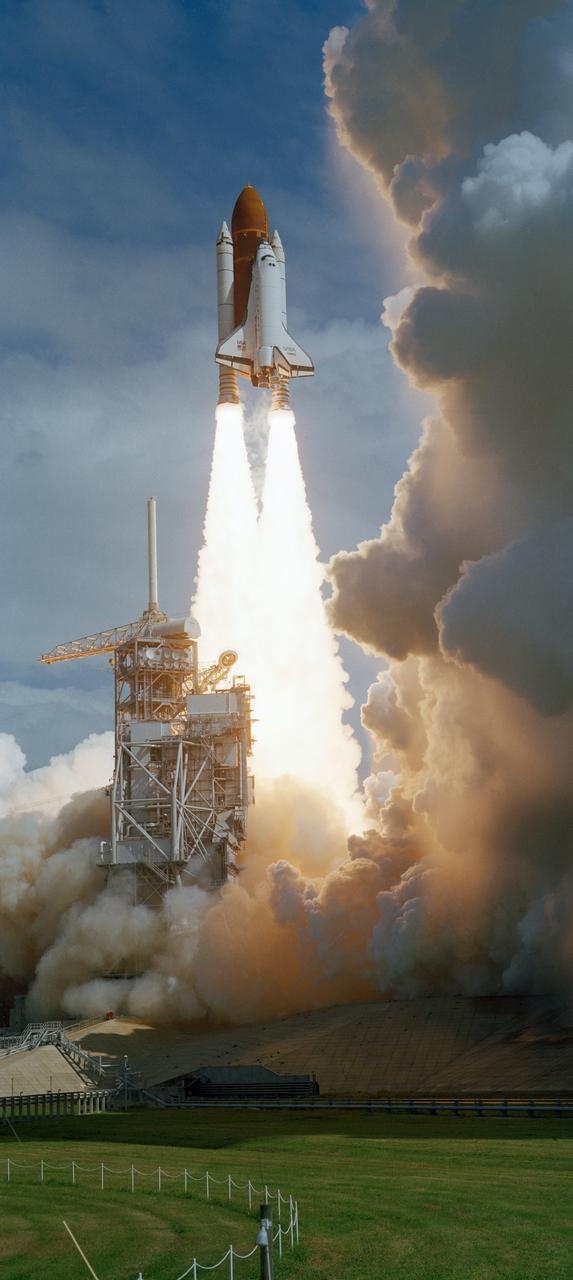
S26-S-032 (29 Sept. 1988) --- The STS-26 launch of space shuttle Discovery begins the first flight to be flown after the Challenger accident. The flight crew included astronauts Rick Hauck, commander; Dick Covey, pilot; and three mission specialists, Dave Hilmers, Mike Lounge, and George (Pinky) Nelson. During the four-day mission, the crew deployed the Tracking and Data Relay Satellite (TDRS-C) and operated eleven mid-deck experiments. Discovery completed 64 orbits of the earth before landing at Edwards Air Force Base, California, on October 3, 1988. Photo credit: NASA or National Aeronautics and Space Administration
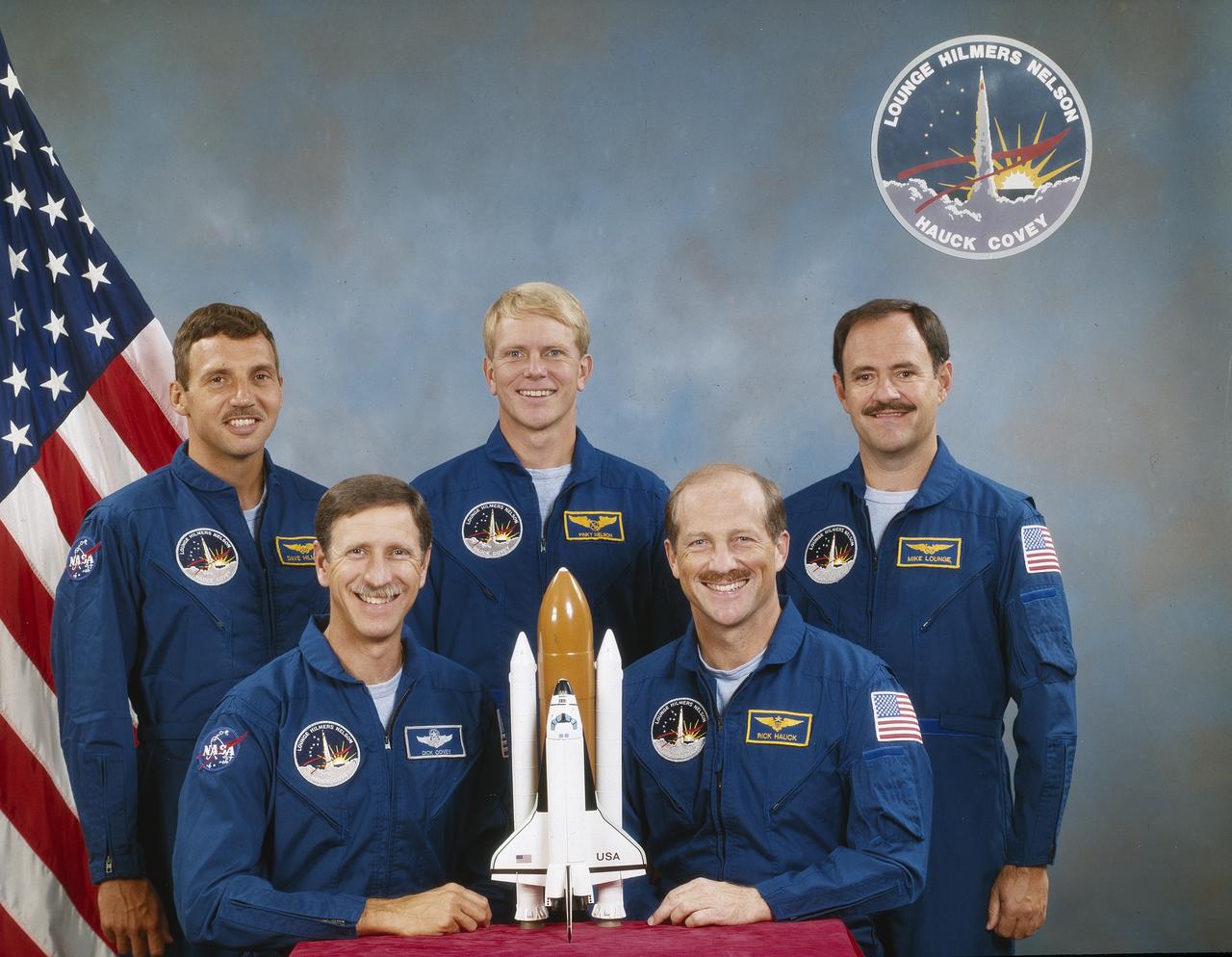
Five astronauts composed the crew of the STS-26 mission. Pictured in the portrait (left to right) are David C. Hilmer, mission specialist; Richard O. Covey, pilot; George D. Nelson, mission specialist; Frederick H. Hauck, Jr., commander; and John, M. Lounge, mission specialist. Launched aboard the Space Shuttle Orbiter Discovery, liftoff occurred on September 29, 1988 at 11:37am (EDT). This was the 7th flight of the Orbiter Discovery, and the return to flight after the STS-51L mission accident. The primary payload was the NASA Tracking and Data Relay Satellite-3 (TDRS-3).
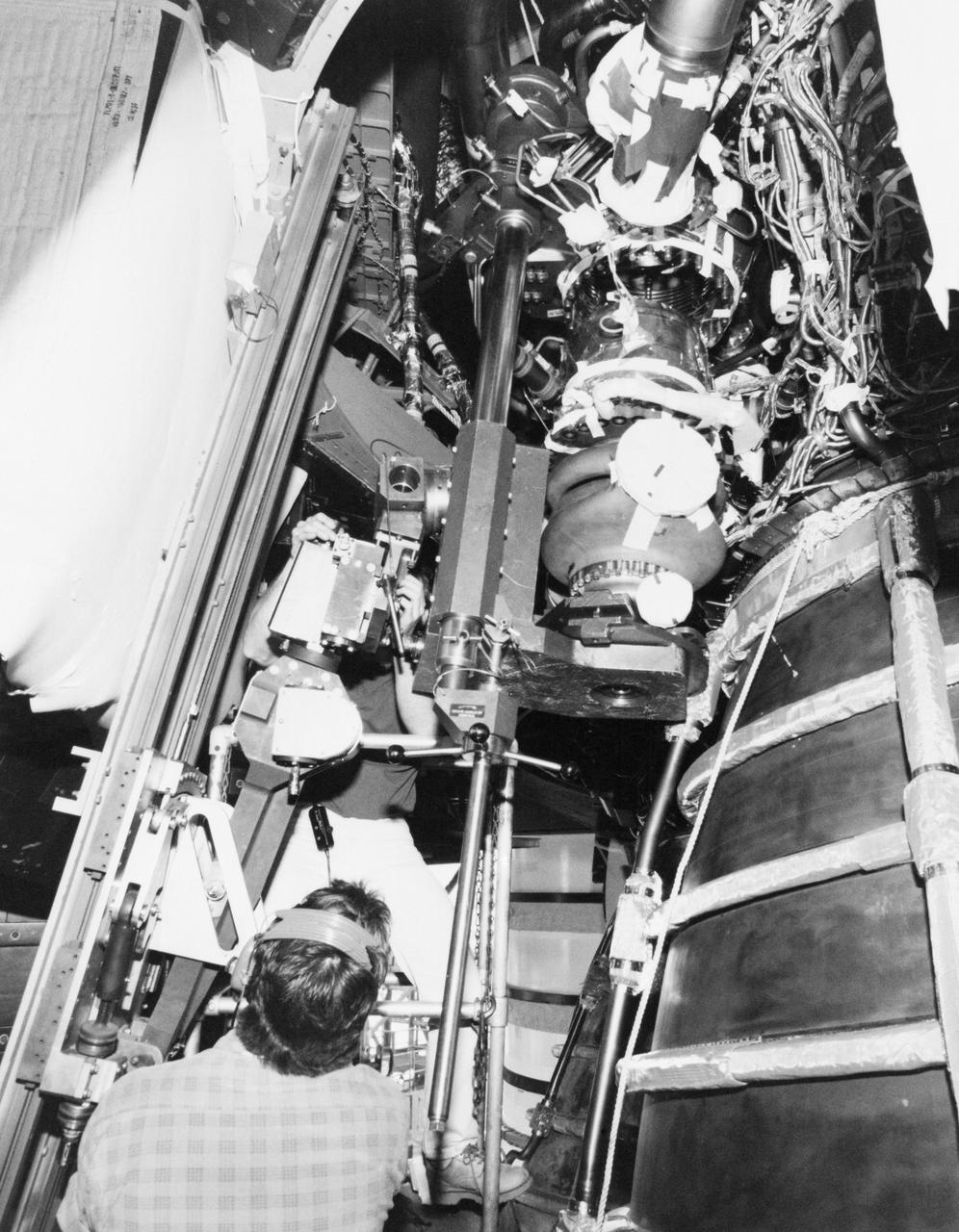
S89-28092 (7 Feb 1989) --- Kennedy Space Center technicians inspect an area near the three main engines of the Space Shuttle Discovery prior to the removal of one of three oxidozer turbo pumps. New pumps are scheduled to be installed soon. Now at Launch Pad 39-B, Discovery is set for launch in mid-March for Mission STS-29. Primary payload will be TDRS-D. Crewmembers are Astronauts Michael L. Coats, mission commander, John E. Blaha, pilot; along with James F. Buchli, Robert C. Springer and James P. Bagian, all mission specialists.
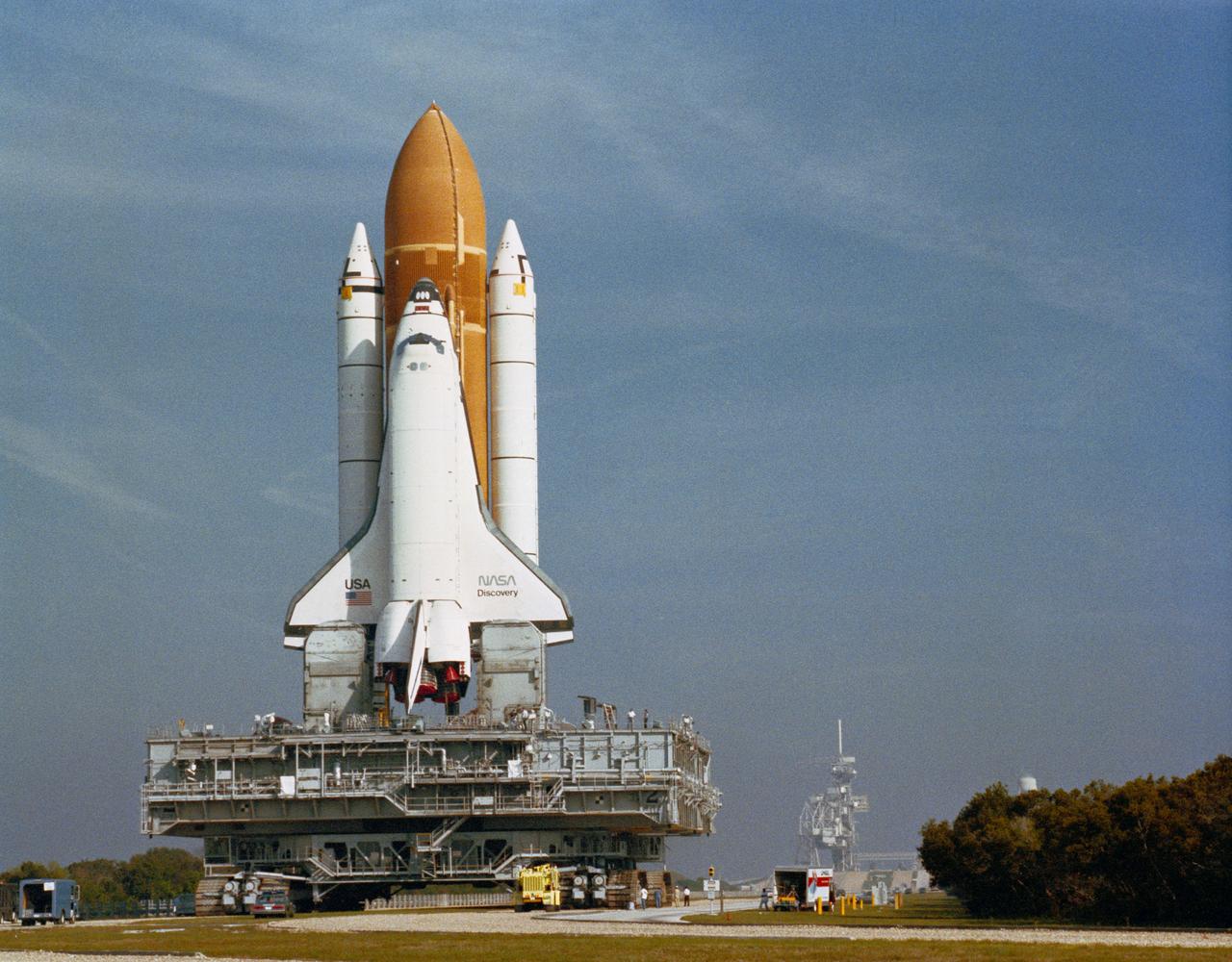
S89-28110 (3 Feb 1989) ---The Space Shuttle Discovery, atop a mobile launch platform, is rolled toward Kennedy Space Center's Launch Pad 39-B on Feb. 3, l989. It rolled through the doors of the huge vehicle assembly building (VAB) at 6 a.m.,several hours ago. The Launch Complex is in view here. The trip to the pad takes approximately 5 and 1/2 hours. Onboard the spacecraft in mid-March for a five-day mission, on which will be deployed a third tracking and data relay satellite (TDRS-D), will be Astronauts Michael L. Coats, John E. Blaha, James F. Buchli, James P. Bagian and Robert C. Springer.
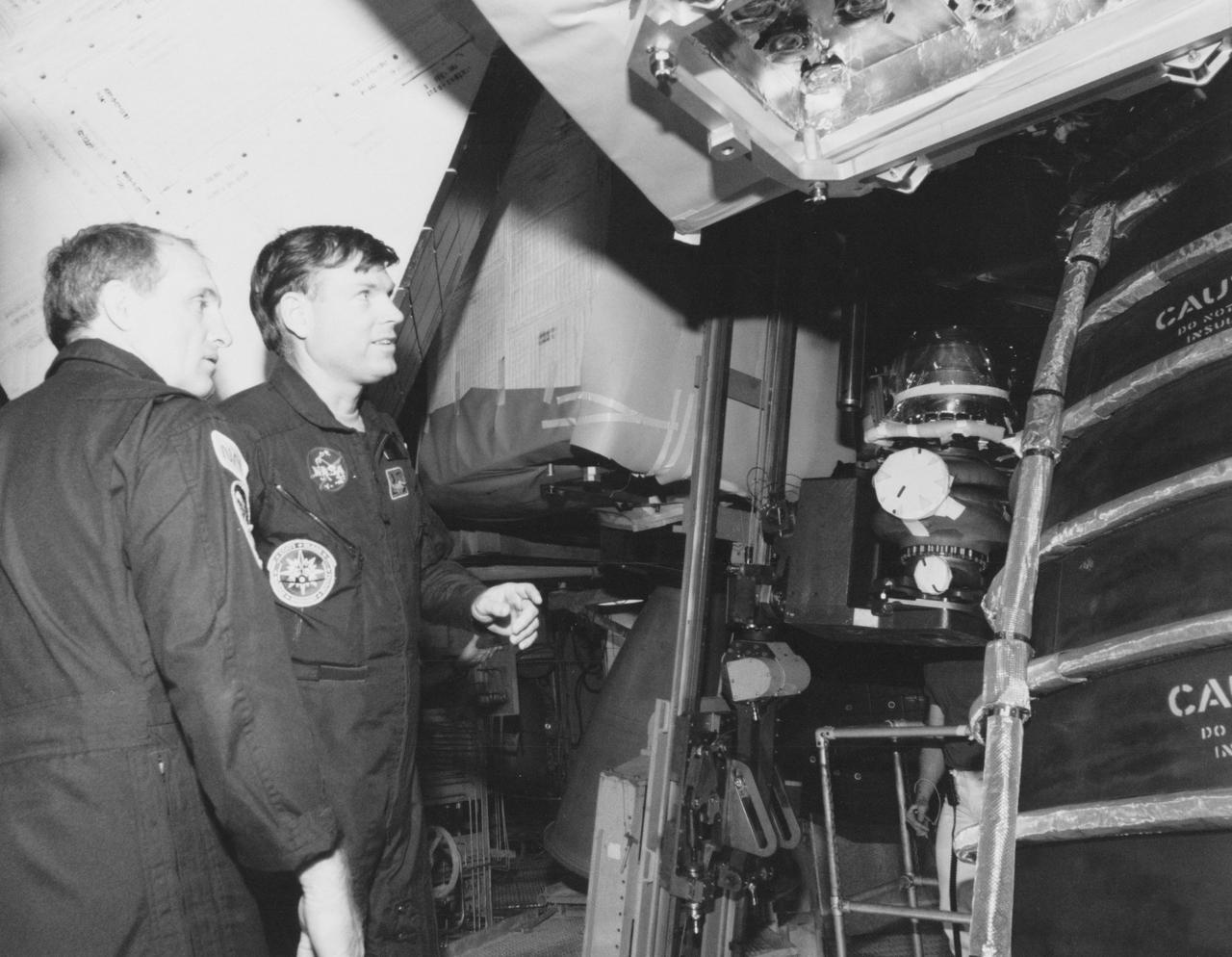
S89-28091 (7 Feb 1989) --- STS-29 astronauts inspect an area near the three main engines of the Space Shuttle Discovery prior to the removal of one of three oxidozer turbo pumps. Left to right are Astronauts James F. Buchli, mission specialist, and Michael L. Coats, mission commander. New pumps are scheduled to be installed soon. Now at Launch Pad 39-B, Discovery is set for launch in mid-March for Mission STS-29. Primary payload will be TDRS-D. Crewmembers not seen here are John E. Blaha, the pilot; and Robert C. Springer and James P. Bagian, both mission specialists.
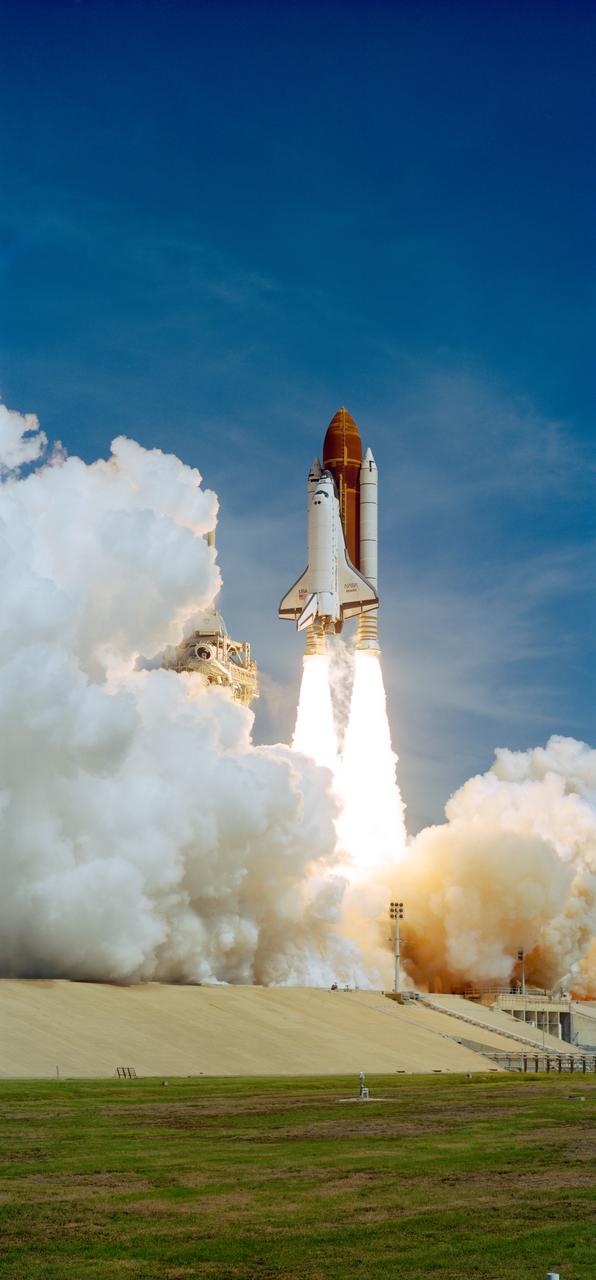
STS043-S-090 (2 Aug 1991) --- The Space Shuttle Atlantis soars toward space to begin a scheduled nine-day mission. The 11:02:00 a.m. (EDT) liftoff from Launch Pad 39A came at the beginning of the launch window. Onboard the spacecraft were astronauts John E. Blaha, mission commander; Michael A. Baker, pilot; and Shannon W. Lucid, James C. Adamson and G. David Low, all mission specialists. Six hours after this picture was taken, the astronauts deployed the Tracking and Data Relay Satellite (TDRS-E).
STS043-S-087 (2 Aug 1991) --- The Space Shuttle Atlantis soars toward space to begin a scheduled nine-day mission. The 11:02:00 a.m. (EDT) liftoff from Launch Pad 39A came at the beginning of the launch window. Onboard the spacecraft were astronauts John E. Blaha, mission commander; Michael A. Baker, pilot; and Shannon W. Lucid, James C. Adamson and G. David Low, all mission specialists. Six hours after this picture was taken, the astronauts deployed the Tracking and Data Relay Satellite (TDRS-E).
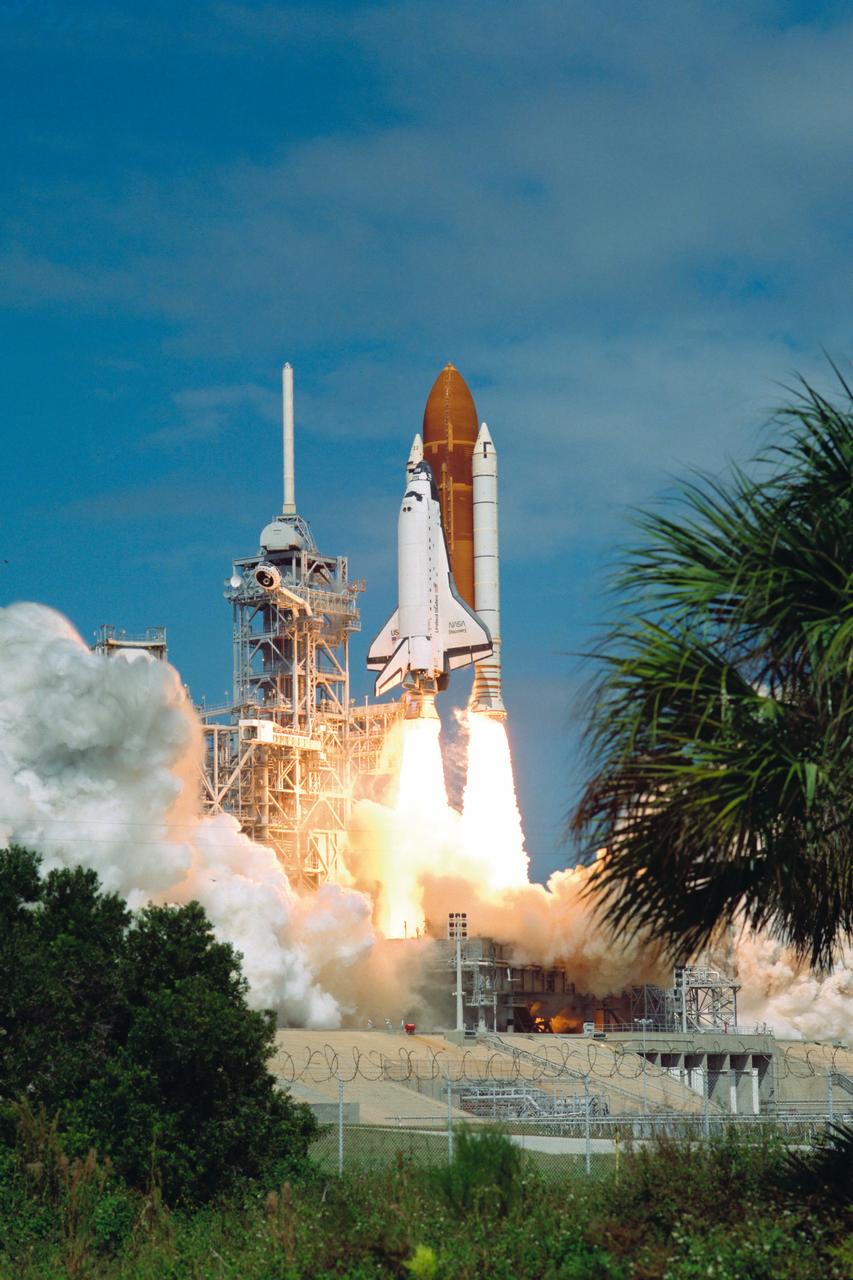
S26-S-187 (29 Sept. 1988) --- The STS-26 launch of space shuttle Discovery begins the first flight to be flown after the Challenger accident. The flight crew included astronauts Rick Hauck, commander; Dick Covey, pilot; and three mission specialists, Dave Hilmers, Mike Lounge, and George (Pinky) Nelson. During the four-day mission, the crew deployed the Tracking and Data Relay Satellite (TDRS-C) and operated eleven mid-deck experiments. Discovery completed 64 orbits of the earth before landing at Edwards Air Force Base, California, on October 3, 1988. Photo credit: NASA or National Aeronautics and Space Administration
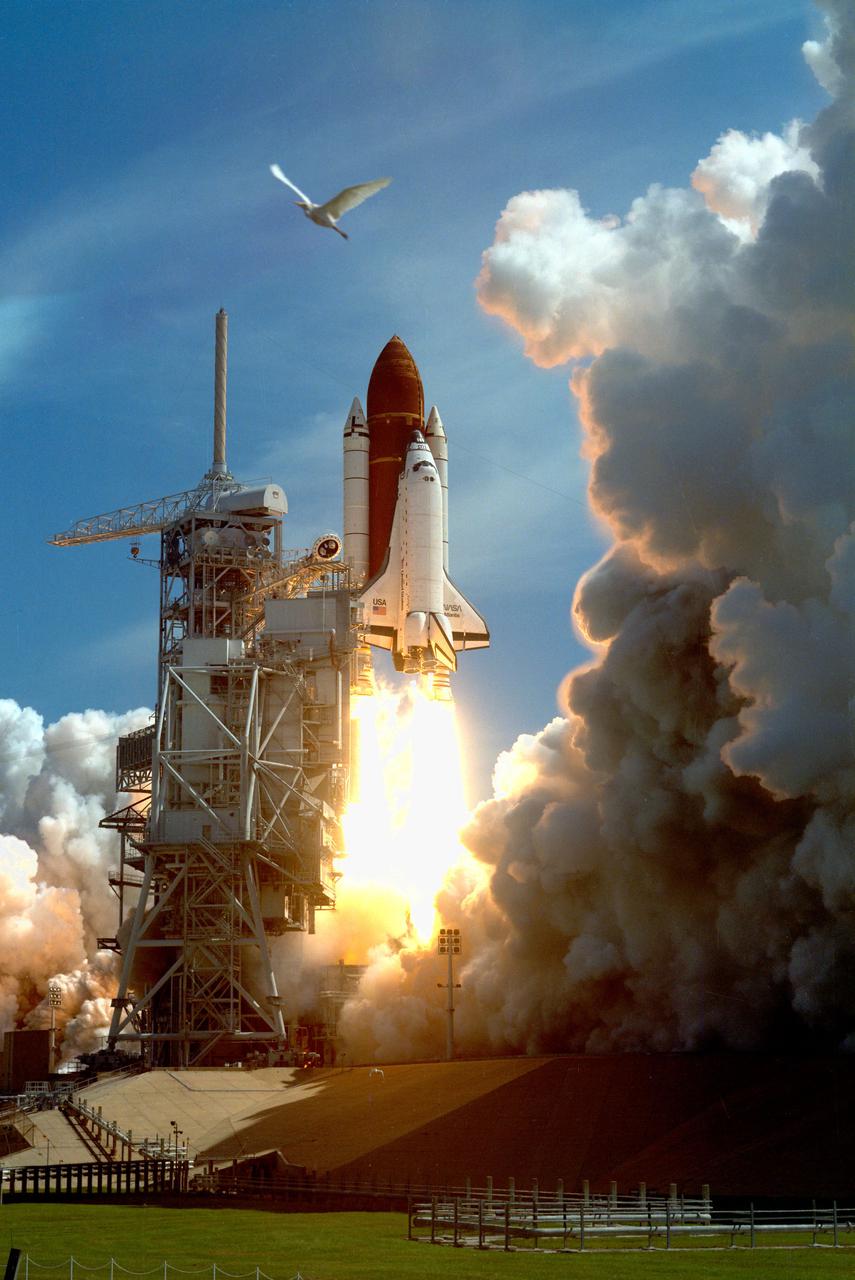
KENNEDY SPACE CENTER, FLA. - The Space Shuttle Atlantis breaks free from the confines of Earth as it soars towards space to begin its STS-43 nine-day mission. The 11:02 a.m. EDT liftoff from Launch Pad 39A was at the opening of the launch window. The five-member crew will conduct a variety of activities, including the primary objective of deploying the fourth Tracking and Data Relay Satellite TDRS-E. Crew members are Mission Commander John E. Blaha, Pilot Michael E. Baker, and Mission Specialists Shannon W. Lucid, James C. Adamson and G. David Low. Photo Credit: NASA
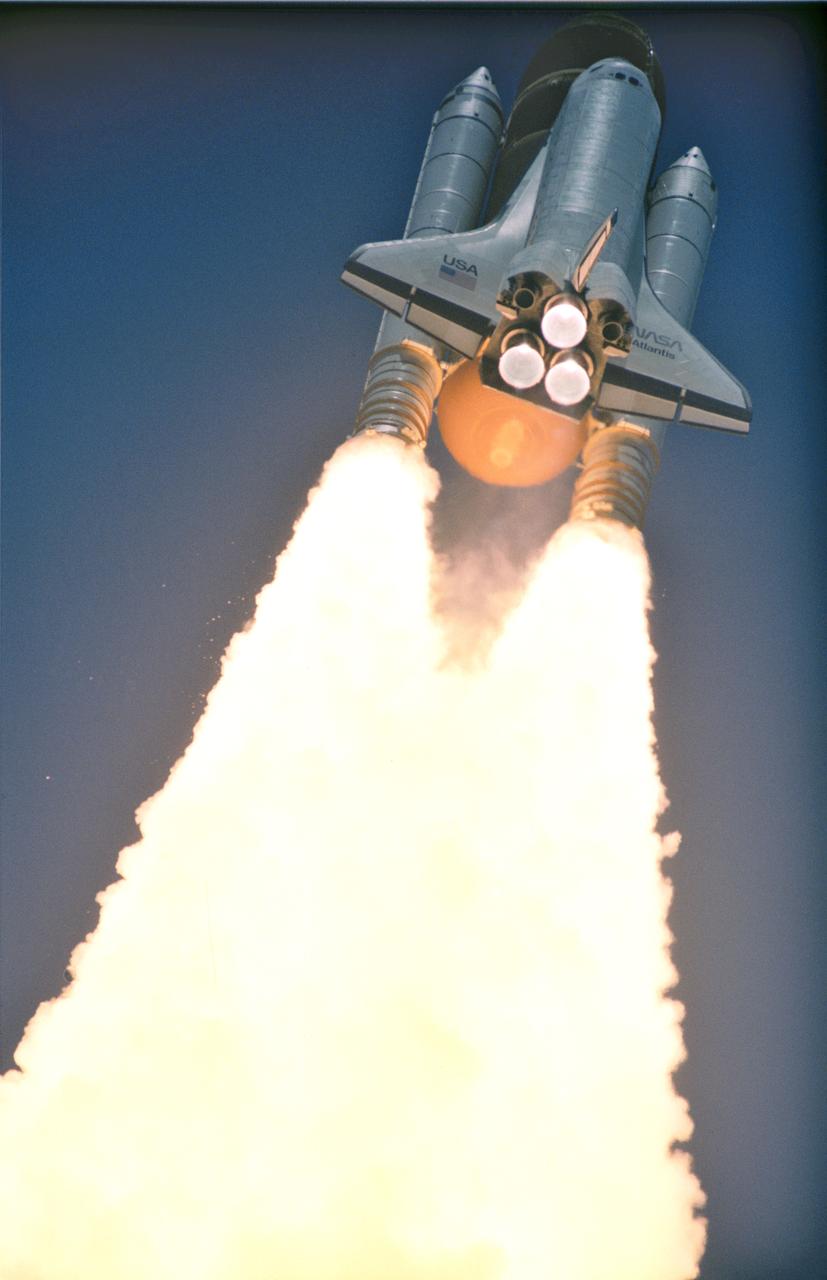
STS043-S-088 (2 Aug 1991) --- A low angle, 35mm view of the Space Shuttle Atlantis as it soars toward space to begin a scheduled nine-day mission. The 11:02:00 a.m. (EDT) liftoff from Launch Pad 39A came at the beginning of the launch window. Onboard the spacecraft were astronauts John E. Blaha, mission commander; Michael A. Baker, pilot; and Shannon W. Lucid, James C. Adamson and G. David Low, all mission specialists. Six hours after this picture was taken, the astronauts deployed the Tracking and Data Relay Satellite (TDRS-E).
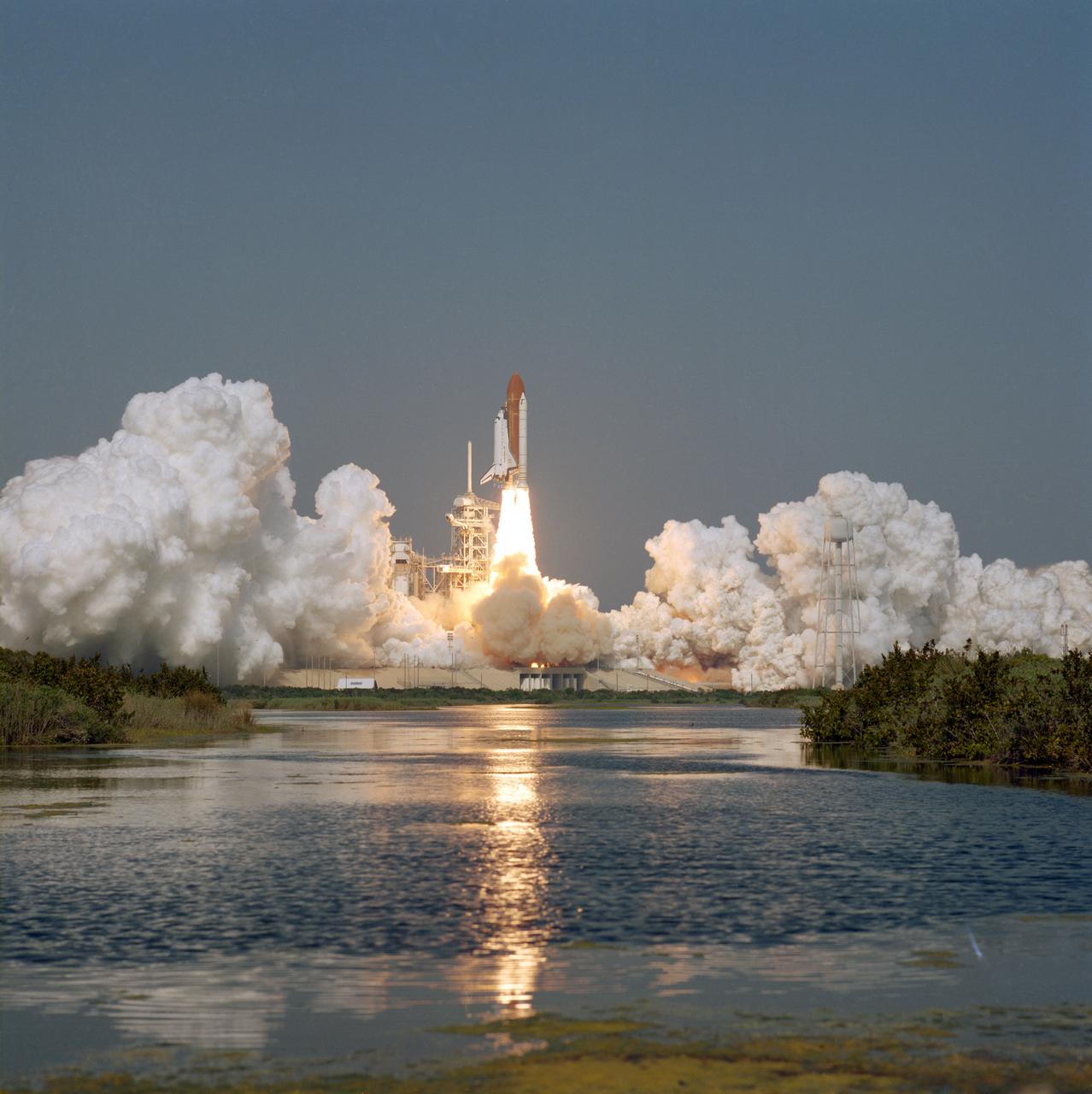
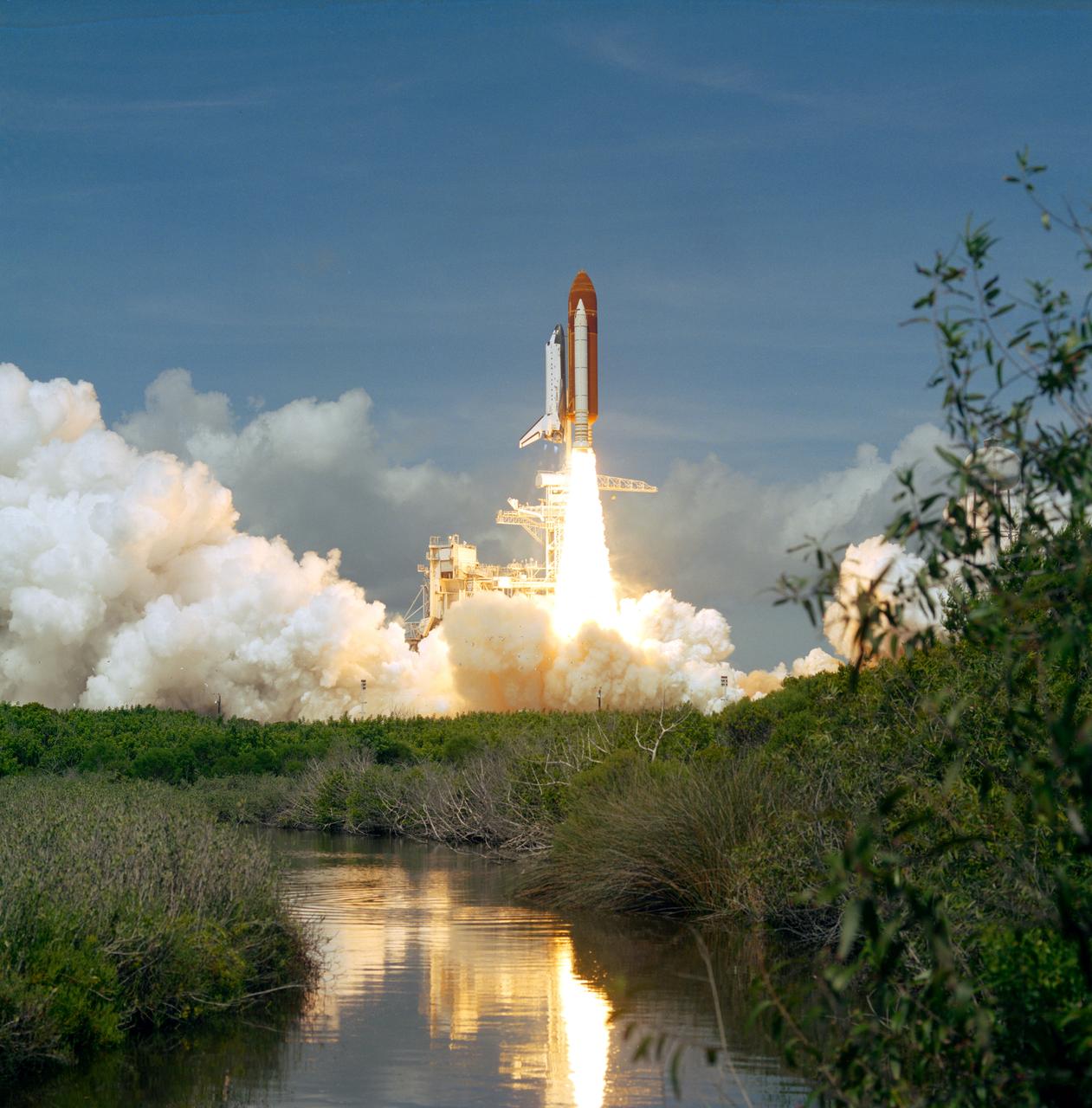
STS029-S-026 (13 Mar 1989) --- A wide shot of the Space Shuttle Discovery lifting off from Launch Pad 39B on mission STS-29. Discovery lifted off at 9:57 a.m. (EST), March 13, 1989, carrying the Tracking And Data Relay Satellite (TDRS-1) into orbit. The brilliant flames associated with the launch are reflected in the marsh waters. Onboard the spacecraft were astronauts Michael L. Coats, commander; John E. Blaha, pilot; and James F. Buchli, James P. Bagian and Robert C. Springer, all mission specialists.
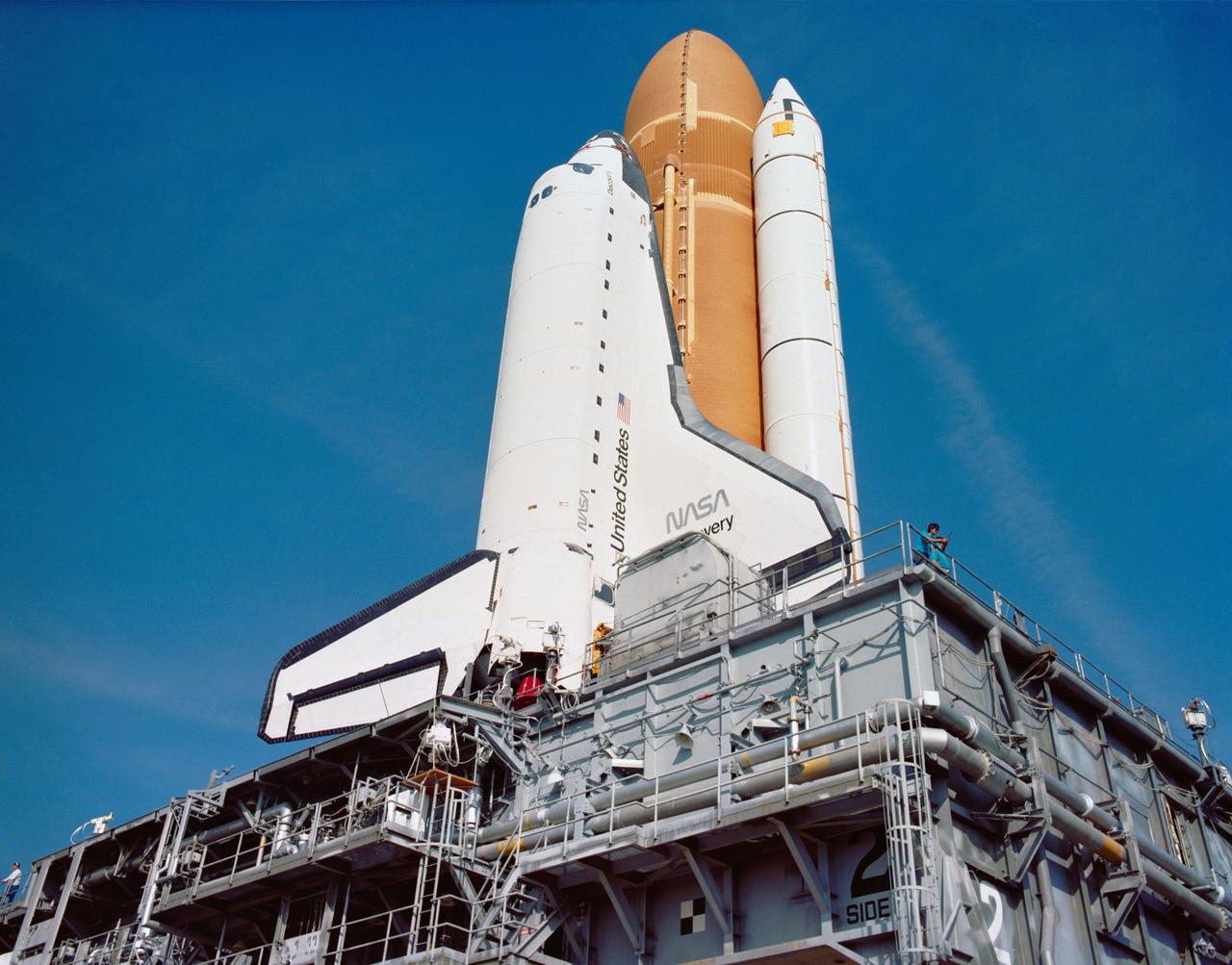
S89-28107 (3 Feb 1989) --- A low angle view of the Space Shuttle Discovery, atop a mobile launch platform, during its slow move to Kennedy Space Center's Launch Pad 39-B on Feb. 3, l989. It rolled through the doors of the huge vehicle assembly building (VAB) at 6 a.m., hours ago as the blue sky testifies. The trip to the pad takes approximately 5 and 1/2 hours. Onboard the spacecraft in mid-March for a five-day mission, on which will be deployed a third tracking and data relay satellite (TDRS-D), will be Astronauts Michael L. Coats, John E. Blaha, James F. Buchli, James P. Bagian and Robert C. Springer.