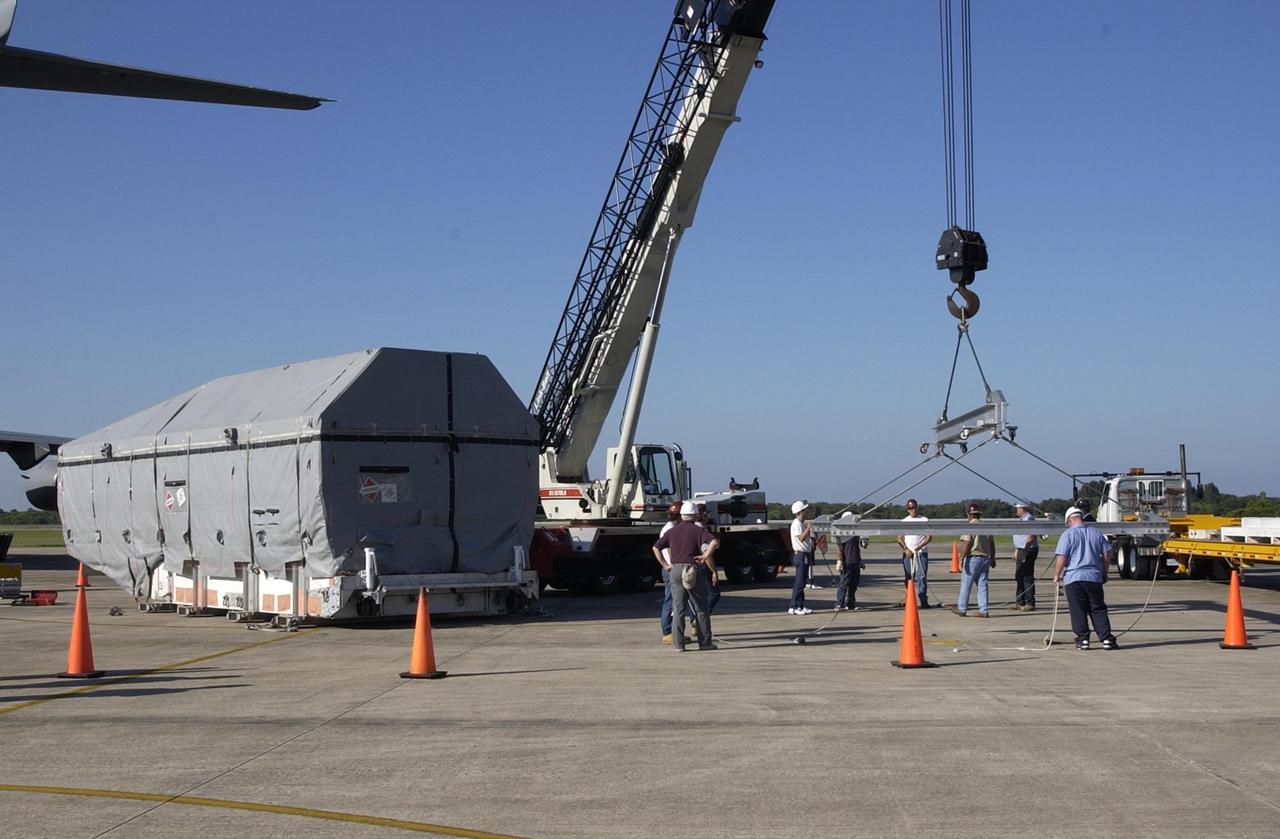
KENNEDY SPACE CENTER, FLA. - A crane is lifted from the SLF to attach to the container with the TDRS-J spacecraft inside (at left). The container will be placed on a transporter and taken to the Spacecraft Assembly and Encapsulation Facility-2 (SAEF-2). TDRS-J is the third in the current series of three Tracking and Data Relay Satellites designed to replenish the existing on-orbit fleet of six spacecraft, the first of which was launched in 1983. The Tracking and Data Relay Satellite System is the primary source of space-to-ground voice, data and telemetry for the Space Shuttle. It also provides communications with the International Space Station and scientific spacecraft in low-earth orbit such as the Hubble Space Telescope, and launch support for some expendable vehicles. This new advanced series of satellites will extend the availability of TDRS communications services until approximately 2017.
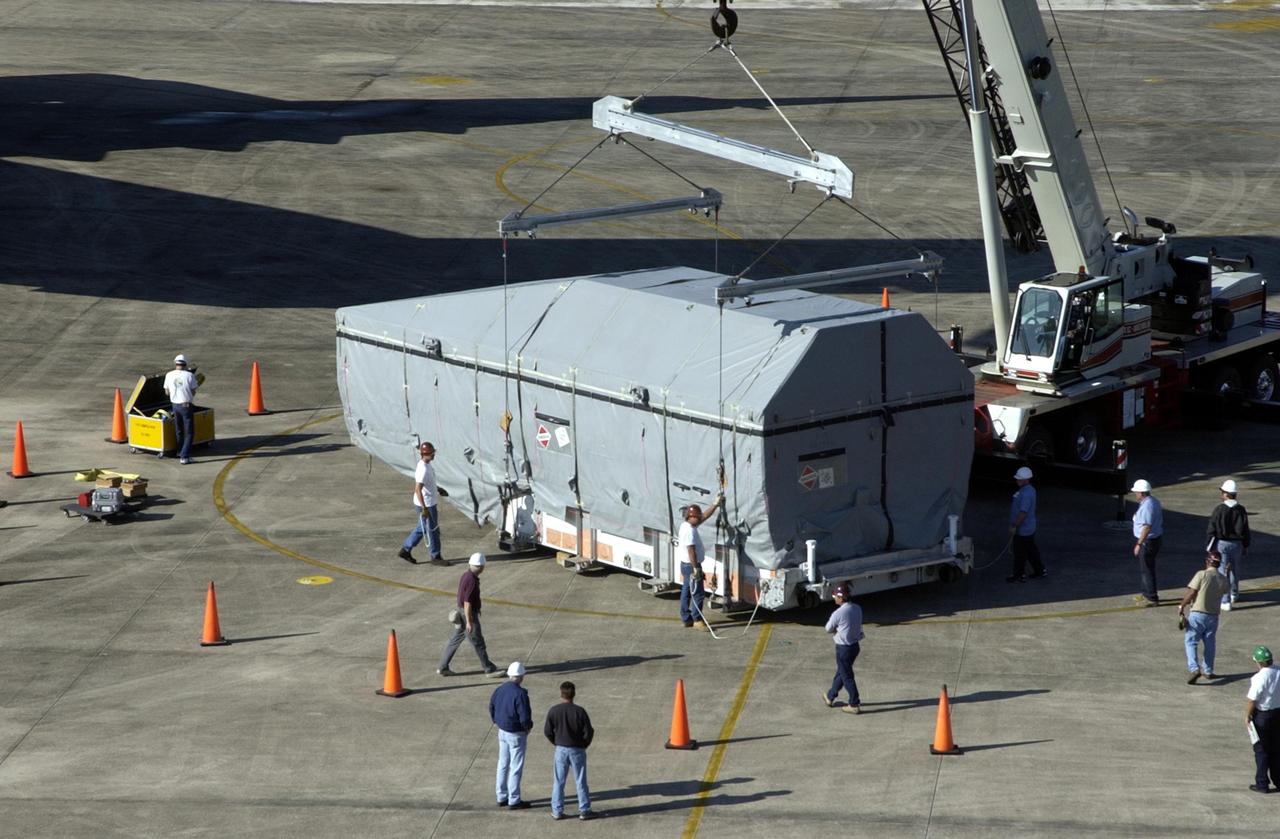
KENNEDY SPACE CENTER, FLA. - Workers attach the container with the TDRS-J spacecraft inside to an overhead crane. The container will be placed on a transporter and taken to the Spacecraft Assembly and Encapsulation Facility-2 (SAEF-2). TDRS-J is the third in the current series of three Tracking and Data Relay Satellites designed to replenish the existing on-orbit fleet of six spacecraft, the first of which was launched in 1983. The Tracking and Data Relay Satellite System is the primary source of space-to-ground voice, data and telemetry for the Space Shuttle. It also provides communications with the International Space Station and scientific spacecraft in low-earth orbit such as the Hubble Space Telescope, and launch support for some expendable vehicles. This new advanced series of satellites will extend the availability of TDRS communications services until approximately 2017.
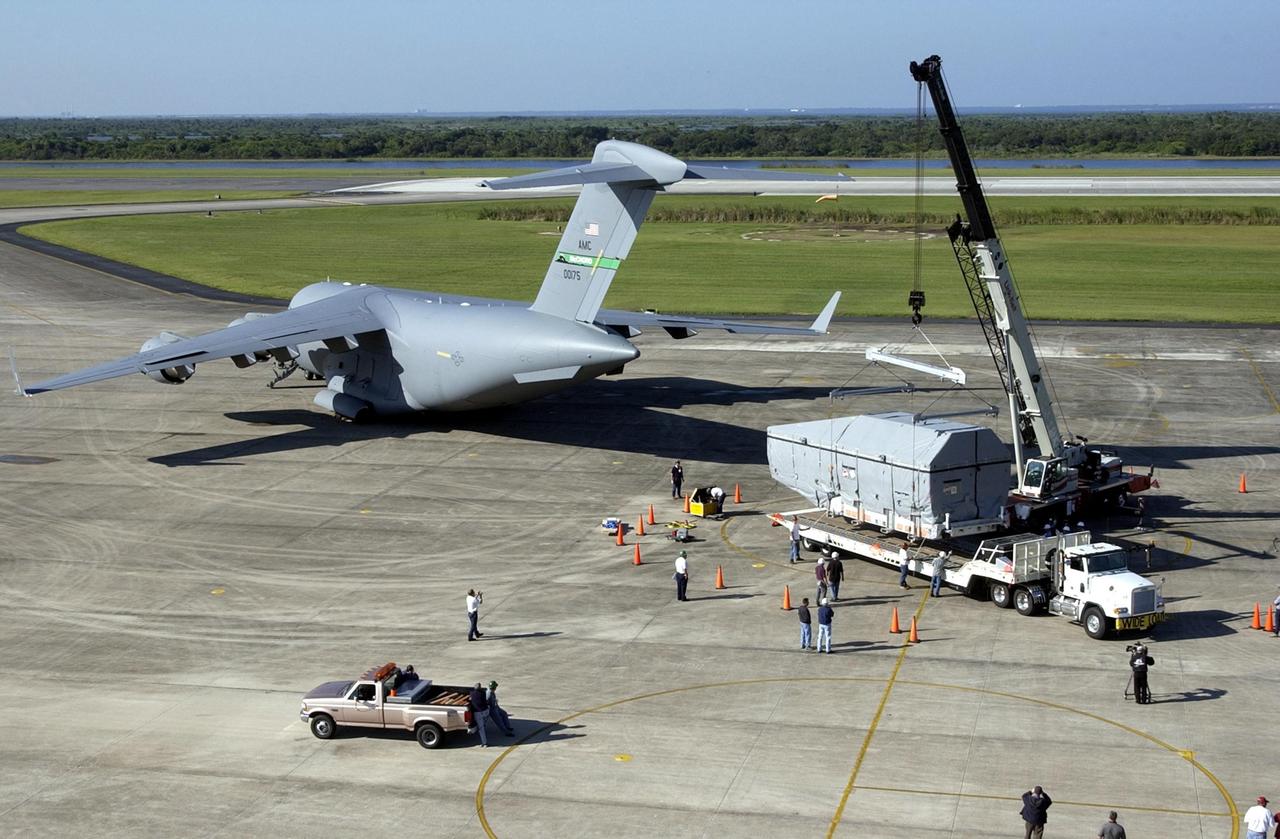
KENNEDY SPACE CENTER, FLA. - At the KSC Shuttle Landing Facility, an overhead crane lifts the container with the TDRS-J spacecraft onto a transport vehicle. In the background is the Air Force C-17 air cargo plane that delivered it. TDRS-J is the third in the current series of three Tracking and Data Relay Satellites designed to replenish the existing on-orbit fleet of six spacecraft, the first of which was launched in 1983. The Tracking and Data Relay Satellite System is the primary source of space-to-ground voice, data and telemetry for the Space Shuttle. It also provides communications with the International Space Station and scientific spacecraft in low-earth orbit such as the Hubble Space Telescope, and launch support for some expendable vehicles. This new advanced series of satellites will extend the availability of TDRS communications services until approximately 2017.
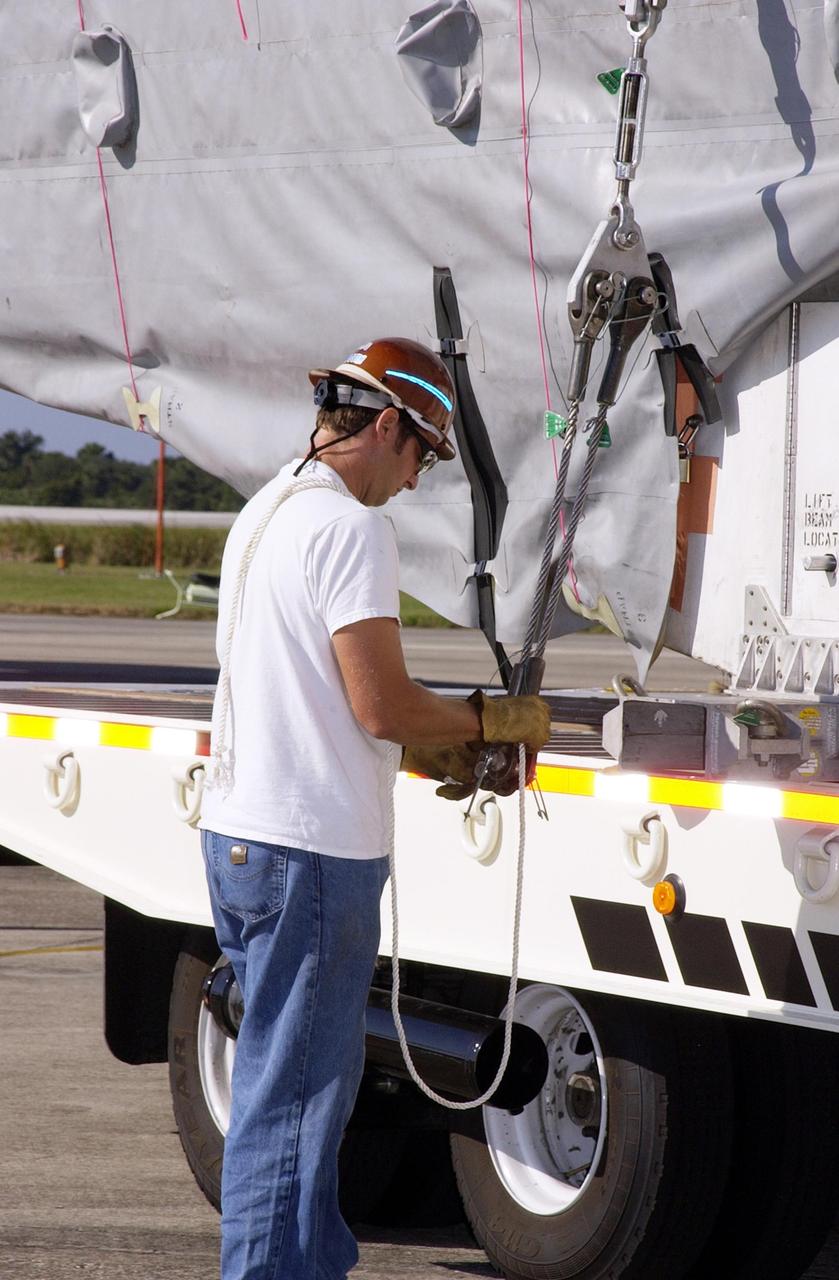
KENNEDY SPACE CENTER, FLA. - A worker ties down the container with the TDRS-J spacecraft onto a transport vehicle. TDRS-J is the third in the current series of three Tracking and Data Relay Satellites designed to replenish the existing on-orbit fleet of six spacecraft, the first of which was launched in 1983. The Tracking and Data Relay Satellite System is the primary source of space-to-ground voice, data and telemetry for the Space Shuttle. It also provides communications with the International Space Station and scientific spacecraft in low-earth orbit such as the Hubble Space Telescope, and launch support for some expendable vehicles. This new advanced series of satellites will extend the availability of TDRS communications services until approximately 2017.
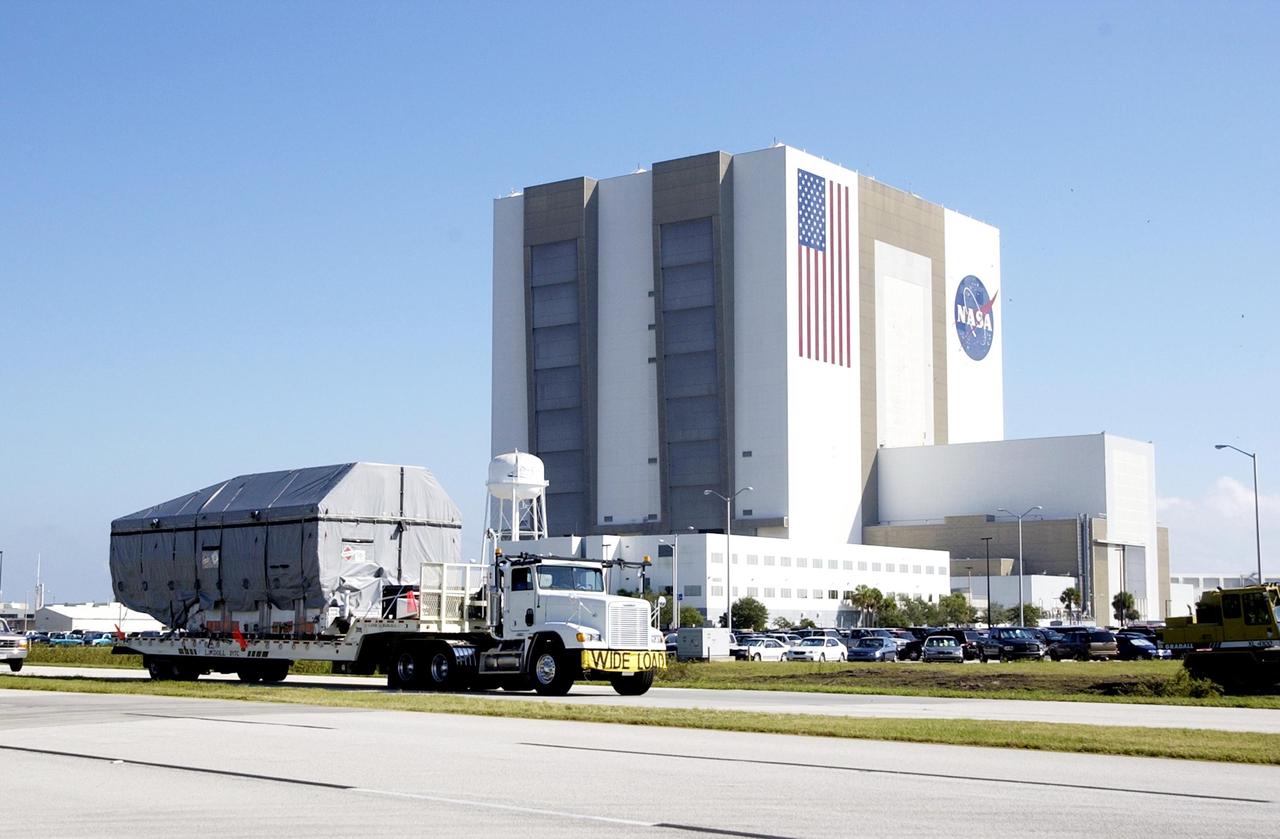
KENNEDY SPACE CENTER, FLA. - The TDRS-J spacecraft, enclosed in a container, is transported past the Vehicle Assembly Building on its way to the Spacecraft Assembly and Encapsulation Facility-2 (SAEF-2) for processing. The Tracking and Data Relay Satellite System is the primary source of space-to-ground voice, data and telemetry for the Space Shuttle. It also provides communications with the International Space Station and scientific spacecraft in low-earth orbit such as the Hubble Space Telescope, and launch support for some expendable vehicles. This new advanced series of satellites will extend the availability of TDRS communications services until approximately 2017.
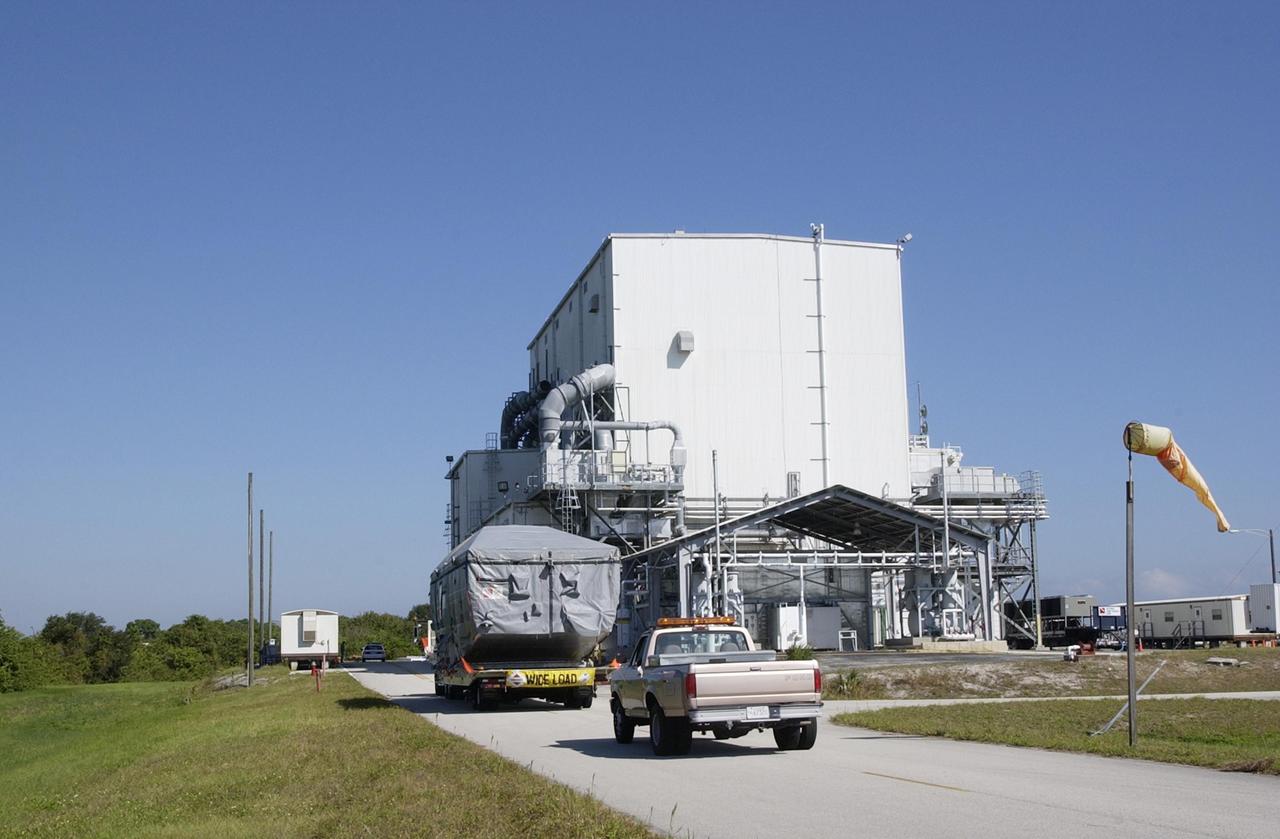
KENNEDY SPACE CENTER, FLA. - The TDRS-J spacecraft, enclosed in a container, arrives at the Spacecraft Assembly and Encapsulation Facility-2 (SAEF-2) for processing. The Tracking and Data Relay Satellite System is the primary source of space-to-ground voice, data and telemetry for the Space Shuttle. It also provides communications with the International Space Station and scientific spacecraft in low-earth orbit such as the Hubble Space Telescope, and launch support for some expendable vehicles. This new advanced series of satellites will extend the availability of TDRS communications services until approximately 2017.