
KENNEDY SPACE CENTER, FLA. -- The TDRS-J satellite rests inside the first half of the fairing during encapsulation. The satellite is scheduled to be launched aboard a Lockheed Martin Atlas IIA-Centaur rocket from Launch Complex 36-A, Cape Canaveral Air Force Station, Fla., on Dec. 4. The third in a series of telemetry satellites, TDRS-J will help replenish the current constellation of geosynchronous TDRS satellites. The TDRS System is the primary source of space-to-ground voice, data and telemetry for the Space Shuttle. It also provides communications with the International Space Station and scientific spacecraft in low-Earth orbit such as the Hubble Space Telescope. This new advanced series of satellites will extend the availability of TDRS communications services until about 2017.
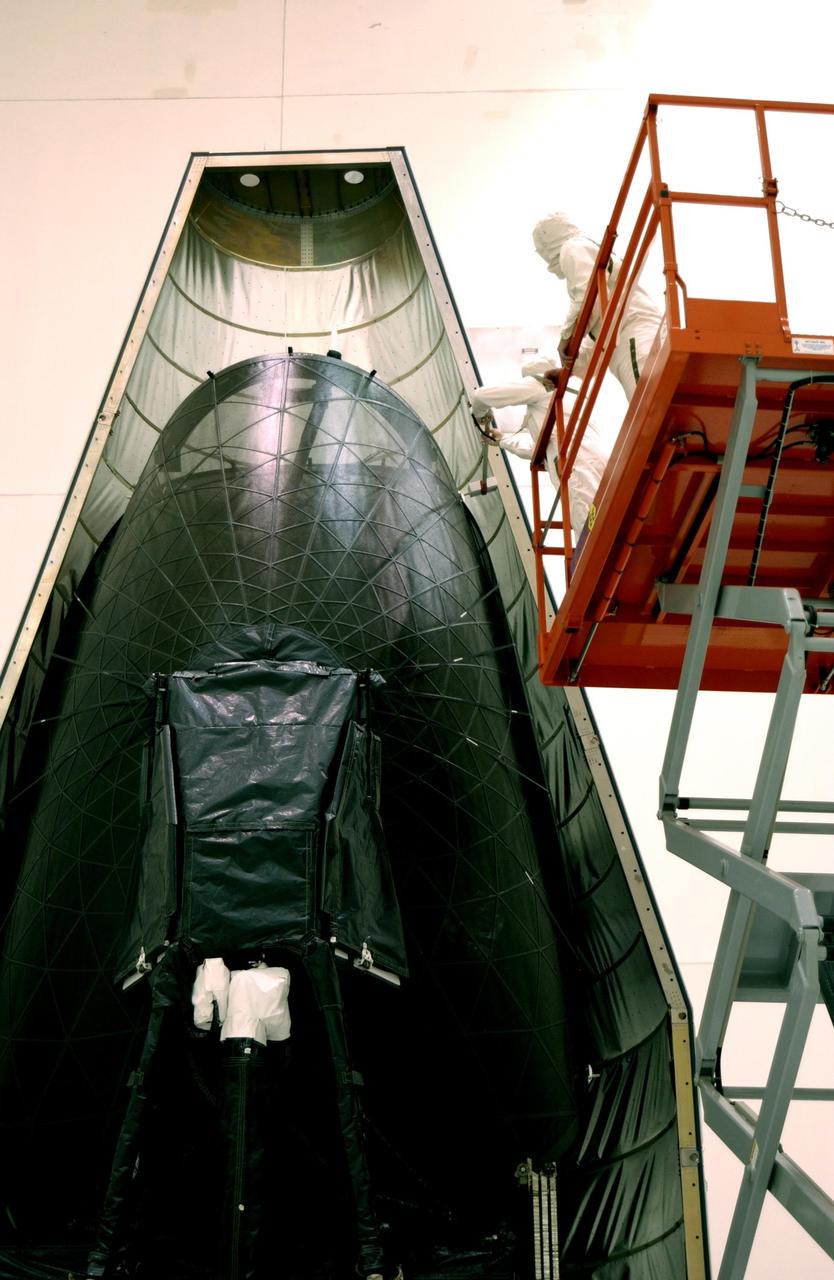
KENNEDY SPACE CENTER, FLA. -- The TDRS-J satellite rests inside the first half of the fairing during encapsulation. The satellite is scheduled to be launched aboard a Lockheed Martin Atlas IIA-Centaur rocket from Launch Complex 36-A, Cape Canaveral Air Force Station, Fla., on Dec. 4. The third in a series of telemetry satellites, TDRS-J will help replenish the current constellation of geosynchronous TDRS satellites. The TDRS System is the primary source of space-to-ground voice, data and telemetry for the Space Shuttle. It also provides communications with the International Space Station and scientific spacecraft in low-Earth orbit such as the Hubble Space Telescope. This new advanced series of satellites will extend the availability of TDRS communications services until about 2017.
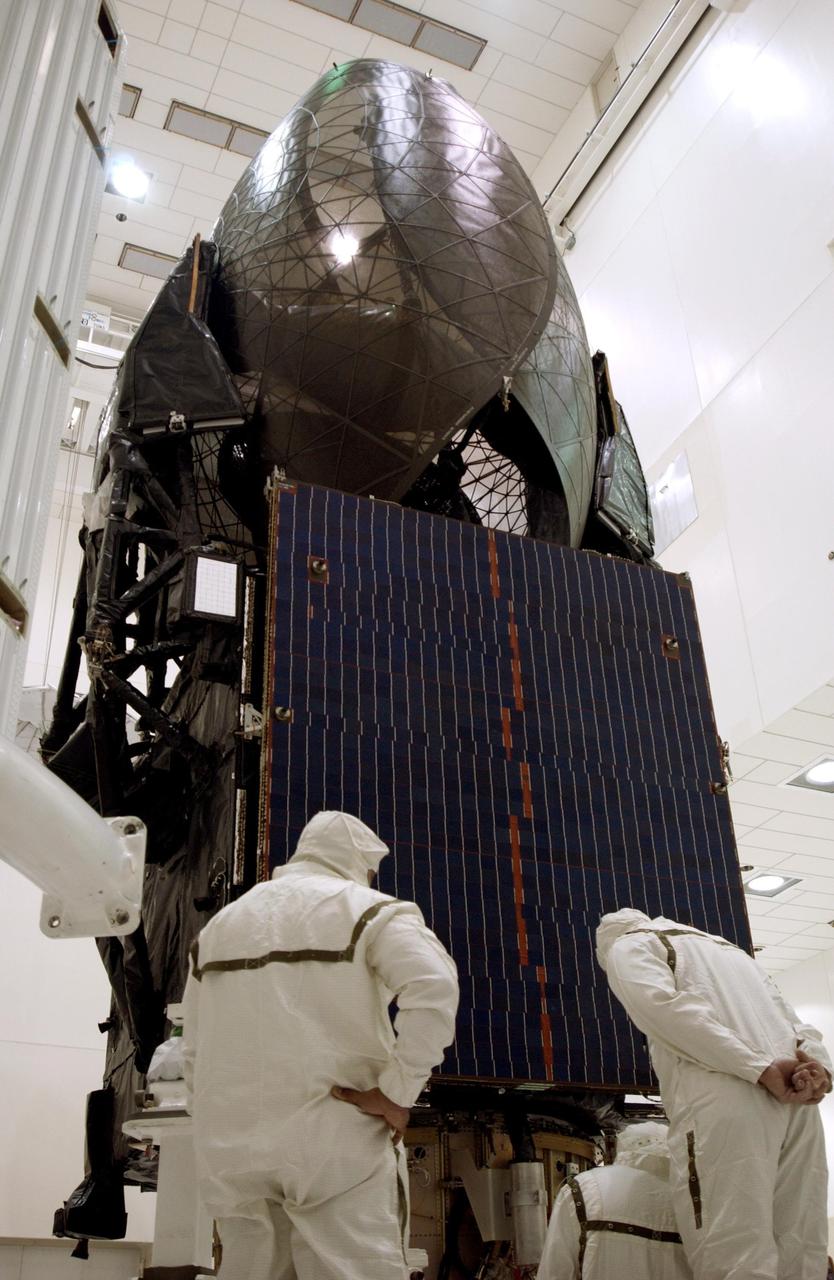
KENNEDY SPACE CENTER, FLA. -- Workers keep check on the TDRS-J satellite (foreground) as the fairing (background) moves toward it for encapsulation. The satellite is scheduled to be launched aboard a Lockheed Martin Atlas IIA-Centaur rocket from Launch Complex 36-A, Cape Canaveral Air Force Station, Fla., on Dec. 4. The third in a series of telemetry satellites, TDRS-J will help replenish the current constellation of geosynchronous TDRS satellites. The TDRS System is the primary source of space-to-ground voice, data and telemetry for the Space Shuttle. It also provides communications with the International Space Station and scientific spacecraft in low-Earth orbit such as the Hubble Space Telescope. This new advanced series of satellites will extend the availability of TDRS communications services until about 2017.
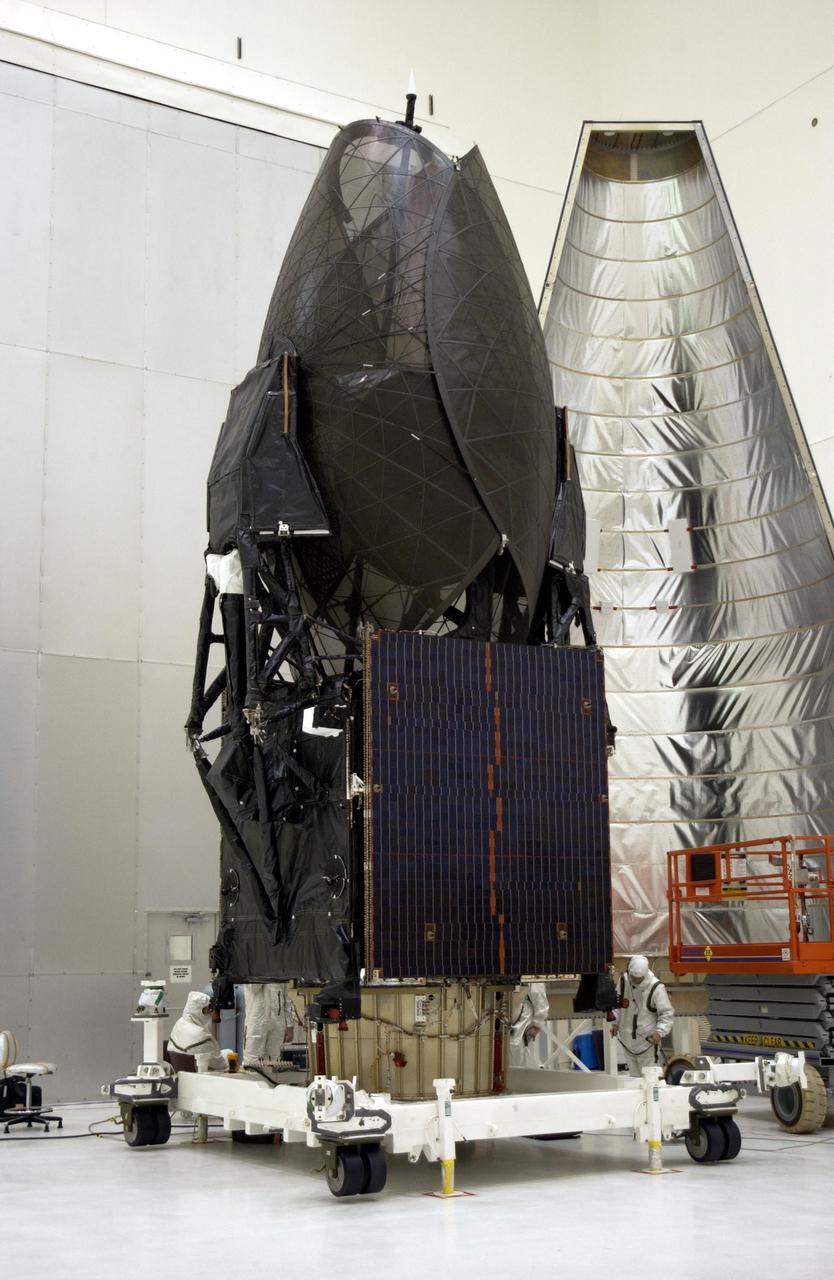
KENNEDY SPACE CENTER, FLA. -- The fairing (left) is moved toward the TDRS-J satellite (right) for encapsulation. The satellite is scheduled to be launched aboard a Lockheed Martin Atlas IIA-Centaur rocket from Launch Complex 36-A, Cape Canaveral Air Force Station, Fla., on Dec. 4. The third in a series of telemetry satellites, TDRS-J will help replenish the current constellation of geosynchronous TDRS satellites. The TDRS System is the primary source of space-to-ground voice, data and telemetry for the Space Shuttle. It also provides communications with the International Space Station and scientific spacecraft in low-Earth orbit such as the Hubble Space Telescope. This new advanced series of satellites will extend the availability of TDRS communications services until about 2017.