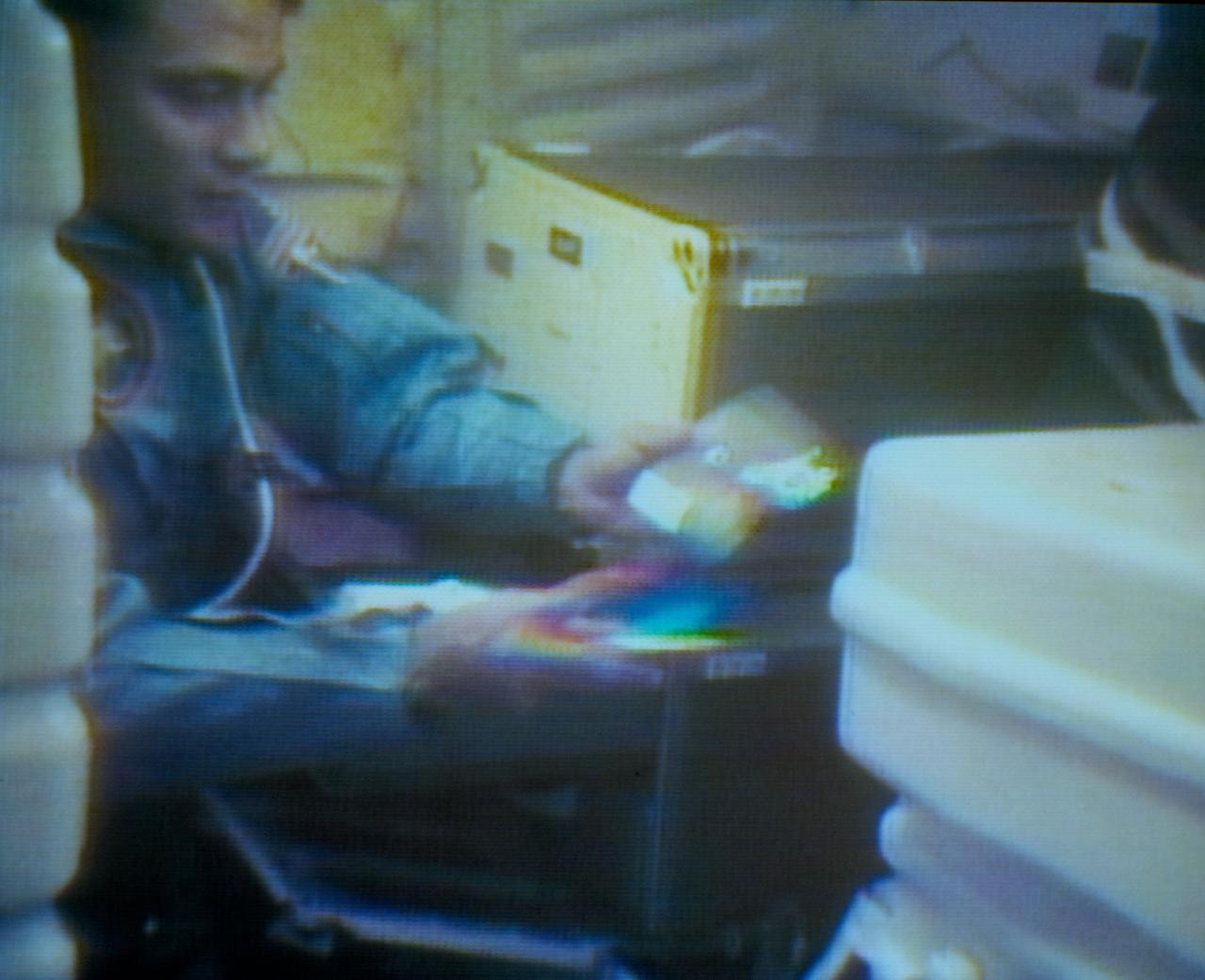
Press conference panel interviewing STS-8 onboard crew, 09/02/1983. Crew can be seen on TV screen.
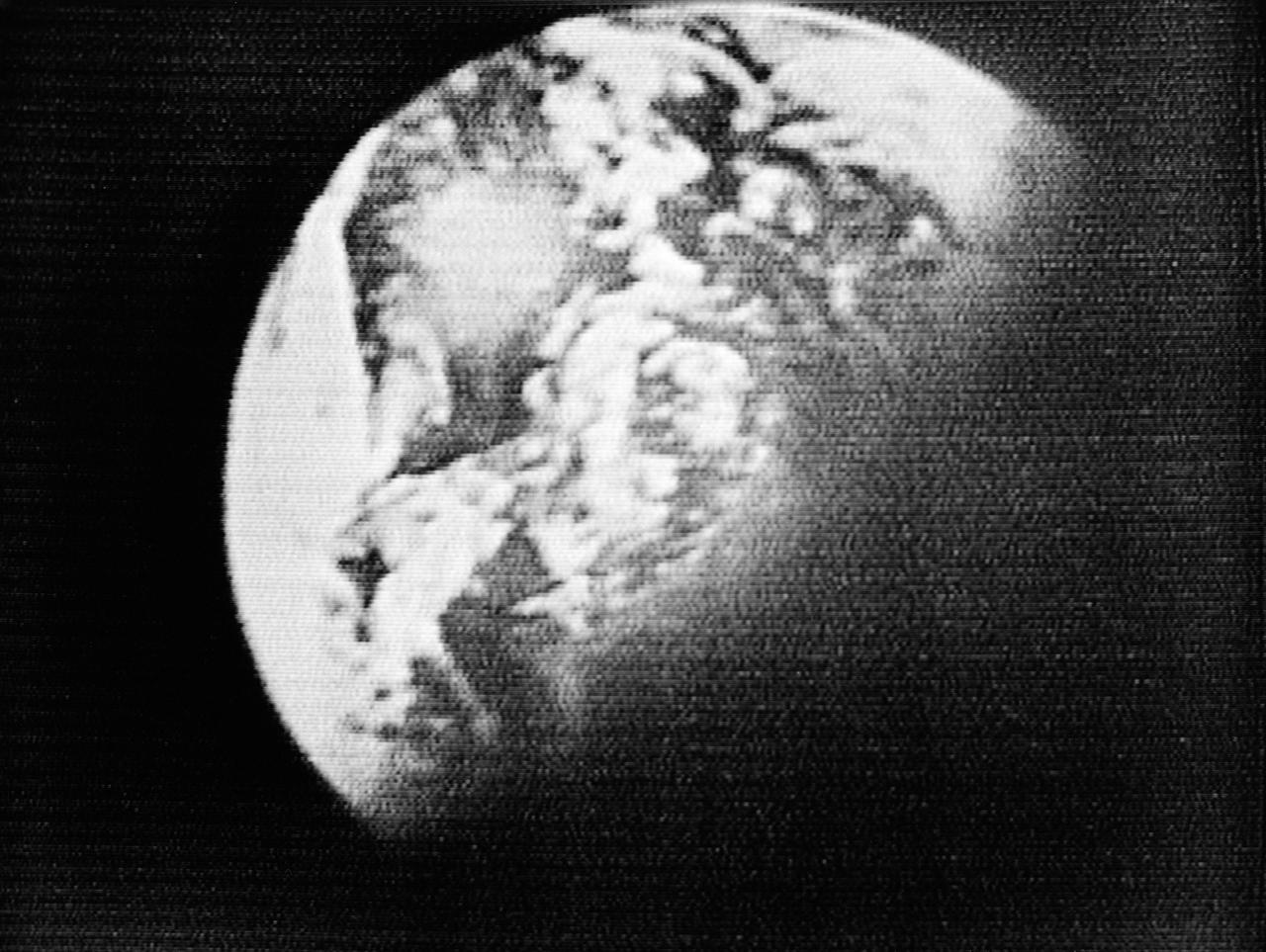
S68-56045 (26 Dec. 1968) --- Television viewers saw this picture of Earth during the sixth live telecast from the Apollo 8 spacecraft as it continued its journey home. At the time this picture was made, the Apollo 8 spacecraft, with astronauts Frank Borman, commander; James A. Lovell Jr., command module pilot; and William A. Anders, lunar module pilot, aboard, was about 97,000 nautical miles from Earth, and was traveling at a speed of 6,084 feet per second. As the spacecraft continued its trans-Earth course, the Apollo 8 crew noted that "Earth was getting larger" and that they were looking forward to being home.
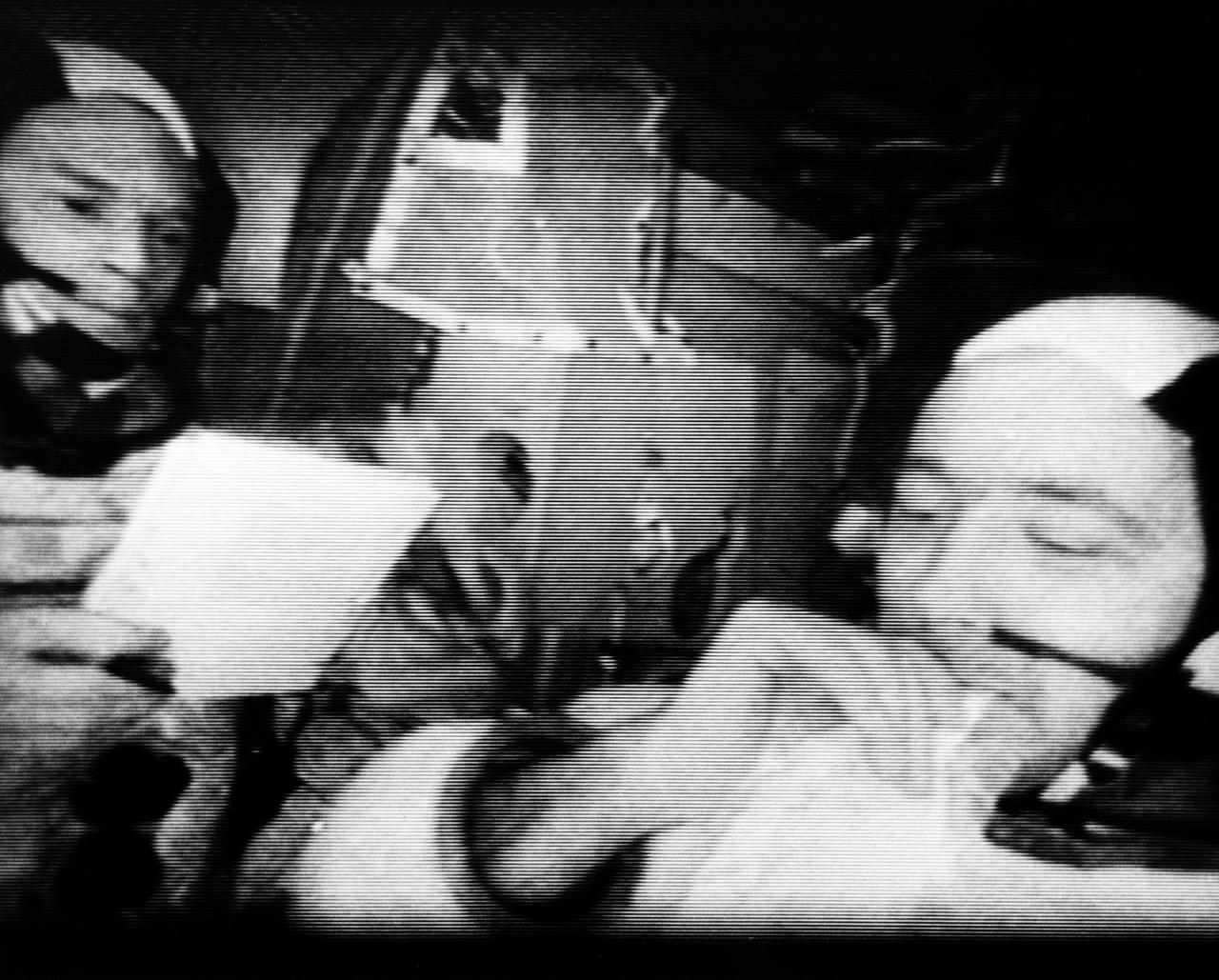
S69-26698 (March 1969) --- A photograph from a live television transmission from Apollo 9. This view shows the interior of the Lunar Module "Spider." Astronaut James A. McDivitt, Apollo 9 commander, is in right foreground. In left background is astronaut Russell L. Schweickart, lunar module pilot. At this moment Apollo 9 was orbiting Earth with the Command Module docked nose-to-nose with the Lunar Module. Astronaut David R. Scott, command module pilot, remained at the controls in the Command Module "Gumdrop" while the other two astronauts checked out the Lunar Module.
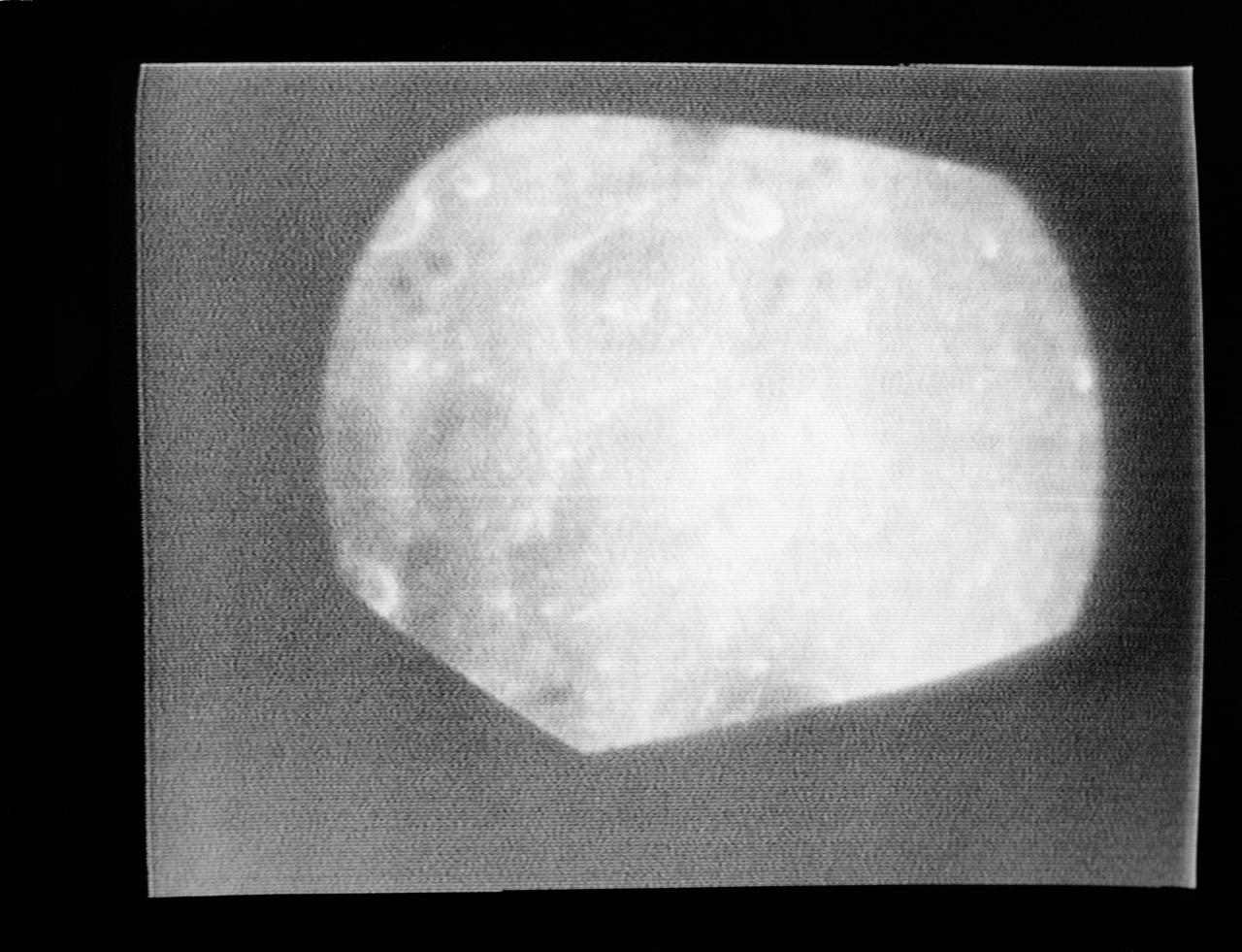
S68-55816 (24 Dec. 1968) --- This is how the surface of the moon looked from an altitude of approximately 60 miles as photographed by a television camera aboard the Apollo 8 spacecraft. This is Apollo 8's third live television transmission back to Earth. At the time this picture was made, the Apollo 8 spacecraft, with astronauts Frank Borman, James A. Lovell Jr., and William A. Anders aboard, was making its second revolution of the moon.
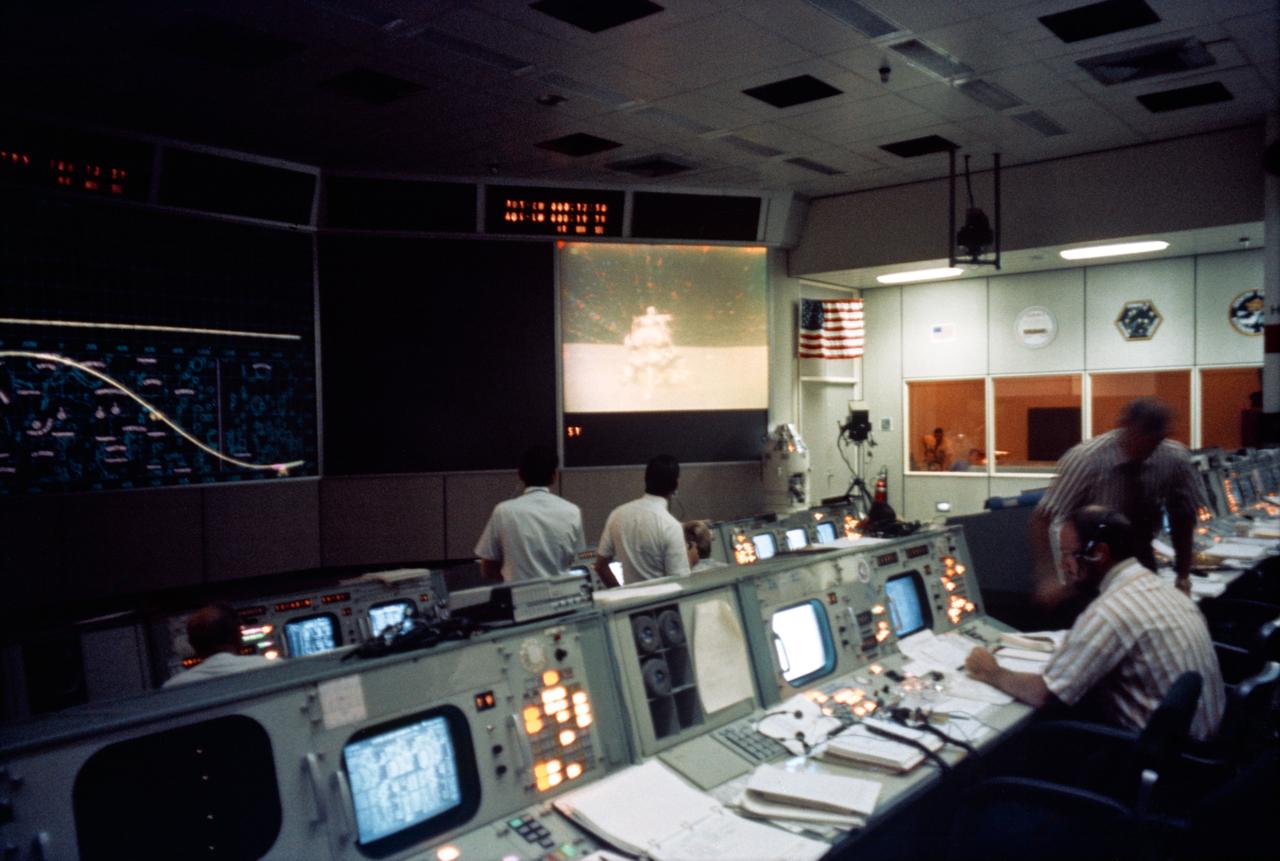
S71-41759 (2 Aug. 1971) --- A partial view of activity in the Mission Operations Control Room in the Mission Control Center during the liftoff of the Apollo 15 Lunar Module "Falcon" ascent stage from the lunar surface. An RCA color television camera mounted on the Lunar Roving Vehicle made it possible for people on Earth to watch the LM's spectacular launch from the moon. The LM liftoff was at 171:37 ground elapsed time. The LRV was parked about 300 feet east of the LM. The TV camera was remotely controlled from a console in the MOCR. Seated in the right foreground is astronaut Edgar D. Mitchell, a spacecraft communicator. Mitchell was lunar module pilot of the Apollo 14 lunar landing mission. Note liftoff on the television monitor in the center background.
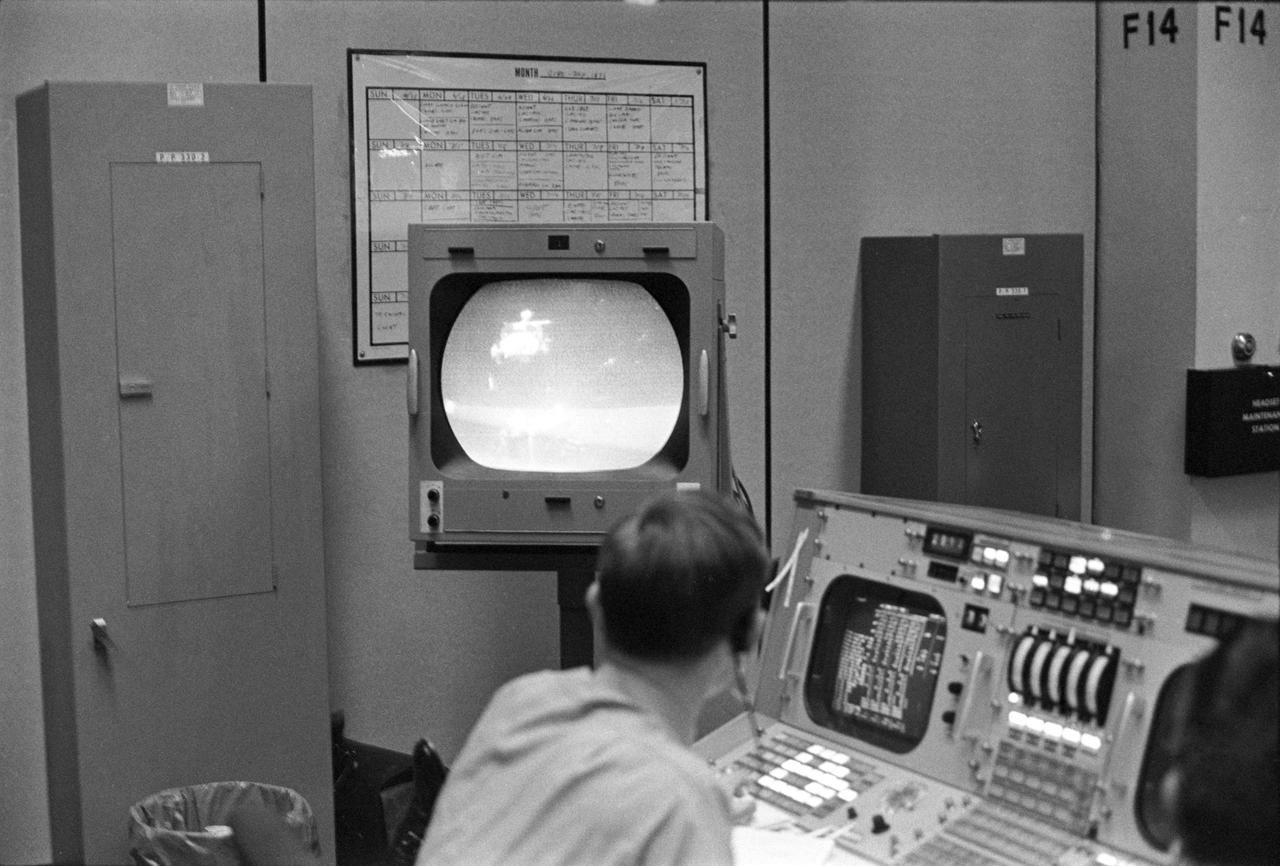
View of a photograph of the television (TV) monitor in the MCC showing a picture being transmitted from the color TV camera mounted on the parked Lunar Roving Vehicle (LRV) at the Hadley-Apennine Landing Site showing the liftoff of the Apollo 15 Lunar Module (LM) Ascent Stage from the Lunar surface. MSC, Houston, TX
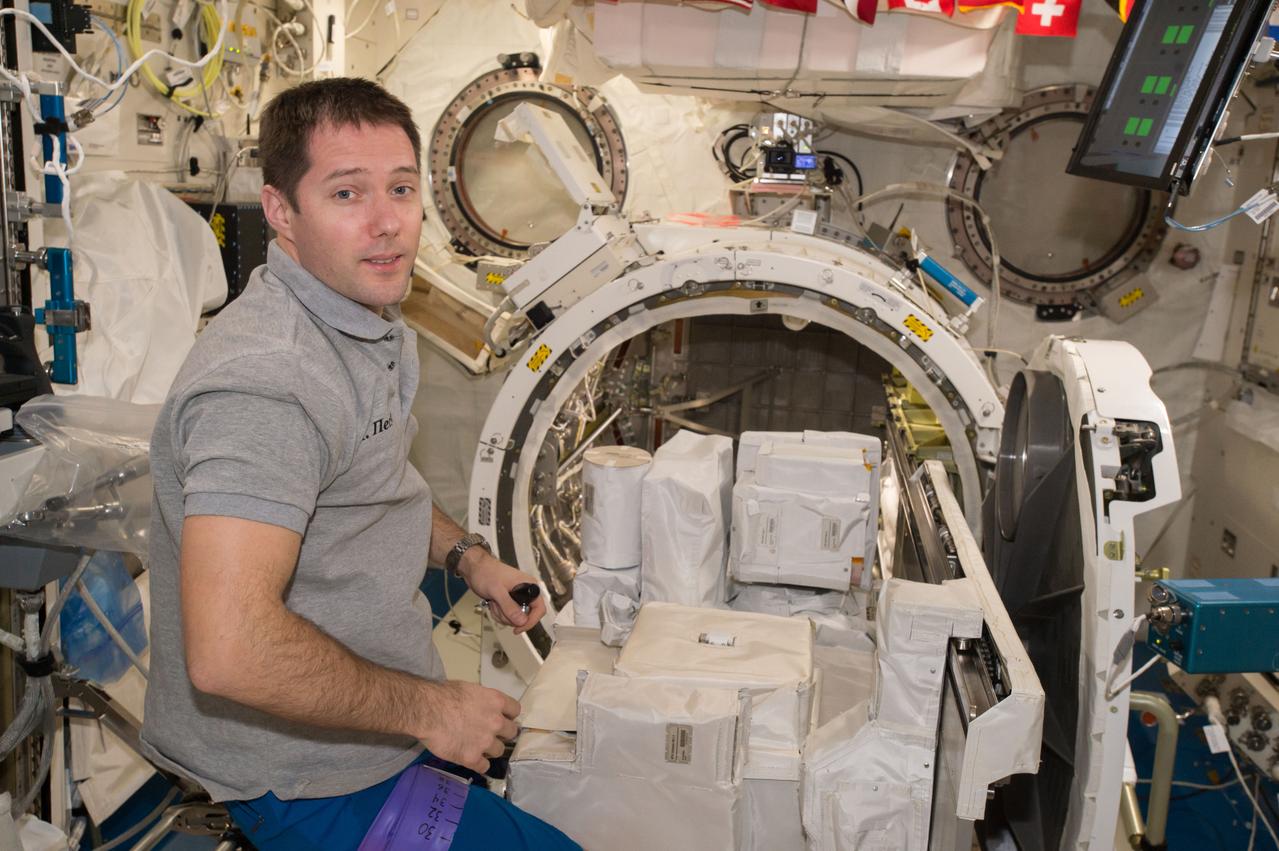
iss050e039213 (2/7/2017) --- European Space Agency (ESA) astronaut Thomas Pesquet during the installation of the Japanese Experiment Module (JEM) High Definition Television (HDTV) to Exposed Facility Unit (EFU) Adapter on JEM Airlock (JEMAL) Slide Table. The High Definition Television Camera-Exposed Facility 2 (HDTV-EF2) is a high-definition television camera system that is used for Earth observation from the International Space Station (ISS). HDTV-EF2 is exposed to the space environment on the Japanese Experiment Module -Exposed Facility (JEM-EF).
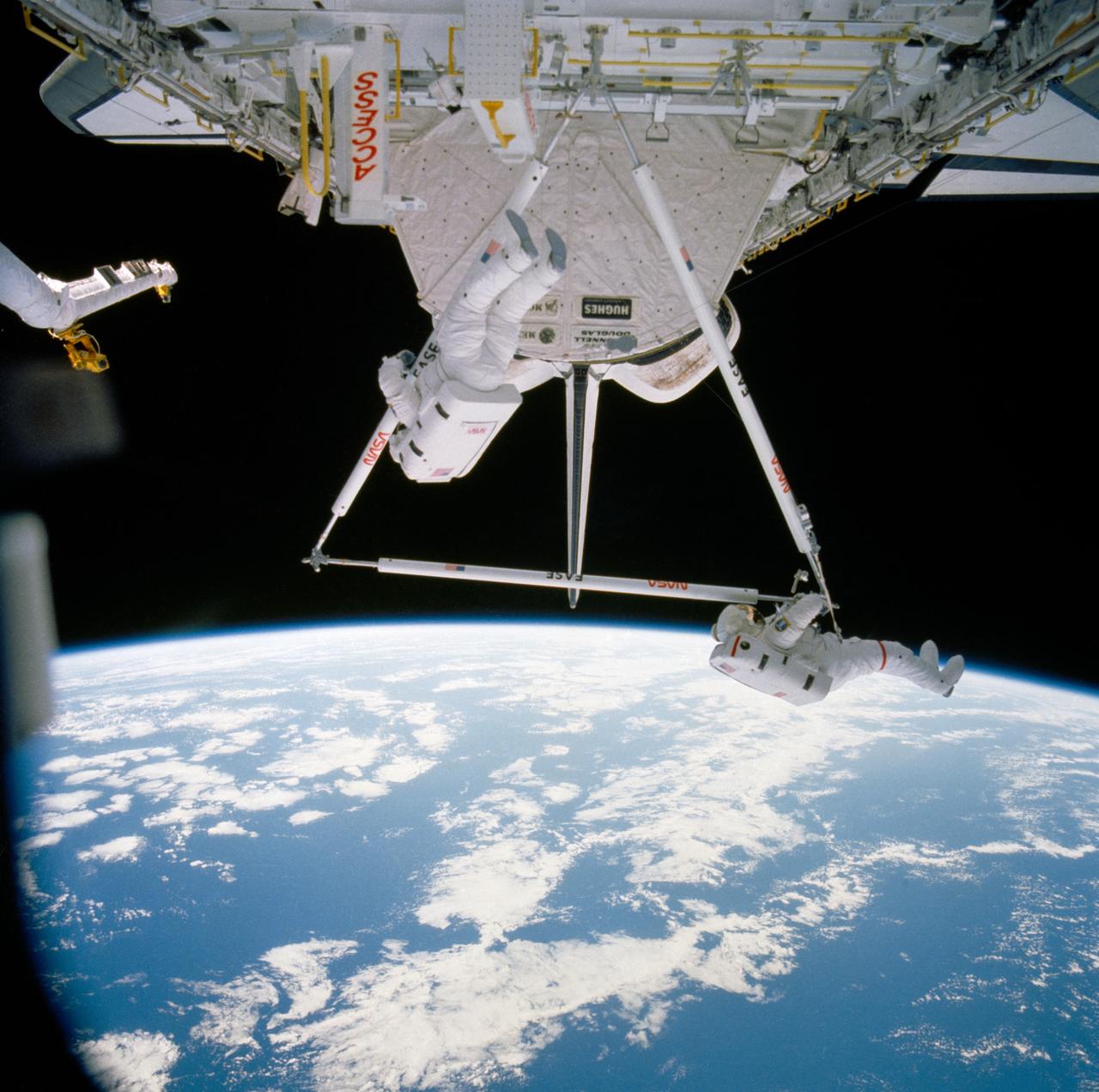
Astronauts Jerry L. Ross (left) and Sherwood C. (Woody) Spring are photographed as they assemble pieces of the Experimental Assembly of Structures in Extravehicular Activities (EASE) device in the open payload bay. The Canadian-built remote manipulator system (RMS) arm (partially obscured in the right portion of the frame) is in position to allow television cameras to record the activity.
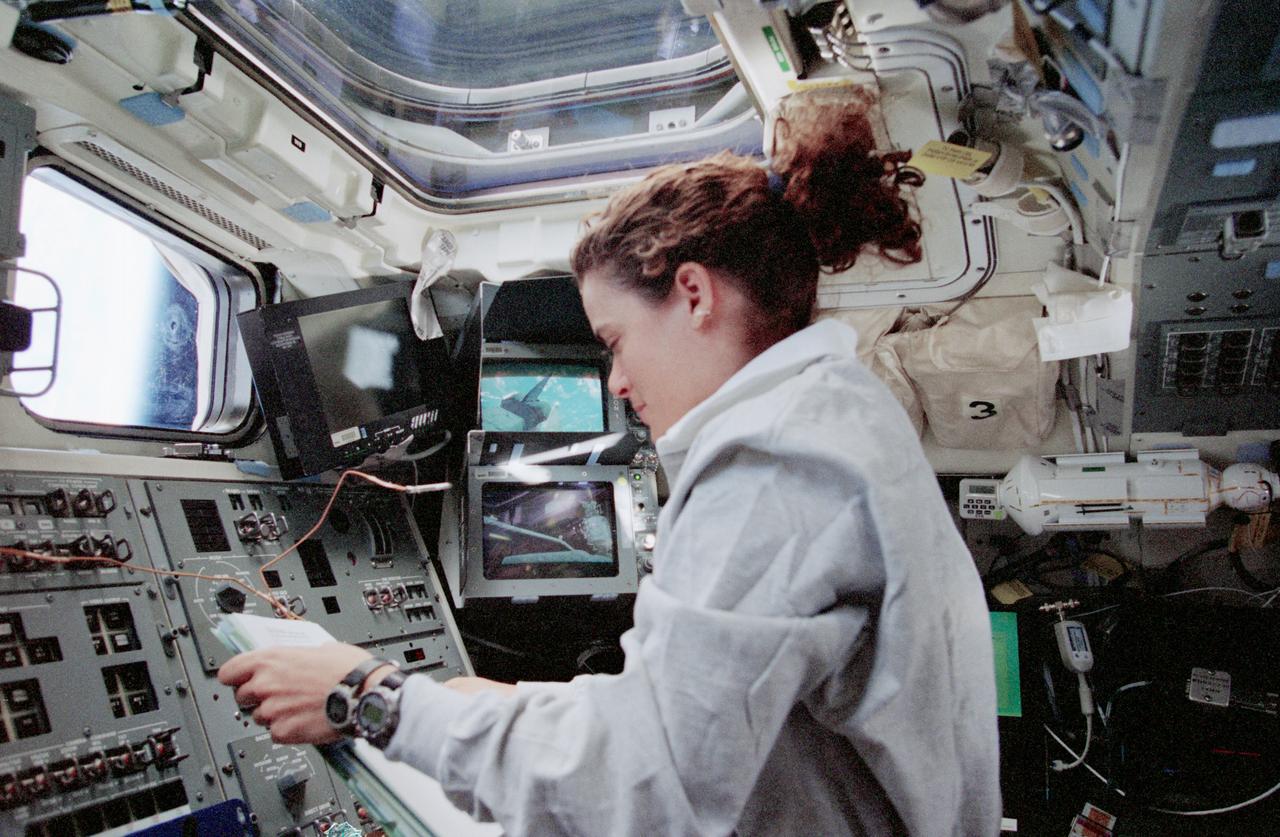
STS096-378-021 (27 May - 6 June 1999) --- Astronaut Julie Payette, mission specialist representing the Candian Space Agency (CSA), operates the Canadian-built remote manipulator system (RMS) from Discovery's aft flight deck. Television monitors nearby afford Payette two different angles of the cargo bay.
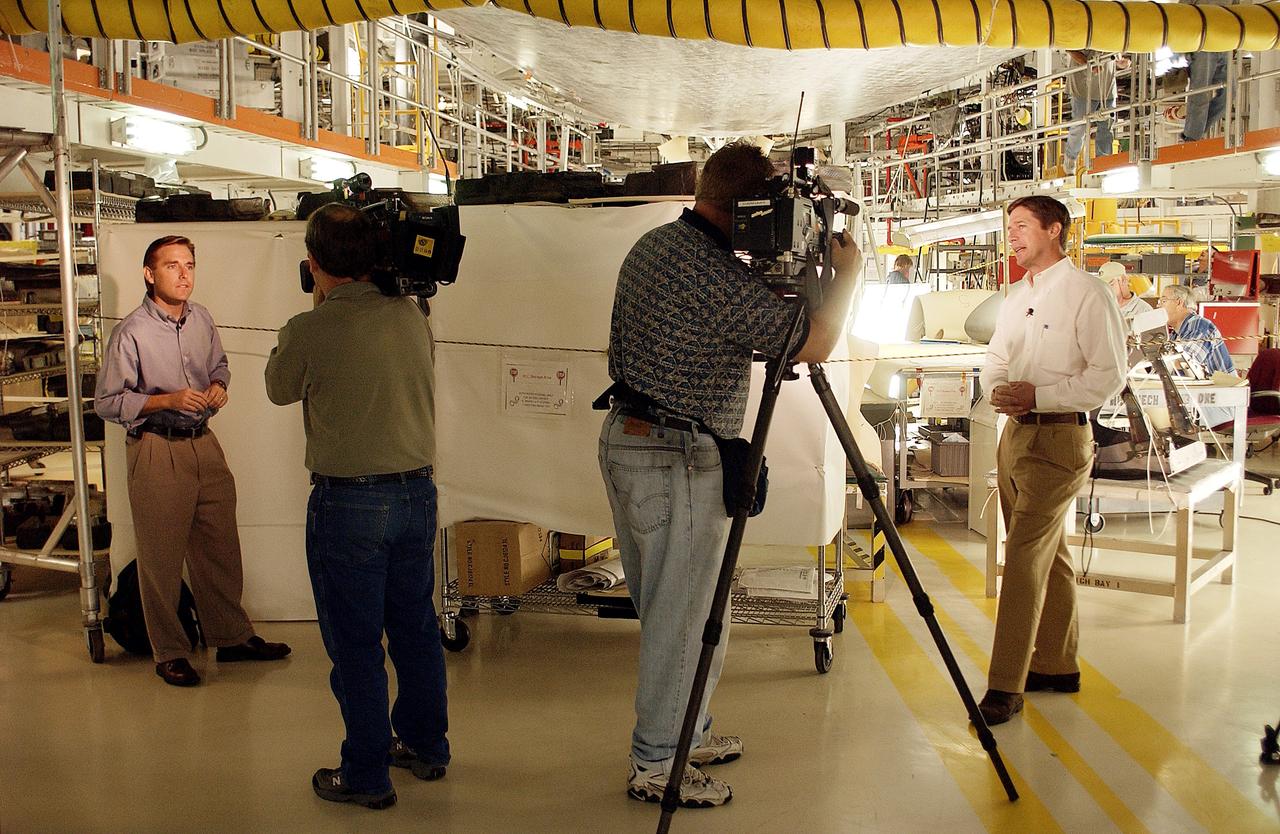
KENNEDY SPACE CENTER, FLA. - Local Central Florida television reporters Phil Robertson (left), with WFTV, and Dan Billow (right), with WESH, tape commentaries after a media tour of the Orbiter Processing Facility. The media was invited to see the orbiter Atlantis as it is being prepared for Return to Flight. Both local and national reporters representing print and TV networks were able to see work in progress on Atlantis, including the reinstallation of the Reinforced Carbon-Carbon panels on the orbiter’s wing leading edge; wiring inspections; and checks of the engines in the Orbital Maneuvering System.
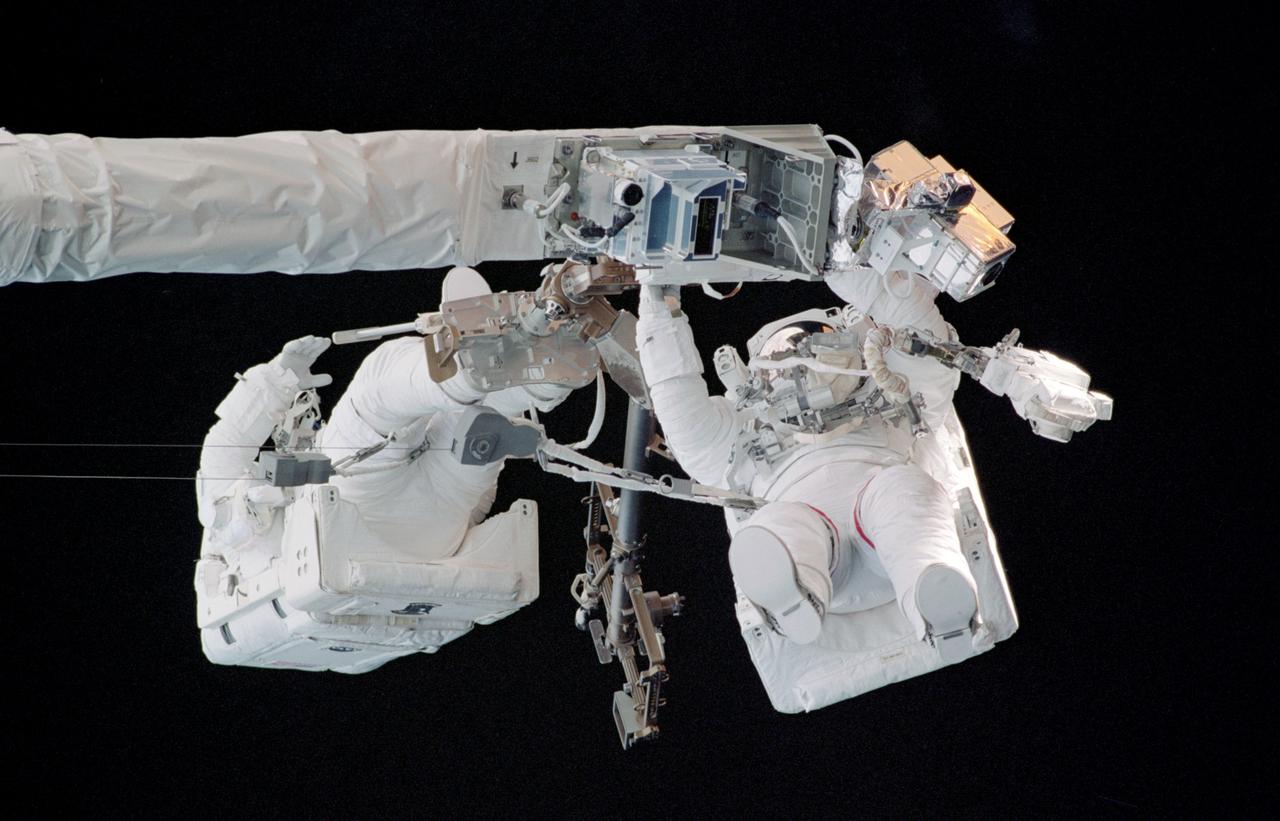
STS121-323-011 (8 July 2006) --- Astronauts Piers J. Sellers and Michael E. Fossum, STS-121 mission specialists, work in tandem on Space Shuttle Discovery's Remote Manipulator System/Orbiter Boom Sensor System (RMS/OBSS) during the mission's first scheduled session of extravehicular activity (EVA). Also visible on the OBSS are the Laser Dynamic Range Imager (LDRI), Intensified Television Camera (ITVC) and Laser Camera System (LCS).
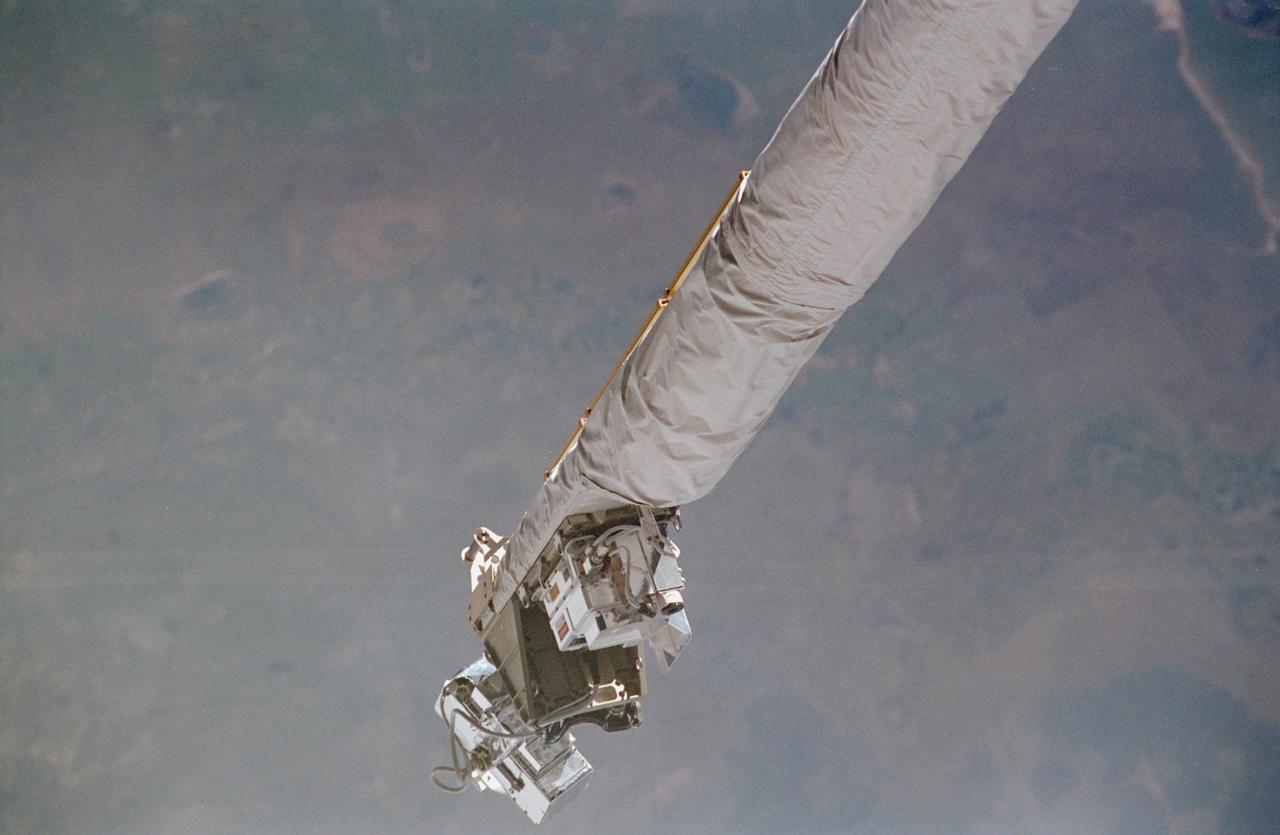
STS121-319-004 (5 July 2006) --- The Laser Dynamic Range Imager (LDRI), Intensified Television Camera (ITVC) and Laser Camera System (LCS), located on the end of Space Shuttle Discovery's Remote Manipulator System/Orbiter Boom Sensor System (RMS/OBSS), is featured in this image photographed during STS-121 Flight Day 2 survey activities. The inspection included an examination of Discovery's nose cap and the reinforced carbon-carbon panels along the leading edge of the port and starboard wings, looking for any evidence of damage.
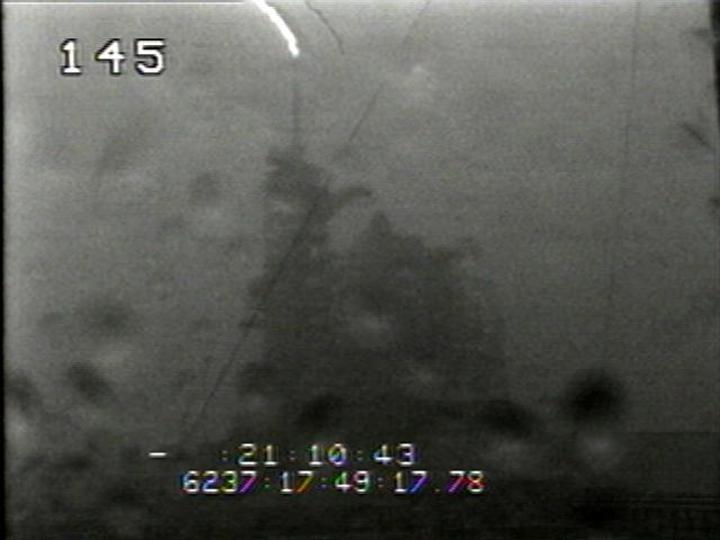
KENNEDY SPACE CENTER, FLA. - A lightning strike occurred at the lightning protection system of Launch Pad 39B on Fri., August 25, 2006, at 1:49:17 p.m. (EST). The lightning strike caused the mission management team to scrub the launch of mission STS-115 for 24 hours in order to review all electrical systems on the space shuttle and the launch pad ground support equipment. Photo credit: NASA/InDyne -Operational Television.
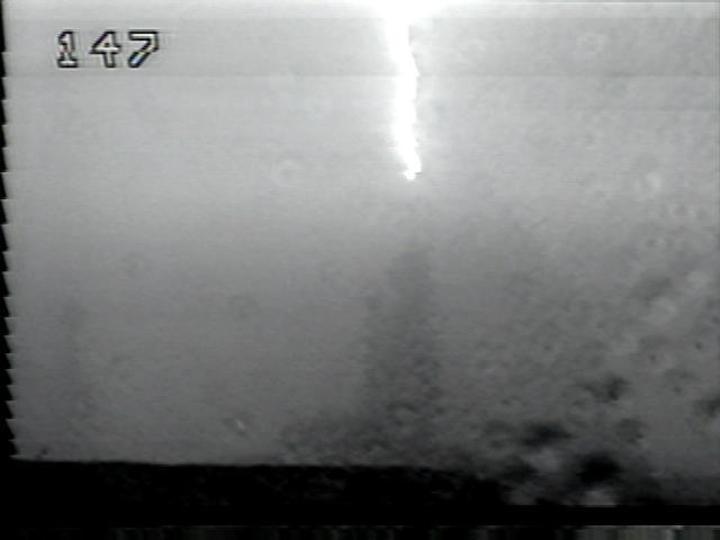
KENNEDY SPACE CENTER, FLA. - A lightning strike occurred at the lightning protection system of Launch Pad 39B on Fri., August 25, 2006, at 1:49:17 p.m. (EST). The lightning strike caused the mission management team to scrub the launch of mission STS-115 for 24 hours in order to review all electrical systems on the space shuttle and the launch pad ground support equipment. Photo credit: NASA/InDyne -Operational Television.
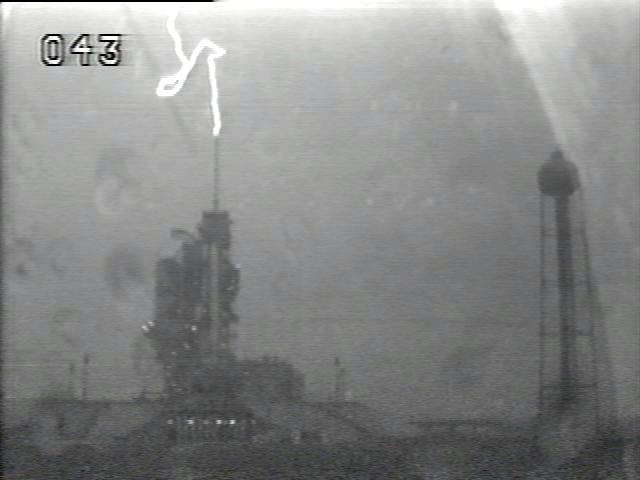
CAPE CANAVERAL, Fla. – A lightning strike on Launch Pad 39A at NASA's Kennedy Space Center in Florida is captured by an Operational Television camera. Eleven lightning strikes occurred within .35 miles of the pad during a thunderstorm July 10 as space shuttle Endeavour was prepared for launch. Mission managers decided to delay Endeavour's planned liftoff July 11 as a precaution to allow engineers and safety personnel time to analyze data and retest systems on the orbiter and solid rockets boosters. The next launch attempt for the STS-127 mission is planned for Sunday, July 12, at 7:13 p.m. EDT. The Operational Television cameras can be used to triangulate the location of lightning strikes. Other detection systems include the Cloud-To-Ground Lightning Surveillance System, Strikenet/National Lightning Detection Network, Lightning Induced Voltage Instrumentation System and the Catenary Wire Lightning Instrumentation System. Endeavour will deliver the Japanese Experiment Module's Exposed Facility, or JEM-EF, and the Experiment Logistics Module-Exposed Section, or ELM-ES, in the final of three flights dedicated to the assembly of the Japan Aerospace Exploration Agency's Kibo laboratory complex on the International Space Station. STS-127 is the 29th flight for the assembly of the space station. Photo credit: NASA/Analex
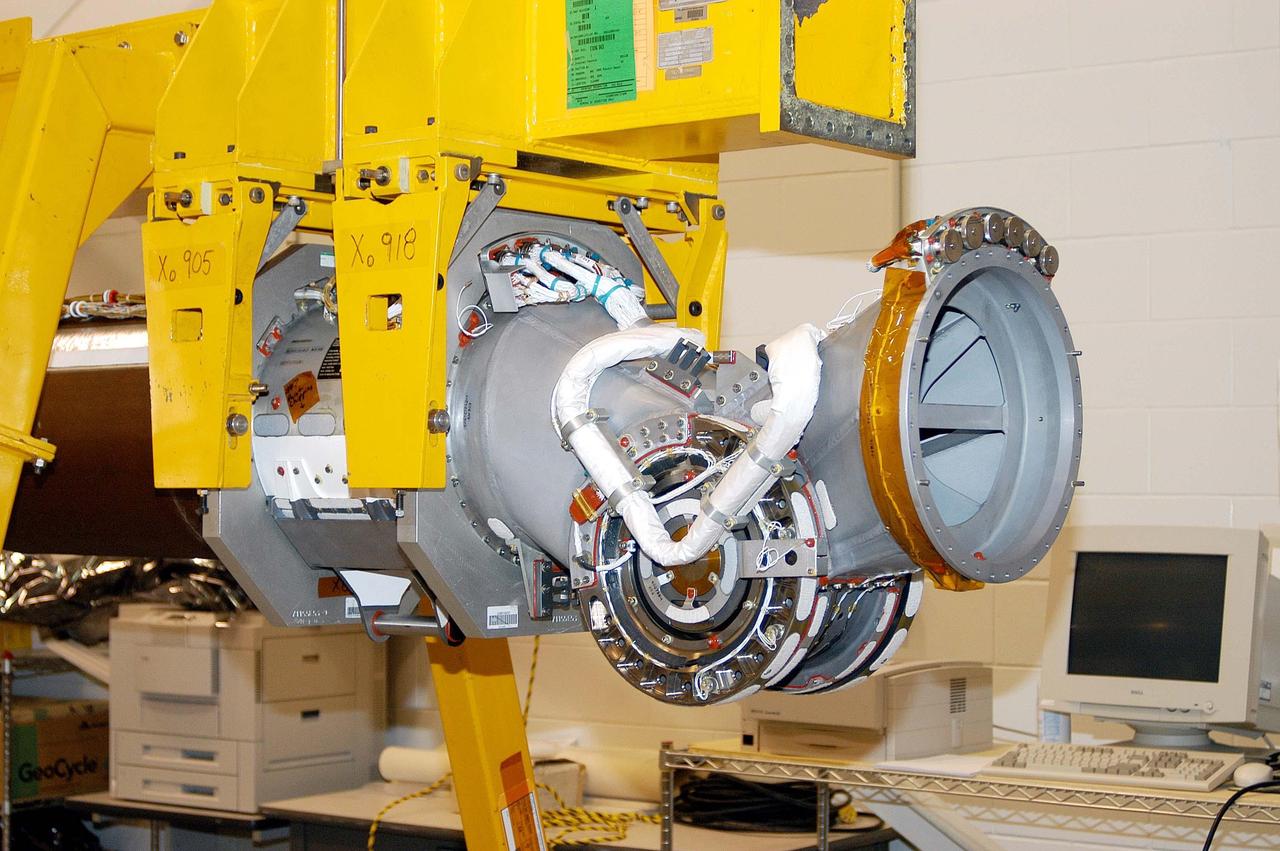
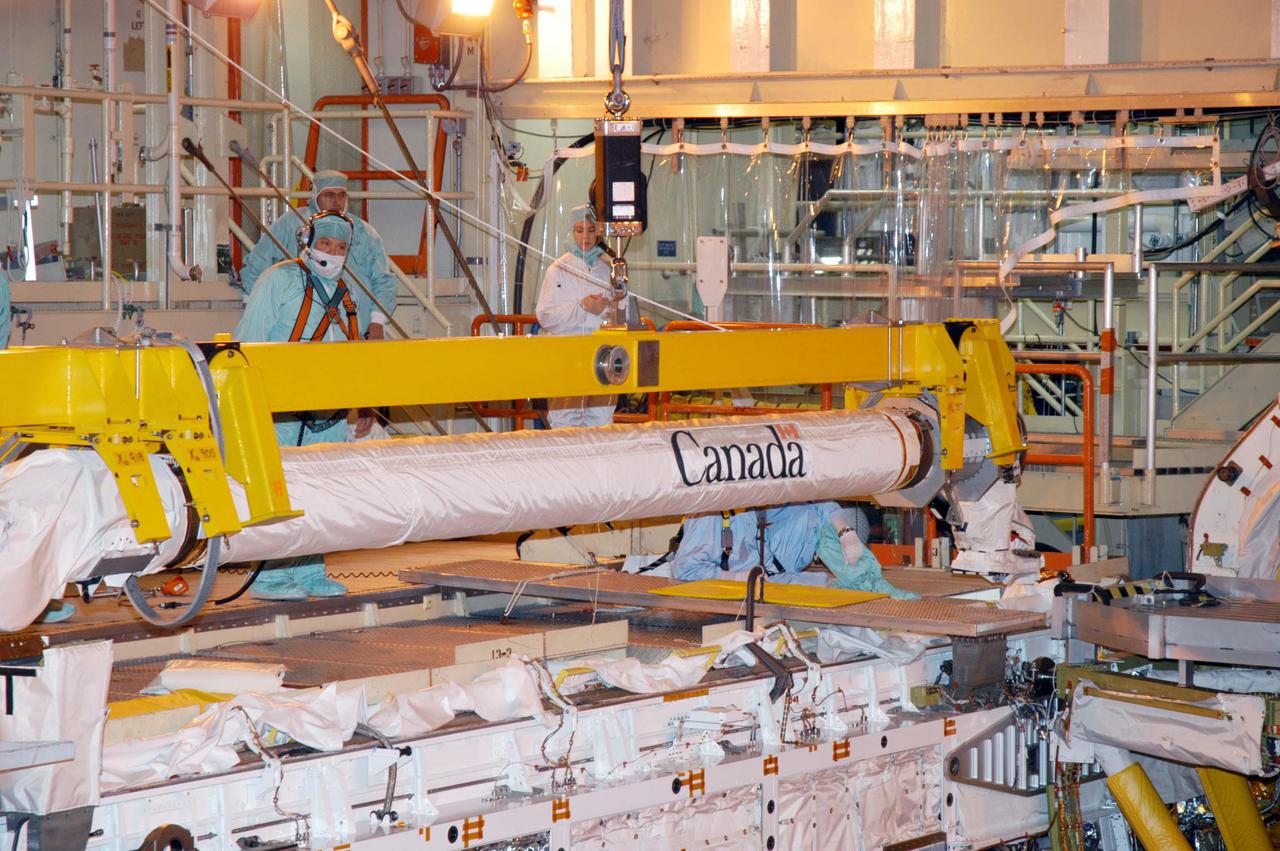
KENNEDY SPACE CENTER, FLA. - The Remote Manipulator System (RMS), also known as the Canadian robotic arm, for the orbiter Discovery has arrived at KSC’s Vehicle Assembly Building Lab. The part seen on the end is one of the joints that allow the basic structure of the arm to maneuver similar to a human arm. The RMS is used to deploy and retrieve payloads, provide a mobile extension ladder or foot restraints for crew members during extravehicular activities; and to aid the flight crew members in viewing surfaces of the orbiter or payloads through a television camera on the RMS. The arm The RMS is used to deploy and retrieve payloads, provide a mobile extension ladder or foot restraints for crew members during extravehicular activities; and to aid the flight crew members in viewing surfaces of the orbiter or payloads through a television camera on the RMS. The arm is also serving as the base for the new Orbiter Boom Sensor System (OBSS), one of the safety measures for Return to Flight, equipping the Shuttle with cameras and laser systems to inspect the Shuttle’s Thermal Protection System while in space. Discovery is scheduled for a launch planning window of March 2005 on mission STS-114.

STS006-44-582 (5 April 1983) --- A 70mm camera through the aft windows of the Earth-orbiting space shuttle Challenger’s cabin centered on the starboard orbital maneuvering system (OMS) pod of the reusable spacecraft. Two pieces of thermal protection system tile appear to have loosened. The view also shows one of the cargo bay television cameras, part of the EVA slide wire system, three handrails and other features on the aft bulkhead. Part of the airborne support equipment (ASE) for the now vacated inertial upper stage (IUS)/tracking and data relay satellite (TDRS) tandem is in lower right foreground. Photo credit: NASA

NOAA Administrator, Vice Admiral Conrad C. Lautenbacher, Jr., U.S. Navy (Ret.), is seen on a television monitor as he testifies before the House Committee on Science and Technology regarding the future of the National Polar-orbiting Operational Environmental Satellite System (NPOESS) and results of the Nunn-McCurdy review of NOAA’s weather satellite program, Thursday, June 8, 2006, at the Rayburn House Office Building in Washington. Photo Credit: (NASA/Bill Ingalls)
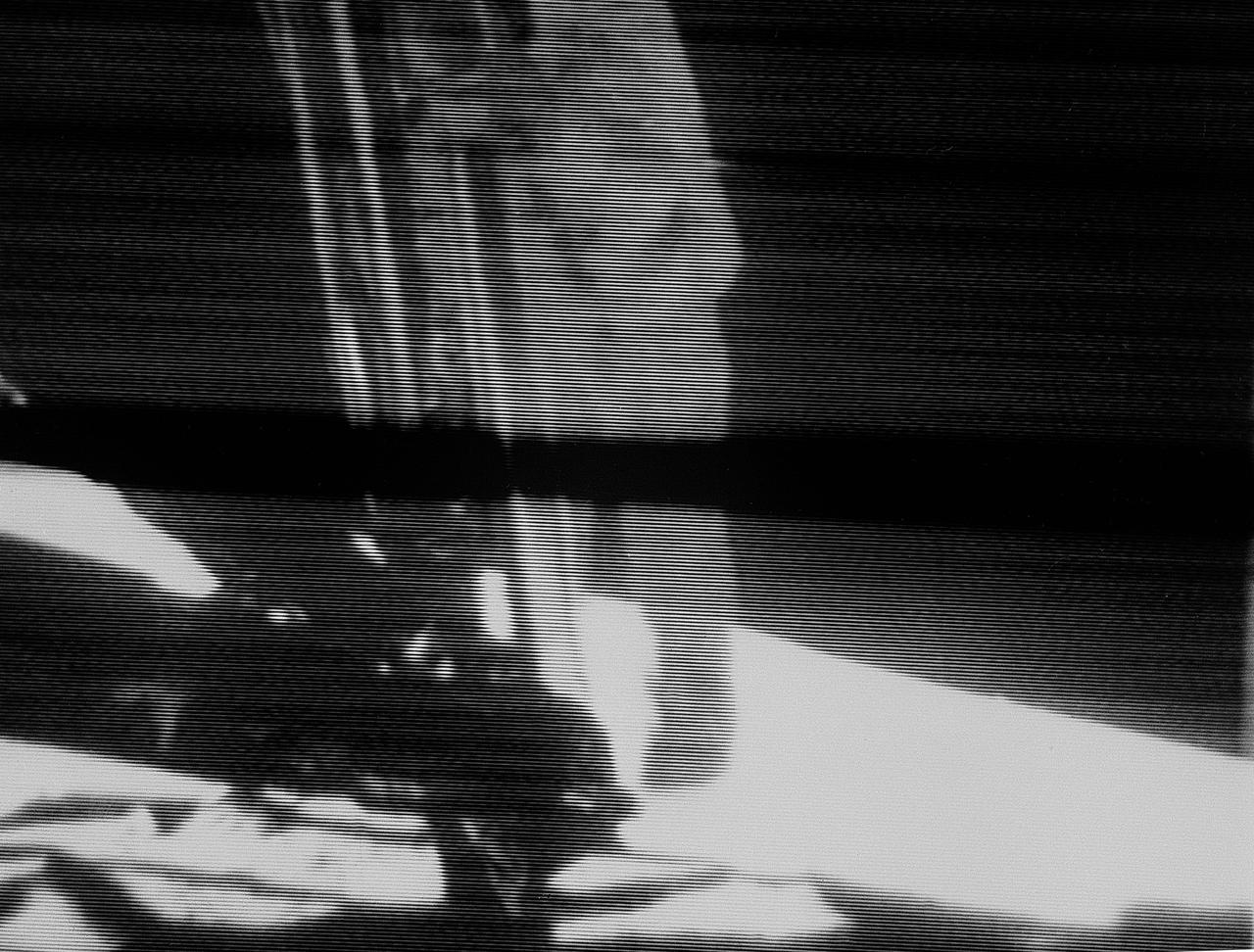
S69-42583 (20 July 1969) --- Astronaut Neil A. Armstrong, Apollo 11 commander, descends the ladder of the Apollo 11 Lunar Module (LM) prior to making the first step by man on another celestial body. This view is a black and white reproduction taken from a telecast by the Apollo 11 lunar surface camera during extravehicular activity (EVA). The black bar running through the center of the picture is an anomaly in the television ground data system at the Goldstone Tracking Station.
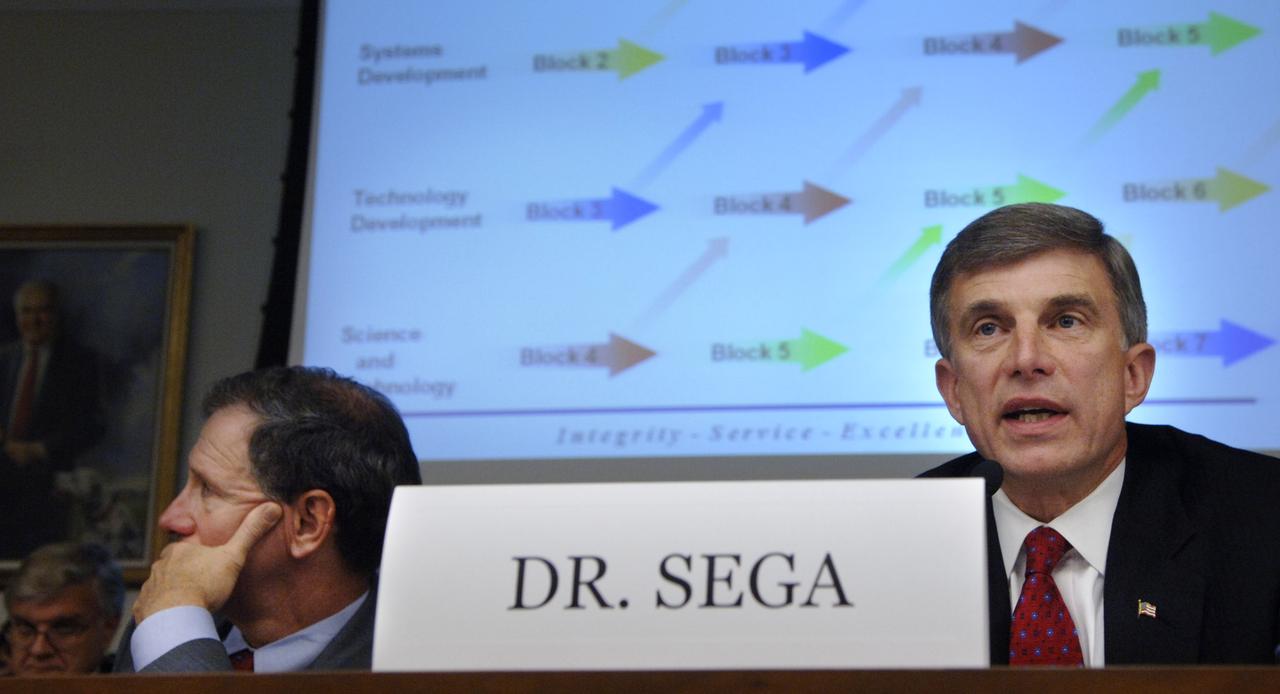
Under Secretary of the Air Force Dr. Ronald Sega, right, testifies before the House Committee on Science and Technology regarding the future of the National Polar-orbiting Operational Environmental Satellite System (NPOESS) and results of the Nunn-McCurdy review of NOAA’s weather satellite program as NASA Administrator Michael Griffin, left, looks at a television monitor, Thursday, June 8, 2006, at the Rayburn House Office Building in Washington. Photo Credit: (NASA/Bill Ingalls)
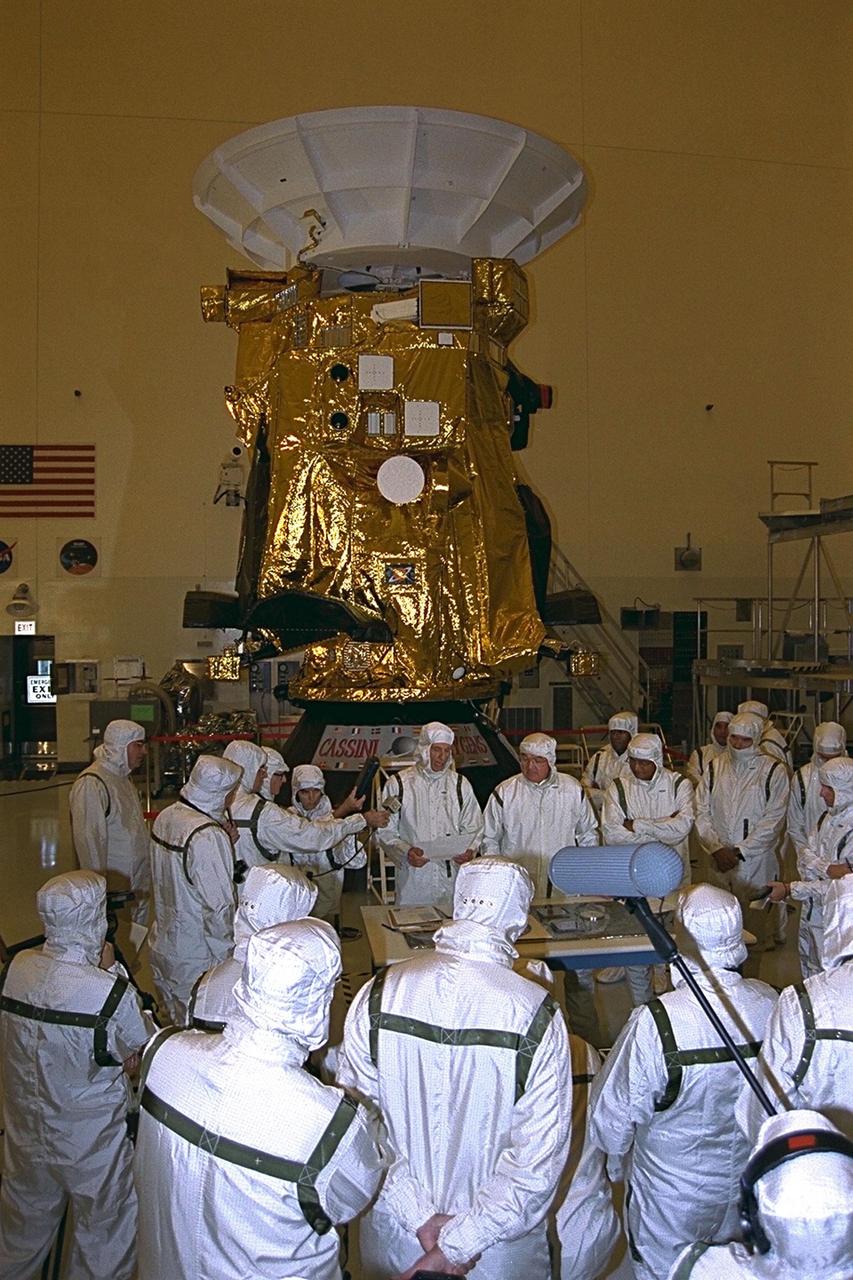
Scientists from the Cassini project at the Jet Propulsion Laboratory and the European Space Agency talk to photojournalists, news reporters, writers, television broadcasters, and cameramen in the Payload Hazardous Servicing Facility (PHSF) during the Cassini press showing. Cassini will launch on Oct. 6, 1997, on an Air Force Titan IV/Centaur launch vehicle and will arrive at Saturn in July 2004 to begin an international scientific mission to study the planet and its systems. Cassini is managed for NASA by the Jet Propulsion Laboratory at Pasadena, Calif
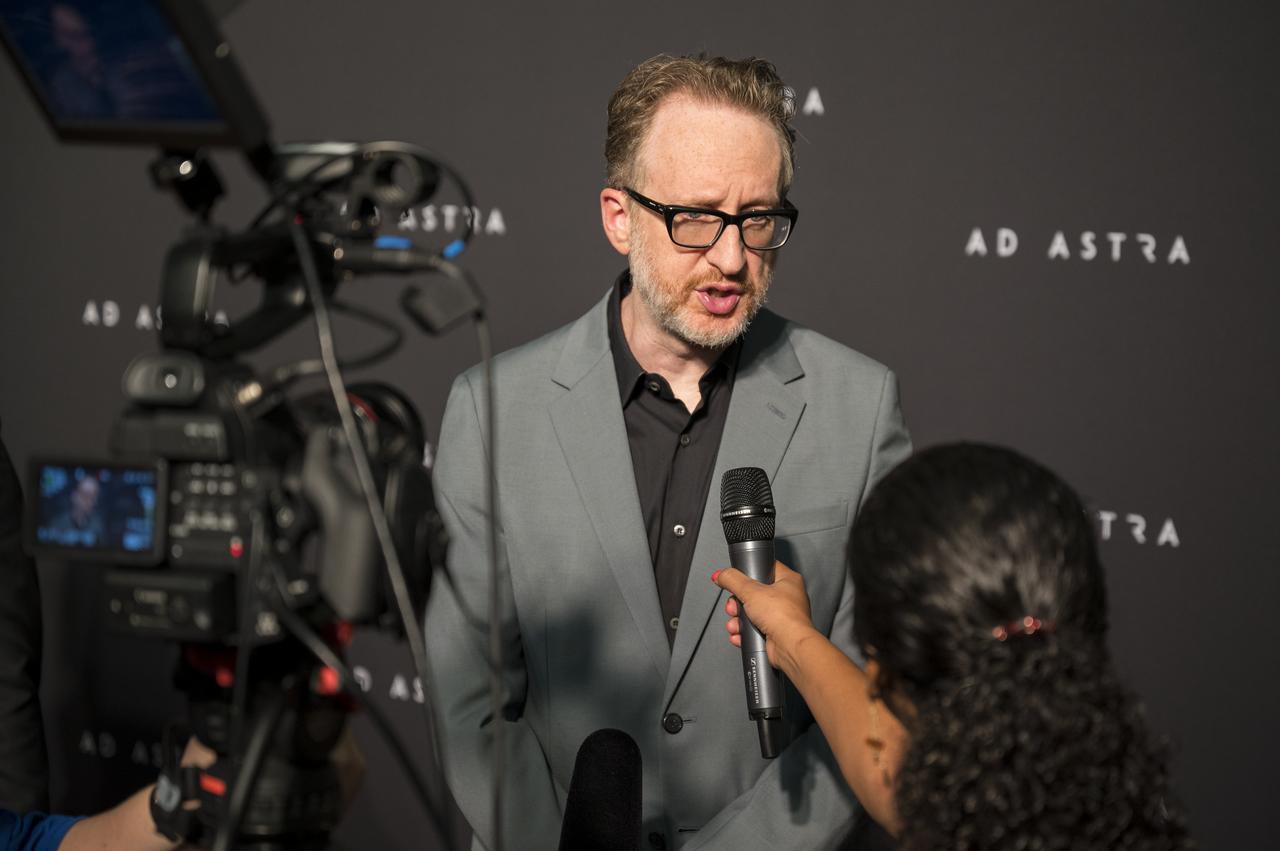
Producer, co-writer, and director James Gray is interviewed by NASA television on the red carpet during a screening of the film "Ad Astra" at National Geographic Society, Monday, September 16, 2019 in Washington. The film stars Tommy Lee Jones, Brad Pitt, Ruth Negga, Liv Tyler, and Donald Sutherland. Pitt stars as astronaut Roy McBride who travels deep into the solar system in hopes of solving a mystery that threatens life on Earth. Photo Credit: (NASA/Aubrey Gemignani)
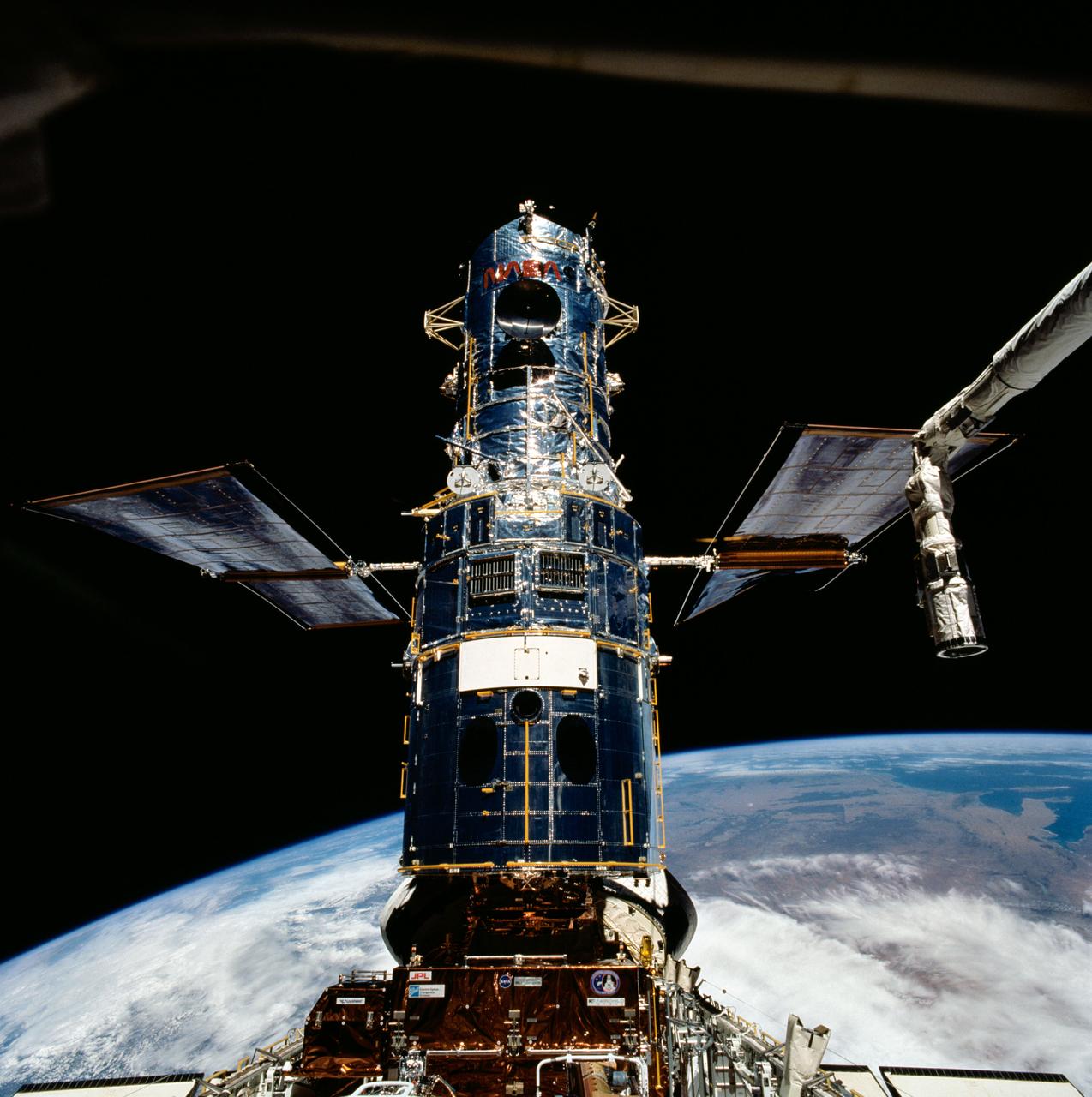
STS061-86-030 (4 Dec 1993) --- The Hubble Space Telescope (HST) is pictured in the Space Shuttle Endeavour's cargo bay following its capture and berthing early in the eleven-day STS-61 mission. The Remote Manipulator System (RMS) arm, with television cameras mounted on it, was maneuvered from inside the cabin in order to survey HST. Five days of space walks followed, during which a variety of servicing tasks were performed by four crew members.
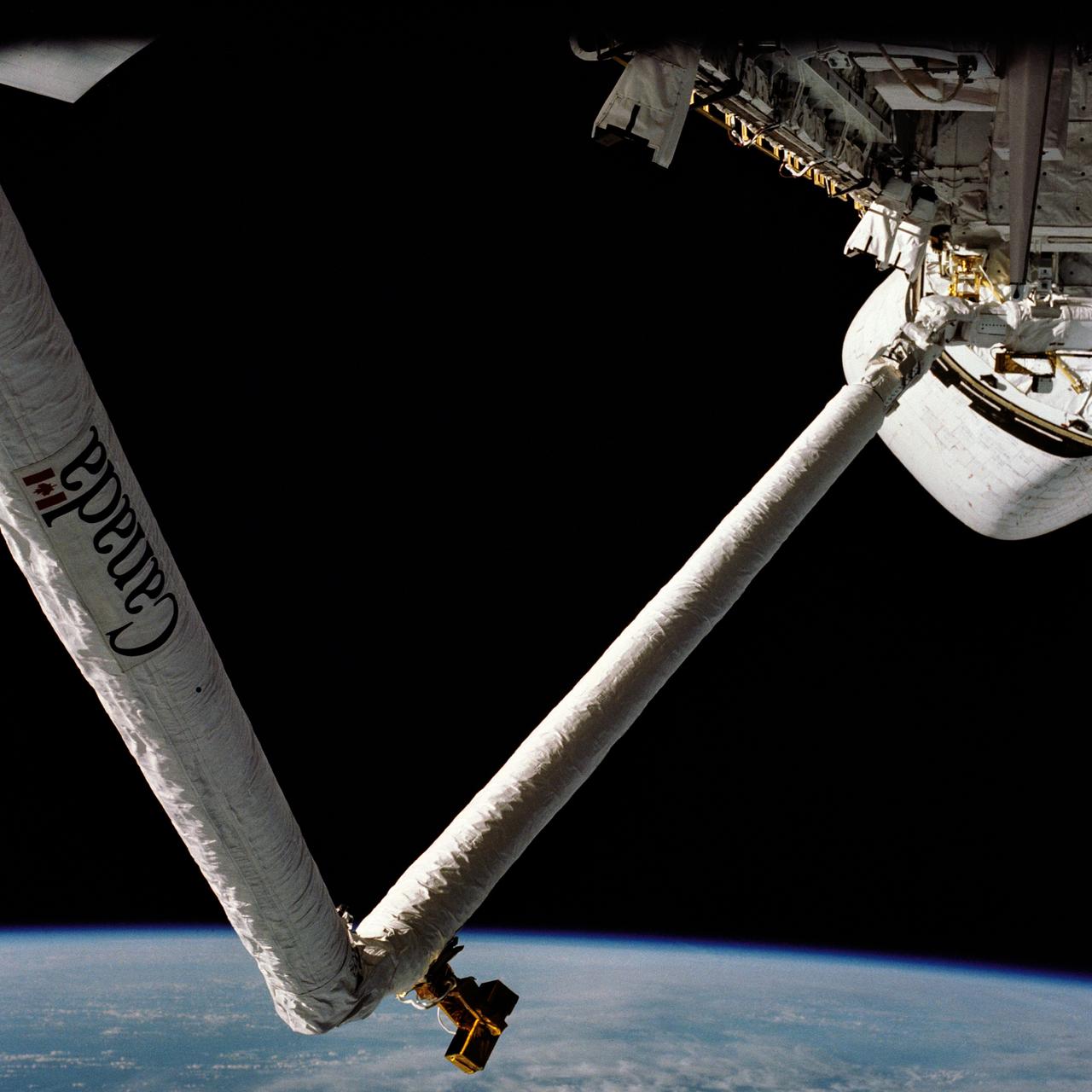
STS002-13-226 (13 Nov. 1981) --- Backdropped against Earth's horizon and the darkness of space, the space shuttle Columbia's remote manipulator system (RMS) gets its first workout in zero-gravity during the STS-2 mission. A television camera is mounted near the elbow and another is partially visible near the wrist of the RMS. Photo credit: NASA
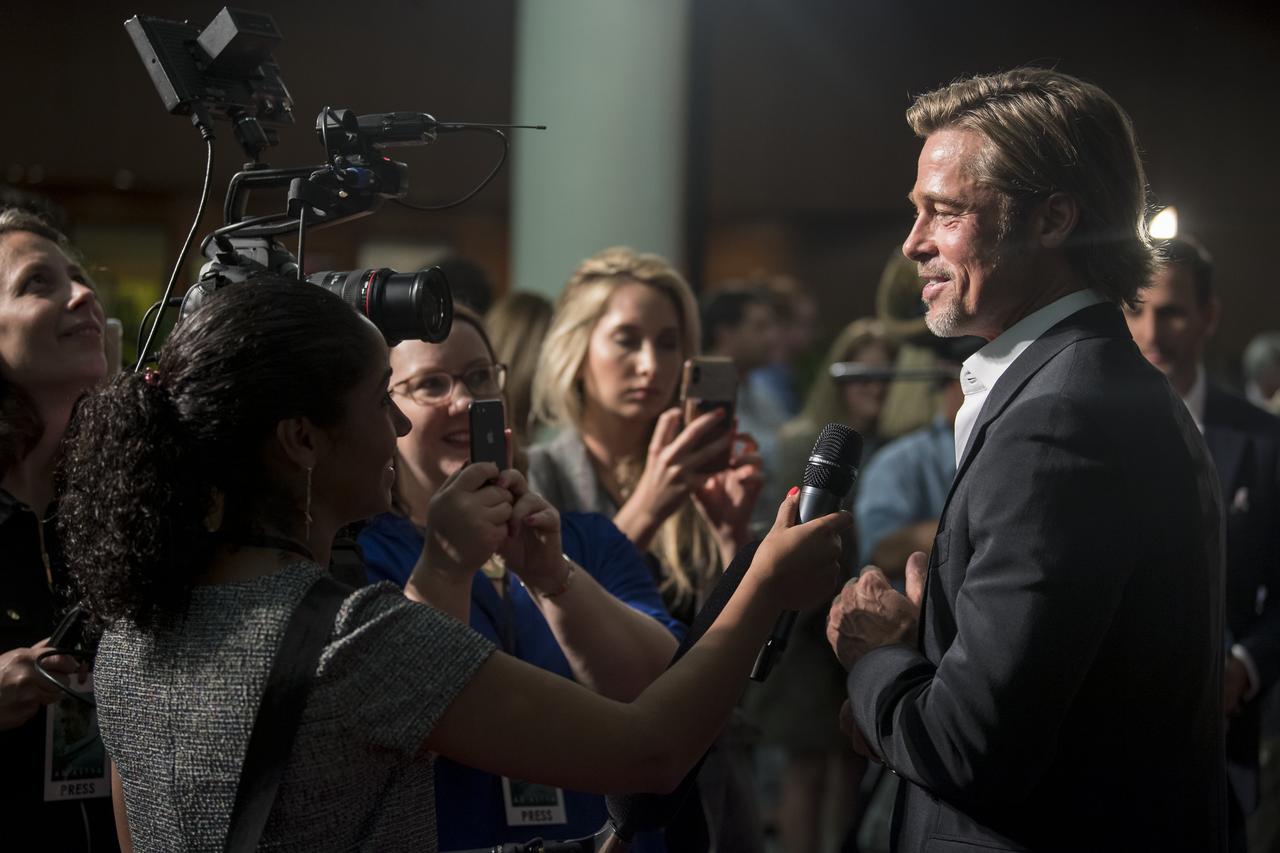
Actor Brad Pitt is interviewed by NASA television on the red carpet during a screening of the film "Ad Astra" at National Geographic Society, Monday, September 16, 2019 in Washington. The film was produced, co-written, and directed by James Gray and stars Pitt, Tommy Lee Jones, Ruth Negga, Liv Tyler, and Donald Sutherland. Pitt stars as astronaut Roy McBride who travels deep into the solar system in hopes of solving a mystery that threatens life on Earth. Photo Credit: (NASA/Aubrey Gemignani)
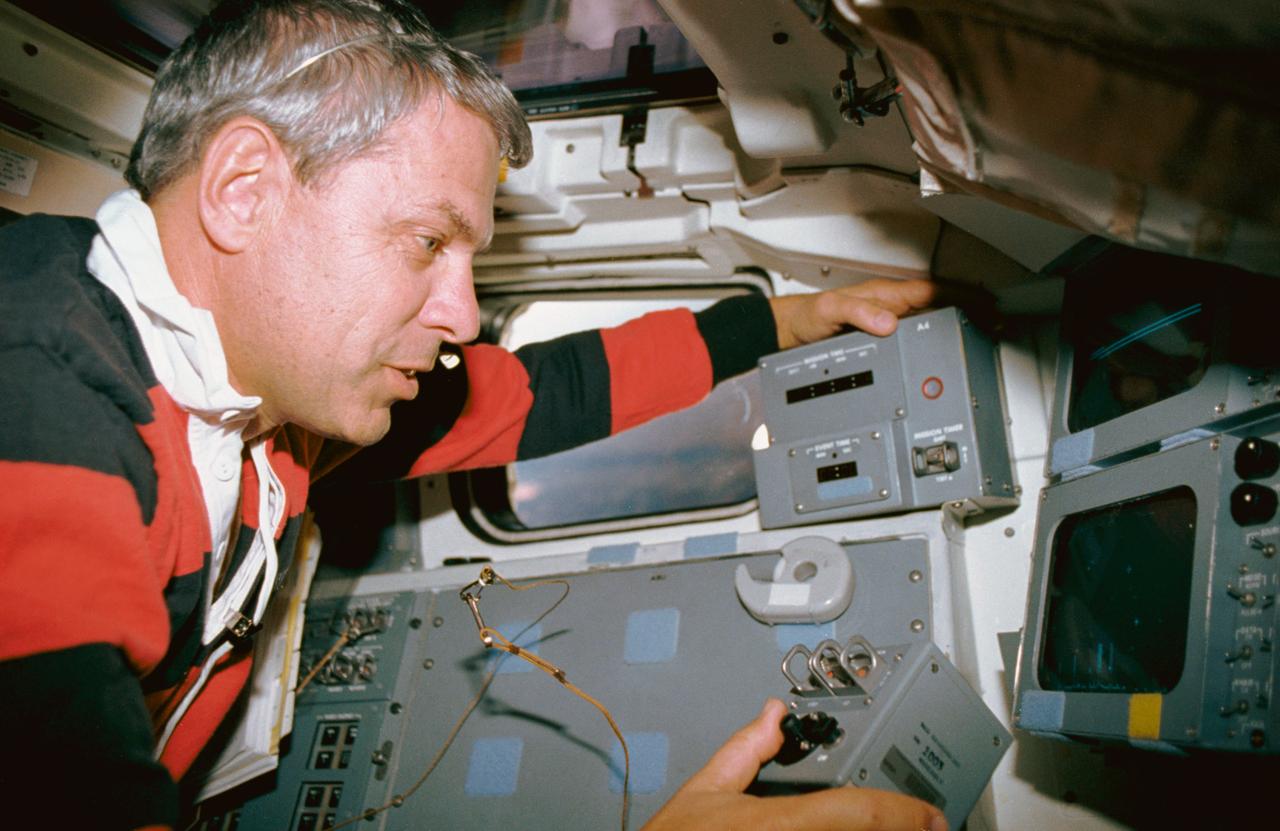
STS035-10-011 (2-10 Dec 1990) --- STS-35 Mission Specialist (MS) Robert A.R. Parker operates Astronomy Laboratory 1 (ASTRO-1) manual pointing controller (MPC) on the aft flight deck of Columbia, Orbiter Vehicle (OV) 102. Parker monitors a closed circuit television (CCTV) screen at the payload station as he uses the MPC to send data collection instructions to the ASTRO-1 instrument pointing system (IPS).
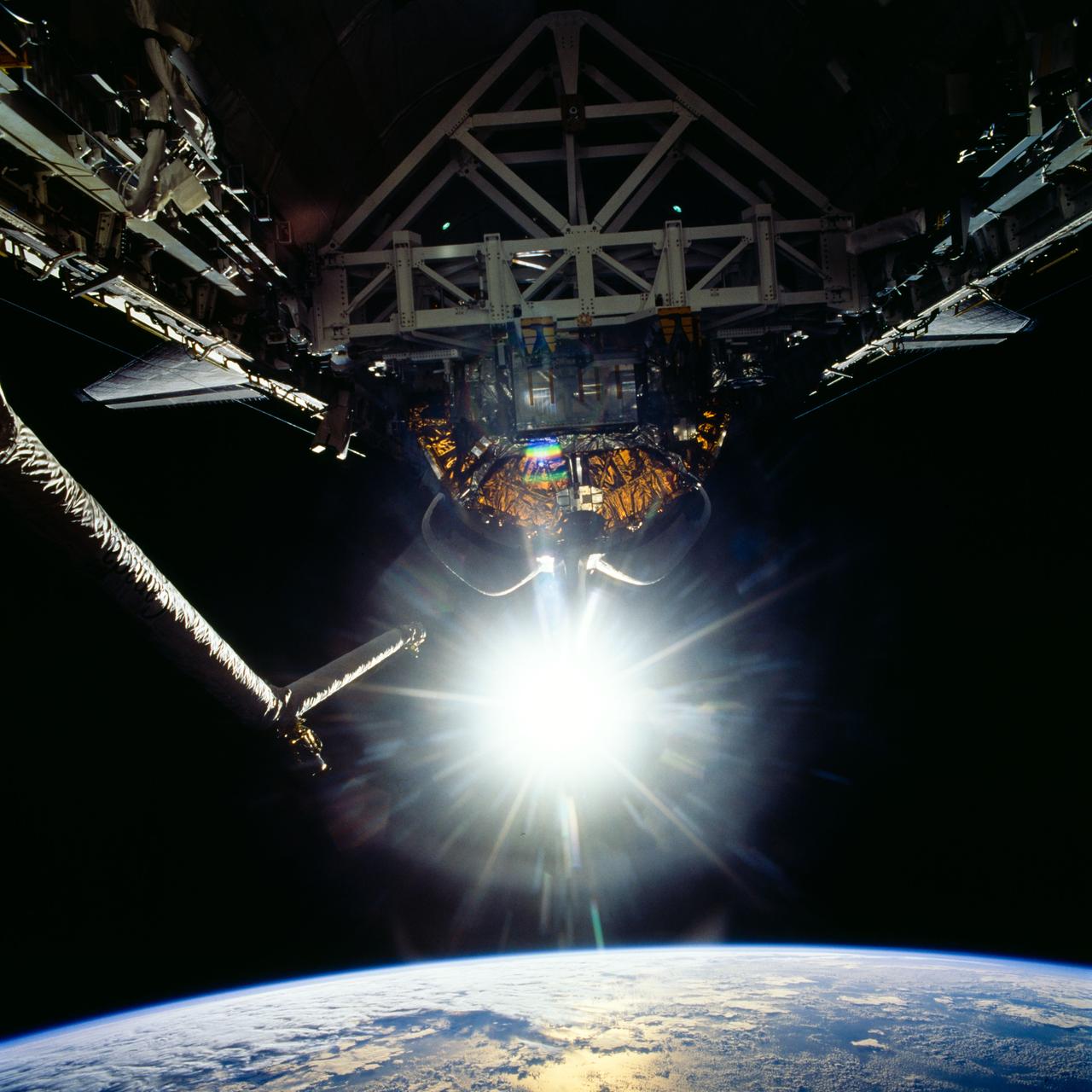
STS072-726-085 (11-20 Jan. 1996) --- The crew members captured this 70mm view of the Space Shuttle Endeavour’s cargo bay, with the reflection of sunglint over Earth’s horizon. The Canadian-built Remote Manipulator System (RMS) arm, with two television cameras affixed, is at frame right. The crew earlier had retrieved the Japanese Space Flyer (SFU) and berthed in the aft cargo bay, along with the Office of Aeronautics and Space Technology (OAST) Flyer satellite.
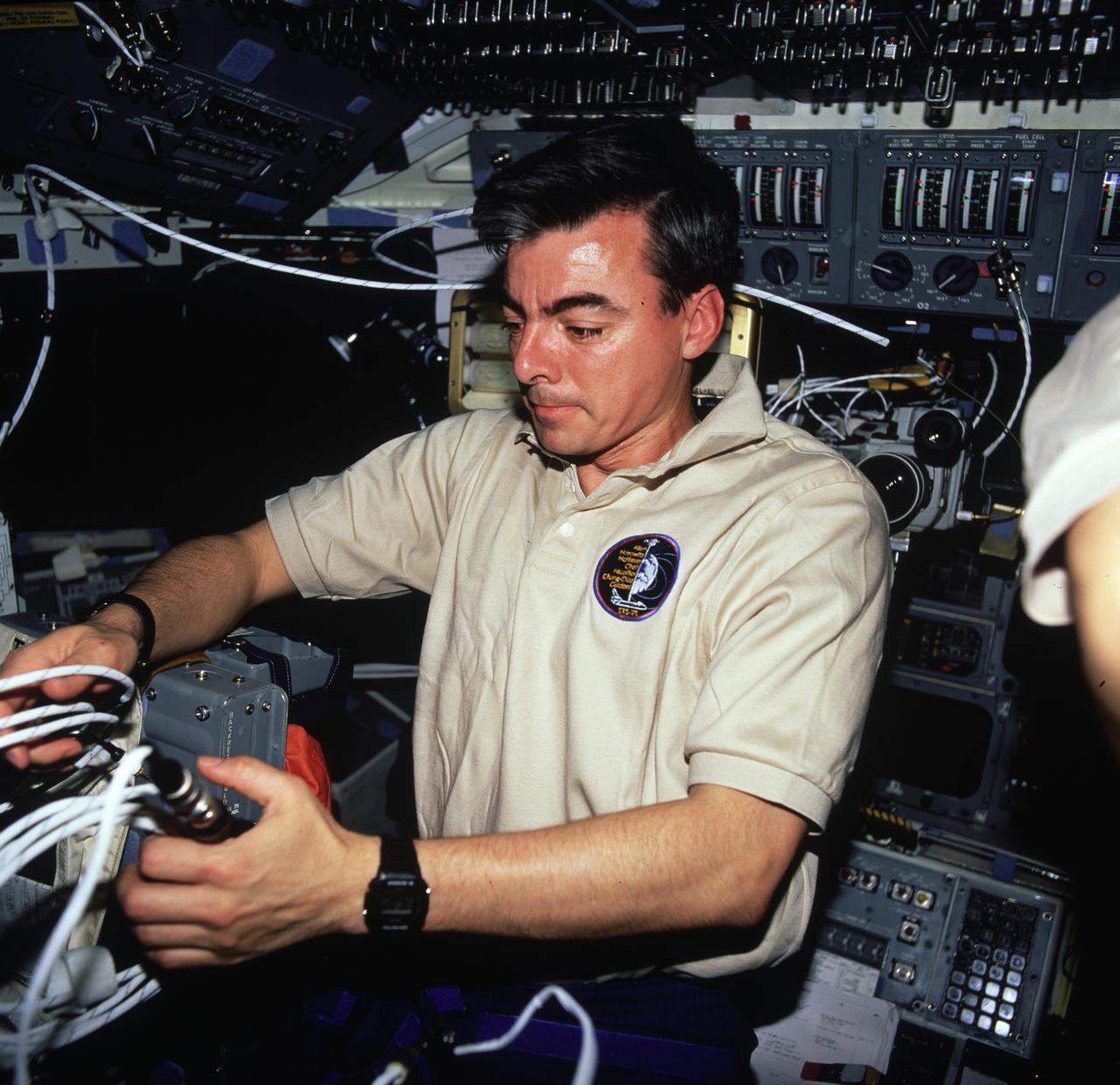
STS075-772-013 (22 Feb.- 9 March 1996) --- Astronaut Andrew M. Allen, mission commander, sets up systems for a television downlink on the flight deck of the space shuttle Columbia. Allen was joined by four other astronauts and an international payload specialist for more than 16 days of research aboard Columbia. The photograph was taken with a 70mm handheld camera.
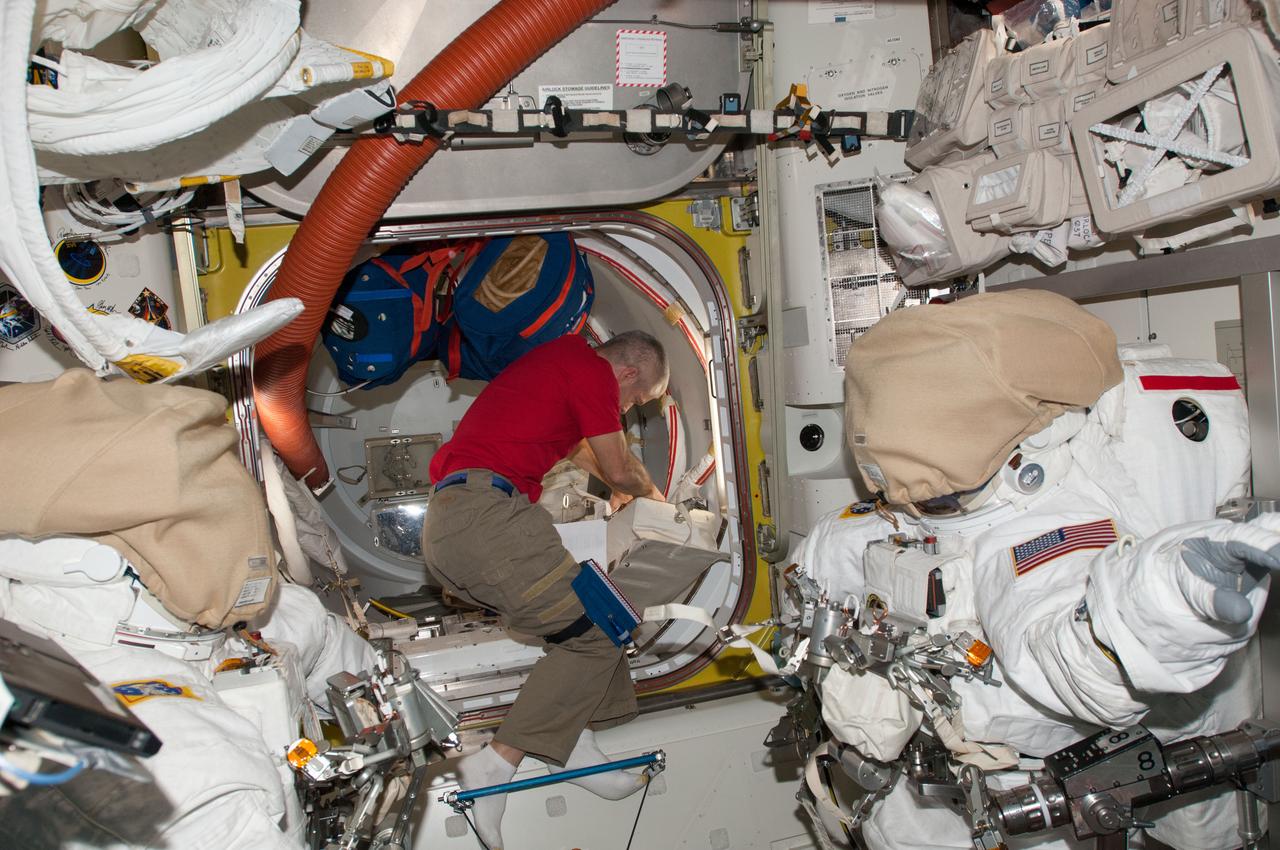
ISS039-E-013091 (17 April 2014) --- NASA astronaut Steve Swanson, Expedition 39 flight engineer, is seen in the Quest airlock of the Earth-orbiting International Space Station. He and NASA astronaut Rick Mastracchio, flight engineer, will conduct a spacewalk in the coming week to replace a failed backup computer relay system on the space station's truss. The activity, designated U.S. EVA 26, will be broadcast live on NASA Television. A pair of NASA extravehicular mobility units (EMU) can be seen in the foreground.
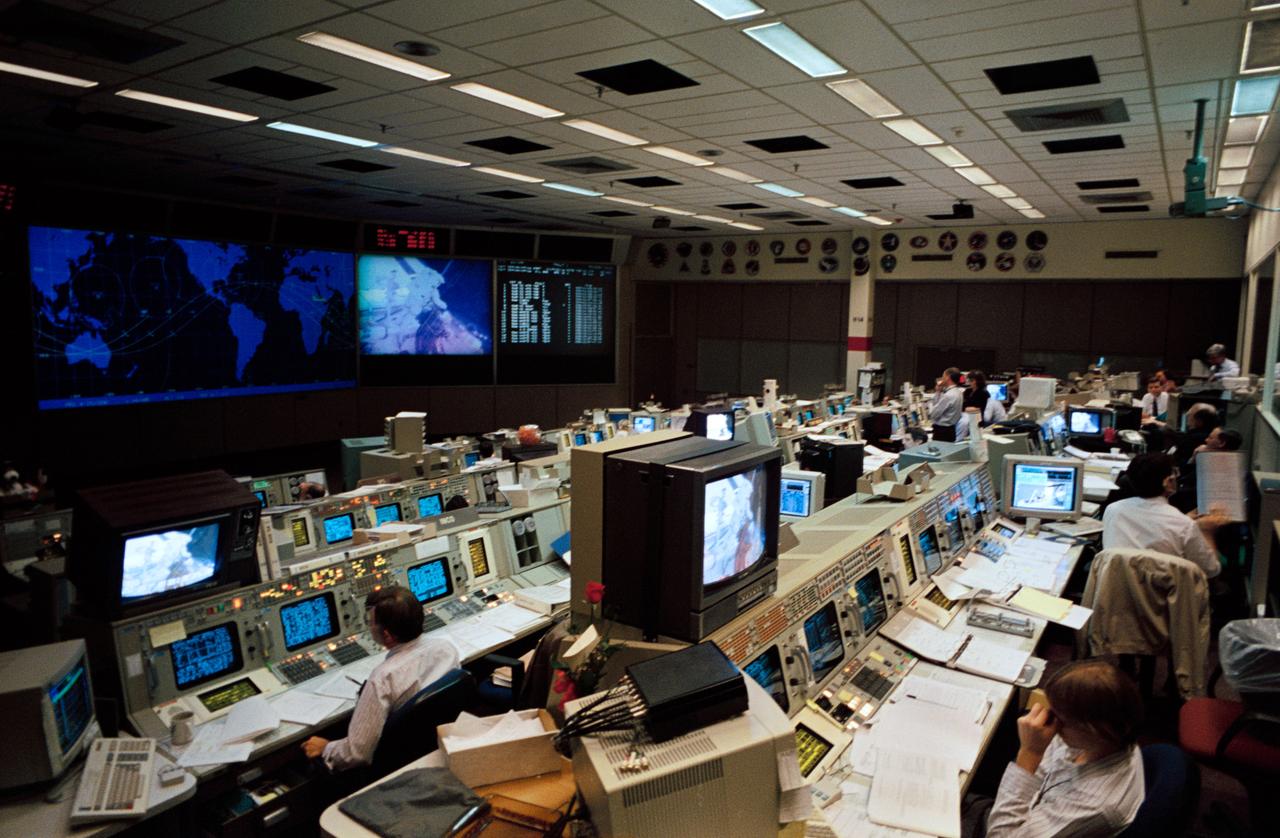
STS61-S-093 (5 Dec 1993) --- Flight controller Kevin McCluney monitors the televised activity of astronauts F. Story Musgrave and Jeffrey A. Hoffman. The veteran astronauts were performing the first extravehicular activity (EVA-1) of the STS-61 Hubble Space Telescope (HST) servicing mission. McCluney's duties deal with maintenance, mechanical, arm and crew systems, meaning that he and his colleagues will be exceptionally busy for the next five days. Four astronauts in alternating pairs will perform a variety of tasks on the giant telescope during that period.
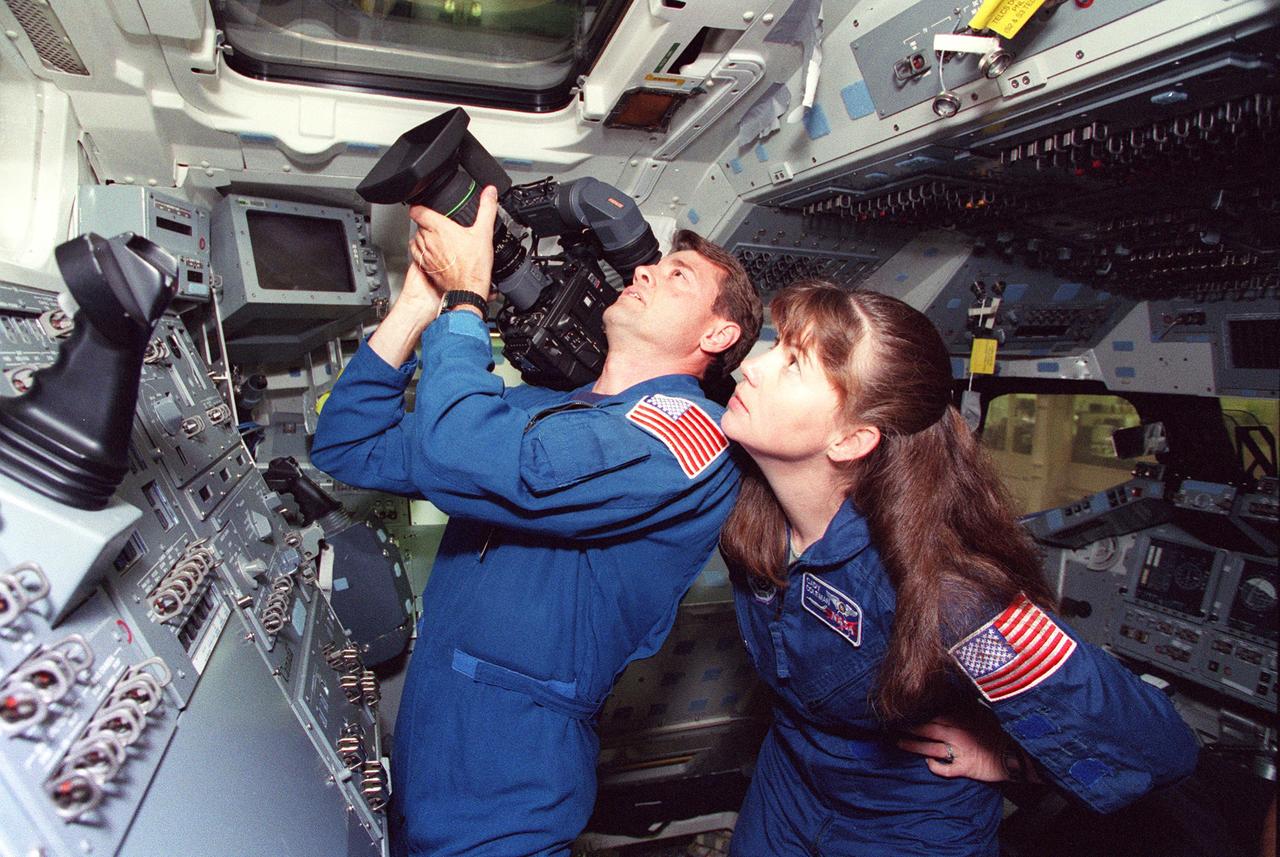
S99-05085 (April 1999) --- In preparation for a STS-93 detailed test objective (DTO), astronauts Jeffrey S. Ashby, pilot, and Catherine G. (Cady) Coleman, mission specialist, train with a high-definition television camcorder. The camera will be carried onboard the Space Shuttle Columbia for their scheduled July mission. The rehearsal with the DTO 700-17A hardware took place in the Crew Compartment Trainer (CCT)in the Systems Integration Facility at the Johnson Space Center (JSC).
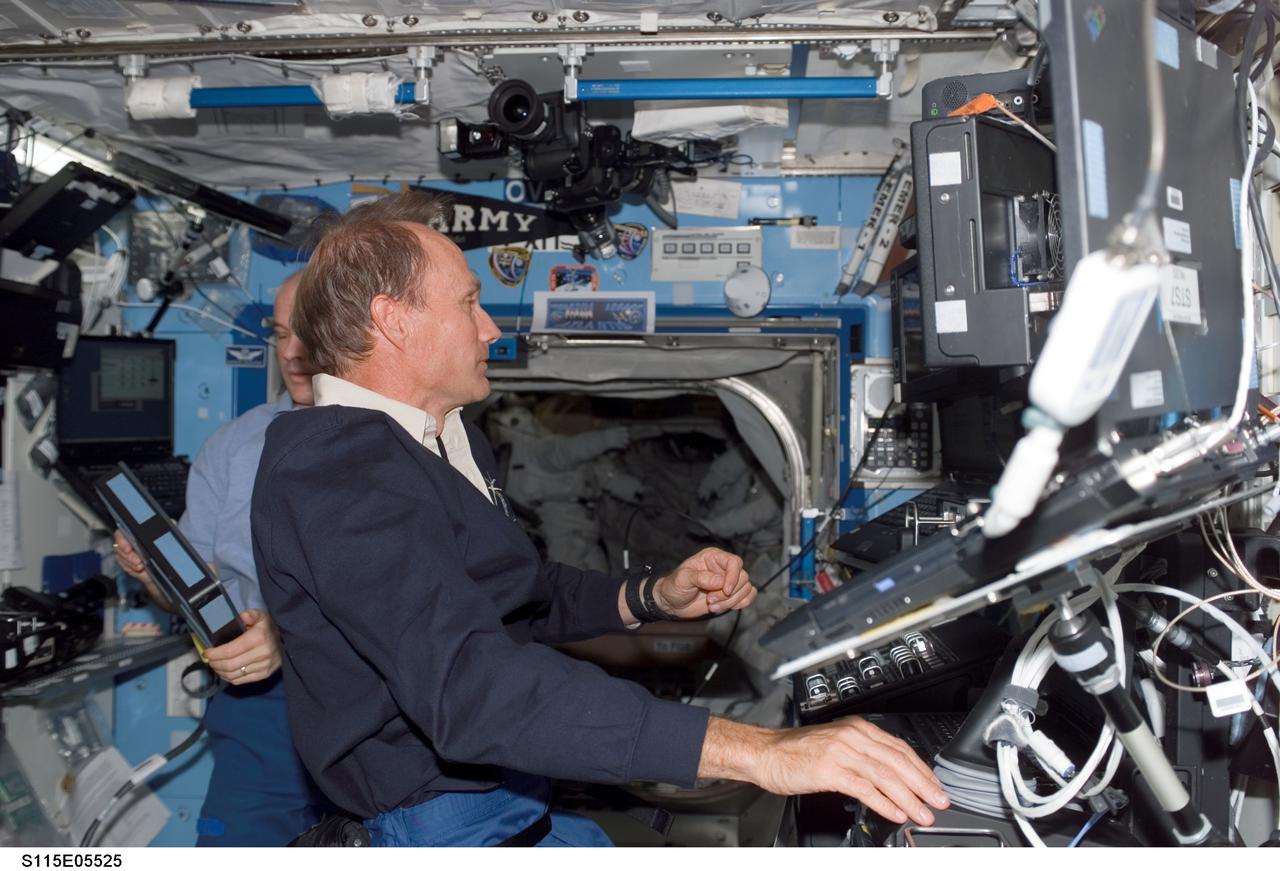
View of Astronauts Steve MacLean, Canadian Space Agency (CSA), Mission Specialist (MS), and Jeffrey N. Williams, Expedition 13 Flight Engineer (FE) and NASA Space Station Science Officer working at the Space Stations Robotic Arm to slowly move the 17 and a half ton P3/P4 truss to the port side of the Integrated Truss System. They will align it using a television camera and then mate it to the P1. Photo was taken in the U.S. Laboratory/Destiny during Expedition 13 / STS-115 joint operations.
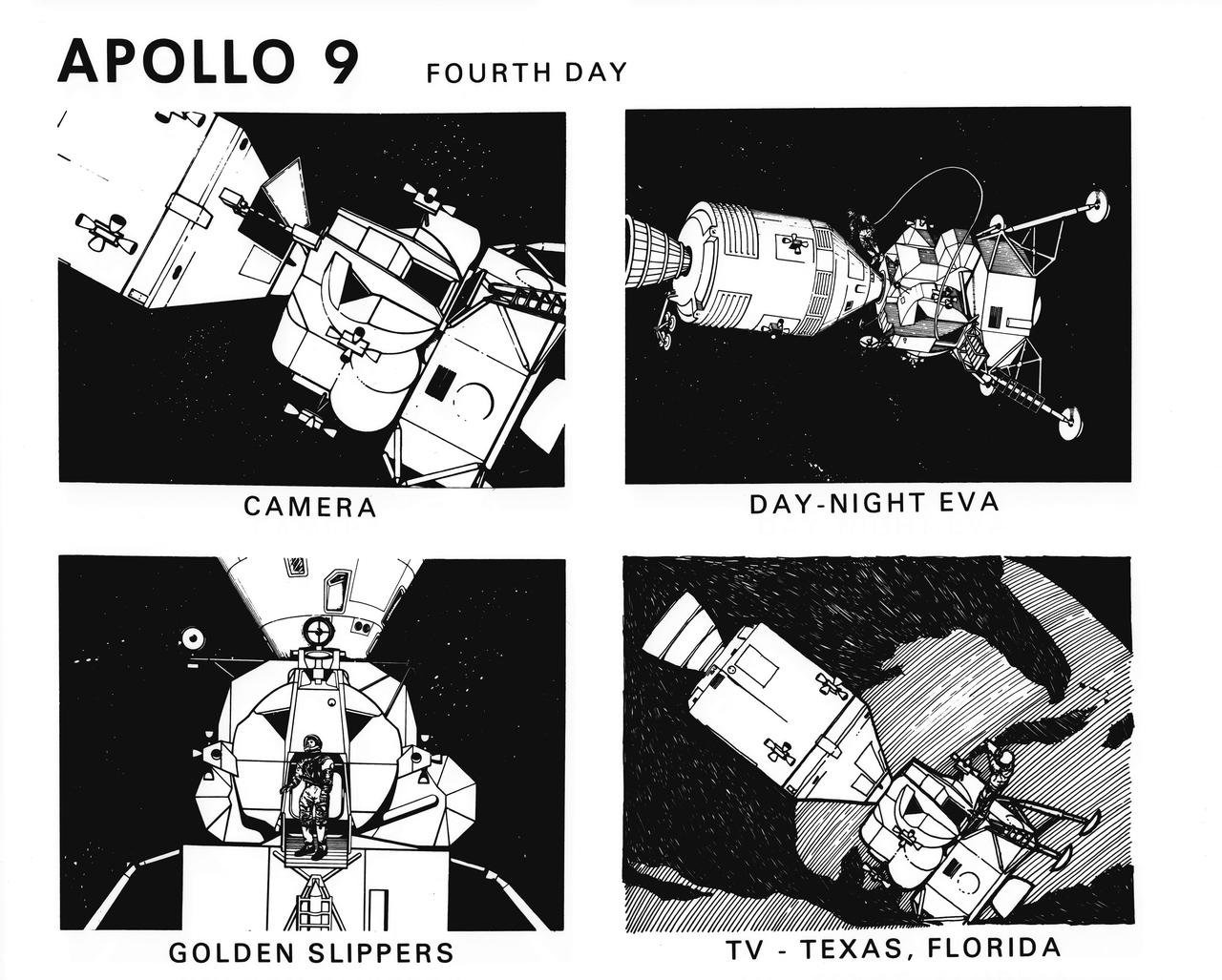
S69-19795 (February 1969) --- Composite of four artist's concepts illustrating key events, tasks and activities on the fourth day of the Apollo 9 mission, including use of camera, day-night extravehicular activity, use of golden slippers, and television over Texas and Florida. The Apollo 9 mission will evaluate spacecraft lunar module systems performance during manned Earth-orbital flight.
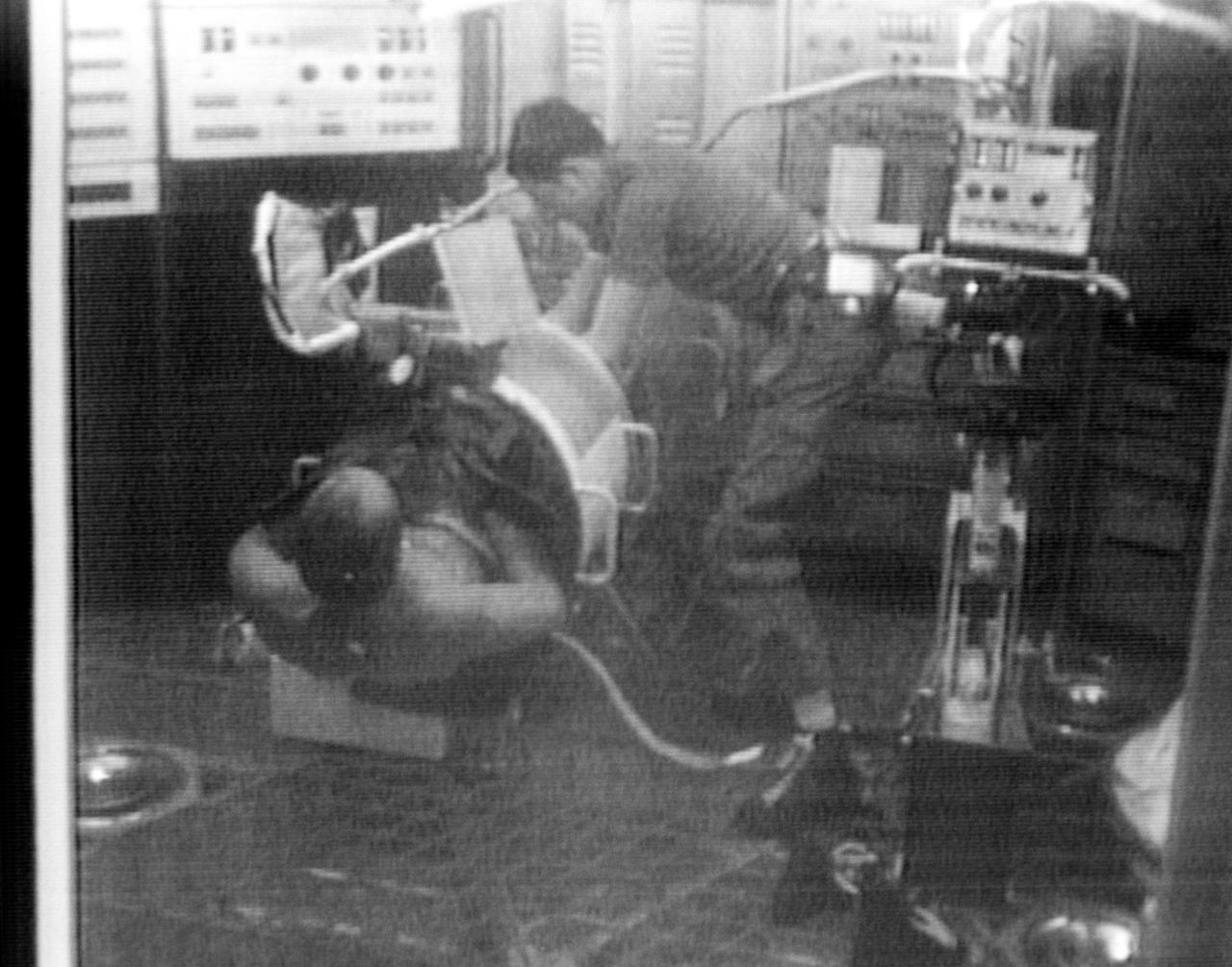
S73-27707 (9 June 1973) --- Astronaut Charles Conrad Jr., Skylab 2 commander, serves as test subject for the Lower Body Negative Pressure (MO92) Experiment, as seen in this reproduction taken from a color television transmission made by a TV camera aboard the Skylab 1/2 space station cluster in Earth orbit. Scientist-astronaut Joseph P. Kerwin, Skylab 2 science pilot, assists Conrad into the LBNP device. Kerwin served as monitor for the experiment. The purpose of the MO92 experiment is to provide information concerning the time course of cardiovascular adaptation during flight, and to provide inflight data for predicting the degree of orthostatic intolerance and impairment of physical capacity to be expected upon return to Earth environment. The data collected in support of MO92 blood pressure, heart rate, body temperature, vectorcardiogram, LBNPD pressure, leg volume changes, and body weight. Photo credit: NASA
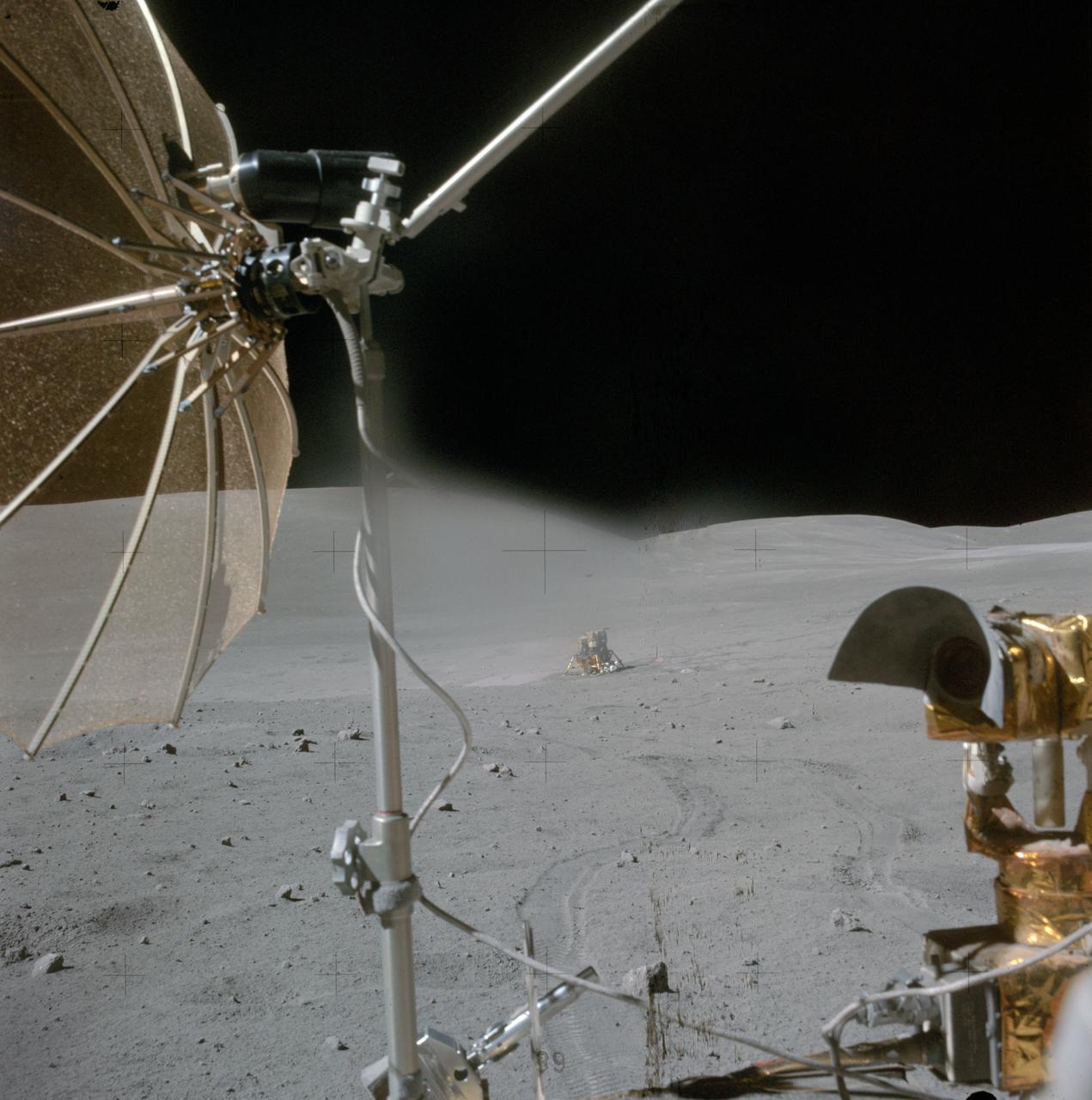
AS16-116-18678 (23 April 1972) --- A view from the moving Apollo 16 Lunar Roving Vehicle (LRV) as the crew men headed "home" at the end of the mission's third and final extravehicular activity (EVA). Astronaut John W. Young called attention to the series of block fields between the Lunar Module (LM) and LRV. Young also noted that, "The LM was obviously sitting in the only flat place around." Stone Mountain stretches about half way across the background. The high gain antenna and the RCA television camera on the LRV are in the foreground. While astronauts Young, commander; and Charles M. Duke Jr., lunar module pilot; descended in the Apollo 16 LM "Orion" to explore the Descartes highlands landing site on the moon, astronaut Thomas K. Mattingly II, command module pilot, remained with the Command and Service Modules (CSM) "Casper" in lunar orbit.
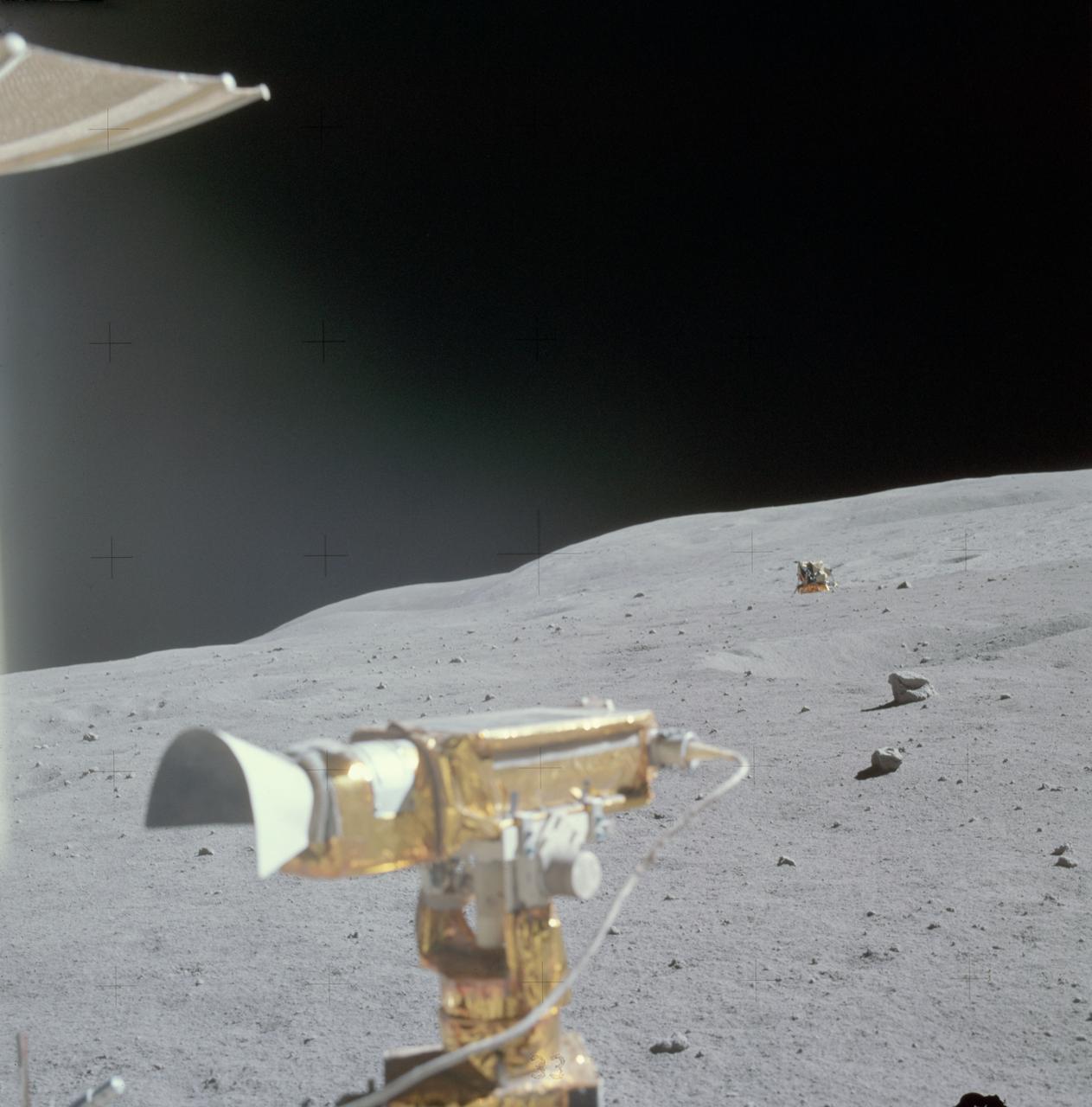
AS16-115-18549 (22 April 1972) --- The Apollo 16 Lunar Module (LM) "Orion" is photographed from a distance by astronaut Charles M. Duke Jr., lunar module pilot, aboard the moving Lunar Roving Vehicle (LRV). Astronauts Duke and John W. Young, commander, were returning from their excursion to Stone Mountain during the second Apollo 16 extravehicular activity (EVA). The RCA color television camera mounted on the LRV is in the foreground. A portion of the LRV's high-gain antenna is at top left. Smoky Mountain rises behind the LM in this north-looking view at the Descartes landing site. While astronauts Young and Duke descended in the "Orion" to explore the Descartes highlands landing site on the moon, astronaut Thomas K. Mattingly II, command module pilot, remained with the Command and Service Modules (CSM) "Casper" in lunar orbit.
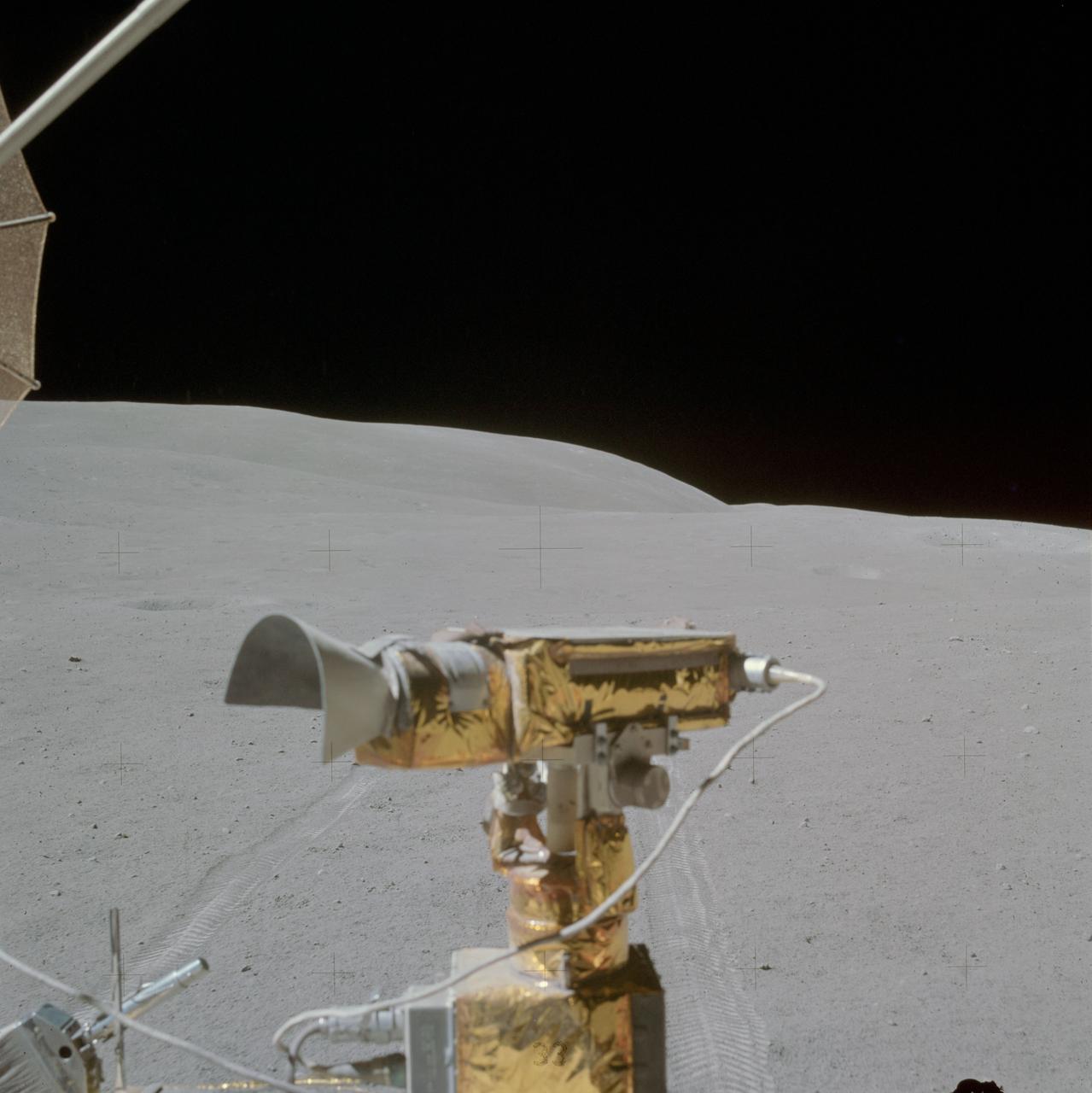
AS16-117-18754 (23 April 1972) --- A view of the smooth terrain in the general area of the North Ray Crater geological site, photographed by the Apollo 16 crew from the Lunar Roving Vehicle (LRV) shortly after leaving the immediate area of the geology site. The RCA color television camera is mounted on the front of the LRV and can be seen in the foreground, along with a small part of the high gain antenna, upper left. The tracks were made on the earlier trip to the North Ray Crater site. Astronaut Charles M. Duke Jr., lunar module pilot, exposed this view with his 70mm Hasselblad camera. Astronaut John W. Young, commander, said that this area was much smoother than the region around South Ray Crater. While astronauts Young and Duke descended in the Apollo 16 Lunar Module (LM) "Orion" to explore the Descartes highlands landing site on the moon, astronaut Thomas K. Mattingly II, command module pilot, remained with the Command and Service Modules (CSM) "Casper" in lunar orbit.
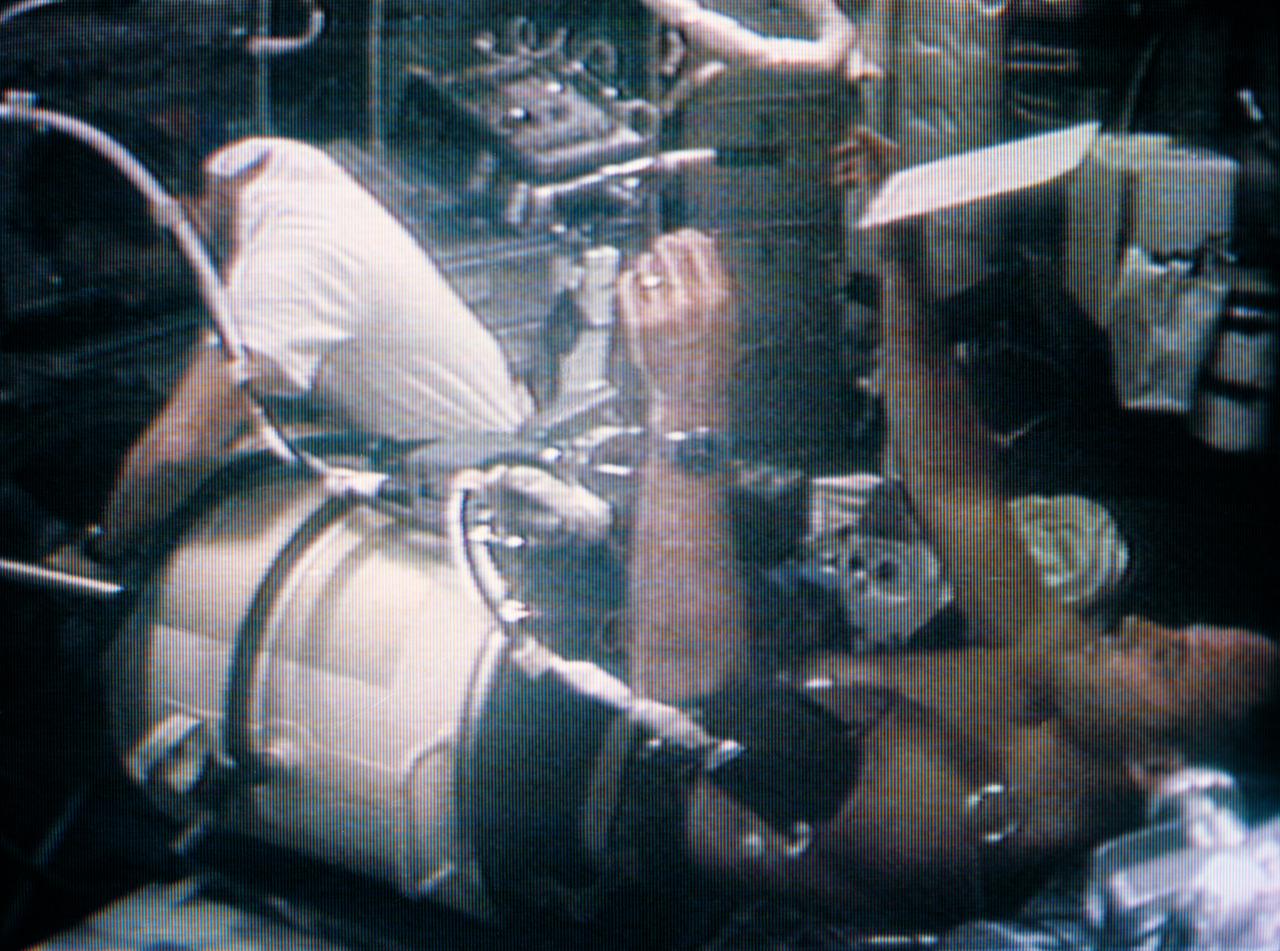
S73-34180 (7 Aug. 1973) --- A medium close-up view of astronaut Jack R. Lousma, Skylab 3 pilot, in the Lower Body Negative Pressure Device (LBNPD), as astronaut Alan L. Bean, commander, works around the leg band area. This portion of the LBNPD MO-92 experiment was televised on Aug. 7, 1973. The LBNPD experiment is to provide information concerning the time course of cardiovascular adaptation during flight, and to provide in-flight data for predicting the degree of orthostatic intolerence and impairment of physical capacity to be expected upon returning to Earth environment. The bicycle ergometer is in the background, partially visible behind Bean. Photo credit: NASA
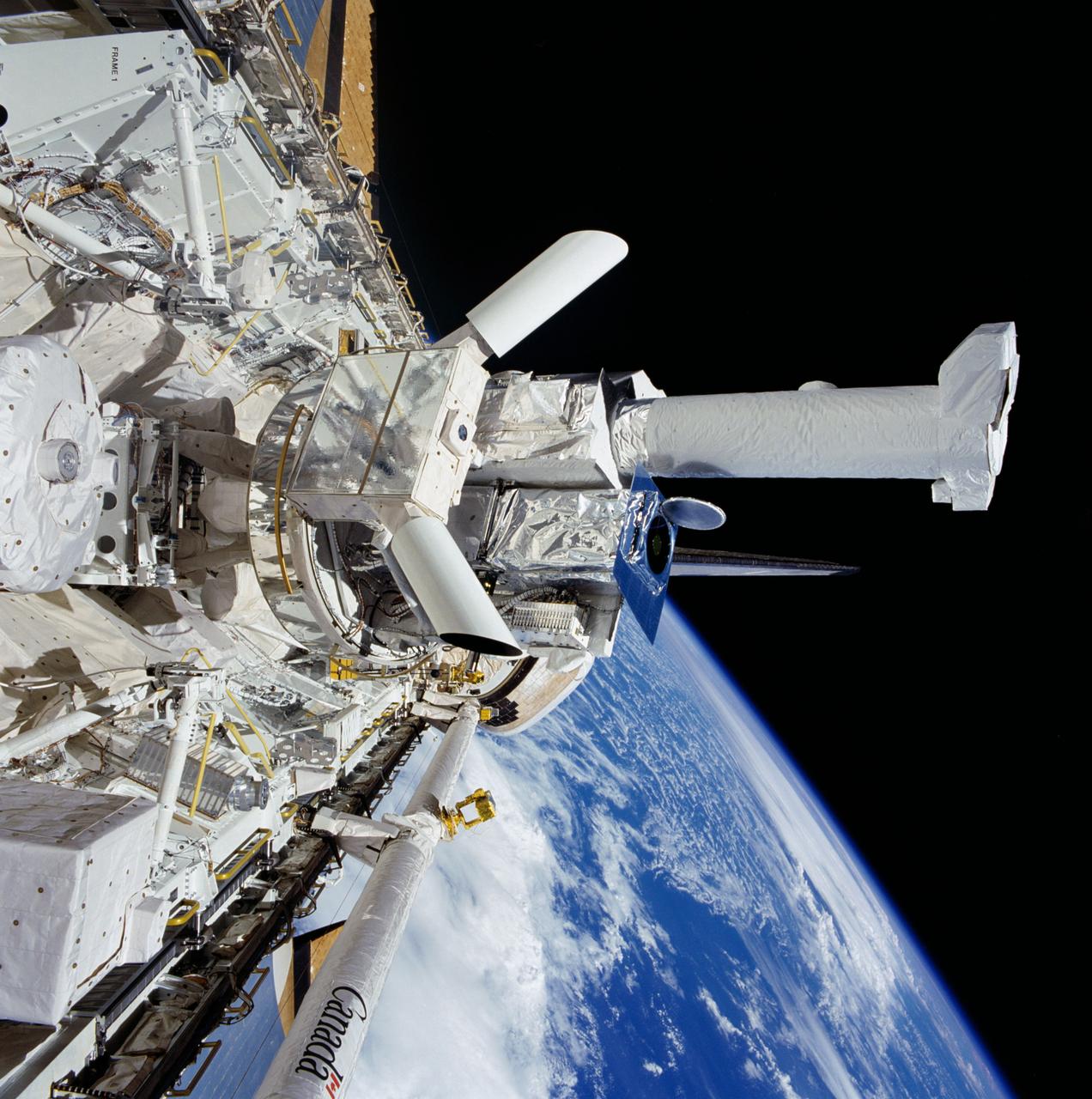
51F-42-069 (29 July-6 Aug 1985) --- The solar optical universal polarimeter (SOUP) experiment is visible among the cluster of Spacelab 2 hardware in the cargo bay of the Earth-orbiting Space Shuttle Challenger, backdropped against a curtain of white clouds over ocean waters. Various components of the instrument positioning system (IPS) are conspicuous at the center of the frame. Now resting, the remote manipulator system (RMS) was used at various points during the mission with the plasma diagnostics package (PDP) and as a support service structure for television cameras covering various activities of the busy science-oriented Spacelab 2 mission.
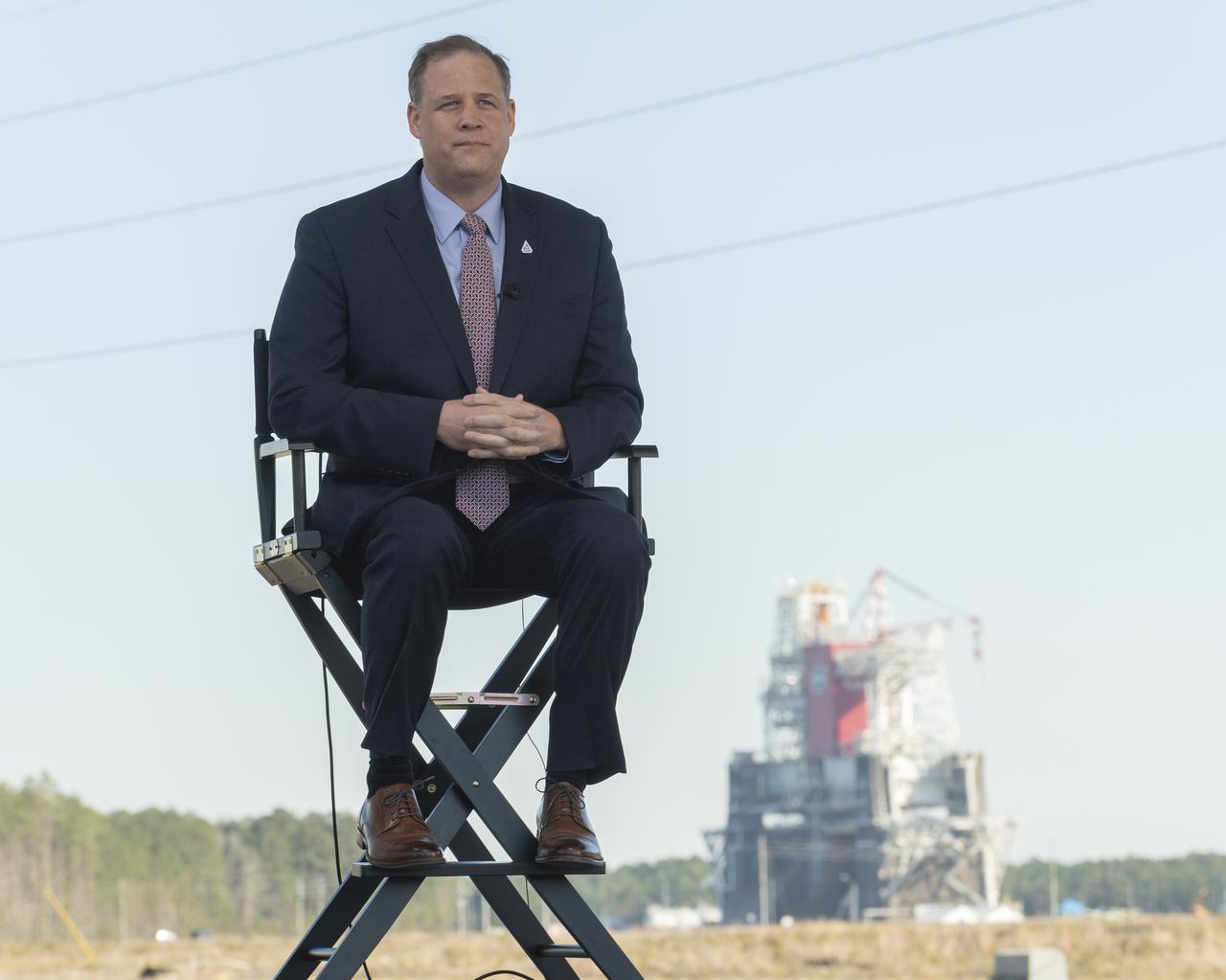
NASA Administrator Jim Bridenstine discusses the upcoming Green Run hot fire test on NASA television, Saturday, January 16, 2021, at NASA's Stennis Space Center near Bay St. Louis, Mississippi. In the background, the core stage for the first flight of NASA’s Space Launch System rocket is seen in the B-2 Test Stand ahead of a scheduled eight minute duration hot fire test. The hot fire test is the final stage of the Green Run test series, a comprehensive assessment of the Space Launch System’s core stage prior to launching the Artemis I mission to the Moon. Photo Credit: (NASA/Robert Markowitz)
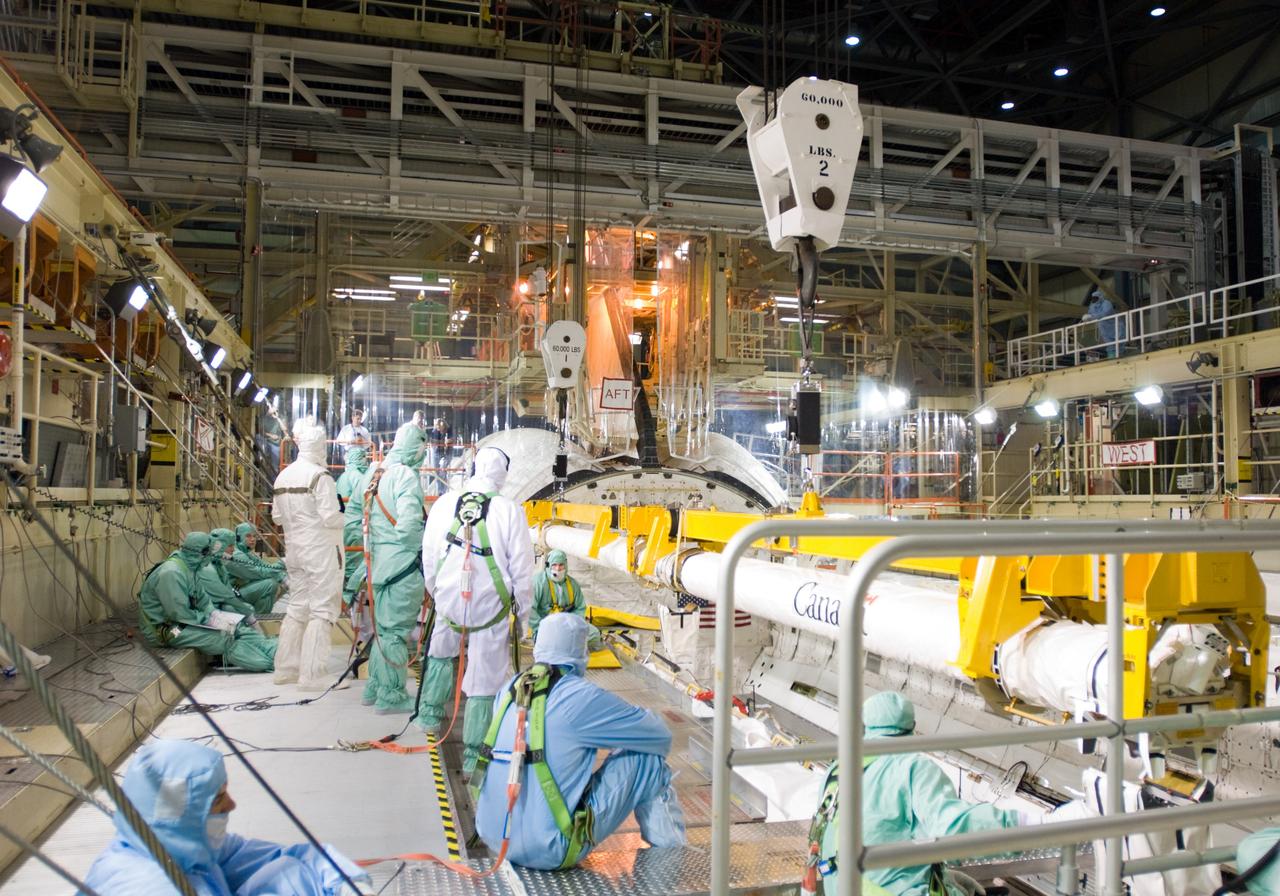
CAPE CANAVERAL, Fla. – In the Orbiter Processing Facility’s bay 3, workers install the orbiter boom sensor system in the payload bay of space shuttle Discovery to support mission STS-128. The 50-foot-long boom attaches to the shuttle arm and provides equipment to inspect the shuttle's heat shield while in space. It contains an intensified television camera (ITVC) and a laser dynamic range imager, which are mounted on a pan and tilt unit, and a laser camera system (LCS) mounted on a stationary bracket. The STS-128 flight will carry science and storage racks to the International Space Station on space shuttle Discovery. Launch of Discovery is targeted for Aug. 6. Photo credit: NASA/Jim Grossmann
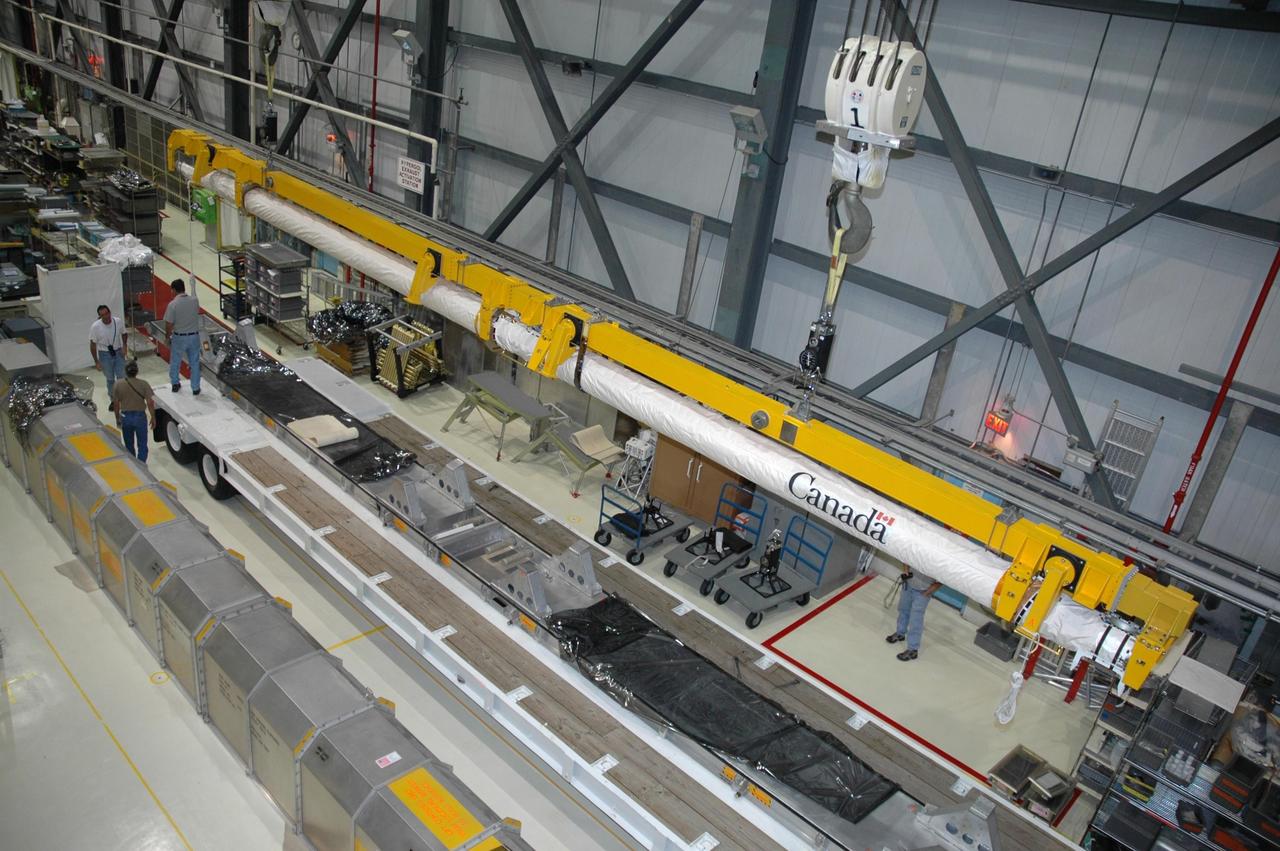
KENNEDY SPACE CENTER, FLA. - In the Orbiter Processing Facility’s bay 1, the orbiter boom sensor system is lifted by a crane for installation on the starboard side of Atlantis’s payload bay for mission STS-117. The 50-foot-long boom attaches to the shuttle arm and provides equipment to inspect the shuttle's heat shield while in space. It contains an intensified television camera (ITVC) and a laser dynamic range imager, which are mounted on a pan and tilt unit, and a laser camera system (LCS) mounted on a stationary bracket. Mission STS-117 will carry the S3/S4 arrays for installation on the International Space Station. Launch of Space Shuttle Atlantis is scheduled for March. Photo credit: NASA/Jack Pfaller
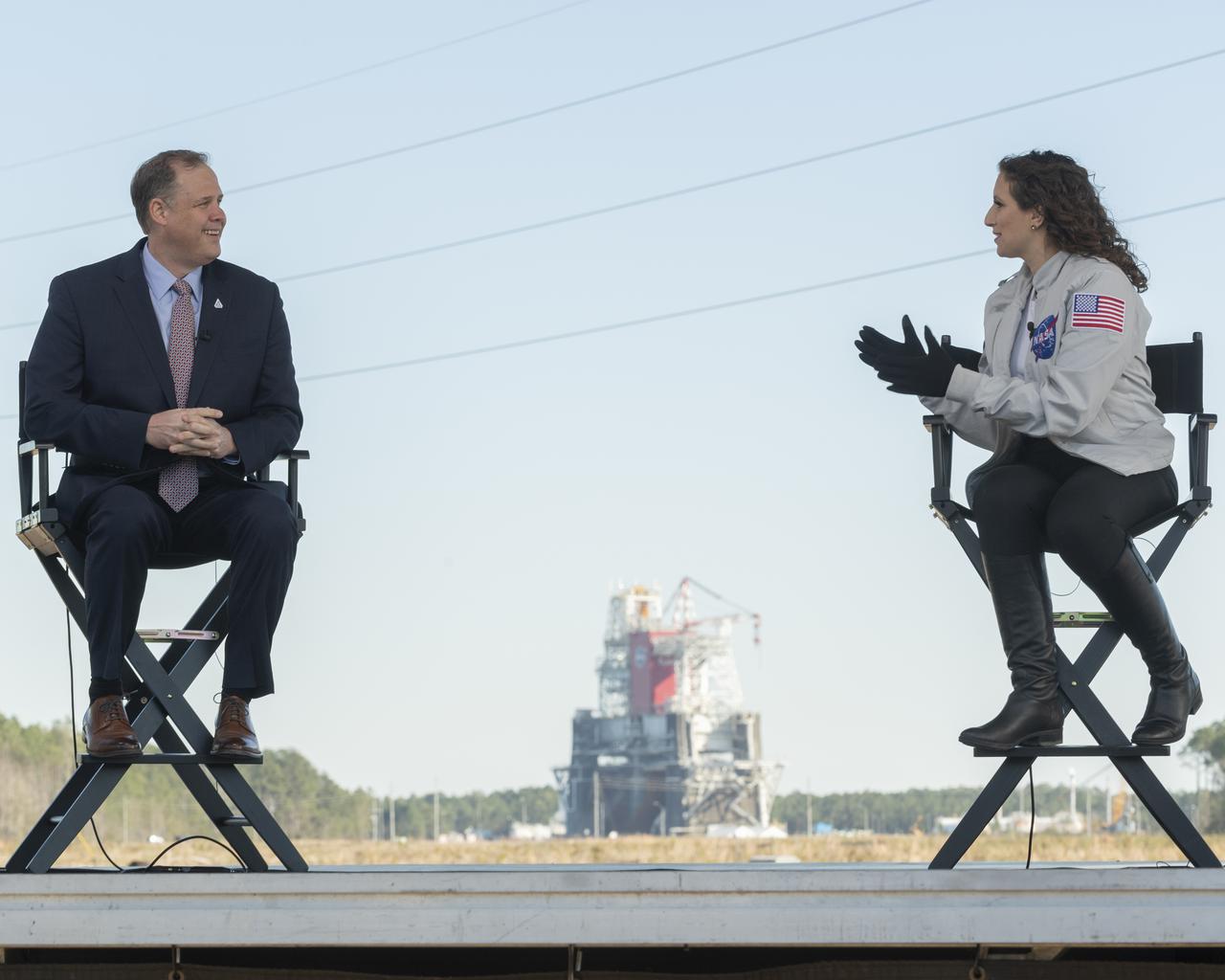
NASA Administrator Jim Bridenstine discusses the upcoming Green Run hot fire test on NASA television with Leigh D’Angelo of NASA, Saturday, January 16, 2021, at NASA's Stennis Space Center near Bay St. Louis, Mississippi. In the background, the core stage for the first flight of NASA’s Space Launch System rocket is seen in the B-2 Test Stand ahead of a scheduled eight minute duration hot fire test. The hot fire test is the final stage of the Green Run test series, a comprehensive assessment of the Space Launch System’s core stage prior to launching the Artemis I mission to the Moon. Photo Credit: (NASA/Robert Markowitz)
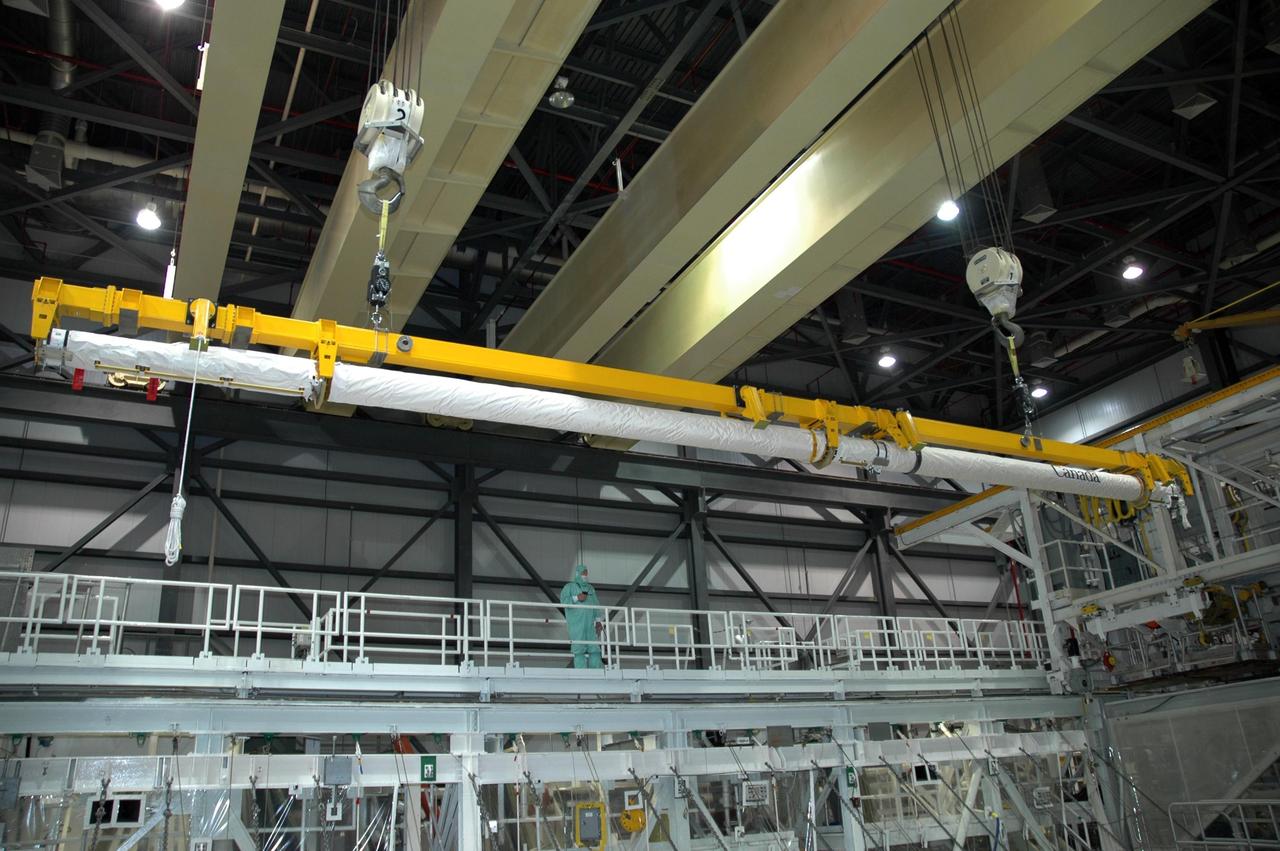
KENNEDY SPACE CENTER, FLA. - In the Orbiter Processing Facility’s bay 1, the orbiter boom sensor system is lifted by a crane for installation on the starboard side of Atlantis’s payload bay for mission STS-117. The 50-foot-long boom attaches to the shuttle arm and provides equipment to inspect the shuttle's heat shield while in space. It contains an intensified television camera (ITVC) and a laser dynamic range imager, which are mounted on a pan and tilt unit, and a laser camera system (LCS) mounted on a stationary bracket. Mission STS-117 will carry the S3/S4 arrays for installation on the International Space Station. Launch of Space Shuttle Atlantis is scheduled for March. Photo credit: NASA/Jack Pfaller

CAPE CANAVERAL, Fla. – In the Orbiter Processing Facility’s bay 3, space shuttle Discovery’s payload bay is readied for installation of the orbiter boom sensor system to support mission STS-128. The 50-foot-long boom attaches to the shuttle arm and provides equipment to inspect the shuttle's heat shield while in space. It contains an intensified television camera (ITVC) and a laser dynamic range imager, which are mounted on a pan and tilt unit, and a laser camera system (LCS) mounted on a stationary bracket. The STS-128 flight will carry science and storage racks to the International Space Station on space shuttle Discovery. Launch of Discovery is targeted for Aug. 6. Photo credit: NASA/Jim Grossmann
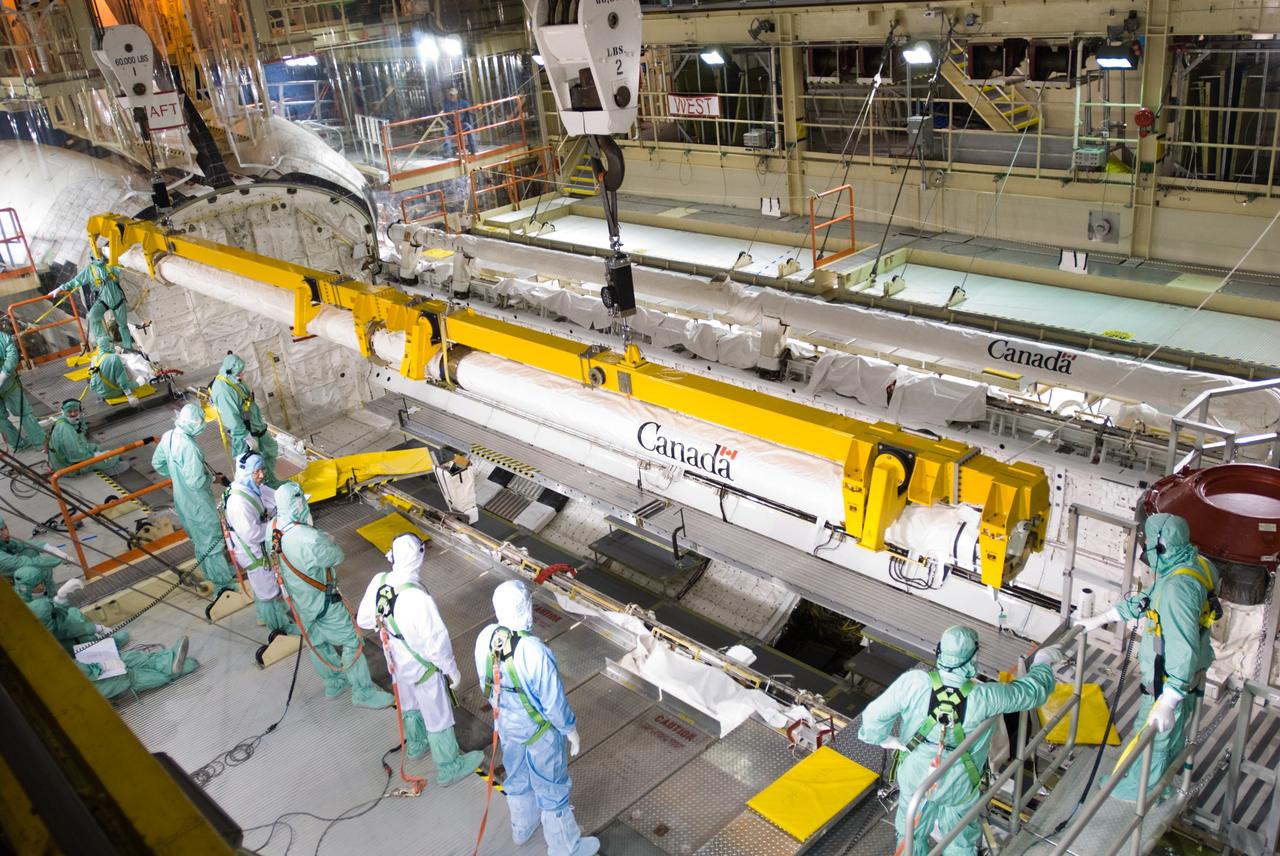
CAPE CANAVERAL, Fla. – In the Orbiter Processing Facility’s bay 3, the orbiter boom sensor system is lowered by a crane into the payload bay of space shuttle Discovery for installation to support mission STS-128. The 50-foot-long boom attaches to the shuttle arm and provides equipment to inspect the shuttle's heat shield while in space. It contains an intensified television camera (ITVC) and a laser dynamic range imager, which are mounted on a pan and tilt unit, and a laser camera system (LCS) mounted on a stationary bracket. The STS-128 flight will carry science and storage racks to the International Space Station on space shuttle Discovery. Launch of Discovery is targeted for Aug. 6. Photo credit: NASA/Jim Grossmann
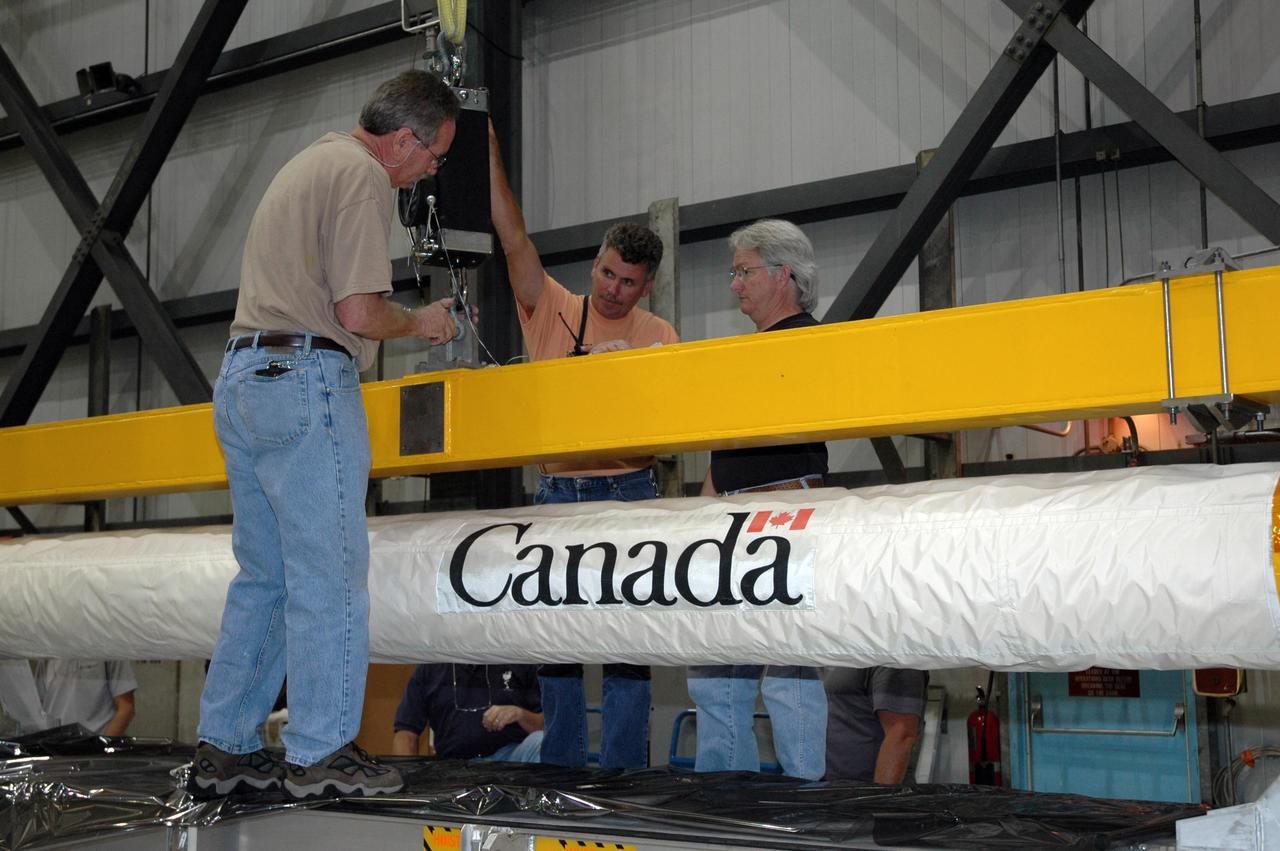
KENNEDY SPACE CENTER, FLA. - In the Orbiter Processing Facility's bay 1, workers prepare the orbiter boom sensor system for installation on the starboard side of Atlantis's payload bay for mission STS-117. The 50-foot-long boom attaches to the shuttle arm and provides equipment to inspect the shuttle's heat shield while in space. It contains an intensified television camera (ITVC) and a laser dynamic range imager, which are mounted on a pan and tilt unit, and a laser camera system (LCS) mounted on a stationary bracket. Mission STS-117 will carry the S3/S4 arrays for installation on the International Space Station. Launch of Space Shuttle Atlantis is scheduled for March. Photo credit: NASA/Jack Pfaller
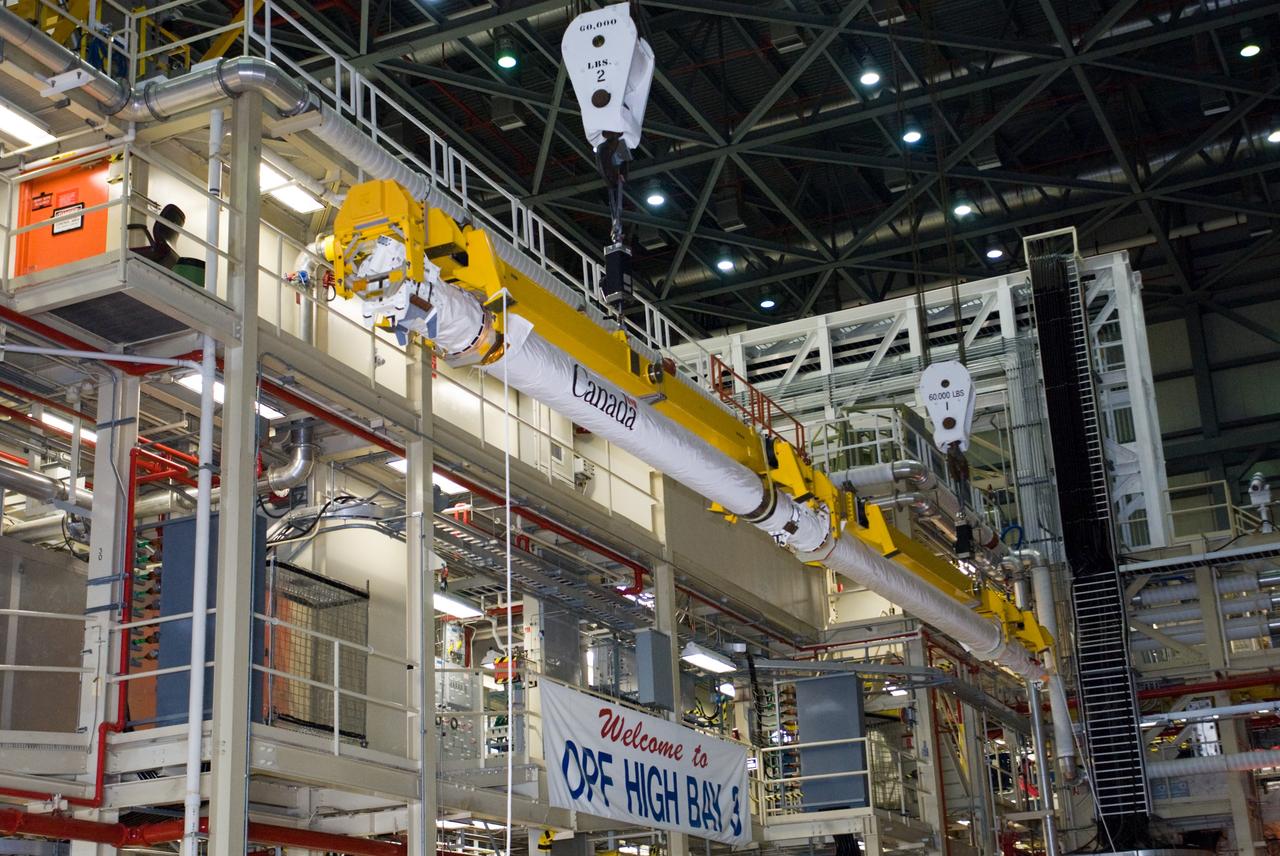
CAPE CANAVERAL, Fla. – In the Orbiter Processing Facility’s bay 3, the orbiter boom sensor system is lifted by a crane for installation in space shuttle Discovery’s payload bay for mission STS-128. The 50-foot-long boom attaches to the shuttle arm and provides equipment to inspect the shuttle's heat shield while in space. It contains an intensified television camera (ITVC) and a laser dynamic range imager, which are mounted on a pan and tilt unit, and a laser camera system (LCS) mounted on a stationary bracket. The STS-128 flight will carry science and storage racks to the International Space Station on space shuttle Discovery. Launch of Discovery is targeted for Aug. 6. Photo credit: NASA/Jim Grossmann
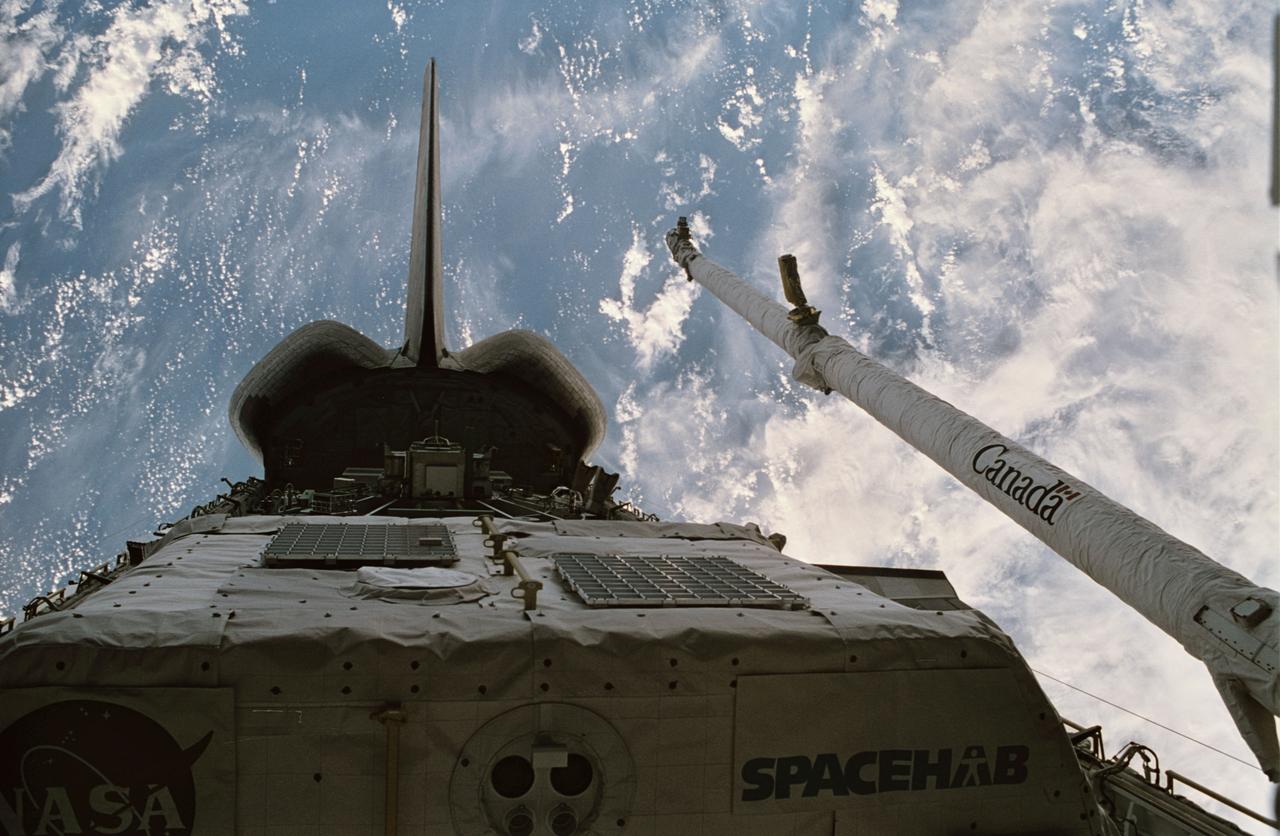
STS060-15-003 (3-11 Feb 1994) --- This 35mm frame shows the major payloads of the Space Shuttle Discovery's STS-60 mission, backdropped against clouds over the Atlantic Ocean. In the foreground is the SPACEHAB module, with the Wake Shield Facility (WSF) partially visible in its berthed position near the Orbital Maneuvering System (OMS) pods and the vertical stabilizer. Television cameras on the Remote Manipulator System (RMS) were being used for a survey of the cargo. Five NASA astronauts and a Russian cosmonaut went on to spend eight days in Earth orbit in support of the mission.
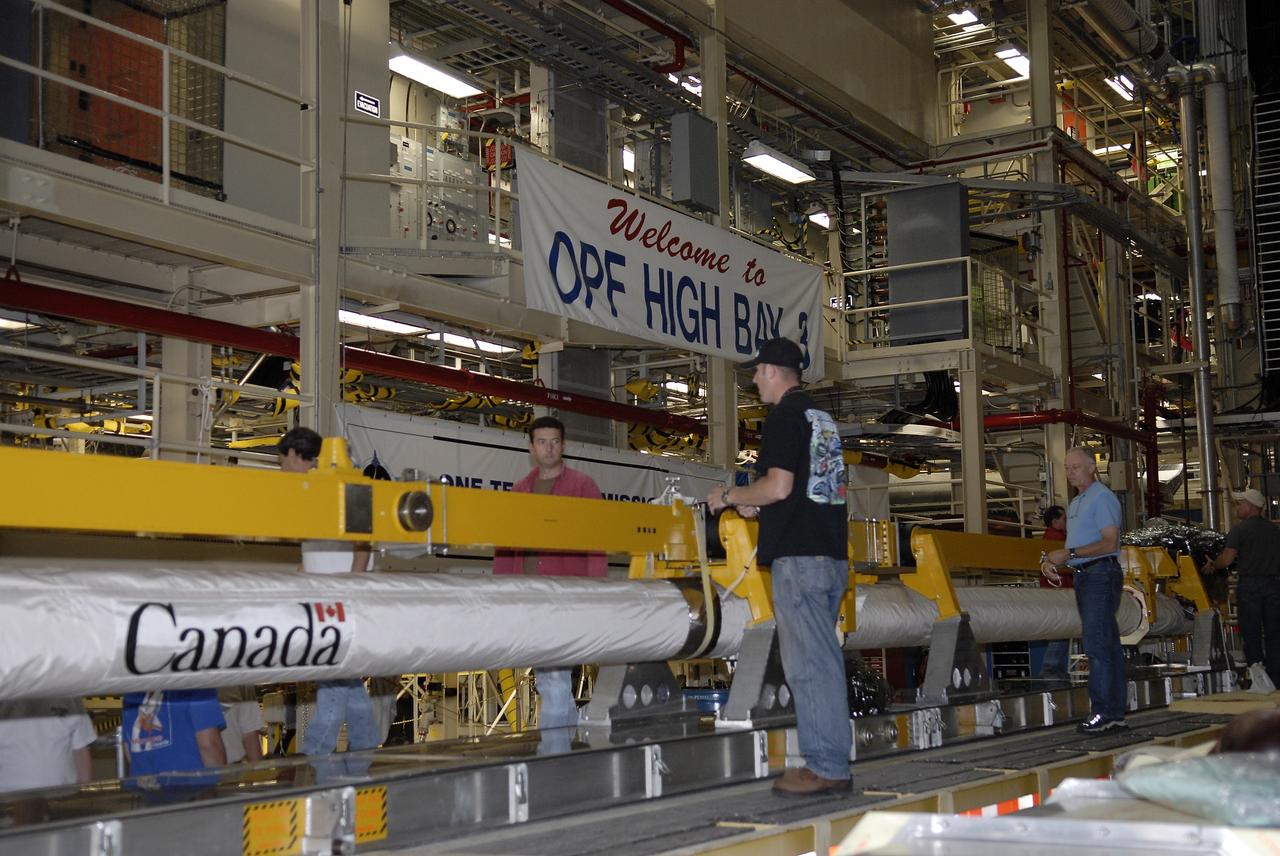
CAPE CANAVERAL, Fla. – In the Orbiter Processing Facility’s bay 3, workers prepare to install the orbiter boom sensor system in the payload bay of space shuttle Discovery to support mission STS-128. The 50-foot-long boom attaches to the shuttle arm and provides equipment to inspect the shuttle's heat shield while in space. It contains an intensified television camera (ITVC) and a laser dynamic range imager, which are mounted on a pan and tilt unit, and a laser camera system (LCS) mounted on a stationary bracket. The STS-128 flight will carry science and storage racks to the International Space Station on space shuttle Discovery. Launch of Discovery is targeted for Aug. 6. Photo credit: NASA/Kim Shiflett
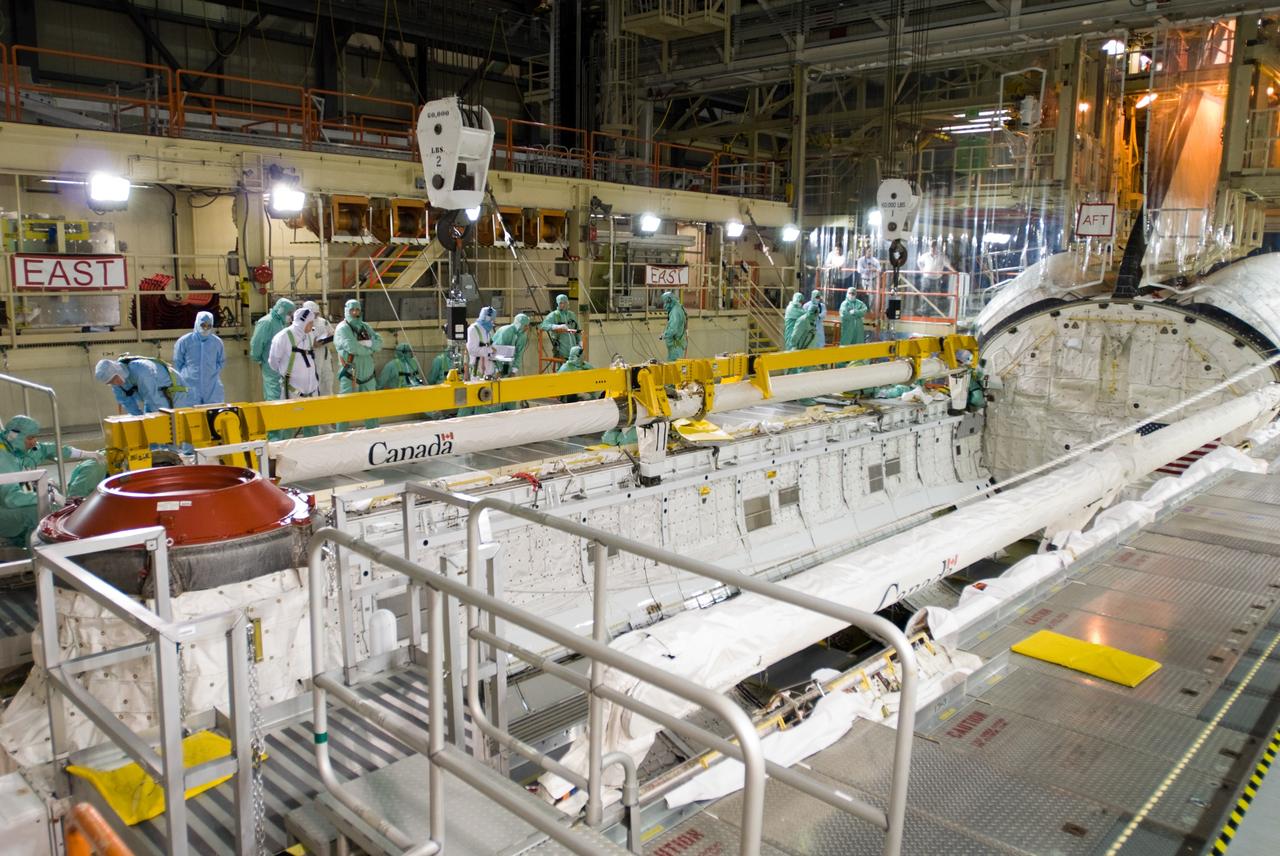
CAPE CANAVERAL, Fla. – In the Orbiter Processing Facility’s bay 3, the orbiter boom sensor system is installed in the payload bay of space shuttle Discovery to support mission STS-128. The 50-foot-long boom attaches to the shuttle arm and provides equipment to inspect the shuttle's heat shield while in space. It contains an intensified television camera (ITVC) and a laser dynamic range imager, which are mounted on a pan and tilt unit, and a laser camera system (LCS) mounted on a stationary bracket. The STS-128 flight will carry science and storage racks to the International Space Station on space shuttle Discovery. Launch of Discovery is targeted for Aug. 6. Photo credit: NASA/Jim Grossmann
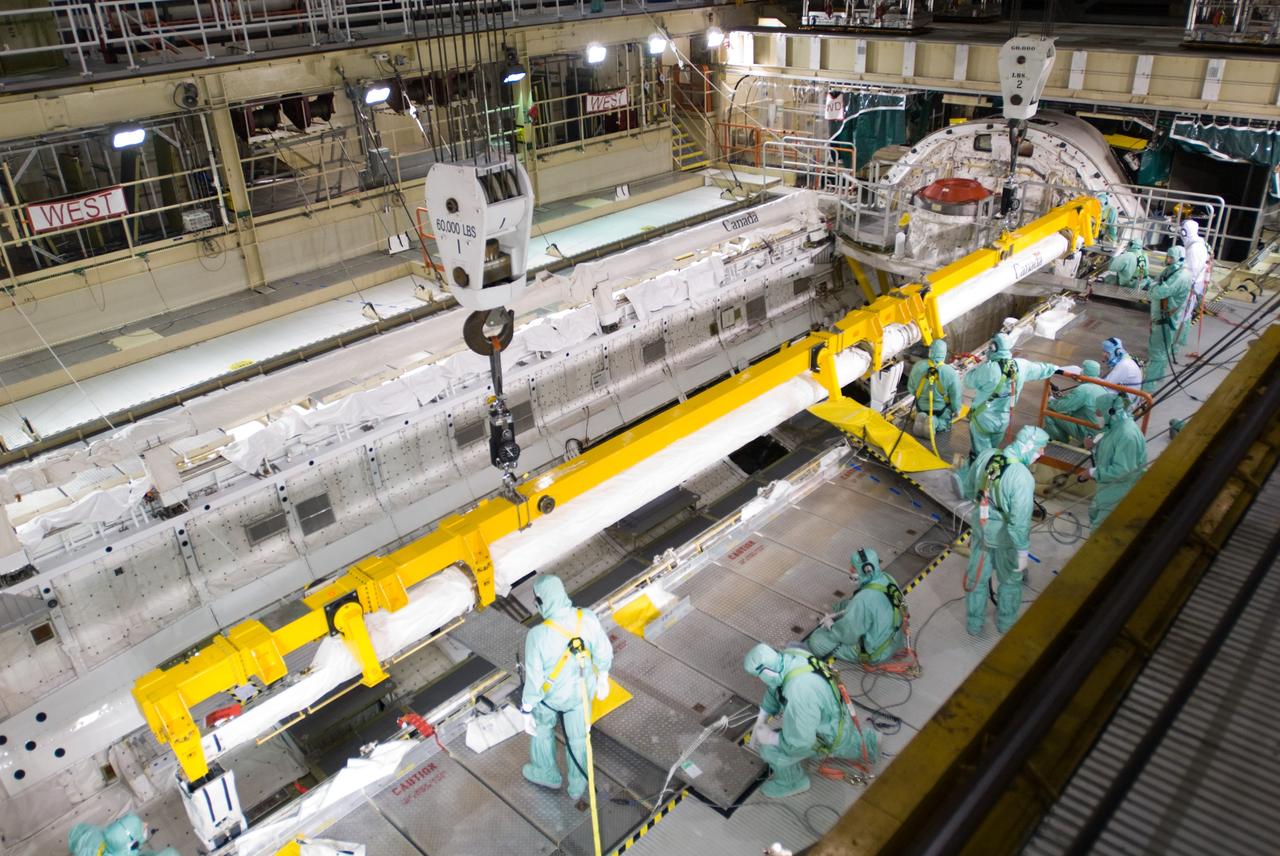
CAPE CANAVERAL, Fla. – In the Orbiter Processing Facility’s bay 3, workers prepare to install the orbiter boom sensor system in the payload bay of space shuttle Discovery to support mission STS-128. The 50-foot-long boom attaches to the shuttle arm and provides equipment to inspect the shuttle's heat shield while in space. It contains an intensified television camera (ITVC) and a laser dynamic range imager, which are mounted on a pan and tilt unit, and a laser camera system (LCS) mounted on a stationary bracket. The STS-128 flight will carry science and storage racks to the International Space Station on space shuttle Discovery. Launch of Discovery is targeted for Aug. 6. Photo credit: NASA/Jim Grossmann
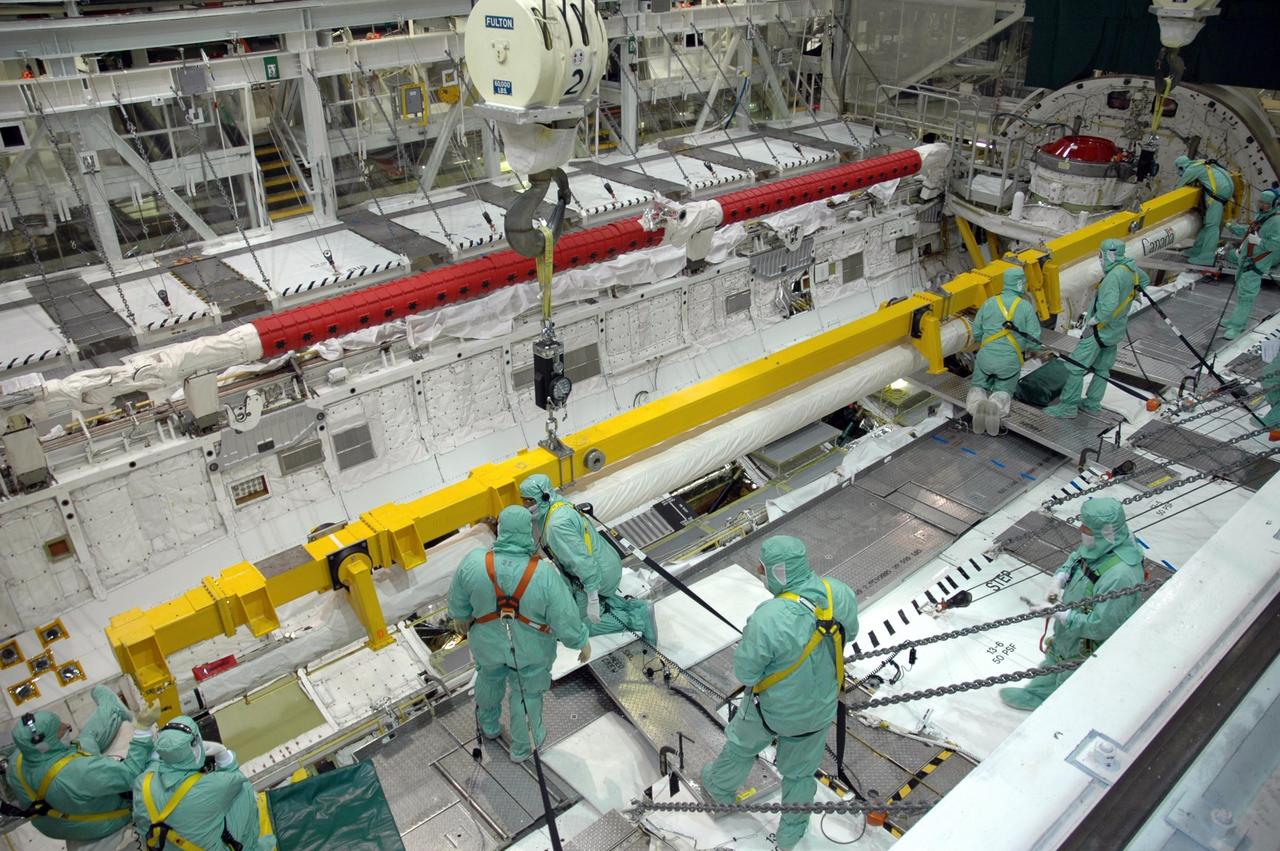
KENNEDY SPACE CENTER, FLA. - In the Orbiter Processing Facility’s bay 1, workers are ready to secure the orbiter boom sensor system on the starboard side of Atlantis’s payload bay for mission STS-117. The 50-foot-long boom attaches to the shuttle arm and provides equipment to inspect the shuttle's heat shield while in space. It contains an intensified television camera (ITVC) and a laser dynamic range imager, which are mounted on a pan and tilt unit, and a laser camera system (LCS) mounted on a stationary bracket. Mission STS-117 will carry the S3/S4 arrays for installation on the International Space Station. Launch of Space Shuttle Atlantis is scheduled for March. Photo credit: NASA/Jack Pfaller
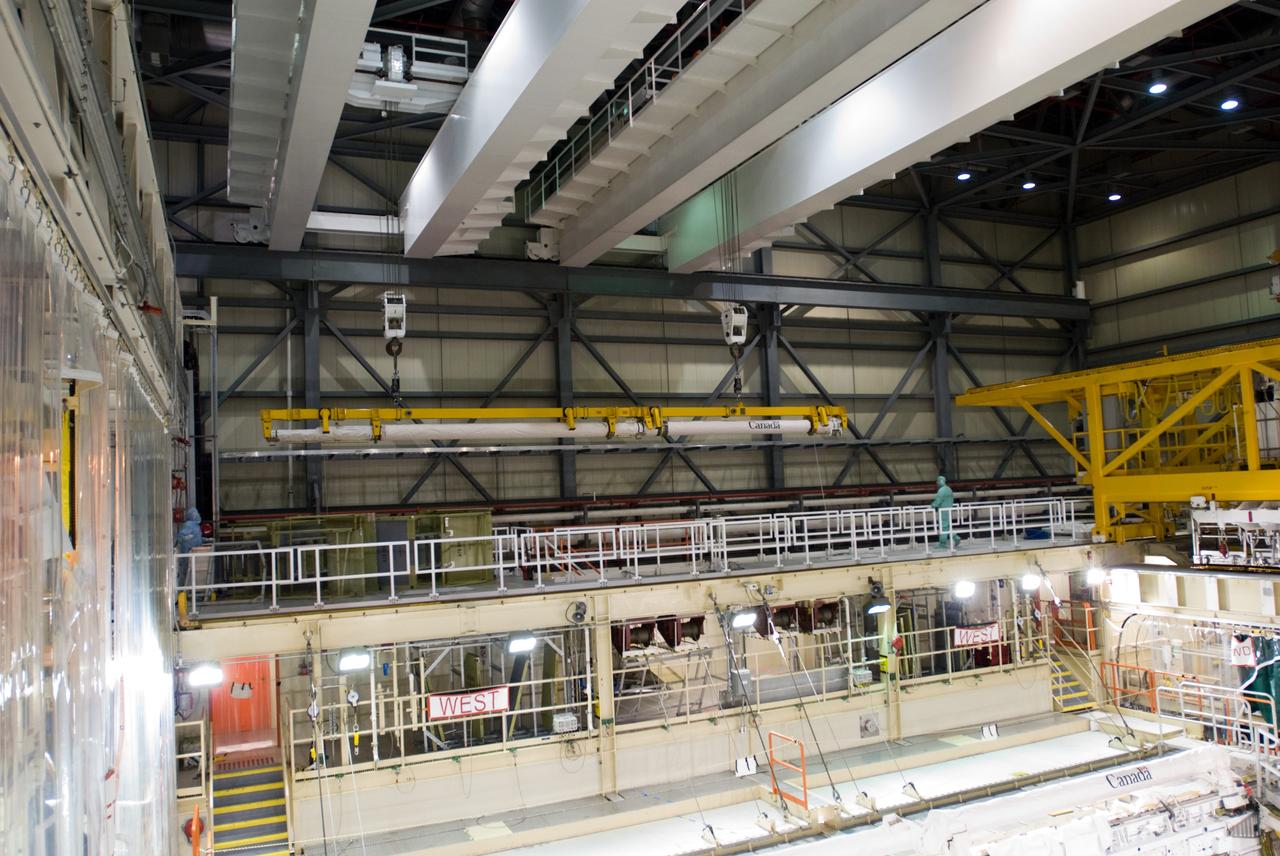
CAPE CANAVERAL, Fla. – In the Orbiter Processing Facility’s bay 3, the orbiter boom sensor system is lifted by a crane for installation in space shuttle Discovery’s payload bay for mission STS-128. The 50-foot-long boom attaches to the shuttle arm and provides equipment to inspect the shuttle's heat shield while in space. It contains an intensified television camera (ITVC) and a laser dynamic range imager, which are mounted on a pan and tilt unit, and a laser camera system (LCS) mounted on a stationary bracket. The STS-128 flight will carry science and storage racks to the International Space Station on space shuttle Discovery. Launch of Discovery is targeted for Aug. 6. Photo credit: NASA/Jim Grossmann

S83-34270 (18 June 1983) --- Astronaut C. Gordon Fullerton supplies helpful consultation for Edward I. Fendell (seated) at the Integrated Communications System (INCO) console in the Mission Operations Control Room (MOCR) of the Johnson Space Center's (JSC) Mission Control Center (MCC). Fendell had control over the TV systems during a brief television transmission that featured the opening of the payload bay doors and the revealing of the cargo in the space shuttle Challenger's 18-meter (60-feet) long payload bay. The door-opening was the first of a series of many TV sessions planned for this six-day flight. Photo credit: NASA
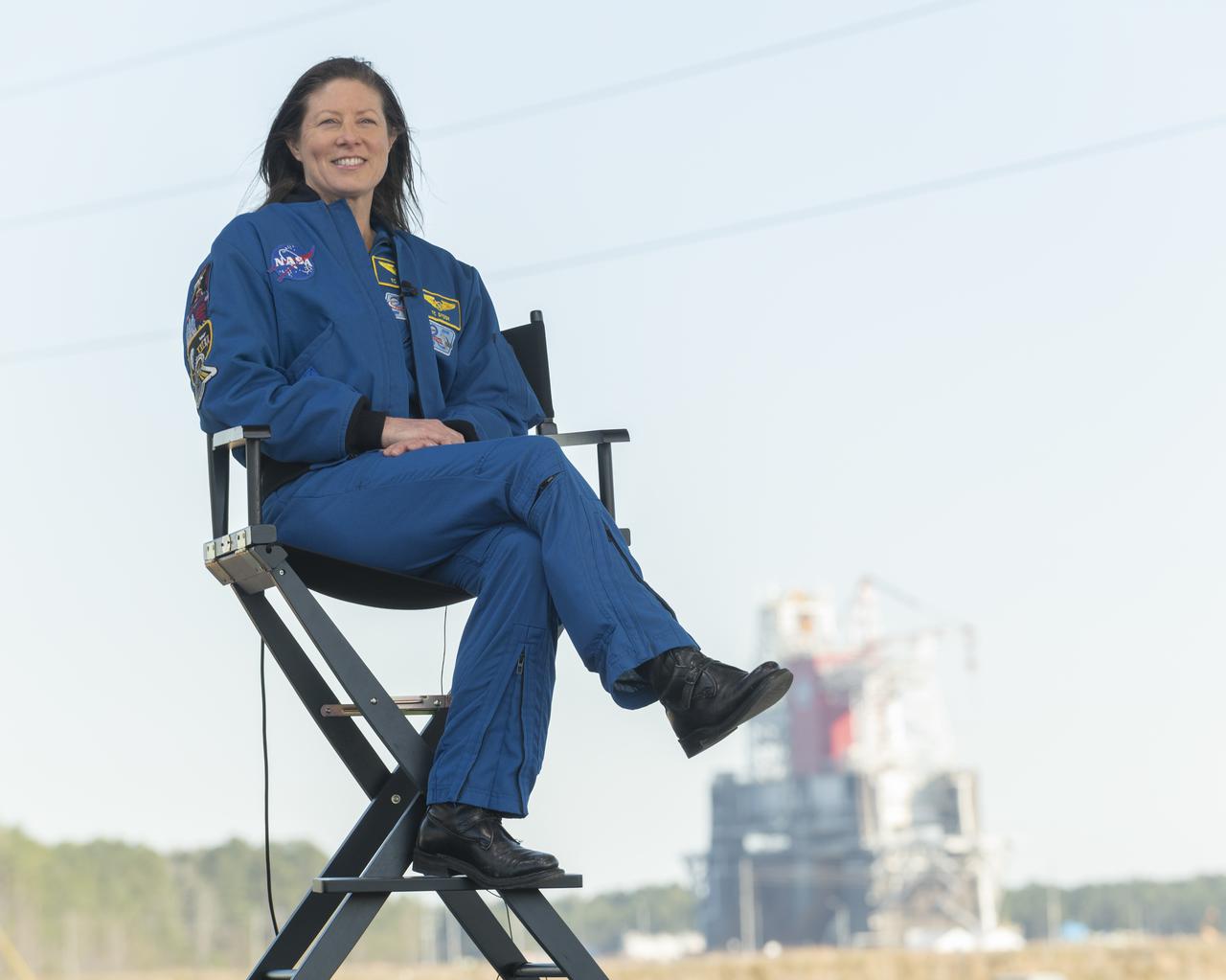
NASA astronaut Tracy Caldwell Dyson discusses the upcoming Green Run hot fire test on NASA television, Saturday, January 16, 2021, at NASA's Stennis Space Center near Bay St. Louis, Mississippi. In the background, the core stage for the first flight of NASA’s Space Launch System rocket is seen in the B-2 Test Stand ahead of a scheduled eight minute duration hot fire test. The hot fire test is the final stage of the Green Run test series, a comprehensive assessment of the Space Launch System’s core stage prior to launching the Artemis I mission to the Moon. Photo Credit: (NASA/Robert Markowitz)
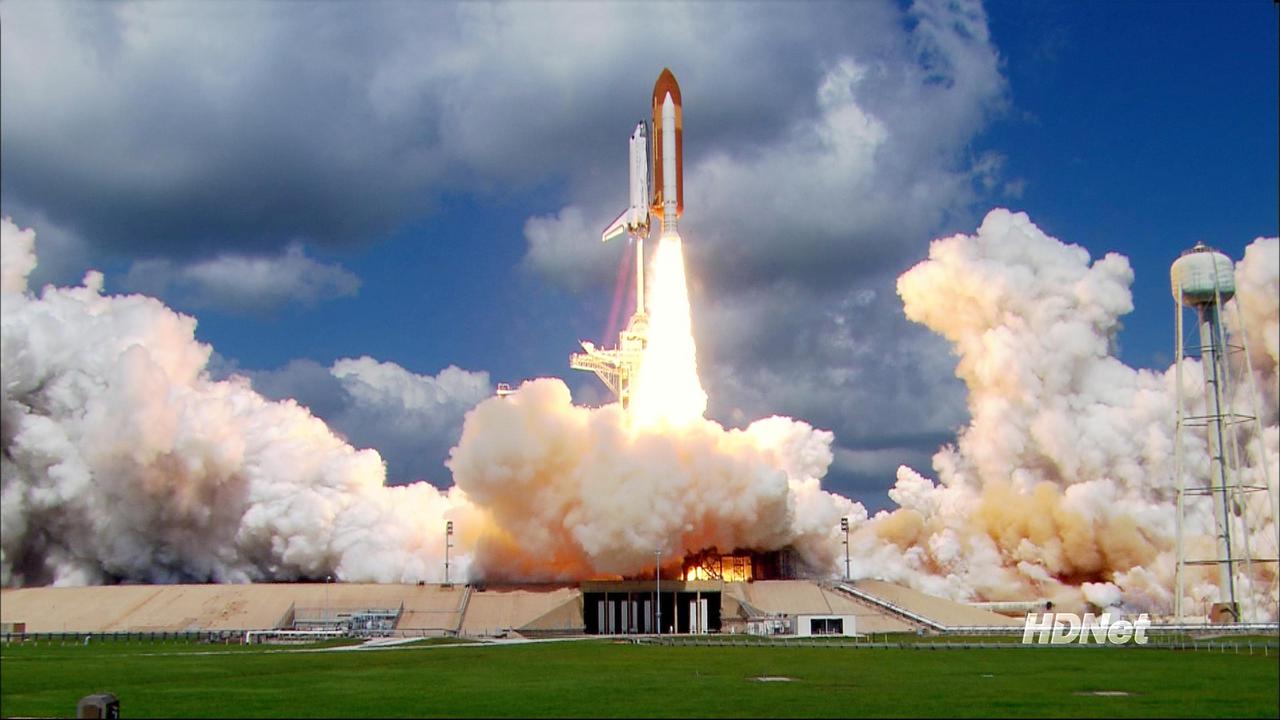
KENNEDY SPACE CENTER, FLA. - As billows of smoke and steam roll away, Space Shuttle Discovery leaps from Launch Pad 39B on the historic Return to Flight mission STS-114. Liftoff occurred at 10:39 a.m. EDT. At right is the 290-foot water tower that holds the 300,000 gallons of water that flood the pad for sound suppression. This is the 114th Space Shuttle flight and the 31st for Discovery. The 12-day mission is expected to end with touchdown at the Shuttle Landing Facility on Aug. 7. On this mission to the International Space Station the crew will perform inspections on-orbit for the first time of all of the Reinforced Carbon-Carbon (RCC) panels on the leading edge of the wings and the Thermal Protection System tiles using the new Canadian-built Orbiter Boom Sensor System and the data from 176 impact and temperature sensors. Mission Specialists will also practice repair techniques on RCC and tile samples during a spacewalk in the payload bay. During two additional spacewalks, the crew will install the External Stowage Platform-2, equipped with spare part assemblies, and a replacement Control Moment Gyroscope contained in the Lightweight Multi-Purpose Experiment Support Structure. This photo is a freeze frame provided by HDNet, a national television network broadcasting high-definition television, located in Denver, Colo.
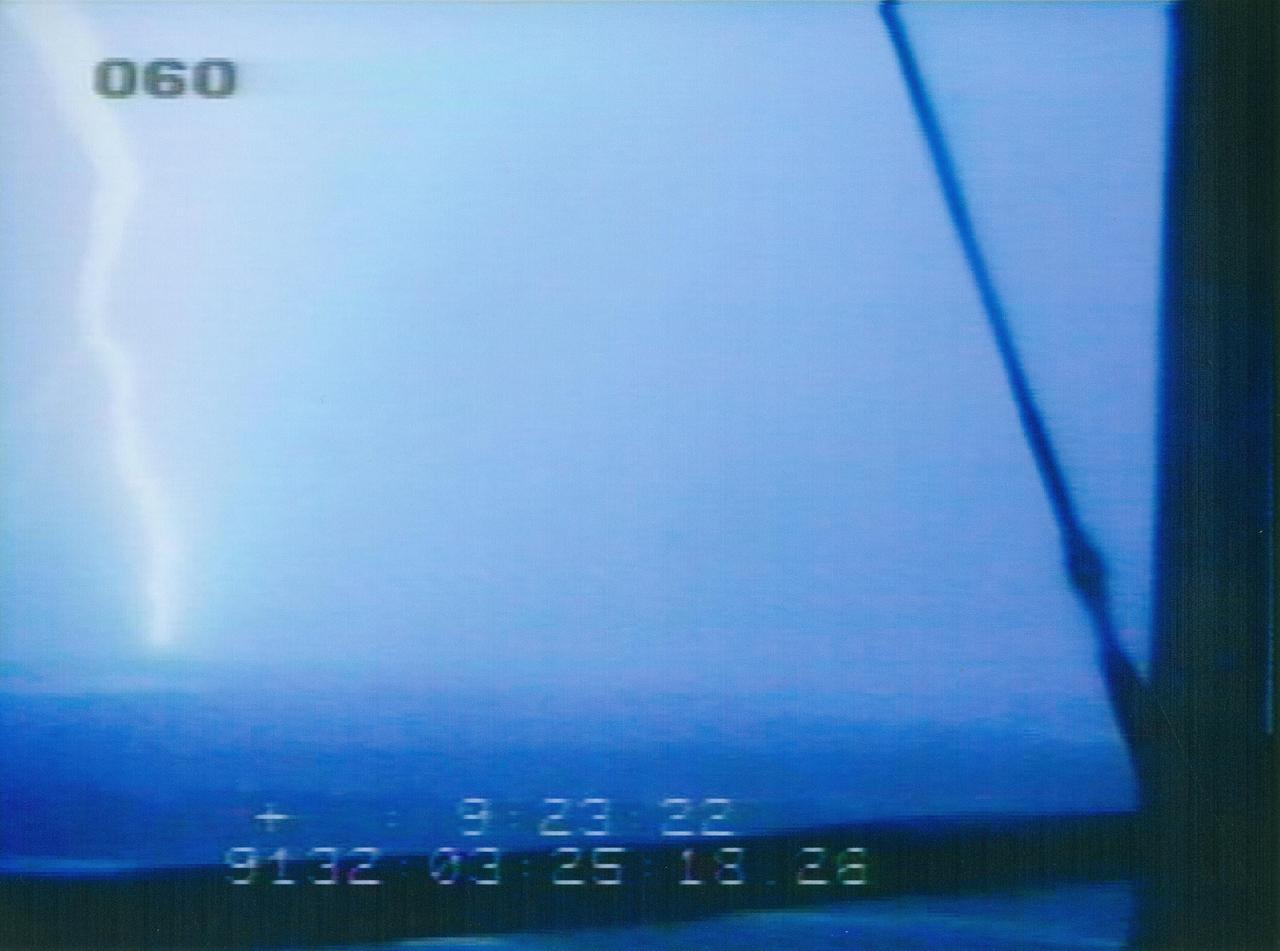
CAPE CANAVERAL, Fla. – This photo taken from Launch Pad 39A at NASA's Kennedy Space Center in Florida shows one of two lightning strikes that occurred on May 11 around 11 p.m. within a third of a mile of space shuttle Endeavour on Launch Pad 39B. Engineers and safety personnel evaluated data and performed a walkdown of the pad and determined there is no damage to the vehicle or the pad. The images are from Kennedy's Operational Television cameras which can be used to triangulate the location of lightning strikes. Other detection systems include the Cloud-To-Ground Lightning Surveillance System, Strikenet/National Lightning Detection Network, Lightning Induced Voltage Instrumentation System and the Catenary Wire Lightning Instrumentation System. Endeavour is standing by on the pad, prepared for liftoff in the unlikely event that a rescue mission is necessary during space shuttle Atlantis' STS-125 mission to service NASA's Hubble Space Telescope. Photo credit: NASA
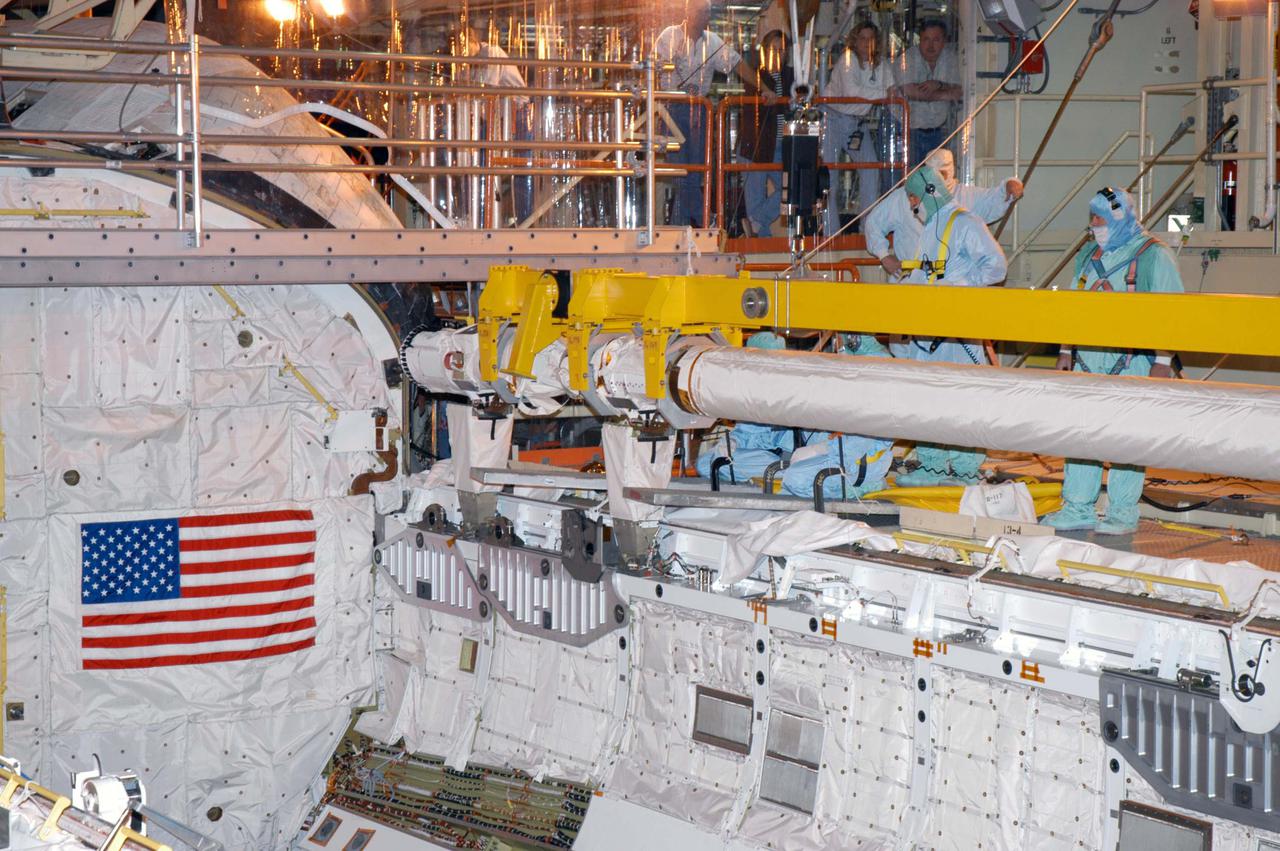
KENNEDY SPACE CENTER, FLA. - In the Orbiter Processing Facility, the Remote Manipulator System (RMS), also known as the Canadian robotic arm, is being installed in Discovery’s payload bay. The RMS is used to deploy and retrieve payloads, provide a mobile extension ladder or foot restraints for crew members during extravehicular activities; and to aid the flight crew members in viewing surfaces of the orbiter or payloads through a television camera on the RMS. The arm is also serving as the base for the new Orbiter Boom Sensor System (OBSS), one of the safety measures for Return to Flight, equipping the Shuttle with cameras and laser systems to inspect the Shuttle’s Thermal Protection System while in space. Discovery is scheduled for a launch planning window of May 2005 on Return to Flight mission STS-114.
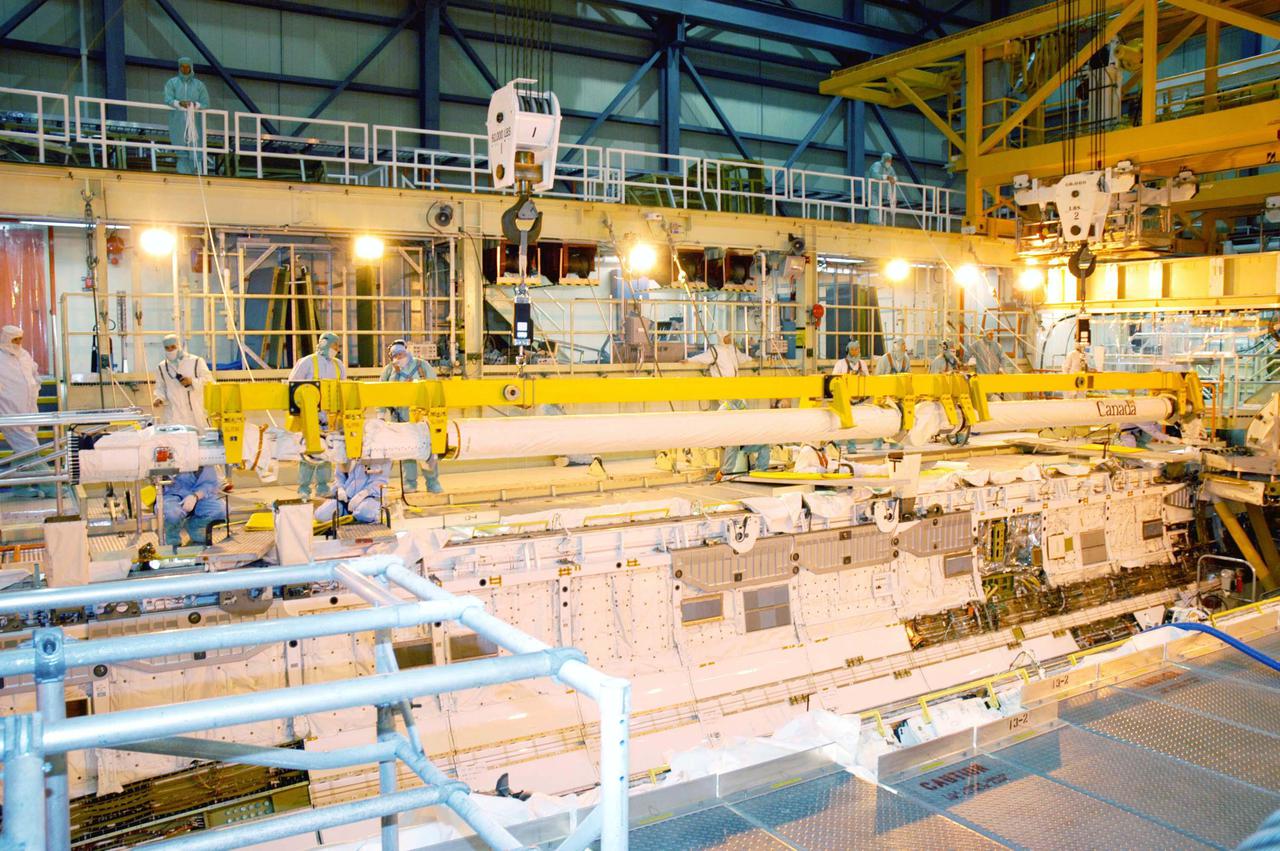
KENNEDY SPACE CENTER, FLA. - In the Orbiter Processing Facility, the Remote Manipulator System (RMS), also known as the Canadian robotic arm, is moved toward Discovery’s payload bay for installation. The RMS is used to deploy and retrieve payloads, provide a mobile extension ladder or foot restraints for crew members during extravehicular activities; and to aid the flight crew members in viewing surfaces of the orbiter or payloads through a television camera on the RMS. The arm is also serving as the base for the new Orbiter Boom Sensor System (OBSS), one of the safety measures for Return to Flight, equipping the Shuttle with cameras and laser systems to inspect the Shuttle’s Thermal Protection System while in space. Discovery is scheduled for a launch planning window of May 2005 on Return to Flight mission STS-114.
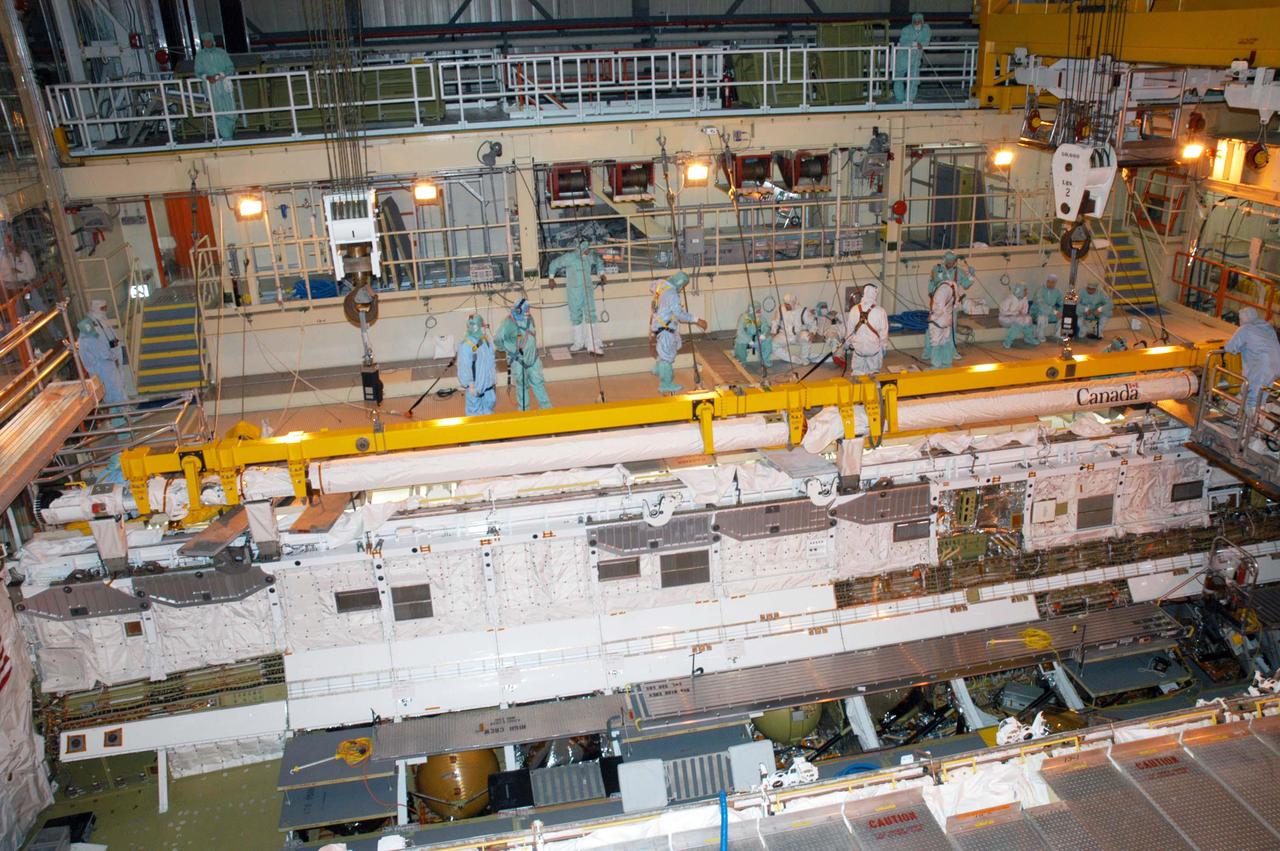
KENNEDY SPACE CENTER, FLA. - Technicians in the Orbiter Processing Facility work to install the Remote Manipulator System (RMS), also known as the Canadian robotic arm, in Discovery’s payload bay. The RMS is used to deploy and retrieve payloads, provide a mobile extension ladder or foot restraints for crew members during extravehicular activities; and to aid the flight crew members in viewing surfaces of the orbiter or payloads through a television camera on the RMS. The arm is also serving as the base for the new Orbiter Boom Sensor System (OBSS), one of the safety measures for Return to Flight, equipping the Shuttle with cameras and laser systems to inspect the Shuttle’s Thermal Protection System while in space. Discovery is scheduled for a launch planning window of May 2005 on Return to Flight mission STS-114.
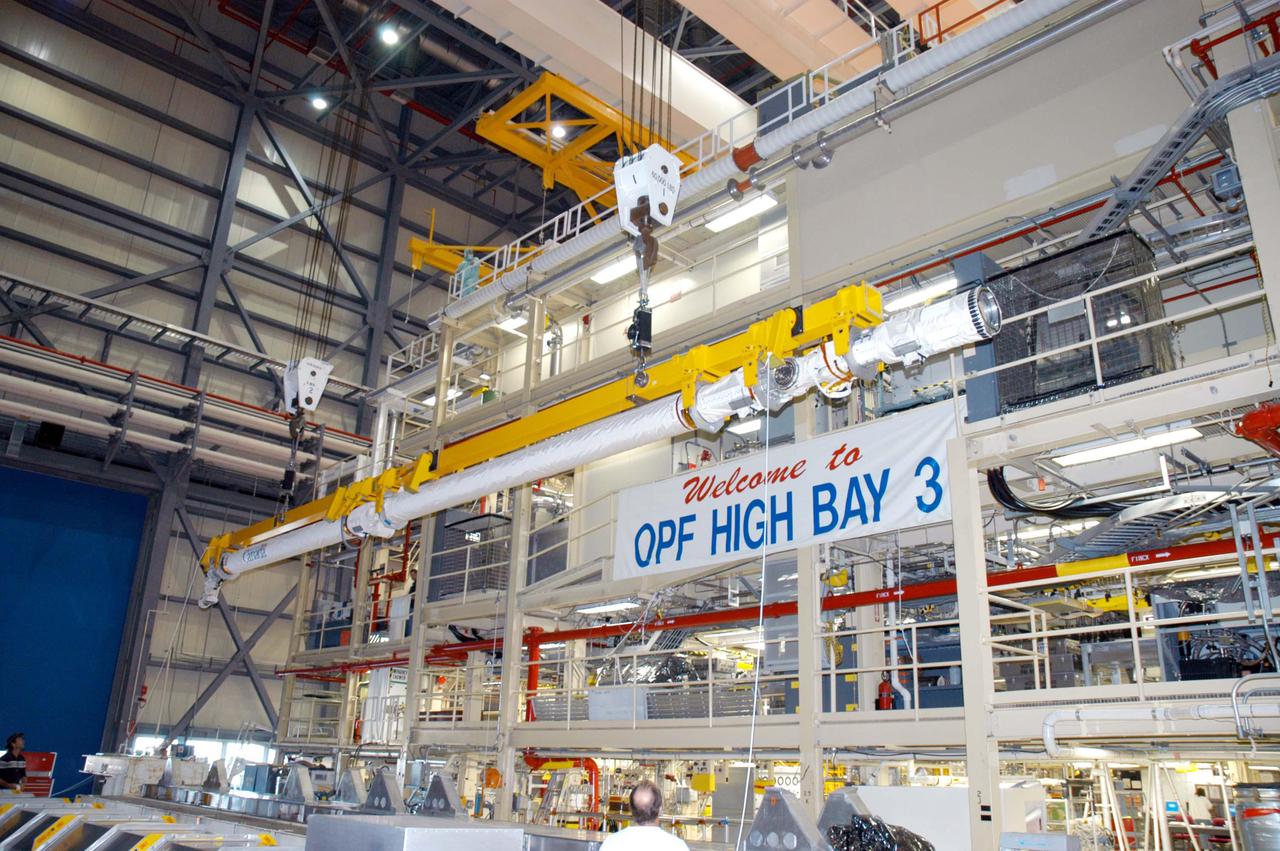
KENNEDY SPACE CENTER, FLA. - The Remote Manipulator System (RMS), also known as the Canadian robotic arm, is moved in the Orbiter Processing Facility for installation in Discovery’s payload bay. The RMS is used to deploy and retrieve payloads, provide a mobile extension ladder or foot restraints for crew members during extravehicular activities; and to aid the flight crew members in viewing surfaces of the orbiter or payloads through a television camera on the RMS. The arm is also serving as the base for the new Orbiter Boom Sensor System (OBSS), one of the safety measures for Return to Flight, equipping the Shuttle with cameras and laser systems to inspect the Shuttle’s Thermal Protection System while in space. Discovery is scheduled for a launch planning window of May 2005 on Return to Flight mission STS-114.
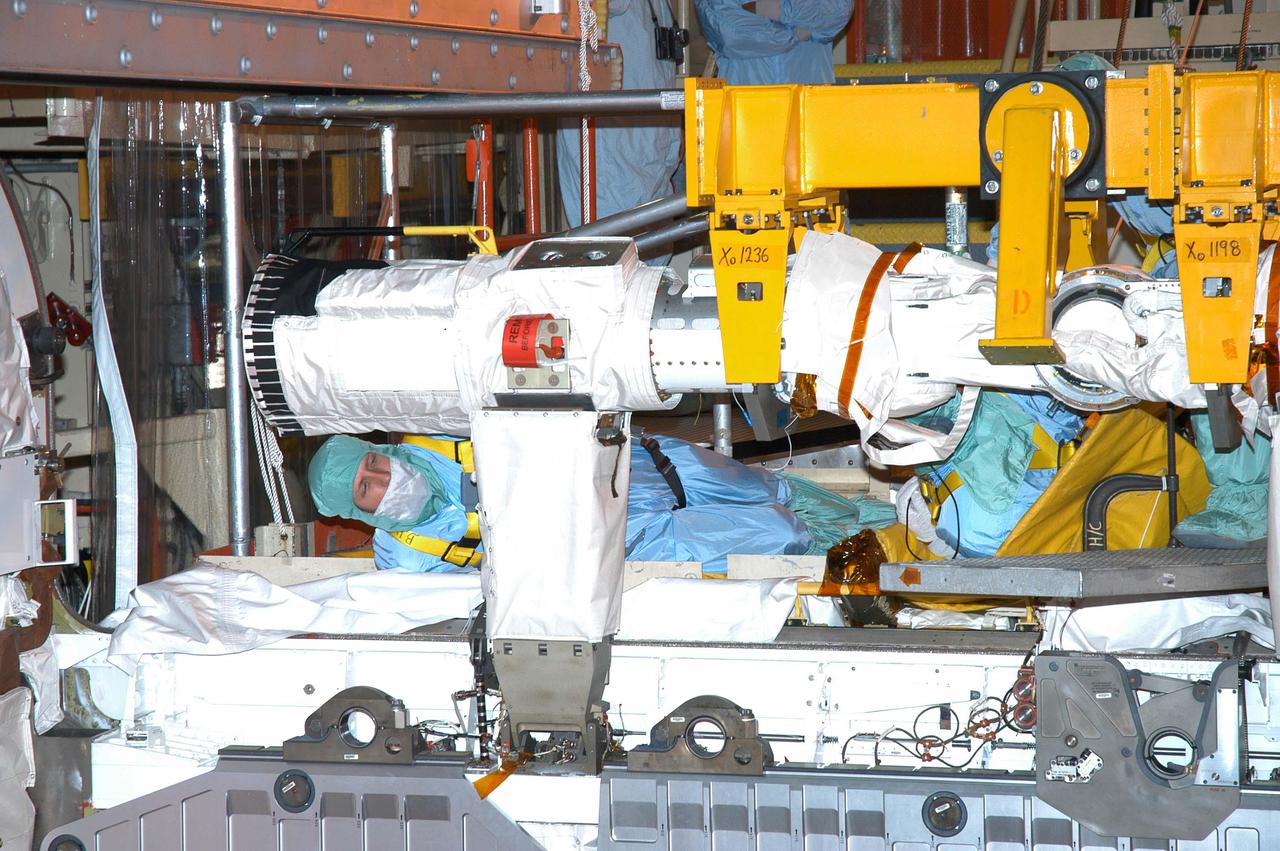
KENNEDY SPACE CENTER, FLA. - Technicians in the Orbiter Processing Facility work to install the Remote Manipulator System (RMS), also known as the Canadian robotic arm, in Discovery’s payload bay. The RMS is used to deploy and retrieve payloads, provide a mobile extension ladder or foot restraints for crew members during extravehicular activities; and to aid the flight crew members in viewing surfaces of the orbiter or payloads through a television camera on the RMS. The arm is also serving as the base for the new Orbiter Boom Sensor System (OBSS), one of the safety measures for Return to Flight, equipping the Shuttle with cameras and laser systems to inspect the Shuttle’s Thermal Protection System while in space. Discovery is scheduled for a launch planning window of May 2005 on Return to Flight mission STS-114.
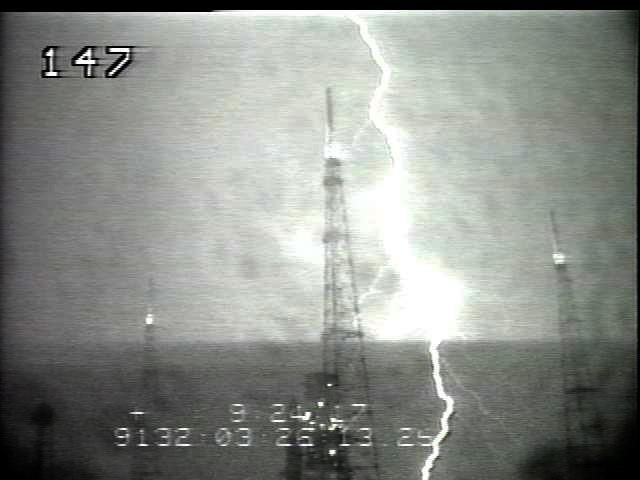
CAPE CANAVERAL, Fla. – This photo shows one of two lightning strikes that occurred on May 11 around 11 p.m. within a third of a mile of space shuttle Endeavour on Launch Pad 39B at NASA's Kennedy Space Center in Florida. Engineers and safety personnel evaluated data and performed a walkdown of the pad and determined there is no damage to the vehicle or the pad. The images are from Kennedy's Operational Television cameras which can be used to triangulate the location of lightning strikes. Other detection systems include the Cloud-To-Ground Lightning Surveillance System, Strikenet/National Lightning Detection Network, Lightning Induced Voltage Instrumentation System and the Catenary Wire Lightning Instrumentation System. Endeavour is standing by on the pad, prepared for liftoff in the unlikely event that a rescue mission is necessary during space shuttle Atlantis' STS-125 mission to service NASA's Hubble Space Telescope. Photo credit: NASA
KENNEDY SPACE CENTER, FLA. - In the Orbiter Processing Facility, the Remote Manipulator System (RMS), also known as the Canadian robotic arm, is lowered toward Discovery’s payload bay for installation. The RMS is used to deploy and retrieve payloads, provide a mobile extension ladder or foot restraints for crew members during extravehicular activities; and to aid the flight crew members in viewing surfaces of the orbiter or payloads through a television camera on the RMS. The arm is also serving as the base for the new Orbiter Boom Sensor System (OBSS), one of the safety measures for Return to Flight, equipping the Shuttle with cameras and laser systems to inspect the Shuttle’s Thermal Protection System while in space. Discovery is scheduled for a launch planning window of May 2005 on Return to Flight mission STS-114.
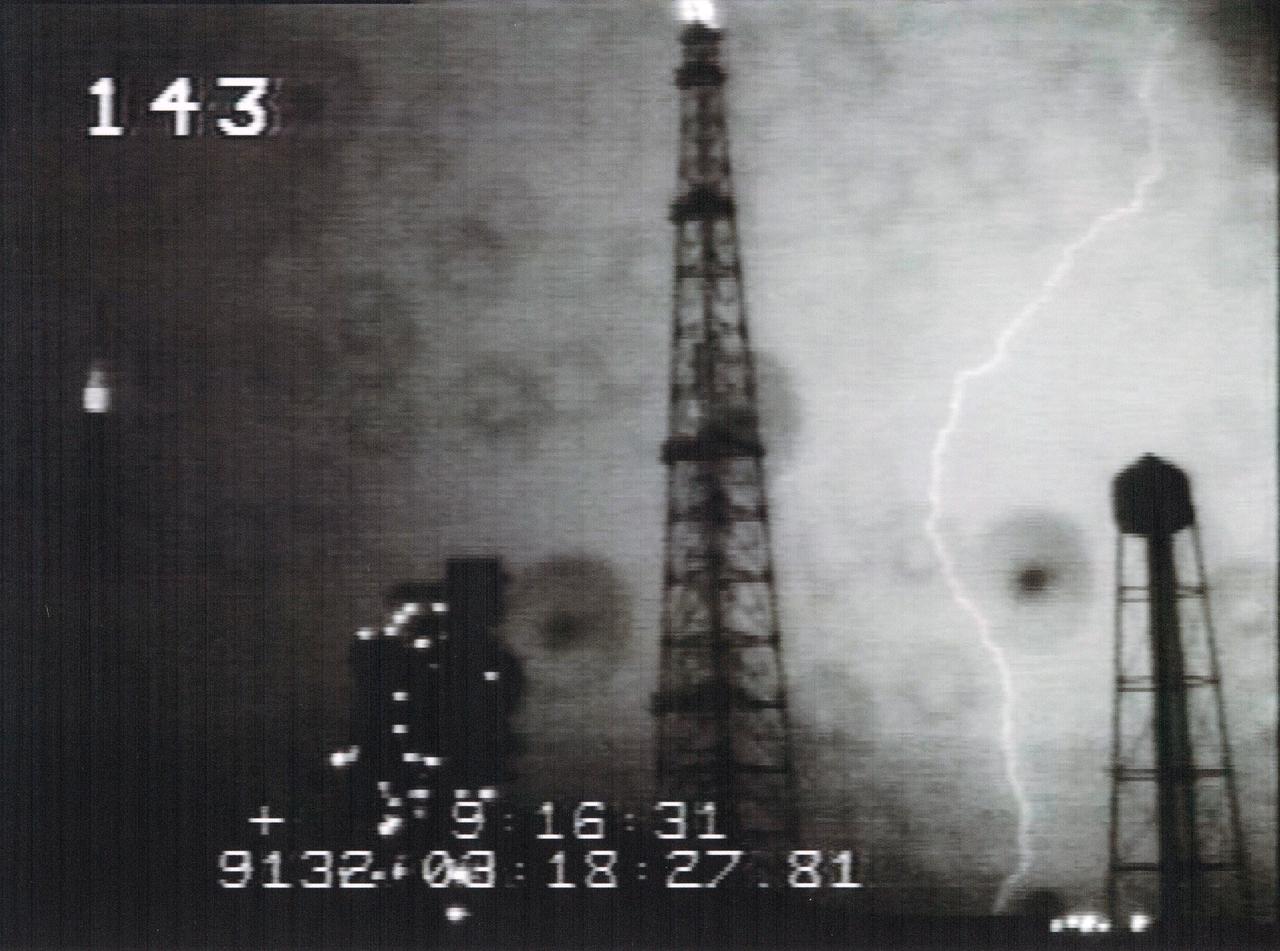
CAPE CANAVERAL, Fla. – This photo shows one of two lightning strikes that occurred on May 11 around 11 p.m. within a third of a mile of space shuttle Endeavour on Launch Pad 39B at NASA's Kennedy Space Center in Florida. Engineers and safety personnel evaluated data and performed a walkdown of the pad and determined there is no damage to the vehicle or the pad. The images are from Kennedy's Operational Television cameras which can be used to triangulate the location of lightning strikes. Other detection systems include the Cloud-To-Ground Lightning Surveillance System, Strikenet/National Lightning Detection Network, Lightning Induced Voltage Instrumentation System and the Catenary Wire Lightning Instrumentation System. Endeavour is standing by on the pad, prepared for liftoff in the unlikely event that a rescue mission is necessary during space shuttle Atlantis' STS-125 mission to service NASA's Hubble Space Telescope. Photo credit: NASA
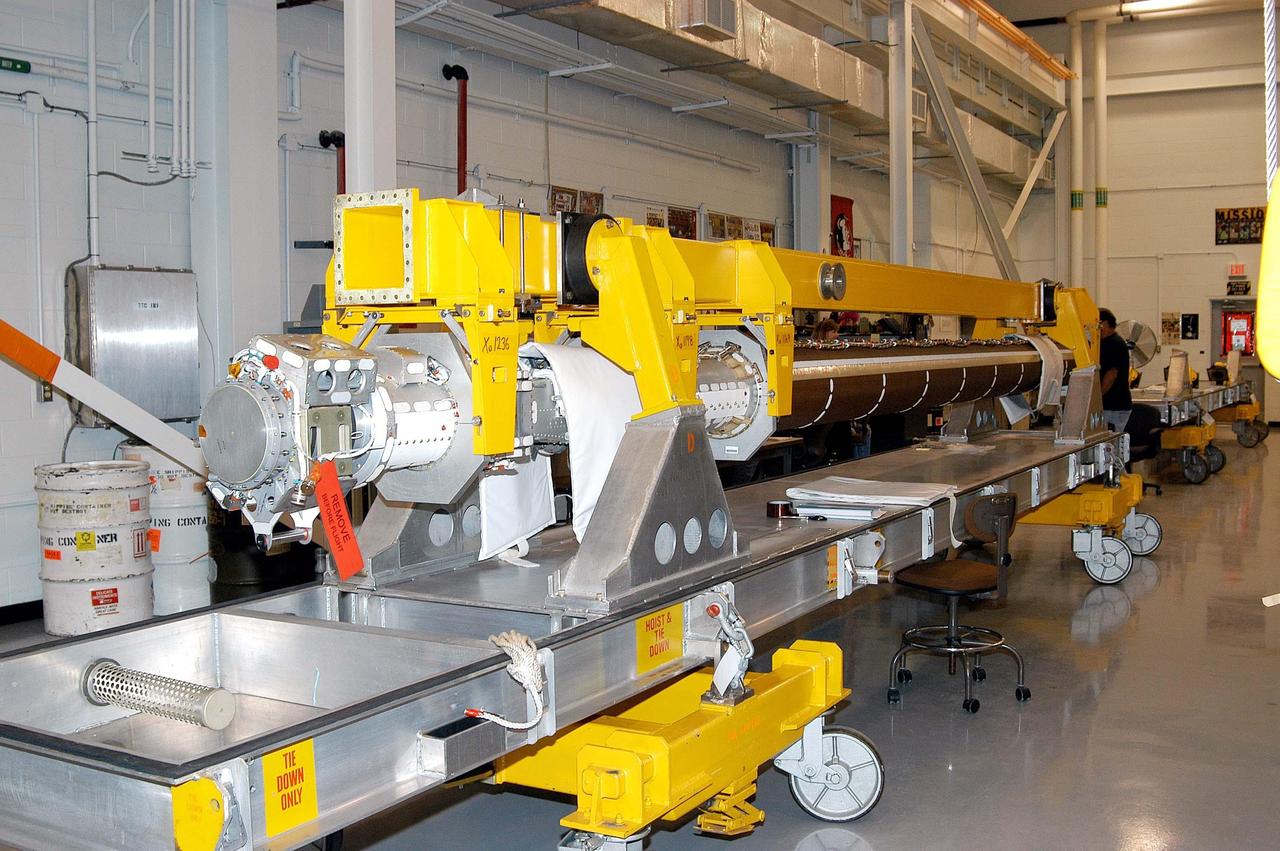
KENNEDY SPACE CENTER, FLA. - The Remote Manipulator System (RMS), also known as the Canadian robotic arm, for the orbiter Discovery has arrived at KSC’s Vehicle Assembly Building Lab. The RMS is used to deploy and retrieve payloads, provide a mobile extension ladder or foot restraints for crew members during extravehicular activities; and to aid the flight crew members in viewing surfaces of the orbiter or payloads through a television camera on the RMS. The arm is also serving as the base for the new Orbiter Boom Sensor System (OBSS), one of the safety measures for Return to Flight, equipping the Shuttle with cameras and laser systems to inspect the Shuttle’s Thermal Protection System while in space. Discovery is scheduled for a launch planning window of March 2005 on mission STS-114.
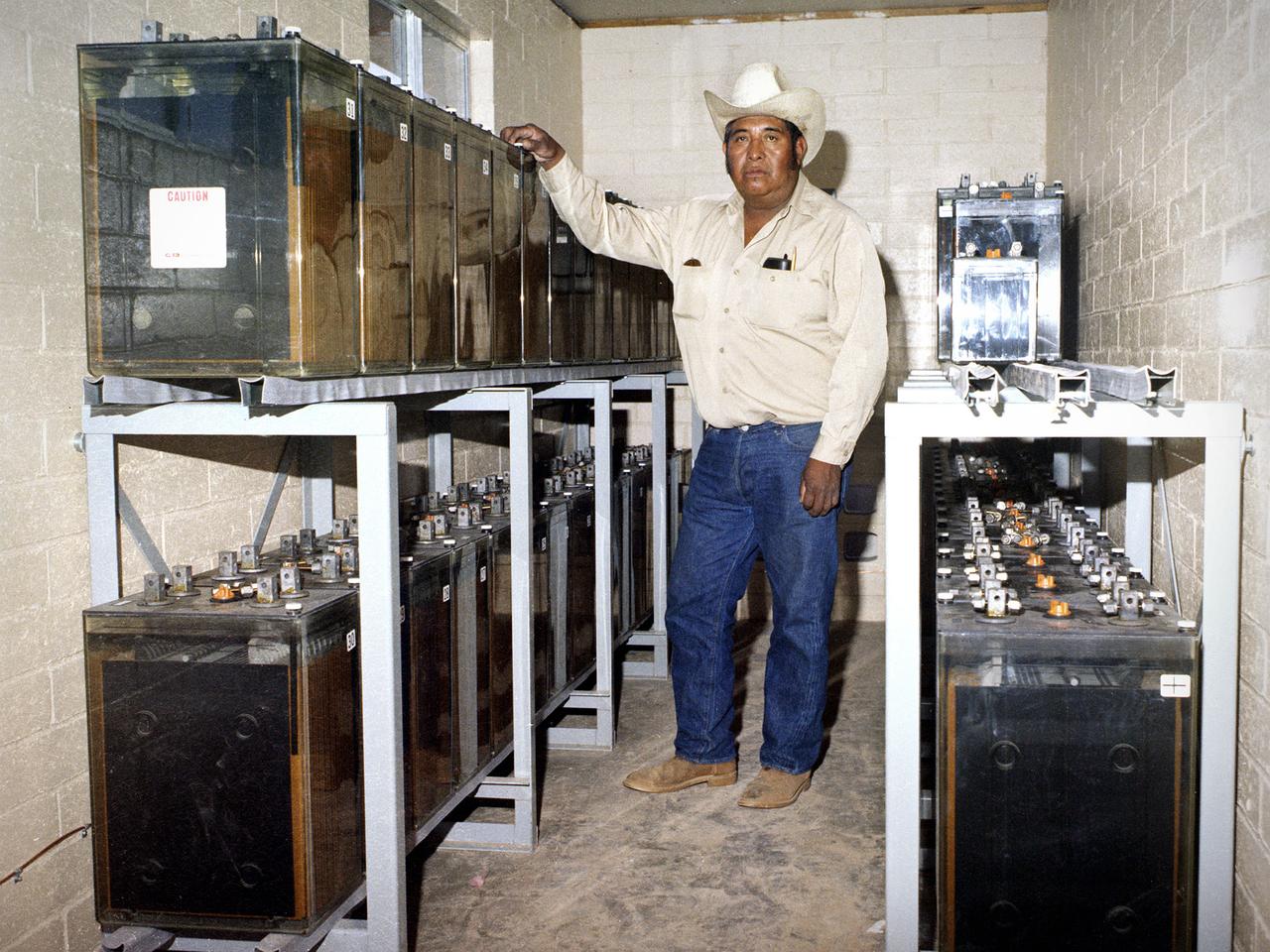
National Aeronautics and Space Administration (NASA) Lewis Research Center. NASA signed an agreement with the Papago tribe in May 1978 to provide the village with solar-generated electricity within the year. The project was funded by the Department of Energy and managed by NASA Lewis. Lewis provided all of the equipment and technical assistance while the tribe’s construction team built the arrays and support equipment, seen here. The 3.5-kilowatt system was modest in scope, but resulted in the first solar electric village. The system provided power to operate a refrigerator, freezer, washing machine, and water pump for the village and lights in each of the 16 homes. The system was activated on December 16, 1978. During the next year officials from around the world travelled to Schuchuli to ascertain if the system was applicable to their areas. The major television networks and over 100 publications covered the story. Less than one percent of the cells failed during the first year of operation.
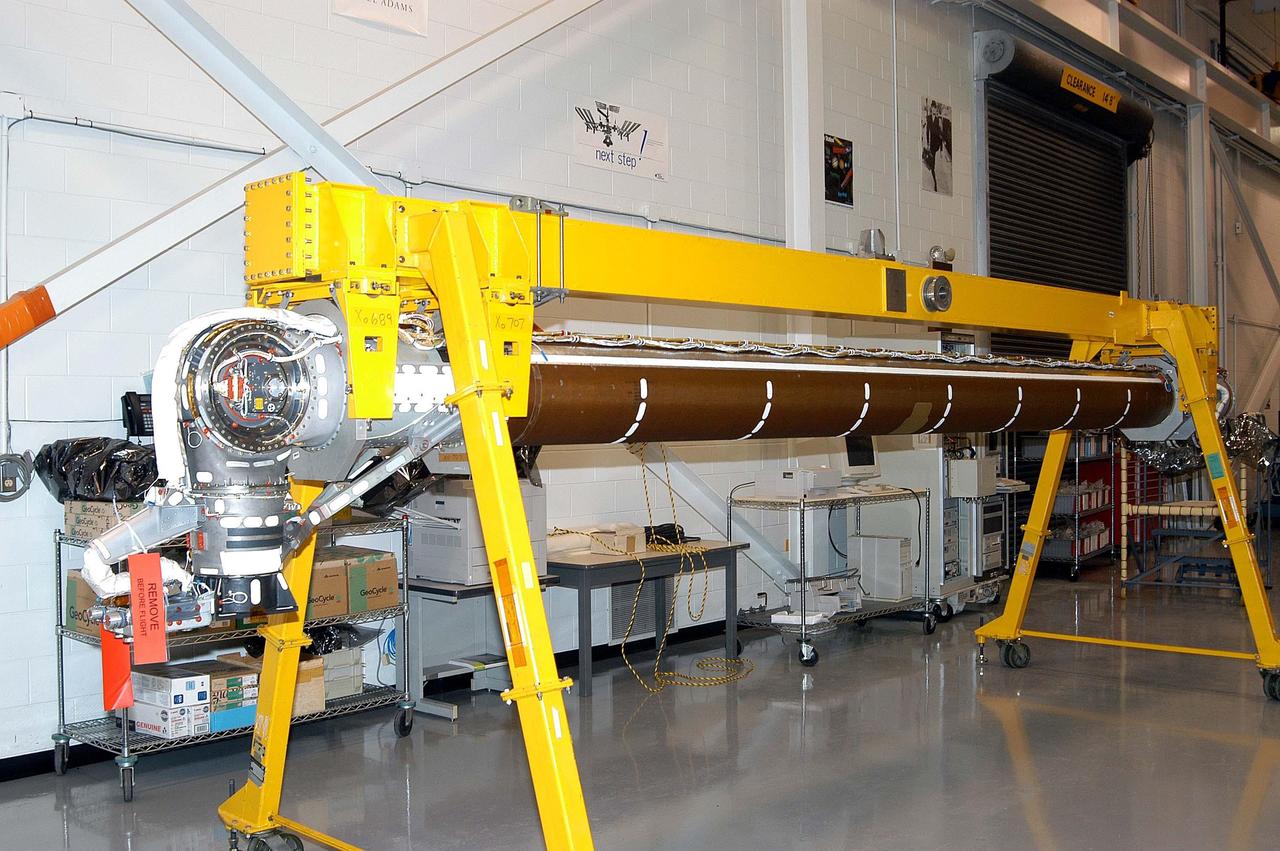
KENNEDY SPACE CENTER, FLA. - The Remote Manipulator System (RMS), also known as the Canadian robotic arm, for the orbiter Discovery has arrived at KSC’s Vehicle Assembly Building Lab. Seen on the left end is the shoulder pitch joint. The wrist and shoulder joints on the RMS allow the basic structure of the arm to maneuver similar to a human arm. The RMS is used to deploy and retrieve payloads, provide a mobile extension ladder or foot restraints for crew members during extravehicular activities; and to aid the flight crew members in viewing surfaces of the orbiter or payloads through a television camera on the RMS. The arm is also serving as the base for the new Orbiter Boom Sensor System (OBSS), one of the safety measures for Return to Flight, equipping the Shuttle with cameras and laser systems to inspect the Shuttle’s Thermal Protection System while in space. Discovery is scheduled for a launch planning window of March 2005 on mission STS-114.
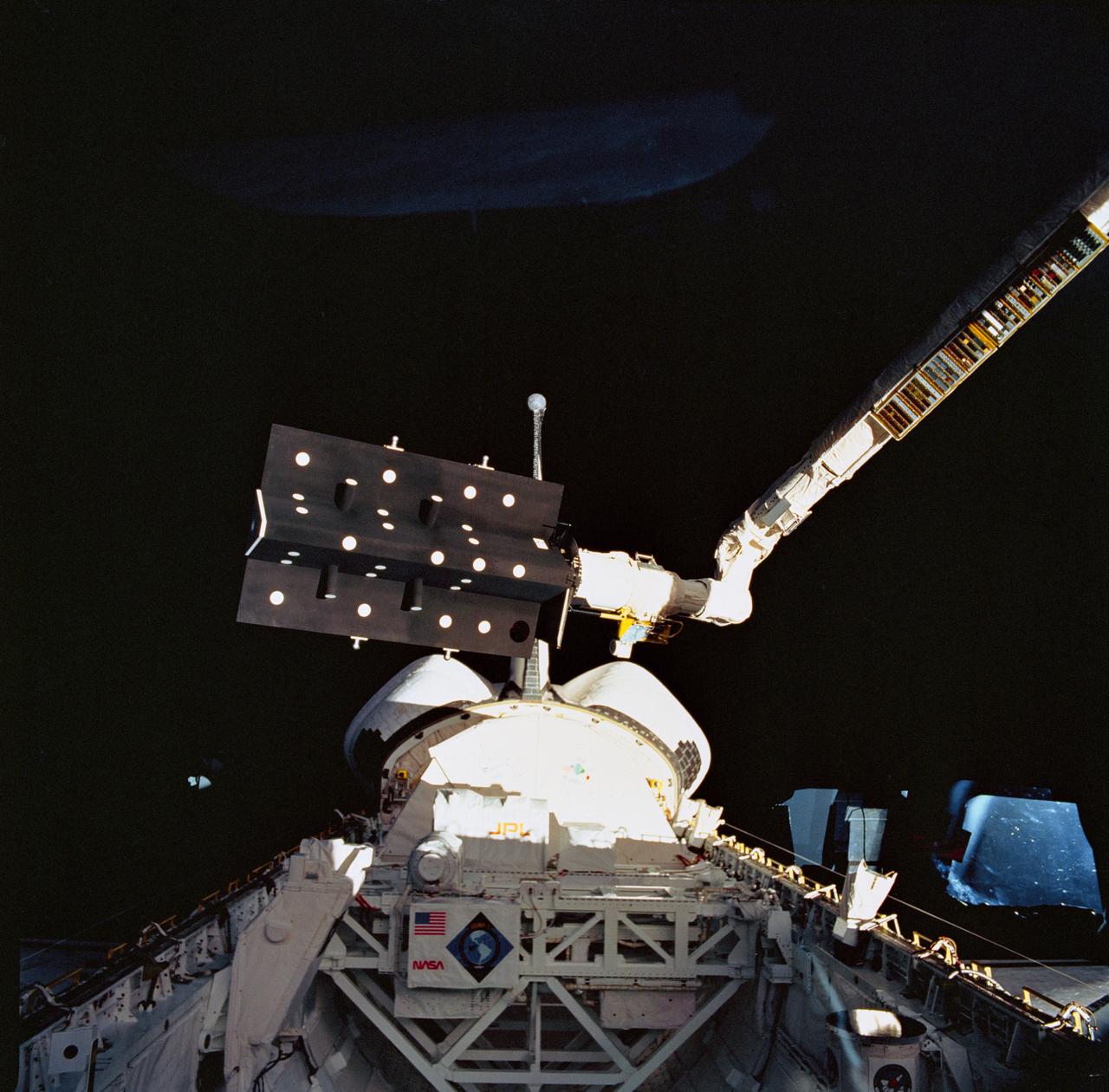
STS052-71-057 (22 Oct-1 Nov 1992) --- This 70mm frame, photographed with a handheld Hasselblad camera aimed through Columbia's aft flight deck windows, captures the operation of the Space Vision System (SVS) experiment above the cargo bay. Target dots have been placed on the Canadian Target Assembly (CTA), a small satellite, in the grasp of the Canadian-built remote manipulator system (RMS) arm. SVS utilized a Shuttle TV camera to monitor the dots strategically arranged on the satellite, to be tracked. As the satellite moved via the arm, the SVS computer measured the changing position of the dots and provided real-time television display of the location and orientation of the CTA. This type of displayed information is expected to help an operator guide the RMS or the Mobile Servicing System (MSS) of the future when berthing or deploying satellites. Also visible in the frame is the U.S. Microgravity Payload (USMP-01).
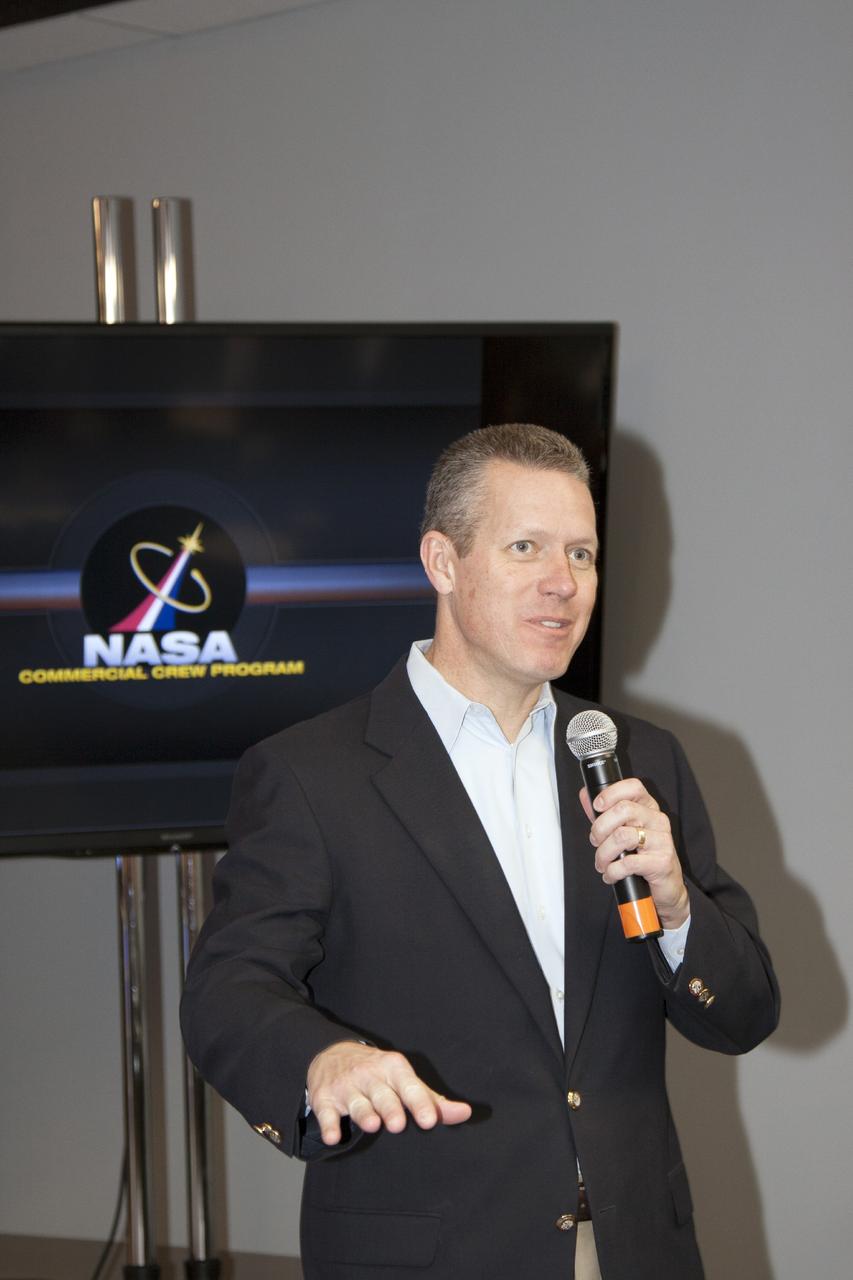
CAPE CANAVERAL, Fla. – Phil McAlister, NASA's director of Commercial Spaceflight Development, welcomes participants to an industry conference inside the Television Auditorium at NASA's Kennedy Space Center in Florida. The conference was held following the program's request for proposals from commercial companies for a development and certification contract called the Commercial Crew Transportation Capability CCtCap. The contract will provide a finish line for the agency following more than four years of development work by CCP and American aerospace companies. CCtCap is the second phase of a two-phase certification plan for privately built and operated integrated crew transportation systems. Photo credit: NASA/Jim Grossmann
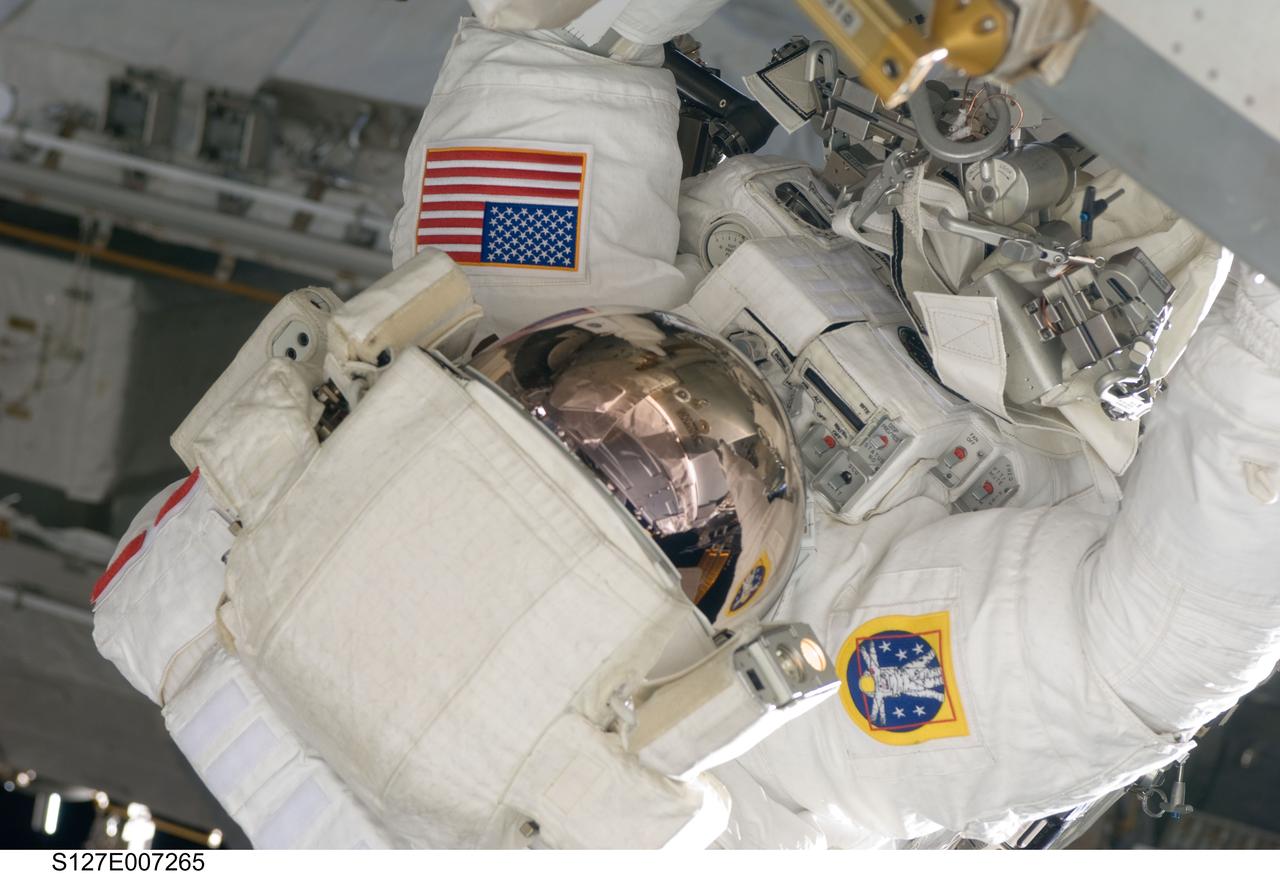
S127-E-007265 (20 July 2009) --- This is one of a series of digital still images showing astronaut Tom Marshburn performing his first spacewalk and the Endeavour crew’s second of the scheduled five overall in a little more than a week to continue work on the International Space Station. Astronauts Marshburn and Dave Wolf (out of frame), both mission specialists, successfully transferred a spare KU-band antenna to long-term storage on the space station, along with a backup coolant system pump module and a spare drive motor for the station's robot arm transporter. Installation of a television camera on the Japanese Exposed Facility experiment platform was deferred to a later spacewalk.
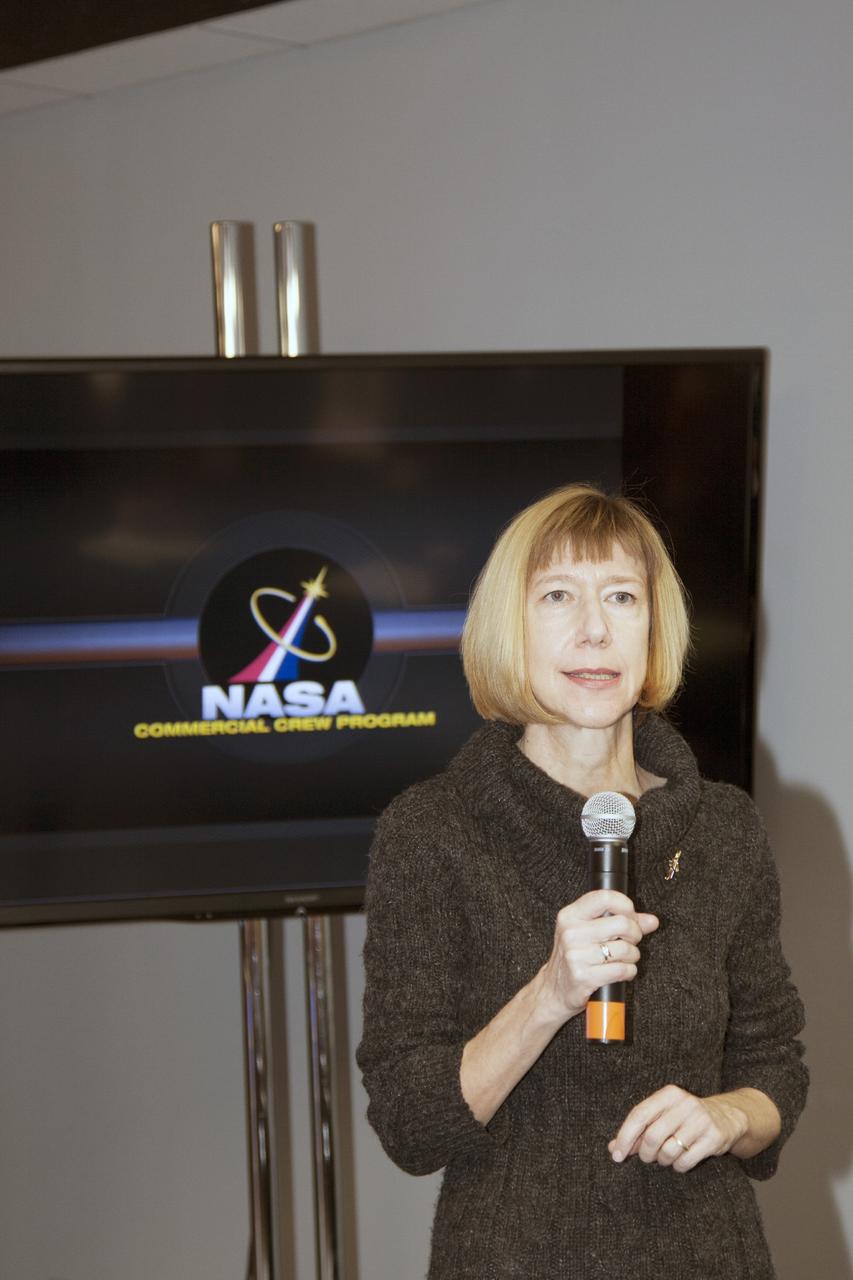
CAPE CANAVERAL, Fla. – Kathy Lueders, acting program manager of the Commercial Crew Program, welcomes participants to an industry conference inside the Television Auditorium at NASA's Kennedy Space Center in Florida. The conference was held following the program's request for proposals from commercial companies for a development and certification contract called the Commercial Crew Transportation Capability CCtCap. The contract will provide a finish line for the agency following more than four years of development work by CCP and American aerospace companies. CCtCap is the second phase of a two-phase certification plan for privately built and operated integrated crew transportation systems. Photo credit: NASA/Jim Grossmann
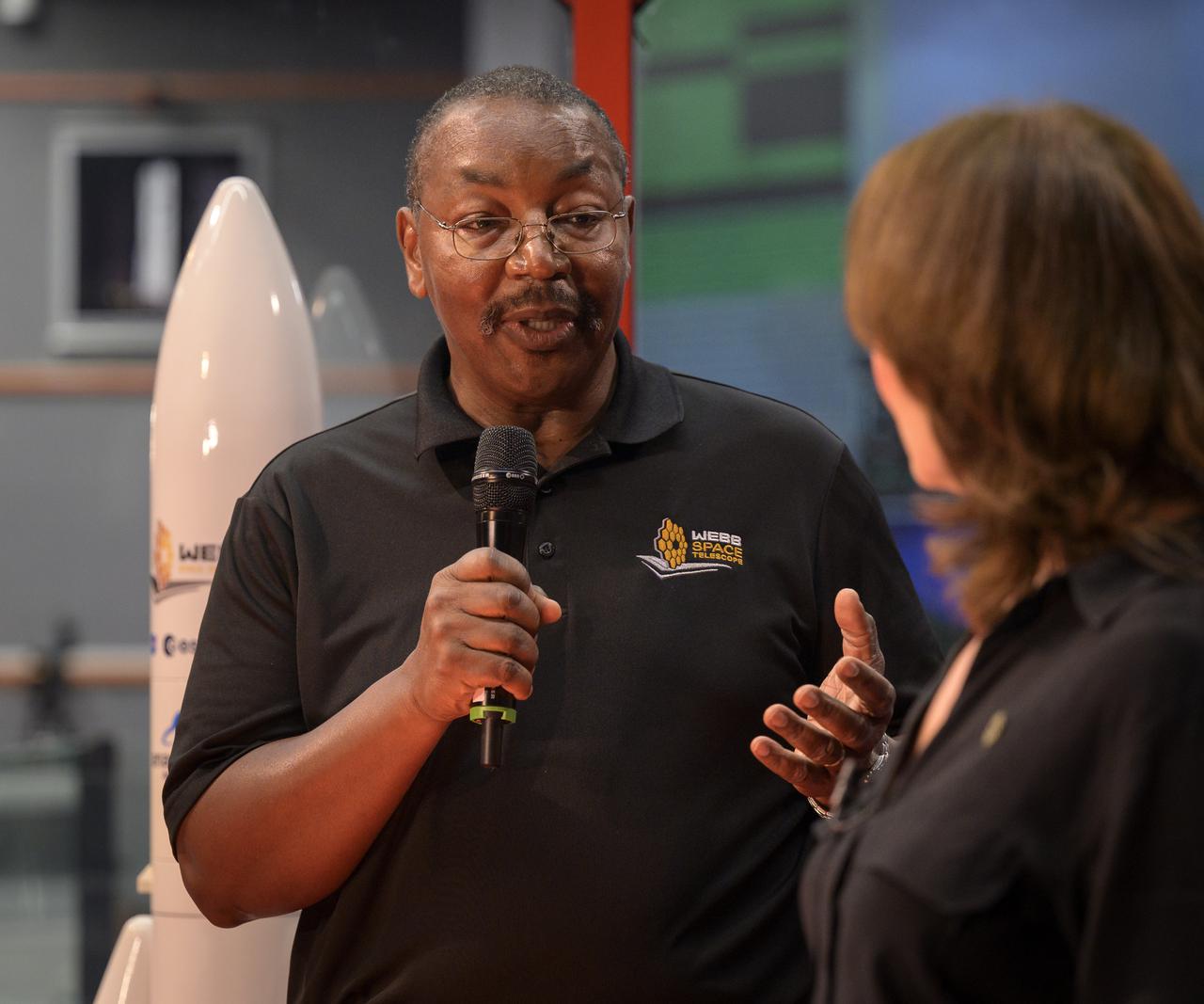
NASA Program Director for the James Webb Space Telescope Program Greg Robinson gives a brief interview on NASA television as he and the launch team monitor the countdown of the launch of Arianespace's Ariane 5 rocket carrying NASA’s James Webb Space Telescope, Saturday, Dec. 25, 2021, in the Jupiter Center at the Guiana Space Center in Kourou, French Guiana. The James Webb Space Telescope (sometimes called JWST or Webb) is a large infrared telescope with a 21.3 foot (6.5 meter) primary mirror. The observatory will study every phase of cosmic history—from within our solar system to the most distant observable galaxies in the early universe. Photo Credit: (NASA/Bill Ingalls)
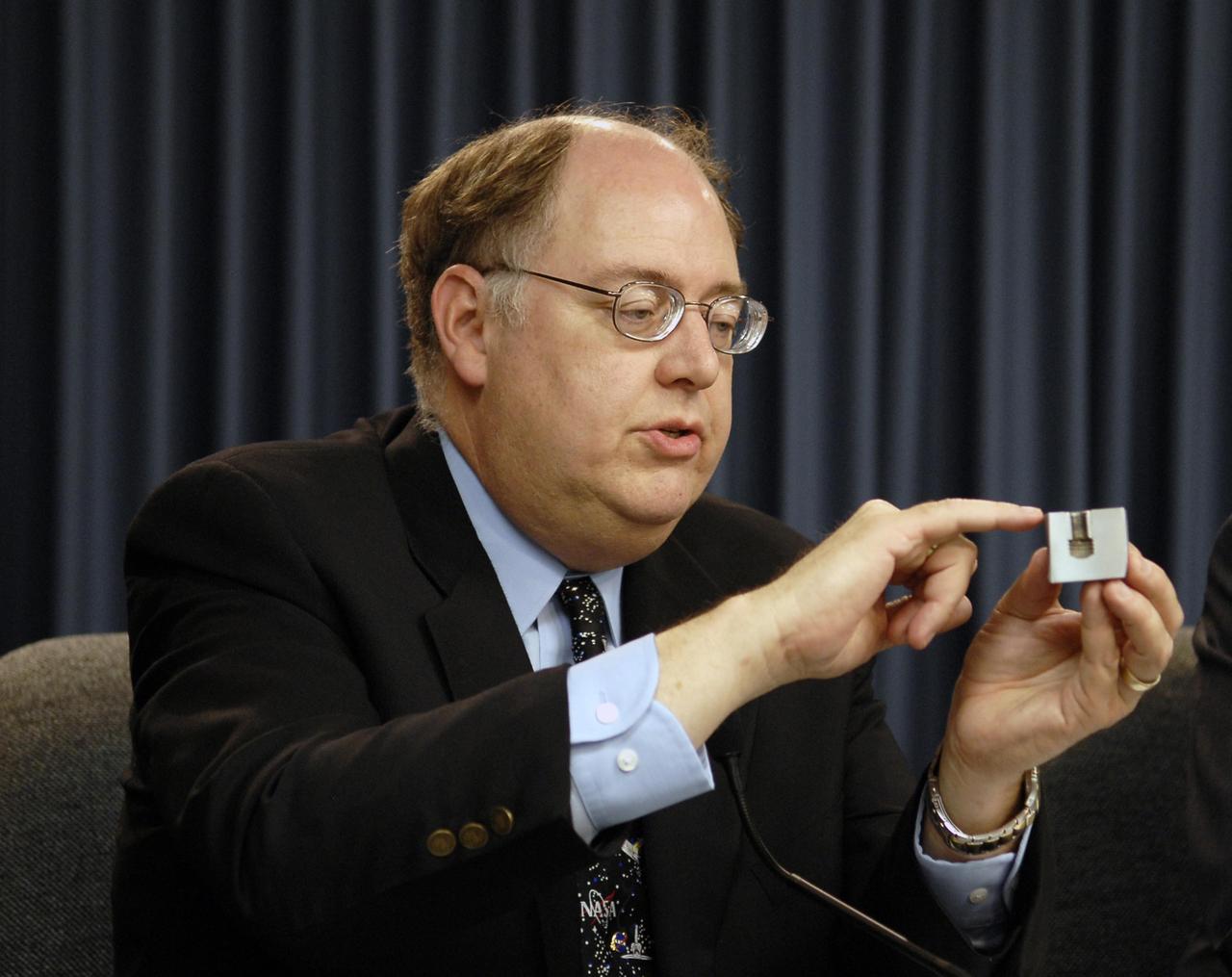
KENNEDY SPACE CENTER, FLA. -- Following the Flight Readiness Review for the STS-117 mission, NASA officials presented the decisions of NASA senior managers in a television conference. Bill Gerstenmaier, associate administrator of NASA Space Operations Mission, confirmed the launch time and date of Space Shuttle Atlantis at 7:38 p.m. EDT on June 8. Seen here is Space Shuttle Program Manager Wayne Hale (left) demonstrating the level of scrutiny engineers apply to inspecting the smallest of components that make up the shuttle system. This housing and bolt insert are part of the main engine low pressure oxidizer turbopump (LPOTP). Photo credit: NASA/Kim Shiflett
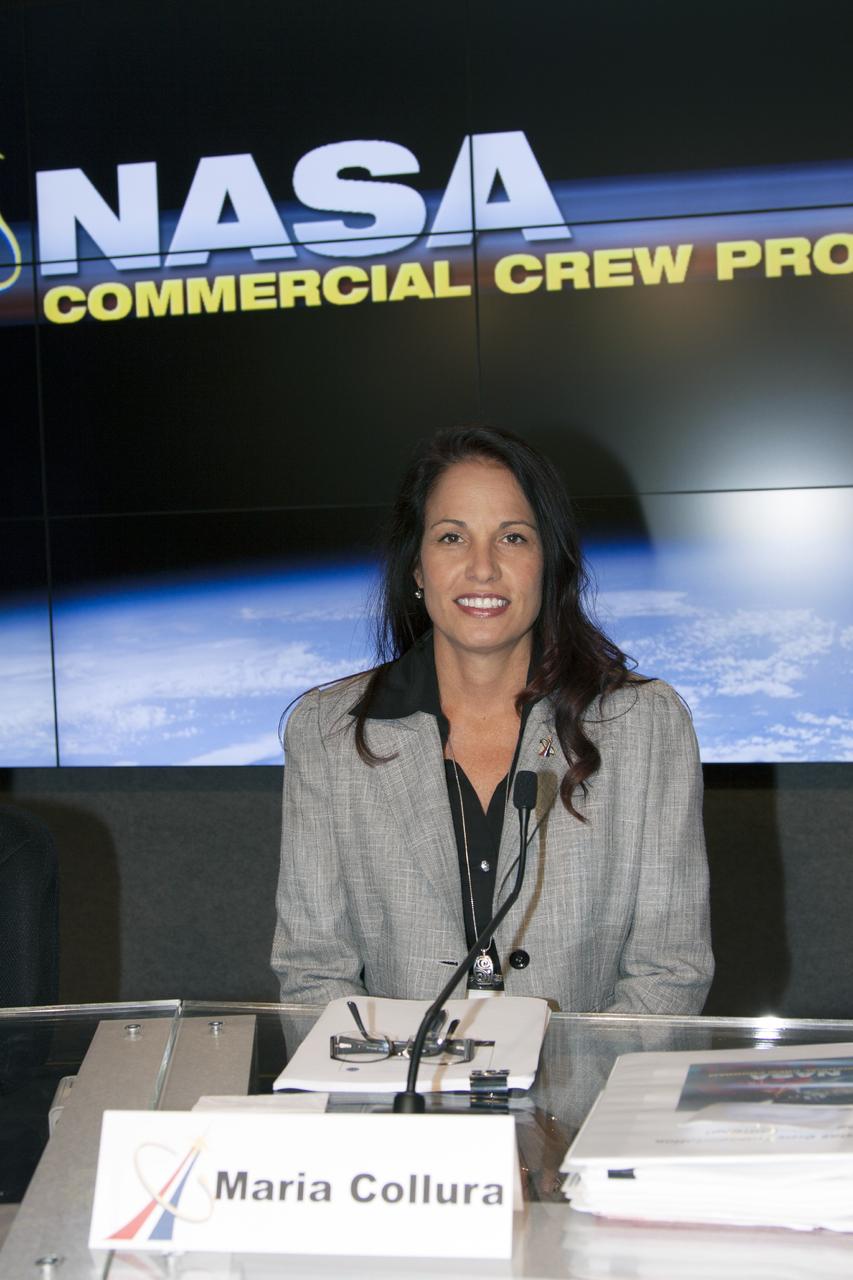
CAPE CANAVERAL, Fla. – Maria Collura of NASA's Commercial Crew Program is seen before the start of an industry conference inside the Television Auditorium at NASA's Kennedy Space Center in Florida. The conference was held following the program's request for proposals from commercial companies for a development and certification contract called the Commercial Crew Transportation Capability CCtCap. The contract will provide a finish line for the agency following more than four years of development work by CCP and American aerospace companies. CCtCap is the second phase of a two-phase certification plan for privately built and operated integrated crew transportation systems. Photo credit: NASA/Jim Grossmann
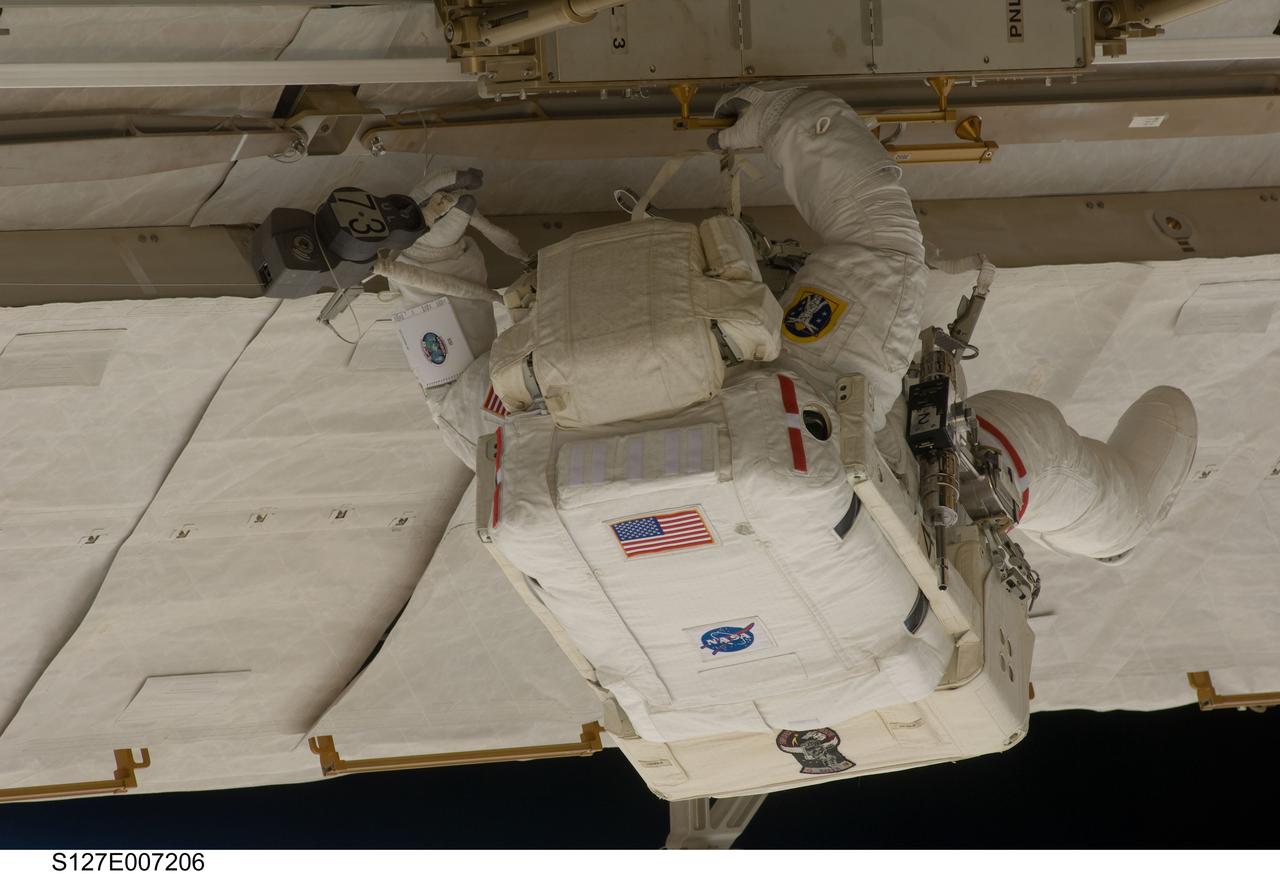
S127-E-007206 (20 July 2009) --- This is one of a series of digital still images showing astronaut Tom Marshburn performing his first spacewalk and the Endeavour crew’s second of the scheduled five overall in a little more than a week to continue work on the International Space Station. Astronauts Marshburn and Dave Wolf (out of frame), both mission specialists, successfully transferred a spare KU-band antenna to long-term storage on the space station, along with a backup coolant system pump module and a spare drive motor for the station's robot arm transporter. Installation of a television camera on the Japanese Exposed Facility experiment platform was deferred to a later spacewalk.
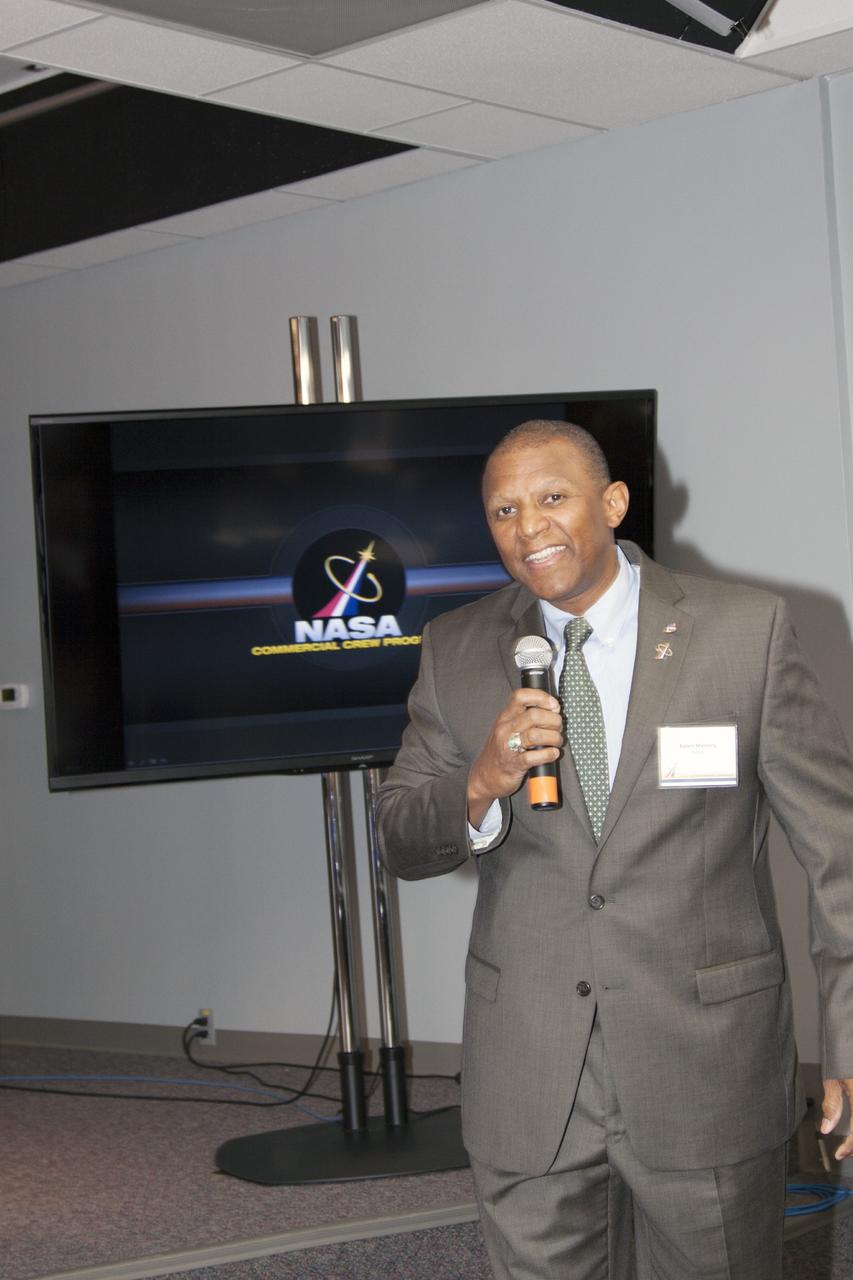
CAPE CANAVERAL, Fla. – Kelvin Manning, associate director of NASA's Kennedy Space Center in Florida, welcomes participants to an industry conference inside the Television Auditorium at Kennedy. The conference was held following the program's request for proposals from commercial companies for a development and certification contract called the Commercial Crew Transportation Capability CCtCap. The contract will provide a finish line for the agency following more than four years of development work by CCP and American aerospace companies. CCtCap is the second phase of a two-phase certification plan for privately built and operated integrated crew transportation systems. Photo credit: NASA/Jim Grossmann
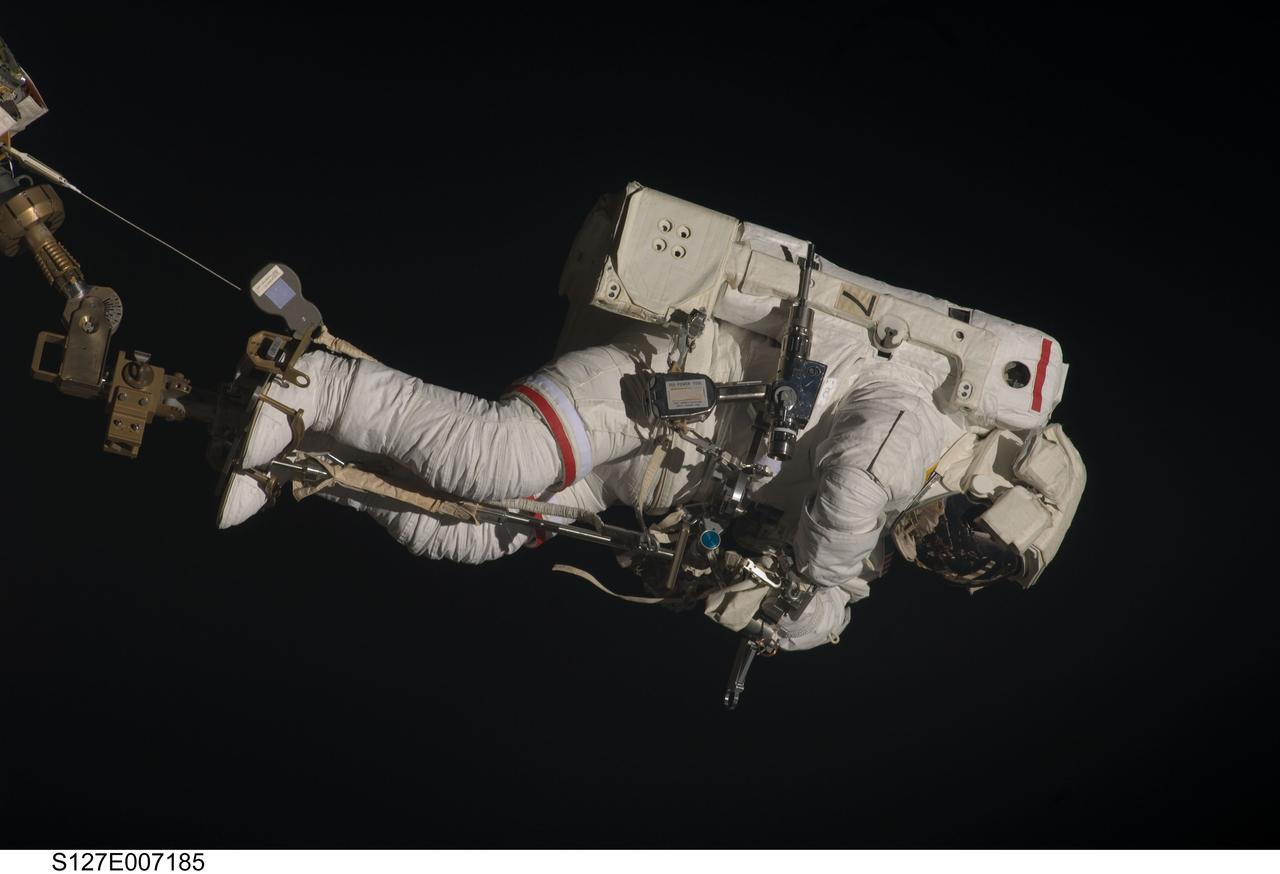
S127-E-007185 (20 July 2009) --- This is one of a series of digital still images showing astronaut Dave Wolf performing his second spacewalk and the Endeavour’s second also of the scheduled five overall in a little over a week’s time to continue work on the International Space Station. Astronauts Wolf and Tom Marshburn (out of frame), both STS-127 mission specialists, successfully transferred a spare KU-band antenna to long-term storage on the space station, along with a backup coolant system pump module and a spare drive motor for the station's robot arm transporter. Installation of a television camera on the Japanese Exposed Facility experiment platform was deferred to a later spacewalk.
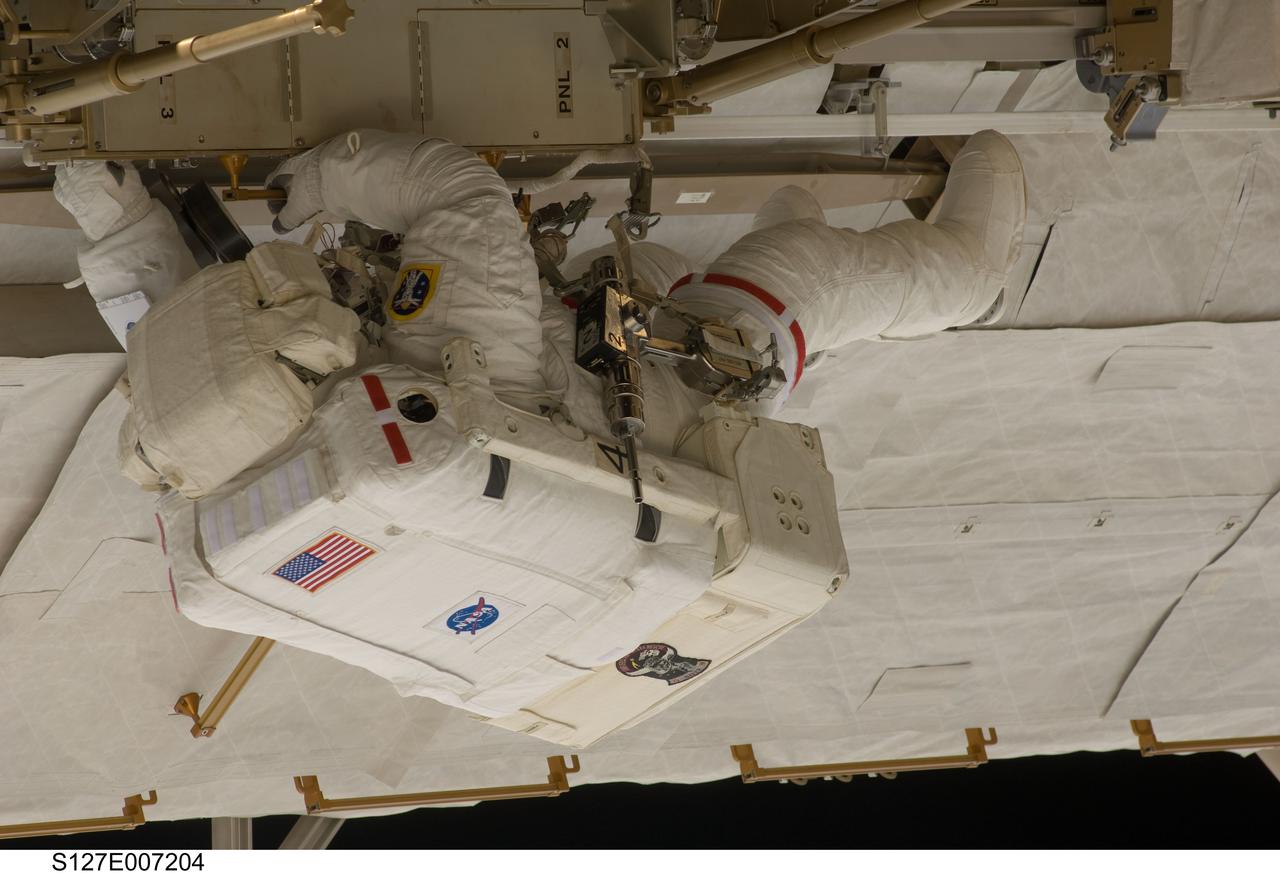
S127-E-007204 (20 July 2009) --- This is one of a series of digital still images showing astronaut Tom Marshburn performing his first spacewalk and the Endeavour crew’s second of the scheduled five overall in a little more than a week to continue work on the International Space Station. Astronauts Marshburn and Dave Wolf (out of frame), both mission specialists, successfully transferred a spare KU-band antenna to long-term storage on the space station, along with a backup coolant system pump module and a spare drive motor for the station's robot arm transporter. Installation of a television camera on the Japanese Exposed Facility experiment platform was deferred to a later spacewalk.
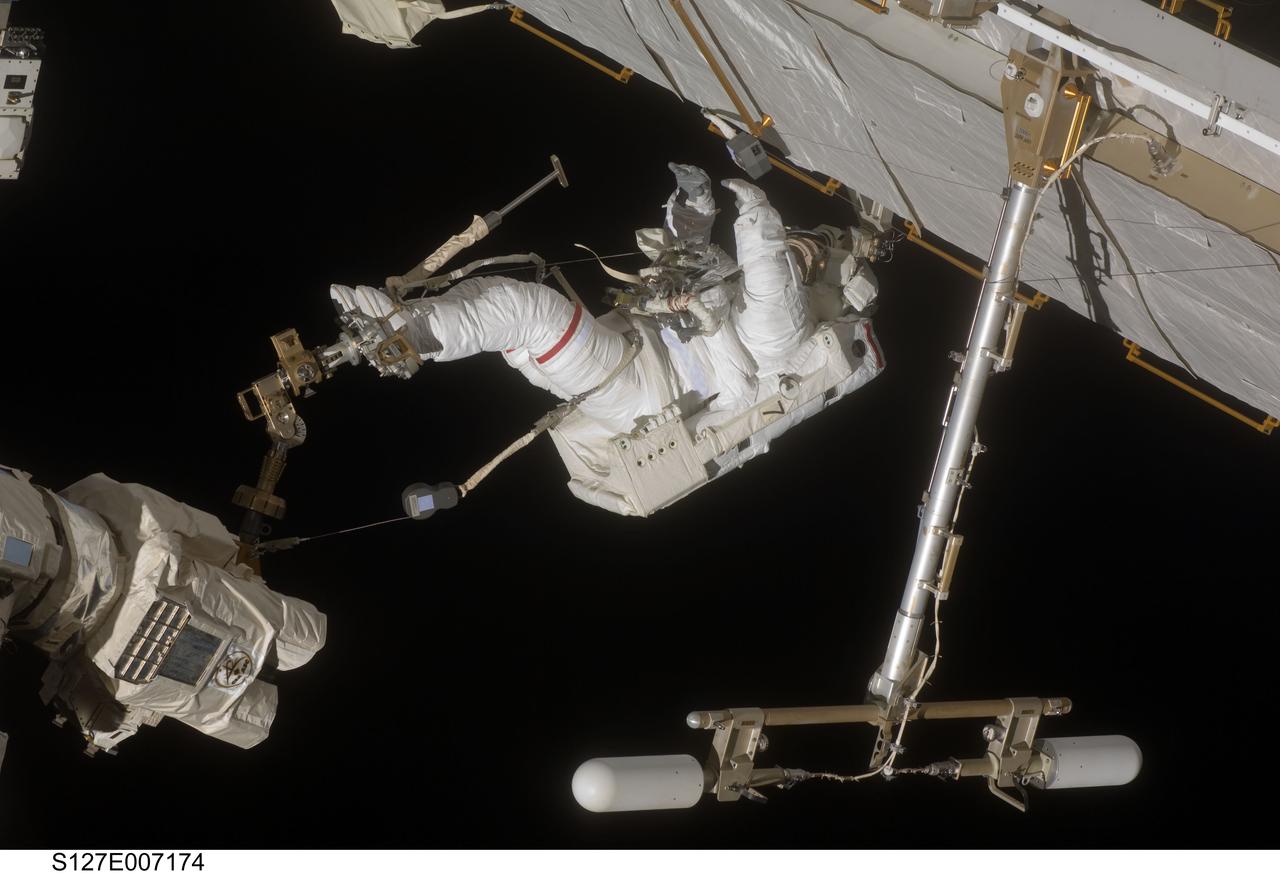
S127-E-007174 (20 July 2009) --- This is one of a series of digital still images showing astronaut Dave Wolf performing his second spacewalk and the Endeavour’s second also of the scheduled five overall in a little over a week’s time to continue work on the International Space Station. Astronauts Wolf and Tom Marshburn (out of frame), both mission specialists, successfully transferred a spare KU-band antenna to long-term storage on the space station, along with a backup coolant system pump module and a spare drive motor for the station's robot arm transporter. Installation of a television camera on the Japanese Exposed Facility experiment platform was deferred to a later spacewalk.
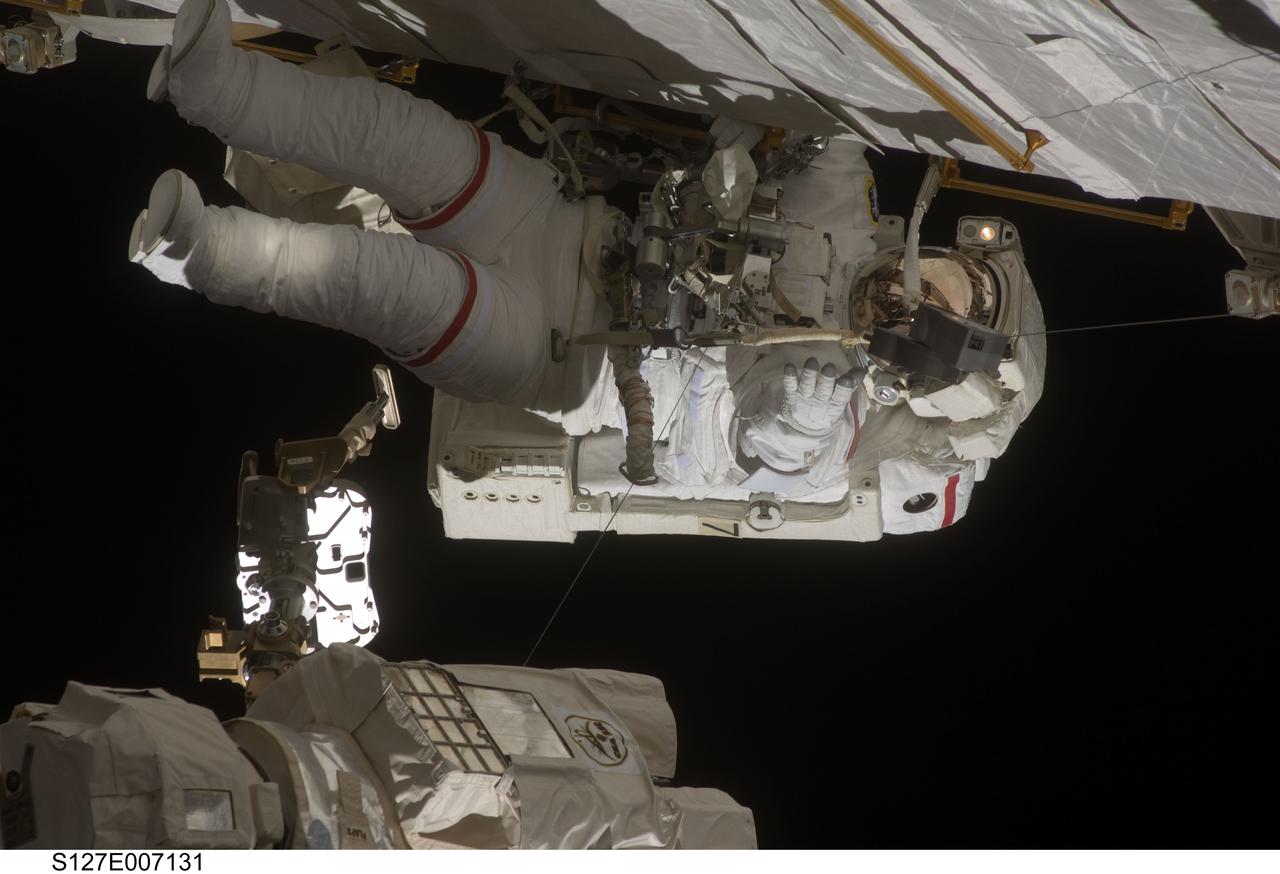
S127-E-007131 (20 July 2009) --- This is one of a series of digital still images showing astronaut Dave Wolf performing his second spacewalk and the Endeavour’s second also of the scheduled five overall in a little over a week’s time to continue work on the International Space Station. Astronauts Wolf and Tom Marshburn (out of frame), both mission specialists, successfully transferred a spare KU-band antenna to long-term storage on the space station, along with a backup coolant system pump module and a spare drive motor for the station's robot arm transporter. Installation of a television camera on the Japanese Exposed Facility experiment platform was deferred to a later spacewalk.
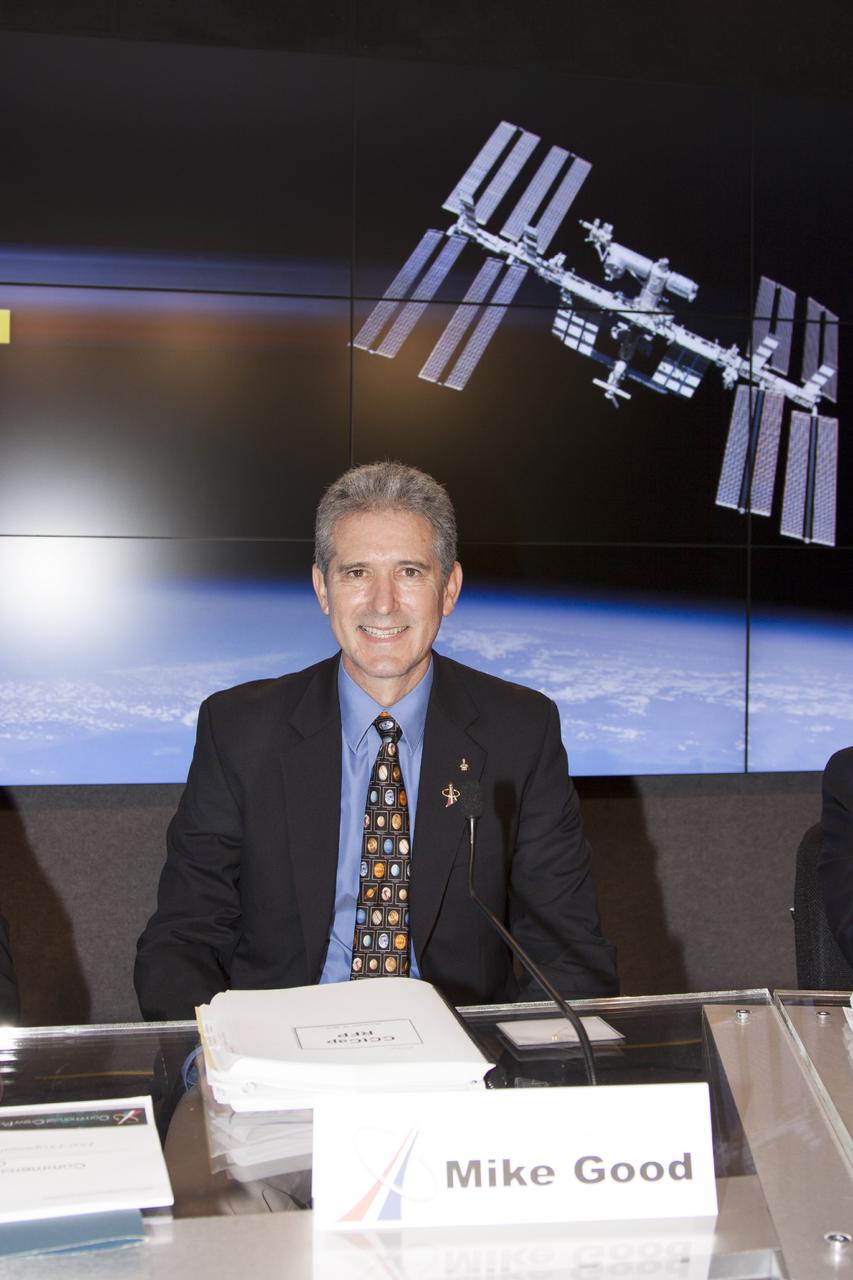
CAPE CANAVERAL, Fla. – Astronaut Mike Good of NASA's Commercial Crew Program is seen before the start of an industry conference inside the Television Auditorium at NASA's Kennedy Space Center in Florida. The conference was held following the program's request for proposals from commercial companies for a development and certification contract called the Commercial Crew Transportation Capability CCtCap. The contract will provide a finish line for the agency following more than four years of development work by CCP and American aerospace companies. CCtCap is the second phase of a two-phase certification plan for privately built and operated integrated crew transportation systems. Photo credit: NASA/Jim Grossmann
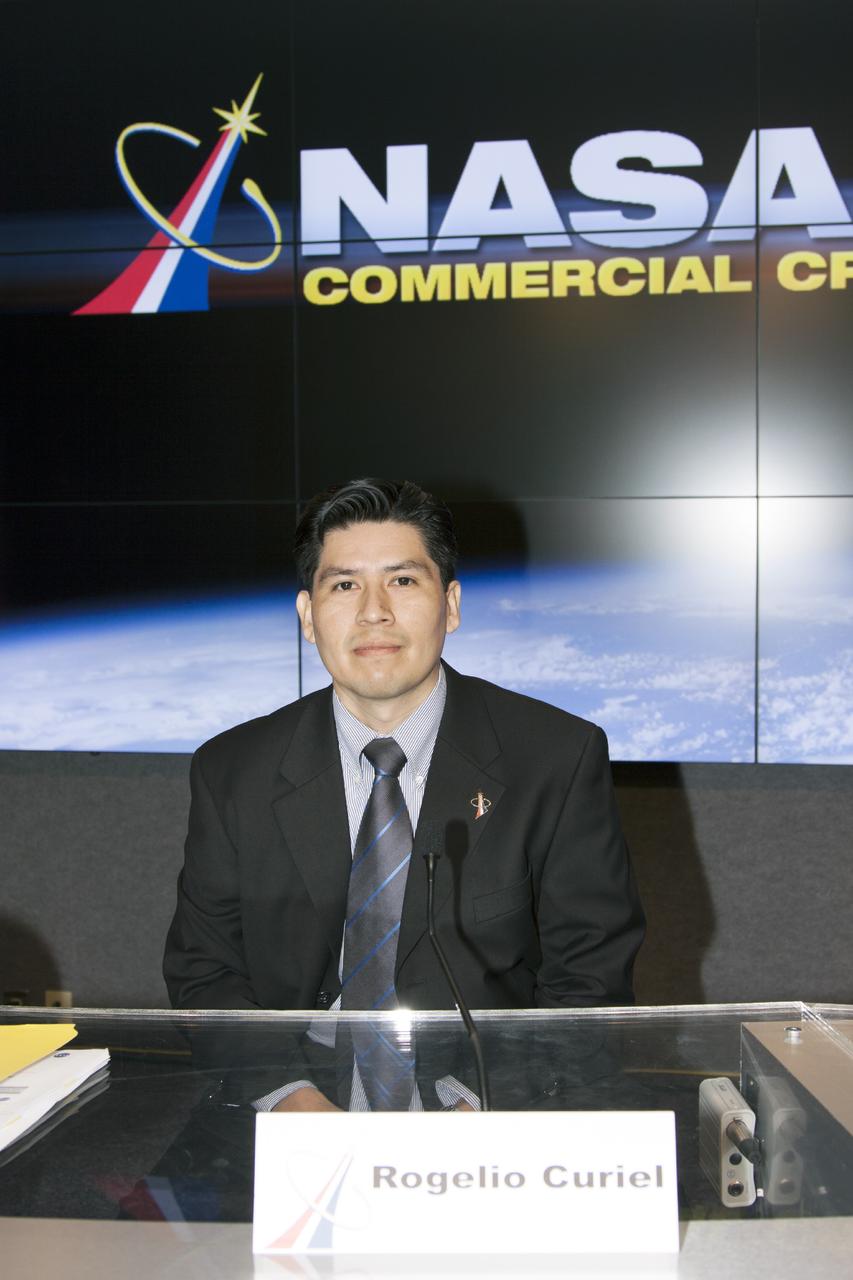
CAPE CANAVERAL, Fla. – Rogelio Curiel of NASA's Commercial Crew Program is seen before the start of an industry conference inside the Television Auditorium at NASA's Kennedy Space Center in Florida. The conference was held following the program's request for proposals from commercial companies for a development and certification contract called the Commercial Crew Transportation Capability CCtCap. The contract will provide a finish line for the agency following more than four years of development work by CCP and American aerospace companies. CCtCap is the second phase of a two-phase certification plan for privately built and operated integrated crew transportation systems. Photo credit: NASA/Jim Grossmann
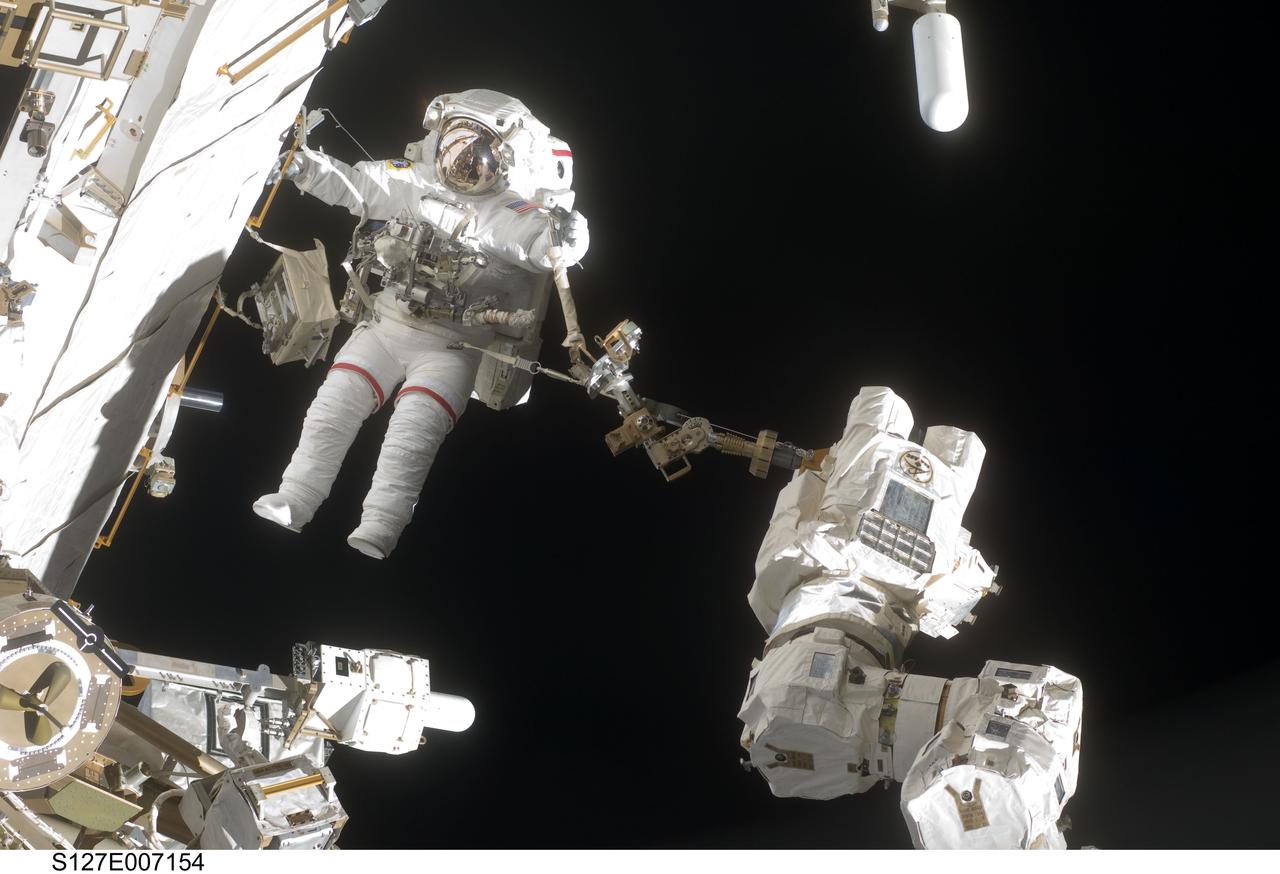
S127-E-007154 (20 July 2009) --- This is one of a series of digital still images showing astronaut Dave Wolf performing his second spacewalk and the Endeavour’s second also of the scheduled five overall in a little over a week’s time to continue work on the International Space Station. Astronauts Wolf and Tom Marshburn (out of frame), both mission specialists, successfully transferred a spare KU-band antenna to long-term storage on the space station, along with a backup coolant system pump module and a spare drive motor for the station's robot arm transporter. Installation of a television camera on the Japanese Exposed Facility experiment platform was deferred to a later spacewalk.
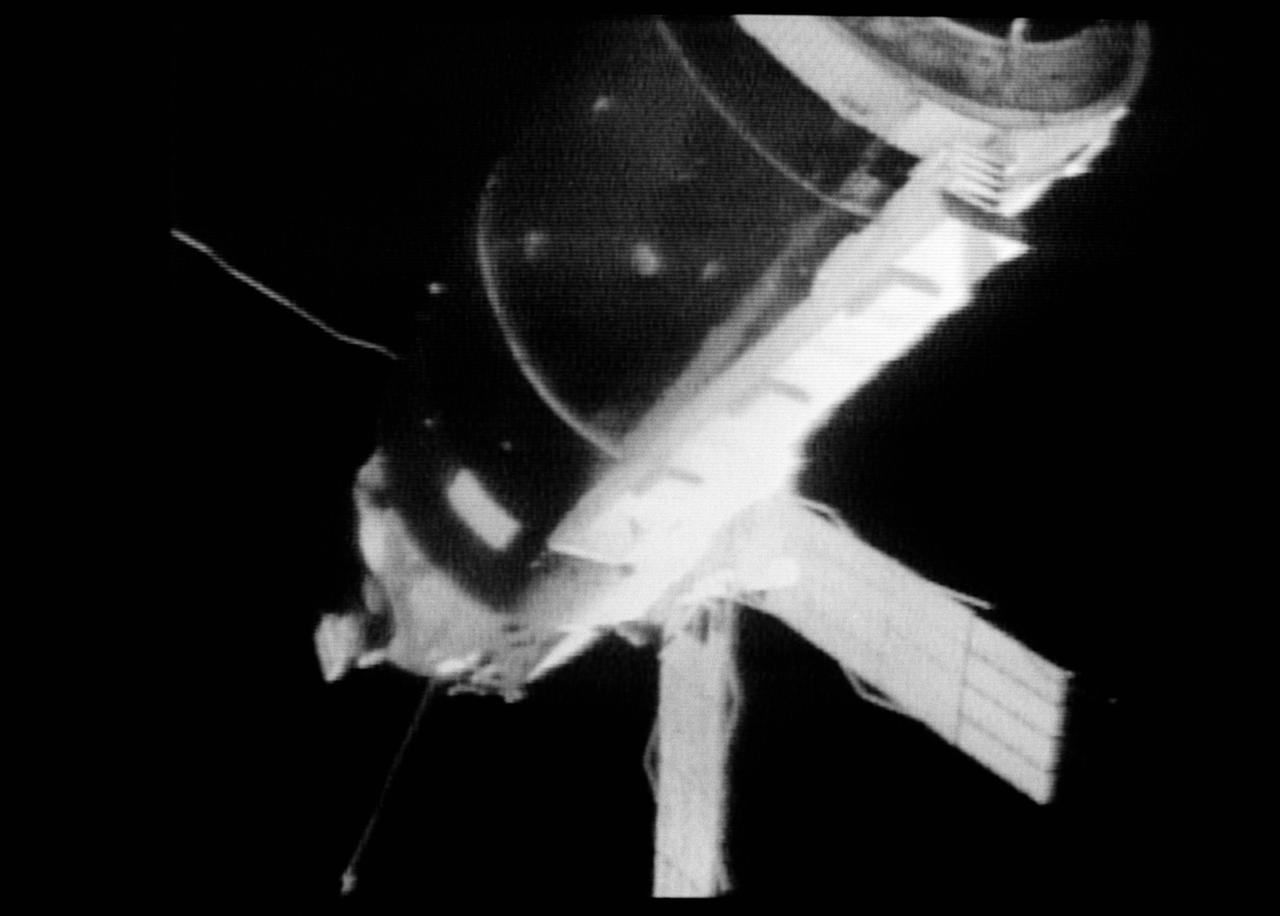
S73-27182 (25 May 1973) --- A close-up view of the Skylab 1 space station cluster can be seen in this reproduction taken from a color television transmission made by a TV camera aboard the Skylab 2 Command Module during its "fly around" inspection of the cluster. This view has been enhanced. At left center the damaged solar array system wing on the Orbital Workshop (OWS) appears to be partly folded. In their preliminary inspection the crewmen noted that portions of the micrometeoroid shield had slid back underneath the OWS solar wing. Solar panels on the Apollo Telescope Mount extend out at the top center. Photo credit: NASA
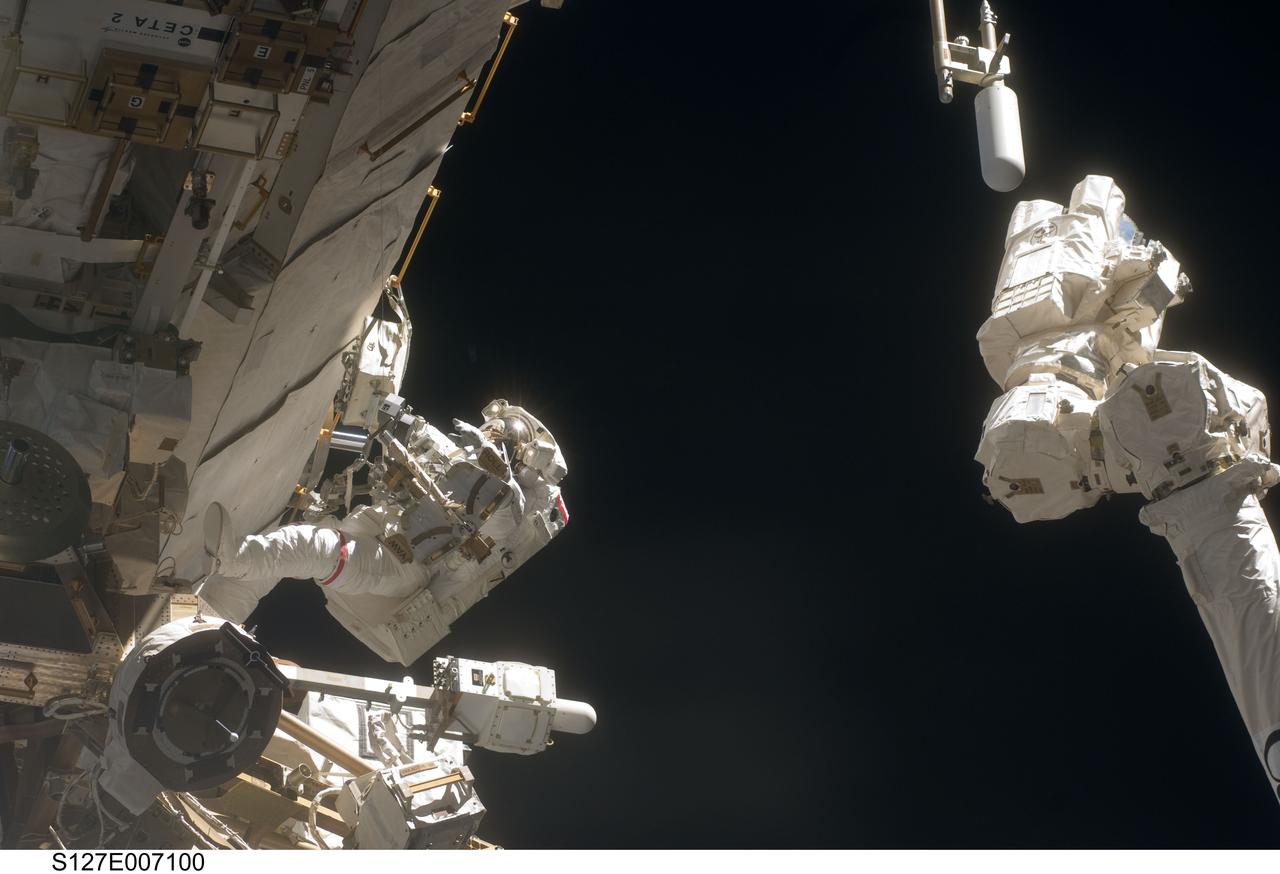
S127-E-007100 (20 July 2009) --- This is one of a series of digital still images showing astronaut Dave Wolf performing his second spacewalk and the Endeavour’s second also of the scheduled five overall in a little over a week’s time to continue work on the International Space Station. Astronauts Wolf and Tom Marshburn (out of frame), both mission specialists, successfully transferred a spare KU-band antenna to long-term storage on the space station, along with a backup coolant system pump module and a spare drive motor for the station's robot arm transporter. Installation of a television camera on the Japanese Exposed Facility experiment platform was deferred to a later spacewalk.
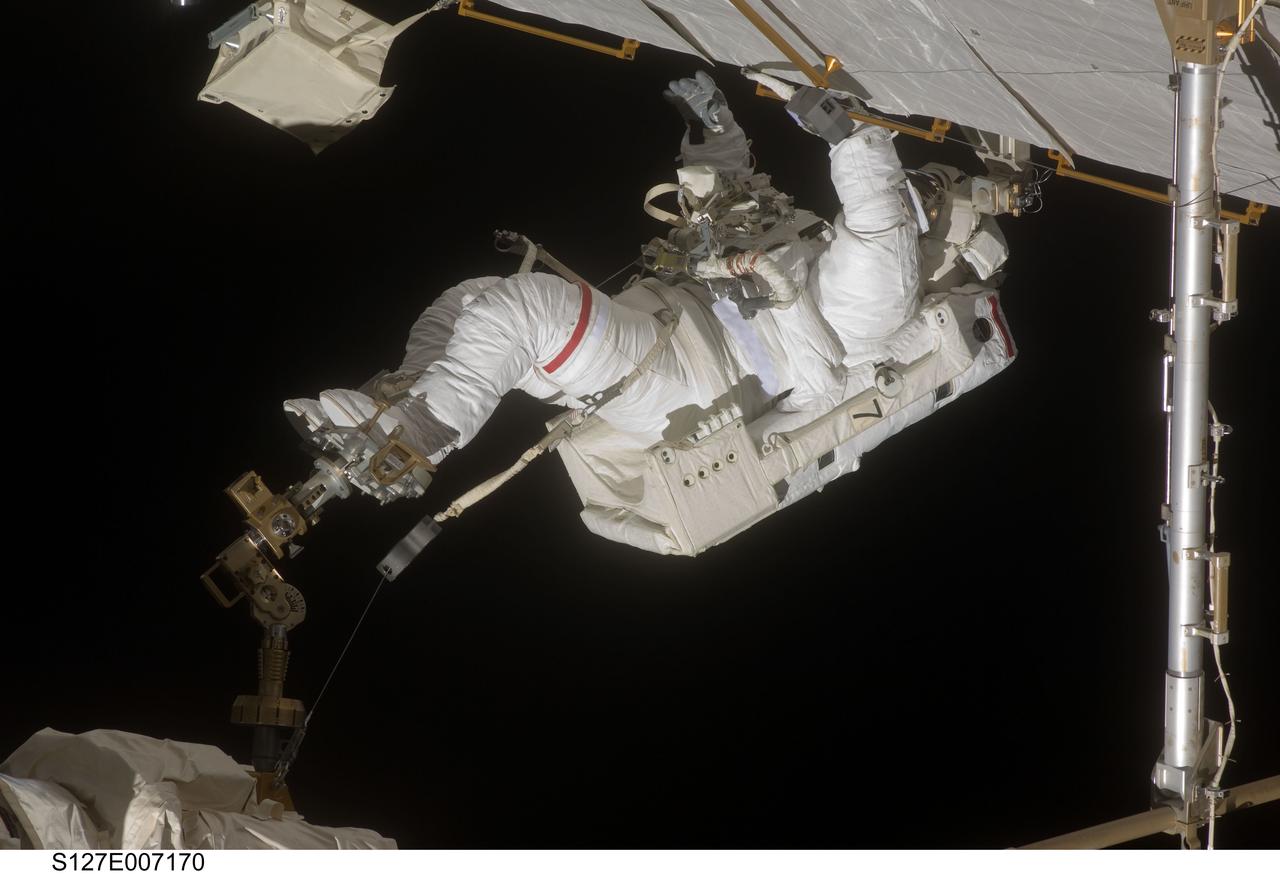
S127-E-007170 (20 July 2009) --- This is one of a series of digital still images showing astronaut Dave Wolf performing his second spacewalk and the Endeavour’s second also of the scheduled five overall in a little over a week’s time to continue work on the International Space Station. Astronauts Wolf and Tom Marshburn (out of frame), both mission specialists, successfully transferred a spare KU-band antenna to long-term storage on the space station, along with a backup coolant system pump module and a spare drive motor for the station's robot arm transporter. Installation of a television camera on the Japanese Exposed Facility experiment platform was deferred to a later spacewalk.
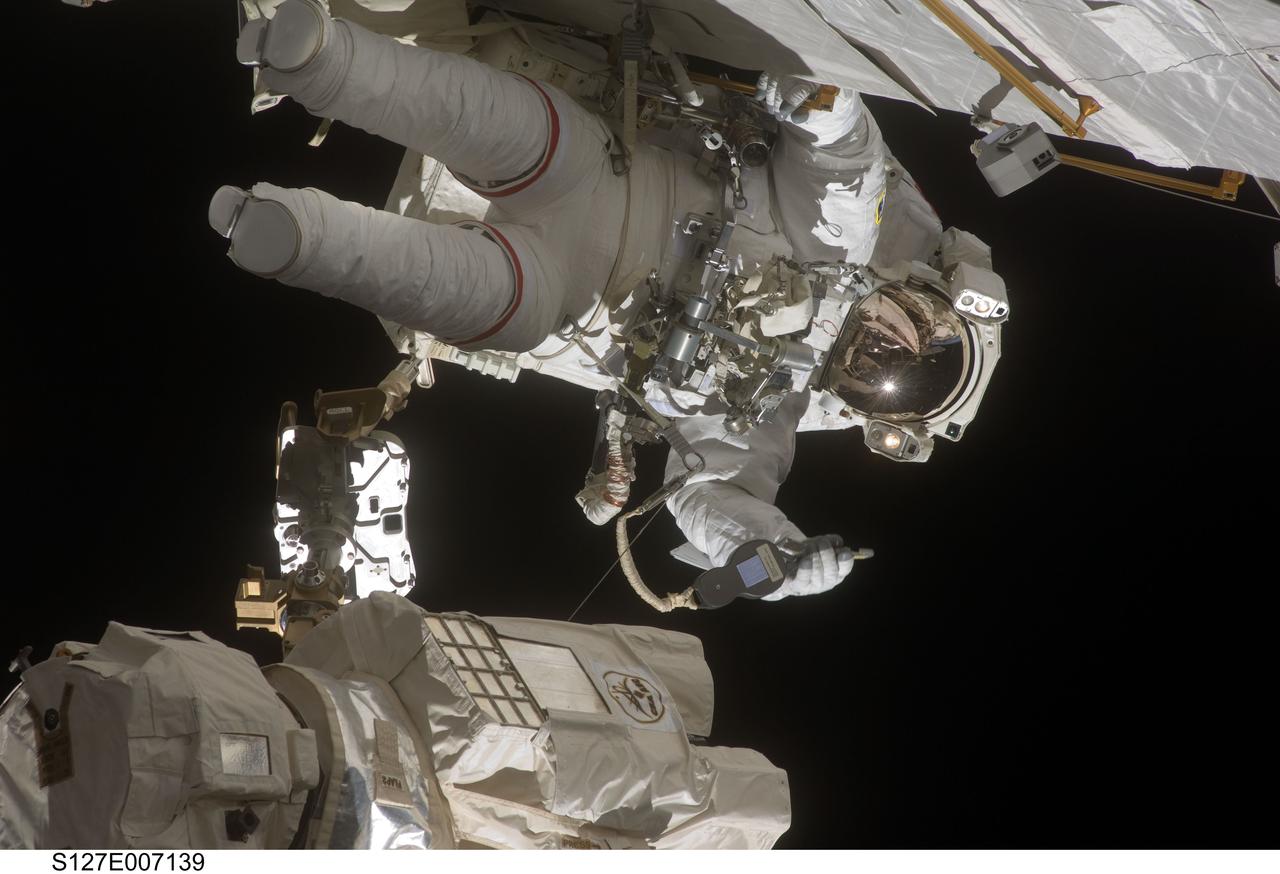
S127-E-007139 (20 July 2009) --- This is one of a series of digital still images showing astronaut Dave Wolf performing his second spacewalk and the Endeavour’s second also of the scheduled five overall in a little over a week’s time to continue work on the International Space Station. Astronauts Wolf and Tom Marshburn (out of frame), both mission specialists, successfully transferred a spare KU-band antenna to long-term storage on the space station, along with a backup coolant system pump module and a spare drive motor for the station's robot arm transporter. Installation of a television camera on the Japanese Exposed Facility experiment platform was deferred to a later spacewalk.
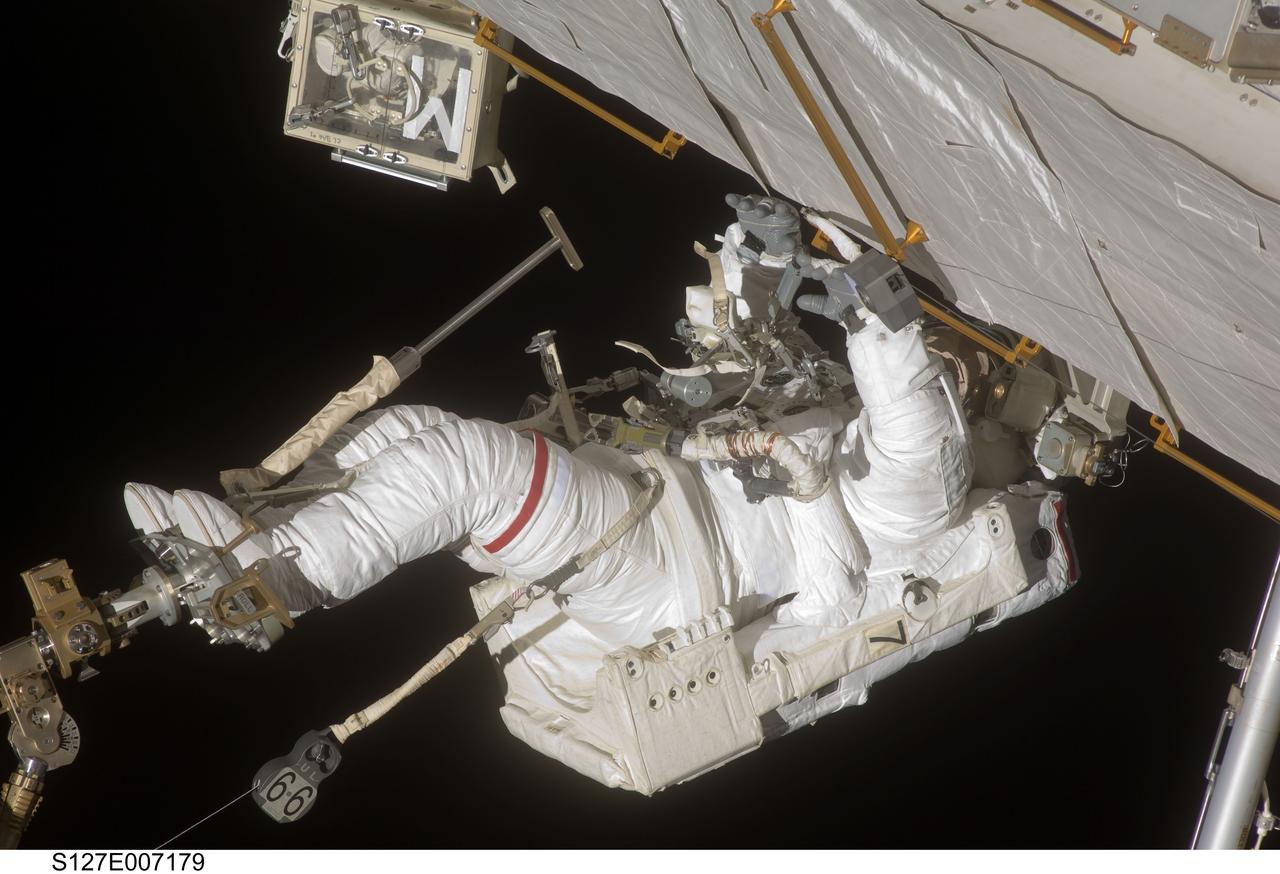
S127-E-007179 (20 July 2009) --- This is one of a series of digital still images showing astronaut Dave Wolf performing his second spacewalk and the Endeavour’s second also of the scheduled five overall in a little over a week’s time to continue work on the International Space Station. Astronauts Wolf and Tom Marshburn (out of frame), both mission specialists, successfully transferred a spare KU-band antenna to long-term storage on the space station, along with a backup coolant system pump module and a spare drive motor for the station's robot arm transporter. Installation of a television camera on the Japanese Exposed Facility experiment platform was deferred to a later spacewalk.
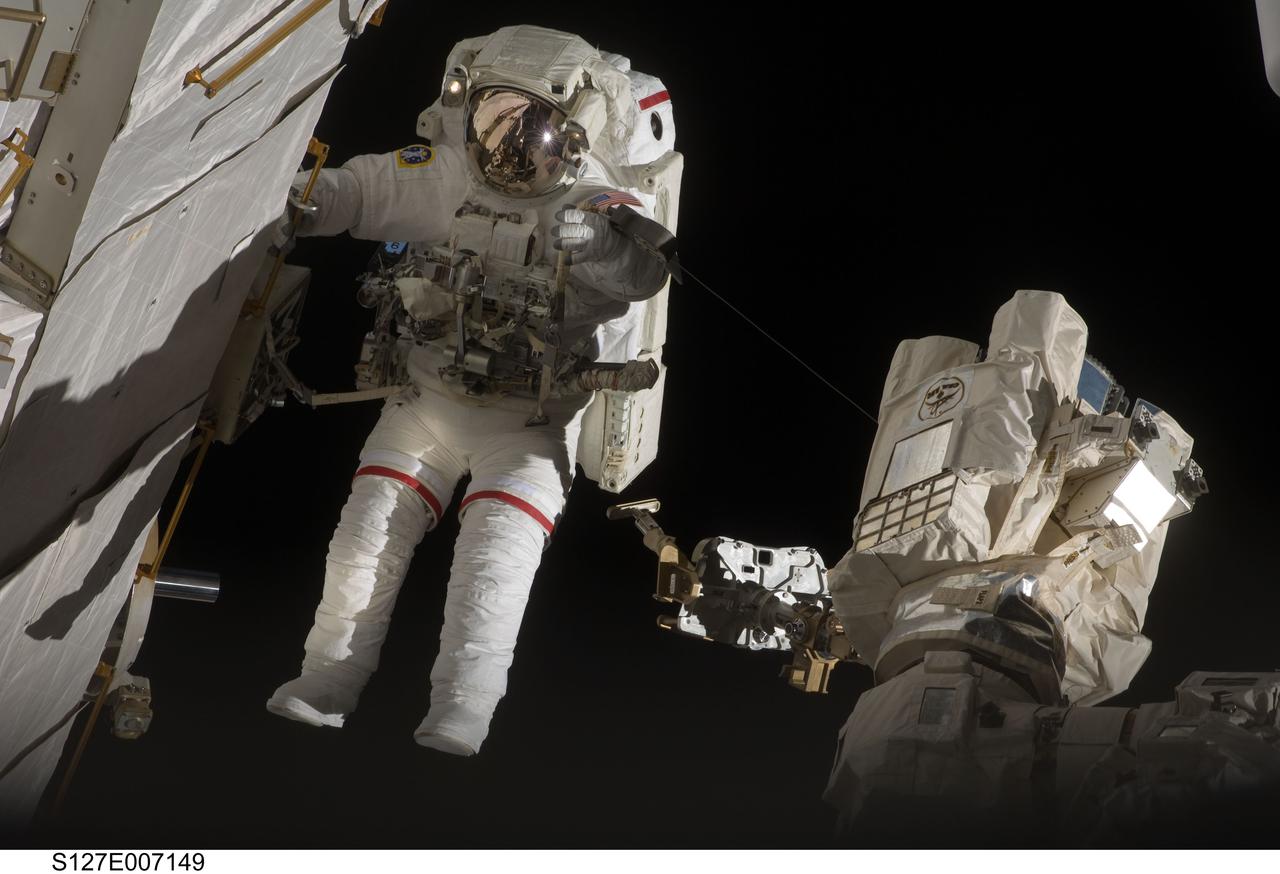
S127-E-007149 (20 July 2009) --- This is one of a series of digital still images showing astronaut Dave Wolf performing his second spacewalk and the Endeavour’s second also of the scheduled five overall in a little over a week’s time to continue work on the International Space Station. Astronauts Wolf and Tom Marshburn (out of frame), both mission specialists, successfully transferred a spare KU-band antenna to long-term storage on the space station, along with a backup coolant system pump module and a spare drive motor for the station's robot arm transporter. Installation of a television camera on the Japanese Exposed Facility experiment platform was deferred to a later spacewalk.
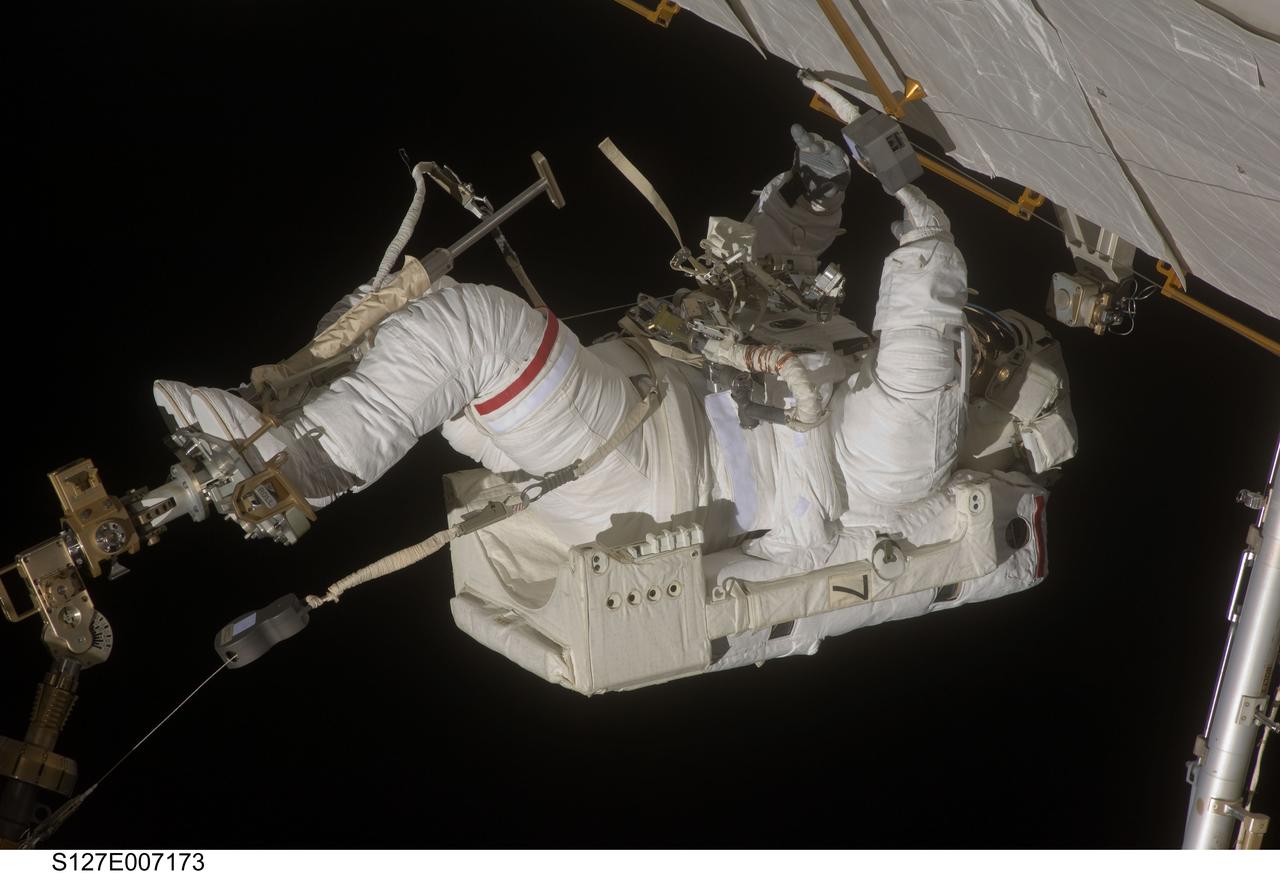
S127-E-007173 (20 July 2009) --- This is one of a series of digital still images showing astronaut Dave Wolf performing his second spacewalk and the Endeavour’s second also of the scheduled five overall in a little over a week’s time to continue work on the International Space Station. Astronauts Wolf and Tom Marshburn (out of frame), both mission specialists, successfully transferred a spare KU-band antenna to long-term storage on the space station, along with a backup coolant system pump module and a spare drive motor for the station's robot arm transporter. Installation of a television camera on the Japanese Exposed Facility experiment platform was deferred to a later spacewalk.
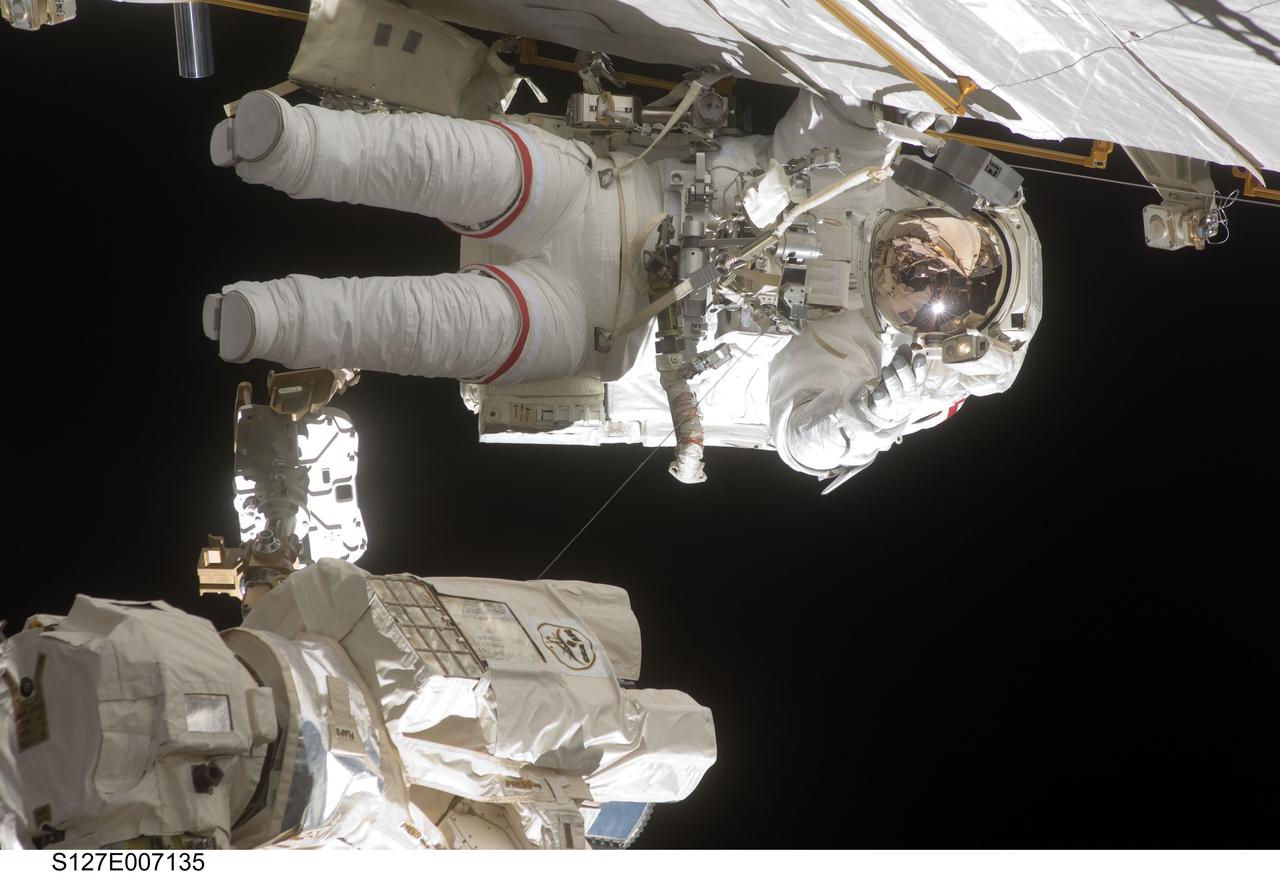
S127-E-007135 (20 July 2009) --- This is one of a series of digital still images showing astronaut Dave Wolf performing his second spacewalk and the Endeavour’s second also of the scheduled five overall in a little over a week’s time to continue work on the International Space Station. Astronauts Wolf and Tom Marshburn (out of frame), both mission specialists, successfully transferred a spare KU-band antenna to long-term storage on the space station, along with a backup coolant system pump module and a spare drive motor for the station's robot arm transporter. Installation of a television camera on the Japanese Exposed Facility experiment platform was deferred to a later spacewalk.
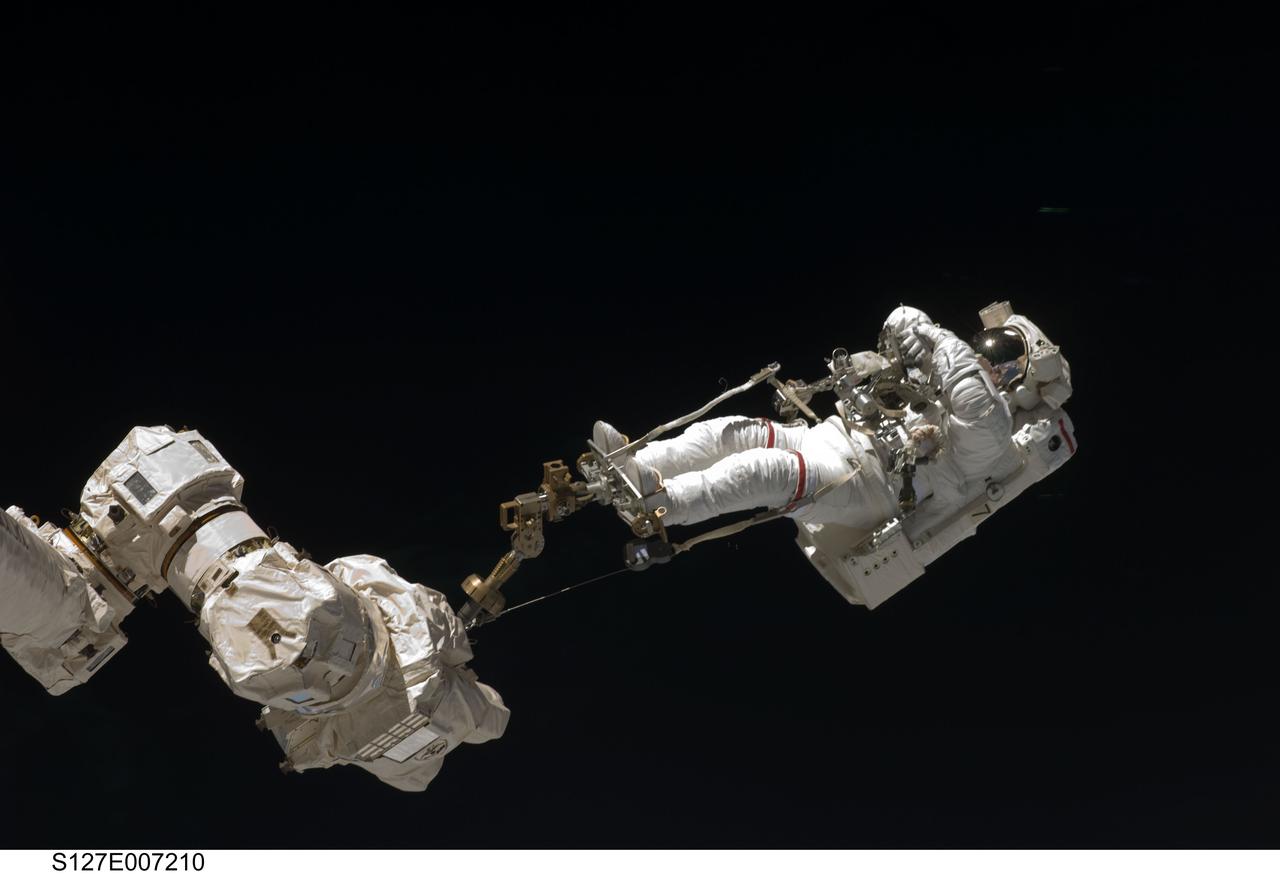
S127-E-007210 (20 July 2009) --- This is one of a series of digital still images showing astronaut Dave Wolf performing his second spacewalk and the Endeavour’s second also of the scheduled five overall in a little over a week’s time to continue work on the International Space Station. Astronauts Wolf and Tom Marshburn (out of frame), both mission specialists, successfully transferred a spare KU-band antenna to long-term storage on the space station, along with a backup coolant system pump module and a spare drive motor for the station's robot arm transporter. Installation of a television camera on the Japanese Exposed Facility experiment platform was deferred to a later spacewalk.
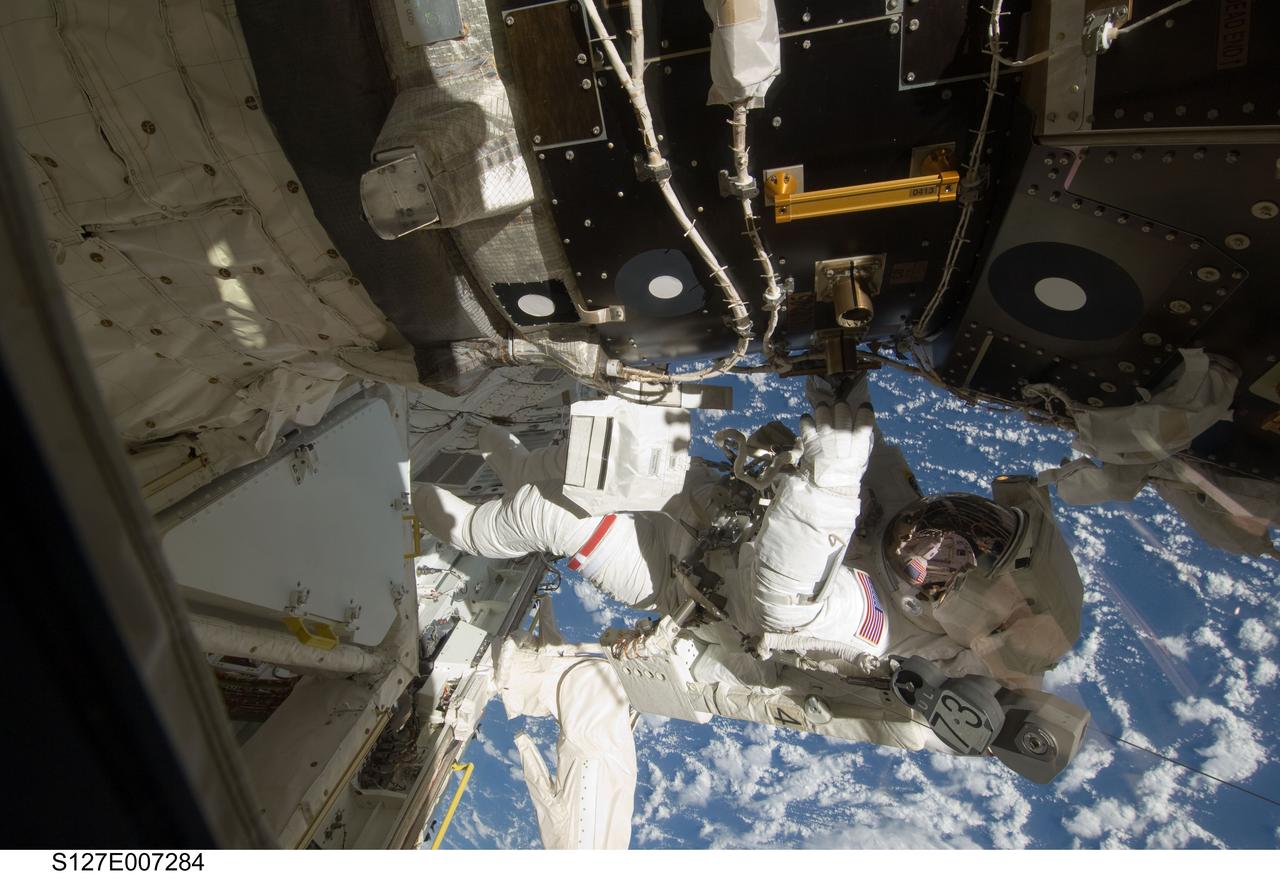
S127-E-007284 (20 July 2009) --- This is one of a series of digital still images showing astronaut Tom Marshburn performing his first spacewalk and the Endeavour crew’s second of the scheduled five overall in a little more than a week to continue work on the International Space Station. Astronauts Marshburn and Dave Wolf (out of frame), both mission specialists, successfully transferred a spare KU-band antenna to long-term storage on the space station, along with a backup coolant system pump module and a spare drive motor for the station's robot arm transporter. Installation of a television camera on the Japanese Exposed Facility experiment platform was deferred to a later spacewalk.
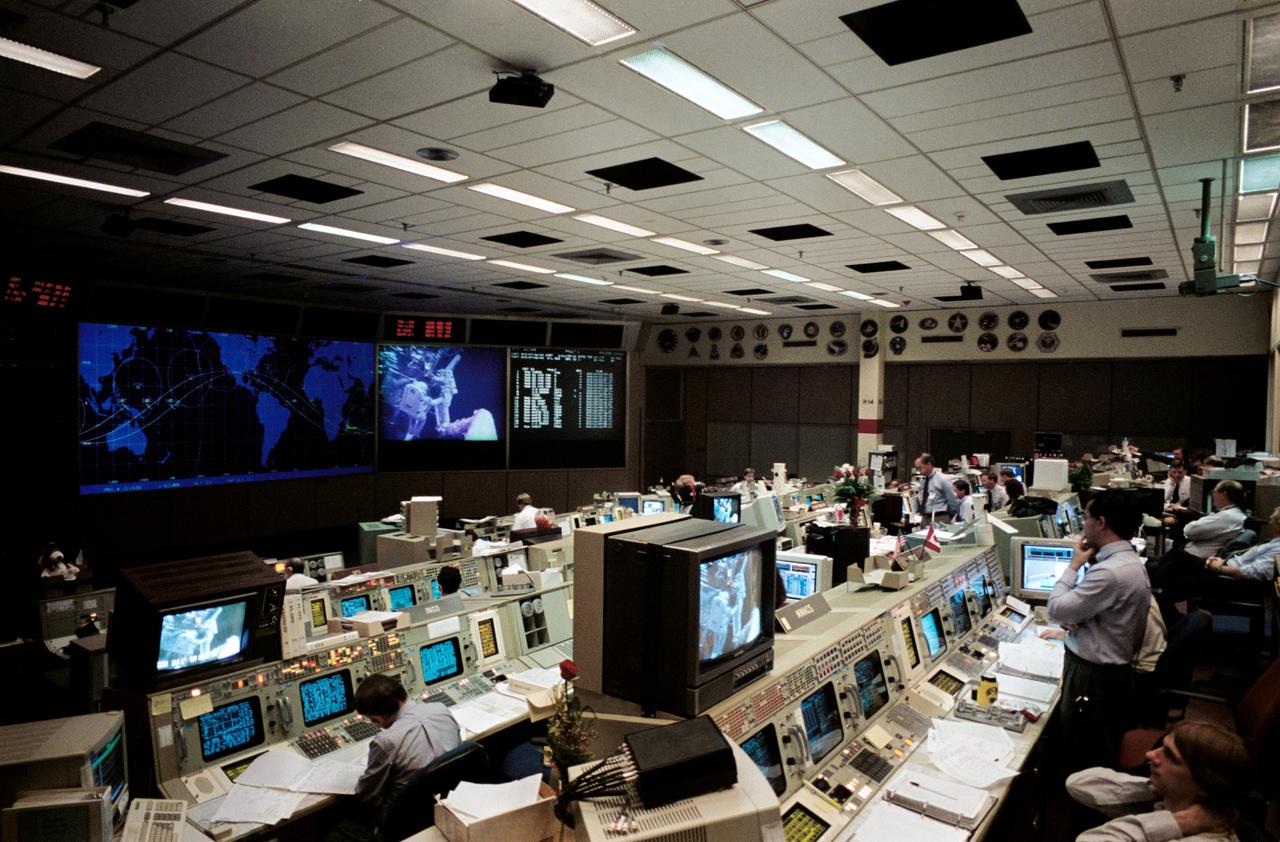
STS061-S-102 (5 Dec. 1993) --- Flight controllers Harry Black (left foreground) and Kevin McCluney (right foreground) monitor the televised activity of two space walkers during the first STS-61 extravehicular activity (EVA). Astronauts F. Story Musgrave and Jeffrey A. Hoffman were performing a variety of equipment replacements. At the Integrated Communications Officer Console (INCO) Black plays a roill in controlling the TV while McLuney's duties deal with maintenance, mechanical, arm and crew systems, meaning that they and their colleagues will be busy for the next five days. Four astronauts in alternating pairs will perform a variety of tasks on the giant telescope during that period.
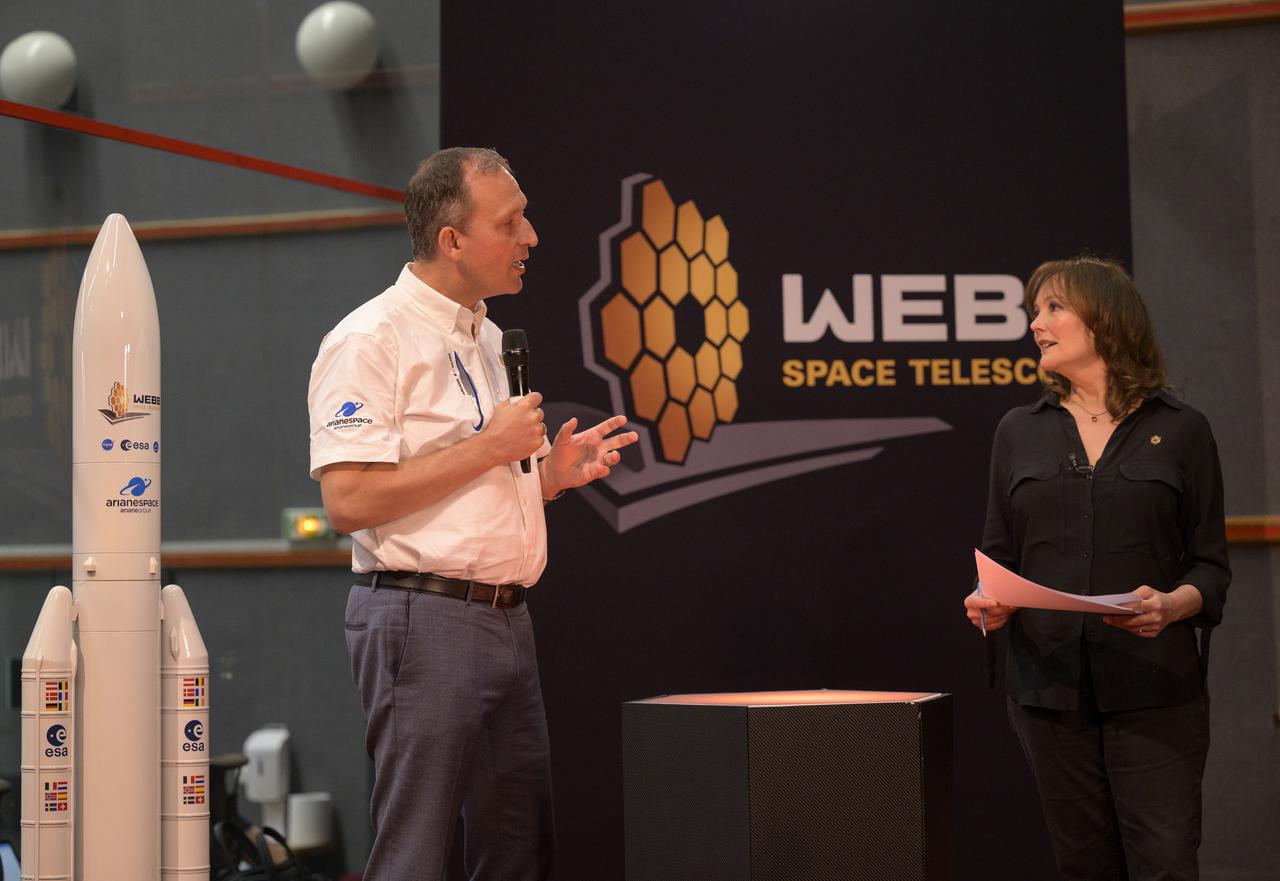
NASA Associate Administrator for the Science Mission Directorate Thomas Zurbuchen is interviewed by Katy Haswell on NASA television as he and the launch team monitor the countdown of the launch of Arianespace's Ariane 5 rocket carrying NASA’s James Webb Space Telescope, Saturday, Dec. 25, 2021, in the Jupiter Center at the Guiana Space Center in Kourou, French Guiana. The James Webb Space Telescope (sometimes called JWST or Webb) is a large infrared telescope with a 21.3 foot (6.5 meter) primary mirror. The observatory will study every phase of cosmic history—from within our solar system to the most distant observable galaxies in the early universe. Photo Credit: (NASA/Bill Ingalls)

S127-E-007236 (20 July 2009) --- This is one of a series of digital still images showing astronaut Tom Marshburn performing his first spacewalk and the Endeavour crew’s second of the scheduled five overall in a little more than a week to continue work on the International Space Station. Astronauts Marshburn and Dave Wolf (out of frame), both mission specialists, successfully transferred a spare KU-band antenna to long-term storage on the space station, along with a backup coolant system pump module and a spare drive motor for the station's robot arm transporter. Installation of a television camera on the Japanese Exposed Facility experiment platform was deferred to a later spacewalk.
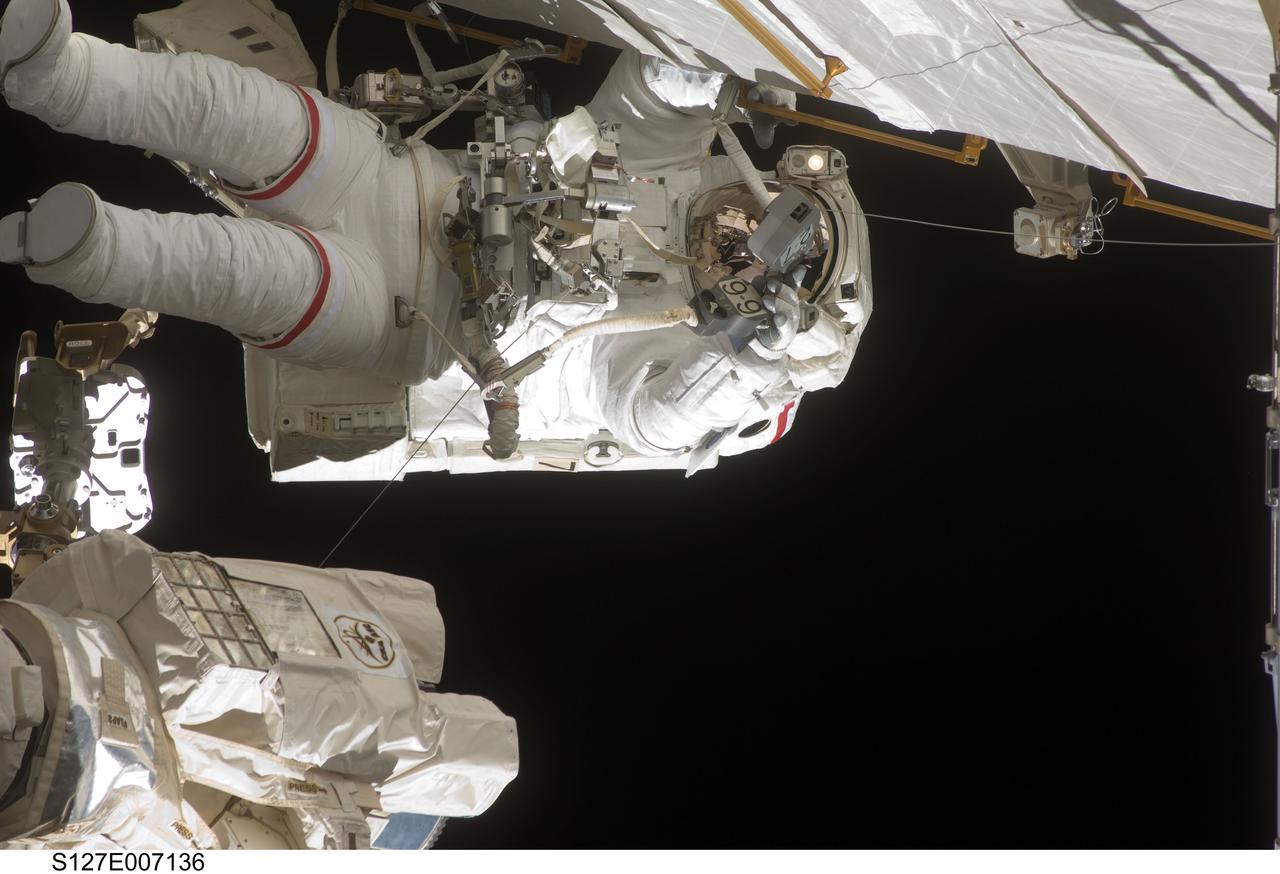
S127-E-007136 (20 July 2009) --- This is one of a series of digital still images showing astronaut Dave Wolf performing his second spacewalk and the Endeavour’s second also of the scheduled five overall in a little over a week’s time to continue work on the International Space Station. Astronauts Wolf and Tom Marshburn (out of frame), both mission specialists, successfully transferred a spare KU-band antenna to long-term storage on the space station, along with a backup coolant system pump module and a spare drive motor for the station's robot arm transporter. Installation of a television camera on the Japanese Exposed Facility experiment platform was deferred to a later spacewalk.
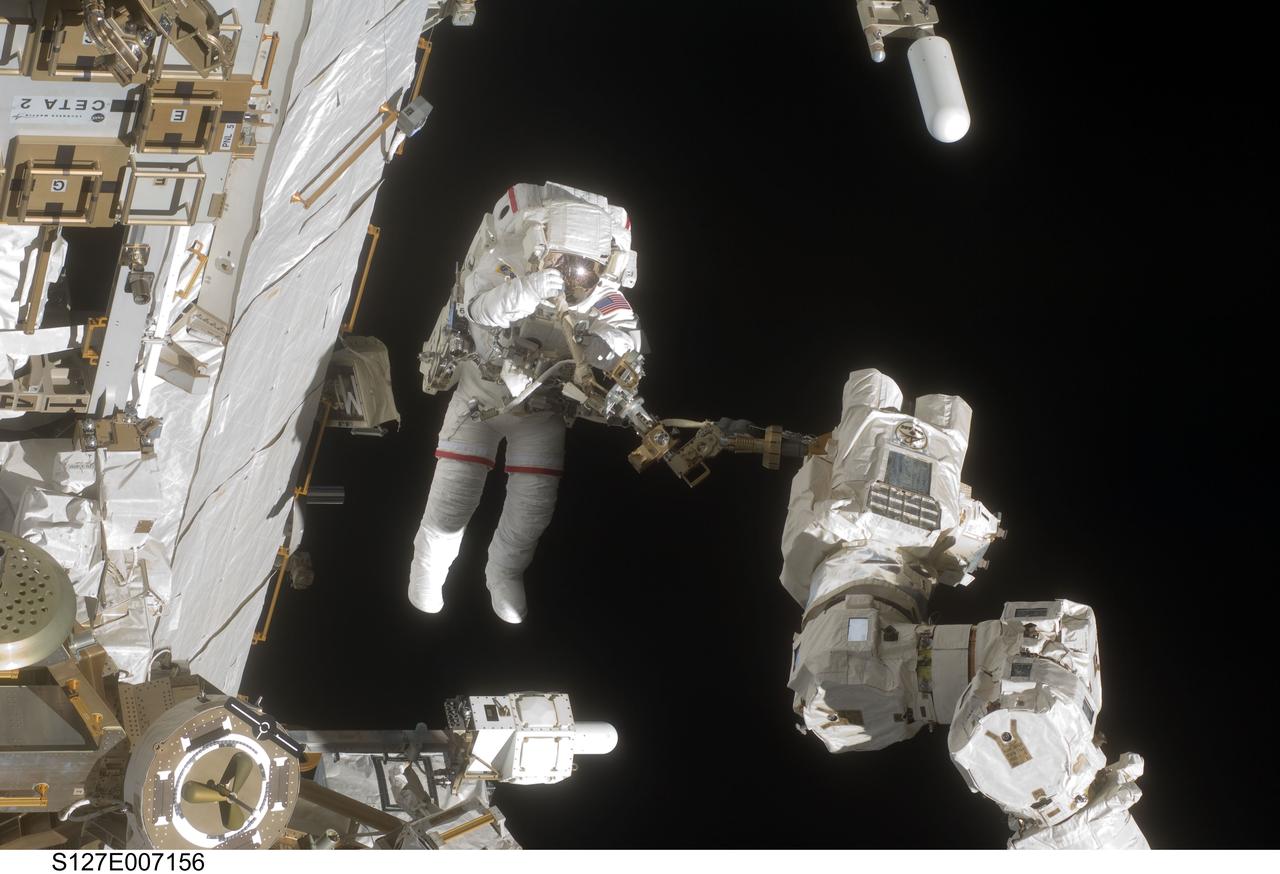
S127-E-007156 (20 July 2009) --- This is one of a series of digital still images showing astronaut Dave Wolf performing his second spacewalk and the Endeavour’s second also of the scheduled five overall in a little over a week’s time to continue work on the International Space Station. Astronauts Wolf and Tom Marshburn (out of frame), both mission specialists, successfully transferred a spare KU-band antenna to long-term storage on the space station, along with a backup coolant system pump module and a spare drive motor for the station's robot arm transporter. Installation of a television camera on the Japanese Exposed Facility experiment platform was deferred to a later spacewalk.