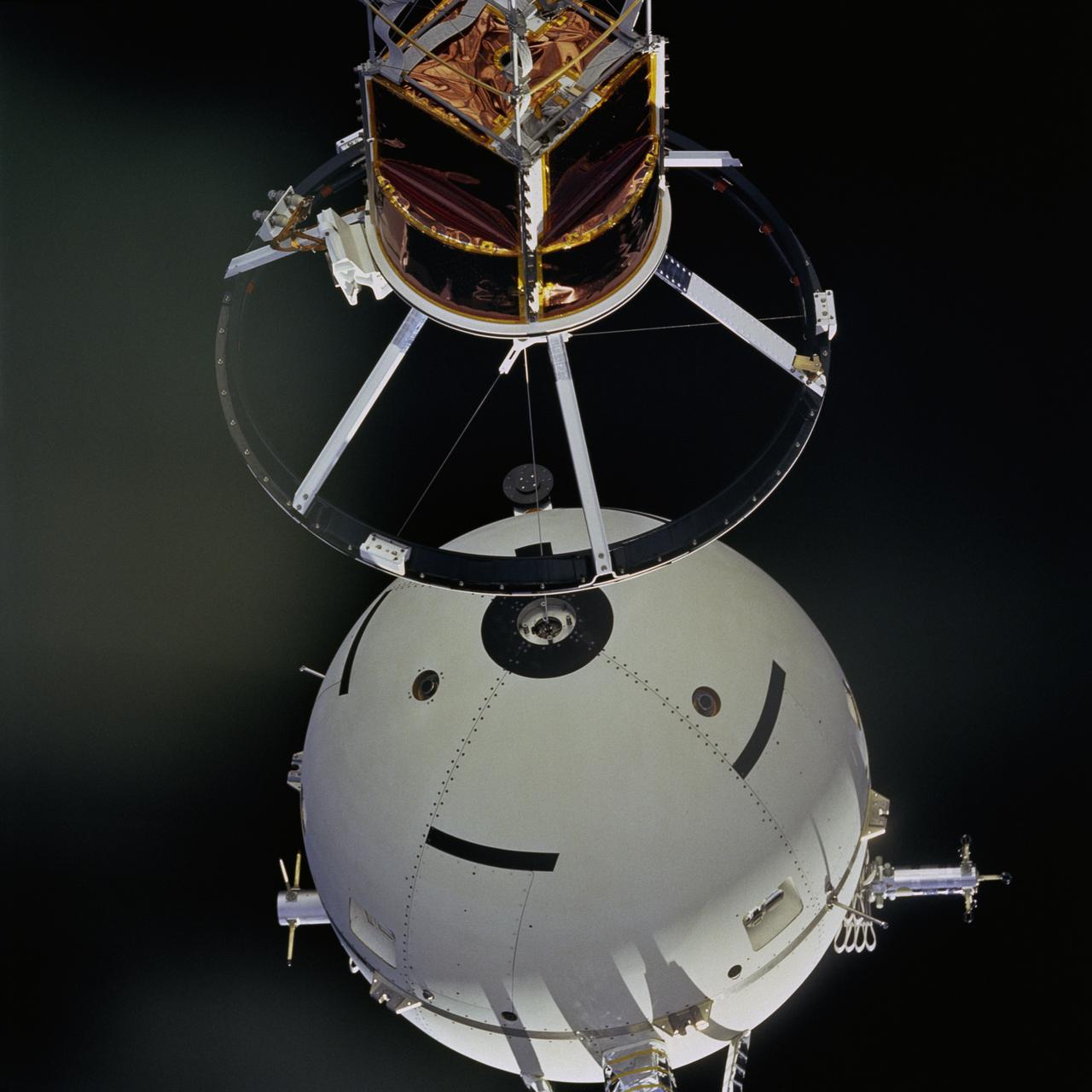
STS046-73-052 (4 Aug 1992) --- A 70mm handheld camera was used by the crew members to capture this medium close-up view of early operations with the Tethered Satellite System (TSS). The sphere can be seen moving away from the ring structure on the boom device in the Space Shuttle Atlantis' cargo bay.
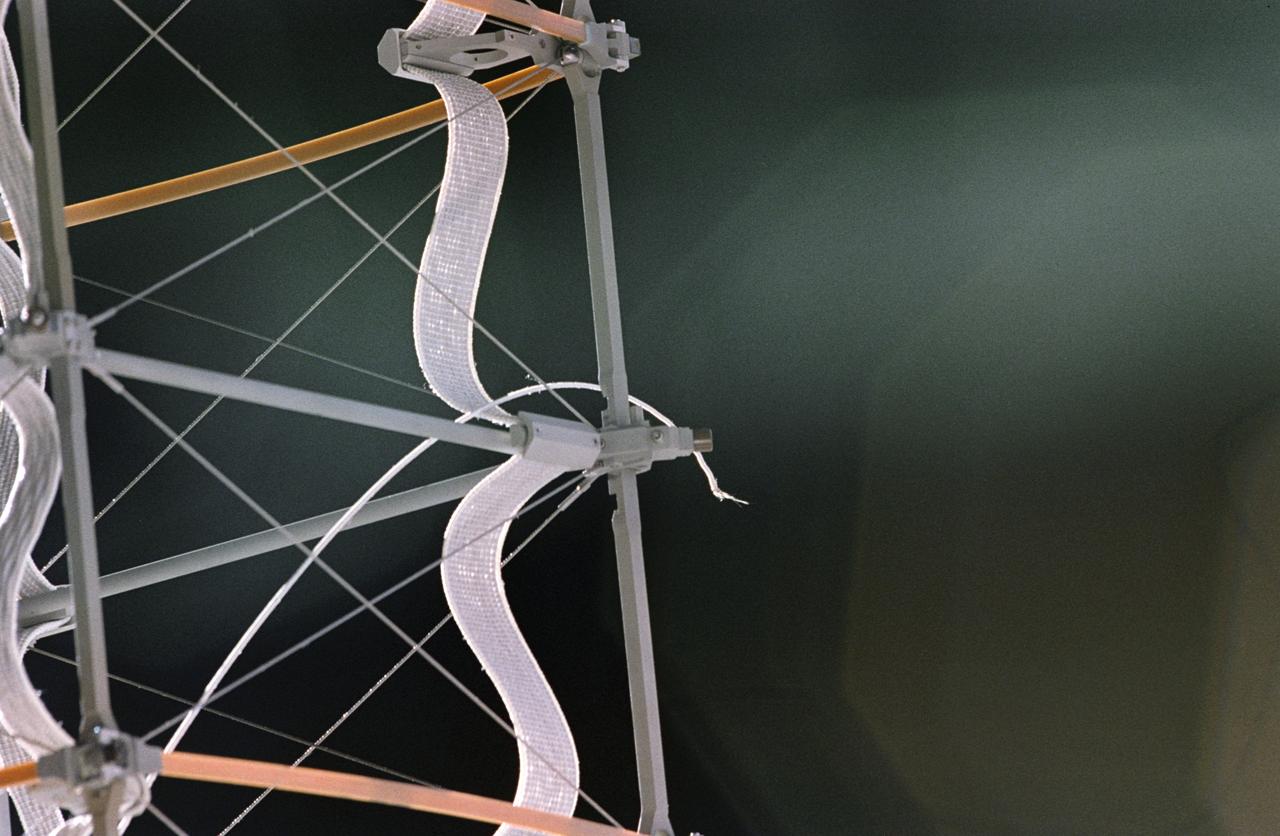
STS075-325-014 (25 Feb. 1996) --- The frayed end of the tether portion of the Tethered Satellite System (TSS) is seen at the end of the supportive boom. On February 25, 1996, the crew deployed the TSS, which later broke free. The seven member crew was launched aboard the Space Shuttle Columbia on February 22, 1996, and landed on March 9, 1996. Crewmembers were Andrew M. Allen, mission commander; Scott J. Horowitz, pilot; Franklin R. Chang-Diaz, payload commander; and Maurizio Cheli, European Space Agency (ESA); Jeffrey A. Hoffman and Claude Nicollier (ESA), all mission specialists; along with payload specialist Umberto Guidoni of the Italian Space Agency (ASI).
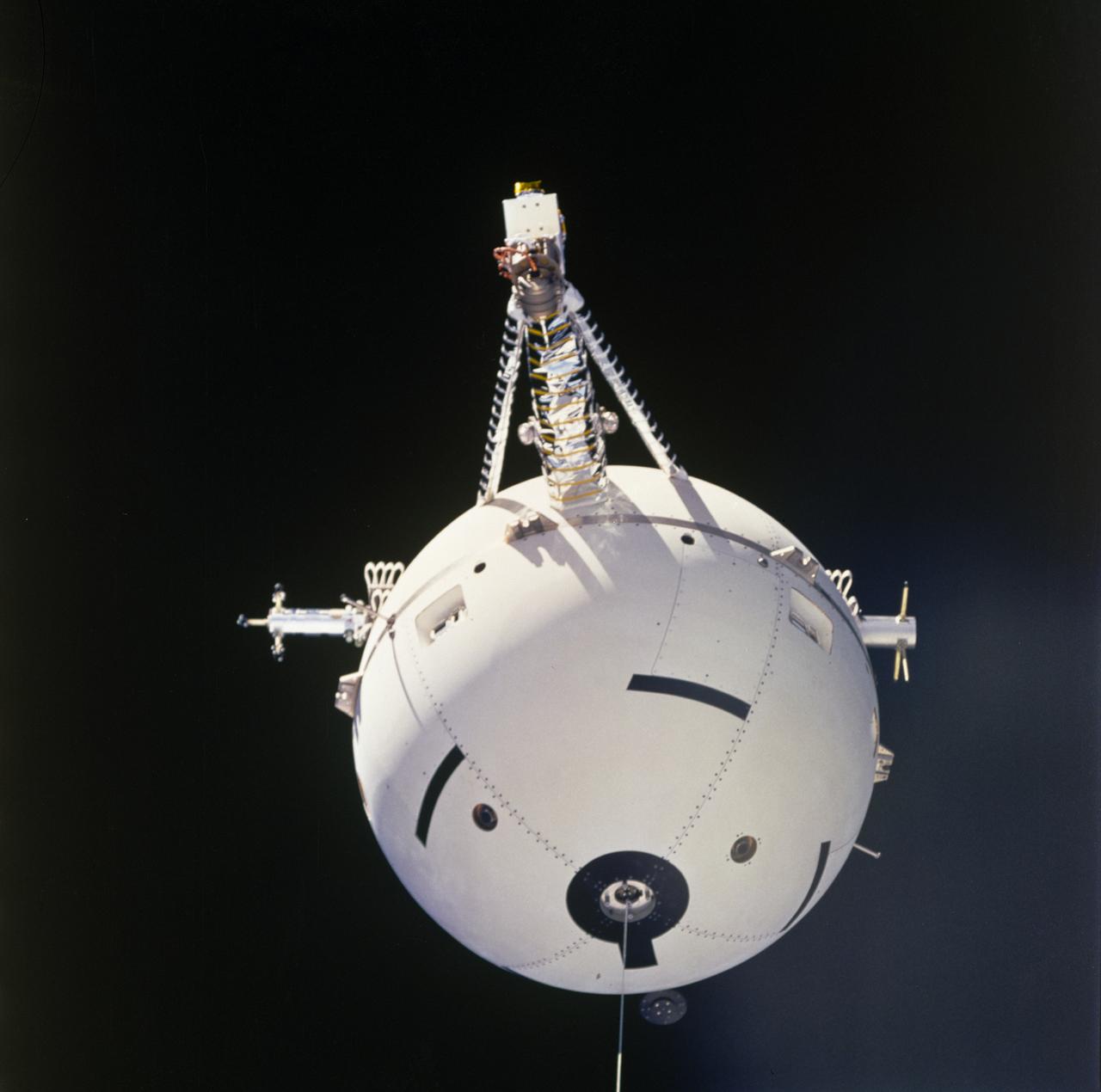
This Space Shuttle Orbiter Atlantis (STS-46) onboard photo is a close-up view of the Tethered Satellite System (TSS-1) in orbit above the Shuttle. A cooperative development effort by the Italian Space Agency (ASI) and NASA, the Tethered Satellite System (TSS) made capable the deployment and retrieval of a satellite which is attached by a wire tether from distances up to 100 km from the Orbiter. These free-flying satellites are used as observation platforms outside of the Orbiter.
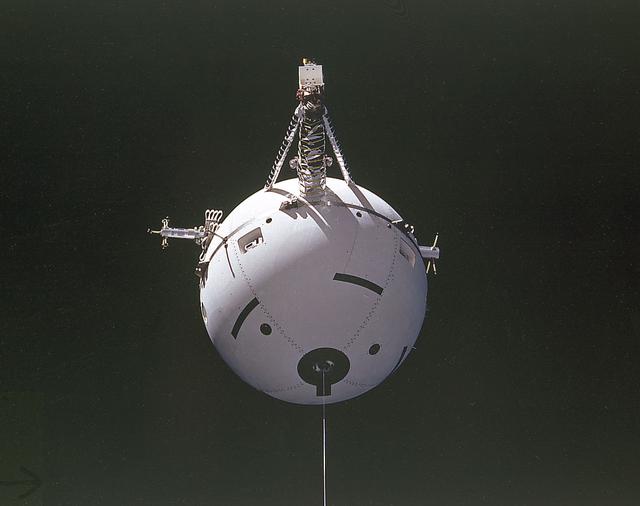
Space Shuttle Atlantis (STS-46) onboard photo of the Tethered Satellite System (TSS-1) deployment. A cooperative development effort by the Italian Space Agency (ASI) and NASA, the Tethered Satellite System (TSS) made capable the deployment and retrieval of a satellite which is attached by a wire tether from distances up to 100 km from the Orbiter. These free-flying satellites are used as observation platforms outside of the Orbiter.
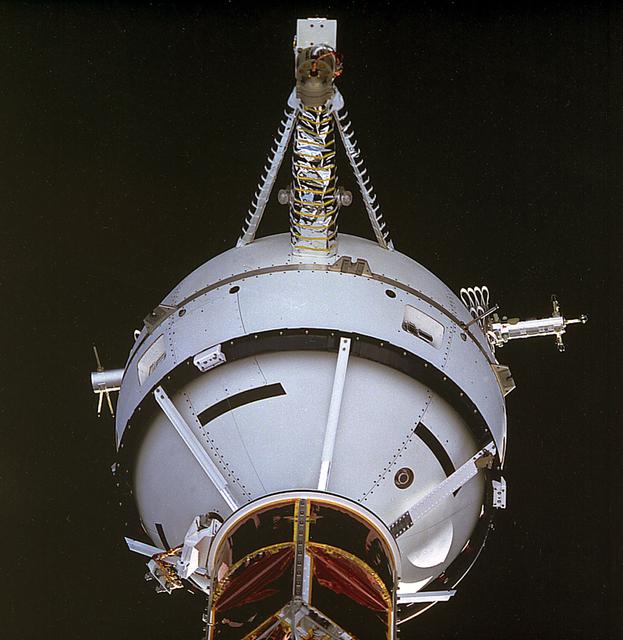
Pictured here is a Space Shuttle Atlantis (STS-46) onboard photo of the Tethered Satellite System (TSS-1) deployment. The Tethered Satellite System (TSS) was a cooperative development effort by the Italian Space Agency (ASI) and NASA. Combined efforts resulted in the capability of deploying and retrieving a satellite which is attached by a wire tether from distances up to 100-km from the Orbiter. These free-flying satellites are used as observation platforms outside of the Orbiter.
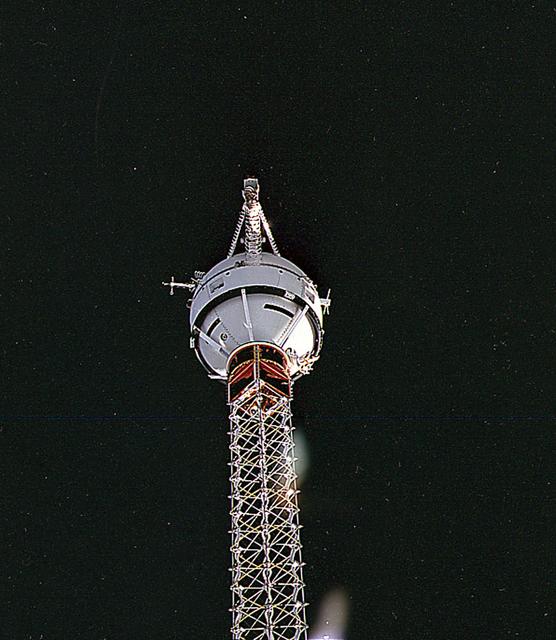
An STS-75 onboard photo of the Tethered Satellite System-1 Reflight (TSS-1R) atop its extended boom. The TSS-1R was a reflight of TSS-1, which was flown on the Space Shuttle in July/August, 1992. Building on the knowledge gained on the TSS-1 about tether dynamics, the TSS will circle the Earth at an altitude of 296 kilometers (184 miles), placing the tether system well within the rarefield, electrically charged layer of the atmosphere known as the ionosphere. The satellite was plarned to be deployed 20.7 kilometers (12.9 miles) above the Shuttle. The conducting tether, generating high voltage and electrical currents as it moves through the ionosphere cutting magnetic field lines, would allow scientists to examine the electrodynamics of a conducting tether system. In addition, the TSS would increase our understanding of physical processes in the near-Earth space environment, such as plasma waves and currents. The tether on the TSS broke as the Satellite was nearing the full extent of its 12.5 mile deployment from the Shuttle. The TSS was a cooperative development effort by the Italian Space Agency (ASI) and NASA, and was managed by scientists at the Marshall Space Flight Center.
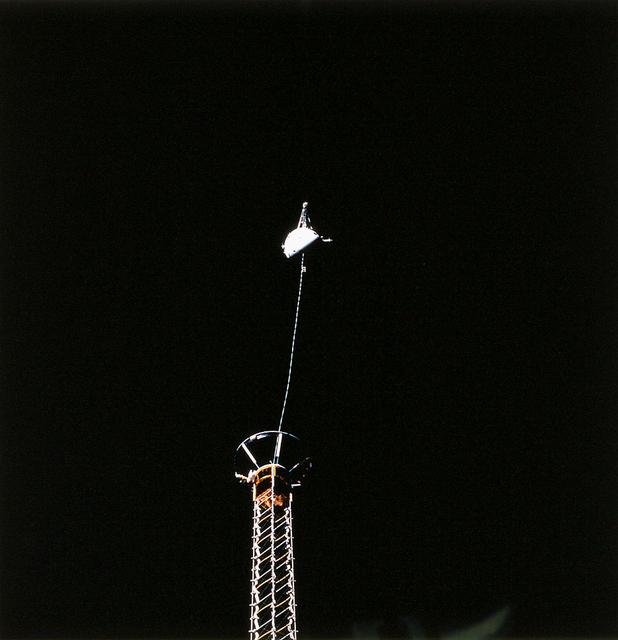
An STS-75 onboard photo of the Tethered Satellite System-1 Reflight (TSS-1R) atop its extended boom. The TSS-1R was a reflight of TSS-1, which was flown on the Space Shuttle in July/August, 1992. Building on the knowledge gained on the TSS-1 about tether dynamics, the TSS will circle the Earth at an altitude of 296 kilometers (184 miles), placing the tether system well within the rarefield, electrically charged layer of the atmosphere known as the ionosphere. The satellite was plarned to be deployed 20.7 kilometers (12.9 miles) above the Shuttle. The conducting tether, generating high voltage and electrical currents as it moves through the ionosphere cutting magnetic field lines, would allow scientists to examine the electrodynamics of a conducting tether system. In addition, the TSS would increase our understanding of physical processes in the near-Earth space environment, such as plasma waves and currents. The tether on the TSS broke as the Satellite was nearing the full extent of its 12.5 mile deployment from the Shuttle. The TSS was a cooperative development effort by the Italian Space Agency (ASI) and NASA, and was managed by scientists at the Marshall Space Flight Center.
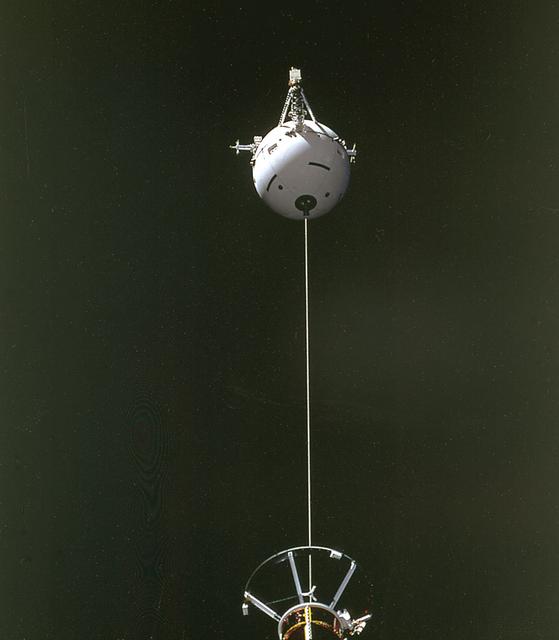
This is a Space Shuttle Orbiter Atlantis (STS-46) onboard photo of the Tethered Satellite System (TSS-1) deployment. A cooperative development effort by the Italian Space Agency (ASI) and NASA, the Tethered Satellite System (TSS) made capable the deployment and retrieval of a satellite which is attached by a wire tether from distances up to 100 km from the Orbiter. These free-flying satellites are used as observation platforms outside of the Orbiter.
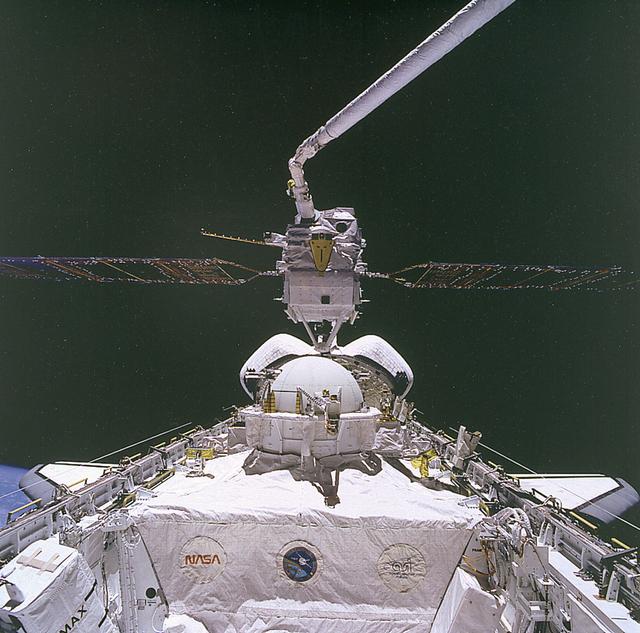
Space Shuttle Atlantis (STS-46) onboard photo of the Tethered Satellite System (TSS-1) on deployer boom. The Tethered Satellite System (TSS) was a cooperative development effort by the Italian Space Agency (ASI) and NASA made capable of deploying and retrieving a satellite which is attached by a wire tether from distances up to 100 km from the Orbiter. These free-flying satellites are used as observation platforms outside of the Orbiter.
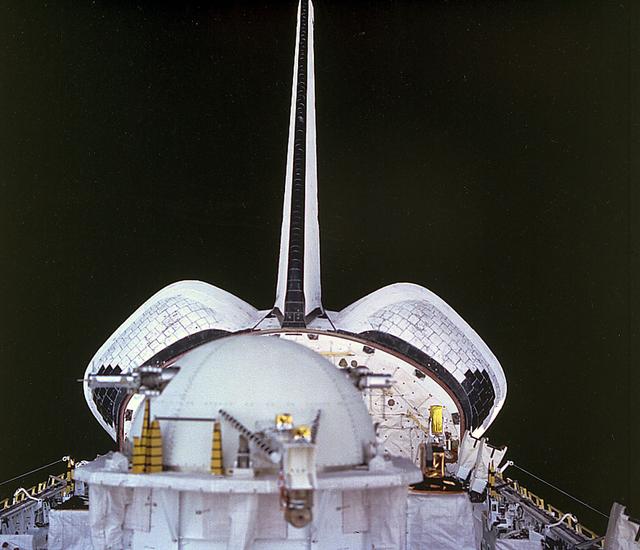
Space Shuttle Atlantis (STS-46) onboard photo of the Tethered Satellite System (TSS-1) in Orbiter's cargo bay. The Tethered Satellite System (TSS) was a cooperative development effort by the Italian Space Agency (ASI) and NASA made capable of deploying and retrieving a satellite which is attached by a wire tether from distances up to 100 km from the Orbiter. These free-flying satellites are used as observation platforms outside of the Orbiter.
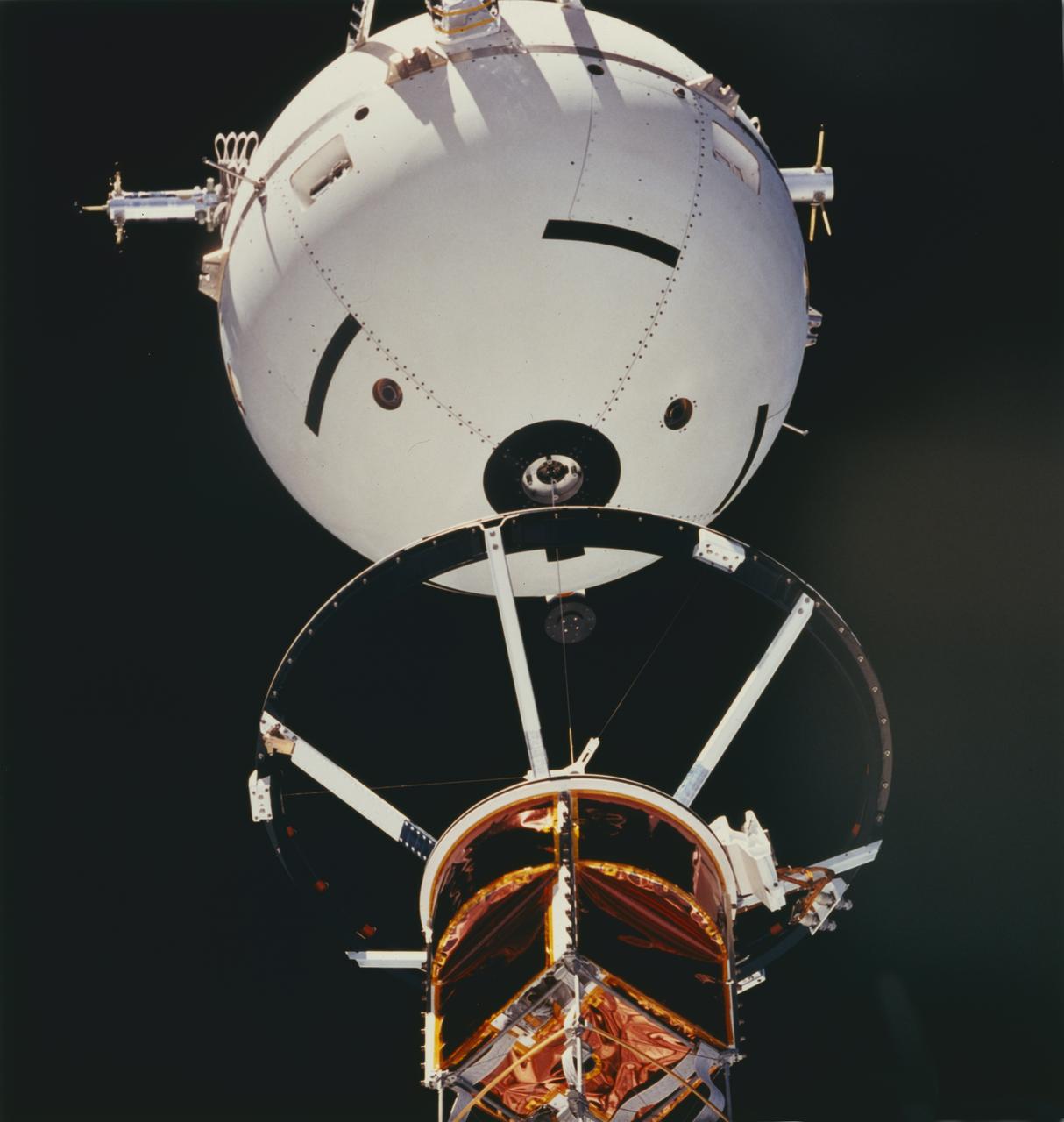
A crewmember aboard the Space Shuttle Orbiter Atlantis (STS-46) used a 70mm handheld camera to capture this medium closeup view of early operations with the Tethered Satellite System (TSS). TSS-1 is being deployed from its boom as it is perched above the cargo bay of the Earth-orbiting Shuttle circling the Earth at an altitude of 296 kilometers (184 miles), the TSS-1 will be well within the tenuous, electrically charged layer of the atmosphere known as the ionosphere. There, a satellite attached to the orbiter by a thin conducting cord, or tether, will be reeled from the Shuttle payload bay. On this mission the satellite was plarned to be deployed 20 kilometers (12.5 miles) above the Shuttle. The conducting tether will generate high voltage and electrical currents as it moves through the atmosphere allowing scientists to examine the electrodynamics of a conducting tether system. These studies will not only increase our understanding of physical processes in the near-Earth space environment, but will also help provide an explanation for events witnessed elsewhere in the solar system. The crew of the STS-46 mission were unable to reel the satellite as planned. After several unsuccessful attempts, they were only able to extend the satellite 9.8 kilometers (6.1 miles). The TSS was a cooperative development effort by the Italian Space Agency (ASI), and NASA.
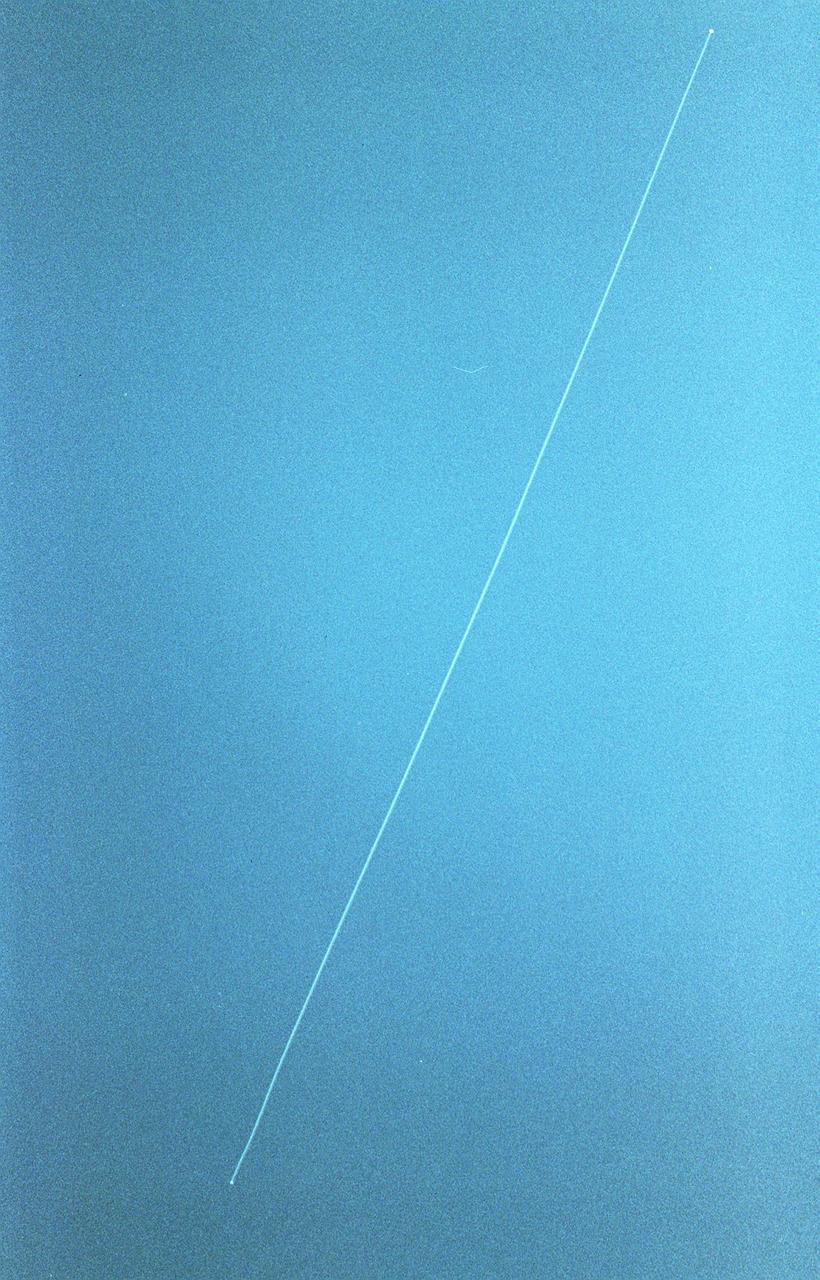
STS075-360-021 (22 Feb.- 9 March 1996) --- The loose tether forms a faint diagonal line in this scene recorded on a later fly-by. On Feb. 25, 1996, the crew deployed the Tethered Satellite System (TSS), which later broke free. The seven member crew was launched aboard the space shuttle Columbia on Feb. 22, 1996, and landed on March 9, 1996. Crew members were Andrew M. Allen, mission commander; Scott J. Horowitz, pilot; Franklin R. Chang-Diaz, payload commander; and Maurizio Cheli, European Space Agency (ESA); Jeffrey A. Hoffman and Claude Nicollier, ESA, all mission specialists; along with payload specialist Umberto Guidoni of the Italian Space Agency (ASI).
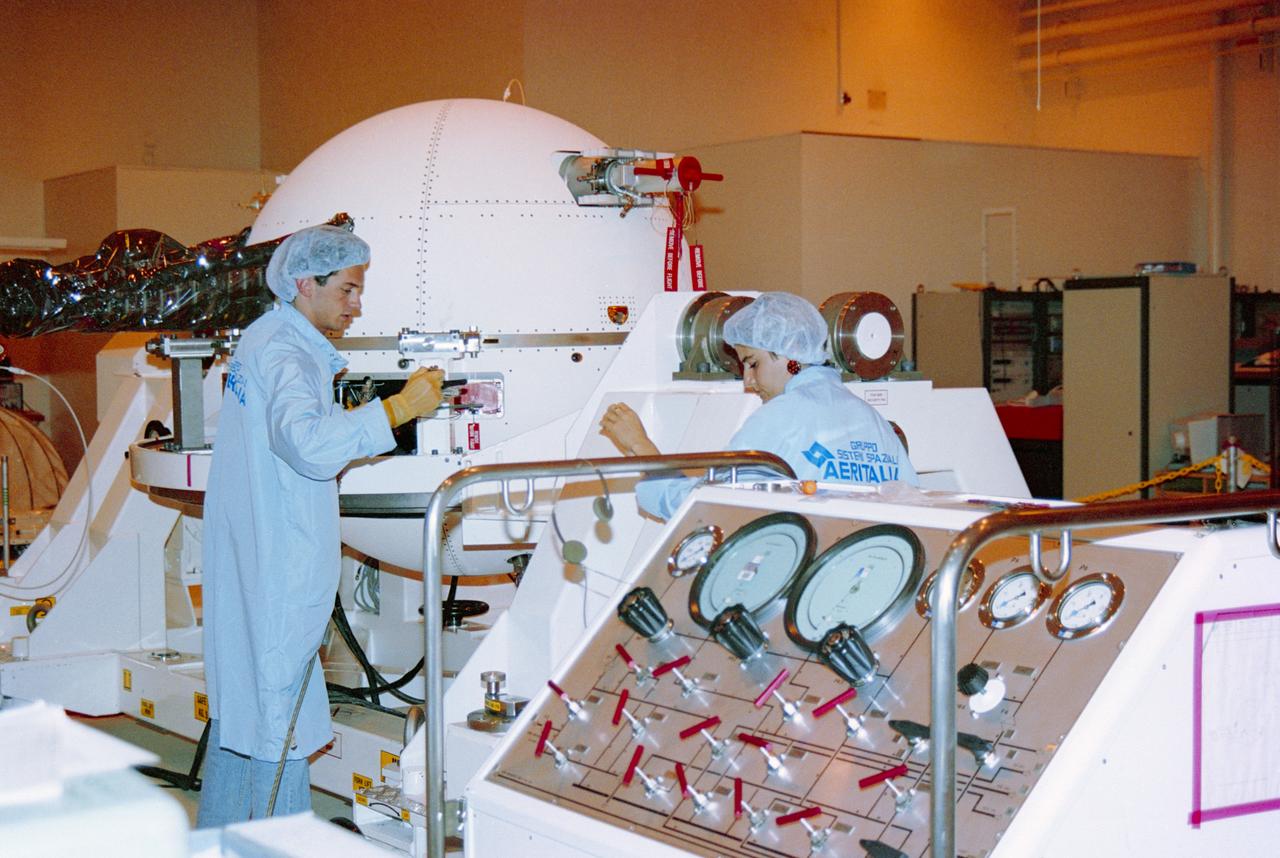
S92-41073 (31 oct 1991) --- In the Operations and Checkout Building high bay, preflight processing continues on the Tethered Satellite System (TSS) which is scheduled to fly on Space Shuttle Mission STS-46. Italian firm Aeritalia built the research satellite under contract to the Italian Space Agency (ASI). A joint endeavor between Italy and the United States, the TSS will release a satellite tethered to a reel in the orbiter cargo bay, and experiments will be conducted while the spacecraft is positioned some 12 miles above the orbiter.
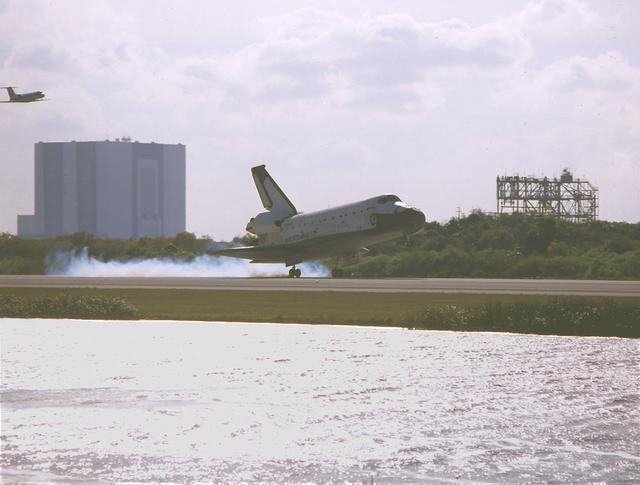
The Space Shuttle Orbiter Columbia's (STS-75) mission came to a close as the orbiter touched down on Runway 33 of Kennedy Space Center's Shuttle Landing Facility on March 9, 1996. Off to the right is the Vehicle Assembly Building and the Shuttle Training Aircraft (STA). The Mate/Demate Device (MDM) is at left. This Marshall Space Flight Center managed mission lasted 15 days and 17-hours, during which time the seven member crew conducted microgravity research with the U.S. Microgravity Payload (USMP-3), which flew for the third time. The other primary payload was the Tethered Satellite System (TSS-1R),a reflight from an earlier mission, but the satellite was lost when the tether broke just short of its fully deployed length of nearly 13 miles.
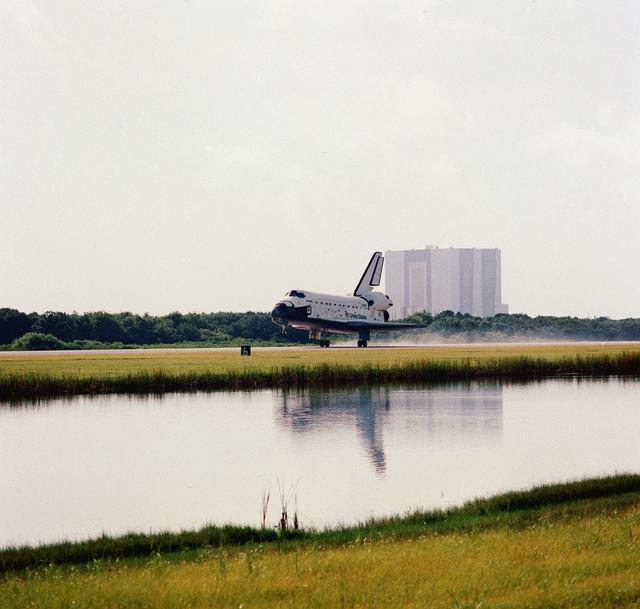
The Space Shuttle Orbiter Atlantis (STS-46) touched down at Kennedy Space Center's (KSC) Shuttle Landing Facility completing an eight day mission of five NASA astronauts and two Europeans. The vehicle assembly building (VAB) can be seen in the background. The STS-46 mission carried and deployed the European Retrievable Carrier (Eureca), and the NASA/ISA Tethered Satellite System (TSS-1), allowing for a new capability for probing the space environment.
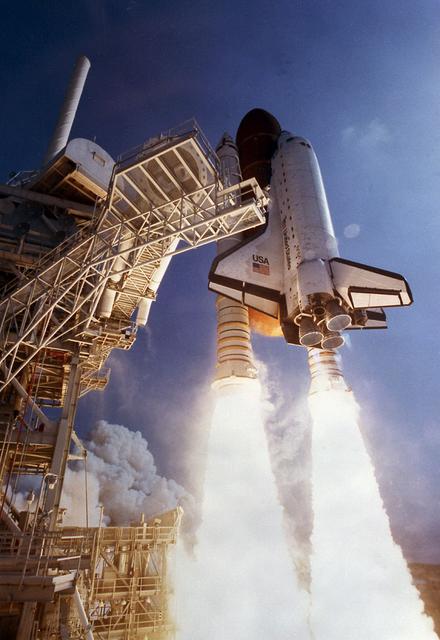
The Space Shuttle Orbiter Atlantis (STS-46) breaks free of all earthly constraints and hurdles past the Fixed Service Structure (FSS) and beanie cap which only moments before had been in place above the external tank. The Shuttle Atlantis carried and deployed the European Retrievable Carrier (Eureca). The NASA/ISA Tethered Satellite System (TSS-1) was also deployed for the first time, allowing for a new capability for probing the space environment.
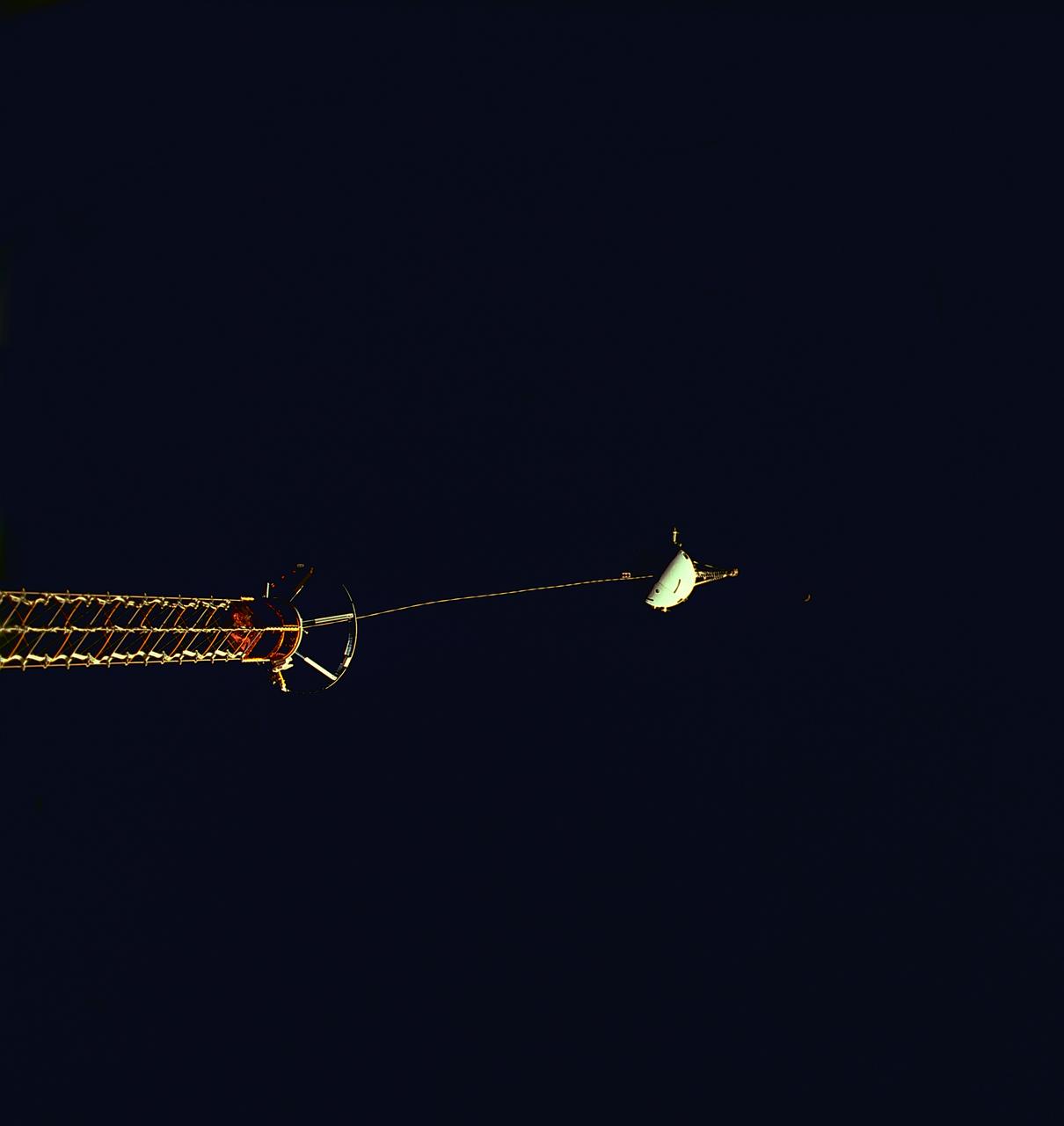
STS075-711-024 (25 Feb. 1996) --- The Tethered Satellite System (TSS) is seen as it is reeled out during early stages of deployment operations. The crew deployed the TSS, which later broke free. The seven member crew was launched aboard the space shuttle Columbia on Feb. 22, 1996, and landed on March 9, 1996. Crewmembers were Andrew M. Allen, mission commander; Scott J. Horowitz, pilot; Franklin R. Chang-Diaz, payload commander; and Maurizio Cheli European Space Agency (ESA); Jeffrey A. Hoffman and Claude Nicollier, ESA, all mission specialists; along with payload specialist Umberto Guidoni of the Italian Space Agency (ASI).
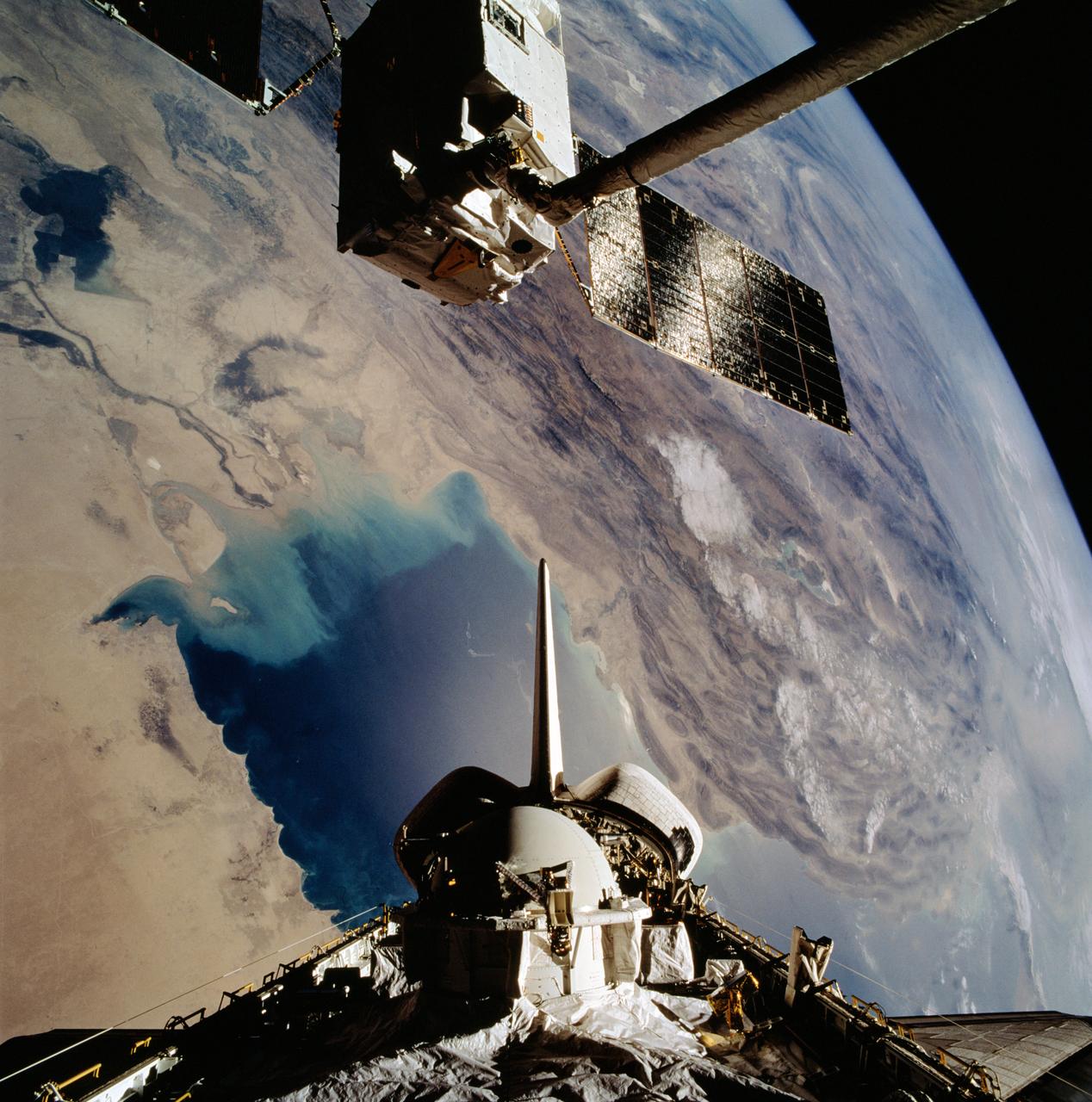
STS046-102-021 (1 Aug 1992) --- The European Space Agency's (ESA) EURECA satellite remains in the grasp of the Space Shuttle Atlantis' Remote Manipulator System (RMS) as the Space Shuttle passes over the Persian Gulf. Most of the theater of the recent war is visible in the frame. Parts of Kuwait, Iraq, Iran and Saudi Arabia can be delineated. The Tethered Satellite System (TSS) remains stowed in the aft cargo bay of Atlantis.
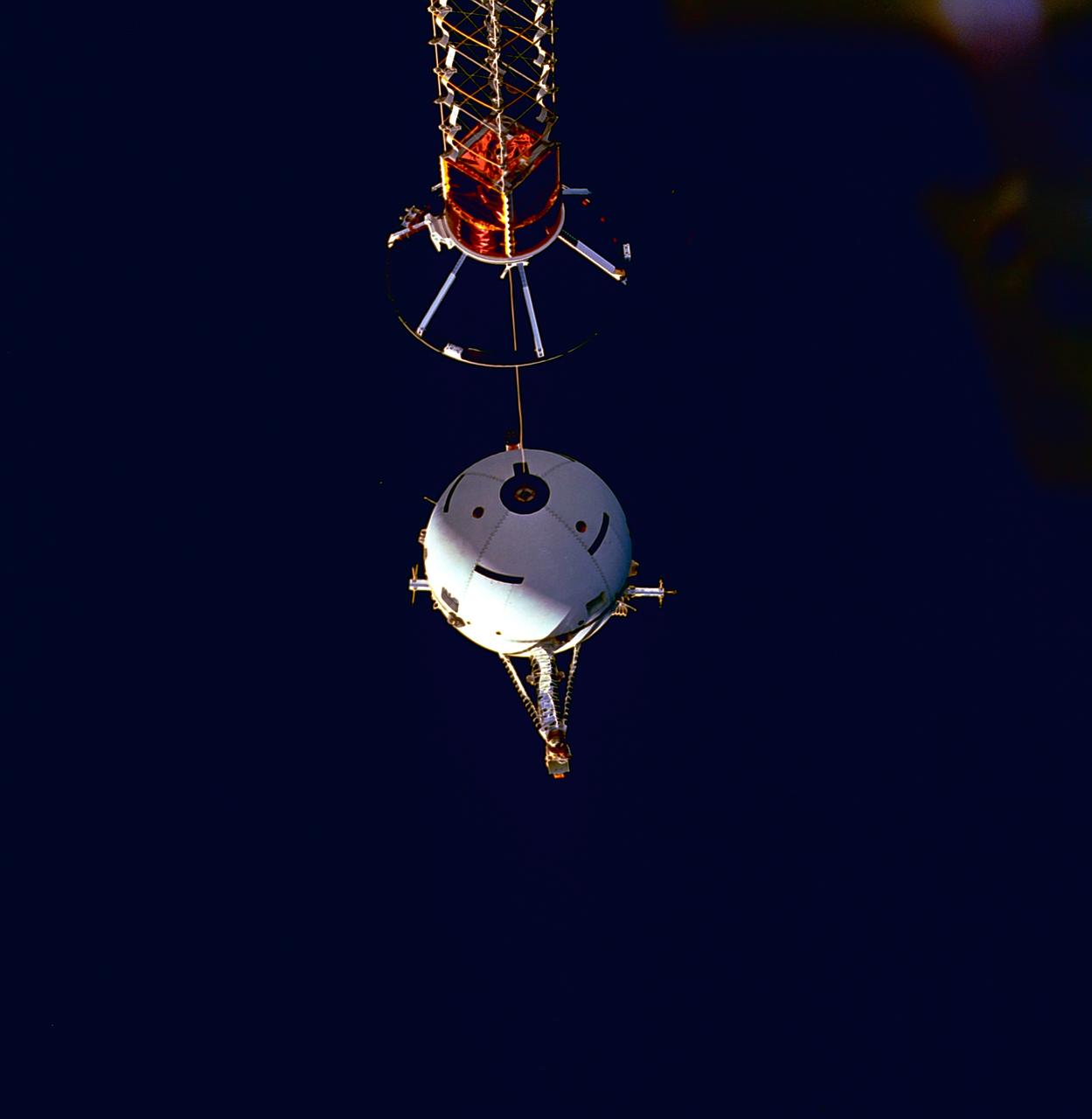
STS075-701-087 (25 Feb. 1996) --- A medium close-up view, captured with a 70mm camera, shows the Tethered Satellite System (TSS) and part of its supportive boom device prior to deployment operations. On Feb. 25, 1996, the crew deployed the TSS, which later broke free. The seven member crew was launched aboard the space shuttle Columbia on Feb. 22, 1996, and landed on March 9, 1996. Crewmembers were Andrew M. Allen, mission commander; Scott J. Horowitz, pilot; Franklin R. Chang-Diaz, payload commander; and Maurizio Cheli, European Space Agency (ESA); Jeffrey A. Hoffman and Claude Nicollier, ESA, all mission specialists; along with payload specialist Umberto Guidoni of the Italian Space Agency (ASI).
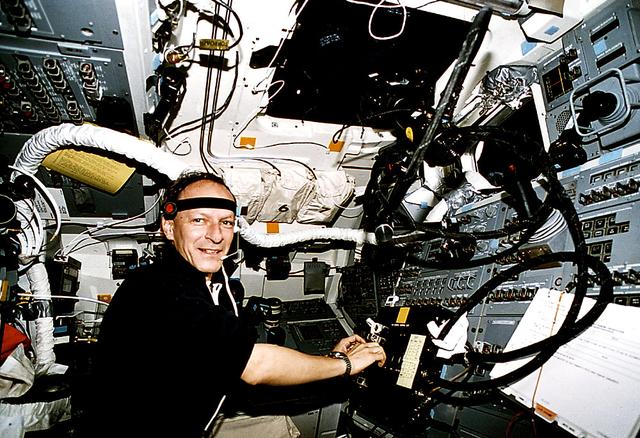
This Space Shuttle Orbiter Atlantis (STS-46) onboard photo shows Swiss scientist Claude Nicollier of the European Space Agency (ESA) supporting the Tether Opitical Phenomena (TOP) activities on the flight deck. The Tethered Satellite System (TSS) was a cooperative development effort by the Italian Space Agency (ASI) and NASA made capable of deploying and retrieving a satellite which is attached by a wire tether from distances up to 100 km from the Orbiter. These free-flying satellites are used as observation platforms outside of the Orbiter.
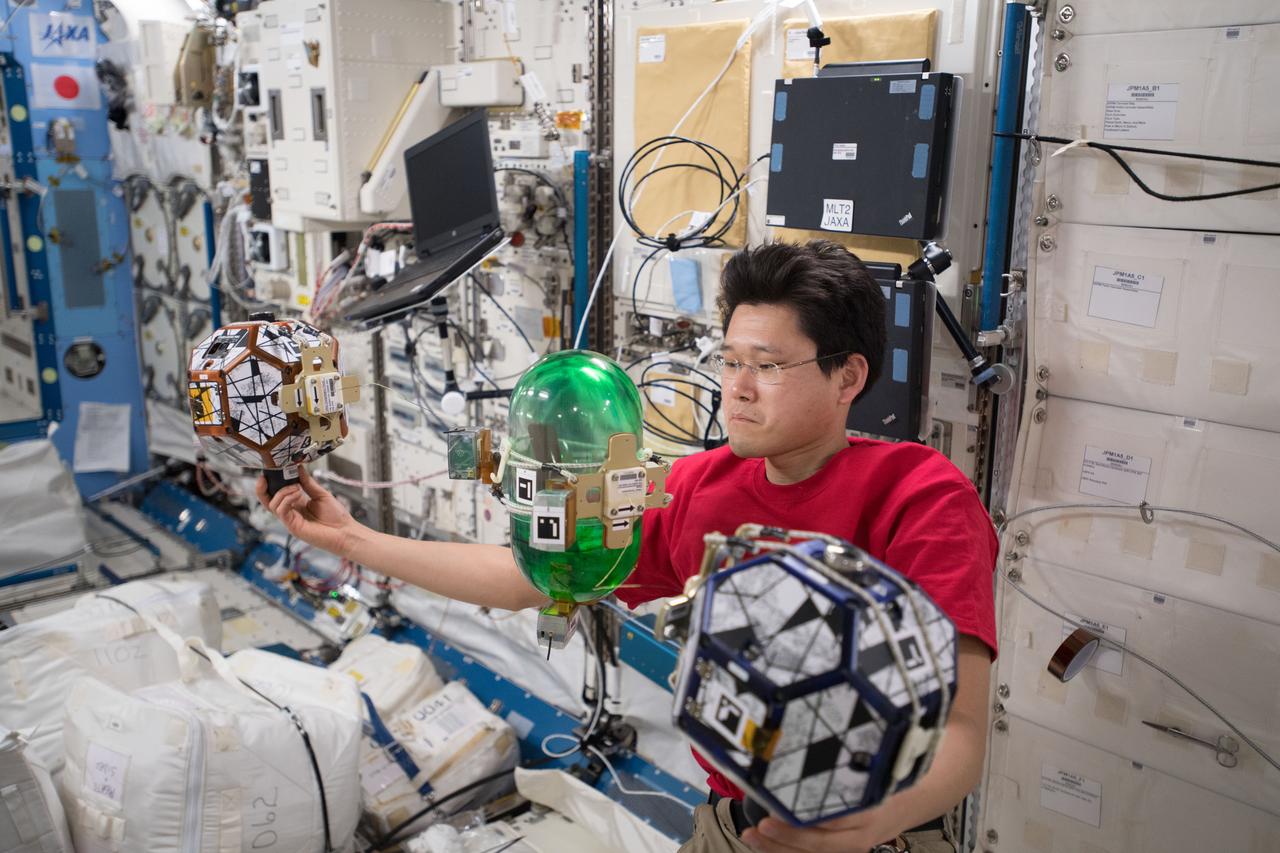
iss054e022175 (1/17/2018) --- Japan Aerospace Exploration Agency (JAXA) astronaut Norishige Kanai is photographed during a Synchronized Position Hold, Engage, Reorient, Experimental Satellites (SPHERES) Tether Slosh experiment test session run. Photo was taken in the Kibo Japanese Experiment Pressurized Module (JPM) aboard the International Space Station (ISS). SPHERES Tether Slosh combines fluid dynamics equipment with robotic capabilities aboard the ISS to investigate automated strategies for steering passive cargo that contain fluids. In space, the fluid fuels used by spacecraft can slosh around in unpredictable ways making space maneuvers difficult. SPHERES Tether Slosh uses two Synchronized Position Hold, Engage, Reorient, Experimental Satellites (SPHERES) robots tethered to a fluid-filled container covered in sensors to test strategies for safely steering spacecraft such as dead satellites that might still have fuel in the tank.
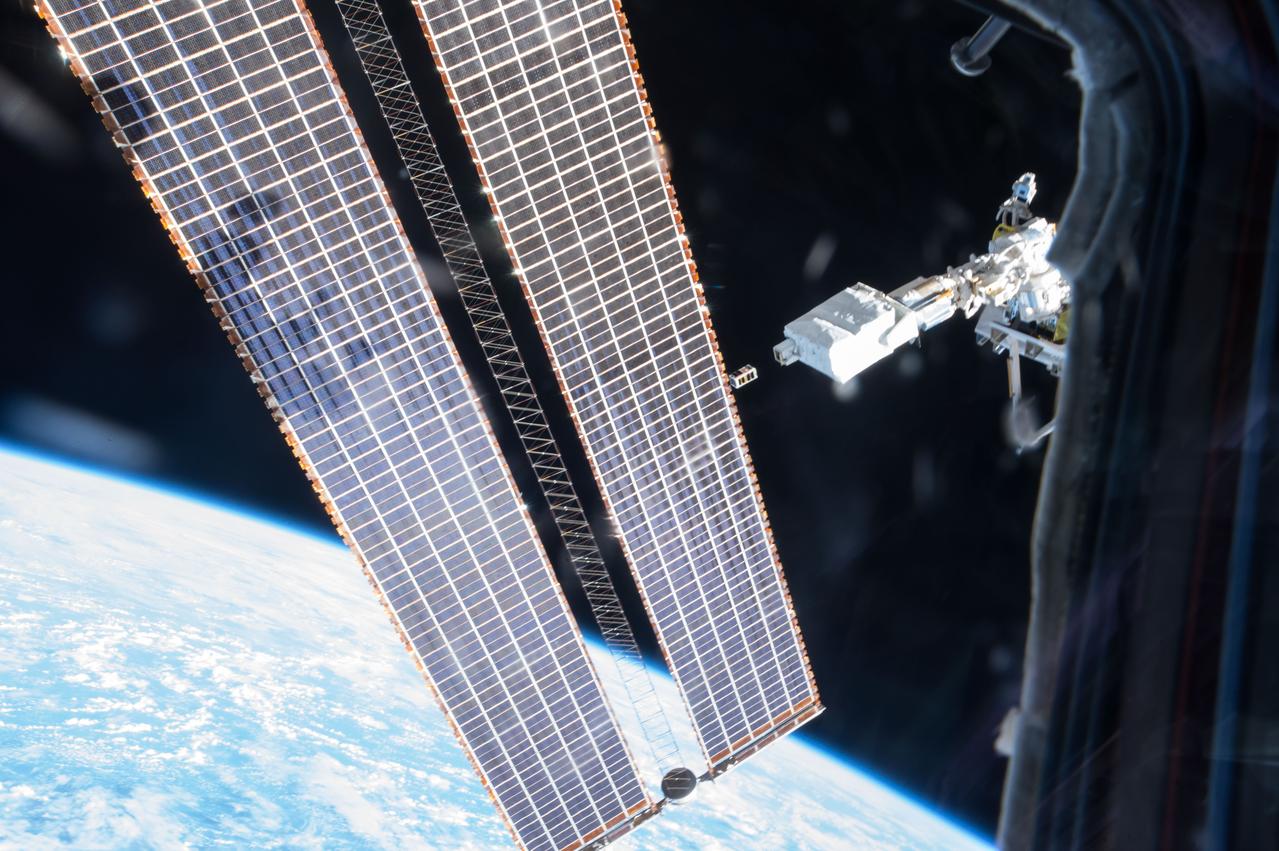
iss050e017076 (12/19/2016) --- A view after Japanese Experiment Module Remote Manipulator System (JEMRMS) Small Satellite Deployment called Space Tethered Autonomous Robotic satellite (STARS-C).
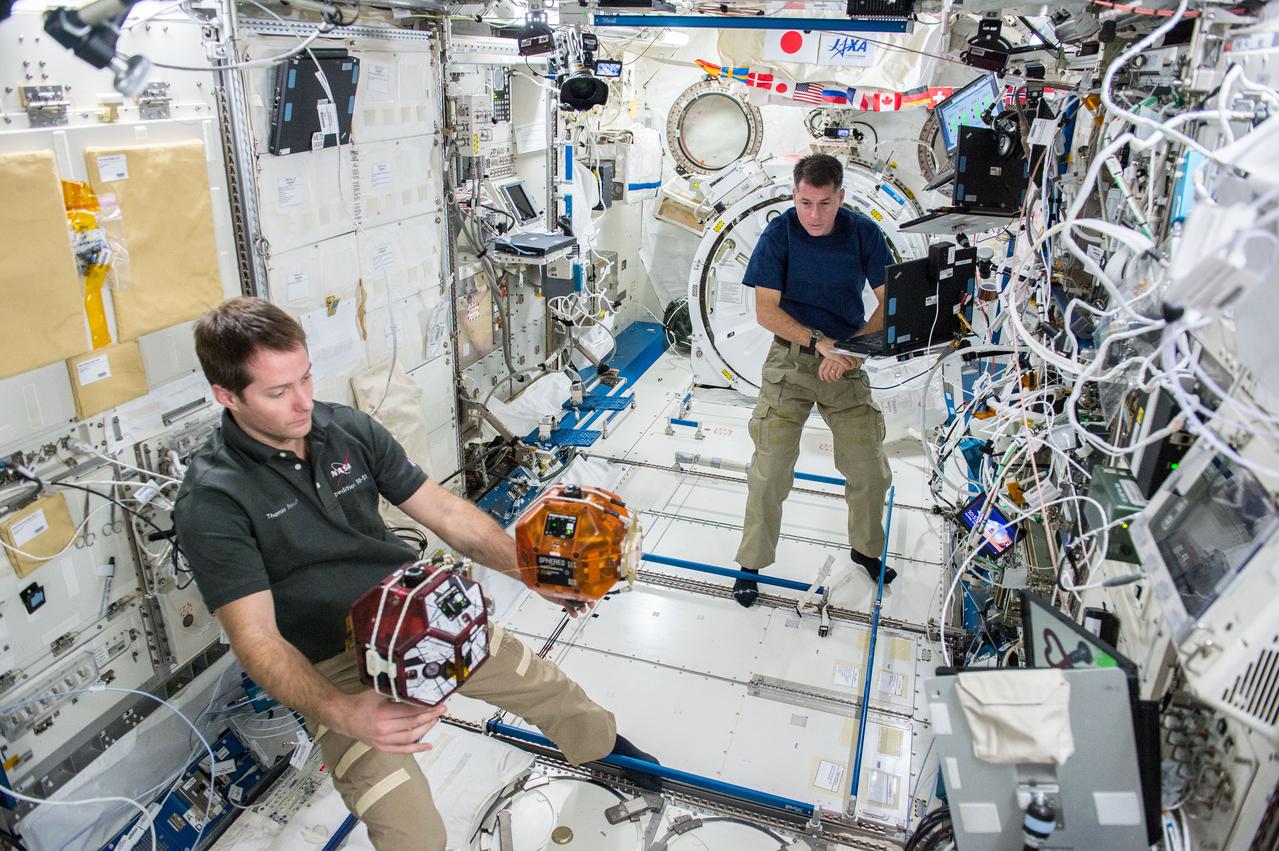
iss050e013146 (12/1/2016) --- NASA astronaut Shane Kimbrough and European Space Agency (ESA) astronaut Thomas Pesquet during the Synchronized Position Hold, Engage, Reorient, Experimental Satellites Tether Demo, in the Japanese Experiment Module (JEM) Pressurized Module (JPM). The SPHERES Tether Demo studies the dynamics of a tethered capture object and a “space tug” chase vehicle, improving computer programs needed for removing space debris as well as capturing scientific samples from other planets.
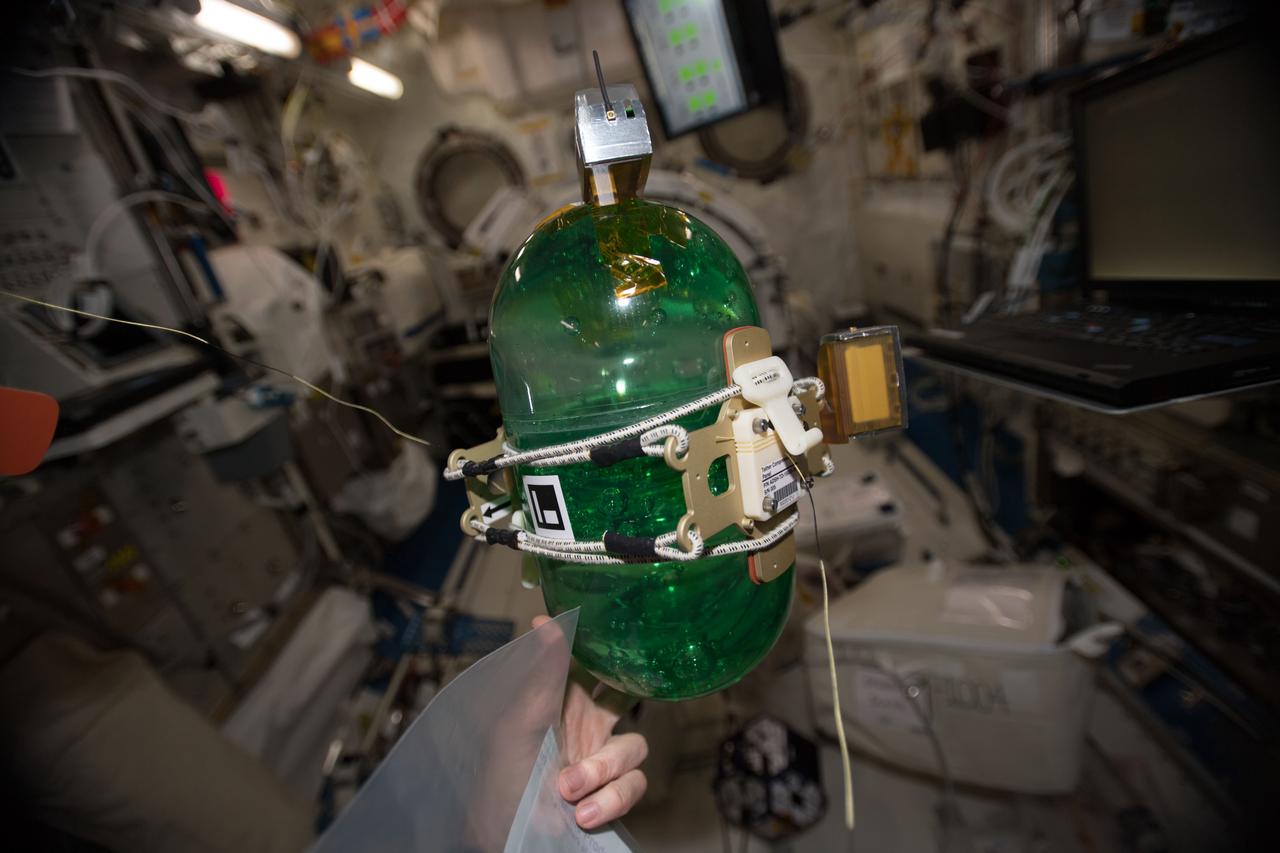
iss055e010694 (4/4/2018) --- A view taken aboard the International Space Station (ISS) during the set up of the SPHERES Tether Slosh experiment hardware. The image is of the green SPHERES robots tethered to a fluid-filled container covered in sensors to test strategies for safely steering spacecraft such as dead satellites that might still have fuel in the tank. SPHERES Tether Slosh combines fluid dynamics equipment with robotic capabilities aboard the International Space Station to investigate automated strategies for steering passive cargo that contain fluids.
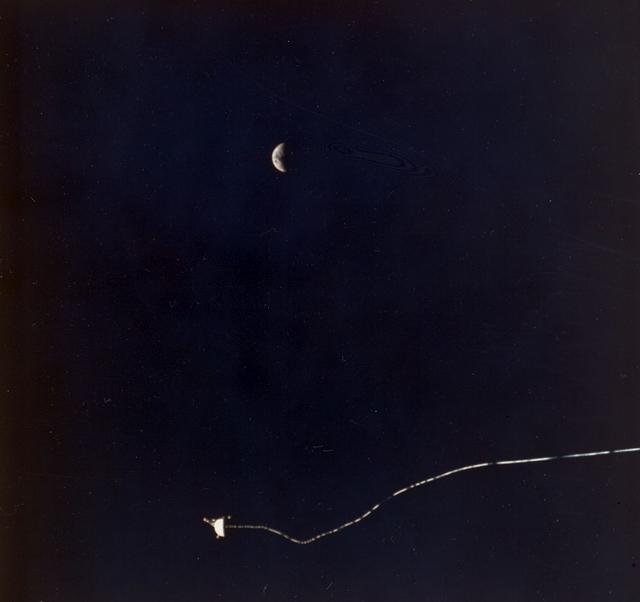
Sharing this scene with a half-moon is the Tethered Satellite System (TSS), in a photo captured onboard the STS-46. Circling Earth at an altitude of 296 kilometers (184 miles), the TSS-1 will be well within the tenuous, electrically charged layer of the atmosphere known as the ionosphere. There, a satellite attached to the orbiter by a thin conducting cord, or tether, will be reeled from the Shuttle payload bay. On this mission the satellite was plarned to be deployed 20 kilometers (12.5 miles) above the Shuttle. The conducting tether will generate high voltage and electrical currents as it moves through the atmosphere allowing scientists to examine the electrodynamics of a conducting tether system. These studies will not only increase our understanding of physical processes in the near-Earth space environment, but will also help provide an explanation for events witnessed elsewhere in the solar system. The crew of the STS-46 mission were unable to reel the satellite as planned. After several unsuccessful attempts, they were only able to extend the satellite 9.8 kilometers (6.1 miles). The TSS was a cooperative development effort by the Italian Space Agency (ASI), and NASA.
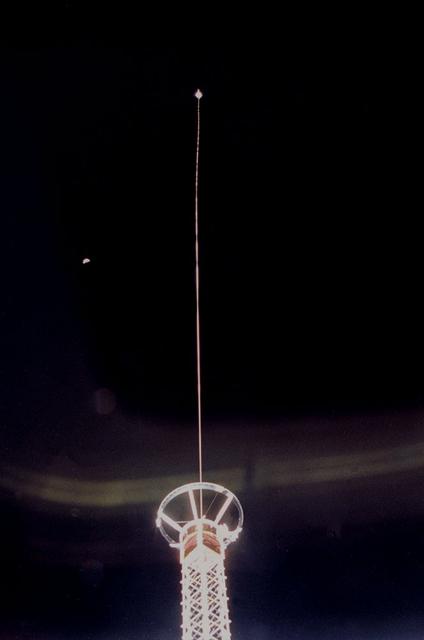
This STS-46 onboard photo is of the Tethered Satellite System-1 (TSS-1) being deployed from its boom as it is perched above the cargo bay of the Earth-orbiting Space Shuttle Atlantis. Circling the Earth at an altitude of 296 kilometers (184 miles), the TSS-1 will be well within the tenuous, electrically charged layer of the atmosphere known as the ionosphere. There, a satellite attached to the orbiter by a thin conducting cord, or tether, will be reeled from the Shuttle payload bay. On this mission the satellite was plarned to be deployed 20 kilometers (12.5 miles) above the Shuttle. The conducting tether will generate high voltage and electrical currents as it moves through the atmosphere allowing scientists to examine the electrodynamics of a conducting tether system. These studies will not only increase our understanding of physical processes in the near-Earth space environment, but will also help provide an explanation for events witnessed elsewhere in the solar system. The crew of the STS-46 mission were unable to reel the satellite as planned. After several unsuccessful attempts, they were only able to extend the satellite 9.8 kilometers (6.1 miles). The TSS was a cooperative development effort by the Italian Space Agency (ASI), and NASA.
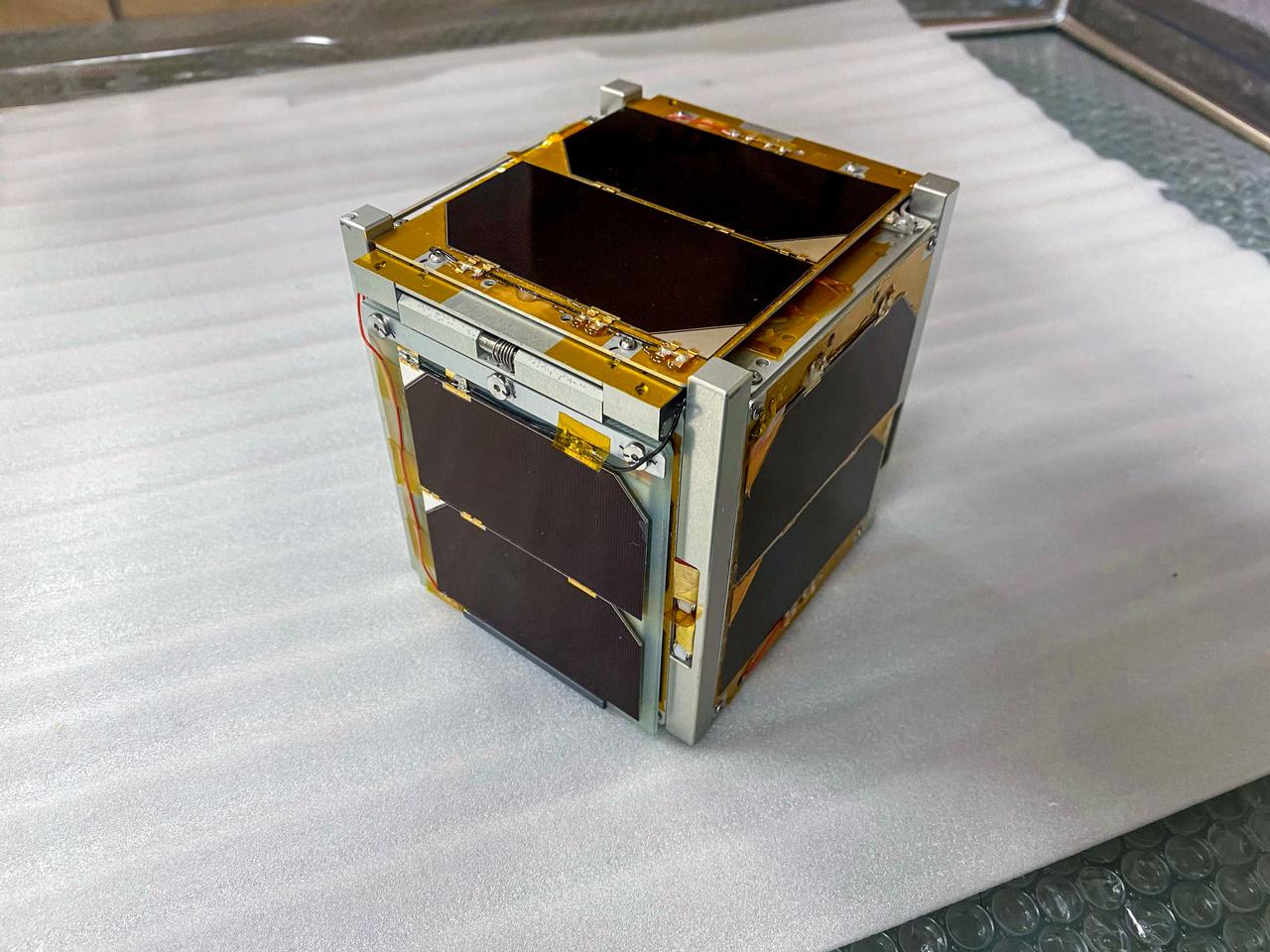
jsc2025e064343 (9/19/2023) --- Shown is the Space Tethered Autonomous Robotic Satellite Mini-elevator #2 - STARS-Me2 flight unit. STARS-Me2 is a 1U CubeSat developed by the Shizuoka University as part of the STARS project. The purpose of the STARS-Me2 mission is to demonstrate a technology to control orbital descending. This is achieved by step-by-step deployment and retrieval of a steel convex tether of approximately 10 meters...Image Credit: Shizuoka University
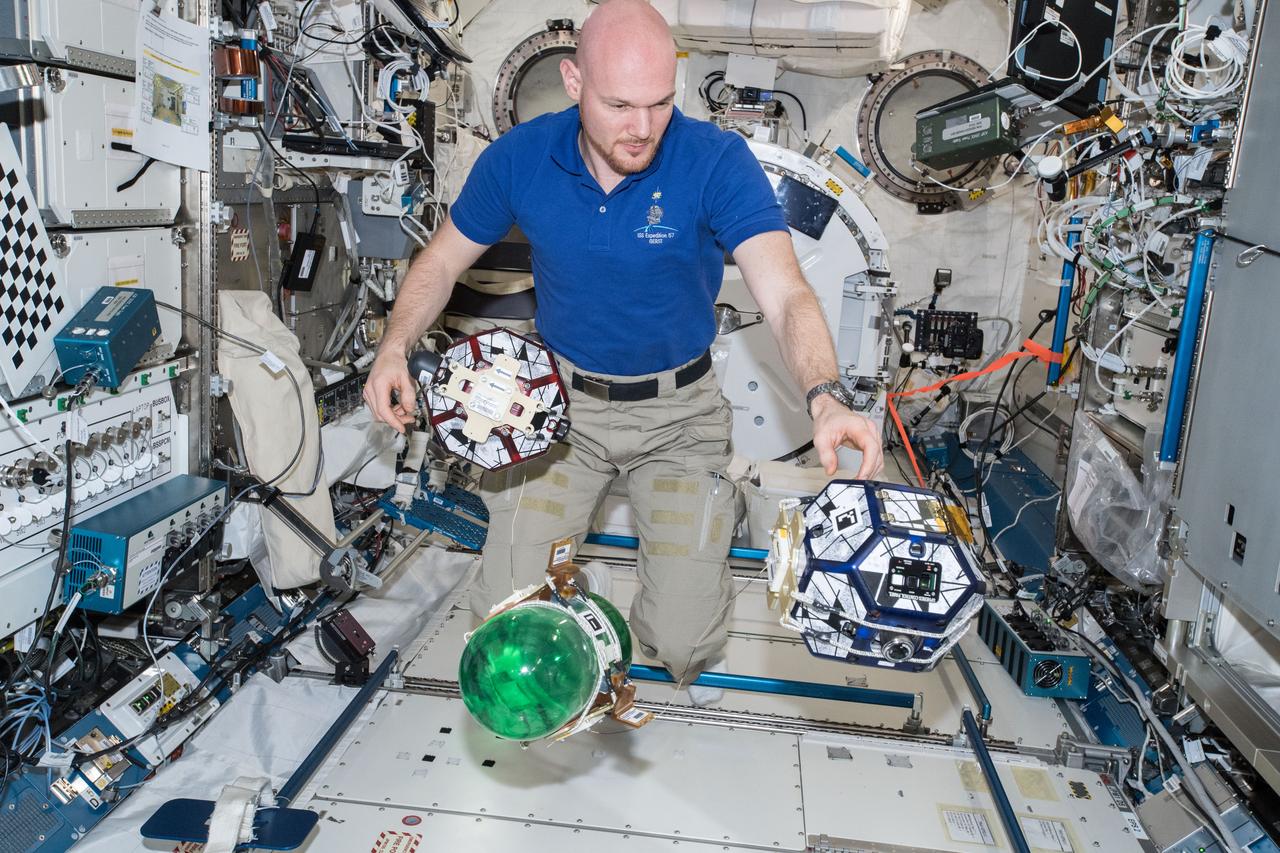
iss057e055052 (10/18/2018) --- European Space Agency astronaut Alexander Gerst is photographed during a Synchronized Position Hold, Engage, Reorient, Experimental Satellites (SPHERES) Tether Slosh experiment test session run. Photo was taken in the Kibo Japanese Experiment Pressurized Module (JPM) aboard the International Space Station (ISS). SPHERES Tether Slosh combines fluid dynamics equipment with robotic capabilities aboard the ISS to investigate automated strategies for steering passive cargo that contain fluids.

Small Expendable Deployer System (SEDS) is a tethered date collecting satellite and is intended to demonstrate a versatile and economical way of delivering smaller payloads to higher orbits or downward toward Earth's atmosphere. 19th Navstar Global Positioning System Satellite mission joined with previously launched satellites used for navigational purposes and geodite studies. These satellites are used commercially as well as by the military.
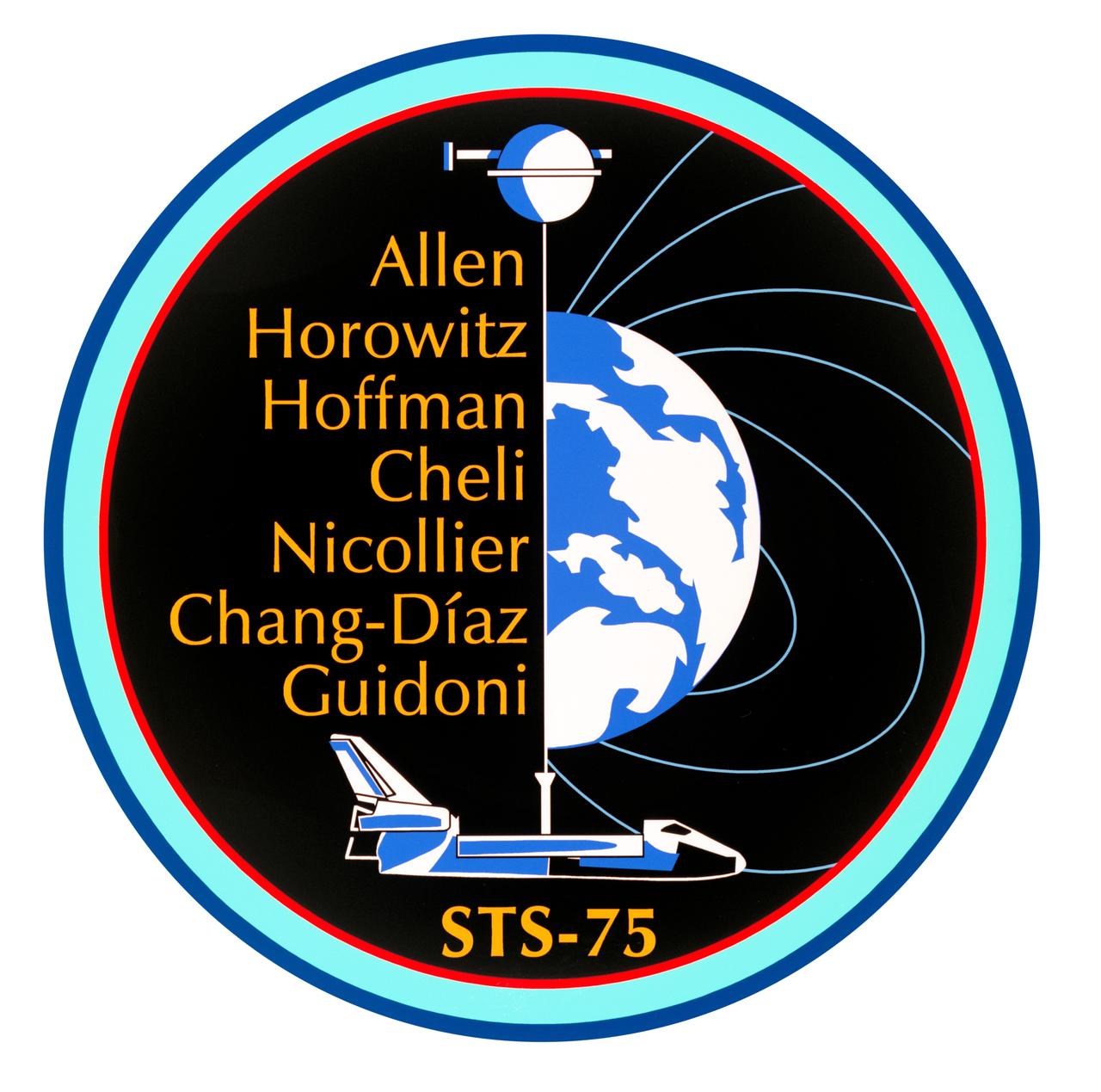
STS075-S-001 (September 1995) --- The STS-75 crew patch depicts the space shuttle Columbia and the Tethered Satellite connected by a 21-kilometer electronically conducting tether. The orbiter/satellite system is passing through Earth?s magnetic field which, like an electronic generator, will produce thousands of volts of electricity. Columbia is carrying the United States Microgravity pallet to conduct microgravity research in material science and thermodynamics. The tether is crossing Earth?s terminator signifying the dawn of a new era for space tether applications and in mankind?s knowledge of Earth?s ionosphere, material science, and thermodynamics. The patch was designed for the STS-75 crew members by Mike Sanni. The NASA insignia design for space shuttle flights is reserved for use by the astronauts and for other official use as the NASA Administrator may authorize. Public availability has been approved only in the forms of illustrations by the various news media. When and if there is any change in this policy, which is not anticipated, the change will be publicly announced. Photo credit: NASA
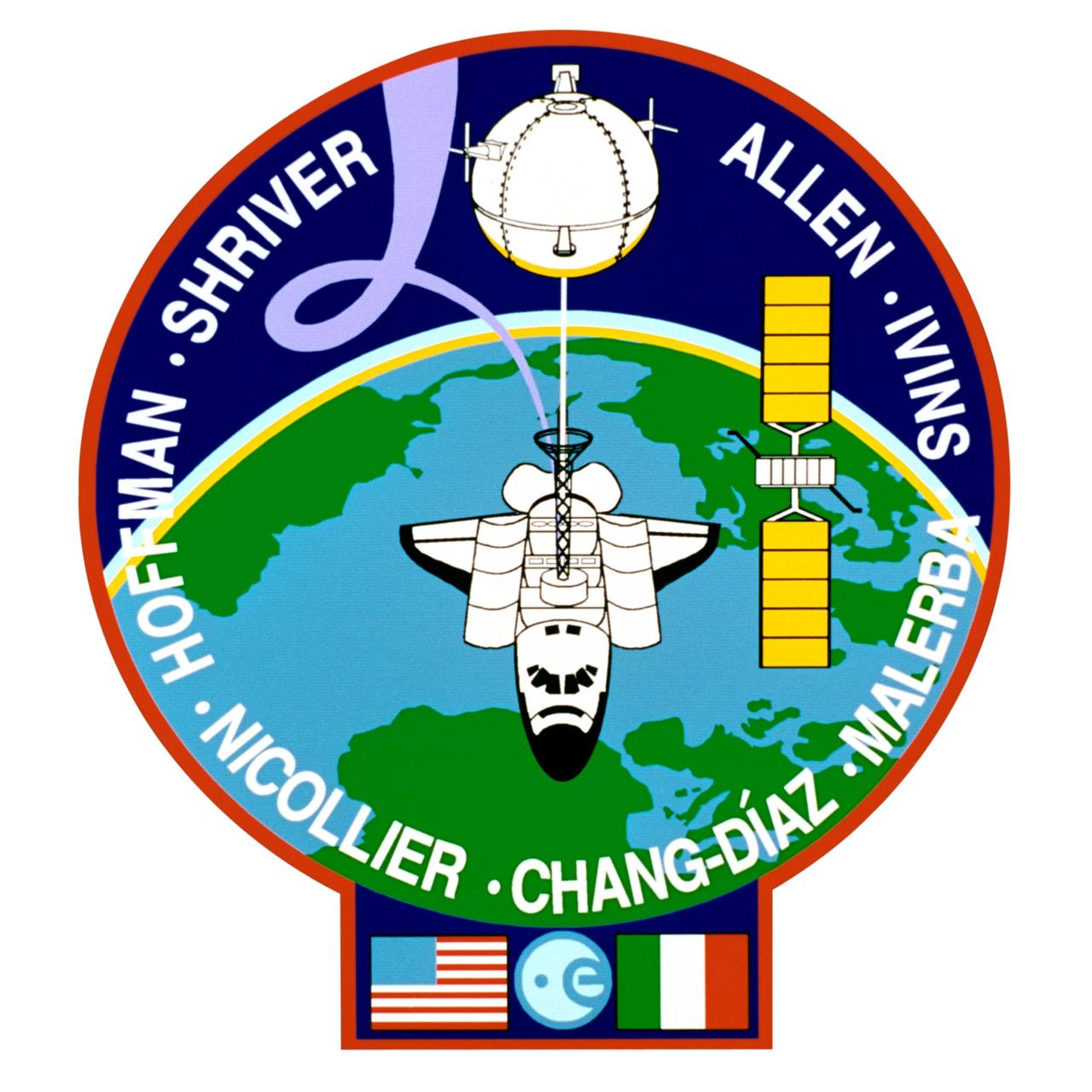
STS046-S-001 (May 1992) --- Designed by the crew members assigned to the flight, the crew patch depicts the space shuttle Atlantis in orbit around Earth, accompanied by major payloads: the European Retrievable Carrier (EURECA) and the Tethered Satellite System (TSS-1). In the depiction, EURECA has been activated and released, its antennae and solar arrays deployed, and it is about to start its ten-month scientific mission. The tethered satellite is linked to the orbiter by a 20-kilometer tether. The purple beam emanating from an electron generator in the payload bay spirals around Earth's magnetic field. The TSS mission will study the dynamics and electrodynamics of tethered systems in space and the physics of Earth's ionosphere. Visible on Earth's surface are the United States of America and the thirteen-member countries of the European Space Agency (ESA), in particular, Italy - partner with the United States in the TSS program. The American and Italian flags, as well as the ESA logo, further serve to illustrate the international character of STS-46. The NASA insignia design for space shuttle flights is reserved for use by the astronauts and for other official use as the NASA Administrator may authorize. Public availability has been approved only in the forms of illustrations by the various news media. When and if there is any change in this policy, which is not anticipated, the change will be publicly announced. Photo credit: NASA
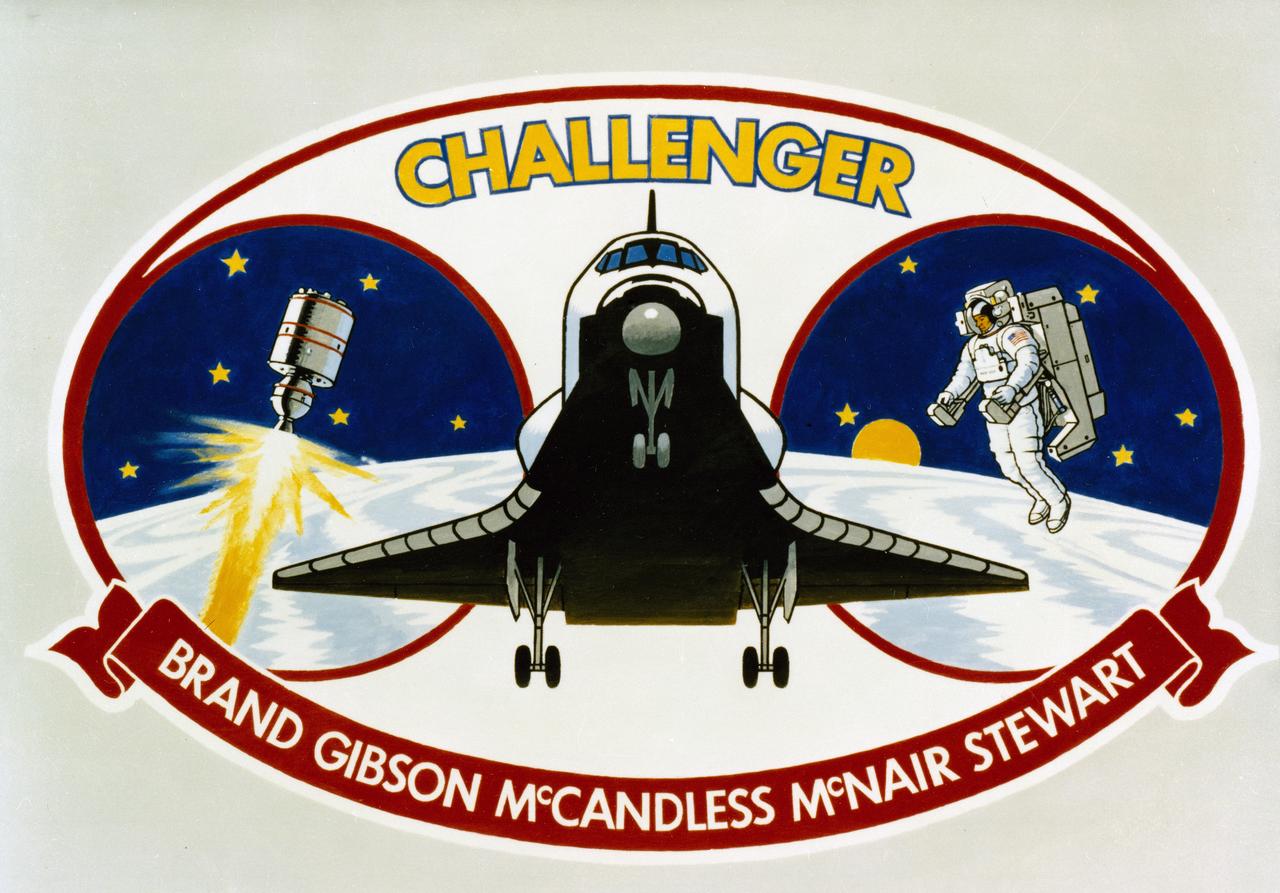
The Space Shuttle Challenger, making its fourth space flight, highlights the 41B insignia. The reusable vehicle is flanked in the oval by an illustration of a Payload Assist Module-D solid rocket motor (PAM-D) for assisted satellite deployment; an astronaut making the first non-tethered extravehicular activity (EVA); and eleven stars.
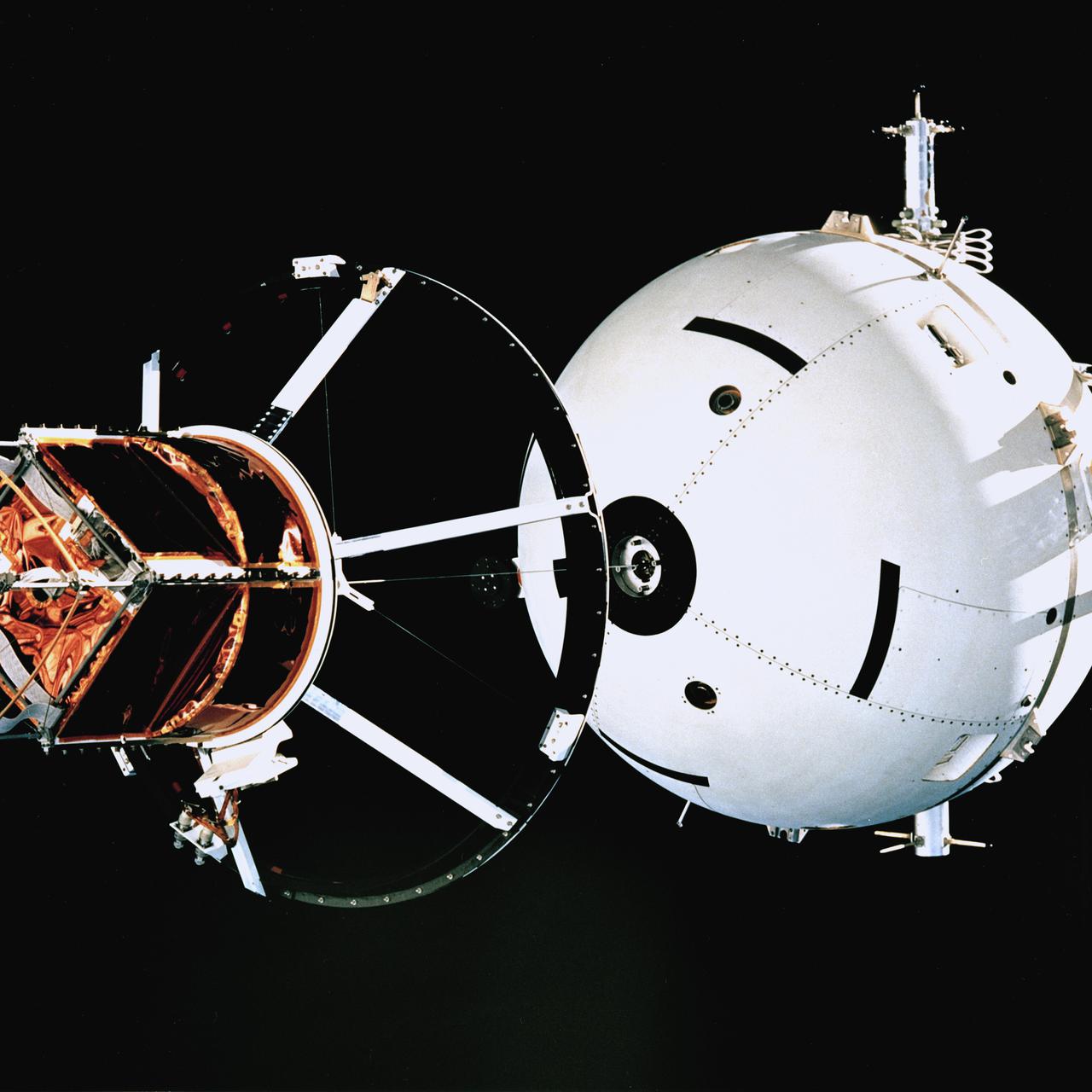
ONBOARD ATLANTIS -- A 70mm handheld camera was used by the STS-46 crewmembers to capture this medium closeup view of early operations with the Tethered Satellite System. The sphere can be seen moving away from the ring structure on the boom device in Atlantis’ cargo bay. Photo Credit: NASA
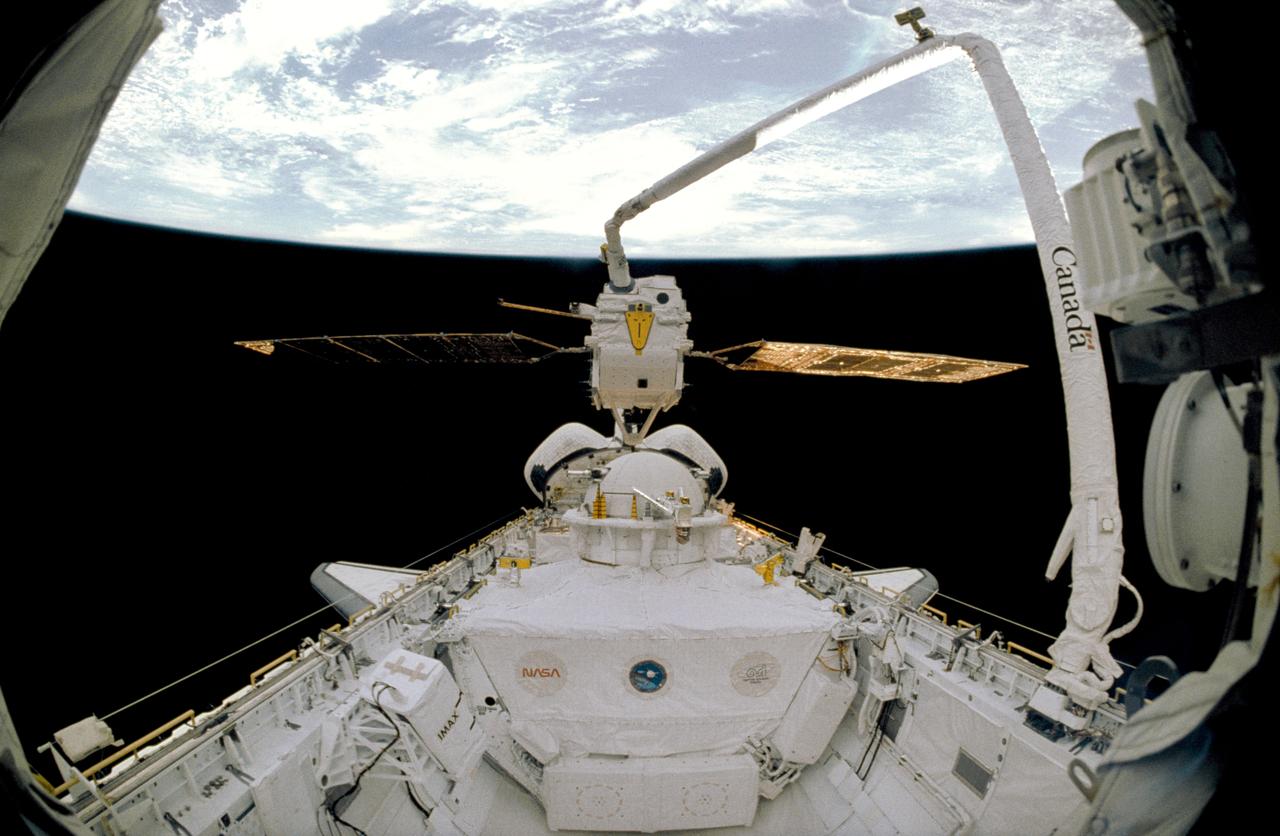
STS046-08-010 (1 Aug 1992) --- The EURECA satellite is hoisted above the Space Shuttle Atlantis' cargo bay by the Remote Manipulator System (RMS) during early mission activity aboard the Earth-orbiting Shuttle. A 16mm lens gives this 35mm frame a "fish-eye" effect. The Tethered Satellite System (TSS), center frame, is stowed in the cargo bay, where it awaits extensive operations by the seven-member crew.
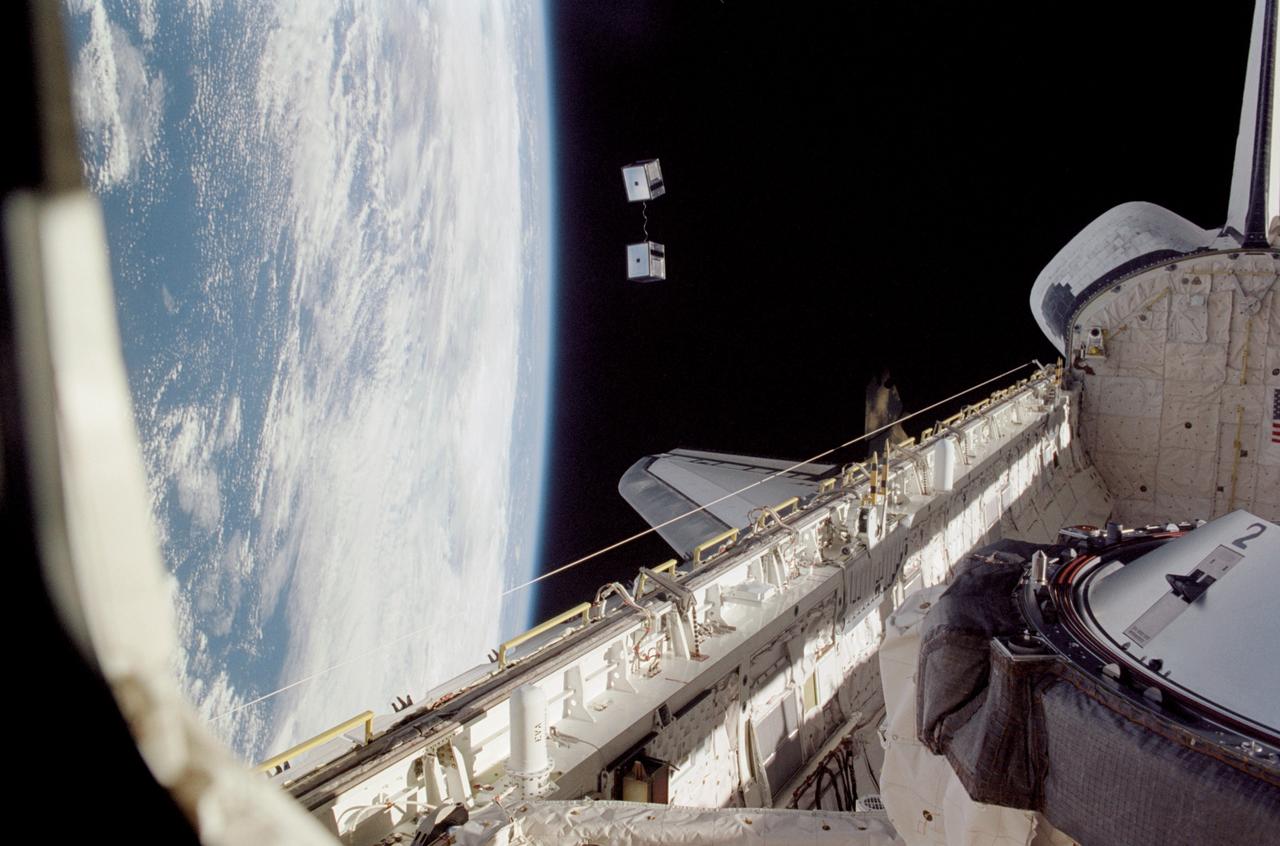
STS113-370-012 (2 December 2002) --- The horizon of a blue and white Earth and the blackness of space form the backdrop for this view, as two miniature satellites are released from the Space Shuttle Endeavour as part of an experiment referred to as MEPSI. Funded by the Defense Advance Research Projects Agency (DARPA), the two small satellites, which are tethered together, were released from Endeavour’s payload bay (visible in foreground) to fly free for three days as a technology demonstration of the launcher and use of micro- and nano-technologies in space systems.
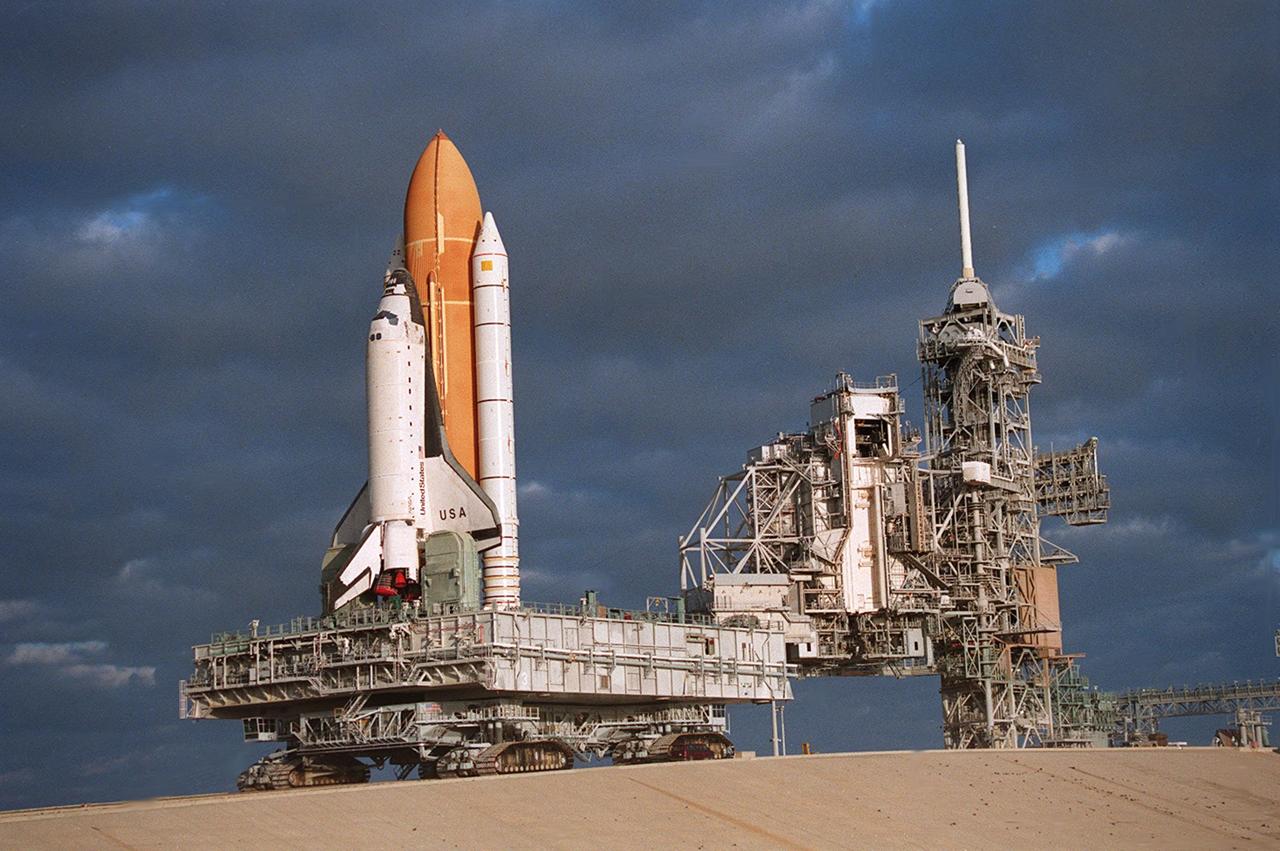
KENNEDY SPACE CENTER, FLA. -- The Space Shuttle Columbia arrives at Launch Pad 39B following an approximate seven-hour journey from the Vehicle Assembly Building. Columbia is being prepared for a targeted Feb. 22 liftoff on Mission STS-75, which will feature a re-flight of the Tethered Satellite System (TSS-1R) and the third flight of the U.S. Microgravity Payload (USMP-3)
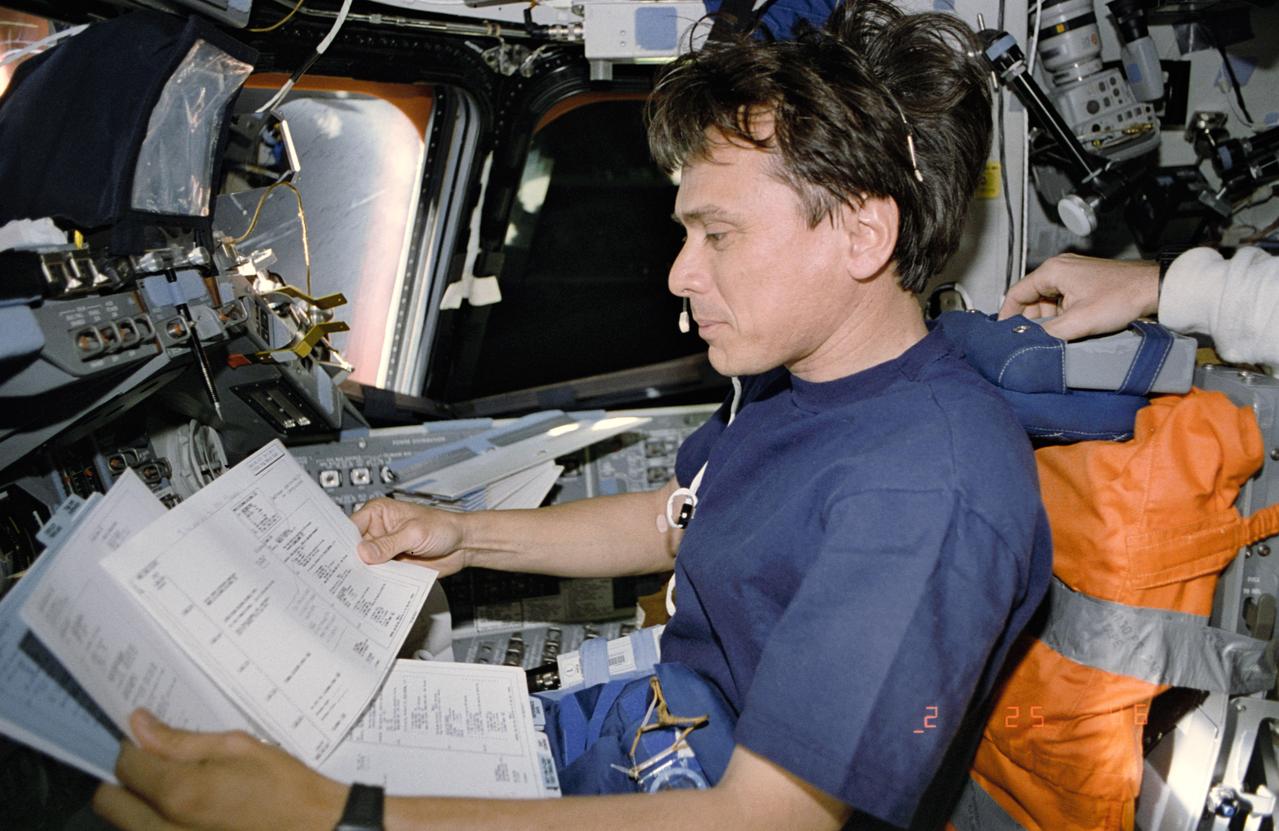
STS075-328-018 (25 Feb. 1996) --- Astronaut Franklin R. Chang-Diaz, STS-75 payload commander, is busy at the pilot's station during operations to deploy the Tethered Satellite System (TSS). His five crew mates (out of frame) were also on the flight deck, of the Earth-orbiting space shuttle Columbia, during the busy deployment activities.
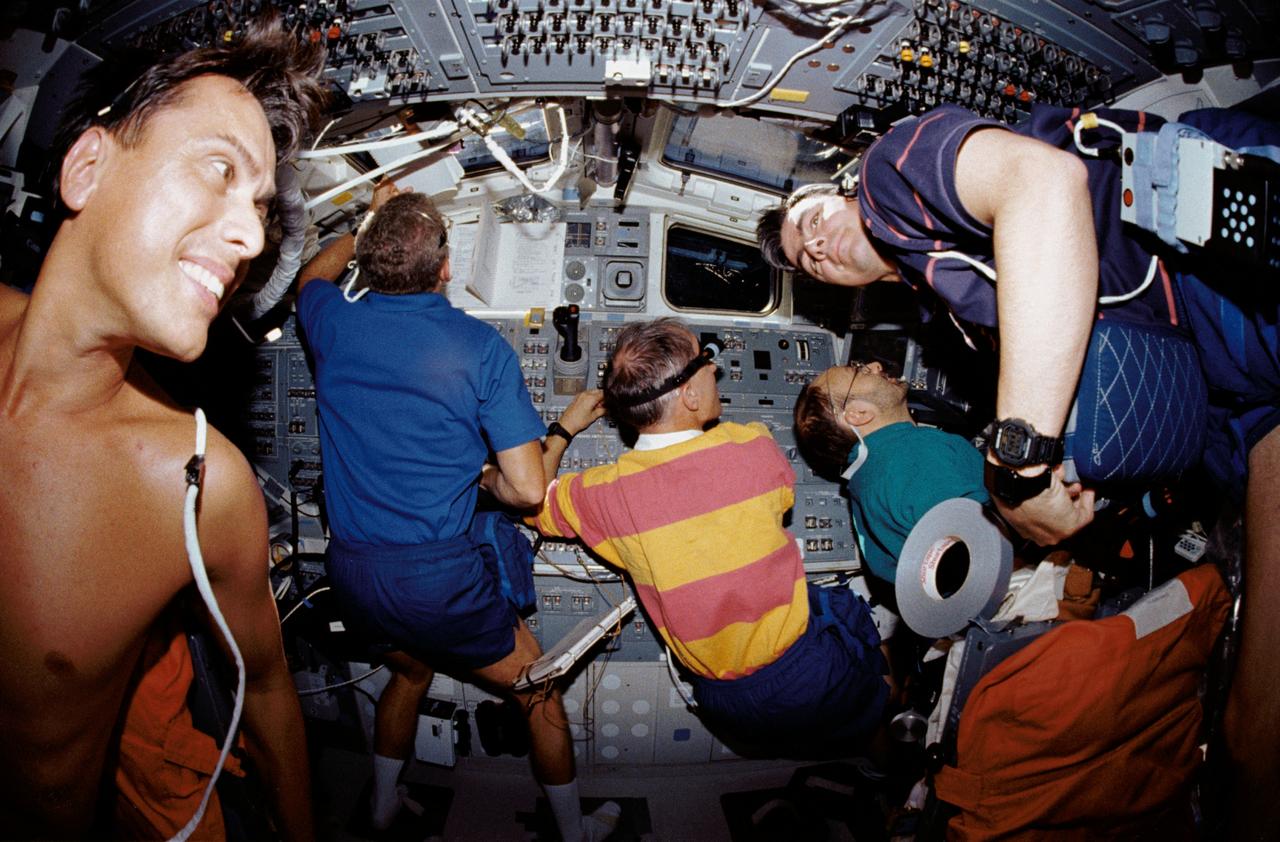
STS046-14-013 (4 Aug. 1992) --- Five of the seven crew members squeezed into this busy scene on the Space Shuttle Atlantis' flight deck during operations with the Tethered Satellite System (TSS). Pictured are, left to right, Franklin R. Chang-Diaz, Loren J. Shriver, Claude Nicollier, Franco Malerba and Andrew M. Allen. Not pictured are astronauts Jeffrey A. Hoffman and Marsha S. Ivins. Mission specialist Ivins used a 35mm camera with a 16mm lens to take this picture.
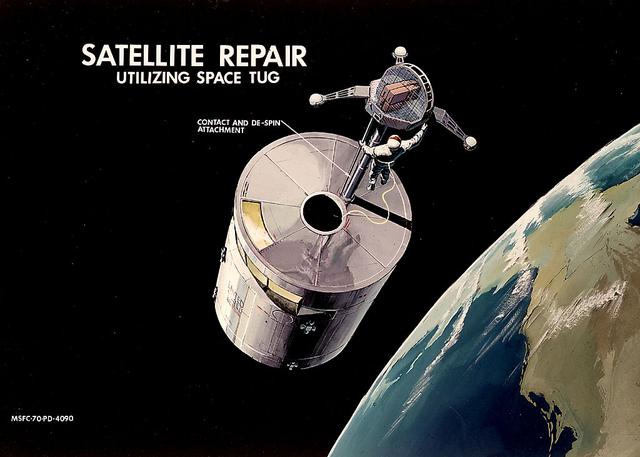
Managed by Marshall Space Flight Center, the Space Tug was a reusable multipurpose space vehicle designed to transport payloads to different orbital inclinations. Utilizing mission-specific combinations of its three primary modules (crew, propulsion, and cargo) and a variety of supplementary kits, the Space Tug was capable of numerous space applications. This 1970 artist's concept depicts the Space Tug during a satellite repair mission with the contact and de-spin attachment kit in place. An astronaut can be seen tethered to the Tug.
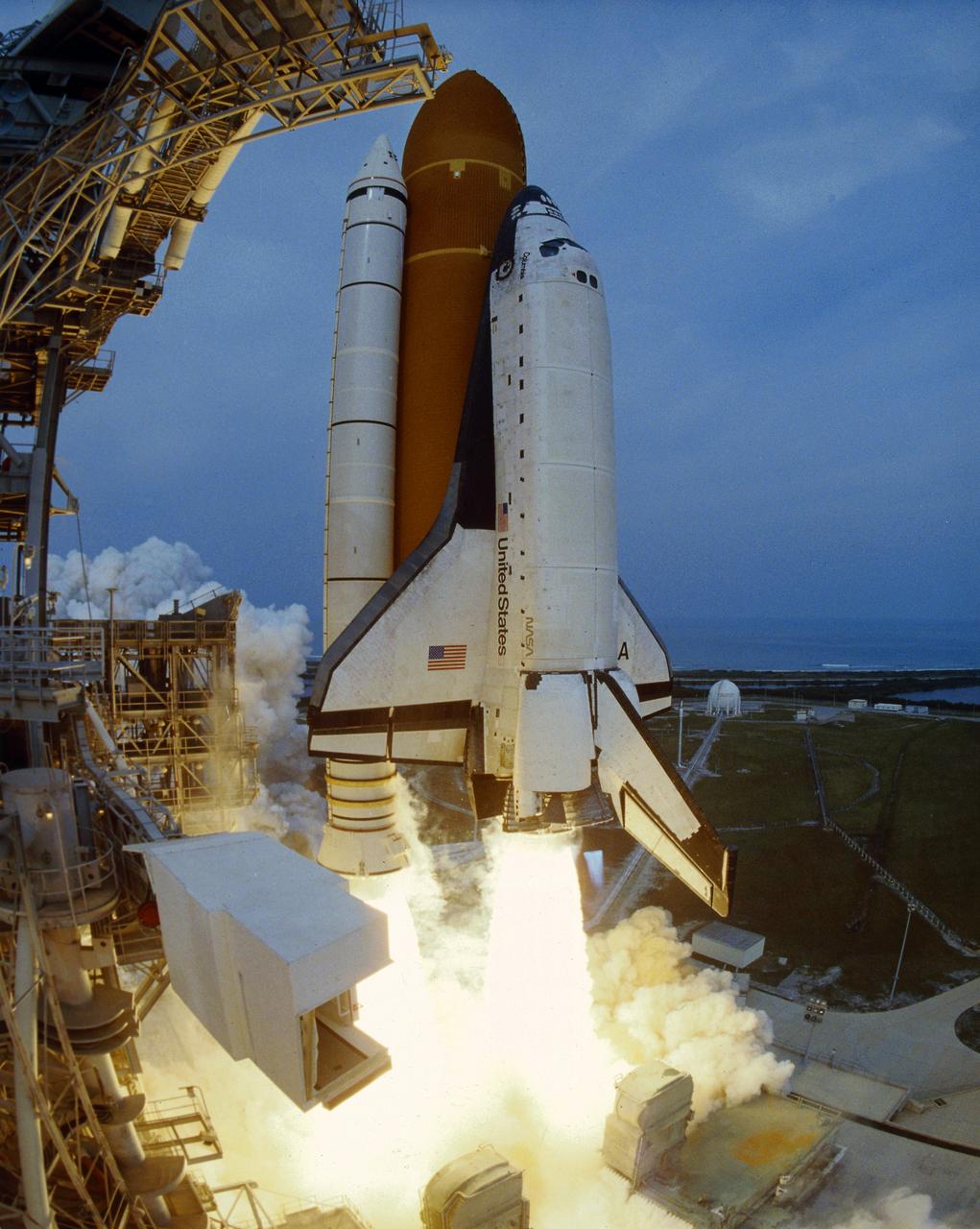
The Space Shuttle Columbia (STS-75) cleared the tower following an on-time liftoff from Launch Pad 39B. Visible at lower left is the white room on the orbiter access arm through which the flight crew entered the orbiter earlier. Columbia's mission lasted 14 days and included retesting of the Tethered Satellite System (TSS-1R) and the third flight of the United States Microgravity Payload (USMP-3), both of which are managed by scientist at Marshall Space Flight Center. Included in Columbia's flight crew were members of the European Space Agency (ESA) and the Italian Space Agency (ASI), Mission Specialists Maurizio Cheli, Claude Nicollier and Payload Specialist Umberto Guidoni, respectively.
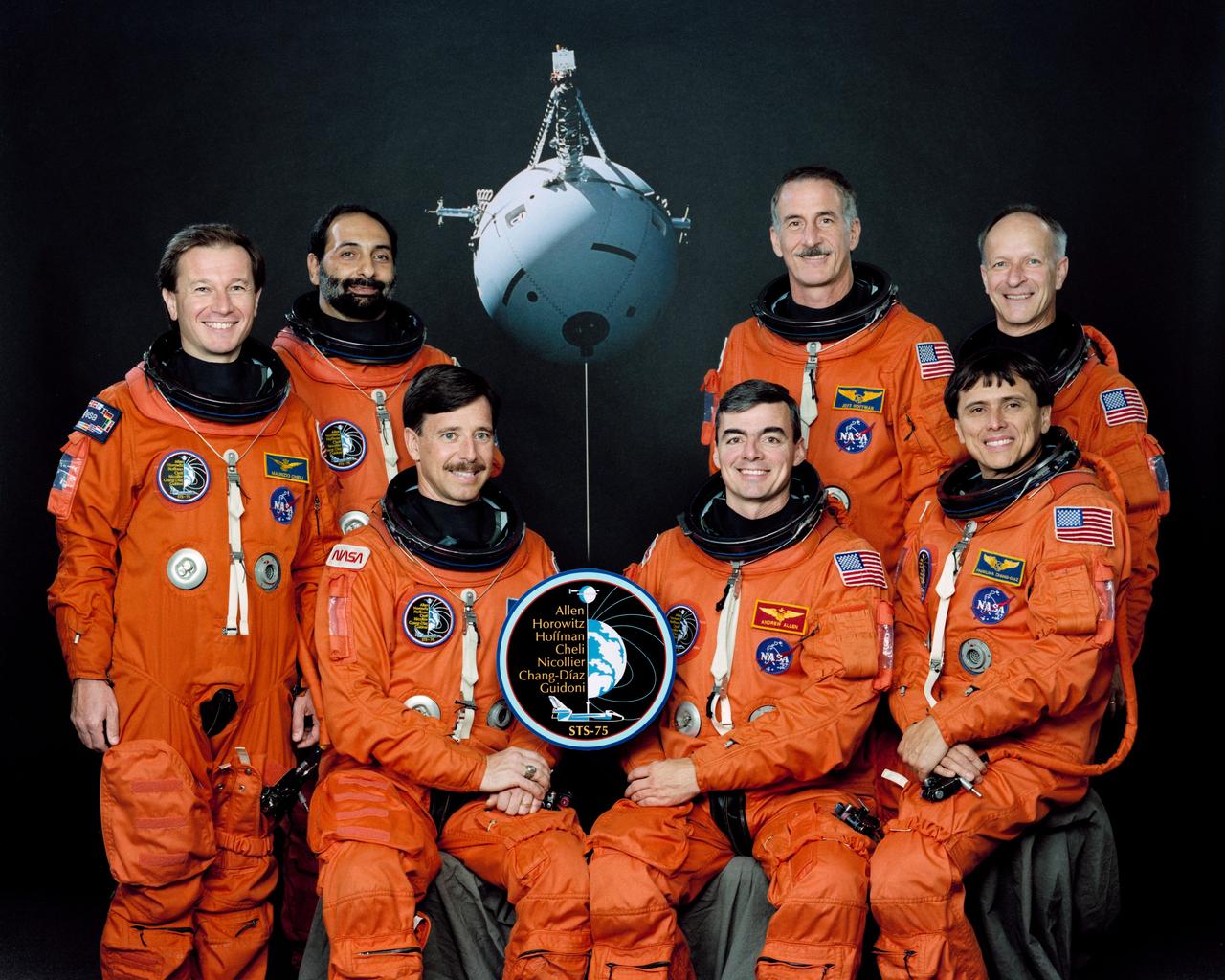
STS075-S-002 (December 1995) --- With their major payload as the backdrop, members of the crew pose for the traditional crew portrait. The crew will deploy and work with the Tethered Satellite System (TSS-1R). Seated at center are astronauts Scott J. Horowitz (left), pilot; and Andrew M. Allen, commander. Astronaut Franklin R. Chang-Diaz (front right) is payload commander. In the rear are (left to right) European Space Agency (ESA) astronaut Maurizio Cheli, mission specialist; payload specialist Umberto Guidoni of the Italian Space Agency (ASI); Jeffrey A. Hoffman and ESA astronaut Claude Nicollier, mission specialists.
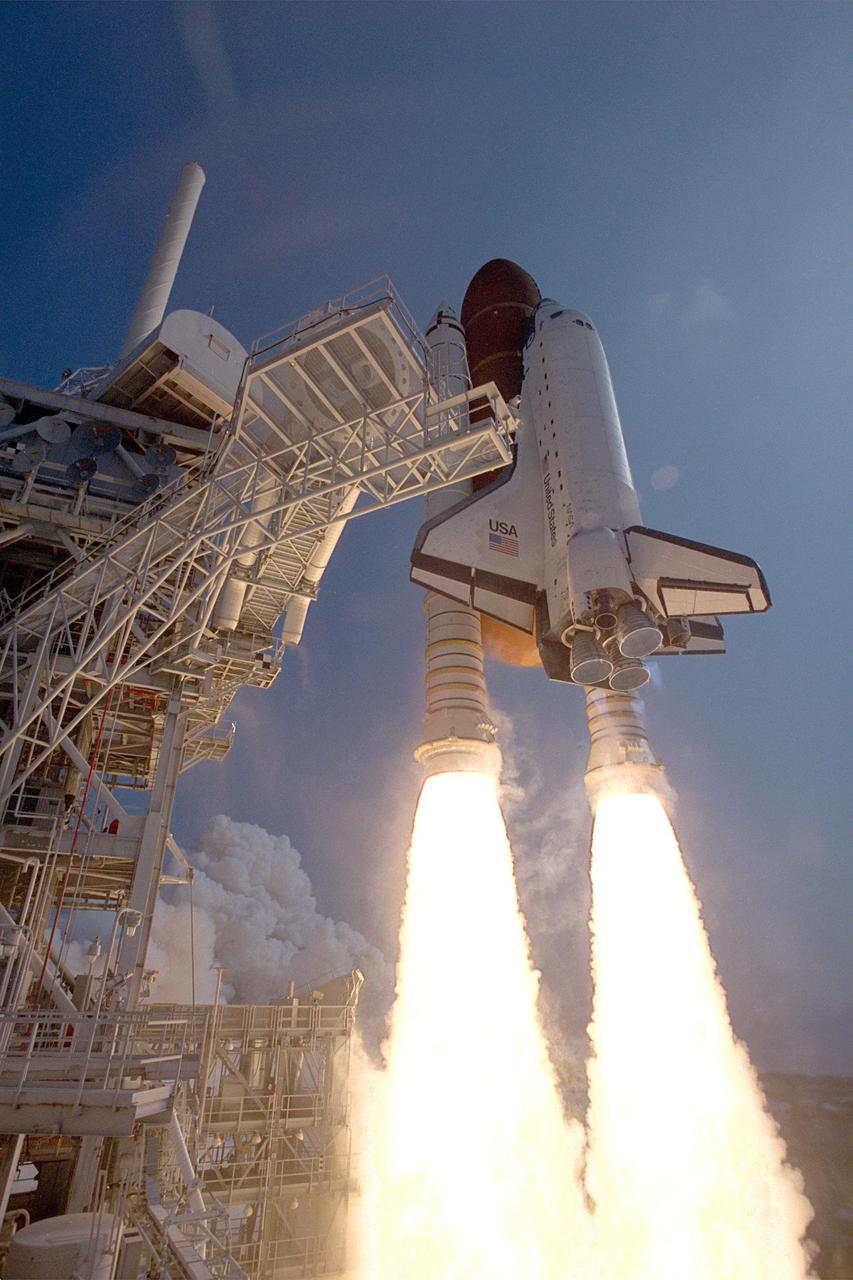
KENNEDY SPACE CENTER, FLA. -- The Space Shuttle Atlantis breaks free of all earthly constraints and hurtles past the Fixed Service Structure and 'beanie cap,' which only moments before had been in place above the external tank. STS-46 lifted off at 9:56:48 a.m. EDT, July 31. The Shuttle Atlantis carries Eureca, the European Retrievable Carrier, which is to be put into orbit during this mission. The NASA_Italian Space Agency Tethered Satellite System (TSS-1) will also be deployed for the first time during the STS-46 flight allowing a new capability for probing the space environment.
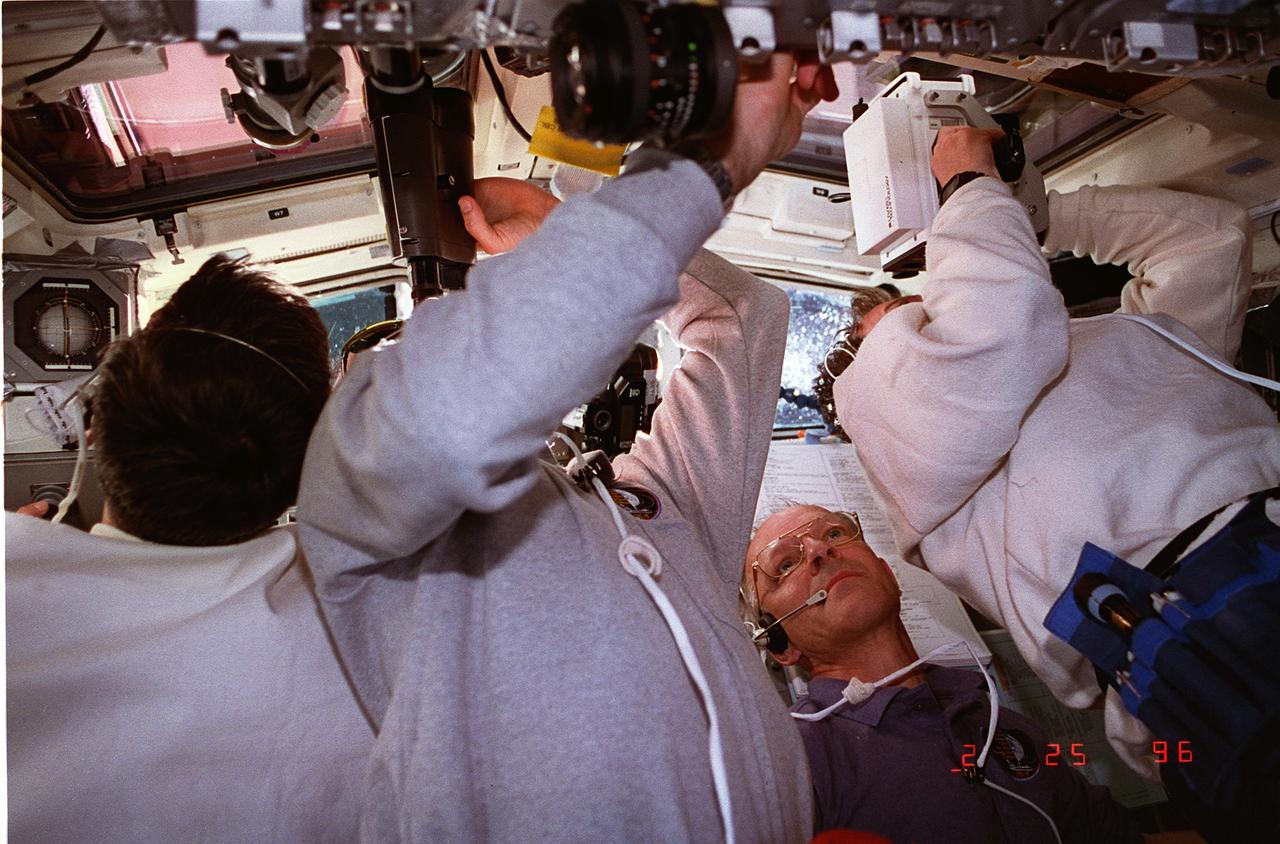
STS075-328-026 (25 Feb. 1996) --- Astronaut Claude Nicollier is the only clearly identifiable crewmember in this scene on the aft flight deck, captured during the busy chores associated with deployment of the Tethered Satellite System (TSS). The seven member crew was launched aboard the space shuttle Columbia on Feb. 22, 1996, and landed on March 9, 1996. Crewmembers were Andrew M. Allen, mission commander; Scott J. Horowitz, pilot; Franklin R. Chang-Diaz, payload commander; and Maurizio Cheli, European Space Agency (ESA); Jeffrey A. Hoffman and Nicollier, ESA, all mission specialists; along with payload specialist Umberto Guidoni of the Italian Space Agency (ASI).
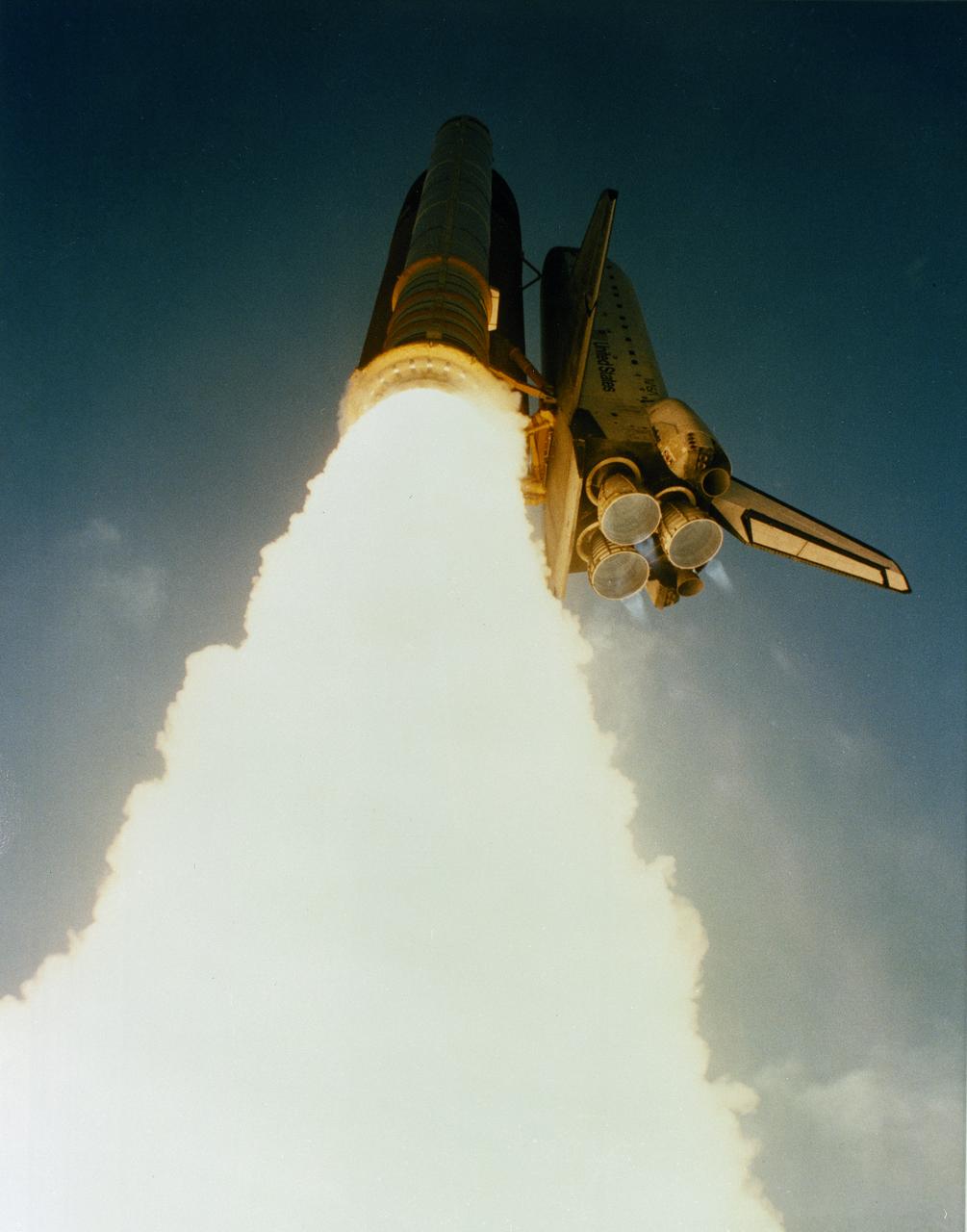
Launched aboard the Space Shuttle Atlantis on July 31, 1992 at 9:56:48 am (EDT), the STS-46 mission’s primary objectives included the deployment of the European Space Agency’s European Retrievable Carrier (EURECA) and operation of the joint NASA/Italian Space Agency Tethered Satellite System (TSS). The STS-46 crew of seven included: Loren J. Shriver, commander; Andrew M. Allen, pilot; Jeffrey A. Hoffman, mission specialist 1; Franklin R. Chang-Diaz, mission specialist 2; Claude Nicollier, mission specialist 3; Marsha S. Ivins, mission specialist 4; and Franco Malerba, payload specialist 1.
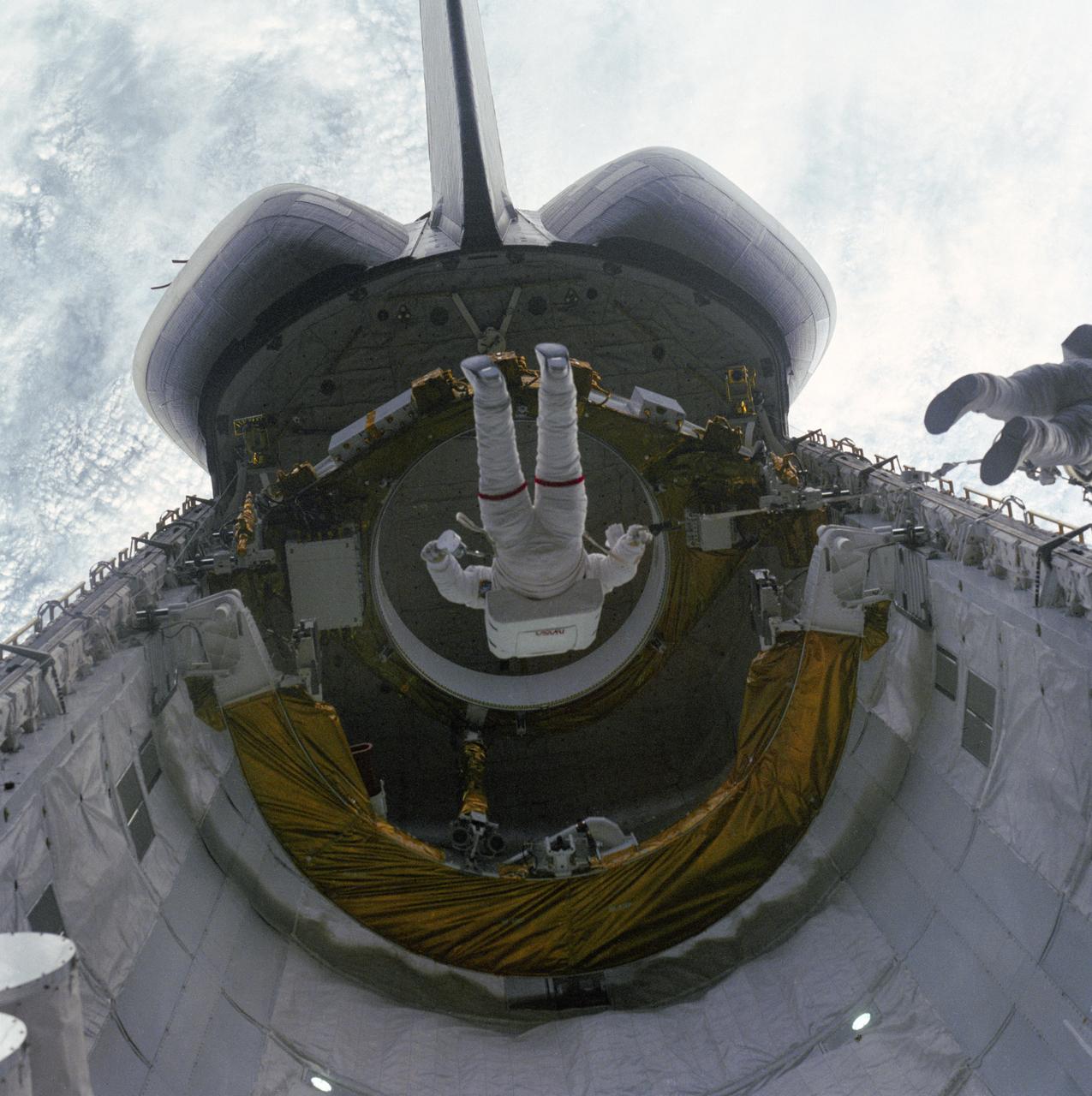
S83-30214 (7 April 1983) --- Astronaut F. Story Musgrave, STS-6 mission specialist, suspends himself midway between the starboard and port slide wire systems to evaluate the pull strength of the reel-in safety tether while astronaut Donald H. Peterson, the flight?s other mission specialist, busies himself along the port side at right edge of frame. This photograph was taken by astronaut Karol J. Bobko, pilot, from the aft window of the Earth-orbiting Challenger?s flight deck. The successful EVA occurred on April 7, 1983, on day four of the five-day flight. The gold-foil protected object is the airborne support equipment (ASE) for the now vacated inertial upper stage (IUS) which aided in the deployment of the tracking and data relay satellite (TDRS) on the first day of the mission. Astronaut Paul J. Weitz, crew commander, was in charge of the Challenger during these operations. The white background is made up mostly of clouds over Earth. Photo credit: NASA
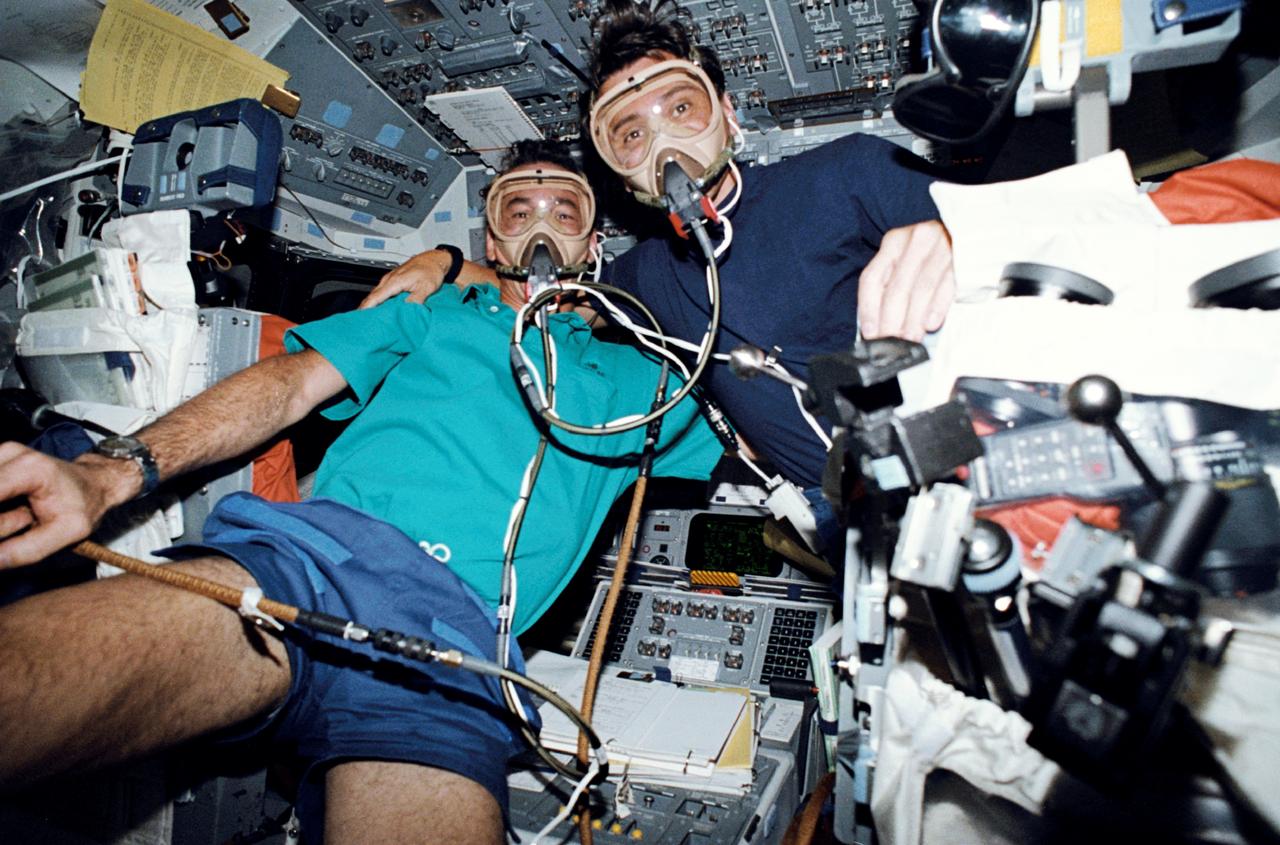
STS046-33-028 (4 Aug. 1992) --- With the possibility of an extravehicular activity (EVA) being added to the agenda, the two EVA-trained crew members begin their "pre-breathe" period on the space shuttle Atlantis' flight deck. Astronauts Jeffrey A. Hoffman (left), payload commander, and Franklin R. Chang-Diaz, mission specialist, reported to this station and began the "pre-breathe" process when problems developed during the extension of the Tethered Satellite System (TSS). When the human body is exposed to a sudden decrease in atmospheric pressure (for instance, from the 10.2 ppsi in the crew cabin to the 4.5 ppsi of the Extravehicular Mobility Unit (EMU) spacesuit), nitrogen traces in the bloodstream will expand. This expansion can create tiny bubbles and potential for the "bends". In order to lessen the effect, an astronaut must "pre-breathe" pure oxygen (the same pure oxygen that he will breathe in the suit) to help "purge" nitrogen from his/her bloodstream before exerting him/herself in the low-pressure environment of the suit. The "pre-breathe" exercise and the EVA turned out to be not needed as the TSS operations were resumed by remote operations.
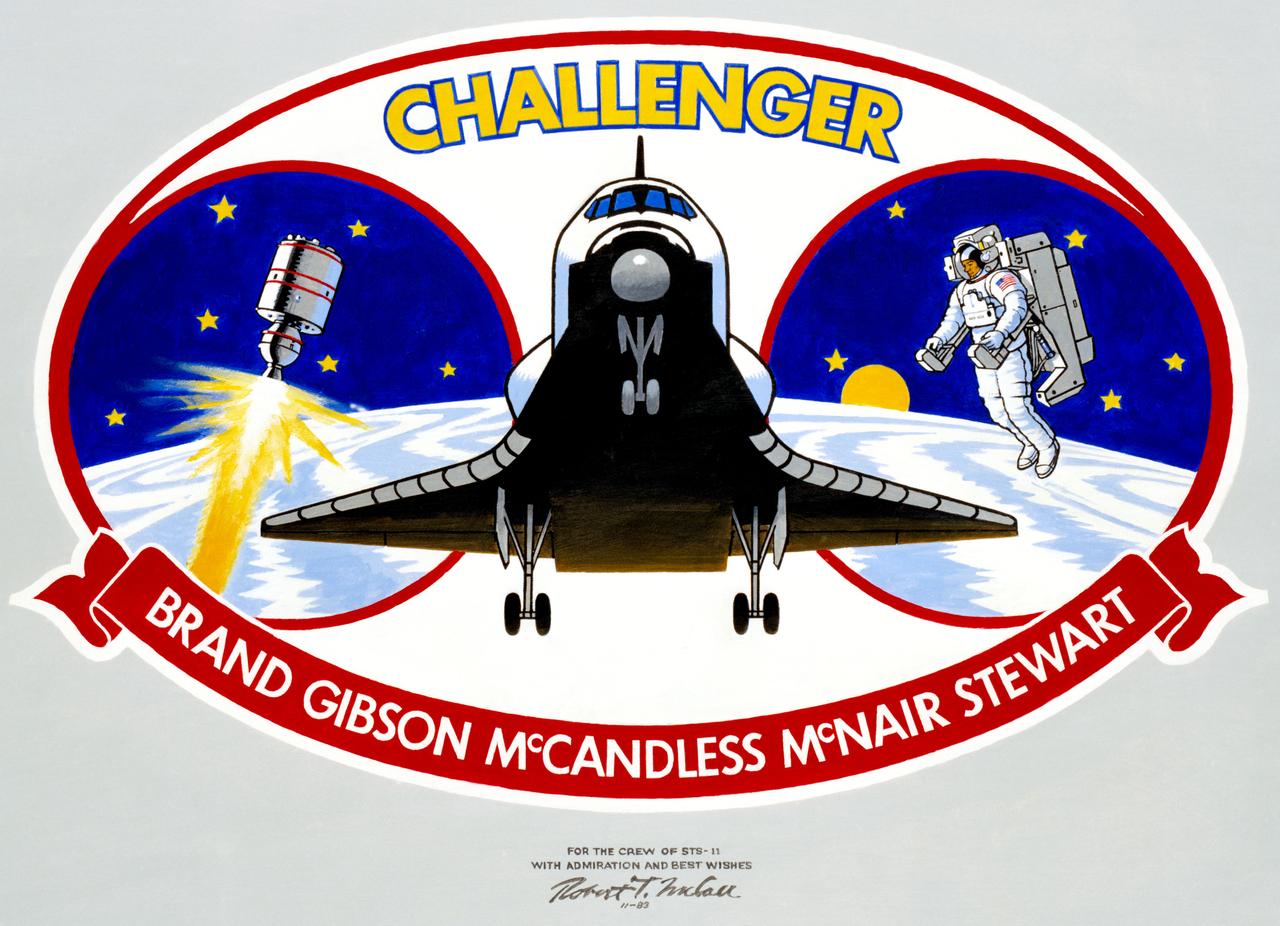
S83-45520 (December 1983) --- The space shuttle Challenger, making its fourth spaceflight, highlights the 41B insignia. The reusable vehicle is flanked in the oval by an illustration of another PAM-D assisted satellite deployment; and astronaut making the first non-tethered extravehicular activity (EVA); and eleven stars. The crew member at right is equipped with the manned maneuvering unit (MMU), a debuting backpack/motor apparatus allowing for much greater freedom of movement than that experienced by any previous space travelers performing EVA. Surnames of the five astronaut crew members balance the Robert McCall artwork. They are Vance D. Brand, Robert L. Stewart, Bruce McCandless II, Ronald E. McNair, Robert L. Gibson. The flight is scheduled for a launch in early 1984. The NASA insignia design for space shuttle flights is reserved for use by the astronauts and for other official use as the NASA Administrator may authorize. Public availability has been approved only in the forms of illustrations by the various news media. When and if there is any change in this policy, which is not anticipated, the change will be publicly announced. Photo credit: NASA
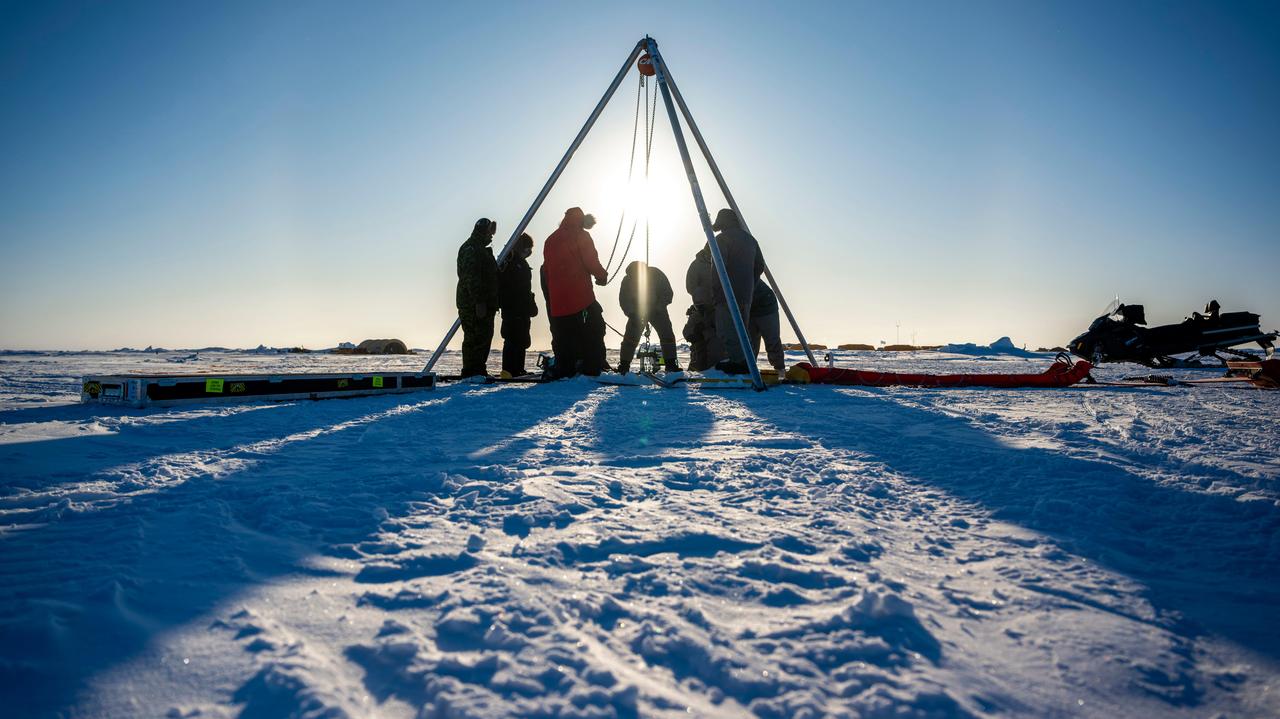
A prototype of an autonomous robot, part of a project called IceNode being developed at NASA's Jet Propulsion Laboratory, was tested in the Beaufort Sea north of Alaska in March 2024. The project envisions a fleet of such robots to venture beneath Antarctic ice shelves and gather data that would help scientists calculate how rapidly the ice shelves there are melting – and how fast that melting could cause global sea levels to rise. This image, as well as Figures A and B, shows the team lowering the prototype through a borehole in the sea ice. During this Arctic field test, the robot descended on a tether about 330 feet (100 meters) into the ocean, where its instruments gathered salinity, temperature, and flow data. The team also conducted tests to determine adjustments that would enable them to take the robot off-tether. Each about 8 feet (2.4 meters) long and 10 inches (25 centimeters) in diameter, the robots use three-legged "landing gear" that springs out from one end to attach the robot to the underside of the ice. Rather than using propulsion, the robots would autonomously position themselves with the help of novel algorithms based on models of ocean currents. Released from a borehole or a vessel in the open ocean, the robots would ride those currents on a long journey beneath an ice shelf. They would target the underwater area known as the "grounding zone," where floating ice shelves, ocean, and land meet, deep inside unmapped cavities where the ice may be melting the fastest. Each robot would detach a ballast and rise up to affix itself to the underside of the ice, where their suite of sensors would measure how fast warm, salty ocean water is circulating up to melt the ice, and how quickly cold meltwater is sinking. As conceived, the IceNode fleet would operate for up to a year, continuously capturing data, including seasonal fluctuations. Then the robots would detach themselves from the ice, drift back out to open ocean, and transmit their data via satellite. This test was conducted through the U.S. Navy Arctic Submarine Laboratory's biennial Ice Camp, a three-week operation that provides researchers a temporary base camp from which to conduct field work in the harsh Arctic environment. IceNode has been funded through JPL's internal research and technology development program and its Earth Science and Technology Directorate. JPL is managed for NASA by Caltech in Pasadena, California. https://photojournal.jpl.nasa.gov/catalog/PIA26349
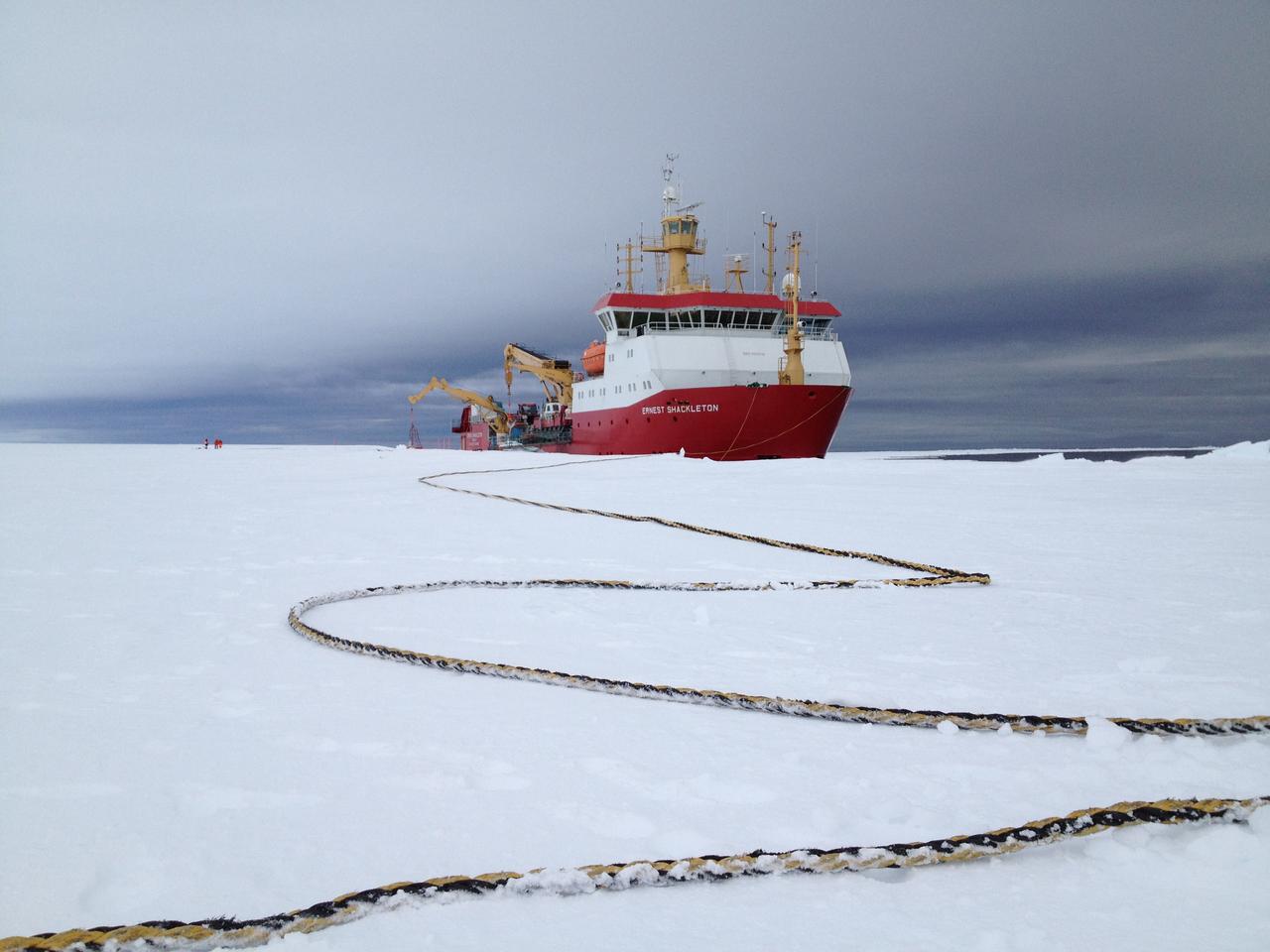
Arrival of the RRS Ernest Shackleton near Halley Research Station in Antarctica. The Shackleton is the regular resupply ship for the station and it also brought in some of the BARREL team scientists. The long tether is for the ship’s mooring. Credit: NASA --- In Antarctica in January, 2013 – the summer at the South Pole – scientists launched 20 balloons up into the air to study an enduring mystery of space weather: when the giant radiation belts surrounding Earth lose material, where do the extra particles actually go? The mission is called BARREL (Balloon Array for Radiation belt Relativistic Electron Losses) and it is led by physicist Robyn Millan of Dartmouth College in Hanover, NH. Millan provided photographs from the team’s time in Antarctica. The team launched a balloon every day or two into the circumpolar winds that circulate around the pole. Each balloon floated for anywhere from 3 to 40 days, measuring X-rays produced by fast-moving electrons high up in the atmosphere. BARREL works hand in hand with another NASA mission called the Van Allen Probes, which travels through the Van Allen radiation belts surrounding Earth. The belts wax and wane over time in response to incoming energy and material from the sun, sometimes intensifying the radiation through which satellites must travel. Scientists wish to understand this process better, and even provide forecasts of this space weather, in order to protect our spacecraft. As the Van Allen Probes were observing what was happening in the belts, BARREL tracked electrons that precipitated out of the belts and hurtled down Earth’s magnetic field lines toward the poles. By comparing data, scientists will be able to track how what’s happening in the belts correlates to the loss of particles – information that can help us understand this mysterious, dynamic region that can impact spacecraft. Having launched balloons in early 2013, the team is back at home building the next set of payloads. They will launch 20 more balloons in 2014. <b><a href="http://www.nasa.gov/audience/formedia/features/MP_Photo_Guidelines.html" rel="nofollow">NASA image use policy.</a></b> <b><a href="http://www.nasa.gov/centers/goddard/home/index.html" rel="nofollow">NASA Goddard Space Flight Center</a></b> enables NASA’s mission through four scientific endeavors: Earth Science, Heliophysics, Solar System Exploration, and Astrophysics. Goddard plays a leading role in NASA’s accomplishments by contributing compelling scientific knowledge to advance the Agency’s mission. <b>Follow us on <a href="http://twitter.com/NASA_GoddardPix" rel="nofollow">Twitter</a></b> <b>Like us on <a href="http://www.facebook.com/pages/Greenbelt-MD/NASA-Goddard/395013845897?ref=tsd" rel="nofollow">Facebook</a></b> <b>Find us on <a href="http://instagram.com/nasagoddard?vm=grid" rel="nofollow">Instagram</a></b>