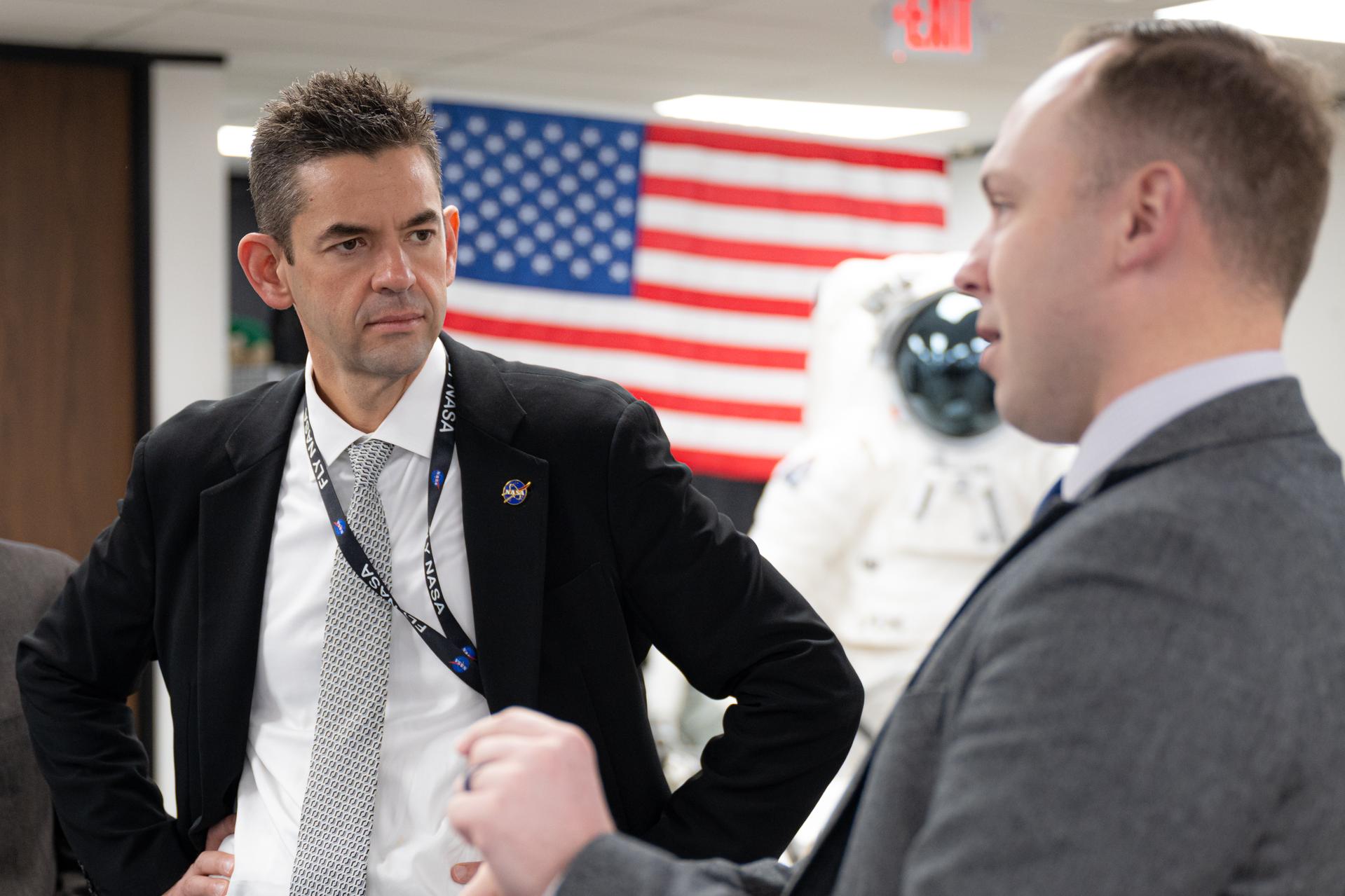
NASA Administrator Jared Isaacman, left, listens to Russell Ralston, senior vice president and general manager of extravehicular activity at Axiom Space, right, during a tour of the company’s extravehicular activity and spacesuit facility, Friday, Jan. 23, 2026, in Houston, Texas. Photo Credit: (NASA/John Kraus)
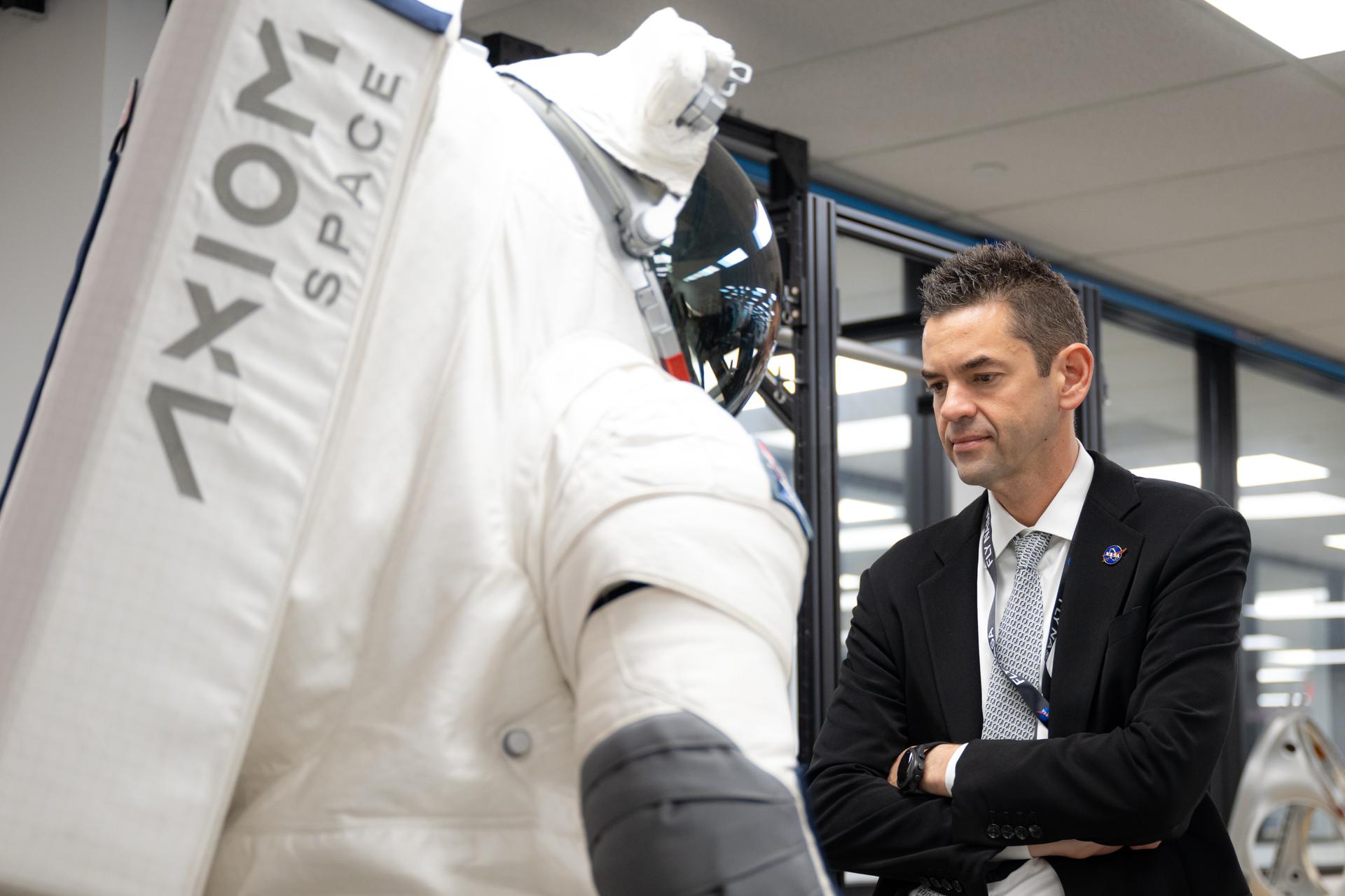
NASA Administrator Jared Isaacman tours Axiom Space's extravehicular activity and spacesuit facility, Friday, Jan. 23, 2026, in Houston, Texas. Photo Credit: (NASA/John Kraus)
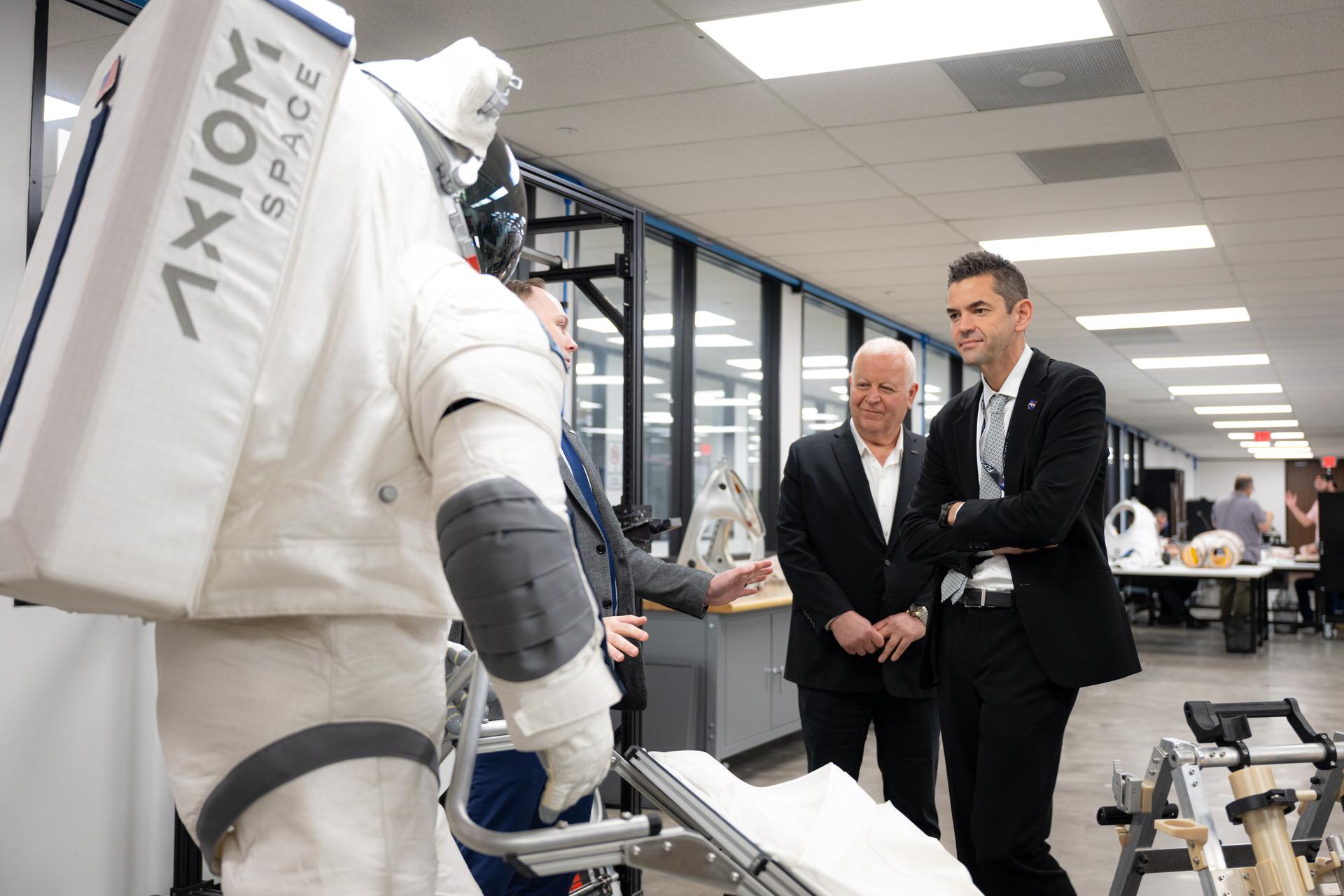
NASA Administrator Jared Isaacman, right, and Axiom Space leadership tour the company's extravehicular activity and spacesuit facility, Friday, Jan. 23, 2026, in Houston, Texas. Photo Credit: (NASA/John Kraus)
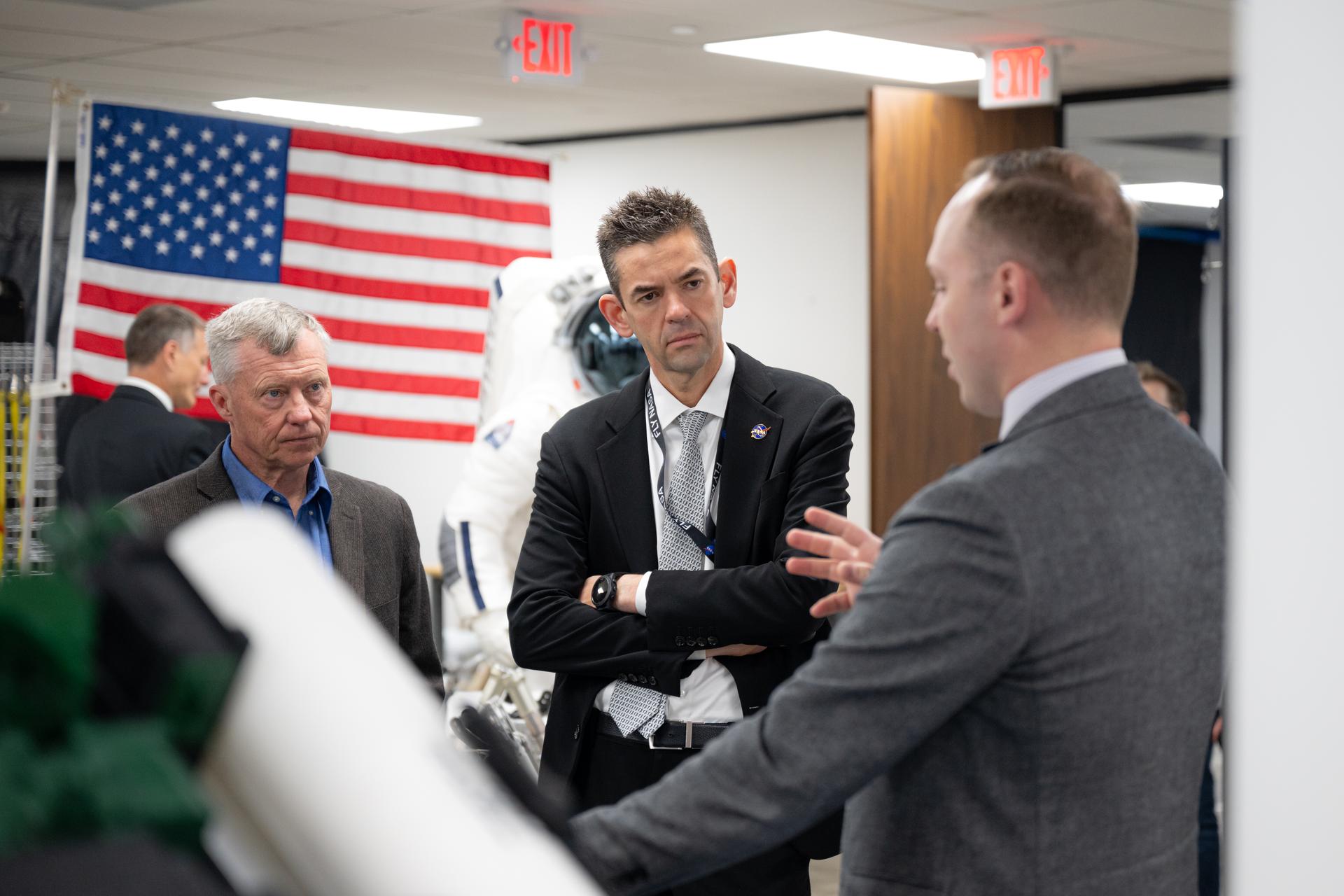
NASA Administrator Jared Isaacman, center; Todd Ericson, senior advisor to the administrator, left; and Russell Ralston, senior vice president and general manager of extravehicular activity at Axiom Space, right, are seen during a tour of the company’s extravehicular activity and spacesuit facility, Friday, Jan. 23, 2026, in Houston, Texas. Photo Credit: (NASA/John Kraus)
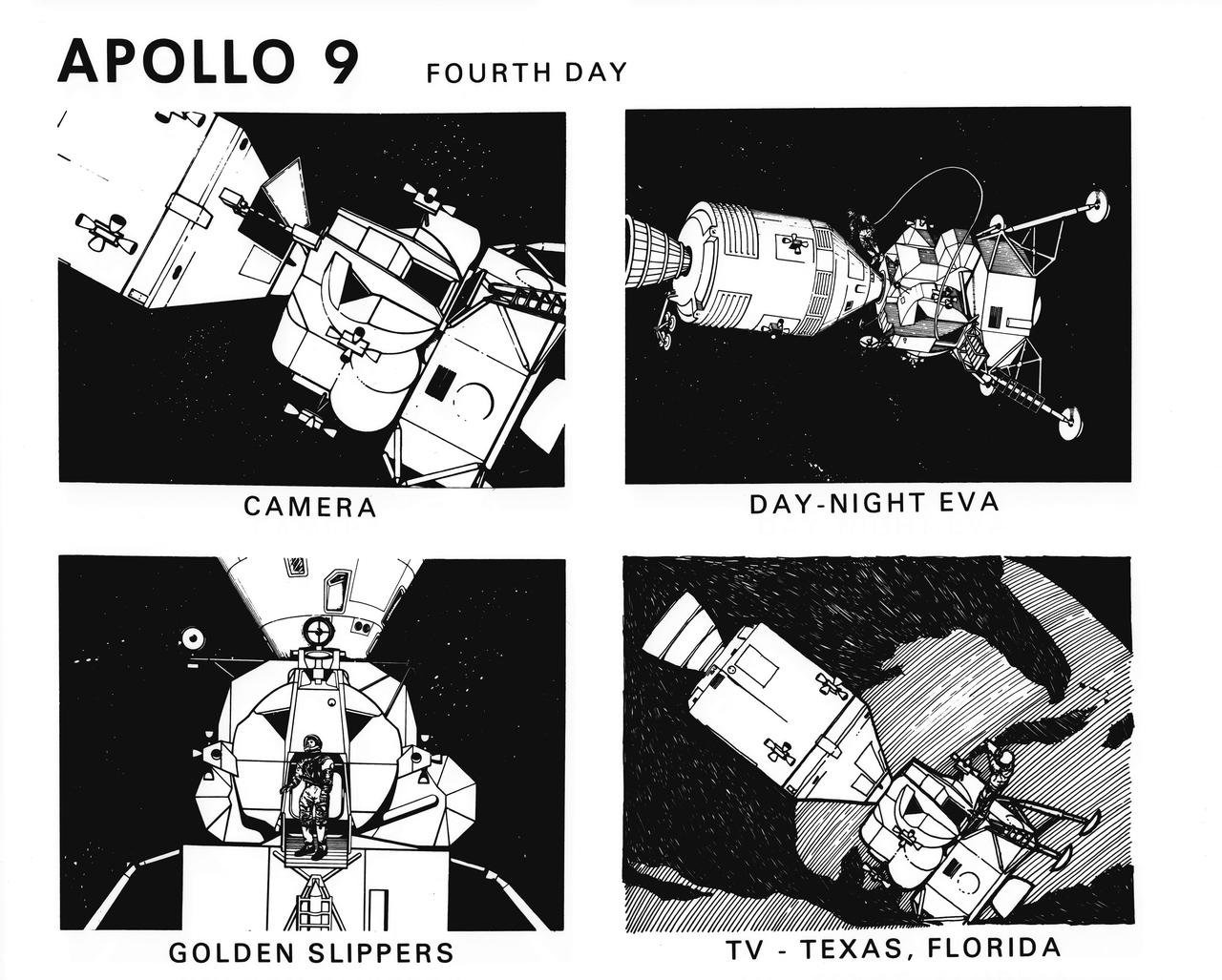
S69-19795 (February 1969) --- Composite of four artist's concepts illustrating key events, tasks and activities on the fourth day of the Apollo 9 mission, including use of camera, day-night extravehicular activity, use of golden slippers, and television over Texas and Florida. The Apollo 9 mission will evaluate spacecraft lunar module systems performance during manned Earth-orbital flight.
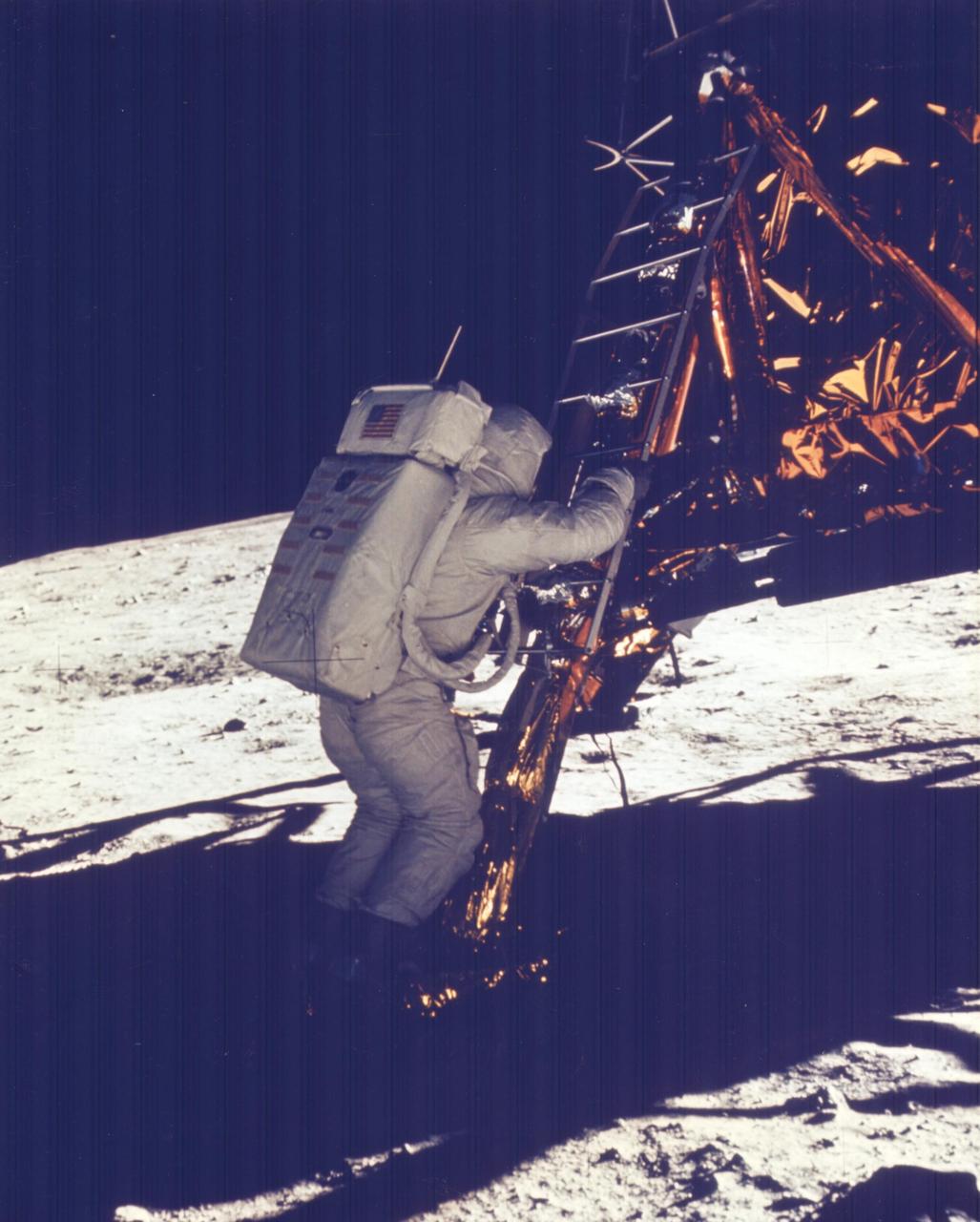
JOHNSON SPACE CENTER, HOUSTON, TEXAS - Apollo 11 Onboard Film -- Astronaut Edwin E. Aldrin Jr., Lunar Module (LM) pilot, descends the steps of the Lunar module ladder as he prepares to walk on the Moon. He had just egressed the LM. This picture was taken by astronaut Neil A. Armstrong, commander, with a 70-mm lunar surface camera during the Apollo 11 extravehicular activity.

Extravehicular Activity (EVA) suits packed inside containers arrive at the Space Station Processing Facility from Johnson Space Center in Texas. The suits will be used by STS-117 crew members to perform several spacewalks during the mission. The mission payload aboard Space Shuttle Atlantis is the S3/S4 integrated truss structure, along with a third set of solar arrays and batteries. The crew of six astronauts will install the truss to continue assembly of the International Space Station.
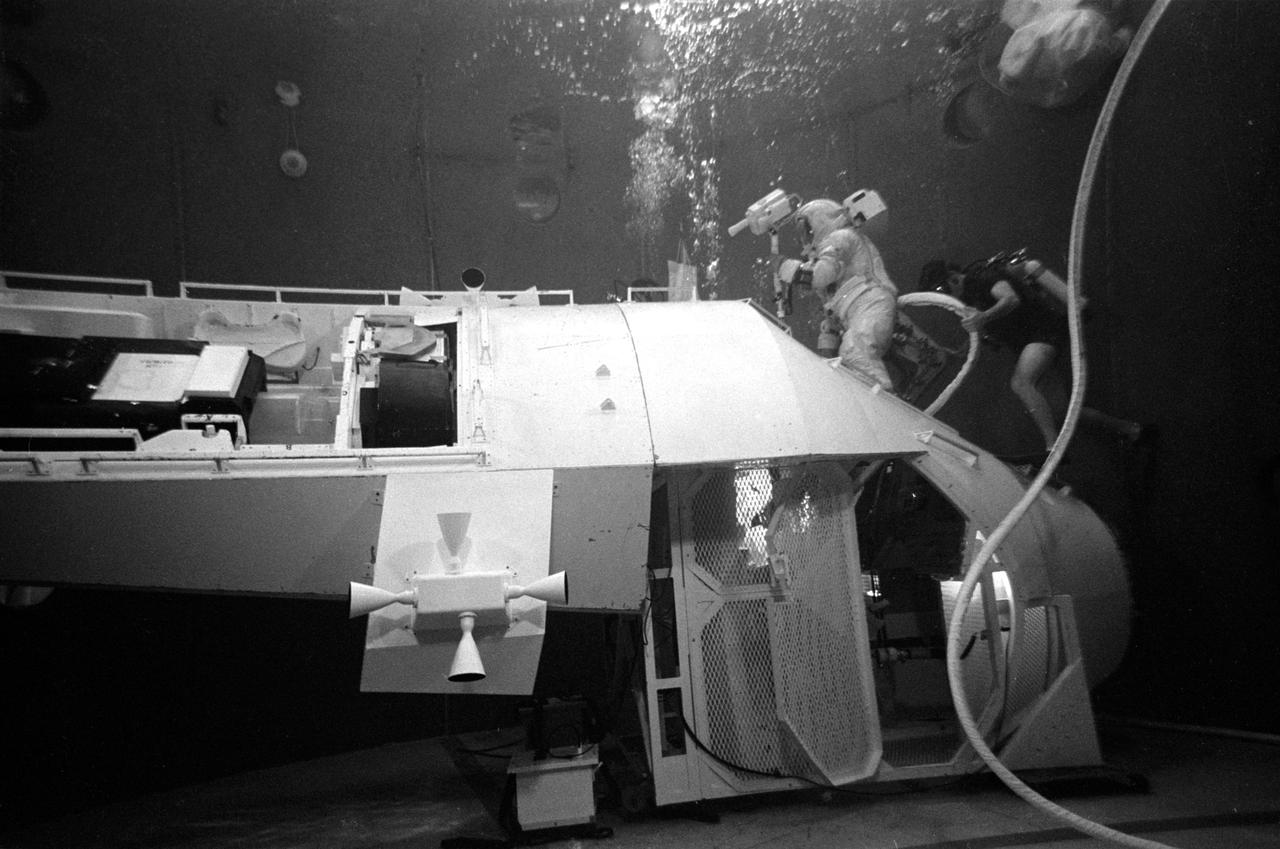
S71-58148 (1 Dec. 1971) --- Astronaut Thomas K. Mattingly II, command module pilot of the planned Apollo 16 lunar landing mission, participates in extravehicular activity (EVA) simulations in the water facility tank in Building 5 at the Manned Spacecraft Center (MSC), Houston, Texas, during training preparations for the forthcoming mission. Mattingly is scheduled to perform EVA during the trans-Earth journey of the Apollo 16 mission.
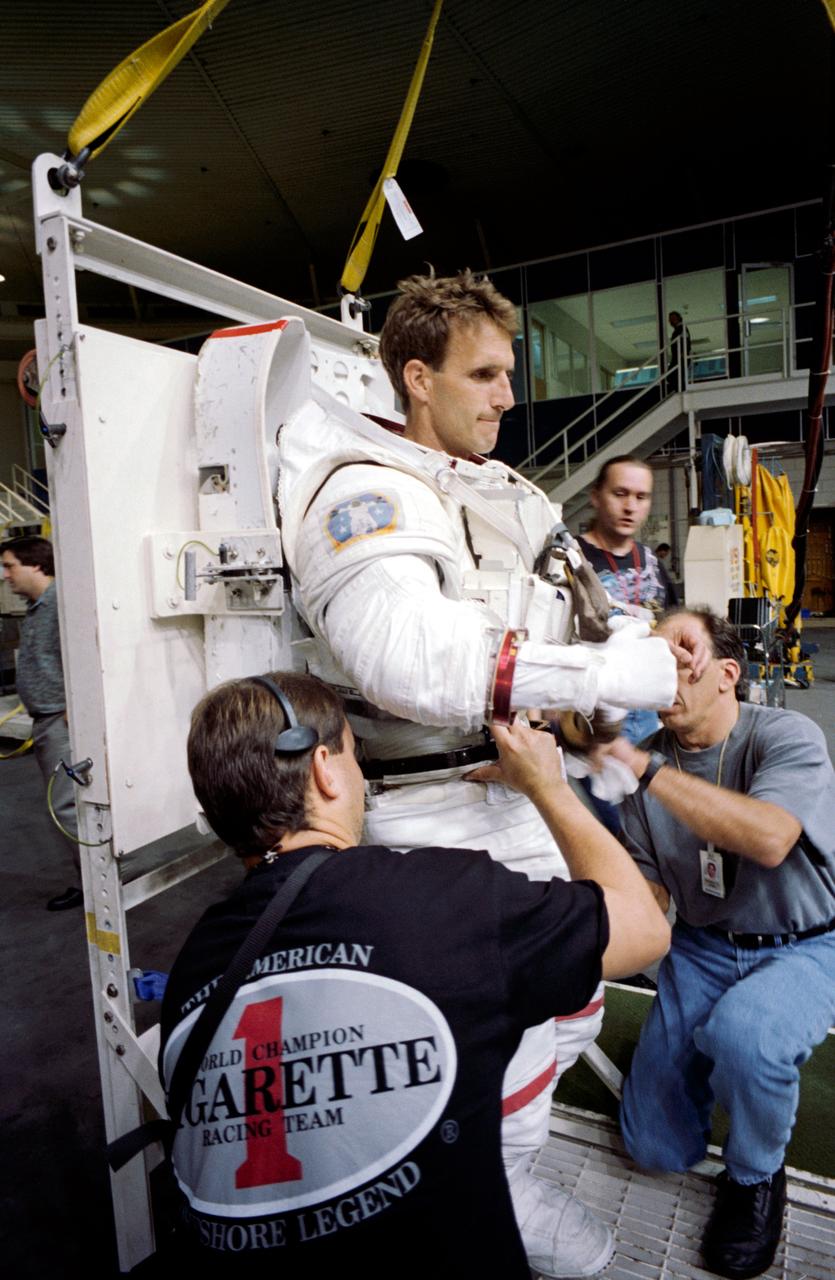
COLOR 13 SEPTEMBER 1996 S96-14353 JOHNSON SPACE CENTER, HOUSTON, TEXAS STS-81 TRAINING VIEW --- In the Johnson Space Center’s (JSC) Weightless Environment Training Facility (WET-F), astronaut Jerry M. Linenger, STS-81 mission specialist, prepares for an underwater simulation of a contingency Extravehicular Activity (EVA). Linenger, attired in a training version will utilize the nearby 25-feet deep pool, in which he will be able to achieve a neutrally buoyant state.
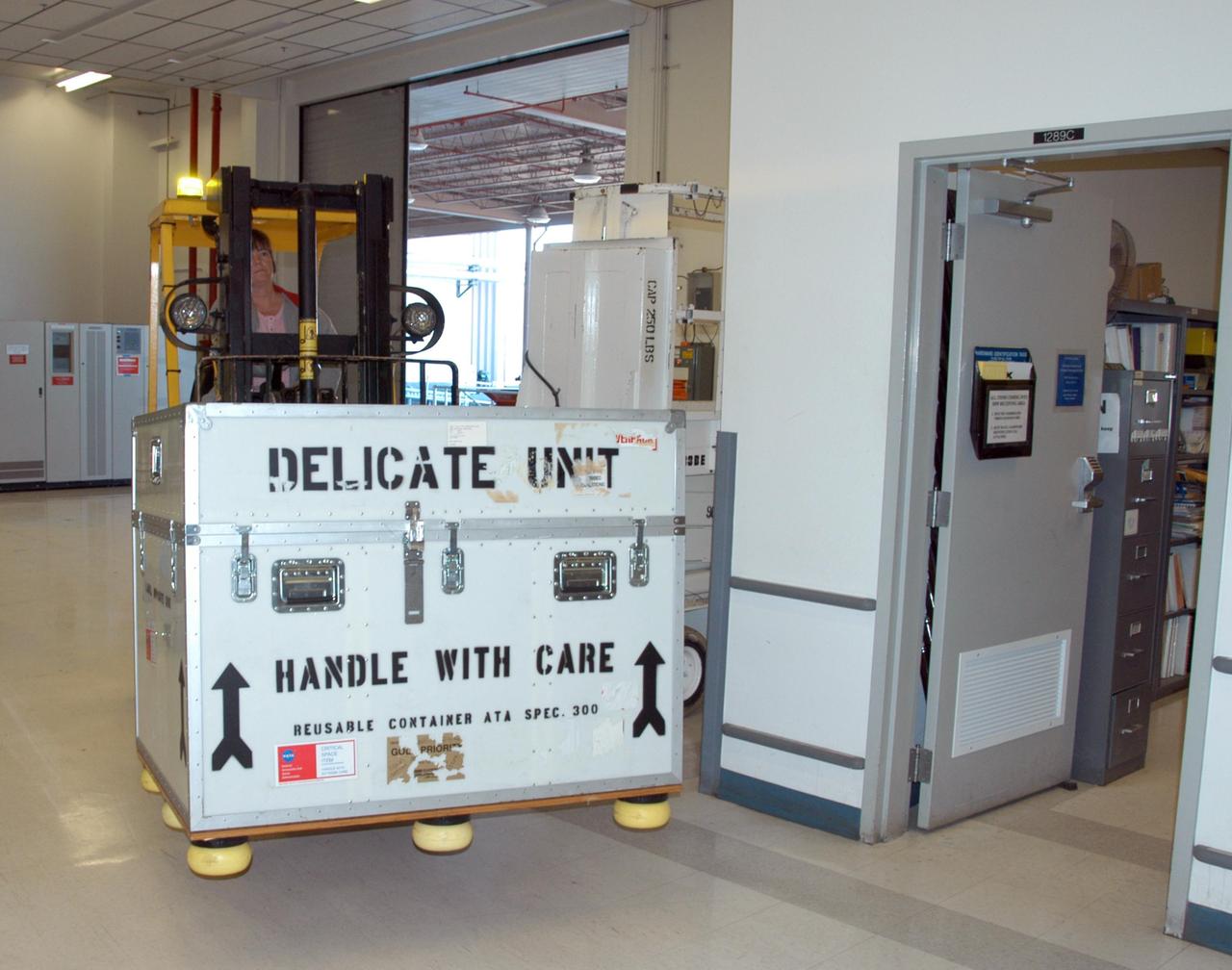
KENNEDY SPACE CENTER, FLA. -- Extravehicular Activity (EVA) suits packed inside containers arrive at the Space Station Processing Facility from Johnson Space Center in Texas. The suits will be used by STS-117 crew members to perform several spacewalks during the mission. The mission payload aboard Space Shuttle Atlantis is the S3/S4 integrated truss structure, along with a third set of solar arrays and batteries. The crew of six astronauts will install the truss to continue assembly of the International Space Station. Photo credit: NASA/George Shelton.
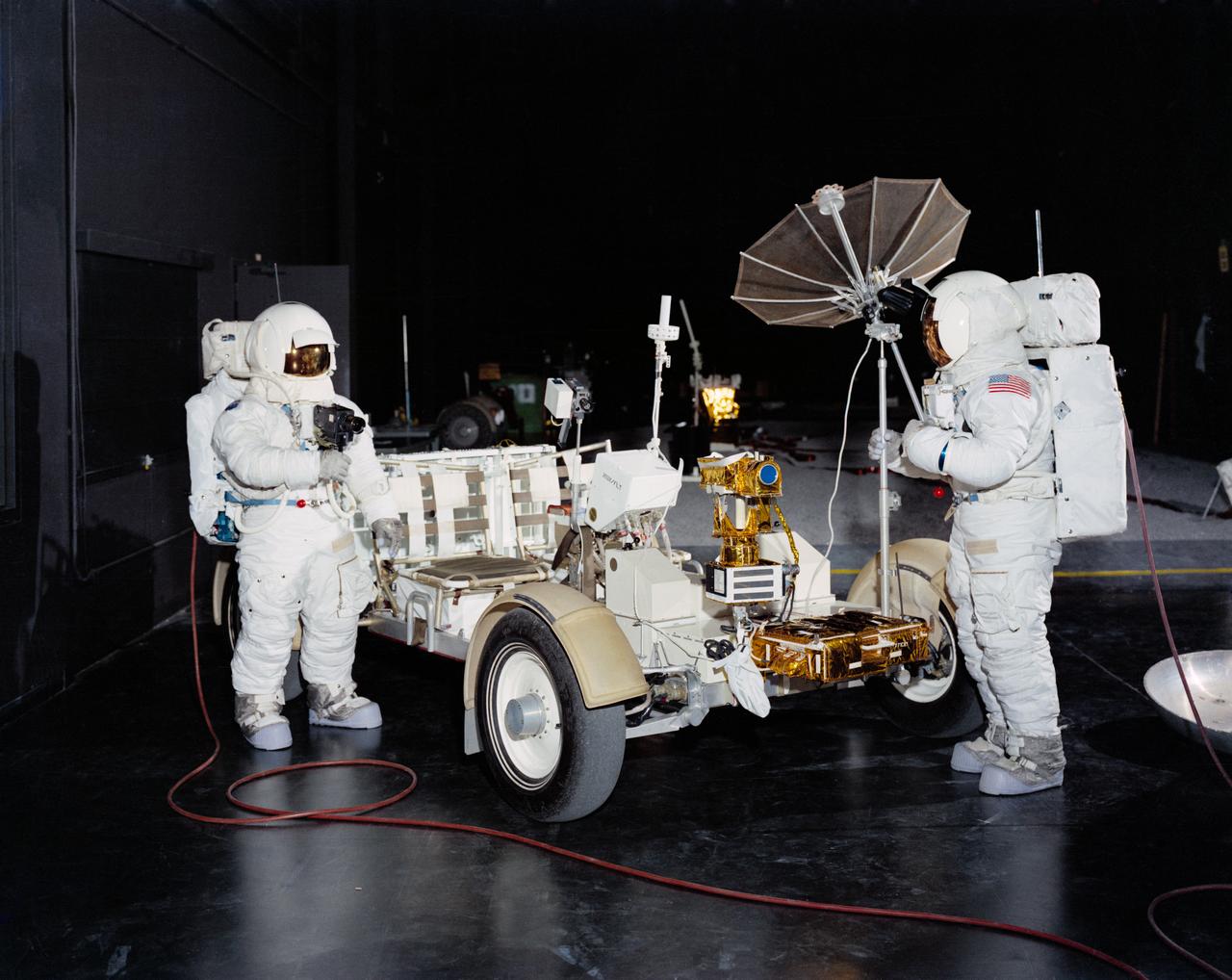
S71-16722 (January 1971) --- Two members of the prime crew of the Apollo 15 lunar landing mission are shown with the Lunar Roving Vehicle "one G" trainer in Building 5, Mission Simulation and Training Facility, Manned Spacecraft Center. Astronaut David R. Scott (on right) is the Apollo 15 commander; and astronaut James B. Irwin is the lunar module pilot. A Lunar Roving Vehicle similar to this trainer will be used by Scott and Irwin during their Apollo 15 lunar surface extravehicular activity.
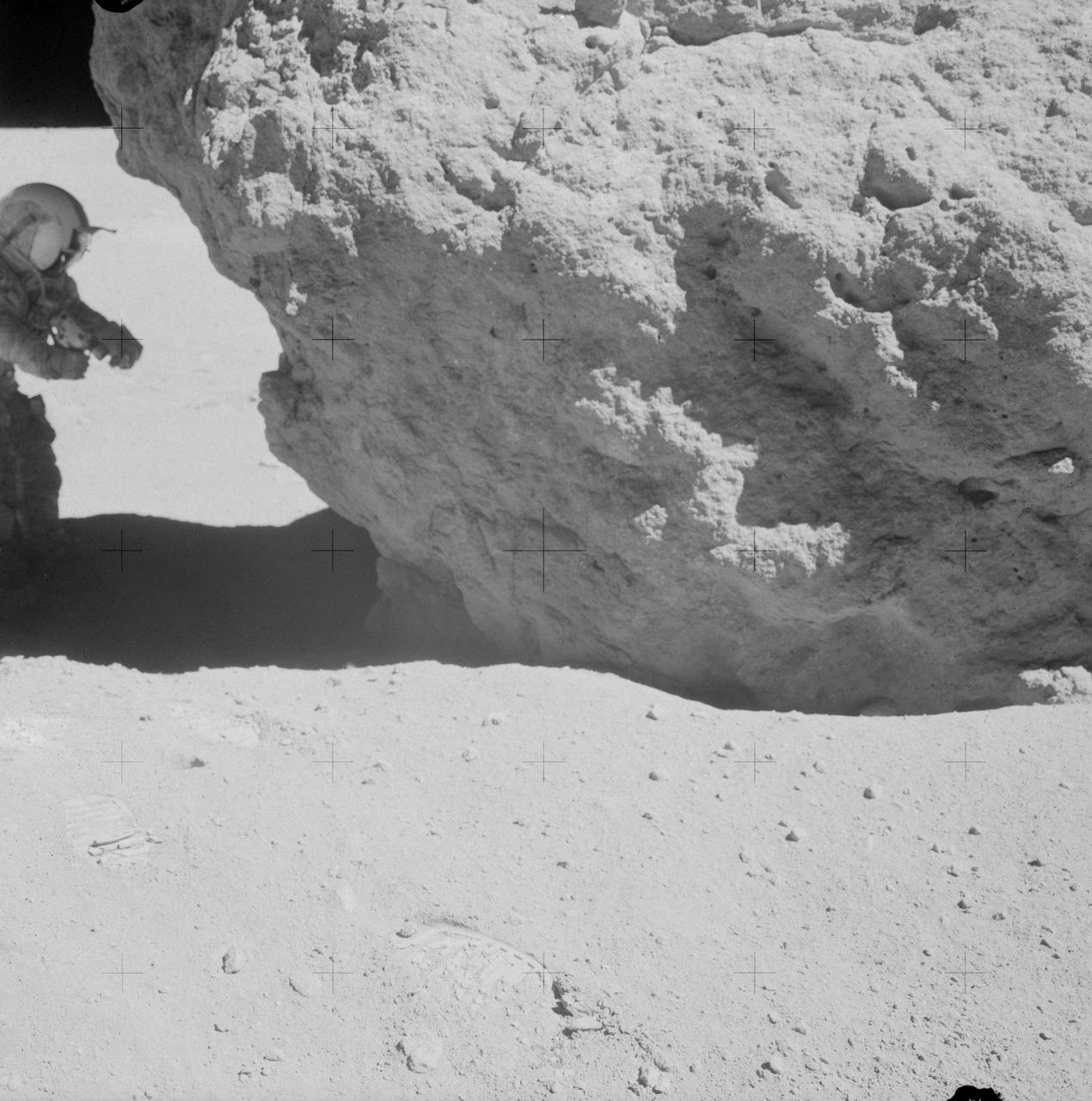
AS16-106-17413 (23 April 1972) --- Astronaut John W. Young, commander of the Apollo 16 lunar landing mission, looks over a large boulder at Station No.13 during the third Apollo 16 extravehicular activity (EVA) at the Descartes landing site. This was the site of the permanently shadowed soil sample which was taken from a hole extending under overhanging rock. Astronaut Charles M. Duke Jr., lunar module pilot, took this photograph. Concerning Young's reaching under the big rock, Duke remarked: "You do that in west Texas and you get a rattlesnake!"
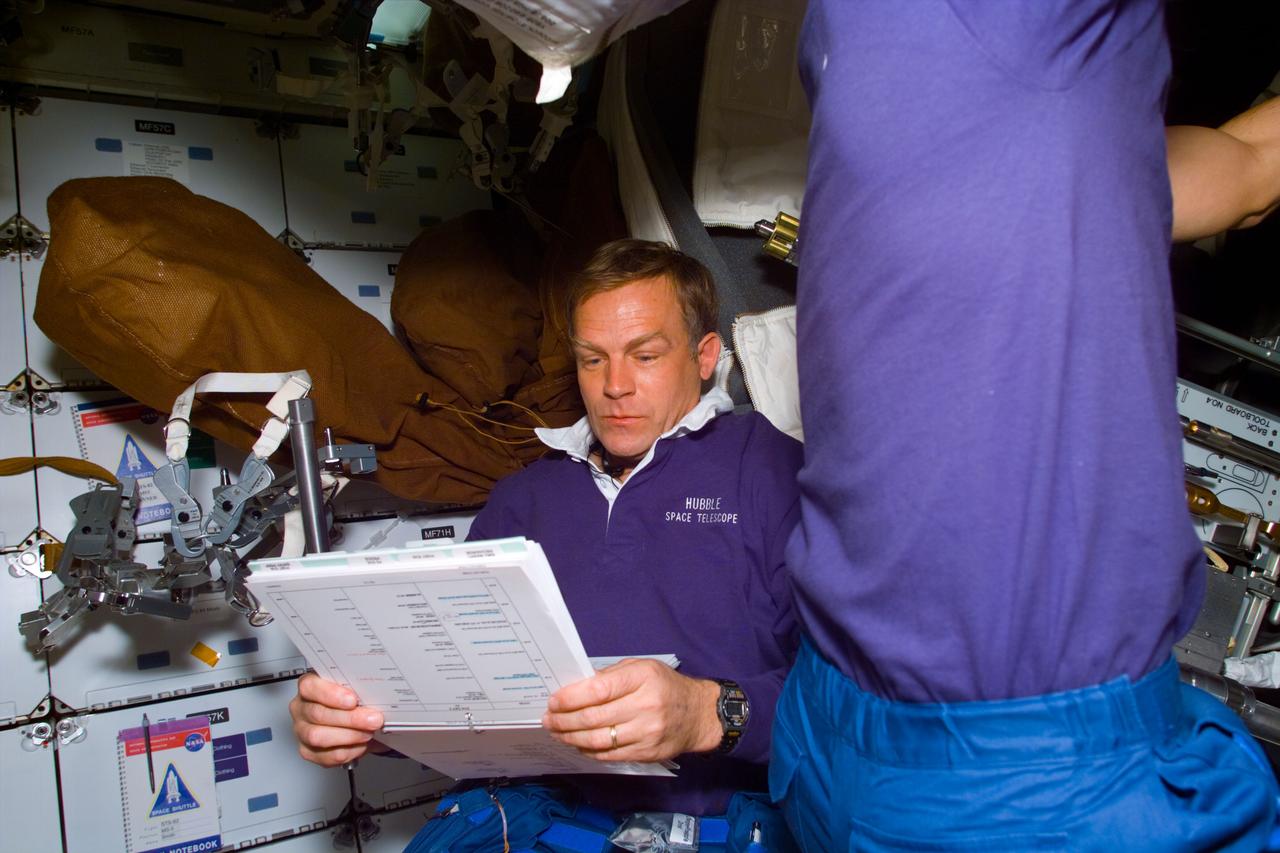
S82-E-5002 (12 Feb. 1997) --- On the Space Shuttle Discovery's middeck, STS-82 payload commander Mark C. Lee looks over plan for the first space Extravehicular Activity (EVA) as an unidentified crew mate (right) unstows a piece of related gear. Four of the crew members will perform a series of EVA's to service the Hubble Space Telescope (HST). This photograph (as well as the others in this series) was recorded with an Electronic Still Camera (ESC) late during Discovery's first full day in orbit and downlinked later to flight controllers in Houston, Texas.
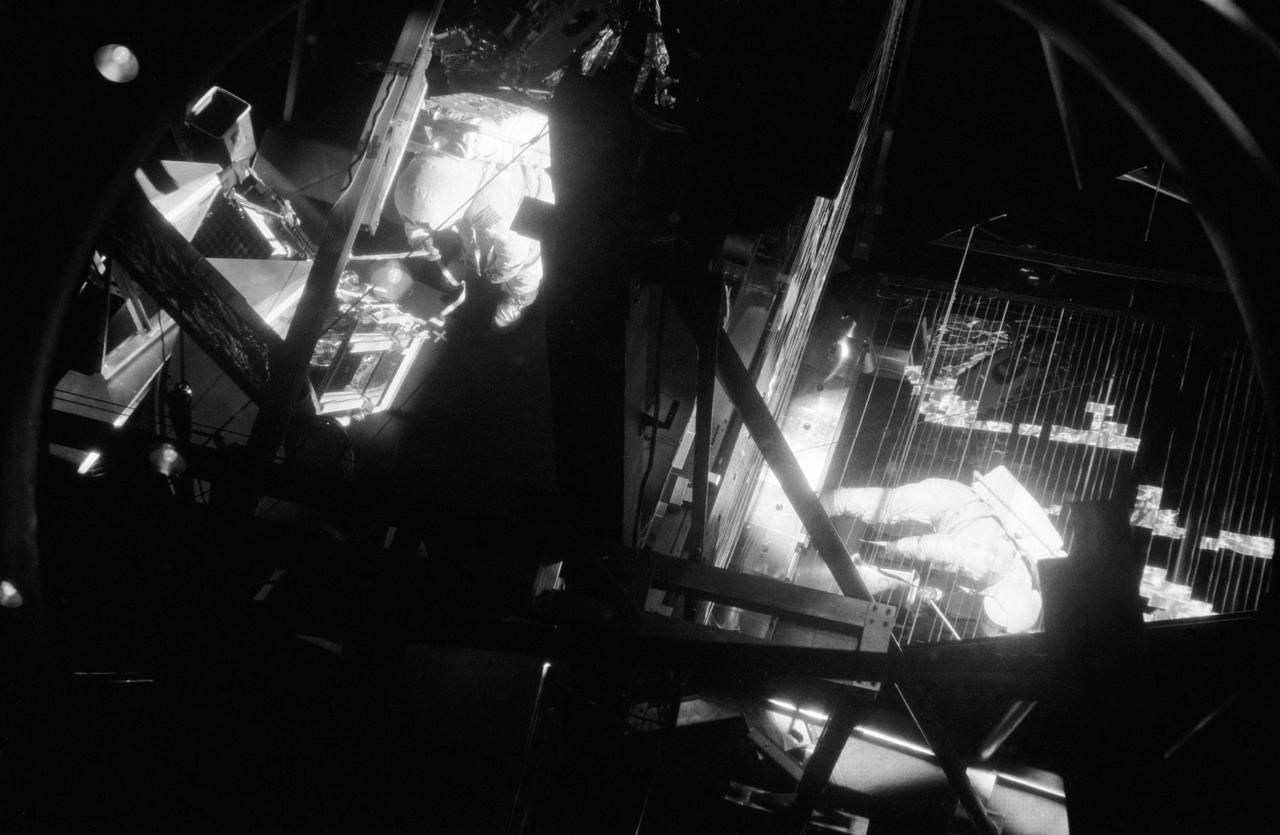
Astronaut Neil A. Armstrong, commander of the Apollo 11 lunar landing mission, is photographed during thermovacuum training in Chamber B of the Space Environment Simulation Laboratory, Building 32, Manned Spacecraft Center. He is wearing an Extravehicular Mobility Unit. The training simulated lunar surface vacuum and thermal conditions during astronaut operations outside the Lunar Module on the moon's surface. The mirror was used to reflect solar light.
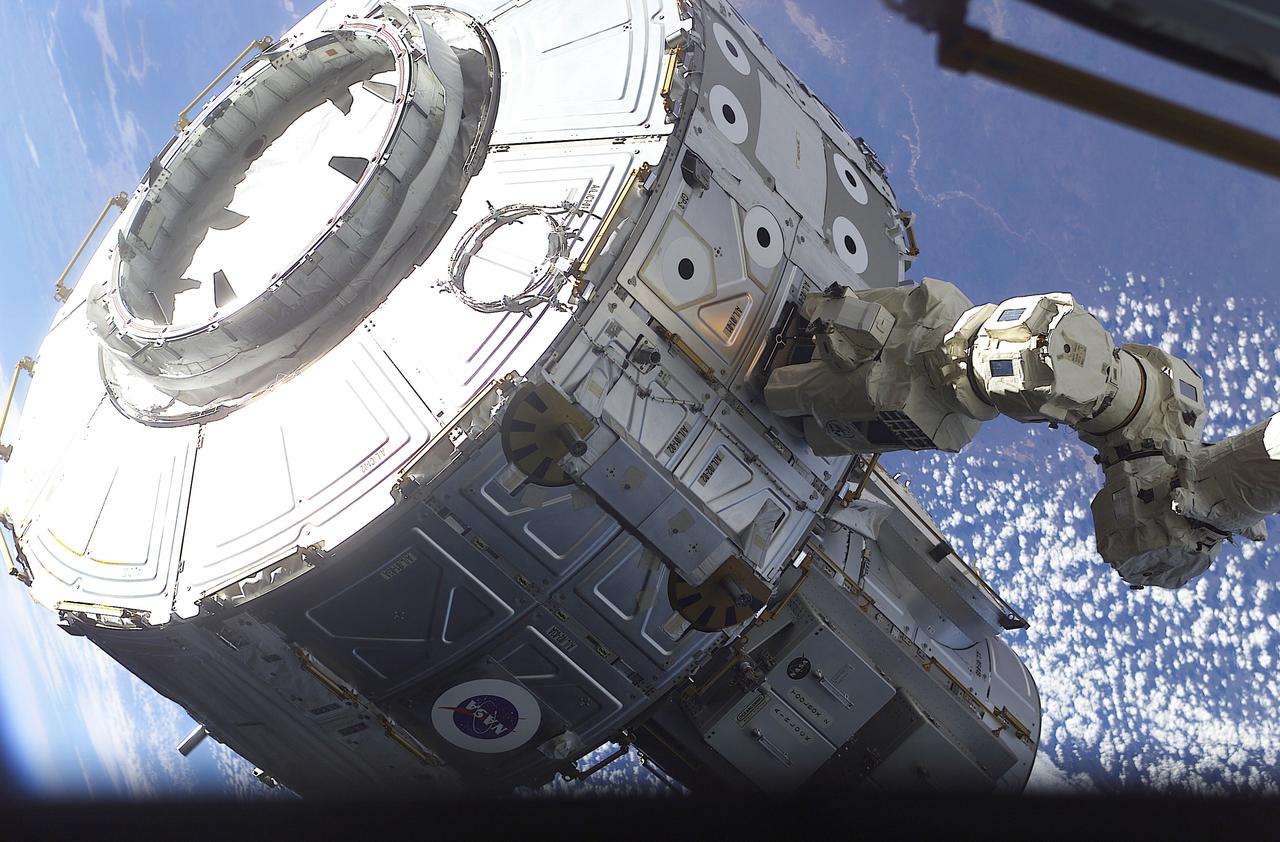
At the control of Expedition Two Flight Engineer Susan B. Helms, the newly-installed Canadian-built Canadarm2, Space Station Remote Manipulator System (SSRMS) maneuvers the Quest Airlock into the proper position to be mated onto the starboard side of the Unity Node I during the first of three extravehicular activities (EVA) of the STS-104 mission. The Quest Airlock makes it easier to perform space walks, and allows both Russian and American spacesuits to be worn when the Shuttle is not docked with the International Space Station (ISS). American suits will not fit through Russion airlocks at the Station. The Boeing Company, the space station prime contractor, built the 6.5-ton (5.8 metric ton) airlock and several other key components at the Marshall Space Flight Center (MSFC), in the same building where the Saturn V rocket was built. Installation activities were supported by the development team from the Payload Operations Control Center (POCC) located at the MSFC and the Mission Control Center at NASA's Johnson Space Flight Center in Houston, Texas.
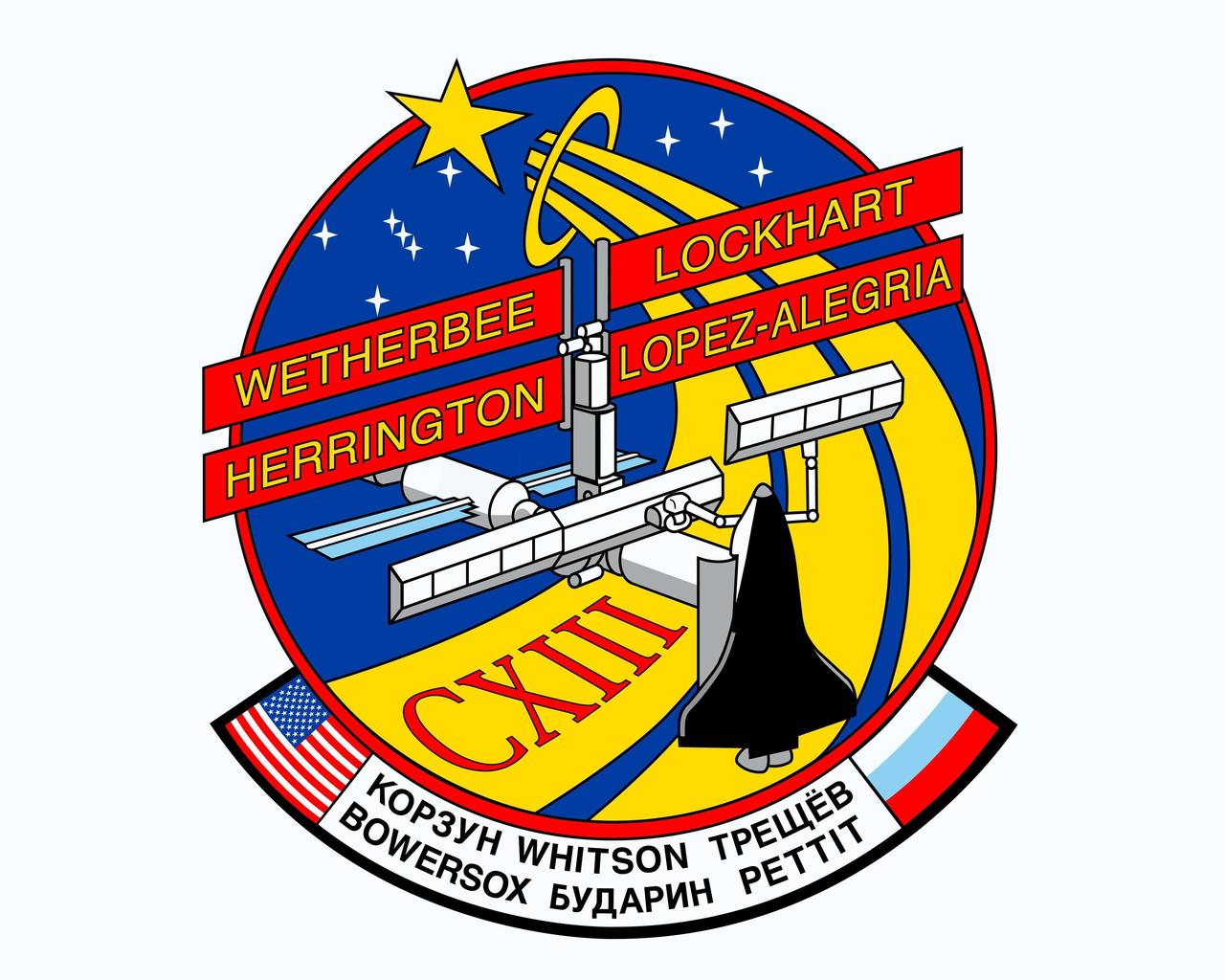
JOHNSON SPACE CENTER, HOUSTON, TEXAS - (STS113-S-001 September 2002) -- This is the crew patch for the STS-113 mission, which will be the 11th American (11A) assembly flight to the International Space Station (ISS). The primary mission will be to take the Expedition Six crew to the ISS and return the Expedition Five crew to Earth. STS-113 will be the first flight in the assembly sequence to install a major component in addition to performing a crew exchange. The Port 1 Integrated Truss Assembly (P1) will be the first truss segment on the left side of the ISS. P1 will provide an additinal three External Thermal Control System radiators, adding to the three radiators on the Starboard 1 (S1) Integrated Truss Assembly. The installation and outfitting of P1 will require three extravehicular activities (spacewalks) as well as coordination between the Shuttle Robotic Manipulator System and the Space Station Robotic Manipulator System. The patch depicts the Space Shuttle Endeavour docked to the ISS during the installation of the P1 truss withthe gold astronaut symbol in the background. The seven stars at the top left center of the patch are the seven brightest stars in the constellation Orion. They represent the combined seven crew members (four Shuttle and three Expedition Six). The three stars to the right of the astronaut symbol represent the returning Expedition Five crew members. The Roman Numeral CXIII represents the mission number 113. The NASA insignia design for Shuttle space flights is reserved for use by the astronauts and other official use as the NASA Administrator may authorize. Public availability has been approved only in the form of illustrations by the various news media. When and if there is any change in this policy, which is not anticipated, such will be publicly announced.