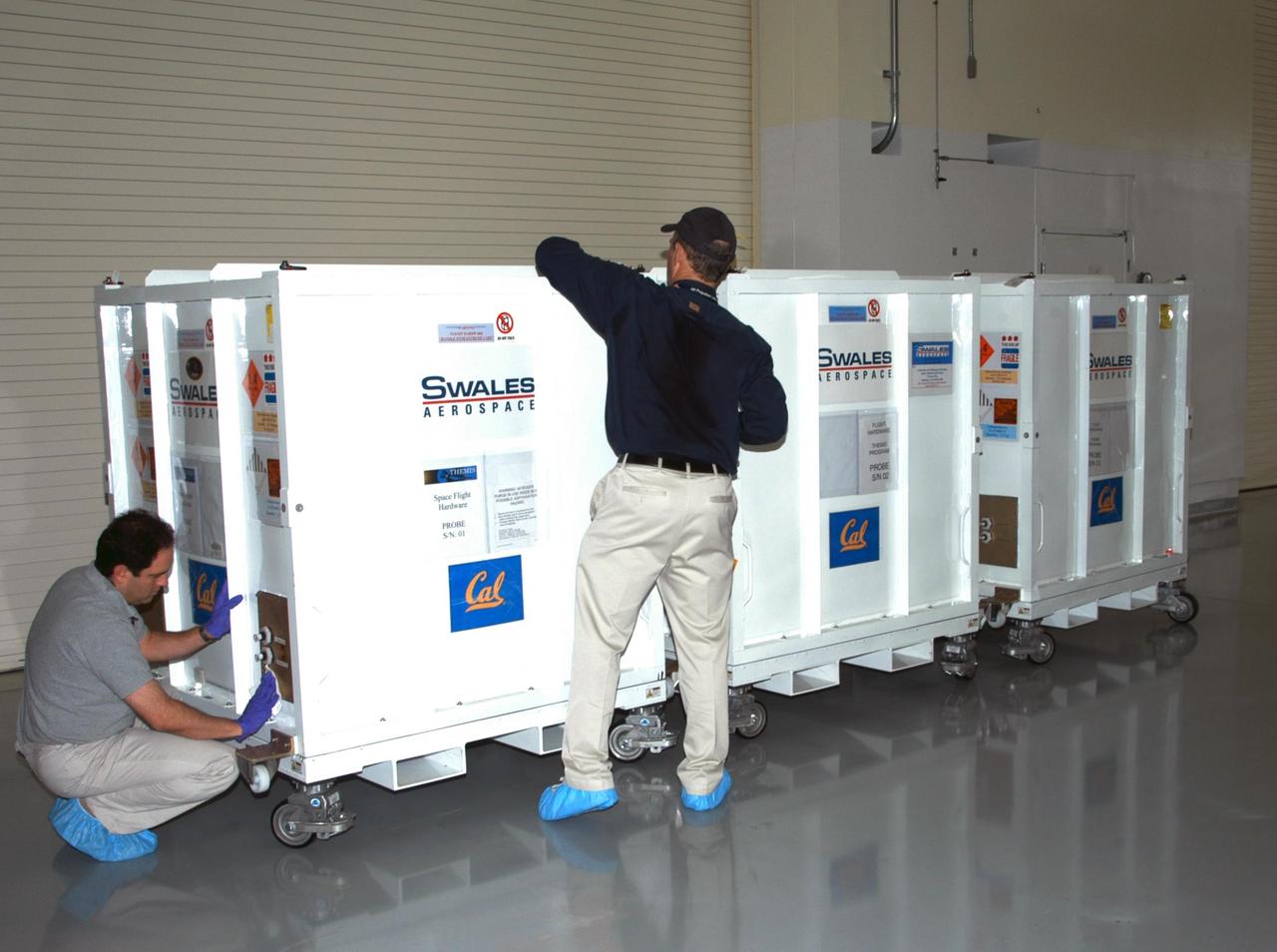
KENNEDY SPACE CENTER, FLA. -- Workers at Astrotech Space Operations in Titusville, Fla., wipe down the crates containing the probes of the THEMIS spacecraft. THEMIS, which stands for Time History of Events and Macroscale Interactions during Substorms, comprises five identical probes that will study the dynamic and colorful eruptions of auroras. THEMIS is scheduled to launch Feb. 15 from Cape Canaveral Air Force Station. Photo credit: NASA/George Shelton
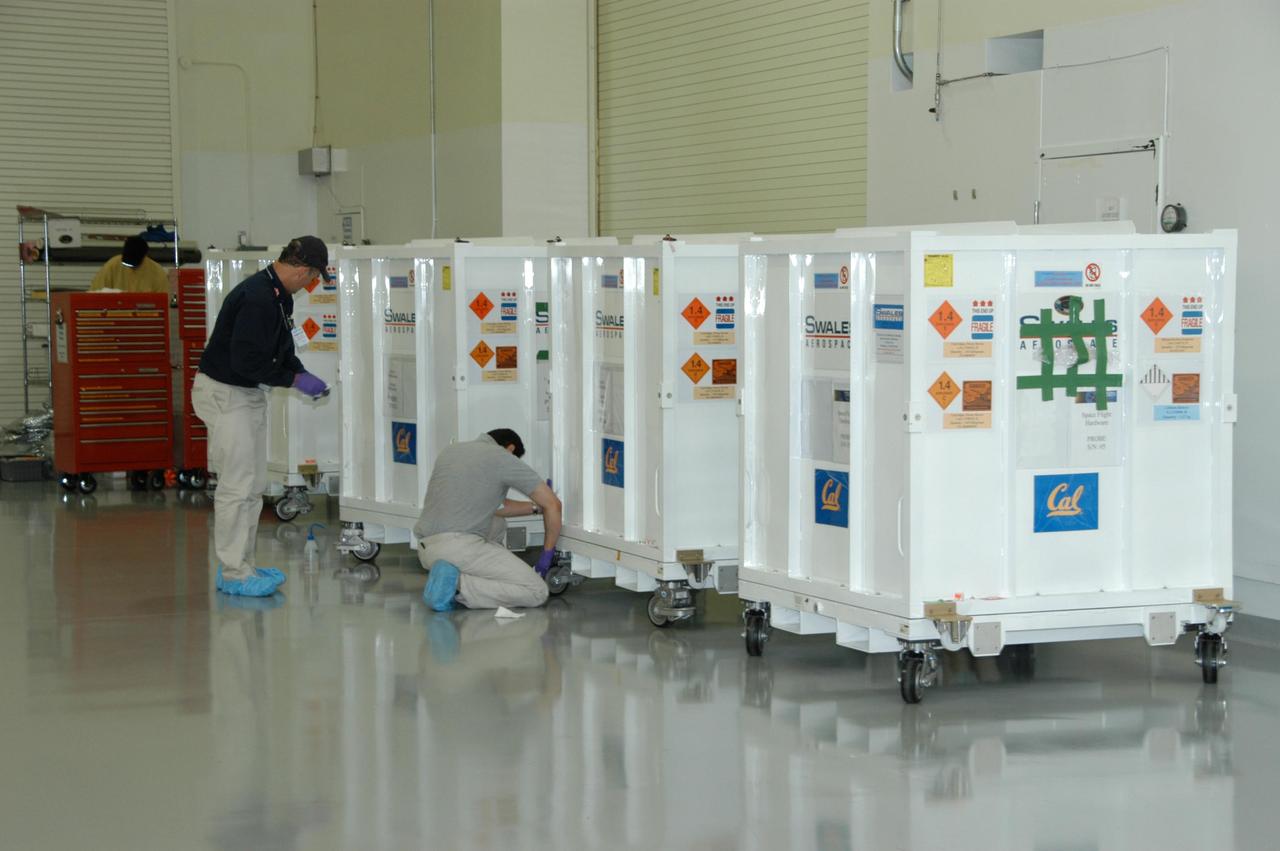
KENNEDY SPACE CENTER, FLA. -- Workers at Astrotech Space Operations in Titusville, Fla., wipe down the crates containing the probes of the THEMIS spacecraft. THEMIS, which stands for Time History of Events and Macroscale Interactions during Substorms, comprises five identical probes that will study the dynamic and colorful eruptions of auroras. THEMIS is scheduled to launch Feb. 15 from Cape Canaveral Air Force Station. Photo credit: NASA/George Shelton
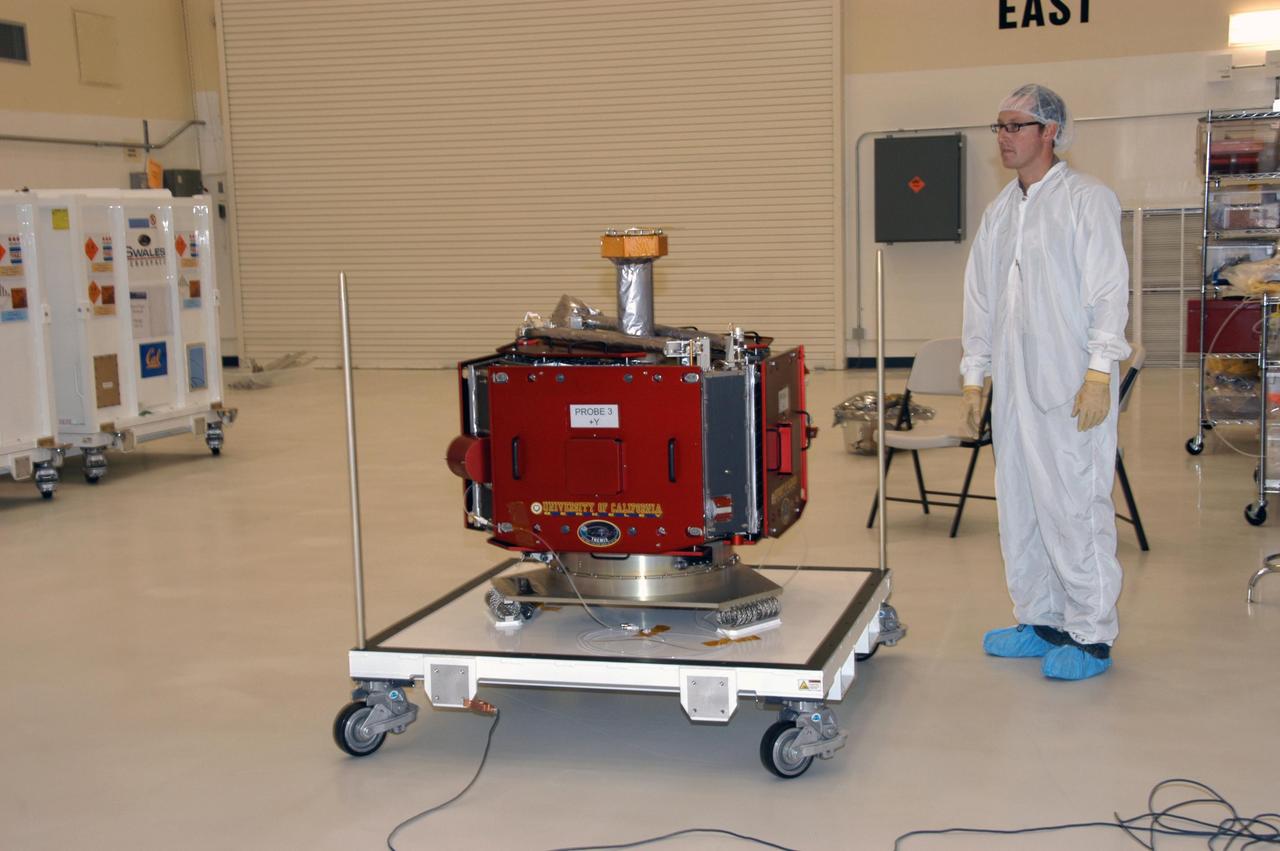
KENNEDY SPACE CENTER, FLA. -- At Astrotech Space Operations in Titusville, Fla., one of the probes of the THEMIS spacecraft is revealed after the crate and cover were removed. THEMIS, which stands for Time History of Events and Macroscale Interactions during Substorms, comprises five identical probes that will study the dynamic and colorful eruptions of auroras. THEMIS is scheduled to launch Feb. 15 from Cape Canaveral Air Force Station. Photo credit: NASA/George Shelton
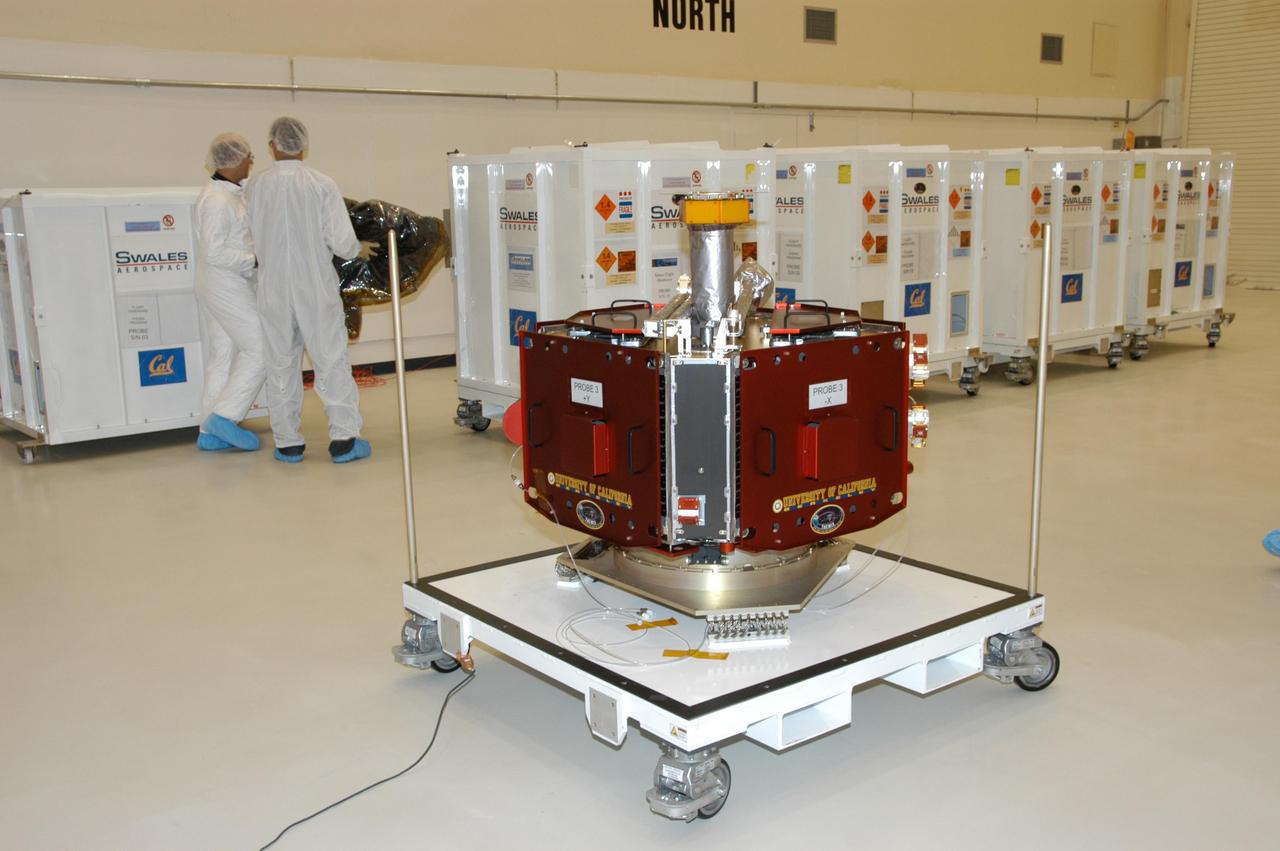
KENNEDY SPACE CENTER, FLA. -- At Astrotech Space Operations in Titusville, Fla., one of the probes of the THEMIS spacecraft is revealed after the crate and cover were removed. THEMIS, which stands for Time History of Events and Macroscale Interactions during Substorms, comprises five identical probes that will study the dynamic and colorful eruptions of auroras. THEMIS is scheduled to launch Feb. 15 from Cape Canaveral Air Force Station. Photo credit: NASA/George Shelton

KENNEDY SPACE CENTER, FLA. -- One of several crates containing the components of the THEMIS spacecraft is offloaded from a truck at Astrotech Space Operations in Titusville, Fla. THEMIS, which stands for Time History of Events and Macroscale Interactions during Substorms, comprises five identical probes that will study the dynamic and colorful eruptions of auroras. THEMIS is scheduled to launch Feb. 15 from Cape Canaveral Air Force Station. Photo credit: NASA/George Shelton
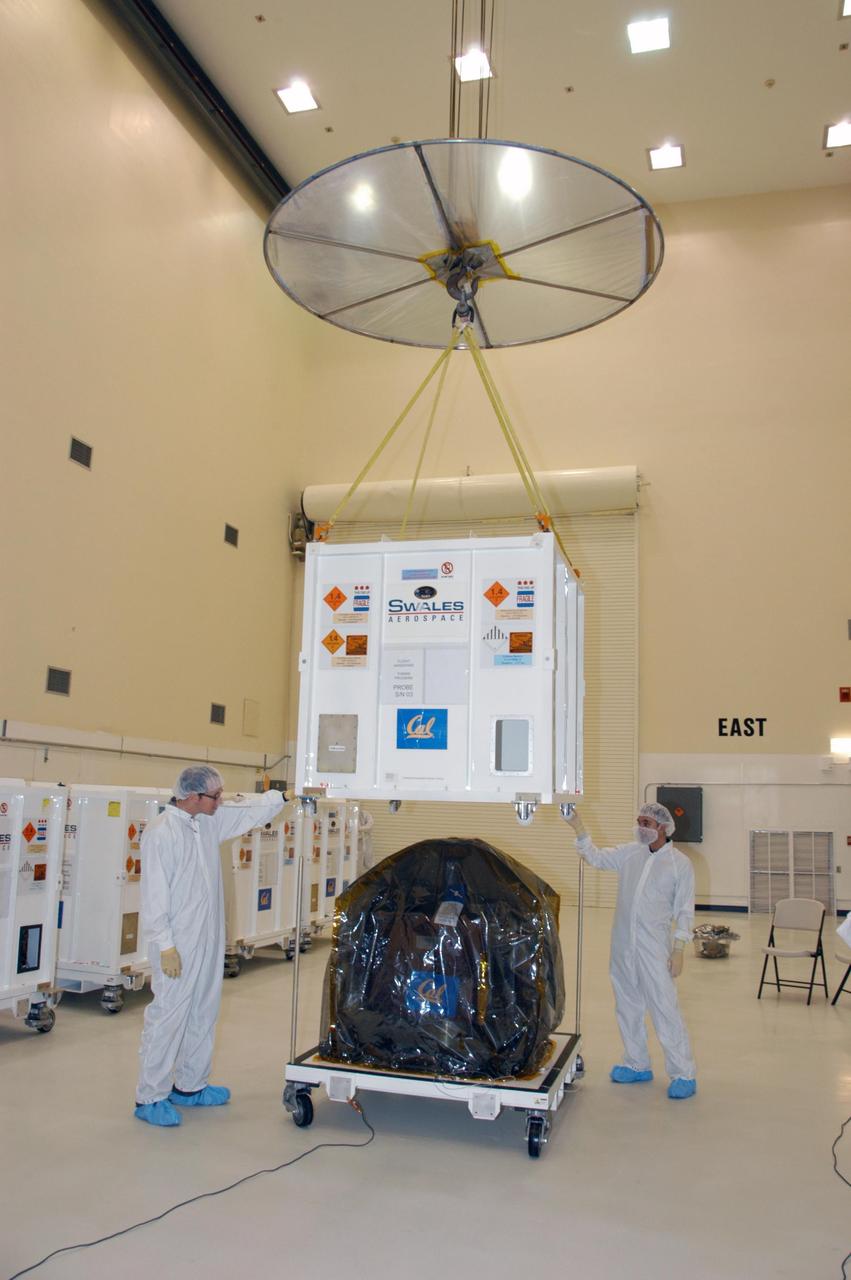
KENNEDY SPACE CENTER, FLA. -- With workers standing by at Astrotech Space Operations in Titusville, Fla., an overhead crane lifts the crate from one of the components of the recently arrived THEMIS spacecraft. THEMIS, which stands for Time History of Events and Macroscale Interactions during Substorms, comprises five identical probes that will study the dynamic and colorful eruptions of auroras. THEMIS is scheduled to launch Feb. 15 from Cape Canaveral Air Force Station. Photo credit: NASA/George Shelton
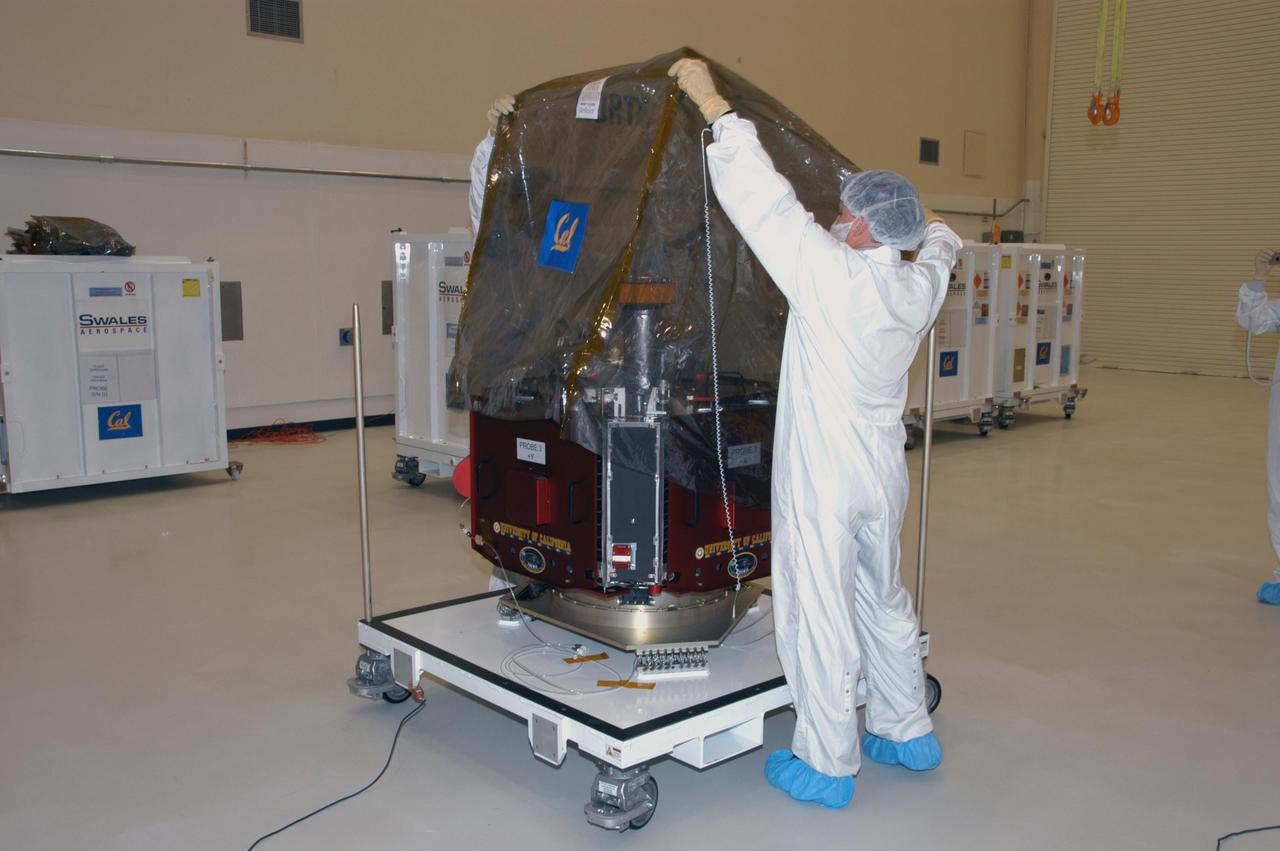
KENNEDY SPACE CENTER, FLA. -- At Astrotech Space Operations in Titusville, Fla., a worker removes the protective cover from one of the components of the recently arrived THEMIS spacecraft. THEMIS, which stands for Time History of Events and Macroscale Interactions during Substorms, comprises five identical probes that will study the dynamic and colorful eruptions of auroras. THEMIS is scheduled to launch Feb. 15 from Cape Canaveral Air Force Station. Photo credit: NASA/George Shelton
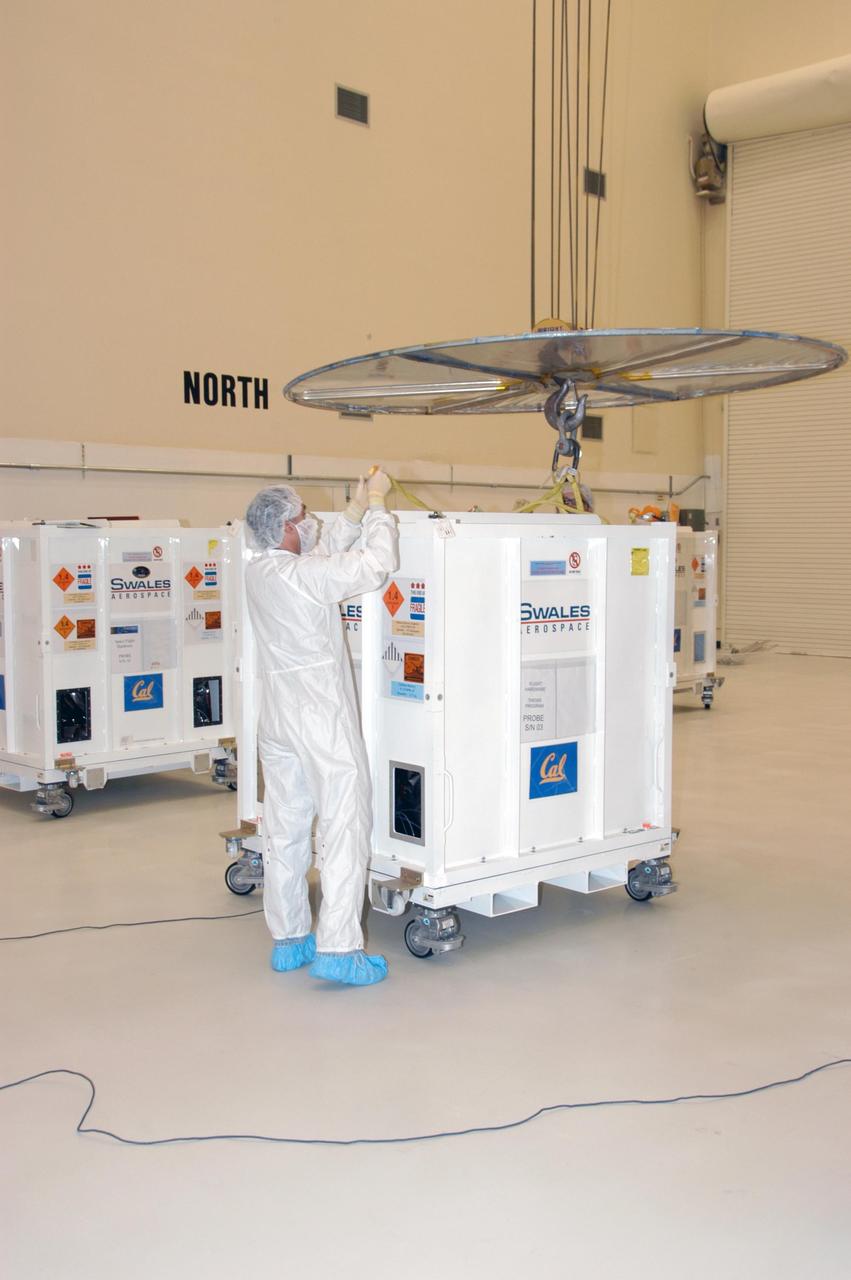
KENNEDY SPACE CENTER, FLA. -- At Astrotech Space Operations in Titusville, Fla., an overhead crane is in position to lift the crate from one of the components of the recently arrived THEMIS spacecraft. THEMIS, which stands for Time History of Events and Macroscale Interactions during Substorms, comprises five identical probes that will study the dynamic and colorful eruptions of auroras. THEMIS is scheduled to launch Feb. 15 from Cape Canaveral Air Force Station. Photo credit: NASA/George Shelton
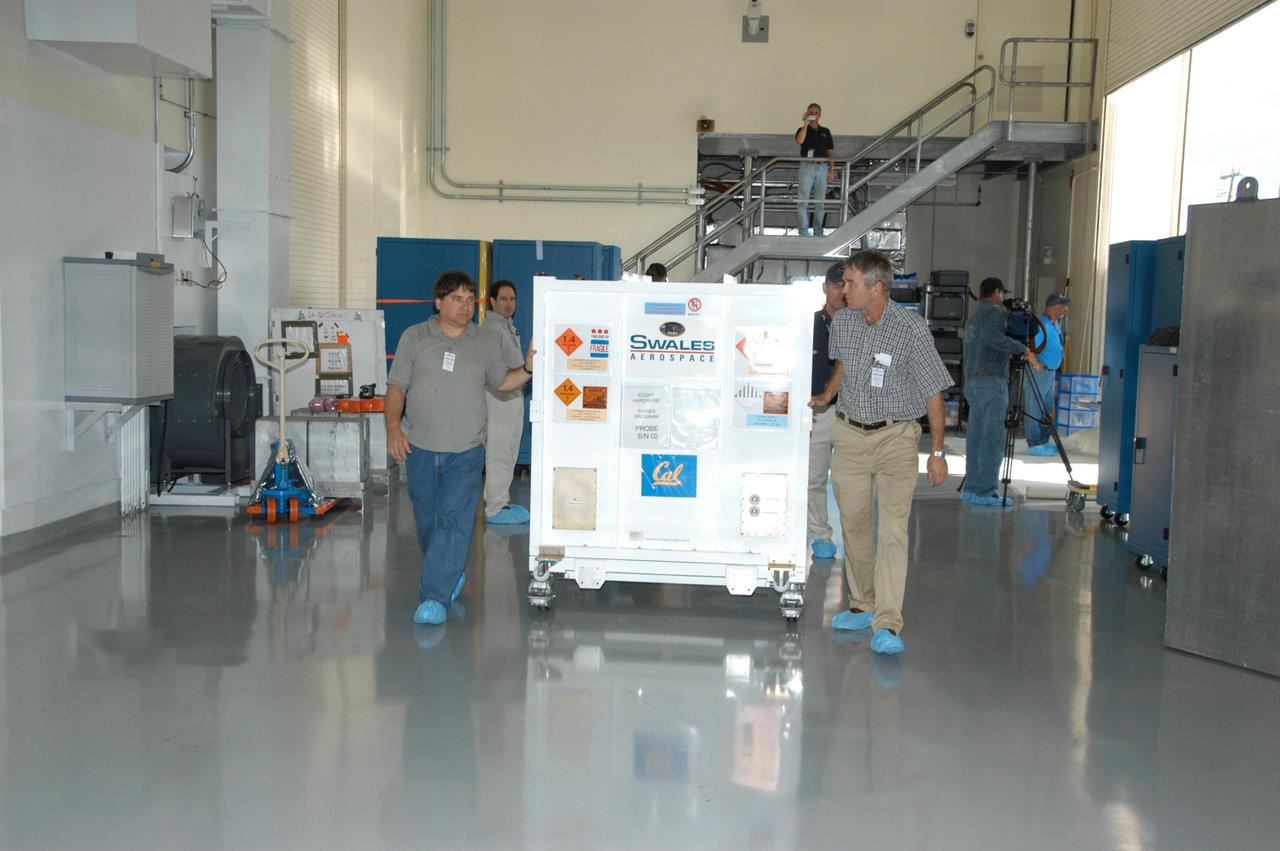
KENNEDY SPACE CENTER, FLA. -- One of several crates containing the components of the THEMIS spacecraft is moved into Astrotech Space Operations in Titusville, Fla. THEMIS, which stands for Time History of Events and Macroscale Interactions during Substorms, comprises five identical probes that will study the dynamic and colorful eruptions of auroras. THEMIS is scheduled to launch Feb. 15 from Cape Canaveral Air Force Station. Photo credit: NASA/George Shelton
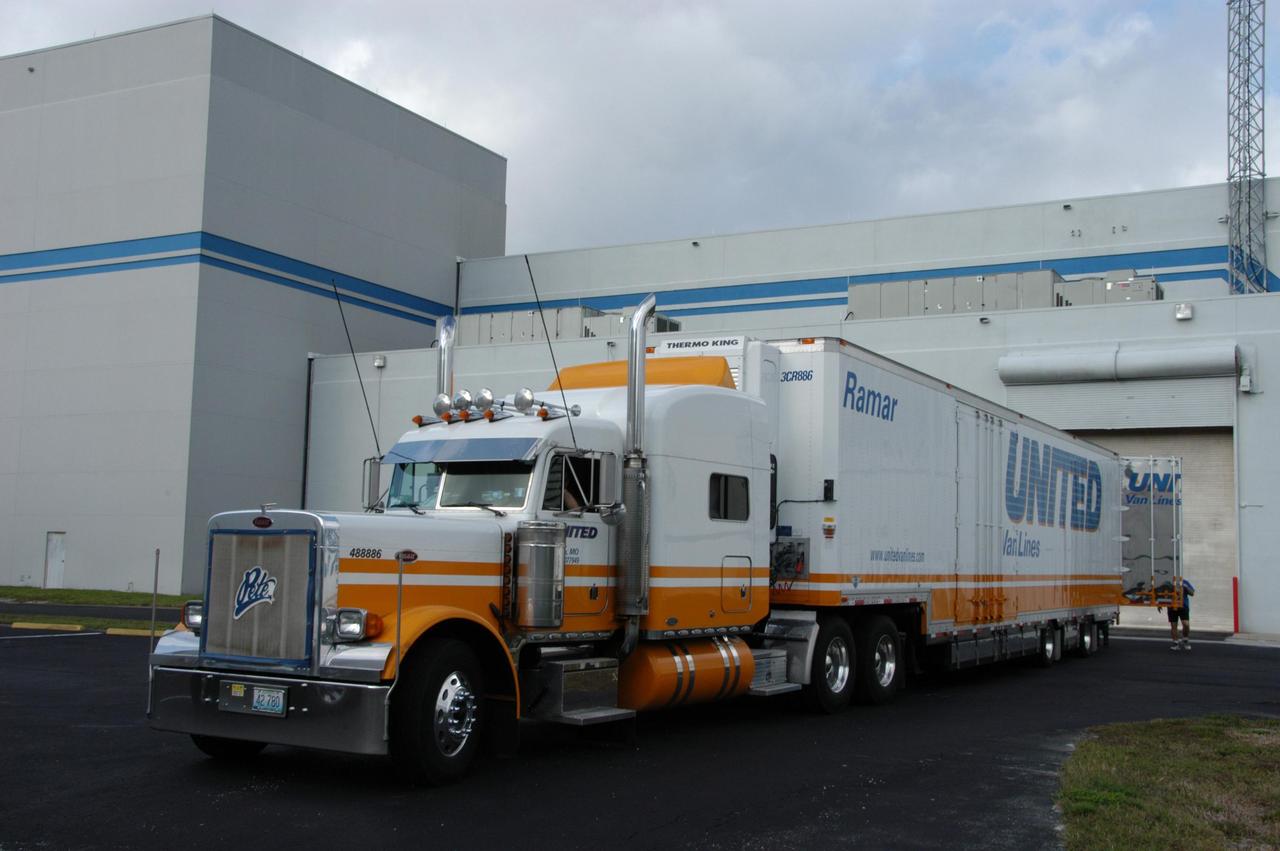
KENNEDY SPACE CENTER, FLA. -- The truck carrying the THEMIS spacecraft arrives at Astrotech Space Operations in Titusville, Fla. THEMIS, which stands for Time History of Events and Macroscale Interactions during Substorms, comprises five identical probes that will study the dynamic and colorful eruptions of auroras. THEMIS is scheduled to launch Feb. 15 from Cape Canaveral Air Force Station. Photo credit: NASA/George Shelton
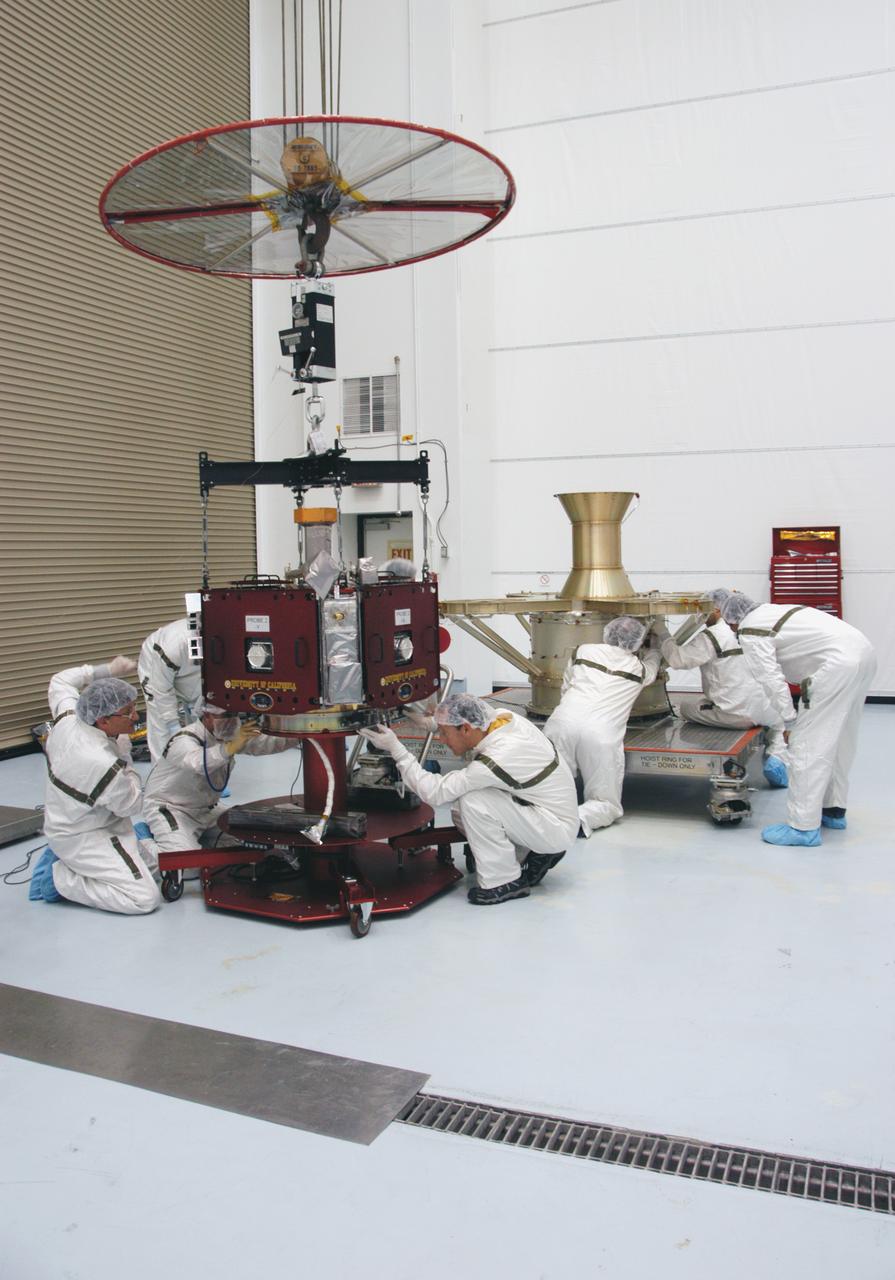
At Astrotech Space Operations, technicians adjust connections of the overhead crane on one of the THEMIS probes. The probe and its other four mates will be lifted and installed on the probe carrier in the background. The probes will then undergo spin-balance testing. THEMIS consists of five identical probes, the largest number of scientific satellites ever launched into orbit aboard a single rocket. This unique constellation of satellites will resolve the tantalizing mystery of what causes the spectacular sudden brightening of the aurora borealis and aurora australis - the fiery skies over the Earth's northern and southern polar regions. THEMIS is scheduled to launch Feb. 15 from Cape Canaveral Air Force Station.

KENNEDY SPACE CENTER, FLA. -- At Astrotech Space Operations, a technician helps guide one of the THEMIS probes toward the probe carrier for installation. When all five probes are in place, the carrier will undergo spin-balance testing. THEMIS consists of five identical probes, the largest number of scientific satellites ever launched into orbit aboard a single rocket. This unique constellation of satellites will resolve the tantalizing mystery of what causes the spectacular sudden brightening of the aurora borealis and aurora australis - the fiery skies over the Earth's northern and southern polar regions. THEMIS is scheduled to launch Feb. 15 from Cape Canaveral Air Force Station. Photo credit: NASA/George Shelton

At Astrotech Space Operations, technicians guide one of the THEMIS probes into position on the probe carrier. When all five probes are in place, the carrier will undergo spin-balance testing. THEMIS consists of five identical probes, the largest number of scientific satellites ever launched into orbit aboard a single rocket. This unique constellation of satellites will resolve the tantalizing mystery of what causes the spectacular sudden brightening of the aurora borealis and aurora australis - the fiery skies over the Earth's northern and southern polar regions. THEMIS is scheduled to launch Feb. 15 from Cape Canaveral Air Force Station.

At Astrotech Space Operations, a technician helps guide one of the THEMIS probes toward the probe carrier for installation. When all five probes are in place, the carrier will undergo spin-balance testing. THEMIS consists of five identical probes, the largest number of scientific satellites ever launched into orbit aboard a single rocket. This unique constellation of satellites will resolve the tantalizing mystery of what causes the spectacular sudden brightening of the aurora borealis and aurora australis - the fiery skies over the Earth's northern and southern polar regions. THEMIS is scheduled to launch Feb. 15 from Cape Canaveral Air Force Station.
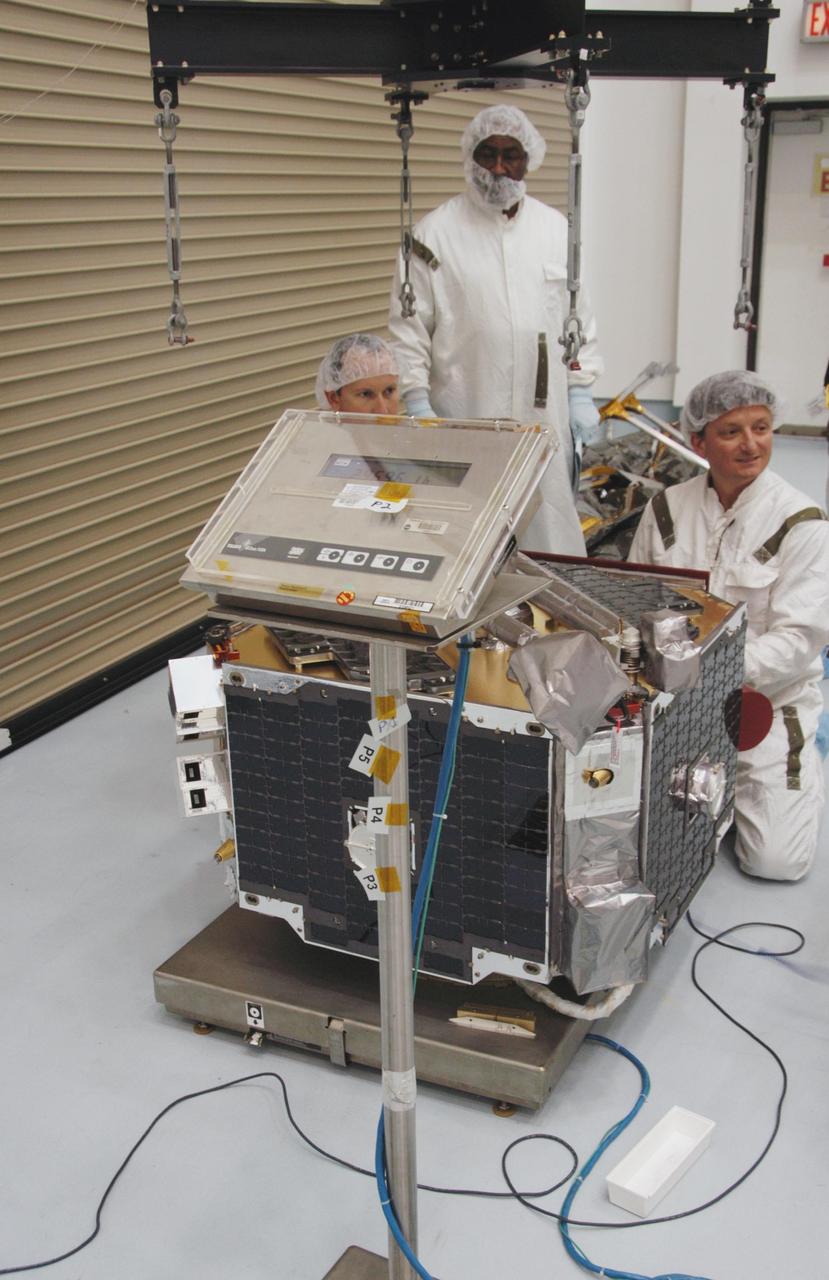
KENNEDY SPACE CENTER, FLA. -- At Astrotech Space Operations, technicians weigh one of the THEMIS probes. Next the probe will be installed on a probe carrier, along with is four mates, and then undergo spin-balance testing. THEMIS consists of five identical probes, the largest number of scientific satellites ever launched into orbit aboard a single rocket. This unique constellation of satellites will resolve the tantalizing mystery of what causes the spectacular sudden brightening of the aurora borealis and aurora australis - the fiery skies over the Earth's northern and southern polar regions. THEMIS is scheduled to launch Feb. 15 from Cape Canaveral Air Force Station. Photo credit: NASA/George Shelton

KENNEDY SPACE CENTER, FLA. -- At Astrotech Space Operations, technicians guide one of the THEMIS probes into position on the probe carrier. When all five probes are in place, the carrier will undergo spin-balance testing. THEMIS consists of five identical probes, the largest number of scientific satellites ever launched into orbit aboard a single rocket. This unique constellation of satellites will resolve the tantalizing mystery of what causes the spectacular sudden brightening of the aurora borealis and aurora australis - the fiery skies over the Earth's northern and southern polar regions. THEMIS is scheduled to launch Feb. 15 from Cape Canaveral Air Force Station. Photo credit: NASA/George Shelton
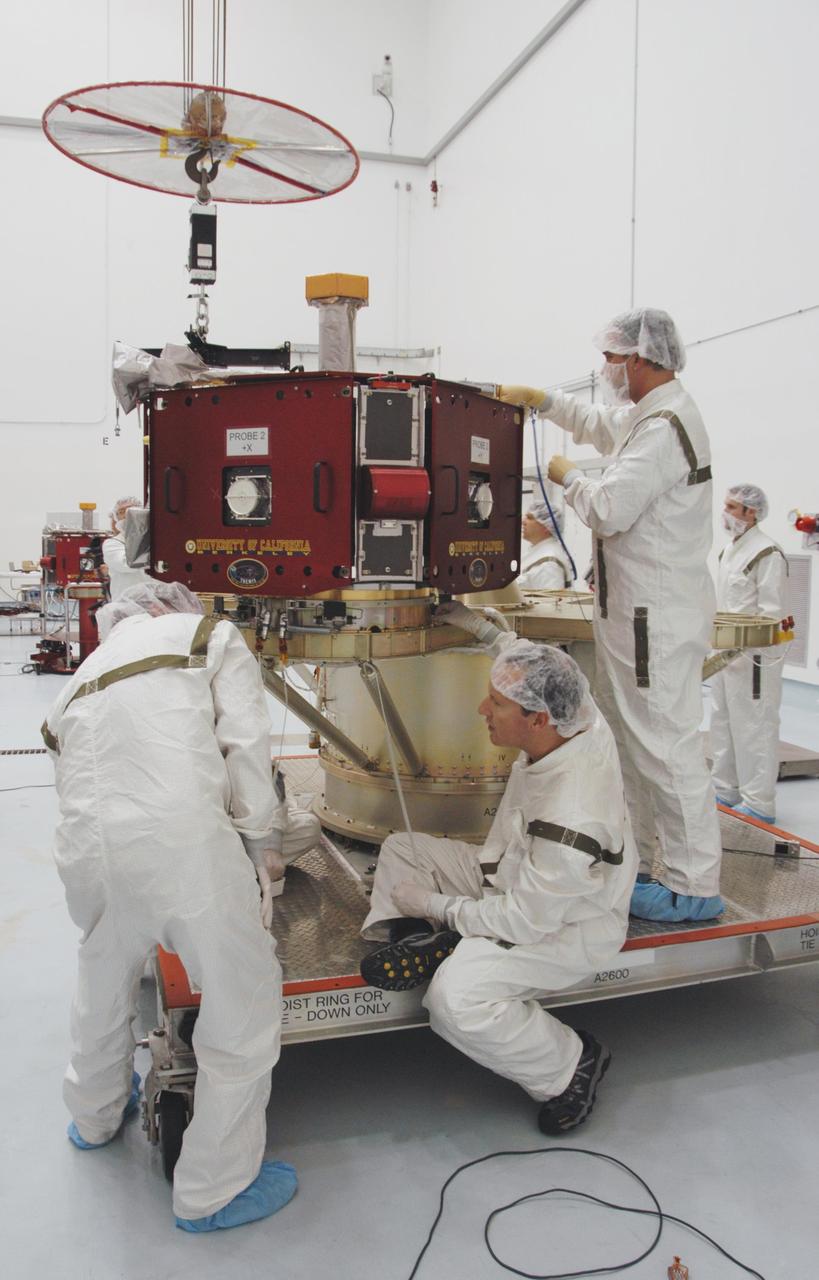
KENNEDY SPACE CENTER, FLA. -- At Astrotech Space Operations, technicians guide one of the THEMIS probes into position on the probe carrier. When all five probes are in place, the carrier will undergo spin-balance testing. THEMIS consists of five identical probes, the largest number of scientific satellites ever launched into orbit aboard a single rocket. This unique constellation of satellites will resolve the tantalizing mystery of what causes the spectacular sudden brightening of the aurora borealis and aurora australis - the fiery skies over the Earth's northern and southern polar regions. THEMIS is scheduled to launch Feb. 15 from Cape Canaveral Air Force Station. Photo credit: NASA/George Shelton

At Astrotech Space Operations, technicians guide one of the THEMIS probes into position on the probe carrier. When all five probes are in place, the carrier will undergo spin-balance testing. THEMIS consists of five identical probes, the largest number of scientific satellites ever launched into orbit aboard a single rocket. This unique constellation of satellites will resolve the tantalizing mystery of what causes the spectacular sudden brightening of the aurora borealis and aurora australis - the fiery skies over the Earth's northern and southern polar regions. THEMIS is scheduled to launch Feb. 15 from Cape Canaveral Air Force Station.
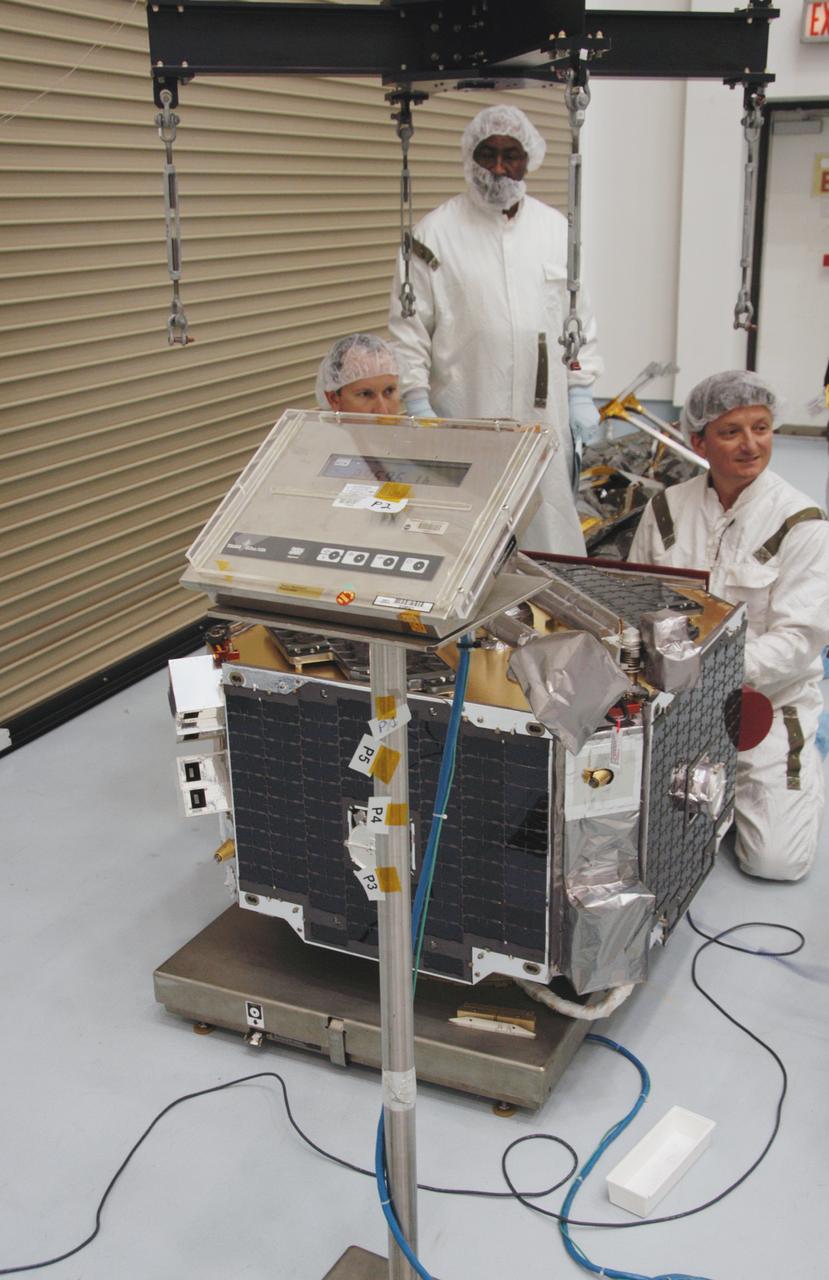
At Astrotech Space Operations, technicians weigh one of the THEMIS probes. Next the probe will be installed on a probe carrier, along with is four mates, and then undergo spin-balance testing. THEMIS consists of five identical probes, the largest number of scientific satellites ever launched into orbit aboard a single rocket. This unique constellation of satellites will resolve the tantalizing mystery of what causes the spectacular sudden brightening of the aurora borealis and aurora australis - the fiery skies over the Earth's northern and southern polar regions. THEMIS is scheduled to launch Feb. 15 from Cape Canaveral Air Force Station.
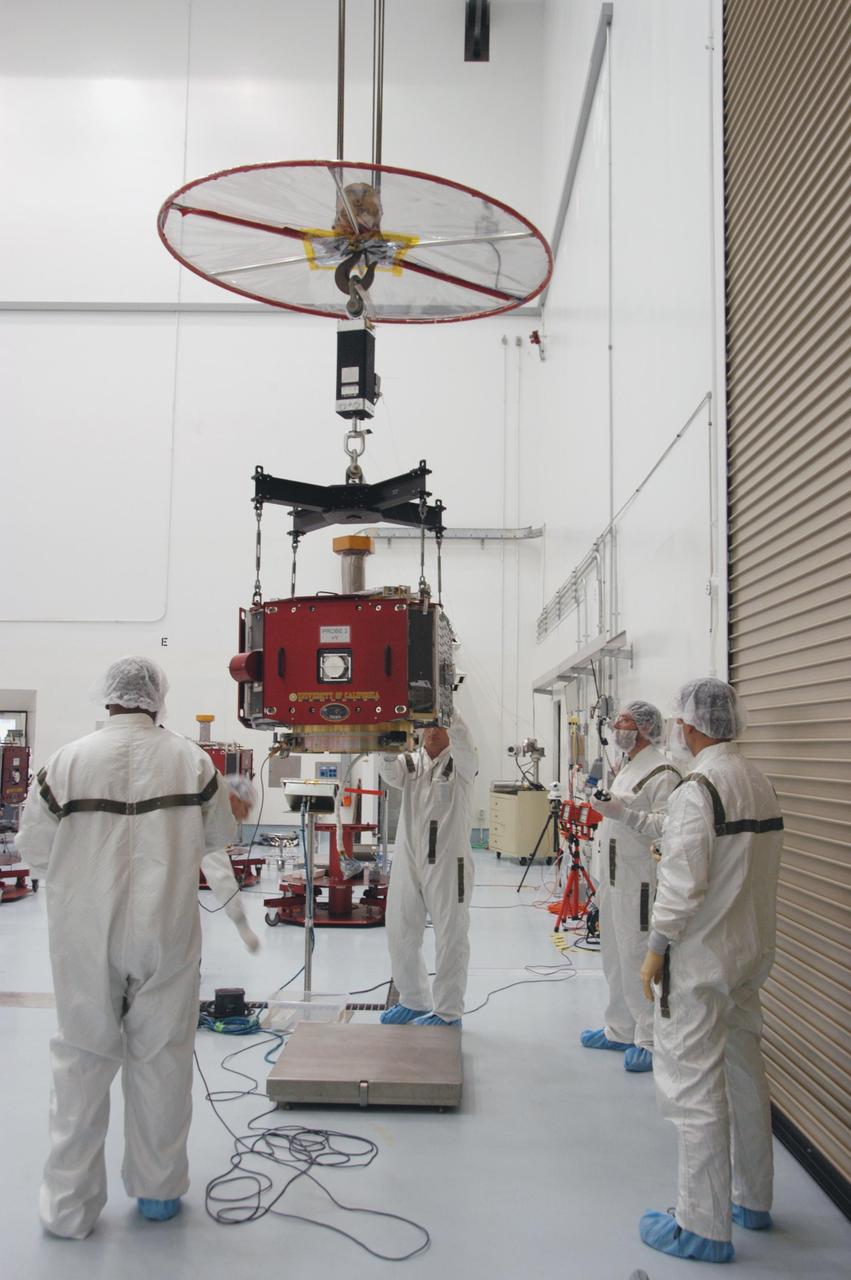
KENNEDY SPACE CENTER, FLA. -- At Astrotech Space Operations, one of the five THEMIS probes is lifted from a scale. It will be moved to a probe carrier for installation, along with its four mates, and then undergo spin-balance testing. THEMIS consists of five identical probes, the largest number of scientific satellites ever launched into orbit aboard a single rocket. This unique constellation of satellites will resolve the tantalizing mystery of what causes the spectacular sudden brightening of the aurora borealis and aurora australis - the fiery skies over the Earth's northern and southern polar regions. THEMIS is scheduled to launch Feb. 15 from Cape Canaveral Air Force Station. Photo credit: NASA/George Shelton
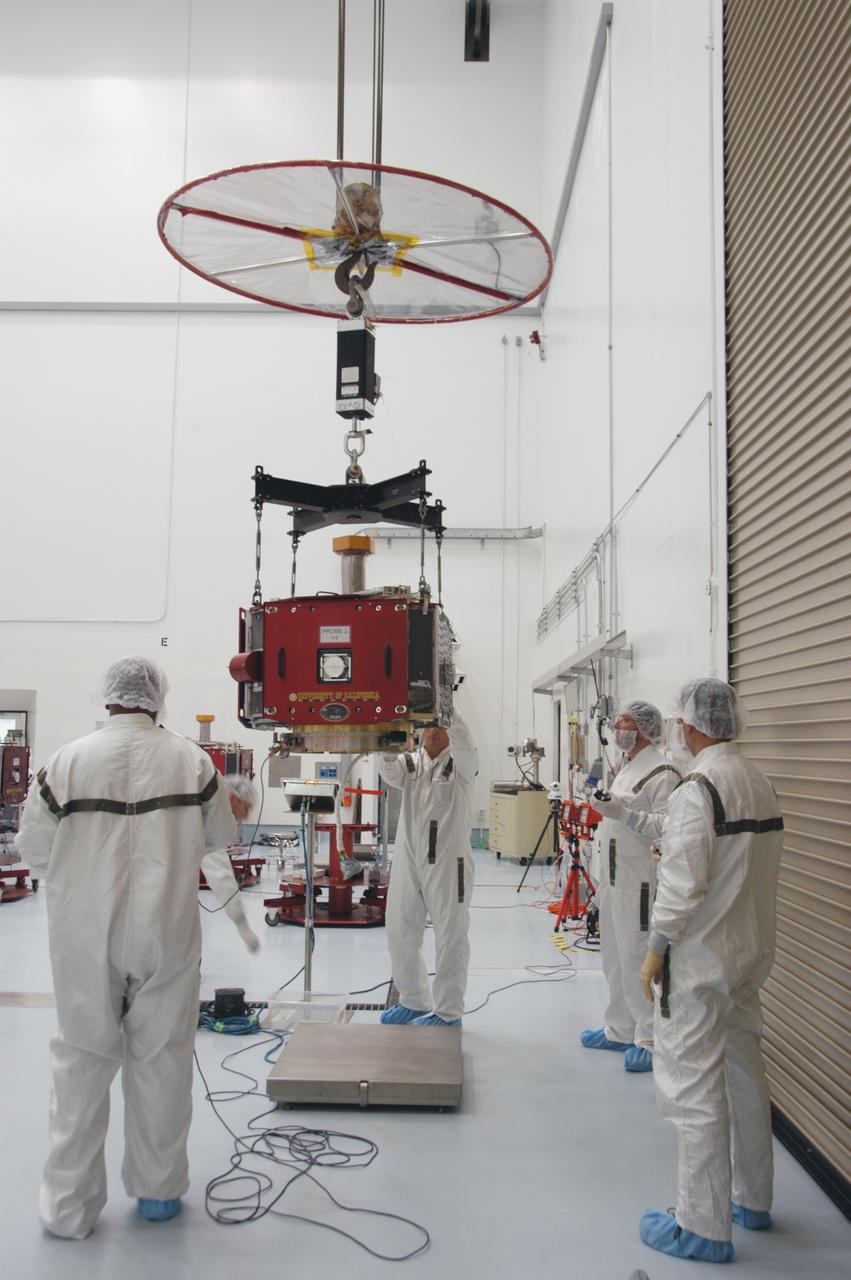
At Astrotech Space Operations, one of the five THEMIS probes is lifted from a scale. It will be moved to a probe carrier for installation, along with its four mates, and then undergo spin-balance testing. THEMIS consists of five identical probes, the largest number of scientific satellites ever launched into orbit aboard a single rocket. This unique constellation of satellites will resolve the tantalizing mystery of what causes the spectacular sudden brightening of the aurora borealis and aurora australis - the fiery skies over the Earth's northern and southern polar regions. THEMIS is scheduled to launch Feb. 15 from Cape Canaveral Air Force Station.
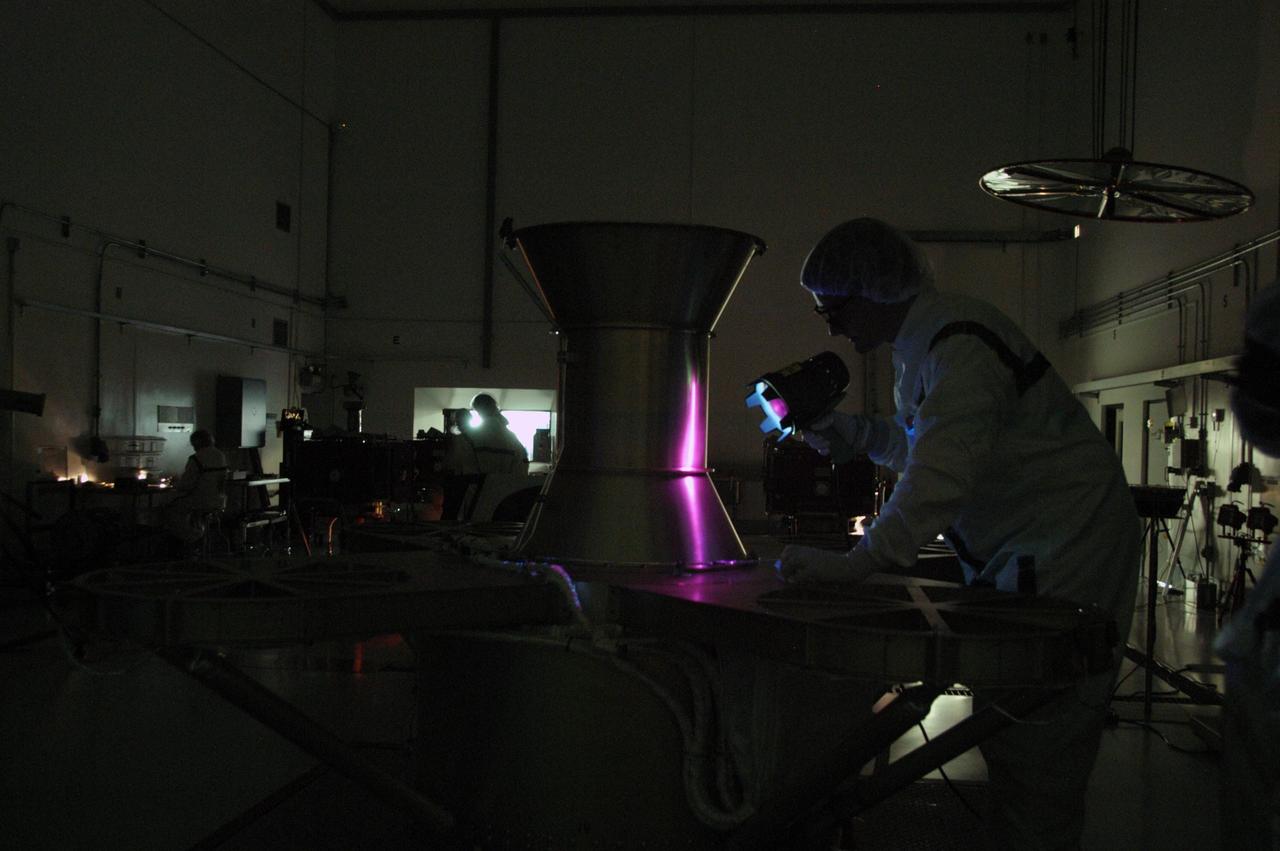
KENNEDY SPACE CENTER, FLA. -- At Astrotech Space Operations, technicians conduct black light inspection of the THEMIS probes. Black light inspection uses UVA fluorescence to detect possible particulate microcontamination, minute cracks or fluid leaks. THEMIS consists of five identical probes, the largest number of scientific satellites ever launched into orbit aboard a single rocket. This unique constellation of satellites will resolve the tantalizing mystery of what causes the spectacular sudden brightening of the aurora borealis and aurora australis - the fiery skies over the Earth's northern and southern polar regions. THEMIS is scheduled to launch Feb. 15 from Cape Canaveral Air Force Station. Photo credit: NASA/George Shelton
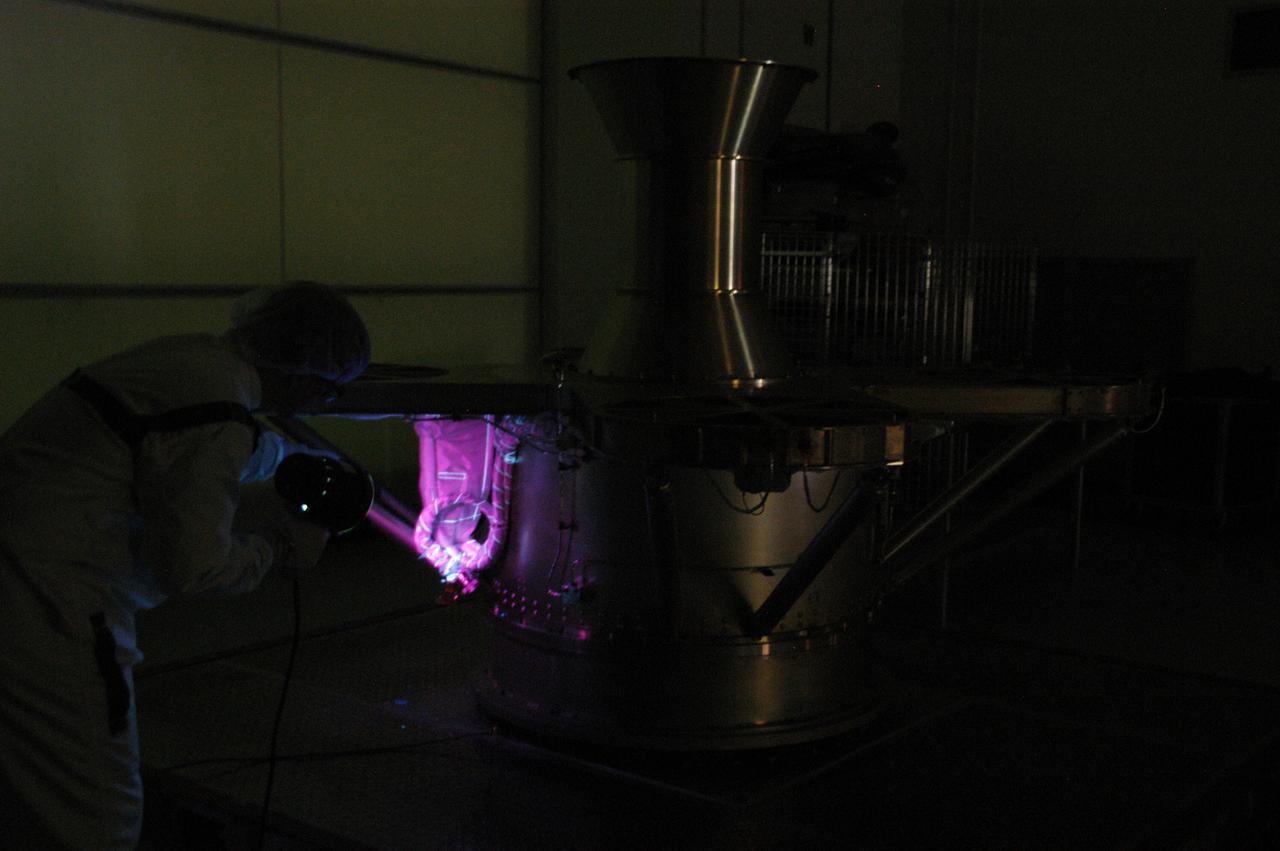
At Astrotech Space Operations, technicians conduct black light inspection of the THEMIS probes. Black light inspection uses UVA fluorescence to detect possible particulate microcontamination, minute cracks or fluid leaks. THEMIS consists of five identical probes, the largest number of scientific satellites ever launched into orbit aboard a single rocket. This unique constellation of satellites will resolve the tantalizing mystery of what causes the spectacular sudden brightening of the aurora borealis and aurora australis - the fiery skies over the Earth's northern and southern polar regions. THEMIS is scheduled to launch Feb. 15 from Cape Canaveral Air Force Station.
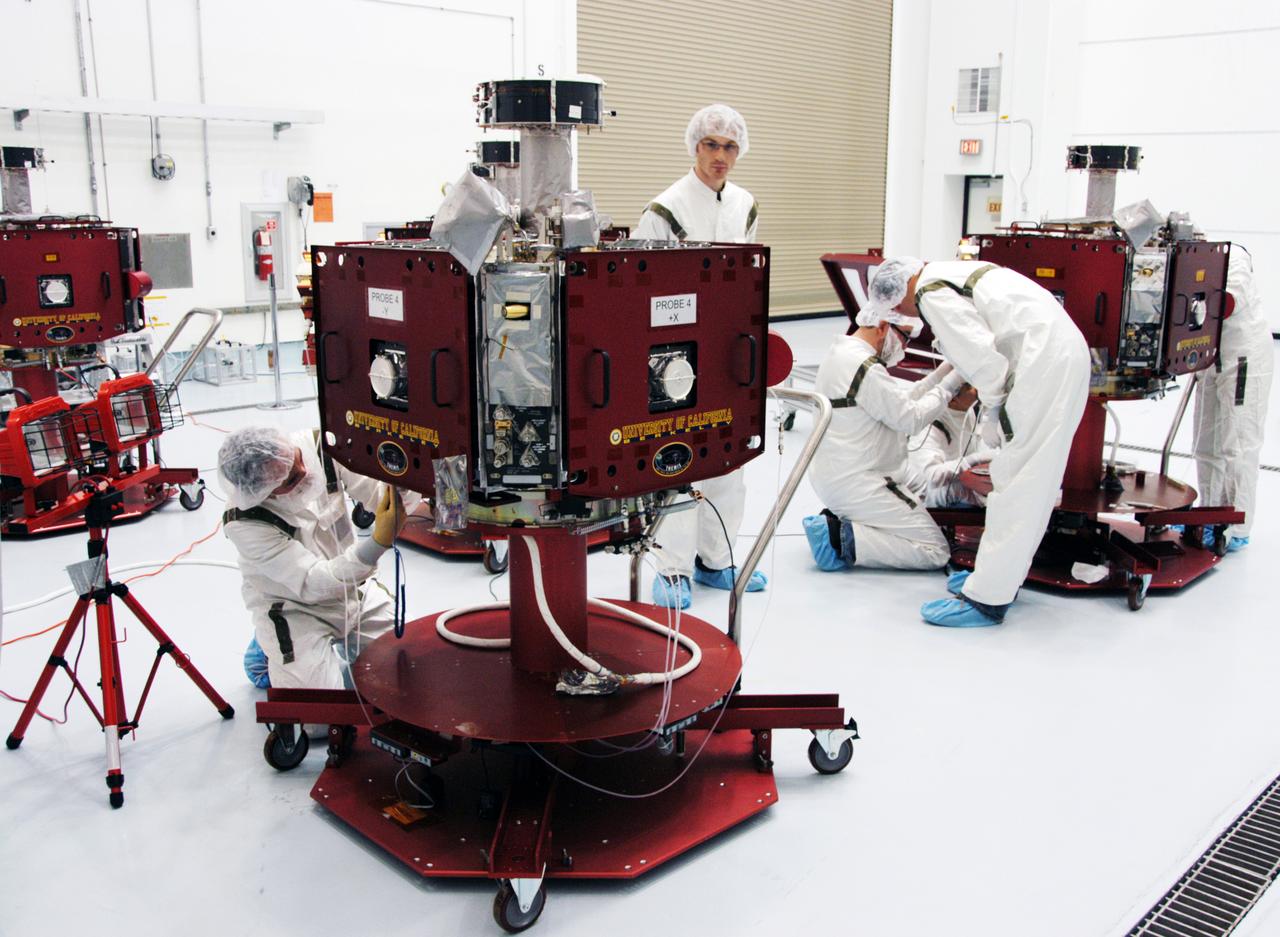
In the Hazardous Processing Facility at Astrotech Space Operations, technicians prepare THEMIS probes for solar array illumination telemetry tests. THEMIS consists of five identical probes, the largest number of scientific satellites ever launched into orbit aboard a single rocket. This unique constellation of satellites will resolve the tantalizing mystery of what causes the spectacular sudden brightening of the aurora borealis and aurora australis - the fiery skies over the Earth's northern and southern polar regions. THEMIS is scheduled to launch aboard the Delta II at 6:07 p.m. EST on Feb. 15.
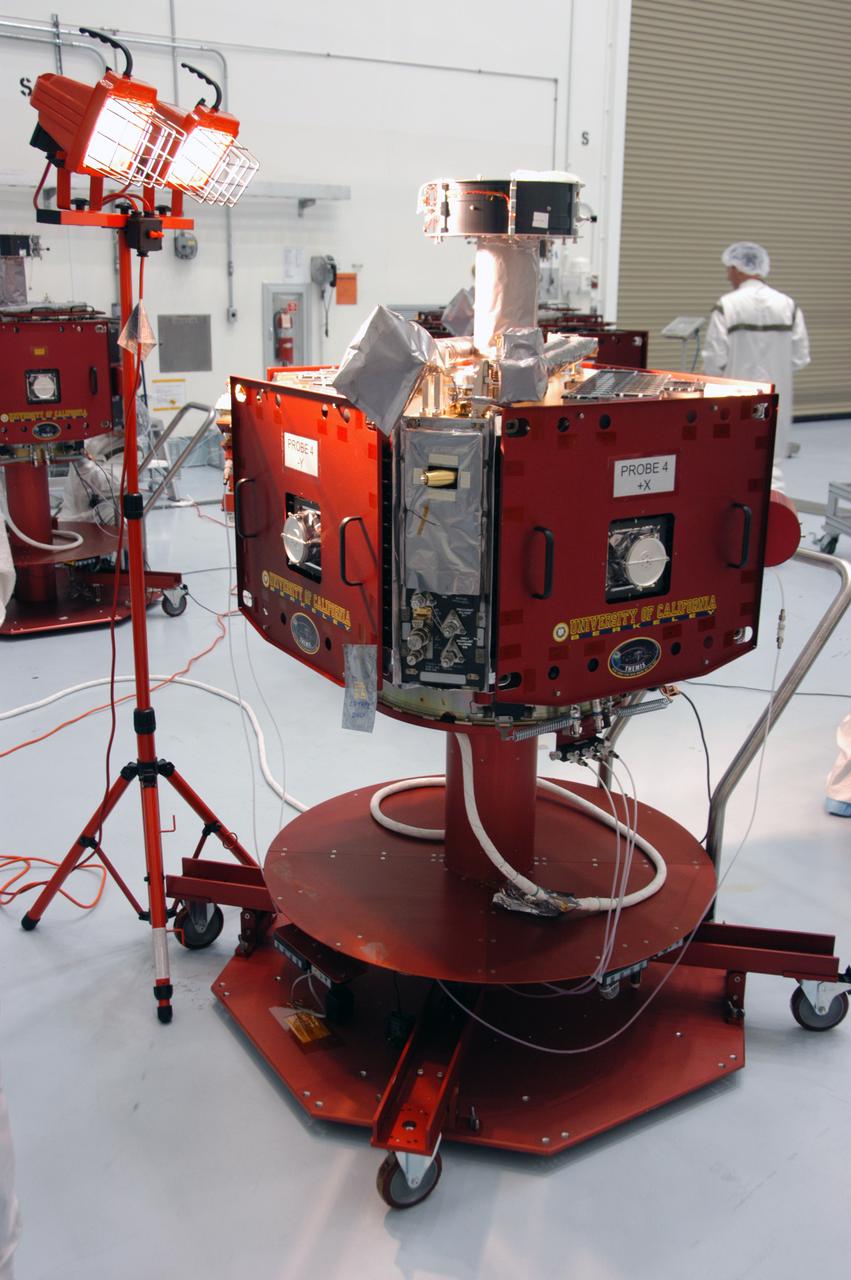
In the Hazardous Processing Facility at Astrotech Space Operations, one of the THEMIS probes undergoes solar array illumination telemetry testing. THEMIS consists of five identical probes, the largest number of scientific satellites ever launched into orbit aboard a single rocket. This unique constellation of satellites will resolve the tantalizing mystery of what causes the spectacular sudden brightening of the aurora borealis and aurora australis - the fiery skies over the Earth's northern and southern polar regions. THEMIS is scheduled to launch aboard the Delta II at 6:07 p.m. EST on Feb. 15.

KENNEDY SPACE CENTER, FLA. -- At Astrotech Space Operations, technicians conduct black light inspection of the THEMIS probes. Black light inspection uses UVA fluorescence to detect possible particulate microcontamination, minute cracks or fluid leaks. THEMIS consists of five identical probes, the largest number of scientific satellites ever launched into orbit aboard a single rocket. This unique constellation of satellites will resolve the tantalizing mystery of what causes the spectacular sudden brightening of the aurora borealis and aurora australis - the fiery skies over the Earth's northern and southern polar regions. THEMIS is scheduled to launch Feb. 15 from Cape Canaveral Air Force Station. Photo credit: NASA/George Shelton
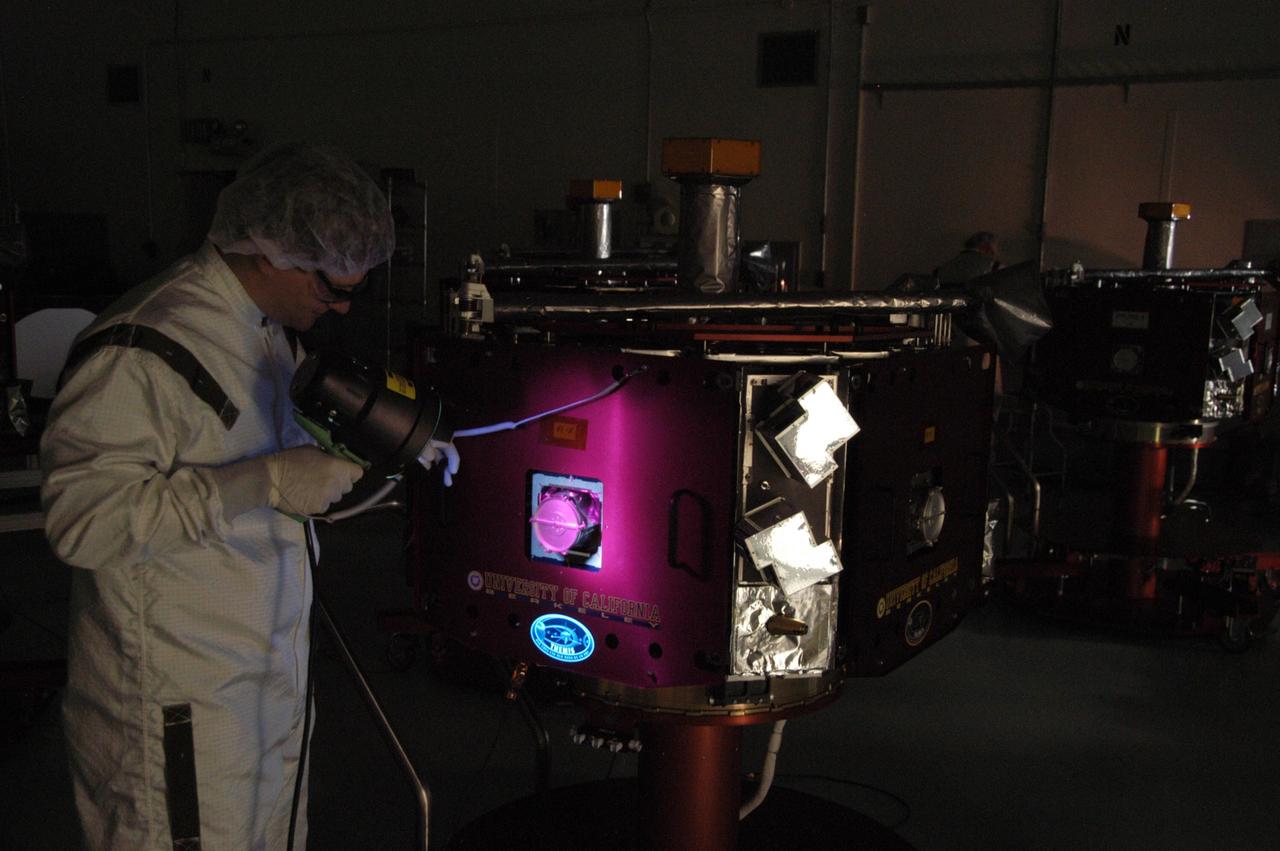
KENNEDY SPACE CENTER, FLA. -- At Astrotech Space Operations, technicians conduct black light inspection of the THEMIS probes. Black light inspection uses UVA fluorescence to detect possible particulate microcontamination, minute cracks or fluid leaks. THEMIS consists of five identical probes, the largest number of scientific satellites ever launched into orbit aboard a single rocket. This unique constellation of satellites will resolve the tantalizing mystery of what causes the spectacular sudden brightening of the aurora borealis and aurora australis - the fiery skies over the Earth's northern and southern polar regions. THEMIS is scheduled to launch Feb. 15 from Cape Canaveral Air Force Station. Photo credit: NASA/George Shelton

In the Hazardous Processing Facility at Astrotech Space Operations, a technician observes one of the THEMIS probes as it undergoes solar array illumination telemetry testing. THEMIS consists of five identical probes, the largest number of scientific satellites ever launched into orbit aboard a single rocket. This unique constellation of satellites will resolve the tantalizing mystery of what causes the spectacular sudden brightening of the aurora borealis and aurora australis - the fiery skies over the Earth's northern and southern polar regions. THEMIS is scheduled to launch aboard the Delta II at 6:07 p.m. EST on Feb. 15.

KENNEDY SPACE CENTER, FLA. -- In the Hazardous Processing Facility at Astrotech Space Operations, one of the THEMIS probes undergoes solar array illumination telemetry testing. THEMIS consists of five identical probes, the largest number of scientific satellites ever launched into orbit aboard a single rocket. This unique constellation of satellites will resolve the tantalizing mystery of what causes the spectacular sudden brightening of the aurora borealis and aurora australis - the fiery skies over the Earth's northern and southern polar regions. THEMIS is scheduled to launch aboard the Delta II at 6:07 p.m. EST on Feb. 15. Photo credit: NASA/George Shelton
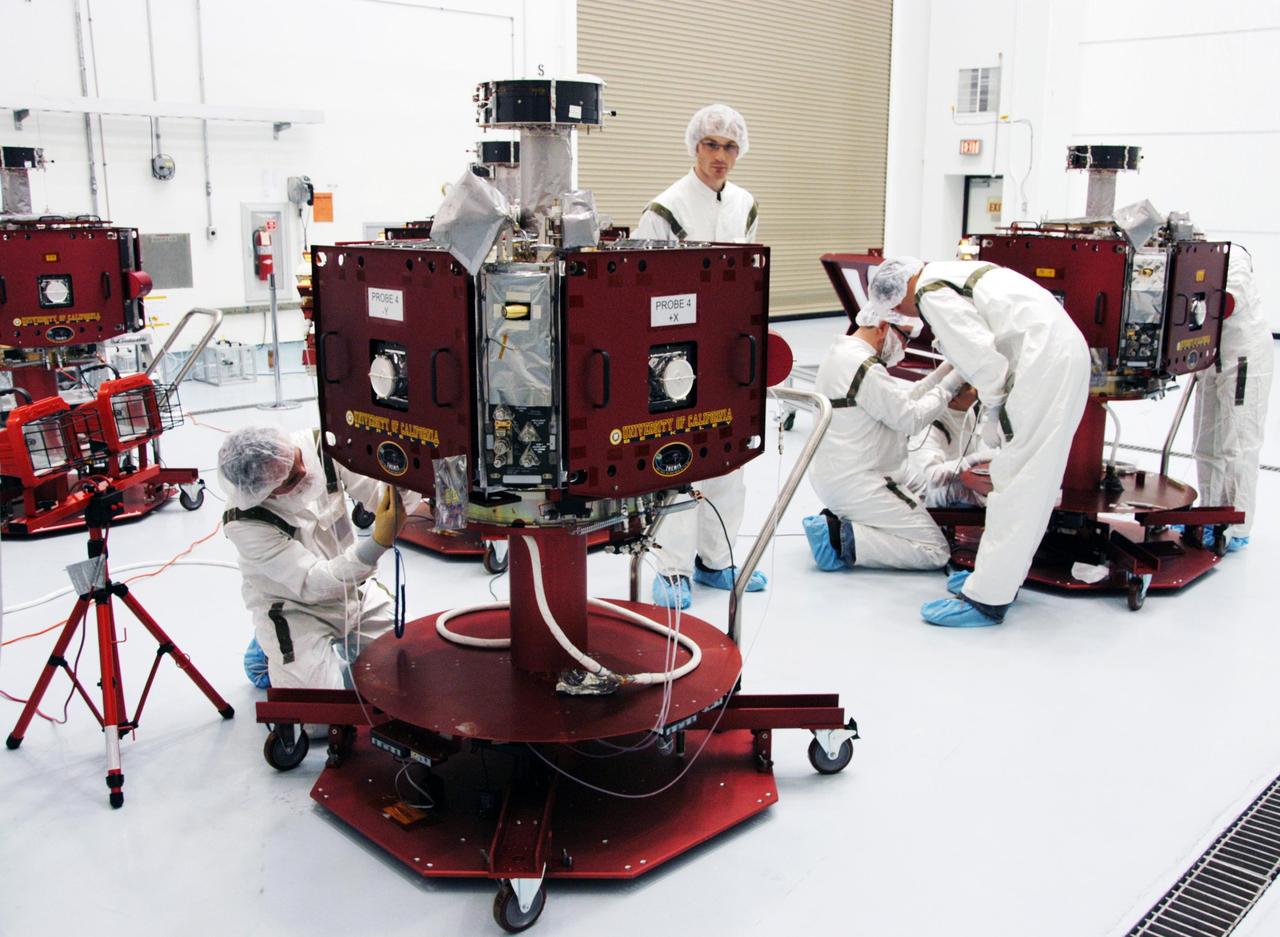
KENNEDY SPACE CENTER, FLA. -- In the Hazardous Processing Facility at Astrotech Space Operations, technicians prepare THEMIS probes for solar array illumination telemetry tests. THEMIS consists of five identical probes, the largest number of scientific satellites ever launched into orbit aboard a single rocket. This unique constellation of satellites will resolve the tantalizing mystery of what causes the spectacular sudden brightening of the aurora borealis and aurora australis - the fiery skies over the Earth's northern and southern polar regions. THEMIS is scheduled to launch aboard the Delta II at 6:07 p.m. EST on Feb. 15. Photo credit: NASA/George Shelton
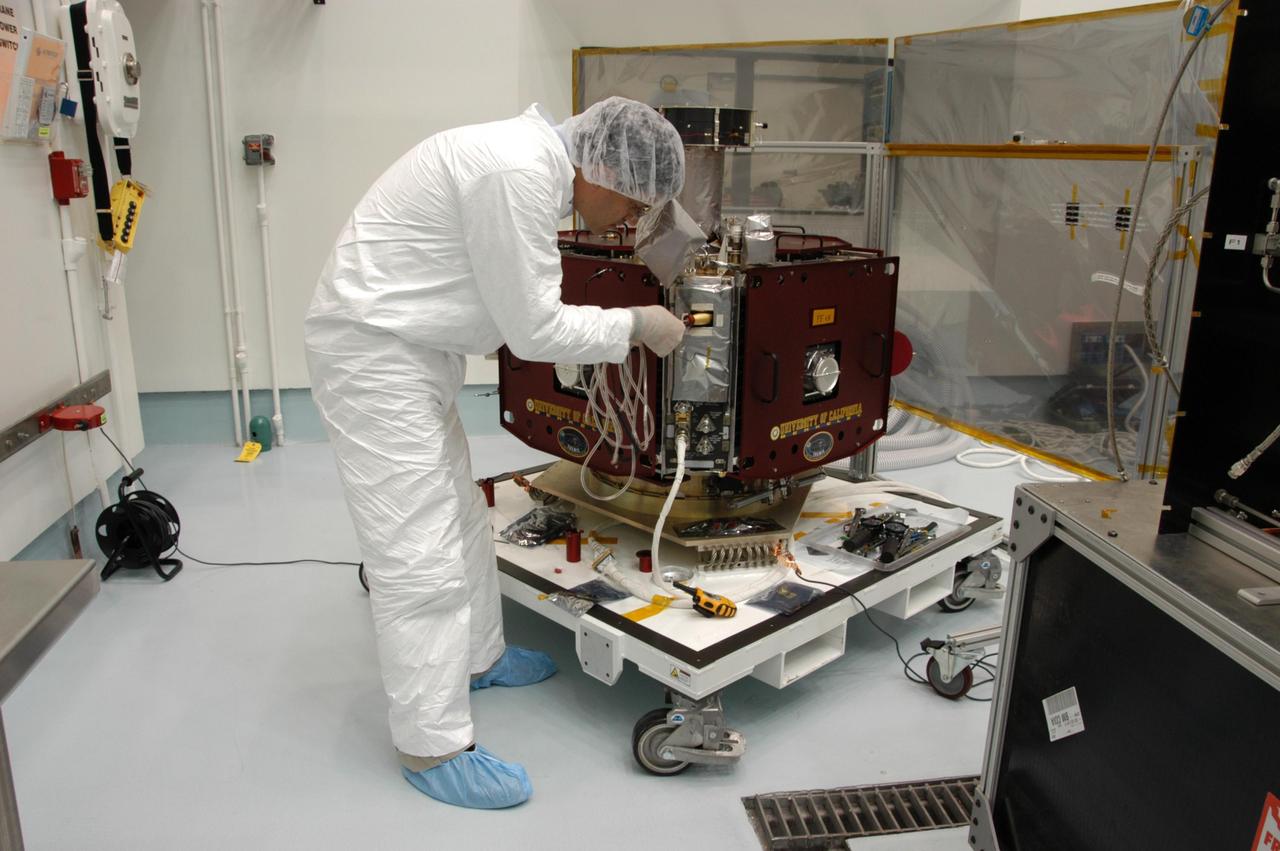
KENNEDY SPACE CENTER, FLA. -- At Astrotech Space Operations in Titusville, Fla., a worker prepares one of the THEMIS probes for electrical system checkout. THEMIS consists of five identical probes, the largest number of scientific satellites ever launched into orbit aboard a single rocket. This unique constellation of satellites will resolve the tantalizing mystery of what causes the spectacular sudden brightening of the aurora borealis and aurora australis - the fiery skies over the Earth's northern and southern polar regions. THEMIS is scheduled to launch Feb. 15 from Cape Canaveral Air Force Station. Photo credit: NASA/George Shelton
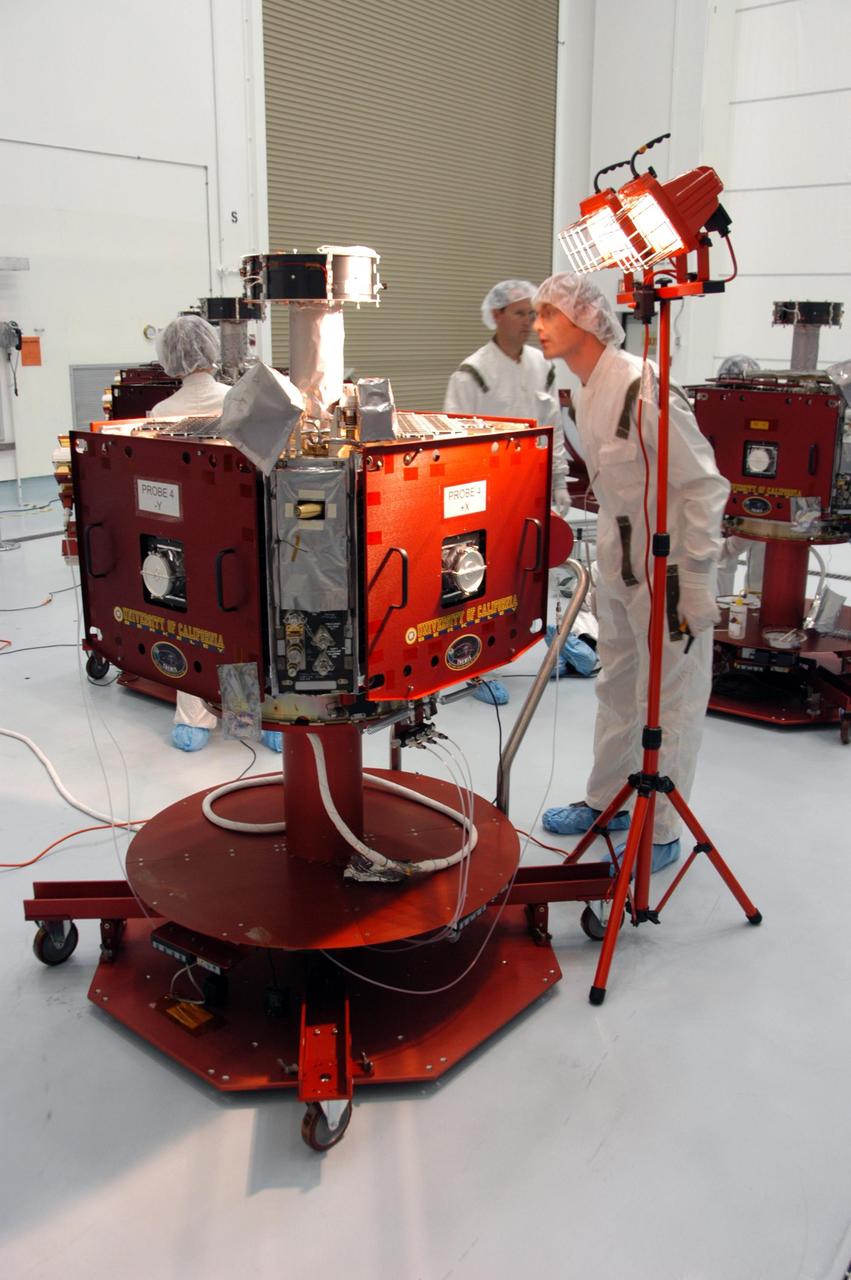
KENNEDY SPACE CENTER, FLA. -- In the Hazardous Processing Facility at Astrotech Space Operations, a technician observes one of the THEMIS probes as it undergoes solar array illumination telemetry testing. THEMIS consists of five identical probes, the largest number of scientific satellites ever launched into orbit aboard a single rocket. This unique constellation of satellites will resolve the tantalizing mystery of what causes the spectacular sudden brightening of the aurora borealis and aurora australis - the fiery skies over the Earth's northern and southern polar regions. THEMIS is scheduled to launch aboard the Delta II at 6:07 p.m. EST on Feb. 15. Photo credit: NASA/George Shelton
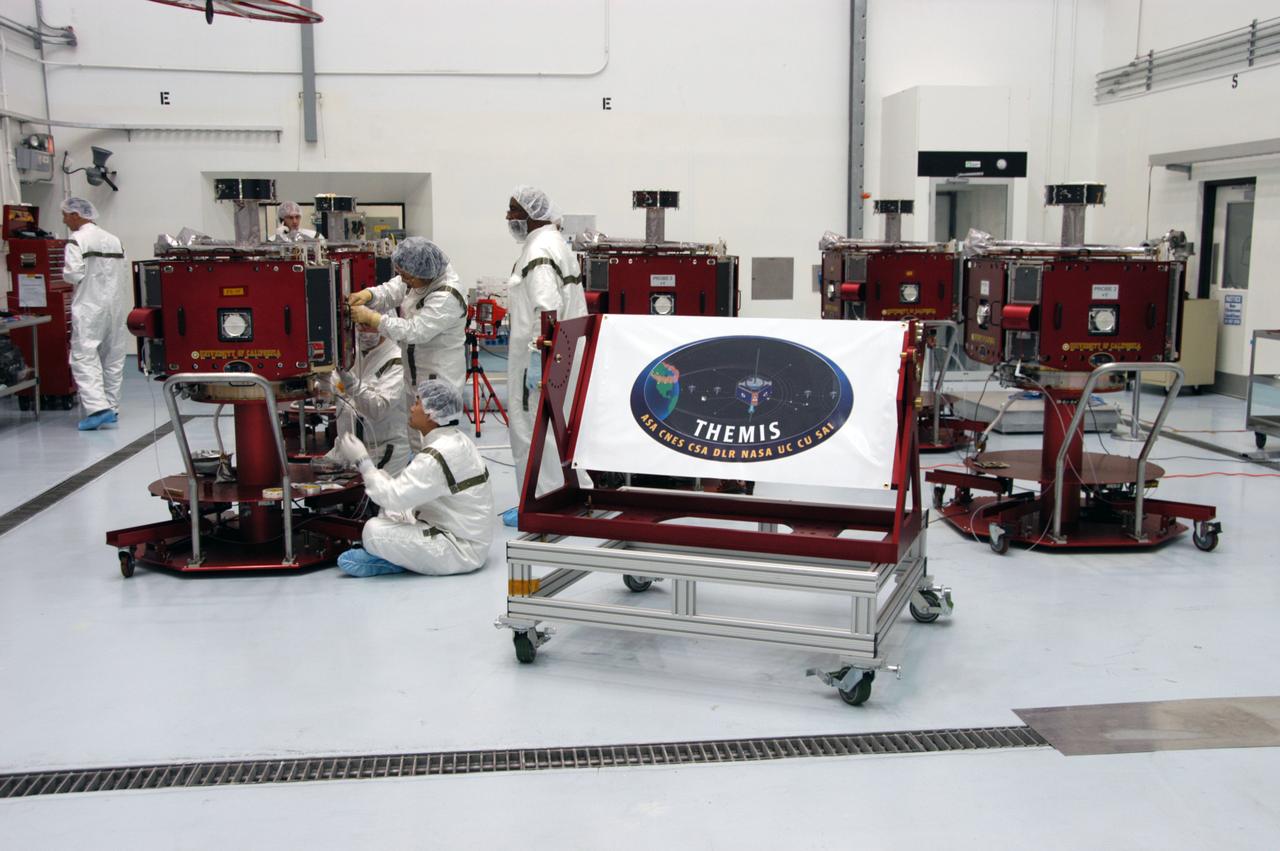
In the Hazardous Processing Facility at Astrotech Space Operations, technicians prepare THEMIS probes for solar array illumination telemetry tests. THEMIS consists of five identical probes, the largest number of scientific satellites ever launched into orbit aboard a single rocket. This unique constellation of satellites will resolve the tantalizing mystery of what causes the spectacular sudden brightening of the aurora borealis and aurora australis - the fiery skies over the Earth's northern and southern polar regions. THEMIS is scheduled to launch aboard the Delta II at 6:07 p.m. EST on Feb. 15.
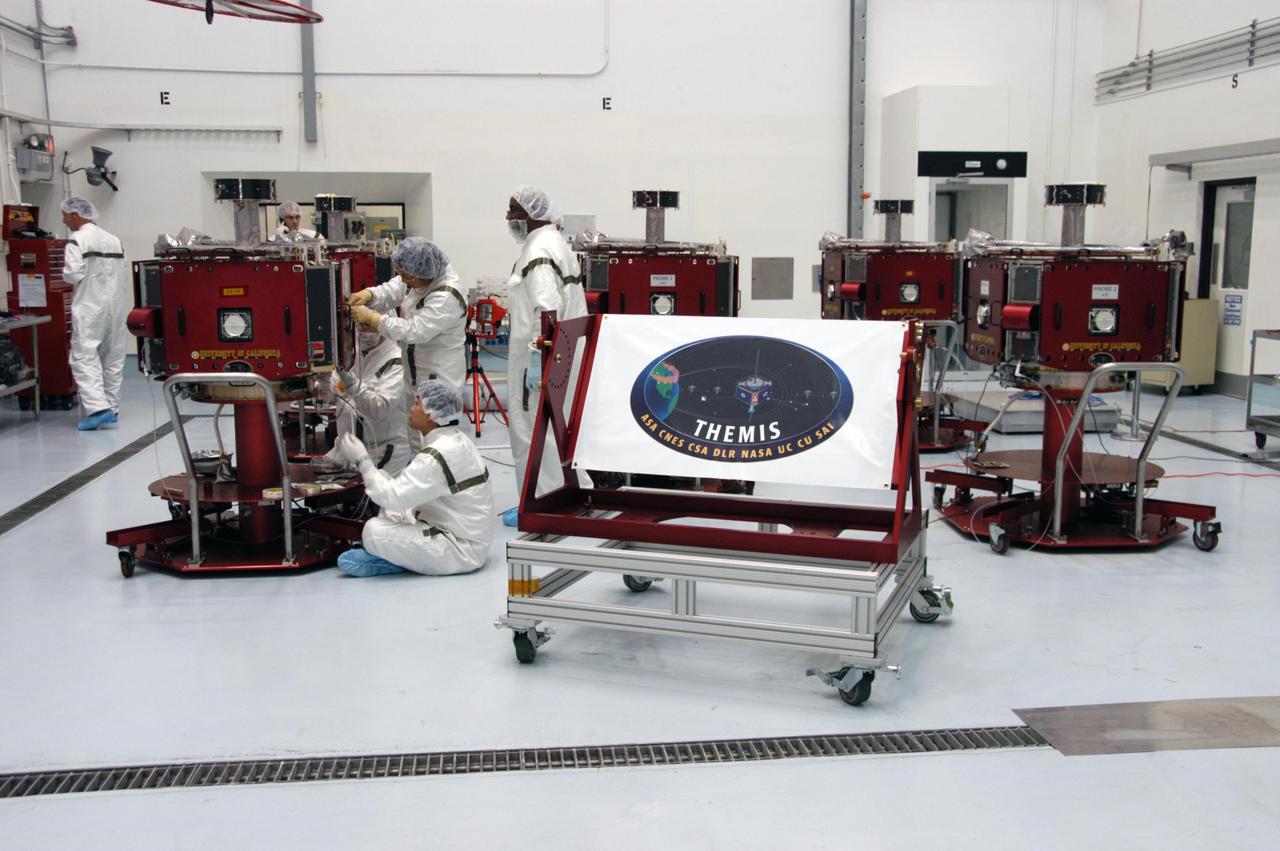
KENNEDY SPACE CENTER, FLA. -- In the Hazardous Processing Facility at Astrotech Space Operations, technicians prepare THEMIS probes for solar array illumination telemetry tests. THEMIS consists of five identical probes, the largest number of scientific satellites ever launched into orbit aboard a single rocket. This unique constellation of satellites will resolve the tantalizing mystery of what causes the spectacular sudden brightening of the aurora borealis and aurora australis - the fiery skies over the Earth's northern and southern polar regions. THEMIS is scheduled to launch aboard the Delta II at 6:07 p.m. EST on Feb. 15. Photo credit: NASA/George Shelton
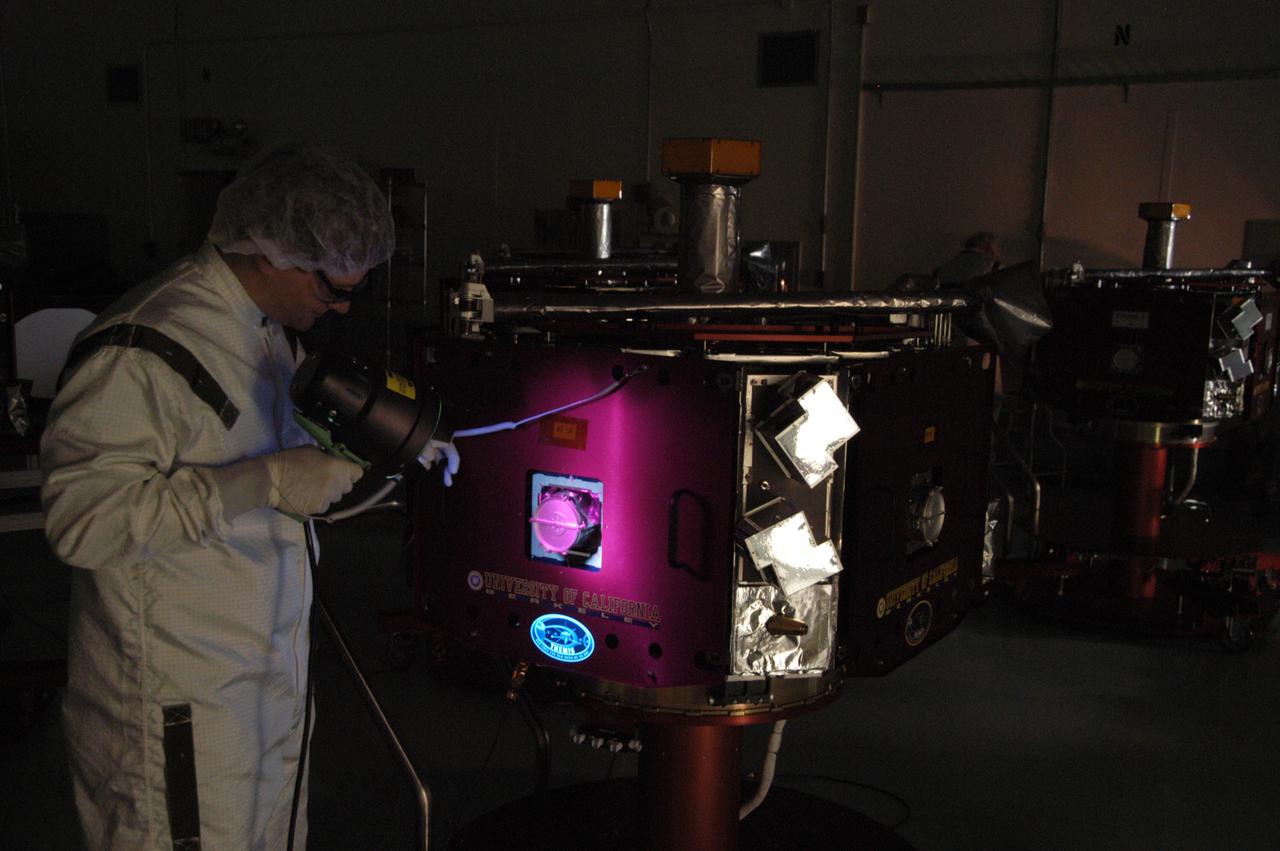
At Astrotech Space Operations, technicians conduct black light inspection of the THEMIS probes. Black light inspection uses UVA fluorescence to detect possible particulate microcontamination, minute cracks or fluid leaks. THEMIS consists of five identical probes, the largest number of scientific satellites ever launched into orbit aboard a single rocket. This unique constellation of satellites will resolve the tantalizing mystery of what causes the spectacular sudden brightening of the aurora borealis and aurora australis - the fiery skies over the Earth's northern and southern polar regions. THEMIS is scheduled to launch Feb. 15 from Cape Canaveral Air Force Station.
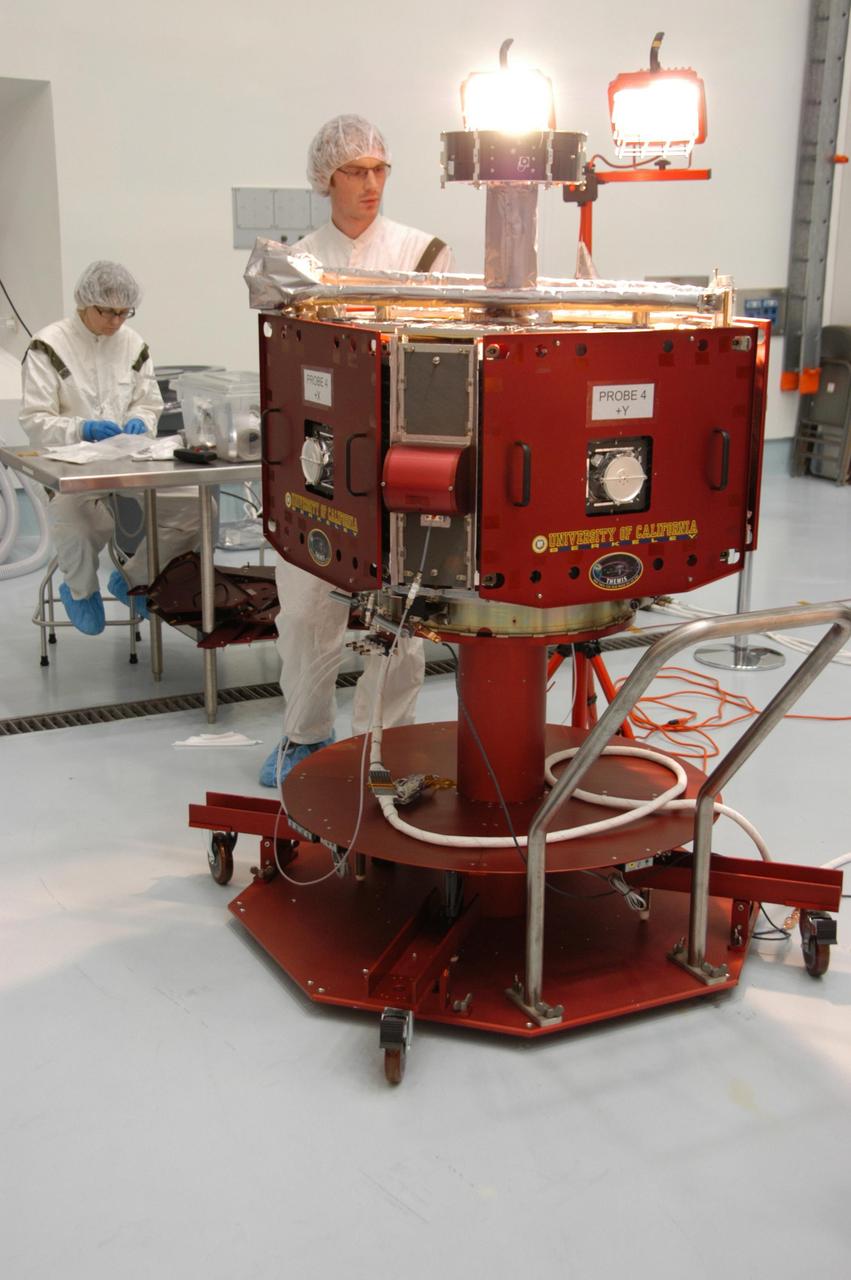
KENNEDY SPACE CENTER, FLA. -- In the Hazardous Processing Facility at Astrotech Space Operations, a technician observes one of the THEMIS probes as it undergoes solar array illumination telemetry testing. THEMIS consists of five identical probes, the largest number of scientific satellites ever launched into orbit aboard a single rocket. This unique constellation of satellites will resolve the tantalizing mystery of what causes the spectacular sudden brightening of the aurora borealis and aurora australis - the fiery skies over the Earth's northern and southern polar regions. THEMIS is scheduled to launch aboard the Delta II at 6:07 p.m. EST on Feb. 15. Photo credit: NASA/George Shelton
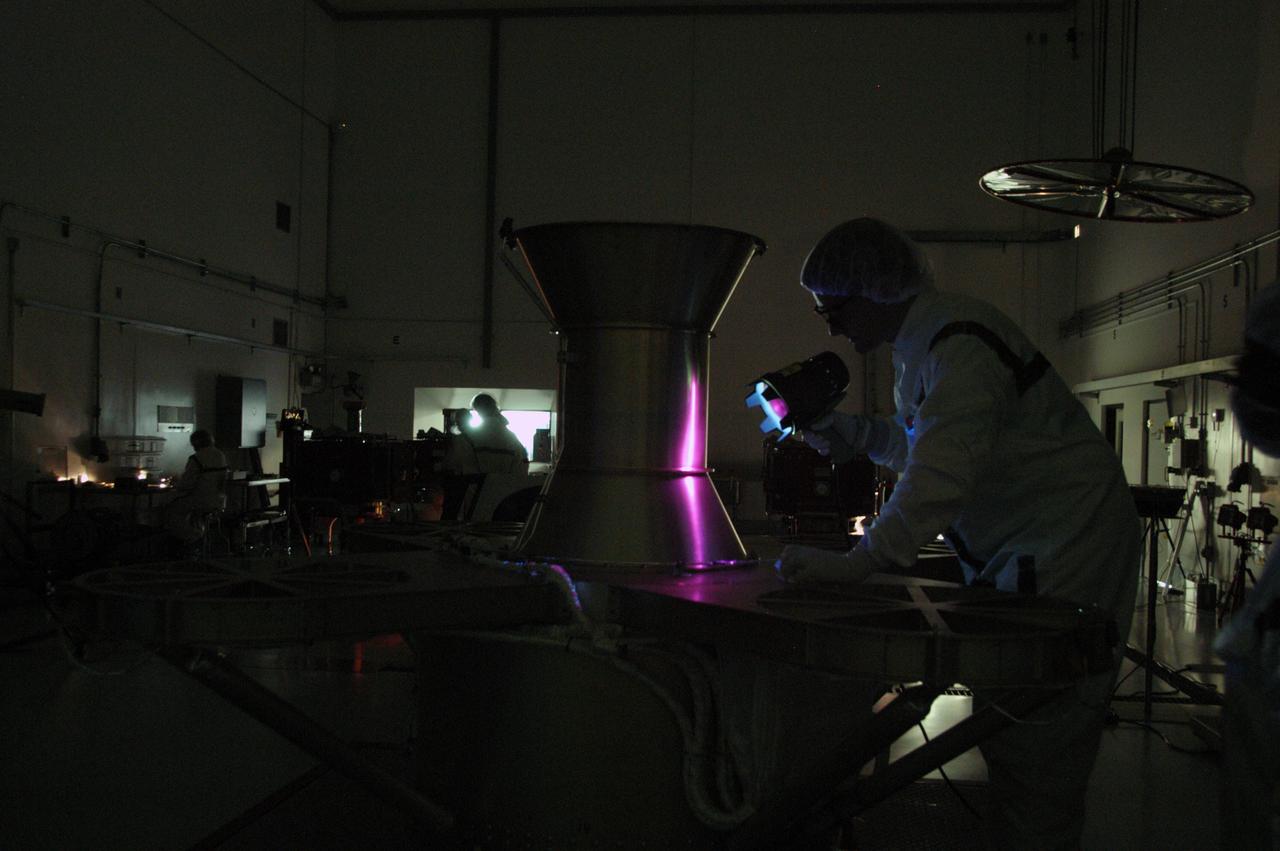
At Astrotech Space Operations, technicians conduct black light inspection of the THEMIS probes. Black light inspection uses UVA fluorescence to detect possible particulate microcontamination, minute cracks or fluid leaks. THEMIS consists of five identical probes, the largest number of scientific satellites ever launched into orbit aboard a single rocket. This unique constellation of satellites will resolve the tantalizing mystery of what causes the spectacular sudden brightening of the aurora borealis and aurora australis - the fiery skies over the Earth's northern and southern polar regions. THEMIS is scheduled to launch Feb. 15 from Cape Canaveral Air Force Station.

KENNEDY SPACE CENTER, FLA. -- At Astrotech Space Operations, technicians adjust connections of the overhead crane on one of the THEMIS probes. The probe and its other four mates will be lifted and installed on the probe carrier in the background. The probes will then undergo spin-balance testing. THEMIS consists of five identical probes, the largest number of scientific satellites ever launched into orbit aboard a single rocket. This unique constellation of satellites will resolve the tantalizing mystery of what causes the spectacular sudden brightening of the aurora borealis and aurora australis - the fiery skies over the Earth's northern and southern polar regions. THEMIS is scheduled to launch Feb. 15 from Cape Canaveral Air Force Station. Photo credit: NASA/George Shelton
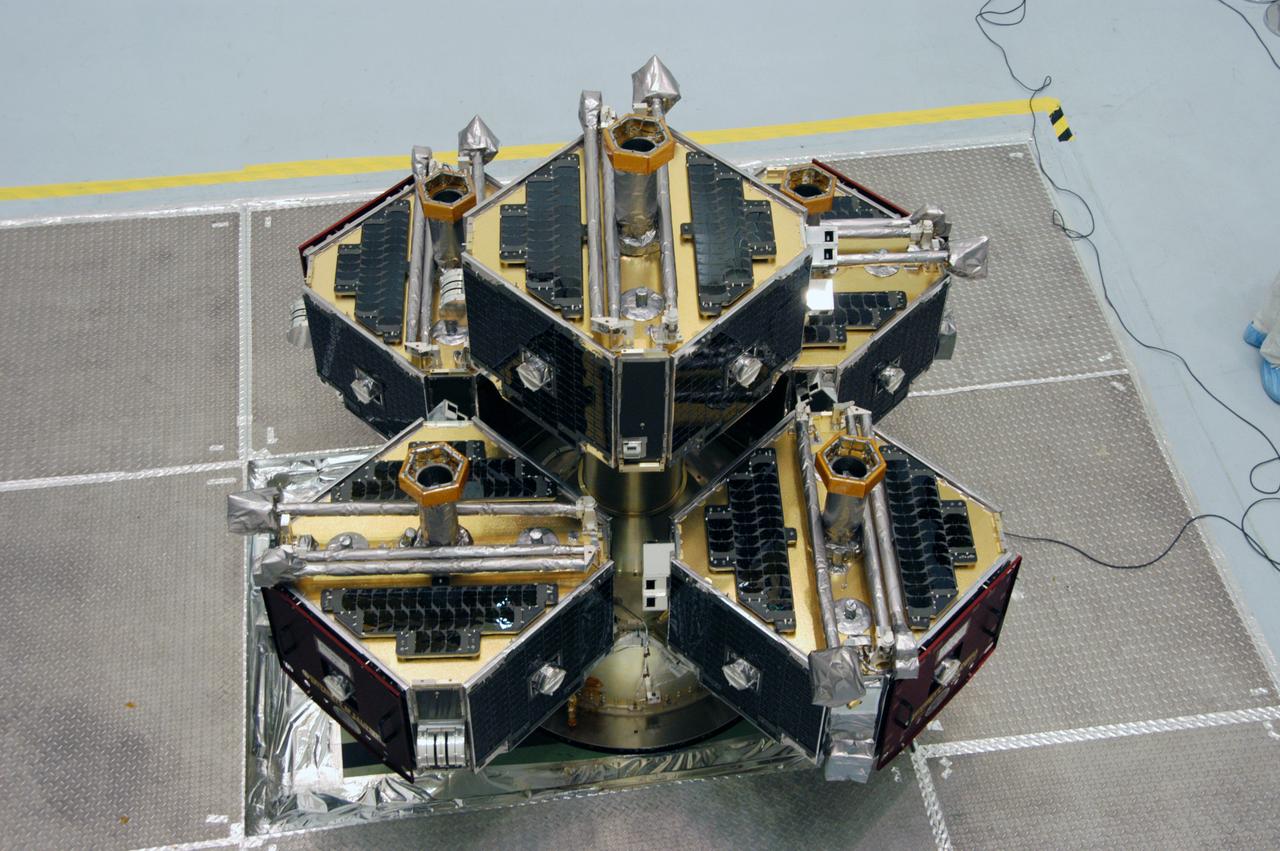
At Astrotech Space Operations, the integrated THEMIS spacecraft is ready for spin-balance testing. THEMIS consists of five identical probes, the largest number of scientific satellites ever launched into orbit aboard a single rocket. This unique constellation of satellites will resolve the tantalizing mystery of what causes the spectacular sudden brightening of the aurora borealis and aurora australis - the fiery skies over the Earth's northern and southern polar regions. THEMIS is scheduled to launch Feb. 15 from Cape Canaveral Air Force Station.
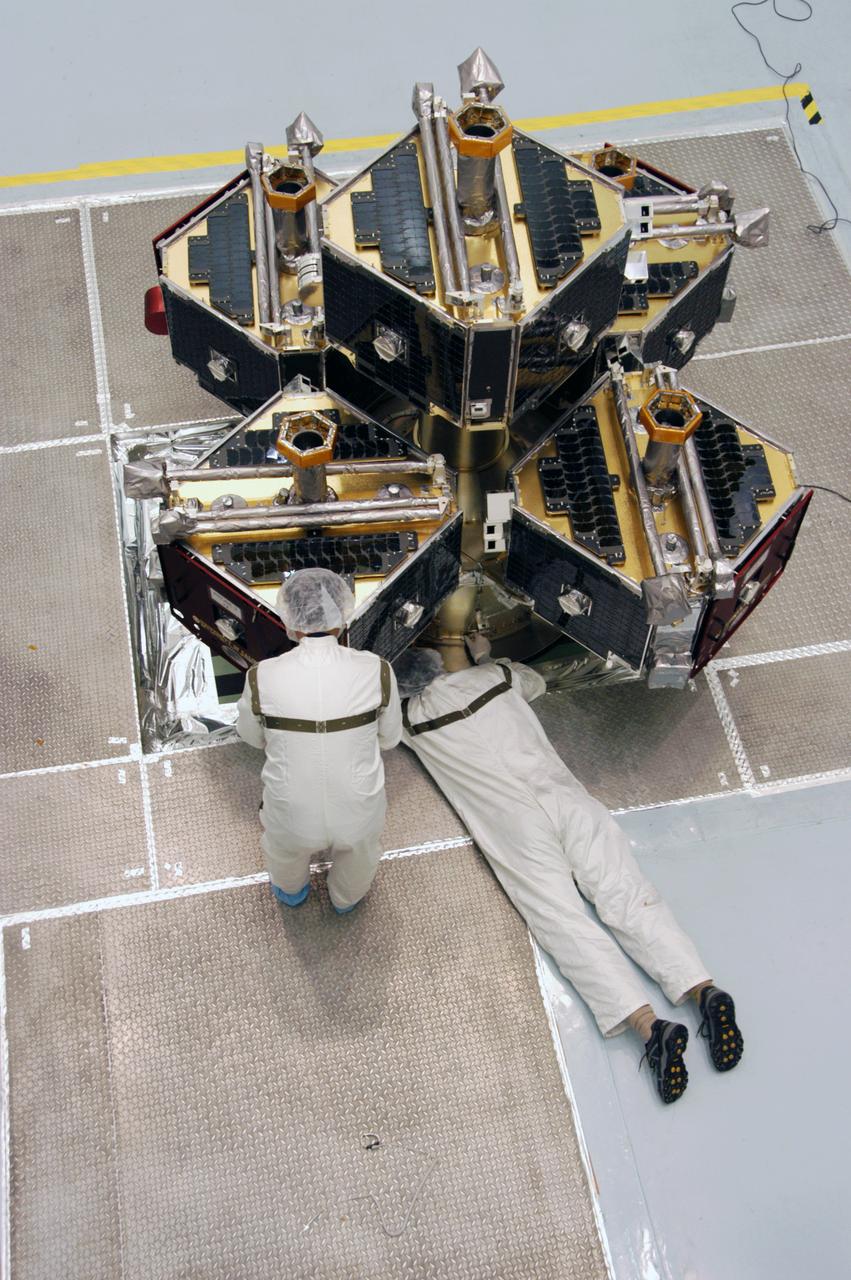
At Astrotech Space Operations, workers prepare the integrated THEMIS spacecraft for spin-balance testing. THEMIS consists of five identical probes, the largest number of scientific satellites ever launched into orbit aboard a single rocket. This unique constellation of satellites will resolve the tantalizing mystery of what causes the spectacular sudden brightening of the aurora borealis and aurora australis - the fiery skies over the Earth's northern and southern polar regions. THEMIS is scheduled to launch Feb. 15 from Cape Canaveral Air Force Station.
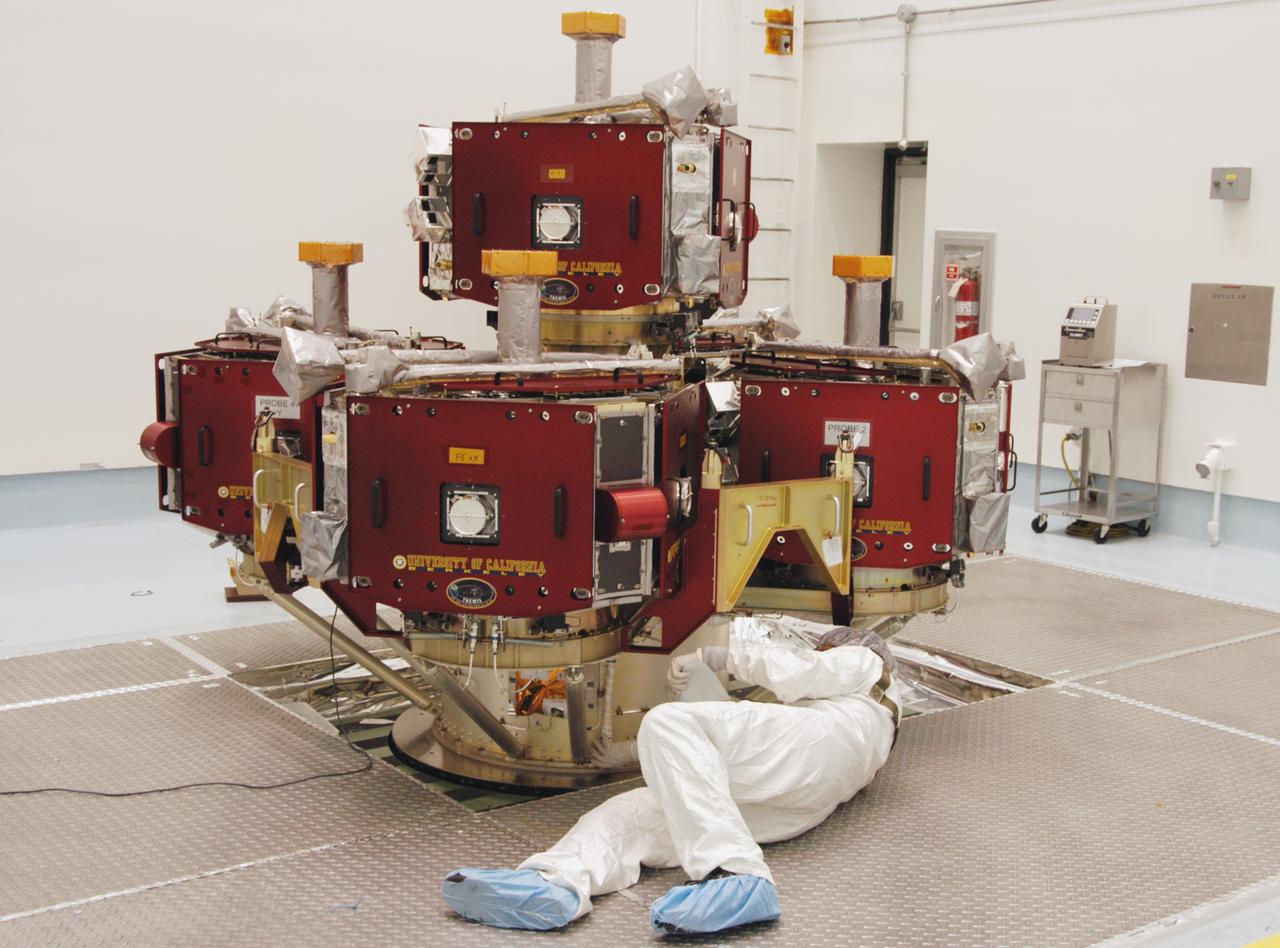
In the Hazardous Processing Facility at Astrotech Space Operations, a worker checks data on the integrated THEMIS spacecraft sitting on the spin table. THEMIS consists of five identical probes, the largest number of scientific satellites ever launched into orbit aboard a single rocket. This unique constellation of satellites will resolve the tantalizing mystery of what causes the spectacular sudden brightening of the aurora borealis and aurora australis - the fiery skies over the Earth's northern and southern polar regions. THEMIS is scheduled to launch Feb. 15 from Cape Canaveral Air Force Station.

At Astrotech Space Operations, workers look over the integrated THEMIS spacecraft before spin-balance testing. THEMIS consists of five identical probes, the largest number of scientific satellites ever launched into orbit aboard a single rocket. This unique constellation of satellites will resolve the tantalizing mystery of what causes the spectacular sudden brightening of the aurora borealis and aurora australis - the fiery skies over the Earth's northern and southern polar regions. THEMIS is scheduled to launch Feb. 15 from Cape Canaveral Air Force Station.
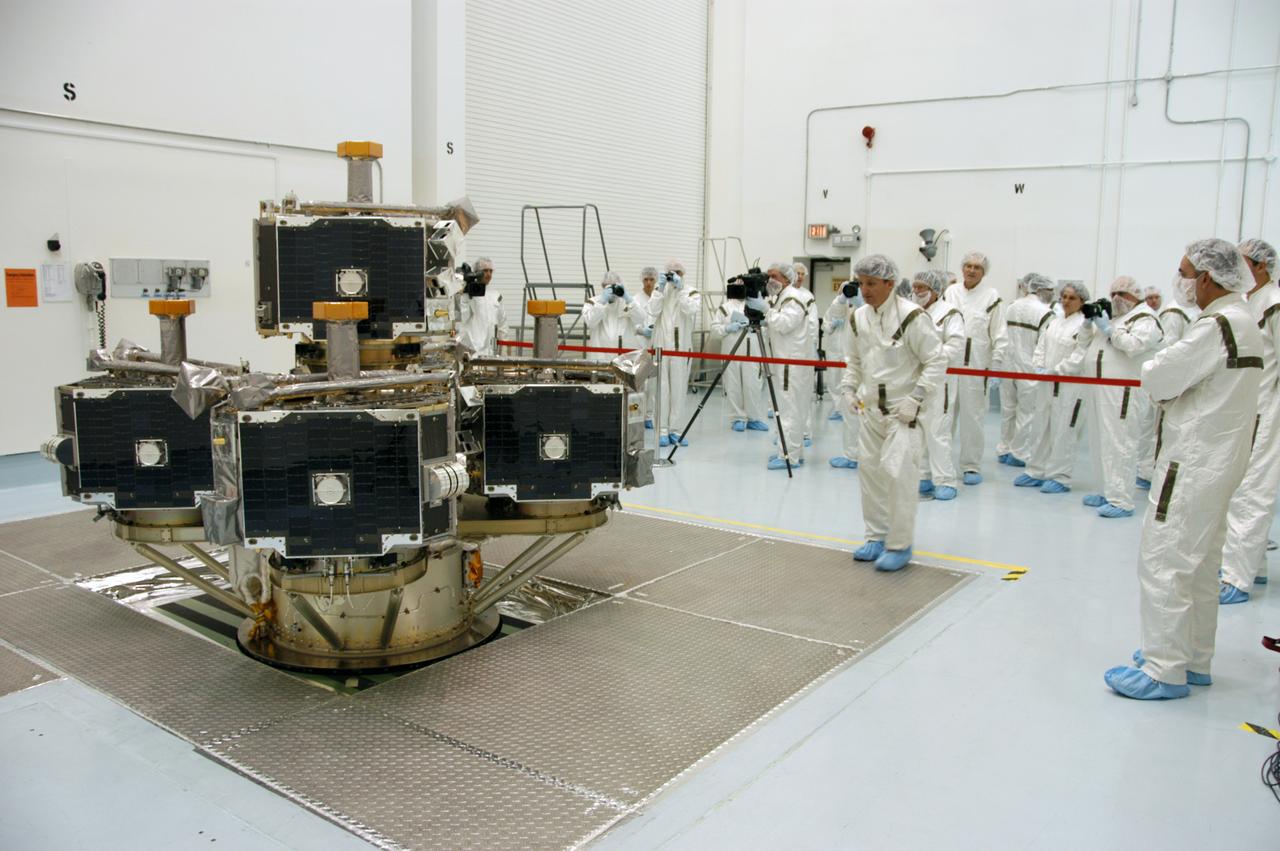
At Astrotech Space Operations, the media are dressed in clean room, or bunny, suits to photograph the integrated THEMIS spacecraft. THEMIS consists of five identical probes, the largest number of scientific satellites ever launched into orbit aboard a single rocket. This unique constellation of satellites will resolve the tantalizing mystery of what causes the spectacular sudden brightening of the aurora borealis and aurora australis - the fiery skies over the Earth's northern and southern polar regions. THEMIS is scheduled to launch Feb. 15 from Cape Canaveral Air Force Station.
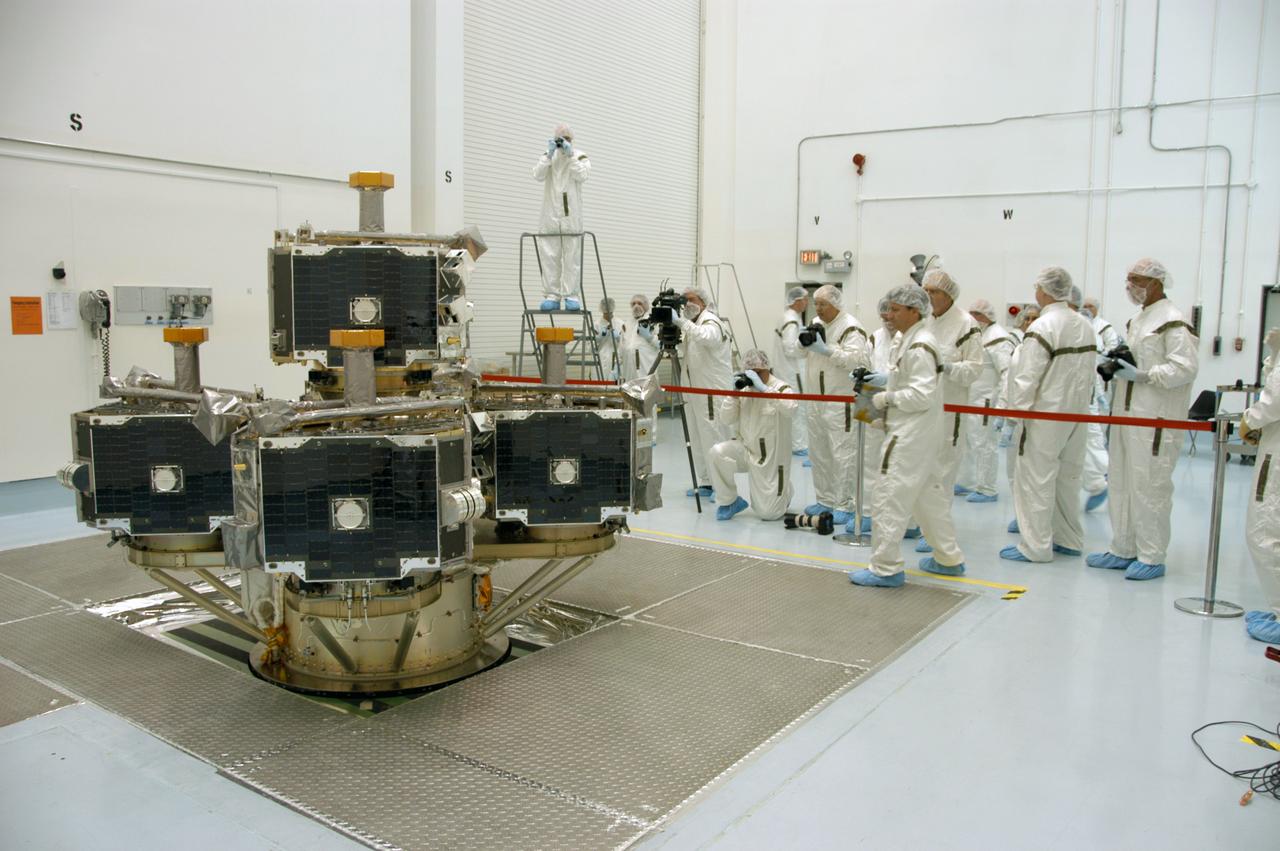
At Astrotech Space Operations, the media are dressed in clean room, or bunny, suits to photograph the integrated THEMIS spacecraft. THEMIS consists of five identical probes, the largest number of scientific satellites ever launched into orbit aboard a single rocket. This unique constellation of satellites will resolve the tantalizing mystery of what causes the spectacular sudden brightening of the aurora borealis and aurora australis - the fiery skies over the Earth's northern and southern polar regions. THEMIS is scheduled to launch Feb. 15 from Cape Canaveral Air Force Station.
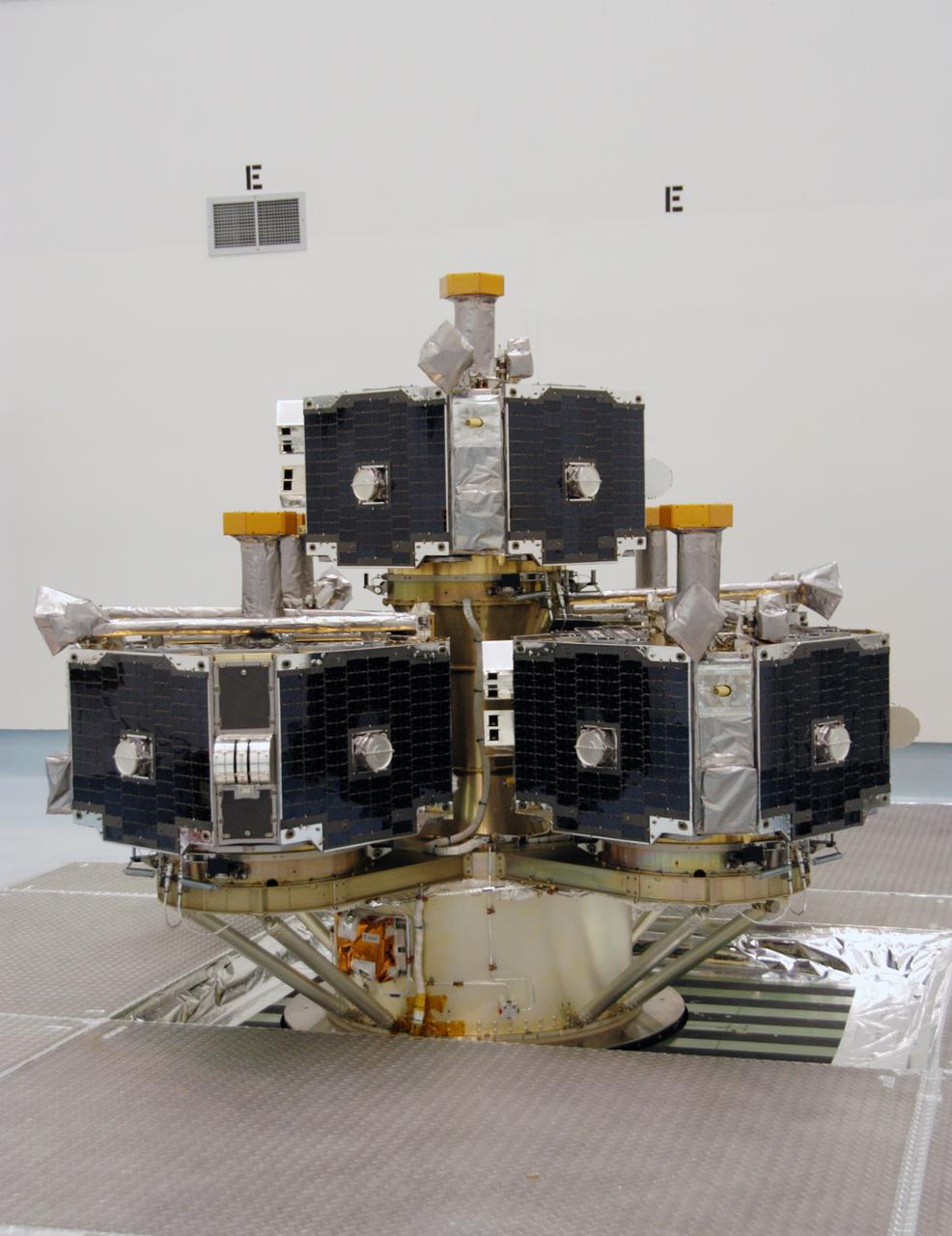
At Astrotech Space Operations, the integrated THEMIS spacecraft is on ready for spin-balance testing. THEMIS consists of five identical probes, the largest number of scientific satellites ever launched into orbit aboard a single rocket. This unique constellation of satellites will resolve the tantalizing mystery of what causes the spectacular sudden brightening of the aurora borealis and aurora australis - the fiery skies over the Earth's northern and southern polar regions. THEMIS is scheduled to launch Feb. 15 from Cape Canaveral Air Force Station.
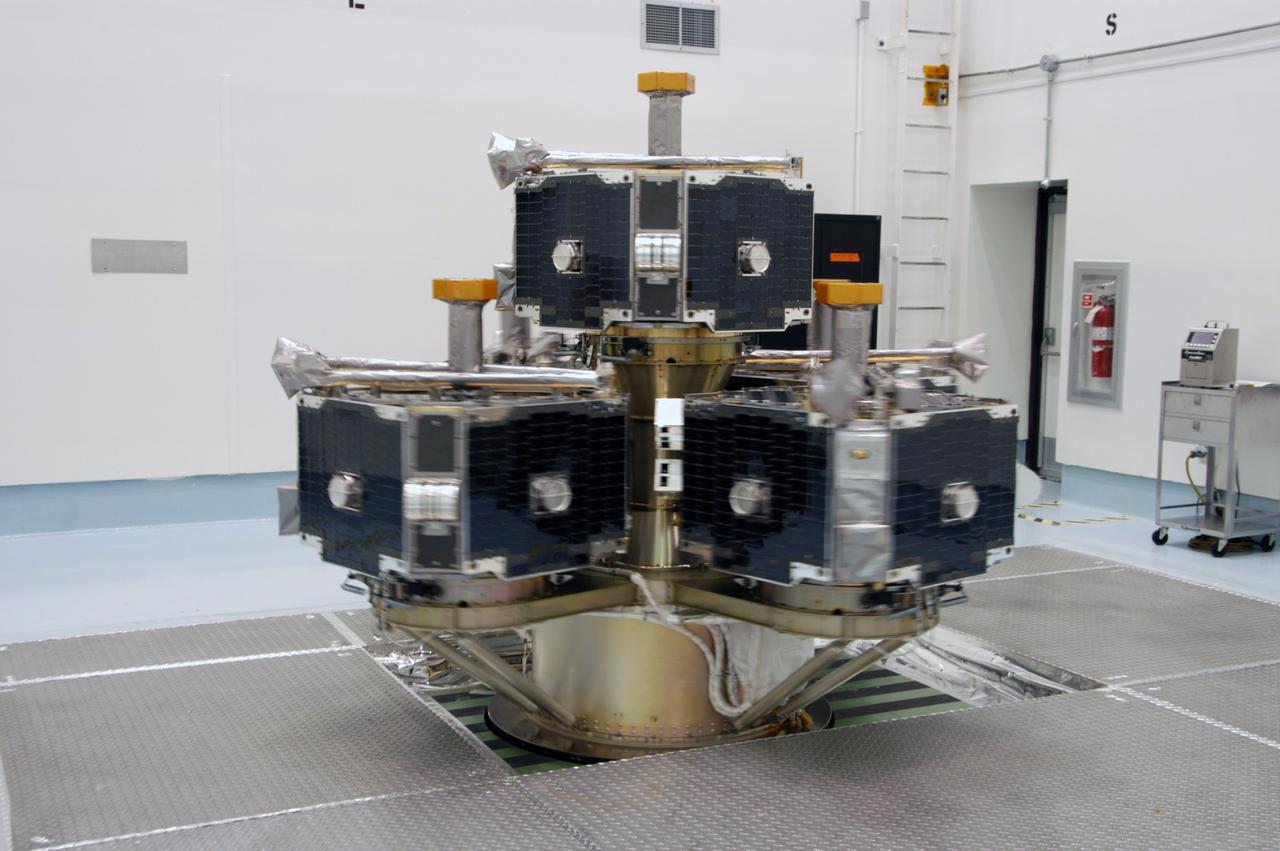
At Astrotech Space Operations, the integrated THEMIS spacecraft is spinning on the spin table, part of spin-balance testing. THEMIS consists of five identical probes, the largest number of scientific satellites ever launched into orbit aboard a single rocket. This unique constellation of satellites will resolve the tantalizing mystery of what causes the spectacular sudden brightening of the aurora borealis and aurora australis - the fiery skies over the Earth's northern and southern polar regions. THEMIS is scheduled to launch Feb. 15 from Cape Canaveral Air Force Station.
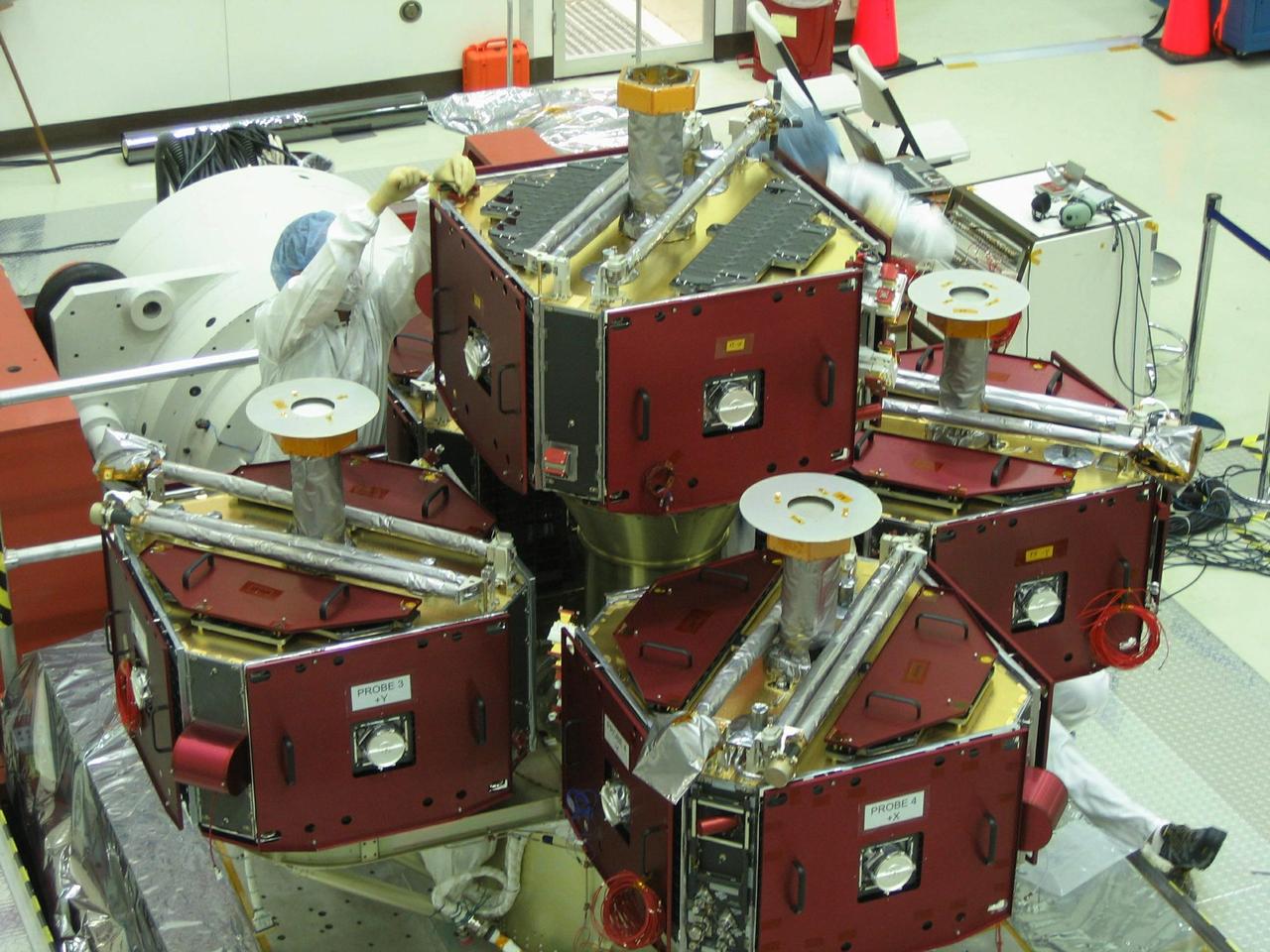
VANDENBERG AIR FORCE BASE, CALIF. -- The probe carrier assembly on the THEMIS spacecraft is prepared for a vibration test. The assembly has solar array covers attached. THEMIS, which stands for Time History of Events and Macroscale Interactions during Substorms, comprises five identical probes that will study the dynamic and colorful eruptions of auroras. THEMIS is scheduled to launch Oct. 19 from Cape Canaveral Air Force Station in Florida.

VANDENBERG AIR FORCE BASE, CALIF. -- An overhead crane lifts the probe carrier assembly on the THEMIS spacecraft to a dolly. Visible are some of the solar array covers. THEMIS, which stands for Time History of Events and Macroscale Interactions during Substorms, comprises five identical probes that will study the dynamic and colorful eruptions of auroras. THEMIS is scheduled to launch Oct. 19 from Cape Canaveral Air Force Station in Florida.
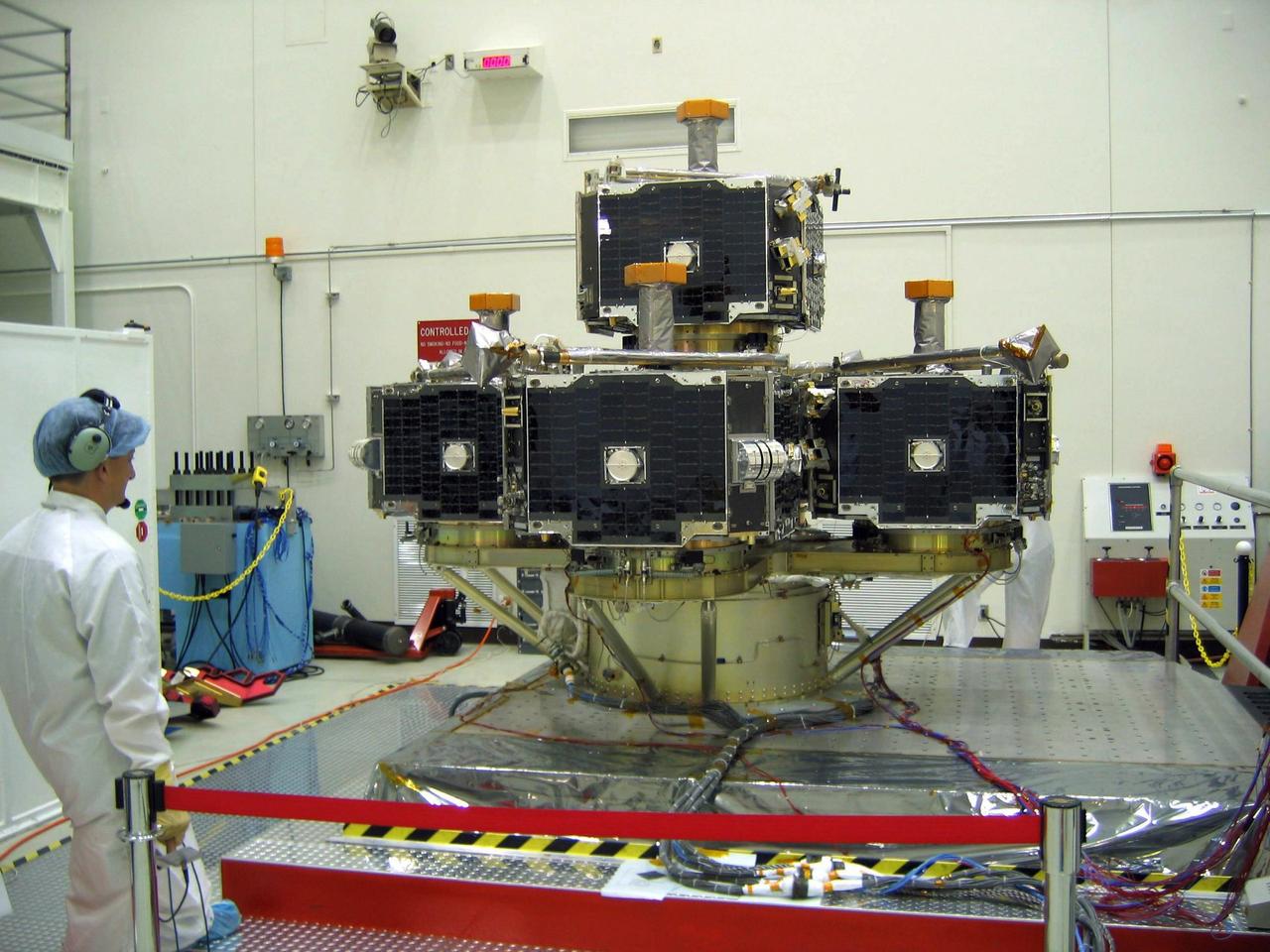
VANDENBERG AIR FORCE BASE, CALIF. -- The probe carrier assembly on the THEMIS spacecraft undergoes a vibration test. THEMIS, which stands for Time History of Events and Macroscale Interactions during Substorms, comprises five identical probes that will study the dynamic and colorful eruptions of auroras. THEMIS is scheduled to launch Oct. 19 from Cape Canaveral Air Force Station in Florida.
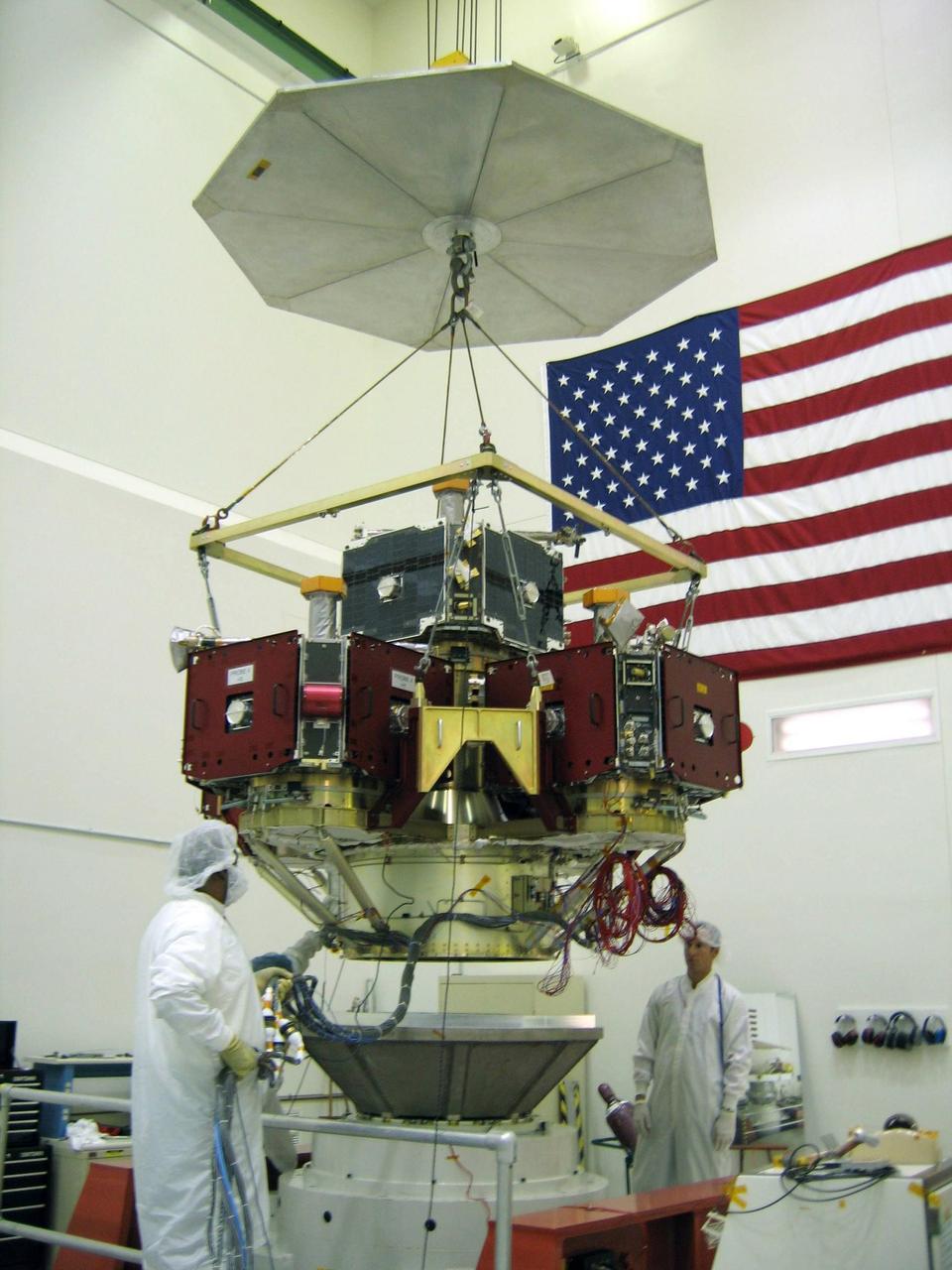
VANDENBERG AIR FORCE BASE, CALIF. -- An overhead crane hoists the probe carrier assembly on the THEMIS spacecraft to the vibration table (Z-axis). THEMIS, which stands for Time History of Events and Macroscale Interactions during Substorms, comprises five identical probes that will study the dynamic and colorful eruptions of auroras. THEMIS is scheduled to launch Oct. 19 from Cape Canaveral Air Force Station in Florida.
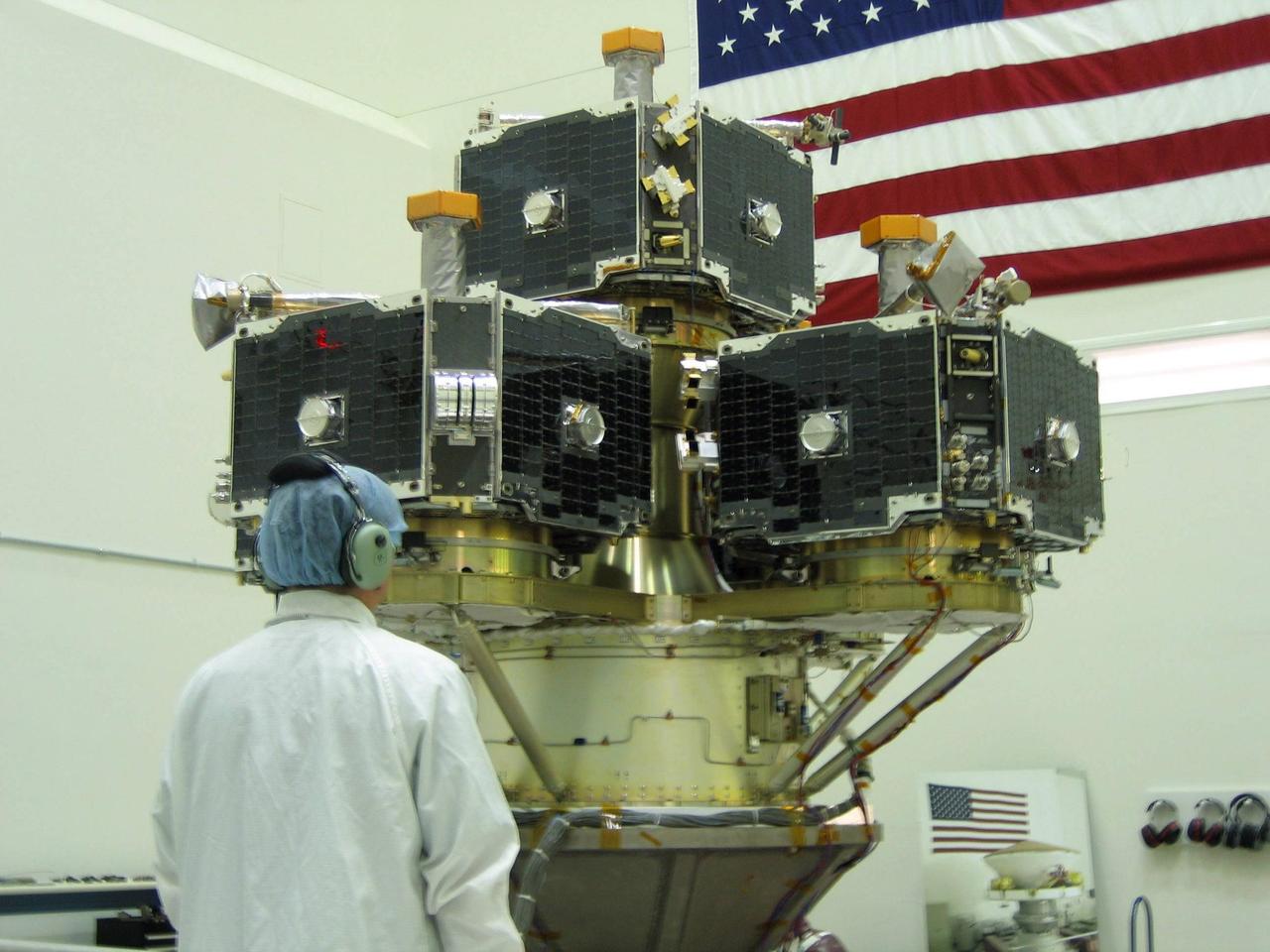
VANDENBERG AIR FORCE BASE, CALIF. -- The probe carrier assembly on the THEMIS spacecraft undergoes a vibration test (Z-axis). THEMIS, which stands for Time History of Events and Macroscale Interactions during Substorms, comprises five identical probes that will study the dynamic and colorful eruptions of auroras. THEMIS is scheduled to launch Oct. 19 from Cape Canaveral Air Force Station in Florida.
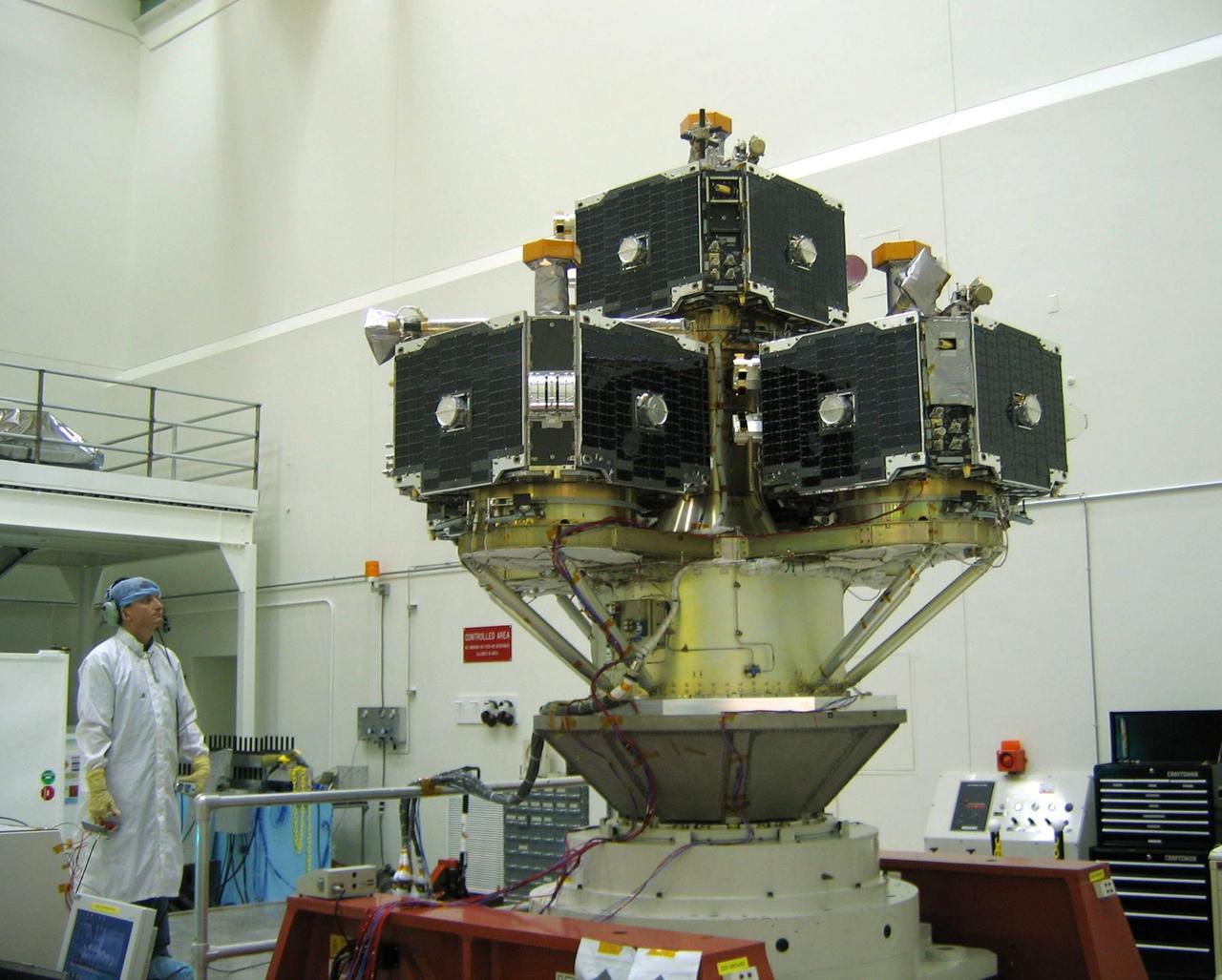
VANDENBERG AIR FORCE BASE, CALIF. -- The probe carrier assembly on the THEMIS spacecraft undergoes a vibration test (Z-axis). THEMIS, which stands for Time History of Events and Macroscale Interactions during Substorms, comprises five identical probes that will study the dynamic and colorful eruptions of auroras. THEMIS is scheduled to launch Oct. 19 from Cape Canaveral Air Force Station in Florida.
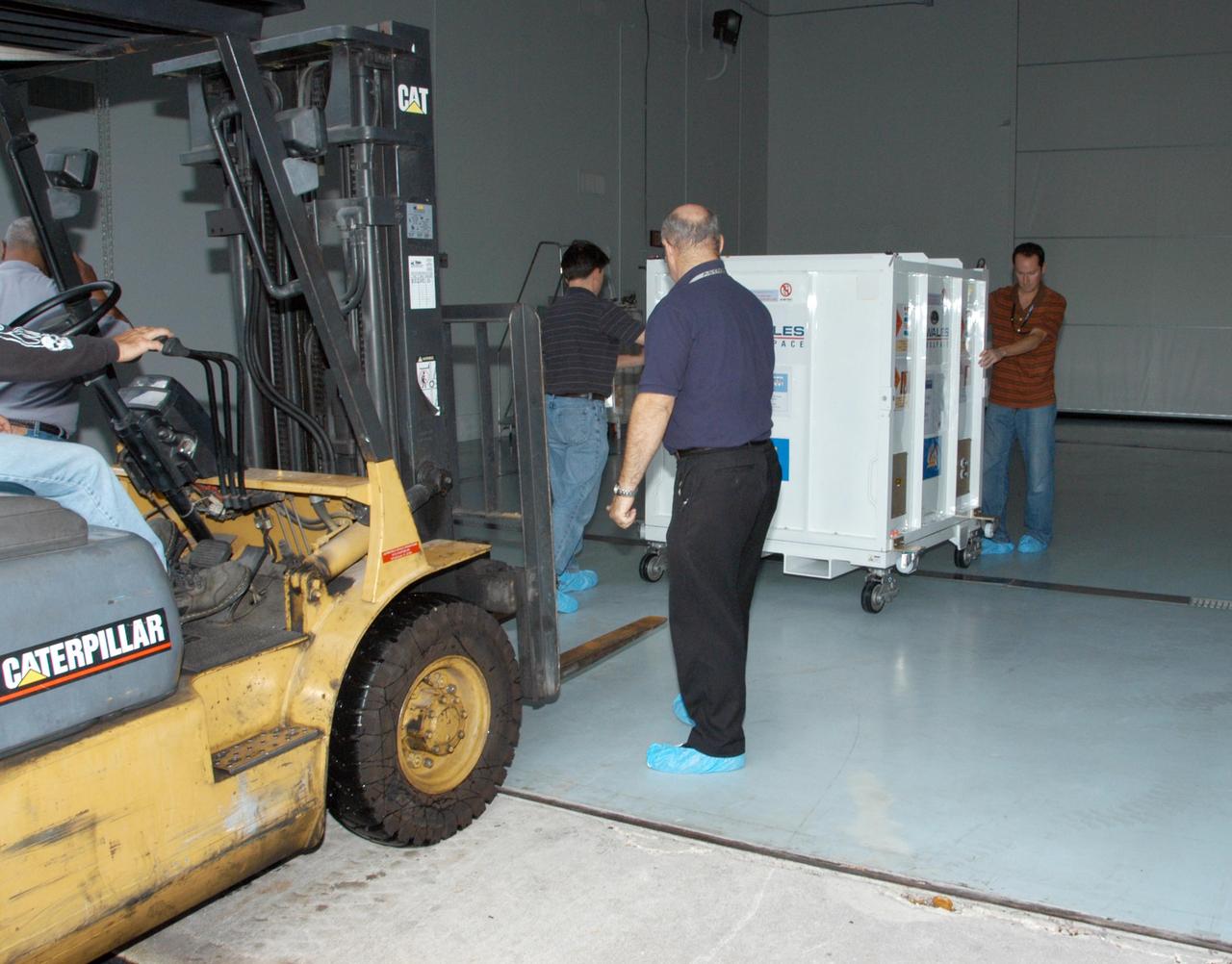
KENNEDY SPACE CENTER, FLA. -- One of the five THEMIS probes arrives at the hazardous processing facility after leaving Astrotech Space Operations in Titusville, Fla. At the facility, the probes will be placed on a stand in preparation for fueling operations. Once fueling is complete, each probe will be weighed and individually mated to the payload carrier before pyrotechnics are installed. The fully integrated THEMIS payload is then ready for spin-balance testing and weighing. The final milestone is mating THEMIS to its upper stage booster. THEMIS consists of five identical probes, the largest number of scientific satellites ever launched into orbit aboard a single rocket. This unique constellation of satellites will resolve the tantalizing mystery of what causes the spectacular sudden brightening of the aurora borealis and aurora australis - the fiery skies over the Earth's northern and southern polar regions. These lights are the visible manifestations of invisible energy releases, called geomagnetic substorms, in near-Earth space. THEMIS will not only seek to answer where and when substorms start, but will also provide clues as to how and why these space storms create havoc on satellites, terrestrial power grids, and communication systems. THEMIS will be transported to Pad 17-B at Cape Canaveral Air Force Station on February 1 for mating to the Delta II rocket. Launch is scheduled for Feb. 15. Photo credit: NASA/George Shelton
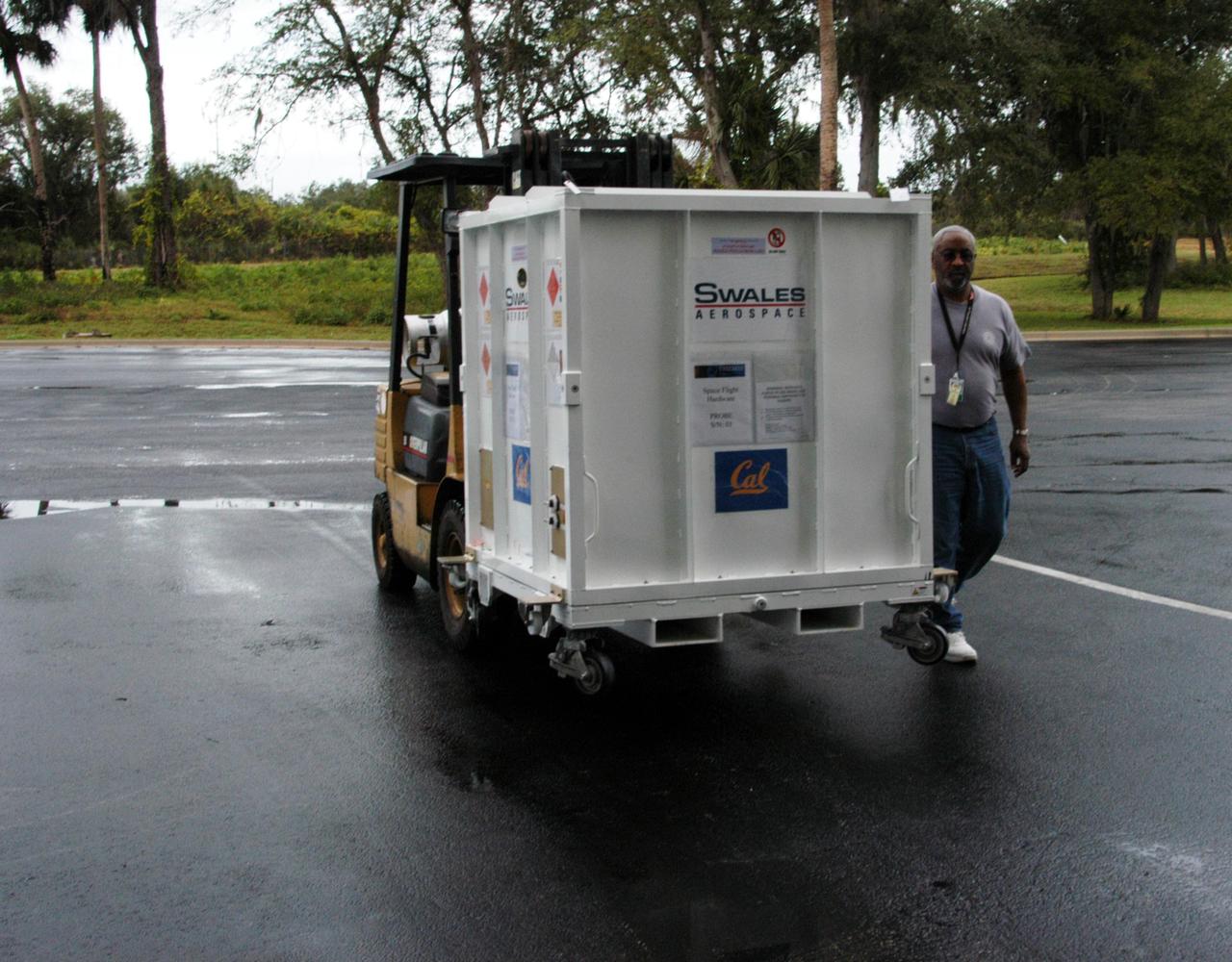
KENNEDY SPACE CENTER, FLA. -- One of the five THEMIS probes is being transported from Astrotech Space Operations in Titusville, Fla., to the hazardous processing facility. There the probes will be placed on a stand in preparation for fueling operations. Once fueling is complete, each probe will be weighed and individually mated to the payload carrier before pyrotechnics are installed. The fully integrated THEMIS payload is then ready for spin-balance testing and weighing. The final milestone is mating THEMIS to its upper stage booster. THEMIS consists of five identical probes, the largest number of scientific satellites ever launched into orbit aboard a single rocket. This unique constellation of satellites will resolve the tantalizing mystery of what causes the spectacular sudden brightening of the aurora borealis and aurora australis - the fiery skies over the Earth's northern and southern polar regions. These lights are the visible manifestations of invisible energy releases, called geomagnetic substorms, in near-Earth space. THEMIS will not only seek to answer where and when substorms start, but will also provide clues as to how and why these space storms create havoc on satellites, terrestrial power grids, and communication systems. THEMIS will be transported to Pad 17-B at Cape Canaveral Air Force Station on February 1 for mating to the Delta II rocket. Launch is scheduled for Feb. 15. Photo credit: NASA/George Shelton
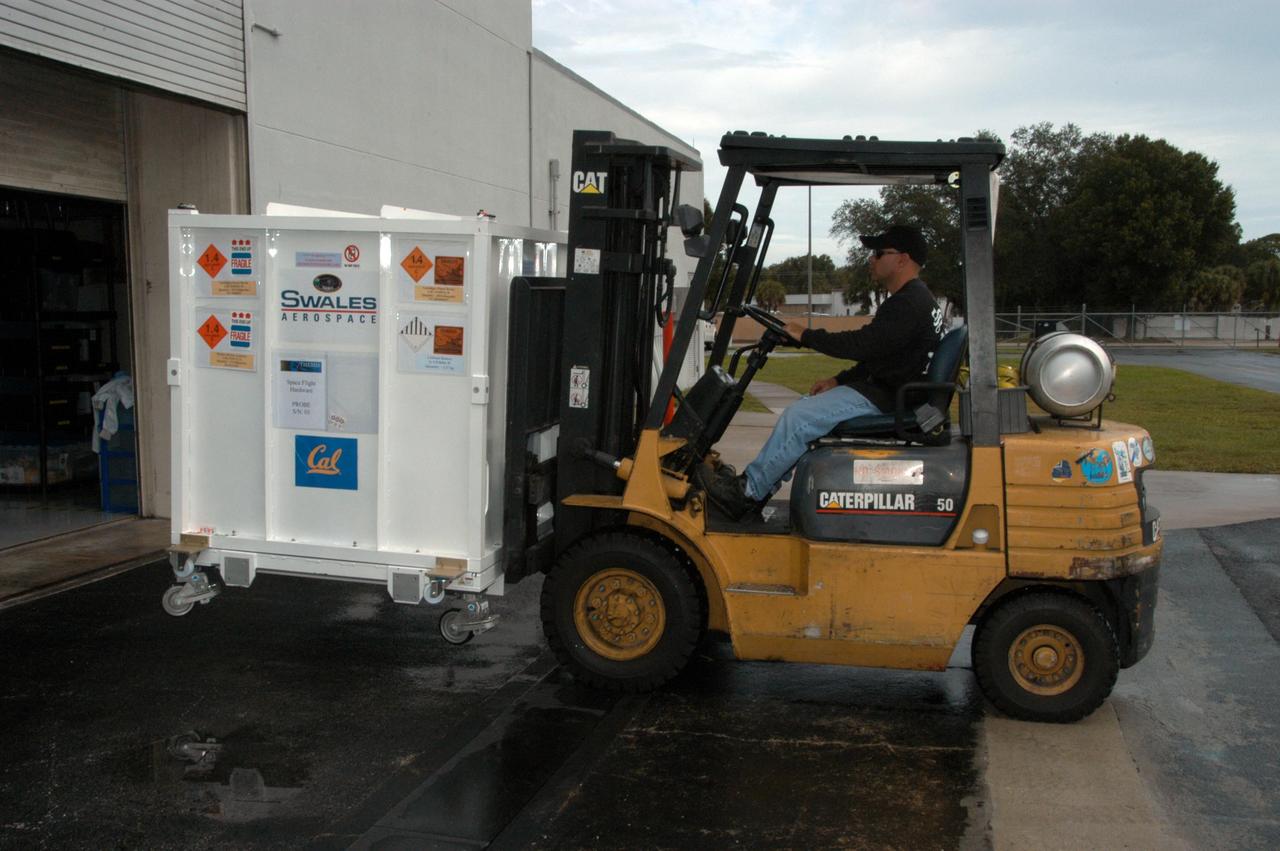
KENNEDY SPACE CENTER, FLA. -- At Astrotech Space Operations in Titusville, Fla., one of the five THEMIS probes is moved out of the facility and will be transported to the hazardous processing facility. There the probes will be placed on a stand in preparation for fueling operations. Once fueling is complete, each probe will be weighed and individually mated to the payload carrier before pyrotechnics are installed. The fully integrated THEMIS payload is then ready for spin-balance testing and weighing. The final milestone is mating THEMIS to its upper stage booster. THEMIS consists of five identical probes, the largest number of scientific satellites ever launched into orbit aboard a single rocket. This unique constellation of satellites will resolve the tantalizing mystery of what causes the spectacular sudden brightening of the aurora borealis and aurora australis - the fiery skies over the Earth's northern and southern polar regions. These lights are the visible manifestations of invisible energy releases, called geomagnetic substorms, in near-Earth space. THEMIS will not only seek to answer where and when substorms start, but will also provide clues as to how and why these space storms create havoc on satellites, terrestrial power grids, and communication systems. THEMIS will be transported to Pad 17-B at Cape Canaveral Air Force Station on February 1 for mating to the Delta II rocket. Launch is scheduled for Feb. 15. Photo credit: NASA/George Shelton

KENNEDY SPACE CENTER, FLA. -- At Astrotech Space Operations in Titusville, Fla., technicians are preparing one of five THEMIS probes to be secured inside a shipping container (behind it). The probes are being moved to the hazardous processing facility where they will be placed on a stand in preparation for fueling operations. Once fueling is complete, each probe will be weighed and individually mated to the payload carrier before pyrotechnics are installed. The fully integrated THEMIS payload is then ready for spin-balance testing and weighing. The final milestone is mating THEMIS to its upper stage booster. THEMIS consists of five identical probes, the largest number of scientific satellites ever launched into orbit aboard a single rocket. This unique constellation of satellites will resolve the tantalizing mystery of what causes the spectacular sudden brightening of the aurora borealis and aurora australis - the fiery skies over the Earth's northern and southern polar regions. These lights are the visible manifestations of invisible energy releases, called geomagnetic substorms, in near-Earth space. THEMIS will not only seek to answer where and when substorms start, but will also provide clues as to how and why these space storms create havoc on satellites, terrestrial power grids, and communication systems. THEMIS will be transported to Pad 17-B at Cape Canaveral Air Force Station on February 1 for mating to the Delta II rocket. Launch is scheduled for Feb. 15. Photo credit: NASA/George Shelton
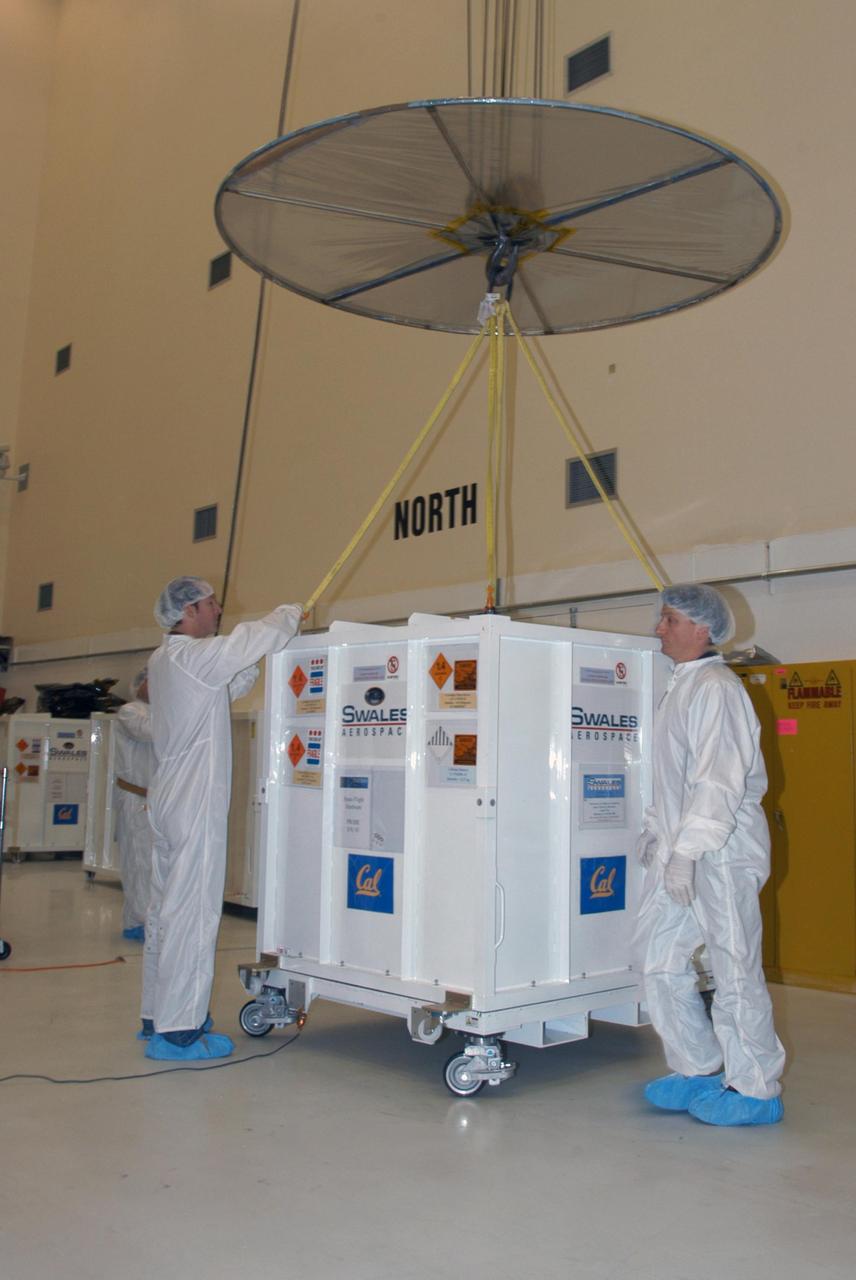
KENNEDY SPACE CENTER, FLA. -- At Astrotech Space Operations in Titusville, Fla., technicians release the overhead crane from the shipping container placed around one of the five THEMIS probes for its move to the hazardous processing facility. There the probes will be placed on a stand in preparation for fueling operations. Once fueling is complete, each probe will be weighed and individually mated to the payload carrier before pyrotechnics are installed. The fully integrated THEMIS payload is then ready for spin-balance testing and weighing. The final milestone is mating THEMIS to its upper stage booster. THEMIS consists of five identical probes, the largest number of scientific satellites ever launched into orbit aboard a single rocket. This unique constellation of satellites will resolve the tantalizing mystery of what causes the spectacular sudden brightening of the aurora borealis and aurora australis - the fiery skies over the Earth's northern and southern polar regions. These lights are the visible manifestations of invisible energy releases, called geomagnetic substorms, in near-Earth space. THEMIS will not only seek to answer where and when substorms start, but will also provide clues as to how and why these space storms create havoc on satellites, terrestrial power grids, and communication systems. THEMIS will be transported to Pad 17-B at Cape Canaveral Air Force Station on February 1 for mating to the Delta II rocket. Launch is scheduled for Feb. 15. Photo credit: NASA/George Shelton
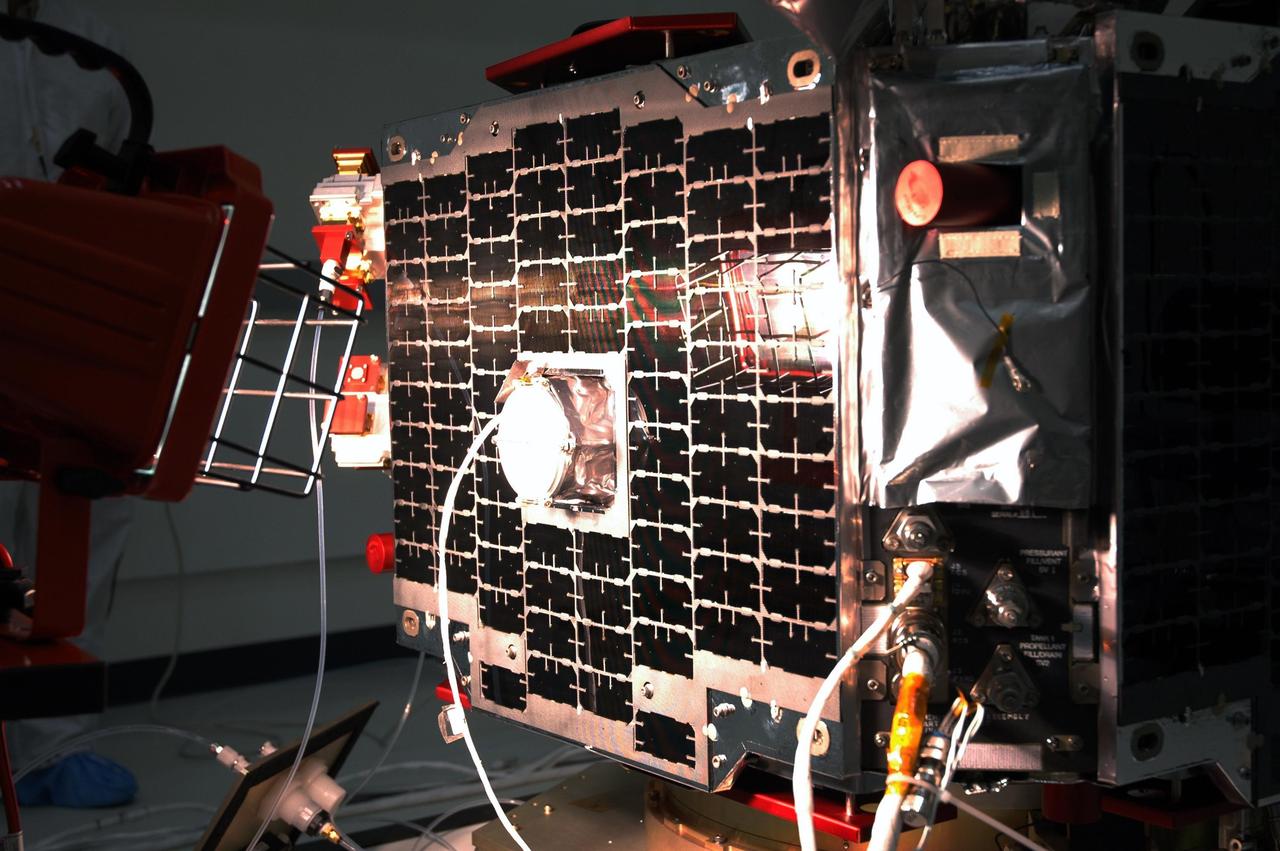
KENNEDY SPACE CENTER, FLA. -- At Astrotech Space Operations in Titusville, Fla., a solar array on one of the THEMIS probes undergoes a light test. THEMIS consists of five identical probes, the largest number of scientific satellites ever launched into orbit aboard a single rocket. This unique constellation of satellites will resolve the tantalizing mystery of what causes the spectacular sudden brightening of the aurora borealis and aurora australis - the fiery skies over the Earth's northern and southern polar regions. These lights are the visible manifestations of invisible energy releases, called geomagnetic substorms, in near-Earth space. THEMIS will not only seek to answer where and when substorms start, but will also provide clues as to how and why these space storms create havoc on satellites, terrestrial power grids, and communication systems. THEMIS is scheduled to launch Feb. 15 from Cape Canaveral Air Force Station. Photo credit: NASA/Jack Pfaller

KENNEDY SPACE CENTER, FLA. -- At Astrotech Space Operations in Titusville, Fla., a light test on the solar arrays are complete on this probe of the THEMIS spacecraft. THEMIS consists of five identical probes, the largest number of scientific satellites ever launched into orbit aboard a single rocket. This unique constellation of satellites will resolve the tantalizing mystery of what causes the spectacular sudden brightening of the aurora borealis and aurora australis - the fiery skies over the Earth's northern and southern polar regions. These lights are the visible manifestations of invisible energy releases, called geomagnetic substorms, in near-Earth space. THEMIS will not only seek to answer where and when substorms start, but will also provide clues as to how and why these space storms create havoc on satellites, terrestrial power grids, and communication systems. THEMIS is scheduled to launch Feb. 15 from Cape Canaveral Air Force Station. Photo credit: NASA/Jack Pfaller

KENNEDY SPACE CENTER, FLA. -- At Astrotech Space Operations in Titusville, Fla., a technician works on the solar array of a THEMIS probe in preparation for a light test. THEMIS consists of five identical probes, the largest number of scientific satellites ever launched into orbit aboard a single rocket. This unique constellation of satellites will resolve the tantalizing mystery of what causes the spectacular sudden brightening of the aurora borealis and aurora australis - the fiery skies over the Earth's northern and southern polar regions. These lights are the visible manifestations of invisible energy releases, called geomagnetic substorms, in near-Earth space. THEMIS will not only seek to answer where and when substorms start, but will also provide clues as to how and why these space storms create havoc on satellites, terrestrial power grids, and communication systems. THEMIS is scheduled to launch Feb. 15 from Cape Canaveral Air Force Station. Photo credit: NASA/Jack Pfaller
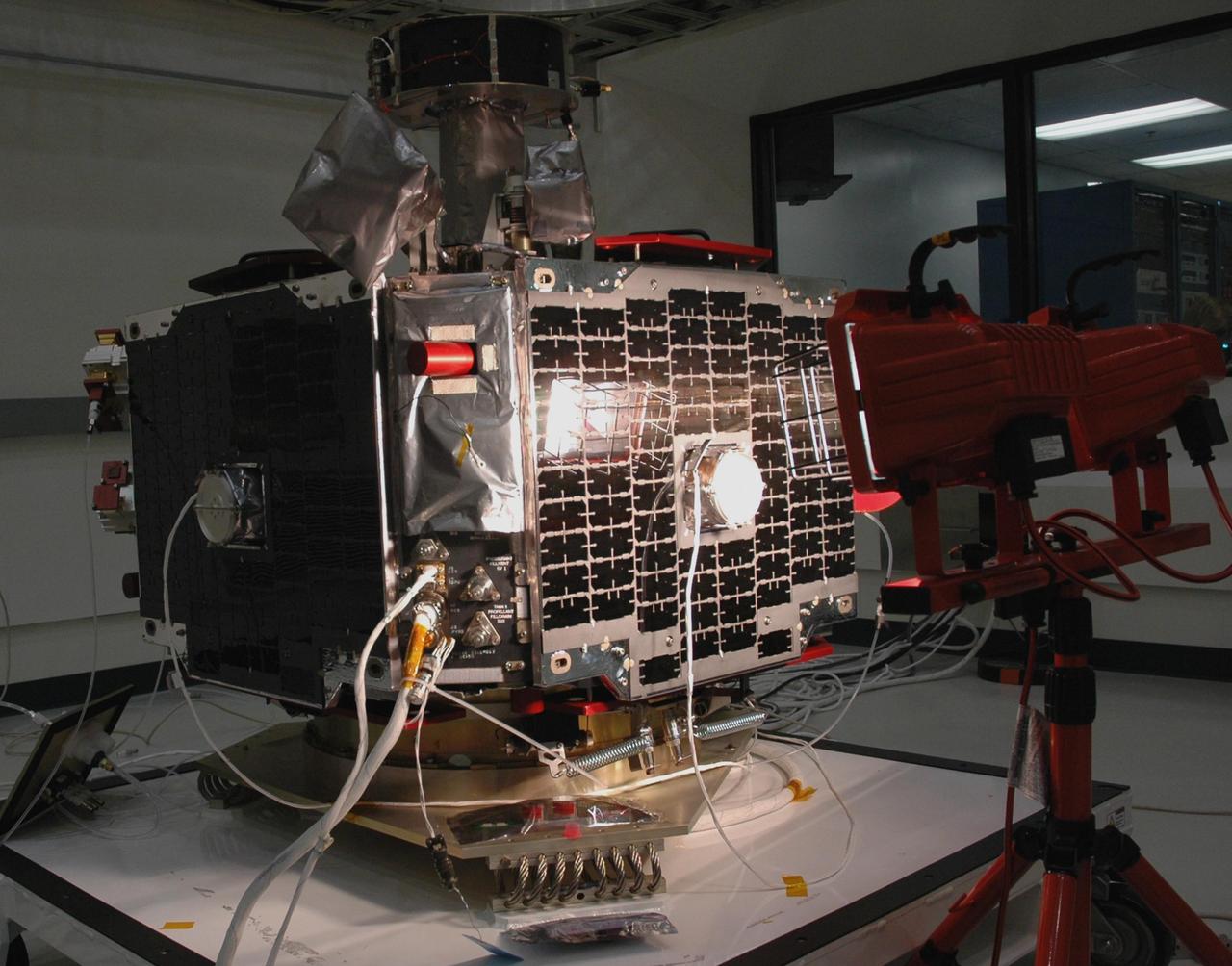
KENNEDY SPACE CENTER, FLA. -- At Astrotech Space Operations in Titusville, Fla., a solar array on one of the THEMIS probes undergoes a light test. THEMIS consists of five identical probes, the largest number of scientific satellites ever launched into orbit aboard a single rocket. This unique constellation of satellites will resolve the tantalizing mystery of what causes the spectacular sudden brightening of the aurora borealis and aurora australis - the fiery skies over the Earth's northern and southern polar regions. These lights are the visible manifestations of invisible energy releases, called geomagnetic substorms, in near-Earth space. THEMIS will not only seek to answer where and when substorms start, but will also provide clues as to how and why these space storms create havoc on satellites, terrestrial power grids, and communication systems. THEMIS is scheduled to launch Feb. 15 from Cape Canaveral Air Force Station. Photo credit: NASA/Jack Pfaller

KENNEDY SPACE CENTER, FLA. -- At Astrotech Space Operations in Titusville, Fla., technicians work on the solar array of a THEMIS probe in preparation for a light test. THEMIS consists of five identical probes, the largest number of scientific satellites ever launched into orbit aboard a single rocket. This unique constellation of satellites will resolve the tantalizing mystery of what causes the spectacular sudden brightening of the aurora borealis and aurora australis - the fiery skies over the Earth's northern and southern polar regions. These lights are the visible manifestations of invisible energy releases, called geomagnetic substorms, in near-Earth space. THEMIS will not only seek to answer where and when substorms start, but will also provide clues as to how and why these space storms create havoc on satellites, terrestrial power grids, and communication systems. THEMIS is scheduled to launch Feb. 15 from Cape Canaveral Air Force Station. Photo credit: NASA/Jack Pfaller
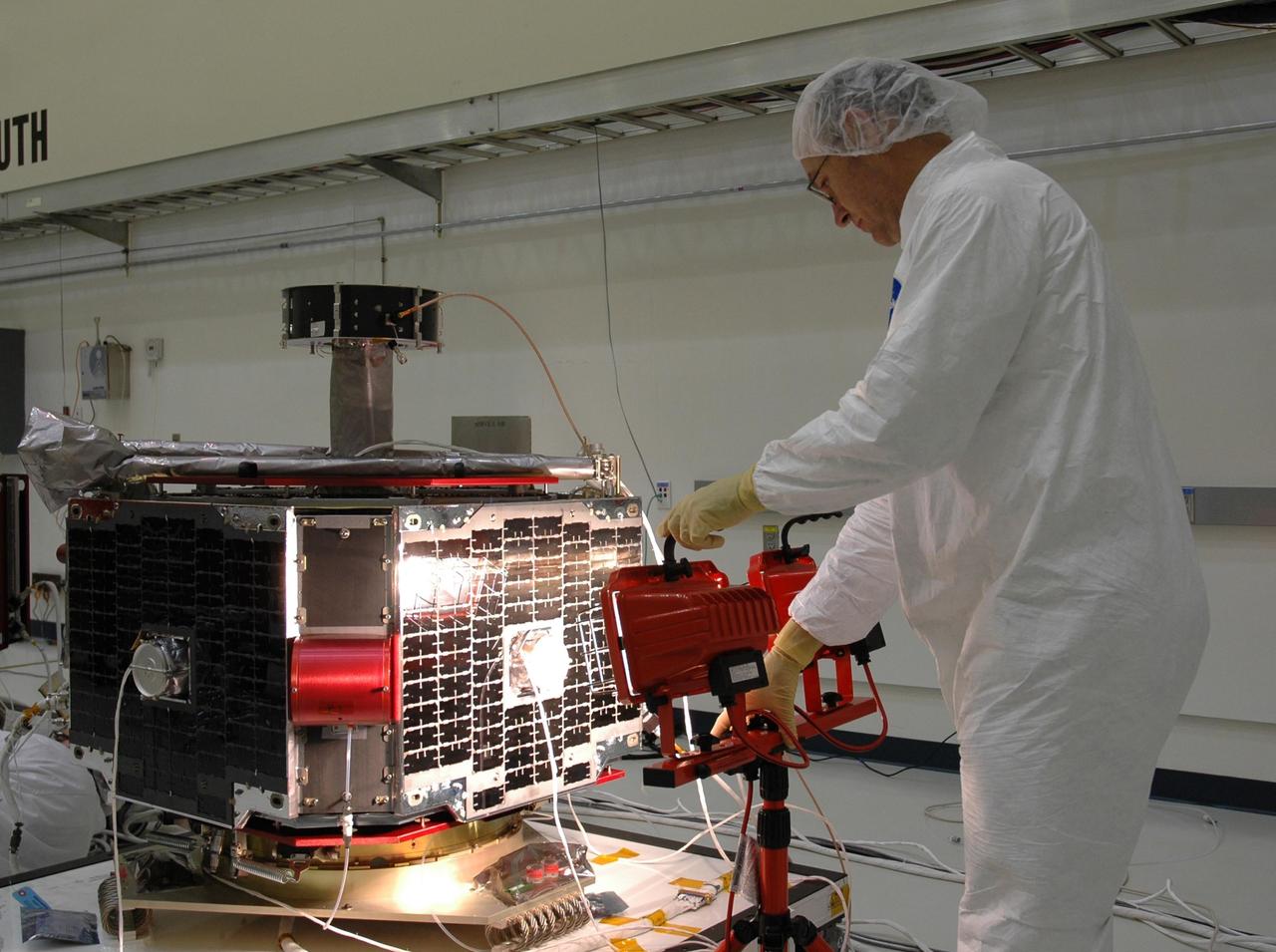
KENNEDY SPACE CENTER, FLA. -- At Astrotech Space Operations in Titusville, Fla., a technician arranges a light for a test on a solar array on one of the THEMIS probes. THEMIS consists of five identical probes, the largest number of scientific satellites ever launched into orbit aboard a single rocket. This unique constellation of satellites will resolve the tantalizing mystery of what causes the spectacular sudden brightening of the aurora borealis and aurora australis - the fiery skies over the Earth's northern and southern polar regions. These lights are the visible manifestations of invisible energy releases, called geomagnetic substorms, in near-Earth space. THEMIS will not only seek to answer where and when substorms start, but will also provide clues as to how and why these space storms create havoc on satellites, terrestrial power grids, and communication systems. THEMIS is scheduled to launch Feb. 15 from Cape Canaveral Air Force Station. Photo credit: NASA/Jack Pfaller
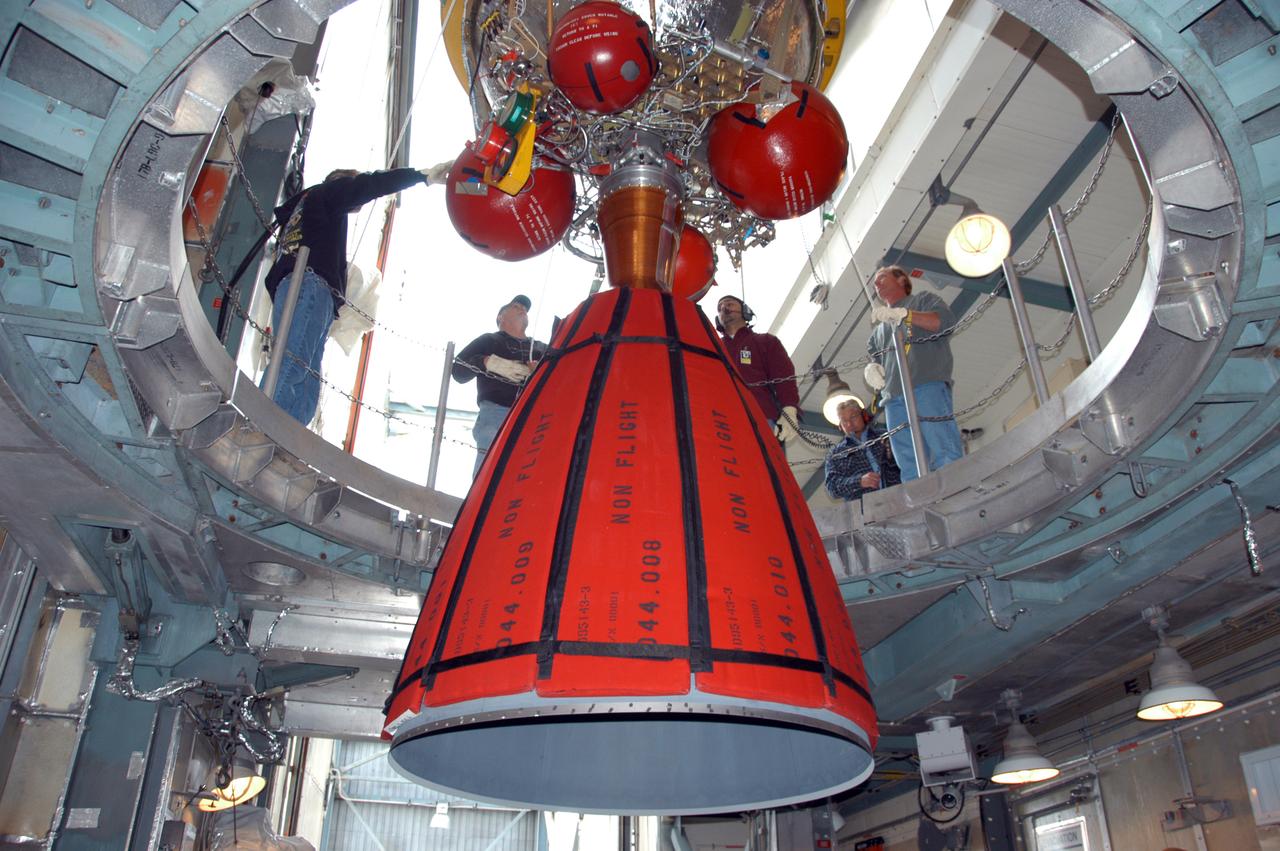
On Pad 17-B at Cape Canaveral Air Force Station, the Delta II second stage is being lowered toward the Delta II first stage, already in place inside the mobile service tower. The Delta II is the launch vehicle for the THEMIS spacecraft. THEMIS consists of five identical probes, the largest number of scientific satellites ever launched into orbit aboard a single rocket. This unique constellation of satellites will resolve the tantalizing mystery of what causes the spectacular sudden brightening of the aurora borealis and aurora australis - the fiery skies over the Earth's northern and southern polar regions. THEMIS is scheduled to launch Feb. 15 from Cape Canaveral Air Force Station.
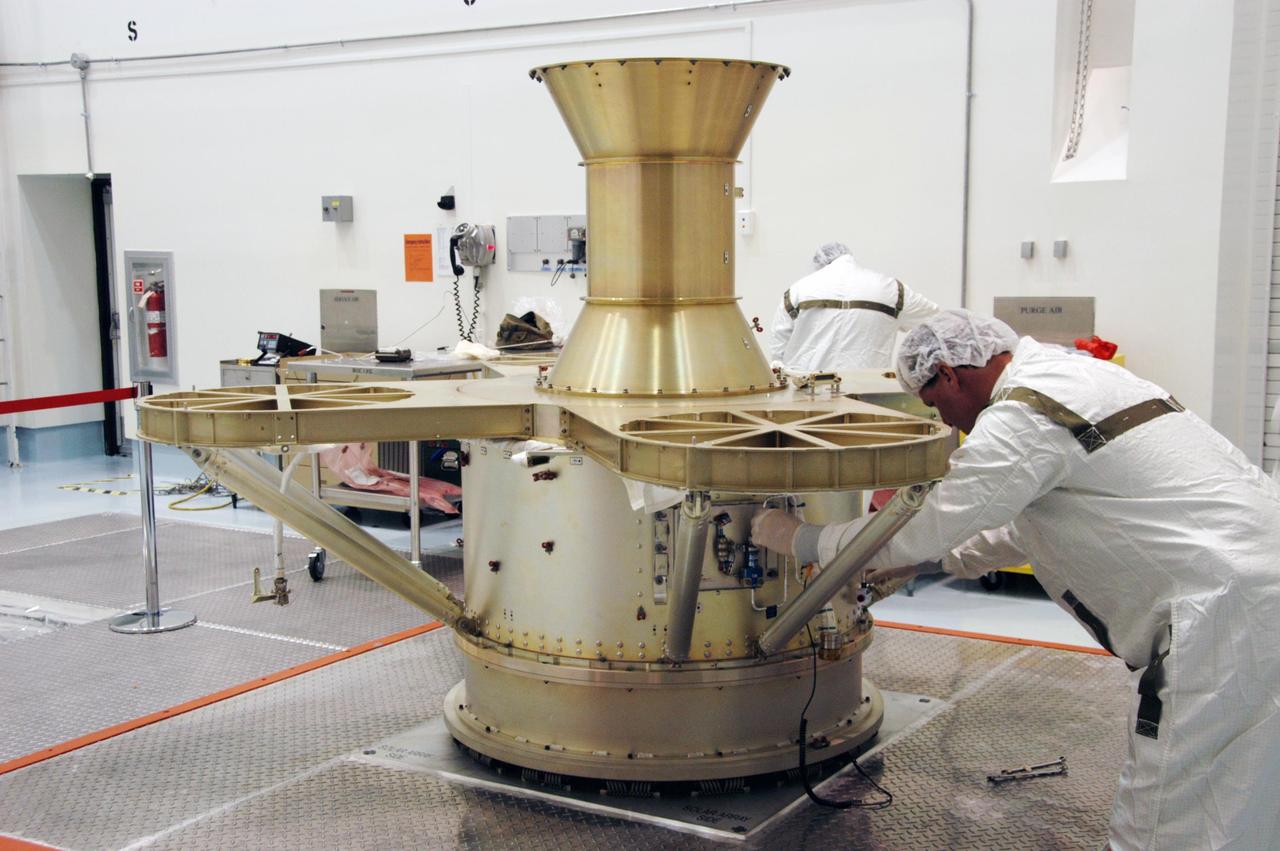
KENNEDY SPACE CENTER, FLA. -- At Astrotech Space Operations in Titusville, Fla., a worker attaches a high pressure line on the THEMIS spacecraft in preparation for fueling, which is scheduled for Jan. 3-5. THEMIS consists of five identical probes, the largest number of scientific satellites ever launched into orbit aboard a single rocket. This unique constellation of satellites will resolve the tantalizing mystery of what causes the spectacular sudden brightening of the aurora borealis and aurora australis - the fiery skies over the Earth's northern and southern polar regions. THEMIS is scheduled to launch Feb. 15 from Cape Canaveral Air Force Station. Photo credit: NASA/George Shelton
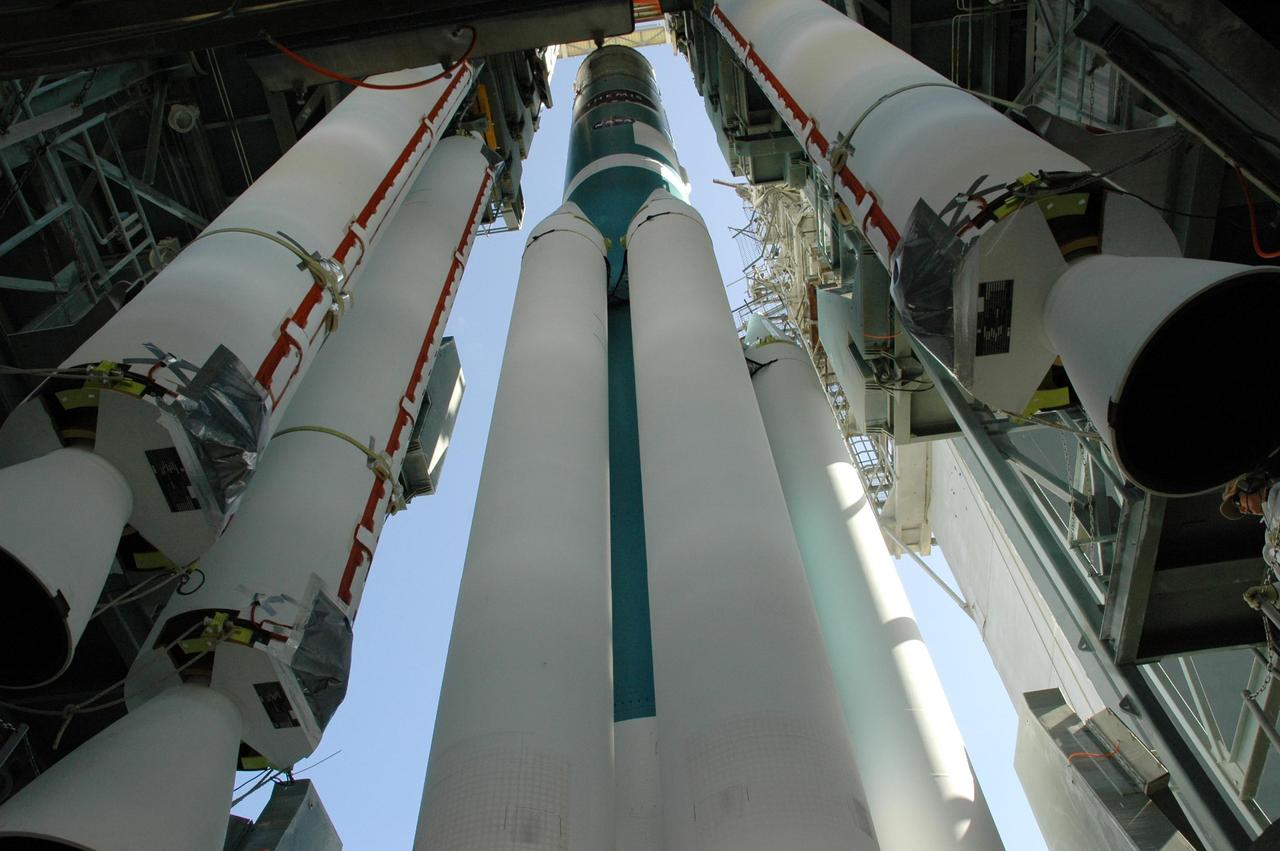
KENNEDY SPACE CENTER, FLA. -- Solid rocket boosters left and right are being added to those already clustered around the base of the United Launch Alliance Delta II rocket. A total of nine will assist in the launch of the THEMIS integrated spacecraft. THEMIS consists of five identical probes, the largest number of scientific satellites ever launched into orbit aboard a single rocket. This unique constellation of satellites will resolve the tantalizing mystery of what causes the spectacular sudden brightening of the aurora borealis and aurora australis - the fiery skies over the Earth's northern and southern polar regions. THEMIS is scheduled to launch Feb. 15 from Cape Canaveral Air Force Station. Photo credit: NASA/Jack Pfaller

KENNEDY SPACE CENTER, FLA. -- At Astrotech Space Operations in Titusville, Fla., a worker attaches a high pressure line on the THEMIS spacecraft in preparation for fueling, which is scheduled for Jan. 3-5. THEMIS consists of five identical probes, the largest number of scientific satellites ever launched into orbit aboard a single rocket. This unique constellation of satellites will resolve the tantalizing mystery of what causes the spectacular sudden brightening of the aurora borealis and aurora australis - the fiery skies over the Earth's northern and southern polar regions. THEMIS is scheduled to launch Feb. 15 from Cape Canaveral Air Force Station. Photo credit: NASA/George Shelton
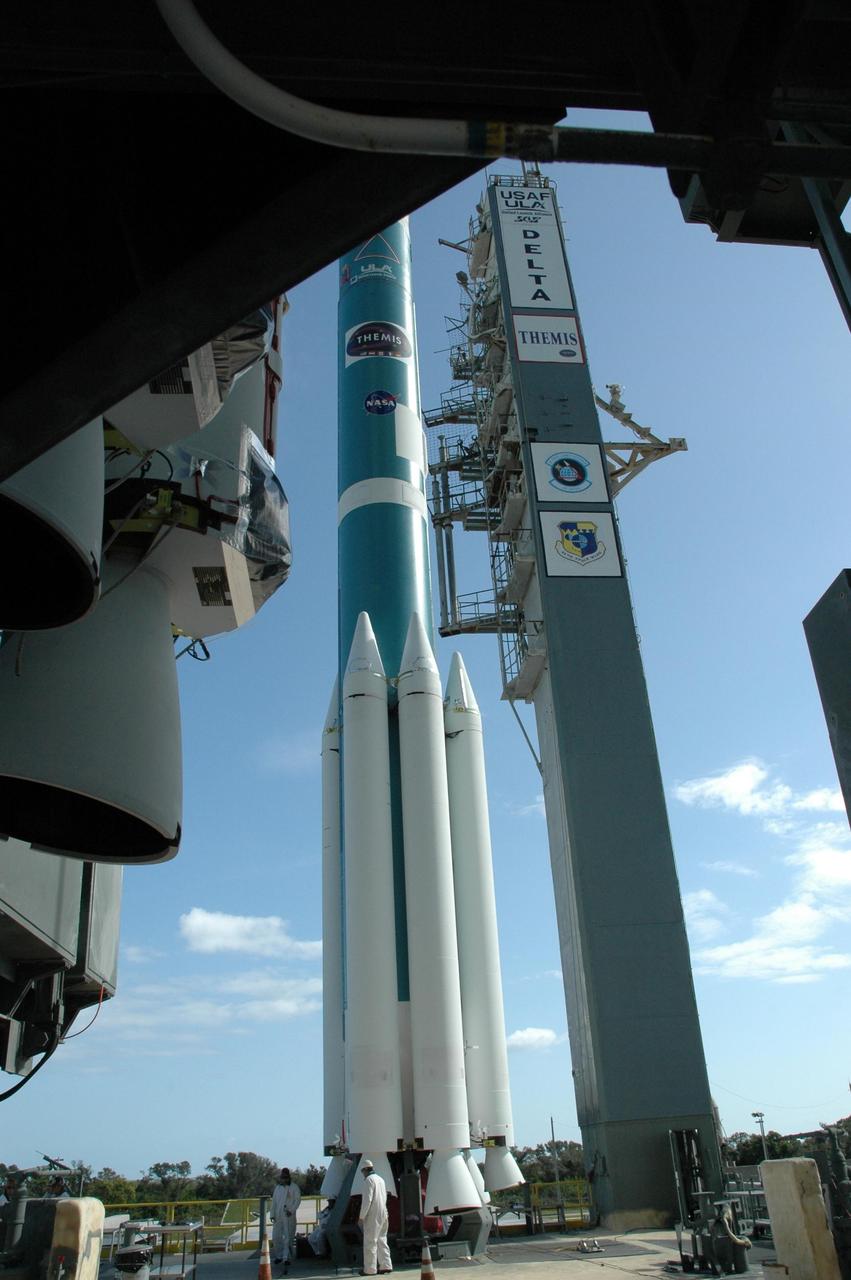
KENNEDY SPACE CENTER, FLA. -- Solid rocket boosters are clustered around the base of the United Launch Alliance Delta II rocket. A total of nine will assist in the launch of the THEMIS integrated spacecraft. THEMIS consists of five identical probes, the largest number of scientific satellites ever launched into orbit aboard a single rocket. This unique constellation of satellites will resolve the tantalizing mystery of what causes the spectacular sudden brightening of the aurora borealis and aurora australis - the fiery skies over the Earth's northern and southern polar regions. THEMIS is scheduled to launch Feb. 15 from Cape Canaveral Air Force Station. Photo credit: NASA/Jack Pfaller
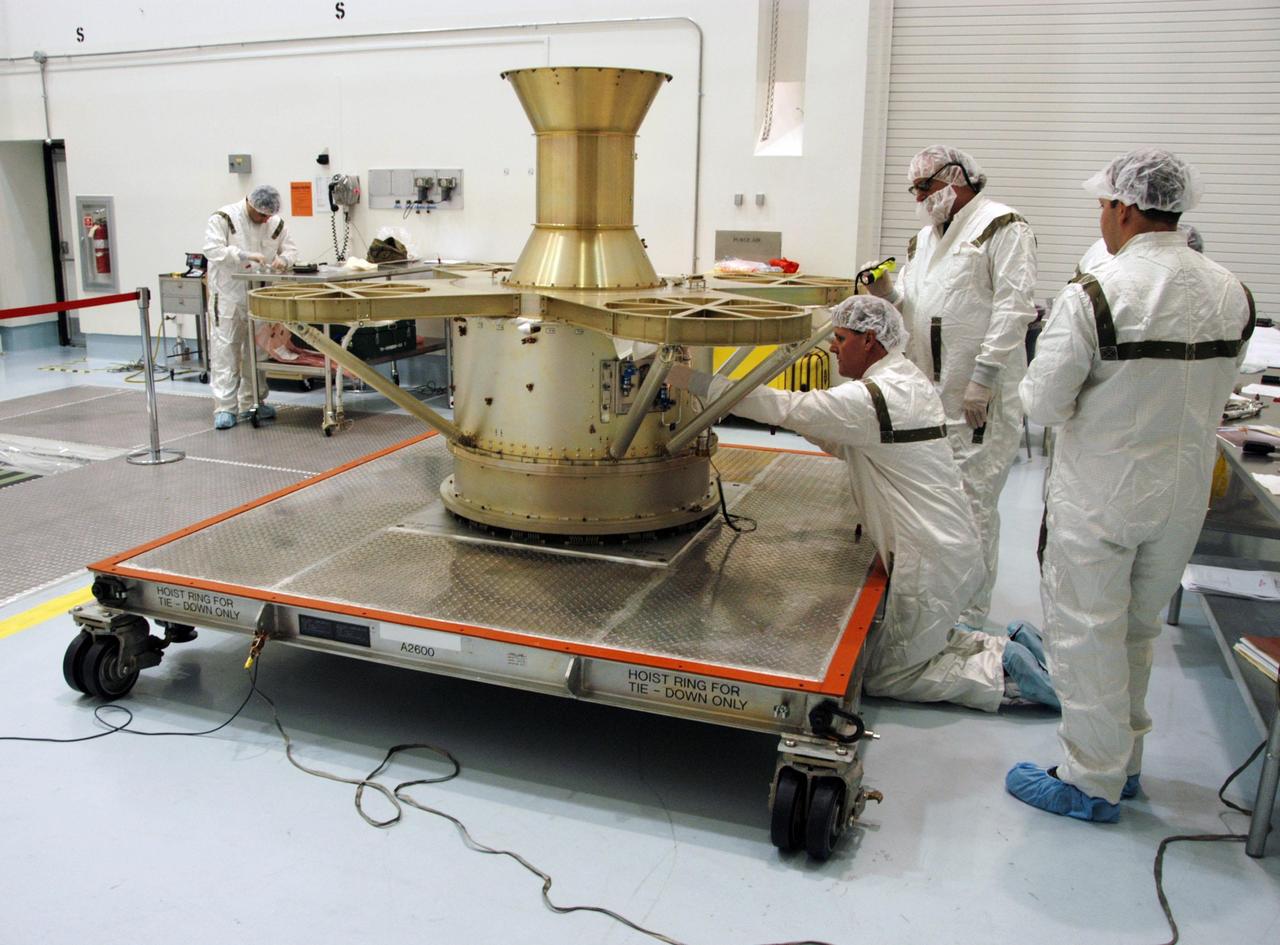
KENNEDY SPACE CENTER, FLA. -- At Astrotech Space Operations in Titusville, Fla., a worker attaches a high pressure line on the THEMIS spacecraft in preparation for fueling, which is scheduled for Jan. 3-5. THEMIS consists of five identical probes, the largest number of scientific satellites ever launched into orbit aboard a single rocket. This unique constellation of satellites will resolve the tantalizing mystery of what causes the spectacular sudden brightening of the aurora borealis and aurora australis - the fiery skies over the Earth's northern and southern polar regions. THEMIS is scheduled to launch Feb. 15 from Cape Canaveral Air Force Station. Photo credit: NASA/George Shelton
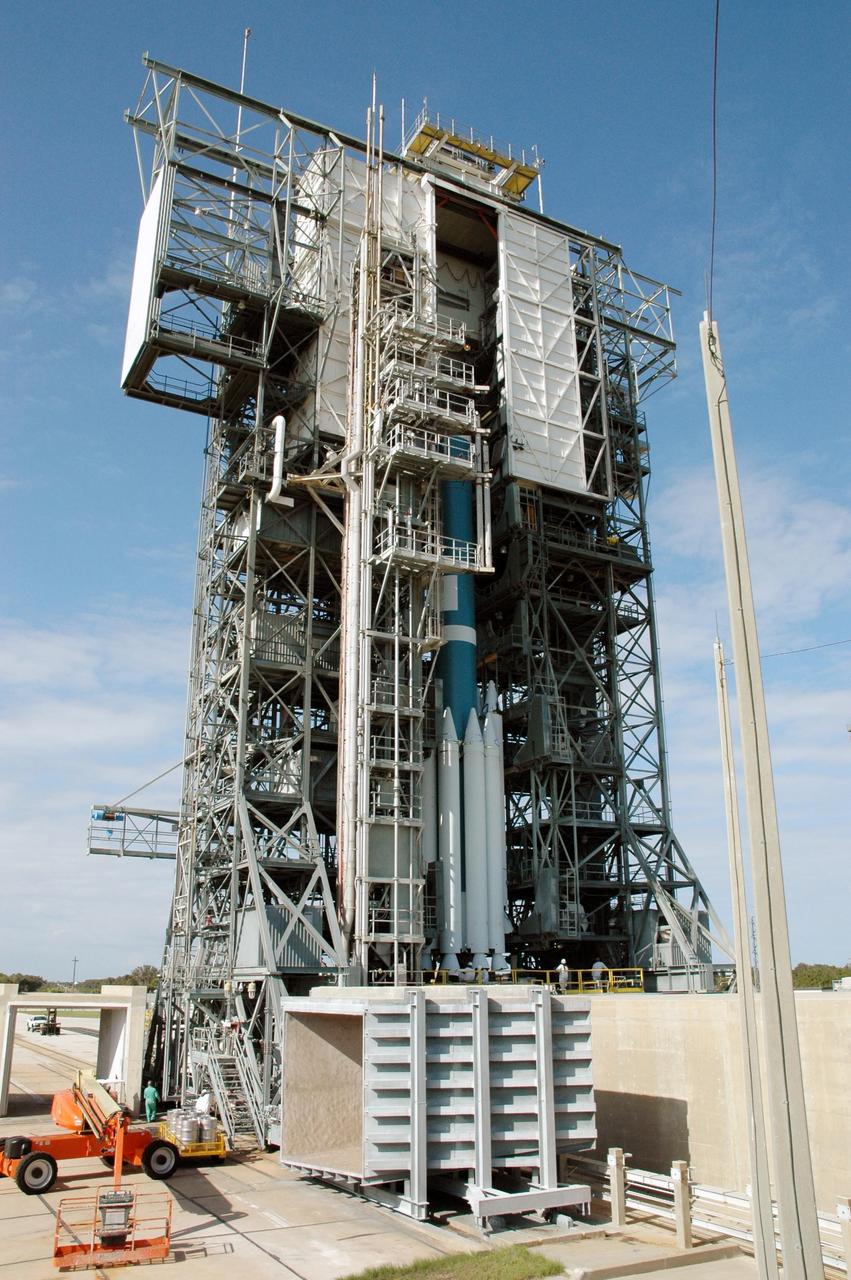
KENNEDY SPACE CENTER, FLA. -- Solid rocket boosters are clustered around the base of the United Launch Alliance Delta II rocket in the mobile service tower. A total of nine will assist in the launch of the THEMIS integrated spacecraft. THEMIS consists of five identical probes, the largest number of scientific satellites ever launched into orbit aboard a single rocket. This unique constellation of satellites will resolve the tantalizing mystery of what causes the spectacular sudden brightening of the aurora borealis and aurora australis - the fiery skies over the Earth's northern and southern polar regions. THEMIS is scheduled to launch Feb. 15 from Cape Canaveral Air Force Station. Photo credit: NASA/Jack Pfaller
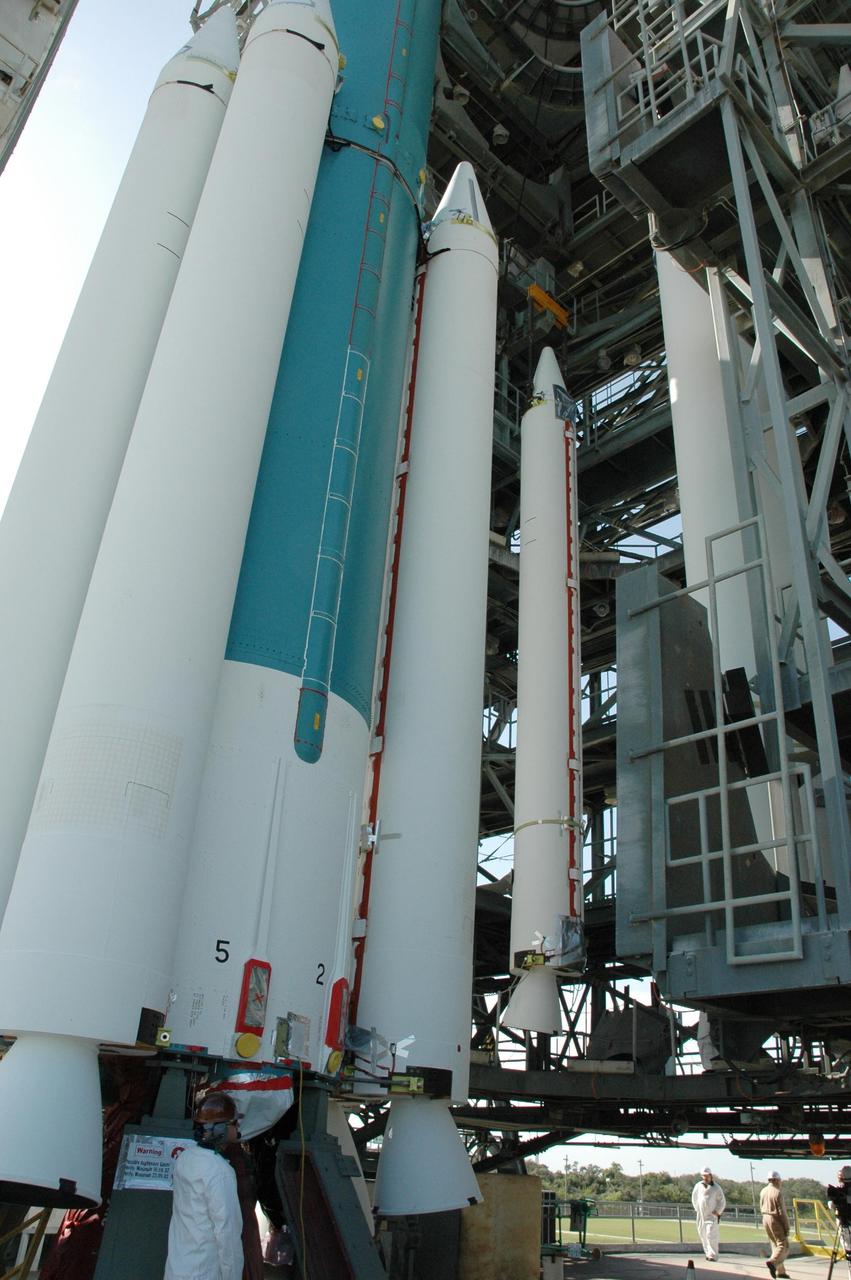
KENNEDY SPACE CENTER, FLA. -- Solid rocket boosters are clustered around the base of the United Launch Alliance Delta II rocket. A total of nine will assist in the launch of the THEMIS integrated spacecraft. THEMIS consists of five identical probes, the largest number of scientific satellites ever launched into orbit aboard a single rocket. This unique constellation of satellites will resolve the tantalizing mystery of what causes the spectacular sudden brightening of the aurora borealis and aurora australis - the fiery skies over the Earth's northern and southern polar regions. THEMIS is scheduled to launch Feb. 15 from Cape Canaveral Air Force Station. Photo credit: NASA/Jack Pfaller
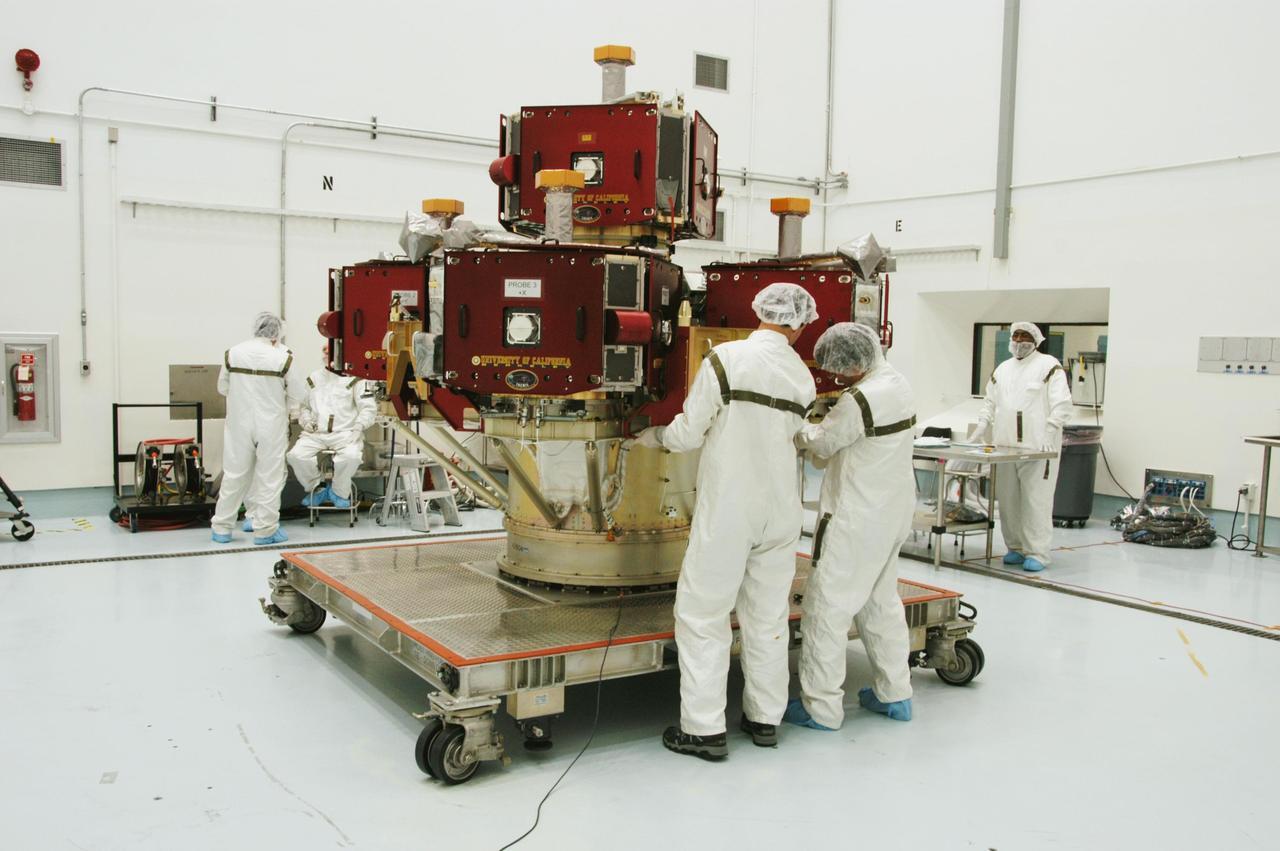
KENNEDY SPACE CENTER, FLA. -- In the Hazardous Processing Facility at Astrotech Space Operations, workers prepare the integrated THEMIS spacecraft to be moved to a spin table for spin-balance testing. THEMIS consists of five identical probes, the largest number of scientific satellites ever launched into orbit aboard a single rocket. This unique constellation of satellites will resolve the tantalizing mystery of what causes the spectacular sudden brightening of the aurora borealis and aurora australis - the fiery skies over the Earth's northern and southern polar regions. THEMIS is scheduled to launch Feb. 15 from Cape Canaveral Air Force Station. Photo credit: NASA/George Shelton
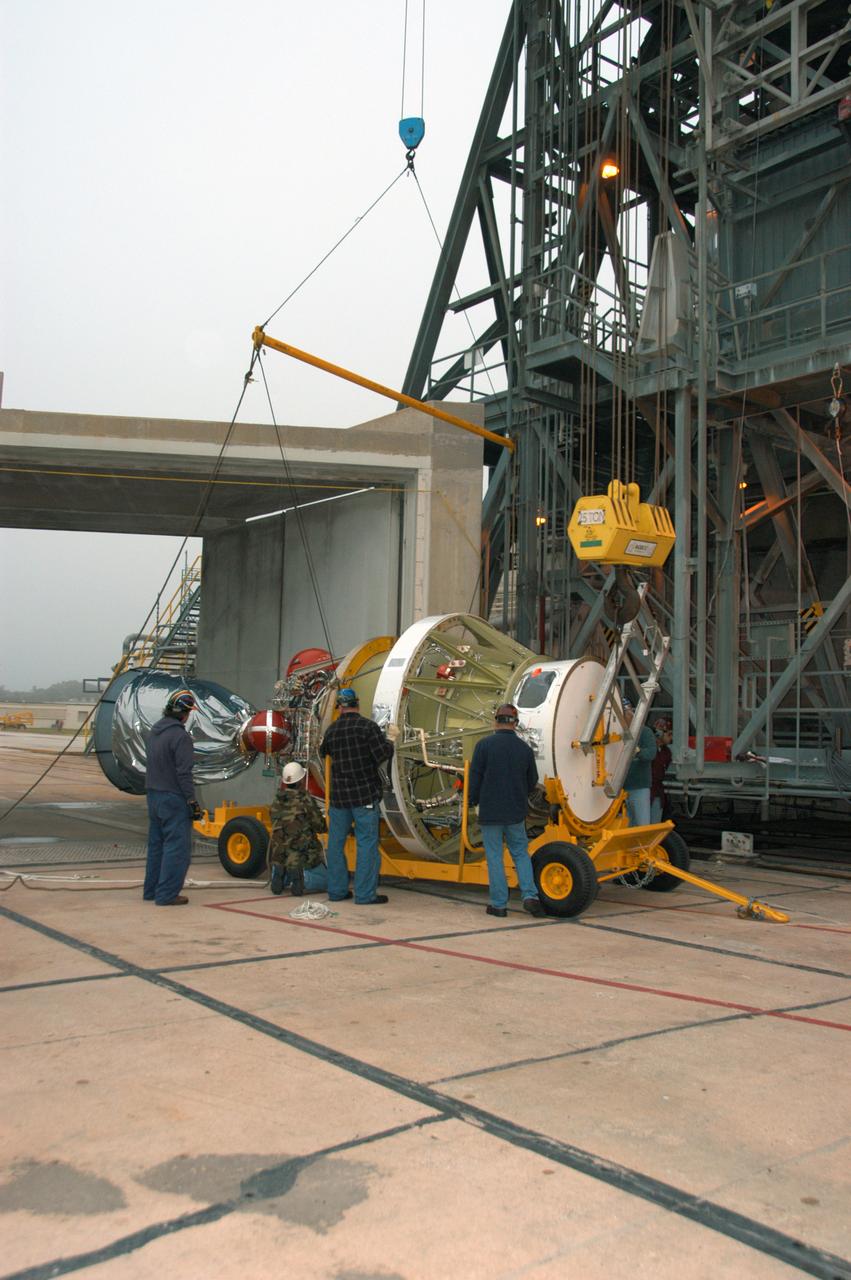
On Pad 17-B at Cape Canaveral Air Force Station, workers attach an overhead crane to the Delta II second stage in order to raise it to vertical. It will be lifted into the mobile service tower and mated with the first stage already in place. The Delta II is the launch vehicle for the THEMIS spacecraft. THEMIS consists of five identical probes, the largest number of scientific satellites ever launched into orbit aboard a single rocket. This unique constellation of satellites will resolve the tantalizing mystery of what causes the spectacular sudden brightening of the aurora borealis and aurora australis - the fiery skies over the Earth's northern and southern polar regions. THEMIS is scheduled to launch Feb. 15 from Cape Canaveral Air Force Station.

KENNEDY SPACE CENTER, FLA. -- At Astrotech Space Operations, the media are dressed in clean room, or bunny, suits to photograph the integrated THEMIS spacecraft. THEMIS consists of five identical probes, the largest number of scientific satellites ever launched into orbit aboard a single rocket. This unique constellation of satellites will resolve the tantalizing mystery of what causes the spectacular sudden brightening of the aurora borealis and aurora australis - the fiery skies over the Earth's northern and southern polar regions. THEMIS is scheduled to launch Feb. 15 from Cape Canaveral Air Force Station. Photo credit: NASA/George Shelton
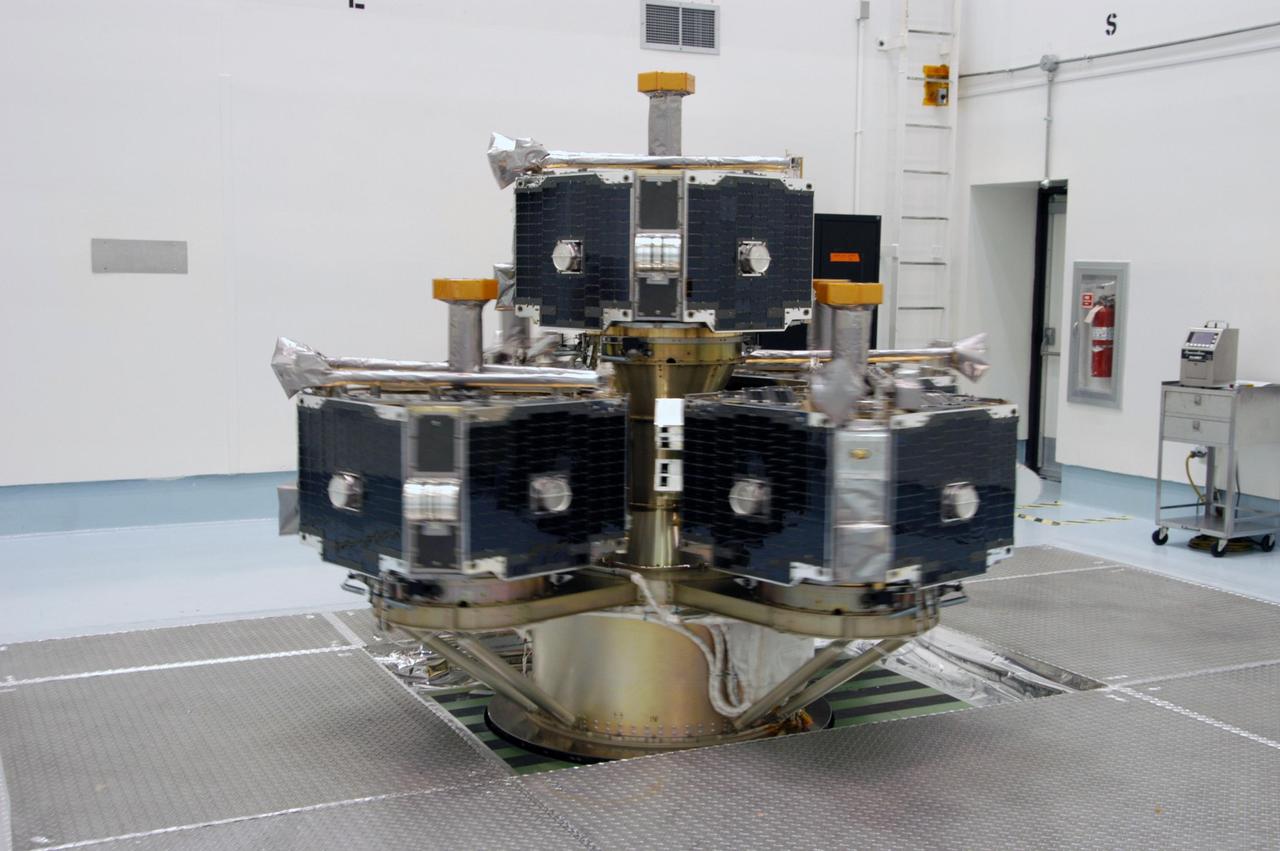
KENNEDY SPACE CENTER, FLA. -- At Astrotech Space Operations, the integrated THEMIS spacecraft is spinning on the spin table, part of spin-balance testing. THEMIS consists of five identical probes, the largest number of scientific satellites ever launched into orbit aboard a single rocket. This unique constellation of satellites will resolve the tantalizing mystery of what causes the spectacular sudden brightening of the aurora borealis and aurora australis - the fiery skies over the Earth's northern and southern polar regions. THEMIS is scheduled to launch Feb. 15 from Cape Canaveral Air Force Station. Photo credit: NASA/George Shelton
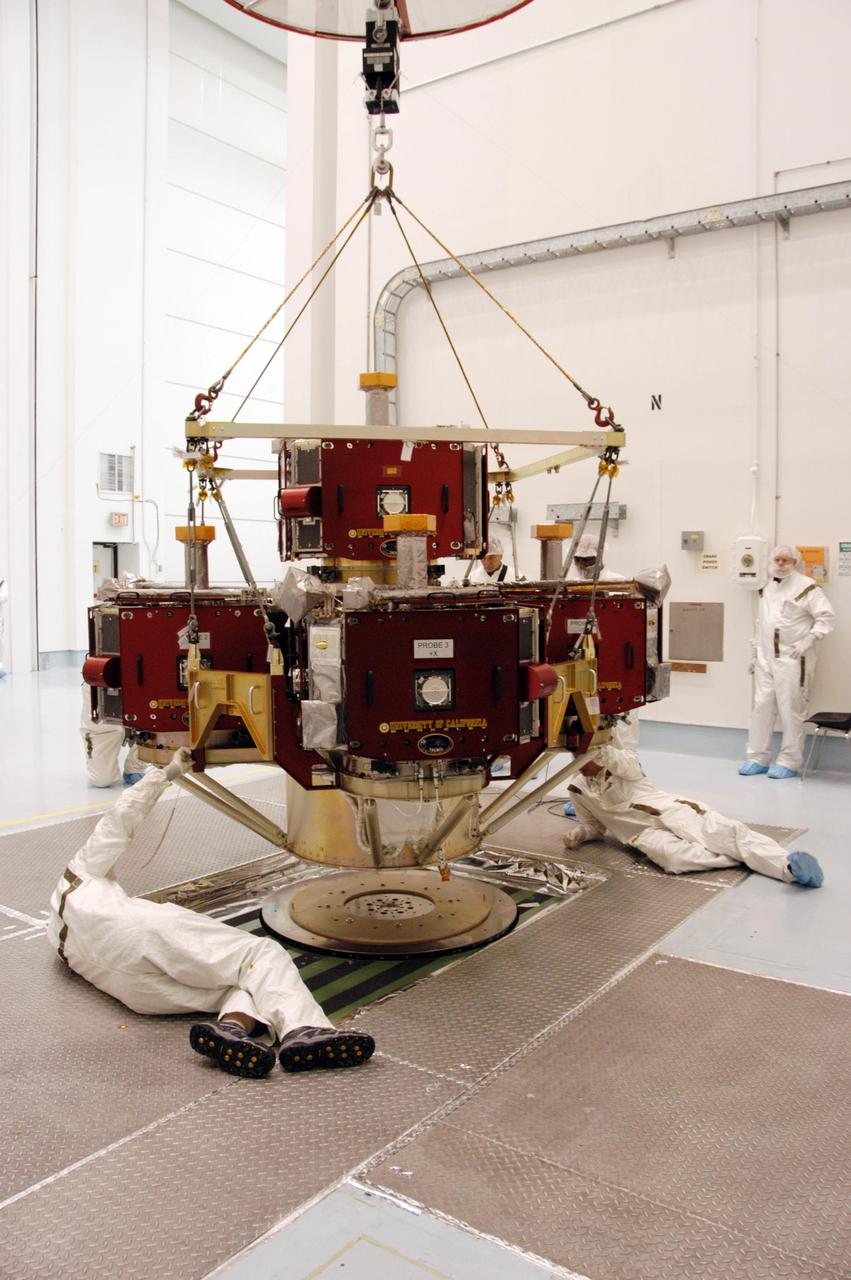
KENNEDY SPACE CENTER, FLA. -- In the Hazardous Processing Facility at Astrotech Space Operations, workers guide the integrated THEMIS spacecraft onto the spin table in the foreground. There it will undergo spin-balance testing. THEMIS consists of five identical probes, the largest number of scientific satellites ever launched into orbit aboard a single rocket. This unique constellation of satellites will resolve the tantalizing mystery of what causes the spectacular sudden brightening of the aurora borealis and aurora australis - the fiery skies over the Earth's northern and southern polar regions. THEMIS is scheduled to launch Feb. 15 from Cape Canaveral Air Force Station. Photo credit: NASA/George Shelton
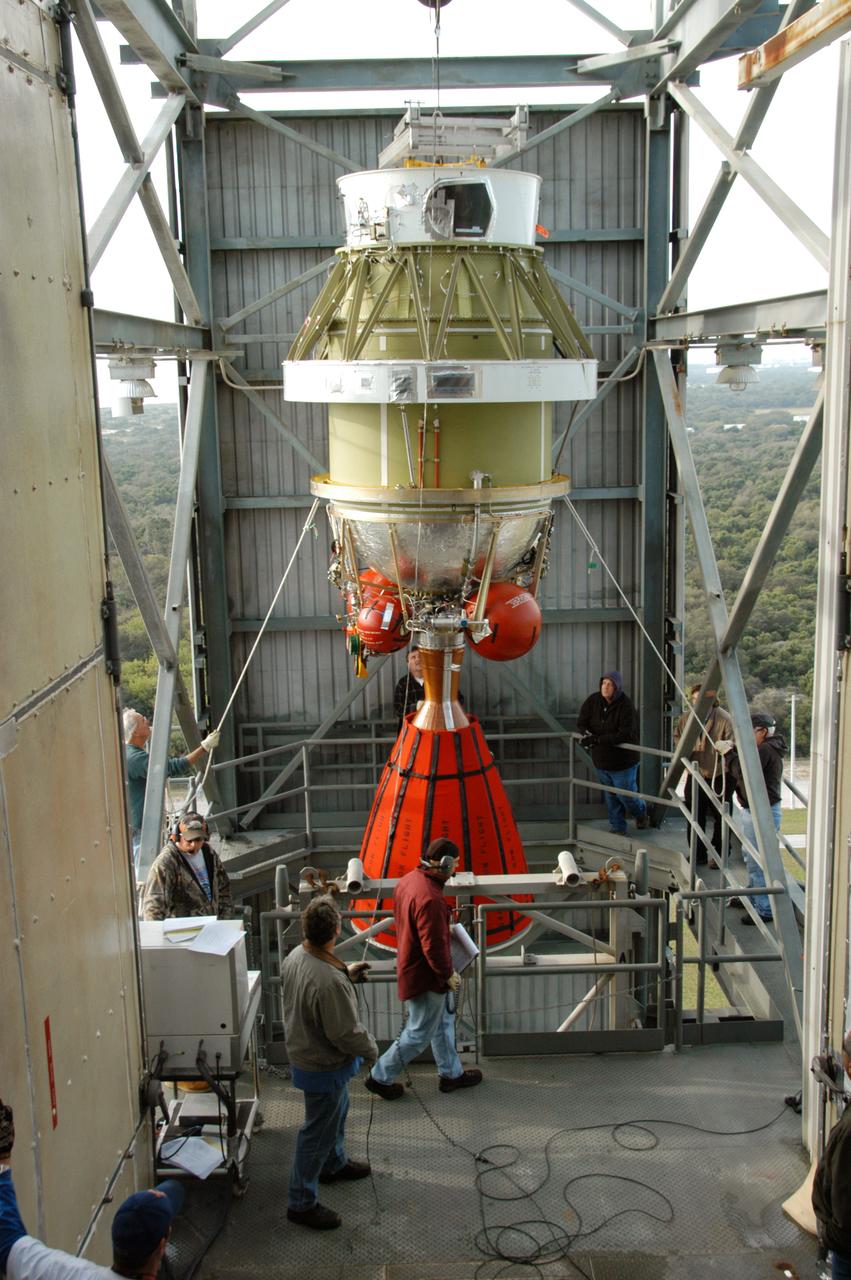
On Pad 17-B at Cape Canaveral Air Force Station, the Delta II second stage arrives at level 9 of the tower. The second stage will be moved inside and mated with the first stage already in place. The Delta II is the launch vehicle for the THEMIS spacecraft THEMIS consists of five identical probes, the largest number of scientific satellites ever launched into orbit aboard a single rocket. This unique constellation of satellites will resolve the tantalizing mystery of what causes the spectacular sudden brightening of the aurora borealis and aurora australis - the fiery skies over the Earth's northern and southern polar regions. THEMIS is scheduled to launch Feb. 15 from Cape Canaveral Air Force Station.
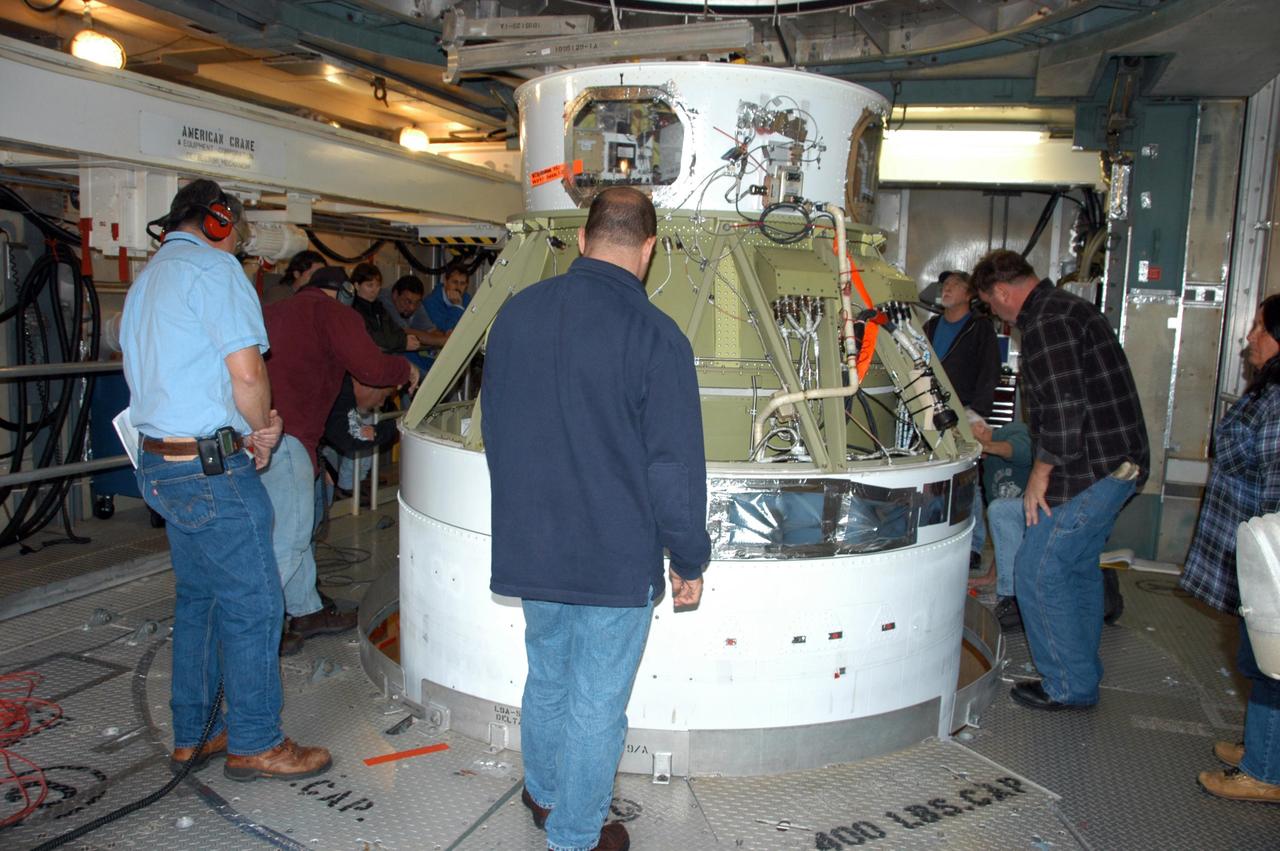
KENNEDY SPACE CENTER, FLA. -- Inside the mobile service tower on Pad 17-B at Cape Canaveral Air Force Station, the Delta II second stage is mated with the first stage. The Delta II is the launch vehicle for the THEMIS spacecraft. THEMIS consists of five identical probes, the largest number of scientific satellites ever launched into orbit aboard a single rocket. This unique constellation of satellites will resolve the tantalizing mystery of what causes the spectacular sudden brightening of the aurora borealis and aurora australis - the fiery skies over the Earth's northern and southern polar regions. THEMIS is scheduled to launch Feb. 15 from Cape Canaveral Air Force Station. Photo credit: NASA/George Shelton
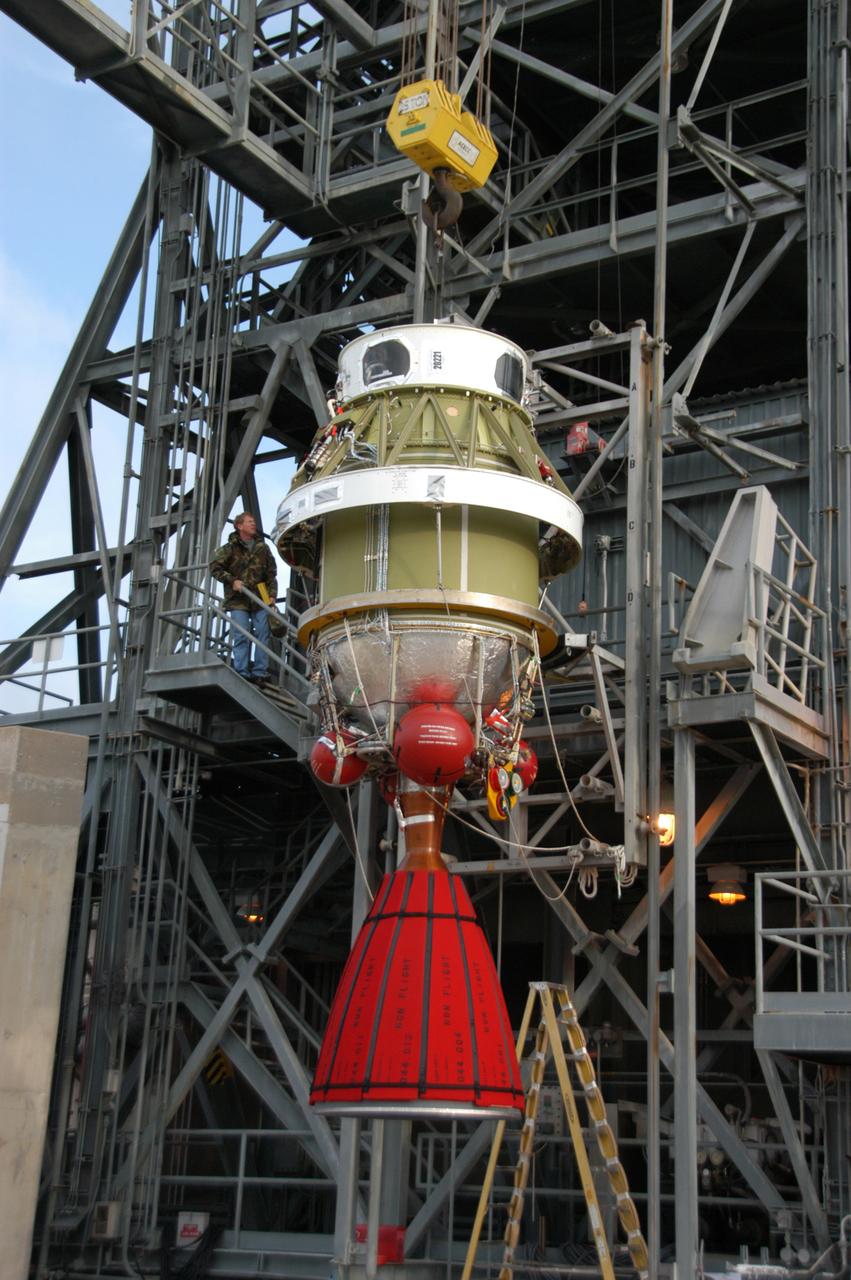
On Pad 17-B at Cape Canaveral Air Force Station, the Delta II second stage is being lifted alongside the mobile service tower. Once inside, it will be mated with the first stage already in place. The Delta II is the launch vehicle for the THEMIS spacecraft. THEMIS consists of five identical probes, the largest number of scientific satellites ever launched into orbit aboard a single rocket. This unique constellation of satellites will resolve the tantalizing mystery of what causes the spectacular sudden brightening of the aurora borealis and aurora australis - the fiery skies over the Earth's northern and southern polar regions. THEMIS is scheduled to launch Feb. 15 from Cape Canaveral Air Force Station.
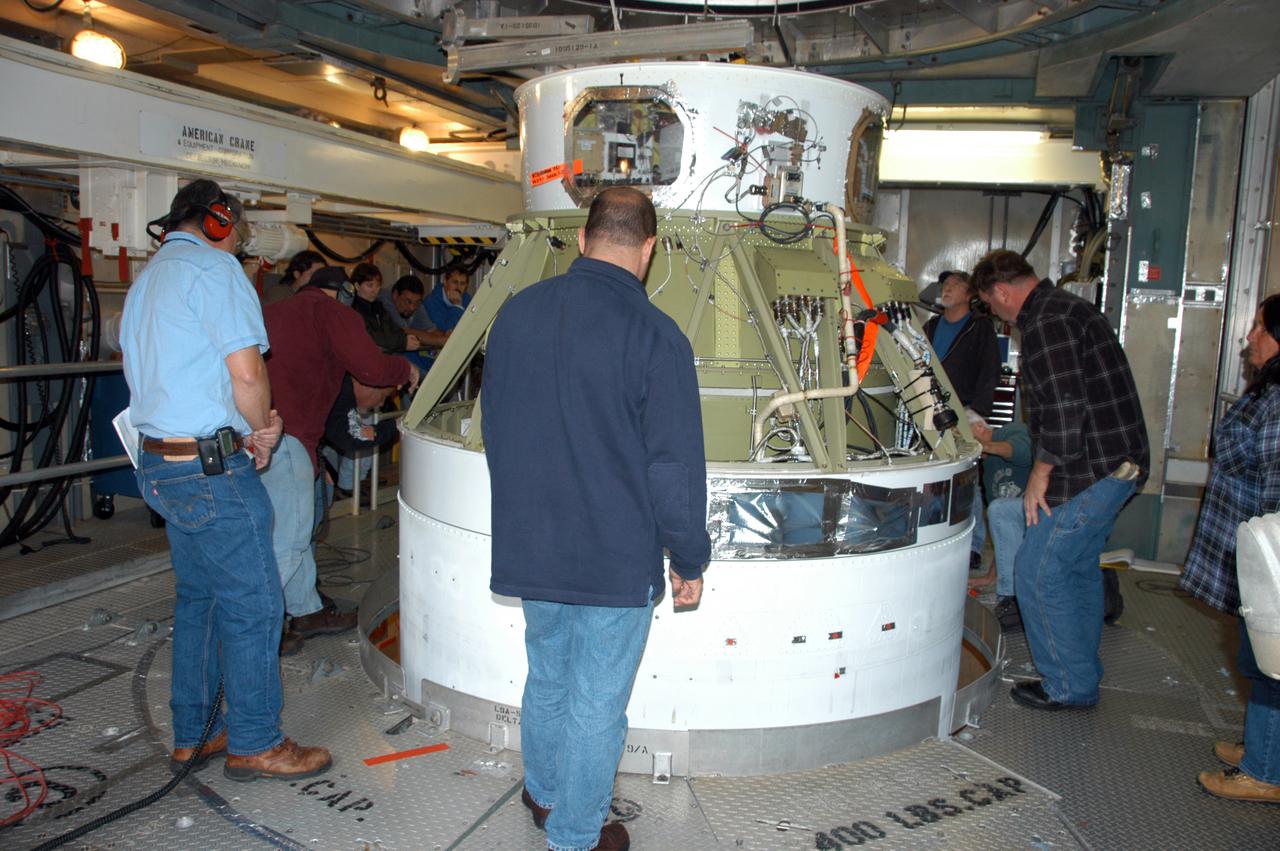
Inside the mobile service tower on Pad 17-B at Cape Canaveral Air Force Station, the Delta II second stage is mated with the first stage. The Delta II is the launch vehicle for the THEMIS spacecraft. THEMIS consists of five identical probes, the largest number of scientific satellites ever launched into orbit aboard a single rocket. This unique constellation of satellites will resolve the tantalizing mystery of what causes the spectacular sudden brightening of the aurora borealis and aurora australis - the fiery skies over the Earth's northern and southern polar regions. THEMIS is scheduled to launch Feb. 15 from Cape Canaveral Air Force Station.
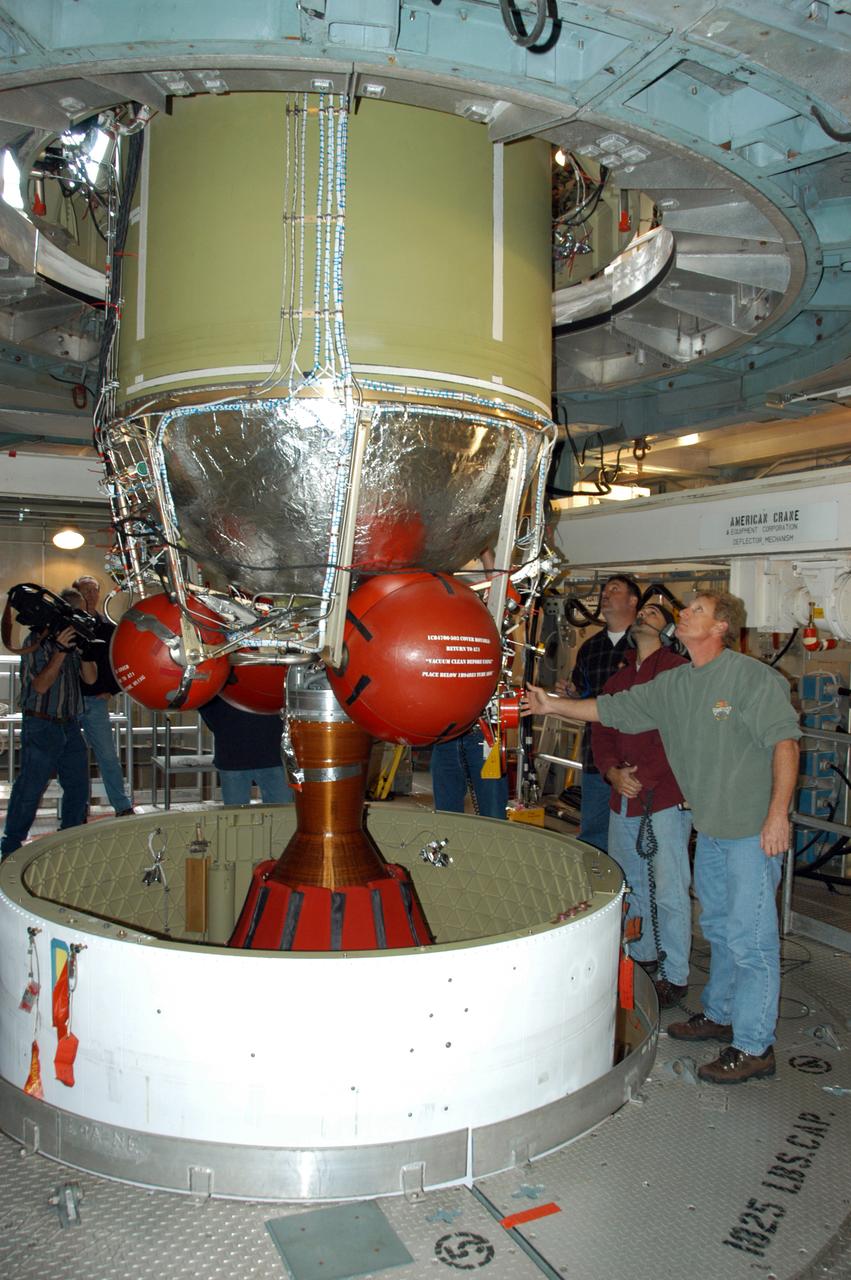
On Pad 17-B at Cape Canaveral Air Force Station, the Delta II second stage is being lowered toward the Delta II first stage, already in place inside the mobile service tower. The Delta II is the launch vehicle for the THEMIS spacecraft. THEMIS consists of five identical probes, the largest number of scientific satellites ever launched into orbit aboard a single rocket. This unique constellation of satellites will resolve the tantalizing mystery of what causes the spectacular sudden brightening of the aurora borealis and aurora australis - the fiery skies over the Earth's northern and southern polar regions. THEMIS is scheduled to launch Feb. 15 from Cape Canaveral Air Force Station.
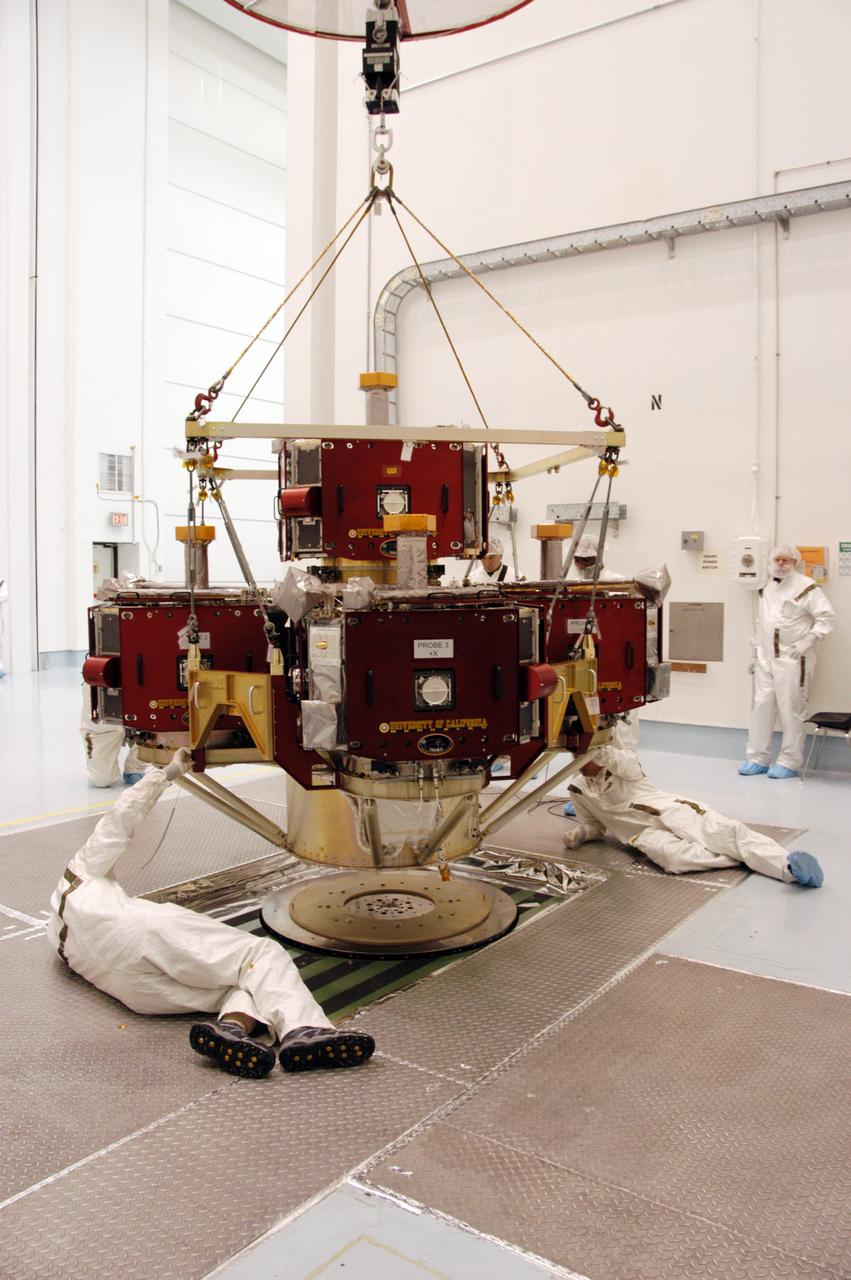
In the Hazardous Processing Facility at Astrotech Space Operations, workers guide the integrated THEMIS spacecraft onto the spin table in the foreground. There it will undergo spin-balance testing. THEMIS consists of five identical probes, the largest number of scientific satellites ever launched into orbit aboard a single rocket. This unique constellation of satellites will resolve the tantalizing mystery of what causes the spectacular sudden brightening of the aurora borealis and aurora australis - the fiery skies over the Earth's northern and southern polar regions. THEMIS is scheduled to launch Feb. 15 from Cape Canaveral Air Force Station.
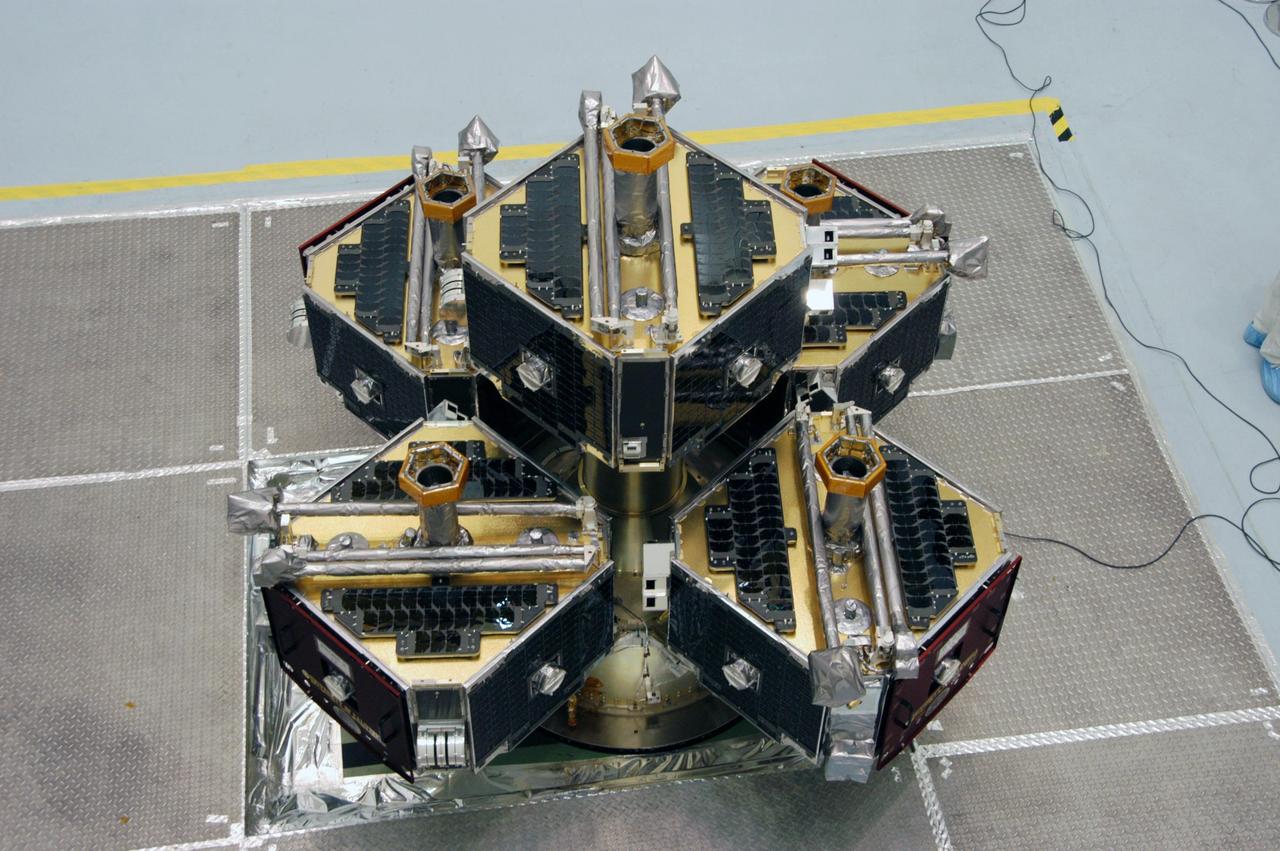
KENNEDY SPACE CENTER, FLA. -- At Astrotech Space Operations, the integrated THEMIS spacecraft is ready for spin-balance testing. THEMIS consists of five identical probes, the largest number of scientific satellites ever launched into orbit aboard a single rocket. This unique constellation of satellites will resolve the tantalizing mystery of what causes the spectacular sudden brightening of the aurora borealis and aurora australis - the fiery skies over the Earth's northern and southern polar regions. THEMIS is scheduled to launch Feb. 15 from Cape Canaveral Air Force Station. Photo credit: NASA/George Shelton
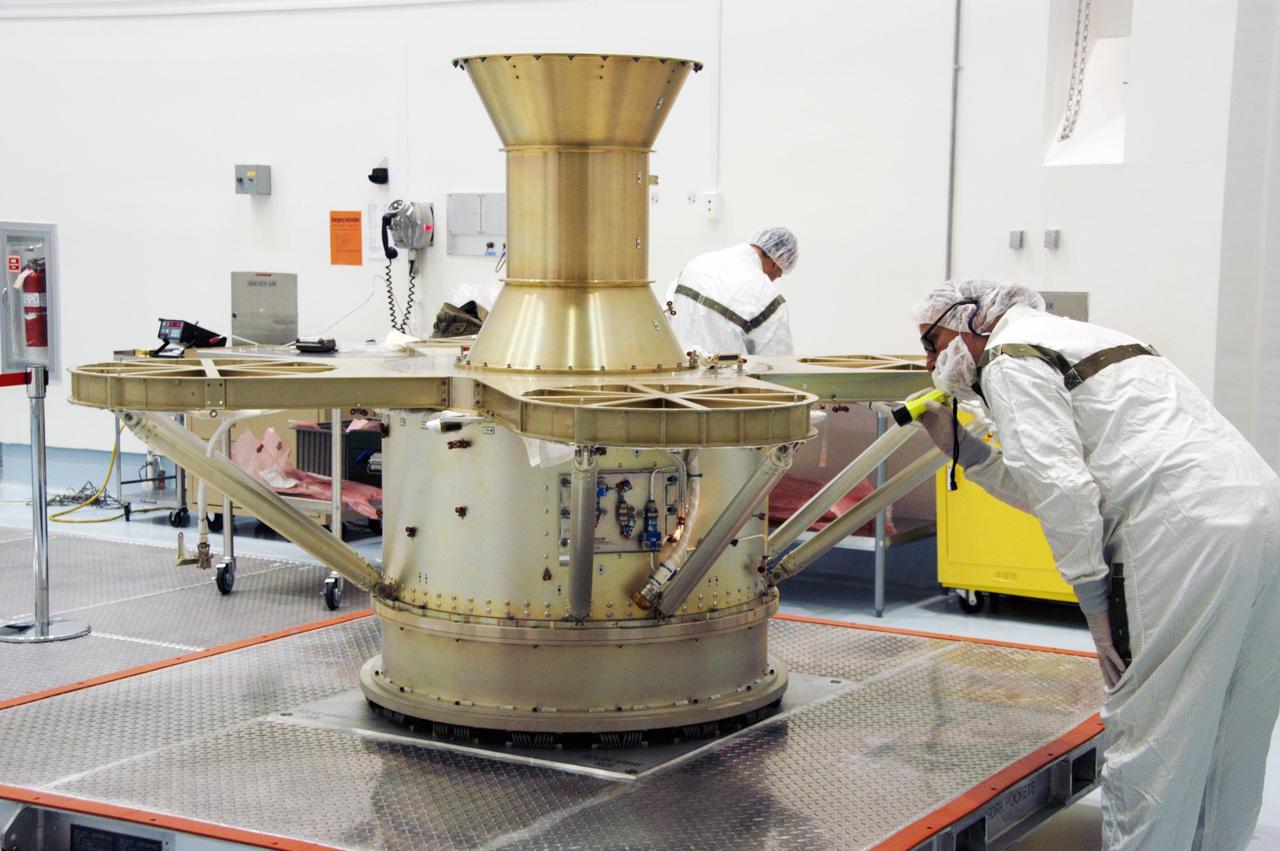
KENNEDY SPACE CENTER, FLA. -- At Astrotech Space Operations in Titusville, Fla., a worker examines connections on the THEMIS spacecraft, which is expected to be fueled Jan. 3-5. THEMIS consists of five identical probes, the largest number of scientific satellites ever launched into orbit aboard a single rocket. This unique constellation of satellites will resolve the tantalizing mystery of what causes the spectacular sudden brightening of the aurora borealis and aurora australis - the fiery skies over the Earth's northern and southern polar regions. THEMIS is scheduled to launch Feb. 15 from Cape Canaveral Air Force Station. Photo credit: NASA/George Shelton
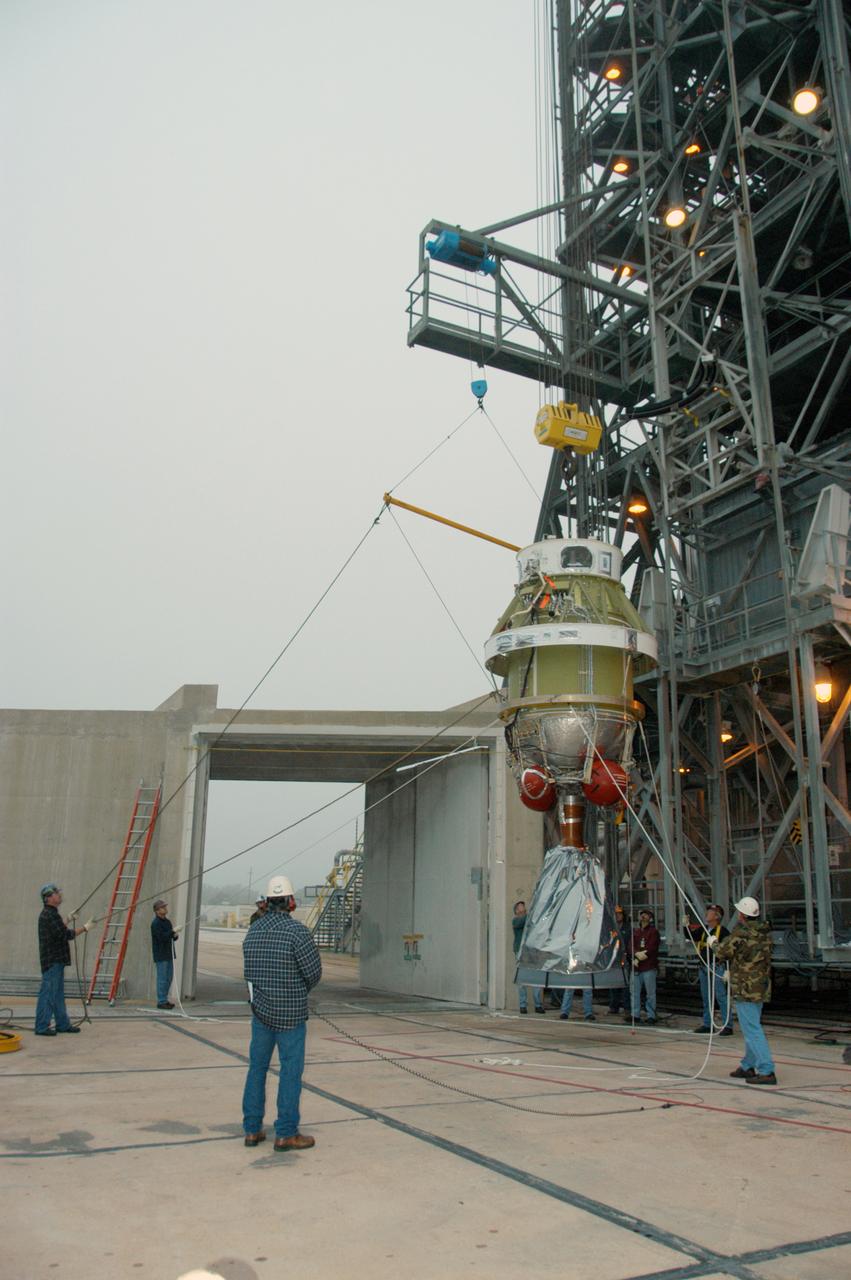
On Pad 17-B at Cape Canaveral Air Force Station, the Delta II second stage is lifted toward the mobile service tower. Once inside, it will be mated with the first stage already in place. The Delta II is the launch vehicle for the THEMIS spacecraft. THEMIS consists of five identical probes, the largest number of scientific satellites ever launched into orbit aboard a single rocket. This unique constellation of satellites will resolve the tantalizing mystery of what causes the spectacular sudden brightening of the aurora borealis and aurora australis - the fiery skies over the Earth's northern and southern polar regions. THEMIS is scheduled to launch Feb. 15 from Cape Canaveral Air Force Station.
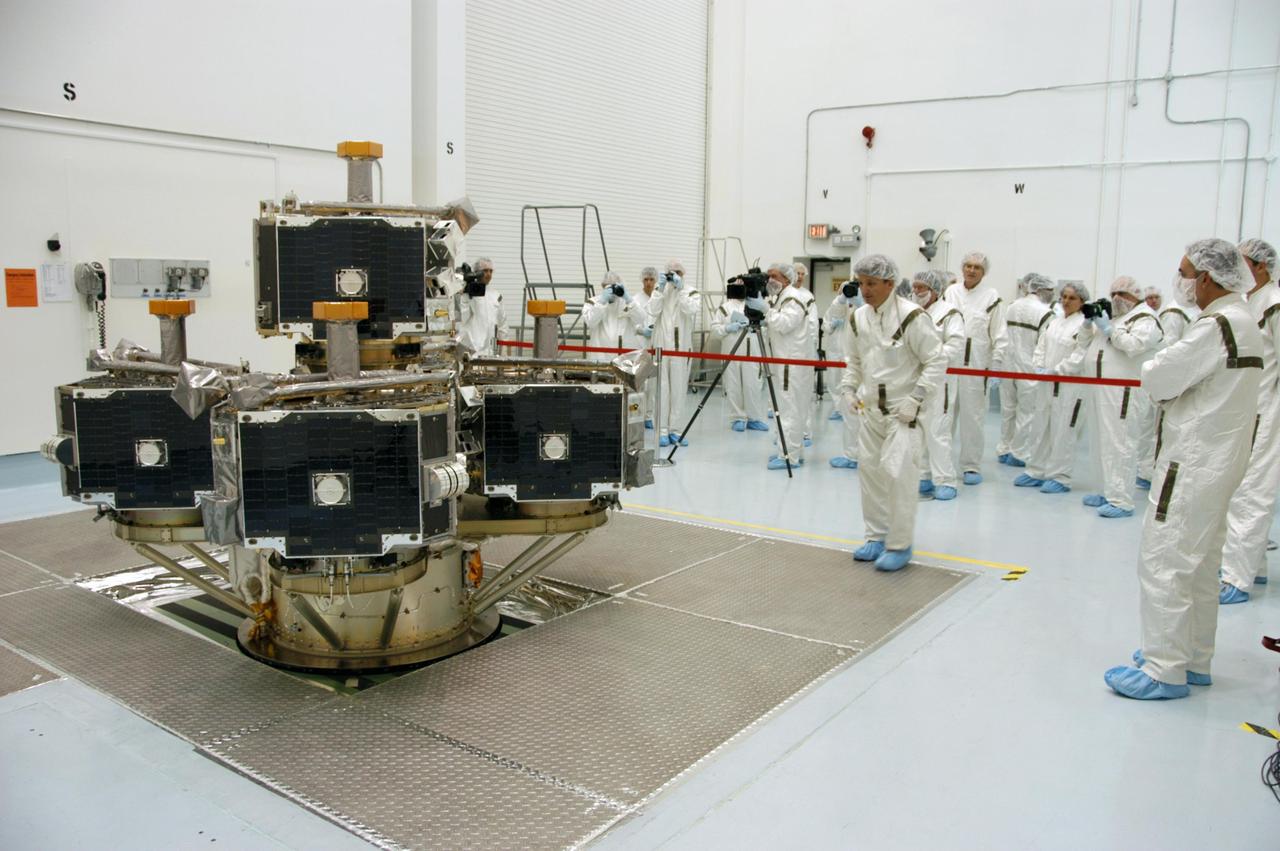
KENNEDY SPACE CENTER, FLA. -- At Astrotech Space Operations, the media are dressed in clean room, or bunny, suits to photograph the integrated THEMIS spacecraft. THEMIS consists of five identical probes, the largest number of scientific satellites ever launched into orbit aboard a single rocket. This unique constellation of satellites will resolve the tantalizing mystery of what causes the spectacular sudden brightening of the aurora borealis and aurora australis - the fiery skies over the Earth's northern and southern polar regions. THEMIS is scheduled to launch Feb. 15 from Cape Canaveral Air Force Station. Photo credit: NASA/George Shelton
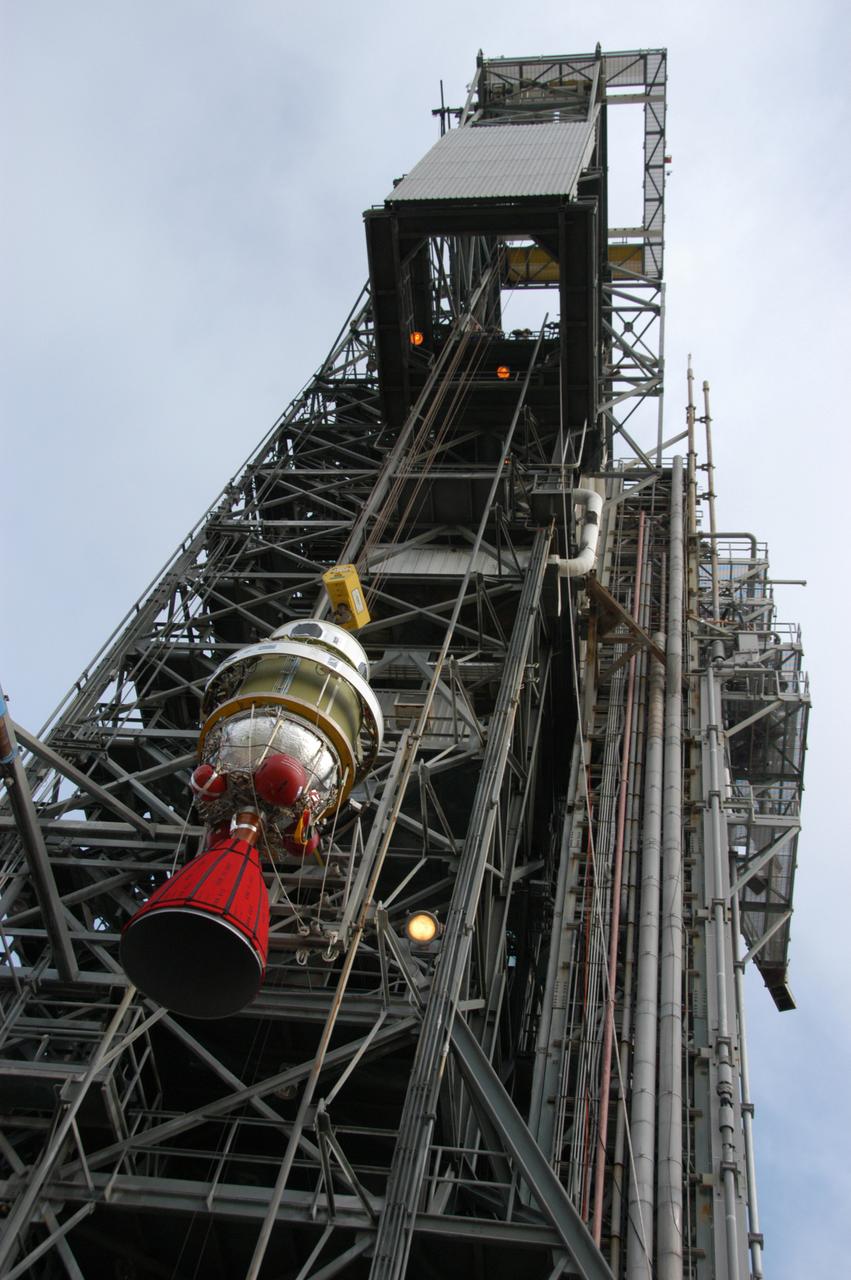
On Pad 17-B at Cape Canaveral Air Force Station, the Delta II second stage is being lifted alongside the mobile service tower. Once inside, it will be mated with the first stage already in place. The Delta II is the launch vehicle for the THEMIS spacecraft. THEMIS consists of five identical probes, the largest number of scientific satellites ever launched into orbit aboard a single rocket. This unique constellation of satellites will resolve the tantalizing mystery of what causes the spectacular sudden brightening of the aurora borealis and aurora australis - the fiery skies over the Earth's northern and southern polar regions. THEMIS is scheduled to launch Feb. 15 from Cape Canaveral Air Force Station.
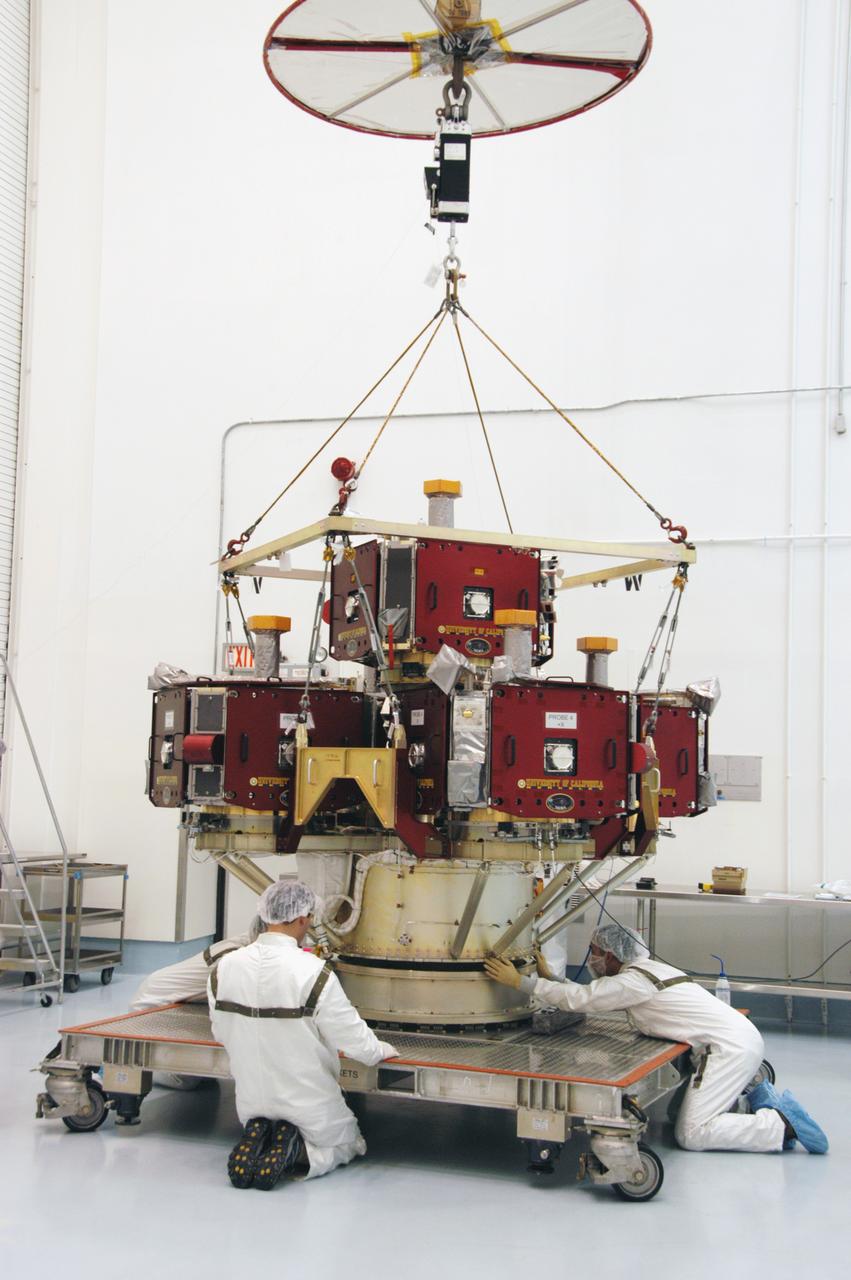
In the Hazardous Processing Facility at Astrotech Space Operations, workers attach an overhead crane to the integrated THEMIS spacecraft. The carrier is being moved to a spin table for spin-balance testing. THEMIS consists of five identical probes, the largest number of scientific satellites ever launched into orbit aboard a single rocket. This unique constellation of satellites will resolve the tantalizing mystery of what causes the spectacular sudden brightening of the aurora borealis and aurora australis - the fiery skies over the Earth's northern and southern polar regions. THEMIS is scheduled to launch Feb. 15 from Cape Canaveral Air Force Station.
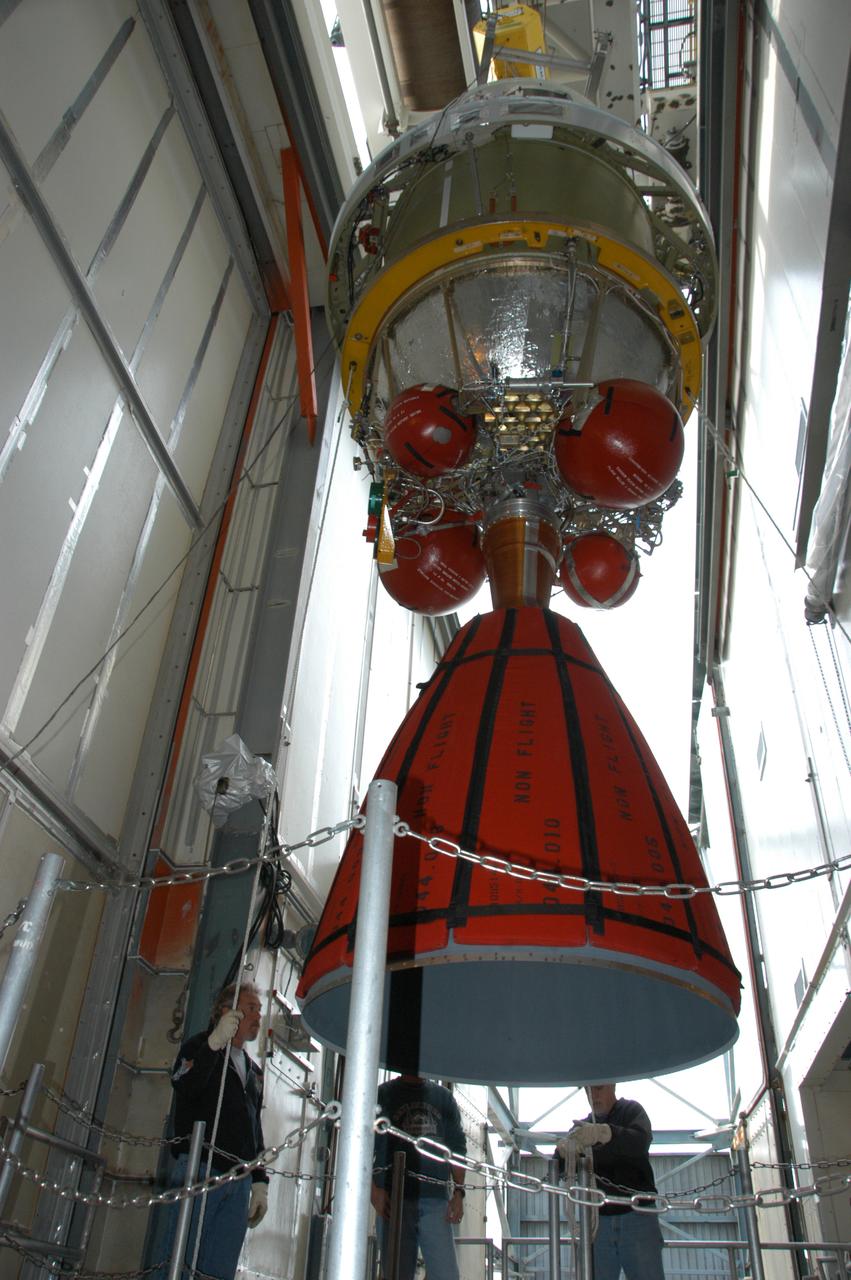
On Pad 17-B at Cape Canaveral Air Force Station, the Delta II second stage is moved inside level 9 of the tower. It will be mated with the first stage already in place. The Delta II is the launch vehicle for the THEMIS spacecraft. THEMIS consists of five identical probes, the largest number of scientific satellites ever launched into orbit aboard a single rocket. This unique constellation of satellites will resolve the tantalizing mystery of what causes the spectacular sudden brightening of the aurora borealis and aurora australis - the fiery skies over the Earth's northern and southern polar regions. THEMIS is scheduled to launch Feb. 15 from Cape Canaveral Air Force Station.
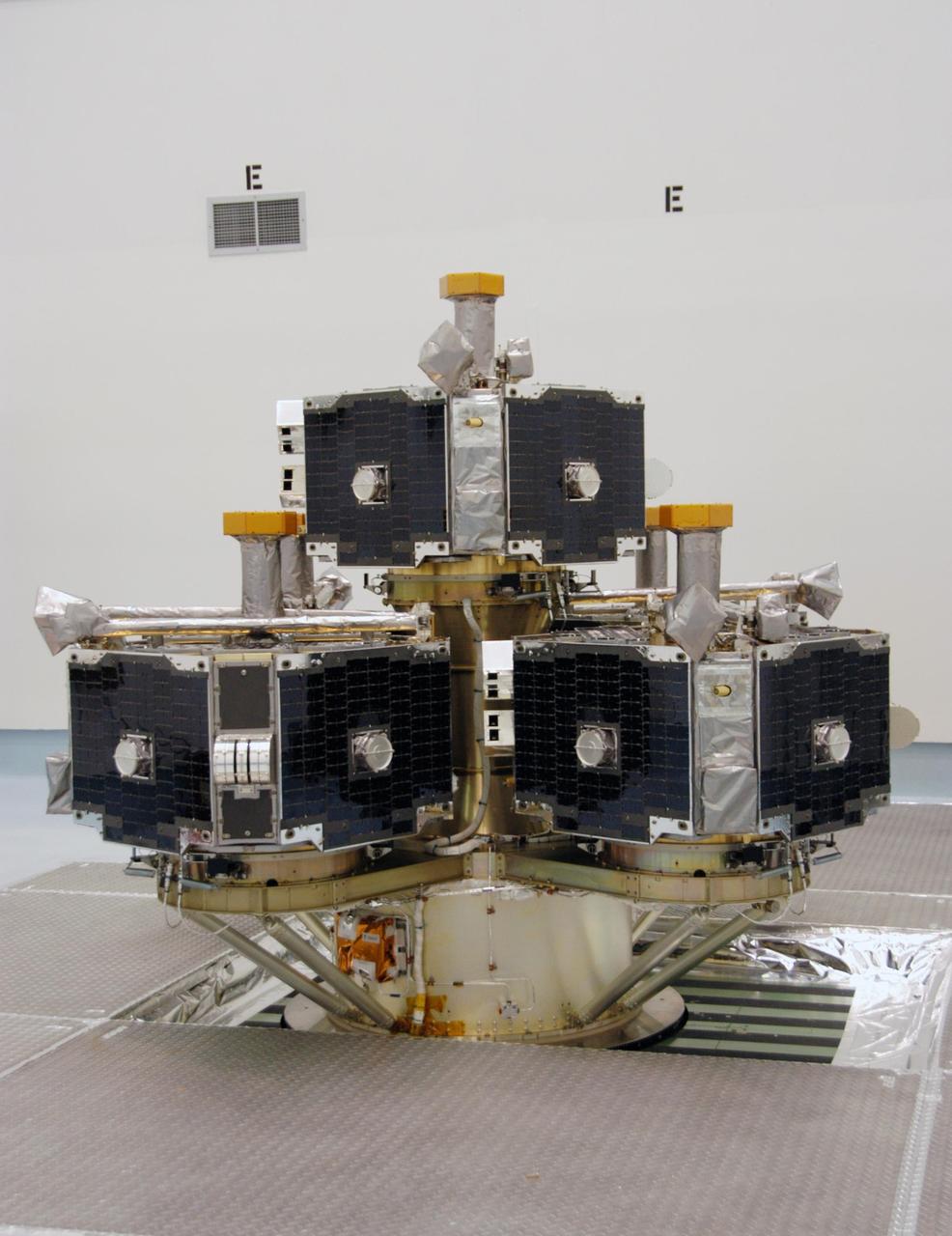
KENNEDY SPACE CENTER, FLA. -- At Astrotech Space Operations, the integrated THEMIS spacecraft is on ready for spin-balance testing. THEMIS consists of five identical probes, the largest number of scientific satellites ever launched into orbit aboard a single rocket. This unique constellation of satellites will resolve the tantalizing mystery of what causes the spectacular sudden brightening of the aurora borealis and aurora australis - the fiery skies over the Earth's northern and southern polar regions. THEMIS is scheduled to launch Feb. 15 from Cape Canaveral Air Force Station. Photo credit: NASA/George Shelton
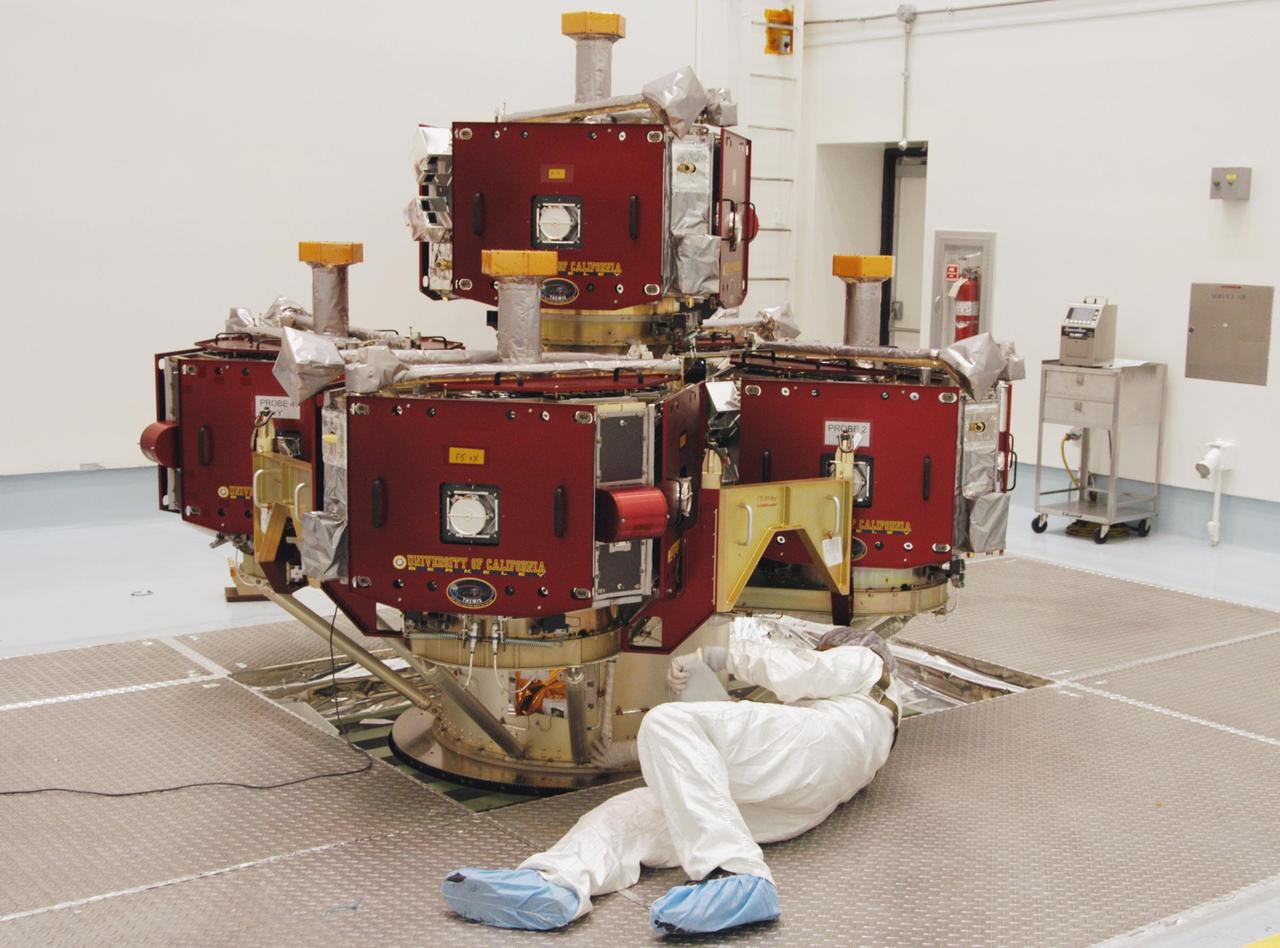
KENNEDY SPACE CENTER, FLA. -- In the Hazardous Processing Facility at Astrotech Space Operations, a worker checks data on the integrated THEMIS spacecraft sitting on the spin table. THEMIS consists of five identical probes, the largest number of scientific satellites ever launched into orbit aboard a single rocket. This unique constellation of satellites will resolve the tantalizing mystery of what causes the spectacular sudden brightening of the aurora borealis and aurora australis - the fiery skies over the Earth's northern and southern polar regions. THEMIS is scheduled to launch Feb. 15 from Cape Canaveral Air Force Station. Photo credit: NASA/George Shelton
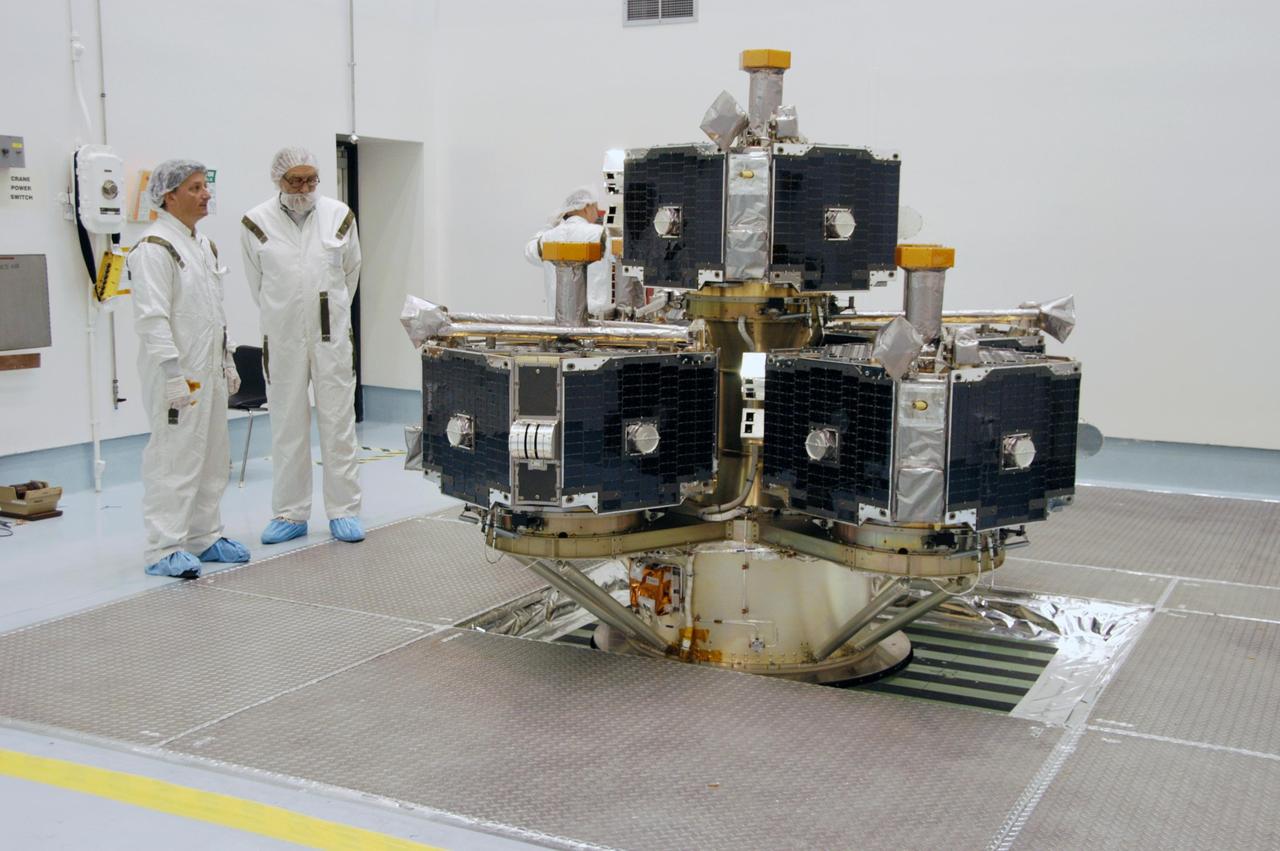
KENNEDY SPACE CENTER, FLA. -- At Astrotech Space Operations, workers look over the integrated THEMIS spacecraft before spin-balance testing. THEMIS consists of five identical probes, the largest number of scientific satellites ever launched into orbit aboard a single rocket. This unique constellation of satellites will resolve the tantalizing mystery of what causes the spectacular sudden brightening of the aurora borealis and aurora australis - the fiery skies over the Earth's northern and southern polar regions. THEMIS is scheduled to launch Feb. 15 from Cape Canaveral Air Force Station. Photo credit: NASA/George Shelton
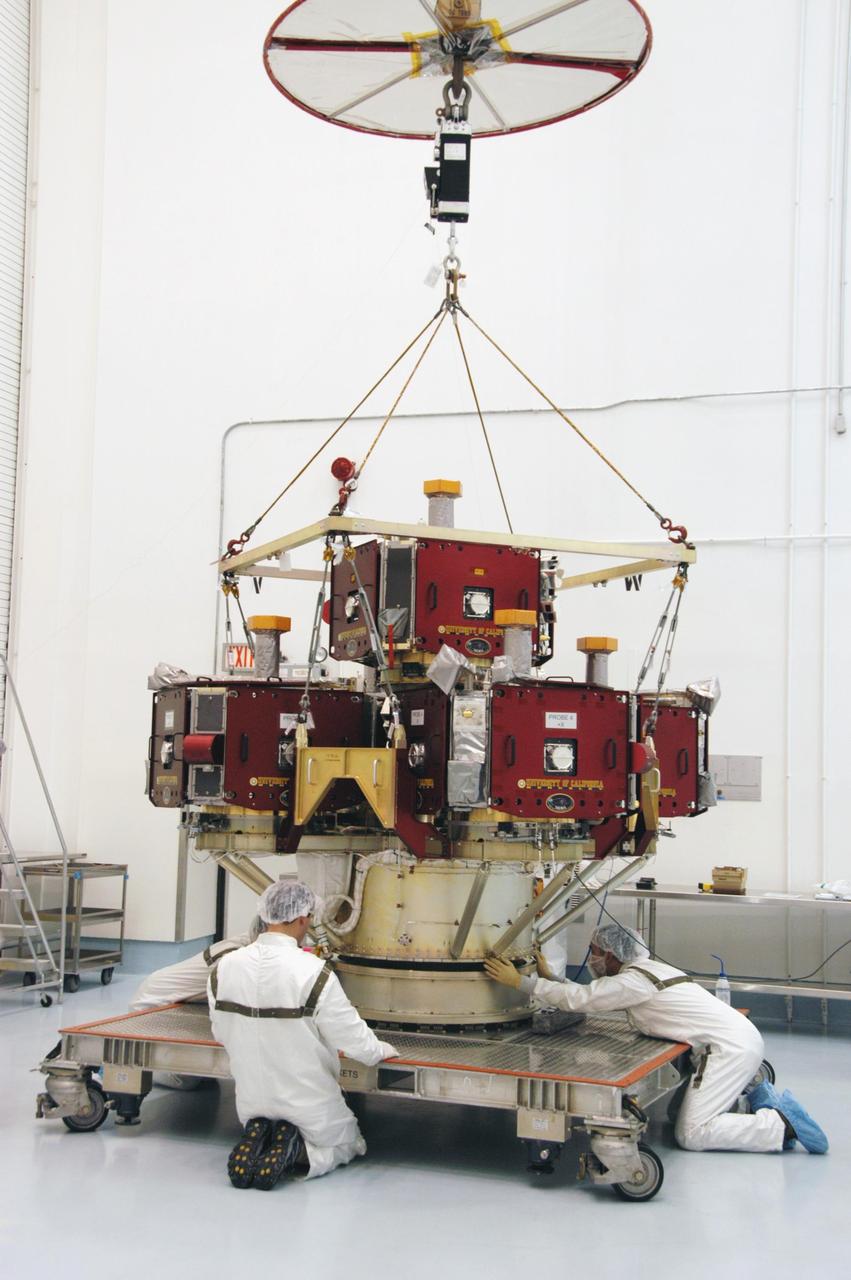
KENNEDY SPACE CENTER, FLA. -- In the Hazardous Processing Facility at Astrotech Space Operations, workers attach an overhead crane to the integrated THEMIS spacecraft. The carrier is being moved to a spin table for spin-balance testing. THEMIS consists of five identical probes, the largest number of scientific satellites ever launched into orbit aboard a single rocket. This unique constellation of satellites will resolve the tantalizing mystery of what causes the spectacular sudden brightening of the aurora borealis and aurora australis - the fiery skies over the Earth's northern and southern polar regions. THEMIS is scheduled to launch Feb. 15 from Cape Canaveral Air Force Station. Photo credit: NASA/George Shelton
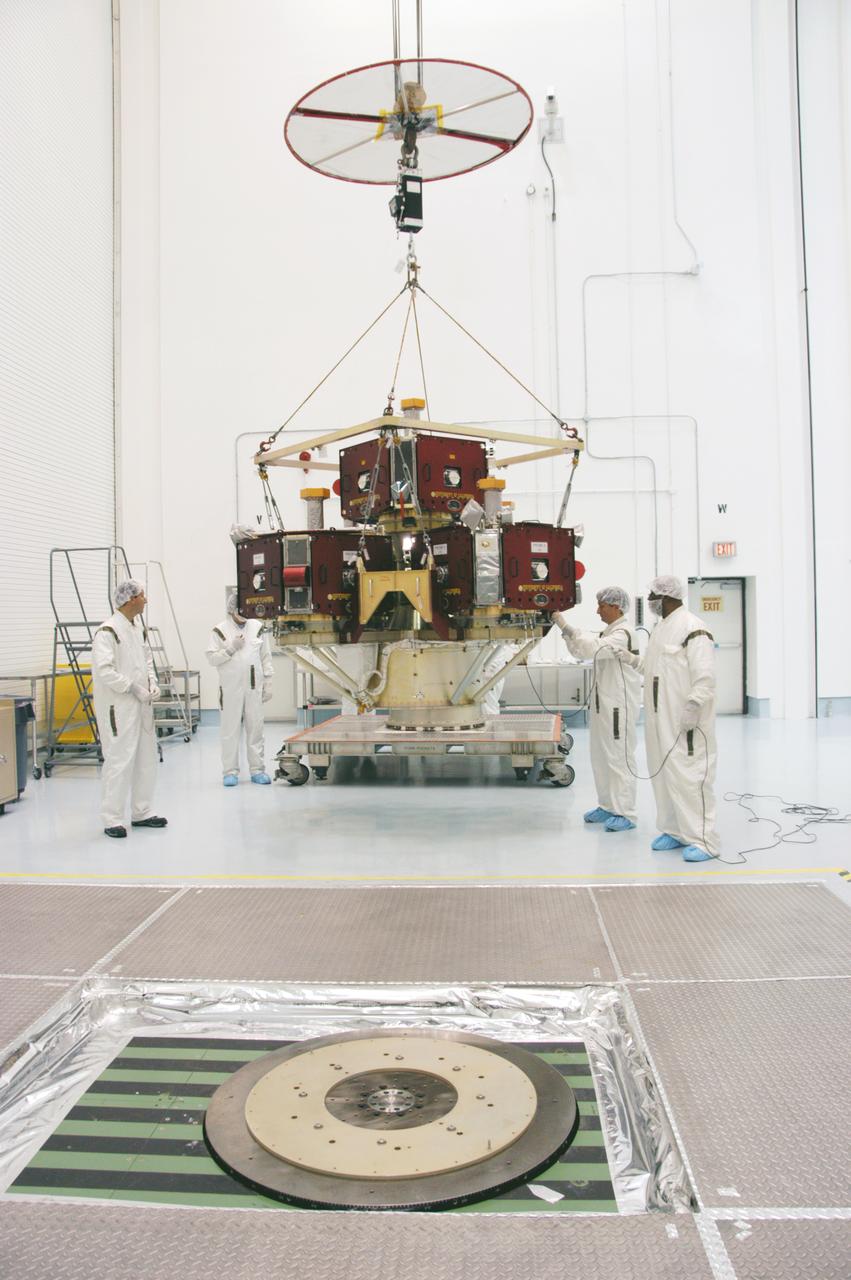
In the Hazardous Processing Facility at Astrotech Space Operations, workers get ready to move the integrated THEMIS spacecraft to the spin table in the foreground. There it will undergo spin-balance testing. THEMIS consists of five identical probes, the largest number of scientific satellites ever launched into orbit aboard a single rocket. This unique constellation of satellites will resolve the tantalizing mystery of what causes the spectacular sudden brightening of the aurora borealis and aurora australis - the fiery skies over the Earth's northern and southern polar regions. THEMIS is scheduled to launch Feb. 15 from Cape Canaveral Air Force Station.
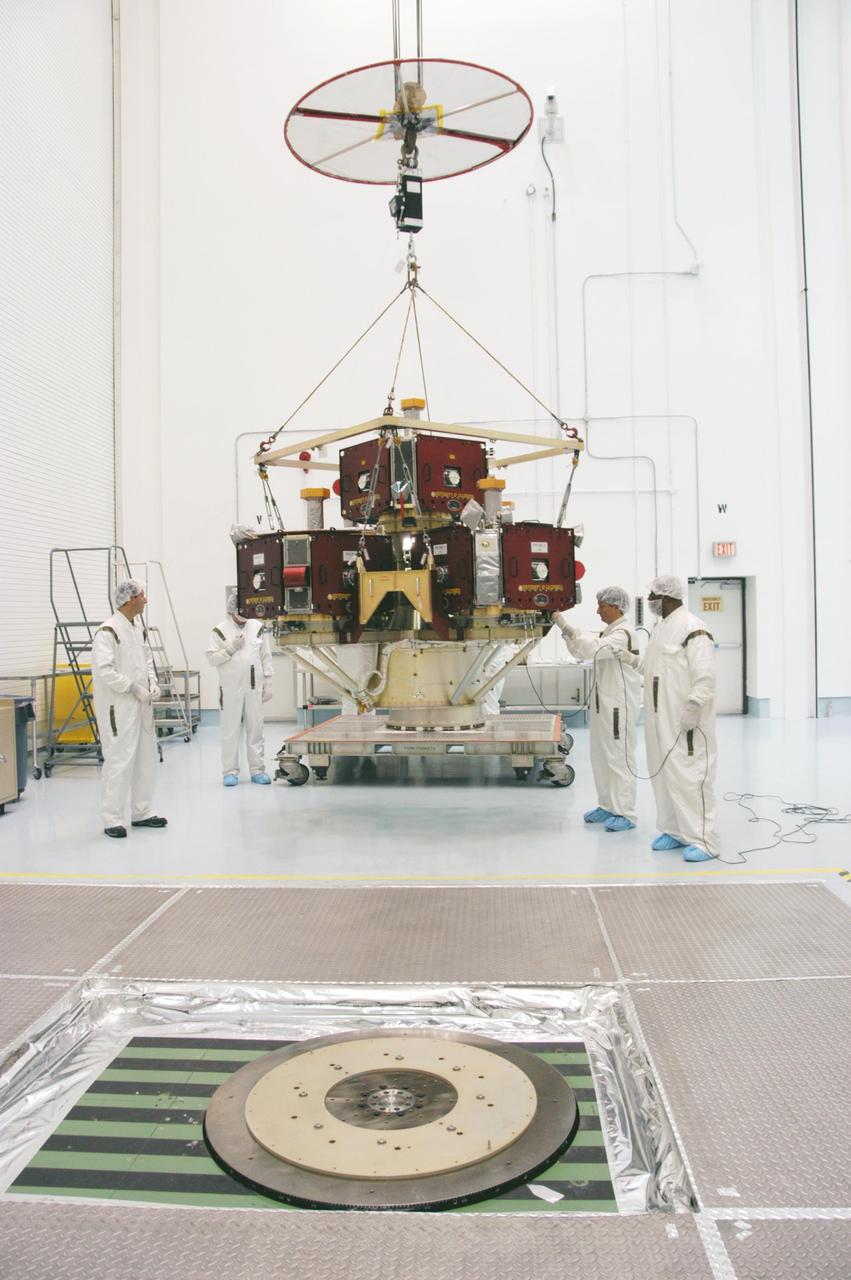
KENNEDY SPACE CENTER, FLA. -- In the Hazardous Processing Facility at Astrotech Space Operations, workers get ready to move the integrated THEMIS spacecraft to the spin table in the foreground. There it will undergo spin-balance testing. THEMIS consists of five identical probes, the largest number of scientific satellites ever launched into orbit aboard a single rocket. This unique constellation of satellites will resolve the tantalizing mystery of what causes the spectacular sudden brightening of the aurora borealis and aurora australis - the fiery skies over the Earth's northern and southern polar regions. THEMIS is scheduled to launch Feb. 15 from Cape Canaveral Air Force Station. Photo credit: NASA/George Shelton
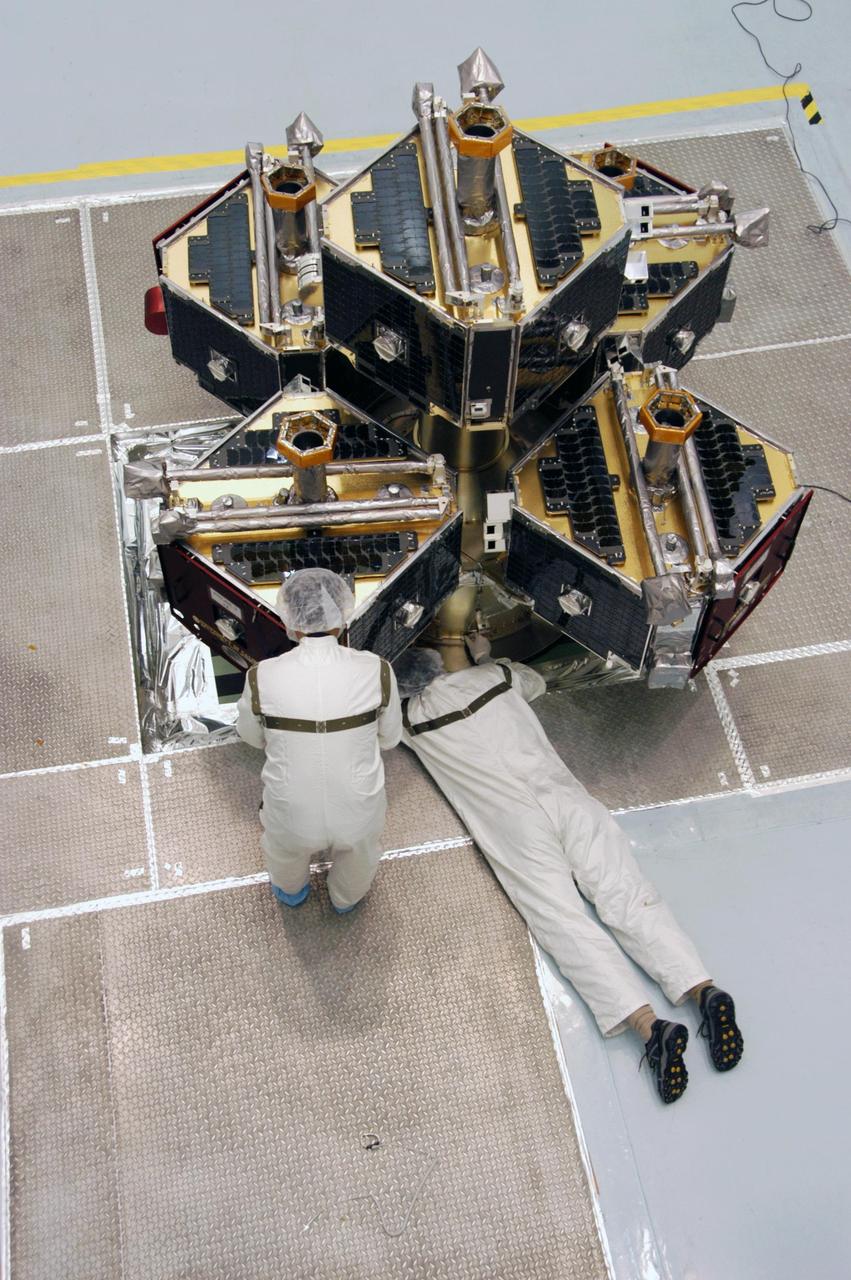
KENNEDY SPACE CENTER, FLA. -- At Astrotech Space Operations, workers prepare the integrated THEMIS spacecraft for spin-balance testing. THEMIS consists of five identical probes, the largest number of scientific satellites ever launched into orbit aboard a single rocket. This unique constellation of satellites will resolve the tantalizing mystery of what causes the spectacular sudden brightening of the aurora borealis and aurora australis - the fiery skies over the Earth's northern and southern polar regions. THEMIS is scheduled to launch Feb. 15 from Cape Canaveral Air Force Station. Photo credit: NASA/George Shelton
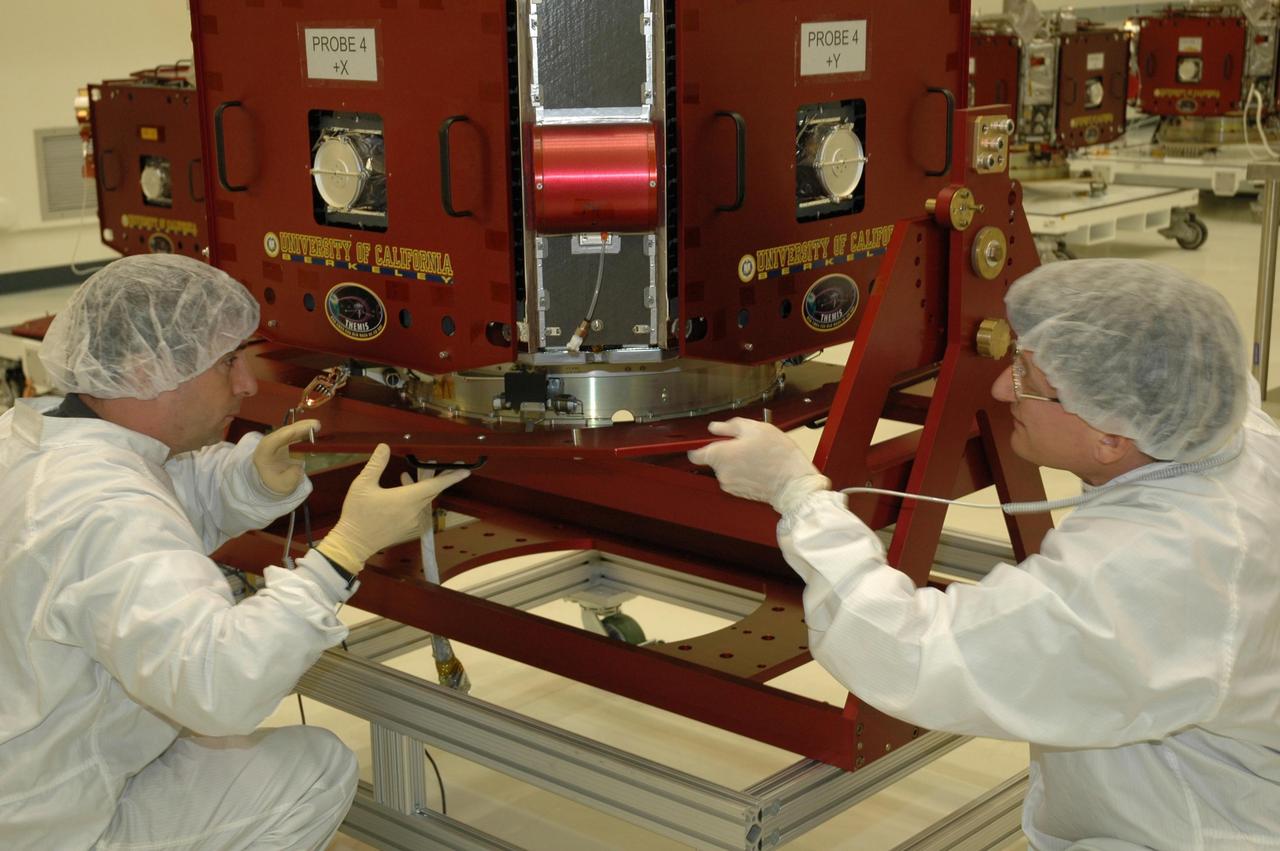
KENNEDY SPACE CENTER, FLA. -- At Astrotech Space Operations in Titusville, Fla., workers maneuver one of the THEMIS probes before installing bolt cutters that will separate each probe from the payload carrier. The probes will undergo weeks of testing and launch preparations. This includes a functional performance test to verify the state of health of each of the five probes and pressurization and leak checks of the reaction control systems. THEMIS consists of five identical probes, the largest number of scientific satellites ever launched into orbit aboard a single rocket. This unique constellation of satellites will resolve the tantalizing mystery of what causes the spectacular sudden brightening of the aurora borealis and aurora australis - the fiery skies over the Earth's northern and southern polar regions. These lights are the visible manifestations of invisible energy releases, called geomagnetic substorms, in near-Earth space. THEMIS will not only seek to answer where and when substorms start, but will also provide clues as to how and why these space storms create havoc on satellites, terrestrial power grids, and communication systems. THEMIS is scheduled to launch Feb. 15 from Cape Canaveral Air Force Station. Photo credit: NASA/Jack Pfaller
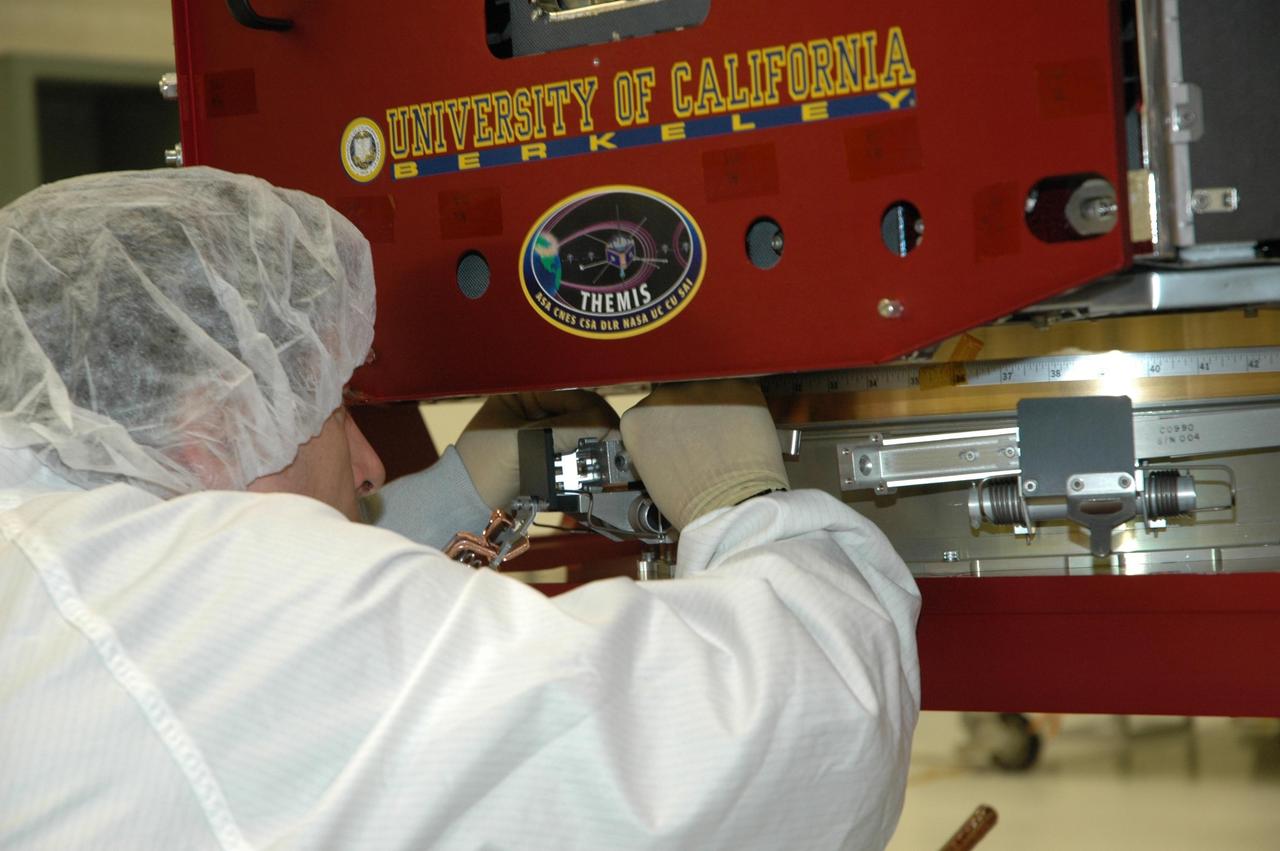
KENNEDY SPACE CENTER, FLA. -- At Astrotech Space Operations in Titusville, Fla., workers install bolt cutters on one of the THEMIS probes. The cutters will separate each probe from the payload carrier. The probes will undergo weeks of testing and launch preparations. This includes a functional performance test to verify the state of health of each of the five probes and pressurization and leak checks of the reaction control systems. THEMIS consists of five identical probes, the largest number of scientific satellites ever launched into orbit aboard a single rocket. This unique constellation of satellites will resolve the tantalizing mystery of what causes the spectacular sudden brightening of the aurora borealis and aurora australis - the fiery skies over the Earth's northern and southern polar regions. These lights are the visible manifestations of invisible energy releases, called geomagnetic substorms, in near-Earth space. THEMIS will not only seek to answer where and when substorms start, but will also provide clues as to how and why these space storms create havoc on satellites, terrestrial power grids, and communication systems. THEMIS is scheduled to launch Feb. 15 from Cape Canaveral Air Force Station. Photo credit: NASA/Jack Pfaller

KENNEDY SPACE CENTER, FLA. -- At Astrotech Space Operations in Titusville, Fla., workers install bolt cutters on one of the THEMIS probes. The cutters will separate each probe from the payload carrier. The probes will undergo weeks of testing and launch preparations. This includes a functional performance test to verify the state of health of each of the five probes and pressurization and leak checks of the reaction control systems. THEMIS consists of five identical probes, the largest number of scientific satellites ever launched into orbit aboard a single rocket. This unique constellation of satellites will resolve the tantalizing mystery of what causes the spectacular sudden brightening of the aurora borealis and aurora australis - the fiery skies over the Earth's northern and southern polar regions. These lights are the visible manifestations of invisible energy releases, called geomagnetic substorms, in near-Earth space. THEMIS will not only seek to answer where and when substorms start, but will also provide clues as to how and why these space storms create havoc on satellites, terrestrial power grids, and communication systems. THEMIS is scheduled to launch Feb. 15 from Cape Canaveral Air Force Station. Photo credit: NASA/Jack Pfaller

KENNEDY SPACE CENTER, FLA. -- At Astrotech Space Operations in Titusville, Fla., the five probes of the THEMIS spacecraft remain under cover. The probes will undergo weeks of testing and launch preparations. This includes a functional performance test to verify the state of health of each of the five probes, installation of bolt cutters that will separate each probe from the payload carrier, and pressurization and leak checks of the reaction control systems. THEMIS consists of five identical probes, the largest number of scientific satellites ever launched into orbit aboard a single rocket. This unique constellation of satellites will resolve the tantalizing mystery of what causes the spectacular sudden brightening of the aurora borealis and aurora australis - the fiery skies over the Earth's northern and southern polar regions. These lights are the visible manifestations of invisible energy releases, called geomagnetic substorms, in near-Earth space. THEMIS will not only seek to answer where and when substorms start, but will also provide clues as to how and why these space storms create havoc on satellites, terrestrial power grids, and communication systems. THEMIS is scheduled to launch Feb. 15 from Cape Canaveral Air Force Station. Photo credit: NASA/Jack Pfaller