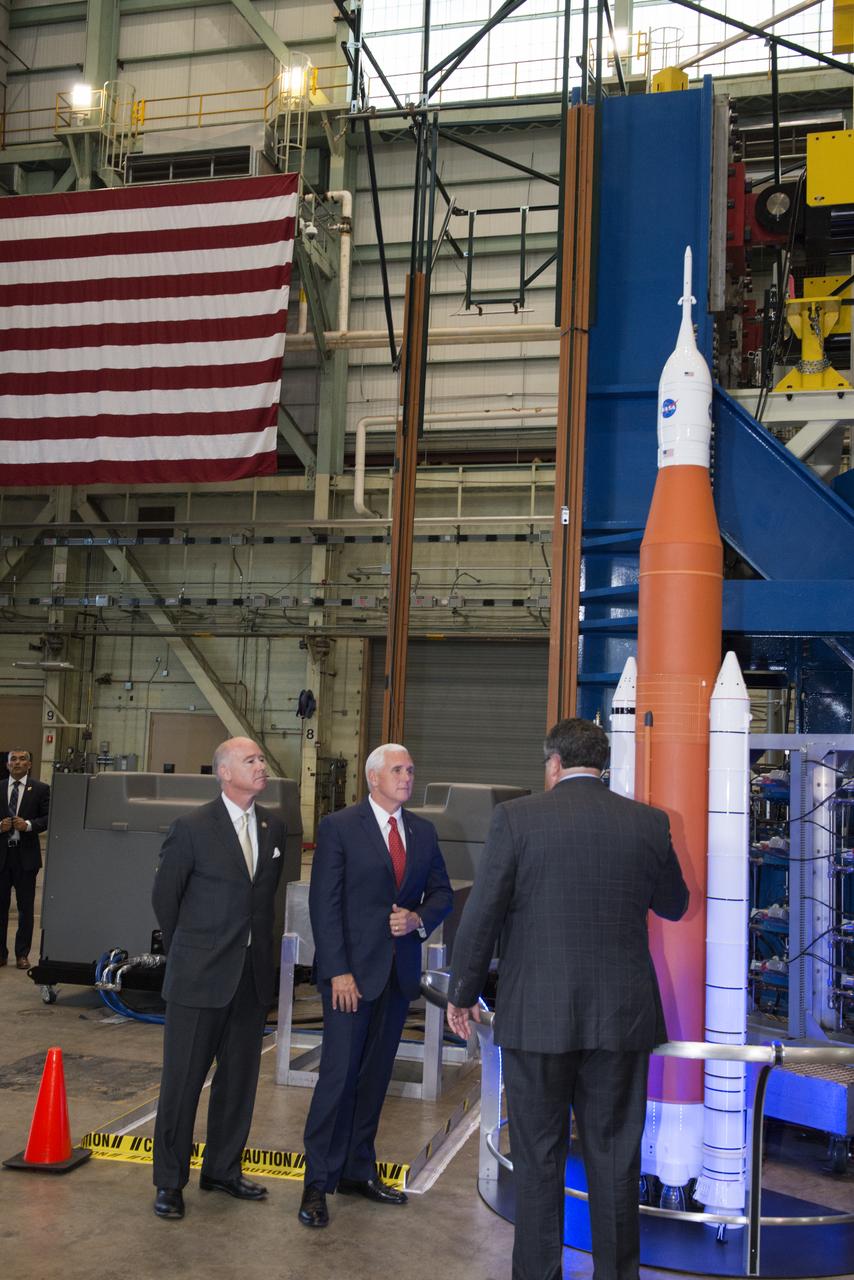
Vice President Mike Pence talks with Marshall Space Flight Center Director Todd May and Congressman Robert Aderholt (R-AL) (left) about NASA’s Space Launch System, the agency’s new deep space rocket. May explained progress being made on the rocket. The Vice President visited NASA Marshall in Huntsville, Alabama on Sept. 25, 2017, and saw SLS core stage engine section test hardware (on the right). The engine section is the bottom of the core stage where the four RS-25 engines attach and produce two million pounds of thrust. The SLS engine section is undergoing structural testing.
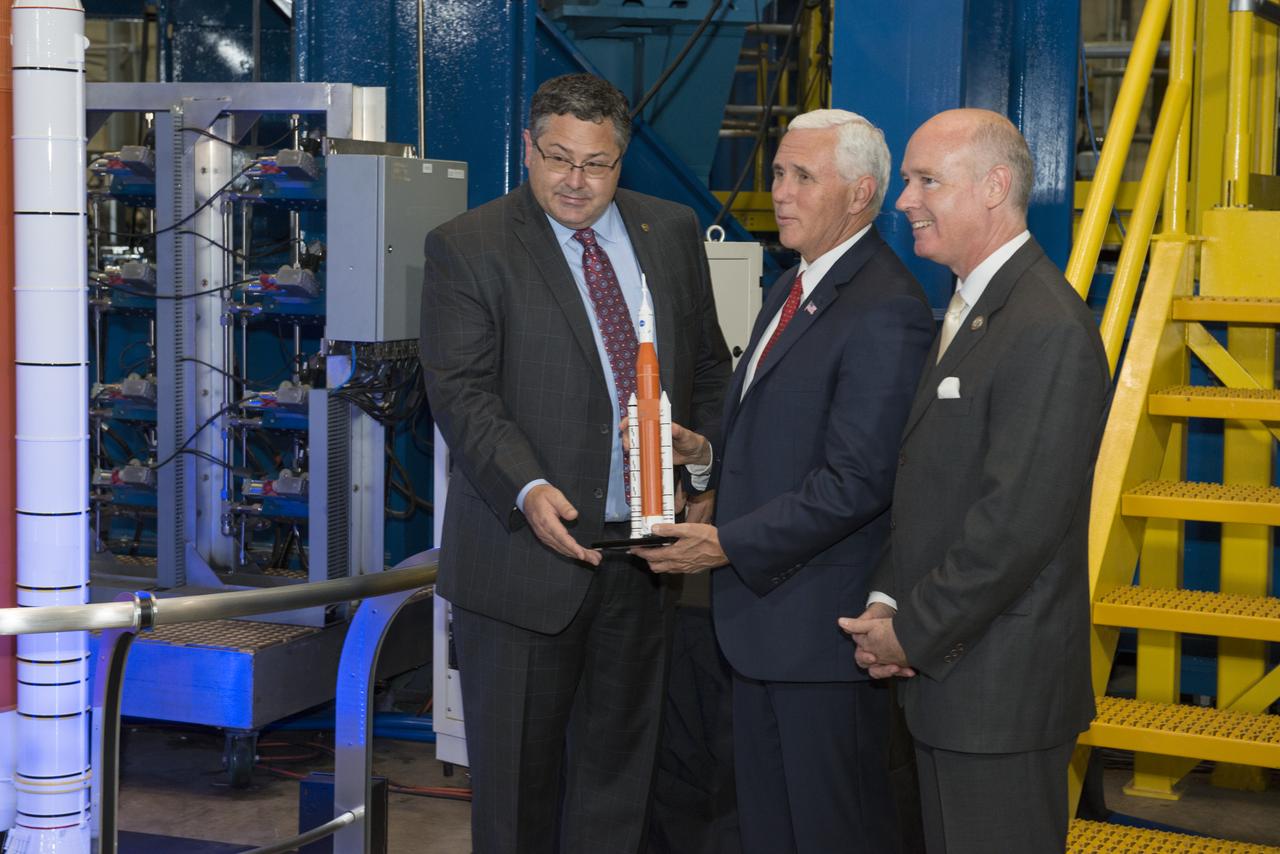
Marshall Space Flight Center Director Todd May (left) presents Vice President Mike Pence (center) with a Space Launch System model. May, Vice President Pence, and Congressman Robert Aderholt (R-AL) (right) are standing in front of an SLS test stand where the engine section, the bottom section of the 212-foot-tall core stage, is being tested. Earlier, engineers working on the test gave the Vice President a close up look at test hardware. The test hardware is for the SLS core stage engine section, which is the bottom of the core stage where the four RS-25 engines are housed. The engine section structure must withstand the incredible stresses produced by more than 8 million pounds of thrust during launch and ascent.
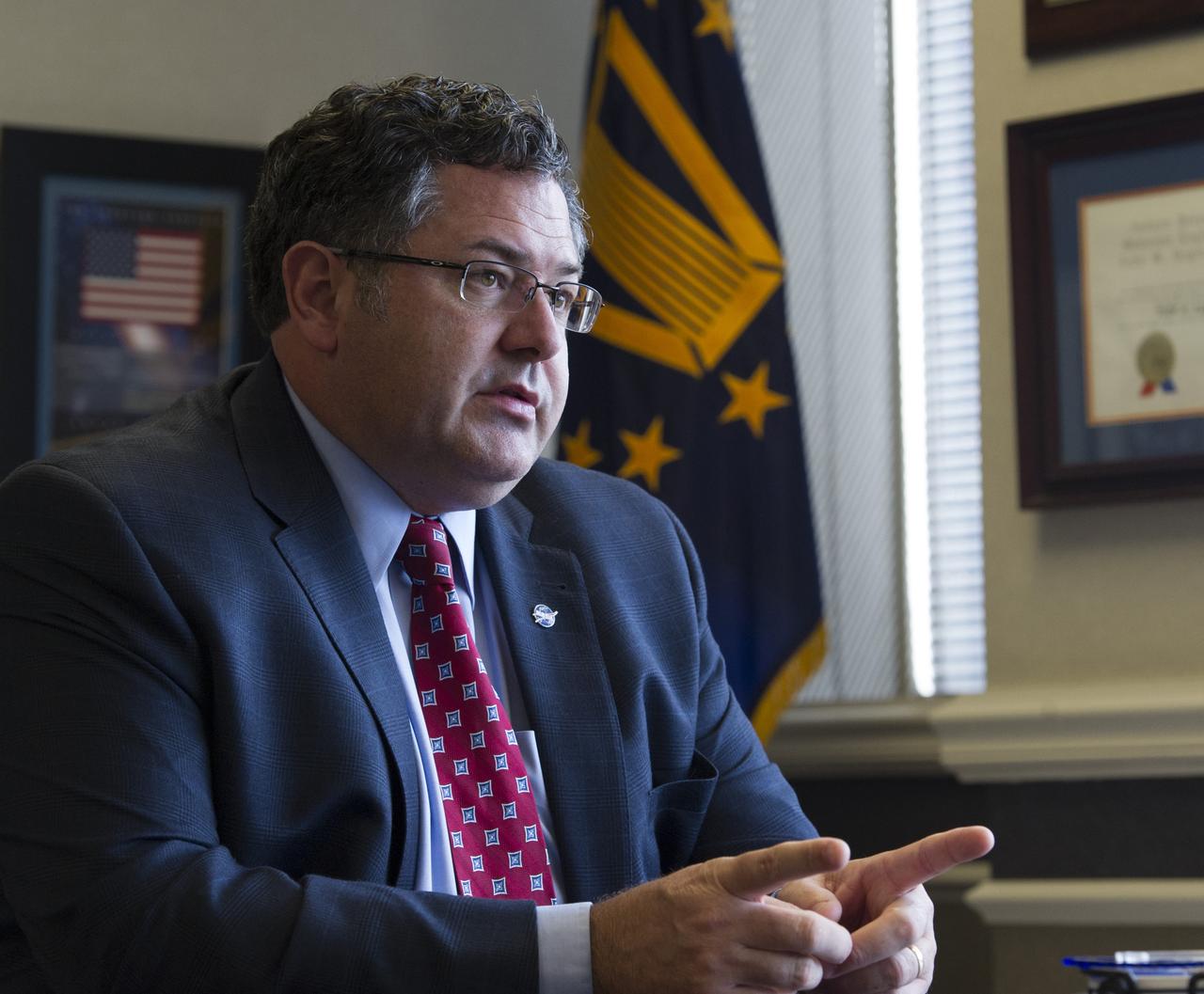
TODD MAY TALKS ABOUT NASA'S SPACE LAUNCH SYSTEM AND OTHER MISSIONS IN HIS OFFICE AT NASA'S MARSHALL SPACE FLIGHT CENTER IN HUNTSVILLE, ALABAMA. MAY WAS NAMED DEPUTY DIRECTOR OF MARSHALL IN AUGUST 2015.
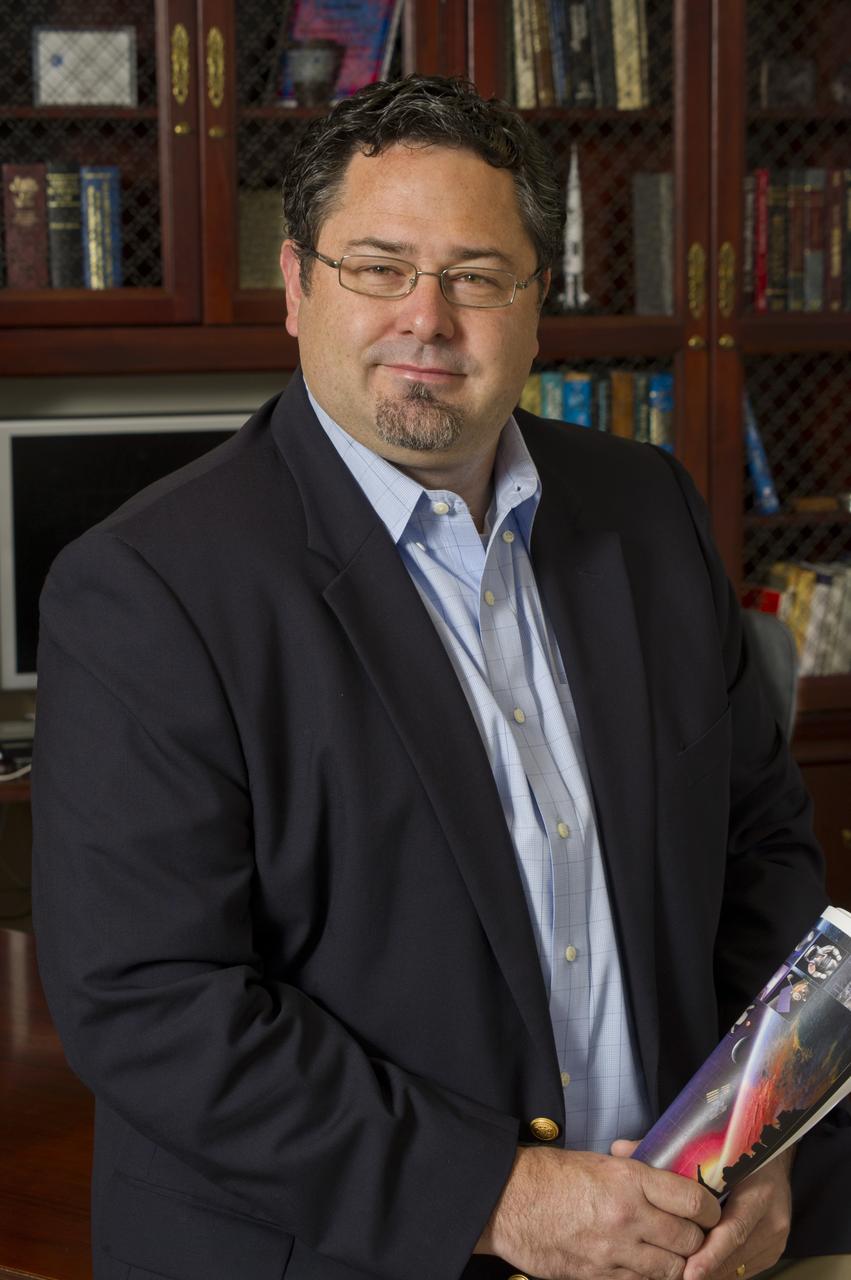
TODD MAY, MANAGER, SPACE LAUNCH SYSTEM, IN HIS OFFICE
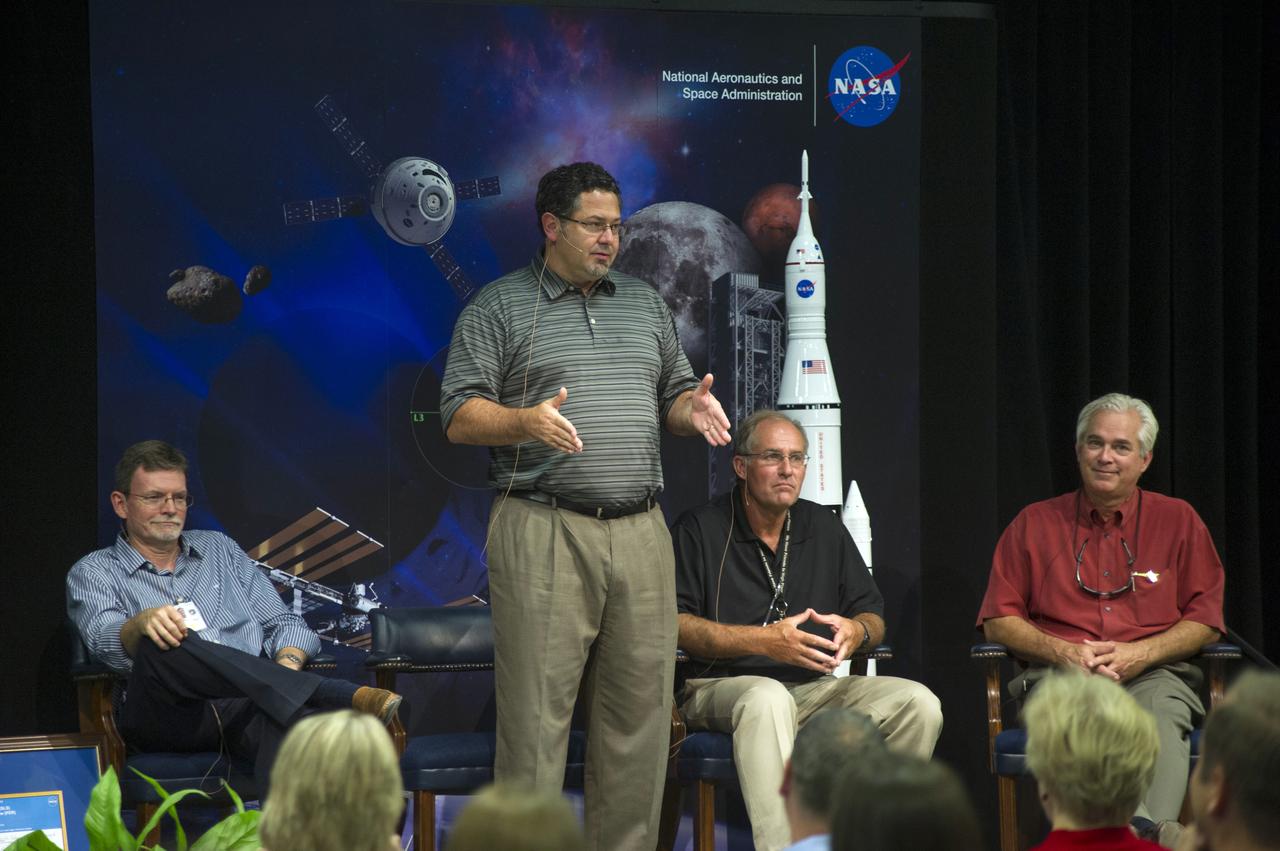
MORE THAN 250 PEOPLE FROM ACROSS NASA'S MARSHALL SPACE FLIGHT CENTER PARTICIPATED IN THE SPACE LAUNCH SYSTEM (SLS) POST-PRELIMINARY DESIGN REVIEW REPORT, HELD AUG. 5 IN ACTIVITIES BUILDING 4316. DISCUSSING THE REVIEW AND THANKING THE MARSHALL TEAM FOR A JOB WELL DONE, ARE FROM LEFT, GARRY LYLES, SLS CHIEF ENGINEER; TODD MAY, MANAGER OF THE SLS PROGRAM; STEVE CASH, DIRECTOR OF MARSHALL’S SAFETY & MISSION ASSURANCE DIRECTORATE; AND CHRIS SINGER, MANAGER OF MARSHALL’S ENGINEERING DIRECTORATE
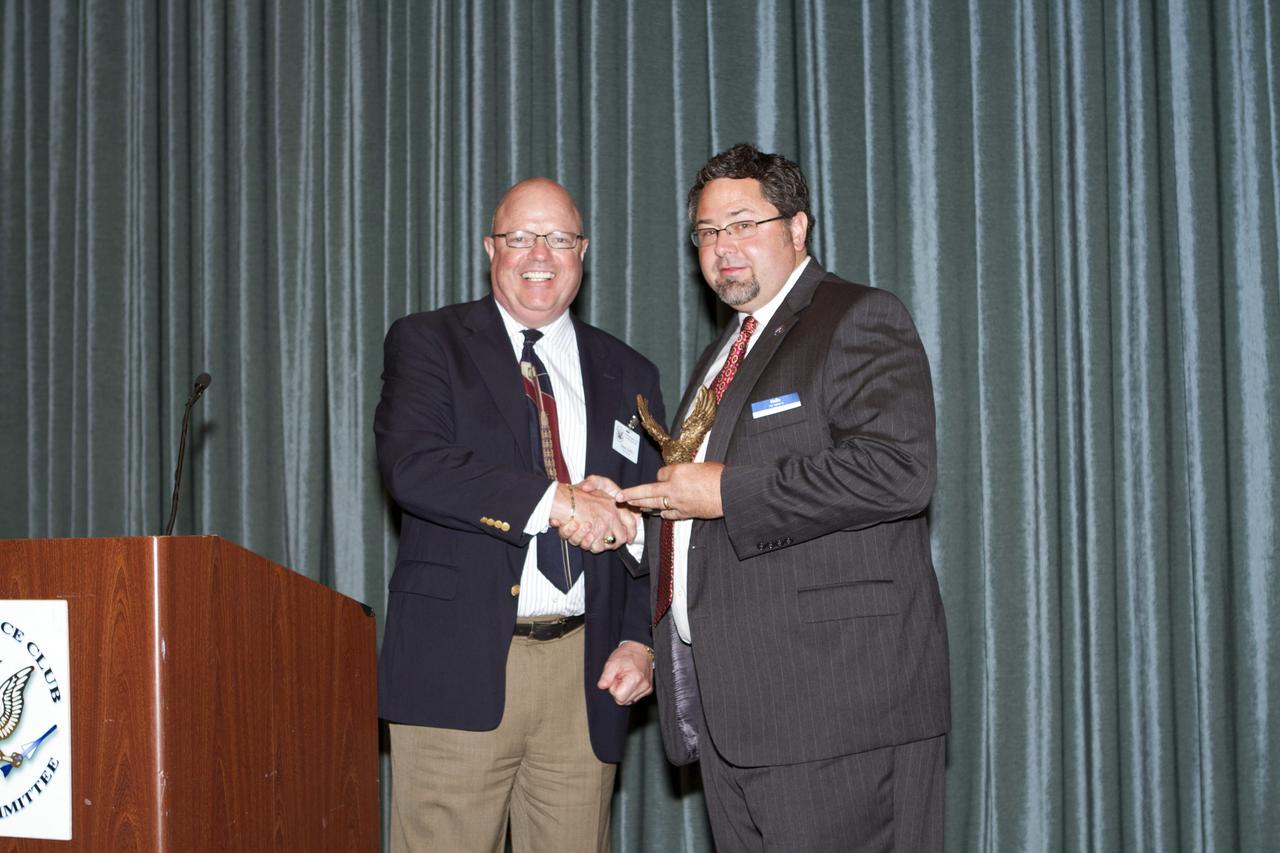
COCOA BEACH, Fla.. -- Todd May, program manager of the Space Launch System, receives a sculpture from the National Space Club after his address to the National Space Club's Florida Committee during the organization's monthly luncheon in Cocoa Beach, Fla. May, who works at NASA's Marshall Space Flight Center in Huntsville, Ala., discussed the status of the SLS program. Photo credit: NASA/Kim Shiflett
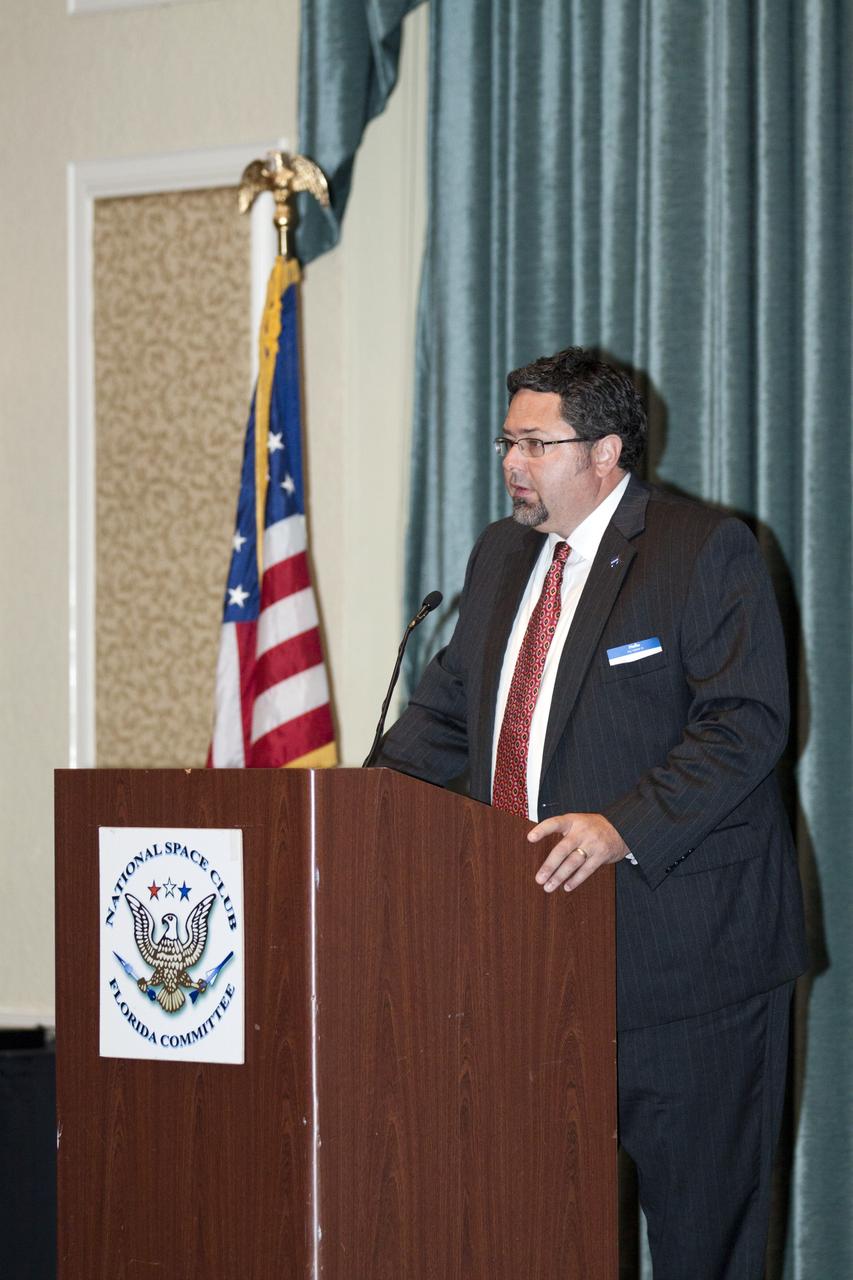
COCOA BEACH, Fla.. --Todd May, program manager of the Space Launch System, addresses the National Space Club's Florida Committee during the organization's monthly luncheon in Cocoa Beach, Fla. May, who works at NASA's Marshall Space Flight Center in Huntsville, Ala., discussed the status of the SLS program. Photo credit: NASA/Kim Shiflett
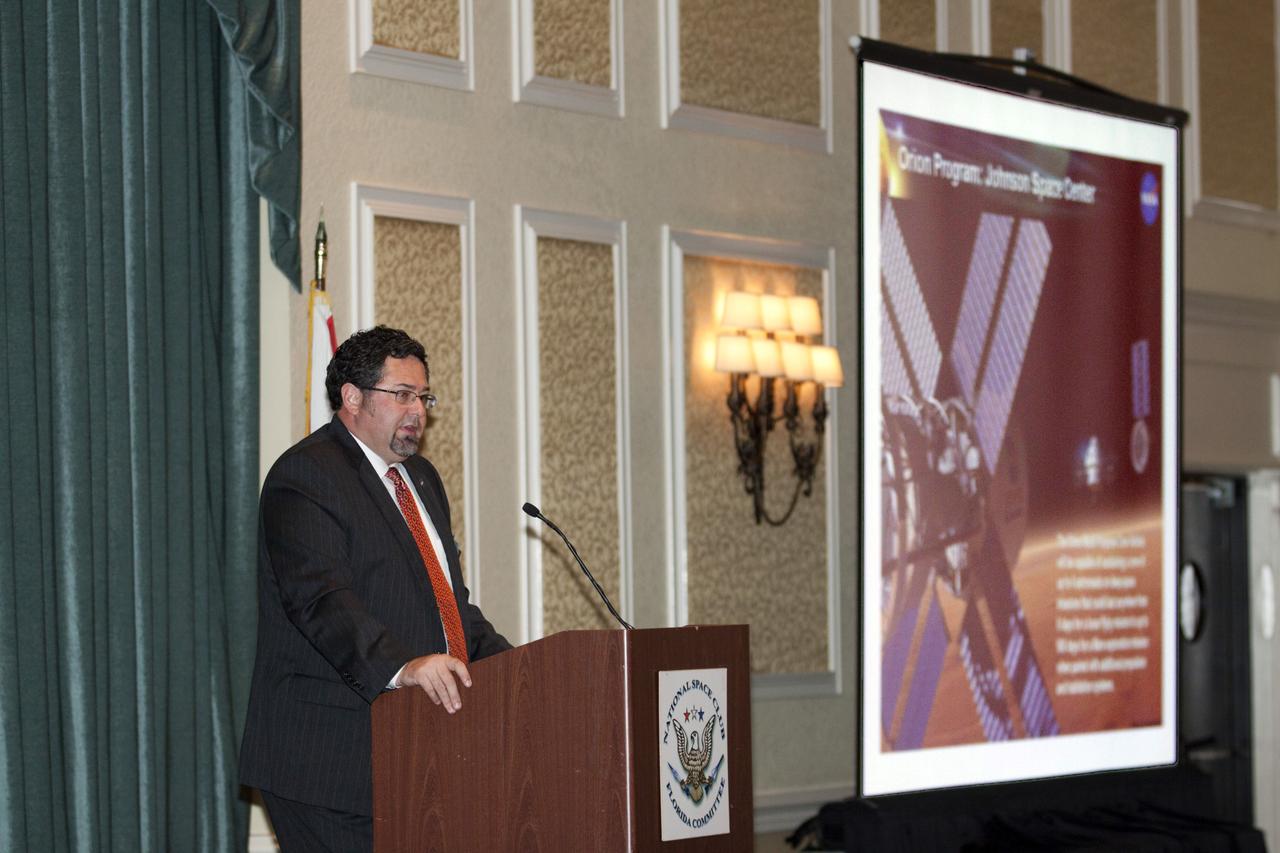
COCOA BEACH, Fla.. -- Todd May, program manager of the Space Launch System, addresses the National Space Club's Florida Committee during the organization's monthly luncheon in Cocoa Beach, Fla. May, who works at NASA's Marshall Space Flight Center in Huntsville, Ala., discussed the status of the SLS program. Photo credit: NASA/Kim Shiflett
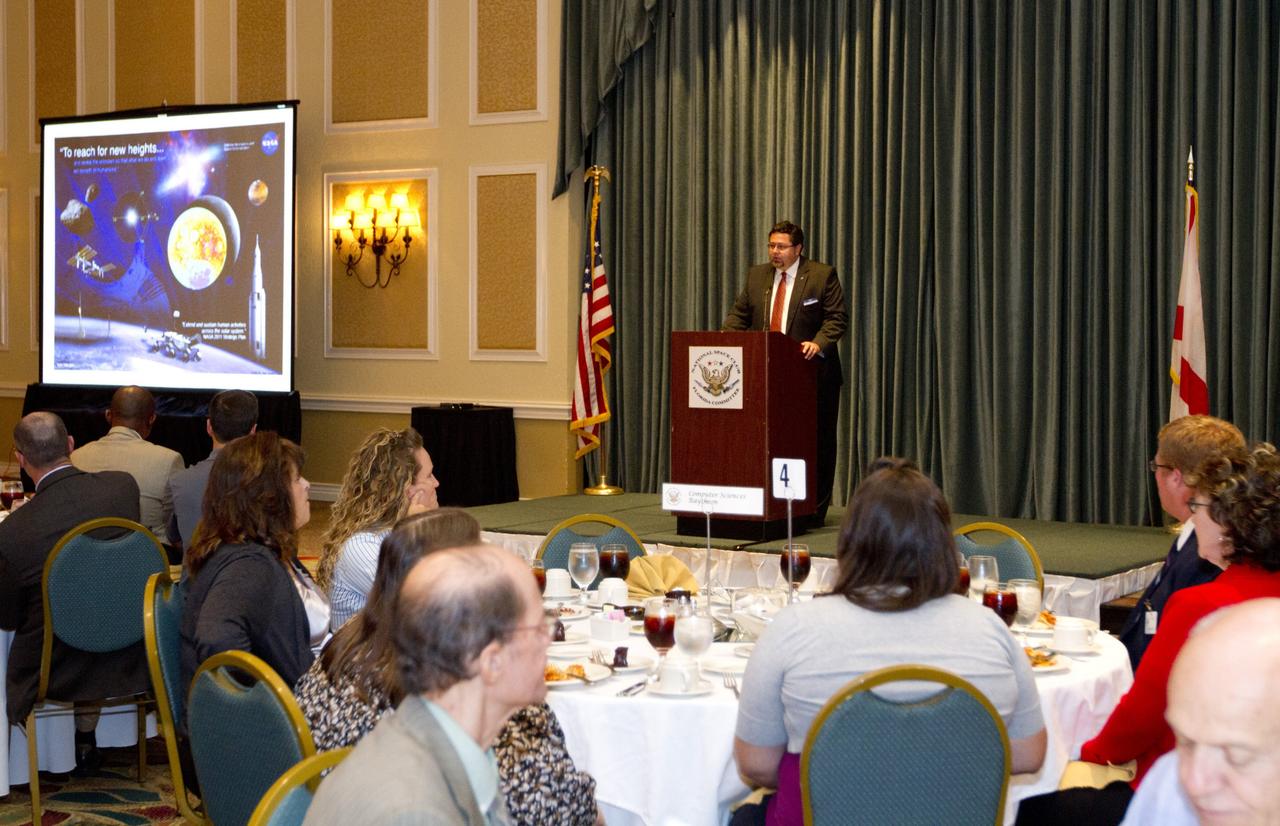
COCOA BEACH, Fla.. -- Todd May, program manager of the Space Launch System, addresses the National Space Club's Florida Committee during the organization's monthly luncheon in Cocoa Beach, Fla. May, who works at NASA's Marshall Space Flight Center in Huntsville, Ala., discussed the status of the SLS program. Photo credit: NASA/Kim Shiflett
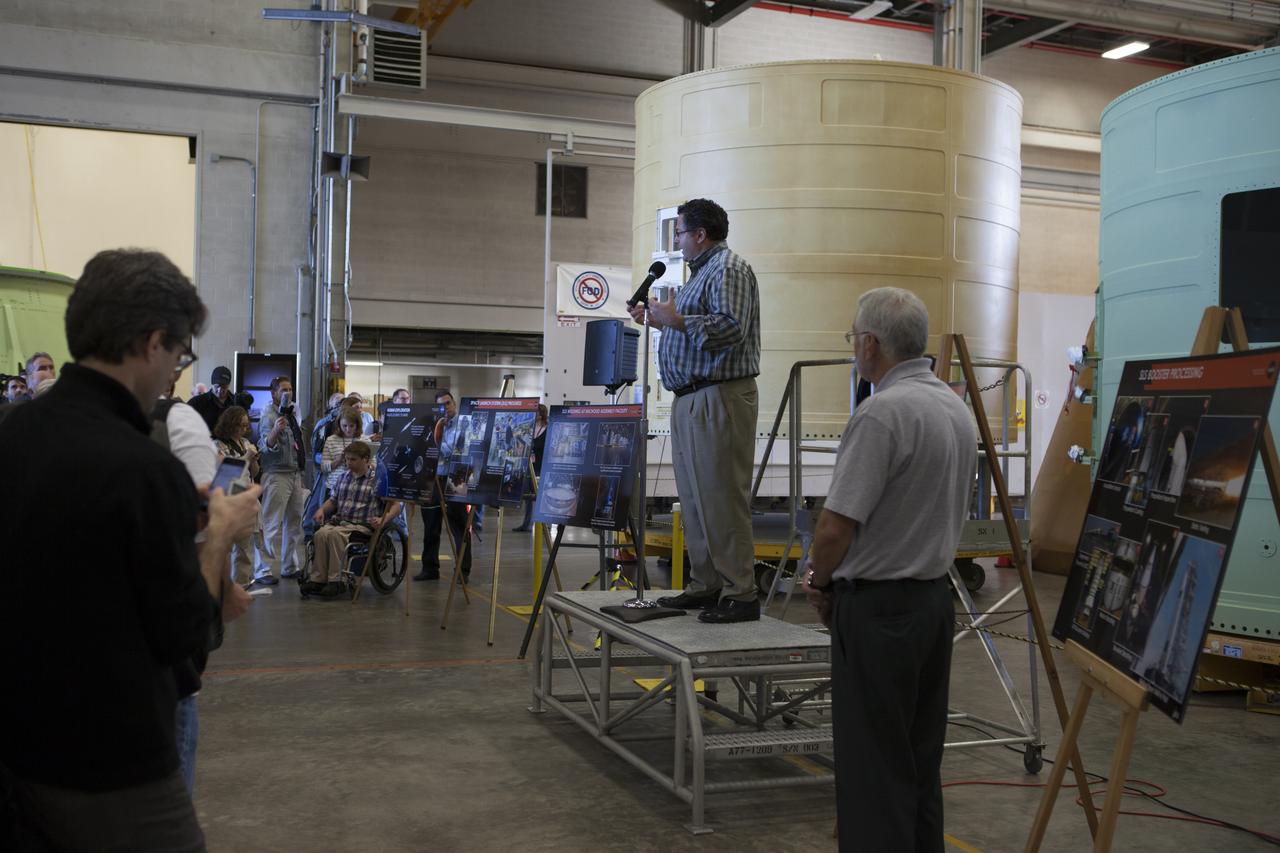
At NASA's Kennedy Space Center in Florida, members of the news media are briefed on the agency's Space Launch System SLS Program by Todd May, program manager for Space Launch Systems SLS at NASA's Marshall Space Flight Center in Huntsville, Alabama. The briefing took place in the spaceport's Booster Fabrication Facility BFF. During the Space Shuttle Program, the facility was used for processing forward segments and aft skirts for the solid rocket boosters. The BFF will serve a similar role for the SLS. Orion is the exploration spacecraft designed to carry astronauts to destinations not yet explored by humans, including an asteroid and Mars. It will have emergency abort capability, sustain the crew during space travel and provide safe re-entry from deep space return velocities. The first unpiloted flight test of Orion is scheduled to launch Dec. 4, 2014 atop a United Launch Alliance Delta IV Heavy rocket, and in 2018 on NASA’s Space Launch System rocket.
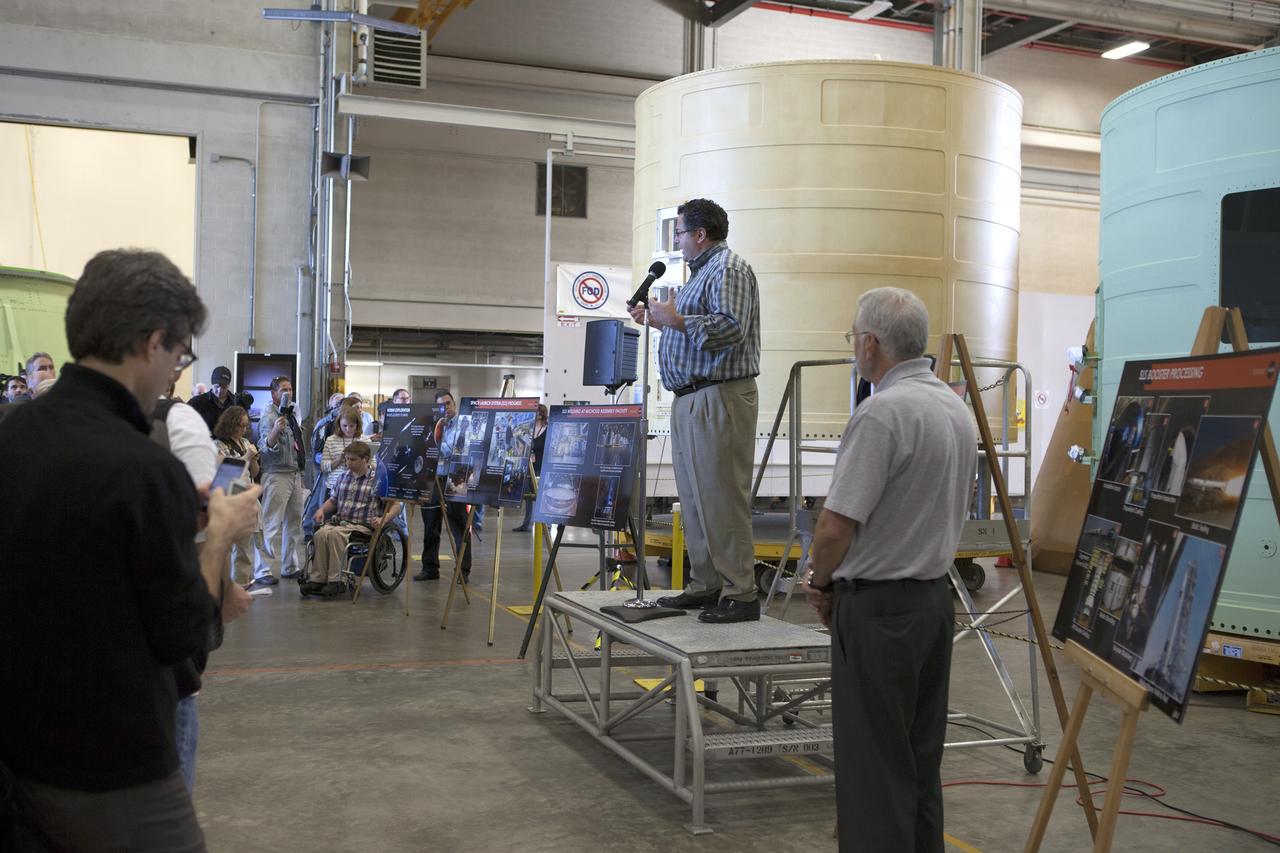
CAPE CANAVERAL, Fla. – At NASA's Kennedy Space Center in Florida, members of the news media are briefed on the agency's Space Launch System SLS Program Todd May, program manager for Space Launch Systems SLS at NASA's Marshall Space Flight Center in Huntsville, Alabama. The briefing took place in the spaceport's Booster Fabrication Facility BFF. During the Space Shuttle Program, the facility was used for processing forward segments and aft skirts for the solid rocket boosters. The BFF will serve a similar role for the SLS. Orion is the exploration spacecraft designed to carry astronauts to destinations not yet explored by humans, including an asteroid and Mars. It will have emergency abort capability, sustain the crew during space travel and provide safe re-entry from deep space return velocities. The first unpiloted flight test of Orion is scheduled to launch Dec. 4, 2014 atop a United Launch Alliance Delta IV Heavy rocket, and in 2018 on NASA’s Space Launch System rocket. For more information, visit www.nasa.gov/orion Photo credit: NASA/Kim Shiflett
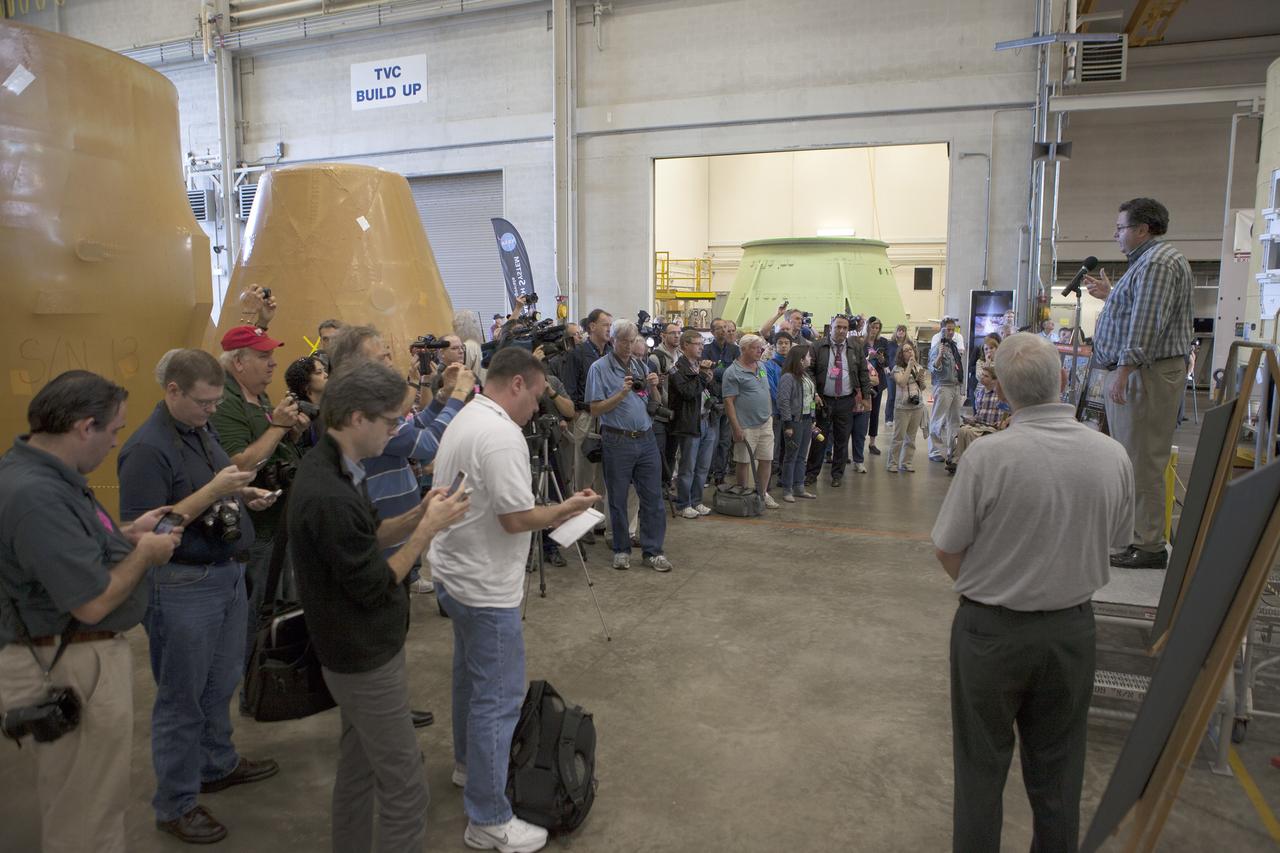
CAPE CANAVERAL, Fla. – At NASA's Kennedy Space Center in Florida, members of the news media are briefed on the agency's Space Launch System SLS Program Todd May, program manager for Space Launch Systems SLS at NASA's Marshall Space Flight Center in Huntsville, Alabama. The briefing took place in the spaceport's Booster Fabrication Facility BFF. During the Space Shuttle Program, the facility was used for processing forward segments and aft skirts for the solid rocket boosters. The BFF will serve a similar role for the SLS. Orion is the exploration spacecraft designed to carry astronauts to destinations not yet explored by humans, including an asteroid and Mars. It will have emergency abort capability, sustain the crew during space travel and provide safe re-entry from deep space return velocities. The first unpiloted flight test of Orion is scheduled to launch Dec. 4, 2014 atop a United Launch Alliance Delta IV Heavy rocket, and in 2018 on NASA’s Space Launch System rocket. For more information, visit www.nasa.gov/orion Photo credit: NASA/Kim Shiflett
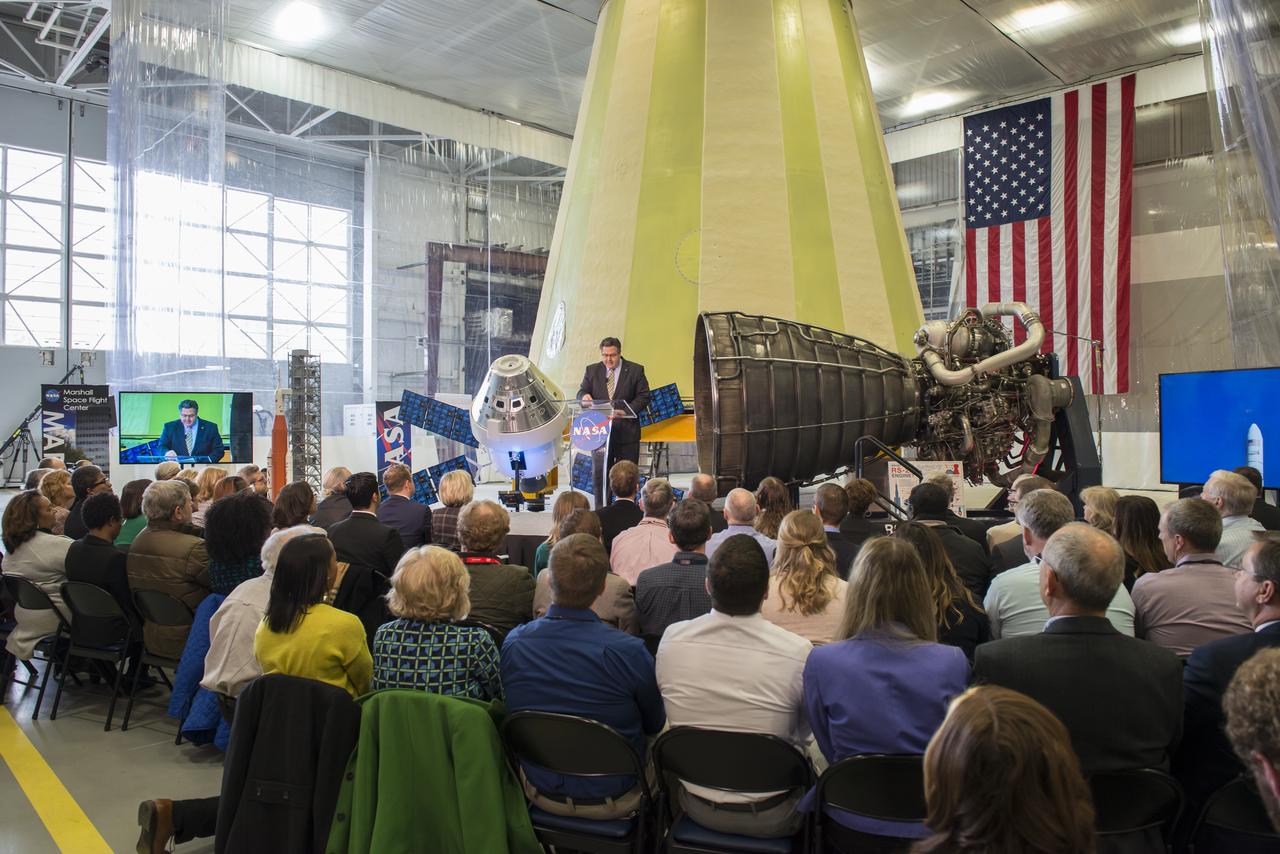
Marshall Space Flight Center Director Todd May introduces NASA Acting Adminstrator Robert Lightfoot prior to his delivery of the "State of NASA", February 12, 2018, at the Marshall Space Flight Center in Huntsville, Alabama. In his address, Lightfoot discussed what the President's Fiscal Year 2019 budget request means for America's space agency. According to Lightfoot, it "reflects the administration's confidence that America will lead the way back to the Moon and take the next giant leap". Lightfoot delivered the "State of NASA" address in Marshall's Center for Advanced Manufacturing where engineers are pushing boundaries in the fields of additive manufacturing, 3D printing, and more. Hardware for NASA's Space Launch System and a model of the agency's Orion spacecraft served as a backdrop for the annual event. SLS, which is managed by Marshall, will enable a new era of exploration beyond Earth's orbit by launching astronauts on missions to deep-space destinations including the Moon and Mars.
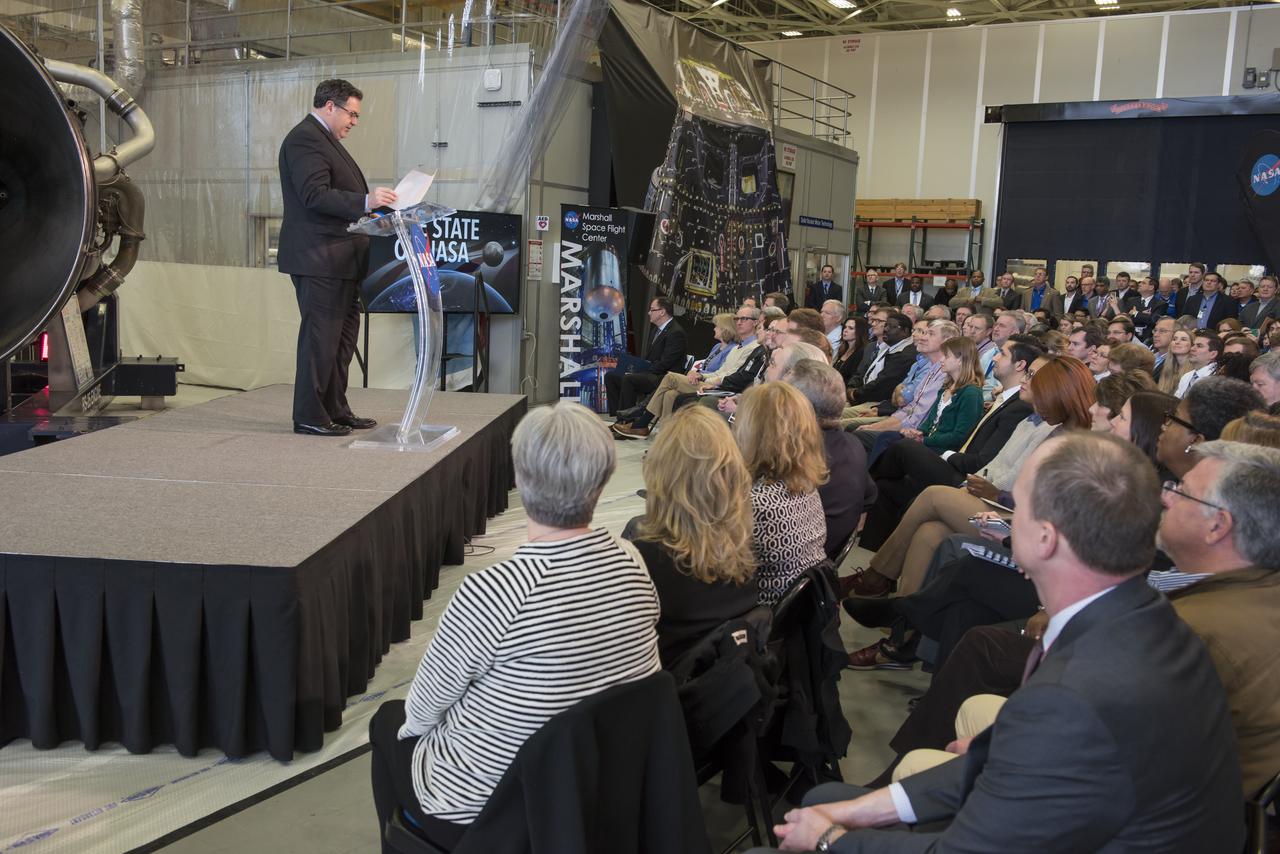
Marshall Space Flight Center Director Todd May introduces NASA Acting Adminstrator Robert Lightfoot prior to his delivery of the "State of NASA", February 12, 2018, at the Marshall Space Flight Center in Huntsville, Alabama. In his address, Lightfoot discussed what the President's Fiscal Year 2019 budget request means for America's space agency. According to Lightfoot, it "reflects the administration's confidence that America will lead the way back to the Moon and take the next giant leap". Lightfoot delivered the "State of NASA" address in Marshall's Center for Advanced Manufacturing where engineers are pushing boundaries in the fields of additive manufacturing, 3D printing, and more. Hardware for NASA's Space Launch System and a model of the agency's Orion spacecraft served as a backdrop for the annual event. SLS, which is managed by Marshall, will enable a new era of exploration beyond Earth's orbit by launching astronauts on missions to deep-space destinations including the Moon and Mars.

Louisiana Gov. John Bel Edwards visited NASA’s Michoud Assembly Facility in New Orleans and spoke about the state’s partnerships with NASA and the 20 companies and government agencies located at the facility. NASA is building its new deep space rocket, the Space Launch System, and the Orion spacecraft at Michoud.
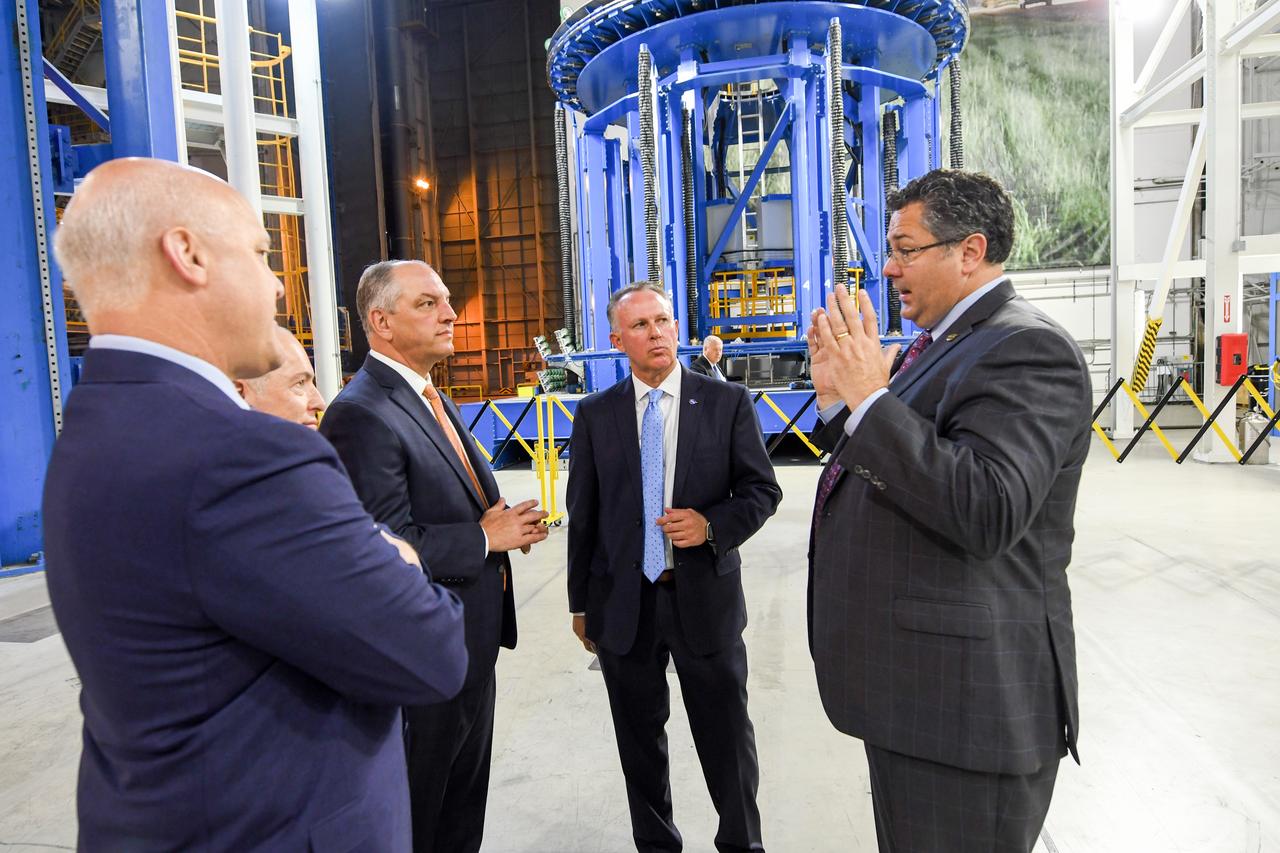
NASA officials were joined by Louisiana Gov. John Bel Edwards and New Orleans Mayor Mitch Landrieu, who toured the Michoud Assembly Facility in New Orleans and got a first-hand look at NASA’s new deep space vehicles being built at the facility.
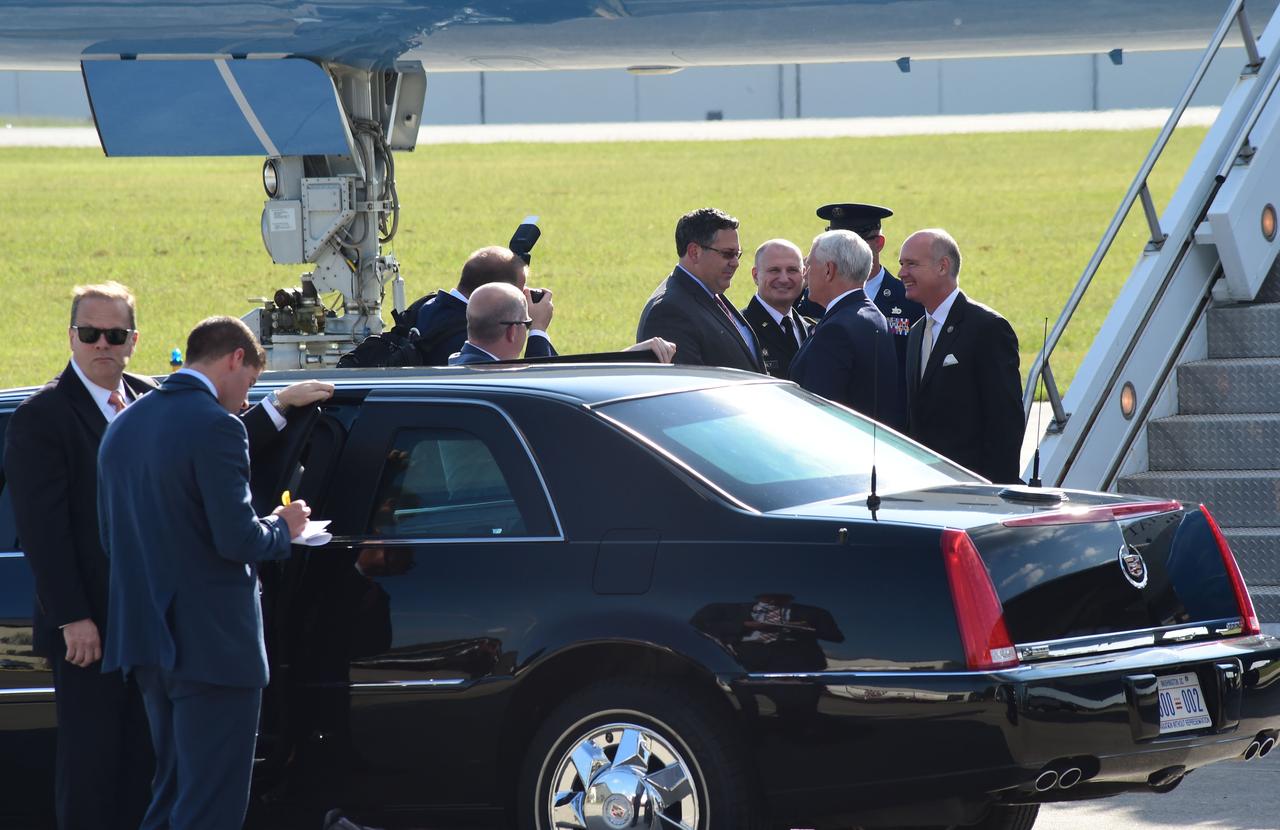
Air Force Two lands with Vice President Mike Pence along with Congressman Robert Aderholt at the Redstone Army Airfield in Huntsville, Alabama, on Monday, Sept. 25. They were greeted by NASA’s Marshall Space Flight Center Director Todd May and Redstone Arsenal’s Lt. Gen. Edward Daly. The Vice President is visiting NASA’s Marshall Center to meet with employees, view test hardware for NASA’s Space Launch System — America’s new deep-space rocket, and tour the Payload Operations Integration Center, “science central” for the International Space Station. Photo Credit: (NASA/Emmett Given)
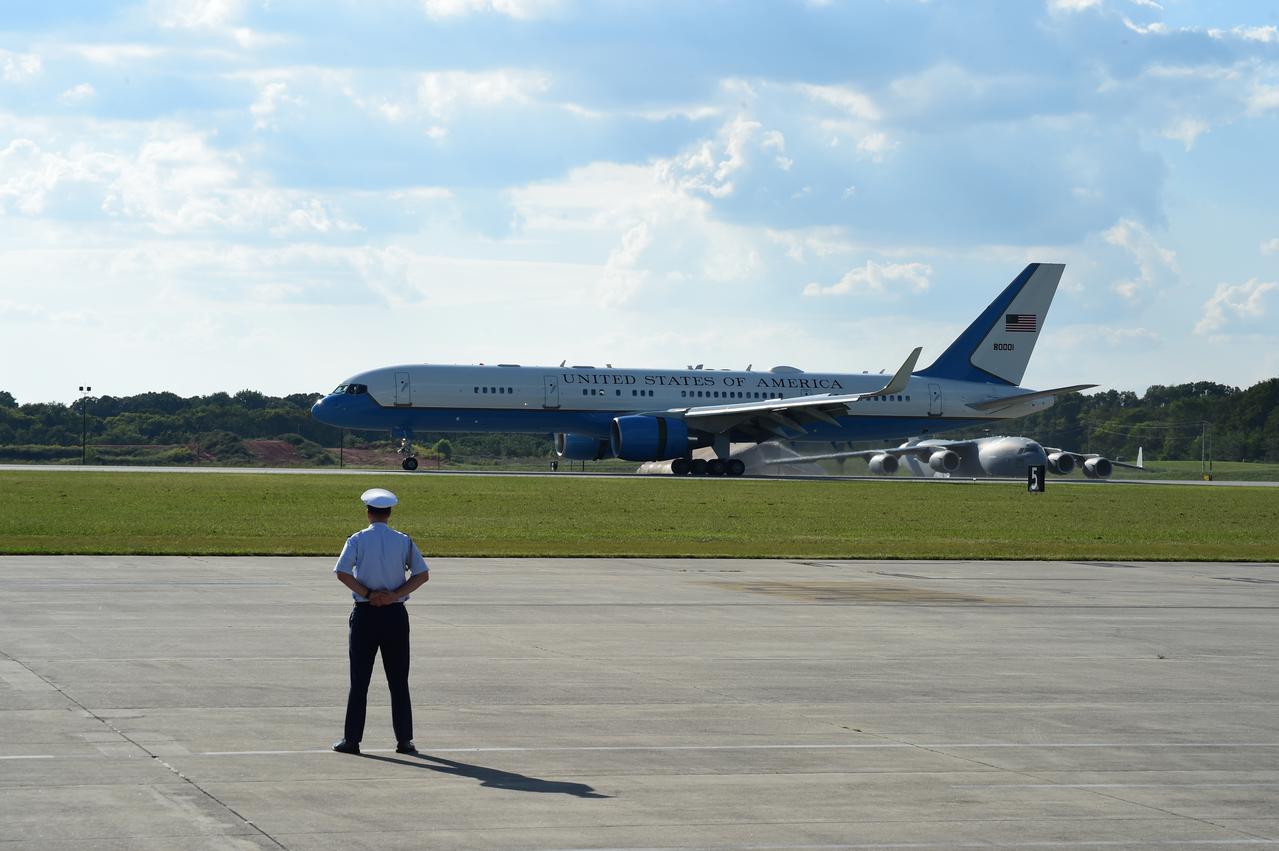
Air Force Two lands with Vice President Mike Pence along with Congressman Robert Aderholt at the Redstone Army Airfield in Huntsville, Alabama, on Monday, Sept. 25. The Vice President is visiting NASA’s Marshall Space Flight Center, located on Redstone Arsenal, to meet with employees, view test hardware for NASA’s Space Launch System — America’s new deep-space rocket, and tour the Payload Operations Integration Center, “science central” for the International Space Station. Photo Credit: (NASA/Emmett Given)
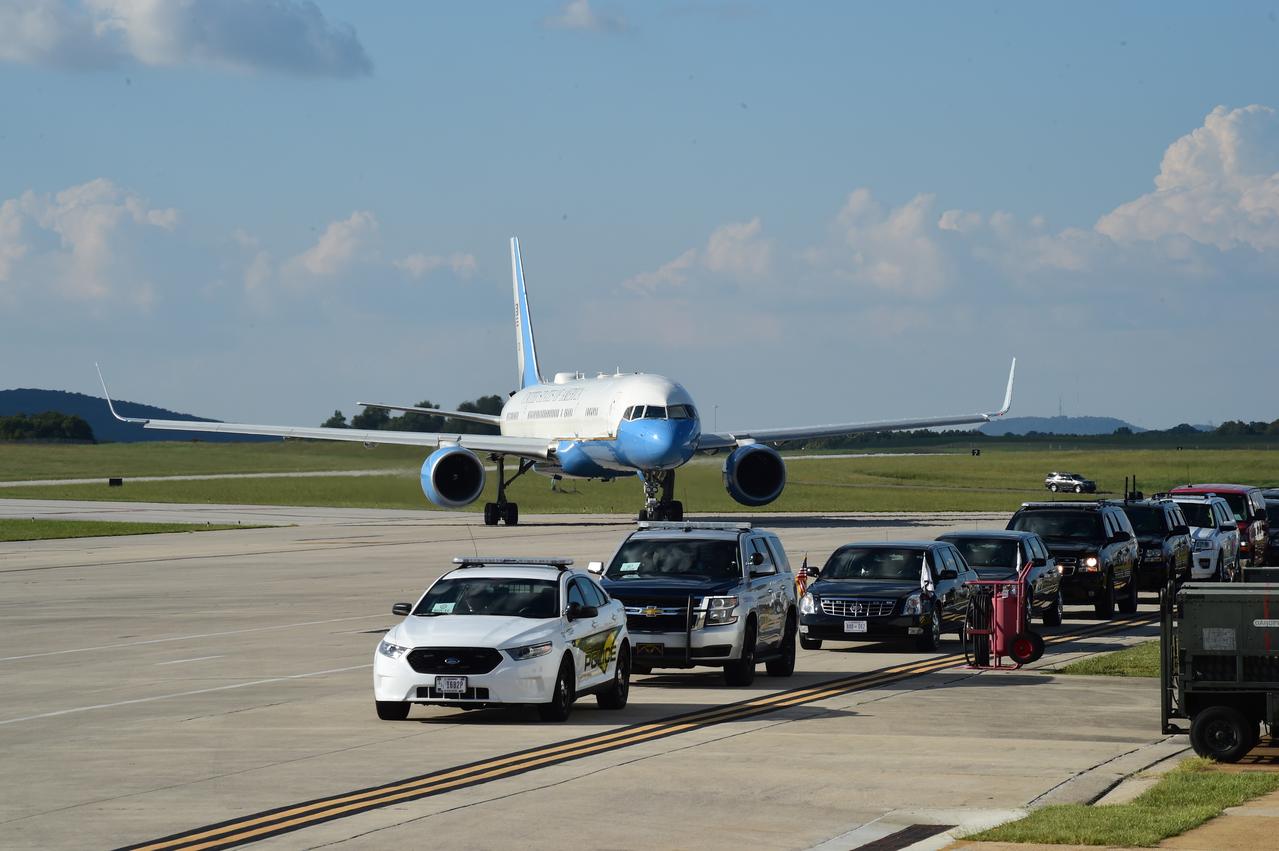
Air Force Two lands with Vice President Mike Pence along with Congressman Robert Aderholt at the Redstone Army Airfield in Huntsville, Alabama, on Monday, Sept. 25. The Vice President is visiting NASA’s Marshall Space Flight Center, located on Redstone Arsenal, to meet with employees, view test hardware for NASA’s Space Launch System — America’s new deep-space rocket, and tour the Payload Operations Integration Center, “science central” for the International Space Station. Photo Credit: (NASA/Emmett Given)