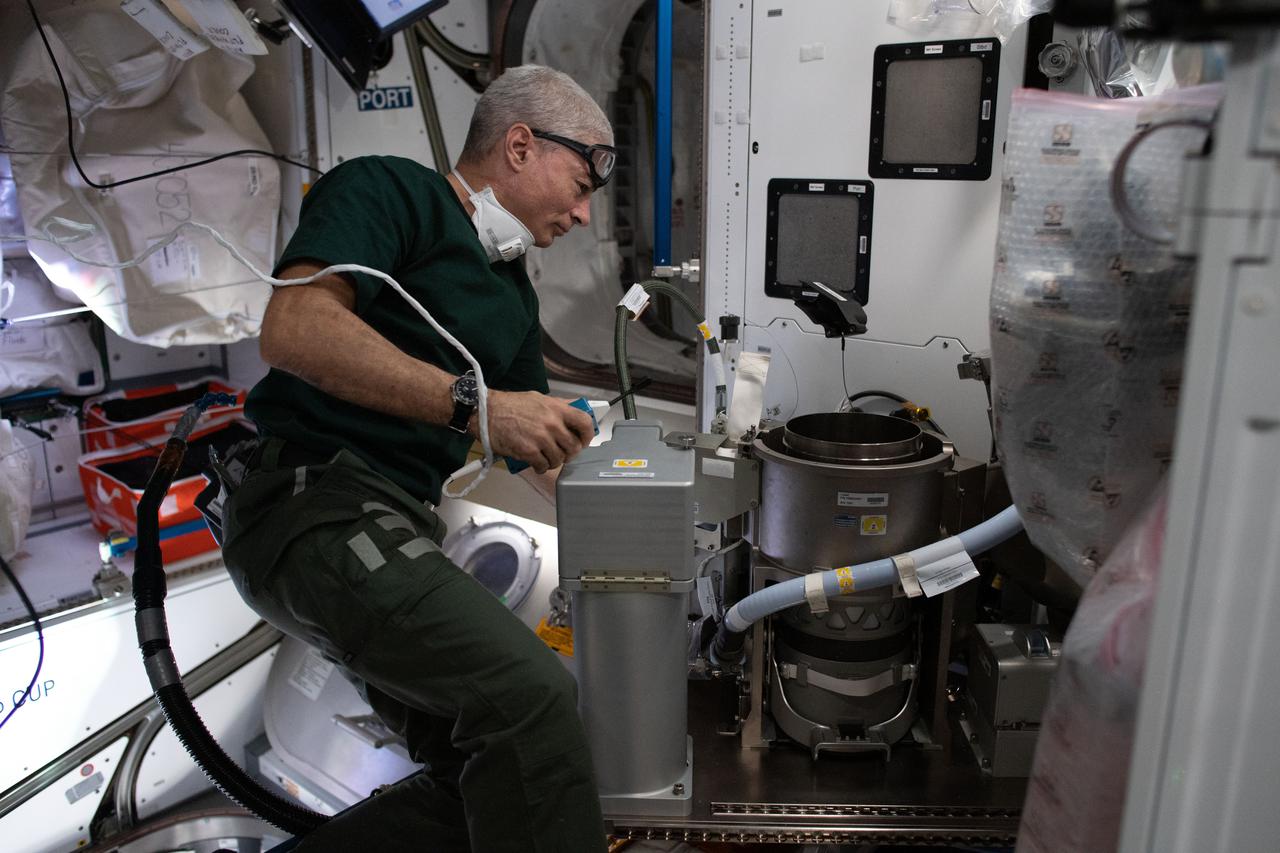
iss065e081312 (May 28, 2021) --- NASA astronaut and Expedition 65 Flight Engineer Mark Vande Hei services components on an advanced new toilet installed inside the International Space Station's Tranquility module.
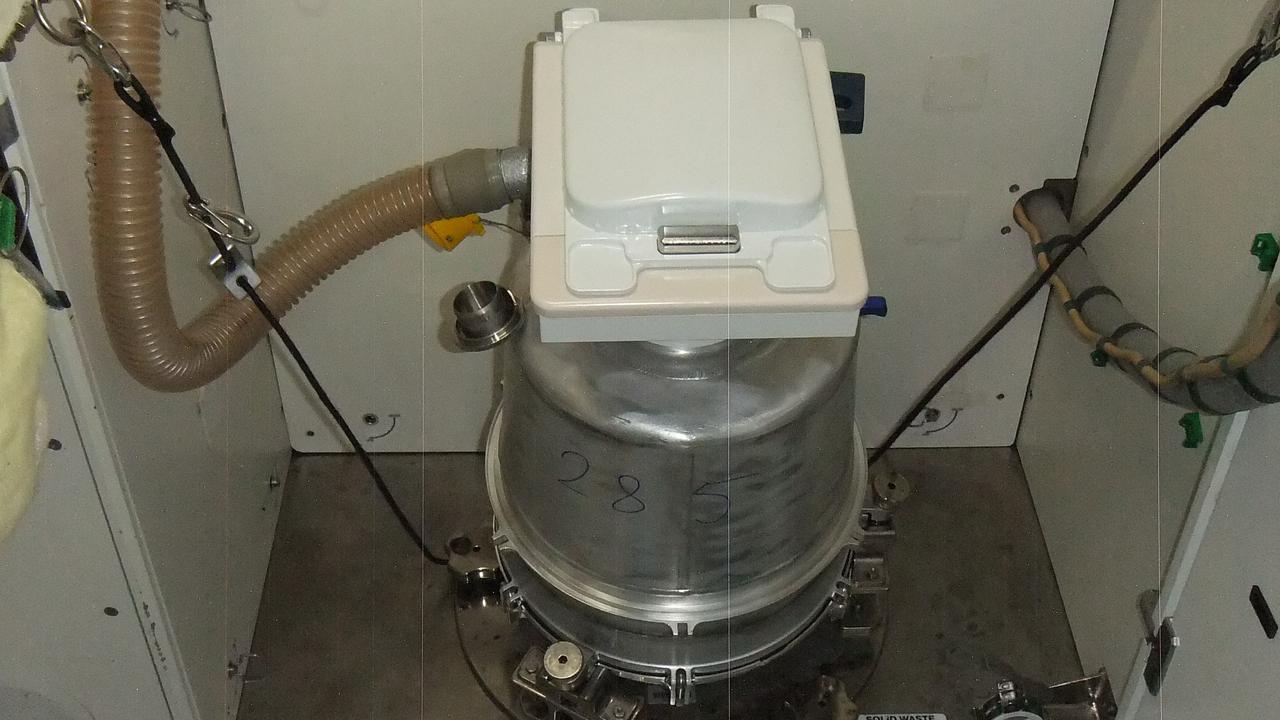
iss041e080672 (Oct. 19, 2014) --- The Waste and Hygiene Compartment, or toilet, located in the International Space Station's Tranquility module.
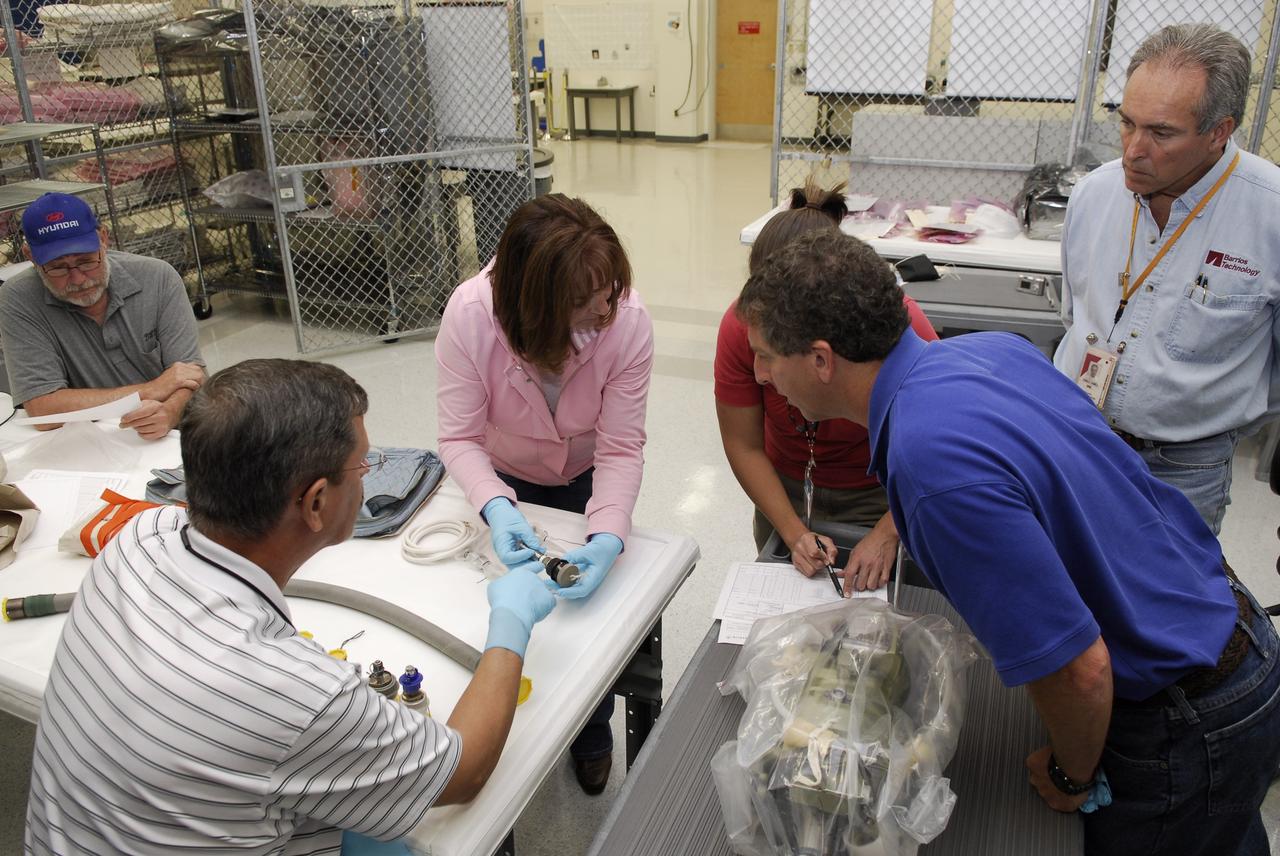
CAPE CANAVERAL, Fla. -- Replacement parts for the Zvezda service module toilet on the International Space Station are inspected following their arrival at Kennedy Space Center. The toilet malfunctioned last week and was initially repaired by replacing a microprocessor valve. After the station crew members experienced additional difficulties with the toilet, they were directed to use Soyuz toilet facilities at first and are using the main toilet again after rigging a urine bypass. The spare toilet parts have been added to space shuttle Discovery’s manifest for delivery to the station on the STS-124 mission. On the 14-day mission, Discovery and its crew will deliver the Japan Aerospace Exploration Agency's Japanese Experiment Module – Pressurized Module and the Japanese Remote Manipulator System. Launch is scheduled for 5:02 p.m. EDT May 31. Photo credit: NASA/Kim Shiflett
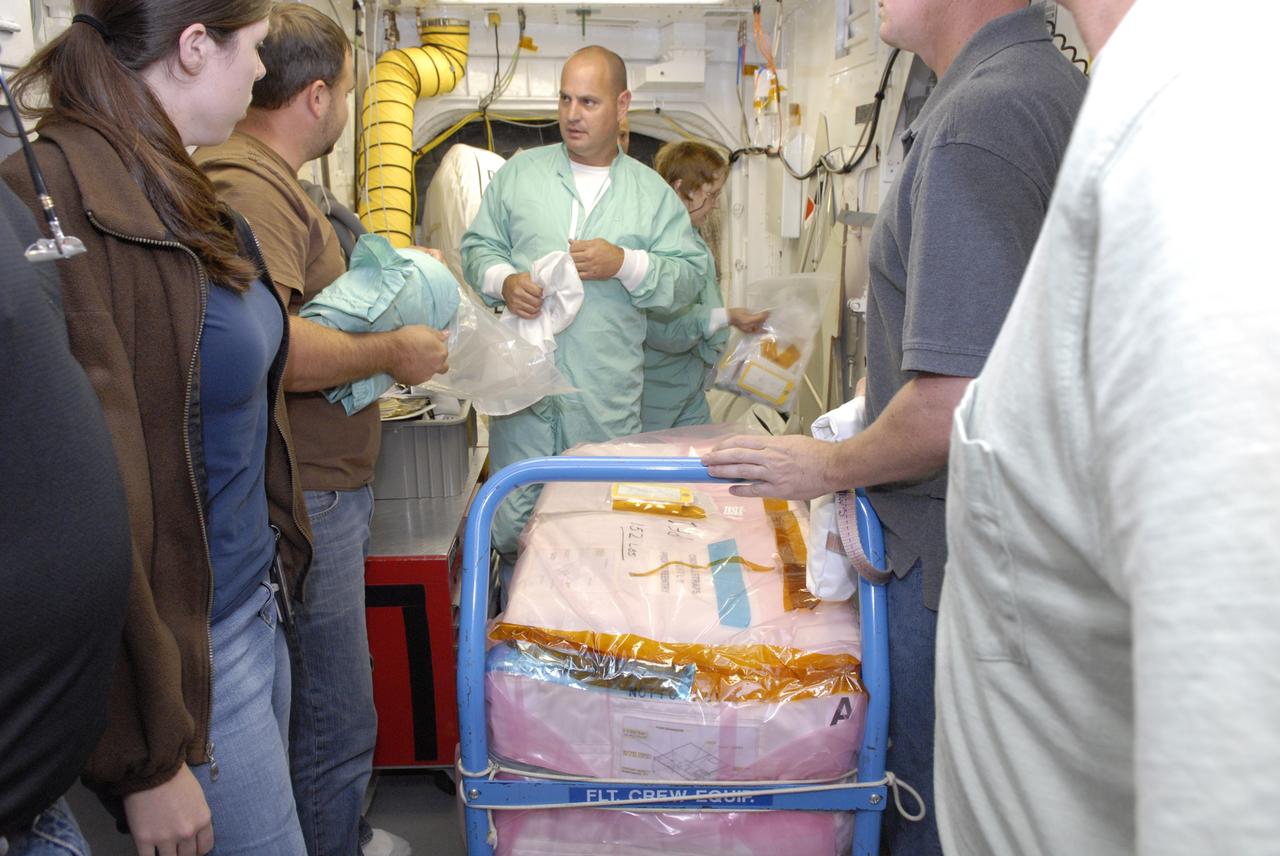
CAPE CANAVERAL, Fla. -- At Launch Pad 39A at Kennedy Space Center, replacement parts for the Zvezda service module toilet on the International Space Station are loaded aboard space shuttle Discovery. The toilet malfunctioned last week and was initially repaired by replacing a microprocessor valve. After the station crew members experienced additional difficulties with the toilet, they were directed to use Soyuz toilet facilities at first and are using the main toilet again after rigging a urine bypass. The spare toilet parts have been added to Discovery’s manifest for delivery to the station on the STS-124 mission. On the 14-day mission, Discovery and its crew will deliver the Japan Aerospace Exploration Agency's Japanese Experiment Module – Pressurized Module and the Japanese Remote Manipulator System. Launch is scheduled for 5:02 p.m. EDT May 31. Photo credit: NASA/Dimitri Gerondidakis
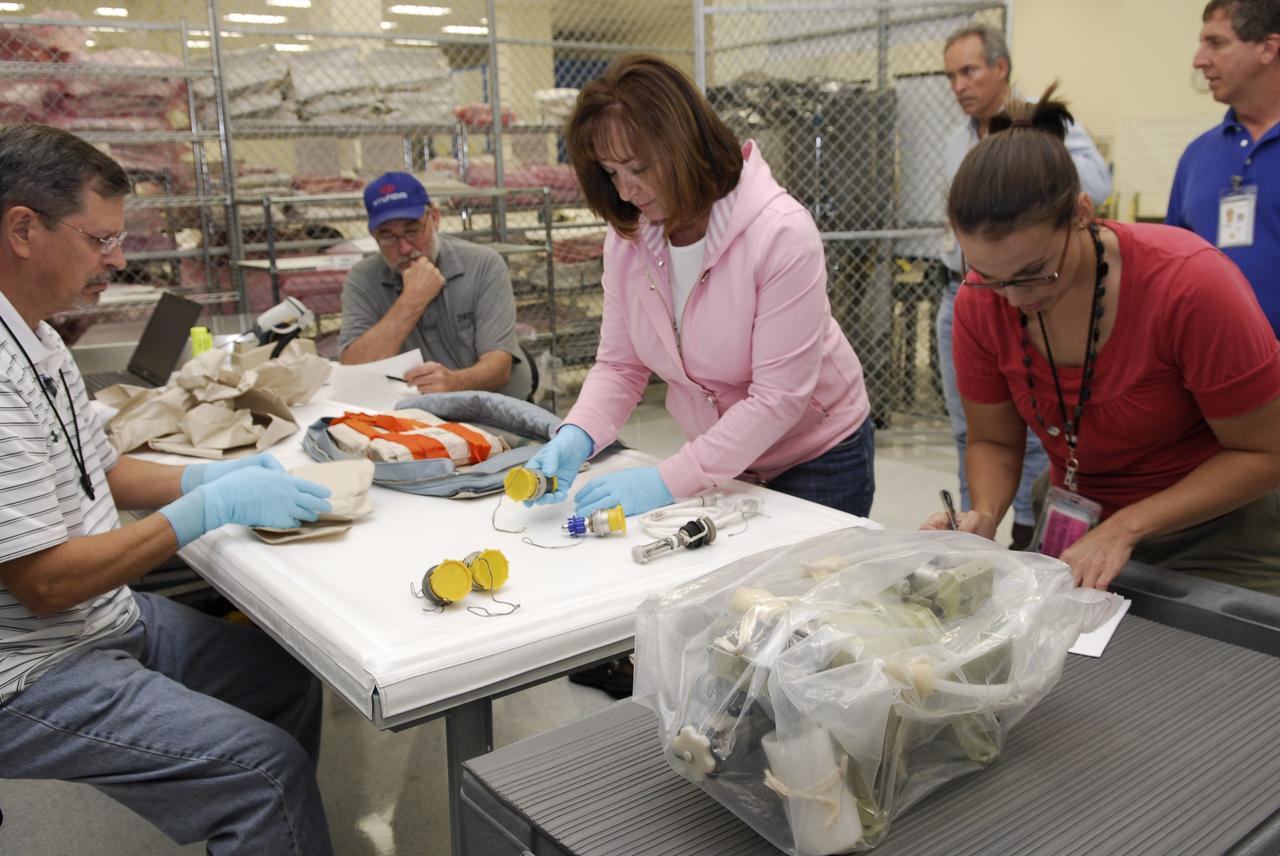
CAPE CANAVERAL, Fla. -- Replacement parts for the Zvezda service module toilet on the International Space Station are inspected following their arrival at Kennedy Space Center. The toilet malfunctioned last week and was initially repaired by replacing a microprocessor valve. After the station crew members experienced additional difficulties with the toilet, they were directed to use Soyuz toilet facilities at first and are using the main toilet again after rigging a urine bypass. The spare toilet parts have been added to space shuttle Discovery’s manifest for delivery to the station on the STS-124 mission. On the 14-day mission, Discovery and its crew will deliver the Japan Aerospace Exploration Agency's Japanese Experiment Module – Pressurized Module and the Japanese Remote Manipulator System. Launch is scheduled for 5:02 p.m. EDT May 31. Photo credit: NASA/Kim Shiflett
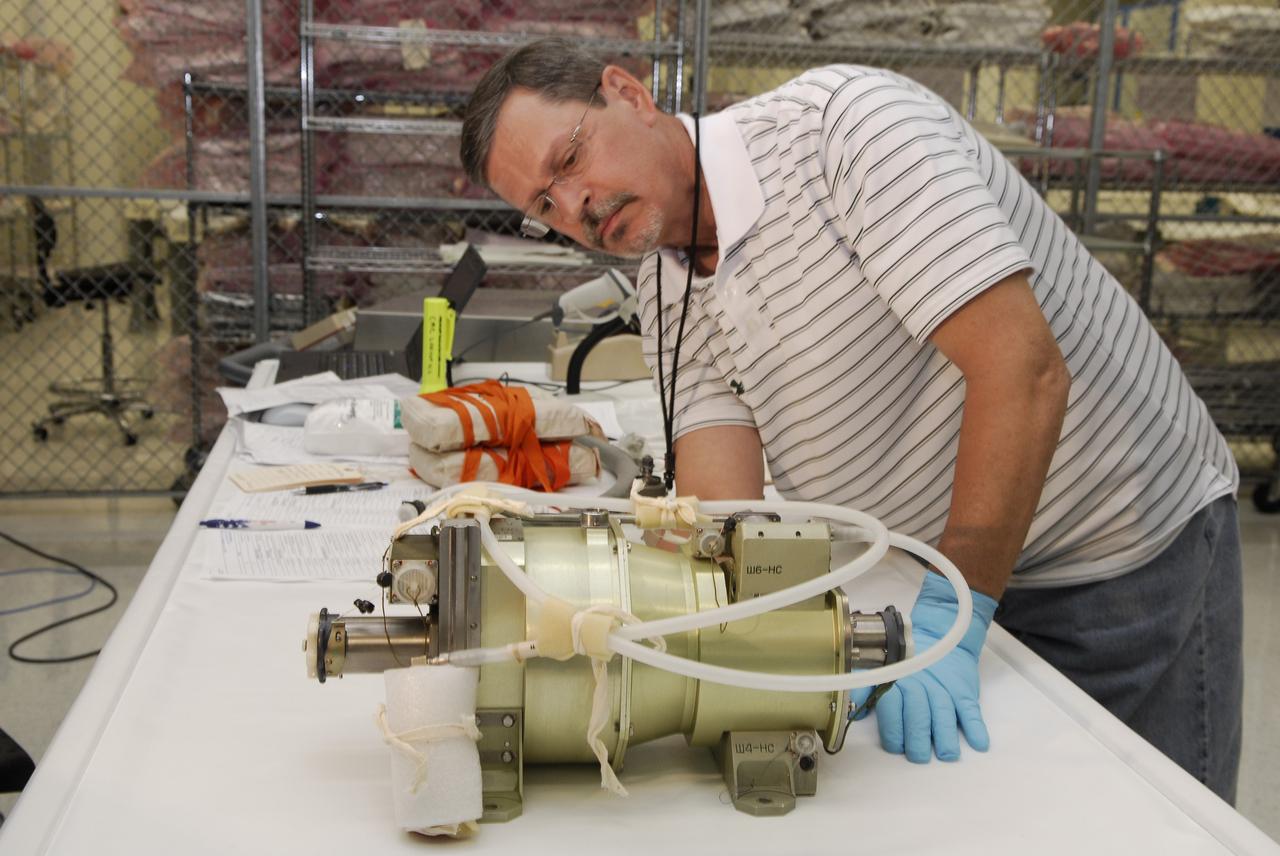
CAPE CANAVERAL, Fla. -- A technician inspects a replacement part for the Zvezda service module toilet on the International Space Station following its arrival at Kennedy Space Center. The toilet malfunctioned last week and was initially repaired by replacing a microprocessor valve. After the station crew members experienced additional difficulties with the toilet, they were directed to use Soyuz toilet facilities at first and are using the main toilet again after rigging a urine bypass. The spare toilet parts have been added to space shuttle Discovery’s manifest for delivery to the station on the STS-124 mission. On the 14-day mission, Discovery and its crew will deliver the Japan Aerospace Exploration Agency's Japanese Experiment Module – Pressurized Module and the Japanese Remote Manipulator System. Launch is scheduled for 5:02 p.m. EDT May 31. Photo credit: NASA/Kim Shiflett
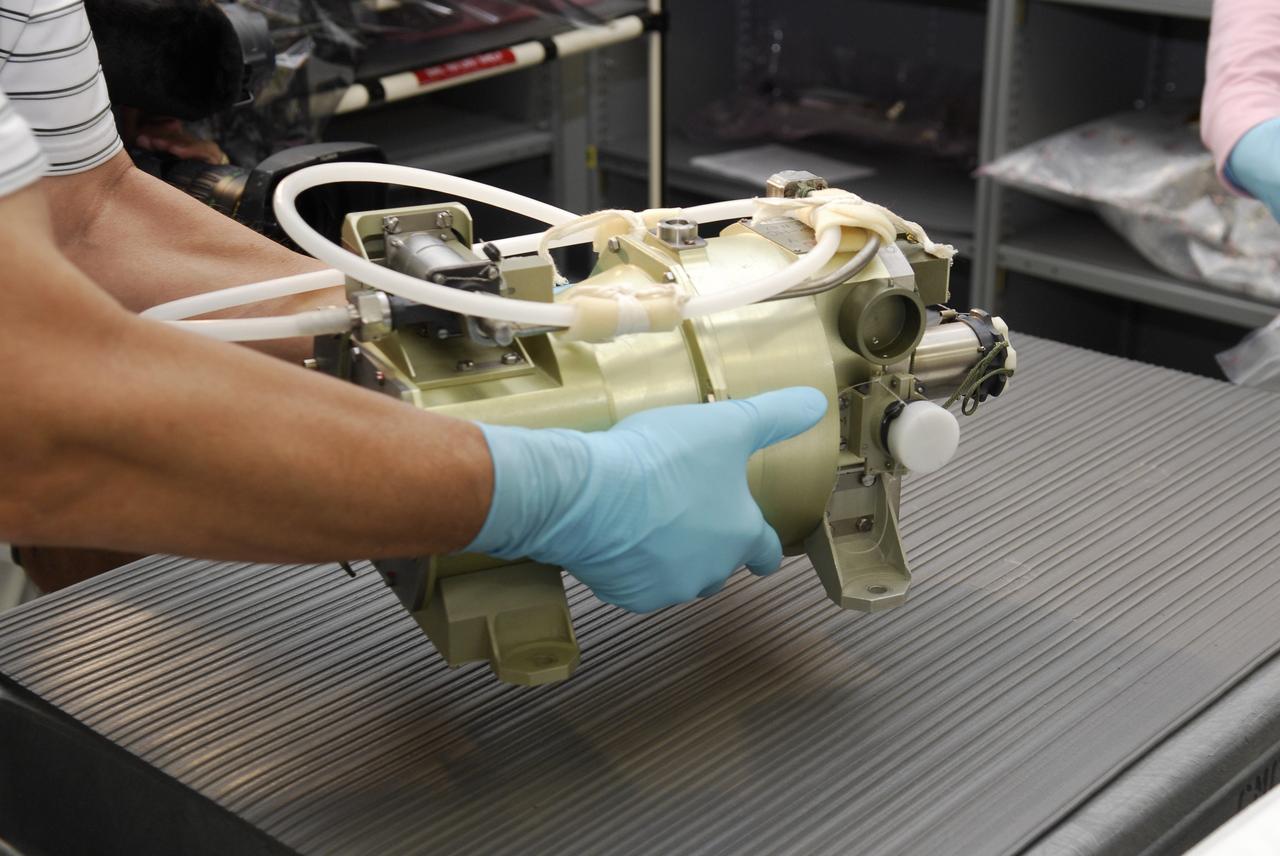
CAPE CANAVERAL, Fla. -- A replacement part for the Zvezda service module toilet on the International Space Station is inspected following its arrival at Kennedy Space Center. The toilet malfunctioned last week and was initially repaired by replacing a microprocessor valve. After the station crew members experienced additional difficulties with the toilet, they were directed to use Soyuz toilet facilities at first and are using the main toilet again after rigging a urine bypass. The spare toilet parts have been added to space shuttle Discovery’s manifest for delivery to the station on the STS-124 mission. On the 14-day mission, Discovery and its crew will deliver the Japan Aerospace Exploration Agency's Japanese Experiment Module – Pressurized Module and the Japanese Remote Manipulator System. Launch is scheduled for 5:02 p.m. EDT May 31. Photo credit: NASA/Kim Shiflett

CAPE CANAVERAL, Fla. -- At Launch Pad 39A at Kennedy Space Center, technicians load replacement parts for the Zvezda service module toilet on the International Space Station aboard space shuttle Discovery. The toilet malfunctioned last week and was initially repaired by replacing a microprocessor valve. After the station crew members experienced additional difficulties with the toilet, they were directed to use Soyuz toilet facilities at first and are using the main toilet again after rigging a urine bypass. The spare toilet parts have been added to Discovery’s manifest for delivery to the station on the STS-124 mission. On the 14-day mission, Discovery and its crew will deliver the Japan Aerospace Exploration Agency's Japanese Experiment Module – Pressurized Module and the Japanese Remote Manipulator System. Launch is scheduled for 5:02 p.m. EDT May 31. Photo credit: NASA/Dimitri Gerondidakis
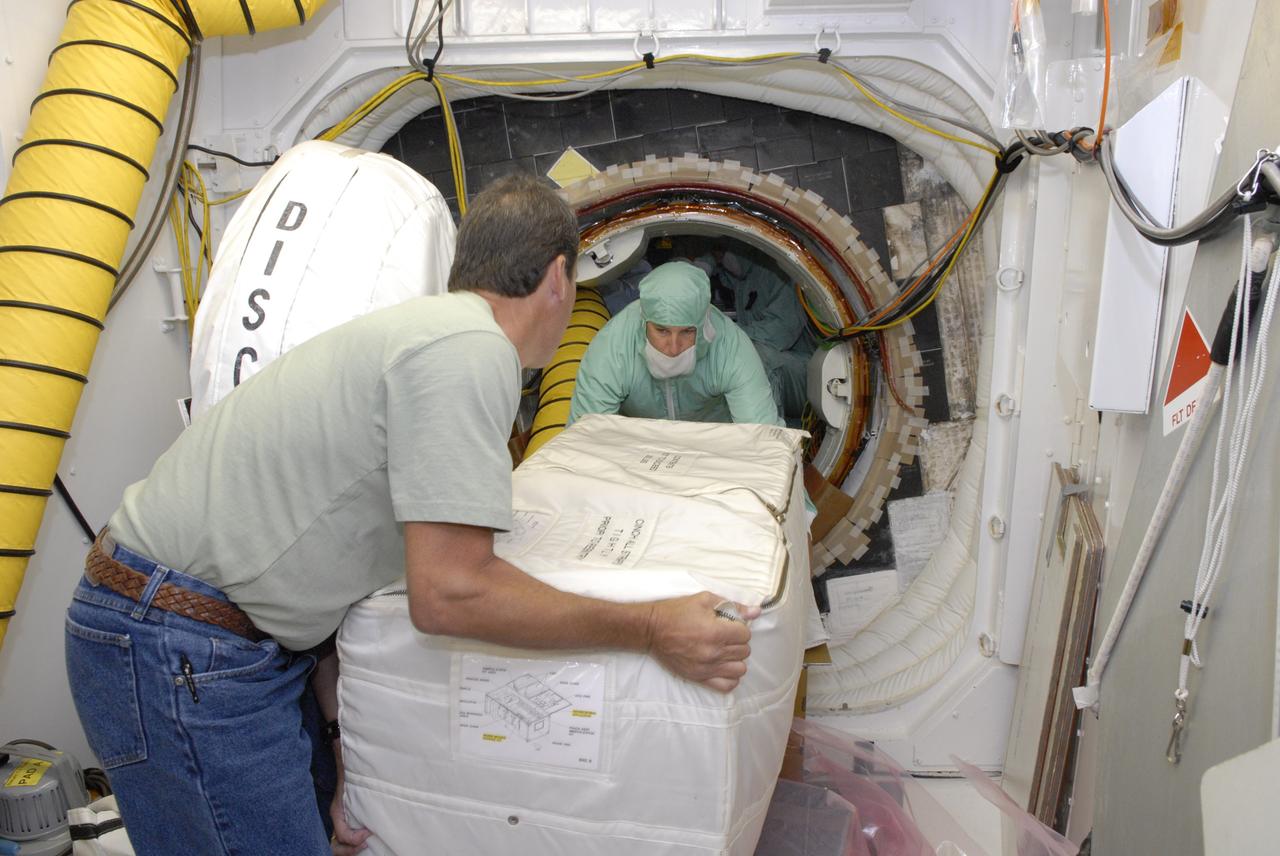
CAPE CANAVERAL, Fla. -- At Launch Pad 39A at Kennedy Space Center, technicians load replacement parts for the Zvezda service module toilet on the International Space Station aboard space shuttle Discovery. The toilet malfunctioned last week and was initially repaired by replacing a microprocessor valve. After the station crew members experienced additional difficulties with the toilet, they were directed to use Soyuz toilet facilities at first and are using the main toilet again after rigging a urine bypass. The spare toilet parts have been added to Discovery’s manifest for delivery to the station on the STS-124 mission. On the 14-day mission, Discovery and its crew will deliver the Japan Aerospace Exploration Agency's Japanese Experiment Module – Pressurized Module and the Japanese Remote Manipulator System. Launch is scheduled for 5:02 p.m. EDT May 31. Photo credit: NASA/Dimitri Gerondidakis
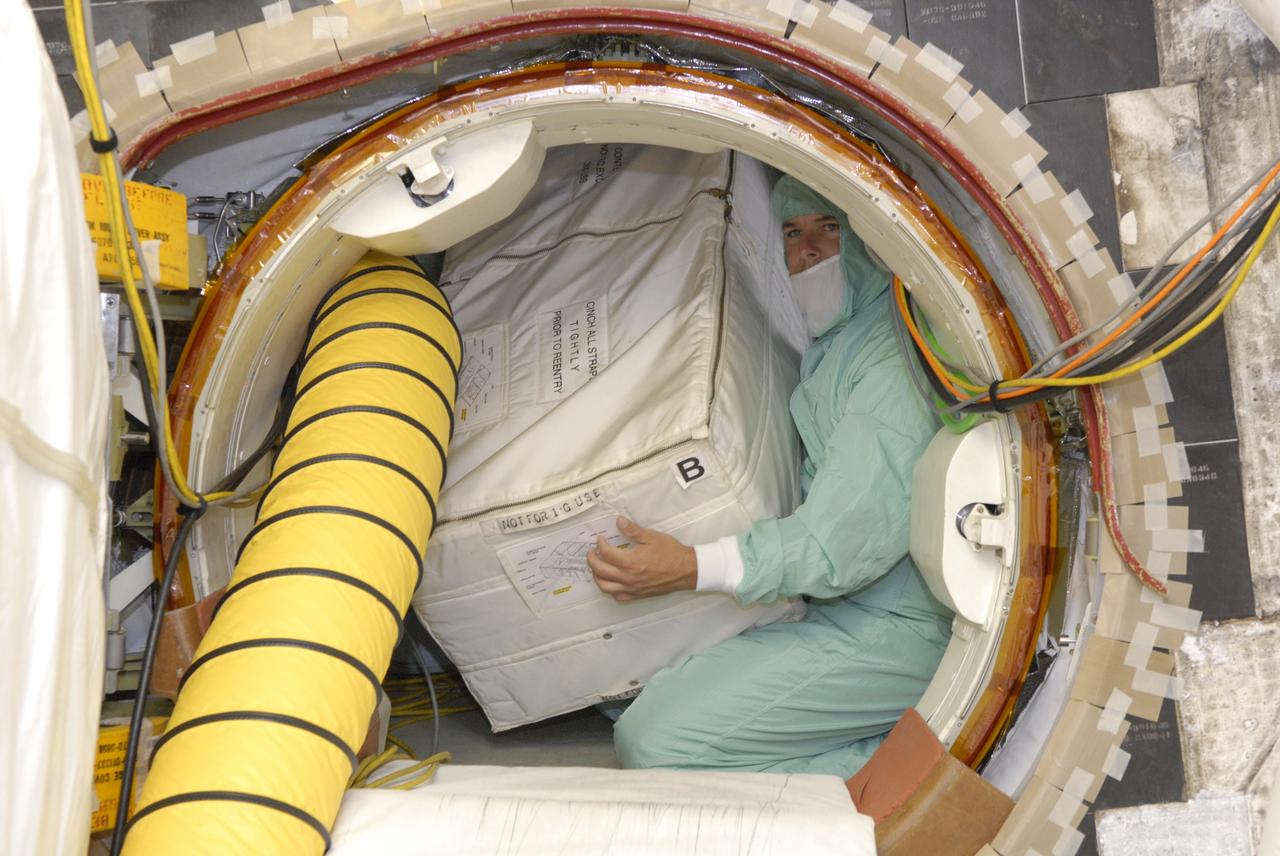
CAPE CANAVERAL, Fla. -- At Launch Pad 39A at Kennedy Space Center, a technician loads replacement parts for the Zvezda service module toilet on the International Space Station aboard space shuttle Discovery. The toilet malfunctioned last week and was initially repaired by replacing a microprocessor valve. After the station crew members experienced additional difficulties with the toilet, they were directed to use Soyuz toilet facilities at first and are using the main toilet again after rigging a urine bypass. The spare toilet parts have been added to Discovery’s manifest for delivery to the station on the STS-124 mission. On the 14-day mission, Discovery and its crew will deliver the Japan Aerospace Exploration Agency's Japanese Experiment Module – Pressurized Module and the Japanese Remote Manipulator System. Launch is scheduled for 5:02 p.m. EDT May 31. Photo credit: NASA/Dimitri Gerondidakis
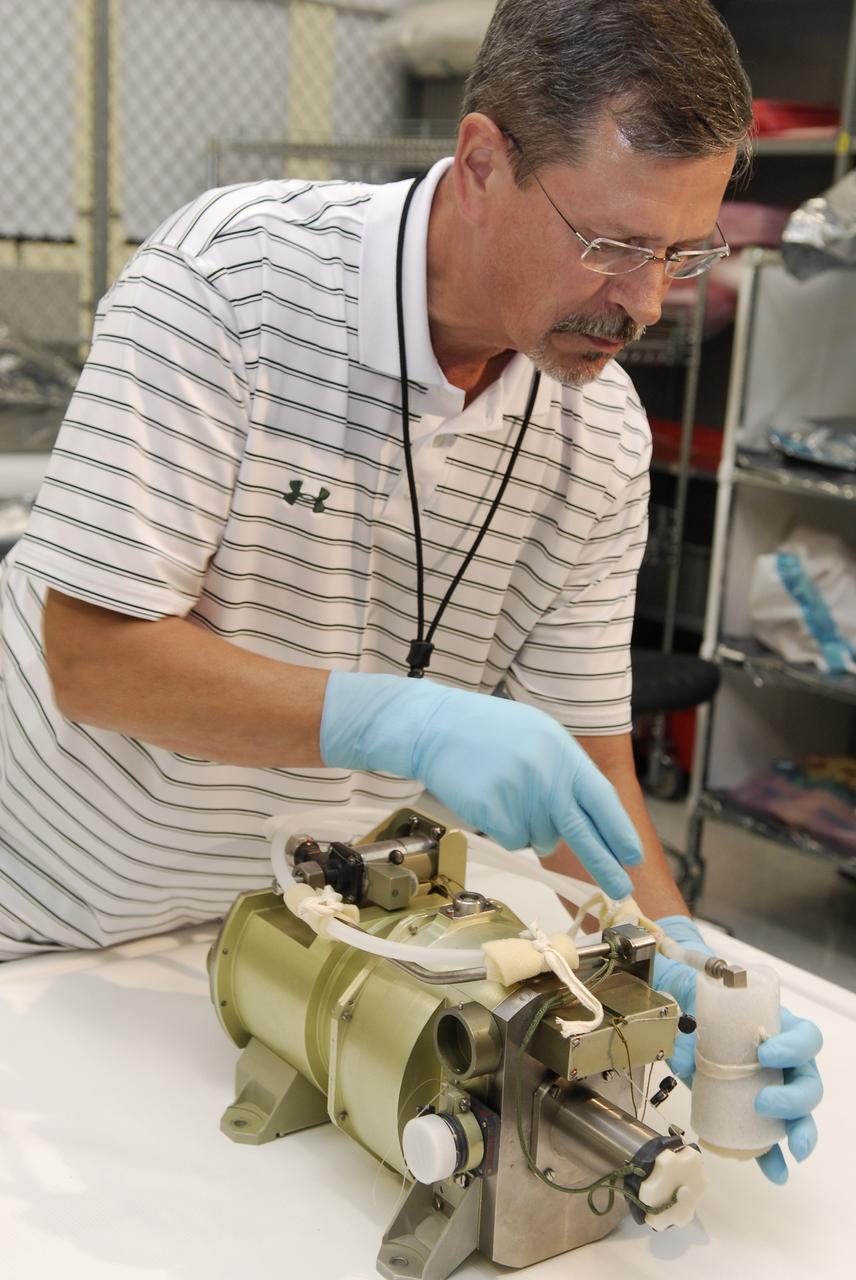
CAPE CANAVERAL, Fla. -- A technician inspects a replacement part for the Zvezda service module toilet on the International Space Station following its arrival at Kennedy Space Center. The toilet malfunctioned last week and was initially repaired by replacing a microprocessor valve. After the station crew members experienced additional difficulties with the toilet, they were directed to use Soyuz toilet facilities at first and are using the main toilet again after rigging a urine bypass. The spare toilet parts have been added to space shuttle Discovery’s manifest for delivery to the station on the STS-124 mission. On the 14-day mission, Discovery and its crew will deliver the Japan Aerospace Exploration Agency's Japanese Experiment Module – Pressurized Module and the Japanese Remote Manipulator System. Launch is scheduled for 5:02 p.m. EDT May 31. Photo credit: NASA/Kim Shiflett
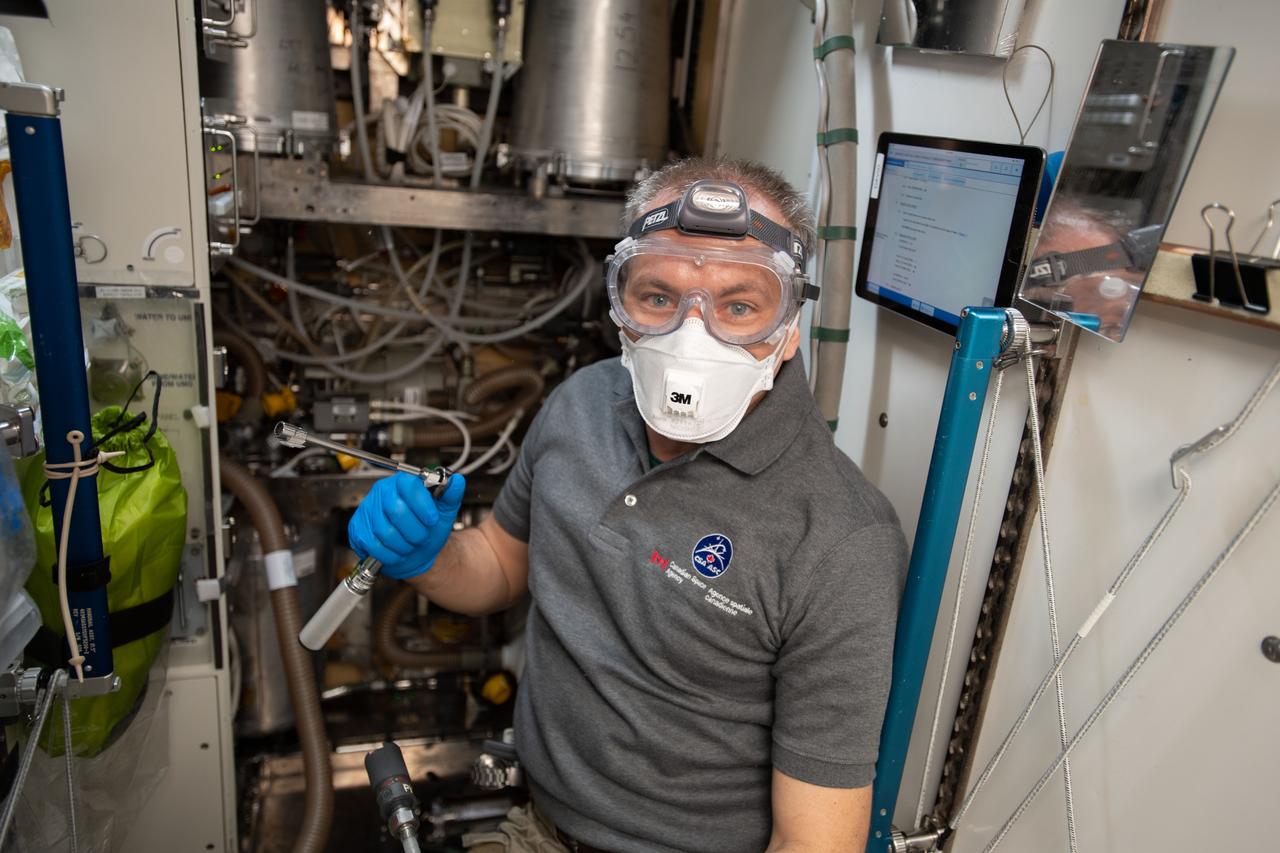
iss058e004176 (Jan. 16, 2019) --- Astronaut David Saint-Jacques of the Canadian Space Agency performs orbital plumbing work as he removes and replaces hydraulic components in the Waste and Hygiene Compartment, also known as the International Space Station's toilet located in the Tranquility module.
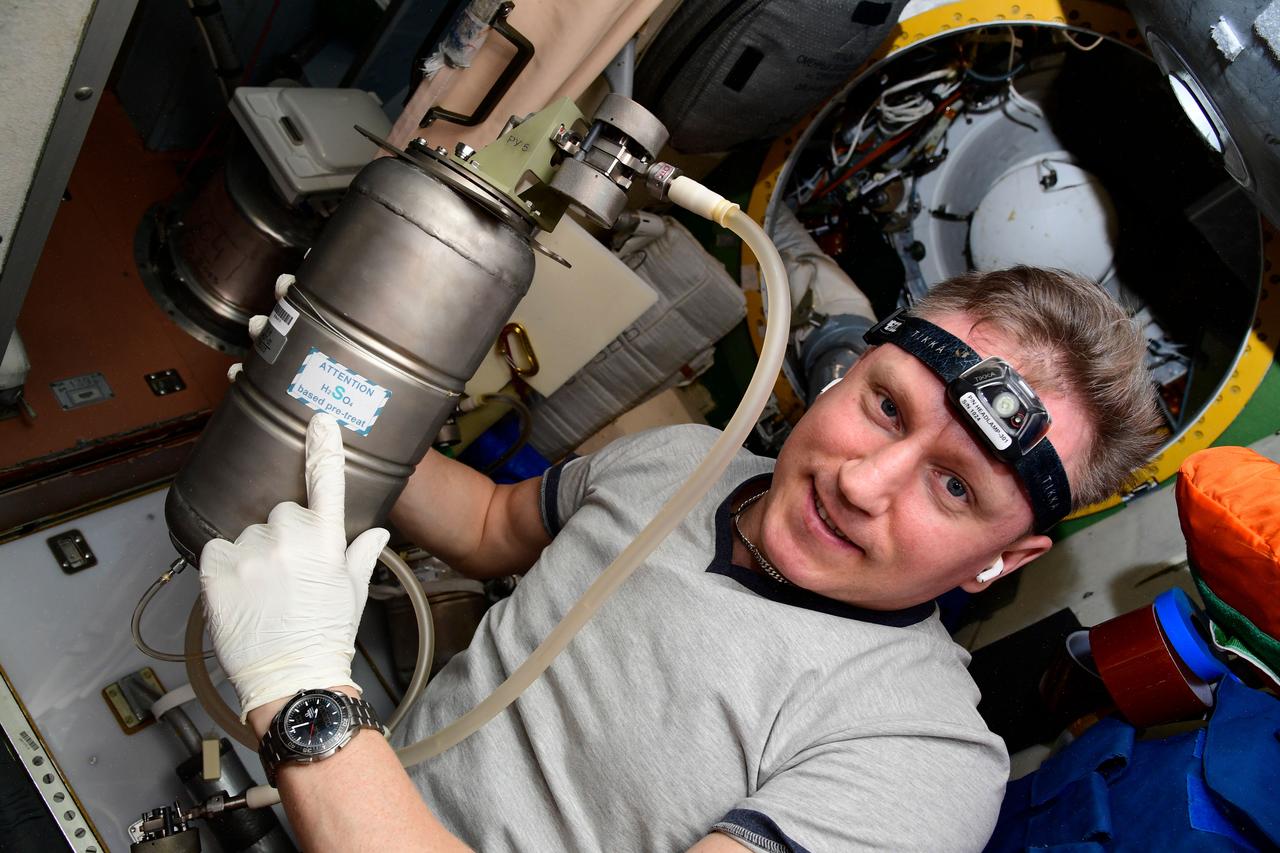
iss068e045305 (Feb. 2, 2023) --- Roscosmos cosmonaut and Expedition 68 Commander Sergey Prokopyev replaces orbital plumbing components inside the Zvezda service module's toilet system aboard the International Space Station.
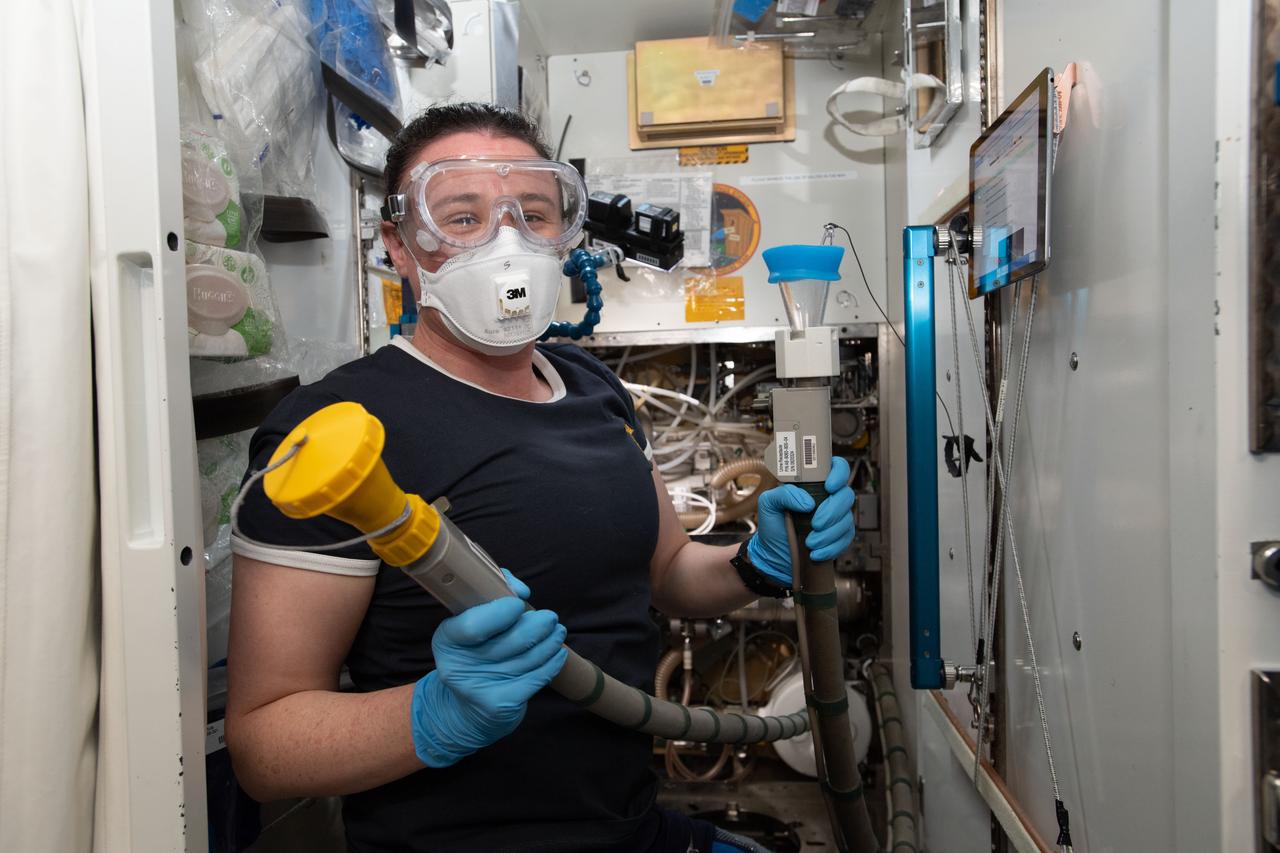
iss057e088317 (Nov. 13, 2018) --- NASA astronaut Serena Auñón-Chancellor performs plumbing duties inside the International Space Station's toilet, also known as the Waste and Hygiene Compartment, located in the U.S. Tranquility module.
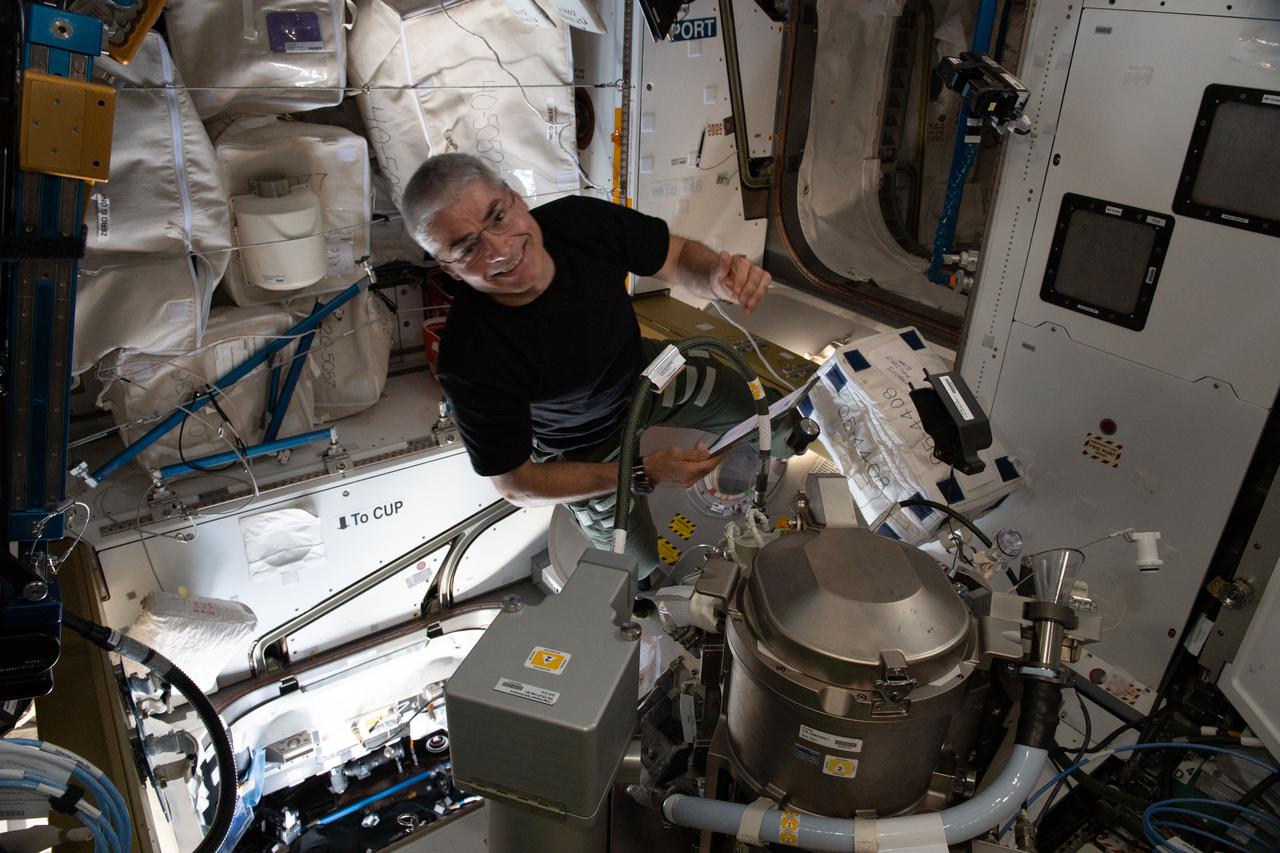
iss065e081532 (May 31, 2021) --- NASA astronaut and Expedition 65 Flight Engineer Mark Vande Hei swaps out components on an advanced new toilet installed inside the International Space Station's Tranquility module.
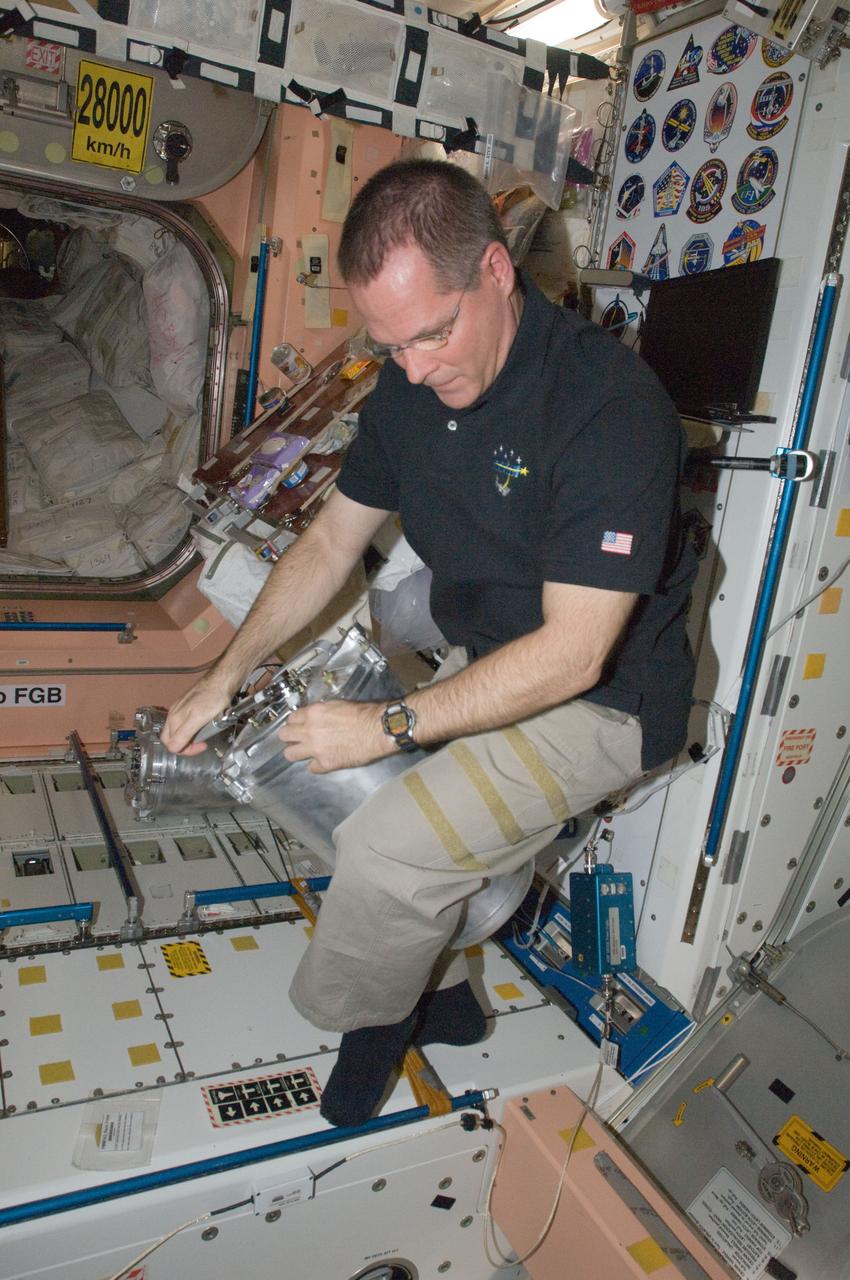
ISS033-E-018790 (6 Nov. 2012) --- NASA astronaut Kevin Ford, Expedition 33 flight engineer, performs in-flight maintenance on the Waste and Hygiene Compartment (WHC) toilet facilities in the Unity node of the International Space Station.
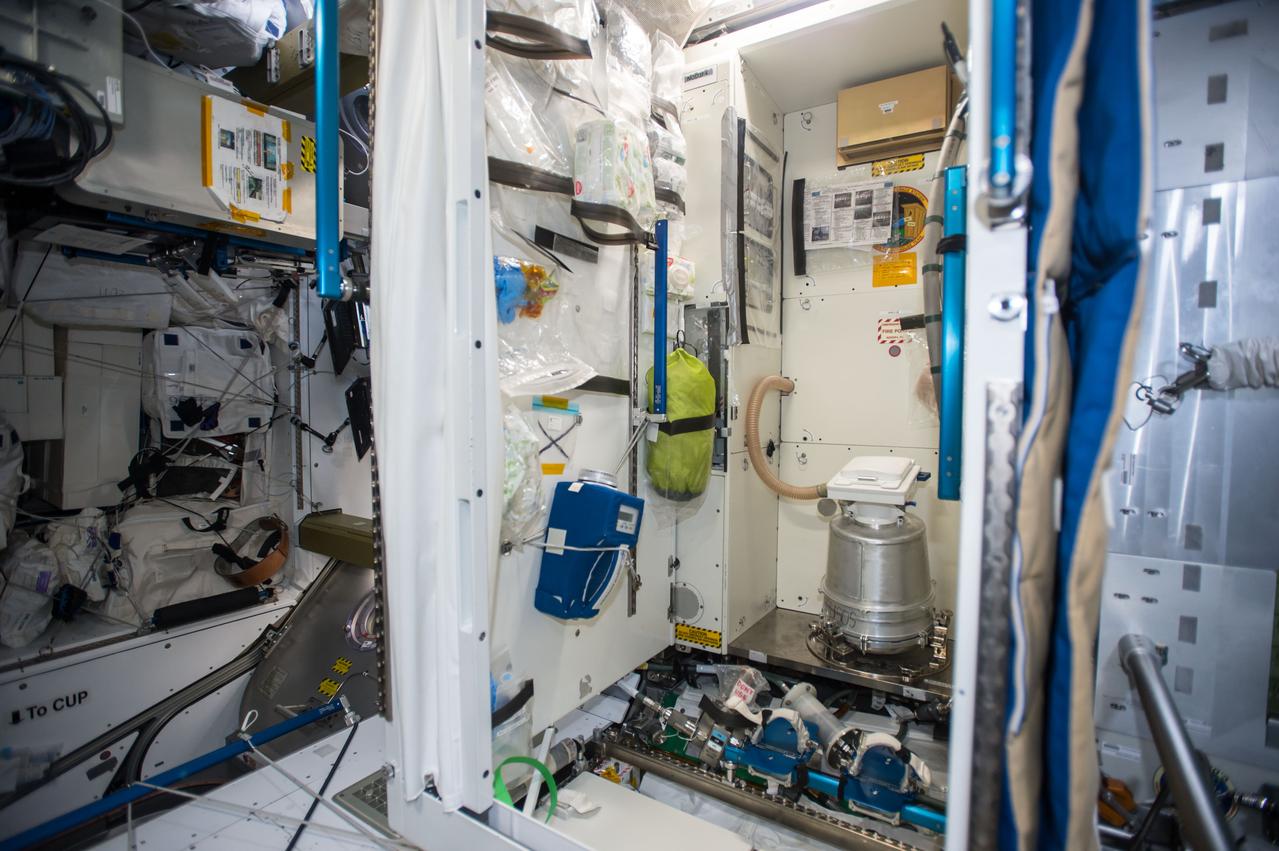
iss052e006450 (Jun. 23, 2017) --- Microbial Tracking-2 by the toilet in the node 3 module monitoring microbes present to assess the health environment on the International Space Station (ISS) and understand the effects of the spaceflight environment on viral and microbial pathogen dynamics.
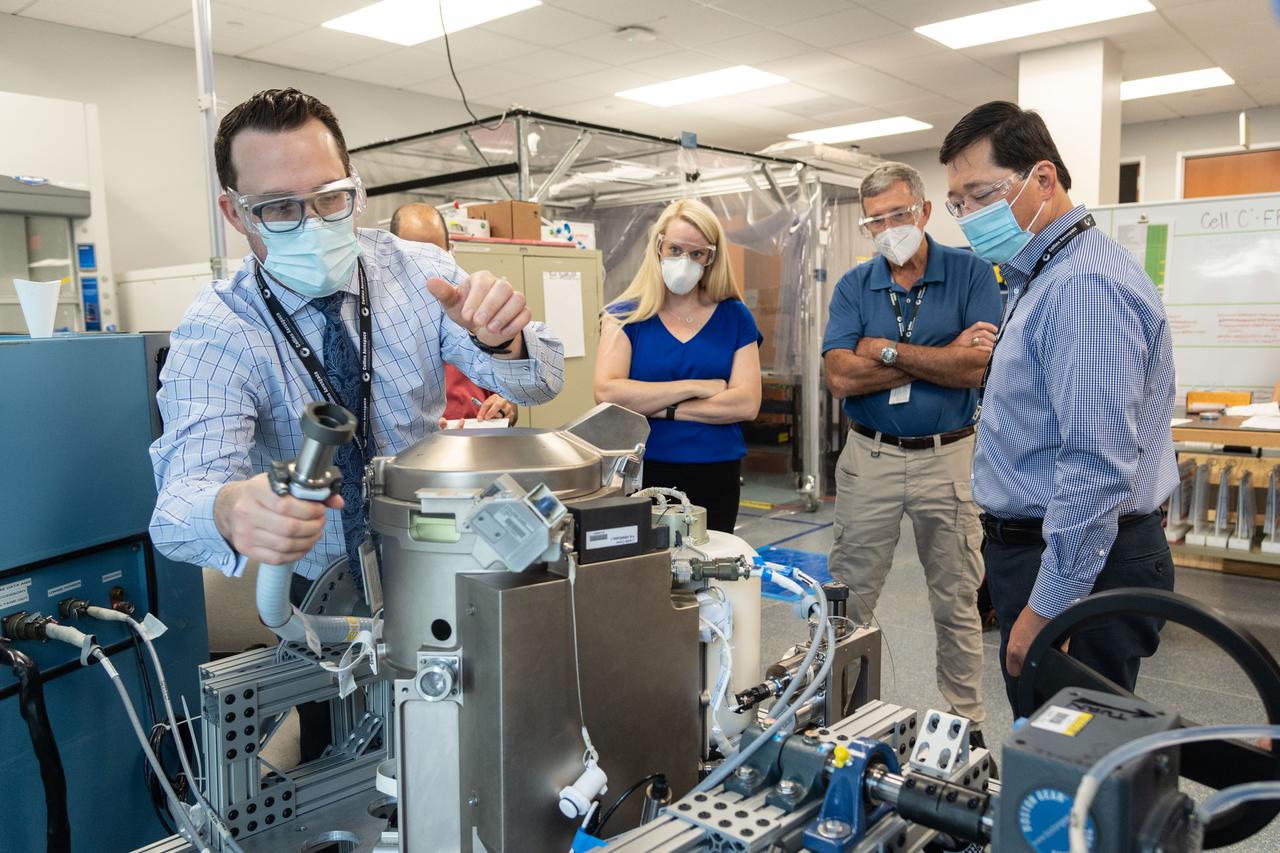
jsc2020e026648 (June 18, 2020) --- NASA astronaut Kate Rubins and support personnel review the Universal Waste Management System, the advanced space toilet due to be delivered to the International Space Station in October aboard Northrop Grumman's Cygnus space freighter.
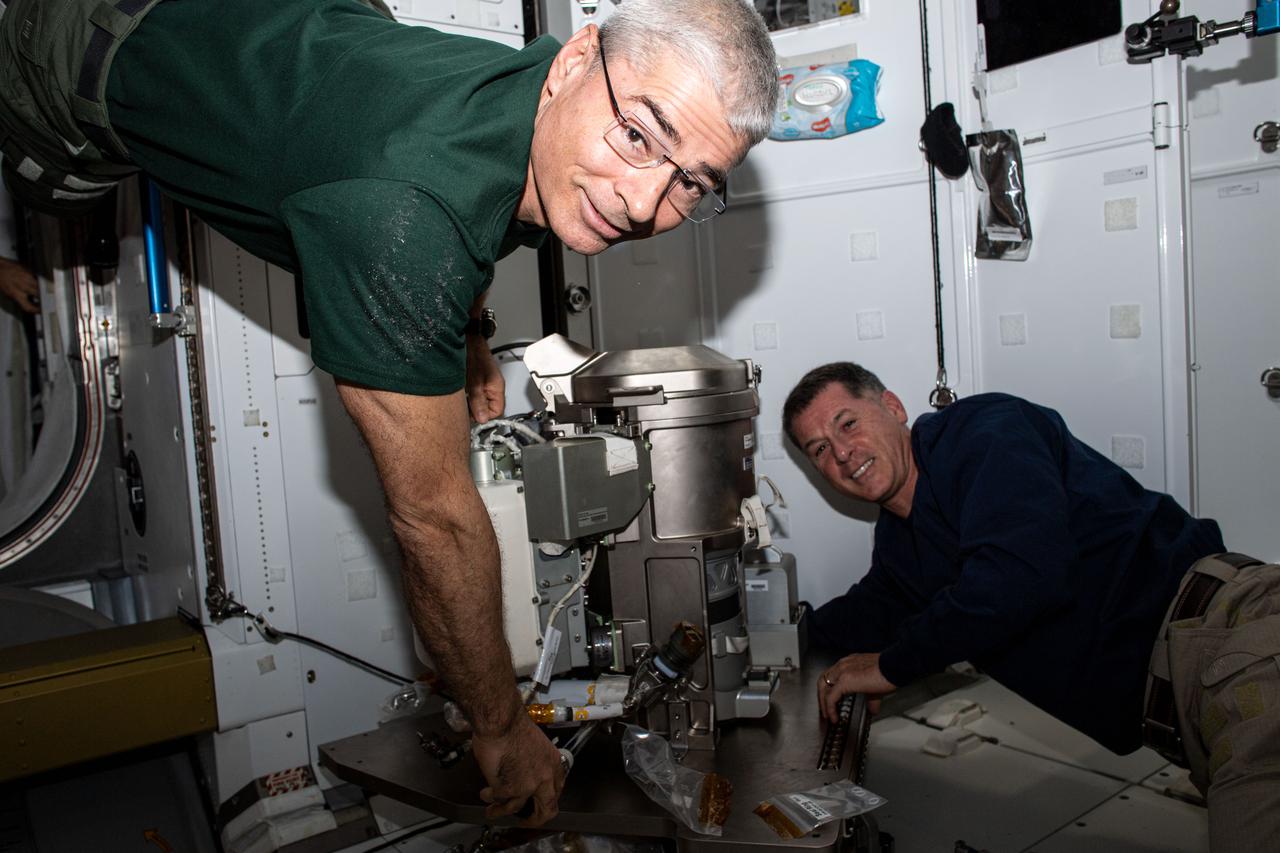
iss065e061144 (May 24, 2021) --- Expedition 65 Flight Engineers Mark Vande Hei (from left) and Shane Kimbrough partner together for orbital plumbing tasks as they install a new toilet inside the International Space Station's Tranquility module.
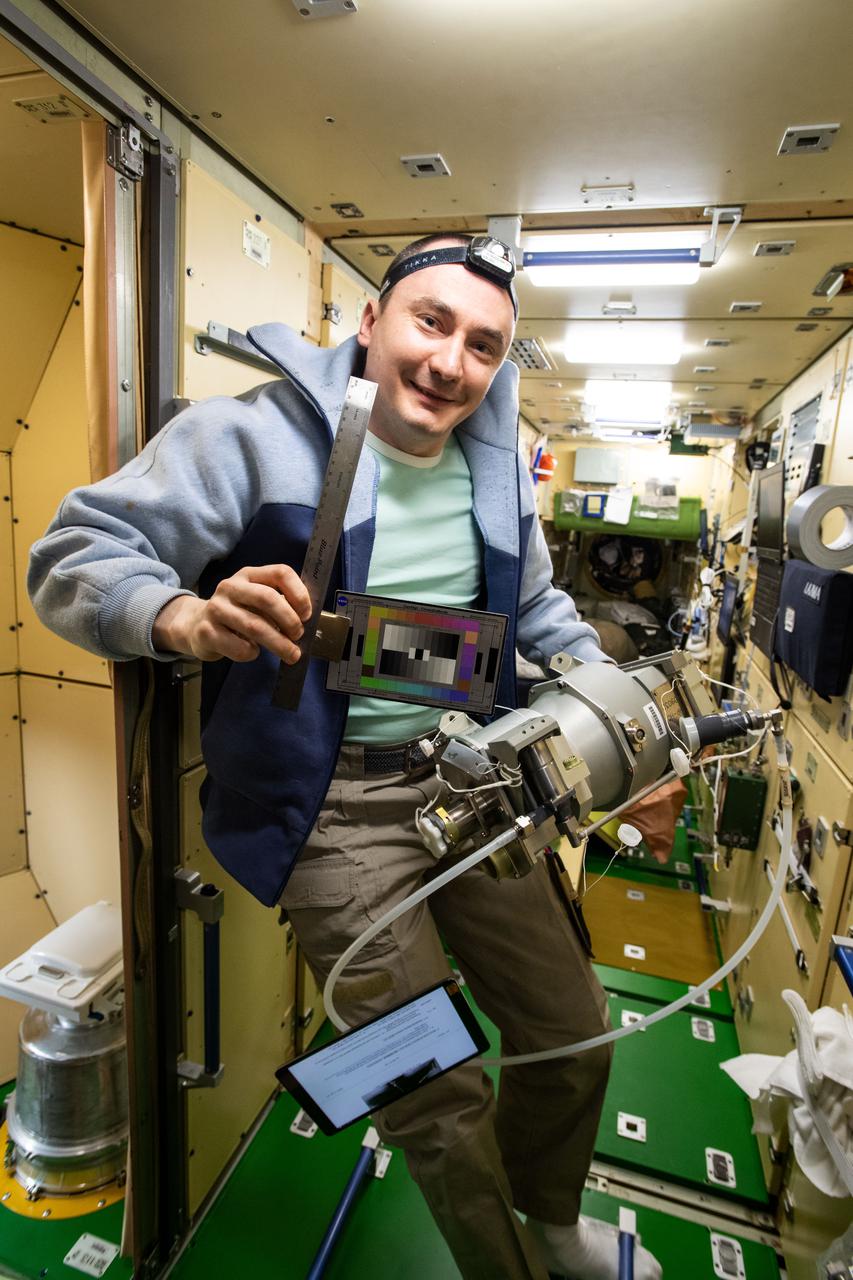
iss066e129780 (Jan. 28, 2022) --- Roscosmos cosmonaut and Expedition 66 Flight Engineer Pyotr Dubrov poses with a ruler and color chart while working inside the Nauka multipurpose laboratory module. The ruler and chart are used for the SQuARES study looking at how crew members use different objects and spaces over time. This investigation may provide information that helps improve the design of future space craft and habitats. At bottom left, is the Nauka module's toilet.
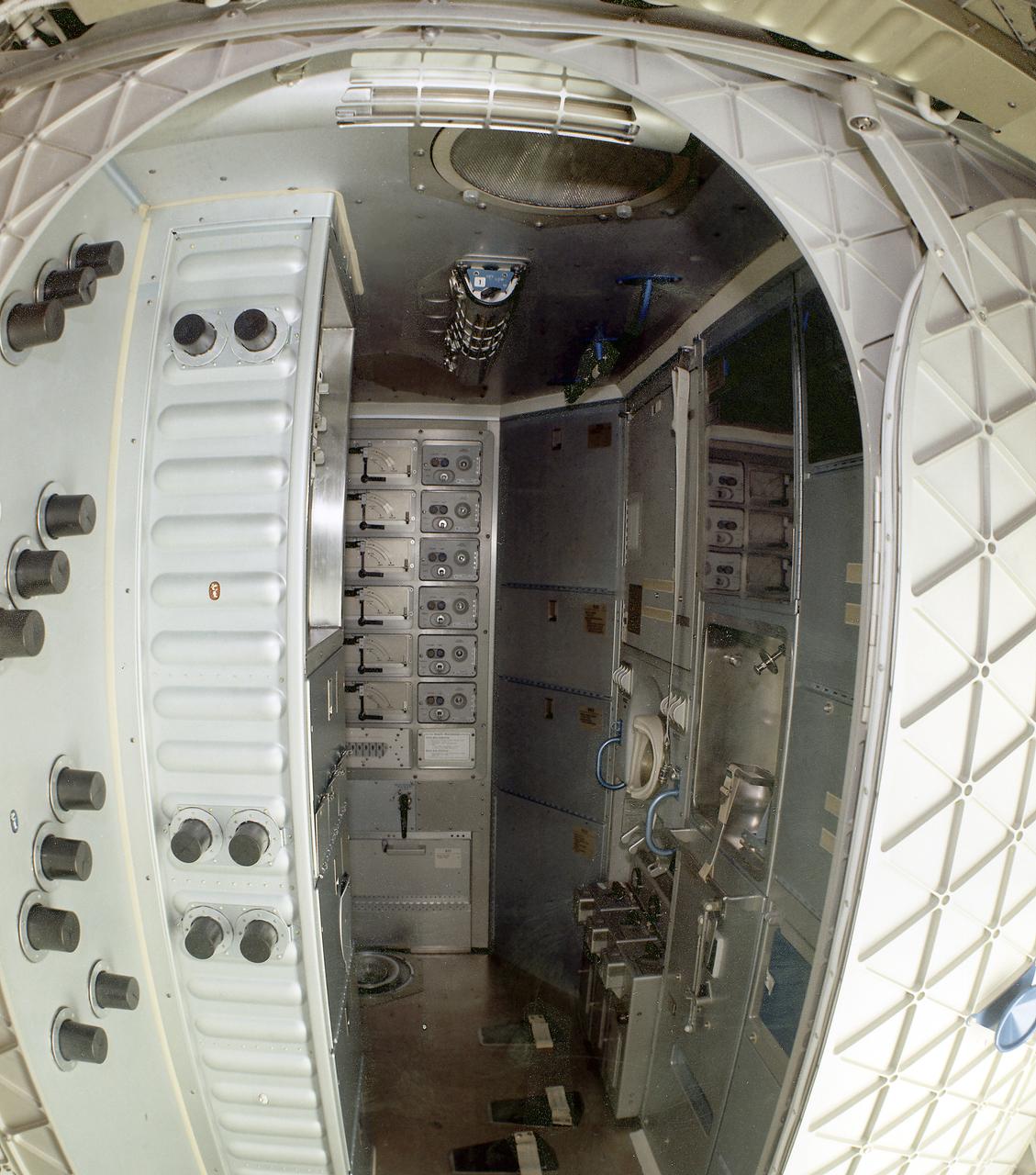
This image is a wide-angle view of the Orbital Workshop waste management compartment. The waste management facilities presented a unique challenge to spacecraft designers. In addition to collection of liquid and solid human wastes, there was a medical requirement to dry all solid human waste products and to return the residue to Earth for examination. Liquid human waste (urine) was frozen for return to Earth. Total quantities of each astronaut's liquid and solid wastes were precisely measured. Cabin air was drawn into the toilet, shown on the wall at right in this photograph, and over the waste products to generate a flow of the waste in the desired direction. The air was then filtered for odor control and antiseptic purposes prior to being discharged back into the cabin.
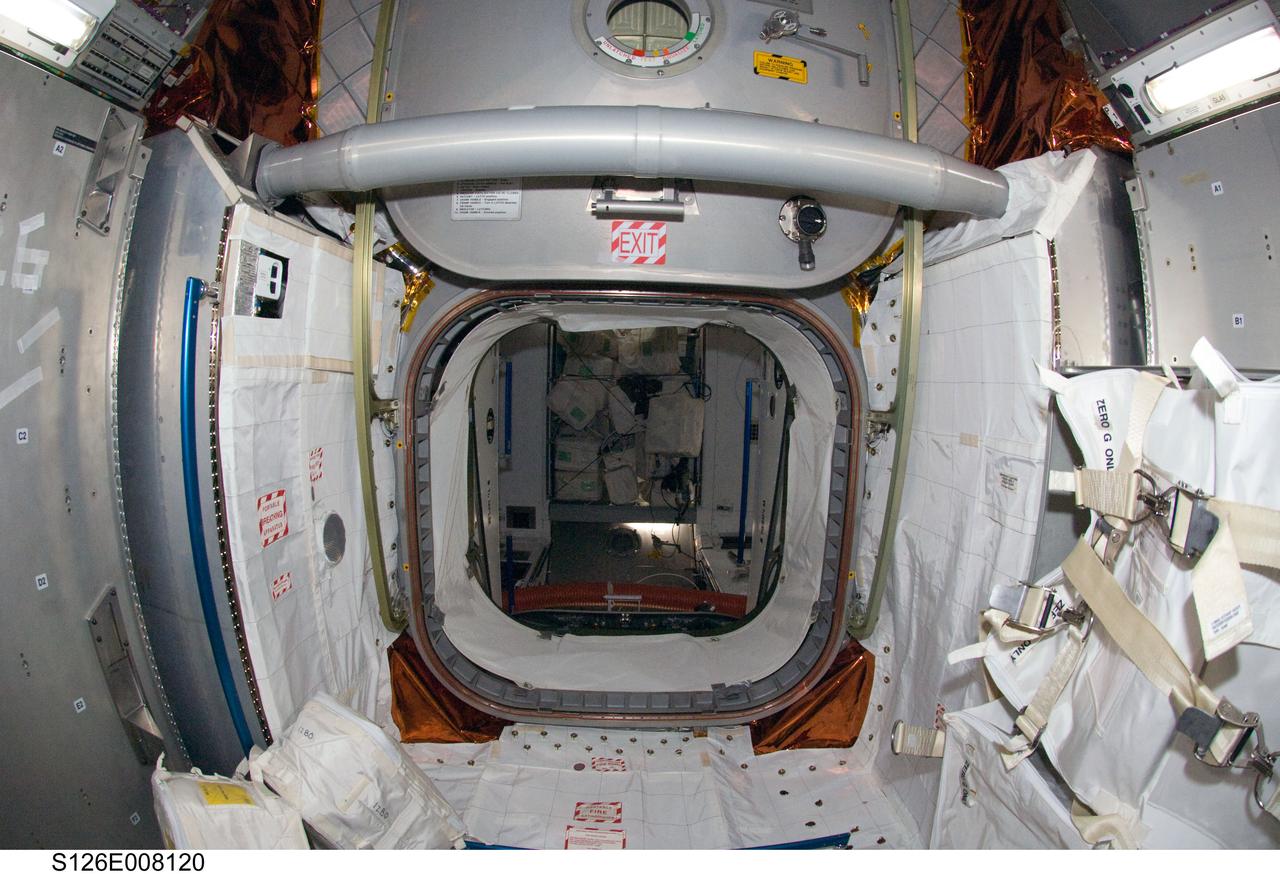
S126-E-008120 (18 Nov. 2008) --- Interior view of the Leonardo Multi-Purpose Logistics Module attached to the Earth-facing port of the International Space Station's Harmony node. Leonardo was moved from Space Shuttle Endeavour's cargo bay and linked to the station on Nov. 17, carrying two water recovery systems racks for recycling urine into potable water, a second toilet system, new gallery components, two new food warmers, a food refrigerator, an experiment freezer, combustion science experiment rack, two separate sleeping quarters and a resistance exercise device (aRED) that allows station crewmembers to perform a variety of exercises.

ISS033-E-009153 (2 Oct. 2012) --- Japan Aerospace Exploration Agency astronaut Aki Hoshide, Expedition 33 flight engineer, performs a removal and replacement of the DKiV water pump and the E-K pre-treat tank with its hose in the Tranquility node of the International Space Station. E-K contains five liters of pre-treat solution, i.e., a mix of H2SO4 (sulfuric acid), CrO3 (chromium oxide, for oxidation and purple color) and H2O (water). The pre-treat liquid is mixed with water in the DKiV dispenser and used for toilet flushing.
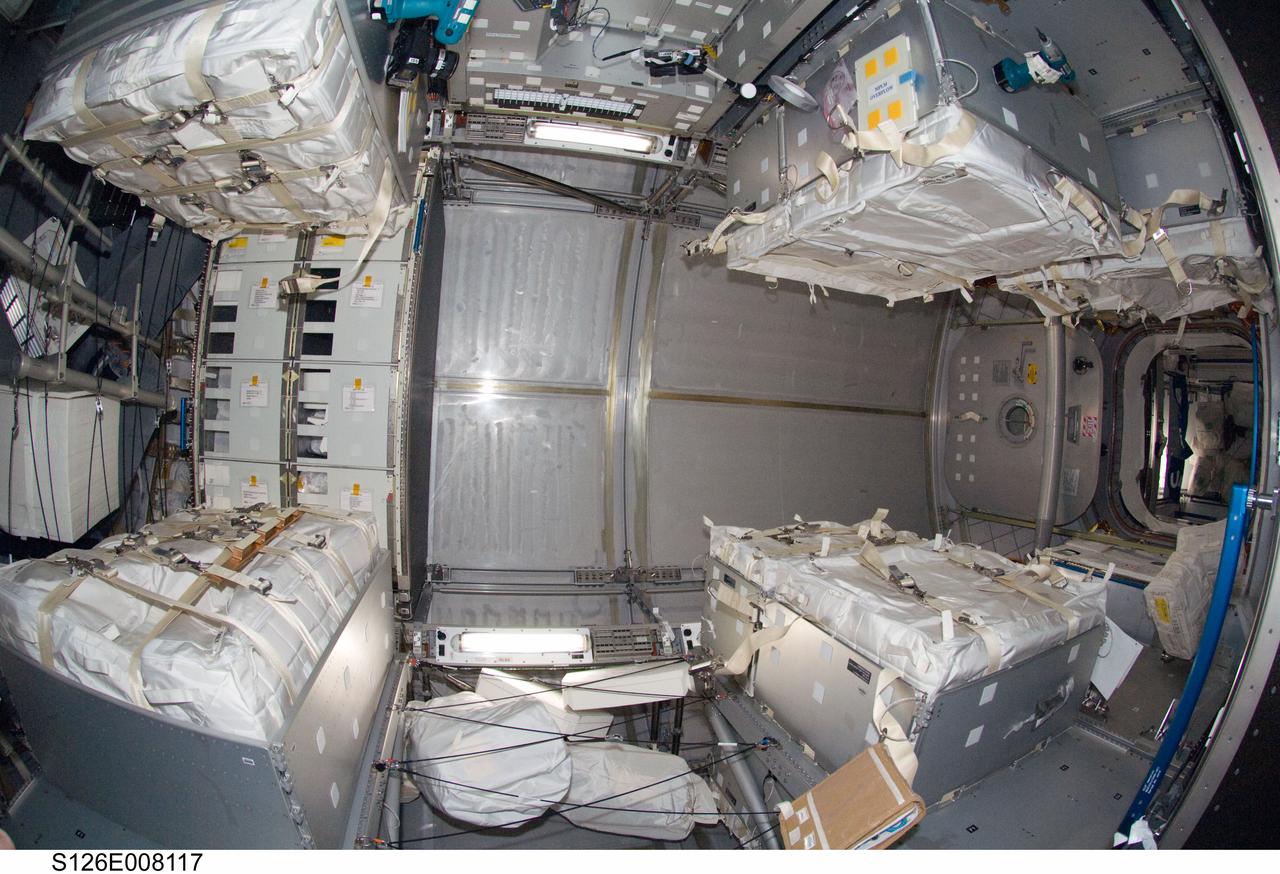
S126-E-008117 (18 Nov. 2008) --- Interior view of the Leonardo Multi-Purpose Logistics Module attached to the Earth-facing port of the International Space Station's Harmony node. Leonardo was moved from Space Shuttle Endeavour's cargo bay and linked to the station on Nov. 17, carrying two water recovery systems racks for recycling urine into potable water, a second toilet system, new gallery components, two new food warmers, a food refrigerator, an experiment freezer, combustion science experiment rack, two separate sleeping quarters and a resistance exercise device (aRED) that allows station crewmembers to perform a variety of exercises.
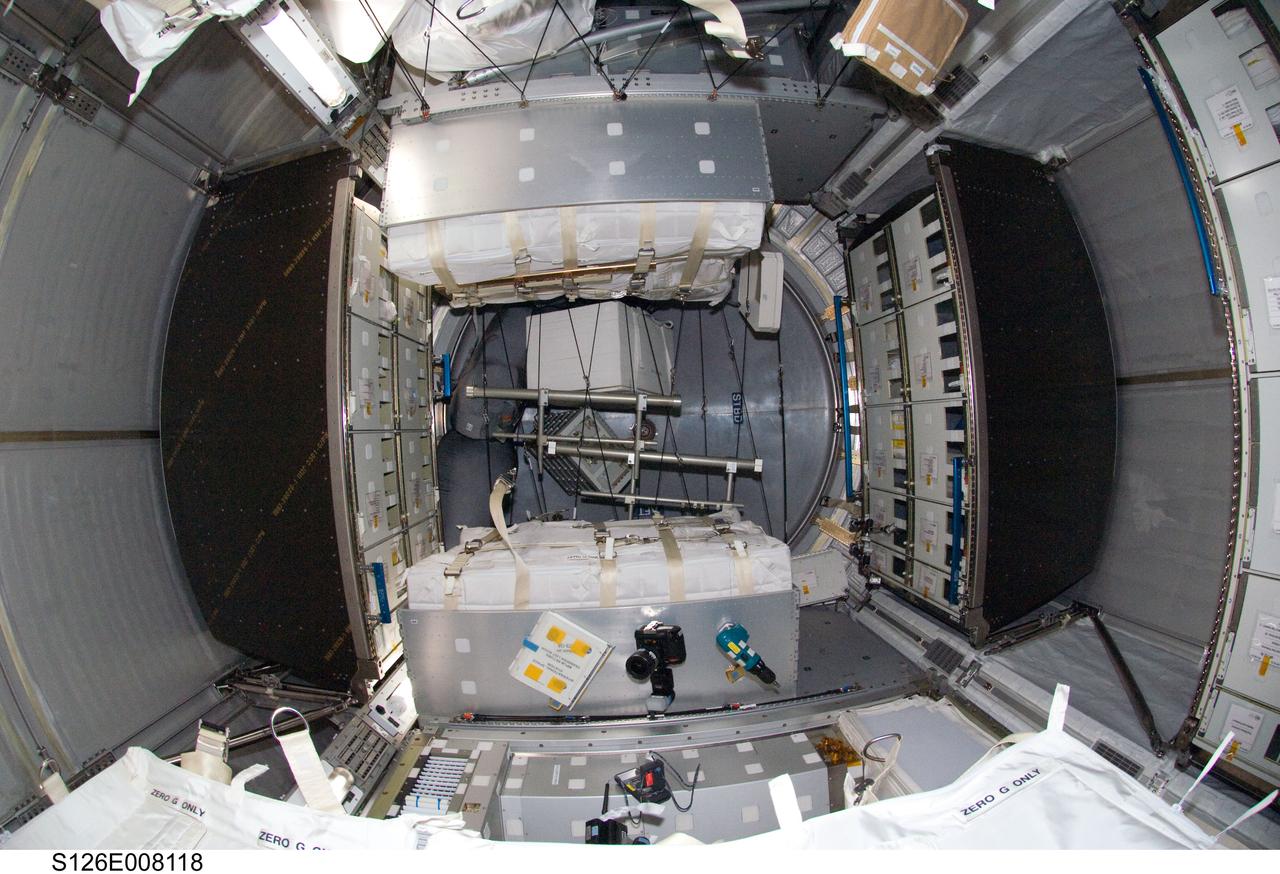
S126-E-008118 (18 Nov. 2008) --- Interior view of the Leonardo Multi-Purpose Logistics Module attached to the Earth-facing port of the International Space Station's Harmony node. Leonardo was moved from Space Shuttle Endeavour's cargo bay and linked to the station on Nov. 17, carrying two water recovery systems racks for recycling urine into potable water, a second toilet system, new gallery components, two new food warmers, a food refrigerator, an experiment freezer, combustion science experiment rack, two separate sleeping quarters and a resistance exercise device (aRED) that allows station crewmembers to perform a variety of exercises.

CAPE CANAVERAL, Fla. – This photo shows the waste and hygiene compartment that will be delivered to the International Space Station aboard space shuttle Endeavour on the STS-126 mission. The Russian-built toilet system provides the crew with a second facility on the station, located in the Destiny lab. The unit separately channels liquid and solid waste. While the solid waste goes to a holding tank, a new pair of processing units that Endeavour also will deliver on this mission are set to begin a unique recycling program -- turning crew members’ urine into potable water. Space shuttle Endeavour and its crew of seven are scheduled to lift off at 7:55 p.m. Nov. 14 for the 15-day STS-126 mission. Photo credit: NASA
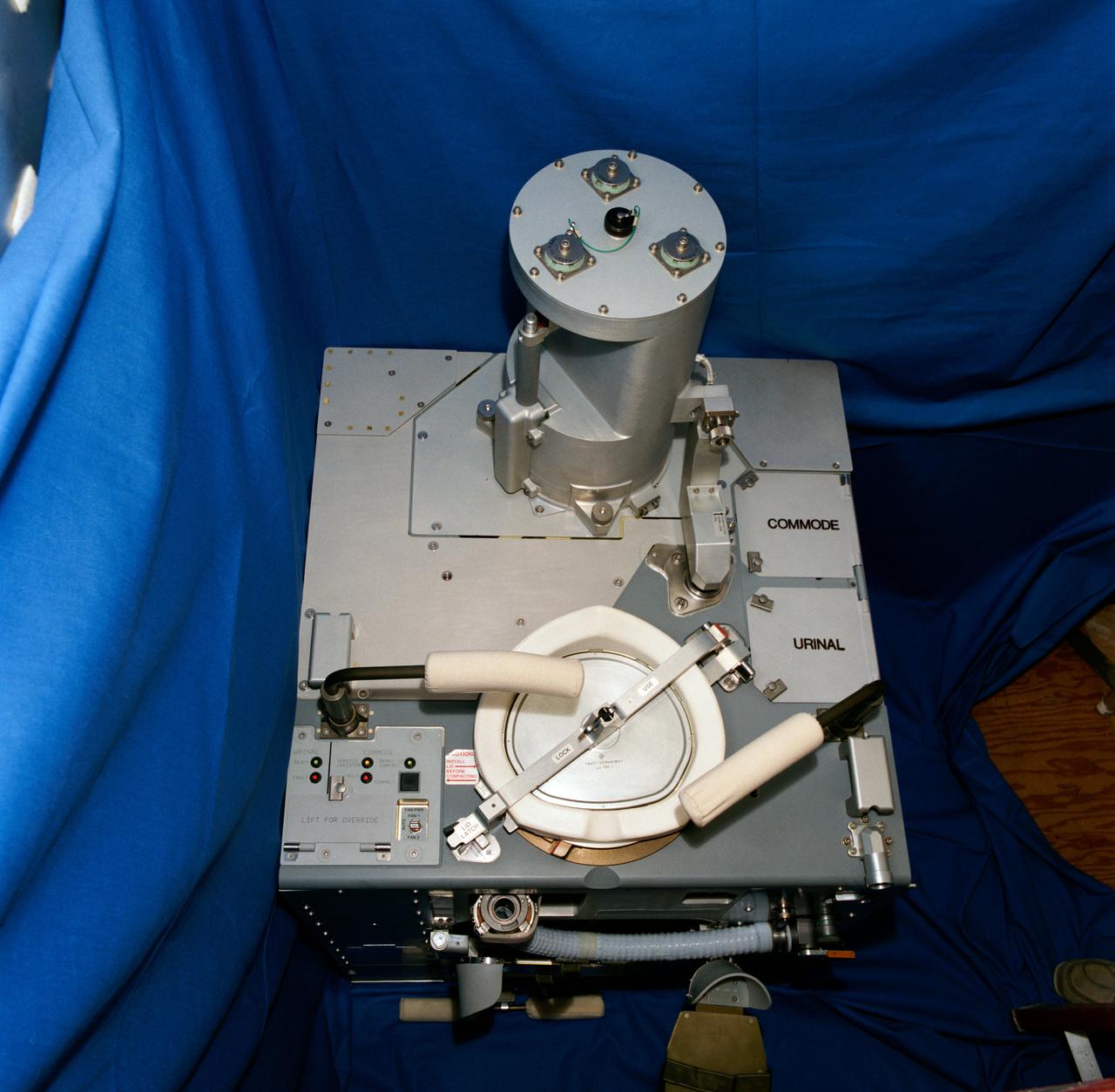
S92-46726 (November 1992) --- A high angle view of the Improved Waste Collection System (IWCS) scheduled to fly aboard NASA's Space Shuttle Endeavour for the STS-54 mission. Among the advantages the new IWCS is hoped to have over the current WCS are greater dependability, better hygiene, virtually unlimited capacity and more efficient preparation between Shuttle missions. Unlike the previous WCS, the improved version will not have to be removed from the spacecraft to be readied for the next flight.
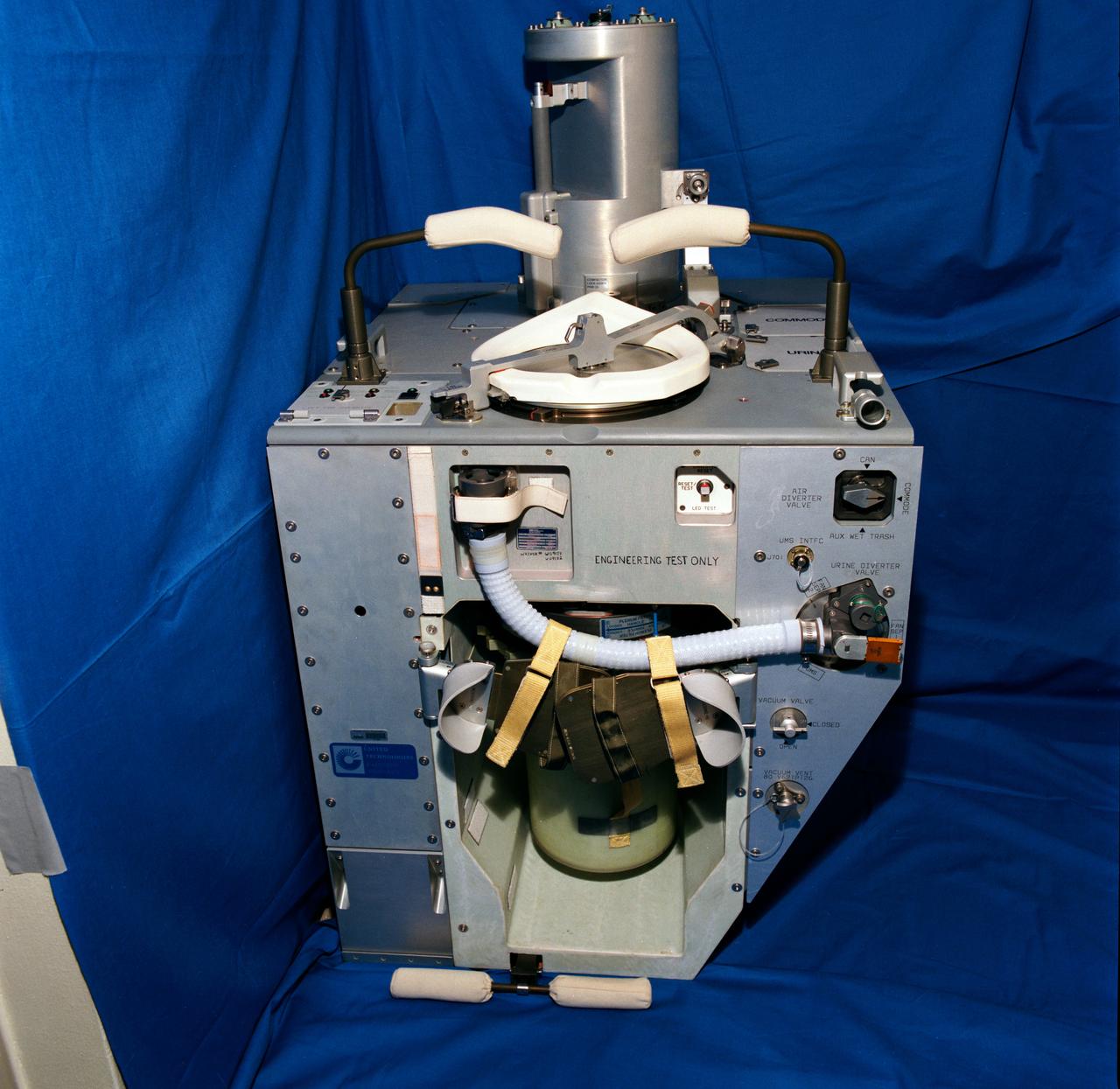
S92-46717 (November 1992) --- A front view of the improved waste collection system (IWCS) scheduled to fly aboard NASA's Space Shuttle Endeavour for the STS-54 mission. Among the advantages the new IWCS is hoped to have over the current WCS are greater dependability, better hygiene, virtually unlimited capacity and more efficient preparation between Shuttle missions. Unlike the previous WCS, the improved version will not have to be removed from the spacecraft to be readied for the next flight.

Five NASA astronauts and two cosmonauts representing the Russian Aviation and Space Agency take a break in training from their scheduled September 2000 visit to the International Space Station (ISS). Astronauts Terrence W. Wilcutt (right front), and Scott D. Altman (left front) are mission commander and pilot, respectively. On the back row (from the left) are mission specialists Boris V. Morukov, cosmonaut, along with astronauts Richard A. Mastracchio, Edward T. Lu, and Daniel C. Burbank, and cosmonaut Yuri I. Malenchenko. Morukov and Malenchenko represent the Russian Aviation and Space Agency. Launched aboard the Space Shuttle Atlantis on September 8, 2000 at 7:46 a.m. (CDT), the STS-106 crew successfully prepared the International Space Station (ISS) for occupancy. Acting as plumbers, movers, installers and electricians, they installed batteries, power converters, a toilet and a treadmill on the outpost. They also delivered more than 2,993 kilograms (6,600 pounds) of supplies. Lu and Malenchenko performed a space walk to connect power, and data and communications cables to the newly arrived Zvezda Service Module and the Station.

This illustration is an orbiter cutaway view with callouts. The orbiter is both the brains and heart of the Space Transportation System (STS). About the same size and weight as a DC-9 aircraft, the orbiter contains the pressurized crew compartment (which can normally carry up to seven crew members), the huge cargo bay, and the three main engines mounted on its aft end. There are three levels to the crew cabin. Uppermost is the flight deck where the commander and the pilot control the mission. The middeck is where the gallery, toilet, sleep stations, and storage and experiment lockers are found for the basic needs of weightless daily living. Also located in the middeck is the airlock hatch into the cargo bay and space beyond. It is through this hatch and airlock that astronauts go to don their spacesuits and marned maneuvering units in preparation for extravehicular activities, more popularly known as spacewalks. The Space Shuttle's cargo bay is adaptable to hundreds of tasks. Large enough to accommodate a tour bus (60 x 15 feet or 18.3 x 4.6 meters), the cargo bay carries satellites, spacecraft, and spacelab scientific laboratories to and from Earth orbit. It is also a work station for astronauts to repair satellites, a foundation from which to erect space structures, and a hold for retrieved satellites to be returned to Earth. Thermal tile insulation and blankets (also known as the thermal protection system or TPS) cover the underbelly, bottom of the wings, and other heat-bearing surfaces of the orbiter to protect it during its fiery reentry into the Earth's atmosphere. The Shuttle's 24,000 individual tiles are made primarily of pure-sand silicate fibers, mixed with a ceramic binder. The solid rocket boosters (SRB's) are designed as an in-house Marshall Space Flight Center project, with United Space Boosters as the assembly and refurbishment contractor. The solid rocket motor (SRM) is provided by the Morton Thiokol Corporation.