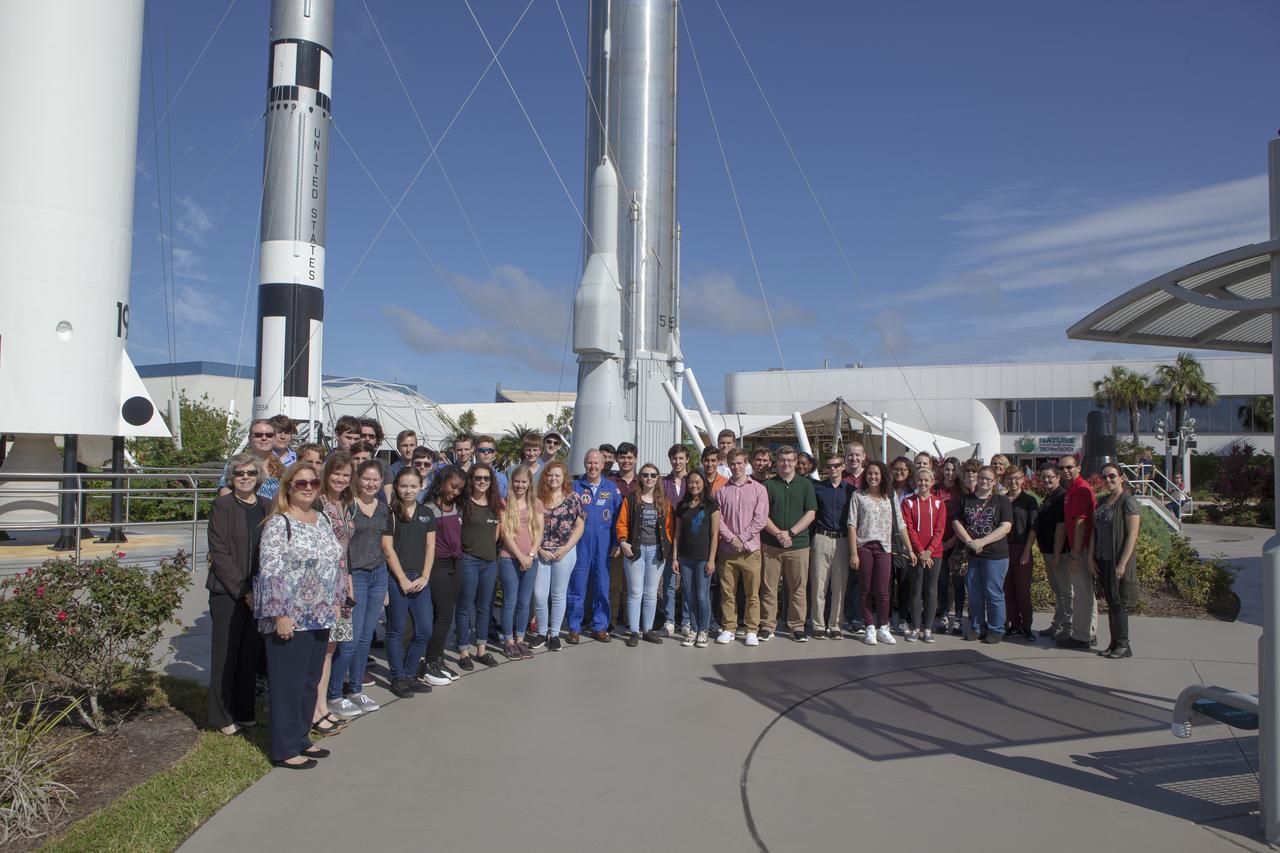
Retired NASA astronaut Tom Jones is with top scholars from Brevard County public high schools in the Rocket Garden at the NASA Kennedy Space Center Visitor Complex in Florida. Top scholars from the high schools were invited to Kennedy Space Center for a tour of facilities, lunch and a roundtable discussion with engineers and scientists at the center. The 2017-2018 Brevard Top Scholars event was hosted by the center's Education Projects and Youth Engagement office to honor the top three scholars of the 2017-2018 graduating student class from each of Brevard County’s public high schools. They students received a personalized certificate at the end of the day.
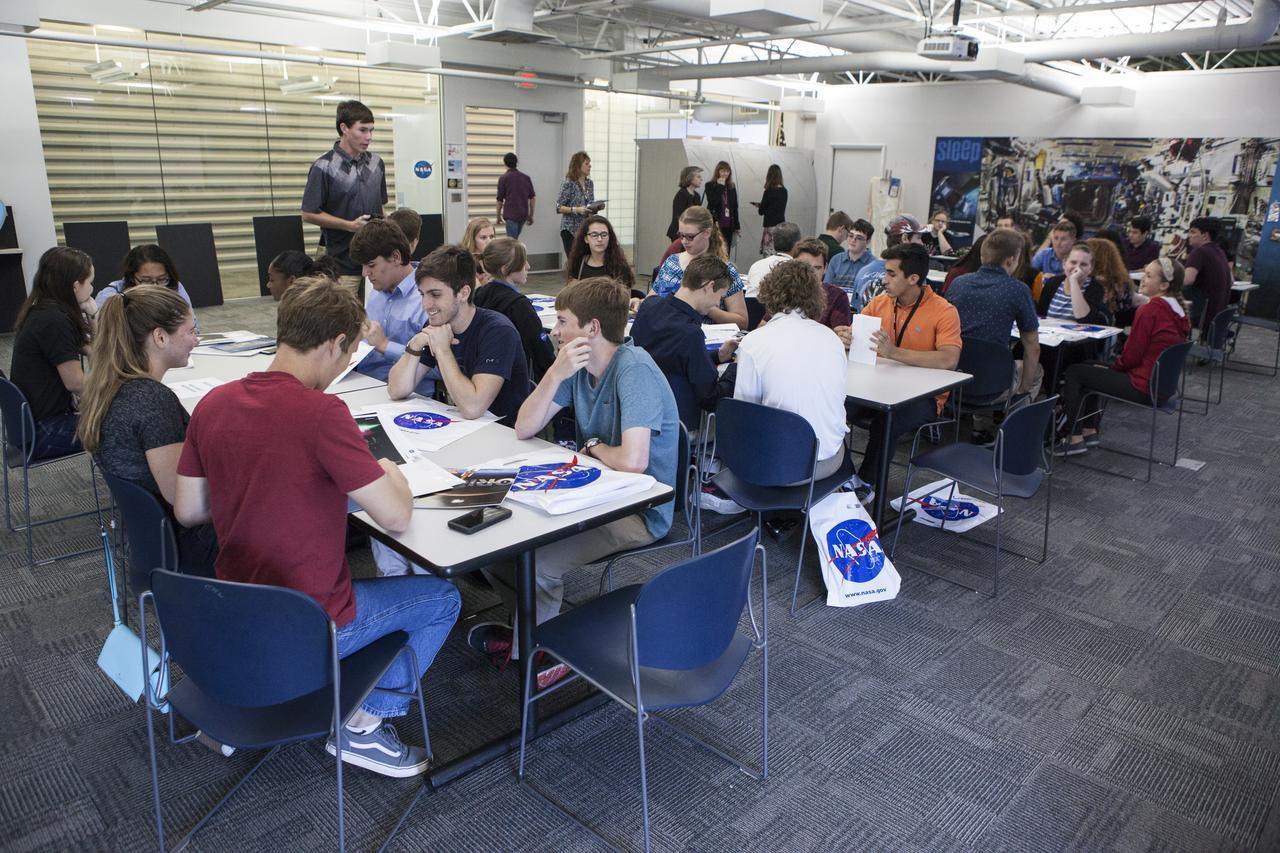
Top scholars from Brevard County public high schools participate in roundtable discussions with NASA engineers and scientists at the Public Engagement Center at Kennedy Space Center Visitor Complex in Florida. Top scholars from the high schools were invited to Kennedy Space Center for a tour of facilities, lunch and a roundtable discussion. The 2017-2018 Brevard Top Scholars event was hosted by the center's Education Projects and Youth Engagement office to honor the top three scholars of the graduating student class from each of Brevard County’s public high schools. The students received a personalized certificate at the end of the day.
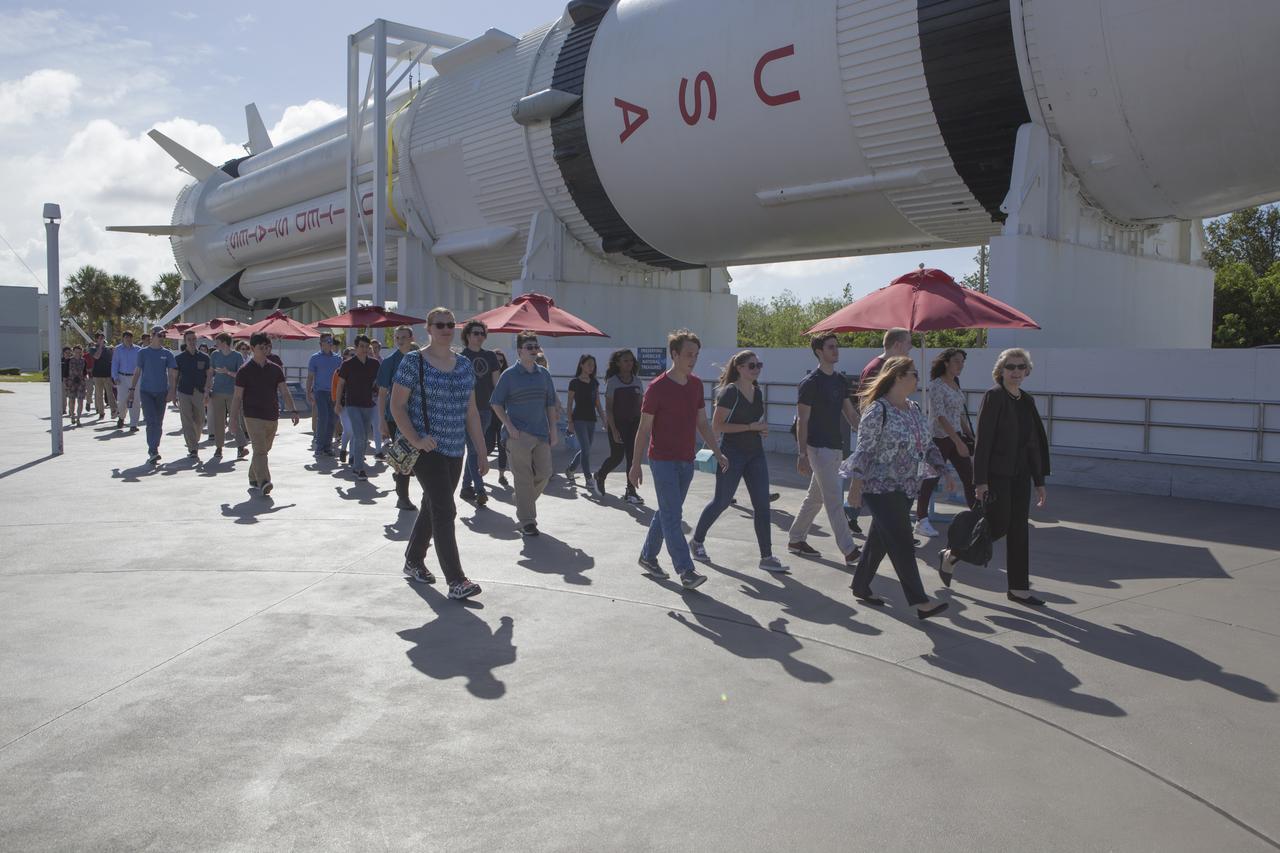
Students from Brevard County public high schools arrive at the NASA Kennedy Space Center Visitor Complex in Florida. Top scholars from the high schools were invited to Kennedy Space Center for a tour of facilities, lunch and a roundtable discussion with engineers and scientists at the center. The 2017-2018 Brevard Top Scholars event was hosted by the center's Education Projects and Youth Engagement office to honor the top three scholars of the graduating student class from each of Brevard County’s public high schools. The students received a personalized certificate at the end of the day.
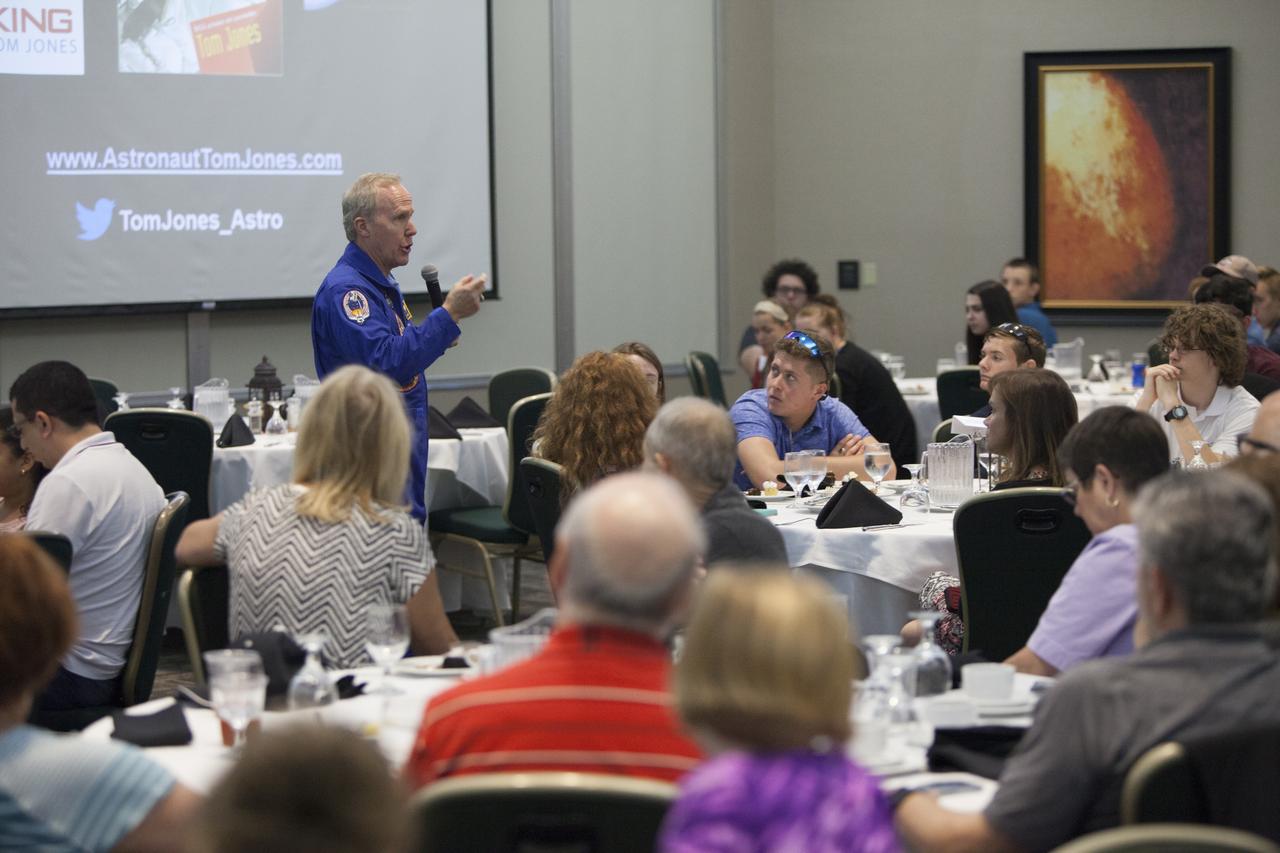
Retired NASA astronaut Tom Jones talks to high school students during "Lunch with an Astronaut" at the NASA Kennedy Space Center Visitor Complex in Florida. Top scholars from Brevard County public high schools were invited to Kennedy Space Center for a tour of facilities, lunch and a roundtable discussion with engineers and scientists at the center. The 2017-2018 Brevard Top Scholars event was hosted by the center's Education Projects and Youth Engagement office to honor the top three scholars of the 2017-2018 graduating student class from each of Brevard County’s public high schools. The students received a personalized certificate at the end of the day.
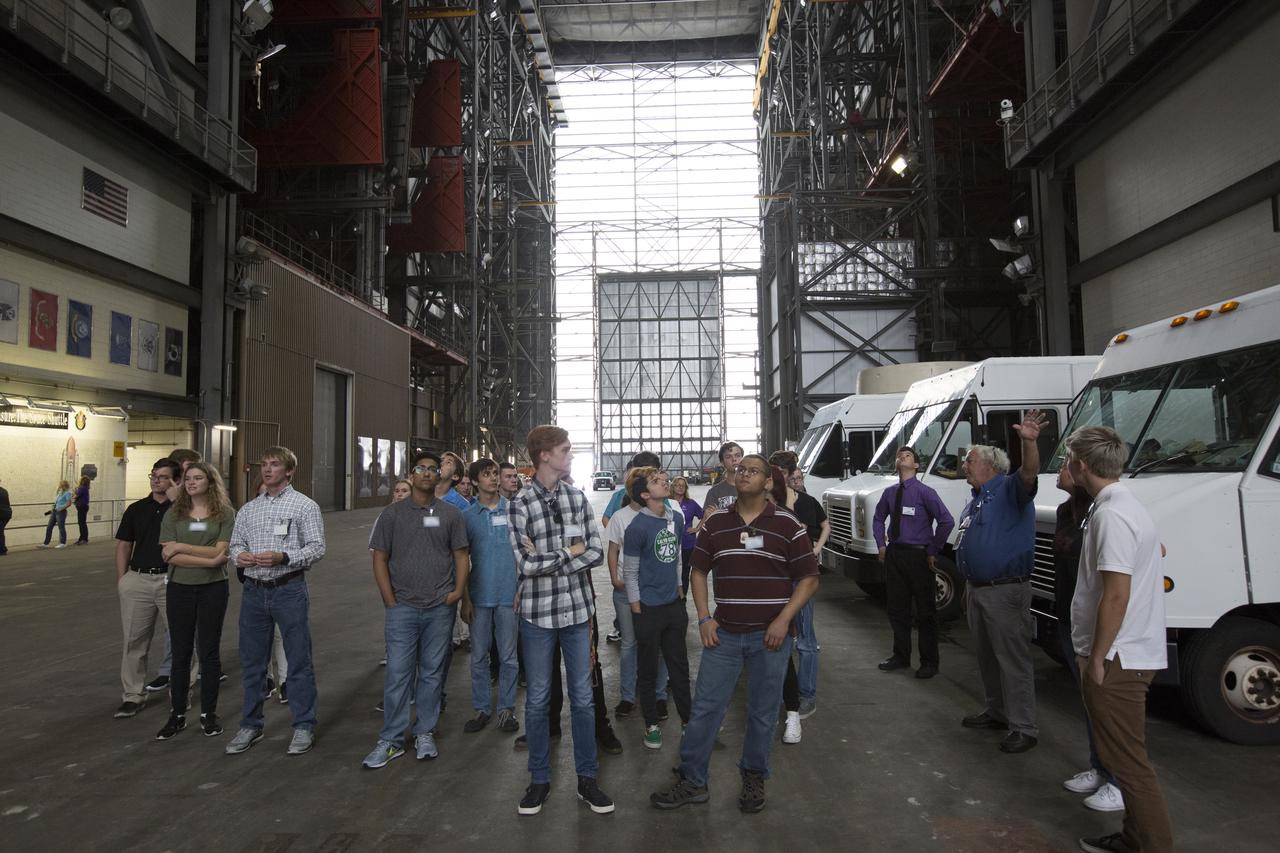
About 40 Brevard County high school seniors take in the enormity of the Vehicle Assembly Building during Brevard Top Scholars Day on May 5. Kennedy's Office of Education coordinated the event that featured a special behind-the-scenes tour of Kennedy, including prototype shops, cryogenic labs and the Launch Control Center firing rooms.
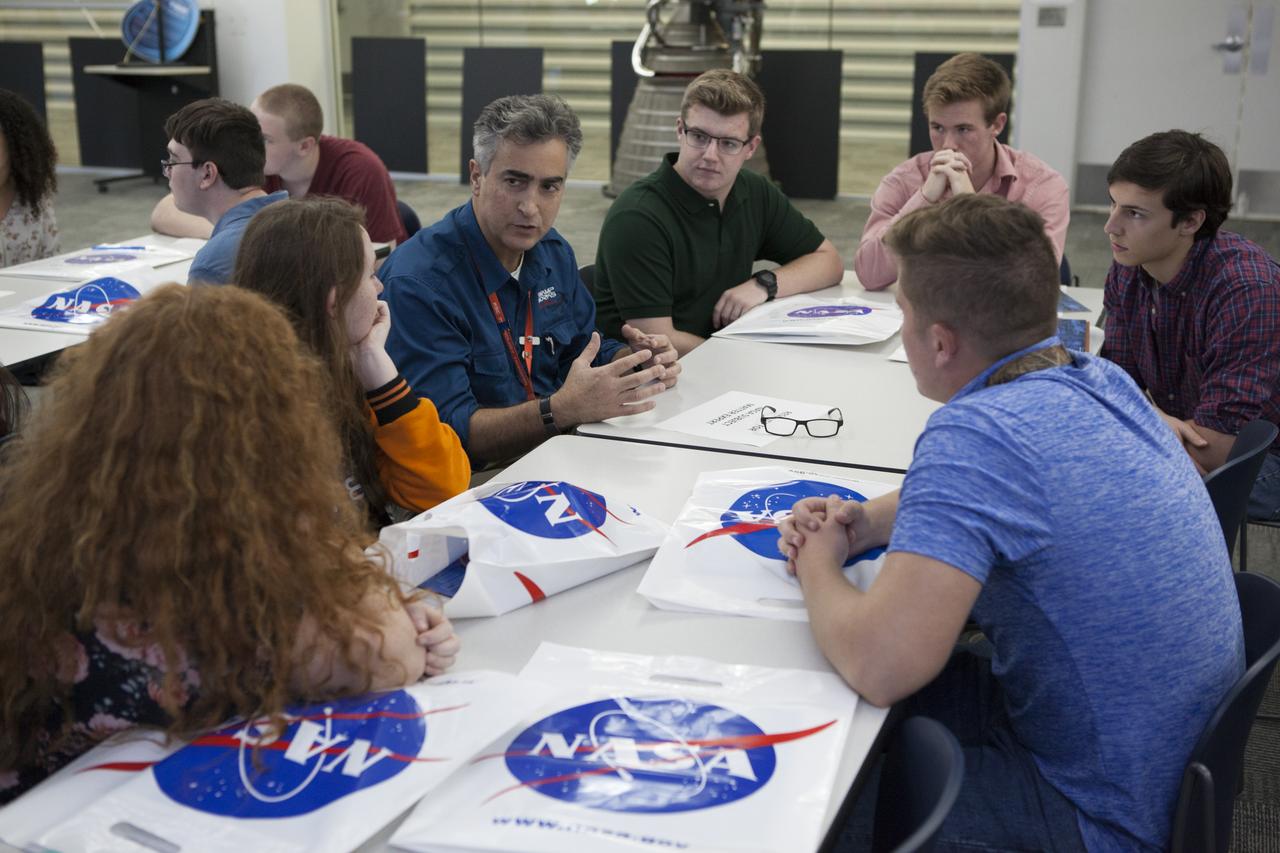
Jose Nunez, third from left, chief of the Flight Technologies Branch at NASA’s Kennedy Space Center in Florida, talks with students from Brevard County public high schools during a roundtable discussion at the Public Engagement Center at the Kennedy Space Center Visitor Complex. Top scholars from the high schools were invited to Kennedy Space Center for a tour of facilities, lunch and a roundtable discussion with engineers and scientists at the center. The 2017-2018 Brevard Top Scholars event was hosted by the center's Education Projects and Youth Engagement office to honor the top three scholars of the graduating student class from each of Brevard County’s public high schools. The students received a personalized certificate at the end of the day.
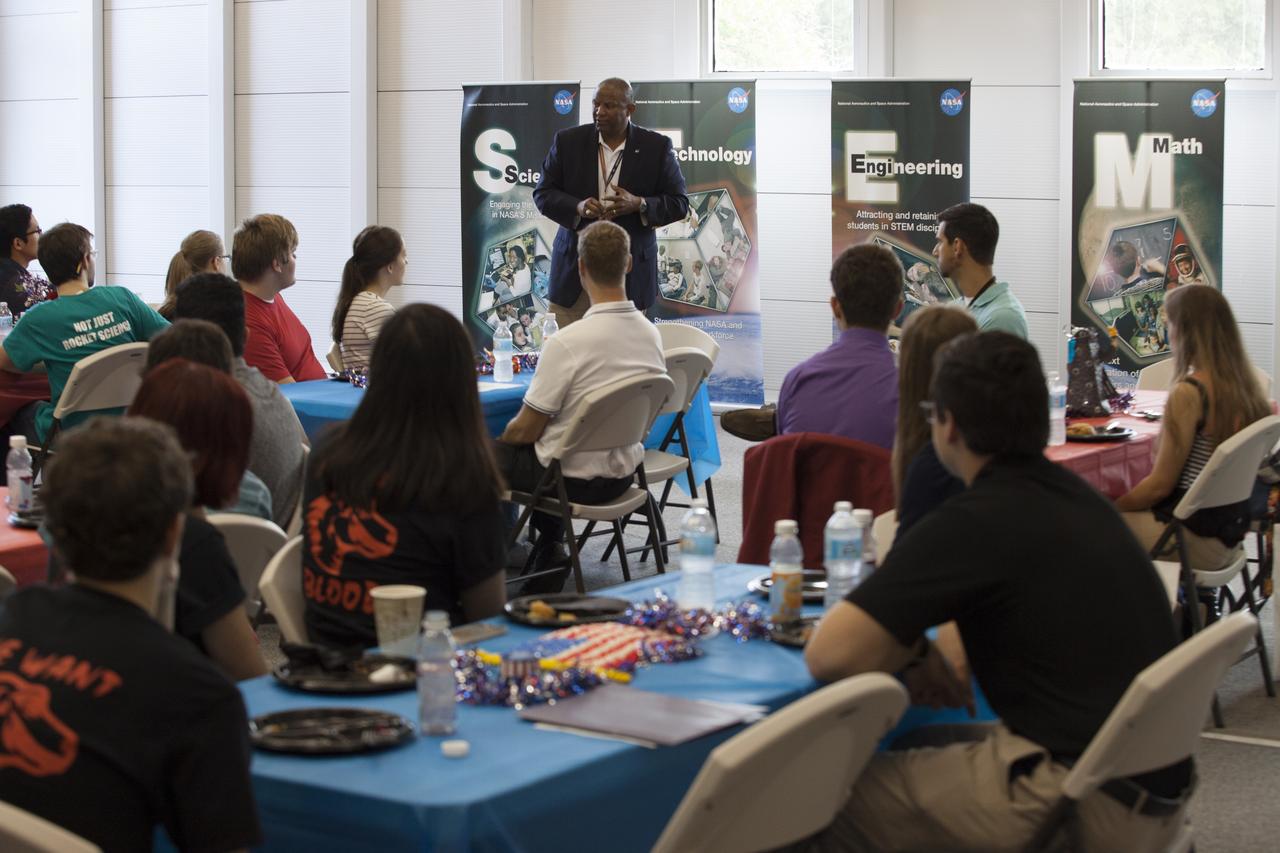
Kennedy Space Center Associate Director Kelvin Manning addresses about 40 Brevard County high school seniors regarding NASA's and Kennedy’s roles and missions during Brevard Top Scholars Day at Kennedy Space Center on May 5. Kennedy's Office of Education coordinated the event that featured a special behind-the-scenes tour of Kennedy, including prototype shops, cryogenic labs and facilities such as the Vehicle Assembly Building and the Launch Control Center firing rooms.
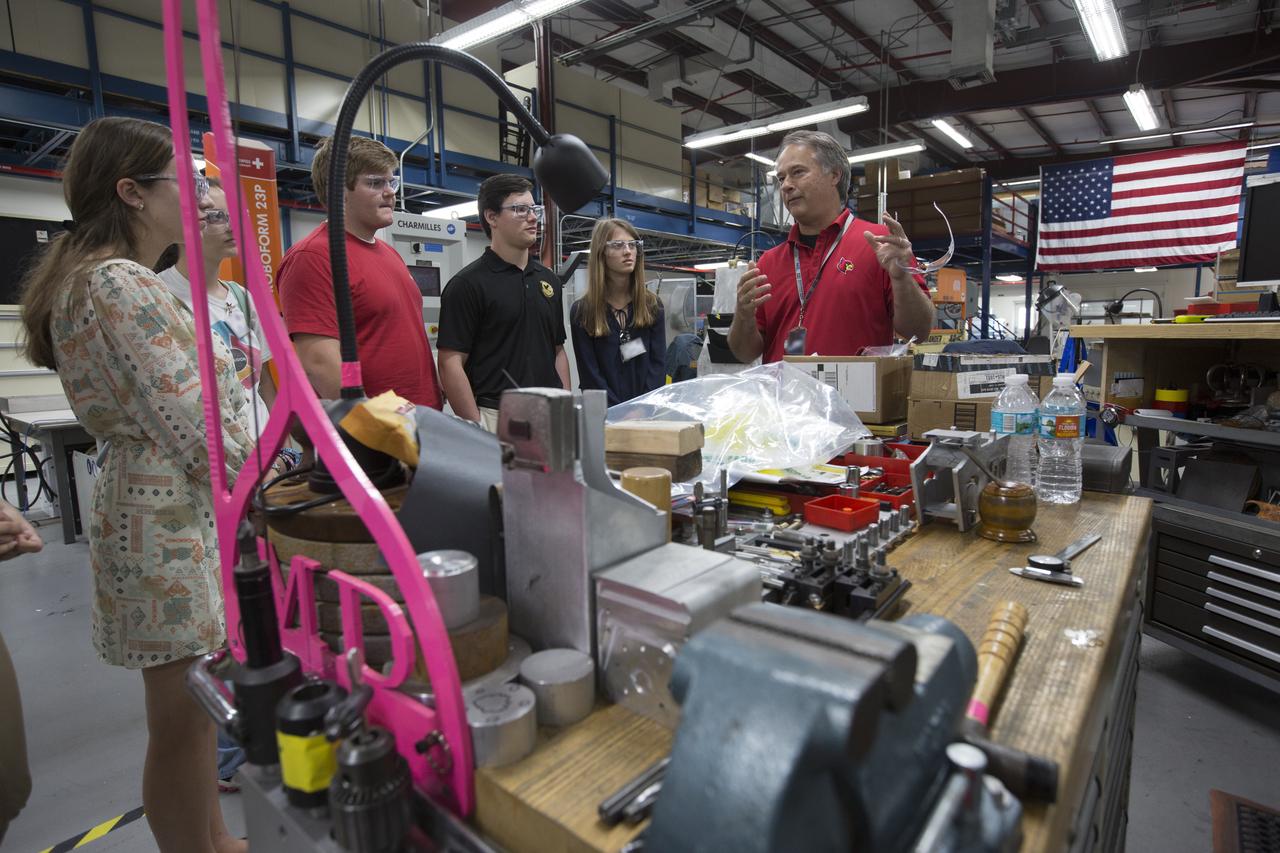
About 40 Brevard County high school seniors attended Brevard Top Scholars Day at Kennedy Space Center on May 5. Kennedy's Office of Education coordinated the event that featured a special behind-the-scenes tour of Kennedy, including prototype shops, cryogenic labs and facilities such as the Vehicle Assembly Building and the Launch Control Center firing rooms.
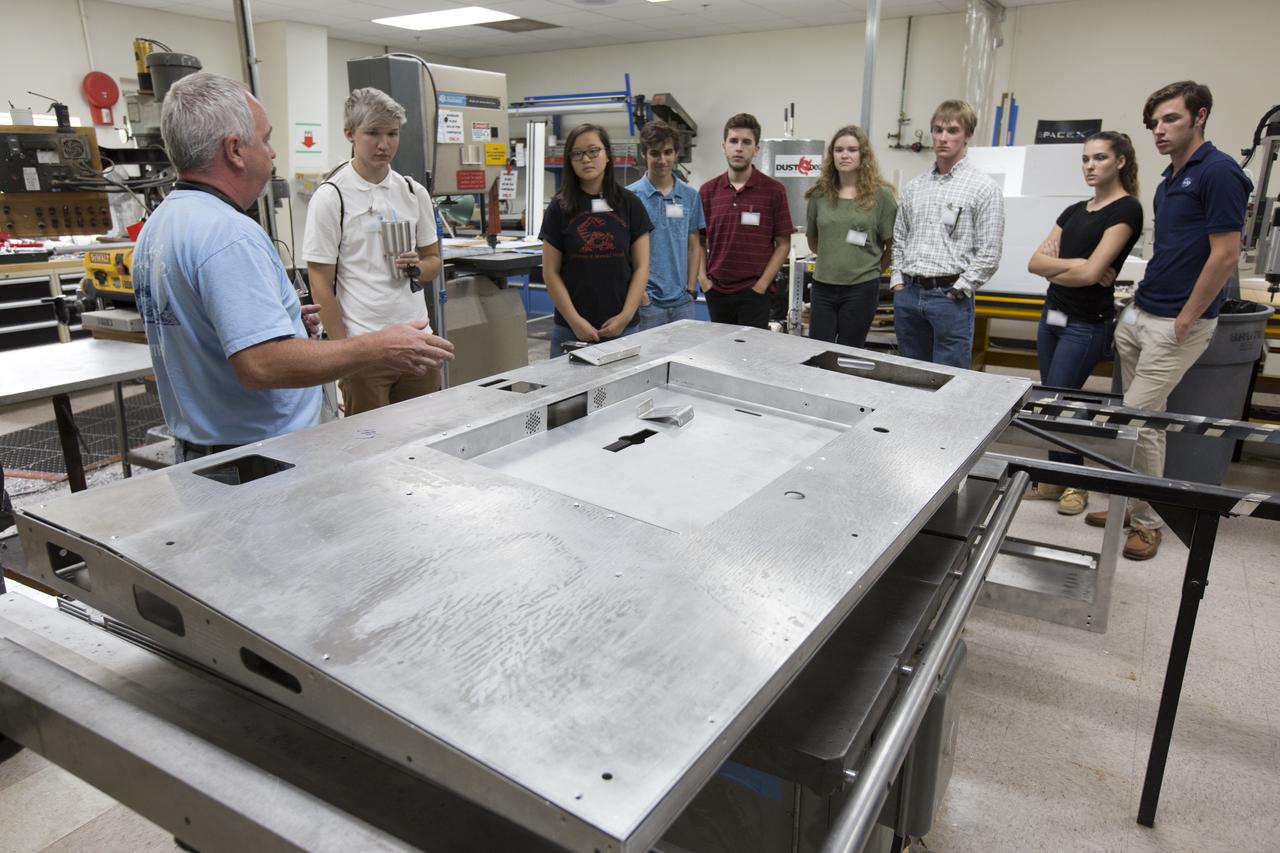
About 40 Brevard County high school seniors attended Brevard Top Scholars Day at Kennedy Space Center on May 5. Kennedy's Office of Education coordinated the event that featured a special behind-the-scenes tour of Kennedy, including prototype shops, cryogenic labs and facilities such as the Vehicle Assembly Building and the Launch Control Center firing rooms.
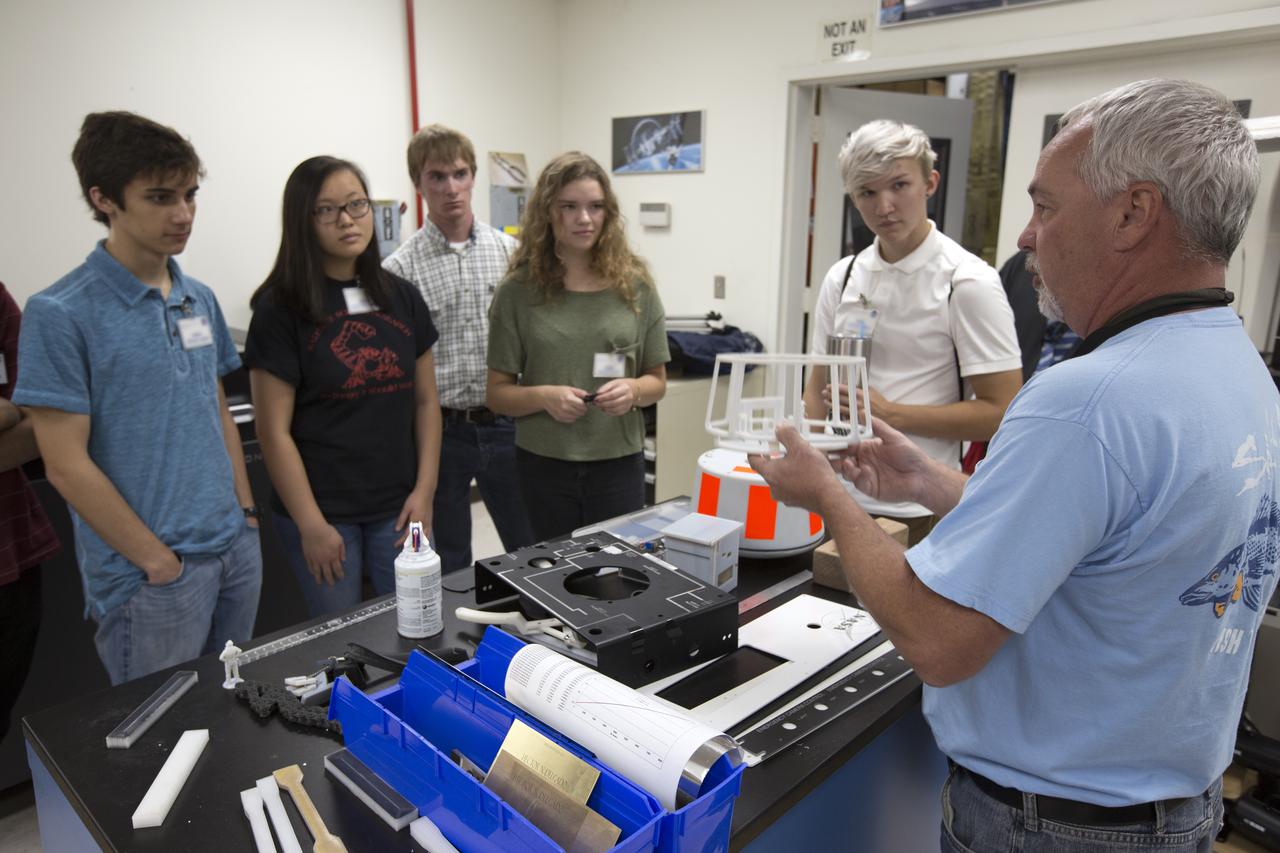
About 40 Brevard County high school seniors attended Brevard Top Scholars Day at Kennedy Space Center on May 5. Kennedy's Office of Education coordinated the event that featured a special behind-the-scenes tour of Kennedy, including prototype shops, cryogenic labs and facilities such as the Vehicle Assembly Building and the Launch Control Center firing rooms.
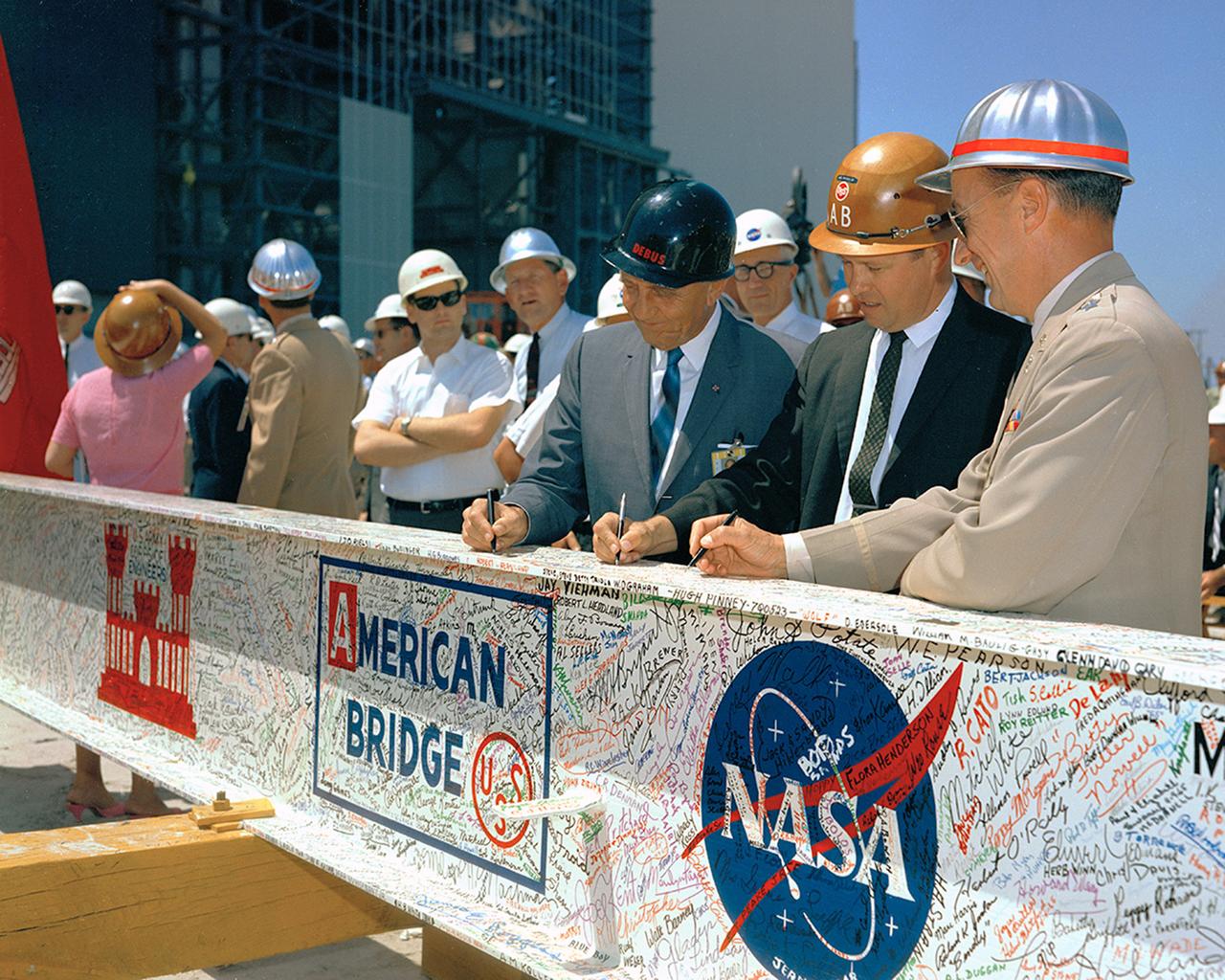
Dr. Kurt Debus (Director, NASA-KSC) signs the last major beam autographed by construction workers, NASA, and Corps of Engineers employees to be installed during the VAB Topping-Off Ceremony. MILA.
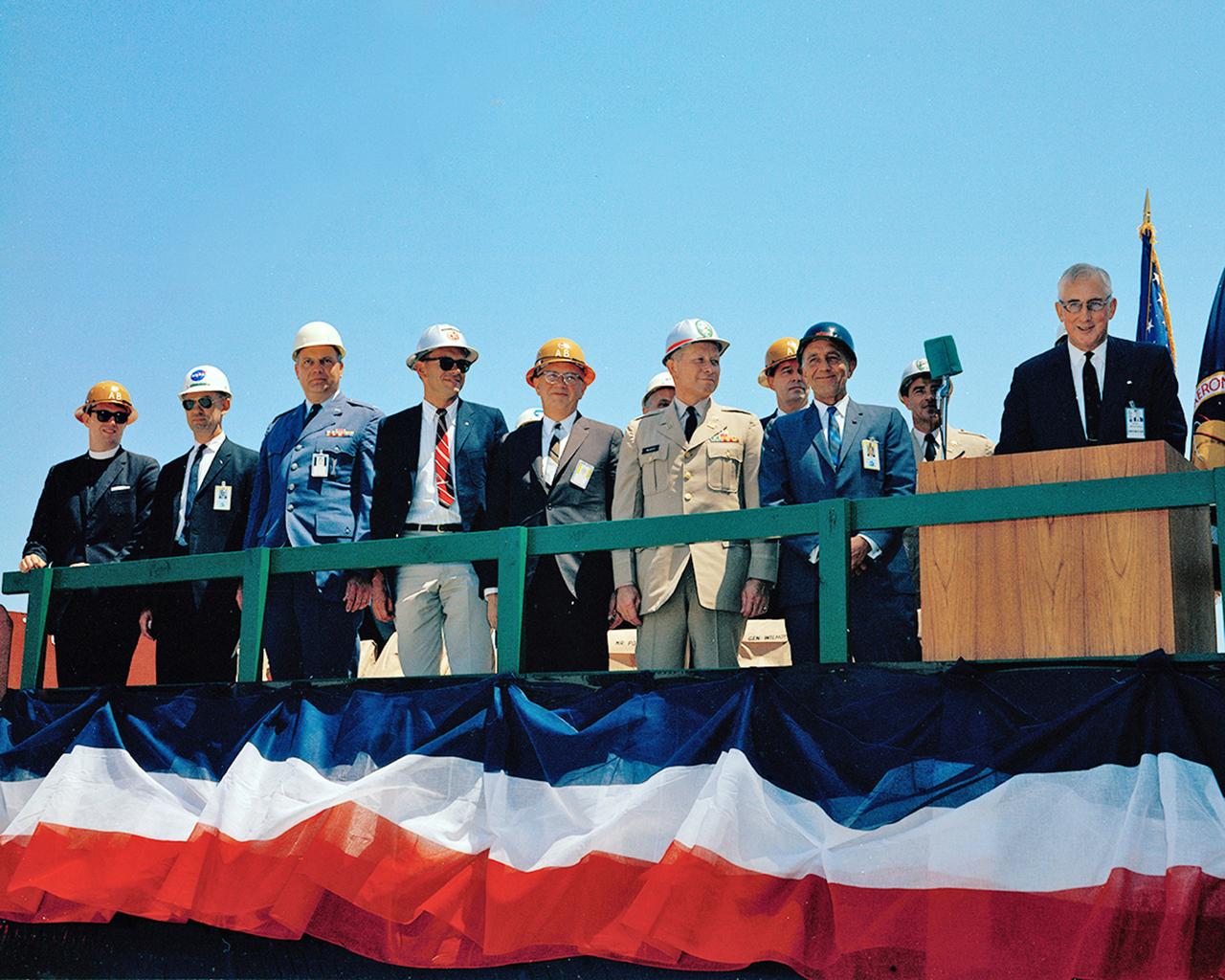
Dignataries (KSC Director Dr. Kurt Debus is second from right, NASA Administrator James C. Fletcher speaking), at the Last Major Beam Installation, attending the VAB Topping-Off Ceremony. MILA.
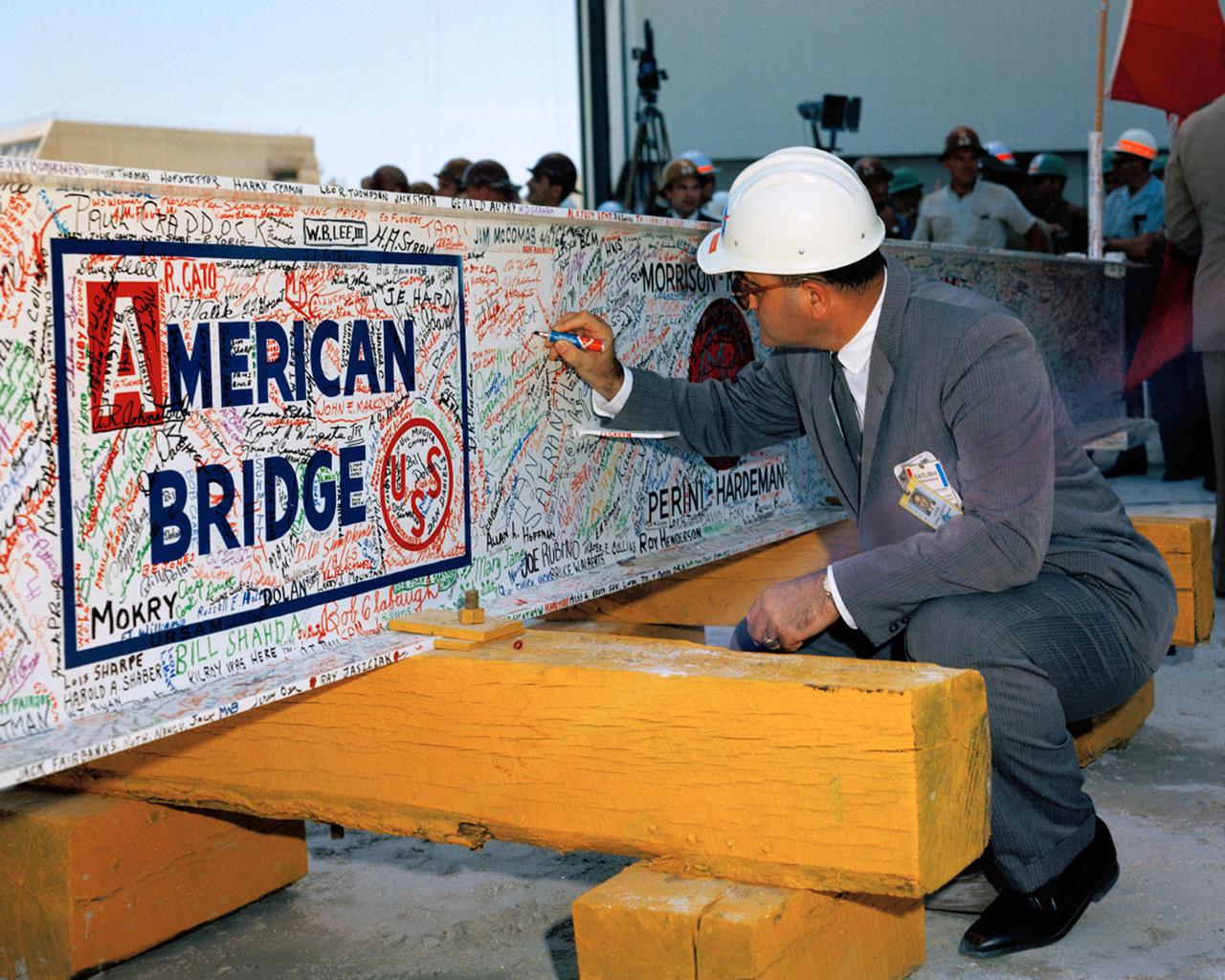
Colonel Rocco Patrone (Director, Plans, Programs and Resources Office NASA-KSC) signs the last major beam also autographed by construction workers, NASA, and Corps of Engineers employees to be installed during the VAB Topping-Off Ceremony. MILA.
Top of the World
Over the Top
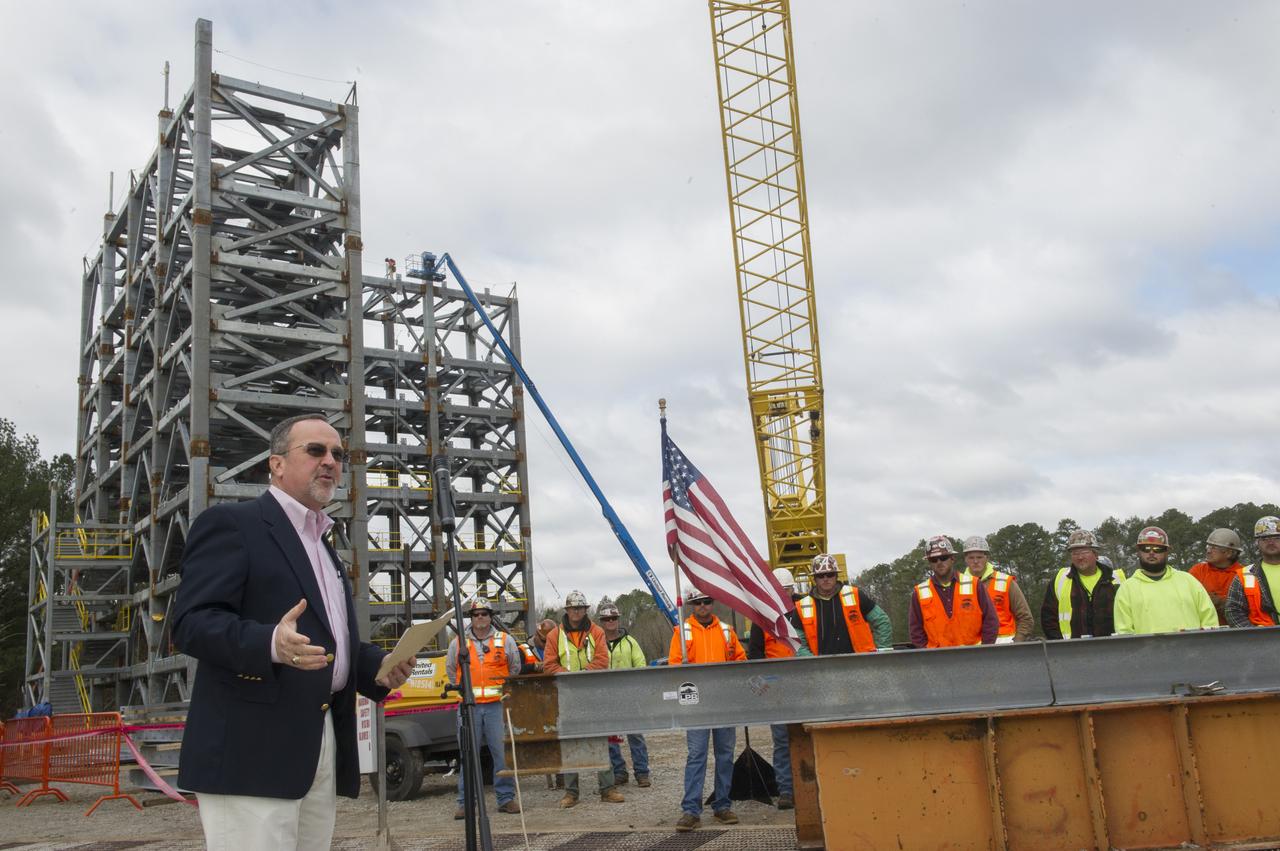
"YOUR WORK IS CRITICAL TO THE JOURNEY TO MARS," SAID SLS DEPUTY PROGRAM MANAGER JERRY COOK TO THE CONSTRUCTION CREW AT THE "TOP OUT" CEREMONY FOR TEST STAND 4697 AT MARSHALL.
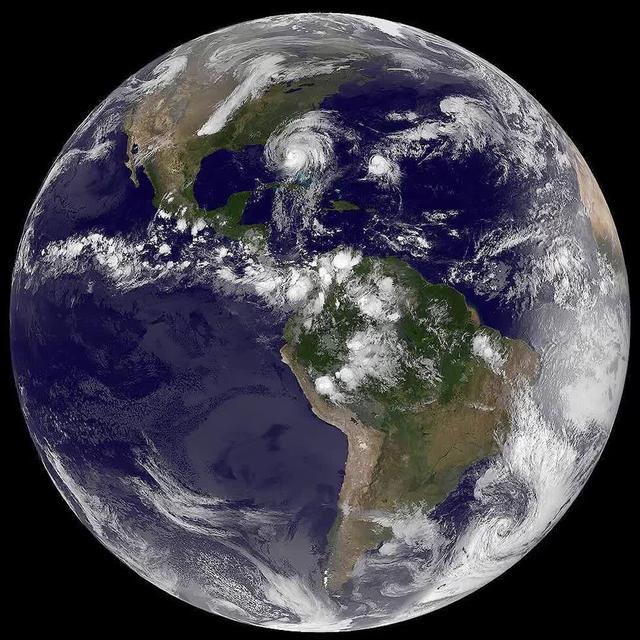
Here are a few of our top images from 2016. To see more great NASA Goddard images be sure to follow us on Instagram at <a href="http://www.instagram.com/nasagoddard" rel="nofollow">www.instagram.com/nasagoddard</a> and also on Twitter at <a href="https://twitter.com/NASAGoddardPix" rel="nofollow">twitter.com/NASAGoddardPix</a>.

Retired NASA astronaut Bob Springer is the presenter during "Lunch with an Astronaut" on Nov. 7, 2018, at the NASA Kennedy Space Center Visitor Complex in Florida. Top scholars from Brevard County public high schools were invited to Kennedy Space Center for a tour of facilities, lunch and a roundtable discussion with engineers, scientists and business experts at the center. The 2018 Brevard Top Scholars event was hosted by the center's Academic Engagement Office to honor the top three scholars of the 2018-2019 graduating student class from each of Brevard County’s public high schools. The students received a personalized certificate of recognition at the end of the day.
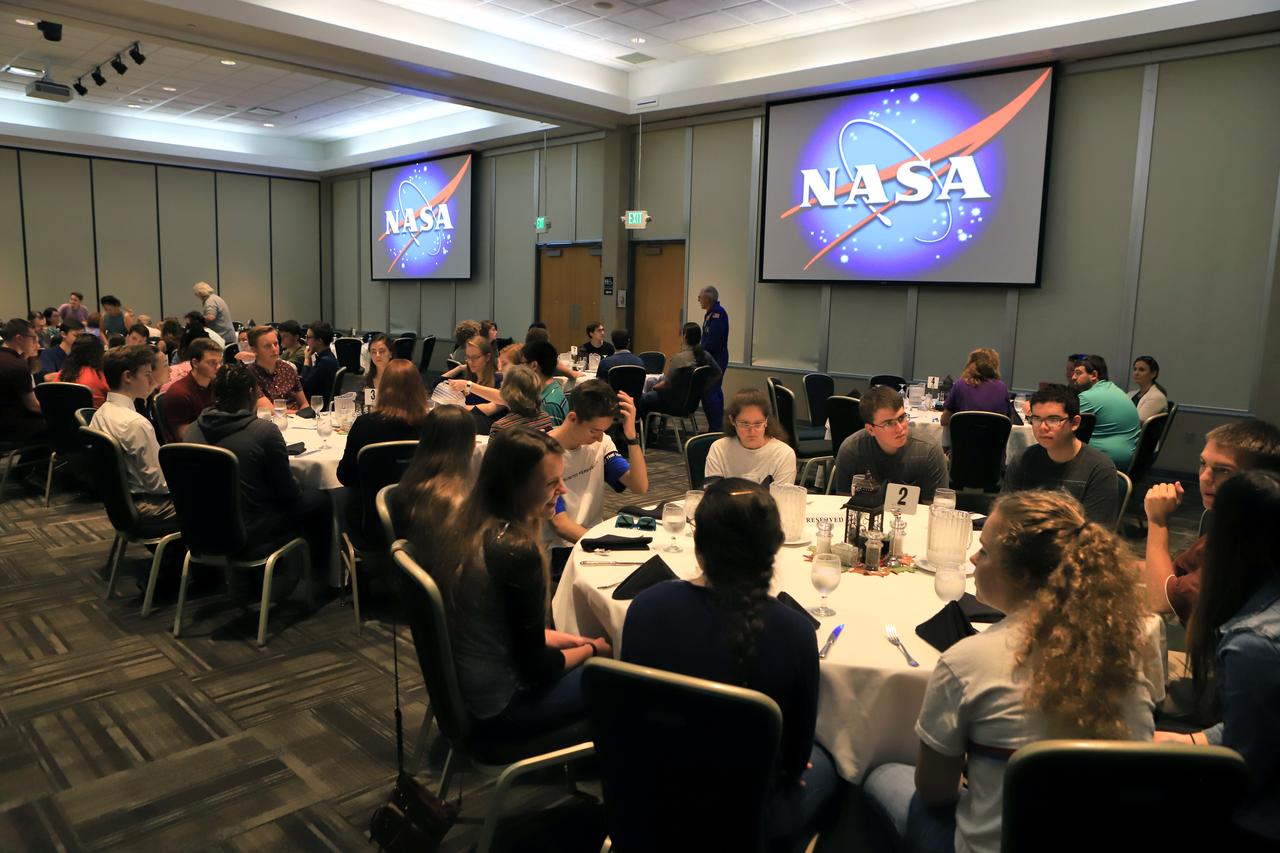
Retired NASA astronaut Bob Springer, standing in front, talks to high school students during "Lunch with an Astronaut" on Nov. 7, 2018, at the NASA Kennedy Space Center Visitor Complex in Florida. Top scholars from Brevard County public high schools were invited to Kennedy Space Center for a tour of facilities, lunch and a roundtable discussion with engineers, scientists and business experts at the center. The 2018 Brevard Top Scholars event was hosted by the center's Academic Engagement Office to honor the top three scholars of the 2018-2019 graduating student class from each of Brevard County’s public high schools. The students received a personalized certificate of recognition at the end of the day.
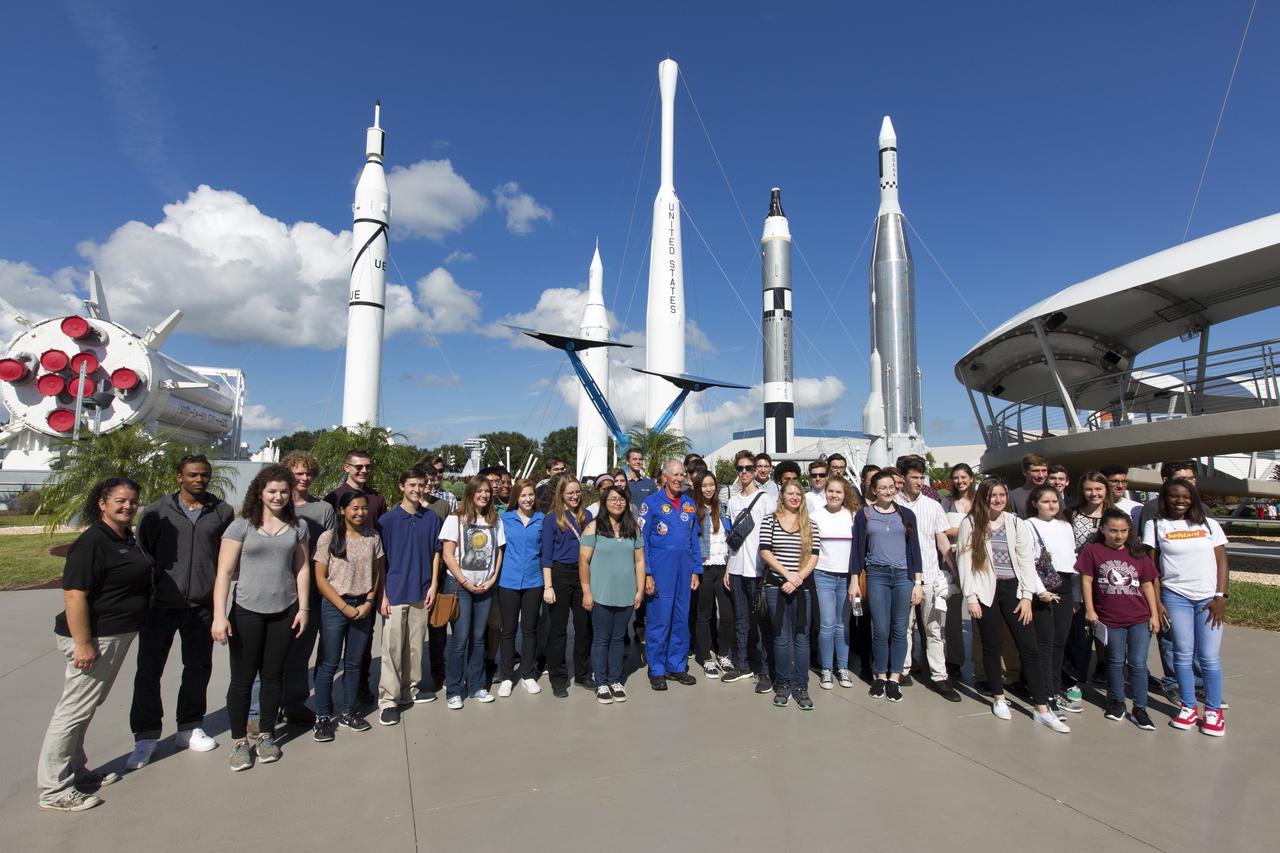
Retired NASA astronaut Bob Springer, center, takes a photograph with top scholars from Brevard County high schools near the Rocket Garden at the NASA Kennedy Space Center Visitor Complex in Florida, on Nov. 7, 2018. The high school seniors were invited to Kennedy Space Center for a tour of facilities, lunch and a roundtable discussion with engineers, scientists and business experts at the center. The 2018 Brevard Top Scholars event was hosted by the center's Academic Engagement Office to honor the top three scholars of the 2018-2019 graduating student class from each of Brevard County’s public high schools. The students received a personalized certificate of recognition at the end of the day.
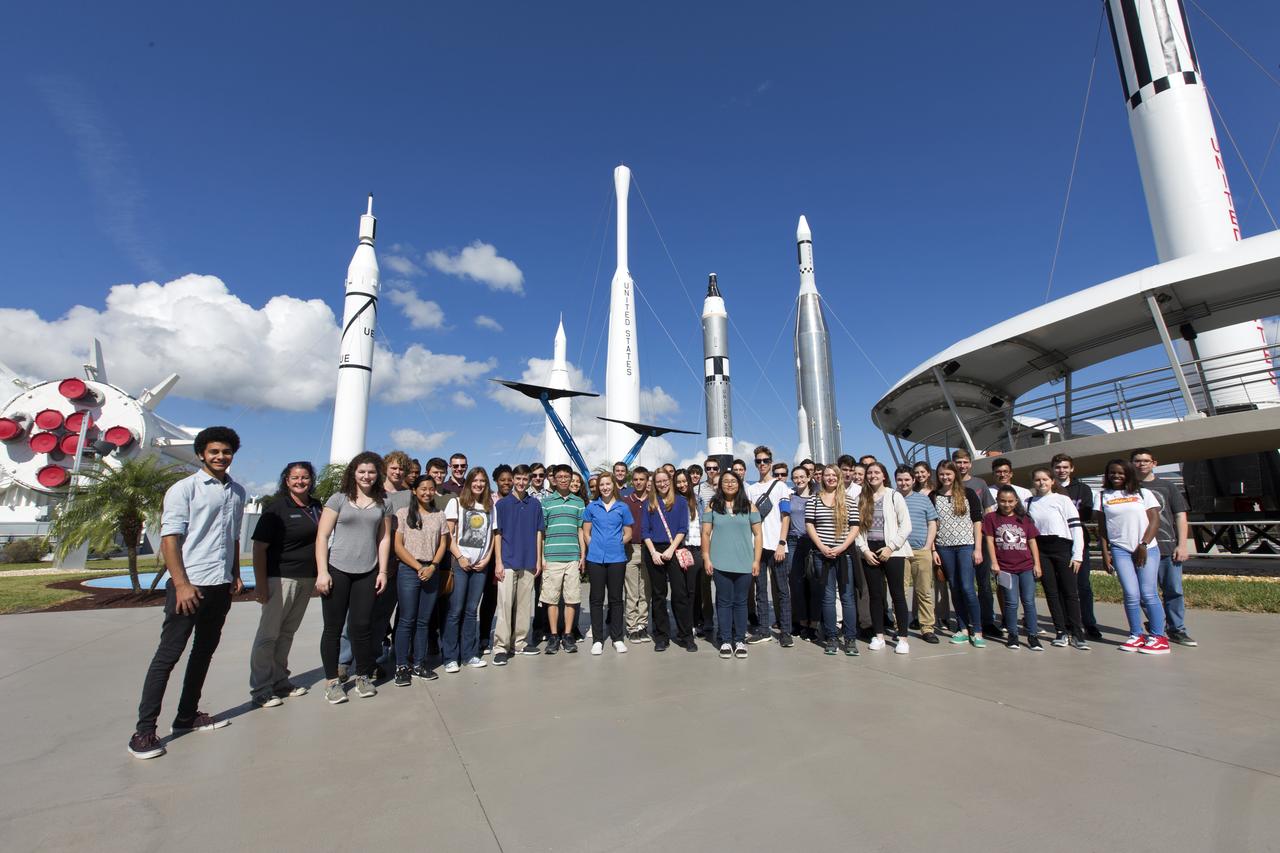
Top scholars from Brevard County high schools gather near the Rocket Garden at the NASA Kennedy Space Center Visitor Complex in Florida, on Nov. 7, 2018. The high school seniors were invited to Kennedy Space Center for a tour of facilities, lunch and a roundtable discussion with engineers, scientists and business experts at the center. The 2018 Brevard Top Scholars event was hosted by the center's Academic Engagement Office to honor the top three scholars of the 2018-2019 graduating student class from each of Brevard County’s public high schools. The students received a personalized certificate of recognition at the end of the day.
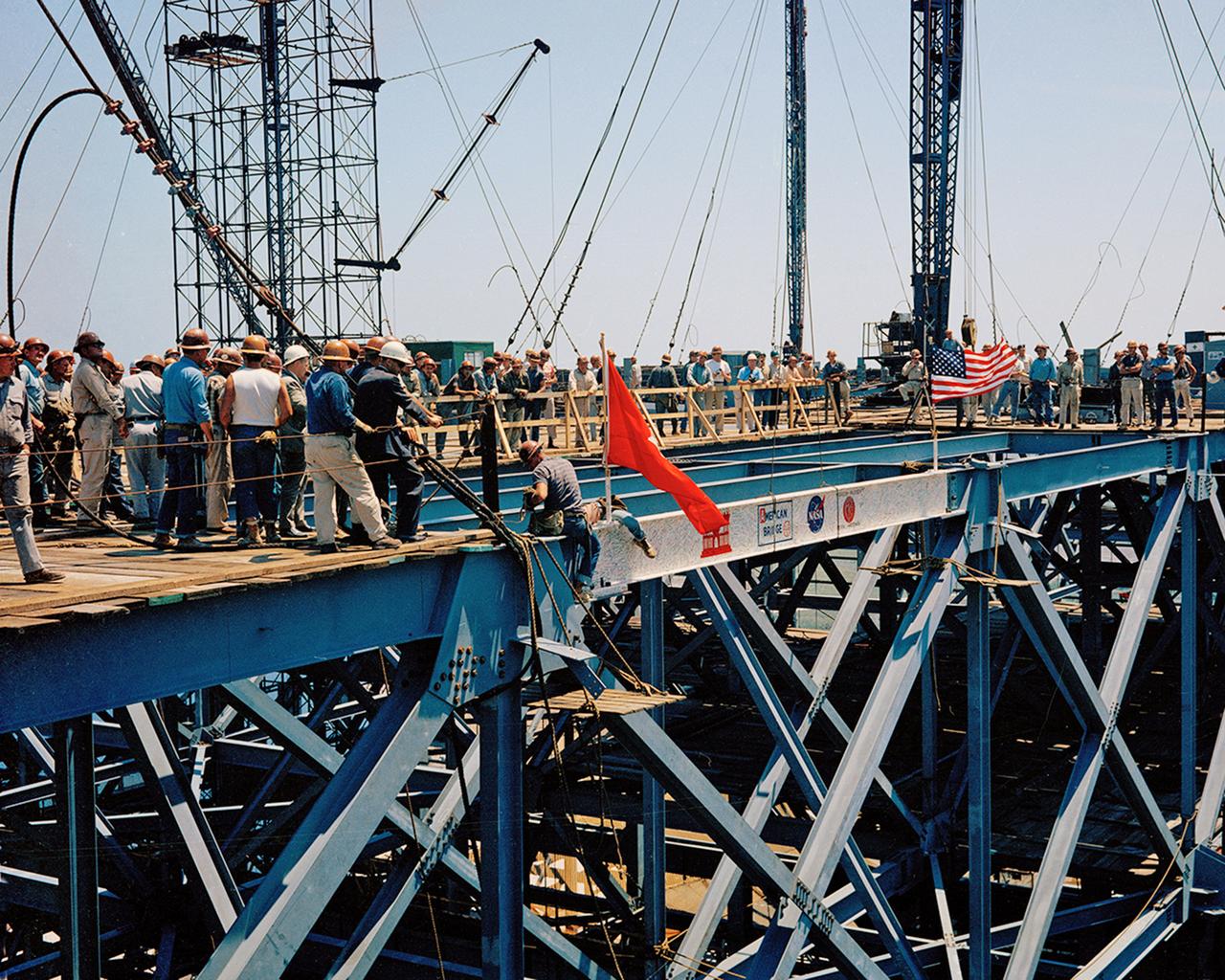
Installation of the Last Major Beam autographed by construction workers, NASA, and Corps of Engineers employees atop the Kennedy Space Center Vertical Assembly Building (VAB), MILA.
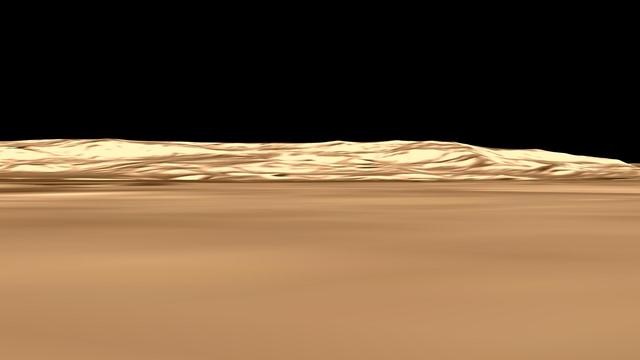
Maadim Vallis From the Top
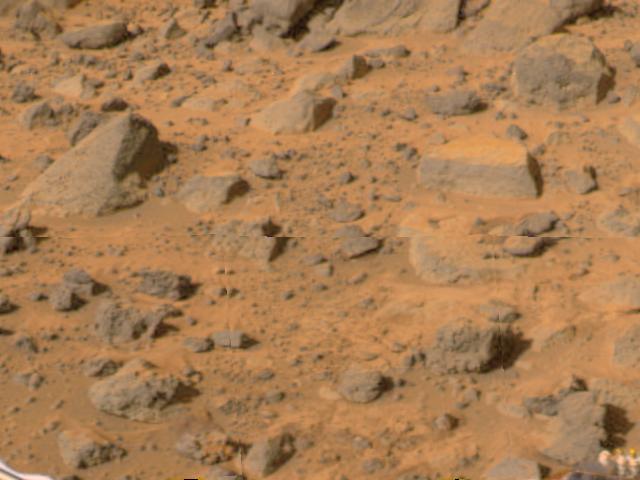
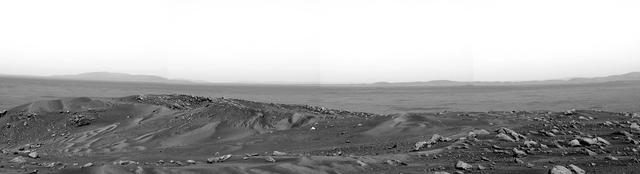
Wedge and Flat Top
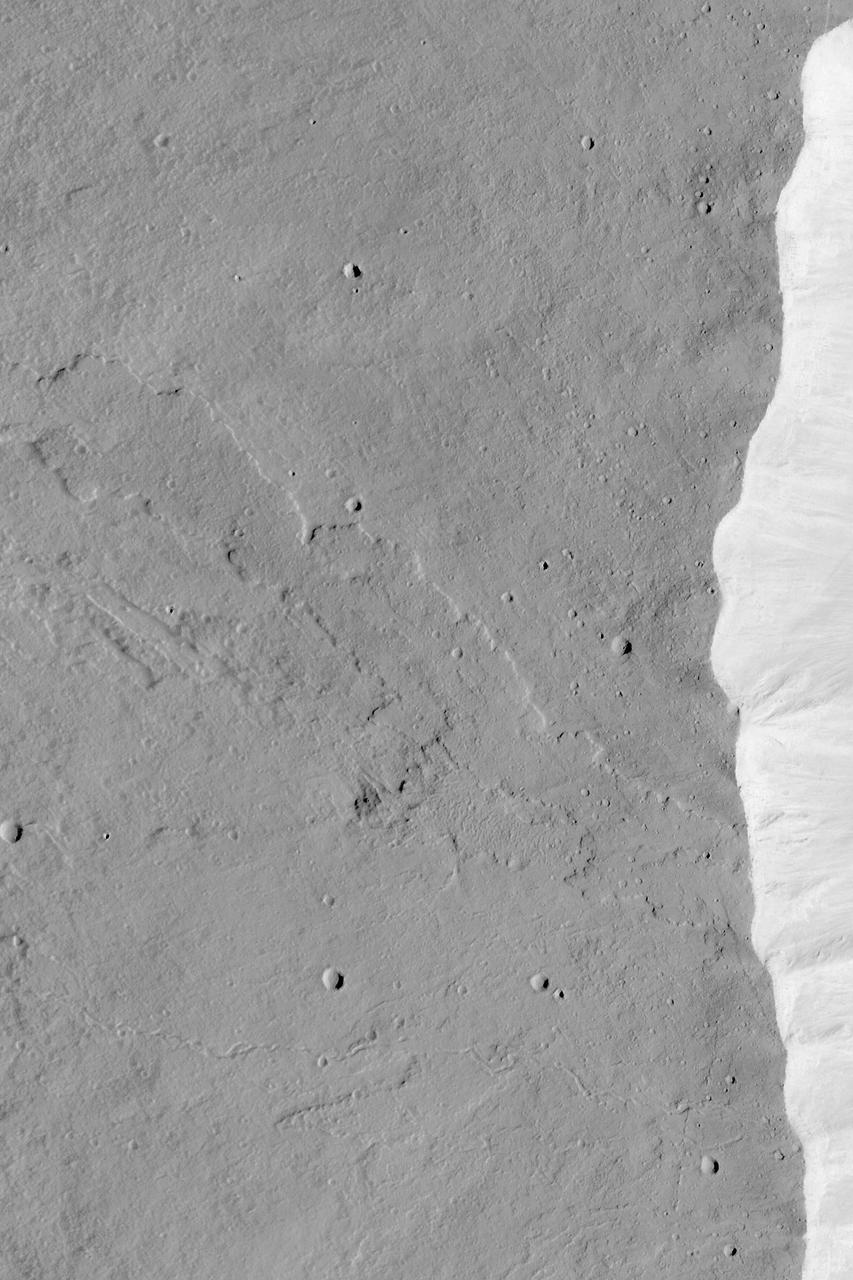
Top of Olympus Mons
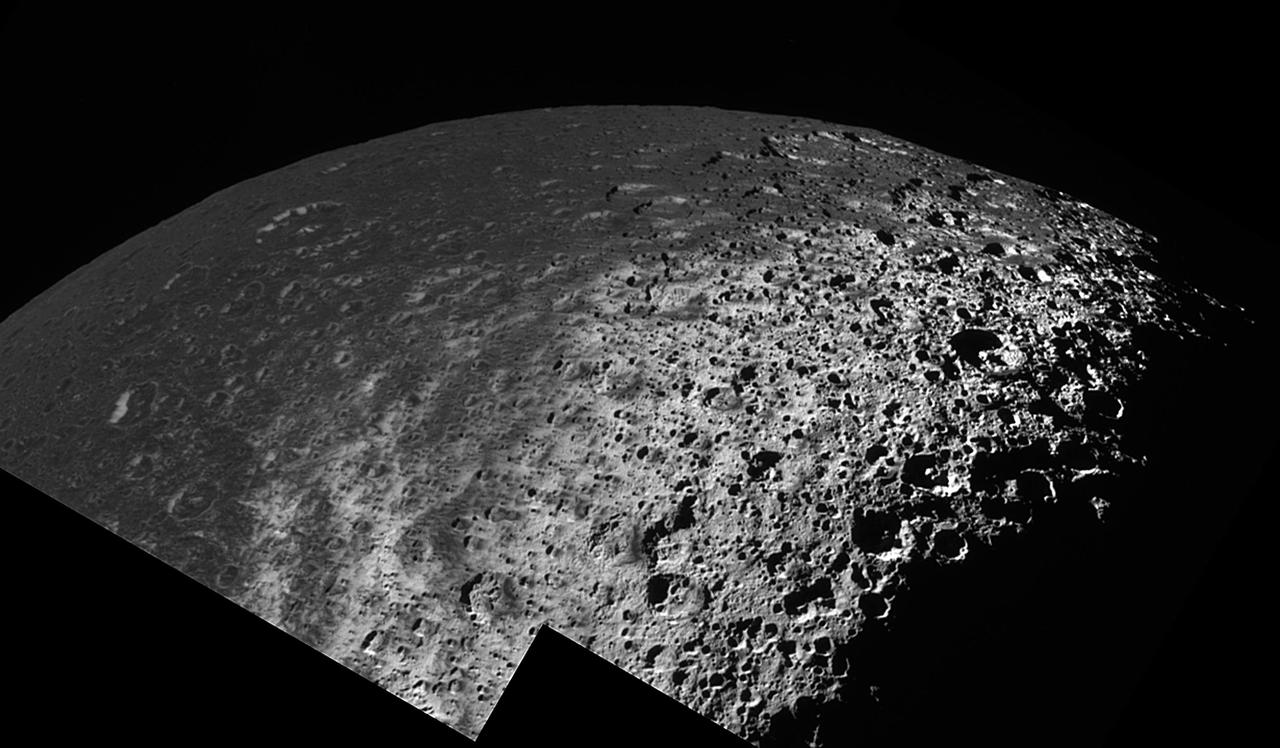
Iapetus: A View from the Top
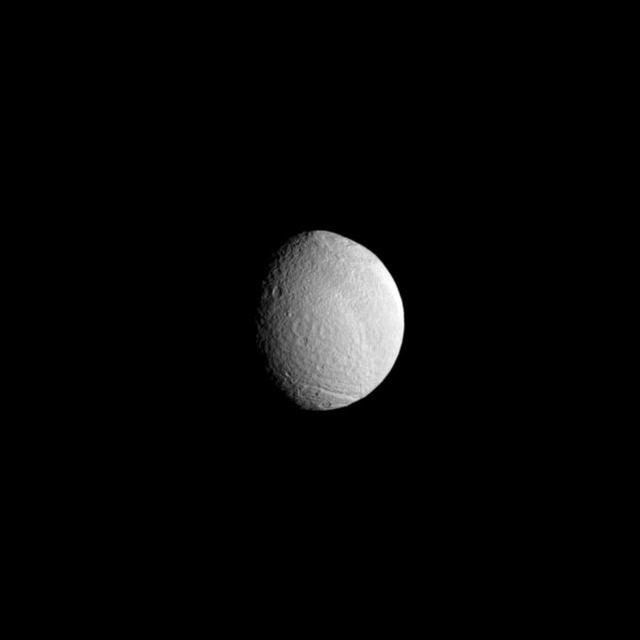
A Little Off the Top
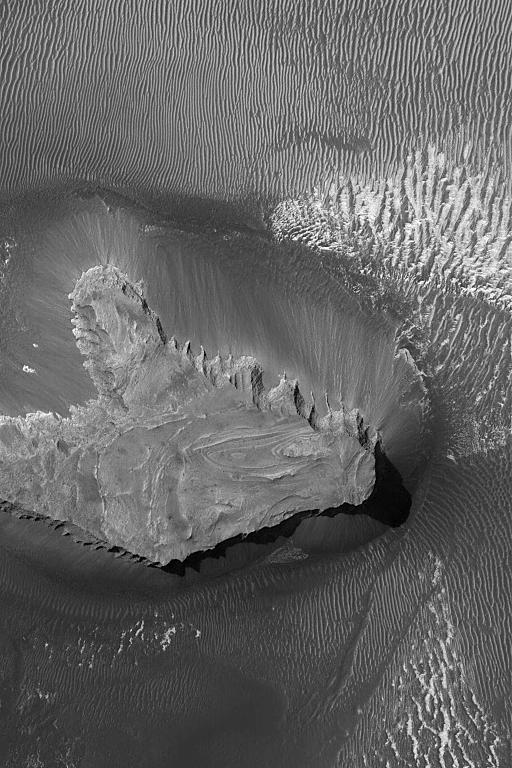
Layered Mesa Top
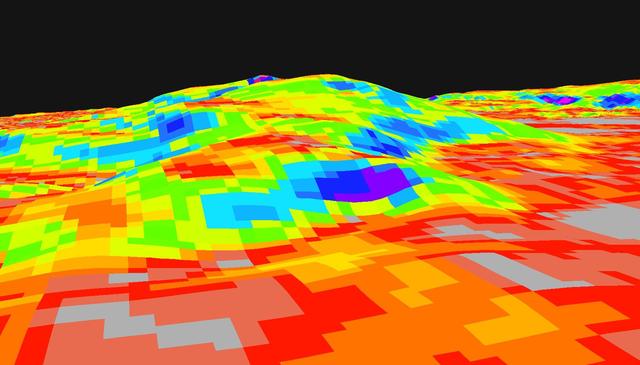
Which Way to the Top?

Retired NASA astronaut Bob Springer talks with guests during "Lunch with an Astronaut" at the NASA Kennedy Space Center Visitor Complex in Florida, on Nov. 7, 2018. Top scholars from Brevard County high schools also had a chance to talk with Springer and hear his presentation. The seniors were invited to Kennedy Space Center for a tour of facilities, lunch and a roundtable discussion with engineers, scientists and business experts at the center. The 2018 Brevard Top Scholars event was hosted by the center's Academic Engagement Office to honor the top three scholars of the 2018-2019 graduating student class from each of Brevard County’s public high schools. The students received a personalized certificate of recognition at the end of the day.
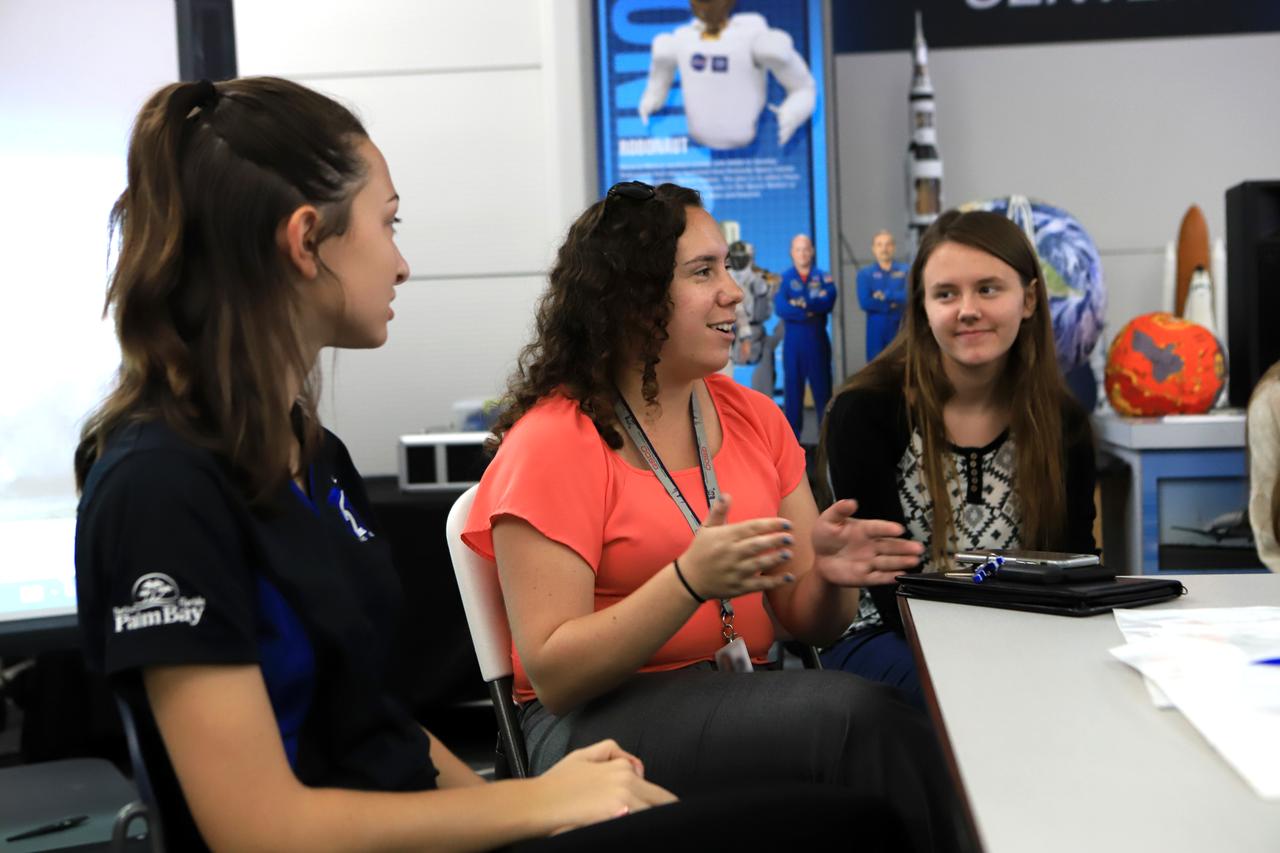
Rebecca Baturin, center, a project engineer in Exploration Ground Systems, speaks to students from Brevard County high schools during a panel discussion session at the NASA Kennedy Space Center Visitor Complex in Florida, on Nov. 7, 2018. The high school seniors were invited to Kennedy Space Center for a tour of facilities, lunch and a roundtable discussion with engineers, scientists and business experts at the center. The 2018 Brevard Top Scholars event was hosted by the center's Academic Engagement Office to honor the top three scholars of the 2018-2019 graduating student class from each of Brevard County’s public high schools. The students received a personalized certificate of recognition at the end of the day.
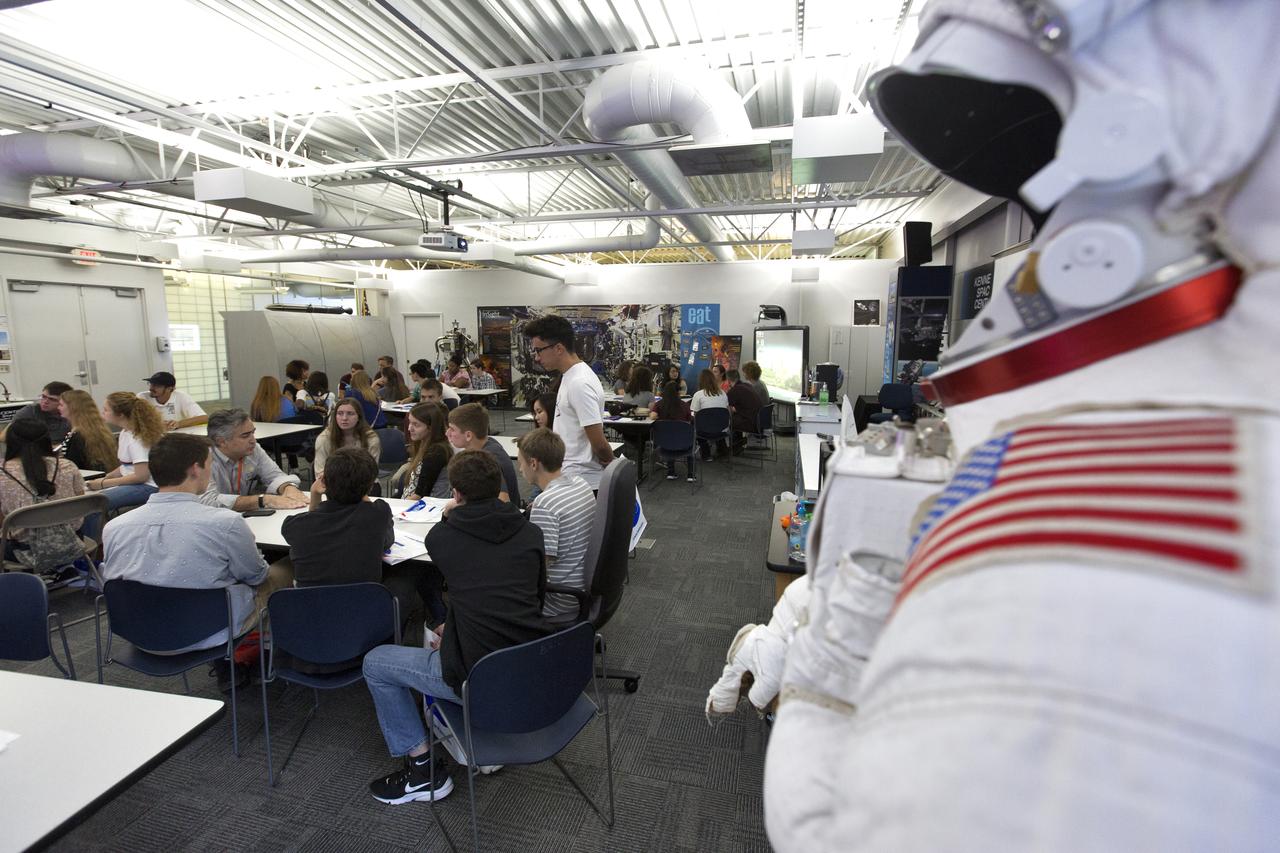
Students from Brevard County high schools participate in a roundtable discussion with engineers, scientists and business experts at the NASA Kennedy Space Center Visitor Complex in Florida, on Nov. 7, 2018. The high school seniors were invited to Kennedy Space Center for a tour of facilities, lunch and a roundtable discussion. The 2018 Brevard Top Scholars event was hosted by the center's Academic Engagement Office to honor the top three scholars of the 2018-2019 graduating student class from each of Brevard County’s public high schools. The students received a personalized certificate of recognition at the end of the day.
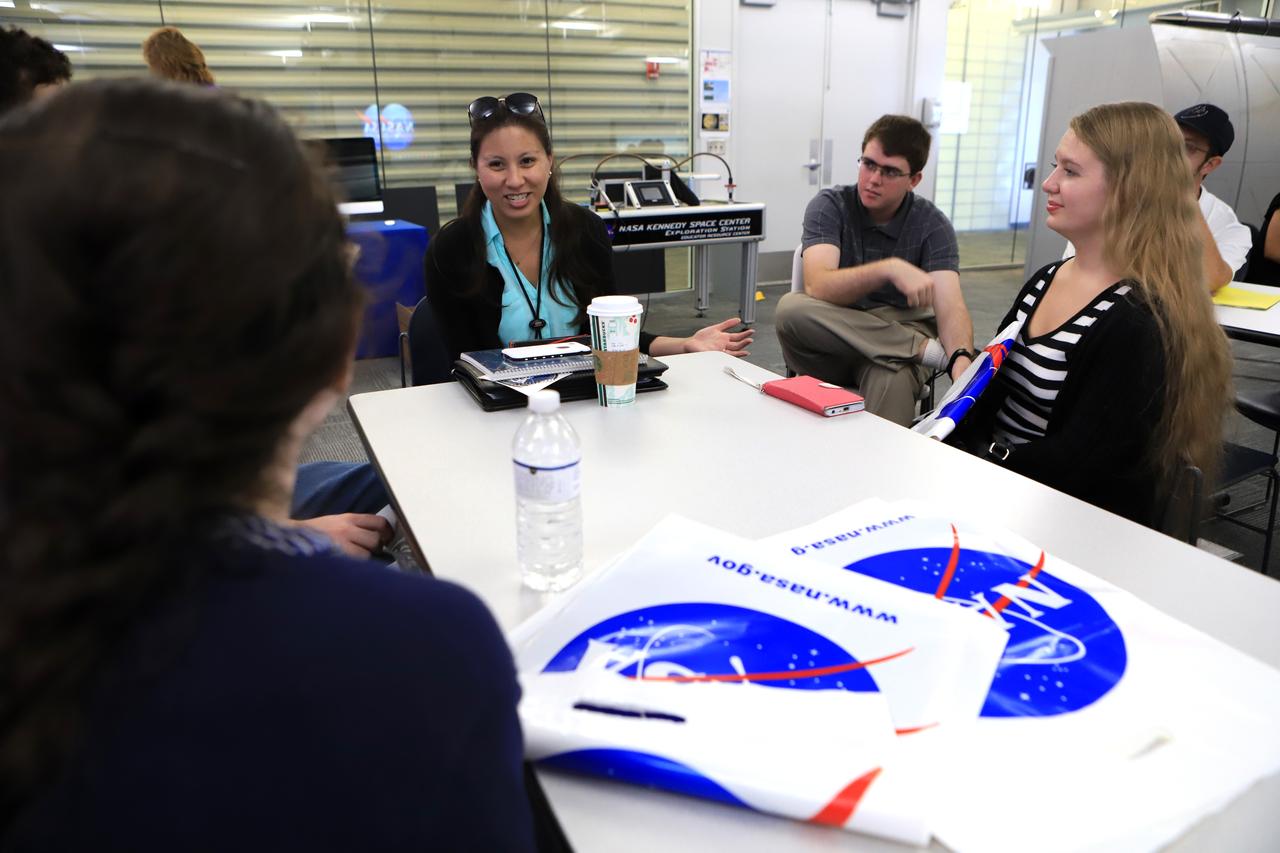
Jo Pereira, center, deputy Human Resources Integration and Pathways Program supervisor, speaks to students from Brevard County high schools during a panel discussion session at the NASA Kennedy Space Center Visitor Complex in Florida, on Nov. 7, 2018. The high school seniors were invited to Kennedy Space Center for a tour of facilities, lunch and a roundtable discussion with engineers, scientists and business experts at the center. The 2018 Brevard Top Scholars event was hosted by the center's Academic Engagement Office to honor the top three scholars of the 2018-2019 graduating student class from each of Brevard County’s public high schools. The students received a personalized certificate of recognition at the end of the day.

Retired NASA astronaut Bob Springer, at left, talks with students from Brevard County high schools during "Lunch with an Astronaut" at the NASA Kennedy Space Center Visitor Complex in Florida, on Nov. 7, 2018. The high school seniors were invited to Kennedy Space Center for a tour of facilities, lunch and a roundtable discussion with engineers, scientists and business experts at the center. The 2018 Brevard Top Scholars event was hosted by the center's Academic Engagement Office to honor the top three scholars of the 2018-2019 graduating student class from each of Brevard County’s public high schools. The students received a personalized certificate of recognition at the end of the day.
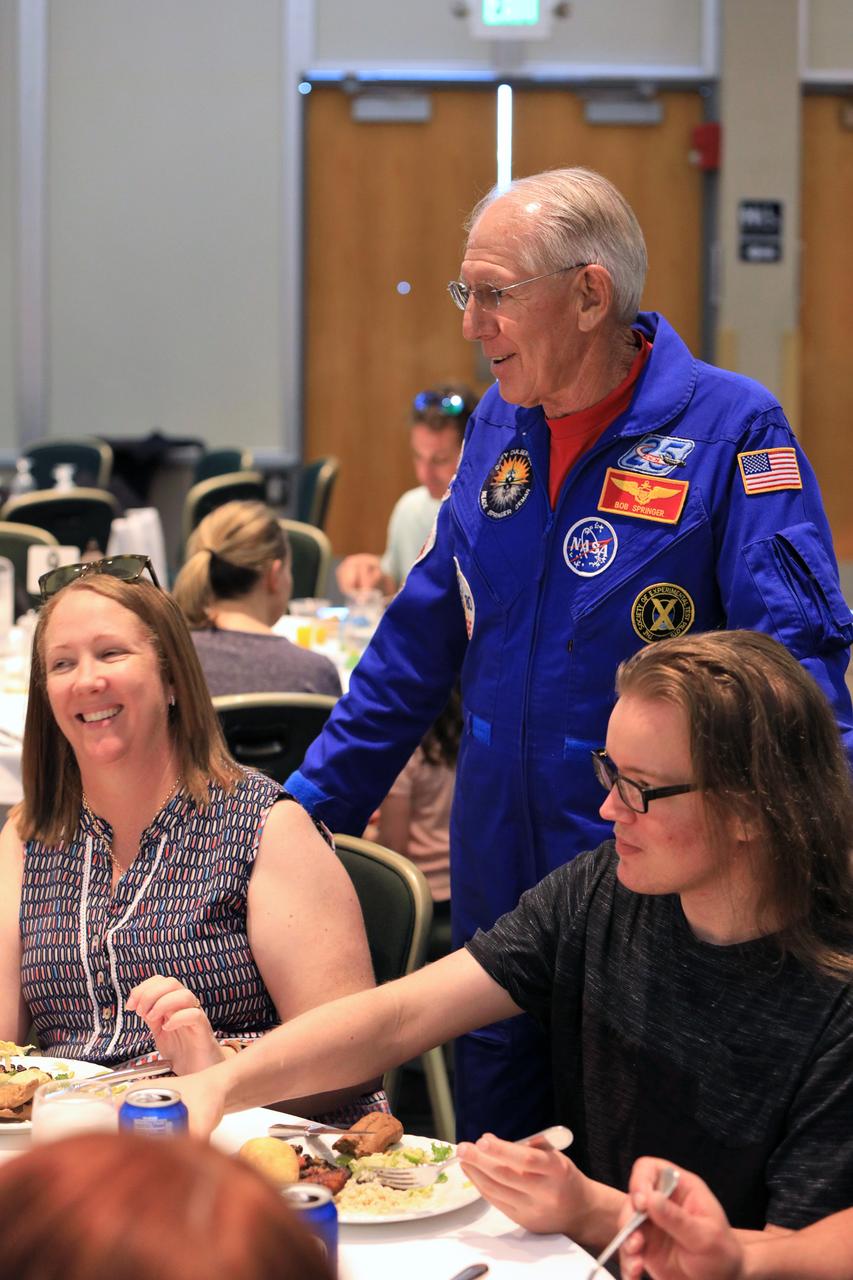
Retired NASA astronaut Bob Springer talks with students from Brevard County high schools during "Lunch with an Astronaut" at the NASA Kennedy Space Center Visitor Complex in Florida, on Nov. 7, 2018. The high school seniors were invited to Kennedy Space Center for a tour of facilities, lunch and a roundtable discussion with engineers, scientists and business experts at the center. The 2018 Brevard Top Scholars event was hosted by the center's Academic Engagement Office to honor the top three scholars of the 2018-2019 graduating student class from each of Brevard County’s public high schools. The students received a personalized certificate of recognition at the end of the day.
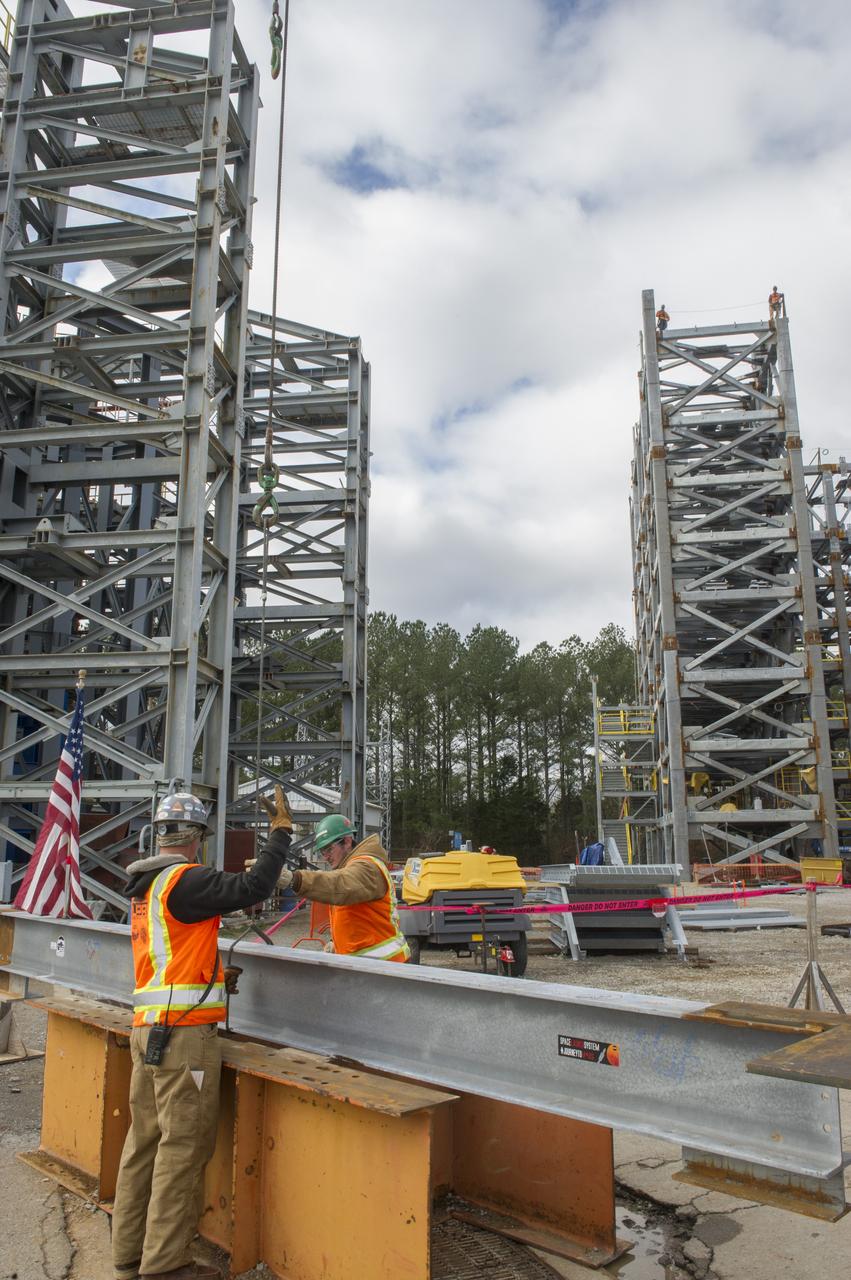
ON MARCH 4, CREW MEMBERS READIED A 900-POUND STEEL BEAM TO "TOP OUT" TEST STAND 4697, WHICH IS UNDER CONSTRUCTION TO TEST THE SPACE LAUNCH SYSTEM LIQUID OXYGEN TANK AT NASA'S MARSHALL SPACE FLIGHT CENTER.

Dr. Jose Nunez, at right, Flight Technology Branch chief in the Exploration Research and Technology Directorate, speaks to students from Brevard County high schools during a panel discussion session at the NASA Kennedy Space Center Visitor Complex in Florida, on Nov. 7, 2018. The high school seniors were invited to Kennedy Space Center for a tour of facilities, lunch and a roundtable discussion with engineers, scientists and business experts at the center. The 2018 Brevard Top Scholars event was hosted by the center's Academic Engagement Office to honor the top three scholars of the 2018-2019 graduating student class from each of Brevard County’s public high schools. The students received a personalized certificate of recognition at the end of the day.
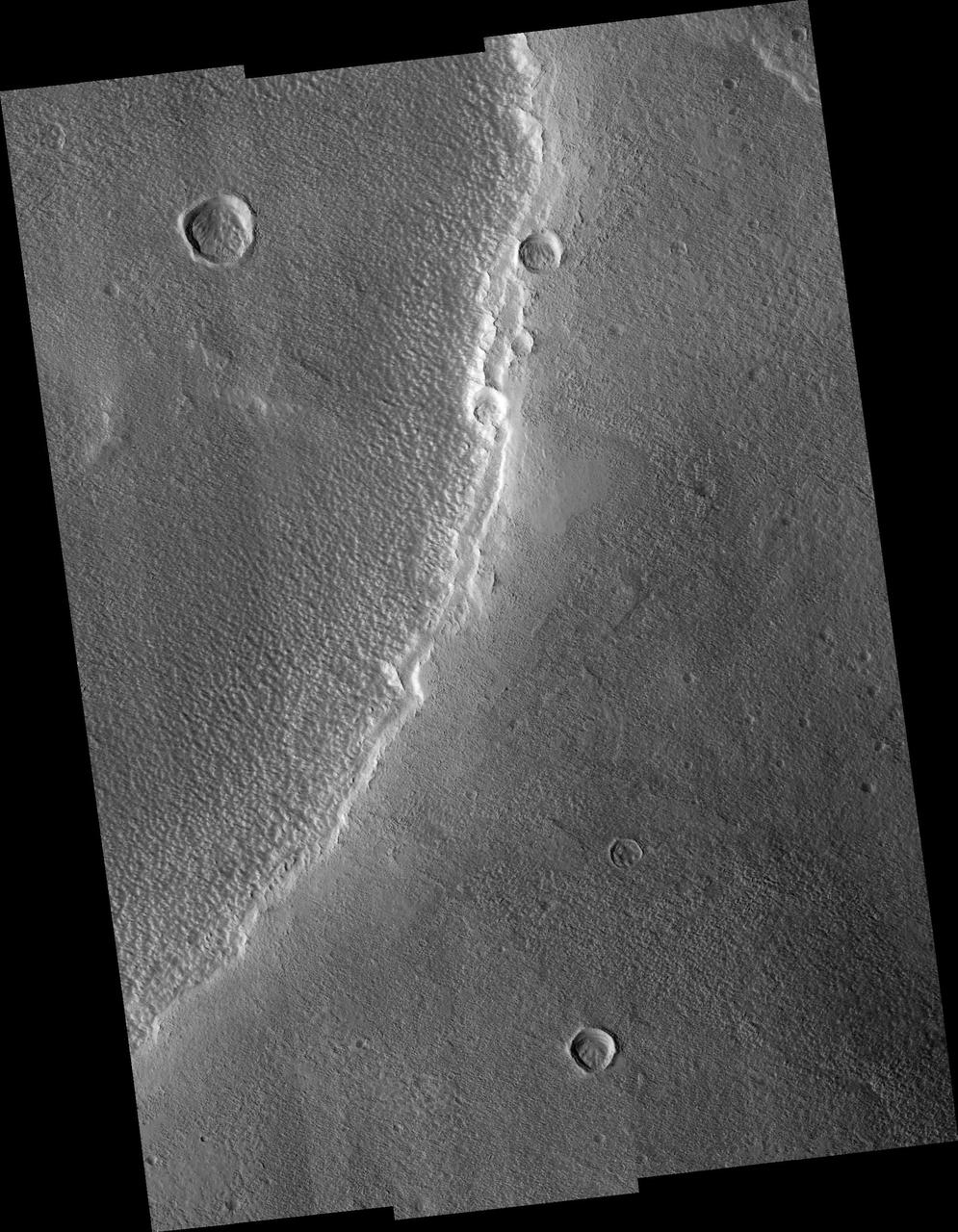
Dusty Top of Alba Patera Volcano
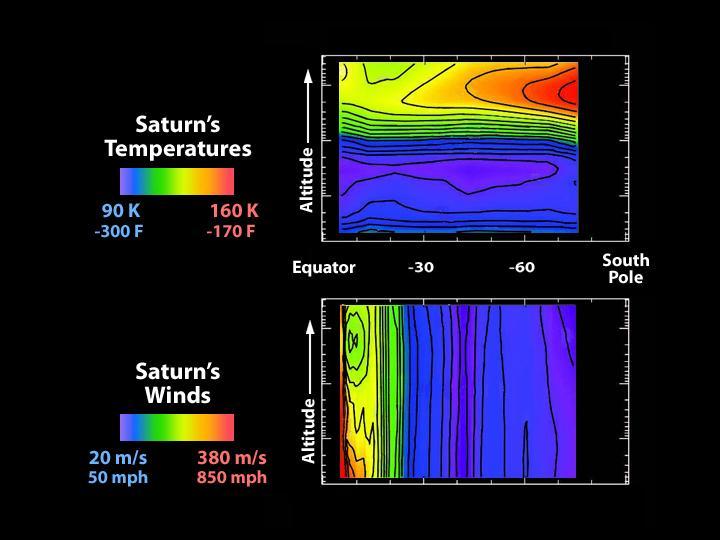
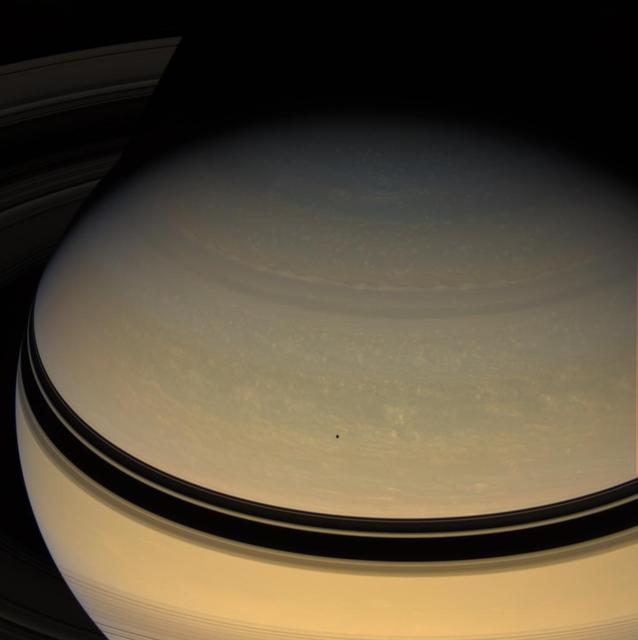
High Above Saturn Cloud Tops
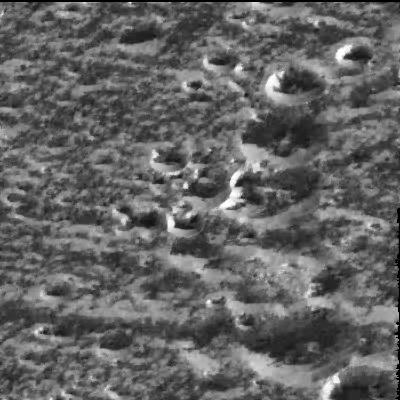
Ice-frosted crater tops on Ganymede
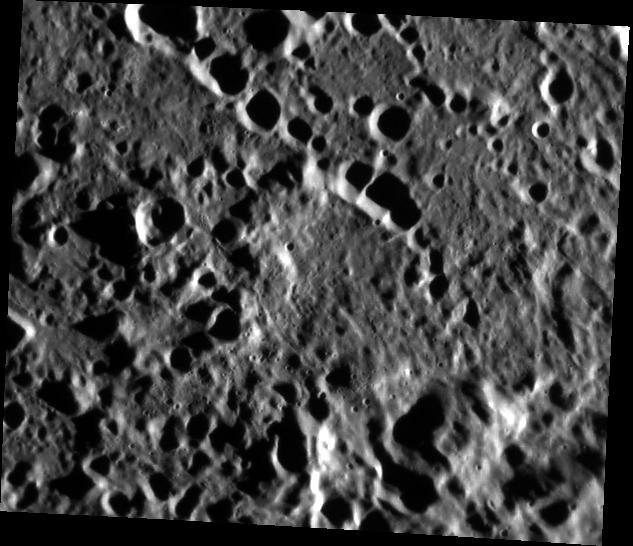
How Does It Feel to Be On Top of the World?

crew from Bottom to top: Warren “Woody” Hoburg, Stan Love, Jasmin Moghbeli, Raja Chari
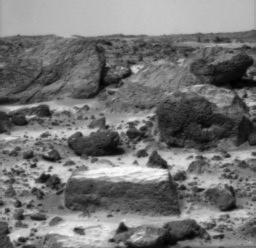
A close-up of the rectangular rock called "Flat Top" from NASA's Mars Pathfinder (MPF) rover Sojourner in July, 1997. http://photojournal.jpl.nasa.gov/catalog/PIA00626
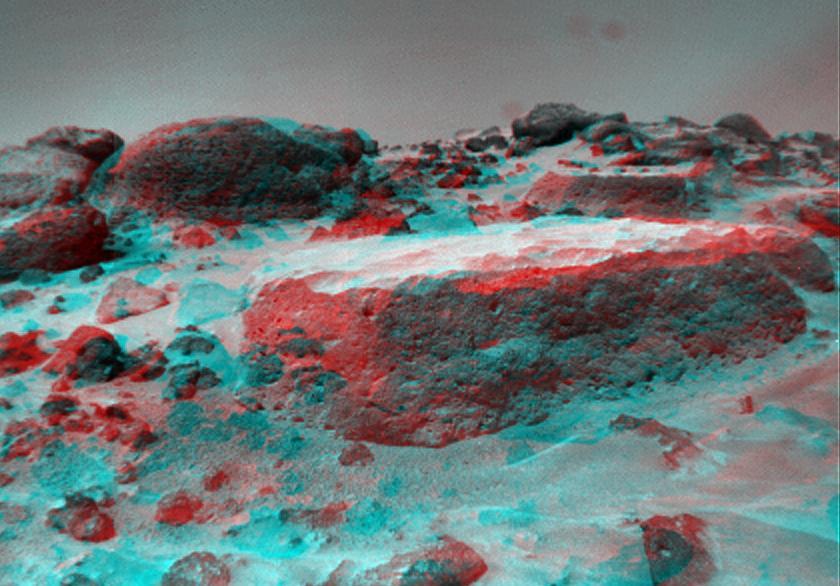
This anaglyph view of Flat Top, due south of the lander, was produced by NASA Mars Pathfinder Imager camera. 3D glasses are necessary to identify surface detail.
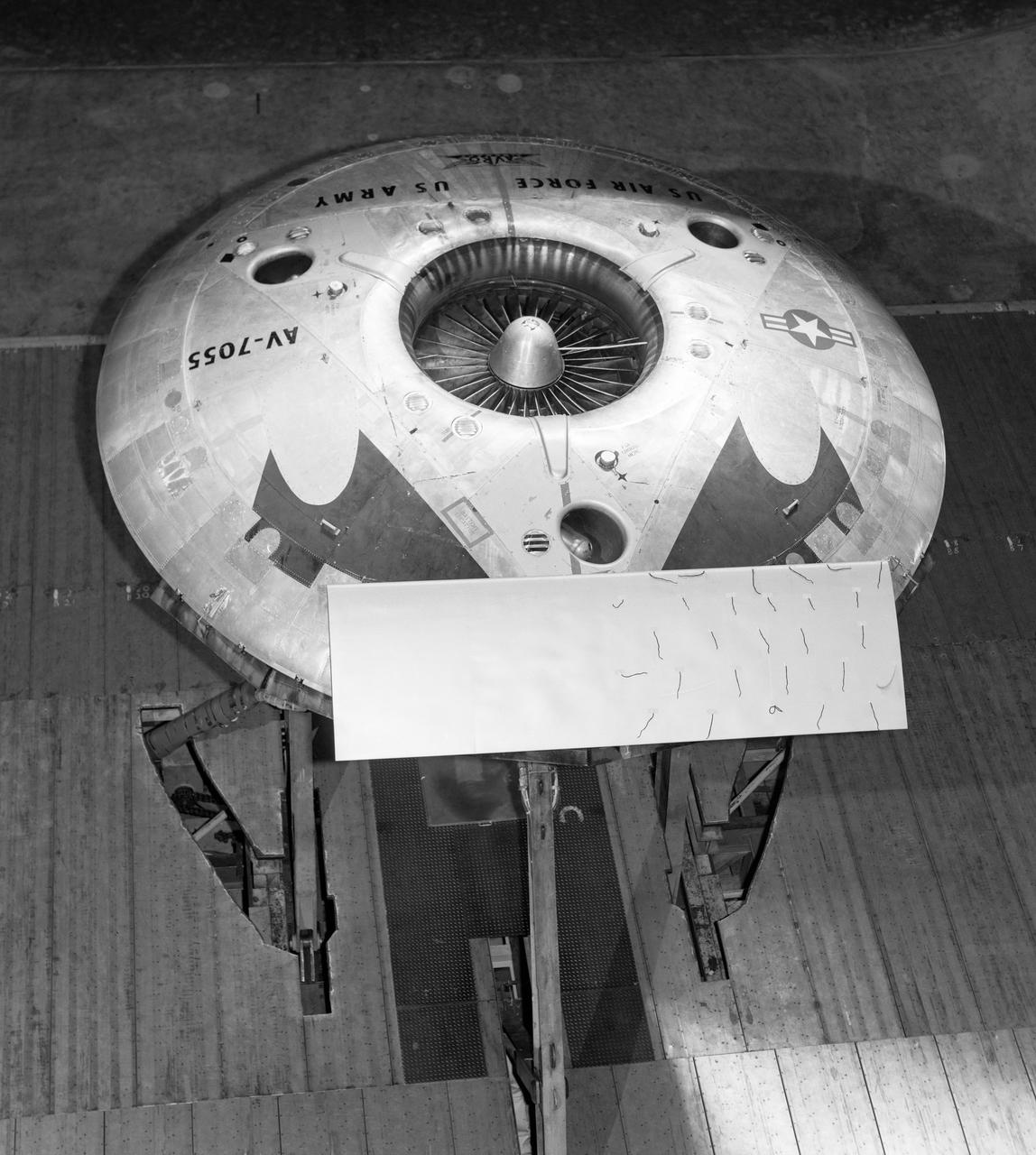
Top rear view of the avrocar with tail. Tufts (pieces of yarn) attached to top of horizontal tail. Avrocar mounted on variable height struts.
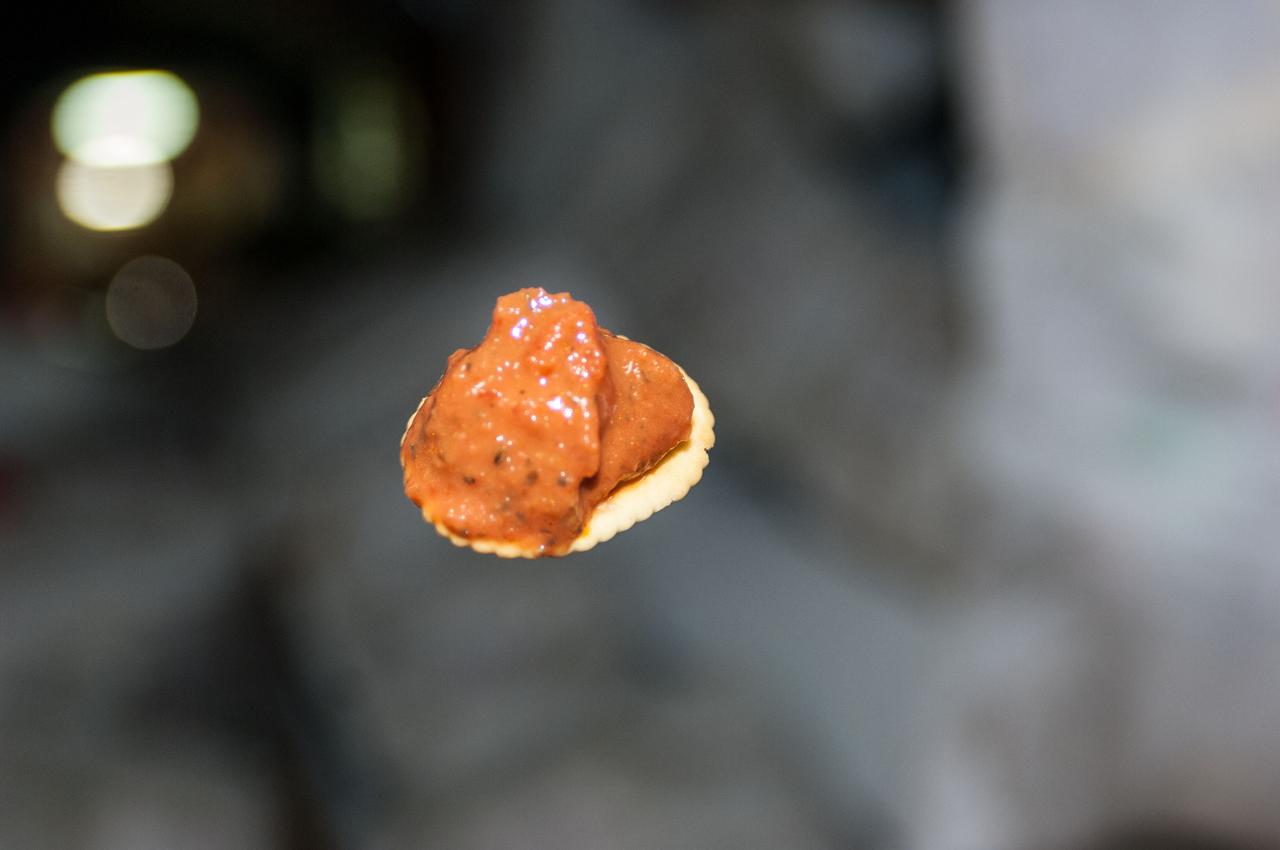
View of a cracker with food topping floating in an ISS modules as documented by the Expedition 36 crew.
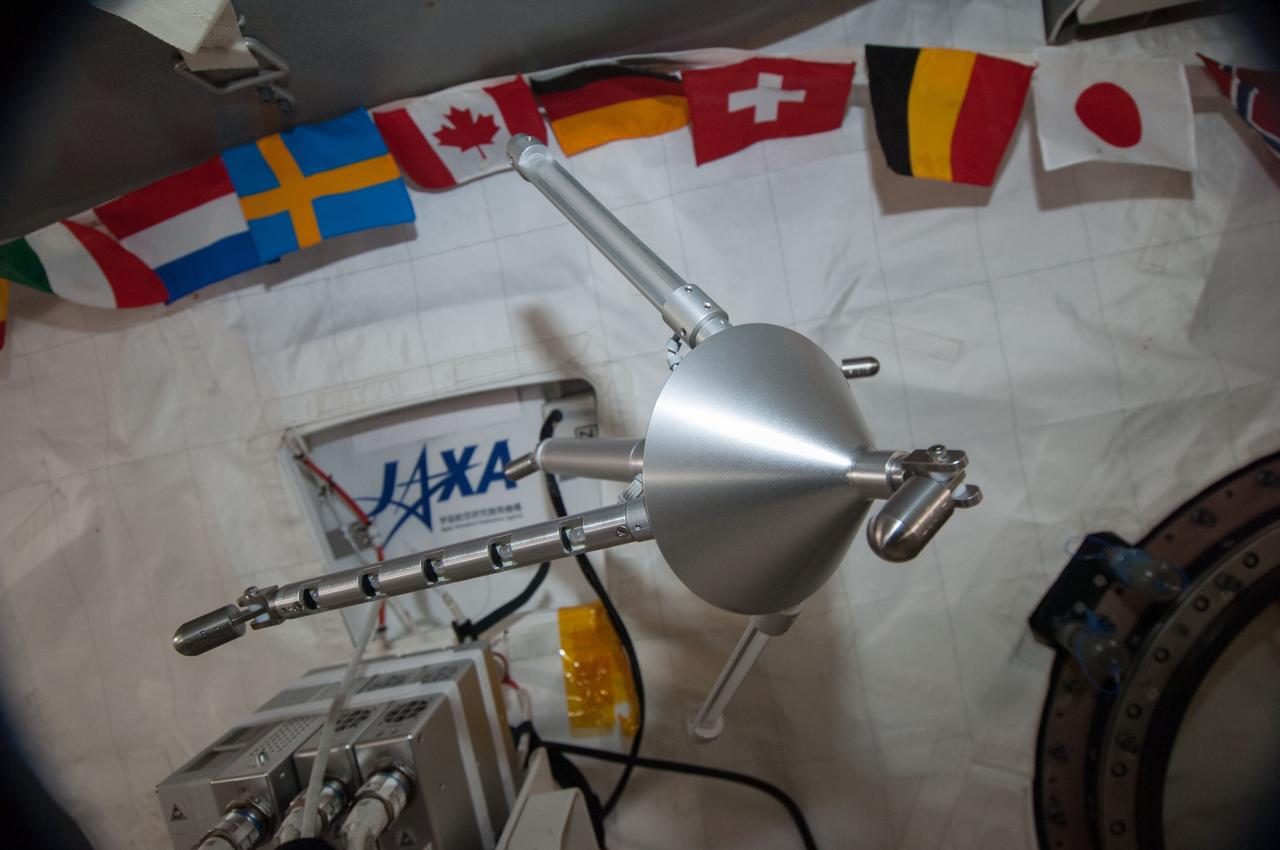
iss038e024926 (1/14/2020) --- View of light spirals from the Education Payload Observation (JAXA-EPO) experiment Spiral Top which aims to record the motion of a spinning top onboard the International Space Station (ISS). The photo was taken in the JAXA Experiment Module (JEM) Pressurized Module (JPM) aboard the International Space Station (ISS).
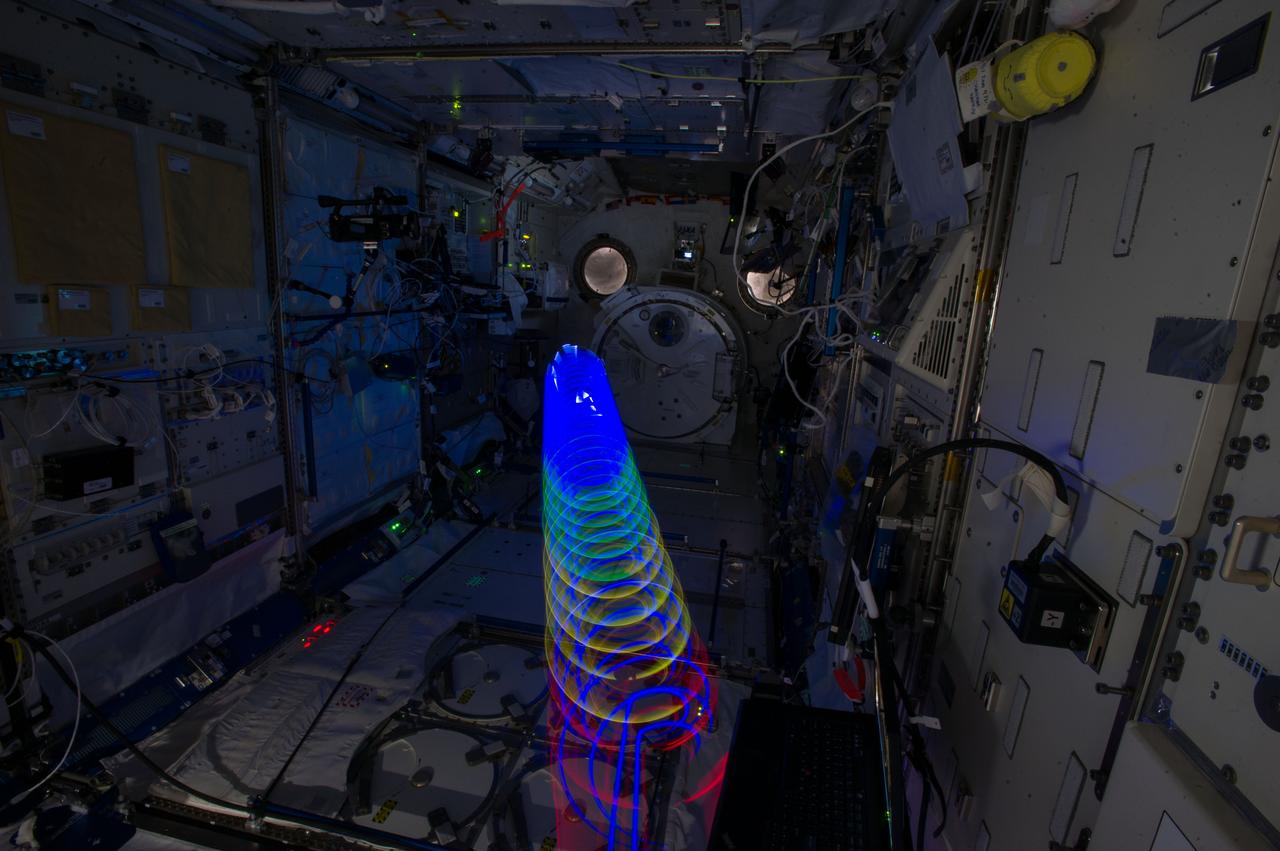
iss038e024980 (1/14/2020) --- View of light spirals from the Education Payload Observation (JAXA-EPO) experiment Spiral Top which aims to record the motion of a spinning top onboard the International Space Station (ISS). The photo was taken in the JAXA Experiment Module (JEM) Pressurized Module (JPM) aboard the International Space Station (ISS).
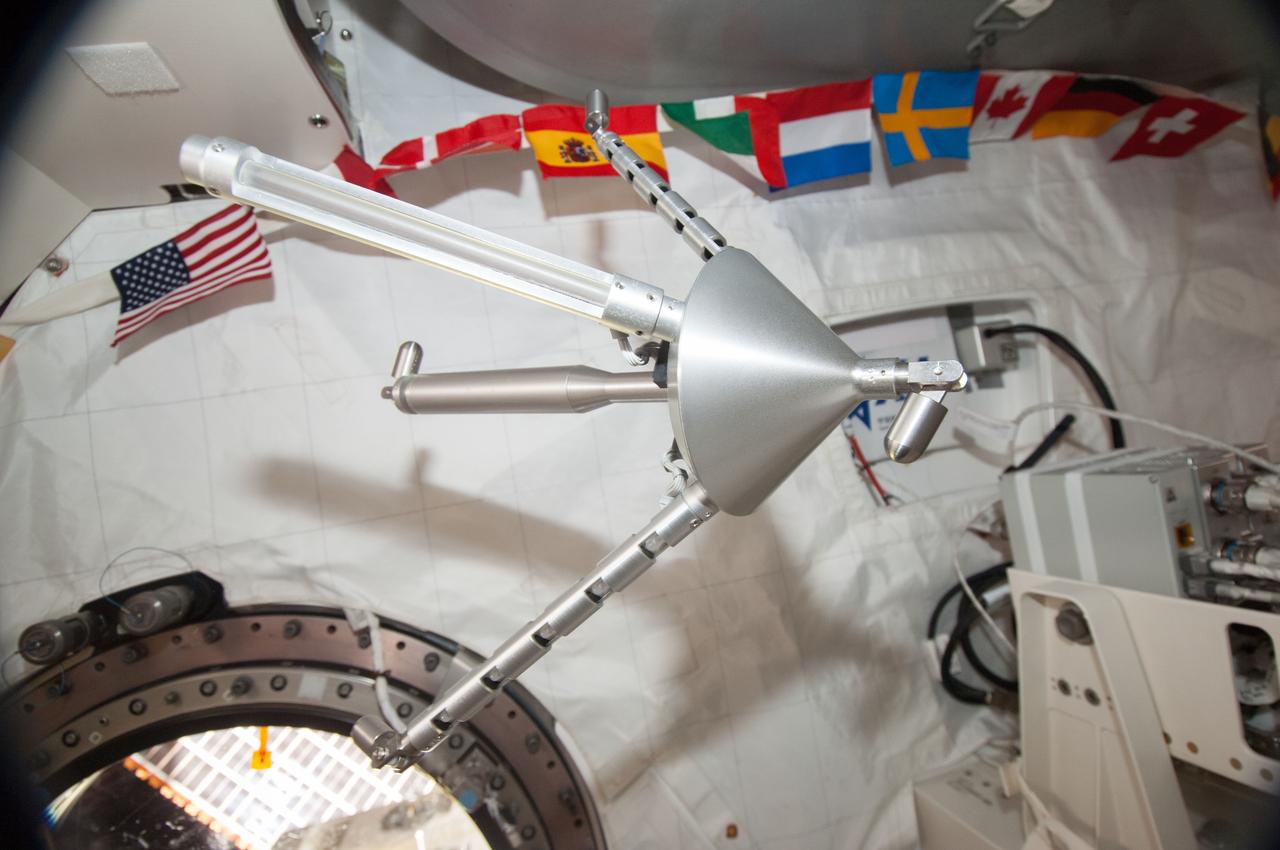
iss038e024925 (1/14/2020) --- View of light spirals from the Education Payload Observation (JAXA-EPO) experiment Spiral Top which aims to record the motion of a spinning top onboard the International Space Station (ISS). The photo was taken in the JAXA Experiment Module (JEM) Pressurized Module (JPM) aboard the International Space Station (ISS).
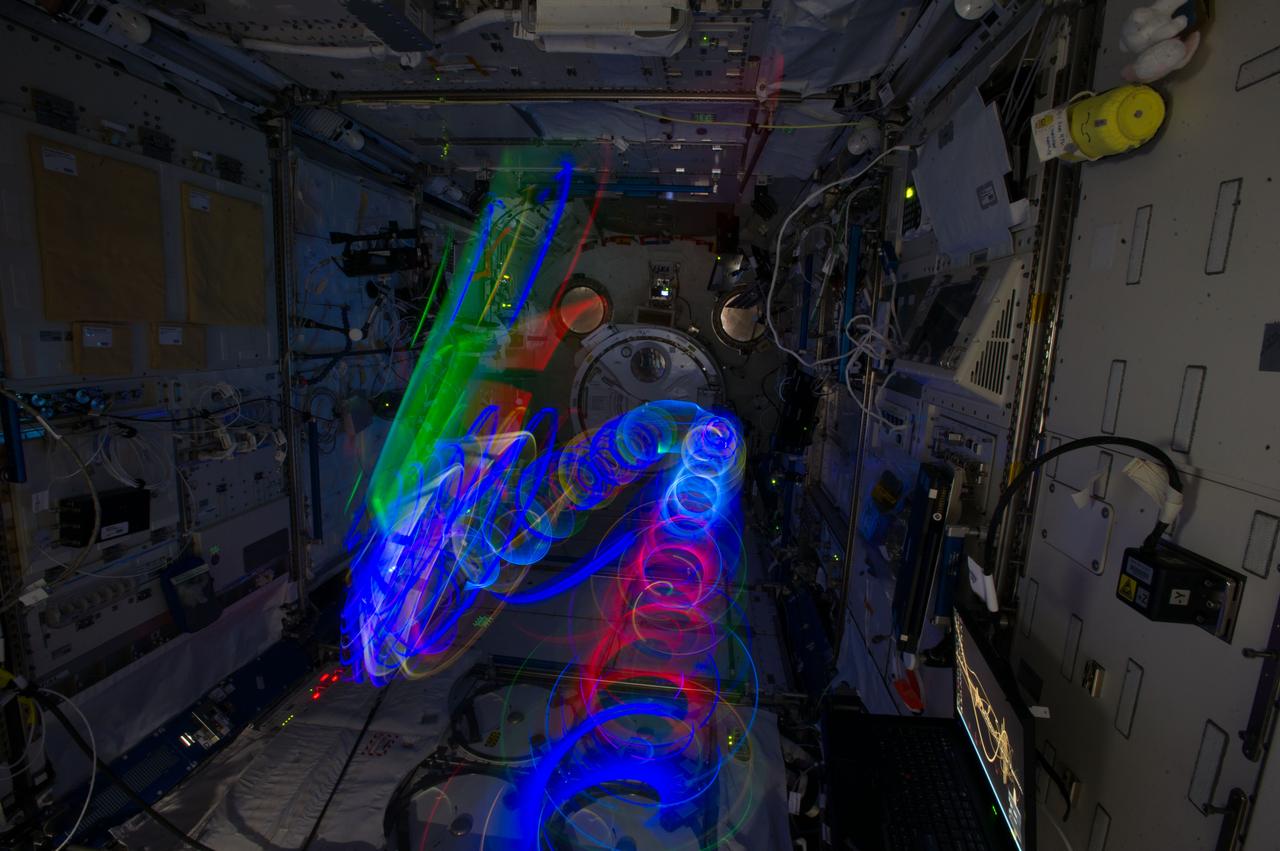
iss038e024991 (1/14/2020) --- View of light spirals from the Education Payload Observation (JAXA-EPO) experiment Spiral Top which aims to record the motion of a spinning top onboard the International Space Station (ISS). The photo was taken in the JAXA Experiment Module (JEM) Pressurized Module (JPM) aboard the International Space Station (ISS).
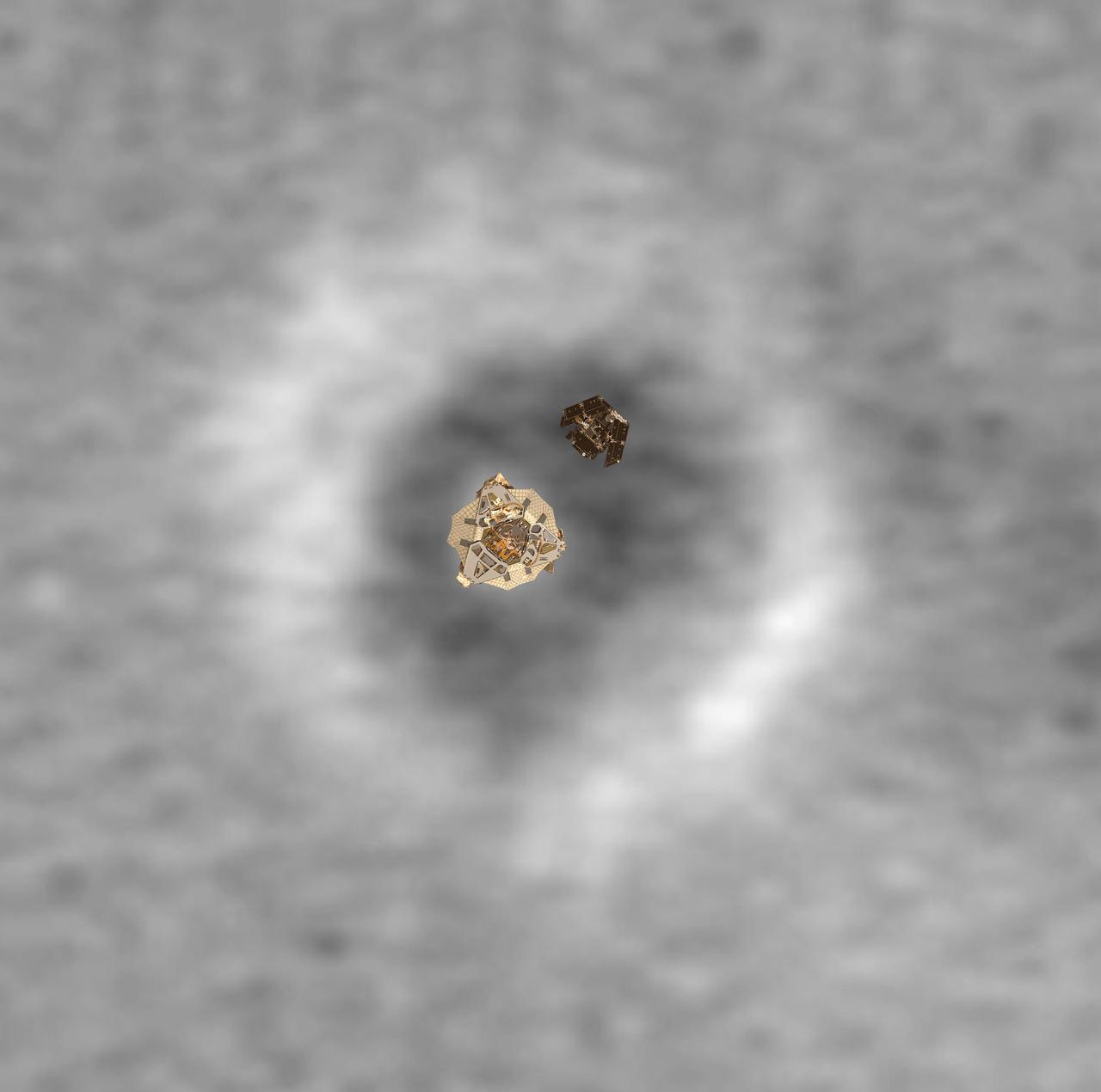
Top View of a Computer Graphic Model of the Opportunity Lander and Rover
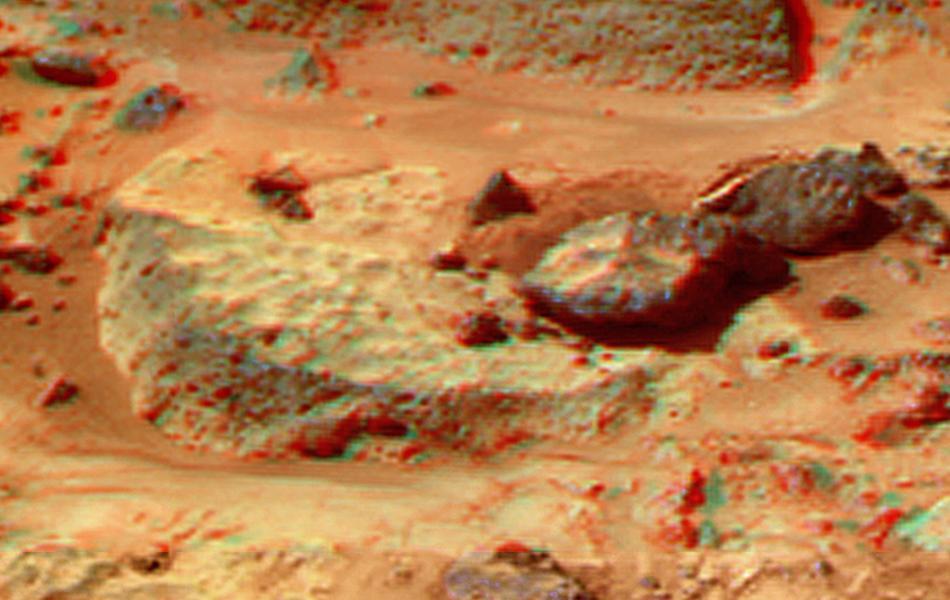
This anaglyph view of Flute Top was produced by NASA Mars Pathfinder Imager camera. 3D glasses are necessary to identify surface detail.
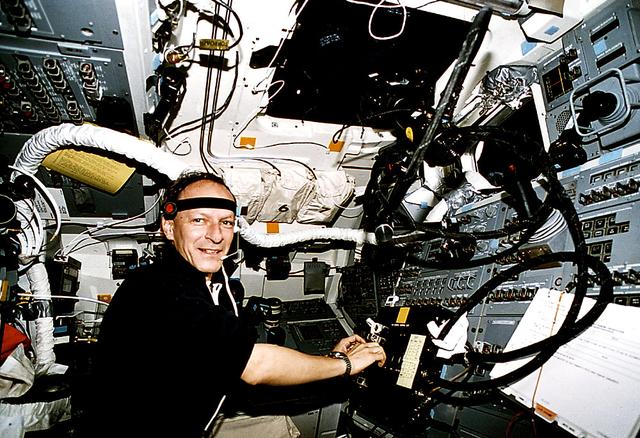
This Space Shuttle Orbiter Atlantis (STS-46) onboard photo shows Swiss scientist Claude Nicollier of the European Space Agency (ESA) supporting the Tether Opitical Phenomena (TOP) activities on the flight deck. The Tethered Satellite System (TSS) was a cooperative development effort by the Italian Space Agency (ASI) and NASA made capable of deploying and retrieving a satellite which is attached by a wire tether from distances up to 100 km from the Orbiter. These free-flying satellites are used as observation platforms outside of the Orbiter.
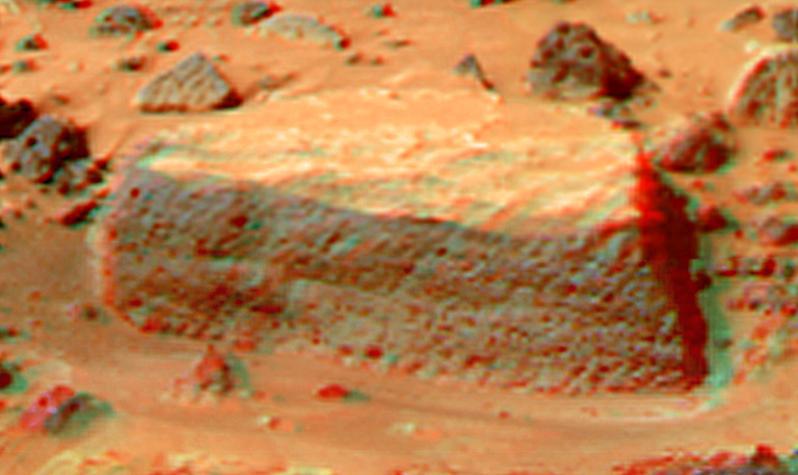
This anaglyph view of Flat Top, due south of the lander, was produced by NASA Mars Pathfinder Imager camera. 3D glasses are necessary to identify surface detail.
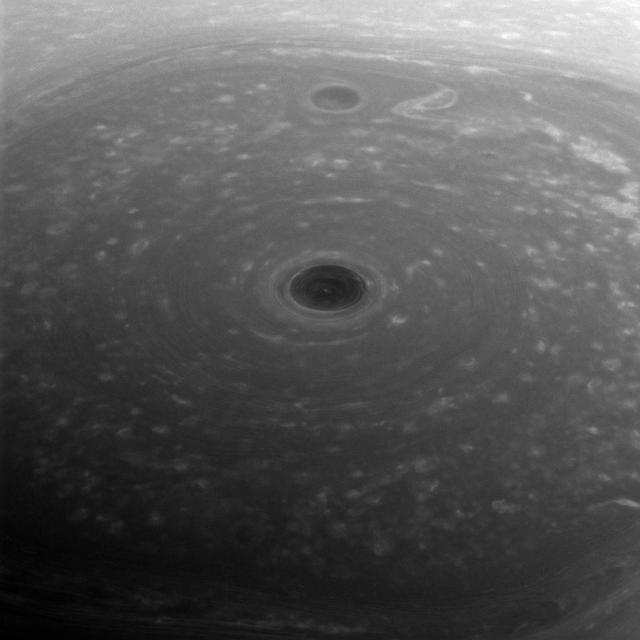
These turbulent clouds are on top of the world at Saturn. NASA's Cassini spacecraft captured this view of Saturn's north pole on April 26, 2017 - the day it began its Grand Finale -- as it approached the planet for its first daring dive through the gap between the planet and its rings. Although the pole is still bathed in sunlight at present, northern summer solstice on Saturn occurred on May 24, 2017, bringing the maximum solar illumination to the north polar region. Now the Sun begins its slow descent in the northern sky, which eventually will plunge the north pole into Earth-years of darkness. Cassini's long mission at Saturn enabled the spacecraft to see the Sun rise over the north, revealing that region in great detail for the first time. This view looks toward the sunlit side of the rings from about 44 degrees above the ring plane. The image was taken with the Cassini spacecraft wide-angle camera using a spectral filter which preferentially admits wavelengths of near-infrared light centered at 752 nanometers. The view was obtained at a distance of approximately 166,000 miles (267,000 kilometers) from Saturn. Image scale is about 10 miles (16 kilometers) per pixel. https://photojournal.jpl.nasa.gov/catalog/PIA21343

Venus Cloud Tops Viewed by Hubble. This is a NASA Hubble Space Telescope ultraviolet-light image of the planet Venus, taken on January 24 1995, when Venus was at a distance of 70.6 million miles 113.6 million kilometers from Earth.
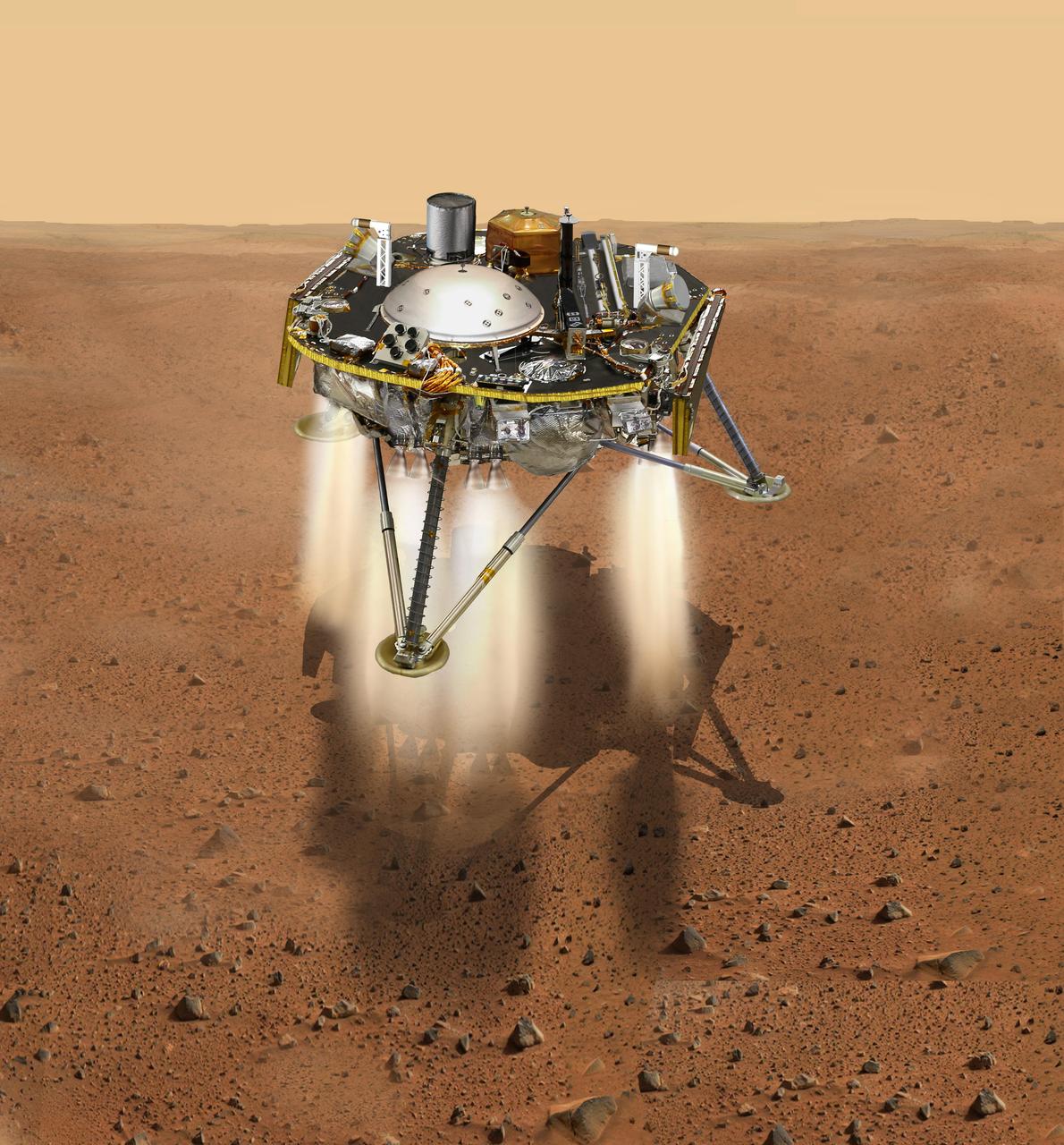
This is an illustration showing a simulated view of NASA's InSight about to land on the surface of Mars. This view shows the top of the spacecraft. https://photojournal.jpl.nasa.gov/catalog/PIA22813
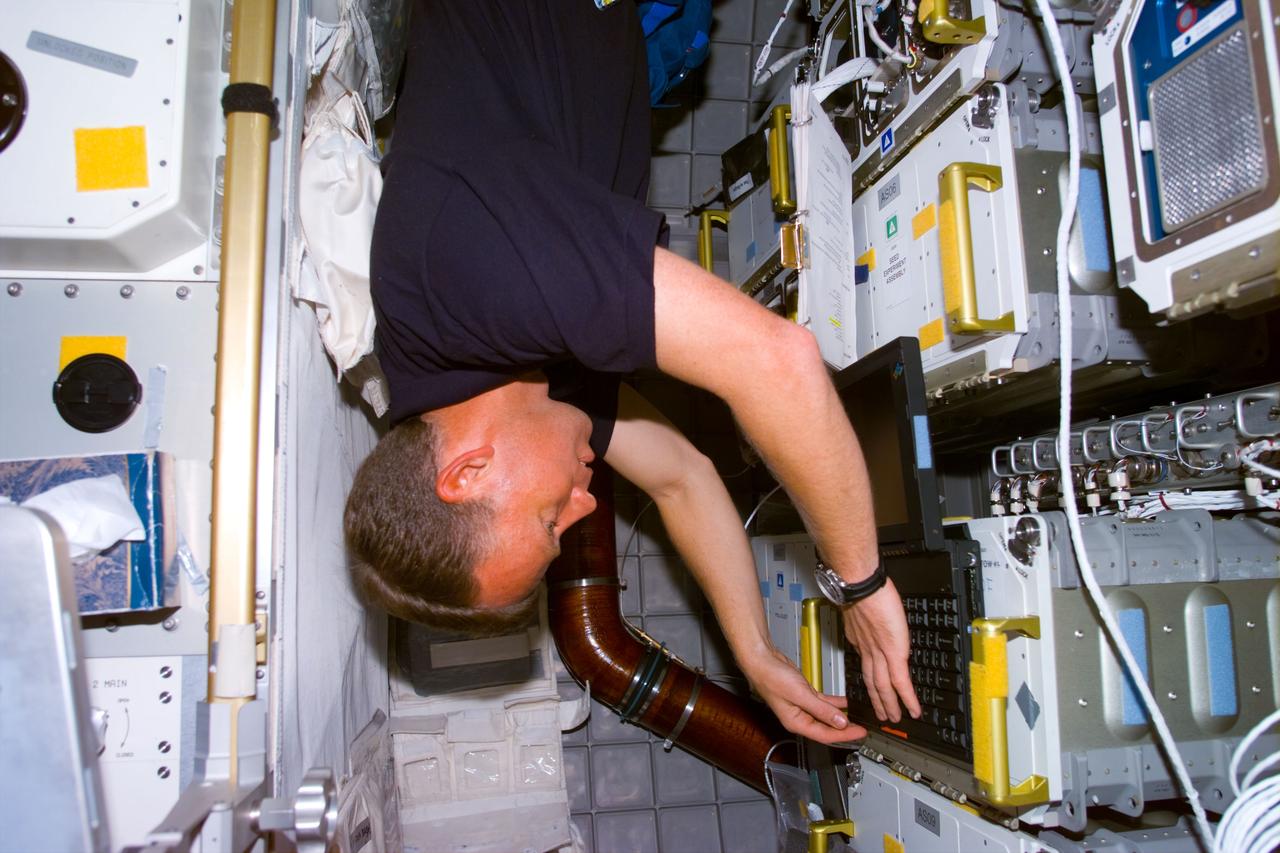
STS095-E-5218 (4 Nov. 1998) --- Astronaut Steven W. Lindsey, STS-95 pilot, inputs data on a lap top computer in the Spacehab facility onboard the Space Shuttle Discovery. The photo was taken with an electronic still camera (ESC) at 02:58:43 GMT, Nov. 4.
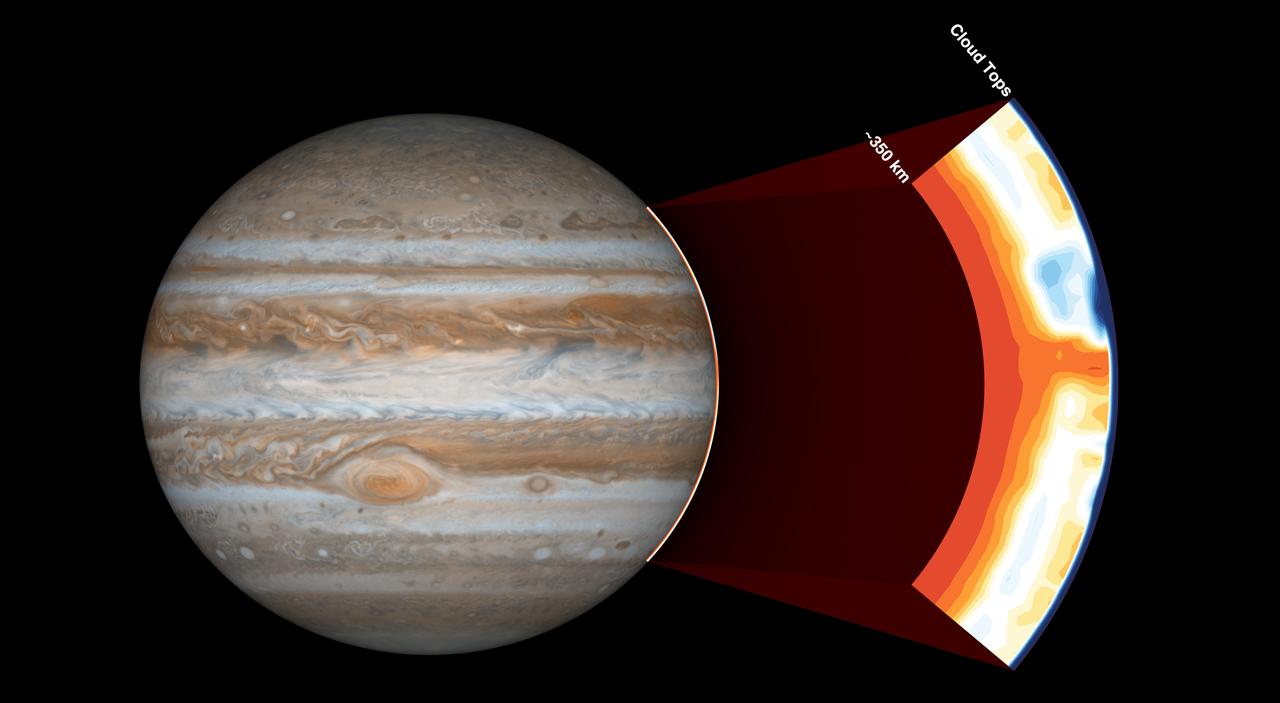
NASA's Juno spacecraft carries an instrument called the Microwave Radiometer, which examines Jupiter's atmosphere beneath the planet's cloud tops. This image shows the instrument's view of the outer part of Jupiter's atmosphere. Before Juno began using this instrument, scientists expected the atmosphere to be uniform at depths greater than 60 miles (100 kilometers). But with the Microwave Radiometer, scientists have discovered that the atmosphere has variations down to at least 220 miles (350 kilometers), as deep as the instrument can see. In the cut-out image to the right, orange signifies high ammonia abundance and blue signifies low ammonia abundance. Jupiter appears to have a band around its equator high in ammonia abundance, with a column shown in orange. This is contrary to scientists' expectations that ammonia would be uniformly mixed. https://photojournal.jpl.nasa.gov/catalog/PIA21642

BOB DEVLIN, DEPUTY DIRECTOR OF MARSHALL'S OFFICE OF CENTER OPERATIONS, SPEAKS TO THE CROWD IN FRONT OF A STEEL BEAM DESTINED FOR TEST STAND 4693 DURING THE STRUCTURE'S TOPPING OUT CEREMONY APRIL 12.
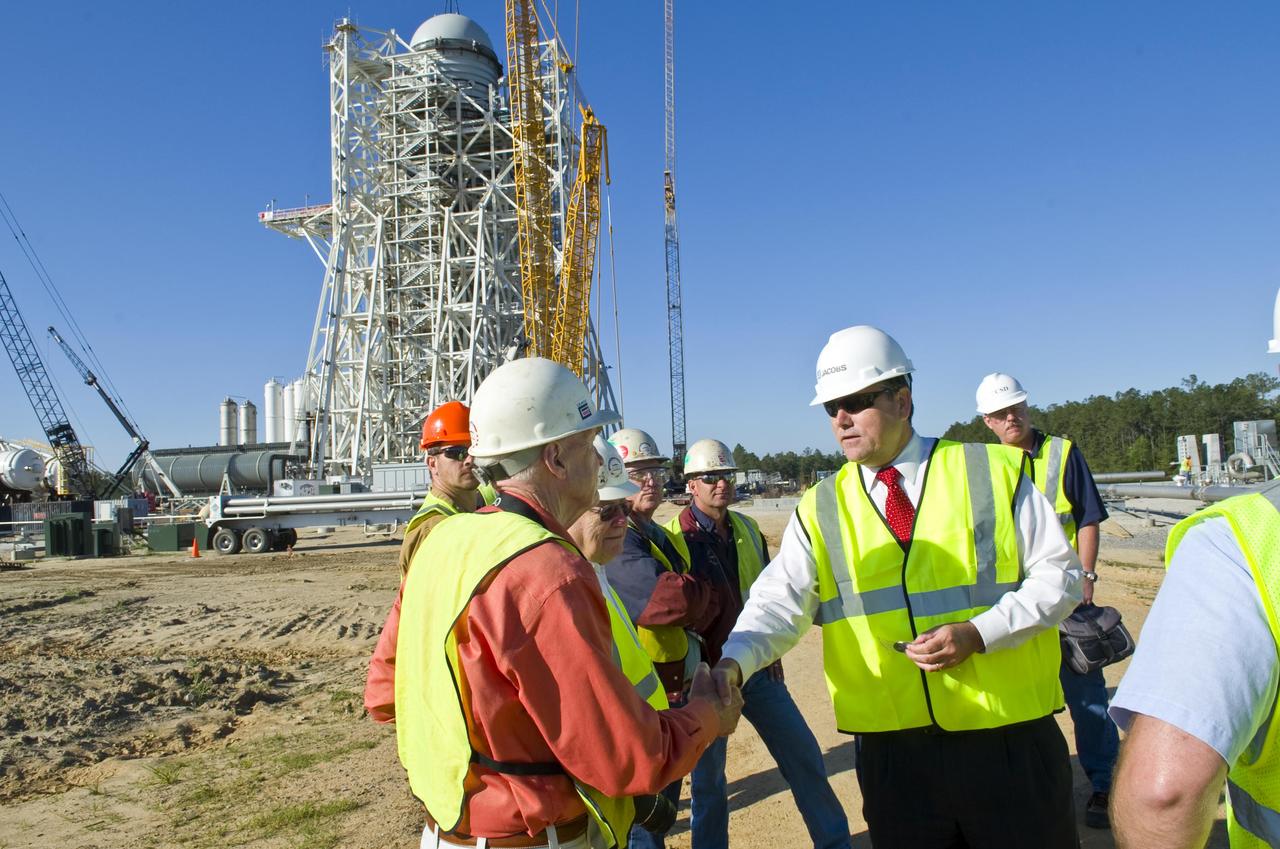
Stennis Space Center Director Patrick Scheuermann presents center director coins to employees following the 'topping out' of the A-3 Test Stand with placement of test cell dome on April 13. The stand is the first large test structure built at Stennis since the 1960s.
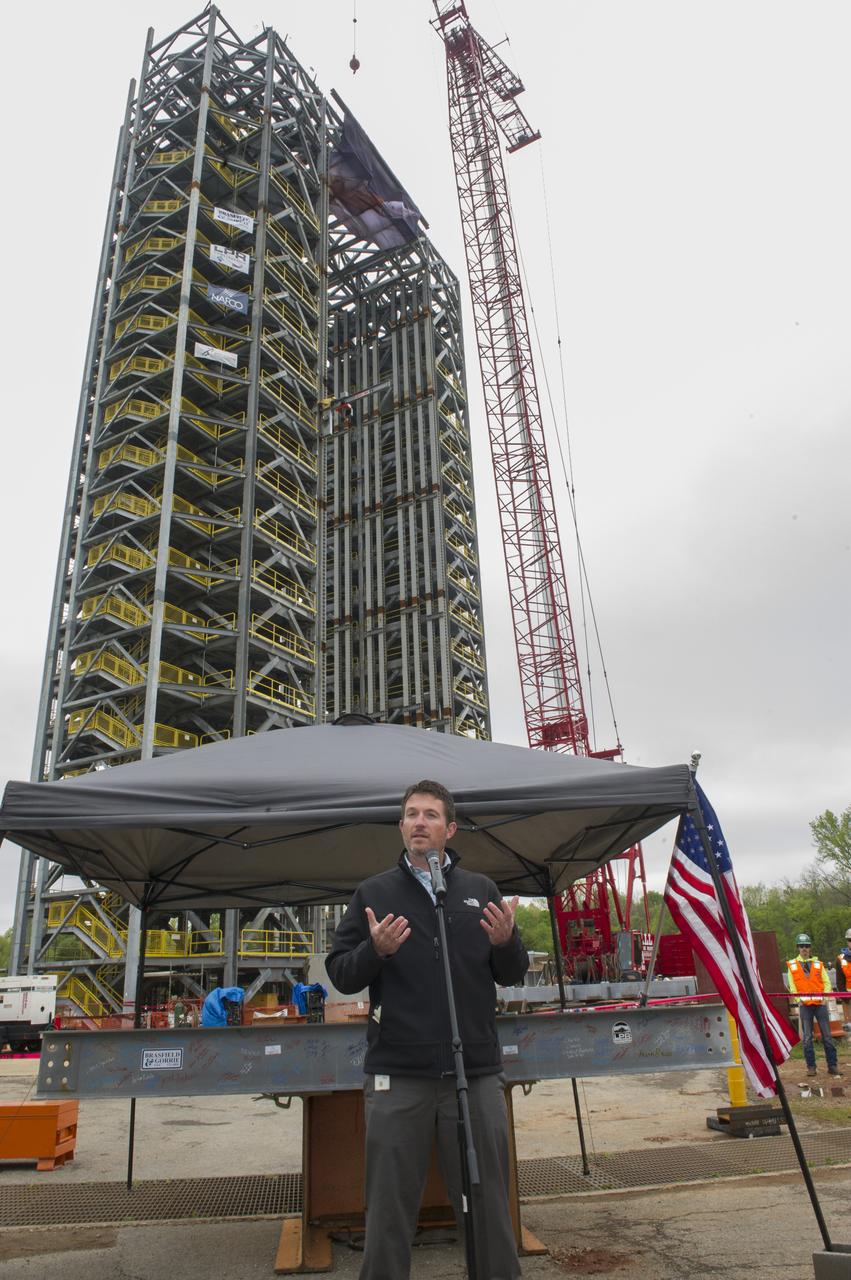
PHIL HENDRIX, SPEAKS TO THE CROWD IN FRONT OF A STEEL BEAM DESTINED FOR TEST STAND 4693 DURING THE STRUCTURE'S TOPPING OUT CEREMONY APRIL 12.
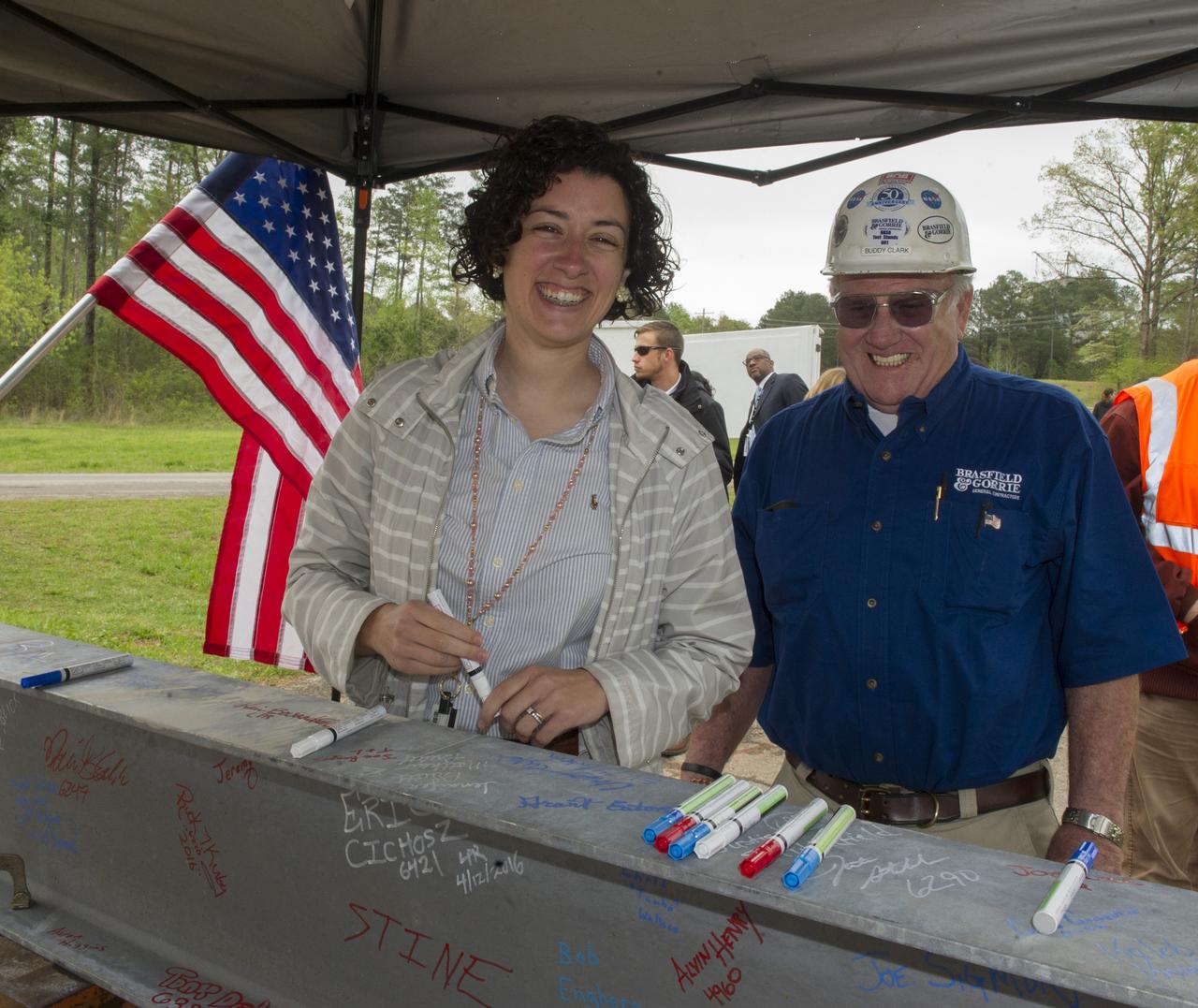
JENNIFER PRUITT AND BUDDY CLARK SMILE FOR THE CAMERA BEFORE SIGNING THE FINAL BEAM TO BE PLACED ATOP TEST STAND 4693 DURING THE STRUCTURE'S TOPPING OUT CEREMONY
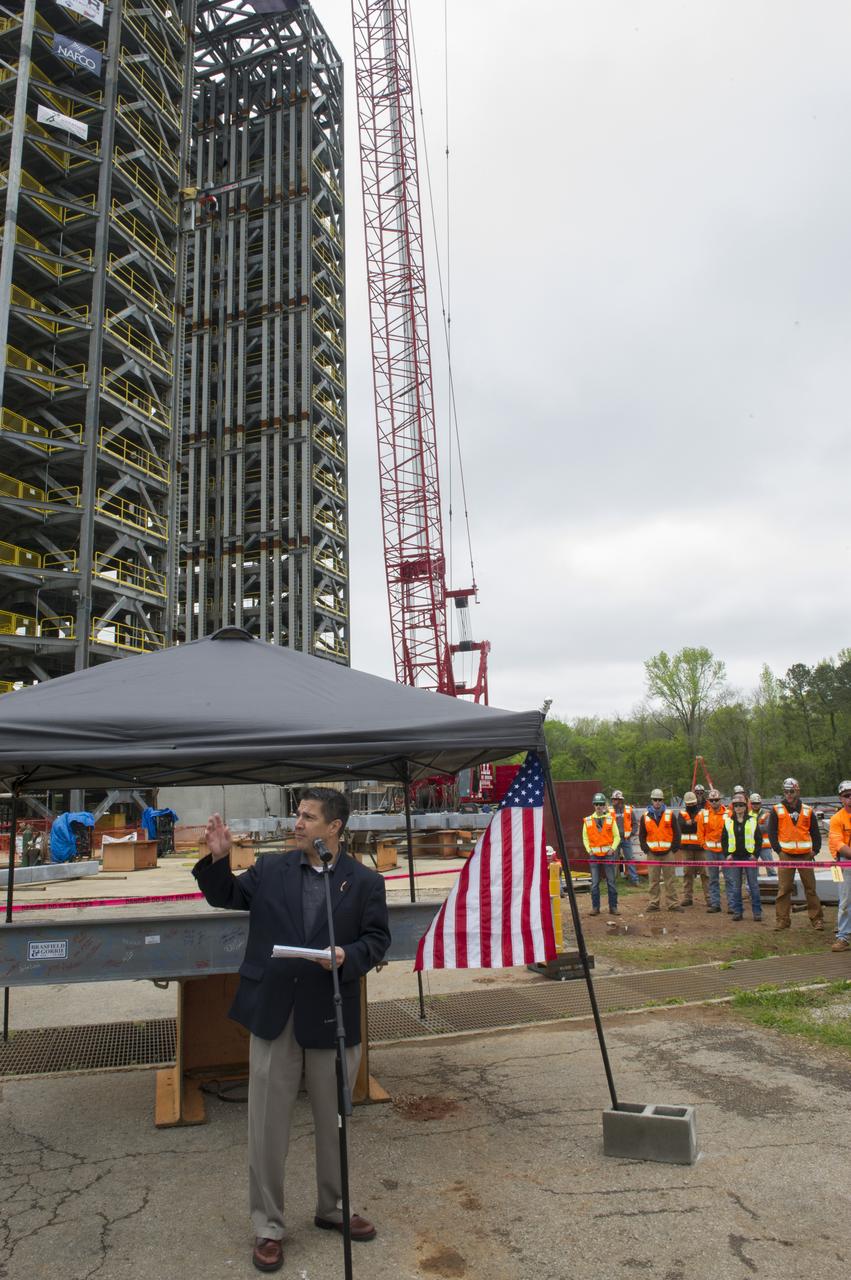
TIM FLORES SPEAKS TO THE CROWD IN FRONT OF A STEEL BEAM DESTINED FOR TEST STAND 4693 DURING THE STRUCTURE'S TOPPING OUT CEREMONY APRIL 12.
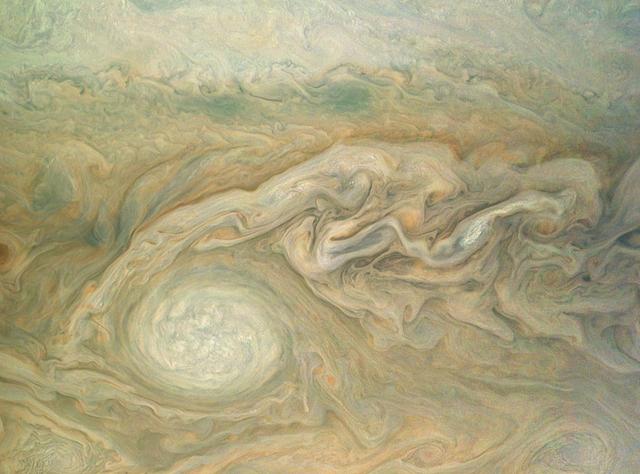
This enhanced color view of Jupiter's cloud tops was processed by citizen scientist Bjorn Jonsson using data from the JunoCam instrument on NASA's Juno spacecraft. The image highlights a massive counterclockwise rotating storm that appears as a white oval in the gas giant's southern hemisphere. Juno acquired this image on Feb. 2, 2017, at 6:13 a.m. PDT (9:13 a.m. EDT), as the spacecraft performed a close flyby of Jupiter. When the image was taken, the spacecraft was about 9,000 miles (14,500 kilometers) from the planet. https://photojournal.jpl.nasa.gov/catalog/PIA21391
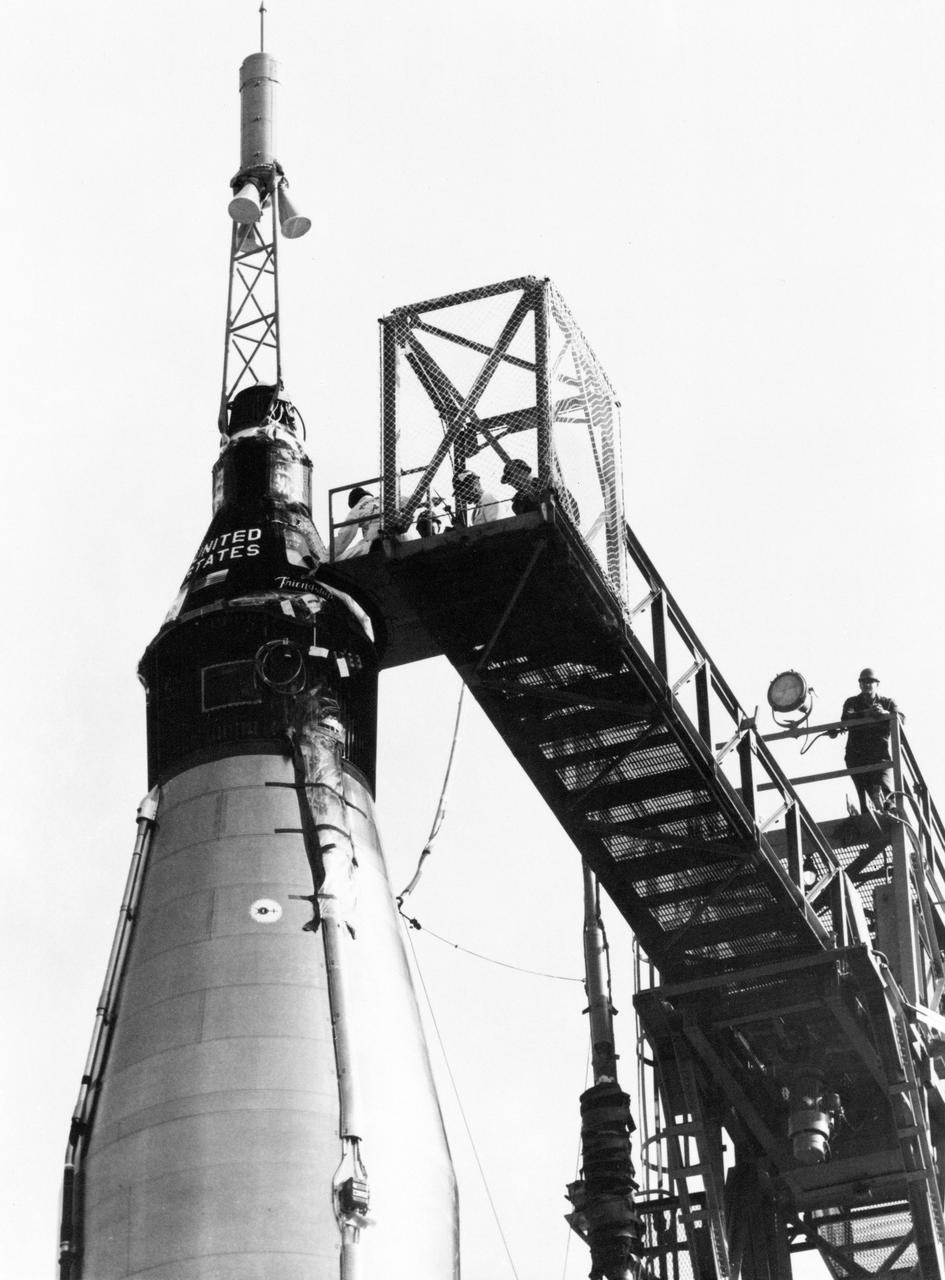
S62-00380 (20 Feb. 1962) --- Close-up view of the Mercury Atlas 6 (MA-6) Friendship 7 capsule on top of its booster rocket with catwalk still attached. Photo credit: NASA
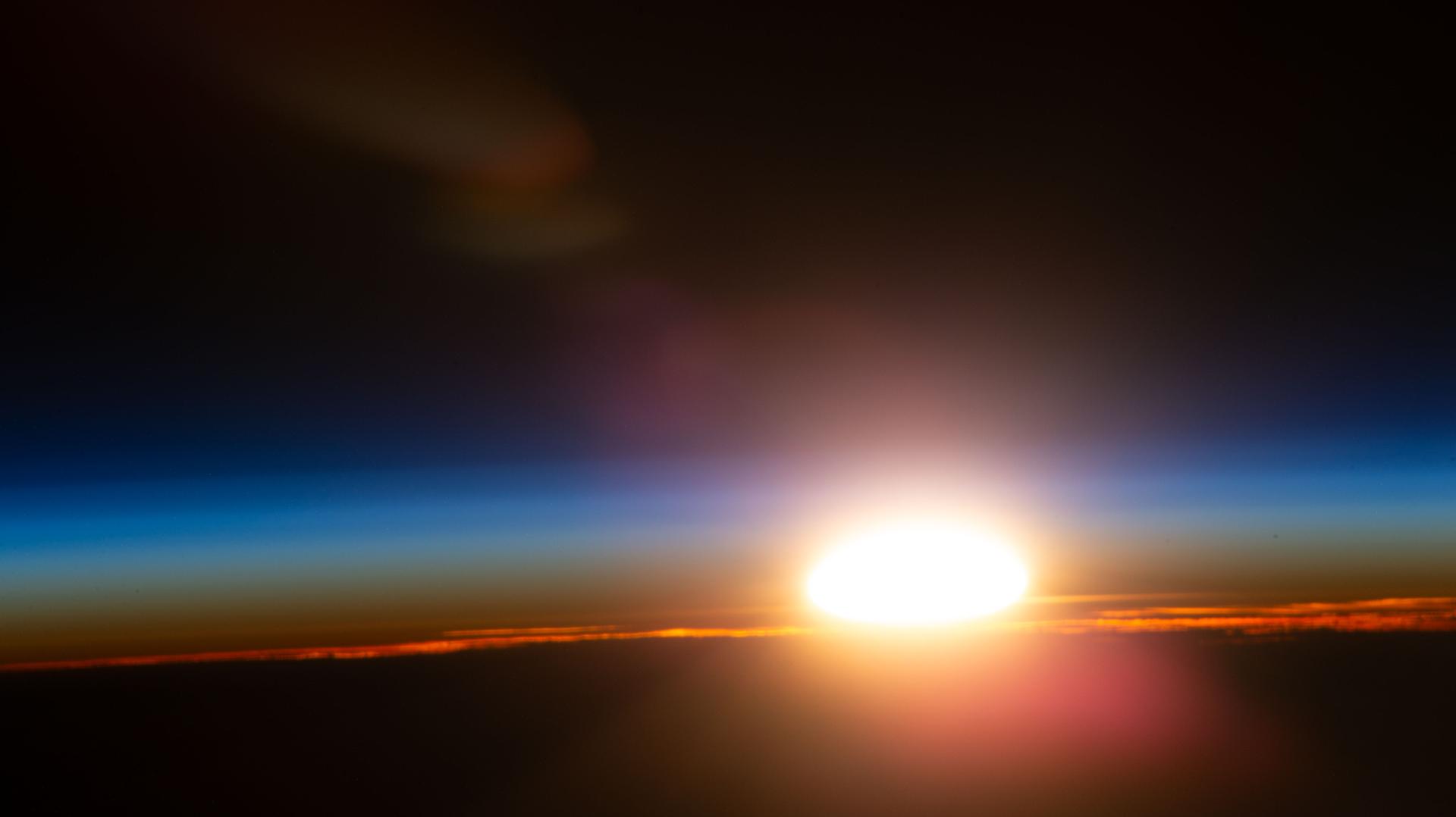
iss073e0988954 (Oct. 30, 2025) --- An orbital sunrise illuminates Earth's atmosphere and cloud tops in this photograph captured from the International Space Station as it orbited 264 miles above the Czech Republic in Eastern Europe.
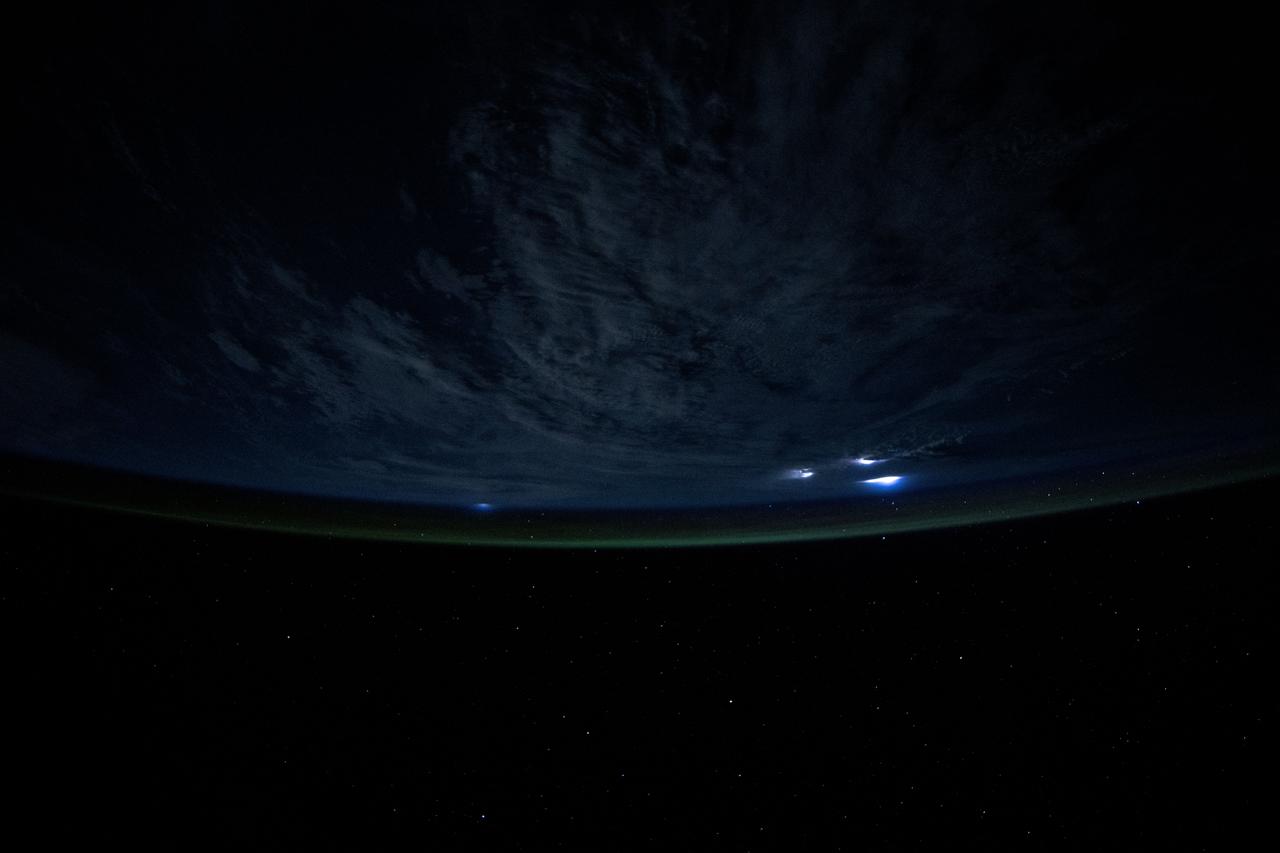
iss073e0111251 (May 18, 2025) --- Lightining illuminates the cloud tops during a storm underneath Earth's atmospheric glow in this photograph from the International Space Station as it orbited 259 miles above the Atlantic Ocean east of the Bahamas.
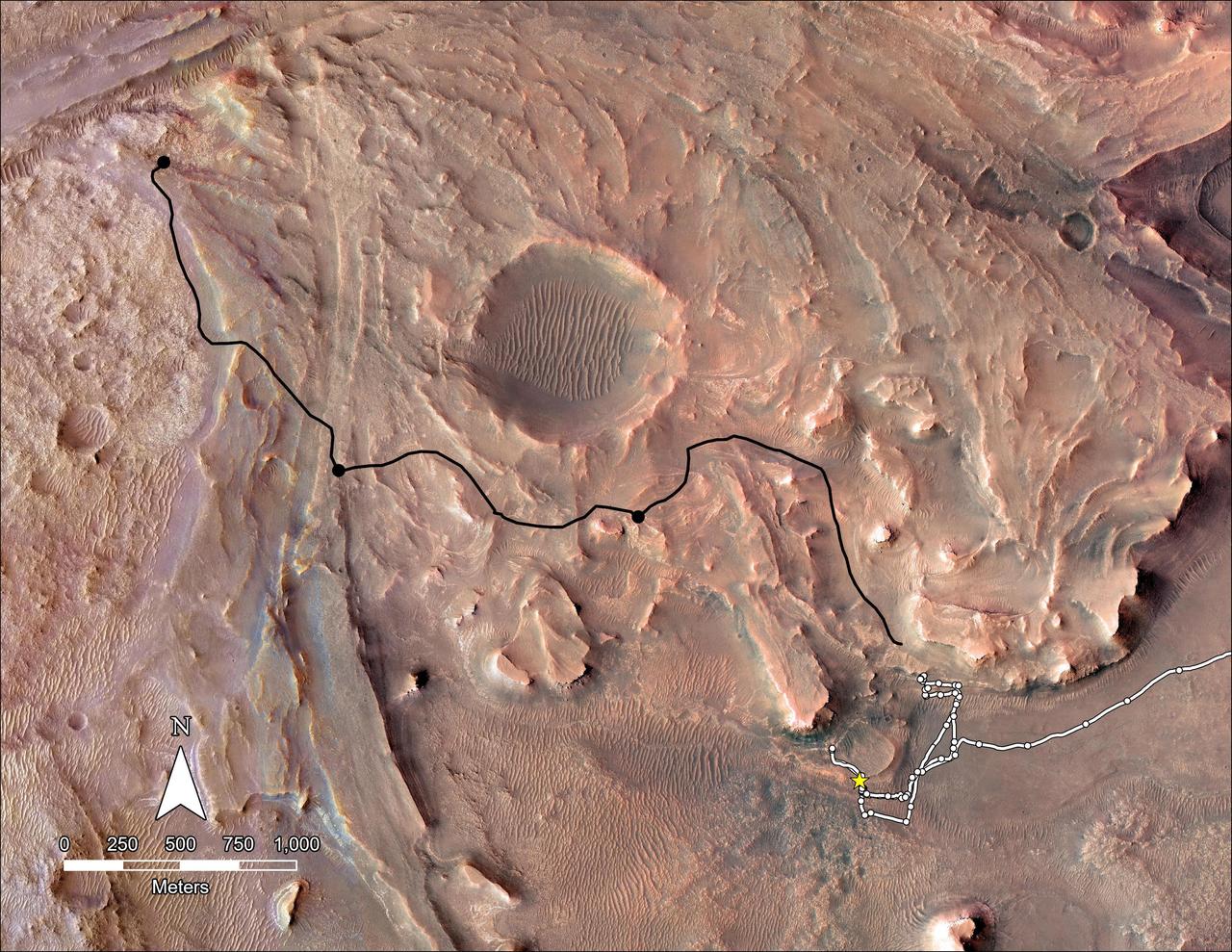
This map shows the planned route NASA's Perseverance Mars rover will take across the top of Jezero Crater's delta in 2023. The rover's planned route is in black, with black dots representing notional waypoints for science or sampling along the way, while the ground it already covered is in white. A key objective for Perseverance's mission on Mars is astrobiology, including the search for signs of ancient microbial life. The rover will characterize the planet's geology and past climate, pave the way for human exploration of the Red Planet, and be the first mission to collect and cache Martian rock and regolith (broken rock and dust). Subsequent NASA missions, in cooperation with ESA (European Space Agency), would send spacecraft to Mars to collect these sealed samples from the surface and return them to Earth for in-depth analysis. The Mars 2020 Perseverance mission is part of NASA's Moon to Mars exploration approach, which includes Artemis missions to the Moon that will help prepare for human exploration of the Red Planet. https://photojournal.jpl.nasa.gov/catalog/PIA25673
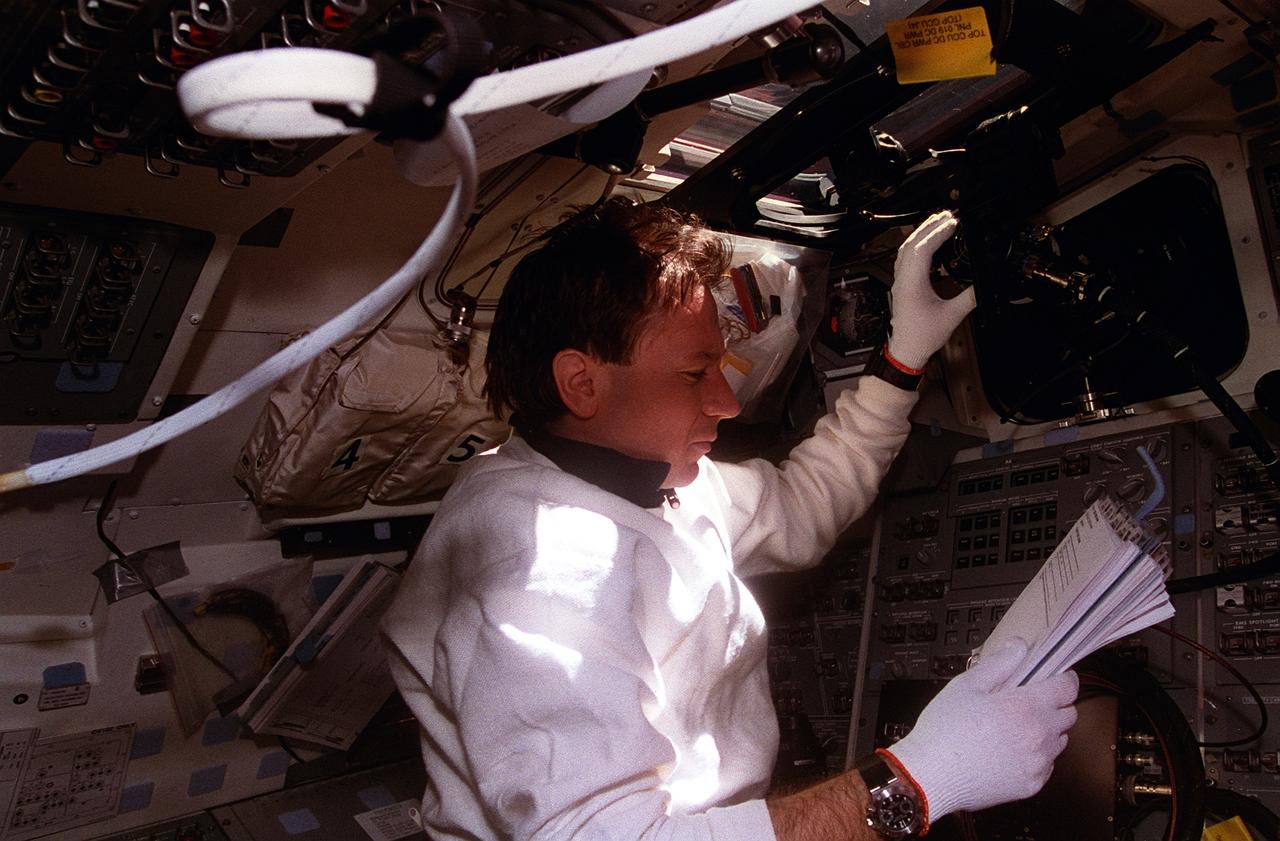
STS075-310-002 (22 Feb.-9 March 1996) --- Astronaut Maurizio Cheli, STS-75 mission specialist, works with the Tether Optical Phenomenon System (TOPS) on the flight deck of the Earth-orbiting Space Shuttle Columbia. Cheli, representing the European Space Agency (ESA), joined four other astronauts and an international payload specialists for 16 days of scientific research in Earth-orbit.
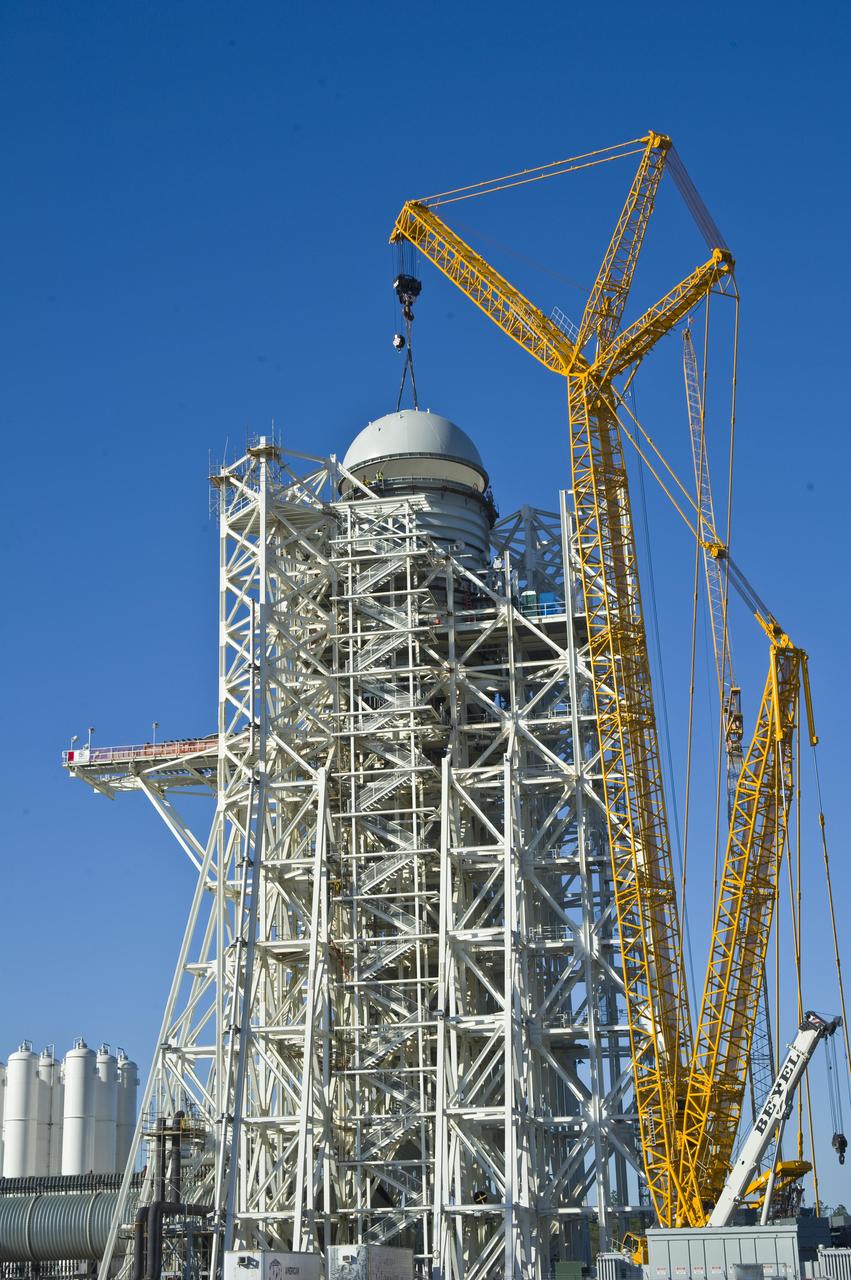
A construction 'topping out' milestone was reached April 13 with placement of the test cell dome atop NASA's new A-3 Test Stand at Stennis Space Center. NASA broke ground in 2007 for the new stand, which is being built to provide simulated high-altitude testing for next-generation rocket engines that could carry humans into deep space.
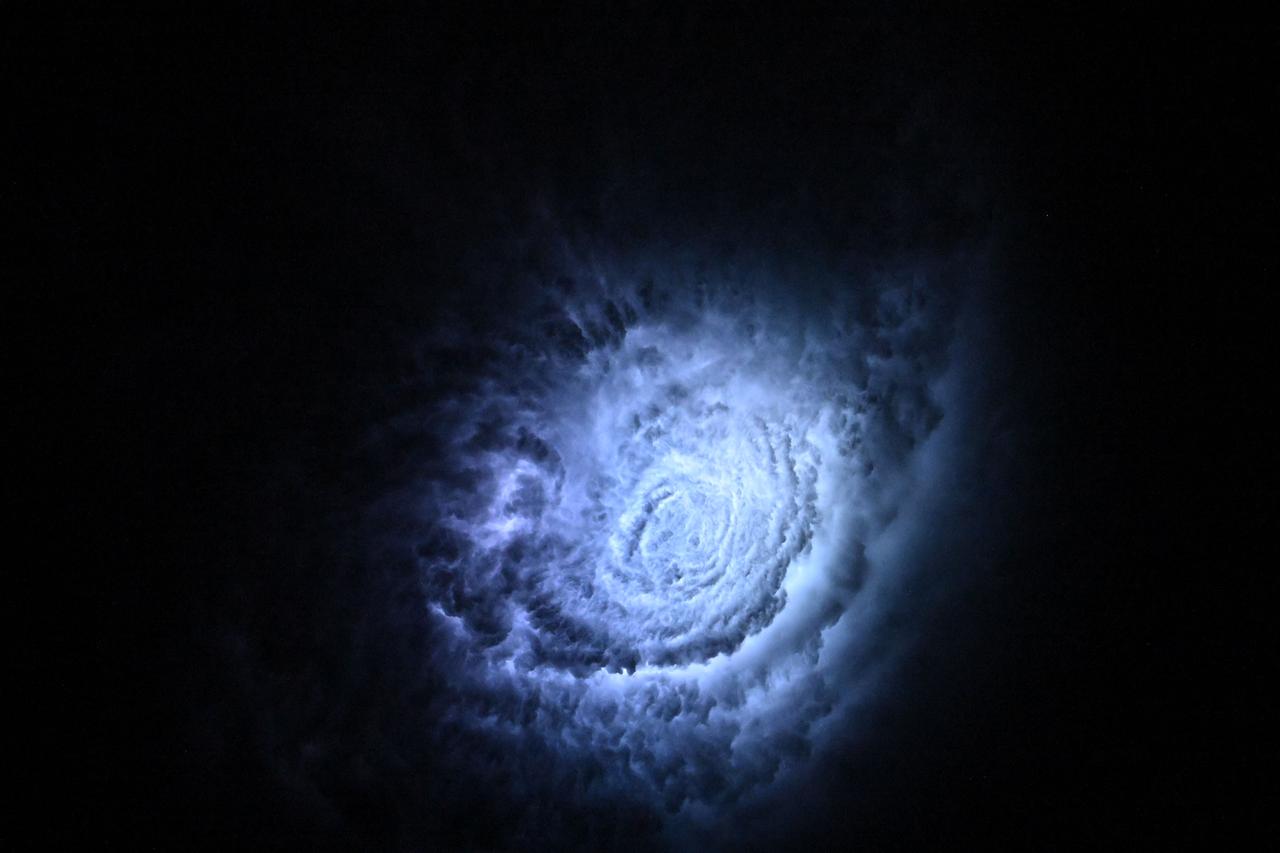
iss073e0330134 (June 20, 2025) --- Lightning illuminates the cloud tops of Tropical Storm Erick as it stormed across the Pacific coast of central Mexico at approximately 3:38 a.m. local time as the International Space Station orbited 258 miles above.
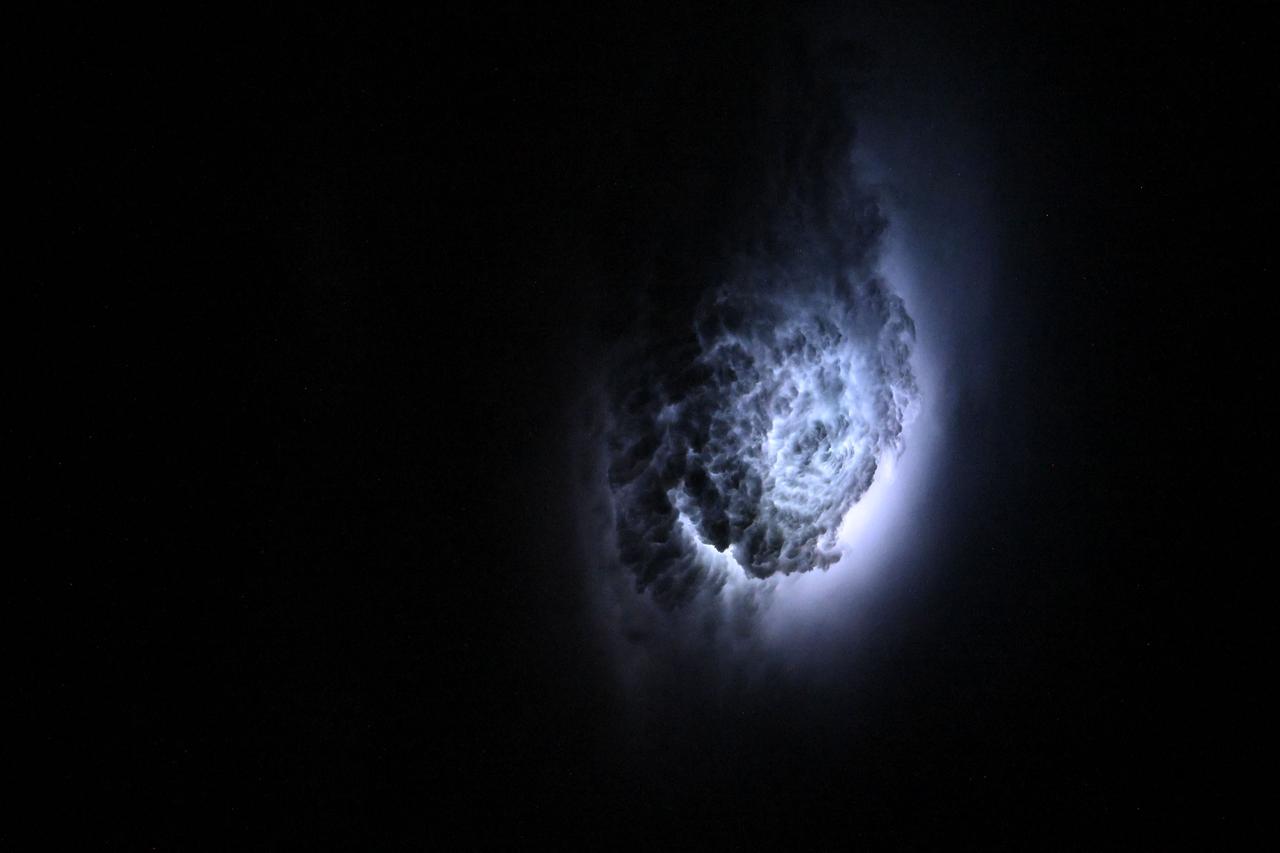
iss073e0332020 (June 20, 2025) --- Lightning illuminates the cloud tops of Tropical Storm Erick as it stormed across the Pacific coast of central Mexico at approximately 3:42 a.m. local time as the International Space Station orbited 258 miles above.
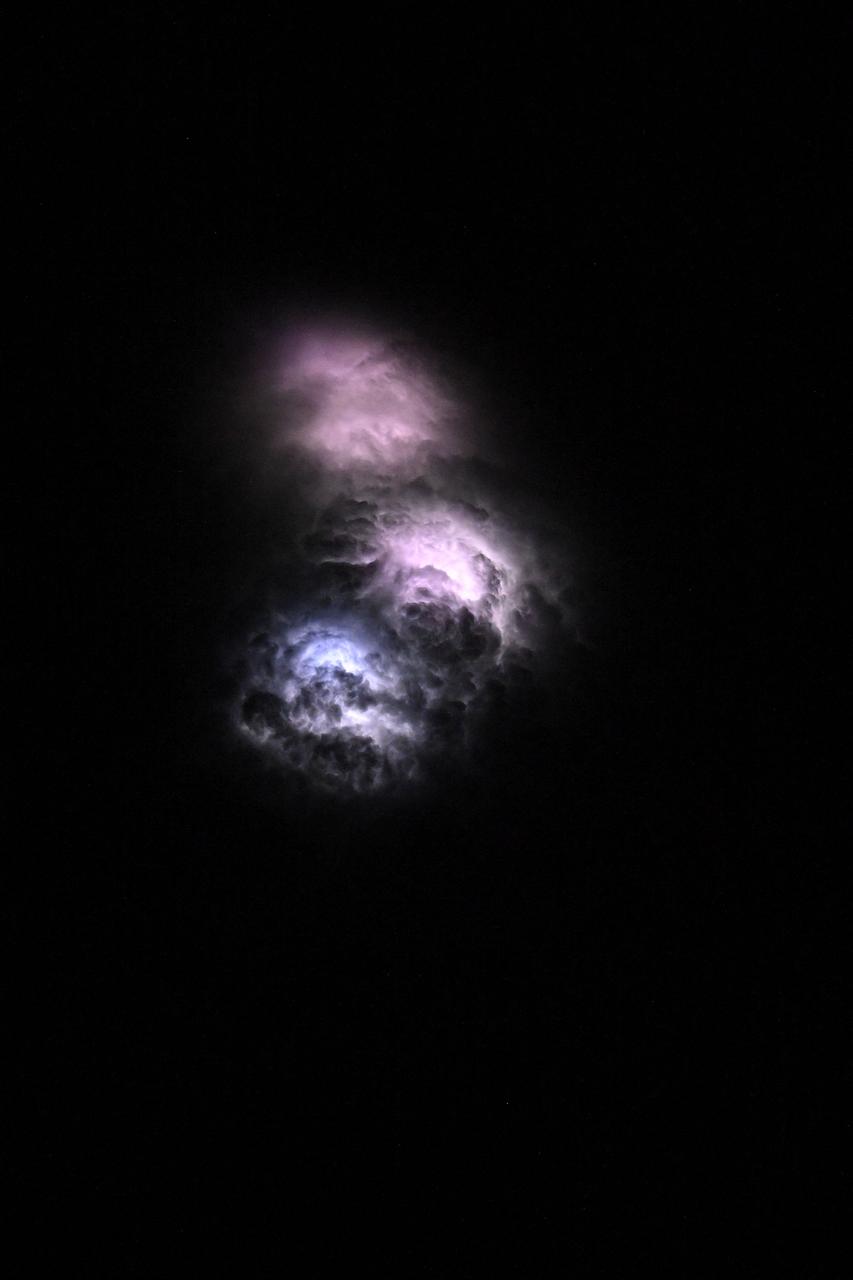
iss073e0566536 (July 28, 2025) --- Lightning strikes illuminate the stormy cloud tops above the Democratic Republic of the Congo in this photograph, taken at approximately 9:58 p.m. local time from the International Space Station as it orbited 259 miles above Earth.
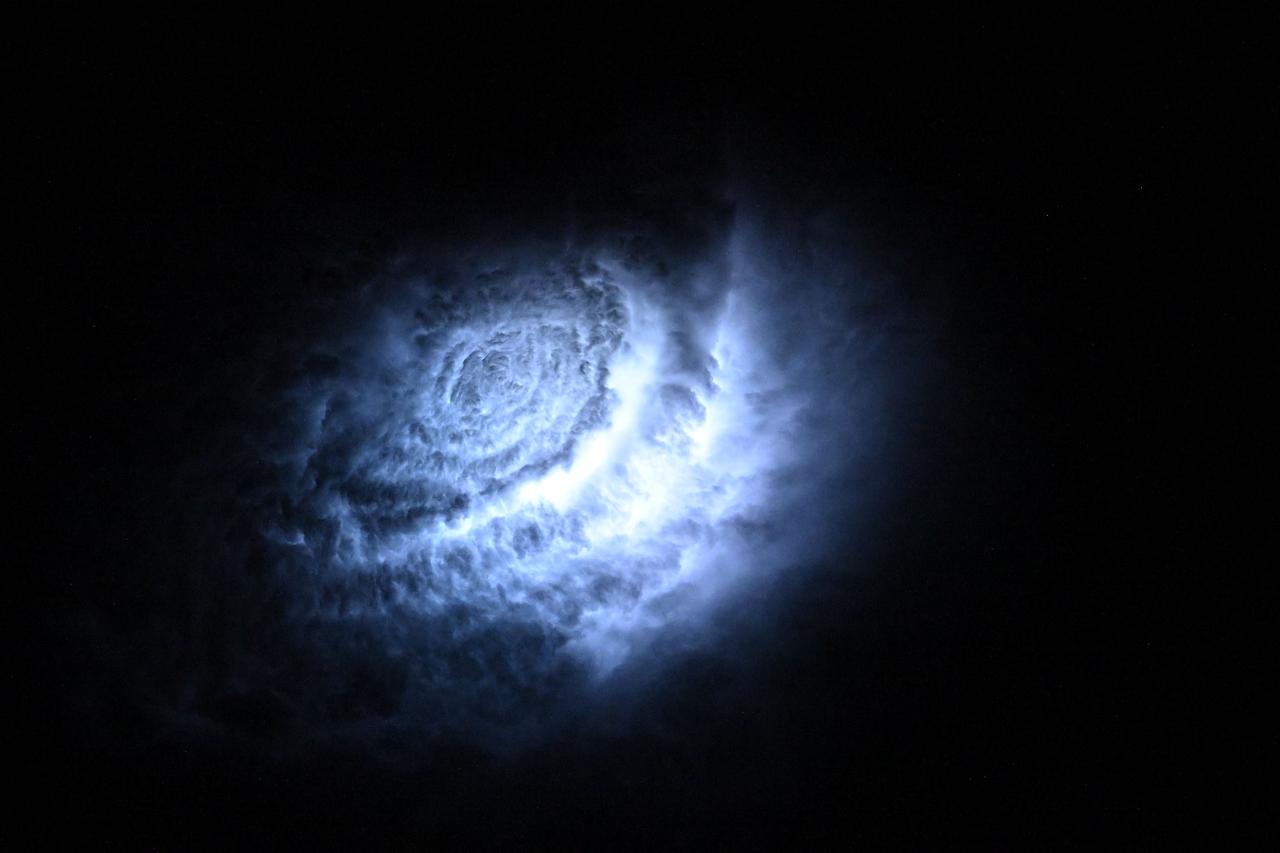
iss073e0330560 (June 20, 2025) --- Lightning illuminates the cloud tops of Tropical Storm Erick as it stormed across the Pacific coast of central Mexico at approximately 3:39 a.m. local time as the International Space Station orbited 258 miles above.
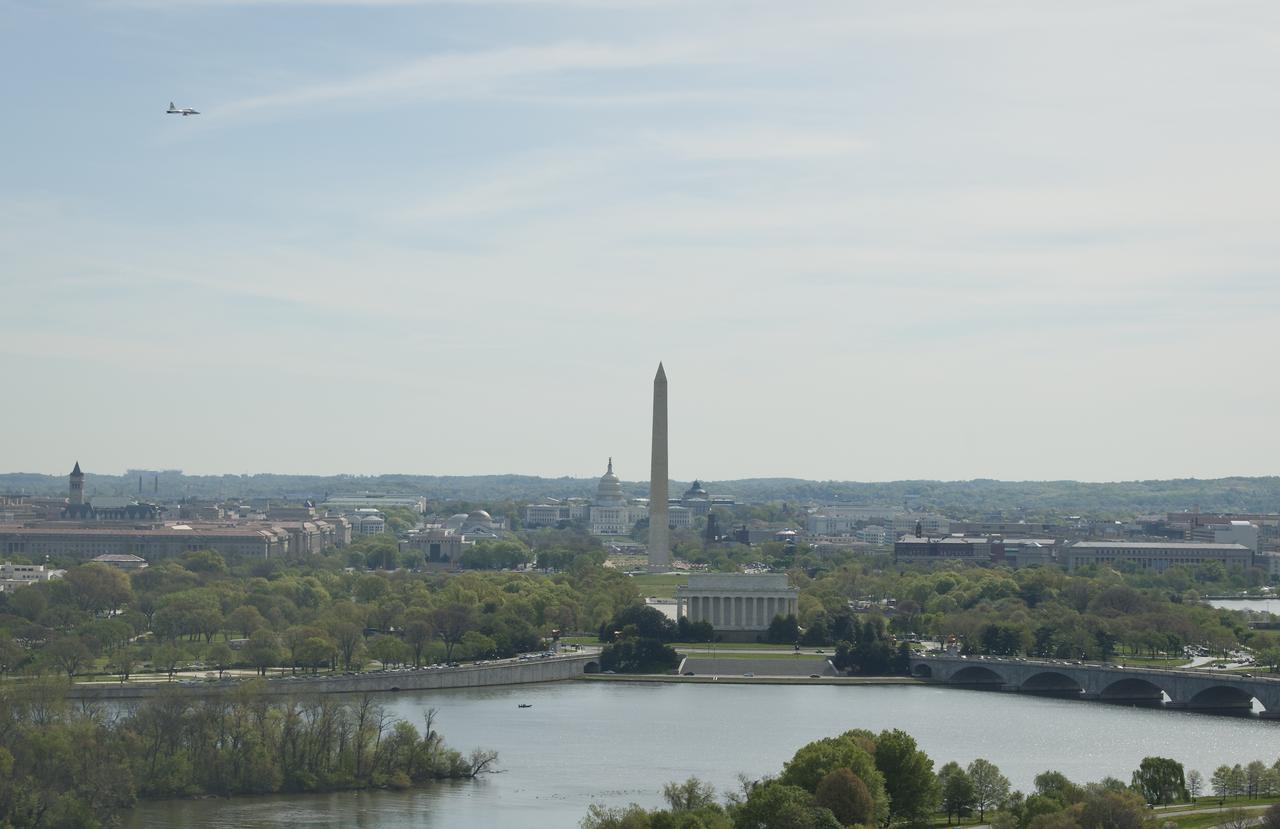
A NASA T-38 training jet is seen as it flies at 1500 feet over Washington, DC, Thursday, April 5, 2012. NASA, in cooperation with the Federal Aviation Administration, conducted training and photographic flights over the DC metropolitan area. T-38 aircraft have been used for astronaut training for more than 30 years as they allow pilots and mission specialists to think quickly in changing situations, mental experiences the astronauts say are critical to practicing for the rigors of spaceflight. Photo Credit: (NASA/Carla Cioffi)
![The many small channels dissecting the top part of this image are drainage valleys. Most are draining downhill to the top [north] of the image](https://images-assets.nasa.gov/image/PIA02916/PIA02916~medium.jpg)
The many small channels dissecting the top part of this image are drainage valleys. Most are draining downhill to the top [north] of the image
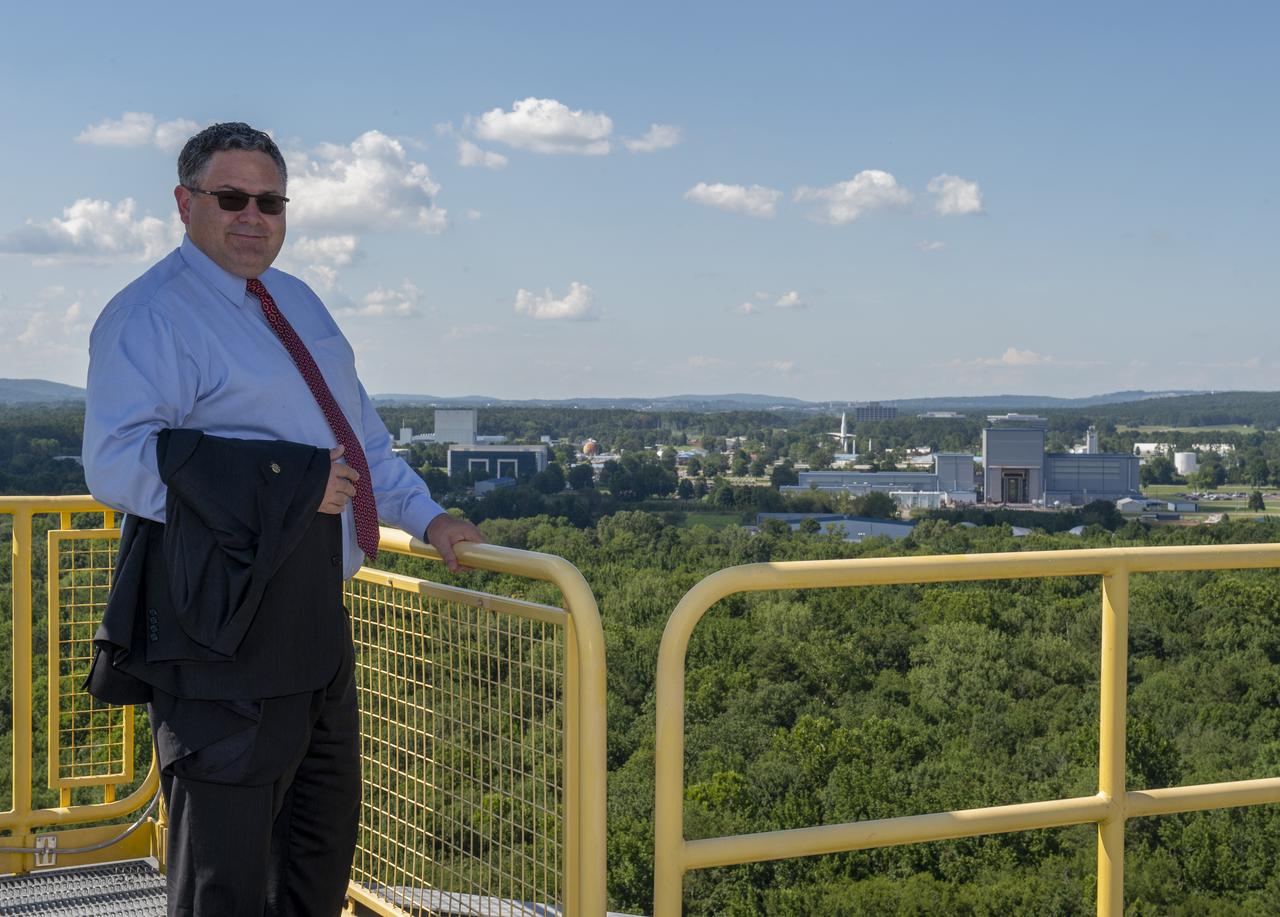
Retiring Marshall Space Flight Center Director Todd May on top of test stand 4693 in MSFC's west test area with MSFC in the background
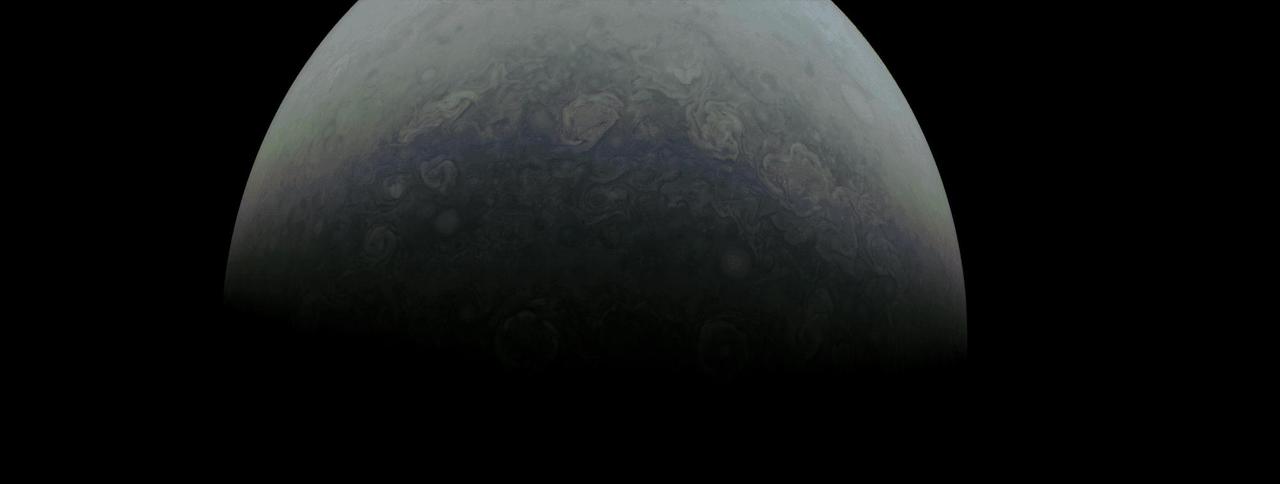
On April 9, 2022, as NASA's Juno mission completed its 41st close flyby of Jupiter, its JunoCam instrument captured what it would look like to ride along with the spacecraft. Citizen scientist Andrea Luck created this animated sequence using raw JunoCam image data. At about 87,000 miles (140,000 kilometers) in diameter, Jupiter is the largest planet in the solar system. At the point of closest approach on April 9, Juno was just over 2,050 miles (3,300 kilometers) above Jupiter's colorful cloud tops. At that moment, it was traveling at about 131,000 MPH (210,000 kilometers per hour) relative to the planet. By comparison, at closest approach Juno was more than 10 times closer to Jupiter than satellites in geosynchronous orbit are to Earth, traveling at a speed about five times faster than the Apollo missions did when they left Earth for the Moon. Movie available at https://photojournal.jpl.nasa.gov/catalog/PIA25016
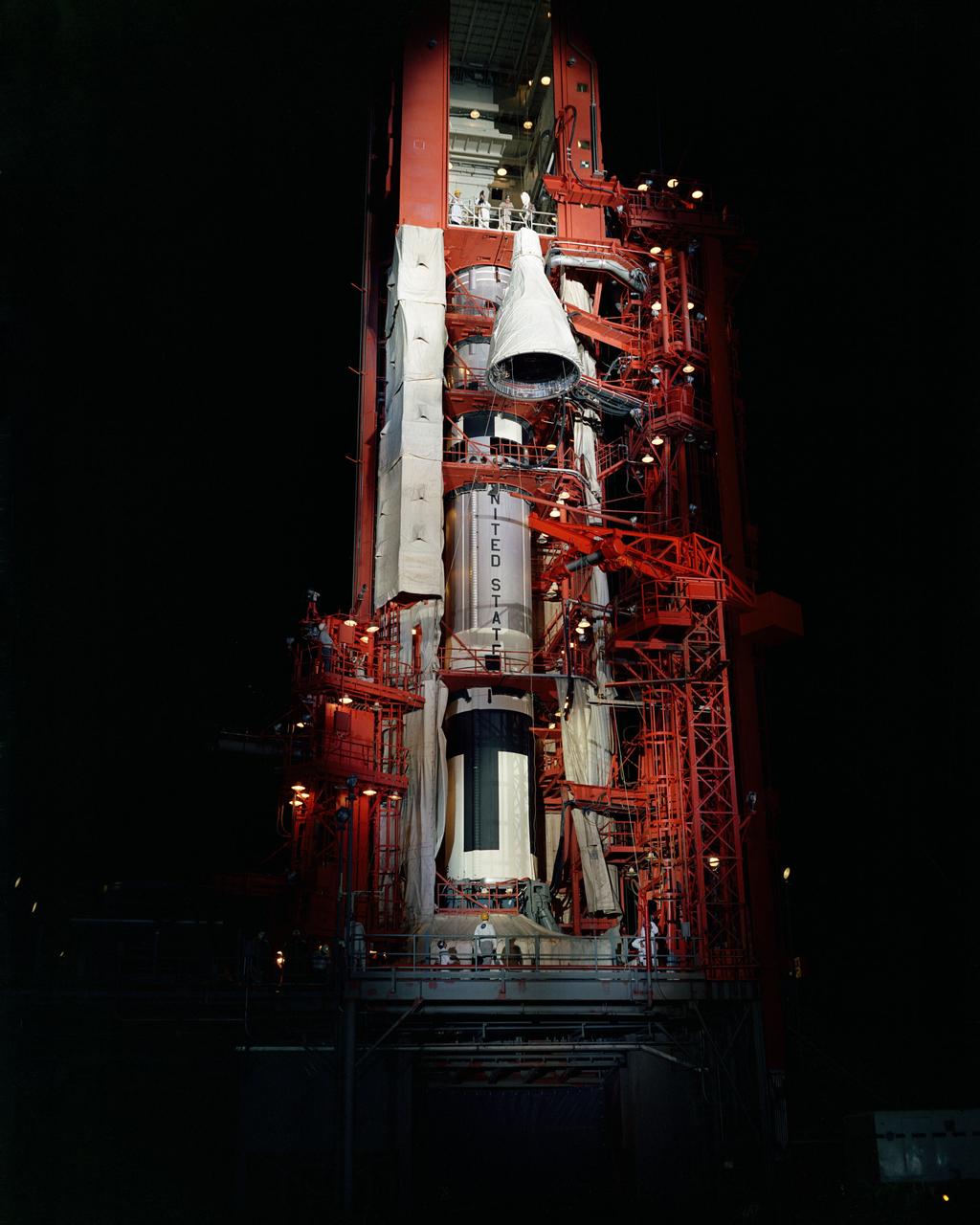
S65-23710 (14 April 1965) --- Nighttime scene showing the Gemini-4 spacecraft being hoisted to the white room at the top of the gantry at Pad 19 for soft mating with the Titan launch vehicle.
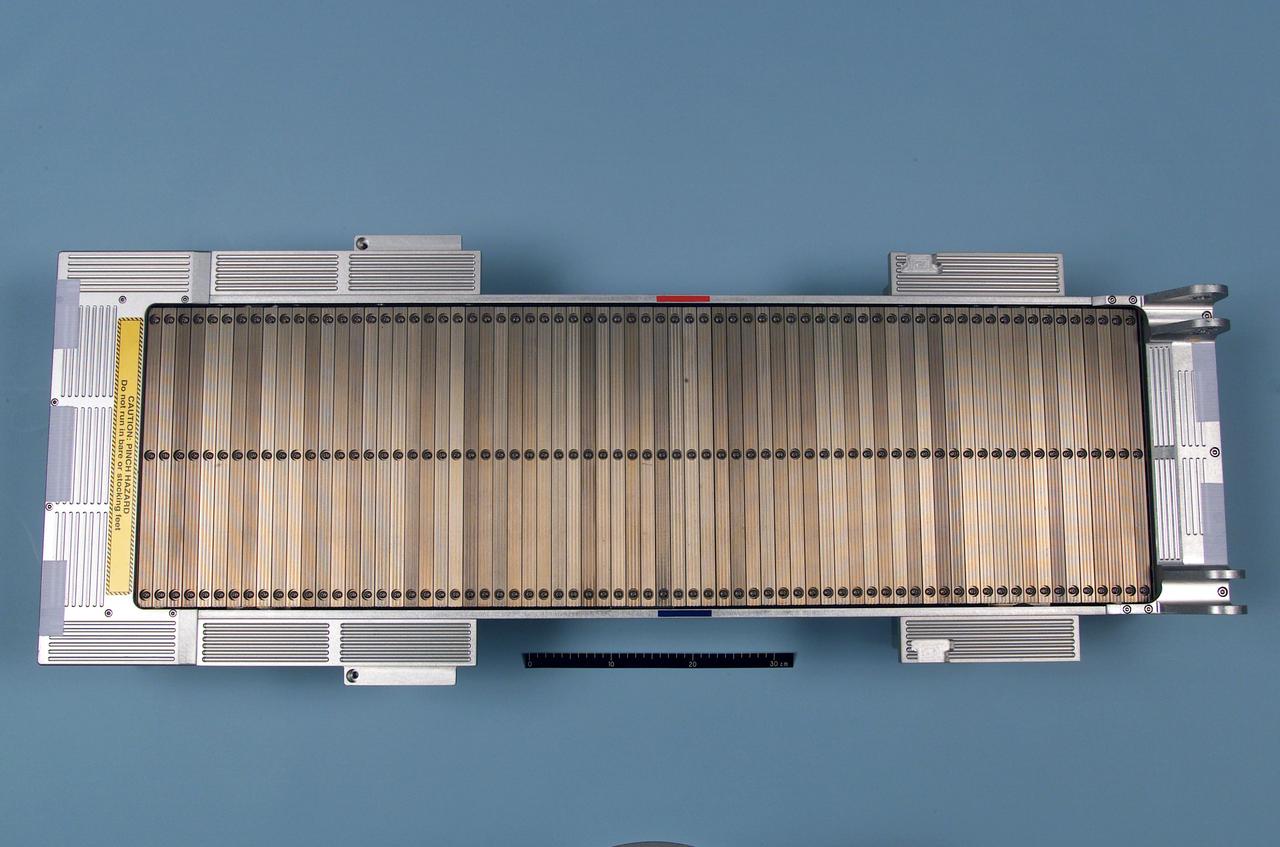
jsc2002e38738 (2002) --- Top view of the Treadmill Belt Assembly on the Treadmill Vibration Isolation System (TVIS) Chassis Assembly for use in the International Space Station (ISS) Service Module (SM).
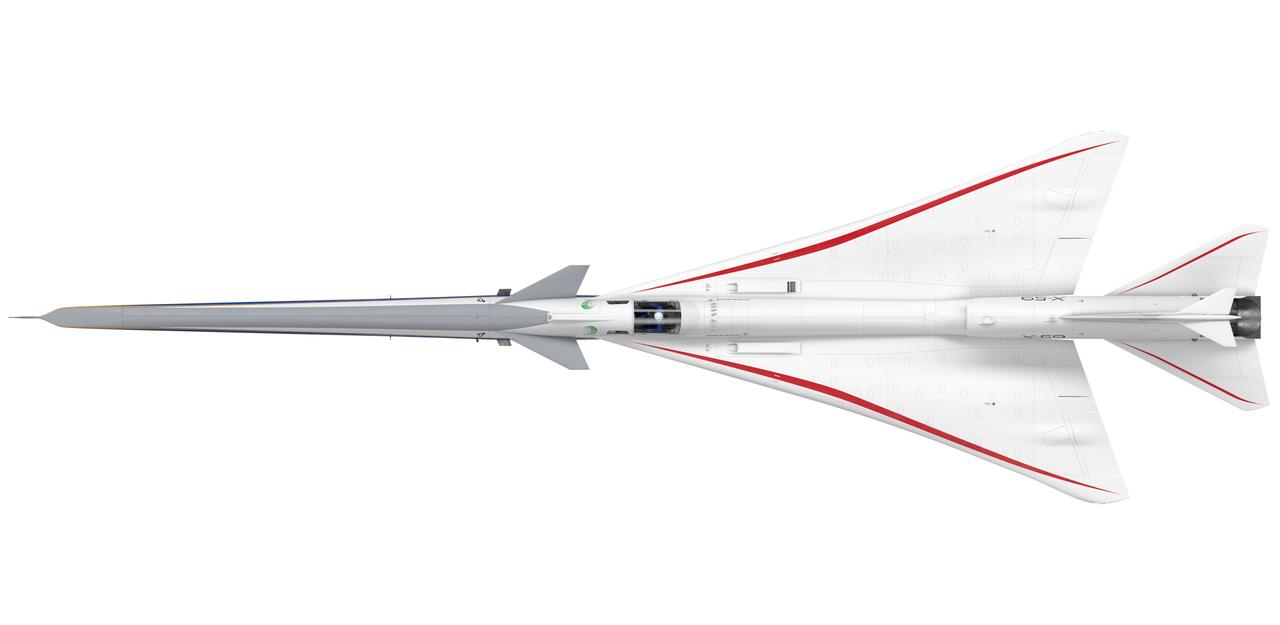
Artist concept of the X-59 top view
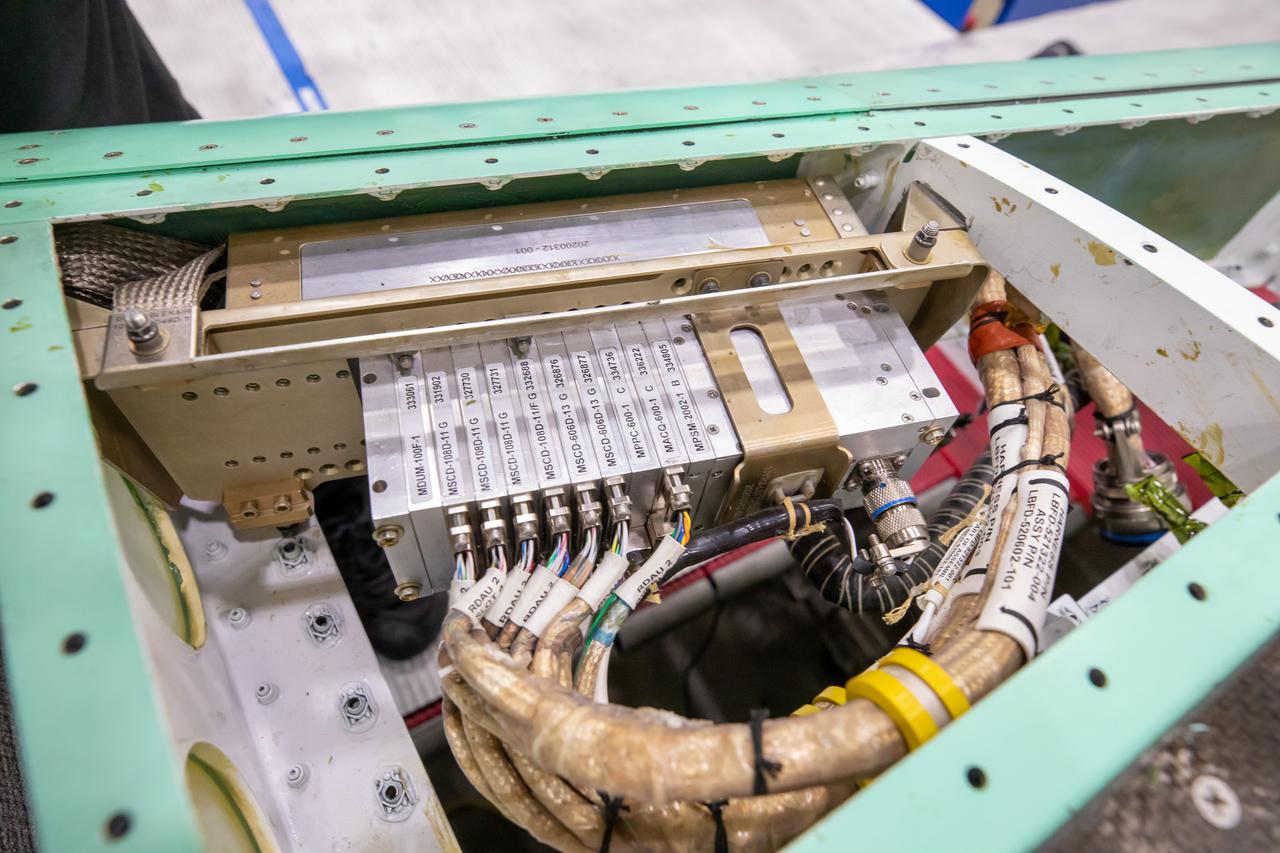
Here is a closeup of some of the X-59’s wiring and instrumentation system. Displayed here is the remote instrumentation encoder, which can be found in the wing of the aircraft. This encoder communicates with the plane’s other instrumentation systems like pressure and temperature sensors within the X-59.
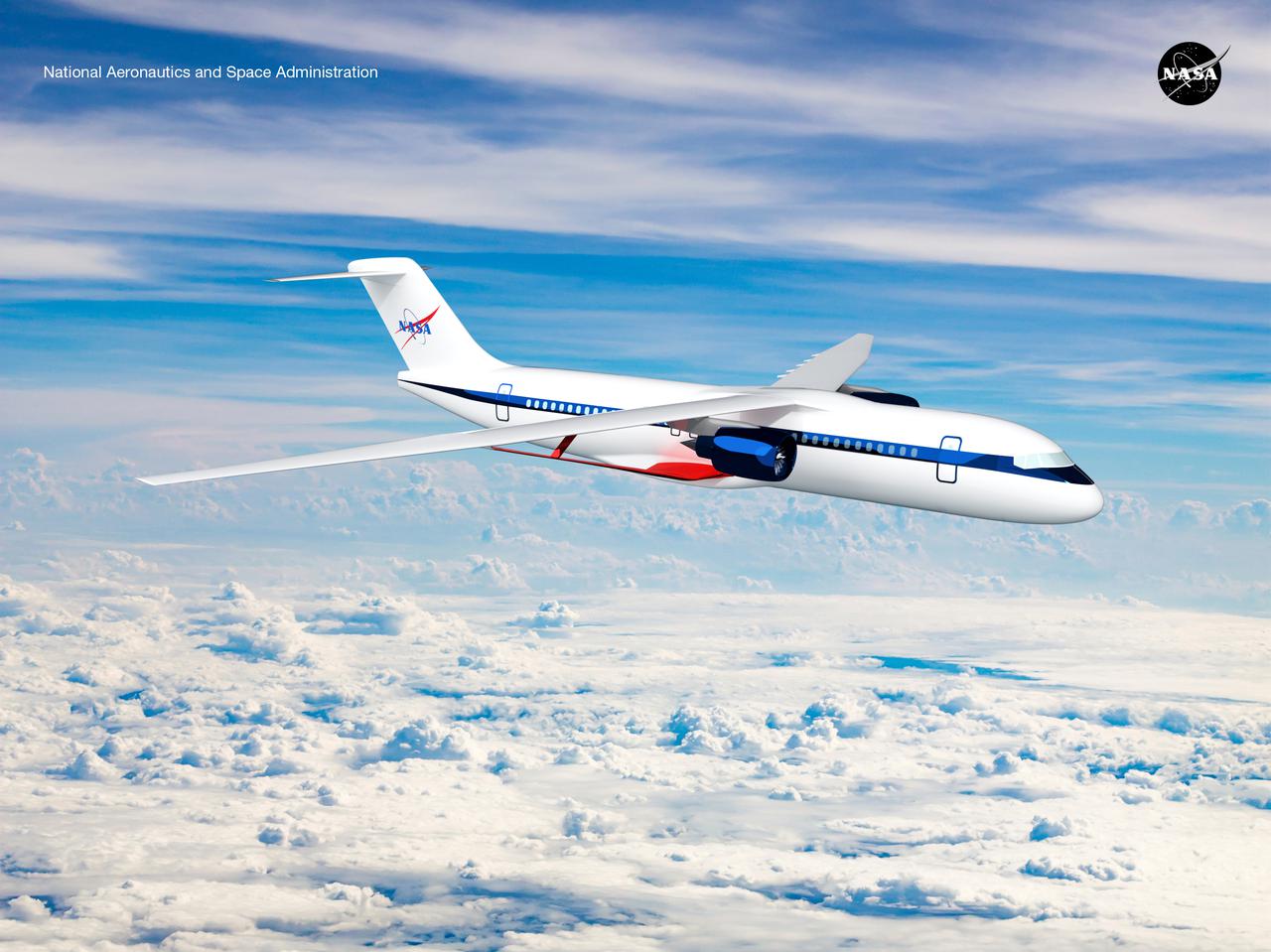
Notice anything different about the wings on this airliner? This conceptual truss-braced wing narrowbody is an aircraft with a 170ft span folding wing. By utilizing trusses, the aircraft can have longer, thinner wings with greater aspect ratios. This, in turn, translates into less drag and 5-10% less fuel burned. The Transonic Truss-Braced Wing aircraft originated from a joint effort by NASA and Boeing to develop subsonic commercial transport concepts – meeting NASA-defined metrics in terms of reduced noise, emissions, and fuel consumption. The design is currently undergoing wind tunnel testing and other studies by NASA researchers.
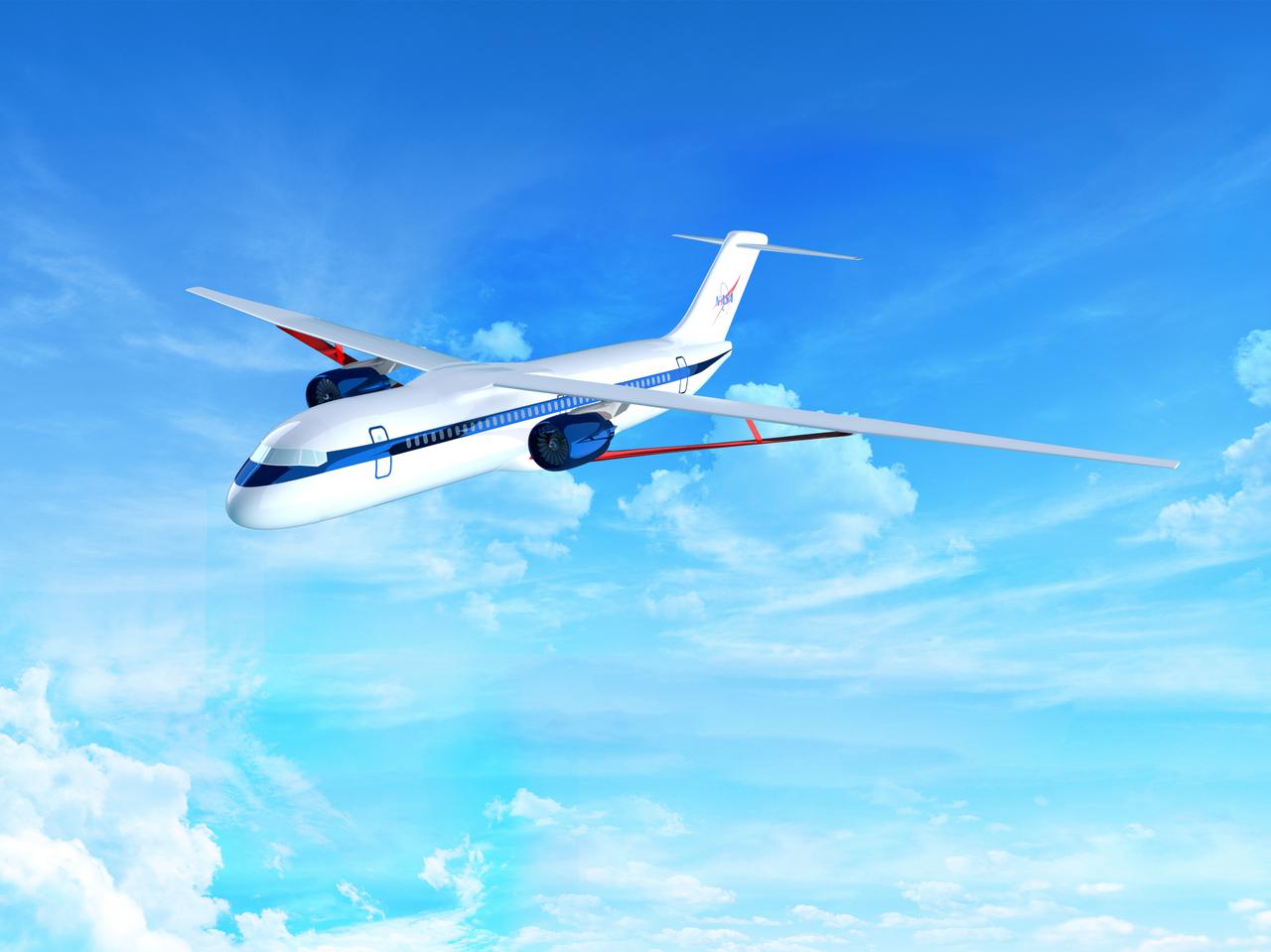
Notice anything different about the wings on this airliner? This conceptual truss-braced wing narrowbody is an aircraft with a 170ft span folding wing. By utilizing trusses, the aircraft can have longer, thinner wings with greater aspect ratios. This, in turn, translates into less drag and 5-10% less fuel burned. The Transonic Truss-Braced Wing aircraft originated from a joint effort by NASA and Boeing to develop subsonic commercial transport concepts – meeting NASA-defined metrics in terms of reduced noise, emissions, and fuel consumption. The design is currently undergoing wind tunnel testing and other studies by NASA researchers.
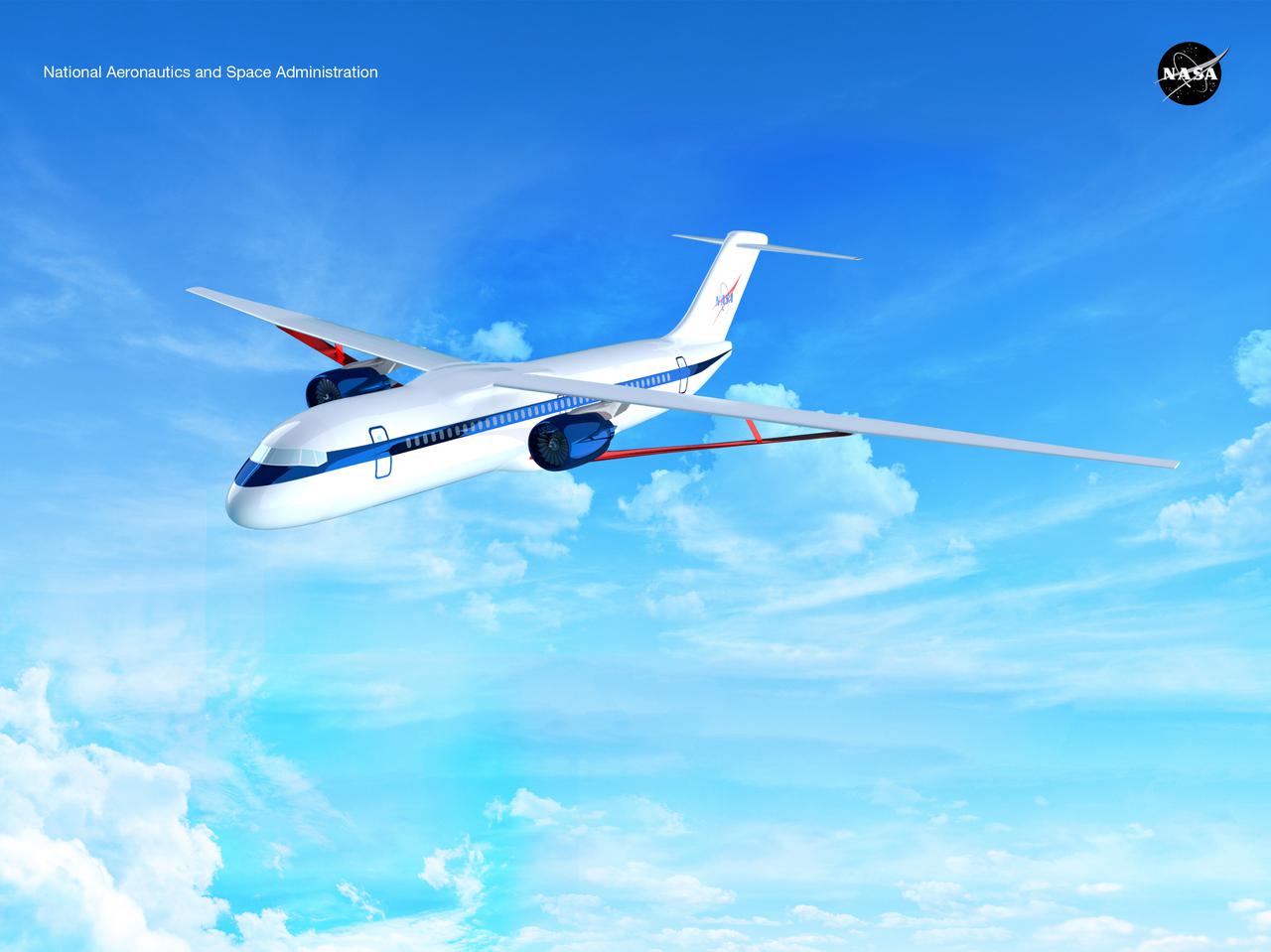
Notice anything different about the wings on this airliner? This conceptual truss-braced wing narrowbody is an aircraft with a 170ft span folding wing. By utilizing trusses, the aircraft can have longer, thinner wings with greater aspect ratios. This, in turn, translates into less drag and 5-10% less fuel burned. The Transonic Truss-Braced Wing aircraft originated from a joint effort by NASA and Boeing to develop subsonic commercial transport concepts – meeting NASA-defined metrics in terms of reduced noise, emissions, and fuel consumption. The design is currently undergoing wind tunnel testing and other studies by NASA researchers.

ISS008-E-07384 (9 Dec. 2003) --- Astronaut C. Michael Foale, Expedition 8 commander and NASA ISS science officer, holds the top end-cap for the Treadmill Vibration Isolation System (TVIS) gyroscope in the Zvezda Service Module on the International Space Station (ISS).
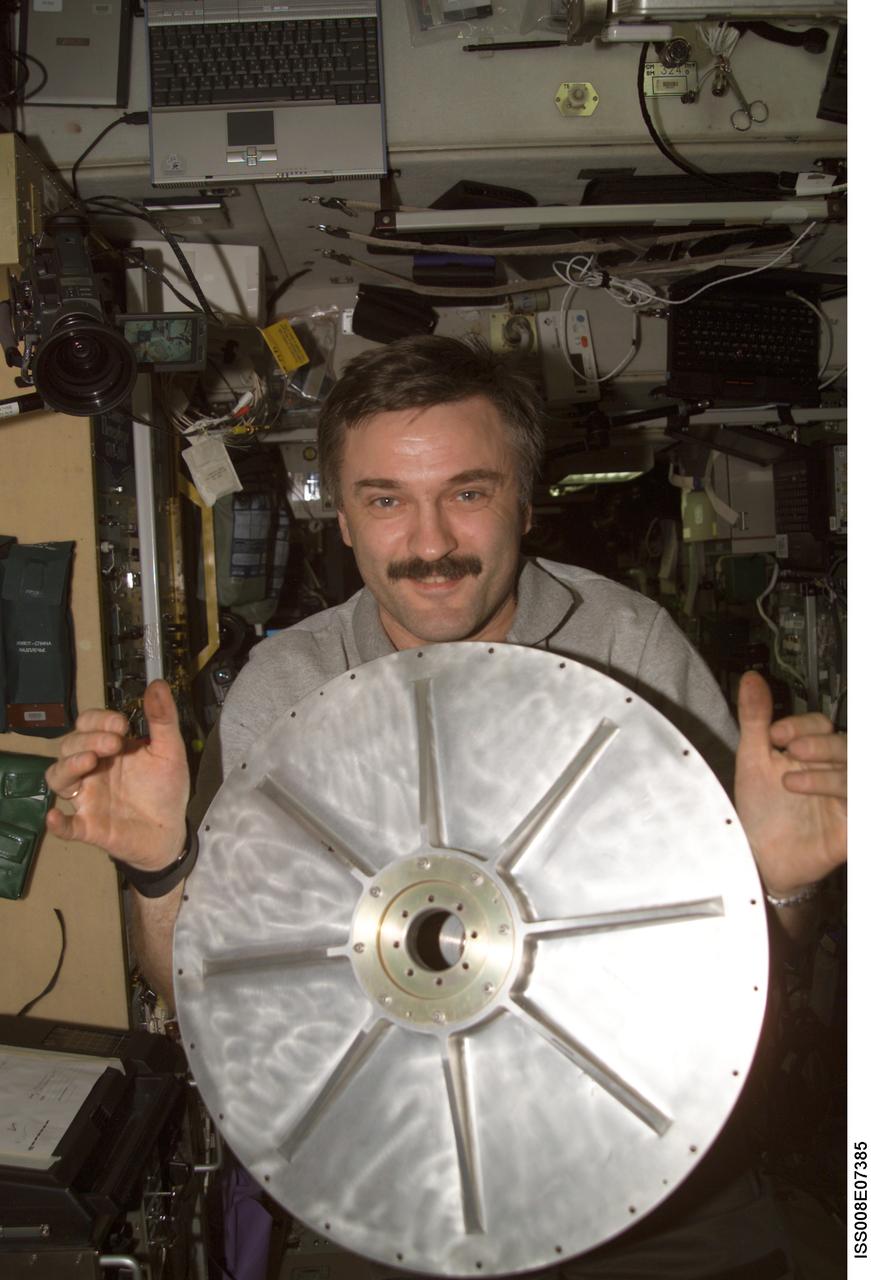
ISS008-E-07385 (9 December 2003) --- Cosmonaut Alexander Y. Kaleri, Expedition 8 flight engineer, holds the top end-cap for the Treadmill Vibration Isolation System (TVIS) gyroscope in the Zvezda Service Module on the International Space Station (ISS). Kaleri represents Rosaviakosmos.
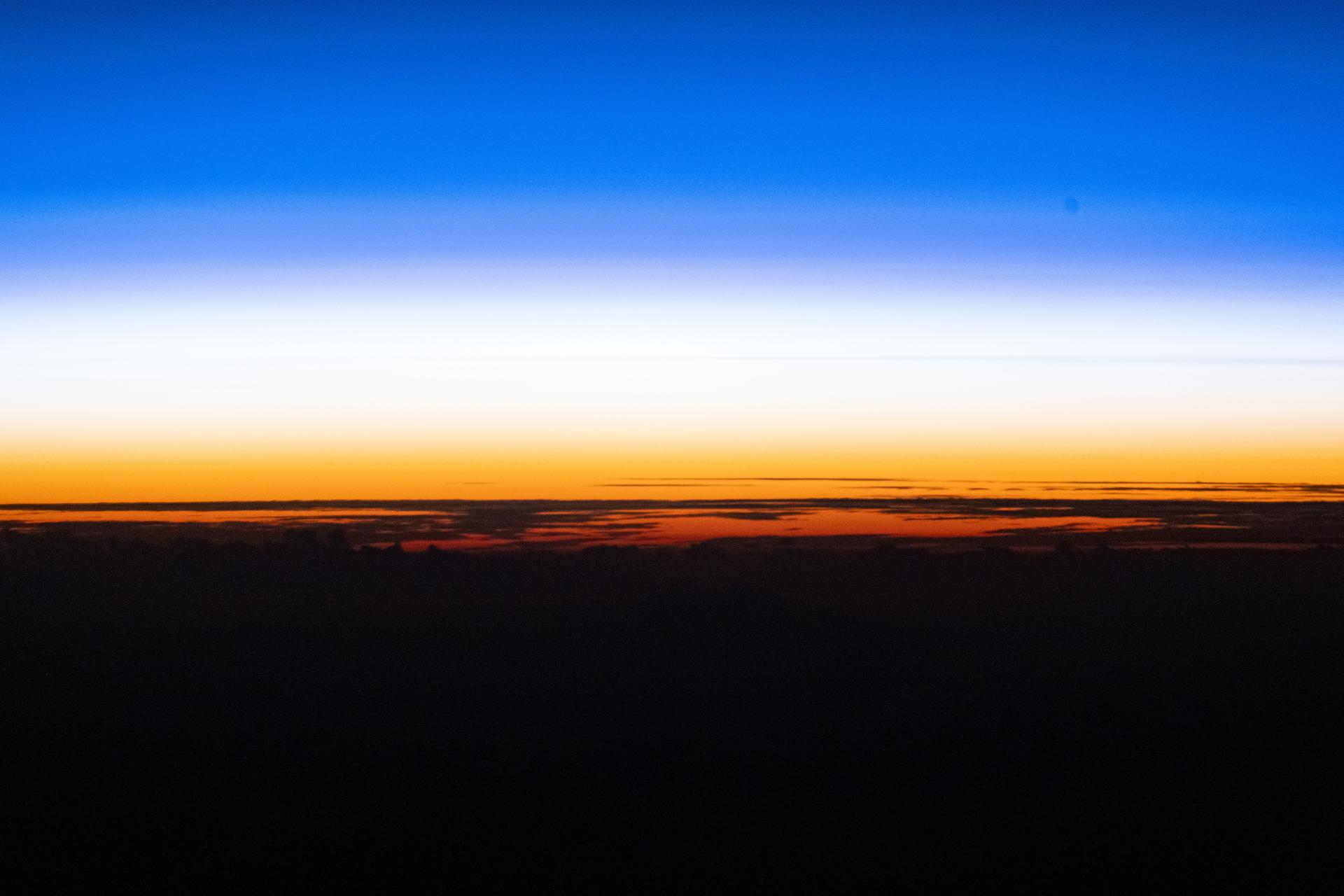
iss074e0046371 (Jan. 3, 2025) --- An orbital sunset silhouettes the cloud tops above the Pacific Ocean as the atmosphere along the horizon fades from orange to white, then to blue, in this photograph taken from the International Space Station while it orbited 262 miles above Earth. Credit: NASA/Chris Williams
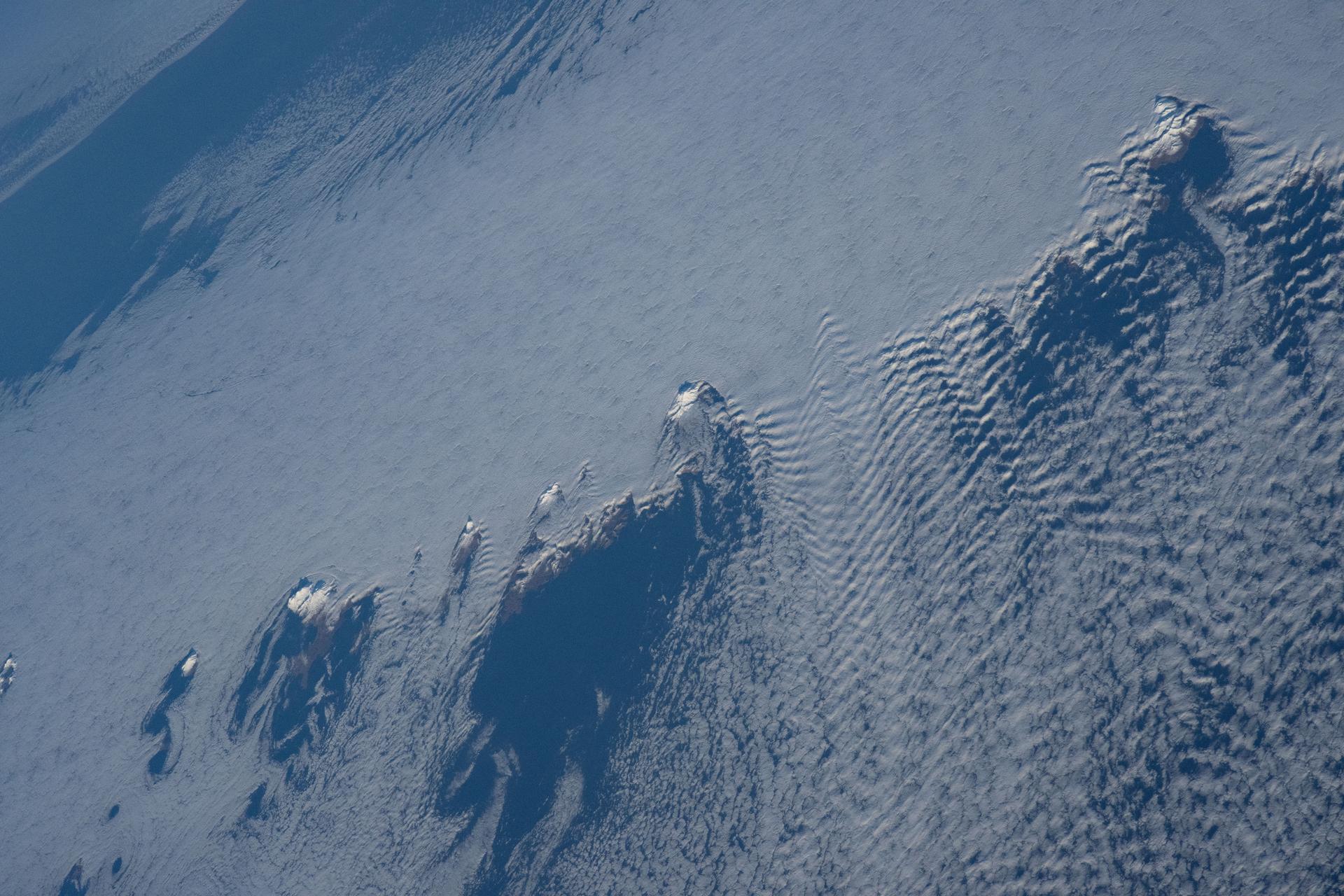
iss074e0008922 (Dec. 12, 2025) --- Snow-capped mountain tops of Alaska's Aleutian Islands pierce through the clouds, disturbing the air and creating wave-like patterns known as altocumulus clouds. This photograph was taken from the International Space Station as it orbited 264 miles above the North Pacific Ocean.
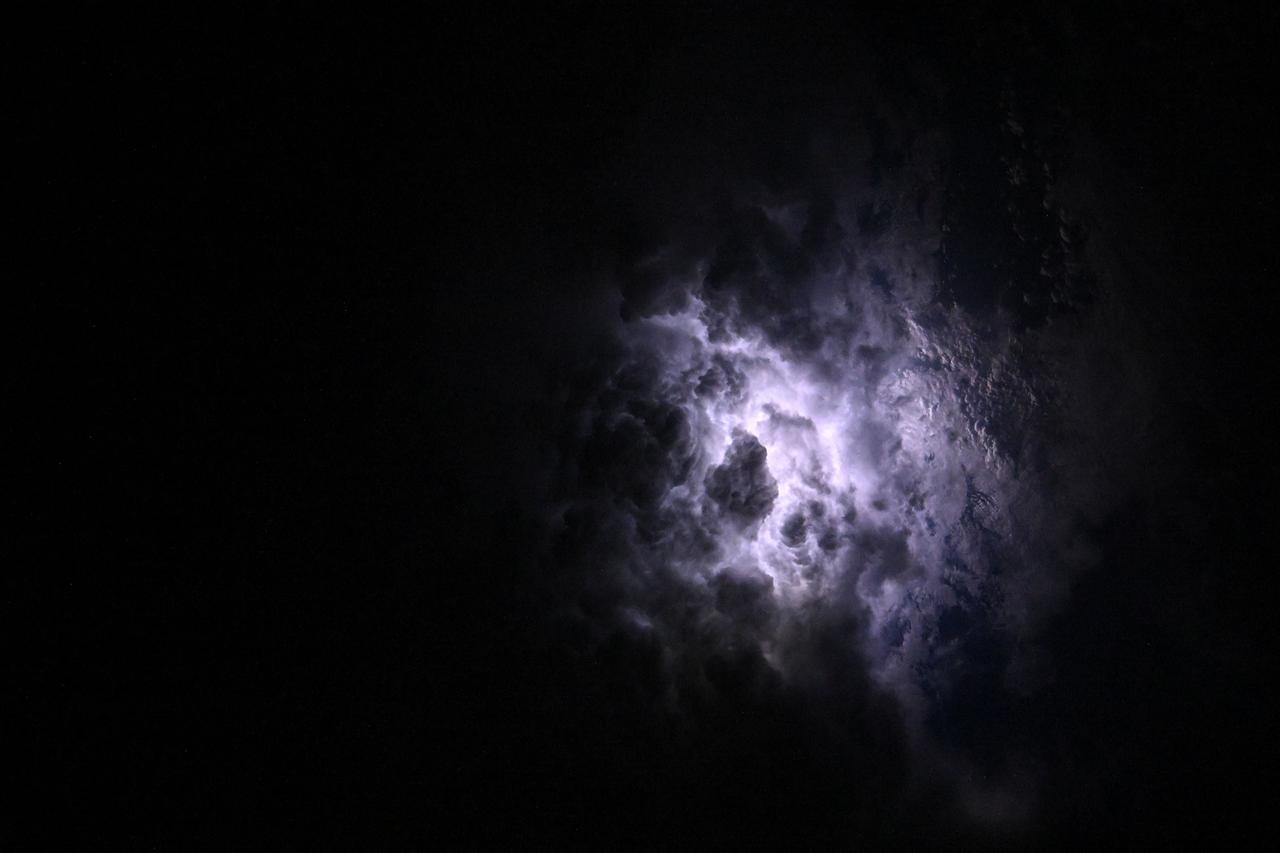
iss073e0380959 (June 18, 2025) --- Lightning illuminates the cloud tops of Category 1 Hurricane Erick as it stormed across the Pacific Ocean south of the Mexican state of Chiapas at approximately 3:42 a.m. local time as the International Space Station orbited 258 miles above.
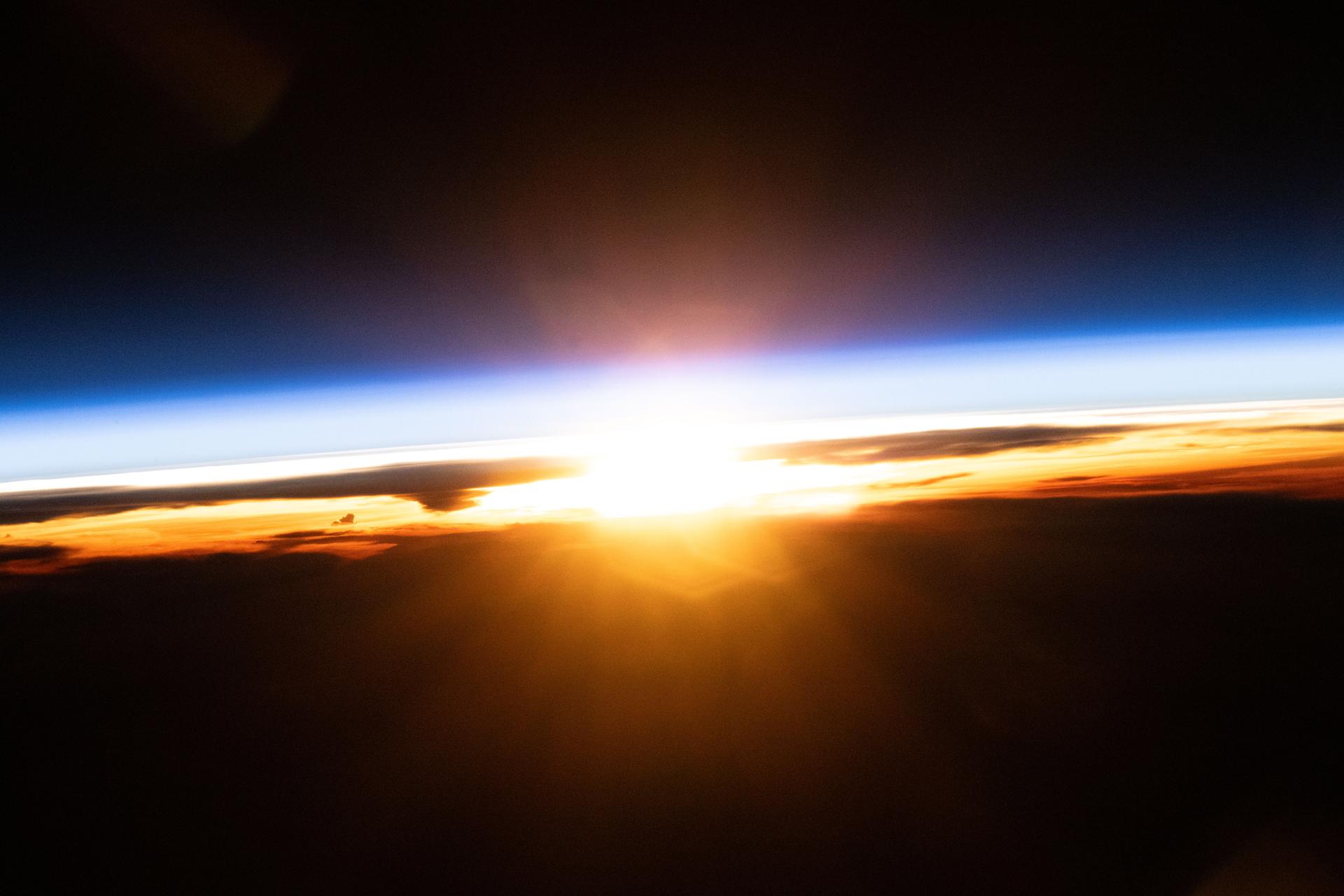
iss074e0556690 (May 5, 2026) --- The last rays of an orbital sunset illuminate Earth's atmosphere and the cloud tops in this photograph from the International Space Station as it orbited 258 miles above the Pacific Ocean north of Papua New Guinea. Credit: NASA/Jessica Meir
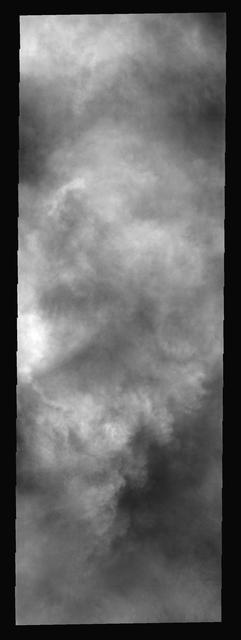
These clouds hide the south polar region. This storm occurred during late summer
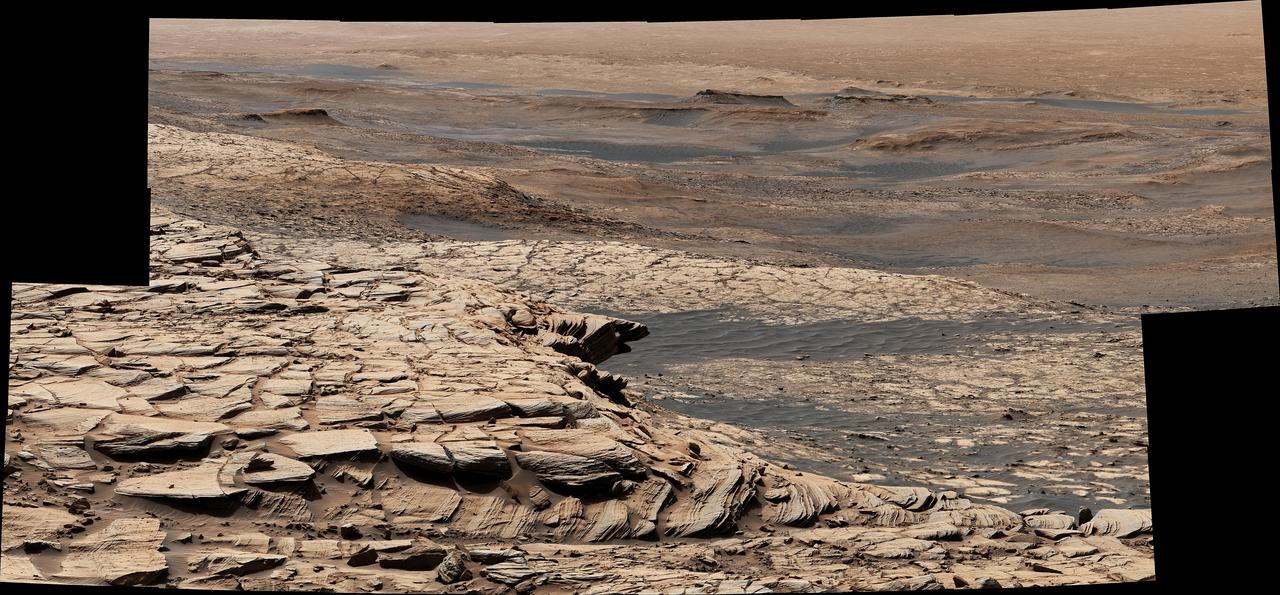
Stitched together from 28 images, this view from NASA's Curiosity Mars rover was captured on April 9, 2020, the 2,729th Martian day, or sol, of the mission after the rover ascended a steep slope, part of a geologic feature called "Greenheugh Pediment." In the foreground is the crusty sandstone cap that stretches the length of the pediment, forming an overhanging ledge in some parts. At center is the "clay-bearing unit," a region with a unique story to tell about the history of water on Mount Sharp, the 3-mile-tall (5-kilometer-tall) mountain Curiosity has been ascending since 2014. In the distance at the top of the image is the floor of Gale Crater, which is 96 miles (154 kilometers) wide. https://photojournal.jpl.nasa.gov/catalog/PIA23974
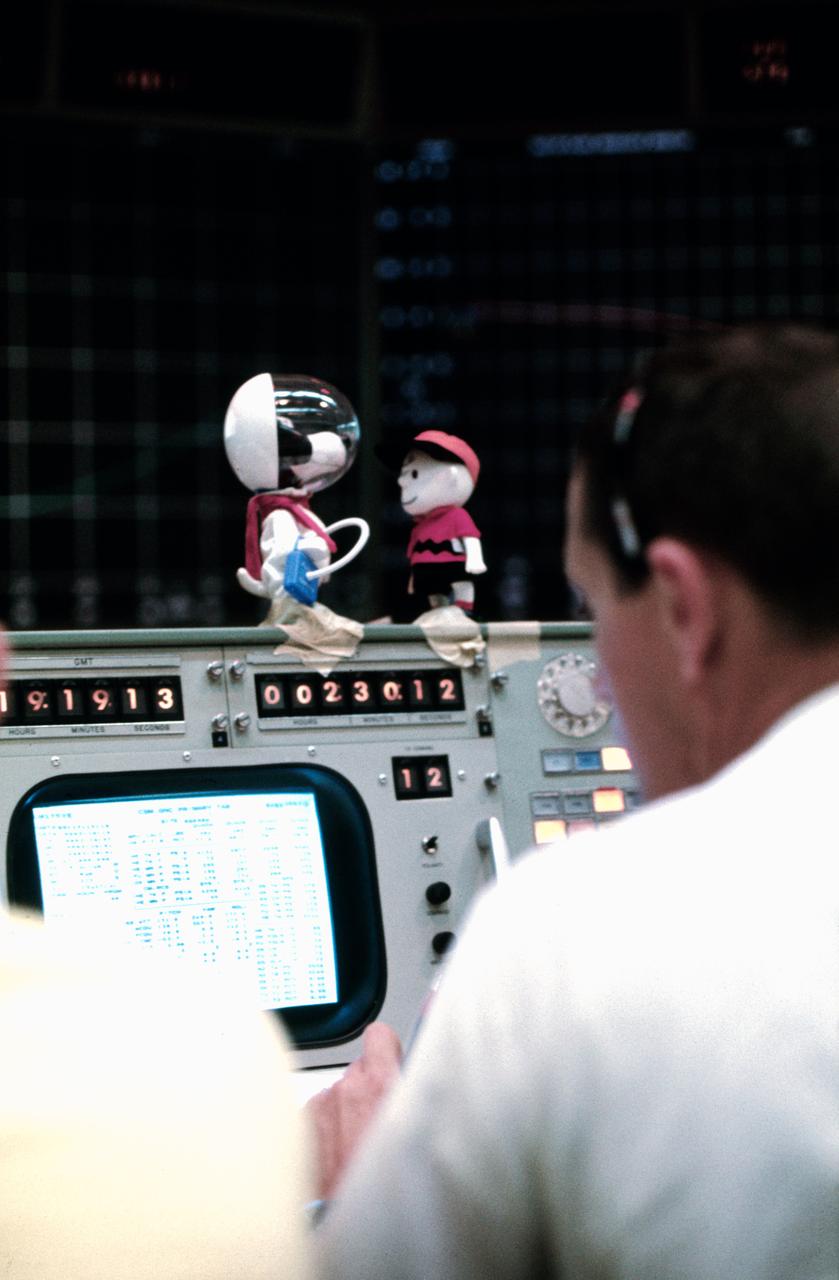
S69-34314 (18 May 1969) --- Replicas of Snoopy and Charlie Brown, the two characters from Charles Schulz's syndicated comic strip, "Peanuts," decorate the top of a console in the Mission Operations Control Room in the Mission Control Center, Building 30, on the first day of the Apollo 10 lunar orbit mission. During lunar orbit operations, the Lunar Module will be called ?Snoopy? when it is separated from the Command and Service Modules. The code words for the Command Module will be ?Charlie Brown?.
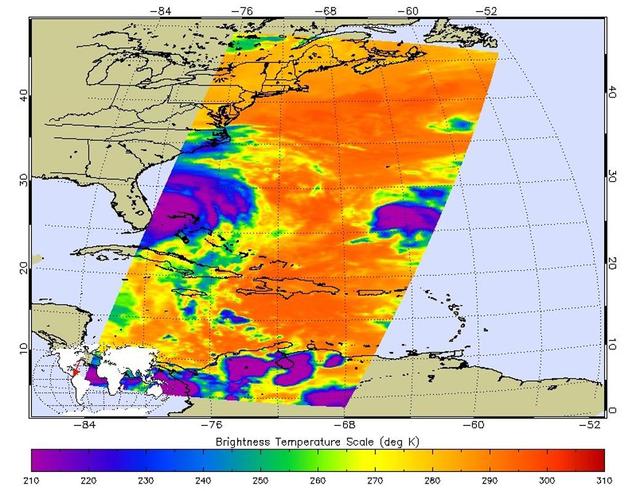
At 11:29 p.m. PDT on Oct. 6 (2:29 a.m. EDT on Oct. 7), NASA's Atmospheric Infrared Sounder (AIRS) instrument on NASA's Aqua satellite produced this false-color infrared image of Matthew as the storm moved up Florida's central coast. The image shows the temperature of Matthew's cloud tops or the surface of Earth in cloud-free regions, with the most intense thunderstorms shown in purples and blues. http://photojournal.jpl.nasa.gov/catalog/PIA21097
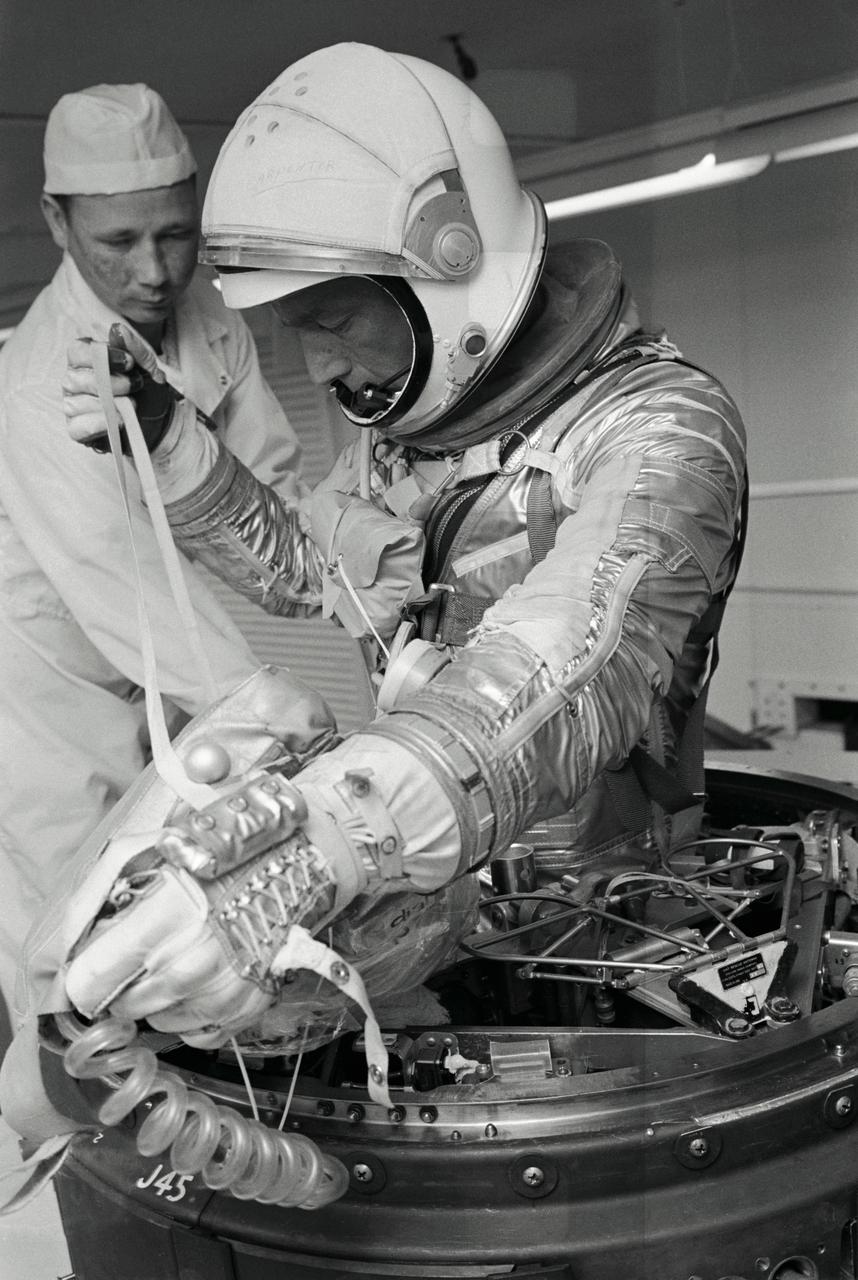
S62-01383 (1962) --- Project Mercury astronaut M. Scott Carpenter, prime pilot of the Mercury-Atlas 7 (the nation's second manned orbital flight), completes top egress training in the white room at Cape Canaveral, Florida. The line he is holding is known as the "man line" which attaches the survival kit to the astronaut. The bag is the survival kit he carries for contingency landings. Clearly visible around his neck is the bag containing the life vest. Photo credit: NASA
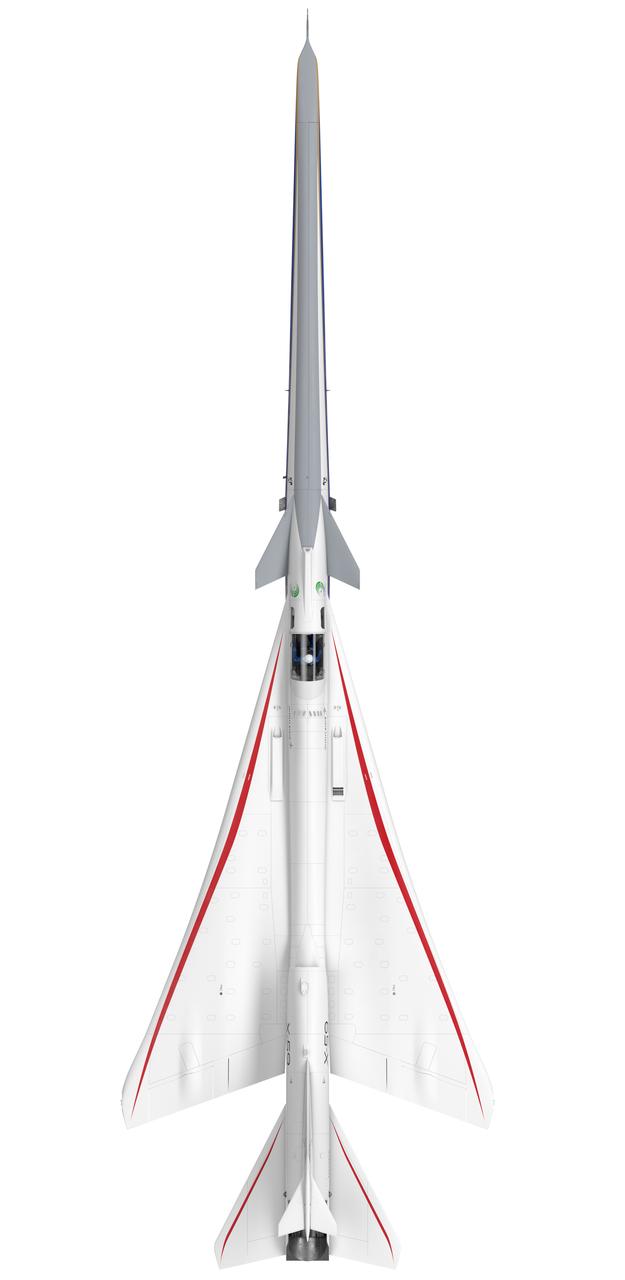
Artist concept of the X-59 top view (pointing up)
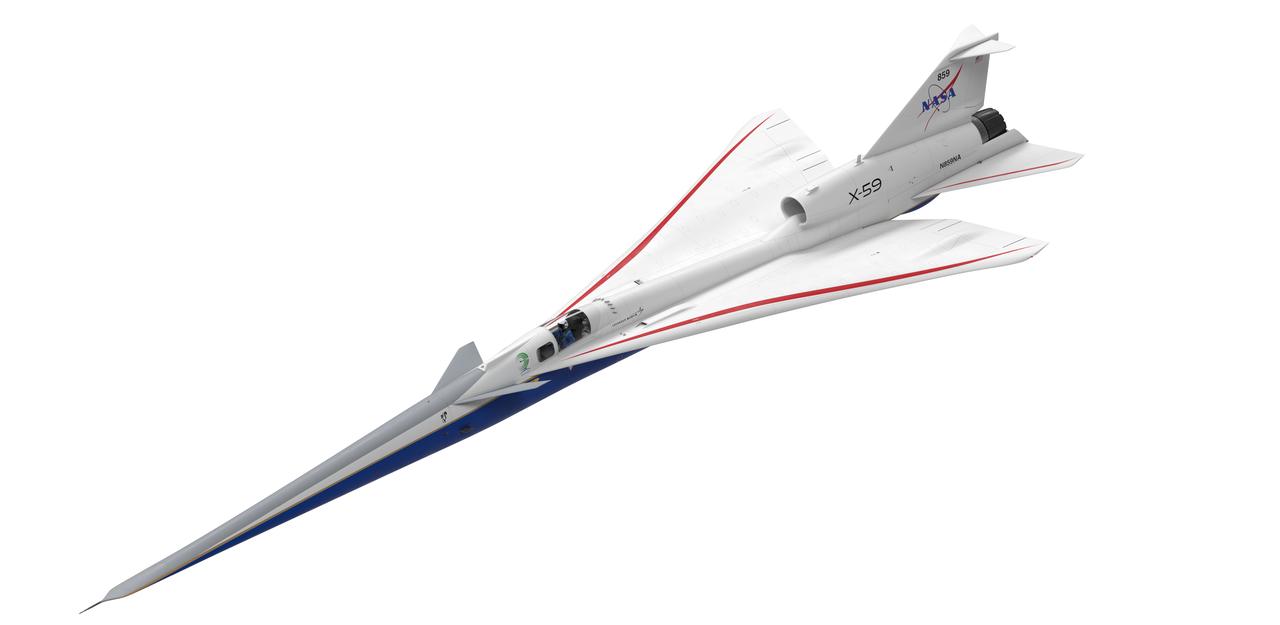
Artist concept of the X-59 three forths view top
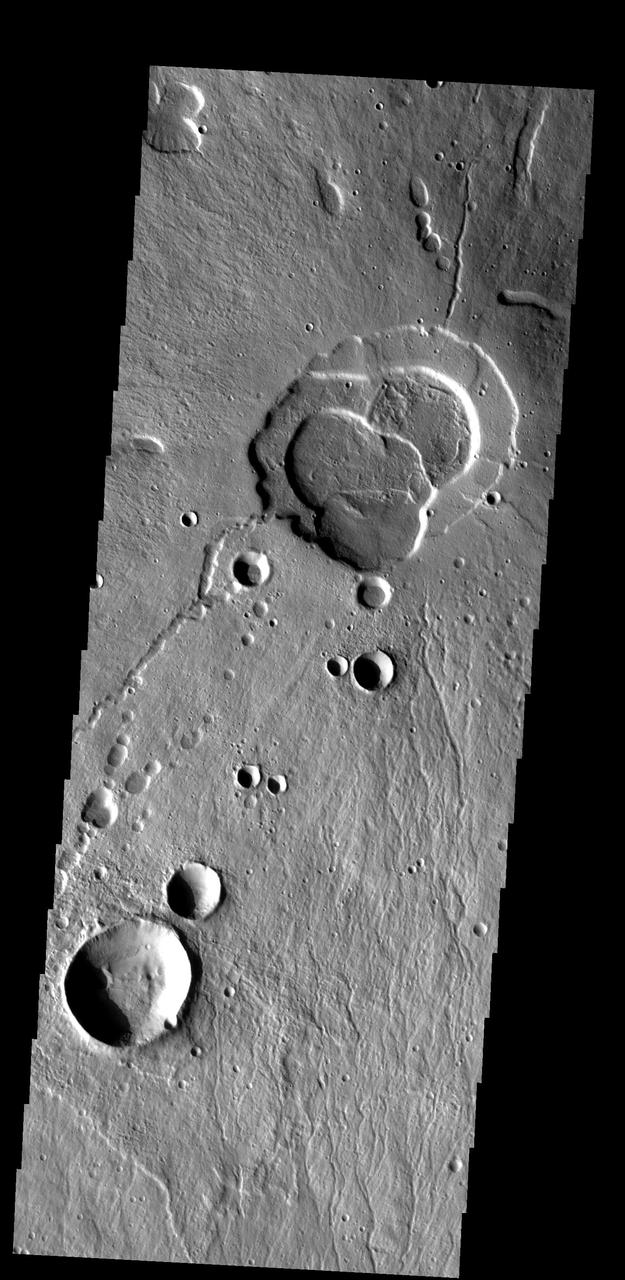
This image shows the summit of Hecates Tholus. The summit caldera is located in the top of the image