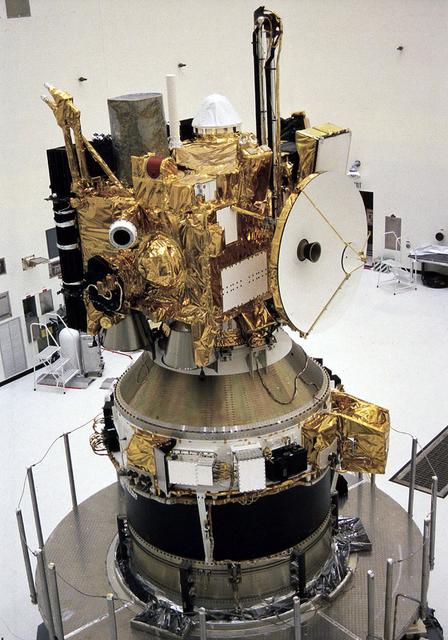
In the Payload Hazardous Servicing Facility, the integrated Mars Observer/Transfer Orbit Stage (TOS) payload is ready for encapsulation in the Titan III nose fairing. The TOS booster maiden flight was dedicated to Thomas O. Paine, a former NASA administrator who strongly supported interplanetary exploration and was an early backer of the TOS program. Launched September 25, 1992 from the Kennedy Space Flight Center aboard a Titan III rocket and the TOS, the Mars Observer spacecraft was to be the first U.S. spacecraft to study Mars since the Viking missions 18 years prior. Unfortunately, the Mars Observer spacecraft fell silent just 3 days prior to entering orbit around Mars.
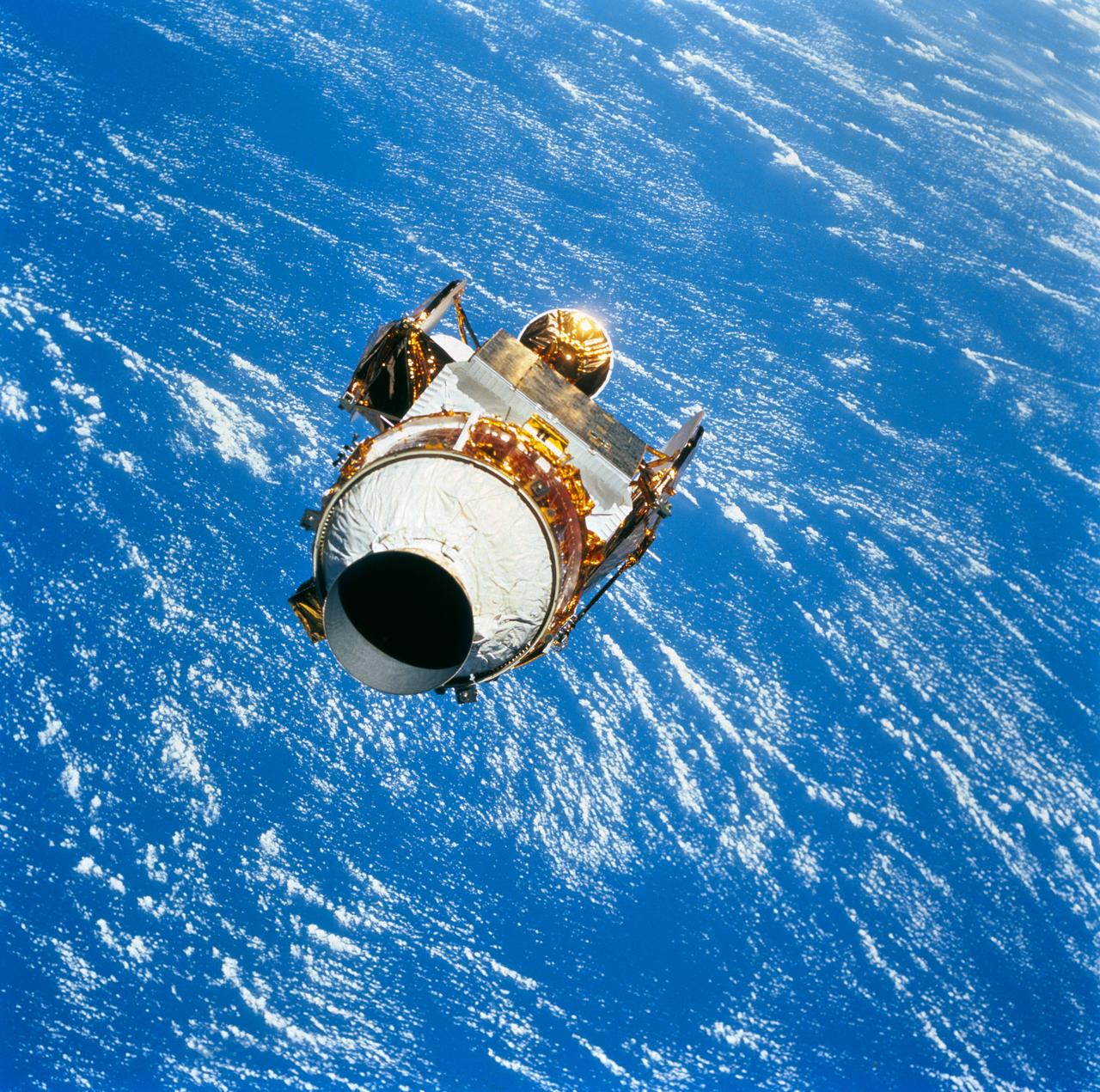
STS051-71-054 (12 Sept 1993) --- The Advanced Communications Technology Satellite (ACTS) with its Transfer Orbit Stage (TOS) is backdropped over the blue ocean following its release from the Earth-orbiting Space Shuttle Discovery. ACTS/TOS deploy was the first major task performed on the almost ten-day mission. The frame was exposed with a 70mm handheld Hasselblad camera from Discovery's flight deck.
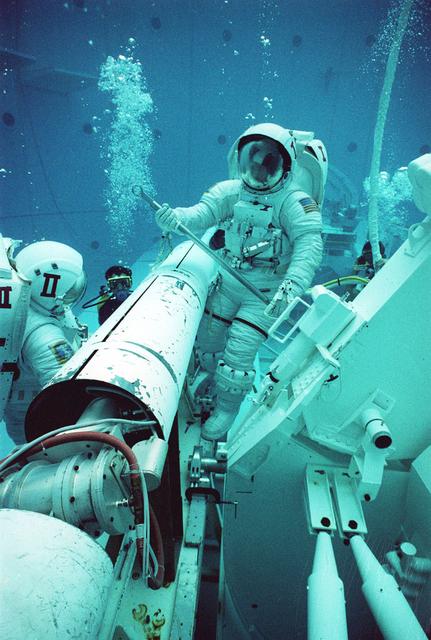
Two years prior to being used during a shuttle mission, the Transfer to Orbit System (TOS) is being demonstrated at Marshall Space Flight Center's (MSFC) Neutral Buoyancy Simulator (NBS). TOS is an upper stage launch system used to place satellites into higher orbits. TOS was used only once, on September 12, 1993 when the Space Shuttle Discovery (STS51) deployed ACTS (Advanced Communications Technology Satellite). The test pictured was to provide an evaluation of the extravehicular activity (EVA) tools that were to be used by future shuttle crews.
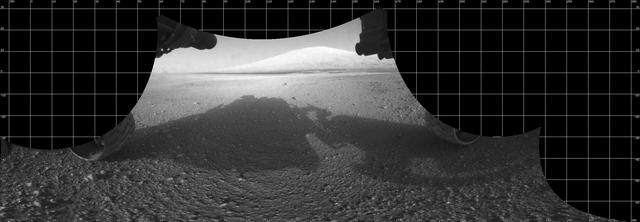
The Curiosity engineering team created this cylindrical projection view from images taken by NASA Curiosity rover front hazard avoidance cameras underneath the rover deck on Sol 0. Pictured here are are the pigeon-toed the wheels.
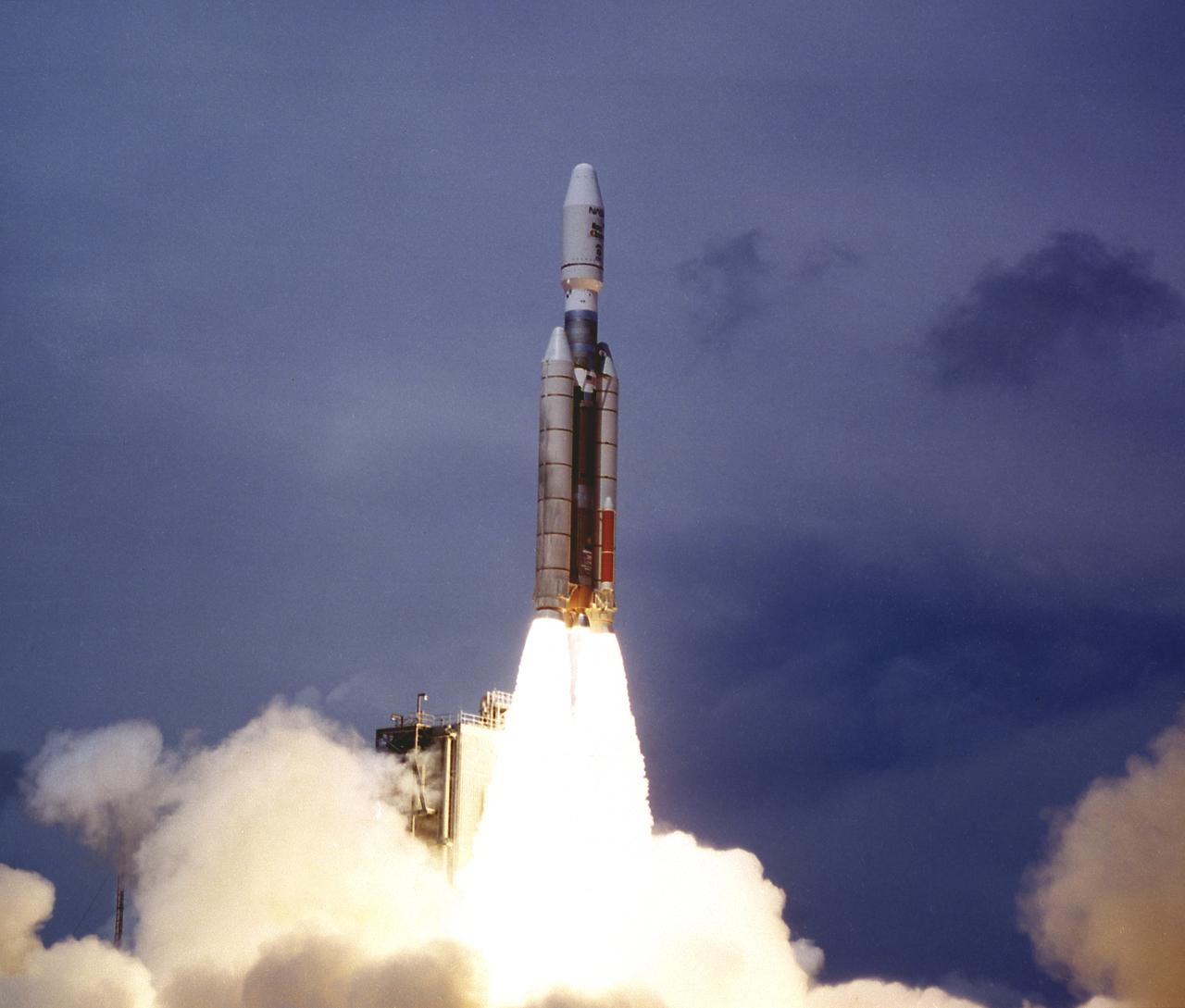
Titan III vehicle launched the Mars Observer spacecraft and the Transfer Orbit Stage (TOS) from the Cape Canaveral Air Force Station on September 25, 1992. Managed by the Marshall Space Flight Center (MSFC), TOS will fire to send the Observer on an 11-month interplanetary journey to the Mars. The Observer failed to reach the Mars orbit in August 1993.
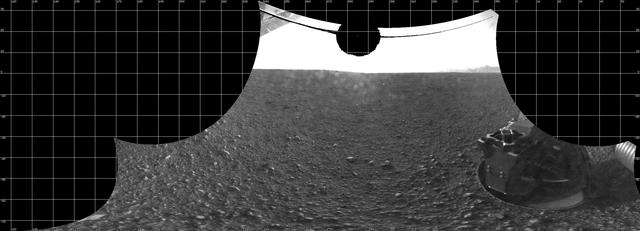
The Curiosity engineering team created this cylindrical projection view from images taken by NASA Curiosity rover rear hazard avoidance cameras underneath the rover deck on Sol 0. Pictured here are the pigeon-toed wheels in their stowed position from
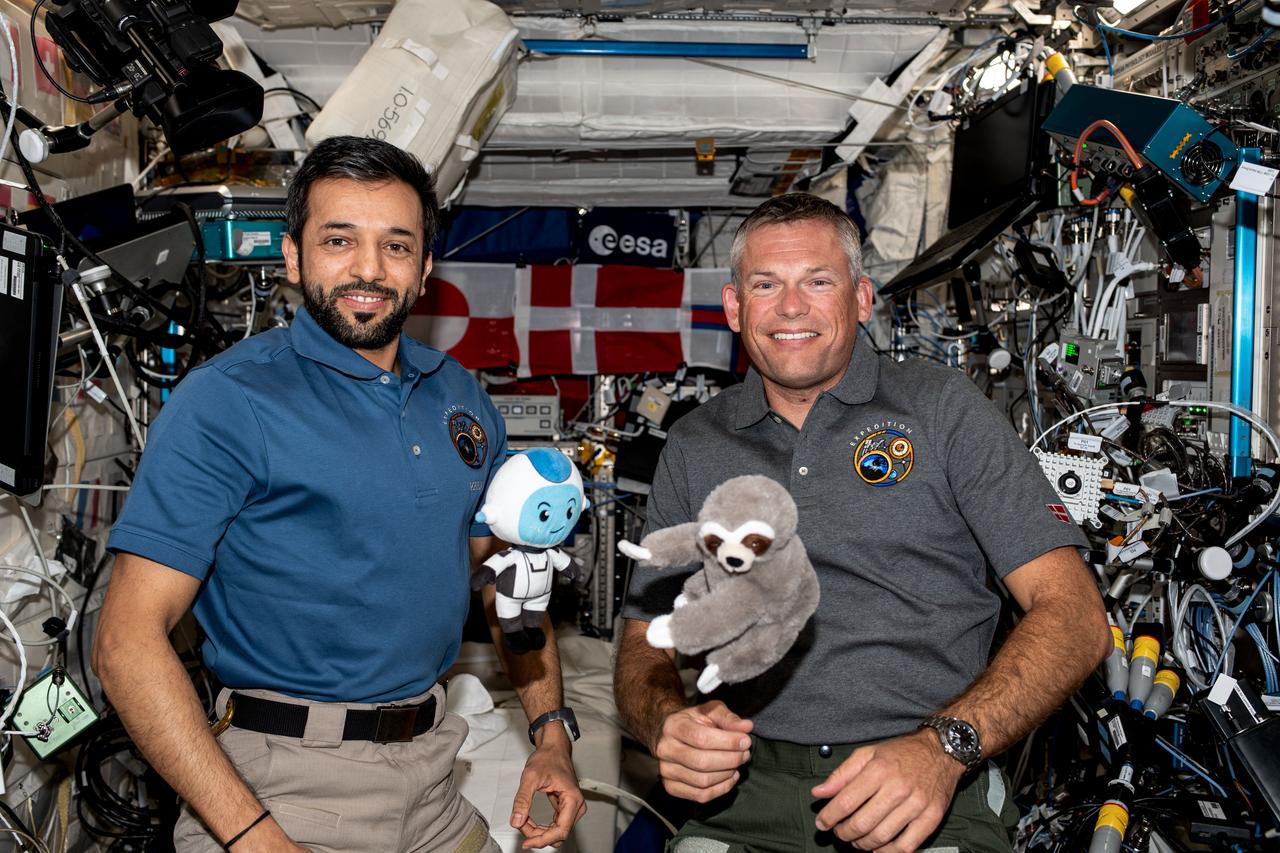
iss069e085315 (Aug. 31, 2023) --- Expedition 69 Flight Engineers Sultan Alneyadi of UAE (United Arab Emirates) and Andreas Mogensen of ESA (European Space Agency) pose for a portrait together aboard the International Space Station's Columbus laboratory module. Alneyadi holds a stuffed doll, Suhail, he carried with him aboard the SpaceX Dragon Endeavour spacecraft. Mogensen shows off a plush three-toed sloth doll he carried aboard the SpaceX Dragon Endurance during his ride to space. The dolls are not just mascots but also gravity indicators to show they have reached space.
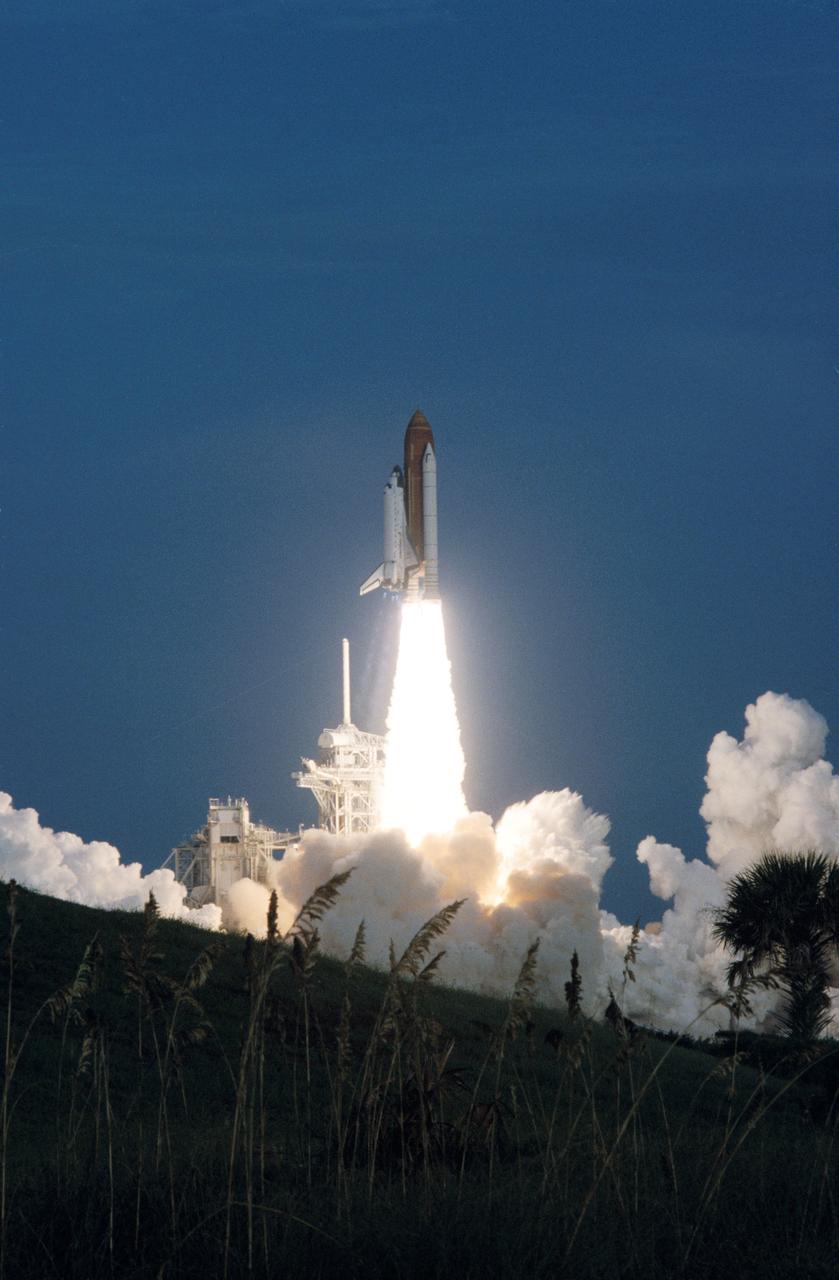
STS051-S-108 (12 Sept. 1993) --- The Space Shuttle Discovery soars toward a nine-day stay in Earth-orbit to support the mission. Launch occurred at 7:45 a.m. (EDT) September 12, 1993. Note the diamond shock effect coming from the thrust of the three main engines. Onboard the shuttle were astronauts Frank L. Culbertson, Jr., William F. Readdy, Daniel W. Bursch, James H. Newman and Carl E. Walz, along with a number of payloads. The payloads included the Advanced Communications Technology Satellite (ACTS) with its Transfer Orbit Stage (TOS), the Orbiting Retrievable Far and Extreme Ultraviolet Spectrometer (ORFEUS) and its Shuttle Pallet Satellite (SPAS) carrier. This photograph was taken with a 35mm camera.
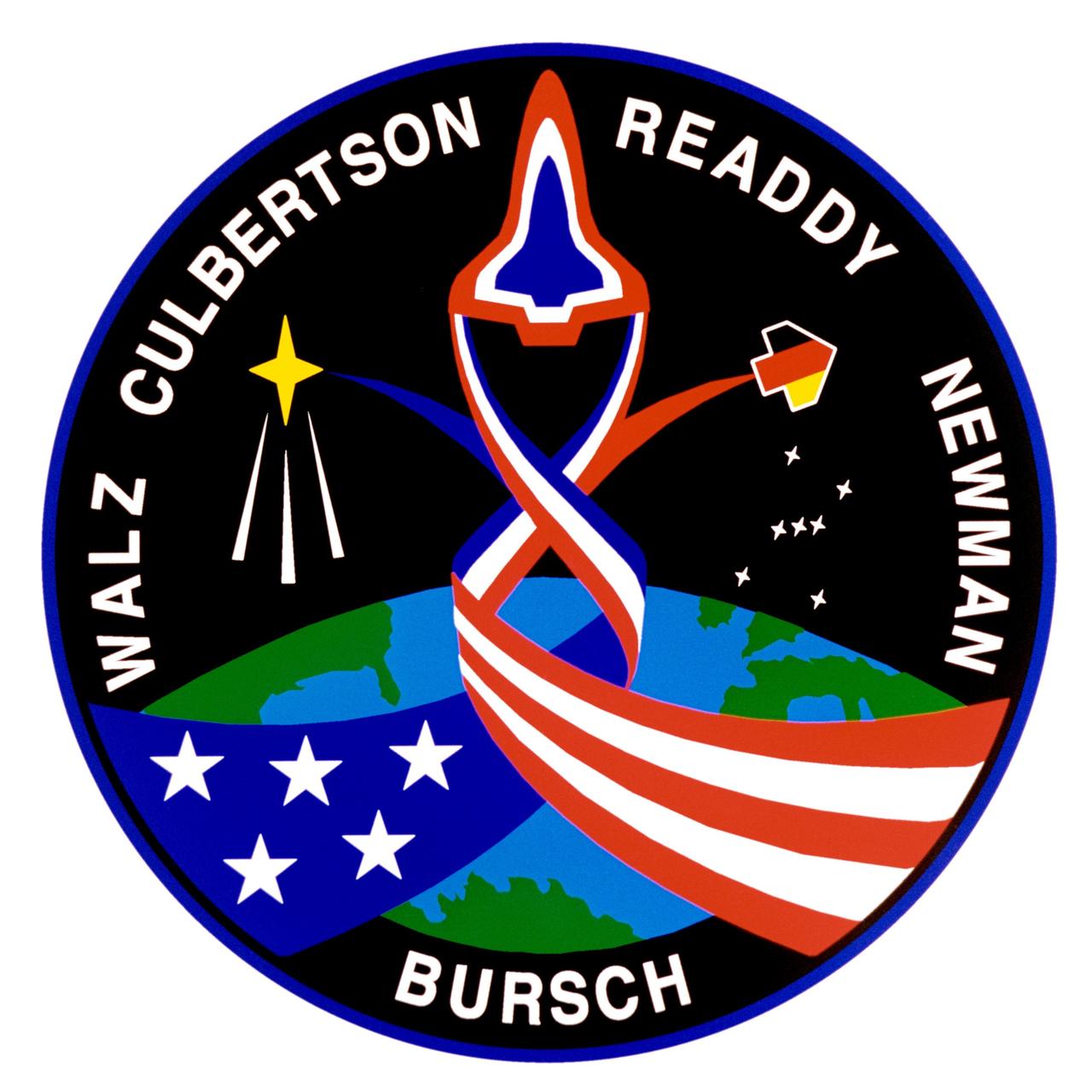
STS051-S-001 (January 1993) --- Designed by the crew members, the crew patch honors all who have contributed to mission success. It symbolizes NASA's continuing quest to increase mankind's knowledge and use of space through this multi-faceted mission. The gold star represents the United States Advanced Communications Technology Satellite (ACTS) boosted by the Transfer Orbit Stage (TOS). The rays below the ACT\TOS represent the innovative communication technologies to be tested by this experiment. The stylized Shuttle Pallet Satellite (SPAS) represents the German-sponsored ASTRO\SPAS mission. The constellation Orion below SPAS is representative of the types of stellar objects to be studied by its experimenters. The stars in Orion also commemorate the astronauts who have sacrificed their lives for the space program. The ascending spiral, symbolizing America's continuing commitment to leadership in space exploration and development, originates with the thousands of persons who ensure the success of each space shuttle flight. The five large white stars, representing the five crew members, along with the single gold star, form the mission's numerical designation. The NASA insignia design for space shuttle flights is reserved for use by the astronauts and for other official use as the NASA Administrator may authorize. Public availability has been approved only in the form of illustrations by the various news media. When and if there is any change in this policy, which we do not anticipate, it will be publicly announced. Photo credit: NASA