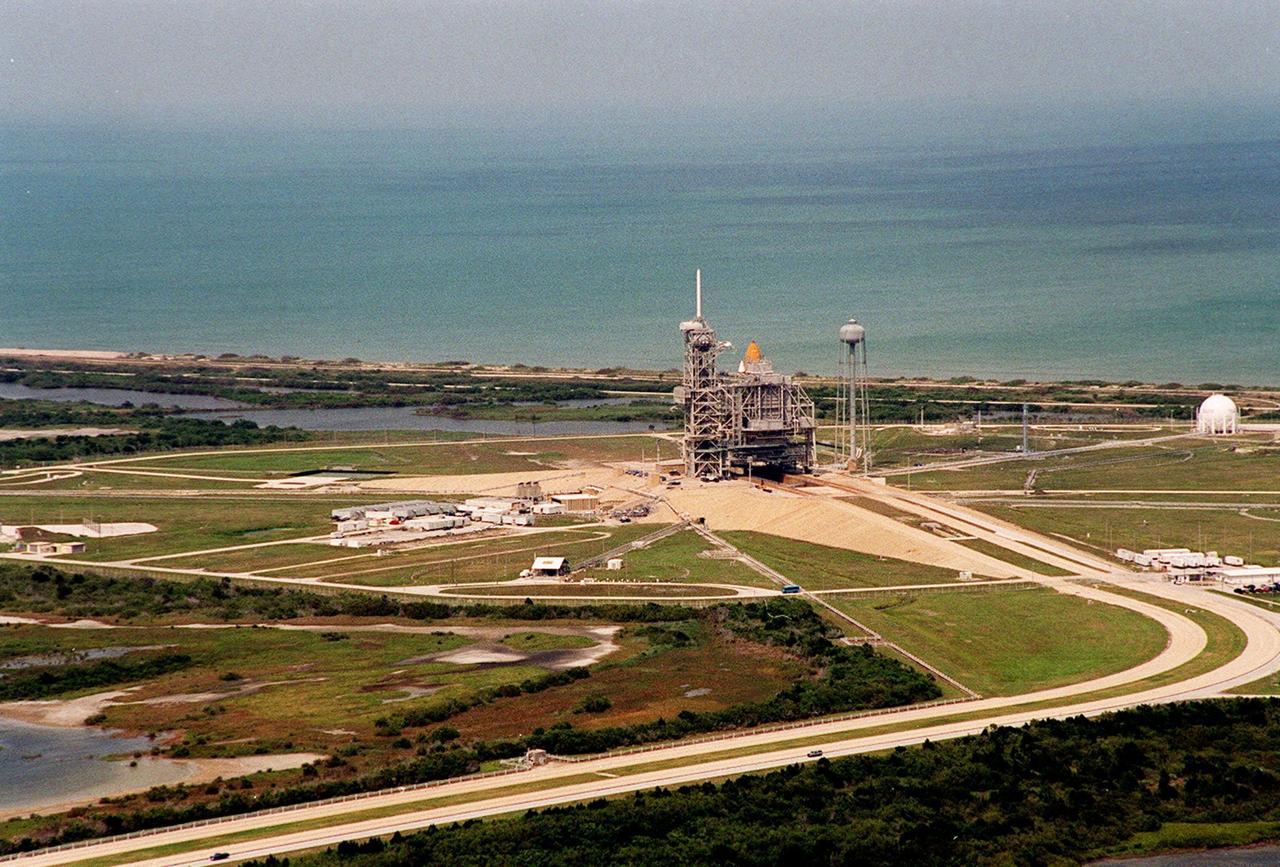
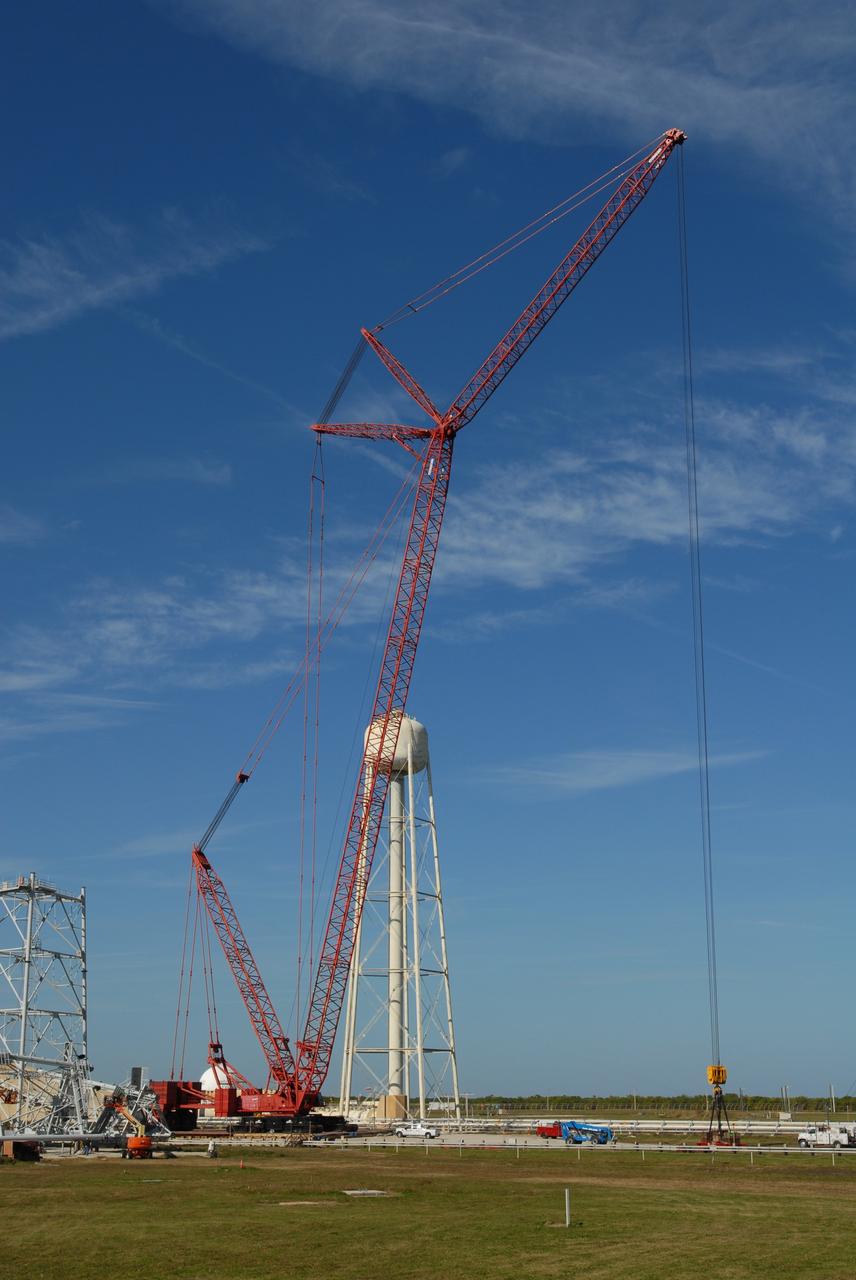
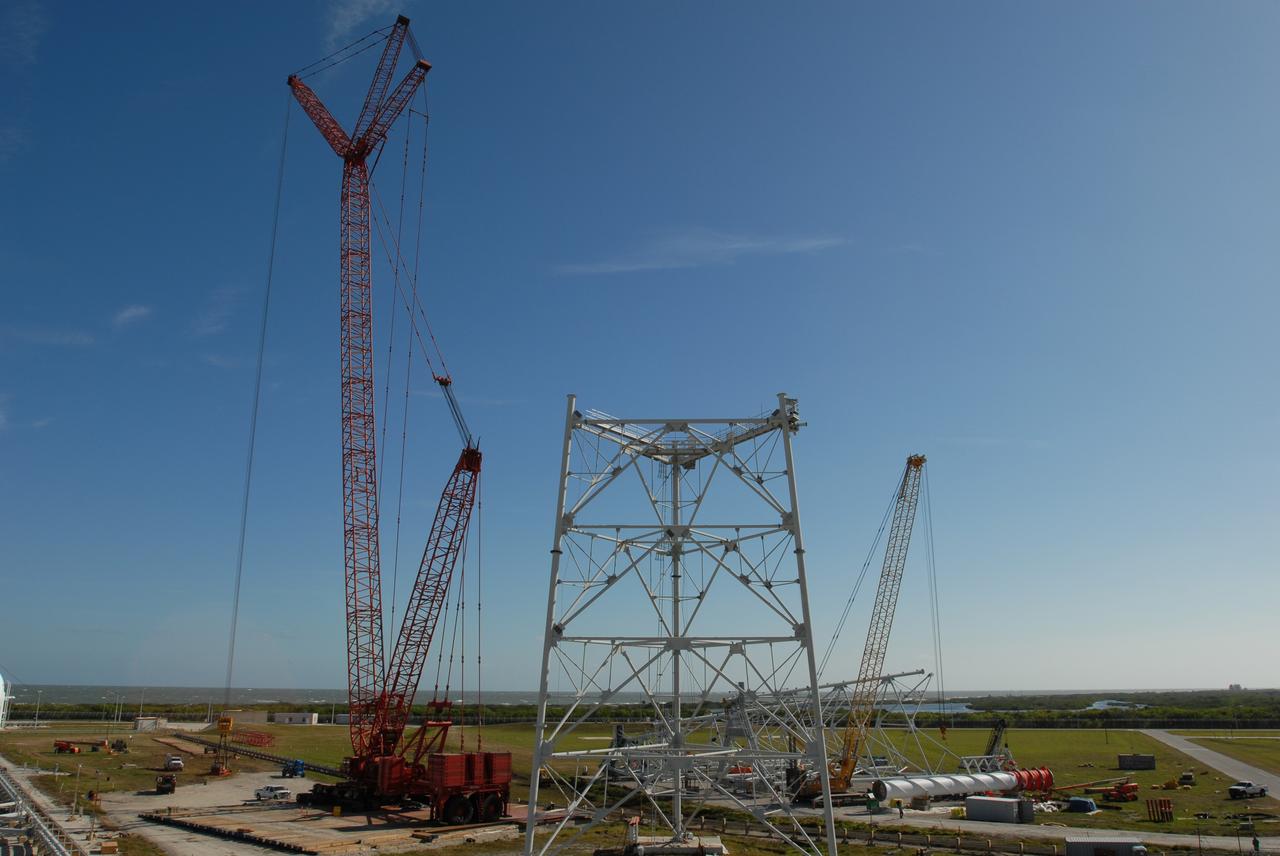
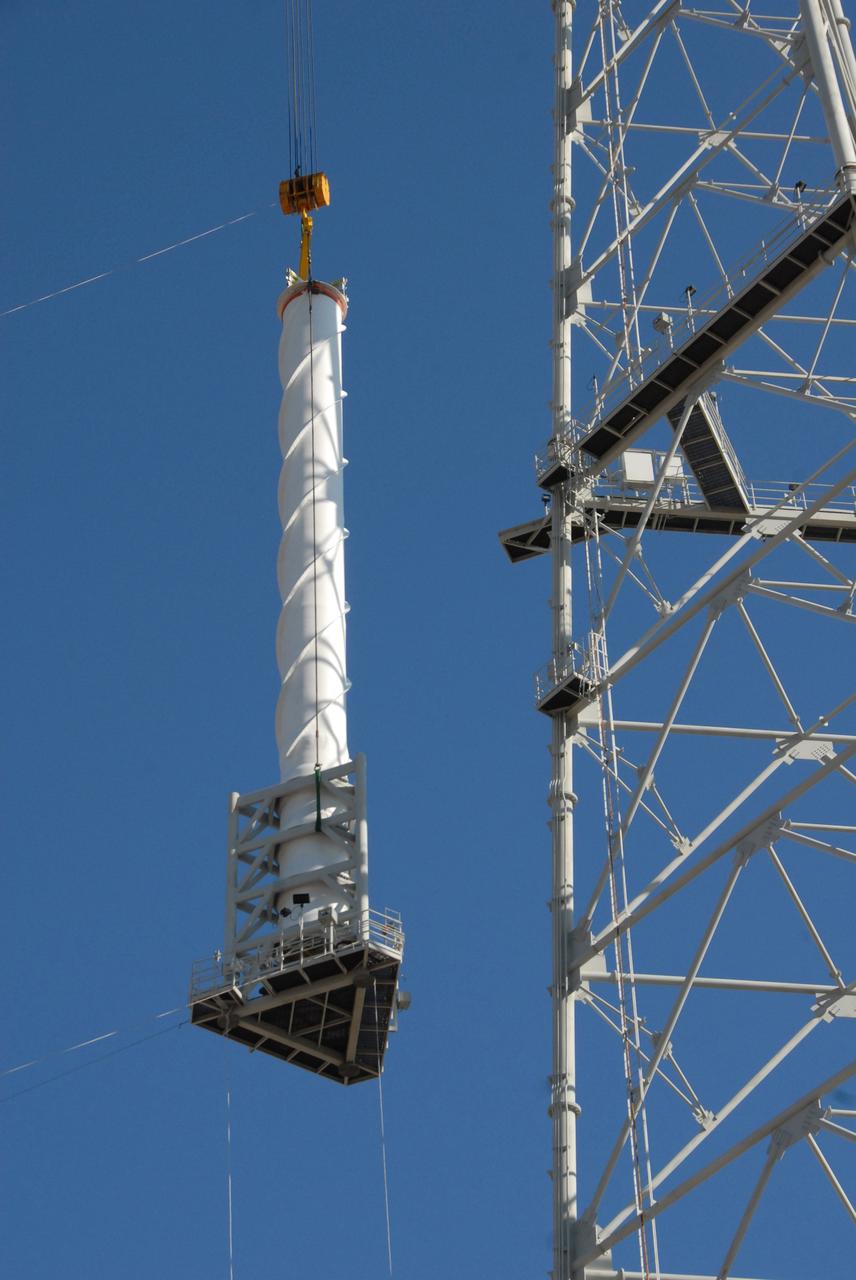
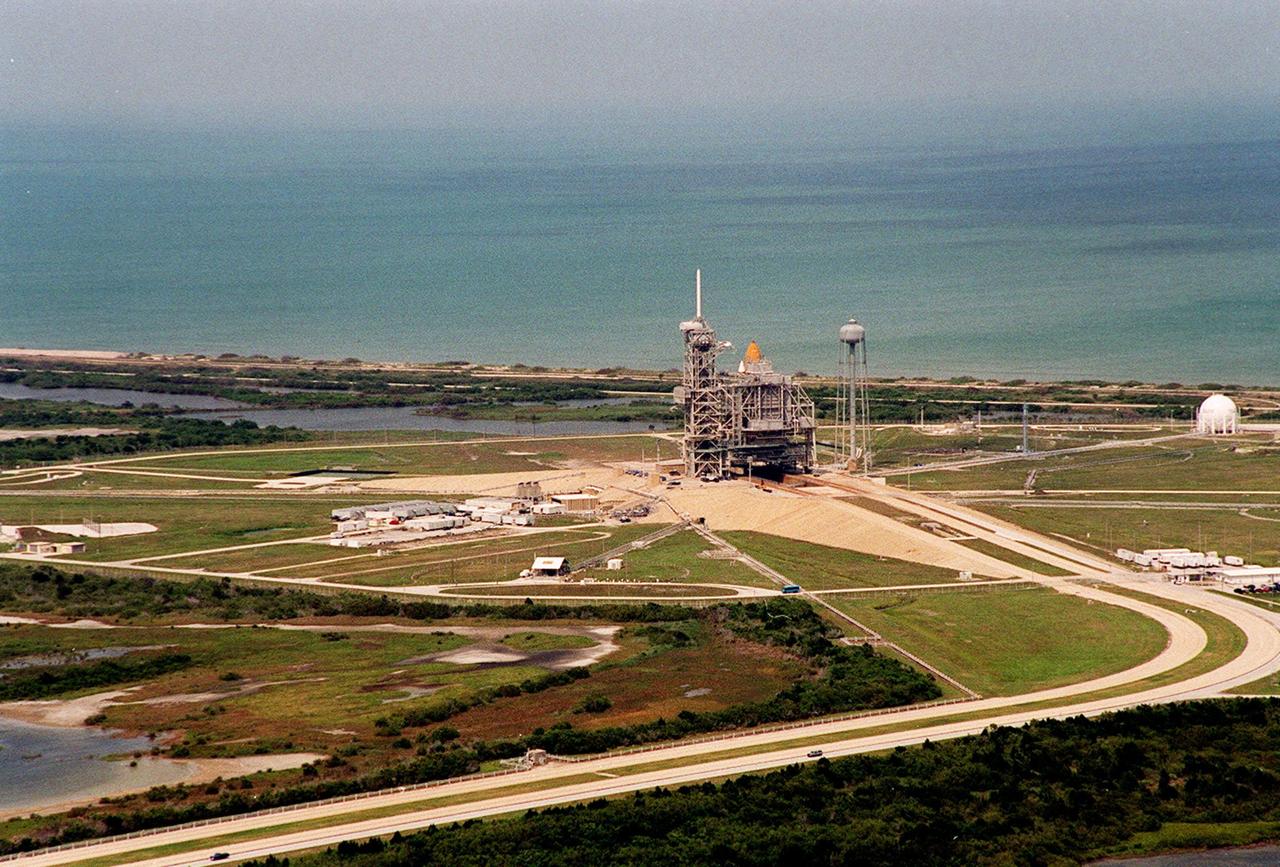
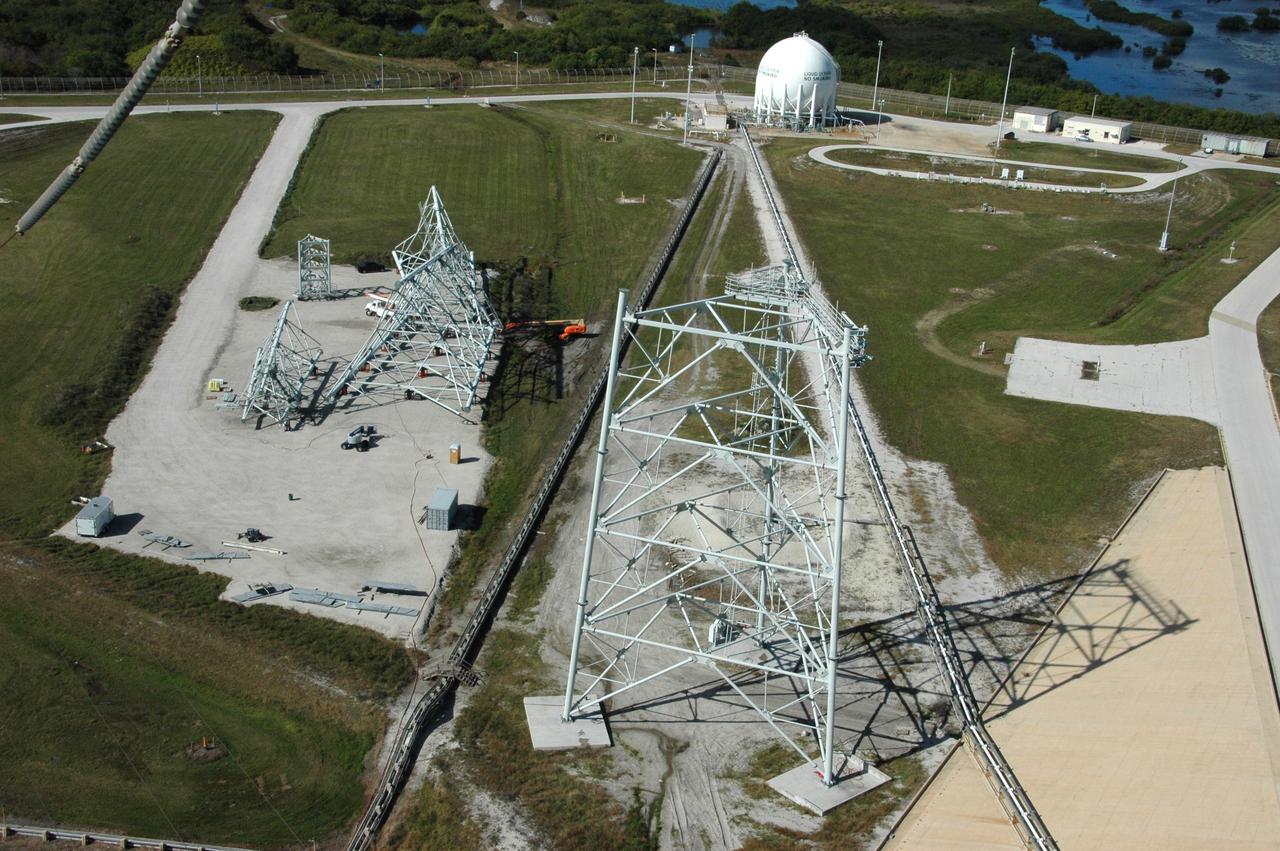
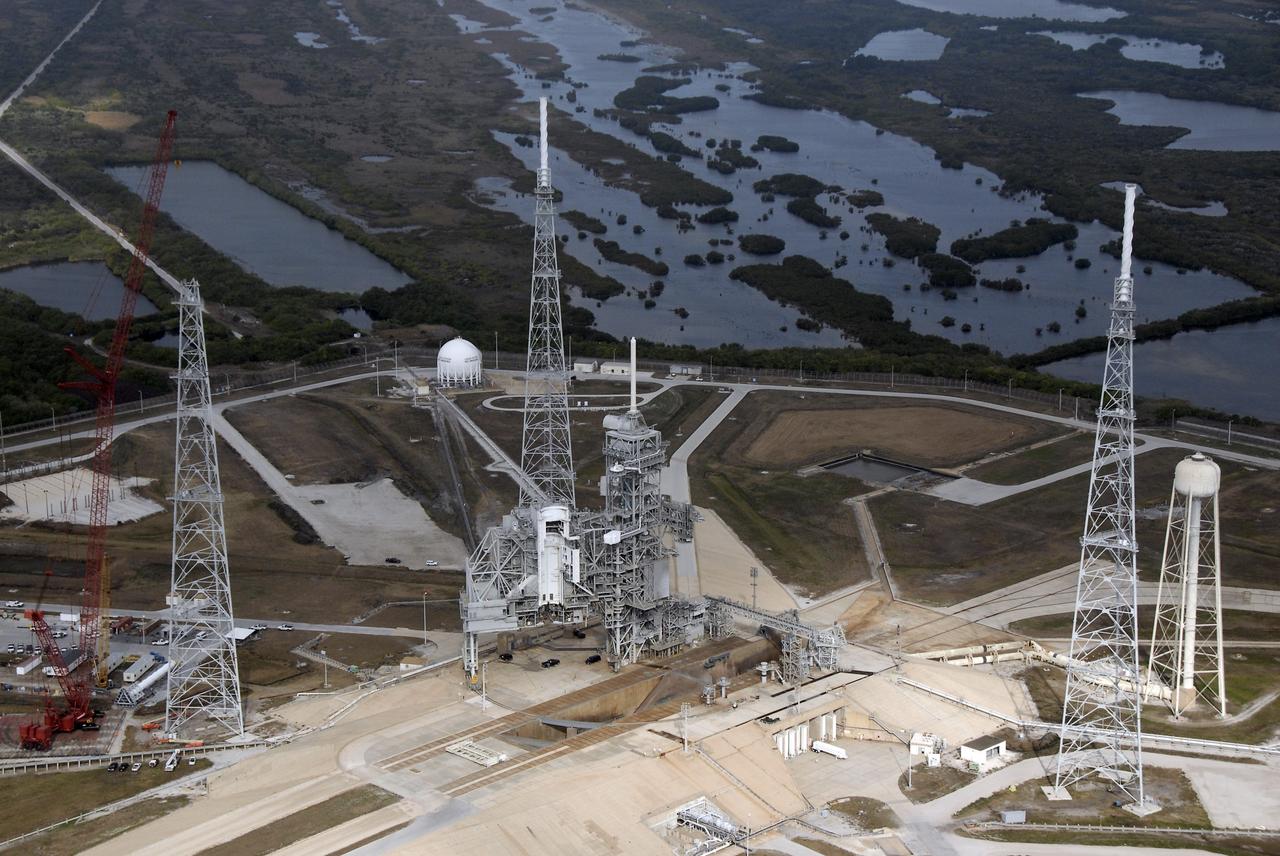
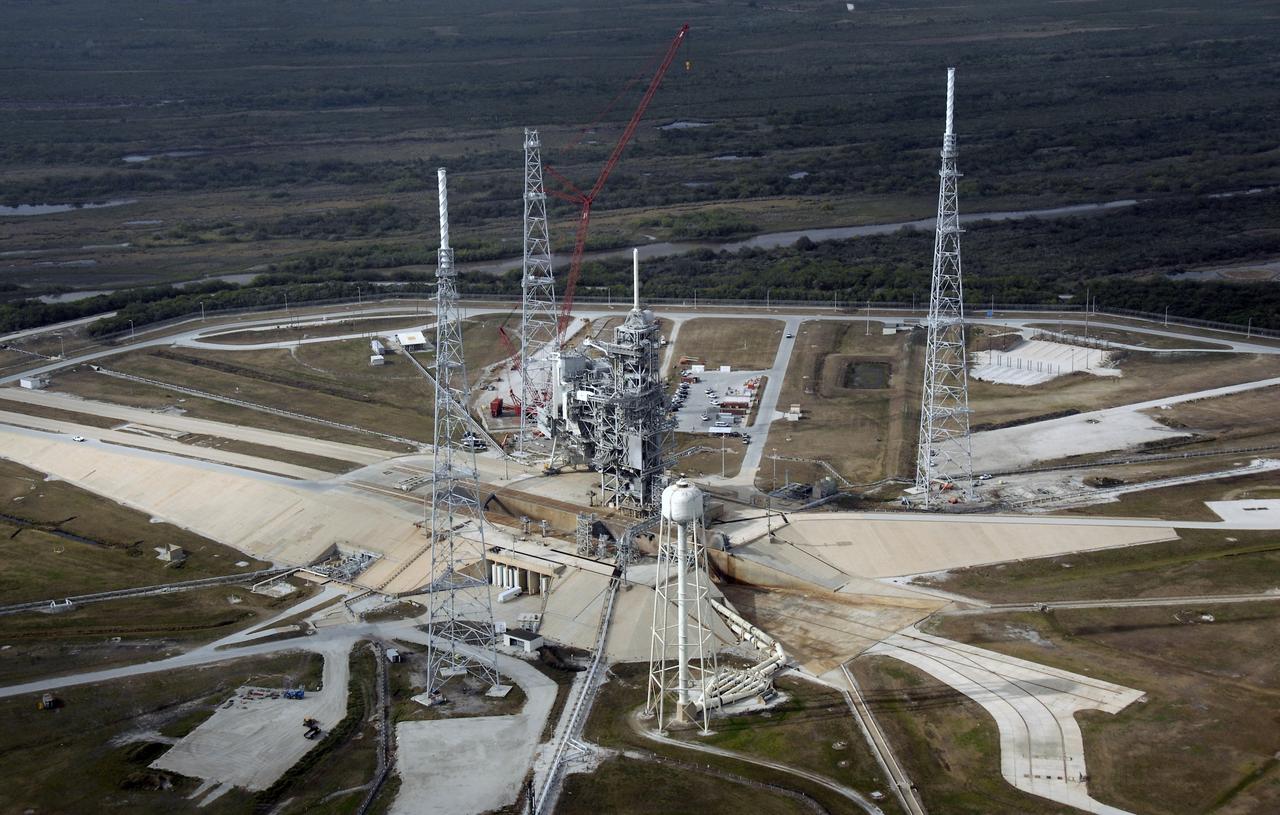
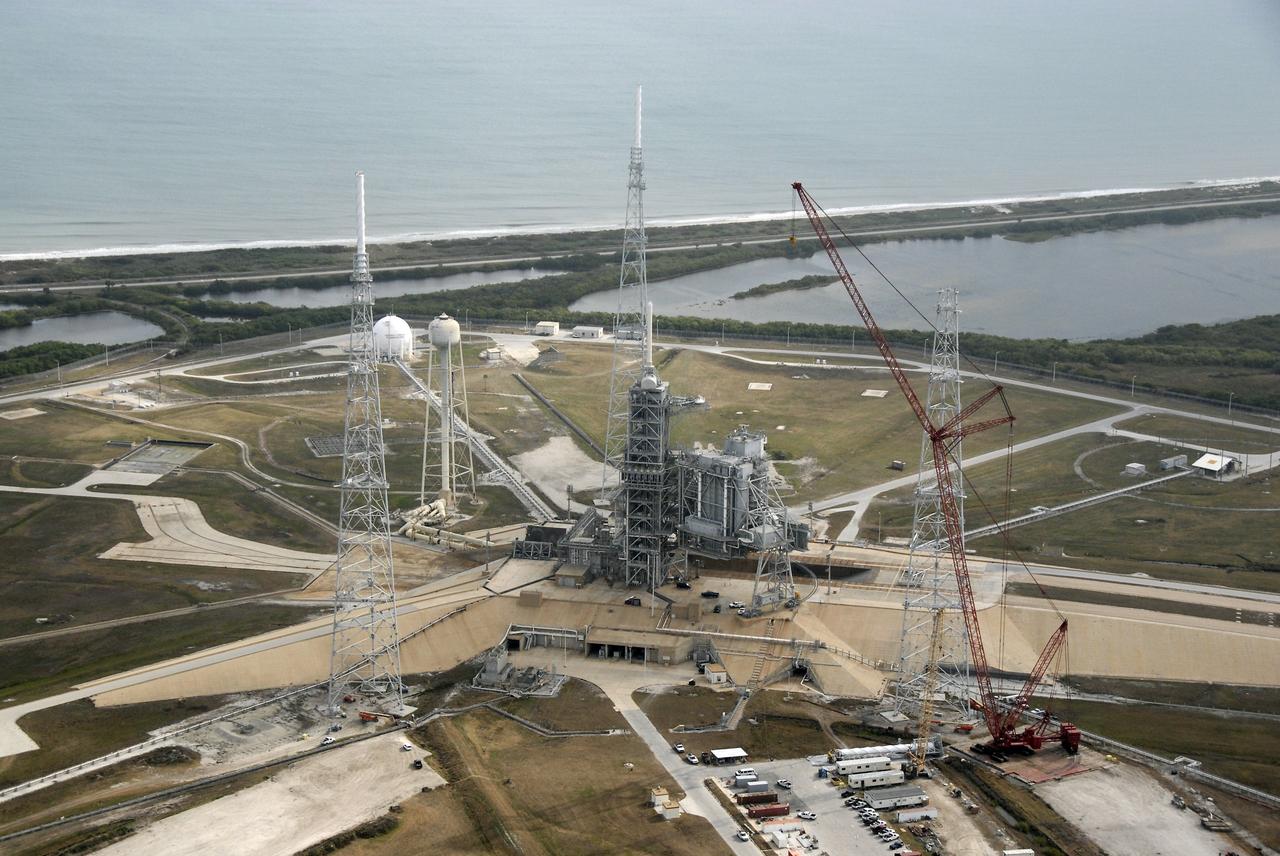
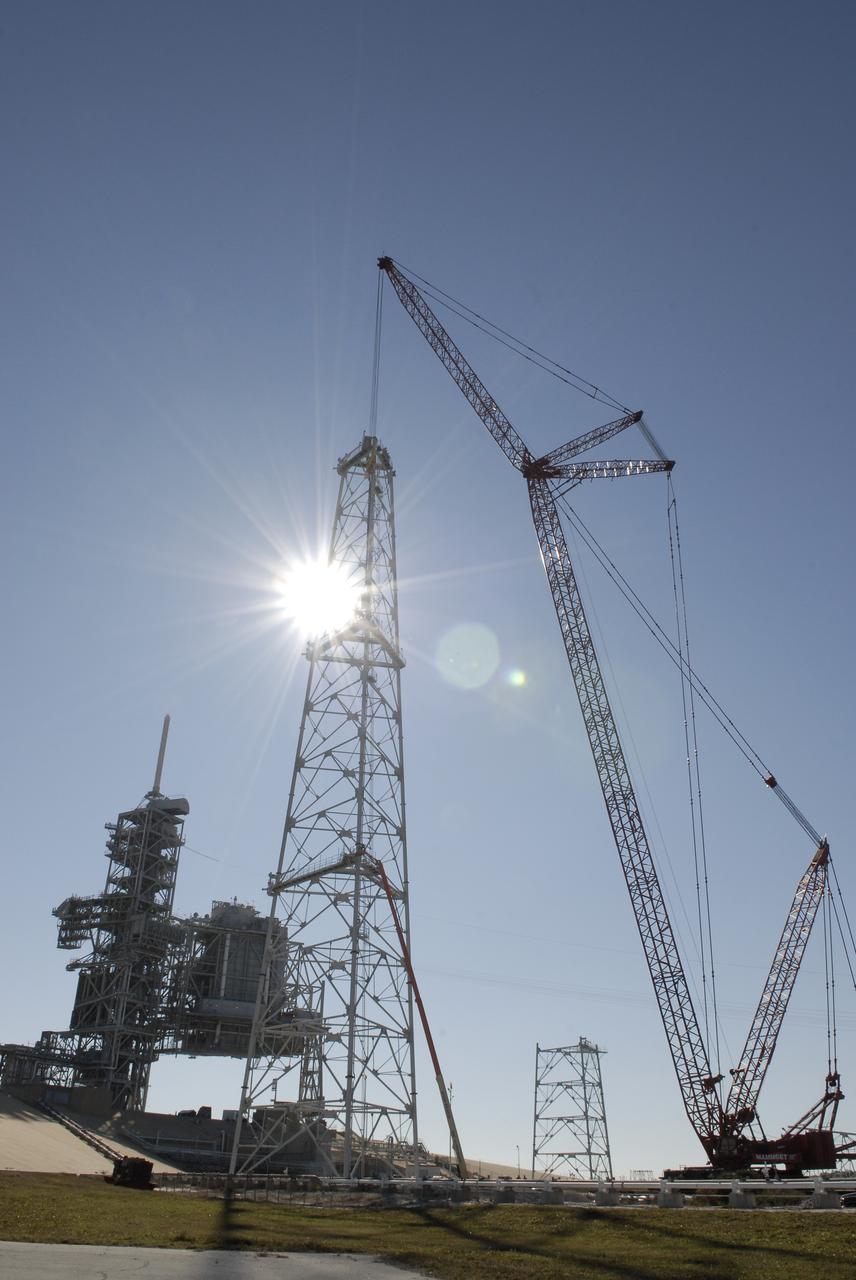
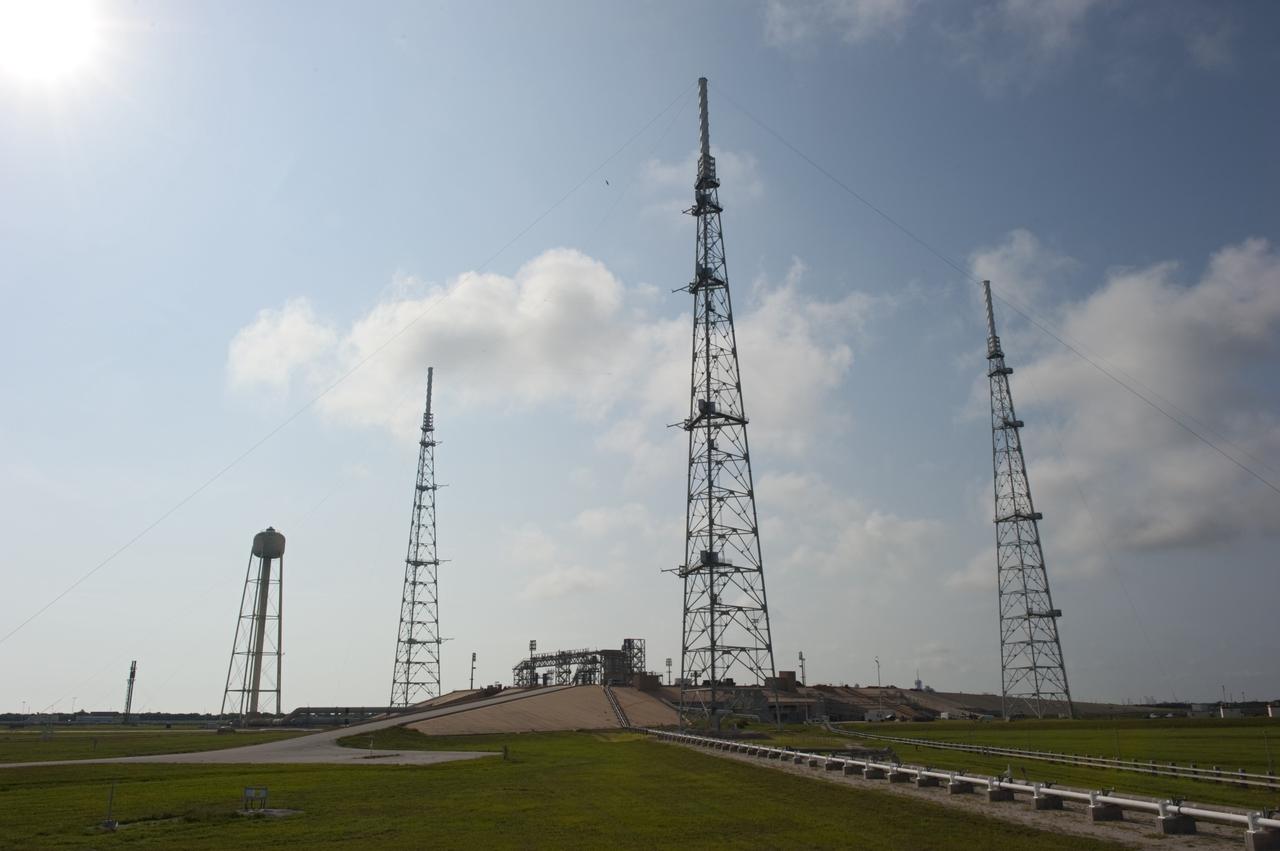
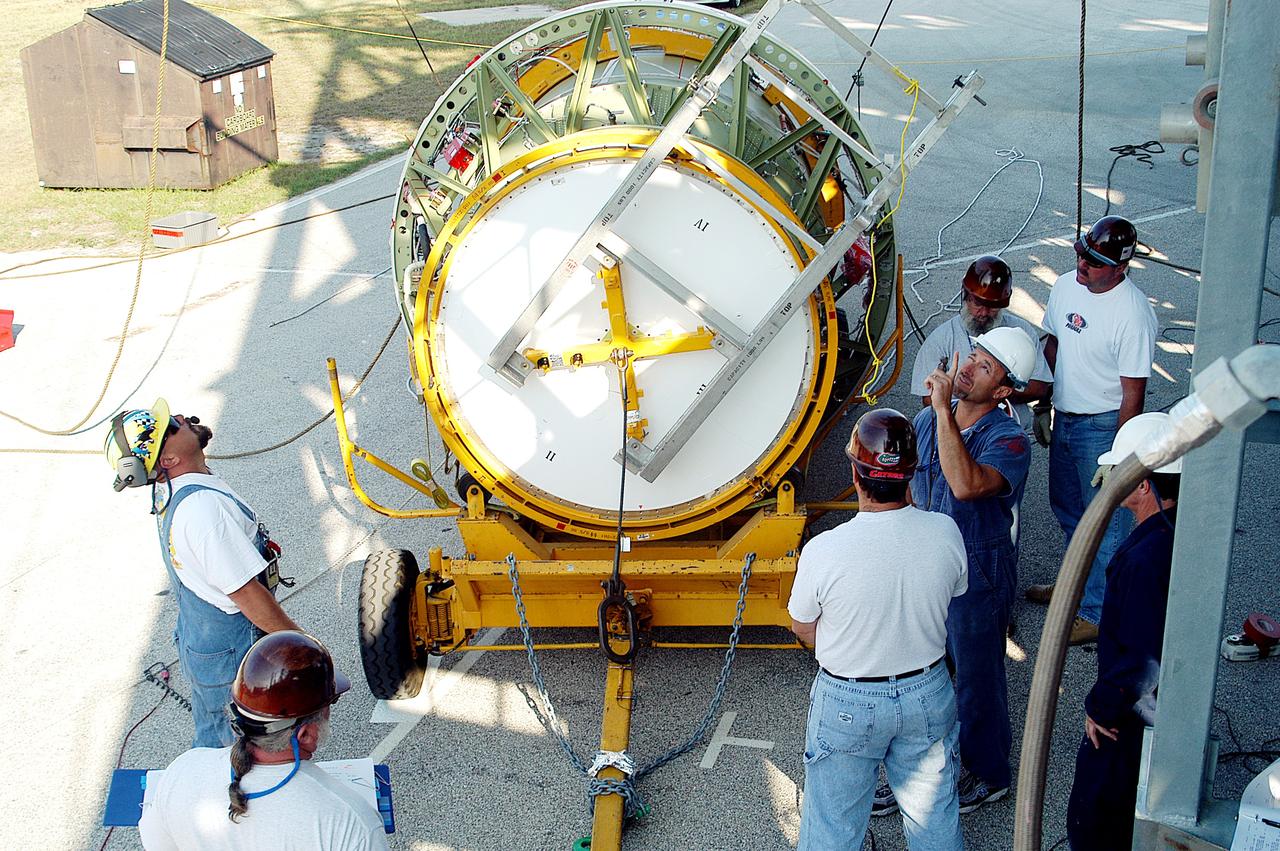
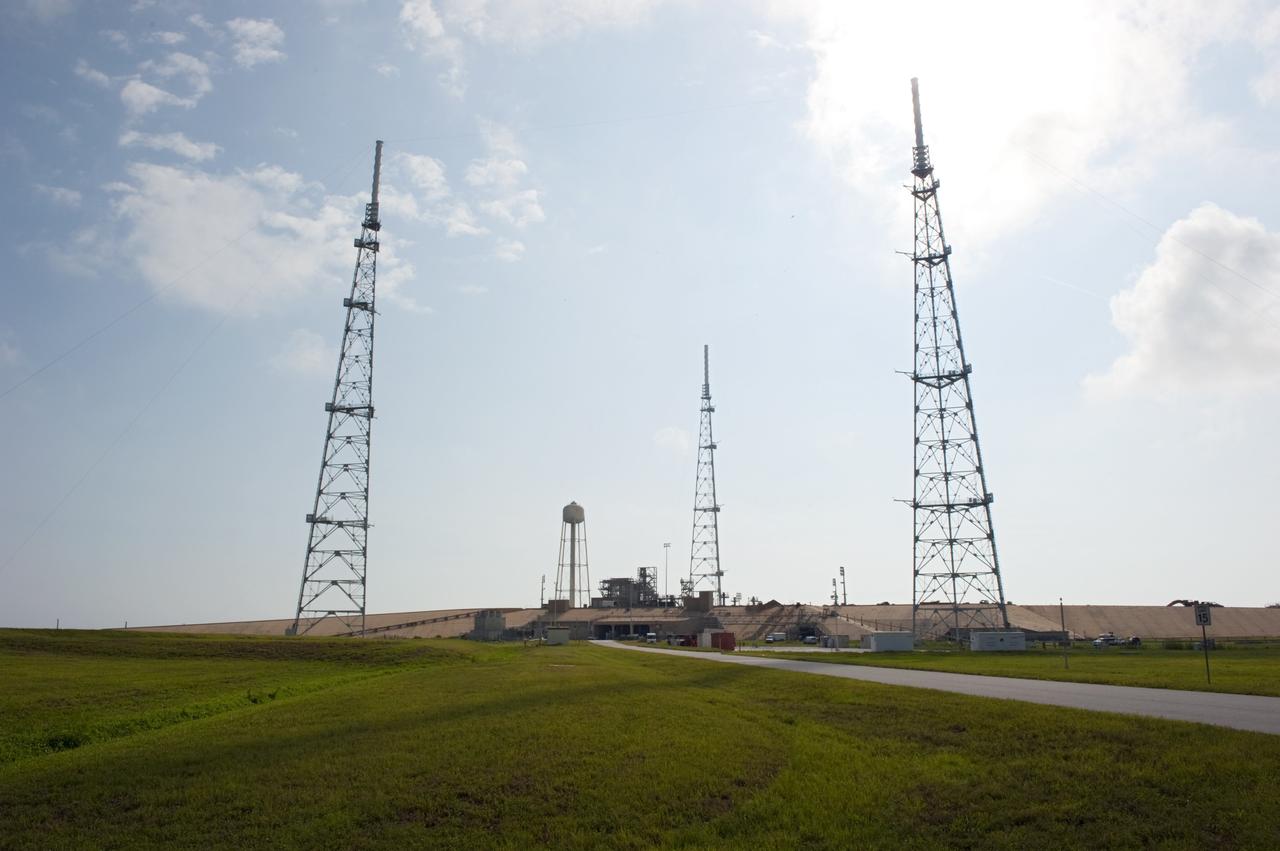
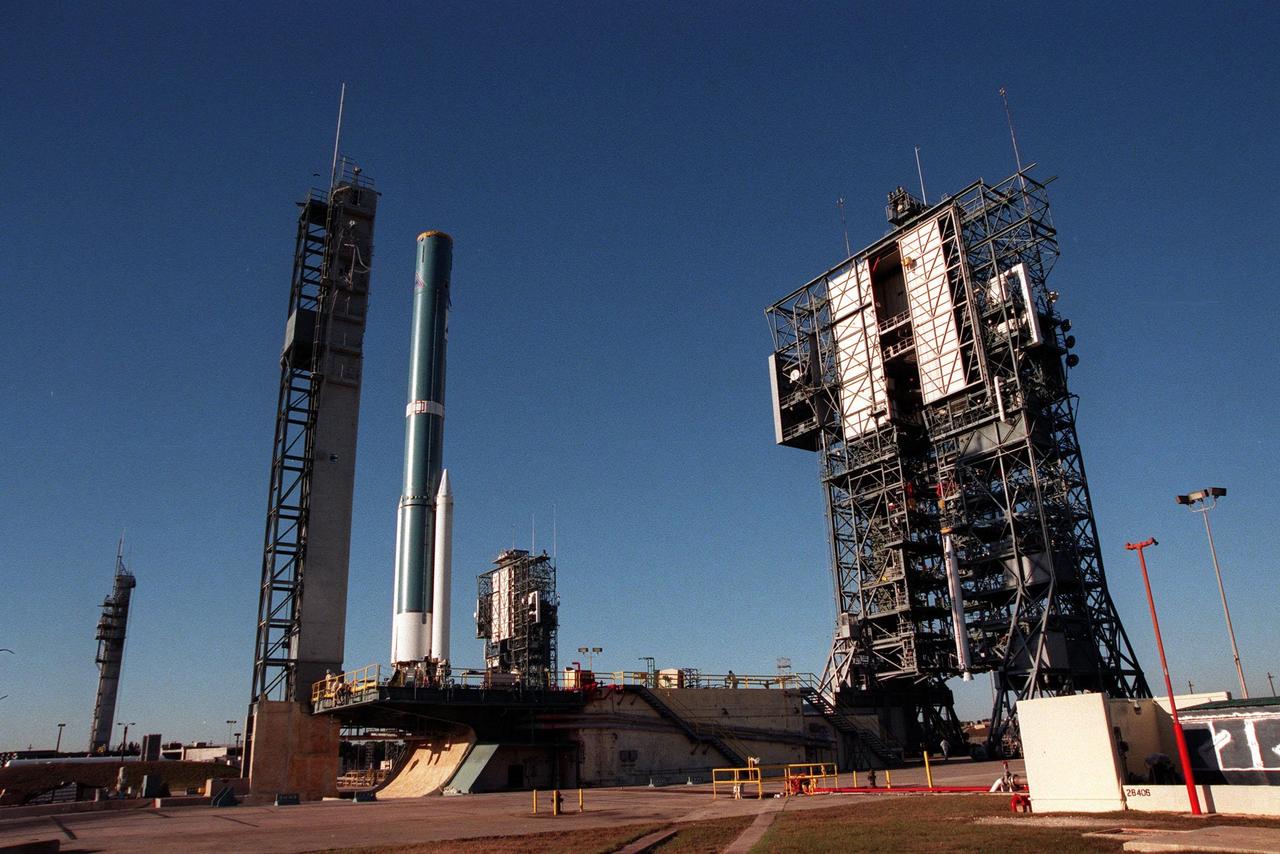
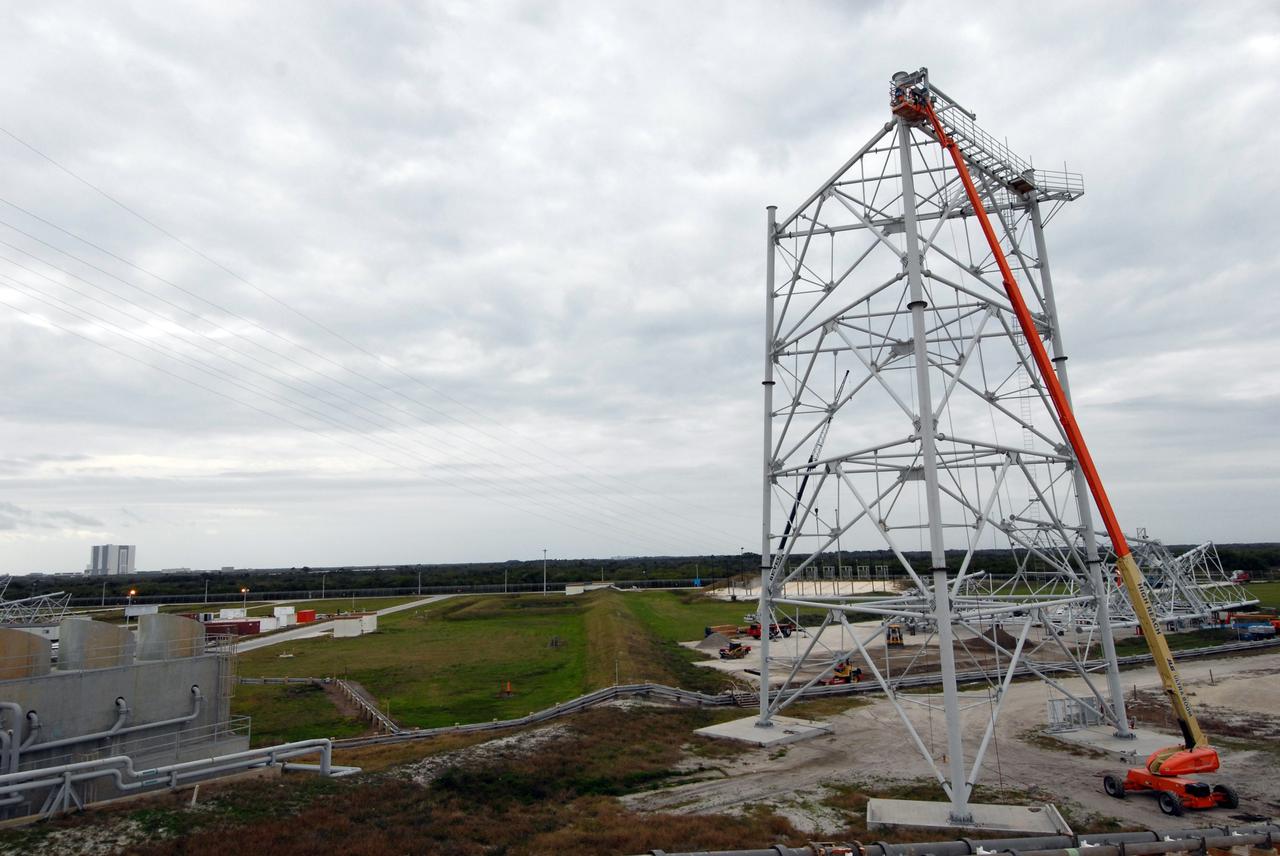
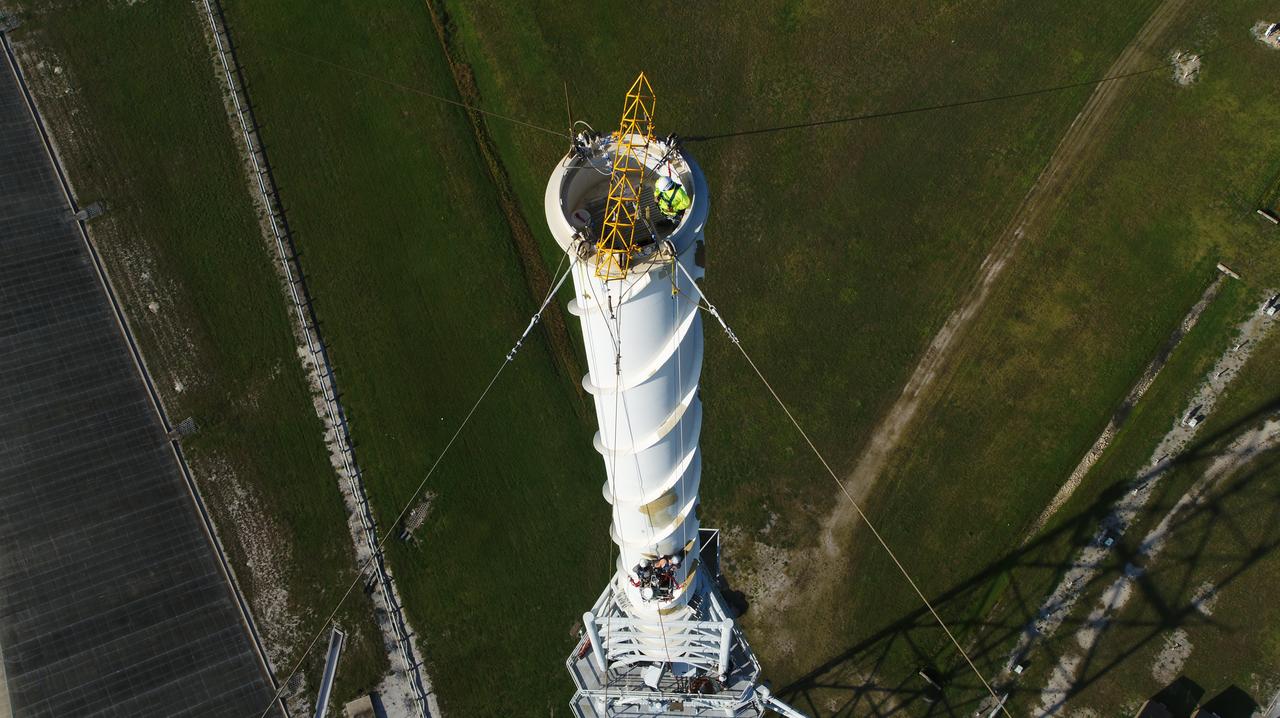
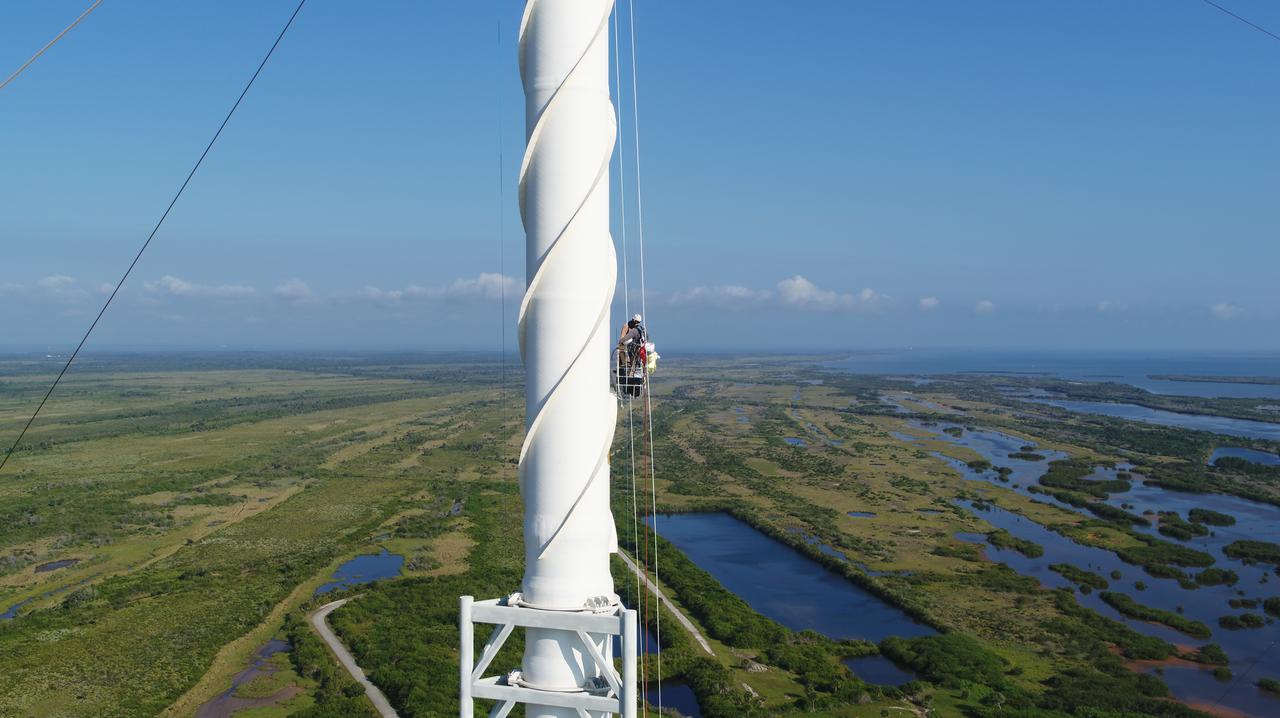
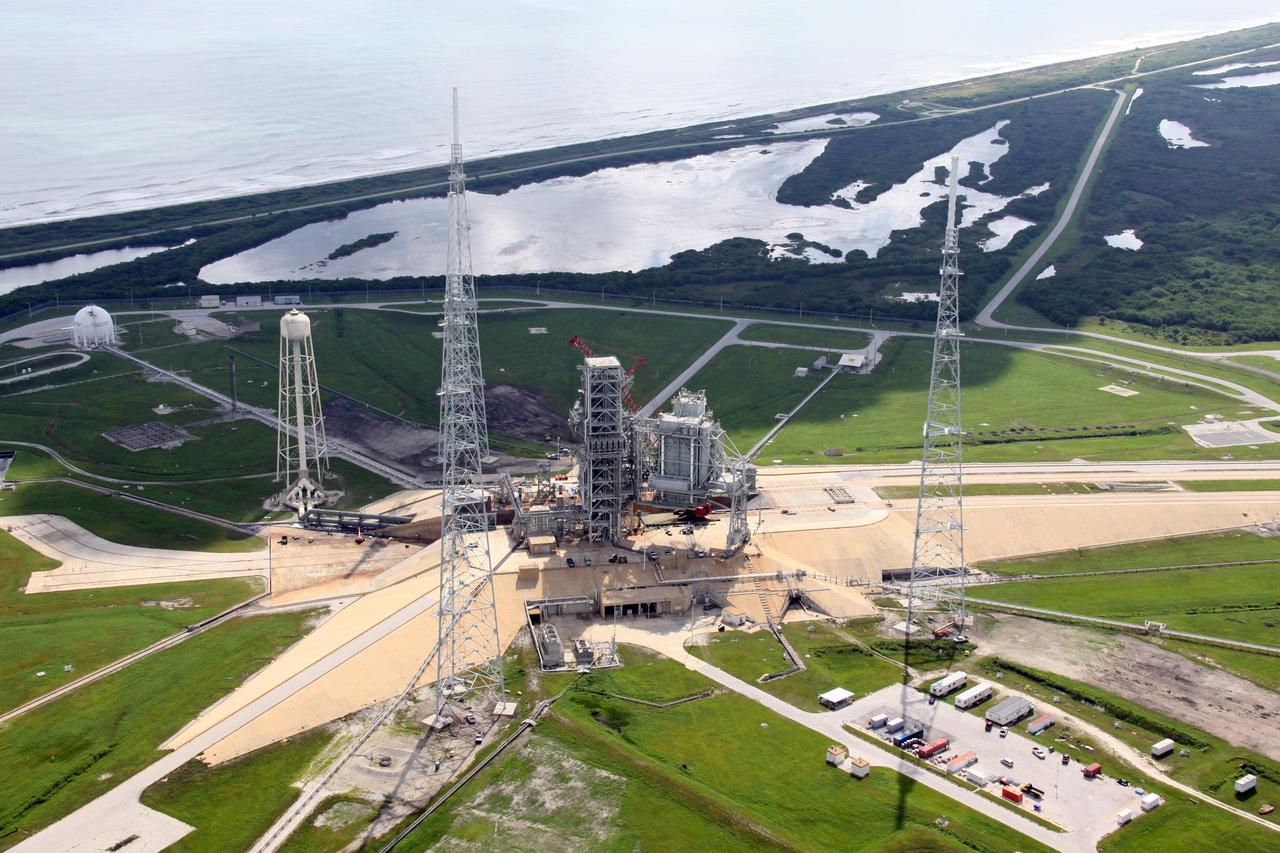
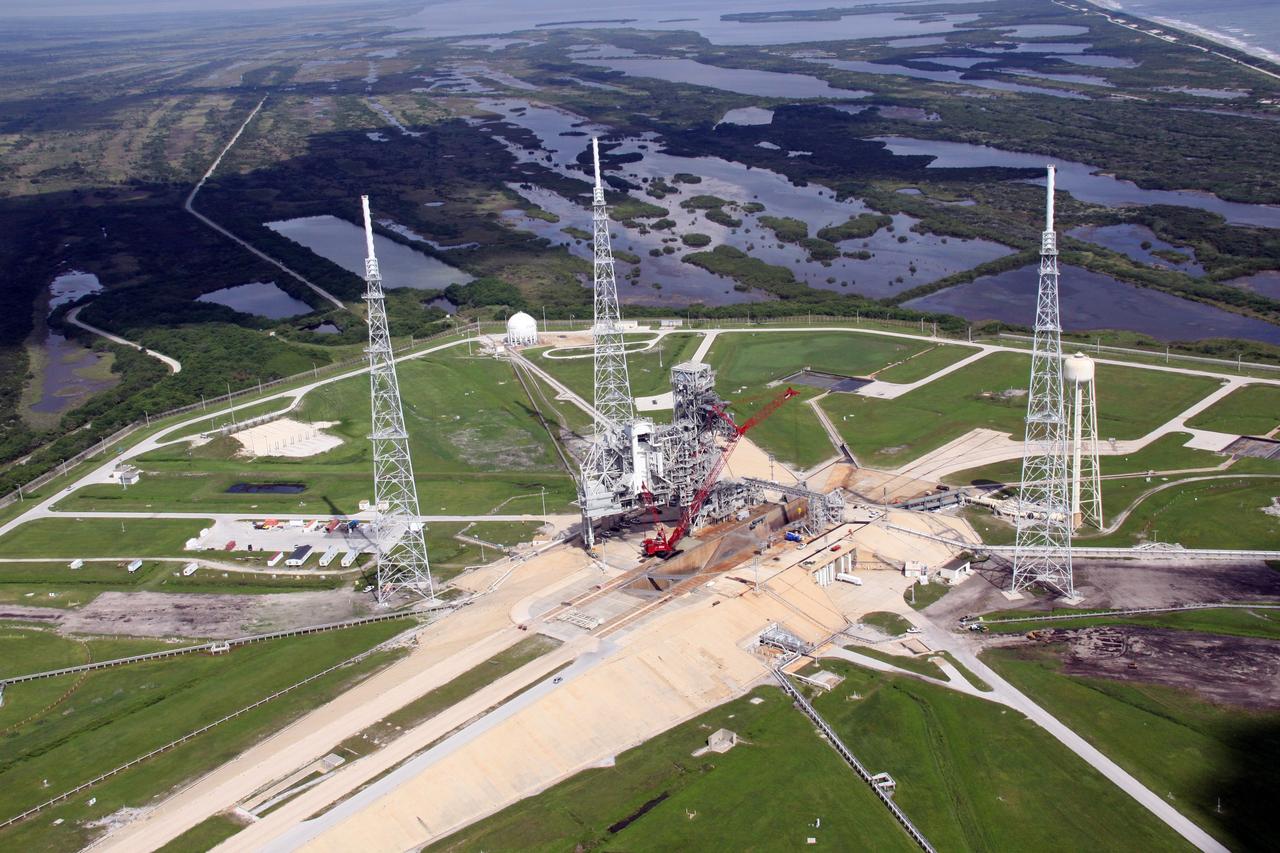
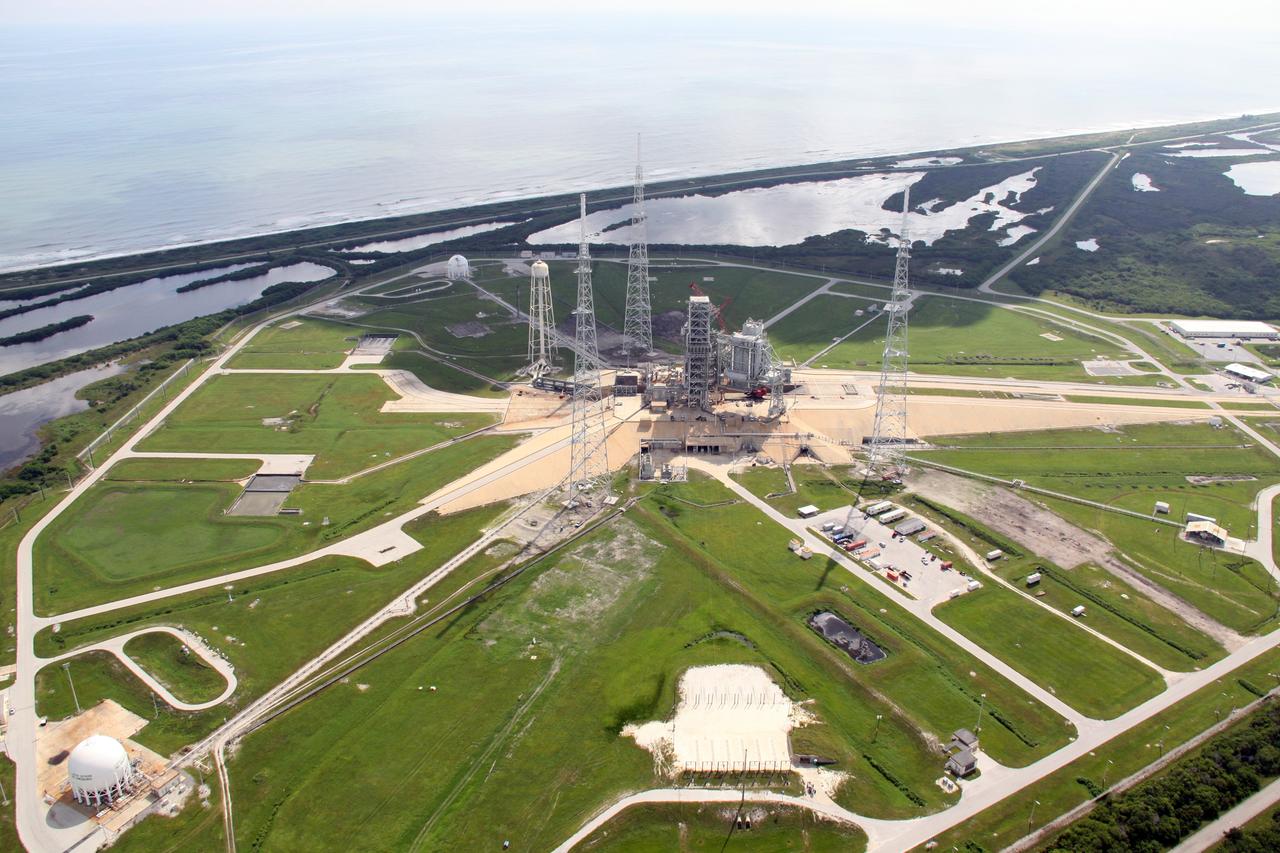
An aerial view shows workers preparing the surface of one of the three lightning protection system towers for painting at Exploration Ground Systems’ Launch Complex 39B at NASA’s Kennedy Space Center in Florida on May 30, 2019. The old paint was removed by the most recent hurricane. Pad 39B is the site of future launches of the agency’s Space Launch System rocket with the Orion spacecraft on Artemis missions. The 600-foot-tall lightning towers will help prevent lightning strikes at the pad during prelaunch and launch activities.
Launch Complex 39B Lightning Tower Painting
Workers prepare the surface of one of the three lightning protection system towers for painting at Exploration Ground Systems’ Launch Complex 39B at NASA’s Kennedy Space Center in Florida on May 30, 2019. The old paint was removed by the most recent hurricane. Pad 39B is the site of future launches of the agency’s Space Launch System rocket with the Orion spacecraft on Artemis missions. The 600-foot-tall lightning towers will help prevent lightning strikes at the pad during prelaunch and launch activities.
Launch Complex 39B Lightning Tower Painting
An aerial view shows workers preparing the surface of one of the three lightning protection system towers for painting at Exploration Ground Systems’ Launch Complex 39B at NASA’s Kennedy Space Center in Florida on May 30, 2019. The old paint was removed by the most recent hurricane. Pad 39B is the site of future launches of the agency’s Space Launch System rocket with the Orion spacecraft on Artemis missions. The 600-foot-tall lightning towers will help prevent lightning strikes at the pad during prelaunch and launch activities.
Launch Complex 39B Lightning Tower Painting
Workers prepare the surface of one of the three lightning protection system towers for painting at Exploration Ground Systems’ Launch Complex 39B at NASA’s Kennedy Space Center in Florida on May 30, 2019. The old paint was removed by the most recent hurricane. Pad 39B is the site of future launches of the agency’s Space Launch System rocket with the Orion spacecraft on Artemis missions. The 600-foot-tall lightning towers will help prevent lightning strikes at the pad during prelaunch and launch activities.
Launch Complex 39B Lightning Tower Painting
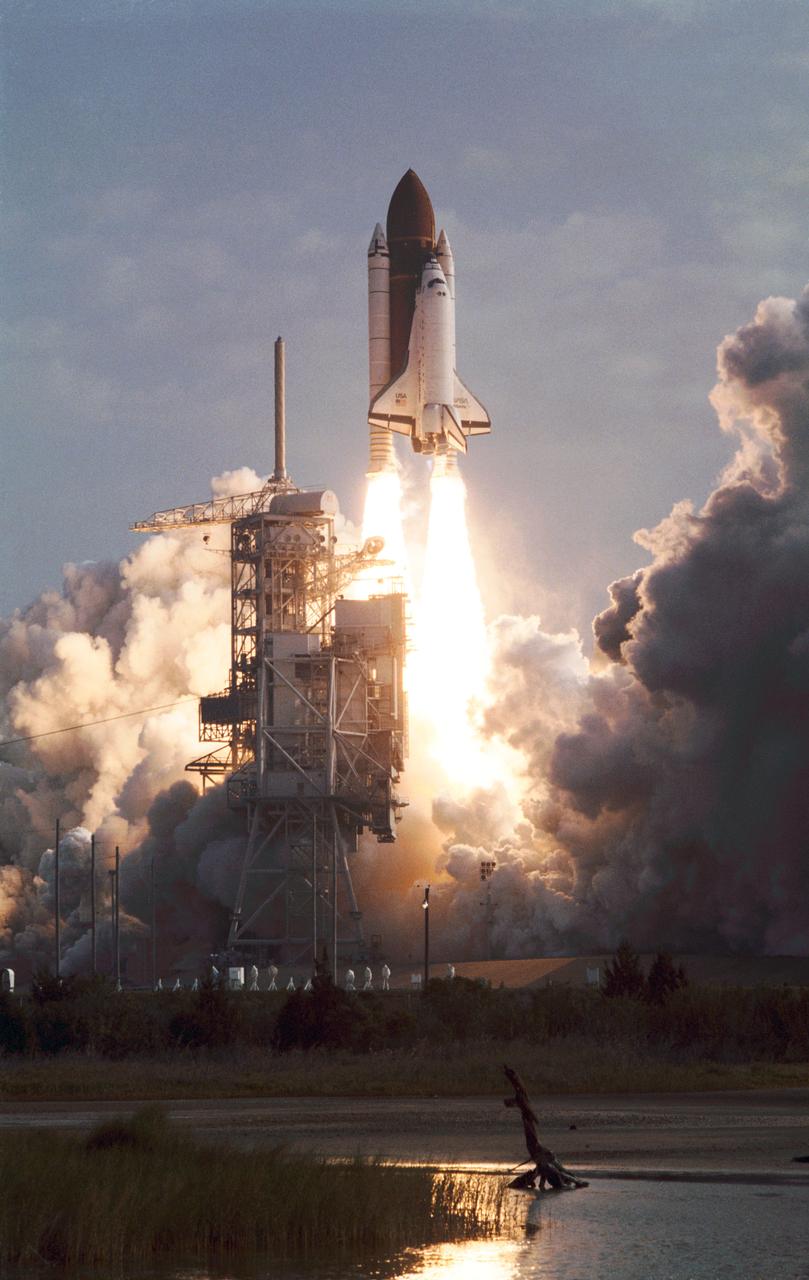
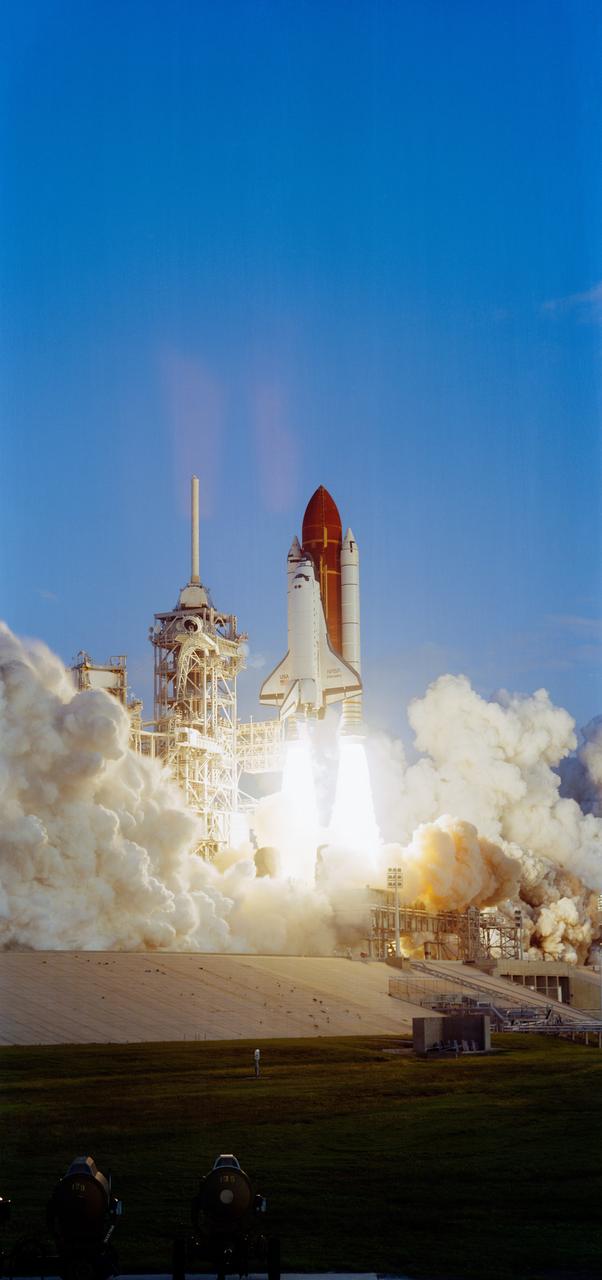
STS-41 Discovery, Orbiter Vehicle (OV) 103, lifts off from the Kennedy Space Center (KSC) Launch Complex (LC) Pad 39 mobile launcher platform at 7:47 am (Eastern Daylight Time (EDT)). OV-103 riding atop the external tank (ET) and flanked by two solid rocket boosters (SRBs), is captured just moments after liftoff. Not yet clear of the fixed service structure (FSS) tower, OV-103 is highlighted against the cloudless morning sky. Exhaust smoke billows from the SRBs and the space shuttle main engines (SSMEs) creating a cloud over the launch pad area.
STS-41 Discovery, OV-103, lifts off from KSC Launch Complex (LC) Pad 39
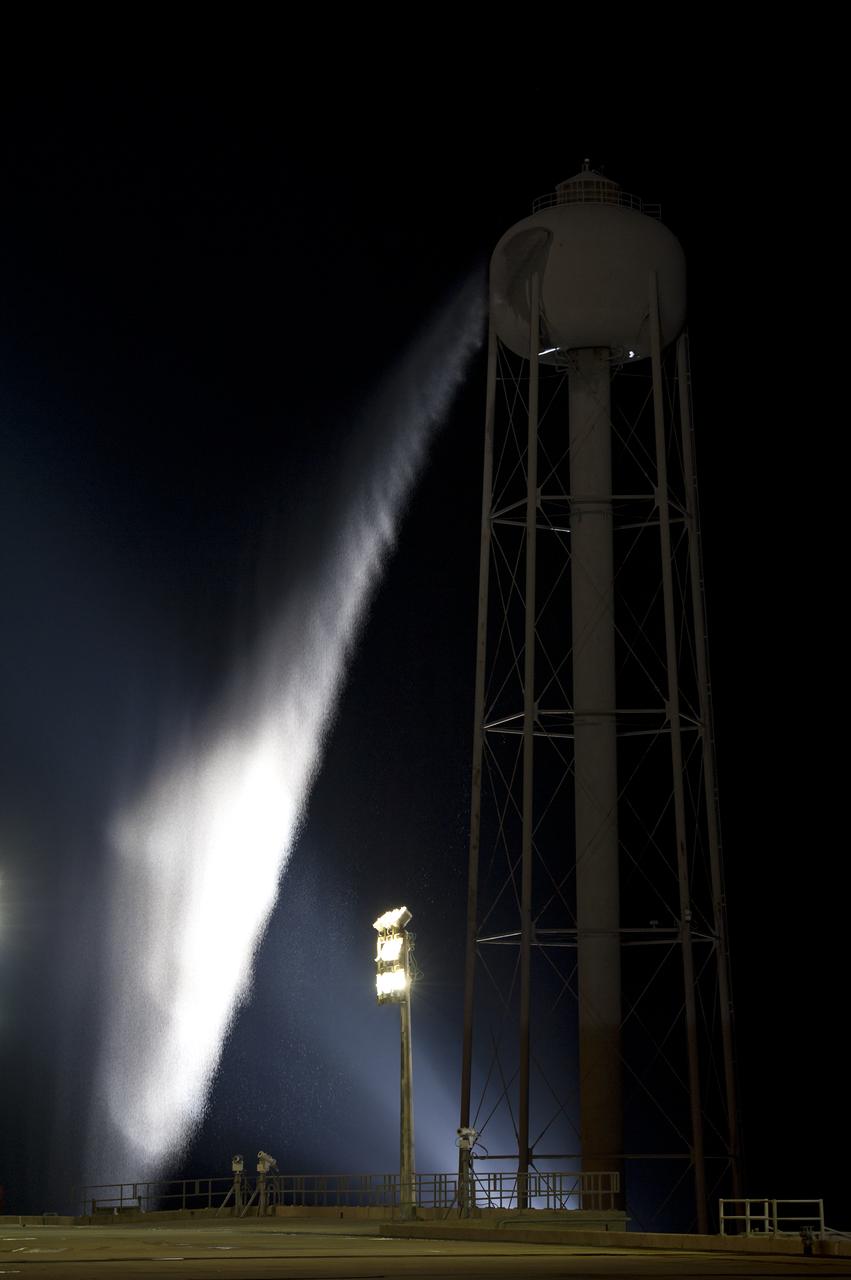
Water pours out of the 290-foot-high tower that holds 300,000 gallons of water used for sound suppression during shuttle launches on launch pad 39a shortly after the rollback of the Rotating Service Structure (RSS) from the space shuttle Endeavour, Thursday, April 28, 2011, at Kennedy Space Center in Cape Canaveral, Fla. During the 14-day mission, Endeavour and the STS-134 crew will deliver the Alpha Magnetic Spectrometer (AMS) and spare parts including two S-band communications antennas, a high-pressure gas tank and additional spare parts for Dextre. Launch is targeted for Friday, April 29 at 3:47 p.m. EDT.  Photo credit: (NASA/Bill Ingalls)
Space Shuttle Endeavour STS-134
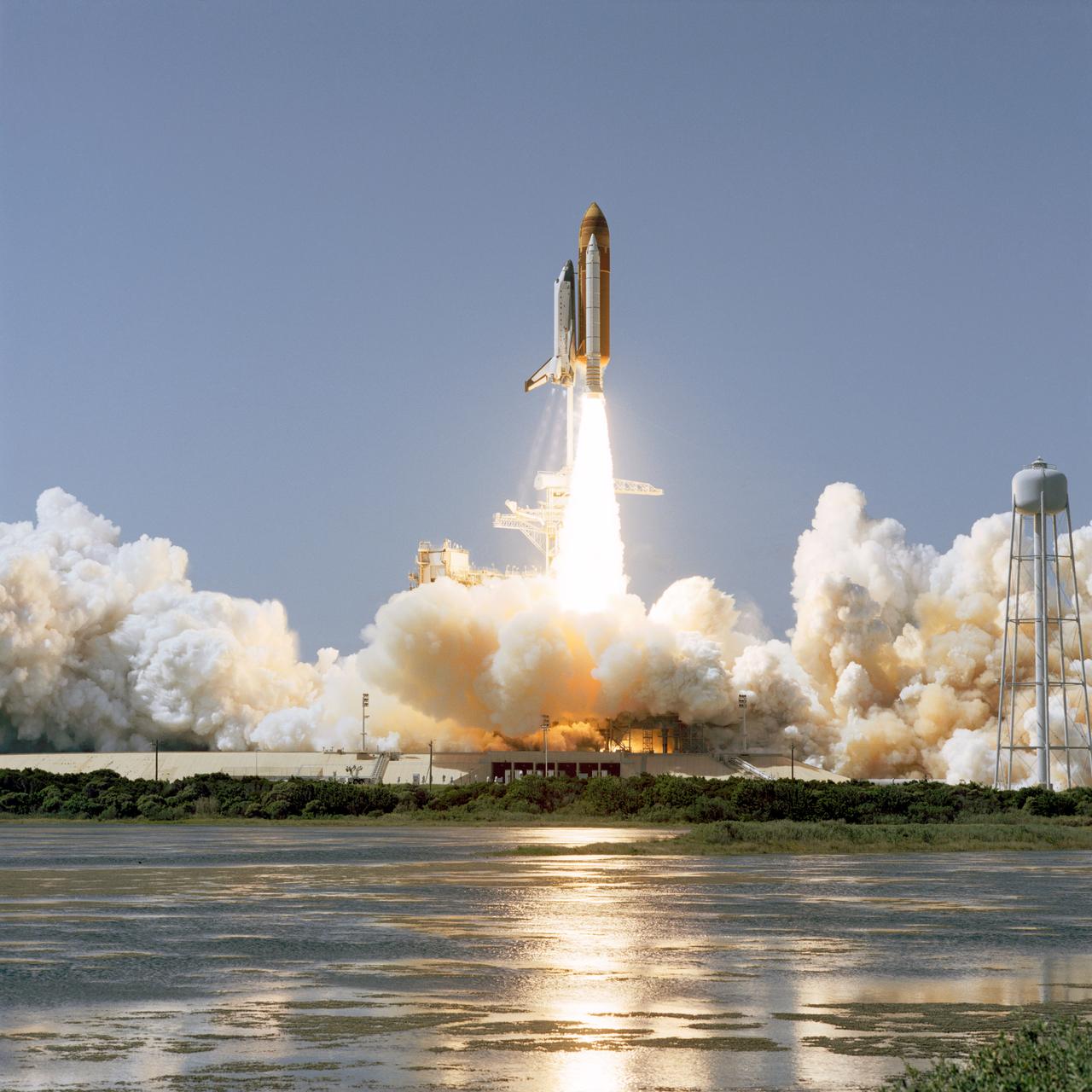
STS-45 Atlantis, Orbiter Vehicle (OV) 104, lifts off from a Kennedy Space Center (KSC) Launch Complex (LC) Pad at 8:13:40:048 am (Eastern Standard Time (EST)). Exhaust billows out the solid rocket boosters (SRBs) as OV-104 atop its external tank (ET) soars above the mobile launcher platform and is nearly clear of the fixed service structure (FSS) tower. The diamond shock effect produced by the space shuttle main engines (SSMEs) is visible. The glow of the SRB/SSME firings is reflected in a nearby waterway. An exhaust cloud covers the launch pad area.
STS-45 Atlantis, OV-104, lifts off from KSC Launch Complex (LC) Pad
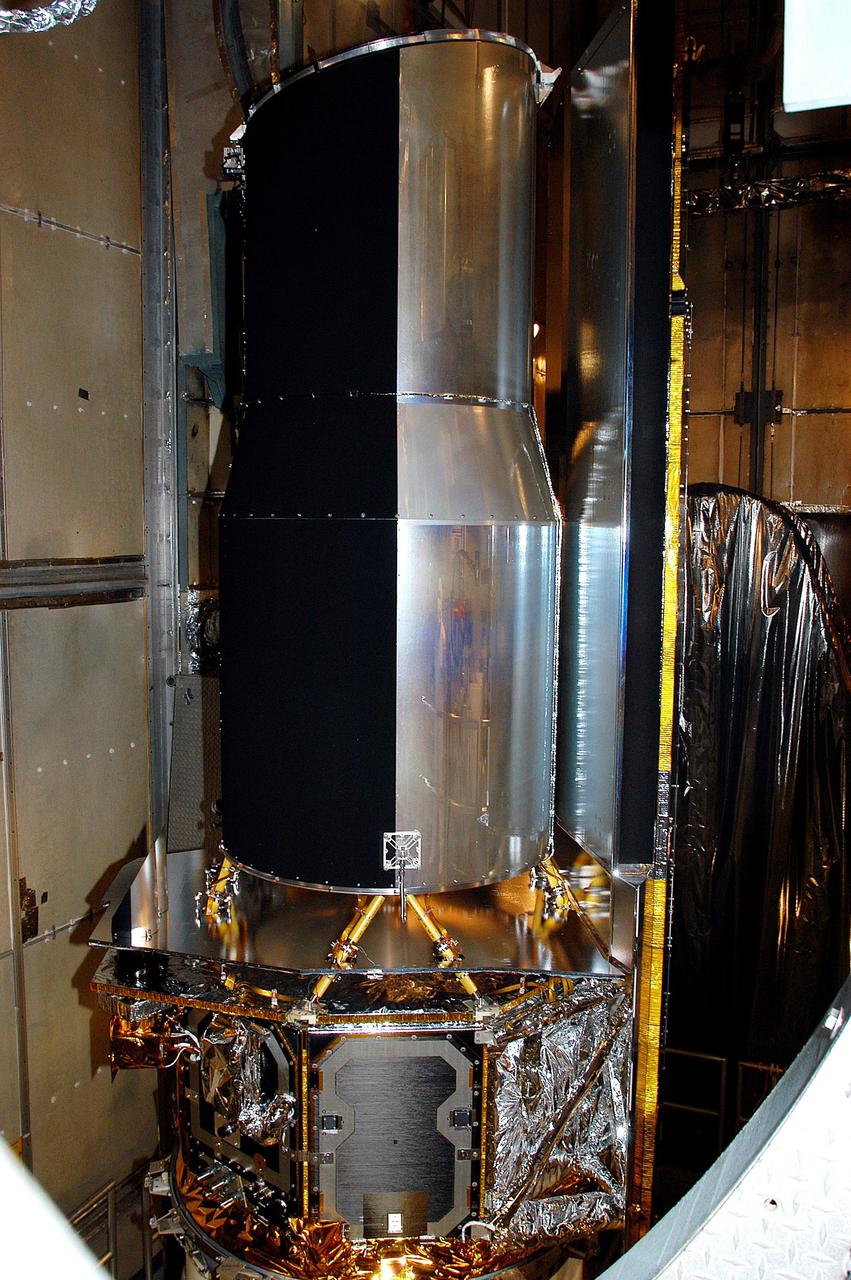
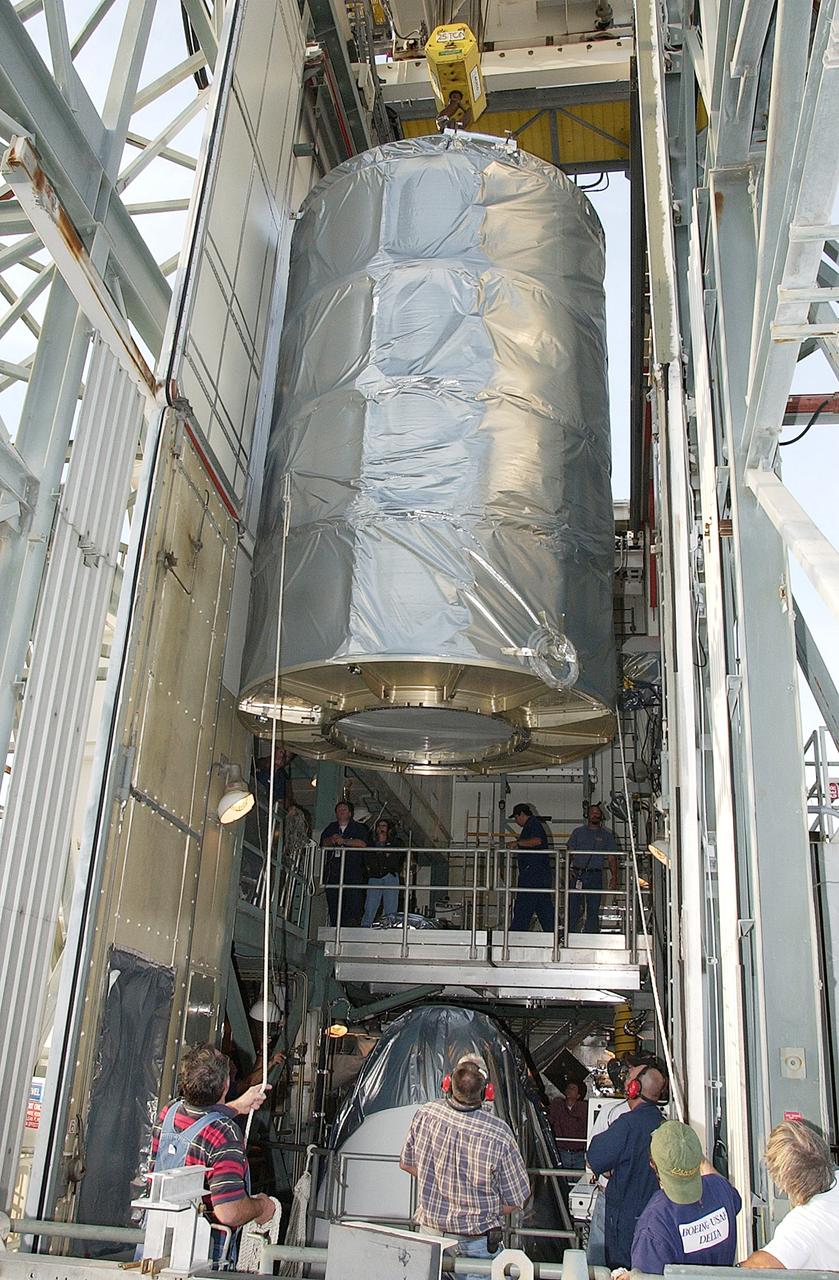
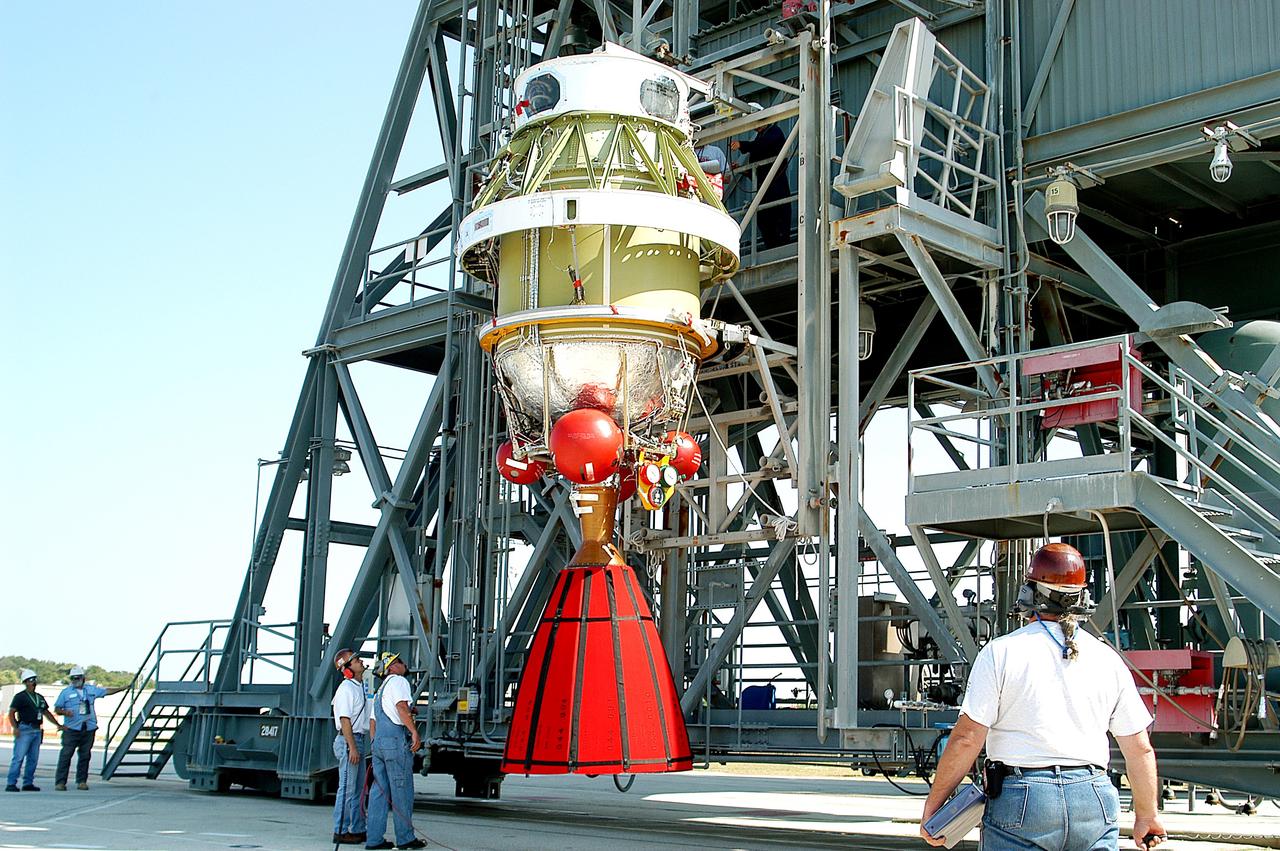
At the time of launch, the Spitzer Space Telescope bore its original name: the Space Infrared Telescope Facility (SIRTF). It's shown here in the mobile service tower on Launch Pad 17-B, Cape Canaveral Air Force Station, waiting for encapsulation.  https://photojournal.jpl.nasa.gov/catalog/PIA23649
Space Infrared Telescope Facility (SIRTF) Before Launch
STS052-S-051 (22 Oct 1992) --- This distant 70mm image shows the Space Shuttle Columbia clearing the tower at Launch Pad 39B, at the Kennedy Space Center (KSC), on its way toward a ten-day Earth-orbital mission with a crew of five NASA astronauts and a Canadian payload specialist.  Liftoff occurred at 1:09:39 p.m. (EDT), October 22, 1992.  Crew members are astronauts James D. Wetherbee, Michael A. Baker, Tamara E. Jernigan, Charles L. (Lacy) Veach and William M. Shepherd, along with payload specialist Steven G. MacLean.  Payloads onboard include the Laser Geodynamic Satellite II (LAGEOS II), which will be deployed early in the mission, a series of Canadian experiments, and the United States Microgravity Payload-1 (USMP-1).
STS-52 Columbia, Orbiter Vehicle (OV) 102, lifts off from KSC LC Pad 39B
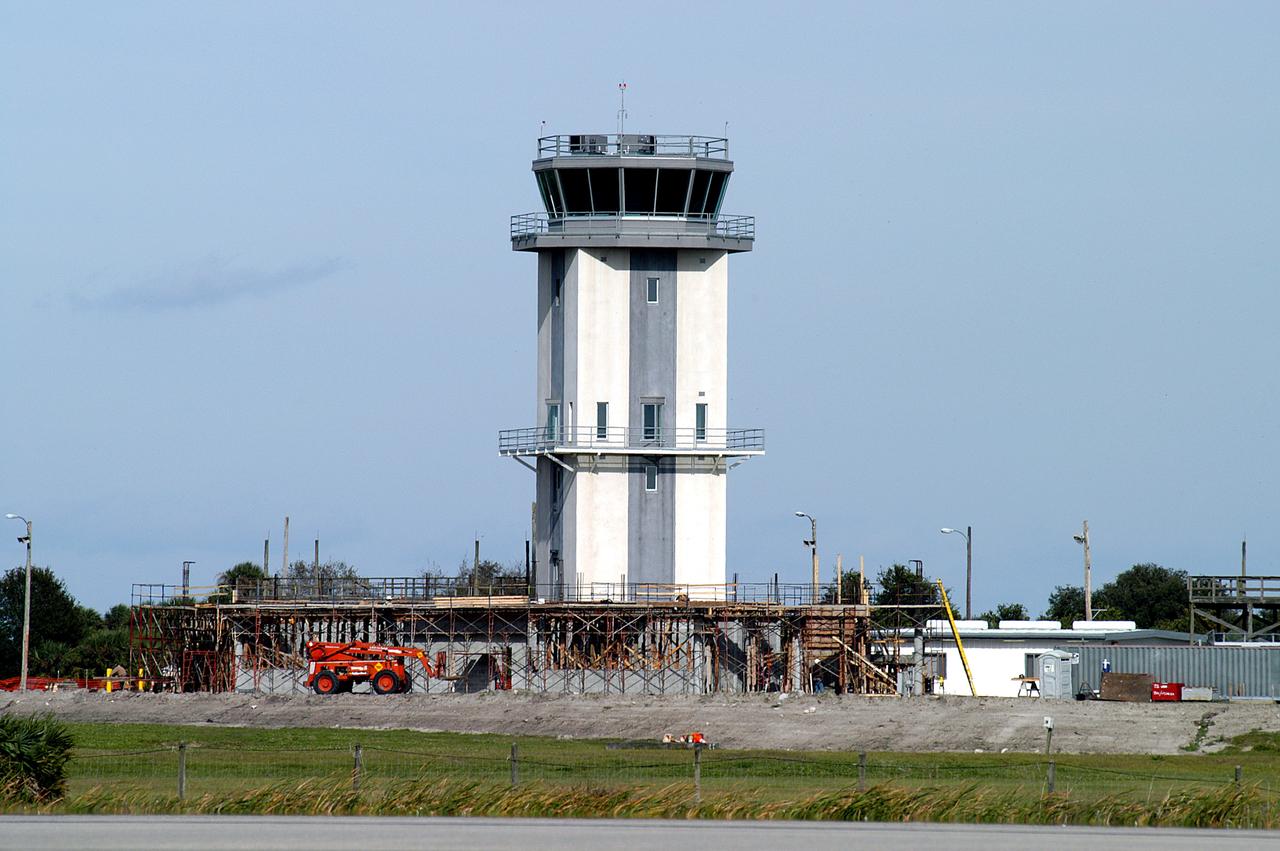
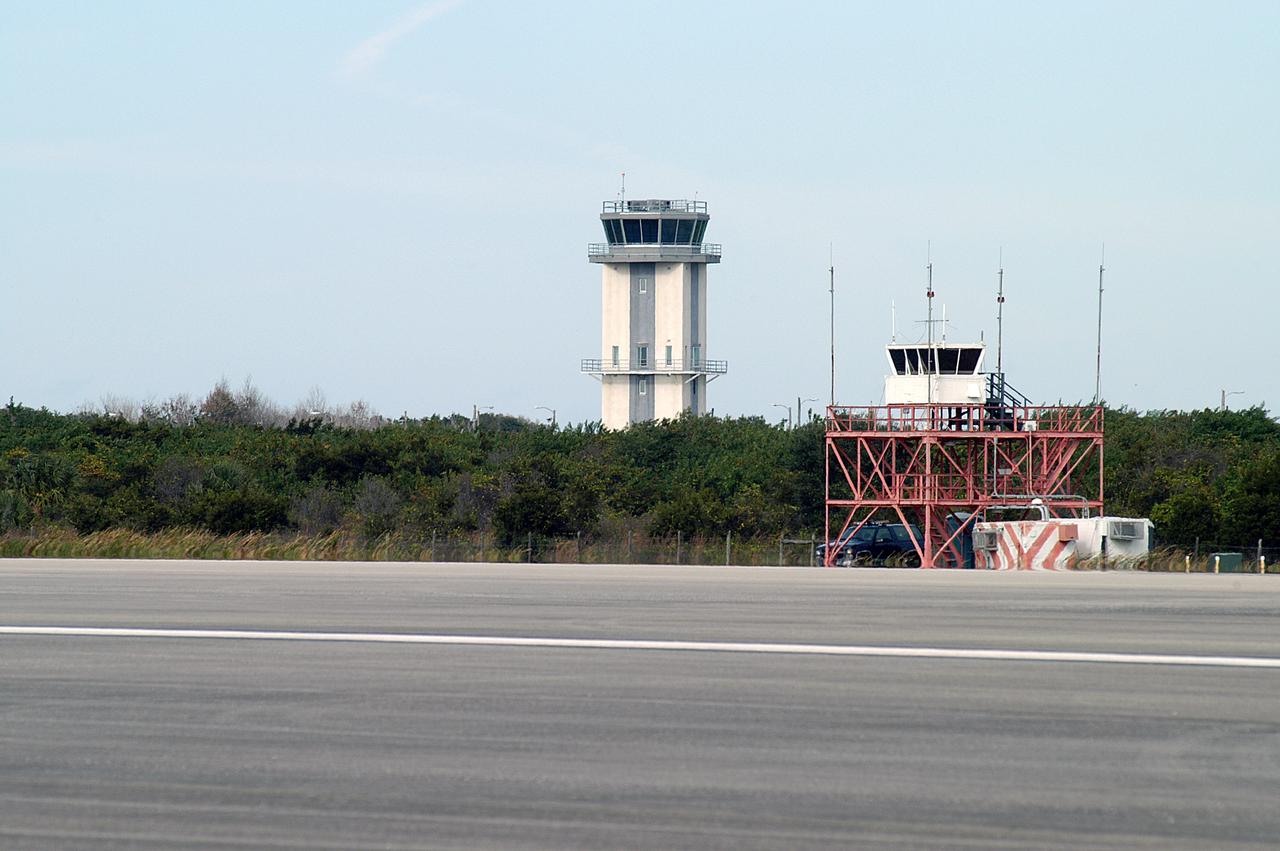
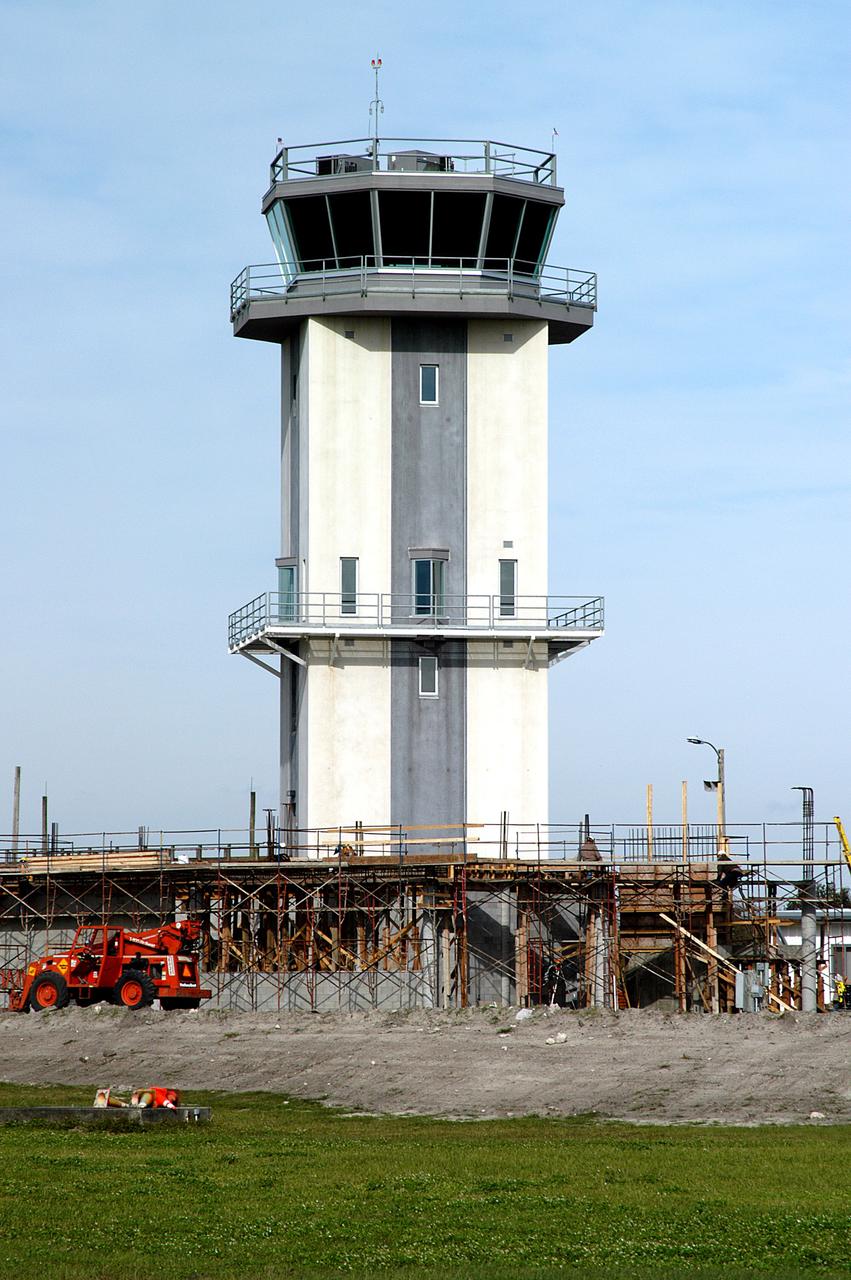
KENNEDY SPACE CENTER, FLA. -- A new control tower is nearing completion at the KSC Shuttle Landing Facility.  It will replace the old tower in use since 1987.   The old tower stands only 20 feet above the runway surface, too low to see the launch pads to the east. During nighttime landing operations, those inside the tower have been hindered by the eight-billion candlepower xenon lights that illuminate the runway.  The new control tower is built atop an existing mound, rising nearly 100 feet over the midpoint of the runway.  The height gives controllers a spectacular 360-degree view of NASA-KSC and northern Brevard County. The new facility will also replace the SLF Operations Building. The operations building is home to the Military Radar Unit that monitors NASA-KSC airspace 24 hours a day, as well as runway light controls, navigational aids, weather and wind speed instrumentation, and gate controls. In the new tower, the computer displays will be fully modernized to Federal Aviation Administration standards with touch-screen technology. Construction on the new facility began in February 2003 and is nearly ready for occupancy. Only some final inspections and approvals remain. A support building and Public Affairs viewing deck, to be used for observing future landing operations, will be added and are already in work.
KENNEDY SPACE CENTER, FLA. -- A new control tower is nearing completion at the KSC Shuttle Landing Facility. It will replace the old tower in use since 1987. The old tower stands only 20 feet above the runway surface, too low to see the launch pads to the east. During nighttime landing operations, those inside the tower have been hindered by the eight-billion candlepower xenon lights that illuminate the runway. The new control tower is built atop an existing mound, rising nearly 100 feet over the midpoint of the runway. The height gives controllers a spectacular 360-degree view of NASA-KSC and northern Brevard County. The new facility will also replace the SLF Operations Building. The operations building is home to the Military Radar Unit that monitors NASA-KSC airspace 24 hours a day, as well as runway light controls, navigational aids, weather and wind speed instrumentation, and gate controls. In the new tower, the computer displays will be fully modernized to Federal Aviation Administration standards with touch-screen technology. Construction on the new facility began in February 2003 and is nearly ready for occupancy. Only some final inspections and approvals remain. A support building and Public Affairs viewing deck, to be used for observing future landing operations, will be added and are already in work.
KENNEDY SPACE CENTER, FLA. -- Two control towers are seen at the edge of the KSC Shuttle Landing Facility, the old one in front and the nearly completed new tower in back.  The old tower stands only 20 feet above the runway surface, too low to see the launch pads to the east. During nighttime landing operations, those inside the tower have been hindered by the eight-billion candlepower xenon lights that illuminate the runway.  The new control tower is built atop an existing mound, rising nearly 100 feet over the midpoint of the runway.  The height gives controllers a spectacular 360-degree view of NASA-KSC and northern Brevard County. The new facility will also replace the SLF Operations Building. The operations building is home to the Military Radar Unit that monitors NASA-KSC airspace 24 hours a day, as well as runway light controls, navigational aids, weather and wind speed instrumentation, and gate controls. In the new tower, the computer displays will be fully modernized to Federal Aviation Administration standards with touch-screen technology. Construction on the new facility began in February 2003 and is nearly ready for occupancy. Only some final inspections and approvals remain. A support building and Public Affairs viewing deck, to be used for observing future landing operations, will be added and are already in work.
KENNEDY SPACE CENTER, FLA. -- Two control towers are seen at the edge of the KSC Shuttle Landing Facility, the old one in front and the nearly completed new tower in back. The old tower stands only 20 feet above the runway surface, too low to see the launch pads to the east. During nighttime landing operations, those inside the tower have been hindered by the eight-billion candlepower xenon lights that illuminate the runway. The new control tower is built atop an existing mound, rising nearly 100 feet over the midpoint of the runway. The height gives controllers a spectacular 360-degree view of NASA-KSC and northern Brevard County. The new facility will also replace the SLF Operations Building. The operations building is home to the Military Radar Unit that monitors NASA-KSC airspace 24 hours a day, as well as runway light controls, navigational aids, weather and wind speed instrumentation, and gate controls. In the new tower, the computer displays will be fully modernized to Federal Aviation Administration standards with touch-screen technology. Construction on the new facility began in February 2003 and is nearly ready for occupancy. Only some final inspections and approvals remain. A support building and Public Affairs viewing deck, to be used for observing future landing operations, will be added and are already in work.
KENNEDY SPACE CENTER, FLA. -- A new control tower is nearing completion at the KSC Shuttle Landing Facility.  It will replace the old tower in use since 1987.   The old tower stands only 20 feet above the runway surface, too low to see the launch pads to the east. During nighttime landing operations, those inside the tower have been hindered by the eight-billion candlepower xenon lights that illuminate the runway.  The new control tower is built atop an existing mound, rising nearly 100 feet over the midpoint of the runway.  The height gives controllers a spectacular 360-degree view of NASA-KSC and northern Brevard County. The new facility will also replace the SLF Operations Building. The operations building is home to the Military Radar Unit that monitors NASA-KSC airspace 24 hours a day, as well as runway light controls, navigational aids, weather and wind speed instrumentation, and gate controls. In the new tower, the computer displays will be fully modernized to Federal Aviation Administration standards with touch-screen technology. Construction on the new facility began in February 2003 and is nearly ready for occupancy. Only some final inspections and approvals remain. A support building and Public Affairs viewing deck, to be used for observing future landing operations, will be added and are already in work.
KENNEDY SPACE CENTER, FLA. -- A new control tower is nearing completion at the KSC Shuttle Landing Facility. It will replace the old tower in use since 1987. The old tower stands only 20 feet above the runway surface, too low to see the launch pads to the east. During nighttime landing operations, those inside the tower have been hindered by the eight-billion candlepower xenon lights that illuminate the runway. The new control tower is built atop an existing mound, rising nearly 100 feet over the midpoint of the runway. The height gives controllers a spectacular 360-degree view of NASA-KSC and northern Brevard County. The new facility will also replace the SLF Operations Building. The operations building is home to the Military Radar Unit that monitors NASA-KSC airspace 24 hours a day, as well as runway light controls, navigational aids, weather and wind speed instrumentation, and gate controls. In the new tower, the computer displays will be fully modernized to Federal Aviation Administration standards with touch-screen technology. Construction on the new facility began in February 2003 and is nearly ready for occupancy. Only some final inspections and approvals remain. A support building and Public Affairs viewing deck, to be used for observing future landing operations, will be added and are already in work.
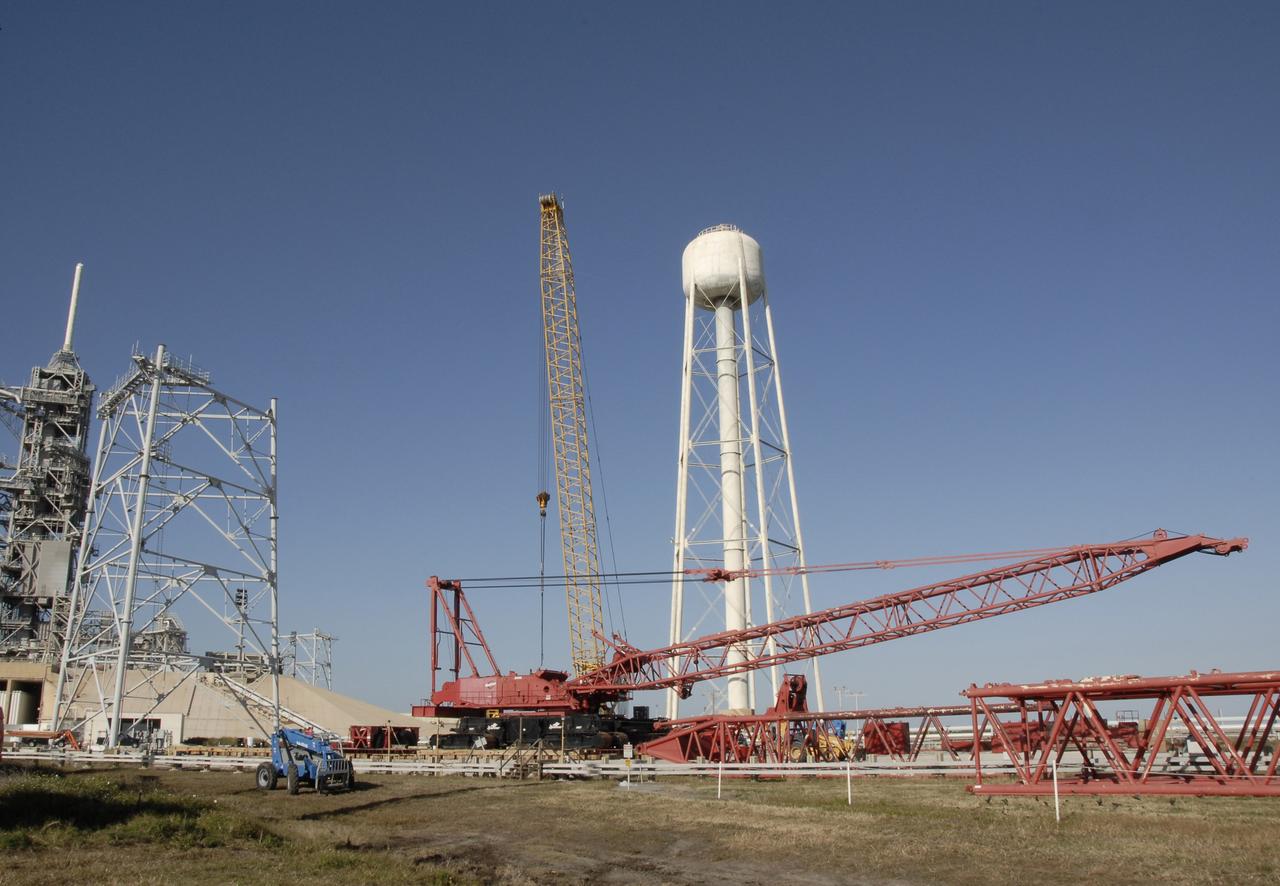
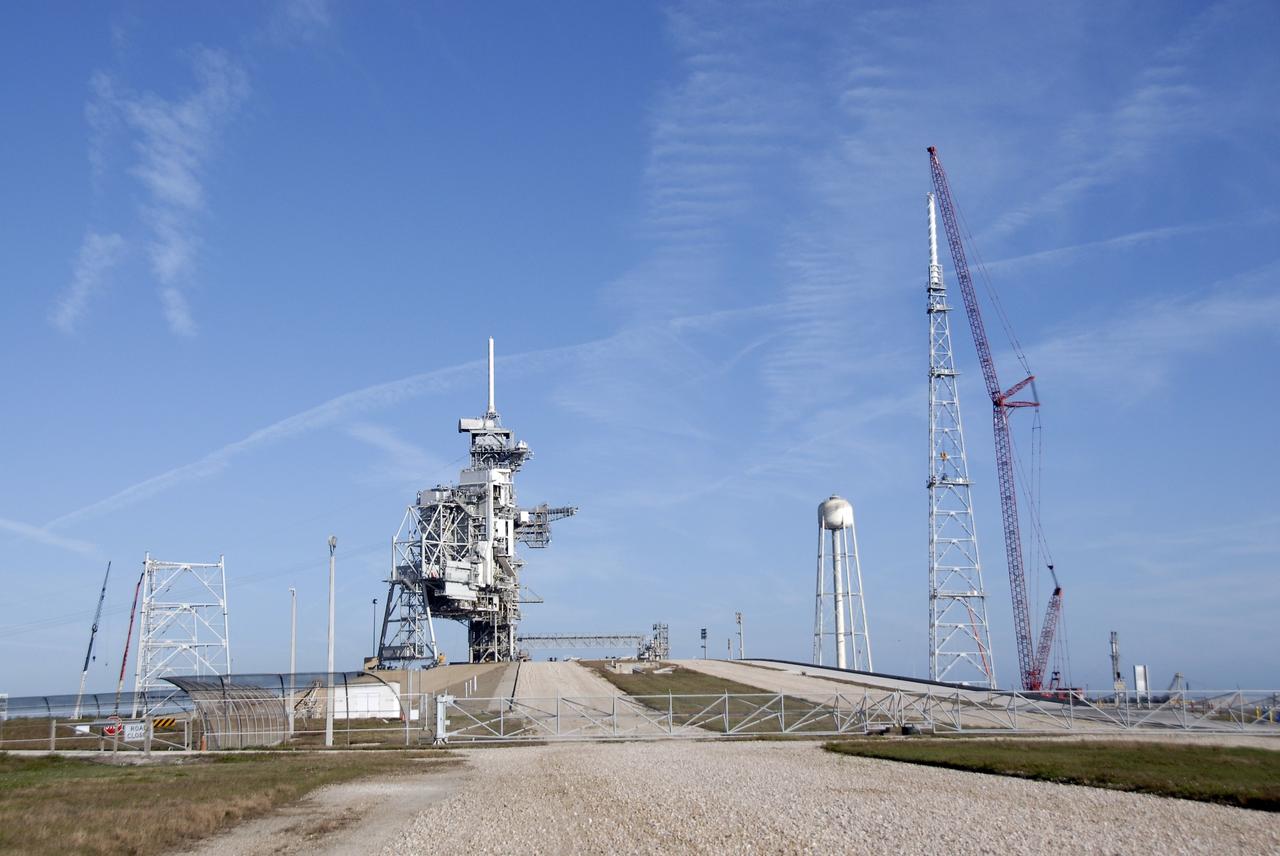
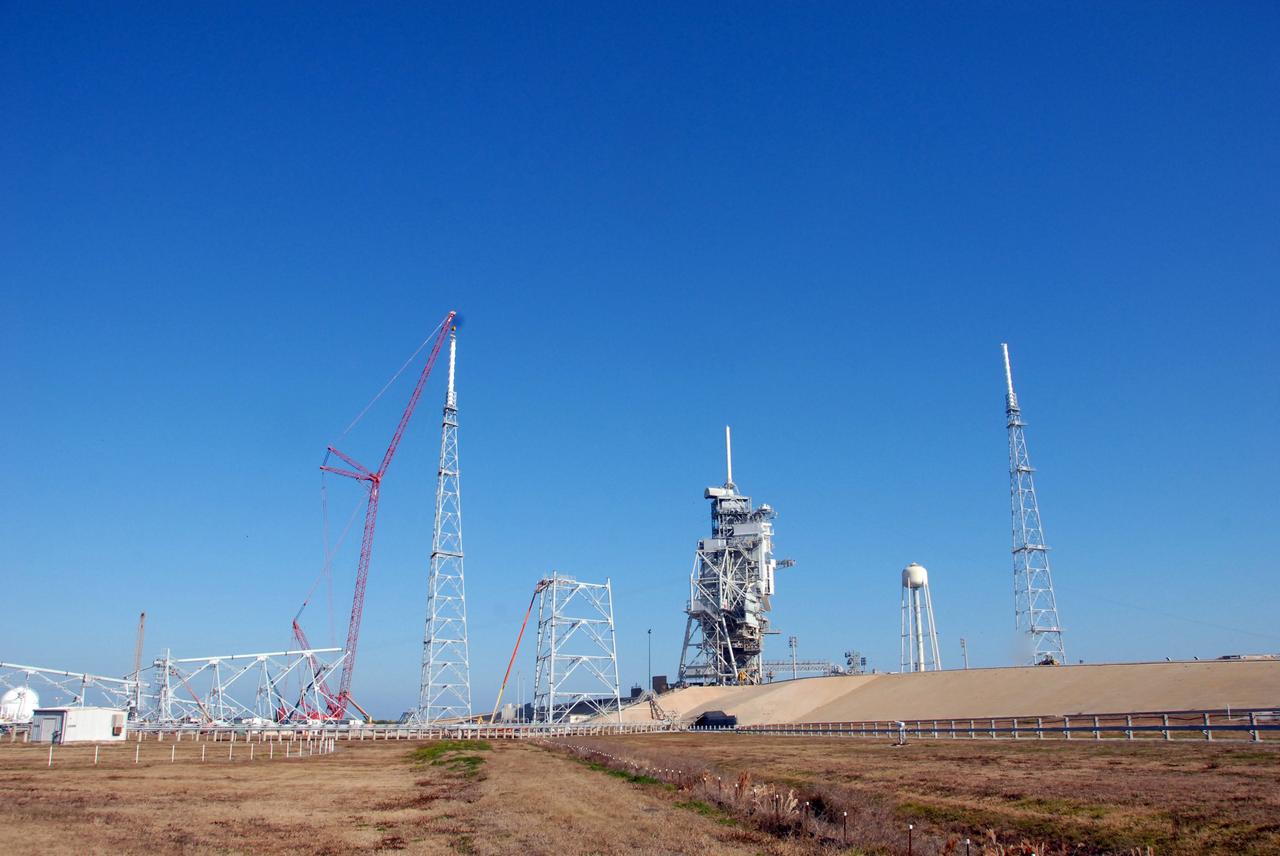
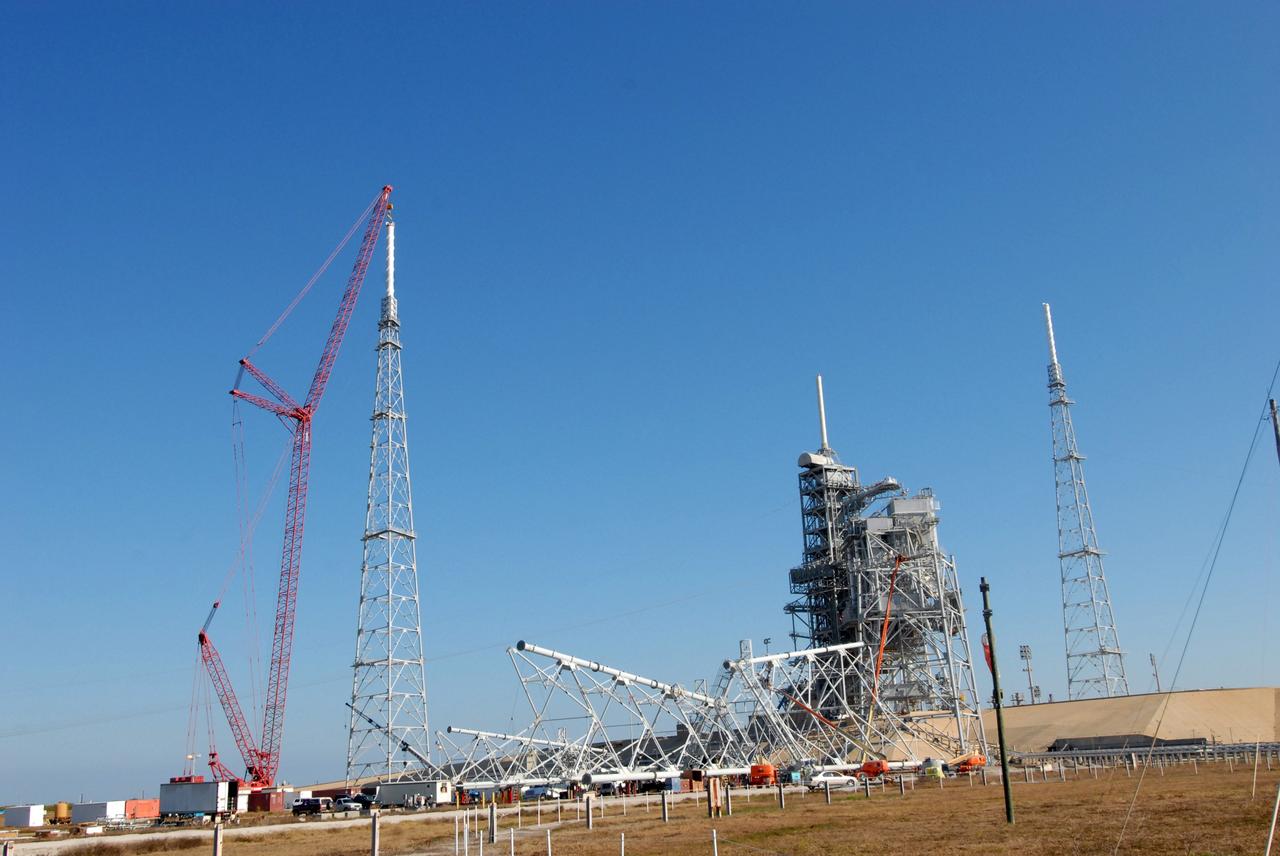
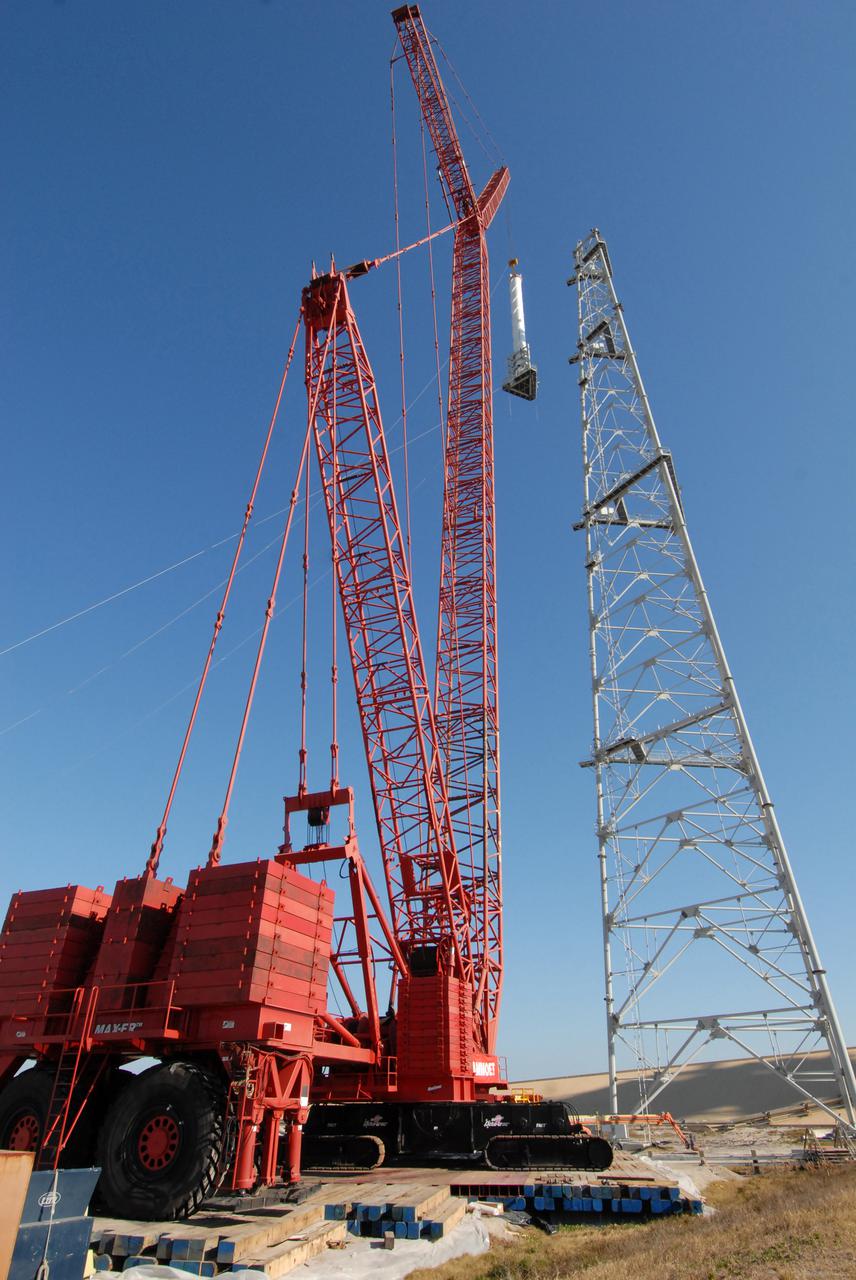
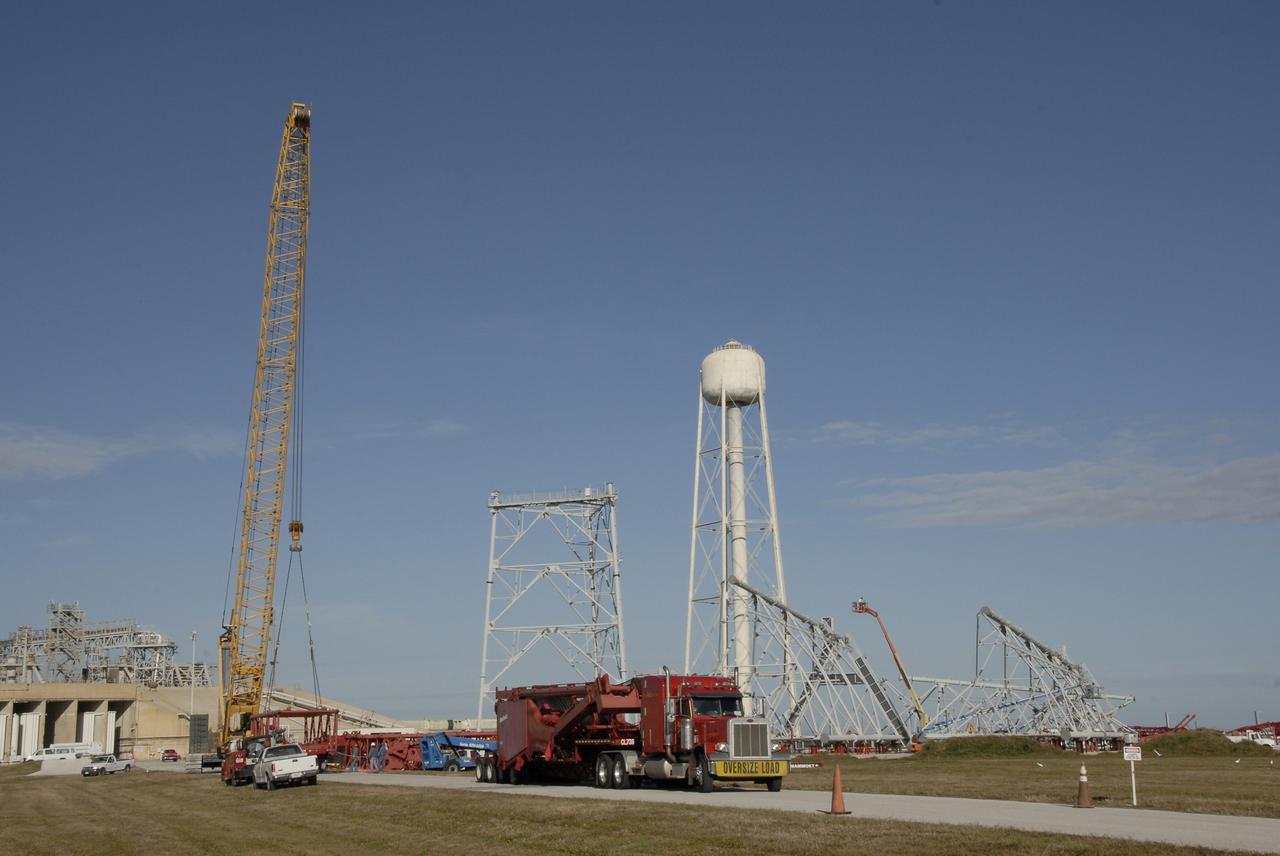
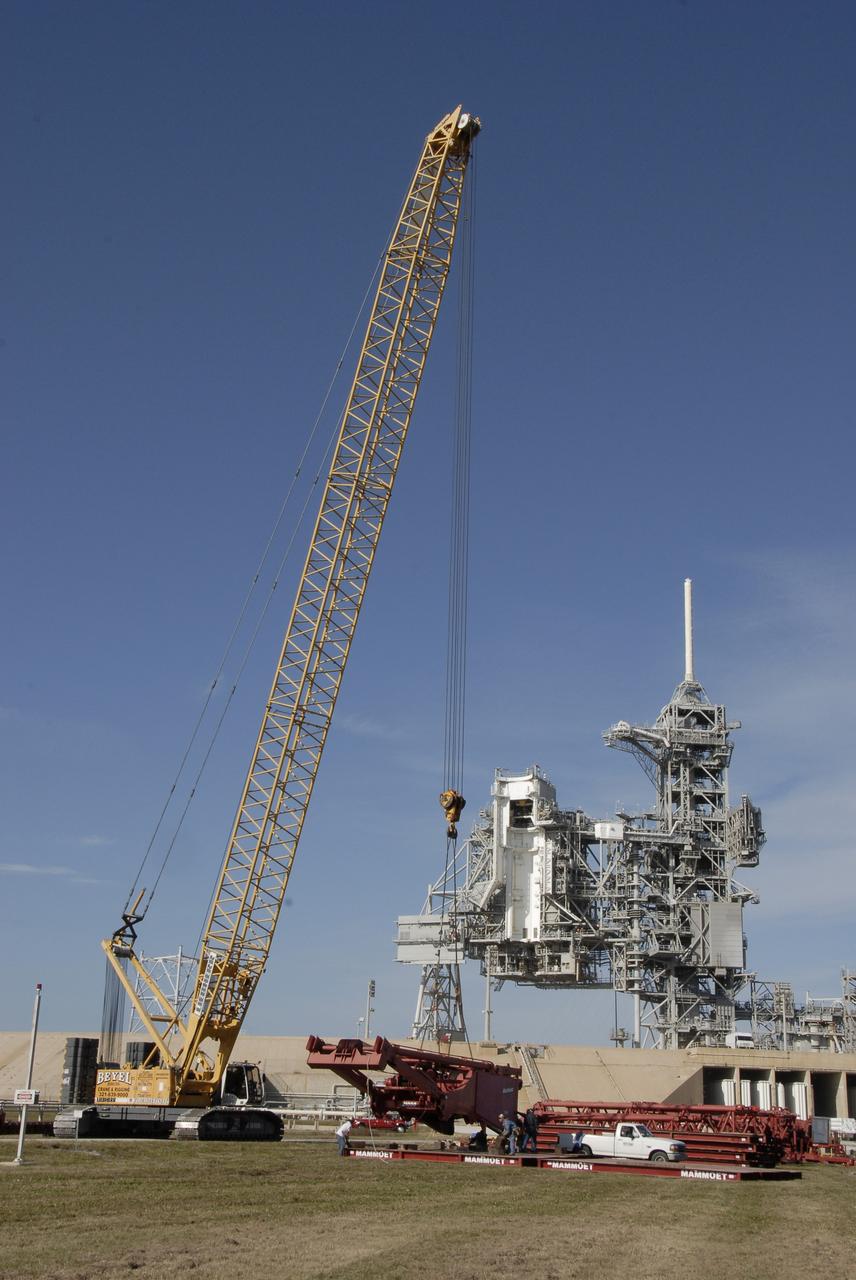
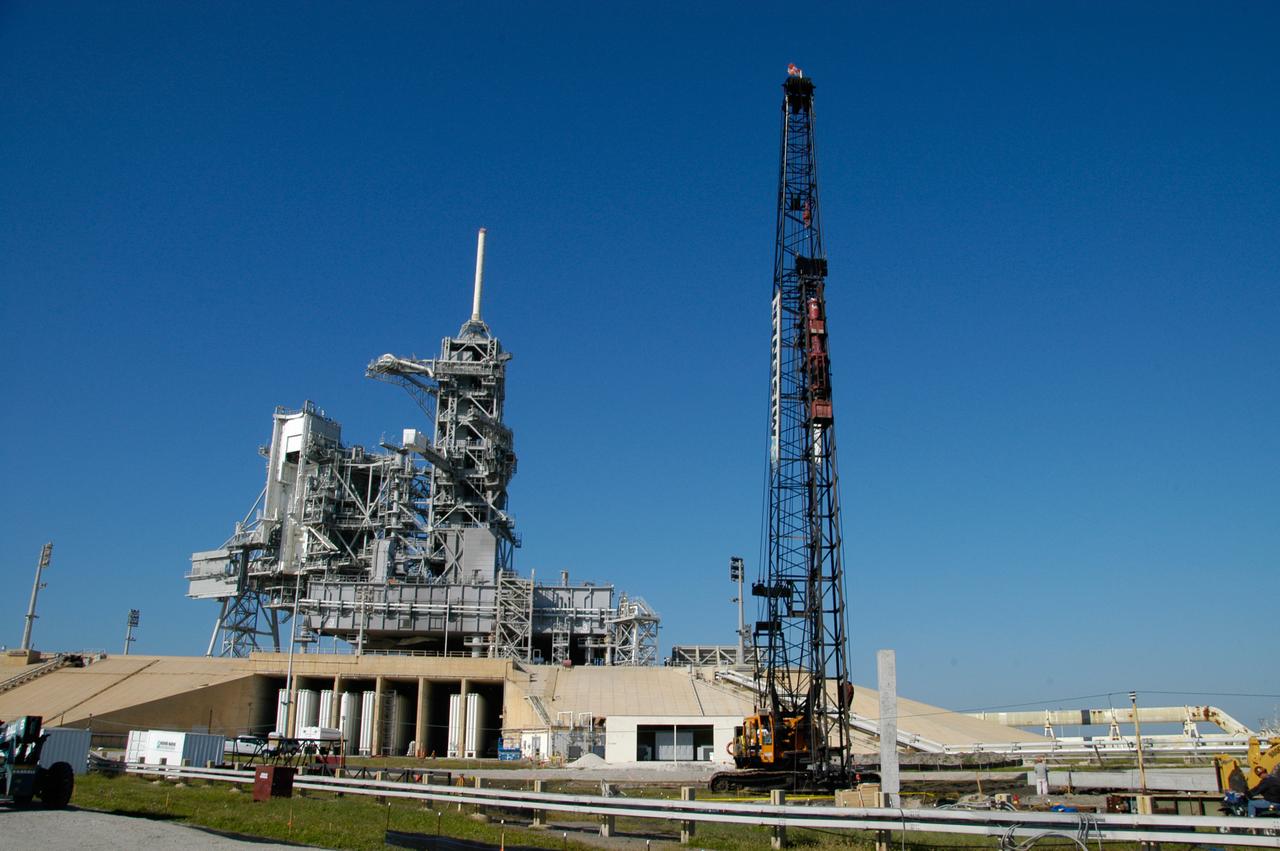
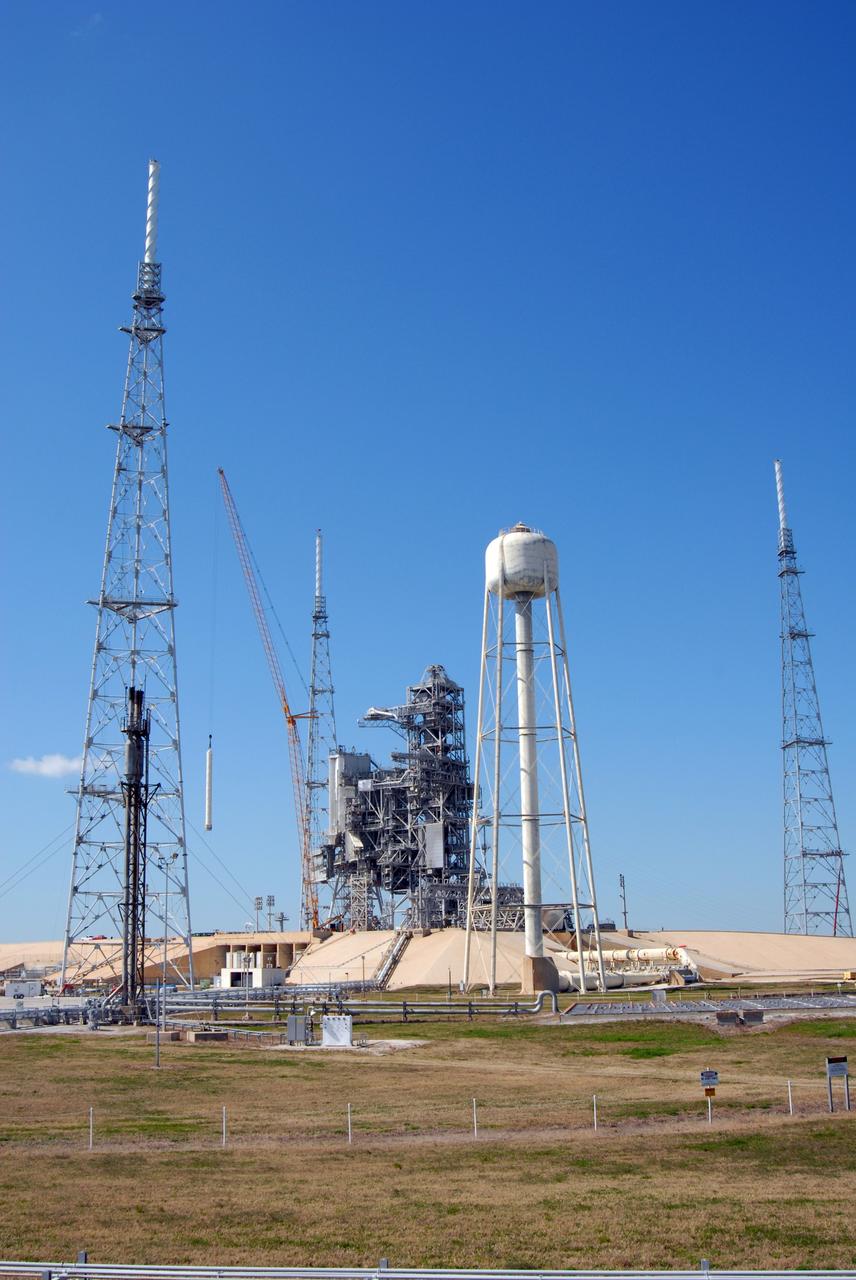
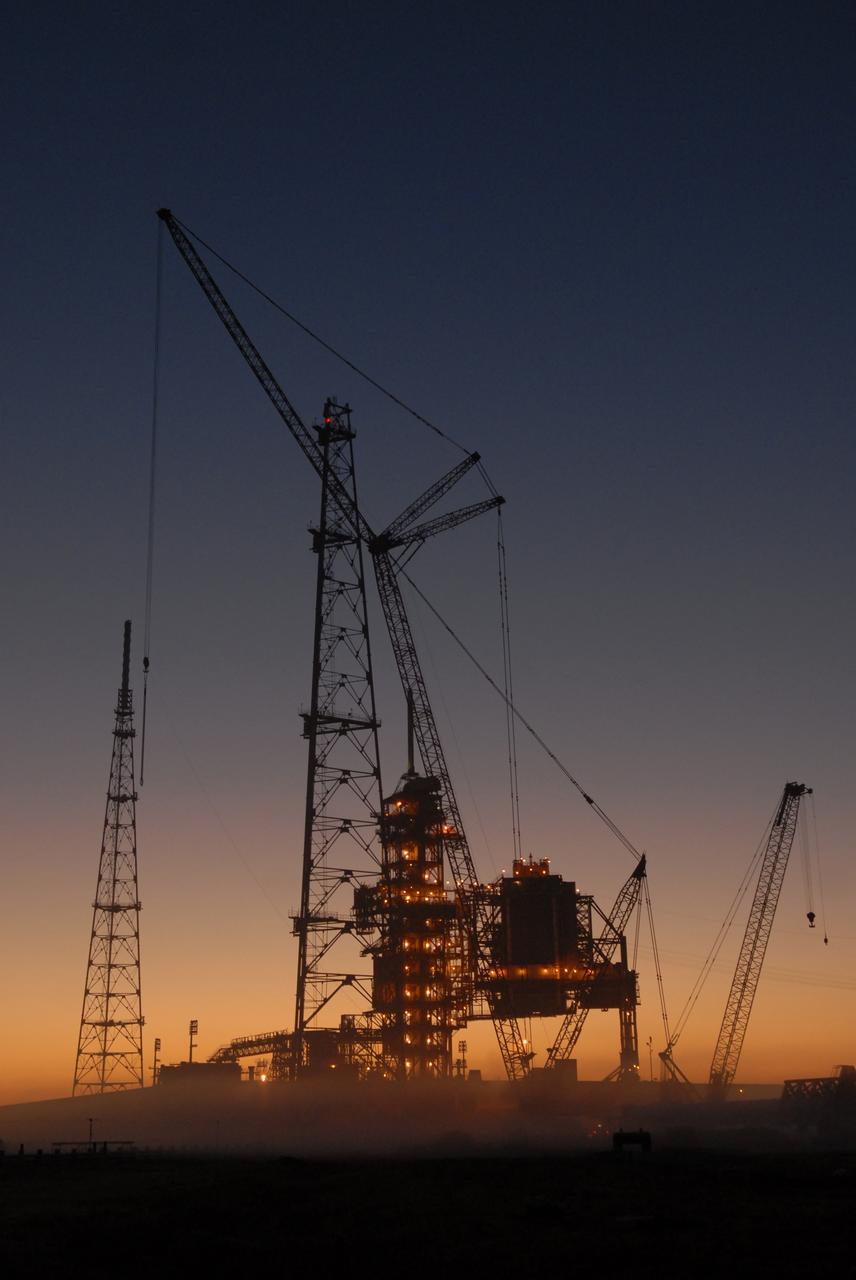
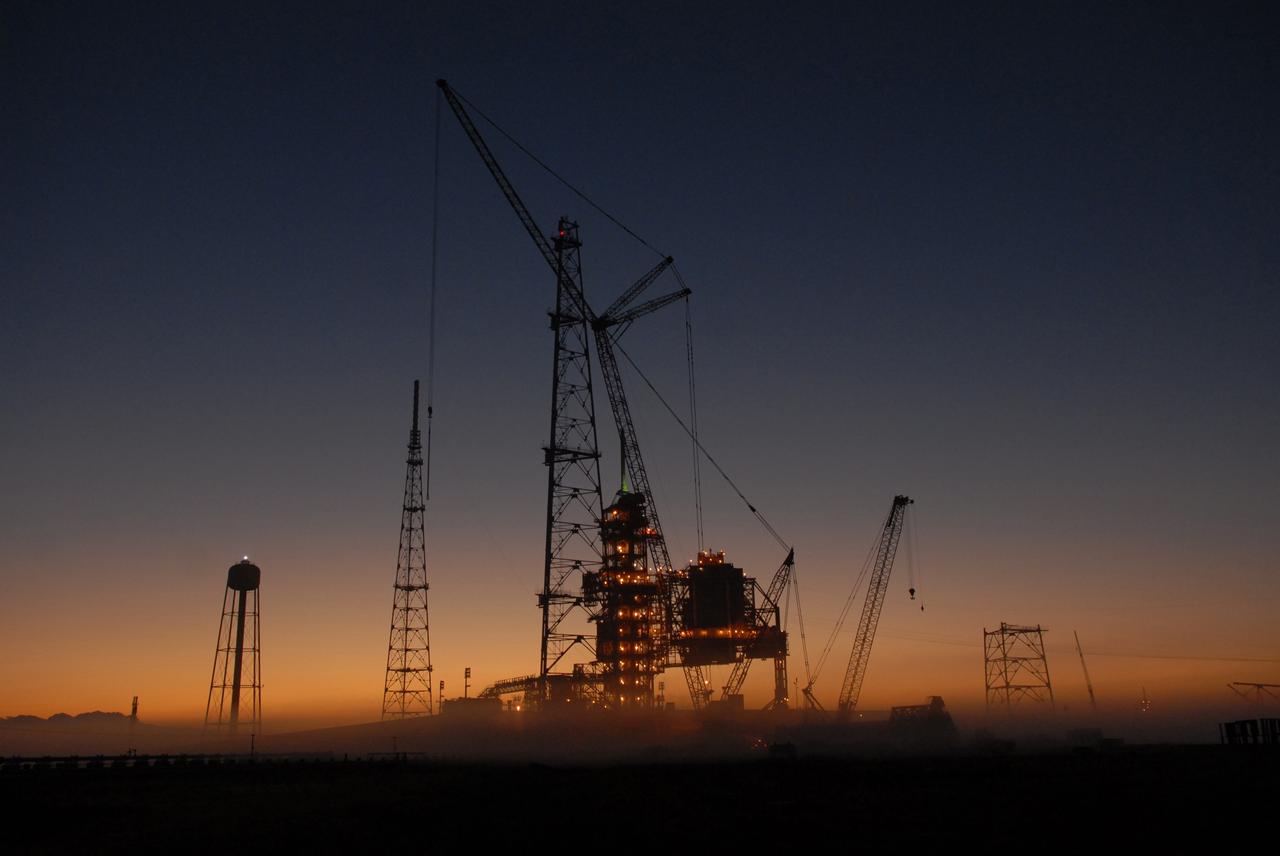
CAPE CANAVERAL, Fla. --   On Launch Pad 39B at NASA's Kennedy Space Center in Florida, segments are being added to the crane (foreground) that will be used to finish erecting the lightning towers (one is at left) on the pad. In the background is the 290-foot-high tower that holds 300,000 gallons of water used for sound suppression during shuttle launches.  Lightning towers are being constructed to hold centenary wires as part of the new lightning protection system for the Constellation Program and Ares/Orion launches.  Photo credit: NASA/Kim Shiflett
KSC-08pd3935
KENNEDY SPACE CENTER, FLA. - On Launch Complex 17-B, Cape Canaveral Air Force Station, the Space Infrared Telescope Facility (SIRTF) observatory is moved toward the outside of the launch tower.  It will be lowered and taken back to NASA Spacecraft Hangar AE. SIRTF will remain in the clean room at Hangar AE until it returns to the pad in early August.
KENNEDY SPACE CENTER, FLA. - On Launch Complex 17-B, Cape Canaveral Air Force Station, the Space Infrared Telescope Facility (SIRTF) observatory is moved toward the outside of the launch tower. It will be lowered and taken back to NASA Spacecraft Hangar AE. SIRTF will remain in the clean room at Hangar AE until it returns to the pad in early August.
KENNEDY SPACE CENTER, FLA. - On Launch Complex 17-B, Cape Canaveral Air Force Station, the Space Infrared Telescope Facility (SIRTF) observatory is moved toward the outside of the launch tower.  It will be lowered and taken back to NASA Spacecraft Hangar AE. SIRTF will remain in the clean room at Hangar AE until it returns to the pad in early August.
KENNEDY SPACE CENTER, FLA. - On Launch Complex 17-B, Cape Canaveral Air Force Station, the Space Infrared Telescope Facility (SIRTF) observatory is moved toward the outside of the launch tower. It will be lowered and taken back to NASA Spacecraft Hangar AE. SIRTF will remain in the clean room at Hangar AE until it returns to the pad in early August.
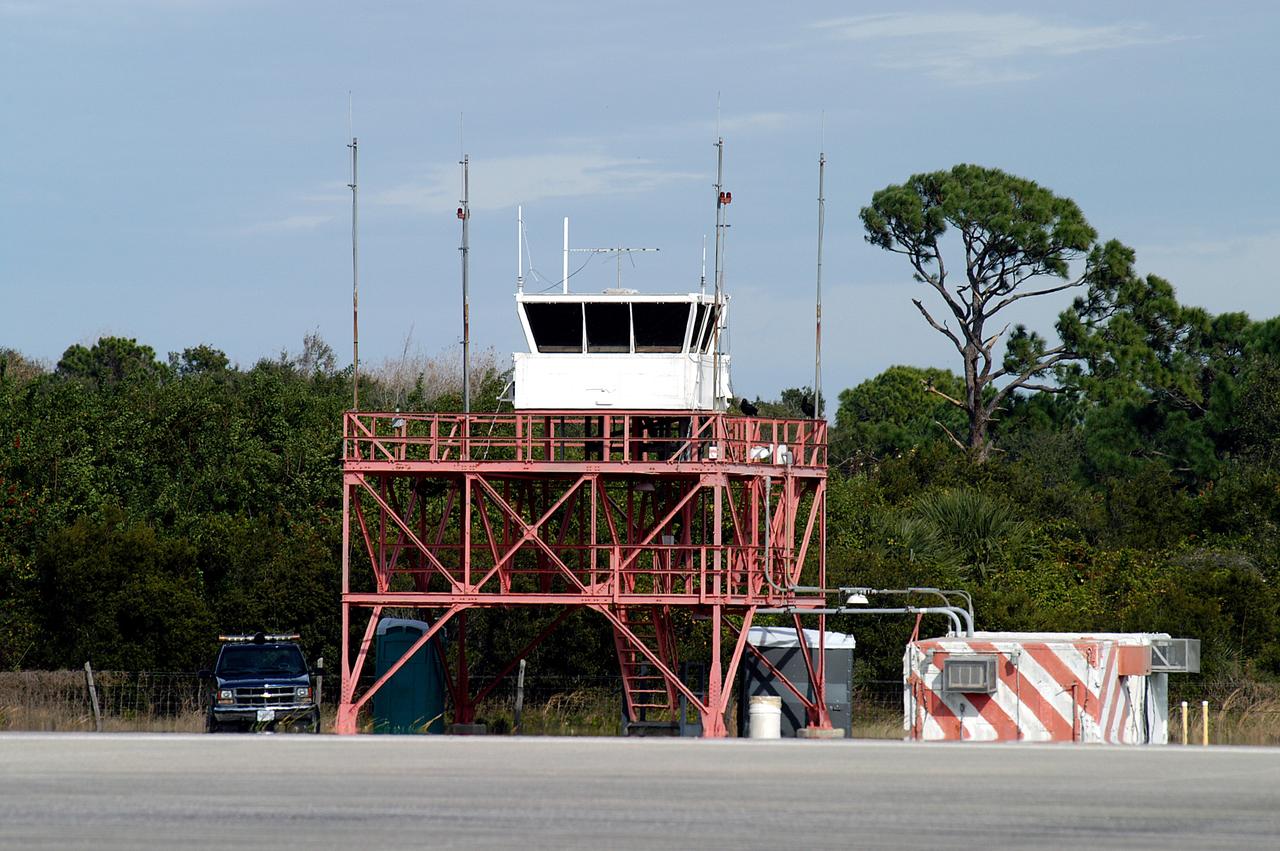
KENNEDY SPACE CENTER, FLA. -- The existing control tower seen here at the edge of the KSC Shuttle Landing Facility is being replaced.  In use since 1987, the old tower stands only 20 feet above the runway surface, too low to see the launch pads to the east. During nighttime landing operations, those inside the tower have been hindered by the eight-billion candlepower xenon lights that illuminate the runway.  The new control tower is built atop an existing mound, rising nearly 100 feet over the midpoint of the runway.  The height gives controllers a spectacular 360-degree view of NASA-KSC and northern Brevard County. The new facility will also replace the SLF Operations Building. The operations building is home to the Military Radar Unit that monitors NASA-KSC airspace 24 hours a day, as well as runway light controls, navigational aids, weather and wind speed instrumentation, and gate controls. In the new tower, the computer displays will be fully modernized to Federal Aviation Administration standards with touch-screen technology. Construction on the new facility began in February 2003 and is nearly ready for occupancy. Only some final inspections and approvals remain. A support building and Public Affairs viewing deck, to be used for observing future landing operations, will be added and are already in work.
KENNEDY SPACE CENTER, FLA. -- The existing control tower seen here at the edge of the KSC Shuttle Landing Facility is being replaced. In use since 1987, the old tower stands only 20 feet above the runway surface, too low to see the launch pads to the east. During nighttime landing operations, those inside the tower have been hindered by the eight-billion candlepower xenon lights that illuminate the runway. The new control tower is built atop an existing mound, rising nearly 100 feet over the midpoint of the runway. The height gives controllers a spectacular 360-degree view of NASA-KSC and northern Brevard County. The new facility will also replace the SLF Operations Building. The operations building is home to the Military Radar Unit that monitors NASA-KSC airspace 24 hours a day, as well as runway light controls, navigational aids, weather and wind speed instrumentation, and gate controls. In the new tower, the computer displays will be fully modernized to Federal Aviation Administration standards with touch-screen technology. Construction on the new facility began in February 2003 and is nearly ready for occupancy. Only some final inspections and approvals remain. A support building and Public Affairs viewing deck, to be used for observing future landing operations, will be added and are already in work.
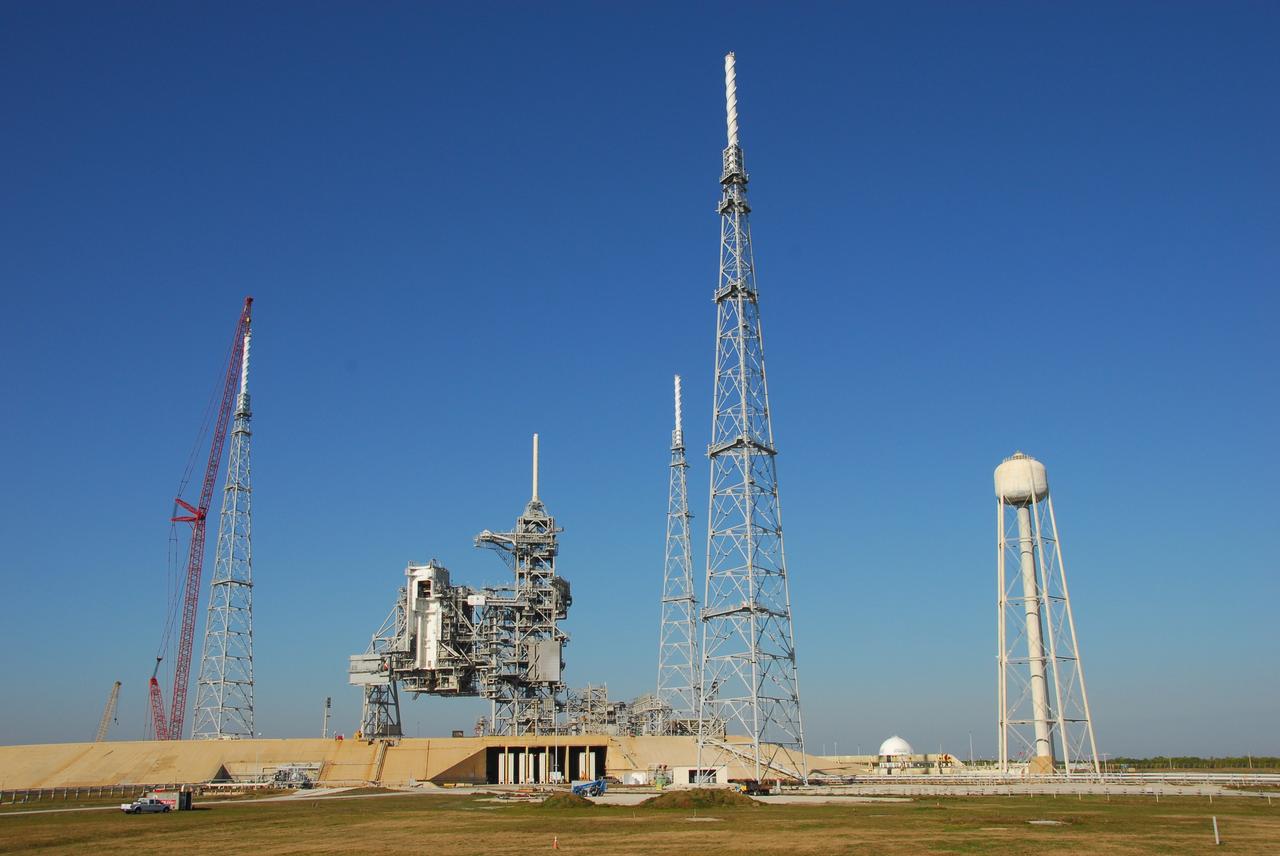
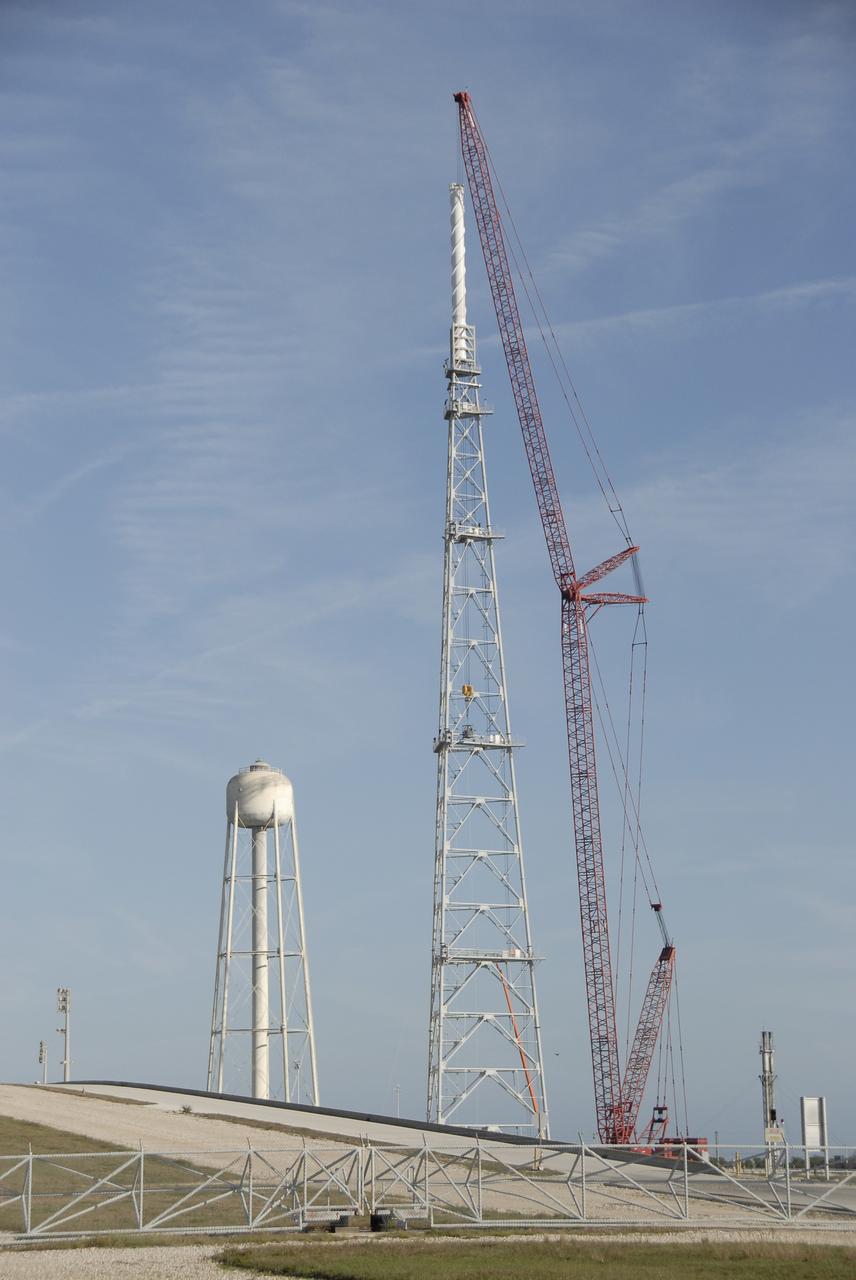
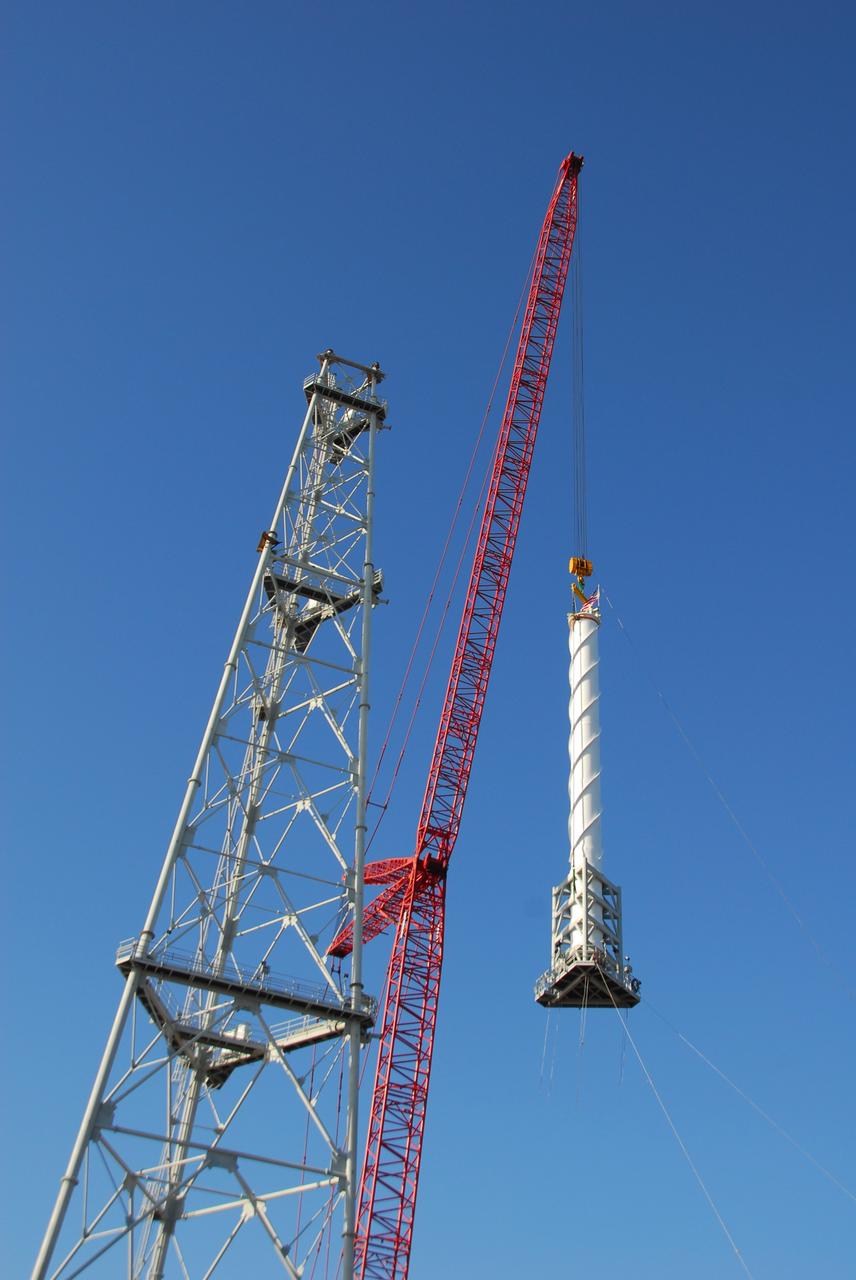
CAPE CANAVERAL, Fla. – On Launch Pad 39B at NASA's Kennedy Space Center in Florida, a giant crane (far left) places the 100-foot lightning mast on top of the newly erected lightning tower.  Three new towers surround the pad.  In the middle are the fixed and rotating service structures that serve the Space Shuttle Program.  At far right is the tower that holds 300,000 gallons of water used for sound suppression during a shuttle launch.  The new lightning protection system is being built for the Constellation Program and Ares/Orion launches.  Each of the towers is 500 feet tall with an additional 100-foot fiberglass mast atop supporting a wire catenary system.  This improved lightning protection system allows for the taller height of the Ares I rocket compared to the space shuttle.  Pad 39B will be the site of the first Ares vehicle launch, including the Ares I-X test flight that is targeted for July 2009. Photo credit: NASA/Tim Jacobs
KSC-2009-1588
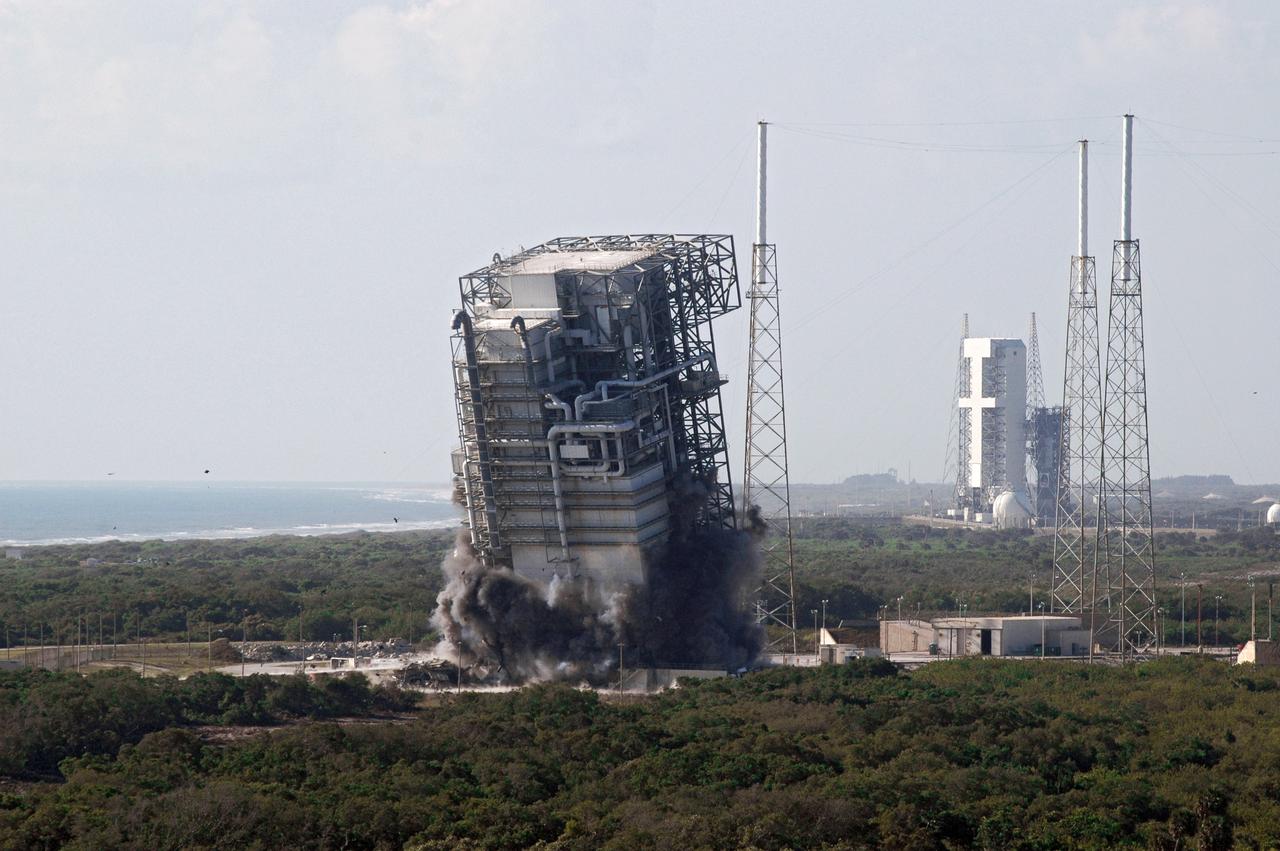
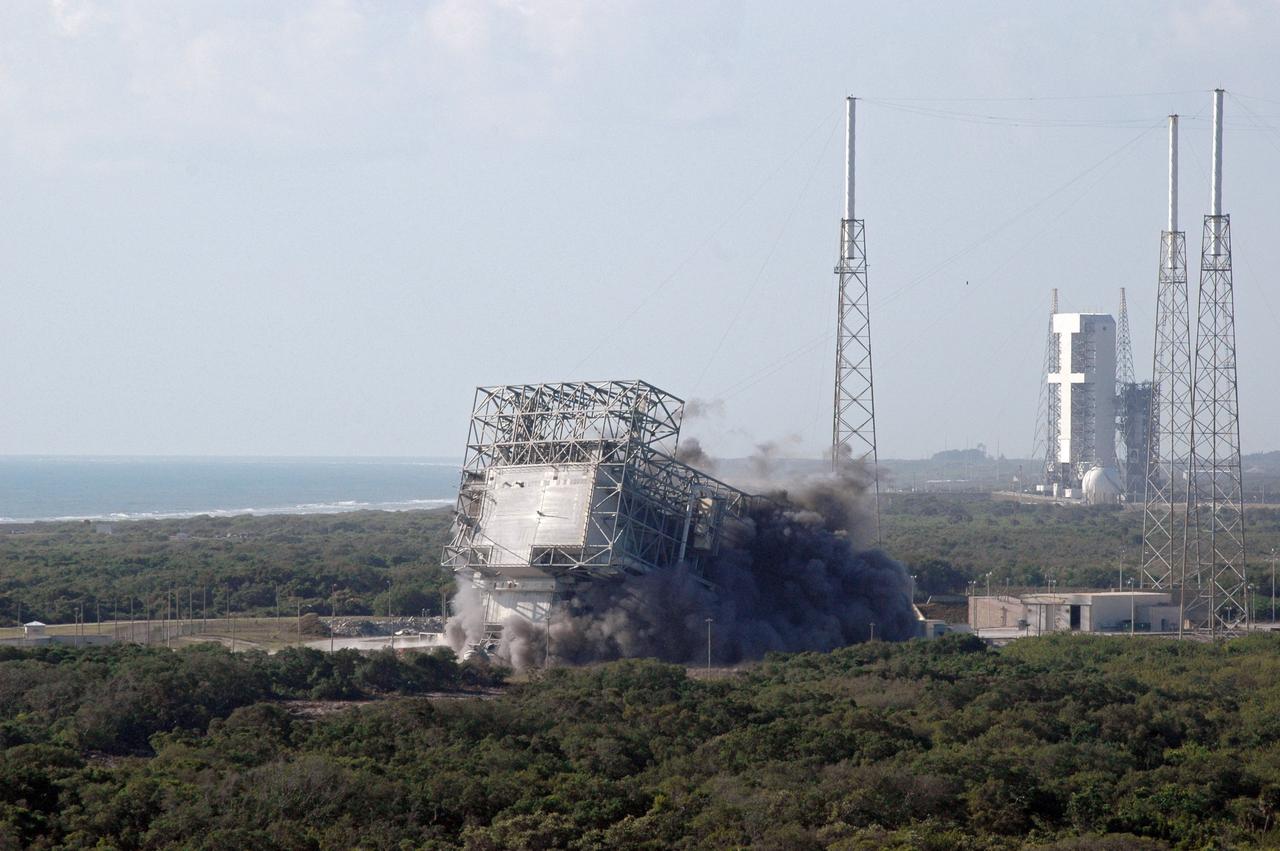
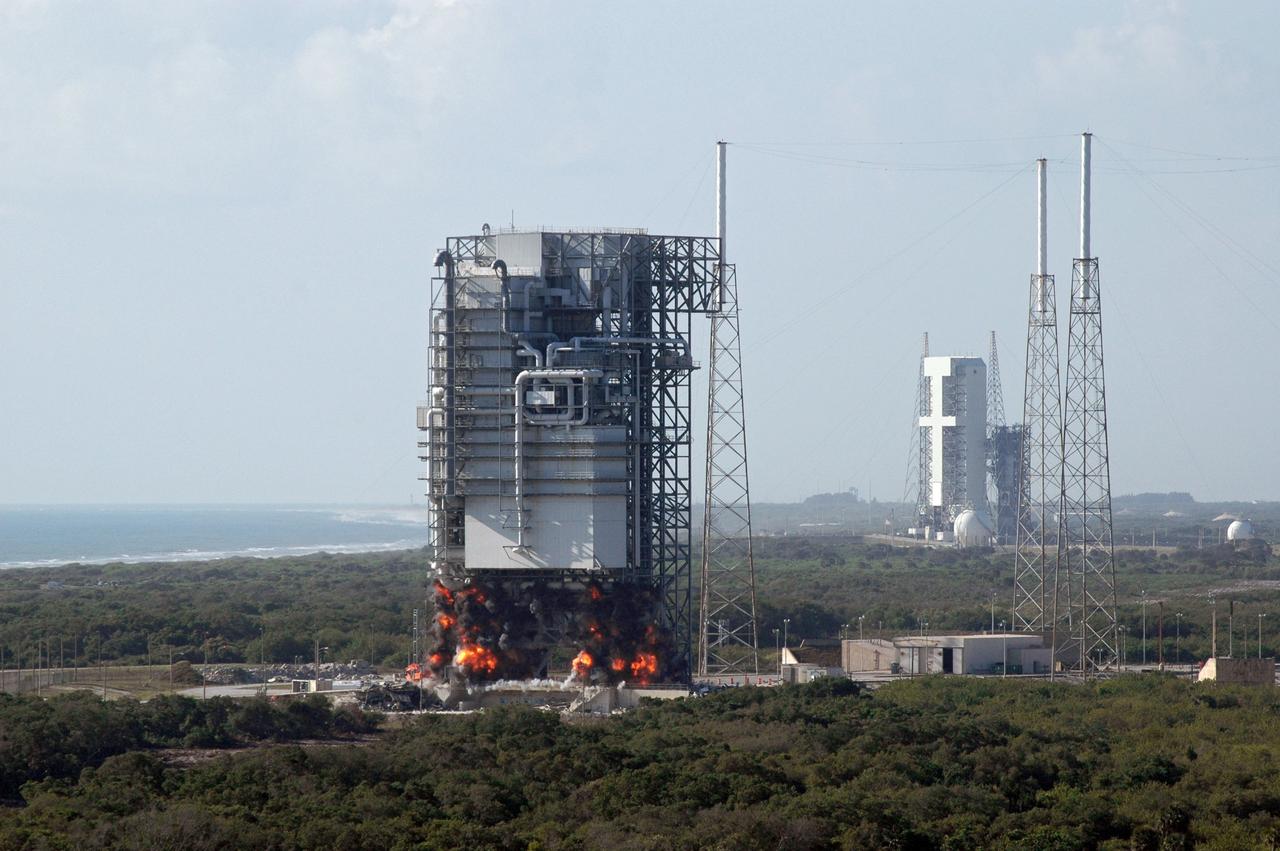
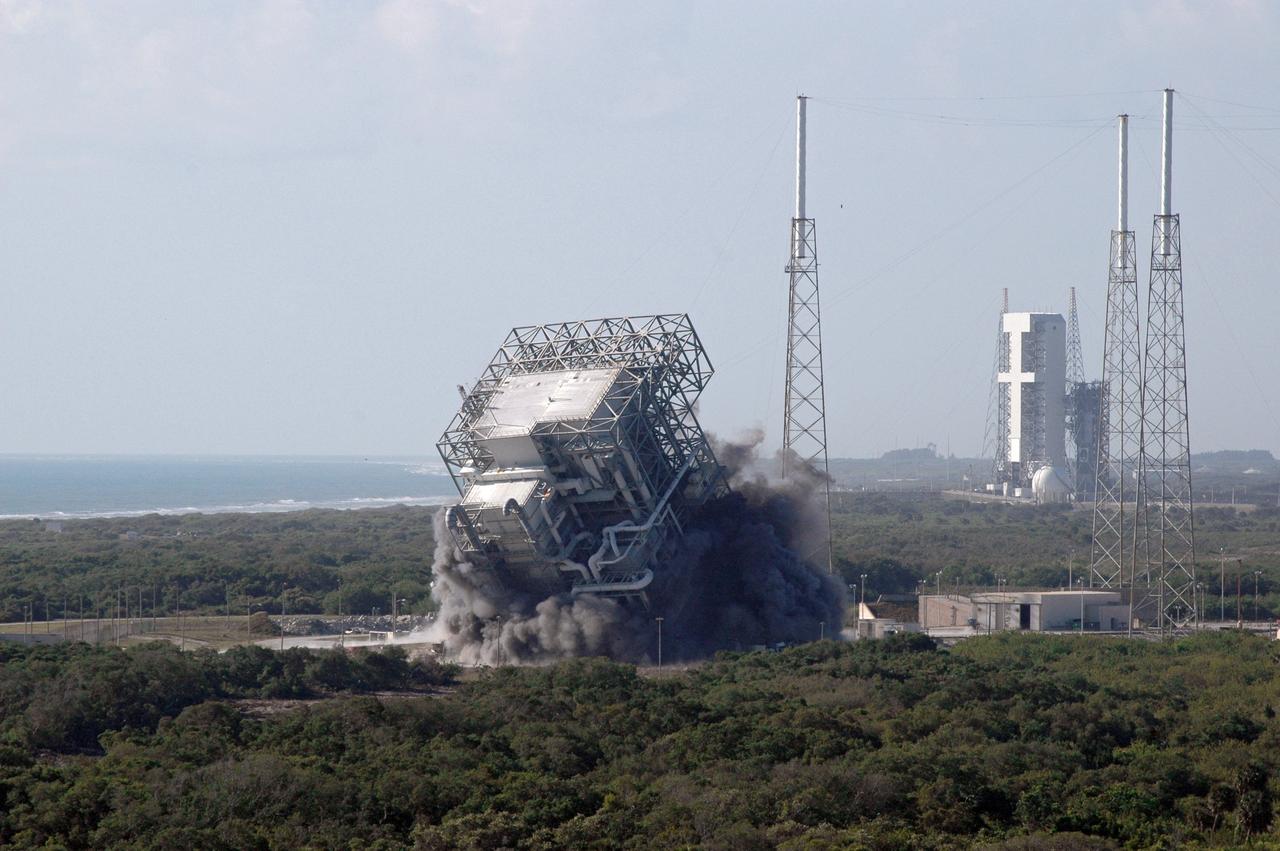
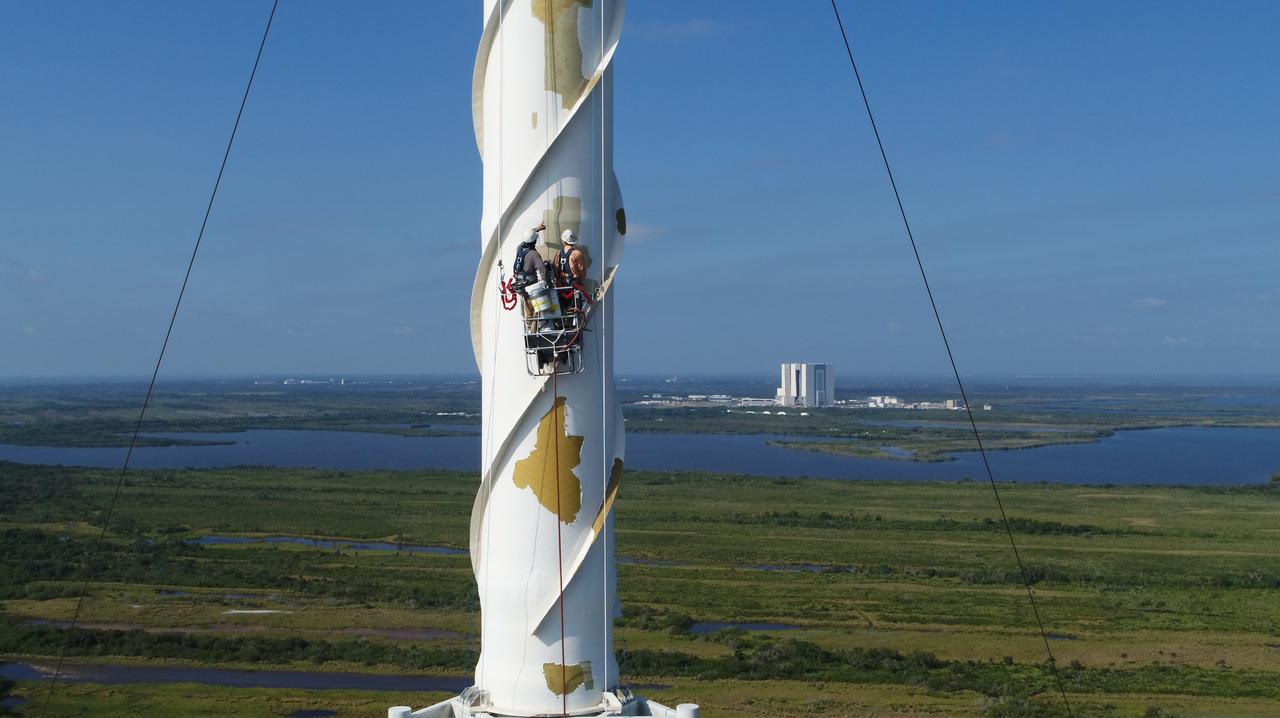
CAPE CANAVERAL, Fla. –  The tilt of the mobile service tower, or gantry, at Space Launch Complex 40 on Cape Canaveral Air Force Station signals the early stages of the tower’s implosion.  The tall lightning towers around it will remain. This mammoth structure, with its cavernous clean room, was used for the final spacecraft launch preparations for NASA’s Cassini spacecraft, currently orbiting Saturn.  The launch occurred on Oct. 15, 1997, aboard an Air Force Titan IV-Centaur rocket. The facilities at the pad are being dismantled to make room for the construction of launch pad access and servicing facilities for the new Falcon rockets to be launched by Space Exploration Technologies, known as SpaceX.  Photo credit: NASA/Cory Huston
KSC-08pd1056
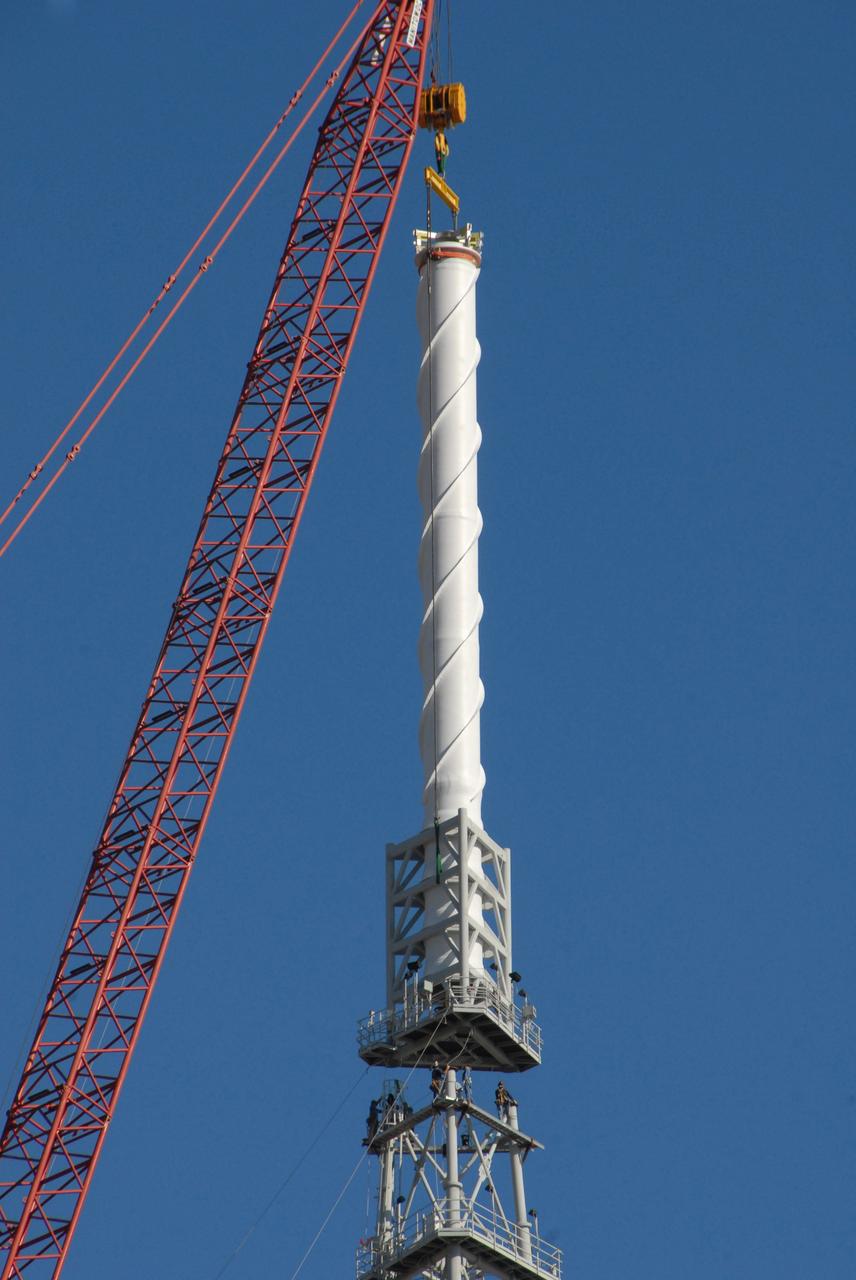
CAPE CANAVERAL, Fla. –  On Launch Pad 39B at NASA's Kennedy Space Center in Florida, a crane places the 100-foot fiberglass mast atop the new lightning tower constructed on the pad. The towers are part of the new lightning protection system for the Constellation Program and Ares/Orion launches. At left of the service structures is another tower under construction. Each of the three new lightning towers will be 500 feet tall with the additional 100-foot fiberglass mast atop supporting a wire catenary system. This improved lightning protection system allows for the taller height of the Ares I rocket compared to the space shuttle. Pad 39B will be the site of the first Ares vehicle launch, including the Ares I-X test flight that is targeted for July 2009. Photo credit: NASA/Kim Shiflett
KSC-2009-1007
CAPE CANAVERAL, Fla. –  On Launch Pad 39B at NASA's Kennedy Space Center in Florida, a crane places a 100-foot fiberglass lightning mast on top of the 500-foot tower. The tower is one of three being constructed for the Constellation Program and Ares/Orion launches. Another tower is seen at right. This improved lightning protection system allows for the taller height of the Ares I rocket compared to the space shuttle.  Pad 39B will be the site of the first Ares vehicle launch, including the Ares I-X test flight that is targeted for July 2009. Photo credit:  NASA/Jack Pfaller
KSC-2009-1339
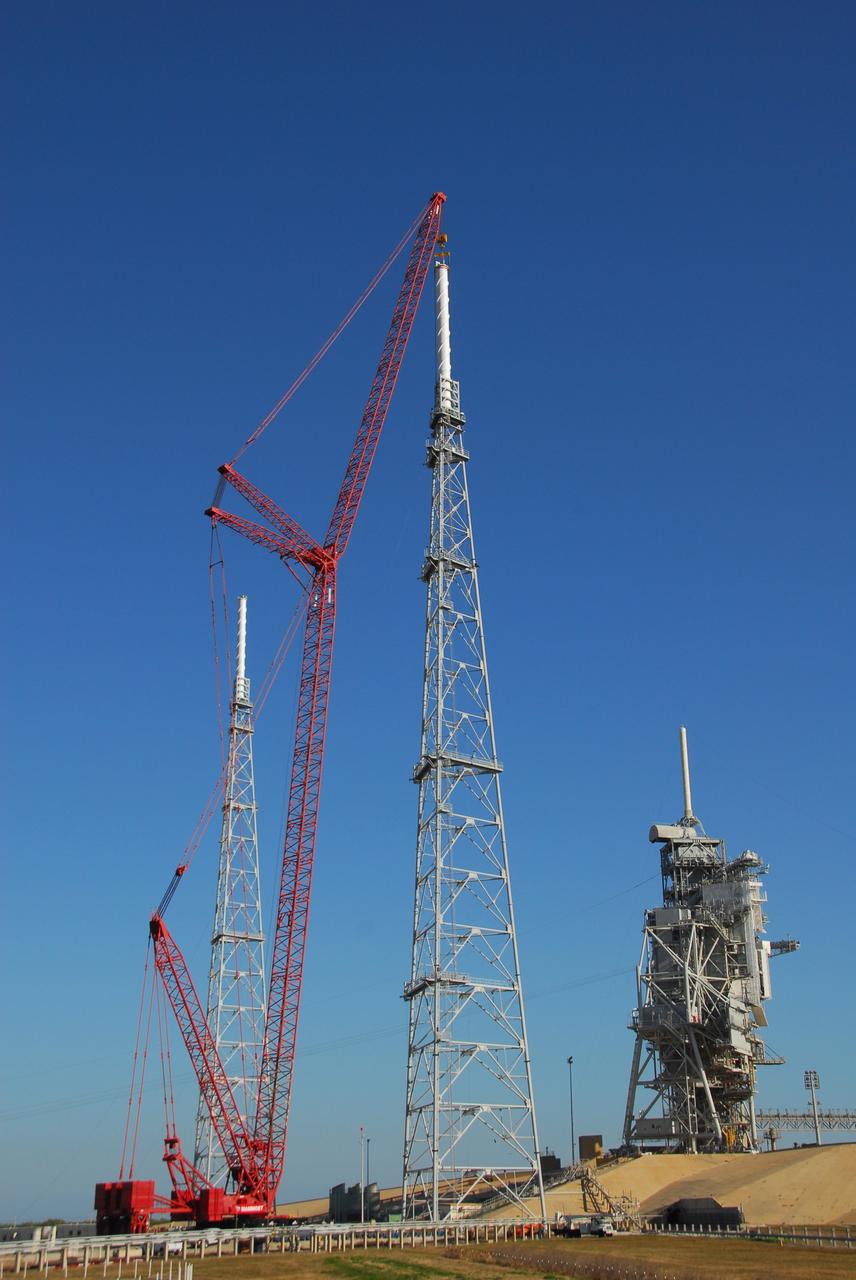
CAPE CANAVERAL, Fla. –  On Launch Pad 39B at NASA's Kennedy Space Center in Florida, a crane places a 100-foot fiberglass lightning mast on top of the 500-foot tower. The tower is one of three being constructed for the Constellation Program and Ares/Orion launches.  Another tower is seen at right. This improved lightning protection system allows for the taller height of the Ares I rocket compared to the space shuttle.  Pad 39B will be the site of the first Ares vehicle launch, including the Ares I-X test flight that is targeted for July 2009.
KSC-2009-1337
CAPE CANAVERAL, Fla. –  On Launch Pad 39B at NASA's Kennedy Space Center in Florida, a crane (at left) completes construction of one of the towers in the new lightning protection system for the Constellation Program and Ares/Orion launches. At right, another tower is being constructed. Each of the three new lightning towers will be 500 feet tall with an additional 100-foot fiberglass mast atop supporting a wire catenary system. This improved lightning protection system allows for the taller height of the Ares I rocket compared to the space shuttle. Pad 39B will be the site of the first Ares vehicle launch, including the Ares I-X test flight that is targeted for July 2009. Photo credit: NASA/Troy Cryder
KSC-2009-1005
This aerial view captures KSC's Launch Pad 39A, with the rotating service structure closed around Shuttle Atlantis. Just visible in the center is the top of the orange-colored external tank. On the left side towers the white 80-foot fiberglass lightning mast; on the right is the 300,000-gallon water tower used for sound suppression during launch. The launch pad abuts the Atlantic Ocean on the east, seen here in the background
KSC00pp0429
CAPE CANAVERAL, Fla. –  On Launch Pad 39B at NASA's Kennedy Space Center in Florida, a crane lifts a 100-foot fiberglass lightning mast alongside the 500-foot tower where it will be installed.  The tower is one of three being constructed for the Constellation Program and Ares_Orion launches. This improved lightning protection system allows for the taller height of the Ares I rocket compared to the space shuttle.  Pad 39B will be the site of the first Ares vehicle launch, including the Ares I-X test flight that is targeted for July 2009.
KSC-2009-1336
CAPE CANAVERAL, Fla. --  On Launch Pad 39B at NASA's Kennedy Space Center in Florida, a load test is conducted on a giant crane.  The crane will aid in construction of lightning towers that will hold catenary wires as part of the new lightning protection system for the Constellation Program and Ares/Orion launches.  One of the towers under construction is at right.  Pad 39B will be the site of the first Ares vehicle launch, including the Ares I-X test flight that is targeted for July 2009.  Photo credit: NASA/Jim Grossmann
KSC-08pd4114
CAPE CANAVERAL, Fla. -- On Launch Pad 39B at NASA's Kennedy Space Center, a crane lifts the last part of the lightning mast to be erected on towers being built for the Constellation Program and Ares/Orion launches.  In the foreground is the base of one of the towers to be built.  Pad B will be the site of the first Ares vehicle launch, including Ares I-X which is scheduled for April 2009. Photo credit: NASA/Jim Grossmann
KSC-08pd1593
CAPE CANAVERAL, Fla. --  On Launch Pad 39B at NASA's Kennedy Space Center in Florida, a load test is conducted on a giant crane.  The crane will aid in construction of lightning towers that will hold catenary wires as part of the new lightning protection system for the Constellation Program and Ares/Orion launches.  One of the towers under construction is at far left.  Pad 39B will be the site of the first Ares vehicle launch, including the Ares I-X test flight that is targeted for July 2009.  Photo credit: NASA/Jim Grossmann
KSC-08pd4115
CAPE CANAVERAL, Fla. --   On Launch Pad 39B at NASA's Kennedy Space Center in Florida, a load test is conducted on a giant crane.  The crane will aid in construction of lightning towers that will hold catenary wires as part of the new lightning protection system for the Constellation Program and Ares/Orion launches.  One of the towers under construction is in the foreground.  Pad 39B will be the site of the first Ares vehicle launch, including the Ares I-X test flight that is targeted for July 2009.  Photo credit: NASA/Jim Grossmann
KSC-08pd4116
CAPE CANAVERAL, Fla. –  On Launch Pad 39B at NASA's Kennedy Space Center in Florida, a crane lifts a 100-foot fiberglass lightning mast alongside the 500-foot tower where it will be installed.  The tower is one of three being constructed for the Constellation Program and Ares/Orion launches. This improved lightning protection system allows for the taller height of the Ares I rocket compared to the space shuttle.  Pad 39B will be the site of the first Ares vehicle launch, including the Ares I-X test flight that is targeted for July 2009.
KSC-2009-1335
This aerial view captures KSC's Launch Pad 39A, with the rotating service structure closed around Shuttle Atlantis. Just visible in the center is the top of the orange-colored external tank. On the left side towers the white 80-foot fiberglass lightning mast; on the right is the 300,000-gallon water tower used for sound suppression during launch. The launch pad abuts the Atlantic Ocean on the east, seen here in the background
KSC-00pp0429
CAPE CANAVERAL, Fla. -- On Launch Pad 39B at NASA's Kennedy Space Center in Florida, one of the new lightning towers is under construction.  The towers will hold catenary wires as part of the new lightning protection system for the Constellation Program and Ares/Orion launches. Pad 39B will be the site of the first Ares vehicle launch, including Ares I-X test flight that is targeted for July 2009. Photo credit: NASA/Tim Jacobs
KSC-08pd4106
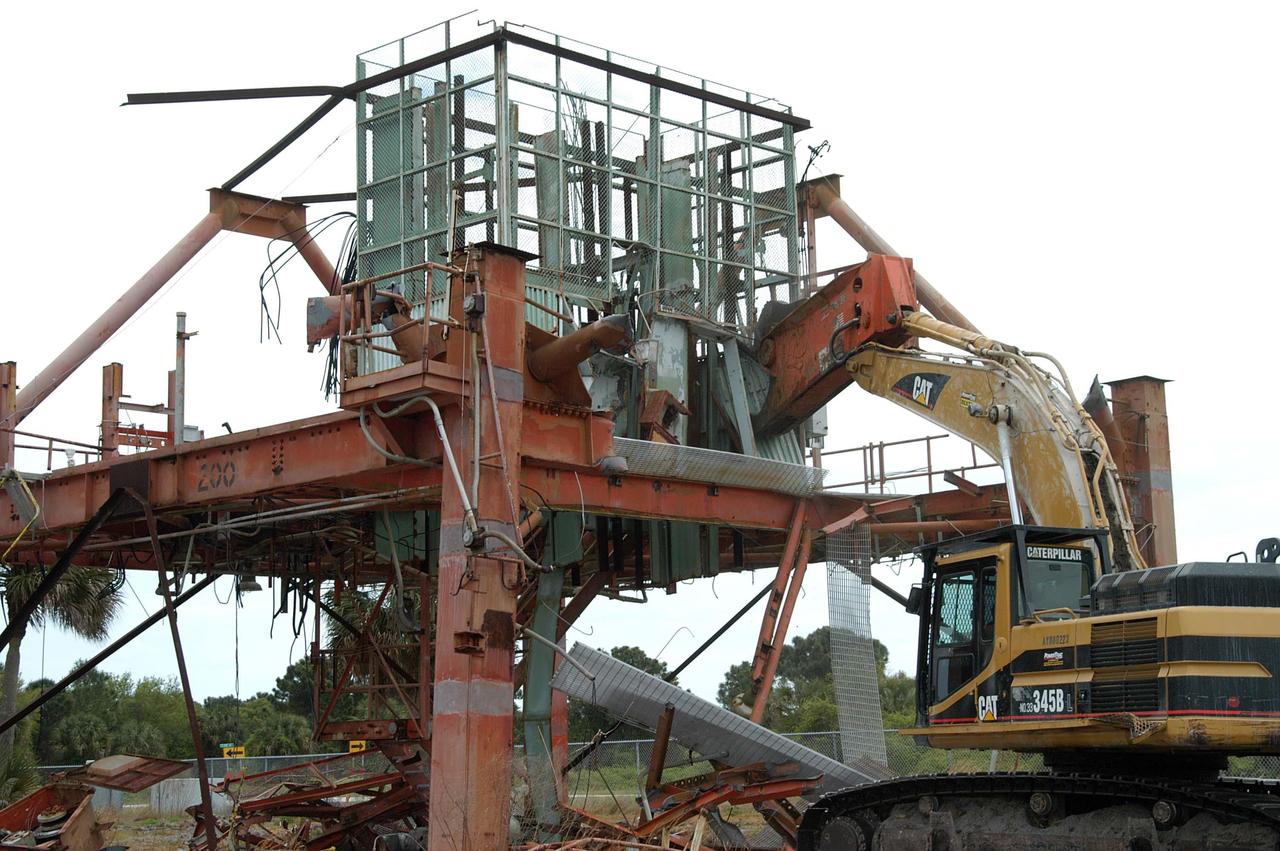
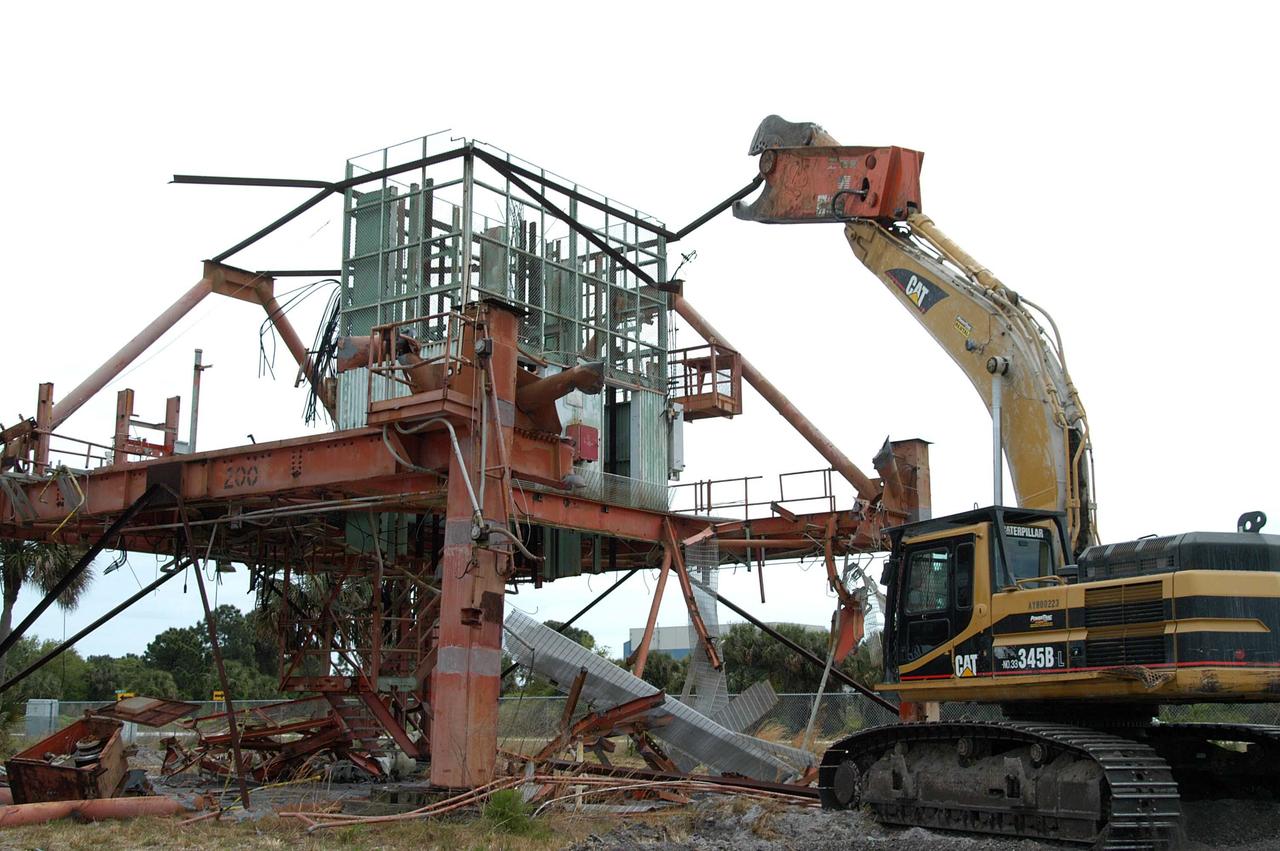
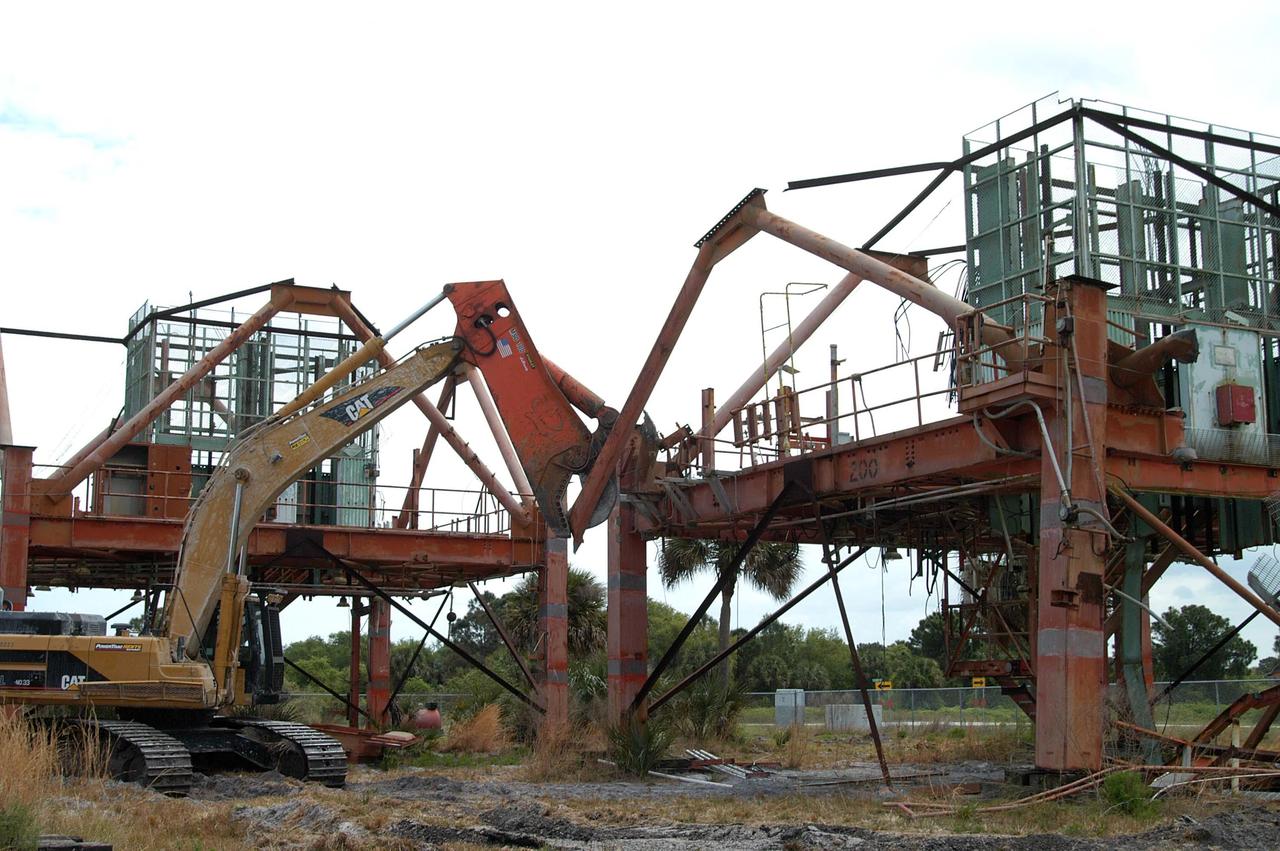
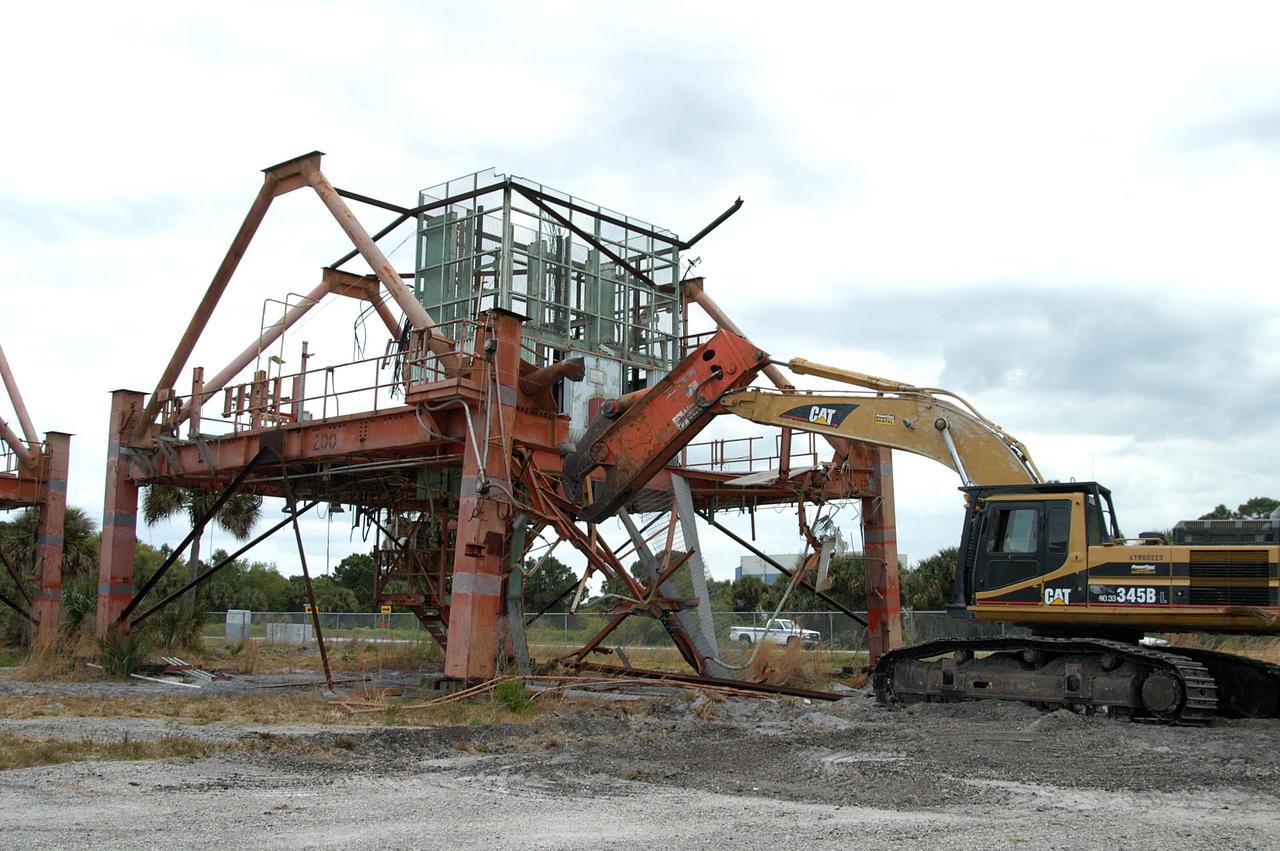
KENNEDY SPACE CENTER, FLA. -- Launch Umbilical Tower No. 1 (LUT-1) stored in the Industrial Area of KSC is being demolished with the Caterpillar excavator and 48-inch shear attachment.  Seen is the base of tower; the upright tower extended more than 398 feet above the launch pad.  The LUT-1 was part of the launch system used for Apollo-Saturn V, launching Apollo 8, Apollo 11, Skylab manned missions and the Apollo-Soyuz Test Project.  The shear is one used in the deconstruction of the Twin Towers in New York City after 9/11.
KSC-04pd0612
KENNEDY SPACE CENTER, FLA. -- Launch Umbilical Tower No. 1 (LUT-1) stored in the Industrial Area of KSC is being demolished with a Caterpillar excavator and 48-inch shear attachment.  Seen is the base of tower; the upright tower extended more than 398 feet above the launch pad.  The LUT-1 was part of the launch system used for Apollo-Saturn V, launching Apollo 8, Apollo 11, Skylab manned missions and the Apollo-Soyuz Test Project.  The shear is one used in the deconstruction of the Twin Towers in New York City after 9/11.
KSC-04pd0610
KENNEDY SPACE CENTER, FLA. -- - Launch Umbilical Tower No. 1 (LUT-1) stored in the Industrial Area of KSC is being demolished with a Caterpillar excavator and 48-inch shear attachment.  Seen is the base of tower; the upright tower extended more than 398 feet above the launch pad.  The LUT-1 was part of the launch system used for Apollo-Saturn V, launching Apollo 8, Apollo 11, Skylab manned missions and the Apollo-Soyuz Test Project.  The shear is one used in the deconstruction of the Twin Towers in New York City after 9/11.
KSC-04pd0607
KENNEDY SPACE CENTER, FLA. -- Launch Umbilical Tower No. 1 (LUT-1) stored in the Industrial Area of KSC is being demolished with a Caterpillar excavator and 48-inch shear attachment.  Seen is the base of tower; the upright tower extended more than 398 feet above the launch pad.  The LUT-1 was part of the launch system used for Apollo-Saturn V, launching Apollo 8, Apollo 11, Skylab manned missions and the Apollo-Soyuz Test Project.  The shear is one used in the deconstruction of the Twin Towers in New York City after 9/11.
KSC-04pd0608
KENNEDY SPACE CENTER, FLA. -- Launch Umbilical Tower No. 1 (LUT-1), stored in the Industrial Area of KSC, is being demolished using a Caterpillar excavator and 48-inch shear attachment.  Seen is the base of tower; the upright tower extended more than 398 feet above the launch pad.  The LUT-1 was part of the launch system used for Apollo-Saturn V, launching Apollo 8, Apollo 11, Skylab manned missions and the Apollo-Soyuz Test Project.  The shear being used for demolition is one used in the deconstruction of the Twin Towers in New York City after 9/11.
KSC-04pd0604
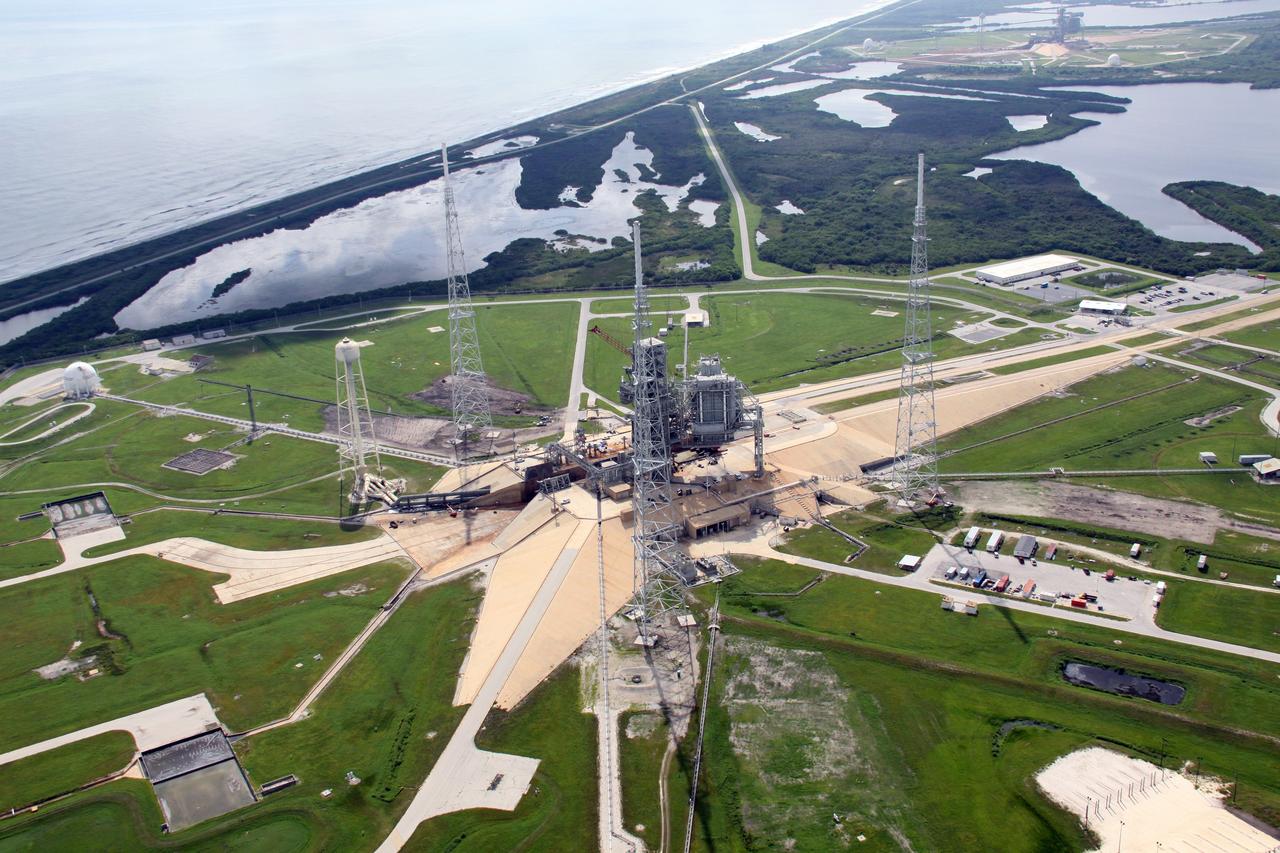
CAPE CANAVERAL, Fla. –  An aerial view of NASA Kennedy Space Center's Launch Pad 39B. The pad is surrounded by lightning towers erected for NASA's Constellation Program, which will use the pad for Ares rocket launches.  At the top is the Atlantic Ocean.   Photo credit: NASA/Troy Cryder
KSC-2009-5002
CAPE CANAVERAL, Fla. –  An aerial view of NASA Kennedy Space Center's Launch Pad 39B. The pad is surrounded by lightning towers erected for NASA's Constellation Program, which will use the pad for Ares rocket launches.  Photo credit: NASA/Troy Cryder
KSC-2009-5004
CAPE CANAVERAL, Fla. –  An aerial view of NASA Kennedy Space Center's Launch Pad 39B. The pad is surrounded by lightning towers erected for NASA's Constellation Program, which will use the pad for Ares rocket launches.  At the top is the Atlantic Ocean.  Photo credit: NASA/Troy Cryder
KSC-2009-5003
CAPE CANAVERAL, Fla. – An aerial view of NASA Kennedy Space Center's Launch Pad 39B. The pad is surrounded by lightning towers erected for NASA's Constellation Program, which will use the pad for Ares rocket launches.  At the top is the Atlantic Ocean. Photo credit: NASA/Troy Cryder
KSC-2009-5005
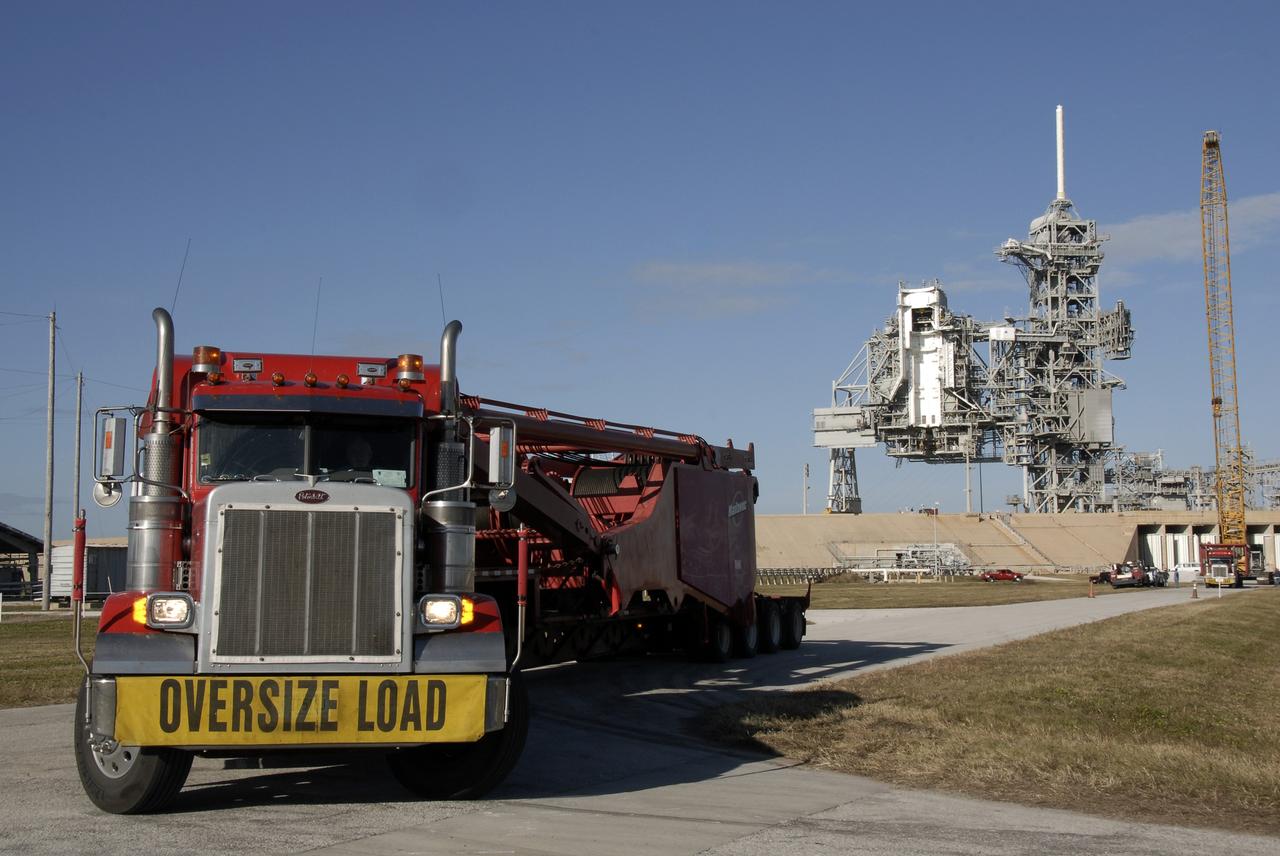
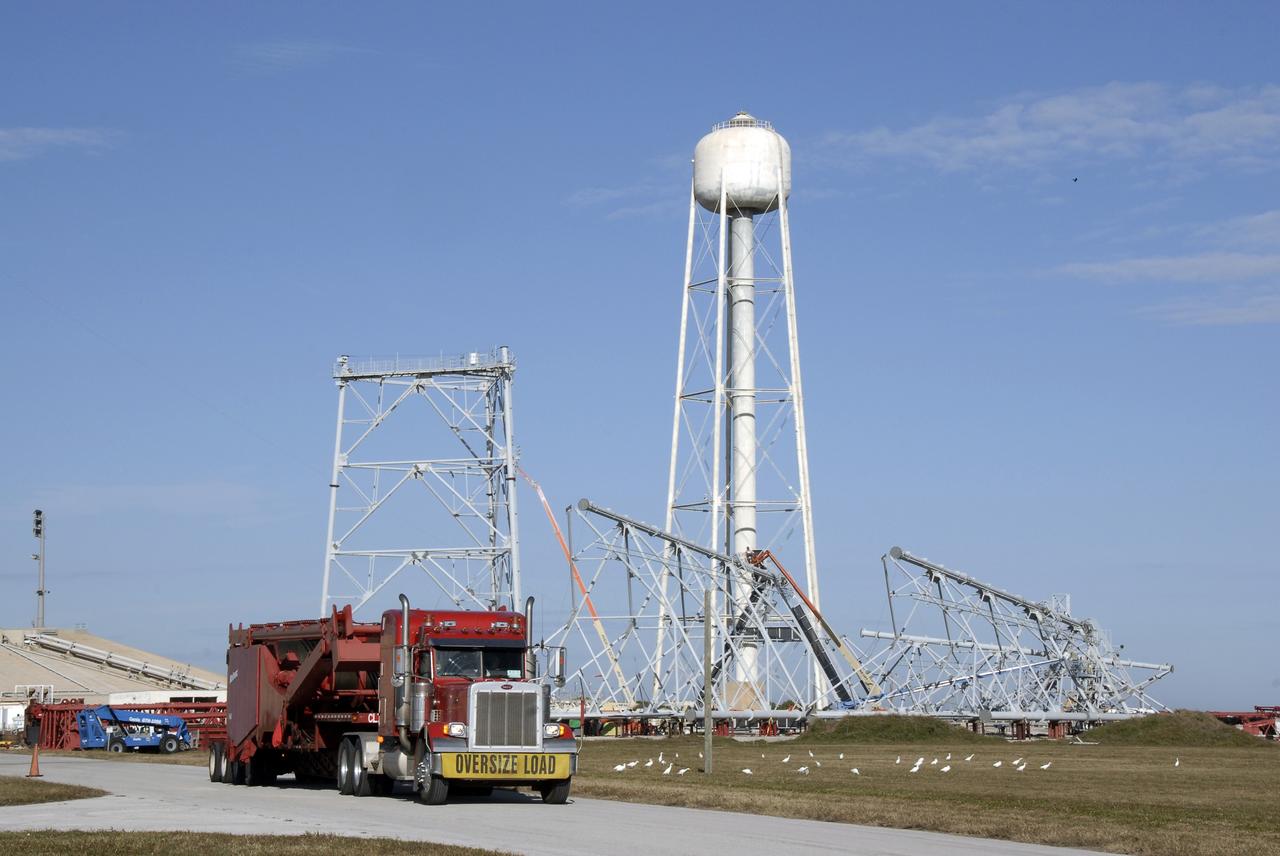
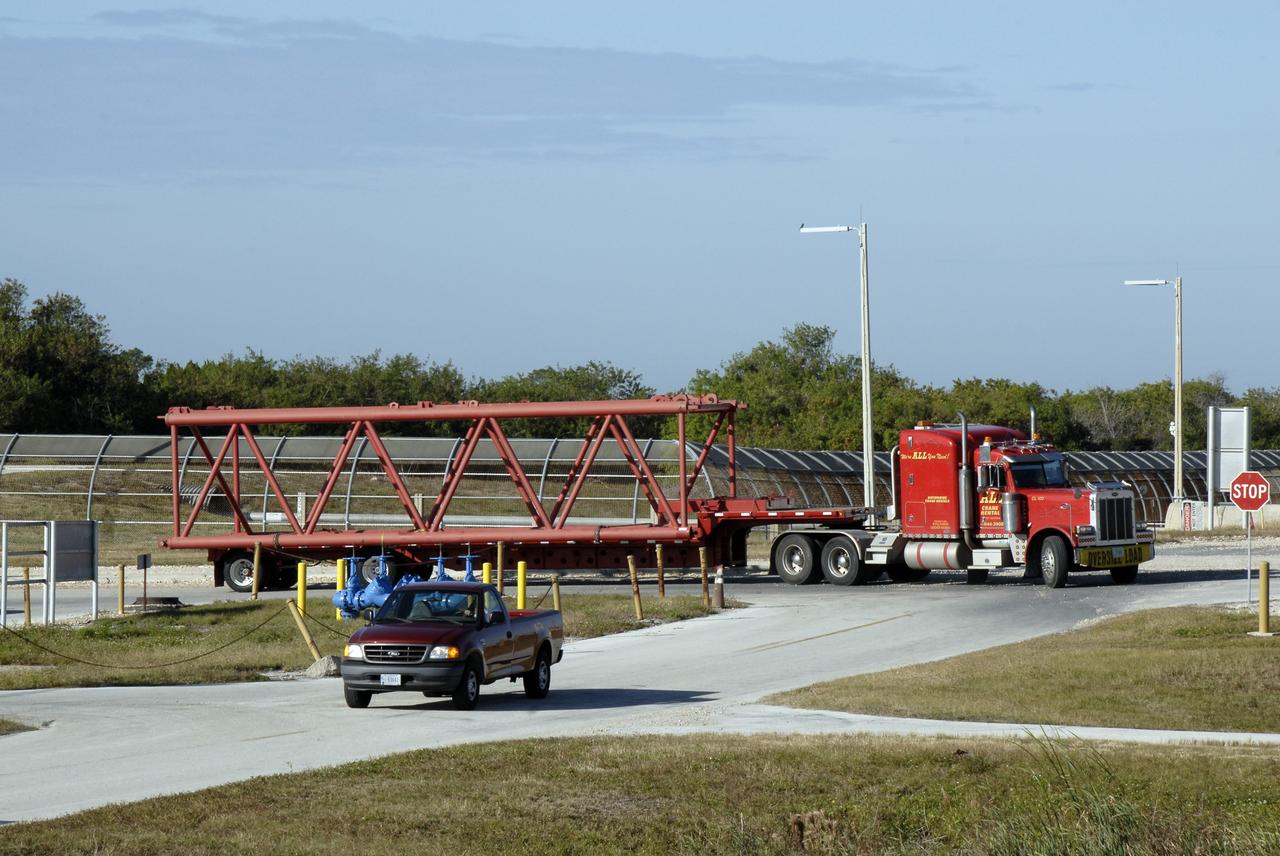
CAPE CANAVERAL, Fla. –  Segments of a giant crane arrive by truck to Launch Pad 39B at NASA's Kennedy Space Center in Florida. The crane will be constructed and used to finish erecting the lightning towers on the pad. The crane segments arrived on 125 trucks. Lightning towers are being constructed to hold catenary wires as part of the new lightning protection system for the Constellation Program and Ares/Orion launches.  Photo credit: NASA/Kim Shiflett
KSC-08pd3809
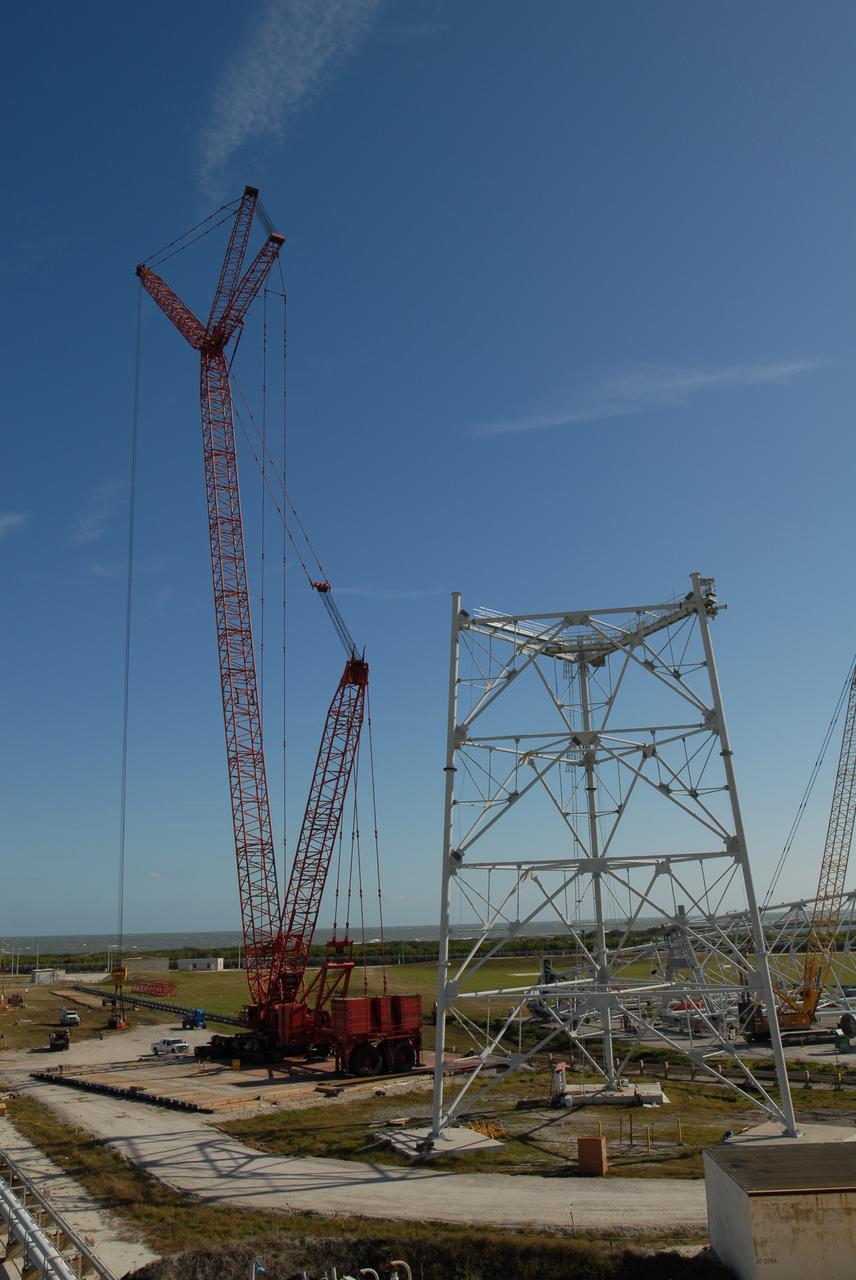
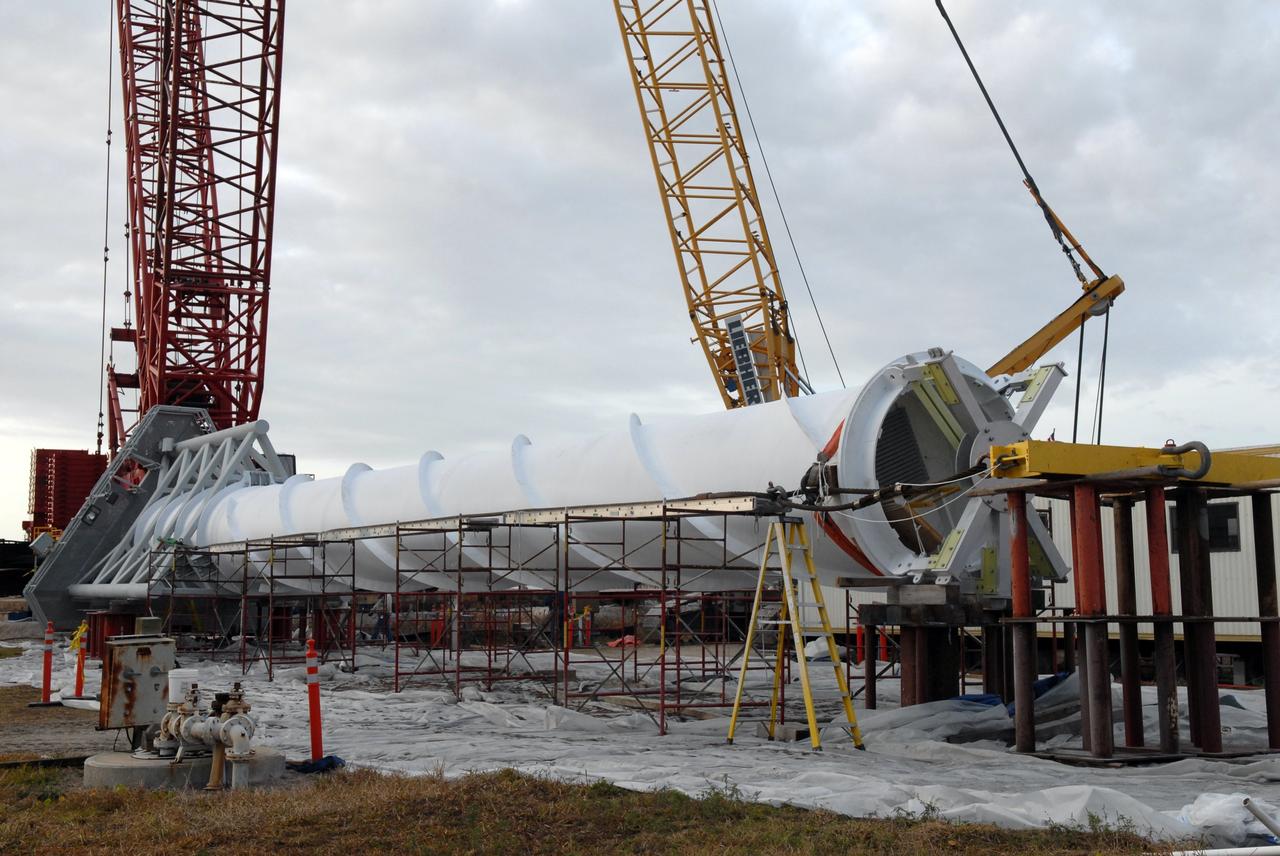
CAPE CANAVERAL, Fla. --  On Launch Pad 39B at NASA's Kennedy Space Center in Florida, segments are being added to the crane (foreground) that will be used to finish erecting the lightning towers on the pad.  Lightning towers are being constructed to hold centenary wires as part of the new lightning protection system for the Constellation Program and Ares/Orion launches.  Photo credit: NASA/Kim Shiflett
KSC-08pd3934
CAPE CANAVERAL, Fla. –  Segments of a giant crane arrive by truck to Launch Pad 39B at NASA's Kennedy Space Center in Florida. The crane will be constructed and used to finish erecting the lightning towers on the pad. The crane segments arrived on 125 trucks.  Lightning towers are being constructed to hold catenary wires as part of the new lightning protection system for the Constellation Program and Ares/Orion launches.  Photo credit: NASA/Kim Shiflett
KSC-08pd3810
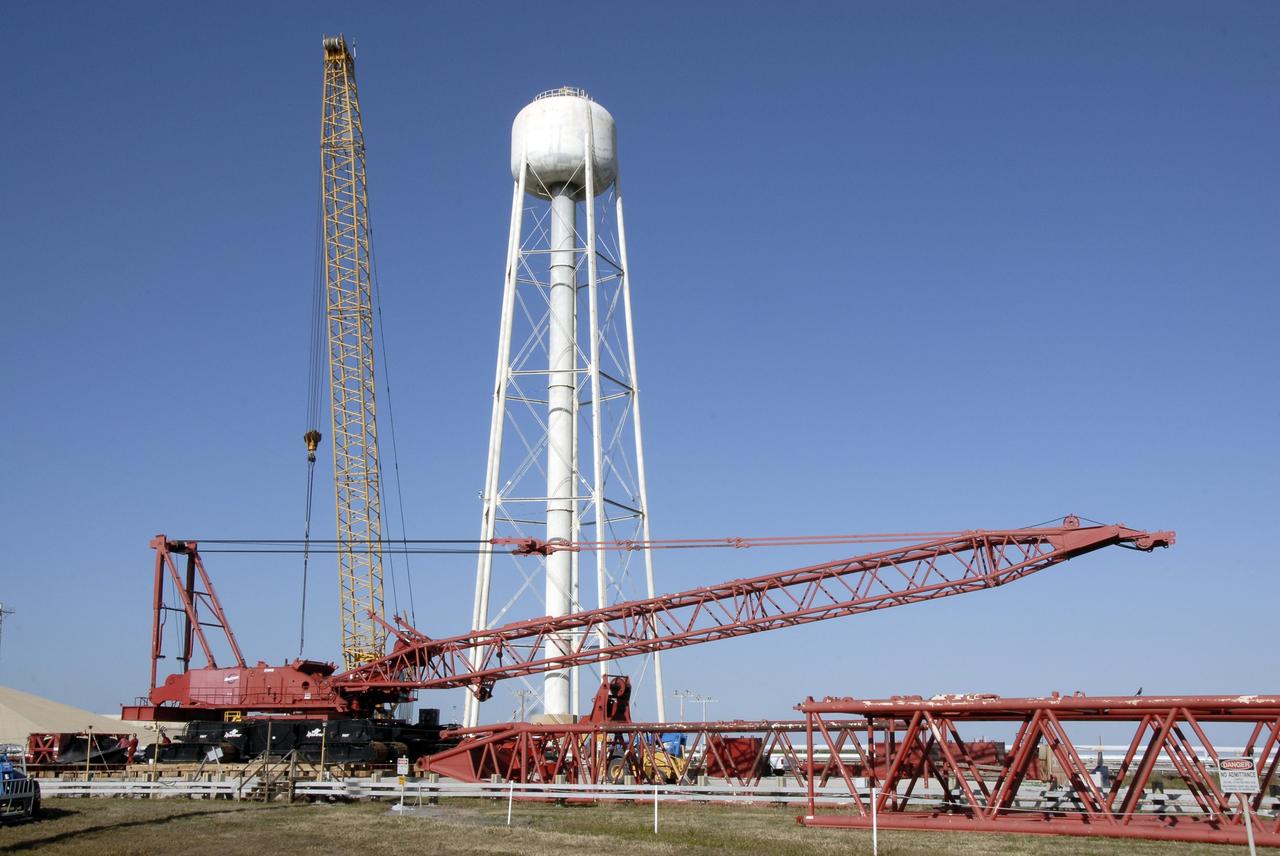
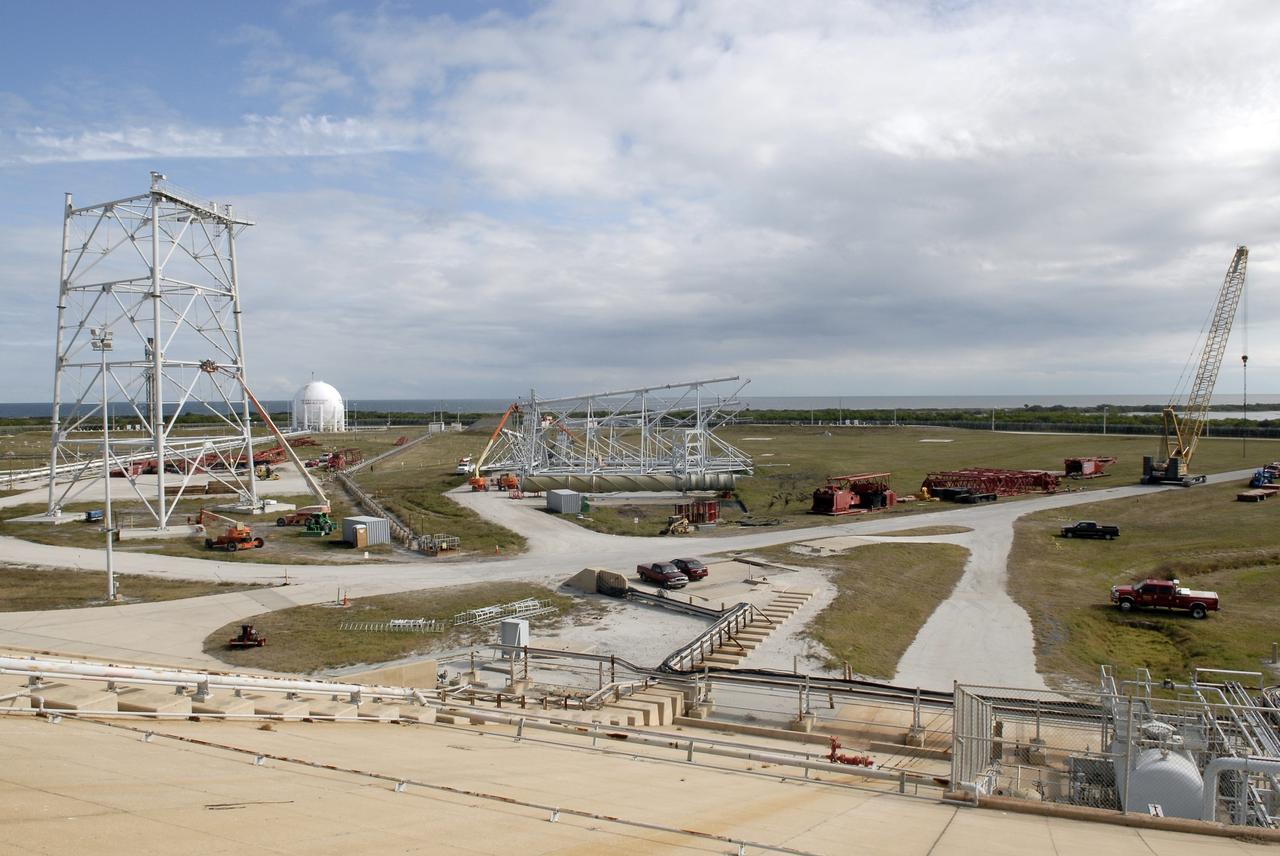
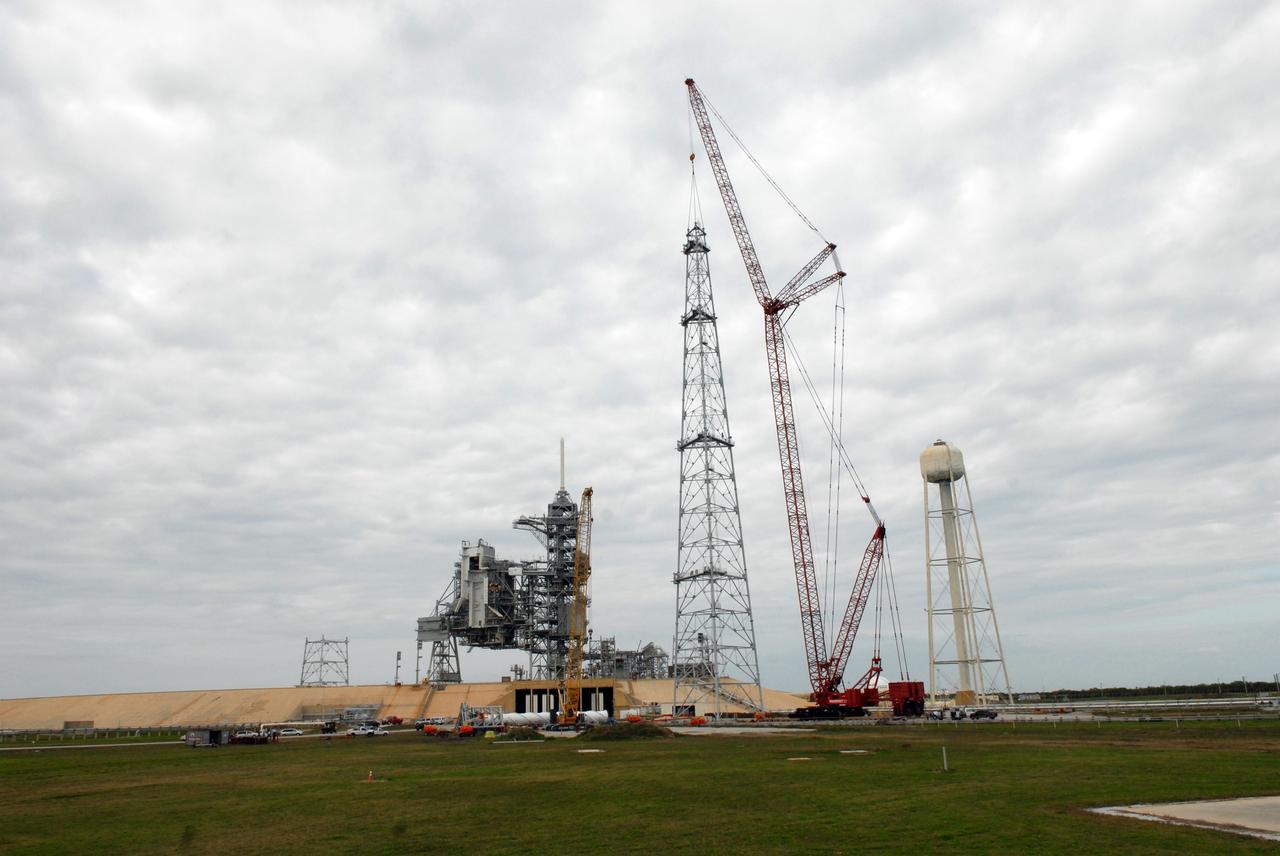
CAPE CANAVERAL, Fla. –    On Launch Pad 39B at NASA's Kennedy Space Center in Florida, a giant crane (at right) is under construction to help finish erecting the lightning towers (at left) on the pad. The crane segments arrived on 125 trucks. Lightning towers are being constructed to hold catenary wires as part of the new lightning protection system for the Constellation Program and Ares/Orion launches.  Photo credit: NASA/Kim Shiflett
KSC-08pd3813
CAPE CANAVERAL, Fla. –   On Launch Pad 39B at NASA's Kennedy Space Center in Florida, a giant crane is under construction to help finish erecting the lightning towers on the pad. The crane segments arrived on 125 trucks. Lightning towers are being constructed to hold catenary wires as part of the new lightning protection system for the Constellation Program and Ares/Orion launches.  Photo credit: NASA/Kim Shiflett
KSC-08pd3811
CAPE CANAVERAL, Fla. –  One of 125 trucks begins delivering a segment of a giant crane to Launch Pad 39B at NASA's Kennedy Space Center in Florida. The crane will be constructed and used to finish erecting the lightning towers on the pad. Lightning towers are being constructed to hold catenary wires as part of the new lightning protection system for the Constellation Program and Ares/Orion launches.  Photo credit: NASA/Kim Shiflett
KSC-08pd3808
CAPE CANAVERAL, Fla. –   On Launch Pad 39B at NASA's Kennedy Space Center in Florida, a giant crane is under construction to help finish erecting the lightning towers on the pad. The crane segments arrived on 125 trucks. Lightning towers are being constructed to hold catenary wires as part of the new lightning protection system for the Constellation Program and Ares/Orion launches.  Photo credit: NASA/Kim Shiflett
KSC-08pd3812
CAPE CANAVERAL, Fla. – An aerial view of the newly erected lightning towers on Launch Pad 39B at NASA's Kennedy Space Center.  The two towers at center and right contain the lightning mast on top; the one at left does not.  At center are the fixed and rotating service structures that have served the Space Shuttle Program.  In the foreground is the tower that holds 300,000 gallons of water used for sound suppression during a shuttle liftoff.  The new lightning protection system is being built for the Constellation Program and Ares/Orion launches.  Each of the towers is 500 feet tall with an additional 100-foot fiberglass mast atop supporting a wire catenary system.  This improved lightning protection system allows for the taller height of the Ares I rocket compared to the space shuttle.  Pad 39B will be the site of the first Ares rocket launch, including the Ares I-X test flight that is targeted for July 2009. Photo credit: NASA/Kim Shiflett
KSC-2009-1573
CAPE CANAVERAL, Fla. – An aerial view of the newly erected lightning towers on Launch Pad 39B at NASA's Kennedy Space Center in Florida.  The two towers at left and right contain the lightning mast on top; the one at center does not.  At center are the fixed and rotating service structures that have served the Space Shuttle Program.  In the foreground is the tower that holds 300,000 gallons of water used for sound suppression during a shuttle liftoff.  The new lightning protection system is being built for the Constellation Program and Ares/Orion launches.  Each of the towers is 500 feet tall with an additional 100-foot fiberglass mast atop supporting a wire catenary system.  This improved lightning protection system allows for the taller height of the Ares I rocket compared to the space shuttle.  Pad 39B will be the site of the first Ares rocket launch, including the Ares I-X test flight that is targeted for July 2009. Photo credit: NASA/Kim Shiflett
KSC-2009-1572
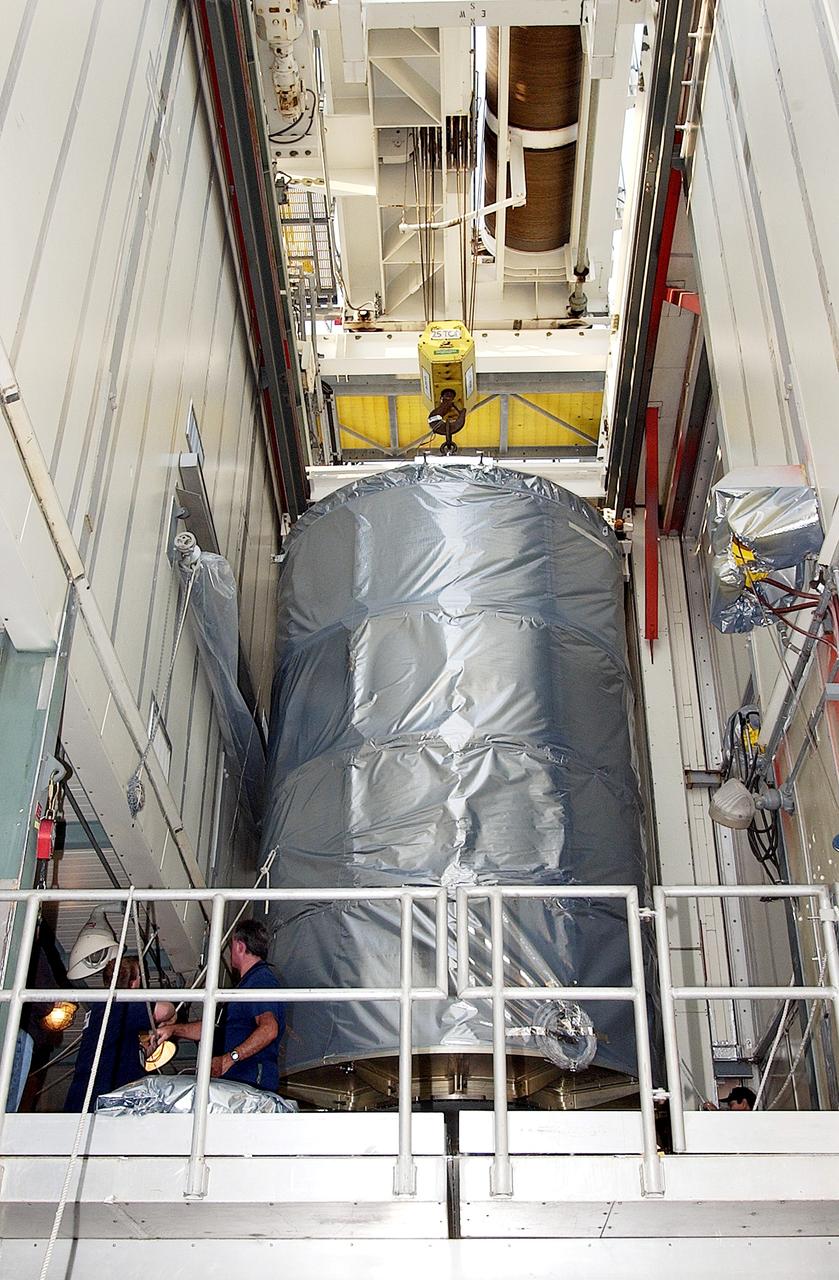
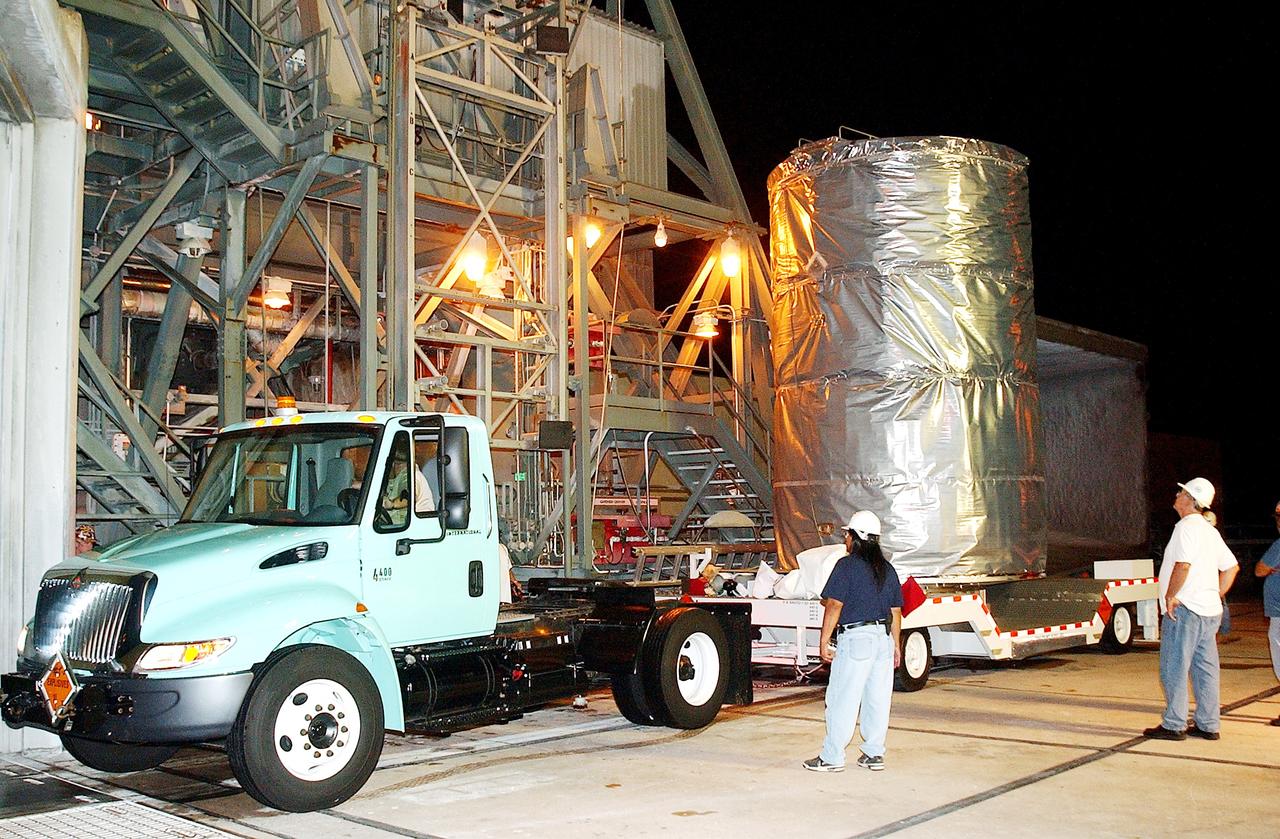
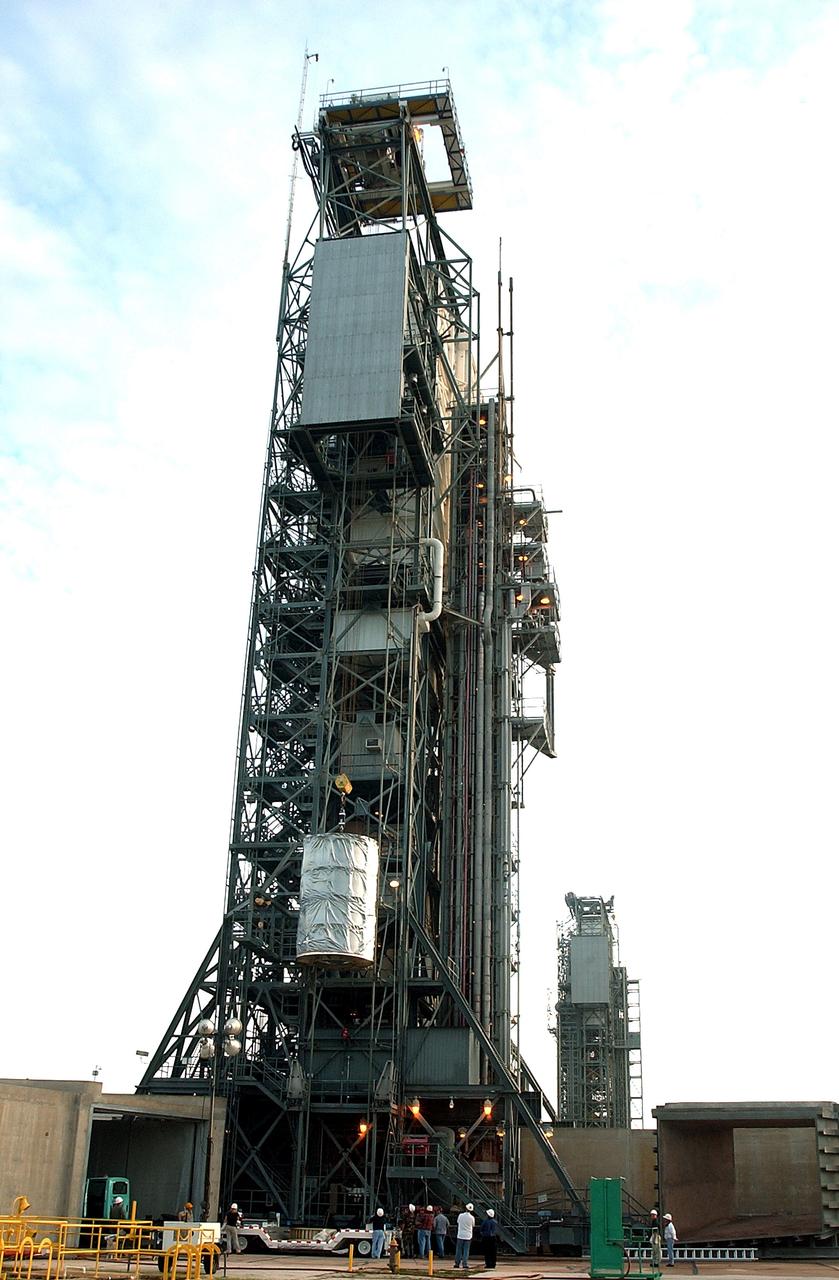
KENNEDY SPACE CENTER, FLA.  -  After dawn,  the Space Infrared Telescope Facility (SIRTF) is lifted up the mobile service tower on Launch Pad 17-B, Cape Canaveral Air Force Station.  SIRTF will be attached to the Delta II rocket and encapsulated in its fairing before launch.   Consisting of three cryogenically cooled science instruments and an 0.85-meter telescope, SIRTF is one of NASA’s largest infrared telescopes to be launched.  It is the fourth and final element in NASA’s family of orbiting “Great Observatories.”  SIRTF will obtain images and spectra by detecting the infrared energy, or heat, radiated by objects in space. Most of this infrared radiation is blocked by the Earth's atmosphere and cannot be observed from the ground.
KENNEDY SPACE CENTER, FLA. - After dawn, the Space Infrared Telescope Facility (SIRTF) is lifted up the mobile service tower on Launch Pad 17-B, Cape Canaveral Air Force Station. SIRTF will be attached to the Delta II rocket and encapsulated in its fairing before launch. Consisting of three cryogenically cooled science instruments and an 0.85-meter telescope, SIRTF is one of NASA’s largest infrared telescopes to be launched. It is the fourth and final element in NASA’s family of orbiting “Great Observatories.” SIRTF will obtain images and spectra by detecting the infrared energy, or heat, radiated by objects in space. Most of this infrared radiation is blocked by the Earth's atmosphere and cannot be observed from the ground.
KENNEDY SPACE CENTER, FLA.  -  Before dawn, the Space Infrared Telescope Facility (SIRTF) arrives at Launch Pad 17-B, Cape Canaveral Air Force Station, where it will be lifted into the mobile service tower and prepared for launch.  SIRTF consists of three cryogenically cooled science instruments and an 0.85-meter telescope, and is one of NASA’s largest infrared telescopes to be launched.  It is the fourth and final element in NASA’s family of orbiting “Great Observatories.”  SIRTF will obtain images and spectra by detecting the infrared energy, or heat, radiated by objects in space. Most of this infrared radiation is blocked by the Earth's atmosphere and cannot be observed from the ground.
KENNEDY SPACE CENTER, FLA. - Before dawn, the Space Infrared Telescope Facility (SIRTF) arrives at Launch Pad 17-B, Cape Canaveral Air Force Station, where it will be lifted into the mobile service tower and prepared for launch. SIRTF consists of three cryogenically cooled science instruments and an 0.85-meter telescope, and is one of NASA’s largest infrared telescopes to be launched. It is the fourth and final element in NASA’s family of orbiting “Great Observatories.” SIRTF will obtain images and spectra by detecting the infrared energy, or heat, radiated by objects in space. Most of this infrared radiation is blocked by the Earth's atmosphere and cannot be observed from the ground.
KENNEDY SPACE CENTER, FLA.  -  After dawn,  the Space Infrared Telescope Facility (SIRTF) is lifted up the mobile service tower on Launch Pad 17-B, Cape Canaveral Air Force Station.  SIRTF will be attached to the Delta II rocket and encapsulated in its fairing before launch.   Consisting of three cryogenically cooled science instruments and an 0.85-meter telescope, SIRTF is one of NASA’s largest infrared telescopes to be launched.  It is the fourth and final element in NASA’s family of orbiting “Great Observatories.”  SIRTF will obtain images and spectra by detecting the infrared energy, or heat, radiated by objects in space. Most of this infrared radiation is blocked by the Earth's atmosphere and cannot be observed from the ground.
KENNEDY SPACE CENTER, FLA. - After dawn, the Space Infrared Telescope Facility (SIRTF) is lifted up the mobile service tower on Launch Pad 17-B, Cape Canaveral Air Force Station. SIRTF will be attached to the Delta II rocket and encapsulated in its fairing before launch. Consisting of three cryogenically cooled science instruments and an 0.85-meter telescope, SIRTF is one of NASA’s largest infrared telescopes to be launched. It is the fourth and final element in NASA’s family of orbiting “Great Observatories.” SIRTF will obtain images and spectra by detecting the infrared energy, or heat, radiated by objects in space. Most of this infrared radiation is blocked by the Earth's atmosphere and cannot be observed from the ground.
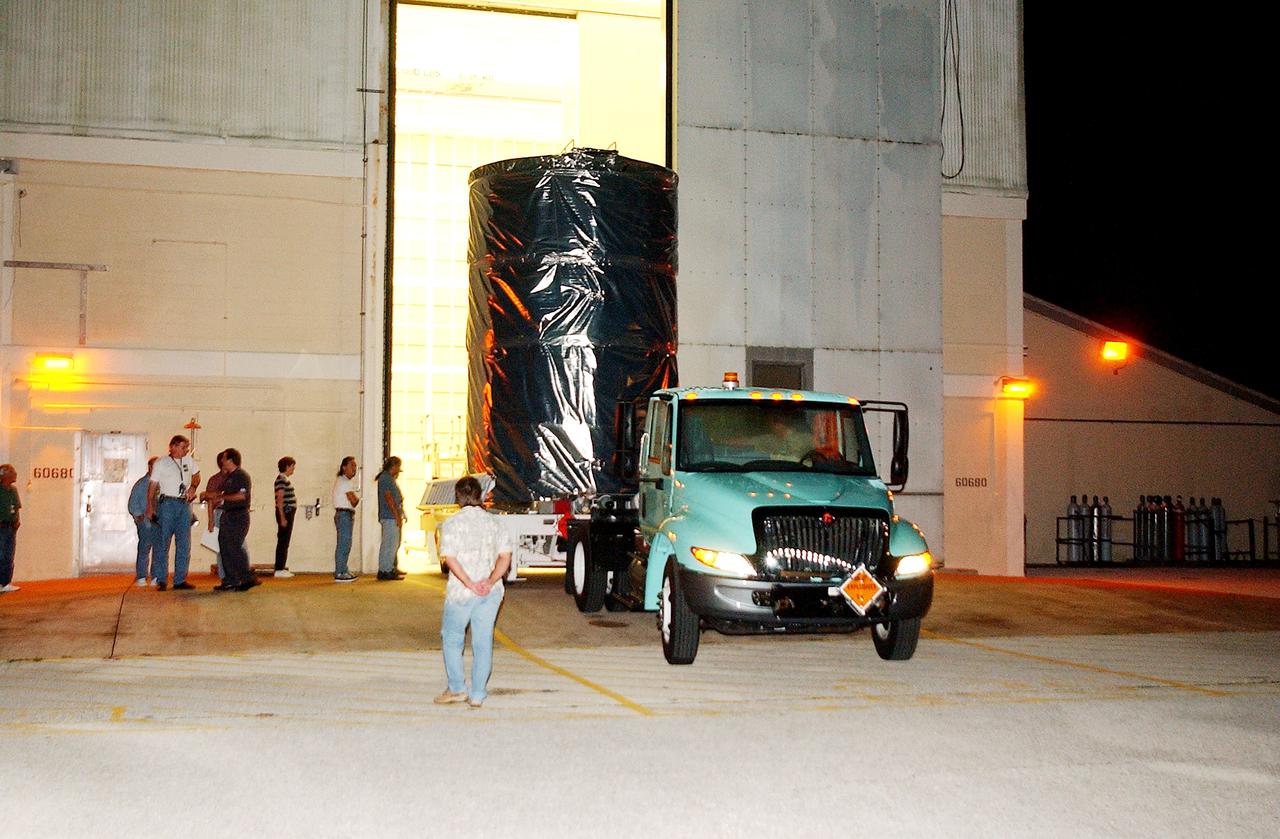
KENNEDY SPACE CENTER, FLA.  -  The Space Infrared Telescope Facility (SIRTF) is rolled out of the hangar at Cape Canaveral Air Force Station during pre-dawn hours.  It is being transported to Launch Pad 17-B where it will be lifted into the mobile service tower and prepared for launch.  SIRTF consists of three cryogenically cooled science instruments and an 0.85-meter telescope, and is one of NASA’s largest infrared telescopes to be launched.  It is the fourth and final element in NASA’s family of orbiting “Great Observatories.”  SIRTF will obtain images and spectra by detecting the infrared energy, or heat, radiated by objects in space. Most of this infrared radiation is blocked by the Earth's atmosphere and cannot be observed from the ground.
KENNEDY SPACE CENTER, FLA. - The Space Infrared Telescope Facility (SIRTF) is rolled out of the hangar at Cape Canaveral Air Force Station during pre-dawn hours. It is being transported to Launch Pad 17-B where it will be lifted into the mobile service tower and prepared for launch. SIRTF consists of three cryogenically cooled science instruments and an 0.85-meter telescope, and is one of NASA’s largest infrared telescopes to be launched. It is the fourth and final element in NASA’s family of orbiting “Great Observatories.” SIRTF will obtain images and spectra by detecting the infrared energy, or heat, radiated by objects in space. Most of this infrared radiation is blocked by the Earth's atmosphere and cannot be observed from the ground.
KENNEDY SPACE CENTER, FLA.  -  Workers on the mobile service tower on Launch Pad 17-B, Cape Canaveral Air Force Station, wait for the Space Infrared Telescope Facility (SIRTF) to reach their level.  SIRTF will be attached to the Delta II rocket and encapsulated in its fairing before launch.   Consisting of three cryogenically cooled science instruments and an 0.85-meter telescope, SIRTF is one of NASA’s largest infrared telescopes to be launched.  It is the fourth and final element in NASA’s family of orbiting “Great Observatories.”  SIRTF will obtain images and spectra by detecting the infrared energy, or heat, radiated by objects in space. Most of this infrared radiation is blocked by the Earth's atmosphere and cannot be observed from the ground.
KENNEDY SPACE CENTER, FLA. - Workers on the mobile service tower on Launch Pad 17-B, Cape Canaveral Air Force Station, wait for the Space Infrared Telescope Facility (SIRTF) to reach their level. SIRTF will be attached to the Delta II rocket and encapsulated in its fairing before launch. Consisting of three cryogenically cooled science instruments and an 0.85-meter telescope, SIRTF is one of NASA’s largest infrared telescopes to be launched. It is the fourth and final element in NASA’s family of orbiting “Great Observatories.” SIRTF will obtain images and spectra by detecting the infrared energy, or heat, radiated by objects in space. Most of this infrared radiation is blocked by the Earth's atmosphere and cannot be observed from the ground.
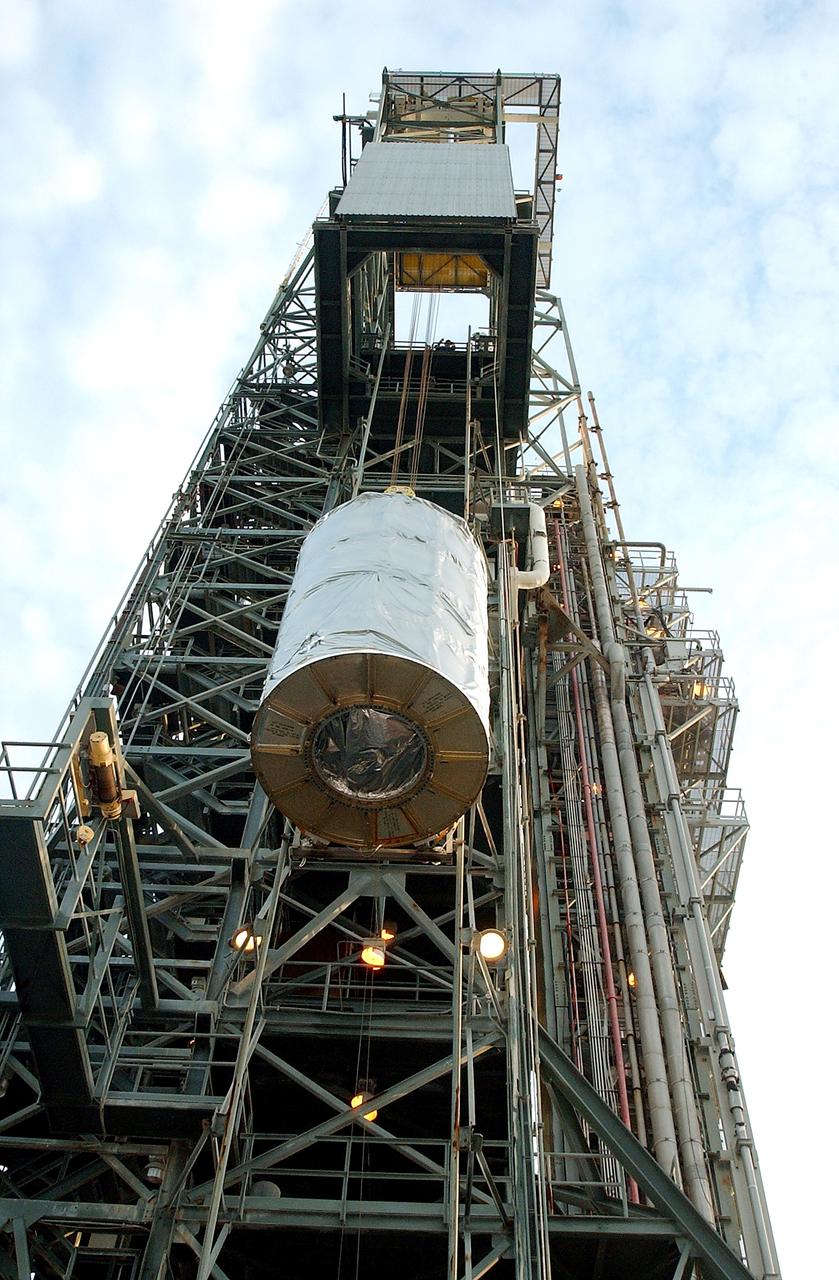
KENNEDY SPACE CENTER, FLA.  -  Viewed from below, the Space Infrared Telescope Facility (SIRTF) is lifted up the mobile service tower on Launch Pad 17-B, Cape Canaveral Air Force Station.  SIRTF will be attached to the Delta II rocket and encapsulated in its fairing before launch.   Consisting of three cryogenically cooled science instruments and an 0.85-meter telescope, SIRTF is one of NASA’s largest infrared telescopes to be launched.  It is the fourth and final element in NASA’s family of orbiting “Great Observatories.”  SIRTF will obtain images and spectra by detecting the infrared energy, or heat, radiated by objects in space. Most of this infrared radiation is blocked by the Earth's atmosphere and cannot be observed from the ground.
KENNEDY SPACE CENTER, FLA. - Viewed from below, the Space Infrared Telescope Facility (SIRTF) is lifted up the mobile service tower on Launch Pad 17-B, Cape Canaveral Air Force Station. SIRTF will be attached to the Delta II rocket and encapsulated in its fairing before launch. Consisting of three cryogenically cooled science instruments and an 0.85-meter telescope, SIRTF is one of NASA’s largest infrared telescopes to be launched. It is the fourth and final element in NASA’s family of orbiting “Great Observatories.” SIRTF will obtain images and spectra by detecting the infrared energy, or heat, radiated by objects in space. Most of this infrared radiation is blocked by the Earth's atmosphere and cannot be observed from the ground.
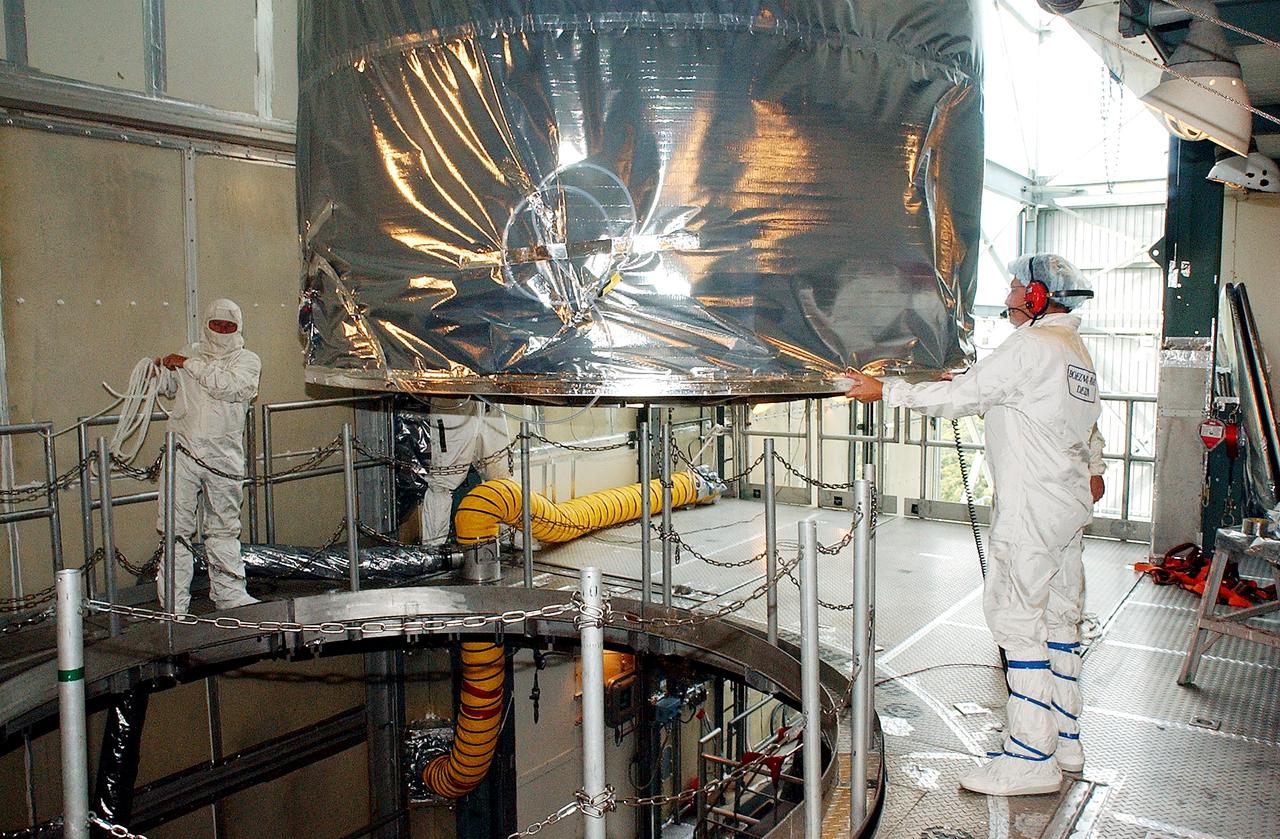
KENNEDY SPACE CENTER, FLA.  -  Workers on the mobile service tower on Launch Pad 17-B, Cape Canaveral Air Force Station, help guide the Space Infrared Telescope Facility (SIRTF) toward the opening in the foreground.  SIRTF will be attached to the Delta II rocket and encapsulated in its fairing before launch.   Consisting of three cryogenically cooled science instruments and an 0.85-meter telescope, SIRTF is one of NASA’s largest infrared telescopes to be launched.  It is the fourth and final element in NASA’s family of orbiting “Great Observatories.”  SIRTF will obtain images and spectra by detecting the infrared energy, or heat, radiated by objects in space. Most of this infrared radiation is blocked by the Earth's atmosphere and cannot be observed from the ground.
KENNEDY SPACE CENTER, FLA. - Workers on the mobile service tower on Launch Pad 17-B, Cape Canaveral Air Force Station, help guide the Space Infrared Telescope Facility (SIRTF) toward the opening in the foreground. SIRTF will be attached to the Delta II rocket and encapsulated in its fairing before launch. Consisting of three cryogenically cooled science instruments and an 0.85-meter telescope, SIRTF is one of NASA’s largest infrared telescopes to be launched. It is the fourth and final element in NASA’s family of orbiting “Great Observatories.” SIRTF will obtain images and spectra by detecting the infrared energy, or heat, radiated by objects in space. Most of this infrared radiation is blocked by the Earth's atmosphere and cannot be observed from the ground.
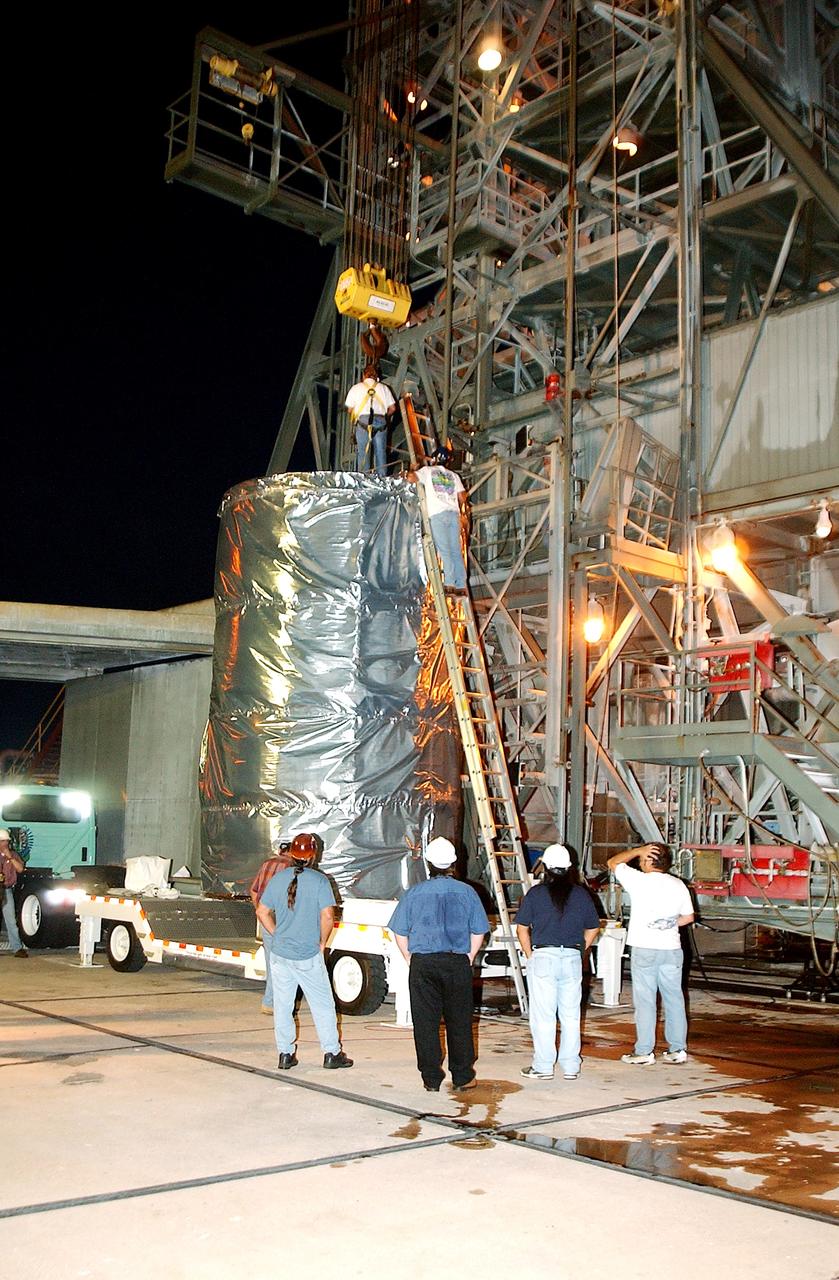
KENNEDY SPACE CENTER, FLA.  -  Before dawn, the Space Infrared Telescope Facility (SIRTF) is attached to an overhead crane that will lift it up the mobile service tower on Launch Pad 17-B, Cape Canaveral Air Force Station.  SIRTF will be attached to the Delta II rocket and encapsulated in its fairing before launch.   Consisting of three cryogenically cooled science instruments and an 0.85-meter telescope, SIRTF is one of NASA’s largest infrared telescopes to be launched.  It is the fourth and final element in NASA’s family of orbiting “Great Observatories.”  SIRTF will obtain images and spectra by detecting the infrared energy, or heat, radiated by objects in space. Most of this infrared radiation is blocked by the Earth's atmosphere and cannot be observed from the ground.
KENNEDY SPACE CENTER, FLA. - Before dawn, the Space Infrared Telescope Facility (SIRTF) is attached to an overhead crane that will lift it up the mobile service tower on Launch Pad 17-B, Cape Canaveral Air Force Station. SIRTF will be attached to the Delta II rocket and encapsulated in its fairing before launch. Consisting of three cryogenically cooled science instruments and an 0.85-meter telescope, SIRTF is one of NASA’s largest infrared telescopes to be launched. It is the fourth and final element in NASA’s family of orbiting “Great Observatories.” SIRTF will obtain images and spectra by detecting the infrared energy, or heat, radiated by objects in space. Most of this infrared radiation is blocked by the Earth's atmosphere and cannot be observed from the ground.
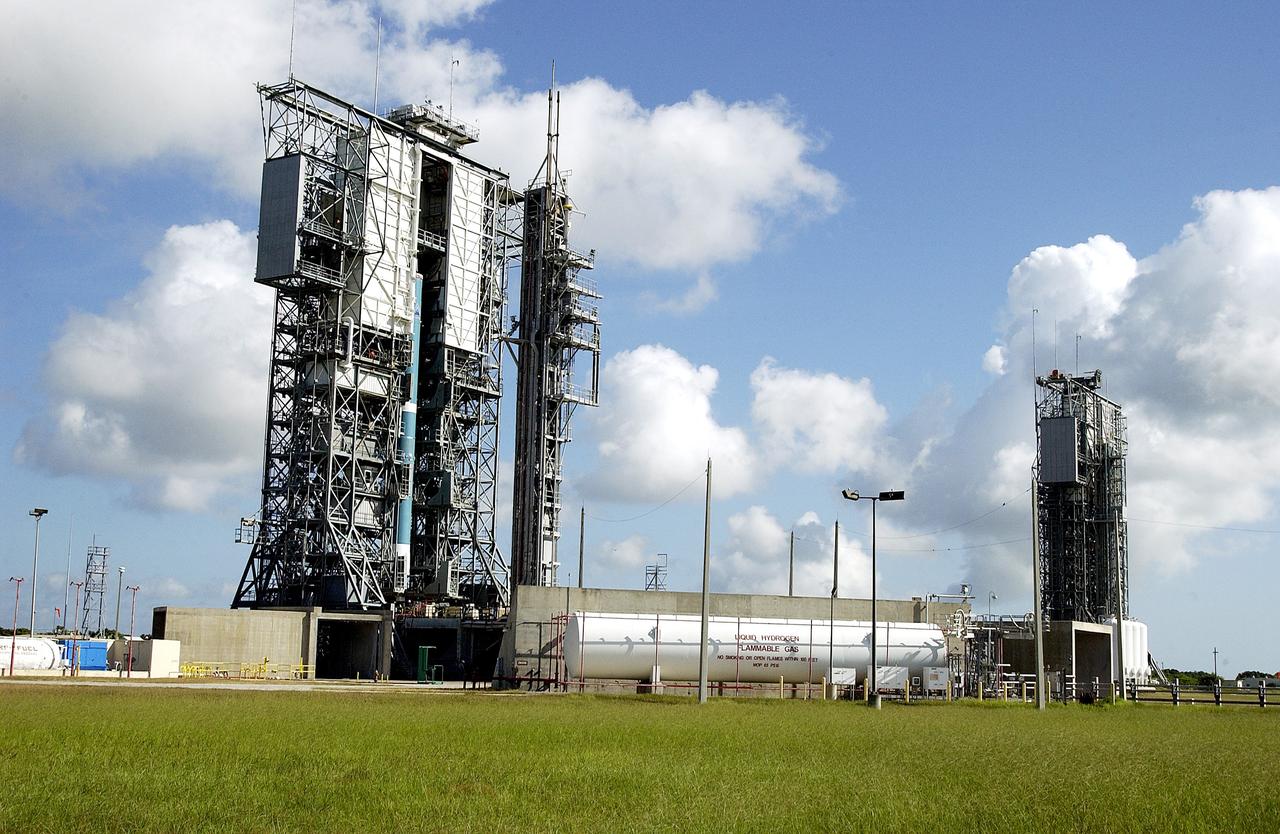
KENNEDY SPACE CENTER, FLA. -  On Launch Complex 17-B, Cape Canaveral Air Force Station, the first stage of a Delta II rocket is lifted up the mobile service tower.  In the background is pad 17-A.   The rocket is being erected to launch the Space InfraRed Telescope Facility (SIRTF).  Consisting of an 0.85-meter telescope and three cryogenically cooled science instruments, SIRTF is one of NASA's largest infrared telescopes to be launched.  SIRTF will obtain images and spectra by detecting the infrared energy, or heat, radiated by objects in space. Most of this infrared radiation is blocked by the Earth's atmosphere and cannot be observed from the ground.
KENNEDY SPACE CENTER, FLA. - On Launch Complex 17-B, Cape Canaveral Air Force Station, the first stage of a Delta II rocket is lifted up the mobile service tower. In the background is pad 17-A. The rocket is being erected to launch the Space InfraRed Telescope Facility (SIRTF). Consisting of an 0.85-meter telescope and three cryogenically cooled science instruments, SIRTF is one of NASA's largest infrared telescopes to be launched. SIRTF will obtain images and spectra by detecting the infrared energy, or heat, radiated by objects in space. Most of this infrared radiation is blocked by the Earth's atmosphere and cannot be observed from the ground.
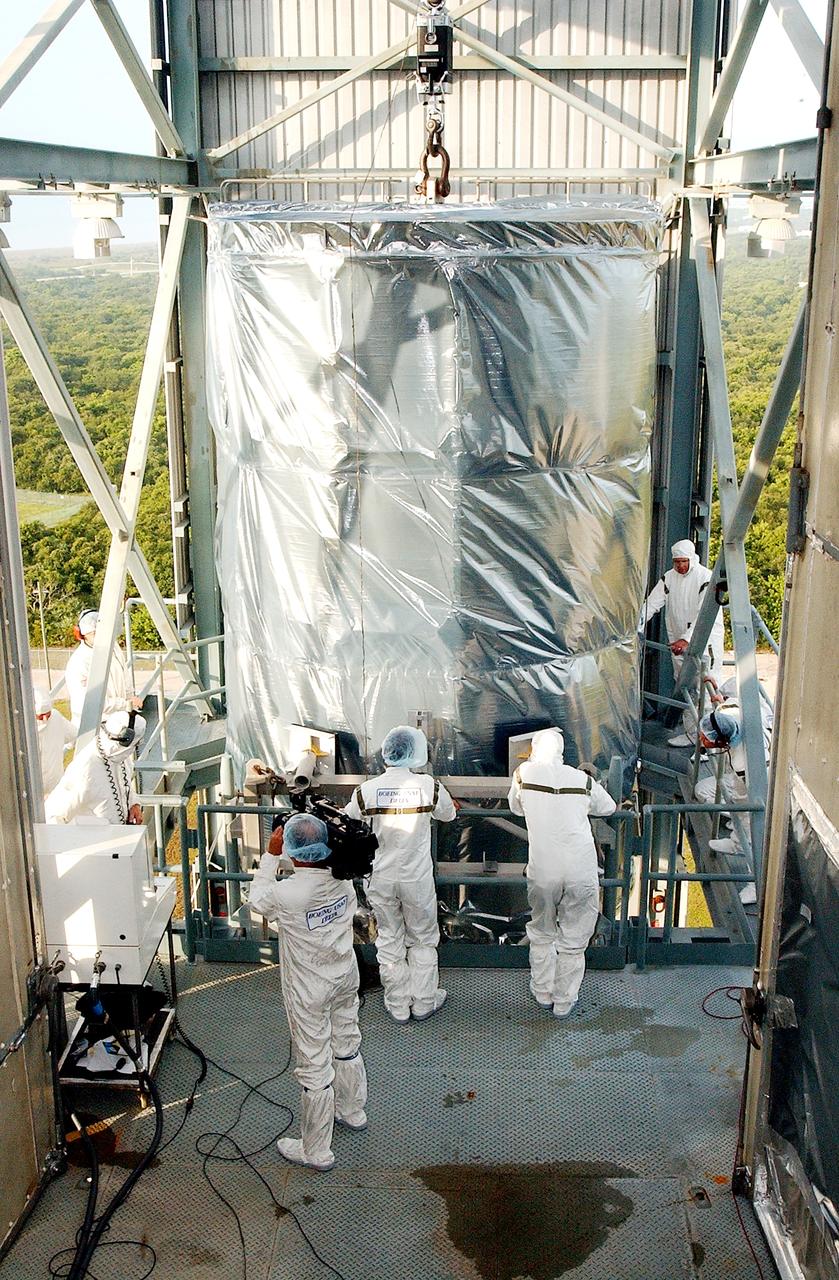
KENNEDY SPACE CENTER, FLA.  -  The Space Infrared Telescope Facility (SIRTF) is lowered into the opening of the mobile service tower on Launch Pad 17-B, Cape Canaveral Air Force Station.  SIRTF will be attached to the Delta II rocket and encapsulated in its fairing before launch.   Consisting of three cryogenically cooled science instruments and an 0.85-meter telescope, SIRTF is one of NASA’s largest infrared telescopes to be launched.  It is the fourth and final element in NASA’s family of orbiting “Great Observatories.”  SIRTF will obtain images and spectra by detecting the infrared energy, or heat, radiated by objects in space. Most of this infrared radiation is blocked by the Earth's atmosphere and cannot be observed from the ground.
KENNEDY SPACE CENTER, FLA. - The Space Infrared Telescope Facility (SIRTF) is lowered into the opening of the mobile service tower on Launch Pad 17-B, Cape Canaveral Air Force Station. SIRTF will be attached to the Delta II rocket and encapsulated in its fairing before launch. Consisting of three cryogenically cooled science instruments and an 0.85-meter telescope, SIRTF is one of NASA’s largest infrared telescopes to be launched. It is the fourth and final element in NASA’s family of orbiting “Great Observatories.” SIRTF will obtain images and spectra by detecting the infrared energy, or heat, radiated by objects in space. Most of this infrared radiation is blocked by the Earth's atmosphere and cannot be observed from the ground.
KENNEDY SPACE CENTER, FLA.  -  Workers on the mobile service tower on Launch Pad 17-B, Cape Canaveral Air Force Station, watch as the Space Infrared Telescope Facility (SIRTF) clears the platform.   SIRTF will be attached to the Delta II rocket and encapsulated in its fairing before launch.   Consisting of three cryogenically cooled science instruments and an 0.85-meter telescope, SIRTF is one of NASA’s largest infrared telescopes to be launched.  It is the fourth and final element in NASA’s family of orbiting “Great Observatories.”  SIRTF will obtain images and spectra by detecting the infrared energy, or heat, radiated by objects in space. Most of this infrared radiation is blocked by the Earth's atmosphere and cannot be observed from the ground.
KENNEDY SPACE CENTER, FLA. - Workers on the mobile service tower on Launch Pad 17-B, Cape Canaveral Air Force Station, watch as the Space Infrared Telescope Facility (SIRTF) clears the platform. SIRTF will be attached to the Delta II rocket and encapsulated in its fairing before launch. Consisting of three cryogenically cooled science instruments and an 0.85-meter telescope, SIRTF is one of NASA’s largest infrared telescopes to be launched. It is the fourth and final element in NASA’s family of orbiting “Great Observatories.” SIRTF will obtain images and spectra by detecting the infrared energy, or heat, radiated by objects in space. Most of this infrared radiation is blocked by the Earth's atmosphere and cannot be observed from the ground.
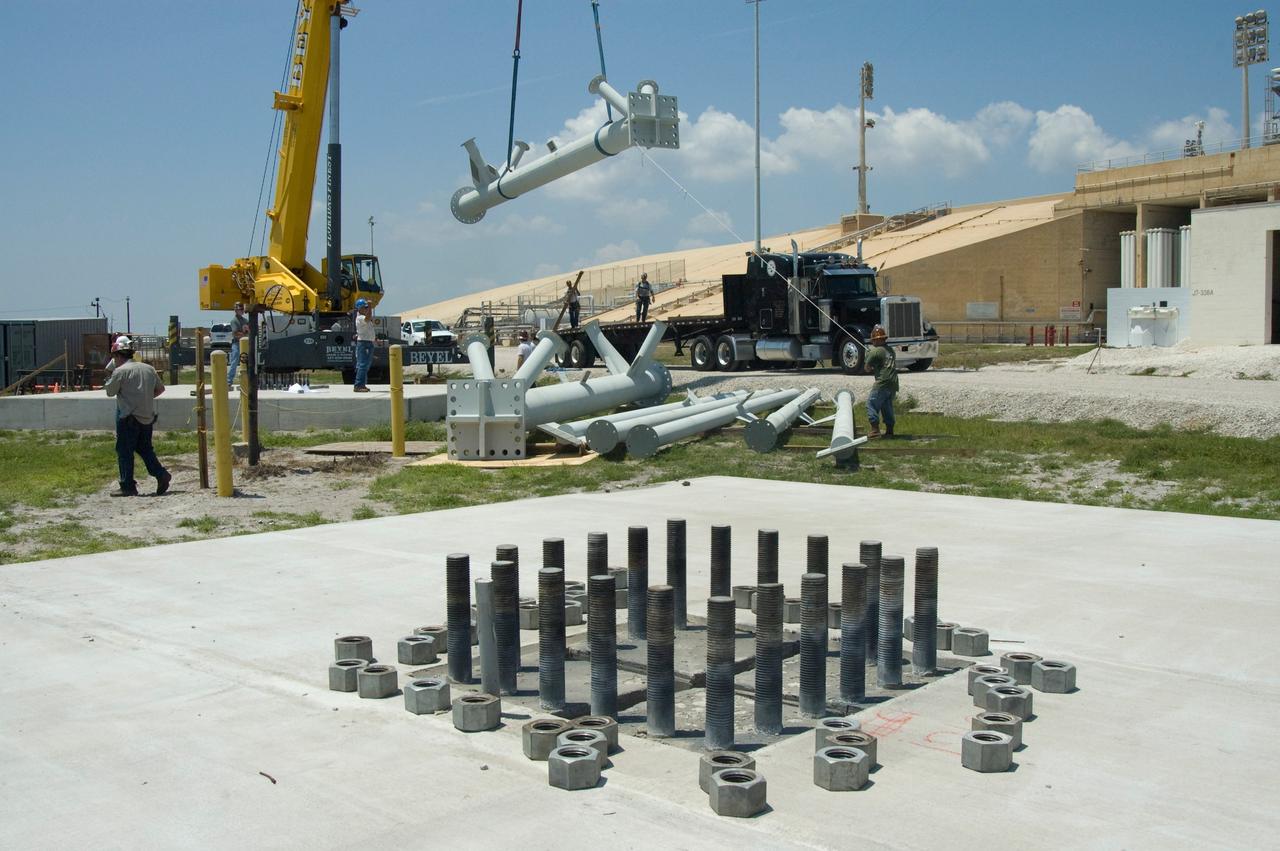
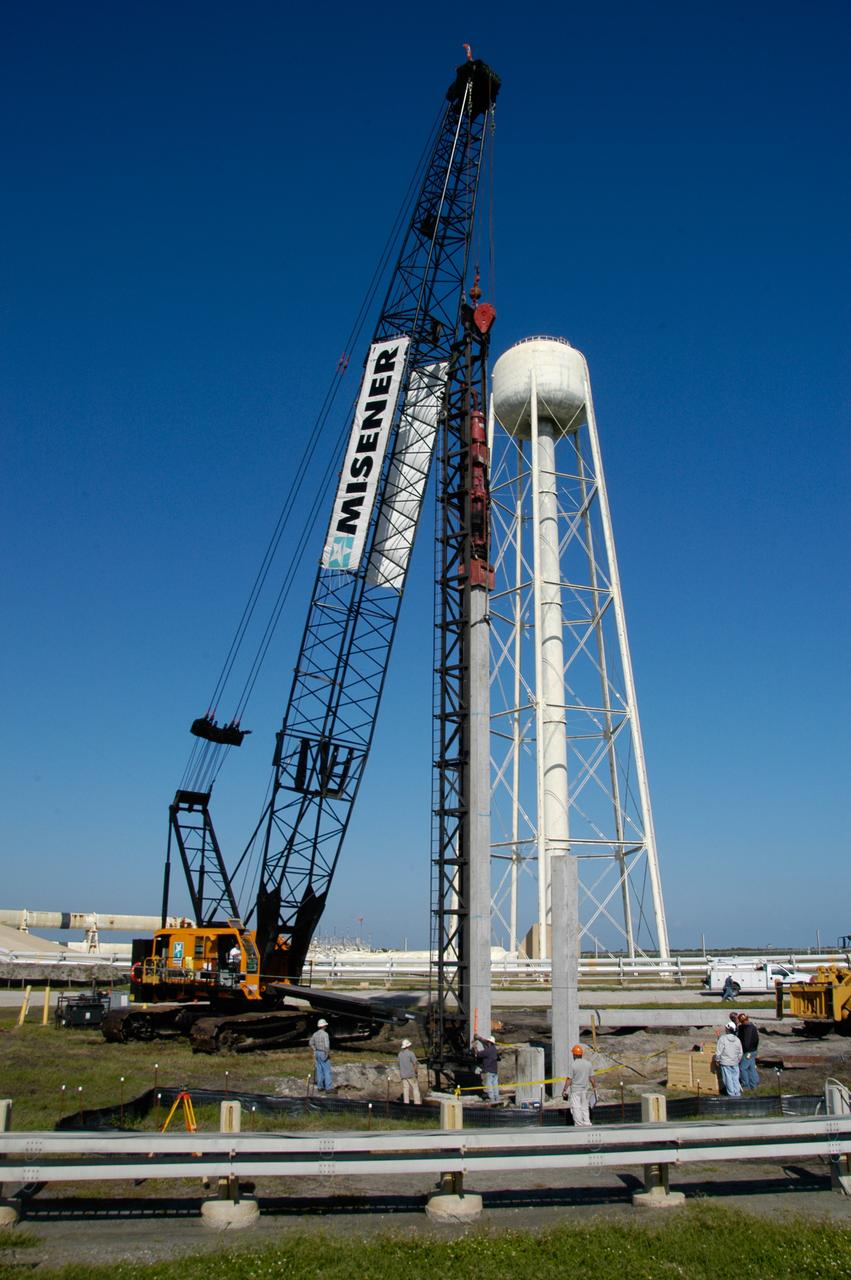
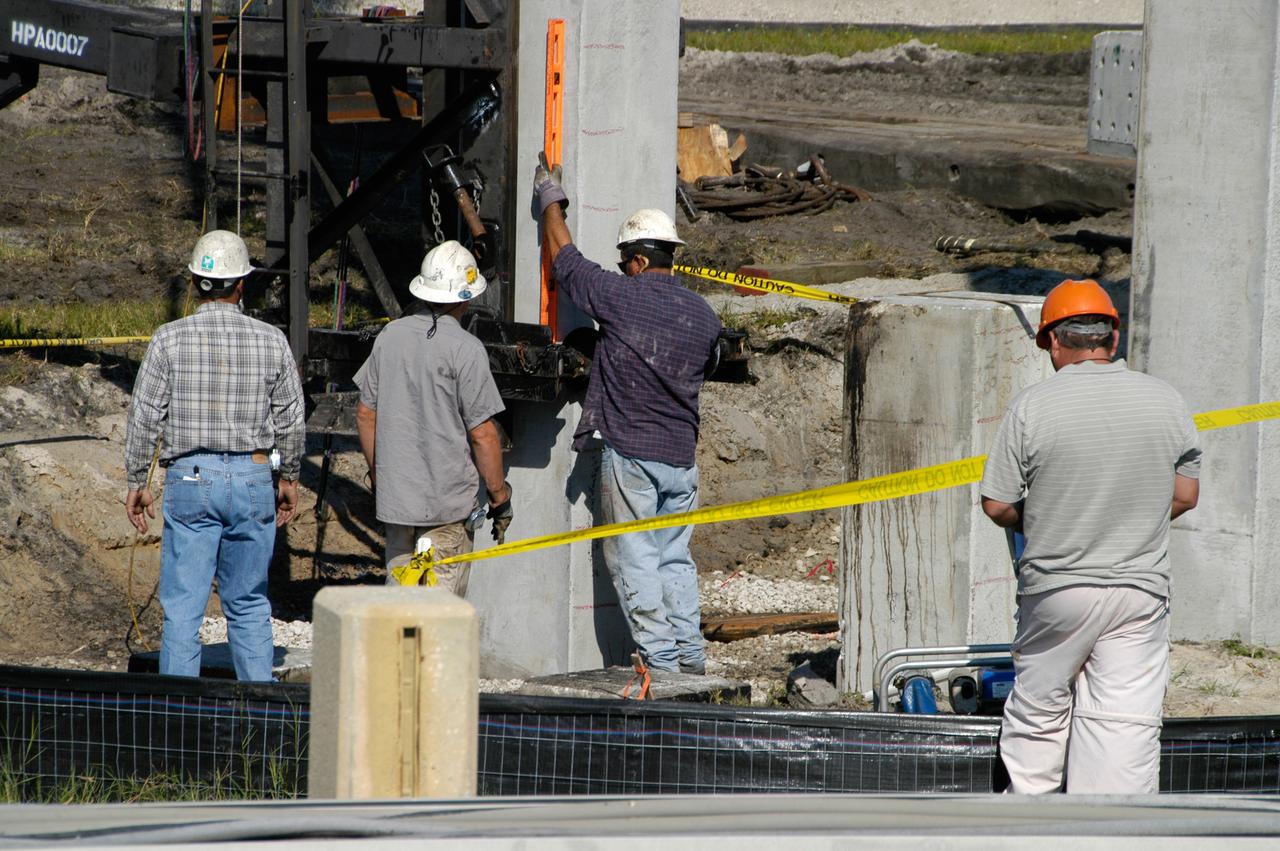
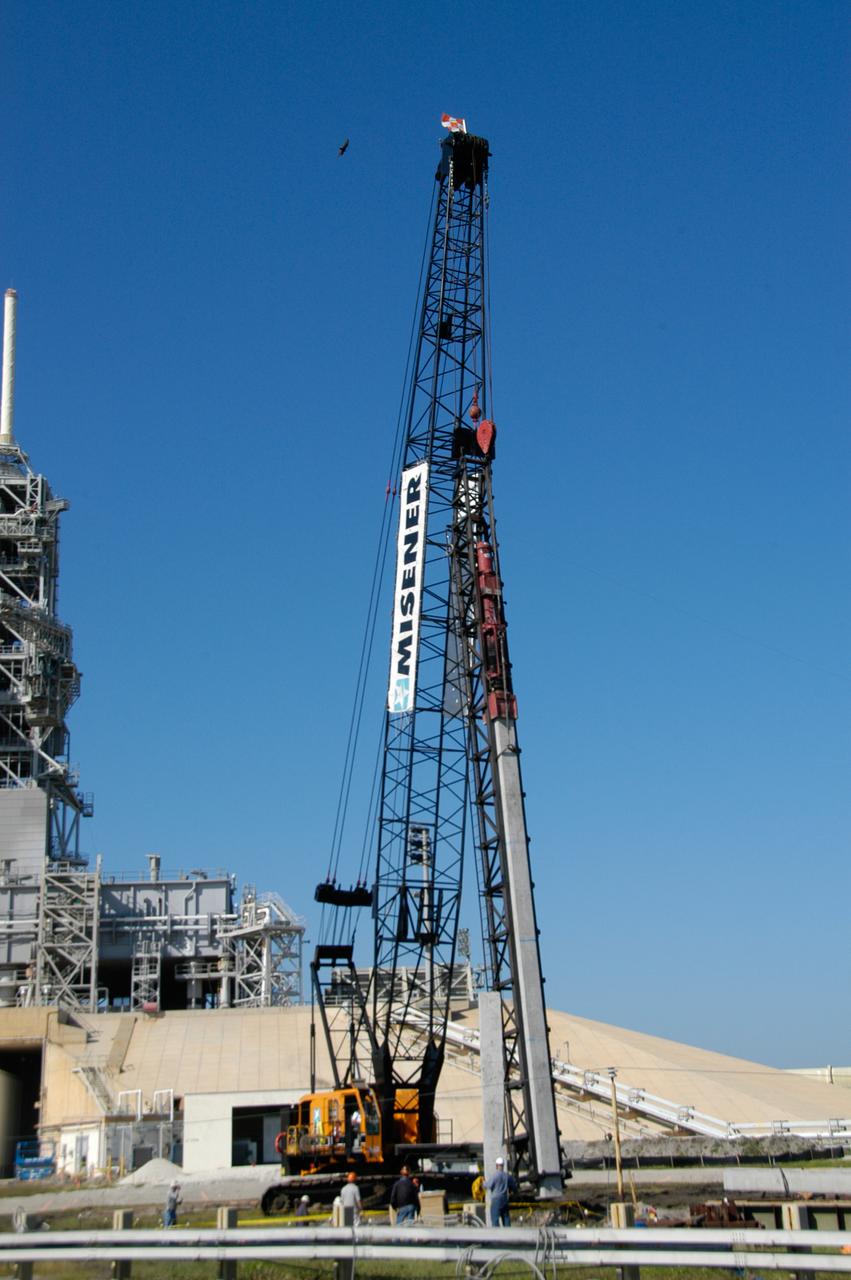
On Launch Pad 39B at NASA's Kennedy Space Center, pilings are being pounded into the ground to help construct lightning towers for the Constellation Program and Ares/Orion launches. Pad B will be the site of the first Ares vehicle launch, including Ares I-X which is scheduled for April 2009.
Constructing lightning towers for the Constellation Program and
On Launch Pad 39B at NASA's Kennedy Space Center, the crane crawler puts a piling into place to be pounded into the ground to help construct lightning towers for the Constellation Program and Ares/Orion launches. Pad B will be the site of the first Ares vehicle launch, including Ares I-X which is scheduled for April 2009.
Constructing lightning towers for the Constellation Program and
On Launch Pad 39B at NASA's Kennedy Space Center, workers measure the piling being pounded into the ground to help construct lightning towers for the Constellation Program and Ares/Orion launches. Pad B will be the site of the first Ares vehicle launch, including Ares I-X which is scheduled for April 2009.
Constructing lightning towers for the Constellation Program and
On Launch Pad 39B at NASA's Kennedy Space Center, the crane crawler lifts a piling into place to be pounded into the ground to help construct lightning towers for the Constellation Program and Ares/Orion launches. Pad B will be the site of the first Ares vehicle launch, including Ares I-X which is scheduled for April 2009.
Constructing lightning towers for the Constellation Program and
On Launch Pad 39B at NASA's Kennedy Space Center, the crane crawler lifts a piling off a truck. The piling will be pounded into the ground to help construct lightning towers for the Constellation Program and Ares/Orion launches. Pad B will be the site of the first Ares vehicle launch, including Ares I-X which is scheduled for April 2009.
Constructing lightning towers for the Constellation Program and
CAPE CANAVERAL, Fla. – A lightning mast remains to be lifted atop the third and final lightning tower erected on Launch Pad 39B at NASA's Kennedy Space Center. Three towers surround the pad.  The new lightning protection system is being built for the Constellation Program and Ares/Orion launches.  Each of the towers is 500 feet tall with an additional 100-foot fiberglass mast atop supporting a wire catenary system.  This improved lightning protection system allows for the taller height of the Ares I rocket compared to the space shuttle.  Pad 39B will be the site of the first Ares vehicle launch, including the Ares I-X test flight that is targeted for July 2009. Photo credit: NASA/Jack Pfaller
KSC-2009-1563
CAPE CANAVERAL, Fla. –  On Launch Pad 39B at NASA's Kennedy Space Center in Florida, a crane places the 100-foot fiberglass mast atop the new lightning tower constructed on the pad. The towers are part of the new lightning protection system for the Constellation Program and Ares/Orion launches. Each of the three new lightning towers will be 500 feet tall with the additional 100-foot fiberglass mast atop supporting a wire catenary system. This improved lightning protection system allows for the taller height of the Ares I rocket compared to the space shuttle. Pad 39B will be the site of the first Ares vehicle launch, including the Ares I-X test flight that is targeted for July 2009. Photo credit: NASA/Kim Shiflett
KSC-2009-1006
CAPE CANAVERAL, Fla. – On Launch Pad 39B at NASA's Kennedy Space Center in Florida, a giant crane lifts the 100-foot lightning mast alongside the newly erected lightning tower, one of three around the pad.  The mast will be installed on top of the tower. The new lightning protection system is being built for the Constellation Program and Ares/Orion launches.  Each of the towers is 500 feet tall with an additional 100-foot fiberglass mast atop supporting a wire catenary system.  This improved lightning protection system allows for the taller height of the Ares I rocket compared to the space shuttle.  Pad 39B will be the site of the first Ares vehicle launch, including the Ares I-X test flight that is targeted for July 2009. Photo credit: NASA/Tim Jacobs
KSC-2009-1585
CAPE CANAVERAL, Fla. – An aerial view of the newly erected lightning towers on Launch Pad 39B at NASA's Kennedy Space Center in Florida.  The two towers at left and center contain the lightning mast on top; the one at right does not.  At center are the fixed and rotating service structures that have served the Space Shuttle Program.  Beyond the pad is the Atlantic Ocean. The new lightning protection system is being built for the Constellation Program and Ares/Orion launches.  Each of the towers is 500 feet tall with an additional 100-foot fiberglass mast atop supporting a wire catenary system.  This improved lightning protection system allows for the taller height of the Ares I rocket compared to the space shuttle.  Pad 39B will be the site of the first Ares vehicle launch, including the Ares I-X test flight that is targeted for July 2009. Photo credit: NASA/Kim Shiflett
KSC-2009-1571
CAPE CANAVERAL, Fla. –  On Launch Pad 39B at NASA's Kennedy Space Center in Florida, a crane places the 100-foot fiberglass mast atop the new lightning tower constructed on the pad. The towers are part of the new lightning protection system for the Constellation Program and Ares/Orion launches. Each of the three new lightning towers will be 500 feet tall with the additional 100-foot fiberglass mast atop supporting a wire catenary system. This improved lightning protection system allows for the taller height of the Ares I rocket compared to the space shuttle. Pad 39B will be the site of the first Ares vehicle launch, including the Ares I-X test flight that is targeted for July 2009. Photo credit: NASA/Kim Shiflett
KSC-2009-1008
CAPE CANAVERAL, Fla. –  On Launch Pad 39B at NASA's Kennedy Space Center in Florida, a crane completes construction of one of the towers in the new lightning protection system for the Constellation Program and Ares/Orion launches. Other towers are being constructed at left and behind the service structures on the pad. Each of the three new lightning towers will be 500 feet tall with an additional 100-foot fiberglass mast atop supporting a wire catenary system. This improved lightning protection system allows for the taller height of the Ares I rocket compared to the space shuttle. Pad 39B will be the site of the first Ares vehicle launch, including the Ares I-X test flight that is targeted for July 2009. Photo credit: NASA/Troy Cryder
KSC-2009-1001
CAPE CANAVERAL, Fla. – On Launch Pad 39B at NASA's Kennedy Space Center in Florida, a giant crane places the 100-foot lightning mast on top of the newly erected lightning tower, one of three around the pad.  Another of the towers is at left.  At right are the fixed and rotating service structures that serve the Space Shuttle Program.  The new lightning protection system is being built for the Constellation Program and Ares/Orion launches.  Each of the towers is 500 feet tall with an additional 100-foot fiberglass mast atop supporting a wire catenary system.  This improved lightning protection system allows for the taller height of the Ares I rocket compared to the space shuttle.  Pad 39B will be the site of the first Ares vehicle launch, including the Ares I-X test flight that is targeted for July 2009. Photo credit: NASA/Tim Jacobs
KSC-2009-1587
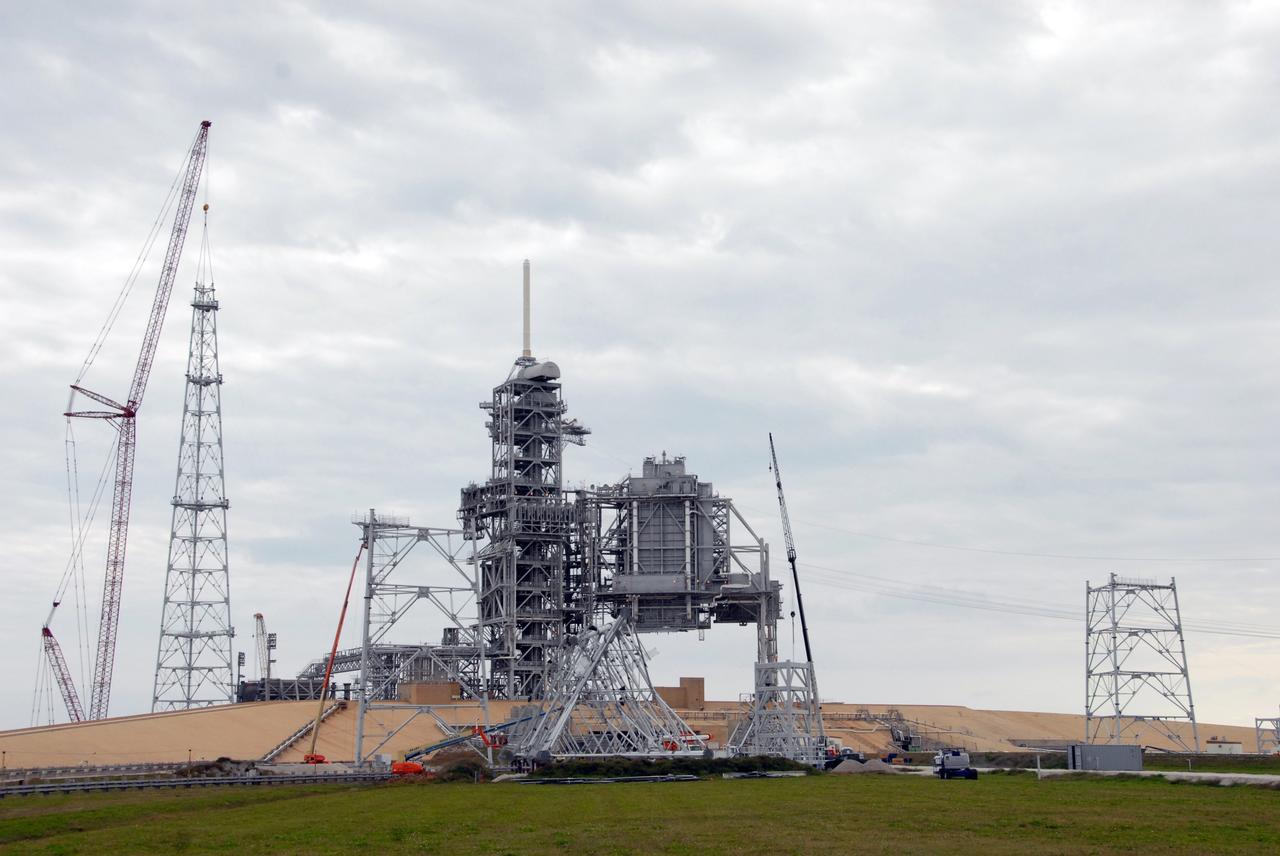
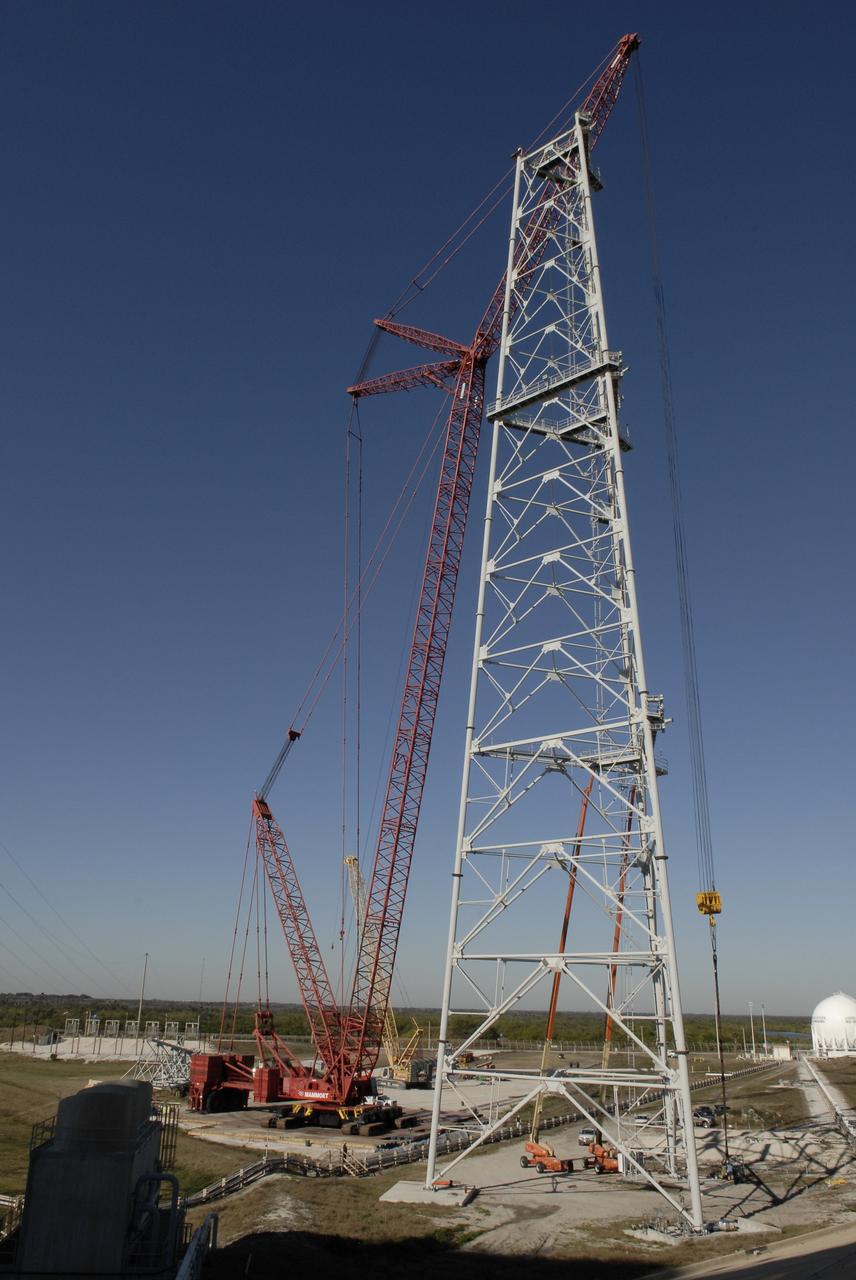
CAPE CANAVERAL, Fla. –  Progress is being made on construction of the new lightning towers on Launch Pad 39B at NASA's Kennedy Space Center in Florida.  New sections are being added with the help of a giant crane. Three new lightning towers on the pad will be 500 feet tall with an additional 100-foot fiberglass mast atop supporting a wire catenary system.  Pad 39B will be the site of the first Ares vehicle launch, including the Ares I-X test flight that is targeted for July 2009. This improved lightning protection system allows for the taller height of the Ares I rocket compared to the space shuttle.  Photo credit: NASA/Kim Shiflett
KSC-2009-1299
CAPE CANAVERAL, Fla. –   Brilliant beams of sunlight bounce off the new lightning tower under construction on Launch Pad 39B at NASA's Kennedy Space Center in Florida.  New sections are being added with the help of a giant crane (at right). Three new lightning towers on the pad will be 500 feet tall with an additional 100-foot fiberglass mast atop supporting a wire catenary system.  Pad 39B will be the site of the first Ares vehicle launch, including the Ares I-X test flight that is targeted for July 2009. This improved lightning protection system allows for the taller height of the Ares I rocket compared to the space shuttle.  Photo credit: NASA/Kim Shiflett
KSC-2009-1301
CAPE CANAVERAL, Fla. – On Launch Pad 39B at NASA's Kennedy Space Center in Florida, a crane has removed the 80-foot lightning mast from the top of the fixed service structure. The mast is no longer needed with the erection of the three lightning towers around the pad.  Pad 39B will be the site of the first Ares vehicle launch, including the Ares I-X test flight that is targeted for July 2009.  The three new lightning towers are 500 feet tall with an additional 100-foot fiberglass mast atop supporting a wire catenary system.  This improved lightning protection system allows for the taller height of the Ares I rocket compared to the space shuttle.  Photo credit: NASA/Amanda Diller
KSC-2009-1942
CAPE CANAVERAL, Fla. –  A giant crane is used to add additional segments to the new lightning towers on Launch Pad 39B at NASA's Kennedy Space Center in Florida. Three new lightning towers on the pad will be 500 feet tall with an additional 100-foot fiberglass mast atop supporting a wire catenary system.  Pad 39B will be the site of the first Ares vehicle launch, including the Ares I-X test flight that is targeted for July 2009. This improved lightning protection system allows for the taller height of the Ares I rocket compared to the space shuttle.  Photo credit: NASA/Kim Shiflett
KSC-2009-1300
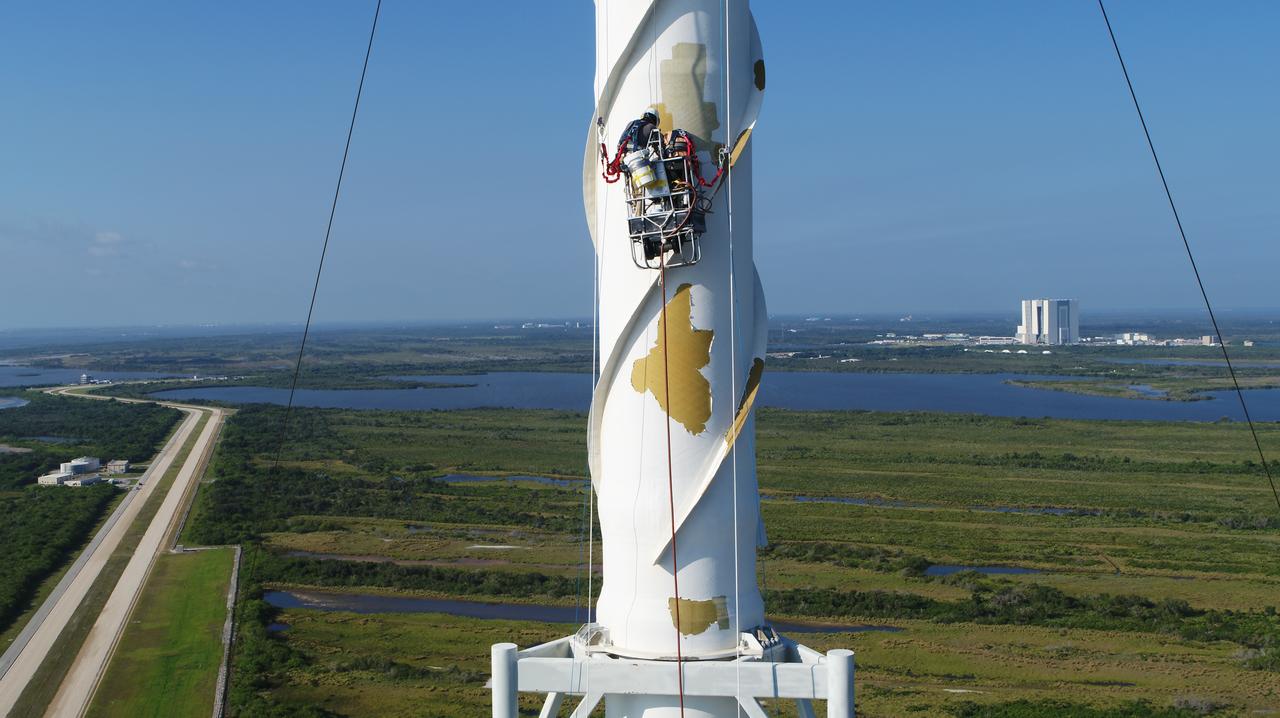
CAPE CANAVERAL, Fla. – The mobile service tower, or gantry, at Space Launch Complex 40 on Cape Canaveral Air Force Station falls to the ground after the base was demolished.  The tall lightning towers around it will remain. This mammoth structure, with its cavernous clean room, was used for the final spacecraft launch preparations for NASA’s Cassini spacecraft, currently orbiting Saturn.  The launch occurred on Oct. 15, 1997, aboard an Air Force Titan IV-Centaur rocket. The facilities at the pad are being dismantled to make room for the construction of launch pad access and servicing facilities for the new Falcon rockets to be launched by Space Exploration Technologies, known as SpaceX.  Photo credit: NASA/Cory Huston
KSC-08pd1058
CAPE CANAVERAL, Fla. –  Fire erupts beneath the mobile service tower, or gantry, at Space Launch Complex 40 on Cape Canaveral Air Force Station signals the beginning of its demolition. The tall lightning towers around it will remain.  This mammoth structure, with its cavernous clean room, was used for the final spacecraft launch preparations for NASA’s Cassini spacecraft, currently orbiting Saturn.  The launch occurred on Oct. 15, 1997, aboard an Air Force Titan IV-Centaur rocket. The facilities at the pad are being dismantled to make room for the construction of launch pad access and servicing facilities for the new Falcon rockets to be launched by Space Exploration Technologies, known as SpaceX.  Photo credit: NASA/Cory Huston
KSC-08pd1055
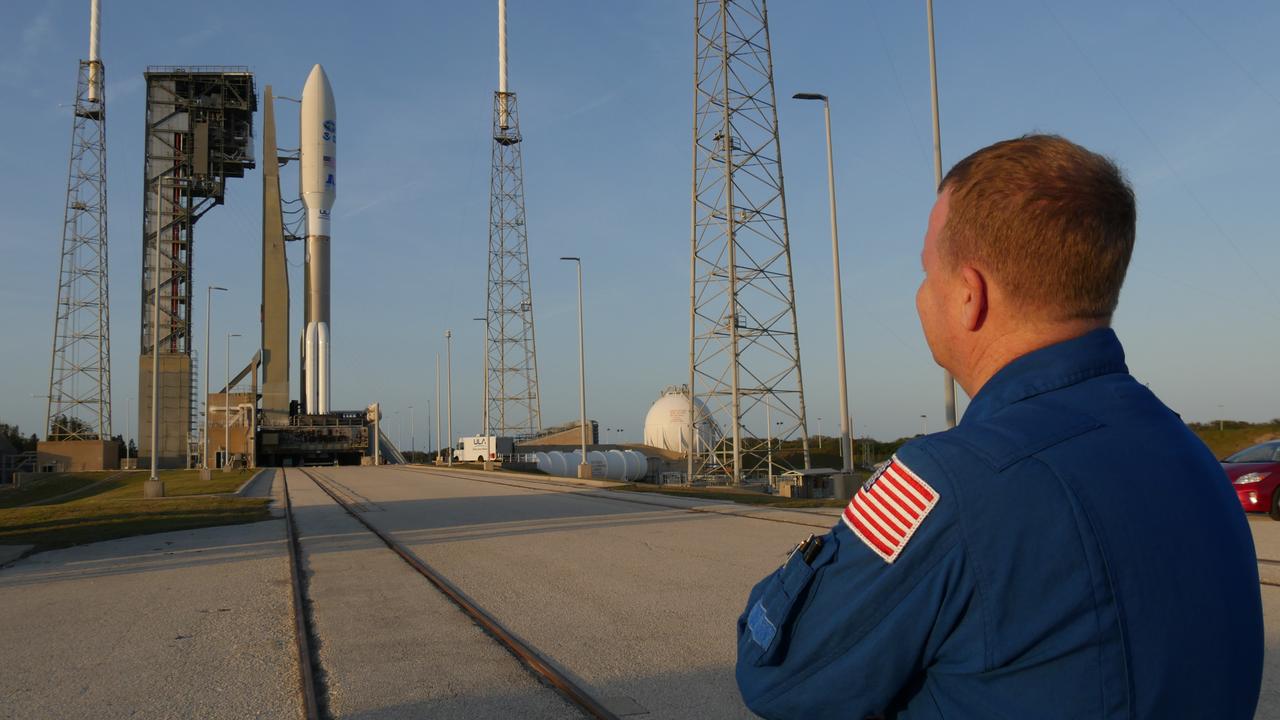
NASA astronaut Eric Boe, one of four astronauts working with the agency’s Commercial Crew Program, had the opportunity to check out the Crew Access Tower at Space Launch Complex 41 (SLC-41) Wednesday with a United Launch Alliance Atlas V on the pad. Boe, along with launch operations engineers from NASA, Boeing, and ULA, climbed the launch pad tower to evaluate lighting and spotlights after dark. The survey helped ensure crew members will have acceptable visibility as they prepare to launch aboard Boeing’s Starliner spacecraft on the Crew Flight Test to the International Space Station targeted for later this year.
CCP Astronaut Eric Boe, GOES-S Prepared for Launch
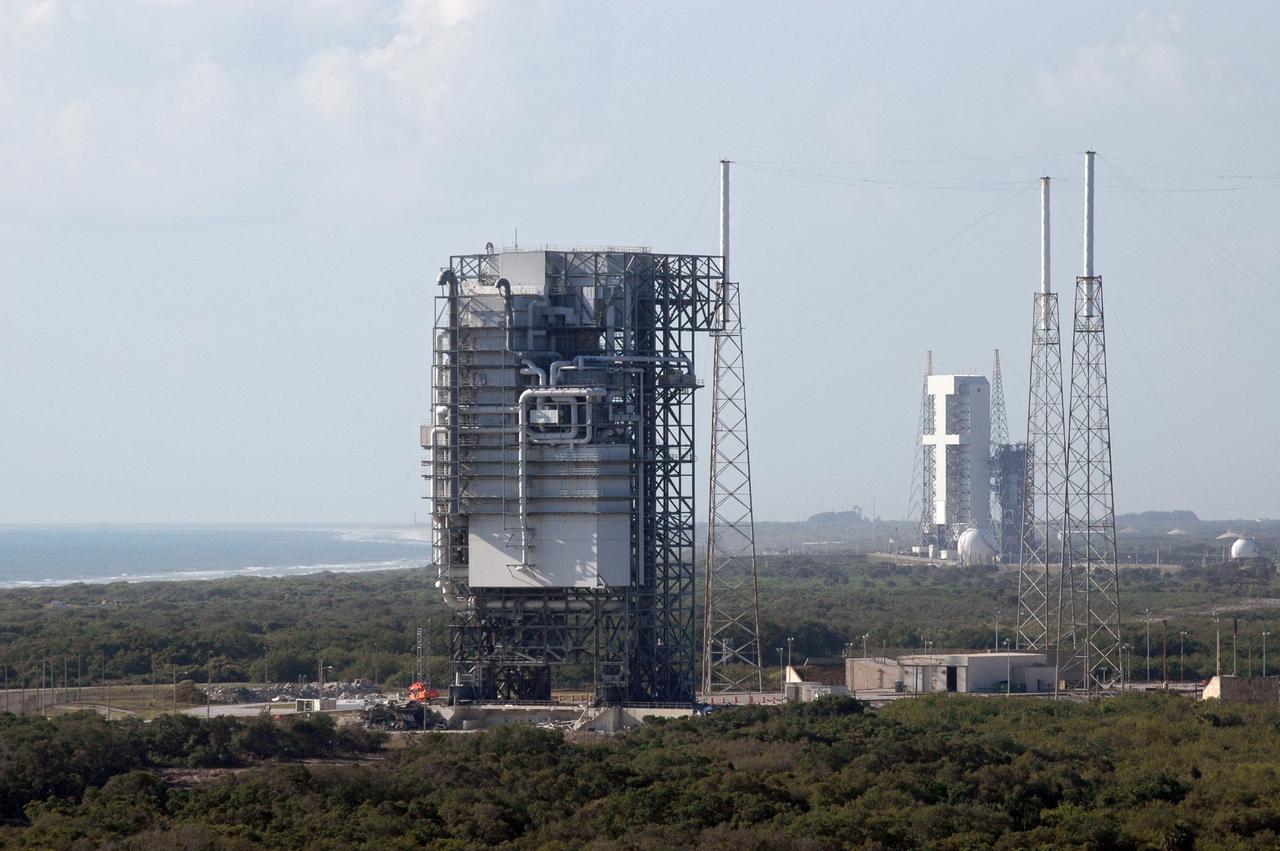
CAPE CANAVERAL, Fla. –  The mobile service tower, or gantry, in the foreground at Space Launch Complex 40 on Cape Canaveral Air Force Station, is scheduled for demolition.  The tall lightning towers around it will remain.  This mammoth structure, with its cavernous clean room, was used for the final spacecraft launch preparations for NASA’s Cassini spacecraft, currently orbiting Saturn.  The launch occurred on Oct. 15, 1997, aboard an Air Force Titan IV-Centaur rocket. The facilities at the pad are being dismantled to make room for the construction of launch pad access and servicing facilities for the new Falcon rockets to be launched by Space Exploration Technologies, known as SpaceX.  Photo credit: NASA/Cory Huston
KSC-08pd1054
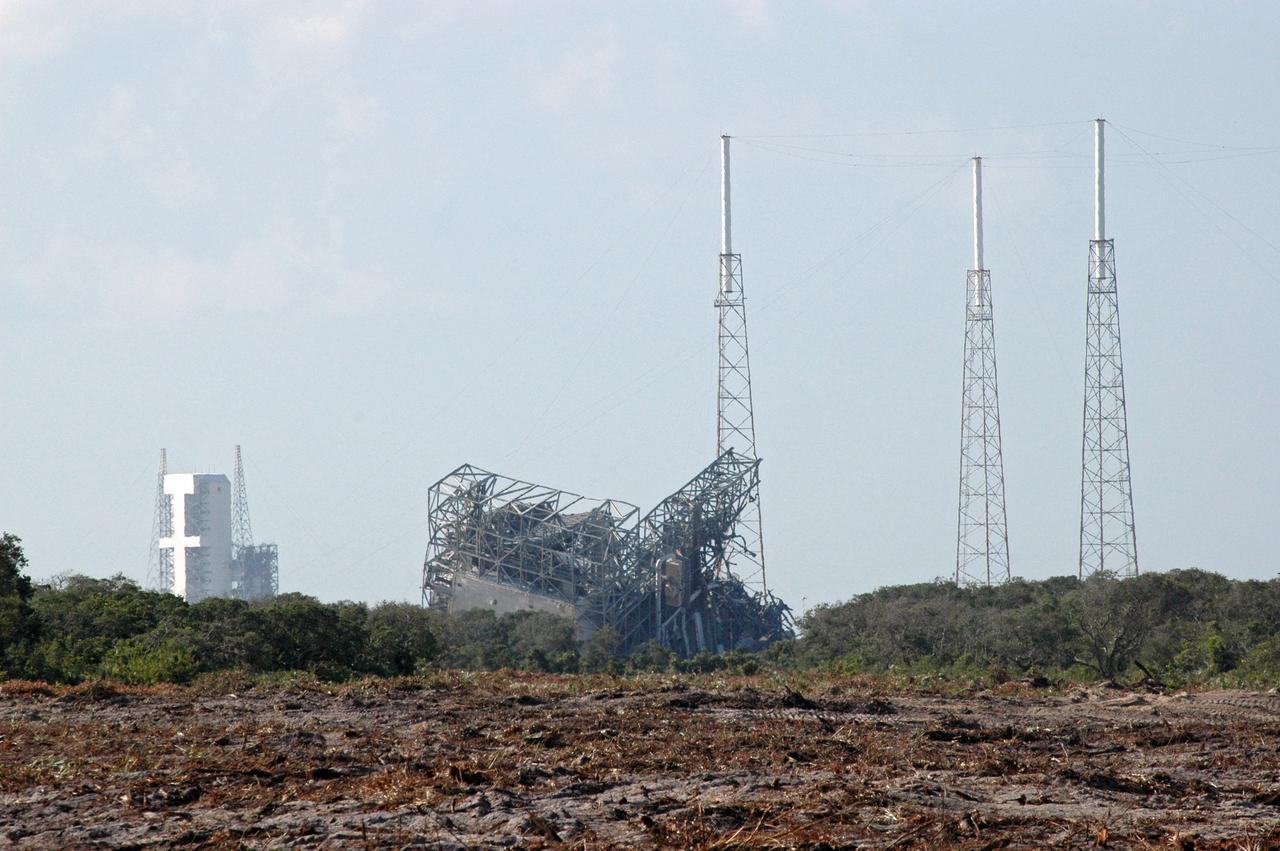
CAPE CANAVERAL, Fla. – The upper part of the mobile service tower, or gantry, at Space Launch Complex 40 on Cape Canaveral Air Force Station lies on the ground after implosion.  The tall lightning towers around it remain. This mammoth structure, with its cavernous clean room, was used for the final spacecraft launch preparations for NASA’s Cassini spacecraft, currently orbiting Saturn.  The launch occurred on Oct. 15, 1997, aboard an Air Force Titan IV-Centaur rocket. The facilities at the pad are being dismantled to make room for the construction of launch pad access and servicing facilities for the new Falcon rockets to be launched by Space Exploration Technologies, known as SpaceX.  Photo credit: NASA/Cory Huston
KSC-08pd1059
CAPE CANAVERAL, Fla. –  The upper part of the mobile service tower, or gantry, at Space Launch Complex 40 on Cape Canaveral Air Force Station falls to the ground after the base was demolished.  The tall lightning towers around it will remain. This mammoth structure, with its cavernous clean room, was used for the final spacecraft launch preparations for NASA’s Cassini spacecraft, currently orbiting Saturn.  The launch occurred on Oct. 15, 1997, aboard an Air Force Titan IV-Centaur rocket. The facilities at the pad are being dismantled to make room for the construction of launch pad access and servicing facilities for the new Falcon rockets to be launched by Space Exploration Technologies, known as SpaceX.  Photo credit: NASA/Cory Huston
KSC-08pd1057
CAPE CANAVERAL, Fla. -- At NASA's Kennedy Space Center in Florida, the lightning protection system, consisting of three 600-foot-tall lightning towers, remains at Launch Pad 39B after the pad's deconstruction.  Each tower is 500 feet tall and topped off with an additional 100-foot fiberglass mast which supports a wire catenary system.        In 2009, the structure at the pad was no longer needed for NASA's Space Shuttle Program, so it is being restructured for future use. The new design will feature a "clean pad" for rockets to come with their own launcher, making it more versatile for a number of vehicles. For information on NASA's future plans, visit http://www.nasa.gov/exploration. Photo credit: NASA/Kim Shiflett
KSC-2011-6163
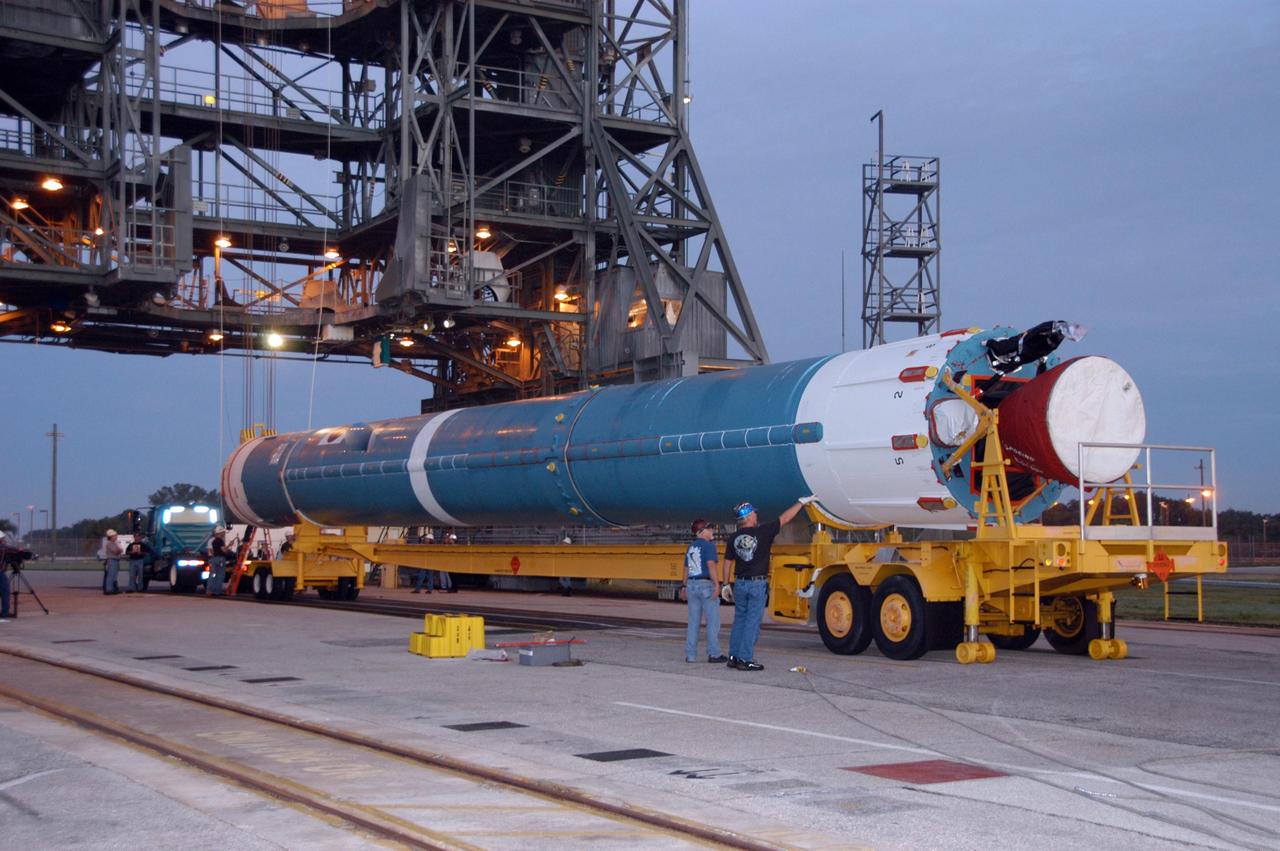
KENNEDY SPACE CENTER, FLA. --   The first stage of a United Launch Alliance Delta II rocket moves into place in front of at the mobile service tower on Launch Pad 17-B at Cape Canaveral Air Force Station in Florida.  The rocket will be raised to a vertical position and lifted into the tower. The rocket is the launch vehicle for the THEMIS spacecraft, consisting of five identical probes, the largest number of scientific satellites ever launched into orbit aboard a single rocket. This unique constellation of satellites will resolve the tantalizing mystery of what causes the spectacular sudden brightening of the aurora borealis and aurora australis - the fiery skies over the Earth's northern and southern polar regions. After the first stage is in the mobile service tower on the pad, nine solid rocket boosters will be placed around the base of the first stage and attached in sets of three.  THEMIS is scheduled to launch aboard the Delta II at 6:07 p.m. EST on Feb. 15.  Photo credit: NASA/George Shelton
KSC-07pd0024
The first stage of a United Launch Alliance Delta II rocket moves into place in front of at the mobile service tower on Launch Pad 17-B at Cape Canaveral Air Force Station in Florida. The rocket will be raised to a vertical position and lifted into the tower. The rocket is the launch vehicle for the THEMIS spacecraft, consisting of five identical probes, the largest number of scientific satellites ever launched into orbit aboard a single rocket. This unique constellation of satellites will resolve the tantalizing mystery of what causes the spectacular sudden brightening of the aurora borealis and aurora australis - the fiery skies over the Earth's northern and southern polar regions. After the first stage is in the mobile service tower on the pad, nine solid rocket boosters will be placed around the base of the first stage and attached in sets of three. THEMIS is scheduled to launch aboard the Delta II at 6:07 p.m. EST on Feb. 15.
Delta II First stage lift for THEMIS payload at complex 17B
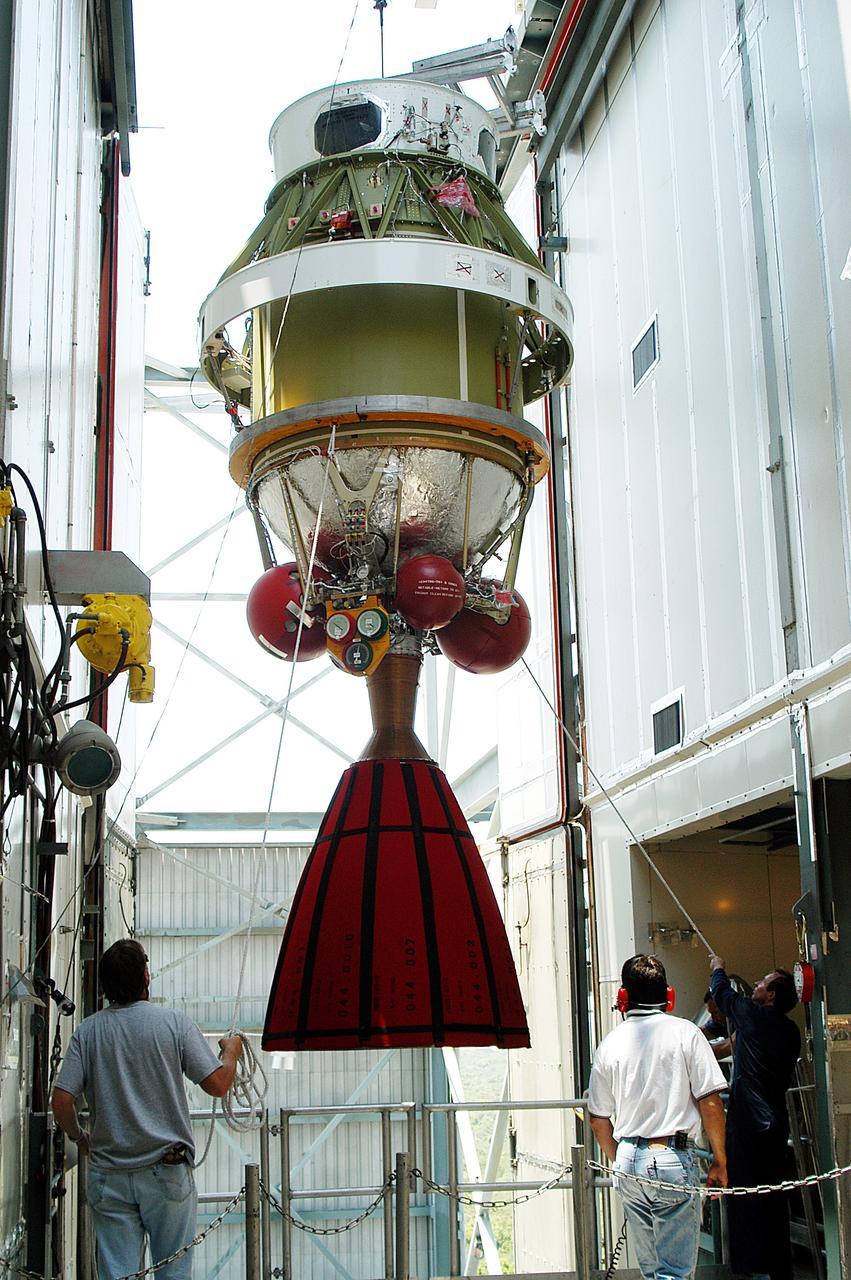
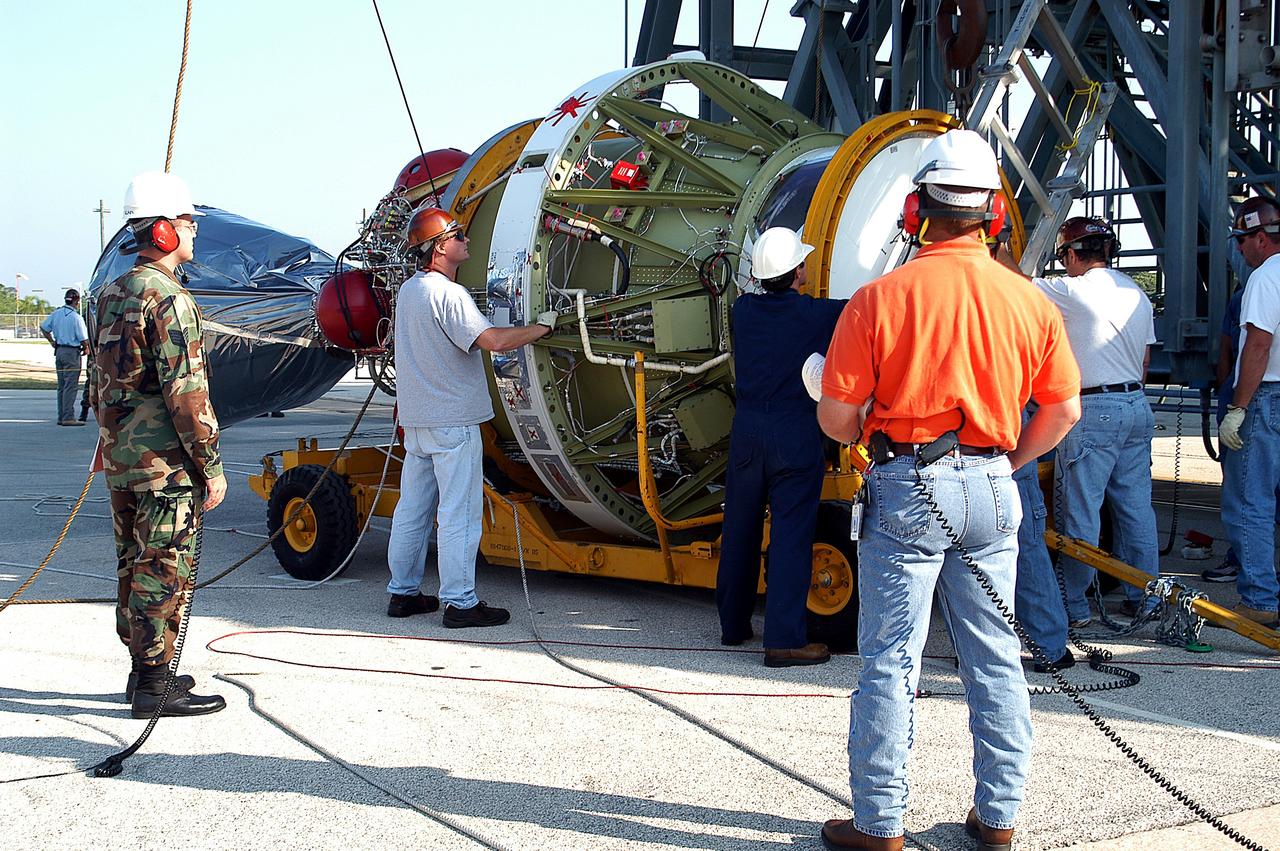
KENNEDY SPACE CENTER, FLA. - The second stage of a Delta II rocket is raised to a vertical position and prepared for its lift up the launch tower on Pad 17-B, Cape Canaveral Air Force Station.  It will be mated to the Delta first stage already at the pad in preparation for the launch of the Mars Exploration Rover-1 (MER-B) on June 25.  NASA’s twin Mars Exploration Rovers are designed to study the history of water on Mars. These robotic geologists are equipped with a robotic arm, a drilling tool, three spectrometers, and four pairs of cameras that allow them to have a human-like, 3D view of the terrain. Each rover could travel as far as 100 meters in one day to act as Mars scientists' eyes and hands, exploring an environment where humans are not yet able to go. The launch of MER-2 (MER-A) is tentatively set for June 8.
KENNEDY SPACE CENTER, FLA. - The second stage of a Delta II rocket is raised to a vertical position and prepared for its lift up the launch tower on Pad 17-B, Cape Canaveral Air Force Station. It will be mated to the Delta first stage already at the pad in preparation for the launch of the Mars Exploration Rover-1 (MER-B) on June 25. NASA’s twin Mars Exploration Rovers are designed to study the history of water on Mars. These robotic geologists are equipped with a robotic arm, a drilling tool, three spectrometers, and four pairs of cameras that allow them to have a human-like, 3D view of the terrain. Each rover could travel as far as 100 meters in one day to act as Mars scientists' eyes and hands, exploring an environment where humans are not yet able to go. The launch of MER-2 (MER-A) is tentatively set for June 8.
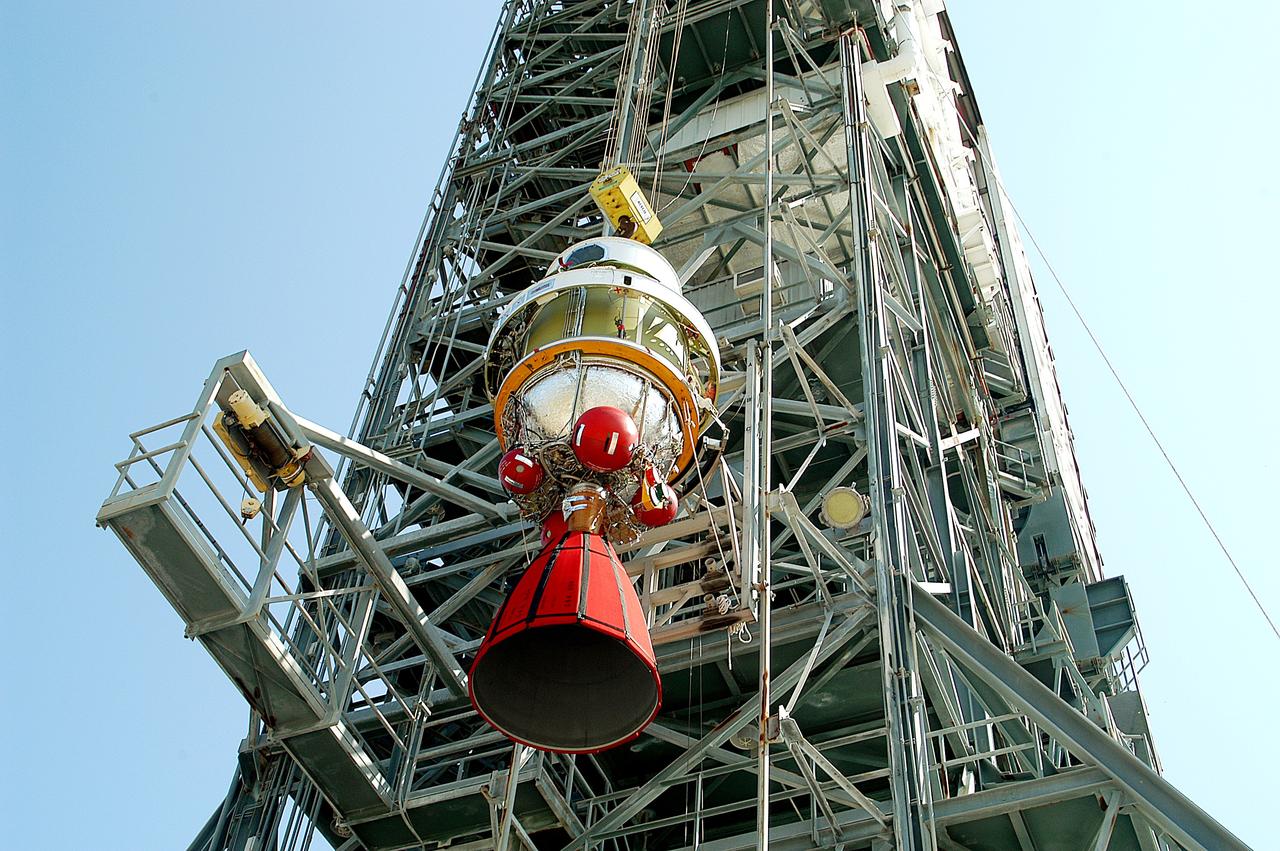
KENNEDY SPACE CENTER, FLA. - The second stage of a Delta II rocket is lifted to the top of the launch tower on Pad 17-B, Cape Canaveral Air Force Station.  It will be mated to the Delta first stage already at the pad in preparation for the launch of the Mars Exploration Rover-1 (MER-B) on June 25.  NASA’s twin Mars Exploration Rovers are designed to study the history of water on Mars. These robotic geologists are equipped with a robotic arm, a drilling tool, three spectrometers, and four pairs of cameras that allow them to have a human-like, 3D view of the terrain. Each rover could travel as far as 100 meters in one day to act as Mars scientists' eyes and hands, exploring an environment where humans are not yet able to go. The launch of MER-2 (MER-A) is tentatively set for June 8.
KENNEDY SPACE CENTER, FLA. - The second stage of a Delta II rocket is lifted to the top of the launch tower on Pad 17-B, Cape Canaveral Air Force Station. It will be mated to the Delta first stage already at the pad in preparation for the launch of the Mars Exploration Rover-1 (MER-B) on June 25. NASA’s twin Mars Exploration Rovers are designed to study the history of water on Mars. These robotic geologists are equipped with a robotic arm, a drilling tool, three spectrometers, and four pairs of cameras that allow them to have a human-like, 3D view of the terrain. Each rover could travel as far as 100 meters in one day to act as Mars scientists' eyes and hands, exploring an environment where humans are not yet able to go. The launch of MER-2 (MER-A) is tentatively set for June 8.
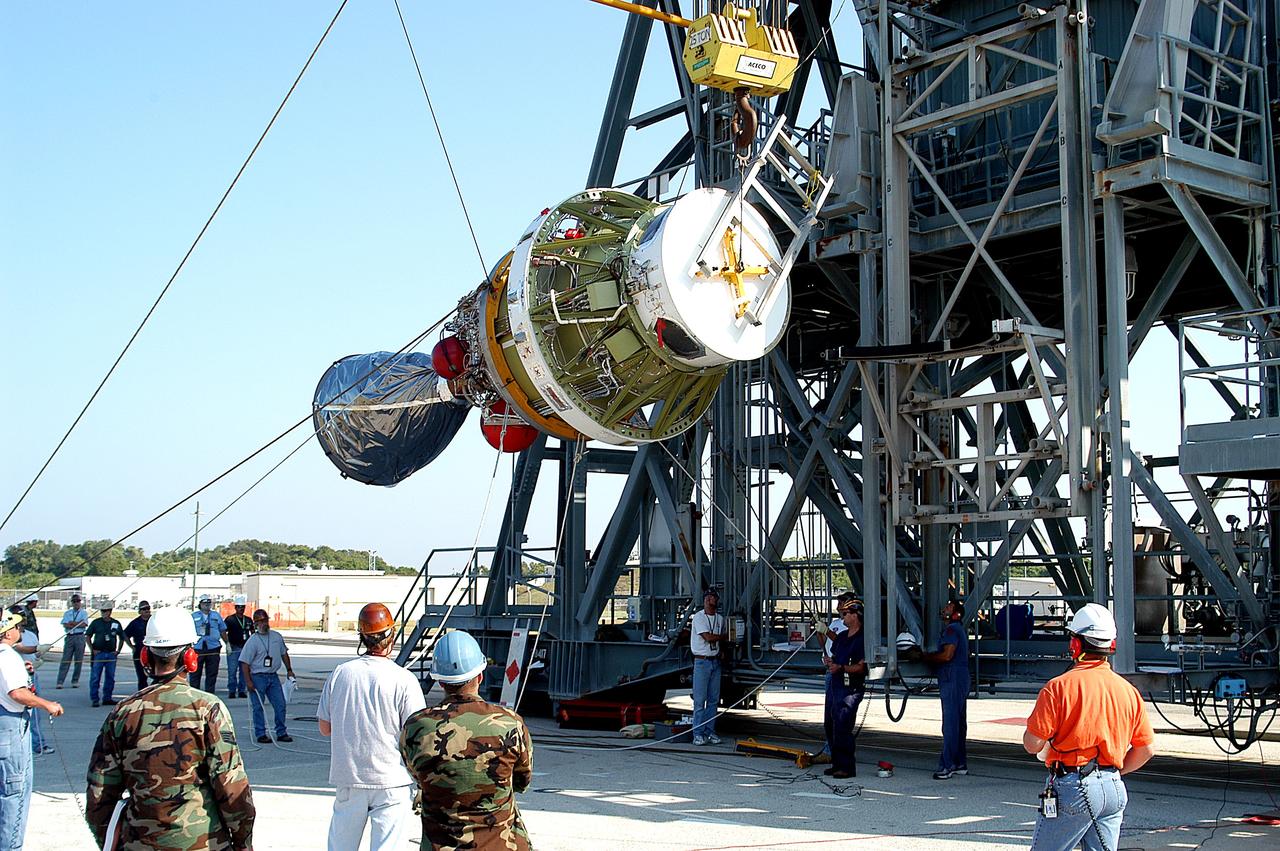
KENNEDY SPACE CENTER, FLA. - The second stage of a Delta II rocket is moved into position at the top of the launch tower on Pad 17-B, Cape Canaveral Air Force Station.  It will be mated to the Delta first stage already at the pad in preparation for the launch of the Mars Exploration Rover-1 (MER-B) on June 25.  NASA’s twin Mars Exploration Rovers are designed to study the history of water on Mars. These robotic geologists are equipped with a robotic arm, a drilling tool, three spectrometers, and four pairs of cameras that allow them to have a human-like, 3D view of the terrain. Each rover could travel as far as 100 meters in one day to act as Mars scientists' eyes and hands, exploring an environment where humans are not yet able to go. The launch of MER-2 (MER-A) is tentatively set for June 8.
KENNEDY SPACE CENTER, FLA. - The second stage of a Delta II rocket is moved into position at the top of the launch tower on Pad 17-B, Cape Canaveral Air Force Station. It will be mated to the Delta first stage already at the pad in preparation for the launch of the Mars Exploration Rover-1 (MER-B) on June 25. NASA’s twin Mars Exploration Rovers are designed to study the history of water on Mars. These robotic geologists are equipped with a robotic arm, a drilling tool, three spectrometers, and four pairs of cameras that allow them to have a human-like, 3D view of the terrain. Each rover could travel as far as 100 meters in one day to act as Mars scientists' eyes and hands, exploring an environment where humans are not yet able to go. The launch of MER-2 (MER-A) is tentatively set for June 8.
KENNEDY SPACE CENTER, FLA. - The second stage of a Delta II rocket is raised to a vertical position for its lift up the launch tower on Pad 17-B, Cape Canaveral Air Force Station.  It will be mated to the Delta first stage already at the pad in preparation for the launch of the Mars Exploration Rover-1 (MER-B) on June 25.  NASA’s twin Mars Exploration Rovers are designed to study the history of water on Mars. These robotic geologists are equipped with a robotic arm, a drilling tool, three spectrometers, and four pairs of cameras that allow them to have a human-like, 3D view of the terrain. Each rover could travel as far as 100 meters in one day to act as Mars scientists' eyes and hands, exploring an environment where humans are not yet able to go. The launch of MER-2 (MER-A) is tentatively set for June 8.
KENNEDY SPACE CENTER, FLA. - The second stage of a Delta II rocket is raised to a vertical position for its lift up the launch tower on Pad 17-B, Cape Canaveral Air Force Station. It will be mated to the Delta first stage already at the pad in preparation for the launch of the Mars Exploration Rover-1 (MER-B) on June 25. NASA’s twin Mars Exploration Rovers are designed to study the history of water on Mars. These robotic geologists are equipped with a robotic arm, a drilling tool, three spectrometers, and four pairs of cameras that allow them to have a human-like, 3D view of the terrain. Each rover could travel as far as 100 meters in one day to act as Mars scientists' eyes and hands, exploring an environment where humans are not yet able to go. The launch of MER-2 (MER-A) is tentatively set for June 8.
KENNEDY SPACE CENTER, FLA. - Workers prepare to lift the second stage of a Delta II rocket up the launch tower on Pad 17-B, Cape Canaveral Air Force Station.  It will be mated to the Delta first stage already at the pad in preparation for the launch of the Mars Exploration Rover-1 (MER-B) on June 25.  NASA’s twin Mars Exploration Rovers are designed to study the history of water on Mars. These robotic geologists are equipped with a robotic arm, a drilling tool, three spectrometers, and four pairs of cameras that allow them to have a human-like, 3D view of the terrain. Each rover could travel as far as 100 meters in one day to act as Mars scientists' eyes and hands, exploring an environment where humans are not yet able to go. The launch of MER-2 (MER-A) is tentatively set for June 8.
KENNEDY SPACE CENTER, FLA. - Workers prepare to lift the second stage of a Delta II rocket up the launch tower on Pad 17-B, Cape Canaveral Air Force Station. It will be mated to the Delta first stage already at the pad in preparation for the launch of the Mars Exploration Rover-1 (MER-B) on June 25. NASA’s twin Mars Exploration Rovers are designed to study the history of water on Mars. These robotic geologists are equipped with a robotic arm, a drilling tool, three spectrometers, and four pairs of cameras that allow them to have a human-like, 3D view of the terrain. Each rover could travel as far as 100 meters in one day to act as Mars scientists' eyes and hands, exploring an environment where humans are not yet able to go. The launch of MER-2 (MER-A) is tentatively set for June 8.
KENNEDY SPACE CENTER, FLA. - The second stage of a Delta II rocket is lifted up the launch tower on Pad 17-B, Cape Canaveral Air Force Station.  It will be mated to the Delta first stage already at the pad in preparation for the launch of the Mars Exploration Rover-1 (MER-B) on June 25.  NASA’s twin Mars Exploration Rovers are designed to study the history of water on Mars. These robotic geologists are equipped with a robotic arm, a drilling tool, three spectrometers, and four pairs of cameras that allow them to have a human-like, 3D view of the terrain. Each rover could travel as far as 100 meters in one day to act as Mars scientists' eyes and hands, exploring an environment where humans are not yet able to go. The launch of MER-2 (MER-A) is tentatively set for June 8.
KENNEDY SPACE CENTER, FLA. - The second stage of a Delta II rocket is lifted up the launch tower on Pad 17-B, Cape Canaveral Air Force Station. It will be mated to the Delta first stage already at the pad in preparation for the launch of the Mars Exploration Rover-1 (MER-B) on June 25. NASA’s twin Mars Exploration Rovers are designed to study the history of water on Mars. These robotic geologists are equipped with a robotic arm, a drilling tool, three spectrometers, and four pairs of cameras that allow them to have a human-like, 3D view of the terrain. Each rover could travel as far as 100 meters in one day to act as Mars scientists' eyes and hands, exploring an environment where humans are not yet able to go. The launch of MER-2 (MER-A) is tentatively set for June 8.
KENNEDY SPACE CENTER, FLA. - Workers begin to lift the second stage of a Delta II rocket up the launch tower on Pad 17-B, Cape Canaveral Air Force Station.  It will be mated to the Delta first stage already at the pad in preparation for the launch of the Mars Exploration Rover-1 (MER-B) on June 25.  NASA’s twin Mars Exploration Rovers are designed to study the history of water on Mars. These robotic geologists are equipped with a robotic arm, a drilling tool, three spectrometers, and four pairs of cameras that allow them to have a human-like, 3D view of the terrain. Each rover could travel as far as 100 meters in one day to act as Mars scientists' eyes and hands, exploring an environment where humans are not yet able to go. The launch of MER-2 (MER-A) is tentatively set for June 8.
KENNEDY SPACE CENTER, FLA. - Workers begin to lift the second stage of a Delta II rocket up the launch tower on Pad 17-B, Cape Canaveral Air Force Station. It will be mated to the Delta first stage already at the pad in preparation for the launch of the Mars Exploration Rover-1 (MER-B) on June 25. NASA’s twin Mars Exploration Rovers are designed to study the history of water on Mars. These robotic geologists are equipped with a robotic arm, a drilling tool, three spectrometers, and four pairs of cameras that allow them to have a human-like, 3D view of the terrain. Each rover could travel as far as 100 meters in one day to act as Mars scientists' eyes and hands, exploring an environment where humans are not yet able to go. The launch of MER-2 (MER-A) is tentatively set for June 8.
KENNEDY SPACE CENTER, FLA. - The second stage of a Delta II rocket is prepared for lifting up the launch tower on Pad 17-B, Cape Canaveral Air Force Station.  It will be mated to the Delta first stage already at the pad in preparation for the launch of the Mars Exploration Rover-1 (MER-B) on June 25.  NASA’s twin Mars Exploration Rovers are designed to study the history of water on Mars. These robotic geologists are equipped with a robotic arm, a drilling tool, three spectrometers, and four pairs of cameras that allow them to have a human-like, 3D view of the terrain. Each rover could travel as far as 100 meters in one day to act as Mars scientists' eyes and hands, exploring an environment where humans are not yet able to go. The launch of MER-2 (MER-A) is tentatively set for June 8.
KENNEDY SPACE CENTER, FLA. - The second stage of a Delta II rocket is prepared for lifting up the launch tower on Pad 17-B, Cape Canaveral Air Force Station. It will be mated to the Delta first stage already at the pad in preparation for the launch of the Mars Exploration Rover-1 (MER-B) on June 25. NASA’s twin Mars Exploration Rovers are designed to study the history of water on Mars. These robotic geologists are equipped with a robotic arm, a drilling tool, three spectrometers, and four pairs of cameras that allow them to have a human-like, 3D view of the terrain. Each rover could travel as far as 100 meters in one day to act as Mars scientists' eyes and hands, exploring an environment where humans are not yet able to go. The launch of MER-2 (MER-A) is tentatively set for June 8.
CAPE CANAVERAL, Fla. -- At NASA's Kennedy Space Center in Florida, the water tower and lightning protection system, consisting of three 600-foot-tall lightning towers, remain at Launch Pad 39B after the pad's deconstruction.  Each lightning tower is 500 feet tall and topped off with an additional 100-foot fiberglass mast which supports a wire catenary system.      In 2009, the structure at the pad was no longer needed for NASA's Space Shuttle Program, so it is being restructured for future use. The new design will feature a "clean pad" for rockets to come with their own launcher, making it more versatile for a number of vehicles. For information on NASA's future plans, visit http://www.nasa.gov/exploration. Photo credit: NASA/Kim Shiflett
KSC-2011-6165
A Boeing Delta II rocket sits on Launch Pad 17A (left), Cape Canaveral Air Station, before mating with its final Solid Rocket Booster, in the tower at right. In the background is Pad 17B with its two launch tower components. The Delta II rocket will carry the Stardust satellite into space for a close encounter with the comet Wild 2 in January 2004. Using a medium called aerogel, Stardust will capture comet particles flying off the nucleus of the comet, plus collect interstellar dust for later analysis. The collected samples will return to Earth in a Sample Return Capsule to be jettisoned as Stardust swings by Earth in January 2006. Stardust is scheduled to be launched on Feb. 6, 1999
KSC-99pc33
CAPE CANAVERAL, Fla. –  CAPE CANAVERAL, Fla. -- On Launch Pad 39B at NASA's Kennedy Space Center in Florida, another lightning tower is being constructed as part of the new lightning protection system for the Constellation Program and Ares/Orion launches. Each of the three new lightning towers will be 500 feet tall with an additional 100-foot fiberglass mast atop supporting a wire catenary system. This improved lightning protection system allows for the taller height of the Ares I rocket compared to the space shuttle. Pad 39B will be the site of the first Ares vehicle launch, including the Ares I-X test flight that is targeted for July 2009. Photo credit: NASA/Troy Cryder
KSC-2009-1004
CAPE CANAVERAL, Fla. –  In the rosy dawn light, construction of the towers on Launch Pad 39B at NASA's Kennedy Space Center in Florida continues on the new lightning protection system for the Constellation Program and Ares/Orion launches.  Each of the three new lightning towers will be 500 feet tall with an additional 100-foot fiberglass mast atop supporting a wire catenary system. This improved lightning protection system allows for the taller height of the Ares I rocket compared to the space shuttle.  Pad 39B will be the site of the first Ares vehicle launch, including the Ares I-X test flight that is targeted for July 2009.
KSC-2009-1329
CAPE CANAVERAL, Fla. –  In the rosy dawn light, construction of the towers on Launch Pad 39B at NASA's Kennedy Space Center in Florida continues on the new lightning protection system for the Constellation Program and Ares/Orion launches.  Each of the three new lightning towers will be 500 feet tall with an additional 100-foot fiberglass mast atop supporting a wire catenary system. This improved lightning protection system allows for the taller height of the Ares I rocket compared to the space shuttle.  Pad 39B will be the site of the first Ares vehicle launch, including the Ares I-X test flight that is targeted for July 2009.
KSC-2009-1328
CAPE CANAVERAL, Fla. –  On Launch Pad 39B at NASA's Kennedy Space Center in Florida, a crane places a 100-foot fiberglass lightning mast on top of the 500-foot tower. The tower is one of three being constructed for the Constellation Program and Ares/Orion launches.  This improved lightning protection system allows for the taller height of the Ares I rocket compared to the space shuttle.  Pad 39B will be the site of the first Ares vehicle launch, including the Ares I-X test flight that is targeted for July 2009. Photo credit: NASA/Jack Pfaller
KSC-2009-1338
CAPE CANAVERAL, Fla. –  Construction of the towers on Launch Pad 39B at NASA's Kennedy Space Center in Florida continues on the new lightning protection system for the Constellation Program and Ares/Orion launches. Here, a 100-foot fiberglass lightning mast is being prepared to be lifted on top of one of the 500-foot towers.  The mast will support a wire catenary system. This improved lightning protection system allows for the taller height of the Ares I rocket compared to the space shuttle.  Pad 39B will be the site of the first Ares vehicle launch, including the Ares I-X test flight that is targeted for July 2009.
KSC-2009-1330