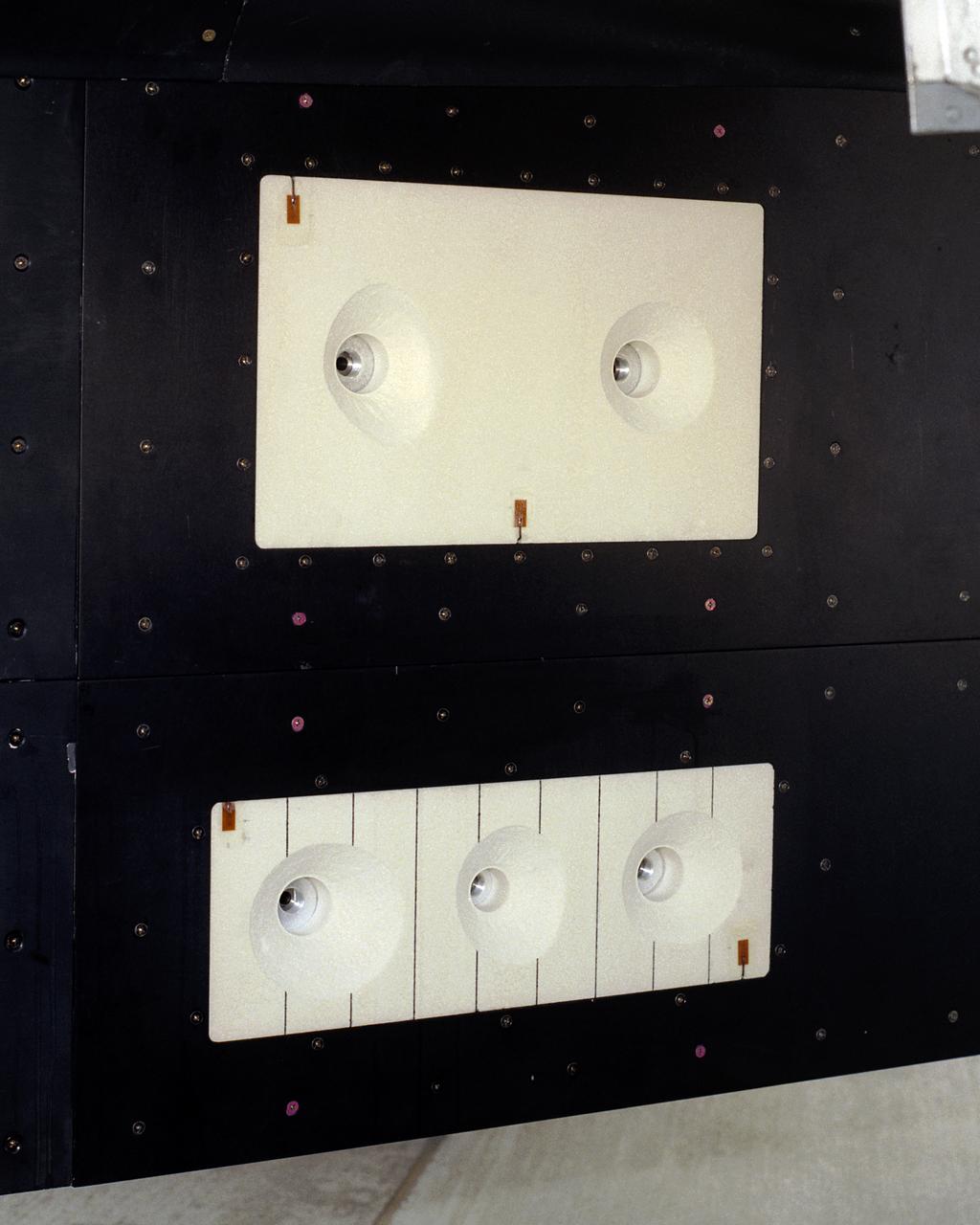
A close-up of the panels on the F-15B's flight test fixture shows five divots of TPS foam were successfully ejected during the LIFT experiment flight #2, the first flight with TPS foam.
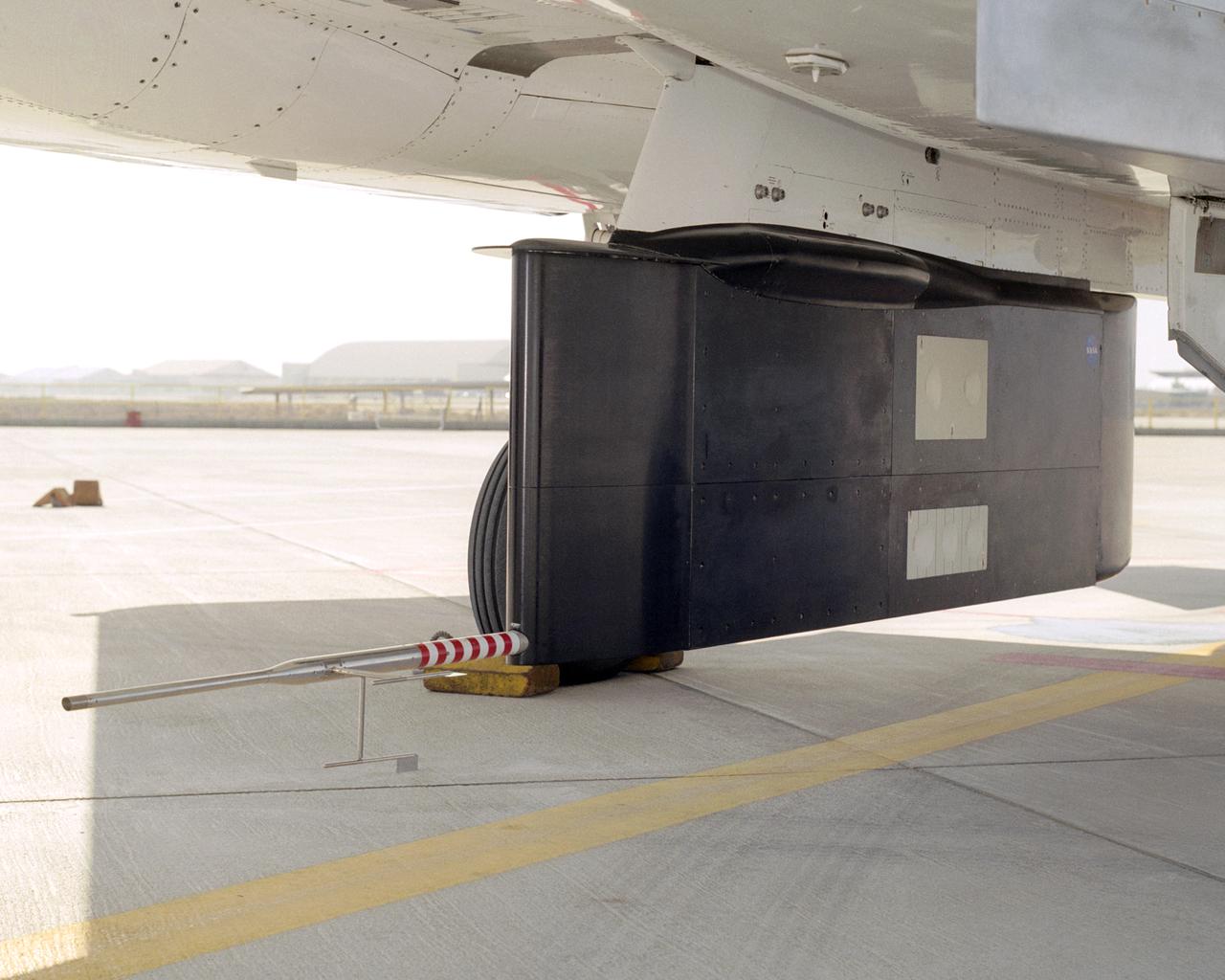
A post-flight inspection of the panels on the F-15B's flight test fixture shows five divots of TPS foam were successfully ejected during the LIFT experiment flight #2, the first flight with TPS foam.
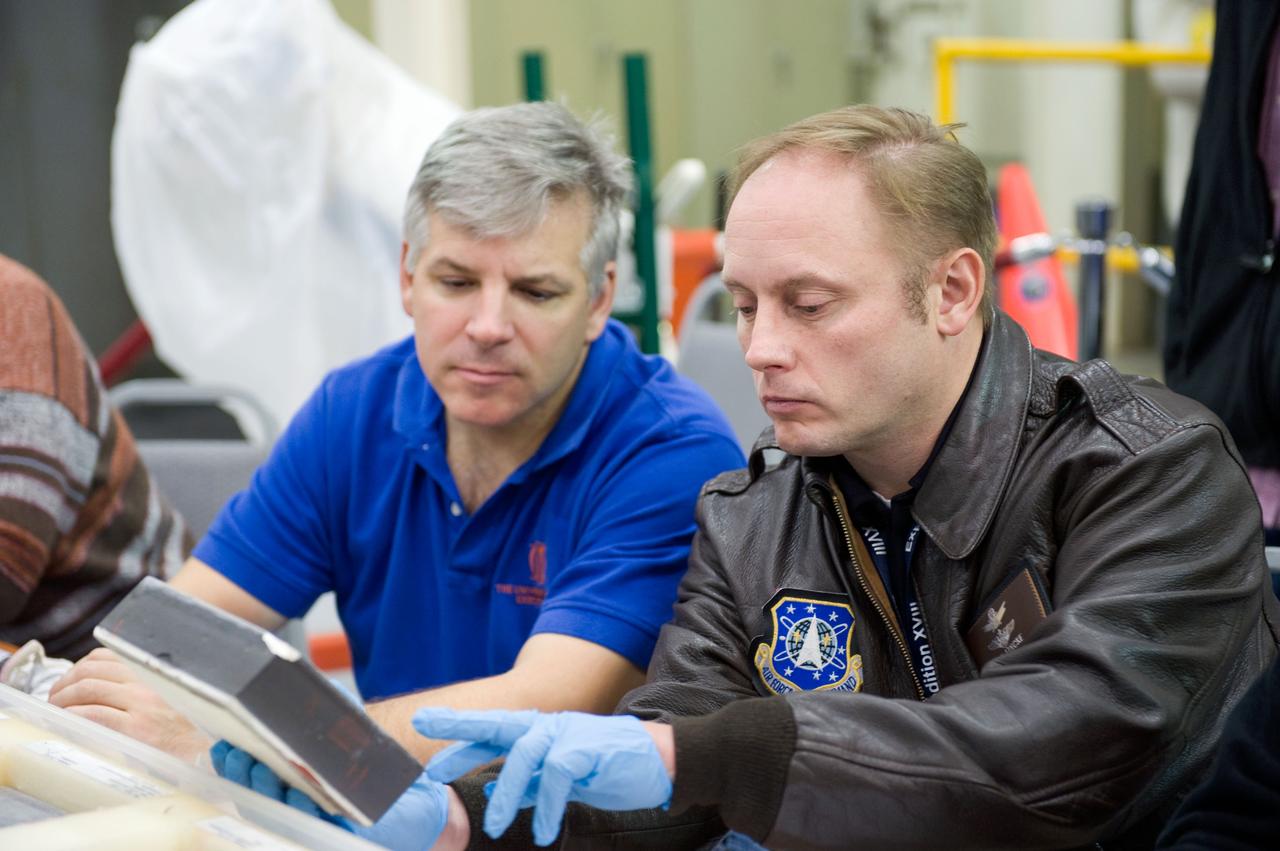
JSC2009-E-284901 (15 Dec. 2009) --- NASA astronauts Gregory H. Johnson (left), STS-134 pilot; and Michael Fincke, mission specialist, participate in an EVA Thermal Protection System (TPS) overview training session in the TPS/ Precision Air Bearing Facility in the Space Vehicle Mock-up Facility at NASA?s Johnson Space Center.

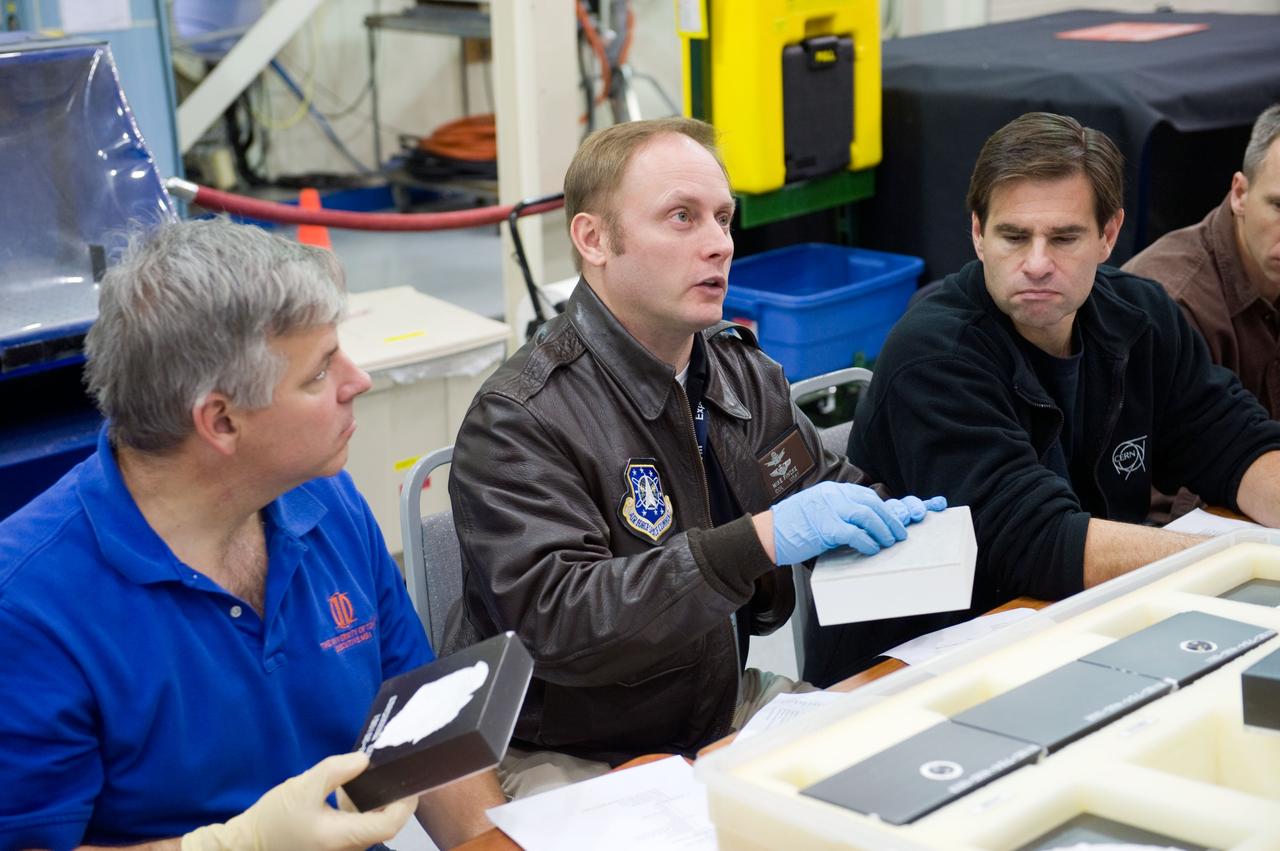
JSC2009-E-284900 (15 Dec. 2009) --- NASA astronauts Gregory H. Johnson (center), STS-134 pilot; and Michael Fincke (right), mission specialist; along with European Space Agency astronaut Roberto Vittori, mission specialist, participate in an EVA Thermal Protection System (TPS) overview training session in the TPS/ Precision Air Bearing Facility in the Space Vehicle Mock-up Facility at NASA?s Johnson Space Center.
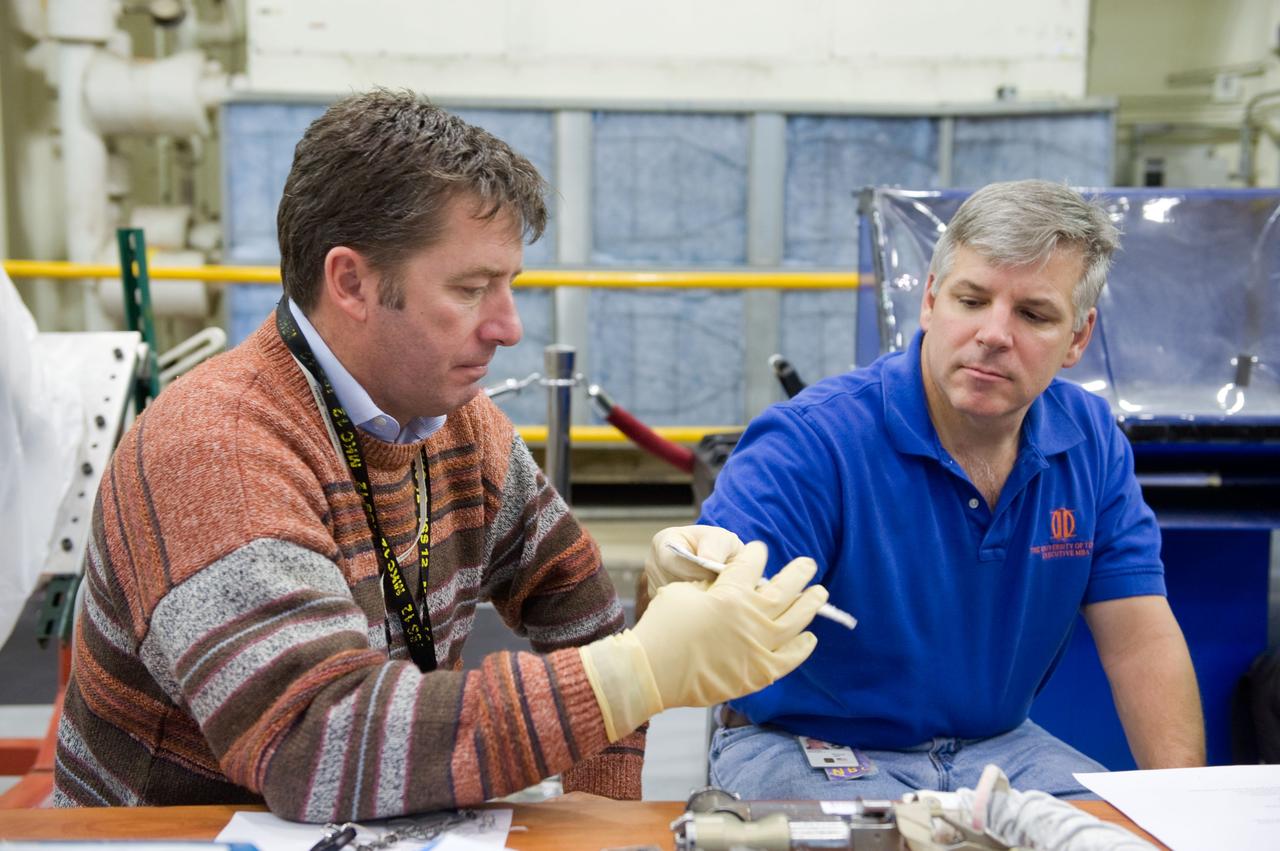
JSC2009-E-284893 (15 Dec. 2009) --- NASA astronaut Gregory H. Johnson (right), STS-134 pilot; and European Space Agency astronaut Roberto Vittori, mission specialist, participate in an EVA Thermal Protection System (TPS) overview training session in the TPS/ Precision Air Bearing Facility in the Space Vehicle Mock-up Facility at NASA?s Johnson Space Center.
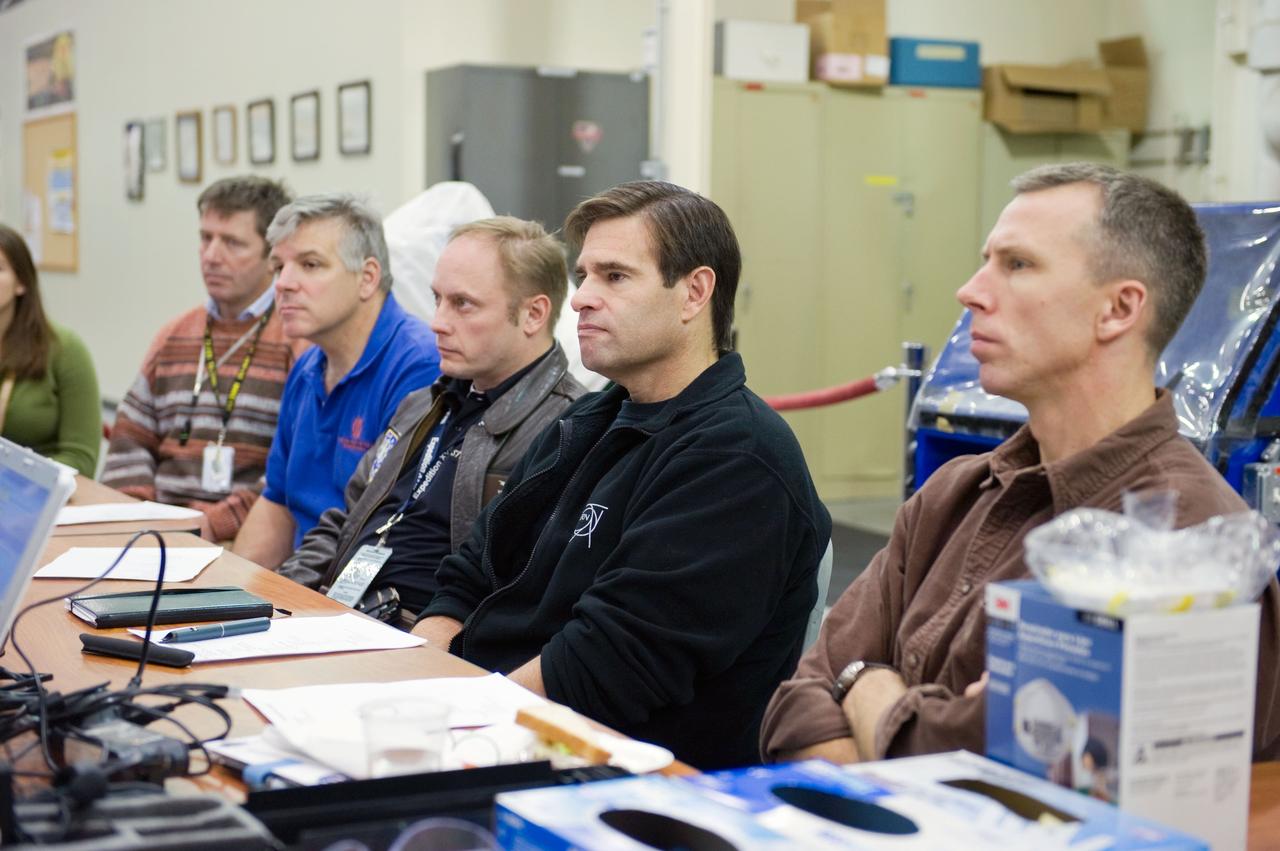
JSC2009-E-284891 (15 Dec. 2009) --- STS-134 crew members participate in an EVA Thermal Protection System (TPS) overview training session in the TPS/ Precision Air Bearing Facility in the Space Vehicle Mock-up Facility at NASA?s Johnson Space Center. Pictured from the right are NASA astronauts Andrew Feustel, Greg Chamitoff, Michael Fincke, all mission specialists; along with NASA astronaut Gregory H. Johnson, pilot; and European Space Agency astronaut Roberto Vittori, mission specialist.
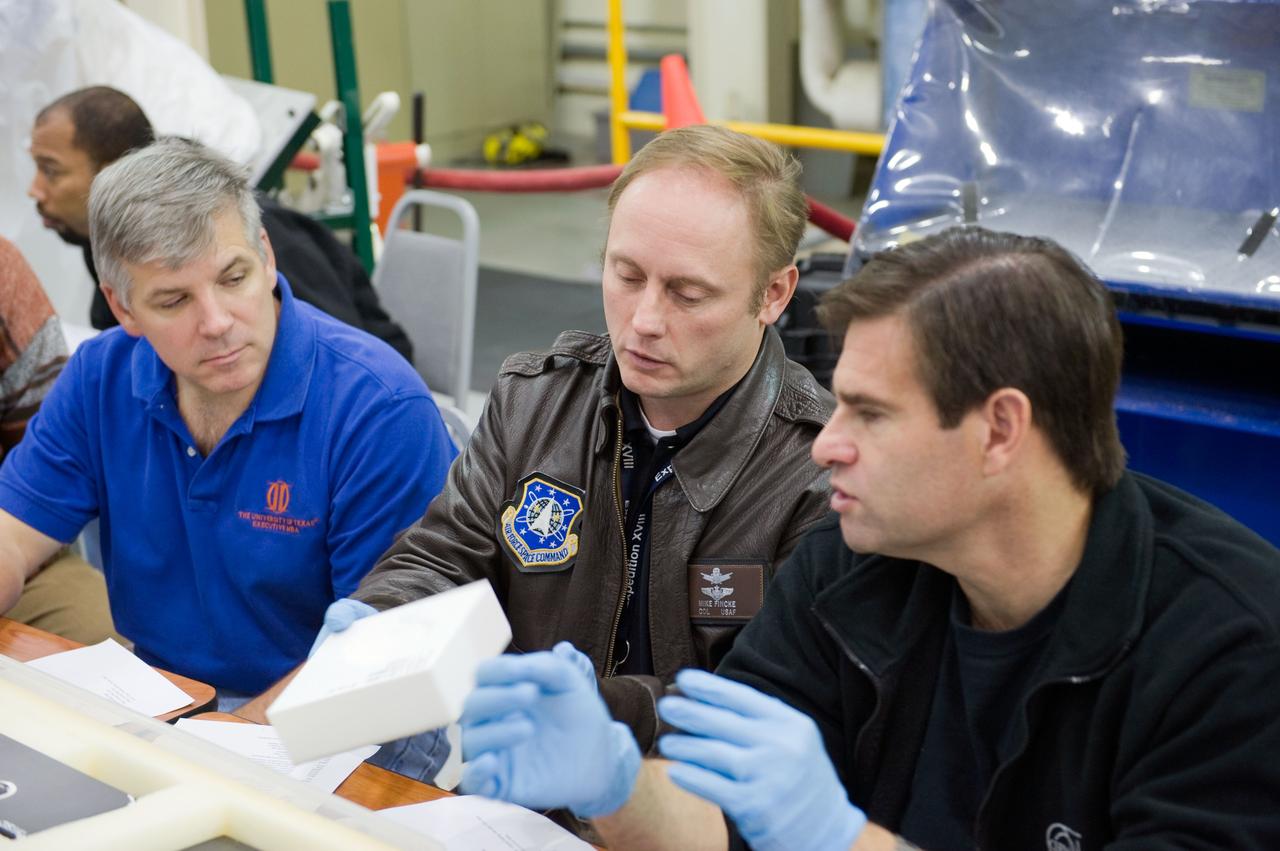
JSC2009-E-284896 (15 Dec. 2009) --- NASA astronauts Gregory H. Johnson (left), STS-134 pilot; along with astronauts Michael Fincke (center) and Greg Chamitoff, both mission specialists, participate in an EVA Thermal Protection System (TPS) overview training session in the TPS/ Precision Air Bearing Facility in the Space Vehicle Mock-up Facility at NASA?s Johnson Space Center.
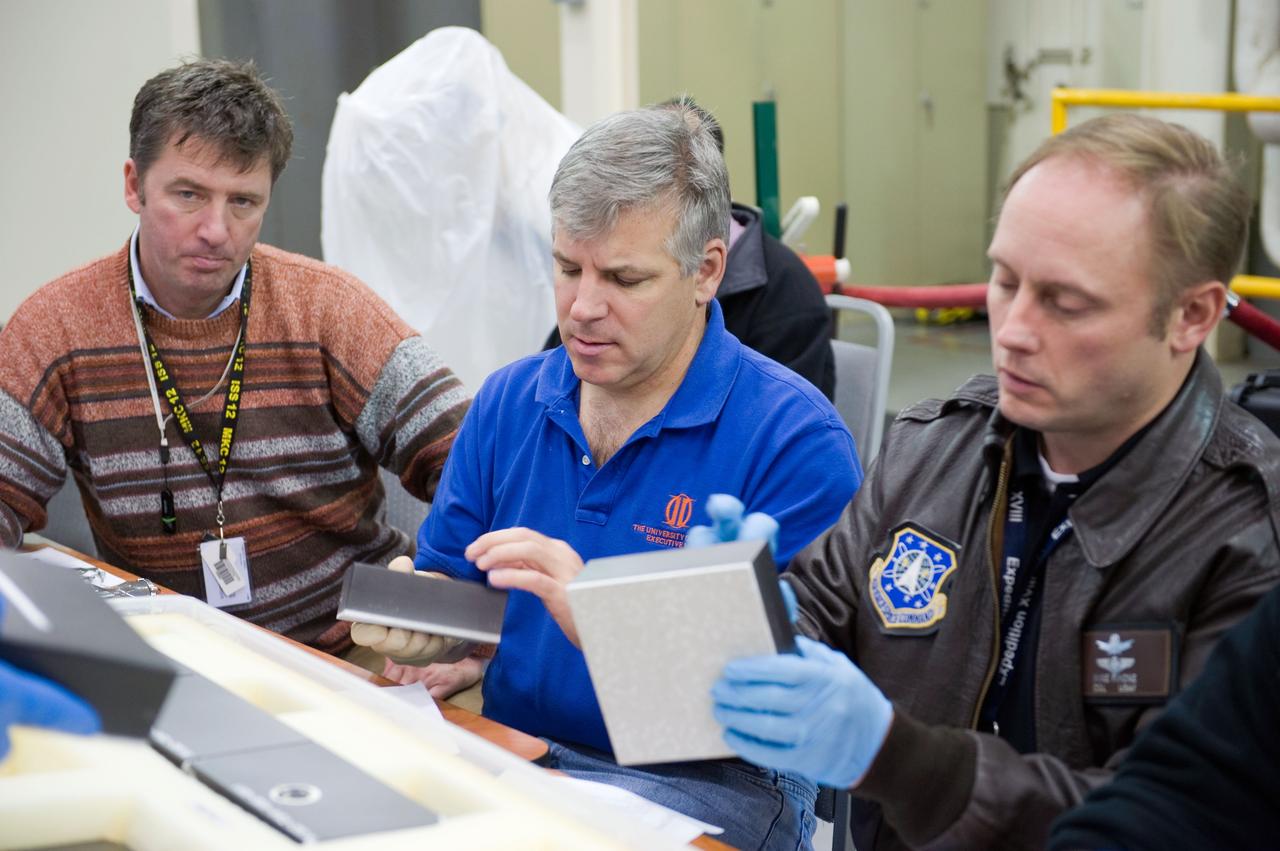
JSC2009-E-284895 (15 Dec. 2009) --- NASA astronauts Gregory H. Johnson (left), STS-134 pilot; along with astronauts Michael Fincke, Greg Chamitoff and Andrew Feustel (mostly out of frame), all mission specialists, participate in an EVA Thermal Protection System (TPS) overview training session in the TPS/ Precision Air Bearing Facility in the Space Vehicle Mock-up Facility at NASA?s Johnson Space Center.
JSC2009-E-284898 (15 Dec. 2009) --- NASA astronauts Gregory H. Johnson (center), STS-134 pilot; and Michael Fincke (right), mission specialist; along with European Space Agency astronaut Roberto Vittori, mission specialist, participate in an EVA Thermal Protection System (TPS) overview training session in the TPS/ Precision Air Bearing Facility in the Space Vehicle Mock-up Facility at NASA?s Johnson Space Center.
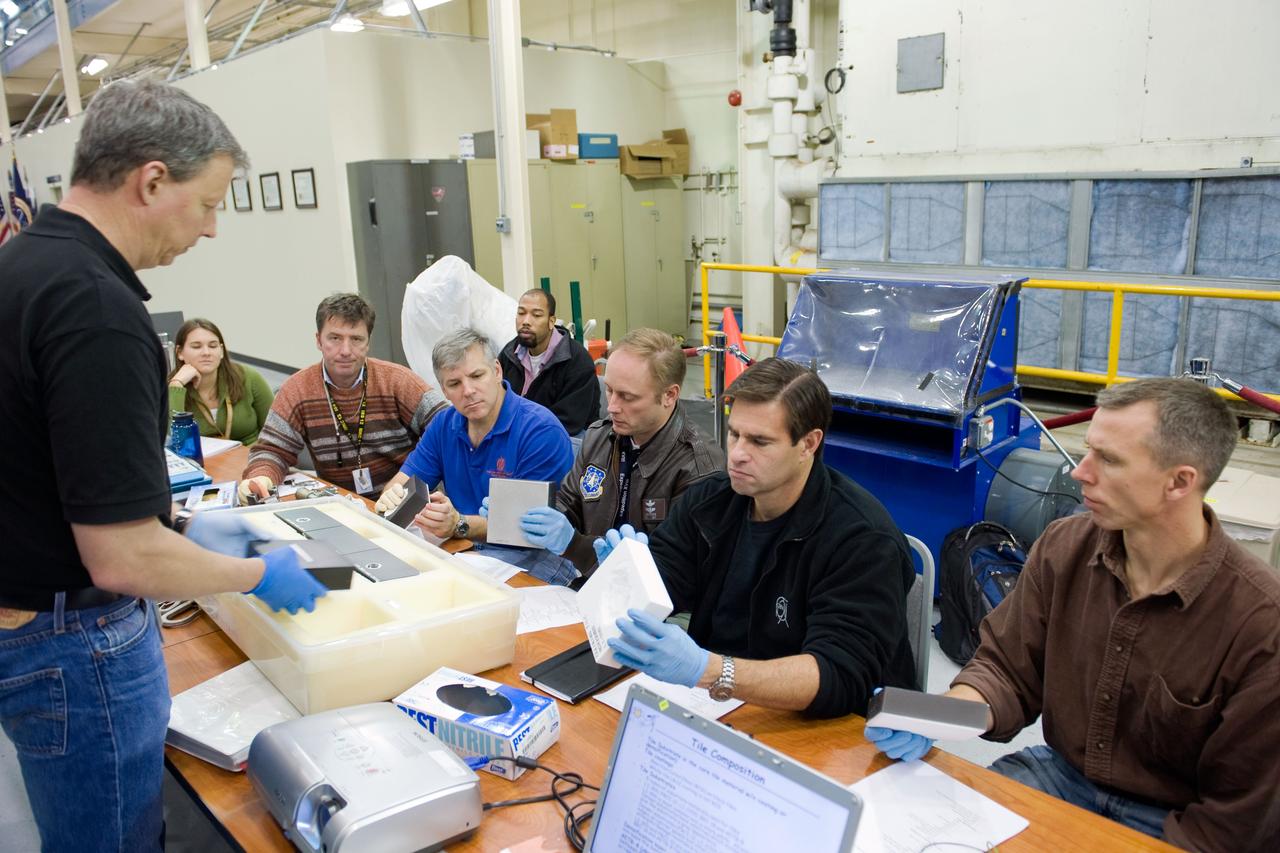
JSC2009-E-284897 (15 Dec. 2009) --- STS-134 crew members participate in an EVA Thermal Protection System (TPS) overview training session in the TPS/ Precision Air Bearing Facility in the Space Vehicle Mock-up Facility at NASA?s Johnson Space Center. Pictured from the right are NASA astronauts Andrew Feustel, Greg Chamitoff, Michael Fincke, all mission specialists; along with NASA astronaut Gregory H. Johnson, pilot; and European Space Agency astronaut Roberto Vittori, mission specialist. John Ray (left) assisted the crew members.
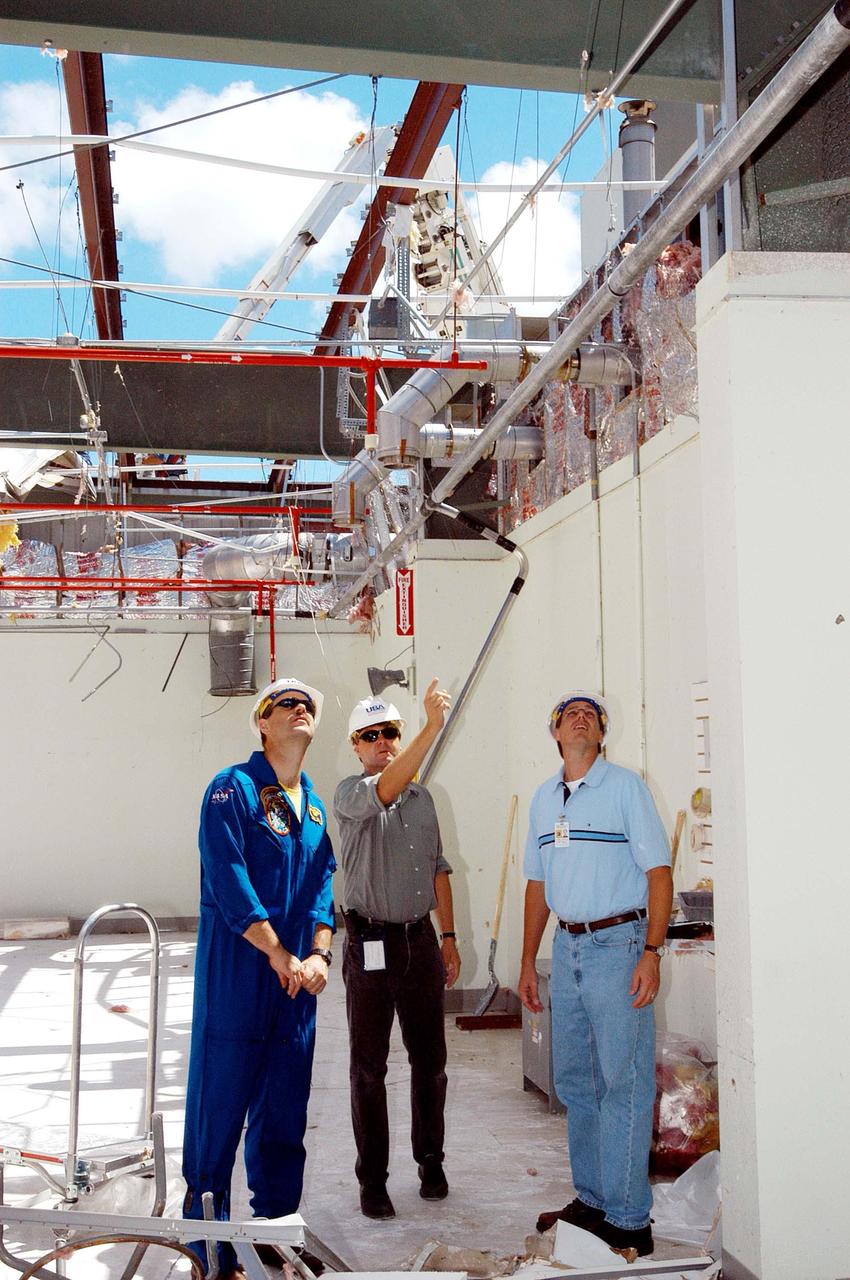
KENNEDY SPACE CENTER, FLA. - Members of a hurricane assessment team from Johnson Space Center and Marshall Space Flight Center observe the damage to the roof of the Thermal Protection System (TPS) Facility at KSC after Hurricane Frances hit the east coast of Central Florida and Kennedy Space Center. At left is astronaut Scott Altmann, a member of the team, and at center is Martin Wilson, manager of the TPS operations. The facility, which creates the TPS tiles, blankets and all the internal thermal control systems for the Space Shuttles, is almost totally unserviceable at this time after losing approximately 35 percent of its roof. Equipment and materials that survived the storm have been relocated to the RLV hangar near the KSC Shuttle Landing Facility.

KENNEDY SPACE CENTER, FLA. -- United Space Alliance employees prepared three test articles that will be used in wind tunnel testing by NASA to collect data for analysis of the detached Flexible Insulation Blanket, or FIB, on Atlantis. The test articles each feature three tiles (Low Temperature Reusable Surface Insulation, or LRSI) affixed next to two FIB blankets, simulating the thermal protection system set-up on Atlantis' OMS pod in the vicinity of the in-flight anomaly. These test articles were flown to Texas the morning of June 14. The TPS team at KSC has also provided a total of 22 FIB samples for other testing and analysis. Photo credit: NASA/Kim Shiflett
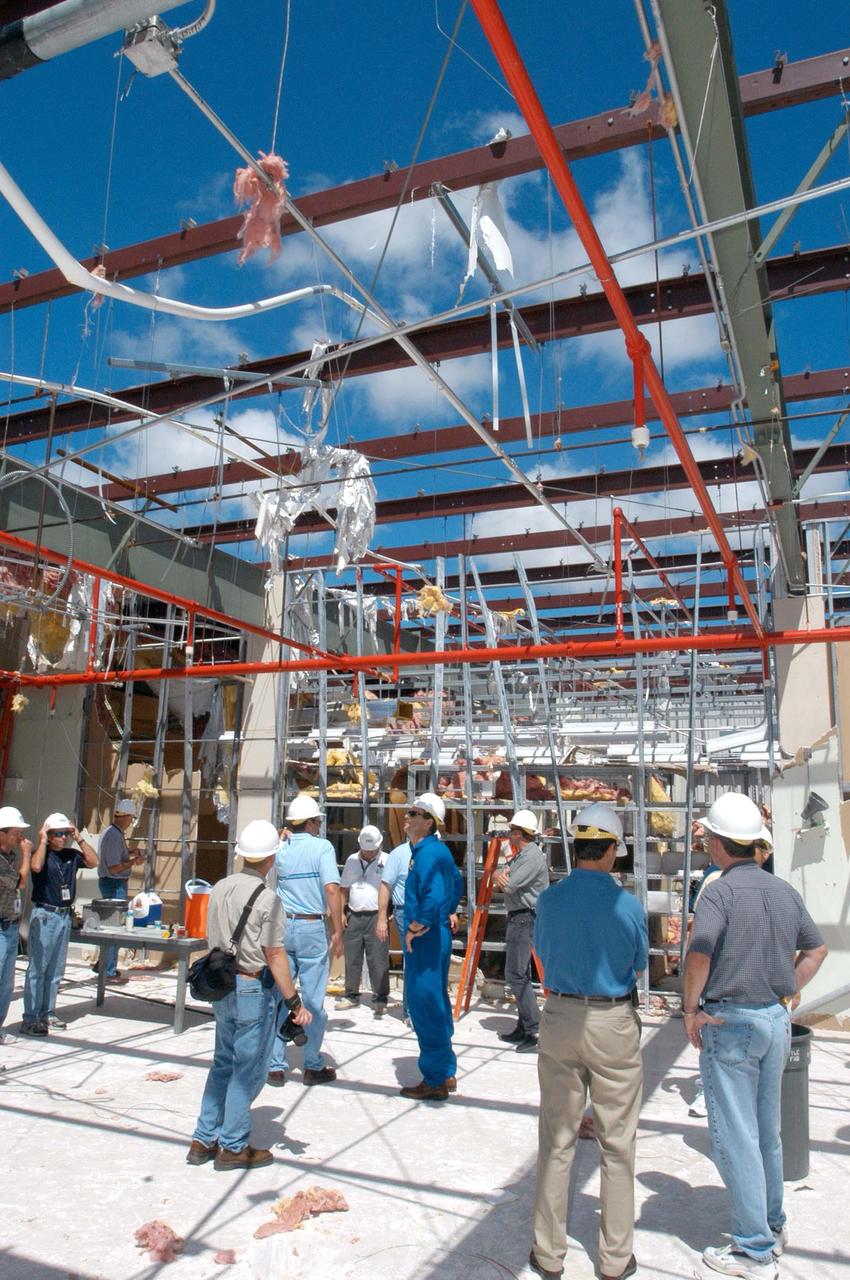
KENNEDY SPACE CENTER, FLA. - Members of a hurricane assessment team from Johnson Space Center and Marshall Space Flight Center observe the damage to the roof of the Thermal Protection System (TPS) Facility at KSC after Hurricane Frances hit the east coast of Central Florida and Kennedy Space Center. Near the center is astronaut Scott Altmann, a member of the team. The facility, which creates the TPS tiles, blankets and all the internal thermal control systems for the Space Shuttles, is almost totally unserviceable at this time after losing approximately 35 percent of its roof. Equipment and materials that survived the storm have been relocated to the RLV hangar near the KSC Shuttle Landing Facility.
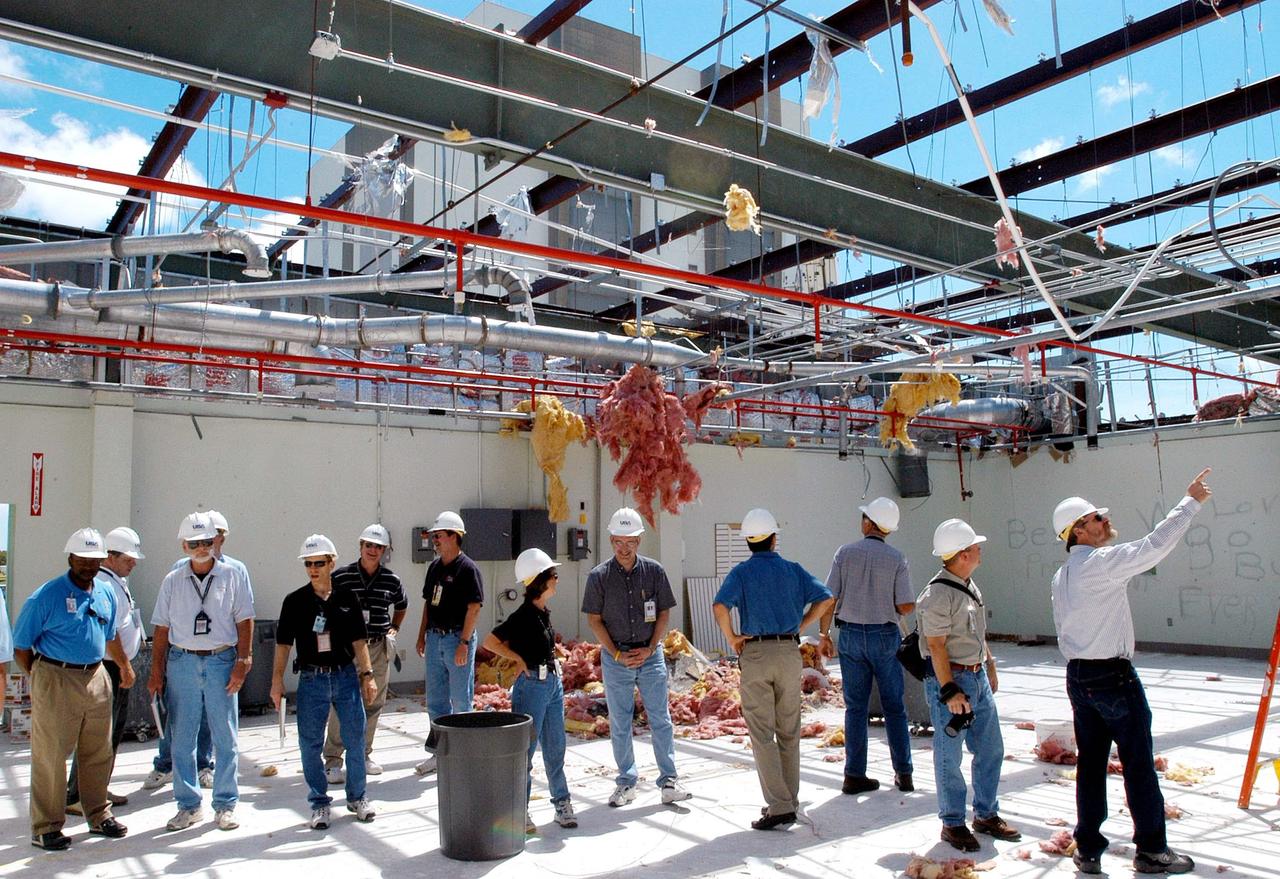
KENNEDY SPACE CENTER, FLA. - Members of a hurricane assessment team from Johnson Space Center and Marshall Space Flight Center observe the damage to the roof of the Thermal Protection System (TPS) Facility at KSC after Hurricane Frances hit the east coast of Central Florida and Kennedy Space Center. The facility, which creates the TPS tiles, blankets and all the internal thermal control systems for the Space Shuttles, is almost totally unserviceable at this time after losing approximately 35 percent of its roof. Equipment and materials that survived the storm have been relocated to the RLV hangar near the KSC Shuttle Landing Facility.
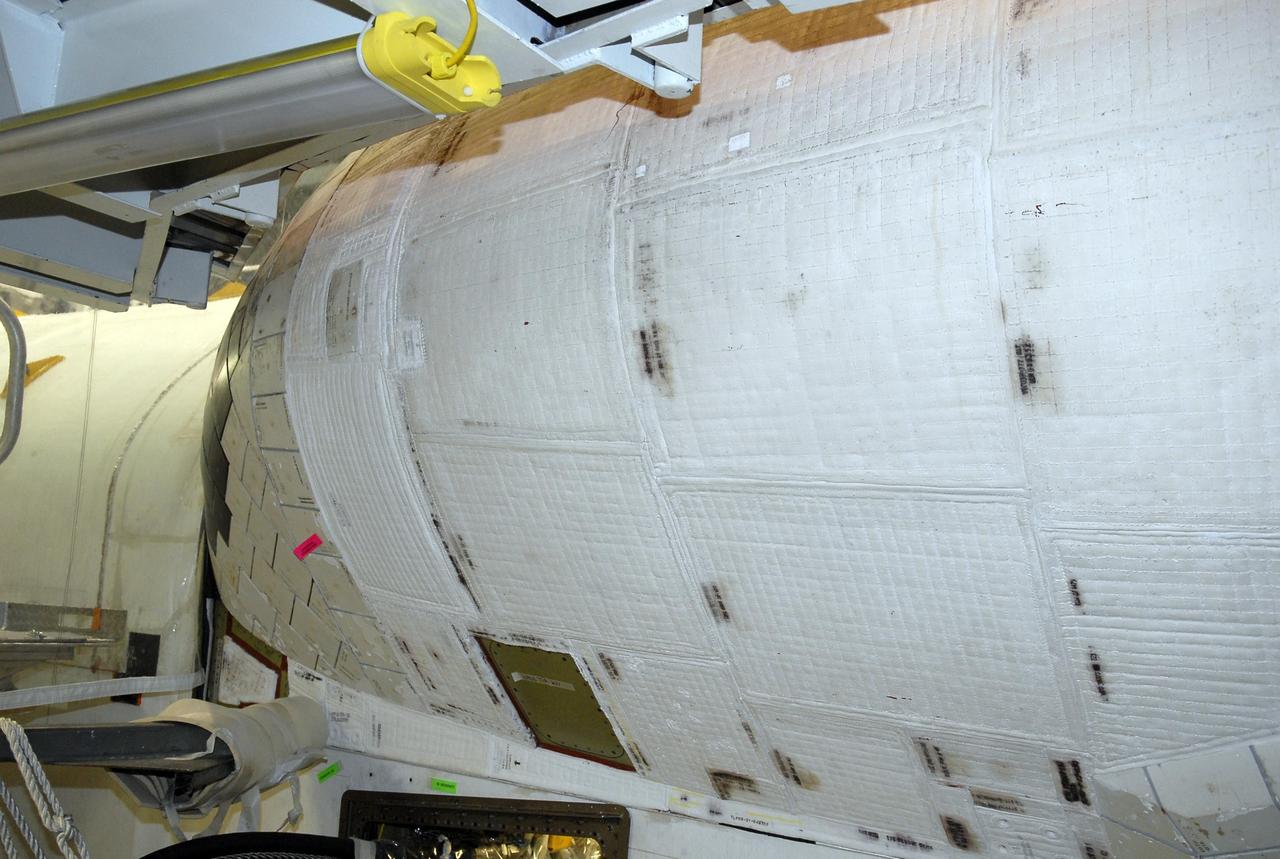
KENNEDY SPACE CENTER, FLA. -- Another view of the area of orbiter Endeavour's orbital maneuvering system, or OMS, pod where the tear occurred on Atlantis during launch of mission STS-117 on June 8, 2007. Repair is under consideration following testing at KSC and Houston. The test articles each feature three tiles (Low Temperature Reusable Surface Insulation, or LRSI) affixed next to two FIB blankets, simulating the thermal protection system set-up on Atlantis' OMS pod in the vicinity of the in-flight anomaly. These test articles were flown to Texas the morning of June 14. The TPS team at KSC has also provided a total of 22 FIB samples for other testing and analysis. Photo credit: NASA/Kim Shiflett
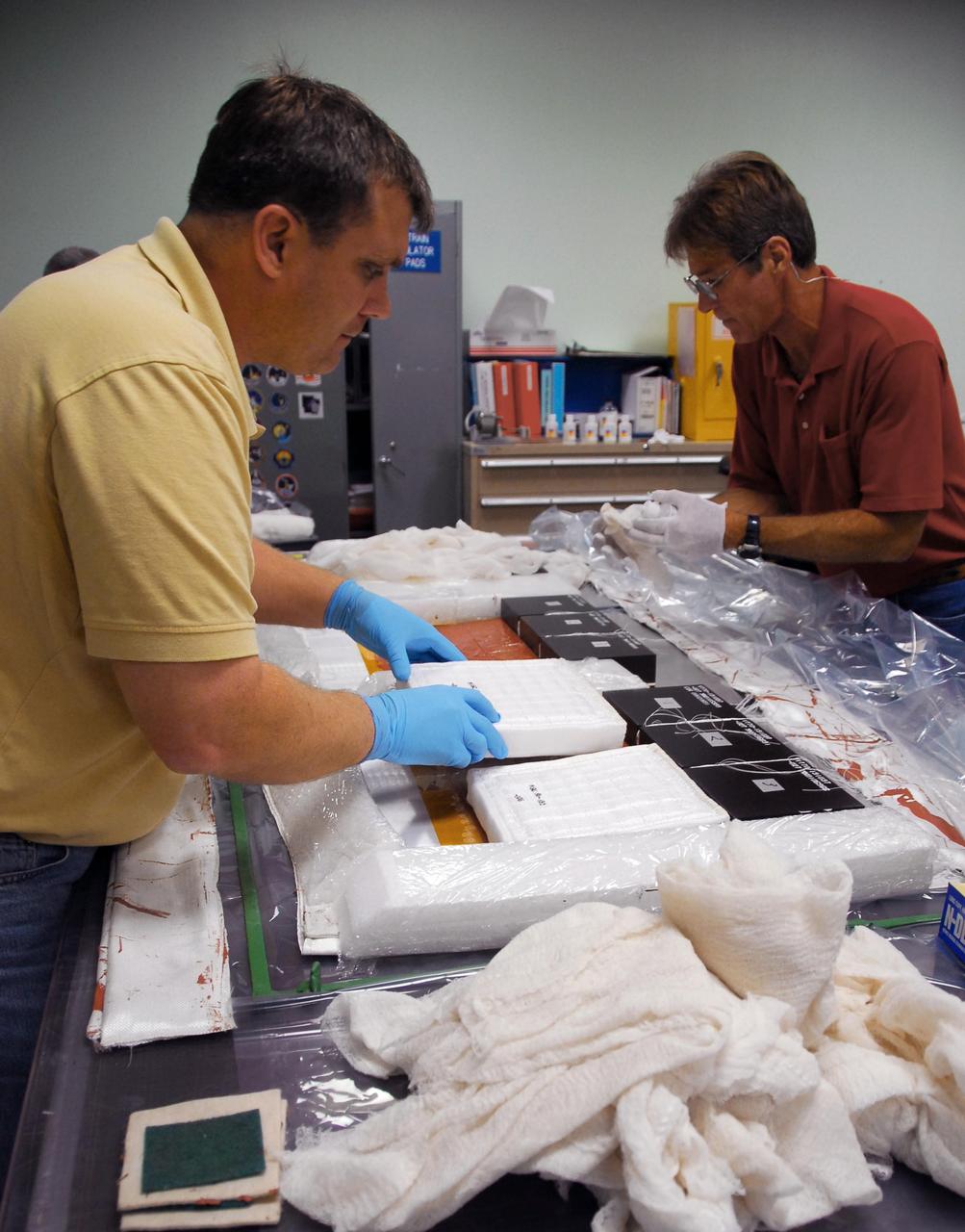
KENNEDY SPACE CENTER, FLA. -- United Space Alliance employees prepare test articles to be used in wind tunnel testing by NASA to collect data for analysis of the detached Flexible Insulation Blanket, or FIB, on Atlantis. A tear occurred in an area of the OMS pod on Atlantis during launch of mission STS-117 on June 8, 2007. The test articles each feature three tiles (Low Temperature Reusable Surface Insulation, or LRSI) affixed next to two FIB blankets, simulating the thermal protection system set-up on Atlantis' OMS pod in the vicinity of the in-flight anomaly. These test articles will be flown to Texas the morning of June 14. The TPS team at KSC has also provided a total of 22 FIB samples for other testing and analysis. Repair is under consideration following testing at KSC and Houston. Photo credit: NASA/Amanda Diller
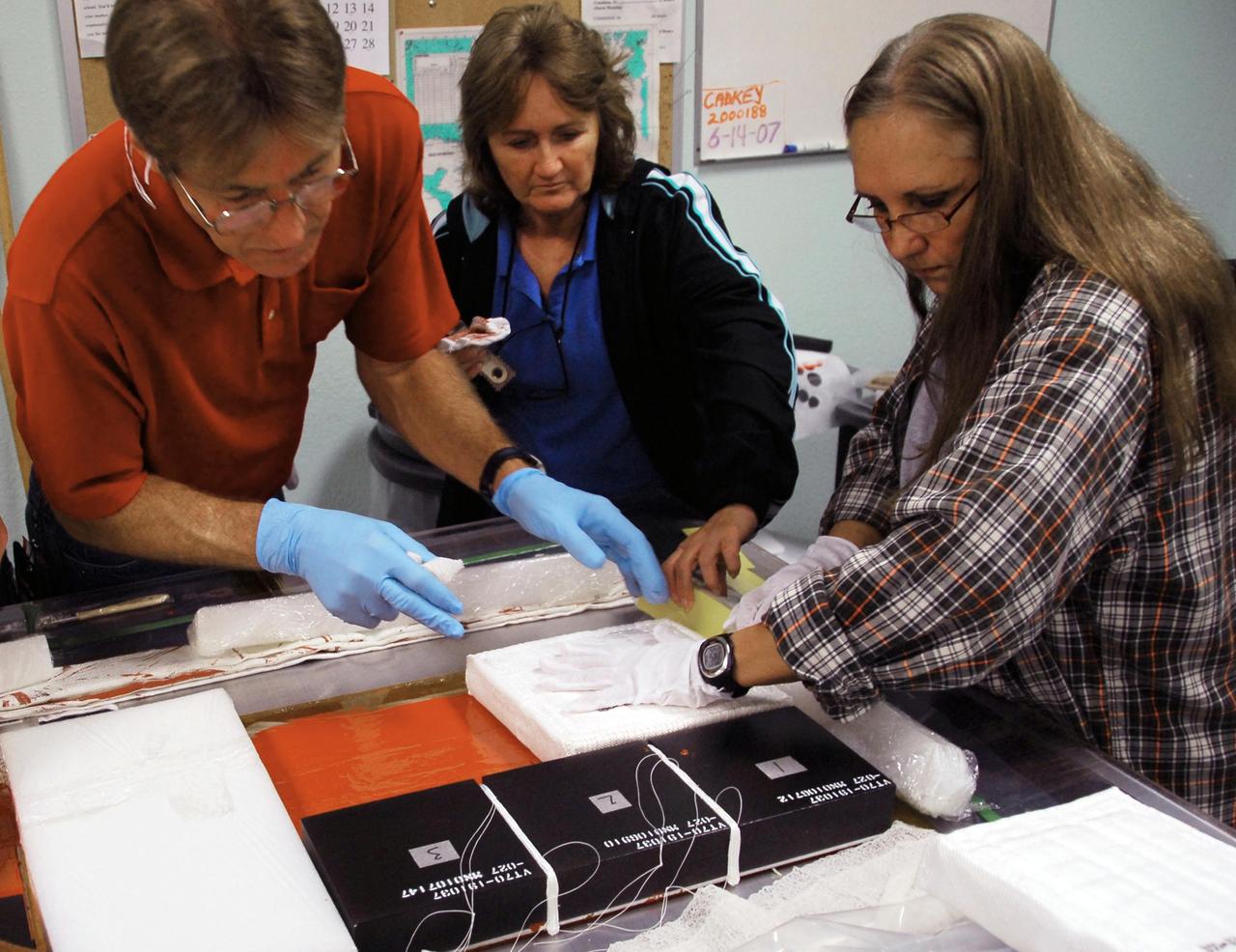
KENNEDY SPACE CENTER, FLA. -- United Space Alliance employees prepare test articles to be used in wind tunnel testing by NASA to collect data for analysis of the detached Flexible Insulation Blanket, or FIB, on Atlantis. A tear occurred in an area of the OMS pod on Atlantis during launch of mission STS-117 on June 8, 2007. The test articles each feature three tiles (Low Temperature Reusable Surface Insulation, or LRSI) affixed next to two FIB blankets, simulating the thermal protection system set-up on Atlantis' OMS pod in the vicinity of the in-flight anomaly. These test articles will be flown to Texas the morning of June 14. The TPS team at KSC has also provided a total of 22 FIB samples for other testing and analysis. Repair is under consideration following testing at KSC and Houston. Photo credit: NASA/Amanda Diller
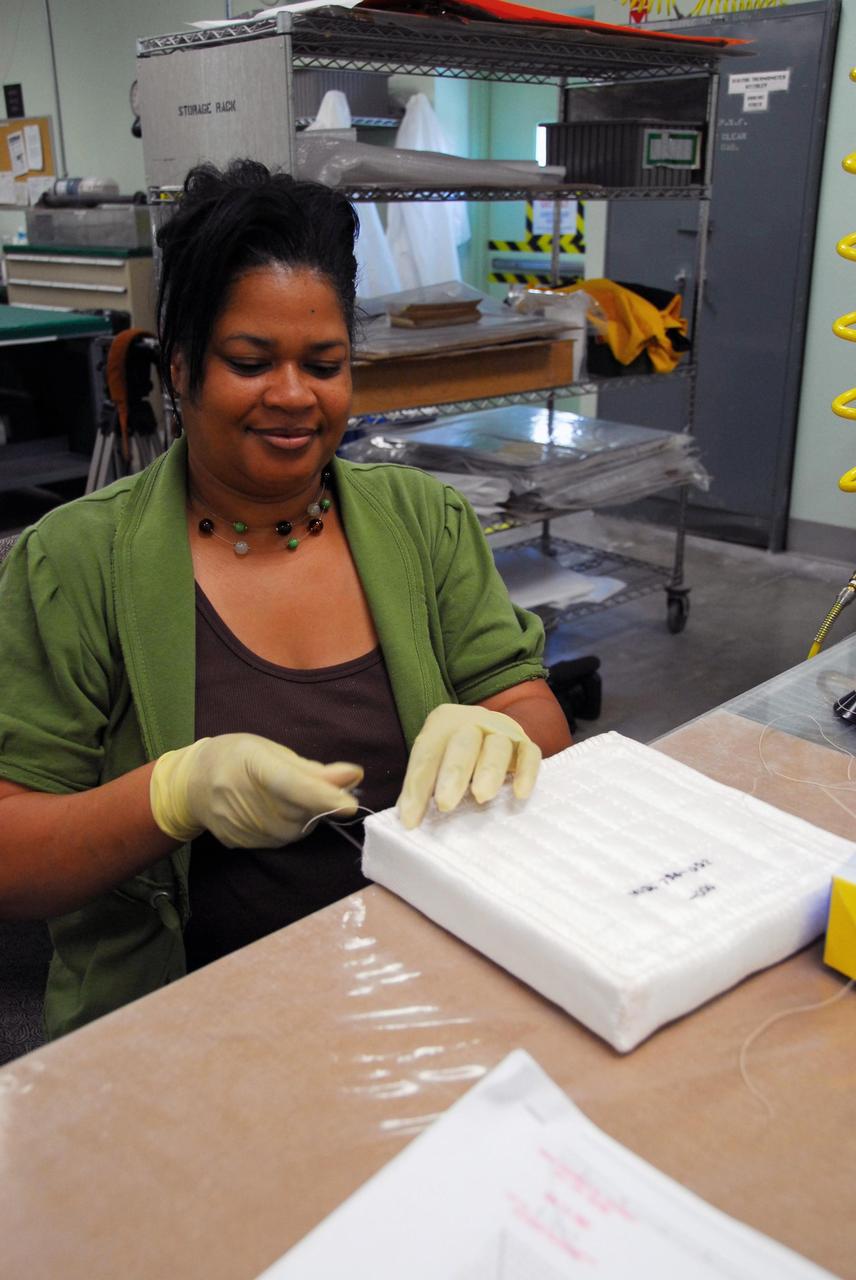
KENNEDY SPACE CENTER, FLA. -- A United Space Alliance employee prepares a test article that will be used in wind tunnel testing by NASA to collect data for analysis of the detached Flexible Insulation Blanket, or FIB, on Atlantis. A tear occurred in an area of the OMS pod on Atlantis during launch of mission STS-117 on June 8, 2007. The test articles each feature three tiles (Low Temperature Reusable Surface Insulation, or LRSI) affixed next to two FIB blankets, simulating the thermal protection system set-up on Atlantis' OMS pod in the vicinity of the in-flight anomaly. These test articles will be flown to Texas the morning of June 14. The TPS team at KSC has also provided a total of 22 FIB samples for other testing and analysis. Repair is under consideration following testing at KSC and Houston. Photo credit: NASA/Amanda Diller
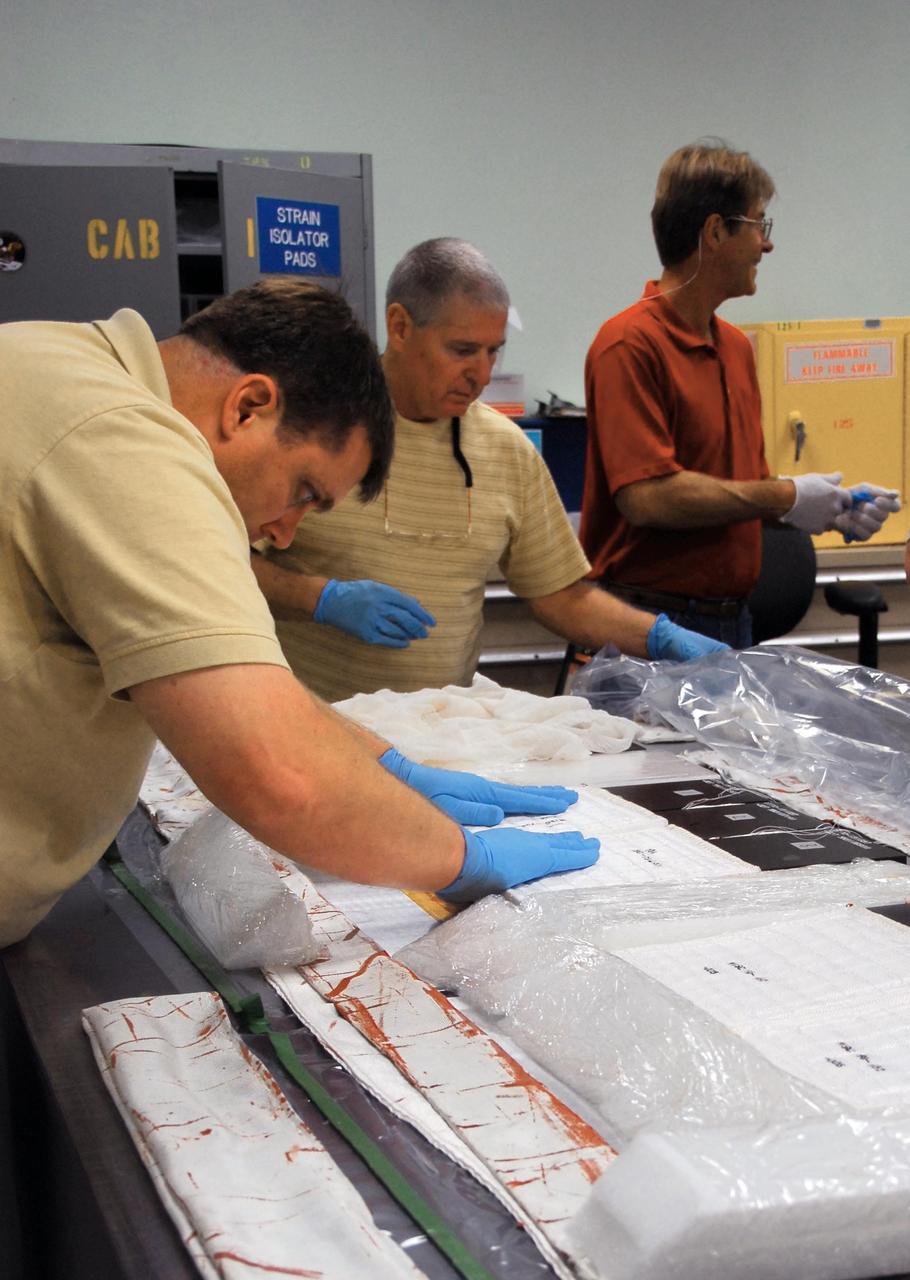
KENNEDY SPACE CENTER, FLA. -- United Space Alliance employees prepare test articles to be used in wind tunnel testing by NASA to collect data for analysis of the detached Flexible Insulation Blanket, or FIB, on Atlantis. A tear occurred in an area of the OMS pod on Atlantis during launch of mission STS-117 on June 8, 2007. The test articles each feature three tiles (Low Temperature Reusable Surface Insulation, or LRSI) affixed next to two FIB blankets, simulating the thermal protection system set-up on Atlantis' OMS pod in the vicinity of the in-flight anomaly. These test articles will be flown to Texas the morning of June 14. The TPS team at KSC has also provided a total of 22 FIB samples for other testing and analysis. Repair is under consideration following testing at KSC and Houston. Photo credit: NASA/Amanda Diller
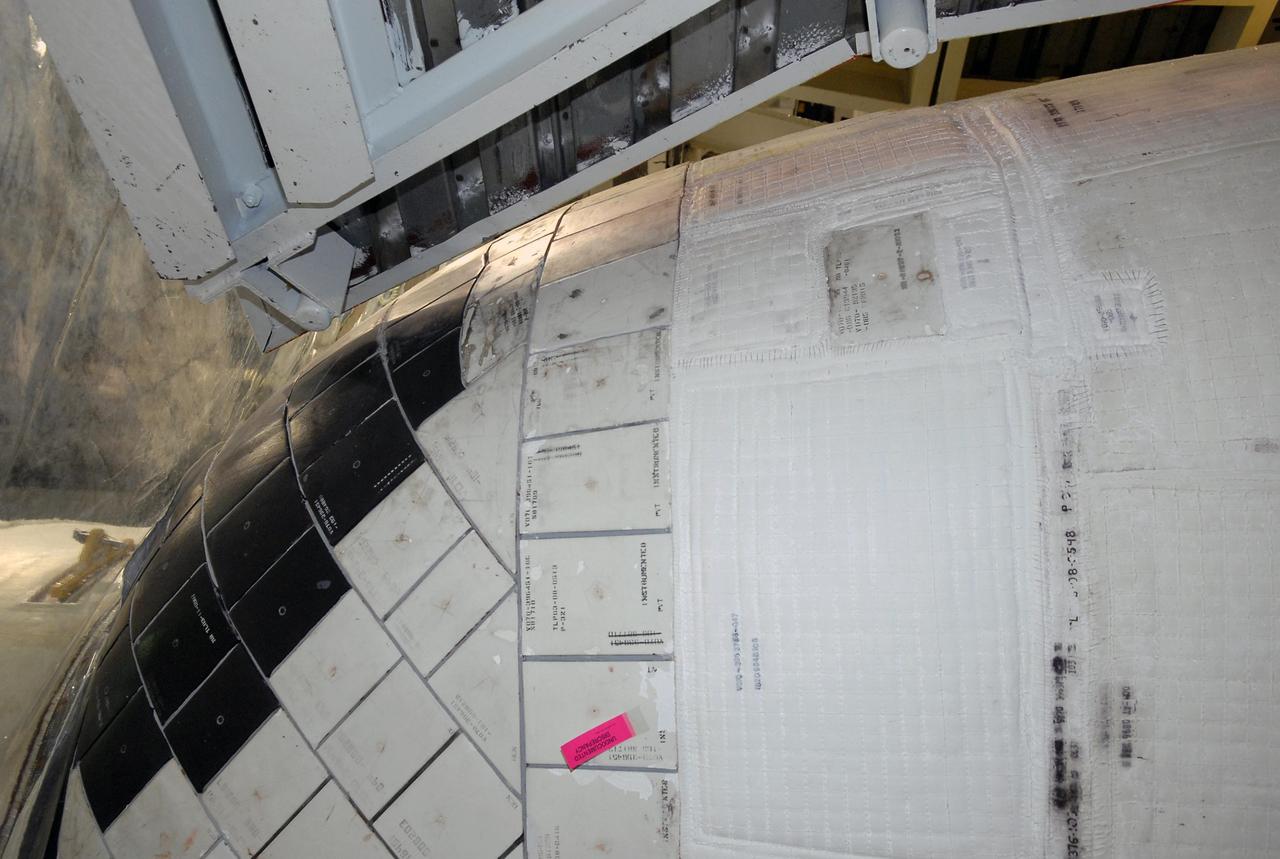
KENNEDY SPACE CENTER, FLA. -- Another view of the area of orbiter Endeavour's orbital maneuvering system, or OMS, pod where the tear occurred on Atlantis during launch of mission STS-117 on June 8, 2007. Repair is under consideration following testing at KSC and Houston. The test articles each feature three tiles (Low Temperature Reusable Surface Insulation, or LRSI) affixed next to two FIB blankets, simulating the thermal protection system set-up on Atlantis' OMS pod in the vicinity of the in-flight anomaly. These test articles were flown to Texas the morning of June 14. The TPS team at KSC has also provided a total of 22 FIB samples for other testing and analysis. Photo credit: NASA/Kim Shiflett
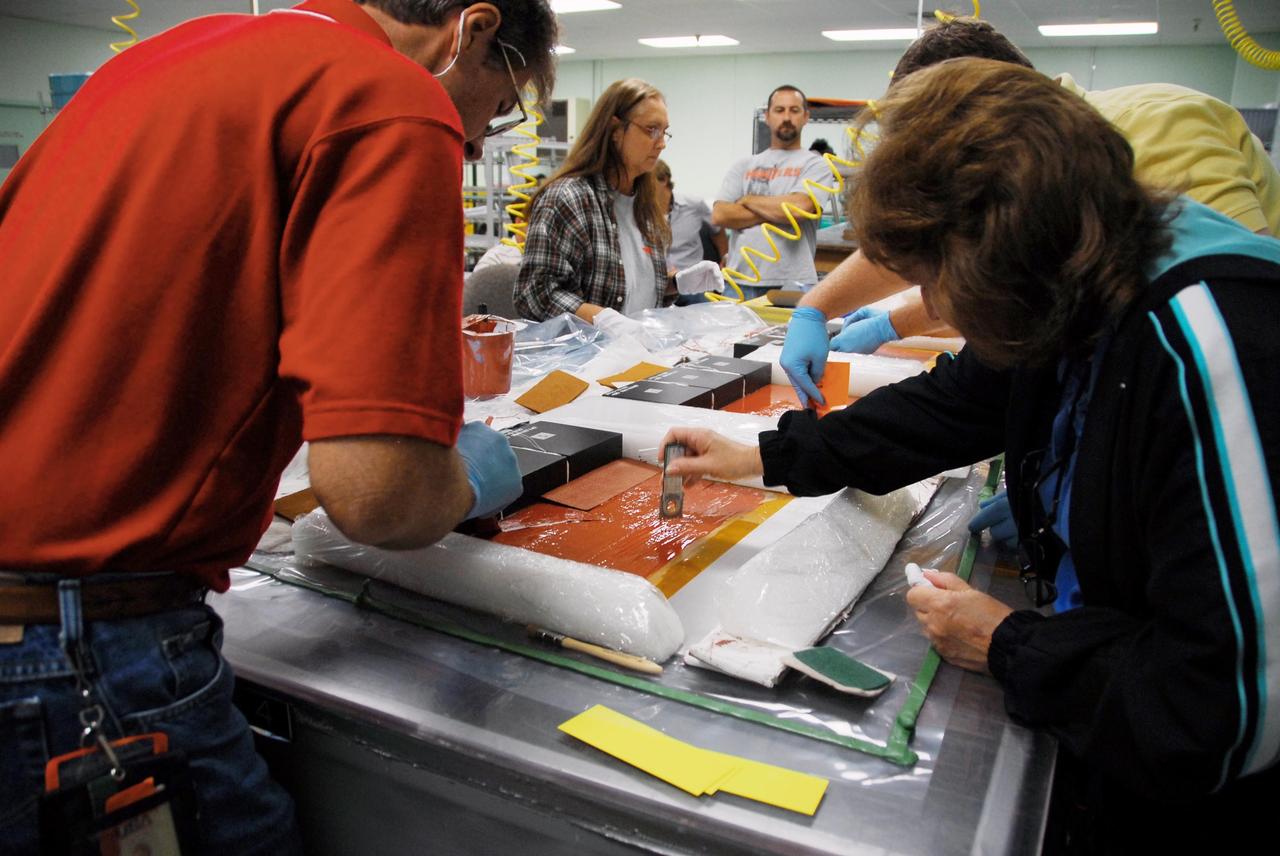
KENNEDY SPACE CENTER, FLA. -- United Space Alliance employees prepare test articles to be used in wind tunnel testing by NASA to collect data for analysis of the detached Flexible Insulation Blanket, or FIB, on Atlantis. A tear occurred in an area of the OMS pod on Atlantis during launch of mission STS-117 on June 8, 2007. The test articles each feature three tiles (Low Temperature Reusable Surface Insulation, or LRSI) affixed next to two FIB blankets, simulating the thermal protection system set-up on Atlantis' OMS pod in the vicinity of the in-flight anomaly. These test articles will be flown to Texas the morning of June 14. The TPS team at KSC has also provided a total of 22 FIB samples for other testing and analysis. Repair is under consideration following testing at KSC and Houston. Photo credit: NASA/Amanda Diller
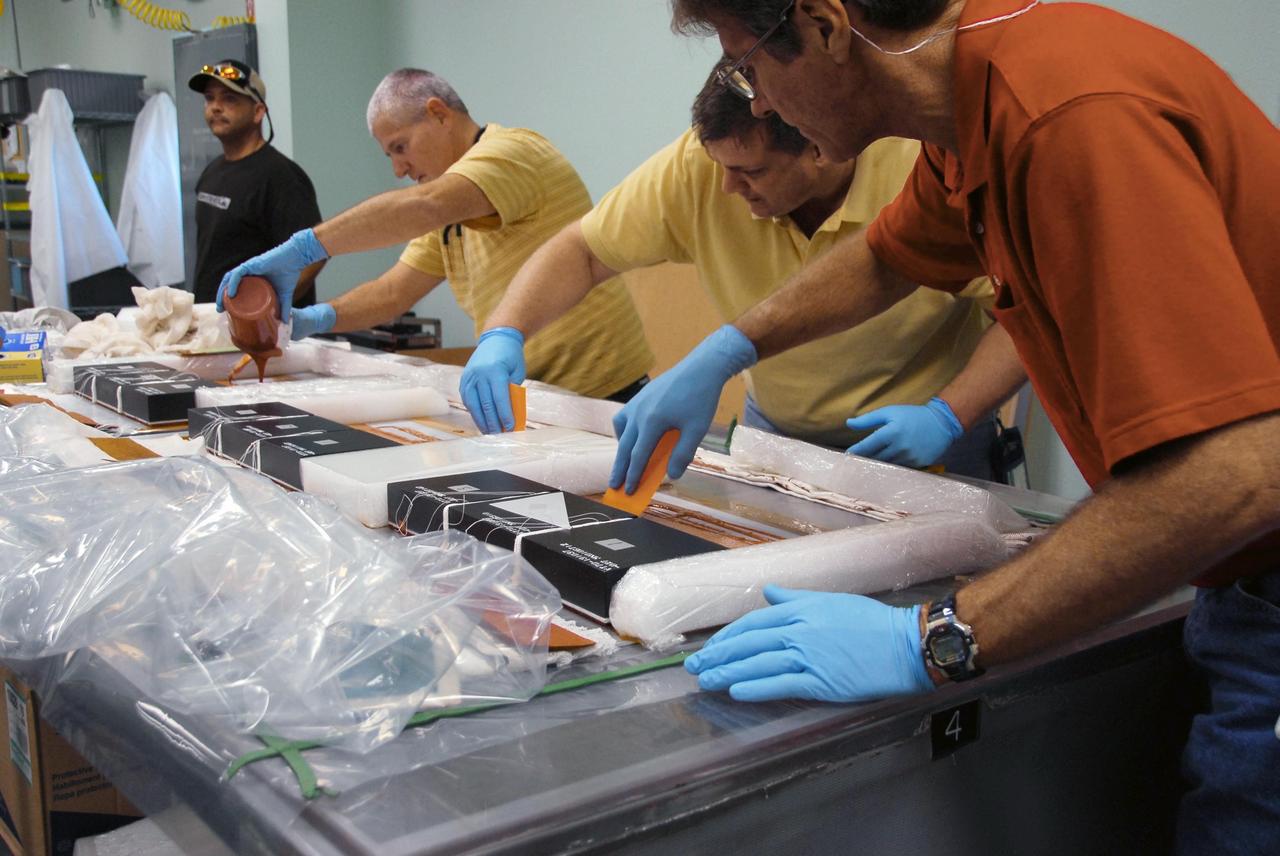
KENNEDY SPACE CENTER, FLA. -- United Space Alliance employees prepare test articles to be used in wind tunnel testing by NASA to collect data for analysis of the detached Flexible Insulation Blanket, or FIB, on Atlantis. A tear occurred in an area of the OMS pod on Atlantis during launch of mission STS-117 on June 8, 2007. The test articles each feature three tiles (Low Temperature Reusable Surface Insulation, or LRSI) affixed next to two FIB blankets, simulating the thermal protection system set-up on Atlantis' OMS pod in the vicinity of the in-flight anomaly. These test articles will be flown to Texas the morning of June 14. The TPS team at KSC has also provided a total of 22 FIB samples for other testing and analysis. Repair is under consideration following testing at KSC and Houston. Photo credit: NASA/Amanda Diller

KENNEDY SPACE CENTER, FLA. - In the Reusable Launch Vehicle (RLV) Hangar, workers stretch sheets of plastic over racks of equipment in preparation for the arrival of Hurricane Jeanne, expected to impact Central Florida Sunday. This is the fourth hurricane in 45 days to make landfall somewhere in the state. The Thermal Protection System (TPS) Facility suffered extensive damage from Hurricane Frances, causing the relocation of equipment to the RLV.
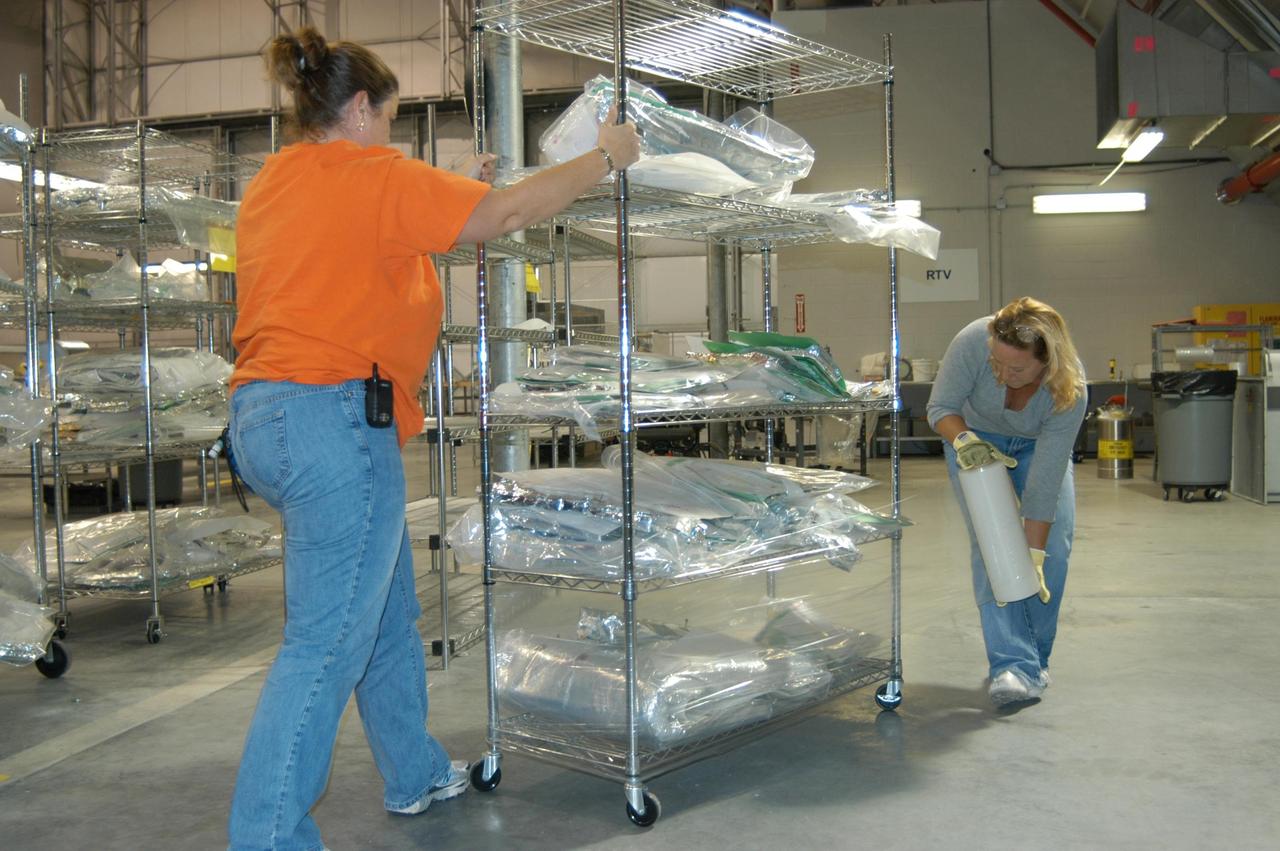
KENNEDY SPACE CENTER, FLA. - In the Reusable Launch Vehicle (RLV) Hangar, workers begin wrapping racks of equipment in preparation for the arrival of Hurricane Jeanne, expected to impact Central Florida Sunday. This is the fourth hurricane in 45 days to make landfall somewhere in the state. The Thermal Protection System (TPS) Facility suffered extensive damage from Hurricane Frances, causing the relocation of equipment to the RLV.
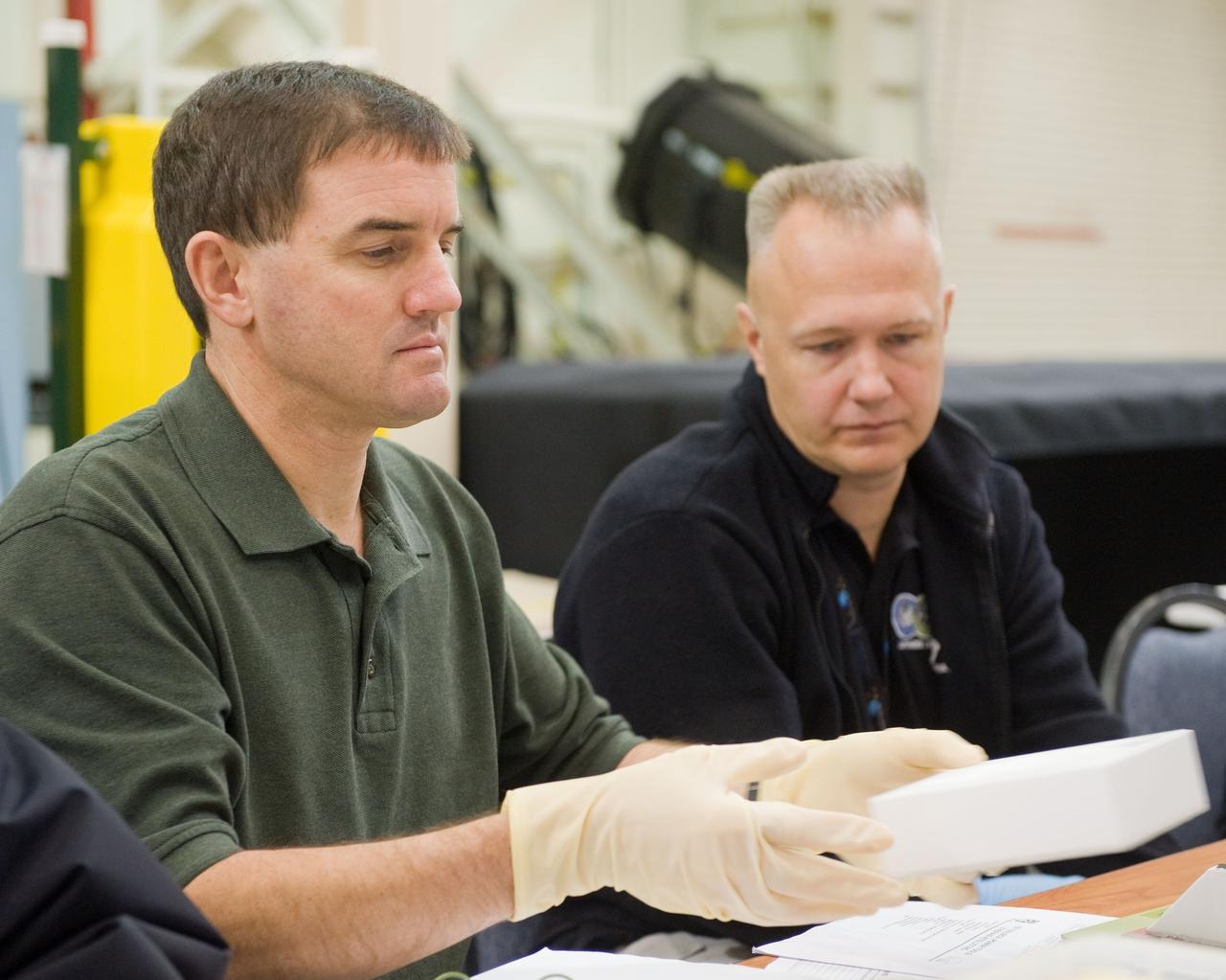
JSC2010-E-183524 (3 Nov. 2010) --- NASA astronauts Rex Walheim (left), STS-135 mission specialist; and Doug Hurley, pilot, participate in an EVA Thermal Protection System (TPS) overview training session in the TPS/ Precision Air Bearing Facility in the Space Vehicle Mock-up Facility at NASA's Johnson Space Center. STS-135 is planned to be the final mission of the space shuttle program. Photo credit: NASA or National Aeronautics and Space Administration
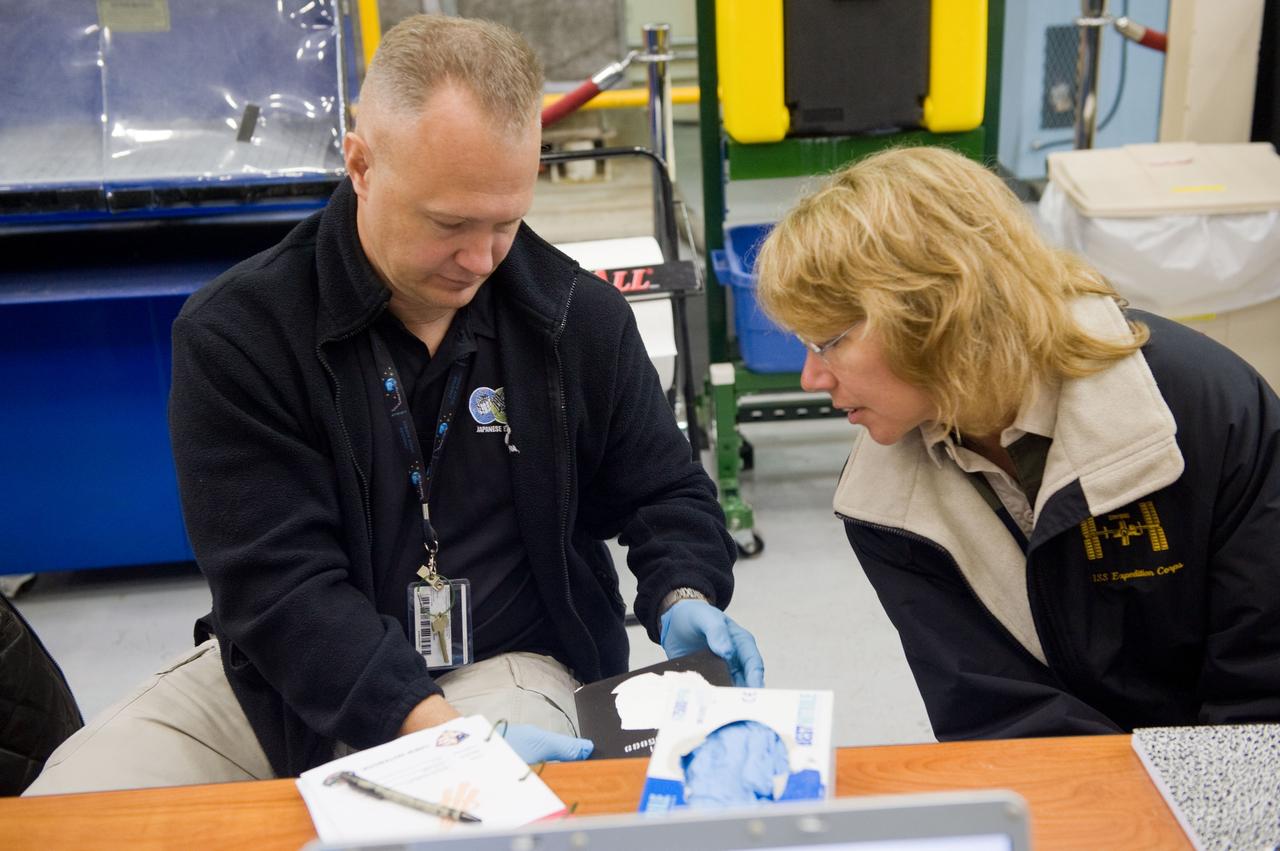
JSC2010-E-183519 (3 Nov. 2010) --- NASA astronauts Doug Hurley, STS-135 pilot; and Sandy Magnus, mission specialist, participate in an EVA Thermal Protection System (TPS) overview training session in the TPS/ Precision Air Bearing Facility in the Space Vehicle Mock-up Facility at NASA's Johnson Space Center. STS-135 is planned to be the final mission of the space shuttle program. Photo credit: NASA or National Aeronautics and Space Administration
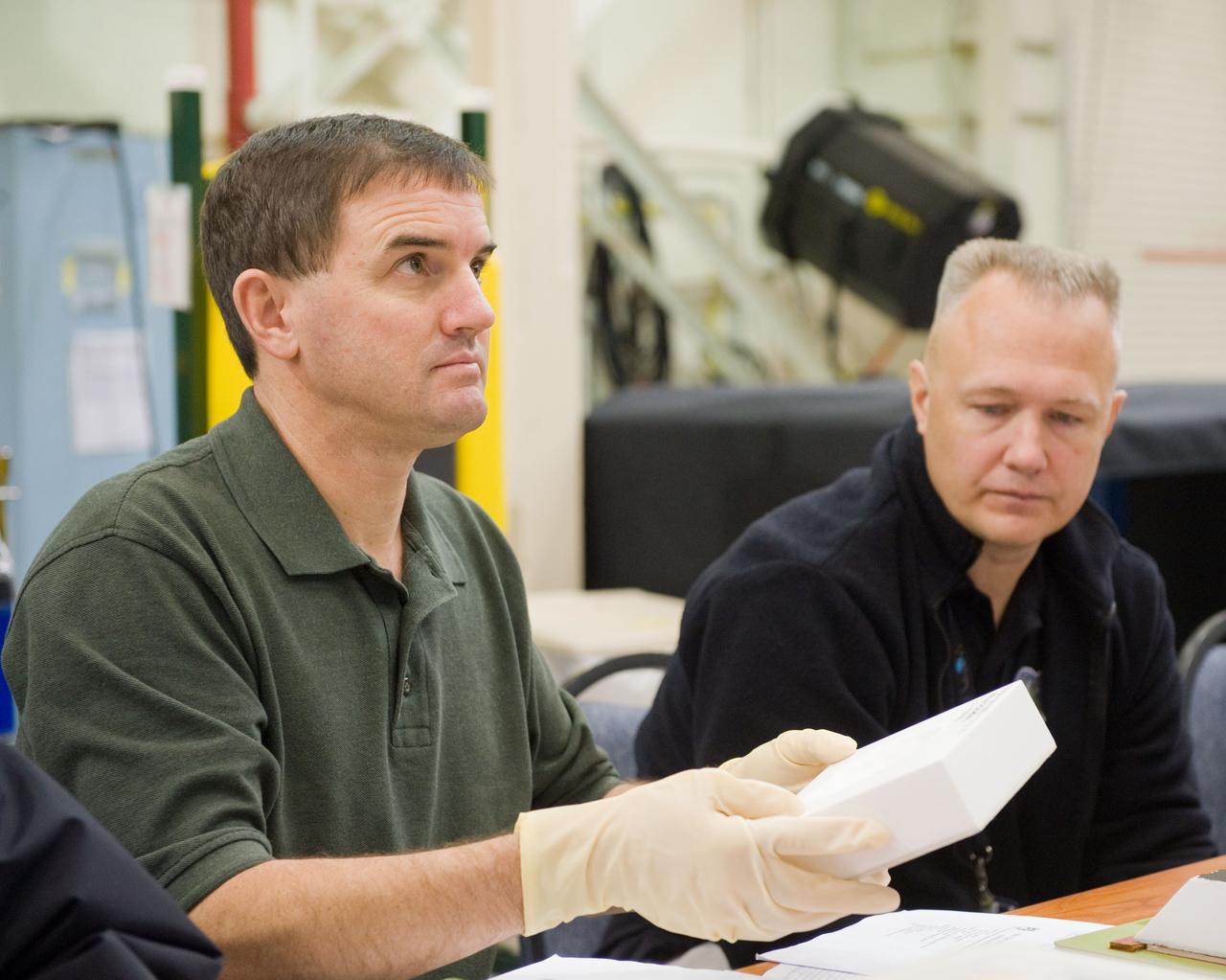
JSC2010-E-183523 (3 Nov. 2010) --- NASA astronauts Rex Walheim (left), STS-135 mission specialist; and Doug Hurley, pilot, participate in an EVA Thermal Protection System (TPS) overview training session in the TPS/ Precision Air Bearing Facility in the Space Vehicle Mock-up Facility at NASA's Johnson Space Center. STS-135 is planned to be the final mission of the space shuttle program. Photo credit: NASA or National Aeronautics and Space Administration
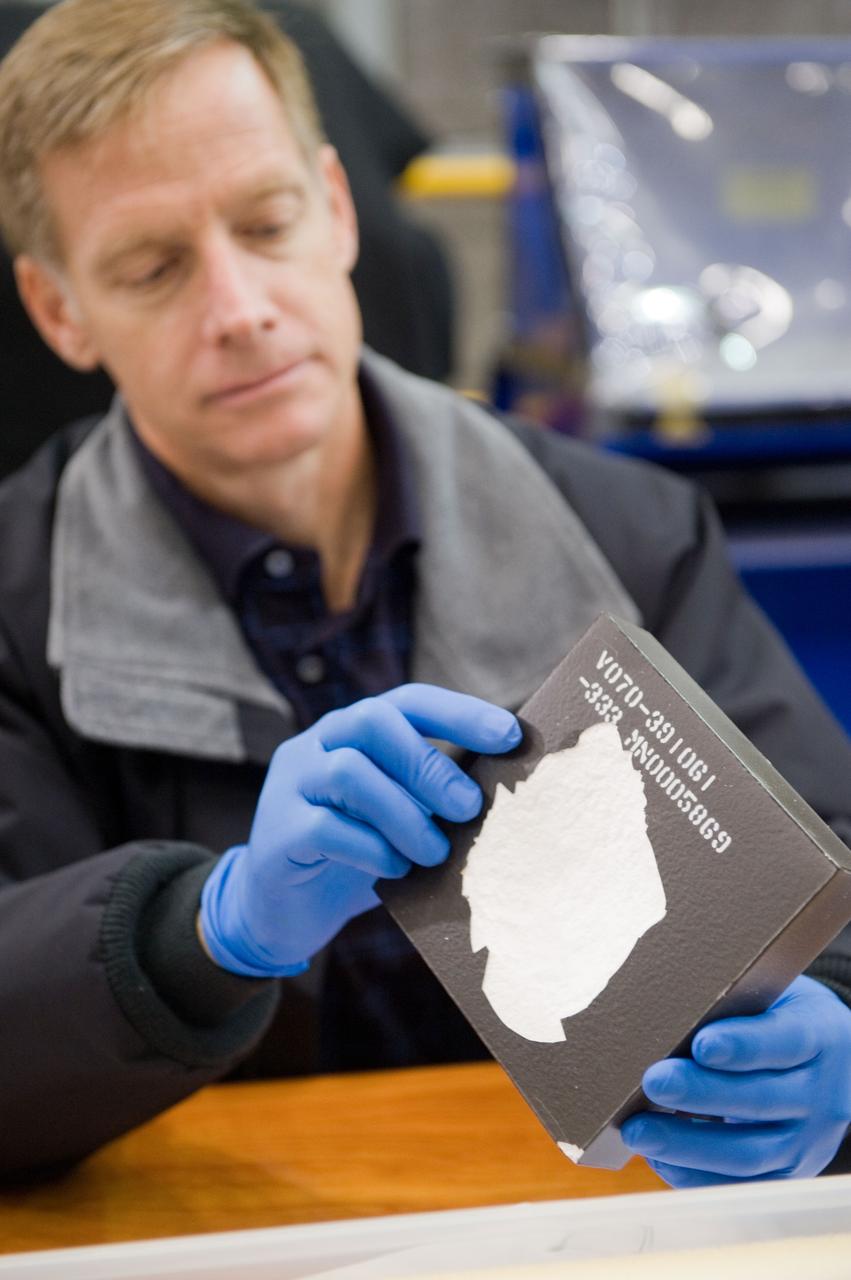
JSC2010-E-183521 (3 Nov. 2010) --- NASA astronaut Chris Ferguson, STS-135 commander, participates in an EVA Thermal Protection System (TPS) overview training session in the TPS/ Precision Air Bearing Facility in the Space Vehicle Mock-up Facility at NASA's Johnson Space Center. STS-135 is planned to be the final mission of the space shuttle program. Photo credit: NASA or National Aeronautics and Space Administration
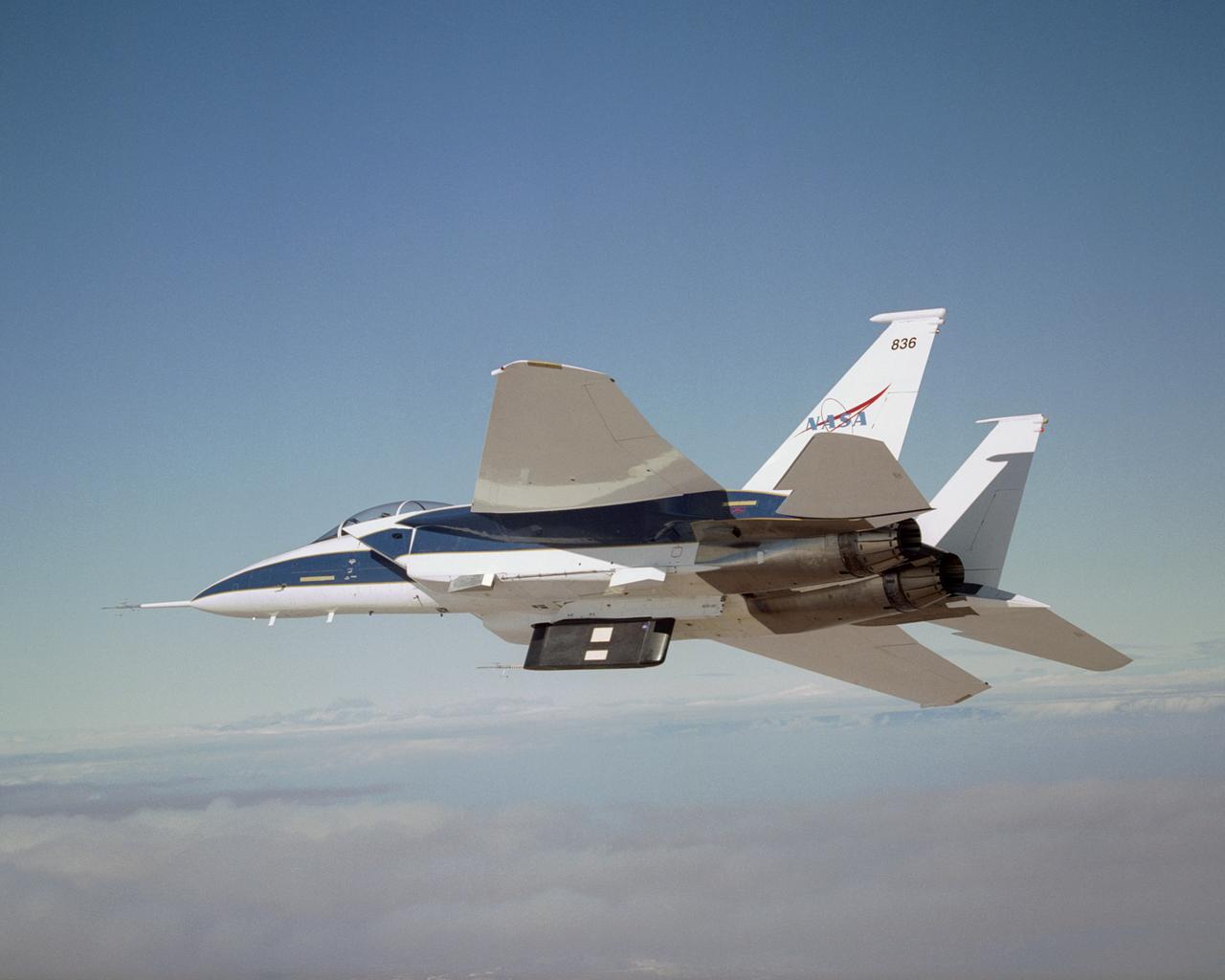
Two panels of Space Shuttle TPS insulation were mounted on the flight test fixture underneath NASA's F-15B during the Lifting Foam Trajectory flight test series.
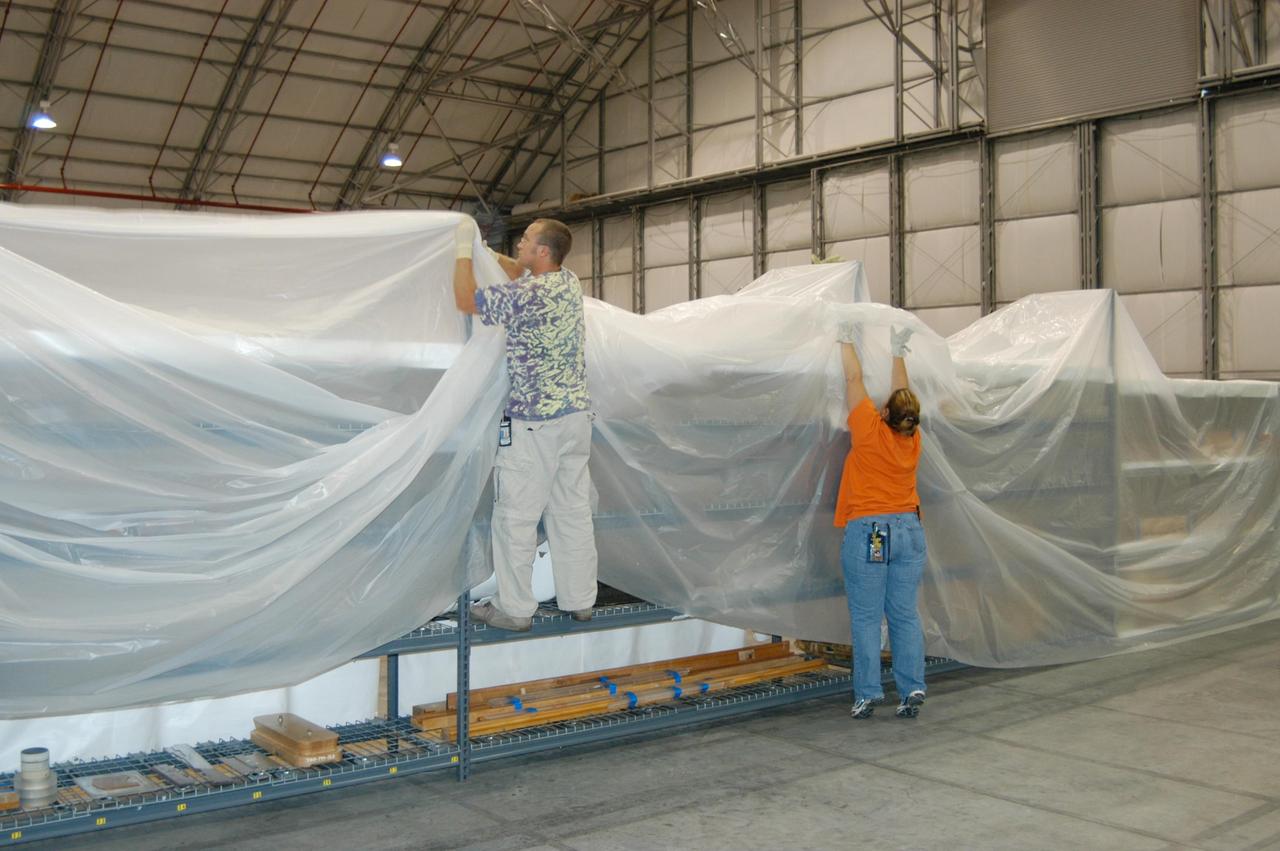
KENNEDY SPACE CENTER, FLA. - In the Reusable Launch Vehicle (RLV) Hangar, workers secure stretch sheets of plastic over racks of equipment in preparation for the arrival of Hurricane Jeanne, expected to impact Central Florida Sunday. This is the fourth hurricane in 45 days to make landfall somewhere in the state. The Thermal Protection System (TPS) Facility suffered extensive damage from Hurricane Frances, causing the relocation of equipment to the RLV.

A close up of the Flight Test Fixture II, mounted on the underside of the F-15B Aerodynamic Flight Facility aircraft. The Thermal Protection System (TPS) samples, which included metallic Inconel tiles, soft Advanced Flexible Reusable Surface Insulation tiles, and sealing materials, were attached to the forward-left side position of the test fixture. In-flight video from the aircraft's on-board video system, as well as chase aircraft photos and video footage, documented the condition of the TPS during flights. Surface pressures over the TPS was measured by thermocouples contained in instrumentation "islands," to document shear and shock loads.
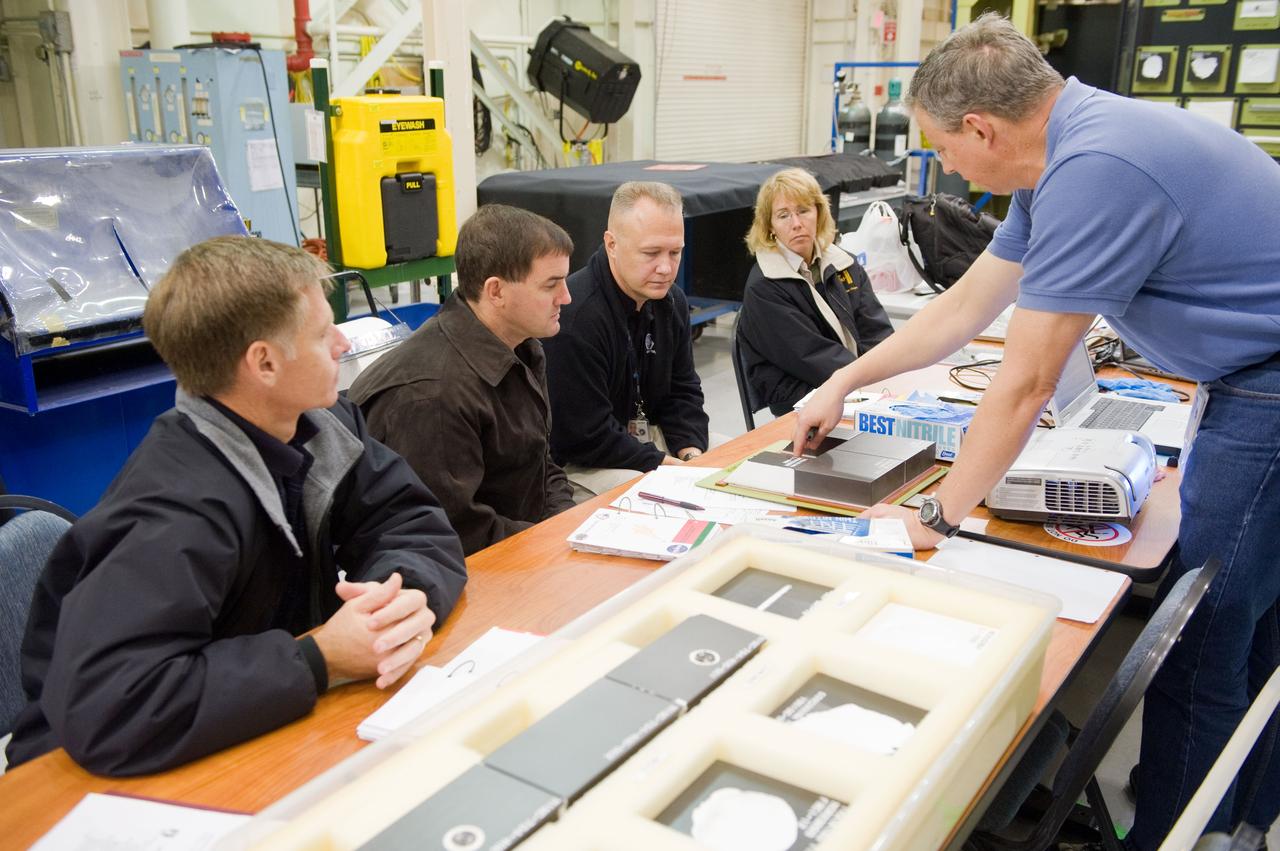
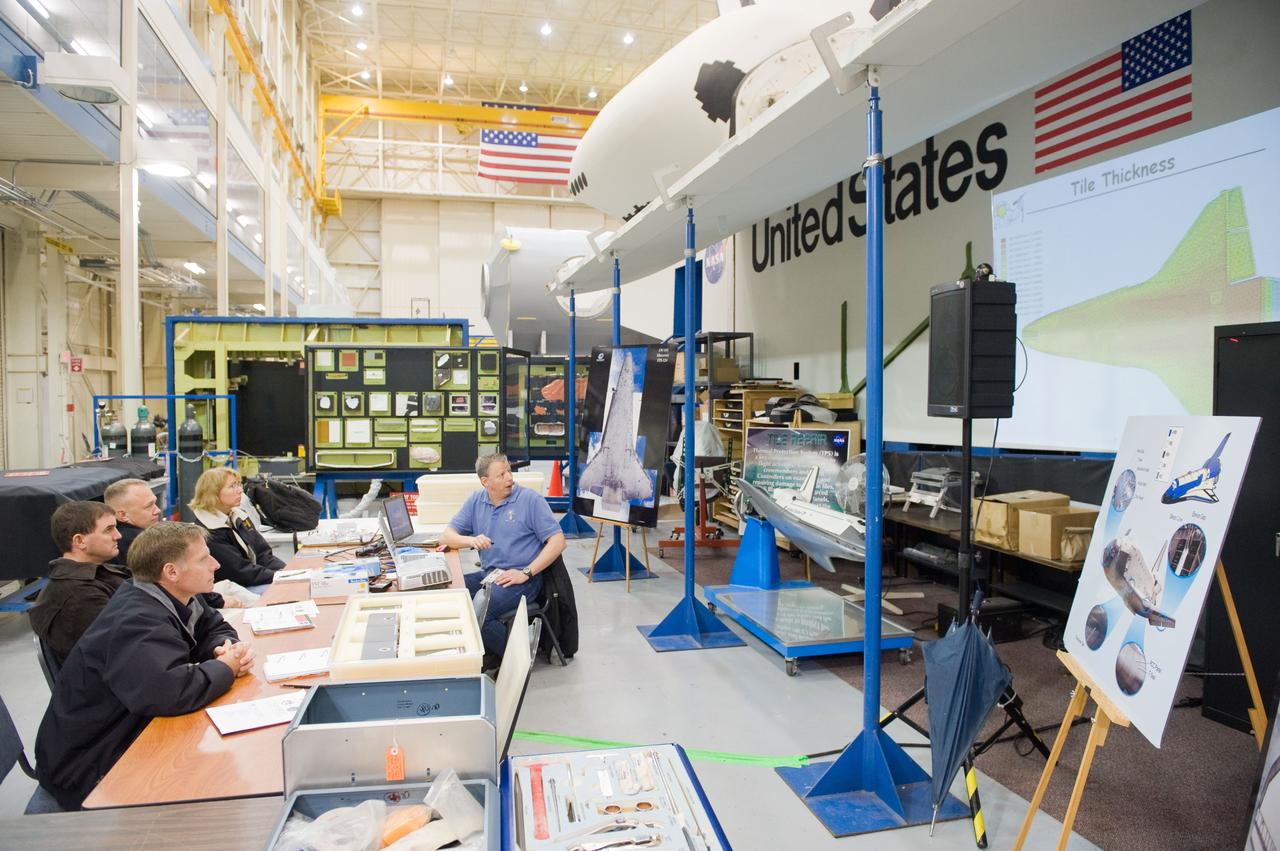
JSC2010-E-183514 (3 Nov. 2010) --- STS-135 crew members participate in an EVA Thermal Protection System (TPS) overview training session in the TPS/ Precision Air Bearing Facility in the Space Vehicle Mock-up Facility at NASA's Johnson Space Center. Pictured from the left are NASA astronauts Chris Ferguson, commander; Rex Walheim, mission specialist; Doug Hurley, pilot; and Sandy Magnus, mission specialist. John Ray (right) assisted the crew members. STS-135 is planned to be the final mission of the space shuttle program. Photo credit: NASA or National Aeronautics and Space Administration
JSC2010-E-183512 (3 Nov. 2010) --- STS-135 crew members participate in an EVA Thermal Protection System (TPS) overview training session in the TPS/ Precision Air Bearing Facility in the Space Vehicle Mock-up Facility at NASA's Johnson Space Center. Pictured from the left are NASA astronauts Chris Ferguson, commander; Rex Walheim, mission specialist; Doug Hurley, pilot; and Sandy Magnus, mission specialist. John Ray (right) assisted the crew members. STS-135 is planned to be the final mission of the space shuttle program. Photo credit: NASA or National Aeronautics and Space Administration
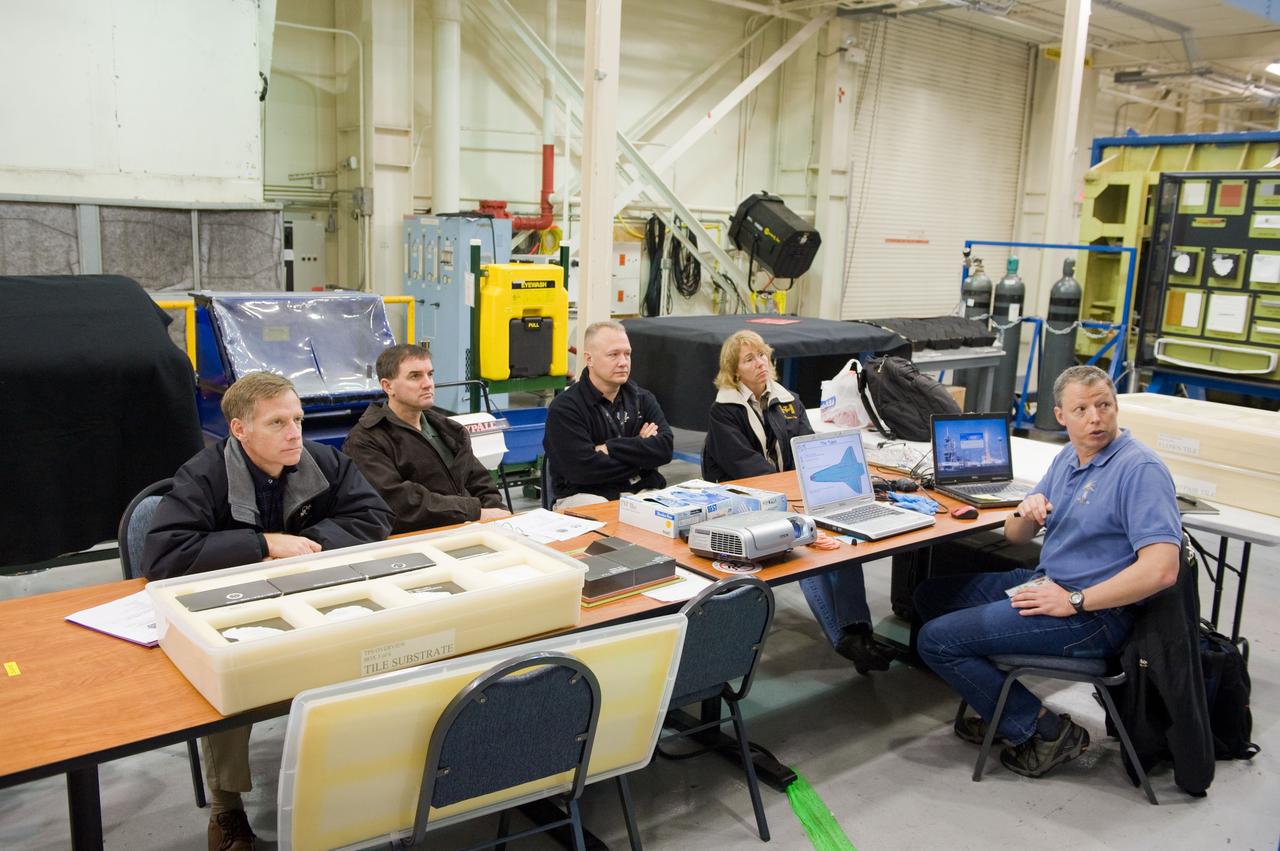
JSC2010-E-183513 (3 Nov. 2010) --- STS-135 crew members participate in an EVA Thermal Protection System (TPS) overview training session in the TPS/ Precision Air Bearing Facility in the Space Vehicle Mock-up Facility at NASA's Johnson Space Center. Pictured from the left are NASA astronauts Chris Ferguson, commander; Rex Walheim, mission specialist; Doug Hurley, pilot; and Sandy Magnus, mission specialist. John Ray (right) assisted the crew members. STS-135 is planned to be the final mission of the space shuttle program. Photo credit: NASA or National Aeronautics and Space Administration

In-flight photo of the NASA F-15B used in tests of the X-33 Thermal Protection System (TPS) materials. Flying at subsonic speeds, the F-15B tests measured the air loads on the proposed X-33 protective materials. In contrast, shock loads testing investigated the local impact of the supersonic shock wave itself on the TPS materials. Similar tests had been done in 1985 for the space shuttle tiles, using an F-104 aircraft.
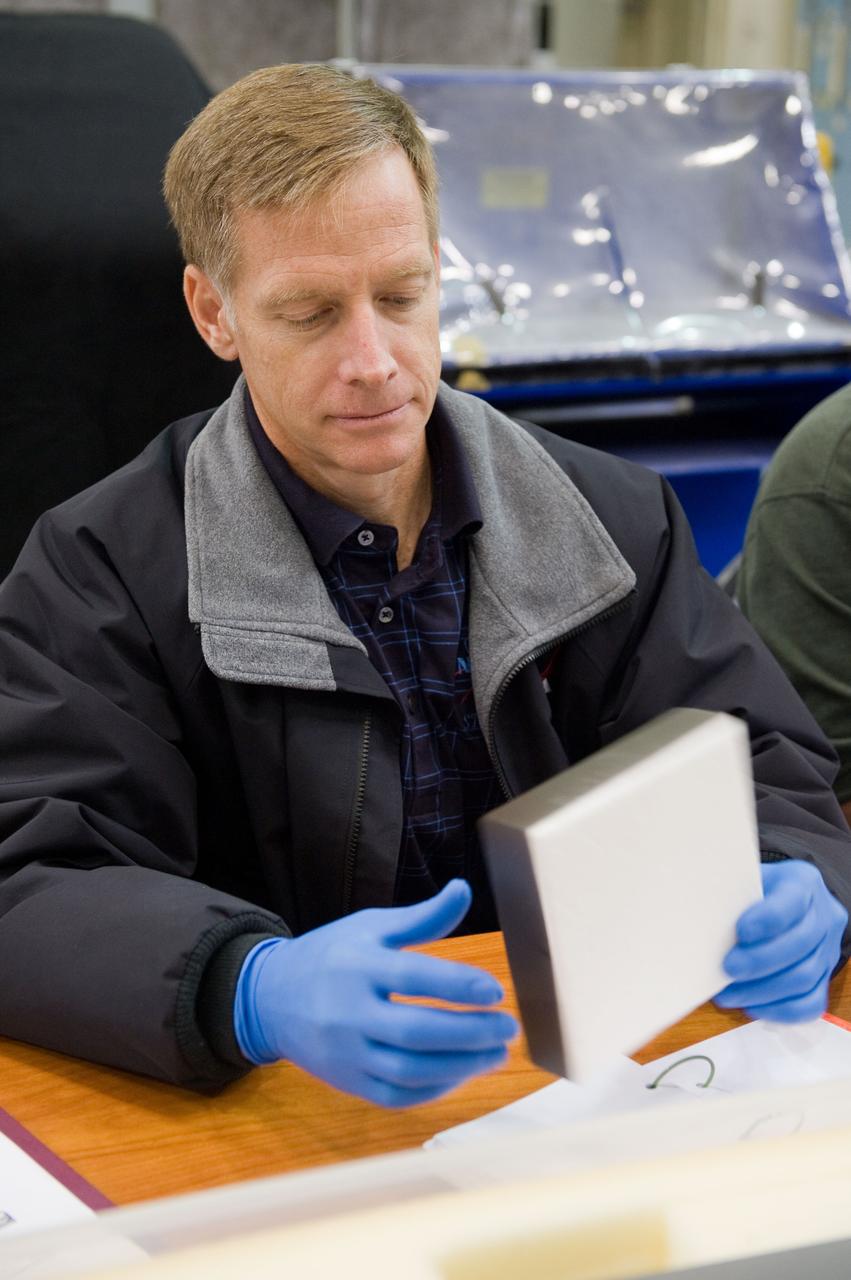
PHOTO DATE: 11-03-10 LOCATION: Bldg. 9NW - TPST Training Area SUBJECT: STS-335 crew training, EVA TPS Overview with instructor John Ray WORK ORDER: 03247-BS__STS335TILEREPAIR_11-03-10 PHOTOGRAPHER: BILL STAFFORD
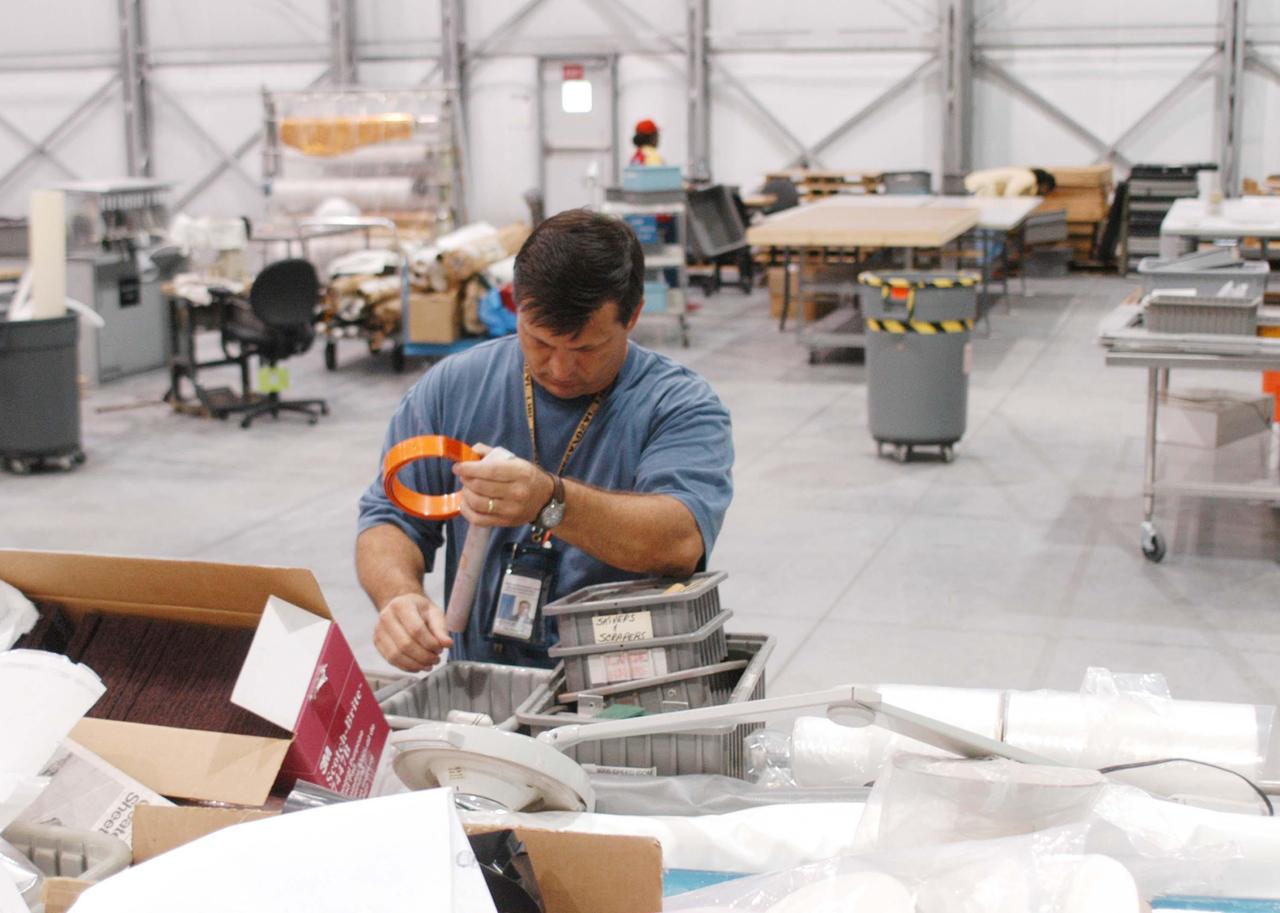
KENNEDY SPACE CENTER, FLA. - In the RLV hangar at KSC, United Space Alliance worker Steve Mitchell unpacks equipment that was removed from the hurricane-ravaged Thermal Protection System Facility (TPSF). The facility, which creates the TPS tiles, blankets and all the internal thermal control systems for the Space Shuttles, is almost totally unserviceable at this time after losing approximately 35 percent of its roof due to Hurricane Frances, which blew across Central Florida Sept. 4-5. The maximum wind at the surface from Hurricane Frances was 94 mph from the northeast at 6:40 a.m. on Sunday, September 5. It was recorded at a weather tower located on the east shore of the Mosquito Lagoon near the Cape Canaveral National Seashore. The highest sustained wind at KSC was 68 mph.
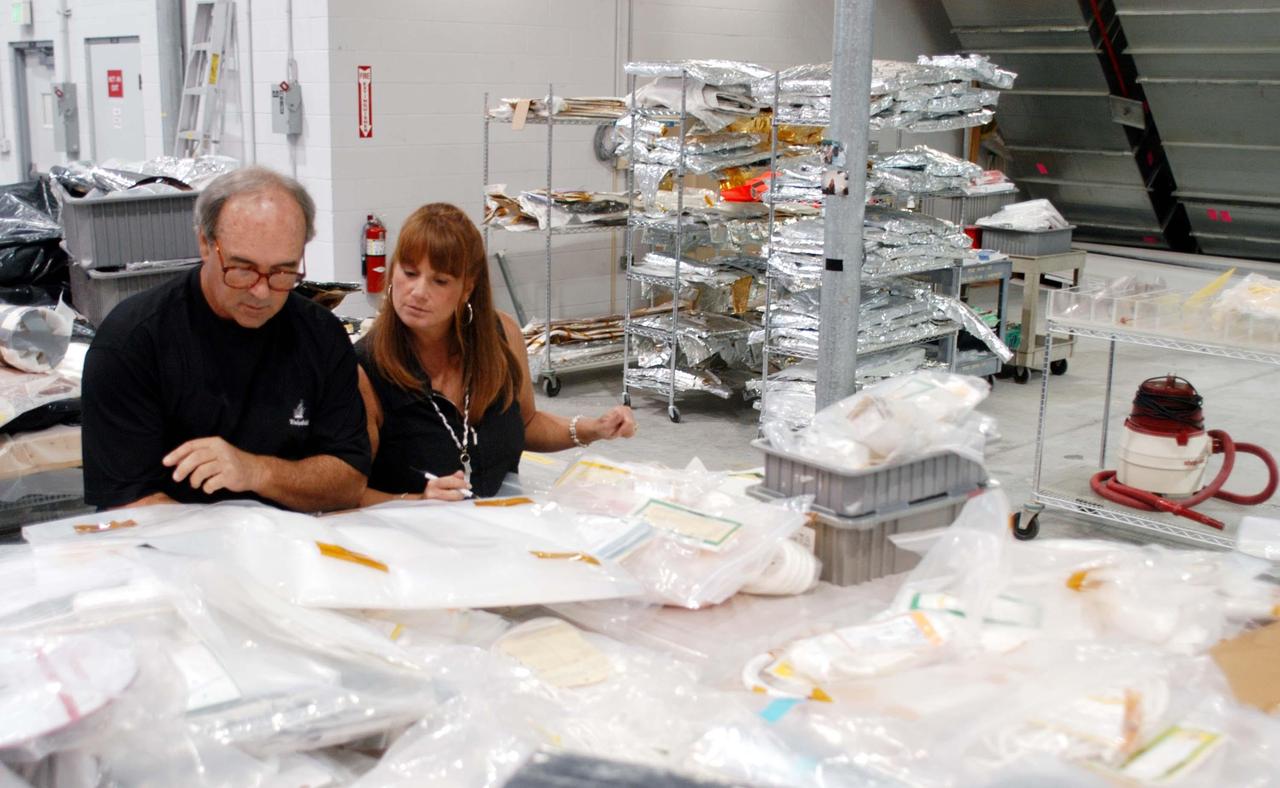
KENNEDY SPACE CENTER, FLA. - In the RLV hangar at KSC, United Space Alliance workers Frank Rhodes and Lynn Rosenbauer look at wrapped material removed from the hurricane-ravaged Thermal Protection System Facility (TPSF). The facility, which creates the TPS tiles, blankets and all the internal thermal control systems for the Space Shuttles, is almost totally unserviceable at this time after losing approximately 35 percent of its roof due to Hurricane Frances, which blew across Central Florida Sept. 4-5. The maximum wind at the surface from Hurricane Frances was 94 mph from the northeast at 6:40 a.m. on Sunday, September 5. It was recorded at a weather tower located on the east shore of the Mosquito Lagoon near the Cape Canaveral National Seashore. The highest sustained wind at KSC was 68 mph.
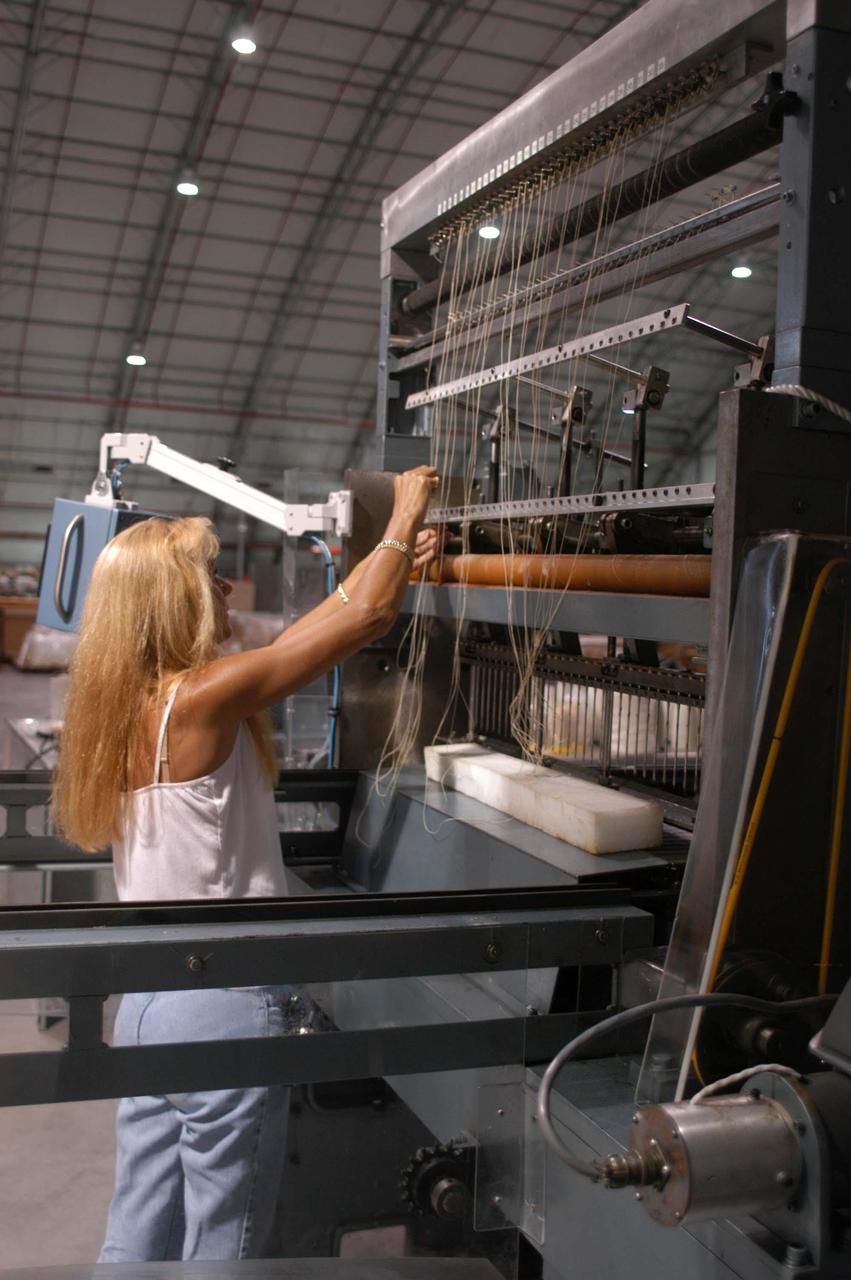
KENNEDY SPACE CENTER, FLA. - United Space Alliance worker Bab Jarosz works with the 30-needle sewing machines from the Thermal Protection System Facility (TPSF). A temporary tile shop has been set up in the RLV hangar at KSC after equipment was removed from the hurricane-ravaged facility. The TPSF, which creates the TPS tiles, blankets and all the internal thermal control systems for the Space Shuttles, is almost totally unserviceable at this time after losing approximately 35 percent of its roof due to Hurricane Frances, which blew across Central Florida Sept. 4-5. The maximum wind at the surface from Hurricane Frances was 94 mph from the northeast at 6:40 a.m. on Sunday, September 5. It was recorded at a weather tower located on the east shore of the Mosquito Lagoon near the Cape Canaveral National Seashore. The highest sustained wind at KSC was 68 mph.
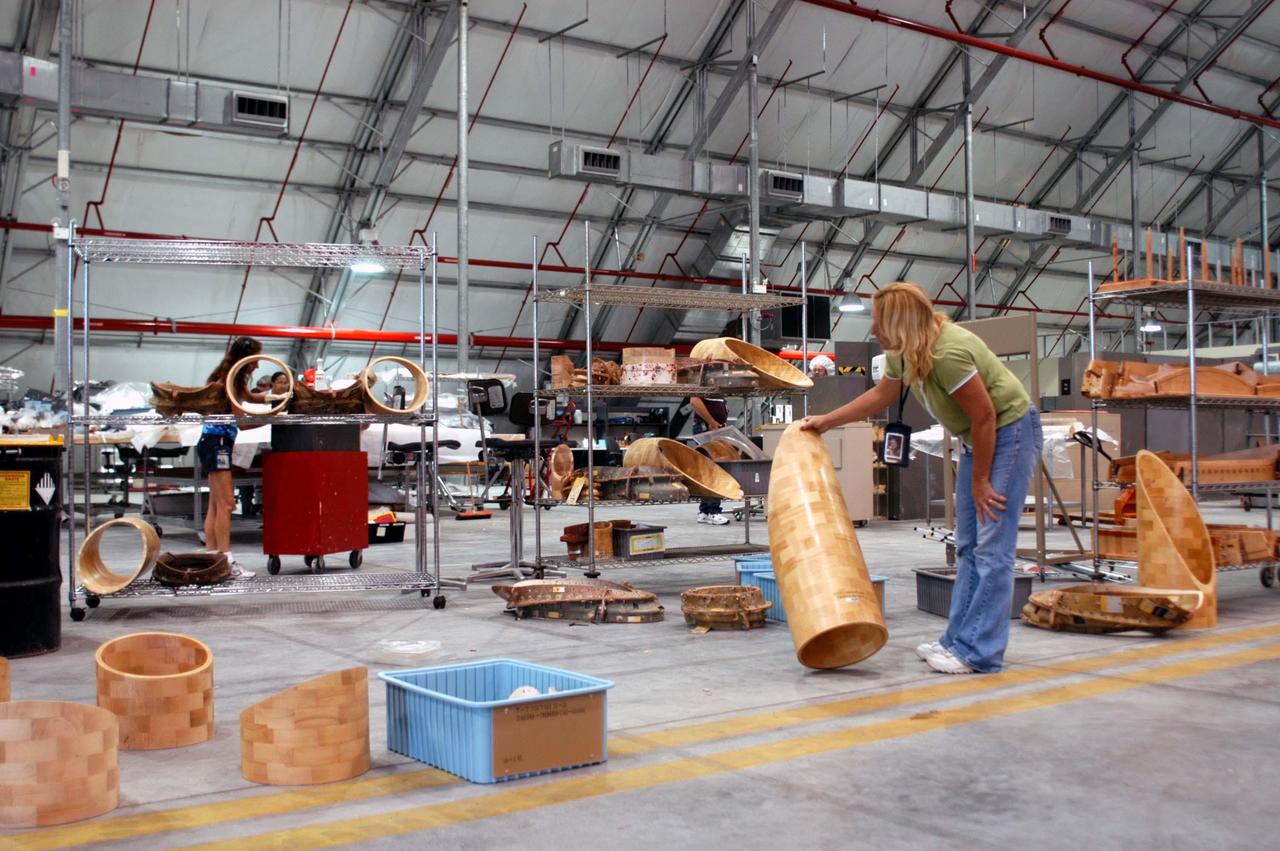
KENNEDY SPACE CENTER, FLA. - United Space Alliance worker Janet Mills stores equipment removed from the hurricane-ravaged Thermal Protection System Facility (TPSF) in the RLV hangar at KSC. The TPSF, which creates the TPS tiles, blankets and all the internal thermal control systems for the Space Shuttles, is almost totally unserviceable at this time after losing approximately 35 percent of its roof due to Hurricane Frances, which blew across Central Florida Sept. 4-5. Undamaged equipment has been moved to the hangar. The maximum wind at the surface from Hurricane Frances was 94 mph from the northeast at 6:40 a.m. on Sunday, September 5. It was recorded at a weather tower located on the east shore of the Mosquito Lagoon near the Cape Canaveral National Seashore. The highest sustained wind at KSC was 68 mph.
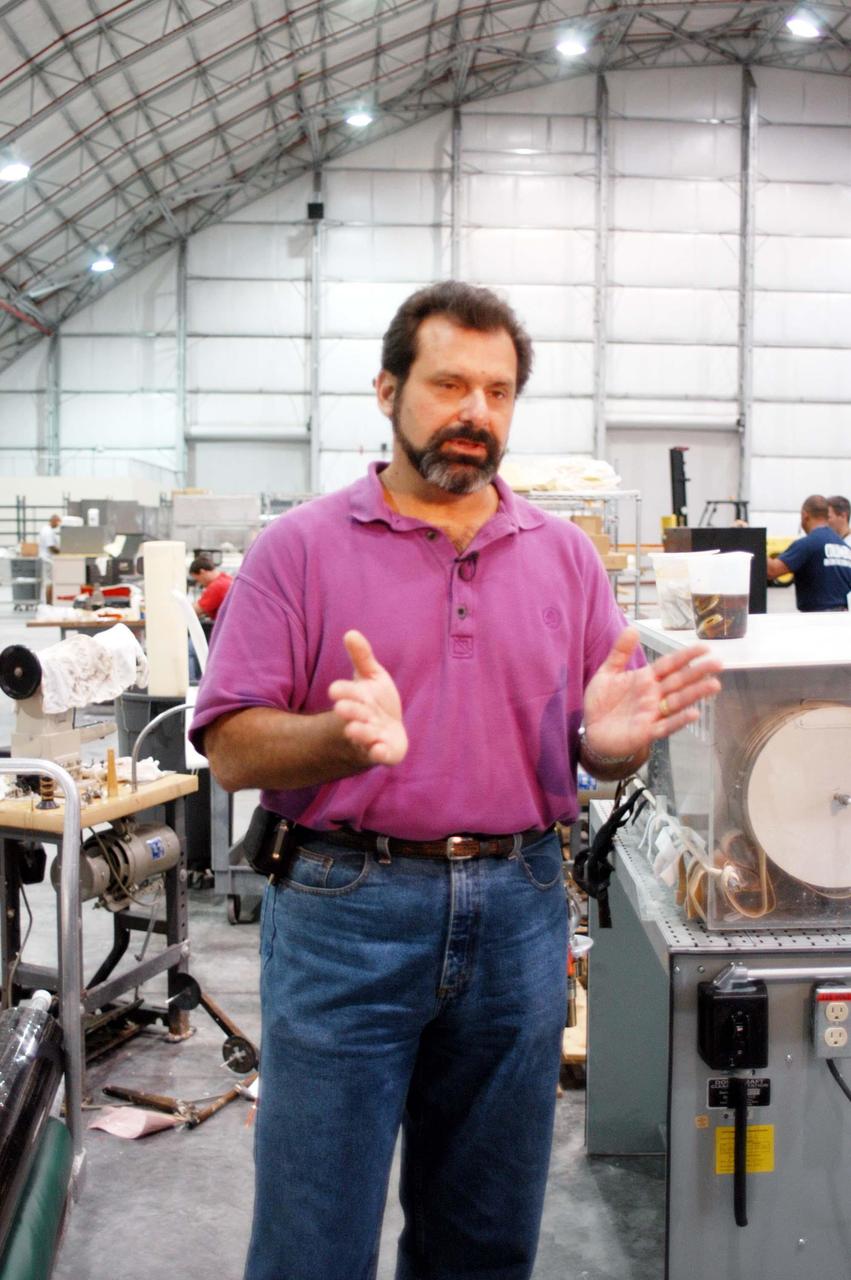
KENNEDY SPACE CENTER, FLA. - In the RLV hangar at KSC, Kevin Harrington, manager of Softgoods Production, talks to workers about the equipment removed from the hurricane-ravaged Thermal Protection System Facility (TPSF) now being stored in the hangar. The facility, which creates the TPS tiles, blankets and all the internal thermal control systems for the Space Shuttles, is almost totally unserviceable at this time after losing approximately 35 percent of its roof due to Hurricane Frances, which blew across Central Florida Sept. 4-5. The maximum wind at the surface from Hurricane Frances was 94 mph from the northeast at 6:40 a.m. on Sunday, September 5. It was recorded at a weather tower located on the east shore of the Mosquito Lagoon near the Cape Canaveral National Seashore. The highest sustained wind at KSC was 68 mph.
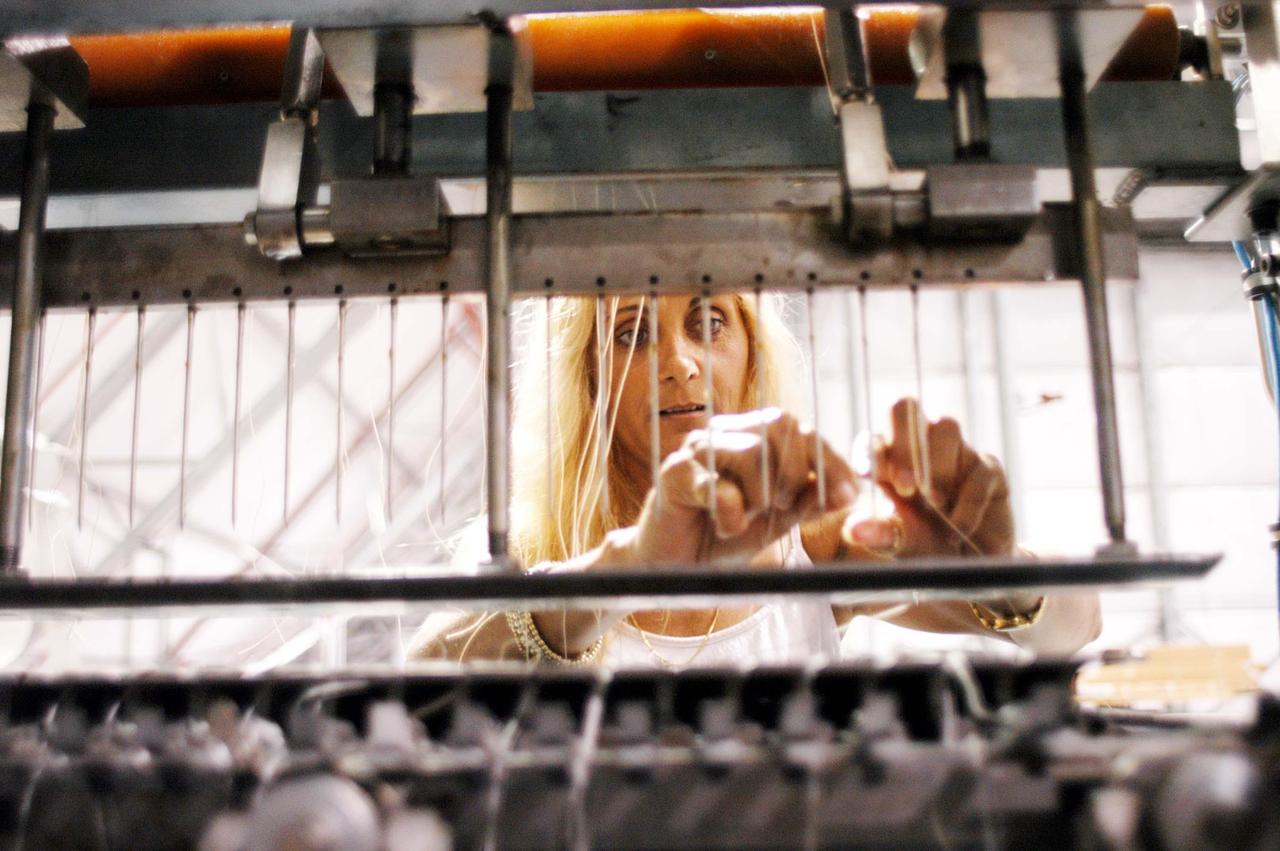
KENNEDY SPACE CENTER, FLA. - United Space Alliance worker Bab Jarosz works with the 30-needle sewing machines from the Thermal Protection System Facility (TPSF). A temporary tile shop has been set up in the RLV hangar at KSC after equipment was removed from the hurricane-ravaged facility. The TPSF, which creates the TPS tiles, blankets and all the internal thermal control systems for the Space Shuttles, is almost totally unserviceable at this time after losing approximately 35 percent of its roof due to Hurricane Frances, which blew across Central Florida Sept. 4-5. The maximum wind at the surface from Hurricane Frances was 94 mph from the northeast at 6:40 a.m. on Sunday, September 5. It was recorded at a weather tower located on the east shore of the Mosquito Lagoon near the Cape Canaveral National Seashore. The highest sustained wind at KSC was 68 mph.
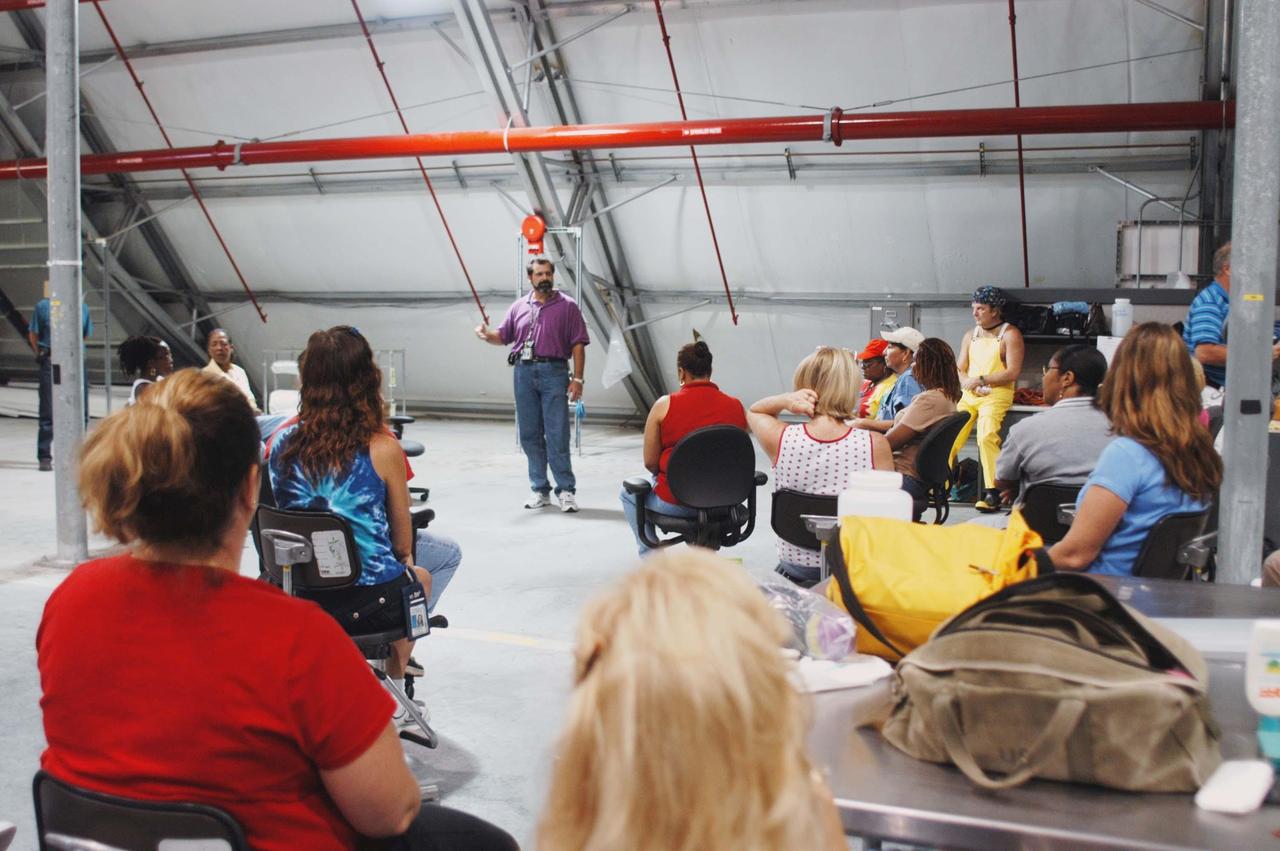
KENNEDY SPACE CENTER, FLA. - In the RLV hangar at KSC, Steve Harrington talks to workers about the equipment removed from the hurricane-ravaged Thermal Protection System Facility (TPSF) now being stored in the hangar. The facility, which creates the TPS tiles, blankets and all the internal thermal control systems for the Space Shuttles, is almost totally unserviceable at this time after losing approximately 35 percent of its roof due to Hurricane Frances, which blew across Central Florida Sept. 4-5. The maximum wind at the surface from Hurricane Frances was 94 mph from the northeast at 6:40 a.m. on Sunday, September 5. It was recorded at a weather tower located on the east shore of the Mosquito Lagoon near the Cape Canaveral National Seashore. The highest sustained wind at KSC was 68 mph.
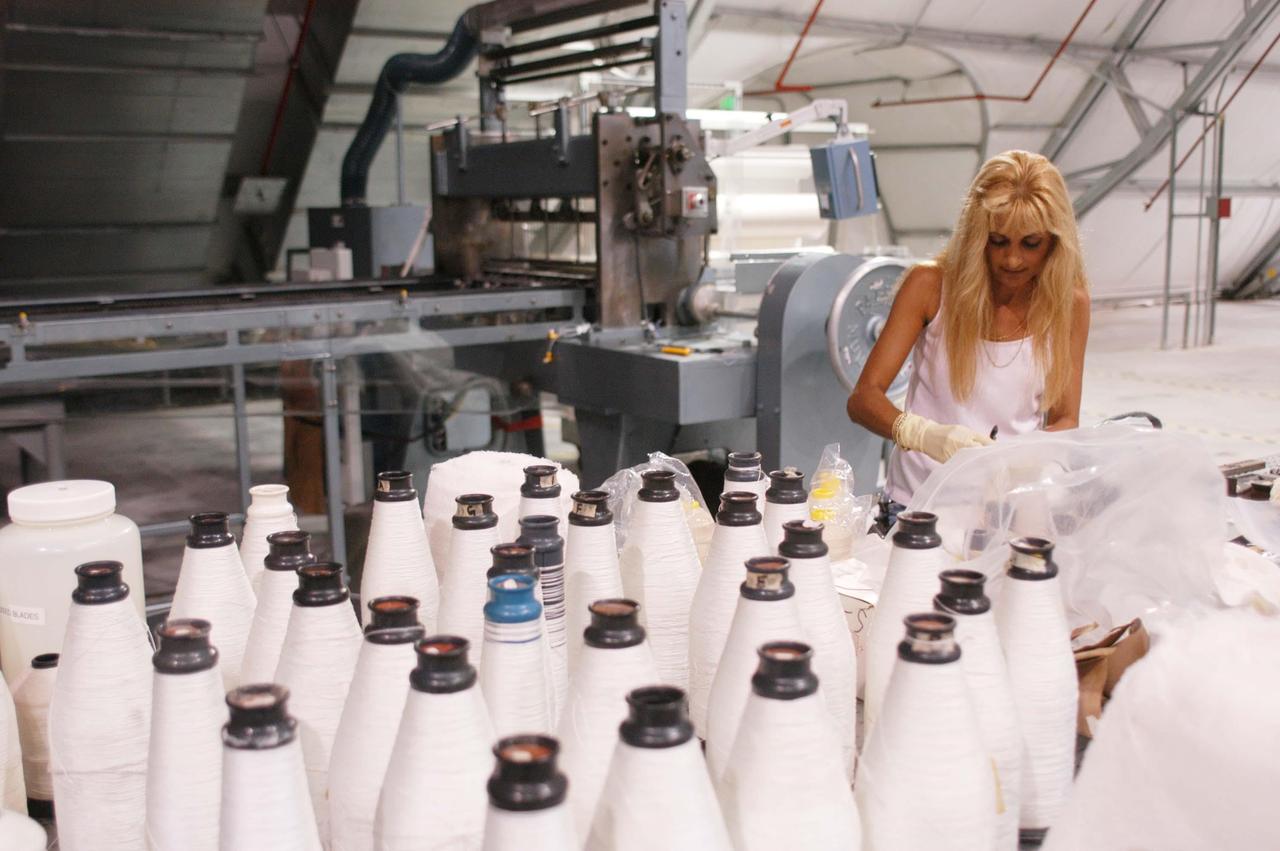
KENNEDY SPACE CENTER, FLA. - A temporary tile shop has been set up in the RLV hangar at KSC after equipment was removed from the hurricane-ravaged Thermal Protection System Facility (TPSF). Here United Space Alliance worker Bab Jarosz works with the 30-needle sewing machines. The TPSF, which creates the TPS tiles, blankets and all the internal thermal control systems for the Space Shuttles, is almost totally unserviceable at this time after losing approximately 35 percent of its roof due to Hurricane Frances, which blew across Central Florida Sept. 4-5. The maximum wind at the surface from Hurricane Frances was 94 mph from the northeast at 6:40 a.m. on Sunday, September 5. It was recorded at a weather tower located on the east shore of the Mosquito Lagoon near the Cape Canaveral National Seashore. The highest sustained wind at KSC was 68 mph.
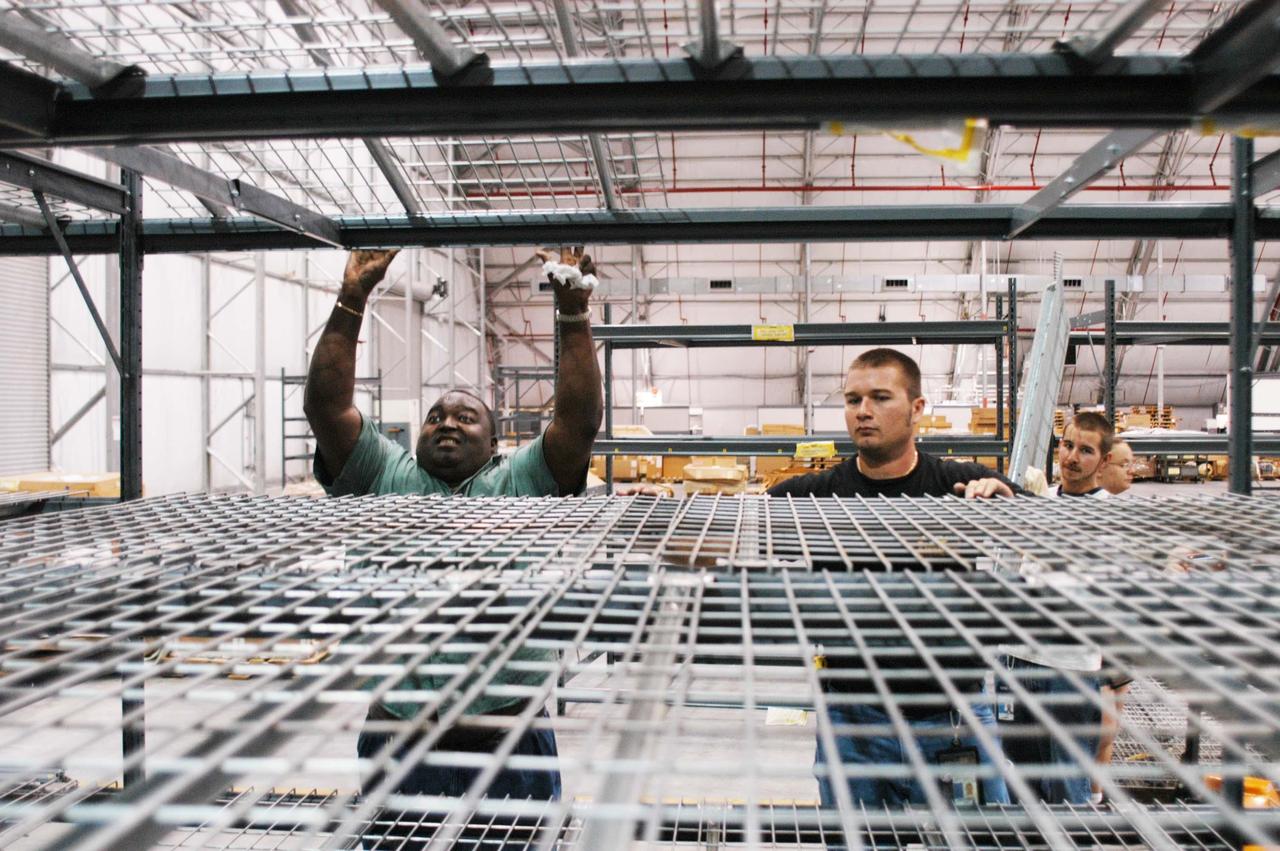
KENNEDY SPACE CENTER, FLA. - In the RLV hangar at KSC, United Space Alliance workers Matt Carter (left) and Mike Sherman set up racks to hold equipment removed from the hurricane-ravaged Thermal Protection System Facility (TPSF). The facility, which creates the TPS tiles, blankets and all the internal thermal control systems for the Space Shuttles, is almost totally unserviceable at this time after losing approximately 35 percent of its roof due to Hurricane Frances, which blew across Central Florida Sept. 4-5. The maximum wind at the surface from Hurricane Frances was 94 mph from the northeast at 6:40 a.m. on Sunday, September 5. It was recorded at a weather tower located on the east shore of the Mosquito Lagoon near the Cape Canaveral National Seashore. The highest sustained wind at KSC was 68 mph.
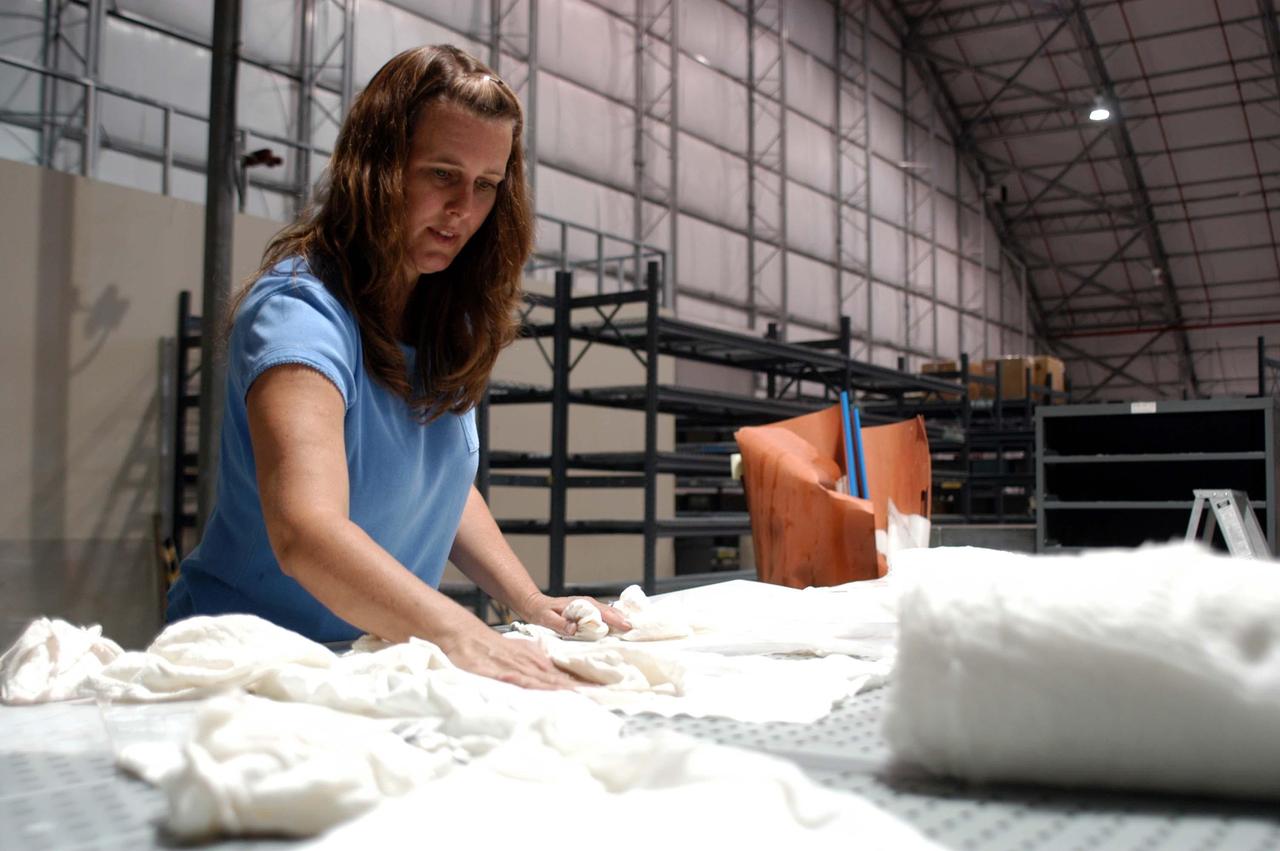
KENNEDY SPACE CENTER, FLA. - In the RLV hangar at KSC, Terri McCall cleans up equipment removed from the hurricane-ravaged Thermal Protection System Facility (TPSF). The facility, which creates the TPS tiles, blankets and all the internal thermal control systems for the Space Shuttles, is almost totally unserviceable at this time after losing approximately 35 percent of its roof due to Hurricane Frances, which blew across Central Florida Sept. 4-5. The maximum wind at the surface from Hurricane Frances was 94 mph from the northeast at 6:40 a.m. on Sunday, September 5. It was recorded at a weather tower located on the east shore of the Mosquito Lagoon near the Cape Canaveral National Seashore. The highest sustained wind at KSC was 68 mph.

KENNEDY SPACE CENTER, FLA. - In the Columbia debris hangar at KSC, a United Space Alliance worker lines up air heaters salvaged from the hurricane-ravaged Thermal Protection System Facility (TPSF) in order to dry them out. The TPSF, which creates the TPS tiles, blankets and all the internal thermal control systems for the Space Shuttles, is almost totally unserviceable at this time after losing approximately 35 percent of its roof due to Hurricane Frances, which blew across Central Florida Sept. 4-5. Undamaged equipment has been moved to the RLV hangar at KSC. The maximum wind at the surface from Hurricane Frances was 94 mph from the northeast at 6:40 a.m. on Sunday, September 5. It was recorded at a weather tower located on the east shore of the Mosquito Lagoon near the Cape Canaveral National Seashore. The highest sustained wind at KSC was 68 mph.
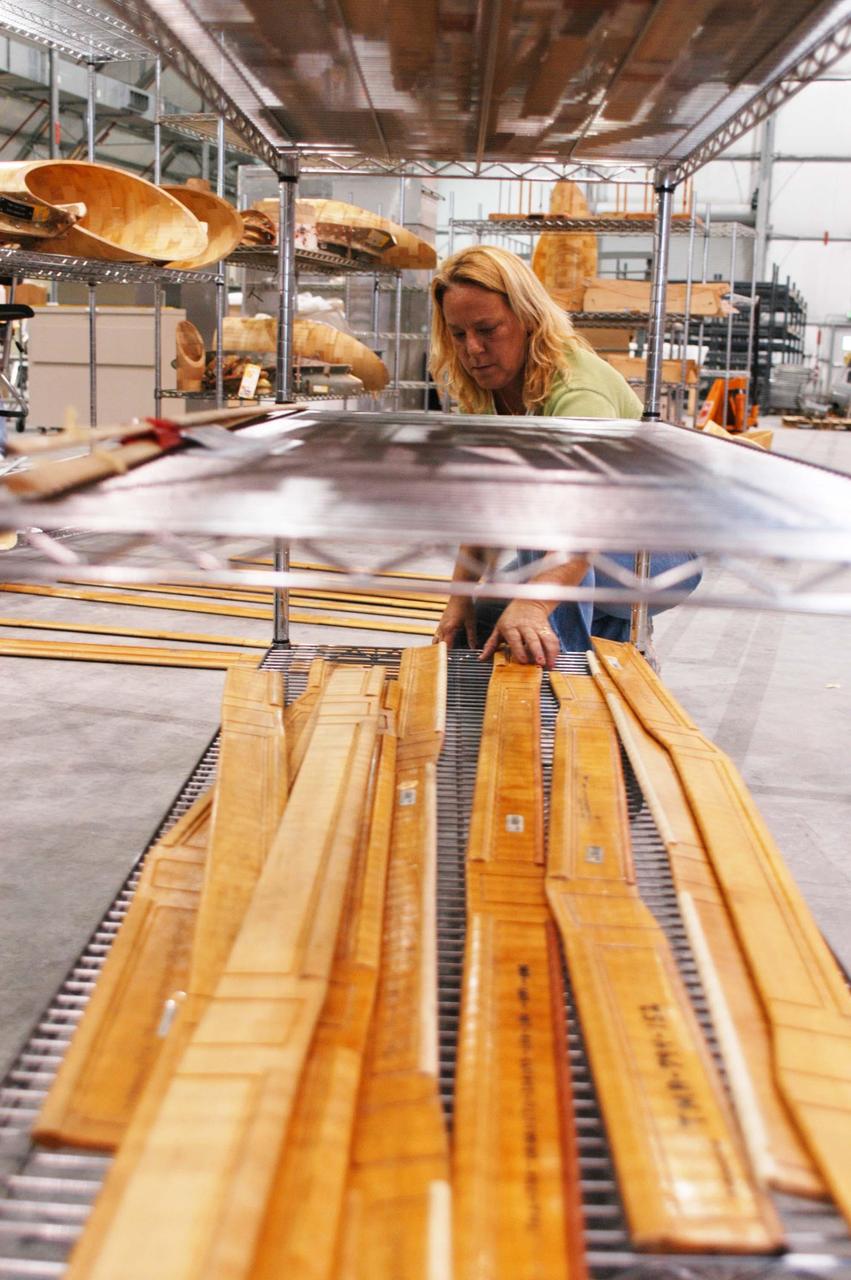
KENNEDY SPACE CENTER, FLA. - United Space Alliance worker Janet Mills works on equipment in the temporary tile shop set up in the RLV hangar at KSC. The hurricane-ravaged Thermal Protection System Facility (TPSF), which creates the TPS tiles, blankets and all the internal thermal control systems for the Space Shuttles, is almost totally unserviceable at this time after losing approximately 35 percent of its roof due to Hurricane Frances, which blew across Central Florida Sept. 4-5. Undamaged equipment was removed from the TPSF and stored in the hangar. The maximum wind at the surface from Hurricane Frances was 94 mph from the northeast at 6:40 a.m. on Sunday, September 5. It was recorded at a weather tower located on the east shore of the Mosquito Lagoon near the Cape Canaveral National Seashore. The highest sustained wind at KSC was 68 mph.
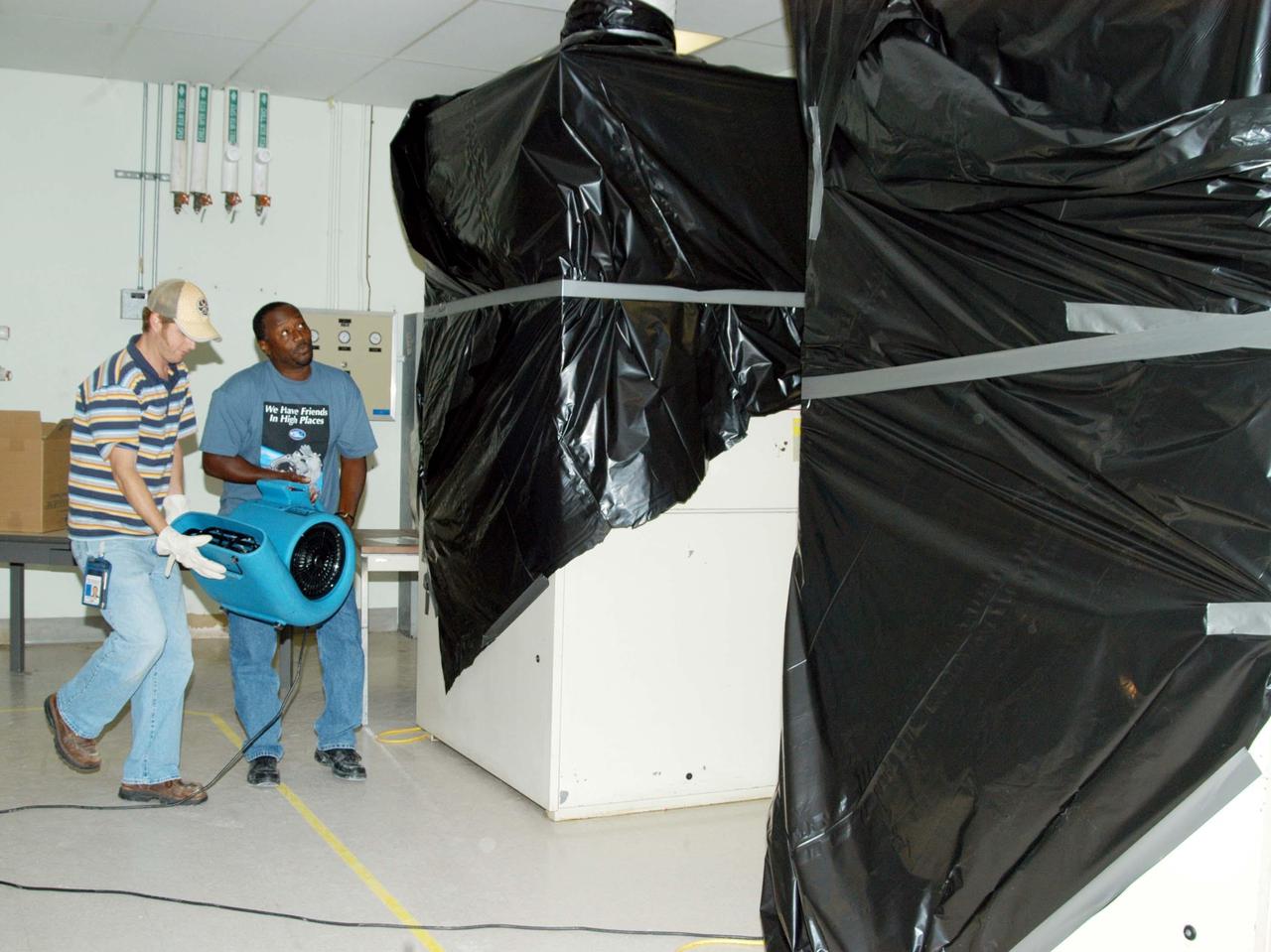
KENNEDY SPACE CENTER, FLA. - United Space Alliance workers Dallas Lewis (left) and Damon Petty carry out equipment from the Thermal Protection System Facility (TPSF). The TPSF, which creates the TPS tiles, blankets and all the internal thermal control systems for the Space Shuttles, is almost totally unserviceable at this time after losing approximately 35 percent of its roof due to Hurricane Frances, which blew across Central Florida Sept. 4-5. Undamaged equipment is being moved to the RLV hangar at KSC. The maximum wind at the surface from Hurricane Frances was 94 mph from the northeast at 6:40 a.m. on Sunday, September 5. It was recorded at a weather tower located on the east shore of the Mosquito Lagoon near the Cape Canaveral National Seashore. The highest sustained wind at KSC was 68 mph.
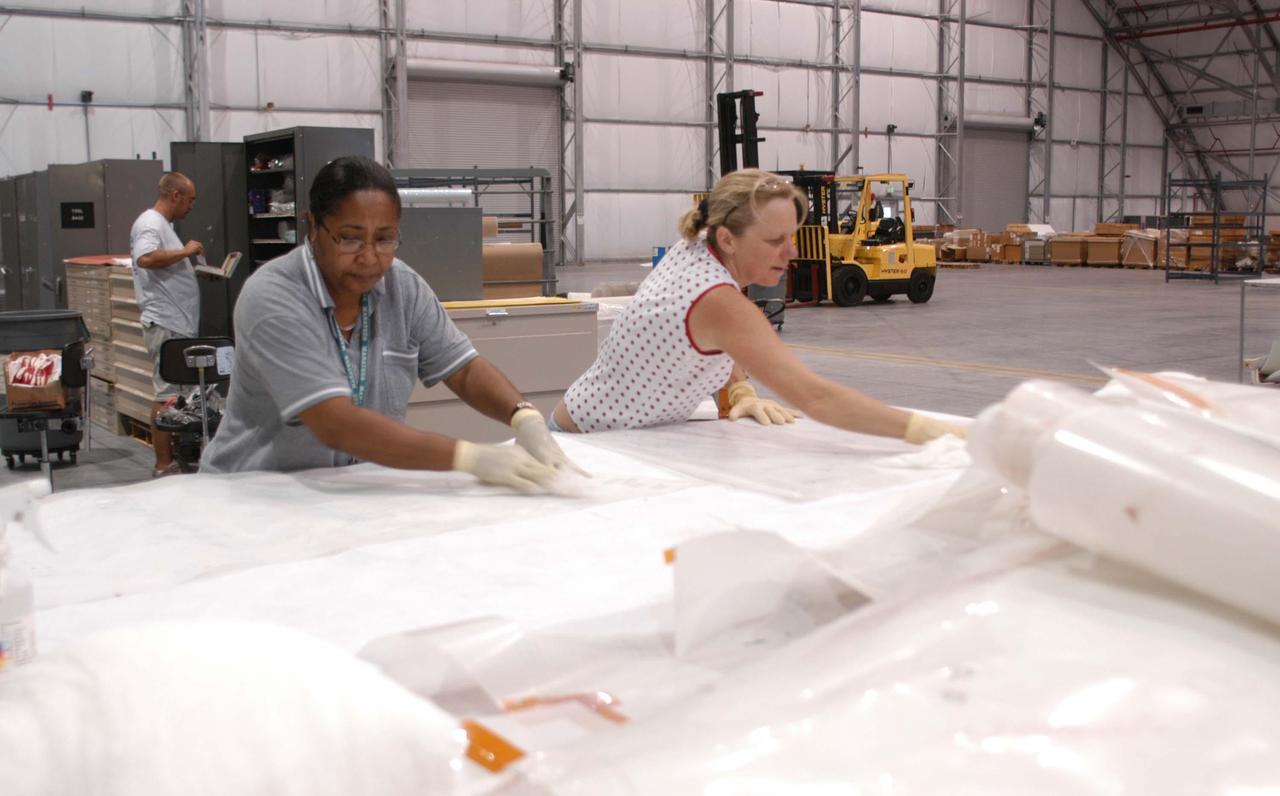
KENNEDY SPACE CENTER, FLA. - In the RLV hangar at KSC, United Space Alliance workers Beth Smith (left) and Theresa Haygood unwrap equipment removed from the hurricane-ravaged Thermal Protection System Facility (TPSF). The facility, which creates the TPS tiles, blankets and all the internal thermal control systems for the Space Shuttles, is almost totally unserviceable at this time after losing approximately 35 percent of its roof due to Hurricane Frances, which blew across Central Florida Sept. 4-5. The maximum wind at the surface from Hurricane Frances was 94 mph from the northeast at 6:40 a.m. on Sunday, September 5. It was recorded at a weather tower located on the east shore of the Mosquito Lagoon near the Cape Canaveral National Seashore. The highest sustained wind at KSC was 68 mph.
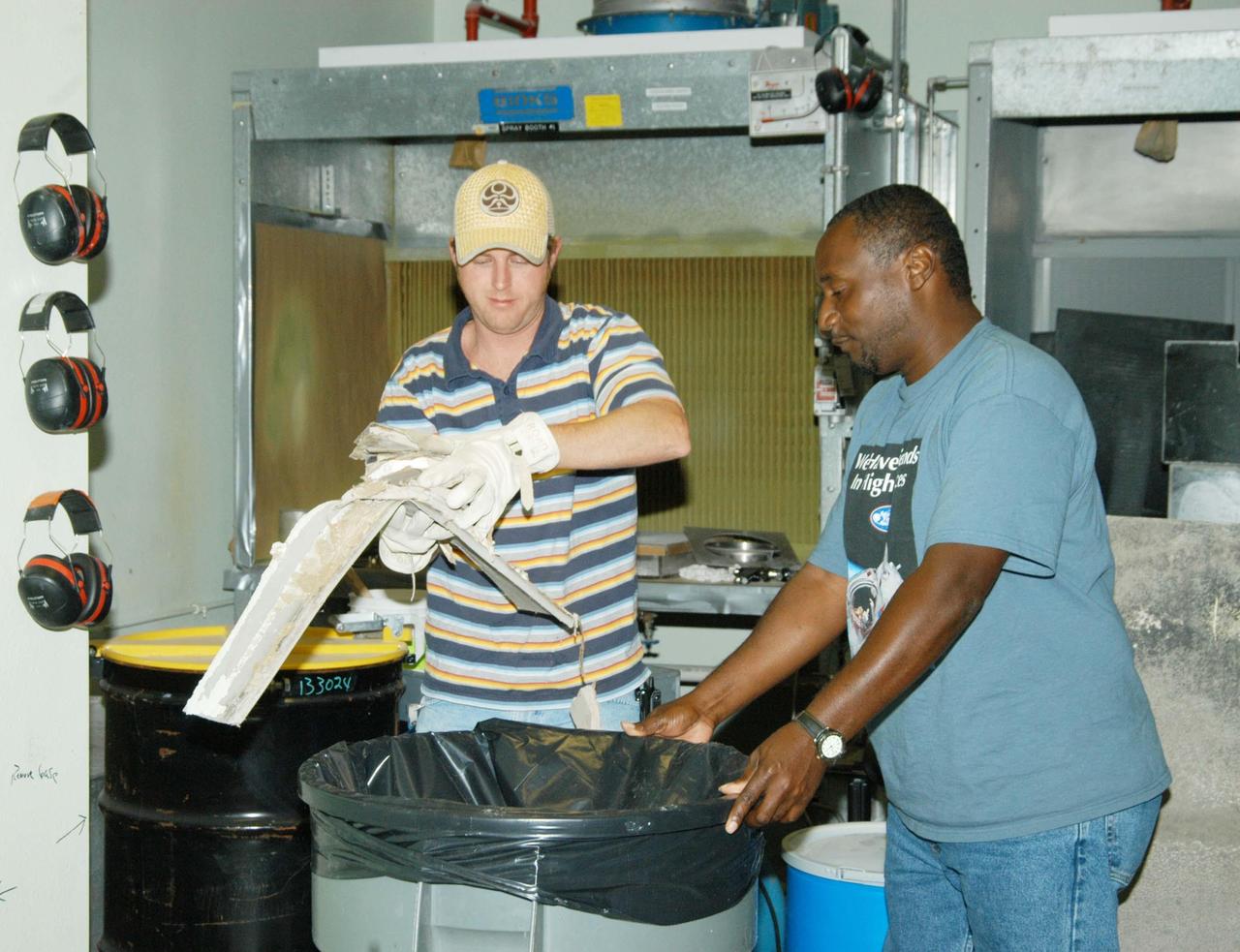
KENNEDY SPACE CENTER, FLA. - United Space Alliance workers Dallas Lewis (left) and Damon Petty clean up hurricane debris inside the Thermal Protection System Facility (TPSF). Much of the roof was torn off by Hurricane Frances as it passed over Central Florida during the Labor Day weekend. Undamaged equipment has been moved to the RLV hangar at KSC. The TPSF, which creates the TPS tiles, blankets and all the internal thermal control systems for the Space Shuttles, is almost totally unserviceable at this time after losing approximately 35 percent of its roof. The maximum wind at the surface from Hurricane Frances was 94 mph from the northeast at 6:40 a.m. on Sunday, September 5. It was recorded at a weather tower located on the east shore of the Mosquito Lagoon near the Cape Canaveral National Seashore. The highest sustained wind at KSC was 68 mph.
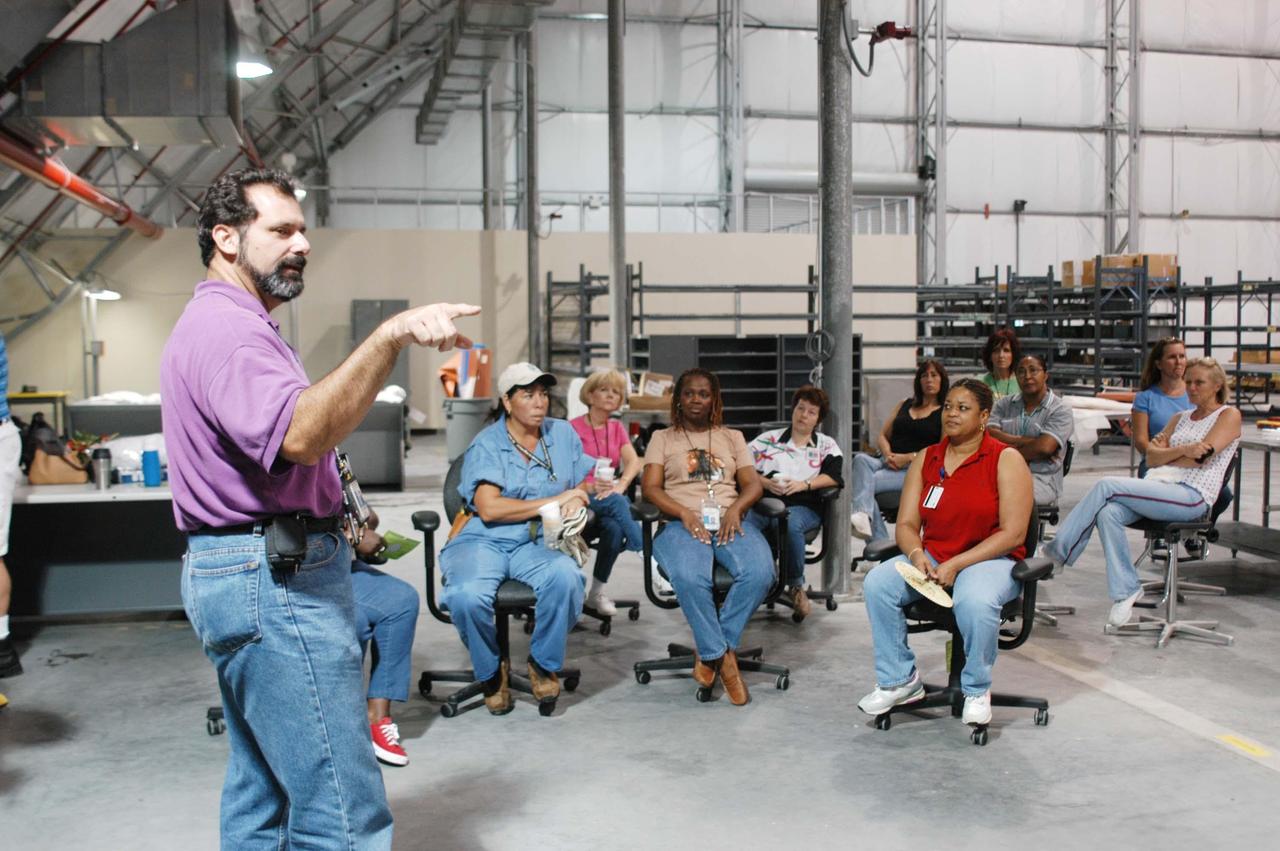
KENNEDY SPACE CENTER, FLA. - In the RLV hangar at KSC, Steve Harrington talks to workers about the equipment removed from the hurricane-ravaged Thermal Protection System Facility (TPSF) now being stored in the hangar. The facility, which creates the TPS tiles, blankets and all the internal thermal control systems for the Space Shuttles, is almost totally unserviceable at this time after losing approximately 35 percent of its roof due to Hurricane Frances, which blew across Central Florida Sept. 4-5. The maximum wind at the surface from Hurricane Frances was 94 mph from the northeast at 6:40 a.m. on Sunday, September 5. It was recorded at a weather tower located on the east shore of the Mosquito Lagoon near the Cape Canaveral National Seashore. The highest sustained wind at KSC was 68 mph.
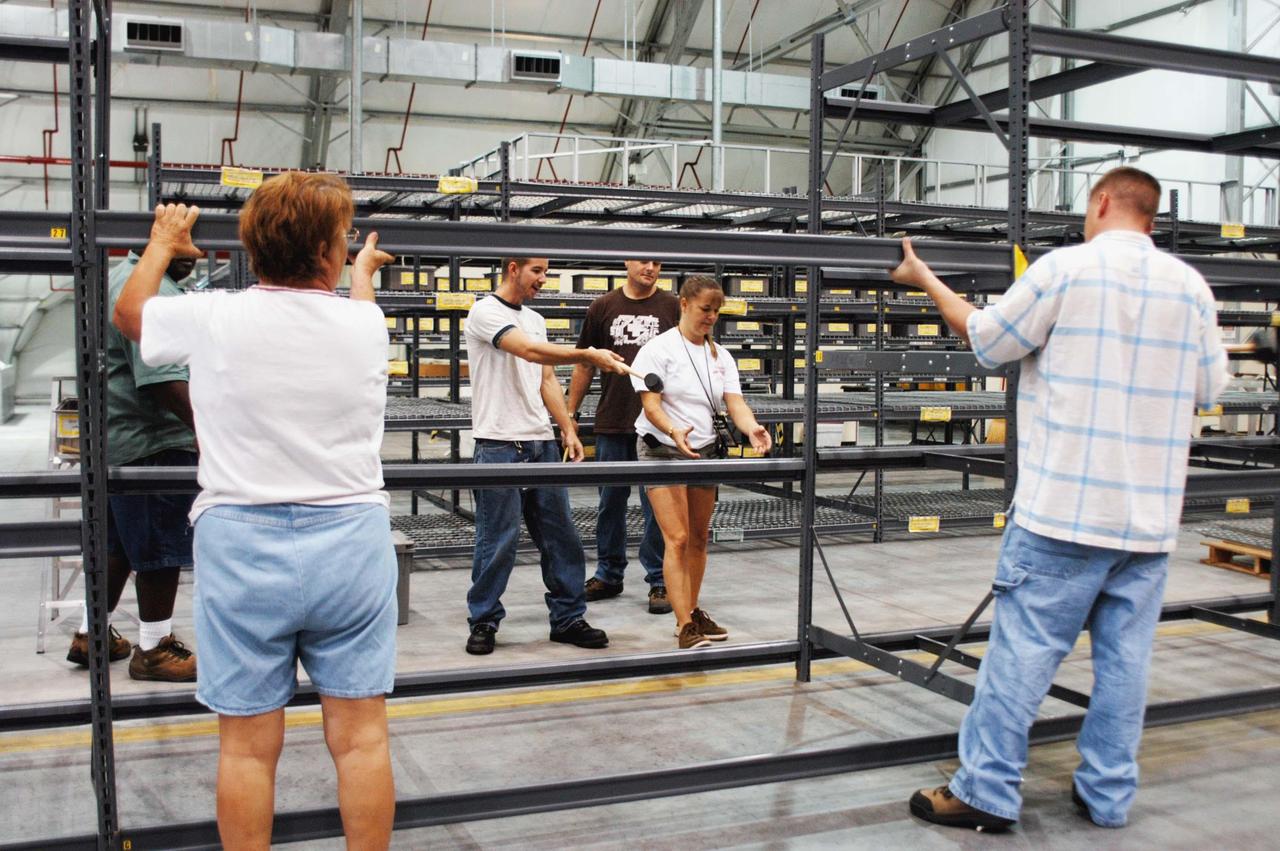
KENNEDY SPACE CENTER, FLA. - In the RLV hangar at KSC, United Space Alliance workers set up shelves for equipment removed from the hurricane-ravaged Thermal Protection System Facility (TPSF) and now being stored in the hangar. The facility, which creates the TPS tiles, blankets and all the internal thermal control systems for the Space Shuttles, is almost totally unserviceable at this time after losing approximately 35 percent of its roof due to Hurricane Frances, which blew across Central Florida Sept. 4-5. The maximum wind at the surface from Hurricane Frances was 94 mph from the northeast at 6:40 a.m. on Sunday, September 5. It was recorded at a weather tower located on the east shore of the Mosquito Lagoon near the Cape Canaveral National Seashore. The highest sustained wind at KSC was 68 mph.
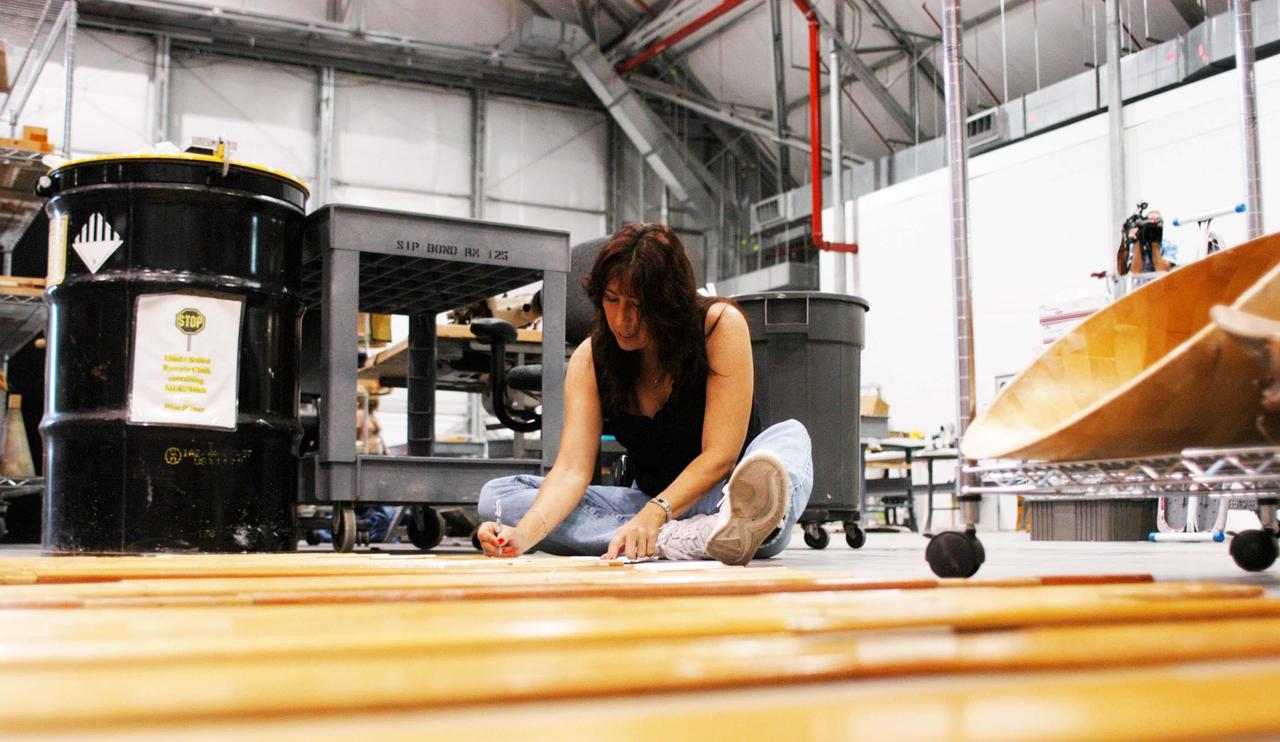
KENNEDY SPACE CENTER, FLA. - United Space Alliance worker Kathy Evans works on equipment in the temporary tile shop set up in the RLV hangar at KSC. The hurricane-ravaged Thermal Protection System Facility (TPSF), which creates the TPS tiles, blankets and all the internal thermal control systems for the Space Shuttles, is almost totally unserviceable at this time after losing approximately 35 percent of its roof due to Hurricane Frances, which blew across Central Florida Sept. 4-5. Undamaged equipment was removed from the TPSF and stored in the hangar. The maximum wind at the surface from Hurricane Frances was 94 mph from the northeast at 6:40 a.m. on Sunday, September 5. It was recorded at a weather tower located on the east shore of the Mosquito Lagoon near the Cape Canaveral National Seashore. The highest sustained wind at KSC was 68 mph.
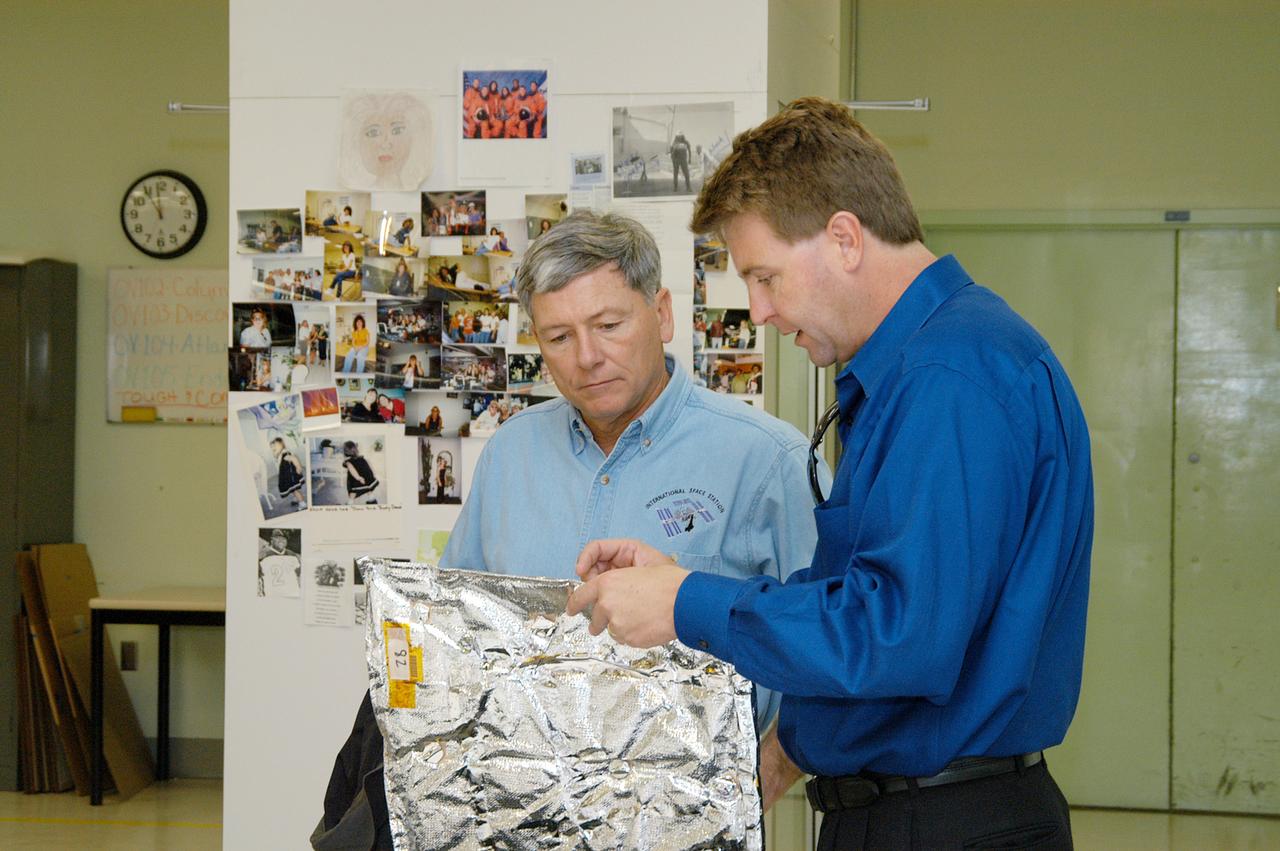
KENNEDY SPACE CENTER, FLA. -- United Space Alliance (USA) Manager of the Thermal Protection System (TPS) Facility Martin Wilson (right) briefs NASA Deputy Associate Administrator for Space Station and Shuttle Programs Michael Kostelnik (left) on the properties of a thermal blanket used in the Shuttle's TPS. NASA and USA Space Shuttle program management are participating in a leadership workday. The day is intended to provide management with an in-depth, hands-on look at Shuttle processing activities at KSC.
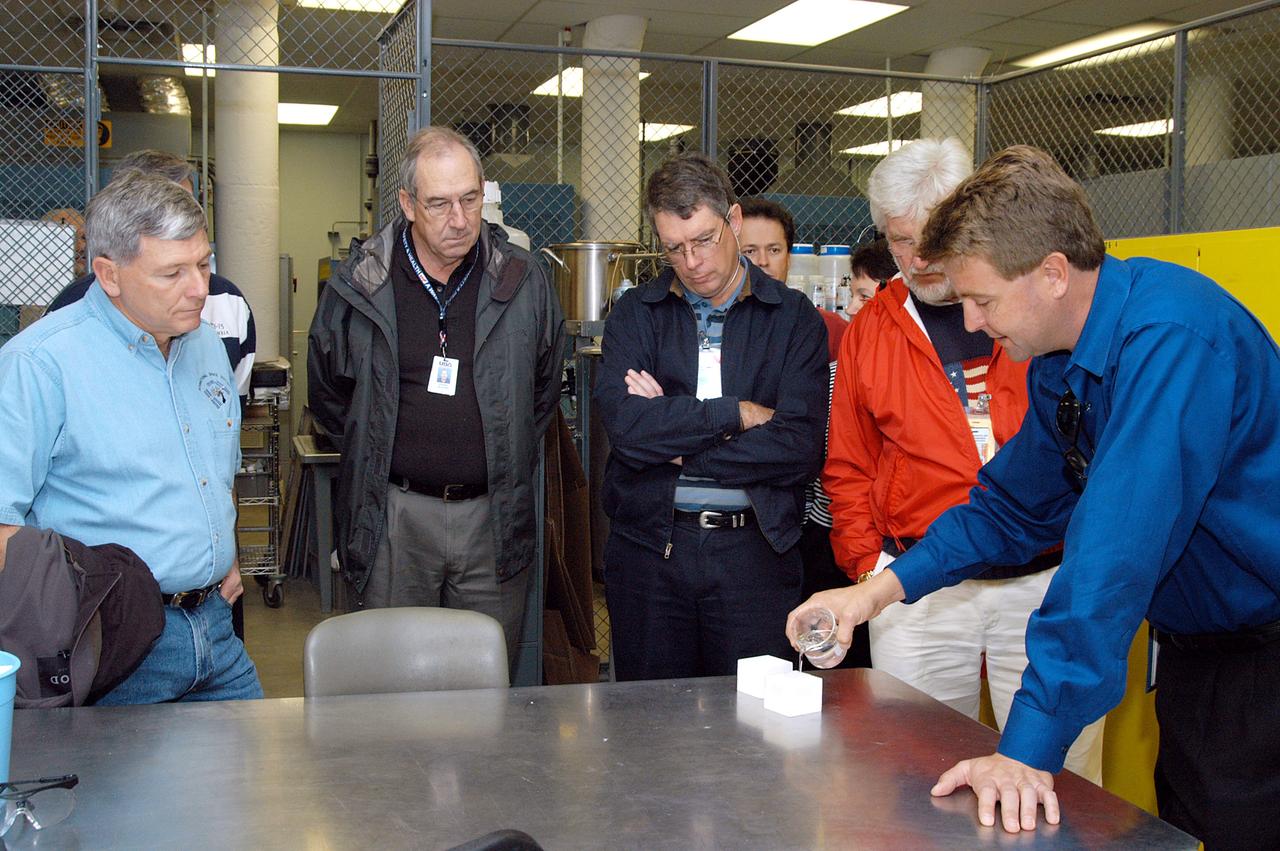
KENNEDY SPACE CENTER, FLA. -- From left, NASA Deputy Associate Administrator for Space Station and Shuttle Programs Michael Kostelnik and United Space Alliance (USA) Vice President and Space Shuttle Program Manager Howard DeCastro are briefed on the properties of the tile used in the Shuttle's Thermal Protection System (TPS) by USA Manager of the TPS Facility Martin Wilson (right). NASA and USA Space Shuttle program management are participating in a leadership workday. The day is intended to provide management with an in-depth, hands-on look at Shuttle processing activities at KSC.
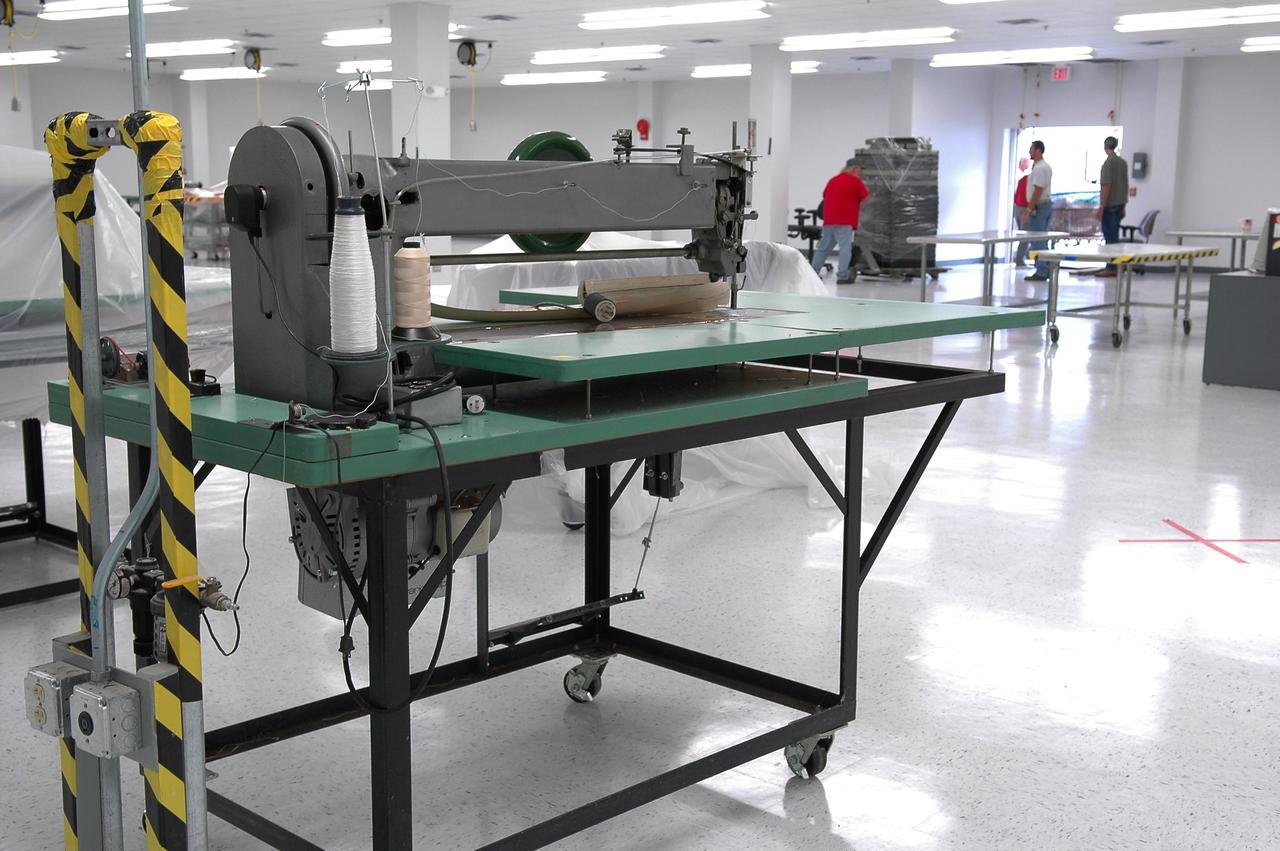
KENNEDY SPACE CENTER, FLA. - One of the blanket sewing machines used on Thermal Protection System materials has been returned to the TPS facility. It was moved to the RLV Hangar at NASA Kennedy Space Center after the 2004 hurricanes damaged the upper floor, where soft material was processed, of the TPS facility. While the TPS facility was being repaired, normal work activity was done in the hangar.

KENNEDY SPACE CENTER, FLA. -- From left, United Space Alliance (USA) Deputy Space Shuttle Program Manager of Operations Loren Shriver, USA Associate Program Manager of Ground Operations Andy Allen, NASA Deputy Associate Administrator for Space Station and Shuttle Programs Michael Kostelnik, and USA Vice President and Space Shuttle Program Manager Howard DeCastro examine a tile used in the Shuttle's Thermal Protection System (TPS) in KSC's TPS Facility. NASA and USA Space Shuttle program management are participating in a leadership workday. The day is intended to provide management with an in-depth, hands-on look at Shuttle processing activities at KSC.
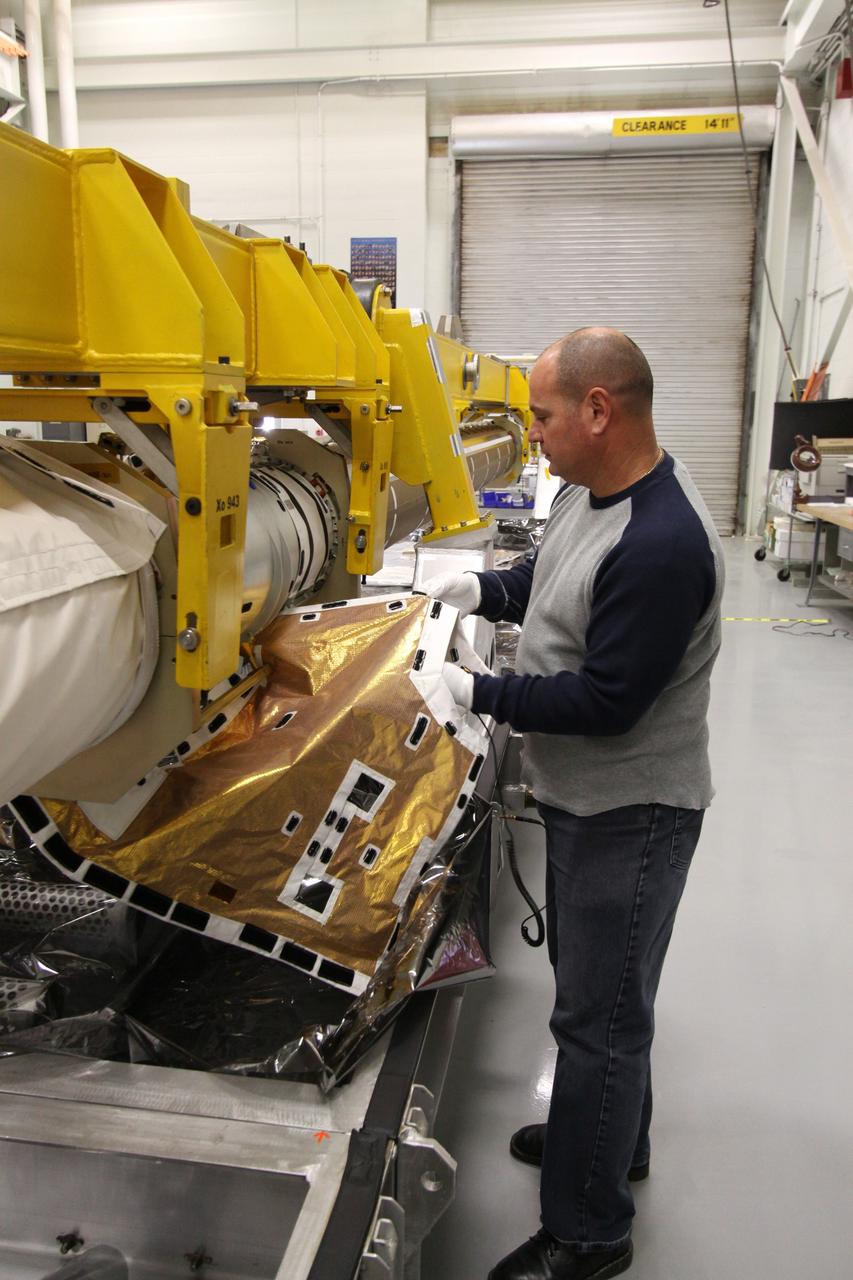
CAPE CANAVERAL, Fla. - In the Remote Manipulator System Lab, or RMS Lab, inside the Vehicle Assembly Building at NASA's Kennedy Space Center in Florida, Rafael Rodriguez, lead RMS advanced systems technician with United Space Alliance, installs the mid-transition thermal blanket onto the inspection boom assembly, or IBA, on space shuttle Atlantis' orbiter boom sensor system, or OBSS. The IBA is removed from the shuttle every other processing flow for a detailed inspection. After five consecutive flights, all IBA internal components are submitted to a thorough electrical checkout in the lab. The 50-foot-long OBSS attaches to the end of the shuttle’s robotic arm and supports the cameras and laser systems used to inspect the shuttle’s thermal protection system while in space. Atlantis is next slated to deliver an Integrated Cargo Carrier and Russian-built Mini Research Module to the International Space Station on the STS-132 mission. The second in a series of new pressurized components for Russia, the module will be permanently attached to the Zarya module. Three spacewalks are planned to store spare components outside the station, including six spare batteries, a boom assembly for the Ku-band antenna and spares for the Canadian Dextre robotic arm extension. A radiator, airlock and European robotic arm for the Russian Multi-purpose Laboratory Module also are payloads on the flight. Launch is targeted for May 14, 2010. Photo credit: NASA/Jack Pfaller
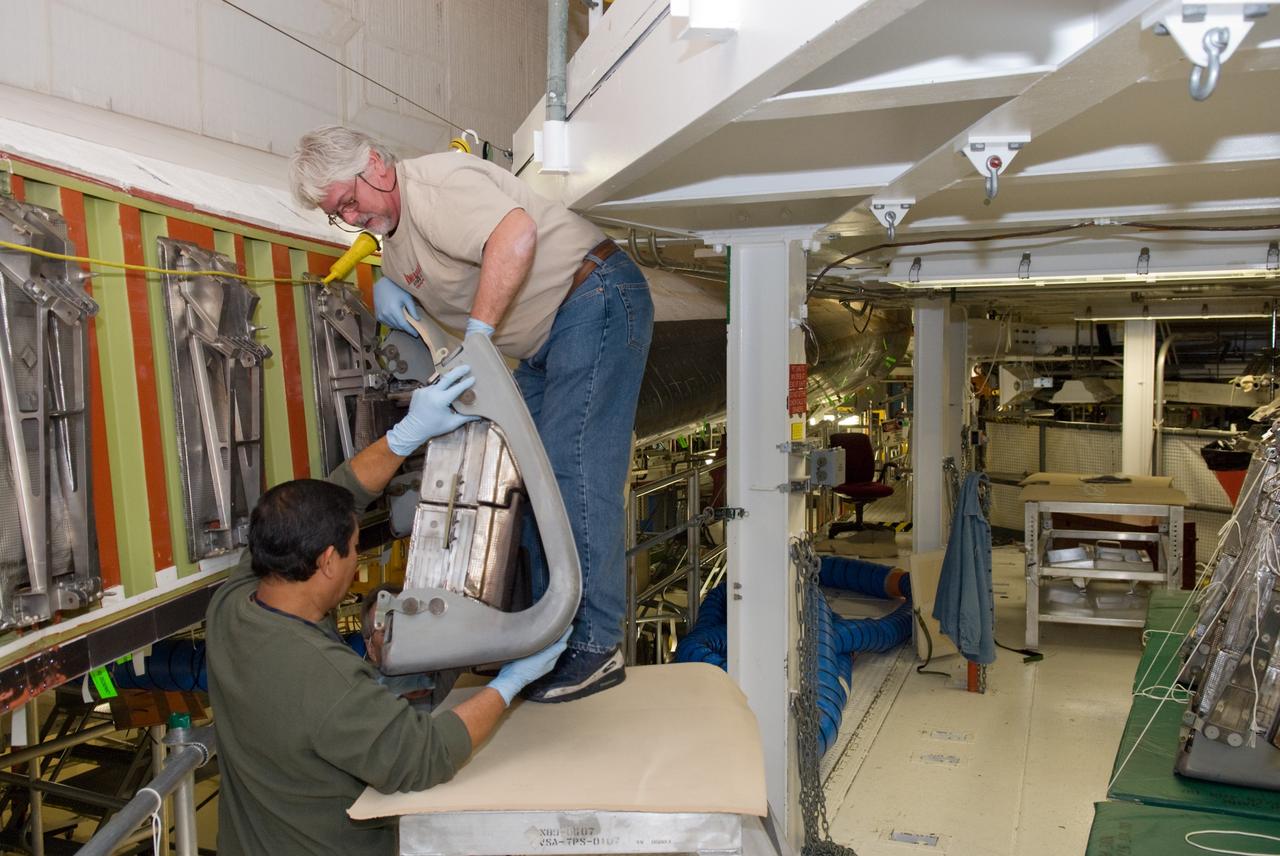
CAPE CANAVERAL, Fla. - In Orbiter Processing Facility-1 at NASA's Kennedy Space Center in Florida, United Space Alliance technicians cover a reinforced carbon carbon panel, or RCC panel, removed from a wing leading edge of space shuttle Atlantis. Inspection and maintenance of the RCC panels and the wing leading edge are standard procedure between shuttle missions. The RCC panels, components of the shuttle's thermal protection system, are placed in protective coverings while the structural edge of the wing -- the orange and green area behind the panels -- undergoes spar corrosion inspection to verify the structural integrity of the wing. Atlantis is next slated to deliver an Integrated Cargo Carrier and Russian-built Mini Research Module to the International Space Station on the STS-132 mission. The second in a series of new pressurized components for Russia, the module will be permanently attached to the Zarya module. Three spacewalks are planned to store spare components outside the station, including six spare batteries, a boom assembly for the Ku-band antenna and spares for the Canadian Dextre robotic arm extension. A radiator, airlock and European robotic arm for the Russian Multi-purpose Laboratory Module also are payloads on the flight. Launch is targeted for May 14, 2010. Photo credit: NASA/Glenn Benson
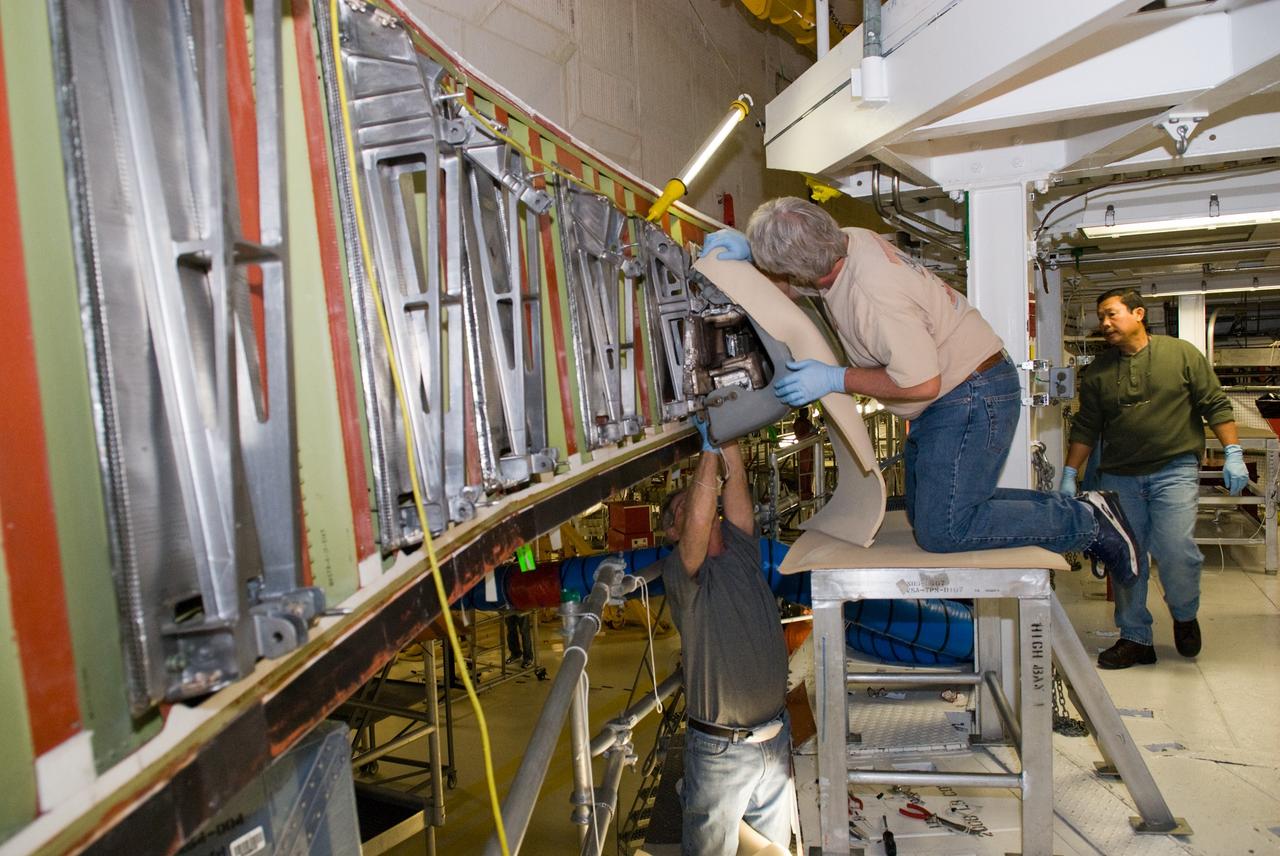
CAPE CANAVERAL, Fla. - In Orbiter Processing Facility-1 at NASA's Kennedy Space Center in Florida, United Space Alliance technicians remove a reinforced carbon carbon panel, or RCC panel, from a wing leading edge of space shuttle Atlantis. Inspection and maintenance of the RCC panels and the wing leading edge are standard procedure between shuttle missions. The RCC panels, components of the shuttle's thermal protection system, are placed in protective coverings while the structural edge of the wing -- the orange and green area behind the panels -- undergoes spar corrosion inspection to verify the structural integrity of the wing. Atlantis is next slated to deliver an Integrated Cargo Carrier and Russian-built Mini Research Module to the International Space Station on the STS-132 mission. The second in a series of new pressurized components for Russia, the module will be permanently attached to the Zarya module. Three spacewalks are planned to store spare components outside the station, including six spare batteries, a boom assembly for the Ku-band antenna and spares for the Canadian Dextre robotic arm extension. A radiator, airlock and European robotic arm for the Russian Multi-purpose Laboratory Module also are payloads on the flight. Launch is targeted for May 14, 2010. Photo credit: NASA/Glenn Benson
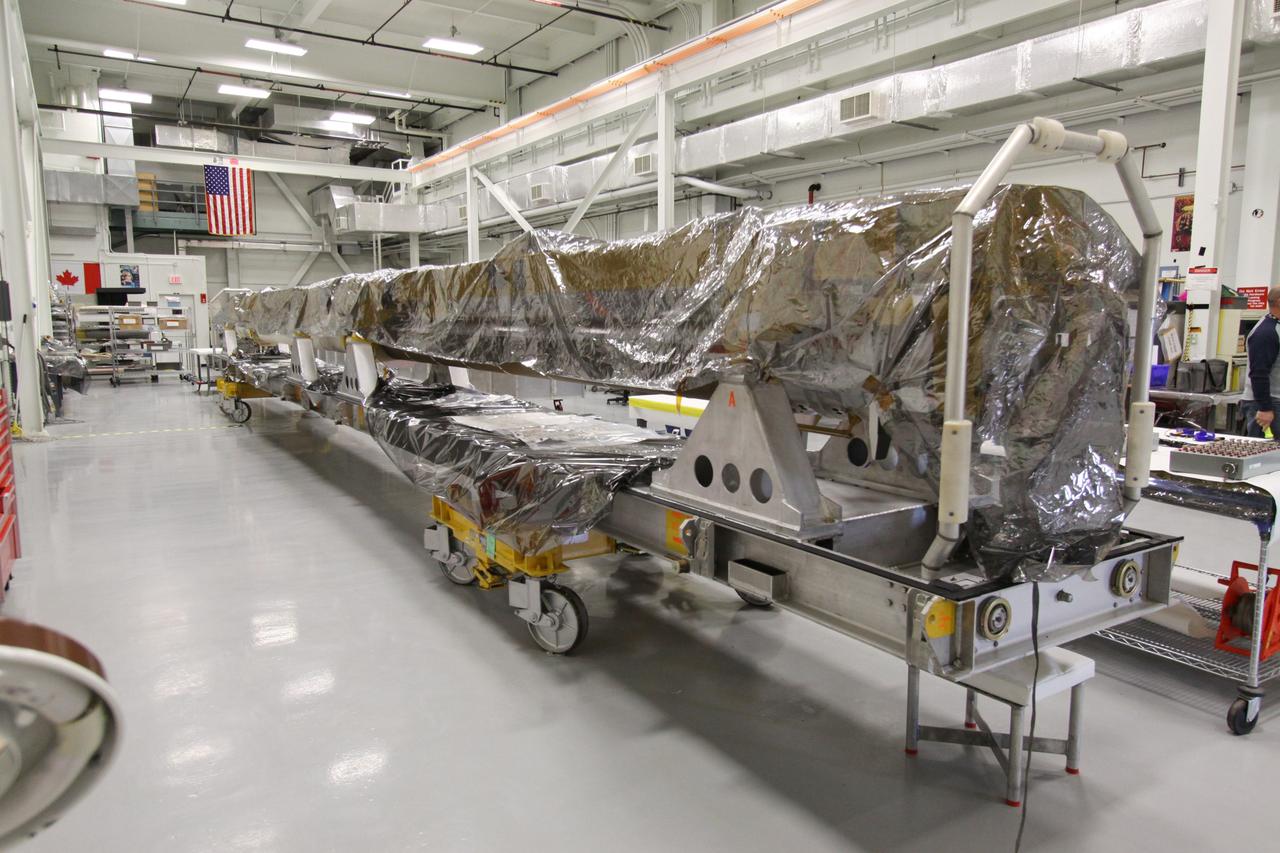
CAPE CANAVERAL, Fla. - In the Remote Manipulator System Lab inside the Vehicle Assembly Building at NASA's Kennedy Space Center in Florida, space shuttle Atlantis' orbiter boom sensor system, or OBSS, is prepared for maintenance. The 50-foot-long OBSS attaches to the end of the shuttle’s robotic arm and supports the cameras and laser systems used to inspect the shuttle’s thermal protection system while in space. Atlantis is next slated to deliver an Integrated Cargo Carrier and Russian-built Mini Research Module to the International Space Station on the STS-132 mission. The second in a series of new pressurized components for Russia, the module will be permanently attached to the Zarya module. Three spacewalks are planned to store spare components outside the station, including six spare batteries, a boom assembly for the Ku-band antenna and spares for the Canadian Dextre robotic arm extension. A radiator, airlock and European robotic arm for the Russian Multi-purpose Laboratory Module also are payloads on the flight. Launch is targeted for May 14, 2010. Photo credit: NASA/Jack Pfaller
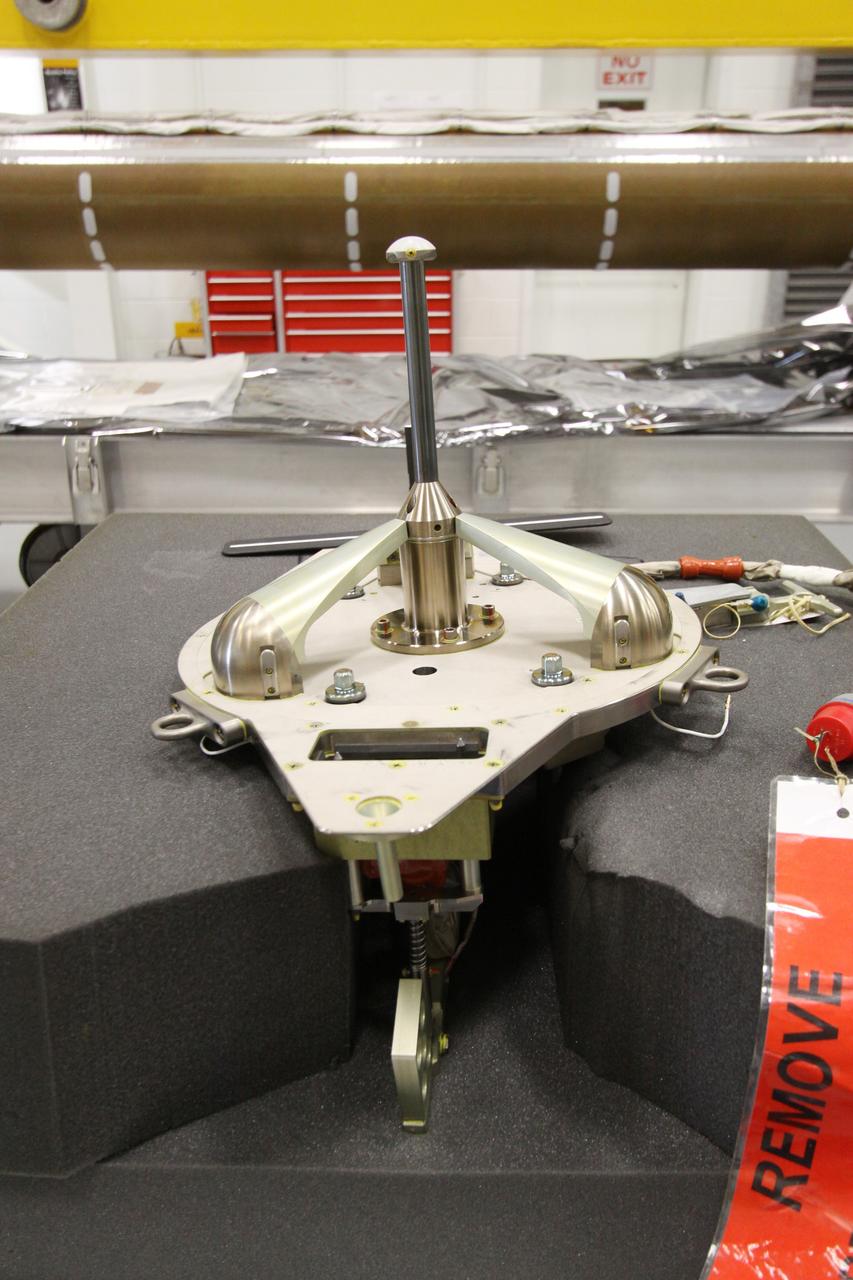
CAPE CANAVERAL, Fla. - In the Remote Manipulator System Lab inside the Vehicle Assembly Building at NASA's Kennedy Space Center in Florida, this close-up shows the electrical flight grapple fixture which will be installed in the forward transition and X-guide restraint of the inspection boom assembly, or IBA, on space shuttle Atlantis' orbiter boom sensor system, or OBSS. The IBA is removed from the shuttle every other processing flow for a detailed inspection. After five consecutive flights, all IBA internal components are submitted to a thorough electrical checkout in the lab. The 50-foot-long OBSS attaches to the end of the shuttle’s robotic arm and supports the cameras and laser systems used to inspect the shuttle’s thermal protection system while in space. Atlantis is next slated to deliver an Integrated Cargo Carrier and Russian-built Mini Research Module to the International Space Station on the STS-132 mission. The second in a series of new pressurized components for Russia, the module will be permanently attached to the Zarya module. Three spacewalks are planned to store spare components outside the station, including six spare batteries, a boom assembly for the Ku-band antenna and spares for the Canadian Dextre robotic arm extension. A radiator, airlock and European robotic arm for the Russian Multi-purpose Laboratory Module also are payloads on the flight. Launch is targeted for May 14, 2010. Photo credit: NASA/Jack Pfaller
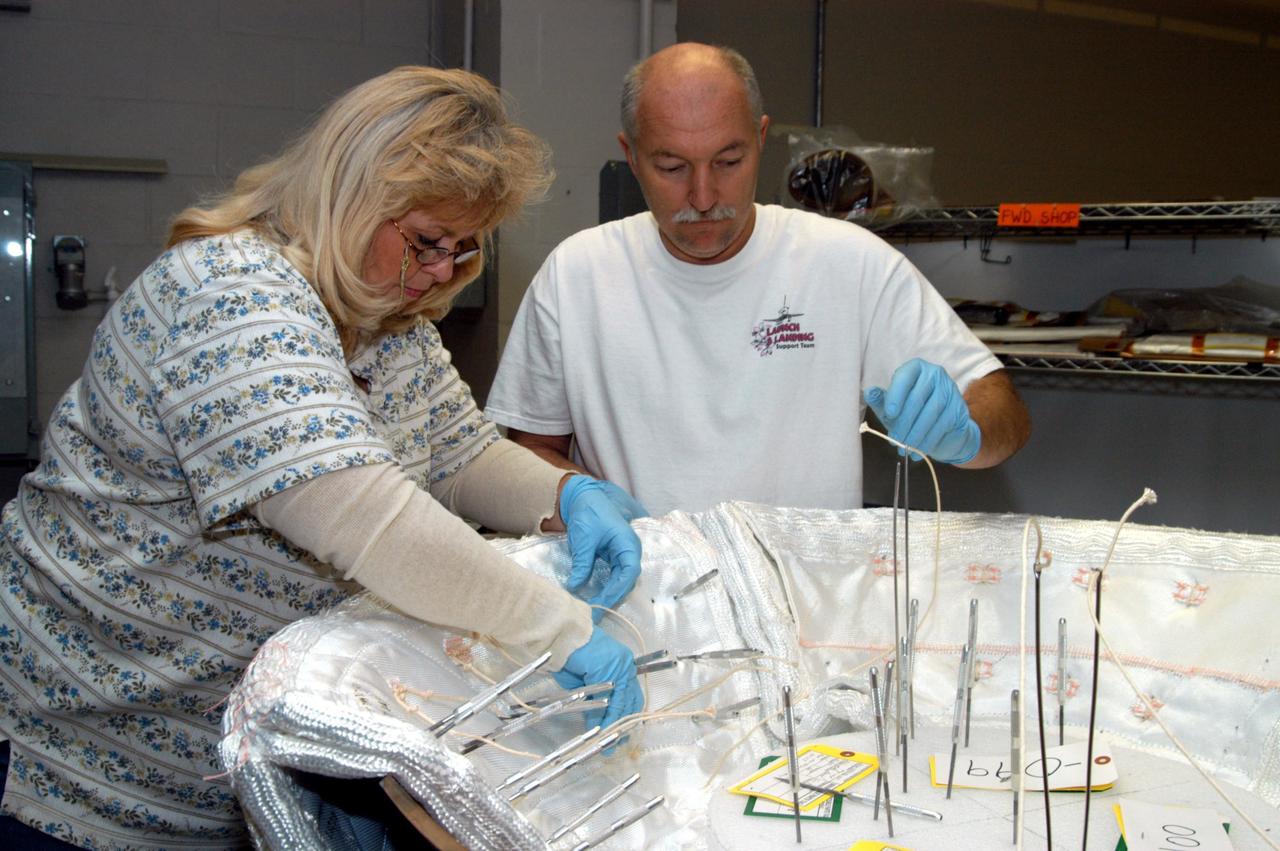
KENNEDY SPACE CENTER, FLA. -- United Space Alliance workers Ginger Morrison and Michael Williams stitch together pieces of insulation blankets inside the ring that fits in the nose cap of Discovery. The blankets consist of layered, pure silica felt sandwiched between a layer of silica fabric (the hot side) and a layer of S-Glass fabric. The blankets are semi-rigid and can be made as large as 30 inches by 30 inches. The blanket is through-stitched with pure silica thread in a 1-inch grid pattern. After fabrication, the blanket is bonded directly to the vehicle structure and finally coated with a high purity silica coating that improves erosion resistance.
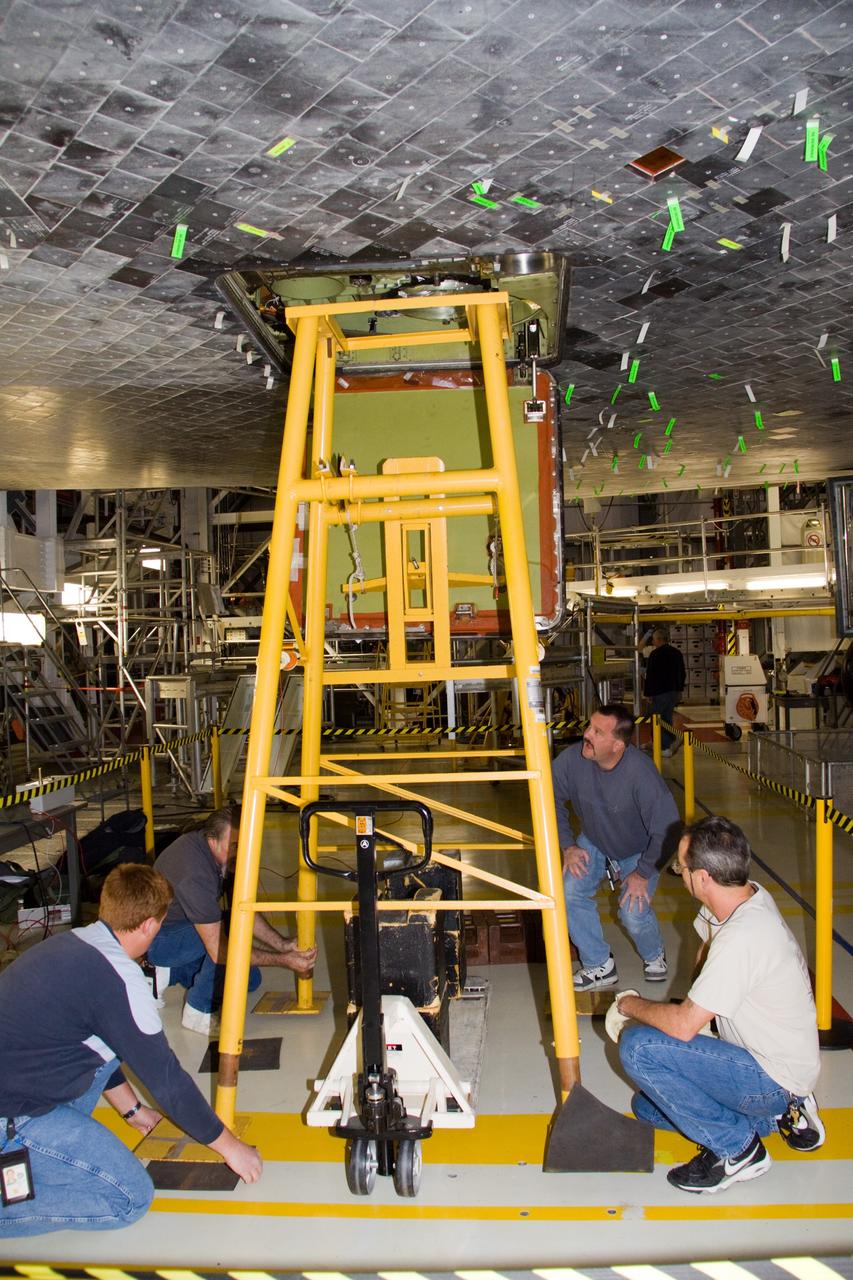
CAPE CANAVERAL, Fla. - In Orbiter Processing Facility 1 at NASA's Kennedy Space Center in Florida, United Space Alliance technicians verify the alignment of the test equipment that will be used to perform a push test on an external tank door on space shuttle Atlantis. Two umbilical doors, located on the shuttle's aft fuselage, close after external tank separation following launch. The test confirms that the door's actuators are functioning properly and that signals sent from the actuators correctly indicate that the doors have closed, creating the necessary thermal barrier for reentry. Atlantis is next slated to deliver an Integrated Cargo Carrier and Russian-built Mini Research Module to the International Space Station on the STS-132 mission. The second in a series of new pressurized components for Russia, the module will be permanently attached to the Zarya module. Three spacewalks are planned to store spare components outside the station, including six spare batteries, a boom assembly for the Ku-band antenna and spares for the Canadian Dextre robotic arm extension. A radiator, airlock and European robotic arm for the Russian Multi-purpose Laboratory Module also are payloads on the flight. Launch is targeted for May 14, 2010. Photo credit: NASA/Troy Cryder
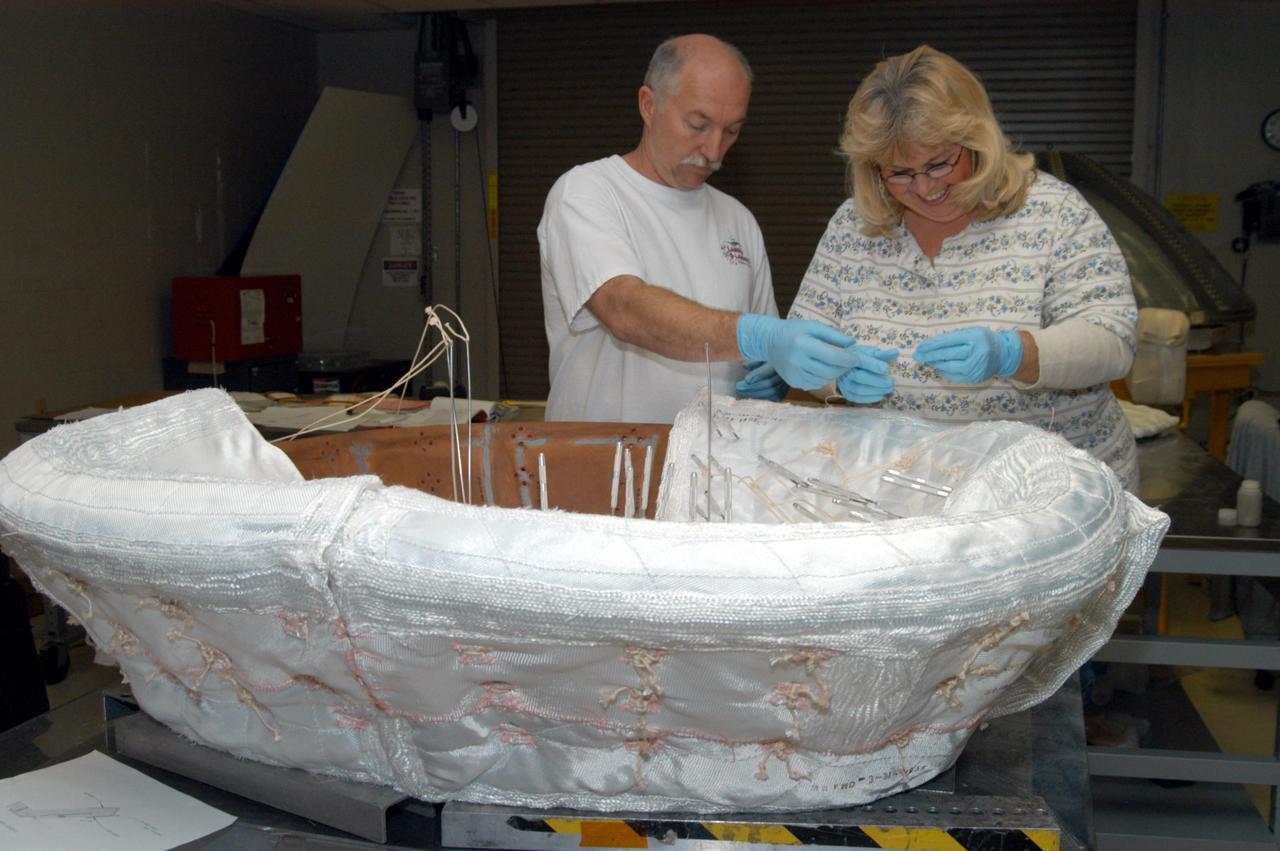
KENNEDY SPACE CENTER, FLA. -- United Space Alliance workers Michael Williams and Ginger Morrison stitch together pieces of insulation blankets inside the ring that fits in the nose cap of Discovery. The blankets consist of layered, pure silica felt sandwiched between a layer of silica fabric (the hot side) and a layer of S-Glass fabric. The blankets are semi-rigid and can be made as large as 30 inches by 30 inches. The blanket is through-stitched with pure silica thread in a 1-inch grid pattern. After fabrication, the blanket is bonded directly to the vehicle structure and finally coated with a high purity silica coating that improves erosion resistance.
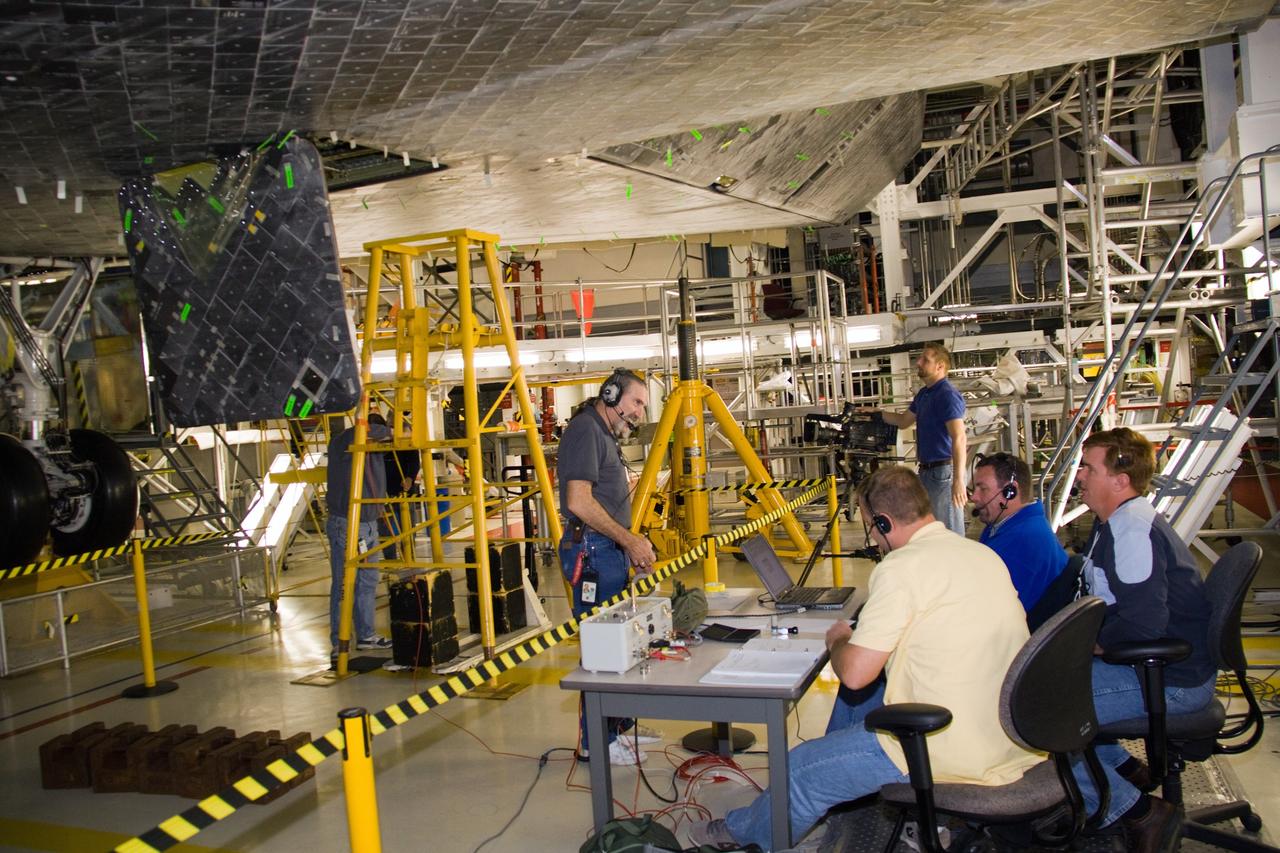
CAPE CANAVERAL, Fla. - In Orbiter Processing Facility 1 at NASA's Kennedy Space Center in Florida, United Space Alliance technicians prepare to perform a push test on an external tank door beneath space shuttle Atlantis. Two umbilical doors, located on the shuttle's aft fuselage, close after external tank separation following launch. The test confirms that the door's actuators are functioning properly and that signals sent from the actuators correctly indicate that the doors have closed, creating the necessary thermal barrier for reentry. Atlantis is next slated to deliver an Integrated Cargo Carrier and Russian-built Mini Research Module to the International Space Station on the STS-132 mission. The second in a series of new pressurized components for Russia, the module will be permanently attached to the Zarya module. Three spacewalks are planned to store spare components outside the station, including six spare batteries, a boom assembly for the Ku-band antenna and spares for the Canadian Dextre robotic arm extension. A radiator, airlock and European robotic arm for the Russian Multi-purpose Laboratory Module also are payloads on the flight. Launch is targeted for May 14, 2010. Photo credit: NASA/Troy Cryder

KENNEDY SPACE CENTER, FLA. -- A closeup of the stitching being done on pieces of insulation blankets inside the ring that fits in the nose cap of Discovery. The blankets consist of layered, pure silica felt sandwiched between a layer of silica fabric (the hot side) and a layer of S-Glass fabric. The blankets are semi-rigid and can be made as large as 30 inches by 30 inches. The blanket is through-stitched with pure silica thread in a 1-inch grid pattern. After fabrication, the blanket is bonded directly to the vehicle structure and finally coated with a high purity silica coating that improves erosion resistance.
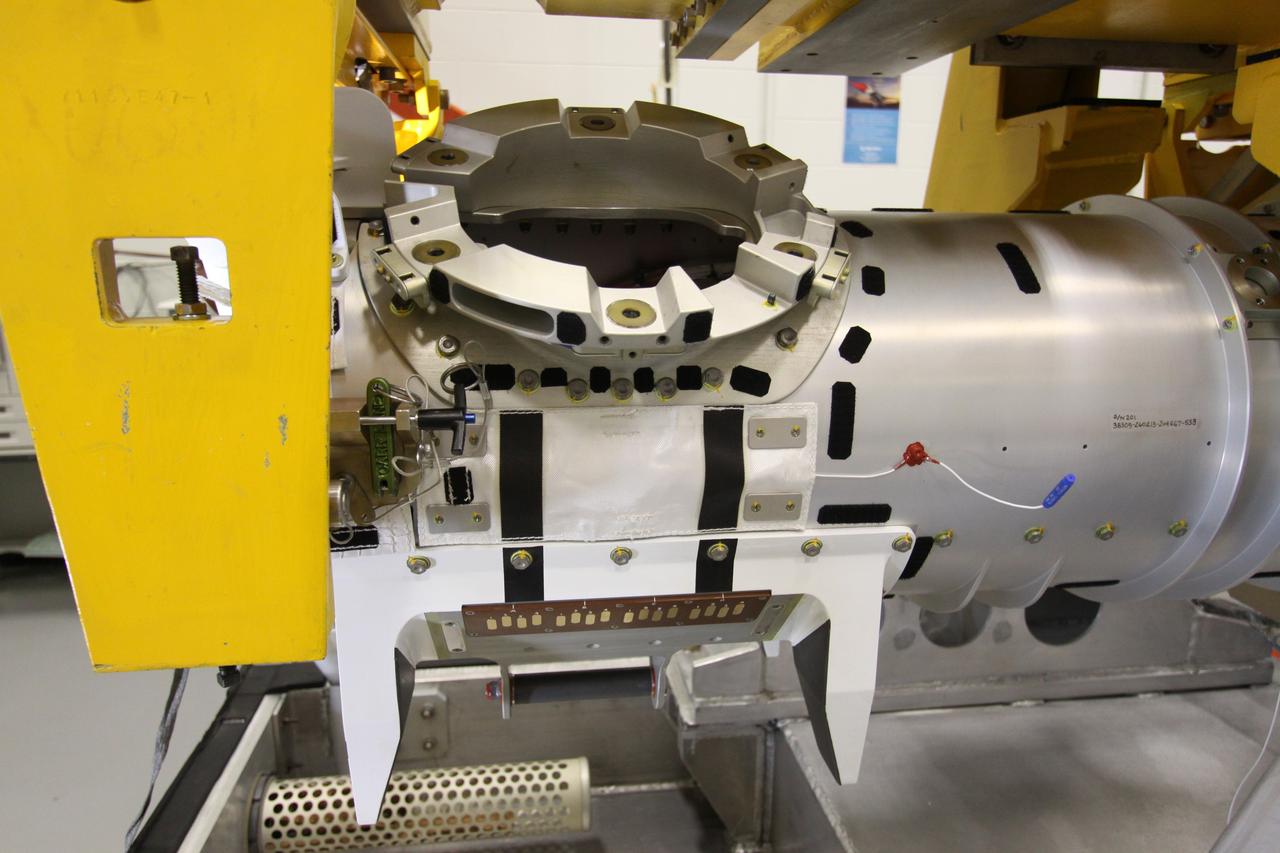
CAPE CANAVERAL, Fla. - In the Remote Manipulator System Lab inside the Vehicle Assembly Building at NASA's Kennedy Space Center in Florida, this close-up shows the forward transition and X-guide restraint of the inspection boom assembly, or IBA, on space shuttle Atlantis' orbiter boom sensor system, or OBSS. The IBA is removed from the shuttle every other processing flow for a detailed inspection. After five consecutive flights, all IBA internal components are submitted to a thorough electrical checkout in the lab. The 50-foot-long OBSS attaches to the end of the shuttle’s robotic arm and supports the cameras and laser systems used to inspect the shuttle’s thermal protection system while in space. Atlantis is next slated to deliver an Integrated Cargo Carrier and Russian-built Mini Research Module to the International Space Station on the STS-132 mission. The second in a series of new pressurized components for Russia, the module will be permanently attached to the Zarya module. Three spacewalks are planned to store spare components outside the station, including six spare batteries, a boom assembly for the Ku-band antenna and spares for the Canadian Dextre robotic arm extension. A radiator, airlock and European robotic arm for the Russian Multi-purpose Laboratory Module also are payloads on the flight. Launch is targeted for May 14, 2010. Photo credit: NASA/Jack Pfaller
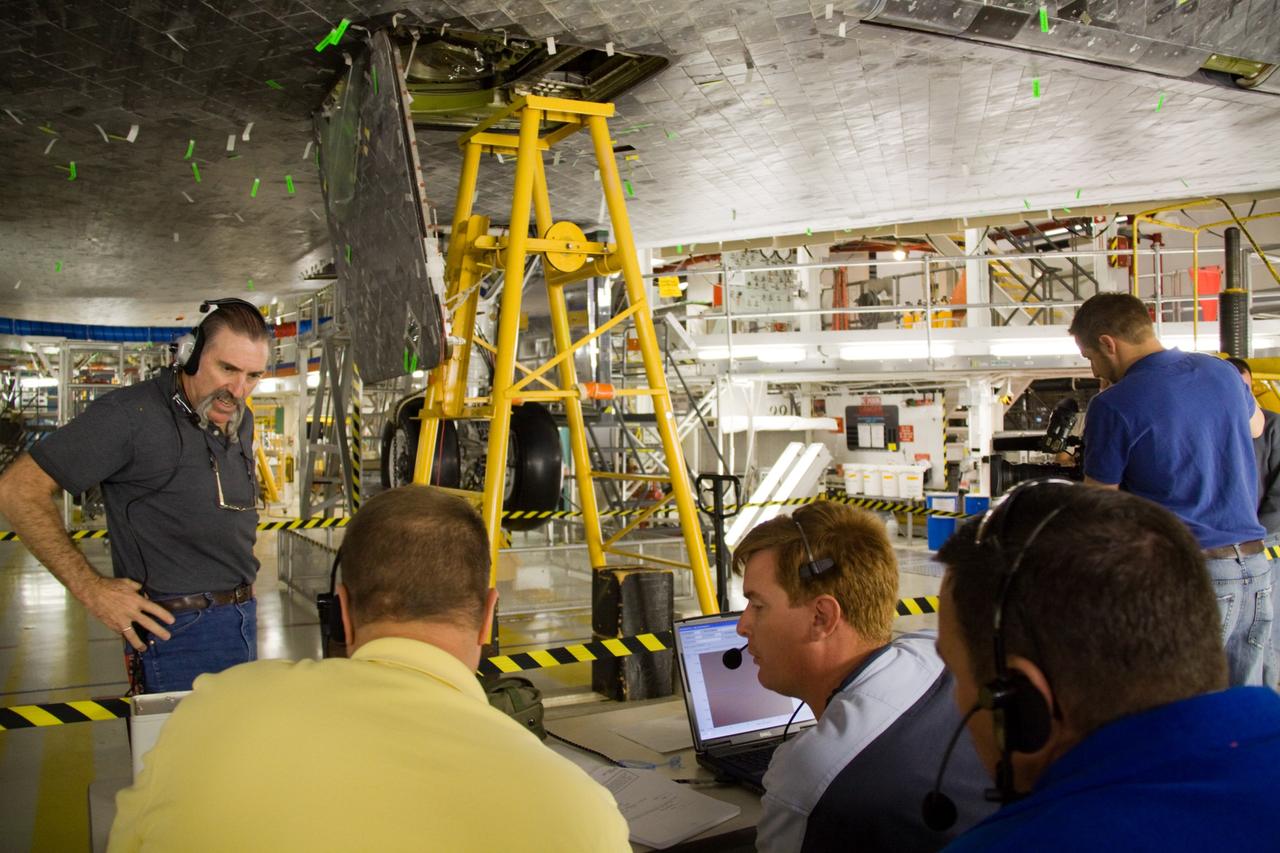
CAPE CANAVERAL, Fla. - In Orbiter Processing Facility 1 at NASA's Kennedy Space Center in Florida, United Space Alliance technicians study the results of a push test performed on an external tank door on space shuttle Atlantis. Two umbilical doors, located on the shuttle's aft fuselage, close after external tank separation following launch. The test confirms that the door's actuators are functioning properly and that signals sent from the actuators correctly indicate that the doors have closed, creating the necessary thermal barrier for reentry. Atlantis is next slated to deliver an Integrated Cargo Carrier and Russian-built Mini Research Module to the International Space Station on the STS-132 mission. The second in a series of new pressurized components for Russia, the module will be permanently attached to the Zarya module. Three spacewalks are planned to store spare components outside the station, including six spare batteries, a boom assembly for the Ku-band antenna and spares for the Canadian Dextre robotic arm extension. A radiator, airlock and European robotic arm for the Russian Multi-purpose Laboratory Module also are payloads on the flight. Launch is targeted for May 14, 2010. Photo credit: NASA/Troy Cryder

CAPE CANAVERAL, Fla. - In the Remote Manipulator System Lab inside the Vehicle Assembly Building at NASA's Kennedy Space Center in Florida, space shuttle Atlantis' orbiter boom sensor system, or OBSS, awaits inspection. The 50-foot-long OBSS attaches to the end of the shuttle’s robotic arm and supports the cameras and laser systems used to inspect the shuttle’s thermal protection system while in space. Atlantis is next slated to deliver an Integrated Cargo Carrier and Russian-built Mini Research Module to the International Space Station on the STS-132 mission. The second in a series of new pressurized components for Russia, the module will be permanently attached to the Zarya module. Three spacewalks are planned to store spare components outside the station, including six spare batteries, a boom assembly for the Ku-band antenna and spares for the Canadian Dextre robotic arm extension. A radiator, airlock and European robotic arm for the Russian Multi-purpose Laboratory Module also are payloads on the flight. Launch is targeted for May 14, 2010. Photo credit: NASA/Jack Pfaller
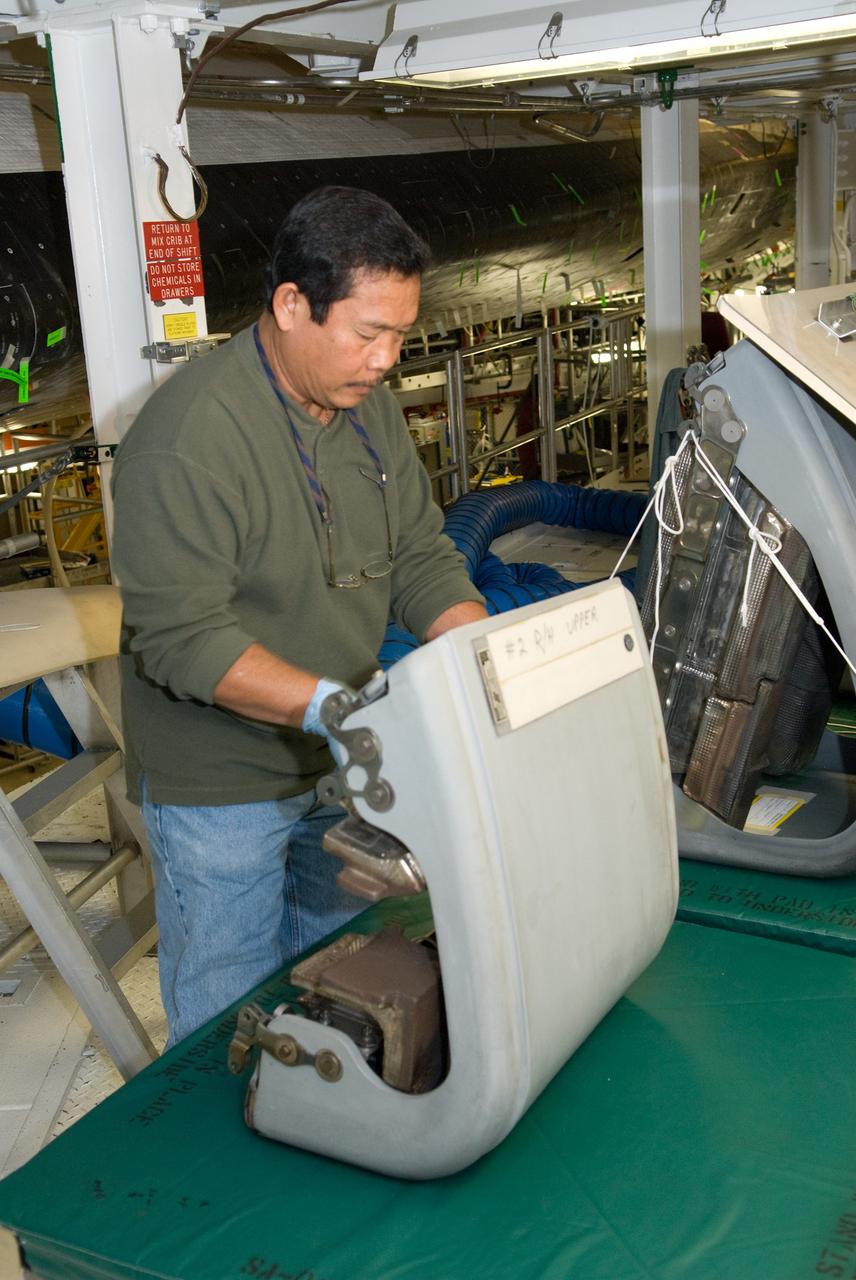
CAPE CANAVERAL, Fla. - In Orbiter Processing Facility-1 at NASA's Kennedy Space Center in Florida, a United Space Alliance technician inspects a reinforced carbon carbon panel, or RCC panel, removed from a wing leading edge of space shuttle Atlantis. Inspection and maintenance of the RCC panels and the wing leading edge are standard procedure between shuttle missions. The RCC panels, components of the shuttle's thermal protection system, are placed in protective coverings while the structural edge of the wing -- the orange and green area behind the panels -- undergoes spar corrosion inspection to verify the structural integrity of the wing. Atlantis is next slated to deliver an Integrated Cargo Carrier and Russian-built Mini Research Module to the International Space Station on the STS-132 mission. The second in a series of new pressurized components for Russia, the module will be permanently attached to the Zarya module. Three spacewalks are planned to store spare components outside the station, including six spare batteries, a boom assembly for the Ku-band antenna and spares for the Canadian Dextre robotic arm extension. A radiator, airlock and European robotic arm for the Russian Multi-purpose Laboratory Module also are payloads on the flight. Launch is targeted for May 14, 2010. Photo credit: NASA/Glenn Benson
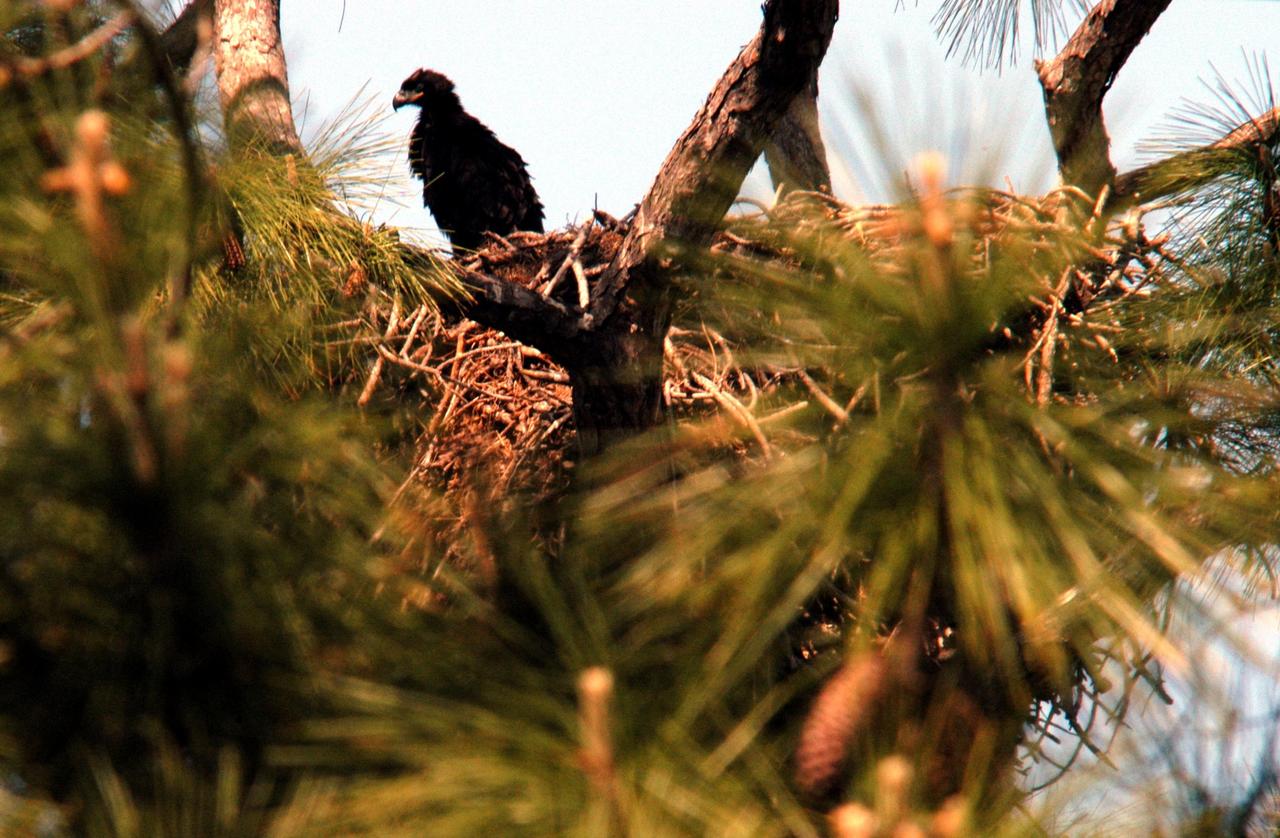
KENNEDY SPACE CENTER, FLA. -- On Kennedy Parkway, which runs through KSC, a young bald eagle is spotted perched on the side of its nest. The nest is one of 12 active nests throughout the Merritt Island National Wildlife Refuge, which shares a boundary with KSC. Young birds lack the typical white head, which they gain after several years. Nests are masses of sticks usually in the top of a tall tree. Their habitat is near lakes, rivers, marshes and seacoasts.
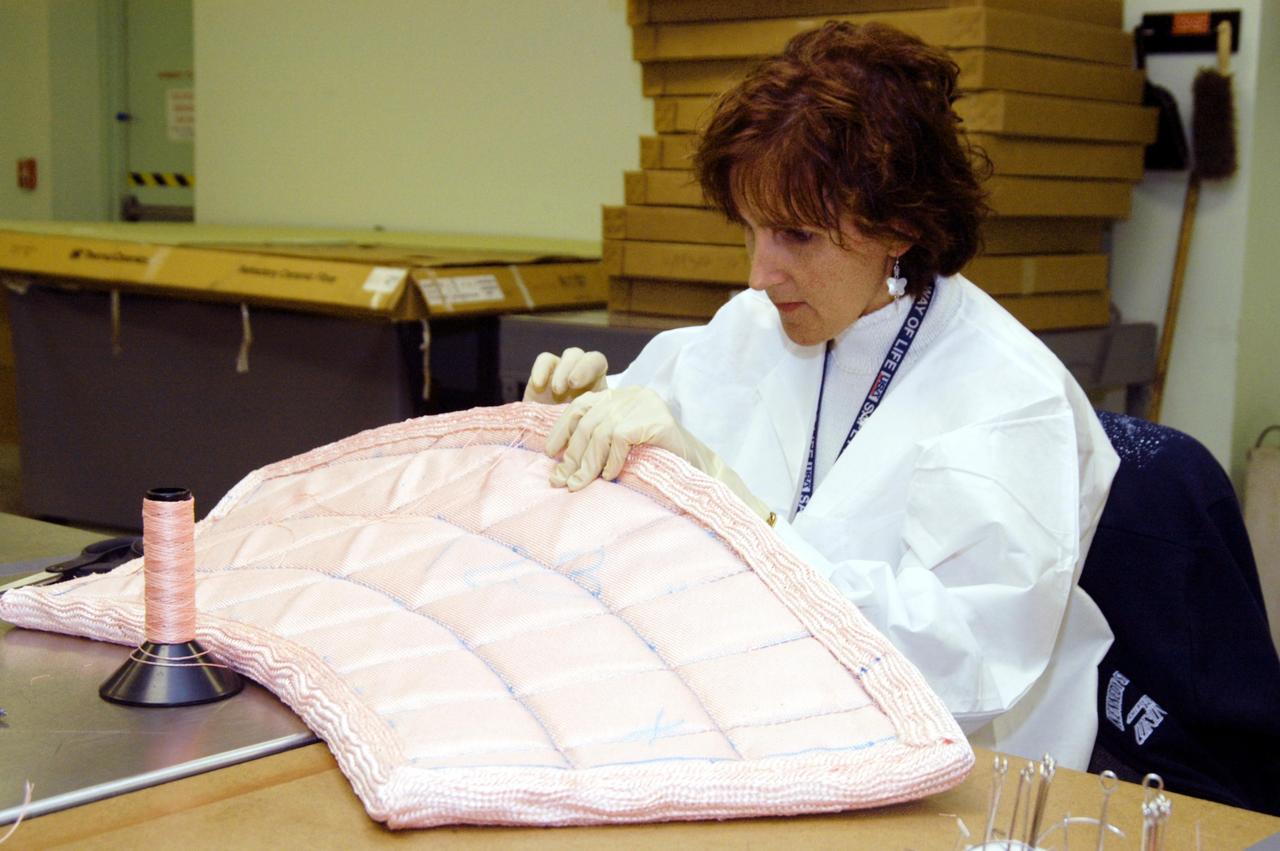
KENNEDY SPACE CENTER, FLA. -- In the Thermal Protection System Facility, Pilar Ryan, with United Space Alliance, stitches a piece of insulation blanket for Atlantis's nose cap. The blankets consist of layered, pure silica felt sandwiched between a layer of silica fabric (the hot side) and a layer of S-Glass fabric. The blankets are semi-rigid and can be made as large as 30 inches by 30 inches. The blanket is through-stitched with pure silica thread in a 1-inch grid pattern. After fabrication, the blanket is bonded directly to the vehicle structure and finally coated with a high purity silica coating that improves erosion resistance.
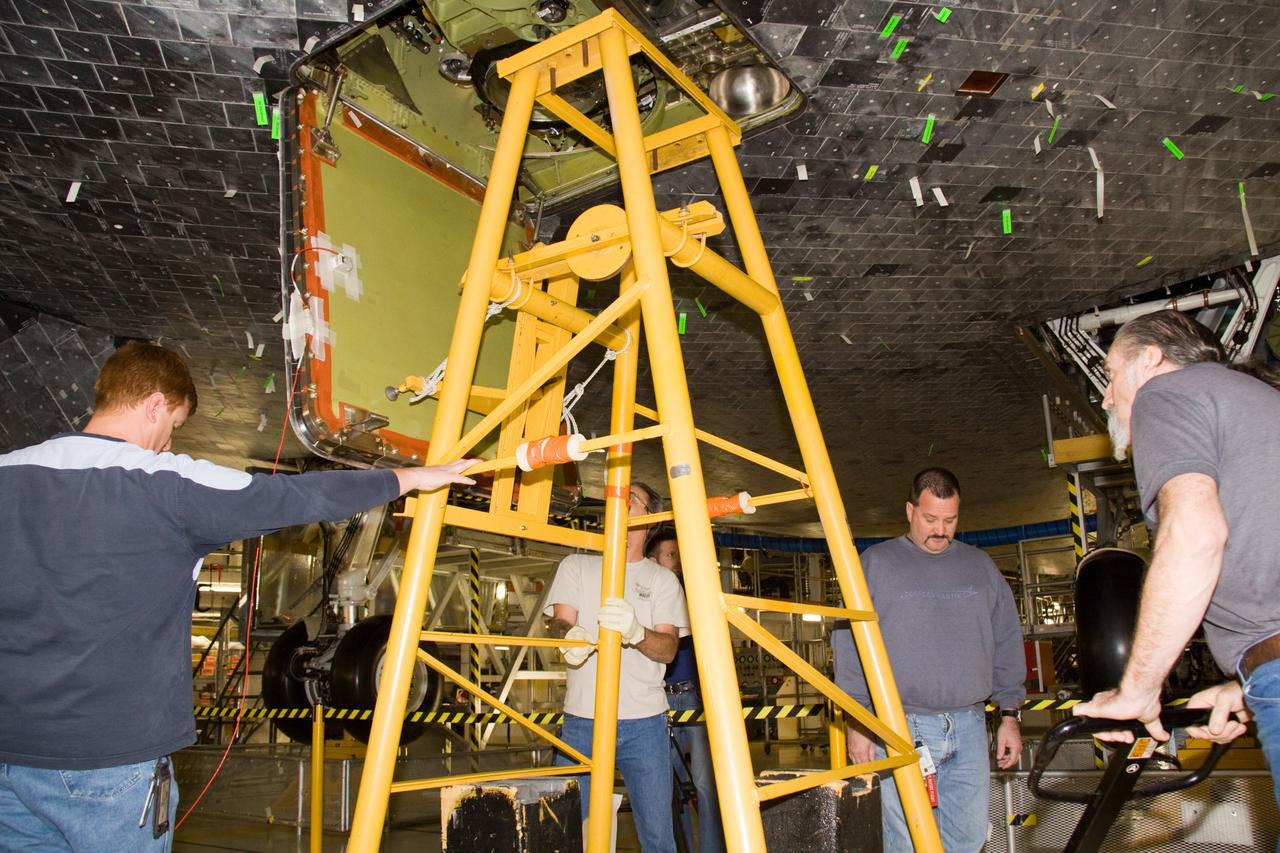
CAPE CANAVERAL, Fla. - In Orbiter Processing Facility 1 at NASA's Kennedy Space Center in Florida, United Space Alliance technicians remove the test equipment that was used to perform a push test on an external tank door on space shuttle Atlantis. Two umbilical doors, located on the shuttle's aft fuselage, close after external tank separation following launch. The test confirms that the door's actuators are functioning properly and that signals sent from the actuators correctly indicate that the doors have closed, creating the necessary thermal barrier for reentry. Atlantis is next slated to deliver an Integrated Cargo Carrier and Russian-built Mini Research Module to the International Space Station on the STS-132 mission. The second in a series of new pressurized components for Russia, the module will be permanently attached to the Zarya module. Three spacewalks are planned to store spare components outside the station, including six spare batteries, a boom assembly for the Ku-band antenna and spares for the Canadian Dextre robotic arm extension. A radiator, airlock and European robotic arm for the Russian Multi-purpose Laboratory Module also are payloads on the flight. Launch is targeted for May 14, 2010. Photo credit: NASA/Troy Cryder
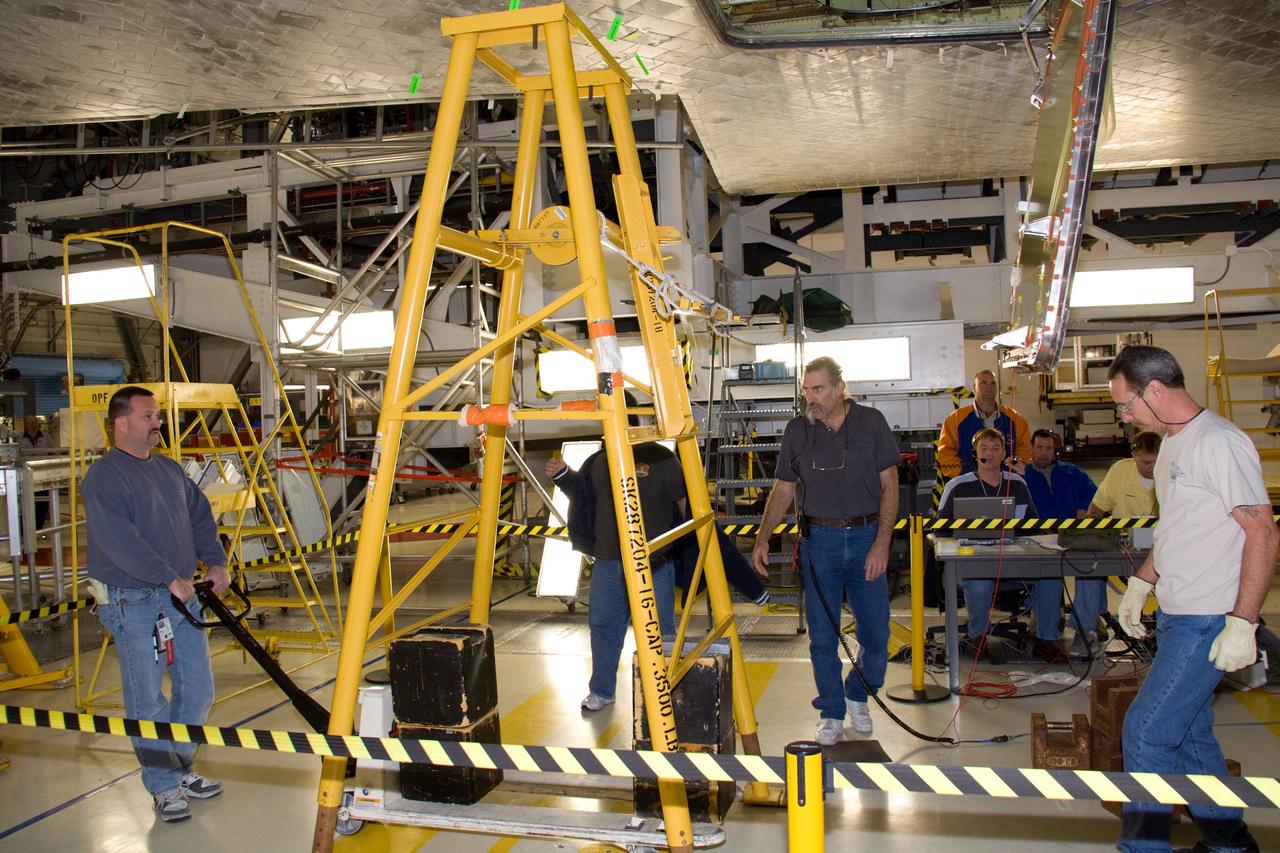
CAPE CANAVERAL, Fla. - In Orbiter Processing Facility 1 at NASA's Kennedy Space Center in Florida, United Space Alliance technicians roll the test equipment away from an external tank door on space shuttle Atlantis following the successful completion of a push test. Two umbilical doors, located on the shuttle's aft fuselage, close after external tank separation following launch. The test confirms that the door's actuators are functioning properly and that signals sent from the actuators correctly indicate that the doors have closed, creating the necessary thermal barrier for reentry. Atlantis is next slated to deliver an Integrated Cargo Carrier and Russian-built Mini Research Module to the International Space Station on the STS-132 mission. The second in a series of new pressurized components for Russia, the module will be permanently attached to the Zarya module. Three spacewalks are planned to store spare components outside the station, including six spare batteries, a boom assembly for the Ku-band antenna and spares for the Canadian Dextre robotic arm extension. A radiator, airlock and European robotic arm for the Russian Multi-purpose Laboratory Module also are payloads on the flight. Launch is targeted for May 14, 2010. Photo credit: NASA/Troy Cryder
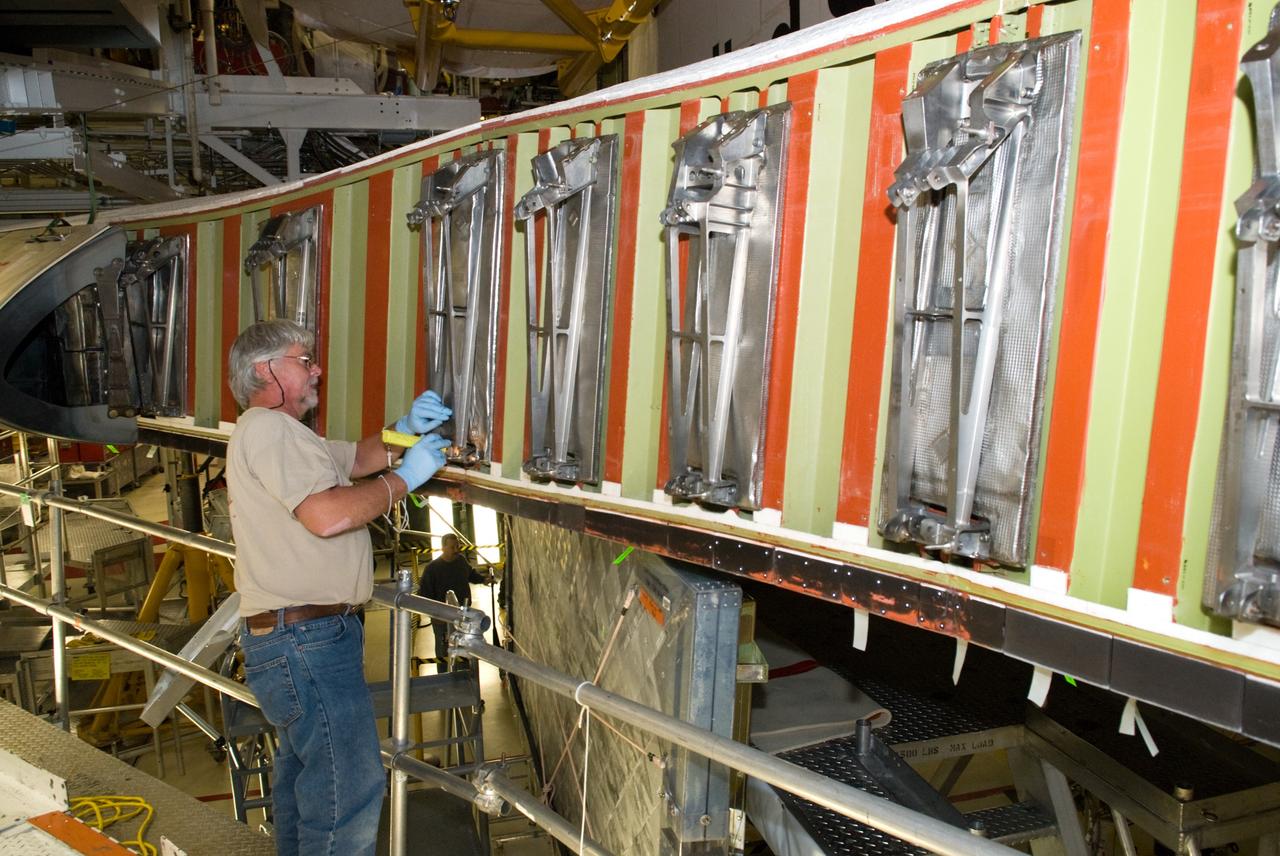
CAPE CANAVERAL, Fla. - In Orbiter Processing Facility-1 at NASA's Kennedy Space Center in Florida, a United Space Alliance technician inspects a wing leading edge of space shuttle Atlantis following removal of the reinforced carbon carbon panels, or RCC panels. Inspection and maintenance of the RCC panels and the wing leading edge are standard procedure between shuttle missions. The RCC panels, components of the shuttle's thermal protection system, are placed in protective coverings while the structural edge of the wing -- the orange and green area behind the panels -- undergoes spar corrosion inspection to verify the structural integrity of the wing. Atlantis is next slated to deliver an Integrated Cargo Carrier and Russian-built Mini Research Module to the International Space Station on the STS-132 mission. The second in a series of new pressurized components for Russia, the module will be permanently attached to the Zarya module. Three spacewalks are planned to store spare components outside the station, including six spare batteries, a boom assembly for the Ku-band antenna and spares for the Canadian Dextre robotic arm extension. A radiator, airlock and European robotic arm for the Russian Multi-purpose Laboratory Module also are payloads on the flight. Launch is targeted for May 14, 2010. Photo credit: NASA/Glenn Benson
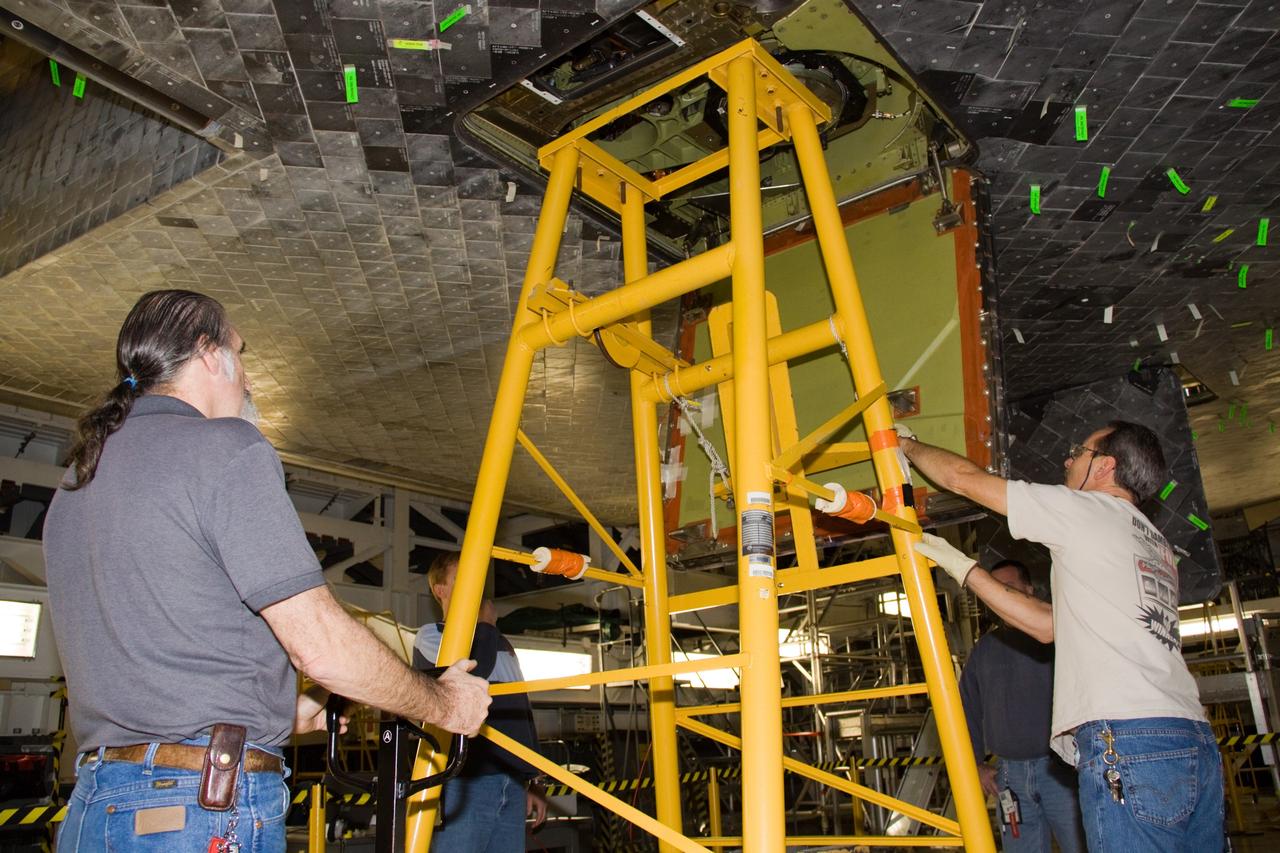
CAPE CANAVERAL, Fla. - In Orbiter Processing Facility 1 at NASA's Kennedy Space Center in Florida, United Space Alliance technicians perform a push test on an external tank door on space shuttle Atlantis. Two umbilical doors, located on the shuttle's aft fuselage, close after external tank separation following launch. The test confirms that the door's actuators are functioning properly and that signals sent from the actuators correctly indicate that the doors have closed, creating the necessary thermal barrier for reentry. Atlantis is next slated to deliver an Integrated Cargo Carrier and Russian-built Mini Research Module to the International Space Station on the STS-132 mission. The second in a series of new pressurized components for Russia, the module will be permanently attached to the Zarya module. Three spacewalks are planned to store spare components outside the station, including six spare batteries, a boom assembly for the Ku-band antenna and spares for the Canadian Dextre robotic arm extension. A radiator, airlock and European robotic arm for the Russian Multi-purpose Laboratory Module also are payloads on the flight. Launch is targeted for May 14, 2010. Photo credit: NASA/Troy Cryder

KENNEDY SPACE CENTER, FLA. -- In the Thermal Protection System Facility, Pilar Ryan, with United Space Alliance, stitches a piece of insulation blanket for Atlantis. In the foreground is a ring inside of which the blankets will be sewn to fit in the orbiter's nose cap. The blankets consist of layered, pure silica felt sandwiched between a layer of silica fabric (the hot side) and a layer of S-Glass fabric. The blankets are semi-rigid and can be made as large as 30 inches by 30 inches. The blanket is through-stitched with pure silica thread in a 1-inch grid pattern. After fabrication, the blanket is bonded directly to the vehicle structure and finally coated with a high purity silica coating that improves erosion resistance.
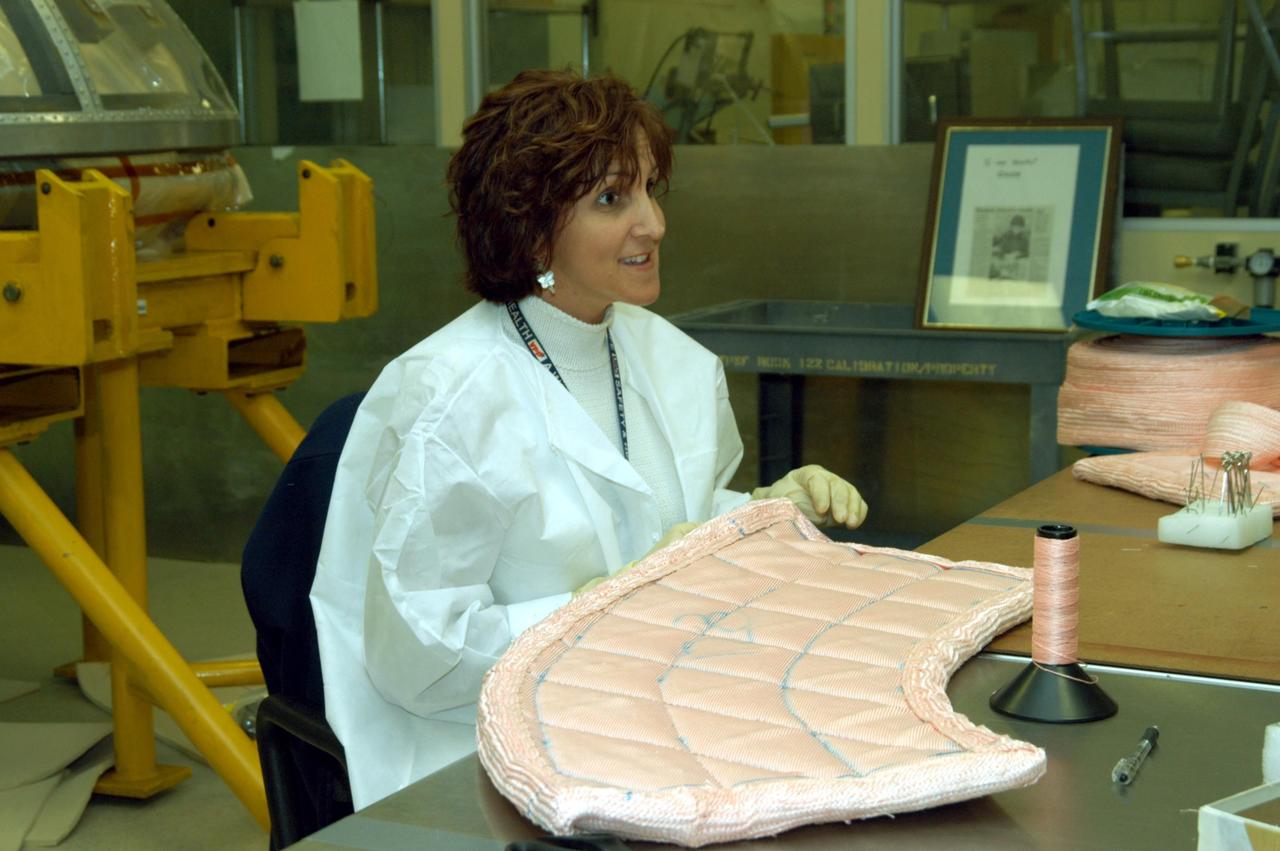
KENNEDY SPACE CENTER, FLA. -- In the Thermal Protection System Facility, Pilar Ryan, with United Space Alliance, stitches a piece of insulation blanket for Atlantis' nose cap. Behind her is a cover for the nose cap. The blankets consist of layered, pure silica felt sandwiched between a layer of silica fabric (the hot side) and a layer of S-Glass fabric. The blankets are semi-rigid and can be made as large as 30 inches by 30 inches. The blanket is through-stitched with pure silica thread in a 1-inch grid pattern. After fabrication, the blanket is bonded directly to the vehicle structure and finally coated with a high purity silica coating that improves erosion resistance.
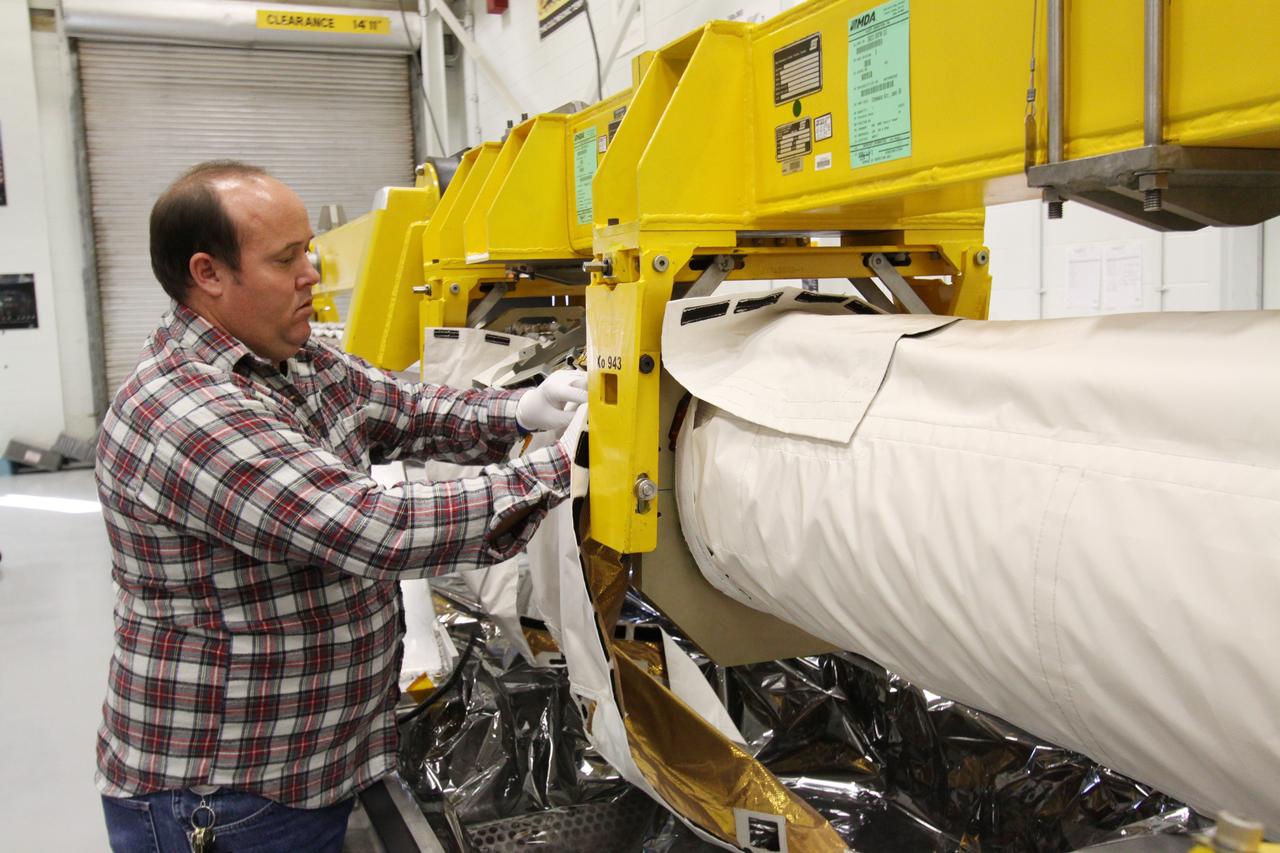
CAPE CANAVERAL, Fla. - In the Remote Manipulator System Lab inside the Vehicle Assembly Building at NASA's Kennedy Space Center in Florida, Patrick Manning, an advanced systems technician with United Space Alliance, installs the mid-transition thermal blanket onto the inspection boom assembly, or IBA, on space shuttle Atlantis' orbiter boom sensor system, or OBSS. The IBA is removed from the shuttle every other processing flow for a detailed inspection. After five consecutive flights, all IBA internal components are submitted to a thorough electrical checkout in the lab. The 50-foot-long OBSS attaches to the end of the shuttle’s robotic arm and supports the cameras and laser systems used to inspect the shuttle’s thermal protection system while in space. Atlantis is next slated to deliver an Integrated Cargo Carrier and Russian-built Mini Research Module to the International Space Station on the STS-132 mission. The second in a series of new pressurized components for Russia, the module will be permanently attached to the Zarya module. Three spacewalks are planned to store spare components outside the station, including six spare batteries, a boom assembly for the Ku-band antenna and spares for the Canadian Dextre robotic arm extension. A radiator, airlock and European robotic arm for the Russian Multi-purpose Laboratory Module also are payloads on the flight. Launch is targeted for May 14, 2010. Photo credit: NASA/Jack Pfaller

KENNEDY SPACE CENTER, FLA. -- United Space Alliance workers Ginger Morrison and Michael Williams stitch together pieces of insulation blankets inside the ring that fits in the nose cap of Discovery. The blankets consist of layered, pure silica felt sandwiched between a layer of silica fabric (the hot side) and a layer of S-Glass fabric. The blanket is through-stitched with pure silica thread in a 1-inch grid pattern. After fabrication, the blanket is bonded directly to the vehicle structure and finally coated with a high purity silica coating that improves erosion resistance. The blankets are semi-rigid and can be made as large as 30 inches by 30 inches.
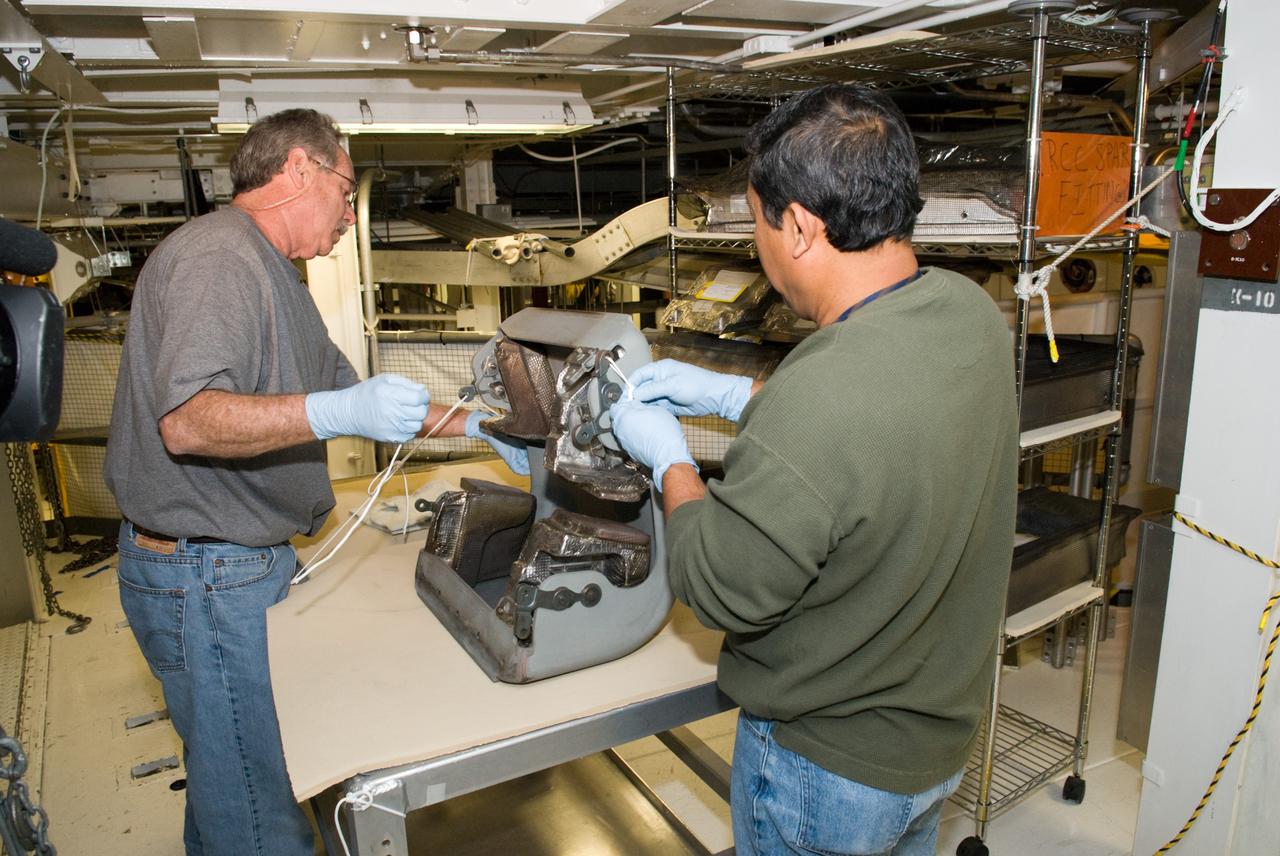
CAPE CANAVERAL, Fla. - In Orbiter Processing Facility-1 at NASA's Kennedy Space Center in Florida, United Space Alliance technicians prepare to cover a reinforced carbon carbon panel, or RCC panel, removed from a wing leading edge of space shuttle Atlantis. Inspection and maintenance of the RCC panels and the wing leading edge are standard procedure between shuttle missions. The RCC panels, components of the shuttle's thermal protection system, are placed in protective coverings while the structural edge of the wing -- the orange and green area behind the panels -- undergoes spar corrosion inspection to verify the structural integrity of the wing. Atlantis is next slated to deliver an Integrated Cargo Carrier and Russian-built Mini Research Module to the International Space Station on the STS-132 mission. The second in a series of new pressurized components for Russia, the module will be permanently attached to the Zarya module. Three spacewalks are planned to store spare components outside the station, including six spare batteries, a boom assembly for the Ku-band antenna and spares for the Canadian Dextre robotic arm extension. A radiator, airlock and European robotic arm for the Russian Multi-purpose Laboratory Module also are payloads on the flight. Launch is targeted for May 14, 2010. Photo credit: NASA/Glenn Benson
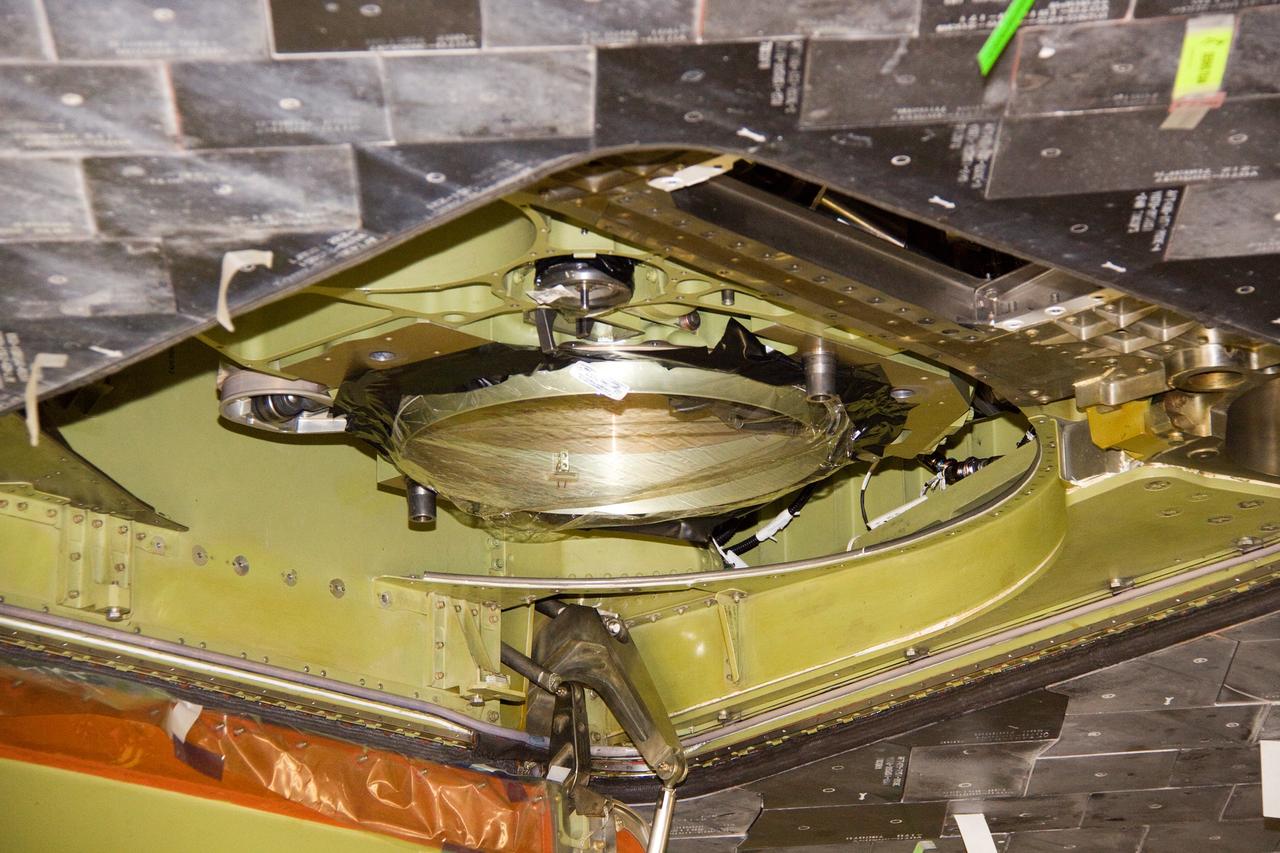
CAPE CANAVERAL, Fla. - In Orbiter Processing Facility 1 at NASA's Kennedy Space Center in Florida, preparations are under way to perform a push test on an external tank door, shown in this close-up, of space shuttle Atlantis. Two umbilical doors, located on the shuttle's aft fuselage, close after external tank separation following launch. The test confirms that the door's actuators are functioning properly and that signals sent from the actuators correctly indicate that the doors have closed, creating the necessary thermal barrier for reentry. Atlantis is next slated to deliver an Integrated Cargo Carrier and Russian-built Mini Research Module to the International Space Station on the STS-132 mission. The second in a series of new pressurized components for Russia, the module will be permanently attached to the Zarya module. Three spacewalks are planned to store spare components outside the station, including six spare batteries, a boom assembly for the Ku-band antenna and spares for the Canadian Dextre robotic arm extension. A radiator, airlock and European robotic arm for the Russian Multi-purpose Laboratory Module also are payloads on the flight. Launch is targeted for May 14, 2010. Photo credit: NASA/Troy Cryder
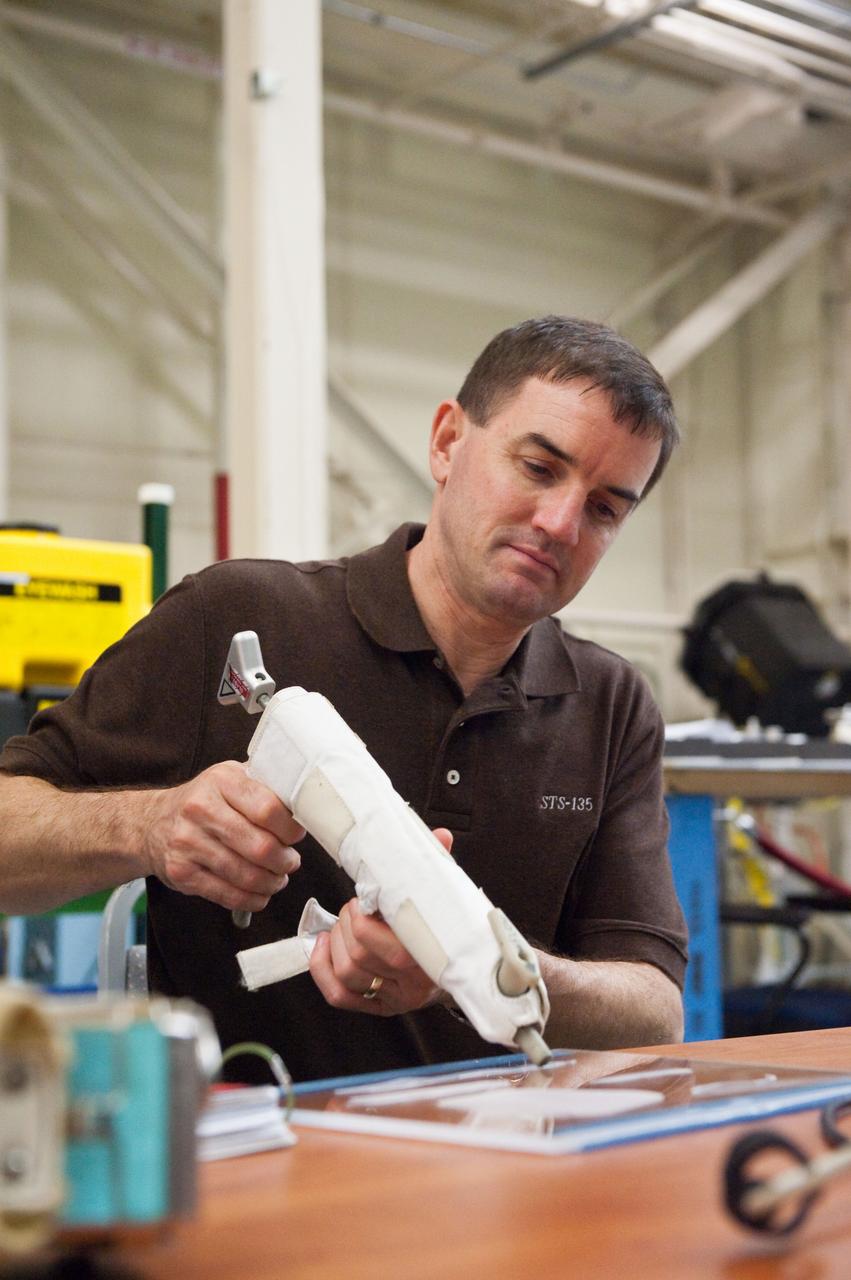
JSC2011-E-043875 (29 April 2011) --- NASA astronaut Rex Walheim, STS-135 mission specialist, participates in an EVA Thermal Protection System (TPS) overview training session in the TPS/Precision Air Bearing Facility in the Space Vehicle Mock-up Facility at NASA's Johnson Space Center. Photo credit: NASA
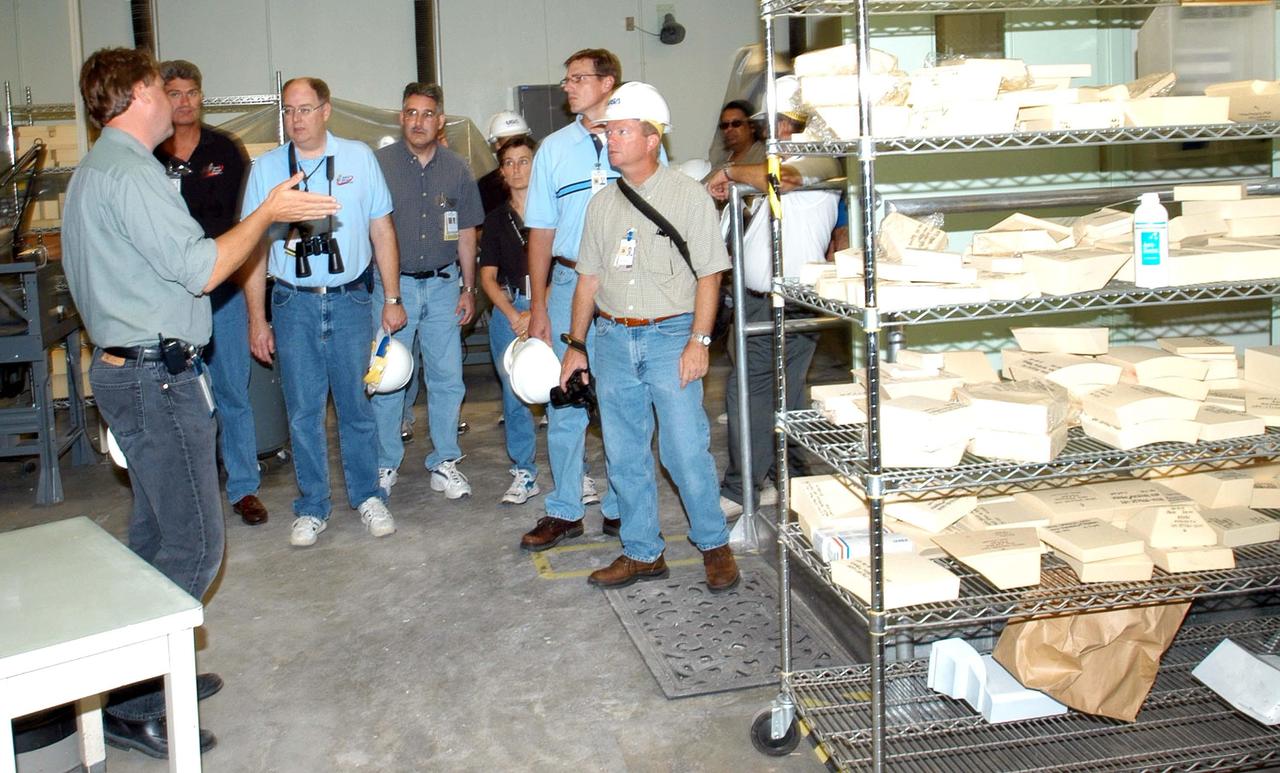
KENNEDY SPACE CENTER, FLA. - Members of a hurricane assessment team from Johnson Space Center and Marshall Space Flight Center tour the Thermal Protection System (TPS) Facility at KSC after Hurricane Frances hit the east coast of Central Florida and Kennedy Space Center. At left is Martin Wilson, manager of the TPS operations. The facility, which creates the TPS tiles, blankets and all the internal thermal control systems for the Space Shuttles, is almost totally unserviceable at this time after losing approximately 35 percent of its roof. Equipment and materials that survived the storm have been relocated to the RLV hangar near the KSC Shuttle Landing Facility.
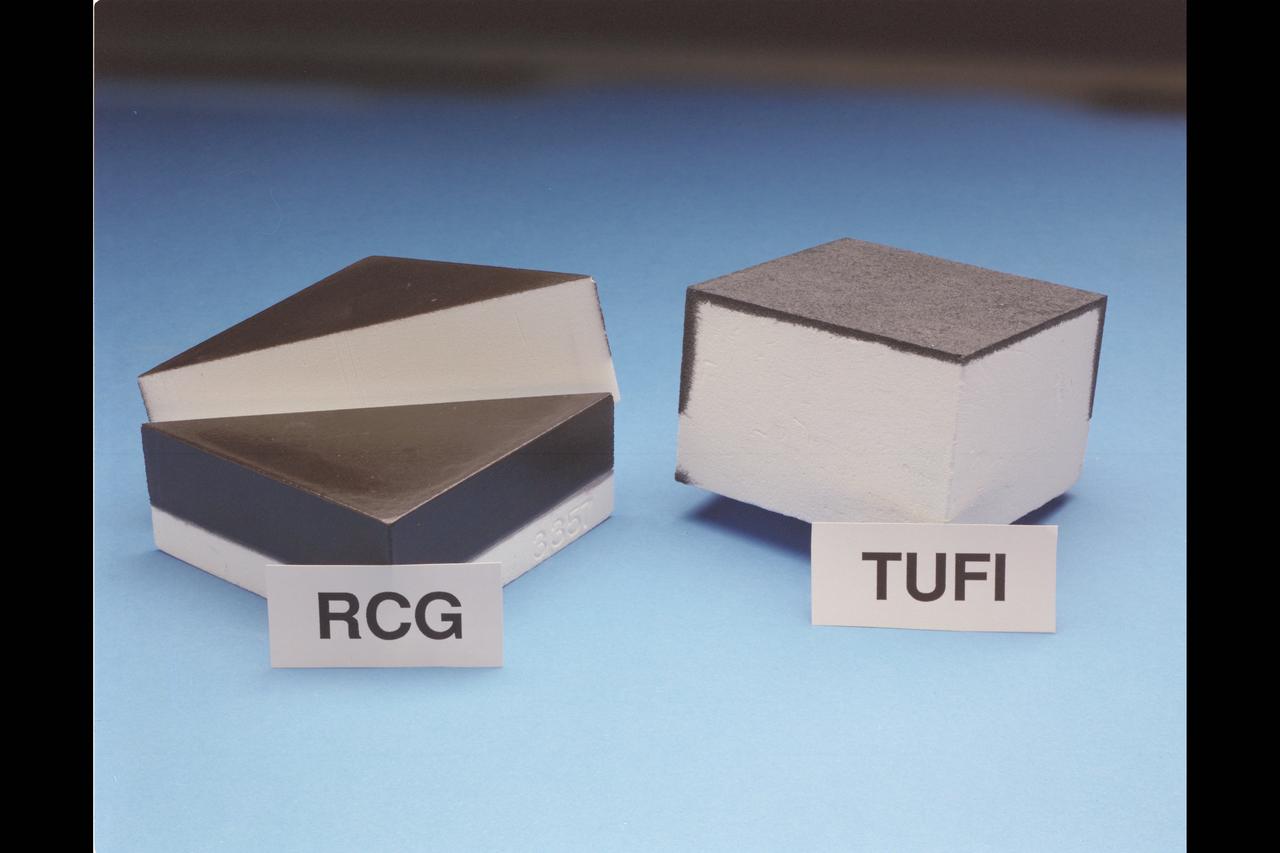
Studio portrait of Ames Developed Thermal Protection System (TPS) tiles - the RCG and TUFI
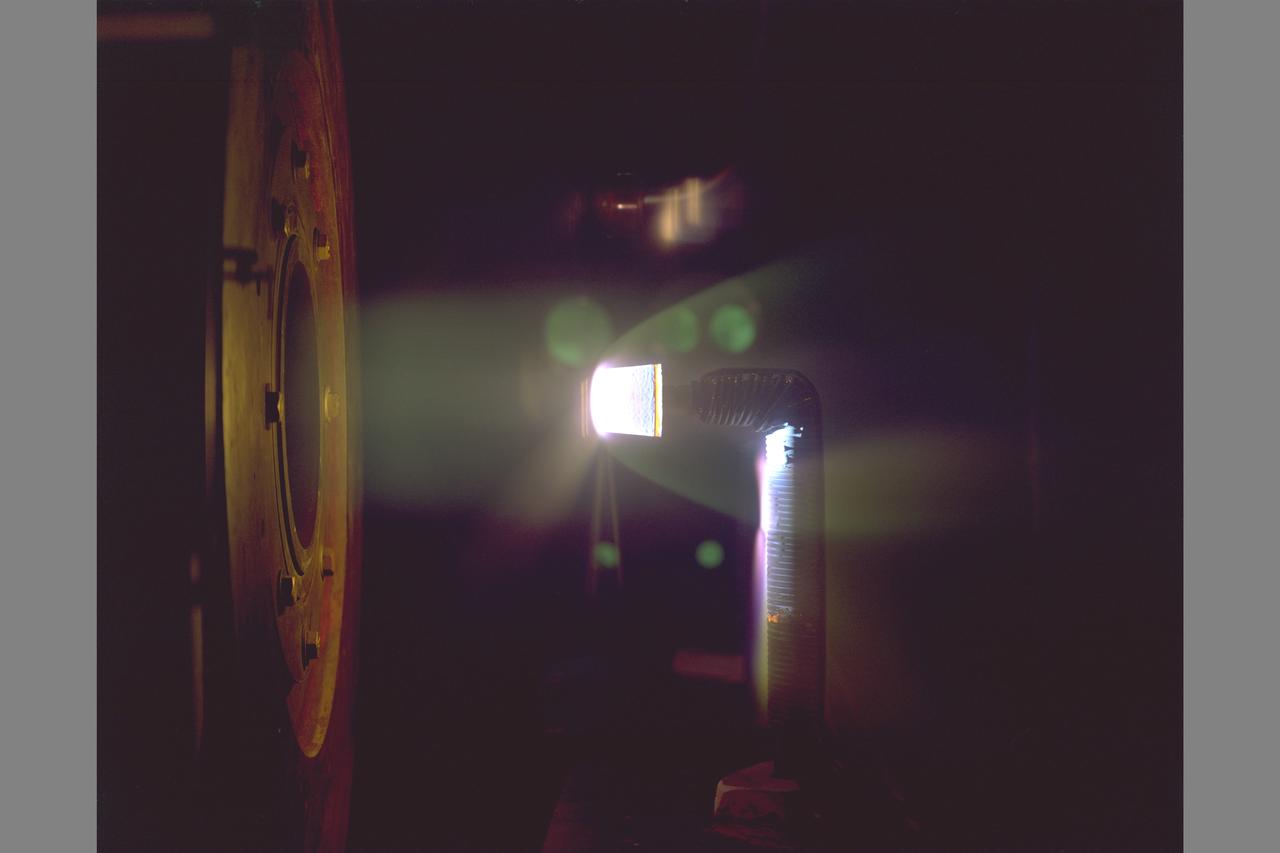
Advanced Space Shuttle TPS (Thermal Protection System) Plasma Stream during run in Arc Heater Facility
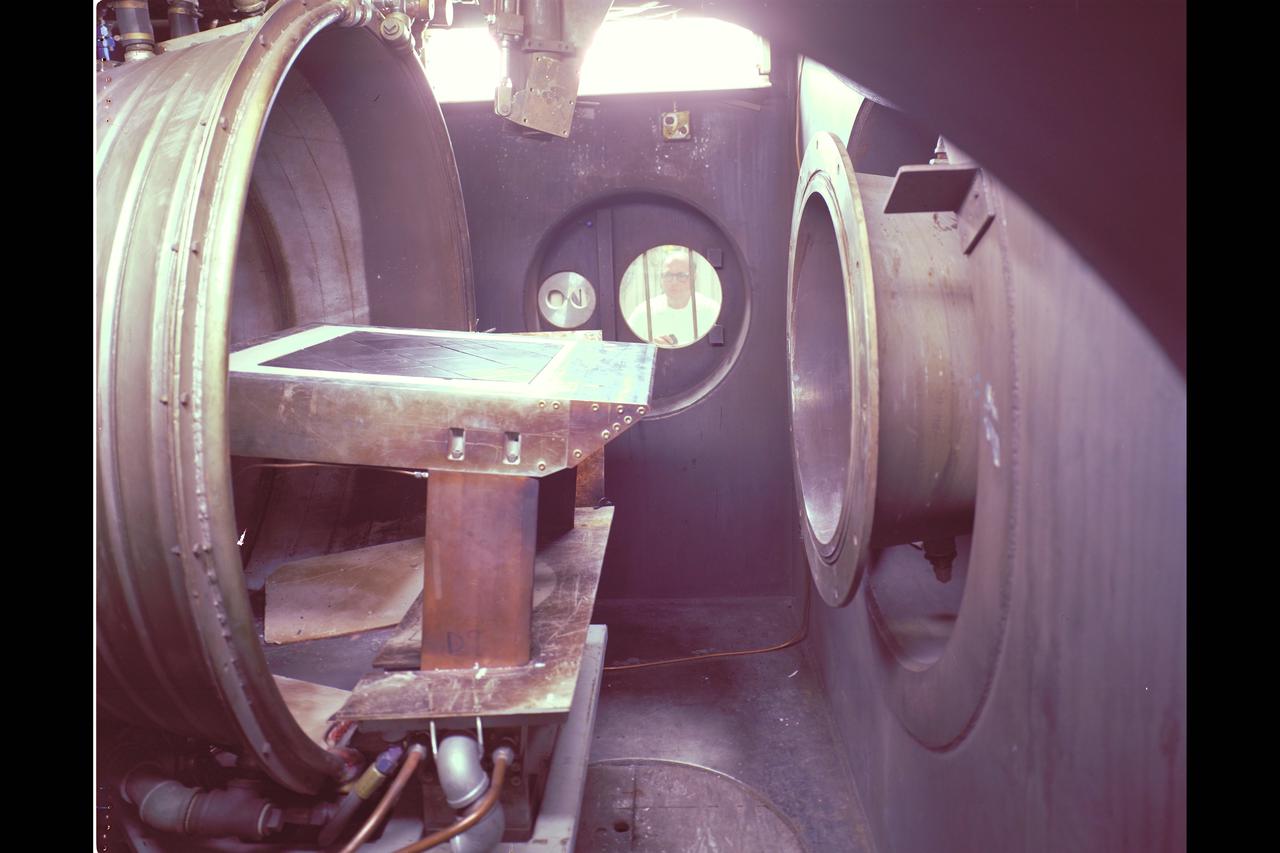
N-238 60MW Aerodynamic Heating Facility set up for TPS testing with T. Asta looking on through test section viewing window.

NASA astronauts Christina Koch and Victor J. Glover examine a sample of AVCOAT Thermal Protection System (TPS) that protects the Orion spacecraft as it enters Earth’s atmosphere.
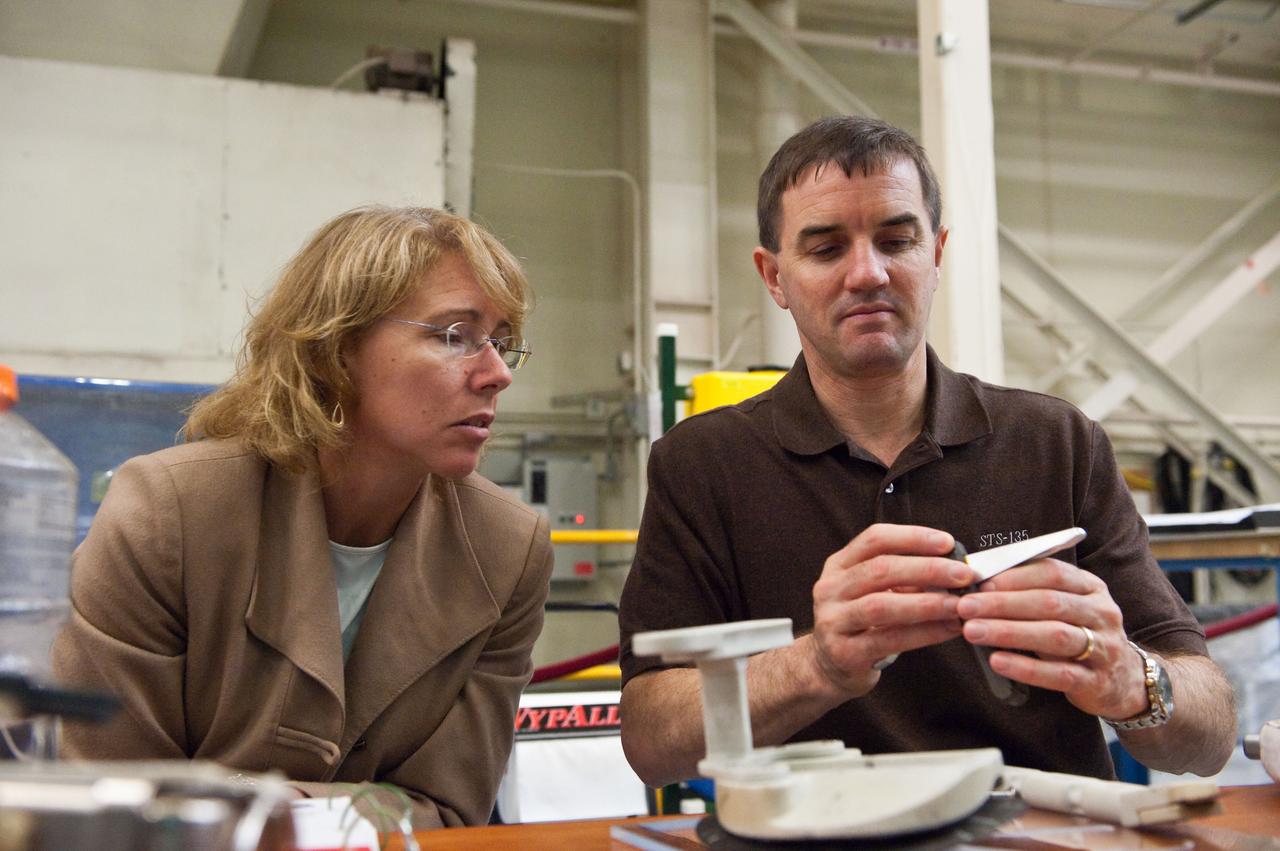
JSC2011-E-043877 (29 April 2011) --- NASA astronauts Sandy Magnus and Rex Walheim, both STS-135 mission specialists, participate in an EVA Thermal Protection System (TPS) overview training session in the TPS/ Precision Air Bearing Facility in the Space Vehicle Mock-up Facility at NASA's Johnson Space Center. Photo credit: NASA
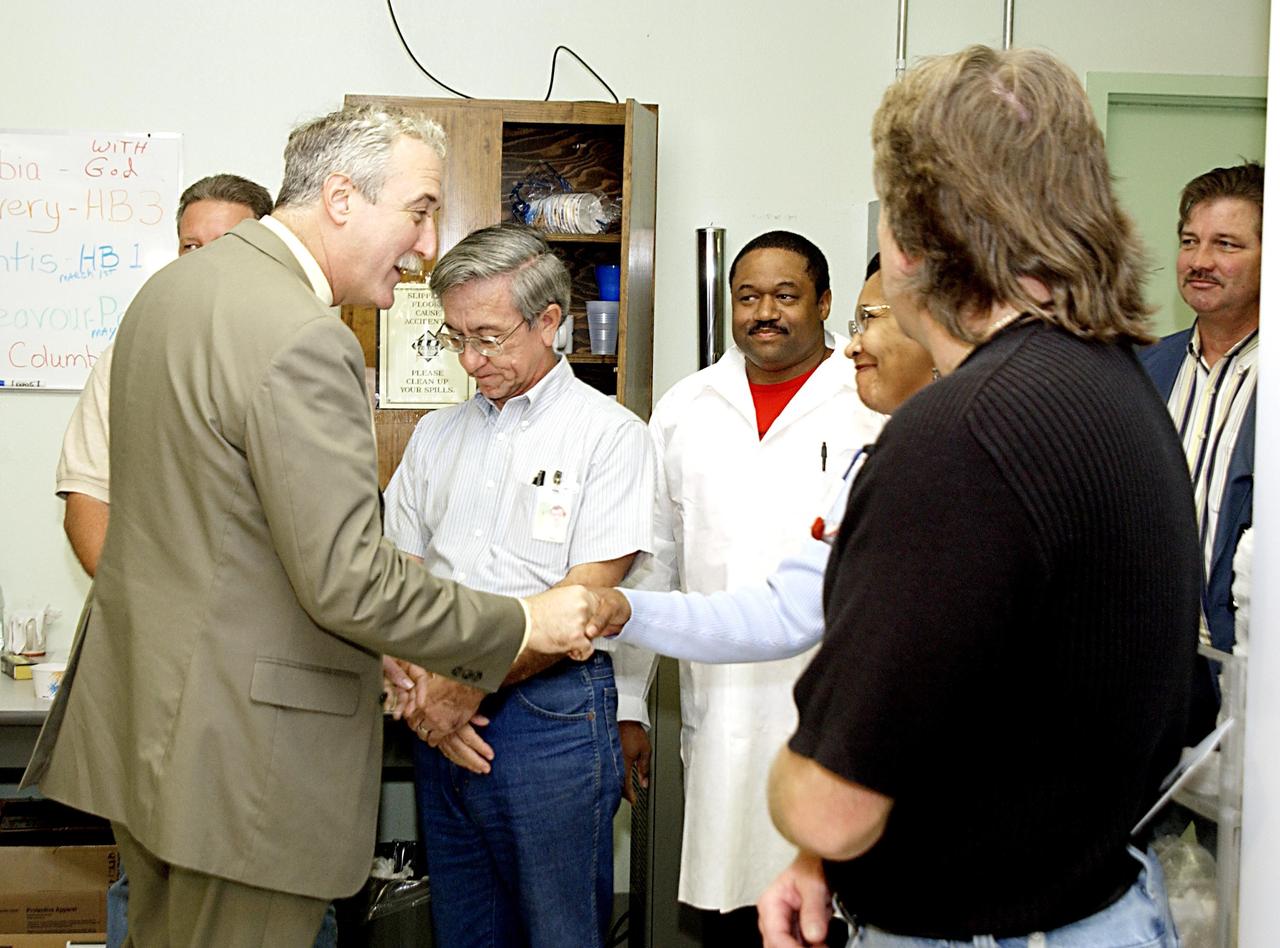
KENNEDY SPACE CENTER, FLA. -- In the Thermal Protection System Facility, NASA Administrator Sean O'Keefe (left) meets workers. O'Keefe is visiting the site to learn more about the TPS products and process in protecting orbiters from the intense heat of launch and re-entry. TPS tiles have been discussed in the investigation into the Columbia tragedy that destroyed the orbiter and claimed the lives of seven astronauts.

KENNEDY SPACE CENTER, FLA. -- In the Thermal Protection System Facility, NASA Administrator Sean O'Keefe (center) listens to Lee Zook (right) explaining use of the Dome Heat Shield blanket in front of them that is used for Shuttle engines. O'Keefe is visiting the site to learn more about the TPS products and process in protecting orbiters from the intense heat of launch and re-entry. TPS tiles have been discussed in the investigation into the Columbia tragedy that destroyed the orbiter and claimed the lives of seven astronauts.
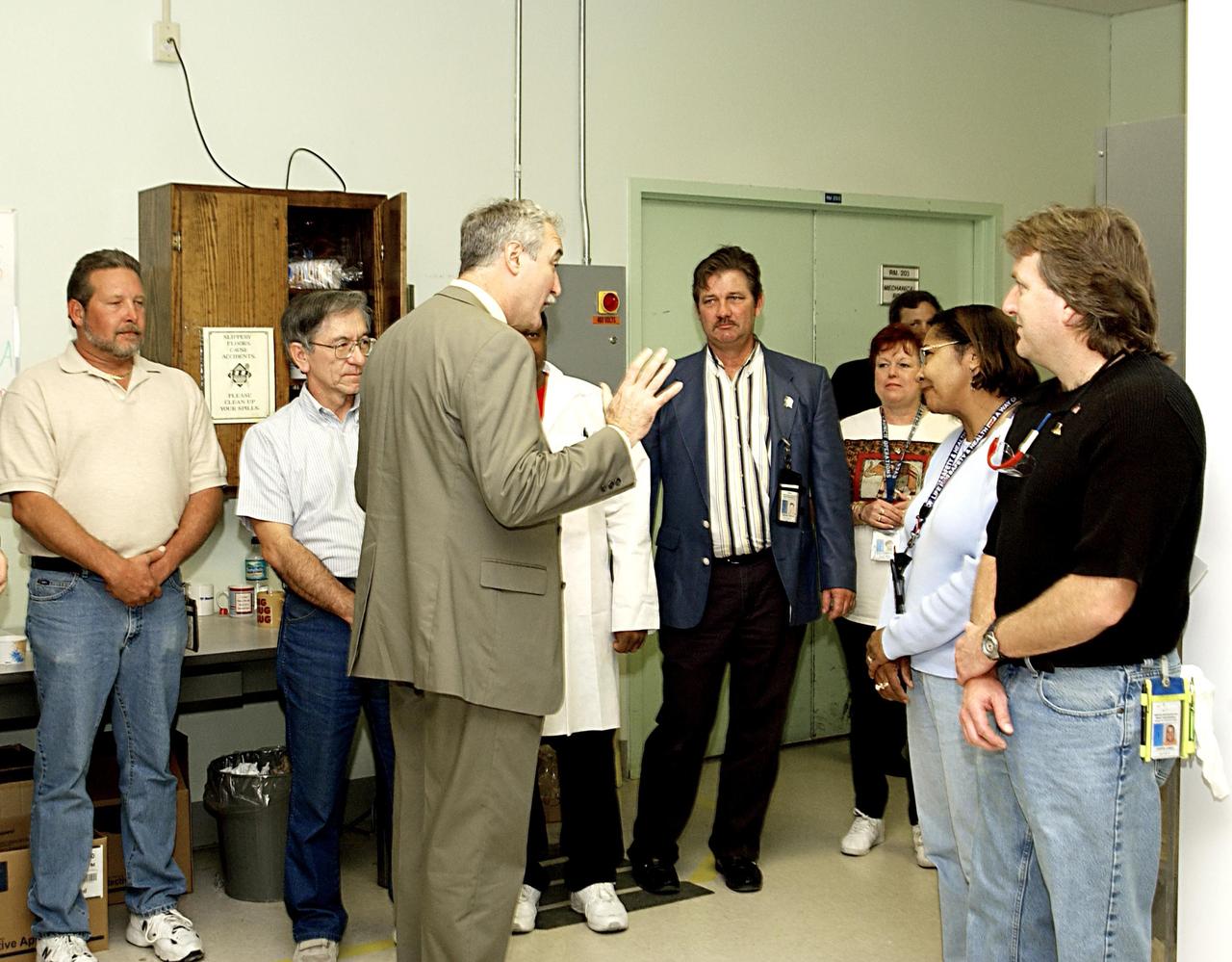
KENNEDY SPACE CENTER, FLA. -- NASA Administrator Sean O'Keefe (third from left) talks to workers in the Thermal Protection System Facility. O'Keefe is visiting the site to learn more about the TPS products and process in protecting orbiters from the intense heat of launch and re-entry. TPS tiles have been discussed in the investigation into the Columbia tragedy that destroyed the orbiter and claimed the lives of seven astronauts.
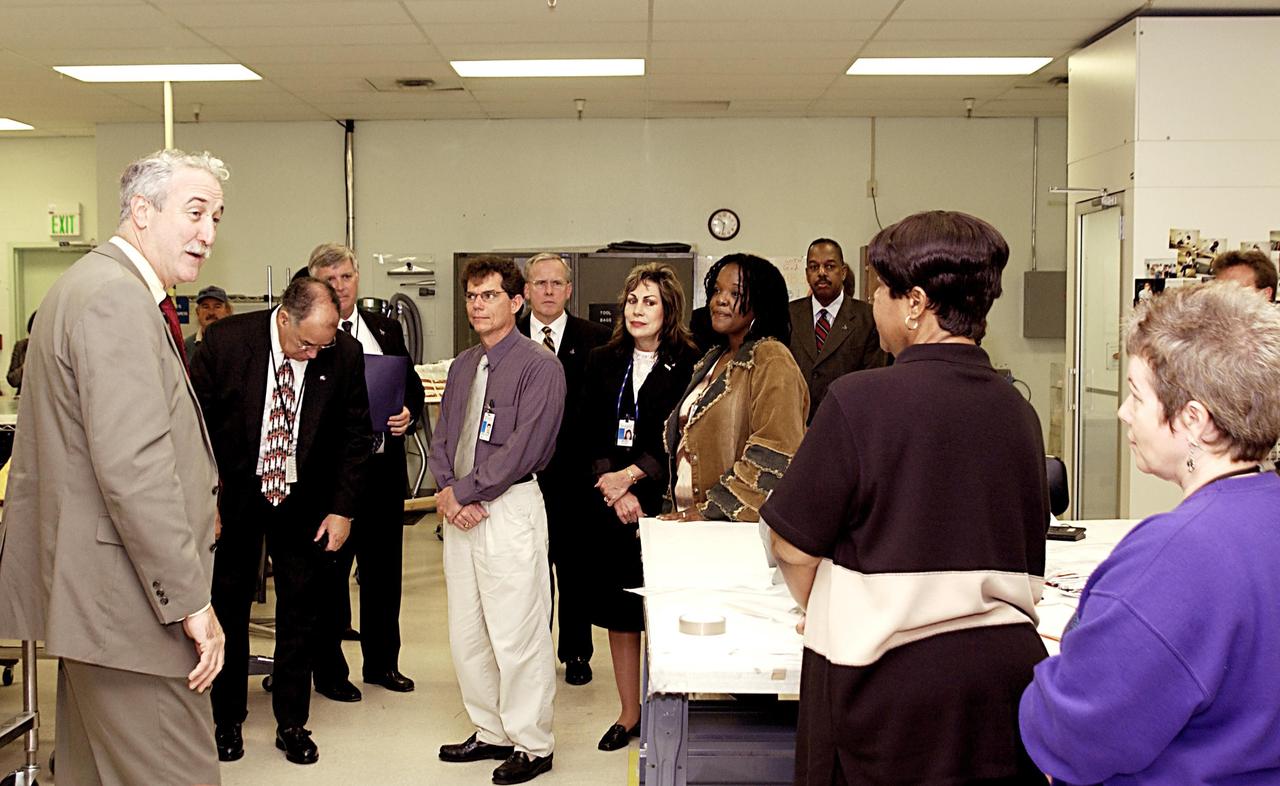
KENNEDY SPACE CENTER, FLA. -- NASA Administrator Sean O'Keefe (left) speaks to workers in the Thermal Protection System Facility. O'Keefe is visiting the site to learn more about the TPS products and process in protecting orbiters from the intense heat of launch and re-entry. TPS tiles have been discussed in the investigation into the Columbia tragedy that destroyed the orbiter and claimed the lives of seven astronauts.
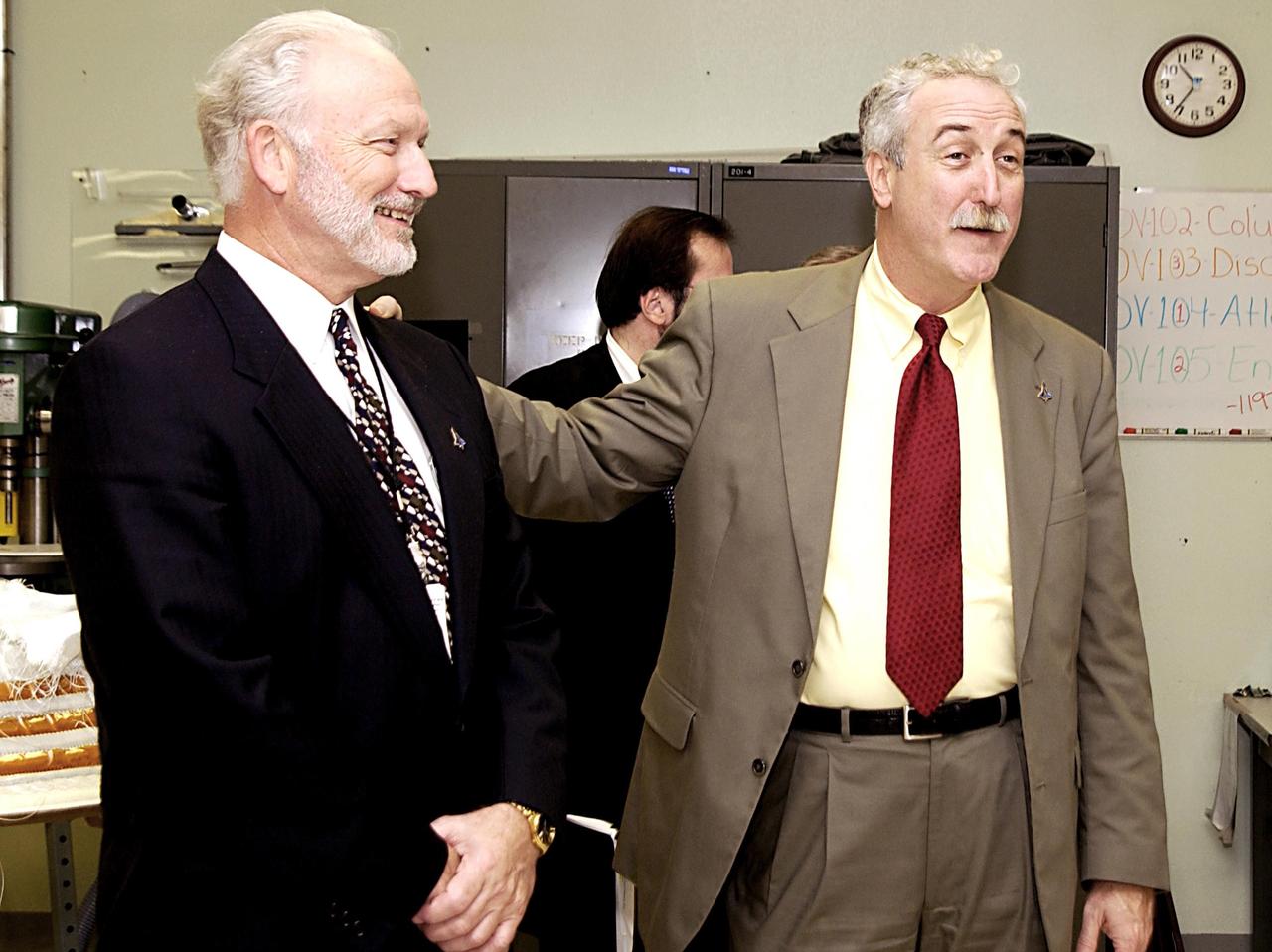
KENNEDY SPACE CENTER, FLA. -- NASA Administrator Sean O'Keefe (right) visits the Thermal Protection System Facility. At left is Chuck Fontana, associate program manager, Integrated Logistics. O'Keefe is visiting the site to learn more about the TPS products and process in protecting orbiters from the intense heat of launch and re-entry. TPS tiles have been discussed in the investigation into the Columbia tragedy that destroyed the orbiter and claimed the lives of seven astronauts..

JSC2011-E-043872 (29 April 2011) --- NASA astronauts Sandy Magnus and Rex Walheim, both STS-135 mission specialists, participate in an EVA Thermal Protection System (TPS) overview training session in the TPS/Precision Air Bearing Facility in the Space Vehicle Mock-up Facility at NASA's Johnson Space Center. A crew instructor (right) assisted Magnus and Walheim. Photo credit: NASA
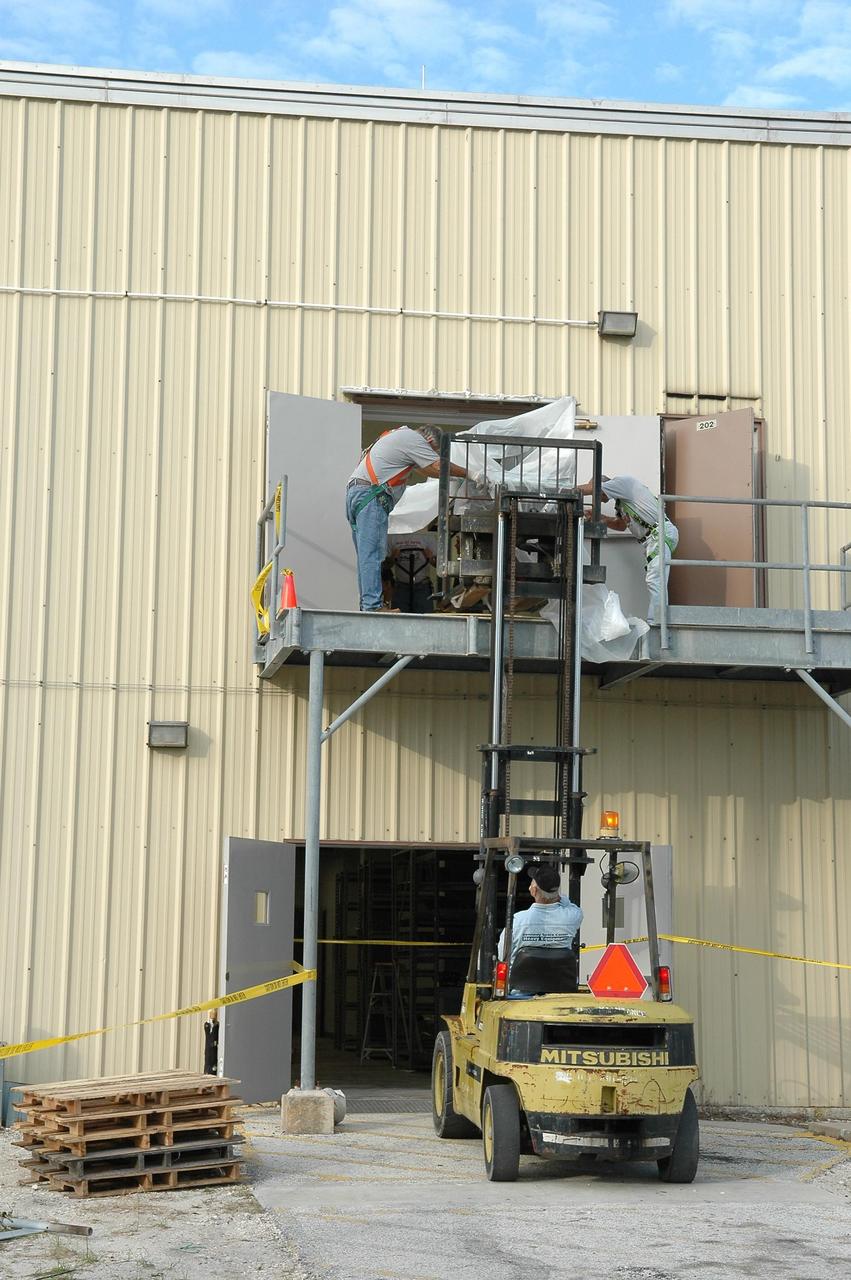
KENNEDY SPACE CENTER, FLA. - Employees at NASA Kennedy Space Center are moving equipment out of the RLV Hangar, where it was stored, and returning it to the Thermal Protection System (TPS) facility. The upper floor of the facility, where soft material was processed, was damaged during the 2004 hurricanes. While the TPS facility was being repaired, normal work activity was done in the hangar.
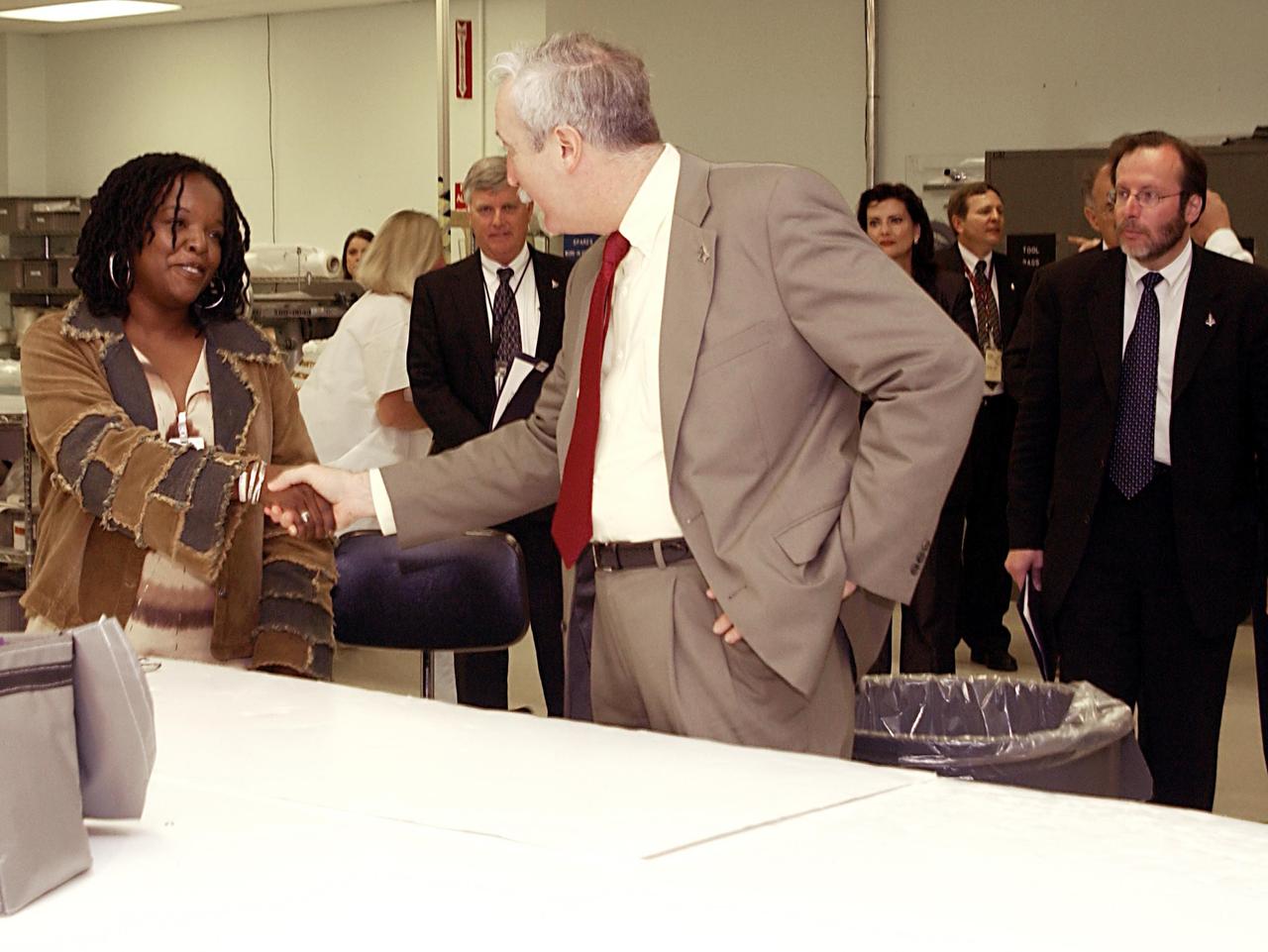
KENNEDY SPACE CENTER, FLA. -- NASA Administrator Sean O'Keefe (center) greets Brenda Blackmon, a worker in the Thermal Protection System Facility. O'Keefe is visiting the site to learn more about the TPS products and process in protecting orbiters from the intense heat of launch and re-entry. TPS tiles have been discussed in the investigation into the Columbia tragedy that destroyed the orbiter and claimed the lives of seven astronauts.

KENNEDY SPACE CENTER, FLA. - Inside the RLV Hangar at NASA Kennedy Space Center, employees prepare a blanket sewing machine to be transferred back to the Thermal Protection System (TPS) facility. The upper floor of the facility, where soft material was processed, was damaged during the 2004 hurricanes. While the TPS facility was being repaired, normal work activity was done in the hangar.