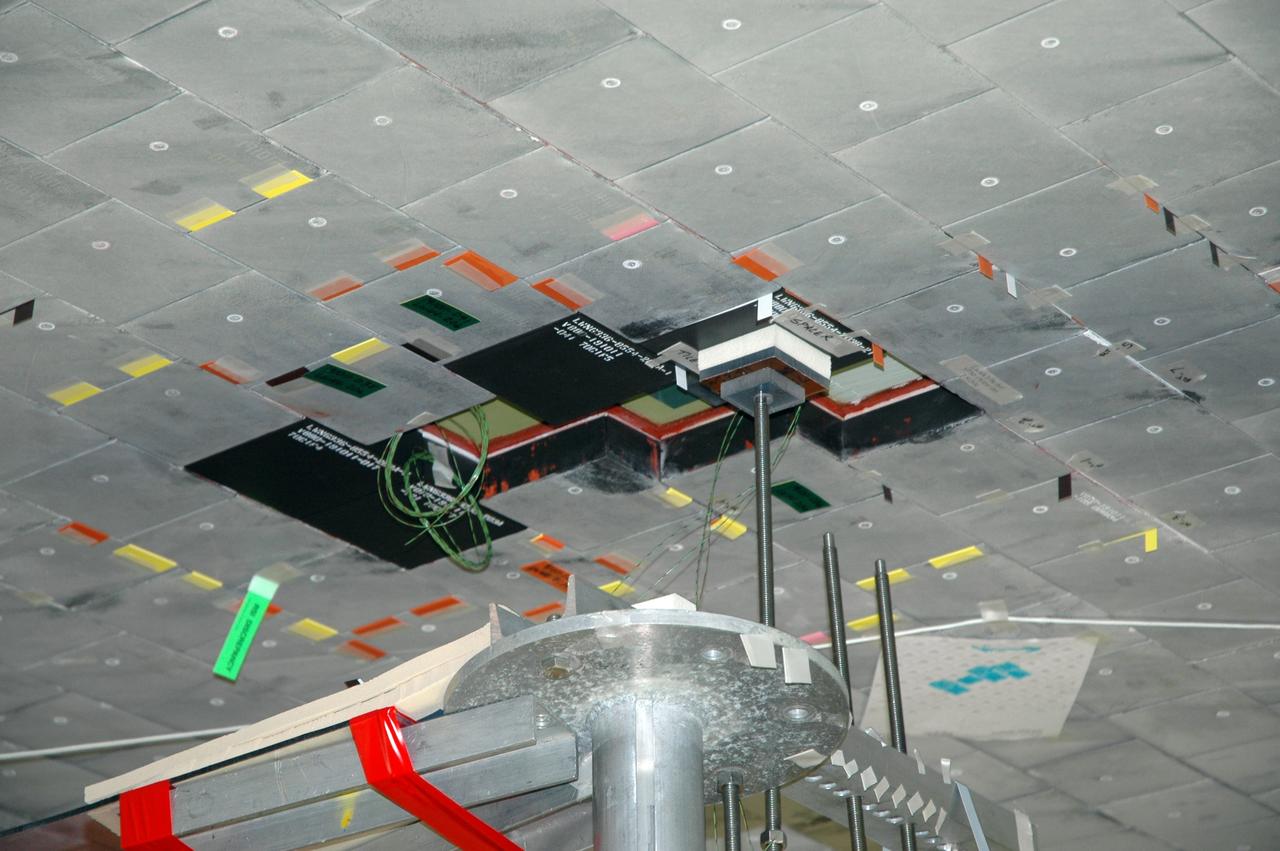
CAPE CANAVERAL, Fla. - In Orbiter Processing Facility bay 3 at NASA's Kennedy Space Center in Florida, boundary layer transition, or BLT, tile is being affixed to space shuttle Discovery before its launch on the STS-119 mission in February 2009. The specially modified tiles and instrumentation package will monitor the heating effects of early re-entry boundary layer transition at high mach numbers. These data support analytical modeling and design efforts for both the space shuttles and NASA next-generation spacecraft, the Orion crew exploration vehicle. On the STS-119 mission, Discovery also will carry the S6 truss segment to complete the 361-foot-long backbone of the International Space Station. The truss includes the fourth pair of solar array wings and electronics that convert sunlight to power for the orbiting laboratory. Photo credit: NASA/Tim Jacobs
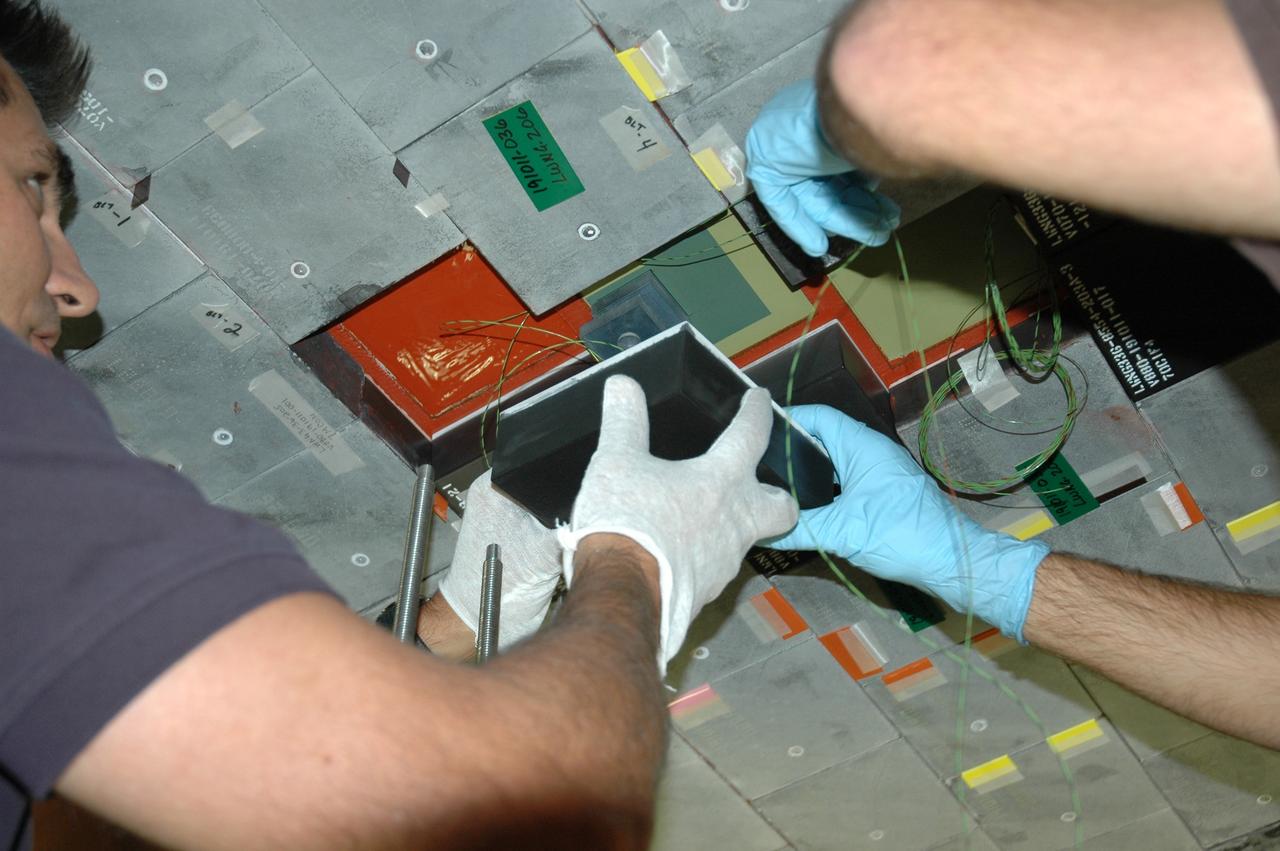
CAPE CANAVERAL, Fla. - In Orbiter Processing Facility bay 3 at NASA's Kennedy Space Center in Florida, workers attach boundary layer transition, or BLT, tile to space shuttle Discovery before its launch on the STS-119 mission in February 2009. The specially modified tiles and instrumentation package will monitor the heating effects of early re-entry boundary layer transition at high mach numbers. These data support analytical modeling and design efforts for both the space shuttles and NASA next-generation spacecraft, the Orion crew exploration vehicle. On the STS-119 mission, Discovery also will carry the S6 truss segment to complete the 361-foot-long backbone of the International Space Station. The truss includes the fourth pair of solar array wings and electronics that convert sunlight to power for the orbiting laboratory. Photo credit: NASA/Tim Jacobs
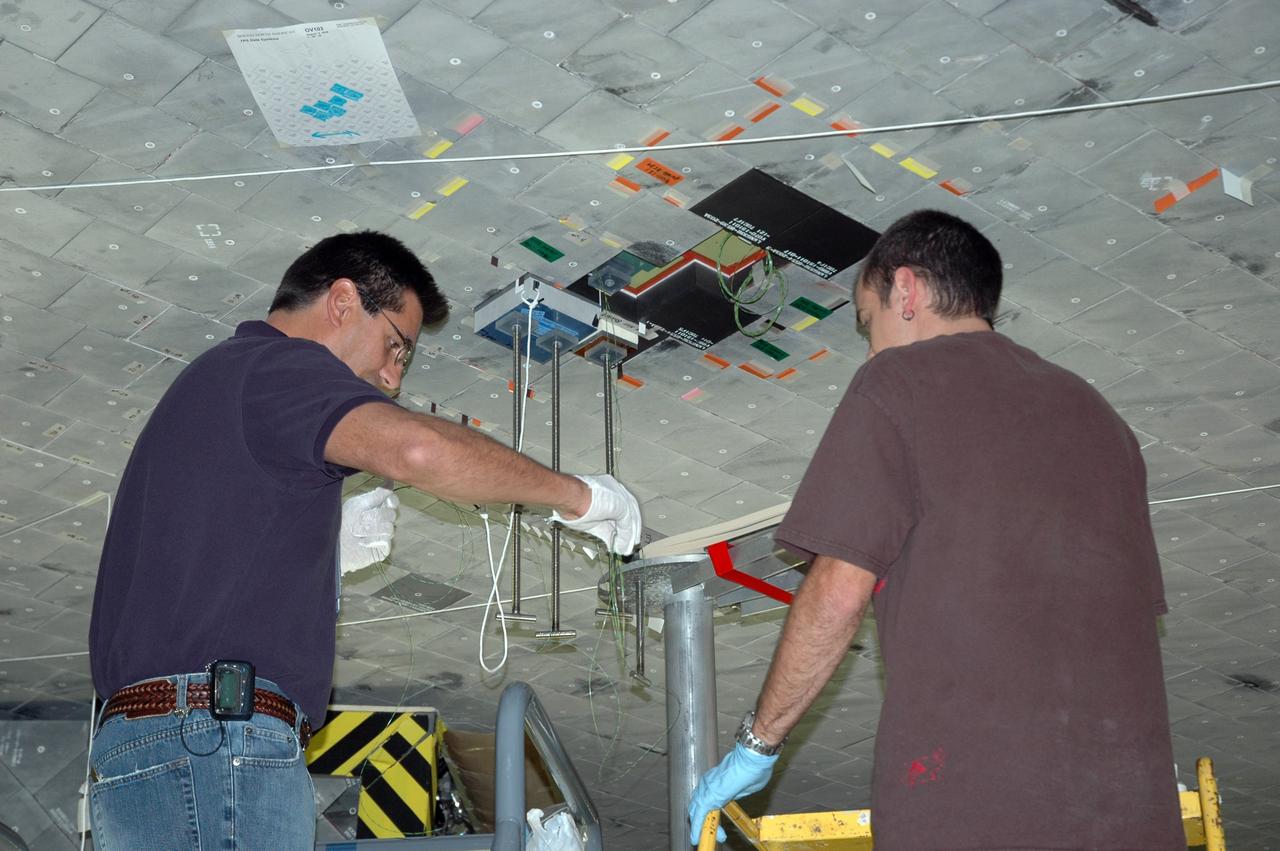
CAPE CANAVERAL, Fla. - In Orbiter Processing Facility bay 3 at NASA's Kennedy Space Center in Florida, workers attach boundary layer transition, or BLT, tile to space shuttle Discovery before its launch on the STS-119 mission in February 2009. The specially modified tiles and instrumentation package will monitor the heating effects of early re-entry boundary layer transition at high mach numbers. These data support analytical modeling and design efforts for both the space shuttles and NASA next-generation spacecraft, the Orion crew exploration vehicle. On the STS-119 mission, Discovery also will carry the S6 truss segment to complete the 361-foot-long backbone of the International Space Station. The truss includes the fourth pair of solar array wings and electronics that convert sunlight to power for the orbiting laboratory. Photo credit: NASA/Tim Jacobs
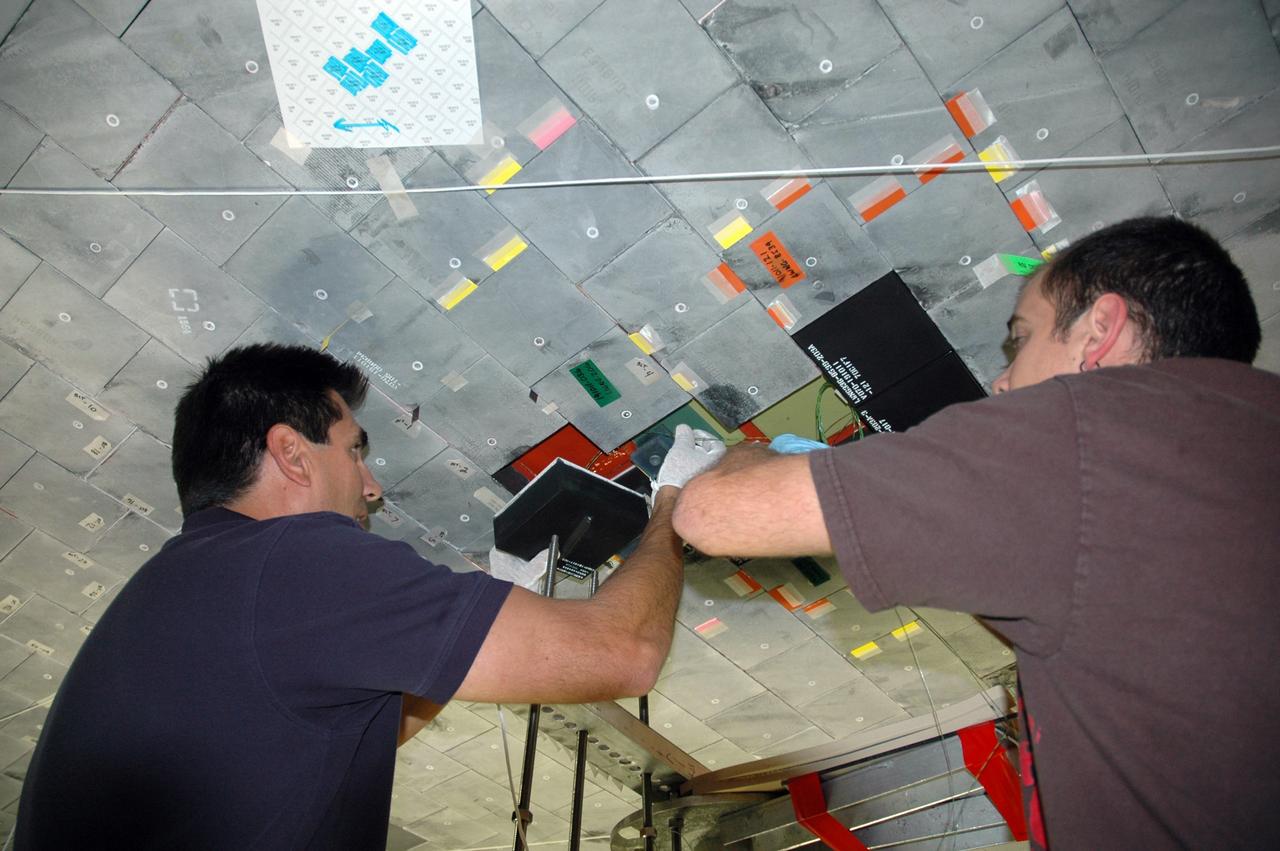
CAPE CANAVERAL, Fla. - In Orbiter Processing Facility bay 3 at NASA's Kennedy Space Center in Florida, workers attach boundary layer transition, or BLT, tile to space shuttle Discovery before its launch on the STS-119 mission in February 2009. The specially modified tiles and instrumentation package will monitor the heating effects of early re-entry boundary layer transition at high mach numbers. These data support analytical modeling and design efforts for both the space shuttles and NASA next-generation spacecraft, the Orion crew exploration vehicle. On the STS-119 mission, Discovery also will carry the S6 truss segment to complete the 361-foot-long backbone of the International Space Station. The truss includes the fourth pair of solar array wings and electronics that convert sunlight to power for the orbiting laboratory. Photo credit: NASA/Tim Jacobs