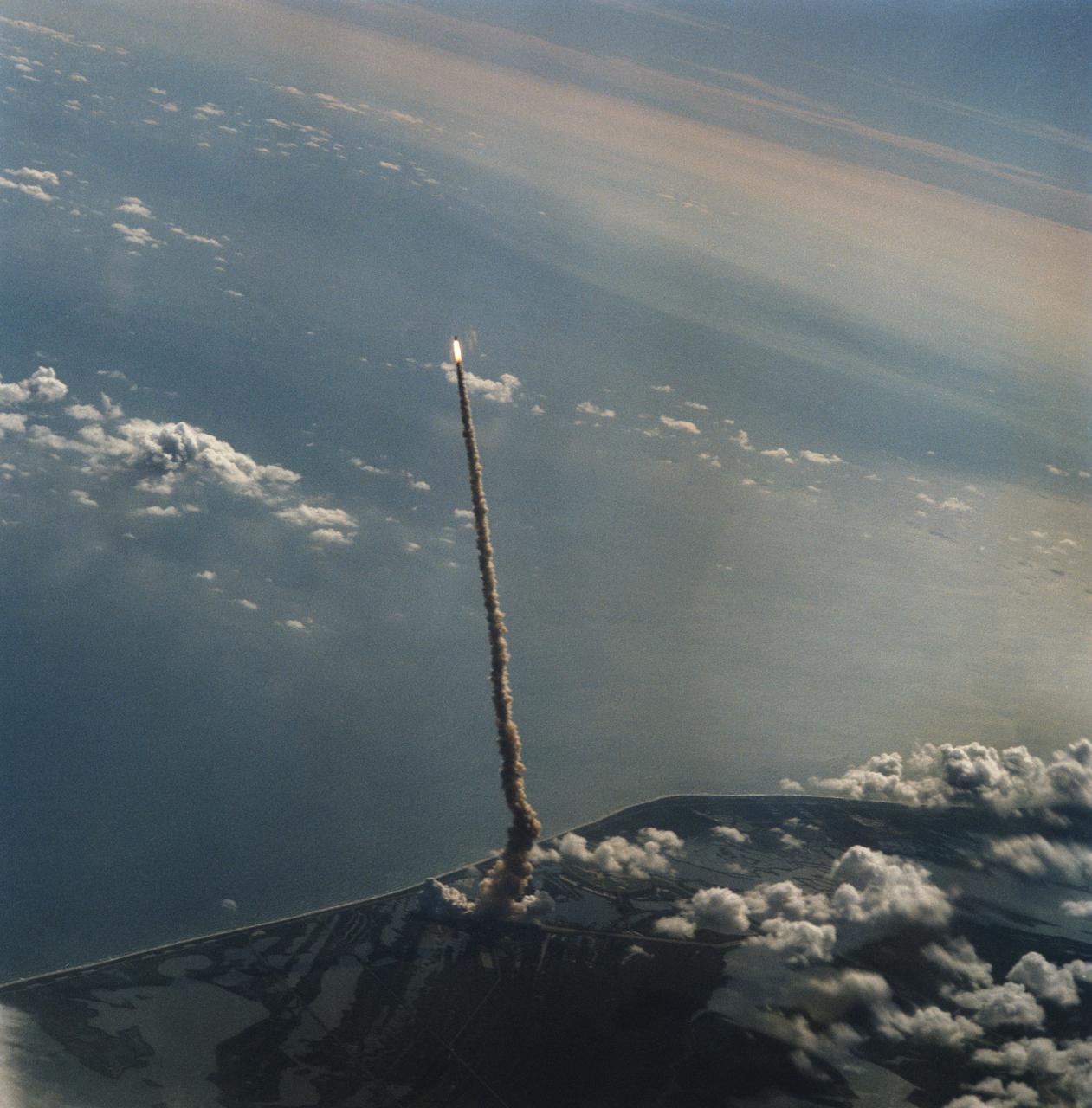
STS058-S-122 (18 Oct 1993) --- This distant shot of Columbia on its way to Earth-orbit was captured on film from the Shuttle Training Aircraft (STA) assigned to advance launch range screening. Onboard the spacecraft were six NASA astronauts, a veterinarian from the private sector and the Spacelab Life Sciences (SLS-2) science module. The crew will spend two weeks in Earth-orbiting devoting all its on-duty time to life sciences research. Launch occurred at 10:53 a.m. (EDT), October 18, 1993, from the Kennedy Space Center (KSC).
jsc2026e402155 (July 16, 2026) --- NASA astronaut candidate Rebecca Lawler prepares for a training flight aboard NASA’s WB-57 aircraft. These high-altitude flights train the crew to work in a tight environment and operate aircraft systems while in a pressure suit, preparing them for future missions to the International Space Station, Moon, or beyond. Photo: NASA/Josh Valcarcel
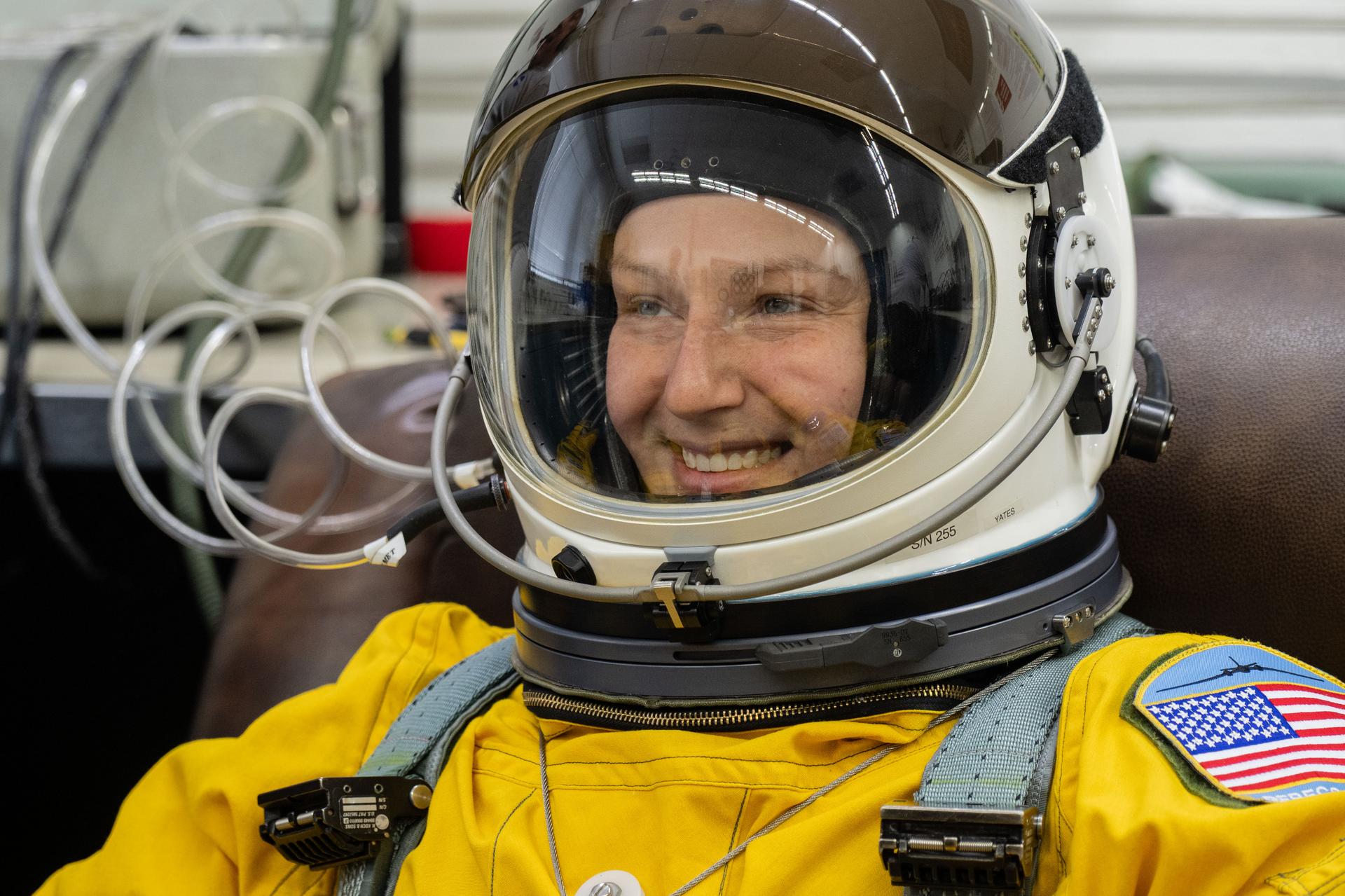
jsc2026e402144 (July 16, 2026) --- NASA astronaut candidate Rebecca Lawler prepares for a training flight aboard NASA’s WB-57 aircraft. These high-altitude flights train the crew to work in a tight environment and operate aircraft systems while in a pressure suit, preparing them for future missions to the International Space Station, Moon, or beyond. Photo: NASA/Josh Valcarcel
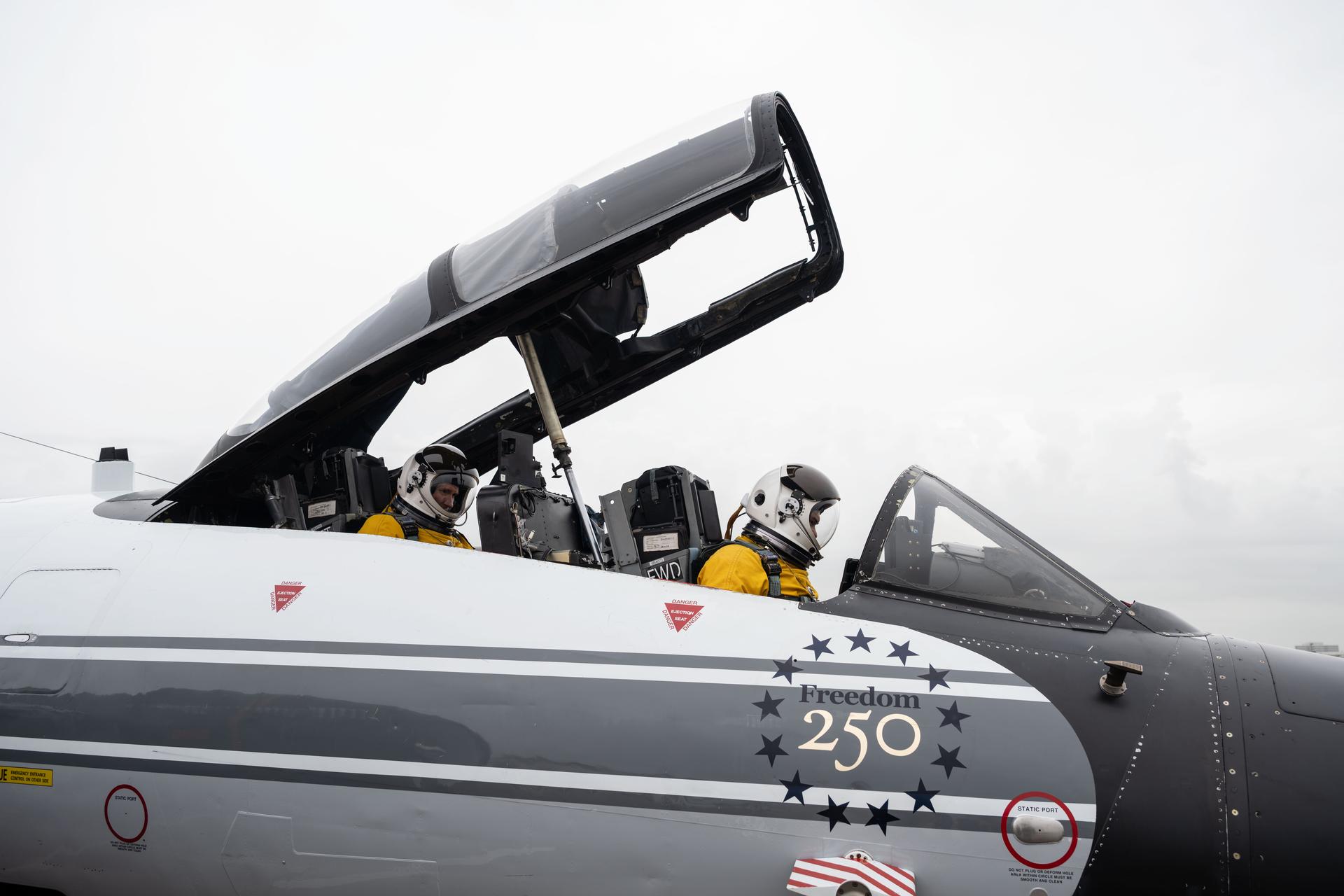
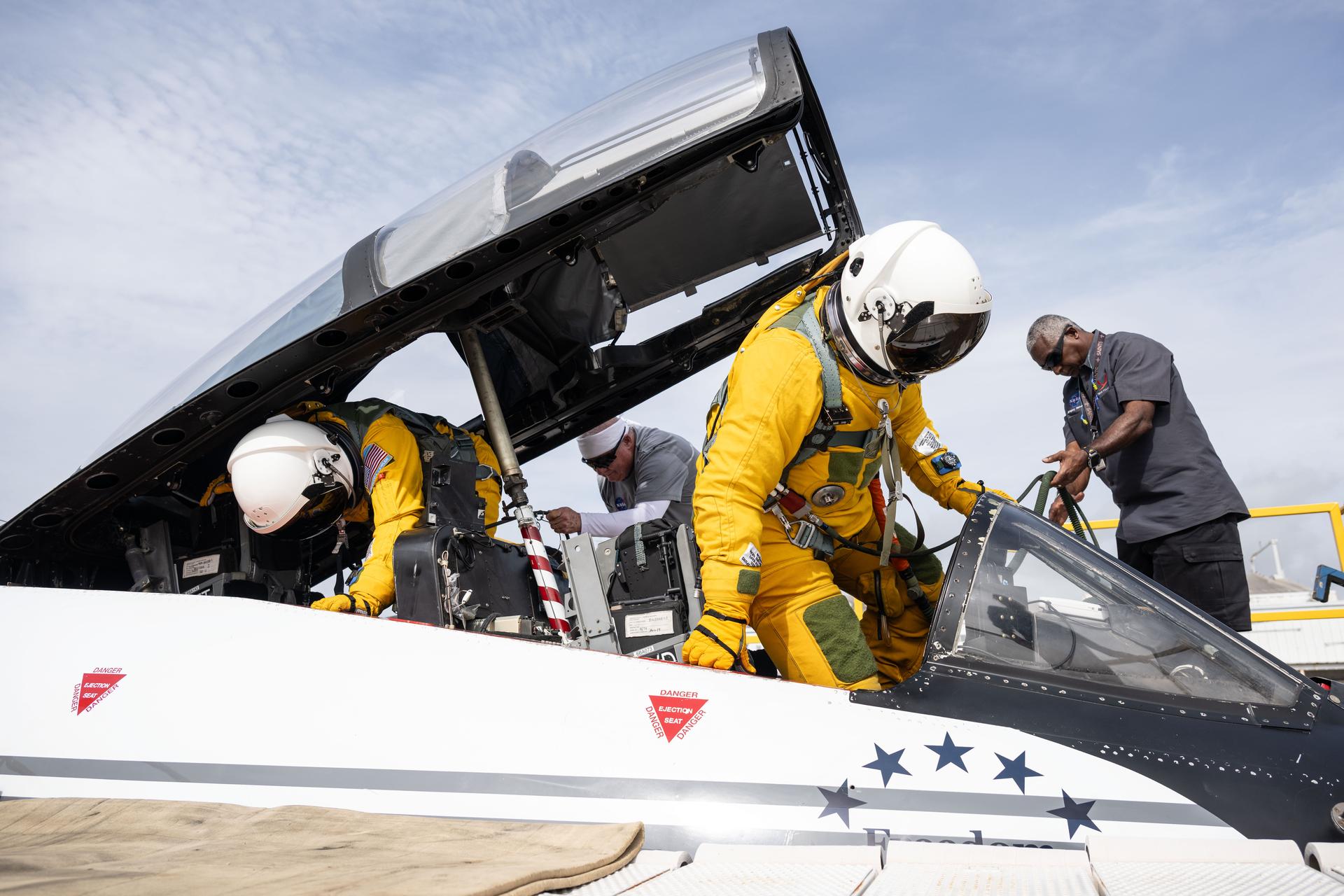
jsc2026e401991 (July 15, 2026) --- NASA astronaut candidate Adam Fuhrmann prepares for a training flight aboard NASA’s WB-57 aircraft. These high-altitude flights train the crew to work in a tight environment and operate aircraft systems while in a pressure suit, preparing them for future missions to the International Space Station, Moon, or beyond. Photo: NASA/Josh Valcarcel
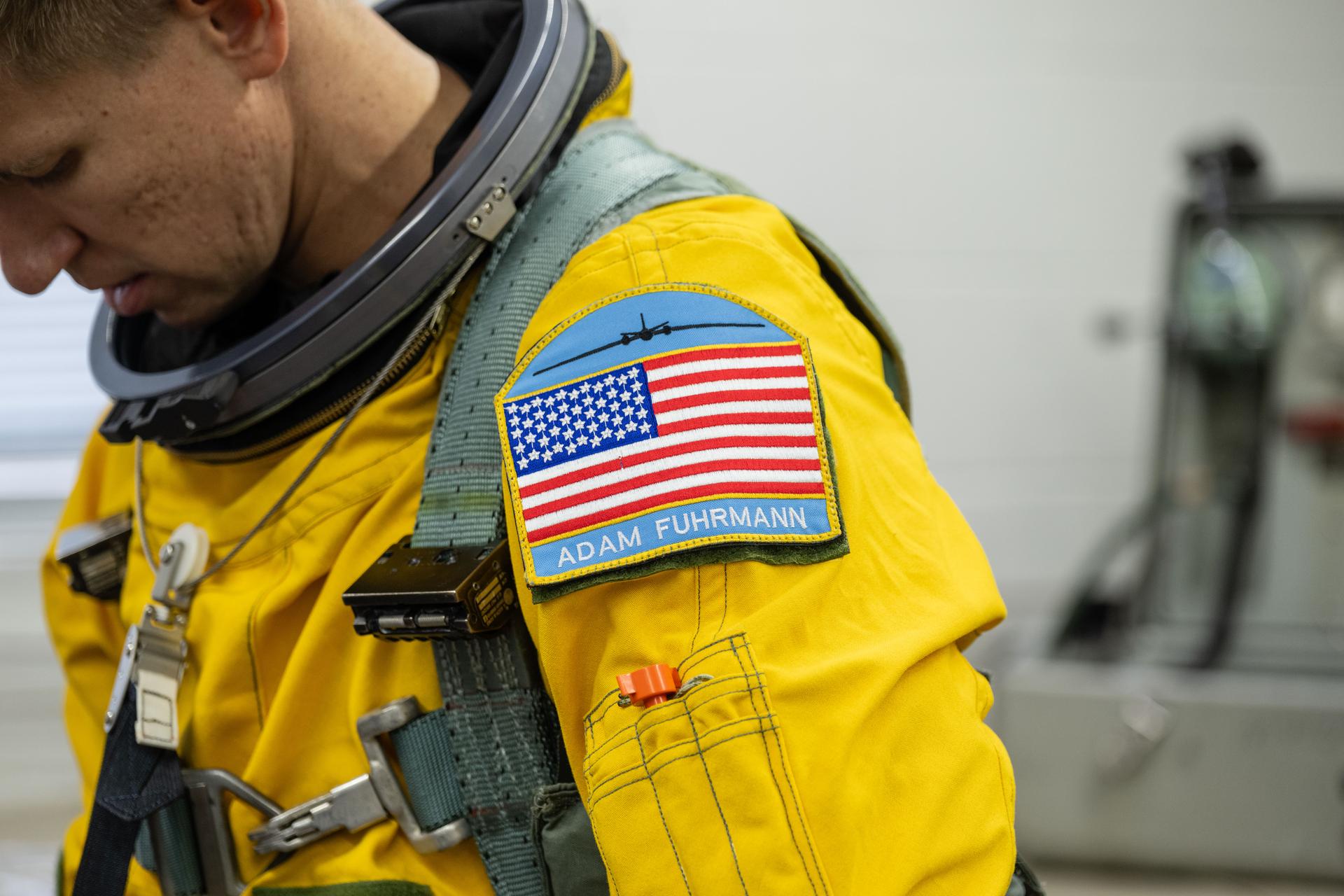
jsc2026e402008 (July 15, 2026) --- NASA astronaut candidate Adam Fuhrmann prepares for a training flight aboard NASA’s WB-57 aircraft. These high-altitude flights train the crew to work in a tight environment and operate aircraft systems while in a pressure suit, preparing them for future missions to the International Space Station, Moon, or beyond. Photo: NASA/Josh Valcarcel
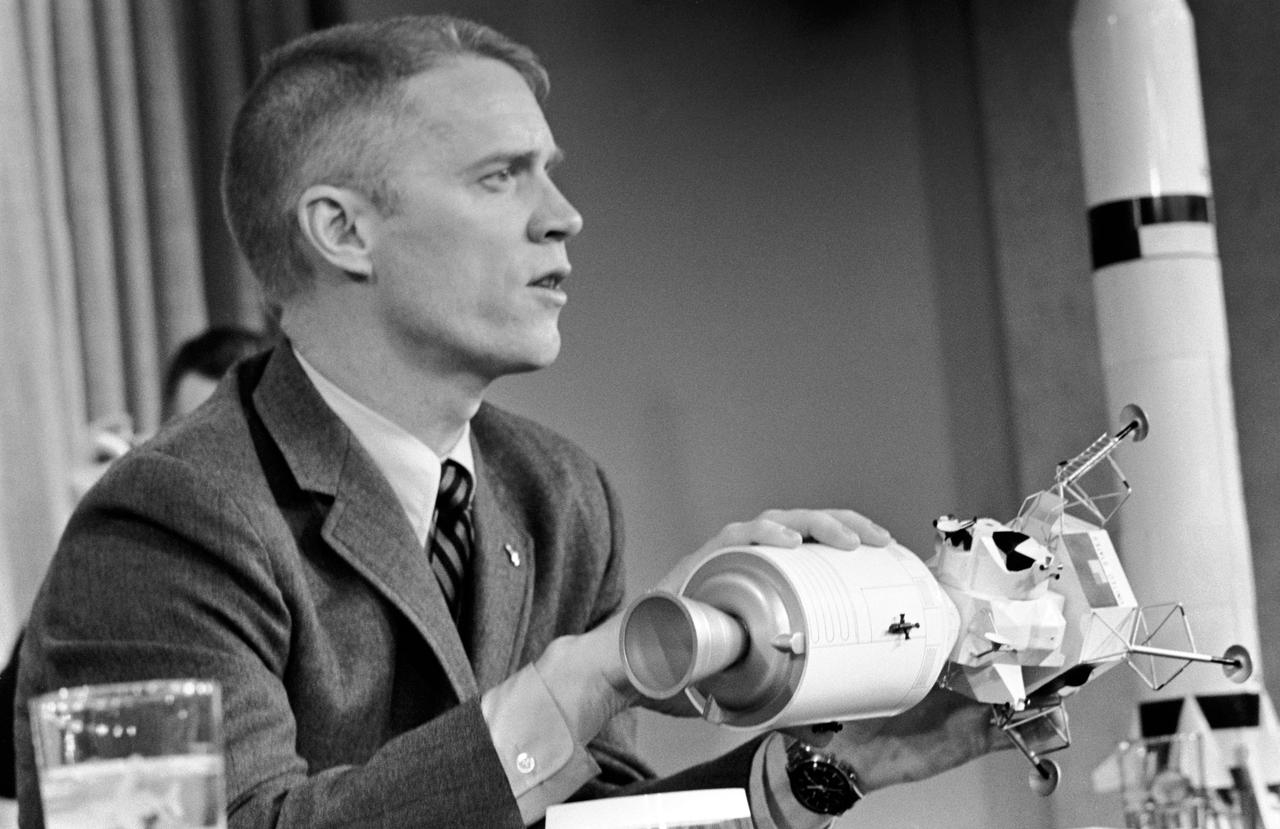
S69-17615 (25 Jan. 1969) --- Astronaut Russell L. Schweickart, lunar module pilot of the Apollo 9 prime crew, participates in a press conference at the Grumman Aircraft Engineering Corporation. Grumman is the contractor to NASA for the Lunar Module. Schweickart is holding a model of a docked Lunar Module/Command and Service Modules. The Apollo 9 mission will evaluate spacecraft lunar module systems performance during manned Earth-orbital flight.
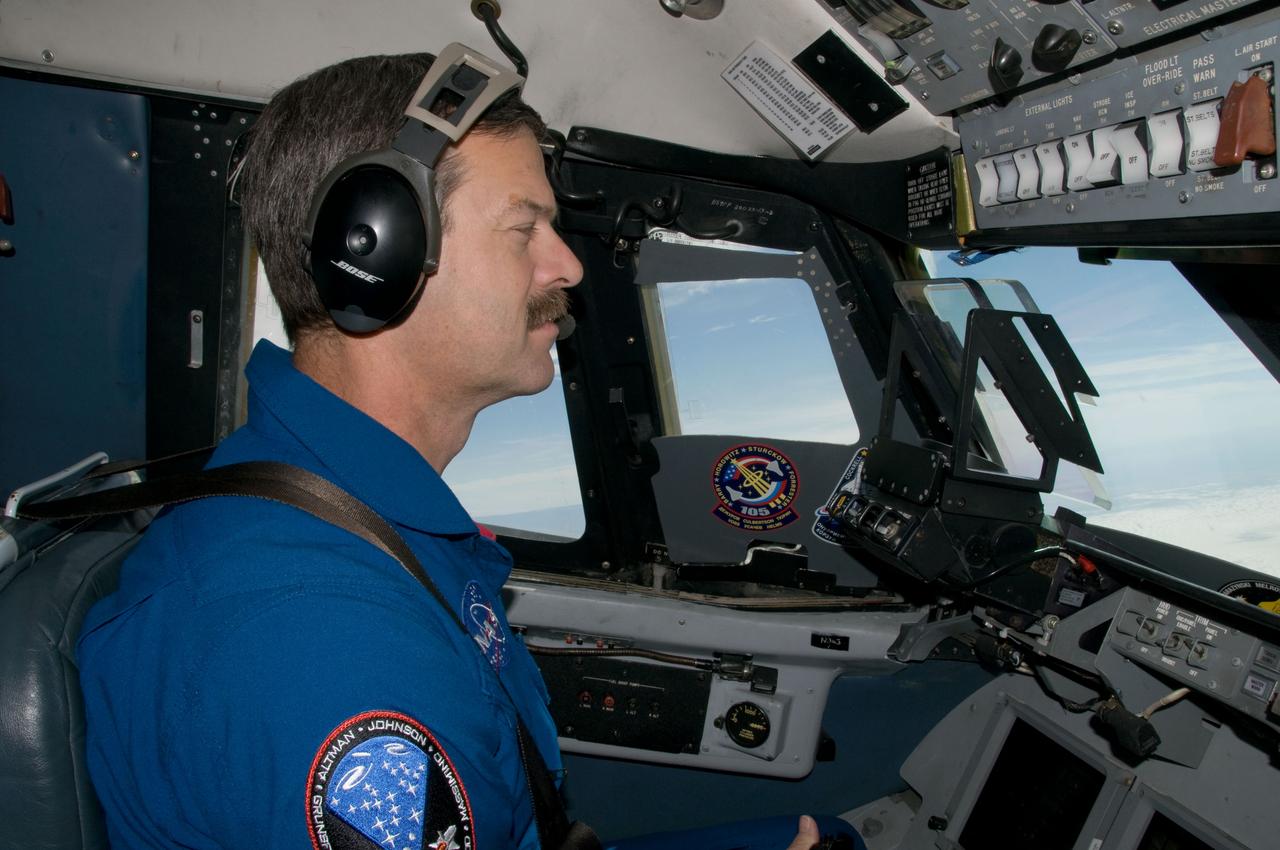
JSC2009-E-054052 (4 March 2009) --- Astronaut Scott Altman, STS-125 commander, flies a Shuttle Training Aircraft (STA) over White Sands Test Facility, New Mexico, during a training session. Photo Credit: Richard N. Clark, AOD division chief
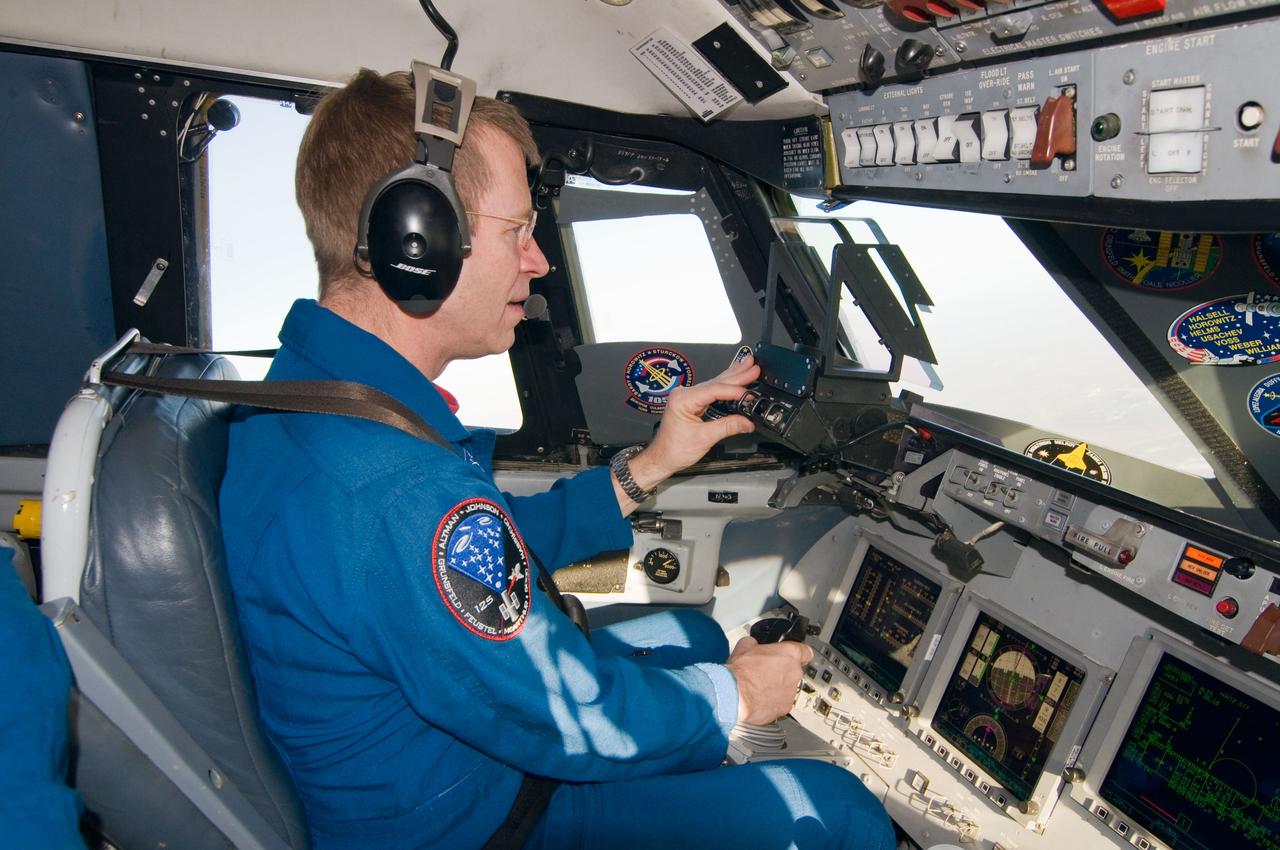
JSC2009-E-084158 (16 April 2009) --- Astronaut Gregory C. Johnson, STS-125 pilot, flies a Shuttle Training Aircraft (STA) over Edwards Air Force Base, California, during a training session.

JSC2009-E-084157 (16 April 2009) --- Astronaut Gregory C. Johnson, STS-125 pilot, flies a Shuttle Training Aircraft (STA) over Edwards Air Force Base, California, during a training session.
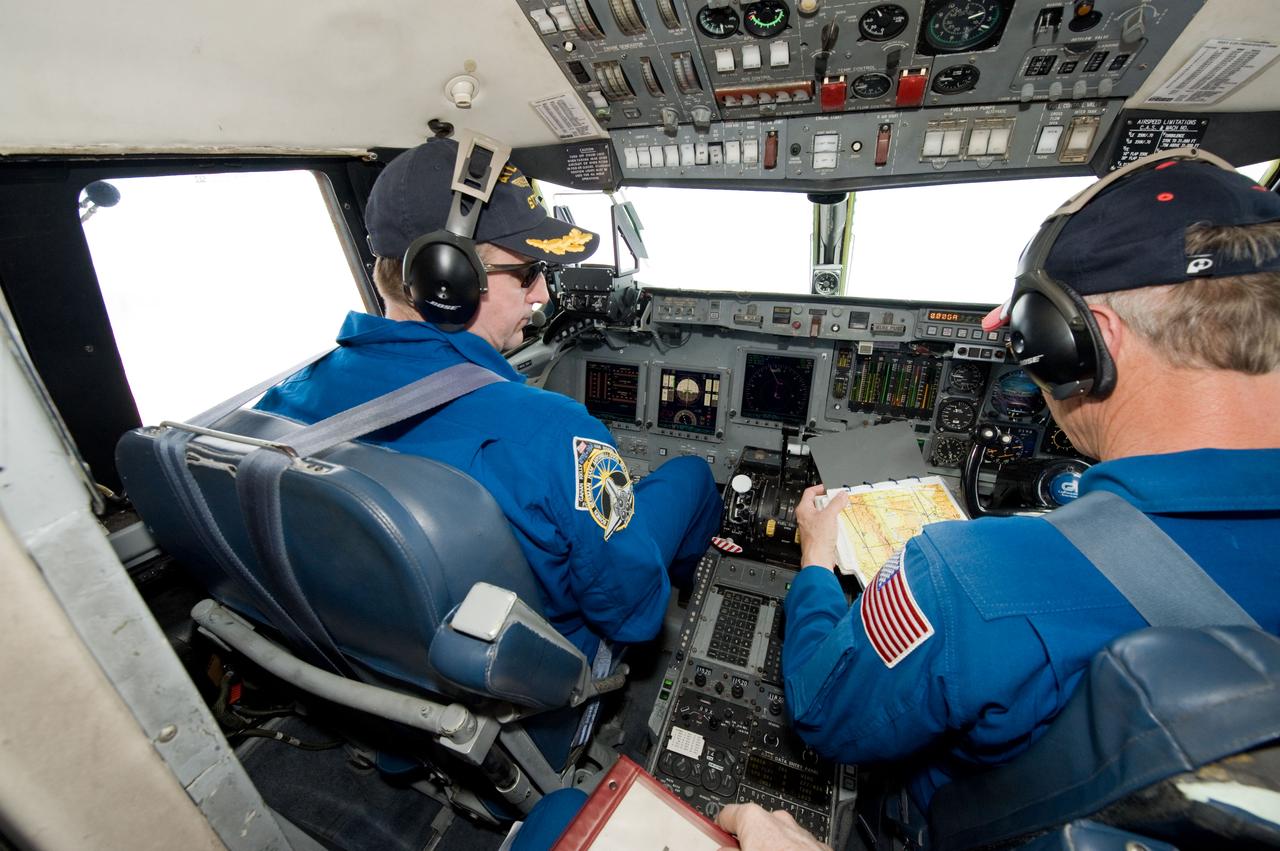
JSC2010-E-054299 (30 March 2010) --- NASA astronaut Ken Ham (left), STS-132 commander, flies a Shuttle Training Aircraft (STA) over White Sands Space Harbor, New Mexico, during a training session.
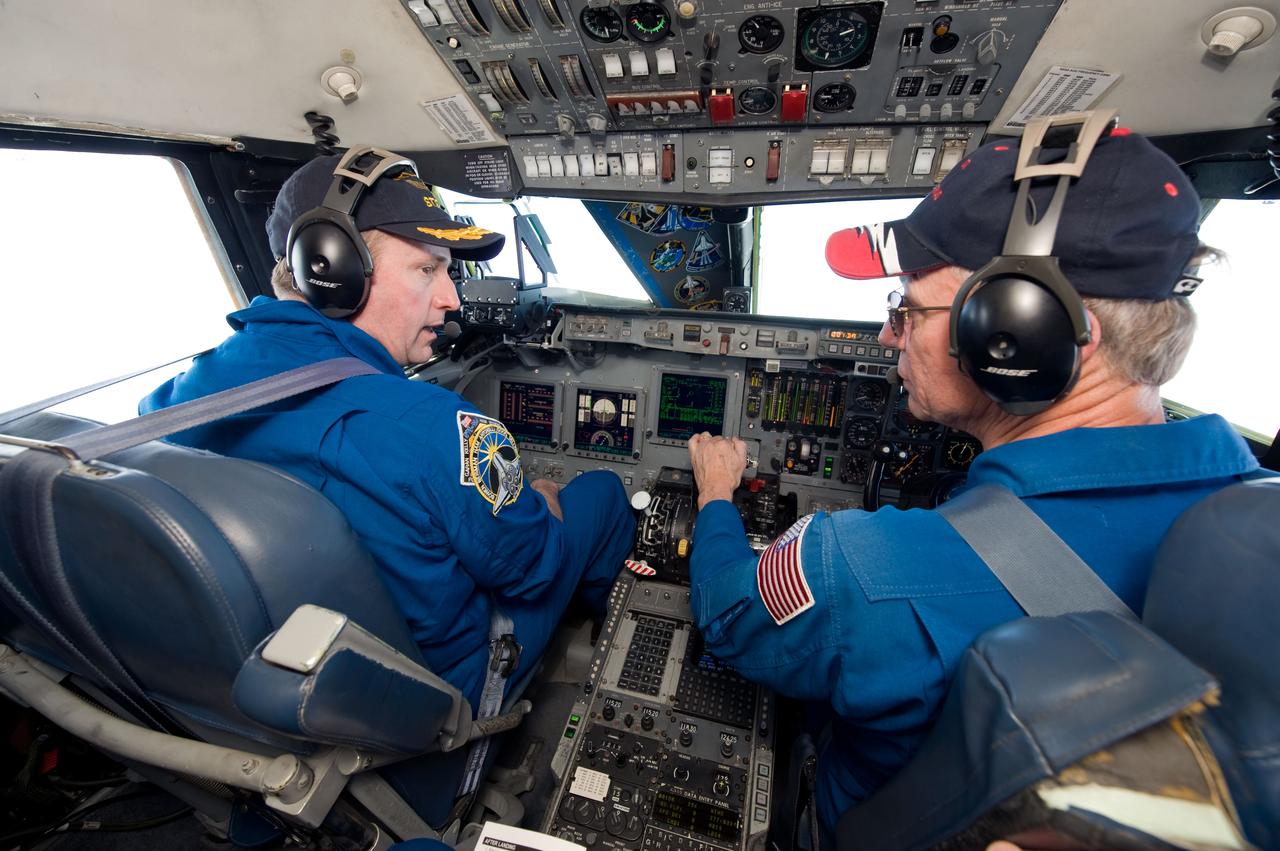
JSC2010-E-054304 (30 March 2010) --- NASA astronaut Ken Ham (left), STS-132 commander, flies a Shuttle Training Aircraft (STA) over White Sands Space Harbor, New Mexico, during a training session.
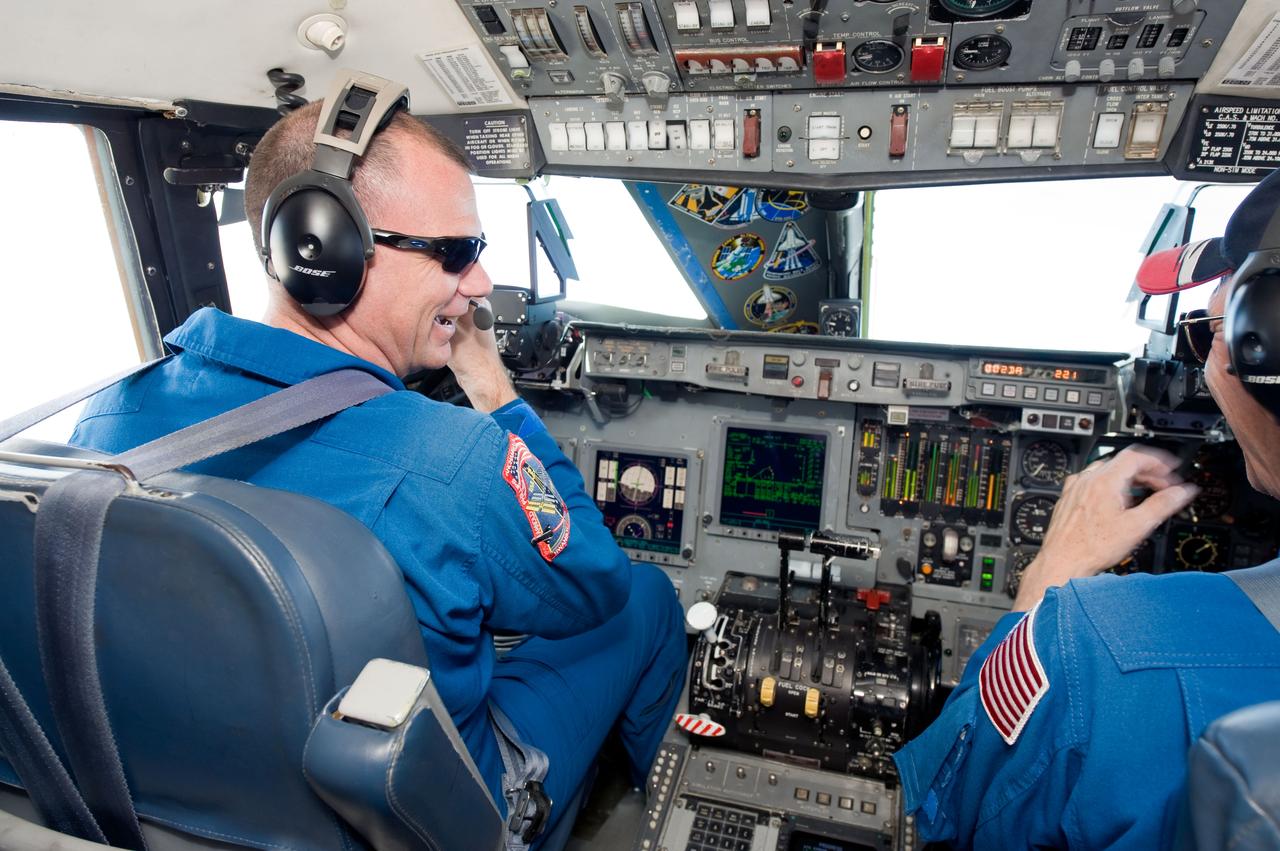
JSC2010-E-054306 (30 March 2010) --- NASA astronaut Tony Antonelli (left), STS-132 pilot, flies a Shuttle Training Aircraft (STA) over White Sands Space Harbor, New Mexico, during a training session.
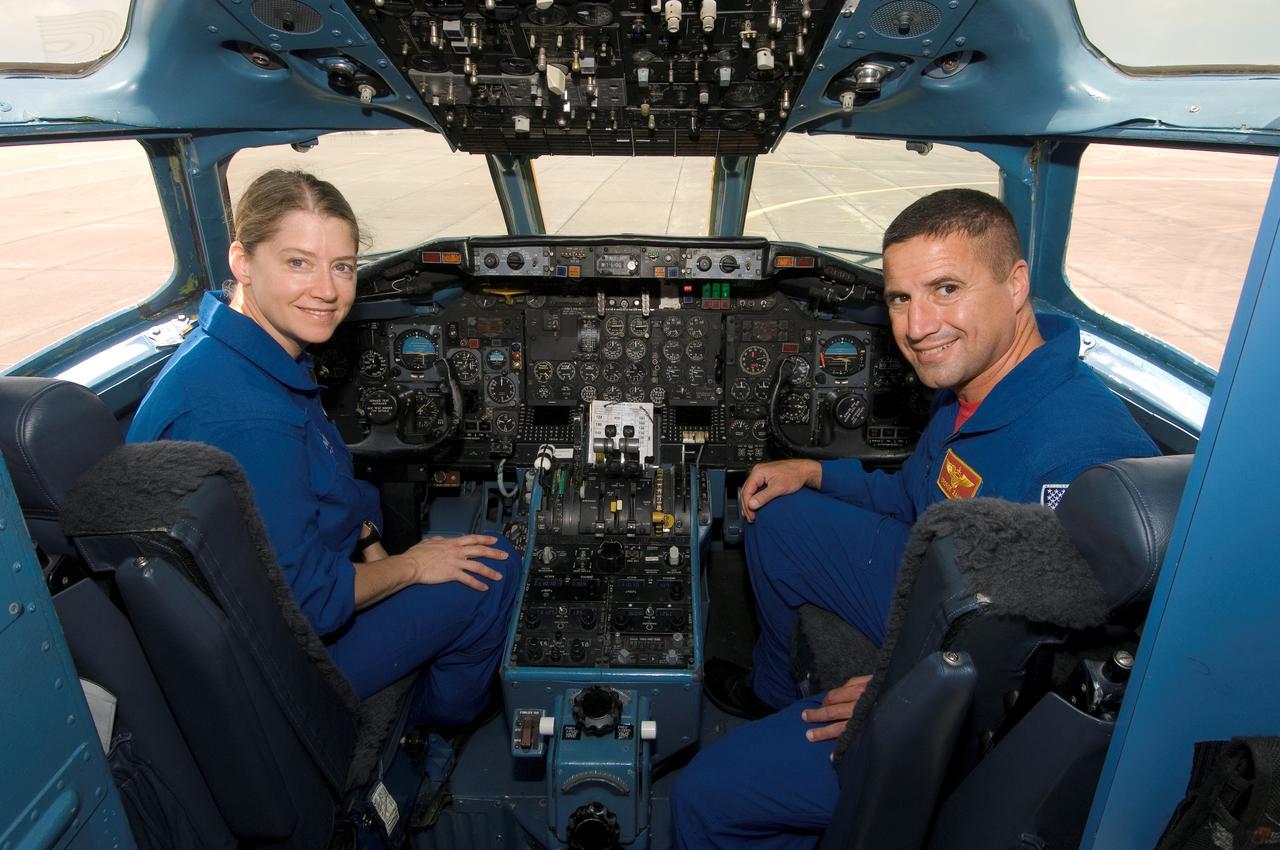
JSC2007-E-43538 (9 Aug. 2007) --- Astronauts Pamela A. Melroy, STS-120 commander, and George D. Zamka, pilot, pose for a photo in the cockpit of a NASA DC-9 aircraft during a Heavy Aircraft Training (HAT) session.
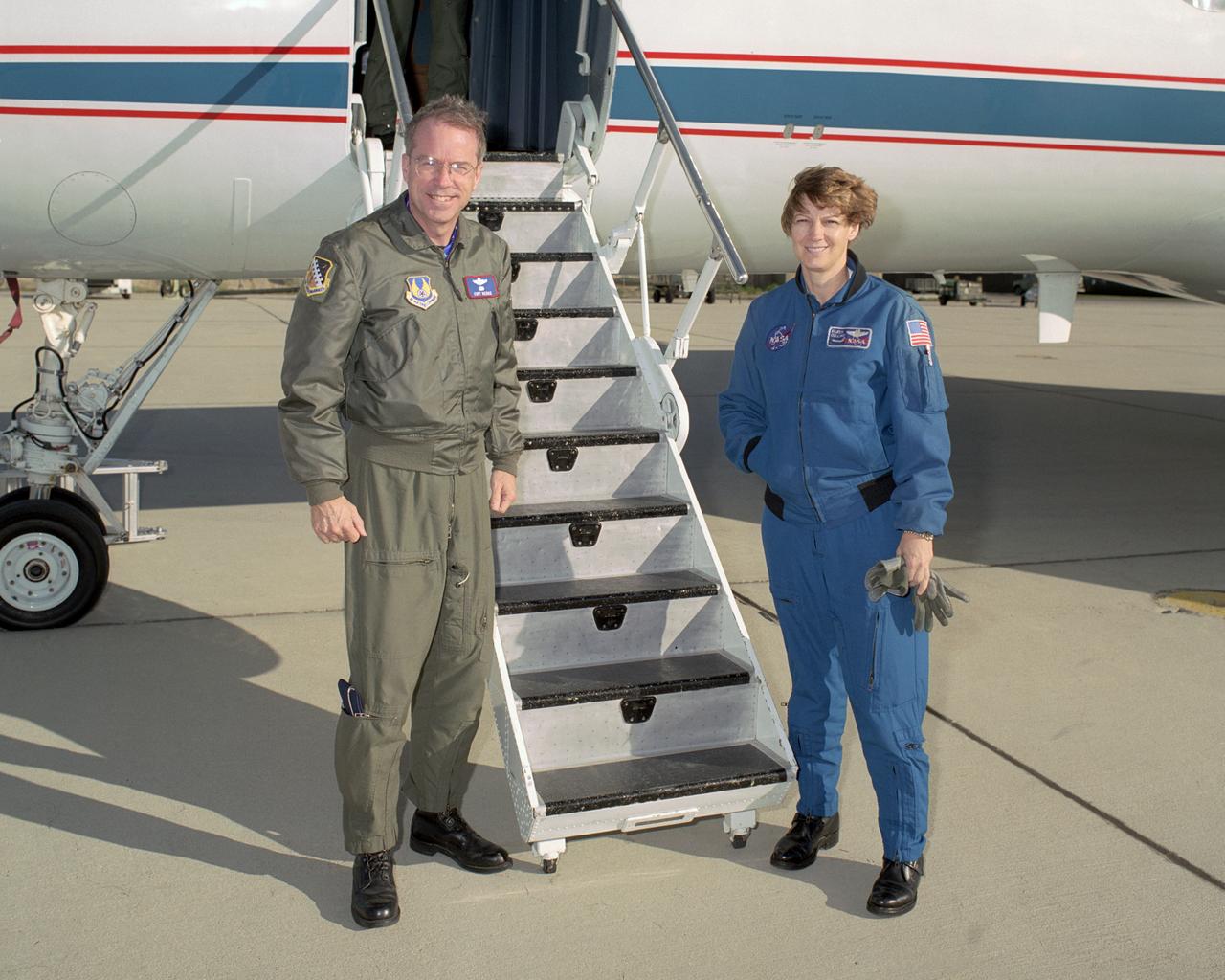
Brig. Gen. Curtis Bedke, commander of the Air Force Flight Test Center at Edwards Air Force Base, received some first-hand insight on how to fly a Space Shuttle approach and landing, courtesy of NASA astronaut and STS-114 mission commander Eileen Collins. The series of proficiency flights in NASA's modified Grumman Gulfstream-II Shuttle Training Aircraft were in preparation for the STS-114 mission with the shuttle Discovery. Although NASA's Kennedy Space Center in Florida is the primary landing site for Space Shuttle missions, flight crews also practice the shuttle's steep approach and landing at Edwards in case weather or other situations preclude a landing at the Florida site and force a diversion to Edwards AFB.
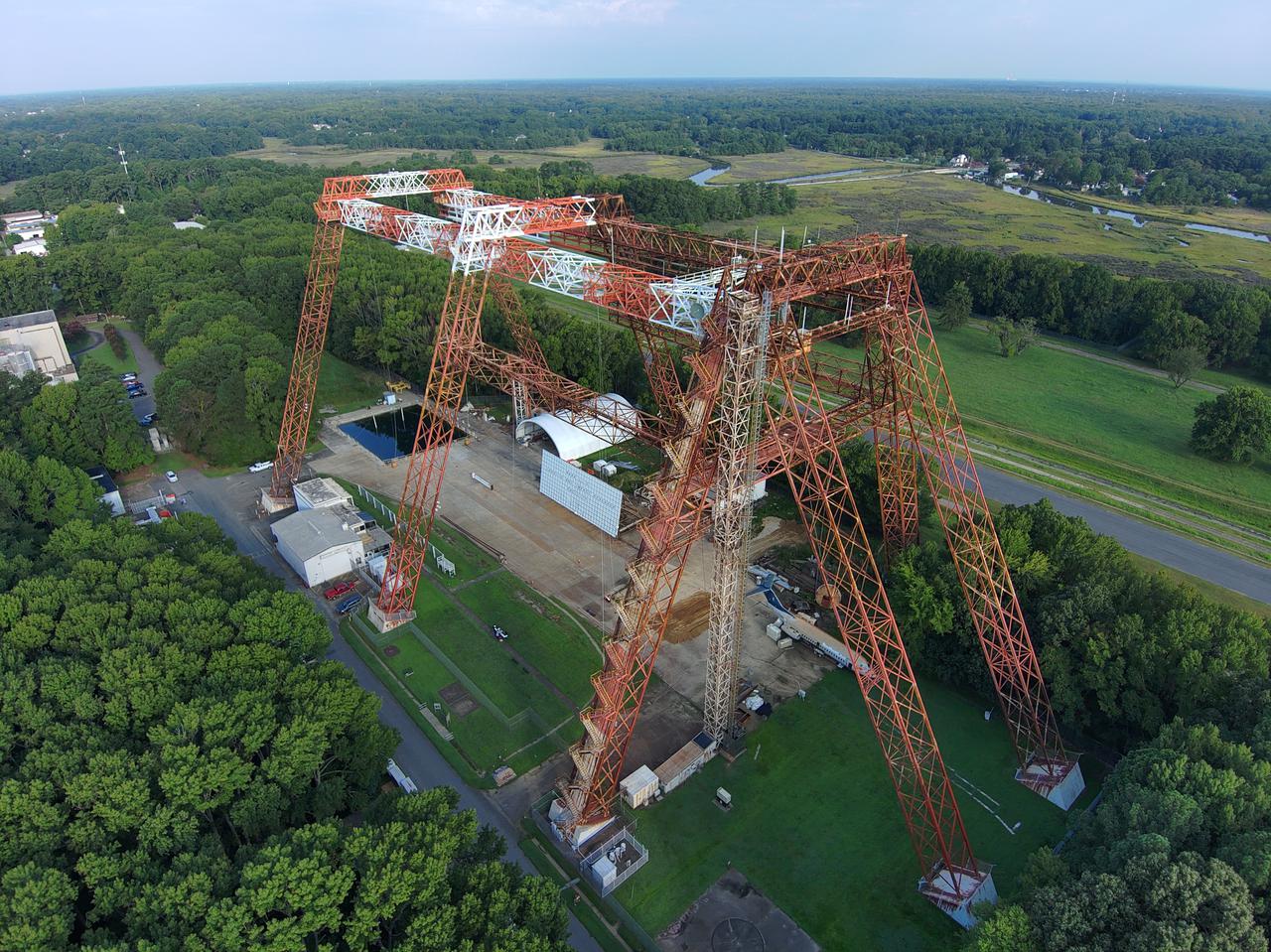
Langley’s historic Impact Dynamics Facility for full-scale aircraft crash testing stands on the western corner of the NASA Langley campus. In its original configuration, the “gantry” was used to train the Mercury 7
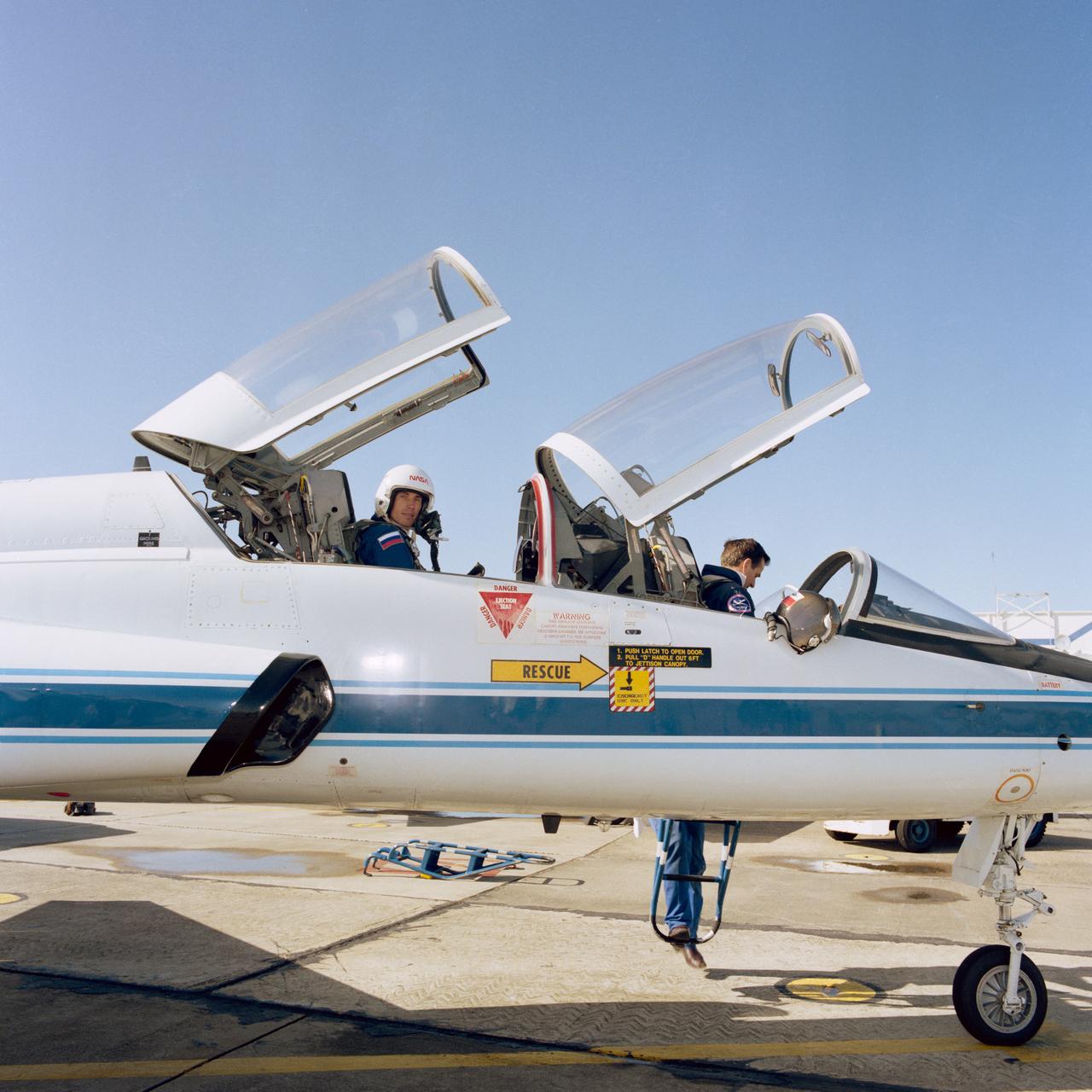
Seated in the rear station of a NASA T-38 jet trainer aircraft, Russian Cosmonaut Sergei Krikalev prepares to take a familiarization flight.
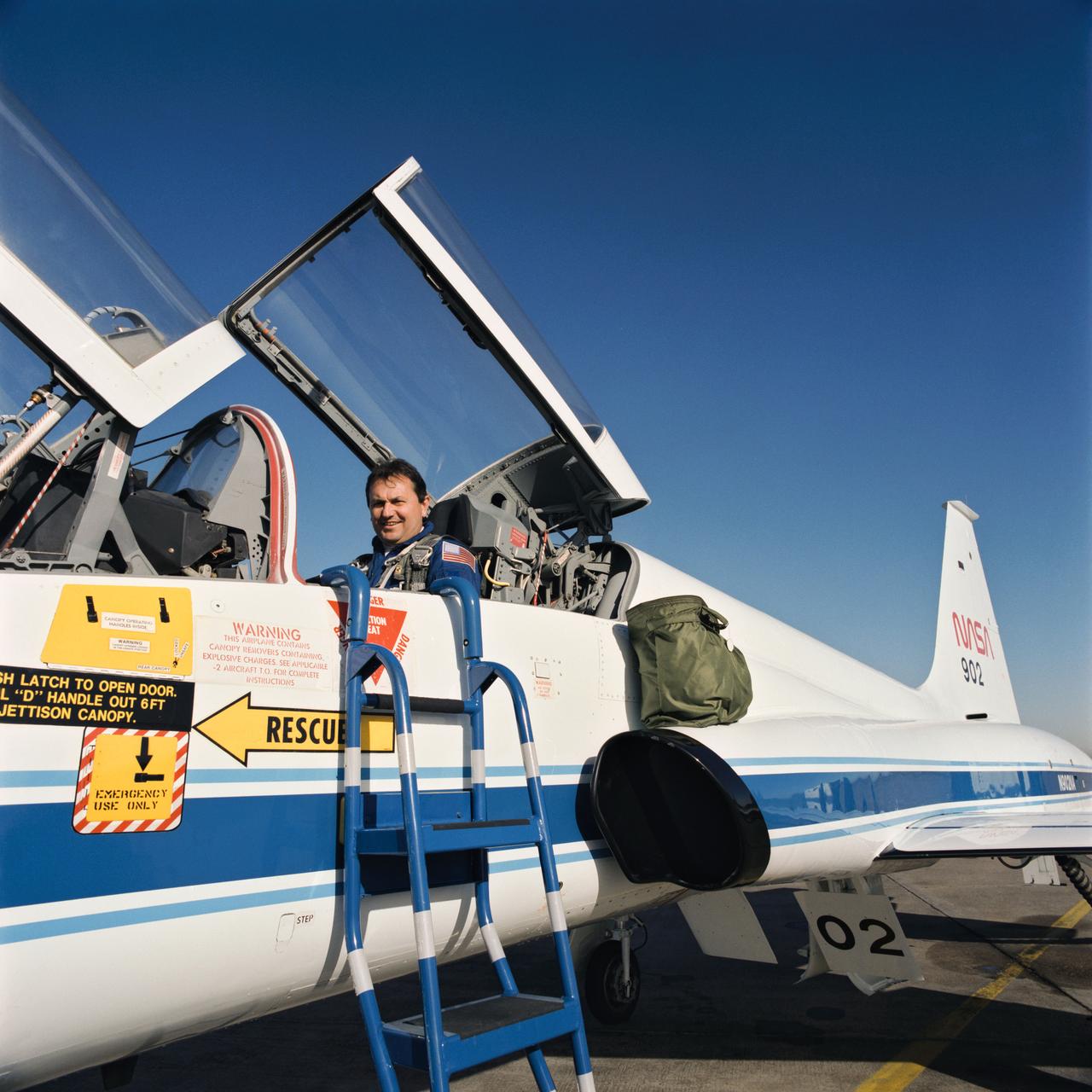
Seated in the rear station of a NASA T-38 jet trainer aircraft, Russian Cosmonaut Vladimir Titov prepares to take a familiarization flight.
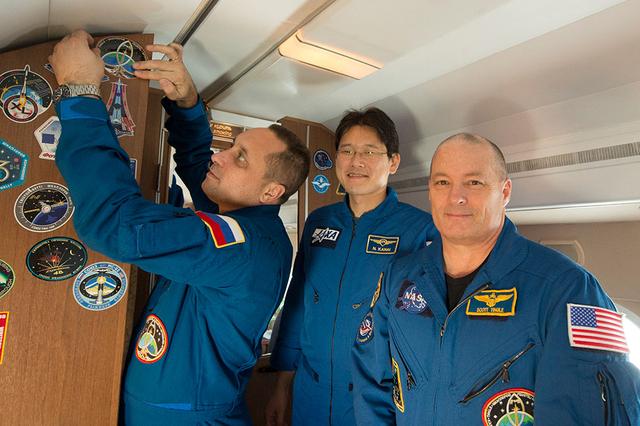
jsc2017e136094 - Aboard a Gagarin Cosmonaut Training Center aircraft en route to the launch site at the Baikonur Cosmodrome in Kazakhstan, Expedition 54-55 crewmember Anton Shkaplerov of the Russian Federal Space Agency (Roscosmos, left) affixes a sticker bearing the Expedition 55 crew insignia to the wall of the plane Dec. 4 as crewmates Norishige Kanai of the Japan Aerospace Exploration Agency (JAXA, center) and Scott Tingle of NASA (right) look on. They will launch Dec. 17 on the Soyuz MS-07 spacecraft for a five-month mission on the International Space Station...Andrey Shelepin/Gagarin Cosmonaut Training Center.
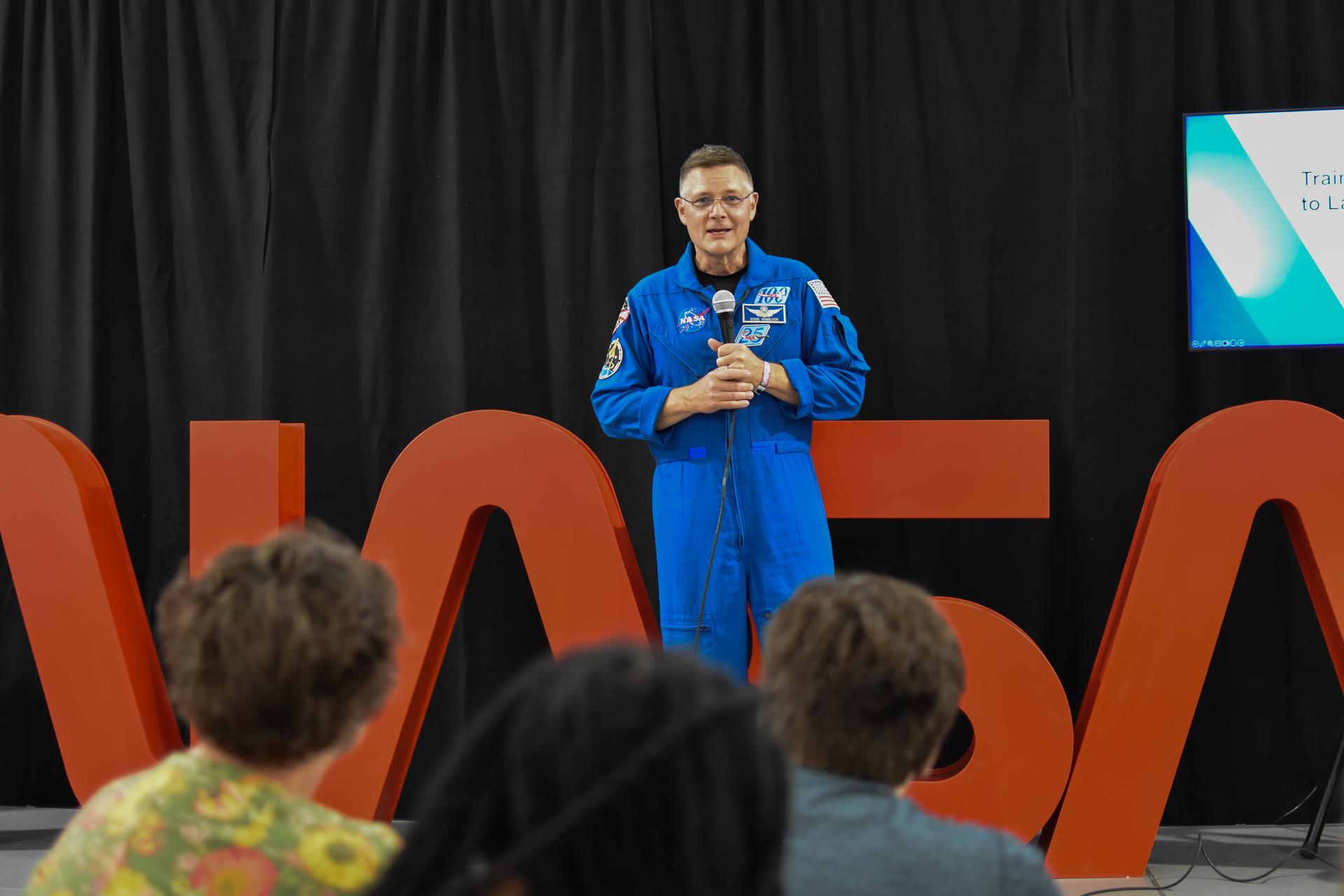
NASA astronaut Doug Weelock speaks at the NASA pavilion during his presentation “Training Artemis Astronauts to Land on the Moon” at the 2026 Experimental Aircraft Association (EAA) AirVenture air show in Oshkosh, Wisconsin, on Tuesday, July 21, 2026.
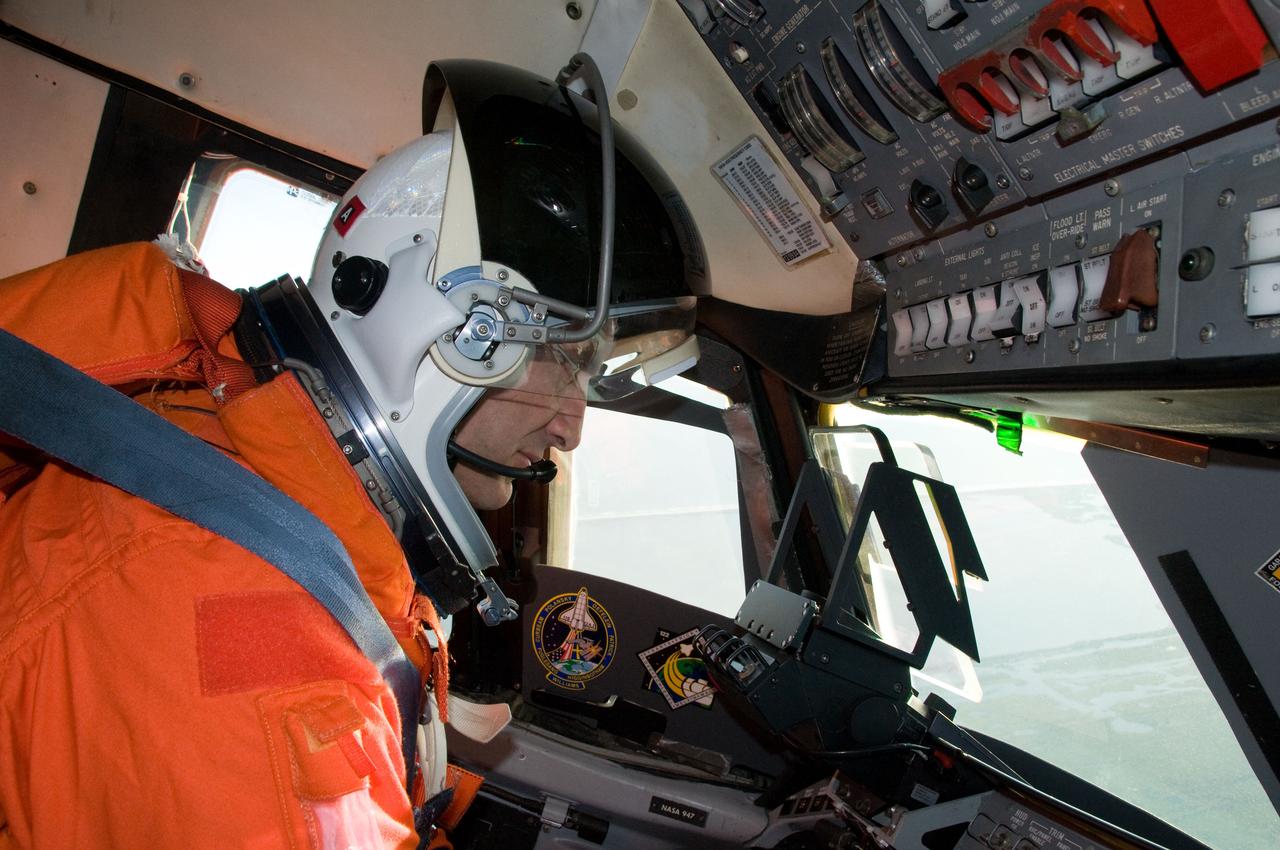
Photo Date: 11-13-09 Location: Shuttle Training Aircraft Subject: STS129 Crew Training - commander Charles Hobaugh during STA Training Photographer: Dick Clark
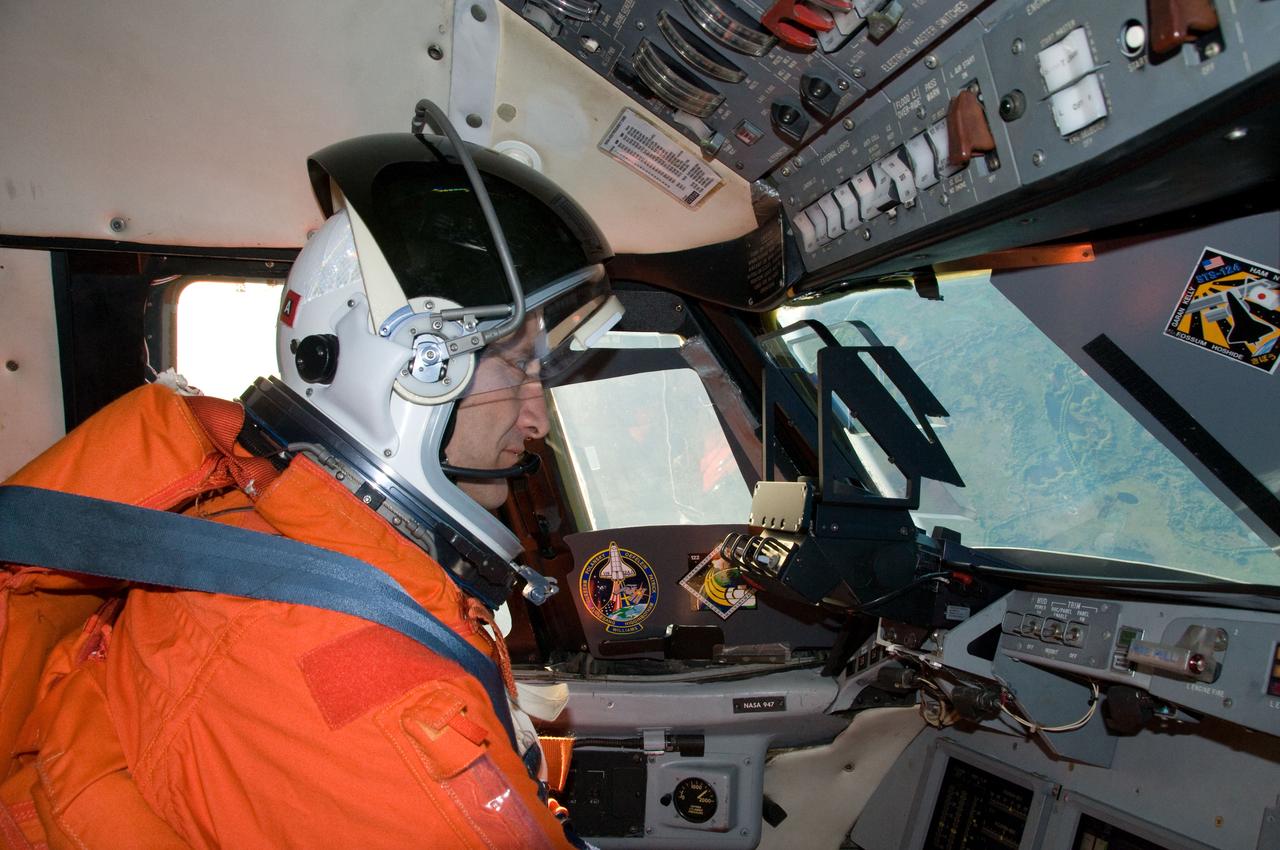
Photo Date: 11-13-09 Location: Shuttle Training Aircraft Subject: STS129 Crew Training - commander Charles Hobaugh during STA Training Photographer: Dick Clark
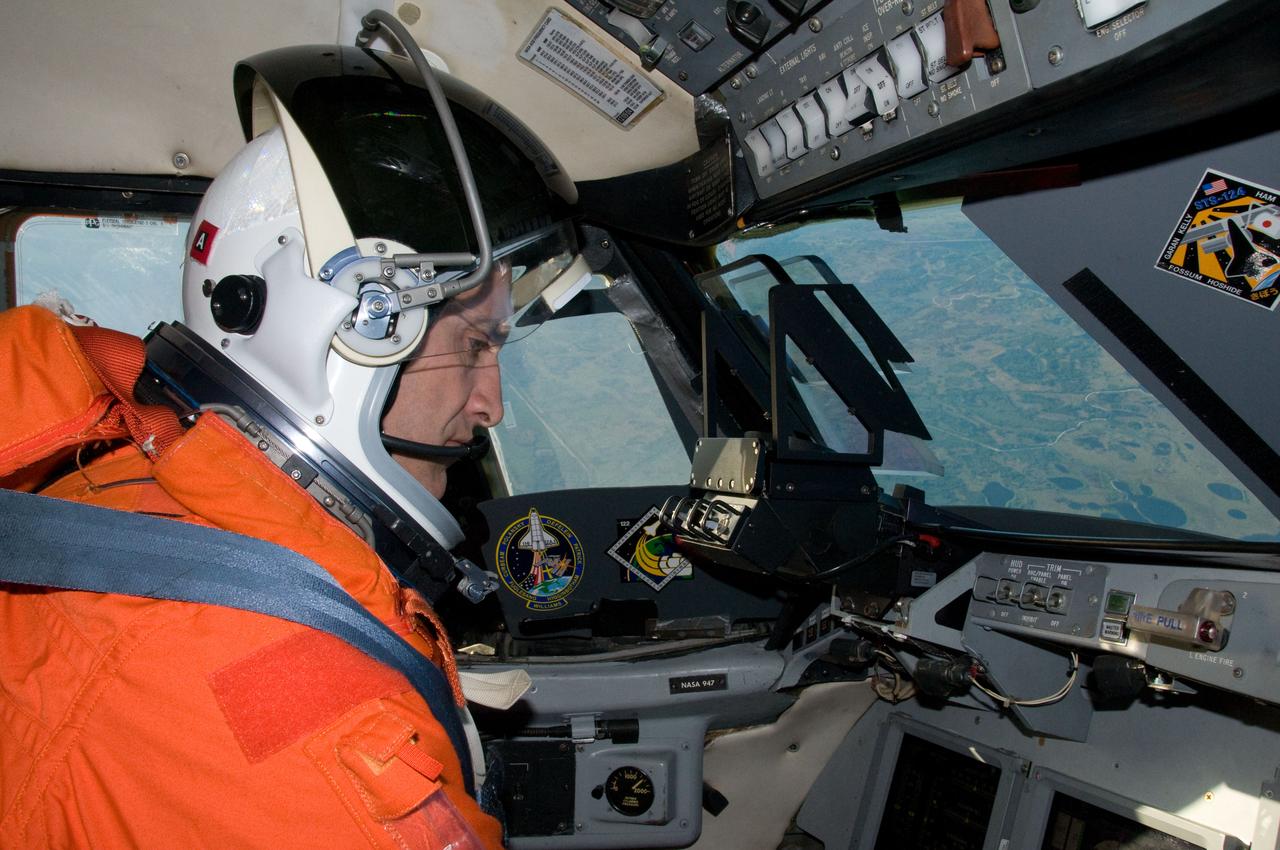
Photo Date: 11-13-09 Location: Shuttle Training Aircraft Subject: STS129 Crew Training - commander Charles Hobaugh during STA Training Photographer: Dick Clark
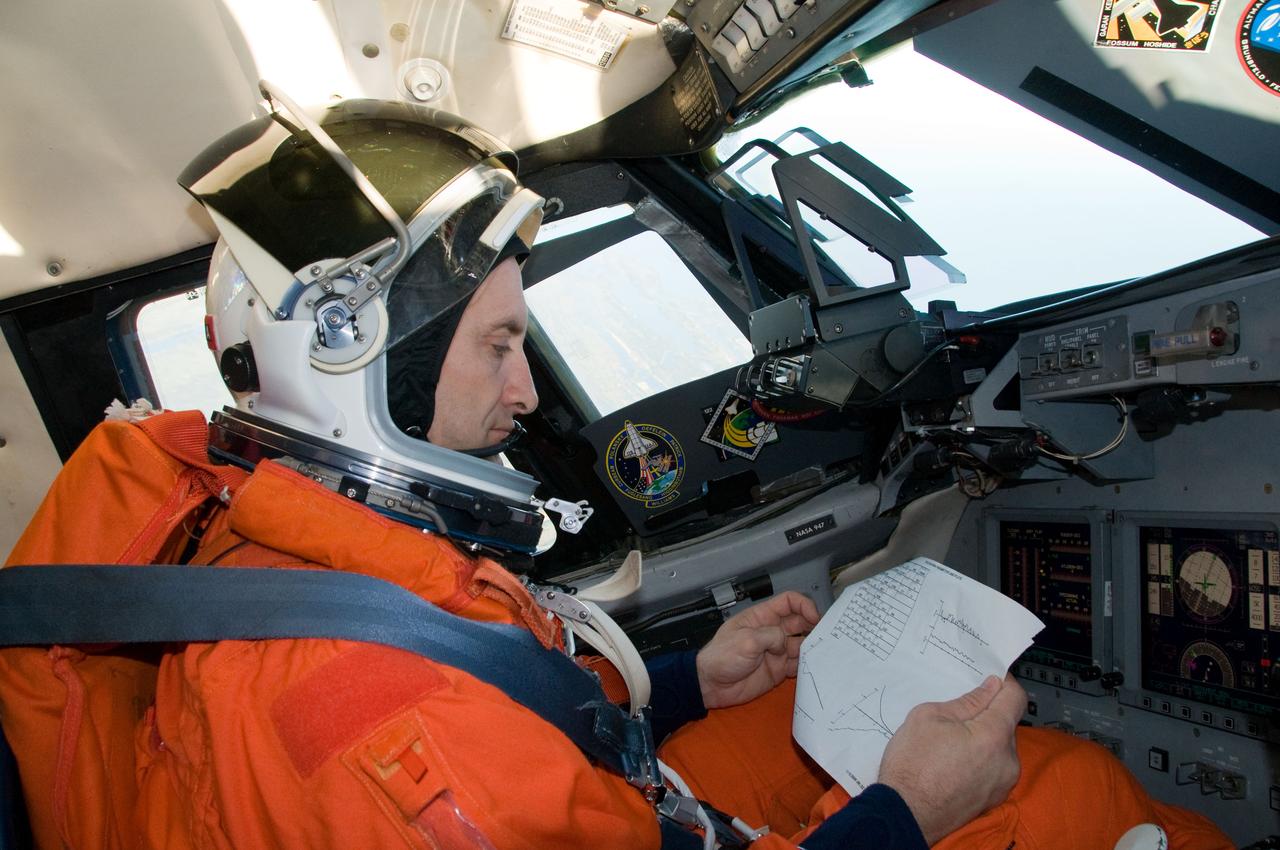
Photo Date: 11-13-09 Location: Shuttle Training Aircraft Subject: STS129 Crew Training - commander Charles Hobaugh during STA Training Photographer: Dick Clark

Photo Date: 11-13-09 Location: Shuttle Training Aircraft Subject: STS129 Crew Training - commander Charles Hobaugh during STA Training Photographer: Dick Clark
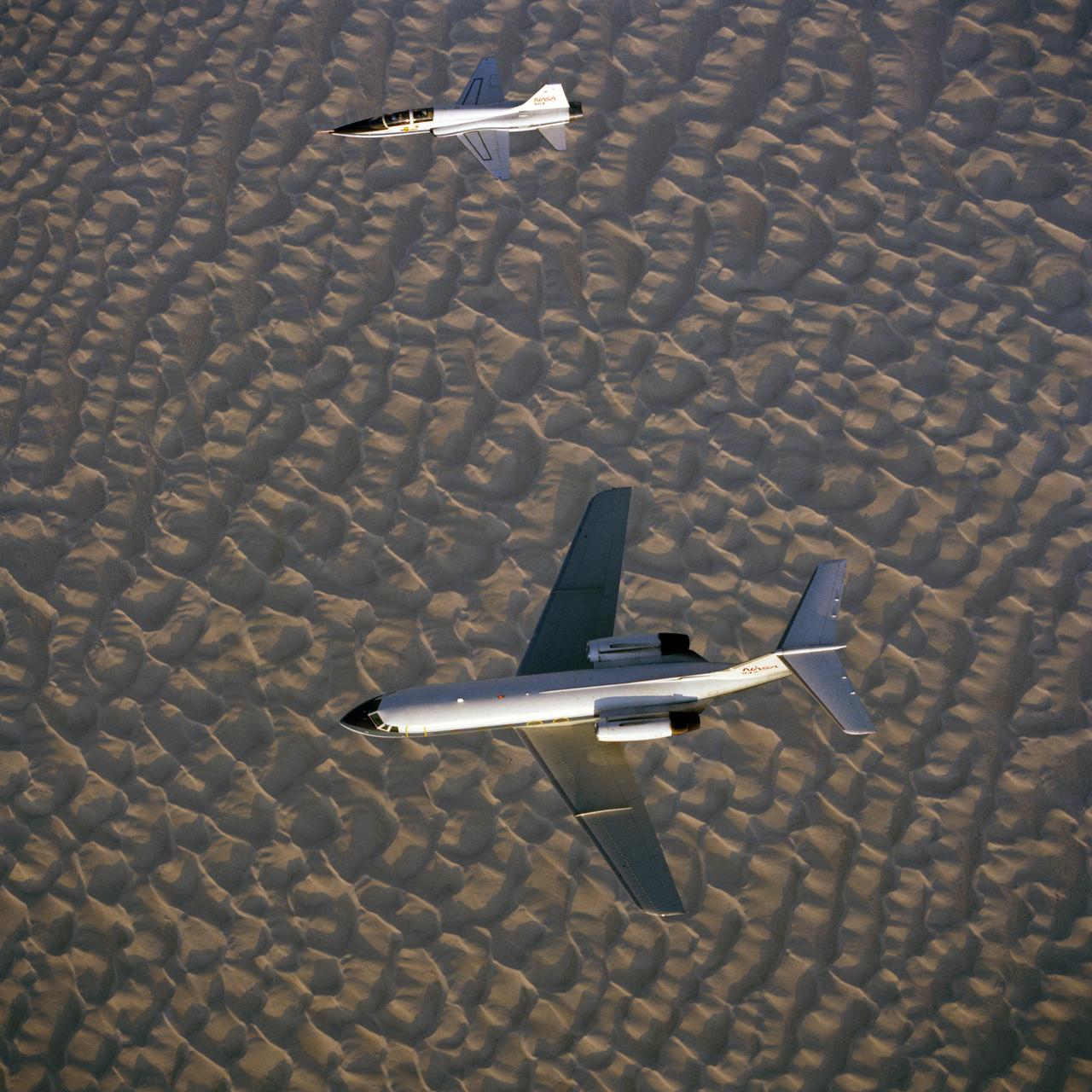
S82-32204 (October 1982) --- NASA 947 and NASA 904, two aircraft stationed at Ellington Air Base for the Johnson Space Center (JSC), are captured during a training and familiarization flight over White Sands, New Mexico. The Gulfstream aircraft (bottom) is NASA?s Space Shuttle Training Aircraft (STA) and the T-38 jet serves as a chase plane. Photo credit: NASA
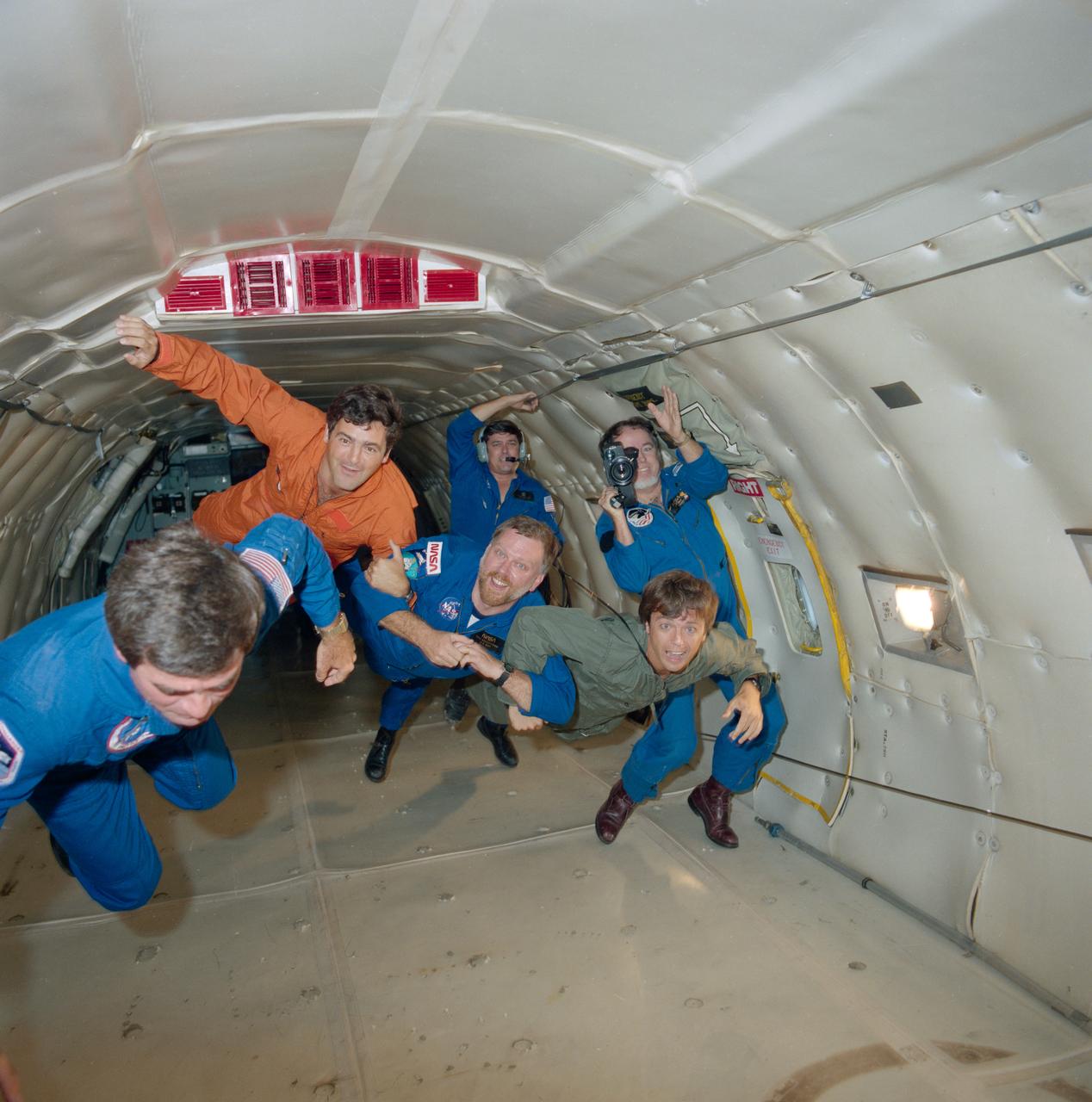
Paul Scully-Power, 41-G payload specialist, links arms with two others as they experience weightlessness in the KC-135 training aircraft. The trio appears to be flying toward the front of the aircraft while others take photos.

Aboard a Gagarin Cosmonaut Training Center aircraft, Expedition 59 crewmembers Alexey Ovchinin of Roscosmos (left), Nick Hague of NASA (center) and Christina Koch of NASA (right) display crew insignia stickers on the wall of the cabin Feb. 26 as they flew to their launch site at the Baikonur Cosmodrome in Kazakhstan from Star City, Russia for final pre-launch training. They will launch March 14, U.S. time, on the Soyuz MS-12 spacecraft from the Baikonur Cosmodrome in Kazakhstan for a six-and-a-half month mission on the International Space Station. NASA/Victor Zelentsov
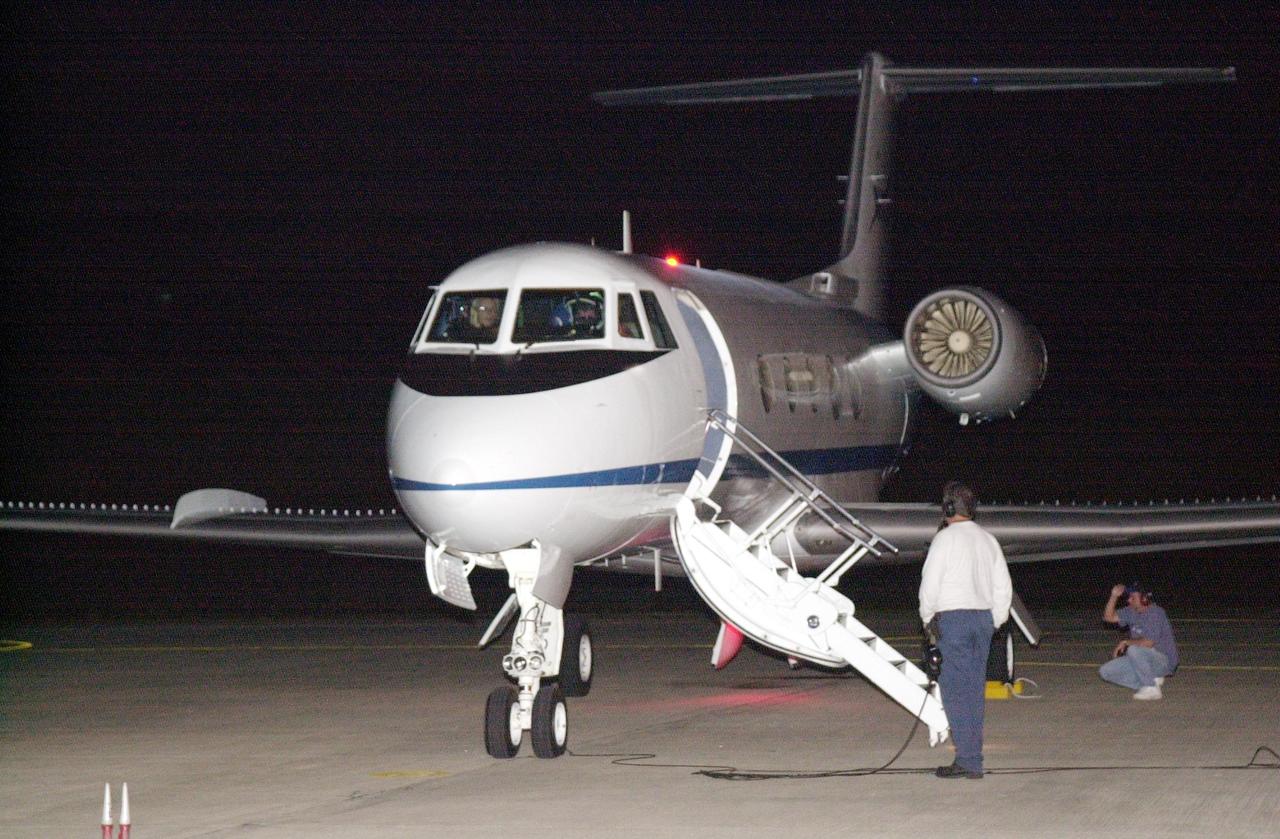
![KENNEDY SPACE CENTER, FLA. -- At the Shuttle Landing Facility, KSC videographer Glen Benson films with HDTV the Shuttle Training Aircraft (STA) taxiing away. The STA is a modified Grumman Gulfstream II aircraft with an onboard special computer system to enable the aircraft to simulate the orbiter. [Photo by Walt Lindblom, Marshall SFC]](https://images-assets.nasa.gov/image/KSC-02pd1531/KSC-02pd1531~medium.jpg)
KENNEDY SPACE CENTER, FLA. -- At the Shuttle Landing Facility, KSC videographer Glen Benson films with HDTV the Shuttle Training Aircraft (STA) taxiing away. The STA is a modified Grumman Gulfstream II aircraft with an onboard special computer system to enable the aircraft to simulate the orbiter. [Photo by Walt Lindblom, Marshall SFC]
![KENNEDY SPACE CENTER, FLA. -- At the Shuttle Landing Facility, KSC videographer Glen Benson films with HDTV the Shuttle Training Aircraft (STA) preparing to land. The STA is a modified Grumman Gulfstream II aircraft with an onboard special computer system to enable the aircraft to simulate the orbiter. [Photo by Walt Lindblom, Marshall SFC]](https://images-assets.nasa.gov/image/KSC-02pd1532/KSC-02pd1532~medium.jpg)
KENNEDY SPACE CENTER, FLA. -- At the Shuttle Landing Facility, KSC videographer Glen Benson films with HDTV the Shuttle Training Aircraft (STA) preparing to land. The STA is a modified Grumman Gulfstream II aircraft with an onboard special computer system to enable the aircraft to simulate the orbiter. [Photo by Walt Lindblom, Marshall SFC]
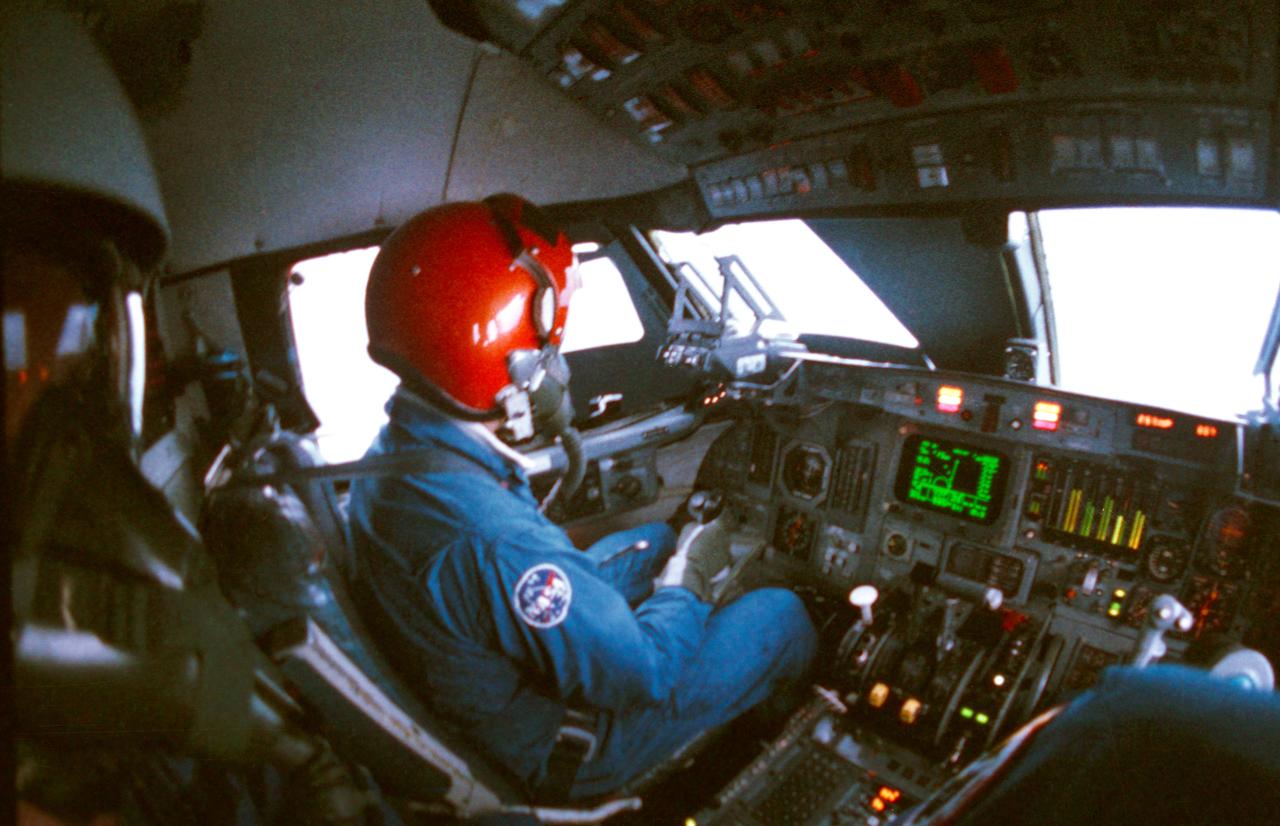
Astronauts John Young and Brewster Shaw in Shuttle Training Aircraft (STA), shot by National Geographic/Otis Imboden.
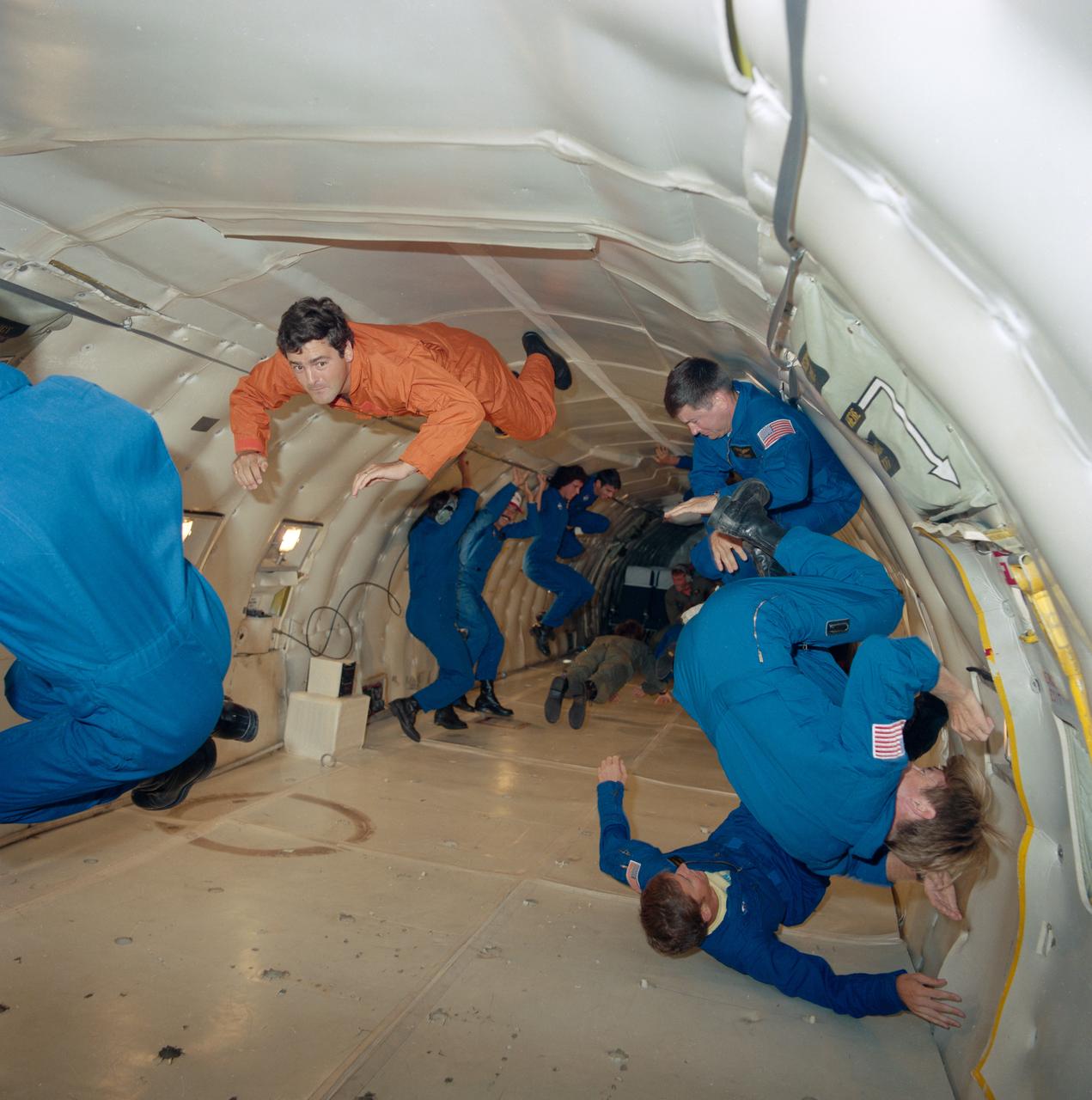
View of astronaut candidates and payload specialists during a training flight on the KC-135. The trainees are experiencing weightlessness in the hold of the aircraft.

JSC2002-E-31360 (23 July 2002) --- Astronaut Jeffrey S. Ashby (left), STS-112 mission commander, and instructor David L. Mumme are pictured near a KC-135 aircraft at Ellington Field near the Johnson Space Center (JSC). Although used primarily for the Zero Gravity program at JSC, the large aircraft also fits the bill for heavy aircraft familiarization. Most training for Shuttle landings takes place in the Shuttle Training Aircraft (STA), which is much lighter in gross weight than the Shuttle. It does a superb job of flying like the Shuttle while on final, but in the flare (right at landing) there are some subtleties to the dynamics of heavy aircraft that only a vehicle of similar weight can demonstrate. Astronauts practice landings in the KC-135 since it is more similar in gross weight to a Shuttle.
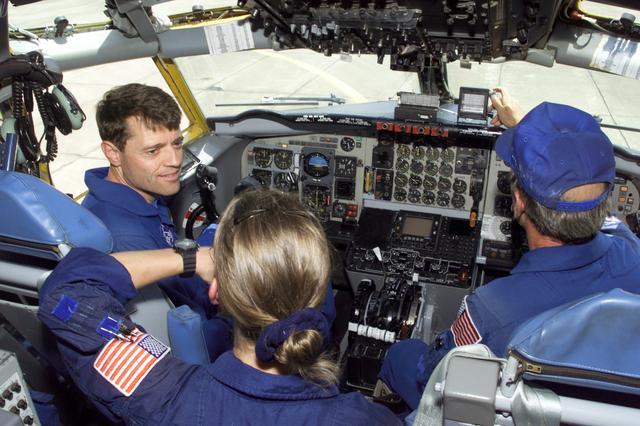
JSC2002-E-31362 (23 July 2002) --- Astronauts Jeffrey S. Ashby (left) and Pamela A. Melroy, STS-112 mission commander and pilot, respectively; along with instructor David L. Mumme, are photographed in the cockpit of a KC-135 aircraft at Ellington Field near the Johnson Space Center (JSC). Although used primarily for the Zero Gravity program at JSC, the large aircraft also fits the bill for heavy aircraft familiarization. Most training for Shuttle landings takes place in the Shuttle Training Aircraft (STA), which is much lighter in gross weight than the Shuttle. It does a superb job of flying like the Shuttle while on final, but in the flare (right at landing) there are some subtleties to the dynamics of heavy aircraft that only a vehicle of similar weight can demonstrate. Astronauts practice landings in the KC-135 since it is more similar in gross weight to a Shuttle.

jsc2016e092110 (April 16, 2011) --- Portrait of NASA astronaut Nicole Mann inside the WB-57 aircraft for a space flight readiness training class.
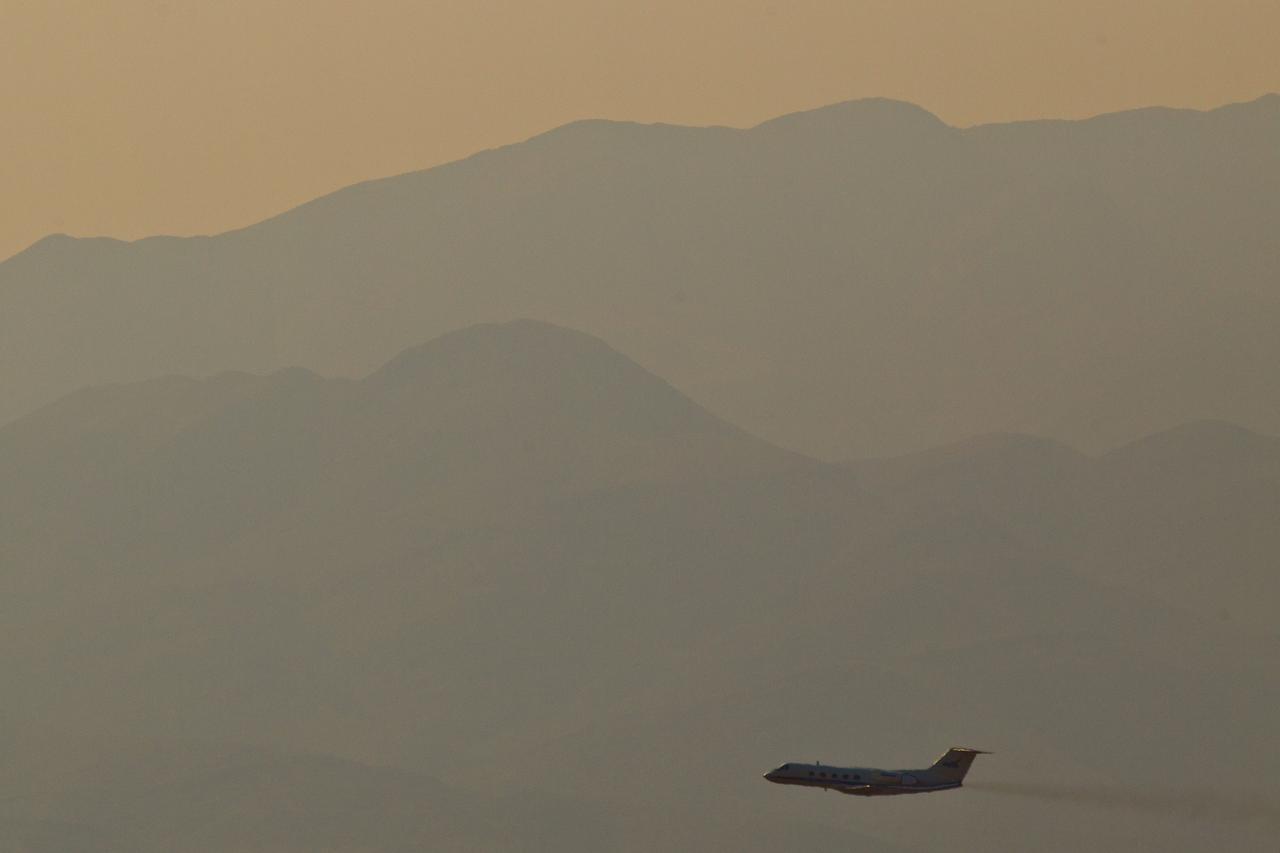
JSC2011-E-059510 (14 June 2011) --- A shuttle training aircraft takes off from NASA?s Johnson Space Center's El Paso Forward Operating Location on June 14, 2011, in El Paso. The Shuttle Training Aircraft or STA is a modified Grumman Gulfstream 2 aircraft that duplicates the space shuttle's handling qualities to allow astronauts to simulate shuttle landings. Since the beginning of the shuttle program over 100,000 landing simulations have been performed from the El Paso location at the nearby White Sands Space Harbor. Photo credit: NASA Photo/Houston Chronicle, Smiley N. Pool
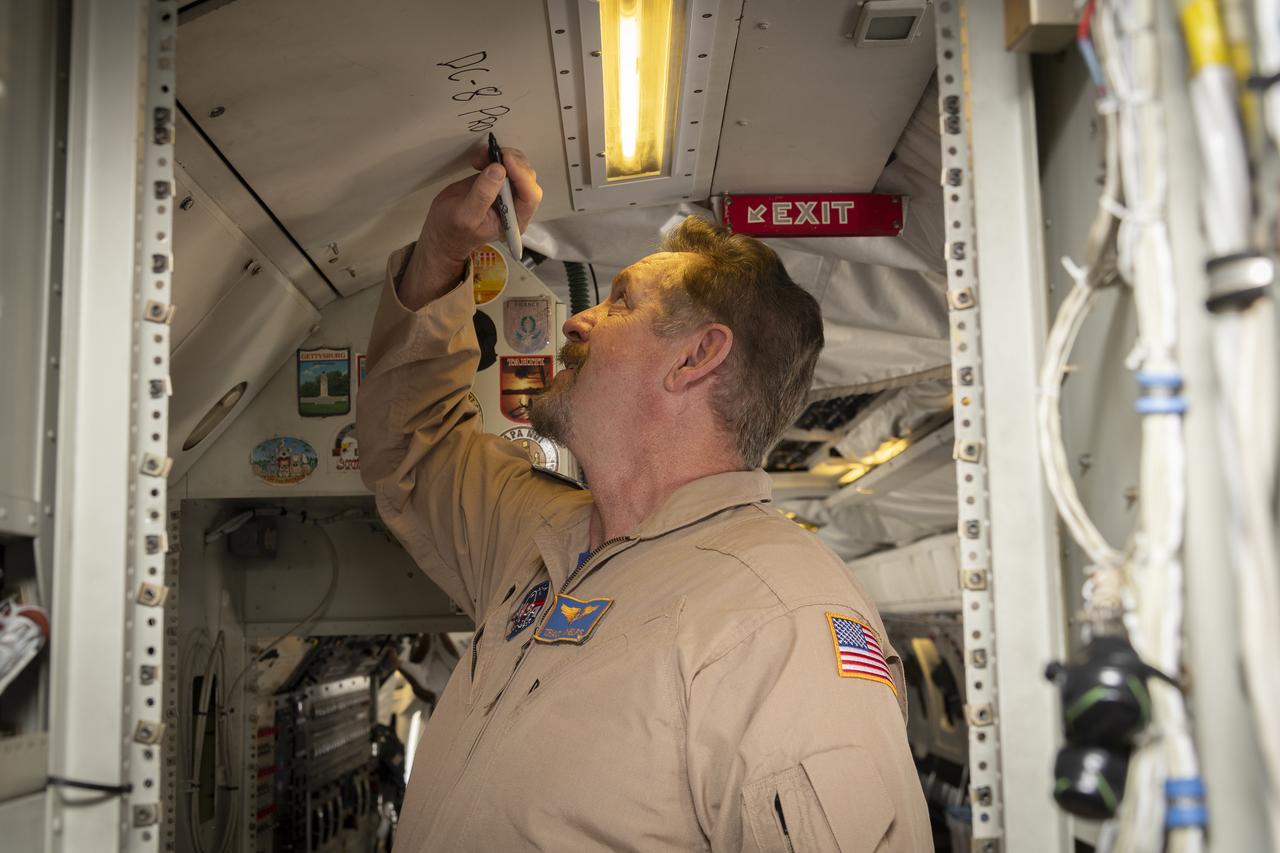
Aerospace engineer and research pilot Tracy Phelps signs the ceiling inside the DC-8 aircraft. Phelps piloted the aircraft’s final flight before it is retired from NASA’s Armstrong Flight Research Center Building 703 in Palmdale, California, to Idaho State University in Pocatello, Idaho. The DC-8 will provide real-world experience to train future aircraft technicians at the college’s Aircraft Maintenance Technology Program.
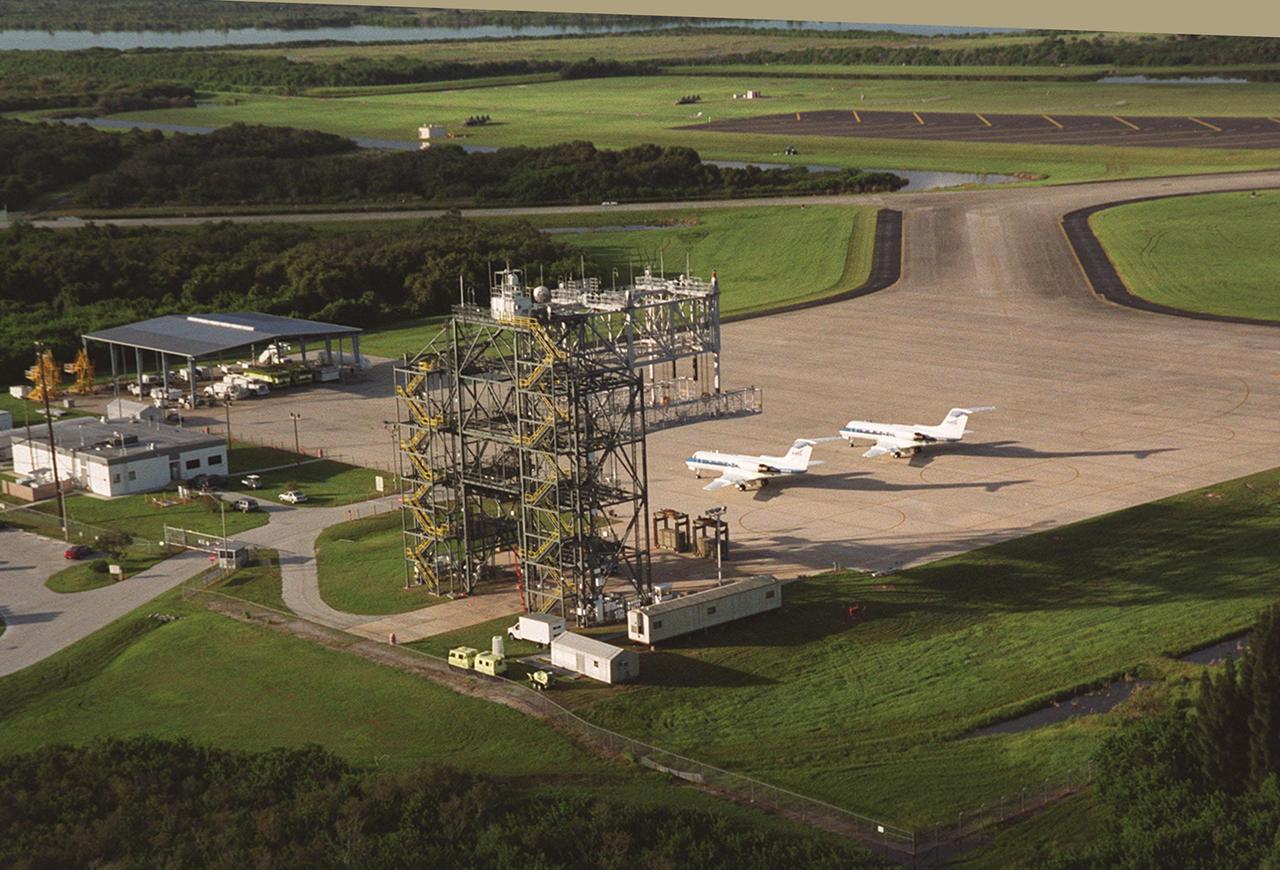
An aerial view of the Shuttle Landing Facility shows the Mate/Demate device in the foreground, with two Shuttle Training Aircraft (STA) on the ground behind it. Visible in the background is the runway and the taxi way leading from the SLF to the right. The STAs are Grumman Gulfstream 2 aircraft with converted cockpits that emulate those in the Shuttles for practice landings at the SLF.

The DC-8 flies low for the last time over NASA’s Armstrong Flight Research Center in Edwards, California, before it retires to Idaho State University in Pocatello, Idaho. The DC-8 will provide real-world experience to train future aircraft technicians at the college’s Aircraft Maintenance Technology Program.
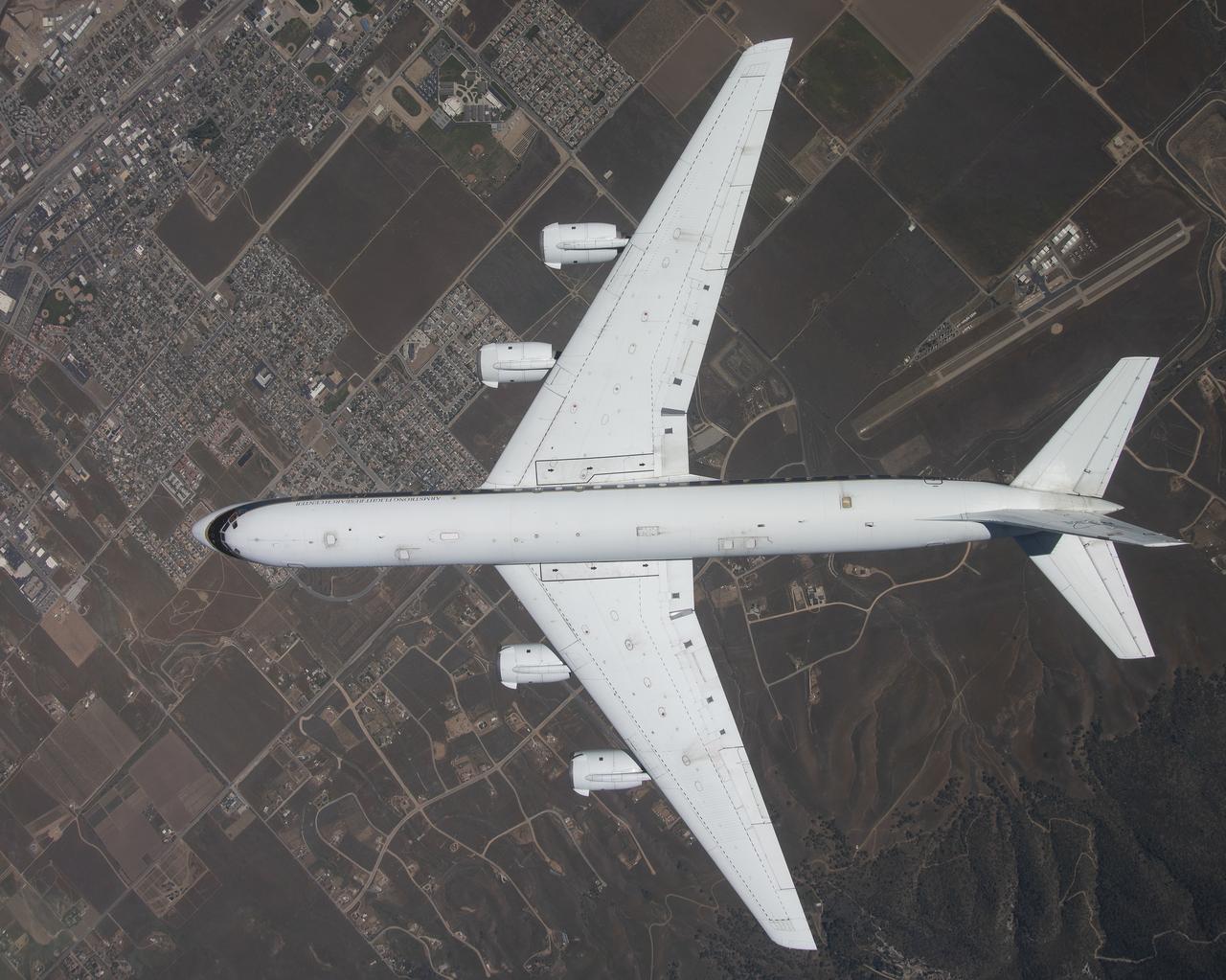
The DC-8 is shown overhead during its final flight from NASA’s Armstrong Flight Research Center Building 703 in Palmdale, California, before it retires to Idaho State University in Pocatello, Idaho. The DC-8 will provide real-world experience to train future aircraft technicians at the college’s Aircraft Maintenance Technology Program.
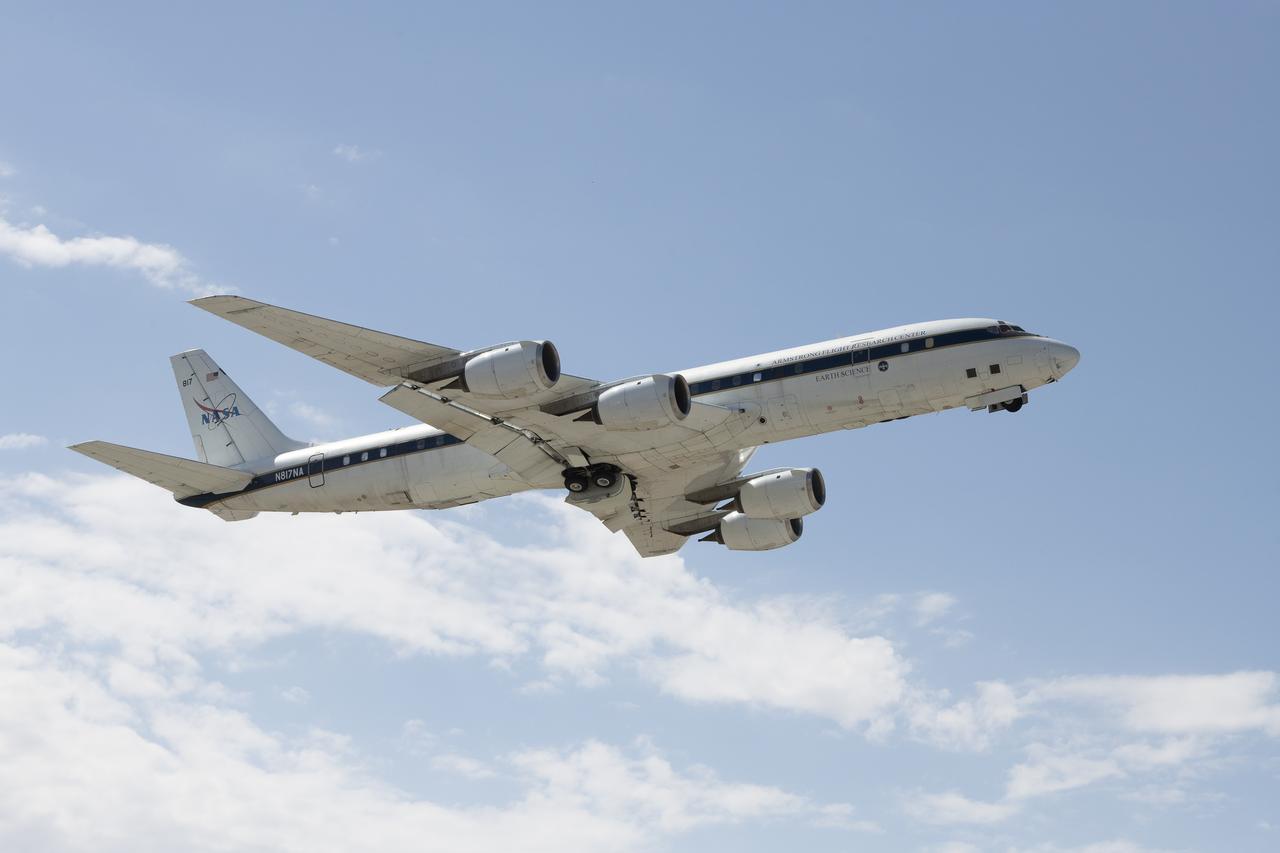
The DC-8 ascents during its final flight before it is retired from NASA’s Armstrong Flight Research Center Building 703 in Palmdale, California, to Idaho State University in Pocatello, Idaho. The DC-8 will provide real-world experience to train future aircraft technicians at the college’s Aircraft Maintenance Technology Program.
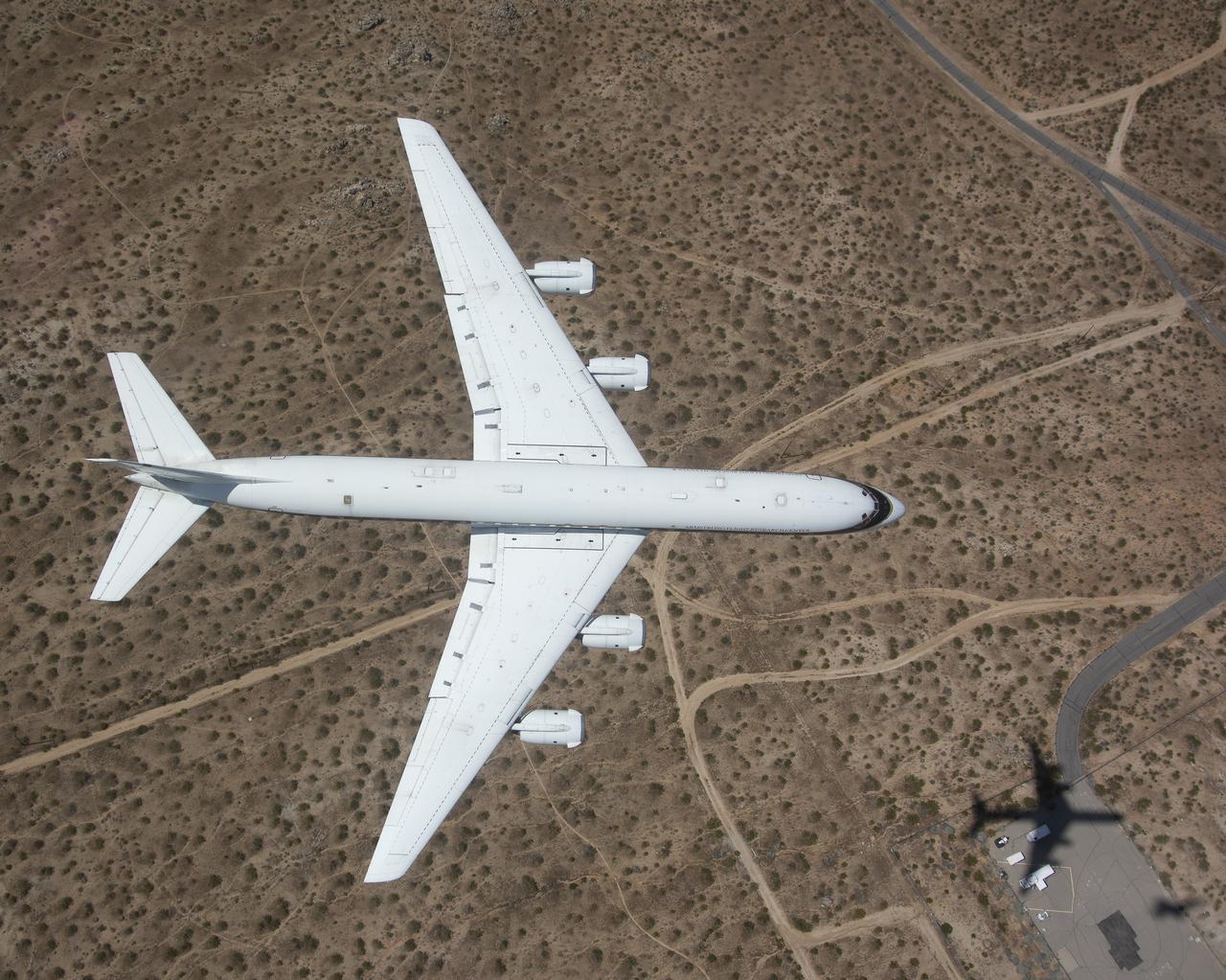
The DC-8 flies for the last time from NASA’s Armstrong Flight Research Center Building 703 in Palmdale, California, to Idaho State University in Pocatello, Idaho. The DC-8 will provide real-world experience to train future aircraft technicians at the college’s Aircraft Maintenance Technology Program.
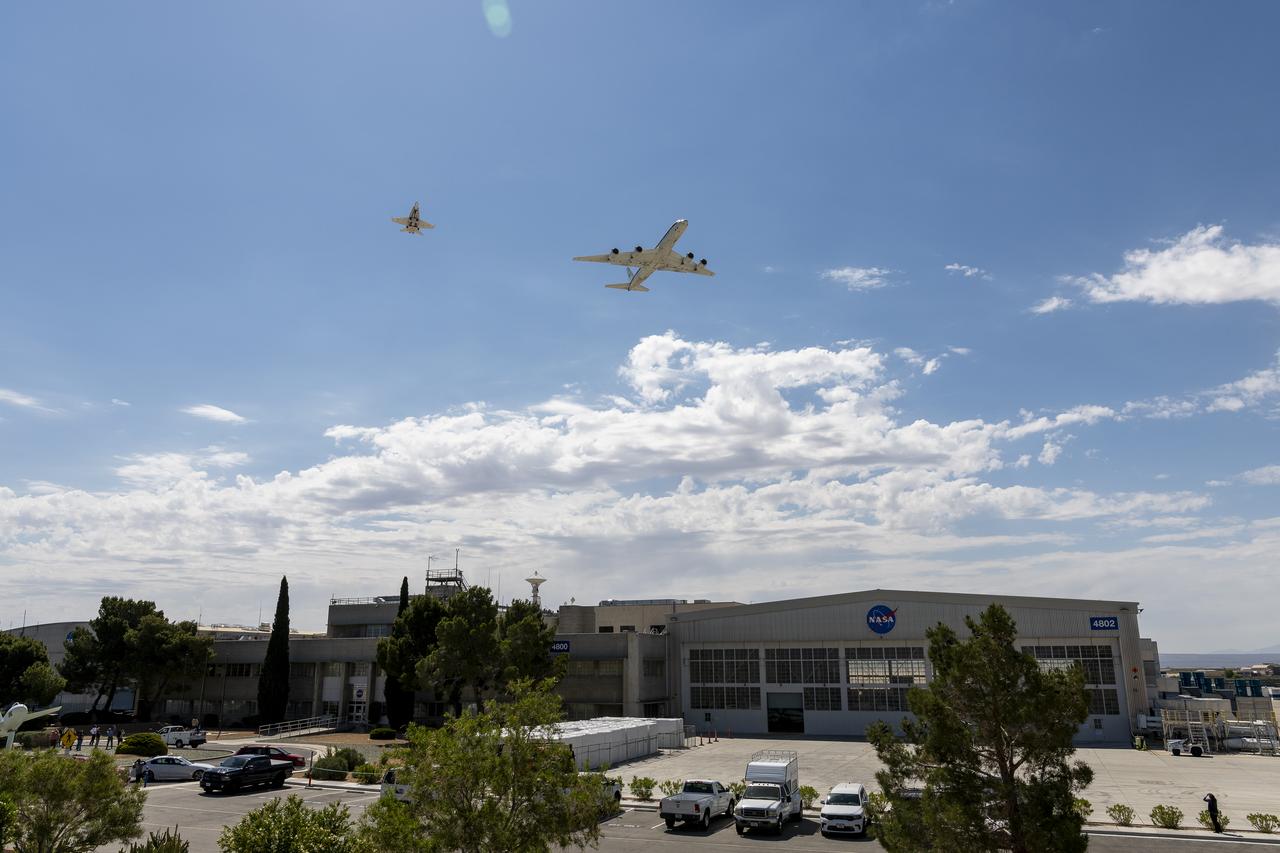
The DC-8 flies for the last time from NASA’s Armstrong Flight Research Center Building 703 in Palmdale, California, before it retires to Idaho State University in Pocatello, Idaho. The DC-8 will provide real-world experience to train future aircraft technicians at the college’s Aircraft Maintenance Technology Program.
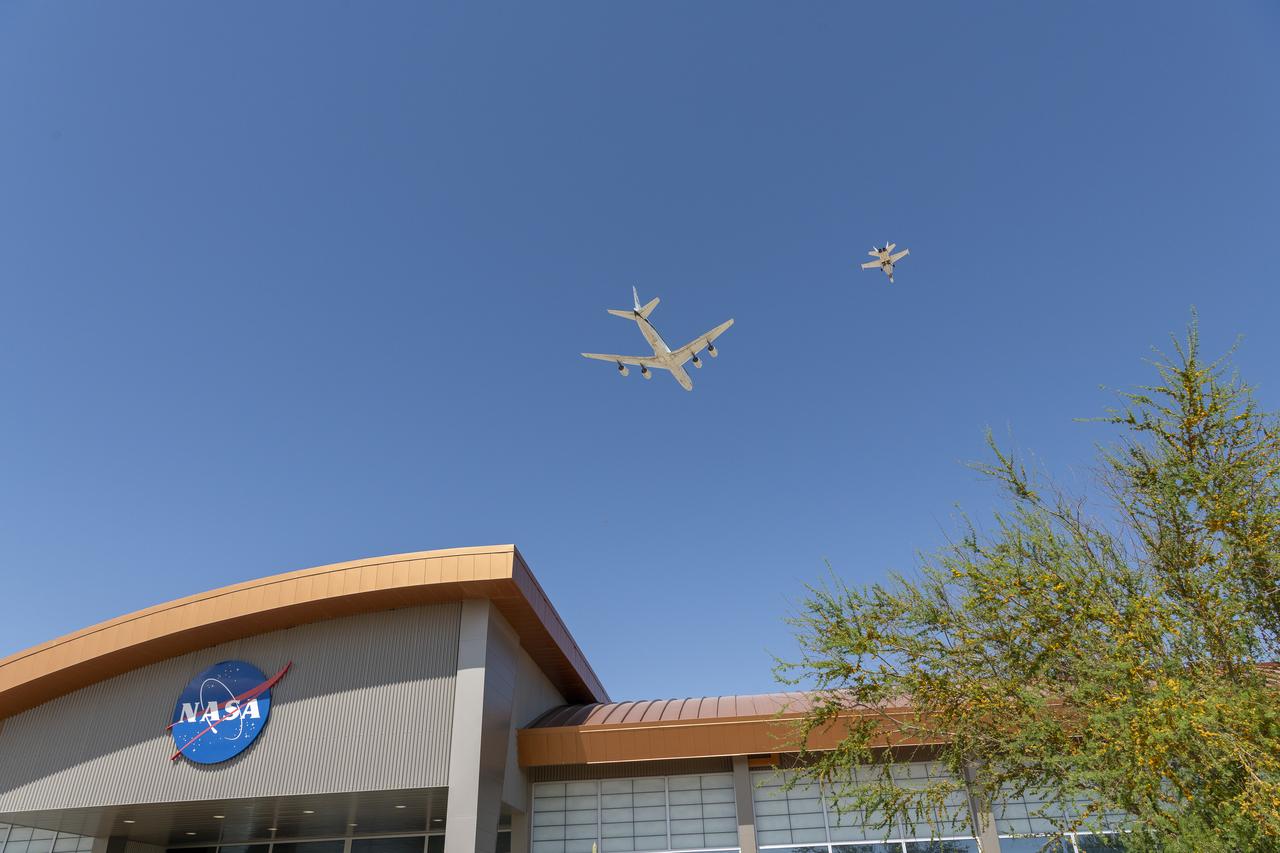
The DC-8 flies low for the last time over NASA’s Armstrong Flight Research Center in Edwards, California, before it retires to Idaho State University in Pocatello, Idaho. The DC-8 will provide real-world experience to train future aircraft technicians at the college’s Aircraft Maintenance Technology Program.
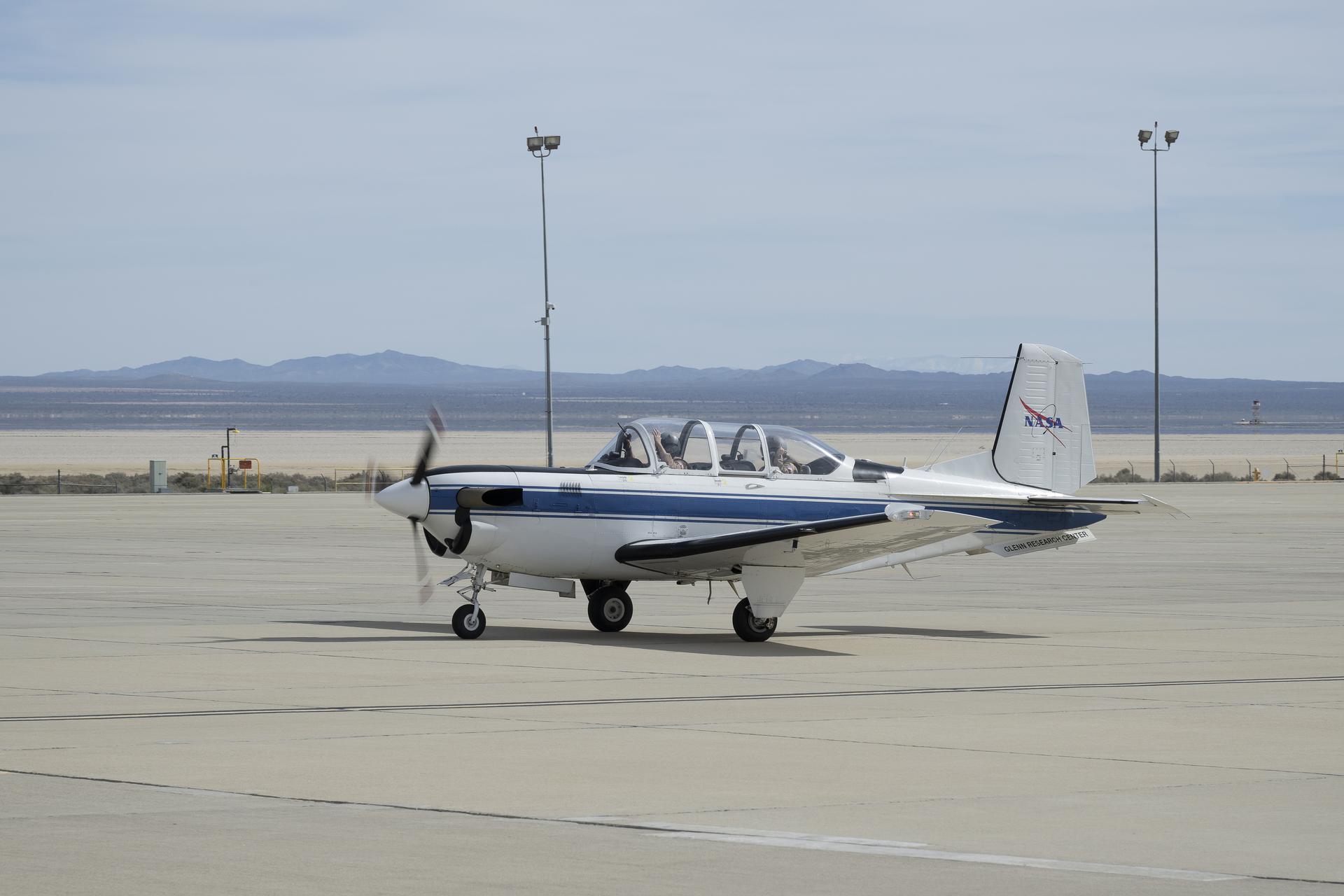
A NASA T-34 aircraft, tail number 602, arrived at NASA’s Armstrong Flight Research Center in Edwards, California, on Feb. 14, 2026. This aircraft was flown from NASA’s Glenn Research Center in Cleveland, to NASA Armstrong, to be evaluated for use as a flight research and pilot training platform for the center.
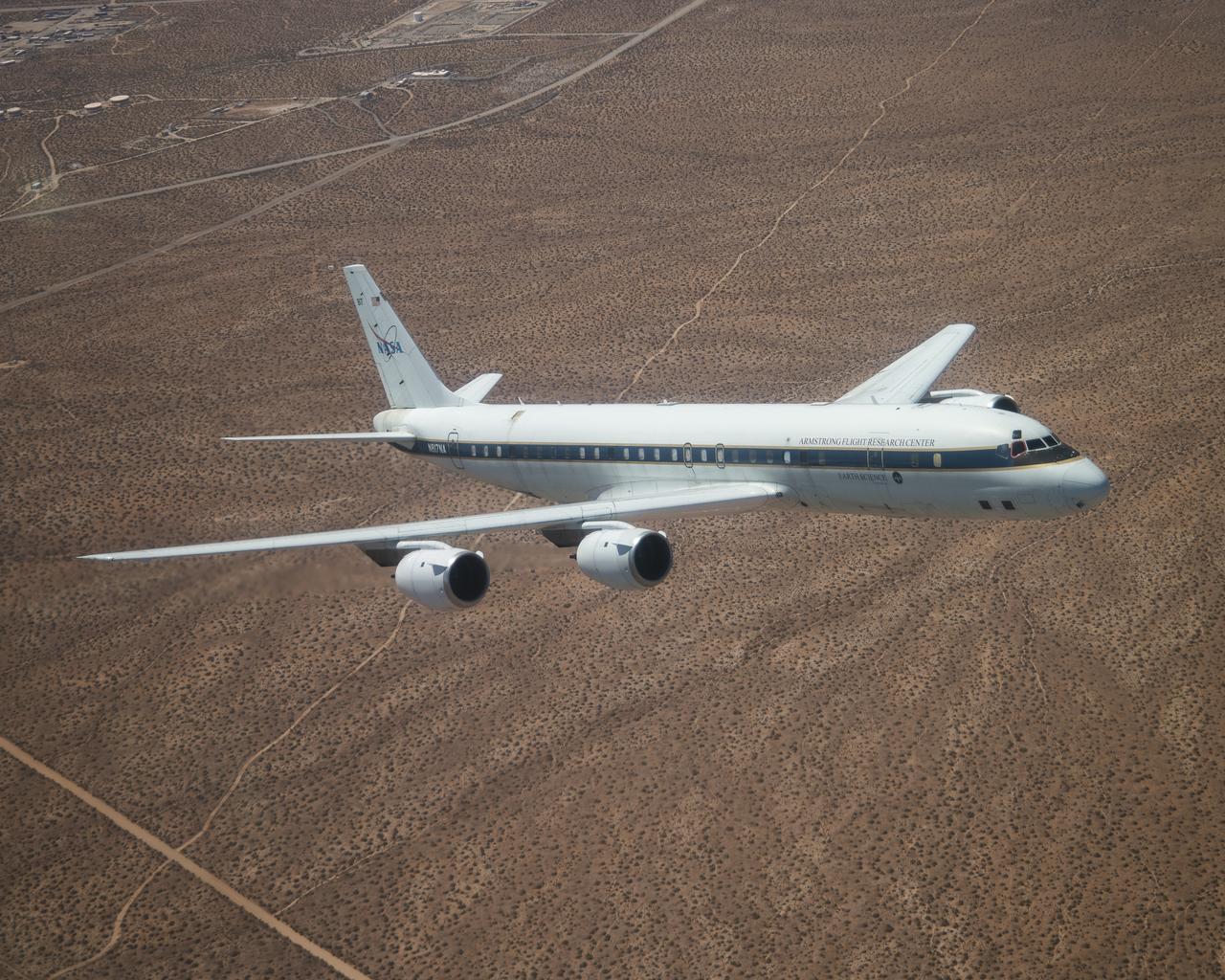
The DC-8 flies for the last time from NASA’s Armstrong Flight Research Center Building 703 in Palmdale, California, before it retires to Idaho State University in Pocatello, Idaho. The DC-8 will provide real-world experience to train future aircraft technicians at the college’s Aircraft Maintenance Technology Program.
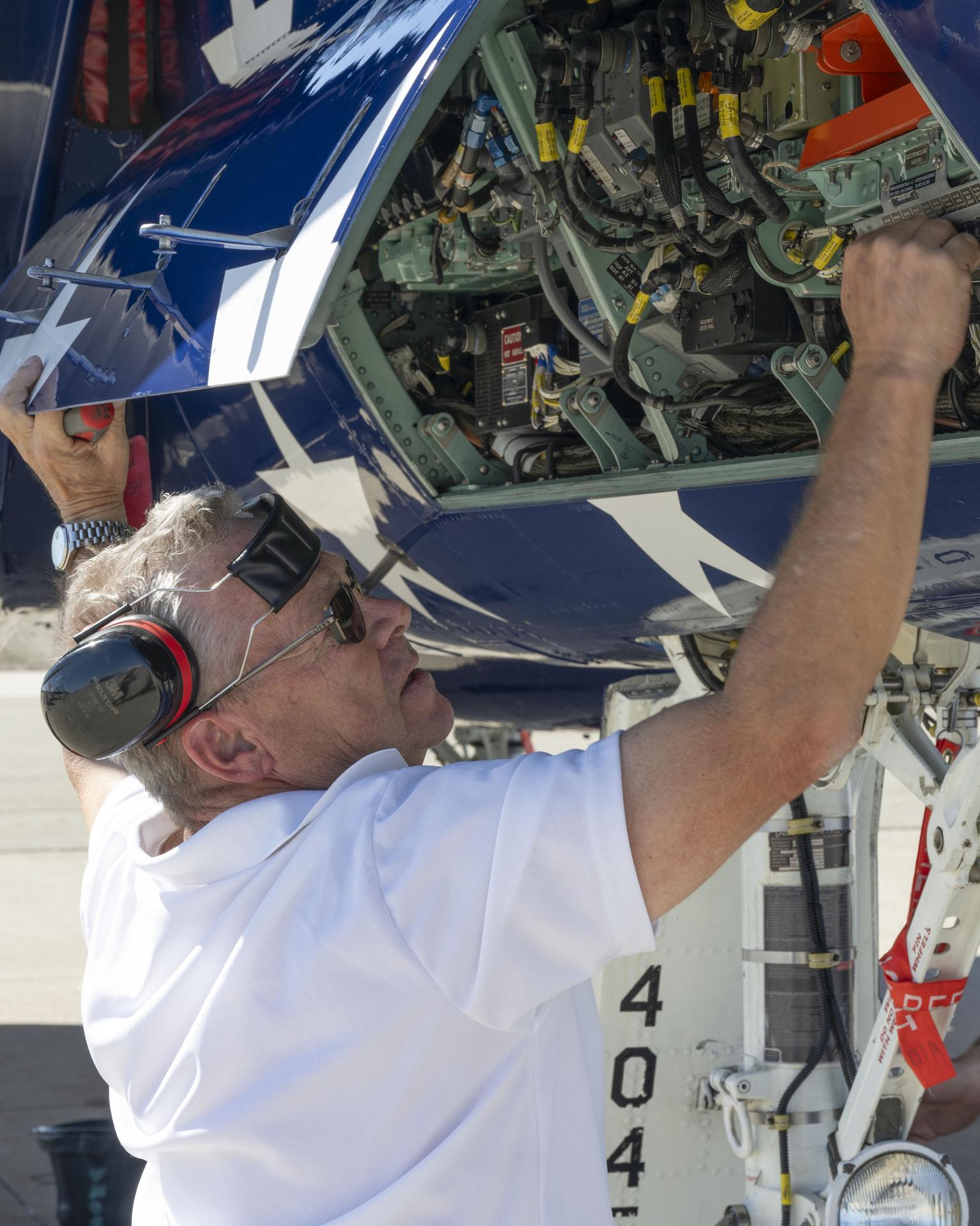
NASA quality assurance specialist Walt Kondracki inspects an agency F-15 aircraft at Los Alamitos Joint Forces Training Base, California, Sunday, Oct. 4, 2026. The jet was among the NASA aircraft that flew in the Pacific Airshow in Huntington Beach, California, Oct. 2-4.
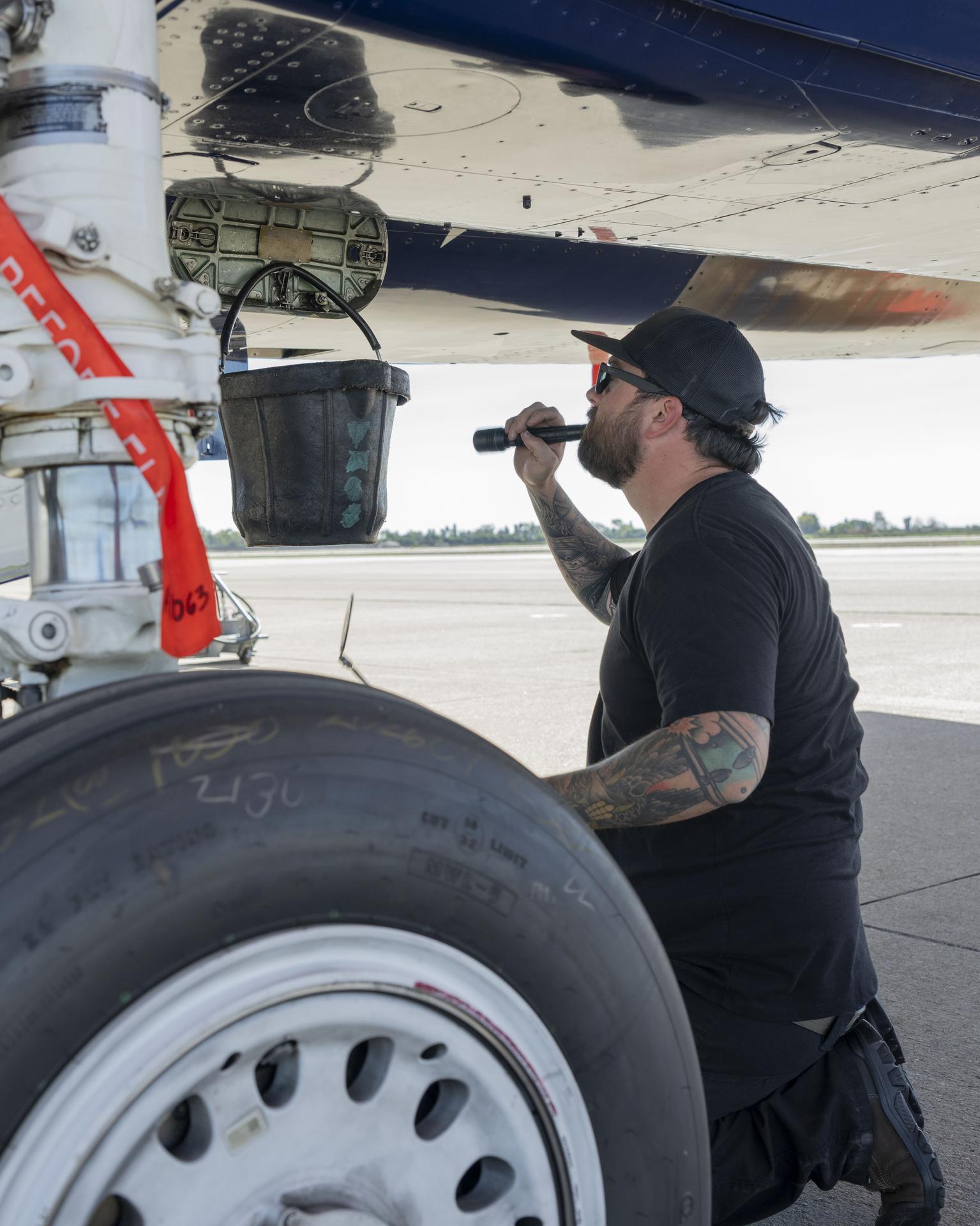
NASA F-15 Crew Chief Zach Burke inspects the aircraft at Los Alamitos Joint Forces Training Base, California, Sunday, Oct. 4, 2026. The jet was among the NASA aircraft that flew in the Pacific Airshow in Huntington Beach, California, Oct. 2-4.
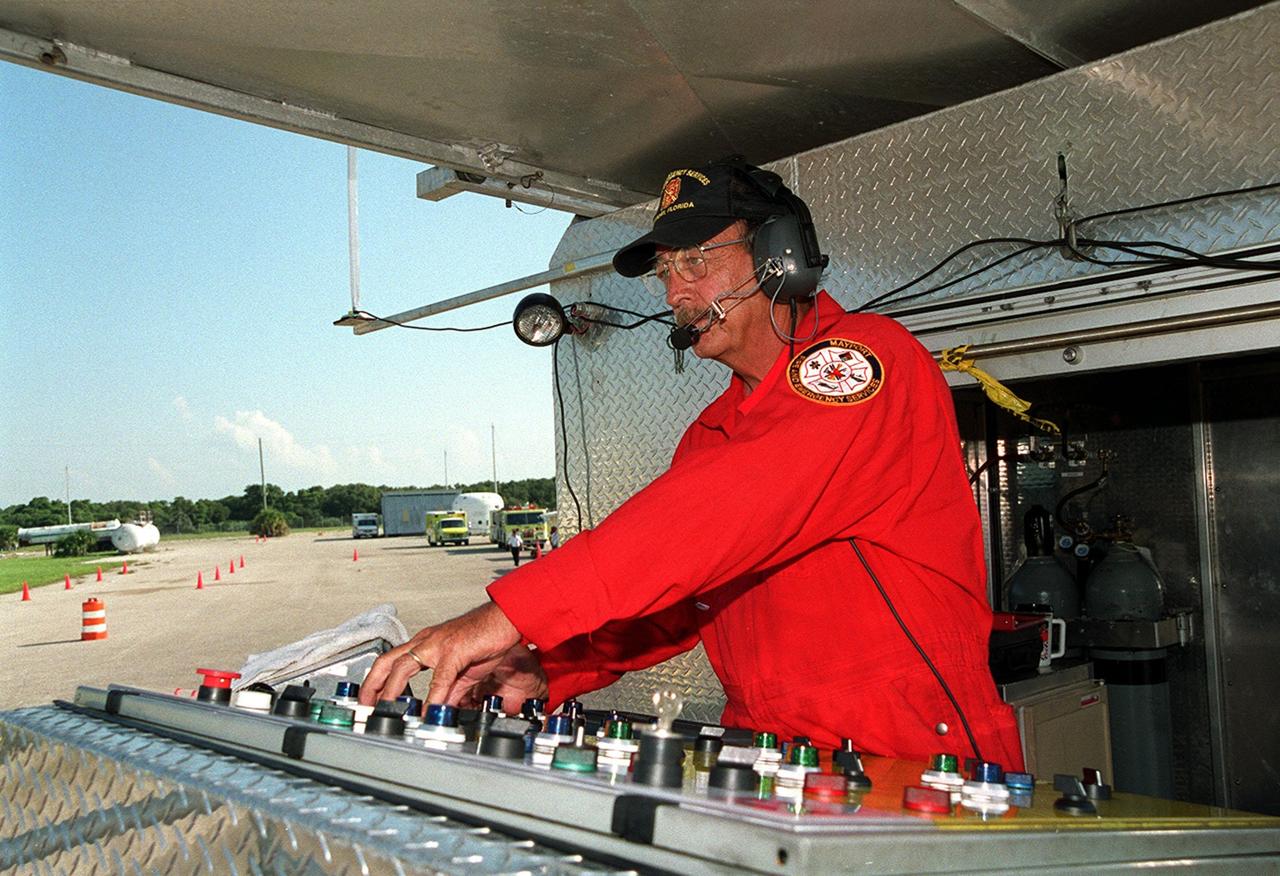
KENNEDY SPACE CENTER, FLA. -- A training officer controls elements of a fire training exercise at Cape Canaveral Air Force Station Pad 30 for firefighters with Fire and Emergency Services at the Naval Station Mayport, Fla. The firefighters tackled flames from a burning simulated aircraft.
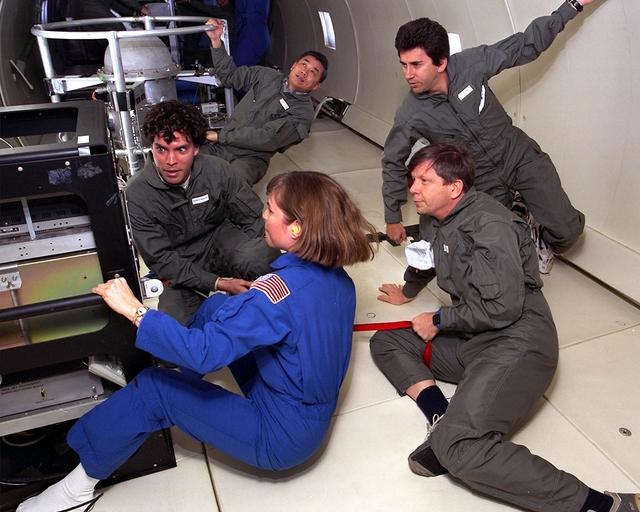
Mission specialist Janice Voss (center, foreground) trains with payload specialists Paul Rorney (right, background) and Roger Crouch (right, foreground) for the Materials Sciences Lab-1 (MSL-1) mission flown in 1997. They are aboard the NASA KC-135 low-g training aircraft.
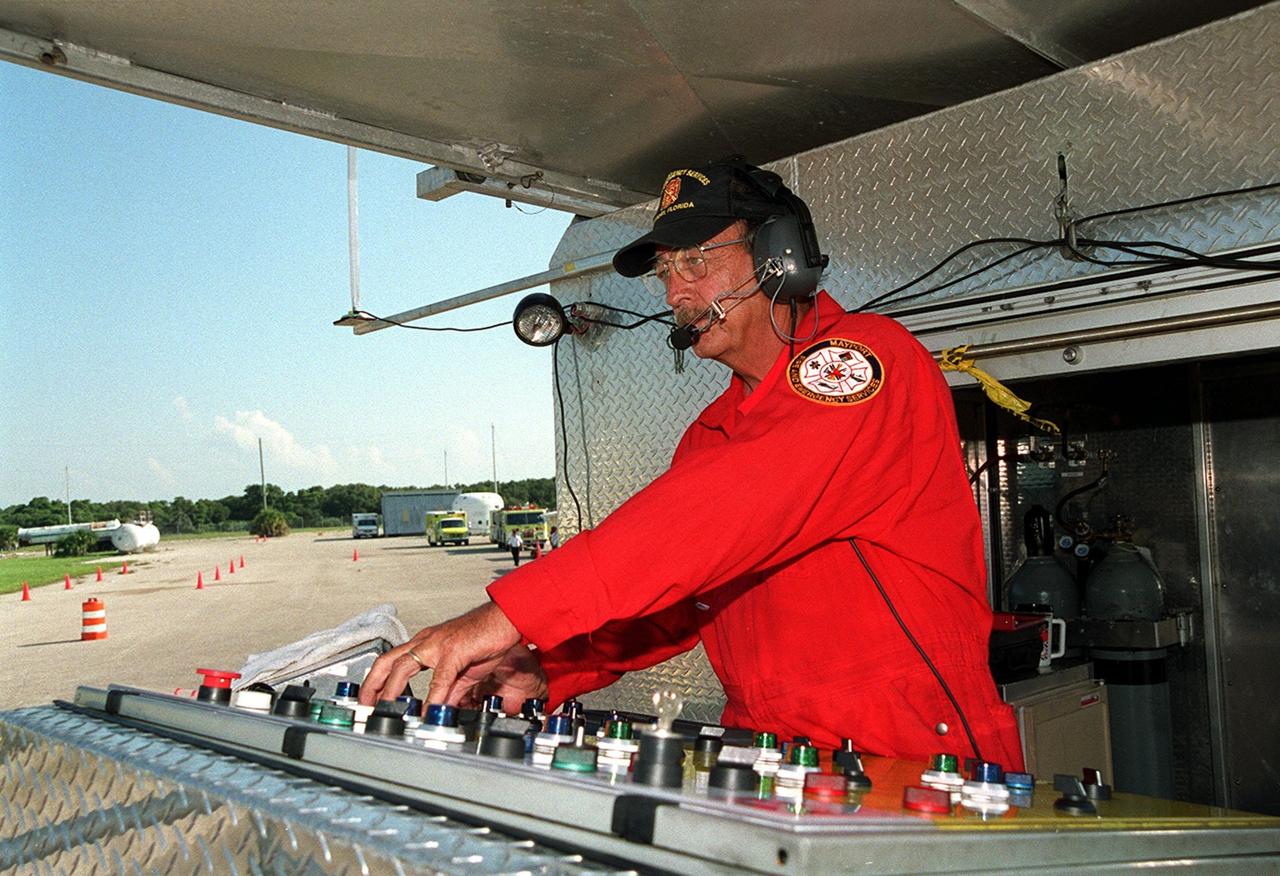
KENNEDY SPACE CENTER, FLA. -- A training officer controls elements of a fire training exercise at Cape Canaveral Air Force Station Pad 30 for firefighters with Fire and Emergency Services at the Naval Station Mayport, Fla. The firefighters tackled flames from a burning simulated aircraft.
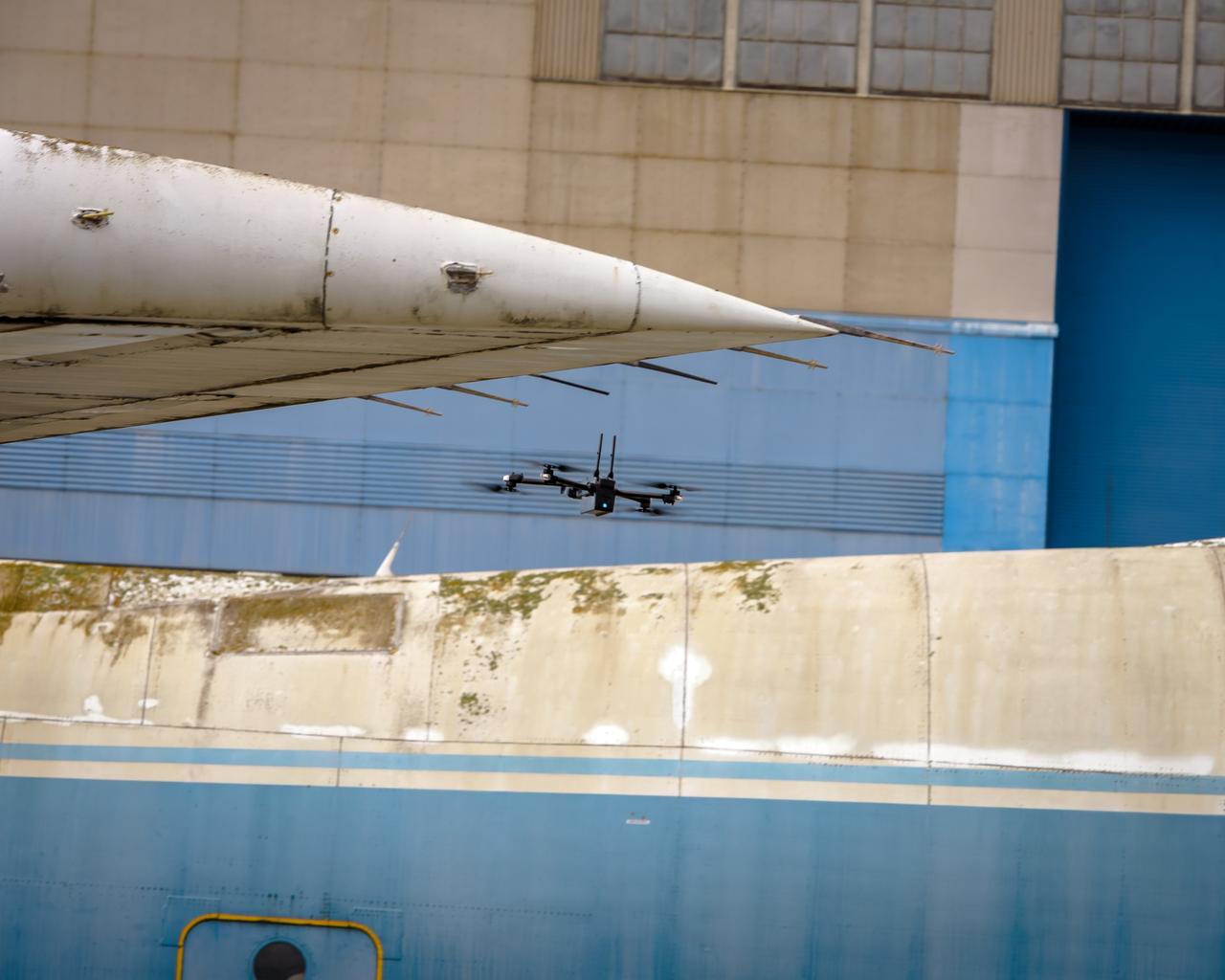
The drone follows an autonomously defined path around the modified C-141 Kuiper Airborne Observatory, (KAO) (NASA-714), on the N211 apron. The drone photographs the aircraft with a visible and infrared camera which are processed using a photogrammetry software package called Pix4D that converts them into a 3D model. Scanning the aircraft is the first phase of documenting the aircraft demolition as well as an opportunity to train pilots to operate the Pix4D software.
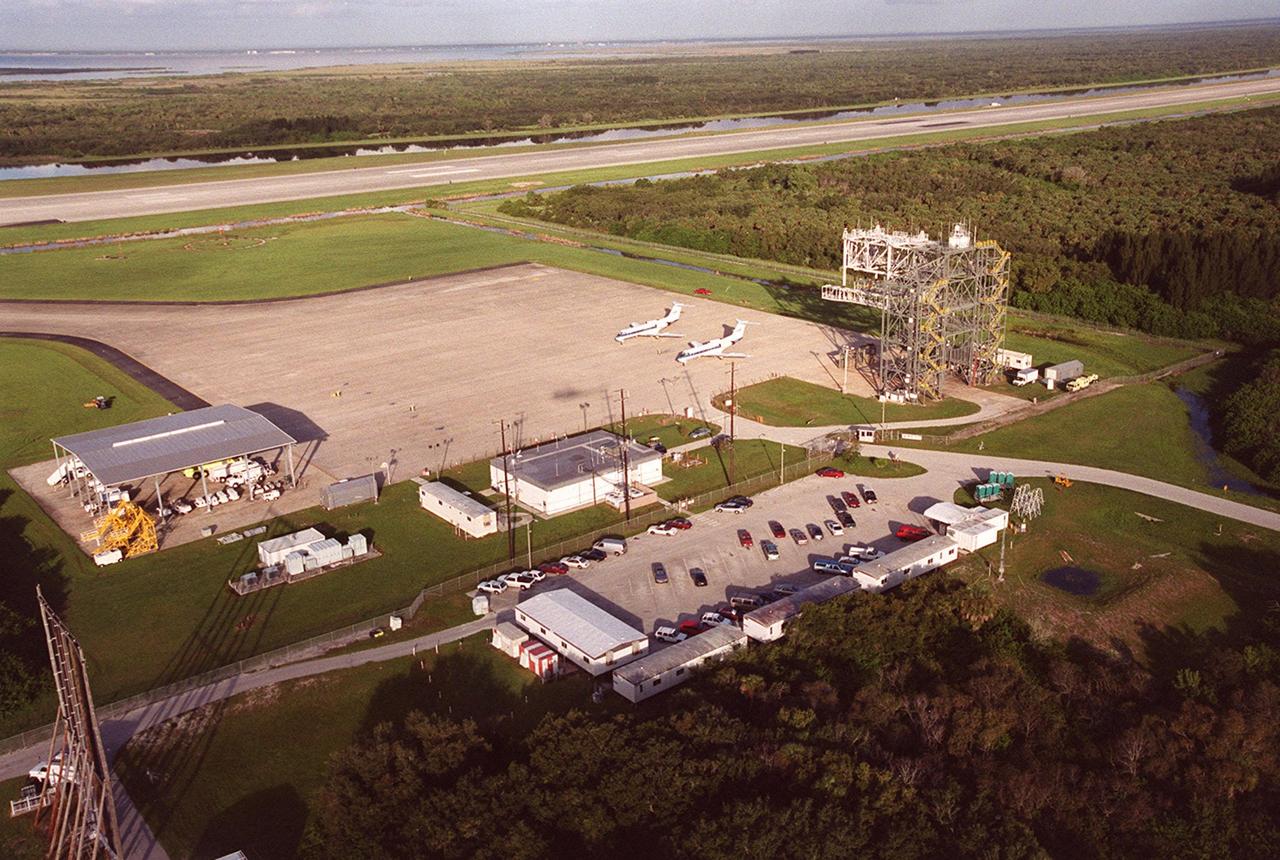
KENNEDY SPACE CENTER, FLA. -- An aerial view of the Shuttle Landing Facility shows the fuel truck shelter (left), administrative building (center) with parking lot behind it (foreground), two Shuttle Training Aircraft (STA) parked on the apron and the mate/demate device (right). In the background is the runway. The STAs are Grumman Gulfstream 2 aircraft with converted cockpits that emulate those in the Shuttles for practice landings at the SLF. The mate/demate device is used to lift the orbiter onto or off a Shuttle Carrier Aircraft when it has to be ferried to or from KSC
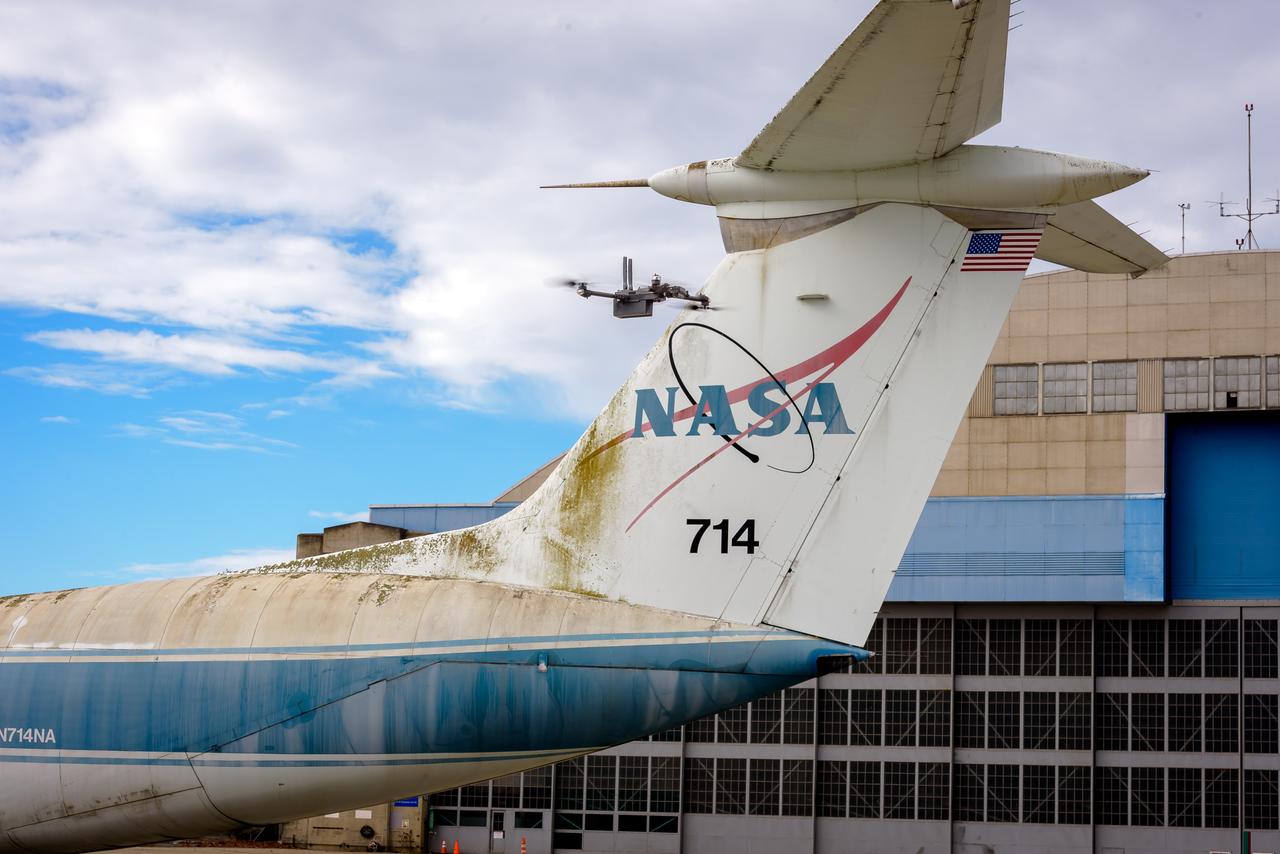
The drone follows an autonomously defined path around the modified C-141 Kuiper Airborne Observatory, (KAO) (NASA-714), on the N211 apron. The drone photographs the aircraft with a visible and infrared camera which are processed using a photogrammetry software package called Pix4D that converts them into a 3D model. Scanning the aircraft is the first phase of documenting the aircraft demolition as well as an opportunity to train pilots to operate the Pix4D software.
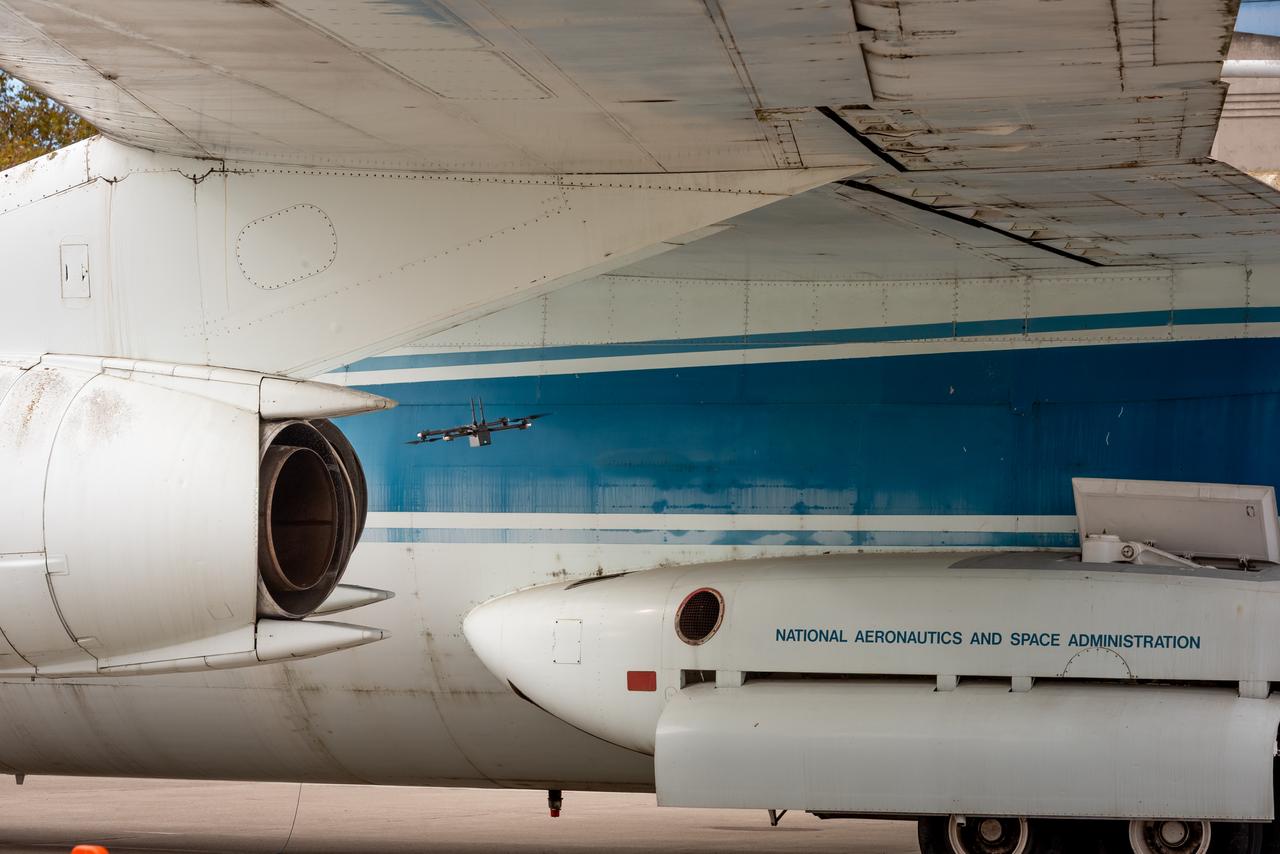
The drone follows an autonomously defined path around the modified C-141 Kuiper Airborne Observatory, (KAO) (NASA-714), on the N211 apron. The drone photographs the aircraft with a visible and infrared camera which are processed using a photogrammetry software package called Pix4D that converts them into a 3D model. Scanning the aircraft is the first phase of documenting the aircraft demolition as well as an opportunity to train pilots to operate the Pix4D software.
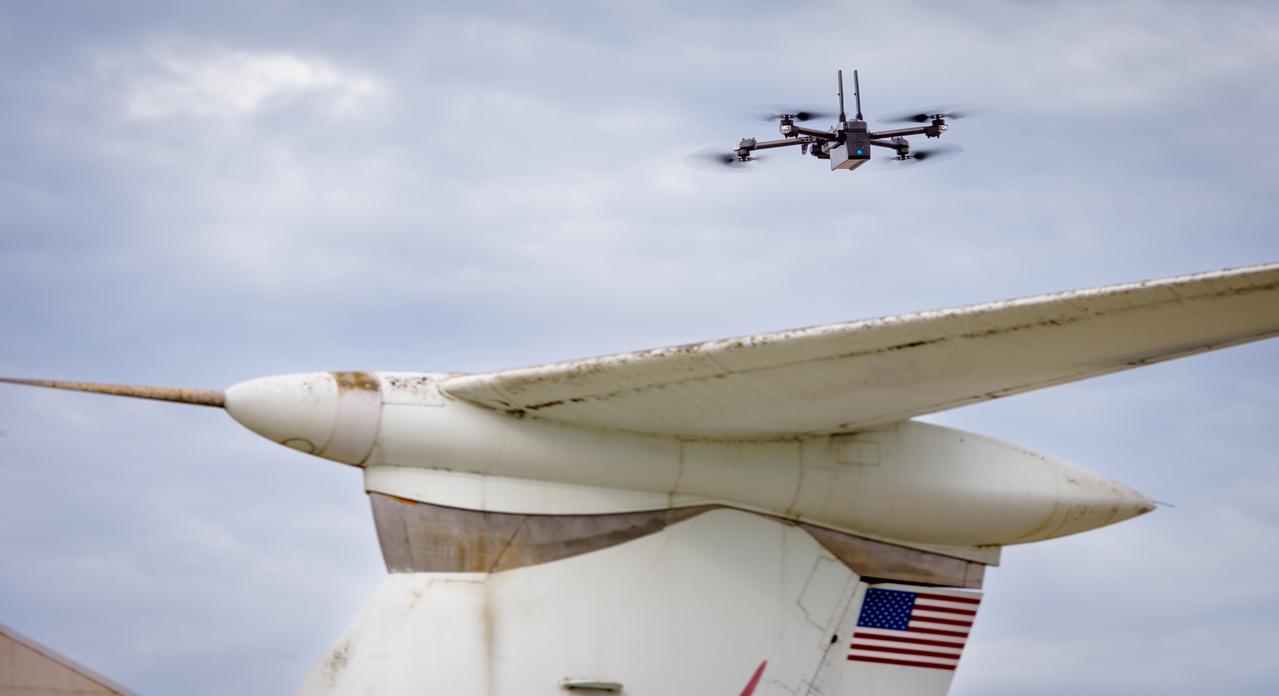
The drone follows an autonomously defined path around the modified C-141 Kuiper Airborne Observatory, (KAO) (NASA-714), on the N211 apron. The drone photographs the aircraft with a visible and infrared camera which are processed using a photogrammetry software package called Pix4D that converts them into a 3D model. Scanning the aircraft is the first phase of documenting the aircraft demolition as well as an opportunity to train pilots to operate the Pix4D software.
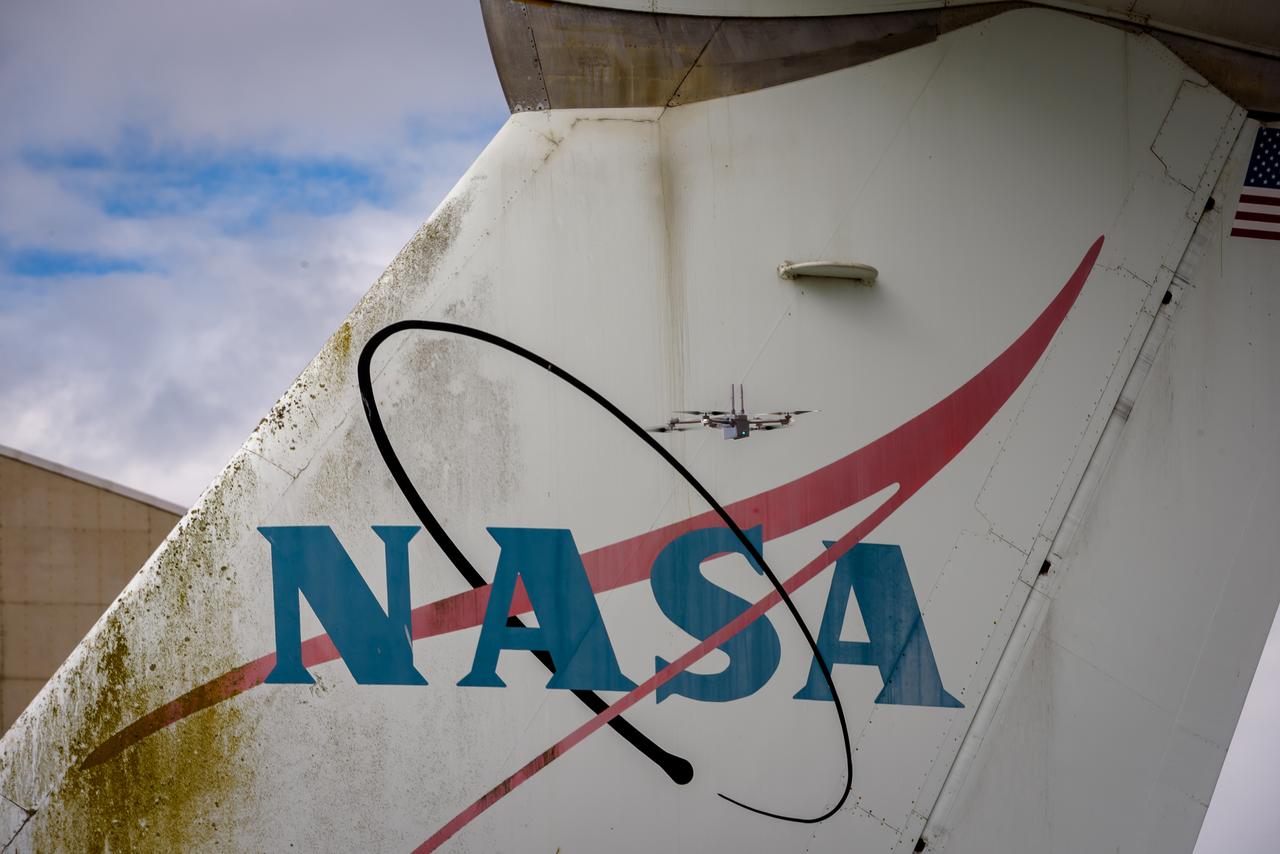
The drone follows an autonomously defined path around the modified C-141 Kuiper Airborne Observatory, (KAO) (NASA-714), on the N211 apron. The drone photographs the aircraft with a visible and infrared camera which are processed using a photogrammetry software package called Pix4D that converts them into a 3D model. Scanning the aircraft is the first phase of documenting the aircraft demolition as well as an opportunity to train pilots to operate the Pix4D software.
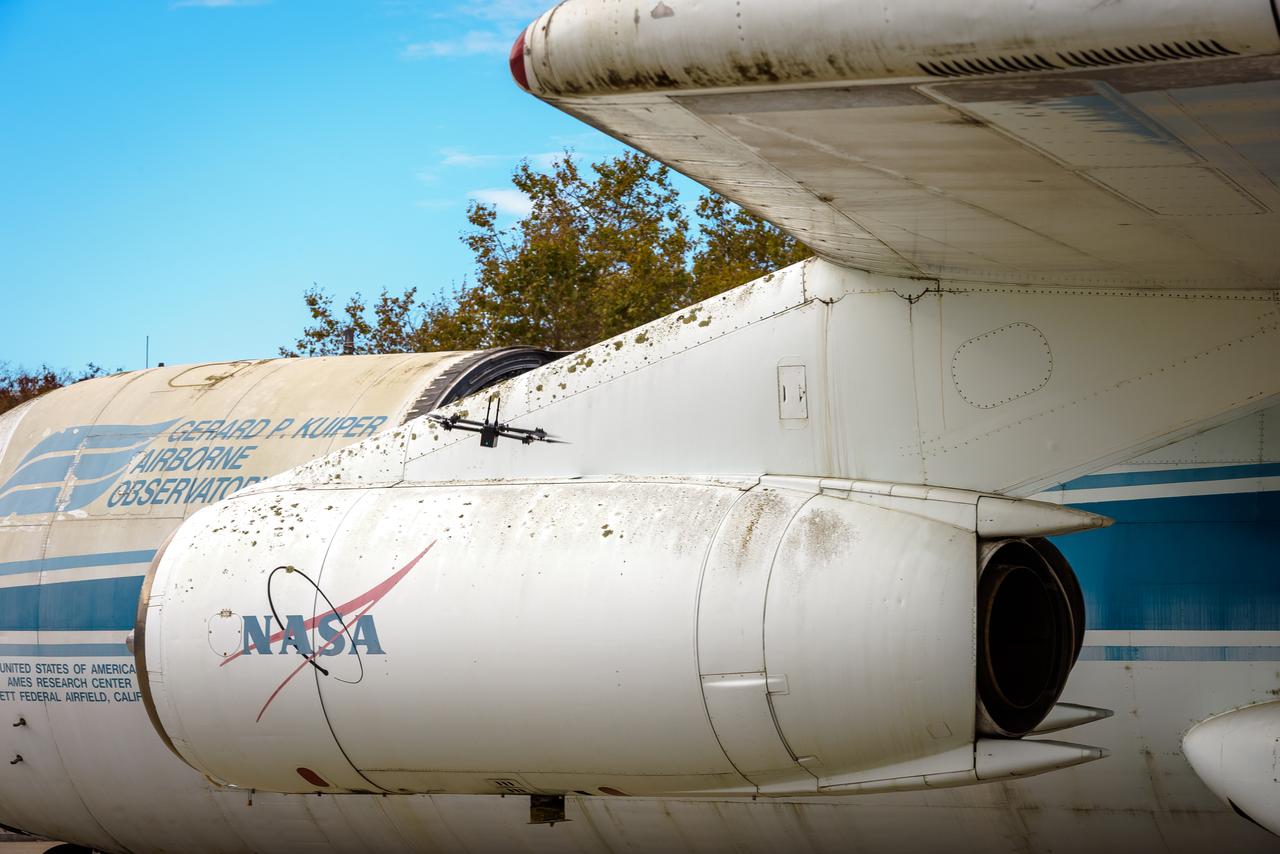
The drone follows an autonomously defined path around the modified C-141 Kuiper Airborne Observatory, (KAO) (NASA-714), on the N211 apron. The drone photographs the aircraft with a visible and infrared camera which are processed using a photogrammetry software package called Pix4D that converts them into a 3D model. Scanning the aircraft is the first phase of documenting the aircraft demolition as well as an opportunity to train pilots to operate the Pix4D software.
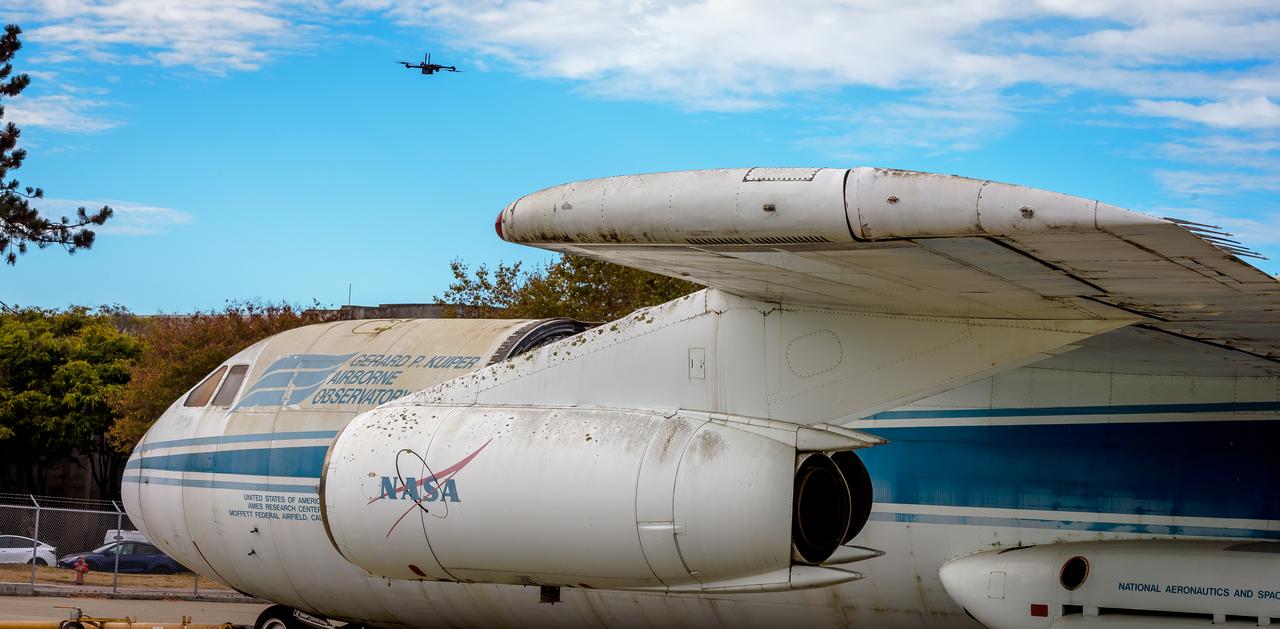
The drone follows an autonomously defined path around the modified C-141 Kuiper Airborne Observatory, (KAO) (NASA-714), on the N211 apron. The drone photographs the aircraft with a visible and infrared camera which are processed using a photogrammetry software package called Pix4D that converts them into a 3D model. Scanning the aircraft is the first phase of documenting the aircraft demolition as well as an opportunity to train pilots to operate the Pix4D software.
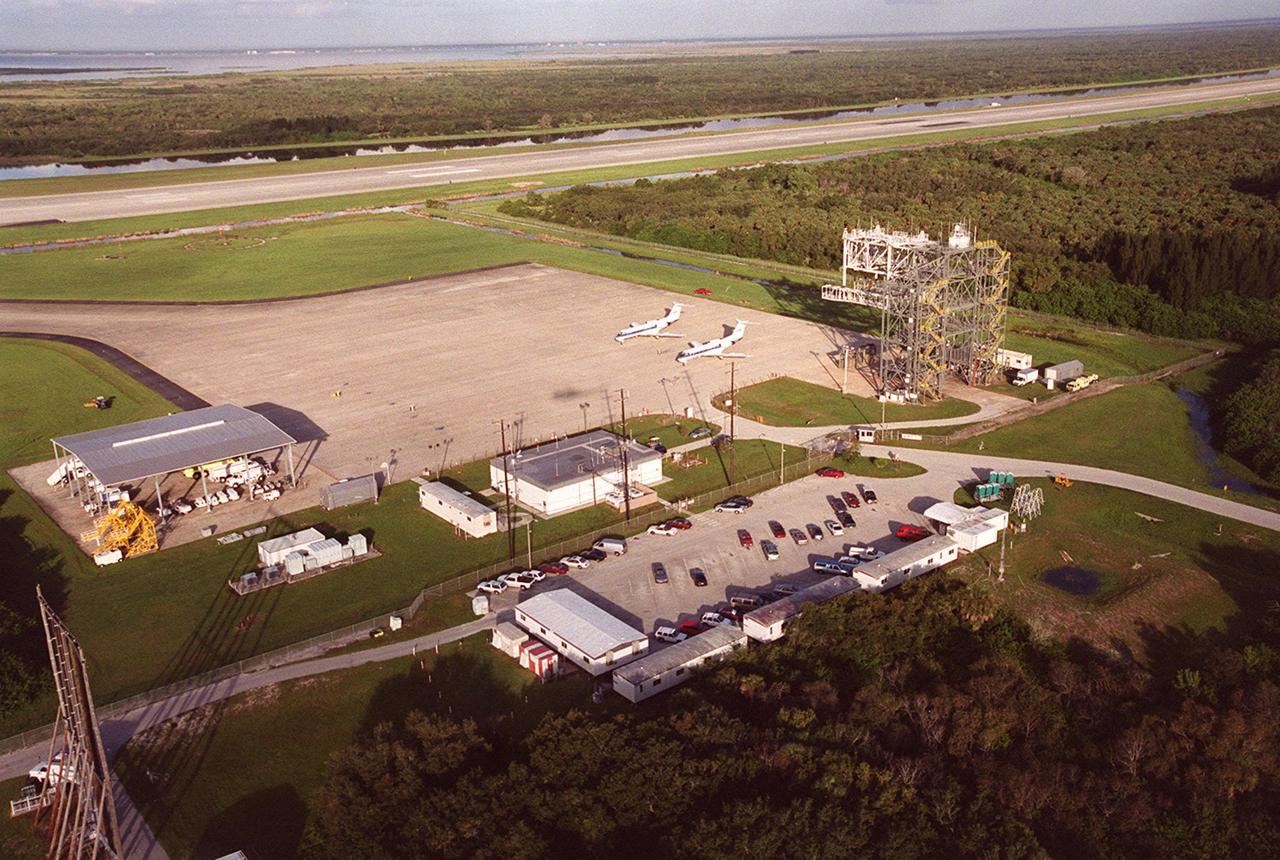
KENNEDY SPACE CENTER, FLA. -- An aerial view of the Shuttle Landing Facility shows the fuel truck shelter (left), administrative building (center) with parking lot behind it (foreground), two Shuttle Training Aircraft (STA) parked on the apron and the mate/demate device (right). In the background is the runway. The STAs are Grumman Gulfstream 2 aircraft with converted cockpits that emulate those in the Shuttles for practice landings at the SLF. The mate/demate device is used to lift the orbiter onto or off a Shuttle Carrier Aircraft when it has to be ferried to or from KSC
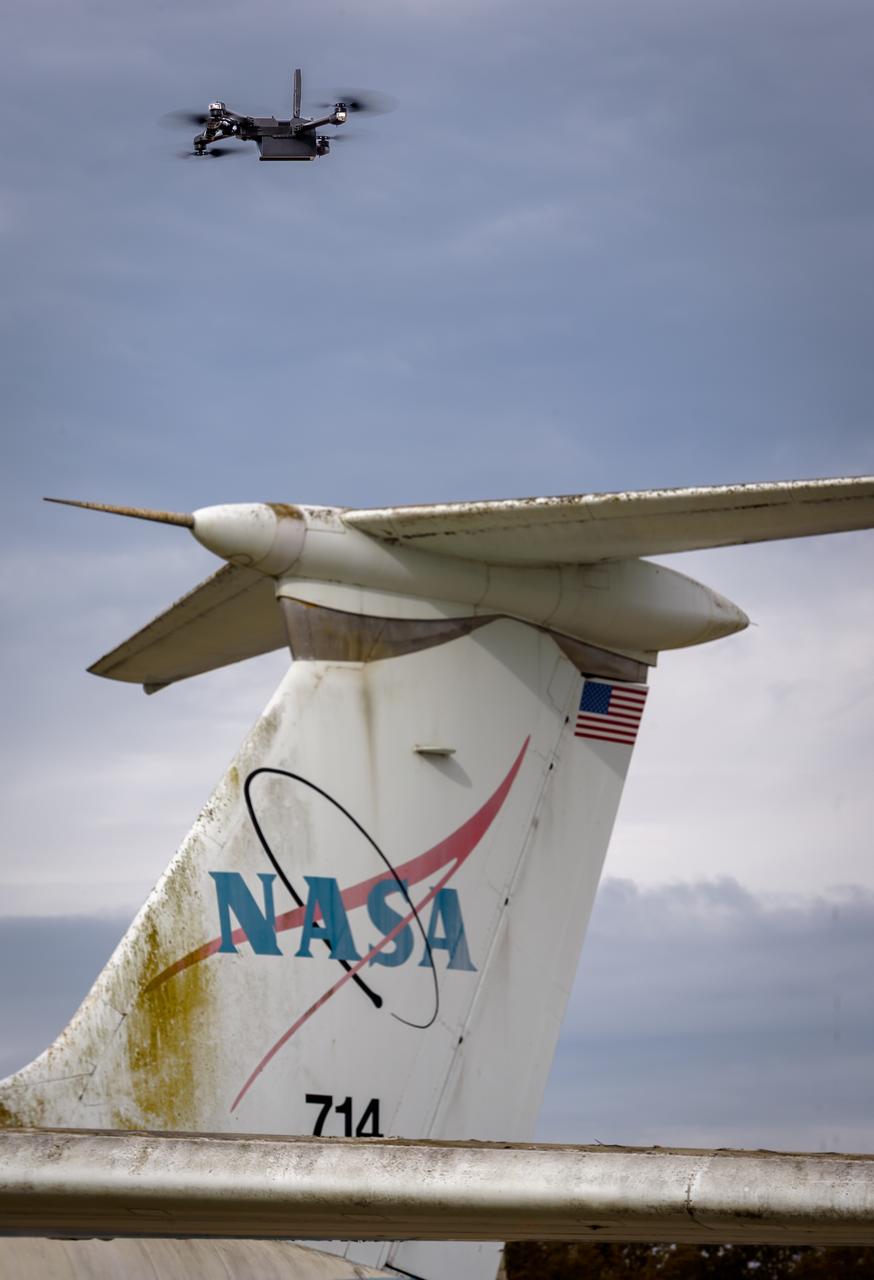
The drone follows an autonomously defined path around the modified C-141 Kuiper Airborne Observatory, (KAO) (NASA-714), on the N211 apron. The drone photographs the aircraft with a visible and infrared camera which are processed using a photogrammetry software package called Pix4D that converts them into a 3D model. Scanning the aircraft is the first phase of documenting the aircraft demolition as well as an opportunity to train pilots to operate the Pix4D software.
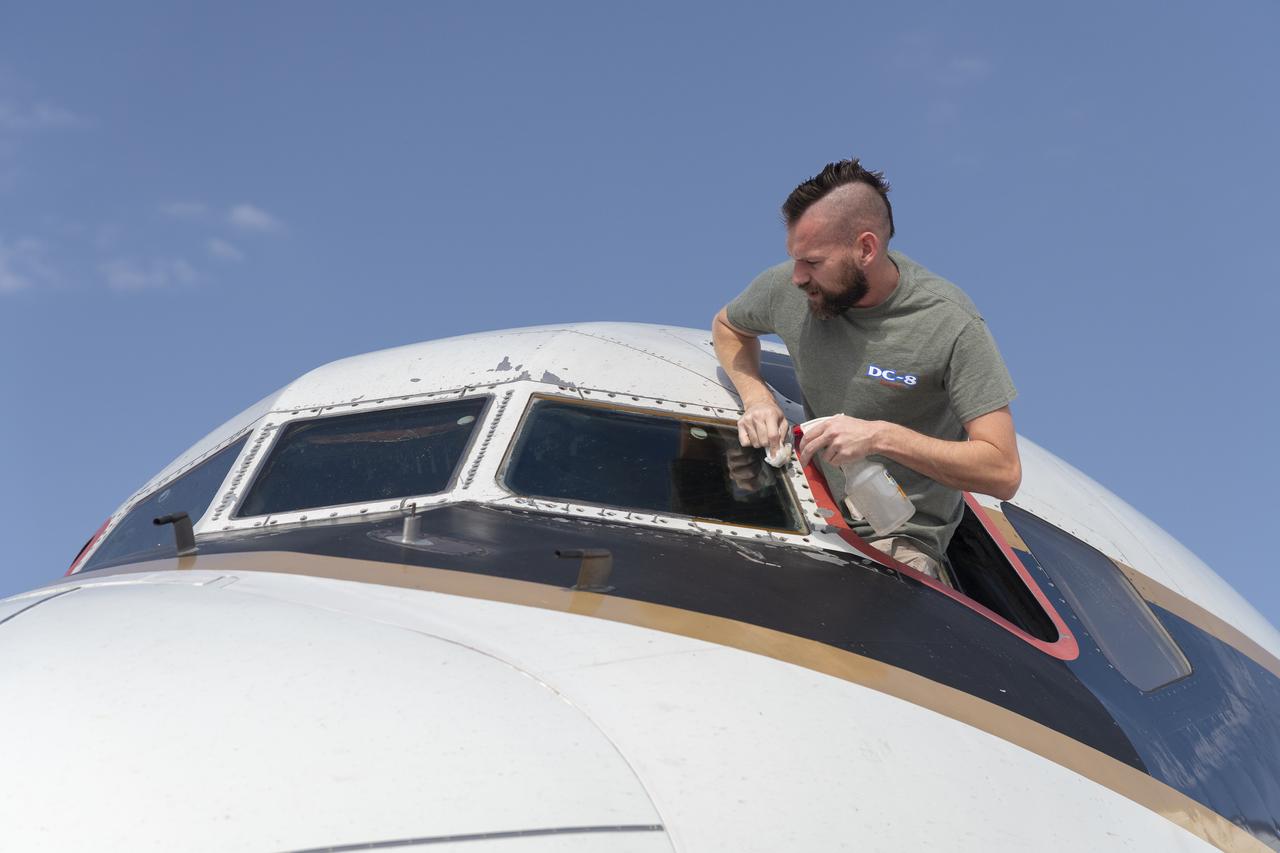
Avionics lead Kelly Jellison wipes the windshield of the DC-8 aircraft prior to its final flight before it is retired from NASA’s Armstrong Flight Research Center Building 703 in Palmdale, California, to Idaho State University in Pocatello, Idaho. The DC-8 will provide real-world experience to train future aircraft technicians at the college’s Aircraft Maintenance Technology Program.
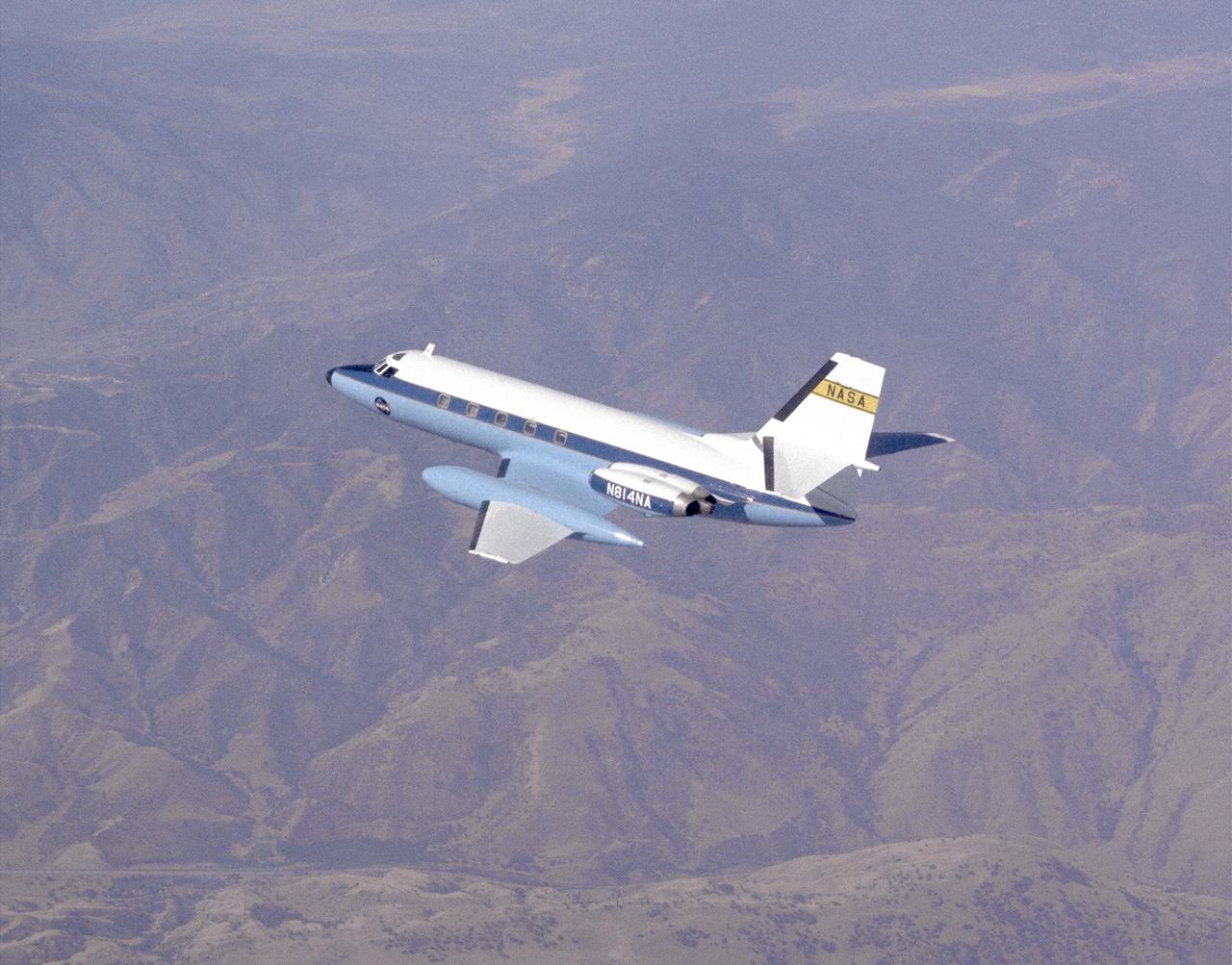
The C-140 JetStar was reconfigured as the General Purpose Airborne Simulator (GPAS) to simulate the flight characteristics of other aircraft. The JetStar was used for research for supersonic transports, general aviation aircraft, and as a training support aircraft for the Space Shuttle Approach and Landing tests at Dryden Flight Research Center (under different names) at Edwards, CA, in 1977. One of the engineers on the GPAS program was Ken Szalai, who later became Dryden's director from 1990 to August 1998.

KENNEDY SPACE CENTER, FLA. --STS-112 Pilot Pamela Melroy prepares to taxi the Shuttle Training Aircraft to the runway at the Shuttle Landing Facility as part of landing exercises.
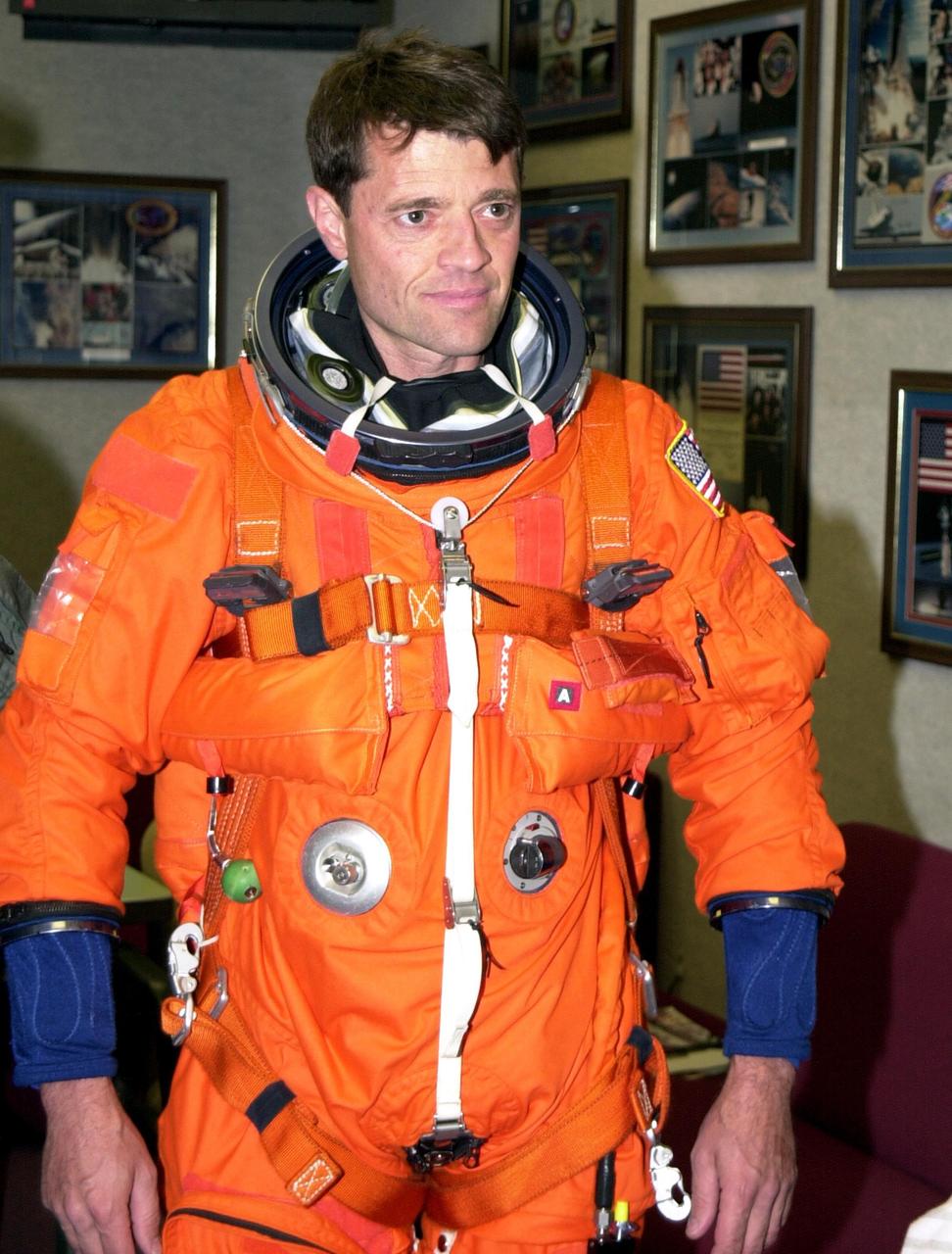
KENNEDY SPACE CENTER, FLA. --STS-112 Commander Jeffrey Ashby is suited up and ready to participate in landing exercises in the Shuttle Training Aircraft at the Shuttle Landing Facility.
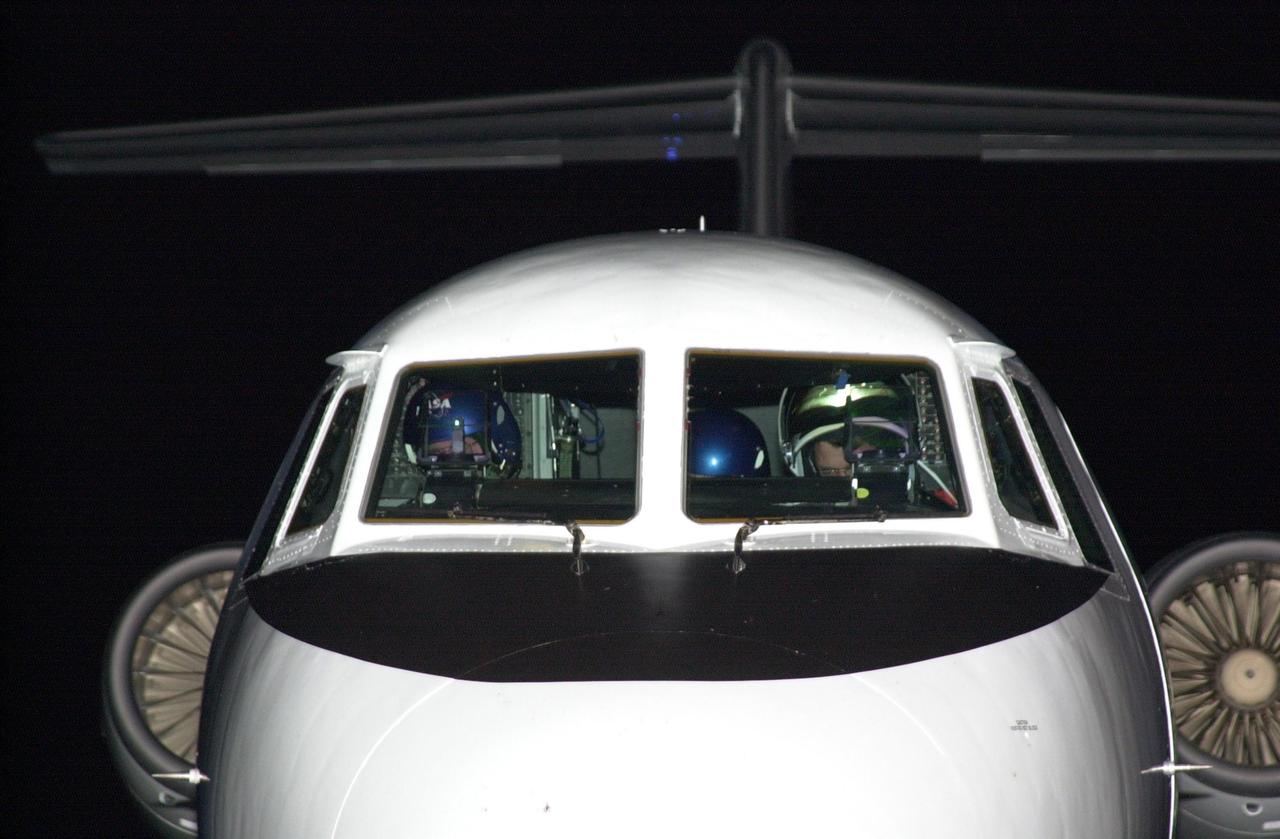
KENNEDY SPACE CENTER, FLA. --STS-112 Commander Jeffrey Ashby prepares to taxi the Shuttle Training Aircraft to the runway at the Shuttle Landing Facility as part of landing exercises.
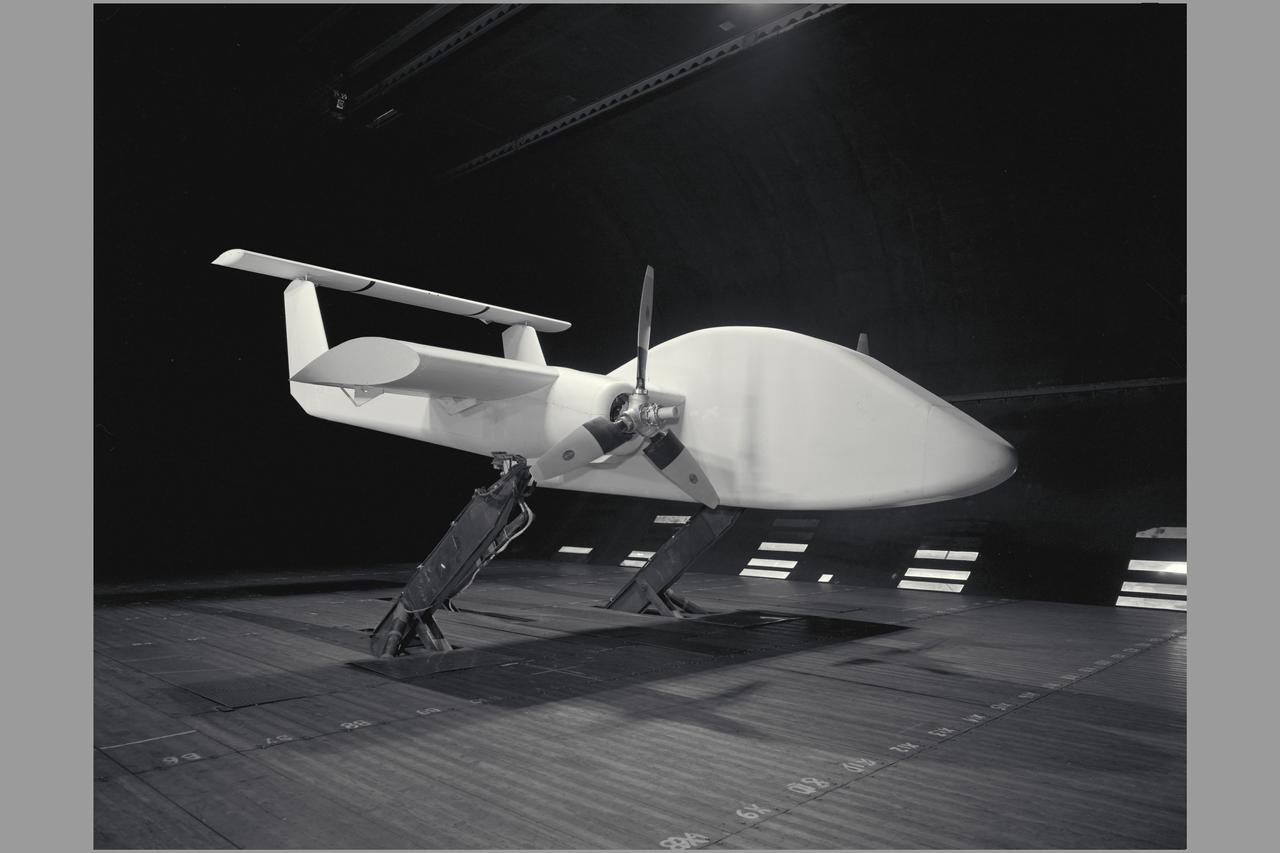
3/4 front view of model with flaps up. V/STOL Aircraft: Wind tunnel investigation of rotating cylinder applied to training edge flaps for high lift & low-speed control.

KENNEDY SPACE CENTER, FLA. --STS-112 Pilot Pamela Melroy prepares to taxi the Shuttle Training Aircraft to the runway at the Shuttle Landing Facility as part of landing exercises.
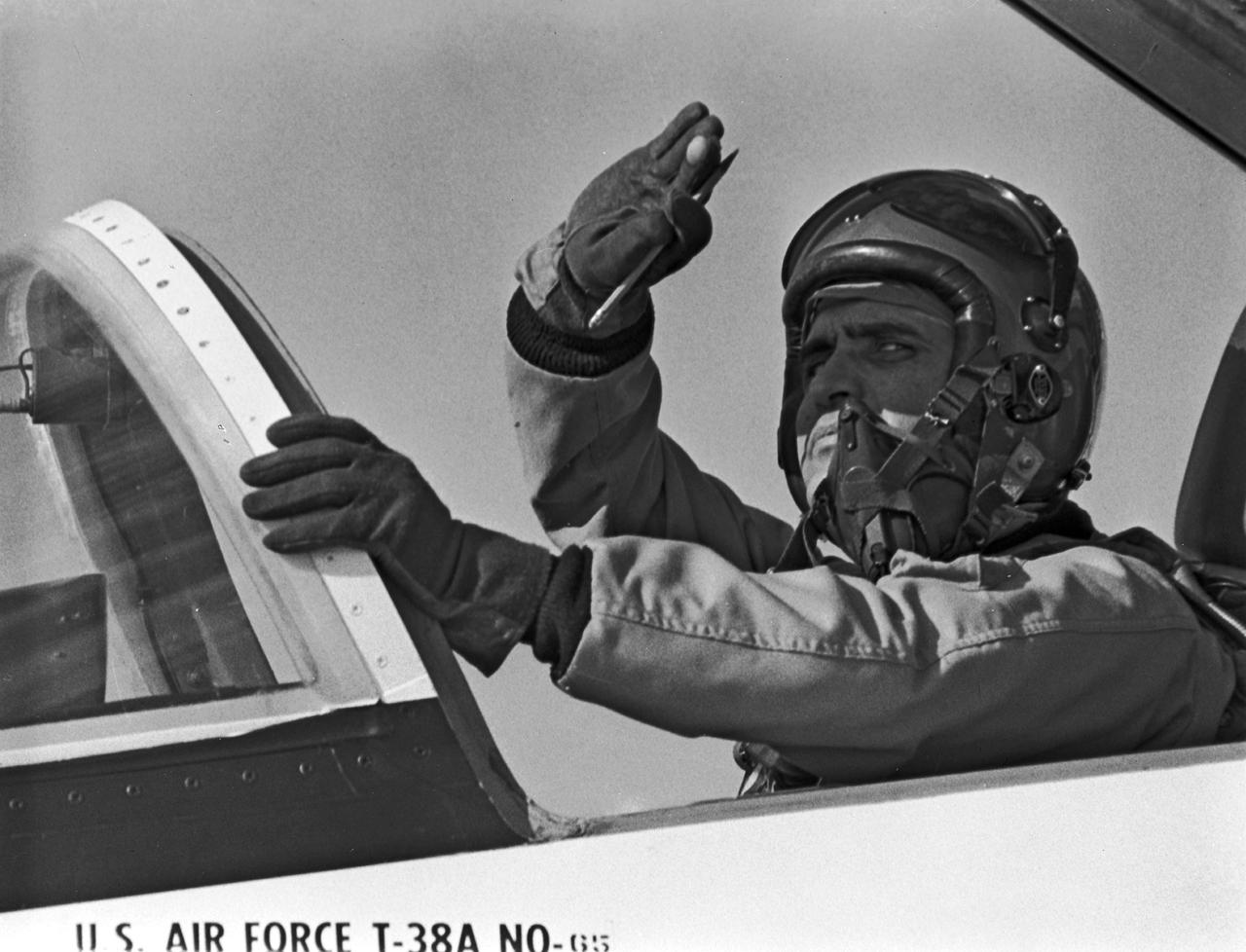
Apollo 17 Lunar Module Pilot Harrison H. Schmitt waves to ground crew personnel as he prepares to fly a T-38 jet aircraft today on a training flight over the Spaceport are to sharpen his flying skills.
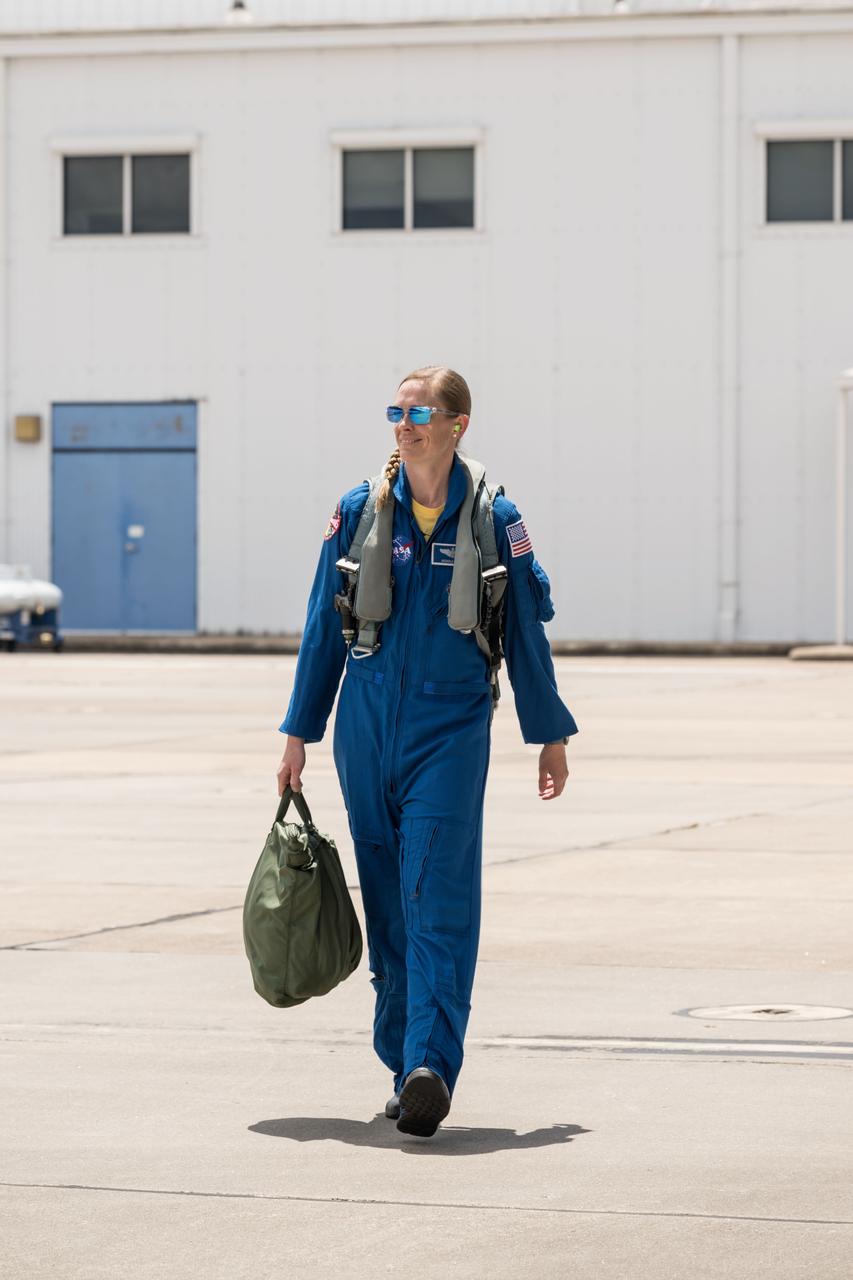
jsc2023e049674 (July 16, 2024) --- NASA astronaut and SpaceX Crew-10 Pilot Nichole Ayers walks on the tarmac toward a T-38 aircraft trainer during pre-flight mission training at Ellington Field in Houston, Texas.
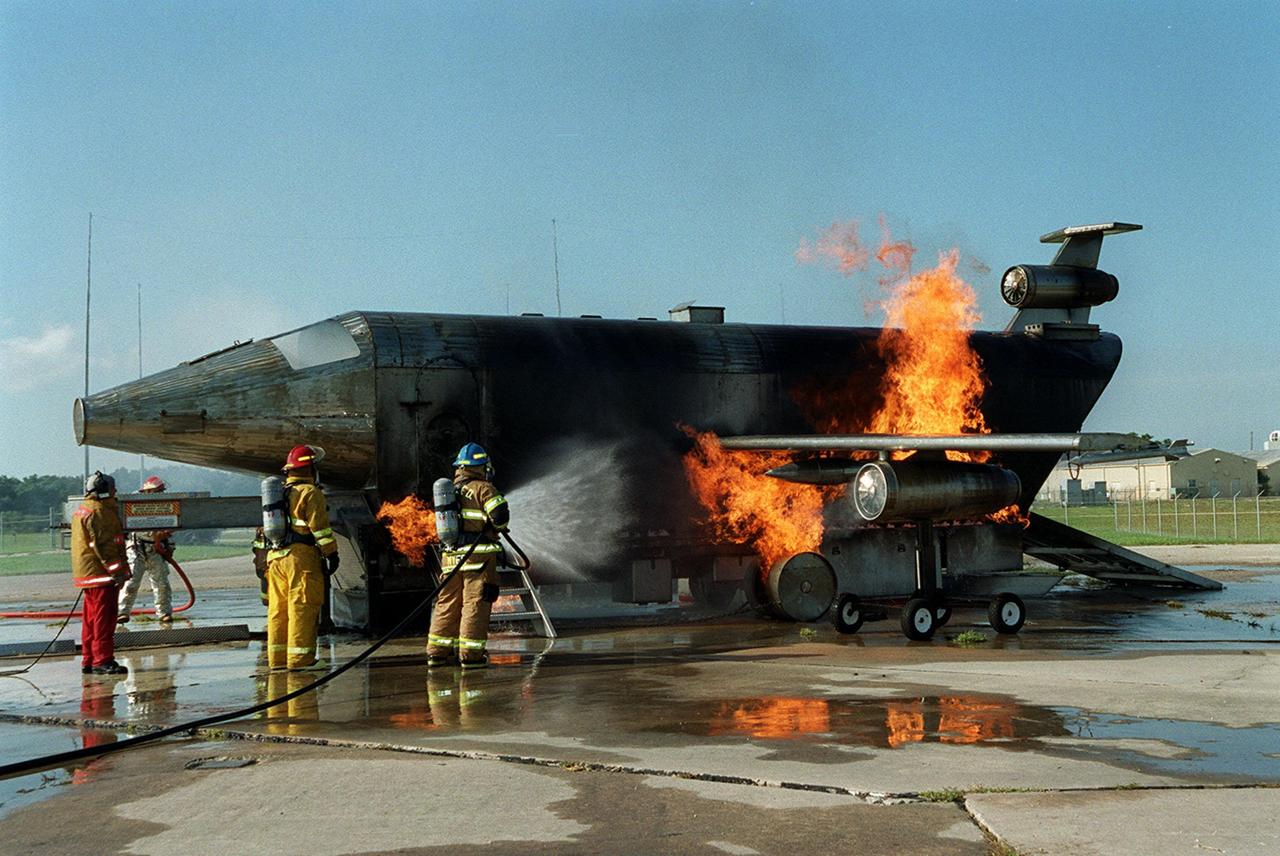
KENNEDY SPACE CENTER, FLA. -- During training exercises at Cape Canaveral Air Force Station Pad 30, firefighters with the Fire and Emergency Services at the Naval Station Mayport, Fla., turn their hoses toward the fire on the simulated aircraft.
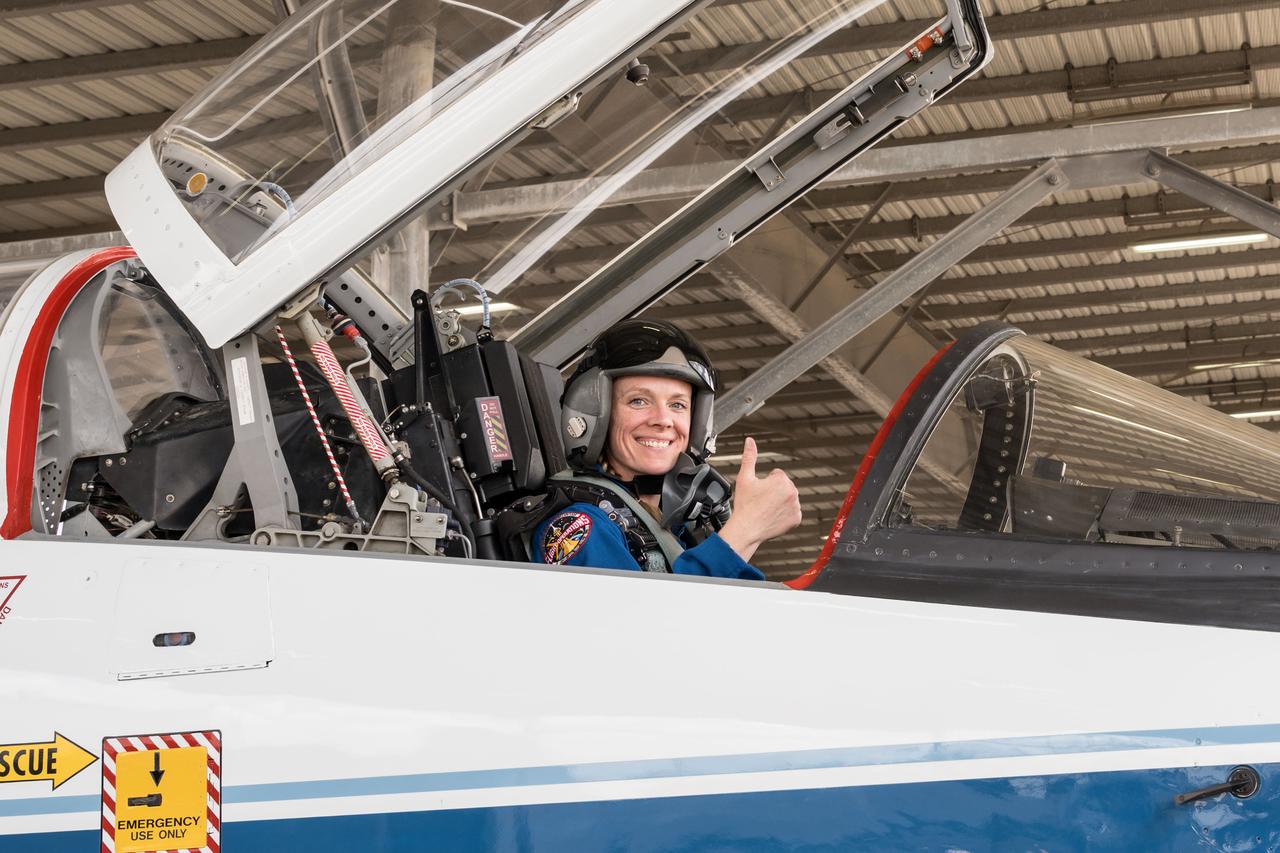
jsc2023e049694 (July 16, 2024) --- NASA astronaut and SpaceX Crew-10 Pilot Nichole Ayers is seated in a T-38 aircraft trainer during pre-flight mission training at Ellington Field in Houston, Texas.
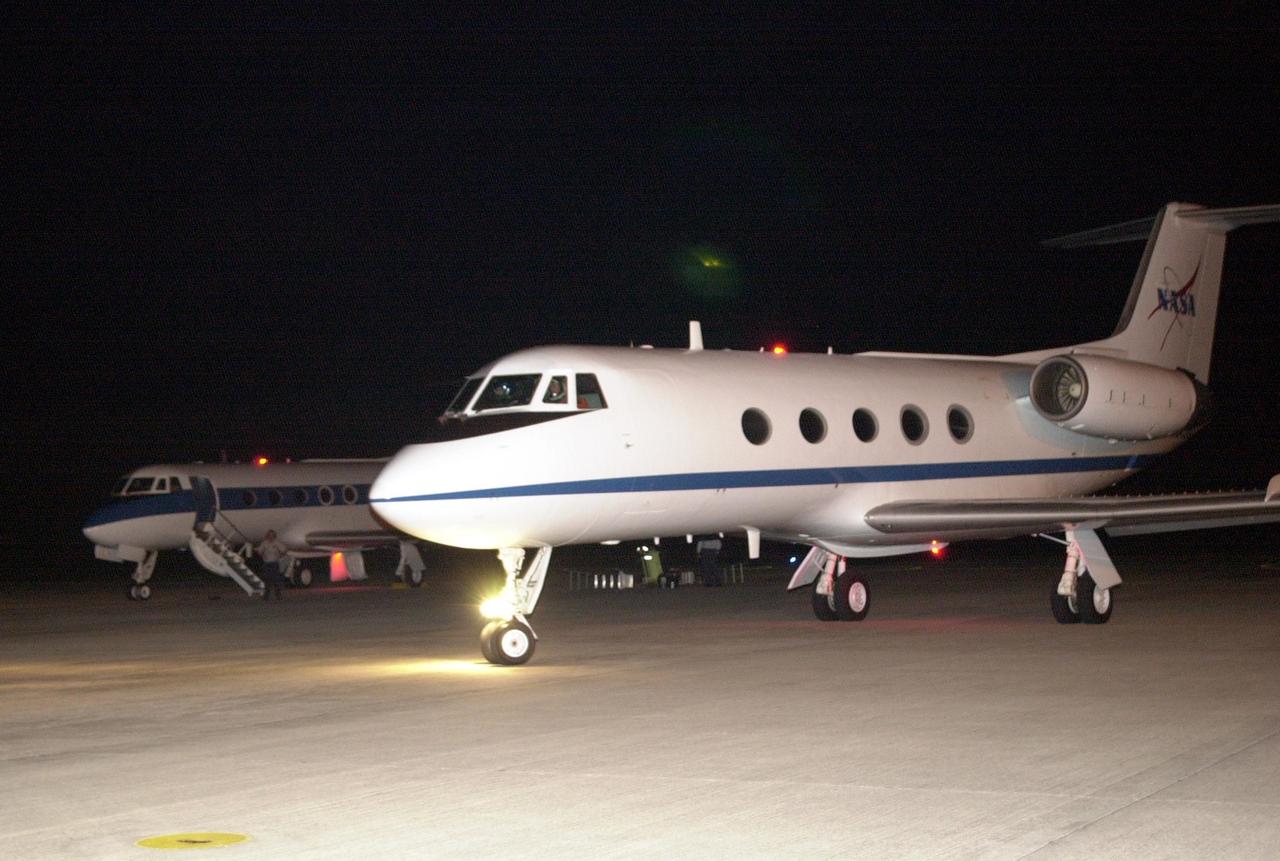
KENNEDY SPACE CENTER, FLA. --STS-112 Commander Jeffrey Ashby prepares to taxi the Shuttle Training Aircraft to the runway at the Shuttle Landing Facility as part of landing exercises.

3/4 rear view of model with flaps down with Cecil E. MacDonald. V/STOL Aircraft: Wind tunnel investigation of rotating cylinder applied to training edge flaps for high lift & low-speed control.
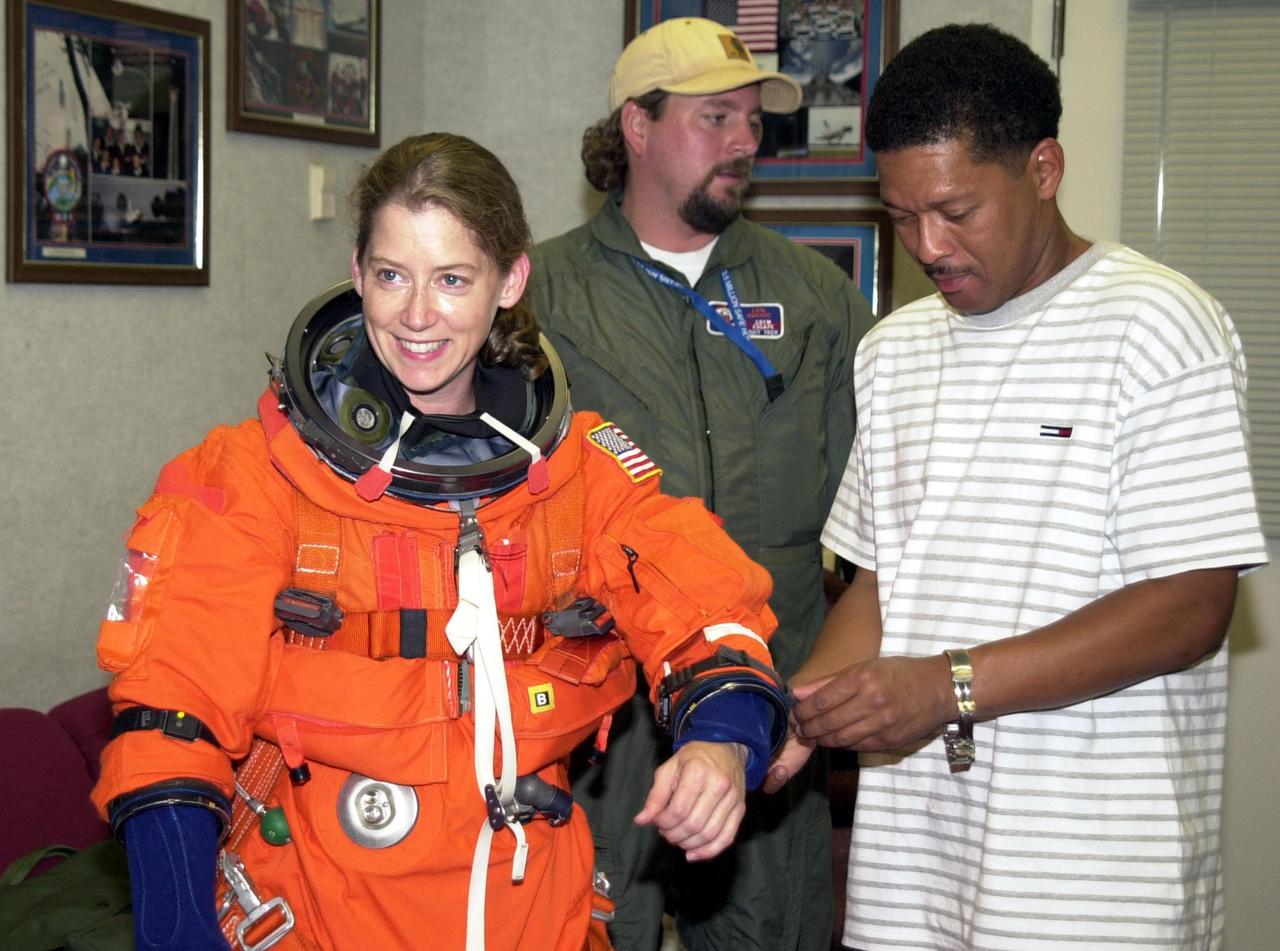
KENNEDY SPACE CENTER, FLA. --STS-112 Pilot Pamela Melroy receives some assistance with her spacesuit as she prepares to participate in landing exercises in the Shuttle Training Aircraft at the Shuttle Landing Facility.
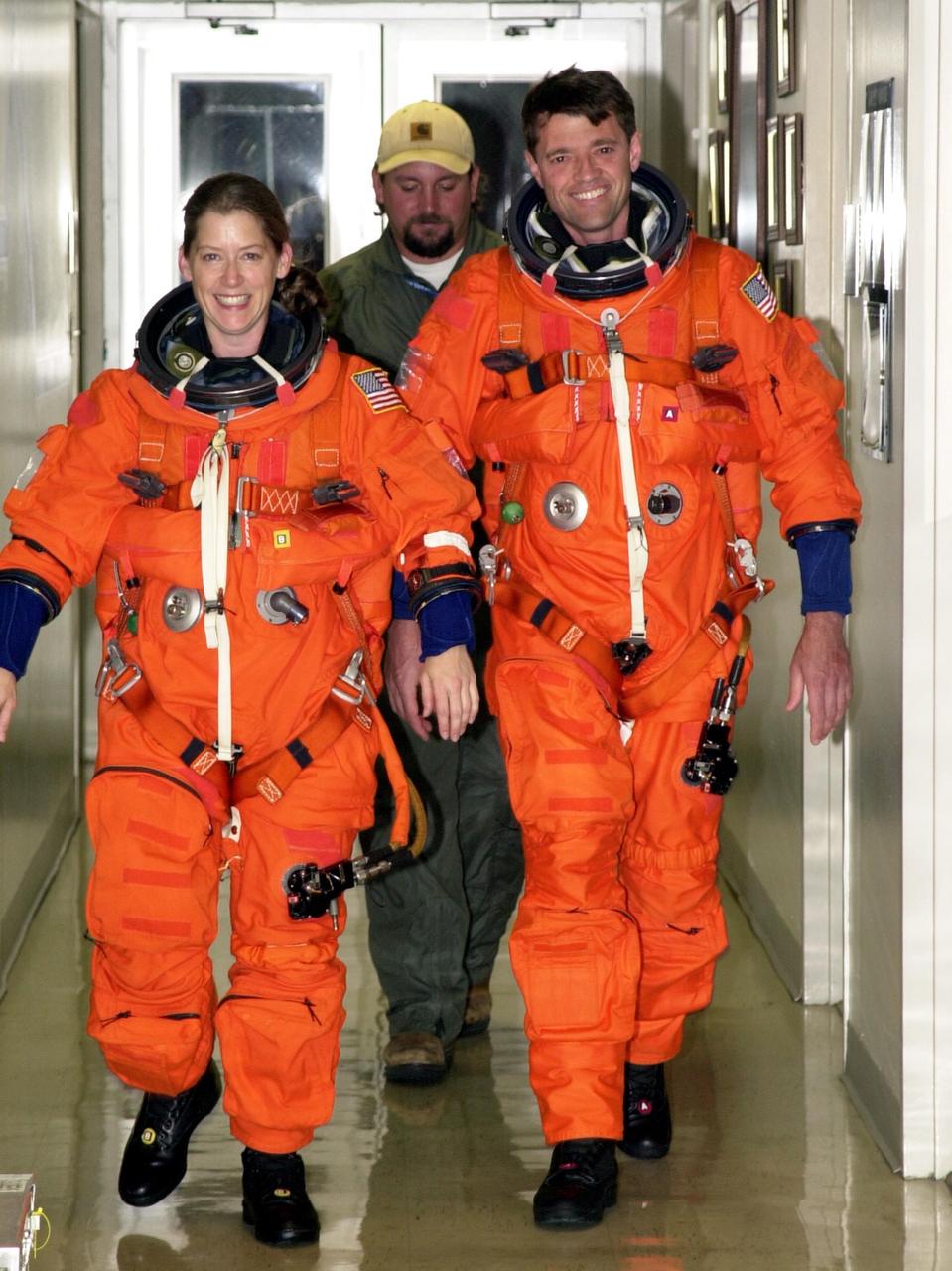
KENNEDY SPACE CENTER, FLA. --STS-112 Pilot Pamela Melroy (left) and Commander Jeffrey Ashby are suited up and ready to participate in landing exercises in the Shuttle Training Aircraft at the Shuttle Landing Facility.
KENNEDY SPACE CENTER, FLA. --STS-112 Commander Jeffrey Ashby prepares to taxi the the Shuttle Training Aircraft to the runway at the Shuttle Landing Facility as part of landing exercises.
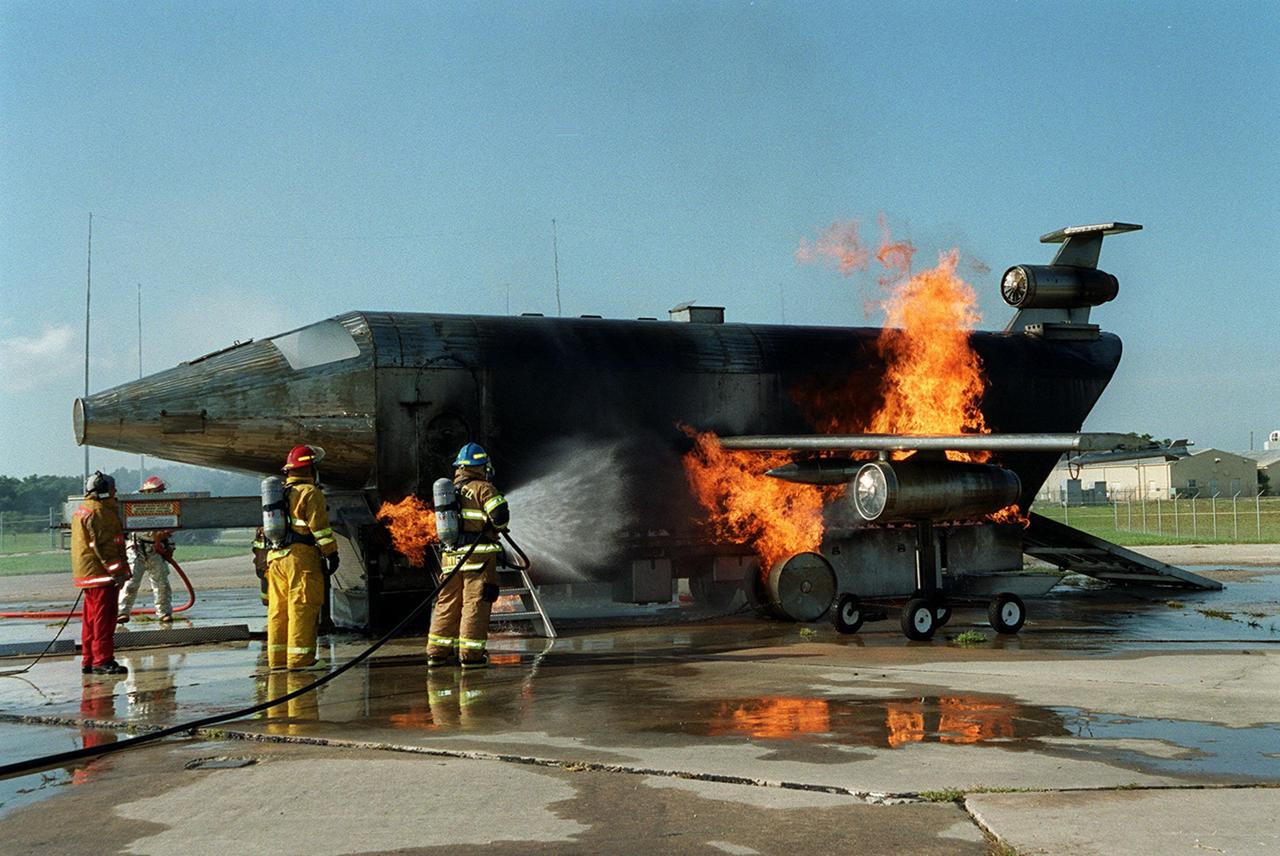
KENNEDY SPACE CENTER, FLA. -- During training exercises at Cape Canaveral Air Force Station Pad 30, firefighters with the Fire and Emergency Services at the Naval Station Mayport, Fla., turn their hoses toward the fire on the simulated aircraft.
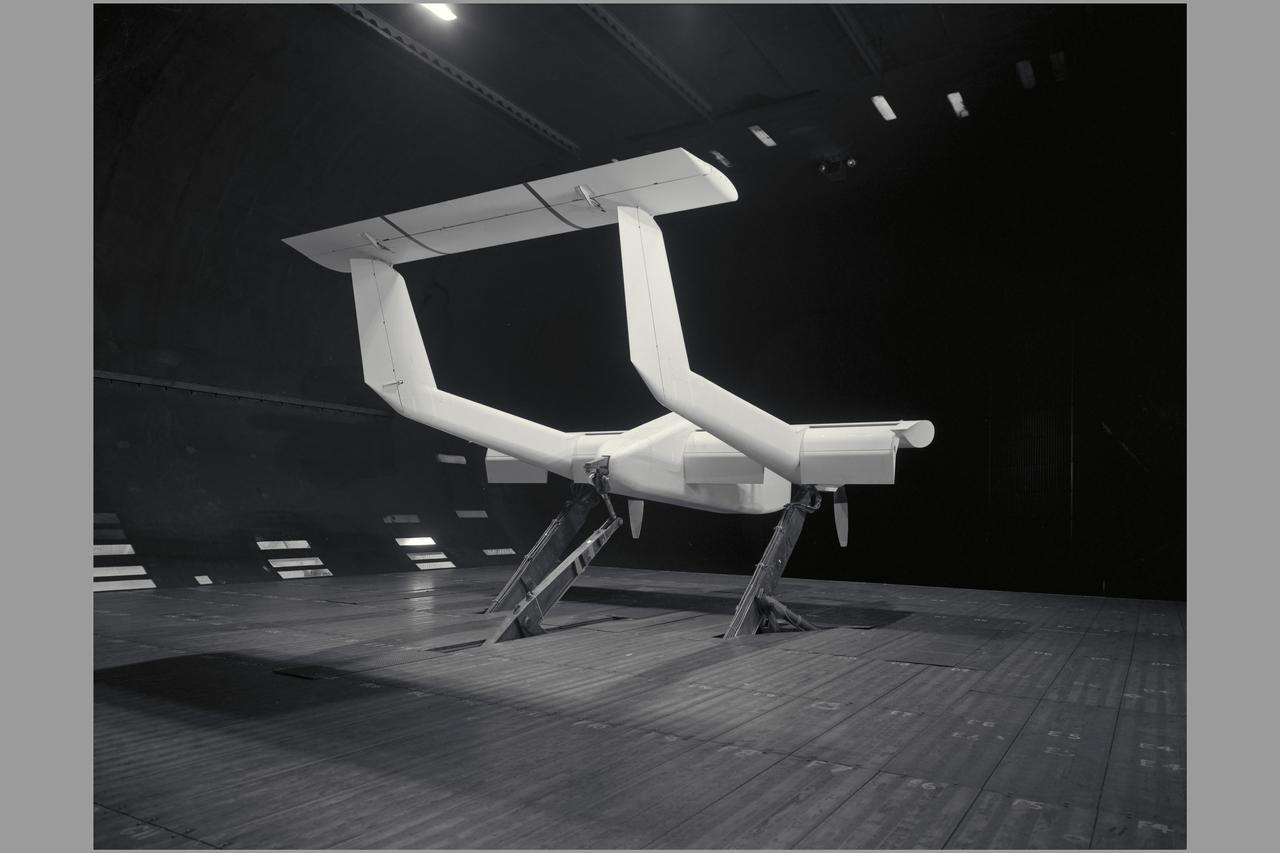
3/4 rear view of model with flaps down. V/STOL Aircraft: Wind tunnel investigation of rotating cylinder applied to training edge flaps for high lift & low-speed control.
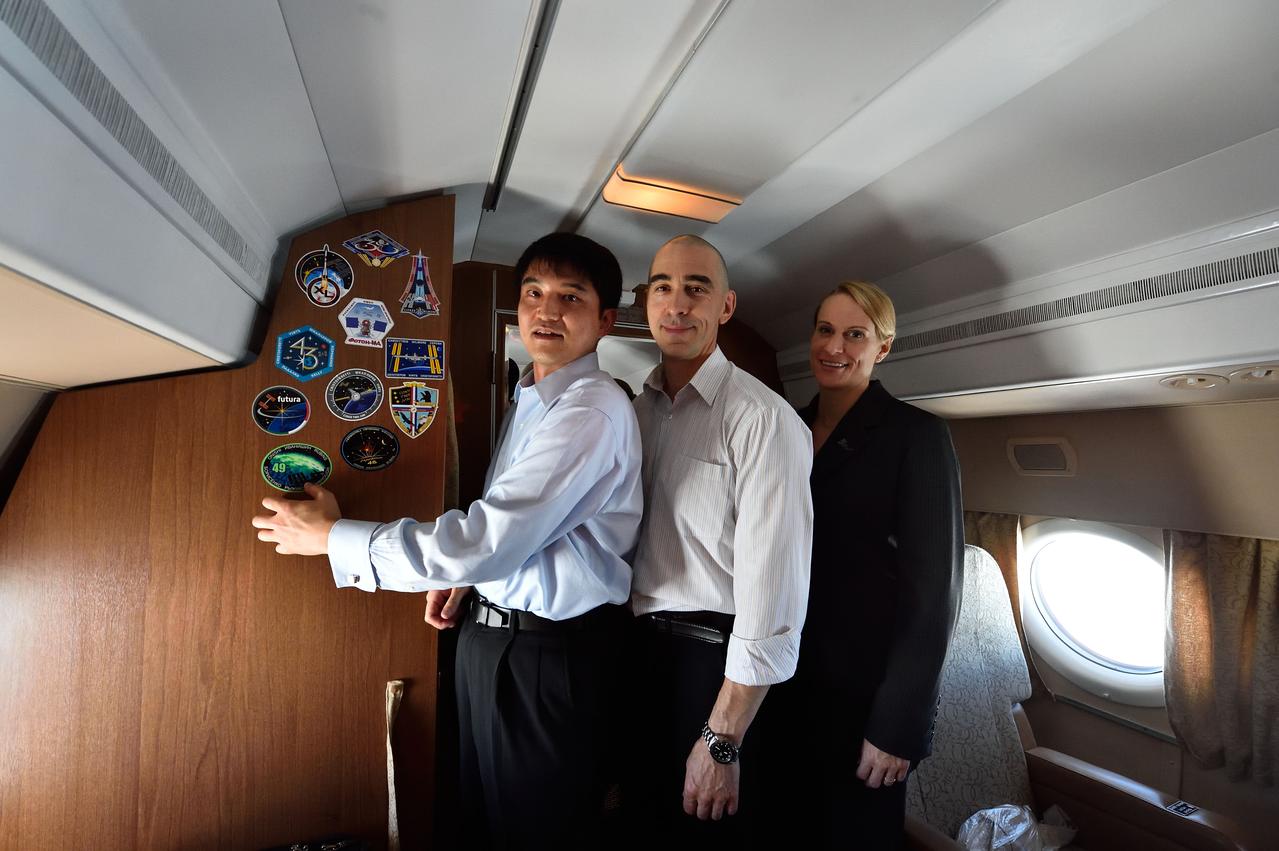
Aboard their aircraft on route to their launch site in Baikonur, Kazakhstan, ISS Expedition 48-49 crewmembers Takuya Onishi of the Japan Aerospace Exploration Agency (left), Anatoly Ivanishin of Roscosmos (center) and Kate Rubins of NASA (right) affix their mission insignia sticker to the wall June 24 after departing their training base in Star City, Russia. The trio will launch July 7 from the Baikonur Cosmodrome in Kazakhstan on the Soyuz MS-01 spacecraft for a planned four-month mission on the International Space Station. NASA/Alexander Vysotsky
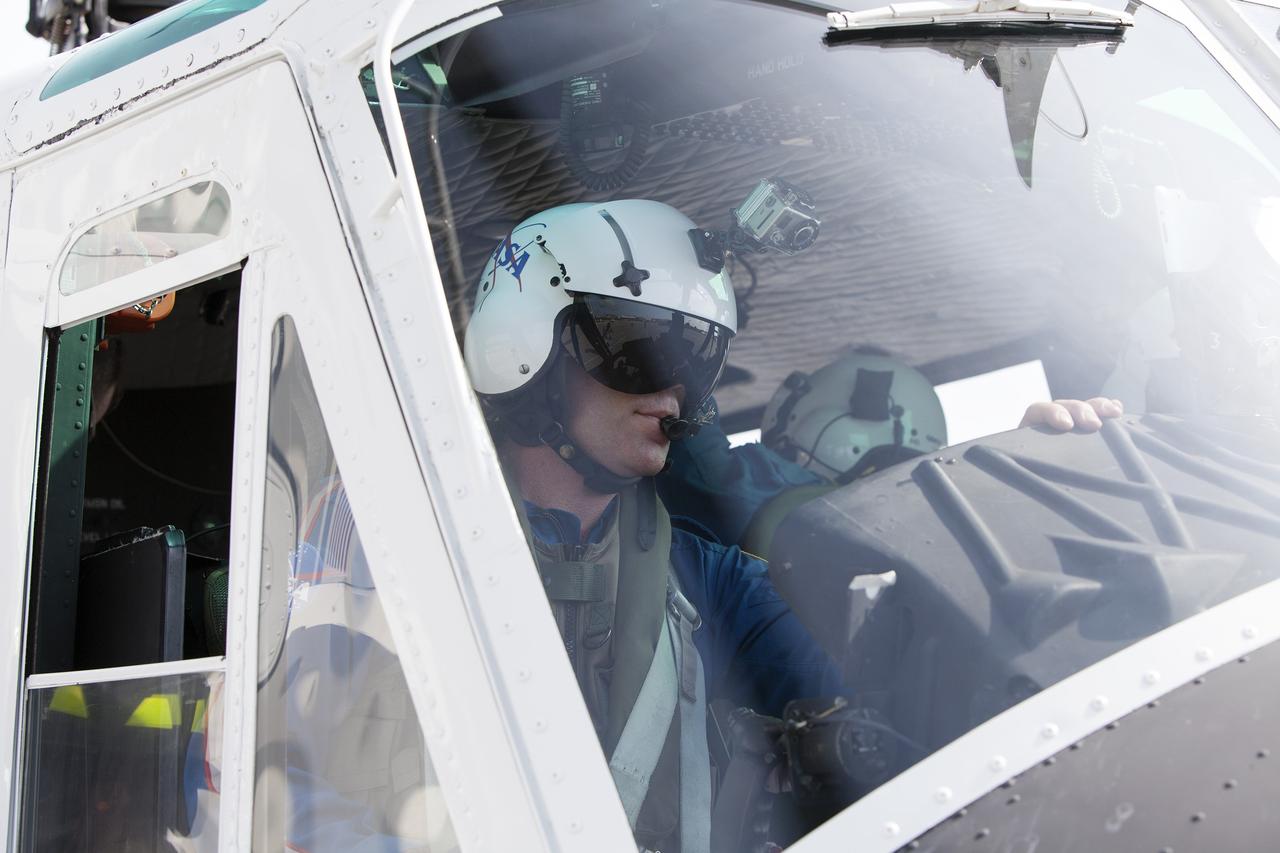
CAPE CANAVERAL, Fla. -- At NASA's Kennedy Space Center in Florida, helicopter pilot Bill Martin, a URS Federal Technical Services in the agency's Aircraft Operations, ensures all is clear before taking off during a training exercise. The activity taking place in Kennedy's Launch Complex 39 turn-basin parking lot was only one of several drills. It was part of a new training program that was developed by Kennedy's Fire Rescue department along with NASA Aircraft Operations to sharpen the skills needed to help rescue personnel learn how to collaborate with helicopter pilots in taking injured patients to hospitals as quickly as possible. Photo credit: NASA/Dan Casper
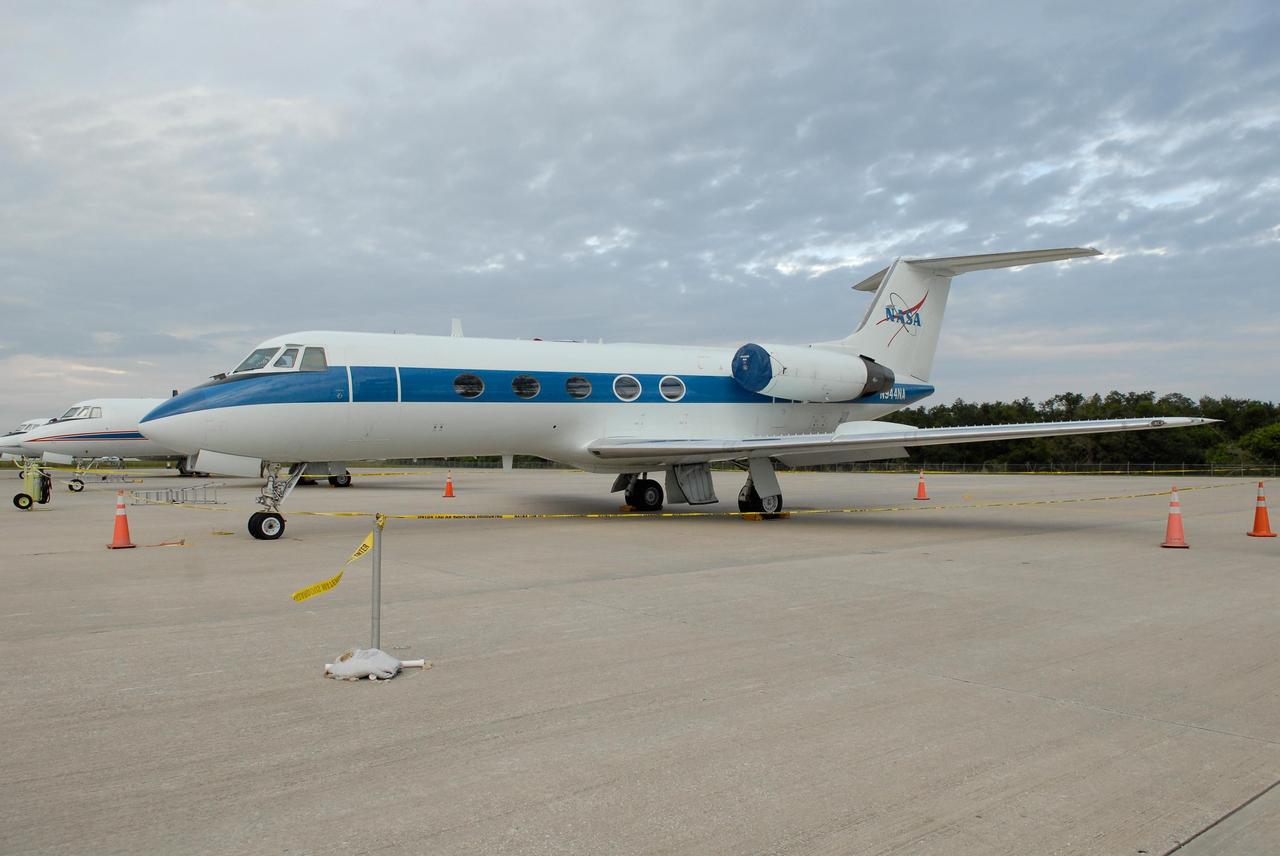
KENNEDY SPACE CENTER, FLA. -- The left position light, strobe light and wing tip of one of NASA's Shuttle Training Aircraft, or STAs, sustained minor damage from apparent contact with a tree near Kennedy Space Center's Shuttle Landing Facility. The incident occurred during landing about 6:30 p.m. EDT Oct. 19 following a training session. An STA flight instructor was piloting the aircraft. The flight crew was unaware of any contact with the tree, and there were no injuries. Thunderstorms were in the area at the time of the incident, which is under investigation. The STA is a twin-engine Gulfstream II jet that was modified to simulate a space shuttle during landing. Photo credit: NASA/Kim Shiflett
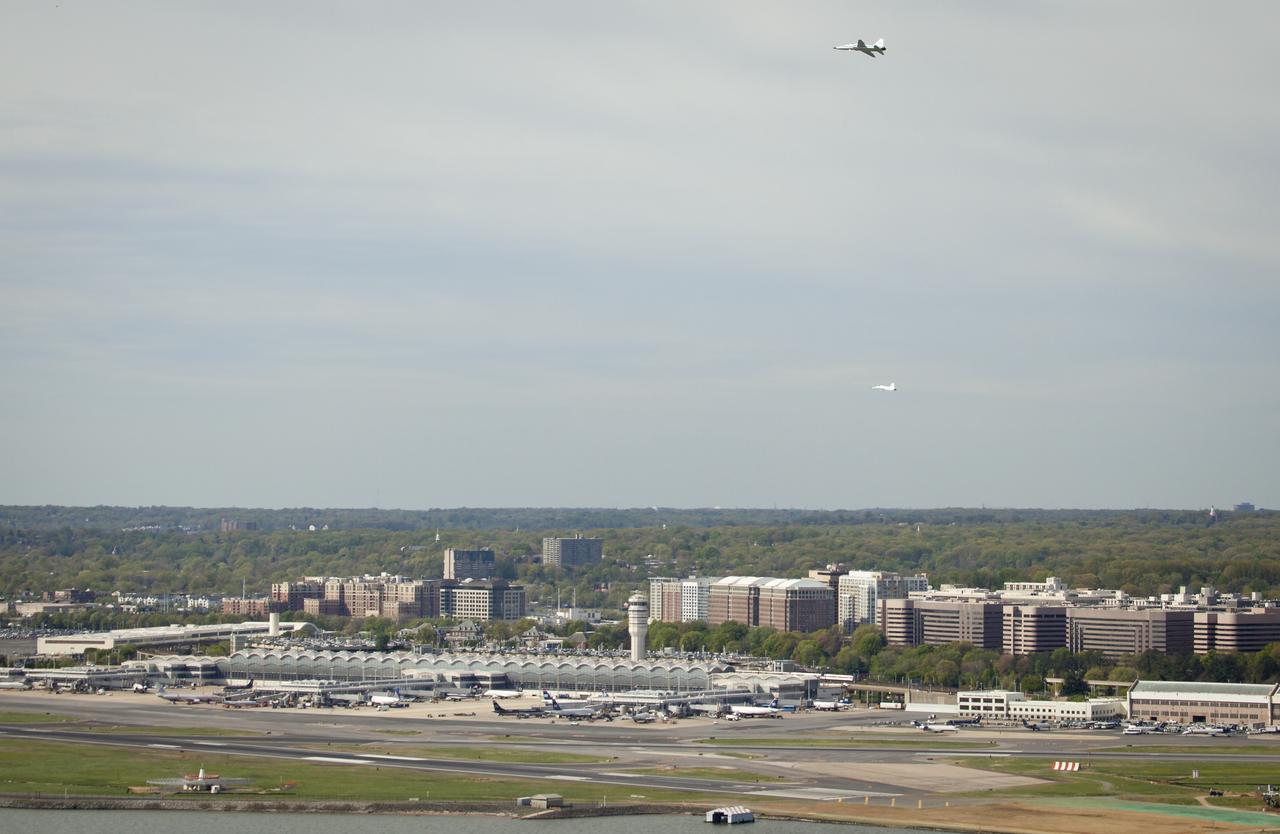
Two NASA T-38 training jets are seen as they fly over Reagan National Airport, Thursday, April 5, 2012 in Arlington, VA. NASA, in cooperation with the Federal Aviation Administration, conducted training and photographic flights over the DC metropolitan area. T-38 aircraft have been used for astronaut training for more than 30 years as they allow pilots and mission specialists to think quickly in changing situations, mental experiences the astronauts say are critical to practicing for the rigors of spaceflight. Photo Credit: (NASA/Bill Ingalls)
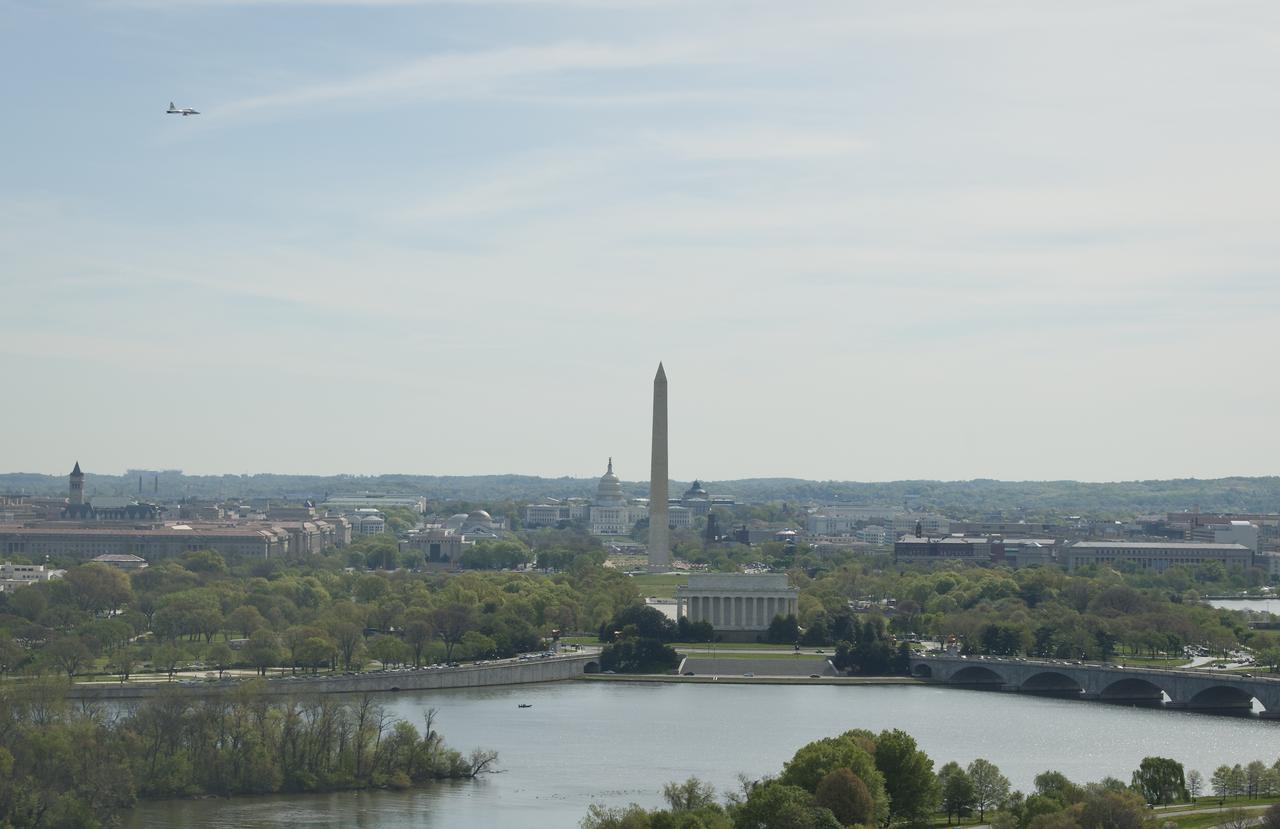
A NASA T-38 training jet is seen as it flies at 1500 feet over Washington, DC, Thursday, April 5, 2012. NASA, in cooperation with the Federal Aviation Administration, conducted training and photographic flights over the DC metropolitan area. T-38 aircraft have been used for astronaut training for more than 30 years as they allow pilots and mission specialists to think quickly in changing situations, mental experiences the astronauts say are critical to practicing for the rigors of spaceflight. Photo Credit: (NASA/Carla Cioffi)

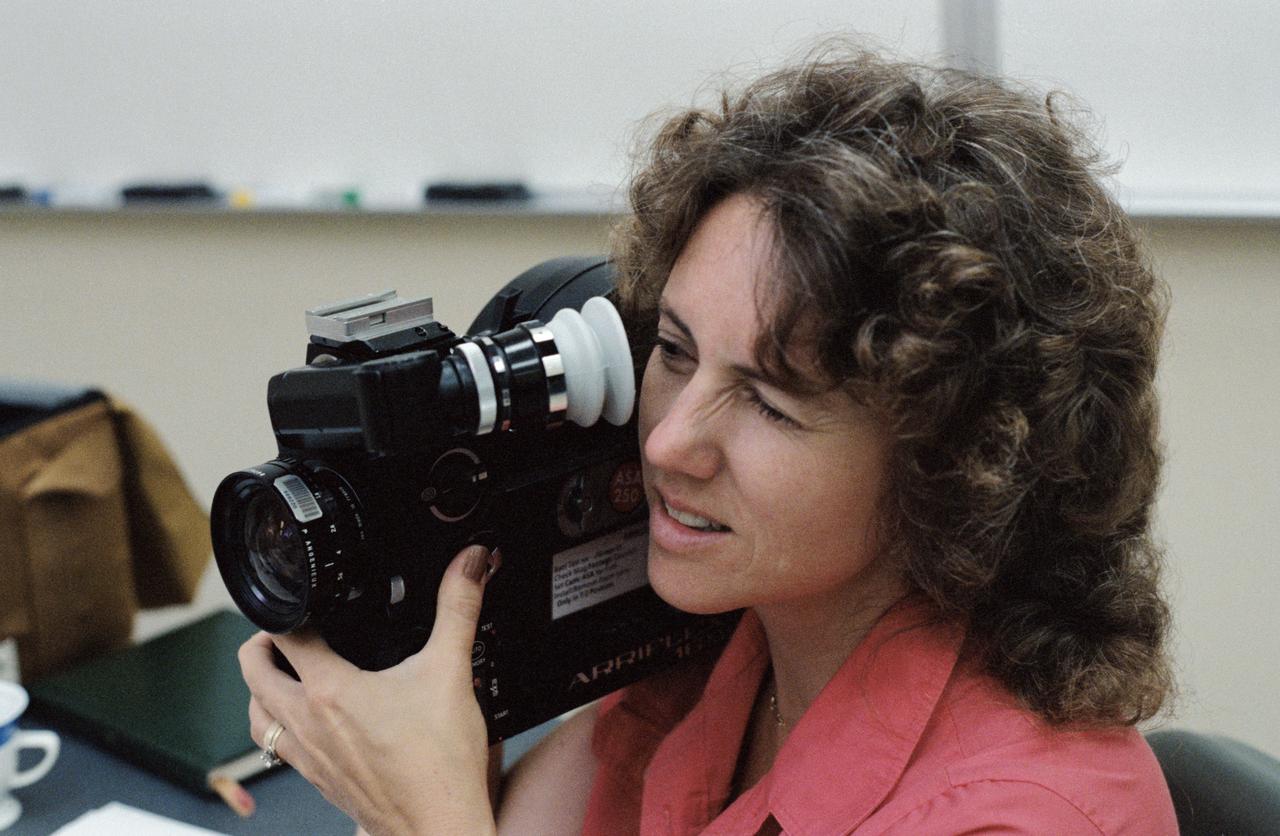
S85-40671 (18 Sept. 1985) --- The two teachers, Barbara R. Morgan and Sharon Christa McAuliffe (out of frame) have hands-on experience with an Arriflex motion picture camera following a briefing on space photography. The two began training Sept. 10, 1985 with the STS-51L crew and learning basic procedures for space travelers. The second week of training included camera training, aircraft familiarization and other activities. Morgan zeroes in on a test subject during a practice session with the Arriflex. Photo credit: NASA
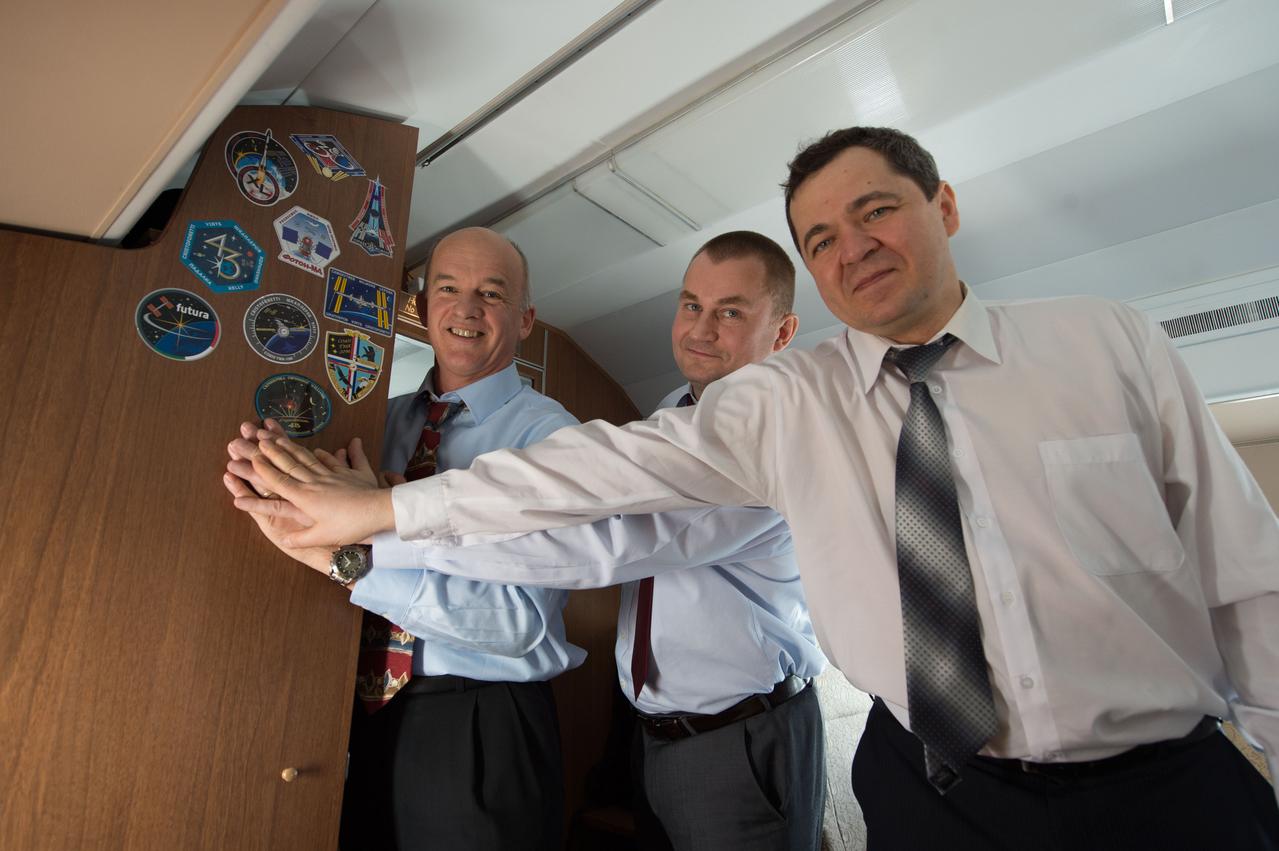
Aboard their Gagarin Cosmonaut Training Center aircraft, Expedition 47-48 crewmembers Jeff Williams of NASA (left) and Alexey Ovchinin (center) and Oleg Skripochka (right) of Roscosmos affix a sticker of their crew patch to the wall of the cabin as they flew from their training base to the Baikonur Cosmodrome in Kazakhstan March 3. The trio will launch March 19, Kazakh time, in their Soyuz TMA-20M spacecraft for a six-month mission on the International Space Station. Courtesy of Gagarin Cosmonaut Training Center
S85-40670 (18 Sept. 1985) --- The two teachers, Sharon Christa McAuliffe and Barbara R. Morgan (out of frame) have hands-on experience with an Arriflex motion picture camera following a briefing on space photography. The two began training Sept. 10, 1985 with the STS-51L crew and learning basic procedures for space travelers. The second week of training included camera training, aircraft familiarization and other activities. McAuliffe zeroes in on a test subject during a practice session with the Arriflex. Photo credit: NASA
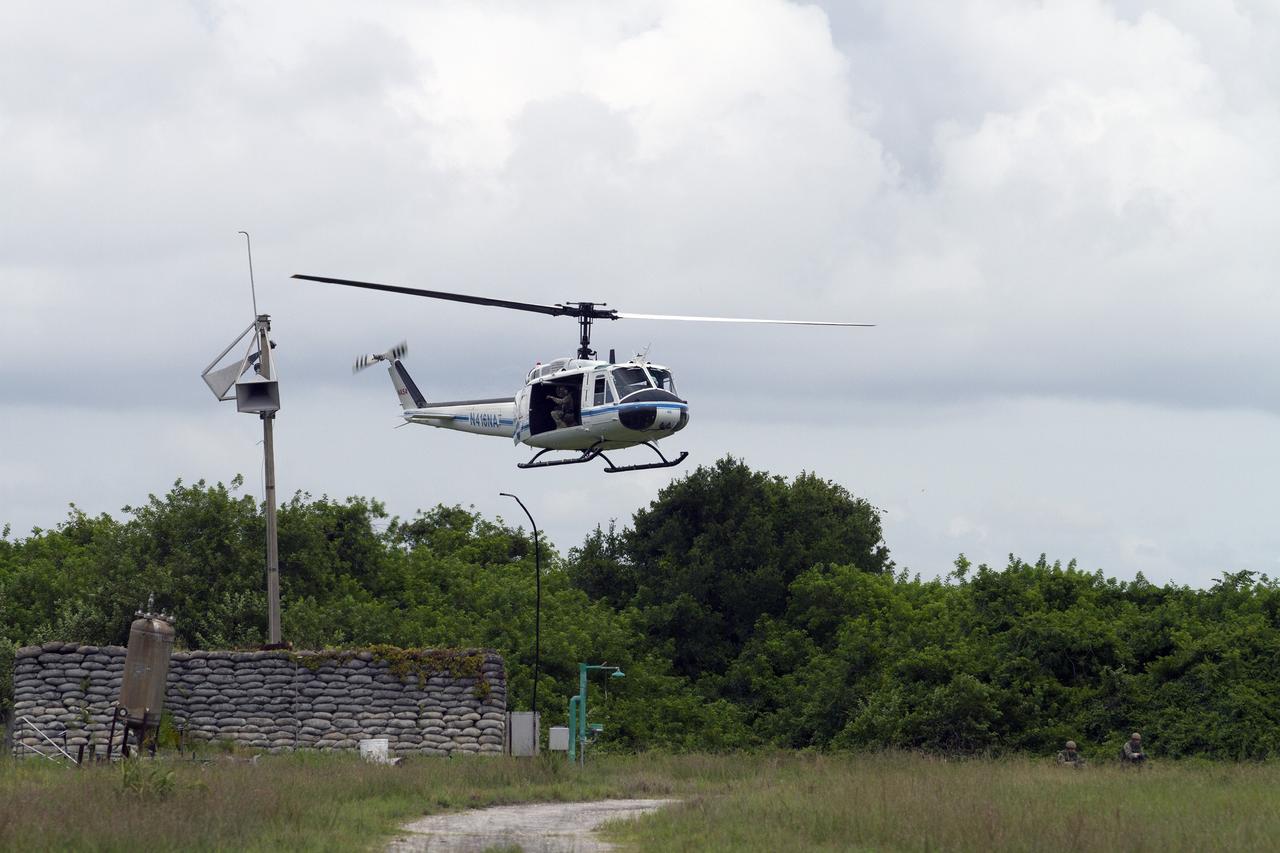
CAPE CANAVERAL, Fla. – The rope is cut from a Huey helicopter from the Aircraft Operations branch at NASA's Kennedy Space Center in Florida before the helicopter begins to fly out of a training area during a training exercise. Moments earlier, Emergency Response Team officers from the Protective Services branch descended from the helicopter to begin the mission. The flight was the beginning of a training mission to simulate a situation the team and pilots could confront at the center. Photo credit: NASA/Dan Casper
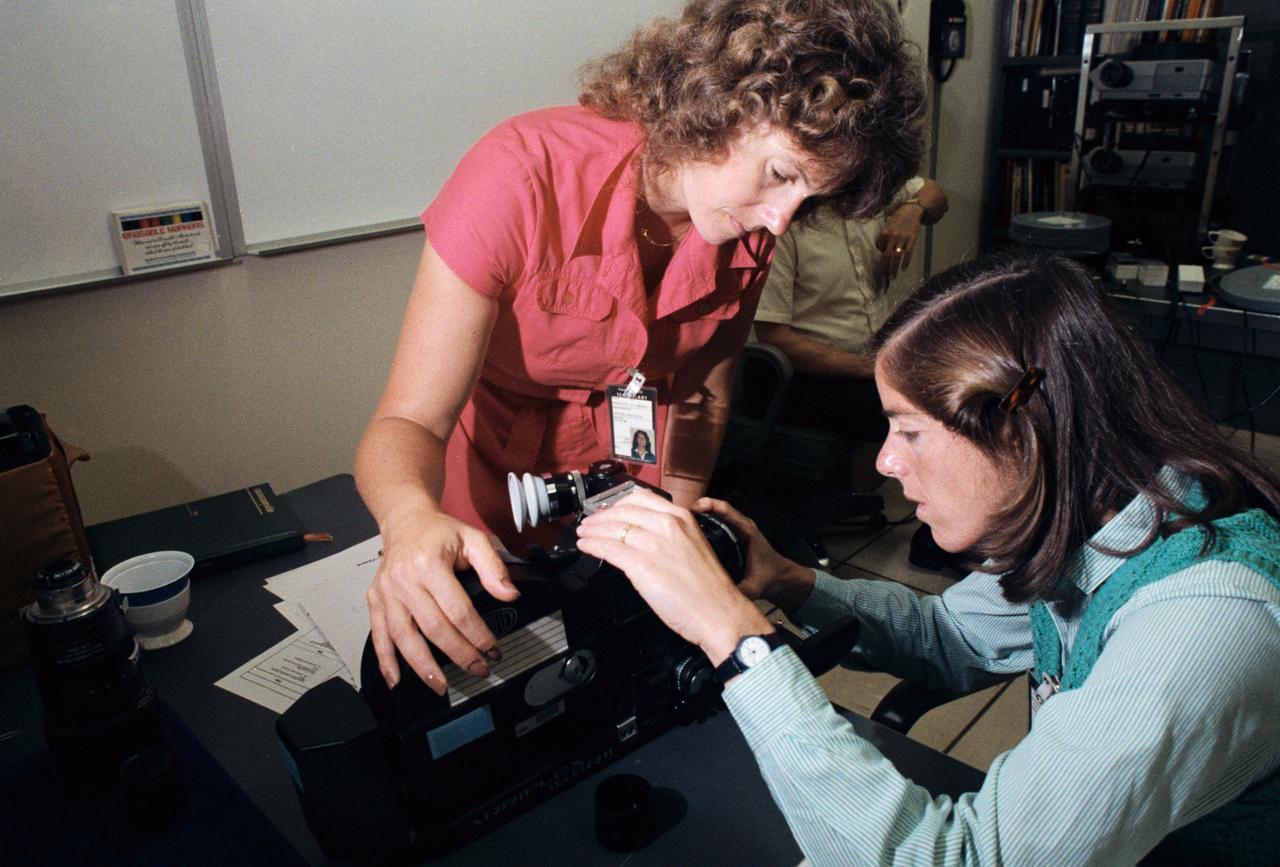
S85-40669 (18 Sept. 1985) --- The two teachers, Sharon Christa McAuliffe (left) and Barbara R. Morgan have hands-on experience with an Arriflex motion picture camera following a briefing on space photography. The two began training Sept. 10, 1985 with the STS-51L crew and learning basic procedure for space travelers. The second week of training included camera training, aircraft familiarization and other activities. Morgan adjusts a lens as a studious McAuliffe looks on. Photo credit: NASA
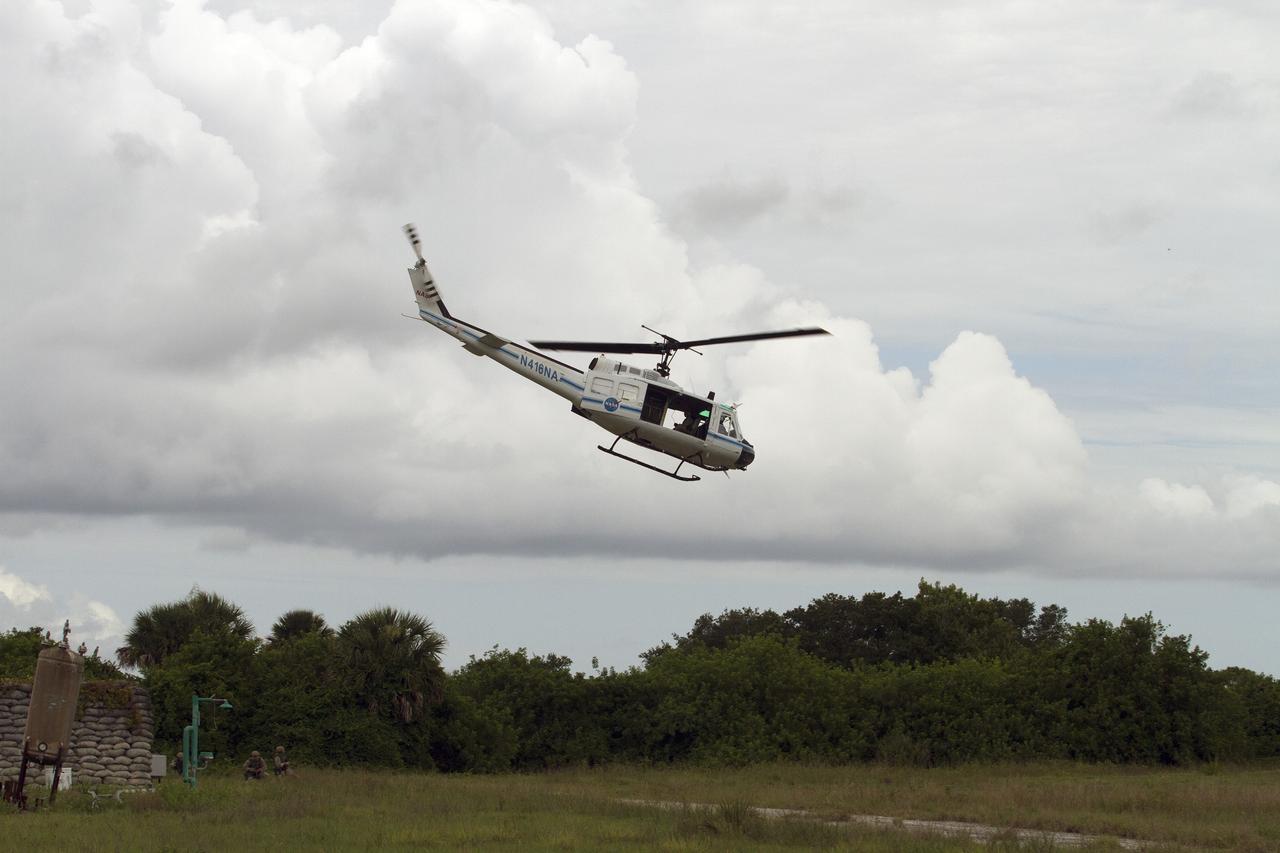
CAPE CANAVERAL, Fla. – A Huey helicopter from the Aircraft Operations branch at NASA's Kennedy Space Center in Florida begins to fly out of a training area after Emergency Response Team officers from the Protective Services branch descended from the helicopter during a training exercise. The flight was the beginning of a training mission to simulate a situation the team and pilots could confront at the center. Photo credit: NASA/Dan Casper
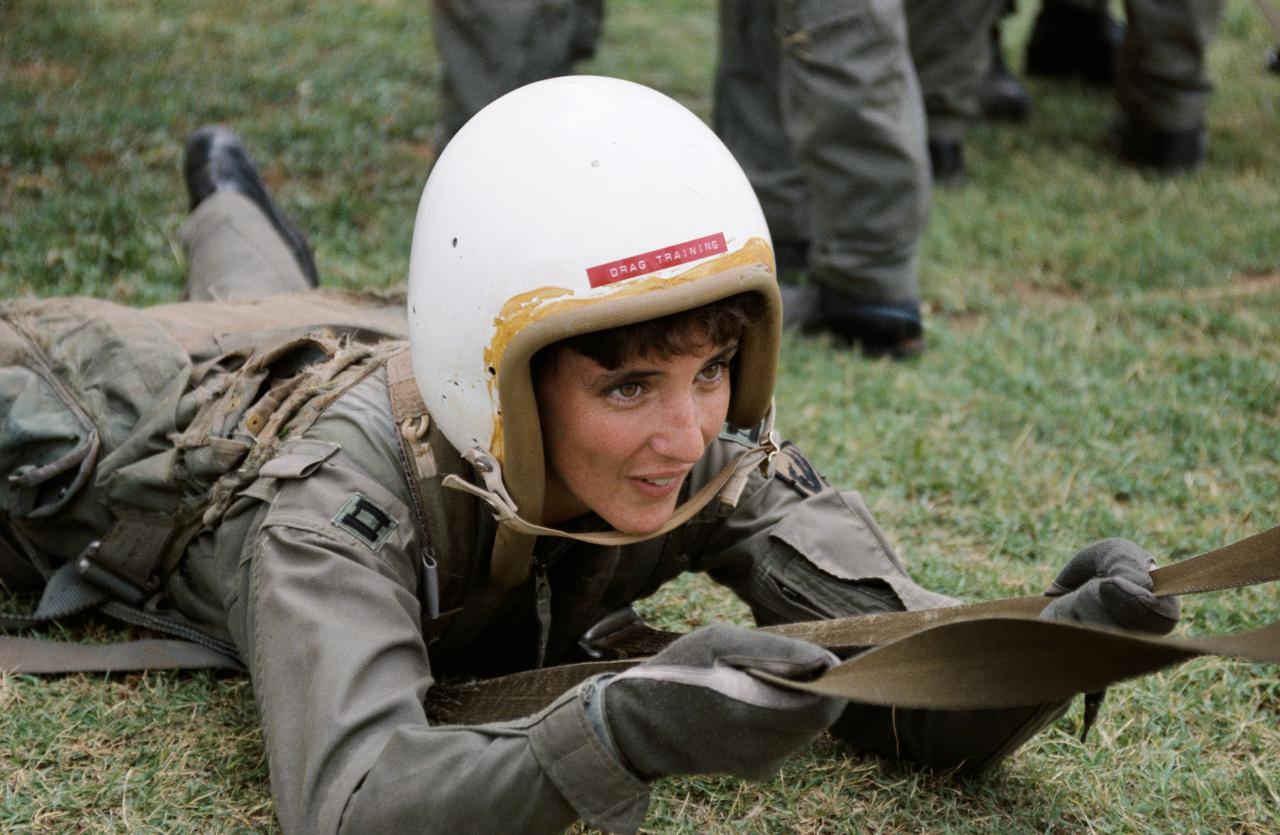
S90-45883 (29-31 July 1990) --- Nancy J. Sherlock, one of 23 astronaut candidates who began a year's training and evaluation in July, participates in one of many sessions at a survival training course at Vance Air Force Base. Sherlock is about to take part in parachute drag training. The overall course is designed to familiarize the trainees with procedures to follow in the event of an emergency ejection from a jet aircraft.
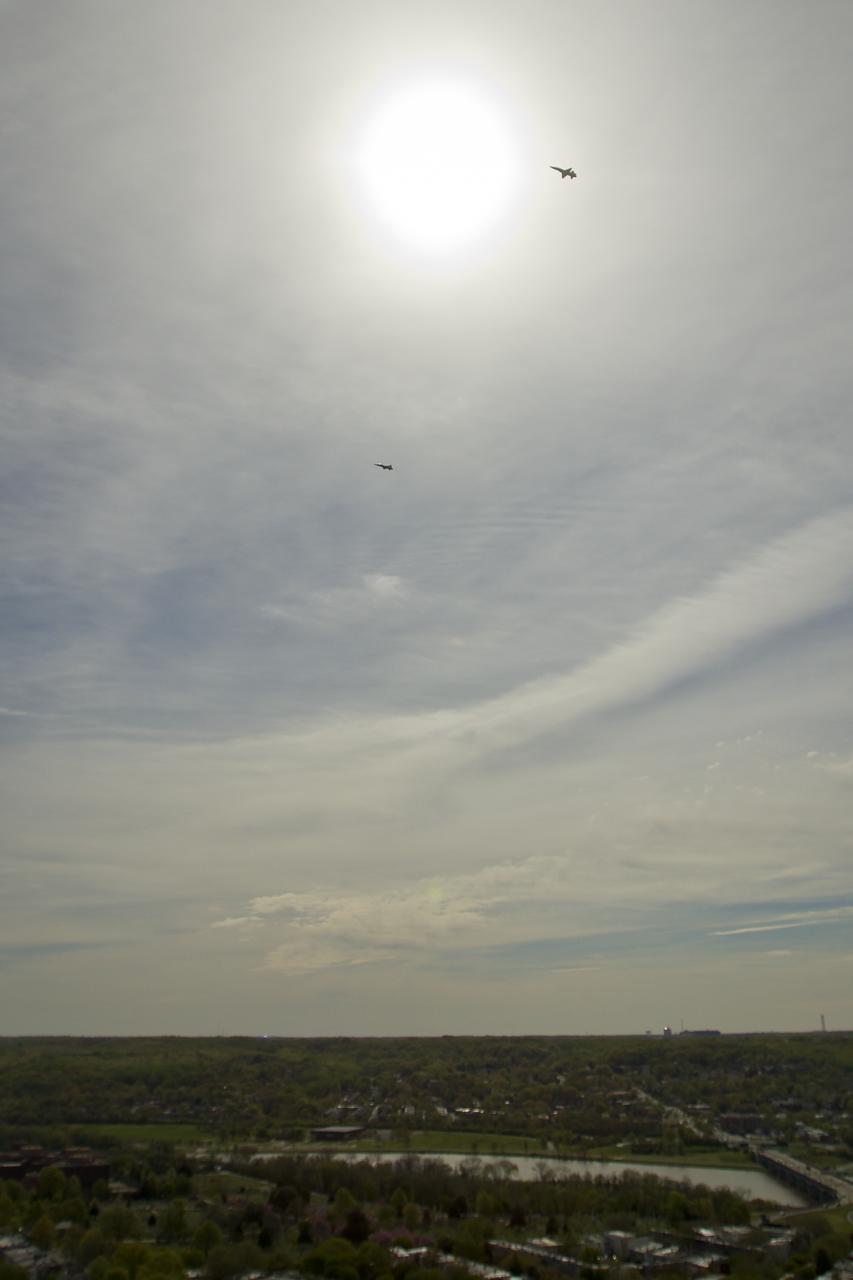
Two NASA T-38 training jets are seen as they fly over Washington, DC, Thursday, April 5, 2012. NASA, in cooperation with the Federal Aviation Administration, conducted training and photographic flights over the DC metropolitan area. T-38 aircraft have been used for astronaut training for more than 30 years as they allow pilots and mission specialists to think quickly in changing situations, mental experiences the astronauts say are critical to practicing for the rigors of spaceflight. Photo Credit: (NASA/Bill Ingalls)
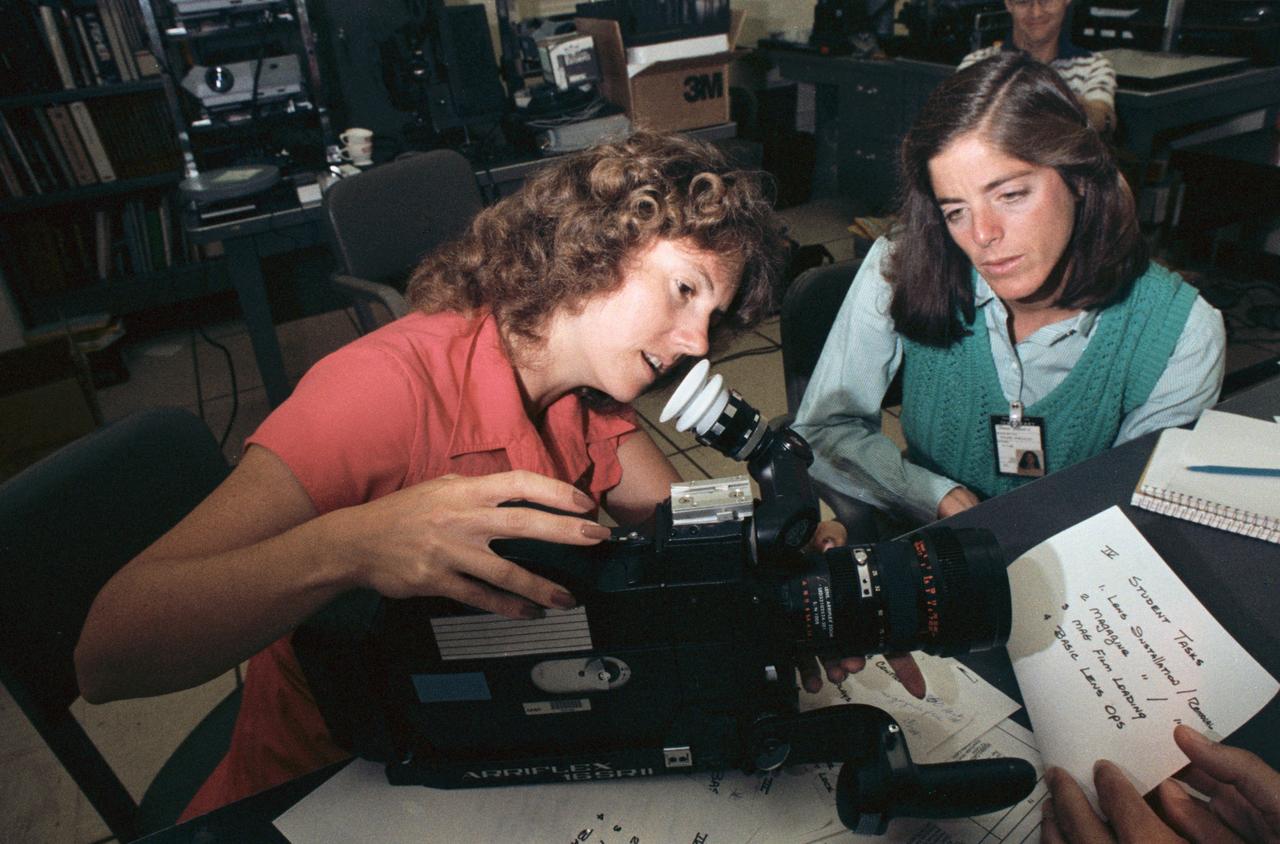
S85-40668 (18 Sept. 1985) --- The two teachers, Sharon Christa McAuliffe (left) and Barbara R. Morgan have hands-on experience with an Arriflex motion picture camera following a briefing on space photography. The two began training Sept. 10, 1985 with the STS-51L crew and learning basic procedures for space travelers. The second week of training included camera training, aircraft familiarization and other activities. Photo credit: NASA
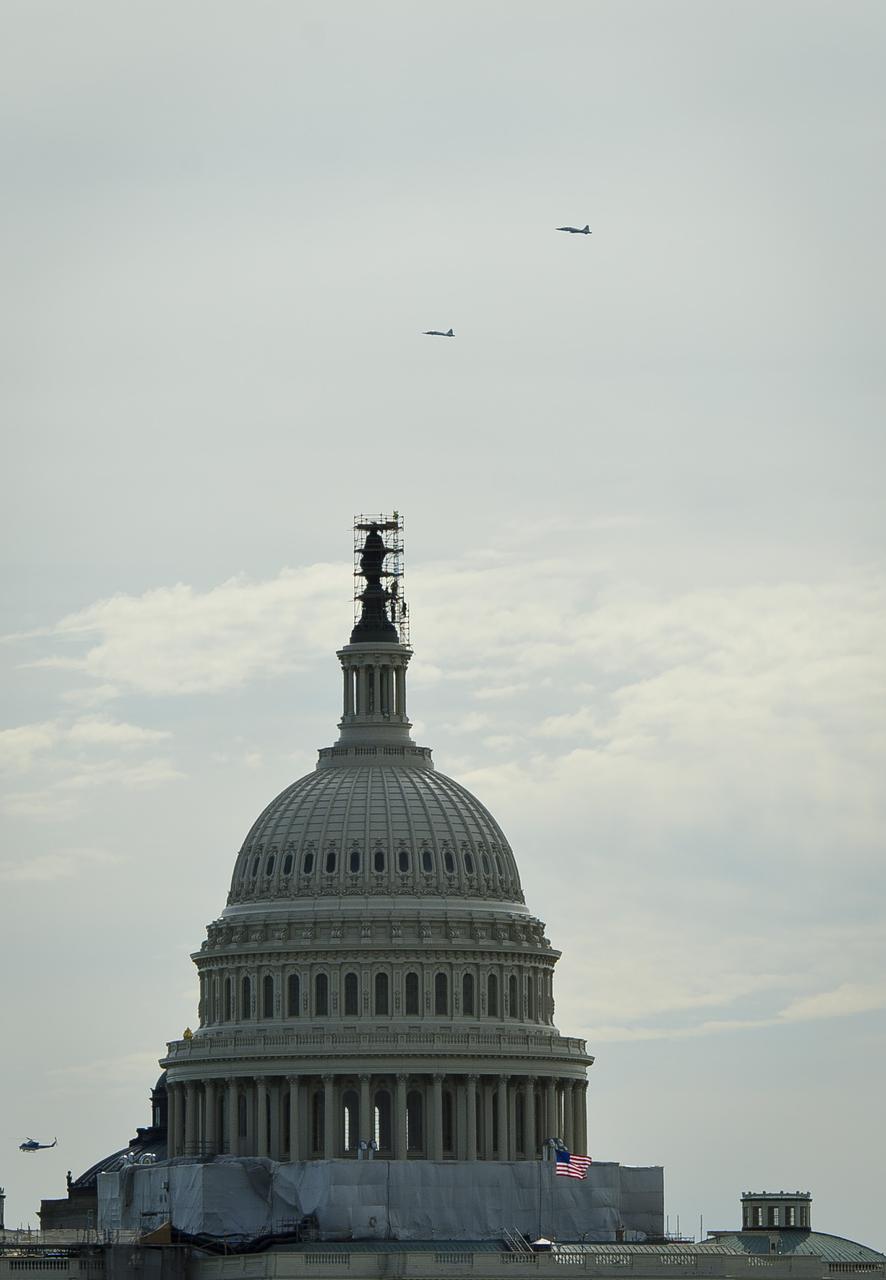
Two NASA T-38 training jets are seen as they fly over the U.S. Capitol, Thursday, April 5, 2012, in Washington. NASA, in cooperation with the Federal Aviation Administration, conducted training and photographic flights over the DC metropolitan area. T-38 aircraft have been used for astronaut training for more than 30 years as they allow pilots and mission specialists to think quickly in changing situations, mental experiences the astronauts say are critical to practicing for the rigors of spaceflight. Photo Credit: (NASA/Paul E. Alers)
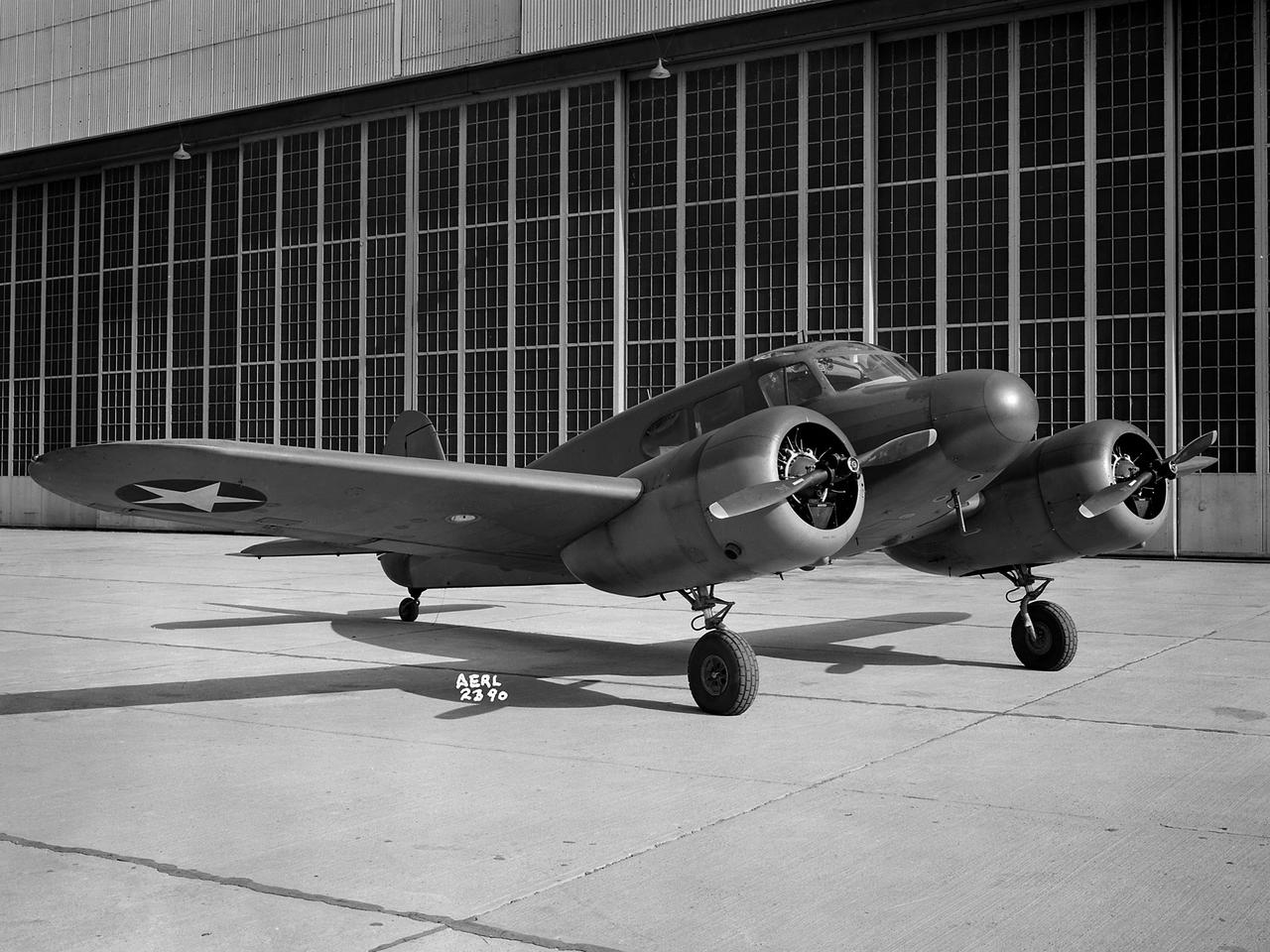
The Aircraft Engine Research Laboratory acquired the five-seat Cessna UC–78 in March 1943 to maintain the proficiency of its pilots. The UC–78 was referred to as the “Bamboo Bomber” because of its wooden wings and tail and its fabric-covered steel body. The aircraft was produced in 1939 for civilian use, but the military soon began ordering them as training aircraft. The military also began using the aircraft for personnel transport. Cessna produced over 4600 of the aircraft for the military during World War II. The National Advisory Committee for Aeronautics’ (NACA) pilot Howard Lilly flew the UC–78 extensively during its residency in Cleveland. The aircraft was used for ferrying staff members to nearby locations and helping the pilots keep their flying hours up. The UC–78 was transferred in October 1945.
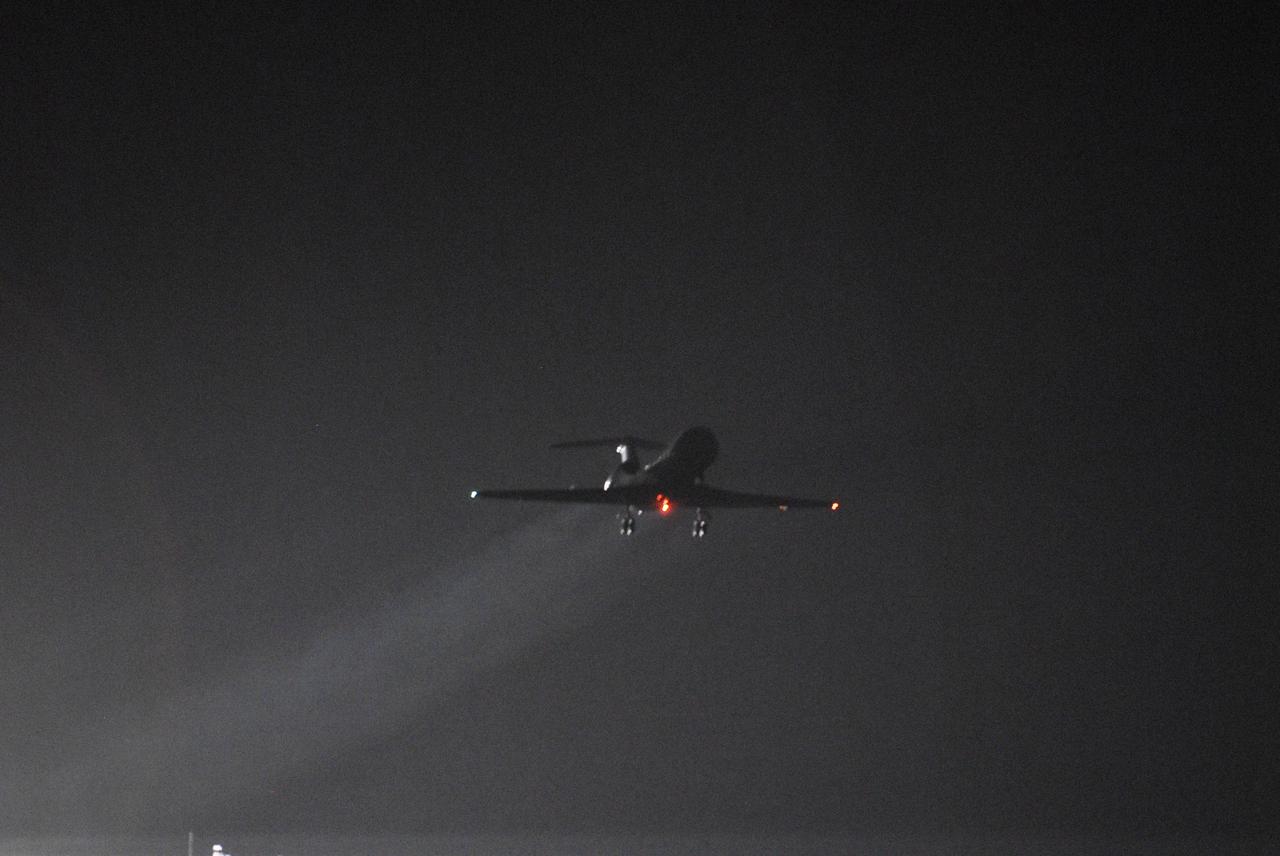
CAPE CANAVERAL, Fla. - One of the shuttle training aircraft takes off from the Shuttle Landing Facility at NASA's Kennedy Space Center in Florida. STS-125 Commander Scott Altman and Pilot Gregory C. Johnson are practicing shuttle landings in the aircraft. The STA is a Grumman American Aviation-built Gulf Stream II jet that was modified to simulate a shuttle’s cockpit, motion and visual cues, and handling qualities. In flight, the aircraft duplicates the shuttle’s atmospheric descent trajectory from approximately 35,000 feet altitude to landing on a runway. The practice is part of a terminal countdown demonstration test, or TCDT, to prepare for launch. TCDT provides astronauts and ground crews with an opportunity to participate in various simulated countdown activities, including equipment familiarization, emergency training and a simulated launch countdown. Space shuttle Atlantis’ STS-125 mission to service NASA’s Hubble Space Telescope is targeted to launch Oct. 10. Photo credit: NASA/Kim Shiflett
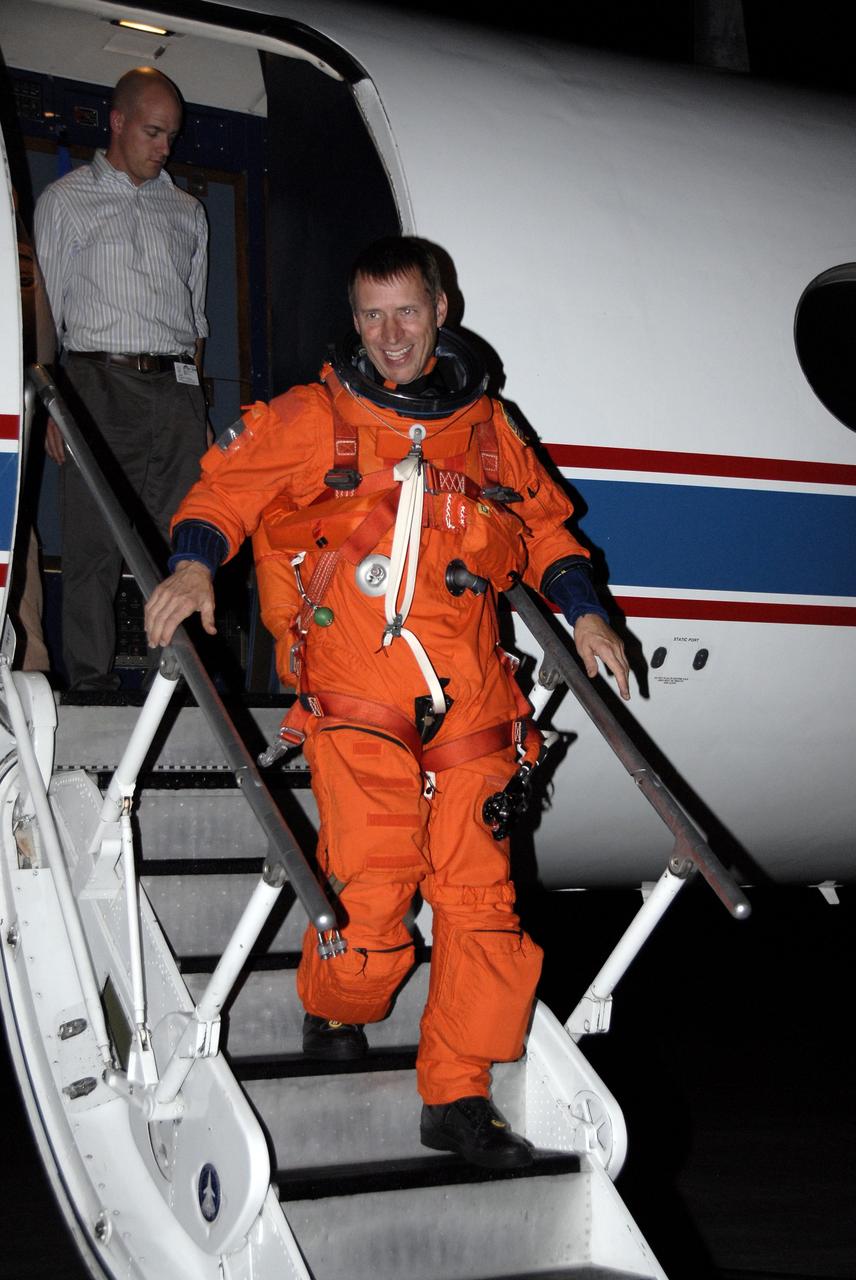
CAPE CANAVERAL, Fla. - STS-125 Pilot Gregory C. Johnson exits the shuttle training aircraft at the Shuttle Landing Facility at NASA's Kennedy Space Center in Florida after practicing shuttle landings in the aircraft. The STA is a Grumman American Aviation-built Gulf Stream II jet that was modified to simulate a shuttle’s cockpit, motion and visual cues, and handling qualities. In flight, the aircraft duplicates the shuttle’s atmospheric descent trajectory from approximately 35,000 feet altitude to landing on a runway. The practice is part of a terminal countdown demonstration test, or TCDT, to prepare for launch. TCDT provides astronauts and ground crews with an opportunity to participate in various simulated countdown activities, including equipment familiarization, emergency training and a simulated launch countdown. Space shuttle Atlantis’ STS-125 mission to service NASA’s Hubble Space Telescope is targeted to launch Oct. 10. Photo credit: NASA/Kim Shiflett
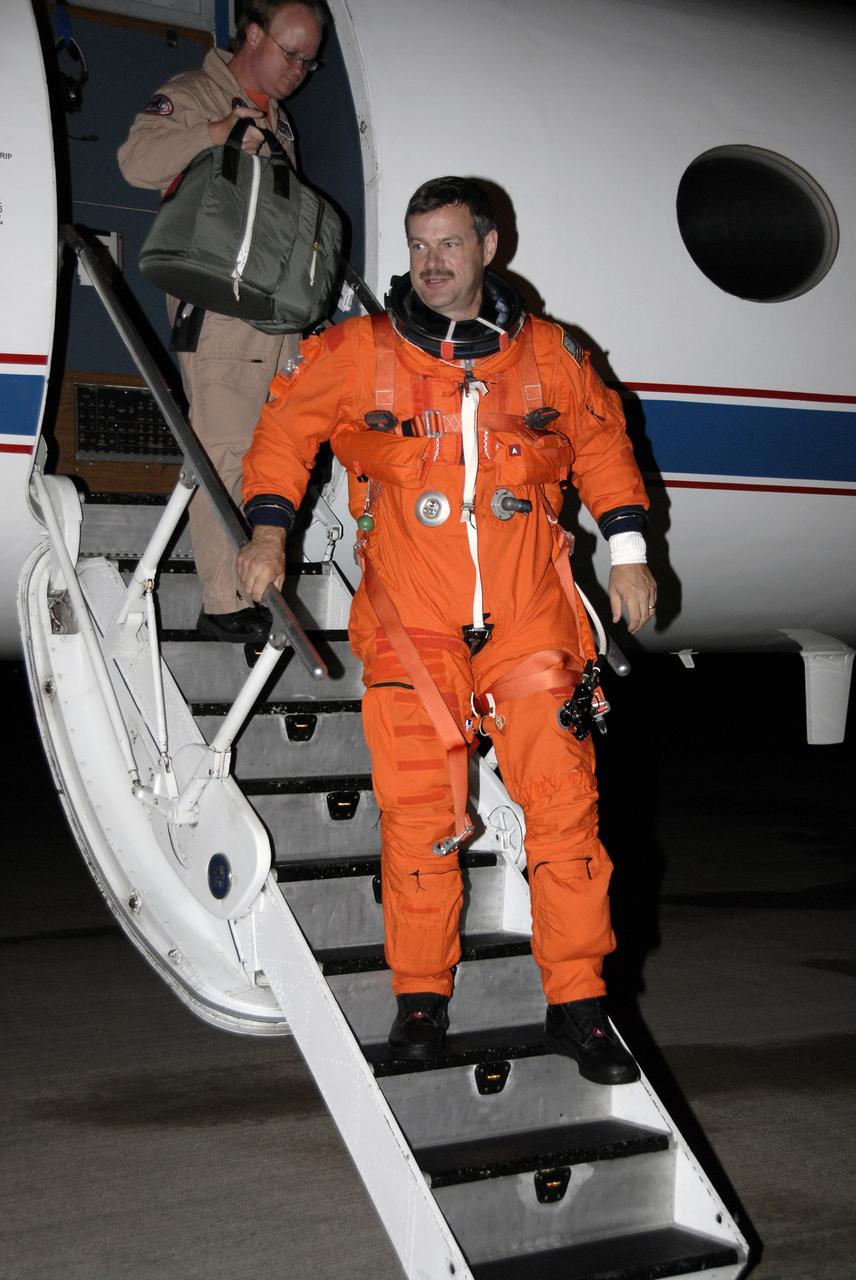
CAPE CANAVERAL, Fla. - STS-125 Commander Scott Altman exits the shuttle training aircraft at the Shuttle Landing Facility at NASA's Kennedy Space Center in Florida after practicing shuttle landings in the aircraft. The STA is a Grumman American Aviation-built Gulf Stream II jet that was modified to simulate a shuttle’s cockpit, motion and visual cues, and handling qualities. In flight, the aircraft duplicates the shuttle’s atmospheric descent trajectory from approximately 35,000 feet altitude to landing on a runway. The practice is part of a terminal countdown demonstration test, or TCDT, to prepare for launch. TCDT provides astronauts and ground crews with an opportunity to participate in various simulated countdown activities, including equipment familiarization, emergency training and a simulated launch countdown. Space shuttle Atlantis’ STS-125 mission to service NASA’s Hubble Space Telescope is targeted to launch Oct. 10. Photo credit: NASA/Kim Shiflett
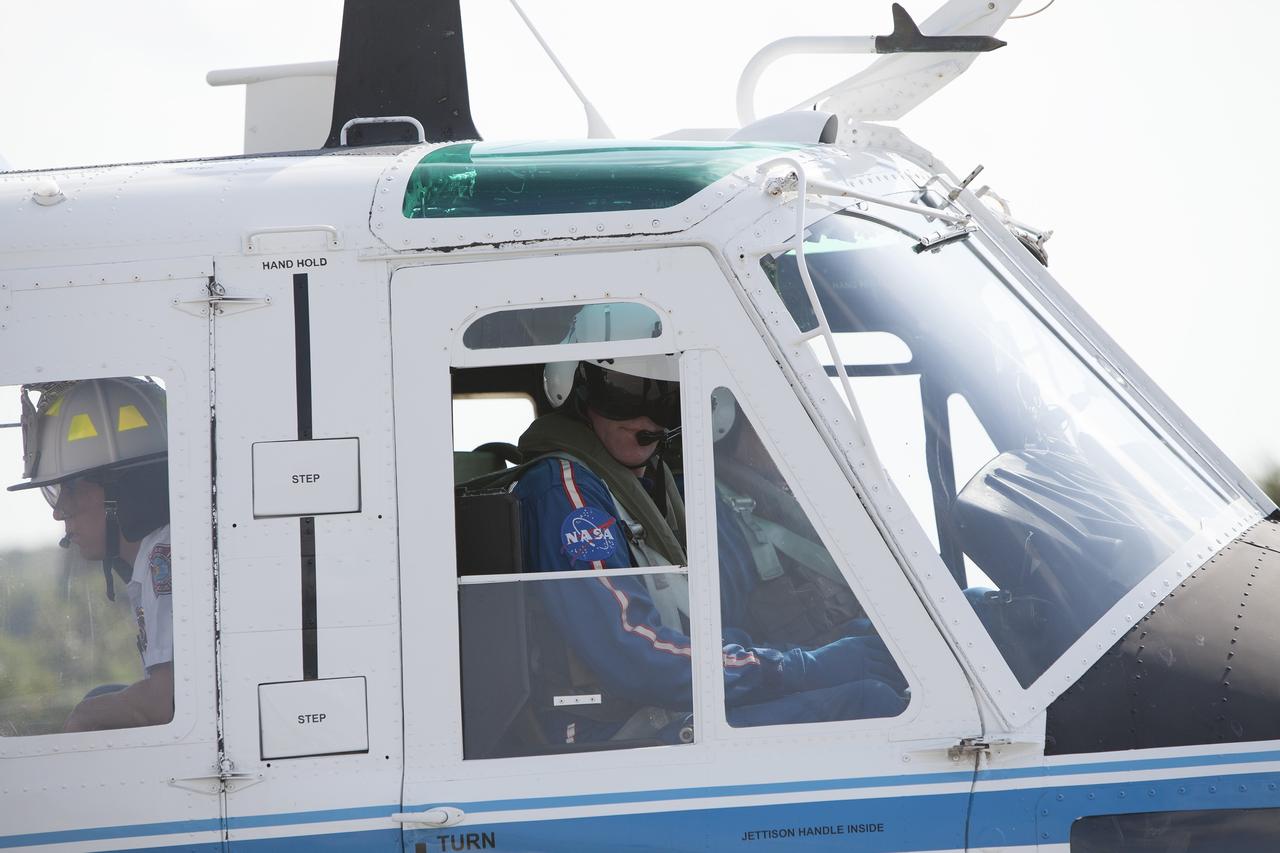
CAPE CANAVERAL, Fla. -- At NASA's Kennedy Space Center in Florida, agency helicopter pilots ensure all is clear before taking off during a training exercise. Helicopter pilot Bill Martin, a URS Federal Technical Services in the agency's Aircraft Operations, is seen in the front seat. Behind Martin on the left, is Mark Huetter, of Chenega Security & Support Solutions. Martin serves as assistant chief of Training for the center's Fire Rescue Department. The activity taking place in Kennedy's Launch Complex 39 turn-basin parking lot was only one of several drills. It was part of a new training program that was developed by Kennedy's Fire Rescue department along with NASA Aircraft Operations to sharpen the skills needed to help rescue personnel learn how to collaborate with helicopter pilots in taking injured patients to hospitals as quickly as possible. Photo credit: NASA/Dan Casper
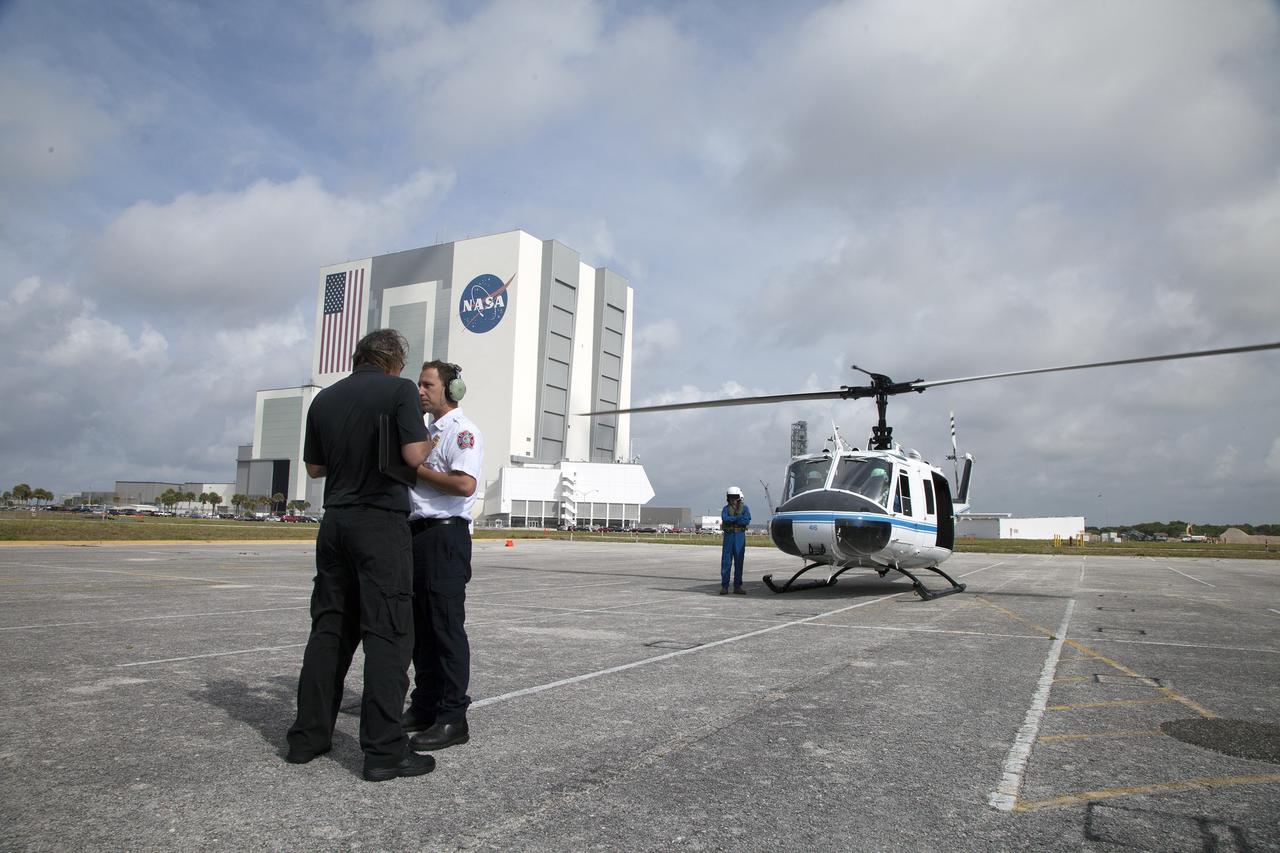
CAPE CANAVERAL, Fla. -- Following a training exercise at NASA's Kennedy Space Center in Florida, helicopter pilot Bill Martin, a URS Federal Technical Services in the agency's Aircraft Operations, left, confers with Mark Huetter of Chenega Security & Support Solutions. Martin serves as assistant chief of Training for the center's Fire Rescue Department. The activity taking place in Kennedy's Launch Complex 39 turn-basin parking lot was only one of several drills. It was part of a new training program that was developed by Kennedy's Fire Rescue department along with NASA Aircraft Operations to sharpen the skills needed to help rescue personnel learn how to collaborate with helicopter pilots in taking injured patients to hospitals as quickly as possible. Photo credit: NASA/Dan Casper
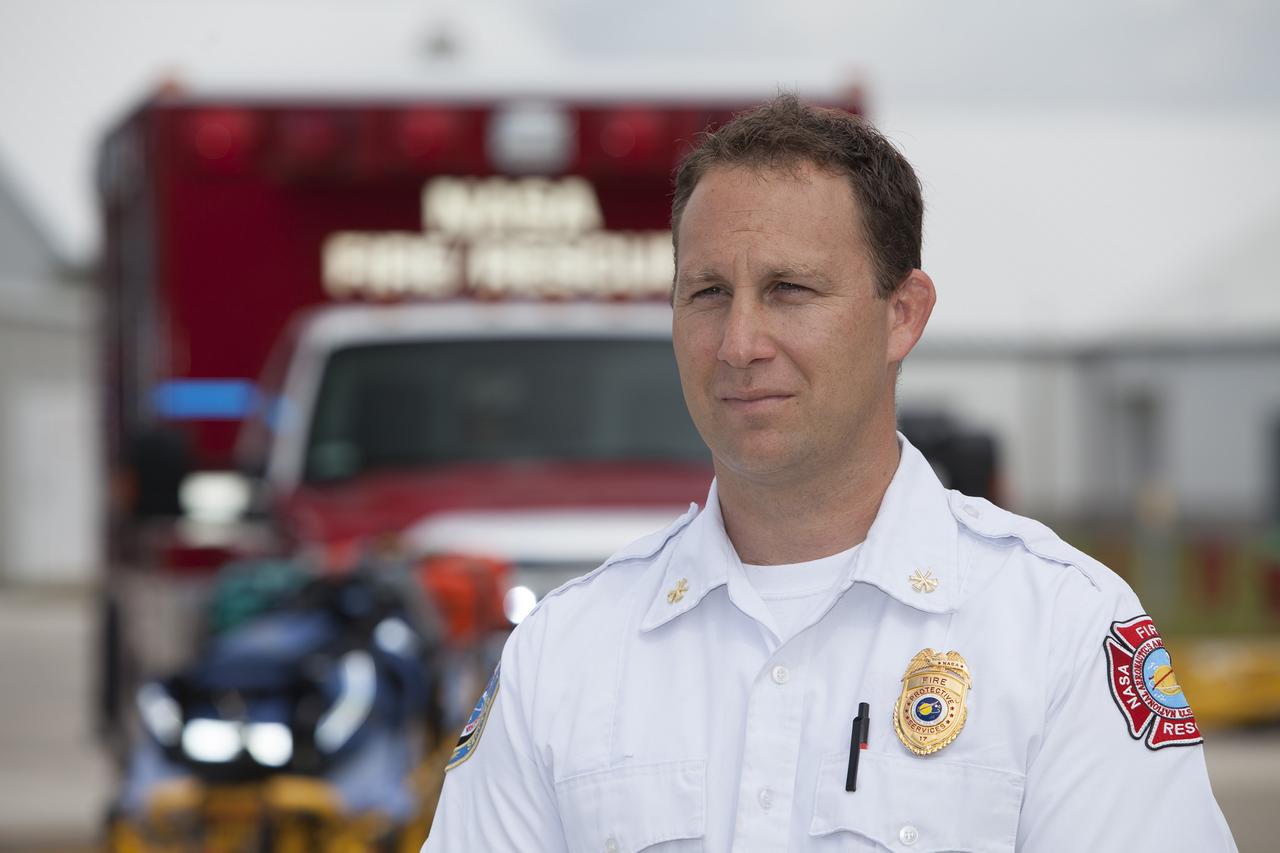
CAPE CANAVERAL, Fla. -- At NASA's Kennedy Space Center in Florida, Mark Huetter, assistant chief of Training for the center's Fire Rescue Department, is interviewed near the Shuttle Landing Facility. He discussed working with pilots in NASA Aircraft Operations to develop procedures for using agency helicopters to transport injured patients to a local hospital. The training activity took place in Kennedy's Launch Complex 39 turn-basin parking lot. It was part of a new training program developed by Kennedy's Fire Rescue department along with NASA Aircraft Operations to sharpen the skills needed to help rescue personnel learn how to collaborate with helicopter pilots in taking injured patients to hospitals as quickly as possible. Photo credit: NASA/Dimitri Gerondidakis