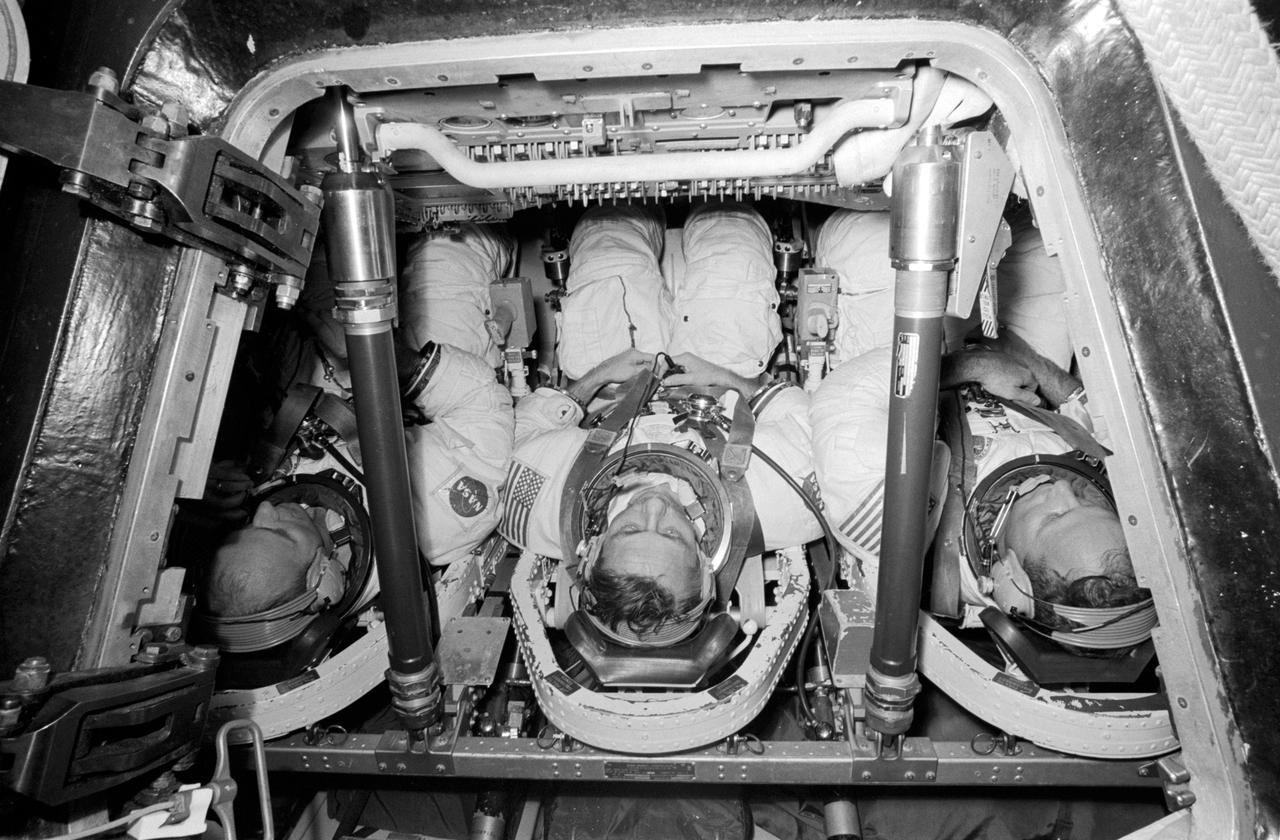
S73-27787 (1 May 1973) --- The three members of the prime crew of the second manned Skylab mission participate in prelaunch training, specifically water egress simulations, at the Johnson Space Center (JSC), Houston. They are, left to right, astronaut Alan J. Bean, commander; scientist-astronaut Owen K. Garriott, science pilot; and astronaut Jack R. Lousma, pilot. This training took place in JSC?s Building 220 on May 1, 1973. Photo credit: NASA
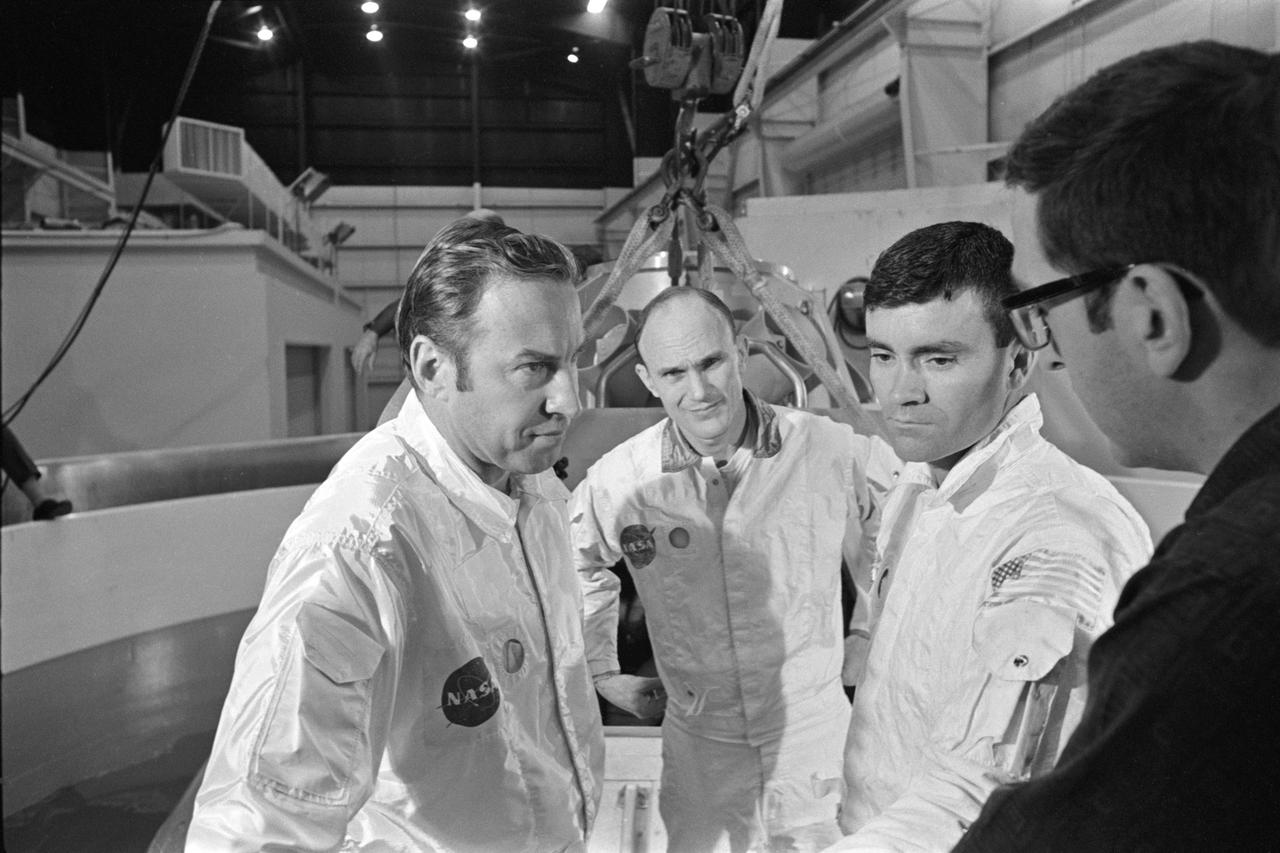
S70-24014 (17 Jan. 1970) --- The three prime crewmen of the Apollo 13 lunar landing mission stand by to participate in water egress training in a water tank in Building 260 at the Manned Spacecraft Center. They were (left to right) astronauts James A. Lovell Jr., commander; Thomas K. Mattingly II, command module pilot; and Fred W. Haise Jr., lunar module pilot.
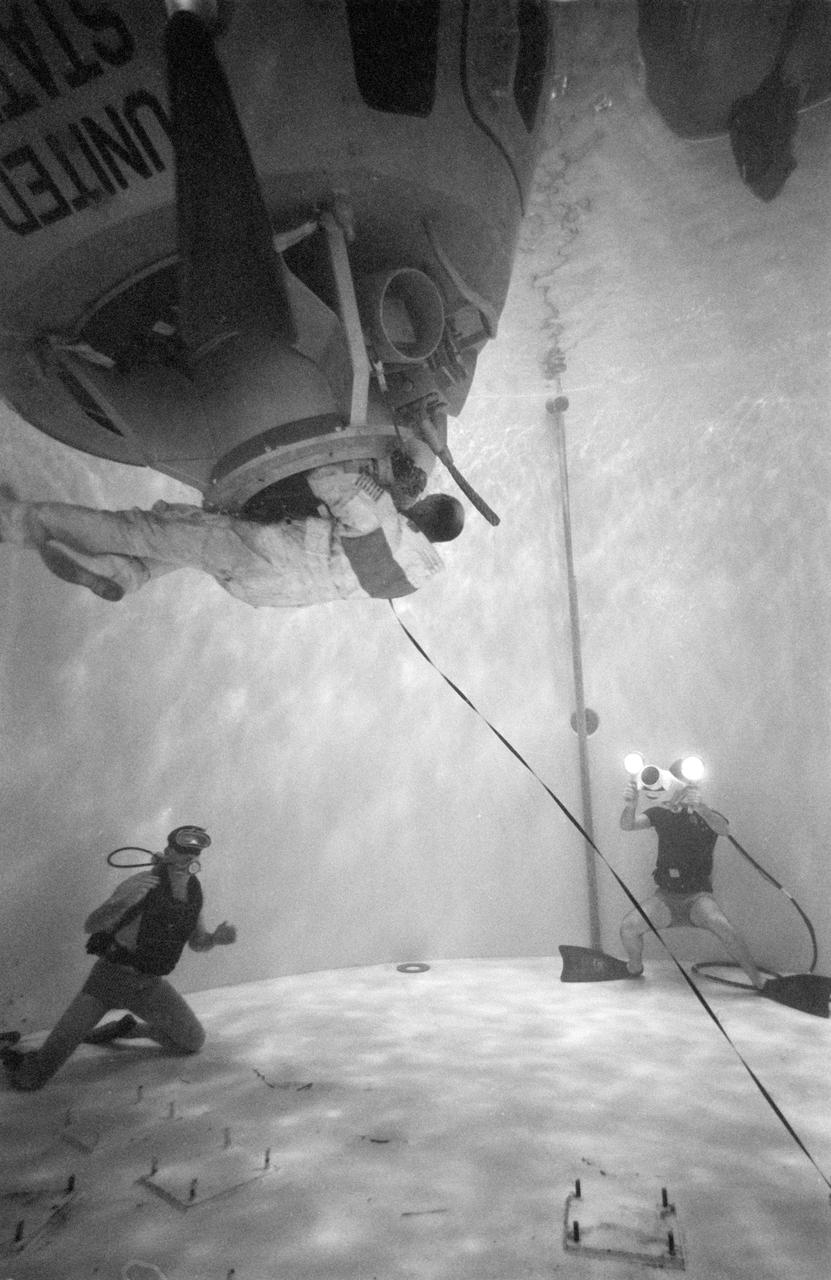
S70-24016 (17 Jan. 1970) --- Astronaut Thomas K. Mattingly II, command module pilot of the Apollo 13 lunar landing mission, participates in water egress training in a water tank in Building 260 at the Manned Spacecraft Center.
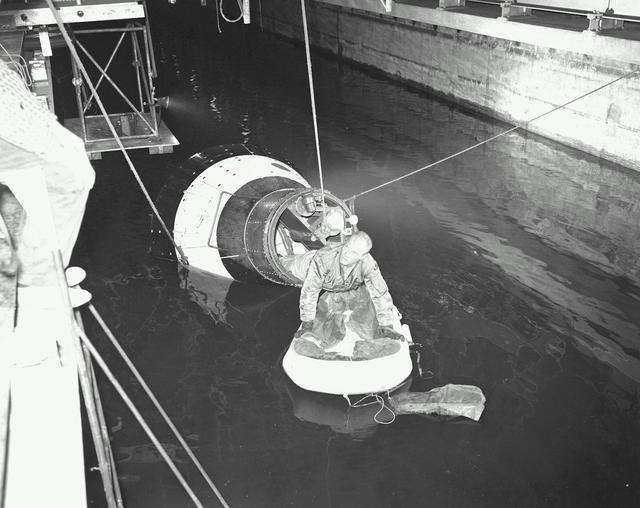
B60-00285 (1960) --- Astronaut John H. Glenn Jr., pilot of the Mercury Atlas 6 spaceflight, emerges from an egress trainer during training activity at the Langley Research Center. He is attempting to transfer onto a life raft from the mock-up of the Mercury capsule. Photo credit: NASA
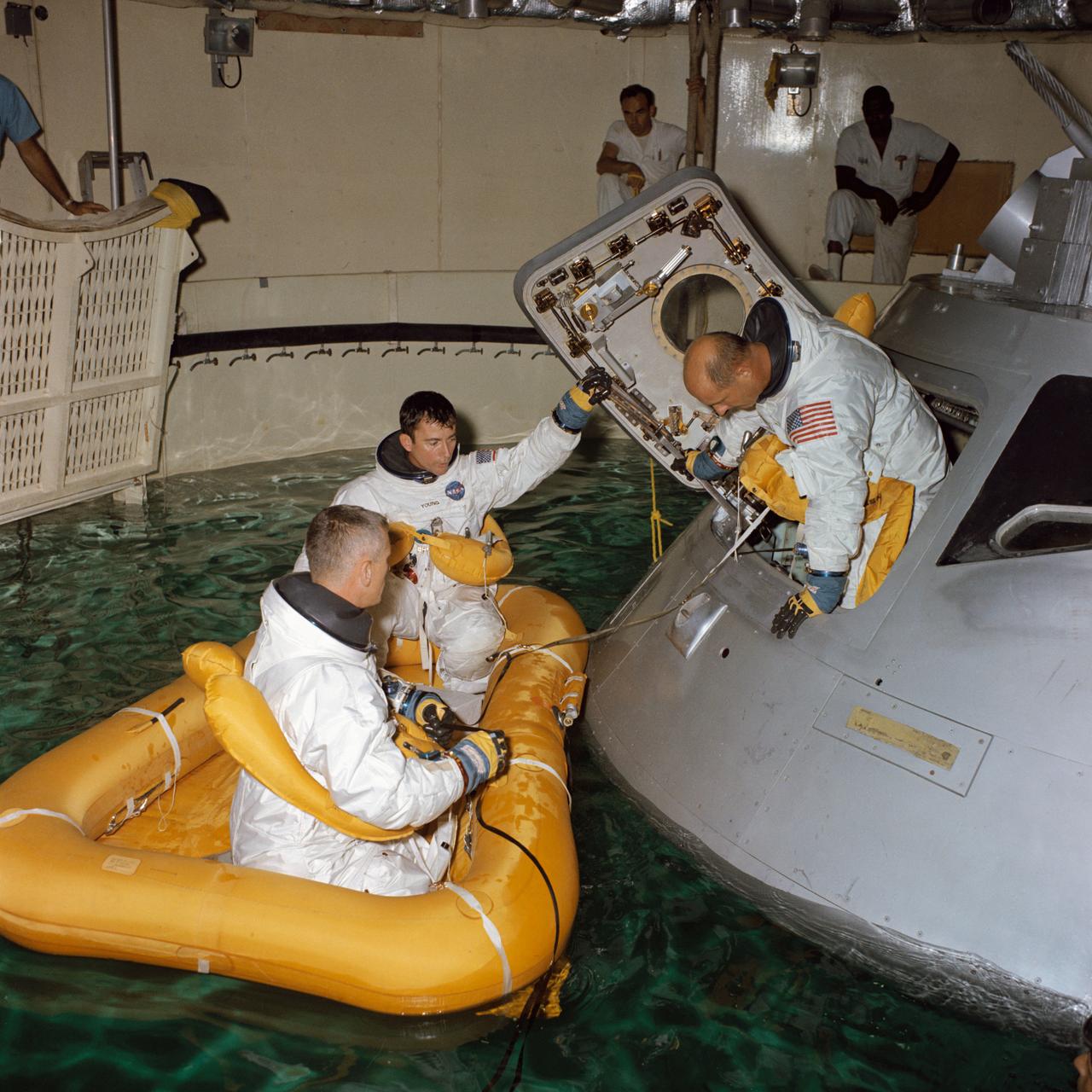
S68-41685 (August 1968) --- Three astronauts participate in Apollo water egress training in a tank in Building 260 at the Manned Spacecraft Center. Egressing the Apollo Command Module trainer is Thomas P. Stafford. Already in life raft are Eugene A. Cernan (in foreground) and John W. Young.
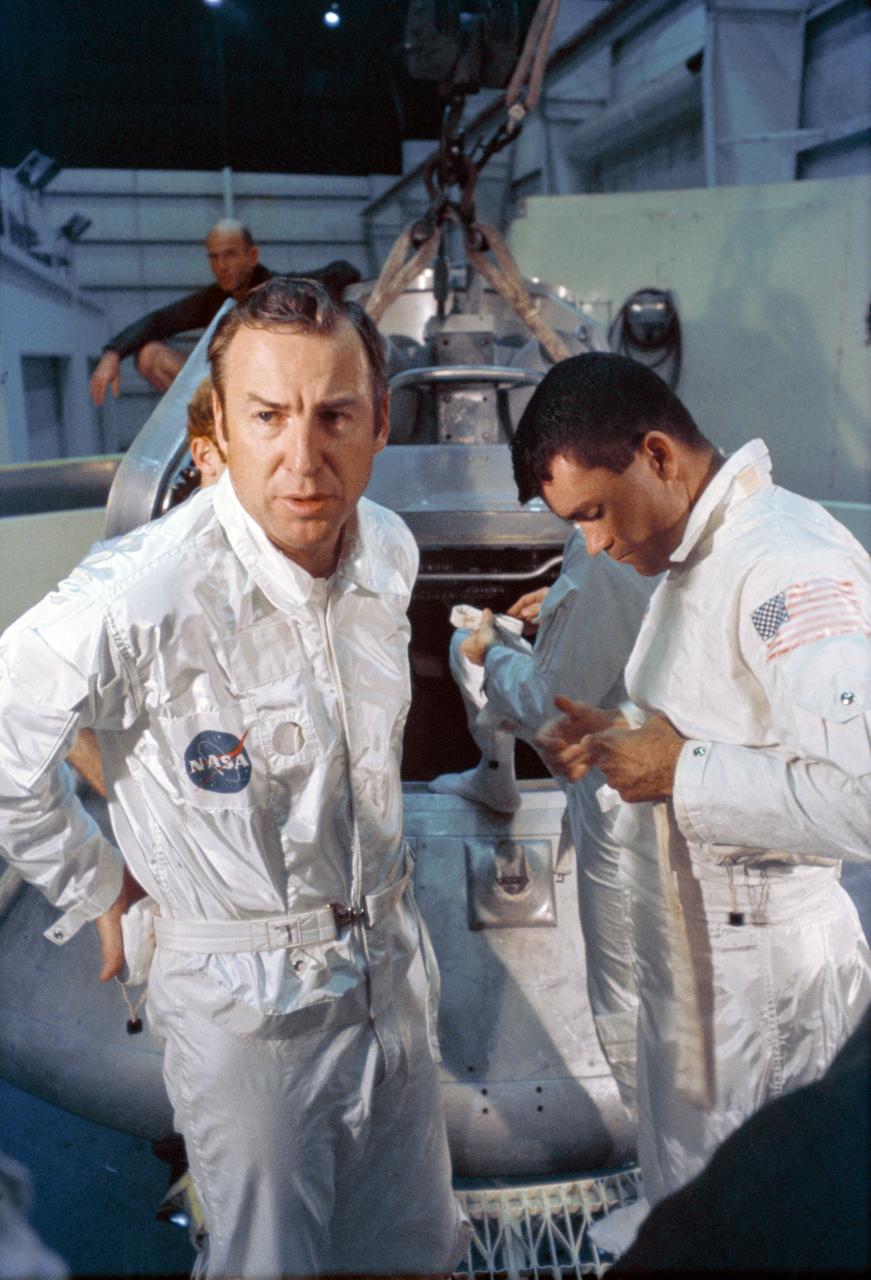
S70-24010 (17 Jan. 1970) --- The three prime crew members of the Apollo 13 lunar landing mission stand by to participate in water egress training in a water tank in Building 260 at the Manned Spacecraft Center (MSC). They are astronauts James A. Lovell Jr., (left) commander; Fred W. Haise Jr., (right) lunar module pilot; and Thomas K. Mattingly II (in background, obscured by Haise), command module pilot.
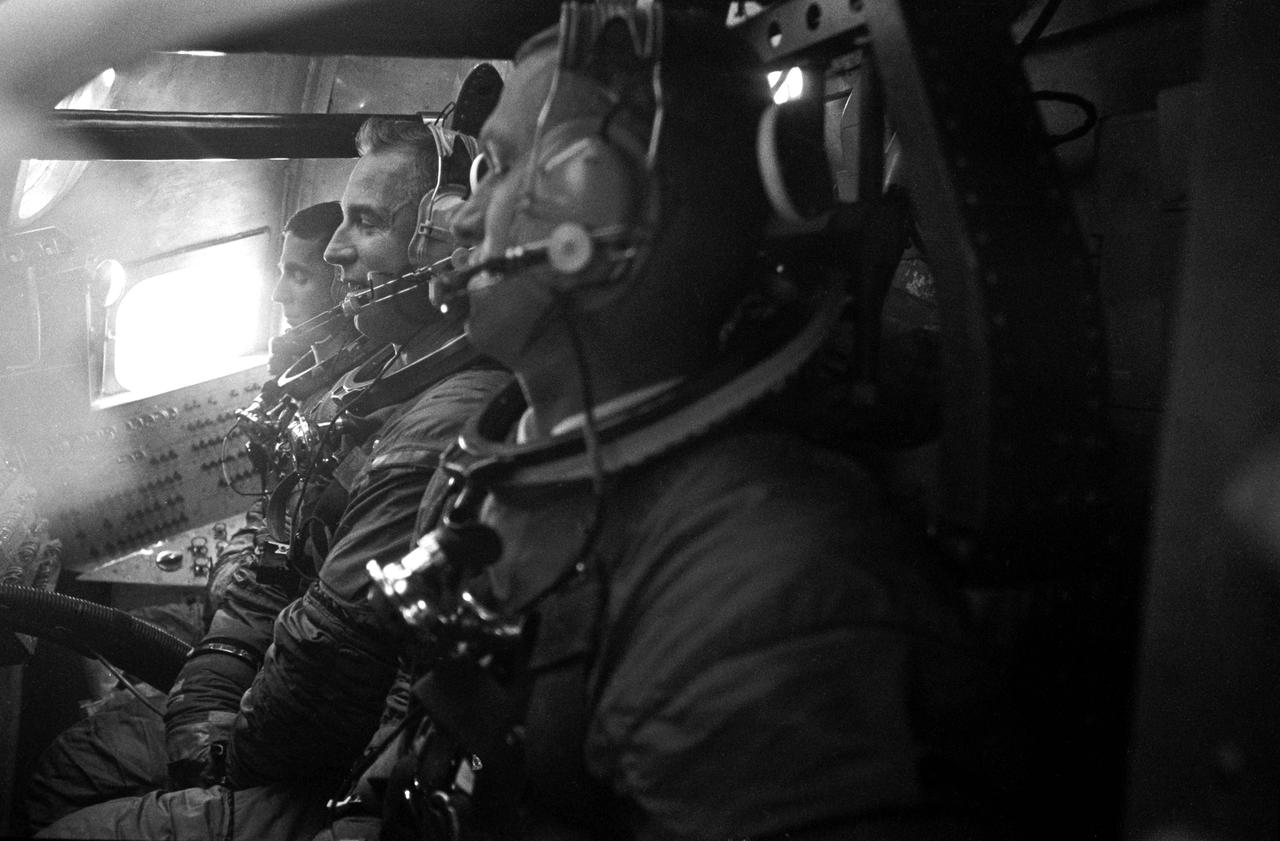
S68-52941 (25 Oct. 1968) --- The Apollo 8 prime crew is seen inside Apollo Boilerplate 1102A during water egress training in the Gulf of Mexico. From the foreground are astronauts Frank Borman, commander; James A. Lovell Jr., command module pilot; and William A. Anders, lunar module pilot. Photo credit: NASA
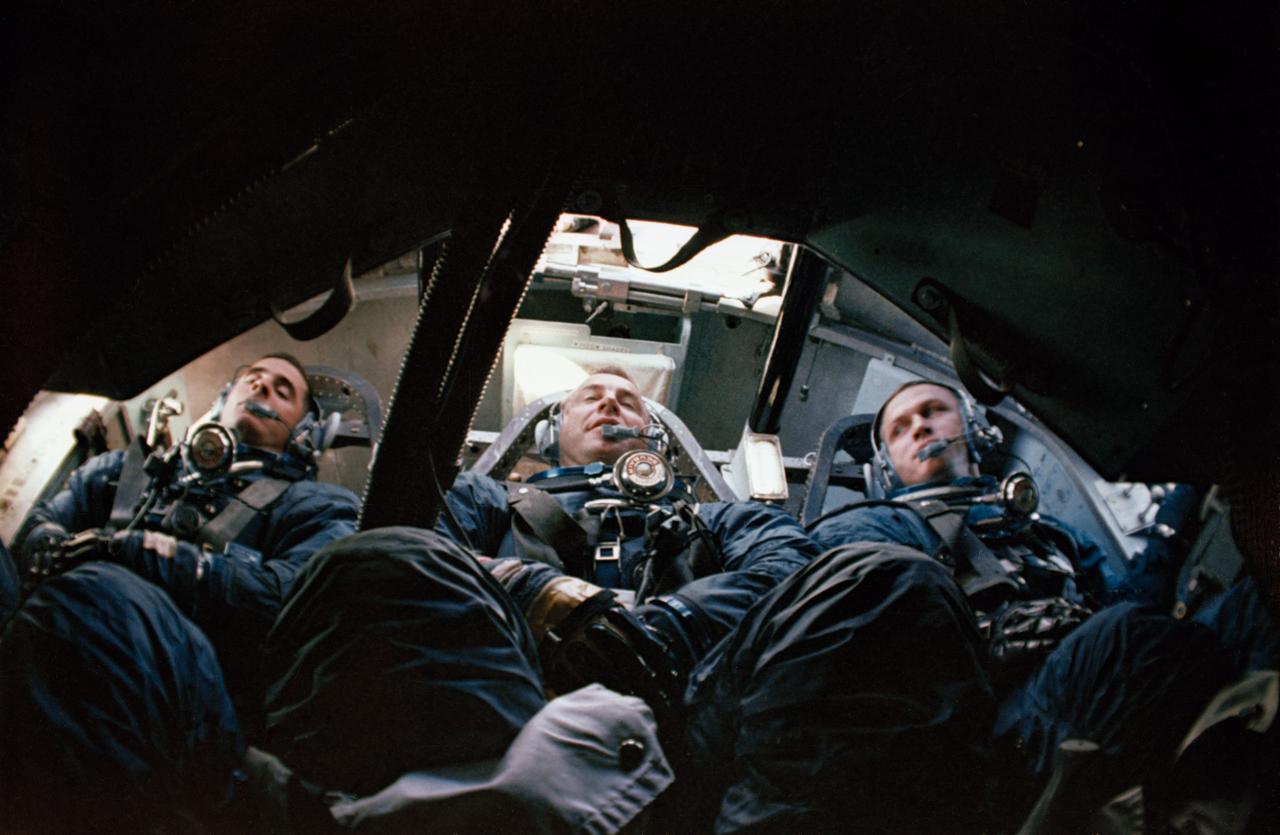
S68-53015 (25 Oct. 1968) --- Astronauts William A. Anders, James A. Lovell Jr., and Frank Borman, (left to right) are seen inside Apollo Boilerplate 1102A during water egress training in the Gulf of Mexico. Borman is Apollo 8 commander; with Lovell serving as command module pilot; and Anders as lunar module pilot. Photo credit: NASA
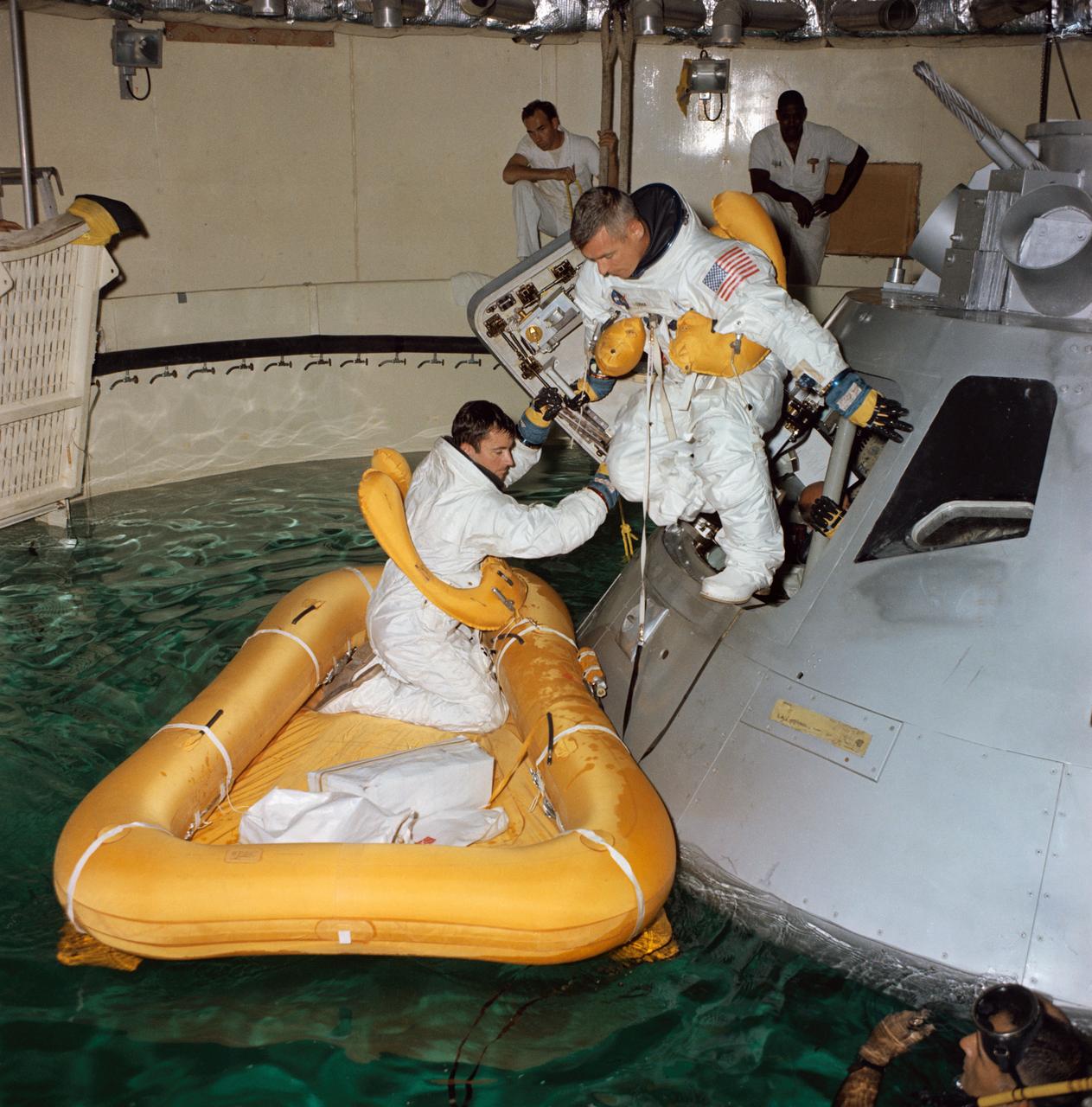
S68-41683 (August 1968) --- Three astronauts participate in Apollo water egress training in a tank in Building 260 at the Manned Spacecraft Center. Already in life raft is John W. Young. Eugene A. Cernan is egressing the Apollo Command Module trainer. Inside the trainer and almost obscured is Thomas P. Stafford.
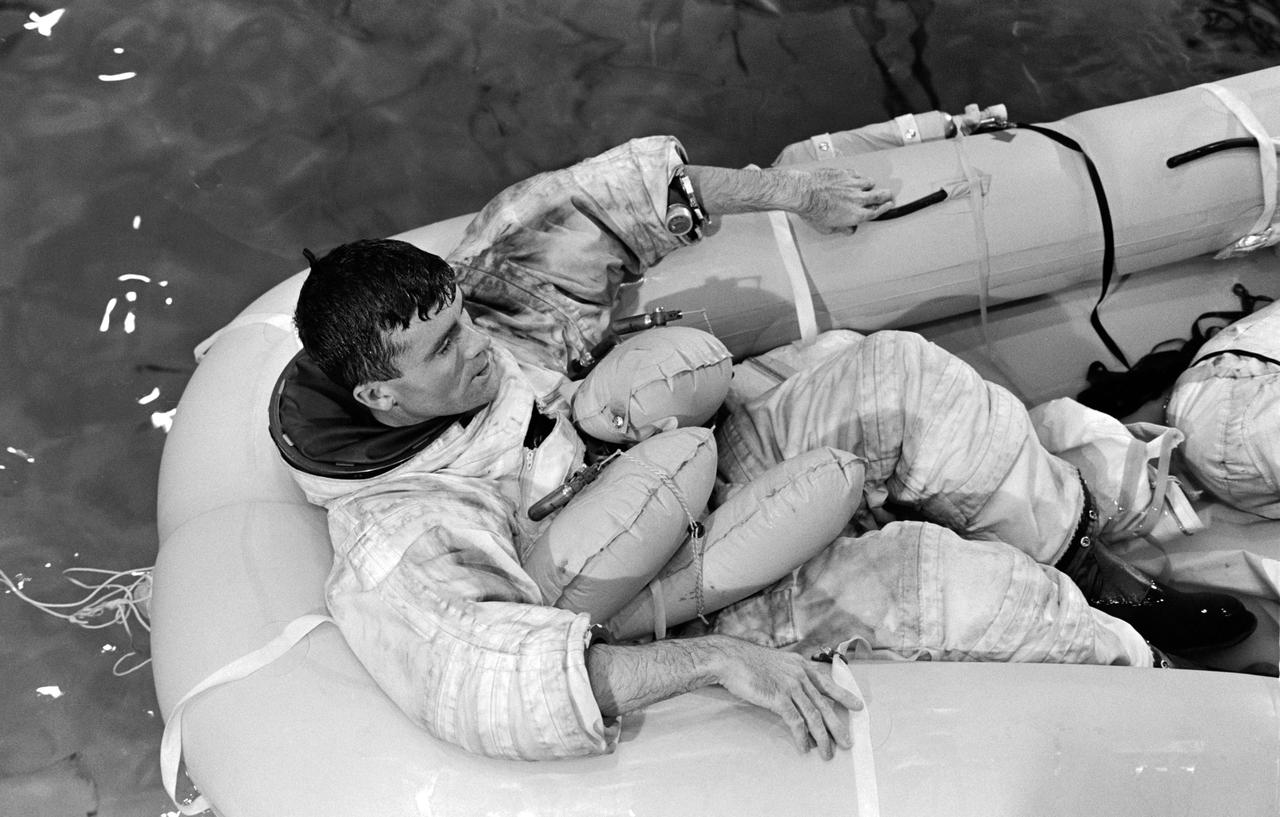
S70-31143 (17 Jan. 1970) --- Astronaut Fred W. Haise Jr., lunar module pilot of the Apollo 13 lunar landing mission, participates in water egress training in a water tank in Building 260 at the Manned Spacecraft Center.
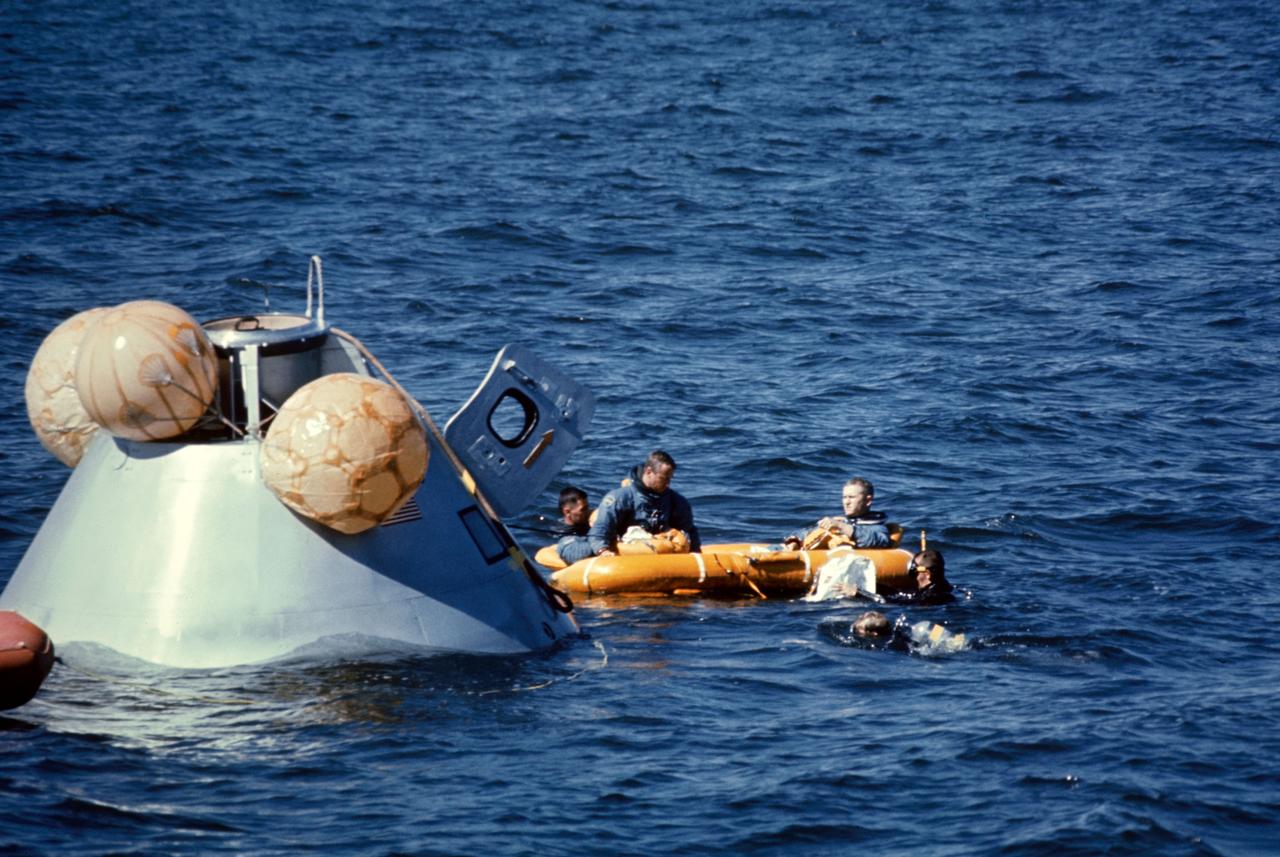
S68-53223 (19 Oct. 1968) --- The prime crew of the Apollo 8 mission in life raft awaiting pickup by U.S. Coast Guard helicopter during water egress training in the Gulf of Mexico. They had just egressed Apollo Boilerplate 1102A, at left. Inflated bags were used to upright the boilerplate. Left to right, are astronauts William A. Anders, lunar module pilot; and Frank Borman, commander. A team of MSC swimmers assisted with the training exercise.
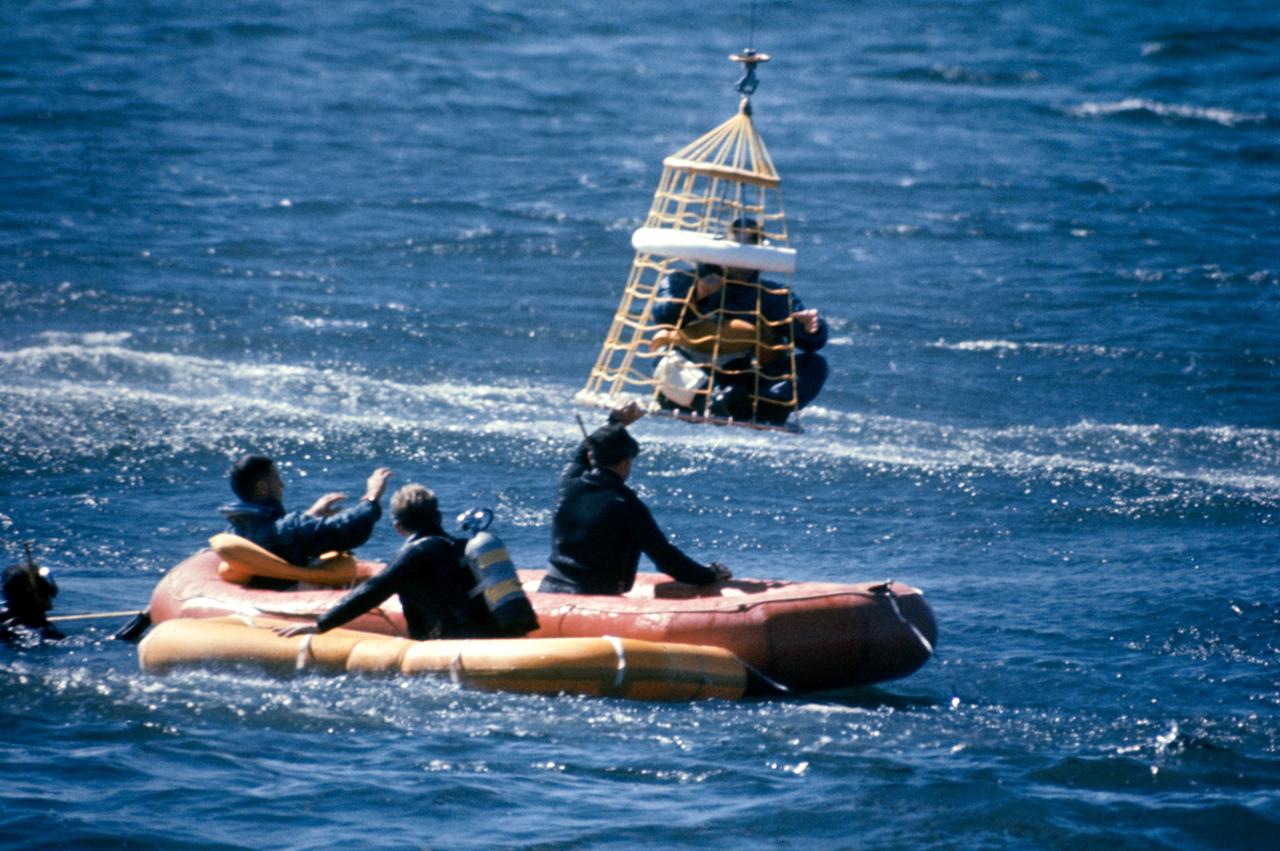
S68-53217 (19 Oct. 1968) --- Astronaut James A. Lovell Jr., command module pilot of the Apollo 8 prime crew, in special net being hoisted up to a U.S. Coast Guard helicopter during water egress training in the Gulf of Mexico. Awaiting his turn for helicopter pickup is astronaut William A. Anders (in raft), lunar module pilot. Astronaut Frank Borman, commander, had already been picked up. A team of Manned Spacecraft Center (MSC) swimmers assisted with the training exercise.
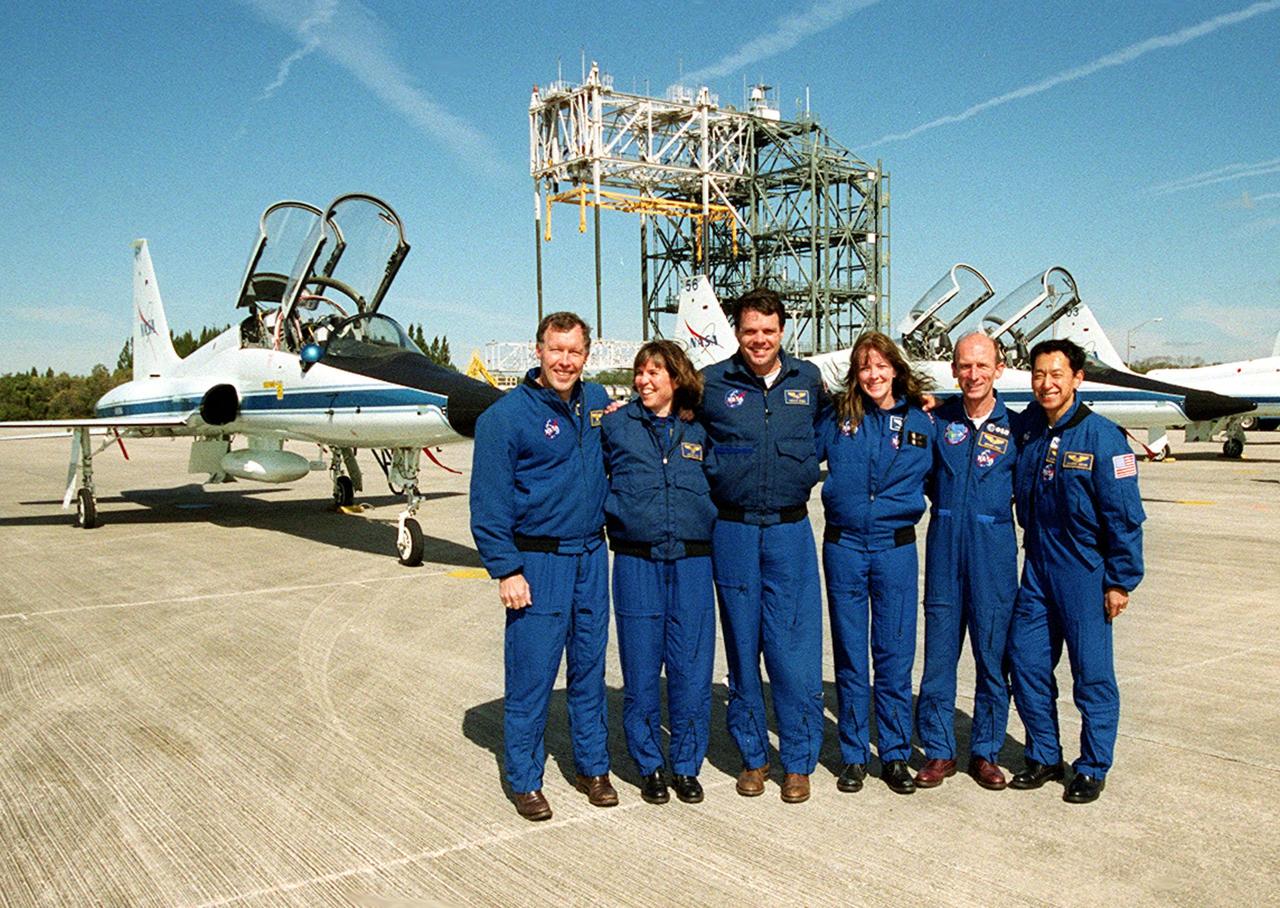
The STS-99 crew pose for a photograph after their arrival at the Shuttle Landing Facility to prepare for launch. From left are Pilot Dominic Gorie, Mission Specialist Janice Voss (Ph.D.), Commander Kevin Kregel, and Mission Specialists Janet Lynn Kavandi (Ph.D.), Gerhard Thiele (Ph.D.) and Mamoru Mohri (Ph.D.). Thiele is with the European Space Agency and Mohri is with the National Space Development Agency (NASDA) of Japan. Behind them are the T-38 jets in which they arrived, and the mate/demate device. Over the next few days, the crew will review mission procedures, conduct test flights in the Shuttle Training Aircraft and undergo routine preflight medical exams. STS-99 is the Shuttle Radar Topography Mission, which will chart a new course, using two antennae and a 200-foot-long section of space station-derived mast protruding from the payload bay to produce unrivaled 3-D images of the Earth's surface. The result of the Shuttle Radar Topography Mission could be close to 1 trillion measurements of the Earth's topography. Besides contributing to the production of better maps, these measurements could lead to improved water drainage modeling, more realistic flight simulators, better locations for cell phone towers, and enhanced navigation safety. Launch of Endeavour is scheduled for Jan. 31 at 12:47 p.m. EST
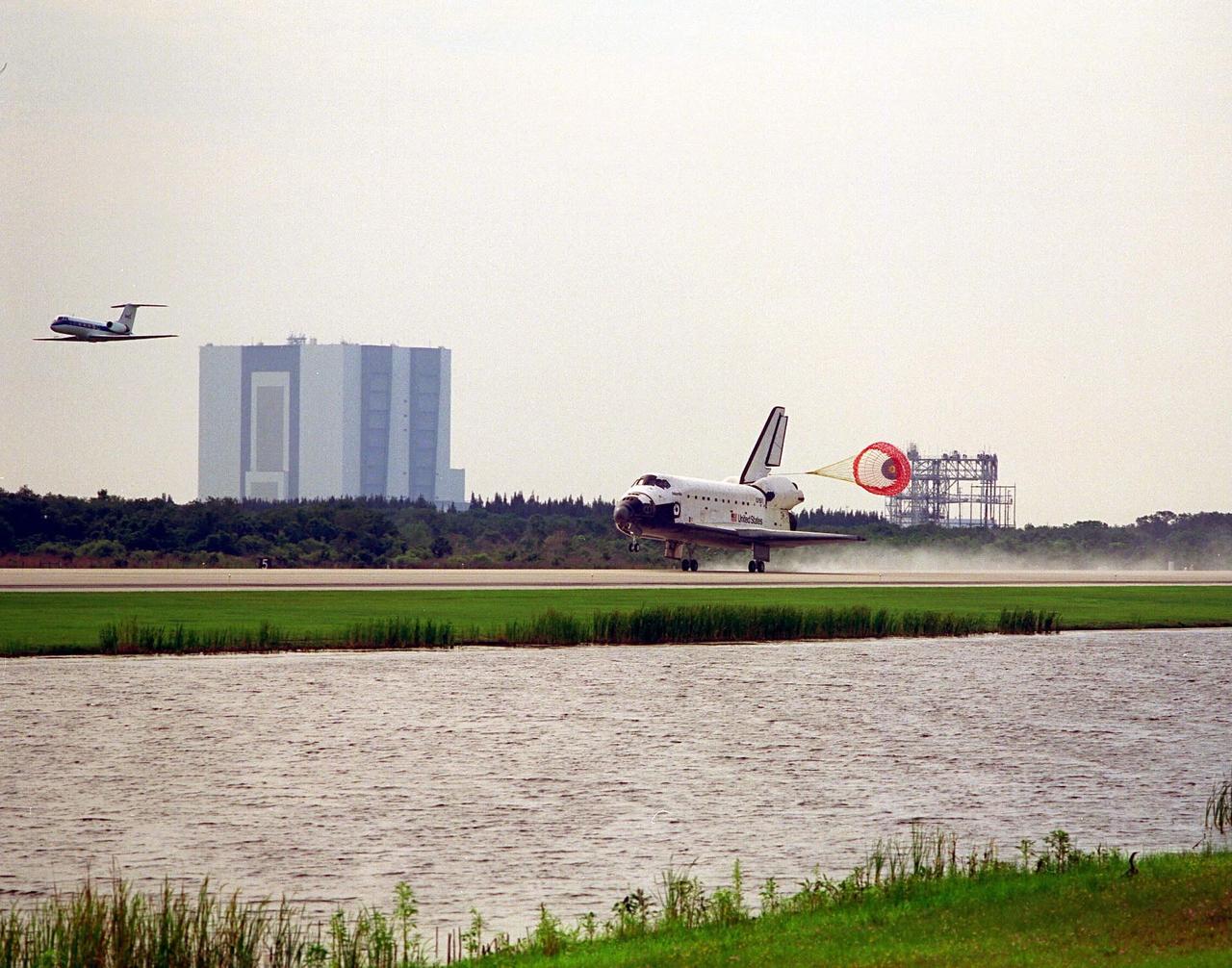
Framed by the Vehicle Assembly Building in the distance, at left, and the Mate-Demate Device, the Space Shuttle Atlantis with its drag chute deployed touches down on KSC’s Runway 33 at the conclusion of the STS-84 mission. The Shuttle Training Aircraft with astronaut Kenneth D. Cockrell at the controls is flying in front of Atlantis. Cockrell is acting deputy chief of the Astronaut Office. Main gear touchdown was at 9:27:44 EDT on May 24, 1997. The first landing opportunity was waved off because of low cloud cover. It was the 37th landing at KSC since the Shuttle program began in 1981, and the eighth consecutive landing at KSC. STS-84 was the sixth of nine planned dockings of the Space Shuttle with the Russian Space Station Mir. Atlantis was docked with the Mir for five days. STS-84 Mission Specialist C. Michael Foale replaced astronaut and Mir 23 crew member Jerry M. Linenger, who has been on the Russian space station since Jan. 15. Linenger returned to Earth on Atlantis with the rest of the STS-84 crew, Mission Commander Charles J. Precourt, Pilot Eileen Marie Collins, and Mission Specialists Carlos I. Noriega, Edward Tsang Lu, Elena V. Kondakova of the Russian Space Agency and Jean-Francois Clervoy of the European Space Agency. Foale is scheduled to remain on the Mir for approximately four months, until he is replaced by STS-86 crew member Wendy B. Lawrence in September. Besides the docking and crew exchange, STS-84 included the transfer of more than 7,300 pounds of water, logistics and science experiments and hardware to and from the Mir. Scientific experiments conducted during the STS-84 mission, and scheduled for Foale’s stay on the Mir, are in the fields of advanced technology, Earth sciences, fundamental biology, human life sciences, International Space Station risk mitigation, microgravity sciences and space sciences