
Pill Transmitter. Advanced Telemetry Devices - Fetal Health Monitor.
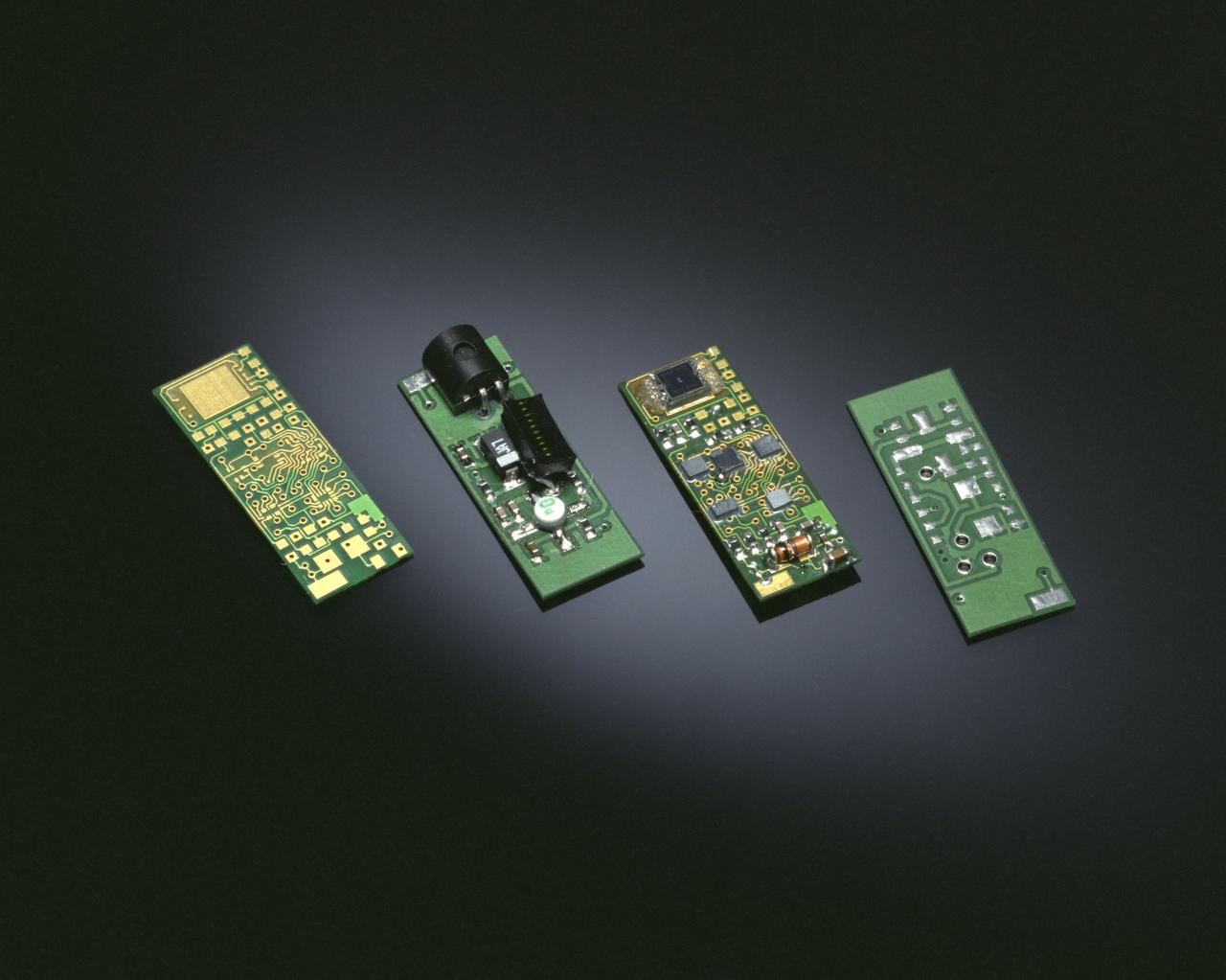
Pill Transmitter. Advanced Telemetry Devices - Fetal Health Monitor.
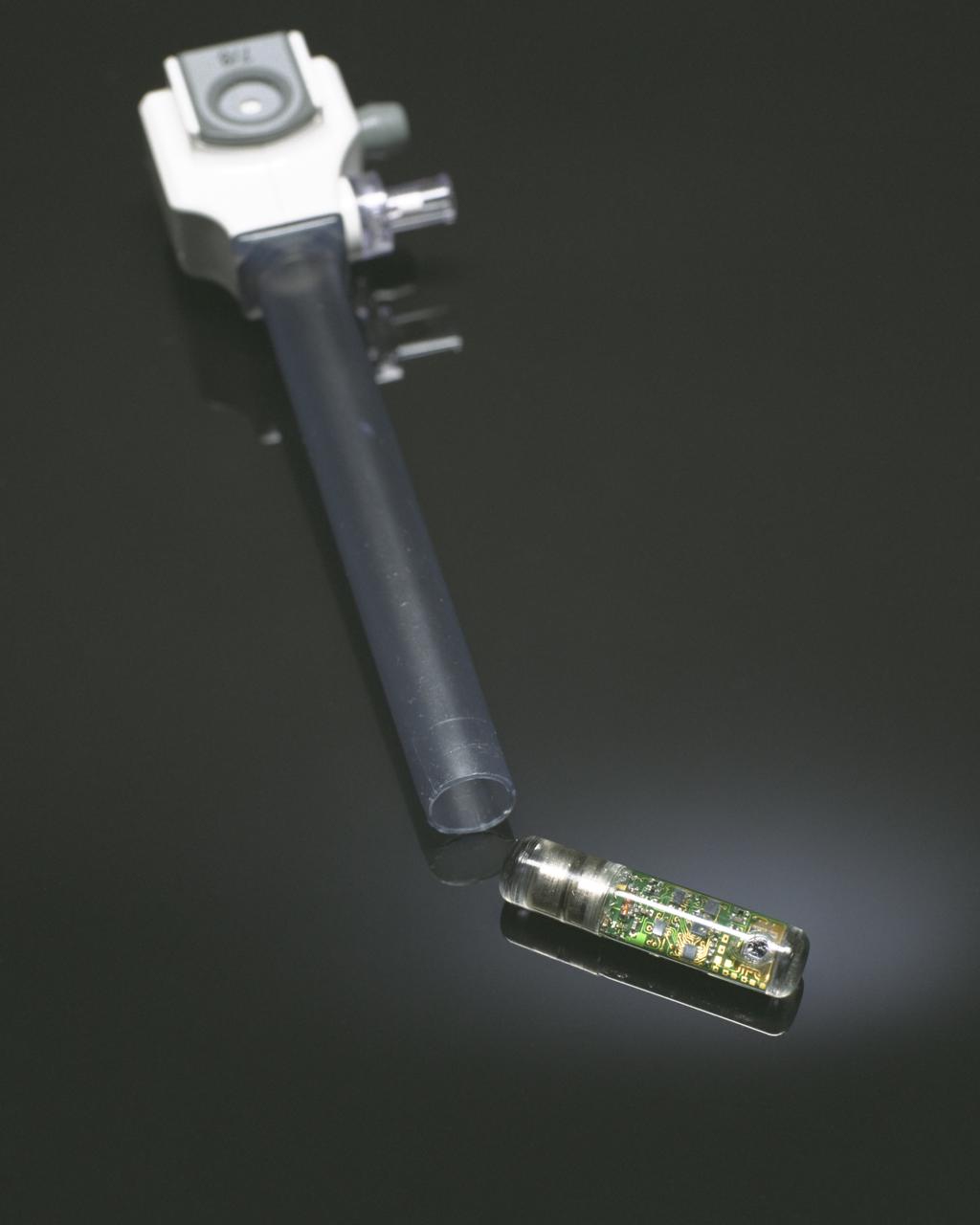
Pill Transmitter. Advanced Telemetry Devices - Fetal Health Monitor.
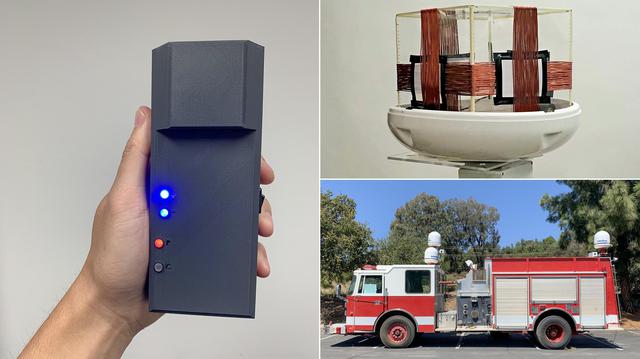
To help locate and track firefighters inside buildings, where other positioning technologies fail, NASA's Jet Propulsion Laboratory and the Department of Homeland Security Science and Technology Directorate (S&T) are developing POINTER. Short for Precision Outdoor and Indoor Navigation and Tracking for Emergency Responders, the system began taking shape in 2014 and is being matured for use by fire departments nationwide. The POINTER system is composed of three parts: a receiver, transmitter, and base station. The receiver (left) has been shrunk from the size of a backpack to the size of a large smartphone, and further development will miniaturize it so it can be easily clipped to a belt buckle. The transmitter (top right) is a system of coils that generate the magnetoquasistatic fields, which — unlike the radio waves used by GPS and radio-frequency identification — are able to pass through construction materials to interact with the receiver, enabling fire crews to track the location and orientation of firefighters. To test the system, transmitters have been attached to an out-of-service firetruck (lower right). Through 2021, POINTER will undergo field tests and a commercial version of POINTER will be made available to fire departments in 2022. https://photojournal.jpl.nasa.gov/catalog/PIA24562
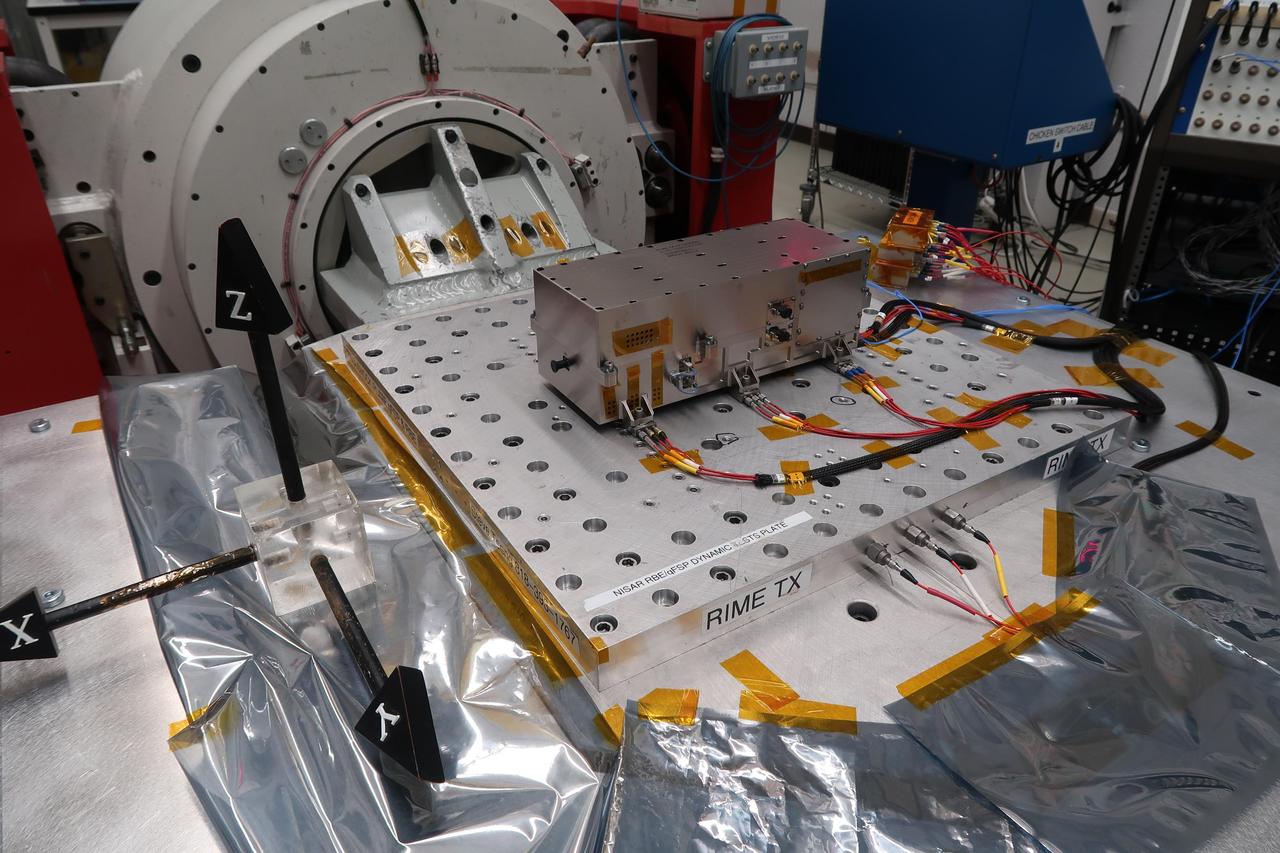
NASA's Jet Propulsion Laboratory built and shipped the receiver, transmitter, and electronics necessary to complete the radar instrument for Jupiter Icy Moons Explorer (JUICE), the ESA (European Space Agency) mission to explore Jupiter and its three large icy moons. In this photo, shot at JPL on April 27, 2020, the transmitter undergoes random vibration testing to ensure the instrument can survive the shaking that comes with launch. Part of an instrument called Radar for Icy Moon Exploration, or RIME, the transmitter sends out radio waves, which can penetrate surfaces of icy moons and help scientists "see" underneath. A collaboration between JPL and the Italian Space Agency (ASI), RIME is one of 10 instruments that will fly aboard ESA's Jupiter Icy Moons Explorer (JUICE) mission, set to launch in 2022. https://photojournal.jpl.nasa.gov/catalog/PIA24024
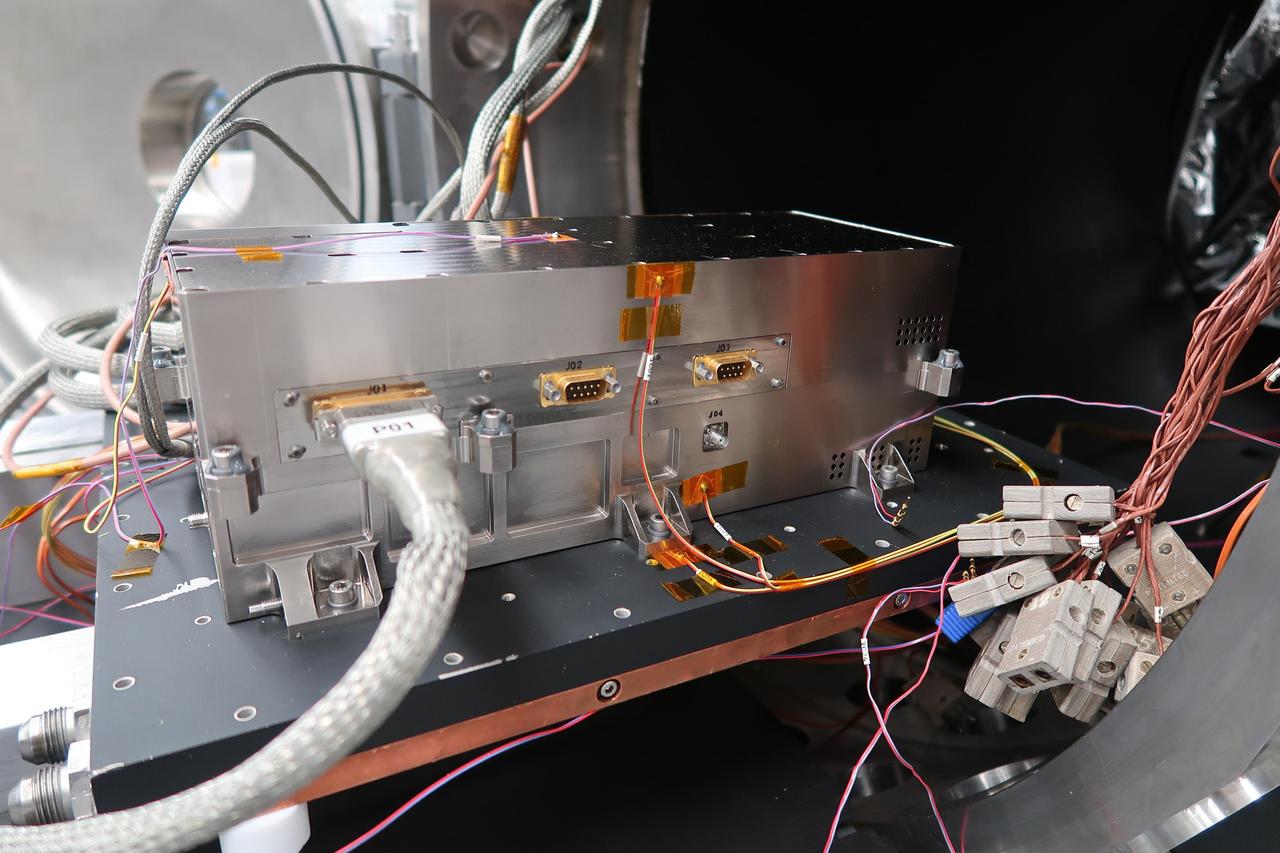
NASA's Jet Propulsion Laboratory built and shipped the receiver, transmitter and electronics necessary to complete the radar instrument for ESA's (European Space Agency's) Jupiter Icy Moons Explorer (JUICE) mission. Set to launch in 2022, JUICE will explore Jupiter and its three large icy moons. The transmitter works by sending out radio waves, which can penetrate surfaces of icy moons so that scientists "see" underneath. The instrument, called Radar for Icy Moon Exploration, or RIME, is a collaboration by JPL and the Italian Space Agency (ASI) and is one of ten instruments that will fly aboard. This photo, shot at JPL on July 23, 2020, shows the transmitter as it exits a thermal vacuum chamber. The test is one of several designed to ensure the hardware can survive the conditions of space travel. The thermal chamber simulates deep space by creating a vacuum and by varying the temperatures to match those the instrument will experience over the life of the mission. https://photojournal.jpl.nasa.gov/catalog/PIA24025
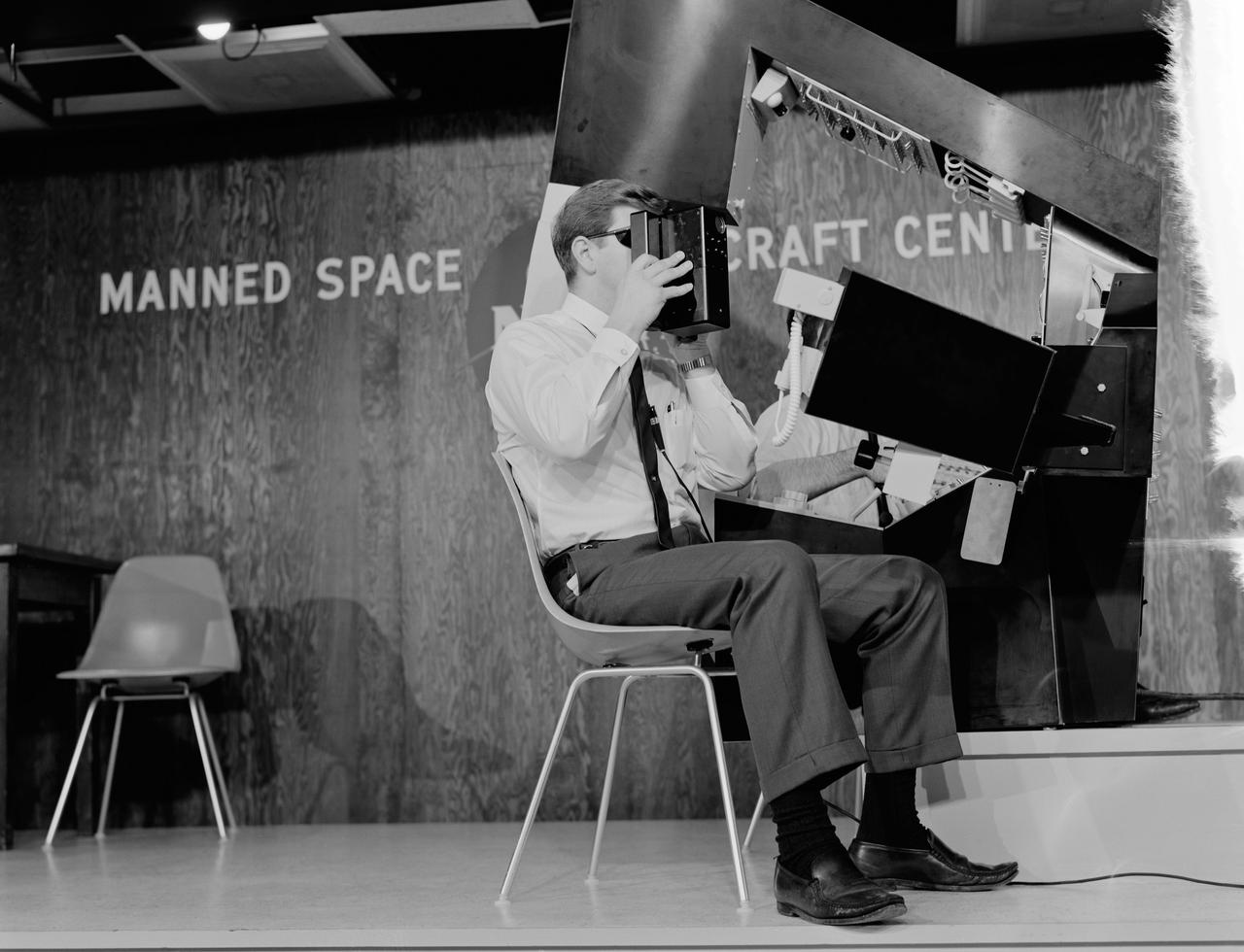
S65-42598 (10 Nov. 1965) --- Douglas S. Idlly, Electromagnetic Systems Branch, Instrumentation and Electronic Systems Division, illustrates an Optical Communications Transmitter (LASER) during a briefing at the news center of the Manned Spacecraft Center in Houston, Texas. Photo credit: NASA
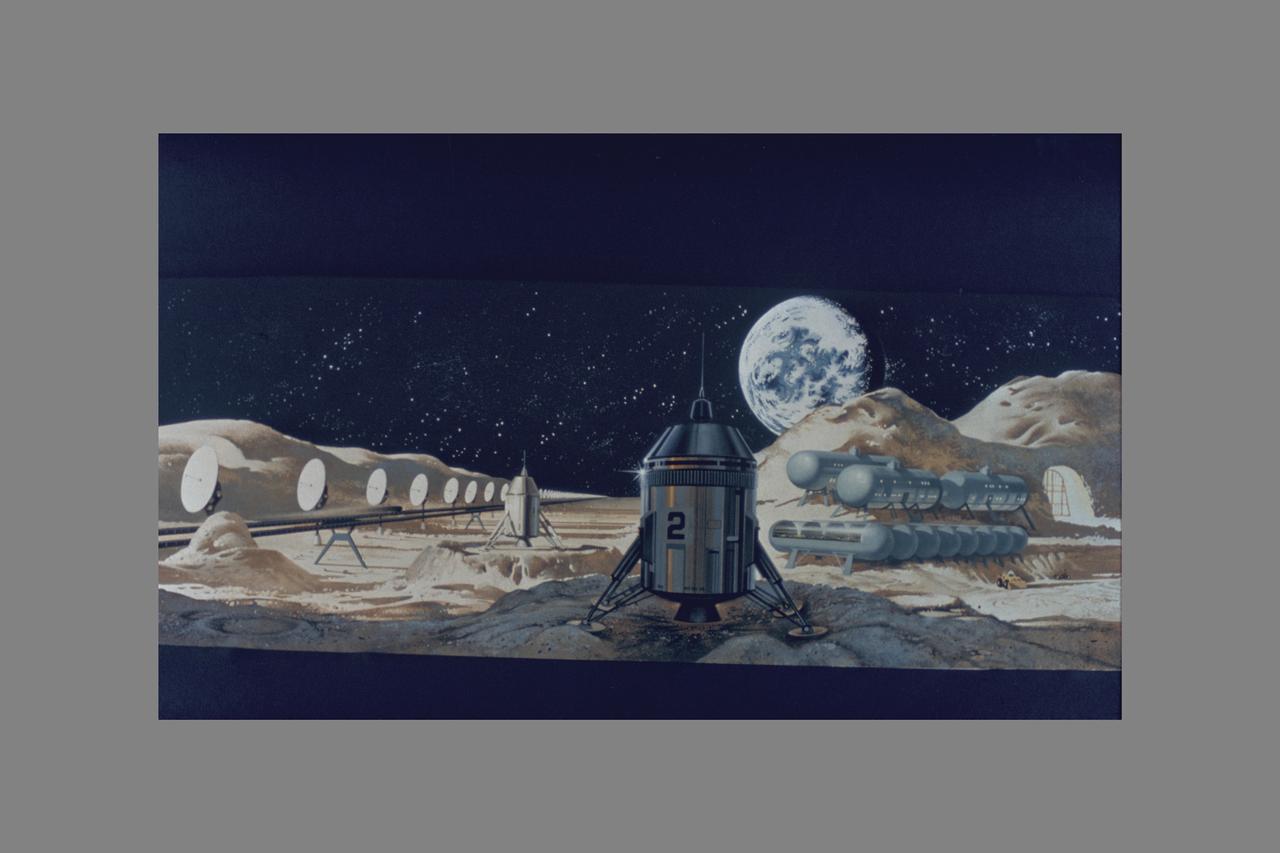
View of Moon of Equipment (transmitters). Space Colonization - Artwork.
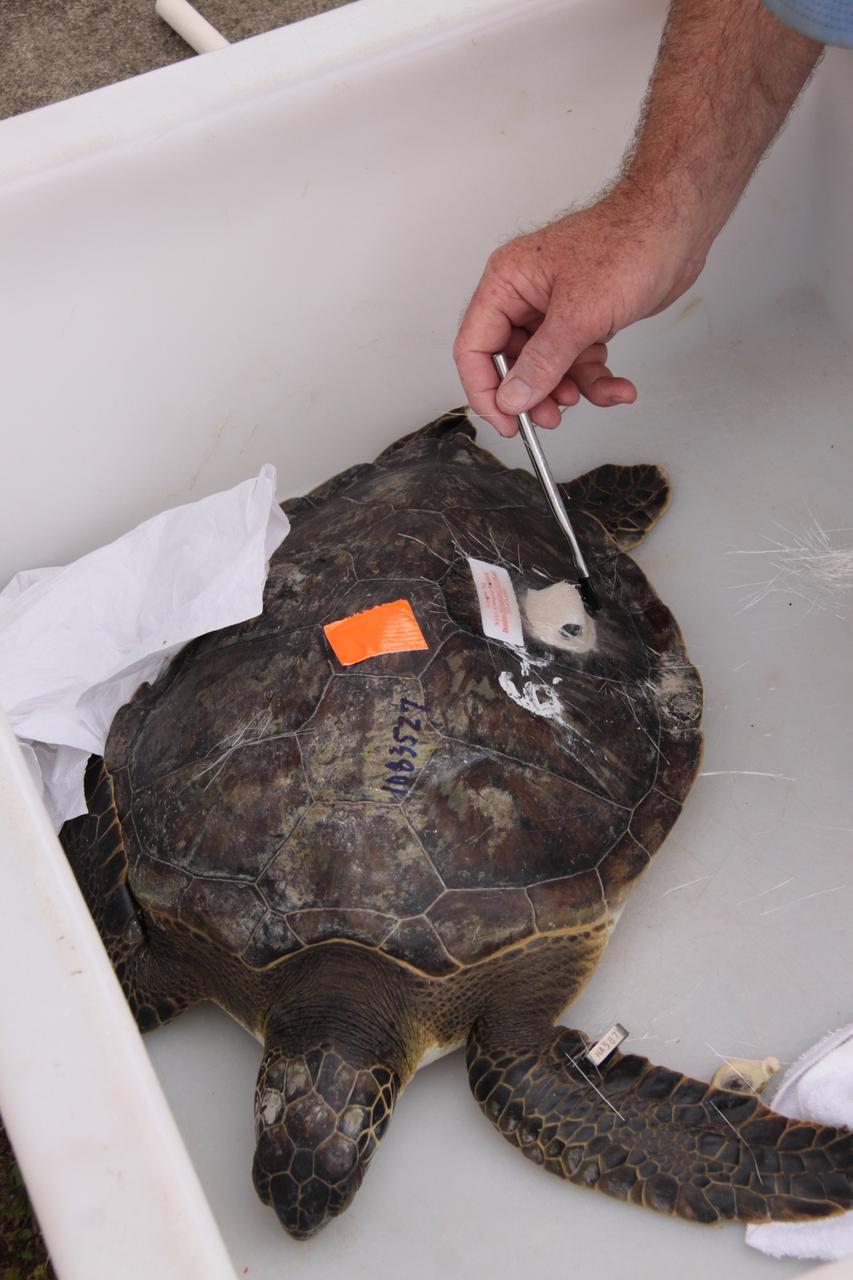
KSC WILDLIFE - TRACKING TRANSMITTERS BEING ATTACHED TO SEA TURTLES
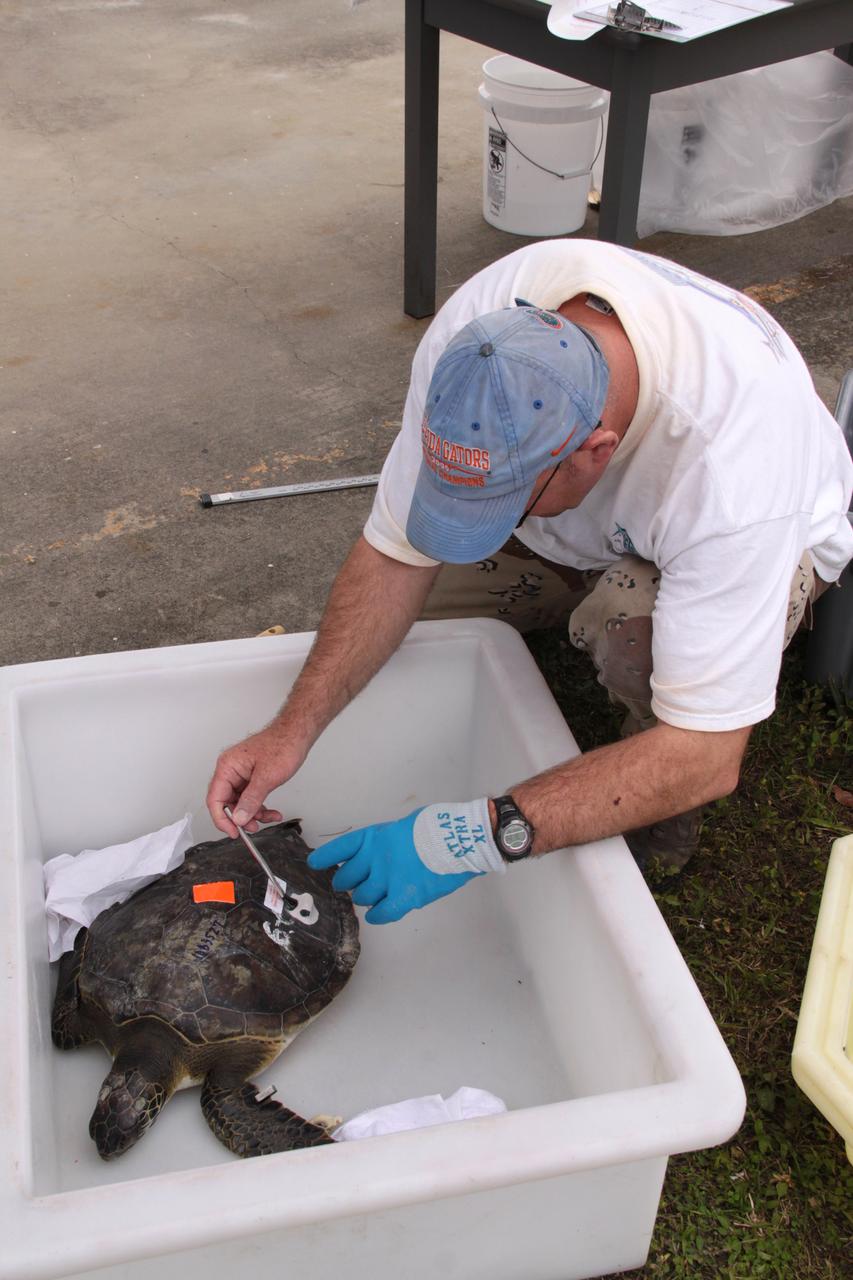
KSC WILDLIFE - TRACKING TRANSMITTERS BEING ATTACHED TO SEA TURTLES
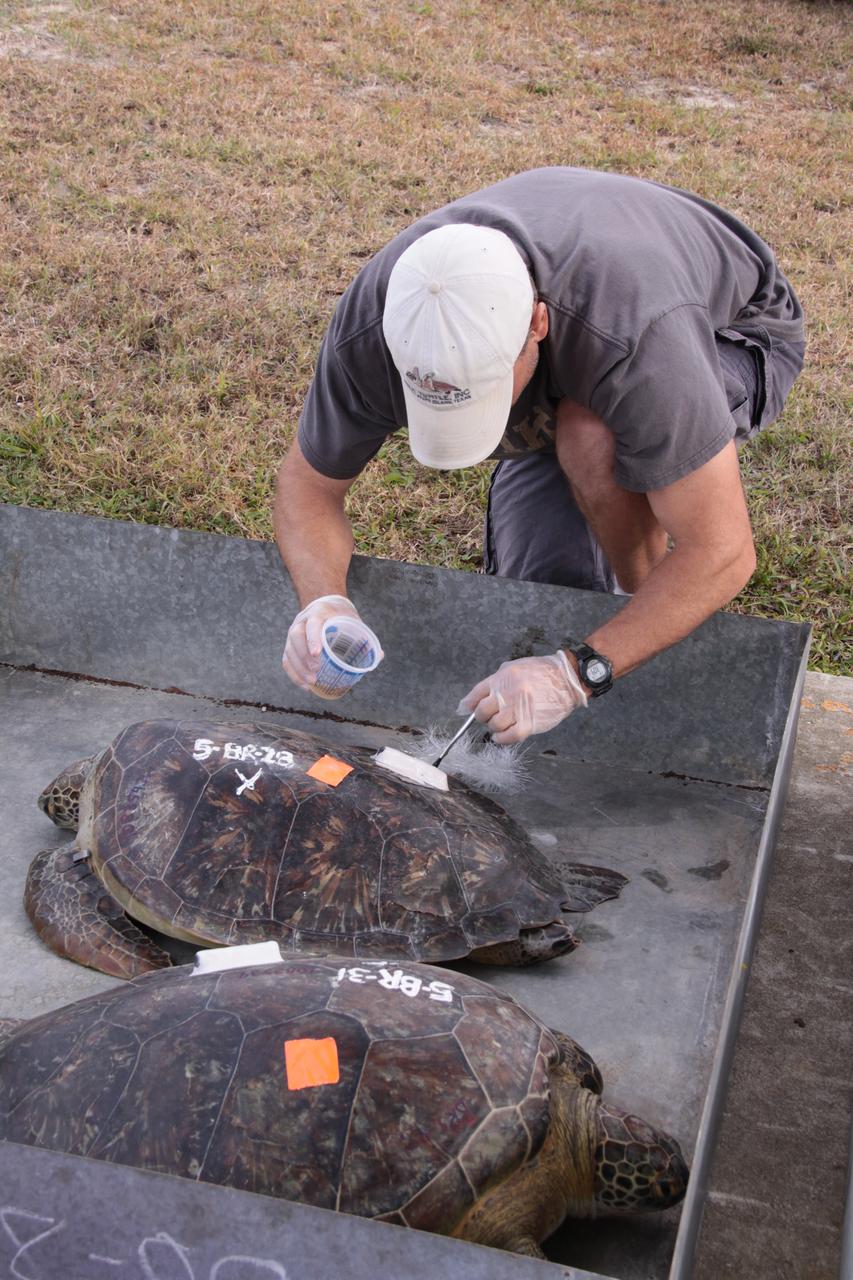
KSC WILDLIFE - TRACKING TRANSMITTERS BEING ATTACHED TO SEA TURTLES
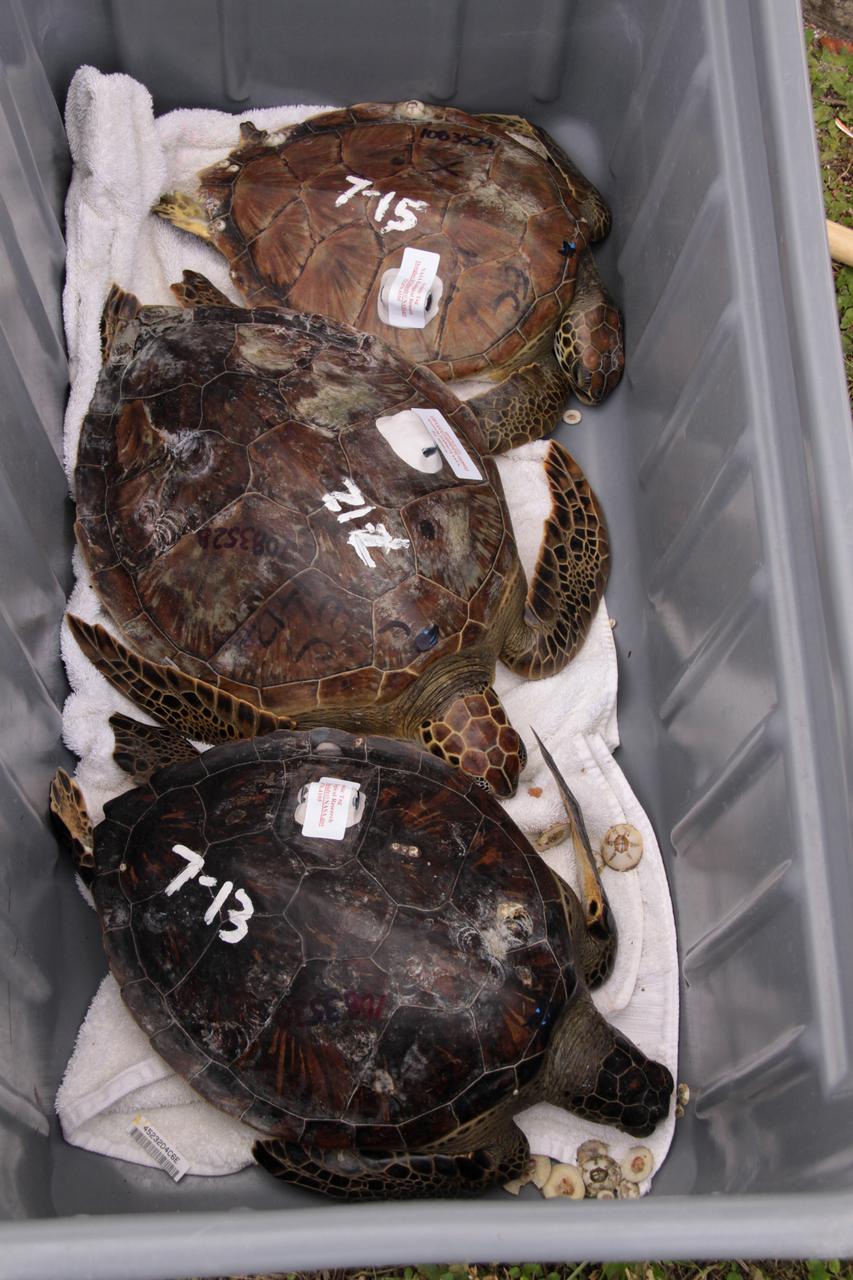
KSC WILDLIFE - TRACKING TRANSMITTERS BEING ATTACHED TO SEA TURTLES
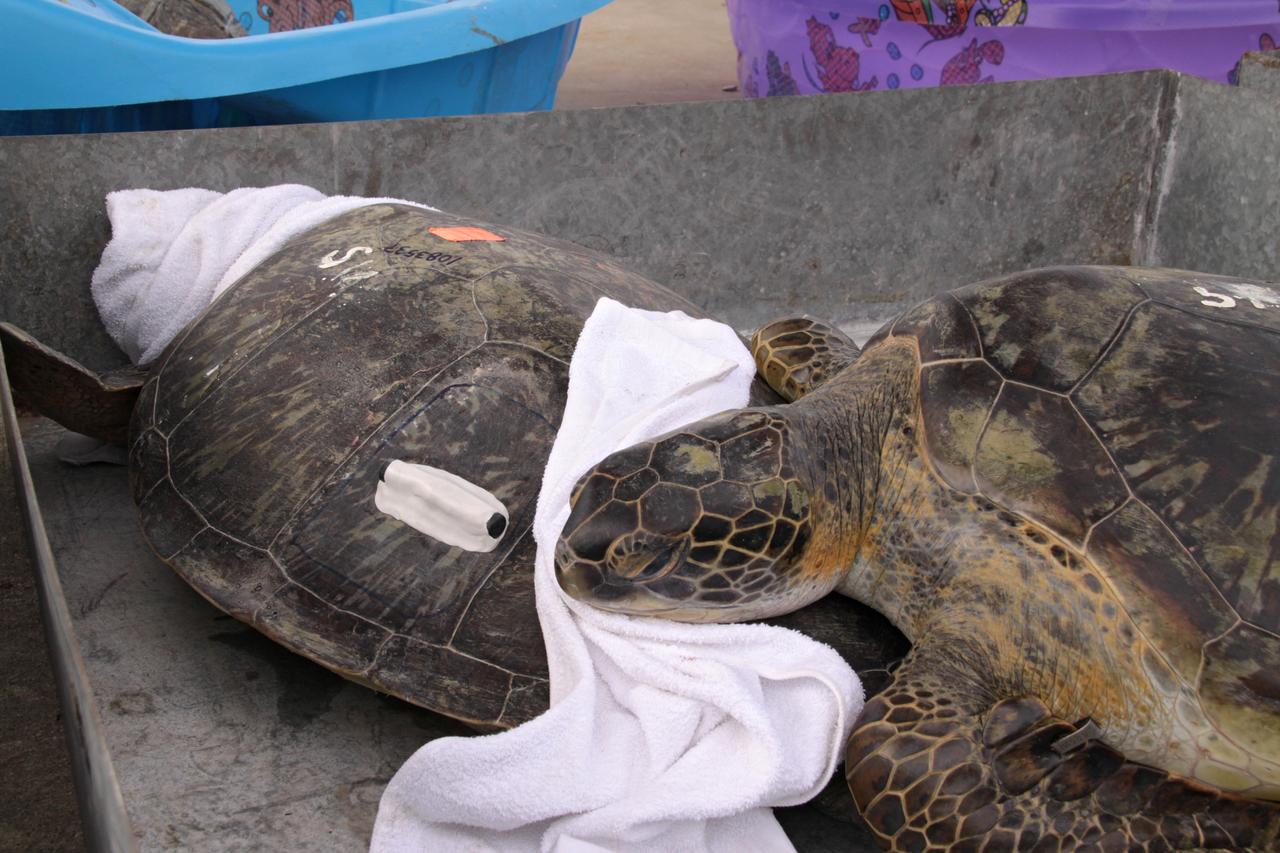
KSC WILDLIFE - TRACKING TRANSMITTERS BEING ATTACHED TO SEA TURTLES
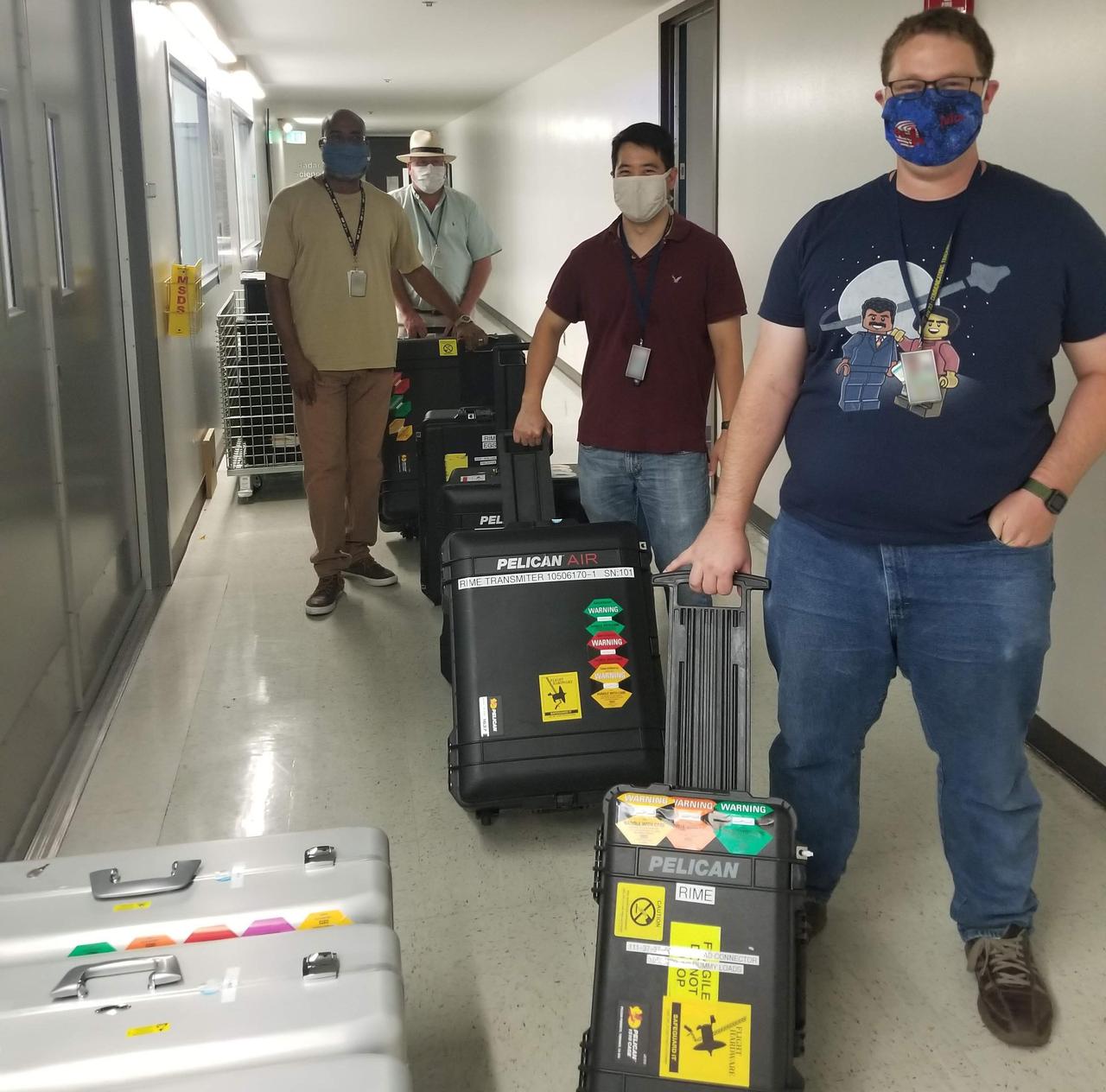
NASA's Jet Propulsion Laboratory built and shipped the receiver, transmitter and electronics necessary to complete the radar instrument for the Jupiter Icy Moons Explorer (JUICE) mission. Set to launch in 2022, JUICE is the ESA (European Space Agency) mission to explore Jupiter and its three large icy moons. From front: JPL engineers and technicians Jeremy Steinert, Jordan Tanabe, Glenn Jeffery, and Robert Johnson follow COVID-19 Safe-at-Work guidelines as they transport the transmitter and electronics on Aug. 19, 2020, for shipping to the Italian Space Agency (ASI). ASI is collaborating with JPL to build the instrument, called Radar for Icy Moon Exploration (RIME). It is one of 10 instruments that will fly aboard JUICE. https://photojournal.jpl.nasa.gov/catalog/PIA24026
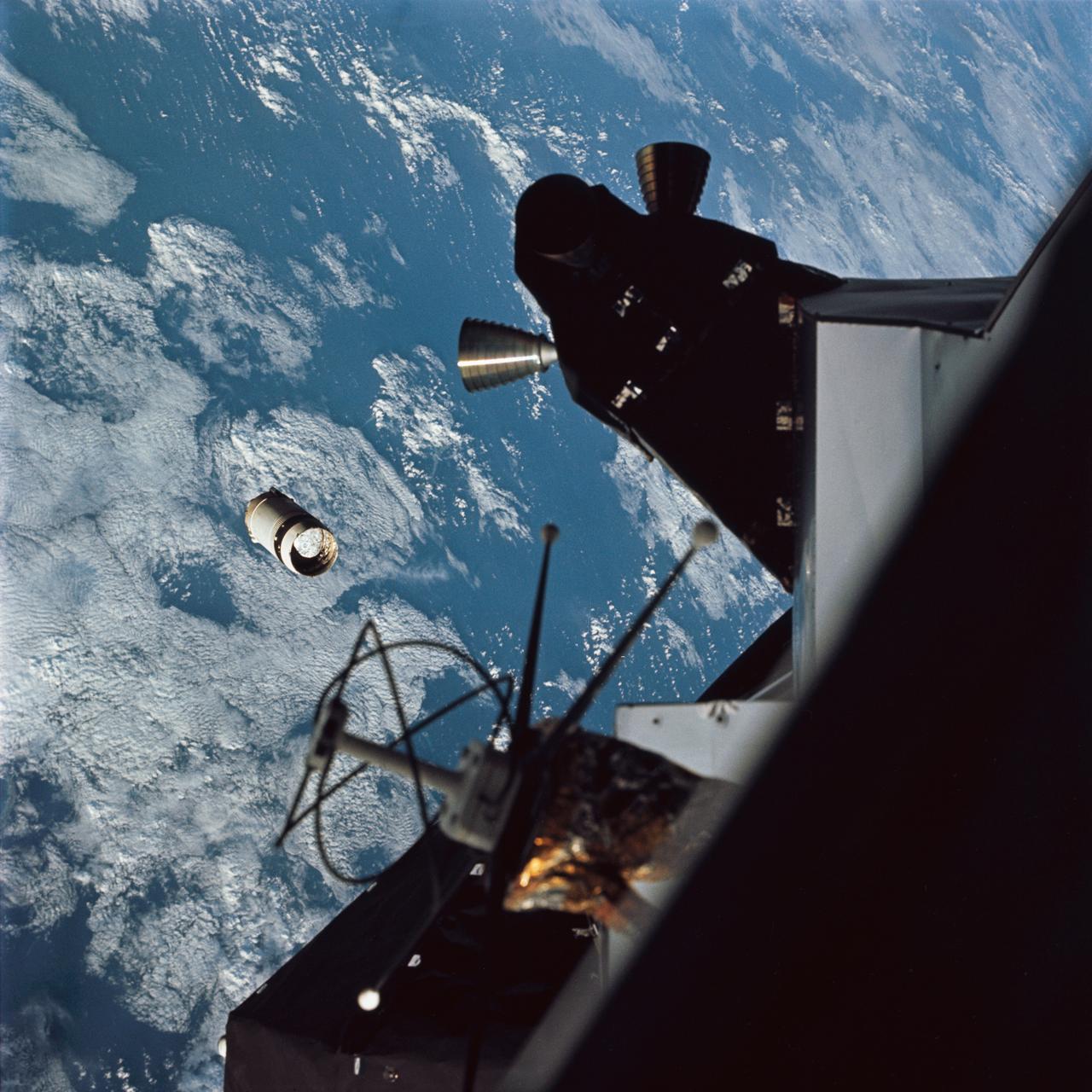
View of the Lunar Module (LM) 3 and Service Module (SM) LM Adapter. Film magazine was A,film type was SO-368 Ektachrome with 0.460 - 0.710 micrometers film / filter transmittance response and haze filter, 80mm lens.
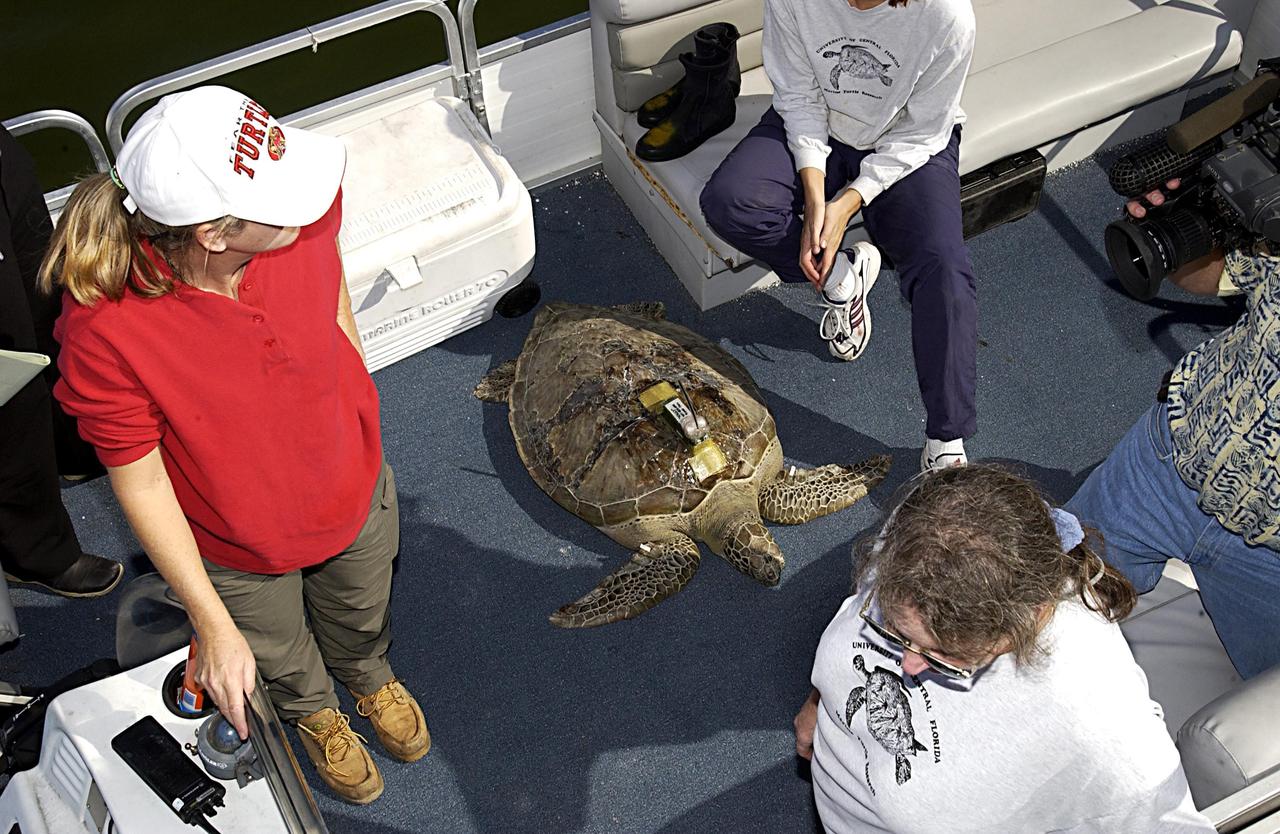
KENNEDY SPACE CENTER, FLA. -- A large sea turtle with a transmitter lies in the skiff that will return it to the Mosquito Lagoon. It is one of several turtles found stunned, impacted by the unseasonal cold temperatures experienced in Central Florida. The cooperative effort of KSC contractor Dynamac Corporation's Aquatics Program and the Merritt Island National Wildlife Refuge warmed the turtles and evaluated them for release. Most were tagged and one received a transmitter, provided by the University of Central Florida, for satellite tracking. The turtles were then transported through the Haulover Canal to a location away from the main channel and released.
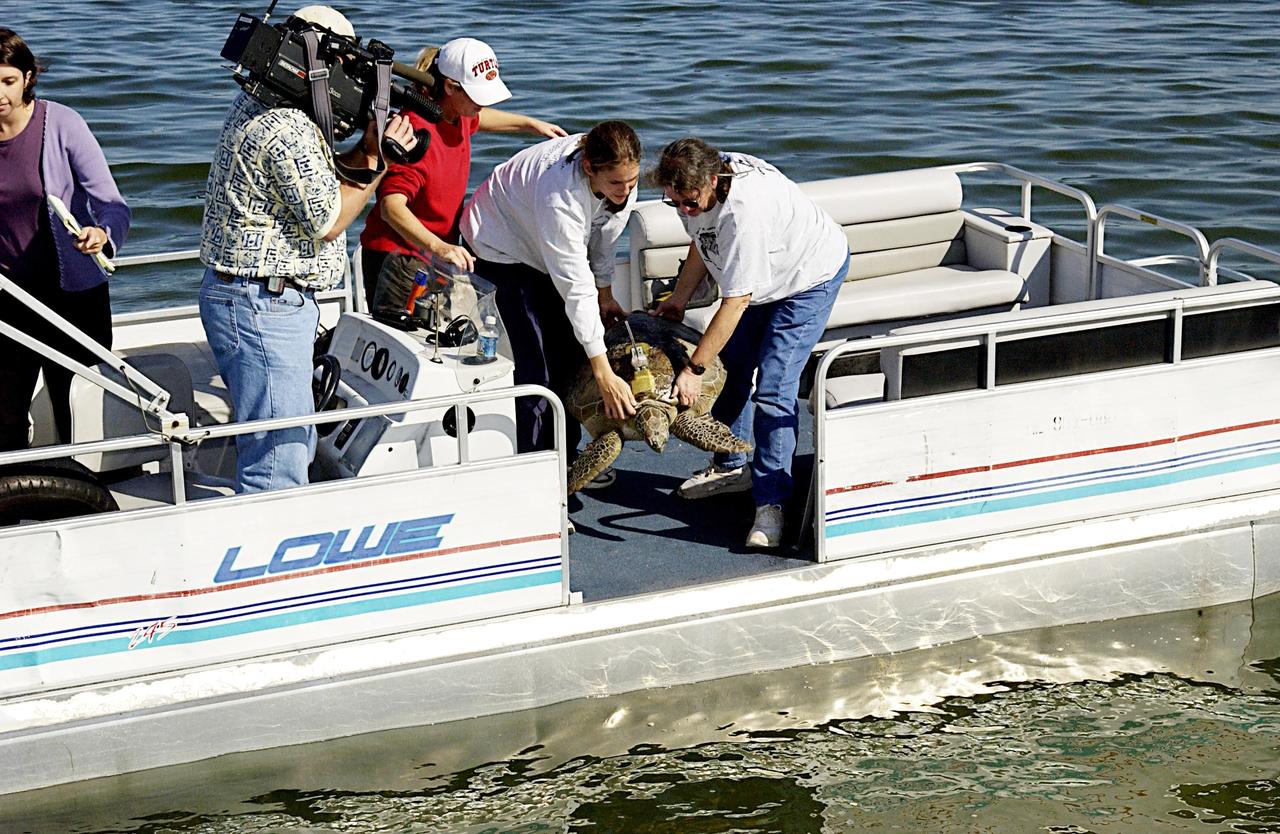
KENNEDY SPACE CENTER, FLA. -- A large sea turtle with a transmitter is ready to be returned to the Mosquito Lagoon. It is one of several turtles found stunned, impacted by the unseasonal cold temperatures experienced in Central Florida. The cooperative effort of KSC contractor Dynamac Corporation's Aquatics Program and the Merritt Island National Wildlife Refuge warmed the turtles and evaluated them for release. Most were tagged and the one received a transmitter, provided by the University of Central Florida, for satellite tracking. The turtles were then transported through the Haulover Canal to a location away from the main channel and released.
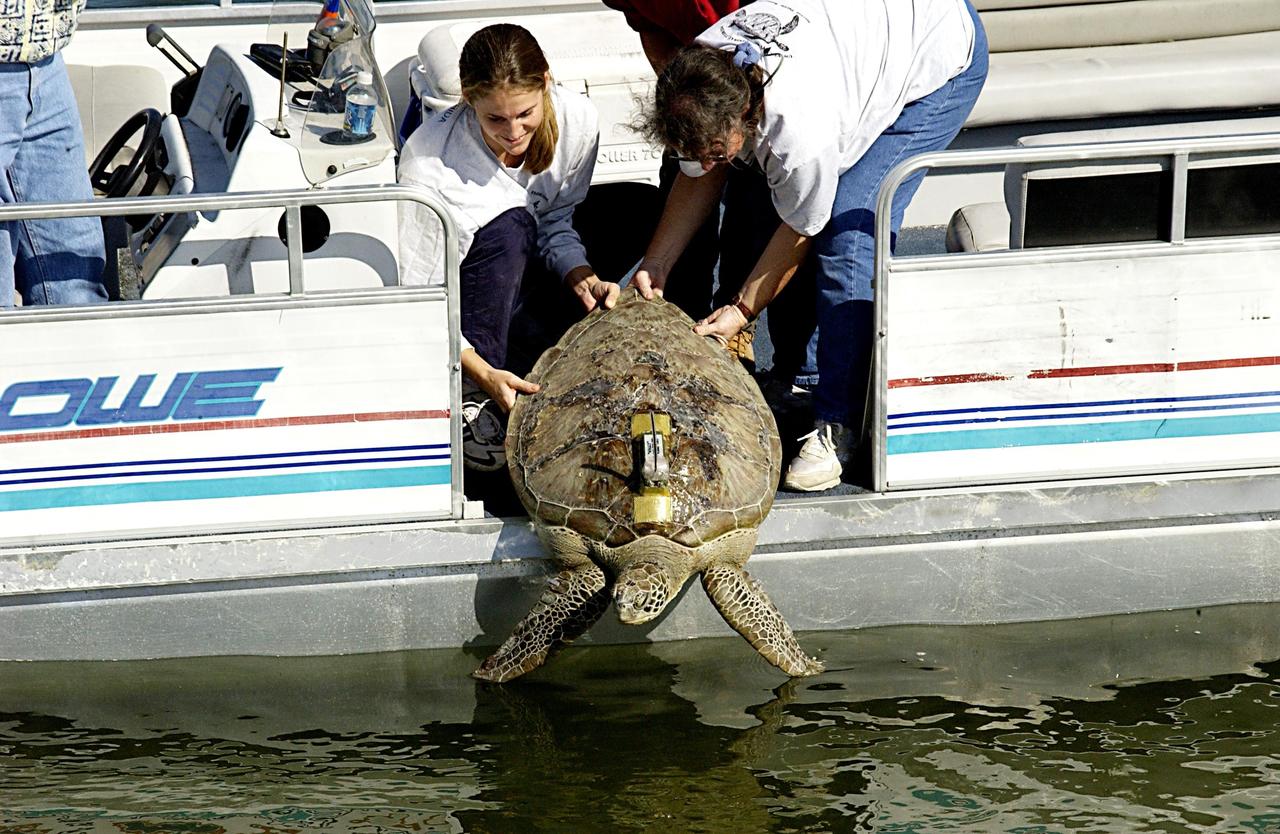
KENNEDY SPACE CENTER, FLA. -- A large sea turtle with a transmitter is released into the Mosquito Lagoon. It is one of several turtles found stunned, impacted by the unseasonal cold temperatures experienced in Central Florida. The cooperative effort of KSC contractor Dynamac Corporation's Aquatics Program and the Merritt Island National Wildlife Refuge warmed the turtles and evaluated them for release. Most were tagged and the largest one received a transmitter, provided by the University of Central Florida, for satellite tracking. The turtles were then transported through the Haulover Canal to a location away from the main channel for release.
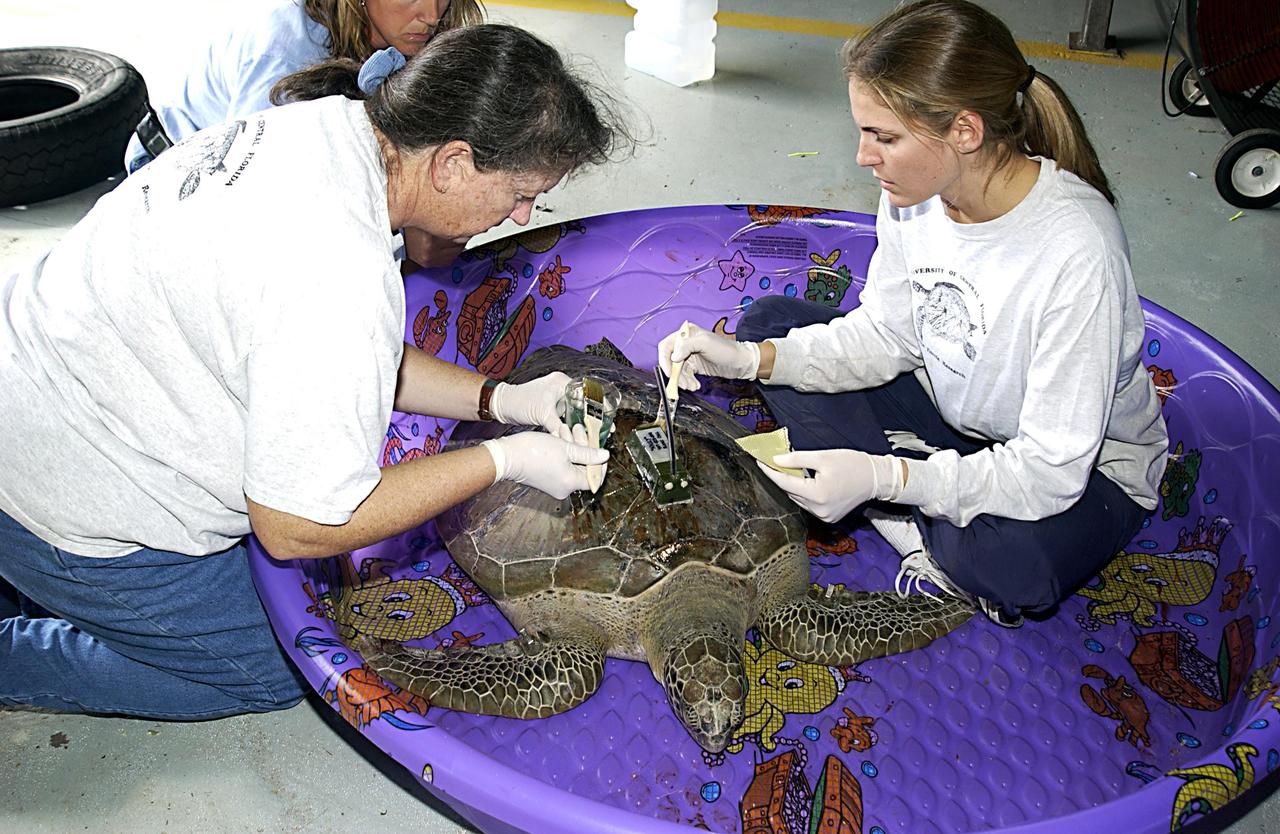
KENNEDY SPACE CENTER, FLA. - A sea turtle rescued from the Mosquito Lagoon is prepared to receive a transmitter on its back. Several turtles were found stunned, impacted by the unseasonal cold temperatures experienced in Central Florida. The cooperative effort of KSC contractor Dynamac Corporation's Aquatics Program and the Merritt Island National Wildlife Refuge warmed the turtles and evaluated them for release. Most were tagged and one received the transmitter, provided by the University of Central Florida, for satellite tracking. The turtles were then transported in a skiff through the Haulover Canal to a location away from the main channel and released into the Indian River Lagoon.
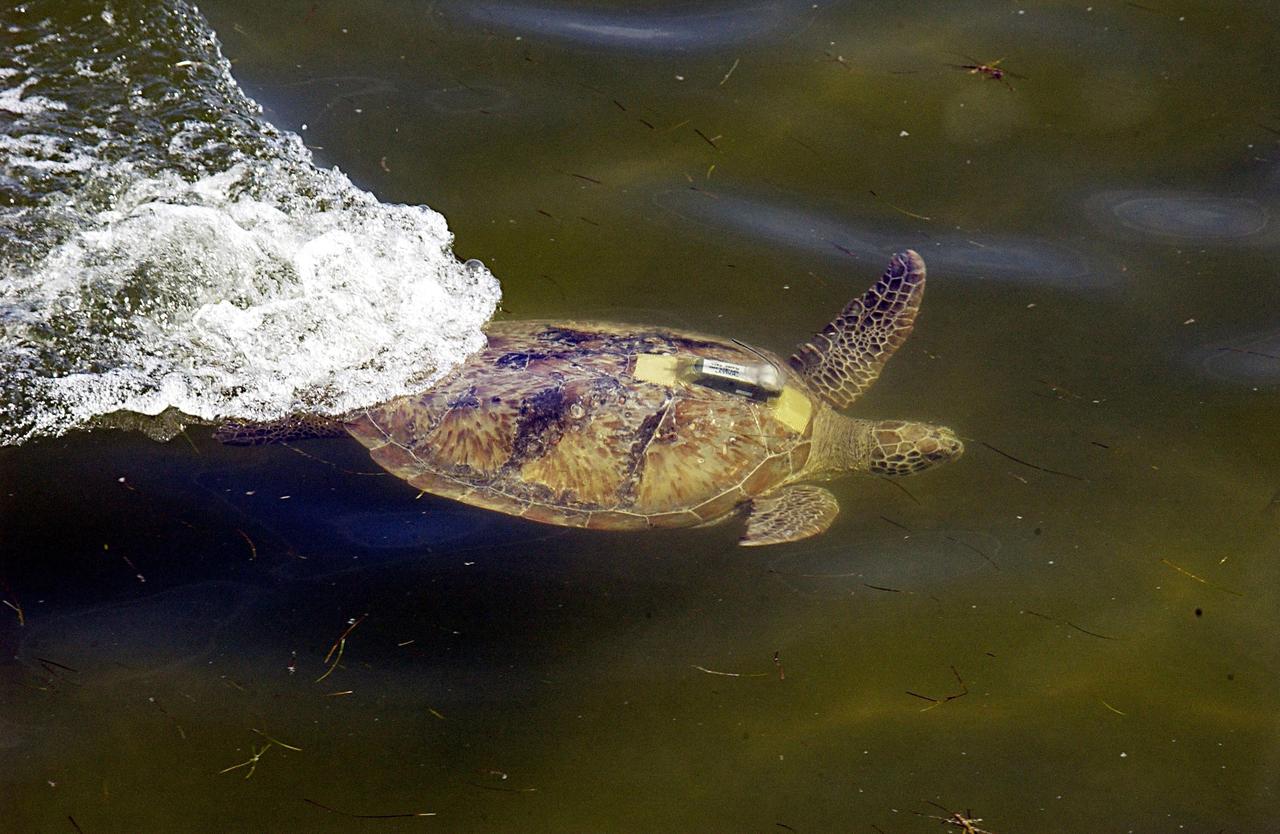
KENNEDY SPACE CENTER, FLA. -- A large sea turtle with a transmitter swims away after release into the Mosquito Lagoon. It is one of several turtles found stunned, impacted by the unseasonal cold temperatures experienced in Central Florida. The cooperative effort of KSC contractor Dynamac Corporation's Aquatics Program and the Merritt Island National Wildlife Refuge warmed the turtles and evaluated them for release. Most were tagged and the largest one received a transmitter, provided by the University of Central Florida, for satellite tracking. The turtles were then transported through the Haulover Canal to a location away from the main channel for release.
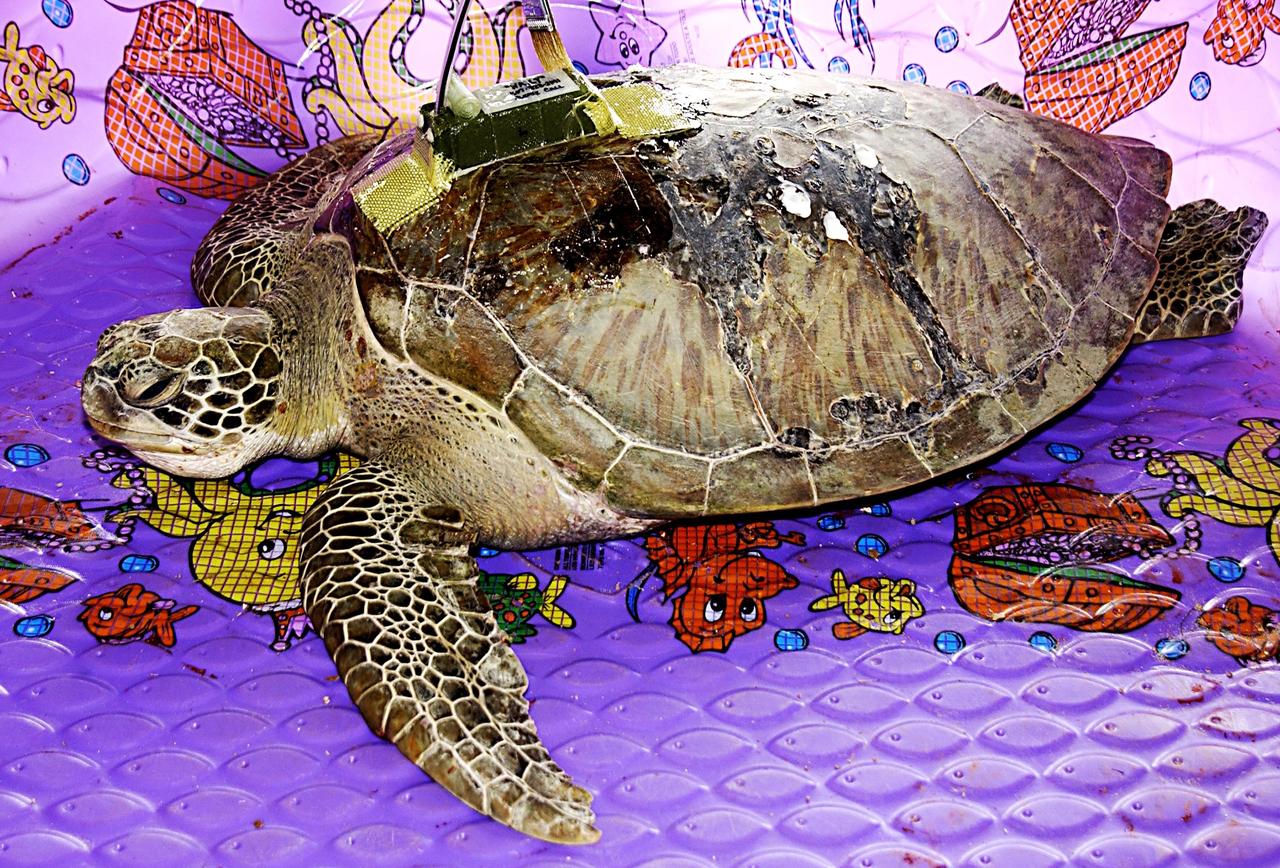
KENNEDY SPACE CENTER, FLA. -- A sea turtle rescued from the Mosquito Lagoon is seen with a transmitter recently attached to its back. Several turtles were found stunned, impacted by the unseasonal cold temperatures experienced in Central Florida. The cooperative effort of KSC contractor Dynamac Corporation's Aquatics Program and the Merritt Island National Wildlife Refuge warmed the turtles and evaluated them for release. Most were tagged and one received the transmitter, provided by the University of Central Florida, for satellite tracking. The turtles were then transported in a skiff through the Haulover Canal to a location away from the main channel and released back into the Mosquito Lagoon.
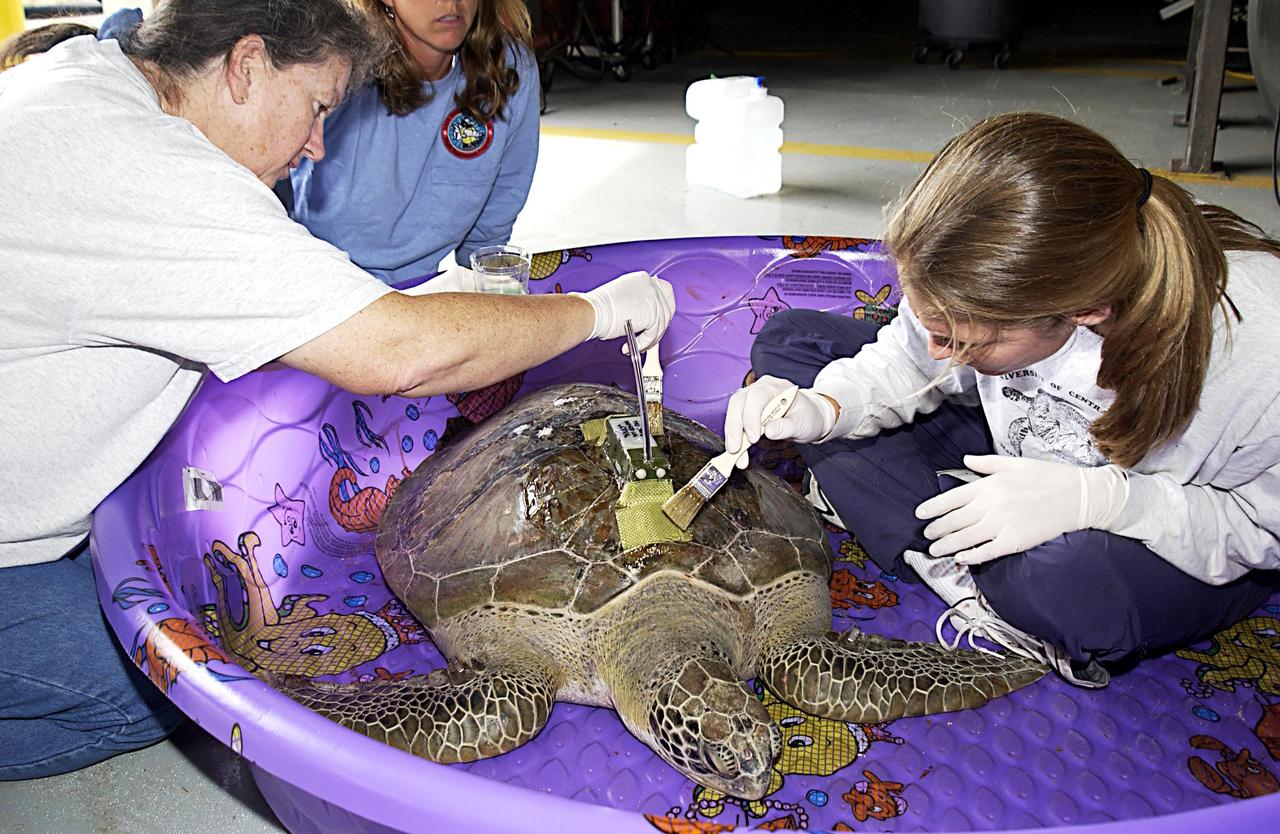
KENNEDY SPACE CENTER, FLA. -- A sea turtle rescued from the Mosquito Lagoon is prepared to receive a transmitter on its back. Several turtles were found stunned, impacted by the unseasonal cold temperatures experienced in Central Florida. The cooperative effort of KSC contractor Dynamac Corporation's Aquatics Program and the Merritt Island National Wildlife Refuge warmed the turtles and evaluated them for release. Most were tagged and one received the transmitter, provided by the University of Central Florida, for satellite tracking. The turtles were then transported in a skiff through the Haulover Canal to a location away from the main channel and released into the Indian River Lagoon.
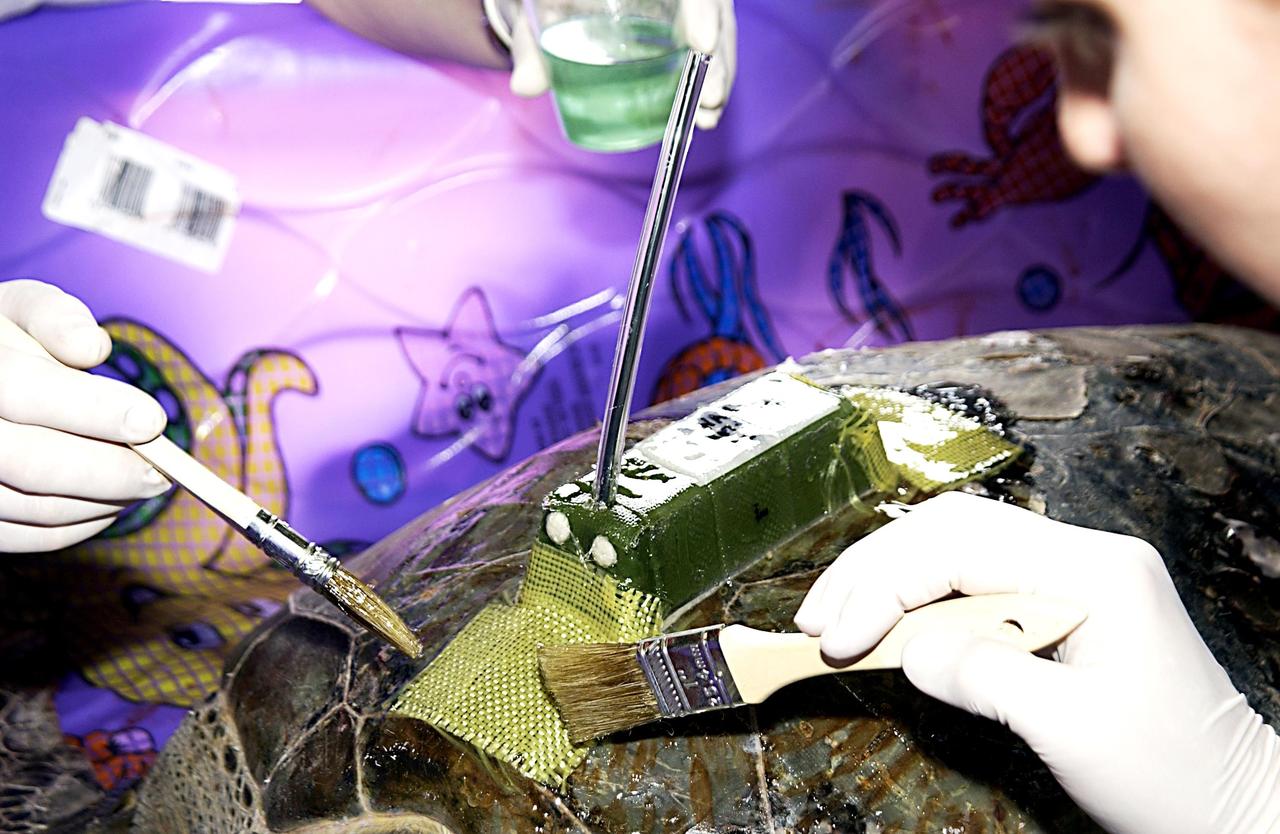
KENNEDY SPACE CENTER, FLA. -- This closeup shows the transmitter being attached to a sea turtle rescued from the Mosquito Lagoon. Several turtles were found stunned, impacted by the unseasonal cold temperatures experienced in Central Florida. The cooperative effort of KSC contractor Dynamac Corporation's Aquatics Program and the Merritt Island National Wildlife Refuge warmed the turtles and evaluated them for release. Most were tagged and one received the transmitter, provided by the University of Central Florida, for satellite tracking. The turtles were then transported in a skiff through the Haulover Canal to a location away from the main channel and released into the Indian River Lagoon.
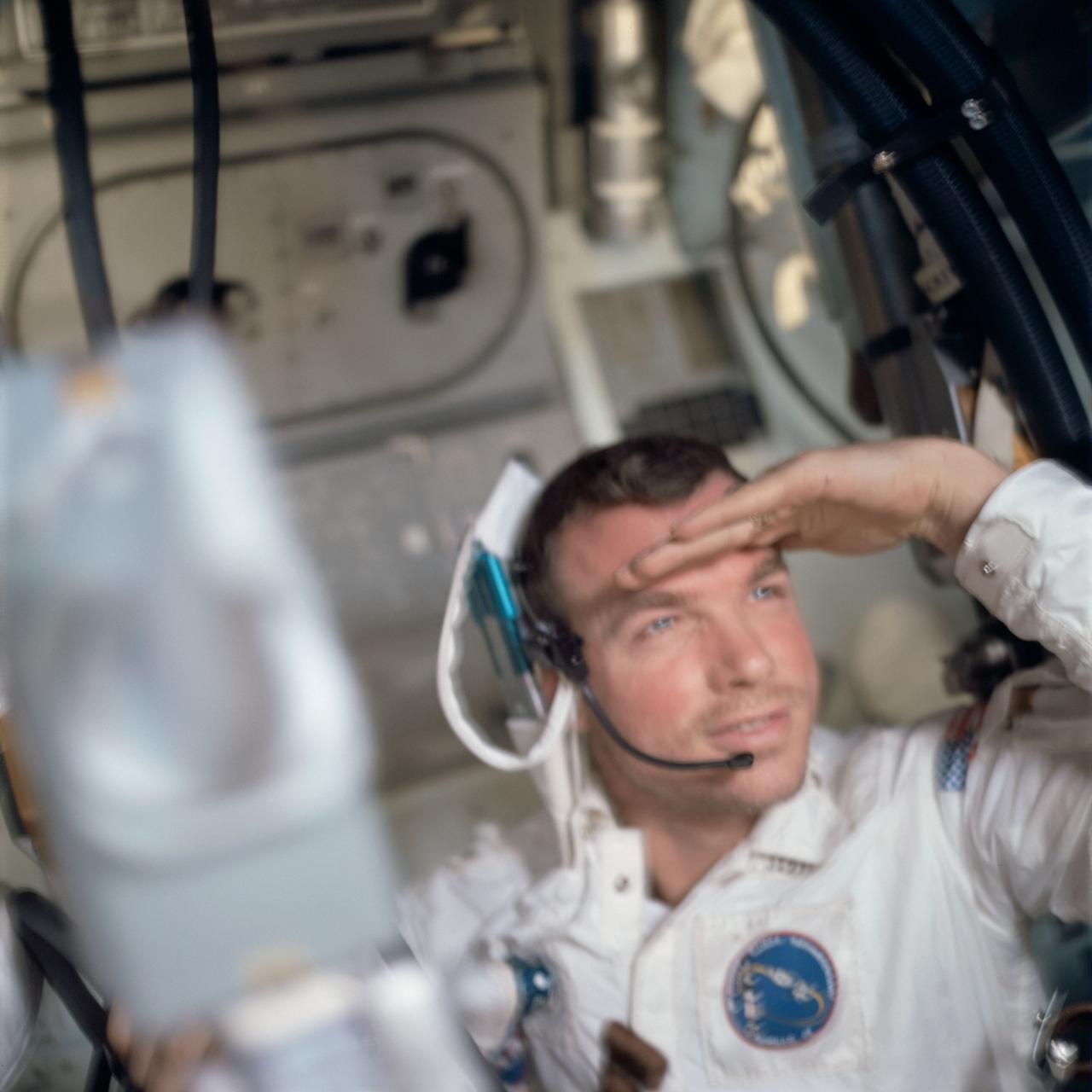
View of Astronaut David R.Scott ,Apollo 9 Command Module pilot, inside the Command Module "Gumdrop" during the Apollo 9 earth-orbital mission. . Film magazine was D,film type was SO-368 Ektachrome with 0.460 - 0.710 micrometers film / filter transmittance response and haze filter,80mm lens.
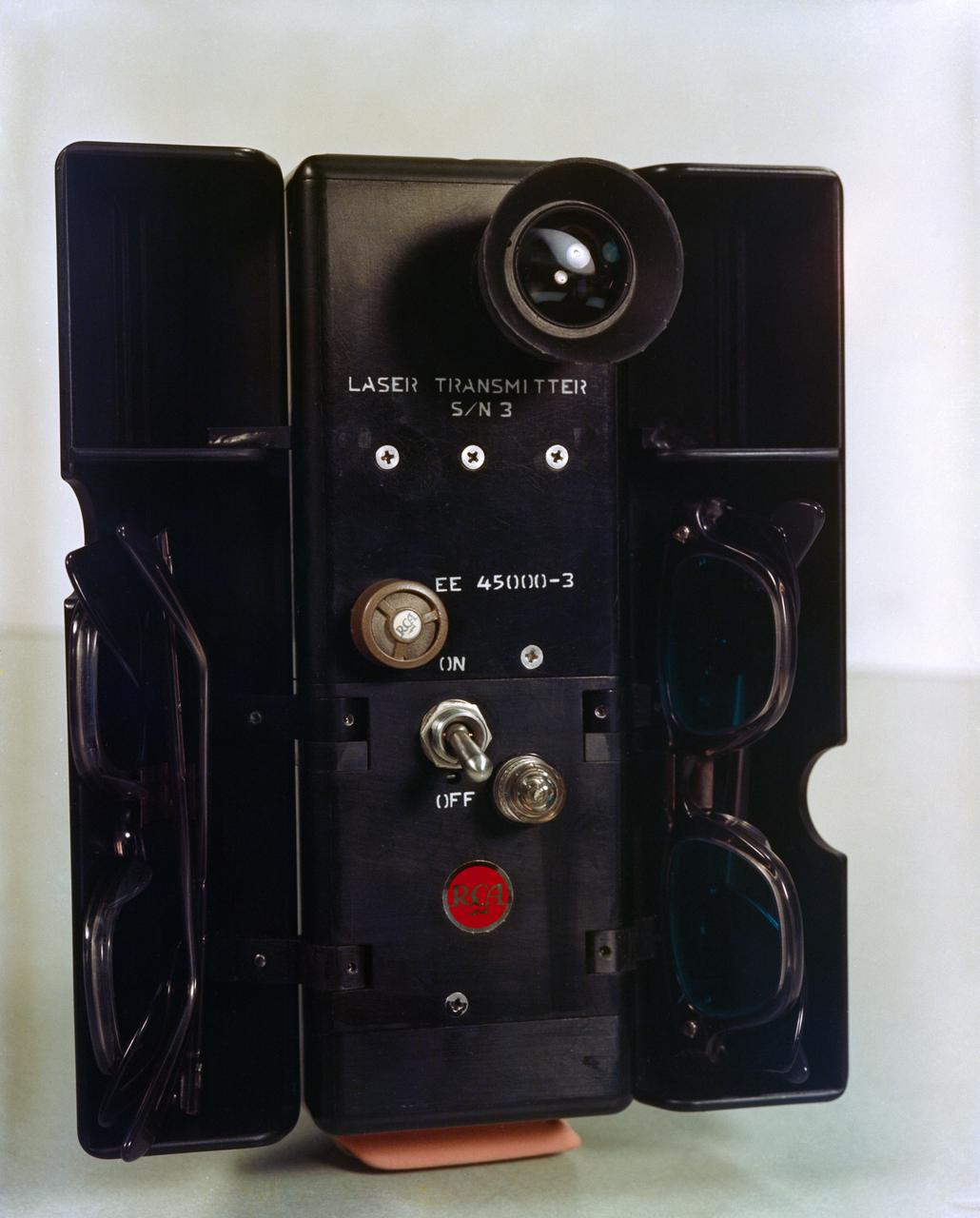
S65-61777 (8 Dec. 1965) --- Close-up view of a laser transmitter unit which is being used for the Gemini-7 Optical Communication (MSC-4) experiment. Astronauts Frank Borman, command pilot; and James A. Lovell Jr., pilot, are now orbiting Earth in NASA's Gemini-7 spacecraft. Photo credit: NASA
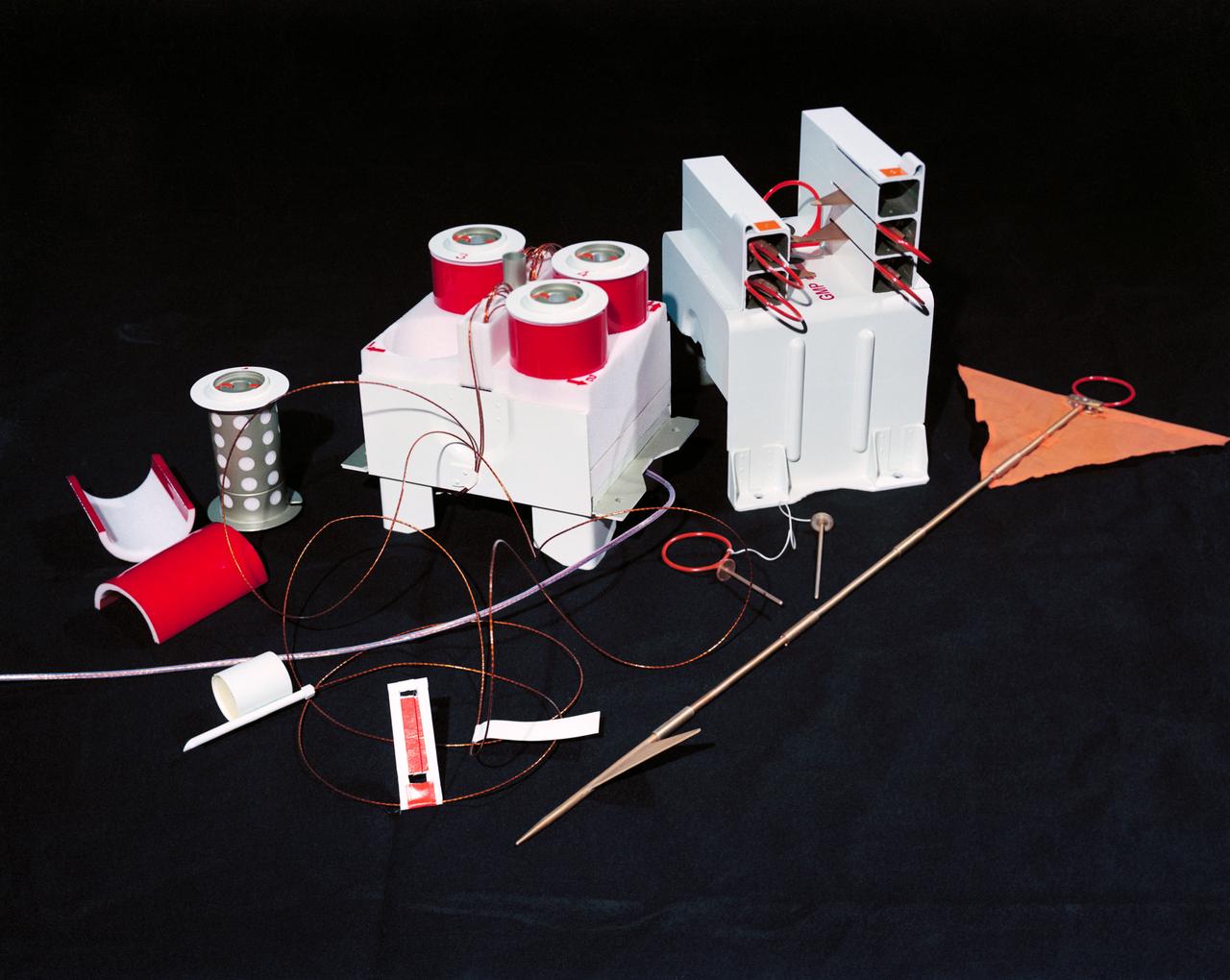
S72-37259 (November 1972) --- The Geophone Module and Cable Reels of the Lunar Seismic Profiling Experiment (S-203), a component of the Apollo Lunar Surface Experiments Package which will be carried on the Apollo 17 lunar landing mission. LSPE components are four geophones similar to those used in an earlier active seismic experiment, an electronics package in the ALSEP central station, and eight explosive packages which will be deployed during the geology traverse. The four geophones will be placed one in the center and one at each corner of a 90-meter equilateral triangle. Explosive charges placed on the surface will generate seismic waves of varying strengths to provide data on the structural profile of the landing site. After the charges have been fired by ground command, the experiment will settle down into a passive listening mode, detecting moonquakes, meteorite impacts and the thump caused by the Lunar Module ascent stage impact.
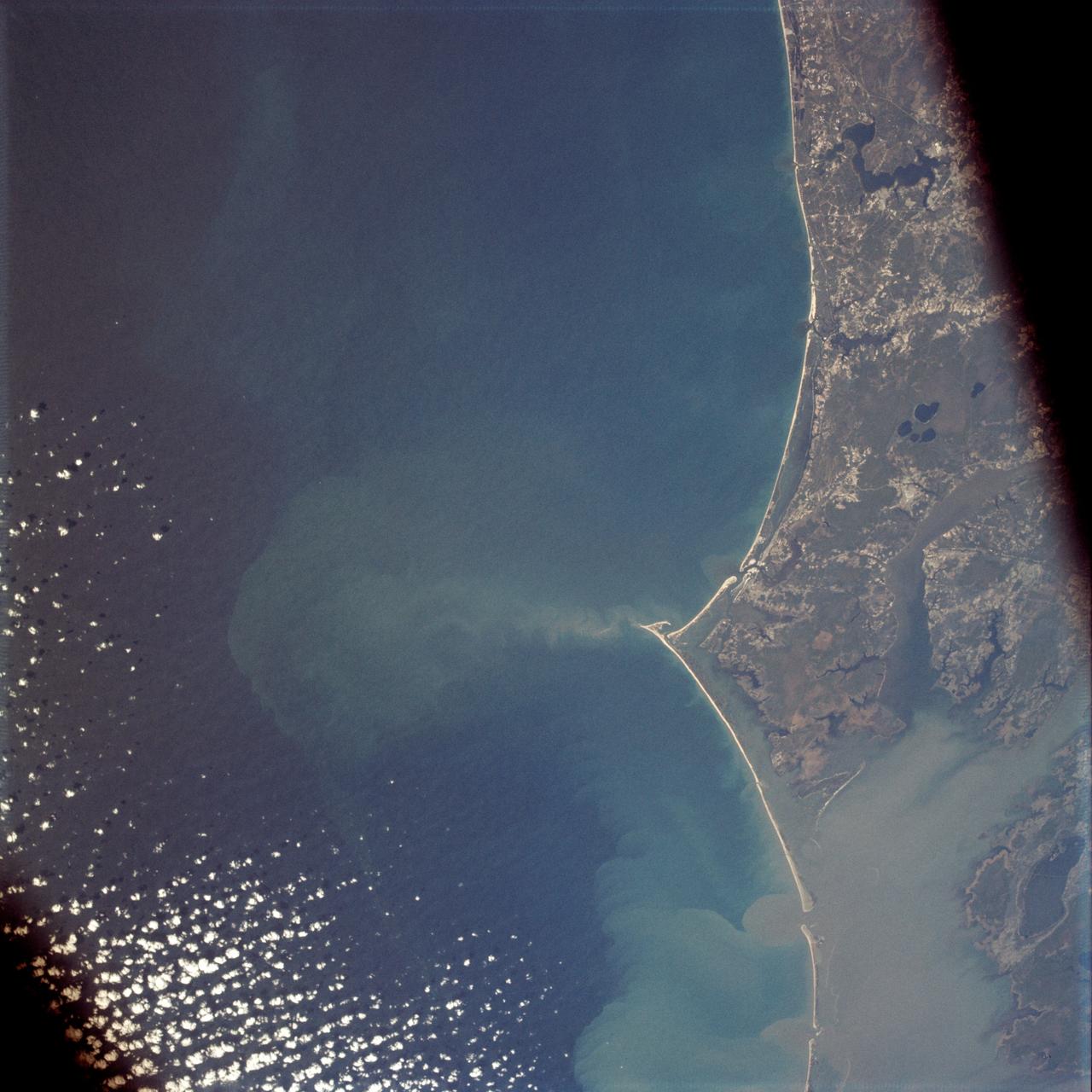
Vertical Earth Observation taken by the Apollo 9 crew. View is of North Carolina including Cape Lookout and Pamilco Sound. Film magazine was E,film type was SO-368 Ektachrome with 0.460 - 0.710 micrometers film / filter transmittance response and haze filter,80mm lens. Latitude was 34.35 N by Longitude 76.30 W, Overlap was 0%, Altitude miles were 116 and cloud cover was 15%.
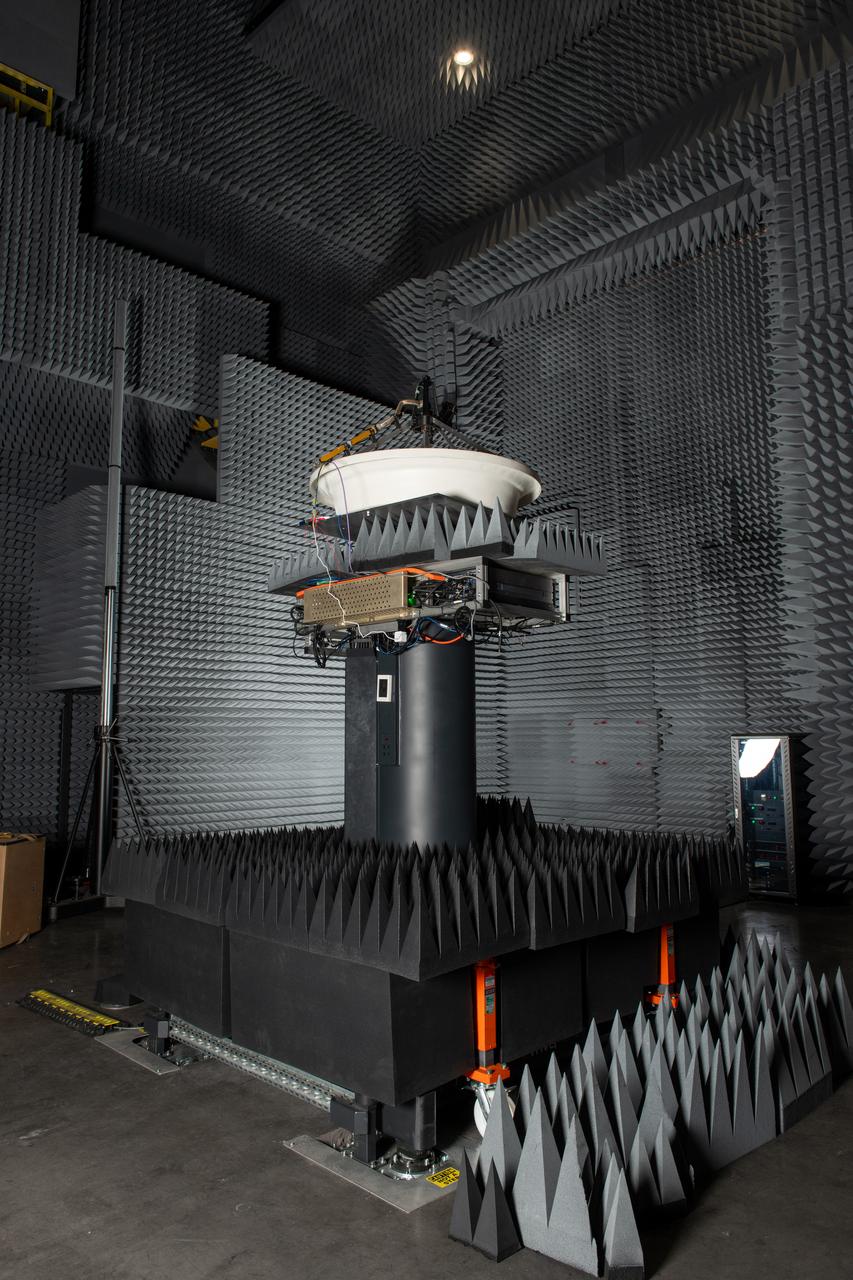
NASA’s Beaming Energy for Air Mobility team successfully completed a first-of-its-kind power beaming test at NASA Glenn on June 4, 2025. Later this year, the tested transmitter will be used in a demonstration to wirelessly transmit power using microwaves to a custom power receiver — a step toward gap-filling technology that could one day deliver power on the surface of the Moon or Mars.

A NASA F/A-18 is towed to the apron at NASA's Armstrong Flight Research Center in Edwards, California during sunrise over Rogers Dry Lake. The F/A-18 was used to test a transmitter for an air navigation system, called the Airborne Location Integrating Geospatial Navigation System, or ALIGNS. This system, designed to allow pilots to position their aircraft at precise distances to each other, will be critical for acoustic validation efforts of NASA's next supersonic X-plane, the X-59 Quiet SuperSonic Technology.

Oblique Earth Observation taken by the Apollo 9 crew. View is the United Arab Republic,the Nile River,The Red Sea and the Aswan Dam. Film magazine was E,film type was SO-368 Ektachrome with 0.460 - 0.710 micrometers film / filter transmittance response and haze filter,80mm lens. Latitude was 19.38 N by Longitude 30.24 E, Overlap was 50%, Altitude was 97 nautical miles and cloud cover was 5%.

NASA’s Beaming Energy for Air Mobility team successfully completed a first-of-its-kind power beaming test at NASA Glenn on June 4, 2025. Later this year, the tested transmitter will be used in a demonstration to wirelessly transmit power using microwaves to a custom power receiver — a step toward gap-filling technology that could one day deliver power on the surface of the Moon or Mars. Seth Waldstein, Seth Schisler and Bryan Schoenholz are in the control room reviewing the results.
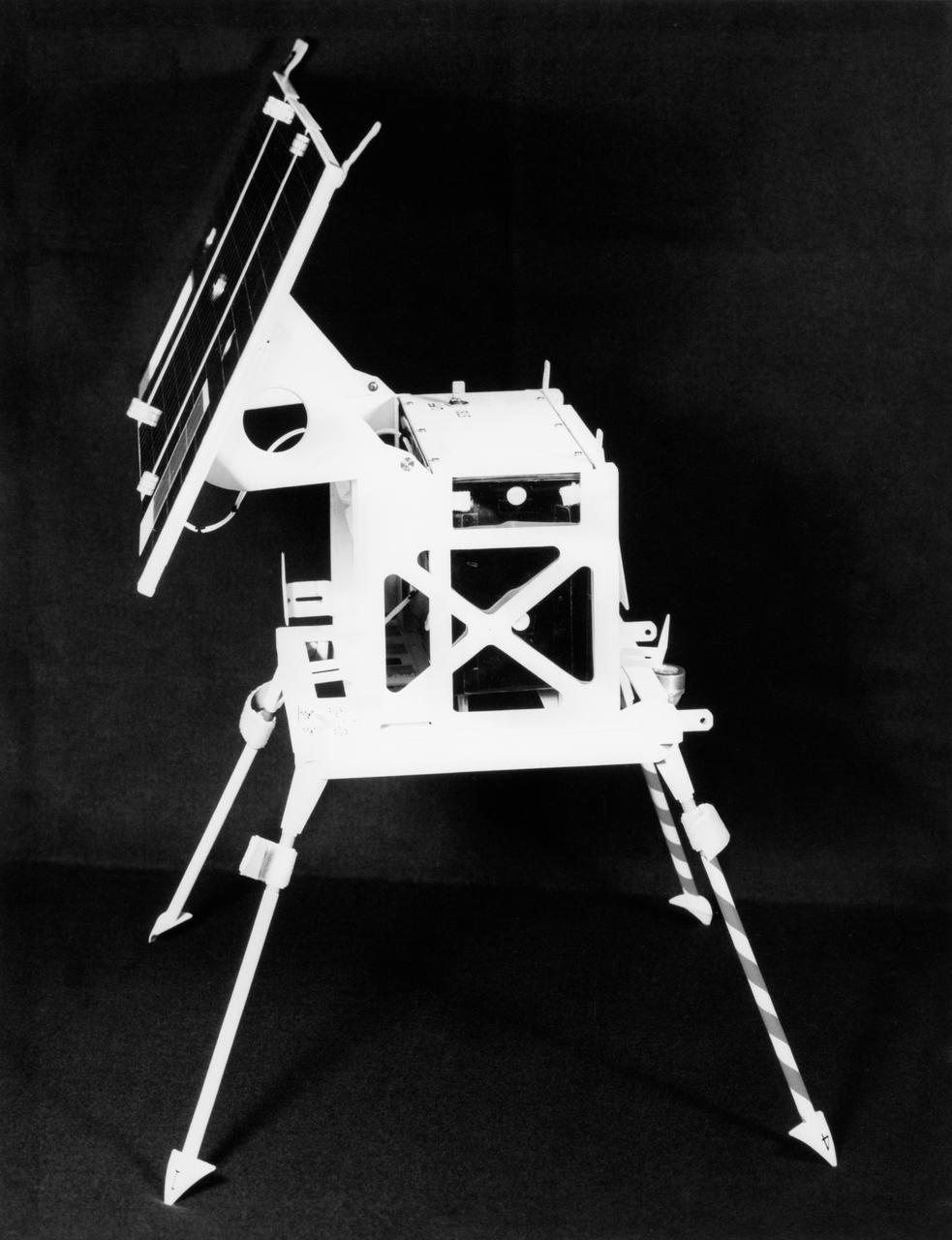
S72-53950 (November 1972) --- The transmitter of the Surface Electrical Properties Experiment (S-204) in a deployed configuration. This experiment will be deployed at the Taurus-Littrow landing site by the Apollo 17 crewmen. The purpose of the SEP experiment is to obtain data about the electromagnetic energy transmission, absorption and reflection characteristics of the lunar surface and subsurface for use in the development of a geological model of the upper layers of the moon. The experiment is designed to determine layering in the lunar surface, to search for the presence of water below the surface, and to measure electrical properties of the lunar material in situ.
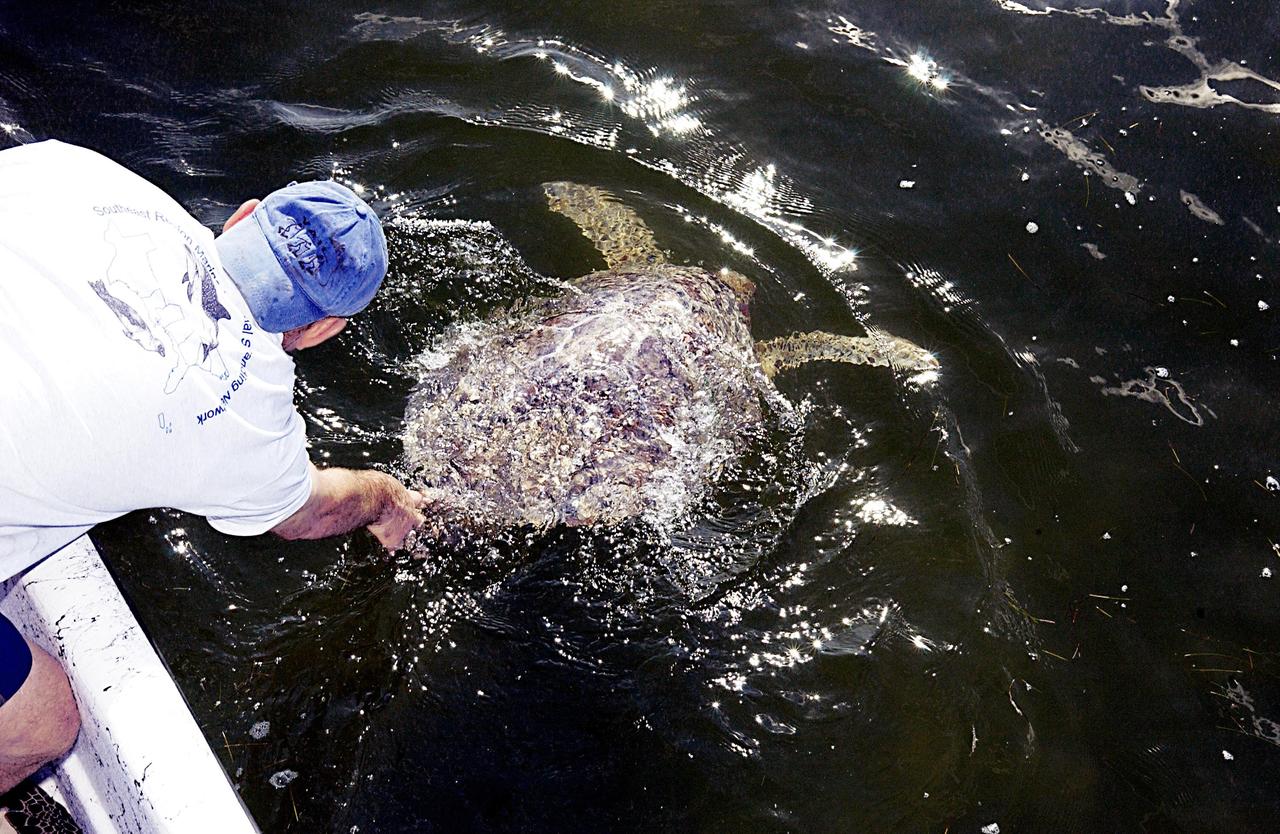
KENNEDY SPACE CENTER, FLA. - A sea turtle is released into the Mosquito Lagoon. It is one of several turtles found stunned, impacted by the unseasonal cold temperatures experienced in Central Florida. The cooperative effort of KSC contractor Dynamac Corporation's Aquatics Program and the Merritt Island National Wildlife Refuge warmed the turtles and evaluated them for release. Most were tagged and the largest one received a transmitter, provided by the University of Central Florida, for satellite tracking. The turtles were then transported through the Haulover Canal to a location away from the main channel for release..
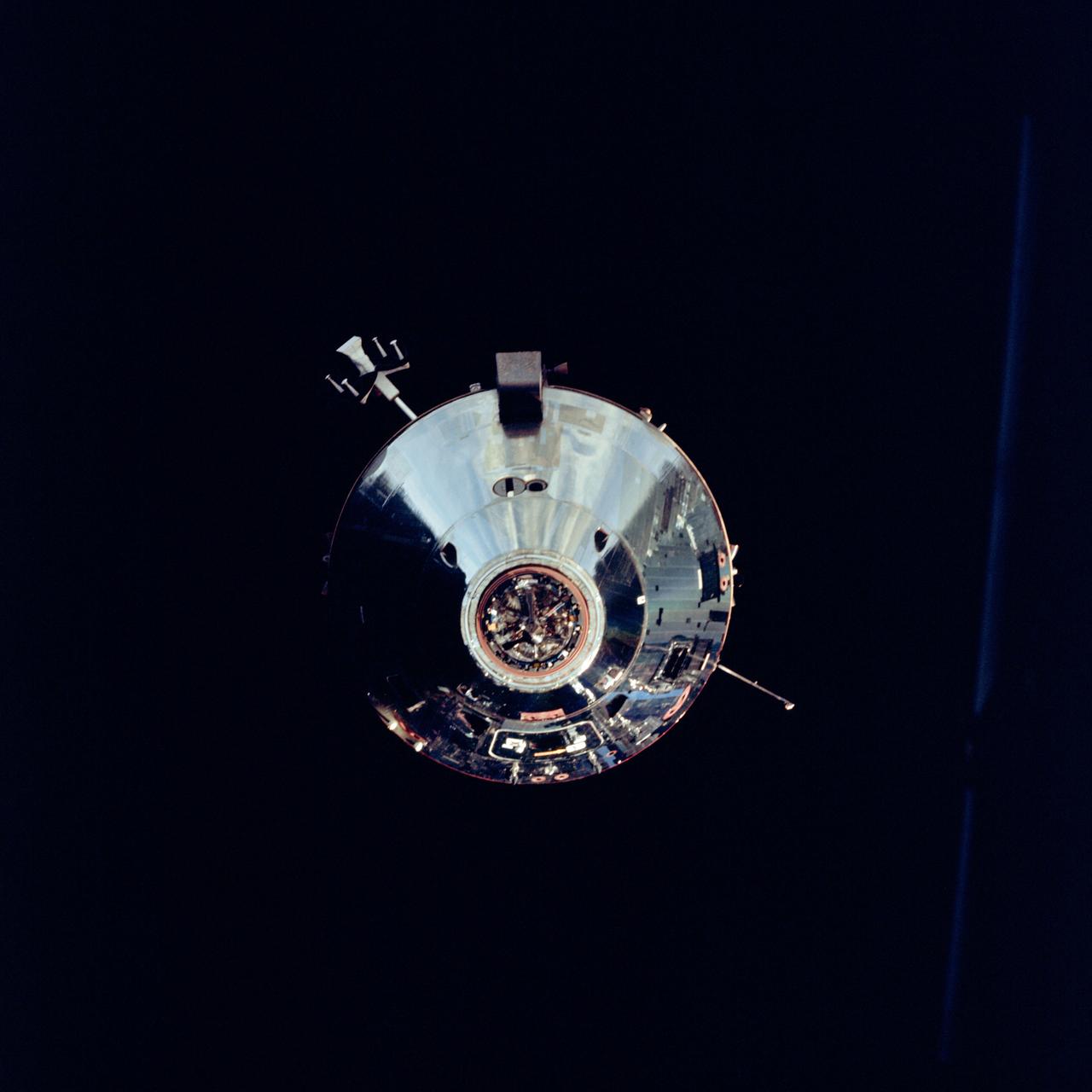
The Apollo 9 Command/Service Modules photographed from the Lunar Module,"Spider",on the fifth day of the Apollo 9 earth-orbital mission. Docking mechanism is visible in nose of the Command Module,"Gumdrop". Object jutting out from the Service Module aft bulkhead is the high-gain S-Band antenna. Film magazine was F, film type was SO-368 Ektachrome with 0.460 - 0.710 micrometers film / filter transmittance response and haze filter,80mm lens.
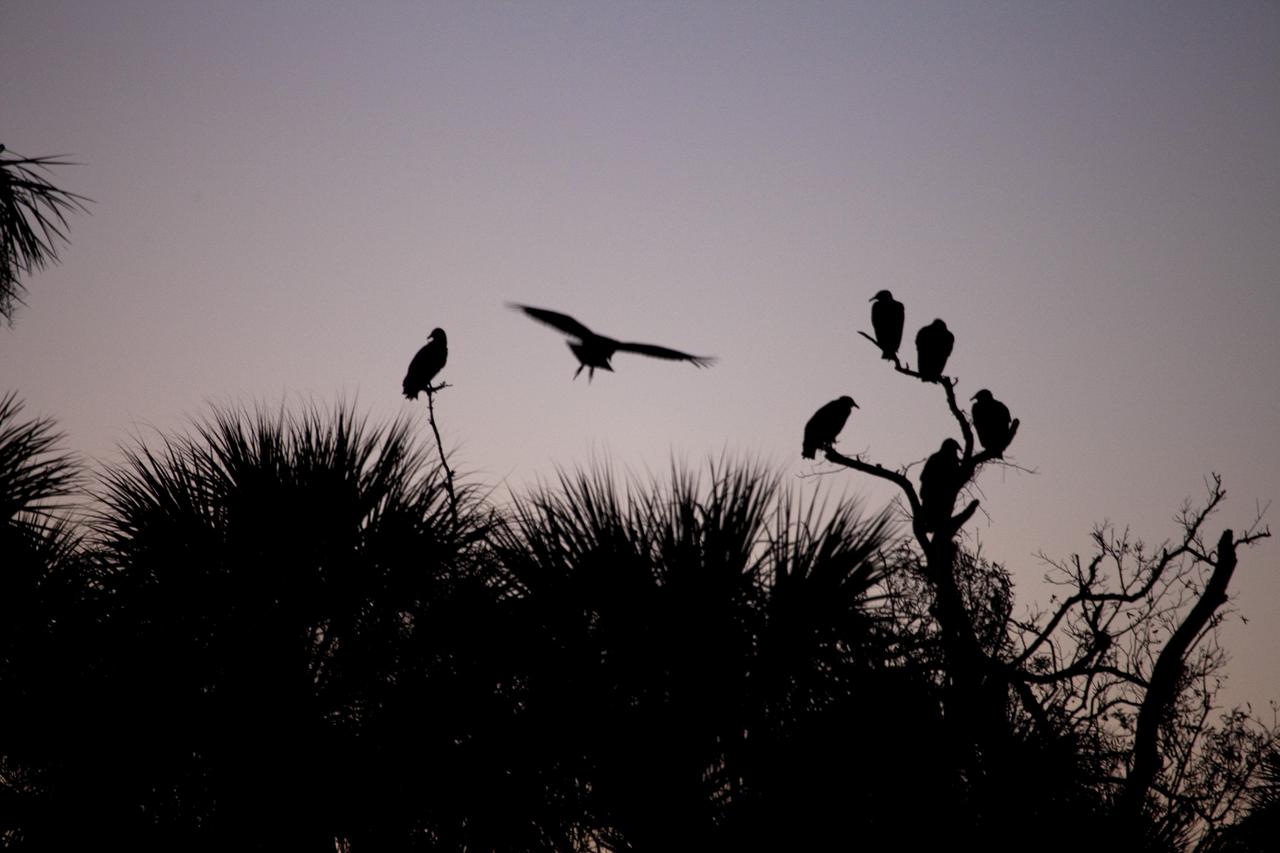
CAPE CANAVERAL, Fla. -- Black vultures gather at dawn at NASA's Kennedy Space Center in Florida. NASA's Environmental Management Branch monitors the movement and activity of about 250 black and turkey vultures using satellite trackers and radio transmitters. Kennedy coexists with the Merritt Island National Wildlife Refuge, habitat to more than 310 species of birds, 25 mammals, 117 fish and 65 amphibians and reptiles. Photo credit: NASA/Frank Michaux
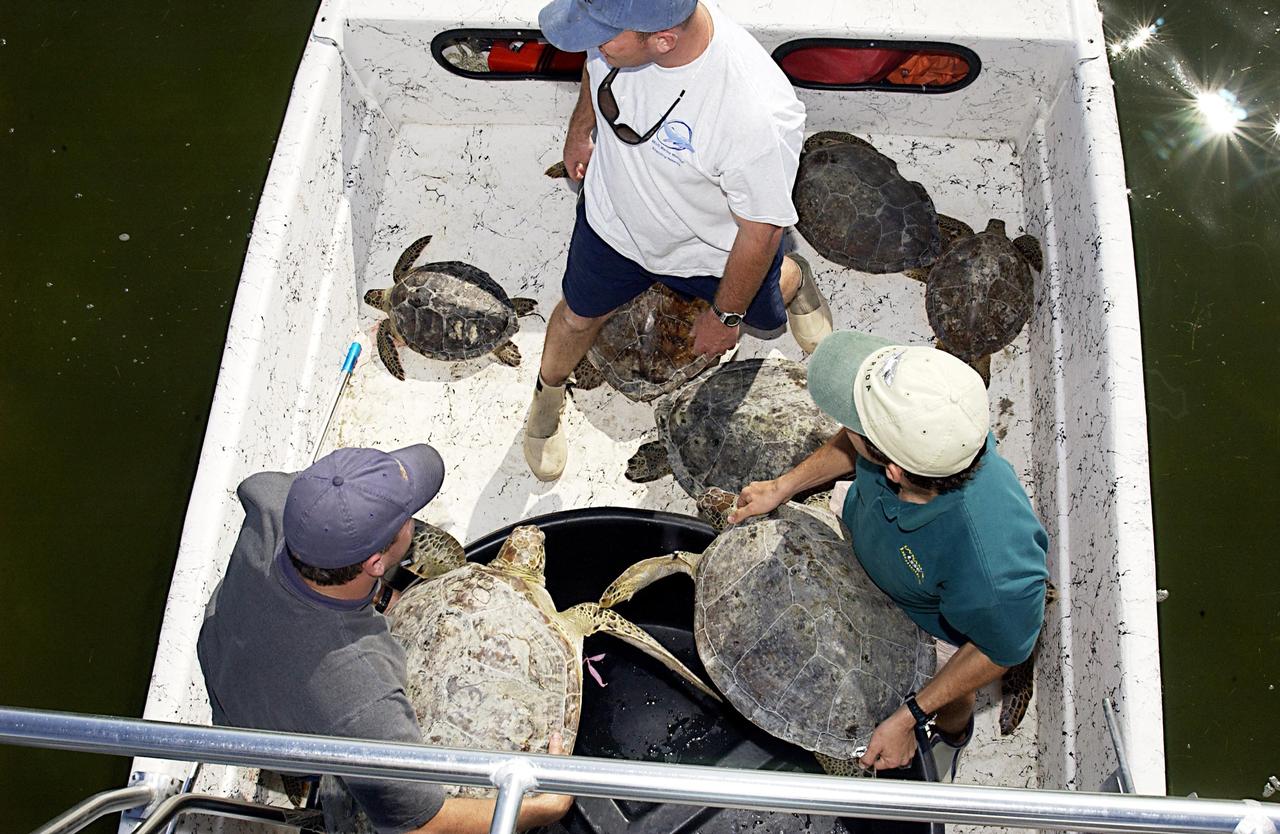
KENNEDY SPACE CENTER, FLA. - Several sea turtles await their release into the Mosquito Lagoon. They were found stunned, impacted by the unseasonal cold temperatures experienced in Central Florida. The cooperative effort of KSC contractor Dynamac Corporation's Aquatics Program and the Merritt Island National Wildlife Refuge warmed the turtles and evaluated them for release. Most were tagged and the largest one received a transmitter, provided by the University of Central Florida, for satellite tracking. The turtles were then transported through the Haulover Canal to a location away from the main channel for release.
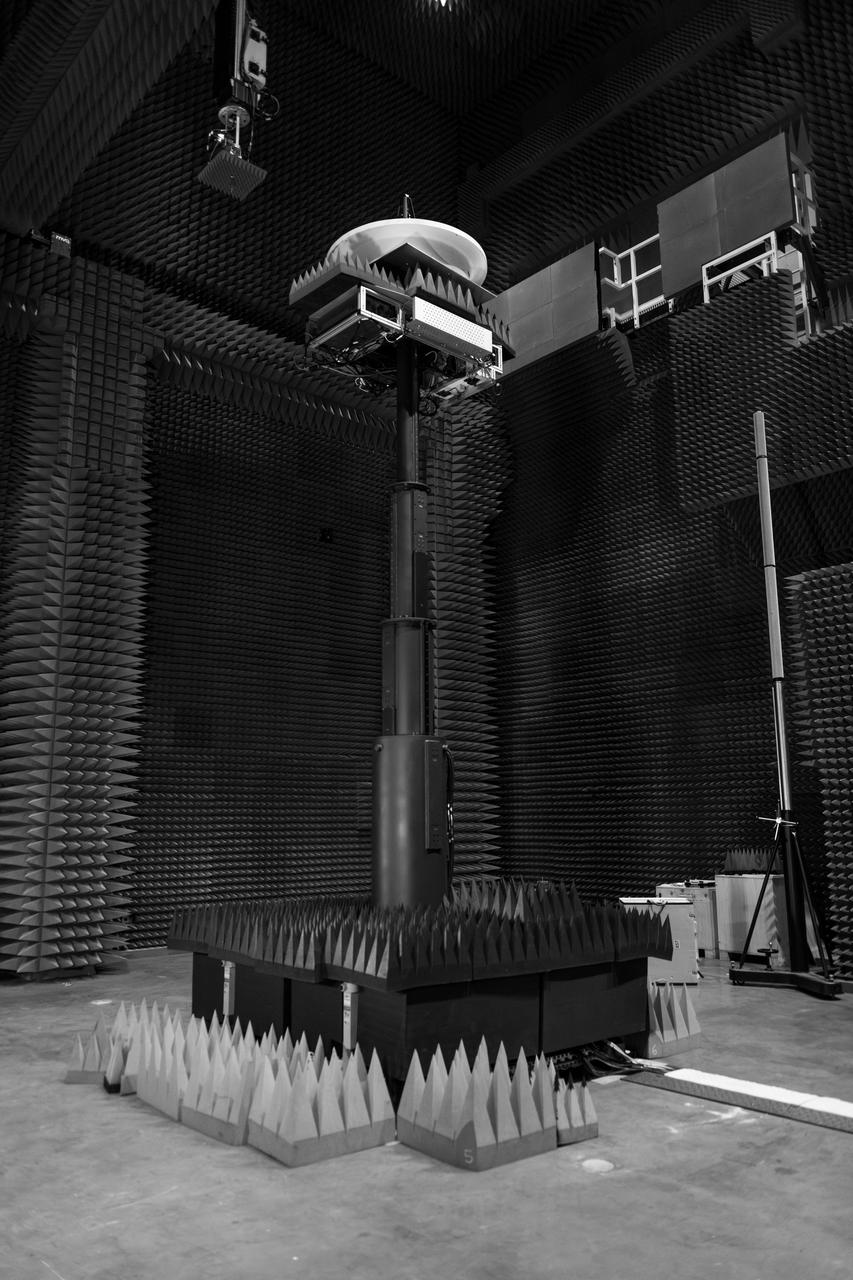
NASA’s Beaming Energy for Air Mobility team successfully completed a first-of-its-kind power beaming test at NASA Glenn on June 4, 2025. Later this year, the tested transmitter will be used in a demonstration to wirelessly transmit power using microwaves to a custom power receiver — a step toward gap-filling technology that could one day deliver power on the surface of the Moon or Mars.
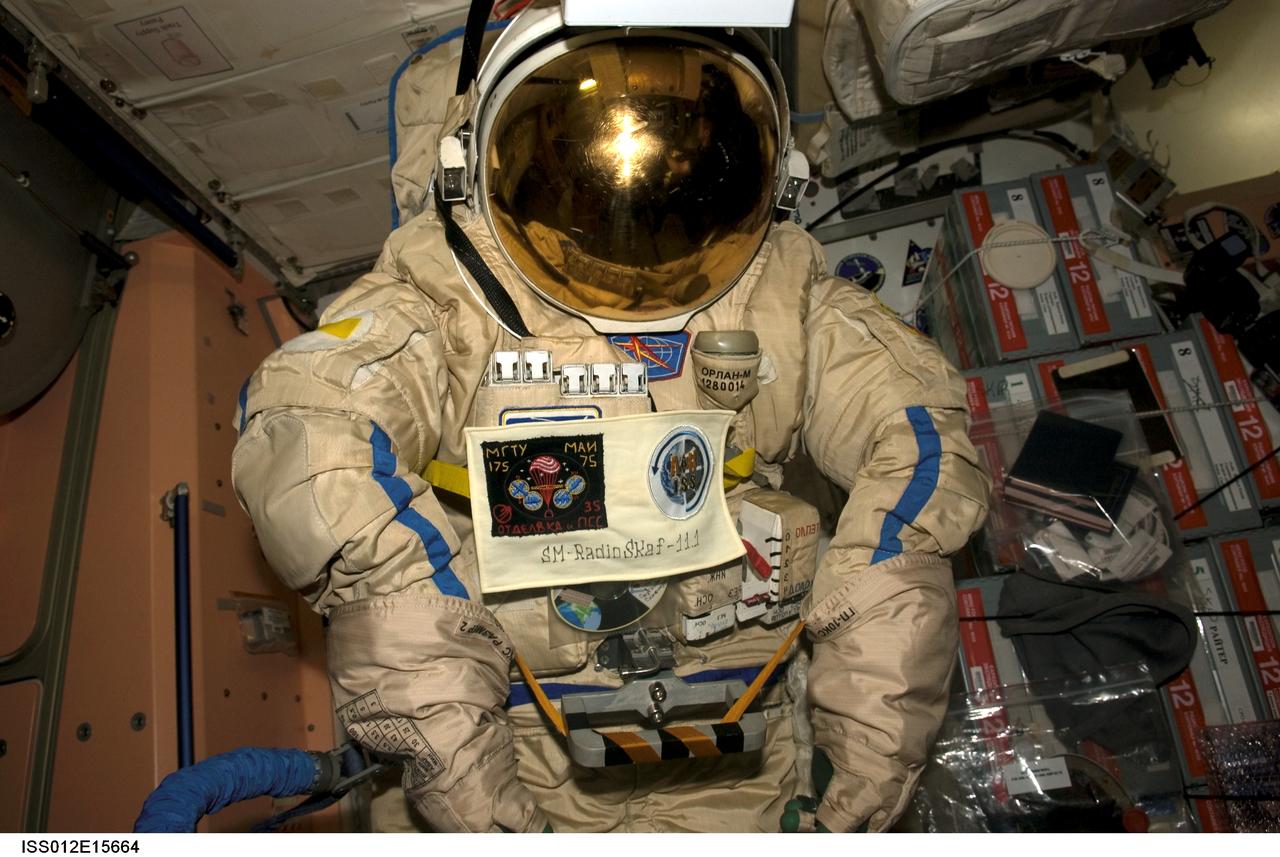
ISS012-E-15664 (24 Jan. 2006) --- An old Russian Orlan spacesuit is photographed in the Unity node of the International Space Station, which will be released by hand from the space station during a spacewalk Feb. 3, 2006. Outfitted with a special radio transmitter and other gear, the spacesuit comprises a Russian experiment called SuitSat. It will fly free from the station as a satellite in orbit for several weeks of scientific research and radio tracking, including communications by amateur radio operators. Eventually, it will enter the atmosphere and be destroyed.
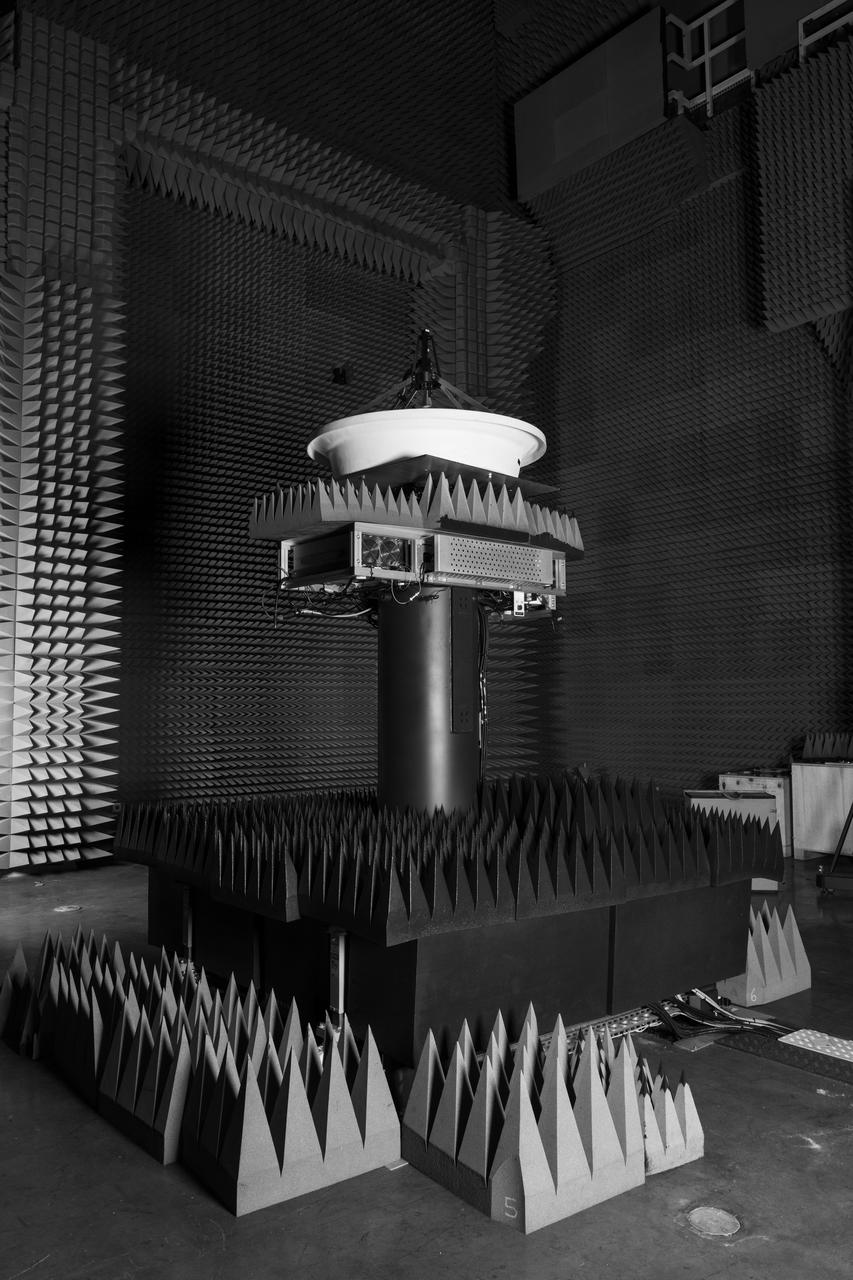
NASA’s Beaming Energy for Air Mobility team successfully completed a first-of-its-kind power beaming test at NASA Glenn on June 4, 2025. Later this year, the tested transmitter will be used in a demonstration to wirelessly transmit power using microwaves to a custom power receiver — a step toward gap-filling technology that could one day deliver power on the surface of the Moon or Mars.
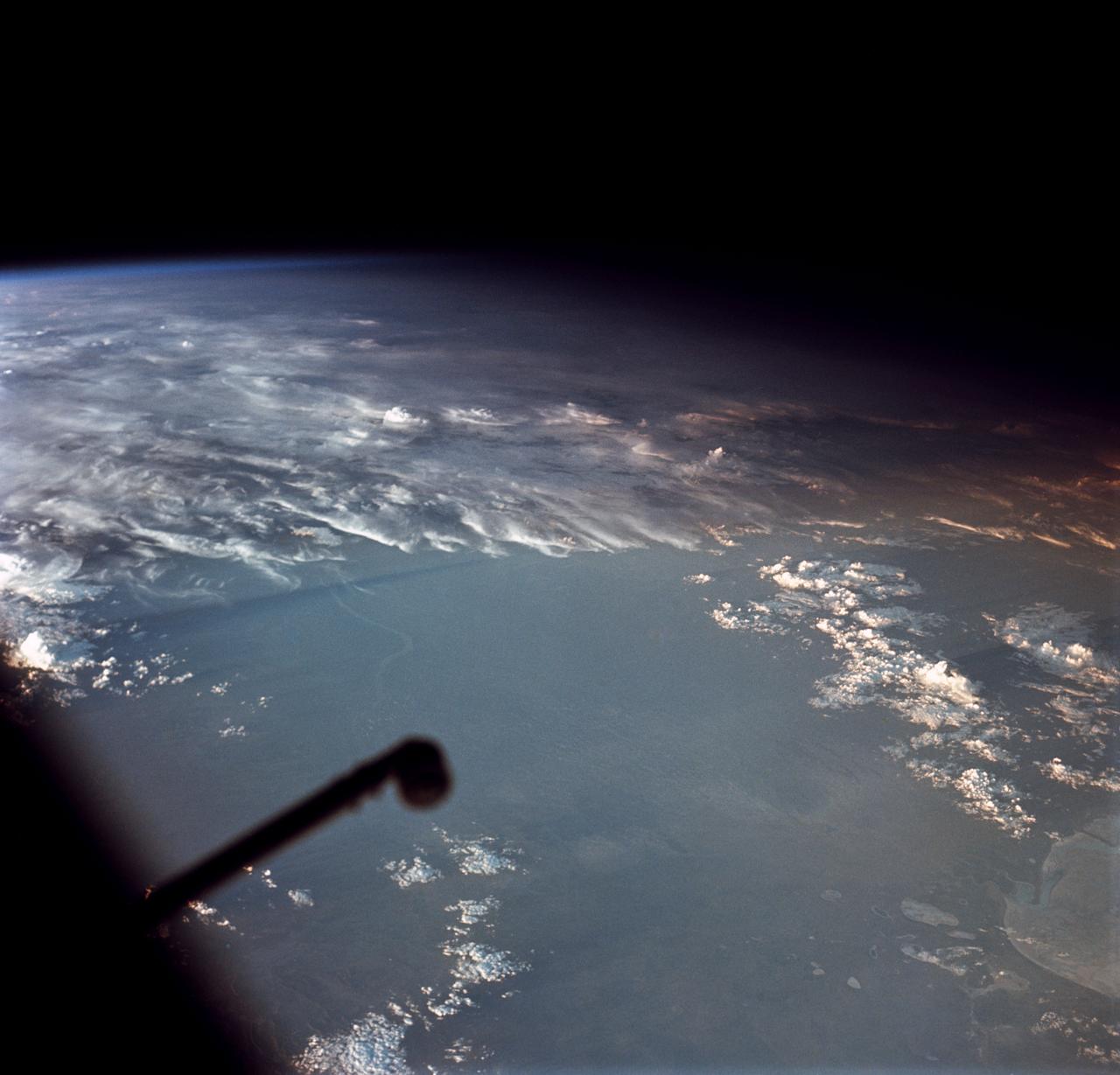
Oblique Earth Observation taken by the Apollo 9 crew. View is of southwest Africa near Cape Fria. Film magazine was E,film type was SO-368 Ektachrome with 0.460 - 0.710 micrometers film / filter transmittance response and haze filter,80mm lens. Latitude was 21.15 S by Longitude 12.40 E, Overlap was 80%, Altitude miles were 163 and cloud cover was 40%.
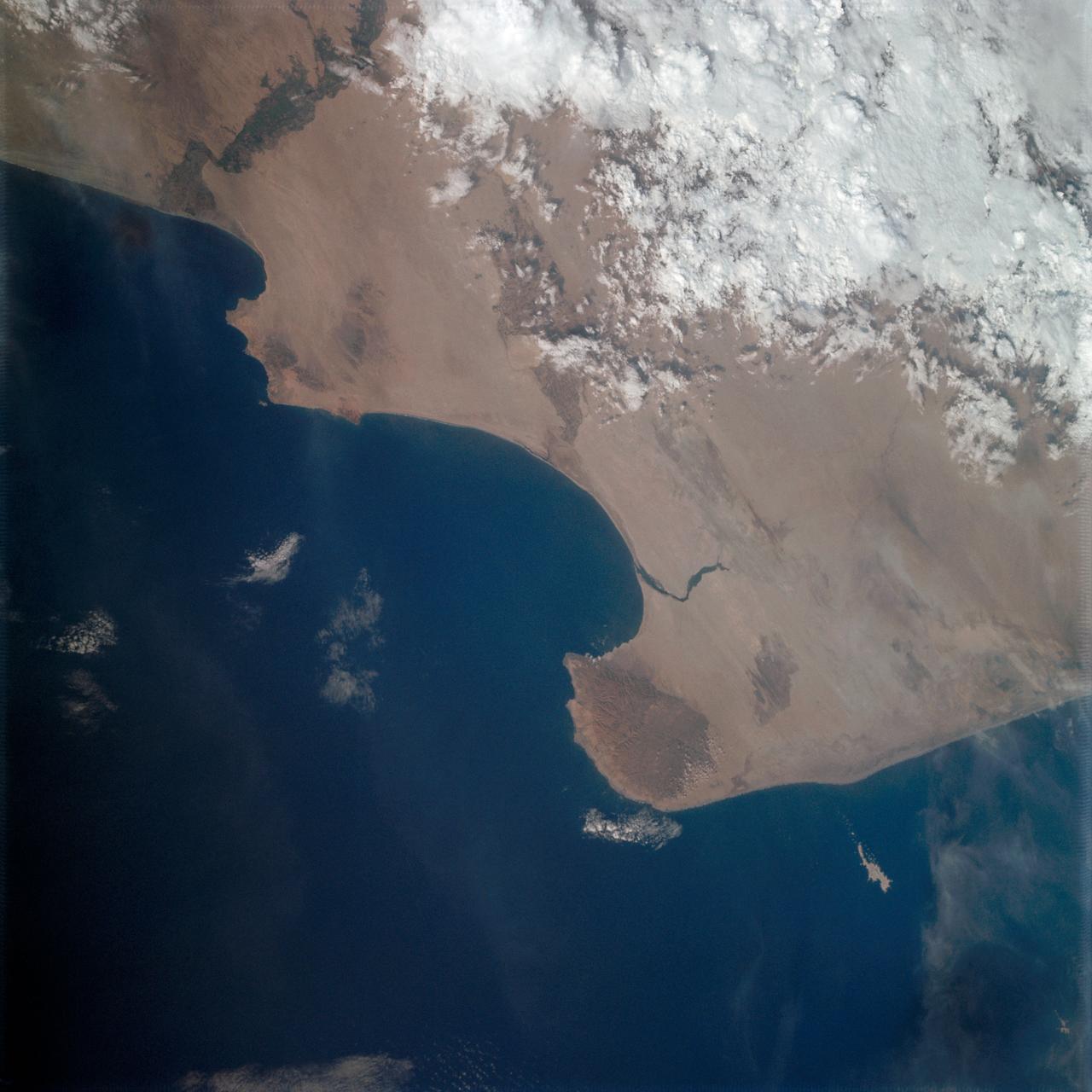
Vertical Earth Observation taken by the Apollo 9 crew. View is of Peru and South America including Aguja Point and Piura. Film magazine was E,film type was SO-368 Ektachrome with 0.460 - 0.710 micrometers film / filter transmittance response and haze filter,80mm lens. Latitude was 5.35 S by Longitude 81.05 W, Overlap was 0%, Altitude miles were 125 and cloud cover was 20%.
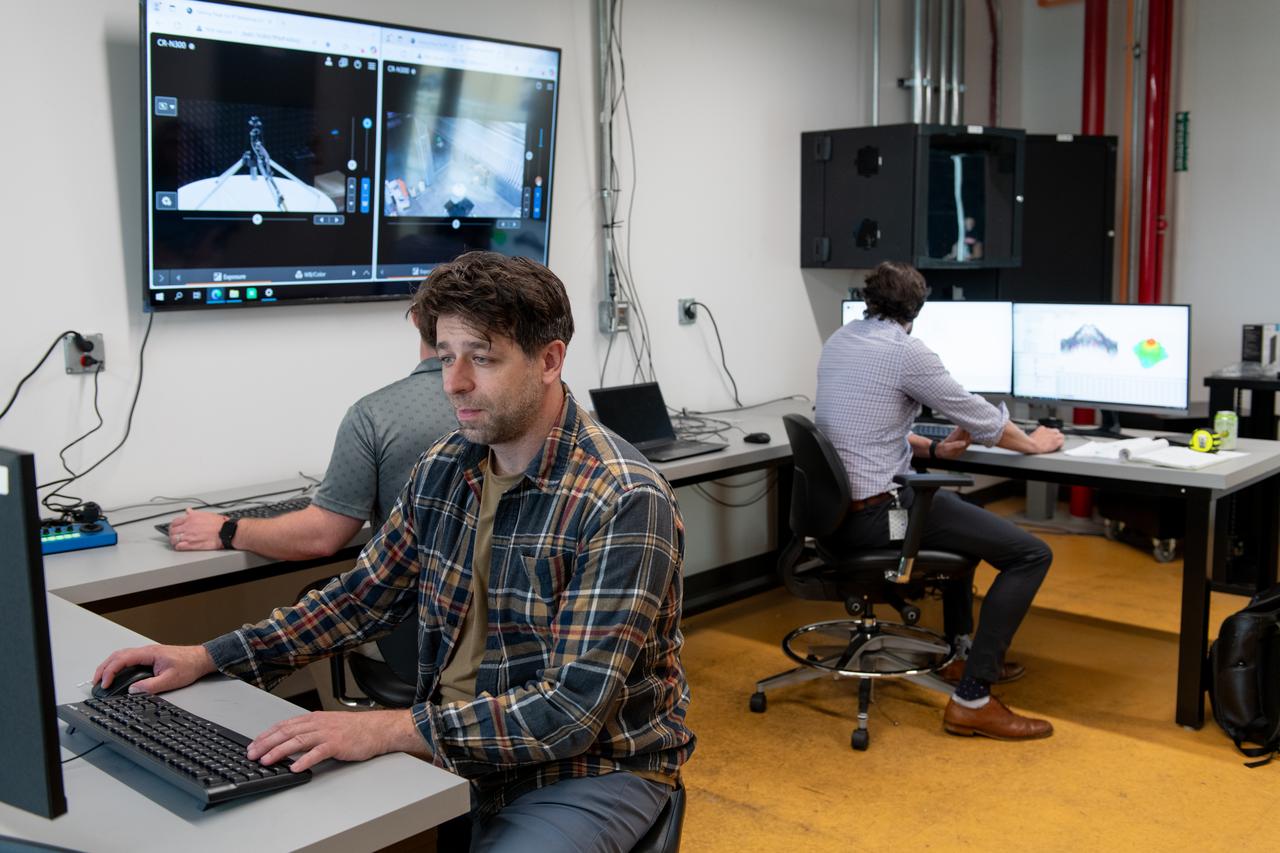
NASA’s Beaming Energy for Air Mobility team successfully completed a first-of-its-kind power beaming test at NASA Glenn. Later this year, the tested transmitter will be used in a demonstration to wirelessly transmit power using microwaves to a custom power receiver — a step toward gap-filling technology that could one day deliver power on the surface of the Moon or Mars. Seth Waldstein, Seth Schisler and Bryan Schoenholz are in the control room reviewing the data.
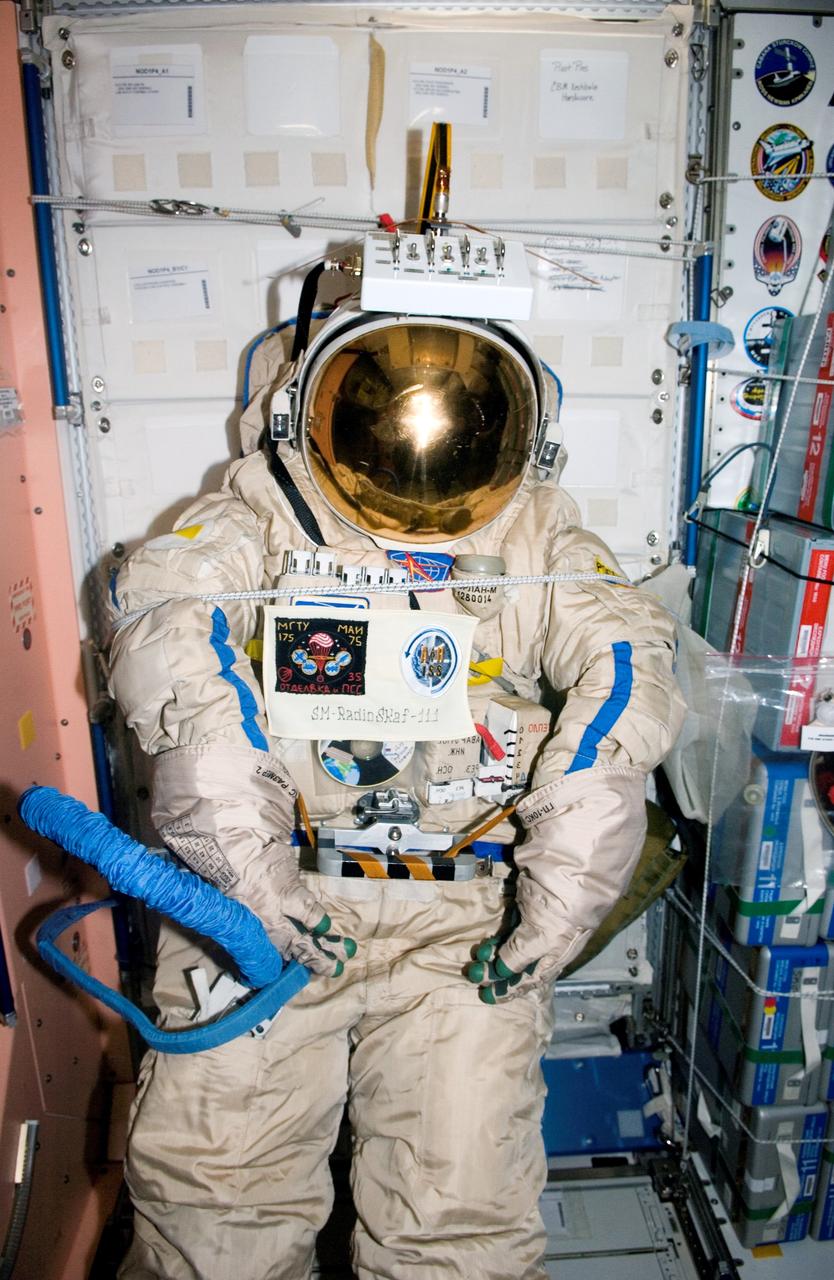
ISS012-E-15666 (24 Jan. 2006) --- An old Russian Orlan spacesuit is photographed in the Unity node of the International Space Station, which will be released by hand from the space station during a spacewalk Feb. 3, 2006. Outfitted with a special radio transmitter and other gear, the spacesuit comprises a Russian experiment called SuitSat. It will fly free from the station as a satellite in orbit for several weeks of scientific research and radio tracking, including communications by amateur radio operators. Eventually, it will enter the atmosphere and be destroyed.
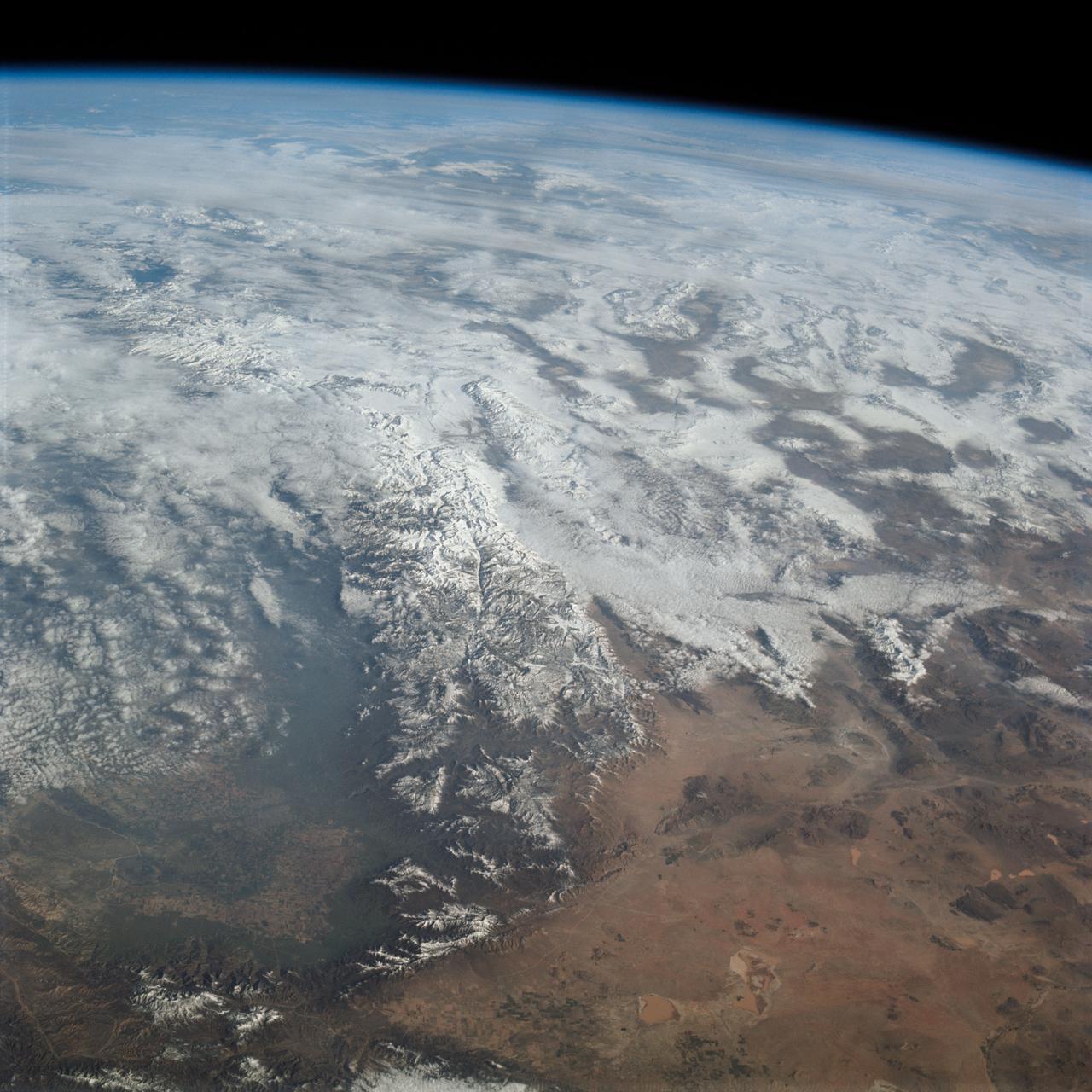
Oblique Earth Observation taken by the Apollo 9 crew. View is of California and includes Sierra Nevada, and the Mojave Desert. Film magazine was E,film type was SO-368 Ektachrome with 0.460 - 0.710 micrometers film / filter transmittance response and haze filter,80mm lens. Latitude was 35.20 N by Longitude 118.10 W, Overlap was 80%, Altitude miles were 130 and cloud cover was 20%.
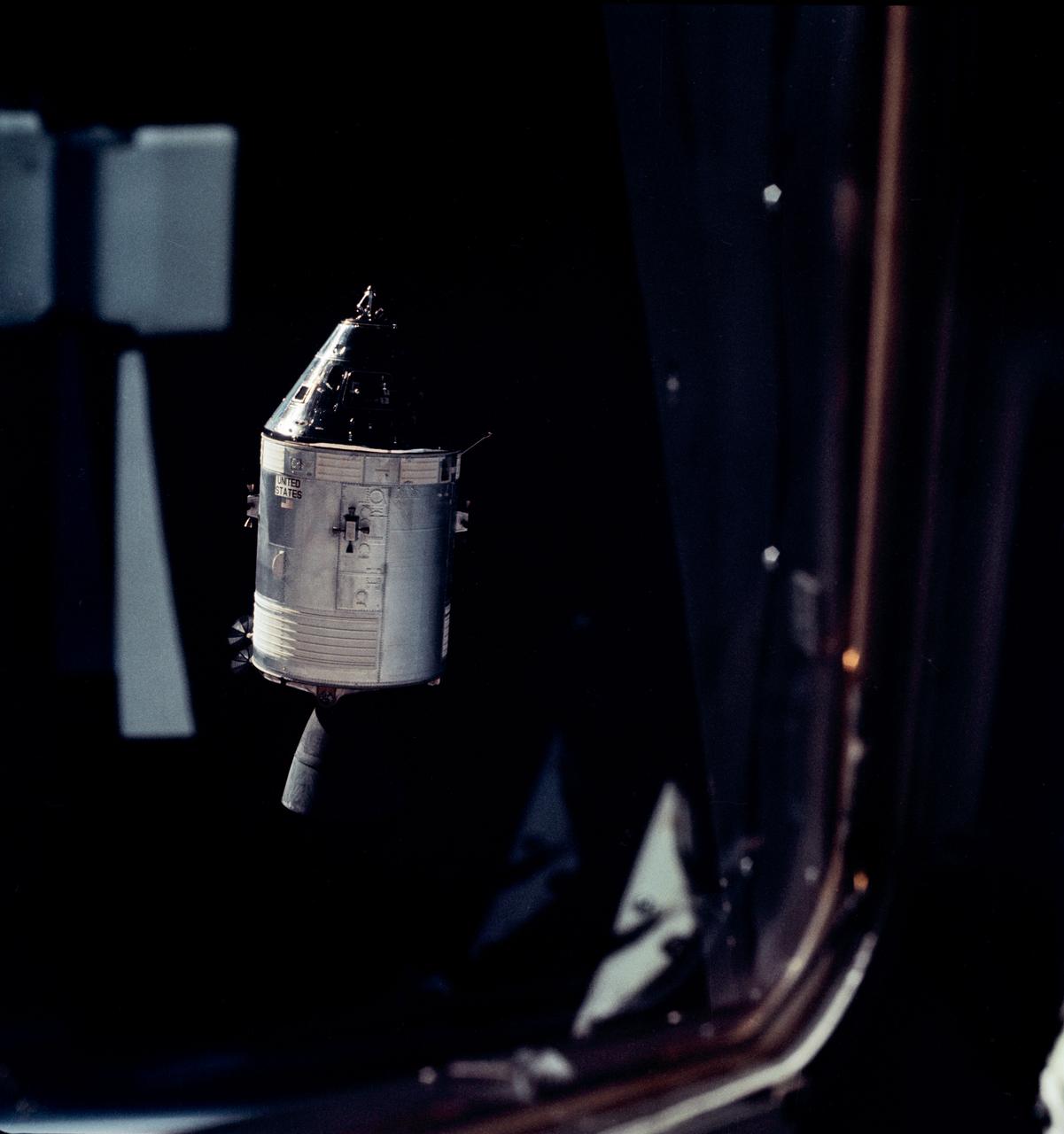
The Apollo 9 Command/Service Modules photographed through the window from the Lunar Module,"Spider",on the fifth day of the Apollo 9 earth-orbital mission. Docking mechanism is visible in nose of the Command Module,"Gumdrop". Film magazine was F, film type was SO-368 Ektachrome with 0.460 - 0.710 micrometers film / filter transmittance response and haze filter,80mm lens
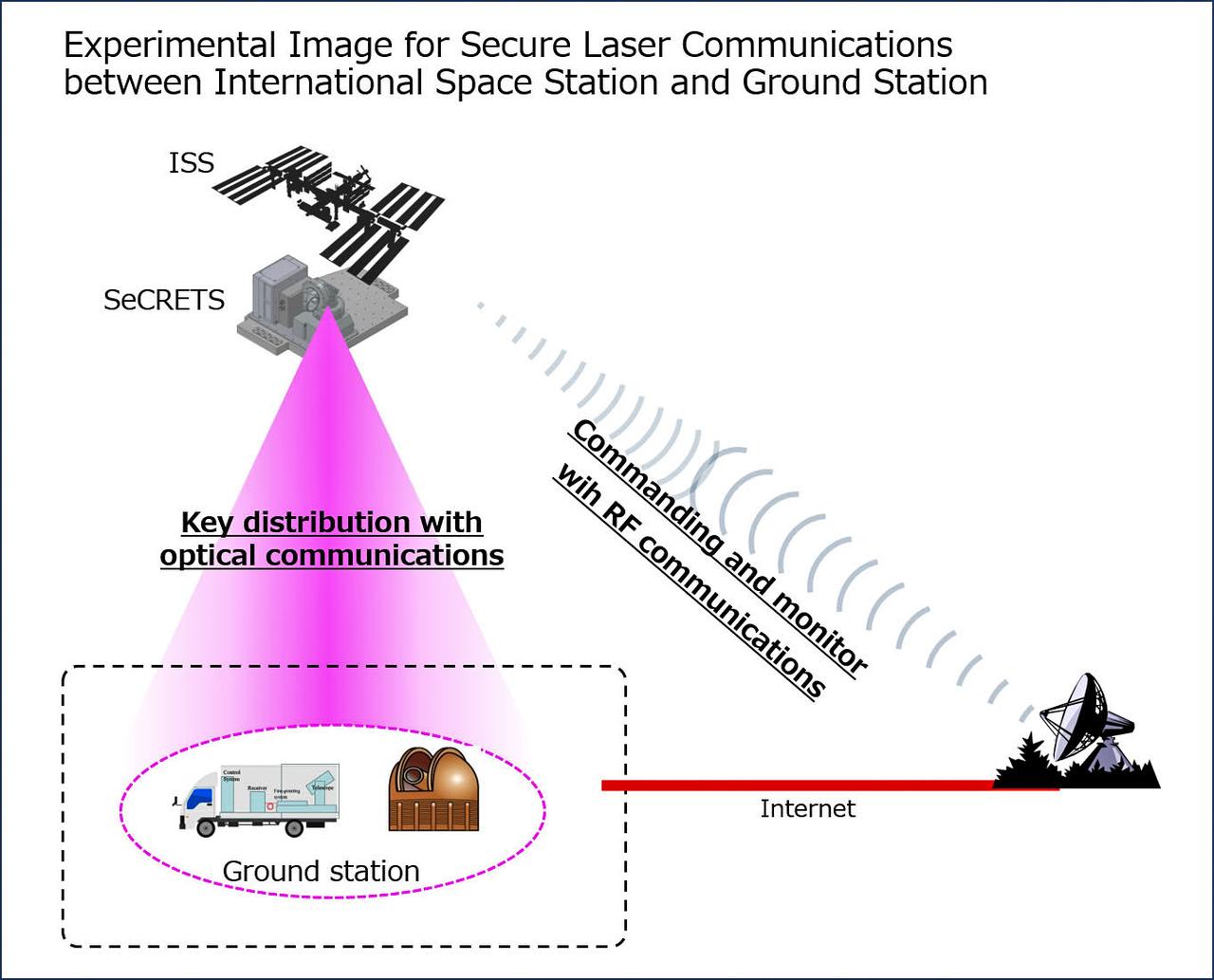
jsc2022e087162 (11/16/2022) --- For Secure Laser Communications between International Space Station and Ground Station (SeCRETS) investigation, the cryptographic keys (random numbers) sent from the transmitter are sent in the free space optical communication path and received by the detector installed on the ground. In this key sharing, the information exchange of error correction and key distillation via the International Space Station Radio Frequency lines. Image courtesy of JAXA.
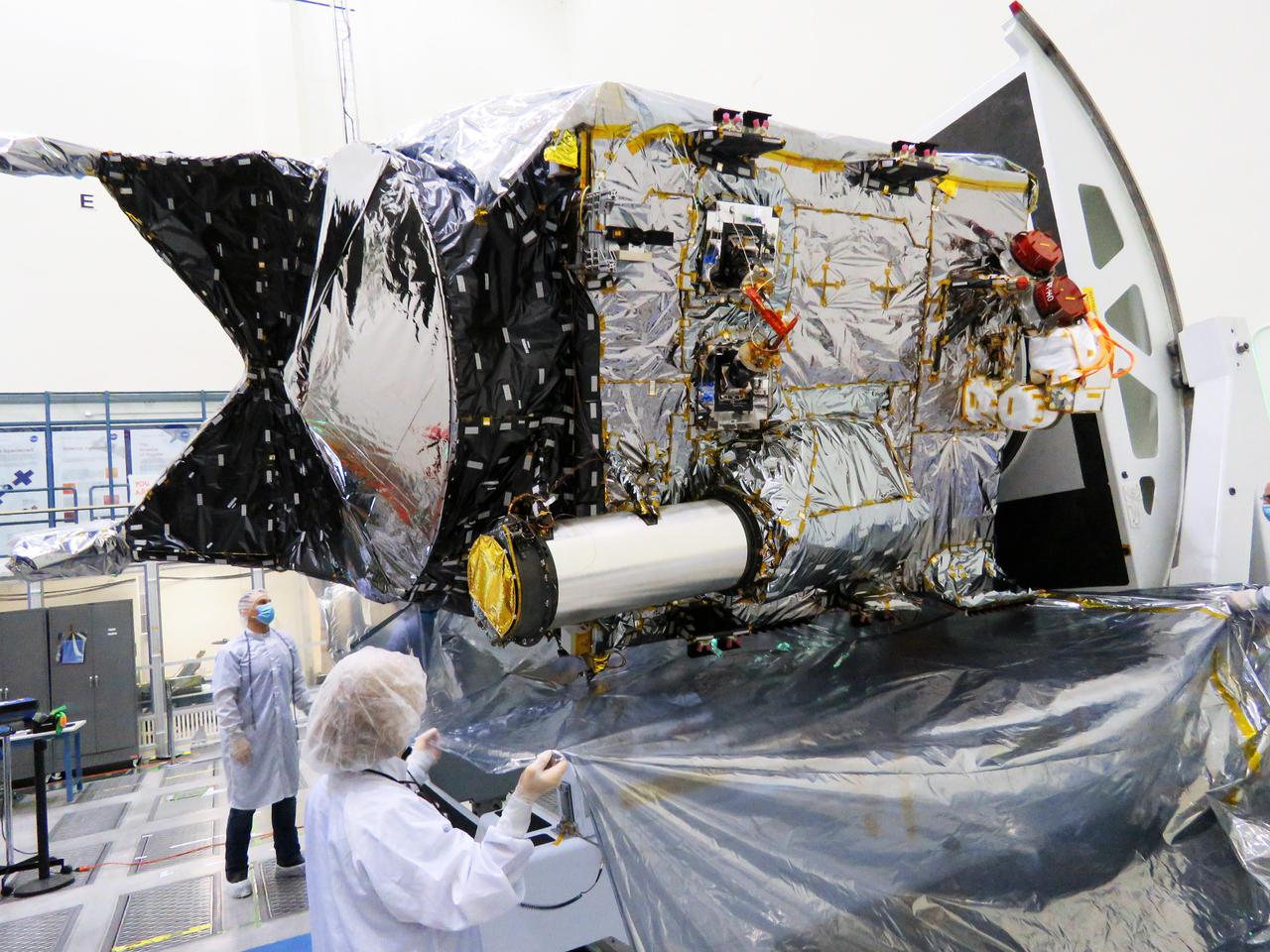
The Deep Space Optical Communications (DSOC) technology demonstration's flight laser transceiver can be easily identified on NASA's Psyche spacecraft, seen in this December 2021 photograph inside a clean room at the agency's Jet Propulsion Laboratory in Southern California. DSOC's tube-like gray/silver sunshade can be seen protruding from the side of the spacecraft. The bulge to which the sunshade is attached is DSOC's transceiver, which consists of a near-infrared laser transmitter to send high-rate data to Earth and a sensitive photon-counting camera to receive ground-transmitted low-rate data. The DSOC experiment is the agency's first demonstration of optical communications beyond the Earth-Moon system. DSOC is a system that consists of this flight laser transceiver, a ground laser transmitter, and a ground laser receiver. New advanced technologies have been implemented in each of these elements. The transceiver will "piggyback" on NASA's Psyche spacecraft when it launches in August 2022 to the metal-rich asteroid of the same name. The DSOC technology demonstration will begin shortly after launch and continue as the spacecraft travels from Earth to its gravity-assist flyby of Mars. https://photojournal.jpl.nasa.gov/catalog/PIA24570
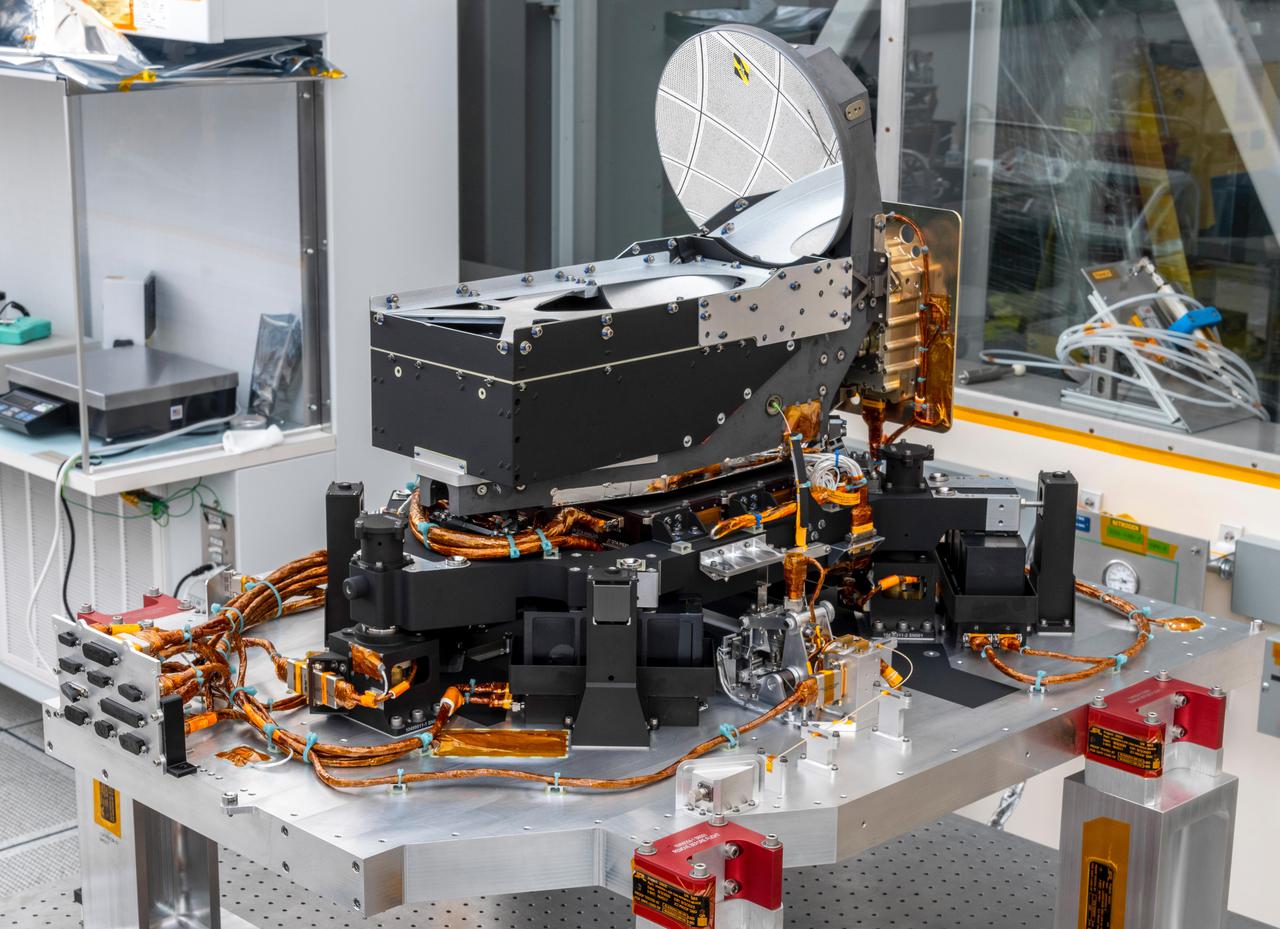
The Deep Space Optical Communications (DSOC) technology demonstration's flight laser transceiver is shown at NASA's Jet Propulsion Laboratory in Southern California in April 2021, before being installed inside its box-like enclosure that was later integrated with NASA's Psyche spacecraft. The transceiver consists of a near-infrared laser transmitter to send high-rate data to Earth, and a sensitive photon-counting camera to receive ground-transmitted low-rate data. The transceiver is mounted on an assembly of struts and actuators – shown in this photograph – that stabilizes the optics from spacecraft vibrations. The DSOC experiment is the agency's first demonstration of optical communications beyond the Earth-Moon system. DSOC is a system that consists of this flight laser transceiver, a ground laser transmitter, and a ground laser receiver. New advanced technologies have been implemented in each of these elements. The transceiver will "piggyback" on NASA's Psyche spacecraft when it launches in August 2022 to the metal-rich asteroid of the same name. The DSOC technology demonstration will begin shortly after launch and continue as the spacecraft travels from Earth to its gravity-assist flyby of Mars. https://photojournal.jpl.nasa.gov/catalog/PIA24569
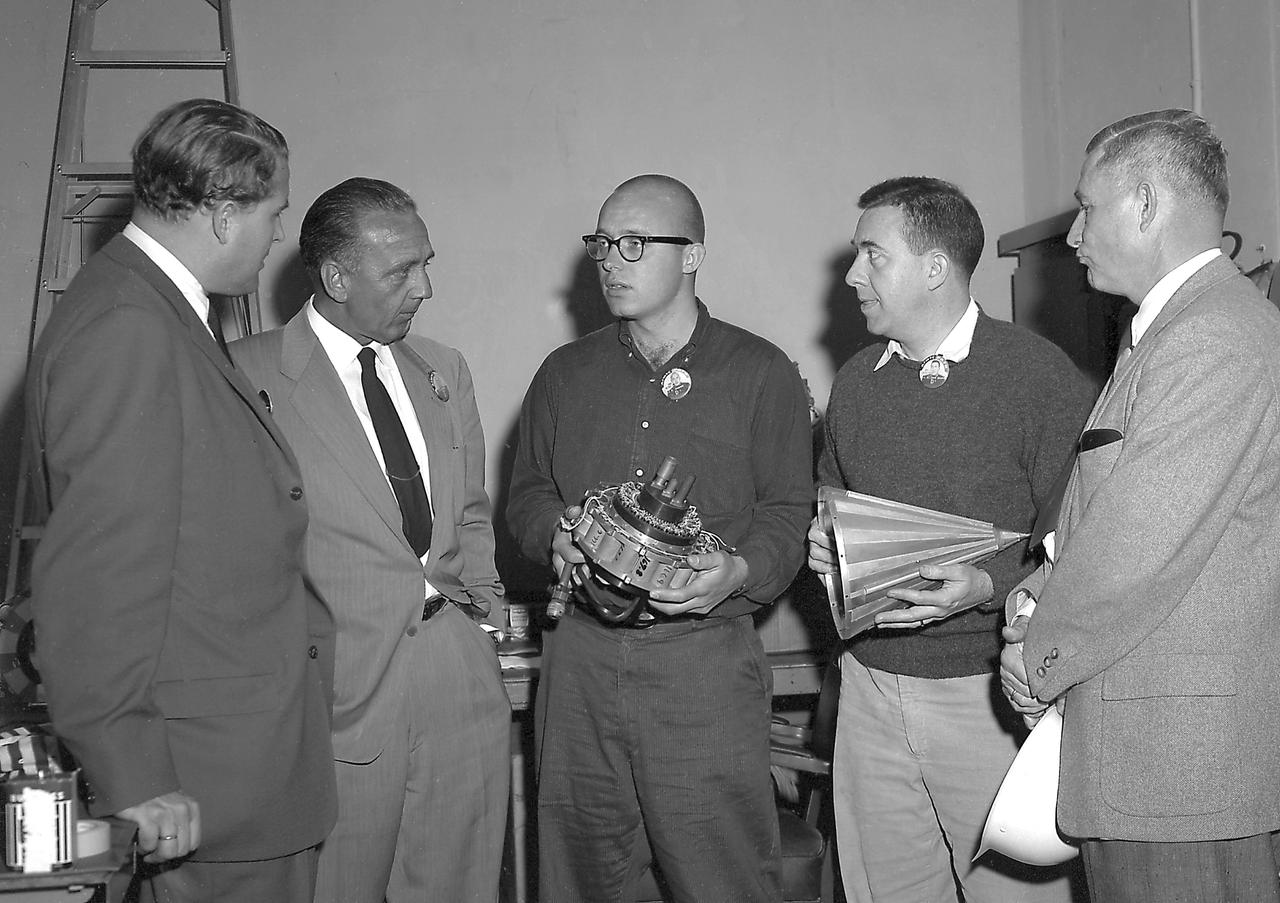
In this photo, Director of the U.S. Army Ballistic Missile Agency's (ABMA) Development Operations Division, Dr. Wernher von Braun, and Director of Missile Firing Division, Dr. Kurt Debus, are shown with unidentified individuals, discussing two components that would make up the Pioneer IV Lunar Probe. The mercury batteries (left) were used to power the radio transmitter, cosmic radiation counter and other instruments in Pioneer IV. The conical shroud placed over the instruments of Pioneer IV was plated with gold to improve conductivity. The metal surface also served as the anterna for the probe's instruments signaling back to the Earth receiving stations.
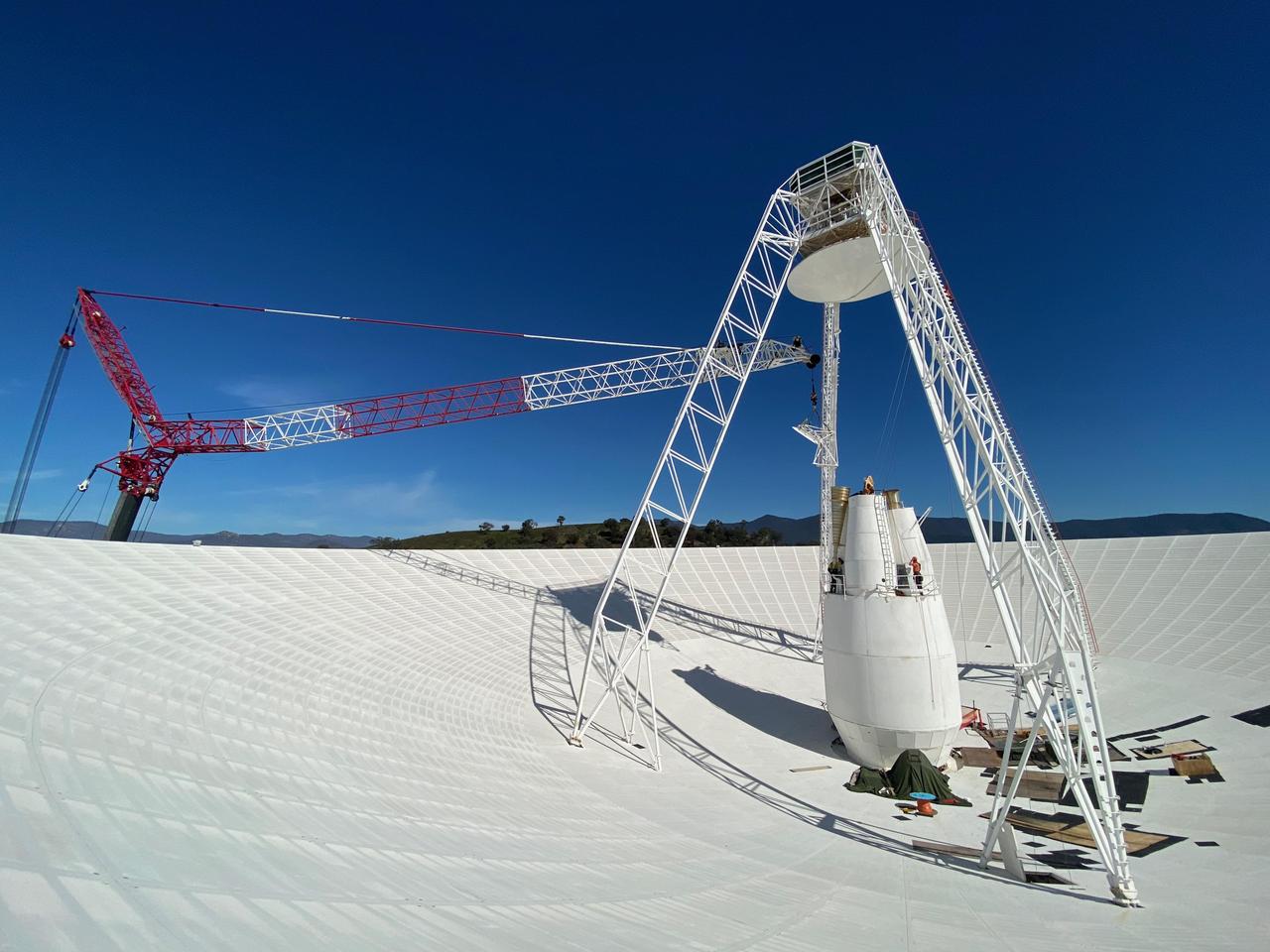
The antenna of the Deep Space Network's Deep Space Station 43 (DSS-43) in Canberra, Australia, spans 70 meters (230 foot) and stands 73 meters (239 foot), dwarfing workers as they perform upgrades on the central cone that contains sensitive transmitters and receivers. A giant crane assisted with the replacement of parts that had been operating on the antenna for over 40 years. One of several antennas located at the Canberra Deep Space Network station, DSS-43 is the largest and responsible for transmitting commands to NASA's Voyager 2 spacecraft. Since early March 2020, DSS-43 has been offline for the upgrades, which are expected to continue until January 2021. https://photojournal.jpl.nasa.gov/catalog/PIA23795
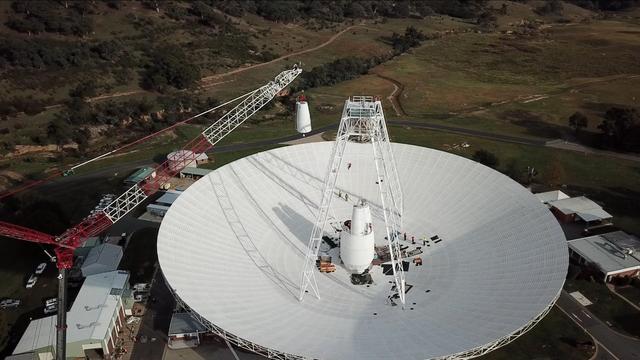
In a delicate operation, a 400-ton crane lifts the new X-band cone into the 70-meter (230-foot) Deep Space Network's Deep Space Station 43 (DSS-43) dish in Canberra, Australia. The new cone houses upgraded receiver and transmitter equipment for the 48-year-old antenna. One of several antennas located at the Canberra site, DSS-43 is the largest and responsible for transmitting commands to NASA's Voyager spacecraft. Since early March 2020, DSS43 has been offline for upgrades, which are expected to continue until January 2021. https://photojournal.jpl.nasa.gov/catalog/PIA23796
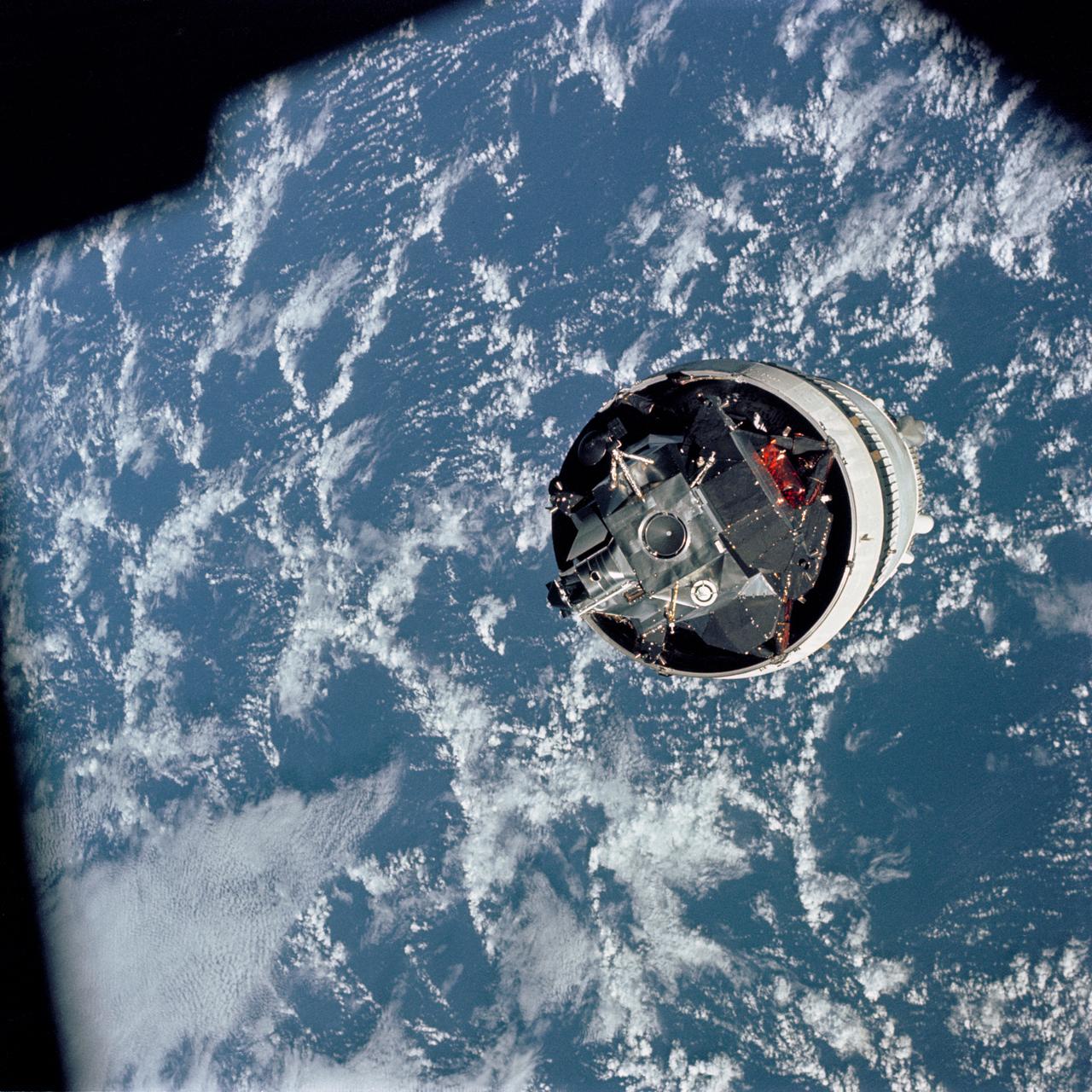
The Lunar Module (LM) 3 "Spider",still attached to the Saturn V third (S-IVB) stage,is photographed from the Command/Service Module (CSM) "Gumdrop" on the first day of the Apollo 9 Earth-orbital mission. This picture was taken following CSM/LM-S-IVB separation,and prior to LM extraction from the S-IVB. The Spacecraft Lunar Module Adapter (SLA) panels have already been jettisoned. Film magazine was A,film type was SO-368 Ektachrome with 0.460 - 0.710 micrometers film / filter transmittance response and haze filter, 80mm lens.
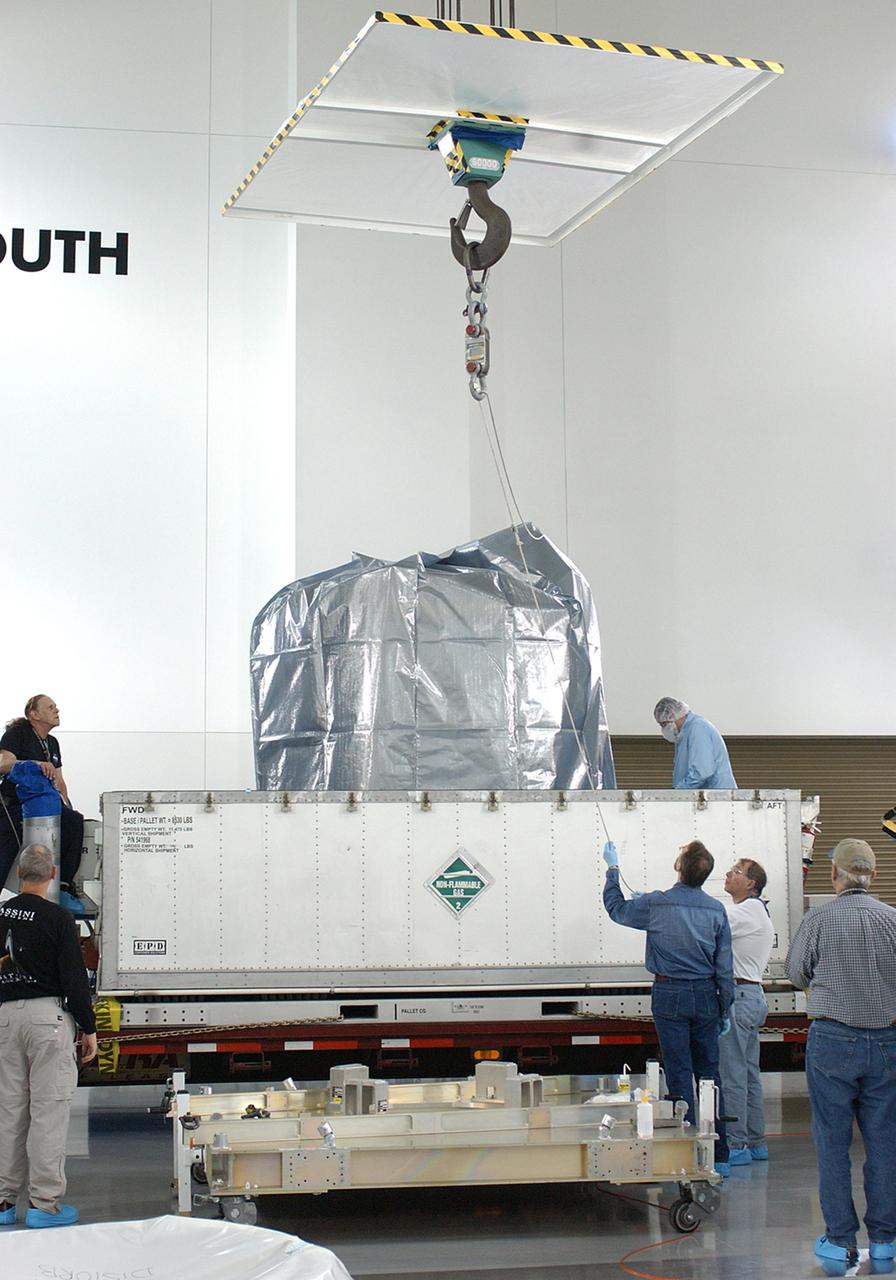
KENNEDY SPACE CENTER, FLA. - At the Astrotech Payload Processing Facility on Vandenberg Air Force Base in California, an overhead crane is attached to the CloudSat spacecraft to lift it out of its shipping container. CloudSat was shipped from Ball Aerospace and Technologies Corp. in Boulder, Colo. The spacecraft will undergo electrical and spacecraft transmitter testing. In combination with the Cloud-Aerosol Lidar and Infrared Pathfinder Satellite Observation (CALIPSO), the spacecraft will provide never-before-seen 3-D perspectives of how clouds and aerosols form, evolve, and affect weather and climate. CALIPSO and CloudSat will fly in formation with three other satellites to enhance understanding of climate systems. The launch date for CloudSat_CALIPSO is no earlier than Aug. 22.
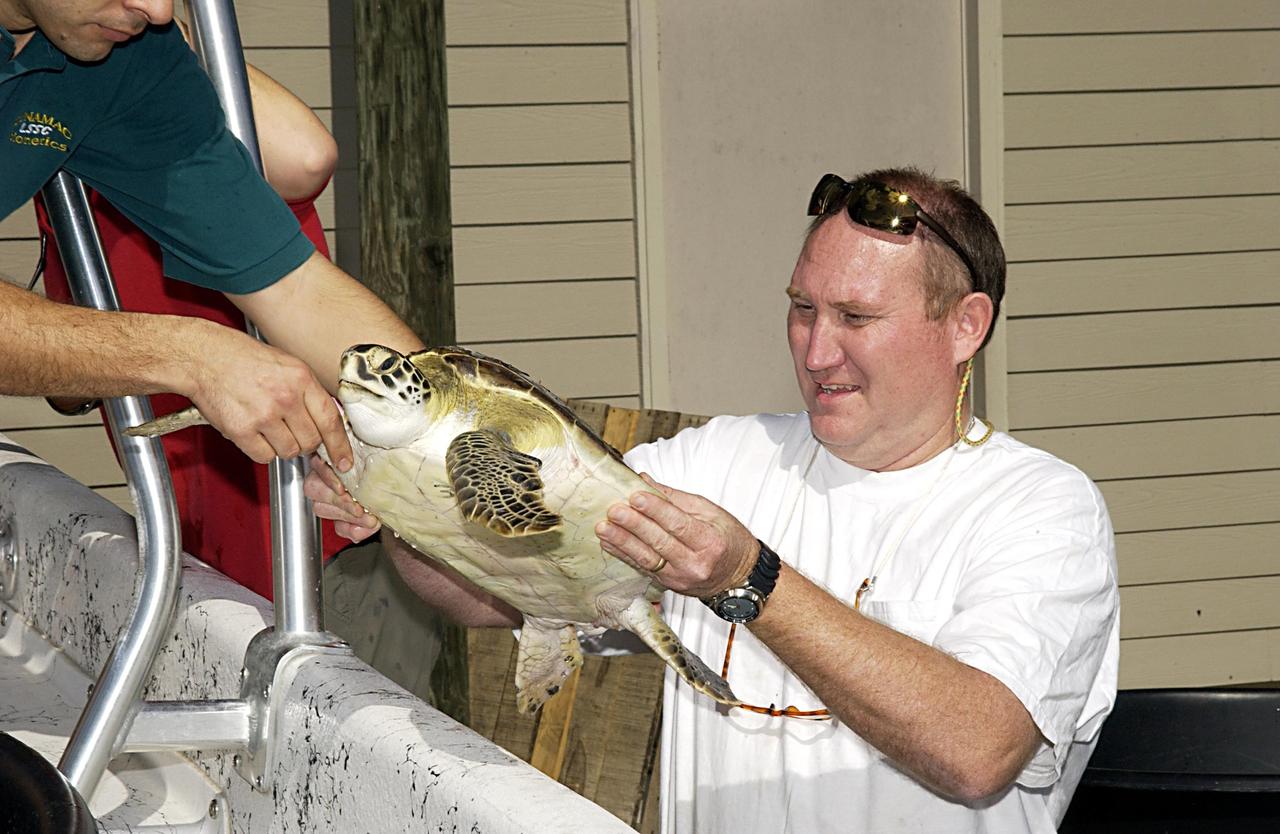
KENNEDY SPACE CENTER, FLA. -- A sea turtle is carried toward the skiff that will return it to the lagoon. It is one of several turtles found stunned, impacted by the unseasonal cold temperatures experienced in Central Florida. The cooperative effort of KSC contractor Dynamac Corporation's Aquatics Program and the Merritt Island National Wildlife Refuge warmed the turtles and evaluated them for release. Most were tagged and one received a transmitter, provided by the University of Central Florida, for satellite tracking. The turtles were then transported through the Haulover Canal to a location away from the main channel and released.

KENNEDY SPACE CENTER, FLA. - The CloudSat spacecraft arrives via truck at the Astrotech Payload Processing Facility on Vandenberg Air Force Base in California from Ball Aerospace and Technologies Corp. in Boulder, Colo. CloudSat will undergo electrical and spacecraft transmitter testing. In combination with the Cloud-Aerosol Lidar and Infrared Pathfinder Satellite Observation (CALIPSO), the spacecraft will provide never-before-seen 3-D perspectives of how clouds and aerosols form, evolve, and affect weather and climate. CALIPSO and CloudSat will fly in formation with three other satellites to enhance understanding of climate systems. The launch date for CloudSat_CALIPSO is no earlier than Aug. 22.
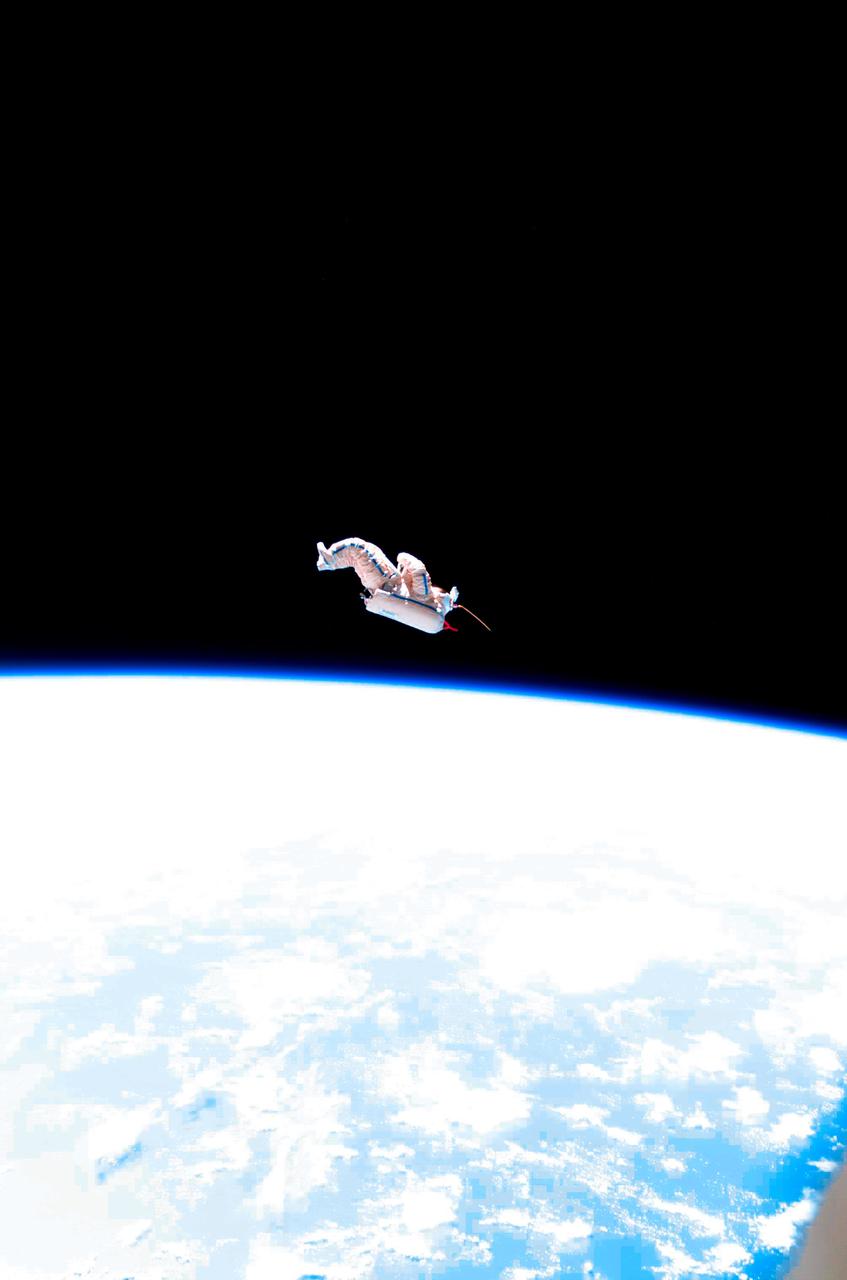
ISS012-E-24449 (3 Feb. 2006) --- Backdropped by the blackness of space and Earth's horizon, a spacesuit-turned-satellite called SuitSat began its orbit around the Earth after being released by the Expedition 12 crewmembers during a session of extravehicular activity (EVA) on Feb. 3, 2006. SuitSat, an unneeded Russian Orlan spacesuit, was outfitted by the crew with three batteries, internal sensors and a radio transmitter, which faintly transmitted recorded voices of school children to amateur radio operators worldwide. The suit will enter the atmosphere and burn up in a few weeks.
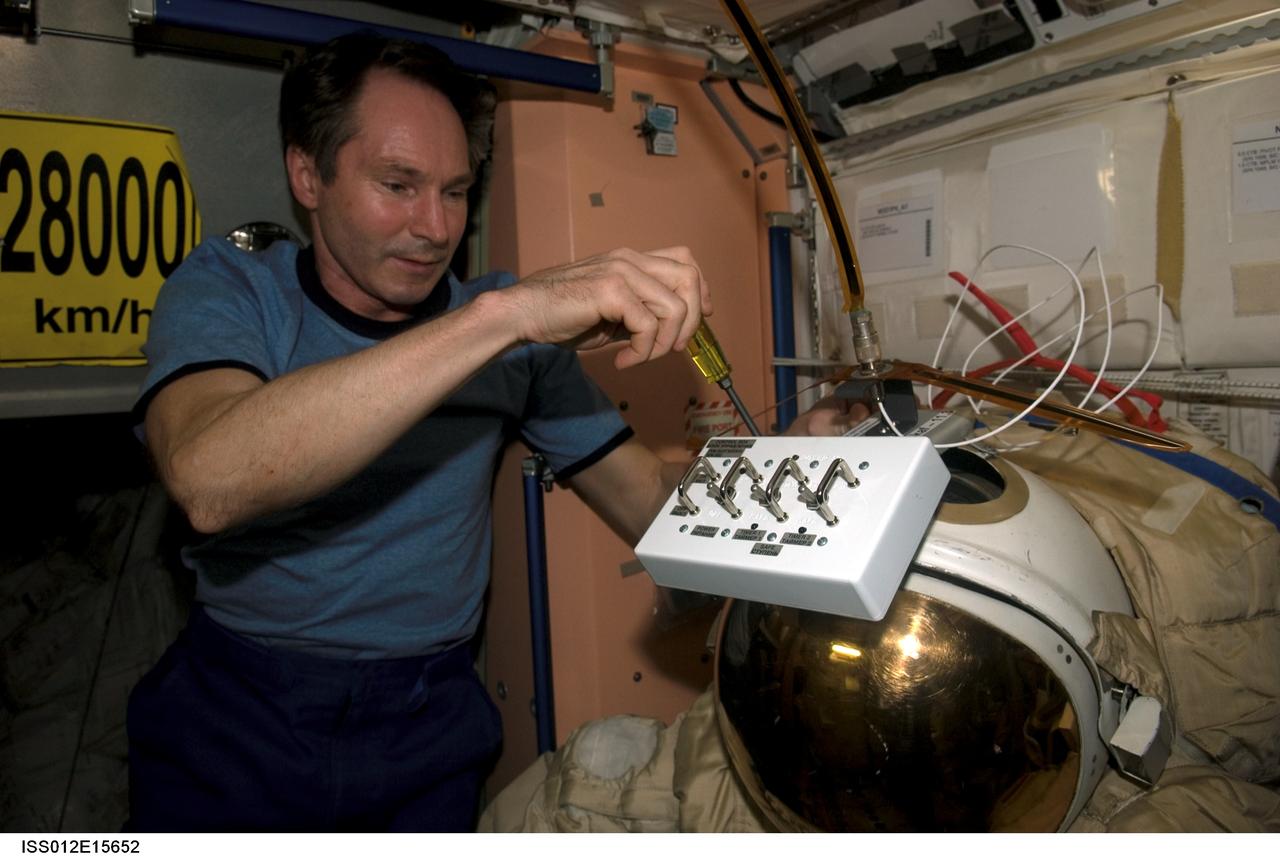
ISS012-E-15652 (24 Jan. 2006) --- In the Unity node of the International Space Station, cosmonaut Valery I. Tokarev, Expedition 12 flight engineer representing Russia's Federal Space Agency, puts finishing touches on an old Russian Orlan spacesuit that will be released by hand from the space station during a spacewalk Feb. 3, 2006. Outfitted with a special radio transmitter and other gear, the spacesuit comprises a Russian experiment called SuitSat. It will fly free from the station as a satellite in orbit for several weeks of scientific research and radio tracking, including communications by amateur radio operators. Eventually, it will enter the atmosphere and be destroyed.
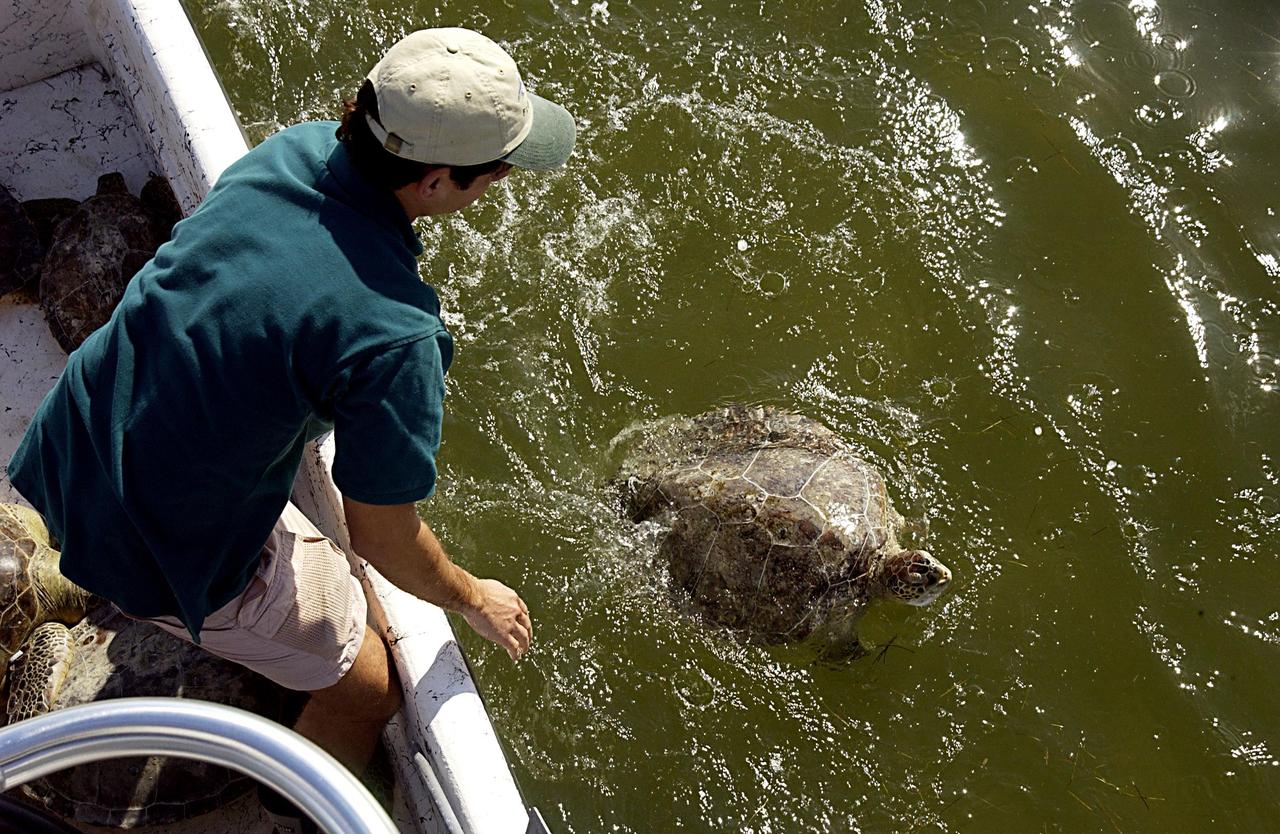
KENNEDY SPACE CENTER, FLA. - A worker watches as one of the rescued sea turtles swims away in Mosquito Lagoon. It is one of several turtles found stunned, impacted by the unseasonal cold temperatures experienced in Central Florida. The cooperative effort of KSC contractor Dynamac Corporation's Aquatics Program and the Merritt Island National Wildlife Refuge warmed the turtles and evaluated them for release. Most were tagged and the largest one received a transmitter, provided by the University of Central Florida, for satellite tracking. The turtles were then transported through the Haulover Canal to a location away from the main channel for release.
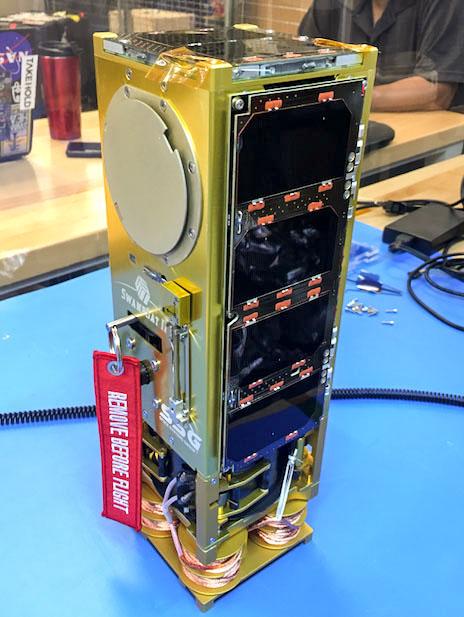
jsc2019e056549 (9/27/2019) --- Preflight overall view of SwampSat-II . SwampSat II measures very low frequency (VLF) wave propagation in Earth’s upper atmosphere using a novel antenna that has higher sensitivity than existing methods. The antenna system, developed by students at the University of Florida, launches in a 3-Unit CubeSat. Ground-based sources such as VLF transmitters and lightning injected VLF waves into the upper atmosphere, and measuring these waves is essential to understanding loss of energetic radiation belt particles. Image courtesy of: The SwampSat Team at University of Florida
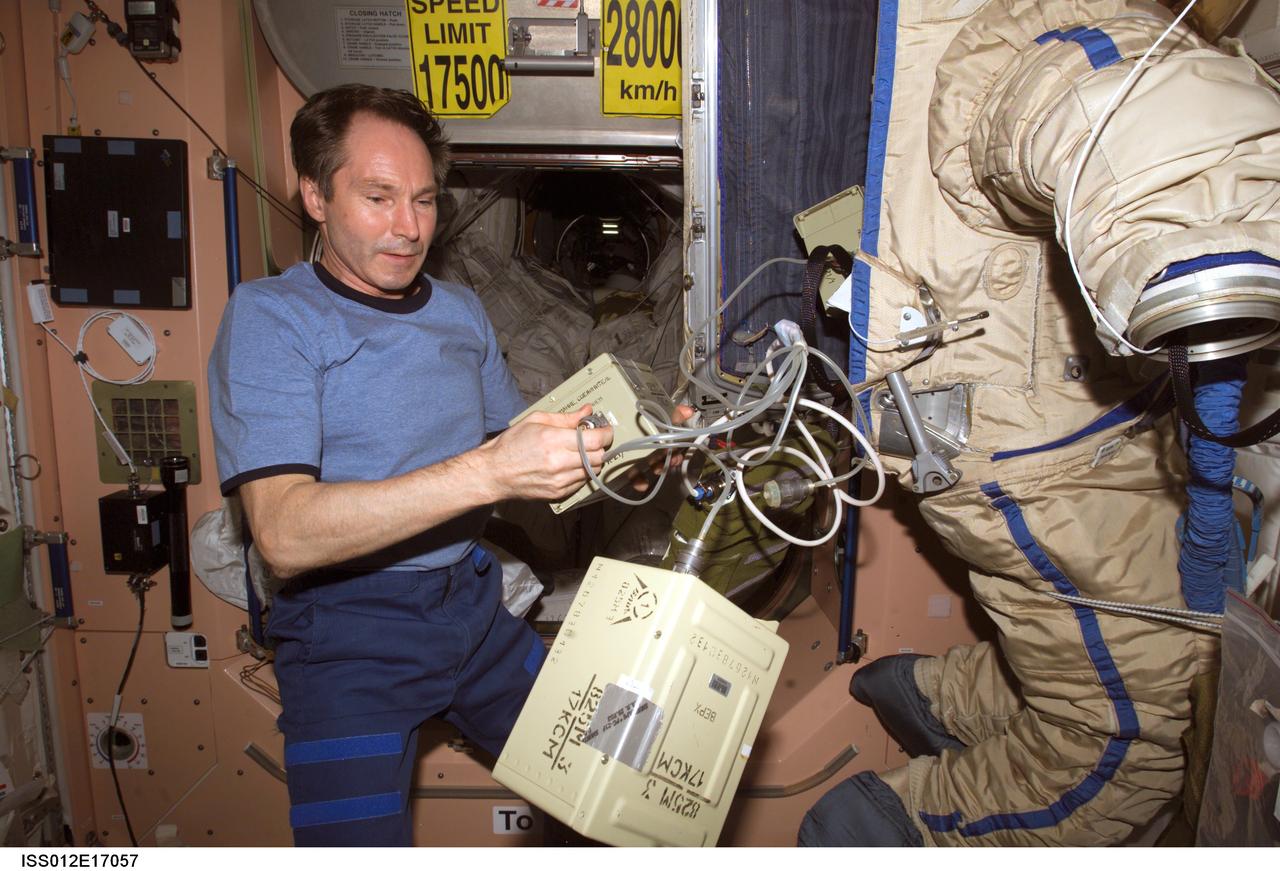
ISS012-E-17057 (24 Jan. 2006) --- In the Unity node of the International Space Station, cosmonaut Valery I. Tokarev, Expedition 12 flight engineer representing Russia's Federal Space Agency, puts finishing touches on an old Russian Orlan spacesuit that will be released by hand from the space station during a spacewalk Feb. 3, 2006. Outfitted with a special radio transmitter and other gear, the spacesuit comprises a Russian experiment called SuitSat. It will fly free from the station as a satellite in orbit for several weeks of scientific research and radio tracking, including communications by amateur radio operators. Eventually, it will enter the atmosphere and be destroyed.
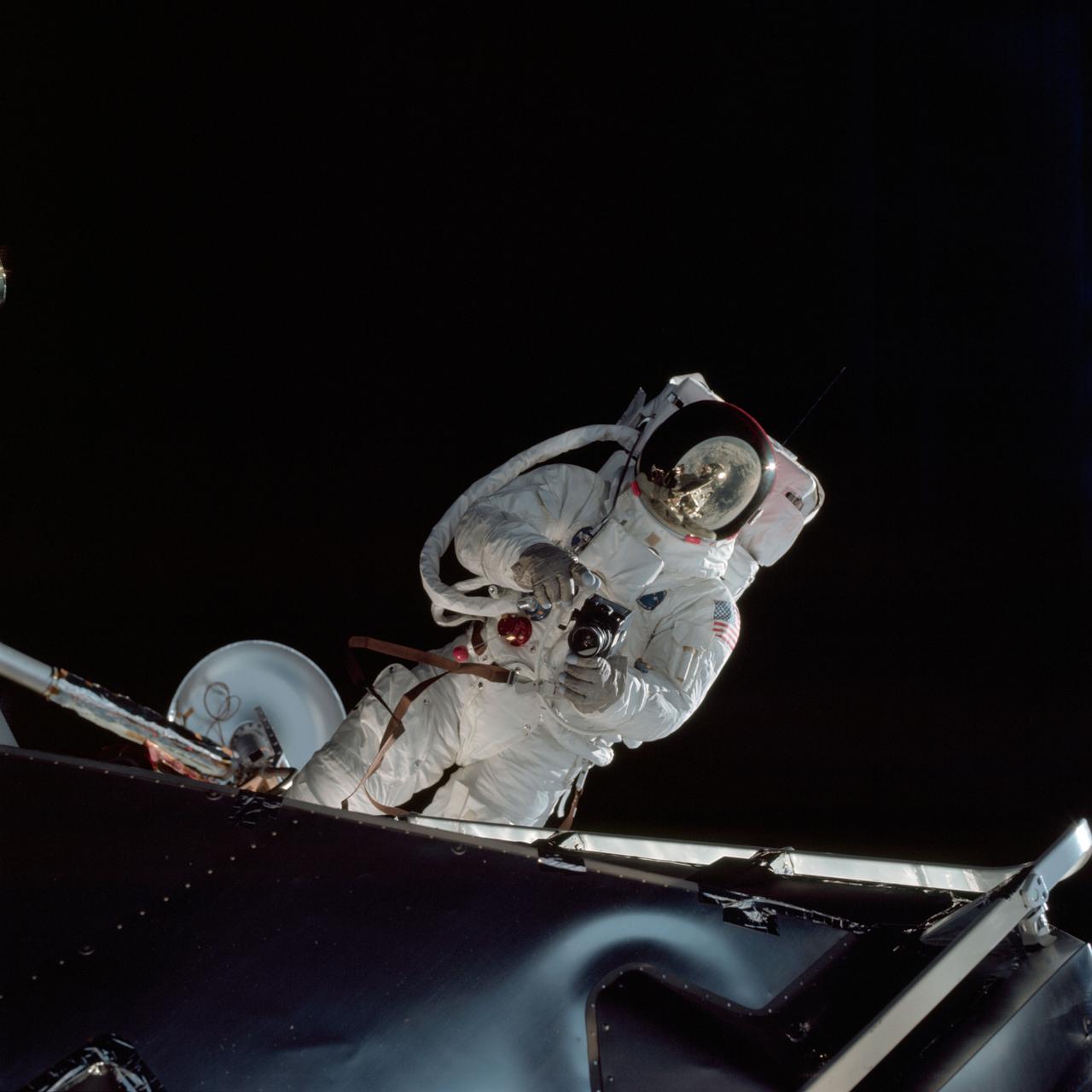
Astronaut Russell L. Schweickart, lunar module pilot, operates a 70mm Hasselblad camera during his extravehicular activity on the fourth day of the Apollo 9 earth-orbital mission. The Command/Service Module and the Lunar Module 3 "Spider" are docked. This view was taken form the Command Module "Gumdrop". Schweickart, wearing an Extravehicular Mobility Unit (EMU), is standing in "golden slippers" on the Lunar Module porch. On his back, partially visible, are a Portable Life Support System (PLSS) and an Oxygen Purge System (OPS). Film magazine was A,film type was SO-368 Ektachrome with 0.460 - 0.710 micrometers film / filter transmittance response and haze filter,80mm lens.
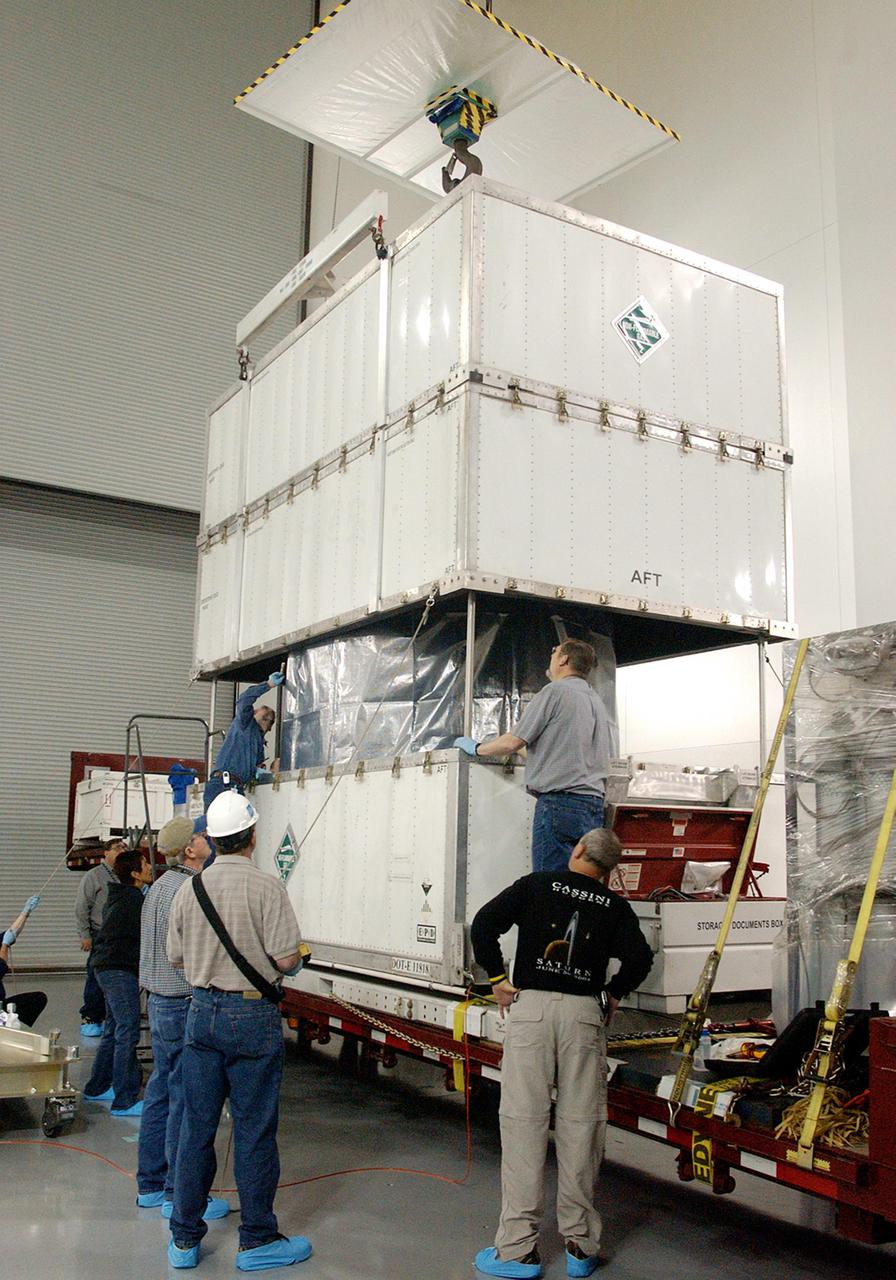
KENNEDY SPACE CENTER, FLA. - The shipping container is lifted away from the CloudSat spacecraft at the Astrotech Payload Processing Facility on Vandenberg Air Force Base in California. It was shipped from Ball Aerospace and Technologies Corp. in Boulder, Colo. CloudSat will undergo electrical and spacecraft transmitter testing. In combination with the Cloud-Aerosol Lidar and Infrared Pathfinder Satellite Observation (CALIPSO), the spacecraft will provide never-before-seen 3-D perspectives of how clouds and aerosols form, evolve, and affect weather and climate. CALIPSO and CloudSat will fly in formation with three other satellites to enhance understanding of climate systems. The launch date for CloudSat_CALIPSO is no earlier than Aug. 22.

KENNEDY SPACE CENTER, FLA. - At the Astrotech Payload Processing Facility on Vandenberg Air Force Base in California, the CloudSat spacecraft is again being lowered, but on a different mounting stand. CloudSat will undergo electrical and spacecraft transmitter testing. In combination with the Cloud-Aerosol Lidar and Infrared Pathfinder Satellite Observation (CALIPSO), the spacecraft will provide never-before-seen 3-D perspectives of how clouds and aerosols form, evolve, and affect weather and climate. CALIPSO and CloudSat will fly in formation with three other satellites to enhance understanding of climate systems. The launch date for CloudSat_CALIPSO is no earlier than Aug. 22.
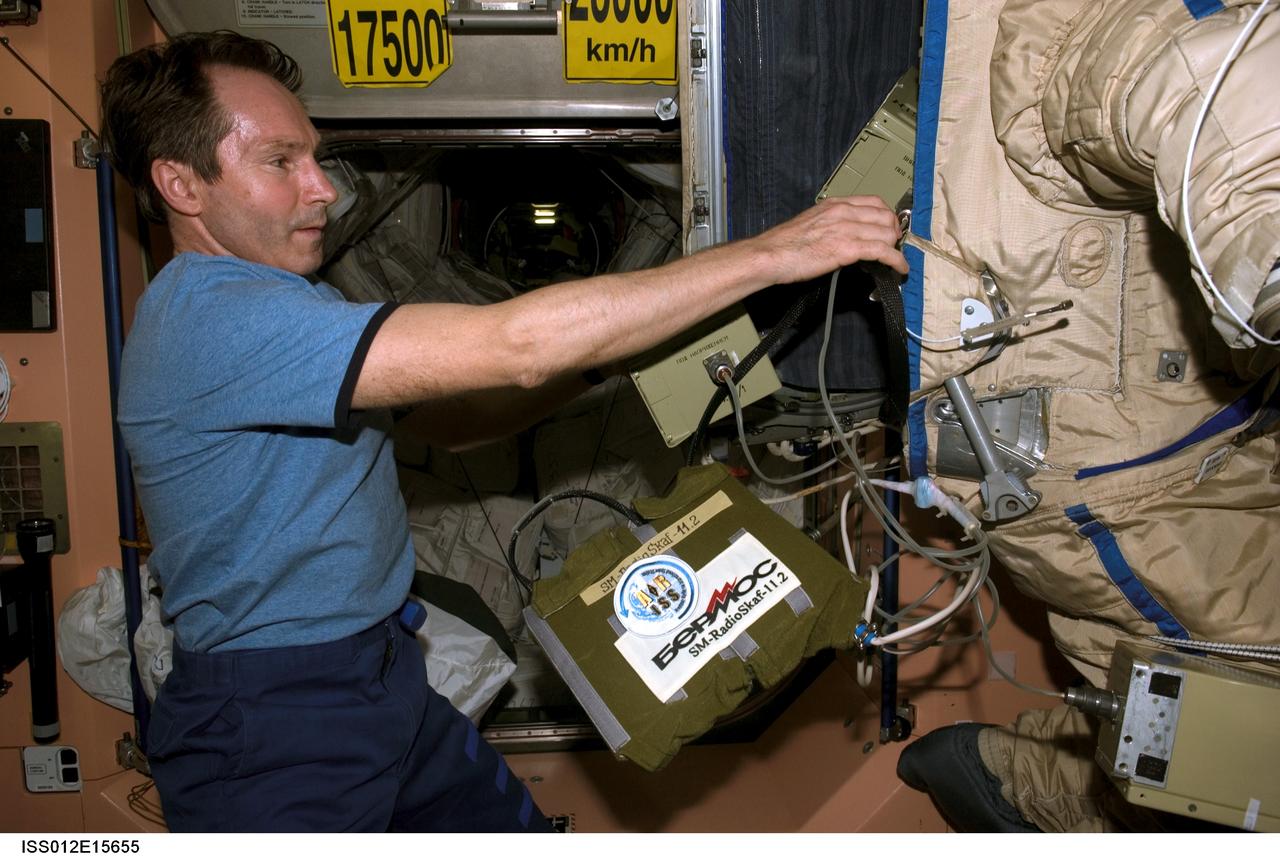
ISS012-E-15655 (24 Jan. 2006) --- In the Unity node of the International Space Station, cosmonaut Valery I. Tokarev, Expedition 12 flight engineer representing Russia's Federal Space Agency, puts finishing touches on an old Russian Orlan spacesuit that will be released by hand from the space station during a spacewalk Feb. 3, 2006. Outfitted with a special radio transmitter and other gear, the spacesuit comprises a Russian experiment called SuitSat. It will fly free from the station as a satellite in orbit for several weeks of scientific research and radio tracking, including communications by amateur radio operators. Eventually, it will enter the atmosphere and be destroyed.
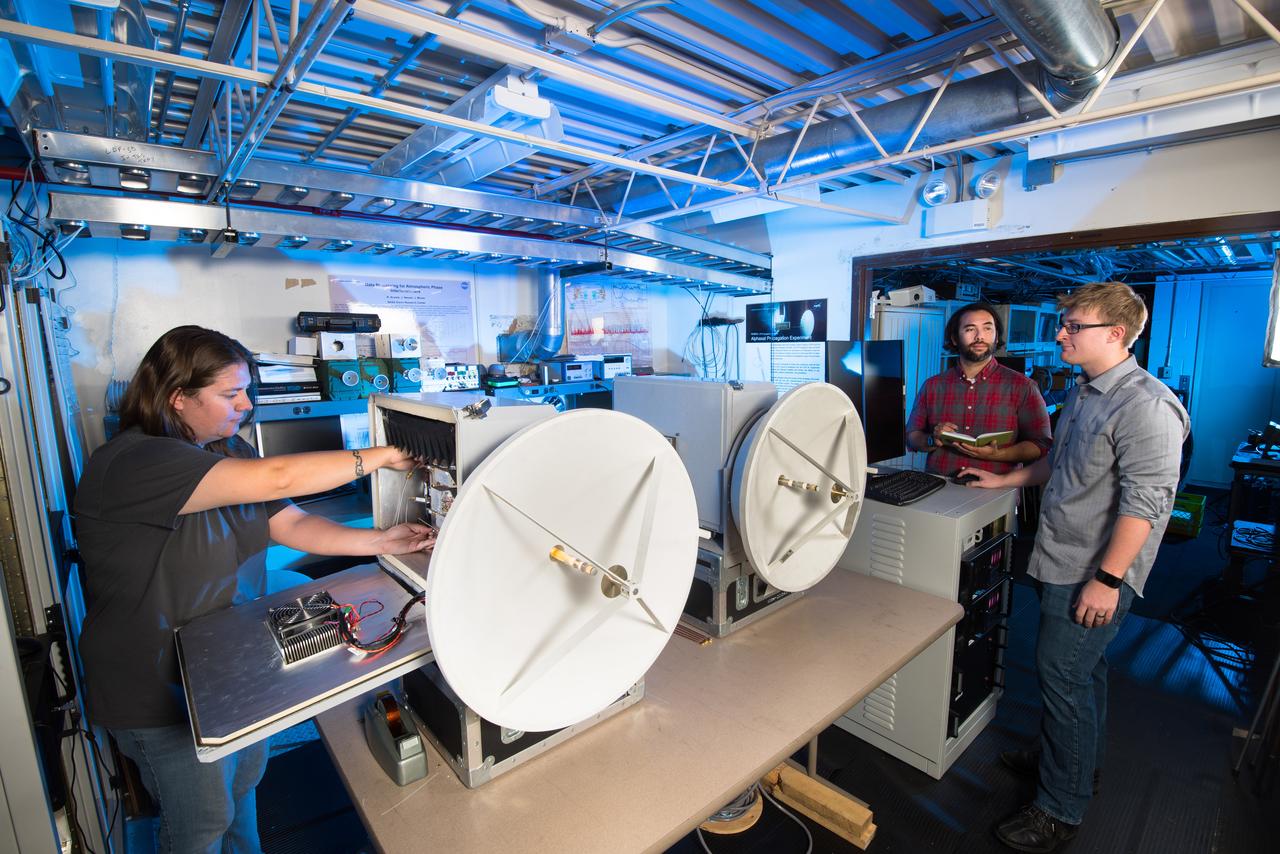
NASA Glenn researchers Jacki Houts, James Nessel and Michael Zemba perform a final inspection of the W/V-Band Terrestrial Link Experiment (WTLE) before it was transported to Albuquerque, New Mexico for testing. The experiment hardware includes a transmitter, which has been placed on the crest of the Sandia Mountains and a receiver (shown) placed at a research facility of the University of New Mexico. The wireless link spans 23km and will be used to study the effects of the atmosphere on high data-rate wireless communication links at 72 and 84 GHz. The goal of the experiment is to study these frequency bands for satellite communications.
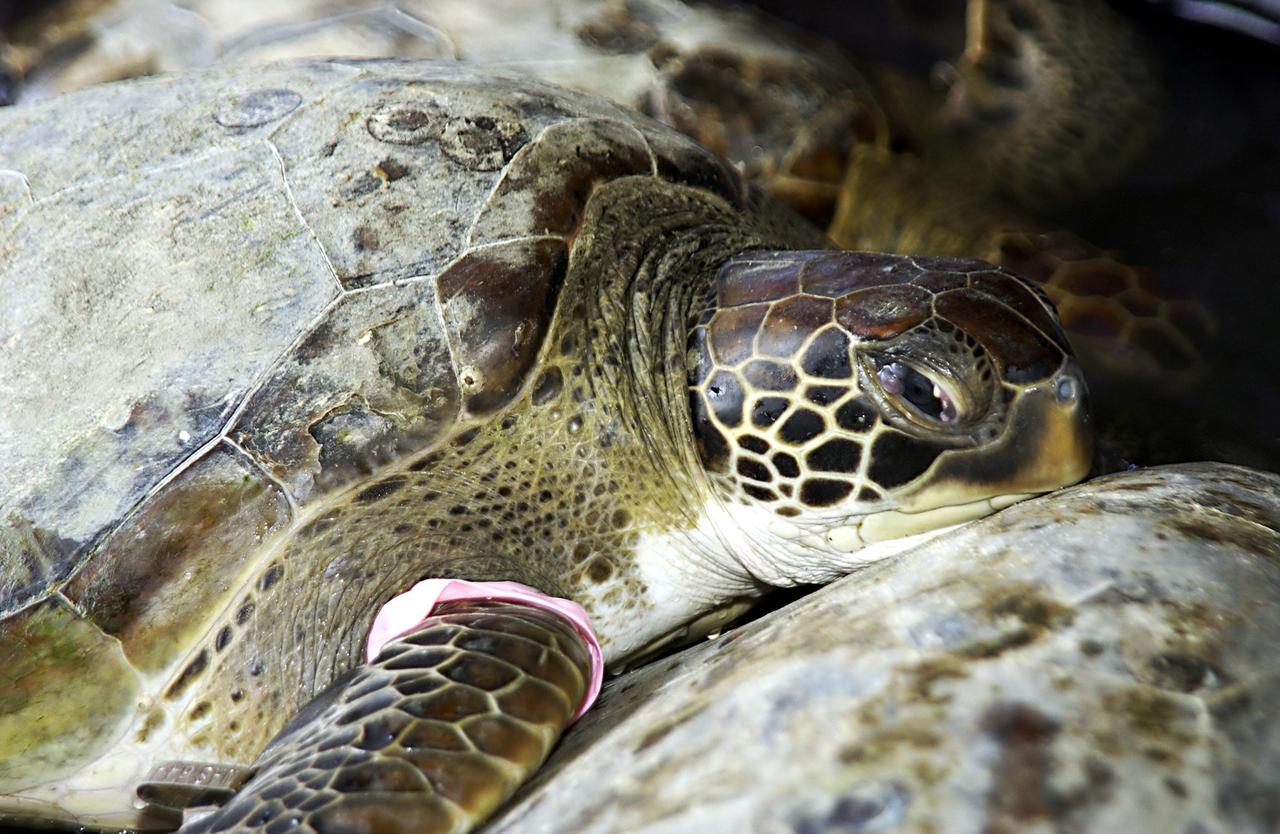
KENNEDY SPACE CENTER, FLA. - One of several sea turtles rescued from the Mosquito Lagoon is ready for release. The turtles were found stunned, impacted by the unseasonal cold temperatures experienced in Central Florida. The cooperative effort of KSC contractor Dynamac Corporation's Aquatics Program and the Merritt Island National Wildlife Refuge warmed the turtles and evaluated them for release. Most were tagged and one received the transmitter, provided by the University of Central Florida, for satellite tracking. The turtles were then transported in a skiff through the Haulover Canal to a location away from the main channel and released back into the Mosquito Lagoon.
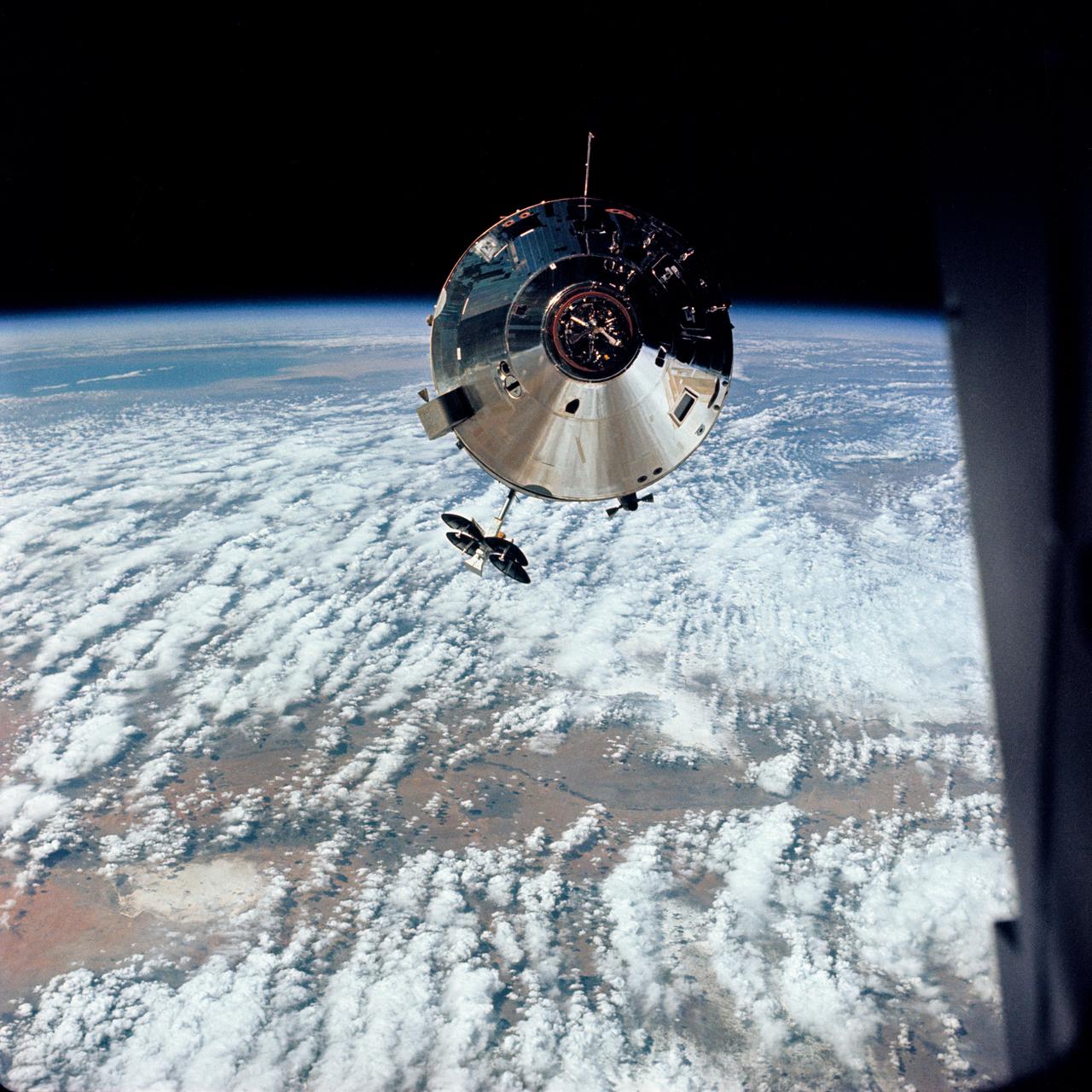
High Oblique photograph (taken over New Mexico) of the Apollo 9 Command/Service Modules taken from the Lunar Module,"Spider",on the fifth day of the Apollo 9 earth-orbital mission. Docking mechanism is visible in nose of the Command Module,"Gumdrop". Object jutting out from the Service Module aft bulkhead is the high-gain S-Band antenna. Film magazine was F, film type was SO-368 Ektachrome with 0.460 - 0.710 micrometers film / filter transmittance response and haze filter,80mm lens. Cloud cover over the Earth is 70%.
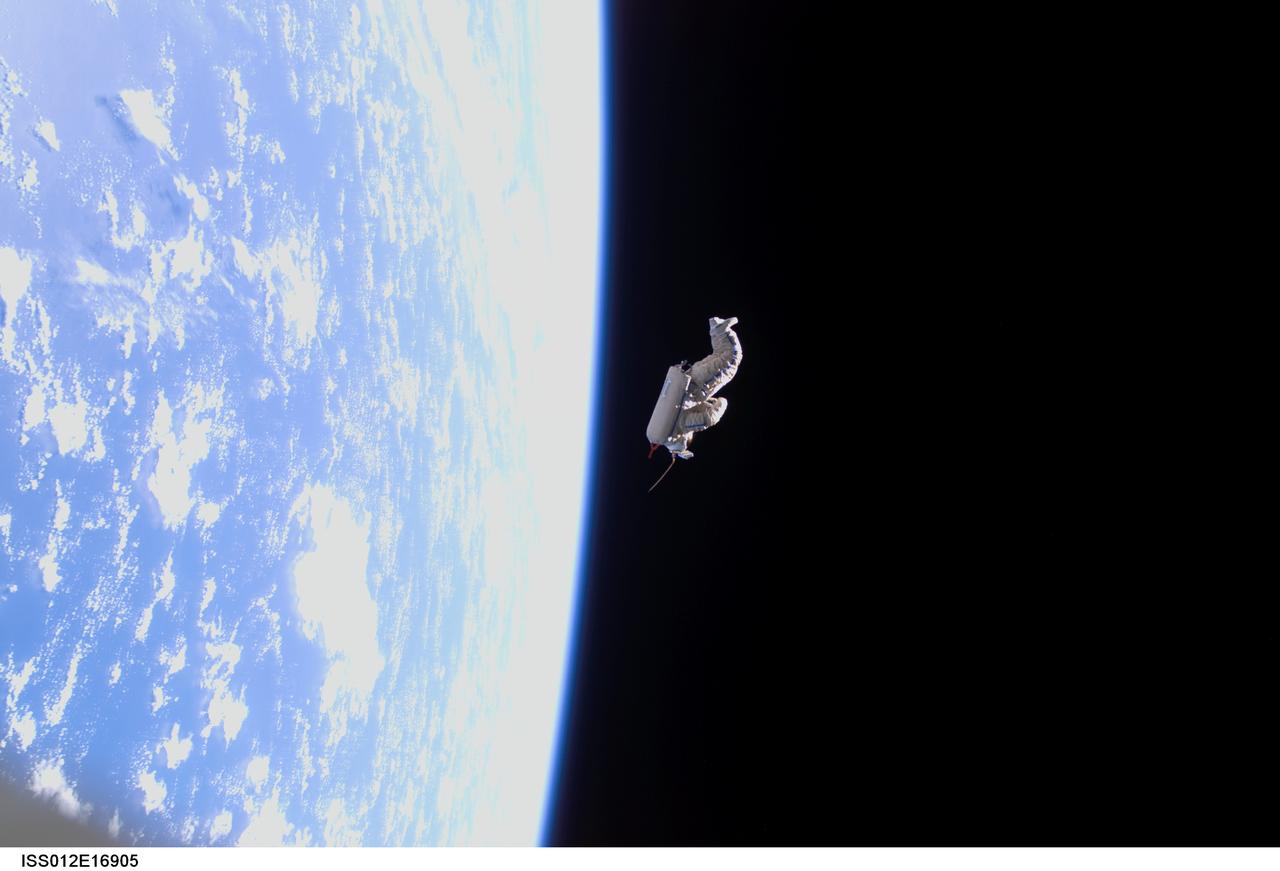
ISS012-E-16905 (3 Feb. 2006) --- Backdropped by the blackness of space and Earth’s horizon, a spacesuit-turned-satellite called SuitSat began its orbit around the Earth after it was released by the Expedition 12 crewmembers during a session of extravehicular activity (EVA) on Feb. 3, 2006. SuitSat, an unneeded Russian Orlan spacesuit, was outfitted by the crew with three batteries, internal sensors and a radio transmitter, which faintly transmitted recorded voices of school children to amateur radio operators worldwide. The suit will enter the atmosphere and burn up in a few weeks.
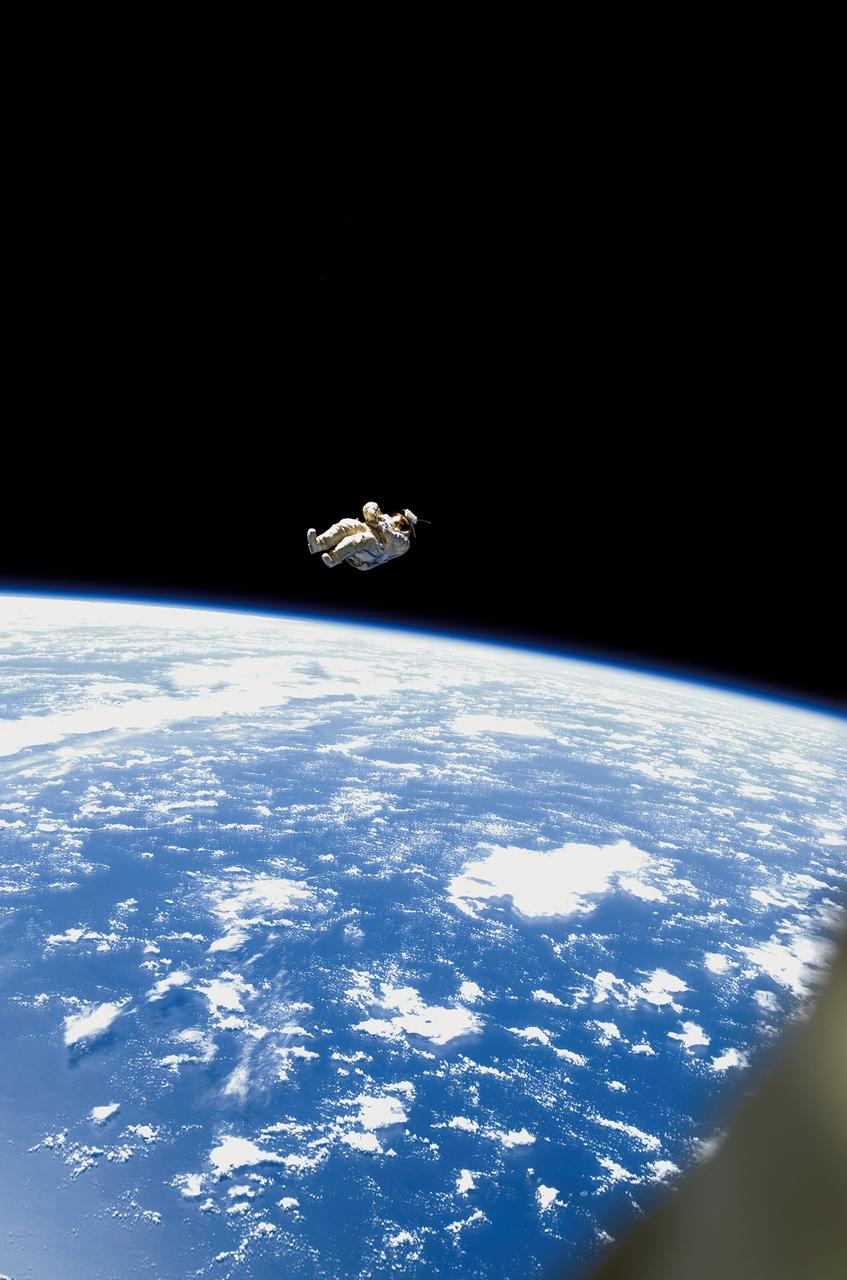
ISS012-E-16908 (3 Feb. 2006) --- Backdropped by the blackness of space and Earth’s horizon, a spacesuit-turned-satellite called SuitSat began its orbit around the Earth after it was released by the Expedition 12 crewmembers during a session of extravehicular activity (EVA) on Feb. 3, 2006. SuitSat, an unneeded Russian Orlan spacesuit, was outfitted by the crew with three batteries, internal sensors and a radio transmitter, which faintly transmitted recorded voices of school children to amateur radio operators worldwide. The suit will enter the atmosphere and burn up in a few weeks.
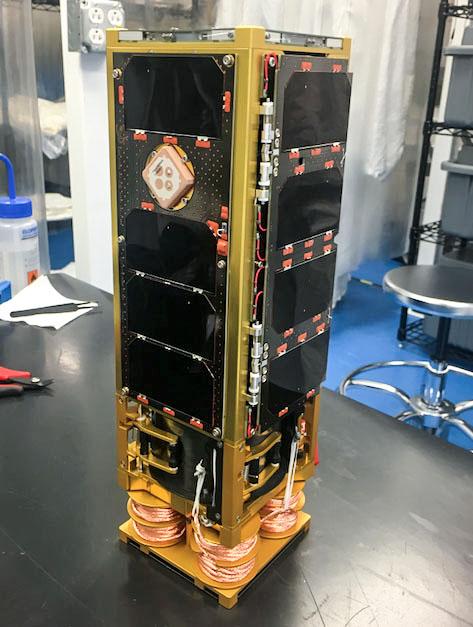
jsc2019e056548 (9/27/2019) --- Preflight overall view of SwampSat-II . SwampSat II measures very low frequency (VLF) wave propagation in Earth’s upper atmosphere using a novel antenna that has higher sensitivity than existing methods. The antenna system, developed by students at the University of Florida, launches in a 3-Unit CubeSat. Ground-based sources such as VLF transmitters and lightning injected VLF waves into the upper atmosphere, and measuring these waves is essential to understanding loss of energetic radiation belt particles. Image courtesy of: The SwampSat Team at University of Florida
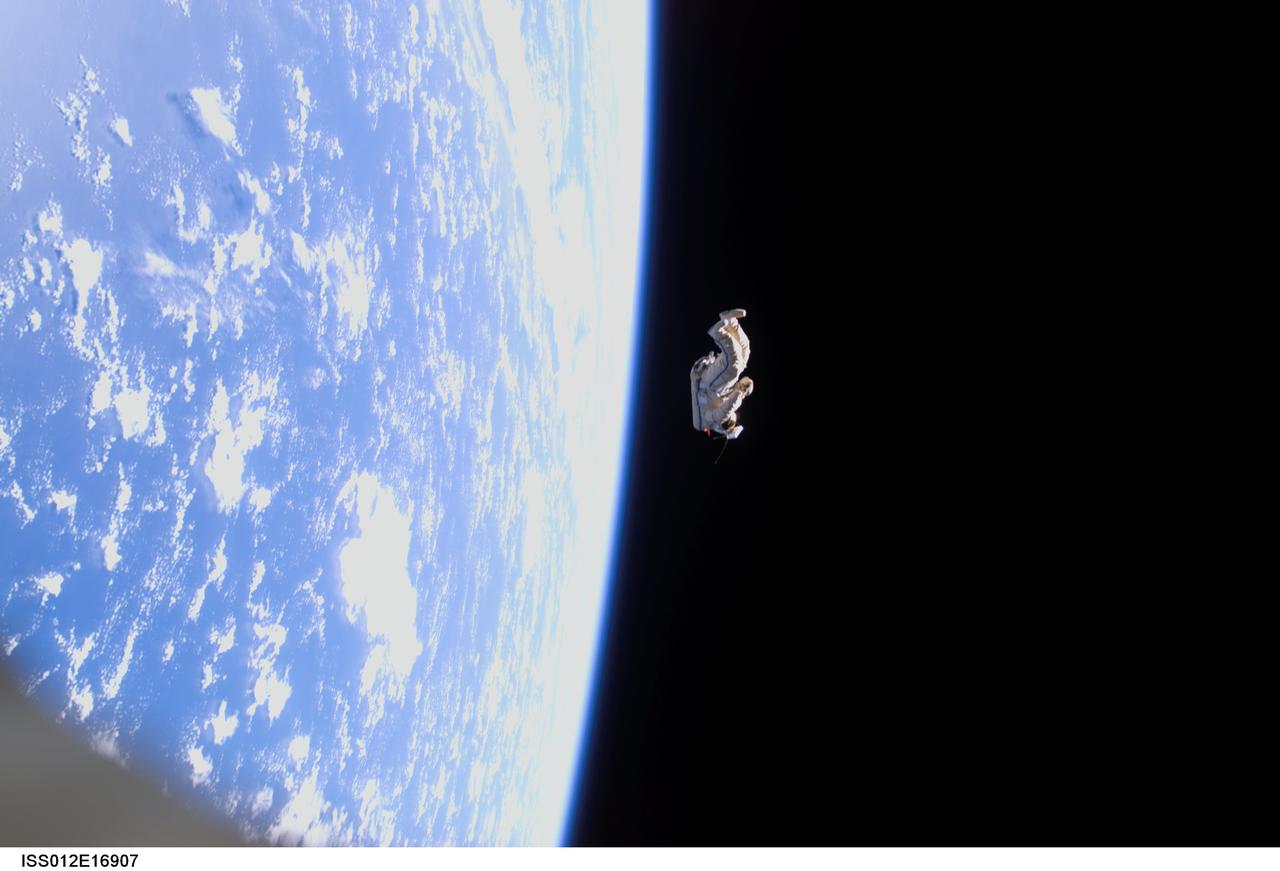
ISS012-E-16907 (3 Feb. 2006) --- Backdropped by the blackness of space and Earth’s horizon, a spacesuit-turned-satellite called SuitSat began its orbit around the Earth after it was released by the Expedition 12 crewmembers during a session of extravehicular activity (EVA) on Feb. 3, 2006. SuitSat, an unneeded Russian Orlan spacesuit, was outfitted by the crew with three batteries, internal sensors and a radio transmitter, which faintly transmitted recorded voices of school children to amateur radio operators worldwide. The suit will enter the atmosphere and burn up in a few weeks.
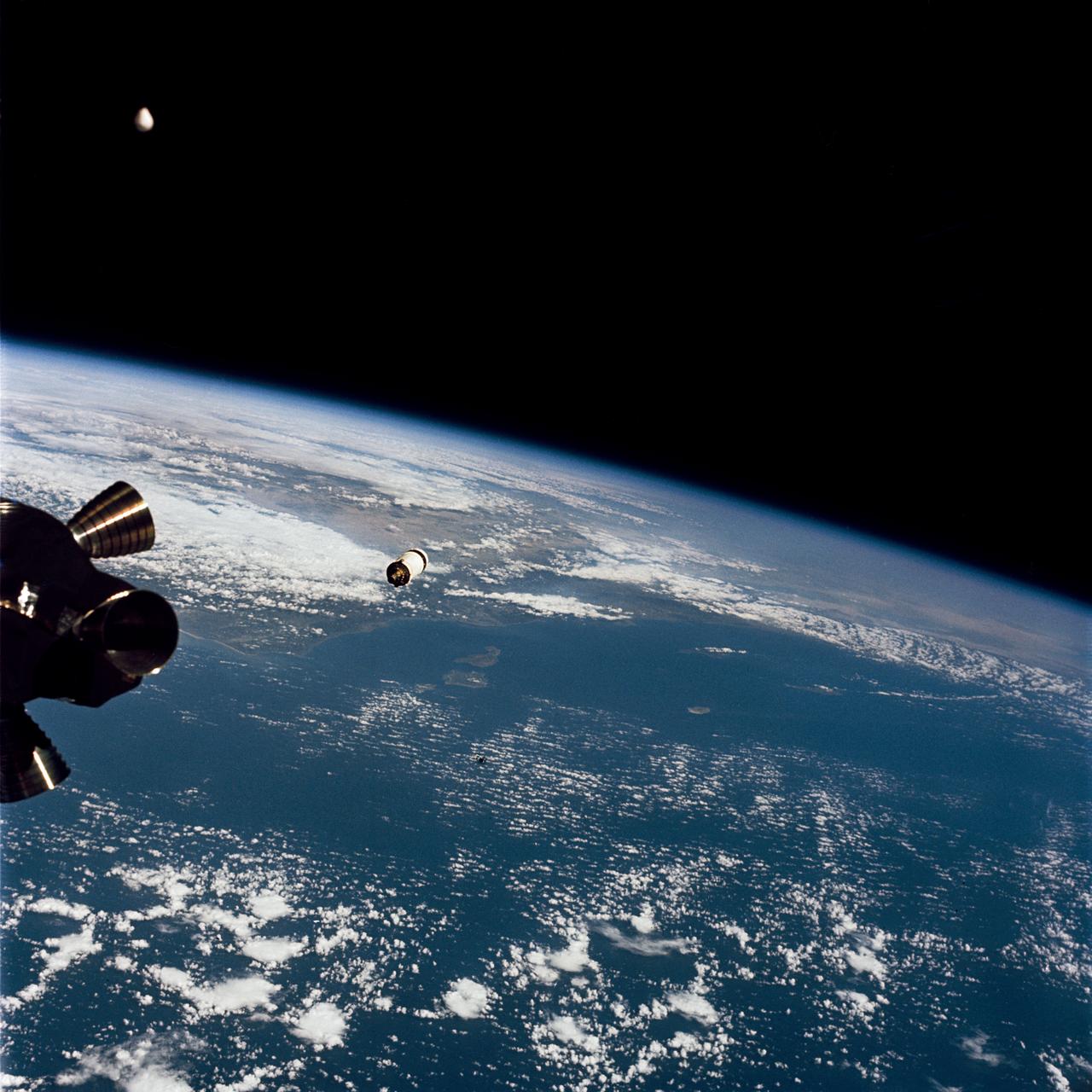
Oblique Earth Observation taken by the Apollo 9 crew. View is of California including: Sanata Barbara, Los Angeles, San Diego, Santa Rosa, San Miguel, and Santa Cruz Islands, Santa Barbara Channel, Salton Sea and the Service Module (SM) Lunar Module (LM) adapter (S.L.A.) in the distance. Film magazine was A,film type was SO-368 Ektachrome with 0.460 - 0.710 micrometers film / filter transmittance response and haze filter, 80mm lens. Latitude was 32.55 N by Longitude 119.58 W, Altitude miles were 106 and cloud cover was 25%.

KENNEDY SPACE CENTER, FLA. - At the Astrotech Payload Processing Facility on Vandenberg Air Force Base in California, workers help guide the CloudSat spacecraft with an attachment ring as it is lowered toward the workstand on the floor. CloudSat will undergo electrical and spacecraft transmitter testing. In combination with the Cloud-Aerosol Lidar and Infrared Pathfinder Satellite Observation (CALIPSO), the spacecraft will provide never-before-seen 3-D perspectives of how clouds and aerosols form, evolve, and affect weather and climate. CALIPSO and CloudSat will fly in formation with three other satellites to enhance understanding of climate systems. The launch date for CloudSat_CALIPSO is no earlier than Aug. 22.

KENNEDY SPACE CENTER, FLA. - At the Astrotech Payload Processing Facility on Vandenberg Air Force Base in California, the CloudSat spacecraft is in place on a stand. CloudSat will undergo electrical and spacecraft transmitter testing. In combination with the Cloud-Aerosol Lidar and Infrared Pathfinder Satellite Observation (CALIPSO), the spacecraft will provide never-before-seen 3-D perspectives of how clouds and aerosols form, evolve, and affect weather and climate. CALIPSO and CloudSat will fly in formation with three other satellites to enhance understanding of climate systems. The launch date for CloudSat_CALIPSO is no earlier than Aug. 22.
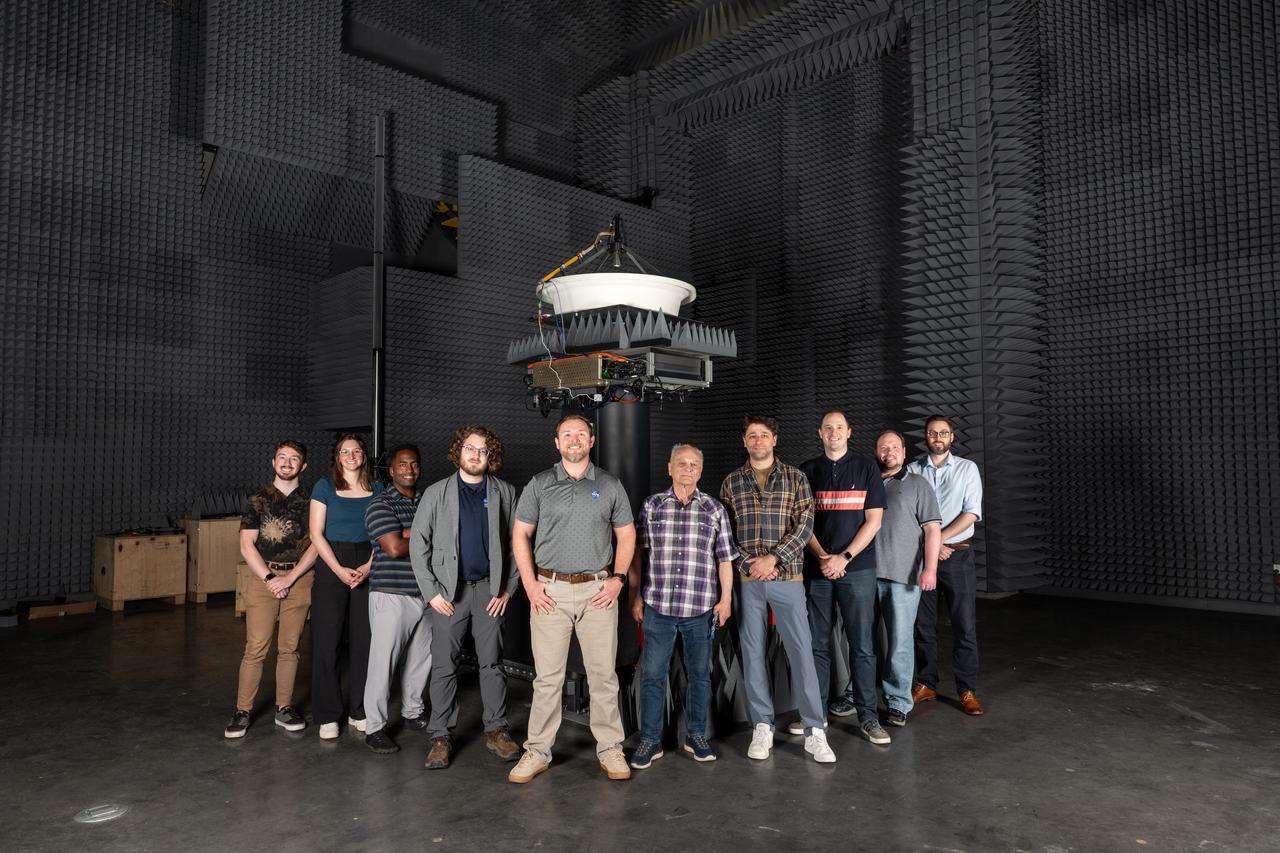
NASA’s Beaming Energy for Air Mobility team successfully completed a first-of-its-kind power beaming test at NASA Glenn on June 4, 2025. Later this year, the tested transmitter will be used in a demonstration to wirelessly transmit power using microwaves to a custom power receiver — a step toward gap-filling technology that could one day deliver power on the surface of the Moon or Mars. Pictured from left to right are Hayden Klopp, Rebecca Buehrle, Kerry Johnson, Avery Brock, Seth Schisler, Vladimir Volman, Seth Waldstein, David Rinehart, Rocco Viggiano, and Donald Dornbusch.
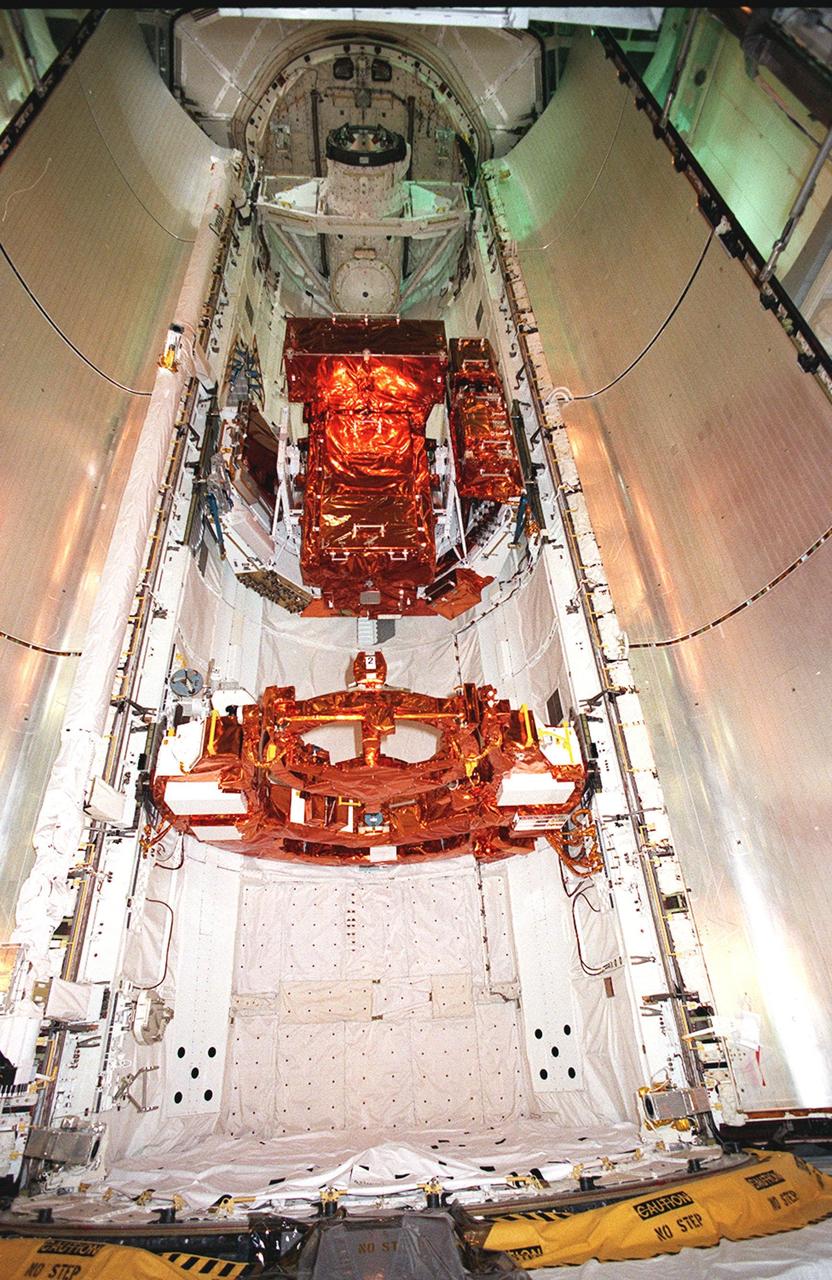
KENNEDY SPACE CENTER, FLA. -- At Launch Pad 39B, the STS-103 payload awaits closing of Discovery's payload bay doors. The payload, which will enable the crew of seven to service the Hubble Space Telescope, consists of gyroscopes that allow the telescope to point at stars, galaxies and planets; a Fine Guidance Sensor, a new enhanced computer to replace an older model, a solid-state digital recorder, a new spare transmitter, and new thermal insulation. The crew will also install a Battery Voltage/Temperature Improvement Kit to protect the spacecraft batteries from overcharging and overheating when the telescope goes into a safe mode. Launch of Space Shuttle Discovery on mission STS-103 is targeted for Dec. 9 at 1:10 a.m. EST
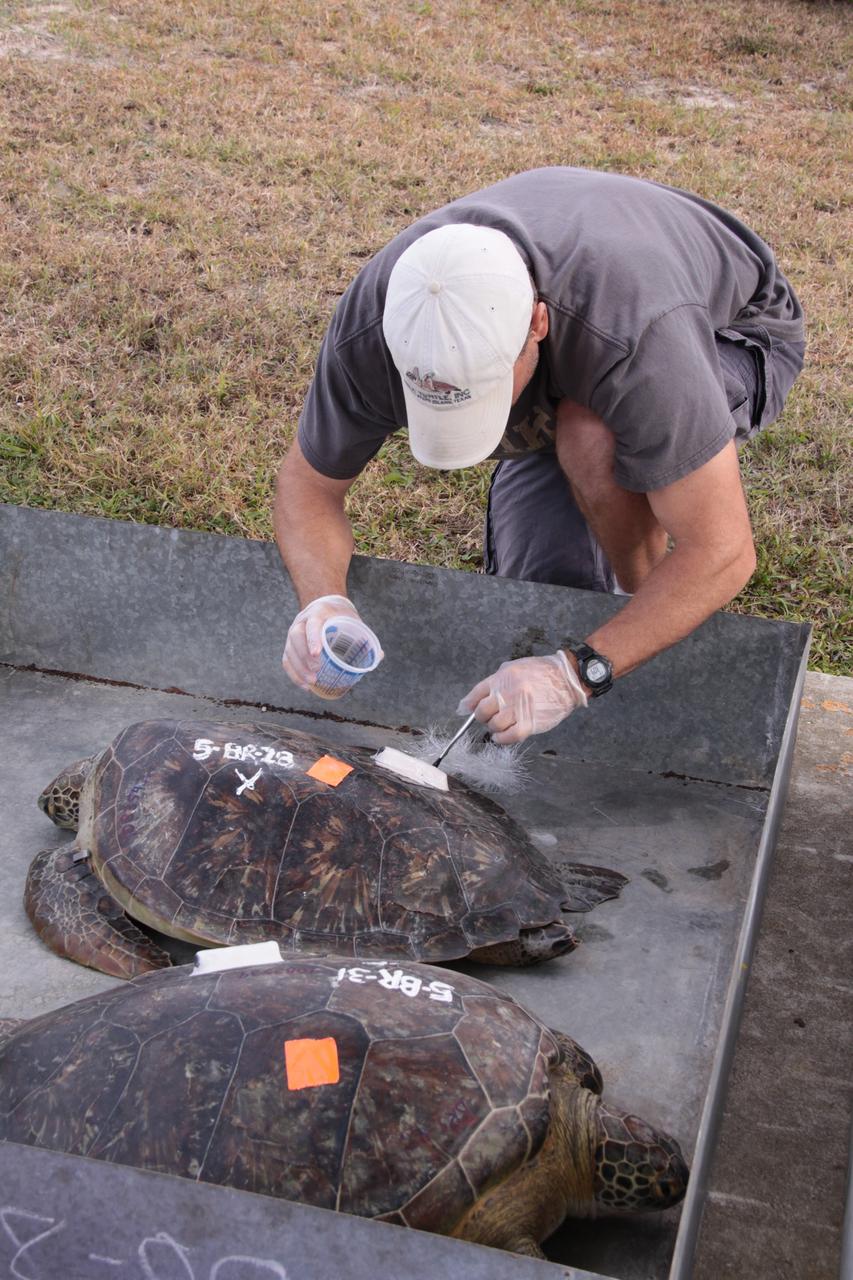
CAPE CANAVERAL, Fla. - A tracking transmitter is installed on the shell of an endangered green sea turtle at Cape Canaveral Air Force Station in Florida. A recent cold snap left this turtle and nearly 2,000 others "stunned" and in need of help. Many of the turtles were rescued from the Mosquito Lagoon, with others coming from the Indian River Lagoon and Cocoa Beach. Biologists, environmentalists, wildlife experts and other volunteers joined forces with a massive rescue effort at the Merritt Island National Wildlife Refuge, where the turtles were identified, examined and transported to rehabilitation facilities throughout Florida and South Georgia. The animals stayed at these facilities until local waters warmed up to safe temperatures. Photo credit: NASA/Jack Pfaller
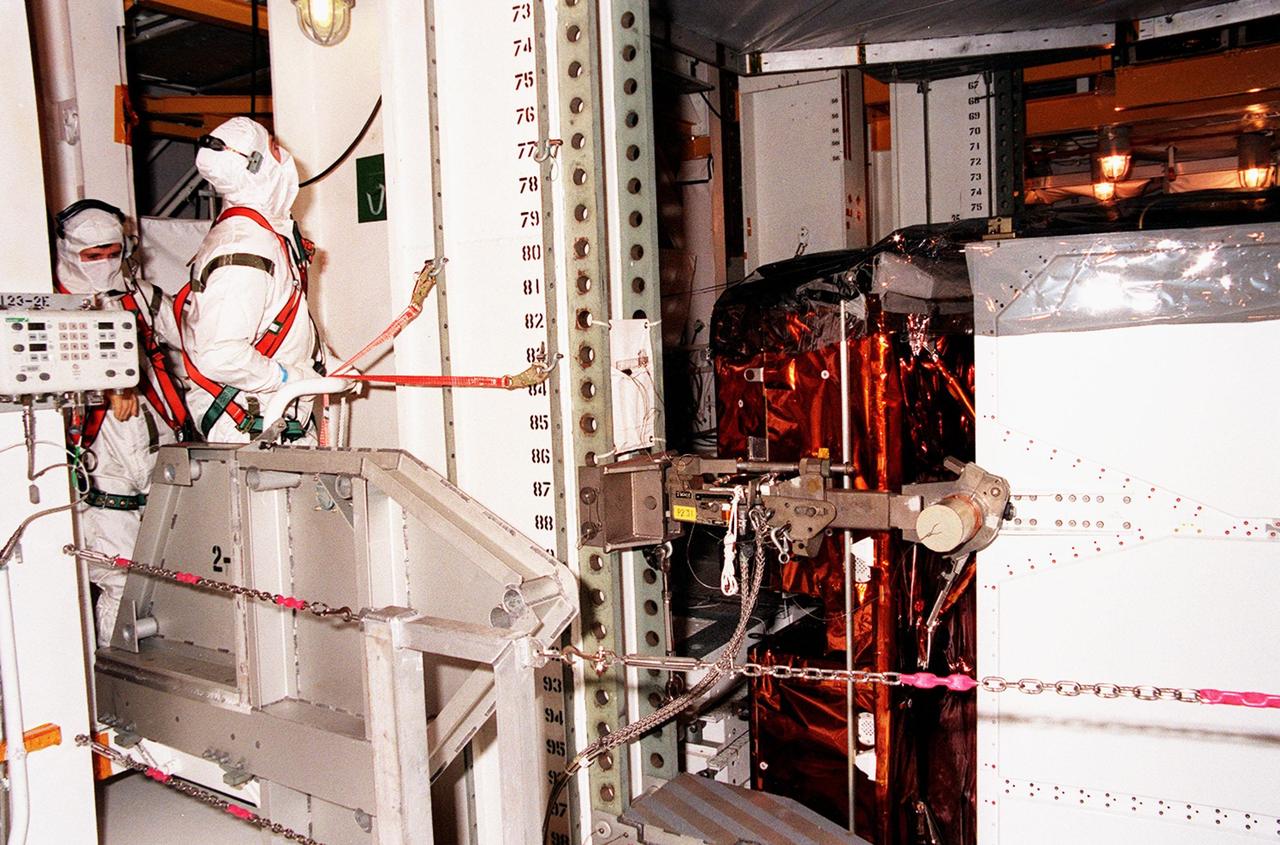
KENNEDY SPACE CENTER, FLA. -- Workers oversee the transfer of STS-103's Hubble servicing cargo from the payload changeout room at Launch Pad 39B to the payload bay in Space Shuttle Discovery. STS-103 is a "call-up" mission due to the need to replace and repair portions of the Hubble Space Telescope, including the gyroscopes that allow the telescope to point at stars, galaxies and planets. The STS-103 crew will be replacing a Fine Guidance Sensor, an older computer with a new enhanced model, an older data tape recorder with a solid-state digital recorder, a failed spare transmitter with a new one, and degraded insulation on the telescope with new thermal insulation. The crew will also install a Battery Voltage/Temperature Improvement Kit to protect the spacecraft batteries from overcharging and overheating when the telescope goes into a safe mode. Four EVA's are planned to make the necessary repairs and replacements on the telescope. The mission is targeted for launch Dec. 6 at 2:37 a.m. EST
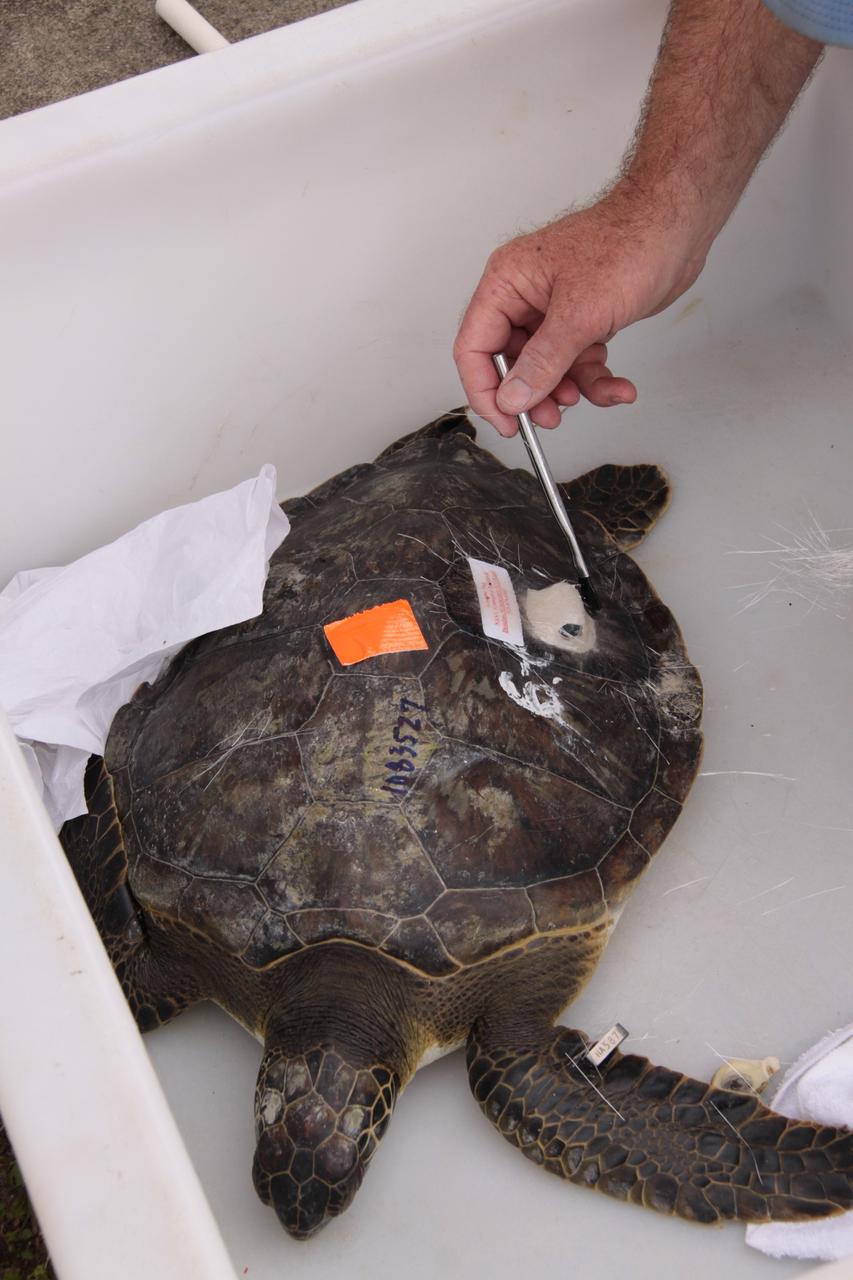
CAPE CANAVERAL, Fla. - An endangered green sea turtle awaits release as its shell is tagged with a tracking transmitter at Cape Canaveral Air Force Station in Florida. A recent cold snap left this turtle and nearly 2,000 others "stunned" and in need of help. Many of the turtles were rescued from the Mosquito Lagoon, with others coming from the Indian River Lagoon and Cocoa Beach. Biologists, environmentalists, wildlife experts and other volunteers joined forces with a massive rescue effort at the Merritt Island National Wildlife Refuge, where the turtles were identified, examined and transported to rehabilitation facilities throughout Florida and South Georgia. The animals stayed at these facilities until local waters warmed up to safe temperatures. Photo credit: NASA/Jack Pfaller
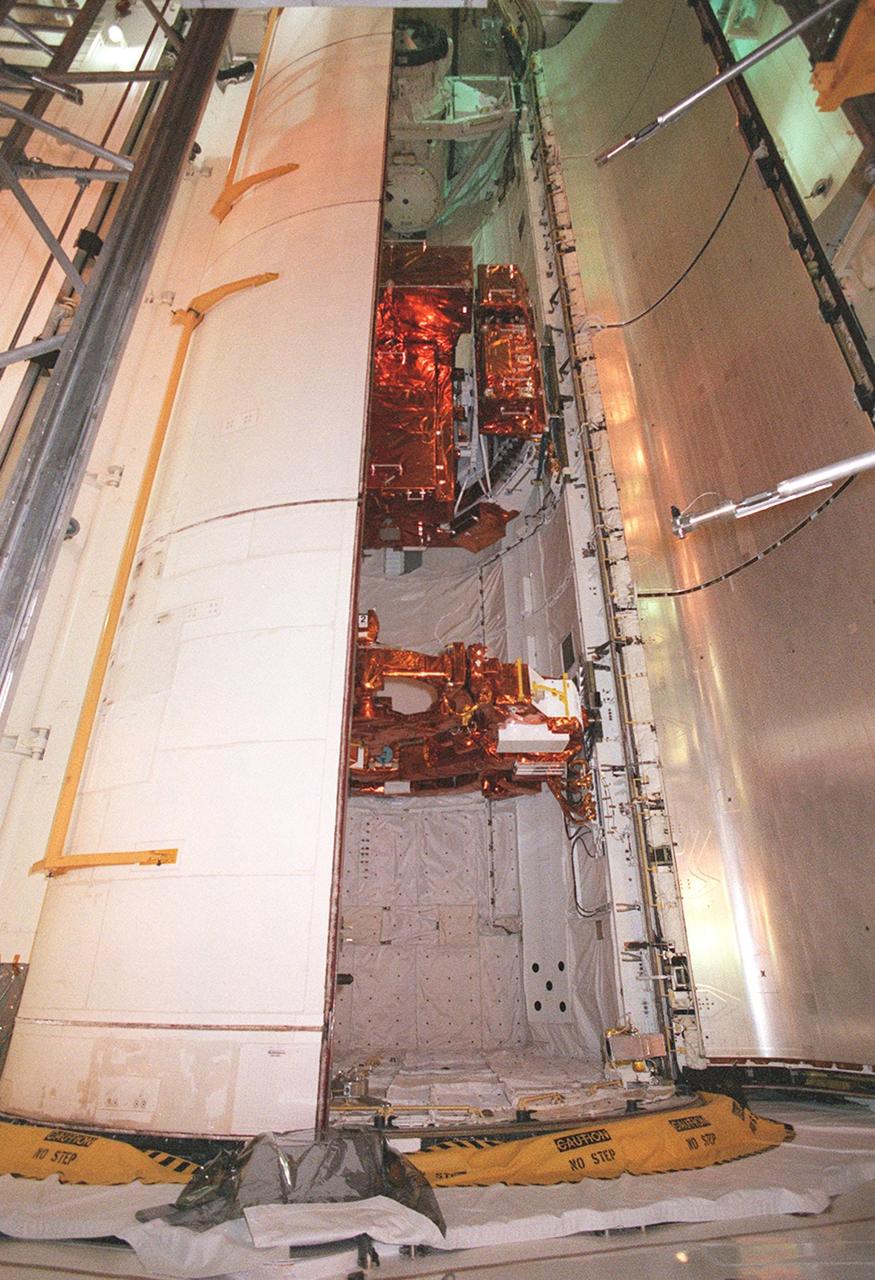
KENNEDY SPACE CENTER, FLA. -- At Launch Pad 39B, Discovery's payload bay doors close on the STS-103 payload. STS-103 is a Hubble Space Telescope servicing mission. The payload, which will enable the crew of seven to service the Hubble Space Telescope, consists of gyroscopes that allow the telescope to point at stars, galaxies and planets; a Fine Guidance Sensor; a new enhanced computer to replace an older model; a solid-state digital recorder; a new spare transmitter; and new thermal insulation. The crew will also install a Battery Voltage/Temperature Improvement Kit to protect the spacecraft batteries from overcharging and overheating when the telescope goes into a safe mode. Launch of Space Shuttle Discovery on mission STS-103 is targeted for Dec. 9 at 1:10 a.m. EST
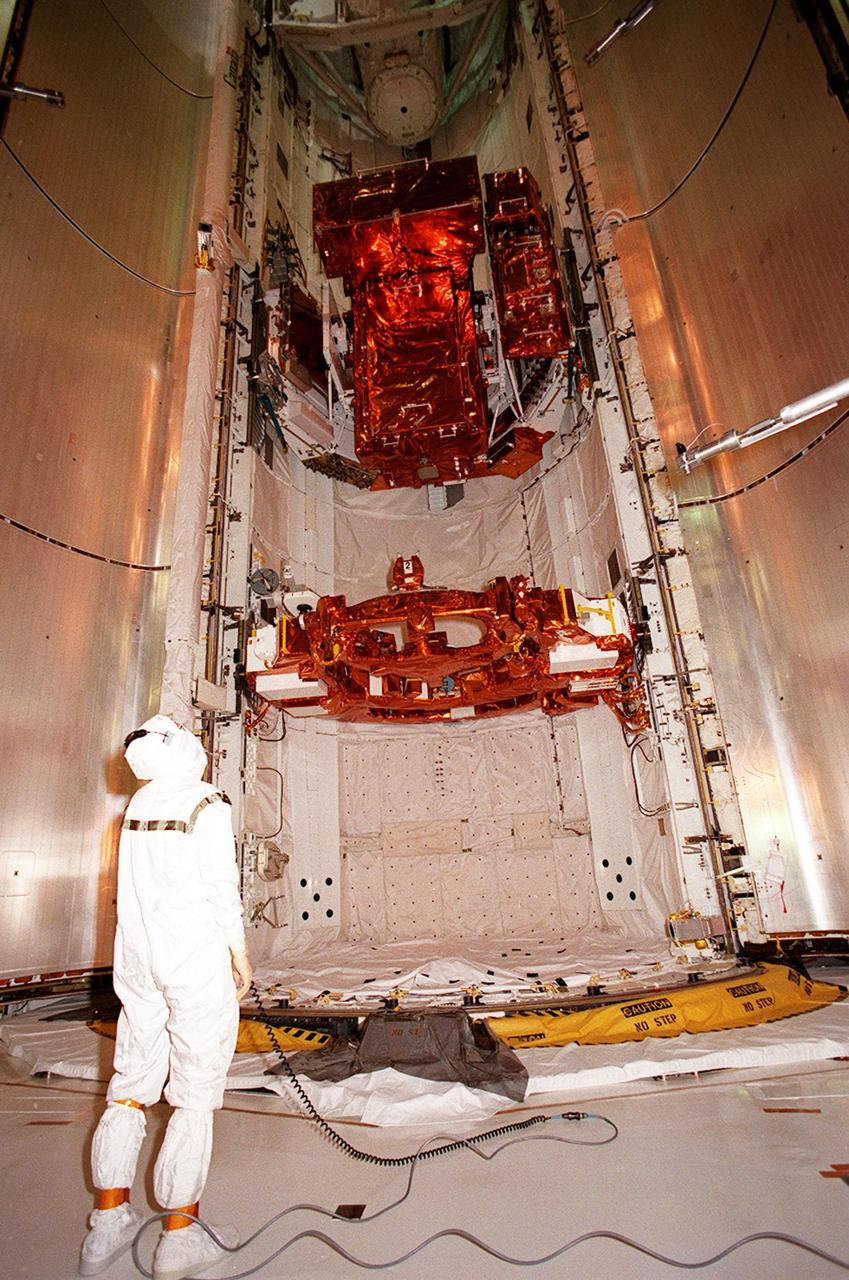
KENNEDY SPACE CENTER, FLA. -- A worker at Launch Pad 39B watches as Discovery's payload bay doors close on the STS-103 payload. STS-103 is a Hubble Space Telescope servicing mission. The payload, which will enable the crew of seven to service the Hubble Space Telescope, consists of gyroscopes that allow the telescope to point at stars, galaxies and planets; a Fine Guidance Sensor; a new enhanced computer to replace an older model; a solid-state digital recorder; a new spare transmitter; and new thermal insulation. The crew will also install a Battery Voltage/Temperature Improvement Kit to protect the spacecraft batteries from overcharging and overheating when the telescope goes into a safe mode. Launch of Space Shuttle Discovery on mission STS-103 is targeted for Dec. 9 at 1:10 a.m. EST
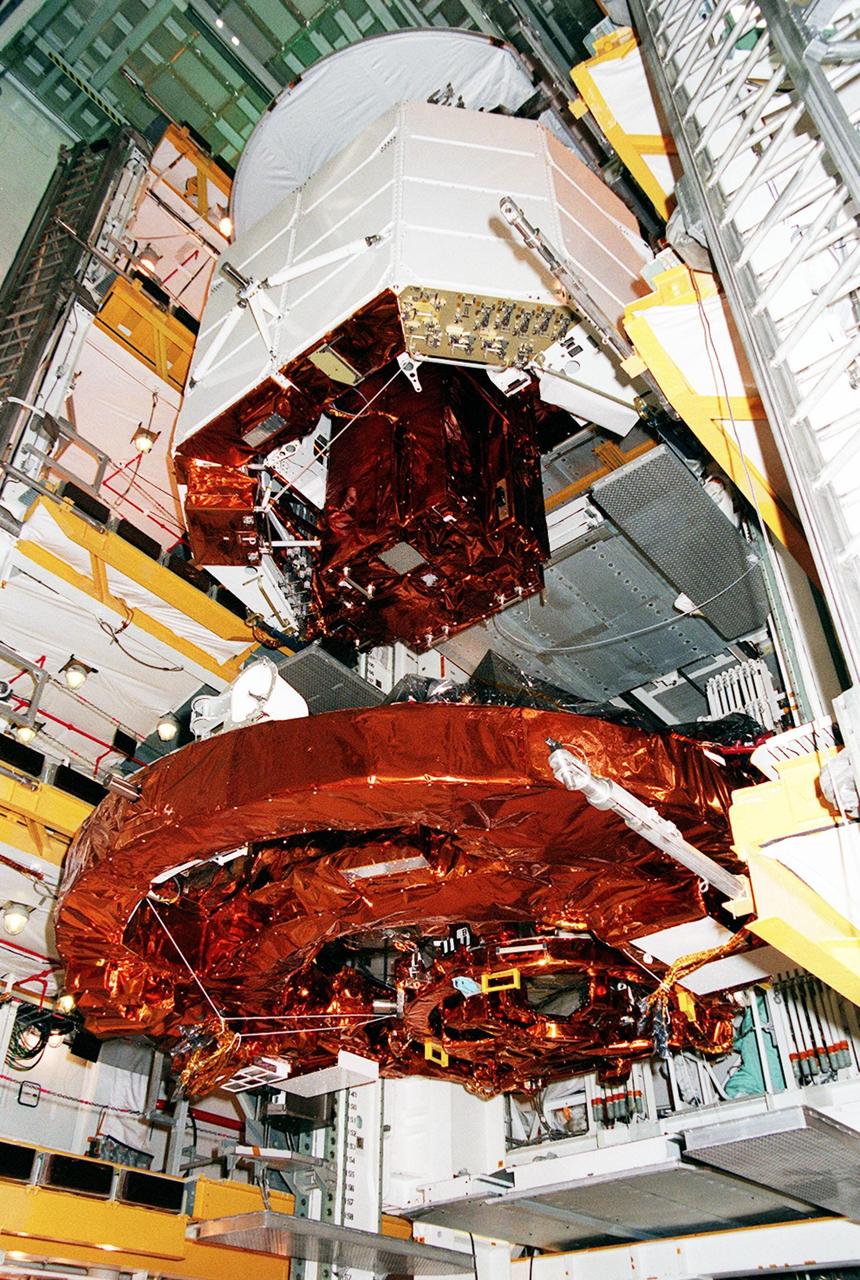
KENNEDY SPACE CENTER, FLA. -- STS-103's Hubble servicing cargo is transferred from the payload changeout room at Launch Pad 39B to the payload bay in Space Shuttle Discovery. STS-103 is a "call-up" mission due to the need to replace and repair portions of the Hubble Space Telescope, including the gyroscopes that allow the telescope to point at stars, galaxies and planets. The STS-103 crew will be replacing a Fine Guidance Sensor, an older computer with a new enhanced model, an older data tape recorder with a solid-state digital recorder, a failed spare transmitter with a new one, and degraded insulation on the telescope with new thermal insulation. The crew will also install a Battery Voltage/Temperature Improvement Kit to protect the spacecraft batteries from overcharging and overheating when the telescope goes into a safe mode. Four EVA's are planned to make the necessary repairs and replacements on the telescope. The mission is targeted for launch Dec. 6 at 2:37 a.m. EST
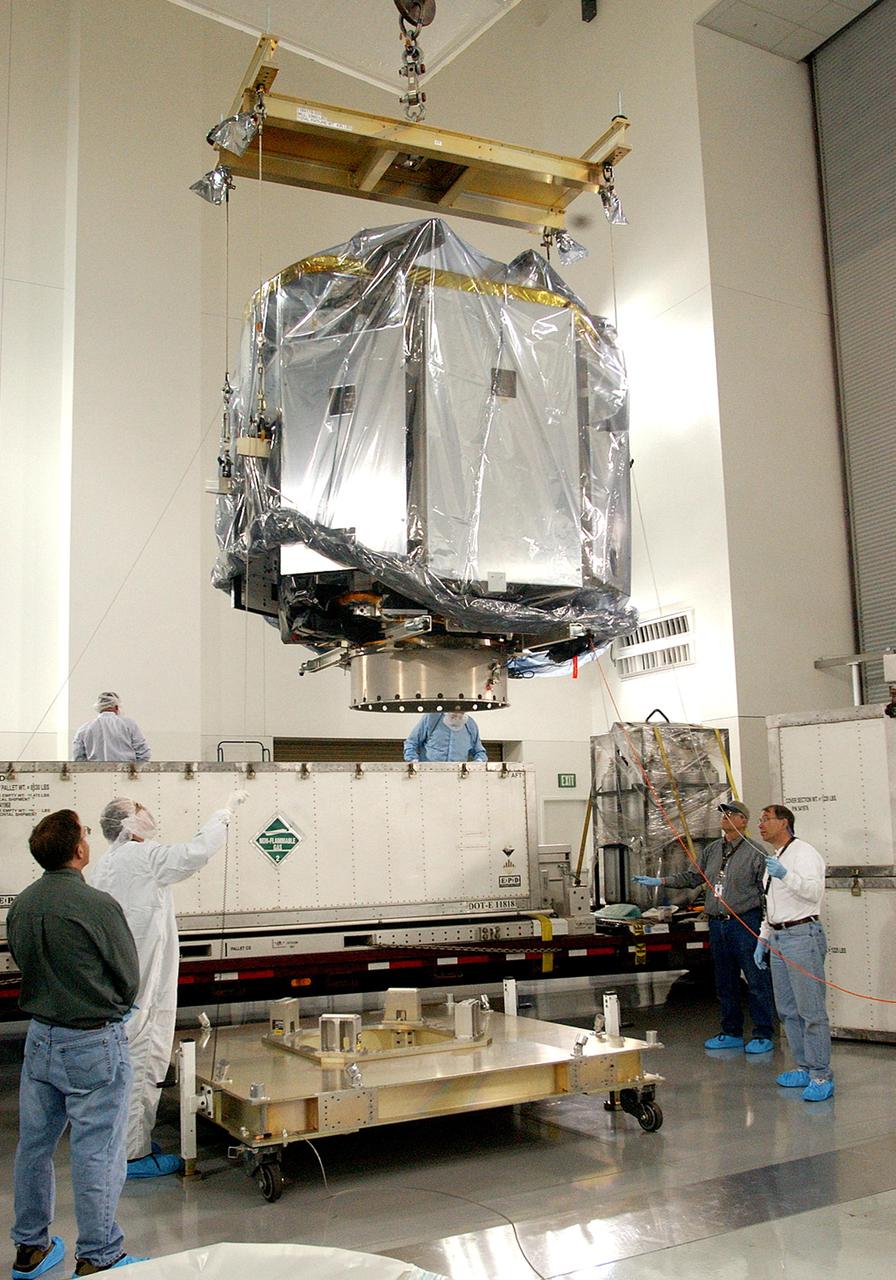
KENNEDY SPACE CENTER, FLA. - At the Astrotech Payload Processing Facility on Vandenberg Air Force Base in California, an overhead crane lifts the CloudSat spacecraft away from its shipping container. CloudSat was shipped from Ball Aerospace and Technologies Corp. in Boulder, Colo. It will be placed on the workstand, seen on the floor in the foreground, and will undergo electrical and spacecraft transmitter testing. In combination with the Cloud-Aerosol Lidar and Infrared Pathfinder Satellite Observation (CALIPSO), the spacecraft will provide never-before-seen 3-D perspectives of how clouds and aerosols form, evolve, and affect weather and climate. CALIPSO and CloudSat will fly in formation with three other satellites to enhance understanding of climate systems. The launch date for CloudSat_CALIPSO is no earlier than Aug. 22.
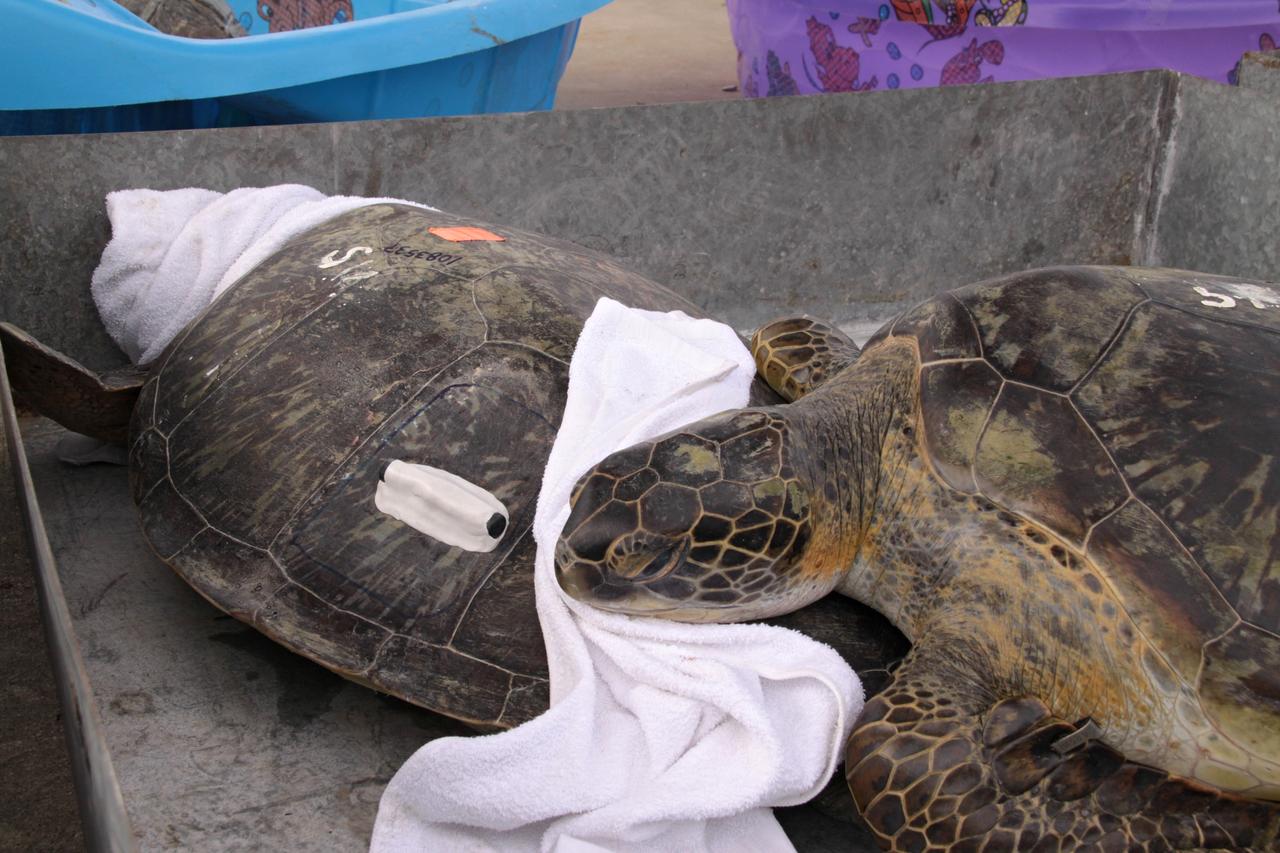
CAPE CANAVERAL, Fla. - A green sea turtle rests its head on a companion as the animals are tagged with tracking transmitters and prepared for release at Cape Canaveral Air Force Station in Florida. The turtles were some of nearly 2,000 that were "stunned" by the recent drop in temperatures. Many of the turtles were rescued from the Mosquito Lagoon, with others coming from the Indian River Lagoon and Cocoa Beach. Biologists, environmentalists, wildlife experts and other volunteers joined forces with a massive rescue effort at the Merritt Island National Wildlife Refuge, where the turtles were identified, examined and transported to rehabilitation facilities throughout Florida and South Georgia. The animals stayed at these facilities until local waters warmed up to safe temperatures. Photo credit: NASA/Jack Pfaller
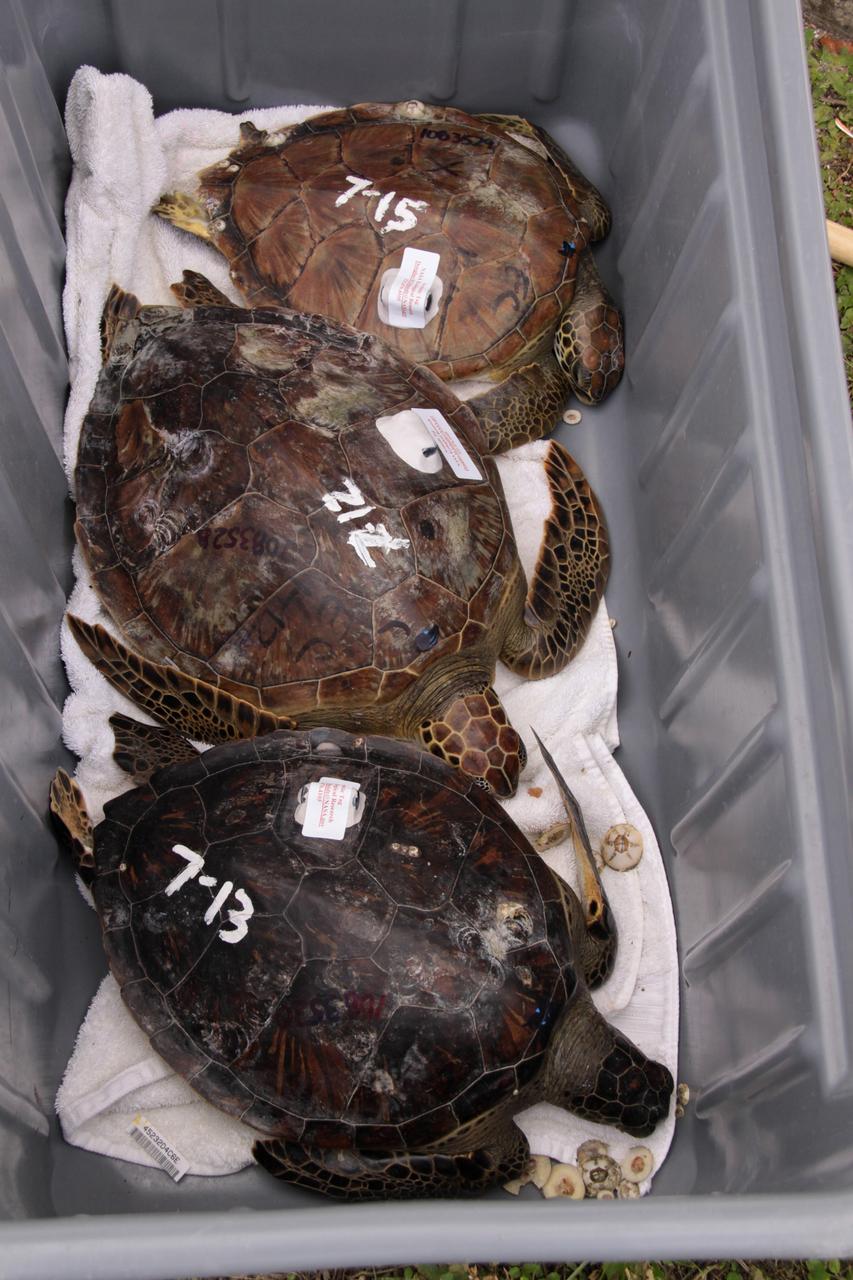
CAPE CANAVERAL, Fla. - A trio of green sea turtles rest in a box at Cape Canaveral Air Force Station in Florida after the animals were outfitted with tracking transmitters. The turtles were some of nearly 2,000 that were "stunned" by the recent drop in temperatures. Many of the turtles were rescued from the Mosquito Lagoon, with others coming from the Indian River Lagoon and Cocoa Beach. Biologists, environmentalists, wildlife experts and other volunteers joined forces with a massive rescue effort at the Merritt Island National Wildlife Refuge, where the turtles were identified, examined and transported to rehabilitation facilities throughout Florida and South Georgia. The animals stayed at these facilities until local waters warmed up to safe temperatures. Photo credit: NASA/Jack Pfaller
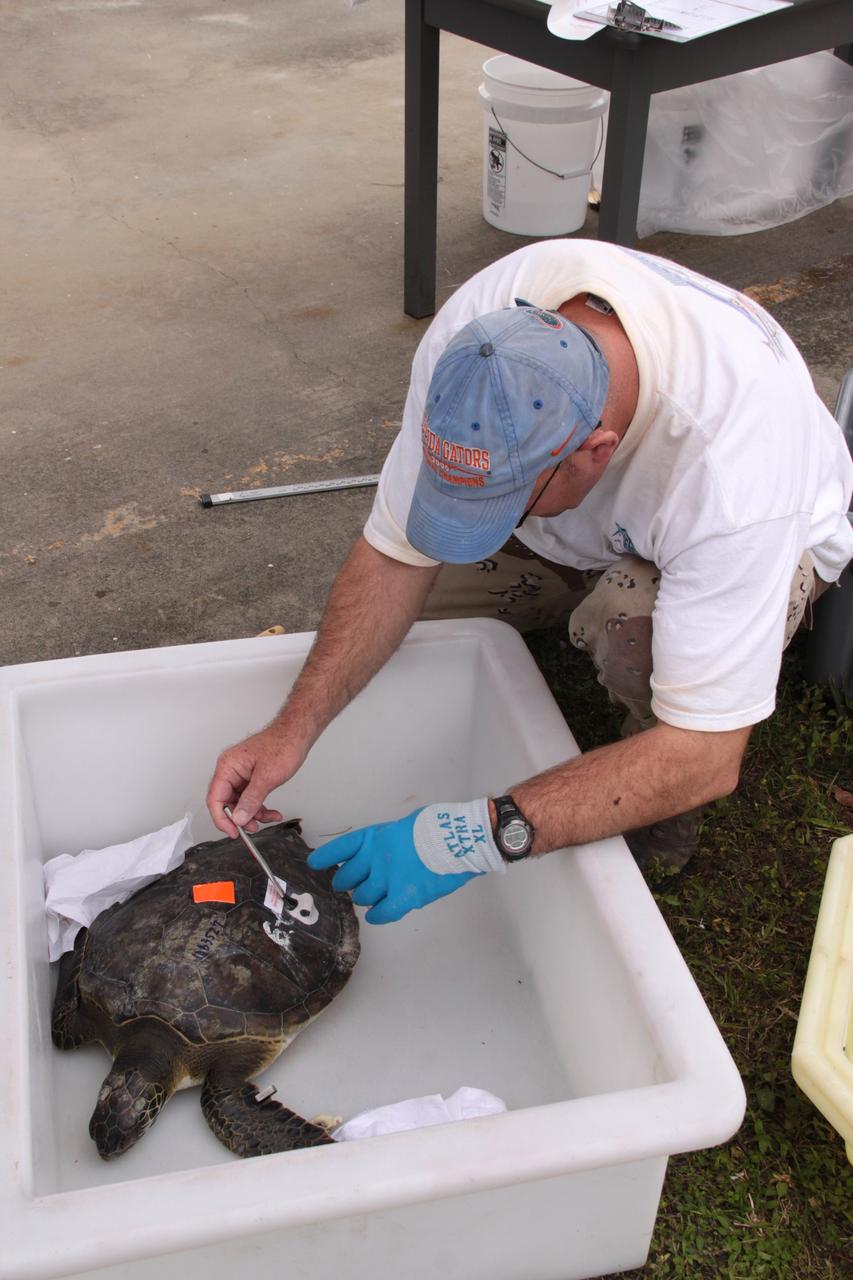
CAPE CANAVERAL, Fla. - An endangered green sea turtle is outfitted with a tracking transmitter at Cape Canaveral Air Force Station in Florida. A recent cold snap left this turtle and nearly 2,000 others "stunned" and in need of help. Many of the turtles were rescued from the Mosquito Lagoon, with others coming from the Indian River Lagoon and Cocoa Beach. Biologists, environmentalists, wildlife experts and other volunteers joined forces with a massive rescue effort at the Merritt Island National Wildlife Refuge, where the turtles were identified, examined and transported to rehabilitation facilities throughout Florida and South Georgia. The animals stayed at these facilities until local waters warmed up to safe temperatures. Photo credit: NASA/Jack Pfaller

STS055-203-034 (26 April-6 May 1993) --- Astronaut Steven R. Nagel, STS-55 mission commander, has found an isolated station in the D-2 science module from which to talk to students on Earth. Like many before it, the seven member crew participated in communications with students and licensed radio operators via the Shuttle Amateur Radio Experiment (SAREX). Photo credit: NASA
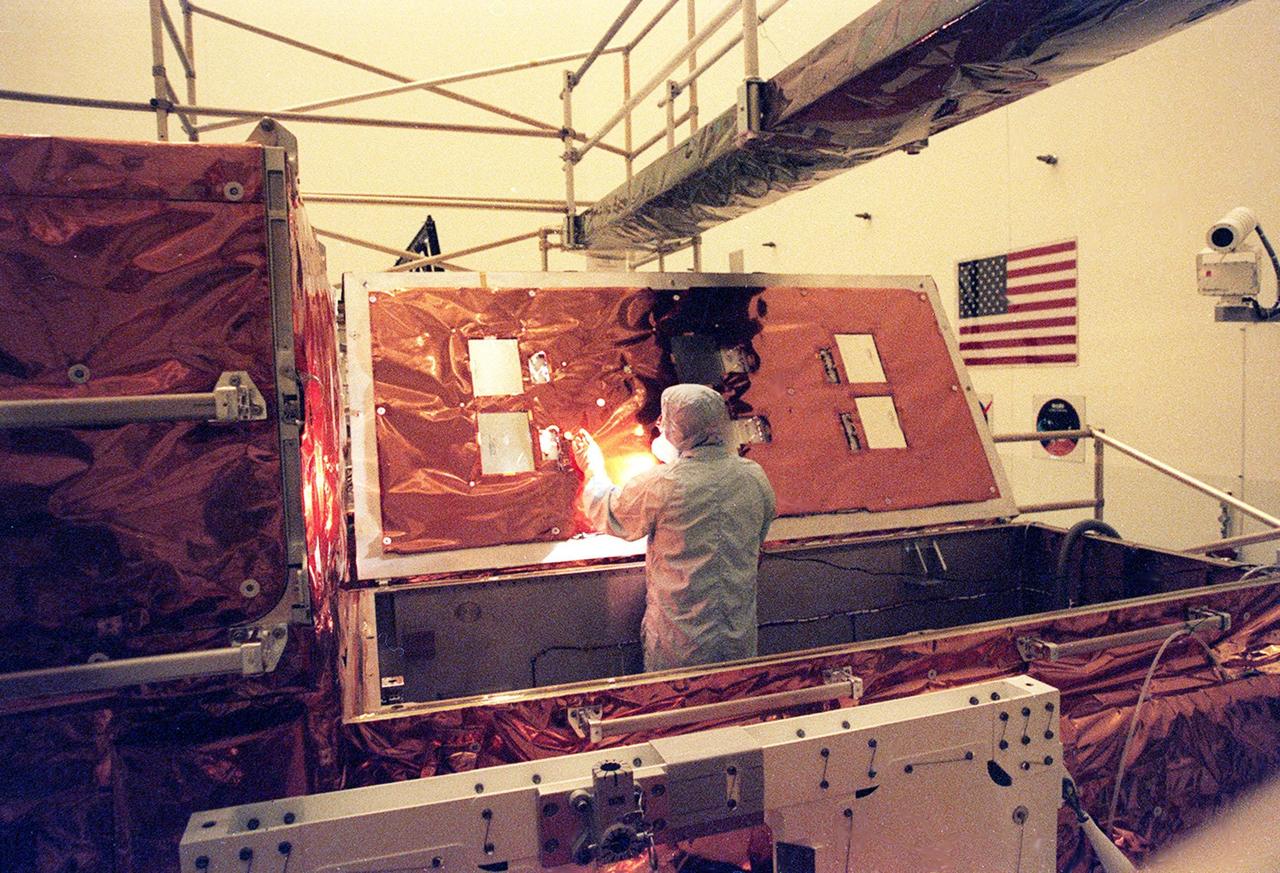
In the Payload Hazardous Servicing Facility, a worker gives a black light inspection to part of the servicing equipment for the third Hubble Space Telescope Servicing Mission (SM-3A), STS-103. The hardware is undergoing final testing and integration of payload elements. Mission STS-103 is a "call-up" due to the need to replace portions of the Hubble's pointing system, the gyros, which have begun to fail. Although Hubble is operating normally and conducting its scientific observations, only three of its six gyroscopes are working properly. The gyroscopes allow the telescope to point at stars, galaxies and planets. The STS-103 crew will not only replace gyroscopes, it will also replace a Fine Guidance Sensor and an older computer with a new enhanced model, an older data tape recorder with a solid state digital recorder, a failed spare transmitter with a new one, and degraded insulation on the telescope with new thermal insulation. The crew will also install a Battery Voltage/Temperature Improvement Kit to protect the spacecraft batteries from overcharging and overheating when the telescope goes into a safe mode. The scheduled launch date in October is under review
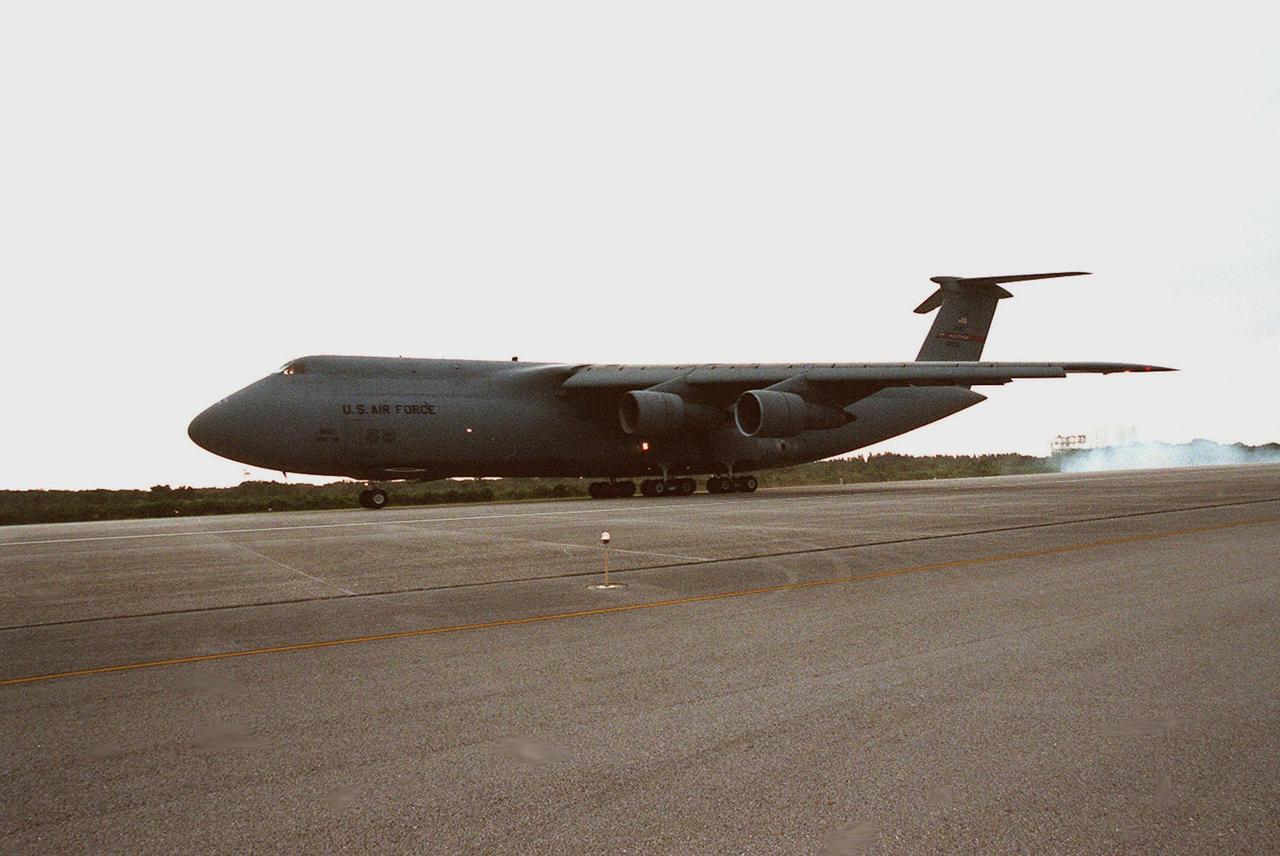
A C-5 air cargo plane lands at Kennedy Space Center carrying the payload flight hardware for the Third Hubble Space Telescope Servicing Mission (SM-3A). The hardware will be taken to the Payload Hazardous Servicing Facility for final testing and integration of payload elements. Mission STS-103 is a "call-up" mission which is being planned due to the need to replace portions of the Hubble's pointing system, the gyros, which have begun to fail. Although Hubble is operating normally and conducting its scientific observations, only three of its six gyroscopes are working properly. The gyroscopes allow the telescope to point at stars, galaxies and planets. The STS-103 crew will not only replace gyroscopes, it will also replace a Fine Guidance Sensor and an older computer with a new enhanced model, an older data tape recorder with a solid state digital recorder, a failed spare transmitter with a new one, and degraded insulation on the telescope with new thermal insulation. The crew will also install a Battery Voltage/Temperature Improvement Kit to protect the spacecraft batteries from overcharging and overheating when the telescope goes into a safe mode. Launch of STS-93 is currently targeted for Oct. 14 but under review, pending the launch date of a prior mission, STS-99, also under review
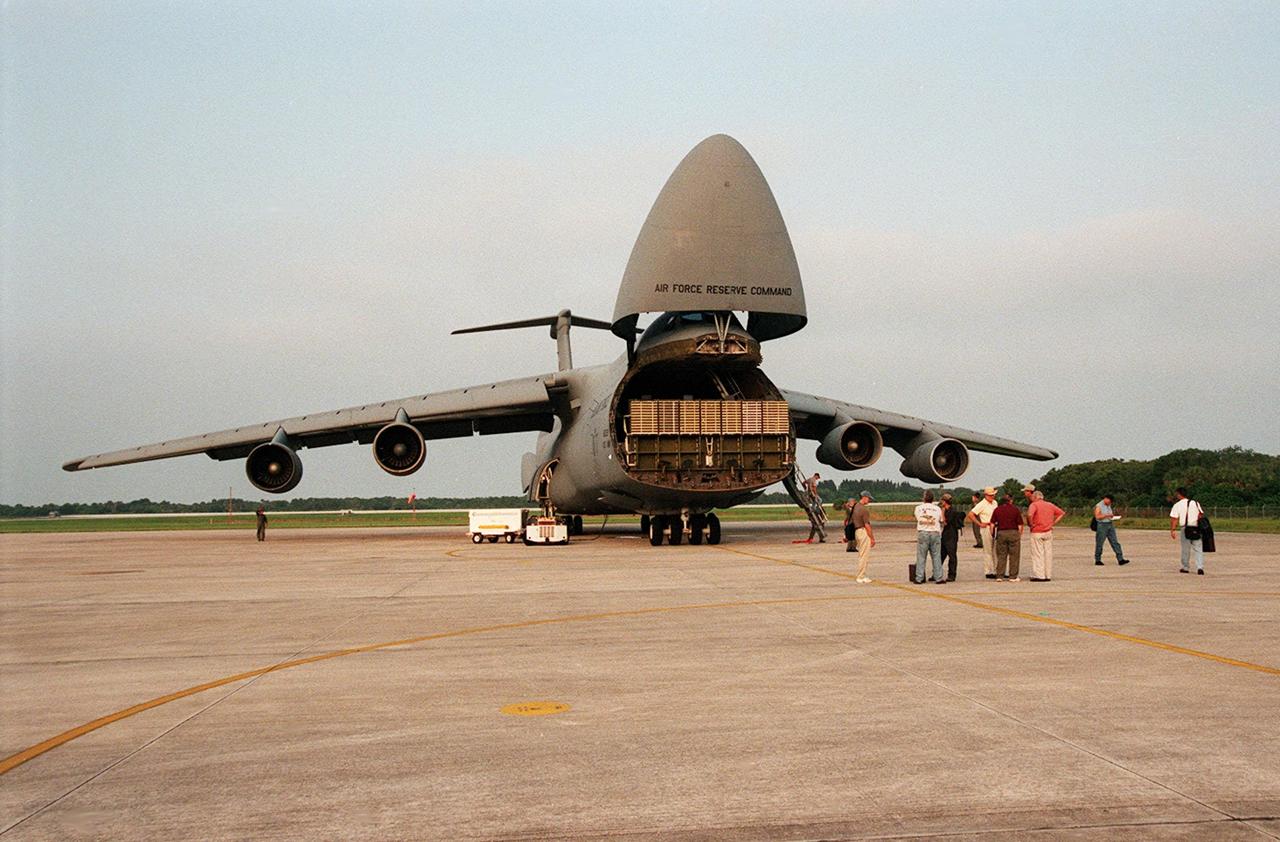
A C-5 air cargo plane opens to reveal a shipping container with payload flight hardware for the Third Hubble Space Telescope Servicing Mission (SM-3A). The hardware will be taken to the Payload Hazardous Servicing Facility for final testing and integration of payload elements. Mission STS-103 is a "call-up" mission which is being planned due to the need to replace portions of the Hubble's pointing system, the gyros, which have begun to fail. Although Hubble is operating normally and conducting its scientific observations, only three of its six gyroscopes are working properly. The gyroscopes allow the telescope to point at stars, galaxies and planets. The STS-103 crew will not only replace gyroscopes, it will also replace a Fine Guidance Sensor and an older computer with a new enhanced model, an older data tape recorder with a solid state digital recorder, a failed spare transmitter with a new one, and degraded insulation on the telescope with new thermal insulation. The crew will also install a Battery Voltage/Temperature Improvement Kit to protect the spacecraft batteries from overcharging and overheating when the telescope goes into a safe mode. Launch of STS-93 is currently targeted for Oct. 14 but under review, pending the launch date of a prior mission, STS-99, also under review
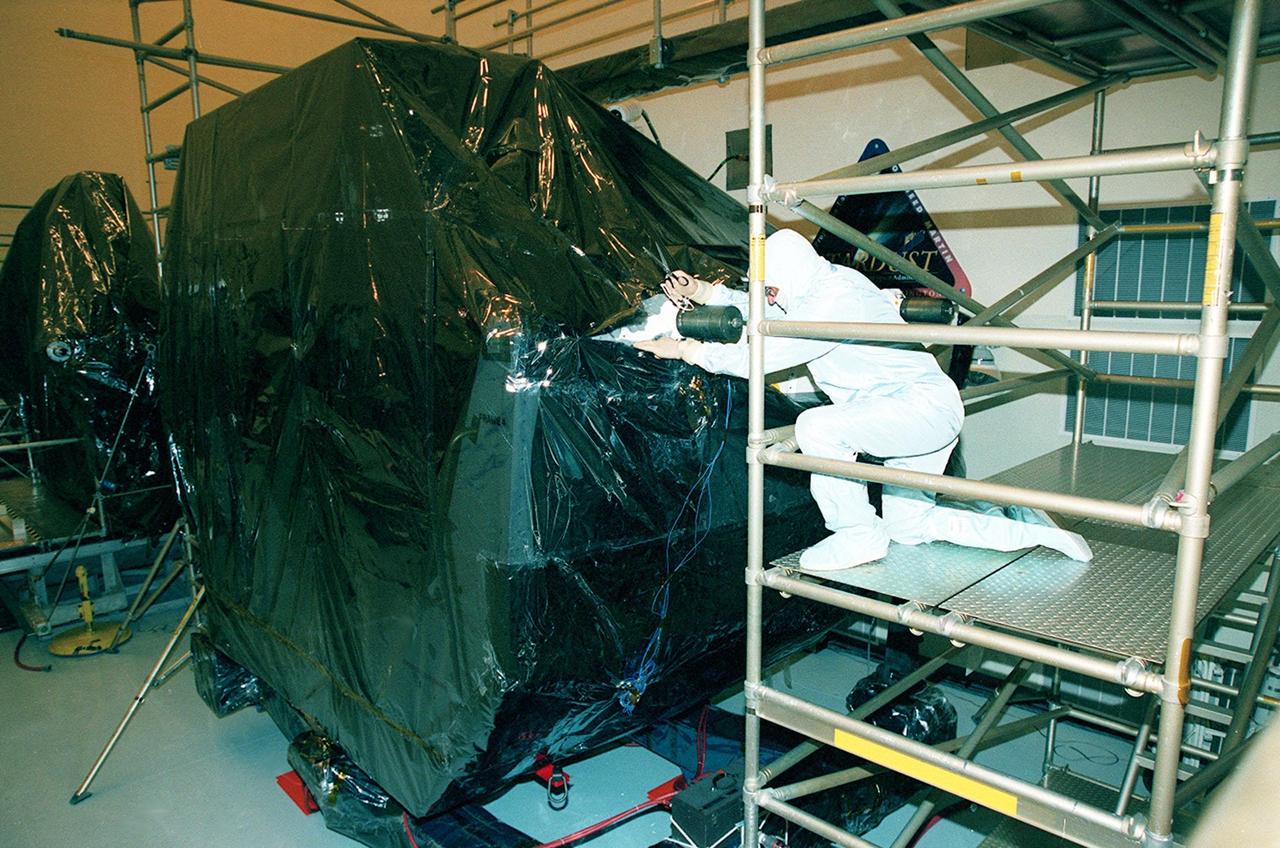
In the Payload Hazardous Servicing Facility (PHSF), a worker begins to open the protective covering over a part of payload flight hardware for the third Hubble Space Telescope Servicing Mission (SM-3A). The hardware will undergo final testing and integration of payload elements in the PHSF. Mission STS-103 is a "call-up" mission which is being planned due to the need to replace portions of the Hubble's pointing system, the gyros, which have begun to fail. Although Hubble is operating normally and conducting its scientific observations, only three of its six gyroscopes are working properly. The gyroscopes allow the telescope to point at stars, galaxies and planets. The STS-103 crew will not only replace gyroscopes, it will also replace a Fine Guidance Sensor and an older computer with a new enhanced model, an older data tape recorder with a solid state digital recorder, a failed spare transmitter with a new one, and degraded insulation on the telescope with new thermal insulation. The crew will also install a Battery Voltage/Temperature Improvement Kit to protect the spacecraft batteries from overcharging and overheating when the telescope goes into a safe mode. Launch of STS-103 is currently targeted for Oct. 14 but the date is under review
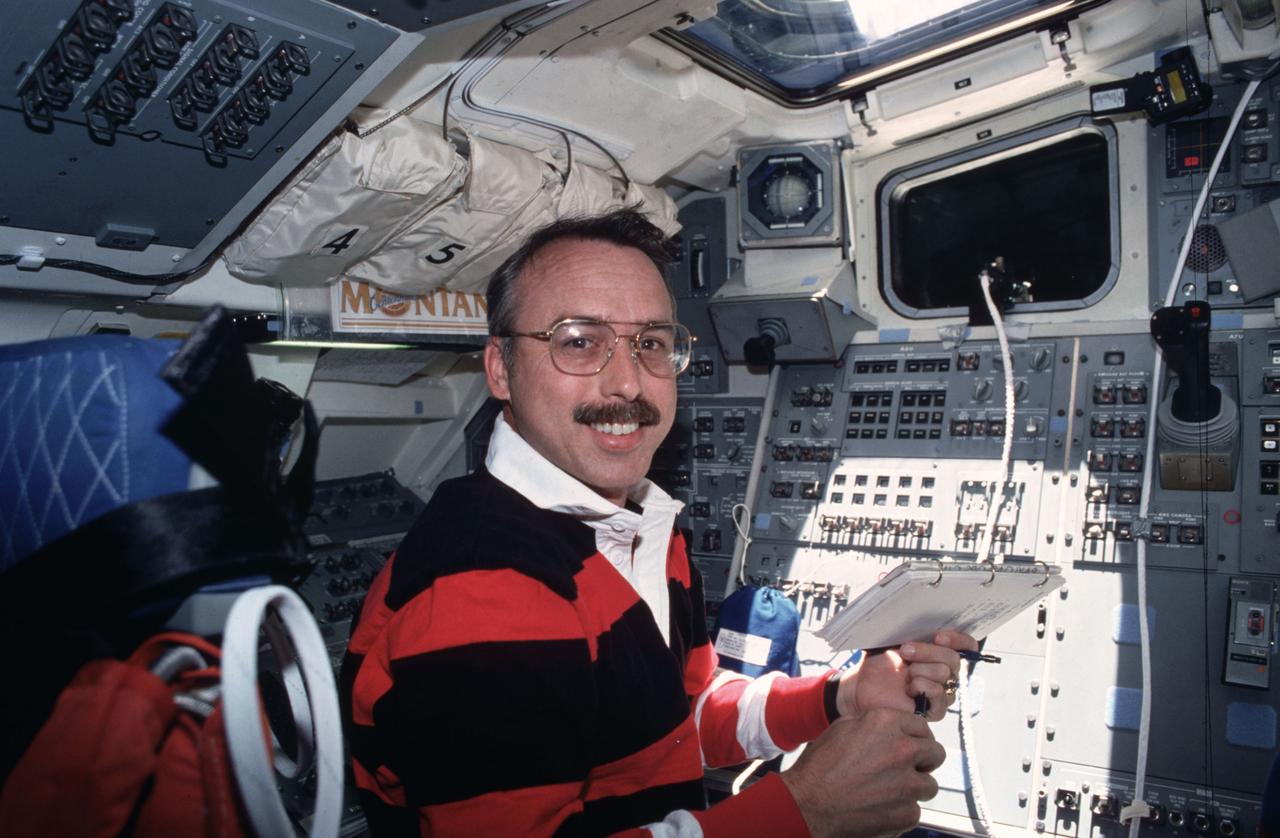
STS043-04-038 (2-11 Aug 1991) --- Astronaut James C. Adamson, STS-43 mission specialist, checks on an experiment on Atlantis? flight deck. Part of the experiment, Optical Communications Through the Shuttle Window (OCTW), can be seen mounted in upper right. The OCTW system consists of two modules, one inside the orbiter crew cabin (as pictured here) and one in the payload bay. The crew compartment version houses an optoelectronic transmitter/receiver pair for video and digital subsystems, test circuitry and interface circuitry. The payload bay module serves as a repeater station. During operation a signal is transmitted through the shuttle window to a bundle of optical fiber cables mounted in the payload bay near an aft window. The cables carry optical signals from the crew compartment equipment to the OCTW payload bay module. The signals are returned via optical fiber cable to the aft flight deck window, retransmitted through the window, and received by the crew compartment equipment.

In the bunker at Launch Pad 39B, STS-103 Mission Specialist Jean-François Clervoy of France, who is with the European Space Agency (ESA), tries on an oxygen mask during Terminal Countdown Demonstration Test (TCDT) activities. The TCDT provides the crew with emergency egress training, opportunities to inspect their mission payloads in the orbiter's payload bay, and simulated countdown exercises. Other crew members taking part are Commander Curtis L. Brown Jr. and Mission Specialists Steven L. Smith, C. Michael Foale (Ph.D.), John M. Grunsfeld (Ph.D.), plus Claude Nicollier of Switzerland, who is also with ESA. STS-103 is a "call-up" mission due to the need to replace and repair portions of the Hubble Space Telescope, including the gyroscopes that allow the telescope to point at stars, galaxies and planets. The STS-103 crew will be replacing a Fine Guidance Sensor, an older computer with a new enhanced model, an older data tape recorder with a solid-state digital recorder, a failed spare transmitter with a new one, and degraded insulation on the telescope with new thermal insulation. The crew will also install a Battery Voltage/Temperature Improvement Kit to protect the spacecraft batteries from overcharging and overheating when the telescope goes into a safe mode. Four EVA's are planned to make the necessary repairs and replacements on the telescope. The mission is targeted for launch Dec. 6 at 2:37 a.m. EST
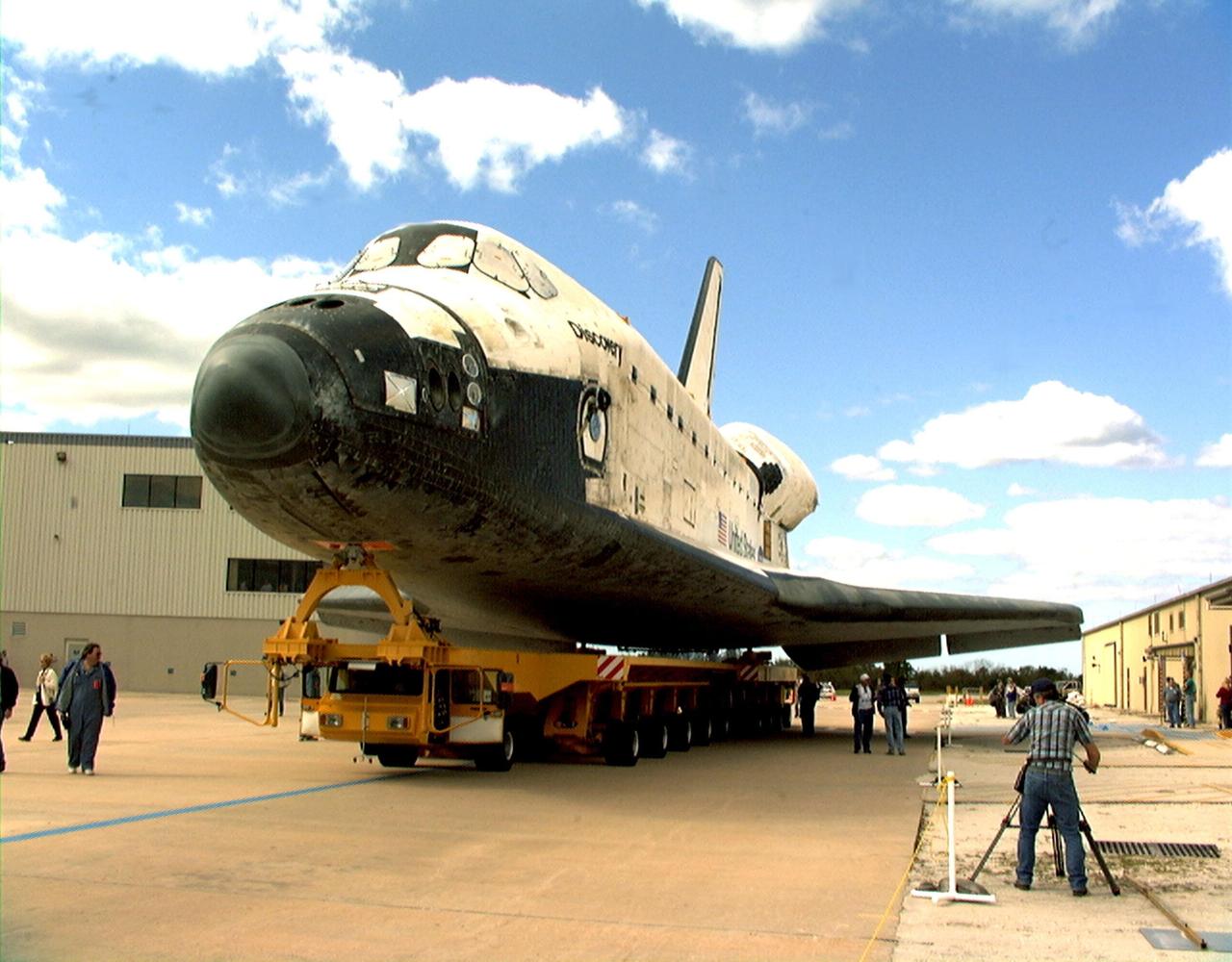
KENNEDY SPACE CENTER, FLA. -- Orbiter Discovery is moved from the Orbiter Processing Facility bay 1 (at left) to the Vehicle Assembly Building for mating with an external tank and solid rocket boosters. Launch date for Discovery on mission STS-103, the third Hubble Space Telescope servicing mission, is under review for early December. The mission is a "call-up" due to the need to replace portions of the pointing system, the gyros, which have begun to fail on the Hubble Space Telescope. Although Hubble is operating normally and conducting its scientific observations, only three of its six gyroscopes are working properly. The gyroscopes allow the telescope to point at stars, galaxies and planets. The STS-103 crew will also be replacing a Fine Guidance Sensor and an older computer with a new enhanced model, an older data tape recorder with a solid-state digital recorder, a failed spare transmitter with a new one, and degraded insulation on the telescope with new thermal insulation. The crew will also install a Battery Voltage/Temperature Improvement Kit to protect the spacecraft batteries from overcharging and overheating when the telescope goes into a safe mode
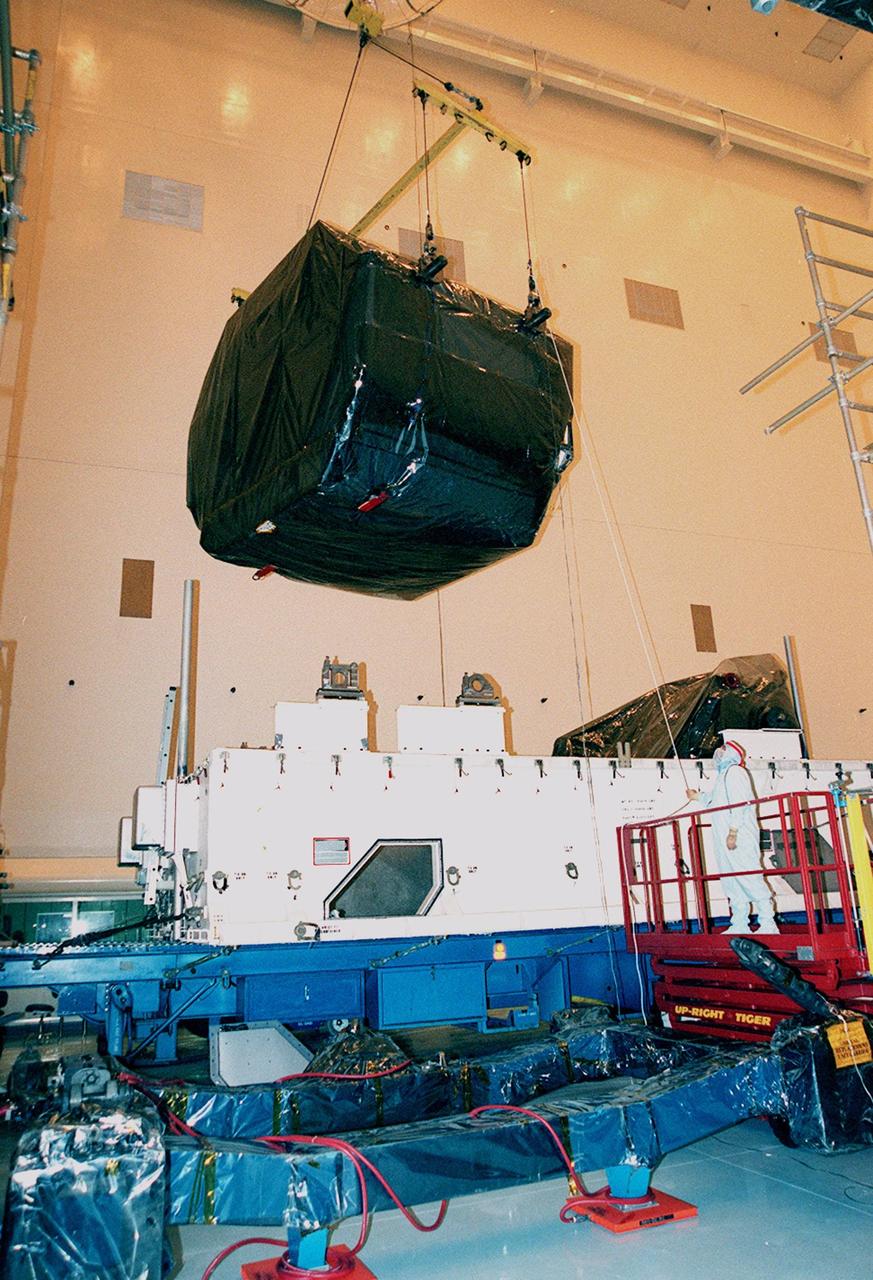
In the Payload Hazardous Servicing Facility (PHSF), a crane lifts equipment for mission STS-103 out of its shipping container to move it to a workstand. The equipment is the first part of payload flight hardware for the third Hubble Space Telescope Servicing Mission (SM-3A). The hardware will undergo final testing and integration of payload elements in the PHSF. Mission STS-103 is a "call-up" mission which is being planned due to the need to replace portions of the Hubble's pointing system, the gyros, which have begun to fail. Although Hubble is operating normally and conducting its scientific observations, only three of its six gyroscopes are working properly. The gyroscopes allow the telescope to point at stars, galaxies and planets. The STS-103 crew will not only replace gyroscopes, it will also replace a Fine Guidance Sensor and an older computer with a new enhanced model, an older data tape recorder with a solid state digital recorder, a failed spare transmitter with a new one, and degraded insulation on the telescope with new thermal insulation. The crew will also install a Battery Voltage/Temperature Improvement Kit to protect the spacecraft batteries from overcharging and overheating when the telescope goes into a safe mode. Launch of STS-103 is currently targeted for Oct. 14 but the date is under review
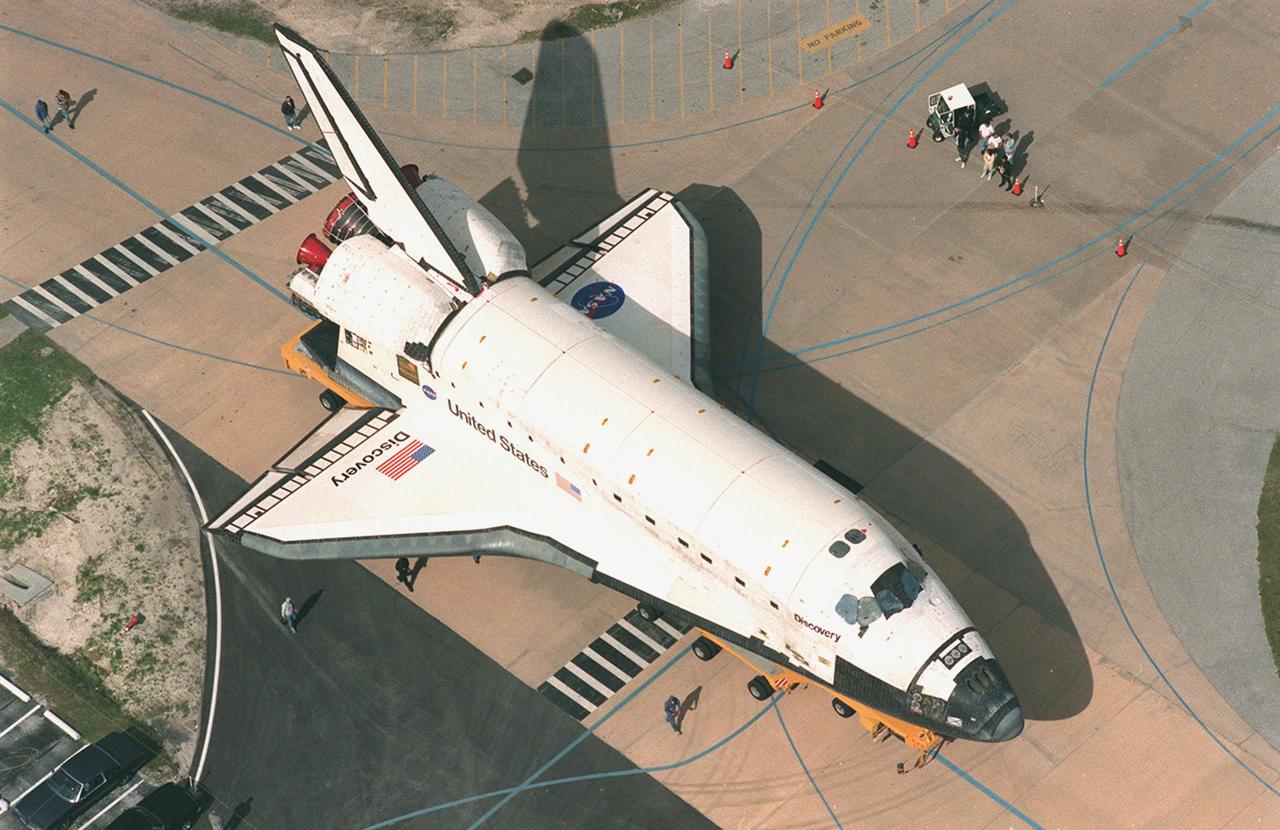
KENNEDY SPACE CENTER, FLA. -- The orbiter Discovery rolls along the tow-way to the Vehicle Assembly Building where it will be mated with an external tank and solid rocket boosters for its launch on mission STS-103. The launch date is currently under review for early December. STS-103, the third Hubble Space Telescope servicing mission, is a "call-up" due to the need to replace portions of the pointing system, the gyros, which have begun to fail on the Hubble Space Telescope. Although Hubble is operating normally and conducting its scientific observations, only three of its six gyroscopes are working properly. The gyroscopes allow the telescope to point at stars, galaxies and planets. The STS-103 crew will also be replacing a Fine Guidance Sensor and an older computer with a new enhanced model, an older data tape recorder with a solid-state digital recorder, a failed spare transmitter with a new one, and degraded insulation on the telescope with new thermal insulation. The crew will also install a Battery Voltage/Temperature Improvement Kit to protect the spacecraft batteries from overcharging and overheating when the telescope goes into a safe mode
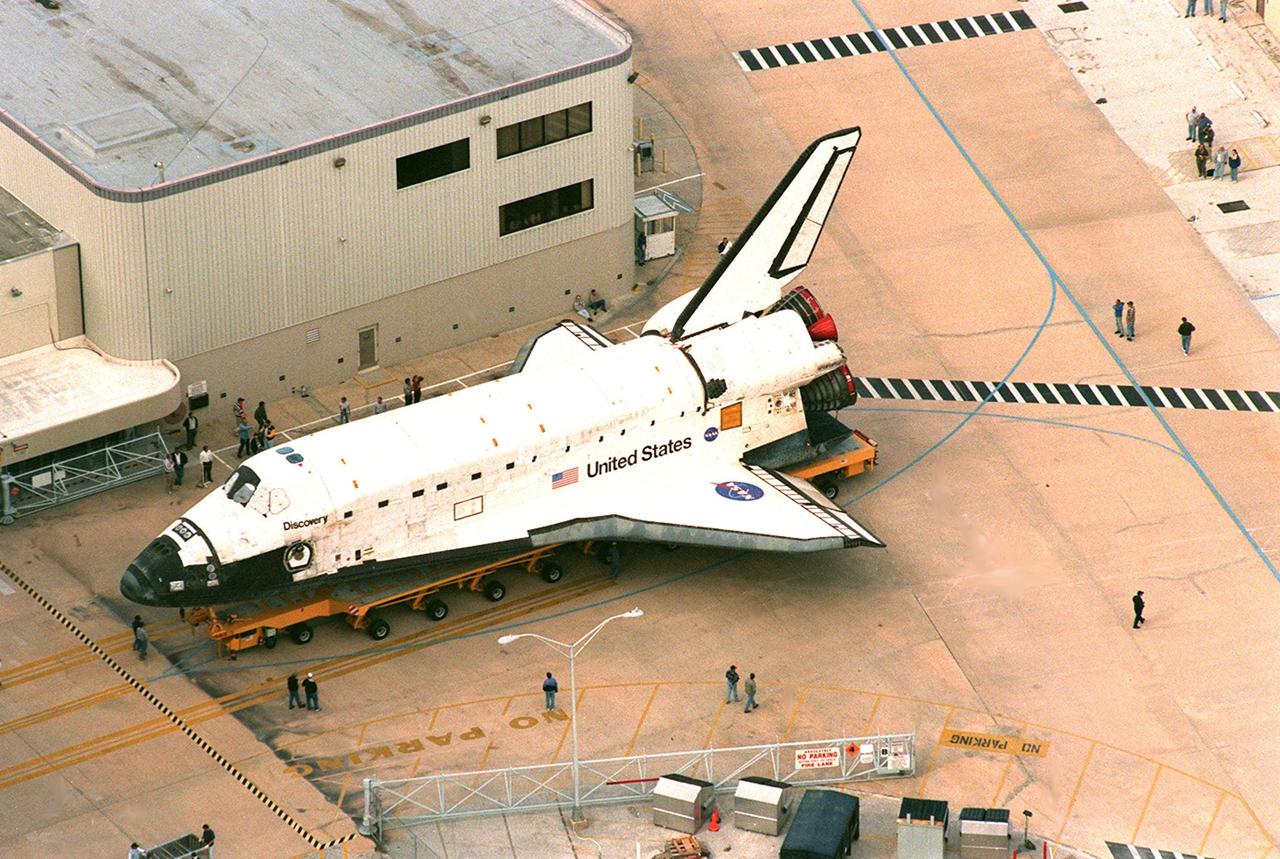
In this aerial view, the orbiter Discovery is out of the Orbiter Processing Facility (OPF) bay 1 and rolling back before onto the tow-way for its rollover to the Vehicle Assembly Building where it will be mated with an external tank and solid rocket boosters before its launch on mission STS-103. The launch date is currently under review for early December. STS-103, the third Hubble Space Telescope servicing mission, is a "call-up" due to the need to replace portions of the pointing system, the gyros, which have begun to fail on the Hubble Space Telescope. Although Hubble is operating normally and conducting its scientific observations, only three of its six gyroscopes are working properly. The gyroscopes allow the telescope to point at stars, galaxies and planets. The STS-103 crew will also be replacing a Fine Guidance Sensor and an older computer with a new enhanced model, an older data tape recorder with a solid-state digital recorder, a failed spare transmitter with a new one, and degraded insulation on the telescope with new thermal insulation. The crew will also install a Battery Voltage/Temperature Improvement Kit to protect the spacecraft batteries from overcharging and overheating when the telescope goes into a safe mode
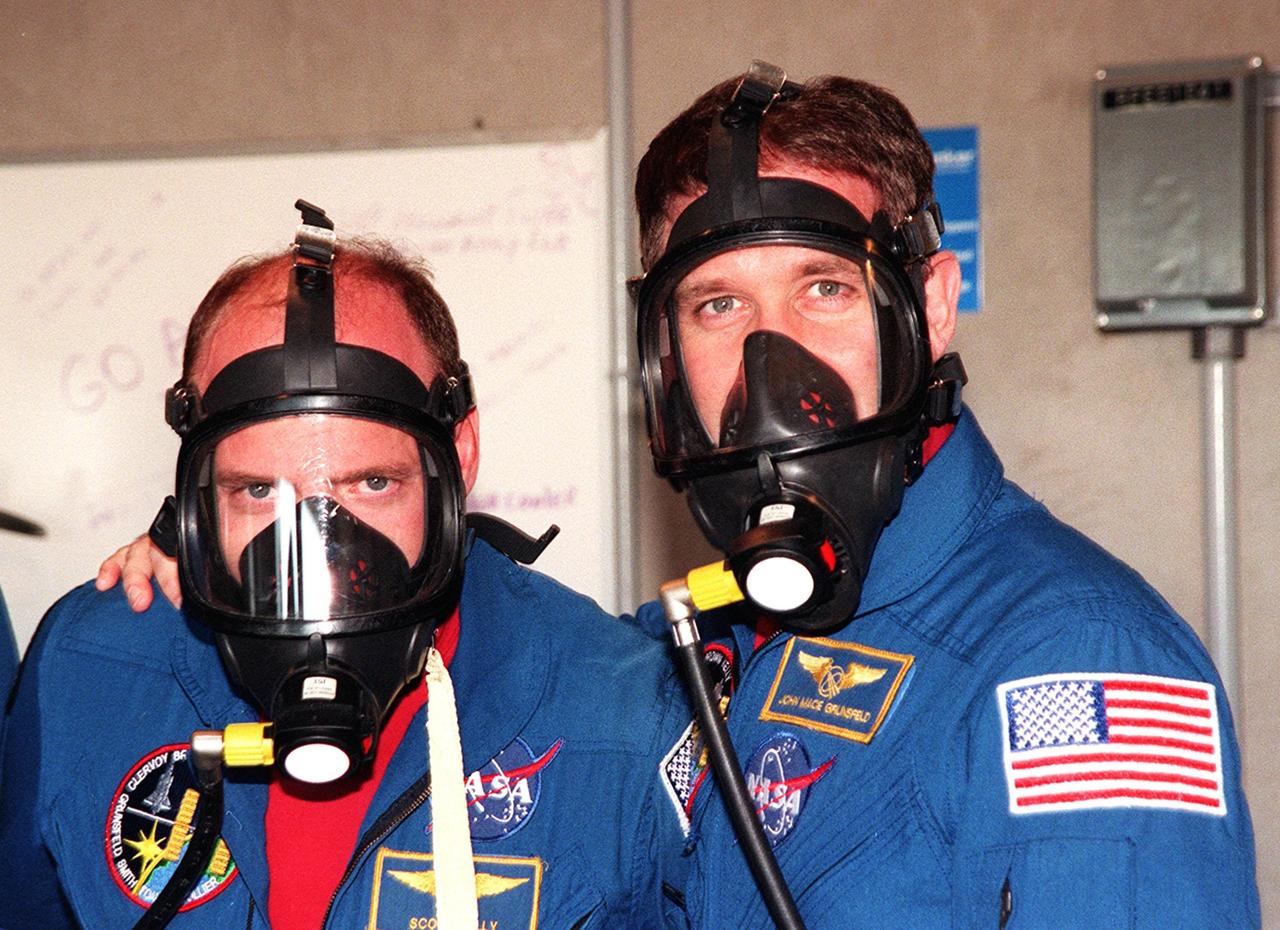
In the bunker at Launch Pad 39B, STS-103 Pilot Scott J. Kelly (left) and Mission Specialist John M. Grunsfeld (Ph.D.) (right) try on oxygen masks during Terminal Countdown Demonstration Test (TCDT) activities. The TCDT provides the crew with emergency egress training, opportunities to inspect their mission payloads in the orbiter's payload bay, and simulated countdown exercises. Other crew members taking part are Commander Curtis L. Brown Jr. and Mission Specialists Steven L. Smith, C. Michael Foale (Ph.D.), and Jean-François Clervoy of France and Claude Nicollier of Switzerland, who are with the European Space Agency. STS-103 is a "call-up" mission due to the need to replace and repair portions of the Hubble Space Telescope, including the gyroscopes that allow the telescope to point at stars, galaxies and planets. The STS-103 crew will be replacing a Fine Guidance Sensor, an older computer with a new enhanced model, an older data tape recorder with a solid-state digital recorder, a failed spare transmitter with a new one, and degraded insulation on the telescope with new thermal insulation. The crew will also install a Battery Voltage/Temperature Improvement Kit to protect the spacecraft batteries from overcharging and overheating when the telescope goes into a safe mode. Four EVA's are planned to make the necessary repairs and replacements on the telescope. The mission is targeted for launch Dec. 6 at 2:37 a.m. EST

During a Crew Equipment Interface Test (CEIT), members of the STS-103 crew check out a portable foot restraint on the Flight Support System that will be used on the mission, repairing the Hubble Space Telescope. The seven-member crew comprises Commander Curtis L. Brown Jr., Pilot Scott J. Kelly, and Mission Specialists Steven L. Smith, C. Michael Foale (Ph.D.), John M. Grunsfeld (Ph.D), Claude Nicollier of Switzerland, and Jean-François Clervoy of France. Nicollier and Clervoy are with the European Space Agency. Mission STS-103 is a "call-up" due to the need to replace portions of the pointing system, the gyros, which have begun to fail on the Hubble Space Telescope. Although Hubble is operating normally and conducting its scientific observations, only three of its six gyroscopes are working properly. The gyroscopes allow the telescope to point at stars, galaxies and planets. The STS-103 crew will not only replace gyroscopes, it will also replace a Fine Guidance Sensor and an older computer with a new enhanced model, an older data tape recorder with a solid-state digital recorder, a failed spare transmitter with a new one, and degraded insulation on the telescope with new thermal insulation. The crew will also install a Battery Voltage/Temperature Improvement Kit to protect the spacecraft batteries from overcharging and overheating when the telescope goes into a safe mode. The scheduled launch date in October is under review
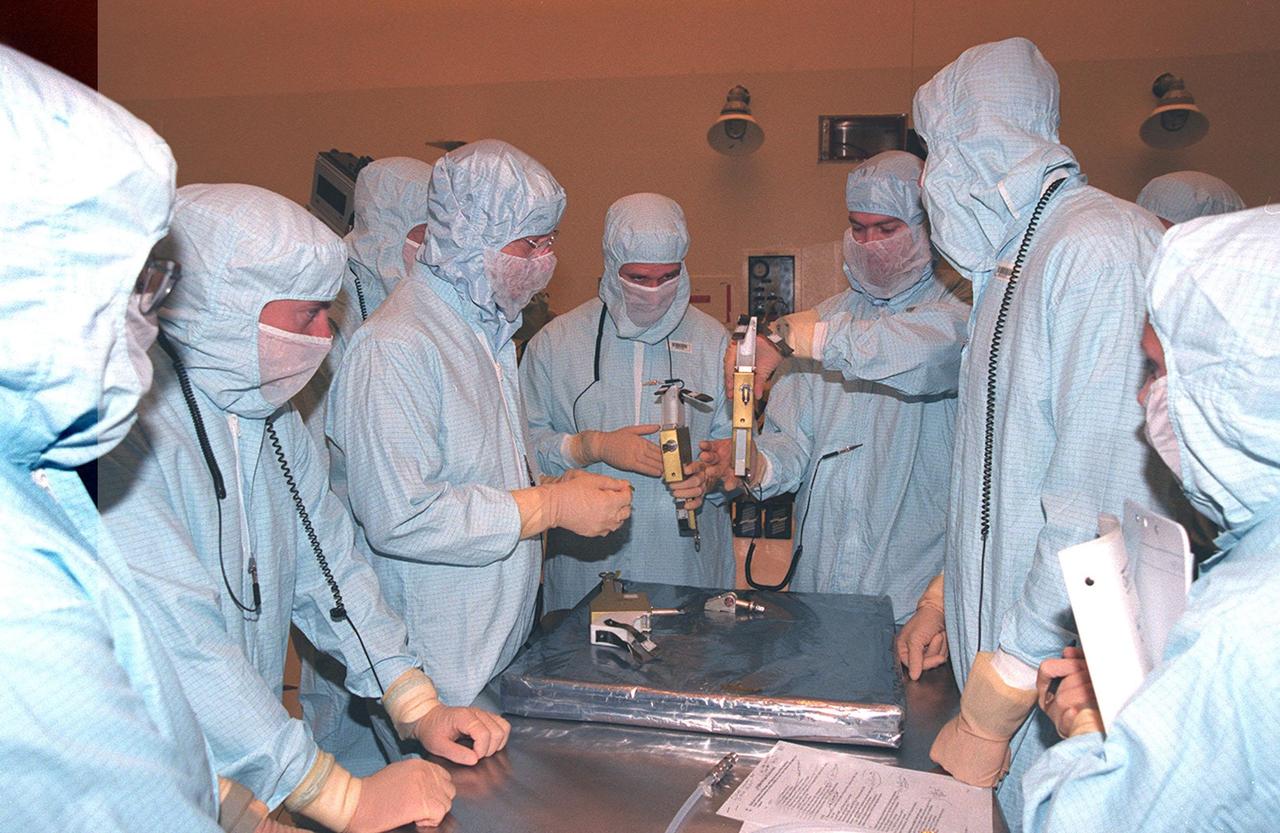
In the Payload Hazardous Servicing Facility, the STS-103 crew look over equipment to be used during their mission. The seven-member crew, taking part in a Crew Equipment Interface Test, are Commander Curtis L. Brown Jr., Pilot Scott J. Kelly, and Mission Specialists Steven L. Smith, C. Michael Foale (Ph.D.), John M. Grunsfeld (Ph.D.), Claude Nicollier of Switzerland, and Jean-François Clervoy of France. Nicollier and Clervoy are with the European Space Agency. Mission STS-103 is a "call-up" due to the need to replace portions of the pointing system, the gyros, which have begun to fail on the Hubble Space Telescope. Although Hubble is operating normally and conducting its scientific observations, only three of its six gyroscopes are working properly. The gyroscopes allow the telescope to point at stars, galaxies and planets. The STS-103 crew will not only replace gyroscopes, it will also replace a Fine Guidance Sensor and an older computer with a new enhanced model, an older data tape recorder with a solid state digital recorder, a failed spare transmitter with a new one, and degraded insulation on the telescope with new thermal insulation. The crew will also install a Battery Voltage/Temperature Improvement Kit to protect the spacecraft batteries from overcharging and overheating when the telescope goes into a safe mode. The scheduled launch date in October is under review