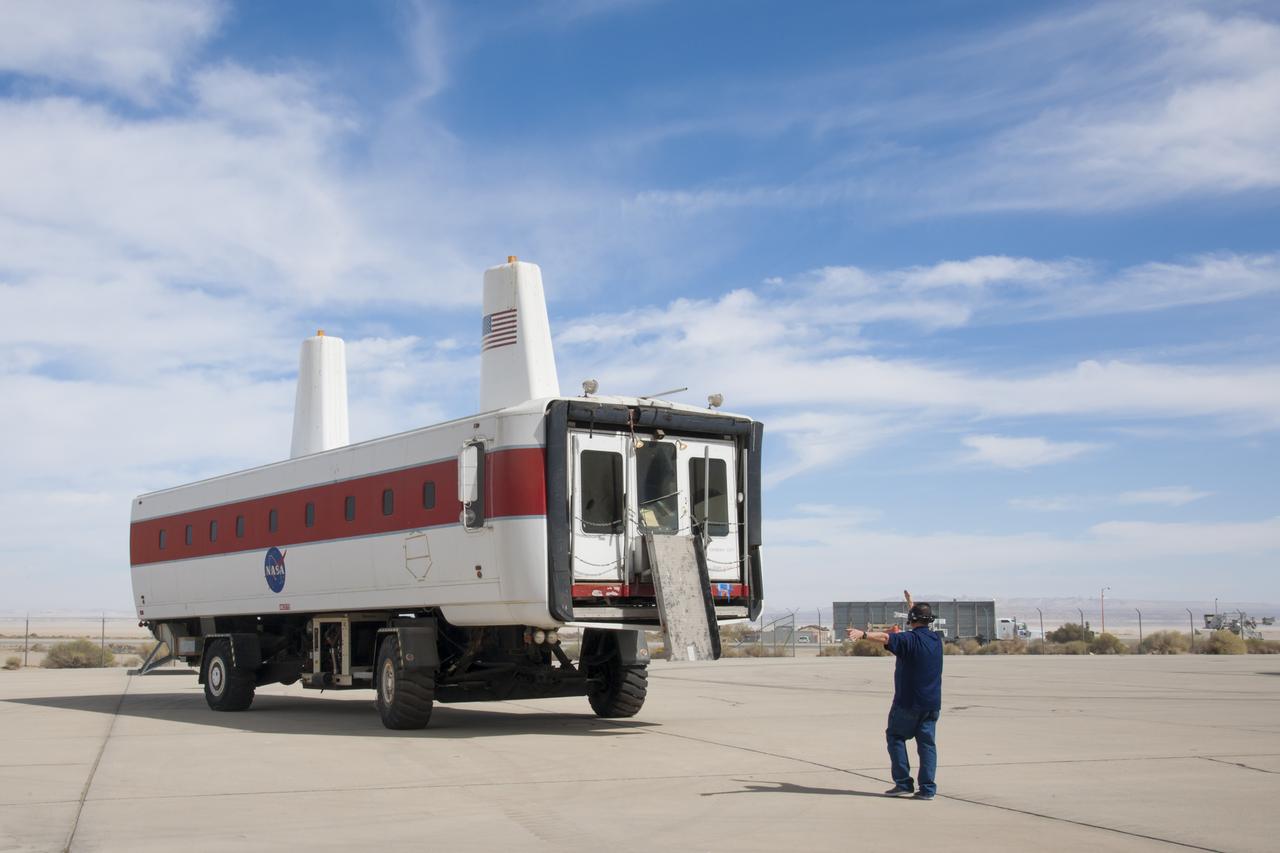
Workers drive the space shuttle Crew Transport Vehicle, or CTV, to the Edwards Air Force Base Flight Test Museum in California for display.
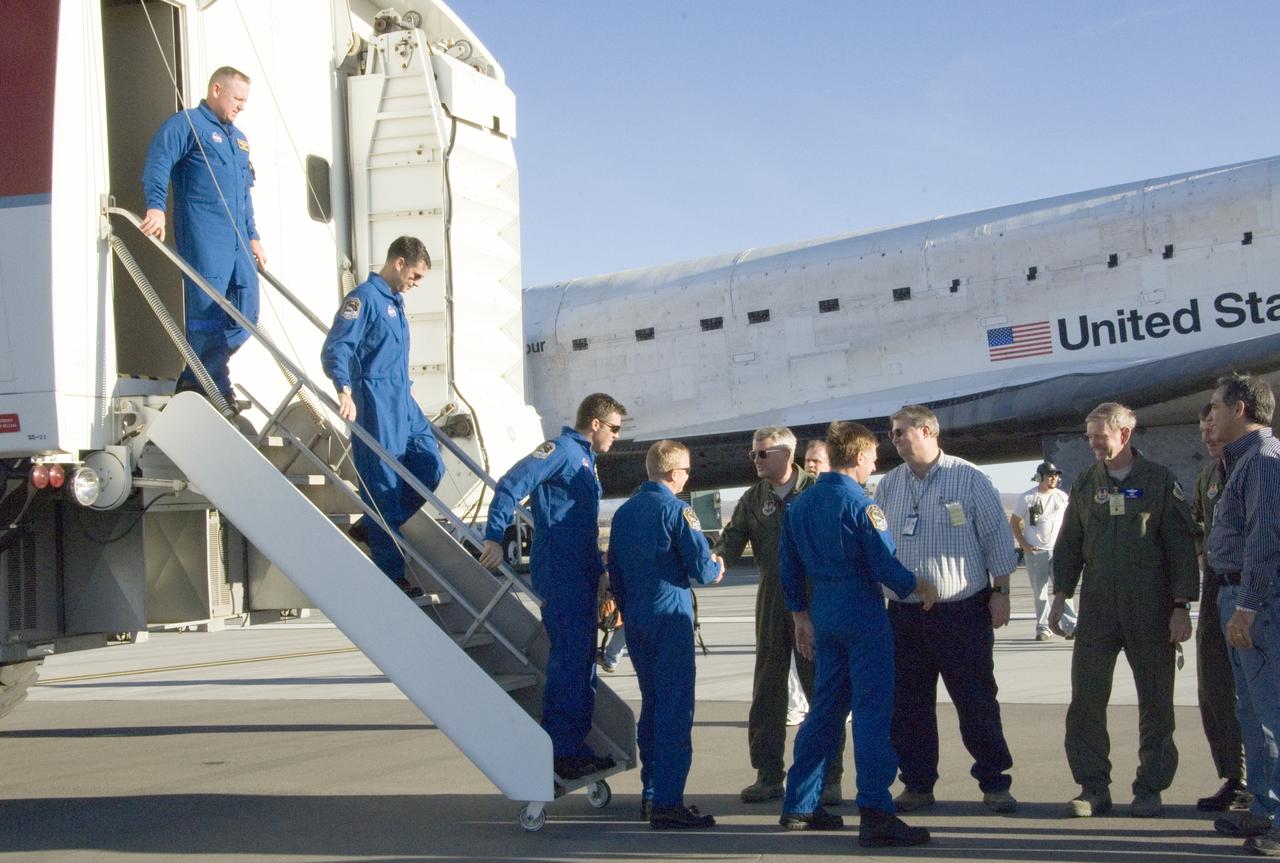
Air Force and NASA officials greet the STS-126 crew as they exit the Crew Transport Vehicle after landing the shuttle Endeavour at Edwards Air Force Base.
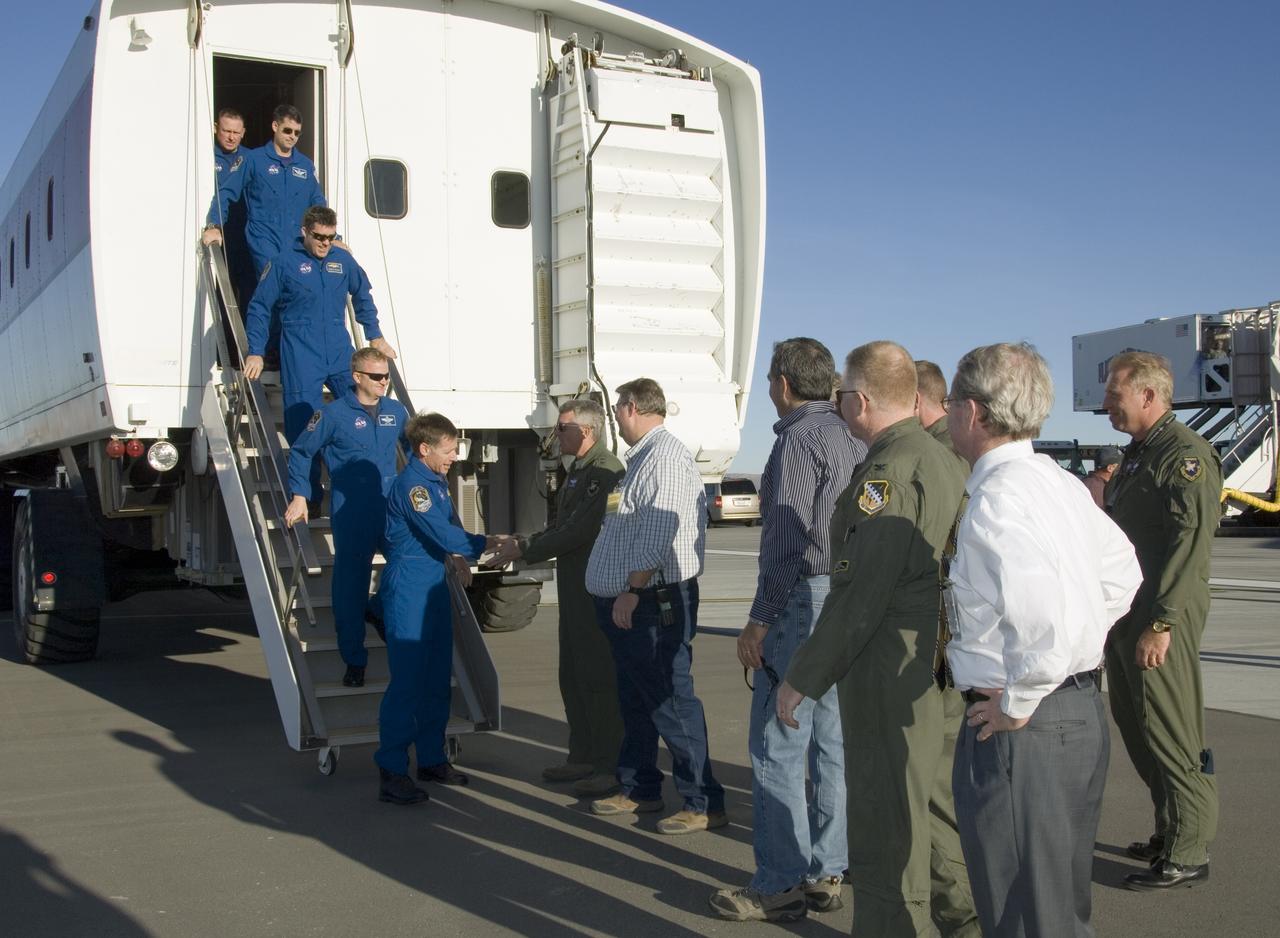
Air Force and NASA officials greet the STS-126 crew as they exit the Crew Transport Vehicle after landing the shuttle Endeavour at Edwards Air Force Base.

With the Vehicle Assembly Building in the background, the three specially designed, fully electric, environmentally friendly crew transportation vehicles for Artemis missions arrived at NASA’s Kennedy Space Center in Florida on July 11, 2023. The zero-emission vehicles, which will carry astronauts to Launch Complex 39B for Artemis missions, were delivered by the manufacturer, Canoo Technologies Inc. of Torrance, California.
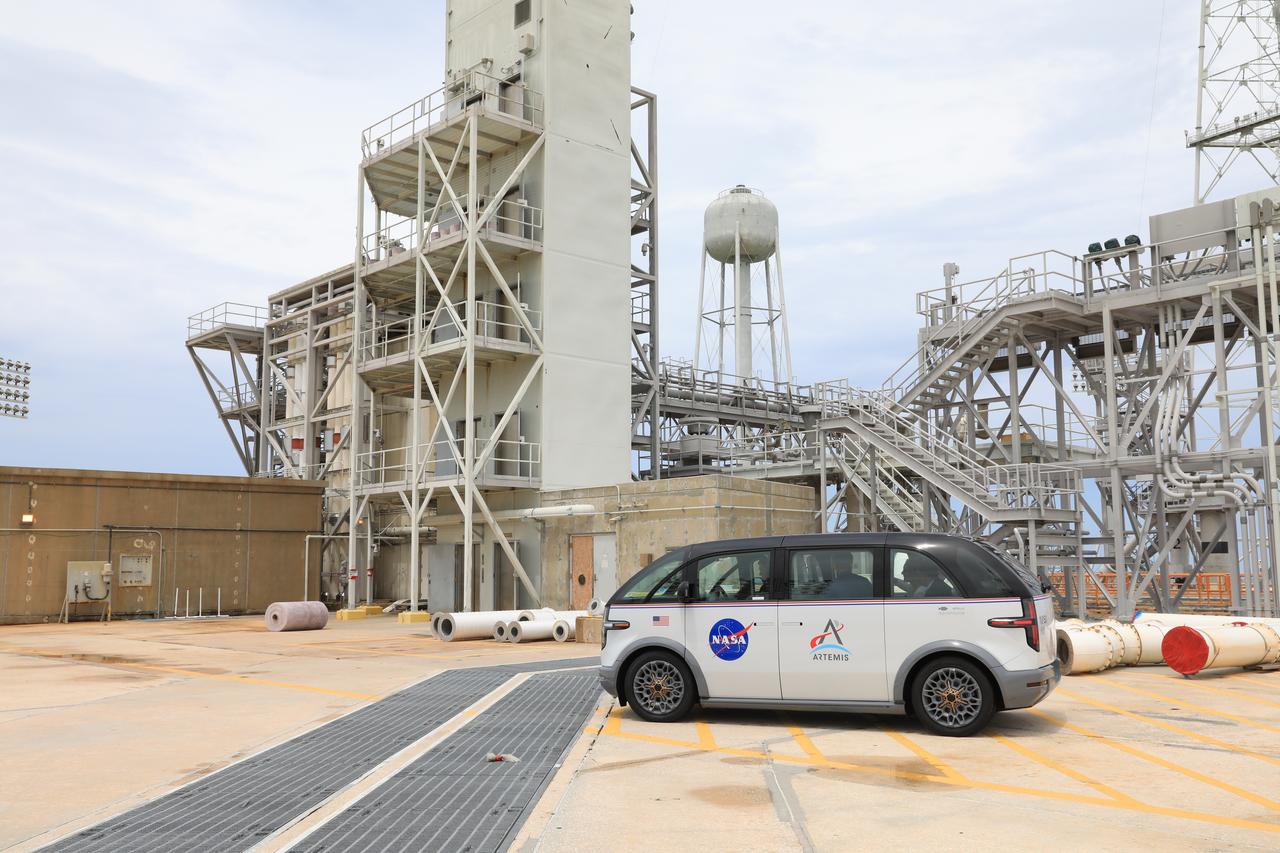
Three specially designed, fully electric, environmentally friendly crew transportation vehicles for Artemis missions arrived at NASA’s Kennedy Space Center in Florida on July 11, 2023. One of the zero-emission vehicles is shown here at Launch Pad 39B. The fleet, which will carry astronauts to Launch Complex 39B for Artemis missions, was delivered by the manufacturer, Canoo Technologies Inc. of Torrance, California.
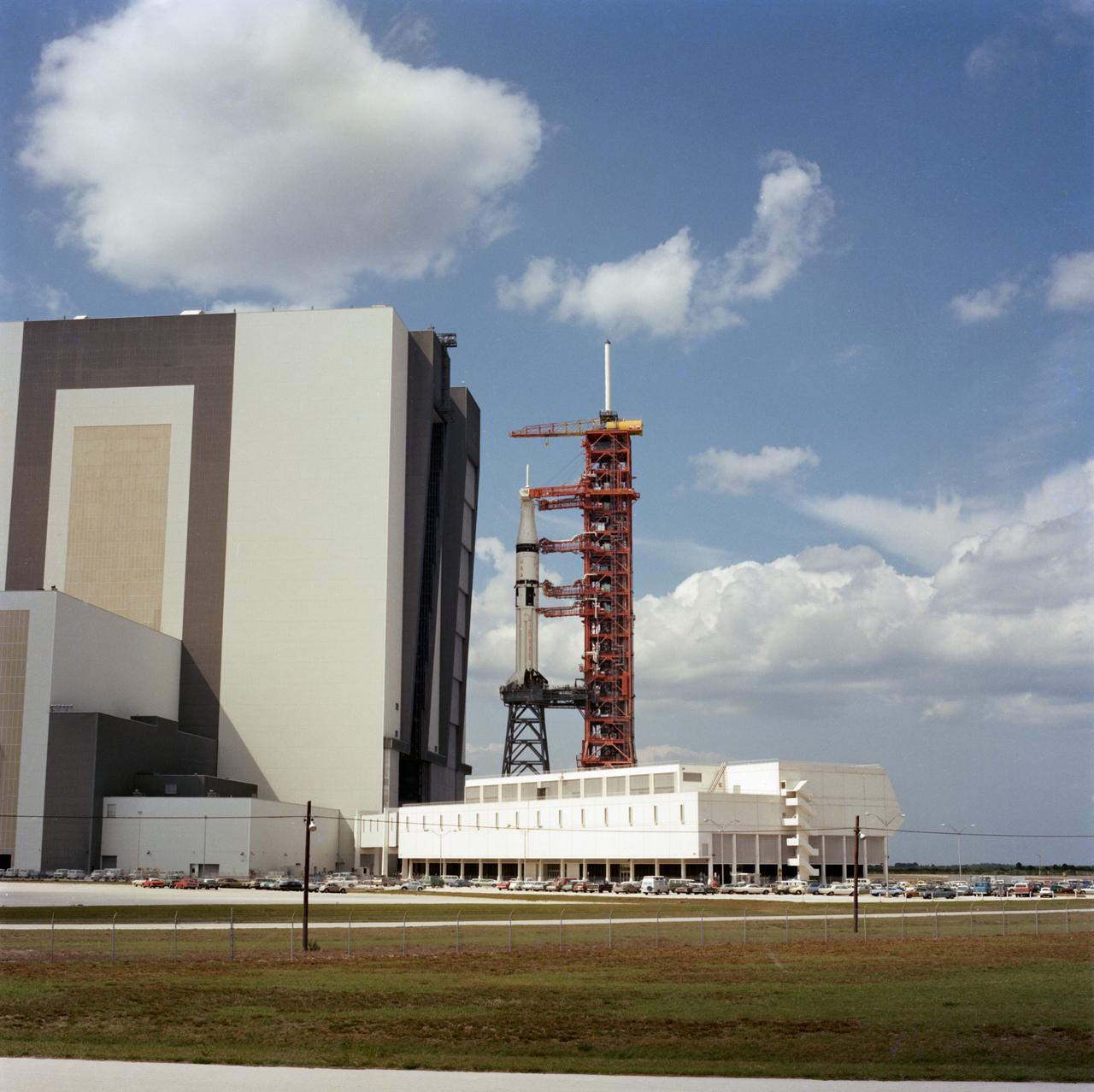
S75-24007 (24 March 1975) --- The Saturn 1B space vehicle for the Apollo-Soyuz Test Project mission, with its launch umbilical tower, rides atop a huge crawler-transporter as it moves slowly away from the Vehicle Assembly Building on its 4.24-mile journey to Pad B, Launch Complex 39, at NASA's Kennedy Space Center. The ASTP vehicle is composed of a Saturn 1B (first) stage, a Saturn IVB (second) stage, and a payload consisting of a Command/Service Module and a Docking Module. The joint U.S.-USSR ASTP docking mission in Earth orbit is scheduled for July 1975.
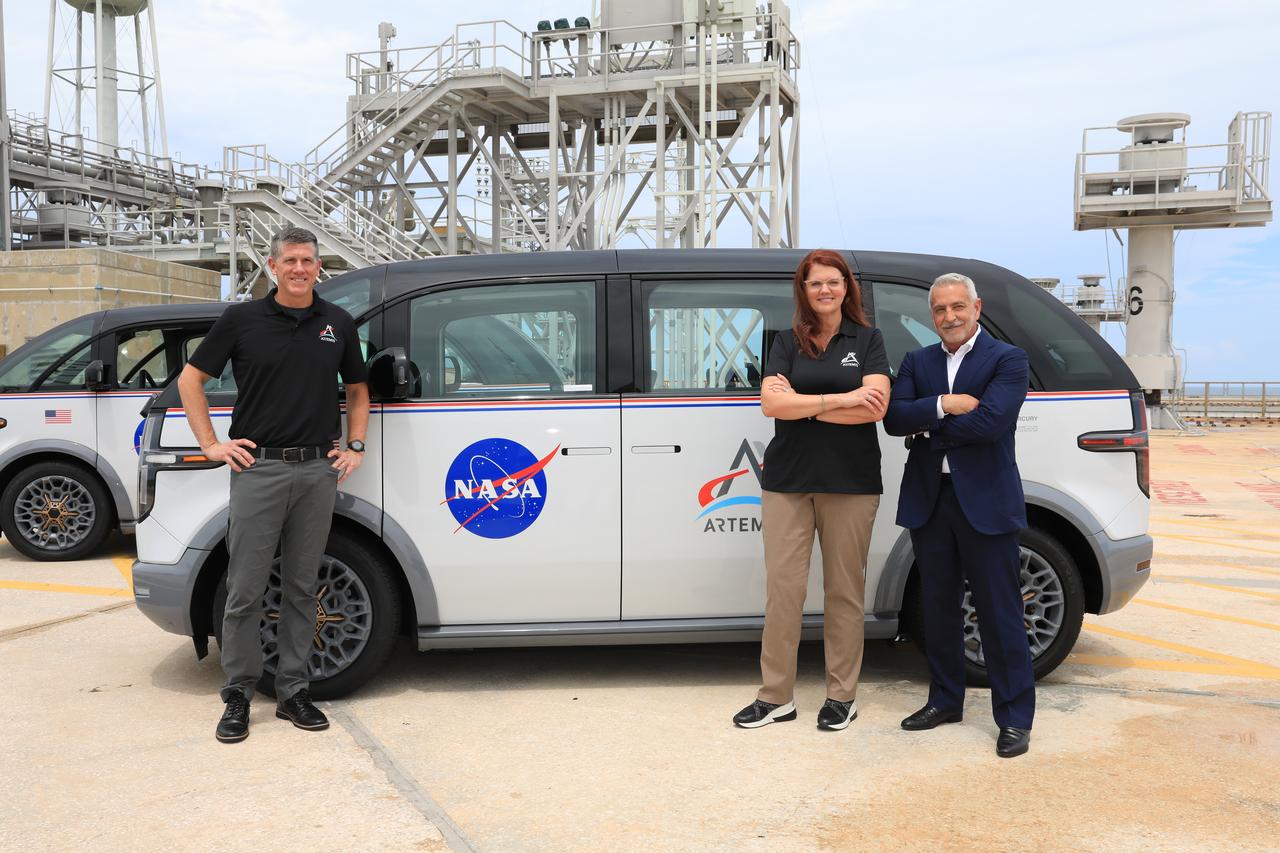
Three specially designed, fully electric, environmentally friendly crew transportation vehicles for Artemis missions arrived at NASA’s Kennedy Space Center in Florida on July 11, 2023. One of the zero-emission vehicles is shown here at Launch Pad 39B. From left are Jeremy Graeber, Artemis assistant launch director; Charlie Blackwell-Thompson, Artemis launch director; and Tony Aquila, chairman and CEO, Canoo Technologies Inc.. The fleet, which will carry astronauts to Launch Complex 39B for Artemis missions, was delivered by the manufacturer, Canoo Technologies Inc. of Torrance, California.
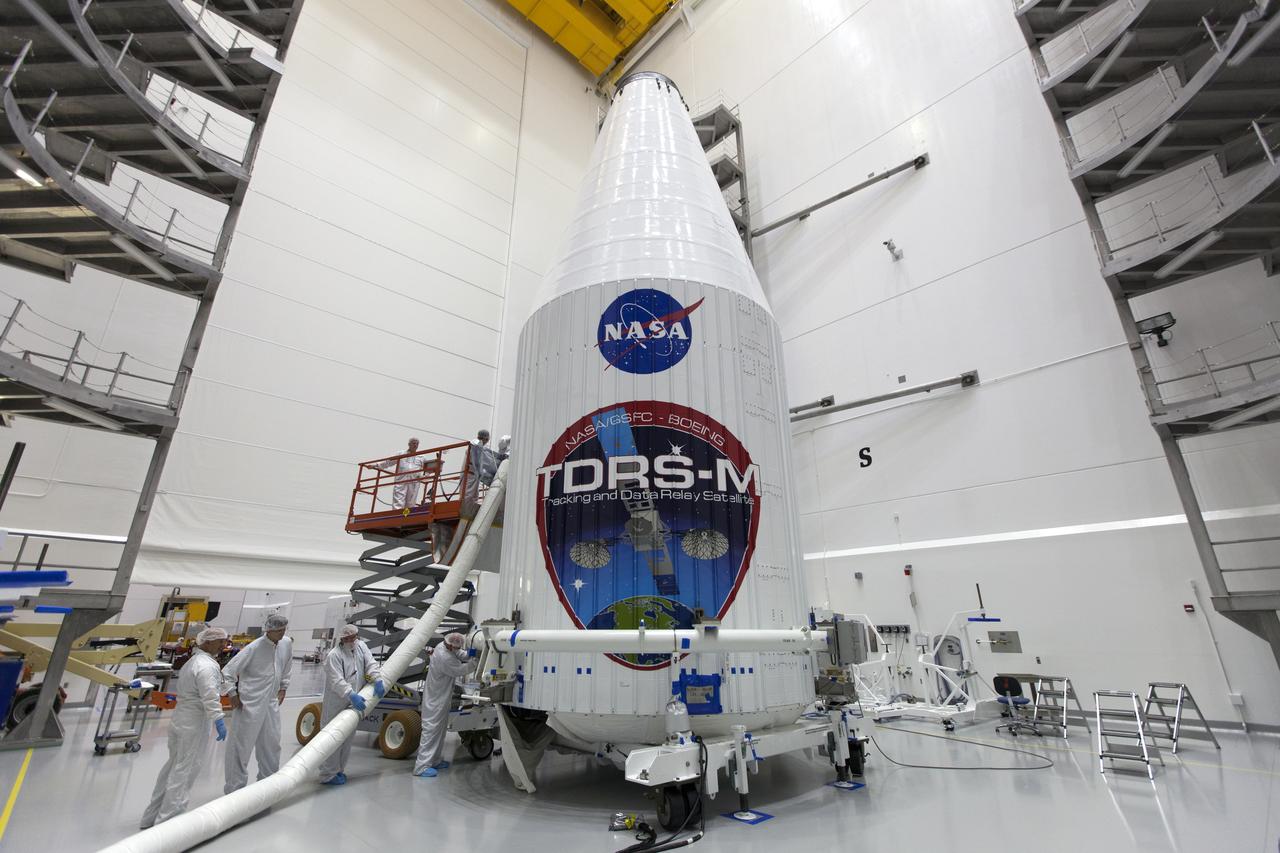
Inside the Astrotech facility near NASA's Kennedy Space Center in Florida, the agency's TDRS-M satellite, enclosed in its payload fairing, is being prepared for lifting to a transport vehicle. The TDRS-M is the latest spacecraft destined for the agency's constellation of communications satellites that allows nearly continuous contact with orbiting spacecraft ranging from the International Space Station and Hubble Space Telescope to the array of scientific observatories. Liftoff atop a United Launch Alliance Atlas V rocket is scheduled to take place from Space Launch Complex 41 at Cape Canaveral Air Force Station on Aug. 18 at 8:03 a.m. EDT.
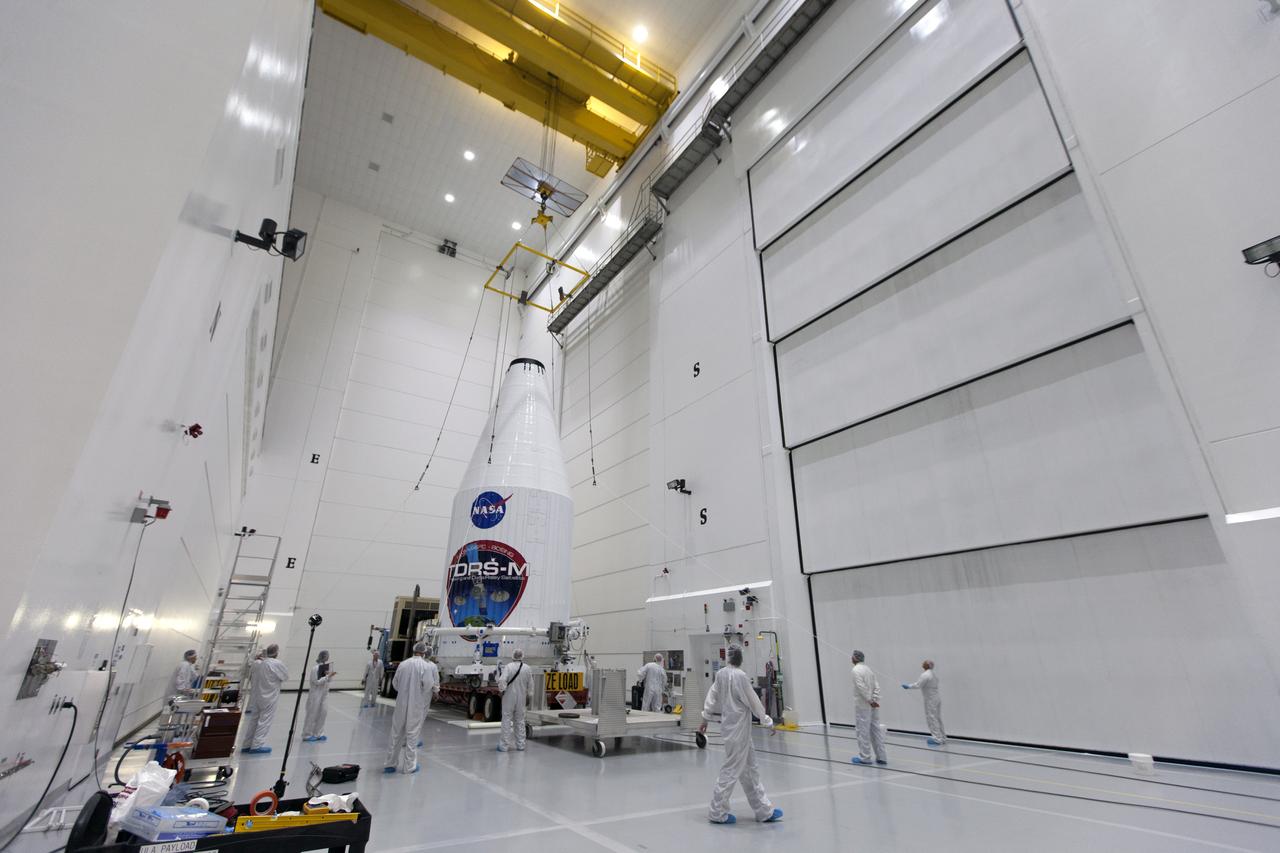
Technicians monitor the progress as NASA's TDRS-M satellite, enclosed in its payload fairing, is lowered onto a transport vehicle inside the Astrotech facility near NASA's Kennedy Space Center in Florida. The TDRS-M is the latest spacecraft destined for the agency's constellation of communications satellites that allows nearly continuous contact with orbiting spacecraft ranging from the International Space Station and Hubble Space Telescope to the array of scientific observatories. Liftoff atop a United Launch Alliance Atlas V rocket is scheduled to take place from Space Launch Complex 41 at Cape Canaveral Air Force Station on Aug. 18 at 8:03 a.m. EDT.
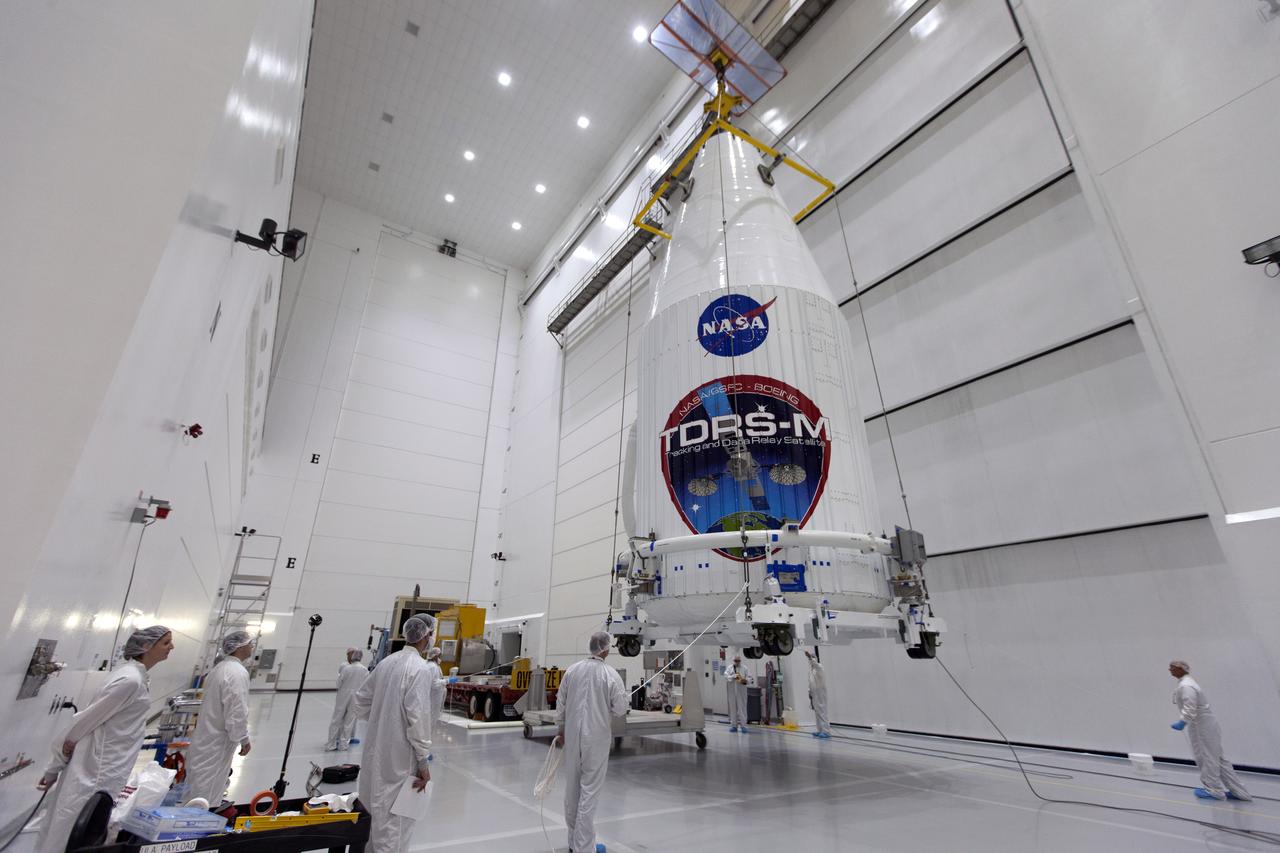
Inside the Astrotech facility near NASA's Kennedy Space Center in Florida, the agency's TDRS-M satellite, enclosed in its payload fairing, is lifted by crane and moved to a transport vehicle. The TDRS-M is the latest spacecraft destined for the agency's constellation of communications satellites that allows nearly continuous contact with orbiting spacecraft ranging from the International Space Station and Hubble Space Telescope to the array of scientific observatories. Liftoff atop a United Launch Alliance Atlas V rocket is scheduled to take place from Space Launch Complex 41 at Cape Canaveral Air Force Station on Aug. 18 at 8:03 a.m. EDT.
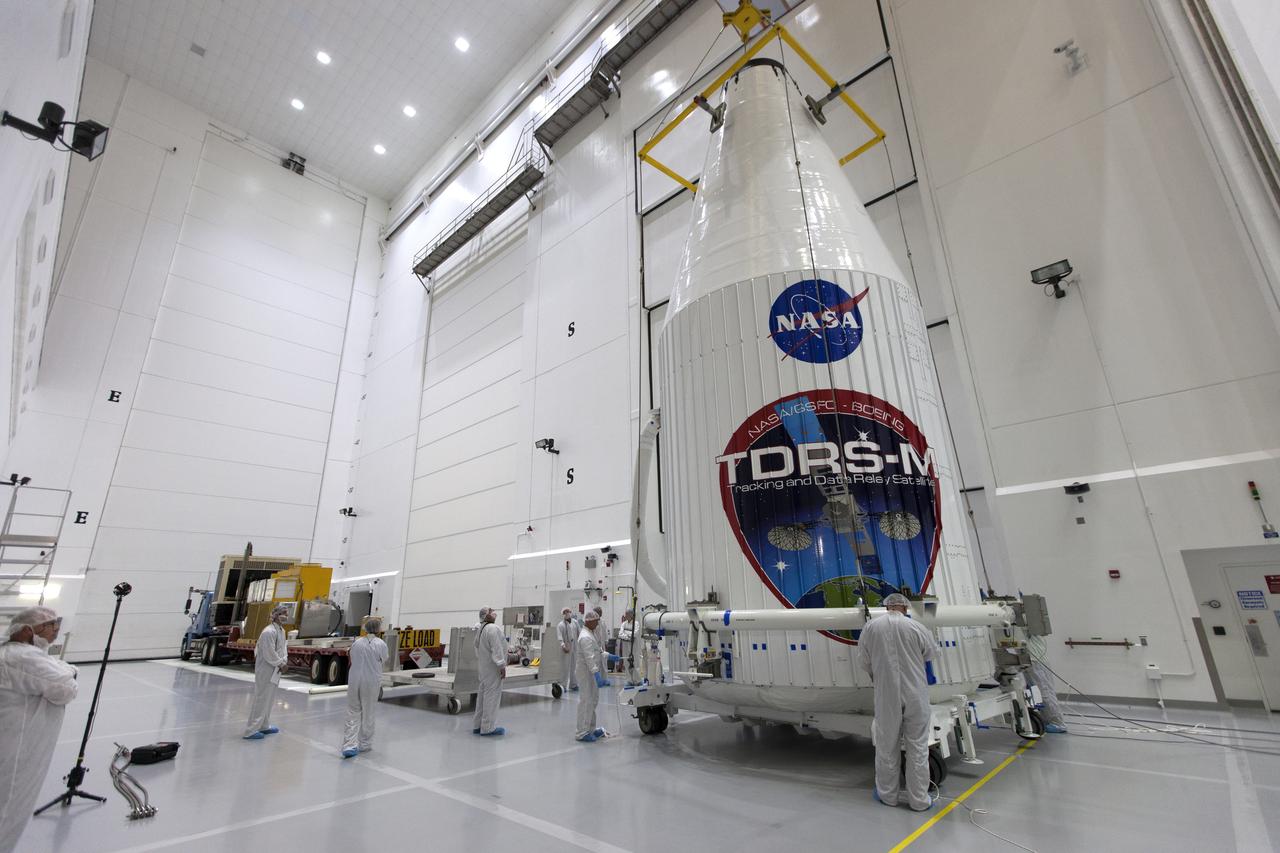
Inside the Astrotech facility near NASA's Kennedy Space Center in Florida, the agency's TDRS-M satellite, enclosed in its payload fairing, will be lifted by crane and lowered onto a transport vehicle. The TDRS-M is the latest spacecraft destined for the agency's constellation of communications satellites that allows nearly continuous contact with orbiting spacecraft ranging from the International Space Station and Hubble Space Telescope to the array of scientific observatories. Liftoff atop a United Launch Alliance Atlas V rocket is scheduled to take place from Space Launch Complex 41 at Cape Canaveral Air Force Station on Aug. 18 at 8:03 a.m. EDT.
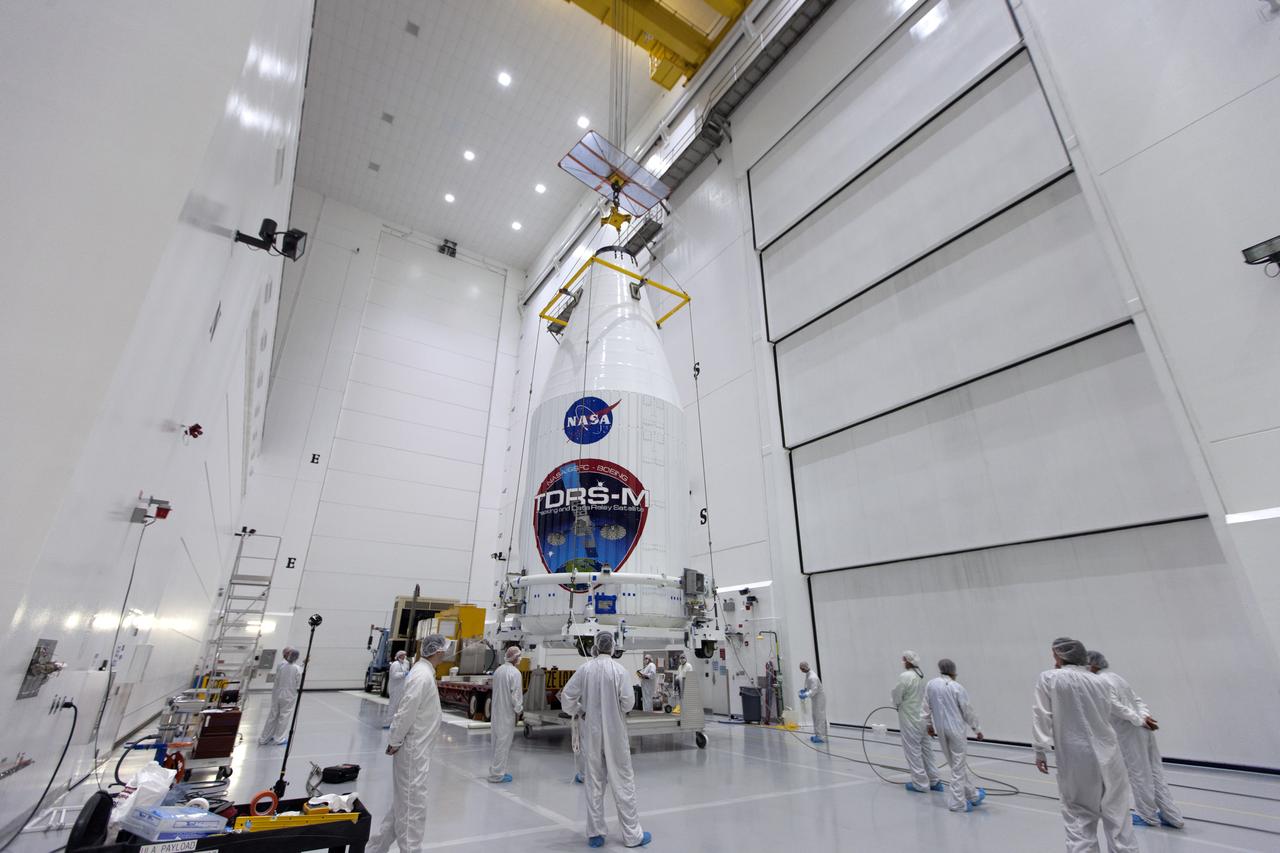
Technicians monitor the progress as NASA's TDRS-M satellite, enclosed in its payload fairing, is lowered onto a transport vehicle inside the Astrotech facility near NASA's Kennedy Space Center in Florida. The TDRS-M is the latest spacecraft destined for the agency's constellation of communications satellites that allows nearly continuous contact with orbiting spacecraft ranging from the International Space Station and Hubble Space Telescope to the array of scientific observatories. Liftoff atop a United Launch Alliance Atlas V rocket is scheduled to take place from Space Launch Complex 41 at Cape Canaveral Air Force Station on Aug. 18 at 8:03 a.m. EDT.
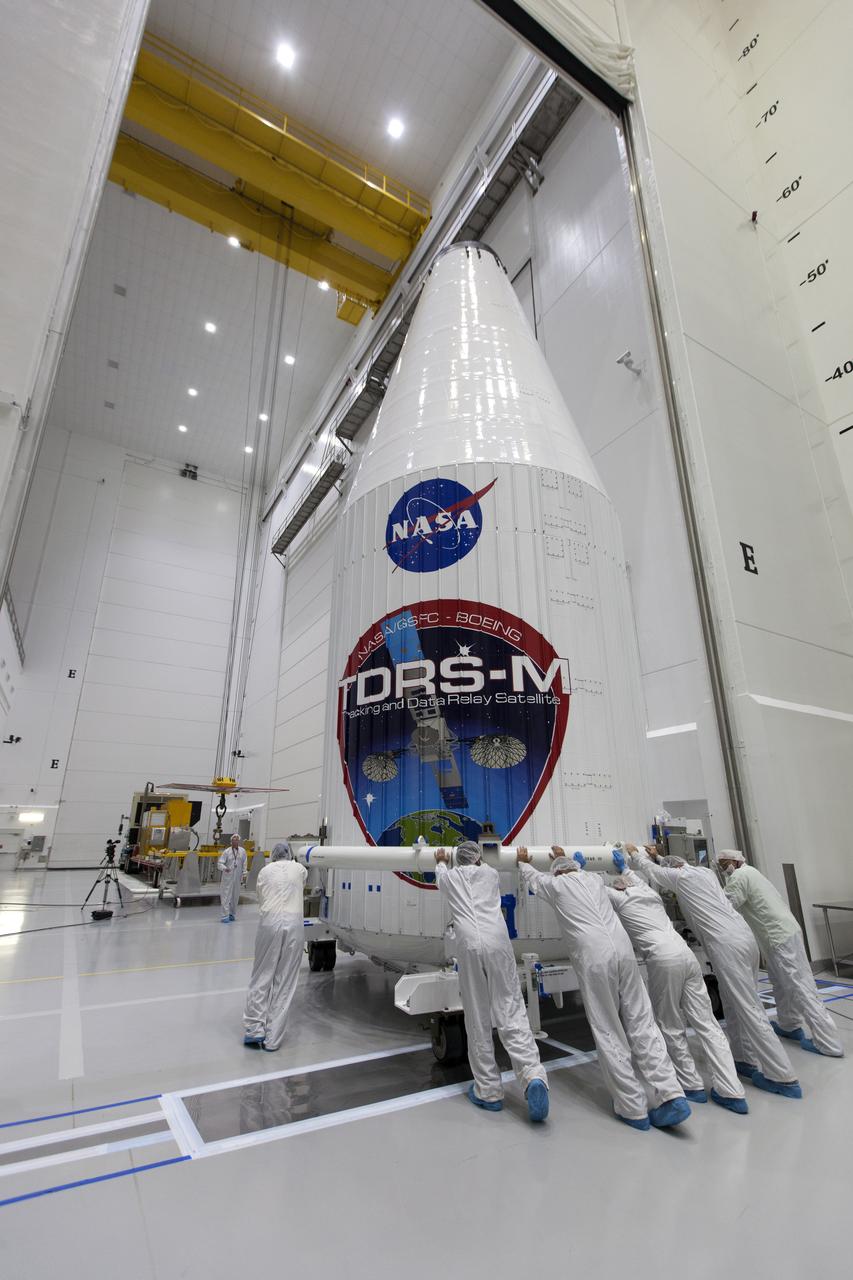
Inside the Astrotech facility near NASA's Kennedy Space Center in Florida, technicians move the agency's TDRS-M satellite, enclosed in its payload fairing, toward a crane for lifting to a transport vehicle. The TDRS-M is the latest spacecraft destined for the agency's constellation of communications satellites that allows nearly continuous contact with orbiting spacecraft ranging from the International Space Station and Hubble Space Telescope to the array of scientific observatories. Liftoff atop a United Launch Alliance Atlas V rocket is scheduled to take place from Space Launch Complex 41 at Cape Canaveral Air Force Station on Aug. 18 at 8:03 a.m. EDT.
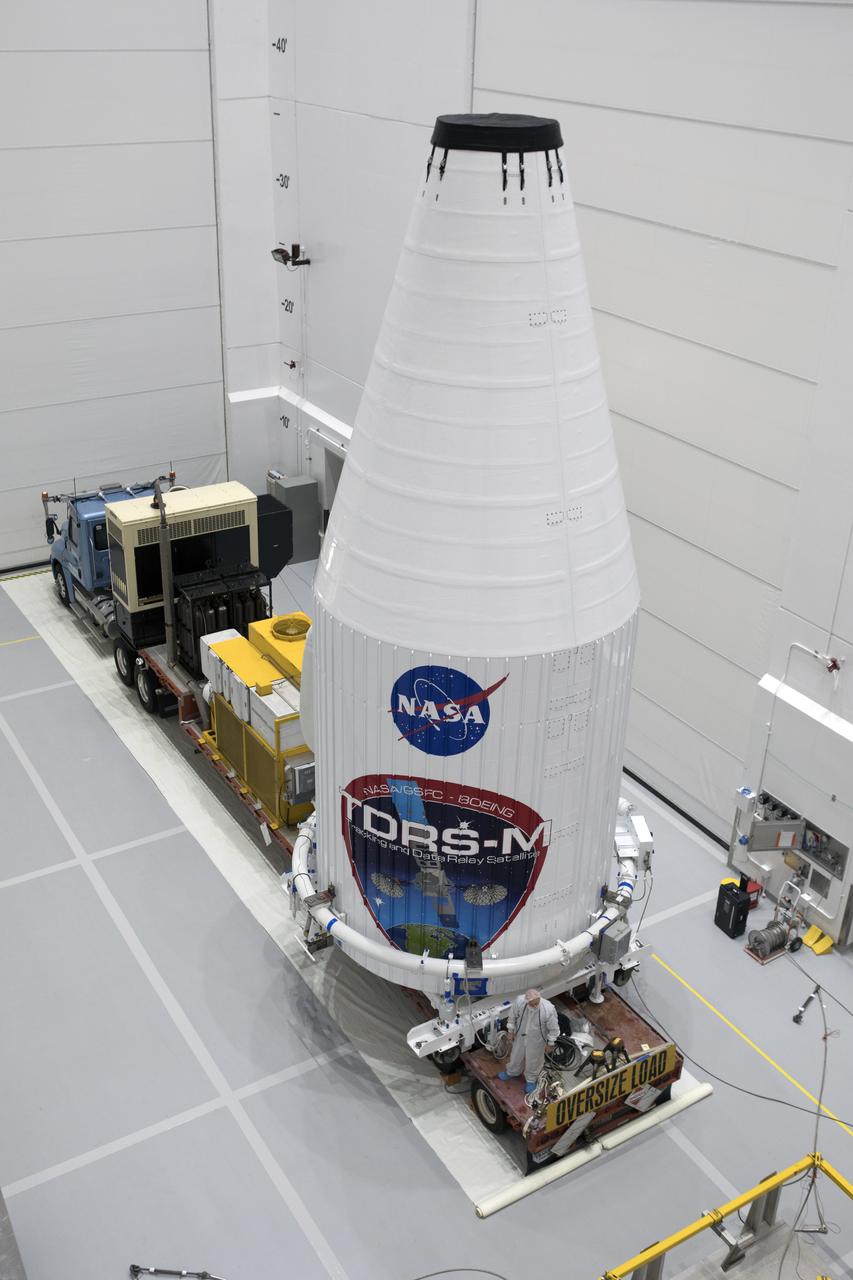
Inside the Astrotech facility near NASA's Kennedy Space Center in Florida, the agency's TDRS-M satellite, enclosed in its payload fairing, is secured on a transport vehicle. The TDRS-M is the latest spacecraft destined for the agency's constellation of communications satellites that allows nearly continuous contact with orbiting spacecraft ranging from the International Space Station and Hubble Space Telescope to the array of scientific observatories. Liftoff atop a United Launch Alliance Atlas V rocket is scheduled to take place from Space Launch Complex 41 at Cape Canaveral Air Force Station on Aug. 18 at 8:03 a.m. EDT.
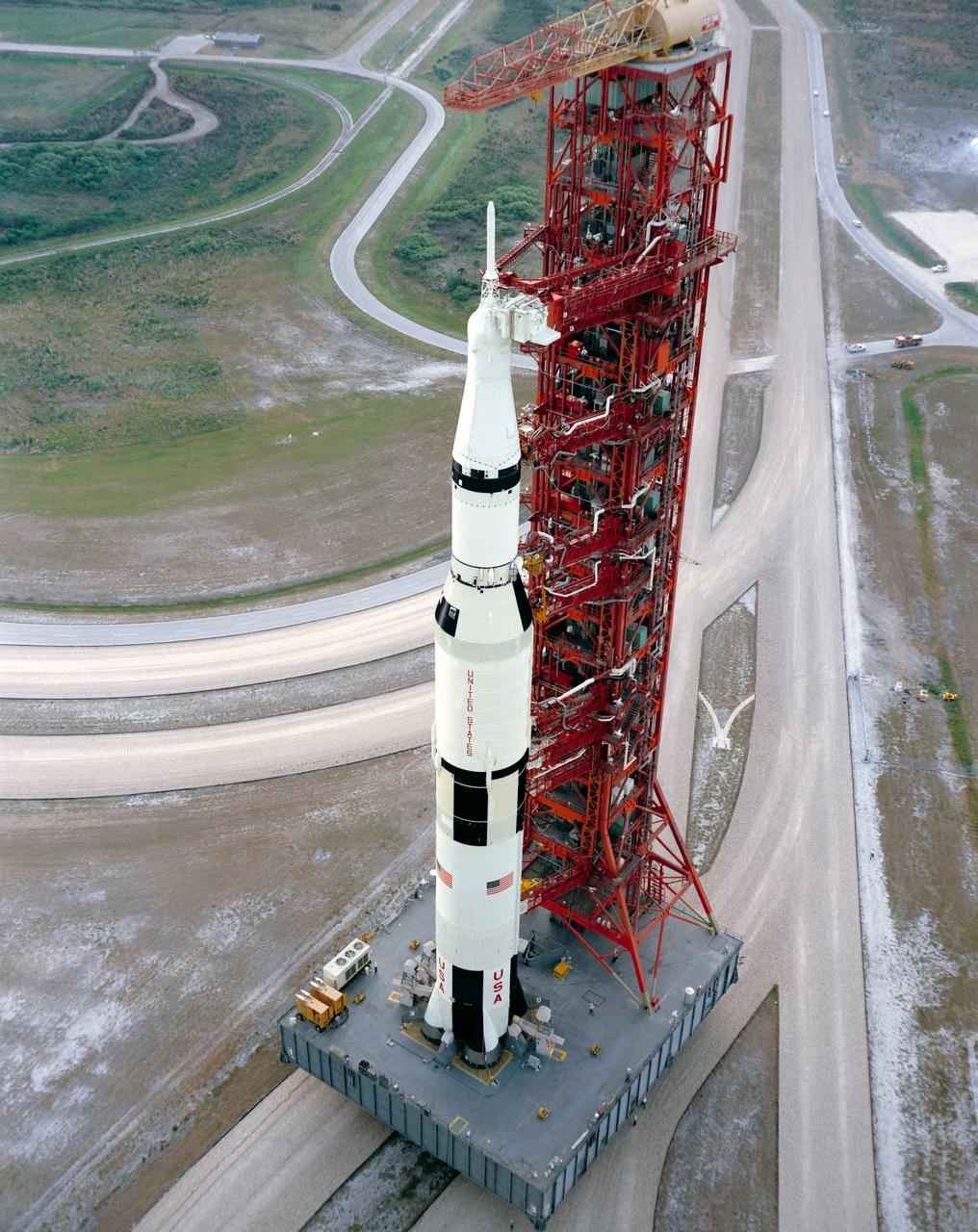
S71-33781 (11 May 1971) --- High angle view showing the Apollo 15 (Spacecraft 112/Lunar Module 10/Saturn 510) space vehicle on the way from the Vehicle Assembly Building (VAB) to Pad A, Launch Complex 39, Kennedy Space Center (KSC). The Saturn V stack and its mobile launch tower are atop a huge crawler-transporter. Apollo 15 is scheduled as the fourth manned lunar landing mission by the National Aeronautics and Space Administration (NASA). The crew men will be astronauts David R. Scott, commander; Alfred M. Worden, command module pilot; and James B. Irwin, lunar module pilot. While astronauts Scott and Irwin descend in the Lunar Module (LM) to explore the moon, astronaut Worden will remain with the Command and Service Modules (CSM) in lunar orbit.
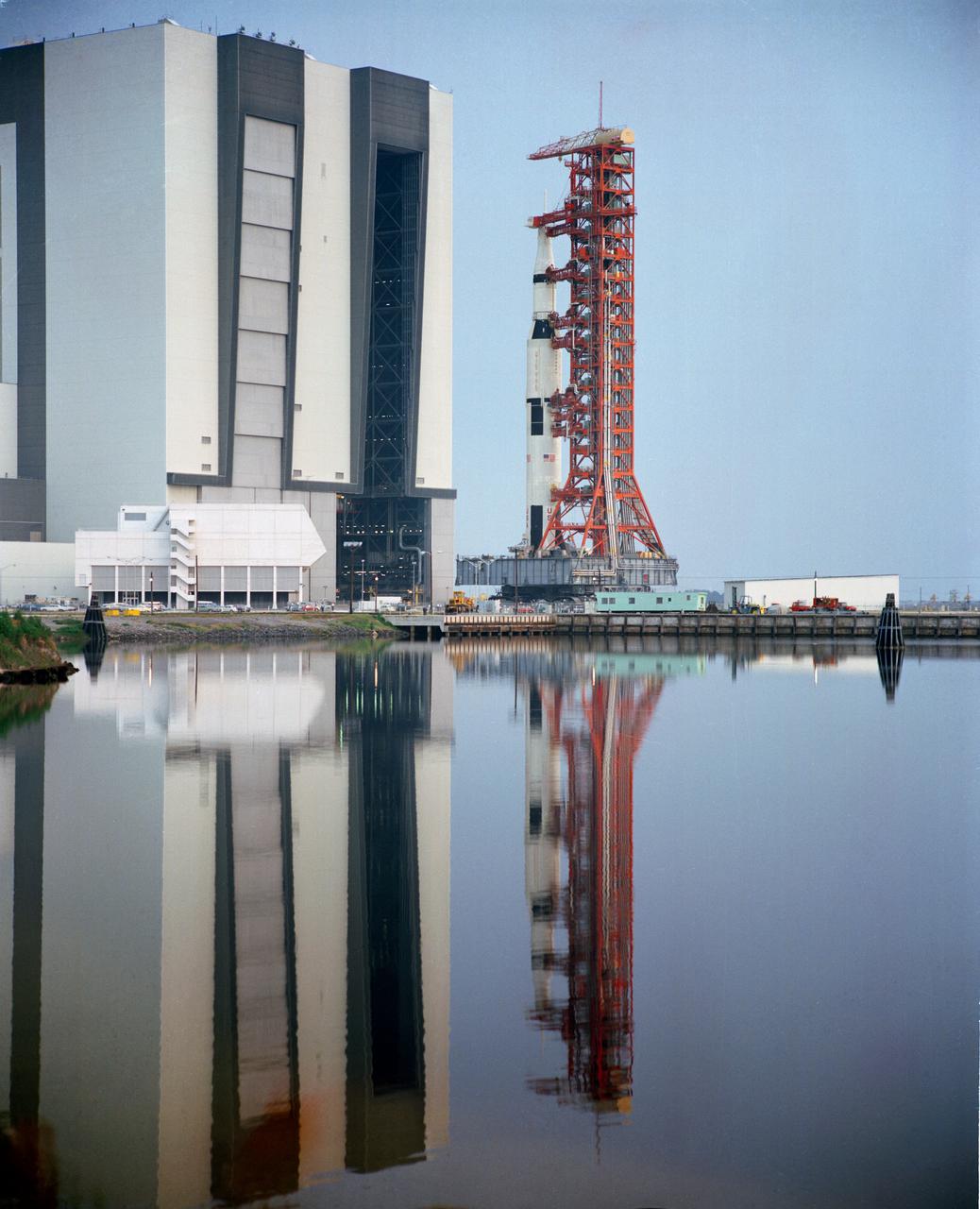
S71-33786 (11 May 1971) --- The 363-feet tall Apollo (Spacecraft 112/Lunar Module 10/Saturn 510) space vehicle which leaves the Vehicle Assembly Building (VAB) to Pad A, Launch Complex 39, Kennedy Space Center (KSC). The Saturn V stack and its mobile launch tower are atop a huge crawler-transporter. Apollo 15 is scheduled as the fourth manned lunar landing mission by the National Aeronautics and Space Administration (NASA) and is scheduled to lift off on July 26, 1971. The crew men will be astronauts David R. Scott, commander; Alfred M. Worden, command module pilot; and James B. Irwin, lunar module pilot. While astronaut Scott and Irwin will descend in the Lunar Module (LM) to explore the moon, astronaut Worden will remain with the Command and Service Modules (CSM) in lunar orbit.
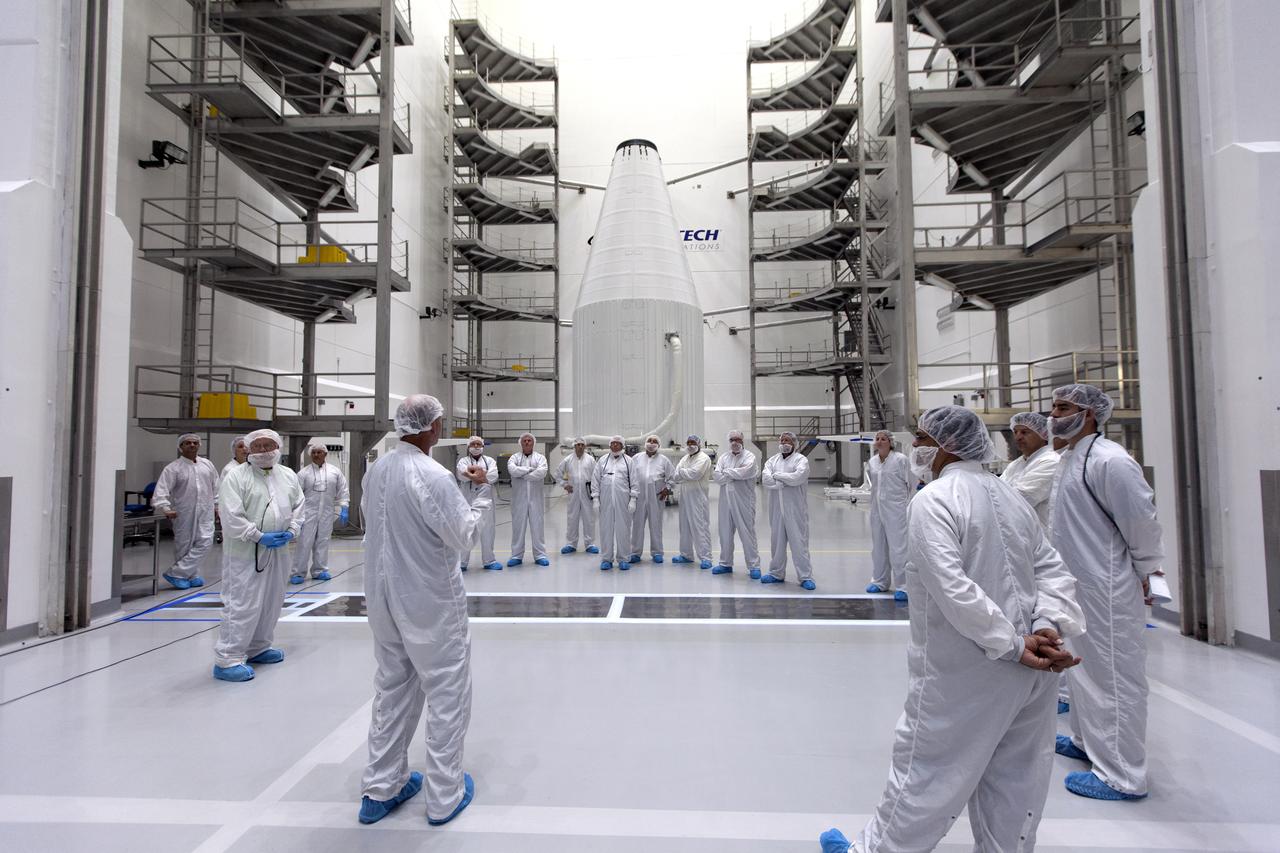
Inside the Astrotech facility near NASA's Kennedy Space Center in Florida, the agency's TDRS-M satellite, enclosed in its payload fairing, is being prepared for lifting to a transport vehicle. Engineers and technicians in clean room attire review procedures before the lifting process begins. The TDRS-M is the latest spacecraft destined for the agency's constellation of communications satellites that allows nearly continuous contact with orbiting spacecraft ranging from the International Space Station and Hubble Space Telescope to the array of scientific observatories. Liftoff atop a United Launch Alliance Atlas V rocket is scheduled to take place from Space Launch Complex 41 at Cape Canaveral Air Force Station on Aug. 18 at 8:03 a.m. EDT.
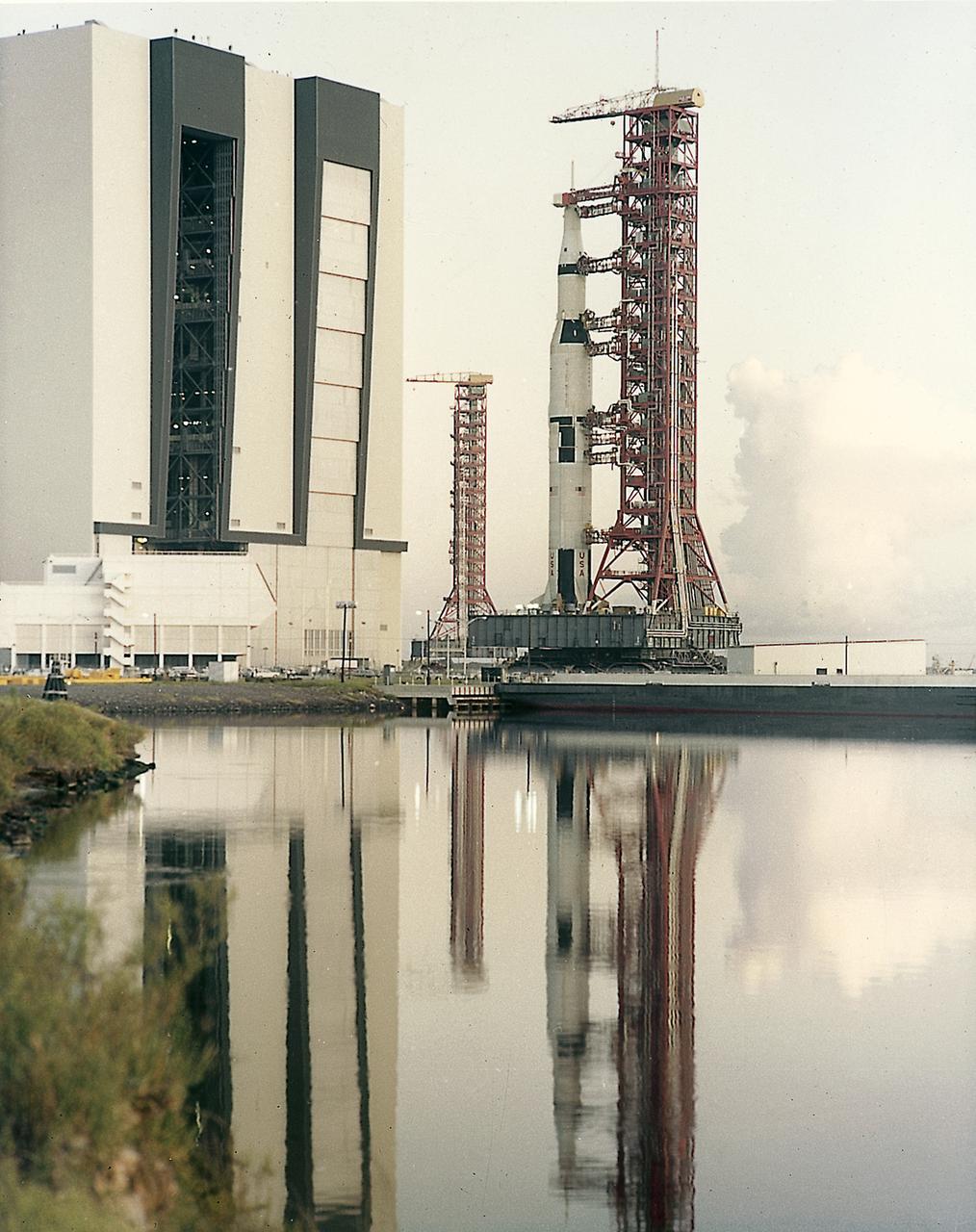
This picture shows the Saturn V vehicle (AS-501), for the Apollo 4 mission on the Crawler Transporter Vehicle. It was rolled out from the Vehicle Assembly Building and slowly (1 mph) moved to the launch pad at the Kennedy Space Center (KSC). The Apollo 4 mission was the first launch of the Saturn V launch vehicle. Objectives of the unmanned Apollo 4 test flight were to obtain flight information on launch vehicle and spacecraft structural integrity and compatibility, flight loads, stage separation, and subsystems operation including testing of restart of the S-IVB stage, and to evaluate the Apollo command module heat shield. The Apollo 4 was launched on November 9, 1967 from KSC.
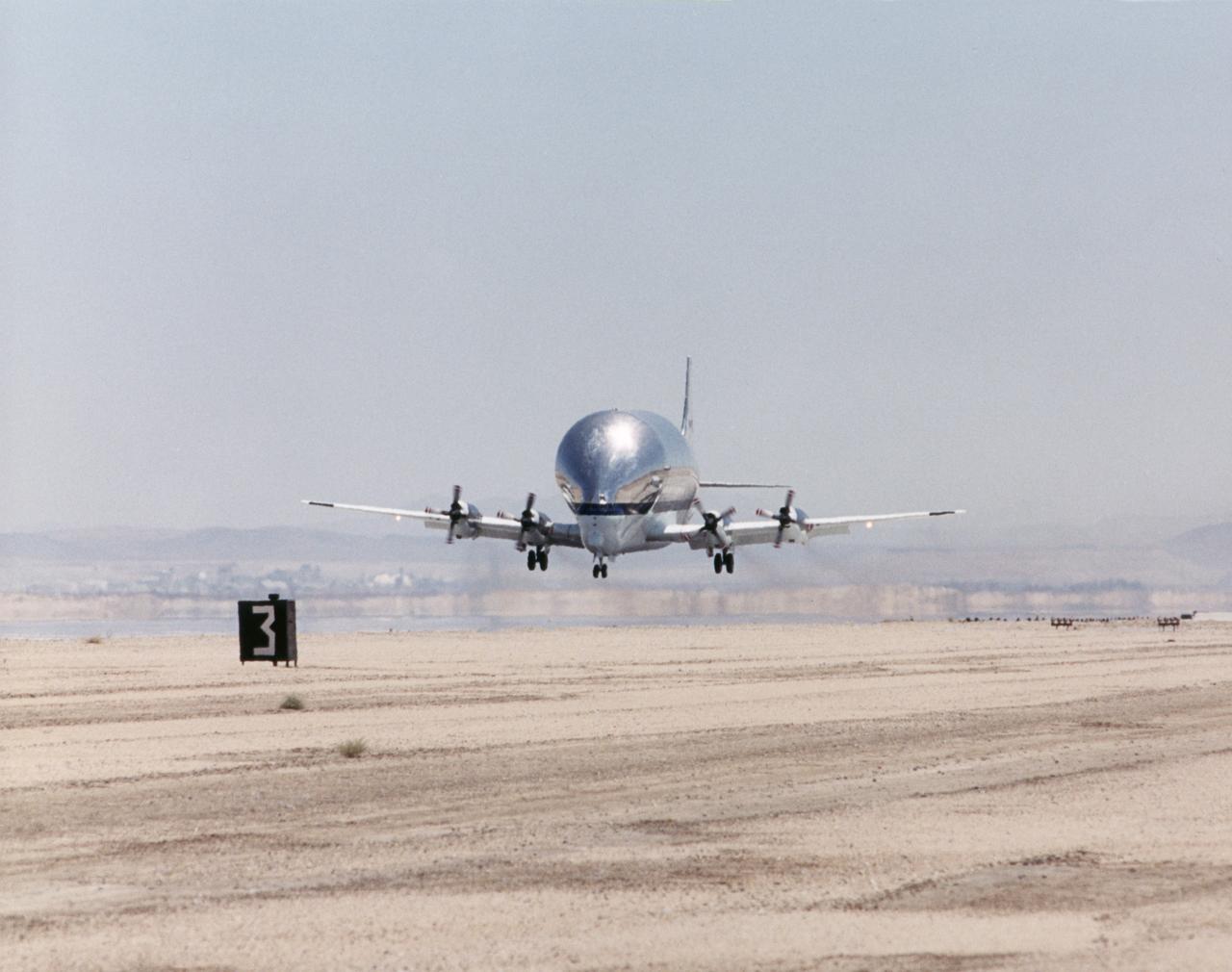
NASA's Super Guppy transport aircraft landed at Edwards Air Force Base, Calif. on July 11, 2000, to deliver the latest version of the X-38 drop vehicle to Dryden. The X-38s are intended as prototypes for a possible "crew lifeboat" for the International Space Station. The X-38 vehicle 131R will demonstrate a huge 7,500 square-foot parafoil that will that will enable the potential crew return vehicle to land on the length of a football field after returning from space. The crew return vehicle is intended to serve as a possible emergency transport to carry a crew to safety in the event of problems with the International Space Station. The Super Guppy evolved from the 1960s-vintage Pregnant Guppy, used for transporting outsized sections of the Apollo moon rocket. The Super Guppy was modified from 1950s-vintage Boeing C-97. NASA acquired its Super Guppy from the European Space Agency in 1997.
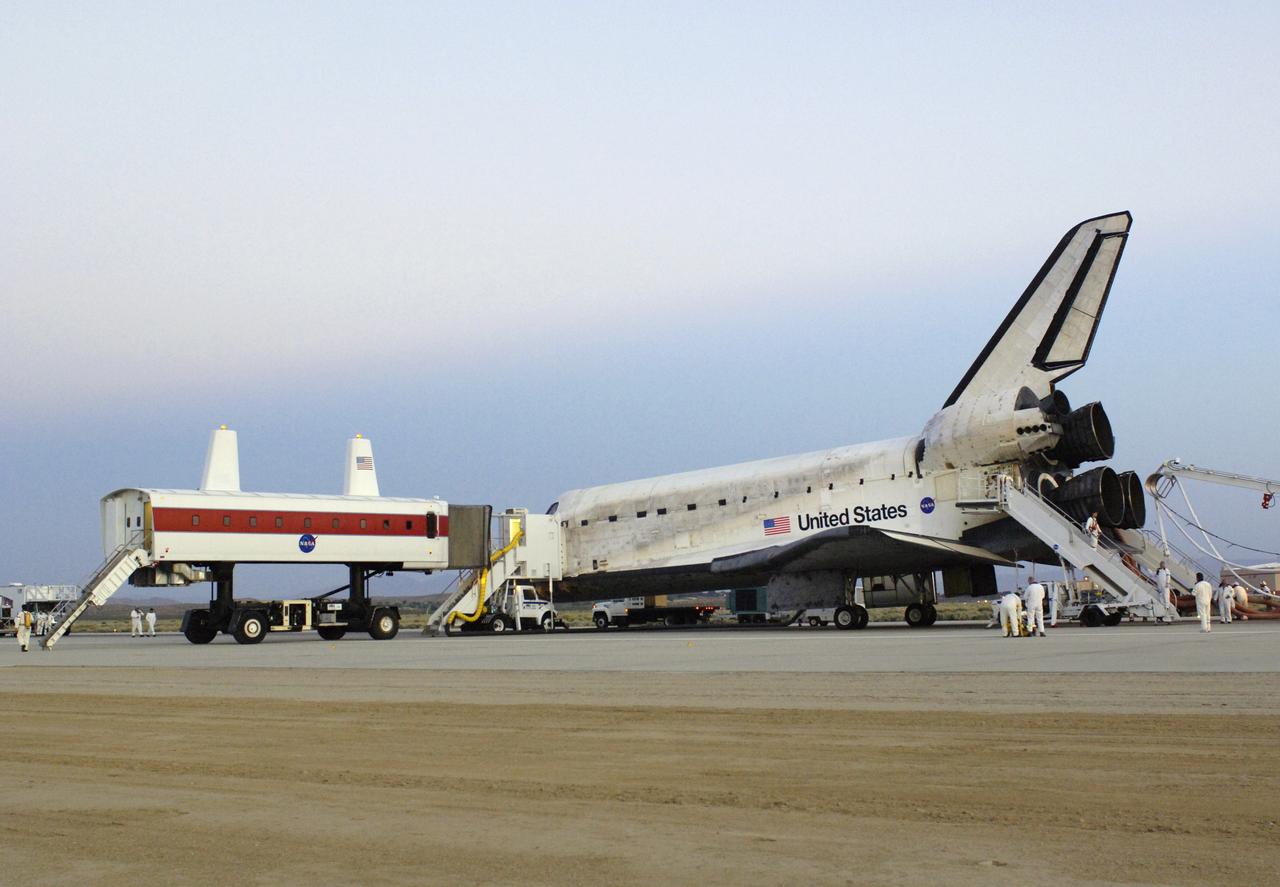
NASA's Crew Transport Vehicle, or CTV, pulls up to the Space Shuttle Discovery to offload the crew after a successful landing August 9, 2005 at Edwards Air Force Base, California. The landing marked the end of the STS-114 mission. Space Shuttle Discovery landed safely at NASA's Dryden Flight Research Center at Edwards Air Force Base in California at 5:11:22 a.m. PDT this morning, following the very successful 14-day STS-114 return to flight mission. During their two weeks in space, Commander Eileen Collins and her six crewmates tested out new safety procedures and delivered supplies and equipment the International Space Station. Discovery spent two weeks in space, where the crew demonstrated new methods to inspect and repair the Shuttle in orbit. The crew also delivered supplies, outfitted and performed maintenance on the International Space Station. A number of these tasks were conducted during three spacewalks. In an unprecedented event, spacewalkers were called upon to remove protruding gap fillers from the heat shield on Discovery's underbelly. In other spacewalk activities, astronauts installed an external platform onto the Station's Quest Airlock and replaced one of the orbital outpost's Control Moment Gyroscopes. Inside the Station, the STS-114 crew conducted joint operations with the Expedition 11 crew. They unloaded fresh supplies from the Shuttle and the Raffaello Multi-Purpose Logistics Module. Before Discovery undocked, the crews filled Raffeallo with unneeded items and returned to Shuttle payload bay. Discovery launched on July 26 and spent almost 14 days on orbit.
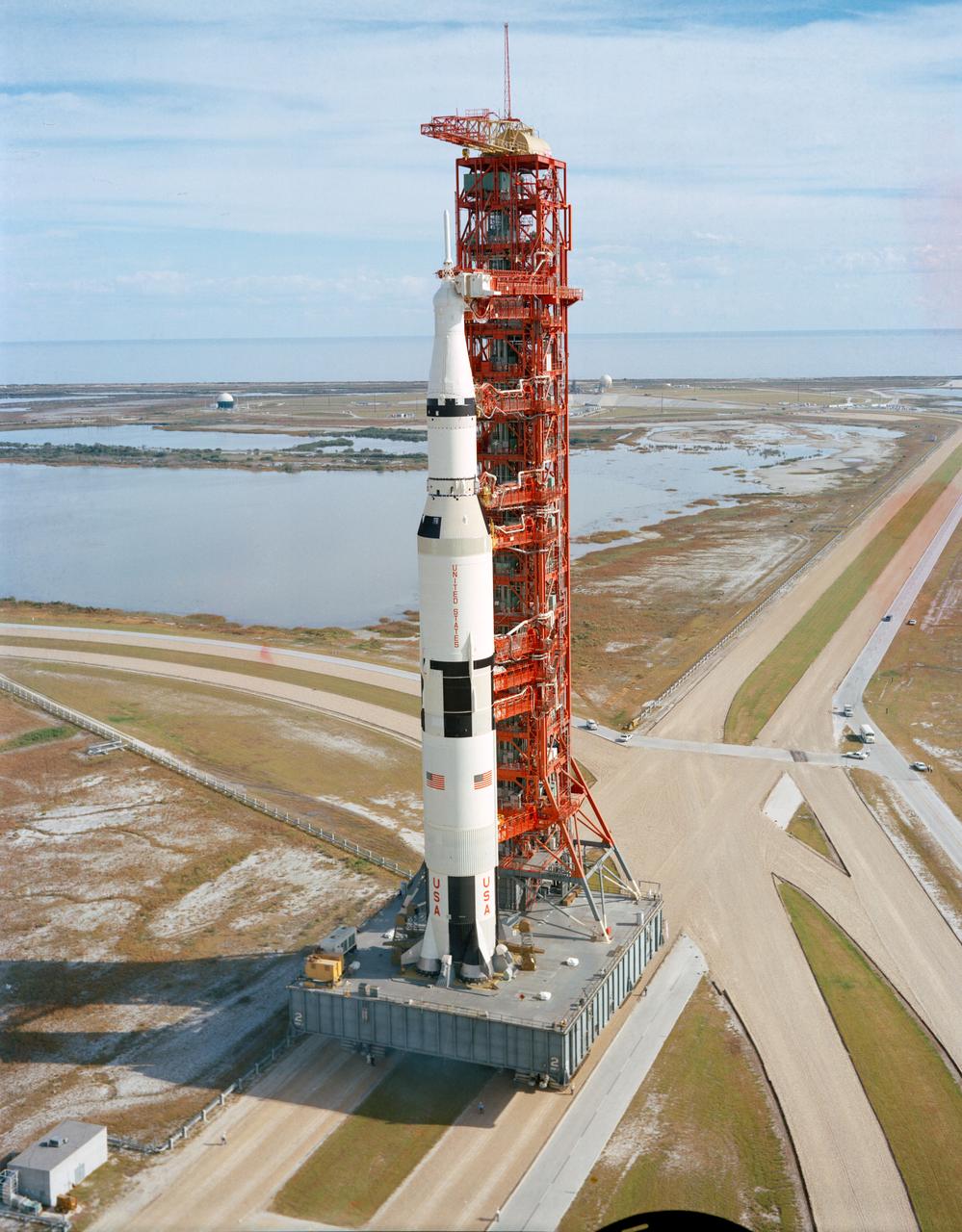
S70-54127 (9 Nov. 1970) --- A high-angle view at Launch Complex 39, Kennedy Space Center (KSC), showing the Apollo 14 (Spacecraft 110/Lunar Module 8/Saturn 509) space vehicle on the way from the Vehicle Assembly Building (VAB) to Pad A. The Saturn V stack and its mobile launch tower sit atop a huge crawler-transporter. The Apollo 14 crewmen will be astronauts Alan B. Shepard Jr., commander; Stuart A. Roosa, command module pilot; and Edgar D. Mitchell, lunar module pilot.
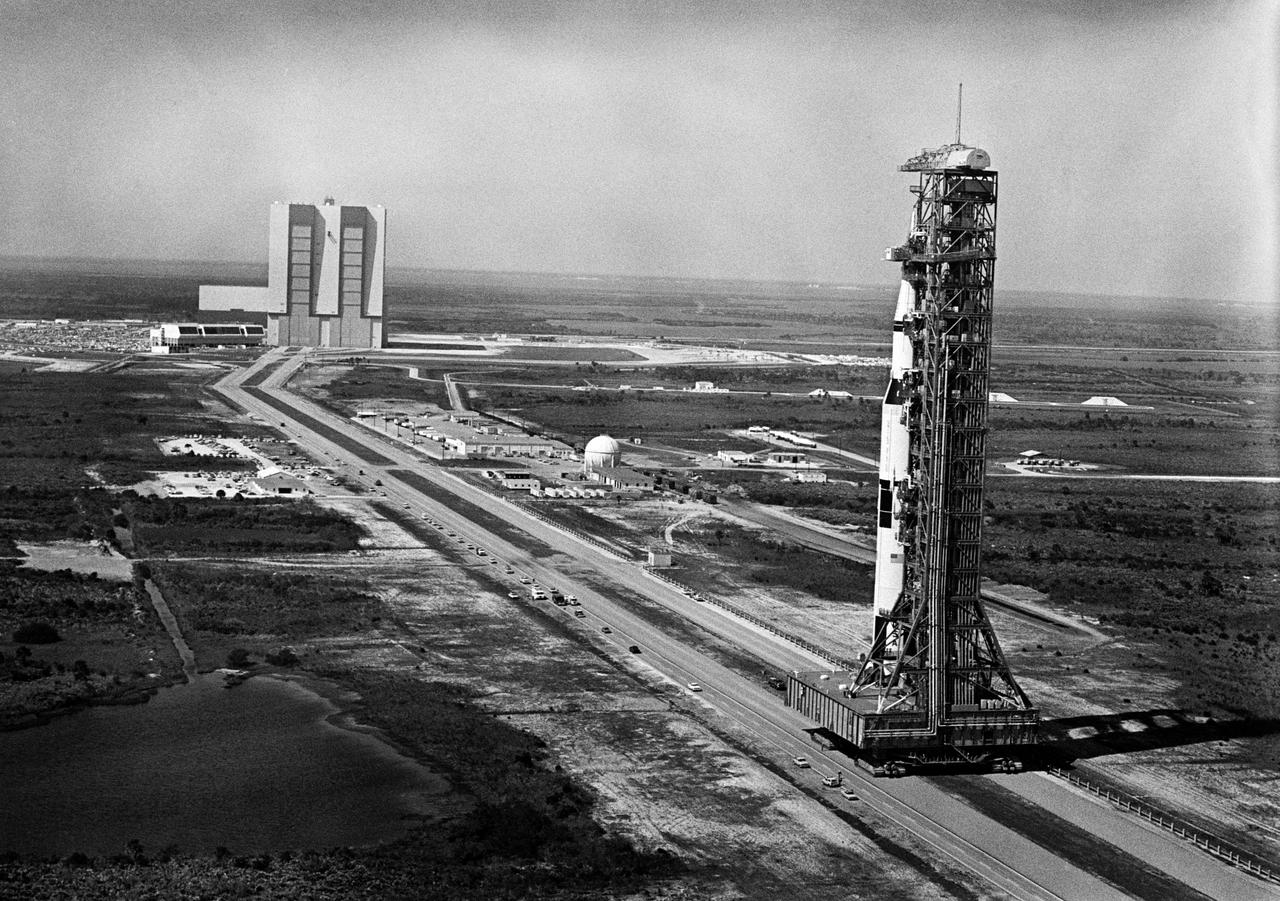
S69-27741 (11 March 1969) --- Aerial view at Launch Complex 39, Kennedy Space Center, showing the 363-feet tall Apollo 10 (Spacecraft 106/Lunar Module-4/Saturn 505) space vehicle on its way to Pad B. The Vehicle Assembly Building is in the background. The Saturn V stack and its mobile launch tower are atop a huge crawler-transporter. The Apollo 10 flight is schedule as a lunar orbit mission. The Apollo 10 crew will be astronauts Thomas P. Stafford, commander; John W. Young, command module pilot; and Eugene A. Cernan, lunar module pilot.
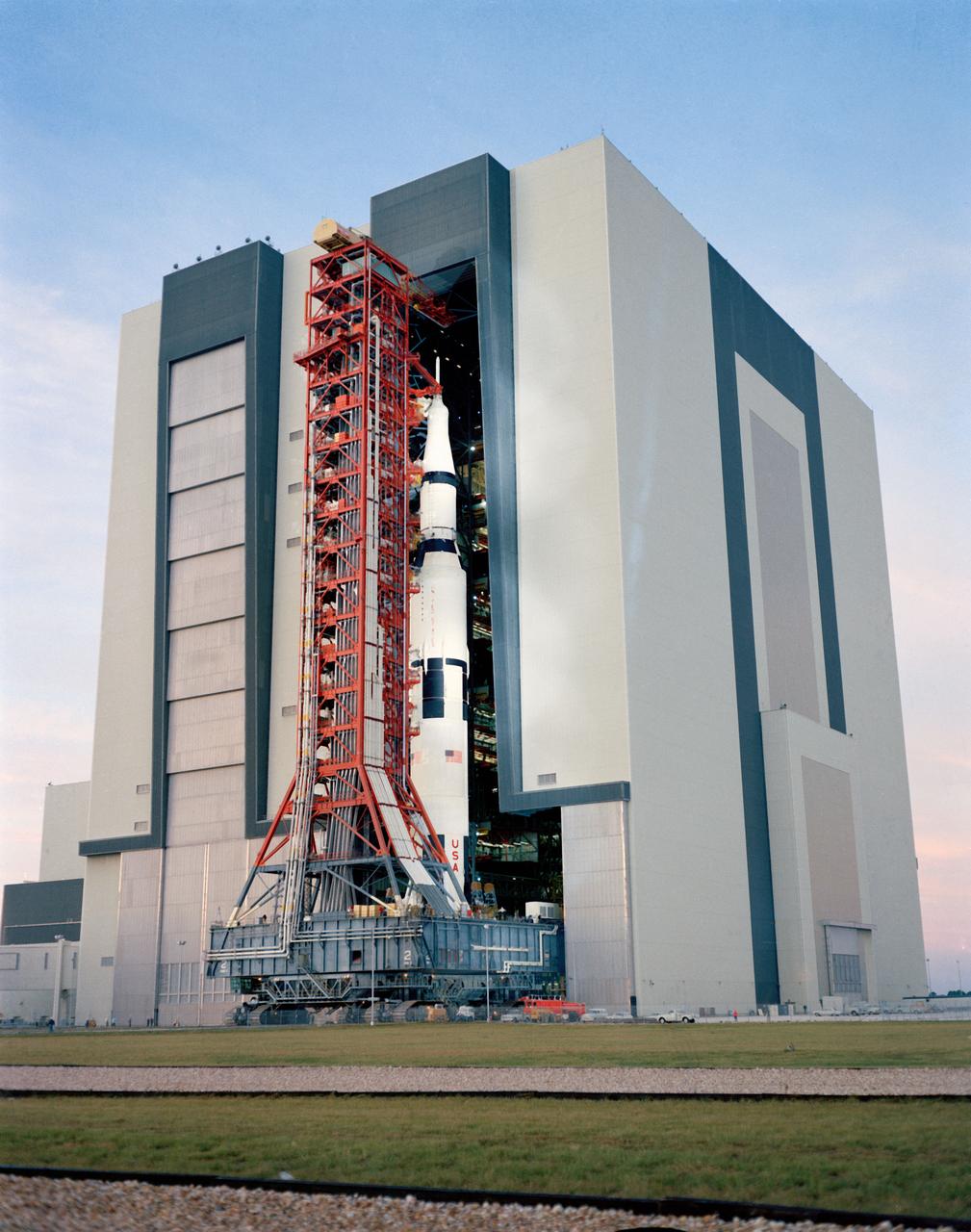
S70-54121 (9 Nov. 1970) --- A ground level view at Launch Complex 39, Kennedy Space Center (KSC), showing the Apollo 14 (Spacecraft 110/Lunar Module 8/Saturn 509) space vehicle leaving the Vehicle Assembly Building (VAB). The Saturn V stack and its mobile launch tower, atop a huge crawler-transporter, were rolled out to Pad A. The Apollo 14 crewmen will be astronauts Alan B. Shepard Jr., commander; Stuart A. Roosa, command module pilot; and Edgar D. Mitchell, lunar module pilot.
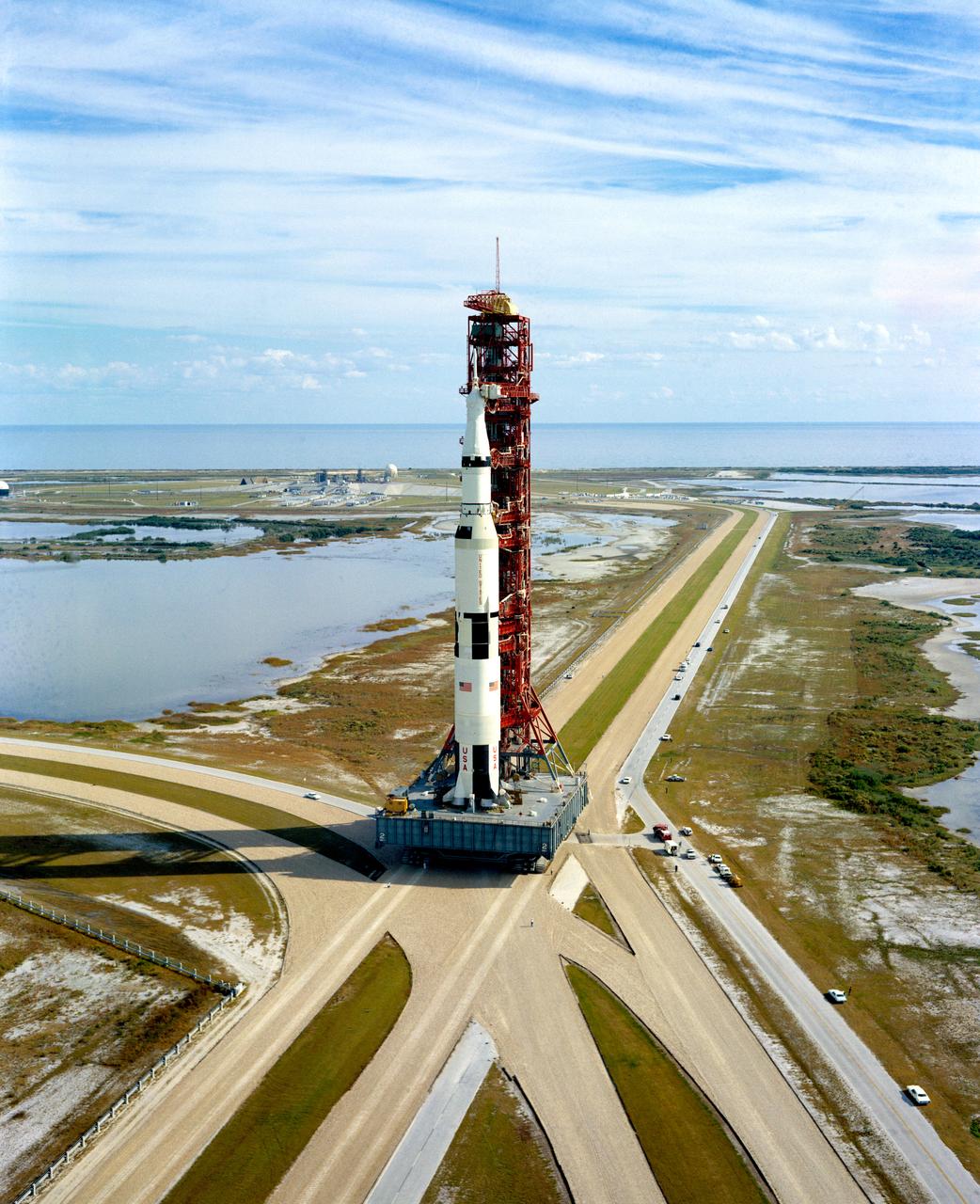
S70-54119 (9 Nov. 1970) --- A high-angle view at Launch Complex 39, Kennedy Space Center (KSC), showing the Apollo 14 (Spacecraft 110/Lunar Module 8/Saturn 509) space vehicle on the way from the Vehicle Assembly Building (VAB) to Pad A. The Saturn V stack and its mobile launch tower sit atop a huge crawler-transporter. The Apollo 14 crewmen will be astronauts Alan B. Shepard Jr., commander; Stuart A. Roosa, command module pilot; and Edgar D. Mitchell, lunar module pilot.
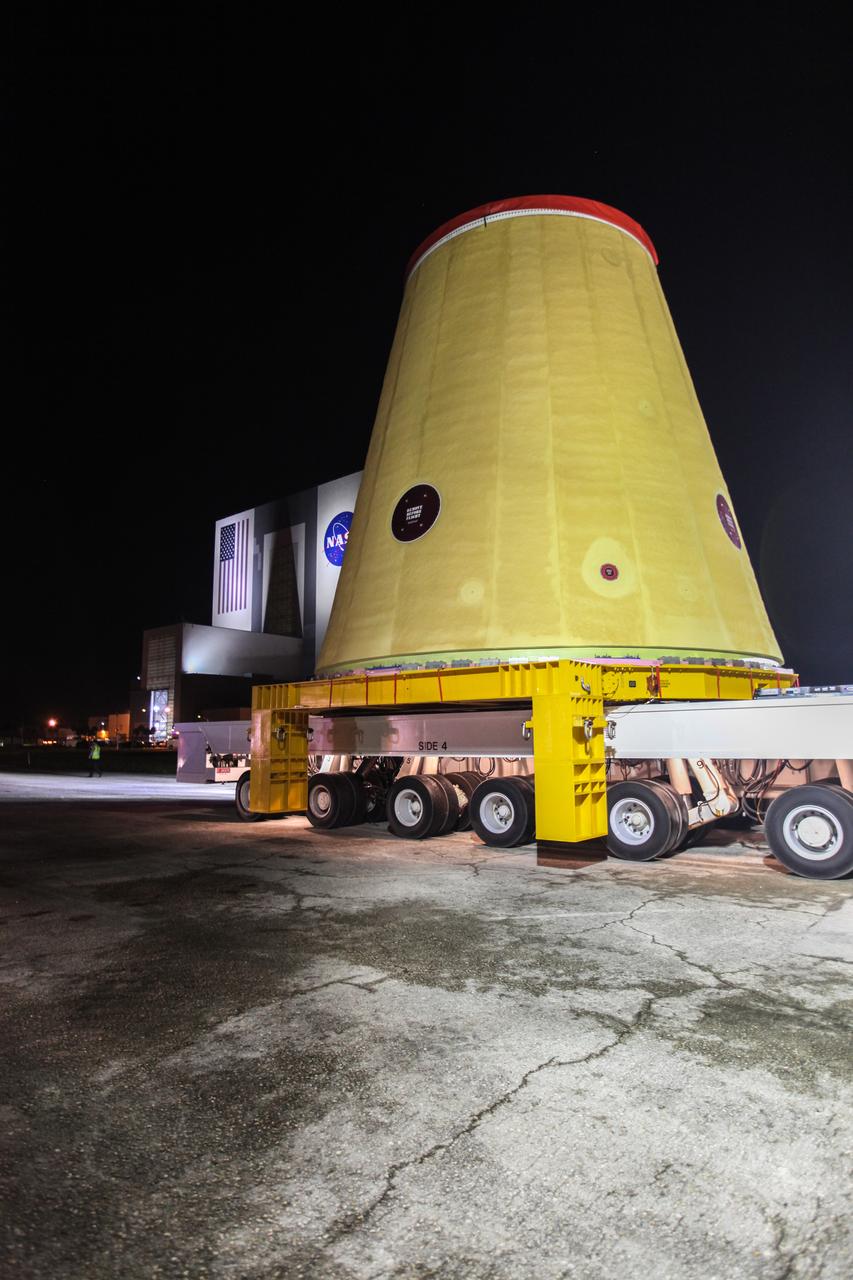
The launch vehicle stage adapter (LVSA) for NASA’s Space Launch System (SLS) rocket is transported to the Vehicle Assembly Building (VAB) for processing at NASA’s Kennedy Space Center in Florida on July 30, 2020. Carried by NASA’s Pegasus barge, the LVSA arrived at Kennedy’s Launch Complex 39 turn basin wharf after departing from the agency’s Marshall Space Flight Center in Huntsville, Alabama. The LVSA will connect the SLS core stage to the rocket’s upper stage and will remain in the VAB until it’s time for stacking on the mobile launcher ahead of the Artemis I launch. The first in a series of increasingly complex missions, Artemis I will test SLS and the Orion spacecraft as an integrated system prior to crewed flights to the Moon.
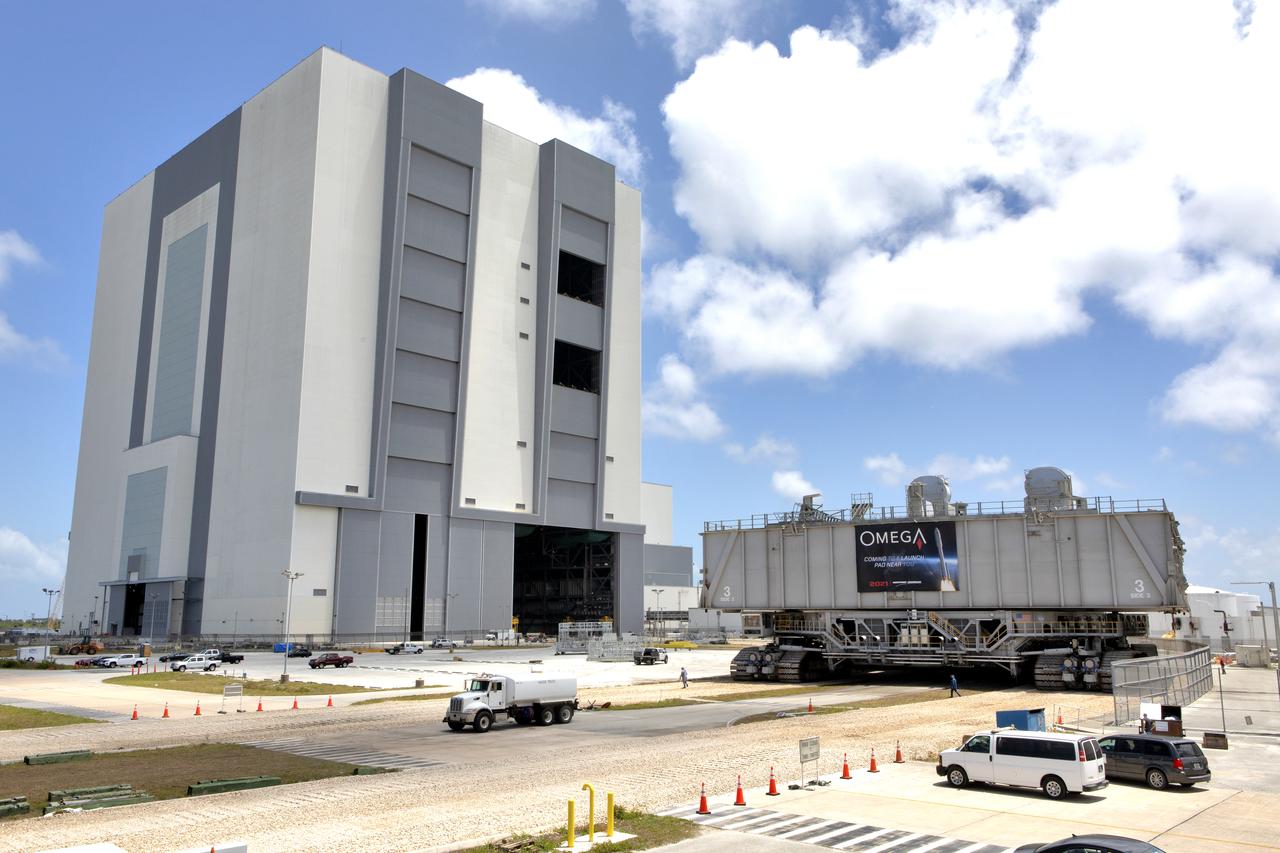
During a practice run, crawler-transporter 2 (CT-2), with the space shuttle-era mobile launch platform-3 (MLP-3) on top, has exited High Bay 2 of the Vehicle Assembly Building (VAB) and moves slowly along the crawlerway at NASA’s Kennedy Space Center in Florida on May 1, 2019. The VAB is getting its first commercial tenant. Northrop Grumman signed a Reimbursable Space Act Agreement with NASA for use of the facilities. The company will assemble and test its new OmegA rocket inside the massive facility’s High Bay 2. The company also will modify MLP-3 to serve as the launch vehicle’s assembly and launch platform. Northrop Grumman is developing the OmegA rocket, an intermediate/heavy-class launch vehicle, as part of a launch services agreement with the U.S. Air Force.

During a practice run, crawler-transporter 2 (CT-2) is at the entrance to High Bay 2 of the Vehicle Assembly Building (VAB) at NASA’s Kennedy Space Center in Florida on May 1, 2019. CT-2 entered High Bay 2, and picked up the space shuttle-era mobile launch platform-3 (MLP-3). The VAB is getting its first commercial tenant. Northrop Grumman signed a Reimbursable Space Act Agreement with NASA for use of the facilities. The company will assemble and test its new OmegA rocket inside the massive facility’s High Bay 2. The company also will modify MLP-3 to serve as the launch vehicle’s assembly and launch platform. Northrop Grumman is developing the OmegA rocket, an intermediate/heavy-class launch vehicle, as part of a launch services agreement with the U.S. Air Force.
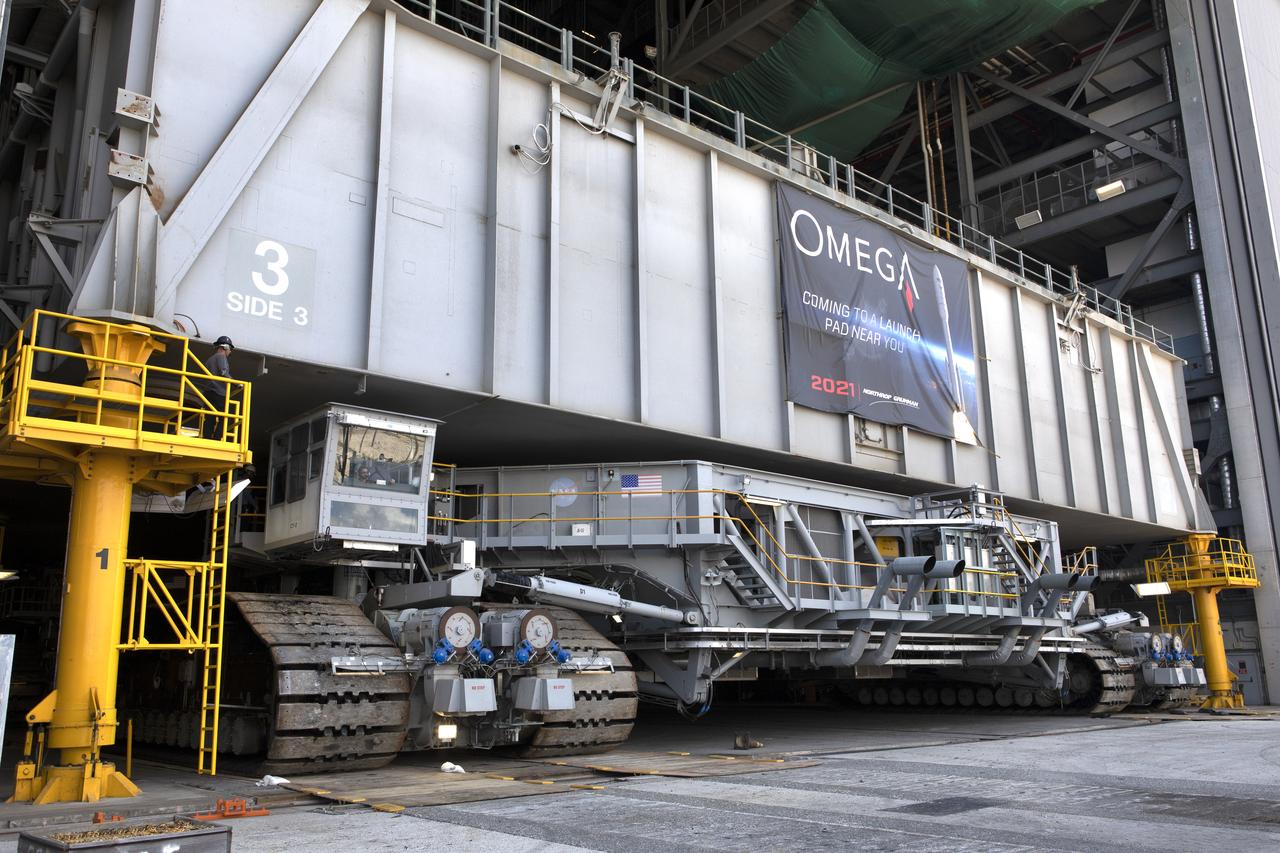
During a practice run, crawler-transporter 2 (CT-2) picked up the space shuttle-era mobile launch platform-3 (MLP-3) inside High Bay 2 of the Vehicle Assembly Building (VAB) at NASA’s Kennedy Space Center in Florida on May 1, 2019. The VAB is getting its first commercial tenant. Northrop Grumman signed a Reimbursable Space Act Agreement with NASA for use of the facilities. The company will assemble and test its new OmegA rocket inside the massive facility’s High Bay 2. The company also will modify MLP-3 to serve as the launch vehicle’s assembly and launch platform. Northrop Grumman is developing the OmegA rocket, an intermediate/heavy-class launch vehicle, as part of a launch services agreement with the U.S. Air Force.

During a practice run, crawler-transporter 2 (CT-2), with the space shuttle-era mobile launch platform-3 (MLP-3) on top, has exited High Bay 2 of the Vehicle Assembly Building (VAB) and moves slowly along the crawlerway at NASA’s Kennedy Space Center in Florida on May 1, 2019. The VAB is getting its first commercial tenant. Northrop Grumman signed a Reimbursable Space Act Agreement with NASA for use of the facilities. The company will assemble and test its new OmegA rocket inside the massive facility’s High Bay 2. The company also will modify MLP-3 to serve as the launch vehicle’s assembly and launch platform. Northrop Grumman is developing the OmegA rocket, an intermediate/heavy-class launch vehicle, as part of a launch services agreement with the U.S. Air Force.
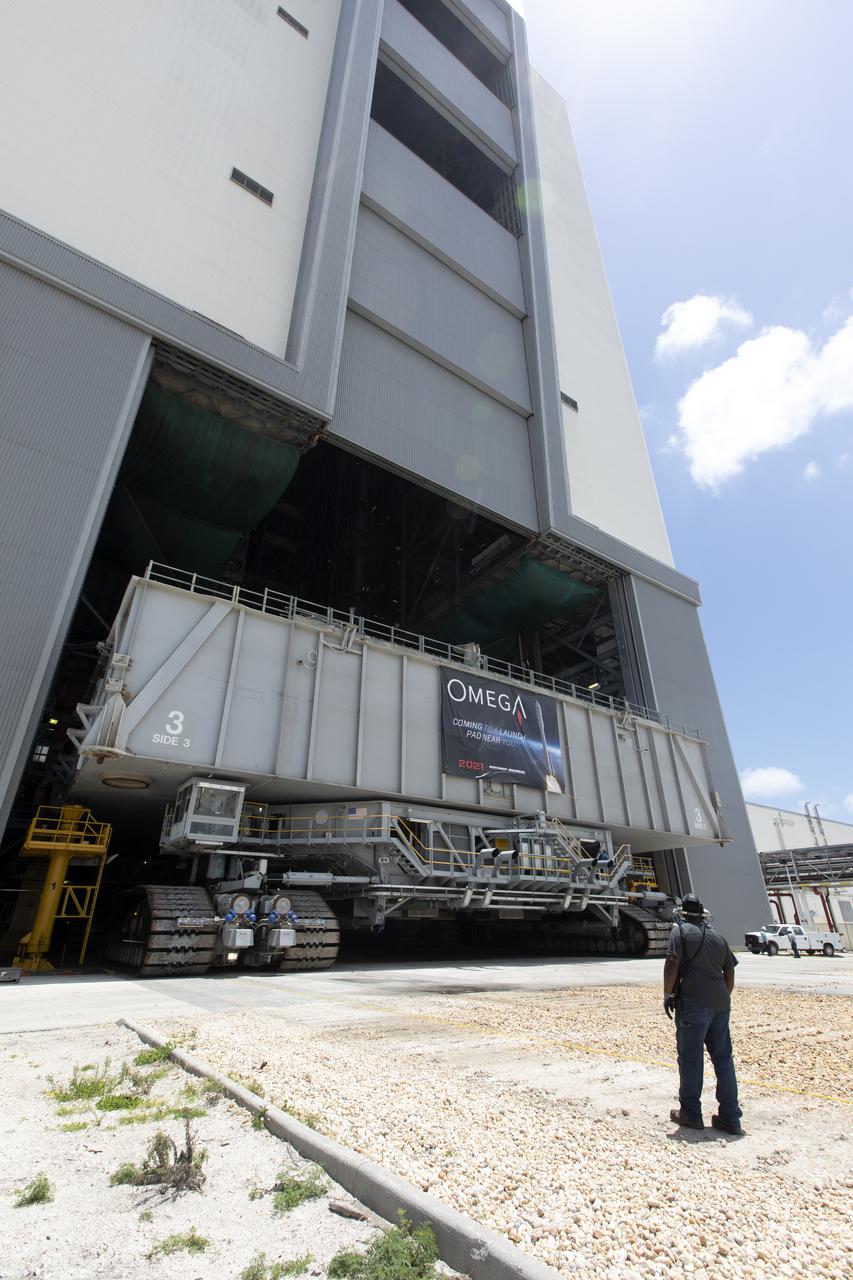
During a practice run, crawler-transporter 2 (CT-2), with the space shuttle-era mobile launch platform-3 (MLP-3) on top, begins its move out of High Bay 2 of the Vehicle Assembly Building (VAB) at NASA’s Kennedy Space Center in Florida on May 1, 2019. The VAB is getting its first commercial tenant. Northrop Grumman signed a Reimbursable Space Act Agreement with NASA for use of the facilities. The company will assemble and test its new OmegA rocket inside the massive facility’s High Bay 2. The company also will modify MLP-3 to serve as the launch vehicle’s assembly and launch platform. Northrop Grumman is developing the OmegA rocket, an intermediate/heavy-class launch vehicle, as part of a launch services agreement with the U.S. Air Force.

During a practice run, crawler-transporter 2 (CT-2), with the space shuttle-era mobile launch platform-3 (MLP-3) on top, moves out of High Bay 2 of the Vehicle Assembly Building (VAB) at NASA’s Kennedy Space Center in Florida on May 1, 2019. The VAB is getting its first commercial tenant. Northrop Grumman signed a Reimbursable Space Act Agreement with NASA for use of the facilities. The company will assemble and test its new OmegA rocket inside the massive facility’s High Bay 2. The company also will modify MLP-3 to serve as the launch vehicle’s assembly and launch platform. Northrop Grumman is developing the OmegA rocket, an intermediate/heavy-class launch vehicle, as part of a launch services agreement with the U.S. Air Force.
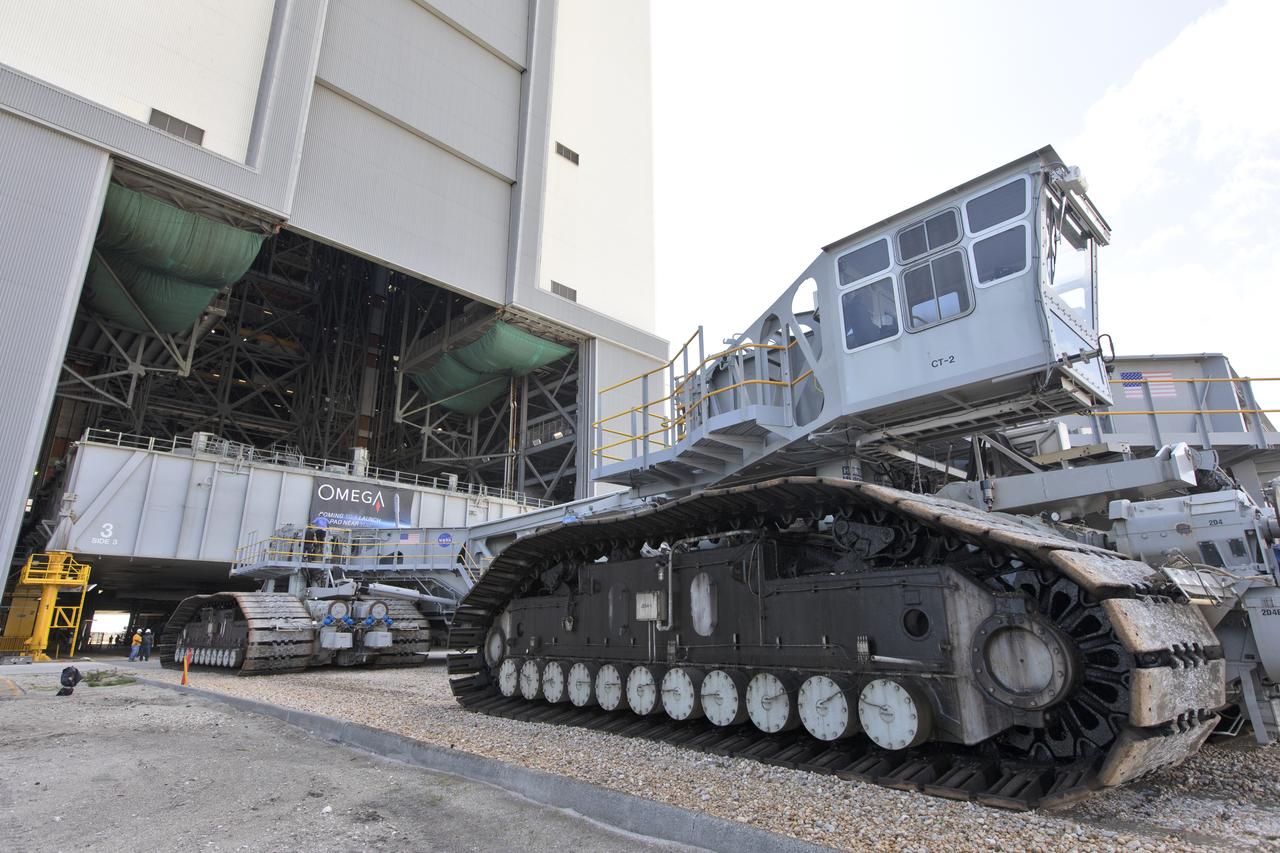
During a practice run, crawler-transporter 2 (CT-2) is at the entrance to High Bay 2 of the Vehicle Assembly Building (VAB) at NASA’s Kennedy Space Center in Florida on May 1, 2019. CT-2 entered High Bay 2, and picked up the space shuttle-era mobile launch platform-3 (MLP-3). The VAB is getting its first commercial tenant. Northrop Grumman signed a Reimbursable Space Act Agreement with NASA for use of the facilities. The company will assemble and test its new OmegA rocket inside the massive facility’s High Bay 2. The company also will modify MLP-3 to serve as the launch vehicle’s assembly and launch platform. Northrop Grumman is developing the OmegA rocket, an intermediate/heavy-class launch vehicle, as part of a launch services agreement with the U.S. Air Force.
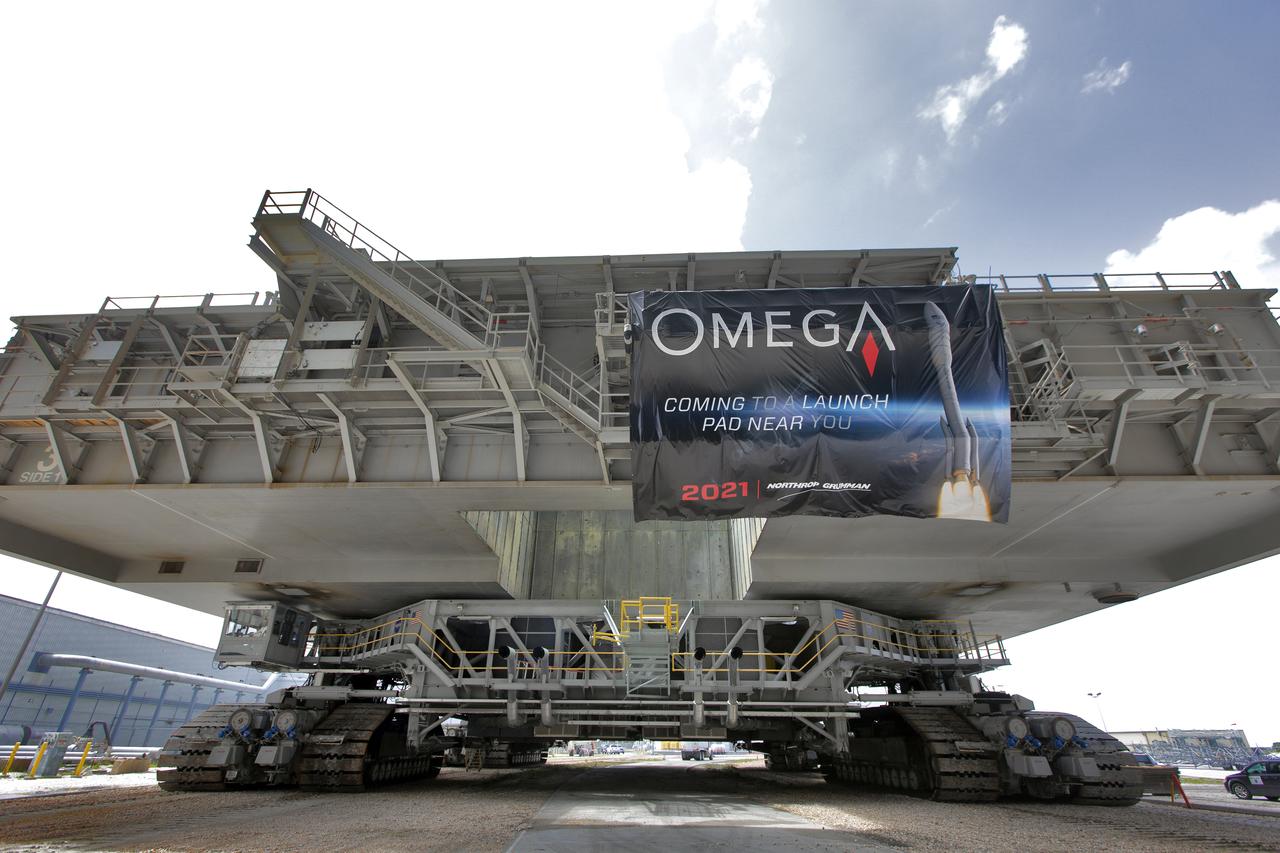
During a practice run, crawler-transporter 2 (CT-2), with the space shuttle-era mobile launch platform-3 (MLP-3) on top, has exited High Bay 2 of the Vehicle Assembly Building (VAB) and moves slowly along the crawlerway at NASA’s Kennedy Space Center in Florida on May 1, 2019. The VAB is getting its first commercial tenant. Northrop Grumman signed a Reimbursable Space Act Agreement with NASA for use of the facilities. The company will assemble and test its new OmegA rocket inside the massive facility’s High Bay 2. The company also will modify MLP-3 to serve as the launch vehicle’s assembly and launch platform. Northrop Grumman is developing the OmegA rocket, an intermediate/heavy-class launch vehicle, as part of a launch services agreement with the U.S. Air Force.
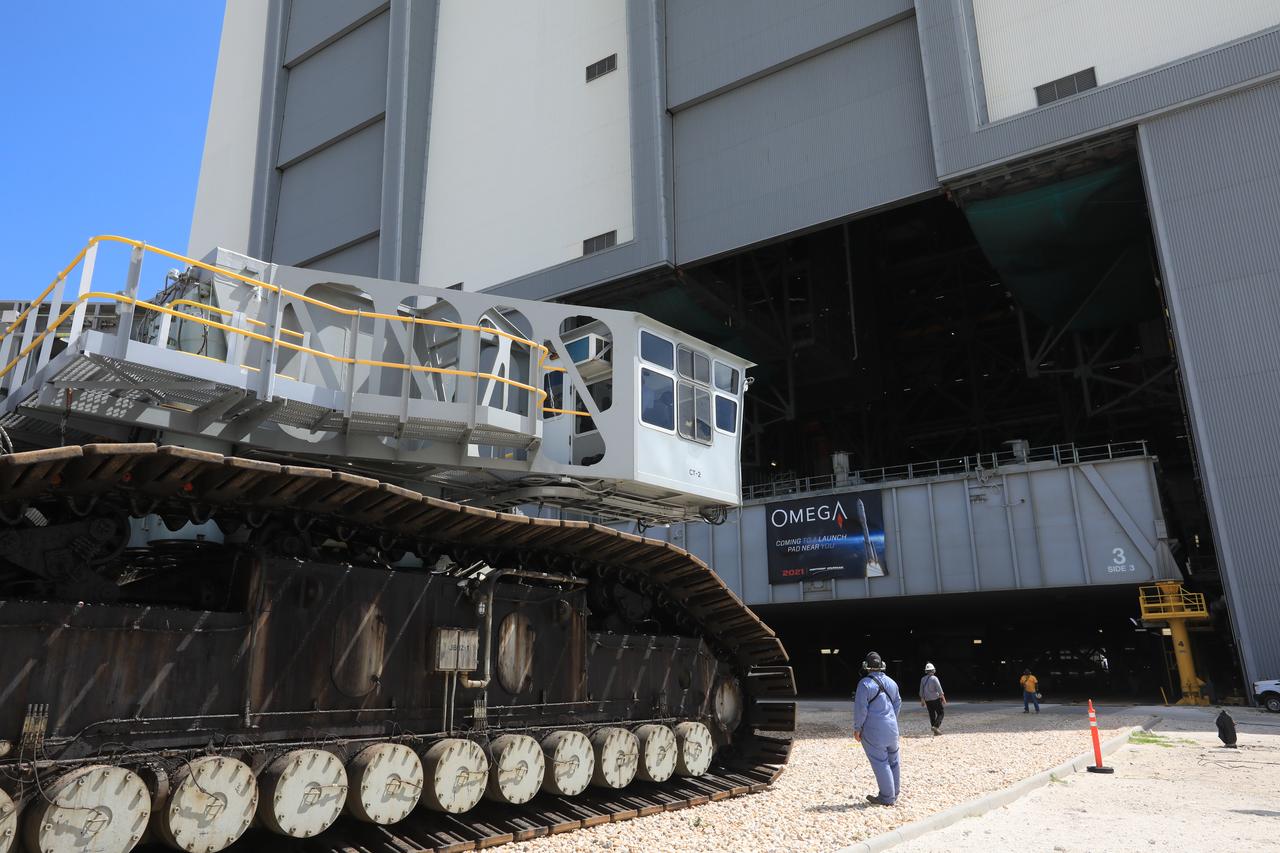
During a practice run, crawler-transporter 2 (CT-2) is being driven to the Vehicle Assembly Building (VAB) at NASA’s Kennedy Space Center in Florida on May 1, 2019. CT-2 entered High Bay 2, and picked up the space shuttle-era mobile launch platform-3 (MLP-3). The VAB is getting its first commercial tenant. Northrop Grumman signed a Reimbursable Space Act Agreement with NASA for use of the facilities. The company will assemble and test its new OmegA rocket inside the massive facility’s High Bay 2. The company also will modify MLP-3 to serve as the launch vehicle’s assembly and launch platform. Northrop Grumman is developing the OmegA rocket, an intermediate/heavy-class launch vehicle, as part of a launch services agreement with the U.S. Air Force.
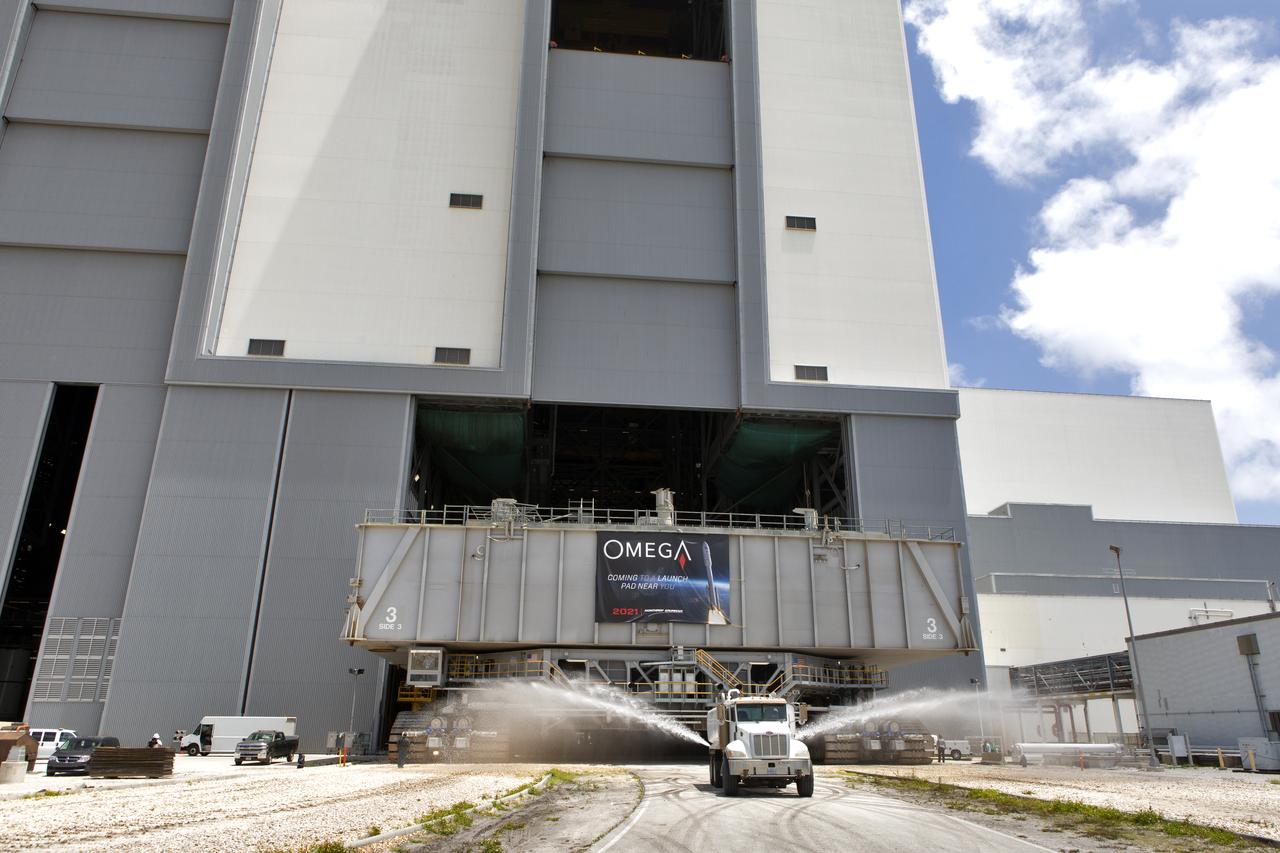
During a practice run, crawler-transporter 2 (CT-2), with the space shuttle-era mobile launch platform-3 (MLP-3) on top, moves out of High Bay 2 of the Vehicle Assembly Building (VAB) at NASA’s Kennedy Space Center in Florida on May 1, 2019. A truck in front sprays water to reduce dust on the crawlerway. The VAB is getting its first commercial tenant. Northrop Grumman signed a Reimbursable Space Act Agreement with NASA for use of the facilities. The company will assemble and test its new OmegA rocket inside the massive facility’s High Bay 2. The company also will modify MLP-3 to serve as the launch vehicle’s assembly and launch platform. Northrop Grumman is developing the OmegA rocket, an intermediate/heavy-class launch vehicle, as part of a launch services agreement with the U.S. Air Force.

During a practice run, crawler-transporter 2 (CT-2) is being driven to the Vehicle Assembly Building (VAB) at NASA’s Kennedy Space Center in Florida on May 1, 2019. CT-2 entered High Bay 2, and picked up the space shuttle-era mobile launch platform-3 (MLP-3). The VAB is getting its first commercial tenant. Northrop Grumman signed a Reimbursable Space Act Agreement with NASA for use of the facilities. The company will assemble and test its new OmegA rocket inside the massive facility’s High Bay 2. The company also will modify MLP-3 to serve as the launch vehicle’s assembly and launch platform. Northrop Grumman is developing the OmegA rocket, an intermediate/heavy-class launch vehicle, as part of a launch services agreement with the U.S. Air Force.
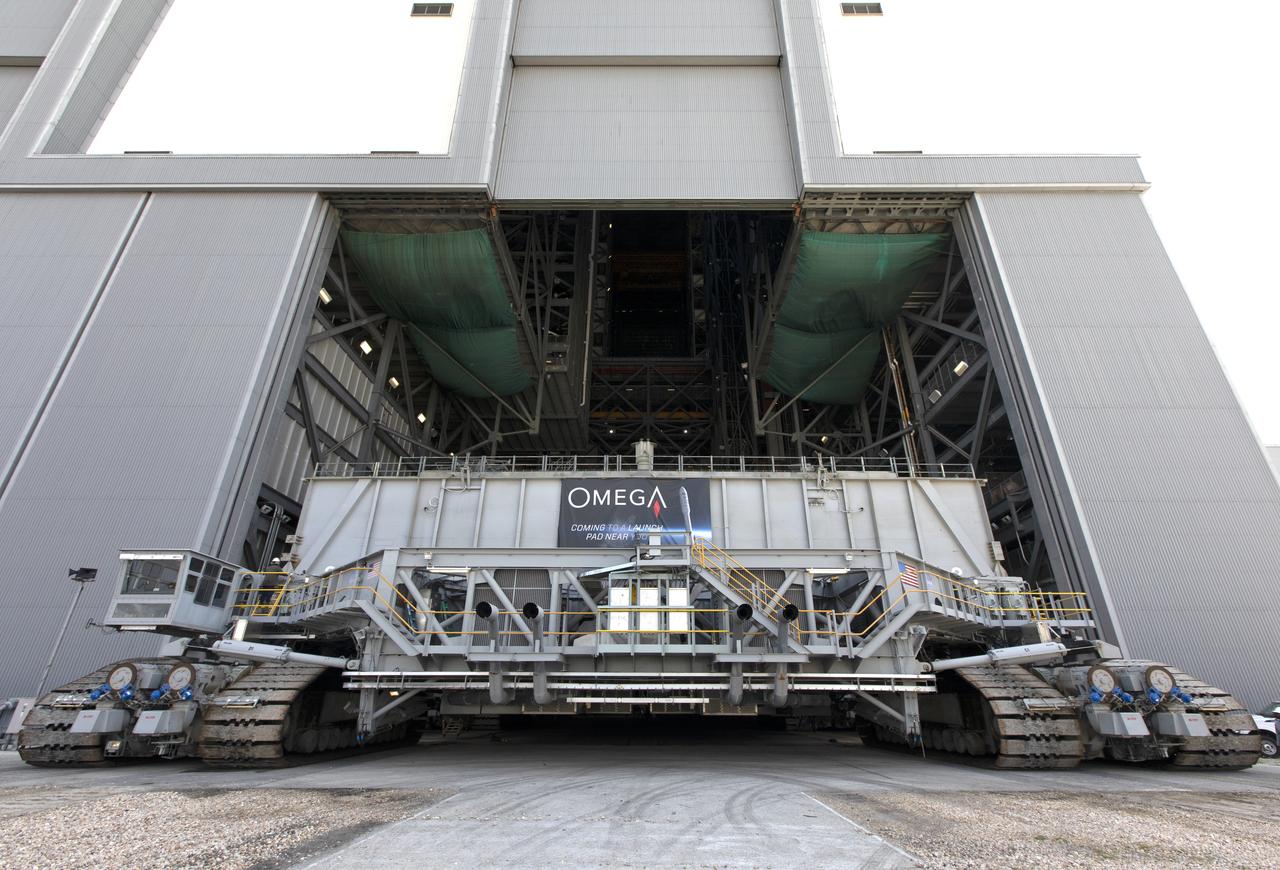
During a practice run, crawler-transporter 2 (CT-2) is moving inside High Bay 2 of the Vehicle Assembly Building (VAB) at NASA’s Kennedy Space Center in Florida on May 1, 2019. CT-2 picked up the space shuttle-era mobile launch platform-3 (MLP-3). The VAB is getting its first commercial tenant. Northrop Grumman signed a Reimbursable Space Act Agreement with NASA for use of the facilities. The company will assemble and test its new OmegA rocket inside the massive facility’s High Bay 2. The company also will modify MLP-3 to serve as the launch vehicle’s assembly and launch platform. Northrop Grumman is developing the OmegA rocket, an intermediate/heavy-class launch vehicle, as part of a launch services agreement with the U.S. Air Force.
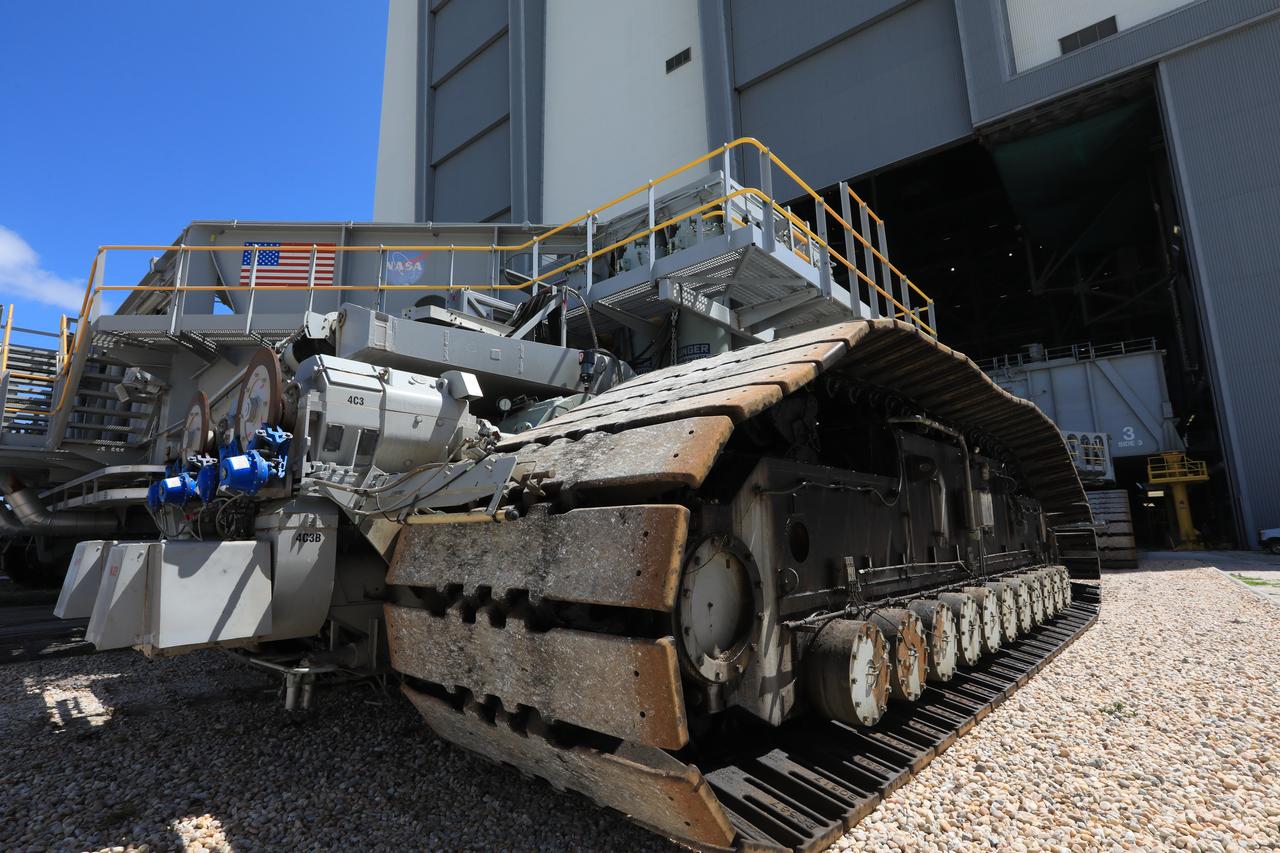
During a practice run, crawler-transporter 2 (CT-2) is at the entrance to High Bay 2 of the Vehicle Assembly Building (VAB) at NASA’s Kennedy Space Center in Florida on May 1, 2019. CT-2 entered High Bay 2, and picked up the space shuttle-era mobile launch platform-3 (MLP-3). The VAB is getting its first commercial tenant. Northrop Grumman signed a Reimbursable Space Act Agreement with NASA for use of the facilities. The company will assemble and test its new OmegA rocket inside the massive facility’s High Bay 2. The company also will modify MLP-3 to serve as the launch vehicle’s assembly and launch platform. Northrop Grumman is developing the OmegA rocket, an intermediate/heavy-class launch vehicle, as part of a launch services agreement with the U.S. Air Force.
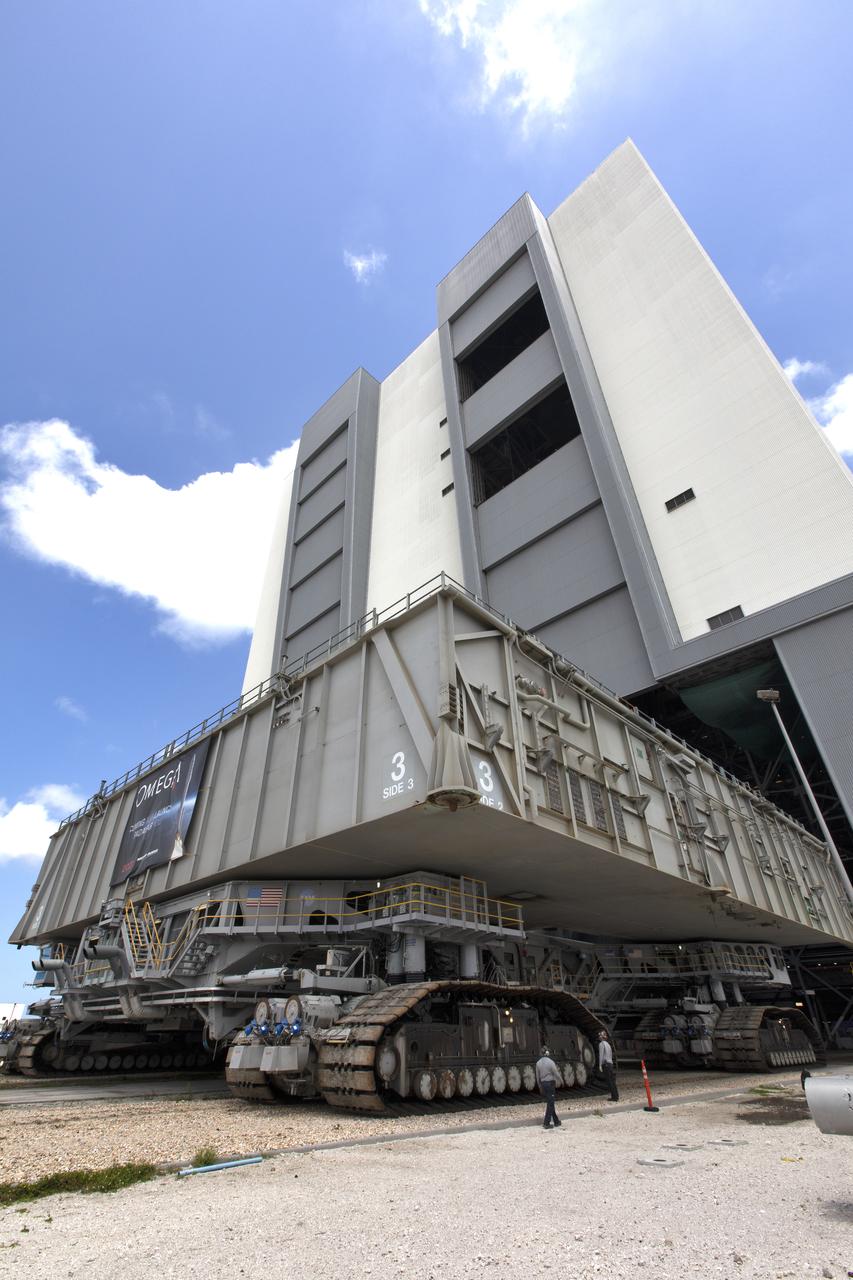
During a practice run, crawler-transporter 2 (CT-2), with the space shuttle-era mobile launch platform-3 (MLP-3) on top, moves out of High Bay 2 of the Vehicle Assembly Building (VAB) at NASA’s Kennedy Space Center in Florida on May 1, 2019. The VAB is getting its first commercial tenant. Northrop Grumman signed a Reimbursable Space Act Agreement with NASA for use of the facilities. The company will assemble and test its new OmegA rocket inside the massive facility’s High Bay 2. The company also will modify MLP-3 to serve as the launch vehicle’s assembly and launch platform. Northrop Grumman is developing the OmegA rocket, an intermediate/heavy-class launch vehicle, as part of a launch services agreement with the U.S. Air Force.
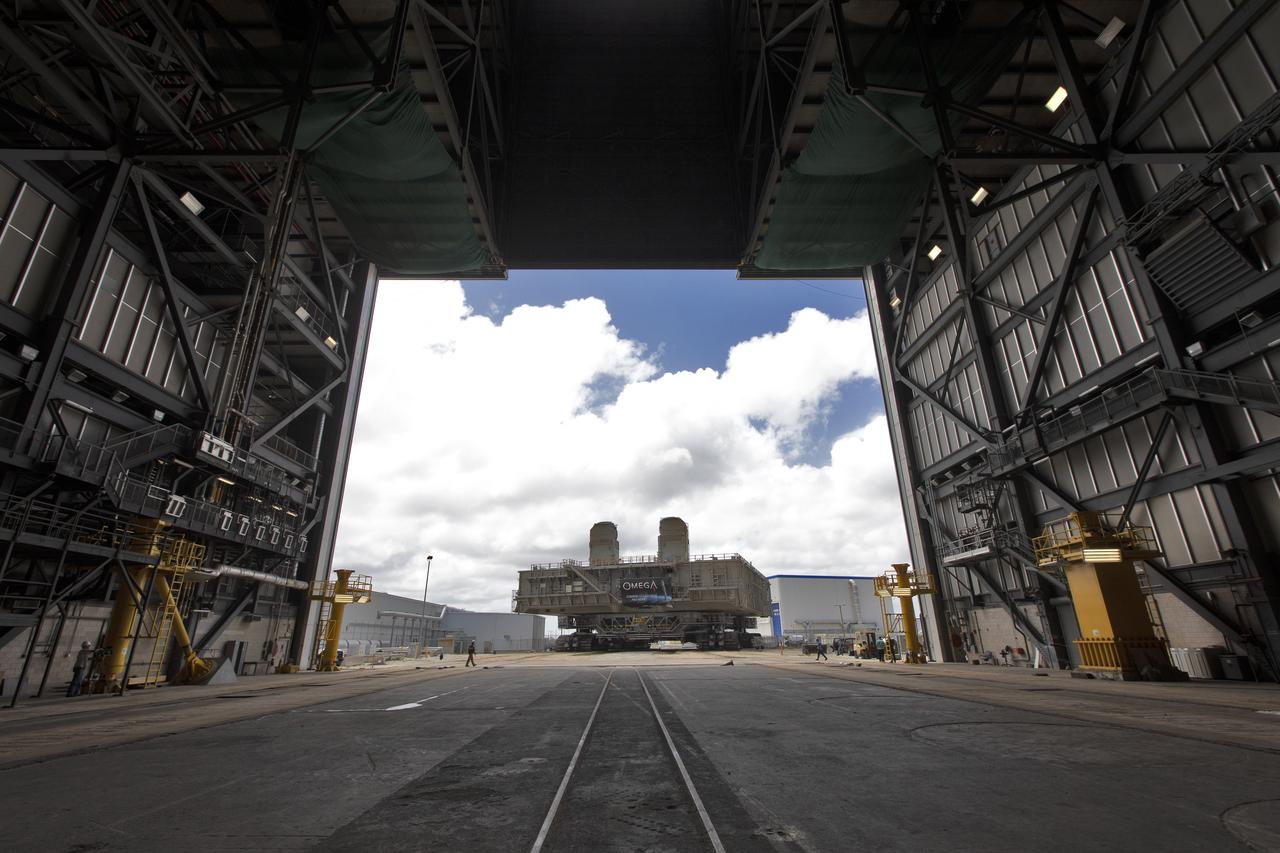
During a practice run, crawler-transporter 2 (CT-2), with the space shuttle-era mobile launch platform-3 (MLP-3) on top, has exited High Bay 2 of the Vehicle Assembly Building (VAB) and moves slowly along the crawlerway at NASA’s Kennedy Space Center in Florida on May 1, 2019. The VAB is getting its first commercial tenant. Northrop Grumman signed a Reimbursable Space Act Agreement with NASA for use of the facilities. The company will assemble and test its new OmegA rocket inside the massive facility’s High Bay 2. The company also will modify MLP-3 to serve as the launch vehicle’s assembly and launch platform. Northrop Grumman is developing the OmegA rocket, an intermediate/heavy-class launch vehicle, as part of a launch services agreement with the U.S. Air Force.

During a practice run, crawler-transporter 2 (CT-2) is moving inside High Bay 2 of the Vehicle Assembly Building (VAB) at NASA’s Kennedy Space Center in Florida on May 1, 2019. In view at right is one of the cabs used to drive the crawler. CT-2 picked up the space shuttle-era mobile launch platform-3 (MLP-3). The VAB is getting its first commercial tenant. Northrop Grumman signed a Reimbursable Space Act Agreement with NASA for use of the facilities. The company will assemble and test its new OmegA rocket inside the massive facility’s High Bay 2. The company also will modify MLP-3 to serve as the launch vehicle’s assembly and launch platform. Northrop Grumman is developing the OmegA rocket, an intermediate/heavy-class launch vehicle, as part of a launch services agreement with the U.S. Air Force.

S69-27916 (11 March 1969) --- Aerial view at Launch Complex 39, Kennedy Space Center, showing the Apollo 10 (Spacecraft 106/Lunar Module-4/Saturn 505) space vehicle on its way to Pad B. The Saturn V stack and its mobile launch tower are atop a huge crawler-transporter. The Apollo 10 flight is scheduled as a lunar orbit mission. The Apollo 10 crew will be astronauts Thomas P. Stafford, commander; John W. Young, command module pilot; and Eugene A. Cernan, lunar module pilot.
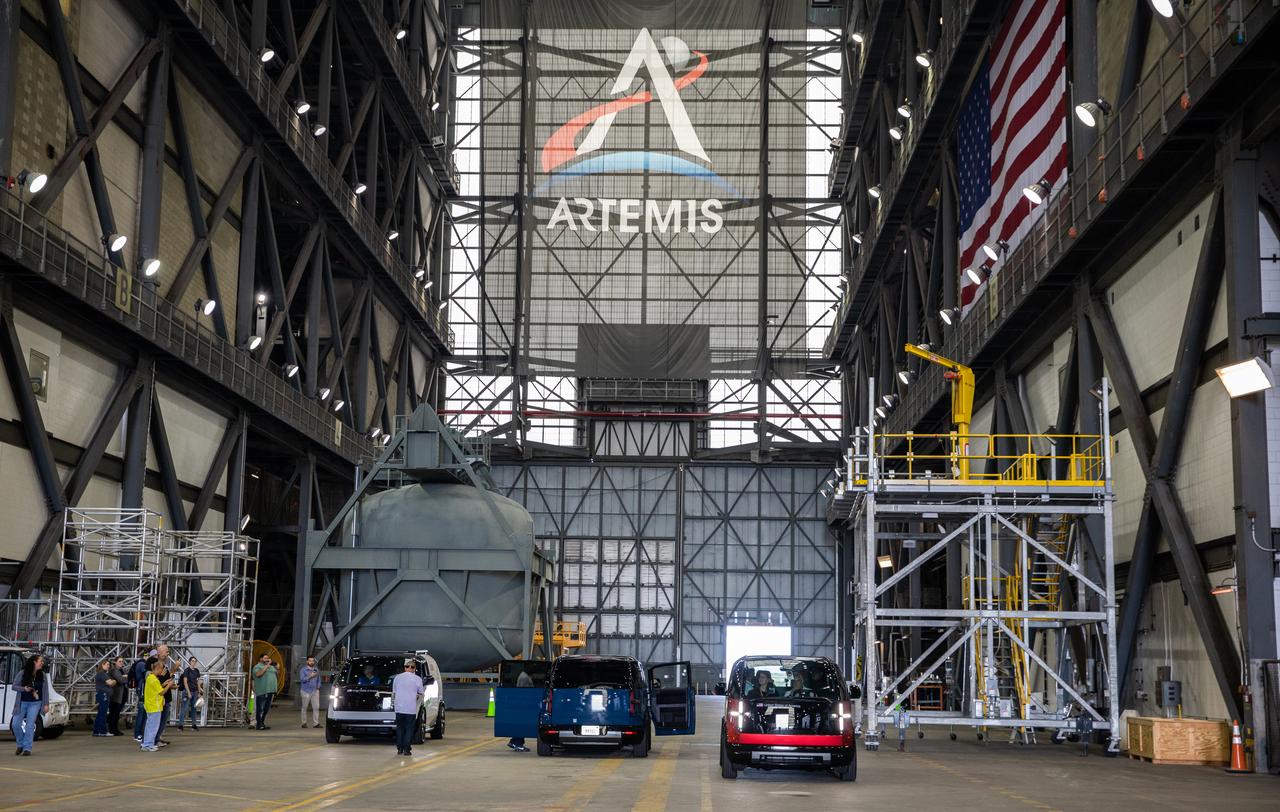
Several concept designs for Artemis crew transportation vehicles (CTV) are lined up in the transfer aisle of the Vehicle Assembly Building at NASA’s Kennedy Space Center in Florida on May 11, 2022. Canoo Technologies Inc., was awarded a contract to design and provide the next generation of CTVs for the Artemis crewed missions. Representatives with Canoo were at the spaceport demonstrating the environmentally friendly fleet of vehicles. Artemis II will be the first Artemis mission flying crew aboard Orion. In later missions, NASA will land the first woman and the first person of color on the surface of the Moon, paving the way for a long-term lunar presence and serving as a steppingstone on the way to Mars.
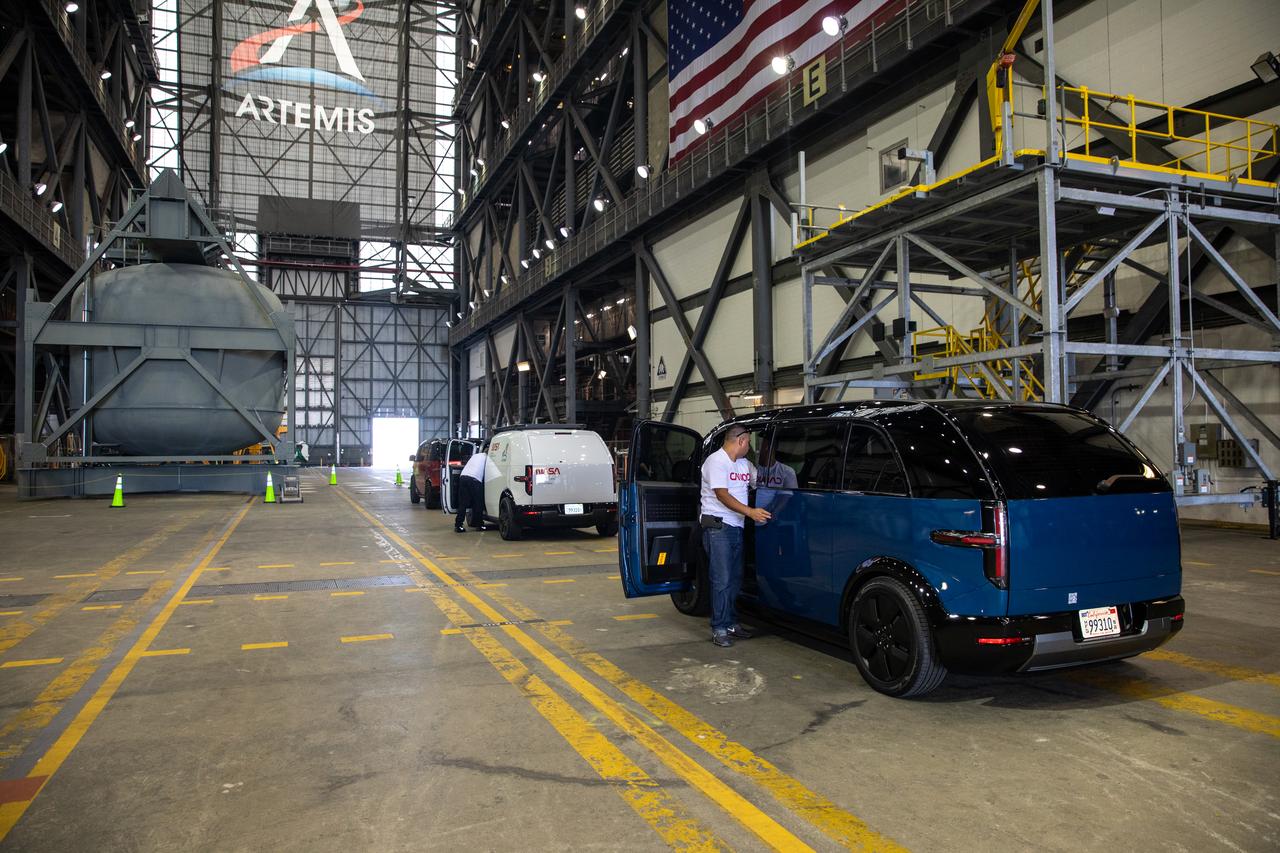
Several concept designs for Artemis crew transportation vehicles (CTV) are lined up in the transfer aisle of the Vehicle Assembly Building at NASA’s Kennedy Space Center in Florida on May 11, 2022. Canoo Technologies Inc., was awarded a contract to design and provide the next generation of CTVs for the Artemis crewed missions. Representatives with Canoo were at the spaceport demonstrating the environmentally friendly fleet of vehicles. Artemis II will be the first Artemis mission flying crew aboard Orion. In later missions, NASA will land the first woman and the first person of color on the surface of the Moon, paving the way for a long-term lunar presence and serving as a steppingstone on the way to Mars.

Several concept designs for Artemis crew transportation vehicles (CTV) are lined up in the transfer aisle of the Vehicle Assembly Building at NASA’s Kennedy Space Center in Florida on May 11, 2022. Canoo Technologies Inc., was awarded a contract to design and provide the next generation of CTVs for the Artemis crewed missions. Representatives with Canoo were at the spaceport demonstrating the environmentally friendly fleet of vehicles. Artemis II will be the first Artemis mission flying crew aboard Orion. In later missions, NASA will land the first woman and the first person of color on the surface of the Moon, paving the way for a long-term lunar presence and serving as a steppingstone on the way to Mars.
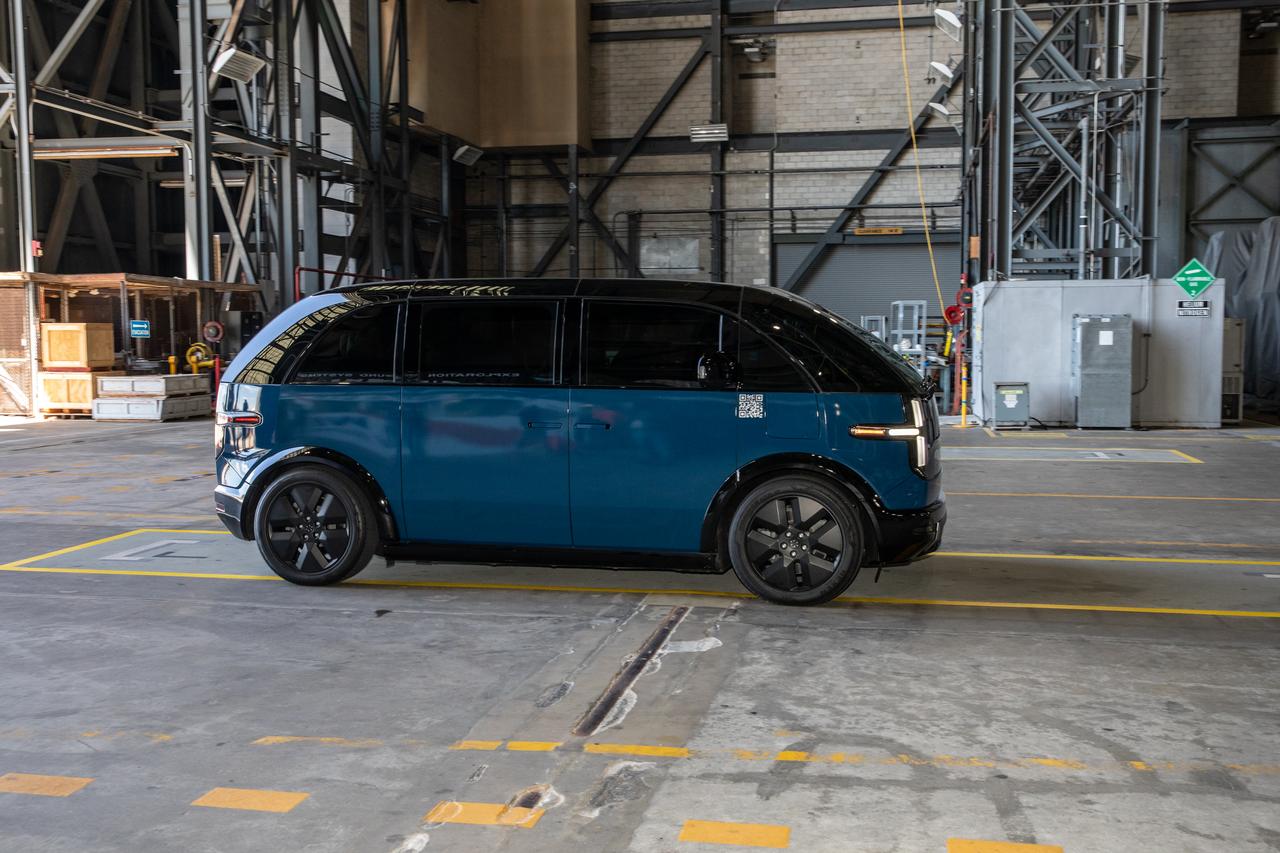
A concept design of a crew transportation vehicle (CTV) for Artemis crewed missions is driven inside the transfer aisle of the Vehicle Assembly Building at NASA’s Kennedy Space Center in Florida on May 11, 2022. Canoo Technologies Inc., was awarded a contract to design and provide the next generation of CTVs for the Artemis crewed missions. Representatives with Canoo were at the spaceport demonstrating the environmentally friendly fleet of vehicles. Artemis II will be the first Artemis mission flying crew aboard Orion. In later missions, NASA will land the first woman and the first person of color on the surface of the Moon, paving the way for a long-term lunar presence and serving as a steppingstone on the way to Mars.
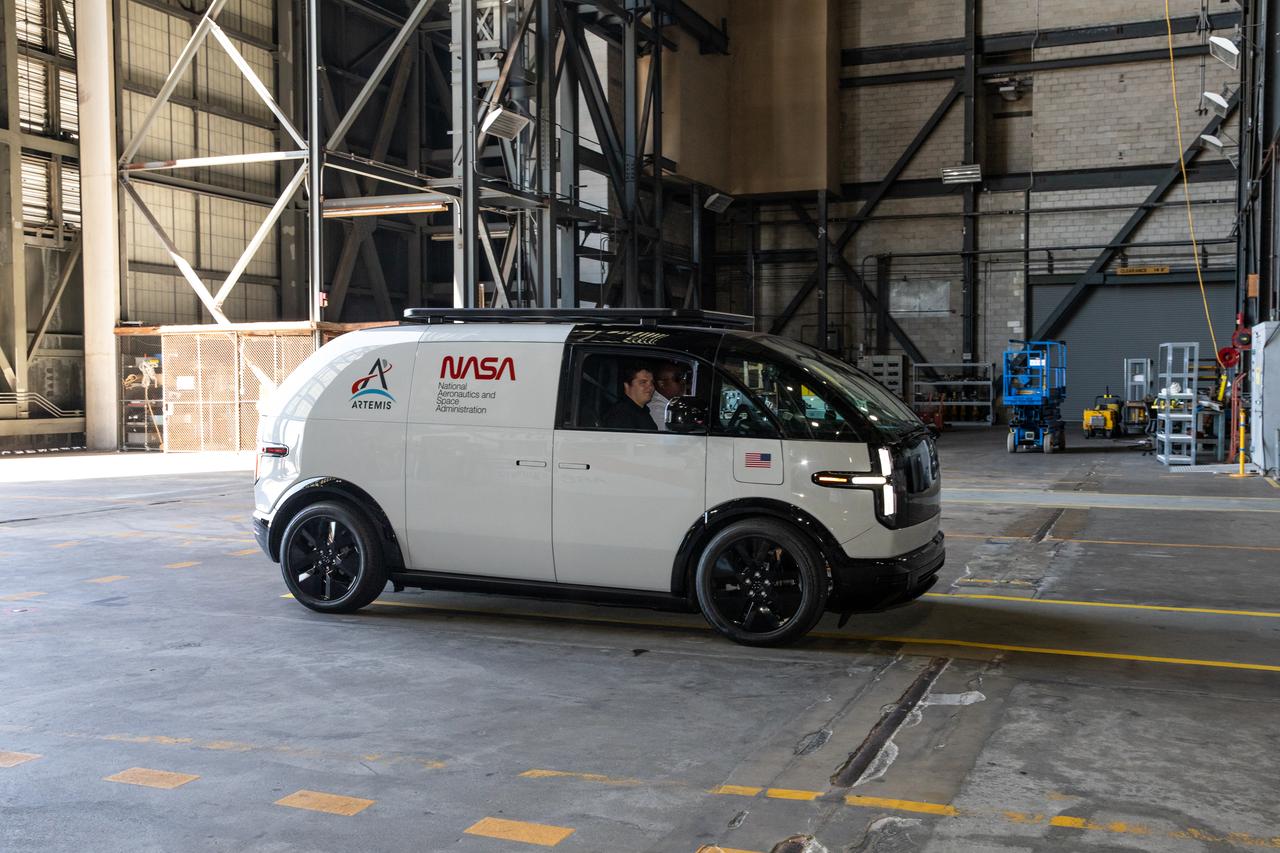
A concept design of a crew transportation vehicle (CTV) for Artemis crewed missions is driven inside the transfer aisle of the Vehicle Assembly Building at NASA’s Kennedy Space Center in Florida on May 11, 2022. Canoo Technologies Inc., was awarded a contract to design and provide the next generation of CTVs for the Artemis crewed missions. Representatives with Canoo were at the spaceport demonstrating the environmentally friendly fleet of vehicles. Artemis II will be the first Artemis mission flying crew aboard Orion. In later missions, NASA will land the first woman and the first person of color on the surface of the Moon, paving the way for a long-term lunar presence and serving as a steppingstone on the way to Mars.
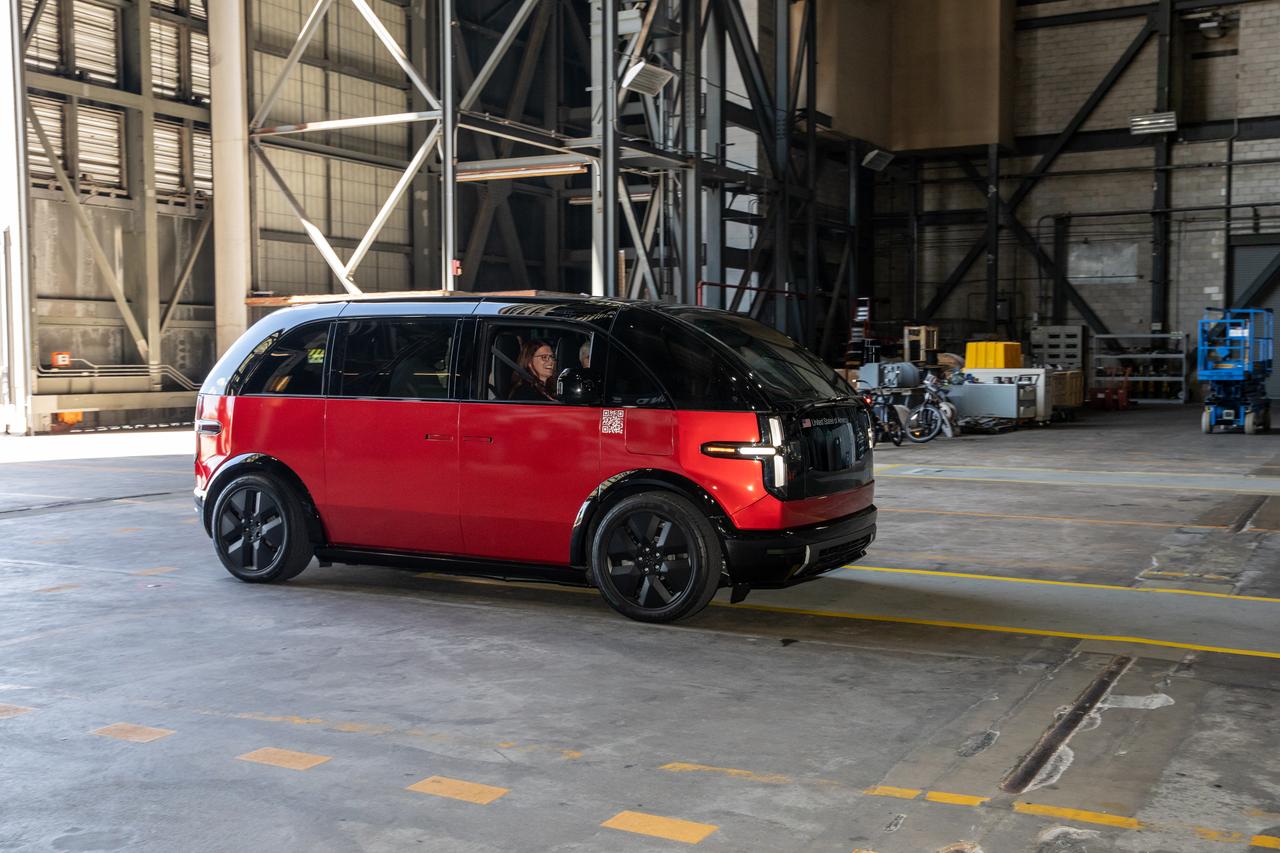
A concept design of a crew transportation vehicle (CTV) for Artemis crewed missions is driven inside the transfer aisle of the Vehicle Assembly Building at NASA’s Kennedy Space Center in Florida on May 11, 2022. Canoo Technologies Inc., was awarded a contract to design and provide the next generation of CTVs for the Artemis crewed missions. Representatives with Canoo were at the spaceport demonstrating the environmentally friendly fleet of vehicles. Artemis II will be the first Artemis mission flying crew aboard Orion. In later missions, NASA will land the first woman and the first person of color on the surface of the Moon, paving the way for a long-term lunar presence and serving as a steppingstone on the way to Mars.
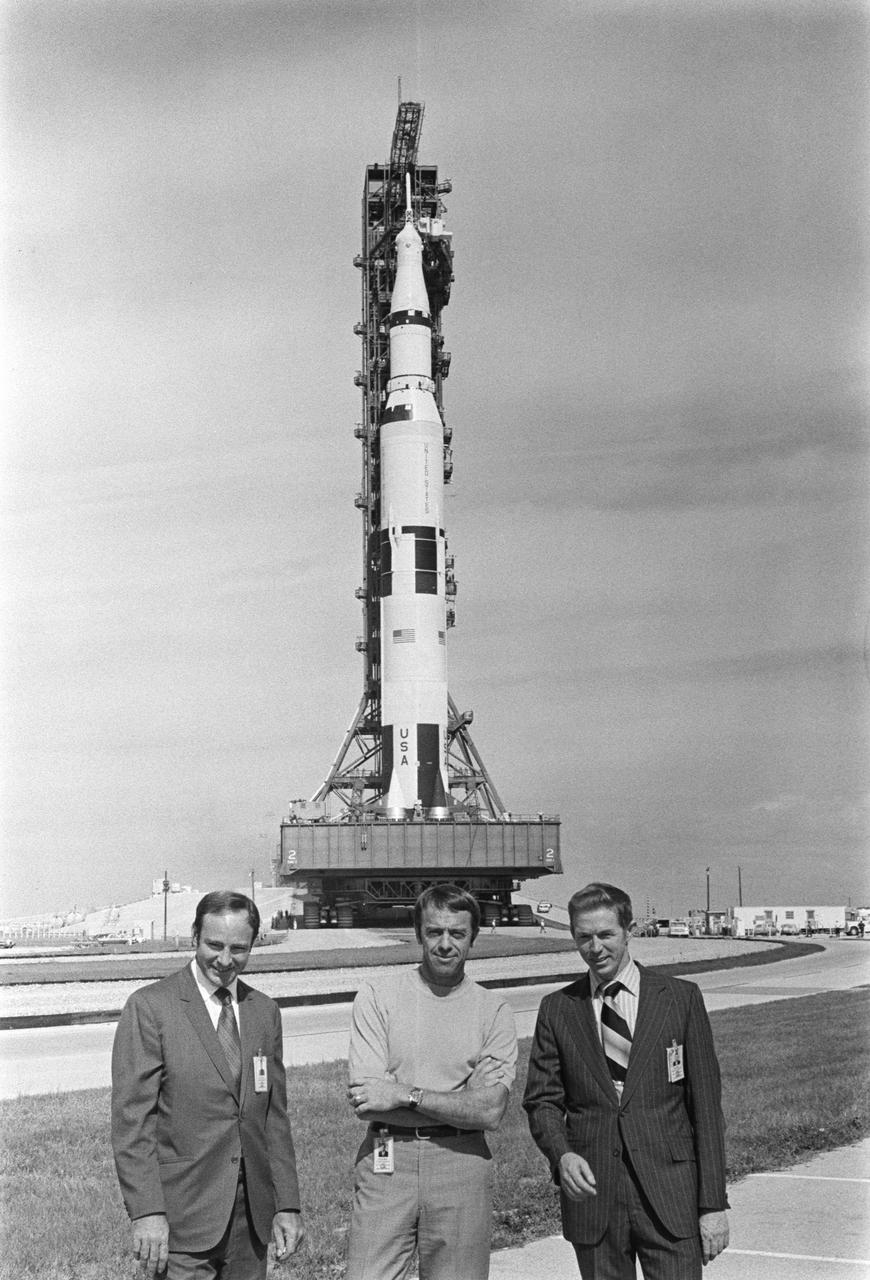
S70-55689 (9 Nov. 1970) --- The Apollo 14 (Spacecraft 110/Lunar Module 8/Saturn 509) space vehicle arrives at Pad A, Launch Complex 39, during the Apollo 14 roll out from the Kennedy Space Center's Vehicle Assembly Building. The Saturn V stack and its mobile launch tower atop a huge crawler-transporter. The three members of the Apollo 14 prime crew are in the foreground. They are (left to right) astronauts Edgar D. Mitchell, lunar module pilot; Alan B. Shepard Jr., commander; and Stuart A. Roosa, command module pilot.
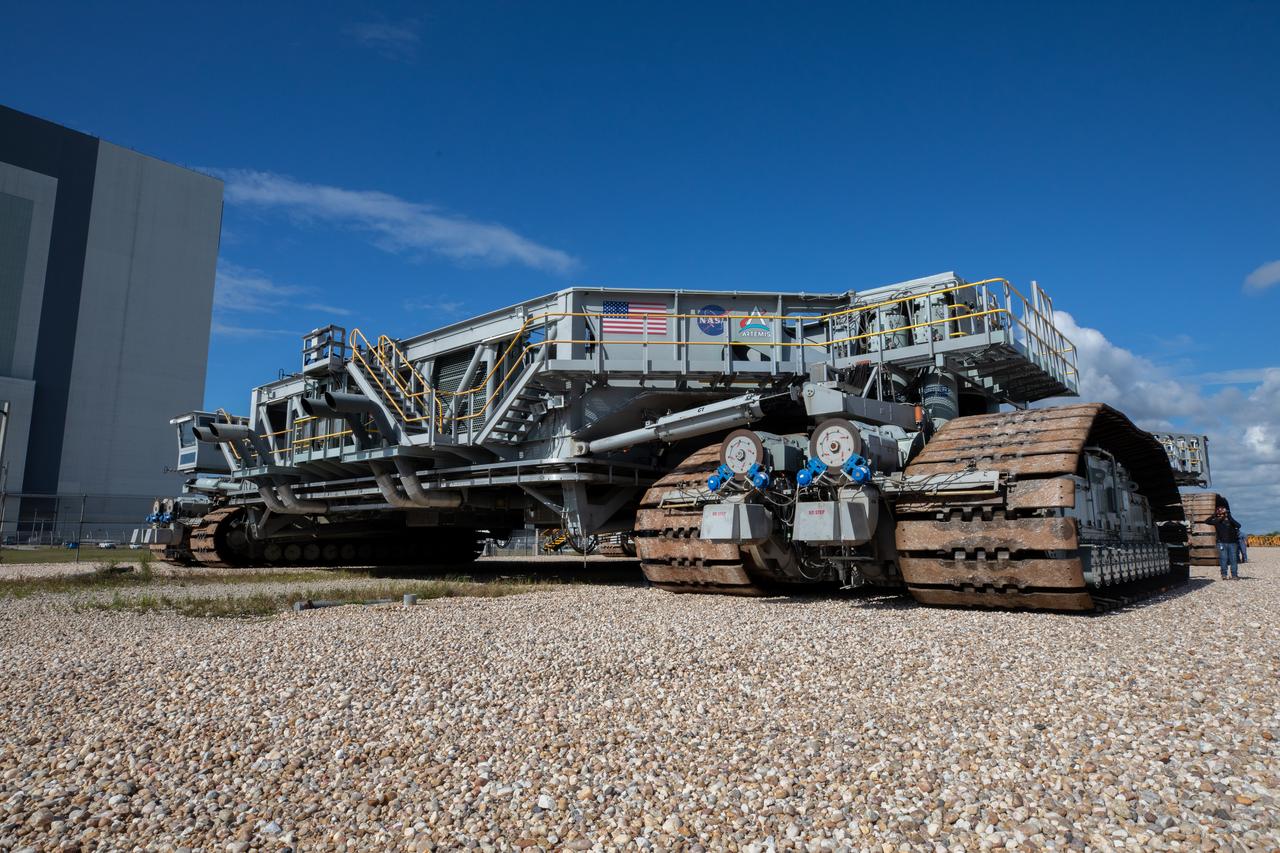
Engineers and technicians drive crawler-transporter 2 along the crawlerway toward the Vehicle Assembly Building (VAB) at NASA’s Kennedy Space Center in Florida on June 1, 2022. The crawler will go inside the VAB, where it will slide under the Artemis I Space Launch System with the Orion spacecraft atop on the mobile launcher and carry it to Launch Complex 39B for a wet dress rehearsal test ahead of the Artemis I launch. Artemis I will be the first integrated test of the SLS and Orion spacecraft. In later missions, NASA will land the first woman and the first person of color on the surface of the Moon, paving the way for a long-term lunar presence and serving as a steppingstone on the way to Mars.
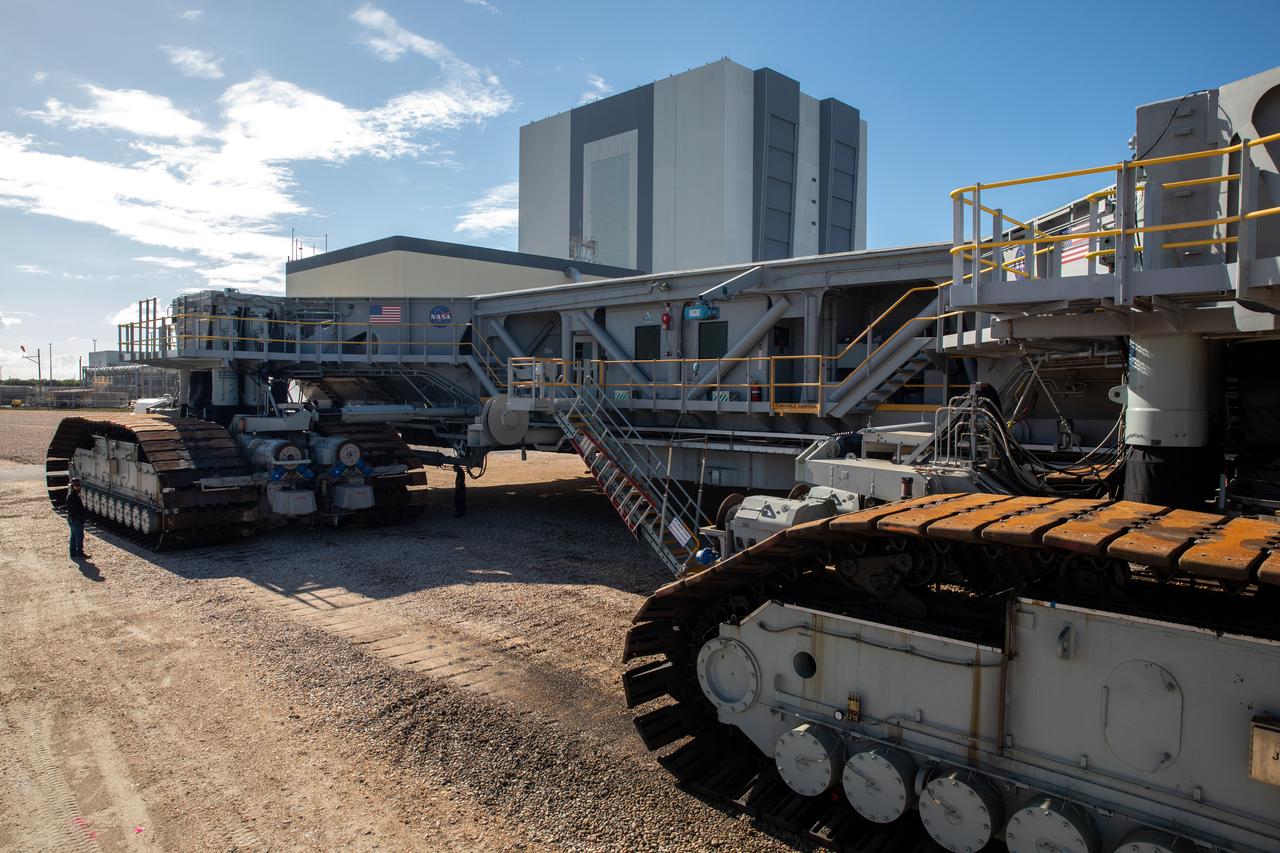
Engineers and technicians drive crawler-transporter 2 along the crawlerway toward the Vehicle Assembly Building (VAB) at NASA’s Kennedy Space Center in Florida on June 1, 2022. The crawler will go inside the VAB, where it will slide under the Artemis I Space Launch System with the Orion spacecraft atop on the mobile launcher and carry it to Launch Complex 39B for a wet dress rehearsal test ahead of the Artemis I launch. Artemis I will be the first integrated test of the SLS and Orion spacecraft. In later missions, NASA will land the first woman and the first person of color on the surface of the Moon, paving the way for a long-term lunar presence and serving as a steppingstone on the way to Mars.
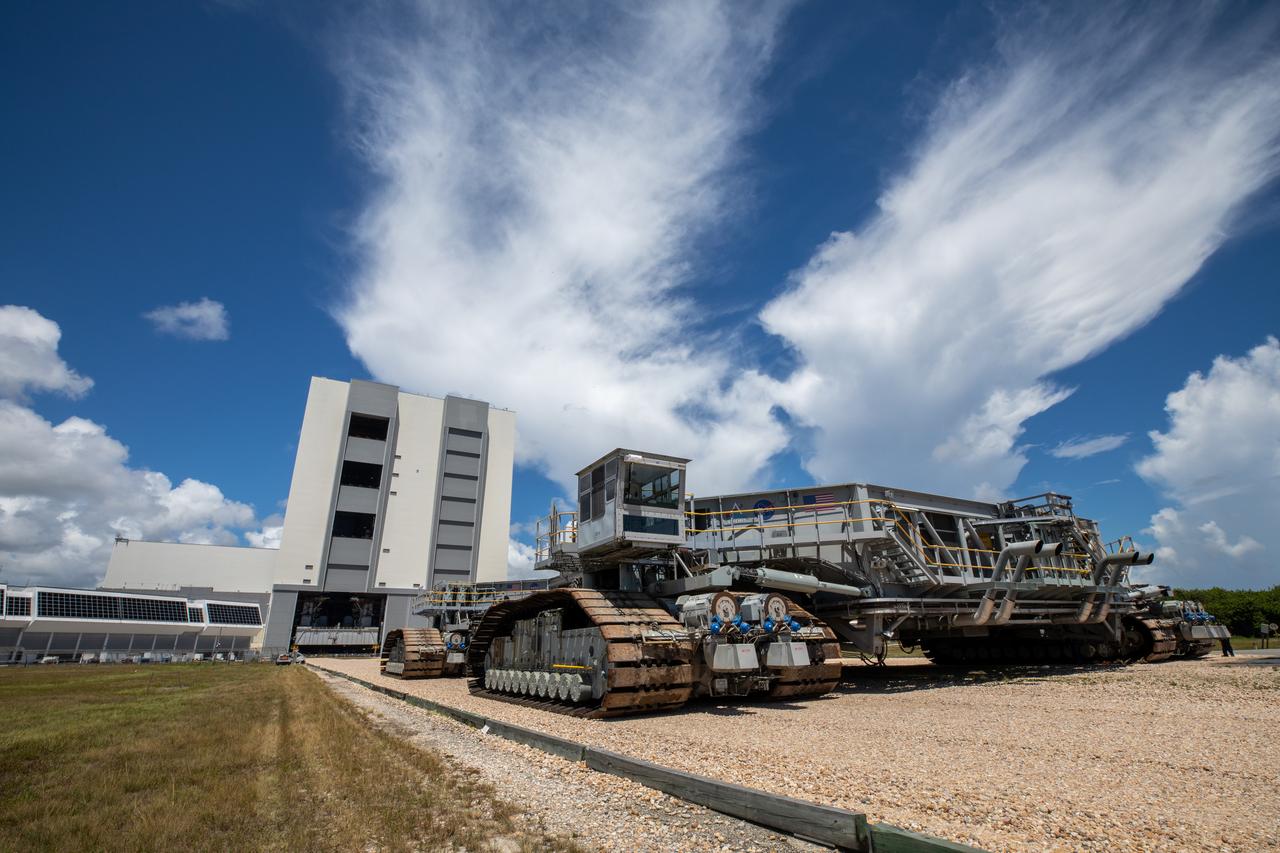
The crawler-transporter, driven by engineers, approaches the Vehicle Assembly Building (VAB) at NASA’s Kennedy Space Center in Florida on June 1, 2022. The crawler will go inside the VAB, where it will slide under the Artemis I Space Launch System with the Orion spacecraft atop on the mobile launcher and carry it to Launch Complex 39B for a wet dress rehearsal test ahead of the Artemis I launch. Artemis I will be the first integrated test of the SLS and Orion spacecraft. In later missions, NASA will land the first woman and the first person of color on the surface of the Moon, paving the way for a long-term lunar presence and serving as a steppingstone on the way to Mars.
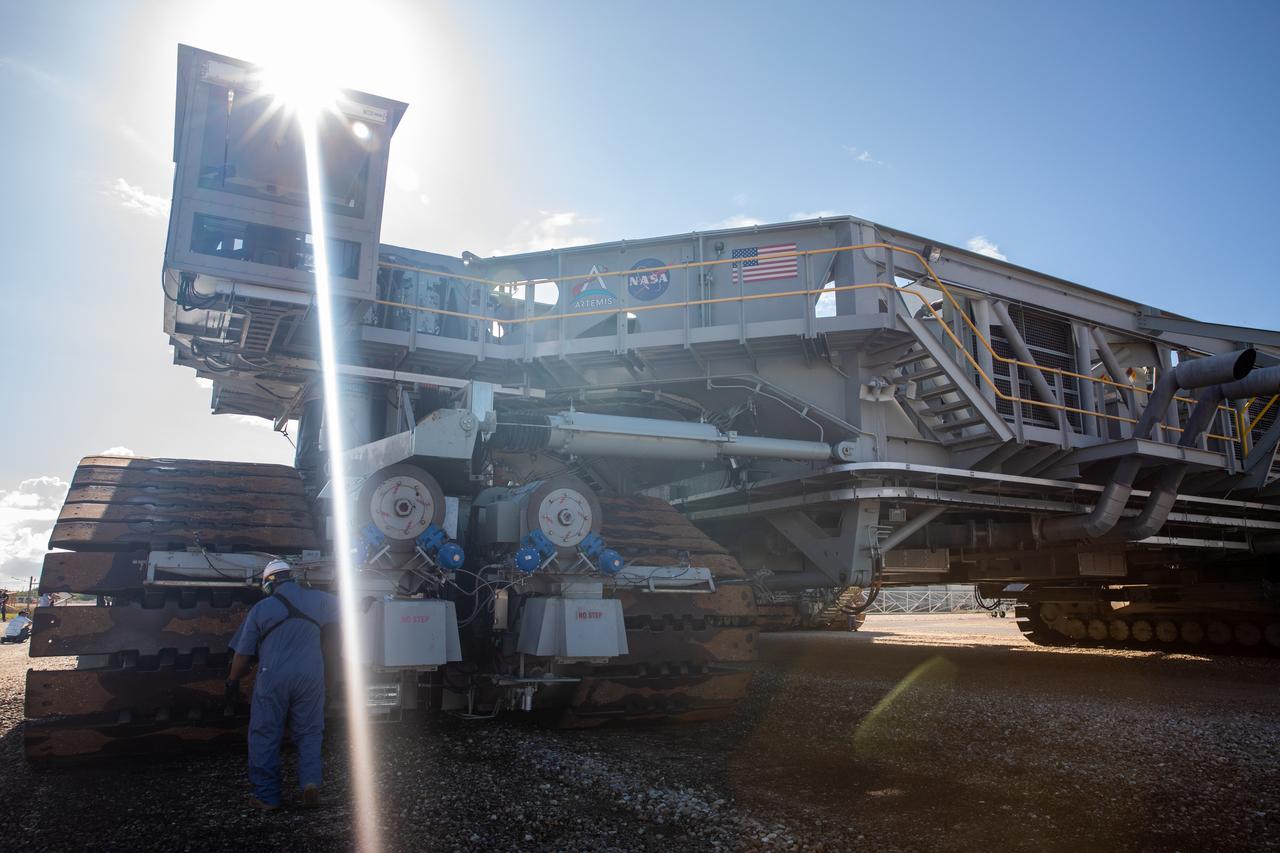
The sun reflects off the cab as engineers and technicians drive crawler-transporter 2 along the crawlerway toward the Vehicle Assembly Building (VAB) at NASA’s Kennedy Space Center in Florida on June 1, 2022. The crawler will go inside the VAB, where it will slide under the Artemis I Space Launch System with the Orion spacecraft atop on the mobile launcher and carry it to Launch Complex 39B for a wet dress rehearsal test ahead of the Artemis I launch. Artemis I will be the first integrated test of the SLS and Orion spacecraft. In later missions, NASA will land the first woman and the first person of color on the surface of the Moon, paving the way for a long-term lunar presence and serving as a steppingstone on the way to Mars.
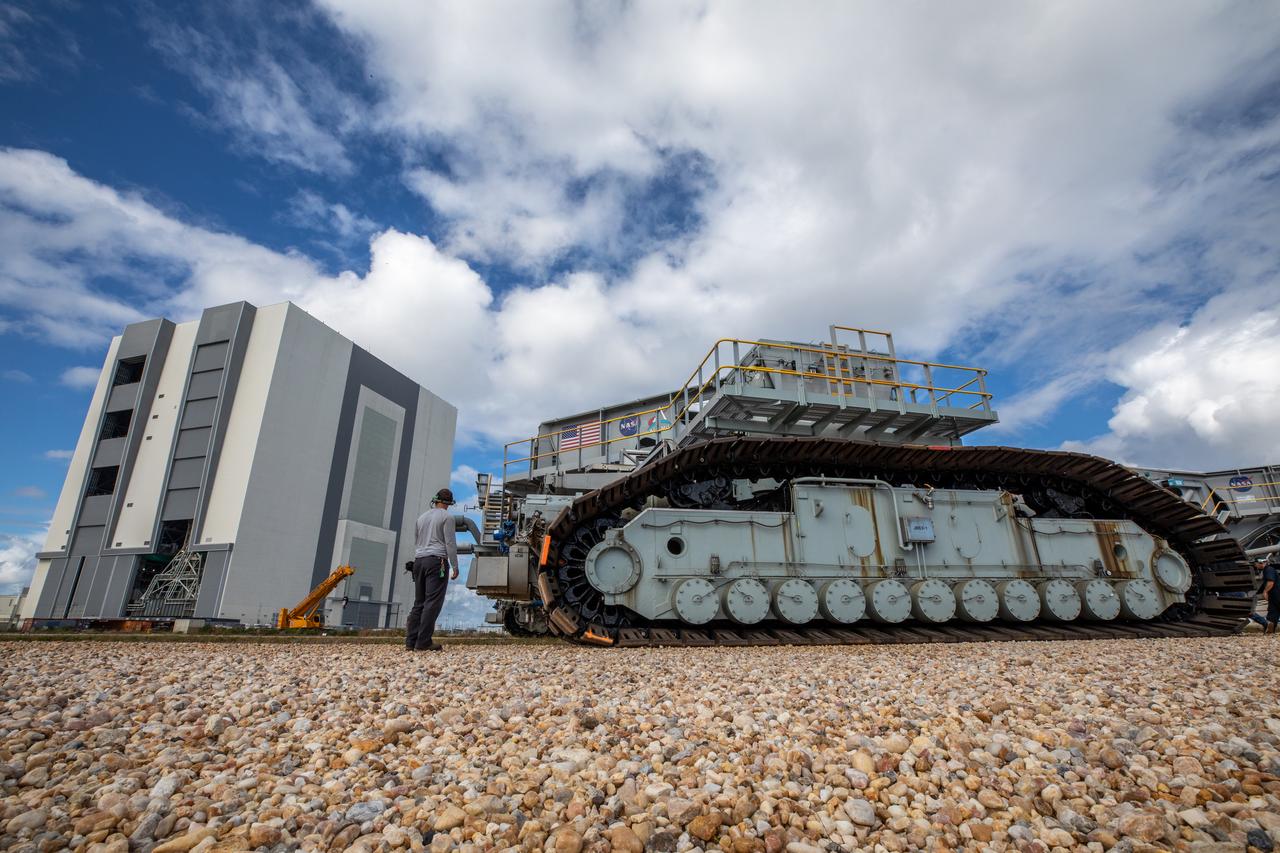
Technicians check equipment on crawler-transporter 2 during its trip to the Vehicle Assembly Building (VAB) at NASA’s Kennedy Space Center in Florida on June 1, 2022. The crawler will go inside the VAB, where it will slide under the Artemis I Space Launch System with the Orion spacecraft atop on the mobile launcher and carry it to Launch Complex 39B for a wet dress rehearsal test ahead of the Artemis I launch. Artemis I will be the first integrated test of the SLS and Orion spacecraft. In later missions, NASA will land the first woman and the first person of color on the surface of the Moon, paving the way for a long-term lunar presence and serving as a steppingstone on the way to Mars.

Several concept designs for Artemis crew transportation vehicles (CTV) are lined up at Launch Complex 39B at NASA’s Kennedy Space Center in Florida on May 11, 2022. Canoo Technologies Inc., was awarded a contract to design and provide the next generation of CTVs for the Artemis crewed missions. Representatives with Canoo were at the spaceport demonstrating the environmentally friendly fleet of vehicles. Artemis II will be the first Artemis mission flying crew aboard Orion. In later missions, NASA will land the first woman and the first person of color on the surface of the Moon, paving the way for a long-term lunar presence and serving as a steppingstone on the way to Mars.
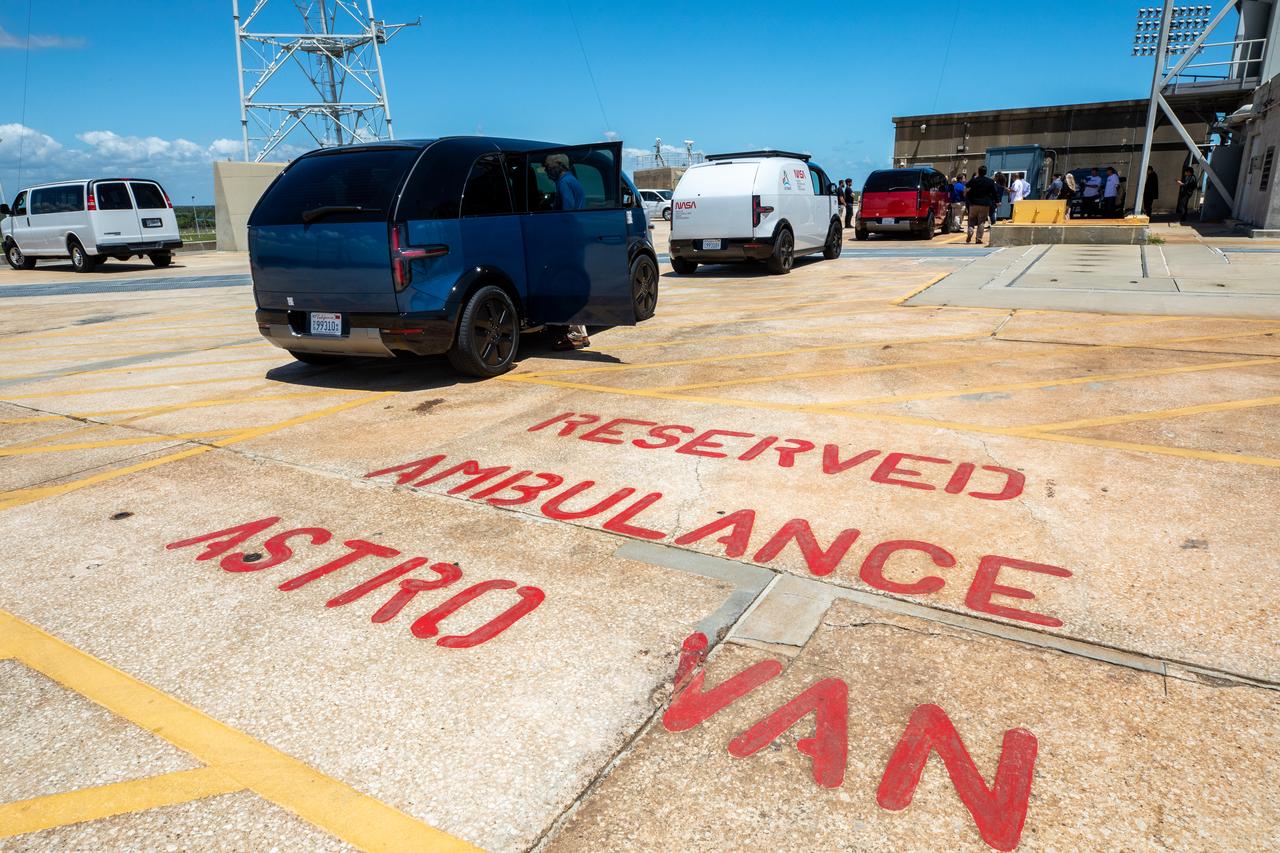
Several concept designs for Artemis crew transportation vehicles (CTV) are lined up at Launch Complex 39B at NASA’s Kennedy Space Center in Florida on May 11, 2022. Canoo Technologies Inc., was awarded a contract to design and provide the next generation of CTVs for the Artemis crewed missions. Representatives with Canoo were at the spaceport demonstrating the environmentally friendly fleet of vehicles. Artemis II will be the first Artemis mission flying crew aboard Orion. In later missions, NASA will land the first woman and the first person of color on the surface of the Moon, paving the way for a long-term lunar presence and serving as a steppingstone on the way to Mars.
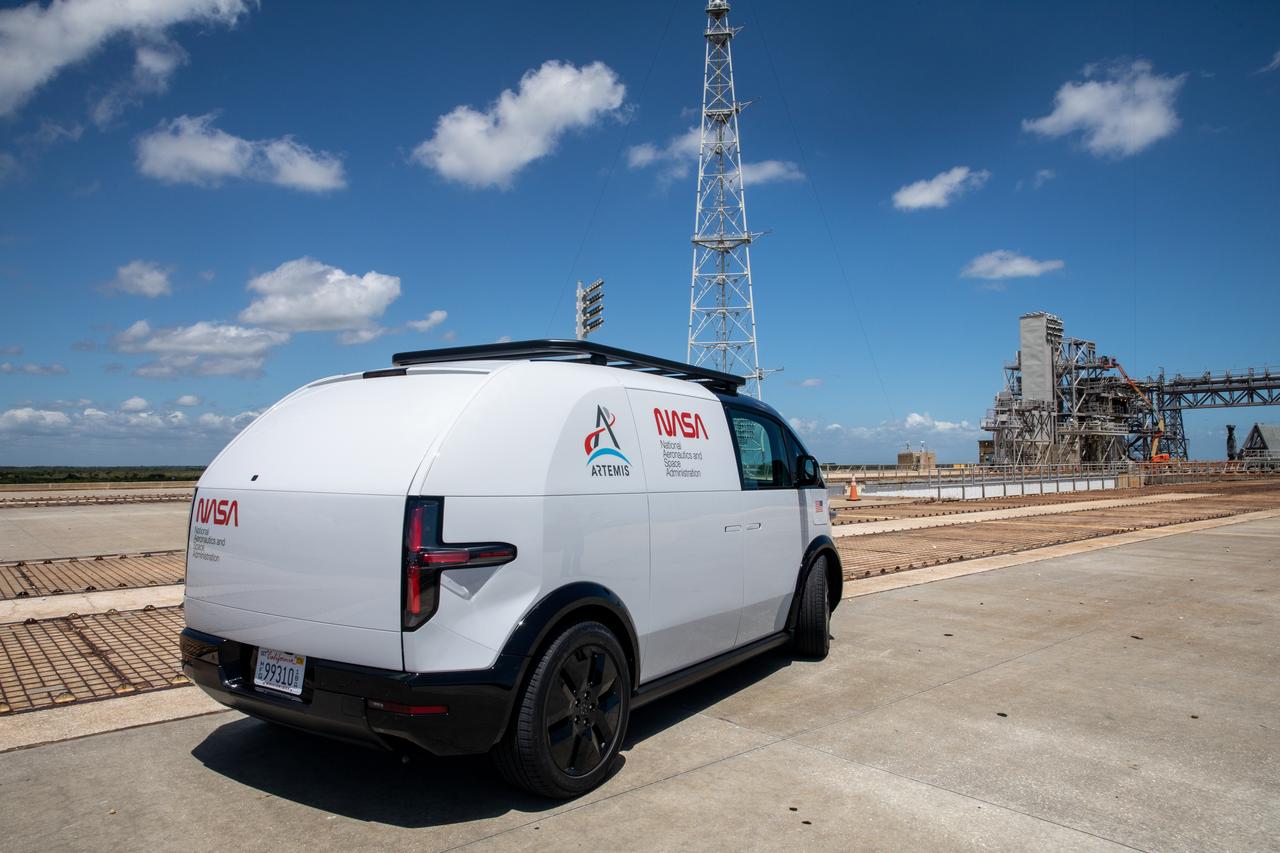
Prototypes of the crew transportation vehicle (CTV) for Artemis crewed missions are driven out to Launch Complex 39B at NASA’s Kennedy Space Center in Florida on May 11, 2022. Canoo Technologies Inc., was awarded a contract to design and provide the next generation of CTVs for the Artemis crewed missions. Representatives with Canoo were at the spaceport demonstrating the environmentally friendly fleet of vehicles. Artemis II will be the first Artemis mission flying crew aboard Orion. In later missions, NASA will land the first woman and the first person of color on the surface of the Moon, paving the way for a long-term lunar presence and serving as a steppingstone on the way to Mars.

Kennedy Space Center Director Janet Petro test drives a concept design crew transportation vehicle (CTV) for Artemis crewed missions on May 11, 2022. Canoo Technologies Inc., was awarded a contract to design and provide the next generation of CTVs for the Artemis crewed missions. Representatives with Canoo were at the spaceport demonstrating the environmentally friendly fleet of vehicles. Artemis II will be the first Artemis mission flying crew aboard Orion. In later missions, NASA will land the first woman and the first person of color on the surface of the Moon, paving the way for a long-term lunar presence and serving as a steppingstone on the way to Mars.
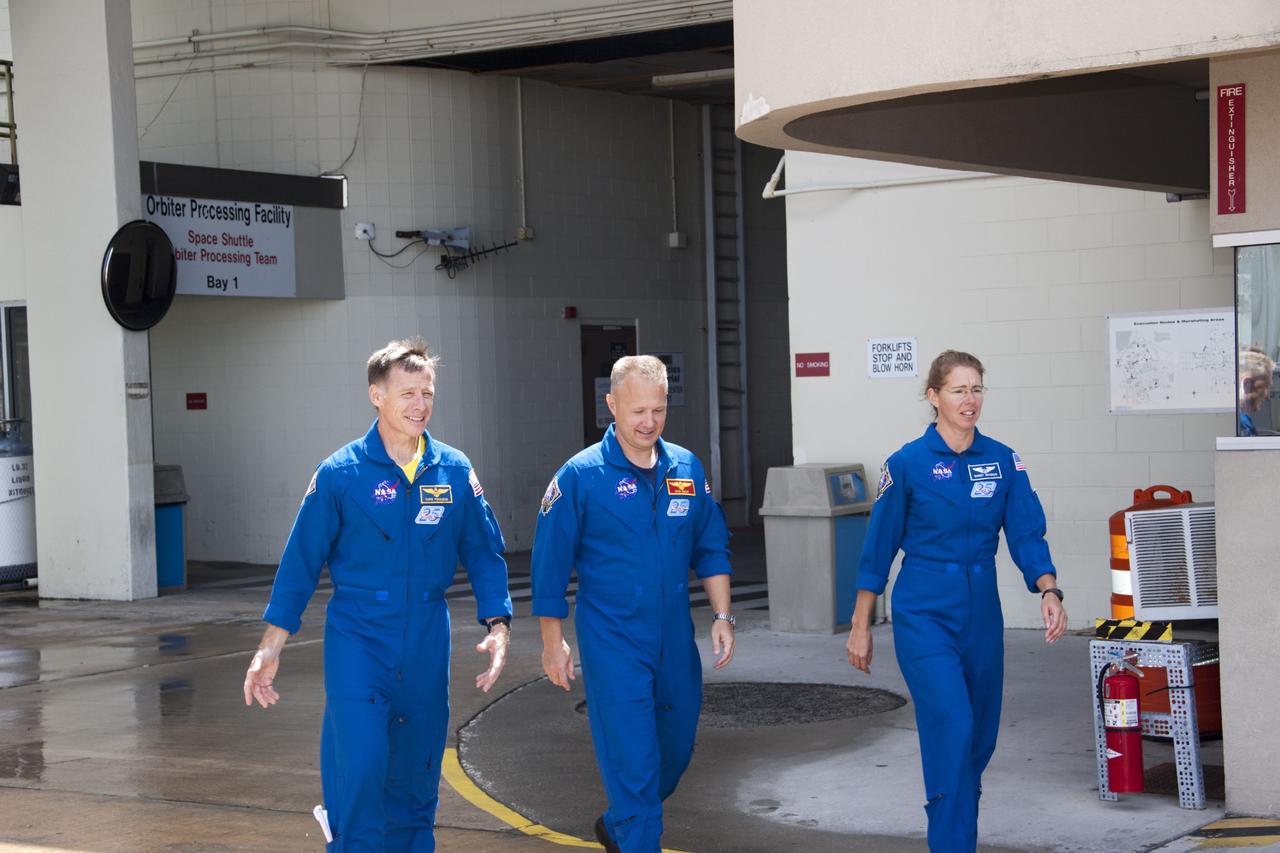
CAPE CANAVERAL, Fla. – Astronauts from space shuttle Atlantis’ STS-135 mission leave Kennedy Space Center's Orbiter Processing Facility-2 after visiting with employees. From left are Commander Chris Ferguson, Pilot Doug Hurley and Mission Specialist Sandra Magnus. The astronauts were at the center for the traditional post-flight crew return presentation. STS-135 Mission Specialist Rex Walheim was unable to attend the Kennedy event. In July 2011, Atlantis and its crew delivered to the International Space Station the Raffaello multi-purpose logistics module packed with more than 9,400 pounds of spare parts, equipment and supplies that will sustain station operations for the next year. STS-135 was the 33rd and final flight for Atlantis and the final mission of the Space Shuttle Program. For more information, visit www.nasa.gov/mission_pages/shuttle/shuttlemissions/sts135/index.html. Photo credit: NASA/Jim Grossmann
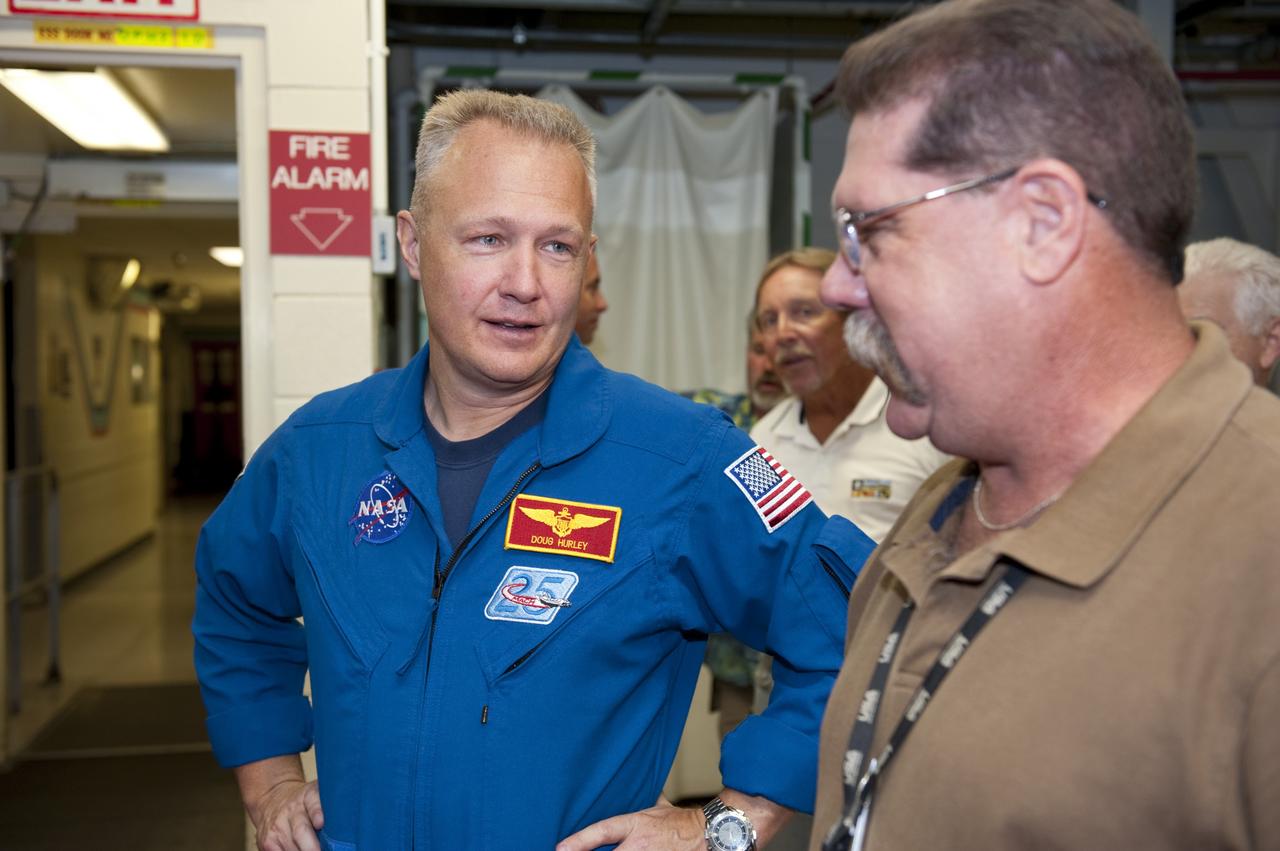
CAPE CANAVERAL, Fla. – STS-135 Pilot Doug Hurley visits with an employee inside Kennedy Space Center's Orbiter Processing Facility-2, where space shuttle Atlantis is being prepared for eventual display at the Kennedy Space Center Visitor Complex in Florida. Hurley, along with Commander Chris Ferguson and Mission Specialist Sandra Magnus, was at the center for the traditional post-flight crew return presentation. STS-135 Mission Specialist Rex Walheim was unable to attend the Kennedy event. In July 2011, Atlantis and its crew delivered to the International Space Station the Raffaello multi-purpose logistics module packed with more than 9,400 pounds of spare parts, equipment and supplies that will sustain station operations for the next year. STS-135 was the 33rd and final flight for Atlantis and the final mission of the Space Shuttle Program. For more information, visit www.nasa.gov/mission_pages/shuttle/shuttlemissions/sts135/index.html. Photo credit: NASA/Kim Shiflett
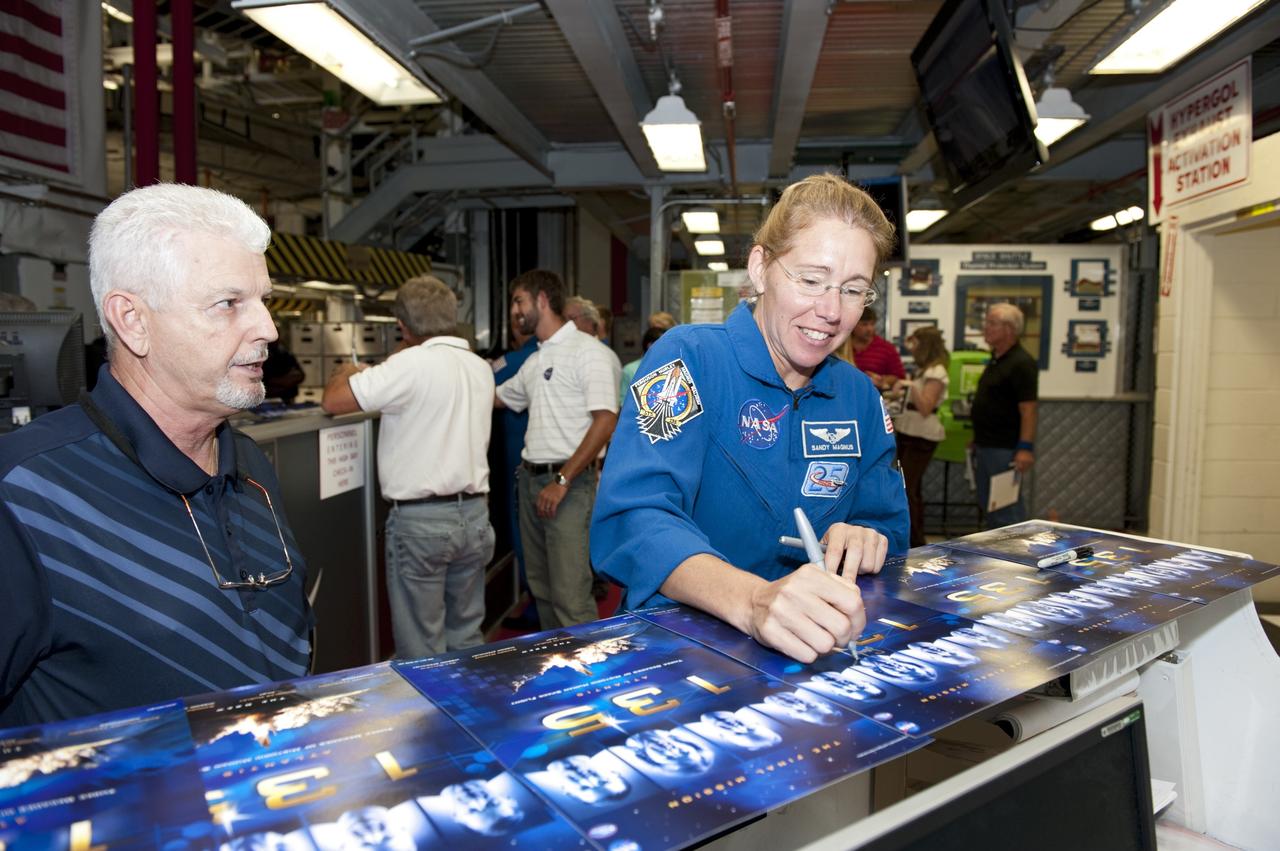
CAPE CANAVERAL, Fla. – STS-135 Mission Specialist Sandra Magnus signs an autograph for an employee inside Kennedy Space Center's Orbiter Processing Facility-2, where space shuttle Atlantis is being prepared for eventual display at the Kennedy Space Center Visitor Complex in Florida. Magnus, along with Commander Chris Ferguson and Pilot Doug Hurley, was at the center for the traditional post-flight crew return presentation. STS-135 Mission Specialist Rex Walheim was unable to attend the Kennedy event. In July 2011, Atlantis and its crew delivered to the International Space Station the Raffaello multi-purpose logistics module packed with more than 9,400 pounds of spare parts, equipment and supplies that will sustain station operations for the next year. STS-135 was the 33rd and final flight for Atlantis and the final mission of the Space Shuttle Program. For more information, visit www.nasa.gov/mission_pages/shuttle/shuttlemissions/sts135/index.html. Photo credit: NASA/Kim Shiflett
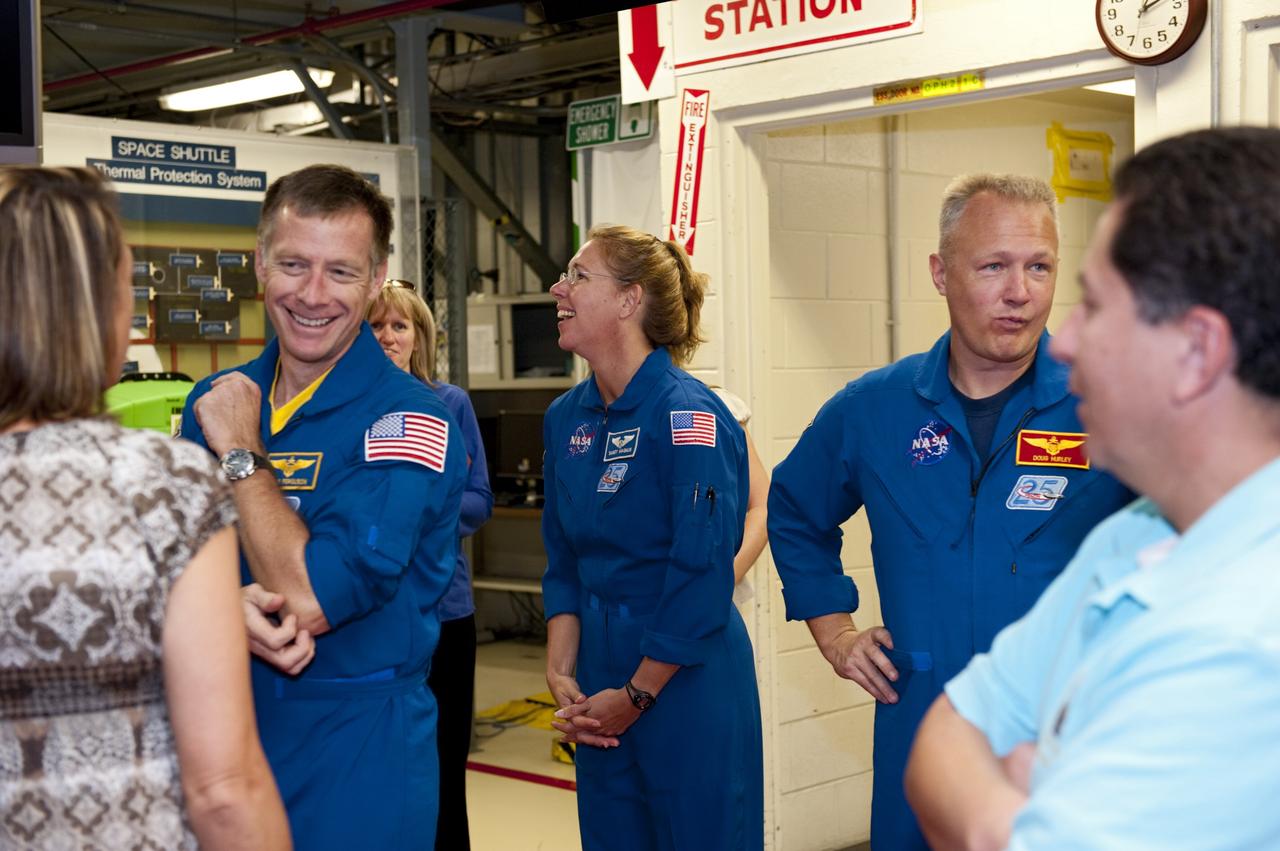
CAPE CANAVERAL, Fla. – Astronauts from space shuttle Atlantis’ STS-135 mission visit with employees inside Kennedy Space Center's Orbiter Processing Facility-2, where space shuttle Atlantis is being prepared for eventual display at the Kennedy Space Center Visitor Complex in Florida. The astronauts were at the center for the traditional post-flight crew return presentation. From left are Commander Chris Ferguson, Mission Specialist Sandra Magnus and Pilot Doug Hurley. STS-135 Mission Specialist Rex Walheim was unable to attend the Kennedy event. In July 2011, Atlantis and its crew delivered to the International Space Station the Raffaello multi-purpose logistics module packed with more than 9,400 pounds of spare parts, equipment and supplies that will sustain station operations for the next year. STS-135 was the 33rd and final flight for Atlantis and the final mission of the Space Shuttle Program. For more information, visit www.nasa.gov/mission_pages/shuttle/shuttlemissions/sts135/index.html. Photo credit: NASA/Kim Shiflett
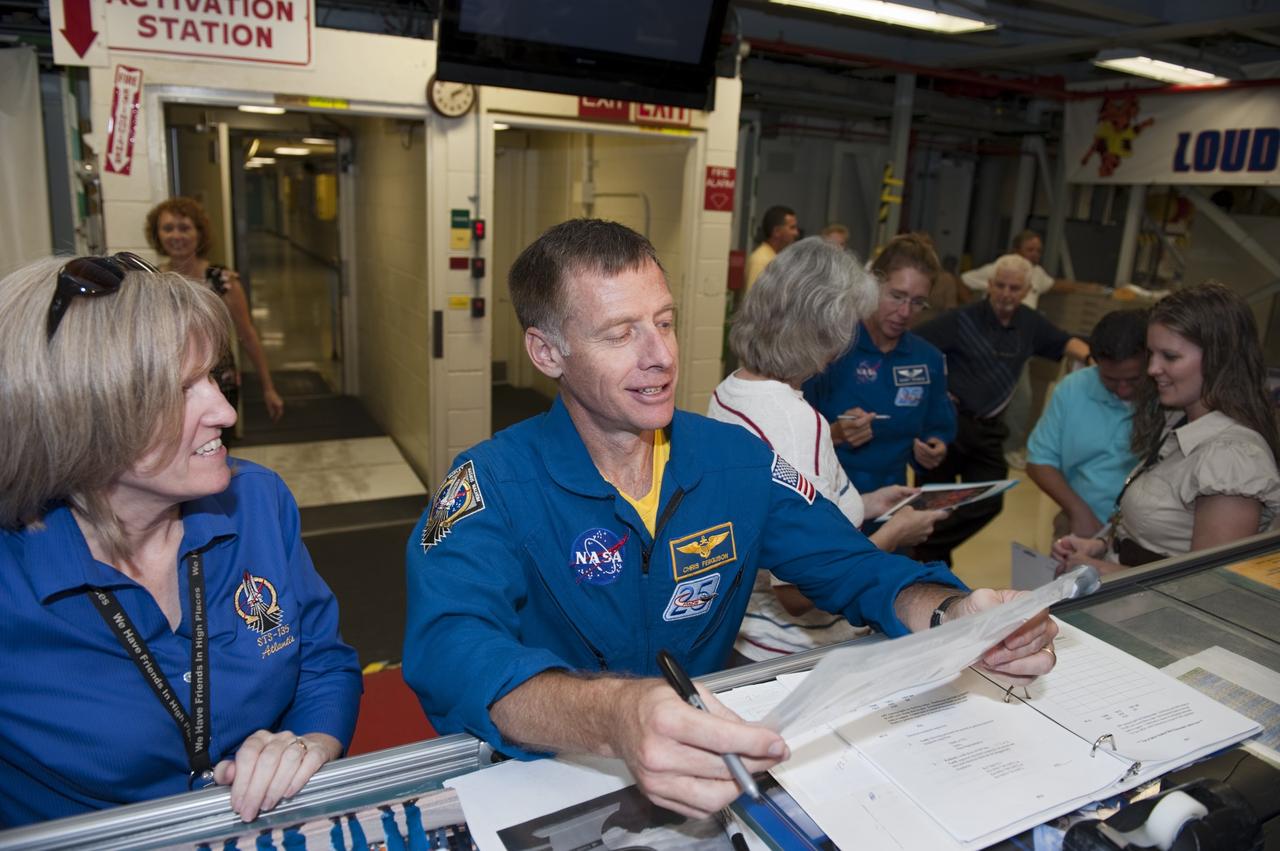
CAPE CANAVERAL, Fla. – STS-135 Commander Chris Ferguson talks with Atlantis Flow Director Angie Brewer, while Mission Specialist Sandra Magnus sign autographs for employees inside Kennedy Space Center's Orbiter Processing Facility-2, where space shuttle Atlantis is being prepared for eventual display at the Kennedy Space Center Visitor Complex in Florida. The astronauts, along with Pilot Doug Hurley, were at the center for the traditional post-flight crew return presentation. STS-135 Mission Specialist Rex Walheim was unable to attend the Kennedy event. In July 2011, Atlantis and its crew delivered to the International Space Station the Raffaello multi-purpose logistics module packed with more than 9,400 pounds of spare parts, equipment and supplies that will sustain station operations for the next year. STS-135 was the 33rd and final flight for Atlantis and the final mission of the Space Shuttle Program. For more information, visit www.nasa.gov/mission_pages/shuttle/shuttlemissions/sts135/index.html. Photo credit: NASA/Kim Shiflett
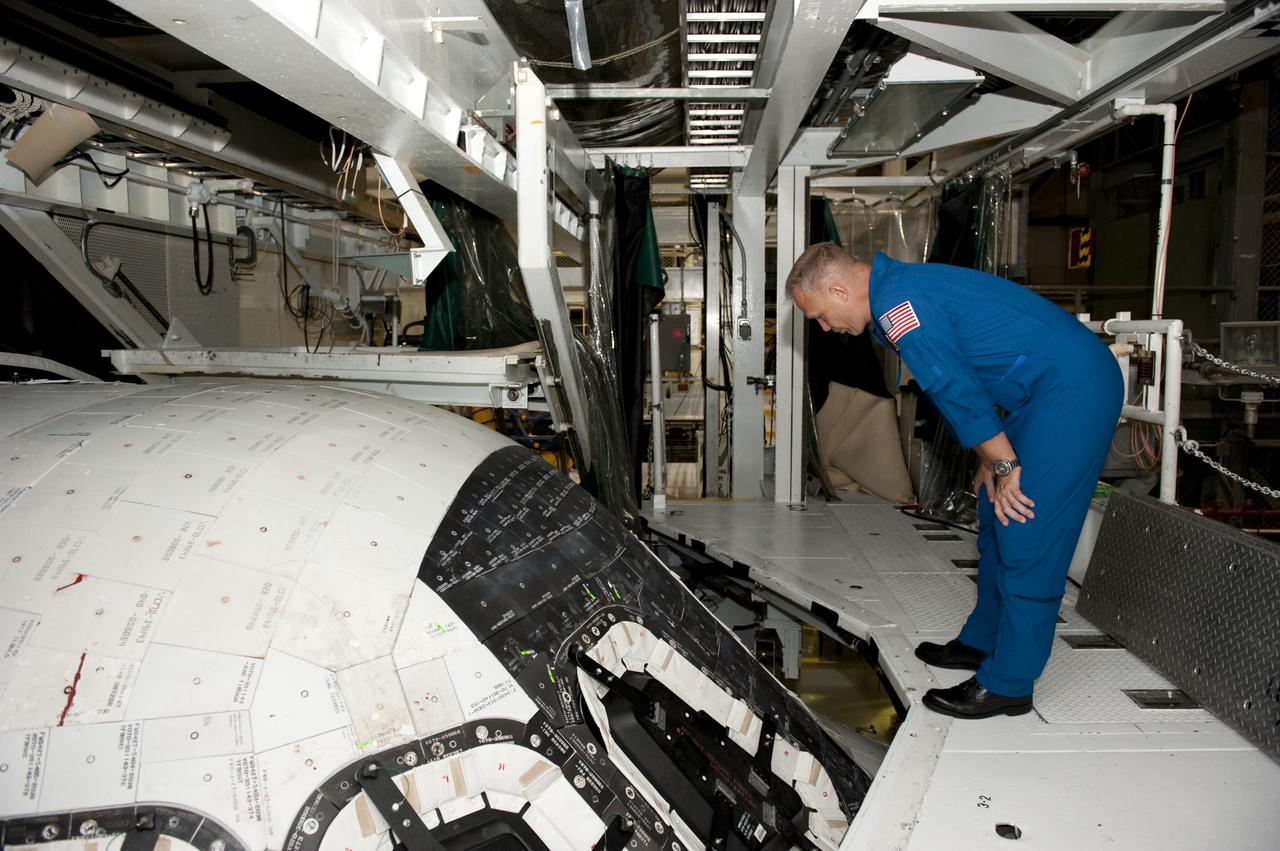
CAPE CANAVERAL, Fla. – Inside Kennedy Space Center's Orbiter Processing Facility-2, STS-135 Pilot Doug Hurley inspects the windows on space shuttle Atlantis. Atlantis is being prepared for eventual display at the Kennedy Space Center Visitor Complex in Florida. Hurley, along with Commander Chris Ferguson and Mission Specialist Sandra Magnus, was at the center for the traditional post-flight crew return presentation. STS-135 Mission Specialist Rex Walheim was unable to attend the Kennedy event. In July 2011, Atlantis and its crew delivered to the International Space Station the Raffaello multi-purpose logistics module packed with more than 9,400 pounds of spare parts, equipment and supplies that will sustain station operations for the next year. STS-135 was the 33rd and final flight for Atlantis and the final mission of the Space Shuttle Program. For more information, visit www.nasa.gov/mission_pages/shuttle/shuttlemissions/sts135/index.html. Photo credit: NASA/Kim Shiflett
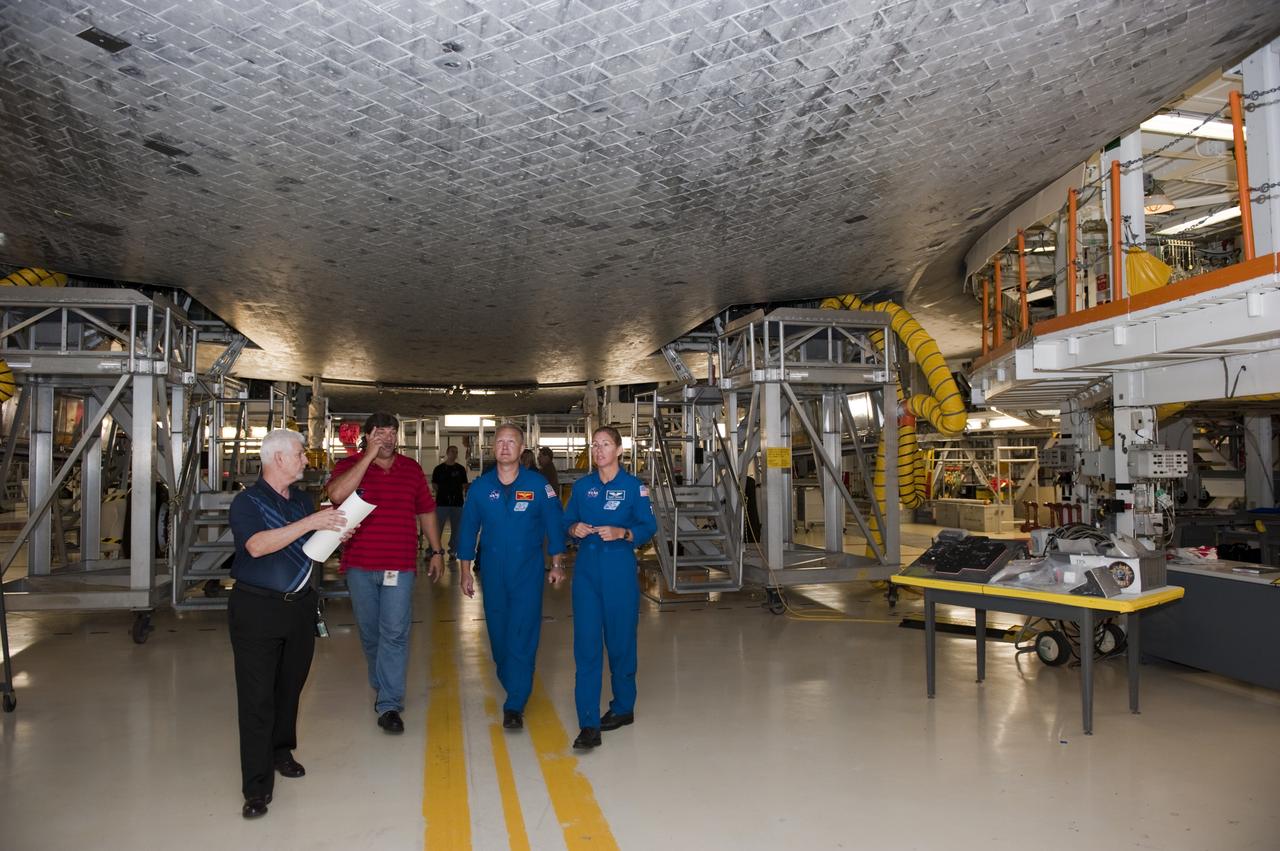
CAPE CANAVERAL, Fla. – STS-135 Pilot Doug Hurley and Mission Specialist Sandra Magnus receive a briefing and up-close look beneath space shuttle Atlantis inside Kennedy Space Center's Orbiter Processing Facility-2. Atlantis is being prepared for eventual display at the Kennedy Space Center Visitor Complex in Florida. The astronauts, along Commander Chris Ferguson, were at the center for the traditional post-flight crew return presentation. STS-135 Mission Specialist Rex Walheim was unable to attend the Kennedy event. In July 2011, Atlantis and its crew delivered to the International Space Station the Raffaello multi-purpose logistics module packed with more than 9,400 pounds of spare parts, equipment and supplies that will sustain station operations for the next year. STS-135 was the 33rd and final flight for Atlantis and the final mission of the Space Shuttle Program. For more information, visit www.nasa.gov/mission_pages/shuttle/shuttlemissions/sts135/index.html. Photo credit: NASA/Kim Shiflett
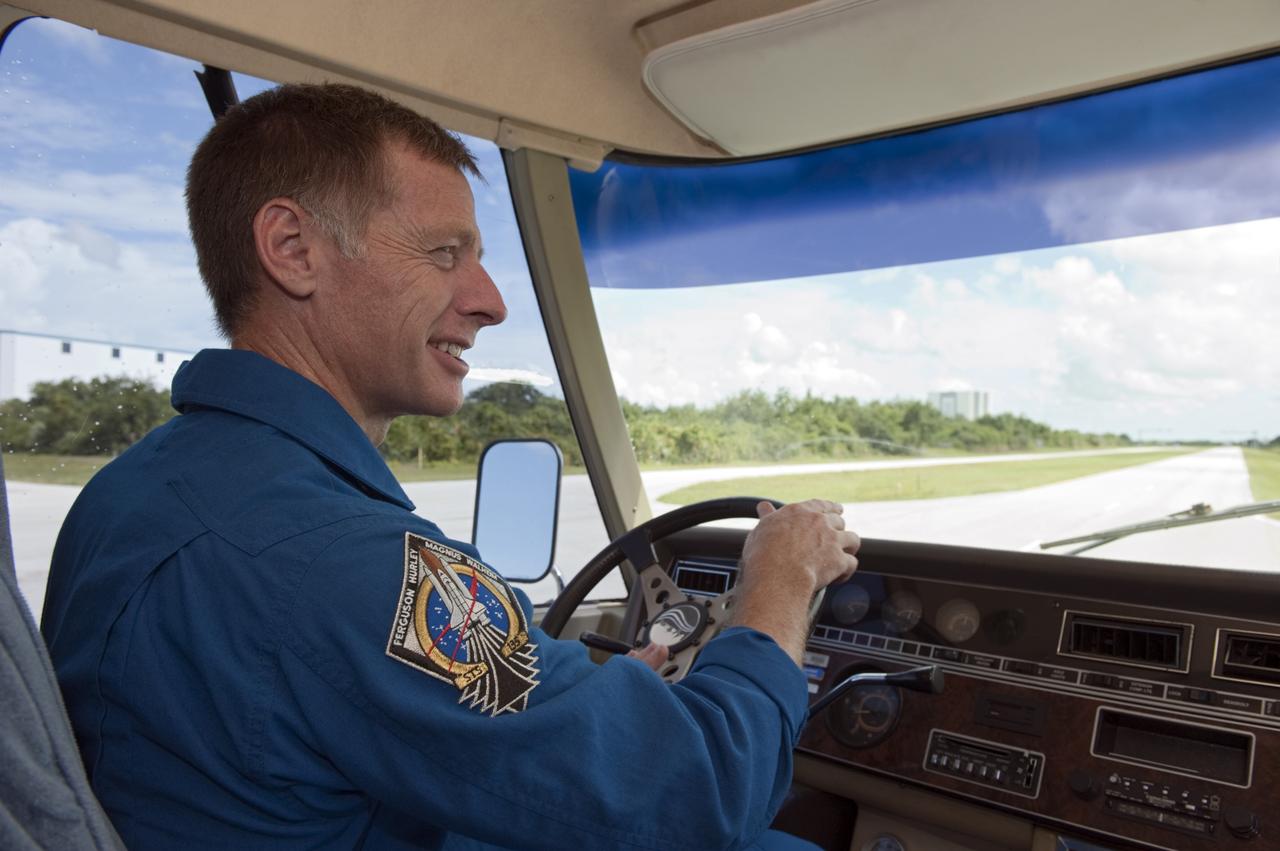
CAPE CANAVERAL, Fla. – STS-135 Commander Chris Ferguson settles in the driver's seat of NASA’s silver Astrovan. Since 1984, the Astrovan, a modified Airstream motor home, has carried shuttle crew members to the launch pads. Ferguson, along with Pilot Doug Hurley and Mission Specialist Sandra Magnus, was at the center for the traditional post-flight crew return presentation. STS-135 Mission Specialist Rex Walheim was unable to attend the Kennedy event. In July 2011, Atlantis and its crew delivered to the International Space Station the Raffaello multi-purpose logistics module packed with more than 9,400 pounds of spare parts, equipment and supplies that will sustain station operations for the next year. STS-135 was the 33rd and final flight for Atlantis and the final mission of the Space Shuttle Program. For more information, visit www.nasa.gov/mission_pages/shuttle/shuttlemissions/sts135/index.html. Photo credit: NASA/Kim Shiflett
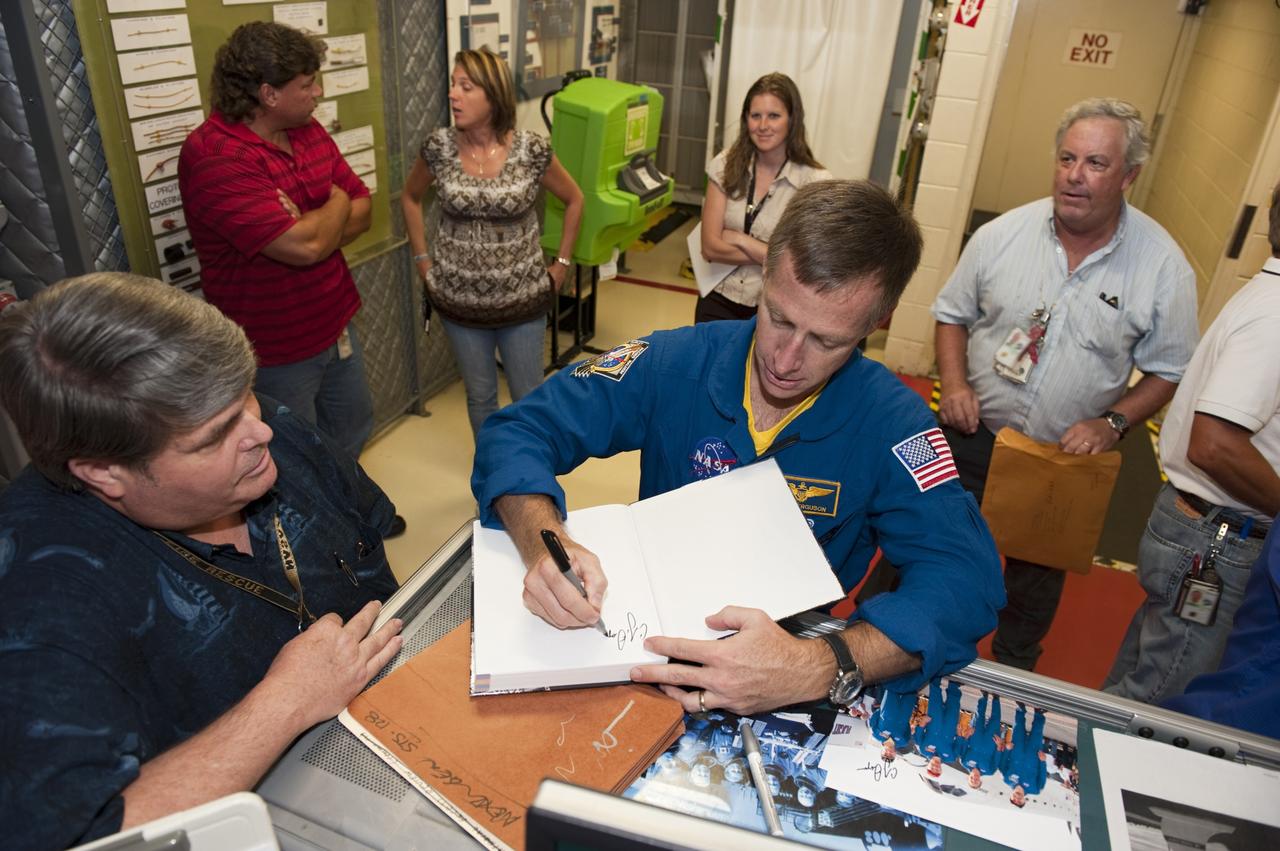
CAPE CANAVERAL, Fla. – STS-135 Commander Chris Ferguson autographs a book for an employee inside Kennedy Space Center's Orbiter Processing Facility-2, where space shuttle Atlantis is being prepared for eventual display at the Kennedy Space Center Visitor Complex in Florida. Ferguson, along Pilot Doug Hurley and Mission Specialist Sandra Magnus, was at the center for the traditional post-flight crew return presentation. STS-135 Mission Specialist Rex Walheim was unable to attend the Kennedy event. In July 2011, Atlantis and its crew delivered to the International Space Station the Raffaello multi-purpose logistics module packed with more than 9,400 pounds of spare parts, equipment and supplies that will sustain station operations for the next year. STS-135 was the 33rd and final flight for Atlantis and the final mission of the Space Shuttle Program. For more information, visit www.nasa.gov/mission_pages/shuttle/shuttlemissions/sts135/index.html. Photo credit: NASA/Kim Shiflett
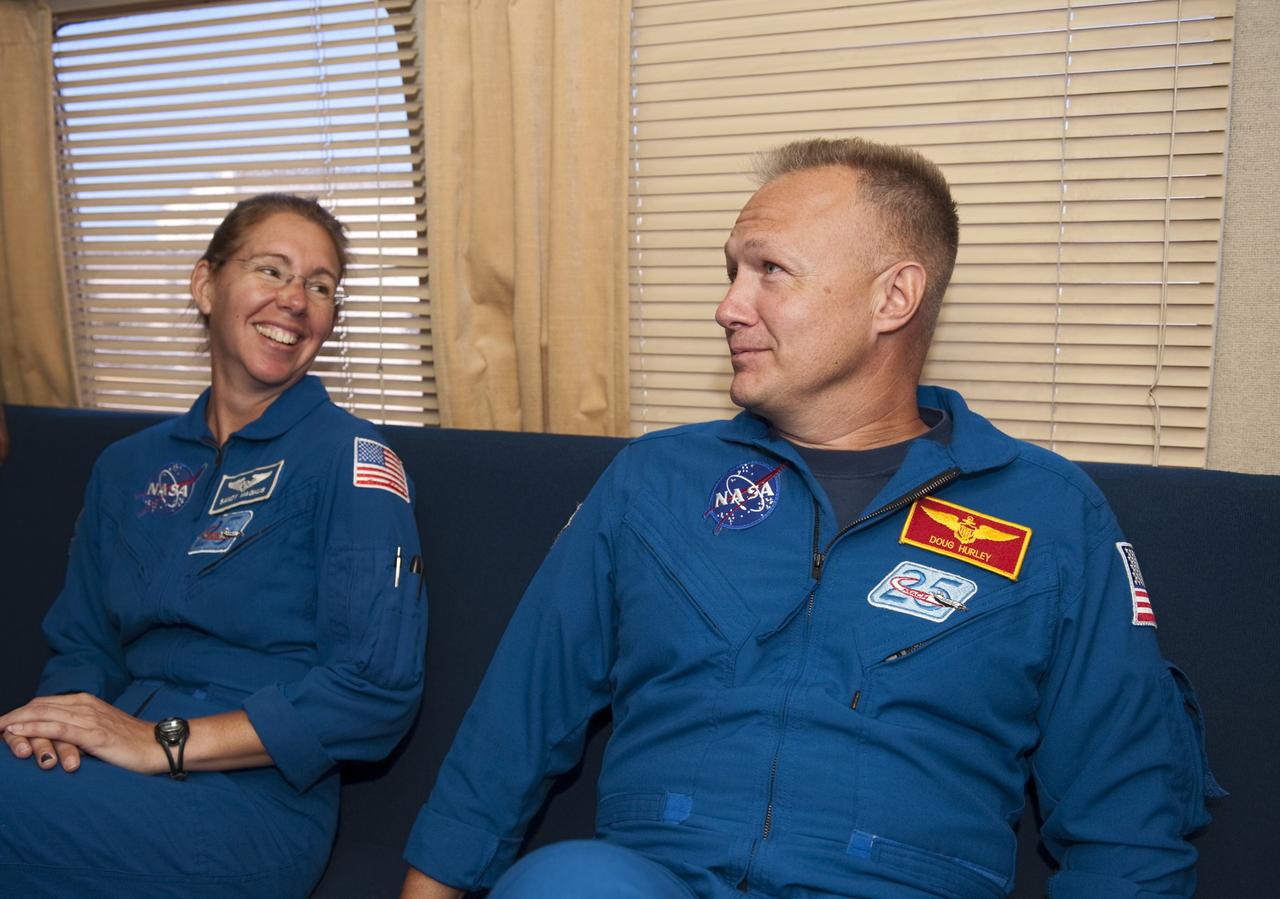
CAPE CANAVERAL, Fla. – Astronauts from Space Shuttle Atlantis’ STS-135 mission travel inside NASA’s silver Astrovan. From left are Mission Specialist Sandra Magnus and Pilot Doug Hurley. Since 1984, the Astrovan, a modified Airstream motor home, has carried shuttle crew members to the launch pads. The astronauts, along with Commander Chris Ferguson, were at the center for the traditional post-flight crew return presentation. STS-135 Mission Specialist Rex Walheim was unable to attend the Kennedy event. In July 2011, Atlantis and its crew delivered to the International Space Station the Raffaello multi-purpose logistics module packed with more than 9,400 pounds of spare parts, equipment and supplies that will sustain station operations for the next year. STS-135 was the 33rd and final flight for Atlantis and the final mission of the Space Shuttle Program. For more information, visit www.nasa.gov/mission_pages/shuttle/shuttlemissions/sts135/index.html. Photo credit: NASA/Kim Shiflett
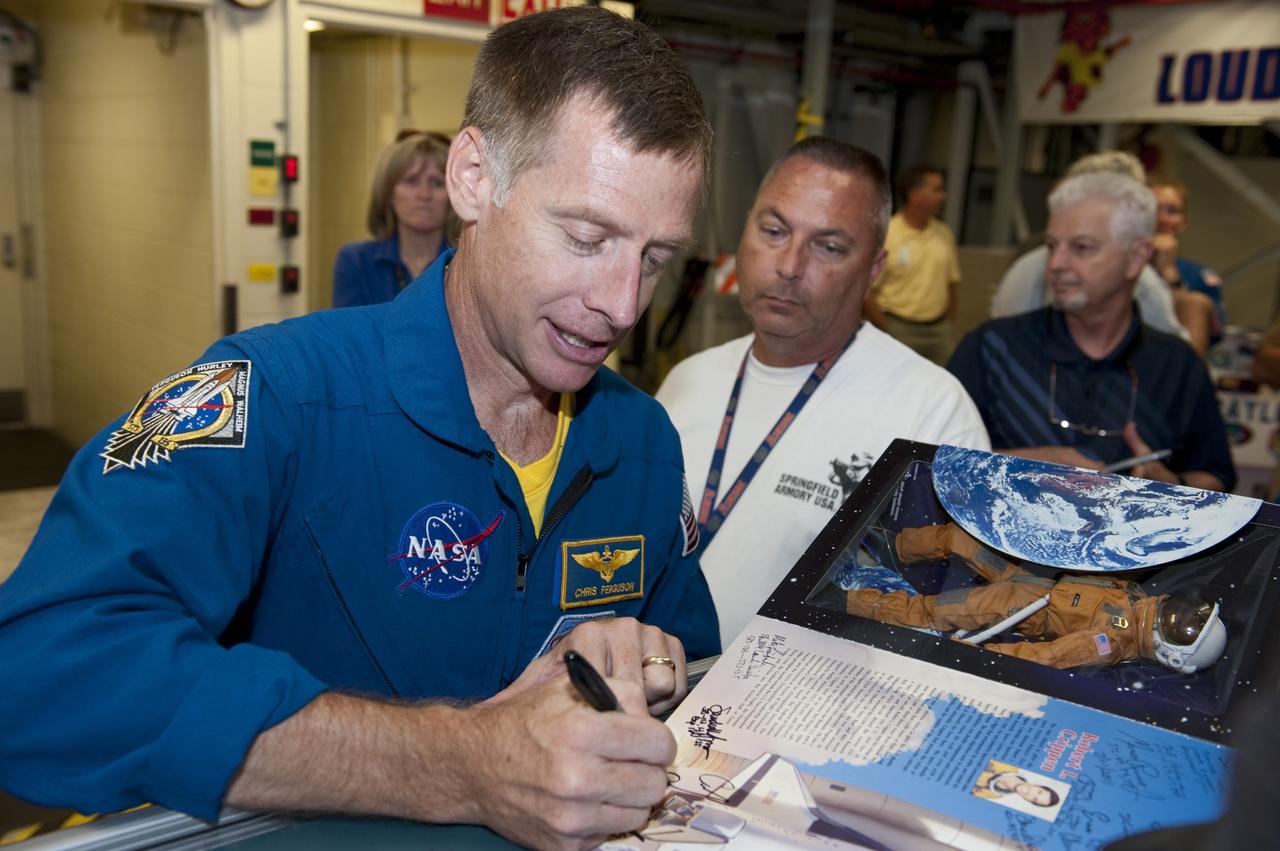
CAPE CANAVERAL, Fla. – STS-135 Commander Chris Ferguson signs an autograph for an employee inside Kennedy Space Center's Orbiter Processing Facility-2, where space shuttle Atlantis is being prepared for eventual display at the Kennedy Space Center Visitor Complex in Florida. Ferguson, along Pilot Doug Hurley and Mission Specialist Sandra Magnus, was at the center for the traditional post-flight crew return presentation. STS-135 Mission Specialist Rex Walheim was unable to attend the Kennedy event. In July 2011, Atlantis and its crew delivered to the International Space Station the Raffaello multi-purpose logistics module packed with more than 9,400 pounds of spare parts, equipment and supplies that will sustain station operations for the next year. STS-135 was the 33rd and final flight for Atlantis and the final mission of the Space Shuttle Program. For more information, visit www.nasa.gov/mission_pages/shuttle/shuttlemissions/sts135/index.html. Photo credit: NASA/Kim Shiflett
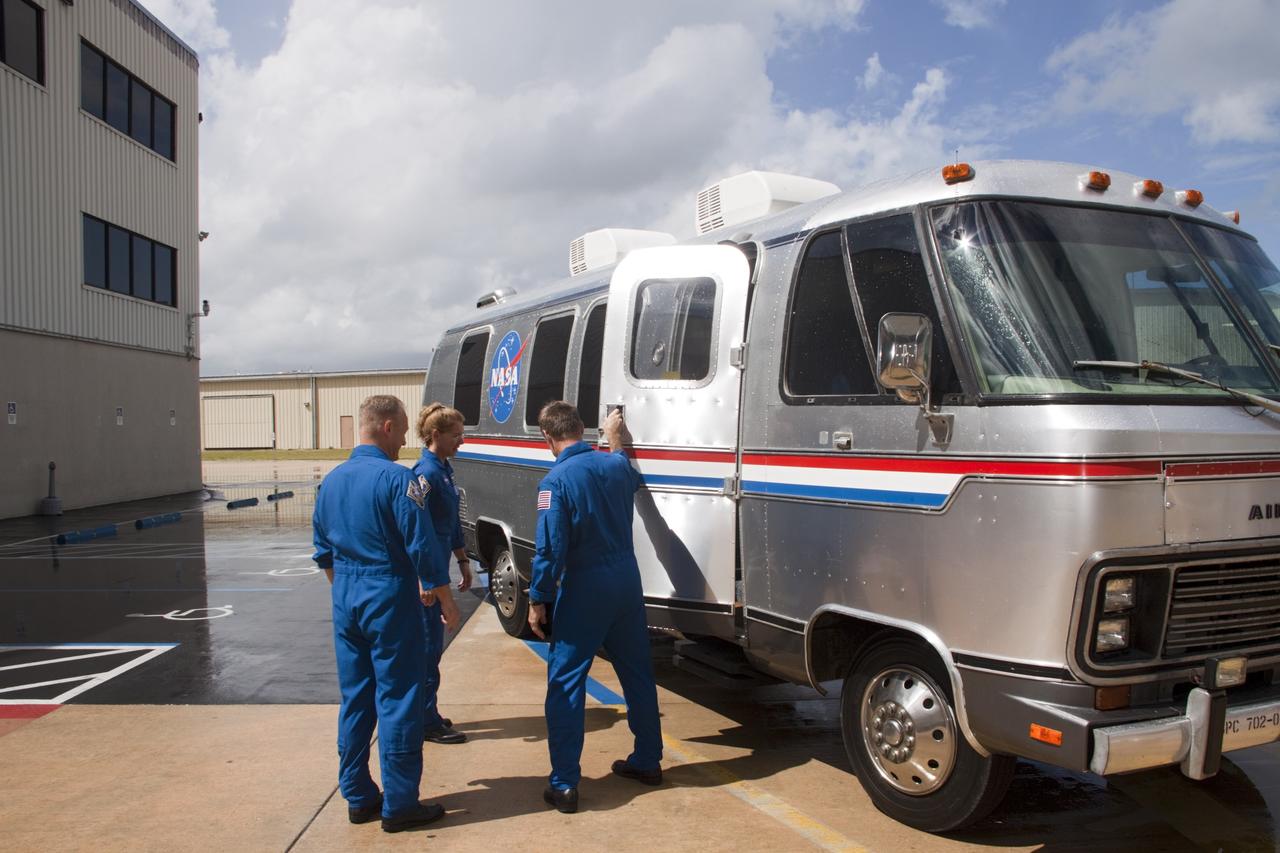
CAPE CANAVERAL, Fla. – After visiting with employees at Kennedy Space Center's Orbiter Processing Facility-2, STS-135 Commander Chris Ferguson holds the door of the Astrovan for Pilot Doug Hurley and Mission Specialist Sandra Magnus. The astronauts were at the center for the traditional post-flight crew return presentation. STS-135 Mission Specialist Rex Walheim was unable to attend the Kennedy event. In July 2011, Atlantis and its crew delivered to the International Space Station the Raffaello multi-purpose logistics module packed with more than 9,400 pounds of spare parts, equipment and supplies that will sustain station operations for the next year. STS-135 was the 33rd and final flight for Atlantis and the final mission of the Space Shuttle Program. For more information, visit www.nasa.gov/mission_pages/shuttle/shuttlemissions/sts135/index.html. Photo credit: NASA/Jim Grossmann
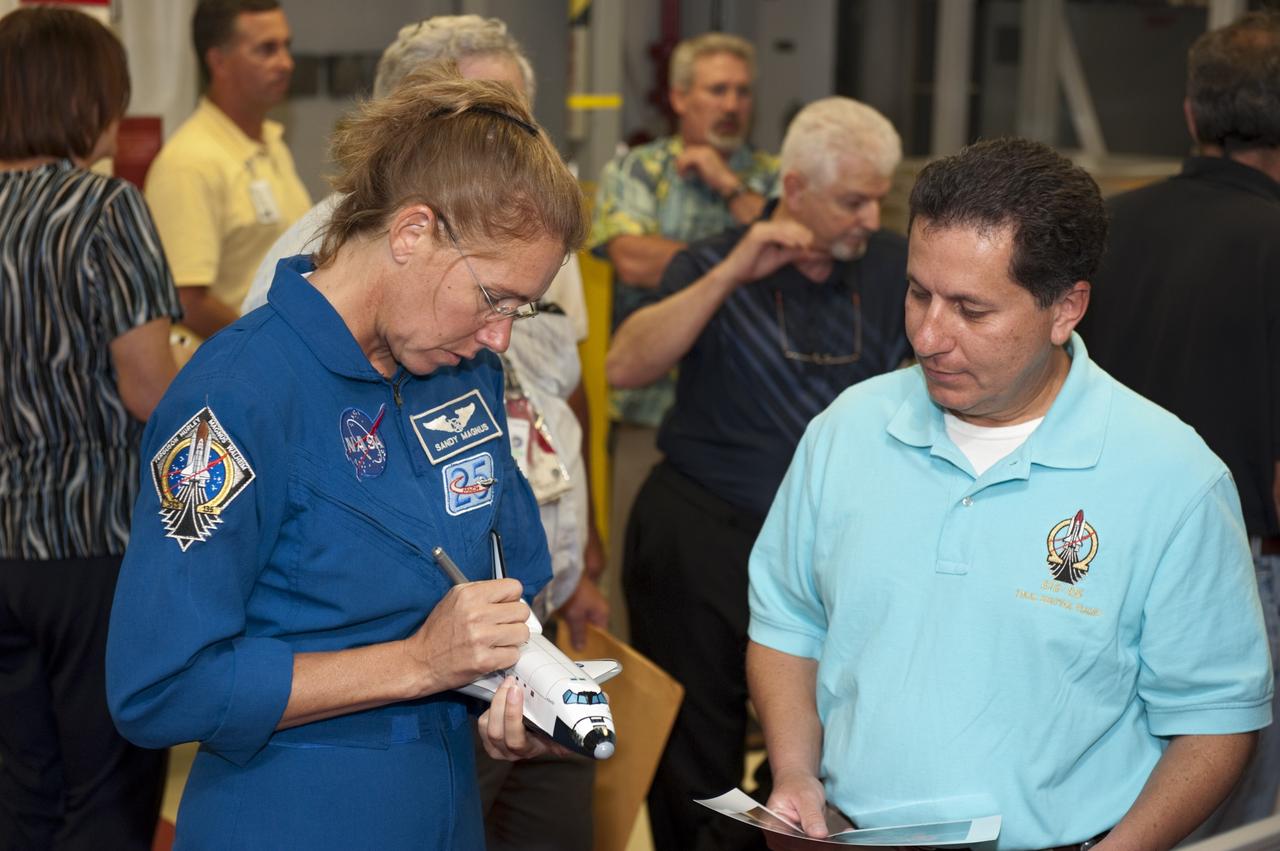
CAPE CANAVERAL, Fla. – STS-135 Mission Specialist Sandra Magnus autographs a space shuttle replica for an employee inside Kennedy Space Center's Orbiter Processing Facility-2, where space shuttle Atlantis is being prepared for eventual display at the Kennedy Space Center Visitor Complex in Florida. Magnus, along with Commander Chris Ferguson and Pilot Doug Hurley, was at the center for the traditional post-flight crew return presentation. STS-135 Mission Specialist Rex Walheim was unable to attend the Kennedy event. In July 2011, Atlantis and its crew delivered to the International Space Station the Raffaello multi-purpose logistics module packed with more than 9,400 pounds of spare parts, equipment and supplies that will sustain station operations for the next year. STS-135 was the 33rd and final flight for Atlantis and the final mission of the Space Shuttle Program. For more information, visit www.nasa.gov/mission_pages/shuttle/shuttlemissions/sts135/index.html. Photo credit: NASA/Kim Shiflett
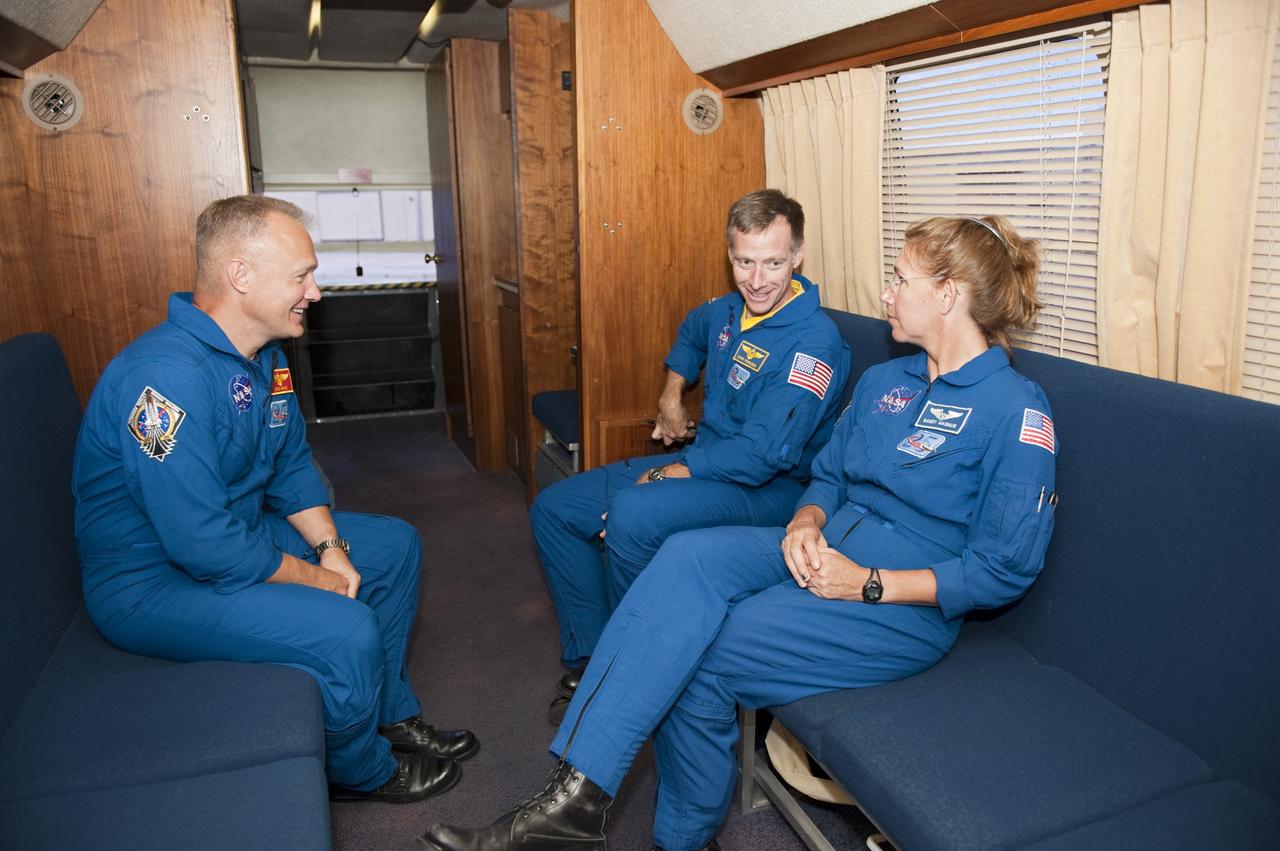
CAPE CANAVERAL, Fla. – Astronauts from Space Shuttle Atlantis’ STS-135 mission travel inside NASA’s silver Astrovan. Seated on the right are Commander Chris Ferguson and Mission Specialist Sandra Magnus while facing opposite is Pilot Doug Hurley. Since 1984, the Astrovan, a modified Airstream motor home, has carried shuttle crew members to the launch pads. The astronauts were at the center for the traditional post-flight crew return presentation. STS-135 Mission Specialist Rex Walheim was unable to attend the Kennedy event. In July 2011, Atlantis and its crew delivered to the International Space Station the Raffaello multi-purpose logistics module packed with more than 9,400 pounds of spare parts, equipment and supplies that will sustain station operations for the next year. STS-135 was the 33rd and final flight for Atlantis and the final mission of the Space Shuttle Program. For more information, visit www.nasa.gov/mission_pages/shuttle/shuttlemissions/sts135/index.html. Photo credit: NASA/Kim Shiflett
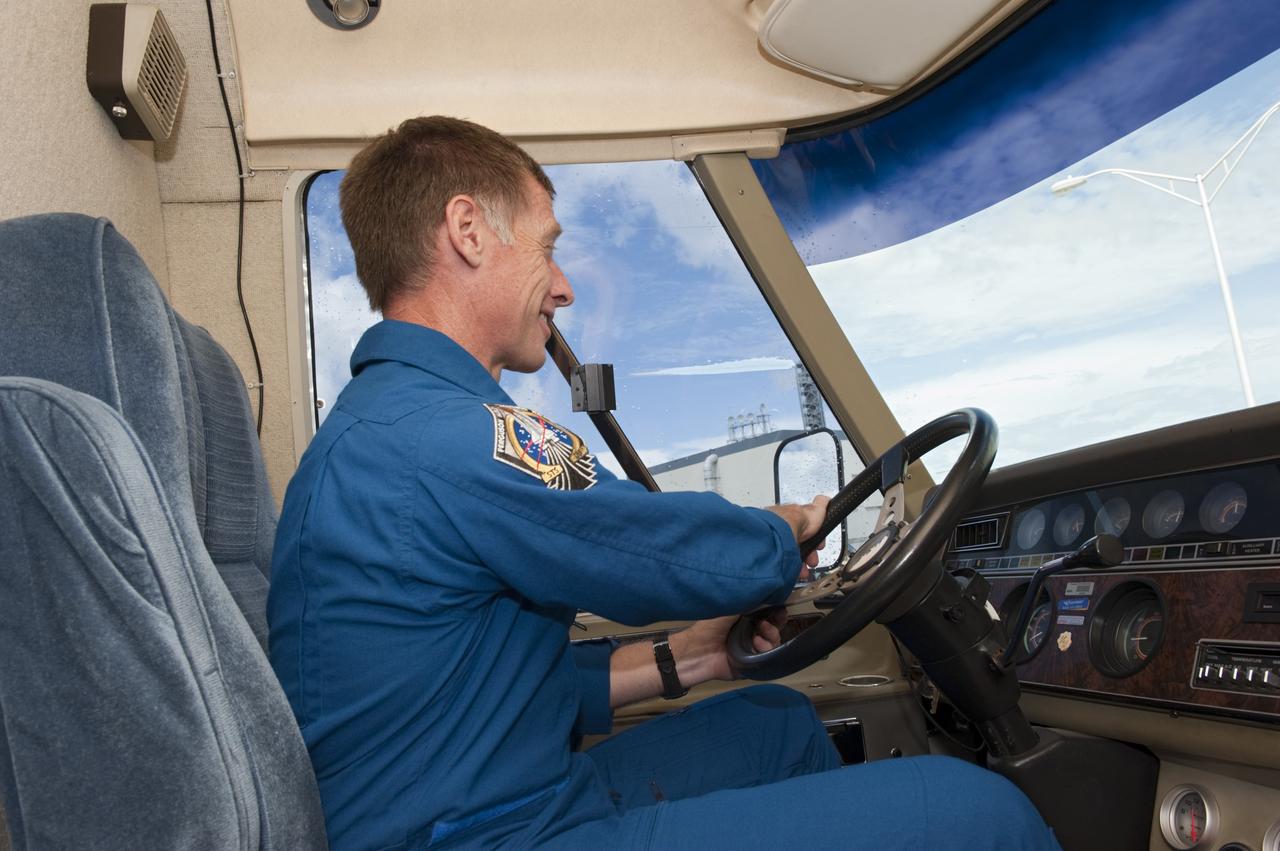
CAPE CANAVERAL, Fla. – STS-135 Commander Chris Ferguson settles in the driver's seat of NASA’s silver Astrovan. Since 1984, the Astrovan, a modified Airstream motor home, has carried shuttle crew members to the launch pads. Ferguson, along with Pilot Doug Hurley and Mission Specialist Sandra Magnus, was at the center for the traditional post-flight crew return presentation. STS-135 Mission Specialist Rex Walheim was unable to attend the Kennedy event. In July 2011, Atlantis and its crew delivered to the International Space Station the Raffaello multi-purpose logistics module packed with more than 9,400 pounds of spare parts, equipment and supplies that will sustain station operations for the next year. STS-135 was the 33rd and final flight for Atlantis and the final mission of the Space Shuttle Program. For more information, visit www.nasa.gov/mission_pages/shuttle/shuttlemissions/sts135/index.html. Photo credit: NASA/Kim Shiflett
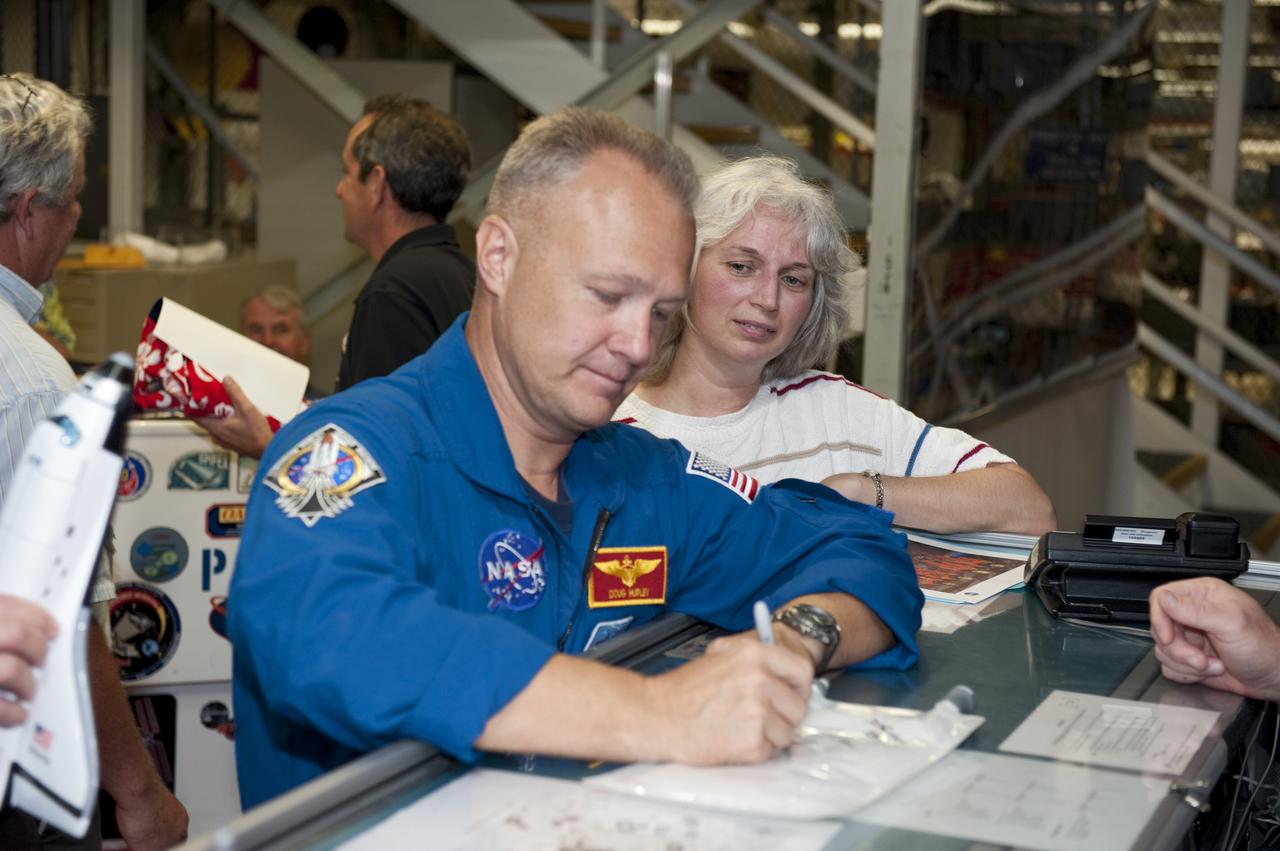
CAPE CANAVERAL, Fla. – STS-135 Pilot Doug Hurley signs an autograph for an employee inside Kennedy Space Center's Orbiter Processing Facility-2, where space shuttle Atlantis is being prepared for eventual display at the Kennedy Space Center Visitor Complex in Florida. Hurley, along with Commander Chris Ferguson and Mission Specialist Sandra Magnus, was at the center for the traditional post-flight crew return presentation. STS-135 Mission Specialist Rex Walheim was unable to attend the Kennedy event. In July 2011, Atlantis and its crew delivered to the International Space Station the Raffaello multi-purpose logistics module packed with more than 9,400 pounds of spare parts, equipment and supplies that will sustain station operations for the next year. STS-135 was the 33rd and final flight for Atlantis and the final mission of the Space Shuttle Program. For more information, visit www.nasa.gov/mission_pages/shuttle/shuttlemissions/sts135/index.html. Photo credit: NASA/Kim Shiflett
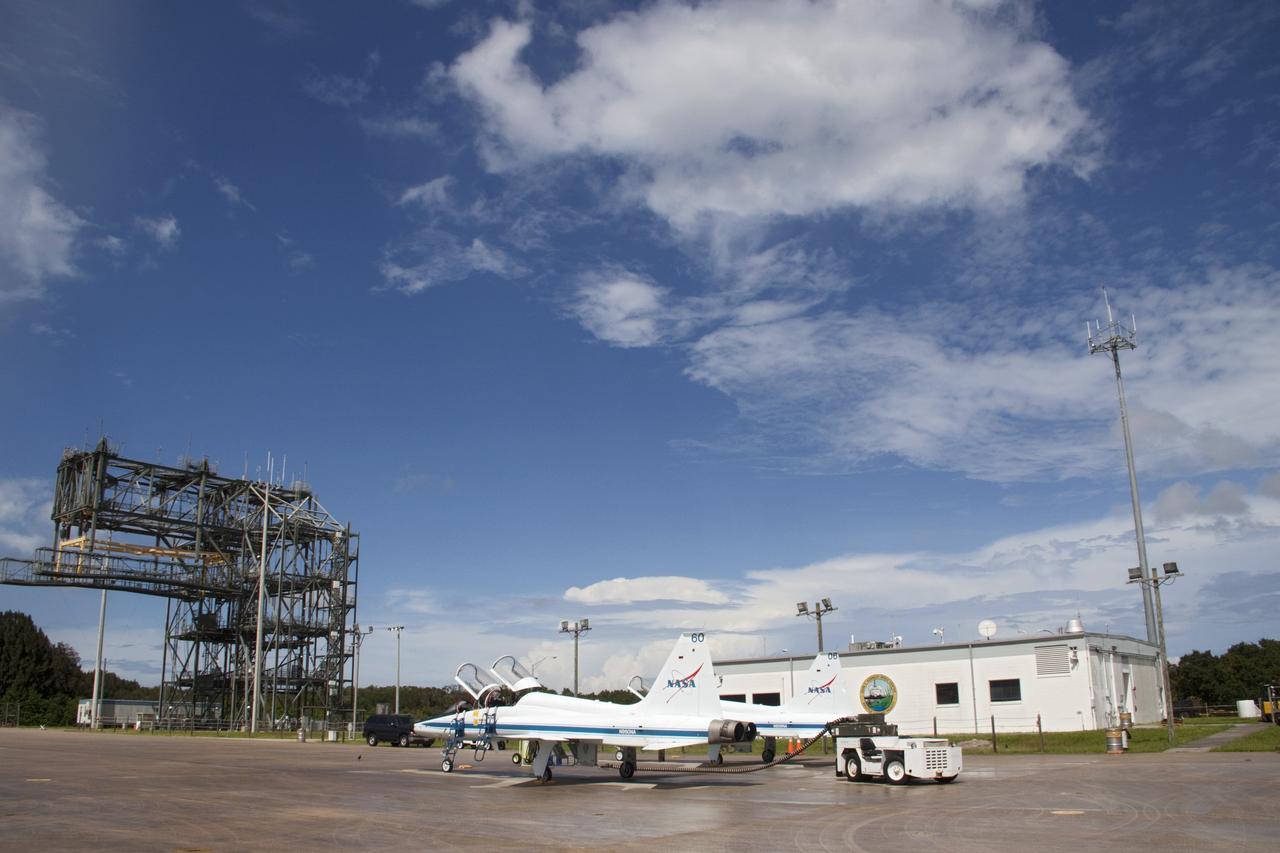
CAPE CANAVERAL, Fla. – At NASA's Kennedy Space Center in Florida, a T-38 training jet on the Shuttle Landing Facility is being fueled in preparation for the arrival of the space shuttle Atlantis’ STS-135 astronauts. Commander Chris Ferguson, Pilot Doug Hurley and Mission Specialist Sandra Magnus were at the center for the traditional post-flight crew return presentation. To the left of the jet is the space shuttle's mate-demate device. STS-135 Mission Specialist Rex Walheim was unable to attend the Kennedy event. In July 2011, Atlantis and its crew delivered to the International Space Station the Raffaello multi-purpose logistics module packed with more than 9,400 pounds of spare parts, equipment and supplies that will sustain station operations for the next year. STS-135 was the 33rd and final flight for Atlantis and the final mission of the Space Shuttle Program. For more information, visit www.nasa.gov/mission_pages/shuttle/shuttlemissions/sts135/index.html. Photo credit: NASA/Jim Grossmann
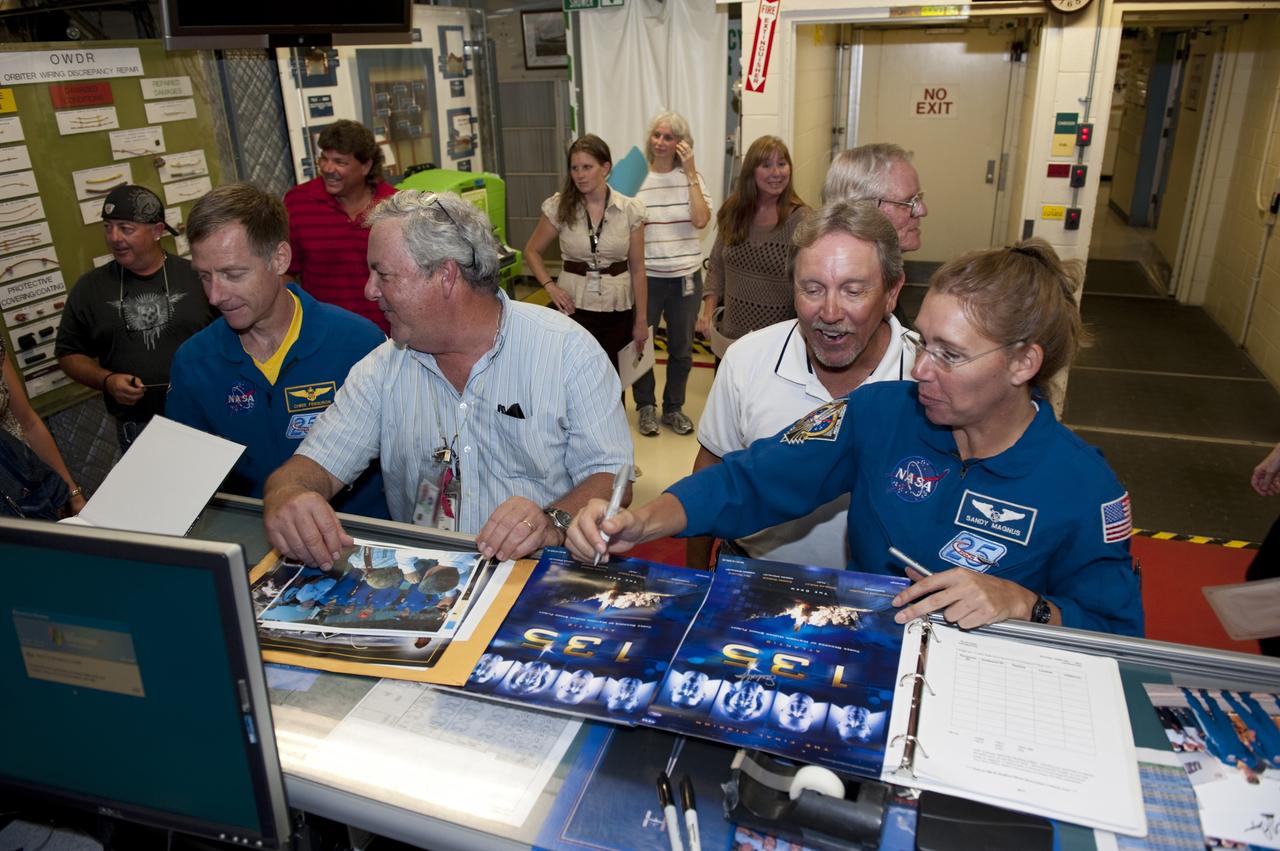
CAPE CANAVERAL, Fla. – STS-135 Commander Chris Ferguson and Mission Specialist Sandra Magnus sign autographs for employees inside Kennedy Space Center's Orbiter Processing Facility-2, where space shuttle Atlantis is being prepared for eventual display at the Kennedy Space Center Visitor Complex in Florida. The astronauts, along with Pilot Doug Hurley, were at the center for the traditional post-flight crew return presentation. STS-135 Mission Specialist Rex Walheim was unable to attend the Kennedy event. In July 2011, Atlantis and its crew delivered to the International Space Station the Raffaello multi-purpose logistics module packed with more than 9,400 pounds of spare parts, equipment and supplies that will sustain station operations for the next year. STS-135 was the 33rd and final flight for Atlantis and the final mission of the Space Shuttle Program. For more information, visit www.nasa.gov/mission_pages/shuttle/shuttlemissions/sts135/index.html. Photo credit: NASA/Kim Shiflett
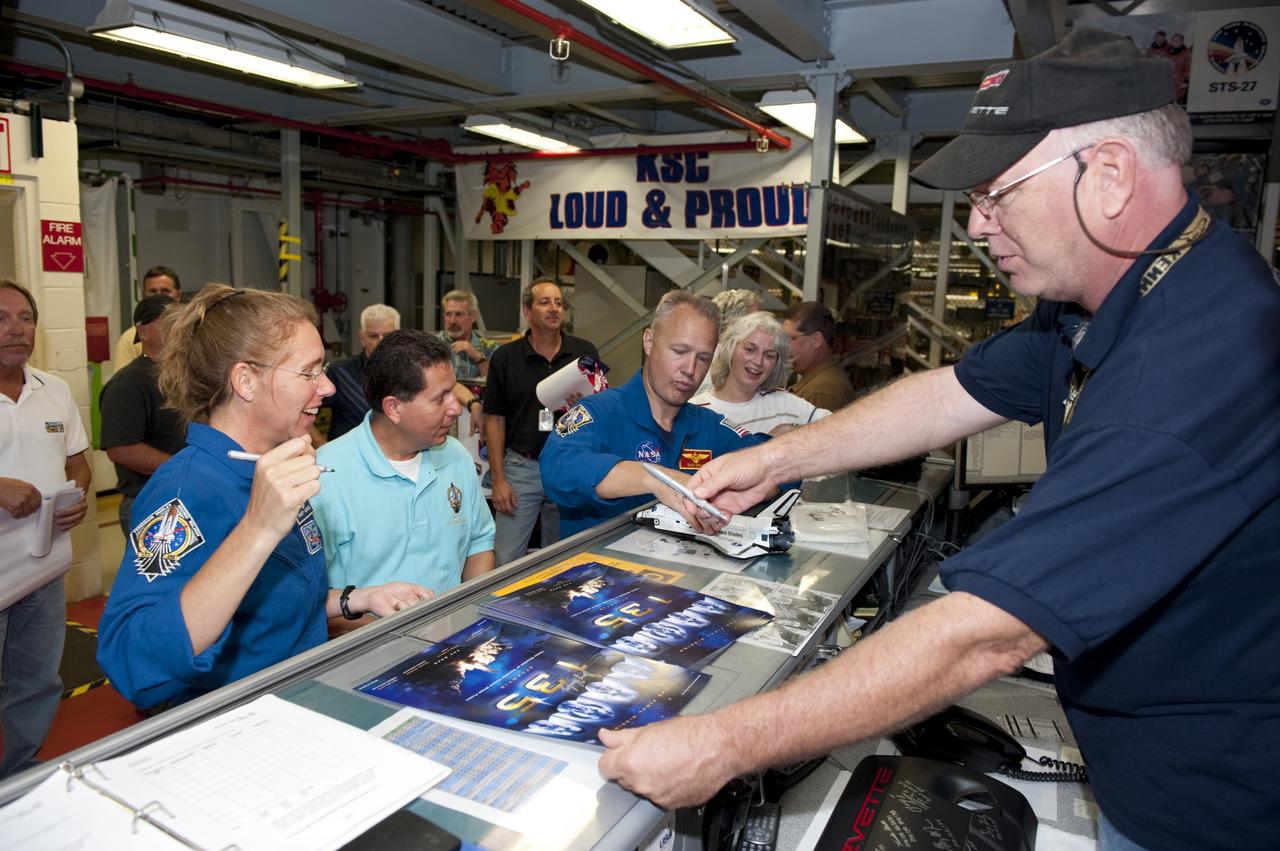
CAPE CANAVERAL, Fla. – STS-135 Mission Specialist Sandra Magnus signs an autograph while Pilot Doug Hurley autographs a space shuttle replica for employees inside Kennedy Space Center's Orbiter Processing Facility-2, where space shuttle Atlantis is being prepared for eventual display at the Kennedy Space Center Visitor Complex in Florida. The astronauts, along with Commander Chris Ferguson, were at the center for the traditional post-flight crew return presentation. STS-135 Mission Specialist Rex Walheim was unable to attend the Kennedy event. In July 2011, Atlantis and its crew delivered to the International Space Station the Raffaello multi-purpose logistics module packed with more than 9,400 pounds of spare parts, equipment and supplies that will sustain station operations for the next year. STS-135 was the 33rd and final flight for Atlantis and the final mission of the Space Shuttle Program. For more information, visit www.nasa.gov/mission_pages/shuttle/shuttlemissions/sts135/index.html. Photo credit: NASA/Kim Shiflett
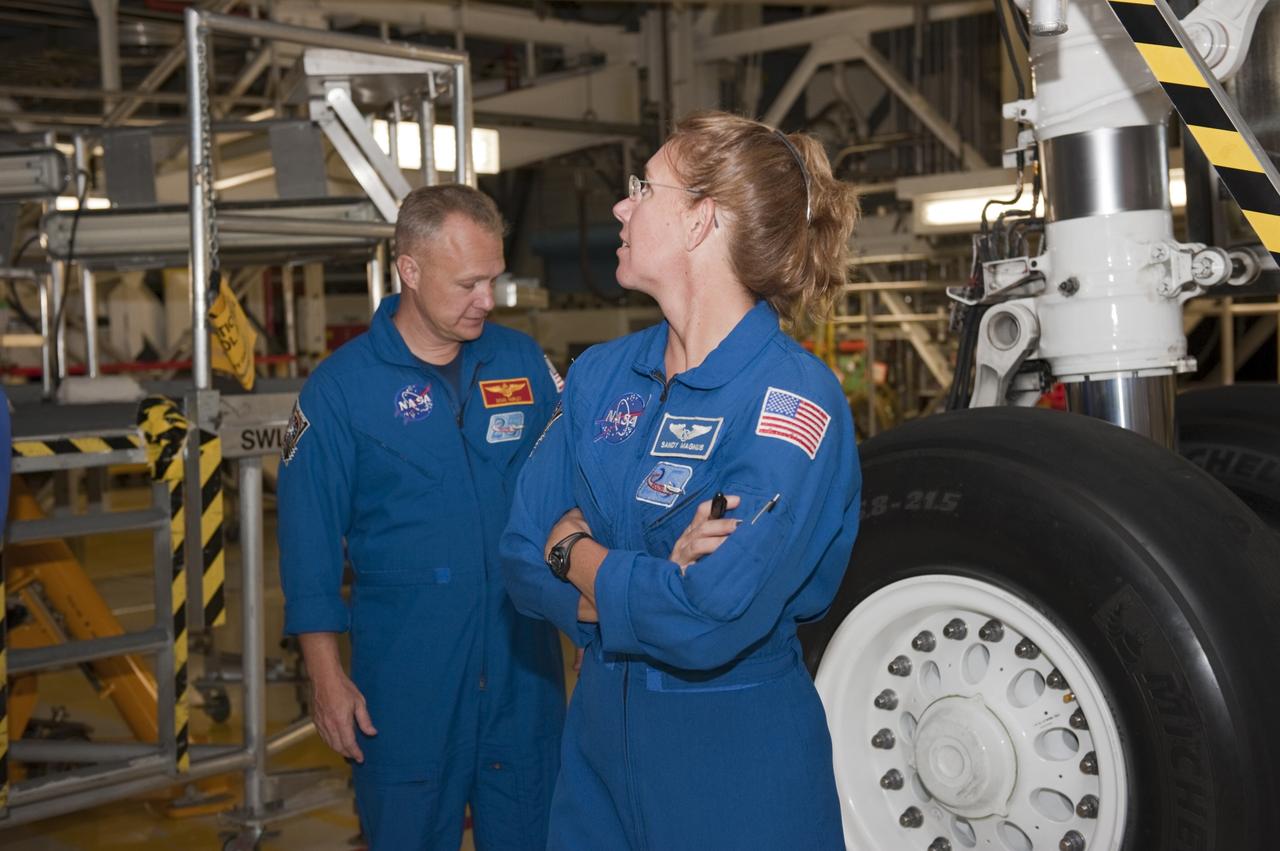
CAPE CANAVERAL, Fla. – STS-135 Pilot Doug Hurley and Mission Specialist Sandra Magnus stand next to a wheel on space shuttle Atlantis inside Kennedy Space Center's Orbiter Processing Facility-2. Atlantis is being prepared for eventual display at the Kennedy Space Center Visitor Complex in Florida. The astronauts, along Commander Chris Ferguson, were at the center for the traditional post-flight crew return presentation. STS-135 Mission Specialist Rex Walheim was unable to attend the Kennedy event. In July 2011, Atlantis and its crew delivered to the International Space Station the Raffaello multi-purpose logistics module packed with more than 9,400 pounds of spare parts, equipment and supplies that will sustain station operations for the next year. STS-135 was the 33rd and final flight for Atlantis and the final mission of the Space Shuttle Program. For more information, visit www.nasa.gov/mission_pages/shuttle/shuttlemissions/sts135/index.html. Photo credit: NASA/Kim Shiflett
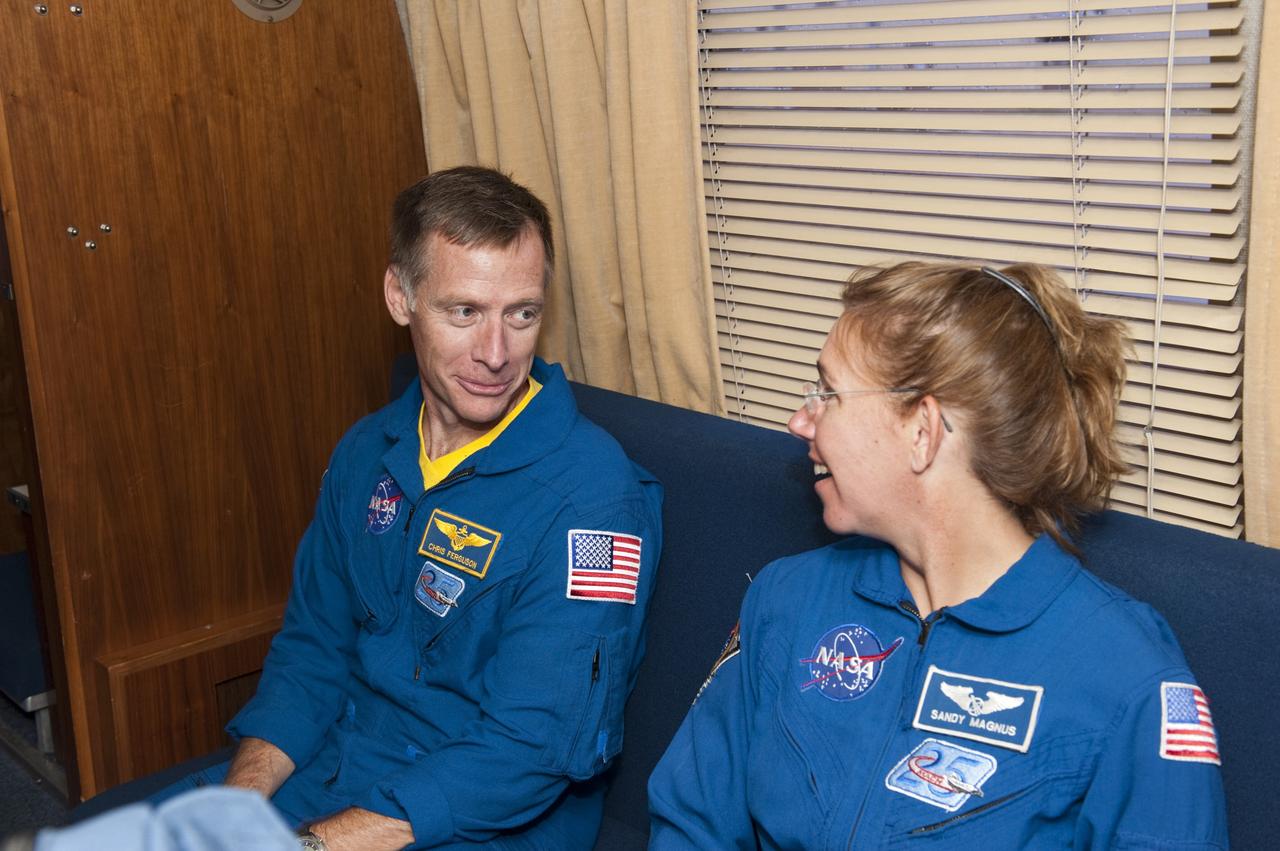
CAPE CANAVERAL, Fla. – Astronauts from Space Shuttle Atlantis’ STS-135 mission travel inside NASA’s silver Astrovan. From left are Commander Chris Ferguson and Mission Specialist Sandra Magnus. Since 1984, the Astrovan, a modified Airstream motor home, has carried shuttle crew members to the launch pads. The astronauts, along with Pilot Doug Hurley were at the center for the traditional post-flight crew return presentation. STS-135 Mission Specialist Rex Walheim was unable to attend the Kennedy event. In July 2011, Atlantis and its crew delivered to the International Space Station the Raffaello multi-purpose logistics module packed with more than 9,400 pounds of spare parts, equipment and supplies that will sustain station operations for the next year. STS-135 was the 33rd and final flight for Atlantis and the final mission of the Space Shuttle Program. For more information, visit www.nasa.gov/mission_pages/shuttle/shuttlemissions/sts135/index.html. Photo credit: NASA/Kim Shiflett
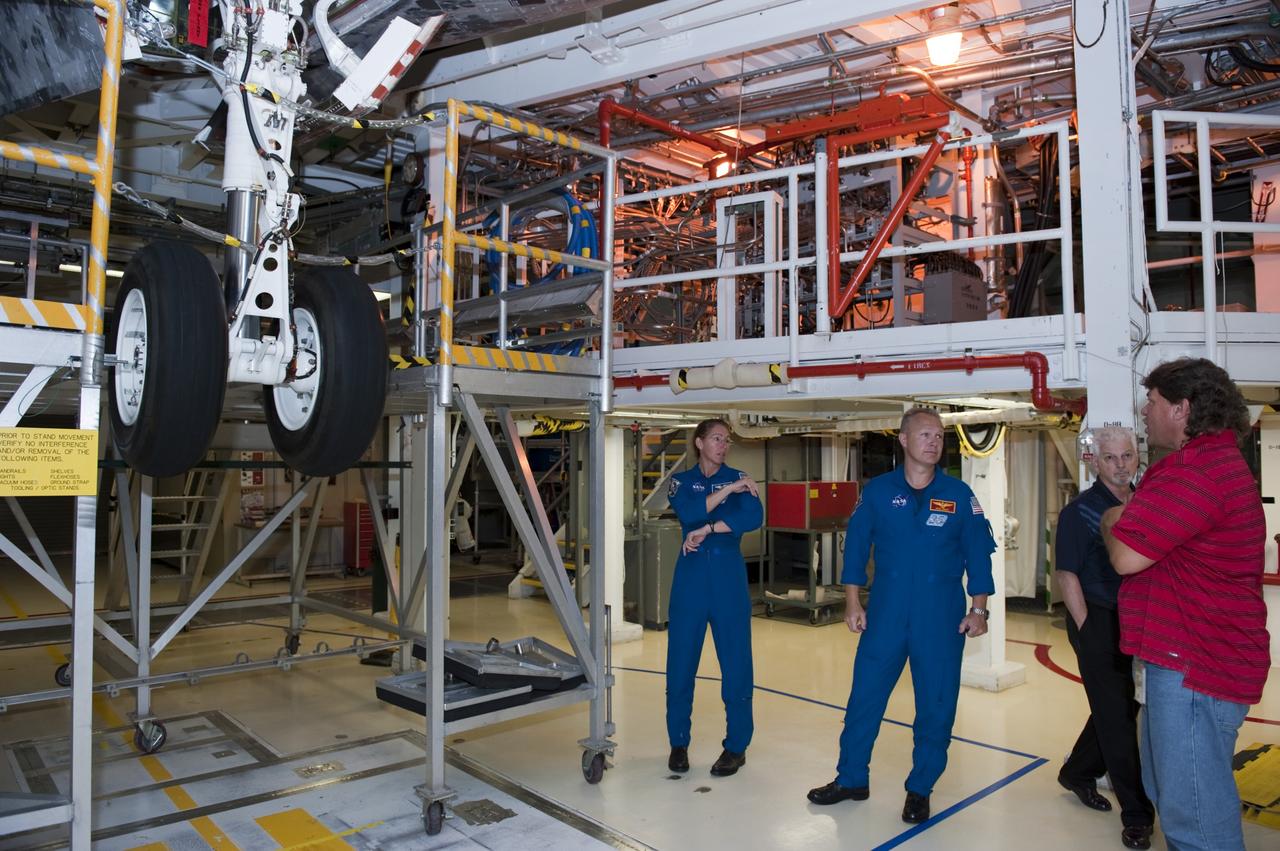
CAPE CANAVERAL, Fla. – STS-135 Pilot Doug Hurley and Mission Specialist Sandra Magnus receive a briefing and up-close look beneath space shuttle Atlantis inside Kennedy Space Center's Orbiter Processing Facility-2. Atlantis is being prepared for eventual display at the Kennedy Space Center Visitor Complex in Florida. The astronauts, along with Commander Chris Ferguson, were at the center for the traditional post-flight crew return presentation. STS-135 Mission Specialist Rex Walheim was unable to attend the Kennedy event. In July 2011, Atlantis and its crew delivered to the International Space Station the Raffaello multi-purpose logistics module packed with more than 9,400 pounds of spare parts, equipment and supplies that will sustain station operations for the next year. STS-135 was the 33rd and final flight for Atlantis and the final mission of the Space Shuttle Program. For more information, visit www.nasa.gov/mission_pages/shuttle/shuttlemissions/sts135/index.html. Photo credit: NASA/Kim Shiflett
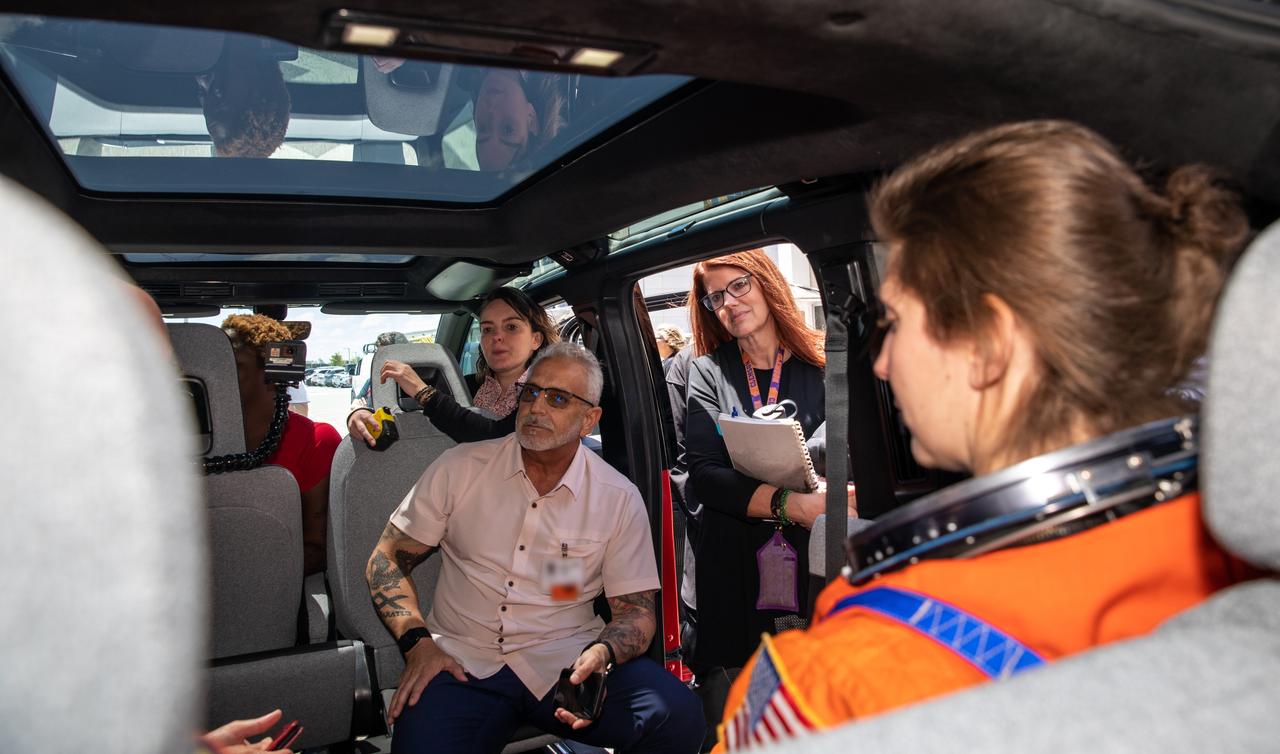
Technicians from Johnson Space Center, dressed in flight suits, secure themselves inside a prototype of a crew transportation vehicle (CTV) for Artemis crewed missions for a test drive near the Neil Armstrong Operations and Checkout Building at NASA’s Kennedy Space Center in Florida on May 11, 2022. Canoo Technologies Inc., was awarded a contract to design and provide the next generation of CTVs for the Artemis crewed missions Representatives with Canoo were at the spaceport demonstrating the environmentally friendly fleet of vehicles. Also in view near the vehicle’s door is Artemis I Launch Director Charlie Blackwell Thompson, and at left, is Anthony Aquila, chief executive officer of Canoo Technologies Inc.. Artemis II will be the first Artemis mission flying crew aboard Orion. In later missions, NASA will land the first woman and the first person of color on the surface of the Moon, paving the way for a long-term lunar presence and serving as a steppingstone on the way to Mars.
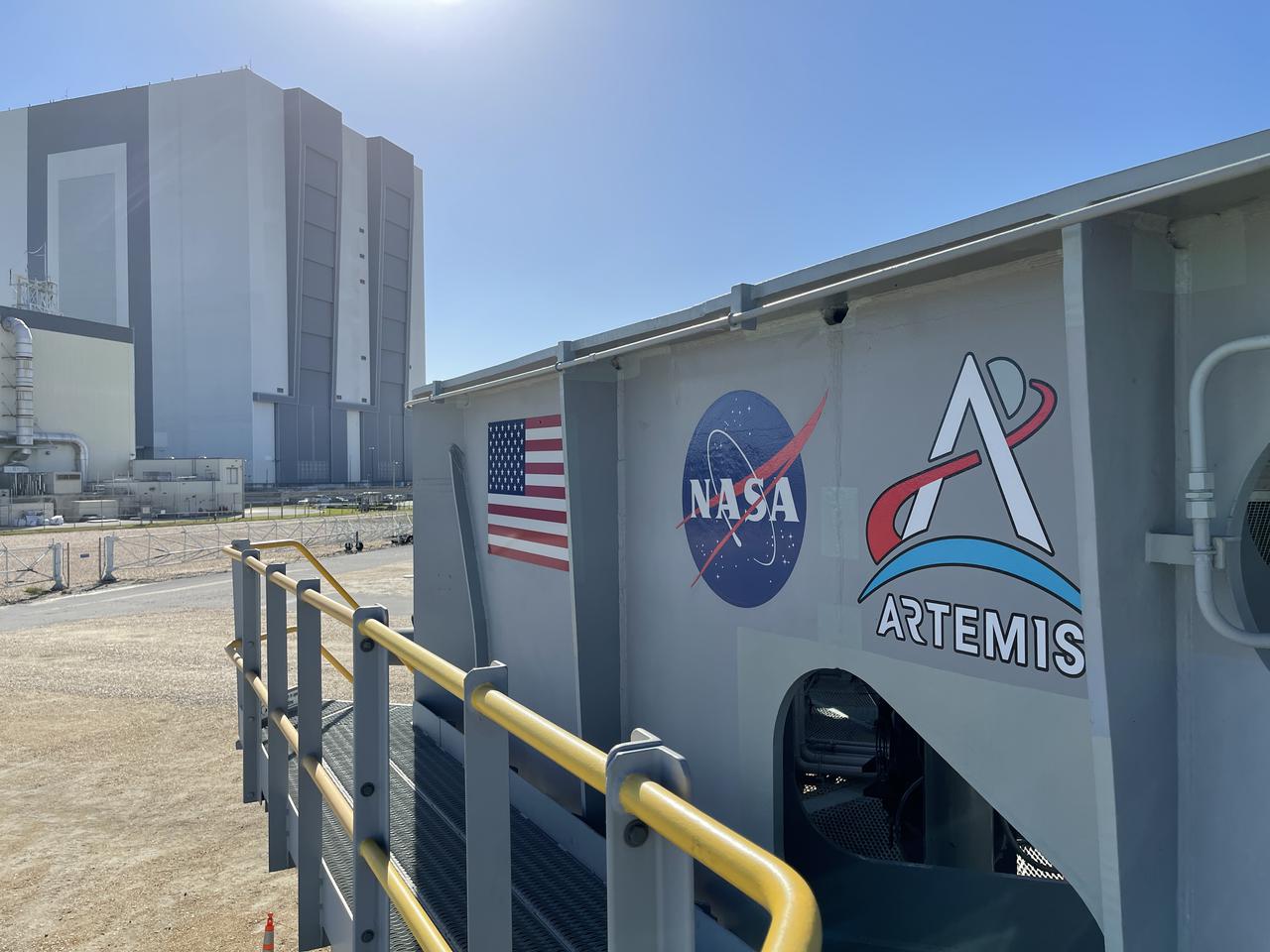
Eight new NASA Artemis logos (four large, four small) were installed on Crawler-Transporter 2 at Kennedy Space Center in preparation for the upcoming launch of Artemis I. The Vehicle Assembly Building, in back, is where NASA's Space Launch System and Orion Spacecraft are currently stacked and being prepared to roll out on top of the crawler to Launch Pad 39B for the first time.
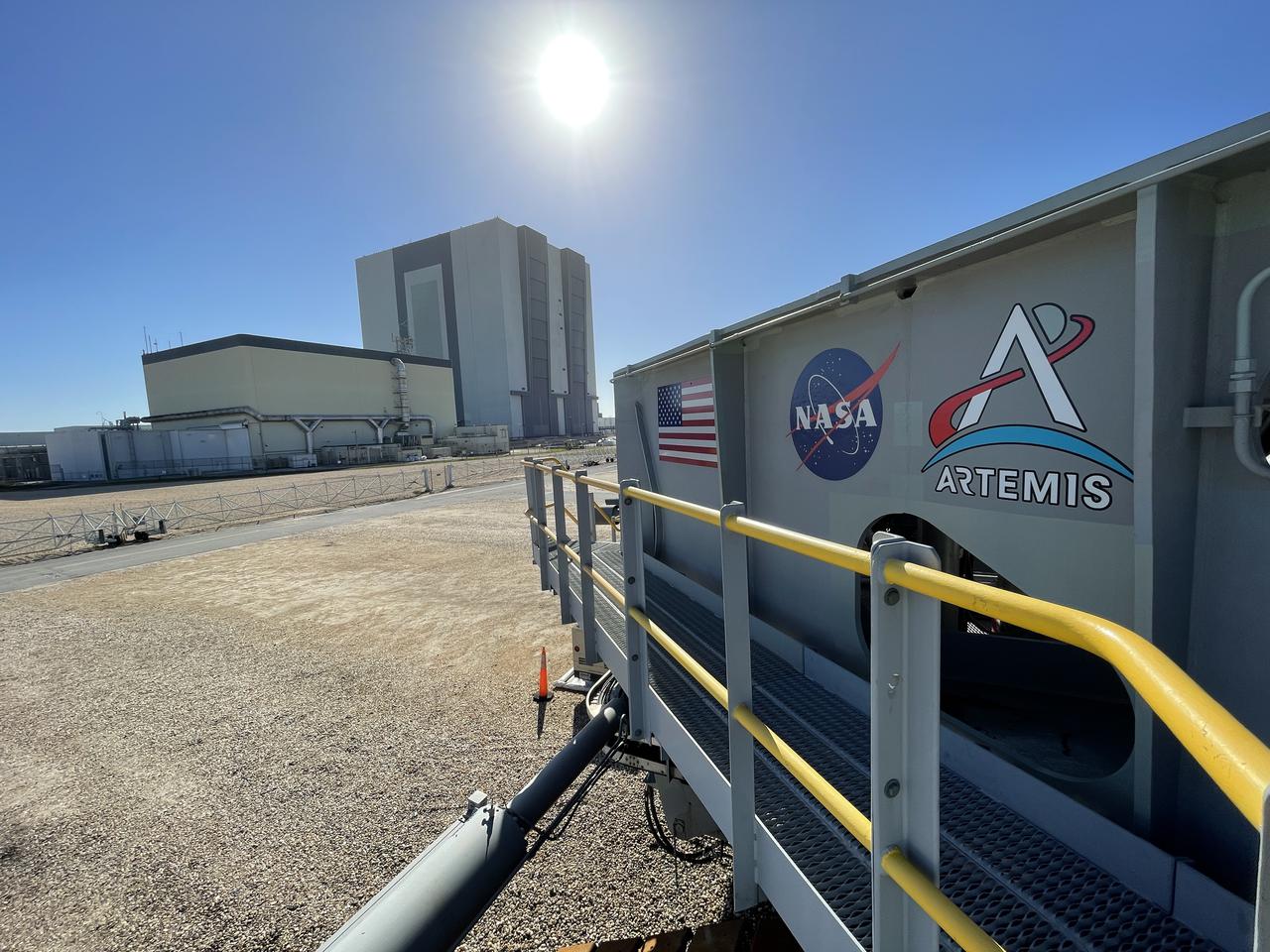
Eight new NASA Artemis logos (four large, four small) were installed on Crawler-Transporter 2 at Kennedy Space Center in preparation for the upcoming launch of Artemis I. The Vehicle Assembly Building, in back, is where NASA's Space Launch System and Orion Spacecraft are currently stacked and being prepared to roll out on top of the crawler to Launch Pad 39B for the first time.
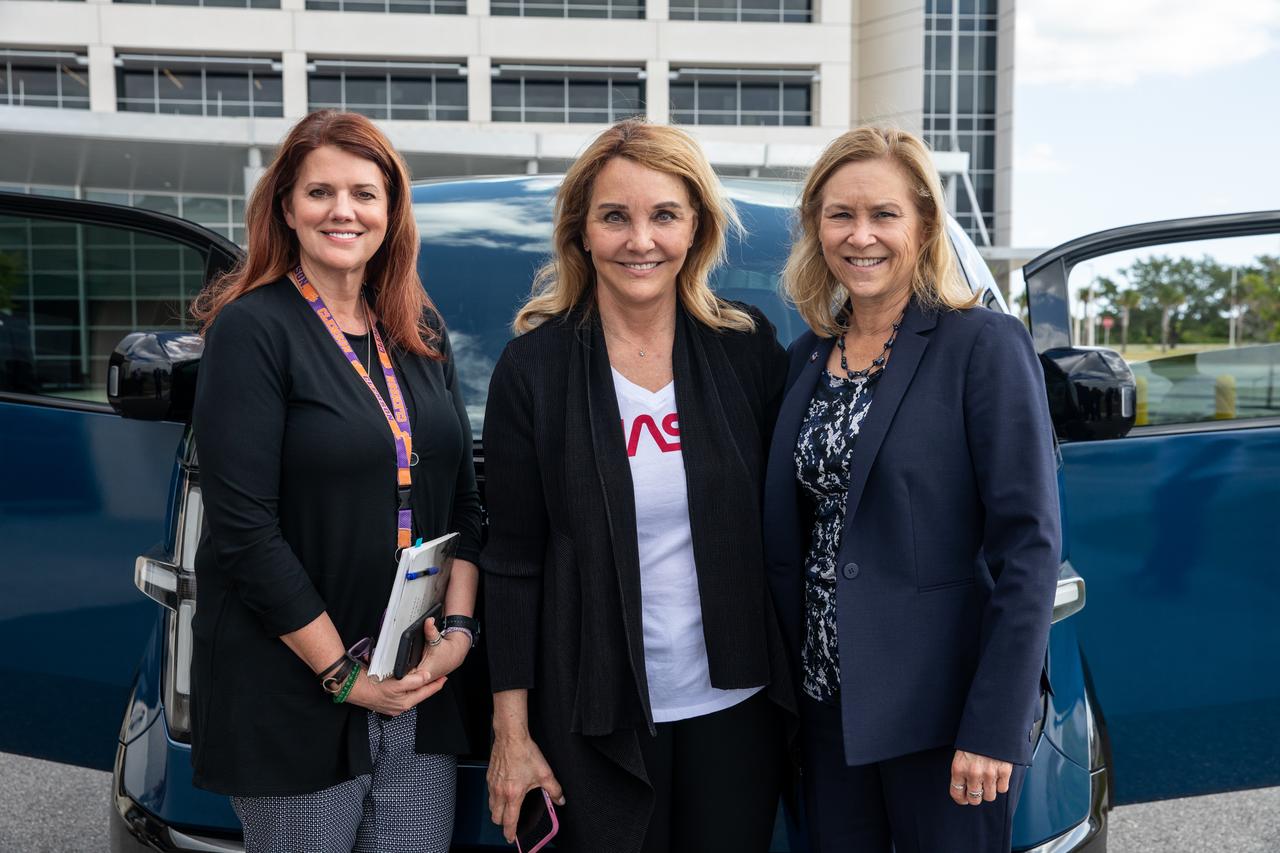
Kennedy Space Center Director Janet Petro, at right test drives a concept design crew transportation vehicle (CTV) for Artemis crewed missions on May 11, 2022. With her, from left, are Charlie Blackwell-Thompson, Artemis I launch director, and Josette Sheeran, president of Canoo Technologies, Inc.. Canoo Technologies Inc., was awarded a contract to design and provide the next generation of CTVs for the Artemis crewed missions. Representatives with Canoo were at the spaceport demonstrating the environmentally friendly fleet of vehicles. Artemis II will be the first Artemis mission flying crew aboard Orion. In later missions, NASA will land the first woman and the first person of color on the surface of the Moon, paving the way for a long-term lunar presence and serving as a steppingstone on the way to Mars.
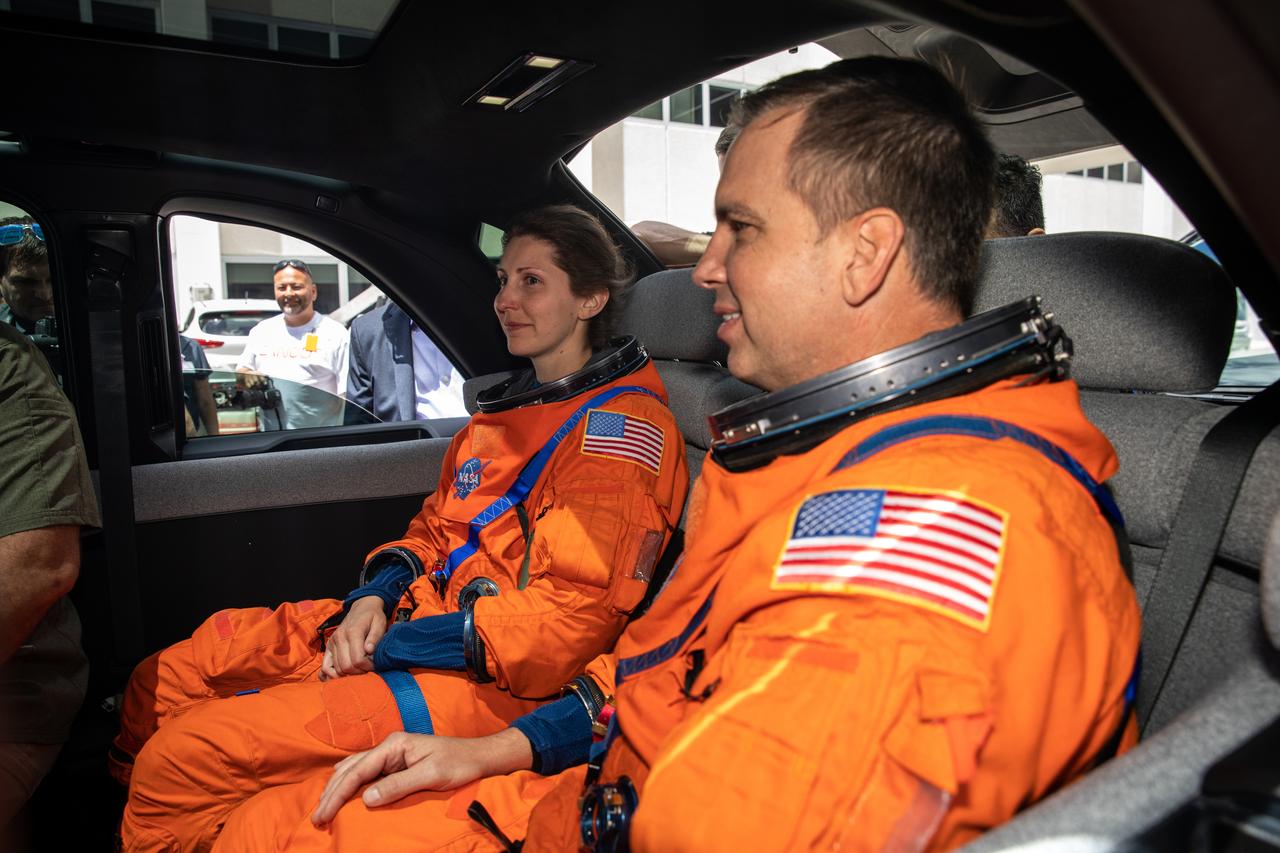
Technicians from Johnson Space Center, dressed in flight suits, secure themselves inside a prototype of a crew transportation vehicle (CTV) for Artemis crewed missions outside the Neil Armstrong Operations and Checkout Building at NASA’s Kennedy Space Center in Florida on May 11, 2022. Canoo Technologies Inc., was awarded a contract to design and provide the next generation of CTVs for the Artemis crewed missions. Representatives with Canoo were at the spaceport demonstrating the environmentally friendly fleet of vehicles. Artemis II will be the first Artemis mission flying crew aboard Orion. In later missions, NASA will land the first woman and the first person of color on the surface of the Moon, paving the way for a long-term lunar presence and serving as a steppingstone on the way to Mars.

Technicians from Johnson Space Center, dressed in flight suits, secure themselves inside a prototype of a crew transportation vehicle (CTV) for Artemis crewed missions outside the Neil Armstrong Operations and Checkout Building at NASA’s Kennedy Space Center in Florida on May 11, 2022. Canoo Technologies Inc., was awarded a contract to design and provide the next generation of CTVs for the Artemis crewed missions. Representatives with Canoo were at the spaceport demonstrating the environmentally friendly fleet of vehicles. Artemis II will be the first Artemis mission flying crew aboard Orion. In later missions, NASA will land the first woman and the first person of color on the surface of the Moon, paving the way for a long-term lunar presence and serving as a steppingstone on the way to Mars.
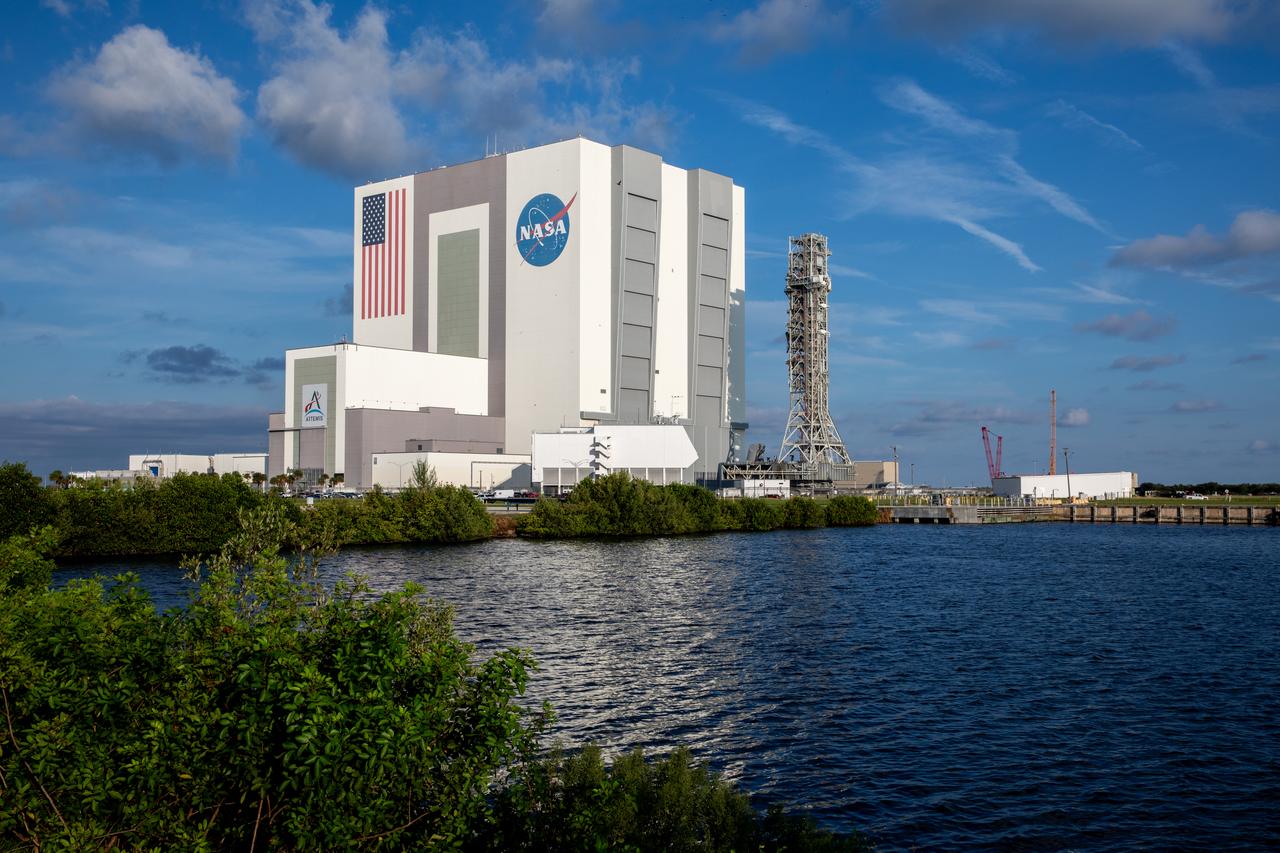
Teams with NASA’s Exploration Ground Systems Program transport the 380-foot-tall mobile launcher 1 along a 4.2-mile stretch to the iconic Vehicle Assembly Building at NASA’s Kennedy Space Center in Florida on Thursday, Oct. 3, 2024. The crawler transporter recently reached 2,500 miles traveling to the launch pad since its construction in 1965. The mobile launcher has been at Launch Complex 39B since August 2023 undergoing upgrades and tests in preparation for NASA’s Artemis II mission. The mobile launcher will be used to assemble, process, and launch NASA’s SLS (Space Launch Systems) and Orion spacecraft to the Moon and beyond.
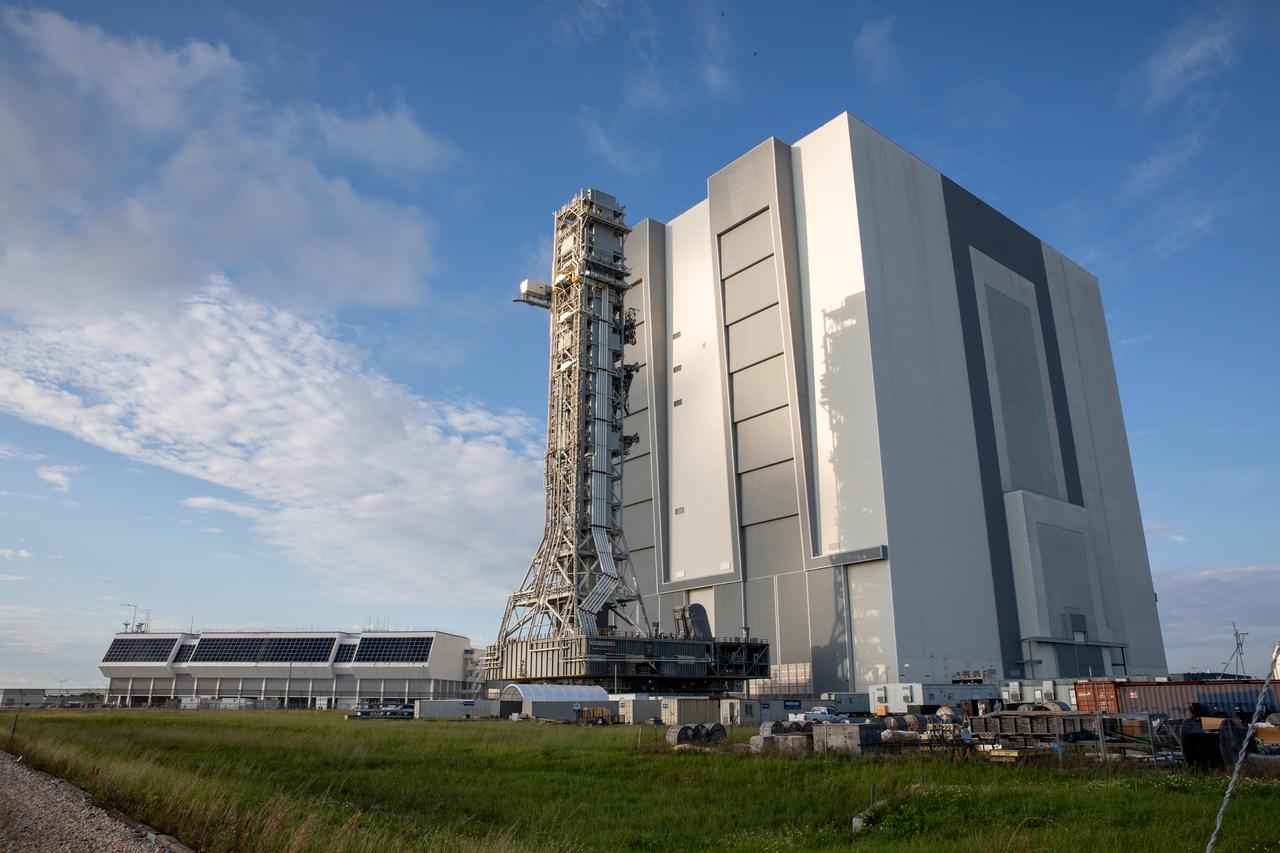
Teams with NASA’s Exploration Ground Systems Program transport the 380-foot-tall mobile launcher 1 along a 4.2-mile stretch to the iconic Vehicle Assembly Building at NASA’s Kennedy Space Center in Florida on Thursday, Oct. 3, 2024. The crawler transporter recently reached 2,500 miles traveling to the launch pad since its construction in 1965. The mobile launcher has been at Launch Complex 39B since August 2023 undergoing upgrades and tests in preparation for NASA’s Artemis II mission. The mobile launcher will be used to assemble, process, and launch NASA’s SLS (Space Launch Systems) and Orion spacecraft to the Moon and beyond.

Teams with NASA’s Exploration Ground Systems Program transport the 380-foot-tall mobile launcher 1 along a 4.2-mile stretch to the iconic Vehicle Assembly Building at NASA’s Kennedy Space Center in Florida on Thursday, Oct. 3, 2024. The crawler transporter recently reached 2,500 miles traveling to the launch pad since its construction in 1965. The mobile launcher has been at Launch Complex 39B since August 2023 undergoing upgrades and tests in preparation for NASA’s Artemis II mission. The mobile launcher will be used to assemble, process, and launch NASA’s SLS (Space Launch Systems) and Orion spacecraft to the Moon and beyond.
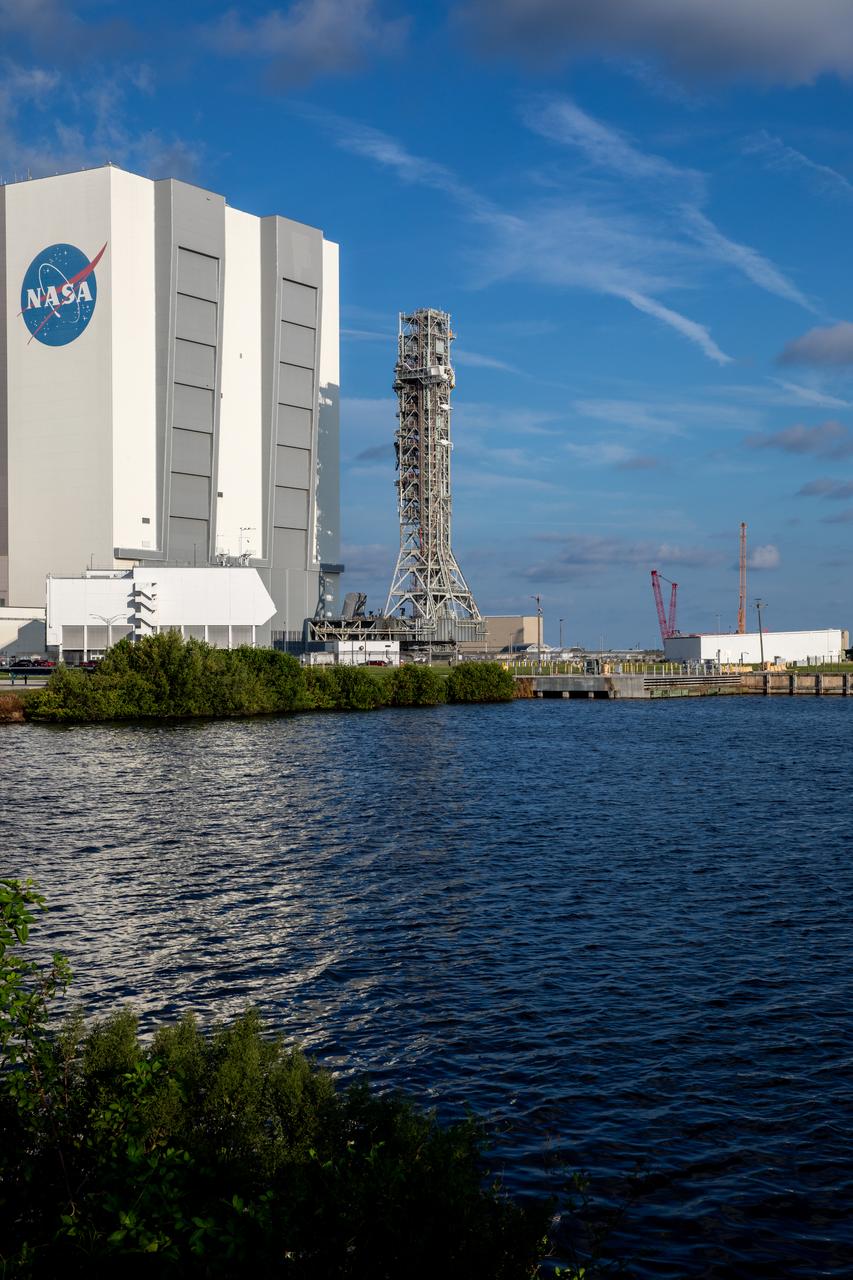
Teams with NASA’s Exploration Ground Systems Program transport the 380-foot-tall mobile launcher 1 along a 4.2-mile stretch to the iconic Vehicle Assembly Building at NASA’s Kennedy Space Center in Florida on Thursday, Oct. 3, 2024. The crawler transporter recently reached 2,500 miles traveling to the launch pad since its construction in 1965. The mobile launcher has been at Launch Complex 39B since August 2023 undergoing upgrades and tests in preparation for NASA’s Artemis II mission. The mobile launcher will be used to assemble, process, and launch NASA’s SLS (Space Launch Systems) and Orion spacecraft to the Moon and beyond.

Teams with NASA’s Exploration Ground Systems Program transport the 380-foot-tall mobile launcher 1 along a 4.2-mile stretch to the iconic Vehicle Assembly Building at NASA’s Kennedy Space Center in Florida on Thursday, Oct. 3, 2024. The crawler transporter recently reached 2,500 miles traveling to the launch pad since its construction in 1965. The mobile launcher has been at Launch Complex 39B since August 2023 undergoing upgrades and tests in preparation for NASA’s Artemis II mission. The mobile launcher will be used to assemble, process, and launch NASA’s SLS (Space Launch Systems) and Orion spacecraft to the Moon and beyond.
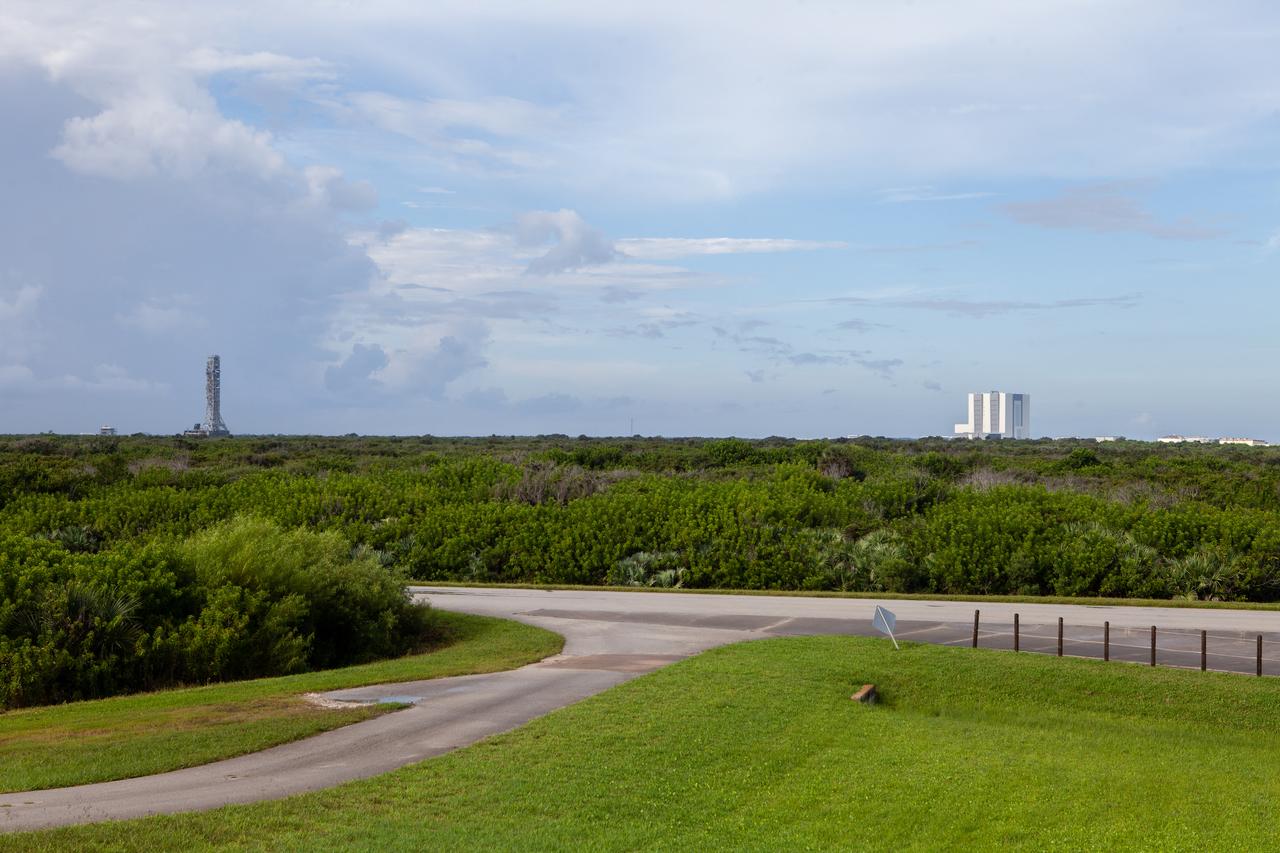
Exploration Ground Systems teams at NASA’s Kennedy Space Center in Florida take precautions to protect Artemis ground support equipment in advance of Hurricane Dorian. On Aug. 30, 2019, crawler-transporter 2 moved the mobile launcher (ML) from its current position at Launch Pad 39B to inside the Vehicle Assembly Building. In its final phases of development, the ML stands nearly 400 feet tall and is needed to assemble, process and launch NASA’s powerful Space Launch System rocket and Orion spacecraft on missions to the Moon and Mars.
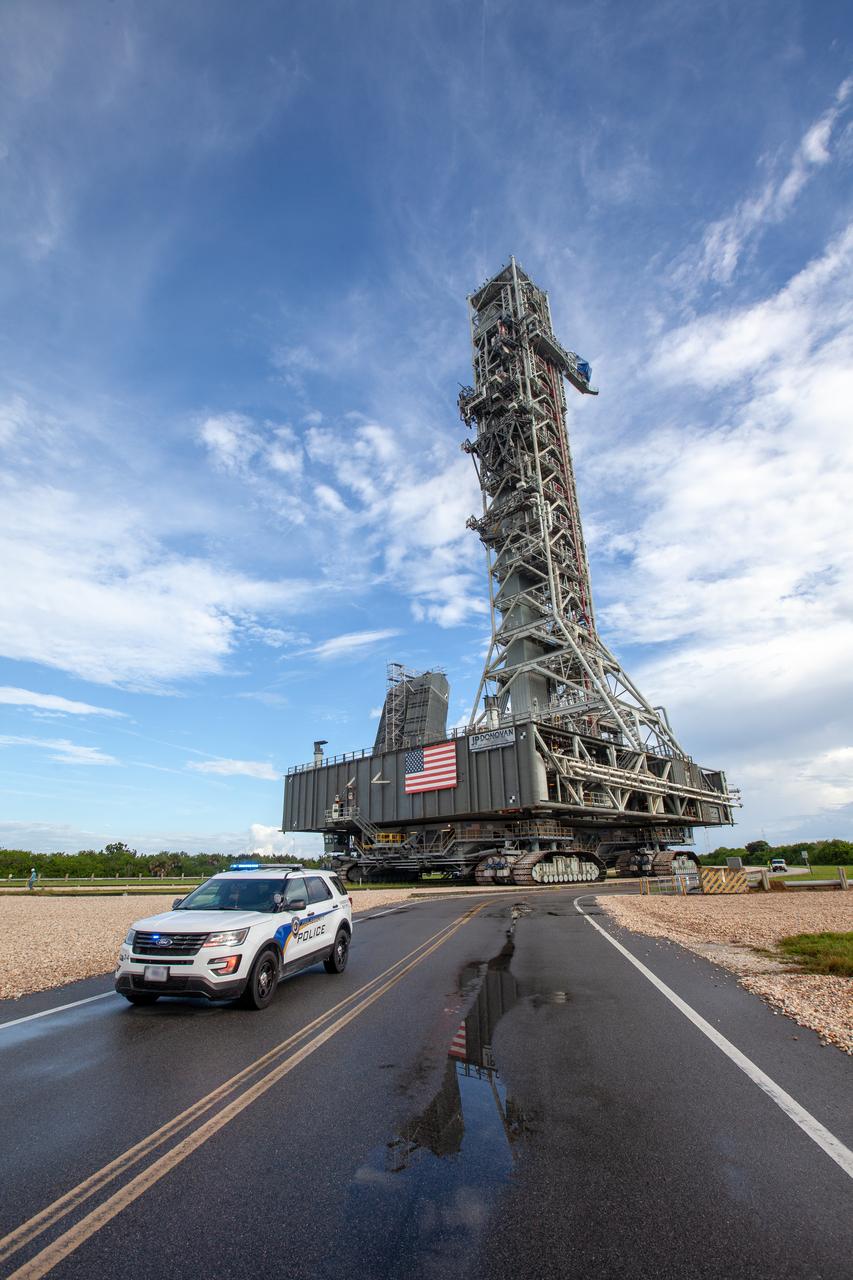
Exploration Ground Systems teams at NASA’s Kennedy Space Center in Florida take precautions to protect Artemis ground support equipment in advance of Hurricane Dorian. On Aug. 30, 2019, crawler-transporter 2 moved the mobile launcher (ML) from its current position at Launch Pad 39B to inside the Vehicle Assembly Building. In its final phases of development, the ML stands nearly 400 feet tall and is needed to assemble, process and launch NASA’s powerful Space Launch System rocket and Orion spacecraft on missions to the Moon and Mars.
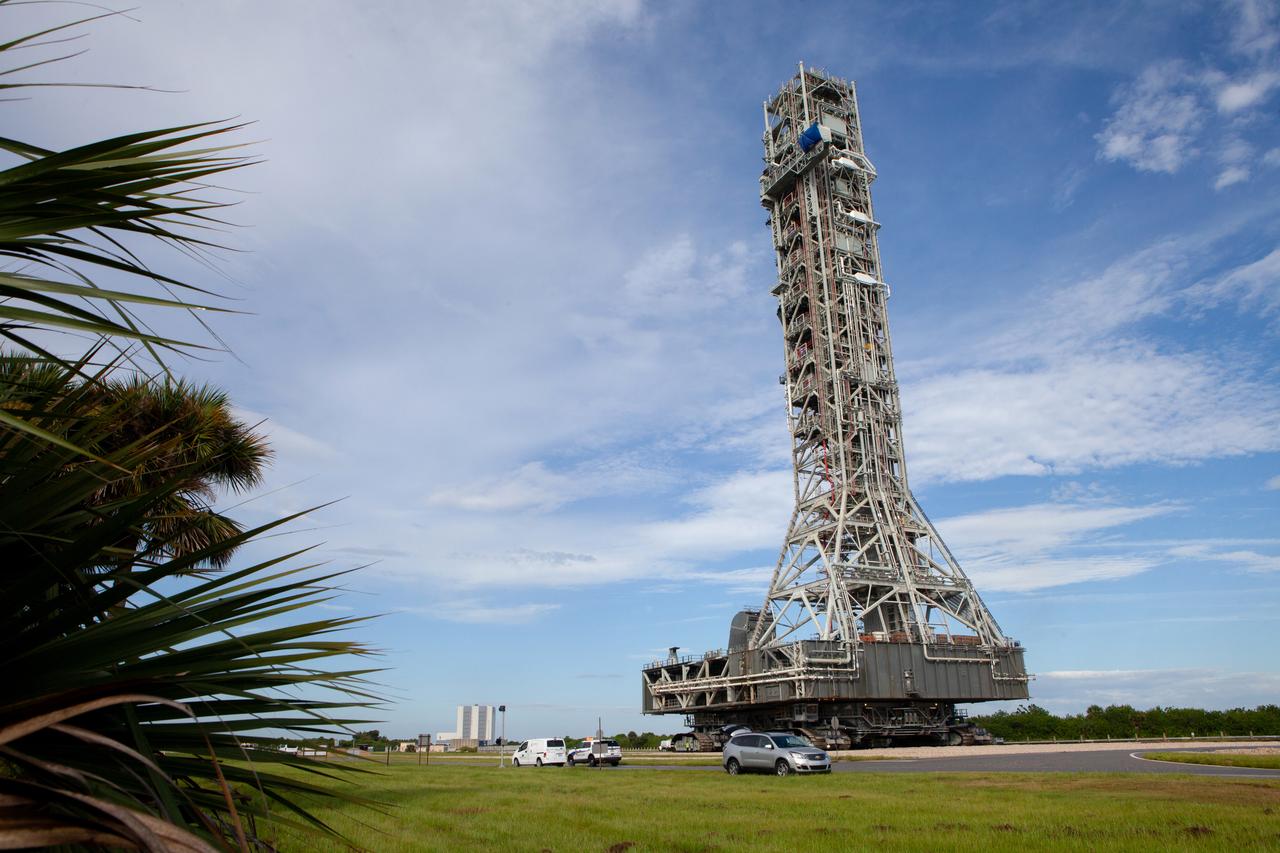
Exploration Ground Systems teams at NASA’s Kennedy Space Center in Florida take precautions to protect Artemis ground support equipment in advance of Hurricane Dorian. On Aug. 30, 2019, crawler-transporter 2 moved the mobile launcher (ML) from its current position at Launch Pad 39B to inside the Vehicle Assembly Building. In its final phases of development, the ML stands nearly 400 feet tall and is needed to assemble, process and launch NASA’s powerful Space Launch System rocket and Orion spacecraft on missions to the Moon and Mars.
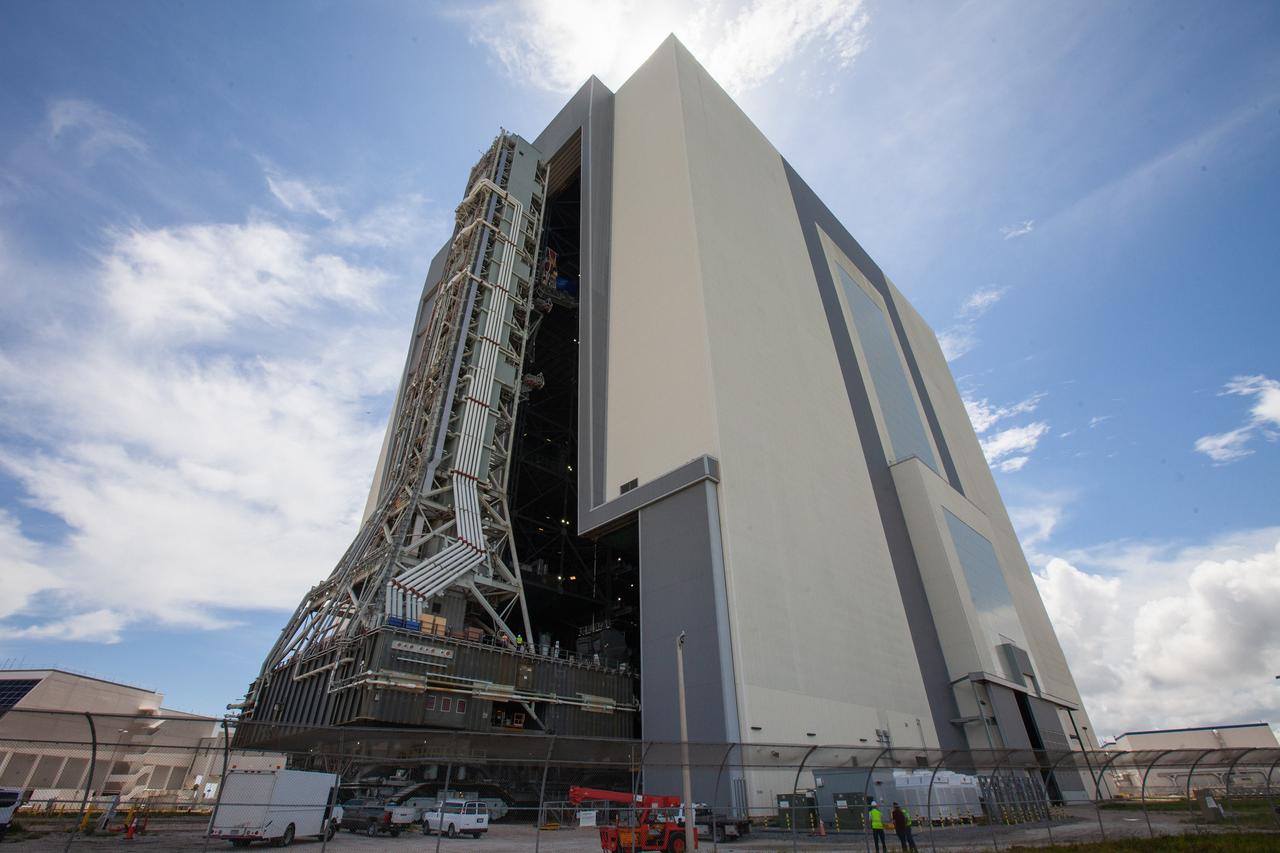
Exploration Ground Systems teams at NASA’s Kennedy Space Center in Florida take precautions to protect Artemis ground support equipment in advance of Hurricane Dorian. On Aug. 30, 2019, crawler-transporter 2 moved the mobile launcher (ML) from its current position at Launch Pad 39B to inside the Vehicle Assembly Building. In its final phases of development, the ML stands nearly 400 feet tall and is needed to assemble, process and launch NASA’s powerful Space Launch System rocket and Orion spacecraft on missions to the Moon and Mars.
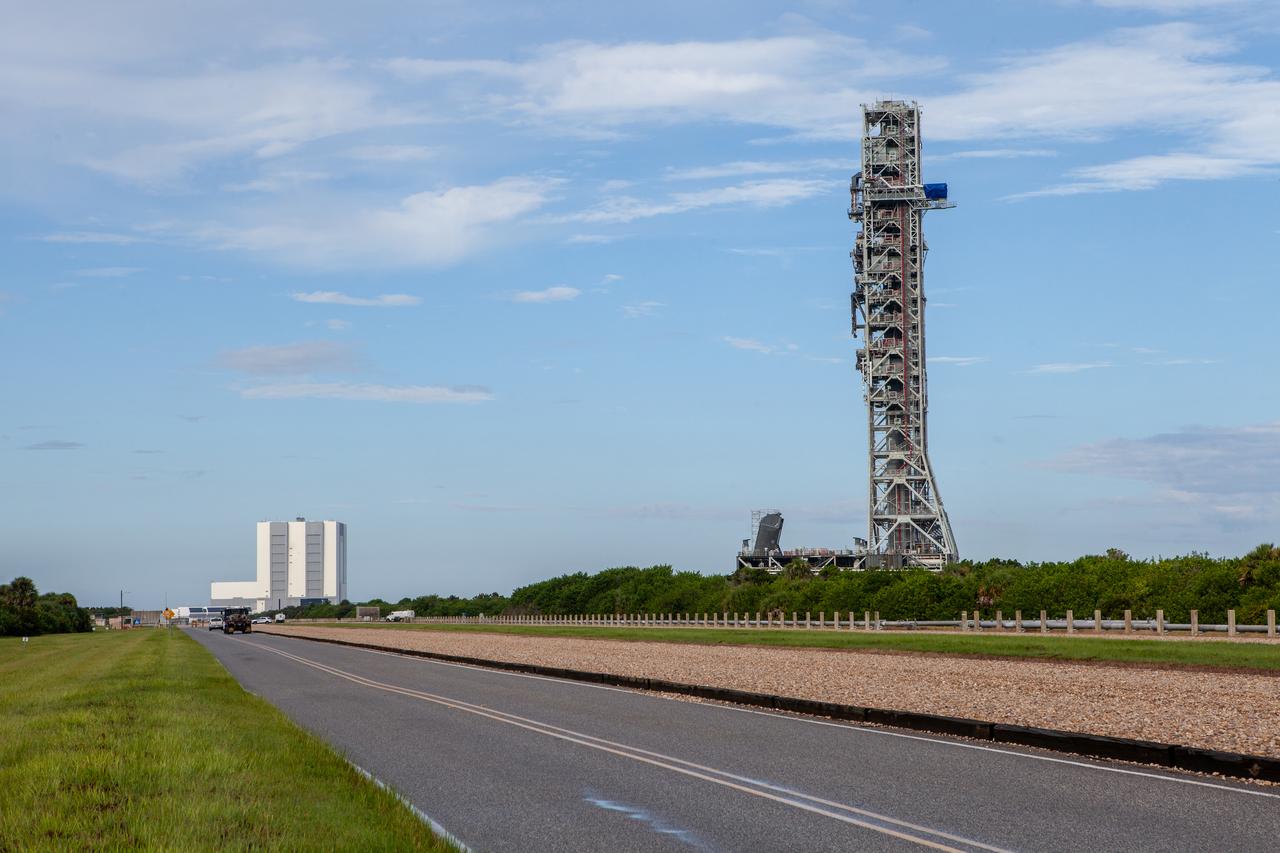
Exploration Ground Systems teams at NASA’s Kennedy Space Center in Florida take precautions to protect Artemis ground support equipment in advance of Hurricane Dorian. On Aug. 30, 2019, crawler-transporter 2 moved the mobile launcher (ML) from its current position at Launch Pad 39B to inside the Vehicle Assembly Building. In its final phases of development, the ML stands nearly 400 feet tall and is needed to assemble, process and launch NASA’s powerful Space Launch System rocket and Orion spacecraft on missions to the Moon and Mars.
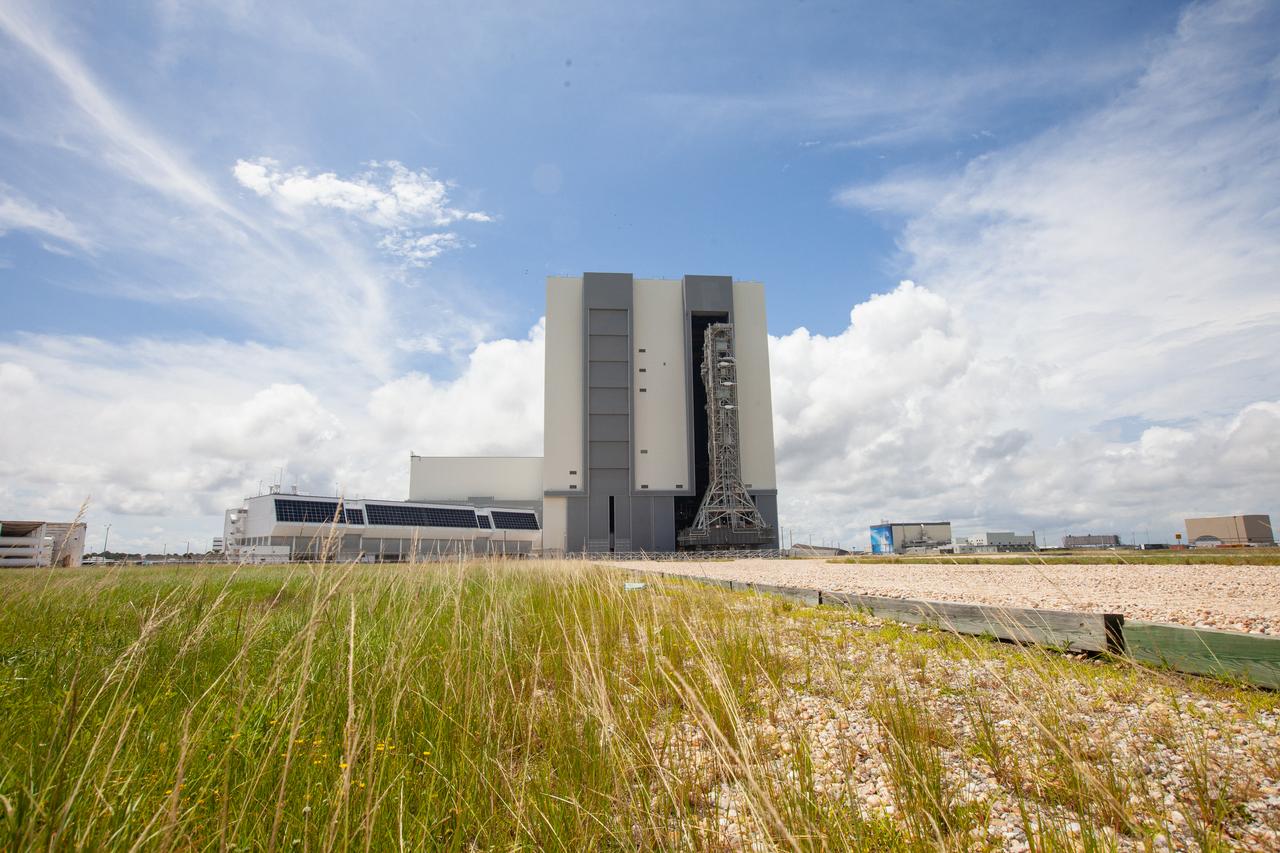
Exploration Ground Systems teams at NASA’s Kennedy Space Center in Florida take precautions to protect Artemis ground support equipment in advance of Hurricane Dorian. On Aug. 30, 2019, crawler-transporter 2 moved the mobile launcher (ML) from its current position at Launch Pad 39B to inside the Vehicle Assembly Building. In its final phases of development, the ML stands nearly 400 feet tall and is needed to assemble, process and launch NASA’s powerful Space Launch System rocket and Orion spacecraft on missions to the Moon and Mars.
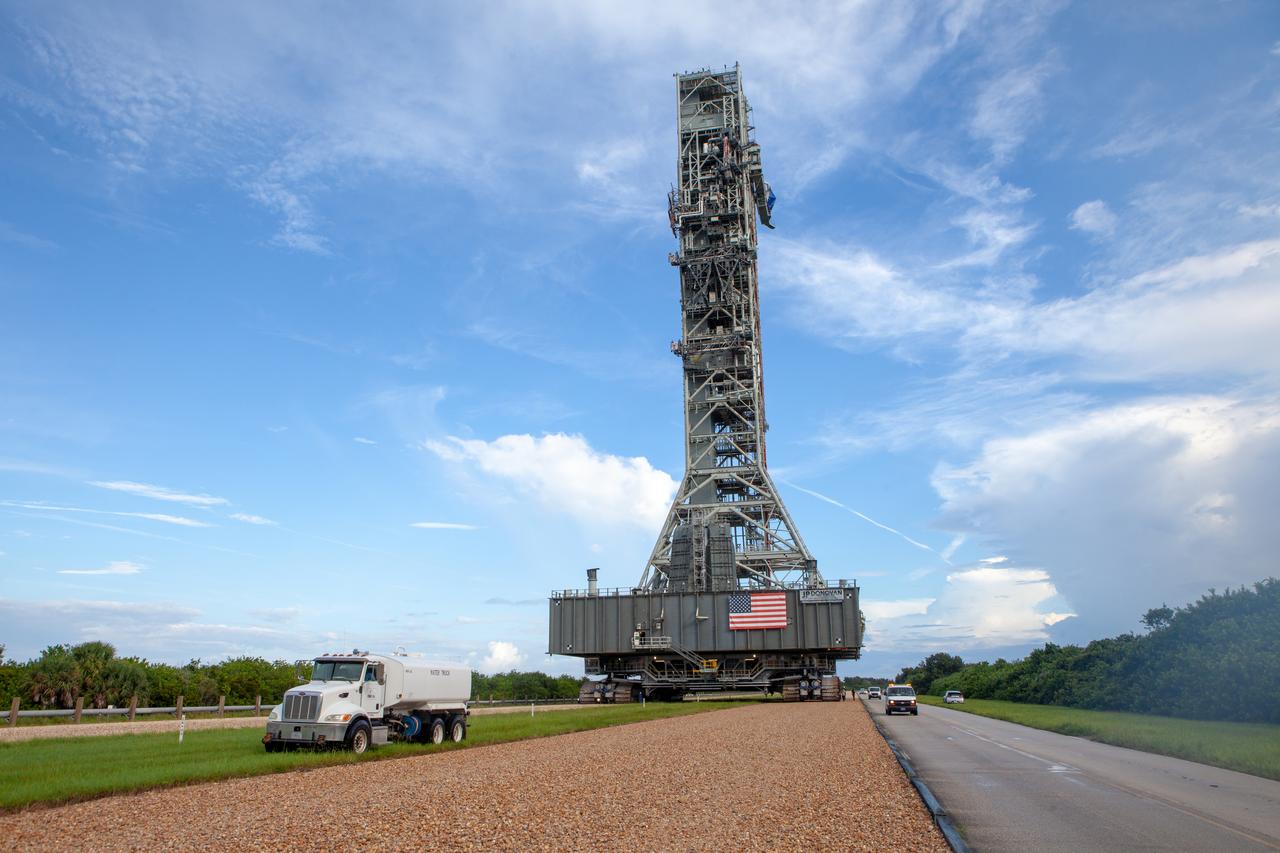
Exploration Ground Systems teams at NASA’s Kennedy Space Center in Florida take precautions to protect Artemis ground support equipment in advance of Hurricane Dorian. On Aug. 30, 2019, crawler-transporter 2 moved the mobile launcher (ML) from its current position at Launch Pad 39B to inside the Vehicle Assembly Building. In its final phases of development, the ML stands nearly 400 feet tall and is needed to assemble, process and launch NASA’s powerful Space Launch System rocket and Orion spacecraft on missions to the Moon and Mars.
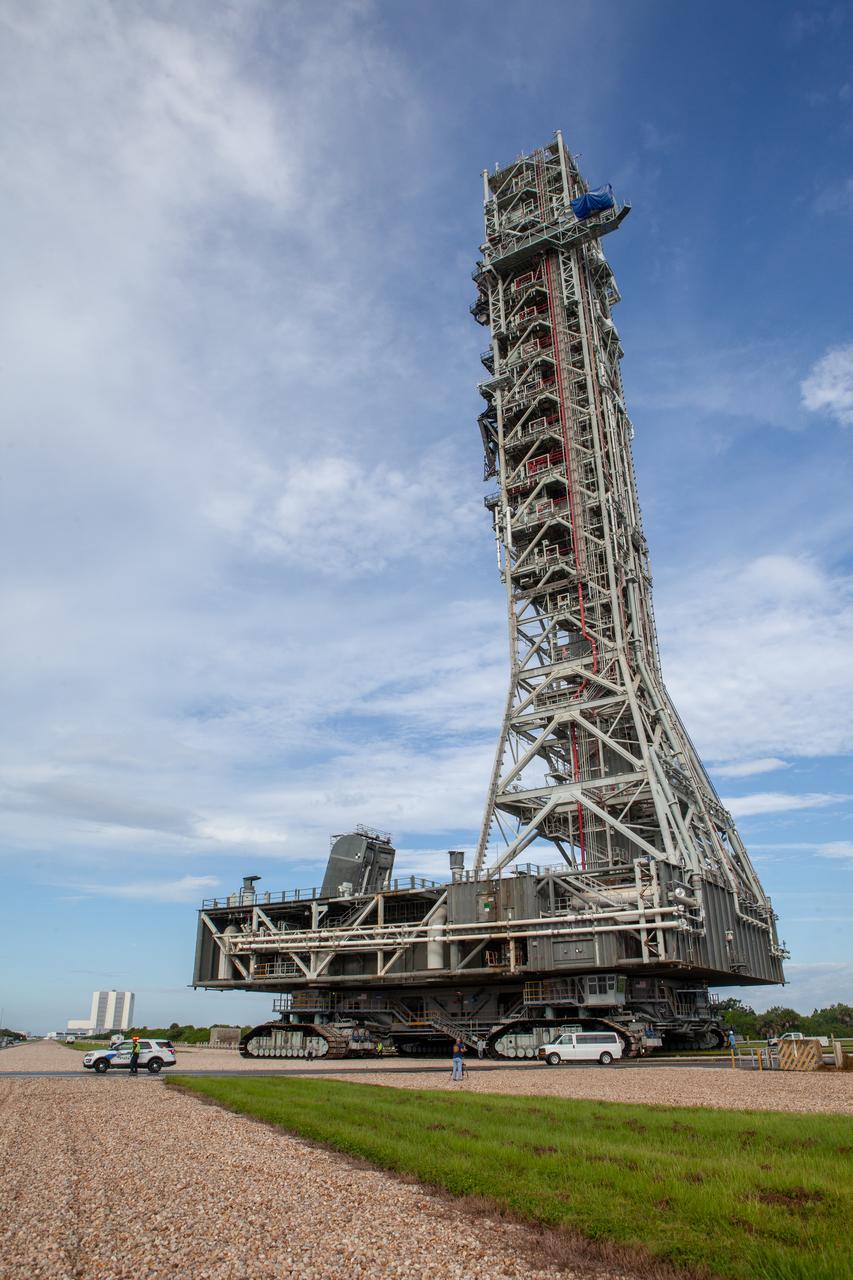
Exploration Ground Systems teams at NASA’s Kennedy Space Center in Florida take precautions to protect Artemis ground support equipment in advance of Hurricane Dorian. On Aug. 30, 2019, crawler-transporter 2 moved the mobile launcher (ML) from its current position at Launch Pad 39B to inside the Vehicle Assembly Building. In its final phases of development, the ML stands nearly 400 feet tall and is needed to assemble, process and launch NASA’s powerful Space Launch System rocket and Orion spacecraft on missions to the Moon and Mars.
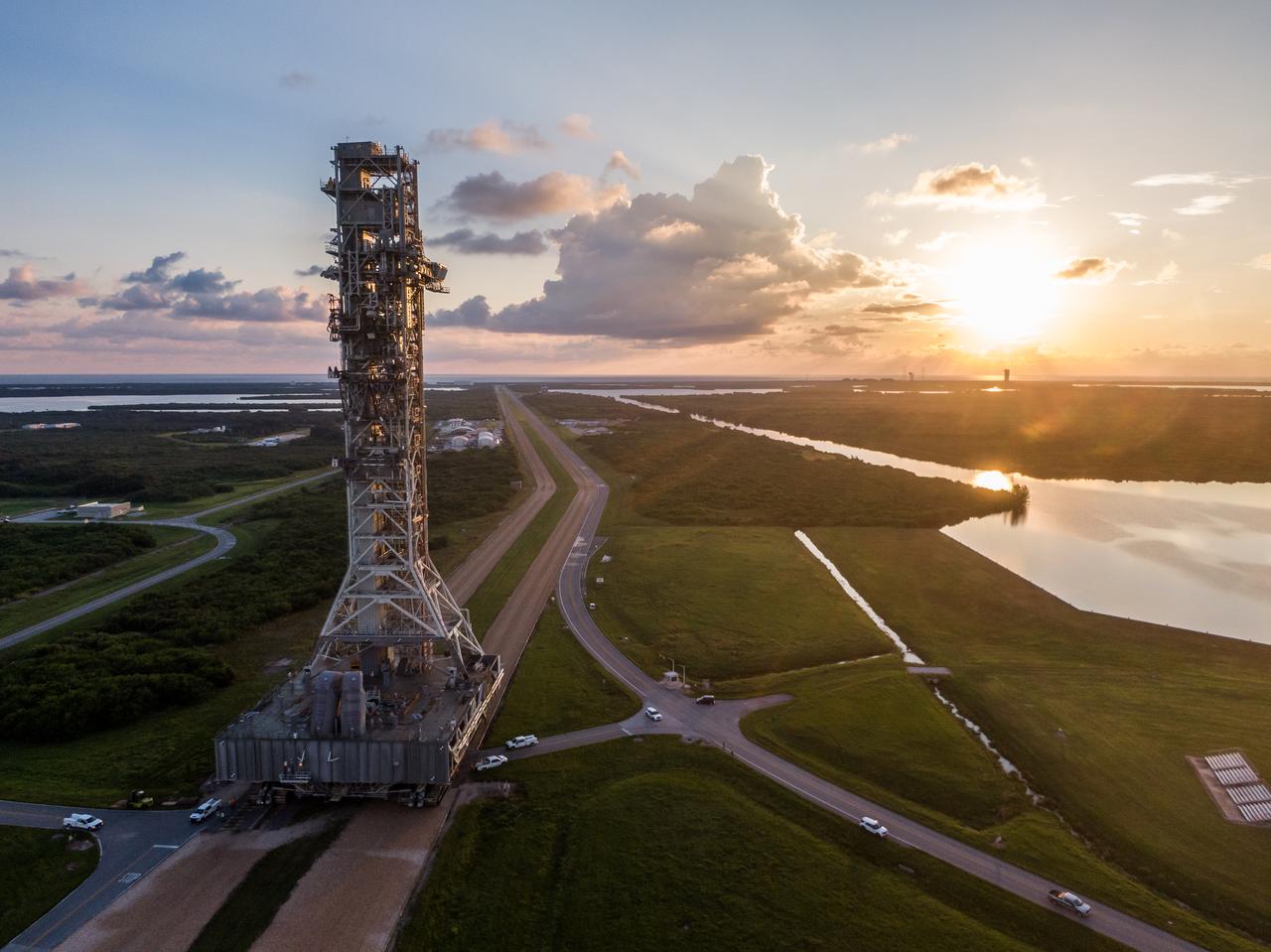
A drone camera captures NASA’s mobile launcher 1 atop the agency’s crawler-transporter 2 moving from Launch Complex 39B to the Vehicle Assembly Building at NASA’s Kennedy Space Center in Florida on Thursday, Oct. 3, 2024. The mobile launcher has been at the launch pad since August 2023 undergoing upgrades and tests in preparation for NASA’s Artemis II mission. The mobile launcher will be used to assemble, process, and launch NASA’s SLS (Space Launch Systems) and Orion spacecraft to the Moon and beyond.