
The second of two Tail Service Mast Umbilicals (TSMU), at left, is lowered for installation on the 0-level deck of the mobile launcher on July 27, at NASA's Kennedy Space Center in Florida. The 35-foot-tall umbilical will connect to NASA's Space Launch System (SLS) rocket core stage aft section and provide liquid hydrogen and electrical cable connections to the core stage engine section to support propellant handling during prelaunch operations. In view at right is the TSMU that will provide liquid oxygen and electrical cable connections to the core stage engine section. The installation brings Exploration Ground Systems one step closer to supporting prelaunch operations for the agency's SLS rocket and Orion spacecraft on Exploration Mission-1 and deep space destinations.
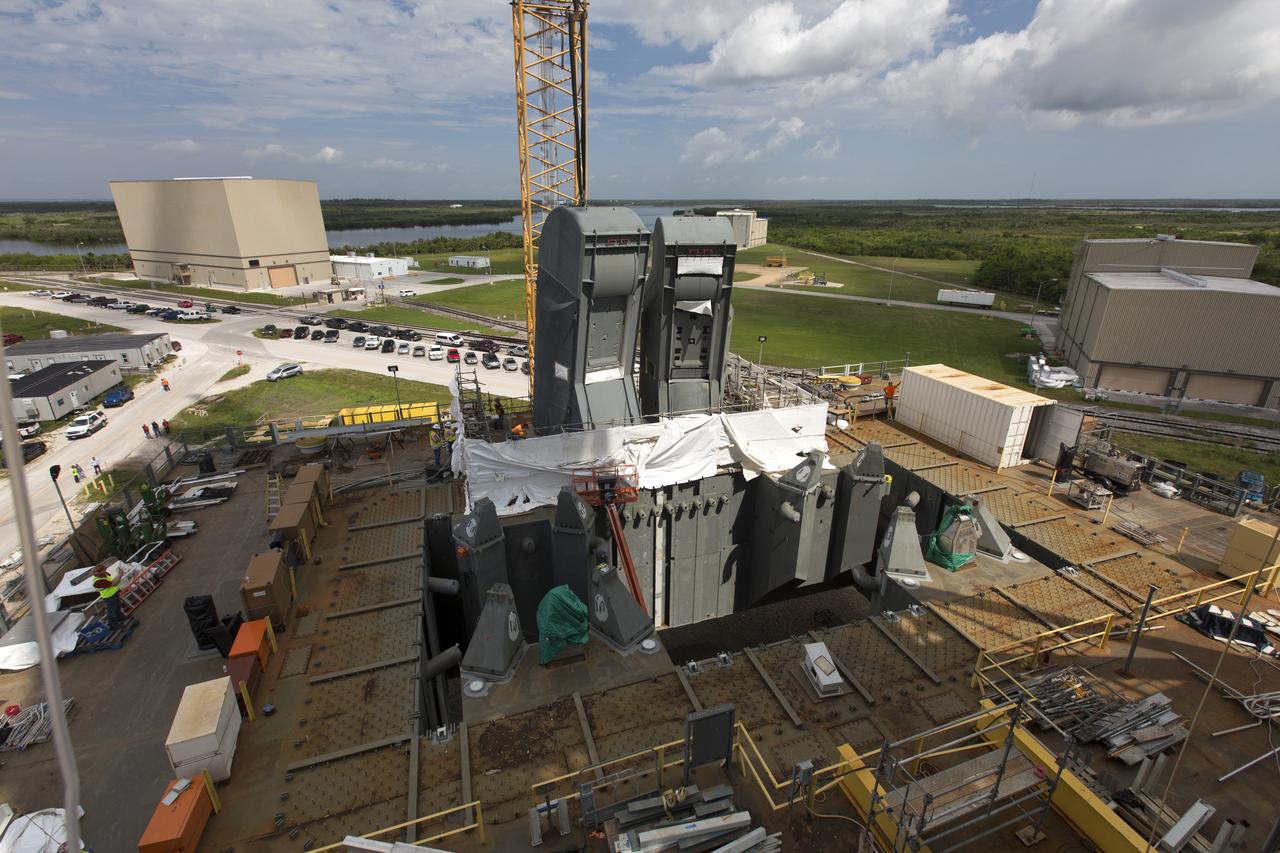
The second of two Tail Service Mast Umbilicals (TSMU), at left, is lowered for installation on the 0-level deck of the mobile launcher on July 27, at NASA's Kennedy Space Center in Florida. The 35-foot-tall umbilical will connect to NASA's Space Launch System (SLS) rocket core stage aft section and provide liquid hydrogen and electrical cable connections to the core stage engine section to support propellant handling during prelaunch operations. In view at right is the TSMU that will provide liquid oxygen and electrical cable connections to the core stage engine section. The installation brings Exploration Ground Systems one step closer to supporting prelaunch operations for the agency's SLS rocket and Orion spacecraft on Exploration Mission-1 and deep space destinations.
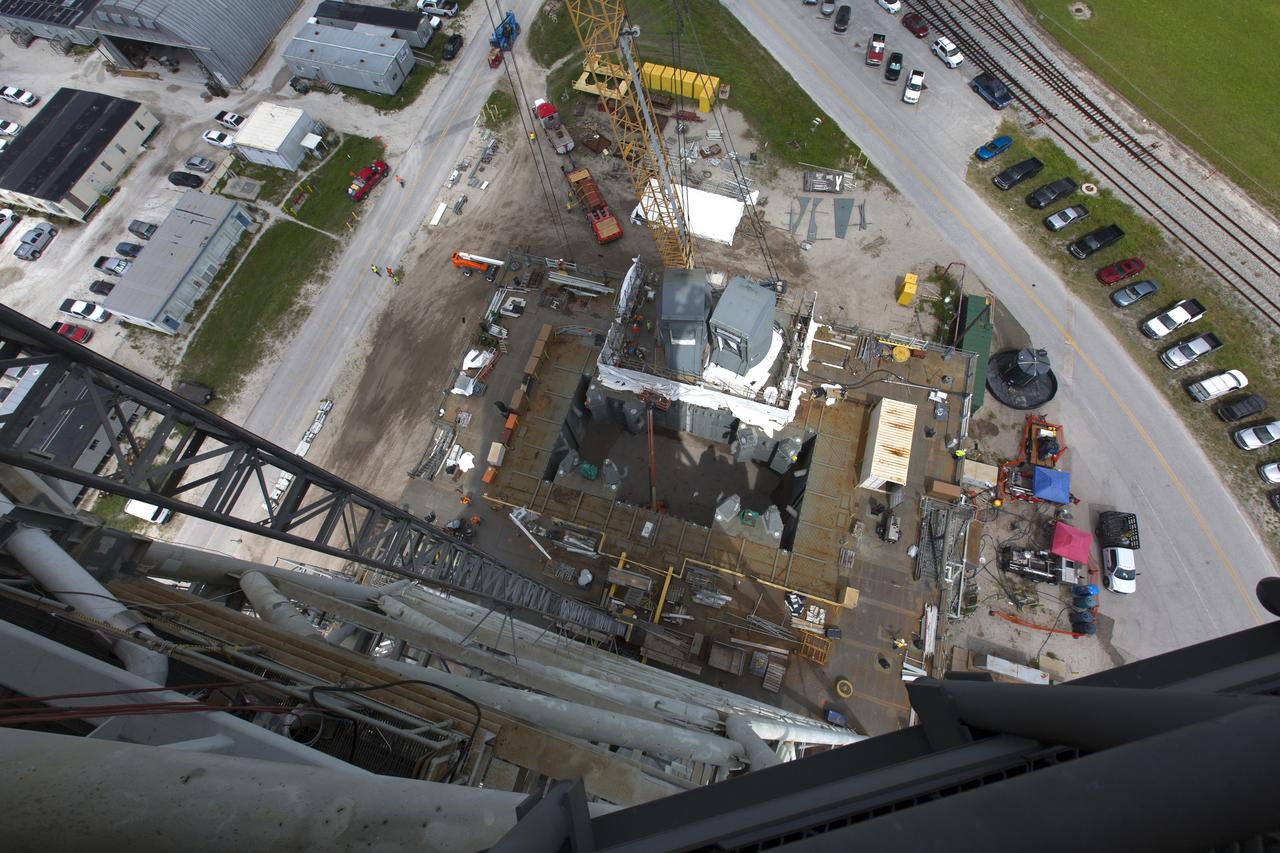
In this view from high above on the mobile launcher tower, a crane is used to lower the second of two Tail Service Mast Umbilicals (TSMU) for installation on the 0-level deck of the mobile launcher on July 27, at NASA's Kennedy Space Center in Florida. The 35-foot-tall umbilical will connect to NASA's Space Launch System rocket core stage aft section and provide liquid hydrogen and electrical cable connections to the core stage engine section to support propellant handling during prelaunch operations. In view at right is the TSMU that will provide liquid oxygen and electrical cable connections to the core stage engine section. The installation brings Exploration Ground Systems one step closer to supporting prelaunch operations for the agency's SLS rocket and Orion spacecraft on Exploration Mission-1 and deep space destinations.
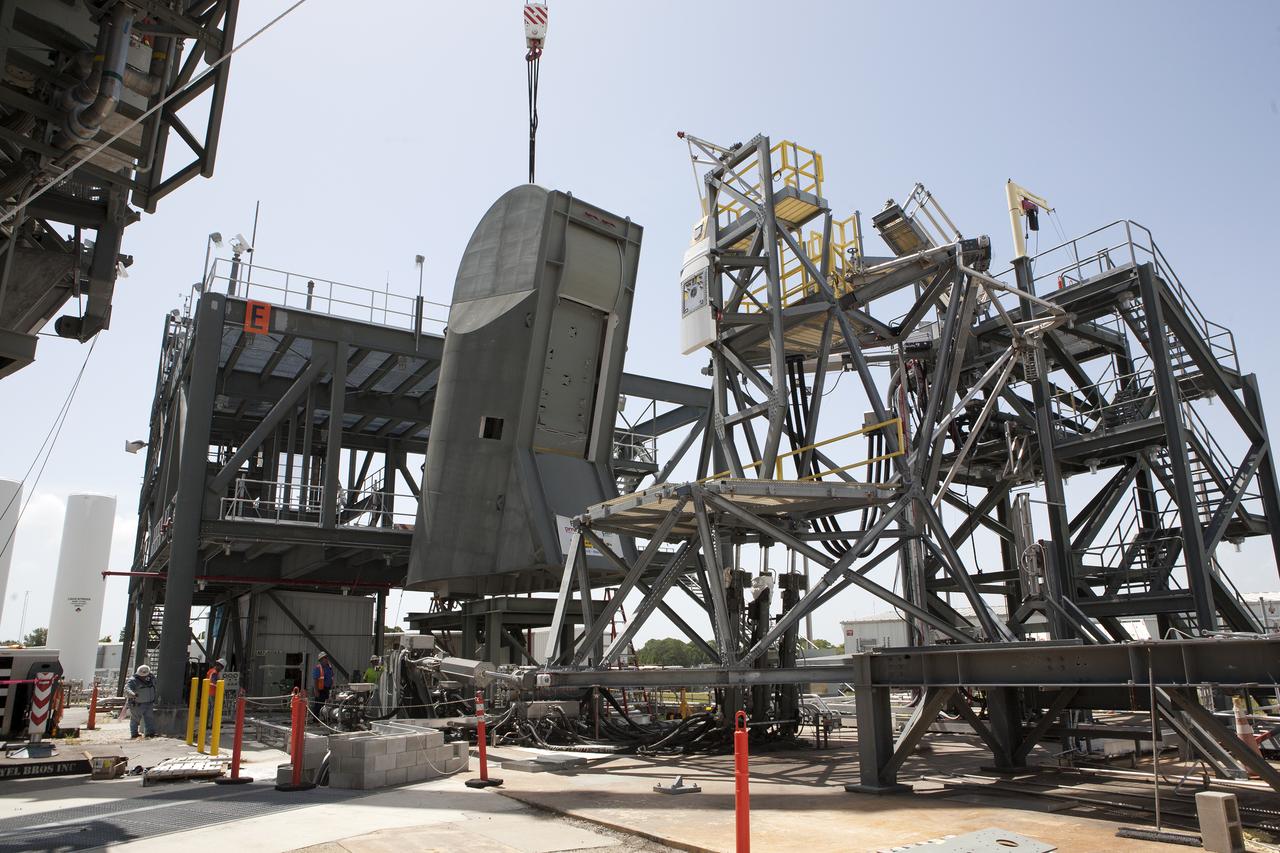
Technician monitors the progress as a crane lowers the first Tail Service Mast Umbilical (TSMU) onto a test stand at the Launch Equipment Test Facility at NASA’s Kennedy Space Center in Florida. Two TSMUs will provide liquid propellants and power to the Space Launch System (SLS) rocket’s core stage engine. Both TSMUs will connect to the zero-level deck on the mobile launcher, providing fuel and electricity to the SLS rocket before it launches on Exploration Mission 1. The TSMU will undergo testing and validation at the LETF to verify it is functioning properly. The center’s Engineering Directorate and the Ground Systems Development and Operations Program are overseeing processing and testing of the umbilicals.
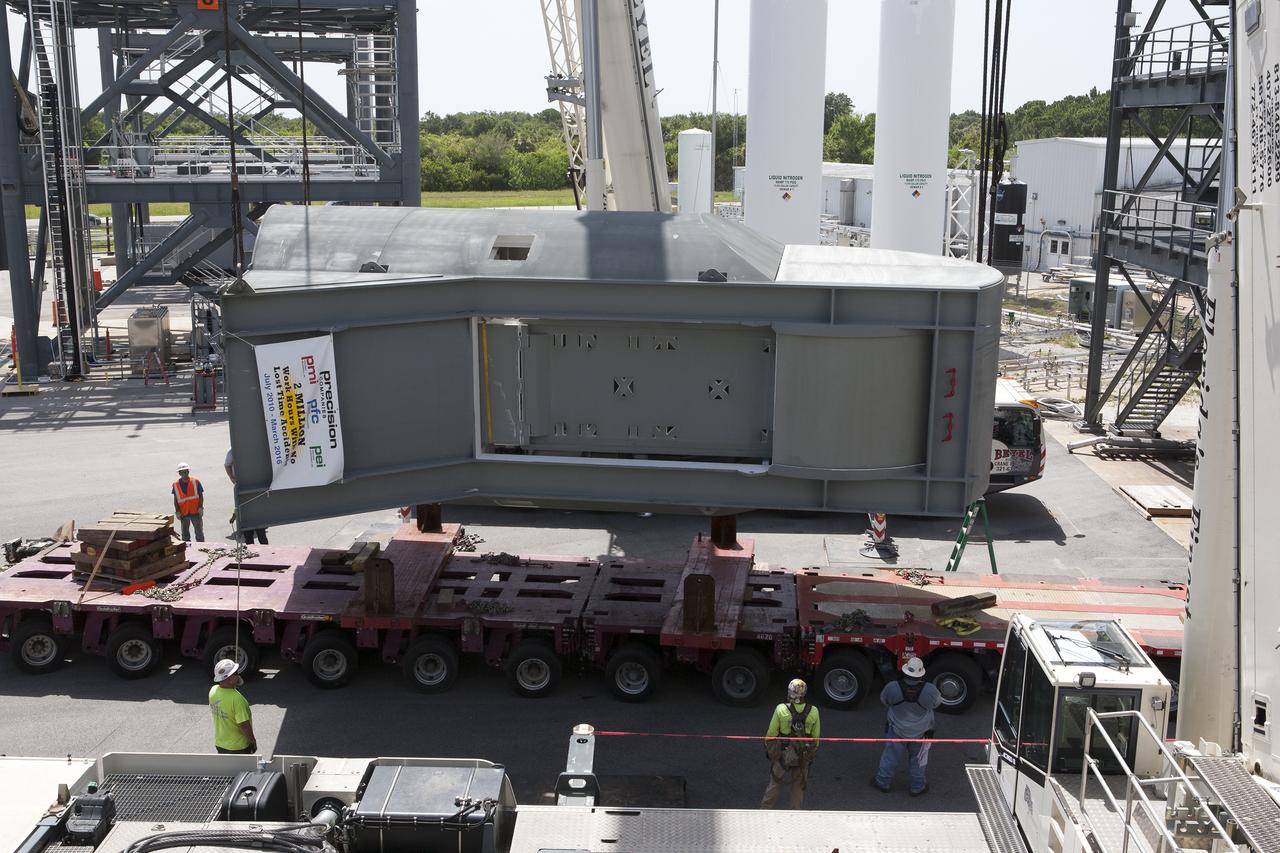
Technicians assist as a crane is used to lift the first Tail Service Mast Umbilical (TSMU) up from the flatbed of the transport truck at the Launch Equipment Test Facility (LETF) at NASA’s Kennedy Space Center in Florida. Two TSMUs will provide liquid propellants and power to the Space Launch System (SLS) rocket’s core stage engine. Both TSMUs will connect to the zero-level deck on the mobile launcher, providing fuel and electricity to the SLS rocket before it launches on Exploration Mission 1. The TSMU will undergo testing and validation at the LETF to verify it is functioning properly. The center’s Engineering Directorate and the Ground Systems Development and Operations Program are overseeing processing and testing of the umbilicals.
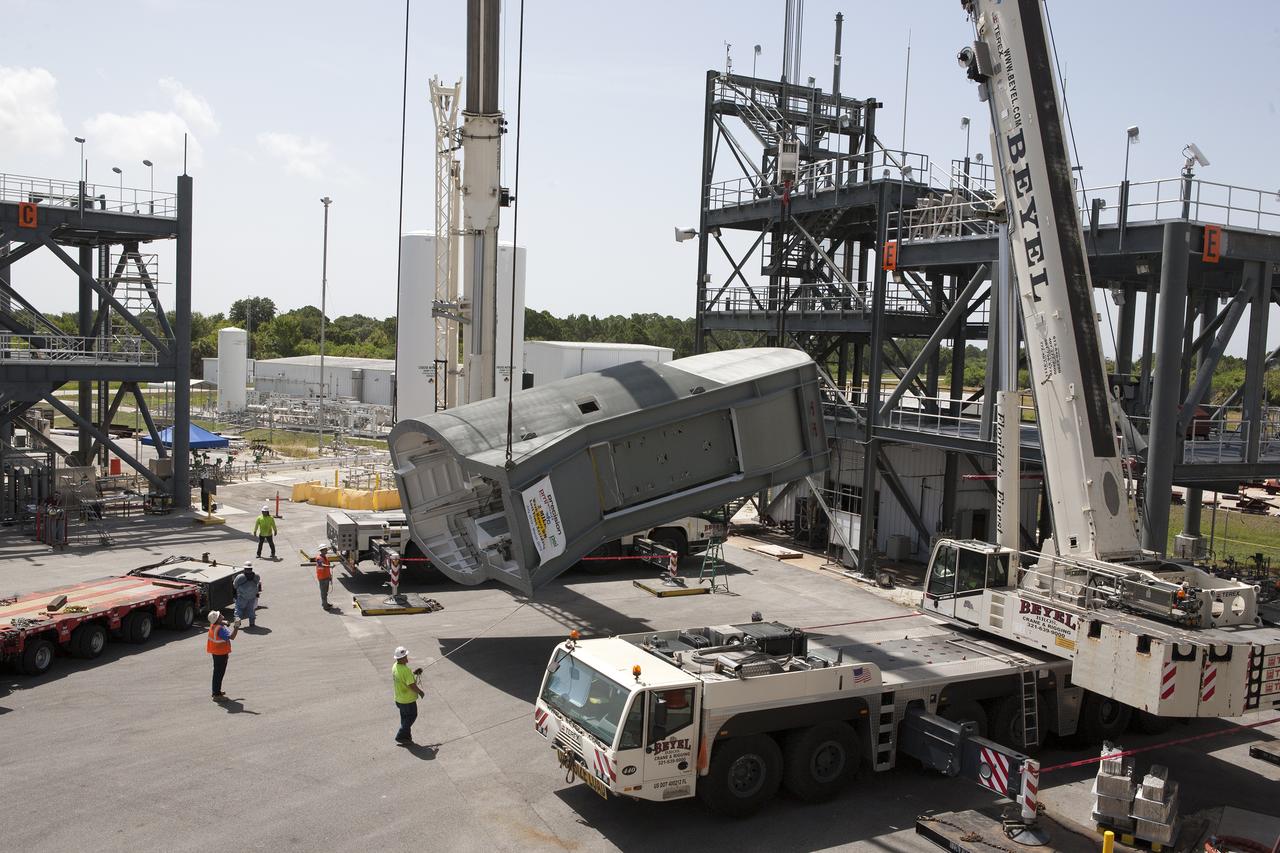
Technicians assist as a crane is used to lift the first Tail Service Mast Umbilical (TSMU) away from the flatbed of the transport truck at the Launch Equipment Test Facility (LETF) at NASA’s Kennedy Space Center in Florida. Two TSMUs will provide liquid propellants and power to the Space Launch System (SLS) rocket’s core stage engine. Both TSMUs will connect to the zero-level deck on the mobile launcher, providing fuel and electricity to the SLS rocket before it launches on Exploration Mission 1. The TSMU will undergo testing and validation at the LETF to verify it is functioning properly. The center’s Engineering Directorate and the Ground Systems Development and Operations Program are overseeing processing and testing of the umbilicals.
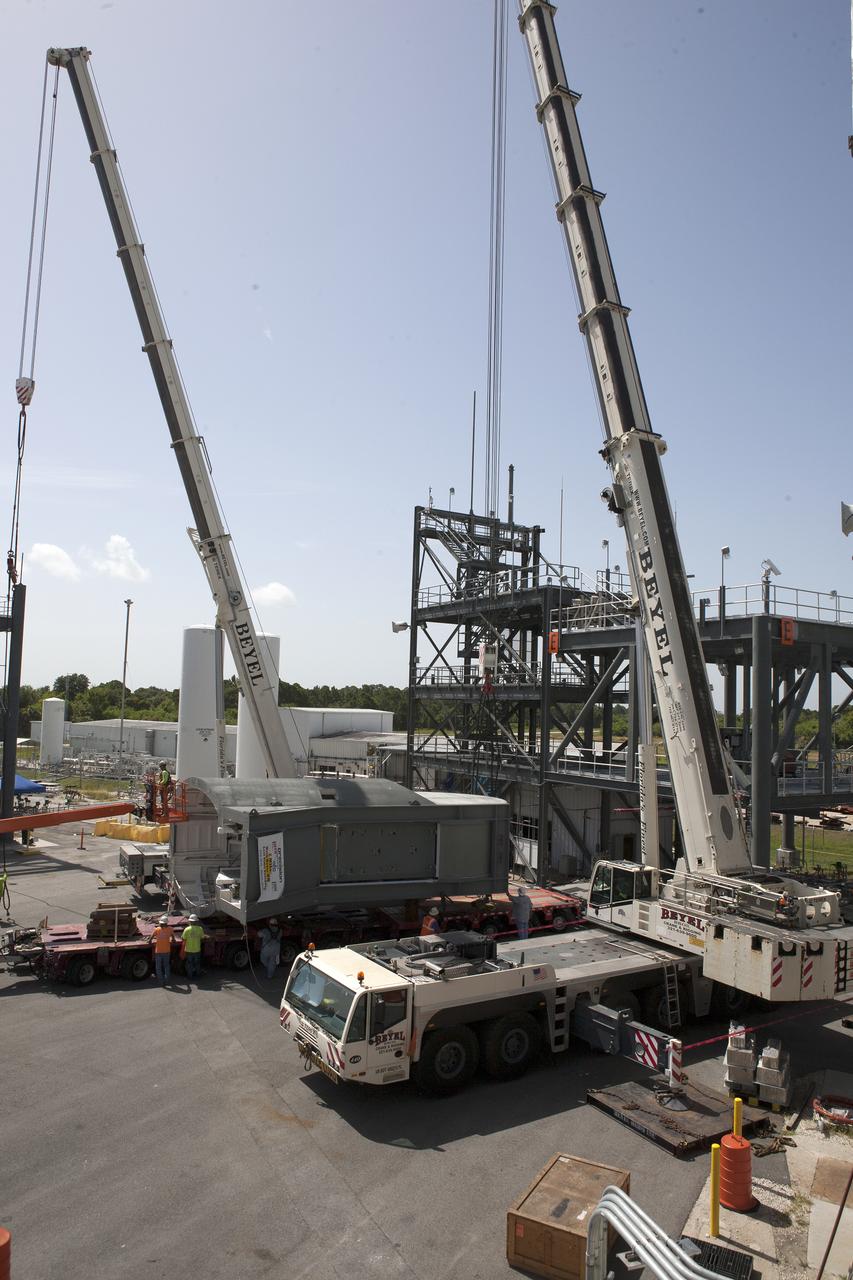
A crane is prepared to help lift the first Tail Service Mast Umbilical (TSMU) for NASA’s Space Launch System (SLS) at the Launch Equipment Test Facility (LETF) at NASA’s Kennedy Space Center in Florida. Two TSMUs will provide liquid propellants and power to the Space Launch System (SLS) rocket’s core stage engine. Both TSMUs will connect to the zero-level deck on the mobile launcher, providing fuel and electricity to the SLS rocket before it launches on Exploration Mission 1. The TSMU will undergo testing and validation at the LETF to verify it is functioning properly. The center’s Engineering Directorate and the Ground Systems Development and Operations Program are overseeing processing and testing of the umbilicals.
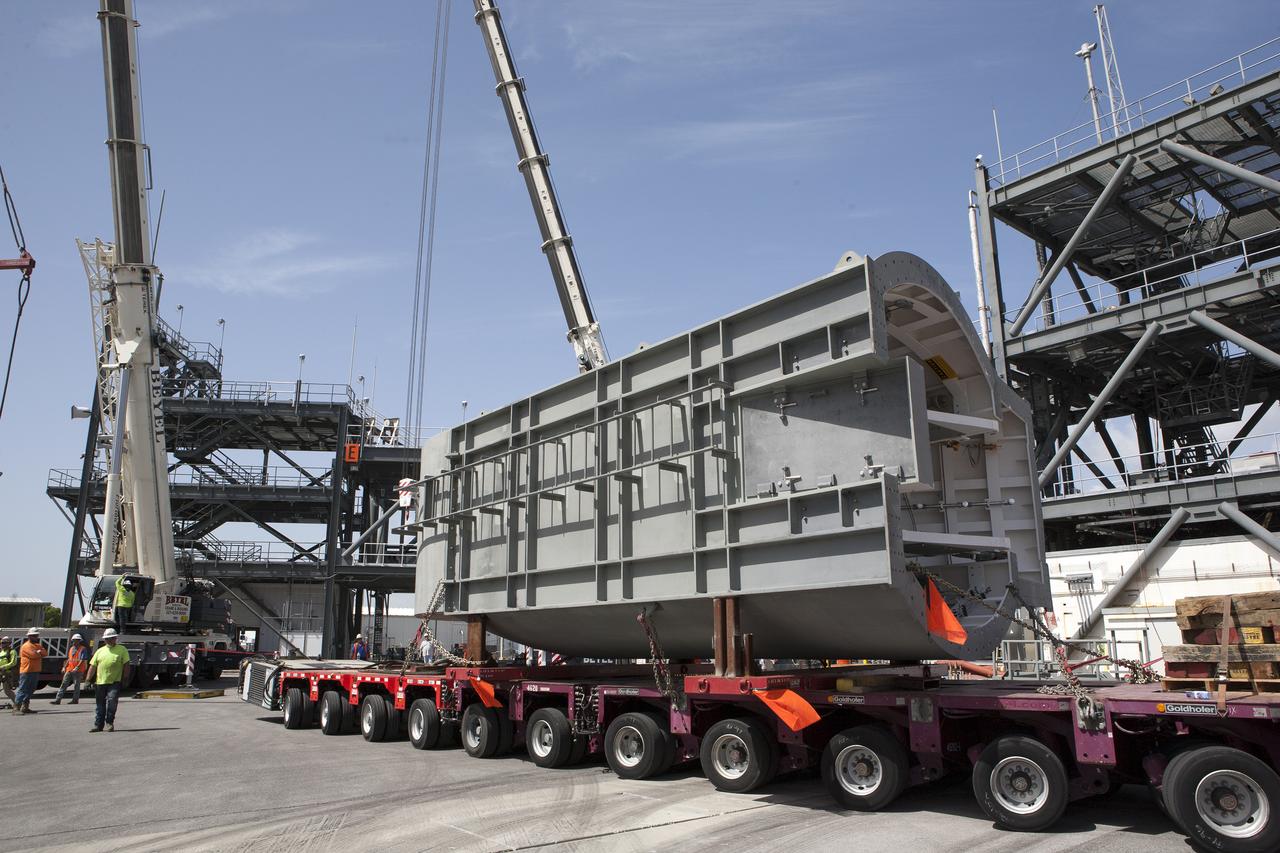
A crane is attached to the first Tail Service Mast Umbilical (TSMU) for NASA’s Space Launch System (SLS) at the Launch Equipment Test Facility at NASA’s Kennedy Space Center in Florida. Two TSMUs will provide liquid propellants and power to the Space Launch System (SLS) rocket’s core stage engine. Both TSMUs will connect to the zero-level deck on the mobile launcher, providing fuel and electricity to the SLS rocket before it launches on Exploration Mission 1. The TSMU will undergo testing and validation at the LETF to verify it is functioning properly. The center’s Engineering Directorate and the Ground Systems Development and Operations Program are overseeing processing and testing of the umbilicals.
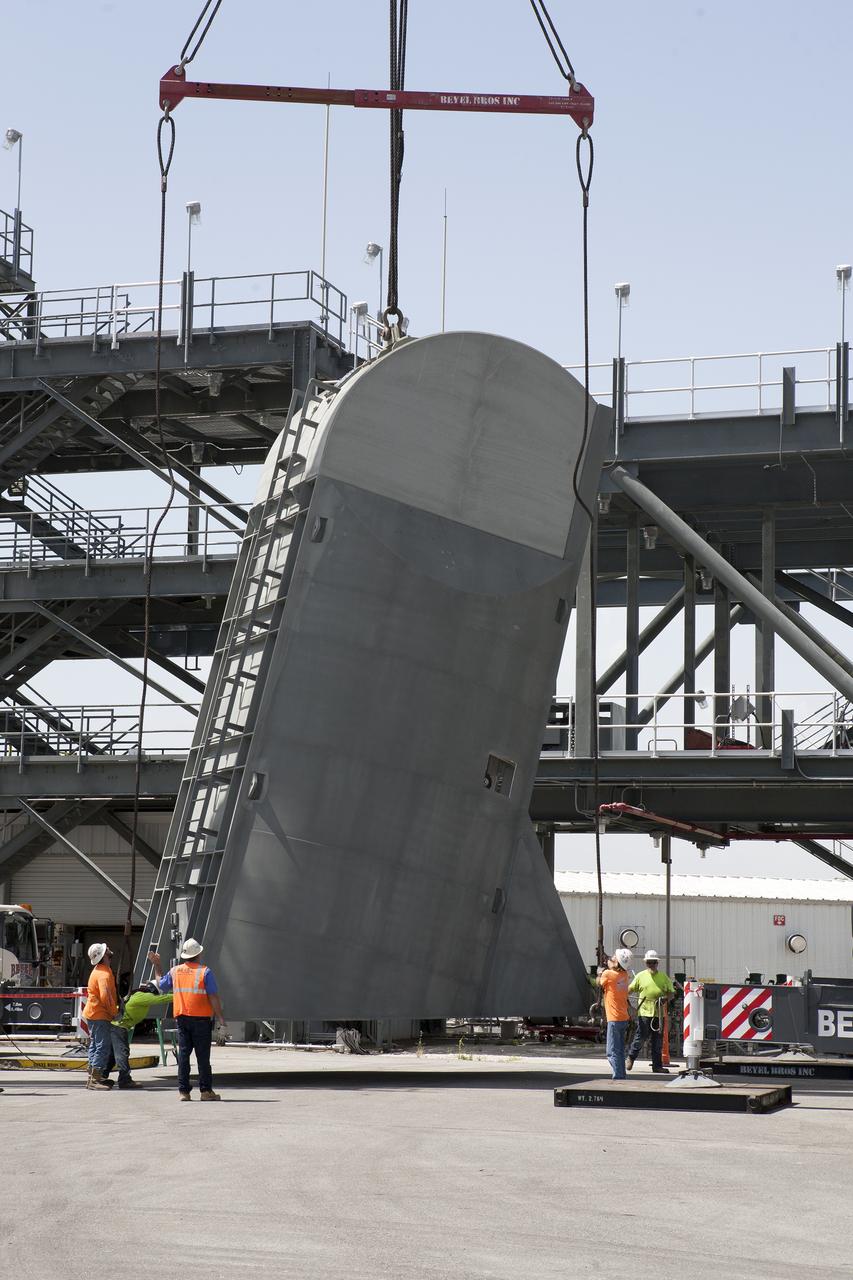
Technicians assist as a crane is used to lift the first Tail Service Mast Umbilical (TSMU) into the vertical position at the Launch Equipment Test Facility (LETF) at NASA’s Kennedy Space Center in Florida. Two TSMUs will provide liquid propellants and power to the Space Launch System (SLS) rocket’s core stage engine. Both TSMUs will connect to the zero-level deck on the mobile launcher, providing fuel and electricity to the SLS rocket before it launches on Exploration Mission 1. The TSMU will undergo testing and validation at the LETF to verify it is functioning properly. The center’s Engineering Directorate and the Ground Systems Development and Operations Program are overseeing processing and testing of the umbilicals.
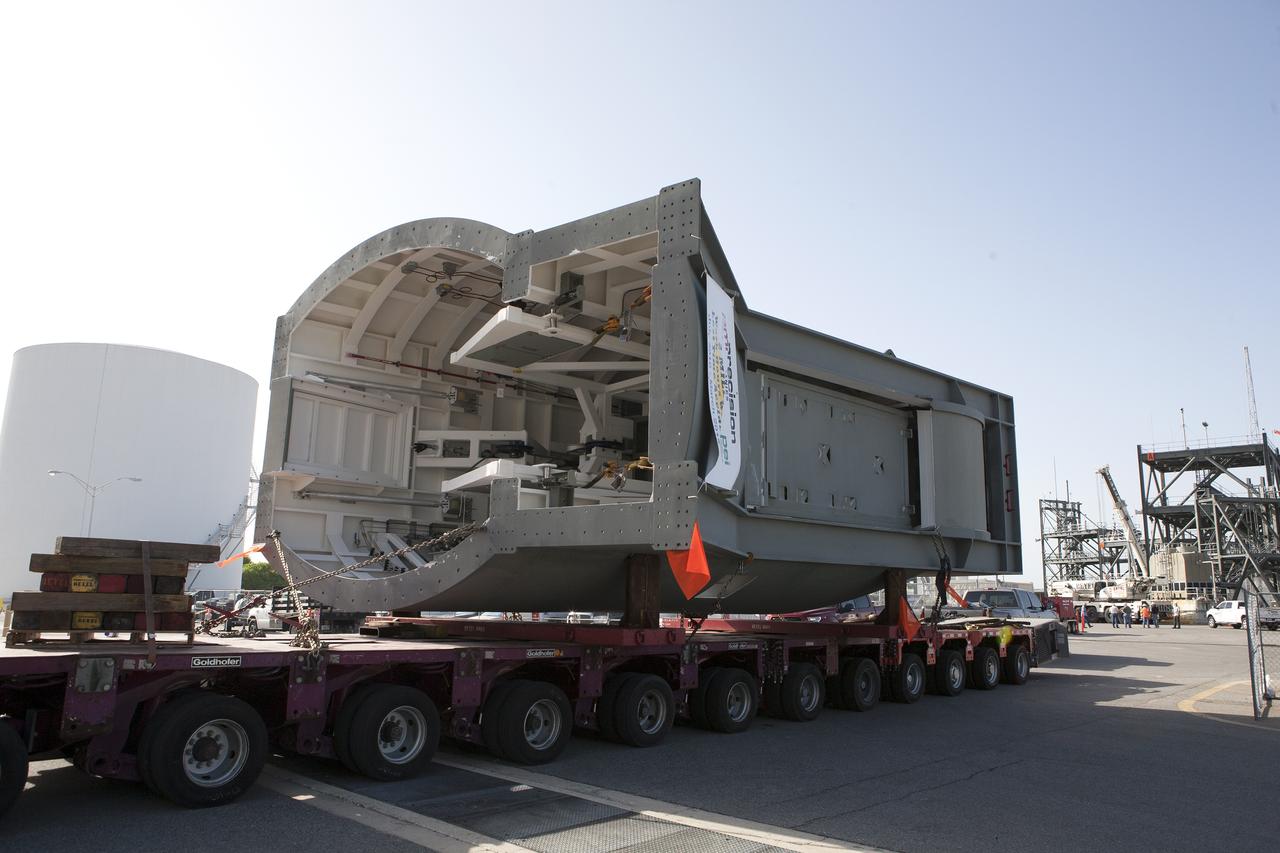
A heavy-lift transport truck arrives at the Launch Equipment Test Facility (LETF) at NASA’s Kennedy Space Center in Florida, with the first of two Tail Service Mast Umbilicals (TSMU) for NASA’s Space Launch System (SLS). Two TSMUs will provide liquid propellants and power to the Space Launch System (SLS) rocket’s core stage engine. Both TSMUs will connect to the zero-level deck on the mobile launcher, providing fuel and electricity to the SLS rocket before it launches on Exploration Mission 1. The TSMU will undergo testing and validation at the LETF to verify it is functioning properly. The center’s Engineering Directorate and the Ground Systems Development and Operations Program are overseeing processing and testing of the umbilicals.
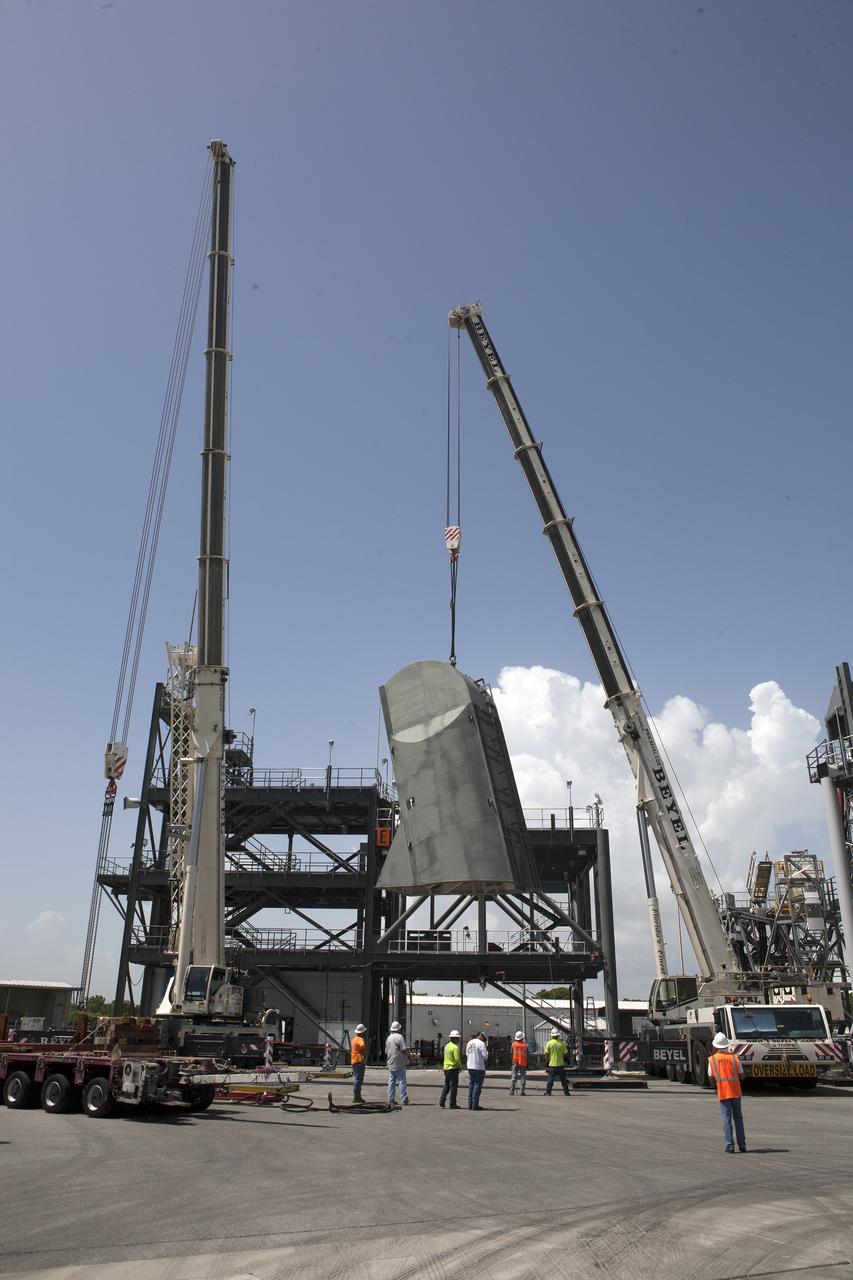
A crane lifts the first Tail Service Mast Umbilical (TSMU) up for placement on a test stand at the Launch Equipment Test Facility at NASA’s Kennedy Space Center in Florida. Two TSMUs will provide liquid propellants and power to the Space Launch System (SLS) rocket’s core stage engine. Both TSMUs will connect to the zero-level deck on the mobile launcher, providing fuel and electricity to the SLS rocket before it launches on Exploration Mission 1. The TSMU will undergo testing and validation at the LETF to verify it is functioning properly. The center’s Engineering Directorate and the Ground Systems Development and Operations Program are overseeing processing and testing of the umbilicals.
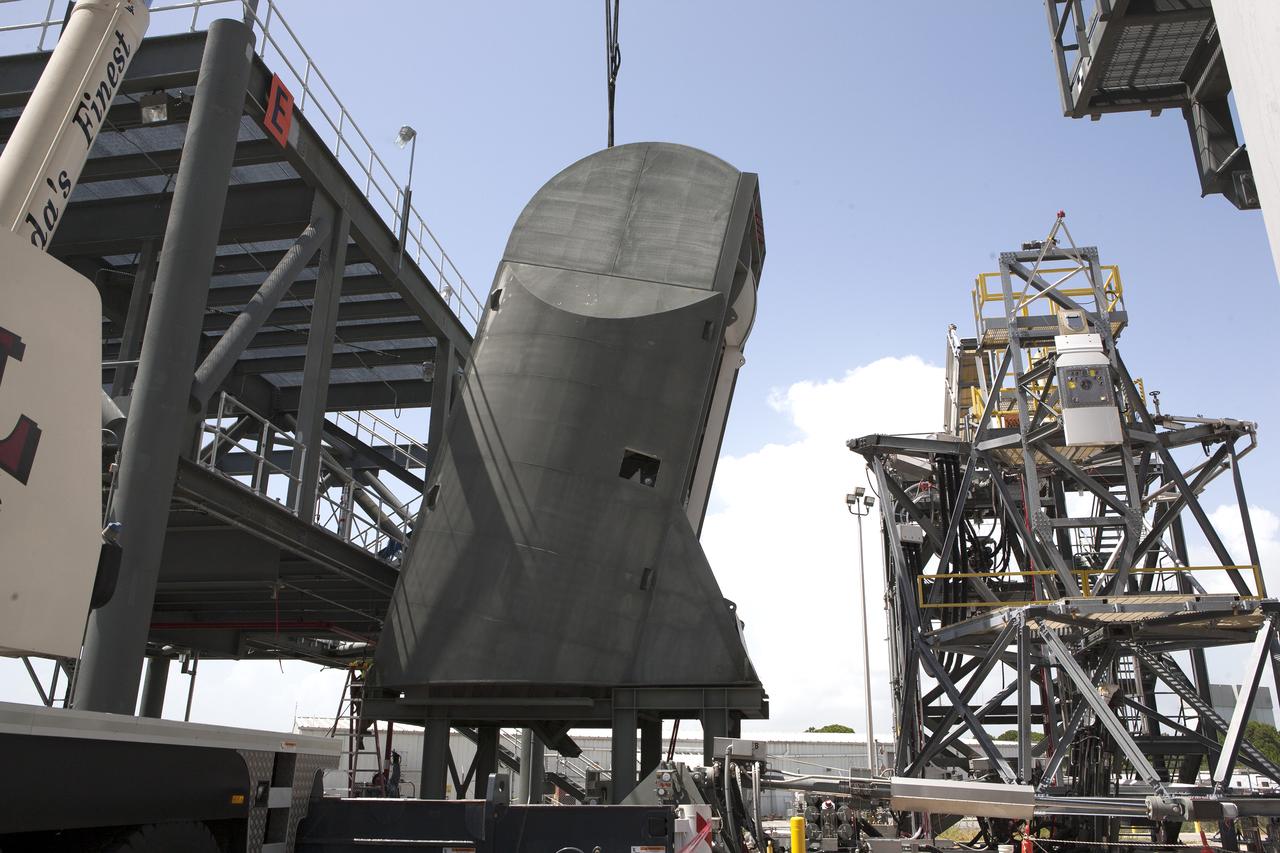
A crane lowers the first Tail Service Mast Umbilical (TSMU) onto a test stand at the Launch Equipment Test Facility at NASA’s Kennedy Space Center in Florida. Two TSMUs will provide liquid propellants and power to the Space Launch System (SLS) rocket’s core stage engine. Both TSMUs will connect to the zero-level deck on the mobile launcher, providing fuel and electricity to the SLS rocket before it launches on Exploration Mission 1. The TSMU will undergo testing and validation at the LETF to verify it is functioning properly. The center’s Engineering Directorate and the Ground Systems Development and Operations Program are overseeing processing and testing of the umbilicals.
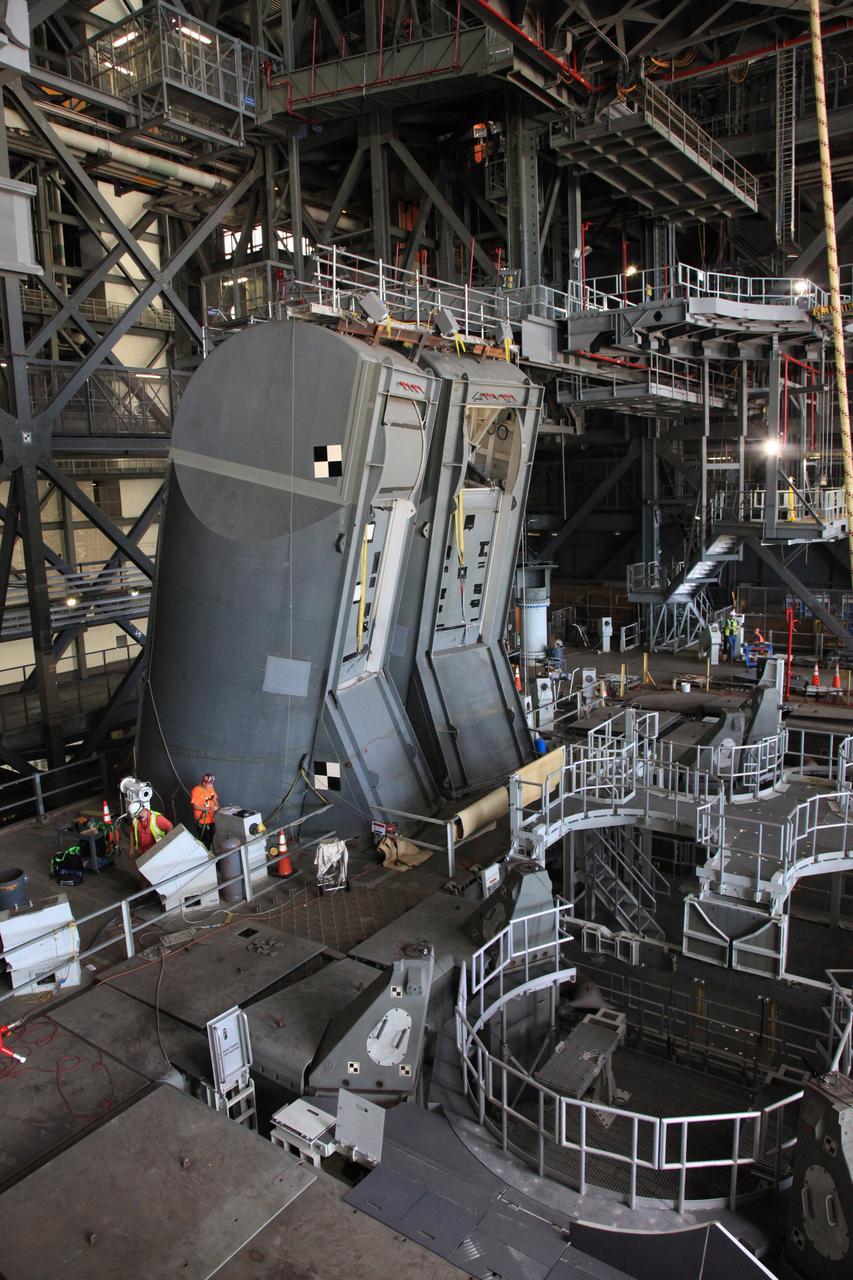
Preparations are underway to conduct a drop test of the Tail Service Mast Umbilicals (TSMU) for NASA’s Space Launch System (SLS) rocket on the mobile launcher in High Bay 3 of the Vehicle Assembly Building at NASA’s Kennedy Space Center in Florida on June 19, 2019. The 35-foot-tall TSMUs will connect to the SLS core stage aft section and provide liquid oxygen and liquid hydrogen fluid lines and electrical cable connections to the core stage engine section to support propellant handling during prelaunch operations. The drop test is being performed to ensure that the umbilicals will disconnect before launch of the SLS carrying Orion on its first uncrewed mission, Artemis 1, from Launch Complex 39B. Exploration Ground Systems and Engineering are completing the tests.
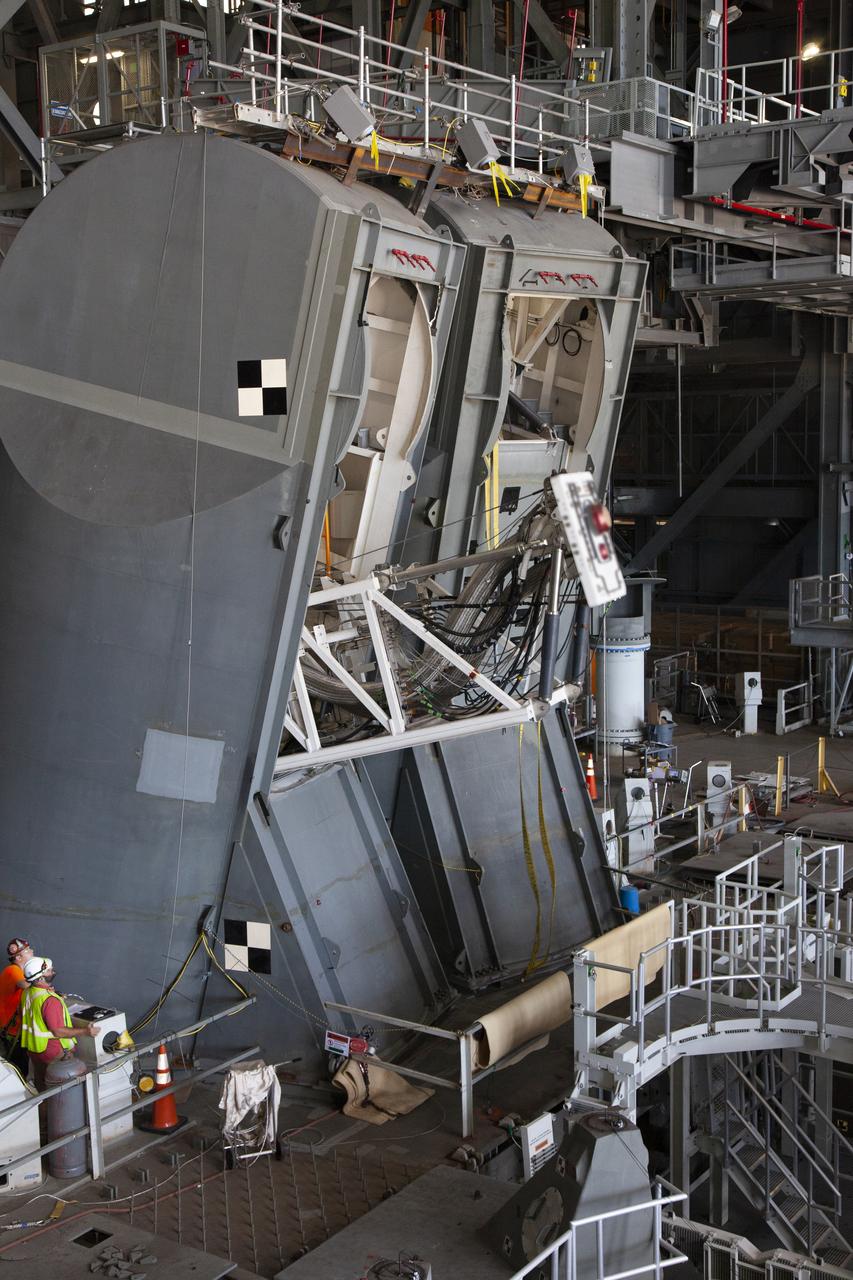
A drop test of the Tail Service Mast Umbilicals (TSMU) for NASA’s Space Launch System (SLS) rocket is underway on the mobile launcher in High Bay 3 of the Vehicle Assembly Building at NASA’s Kennedy Space Center in Florida on June 19, 2019. The 35-foot-tall TSMUs will connect to the SLS core stage aft section and provide liquid oxygen and liquid hydrogen fluid lines and electrical cable connections to the core stage engine section to support propellant handling during prelaunch operations. The drop test is being performed to ensure that the umbilicals will disconnect before launch of the SLS carrying Orion on its first uncrewed mission, Artemis 1, from Launch Complex 39B. Exploration Ground Systems and Engineering are completing the tests.
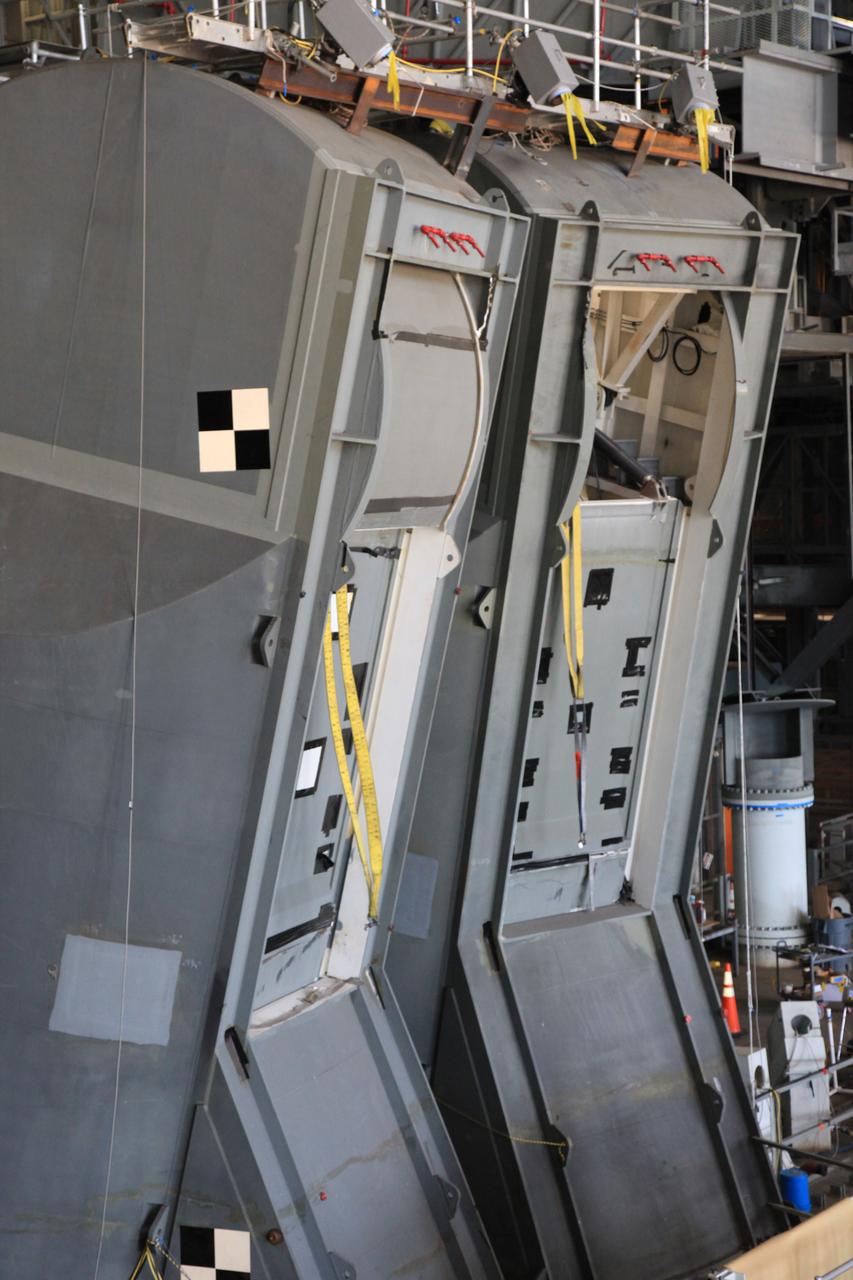
Preparations are underway to conduct a drop test of the Tail Service Mast Umbilicals (TSMU) for NASA’s Space Launch System (SLS) rocket on the mobile launcher in High Bay 3 of the Vehicle Assembly Building at NASA’s Kennedy Space Center in Florida on June 19, 2019. The 35-foot-tall TSMUs will connect to the SLS core stage aft section and provide liquid oxygen and liquid hydrogen fluid lines and electrical cable connections to the core stage engine section to support propellant handling during prelaunch operations. The drop test is being performed to ensure that the umbilicals will disconnect before launch of the SLS carrying Orion on its first uncrewed mission, Artemis 1, from Launch Complex 39B. Exploration Ground Systems and Engineering are completing the tests.
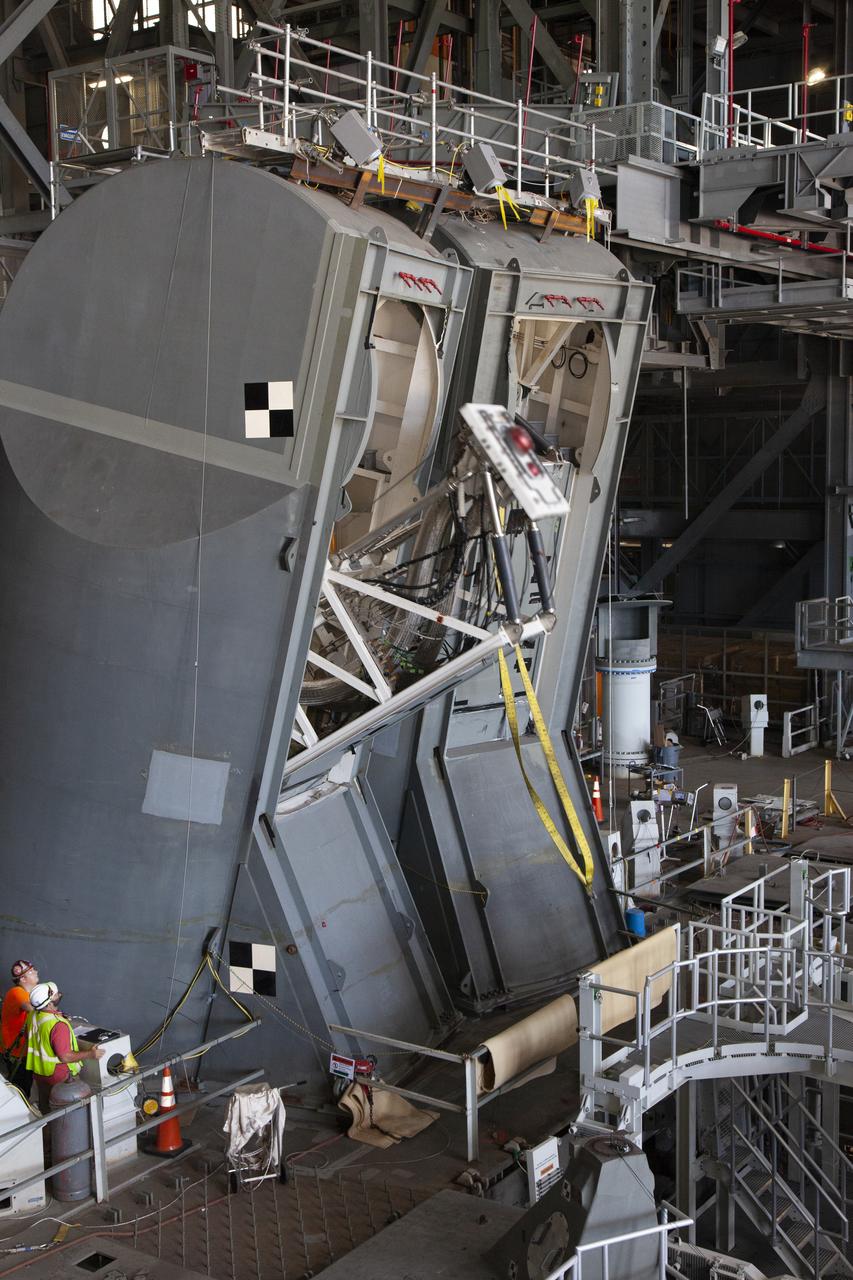
A drop test of the Tail Service Mast Umbilicals (TSMU) for NASA’s Space Launch System (SLS) rocket is underway on the mobile launcher in High Bay 3 of the Vehicle Assembly Building at NASA’s Kennedy Space Center in Florida on June 19, 2019. The 35-foot-tall TSMUs will connect to the SLS core stage aft section and provide liquid oxygen and liquid hydrogen fluid lines and electrical cable connections to the core stage engine section to support propellant handling during prelaunch operations. The drop test is being performed to ensure that the umbilicals will disconnect before launch of the SLS carrying Orion on its first uncrewed mission, Artemis 1, from Launch Complex 39B. Exploration Ground Systems and Engineering are completing the tests.
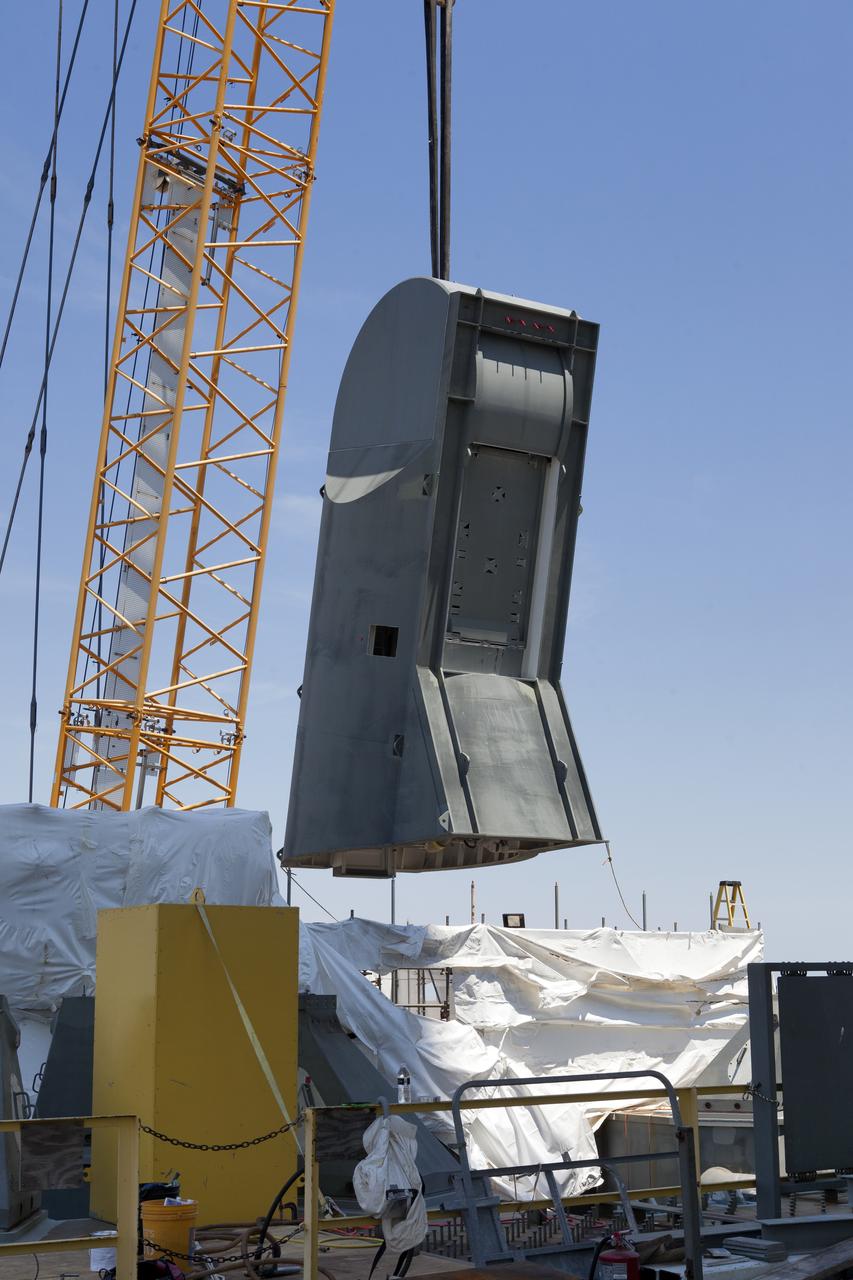
A crane is used to lift up the first of two Tail Service Mast Umbilicals for installation on the 0-level deck of the mobile launcher on July 12, at NASA's Kennedy Space Center in Florida. The 35-foot-tall umbilical will connect to NASA's Space Launch System rocket core stage aft section and provide liquid oxygen and electrical cable connections to the core stage engine section to support propellant handling during prelaunch operations. The installation brings Exploration Ground Systems one step closer to supporting prelaunch operations for the agency's SLS rocket and Orion spacecraft on Exploration Mission-1 and deep space destinations.
Preparations are underway to install the second of two Tail Service Mast Umbilicals on the 0-level deck of the mobile launcher on July 27, at NASA's Kennedy Space Center in Florida. The 35-foot-tall umbilical will connect to NASA's Space Launch System (SLS) rocket core stage aft section and provide liquid hydrogen and electrical cable connections to the core stage engine section to support propellant handling during prelaunch operations. The installation brings Exploration Ground Systems one step closer to supporting prelaunch operations for the agency's SLS rocket and Orion spacecraft on Exploration Mission-1 and deep space destinations.
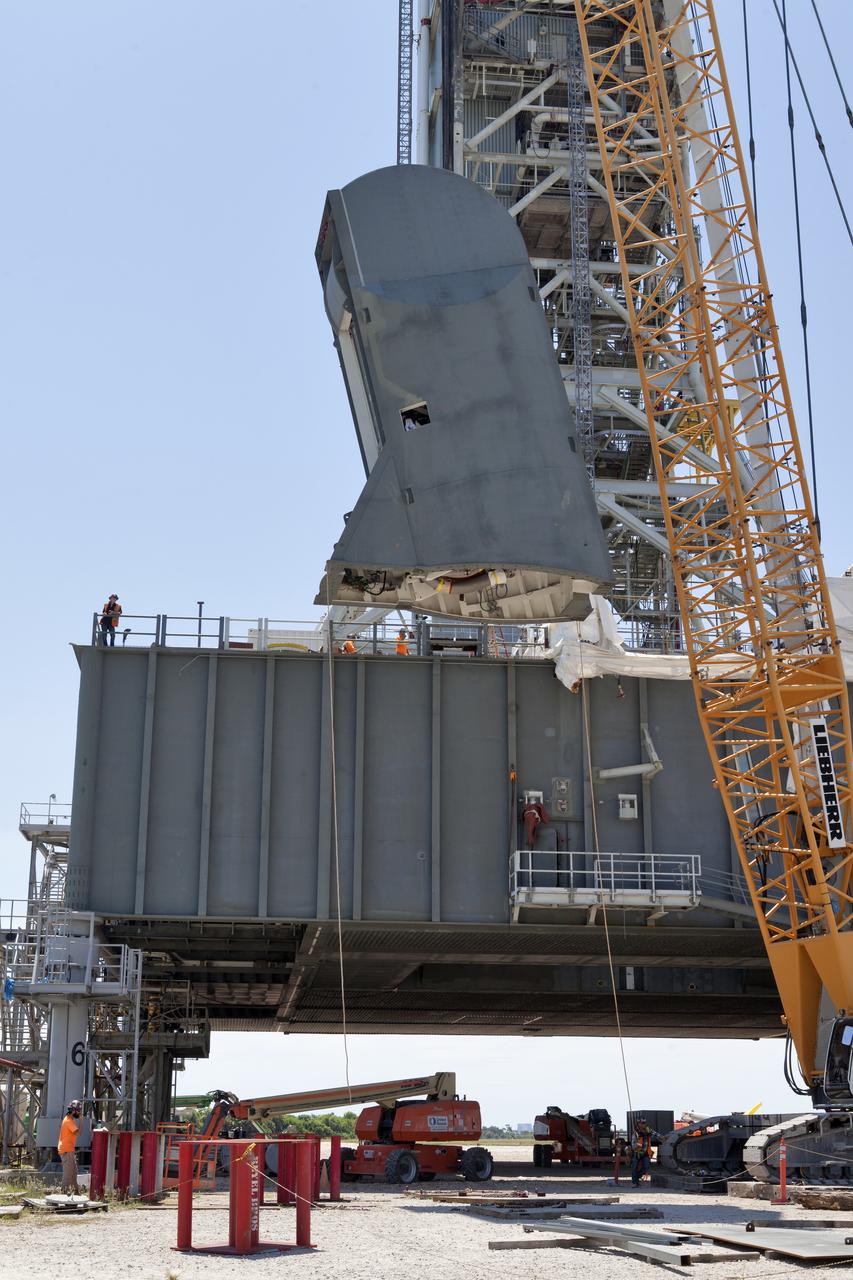
The first of two Tail Service Mast Umbilicals is lifted up for installation on the 0-level deck of the mobile launcher on July 12, at NASA's Kennedy Space Center in Florida. The 35-foot-tall umbilical will connect to NASA's Space Launch System rocket core stage aft section and provide liquid oxygen and electrical cable connections to the core stage engine section to support propellant handling during prelaunch operations. The installation brings Exploration Ground Systems one step closer to supporting prelaunch operations for the agency's SLS rocket and Orion spacecraft on Exploration Mission-1 and deep space destinations.
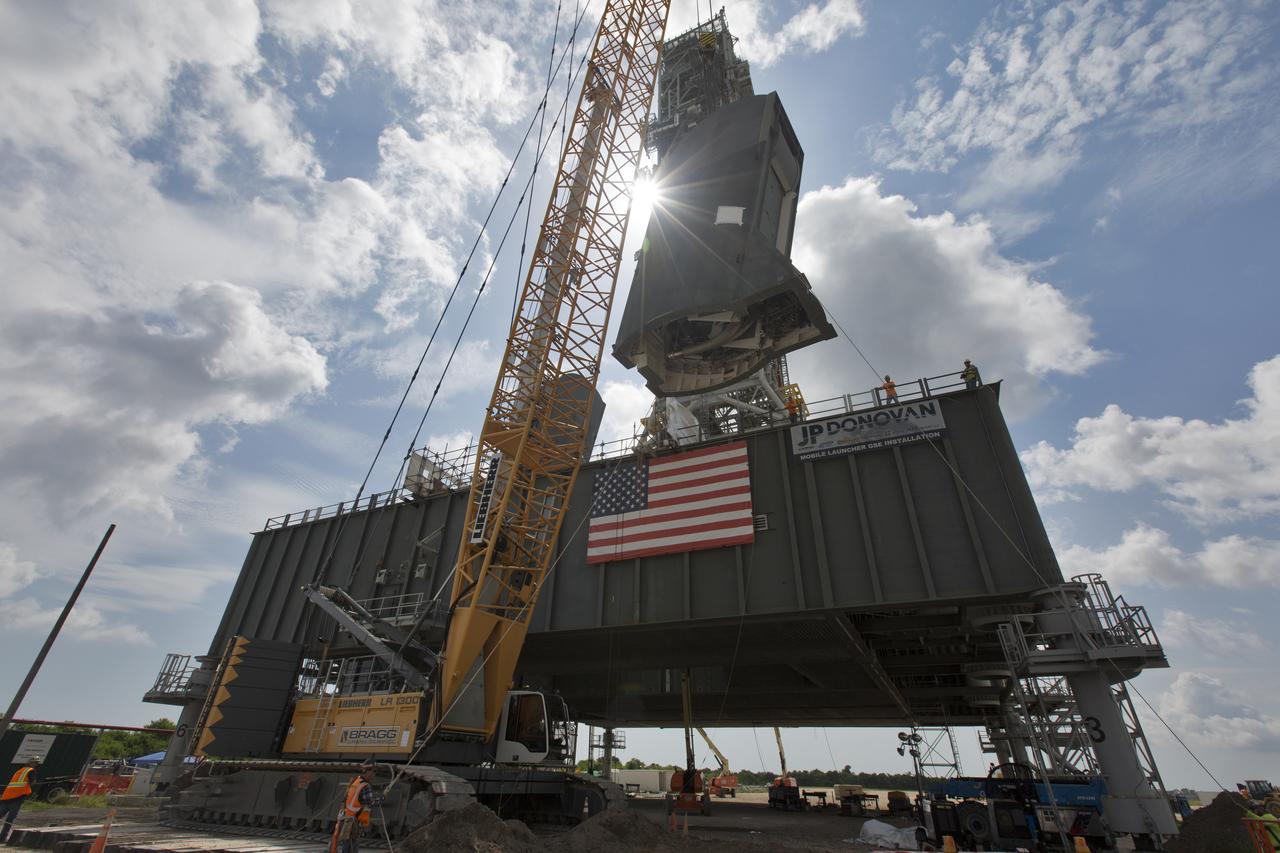
The second of two Tail Service Mast Umbilicals is lifted by crane for installation on the 0-level deck of the mobile launcher on July 27, at NASA's Kennedy Space Center in Florida. The 35-foot-tall umbilical will connect to NASA's Space Launch System (SLS) rocket core stage aft section and provide liquid hydrogen and electrical cable connections to the core stage engine section to support propellant handling during prelaunch operations. The installation brings Exploration Ground Systems one step closer to supporting prelaunch operations for the agency's SLS rocket and Orion spacecraft on Exploration Mission-1 and deep space destinations.
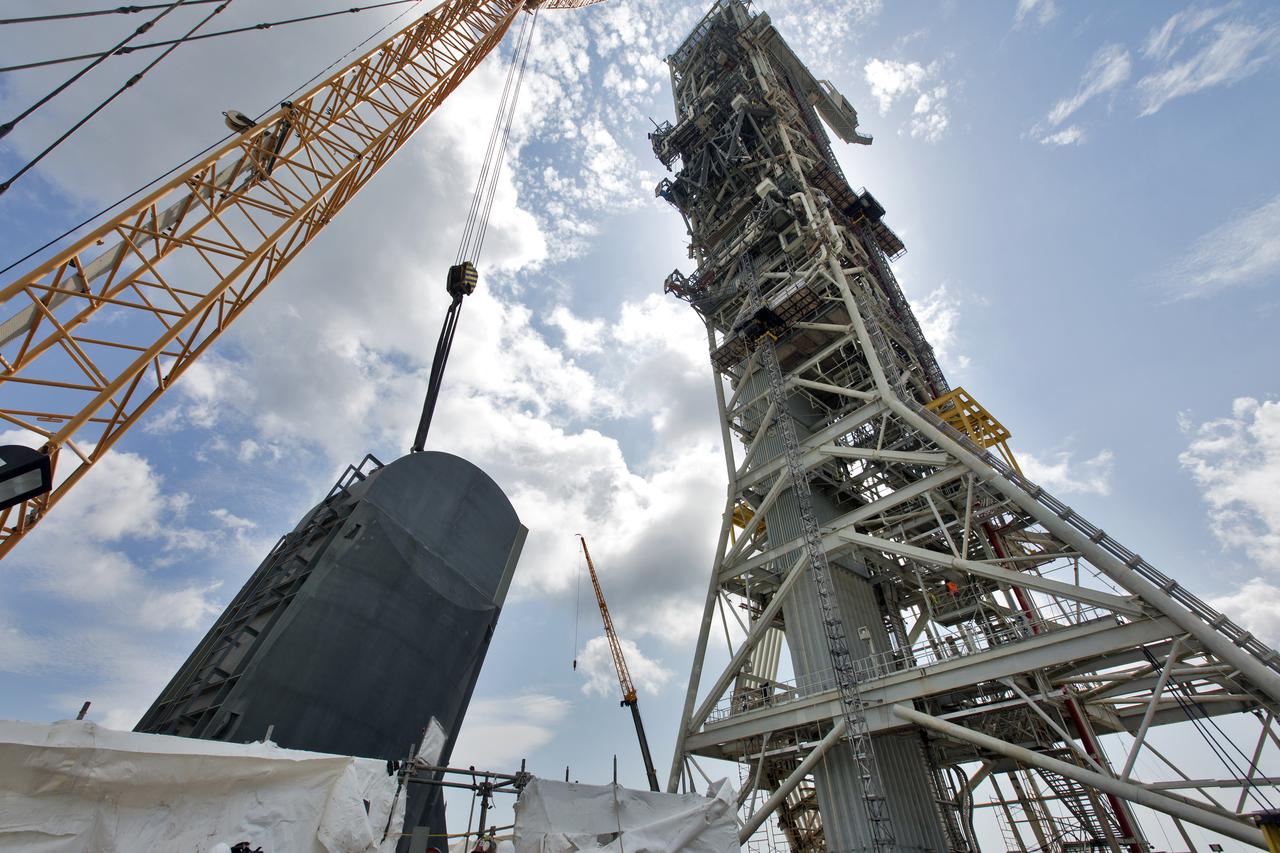
The second of two Tail Service Mast Umbilicals is lowered by crane for installation on the 0-level deck of the mobile launcher on July 27, at NASA's Kennedy Space Center in Florida. The 35-foot-tall umbilical will connect to NASA's Space Launch System (SLS) rocket core stage aft section and provide liquid hydrogen and electrical cable connections to the core stage engine section to support propellant handling during prelaunch operations. The installation brings Exploration Ground Systems one step closer to supporting prelaunch operations for the agency's SLS rocket and Orion spacecraft on Exploration Mission-1 and deep space destinations.

The first of two Tail Service Mast Umbilicals is lowered onto the 0-level deck of the mobile launcher on July 12, at NASA's Kennedy Space Center in Florida. The 35-foot-tall umbilical will connect to NASA's Space Launch System rocket core stage aft section and provide liquid oxygen and electrical cable connections to the core stage engine section to support propellant handling during prelaunch operations. The installation brings Exploration Ground Systems one step closer to supporting prelaunch operations for the agency's SLS rocket and Orion spacecraft on Exploration Mission-1 and deep space destinations.
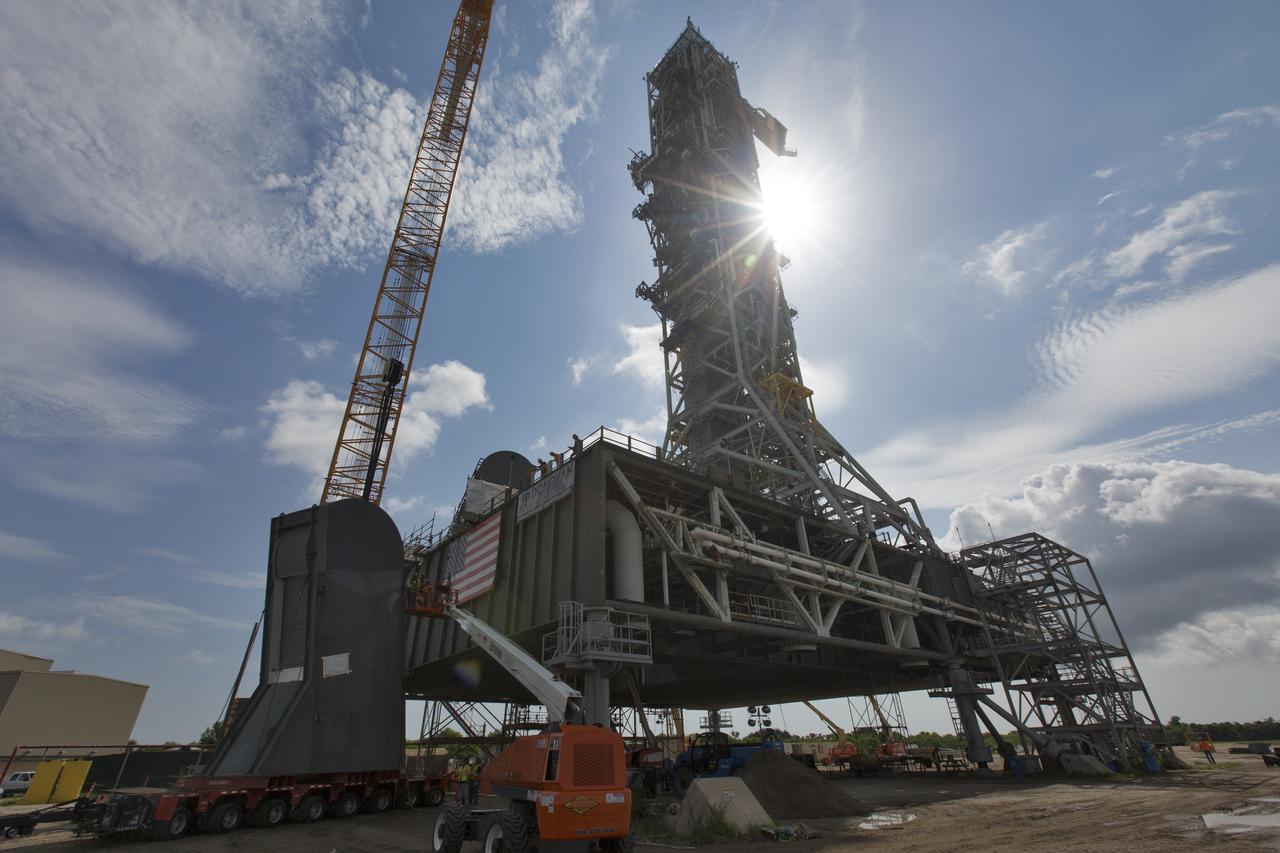
Preparations are underway to install the second of two Tail Service Mast Umbilicals on the 0-level deck of the mobile launcher on July 27, at NASA's Kennedy Space Center in Florida. The 35-foot-tall umbilical will connect to NASA's Space Launch System (SLS) rocket core stage aft section and provide liquid hydrogen and electrical cable connections to the core stage engine section to support propellant handling during prelaunch operations. The installation brings Exploration Ground Systems one step closer to supporting prelaunch operations for the agency's SLS rocket and Orion spacecraft on Exploration Mission-1 and deep space destinations.
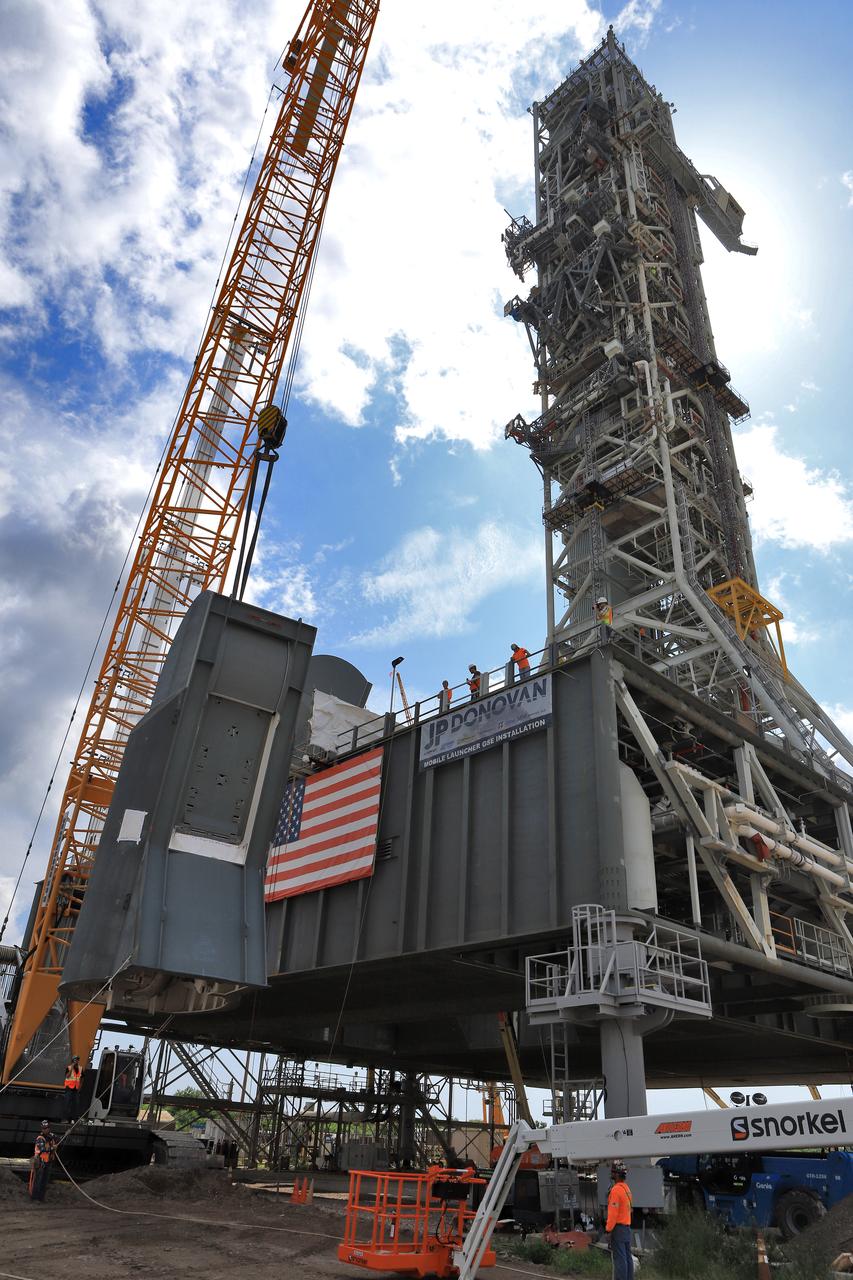
The second of two Tail Service Mast Umbilicals is lifted by crane for installation on the 0-level deck of the mobile launcher on July 27, at NASA's Kennedy Space Center in Florida. The 35-foot-tall umbilical will connect to NASA's Space Launch System (SLS) rocket core stage aft section and provide liquid hydrogen and electrical cable connections to the core stage engine section to support propellant handling during prelaunch operations. The installation brings Exploration Ground Systems one step closer to supporting prelaunch operations for the agency's SLS rocket and Orion spacecraft on Exploration Mission-1 and deep space destinations.
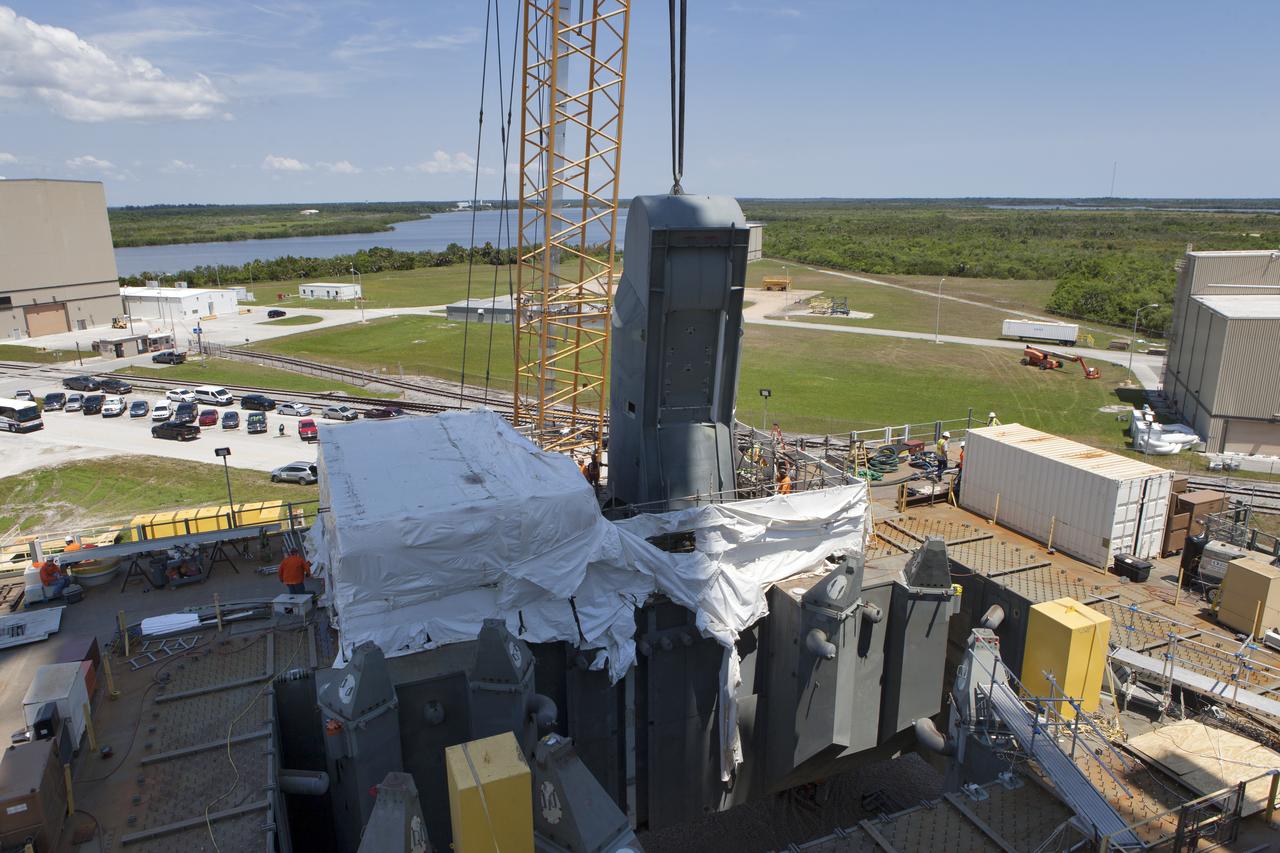
A crane is used to lower the first of two Tail Service Mast Umbilicals for installation on the 0-level deck of the mobile launcher on July 12, at NASA's Kennedy Space Center in Florida. The 35-foot-tall umbilical will connect to NASA's Space Launch System rocket core stage aft section and provide liquid oxygen and electrical cable connections to the core stage engine section to support propellant handling during prelaunch operations. The installation brings Exploration Ground Systems one step closer to supporting prelaunch operations for the agency's SLS rocket and Orion spacecraft on Exploration Mission-1 and deep space destinations.
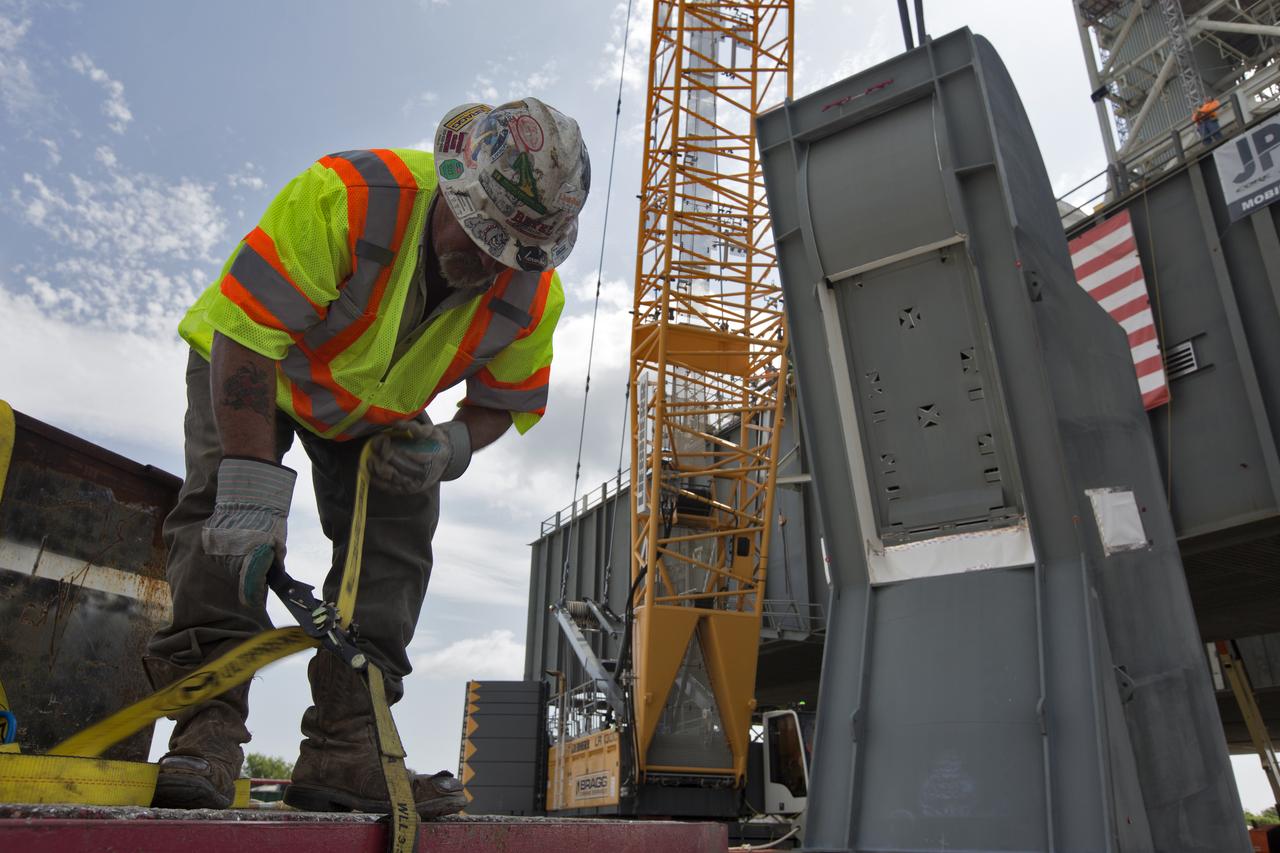
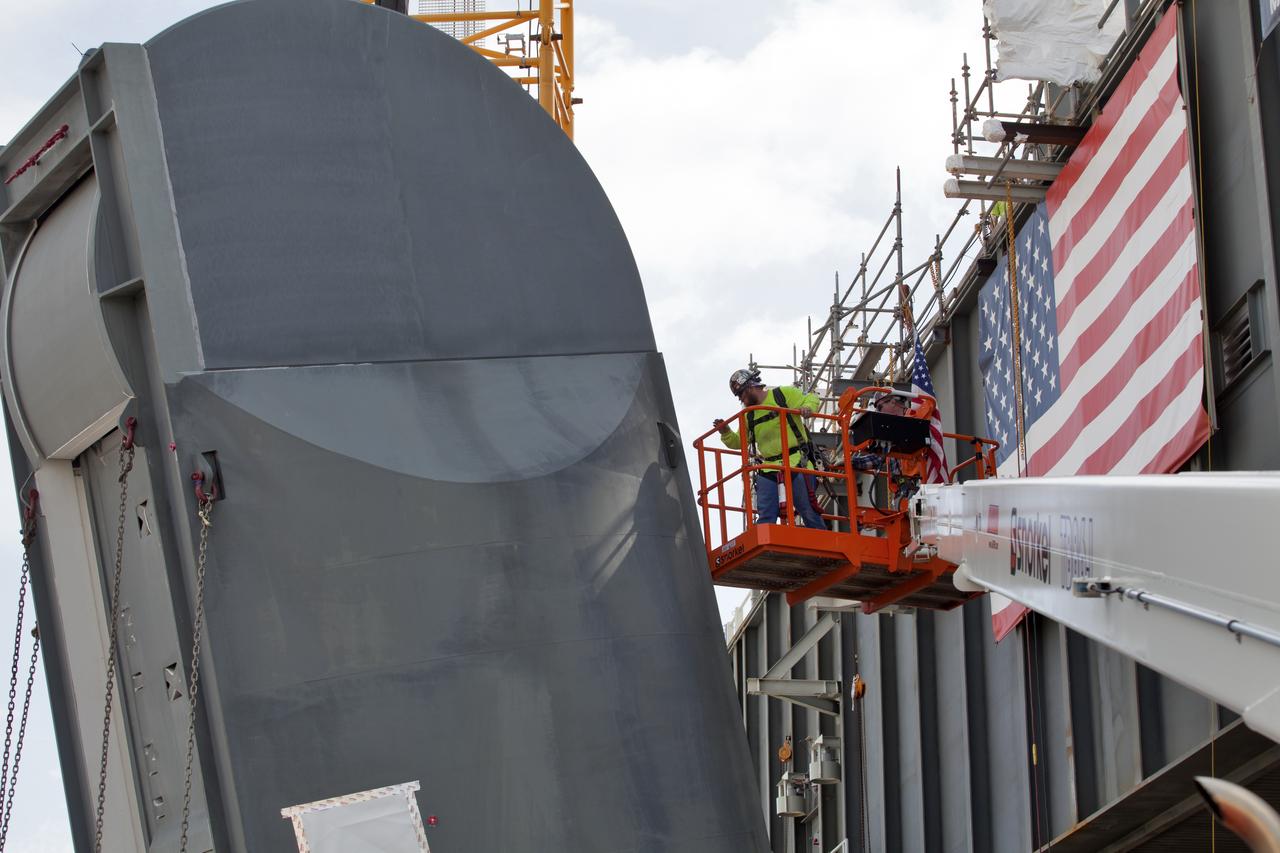
A JP Donovan construction worker makes preparations for lifting of the second of two Tail Service Mast Umbilicals for installation on the 0-level deck of the mobile launcher on July 27, at NASA's Kennedy Space Center in Florida. The 35-foot-tall umbilical will connect to NASA's Space Launch System (SLS) rocket core stage aft section and provide hydrogen and electrical cable connections to the core stage engine section to support propellant handling during prelaunch operations. The installation brings Exploration Ground Systems one step closer to supporting prelaunch operations for the agency's SLS rocket and Orion spacecraft on Exploration Mission-1 and deep space destinations.
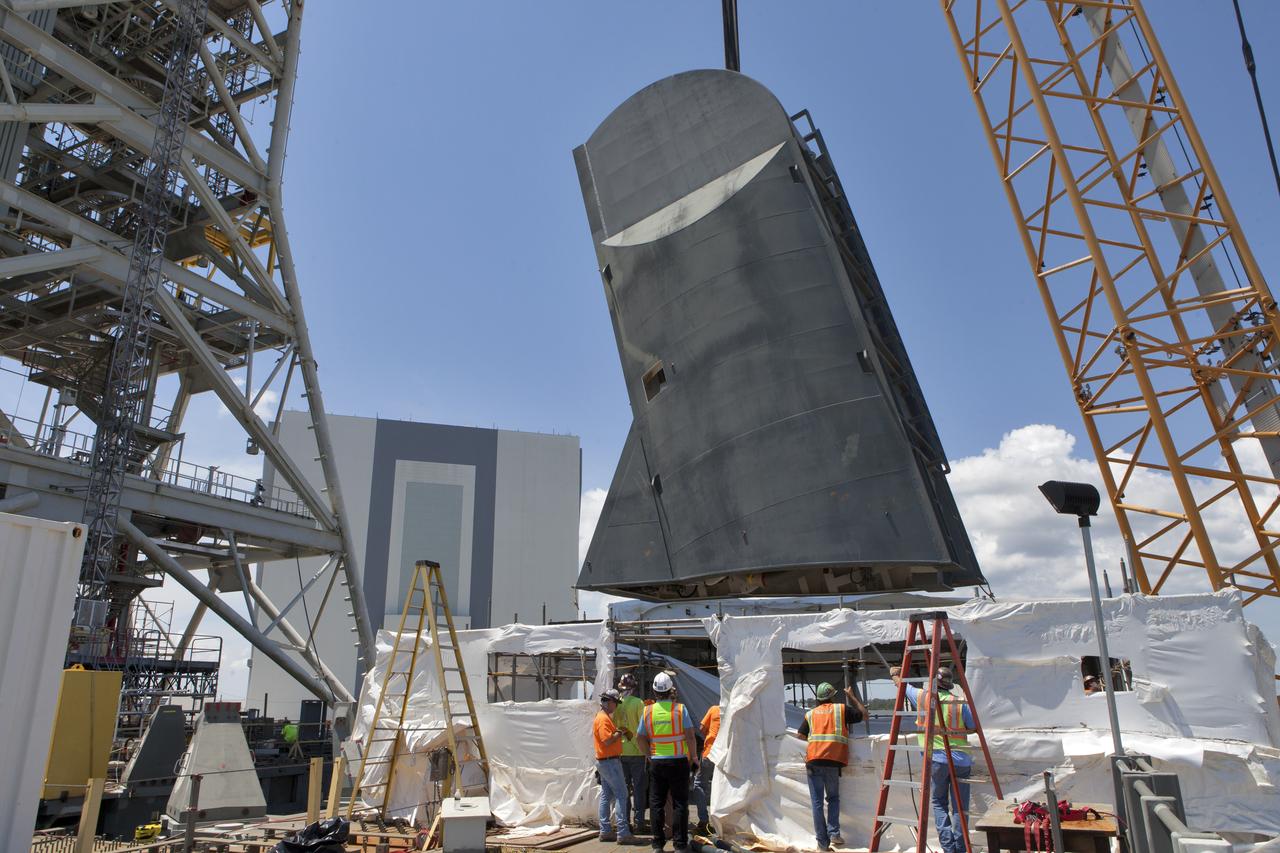
Construction workers with JP Donovan monitor operations as a crane is used to lower the first of two Tail Service Mast Umbilicals for installation on the 0-level deck of the mobile launcher on July 12, at NASA's Kennedy Space Center in Florida. The 35-foot-tall umbilical will connect to NASA's Space Launch System rocket core stage aft section and provide liquid oxygen and electrical cable connections to the core stage engine section to support propellant handling during prelaunch operations. The installation brings Exploration Ground Systems one step closer to supporting prelaunch operations for the agency's SLS rocket and Orion spacecraft on Exploration Mission-1 and deep space destinations.
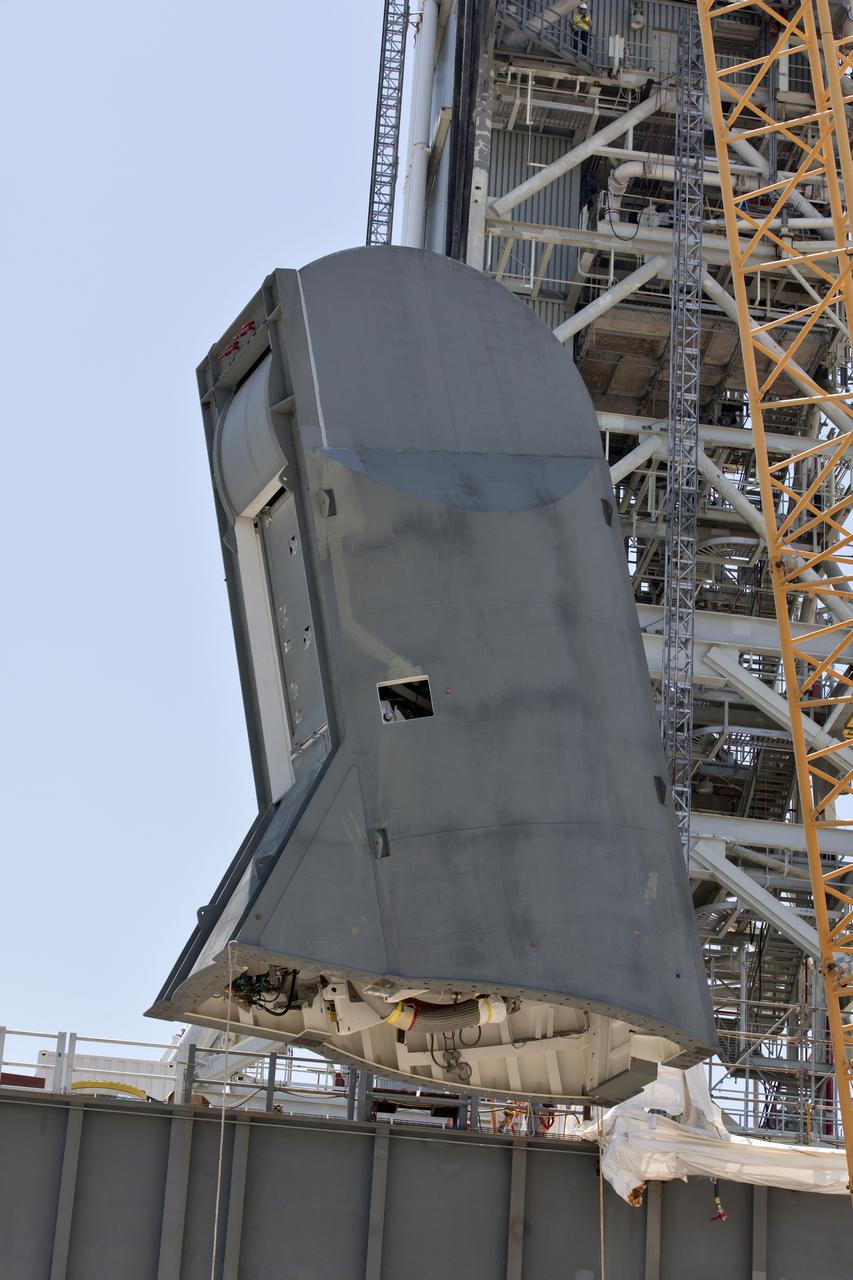
The first of two Tail Service Mast Umbilicals is lifted up for installation on the 0-level deck of the mobile launcher on July 12, at NASA's Kennedy Space Center in Florida. The 35-foot-tall umbilical will connect to NASA's Space Launch System rocket core stage aft section and provide liquid oxygen and electrical cable connections to the core stage engine section to support propellant handling during prelaunch operations. The installation brings Exploration Ground Systems one step closer to supporting prelaunch operations for the agency's SLS rocket and Orion spacecraft on Exploration Mission-1 and deep space destinations.
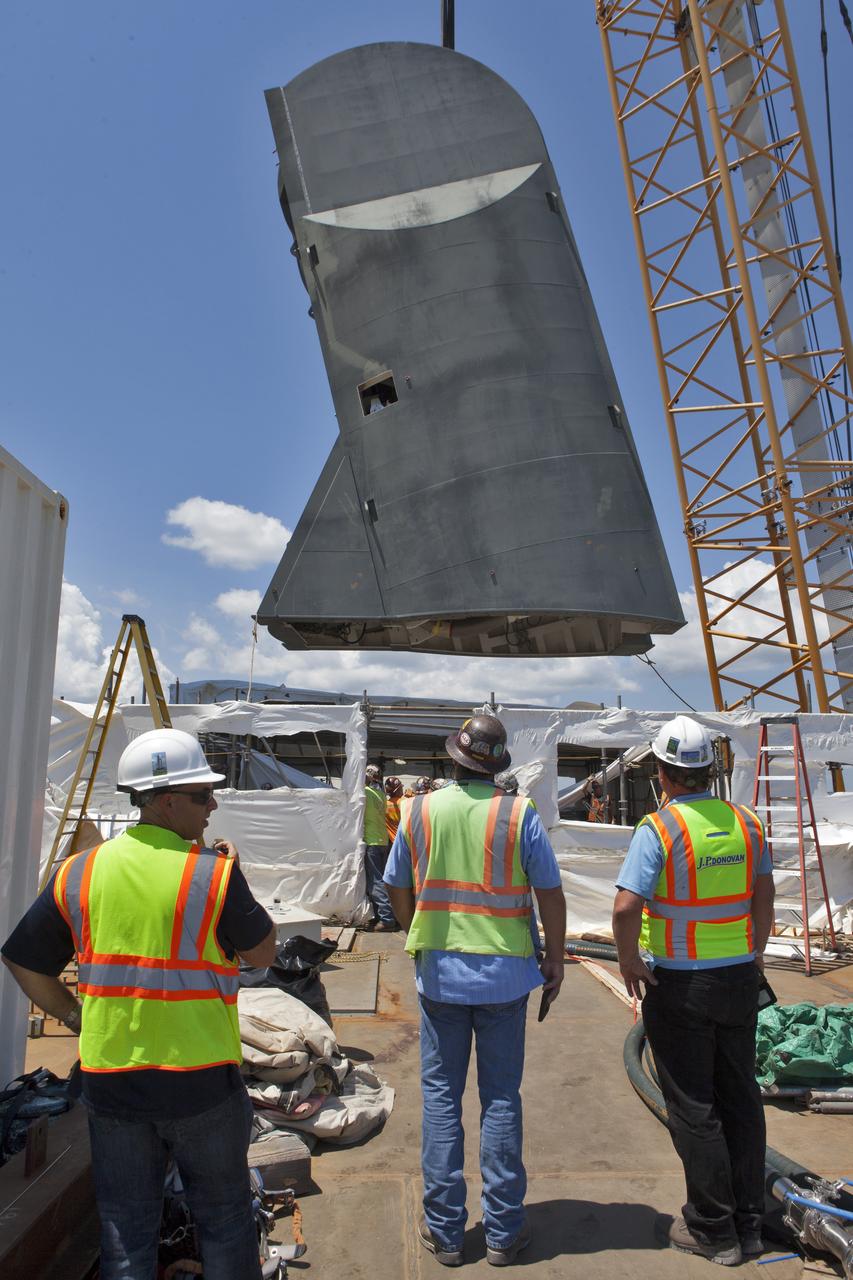
Construction workers with JP Donovan monitor operations as a crane is used to lower the first of two Tail Service Mast Umbilicals for installation on the 0-level deck of the mobile launcher on July 12, at NASA's Kennedy Space Center in Florida. The 35-foot-tall umbilical will connect to NASA's Space Launch System rocket core stage aft section and provide liquid oxygen and electrical cable connections to the core stage engine section to support propellant handling during prelaunch operations. The installation brings Exploration Ground Systems one step closer to supporting prelaunch operations for the agency's SLS rocket and Orion spacecraft on Exploration Mission-1 and deep space destinations.
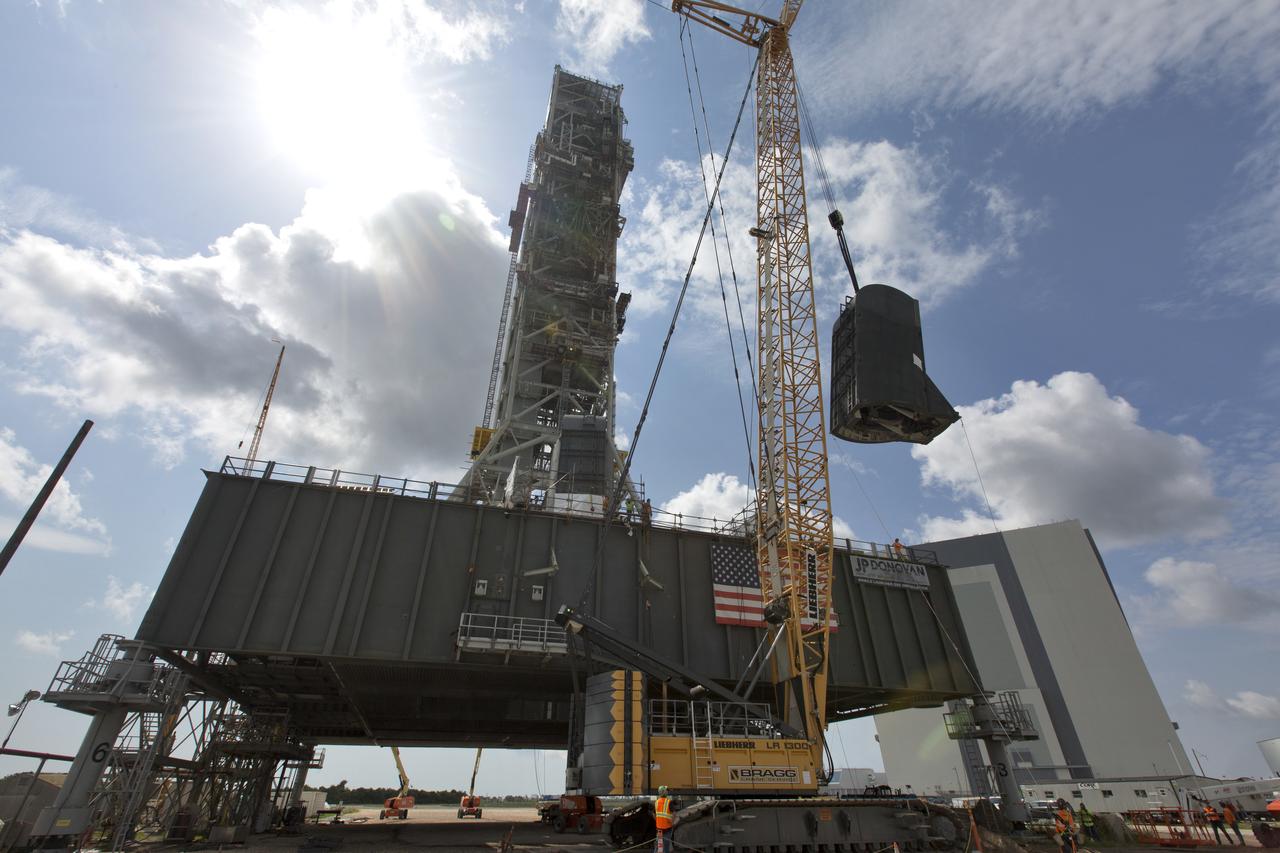
The second of two Tail Service Mast Umbilicals is lifted by crane for installation on the 0-level deck of the mobile launcher on July 27, at NASA's Kennedy Space Center in Florida. The 35-foot-tall umbilical will connect to NASA's Space Launch System (SLS) rocket core stage aft section and provide liquid hydrogen and electrical cable connections to the core stage engine section to support propellant handling during prelaunch operations. The installation brings Exploration Ground Systems one step closer to supporting prelaunch operations for the agency's SLS rocket and Orion spacecraft on Exploration Mission-1 and deep space destinations.
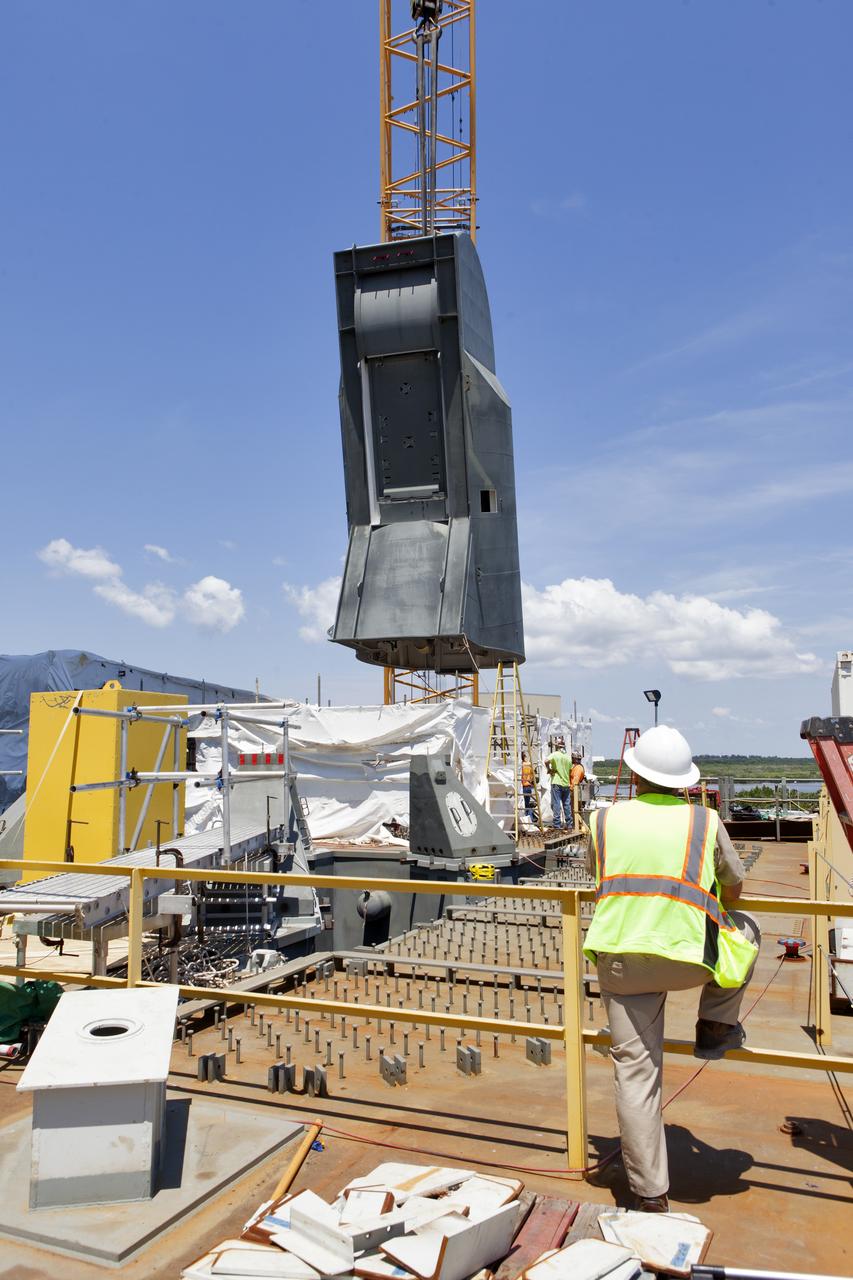
A crane is used to lower the first of two Tail Service Mast Umbilicals for installation on the 0-level deck of the mobile launcher on July 12, at NASA's Kennedy Space Center in Florida. The 35-foot-tall umbilical will connect to NASA's Space Launch System rocket core stage aft section and provide liquid oxygen and electrical cable connections to the core stage engine section to support propellant handling during prelaunch operations. The installation brings Exploration Ground Systems one step closer to supporting prelaunch operations for the agency's SLS rocket and Orion spacecraft on Exploration Mission-1 and deep space destinations.
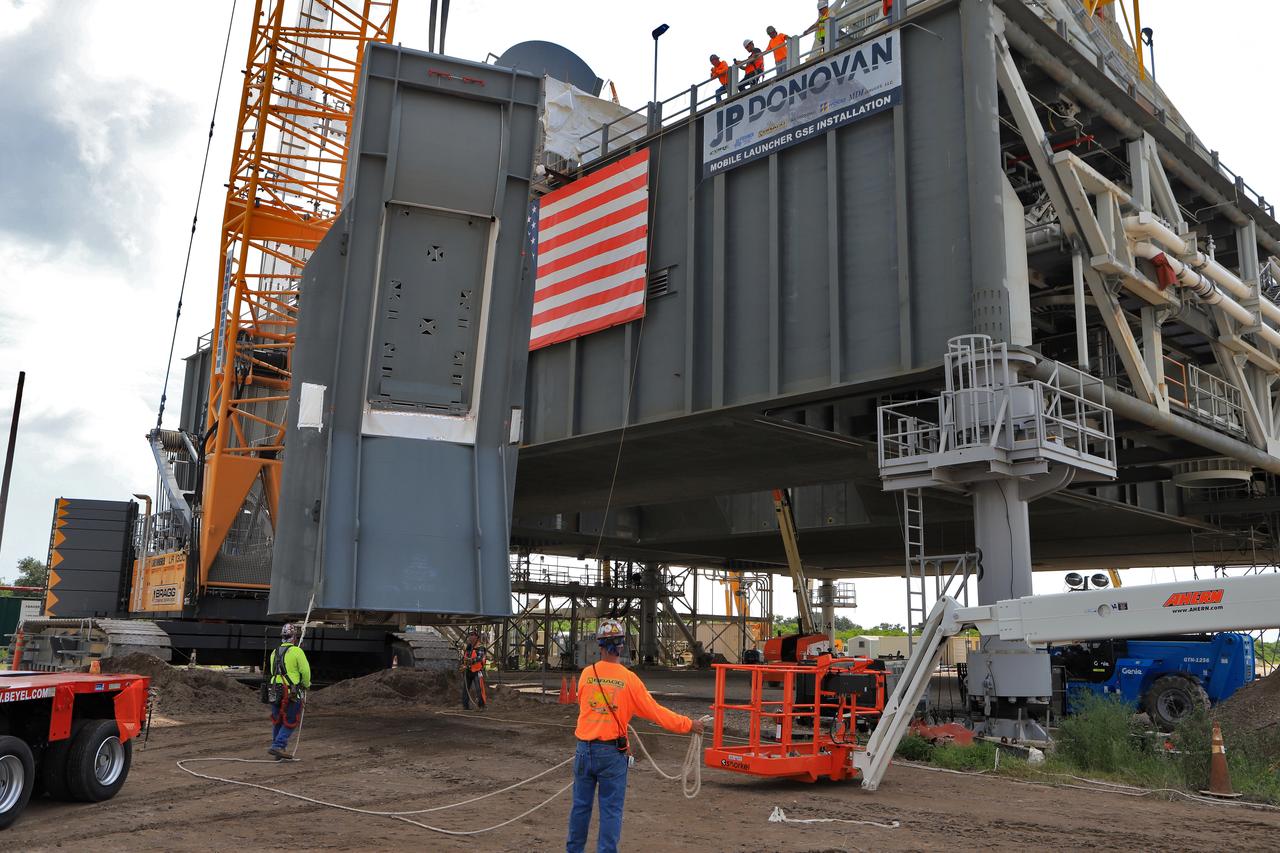
Construction workers with JP Donovan assist as a crane lifts the second of two Tail Service Mast Umbilicals up for installation on the 0-level deck of the mobile launcher on July 27, at NASA's Kennedy Space Center in Florida. The 35-foot-tall umbilical will connect to NASA's Space Launch System rocket core stage aft section and provide liquid hydrogen and electrical cable connections to the core stage engine section to support propellant handling during prelaunch operations. The installation brings Exploration Ground Systems one step closer to supporting prelaunch operations for the agency's SLS rocket and Orion spacecraft on Exploration Mission-1 and deep space destinations.
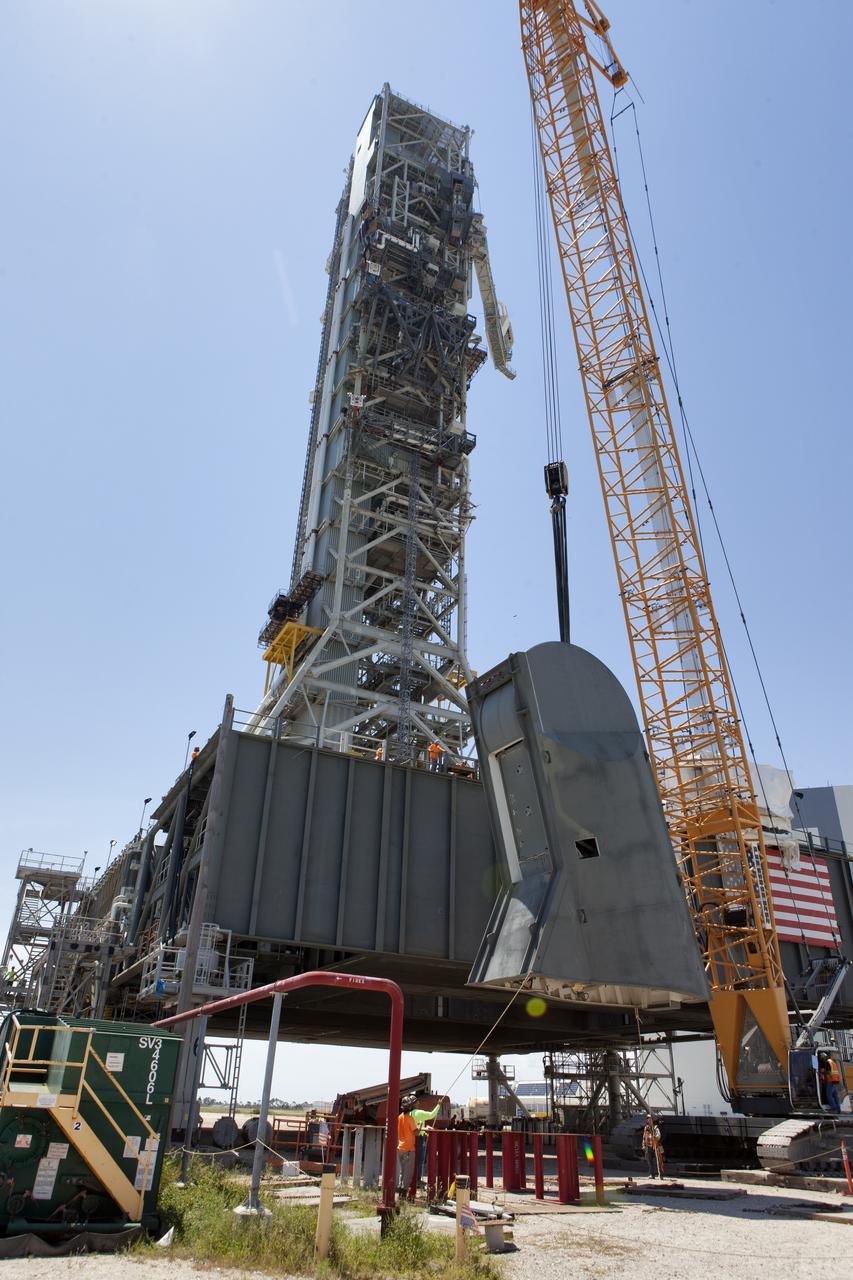
The first of two Tail Service Mast Umbilicals is lifted up for installation on the 0-level deck of the mobile launcher on July 12, at NASA's Kennedy Space Center in Florida. The 35-foot-tall umbilical will connect to NASA's Space Launch System rocket core stage aft section and provide liquid oxygen and electrical cable connections to the core stage engine section to support propellant handling during prelaunch operations. The installation brings Exploration Ground Systems one step closer to supporting prelaunch operations for the agency's SLS rocket and Orion spacecraft on Exploration Mission-1 and deep space destinations.
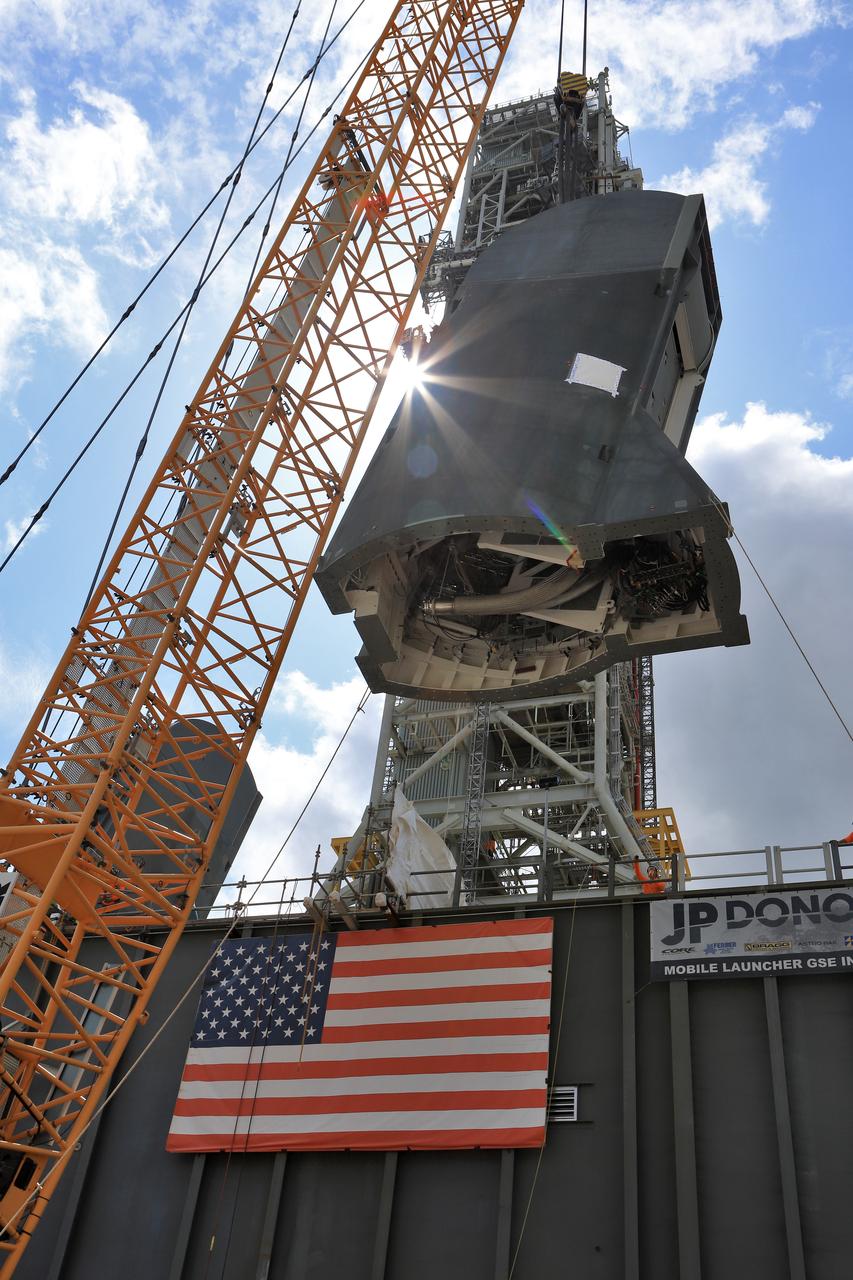
The second of two Tail Service Mast Umbilicals is lifted by crane for installation on the 0-level deck of the mobile launcher on July 27, at NASA's Kennedy Space Center in Florida. The 35-foot-tall umbilical will connect to NASA's Space Launch System (SLS) rocket core stage aft section and provide liquid hydrogen and electrical cable connections to the core stage engine section to support propellant handling during prelaunch operations. The installation brings Exploration Ground Systems one step closer to supporting prelaunch operations for the agency's SLS rocket and Orion spacecraft on Exploration Mission-1 and deep space destinations.
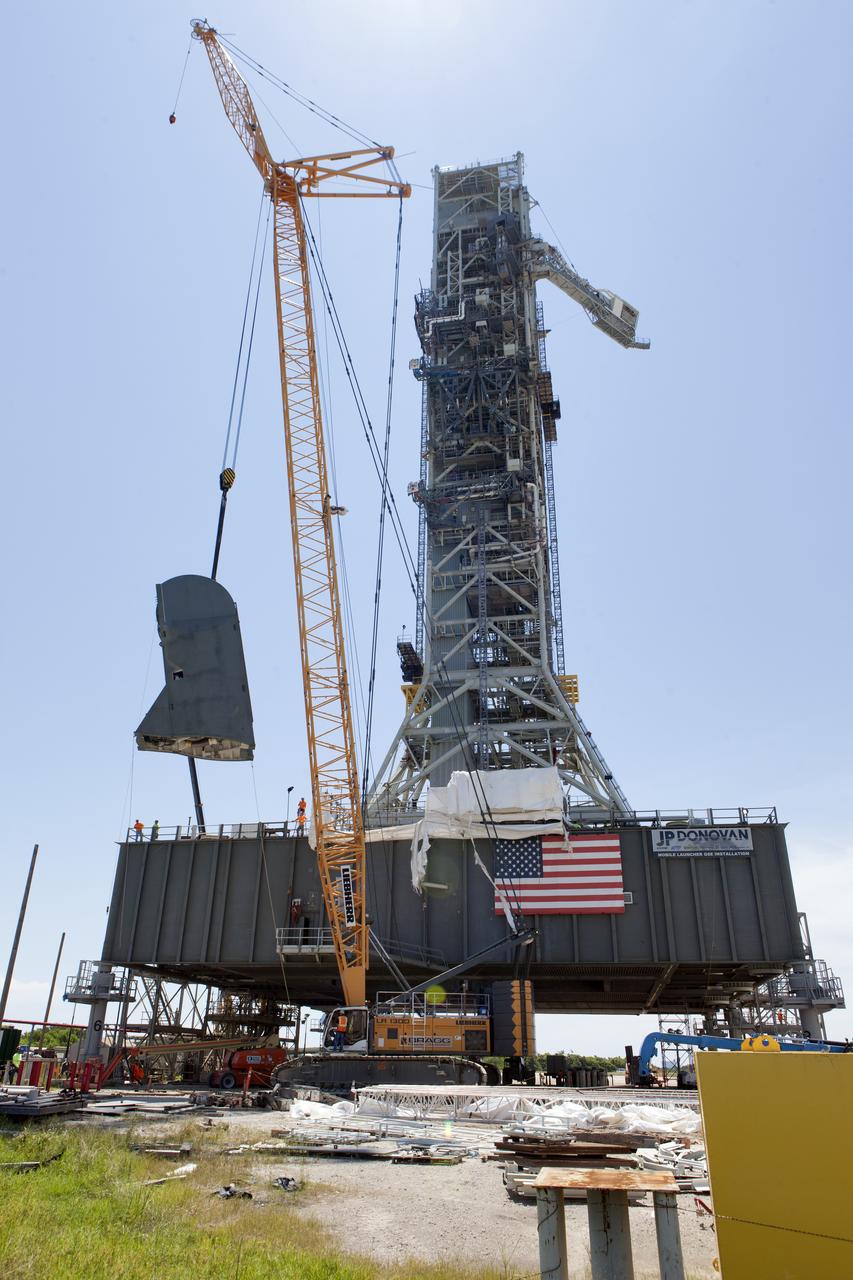
A crane is used to lift up the first of two Tail Service Mast Umbilicals for installation on the 0-level deck of the mobile launcher on July 12, at NASA's Kennedy Space Center in Florida. The 35-foot-tall umbilical will connect to NASA's Space Launch System rocket core stage aft section and provide liquid oxygen and electrical cable connections to the core stage engine section to support propellant handling during prelaunch operations. The installation brings Exploration Ground Systems one step closer to supporting prelaunch operations for the agency's SLS rocket and Orion spacecraft on Exploration Mission-1 and deep space destinations.