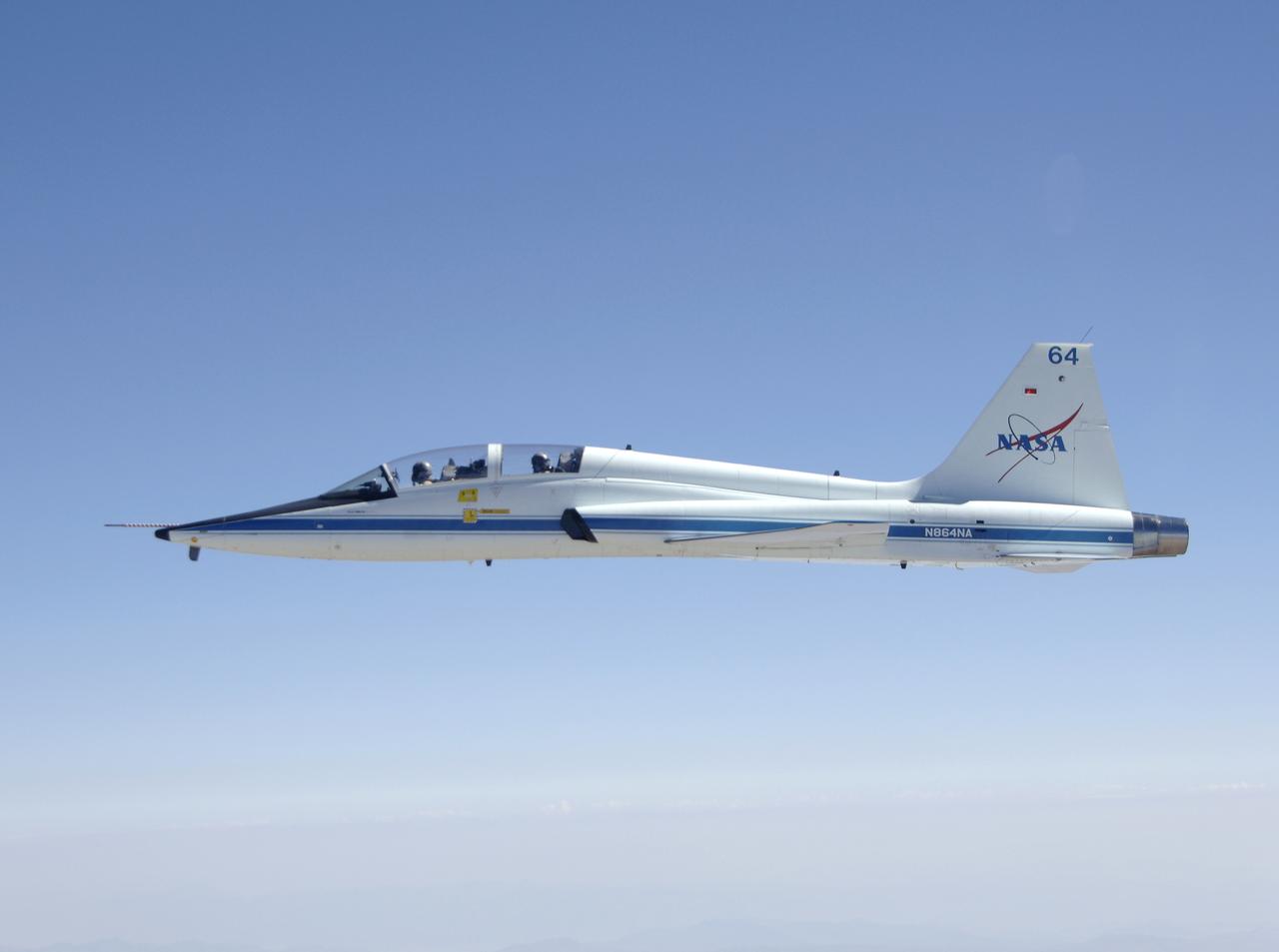
NASA Dryden's T-38 Talon trainer aircraft in flight near Edwards Air Force Base. Formerly at NASA's Langley Research Center, this Northrop T-38 Talon is now used for mission support and pilot proficiency at the Dryden Flight Research Center.
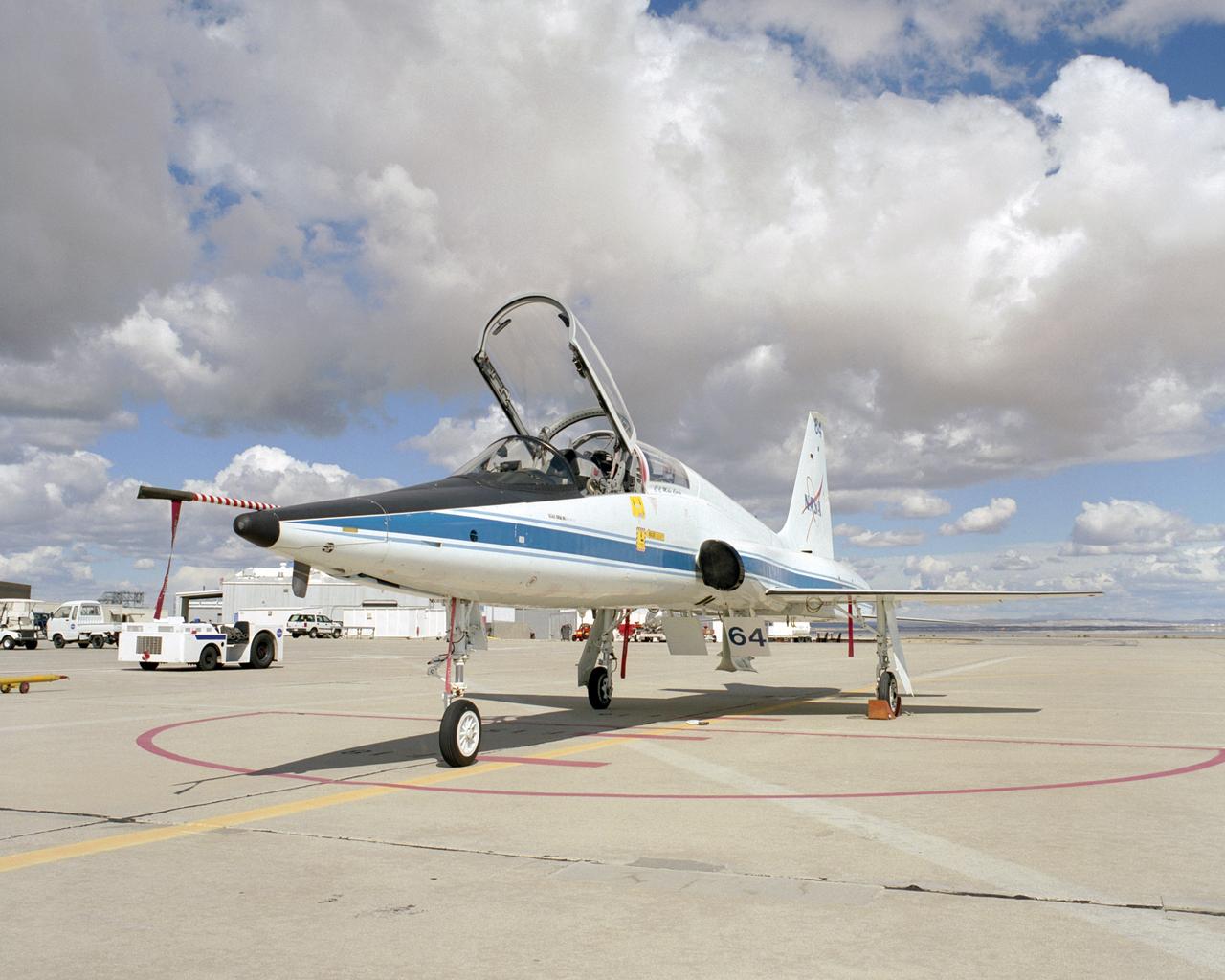
Formerly at NASA's Langley Research Center, this Northrop T-38 Talon is now used for mission support and pilot proficiency at the Dryden Flight Research Center.
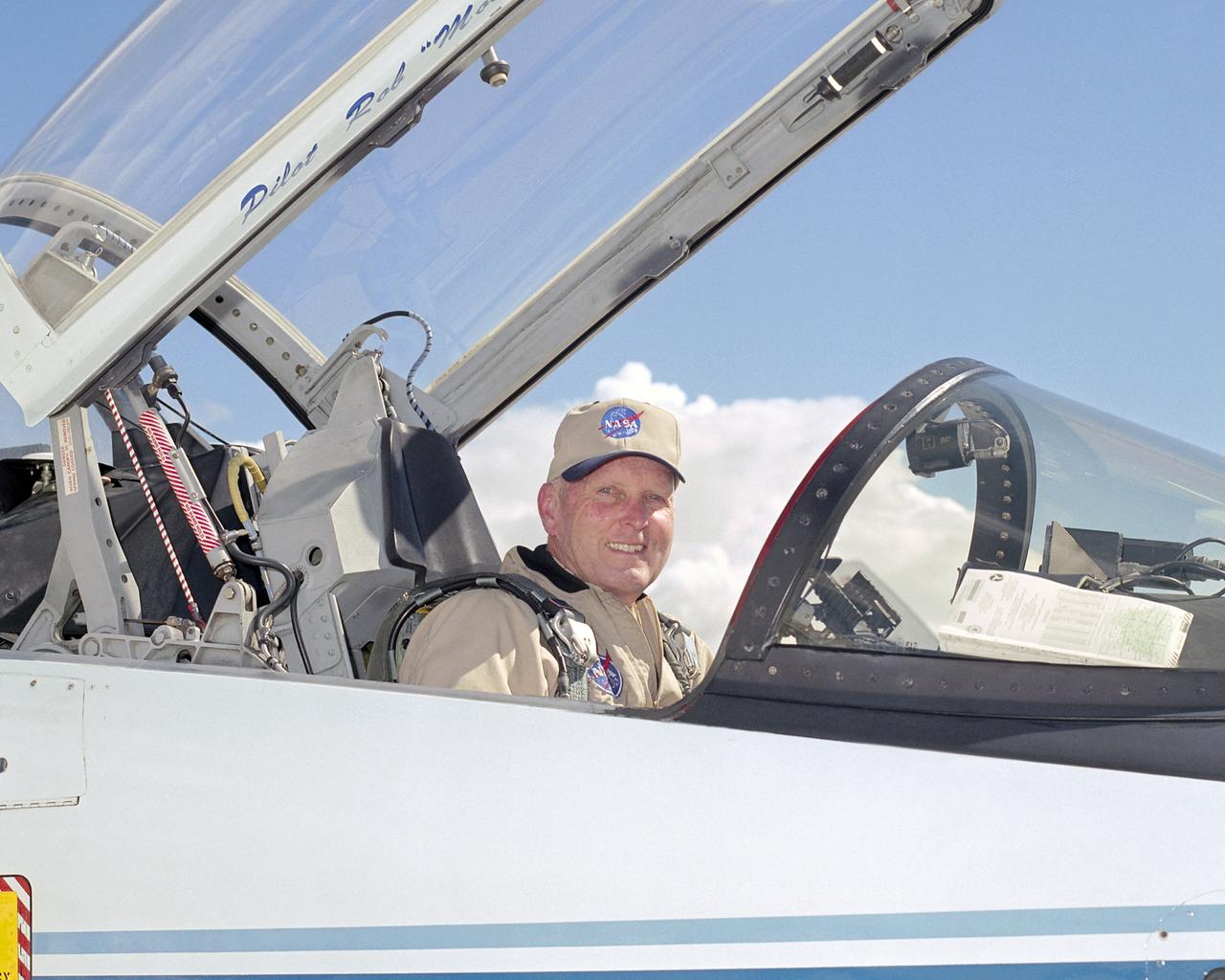
NASA Dryden Flight Research Center's chief pilot Gordon Fullerton in the cockpit of the center's T-38 Talon mission support aircraft.
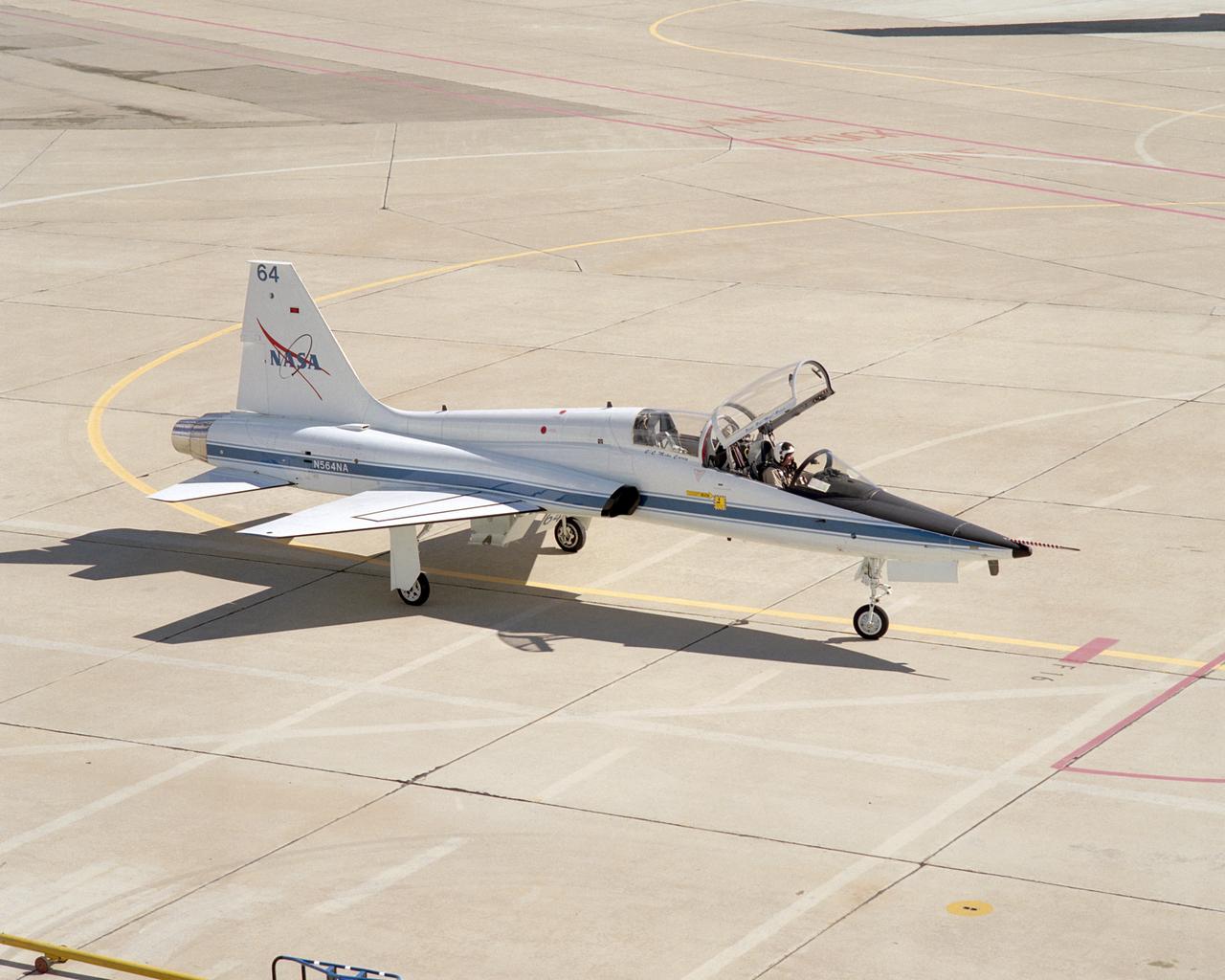
Pilot Gordon Fullerton taxies NASA Dryden's "newest" mission support aircraft, a T-38 Talon, into position on the ramp upon its arrival on February 24, 2005.
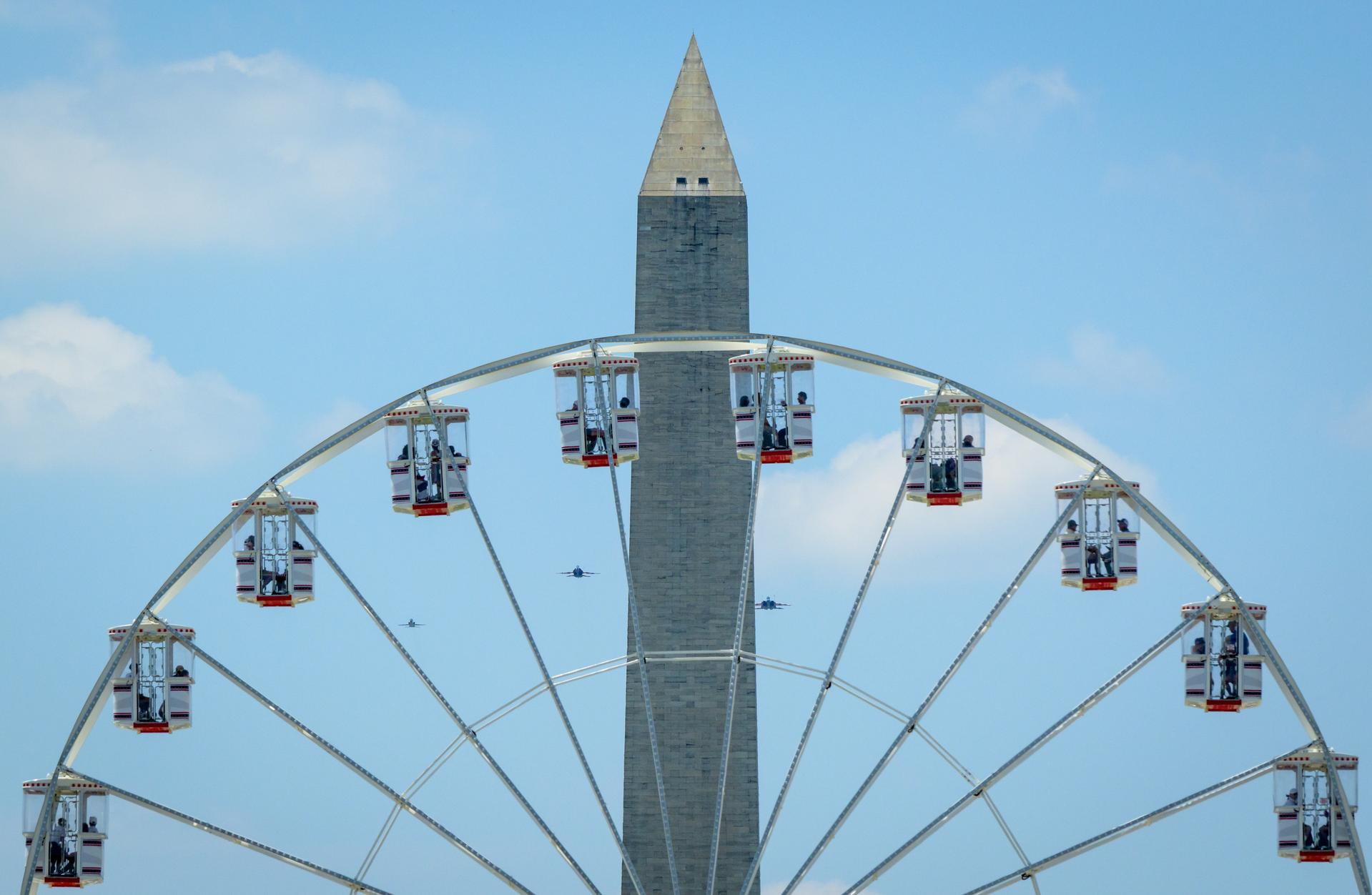
NASA’s T-38 Talon, left, F/A-18 Hornet and F-15 Eagle, right, aircraft are seen as they perform a flyover during the Great American State Fair, Saturday, July 4, 2026, on the National Mall in Washington. Photo Credit: (NASA/Bill Ingalls)
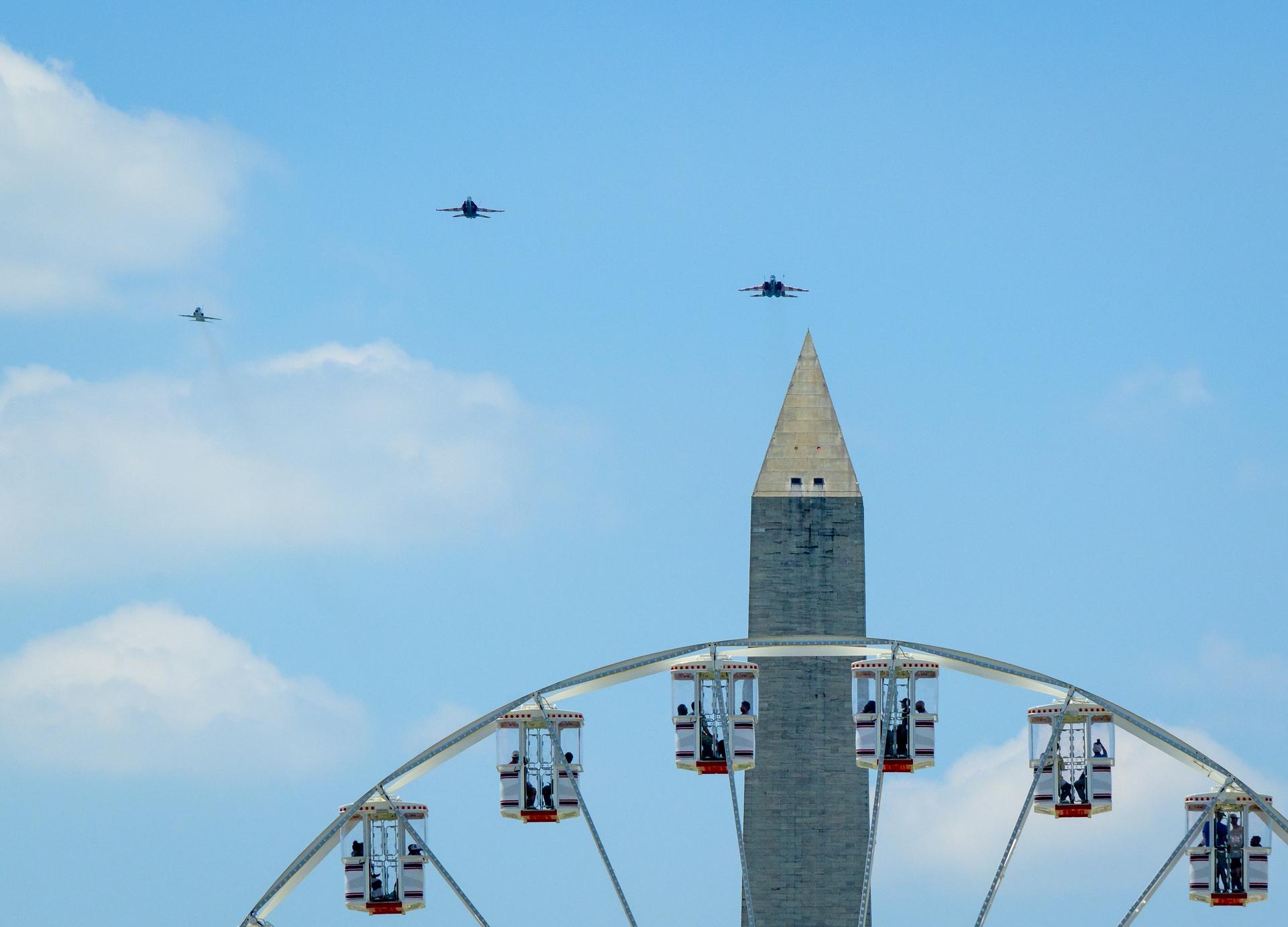
NASA’s T-38 Talon, left, F/A-18 Hornet and F-15 Eagle, right, aircraft are seen as they perform a flyover during the Great American State Fair, Saturday, July 4, 2026, on the National Mall in Washington. Photo Credit: (NASA/Bill Ingalls)
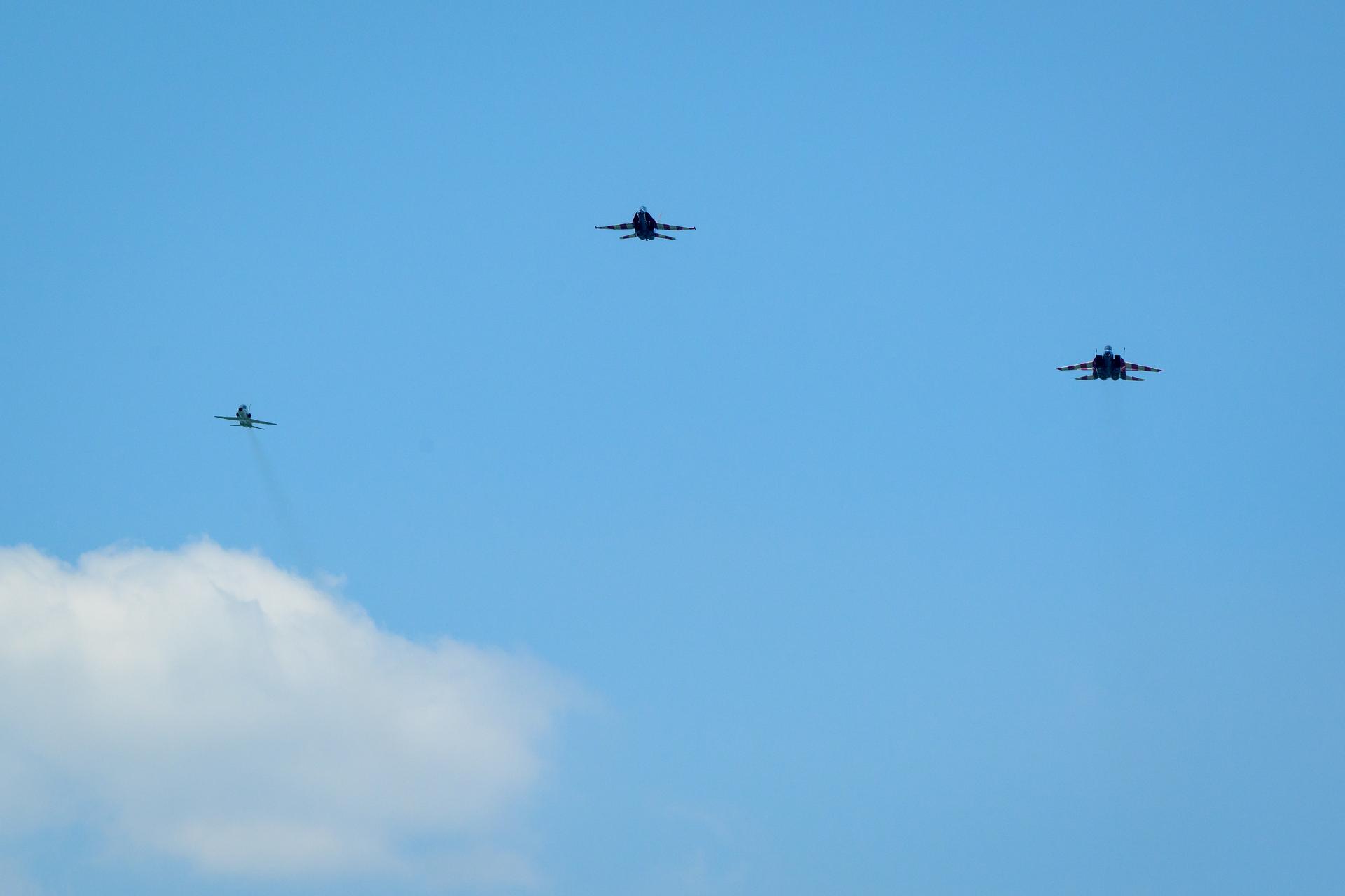
NASA’s T-38 Talon, left, F/A-18 Hornet and F-15 Eagle, right, aircraft are seen as they perform a flyover during the Great American State Fair, Saturday, July 4, 2026, on the National Mall in Washington. Photo Credit: (NASA/Bill Ingalls)
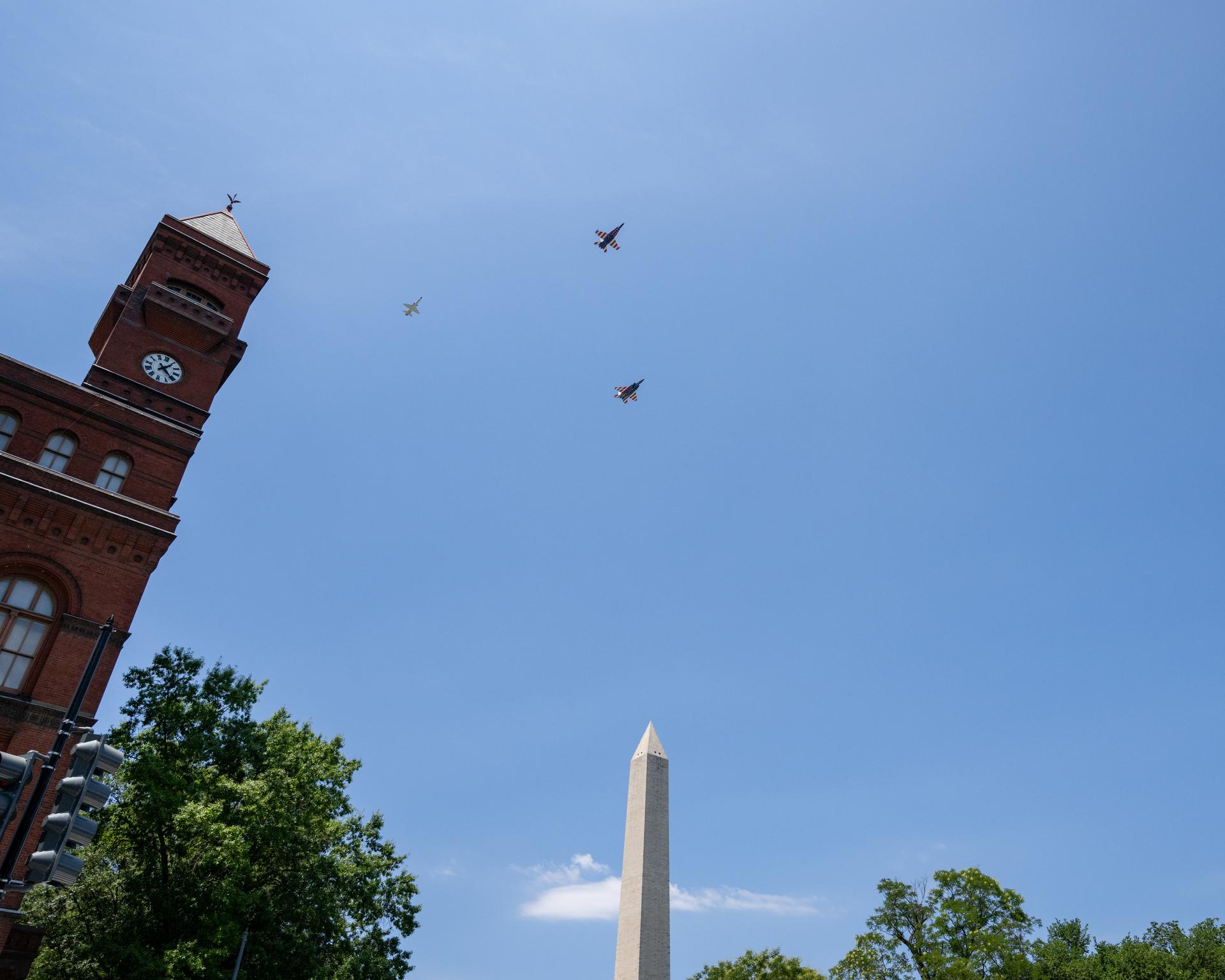
NASA’s T-38 Talon, F/A-18 Hornet and F-15 Eagle aircraft are seen as they perform a flyover during the Great American State Fair, Saturday, July 4, 2026, on the National Mall in Washington. Photo Credit: (NASA/Keegan Barber)
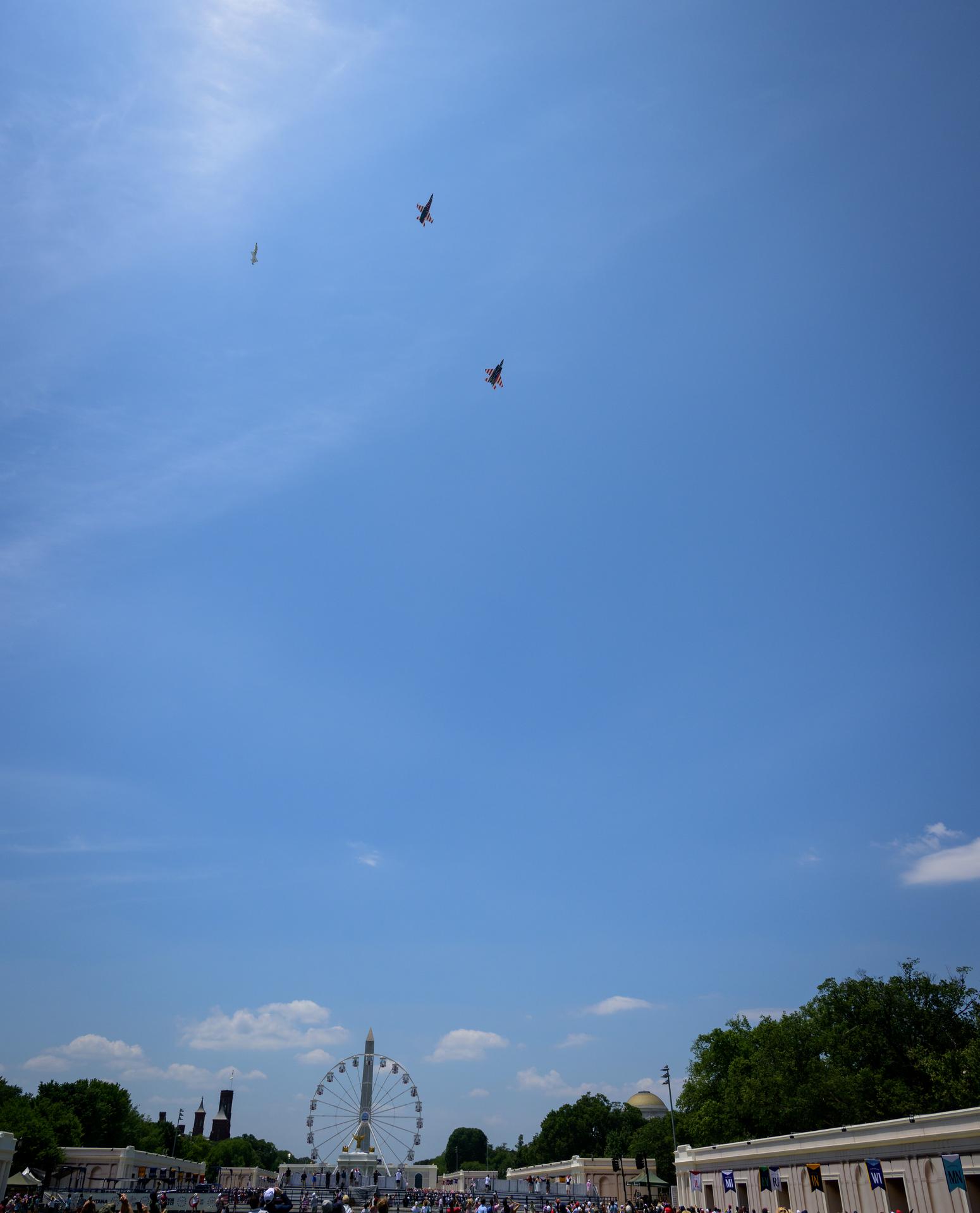
NASA’s T-38 Talon, left, F/A-18 Hornet and F-15 Eagle, right, aircraft are seen as they perform a flyover during the Great American State Fair, Saturday, July 4, 2026, on the National Mall in Washington. Photo Credit: (NASA/Bill Ingalls)
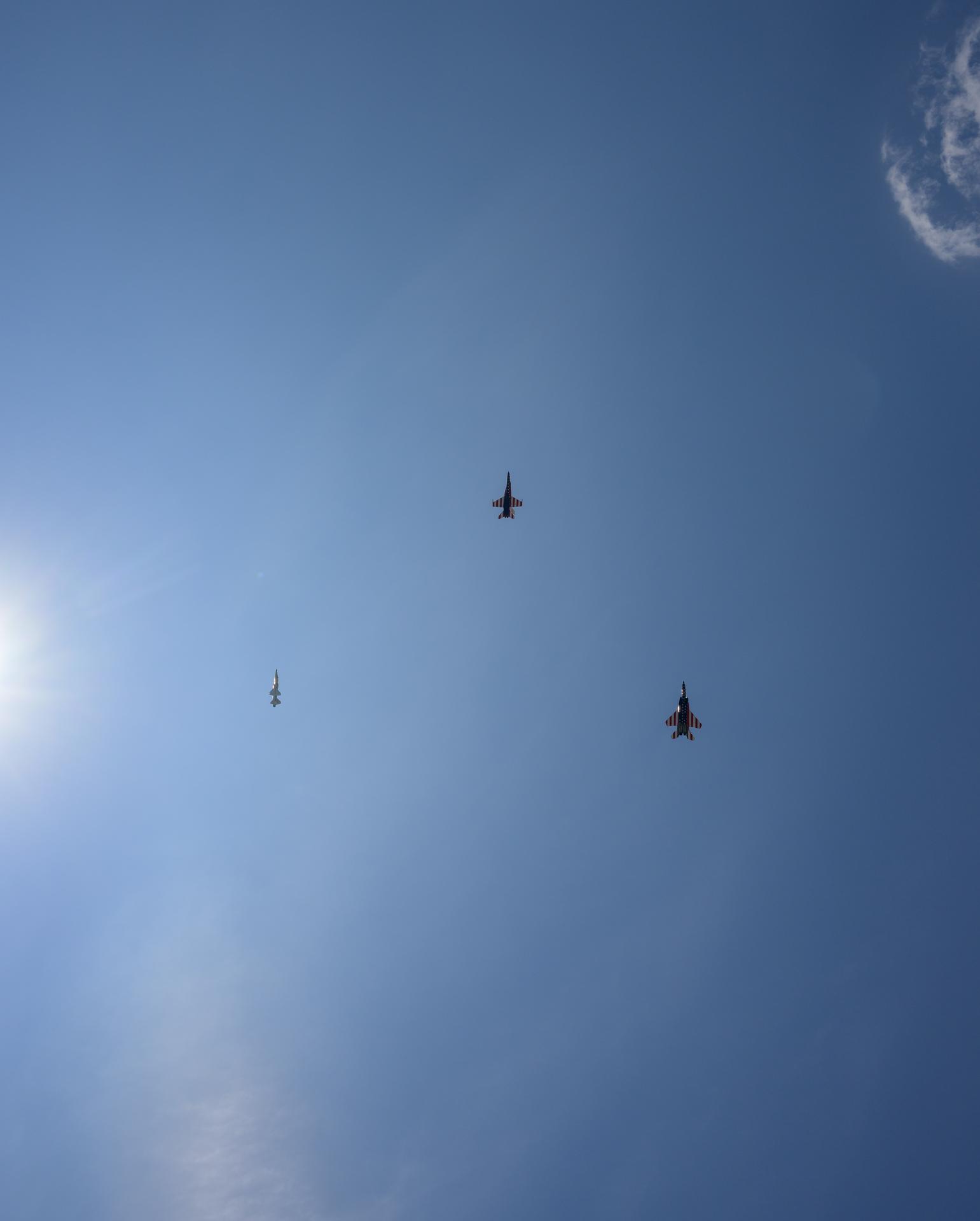
NASA’s T-38 Talon, left, F/A-18 Hornet and F-15 Eagle, right, aircraft are seen as they perform a flyover during the Great American State Fair, Saturday, July 4, 2026, on the National Mall in Washington. Photo Credit: (NASA/Bill Ingalls)
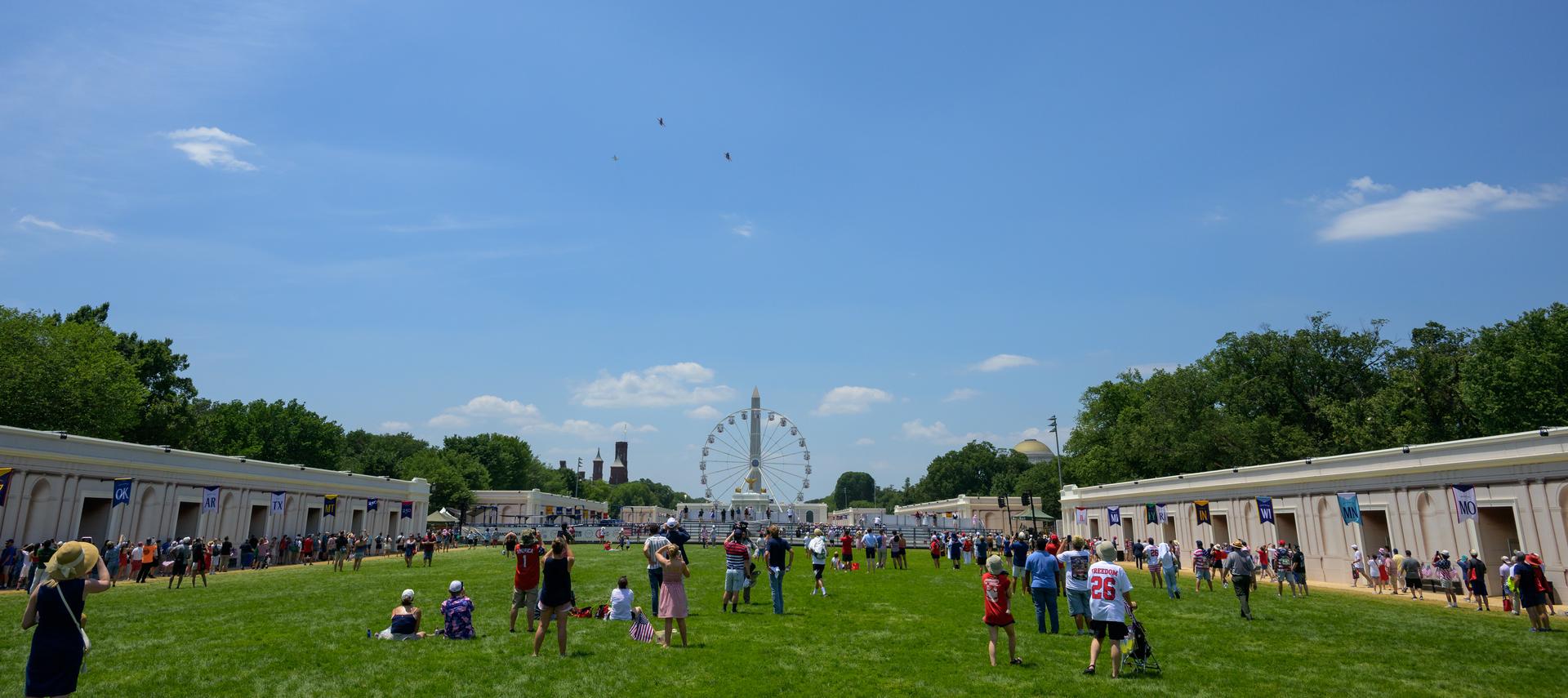
NASA’s T-38 Talon, left, F/A-18 Hornet and F-15 Eagle, right, aircraft are seen as they perform a flyover during the Great American State Fair, Saturday, July 4, 2026, on the National Mall in Washington. Photo Credit: (NASA/Bill Ingalls)
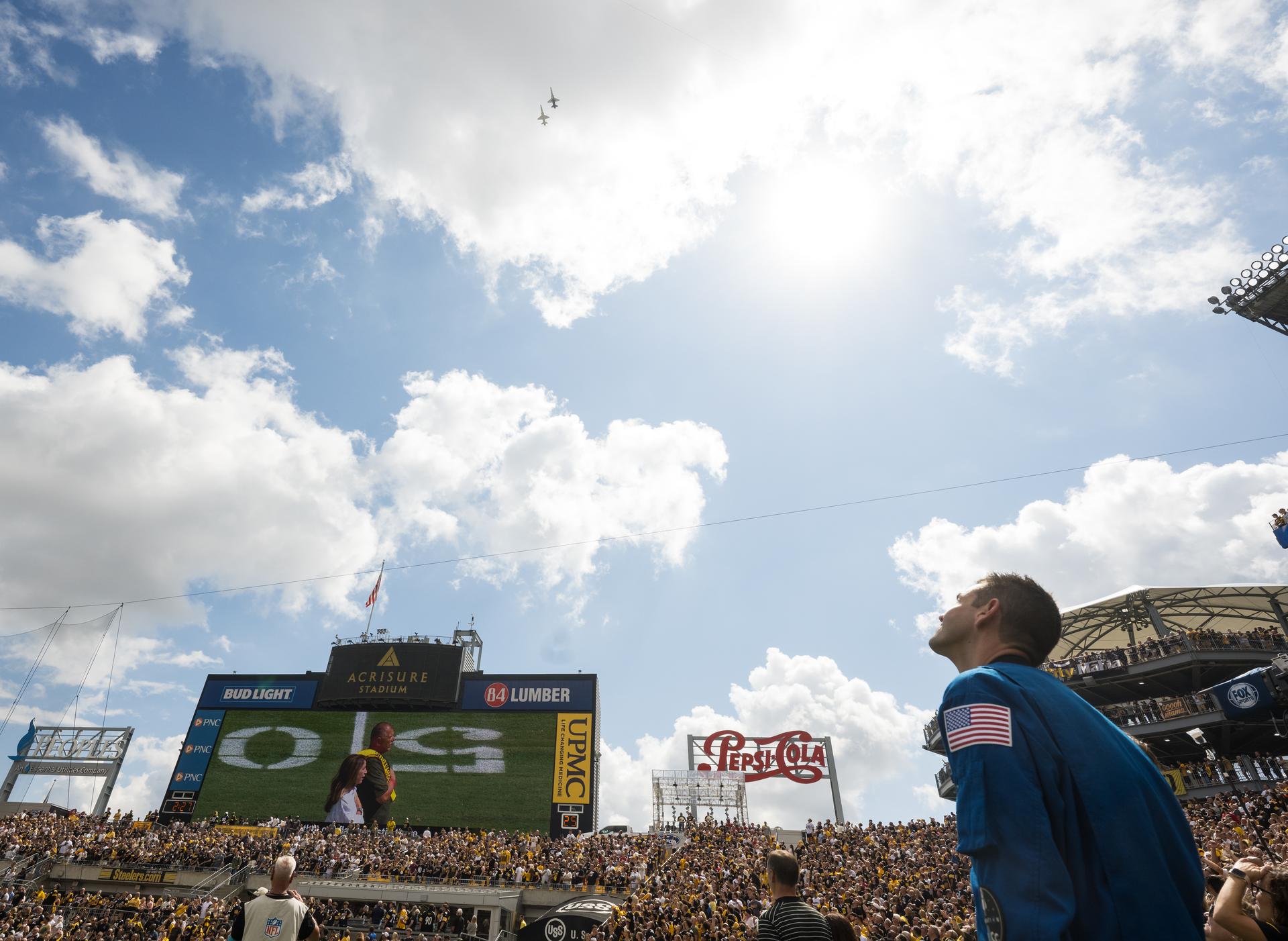
NASA Administrator Jared Isaacman watches as two NASA T-38 Talon aircrafts conduct a flyover at an NFL game between the Pittsburgh Steelers and the Atlanta Falcons at Acrisure Stadium, Sunday, Sept. 13, 2026, in Pittsburgh, Pennsylvania. NASA’s engagement at NFL games is part of the agency's Inspiration Tour, aimed at strengthening connections between NASA and its partners and showcasing innovation in air and space in the lead up to the MAX POWER aerospace technology expo and airshow at the agency's Kennedy Space Center in early November. Photo Credit: (NASA/Aubrey Gemignani)
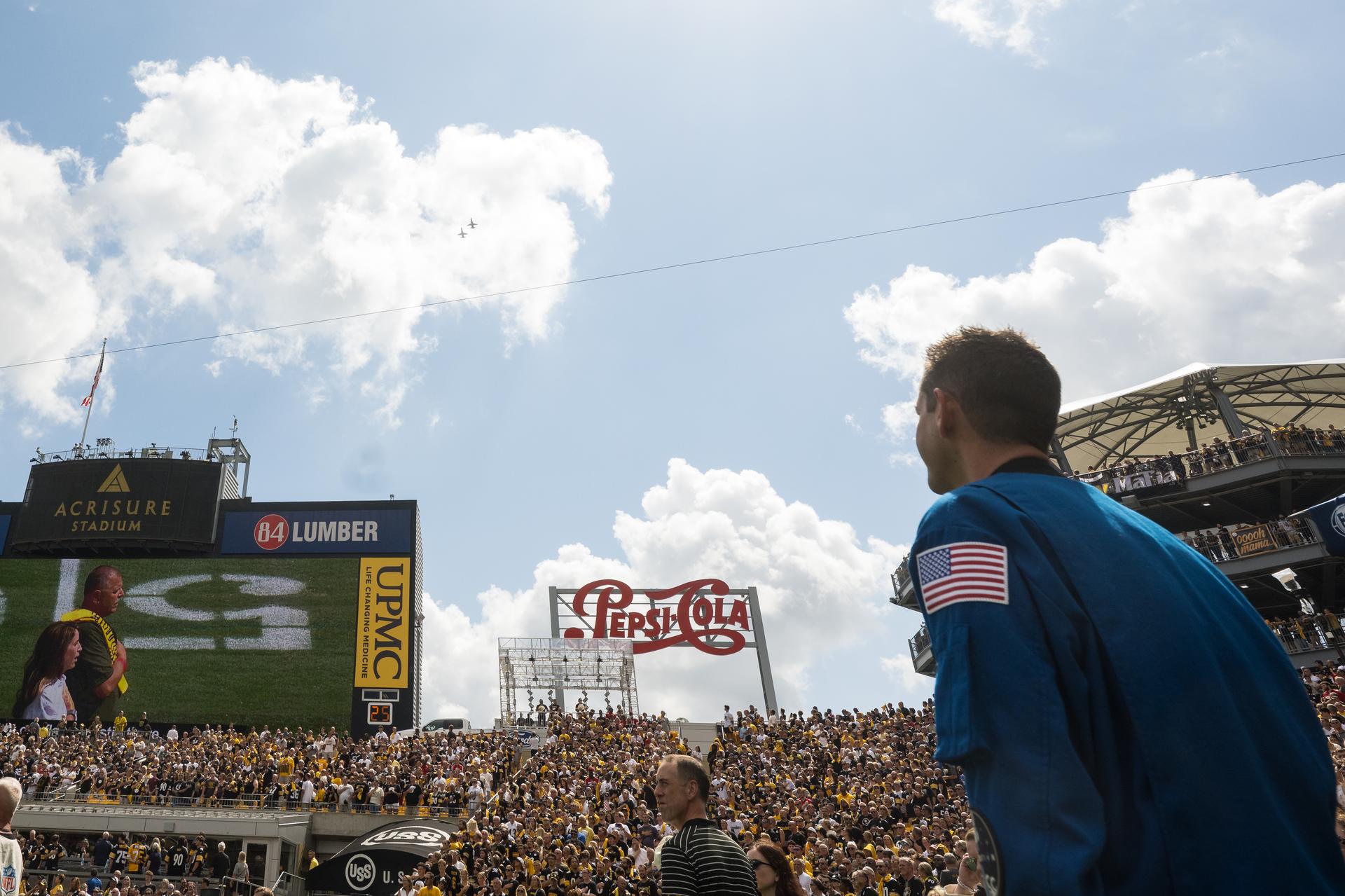
NASA Administrator Jared Isaacman watches as two NASA T-38 Talon aircrafts conduct a flyover at an NFL game between the Pittsburgh Steelers and the Atlanta Falcons at Acrisure Stadium, Sunday, Sept. 13, 2026, in Pittsburgh, Pennsylvania. NASA’s engagement at NFL games is part of the agency's Inspiration Tour, aimed at strengthening connections between NASA and its partners and showcasing innovation in air and space in the lead up to the MAX POWER aerospace technology expo and airshow at the agency's Kennedy Space Center in early November. Photo Credit: (NASA/Aubrey Gemignani)
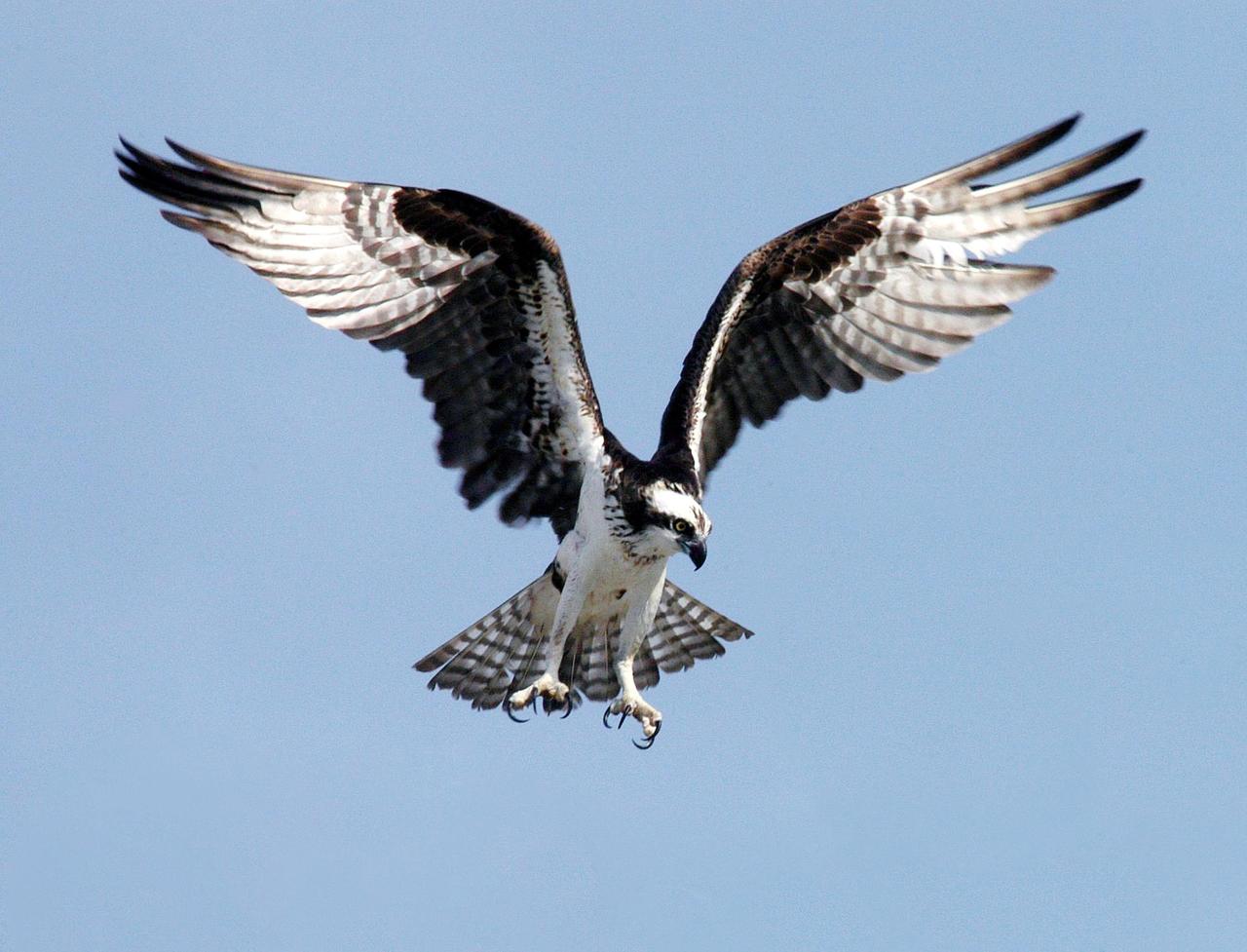
KENNEDY SPACE CENTER, FLA. - An osprey stares intently at prey as it extends its talons. Known as a fish hawk, ospreys often can be seen flying overhead with a fish in their talons. Fish are their sole source of food. Ospreys select nesting sites of opportunity, from trees and telephone poles to rocks or even flat ground, often near water. Osprey nests are found throughout the Kennedy Space Center and nearby Merritt Island National Wildlife Refuge.
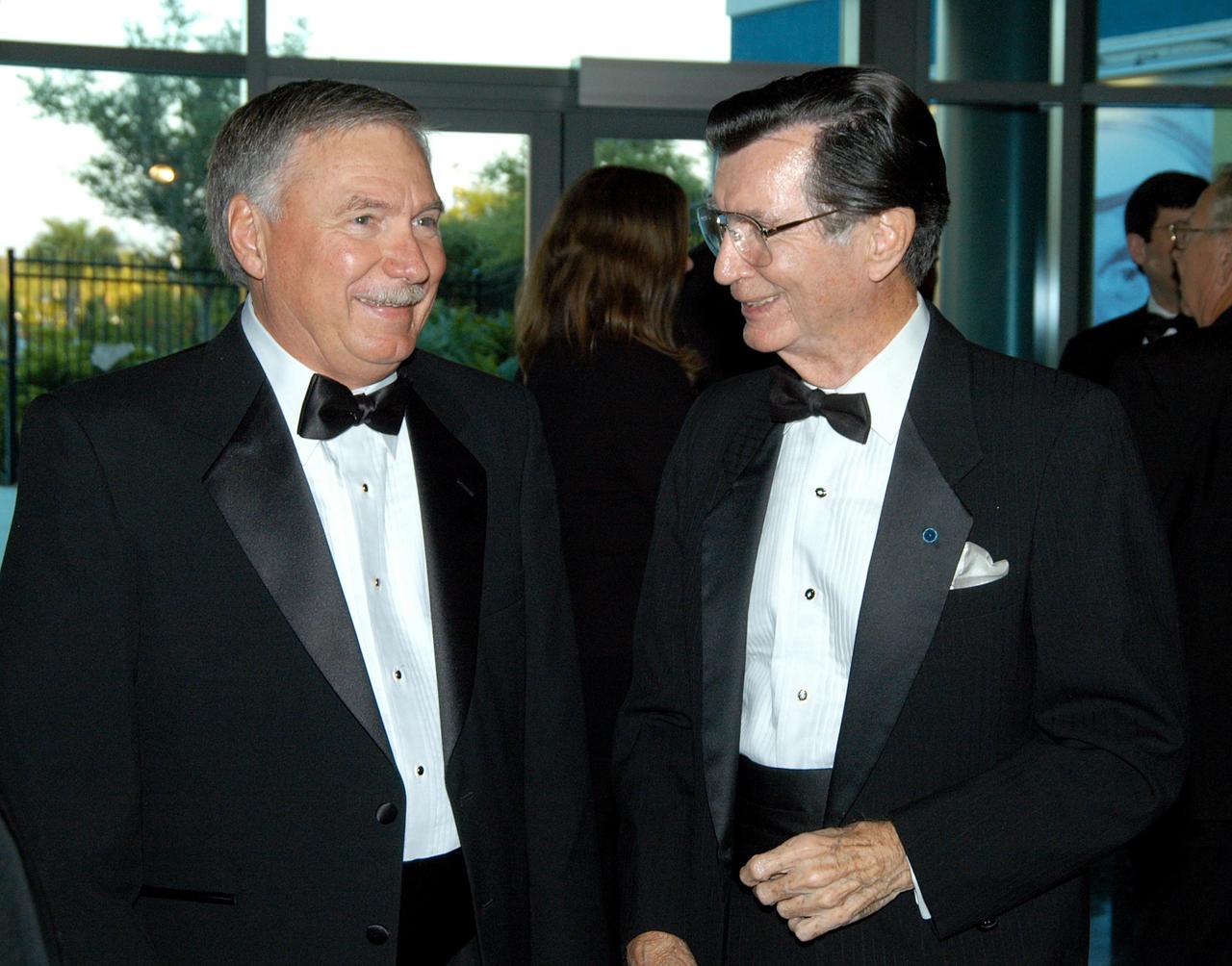
KENNEDY SPACE CENTER, FLA. -- John J. “Tip” Talone (left) talks to George English, former director of KSC’s Executive Management Office, during the annual National Space Club Debus Award Banquet. Talone received the award that was created to recognize significant achievements made in Florida to American aerospace efforts. The event was held at the Dr. Kurt H. Debus Conference Facility in the Visitor Complex. Talone is director of the International Space Station/Payloads Processing directorate at KSC that is responsible for prelaunch and launch preparations for all Shuttle payloads. He was honored for his outstanding personal and professional efforts in supporting the U.S. space program, especially in his current role. The award was created by the National Space Club Florida Committee to recognize significant achievements and contributions made in Florida to American aerospace efforts. It is named for Dr. Kurt H. Debus, first director of KSC, from 1962 to 1974.
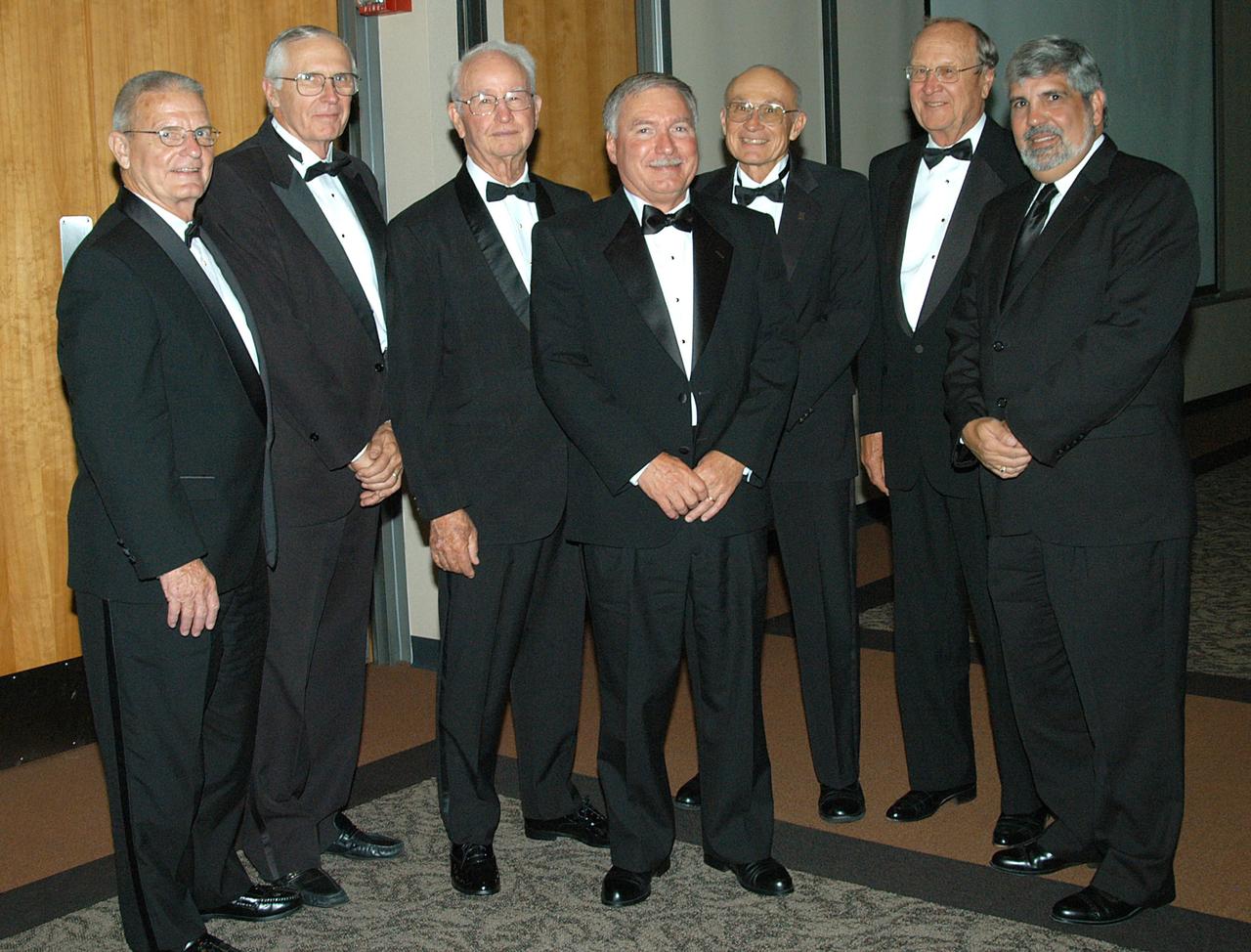
KENNEDY SPACE CENTER, FLA. -- Past recipients of the Debus Award join the 2004 awardee John J. “Tip” Talone (center) at the annual National Space Club Debus Award Banquet, held at the Dr. Kurt H. Debus Conference Facility in the KSC Visitor Complex. From left are Forrest McCartney, Lee Solid, Maxwell King, Talone, Bob Sieck, Ernie Briel and Adrian Laffitte. Director of the International Space Station/Payloads Processing directorate, Talone received the award in recognition of his outstanding personal and professional efforts in supporting the U.S. space program, especially in his current role. The award was created by the National Space Club Florida Committee to recognize significant achievements and contributions made in Florida to American aerospace efforts. It is named for Dr. Kurt H. Debus, first director of KSC, from 1962 to 1974.
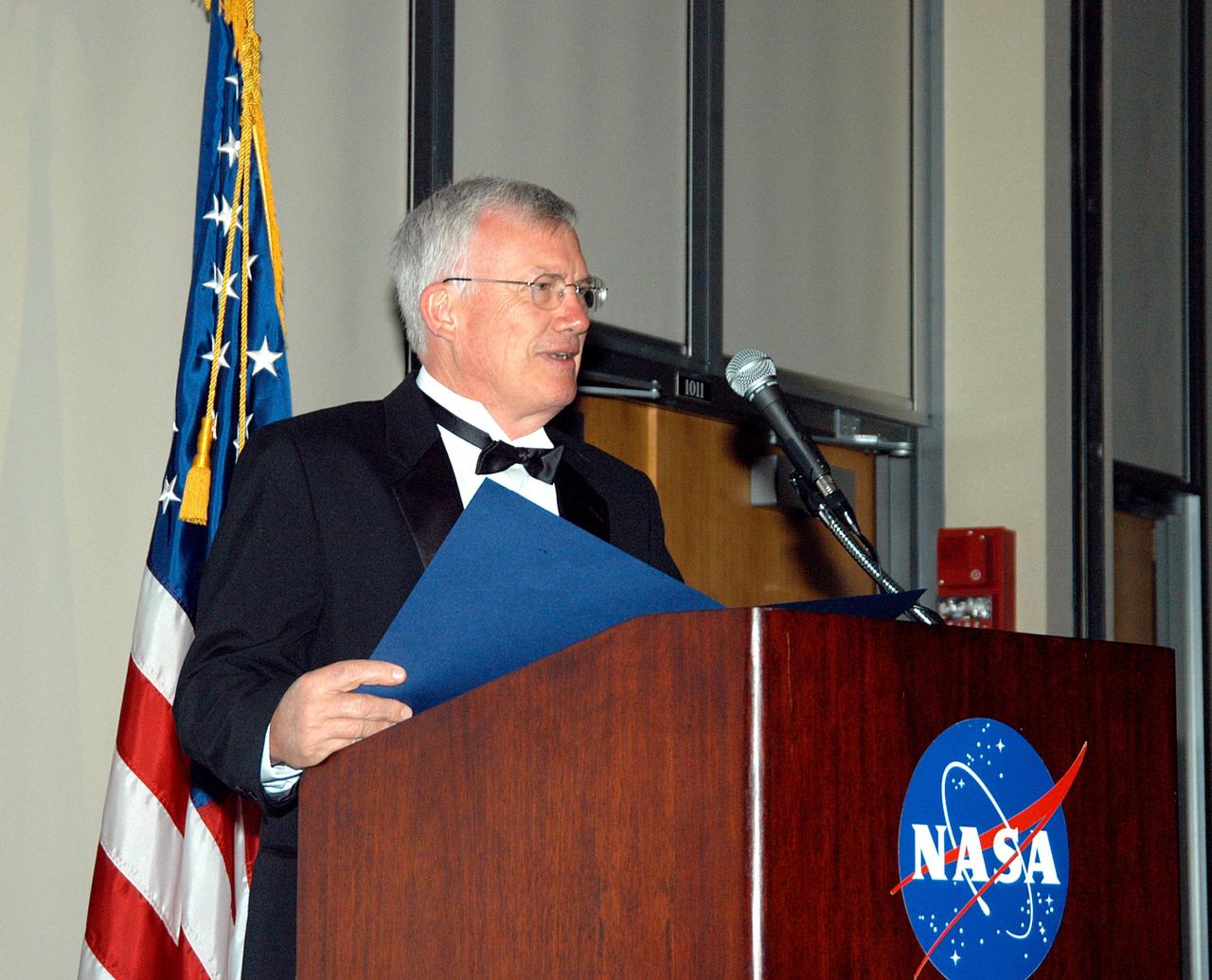
KENNEDY SPACE CENTER, FLA. -- At the annual National Space Club Debus Award Banquet held at the Dr. Kurt H. Debus Conference Facility in the Visitor Complex, David E. Bartine, chief technologist and associate director for the Spaceport Technology Development Office, reads a proclamation honoring John J. “Tip” Talone . The proclamation named April 3, 2004, in Knox County, Tenn., as John J. “Tip” Talone Jr. Day, in recognition of his being given the 2004 Debus Award. KSC’s Director of the International Space Station/Payloads Processing directorate, Talone was presented the award for his outstanding personal and professional efforts in supporting the U.S. space program, especially in his current role. The award was created by the National Space Club Florida Committee to recognize significant achievements and contributions made in Florida to American aerospace efforts. It is named for Dr. Kurt H. Debus, first director of KSC, from 1962 to 1974.
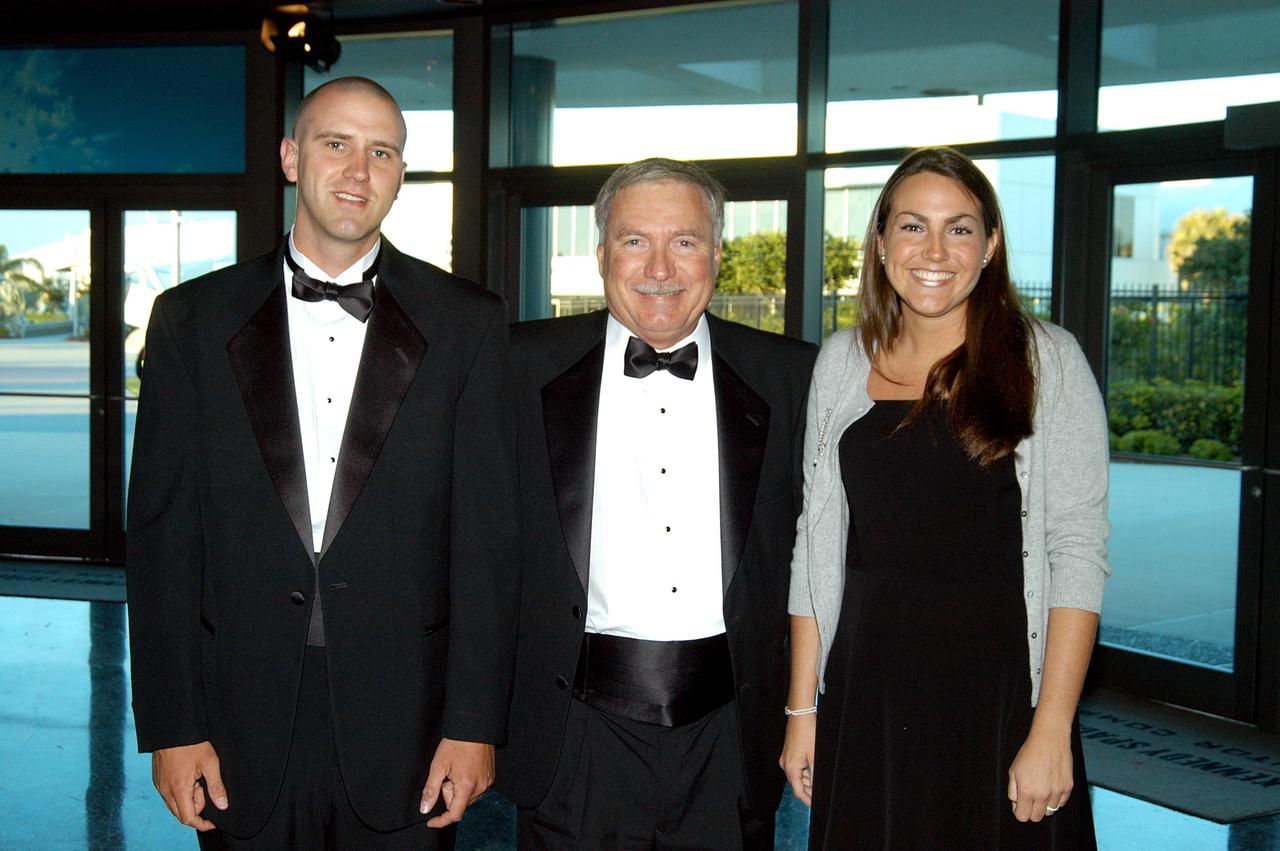
KENNEDY SPACE CENTER, FLA. -- John J. “Tip” Talone (center) poses with his son and daughter during the annual National Space Club Debus Award Banquet. Talone received the award that was created to recognize significant achievements made in Florida to American aerospace efforts. The event was held at the Dr. Kurt H. Debus Conference Facility in the Visitor Complex. Talone is director of the International Space Station/Payloads Processing directorate at KSC that is responsible for prelaunch and launch preparations for all Shuttle payloads. He was honored for his outstanding personal and professional efforts in supporting the U.S. space program, especially in his current role. The award was created by the National Space Club Florida Committee to recognize significant achievements and contributions made in Florida to American aerospace efforts. It is named for Dr. Kurt H. Debus, first director of KSC, from 1962 to 1974.
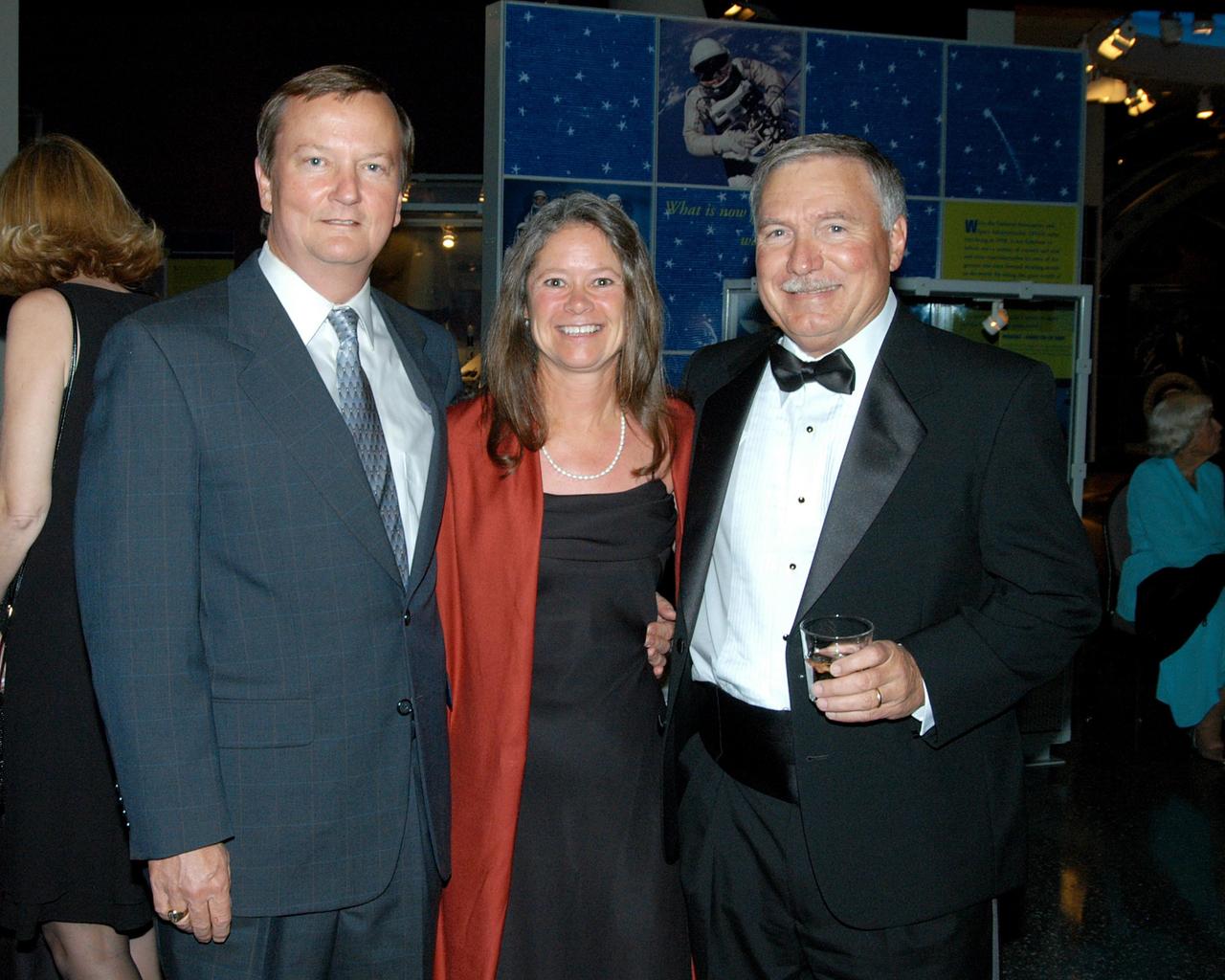
KENNEDY SPACE CENTER, FLA. -- John J. “Tip” Talone (right) poses with Shuttle Launch Director Mike Leinbach and his wife during the annual National Space Club Debus Award Banquet. Talone received the award that was created to recognize significant achievements made in Florida to American aerospace efforts. The event was held at the Dr. Kurt H. Debus Conference Facility in the Visitor Complex. Talone is director of the International Space Station/Payloads Processing directorate at KSC that is responsible for prelaunch and launch preparations for all Shuttle payloads. He was honored for his outstanding personal and professional efforts in supporting the U.S. space program, especially in his current role. The award was created by the National Space Club Florida Committee to recognize significant achievements and contributions made in Florida to American aerospace efforts. It is named for Dr. Kurt H. Debus, first director of KSC, from 1962 to 1974.
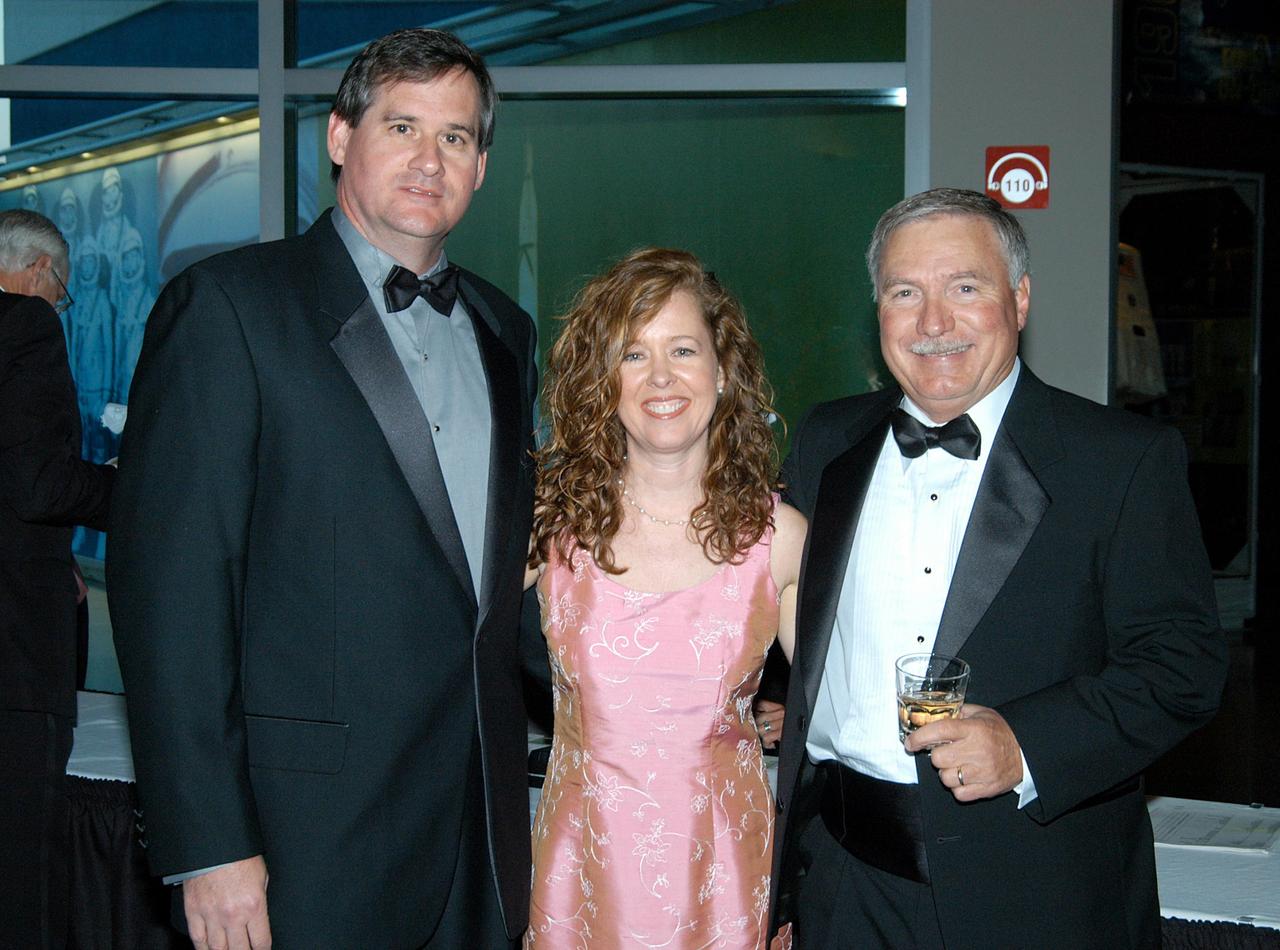
KENNEDY SPACE CENTER, FLA. -- John J. “Tip” Talone (right) poses with Lisa Malone, director of KSC External Affairs, and Kevin Hoshstrasser, her fiancé, during the annual National Space Club Debus Award Banquet. Talone received the award that was created to recognize significant achievements made in Florida to American aerospace efforts. The event was held at the Dr. Kurt H. Debus Conference Facility in the Visitor Complex. Talone is director of the International Space Station/Payloads Processing directorate at KSC that is responsible for prelaunch and launch preparations for all Shuttle payloads. He was honored for his outstanding personal and professional efforts in supporting the U.S. space program, especially in his current role. The award was created by the National Space Club Florida Committee to recognize significant achievements and contributions made in Florida to American aerospace efforts. It is named for Dr. Kurt H. Debus, first director of KSC, from 1962 to 1974.
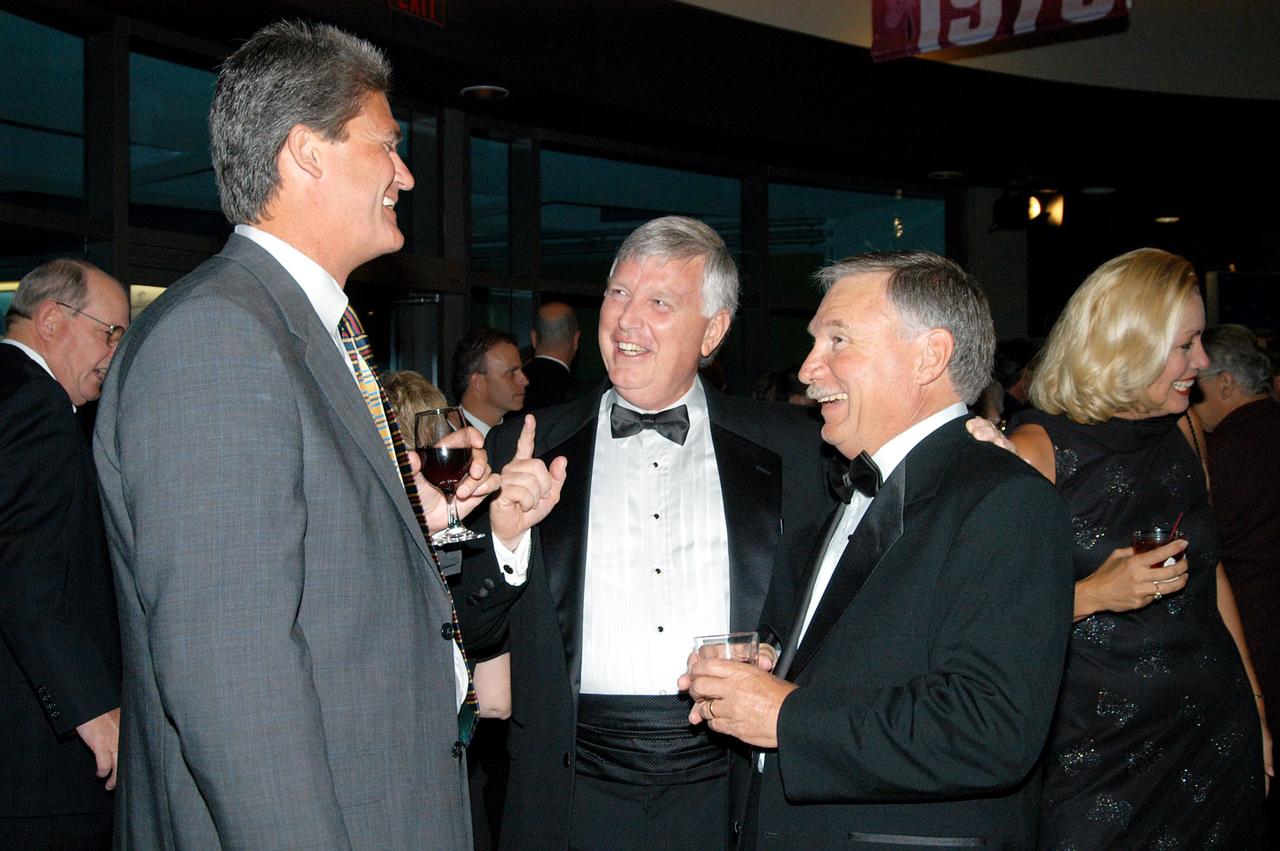
KENNEDY SPACE CENTER, FLA. -- John J. “Tip” Talone (right) shares a bit of humor with Shuttle Program Manager Bill Parsons (left) and Center Director Jim Kennedy during the annual National Space Club Debus Award Banquet. Talone received the award that was created by the National Space Club to recognize significant achievements made in Florida to American aerospace efforts. The event was held at the Dr. Kurt H. Debus Conference Facility in the Visitor Complex. Talone is director of the International Space Station/Payloads Processing directorate at KSC that is responsible for prelaunch and launch preparations for all Shuttle payloads. He was honored for his outstanding personal and professional efforts in supporting the U.S. space program, especially in his current role. The award was created by the National Space Club Florida Committee to recognize significant achievements and contributions made in Florida to American aerospace efforts. It is named for Dr. Kurt H. Debus, first director of KSC, from 1962 to 1974.
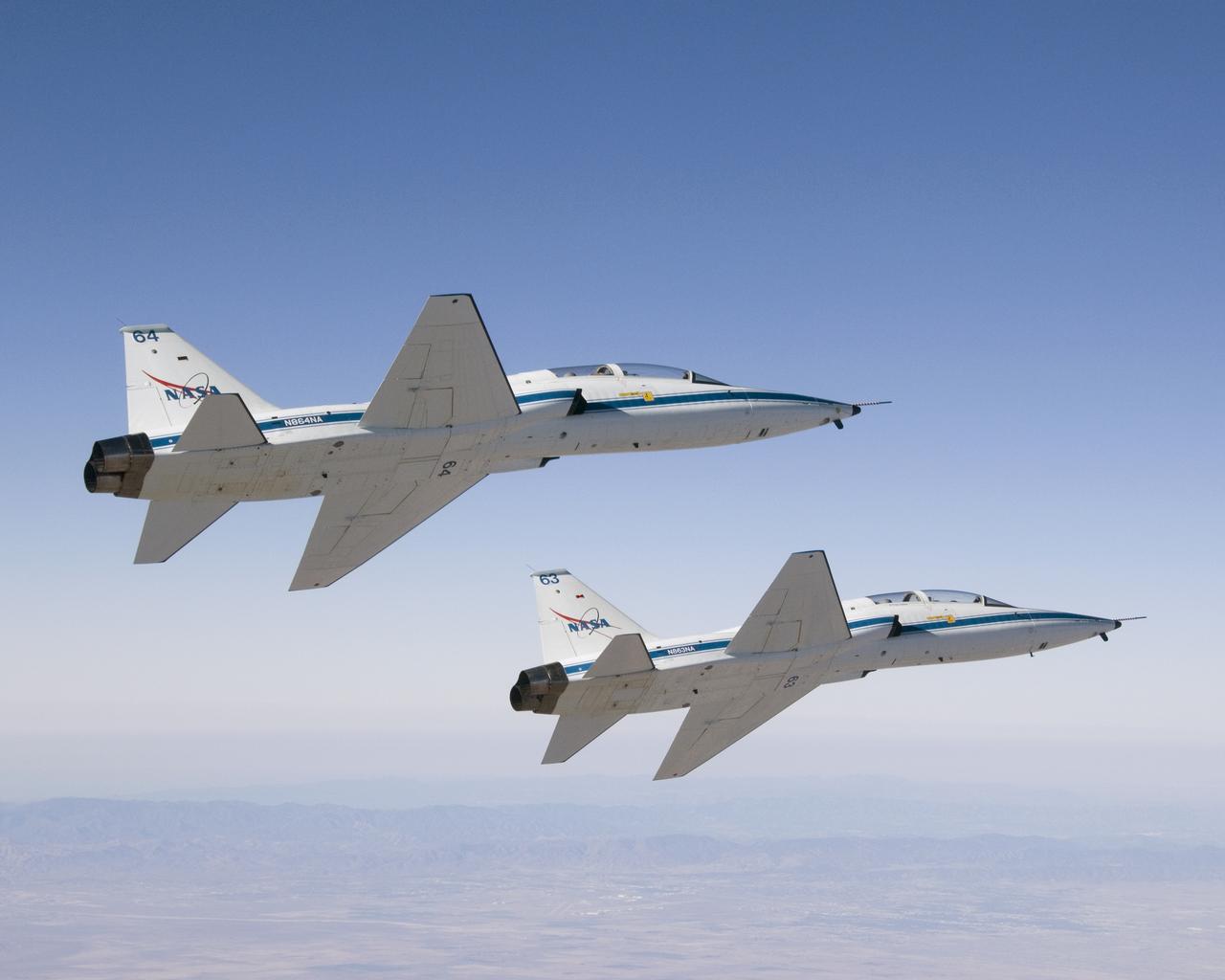
NASA Dryden Flight Research Center's two T-38A Talon mission support aircraft flew together for the first time on Sept. 26, 2007 while conducting pitot-static airspeed calibration checks during routine pilot proficiency flights. The two aircraft, flown by NASA research pilots Kelly Latimer and Frank Batteas, joined up with a NASA Dryden F/A-18 flown by NASA research pilot Dick Ewers to fly the airspeed calibrations at several speeds and altitudes that would be flown by the Stratospheric Observatory for Infrared Astronomy (SOFIA) Boeing 747SP during its initial flight test phase. The T-38s, along with F/A-18s, serve in a safety chase role during those test missions, providing critical instrument and visual monitoring for the flight test series.
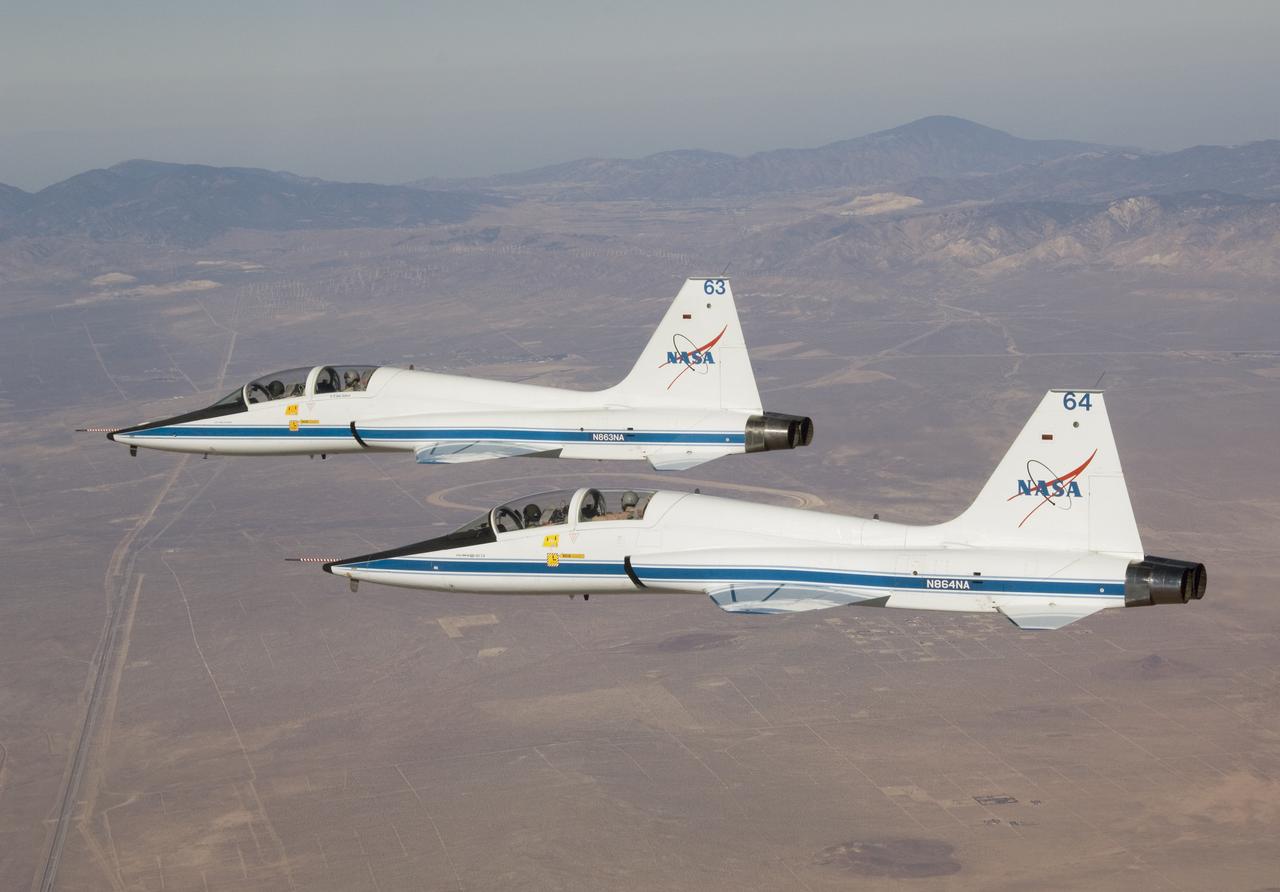
NASA Dryden Flight Research Center's two T-38A Talon mission support aircraft flew together for the first time on Sept. 26, 2007 while conducting pitot-static airspeed calibration checks during routine pilot proficiency flights. The two aircraft, flown by NASA research pilots Kelly Latimer and Frank Batteas, joined up with a NASA Dryden F/A-18 flown by NASA research pilot Dick Ewers to fly the airspeed calibrations at several speeds and altitudes that would be flown by the Stratospheric Observatory for Infrared Astronomy (SOFIA) Boeing 747SP during its initial flight test phase. The T-38s, along with F/A-18s, serve in a safety chase role during those test missions, providing critical instrument and visual monitoring for the flight test series.
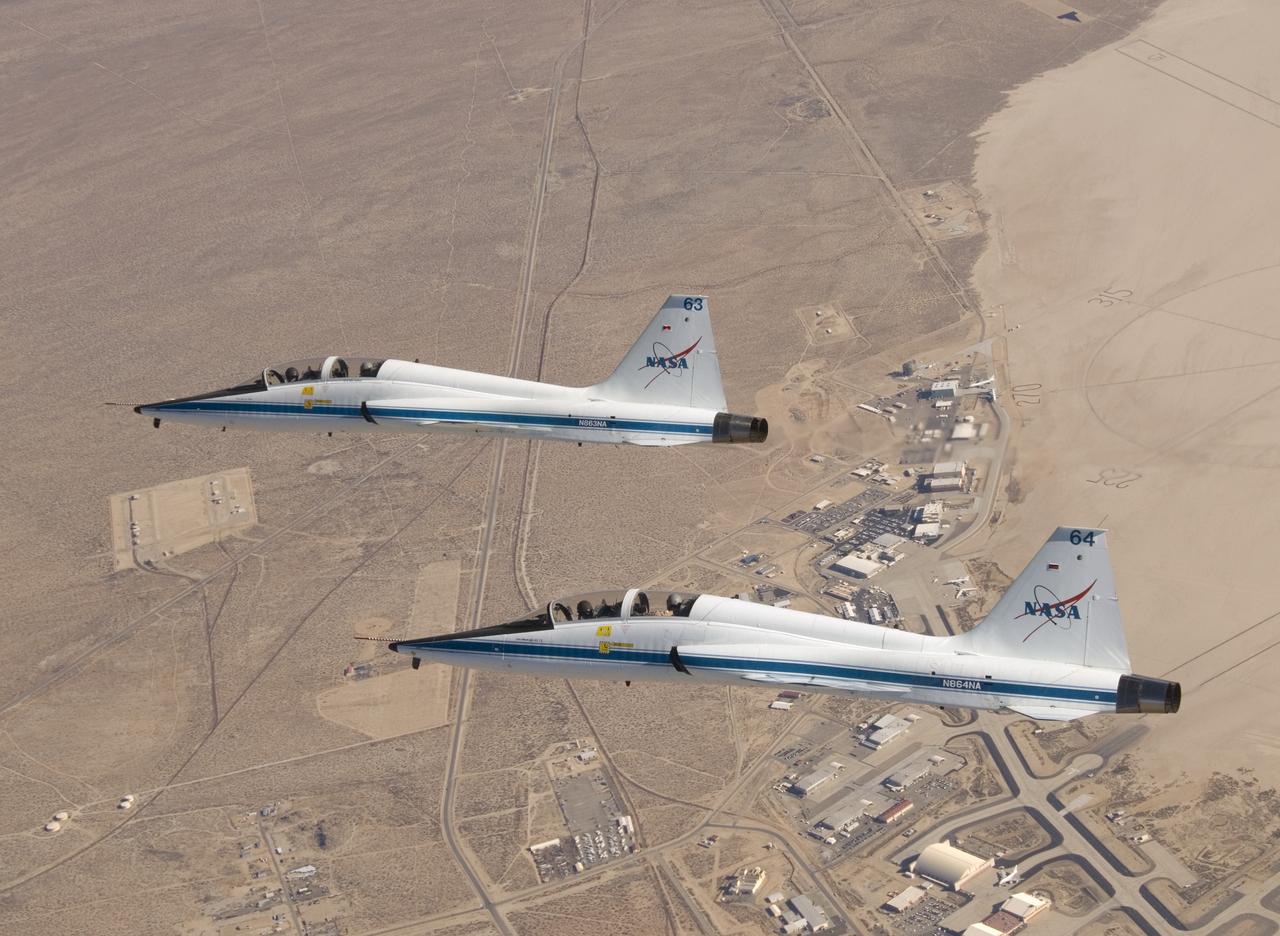
NASA Dryden Flight Research Center's two T-38A Talon mission support aircraft flew together for the first time on Sept. 26, 2007 while conducting pitot-static airspeed calibration checks during routine pilot proficiency flights. The two aircraft, flown by NASA research pilots Kelly Latimer and Frank Batteas, joined up with a NASA Dryden F/A-18 flown by NASA research pilot Dick Ewers to fly the airspeed calibrations at several speeds and altitudes that would be flown by the Stratospheric Observatory for Infrared Astronomy (SOFIA) Boeing 747SP during its initial flight test phase. The T-38s, along with F/A-18s, serve in a safety chase role during those test missions, providing critical instrument and visual monitoring for the flight test series.
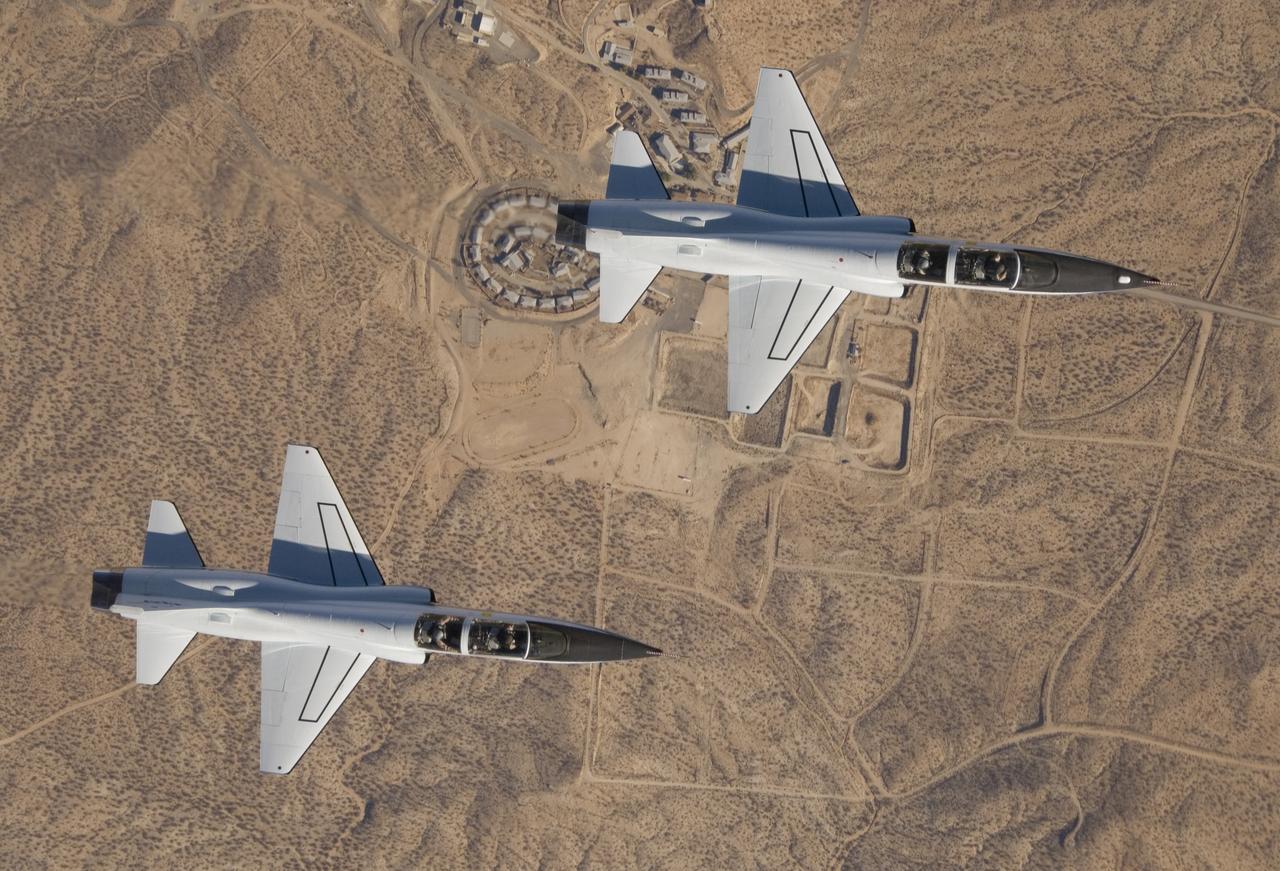
NASA Dryden Flight Research Center's two T-38A Talon mission support aircraft flew together for the first time on Sept. 26, 2007 while conducting pitot-static airspeed calibration checks during routine pilot proficiency flights. The two aircraft, flown by NASA research pilots Kelly Latimer and Frank Batteas, joined up with a NASA Dryden F/A-18 flown by NASA research pilot Dick Ewers to fly the airspeed calibrations at several speeds and altitudes that would be flown by the Stratospheric Observatory for Infrared Astronomy (SOFIA) Boeing 747SP during its initial flight test phase. The T-38s, along with F/A-18s, serve in a safety chase role during those test missions, providing critical instrument and visual monitoring for the flight test series.
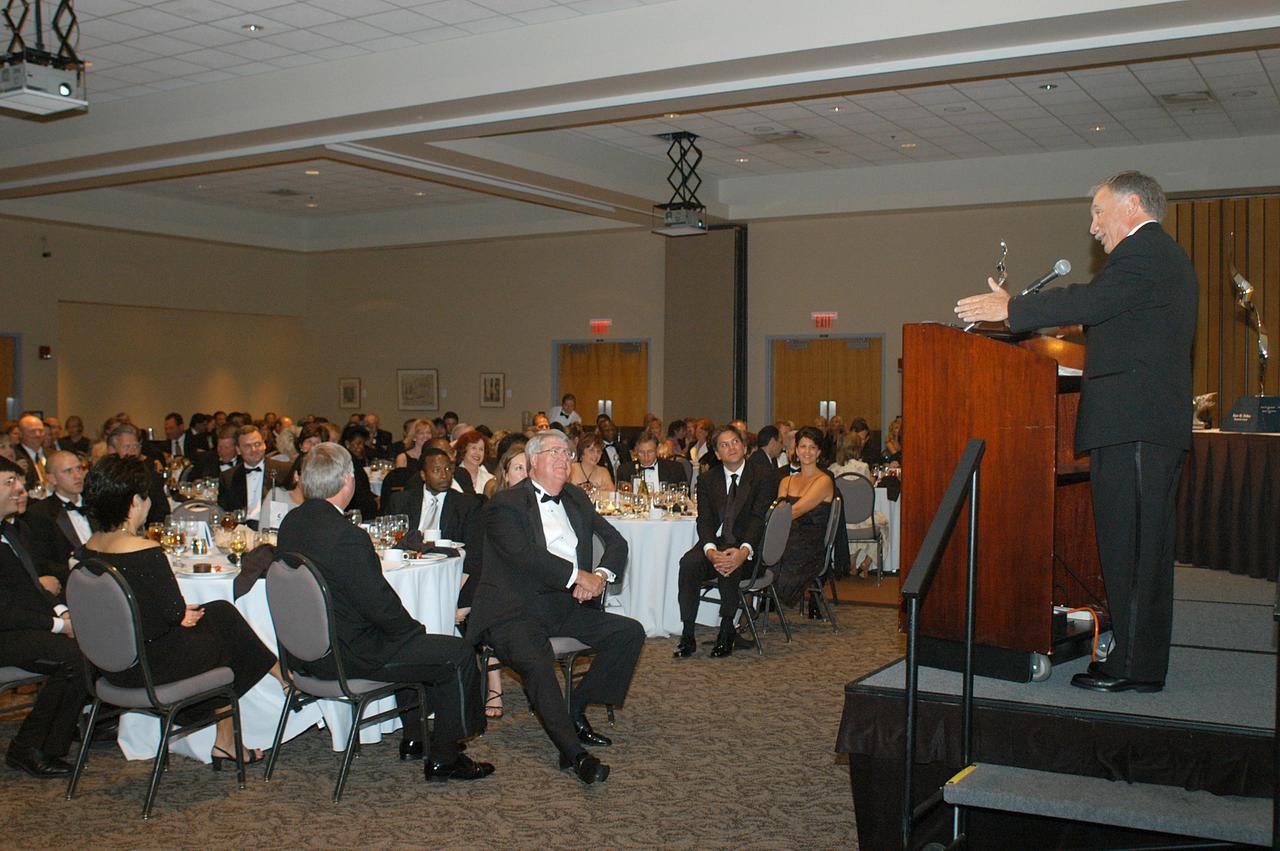
KENNEDY SPACE CENTER, FLA. -- Debus Award recipient John J. “Tip” Talone speaks to guests at the annual National Space Club Debus Award Banquet, held at the Dr. Kurt H. Debus Conference Facility in the KSC Visitor Complex. Director of the International Space Station/Payloads Processing directorate, Talone received the award in recognition of his outstanding personal and professional efforts in supporting the U.S. space program, especially in his current role. The award was created by the National Space Club Florida Committee to recognize significant achievements and contributions made in Florida to American aerospace efforts. It is named for Dr. Kurt H. Debus, first director of KSC, from 1962 to 1974.
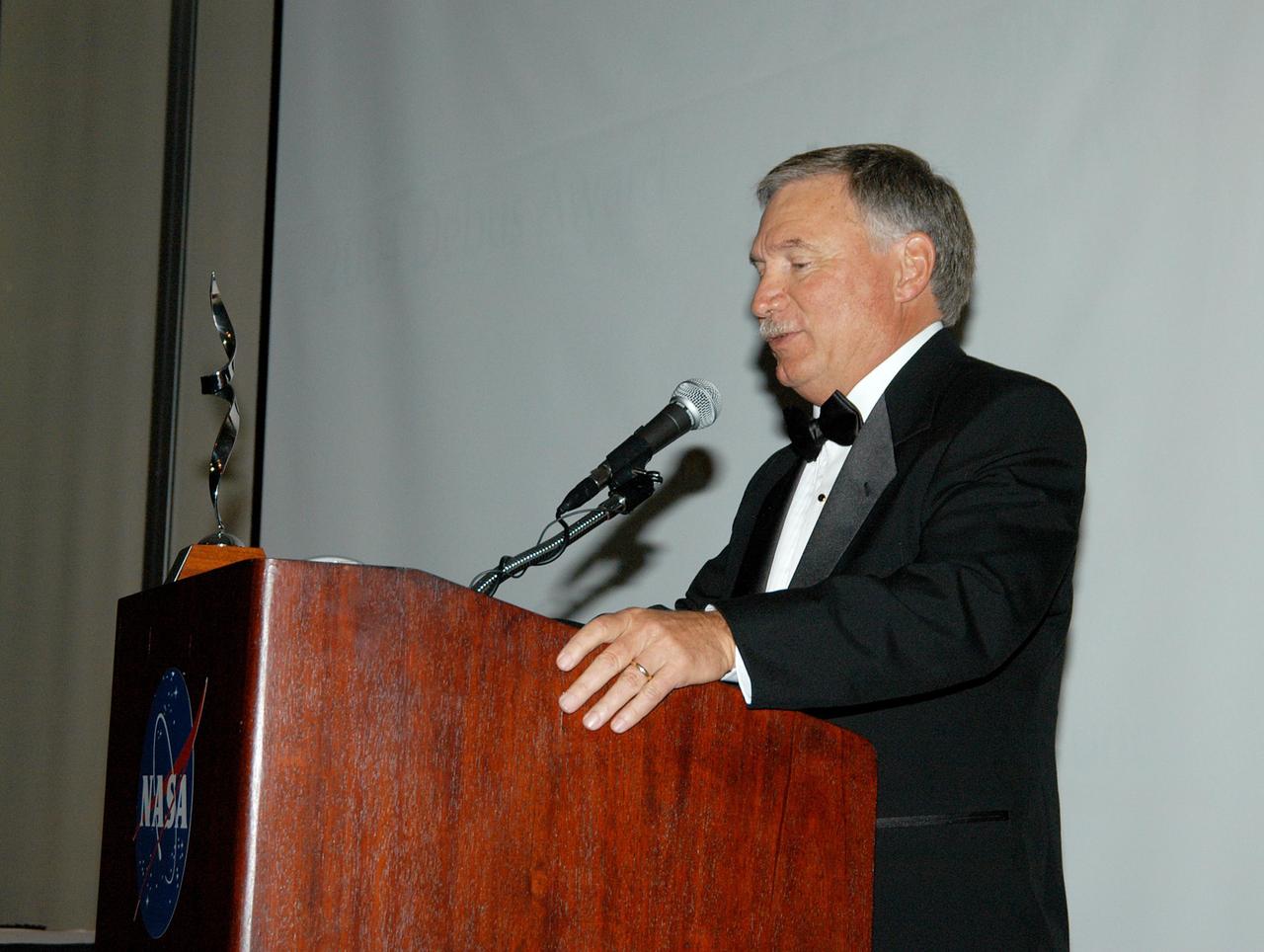
KENNEDY SPACE CENTER, FLA. -- Debus Award recipient John J. “Tip” Talone speaks to guests at the annual National Space Club Debus Award Banquet, held at the Dr. Kurt H. Debus Conference Facility in the Visitor Complex. Talone, director of the International Space Station/Payloads Processing directorate, received the award in recognition of his outstanding personal and professional efforts in supporting the U.S. space program, especially in his current role. The award was created by the National Space Club Florida Committee to recognize significant achievements and contributions made in Florida to American aerospace efforts. It is named for Dr. Kurt H. Debus, first director of KSC, from 1962 to 1974.
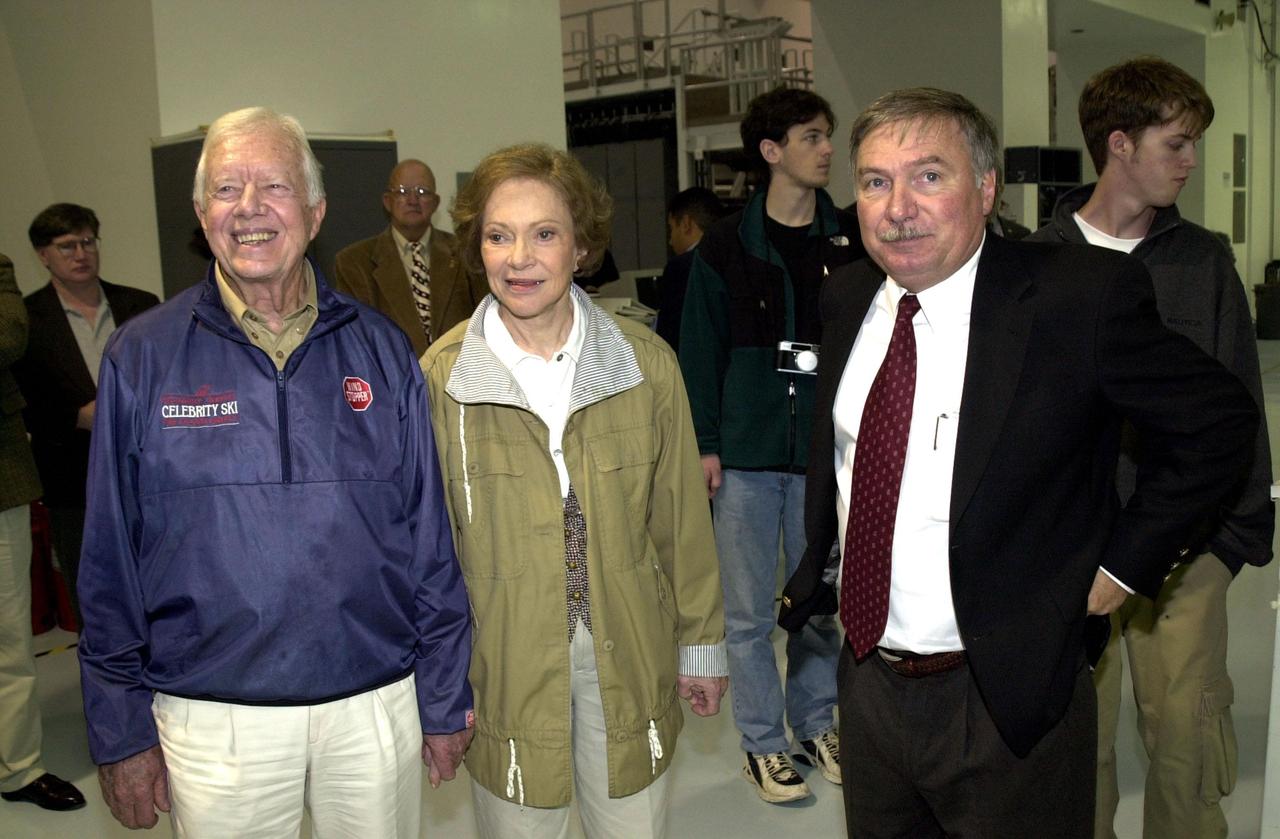
KENNEDY SPACE CENTER, FLA. -- Former President Jimmy Carter (left) and Rosalyn Carter visit the Space Station Processing Facility on their tour of Kennedy Space Center. With them (right) is Director of Payload Processing, International Space Station, Tip Talone (left of Rosalyn Carter)
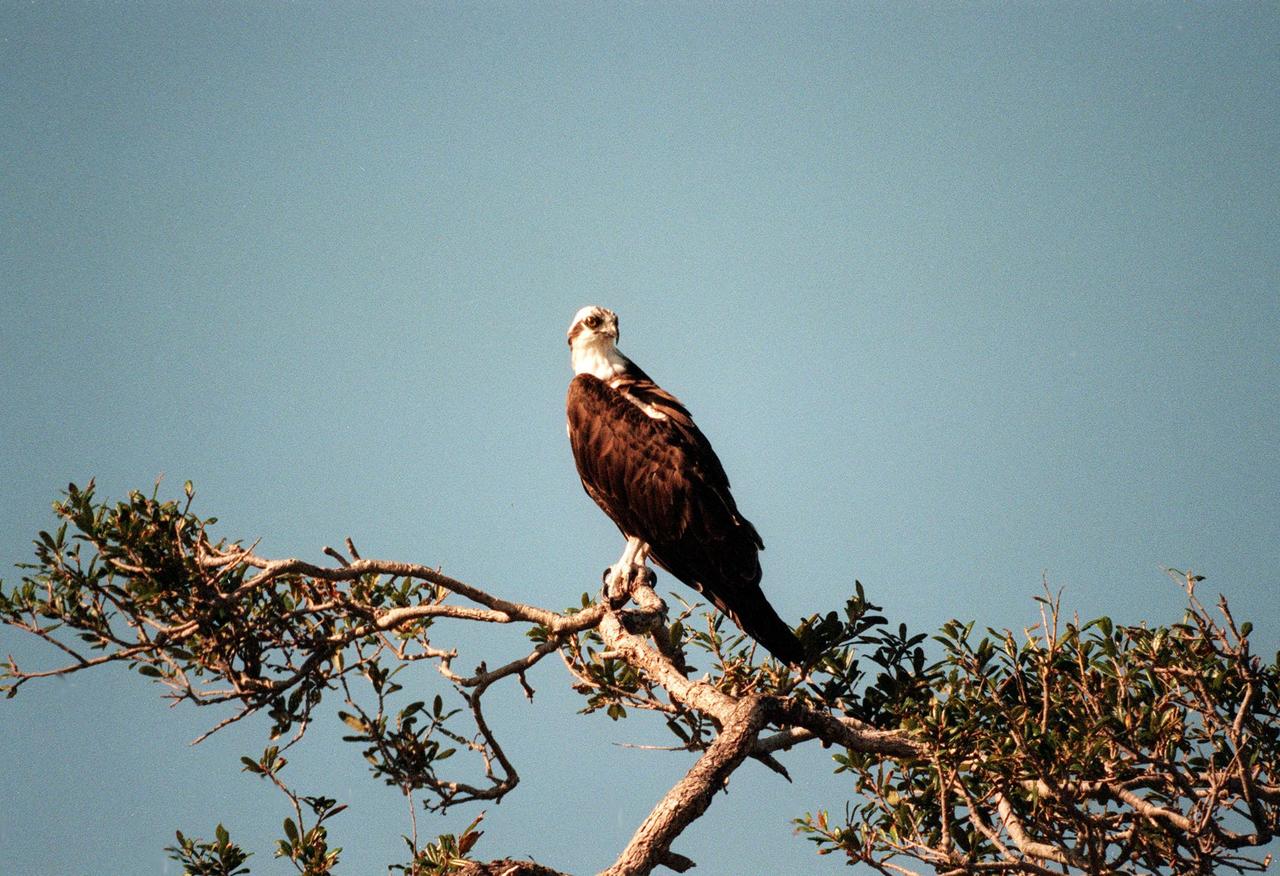
KENNEDY SPACE CENTER, FLA. -- An osprey perches on a treetop at Kennedy Space Center. This long-winged "fish hawk" inhabits lakes, rivers and seacoasts, surviving solely on fish which it captures from the water, grasping them in its talons when they near the surface. They range from Alaska and Newfoundland south to Florida and the Gulf Coast
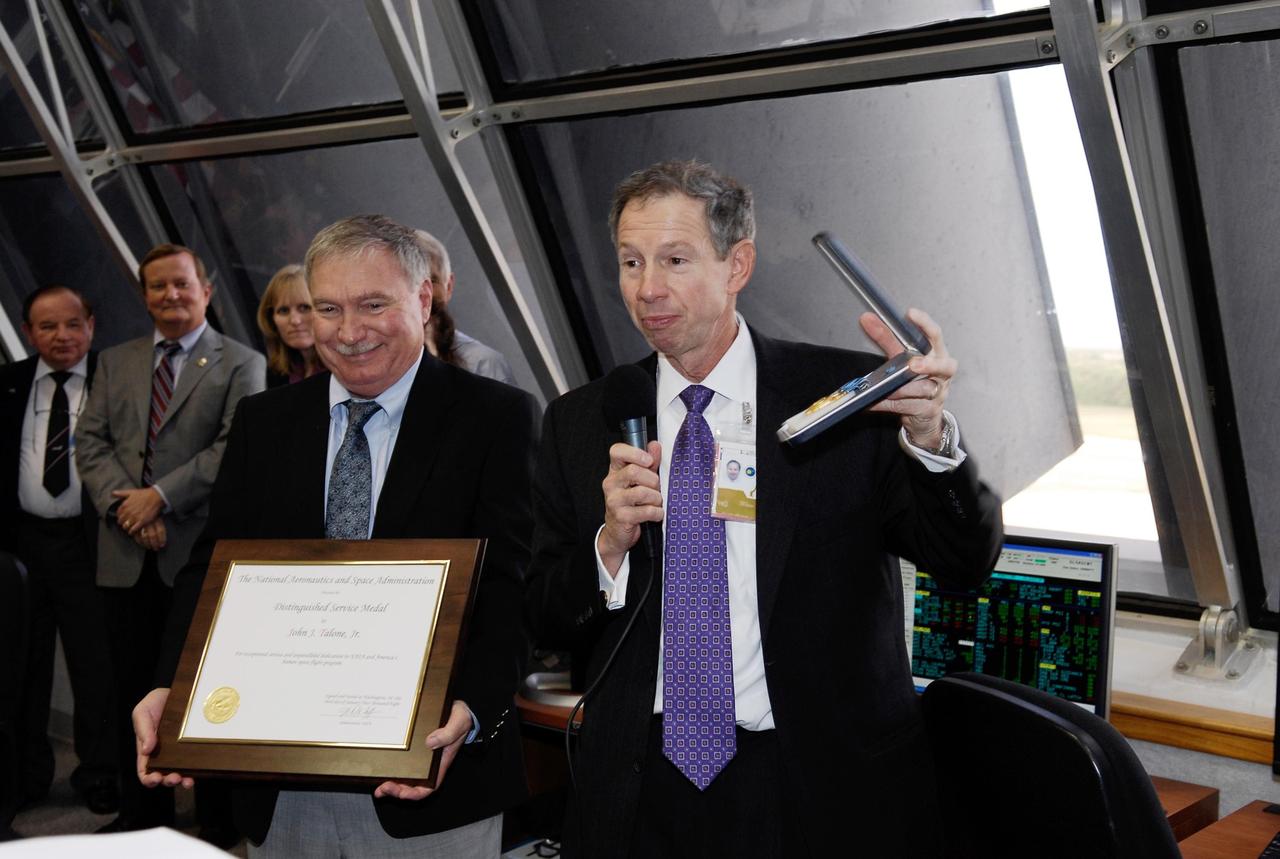
KENNEDY SPACE CENTER, FLA. -- Inside the Launch Control Center Firing Room at NASA's Kennedy Space Center, NASA Administrator Michael Griffin (right) presents a special distinguished service medal to John J. "Tip" Talone Jr. for exceptional service and unparalleled dedication to NASA and America's human space flight program. Currently, John J. "Tip" Talone Jr. serves as the director of the Kennedy Space Center Constellation Project Office of the NASA Constellation Program. From 1996 to 2005, he was director of the International Space Station Hardware Integration Office, which became the ISS/Payloads Processing Directorate in May 2000. The presentation followed the launch of space shuttle Atlantis on mission STS-122, which lifted off at 2:45 p.m. EST. Photo credit: NASA/Kim Shiflett
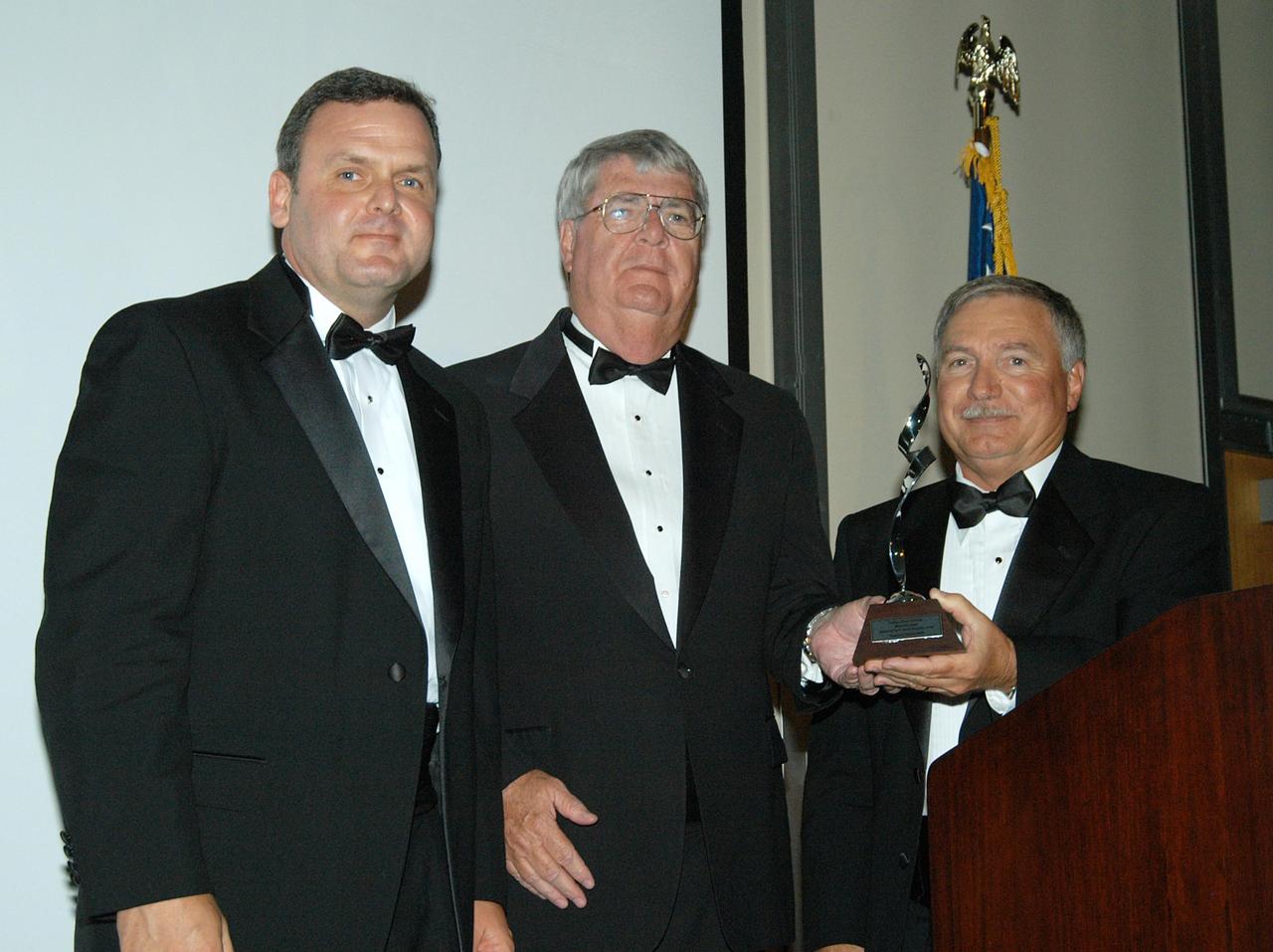
KENNEDY SPACE CENTER, FLA. -- Jim Chilton (left), CAPPS program manager, and Dick Beagley, chairman of the National Space Club Debus Award Banquet committee, present the 2004 Debus Award to John J. “Tip” Talone (right). The event was held at the Dr. Kurt H. Debus Conference Facility in the Visitor Complex. Talone is director of the International Space Station/Payloads Processing directorate at KSC that is responsible for prelaunch and launch preparations for all Shuttle payloads. He was honored for his outstanding personal and professional efforts in supporting the U.S. space program, especially in his current role. The award was created by the National Space Club Florida Committee to recognize significant achievements and contributions made in Florida to American aerospace efforts. It is named for Dr. Kurt H. Debus, first director of KSC, from 1962 to 1974.
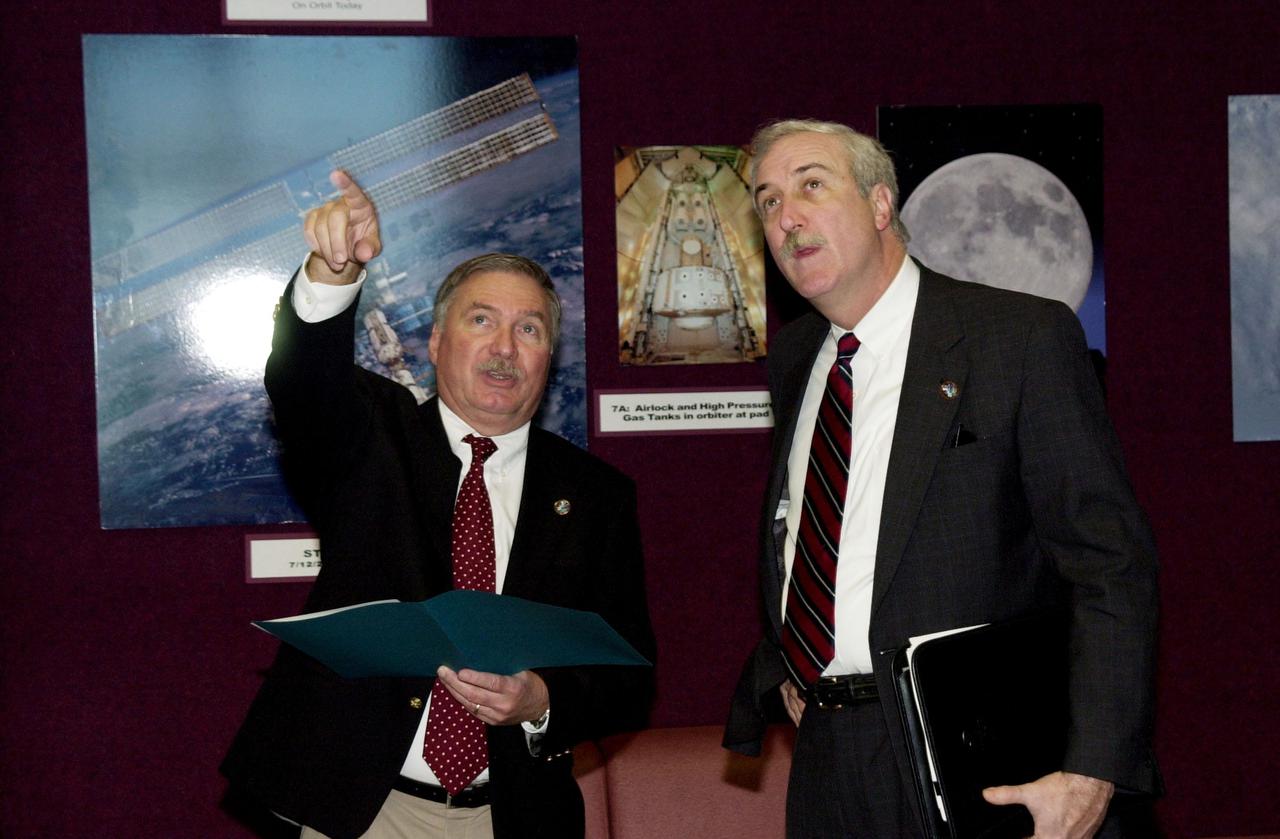
KENNEDY SPACE CENTER, Fla. - Director of International Space Station_Payload Processing Tip Talone (left) informs the new NASA Administrator Sean O'Keefe (at right) about the elements of the Space Station in the Space Station Processing Facility. The administrator was at KSC on an agencywide familiarization tour of NASA field centers. He was nominated for the position as administrator in November 2001 by President George W. Bush. He was sworn in Dec. 21 as the agency's 10th chief
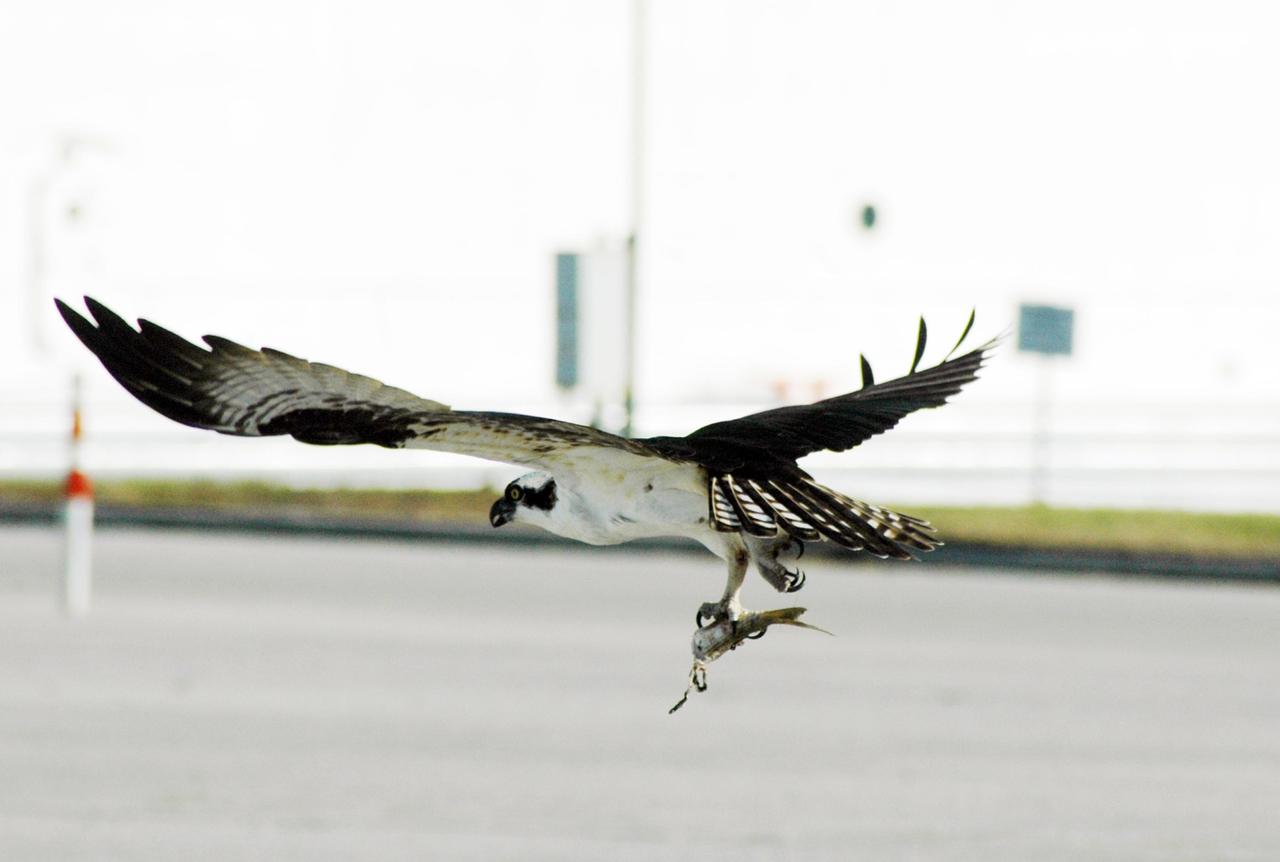
KENNEDY SPACE CENTER, FLA. -- Near the Kennedy Space Center News Center, in the Launch Complex 39 area, a male Osprey takes flight with part of a fish clutched in its talons. The bird is one of more than 500 species of birds that co-exist at the Center and the Merritt Island National Wildlife Refuge. Photo credit: NASA/Ken Thornsley
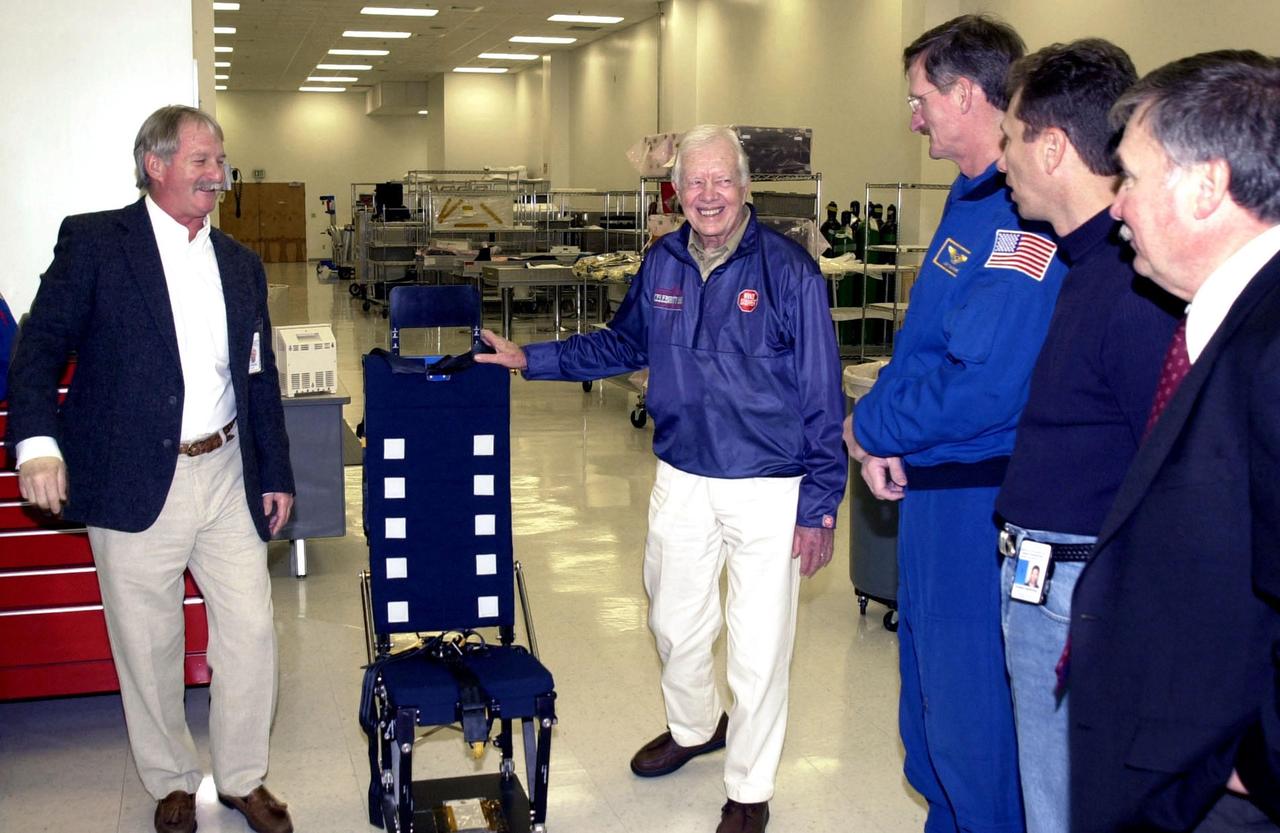
KENNEDY SPACE CENTER, FLA. - During a tour of KSC, former President Jimmy Carter is shown the current version of a lightweight mission specialist seat. From left to right are Ron Woods, a technician in the Flight Crew Equipment Facility; Carter; astronaut Joseph Tanner; another KSC employee; and Tip Talone, director of Payload Processing, International Space Station
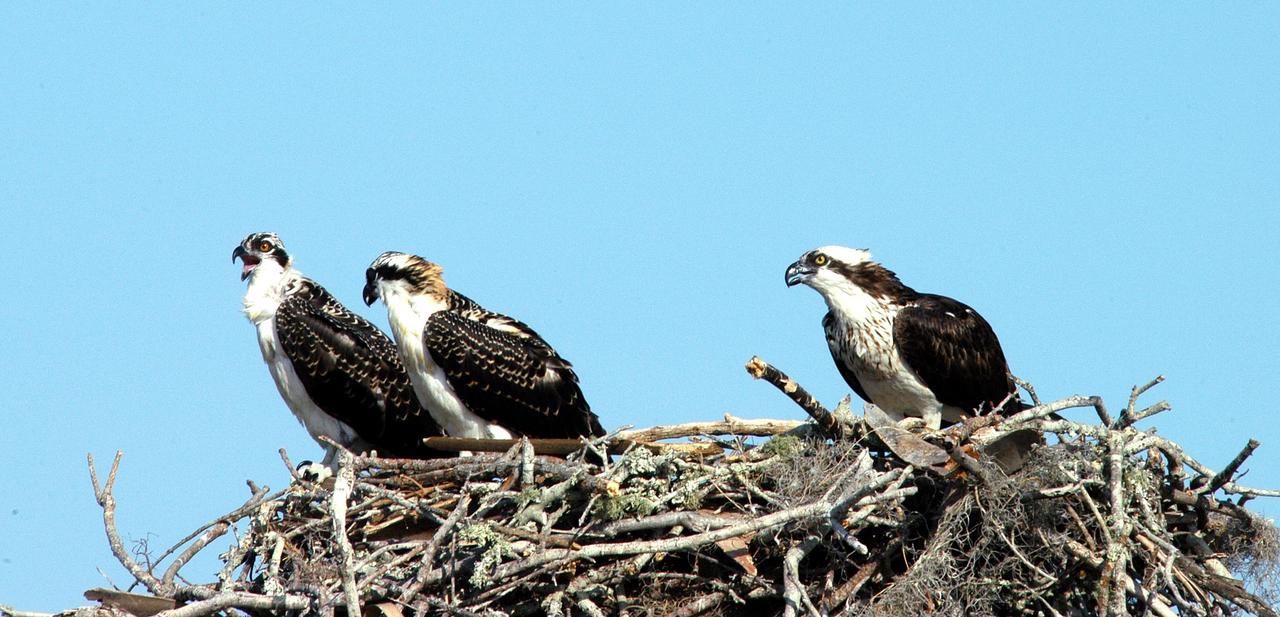
KENNEDY SPACE CENTER, FLA. -- - Three osprey fledglings are ready to test their wings from the nest at the NASA News Center parking lot. Ospreys select nesting sites of opportunity, from trees and telephone poles to rocks or even flat ground. In the United States they are found from Alaska to Florida and the Gulf Coast. Osprey nests are found throughout the Kennedy Space Center and nearby Merritt Island National Wildlife Refuge. Known as a fish hawk, ospreys often can be seen flying overhead with a fish in their talons.
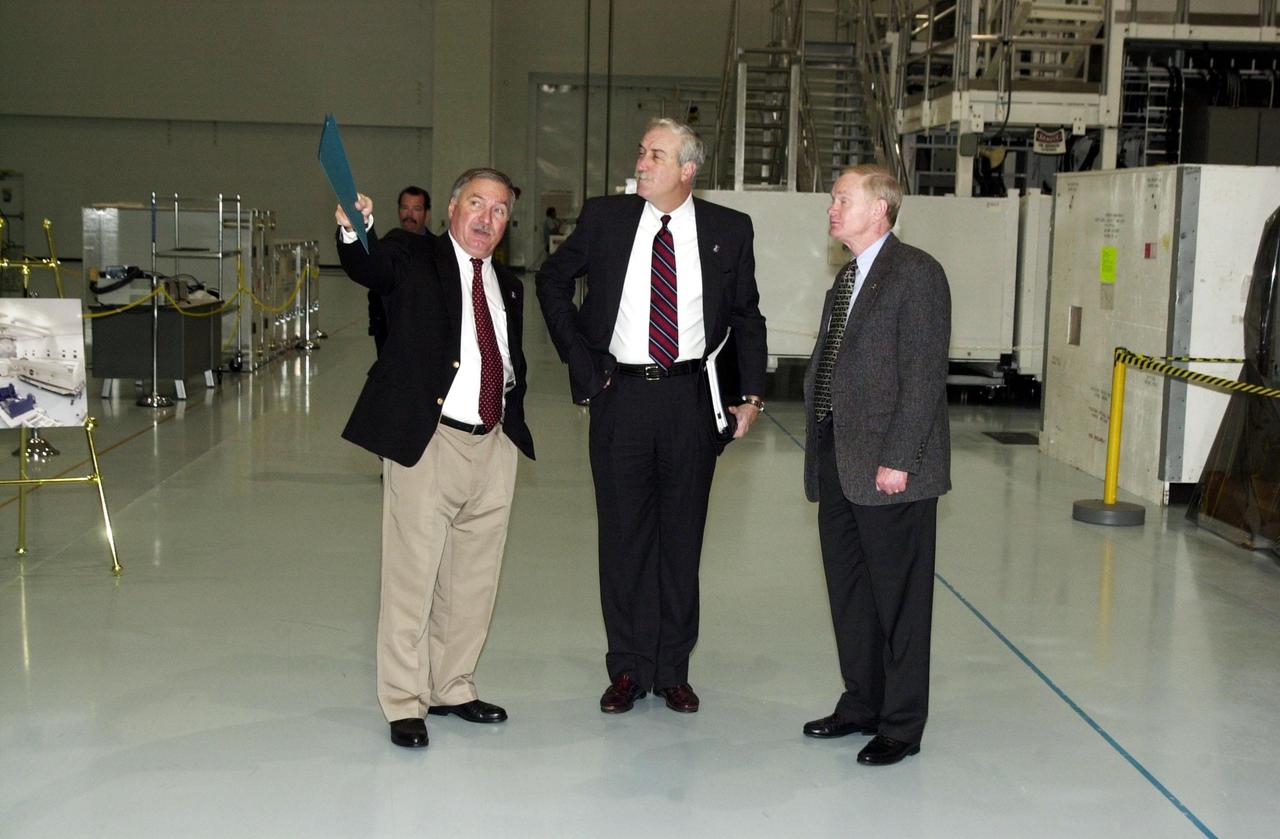
KENNEDY SPACE CENTER, Fla. - In the Space Station Processing Facility, Director of International Space Station/Payload Processing Tip Talone (left) informs the new NASA Administrator Sean O'Keefe (center) about the elements of the Space Station. At right is Center Director Roy Bridges Jr. The administrator was at KSC on an agencywide familiarization tour of NASA field centers. He was nominated for the position as administrator in November 2001 by President George W. Bush. He was sworn in Dec. 21 as the agency's 10th chief
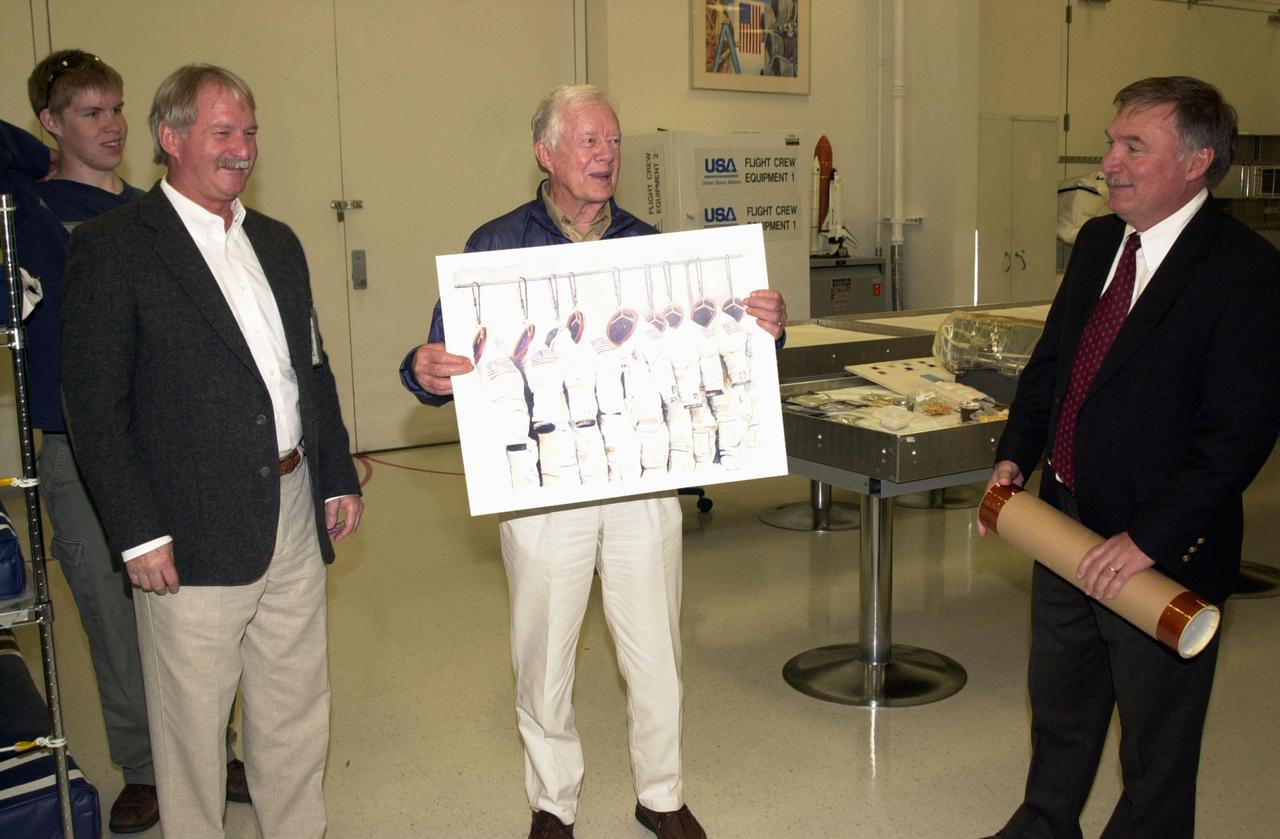
KENNEDY SPACE CENTER, FLA. -- During a tour of KSC, former President Jimmy Carter is presented with a print displaying the space suits used in the early days of the Space Program. is Tip Talone (right), director of Payload Processing, International Space Station, made the presentation. At left is Ron Woods, a technician in the Flight Crew Equipment Facility, who is also the artist of the original drawing

KENNEDY SPACE CENTER, Fla. -- ISS International Partners donate funds to the Combined Federal Campaign and United Way at KSC to benefit the Sept. 11 recovery efforts. From left are Steve Mozes of the Canadian Space Agency, Agostino Verghini of the Italian Space Agency, Frank Ramsey of United way, Center Director Roy D. Bridges Jr. and Director of International Space Station_Payload Processing Tip Talone
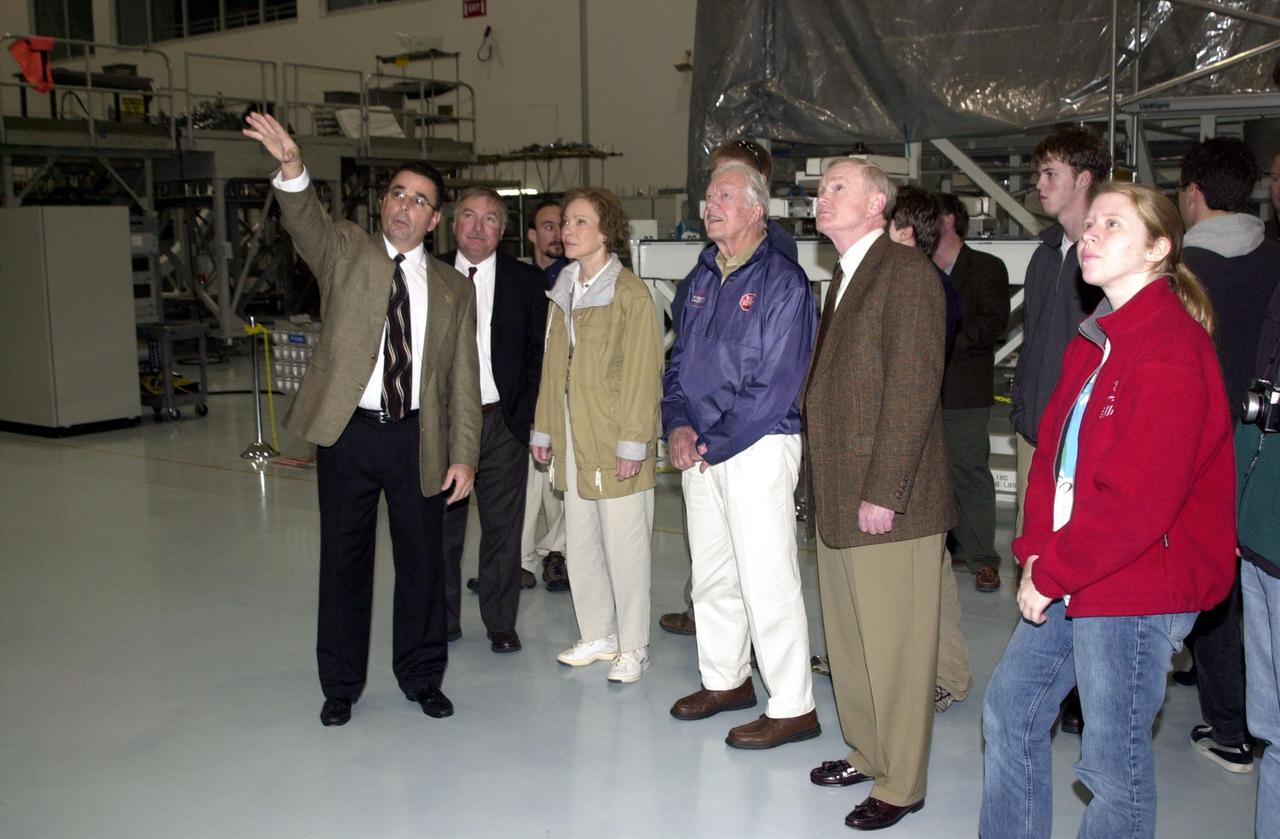
KENNEDY SPACE CENTER, FLA. -- In the Space Station Processing Facility, former President Jimmy Carter (center) and former First Lady Rosalyn Carter listen to an explanation of the modules in the SSPF. With them are Center Director Roy D. Bridges Jr. (right of Jimmy Carter) and Director of Payload Processing, International Space Station, Tip Talone (left of Rosalyn Carter). The former president and guests are touring KSC
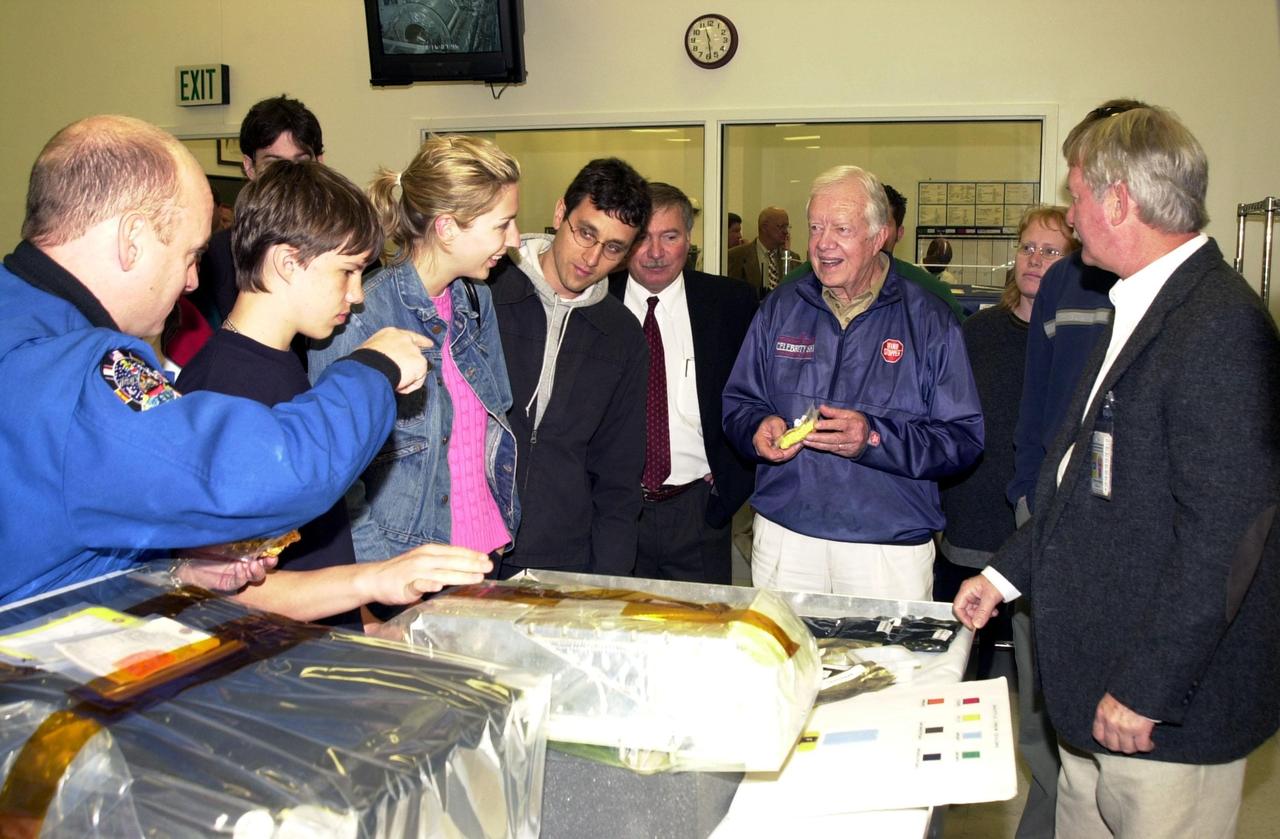
KENNEDY SPACE CENTER, FLA. -- During a tour of KSC, former President Jimmy Carter is shown packages of food that are used on the International Space Station. Astronaut Scott Kelly (far left) relates how the food is prepared and how it tastes. Behind and to the left of Carter is Tip Talone, director of Payload Processing, International Space Station. At the far right is Ron Woods, a technician in the Flight Crew Equipment Facility
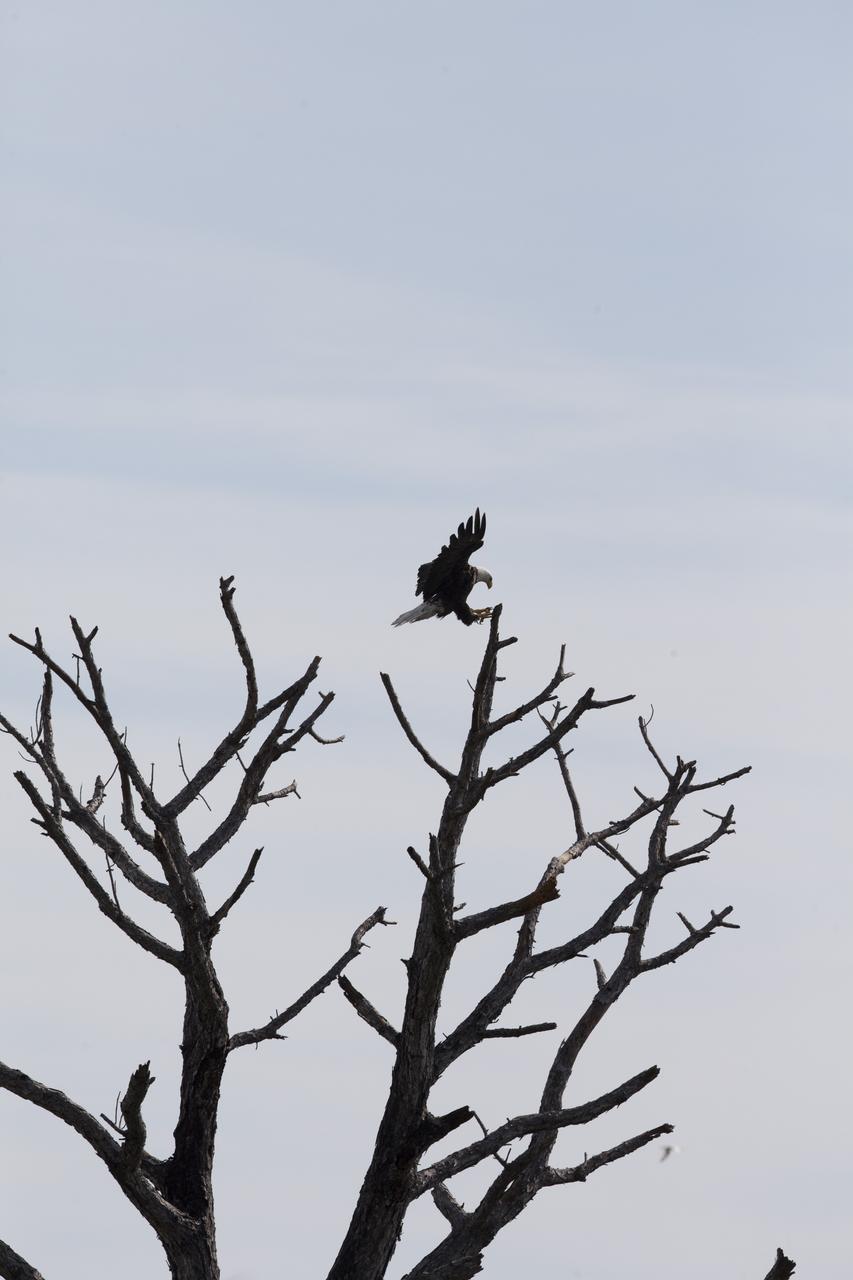
With its wings raised and talons extended, a bald eagle touches down on a high treetop at NASA’s Kennedy Space Center in Florida. The spaceport shares borders with the Merritt Island National Wildlife Refuge, which is home to more than 330 native and migratory bird species, along with 25 mammal, 117 fish, and 65 amphibian and reptile species.
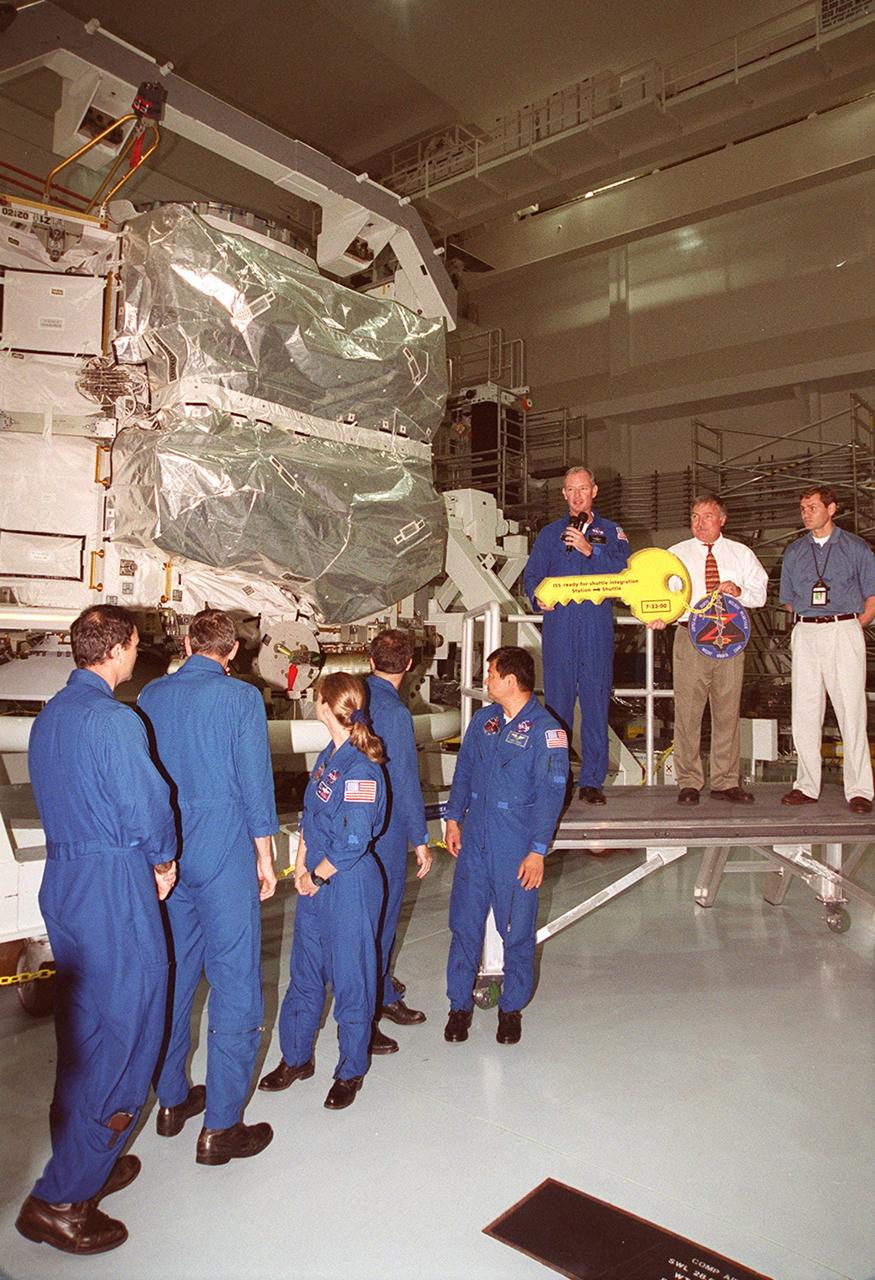
The Zenith-1 (Z-1) Truss is officially presented to NASA by The Boeing Co. on the Space Station Processing Facility floor on July 31. STS-92 Commander Col. Brian Duffy, comments on the presentation. At his side is Tip Talone, NASA director of International Space Station and Payload Processing at KSC. Talone and Col. Duffy received a symbolic key for the truss from John Elbon, Boeing director of ISS ground operations. The Z-1 Truss is the cornerstone truss of the International Space Station and is scheduled to fly in Space Shuttle Discovery's payload pay on STS-92 targeted for launch Oct. 5, 2000. The Z-1 is considered a cornerstone truss because it carries critical components of the Station's attitude, communications, thermal and power control systems as well as four control moment gyros, high and low gain antenna systems, and two plasma contactor units used to disperse electrical charge build-ups. The Z-1 truss and a Pressurized Mating Adapter (PMA-3), also flying to the Station on the same mission, will be the first major U.S. elements flown to the ISS aboard the Shuttle since the launch of the Unity element in December 1998
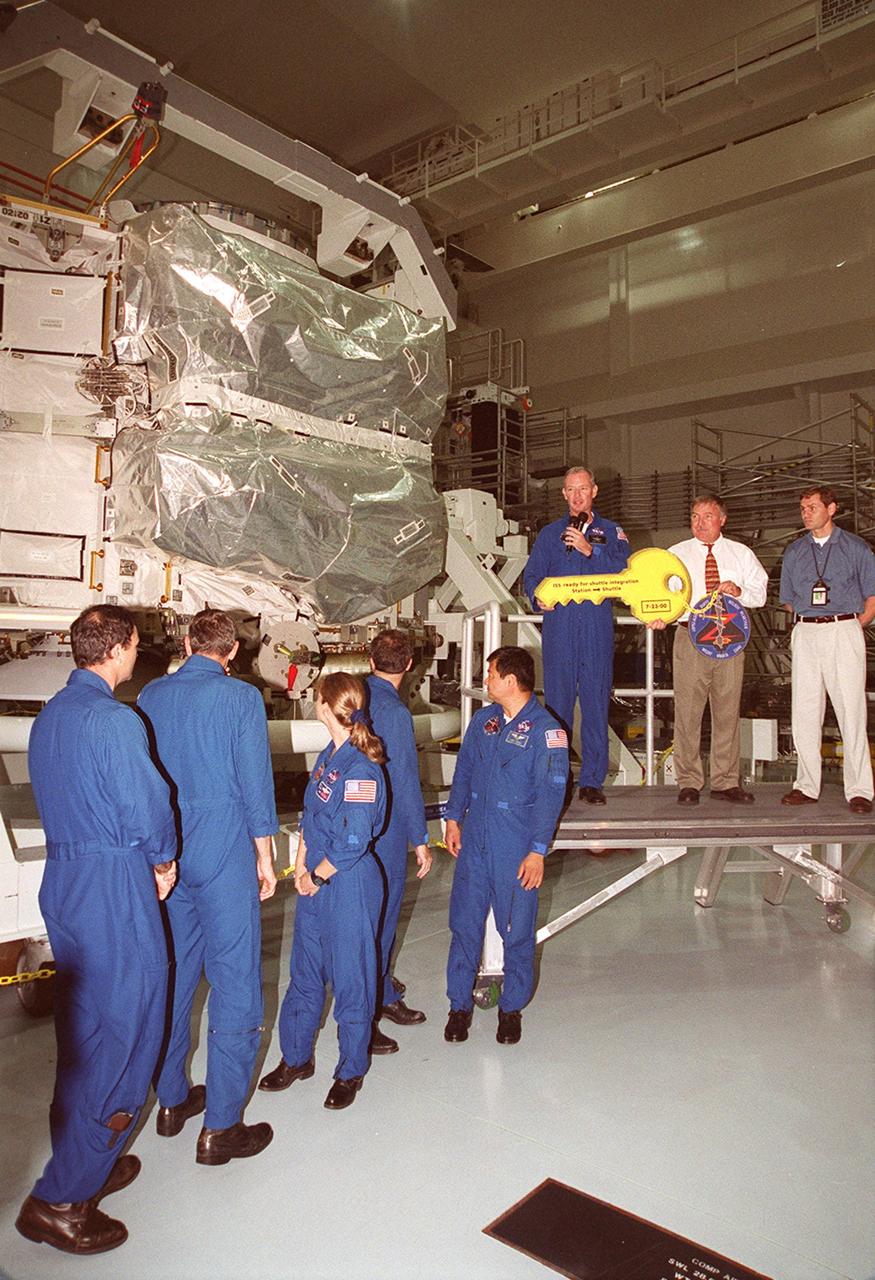
The Zenith-1 (Z-1) Truss is officially presented to NASA by The Boeing Co. on the Space Station Processing Facility floor on July 31. STS-92 Commander Col. Brian Duffy, comments on the presentation. At his side is Tip Talone, NASA director of International Space Station and Payload Processing at KSC. Talone and Col. Duffy received a symbolic key for the truss from John Elbon, Boeing director of ISS ground operations. The Z-1 Truss is the cornerstone truss of the International Space Station and is scheduled to fly in Space Shuttle Discovery's payload pay on STS-92 targeted for launch Oct. 5, 2000. The Z-1 is considered a cornerstone truss because it carries critical components of the Station's attitude, communications, thermal and power control systems as well as four control moment gyros, high and low gain antenna systems, and two plasma contactor units used to disperse electrical charge build-ups. The Z-1 truss and a Pressurized Mating Adapter (PMA-3), also flying to the Station on the same mission, will be the first major U.S. elements flown to the ISS aboard the Shuttle since the launch of the Unity element in December 1998
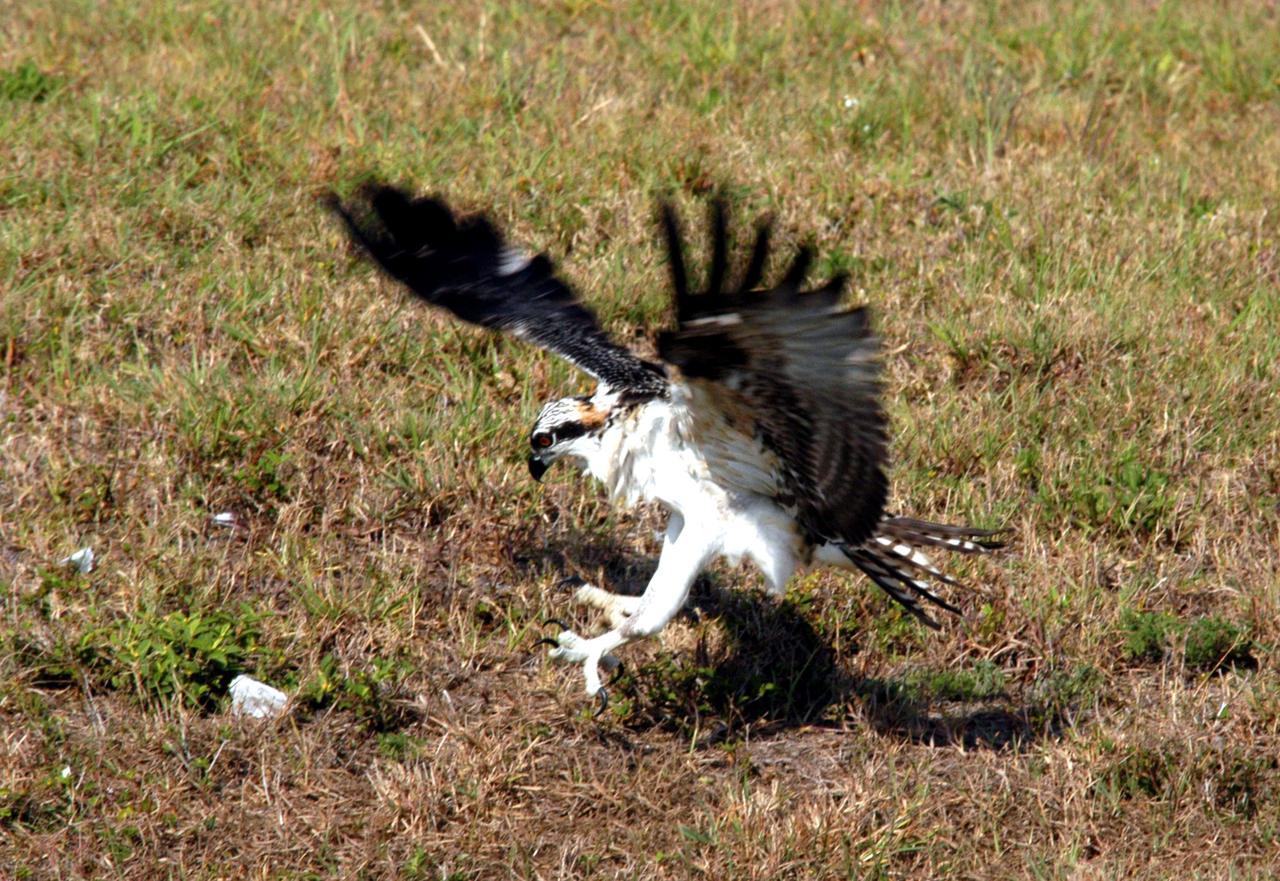
KENNEDY SPACE CENTER, FLA. -- One of the fledgling ospreys from the nest in the NASA KSC News Center parking lot comes down for a rough landing in the nearby grass. Ospreys select nesting sites of opportunity, from trees and telephone poles to rocks or even flat ground. In the United States they are found from Alaska and Newfoundland to Florida and the Gulf Coast. Osprey nests are found throughout the Kennedy Space Center and nearby Merritt Island National Wildlife Refuge. Known as a fish hawk, ospreys often can be seen flying overhead with a fish in their talons. Fish are their sole source of food.
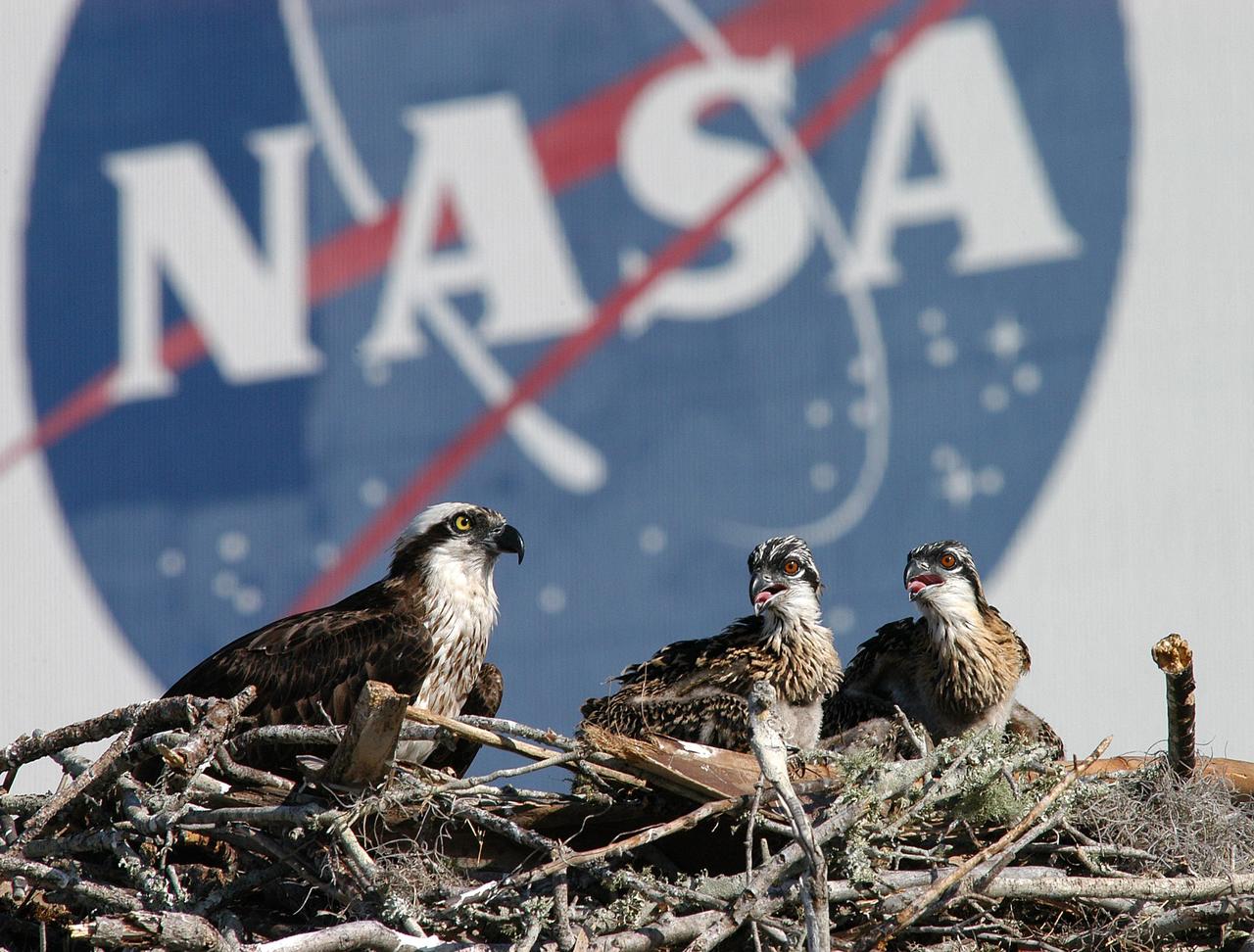
KENNEDY SPACE CENTER, FLA. - Against the background of the NASA logo on the Vehicle Assembly Building, the osprey nest in the nearby parking lot reveals two fledglings and one of the adult ospreys. Known as a fish hawk, they often can be seen flying overhead with a fish in their talons. Ospreys select nesting sites of opportunity, from trees and telephone poles to rocks or even flat ground. In the United States they are found from Alaska to Florida and the Gulf Coast. Osprey nests are found throughout the Kennedy Space Center and nearby Merritt Island National Wildlife Refuge.
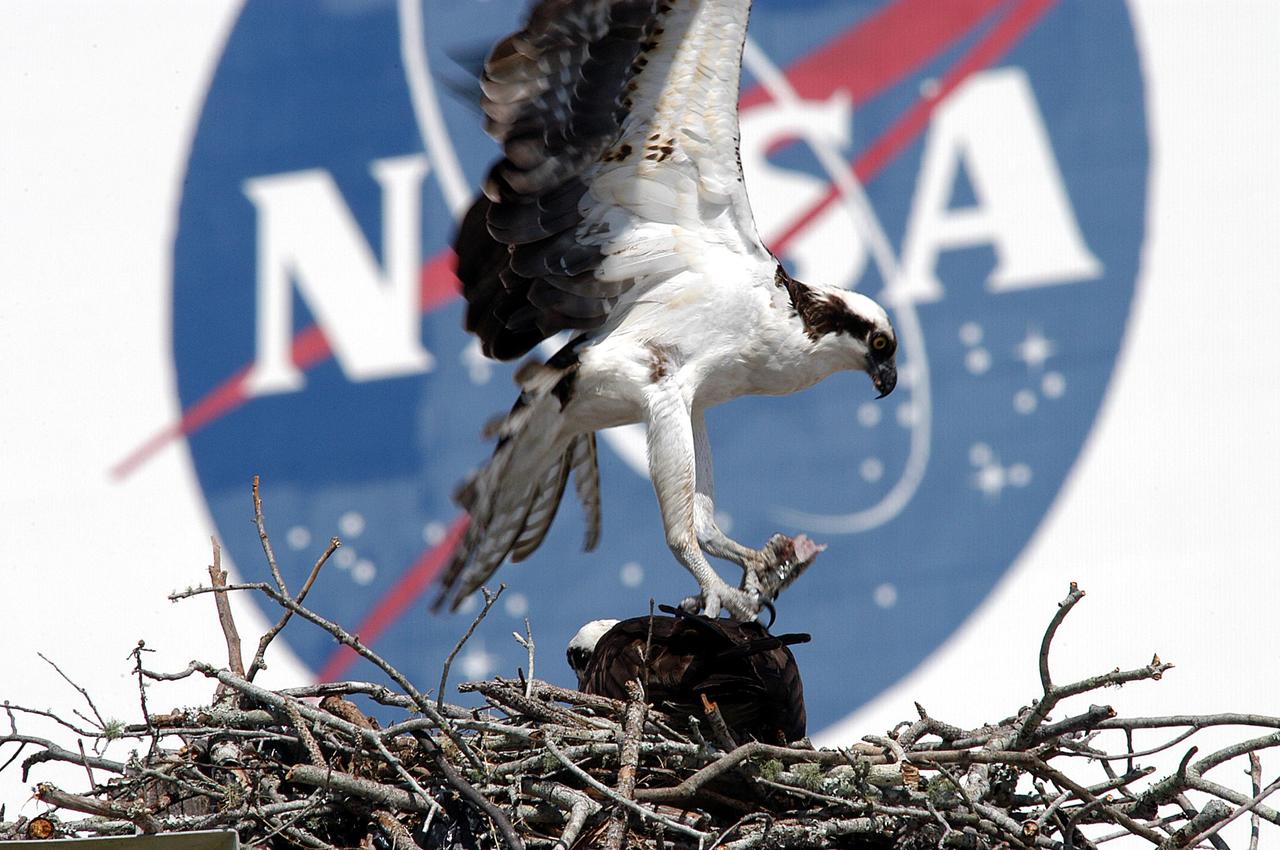
KENNEDY SPACE CENTER, FLA. -- A male osprey returns to its nest with a piece of fish in its talons for its mate. The nest was recently constructed on a speaker in the lower parking lot of the Press Site. Eggs have been sighted in the nest. The NASA logo seen in the background is on the nearby Vehicle Assembly Building. Known as a fish hawk, the osprey selects sites of opportunity, from trees and telephone poles to rocks or even flat ground. In the United States it is found from Alaska and Newfoundland to Florida and the Gulf Coast. Osprey nests are found throughout the Kennedy Space Center and surrounding Merritt Island National Wildlife Refuge.
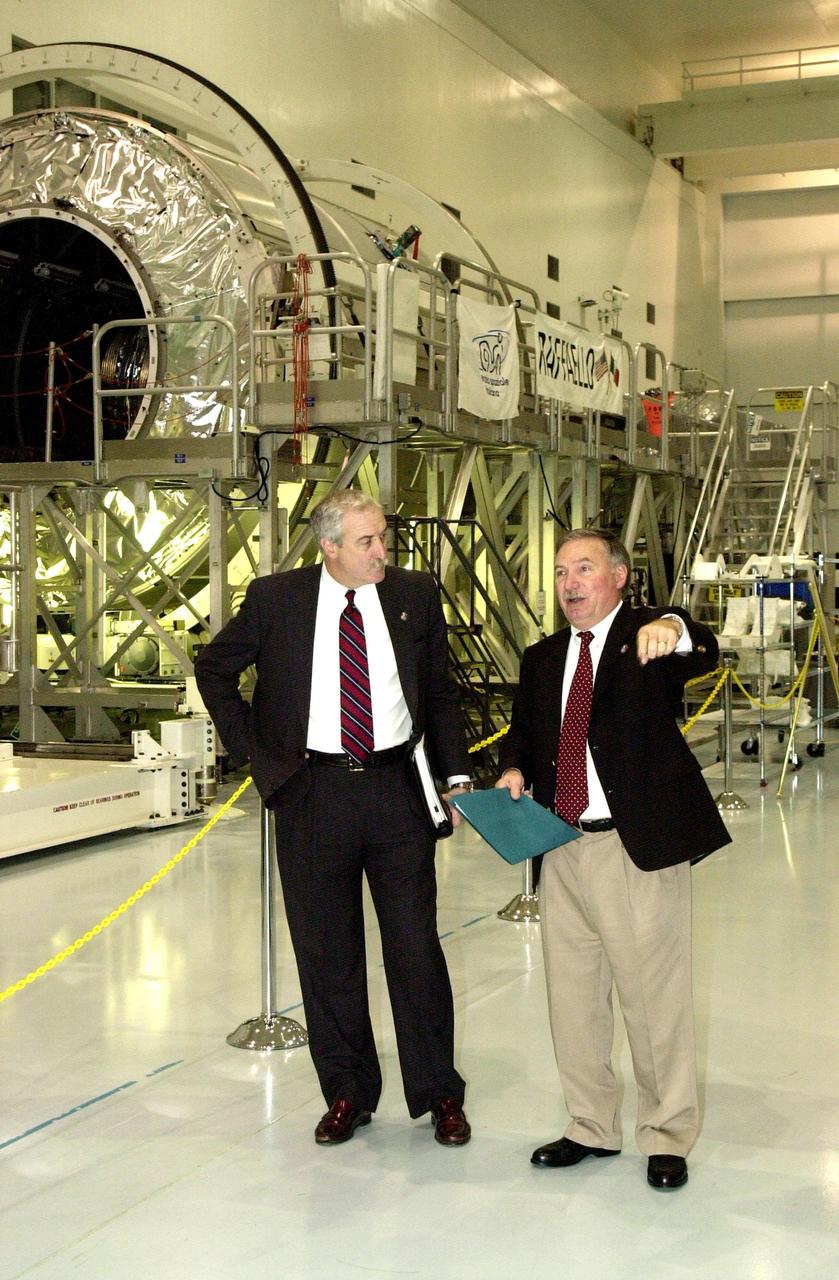
KENNEDY SPACE CENTER, Fla. -- In the Space Station Processing Facility, the new NASA Administrator Sean O'Keefe listens to Director of International Space Station/Payload Processing Tip Talone (right) talk about the elements of the Space Station. Behind them is the Multi-Purpose Logistics Module Raffaello, which last flew on mission STS-108 and returned Dec. 17, 2001. The administrator was at KSC on an agencywide familiarization tour of NASA field centers. He was nominated for the position as administrator in November 2001 by President George W. Bush. He was sworn in Dec. 21 as the agency's 10th chief
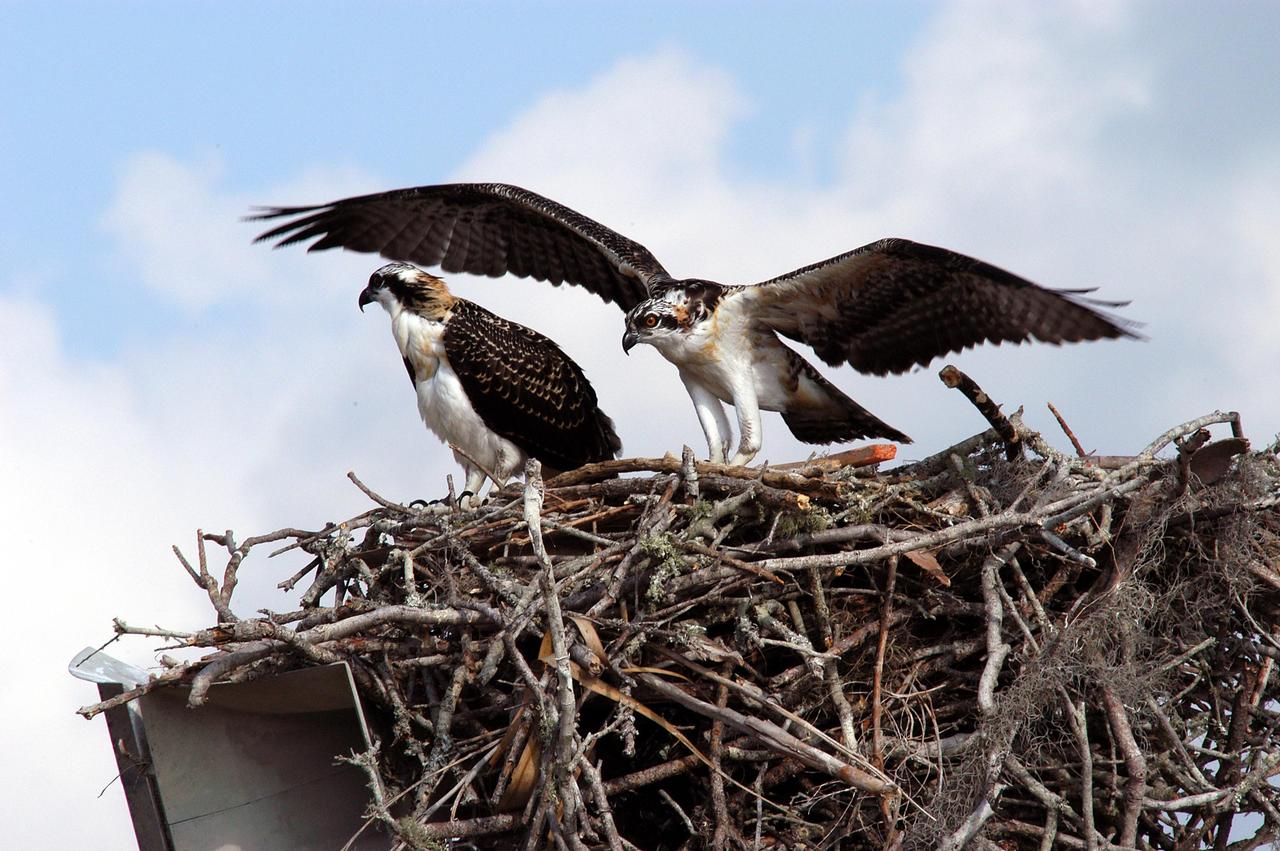
KENNEDY SPACE CENTER, FLA. -- One of two fledgling ospreys still in the nest stretches its wings to fly away. The stick-built nest is located in the NASA KSC News Center parking lot. Ospreys select nesting sites of opportunity, from trees and telephone poles to rocks or even flat ground. In the United States they are found from Alaska to Florida and the Gulf Coast. Osprey nests are found throughout the Kennedy Space Center and nearby Merritt Island National Wildlife Refuge. Known as a fish hawk, ospreys often can be seen flying overhead with a fish in their talons. Fish are their sole source of food.

KENNEDY SPACE CENTER, Fla. - J.J. "Tip" Talone Jr., director of KSC's International Space Station/Payload Processing, presents Expedition 2 crew member Susan Helms with a photo plaque from employees commemorating her stay aboard the Space Station. The Expedition 2 crew, which included astronaut Jim Voss and cosmonaut Yury Usachev, made the space voyage to the Station on mission STS-102 in March 2001. After five months on the Station, they returned to Earth, at the KSC Shuttle Landing Facility, on mission STS-105 in August 2001
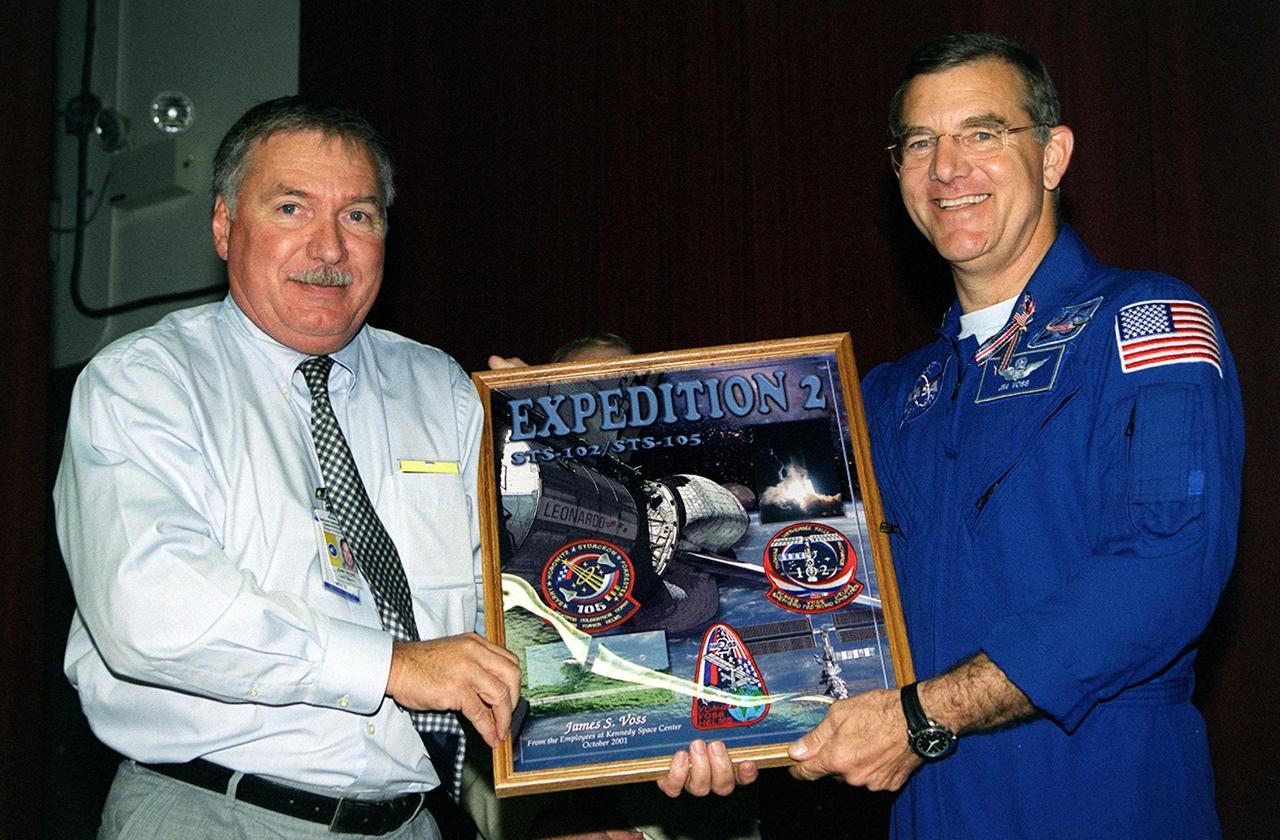
KENNEDY SPACE CENTER, Fla. -- J.J. "Tip" Talone Jr., director of KSC's International Space Station/Payload Processing, presents Expedition 2 crew member Jim Voss with a photo plaque from employees commemorating his stay aboard the Space Station. The Expedition 2 crew, which included astronaut Susan Helms and cosmonaut Yury Usachev , made the space voyage to the Station on mission STS-102 in March 2001. After five months on the Station, they returned to Earth, at the KSC Shuttle Landing Facility, on mission STS-105 in August 2001
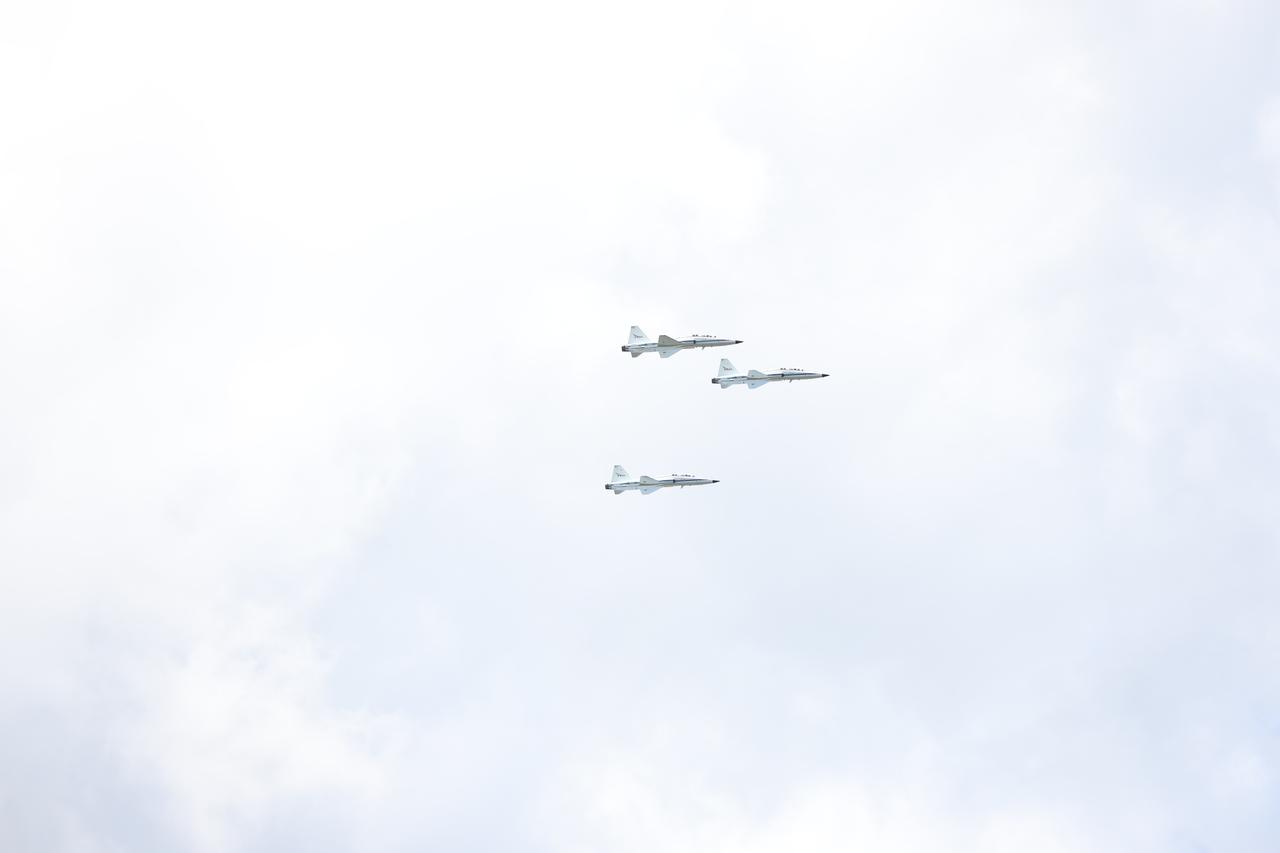
NASA astronauts arrive in a trio of Northrop T-38 Talon jets at the Launch and Landing Facility at Kennedy Space Center in Florida on Thursday, April 25, 2024, ahead of the agency’s Boeing Crew Flight Test to the International Space Station. As part of the agency’s Commercial Crew Program, NASA astronaut Butch Wilmore and Suni Williams are the first to launch aboard Boeing’s Starliner spacecraft atop a United Launch Alliance Atlas V rocket from Space Launch Complex-41 at Cape Canaveral Space Force Station in Florida. Liftoff is scheduled for 10:34 p.m. ET on Monday, May 6.
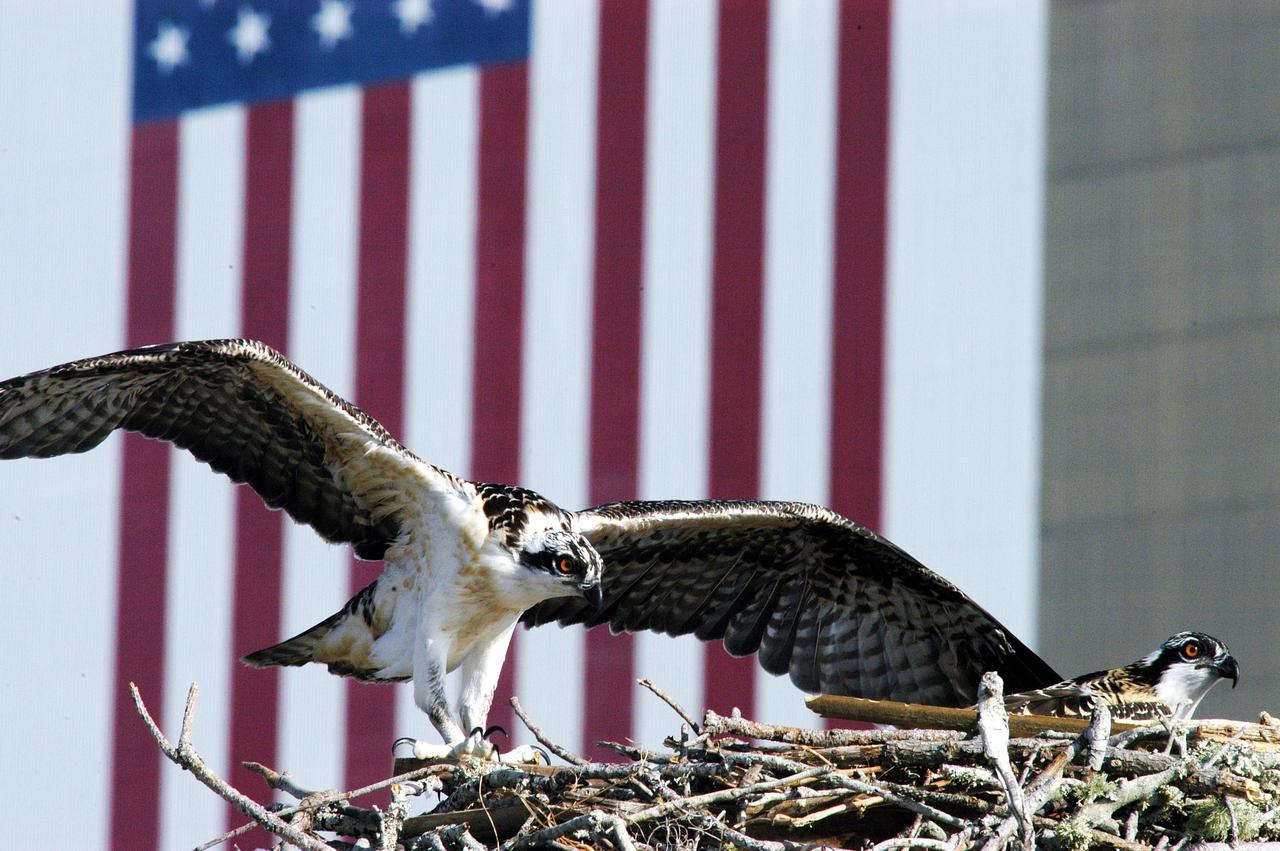
KENNEDY SPACE CENTER, FLA. -- One of three osprey fledglings spreads its wings, anticipating flight. The nest is in the NASA News Center parking lot, across from the Vehicle Assembly Building, with its 209-foot-high American flag painted on the south side. Ospreys select nesting sites of opportunity, from trees and telephone poles to rocks or even flat ground. In the United States they are found from Alaska to Florida and the Gulf Coast. Osprey nests are found throughout the Kennedy Space Center and nearby Merritt Island National Wildlife Refuge. Known as a fish hawk, ospreys often can be seen flying overhead with a fish in their talons.
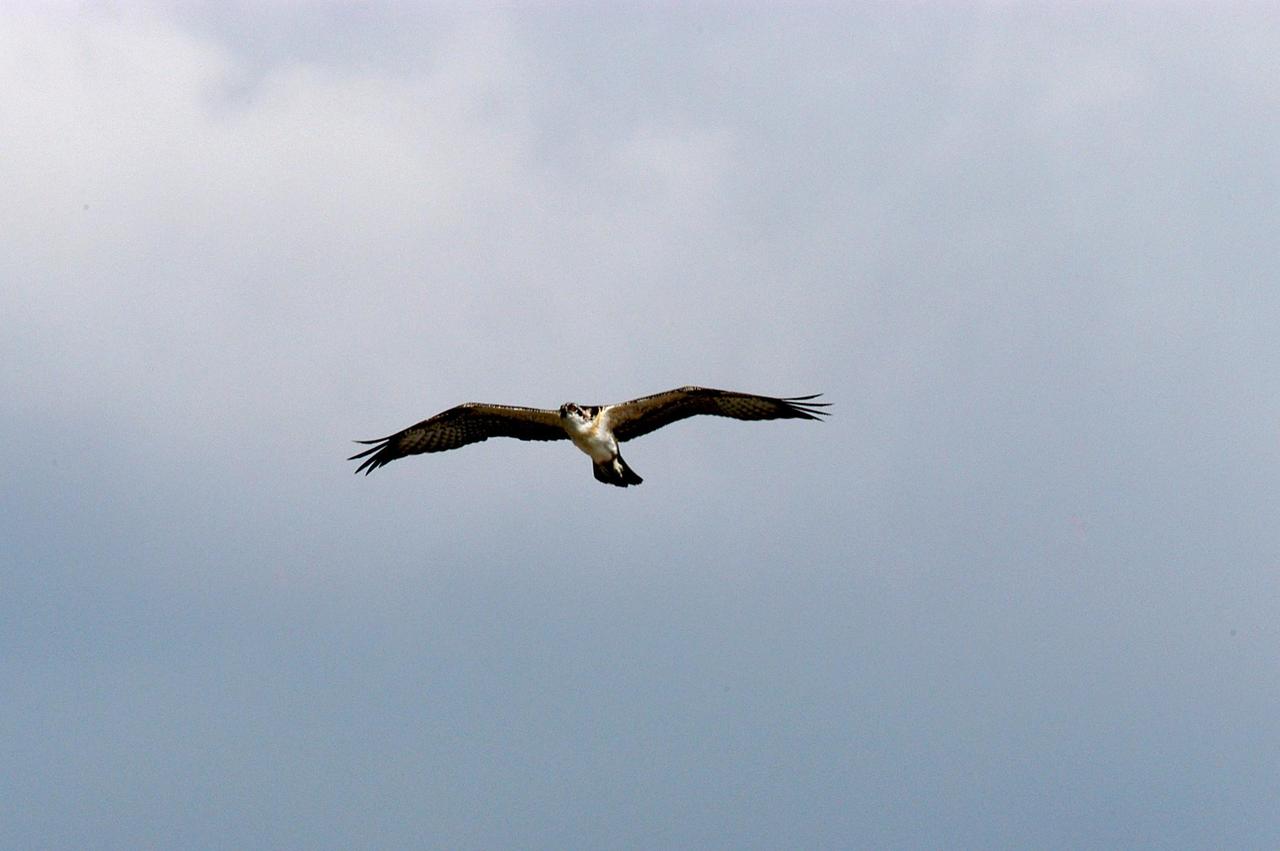
KENNEDY SPACE CENTER, FLA. -- A fledgling osprey soars above its nest, located in the NASA KSC News Center parking lot. Ospreys select nesting sites of opportunity, from trees and telephone poles to rocks or even flat ground. In the United States they are found from Alaska to Florida and the Gulf Coast. Osprey nests are found throughout the Kennedy Space Center and nearby Merritt Island National Wildlife Refuge. Known as a fish hawk, ospreys often can be seen flying overhead with a fish in their talons. Fish are their sole source of food.

NASA astronauts Butch Wilmore and Suni Williams arrive in a Northrop T-38 Talon at the Launch and Landing Facility at Kennedy Space Center in Florida on Thursday, April 25, 2024, ahead of the agency’s Boeing Crew Flight Test to the International Space Station. As part of the agency’s Commercial Crew Program, Wilmore and Williams are the first to launch aboard Boeing’s Starliner spacecraft atop a United Launch Alliance Atlas V rocket from Space Launch Complex-41 at Cape Canaveral Space Force Station in Florida. Liftoff is scheduled for 10:34 p.m. ET on Monday, May 6.
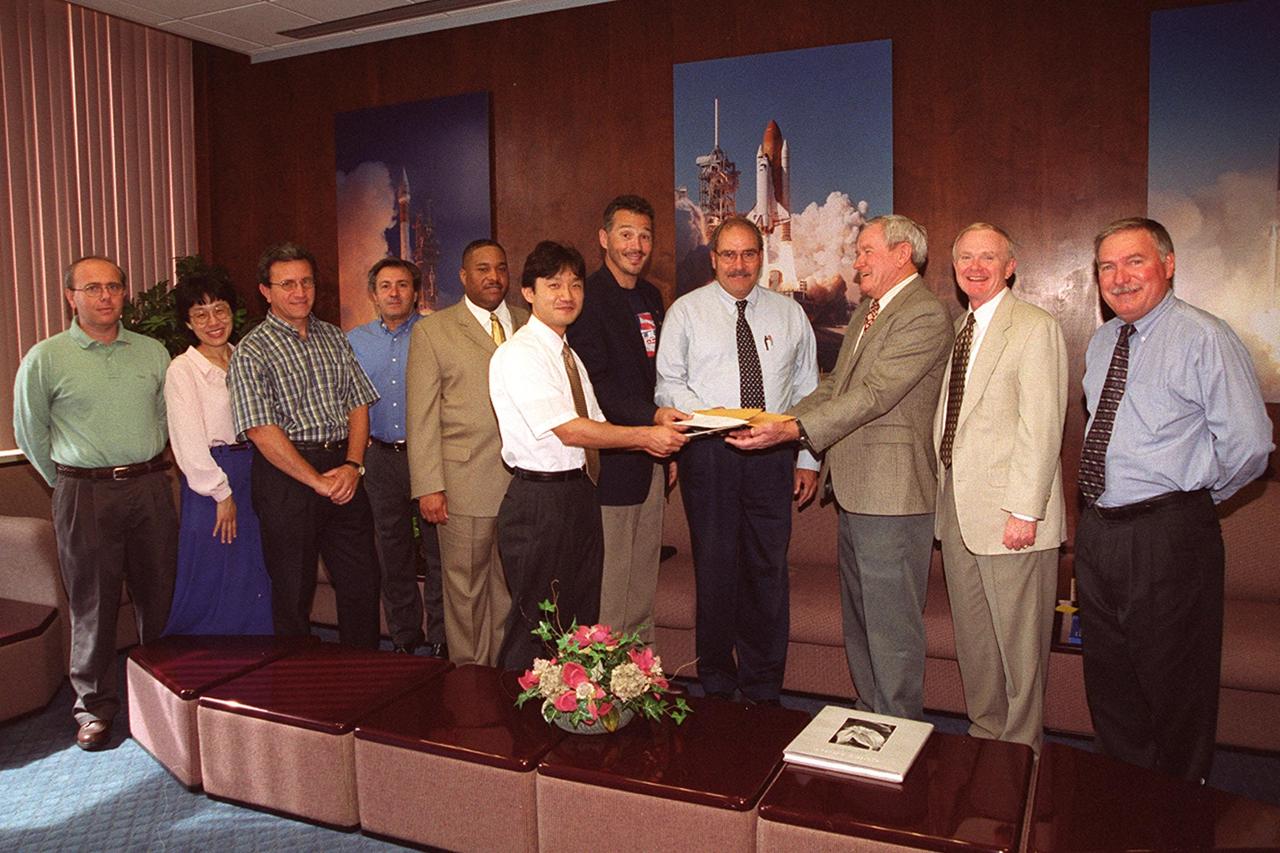
KENNEDY SPACE CENTER, Fla. -- In a special presentation, ISS International Partners donate funds to the Combined Federal Campaign and United Way at KSC to benefit the Sept. 11 recovery efforts. From left are Francesco Santoro of Alenia (Italian Space Agency contractor), Minako Holdrum of the Natinal Space Development Agency of Japan (NASDA), Michele Tripoli and Guiseppe Mancuso of Alenia, Todd Arnold, NASA KSC, Shimpei Takahashi of NASDA, Steve Mozes of the Canadian Space Agency, Agostino Verghini of the Italian Space Agency, Frank Ramsey of United Way/CFC, Center Director Roy D. Bridges Jr. and Director of International Space Station/Payload Processing Tip Talone
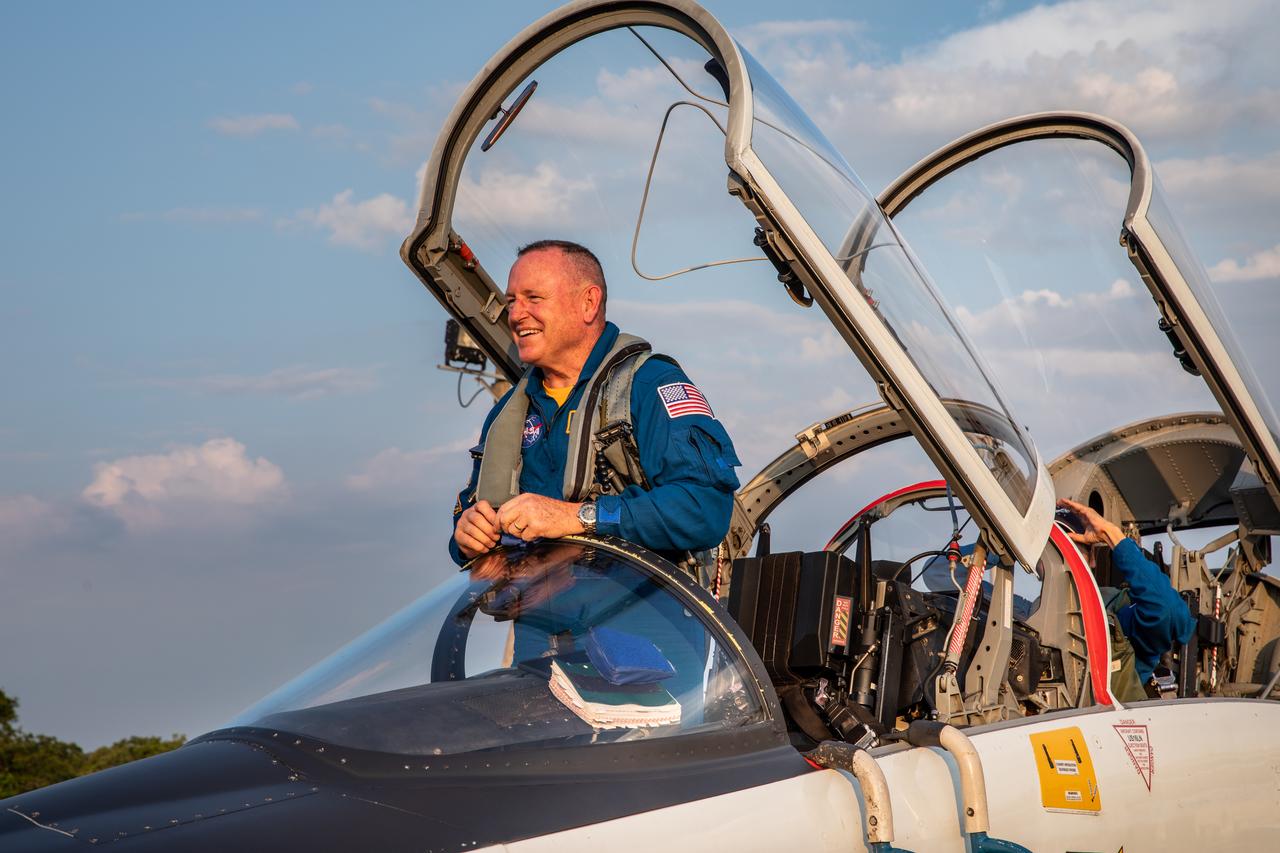
NASA astronaut Butch Wilmore exits a Northrop T-38 Talon after returning to the Launch and Landing Facility at the agency’s Kennedy Space Center in Florida on Tuesday, May 28, 2024, following a scrubbed first launch attempt of NASA’s Boeing Crew Flight Test. As part of the agency’s Commercial Crew Program, Wilmore and fellow crew member Suni Williams are the first to launch to the International Space Station aboard Boeing’s Starliner spacecraft atop a United Launch Alliance Atlas V rocket from Space Launch Complex-41 at nearby Cape Canaveral Space Force Station. Liftoff is scheduled for 12:25 p.m. EDT on Saturday, June 1.
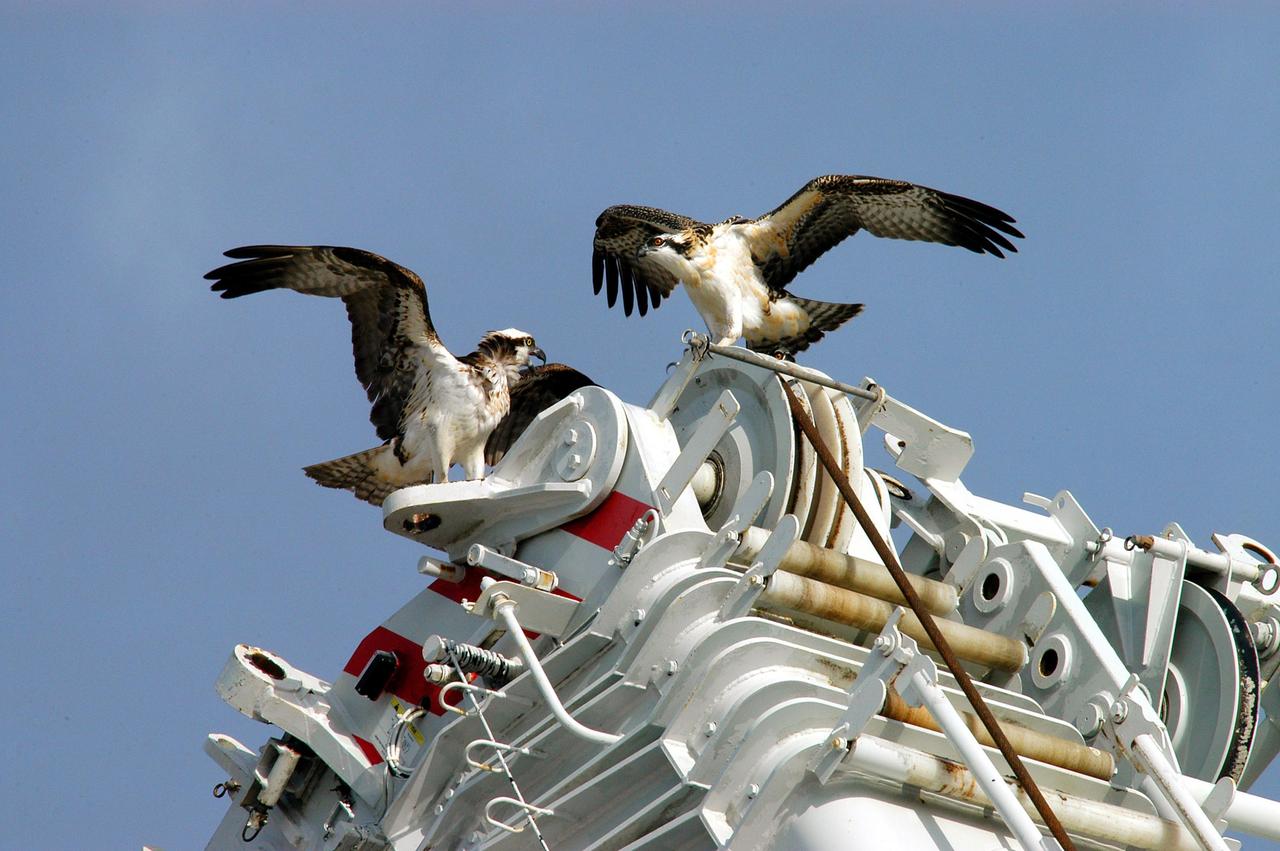
KENNEDY SPACE CENTER, FLA. -- - Two young ospreys flex their wings for flight. Their nest is located in the NASA KSC News Center parking lot. Ospreys select nesting sites of opportunity, from trees and telephone poles to rocks or even flat ground. In the United States they are found from Alaska to Florida and the Gulf Coast. Osprey nests are found throughout the Kennedy Space Center and nearby Merritt Island National Wildlife Refuge. Known as a fish hawk, ospreys often can be seen flying overhead with a fish in their talons. Fish are their sole source of food.
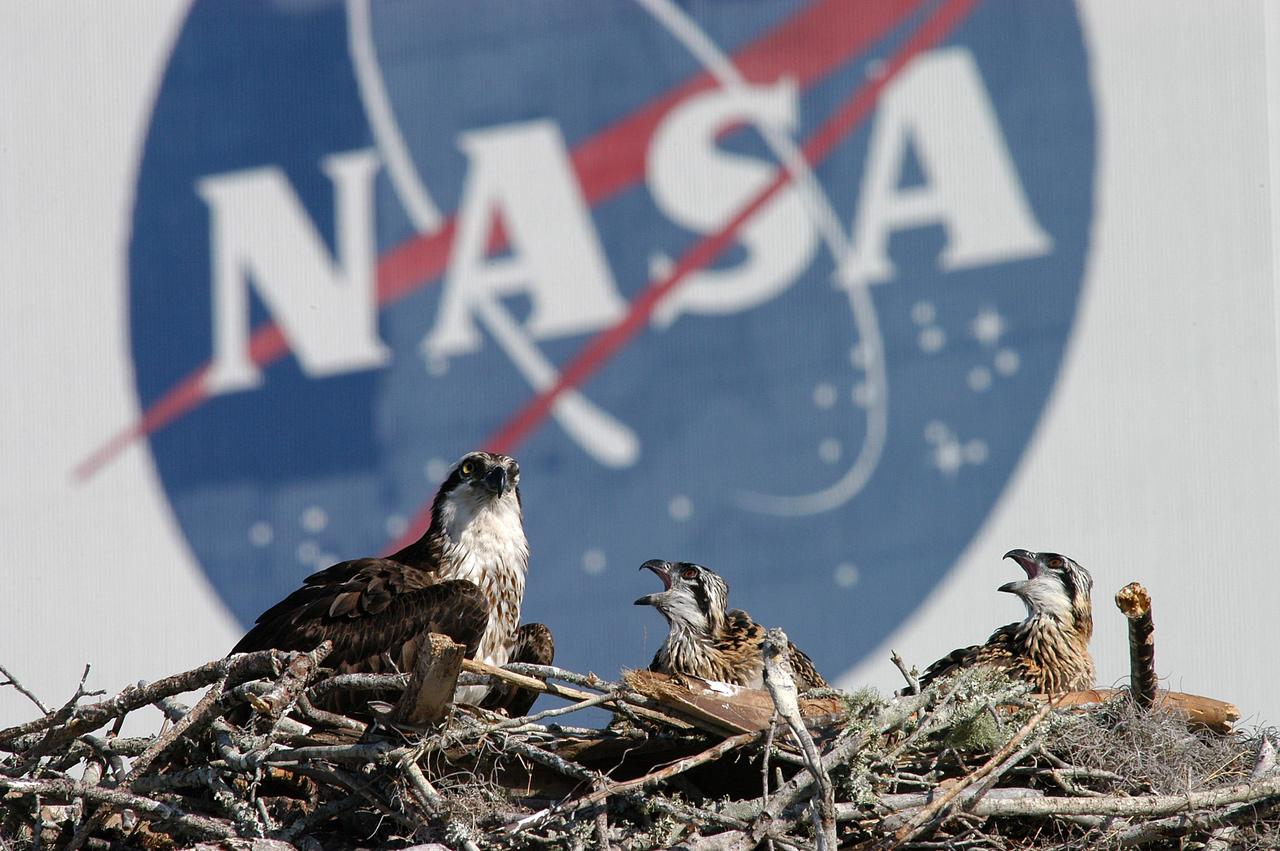
KENNEDY SPACE CENTER, FLA. - Against the background of the NASA logo on the Vehicle Assembly Building, the osprey nest in the nearby parking lot reveals two fledglings and one of the adult ospreys. Known as a fish hawk, they often can be seen flying overhead with a fish in their talons. Ospreys select nesting sites of opportunity, from trees and telephone poles to rocks or even flat ground. In the United States they are found from Alaska to Florida and the Gulf Coast. Osprey nests are found throughout the Kennedy Space Center and nearby Merritt Island National Wildlife Refuge.
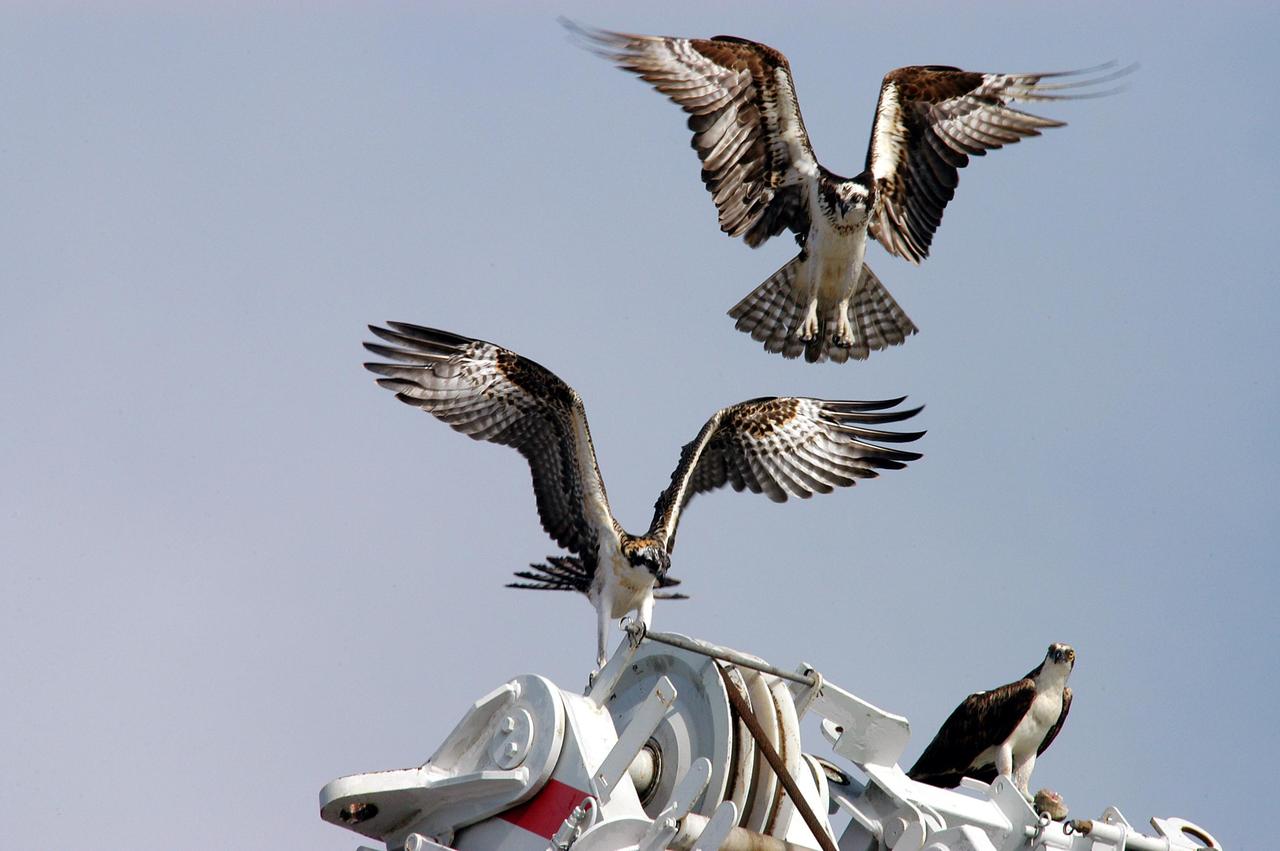
KENNEDY SPACE CENTER, FLA. -- Two fledgling ospreys begin flight lessons with their parent nearby (right). Their nest is located in the NASA KSC News Center parking lot. Ospreys select nesting sites of opportunity, from trees and telephone poles to rocks or even flat ground. In the United States they are found from Alaska to Florida and the Gulf Coast. Osprey nests are found throughout the Kennedy Space Center and nearby Merritt Island National Wildlife Refuge. Known as a fish hawk, ospreys often can be seen flying overhead with a fish in their talons. Fish are their sole source of food.
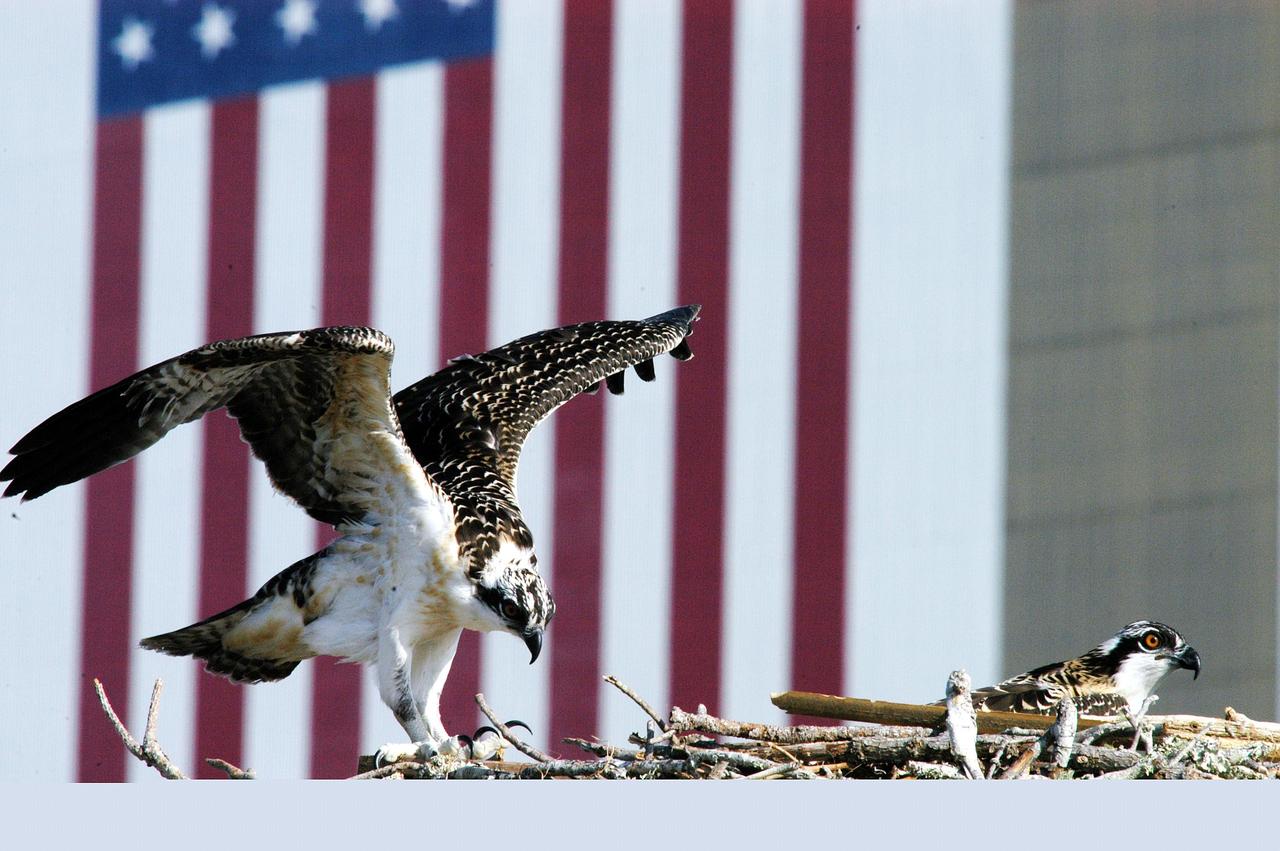
KENNEDY SPACE CENTER, FLA. -- One of three osprey fledglings exercises its wings, anticipating flight. The nest is in the NASA News Center parking lot, across from the Vehicle Assembly Building, with its 209-foot-high American flag painted on the south side. Ospreys select nesting sites of opportunity, from trees and telephone poles to rocks or even flat ground. In the United States they are found from Alaska to Florida and the Gulf Coast. Osprey nests are found throughout the Kennedy Space Center and nearby Merritt Island National Wildlife Refuge. Known as a fish hawk, ospreys often can be seen flying overhead with a fish in their talons.
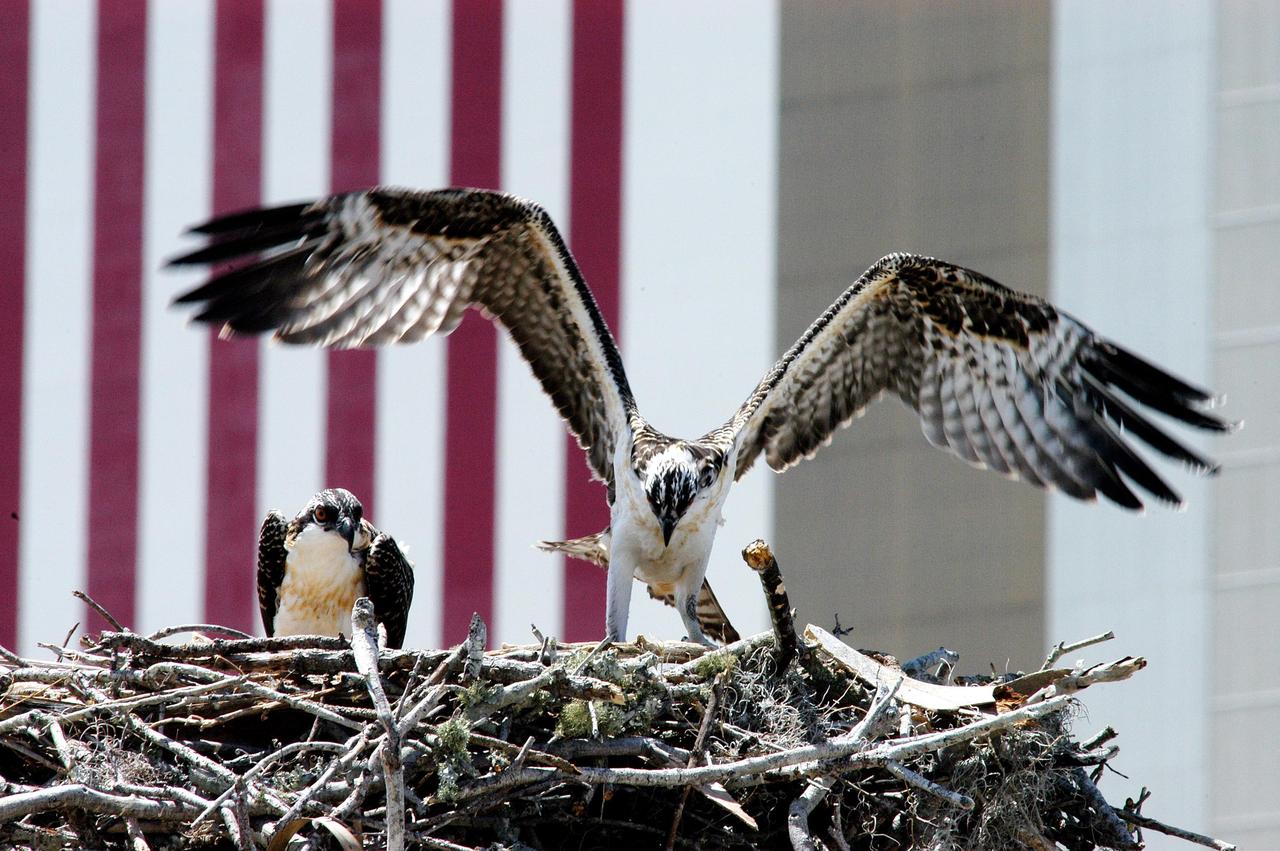
KENNEDY SPACE CENTER, FLA. -- One of three osprey fledglings exercises its wings, anticipating flight. The nest is in the NASA News Center parking lot, across from the Vehicle Assembly Building, with its 209-foot-high American flag painted on the south side. Ospreys select nesting sites of opportunity, from trees and telephone poles to rocks or even flat ground. In the United States they are found from Alaska to Florida and the Gulf Coast. Osprey nests are found throughout the Kennedy Space Center and nearby Merritt Island National Wildlife Refuge. Known as a fish hawk, ospreys often can be seen flying overhead with a fish in their talons.
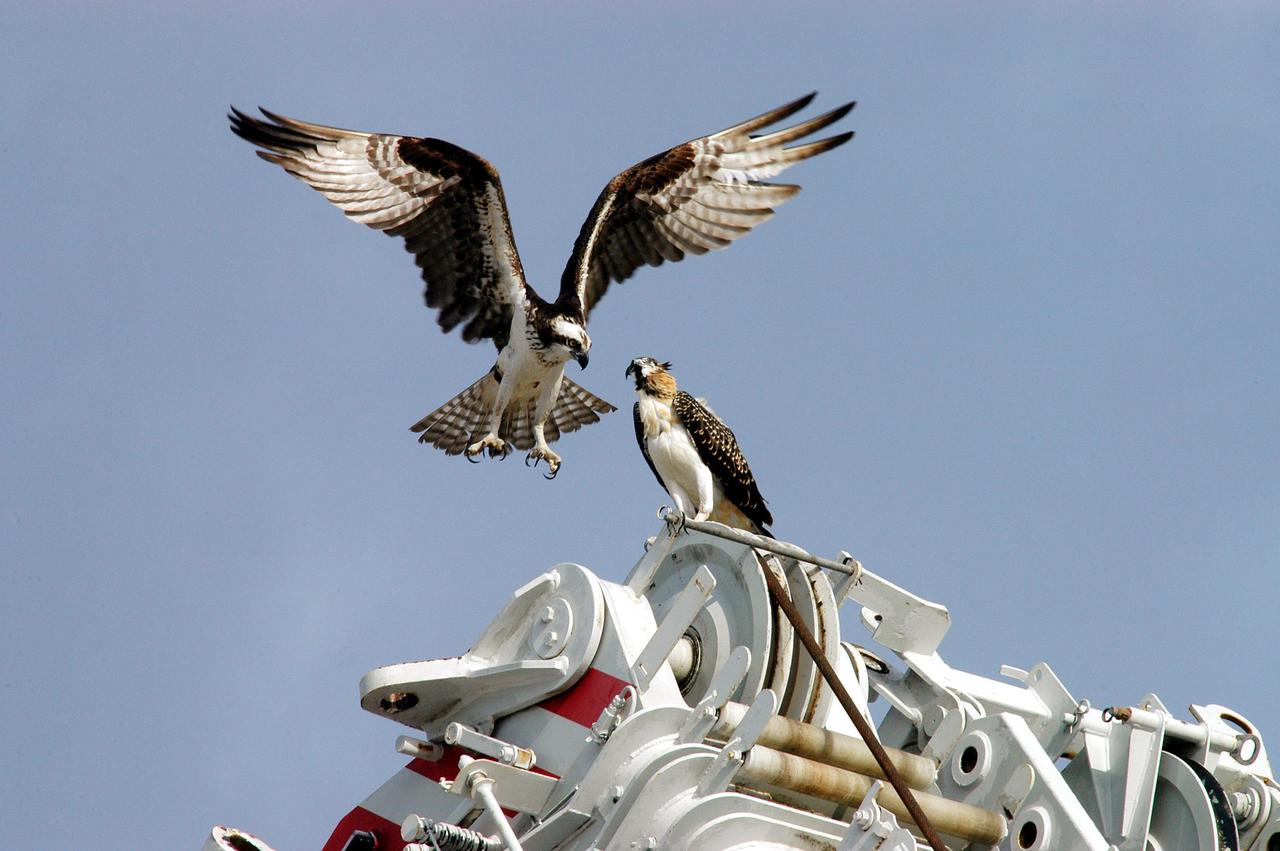
KENNEDY SPACE CENTER, FLA. -- One young osprey tests its wings while another waits nearby. Their nest is located in the NASA KSC News Center parking lot. Ospreys select nesting sites of opportunity, from trees and telephone poles to rocks or even flat ground. In the United States they are found from Alaska to Florida and the Gulf Coast. Osprey nests are found throughout the Kennedy Space Center and nearby Merritt Island National Wildlife Refuge. Known as a fish hawk, ospreys often can be seen flying overhead with a fish in their talons. Fish are their sole source of food.
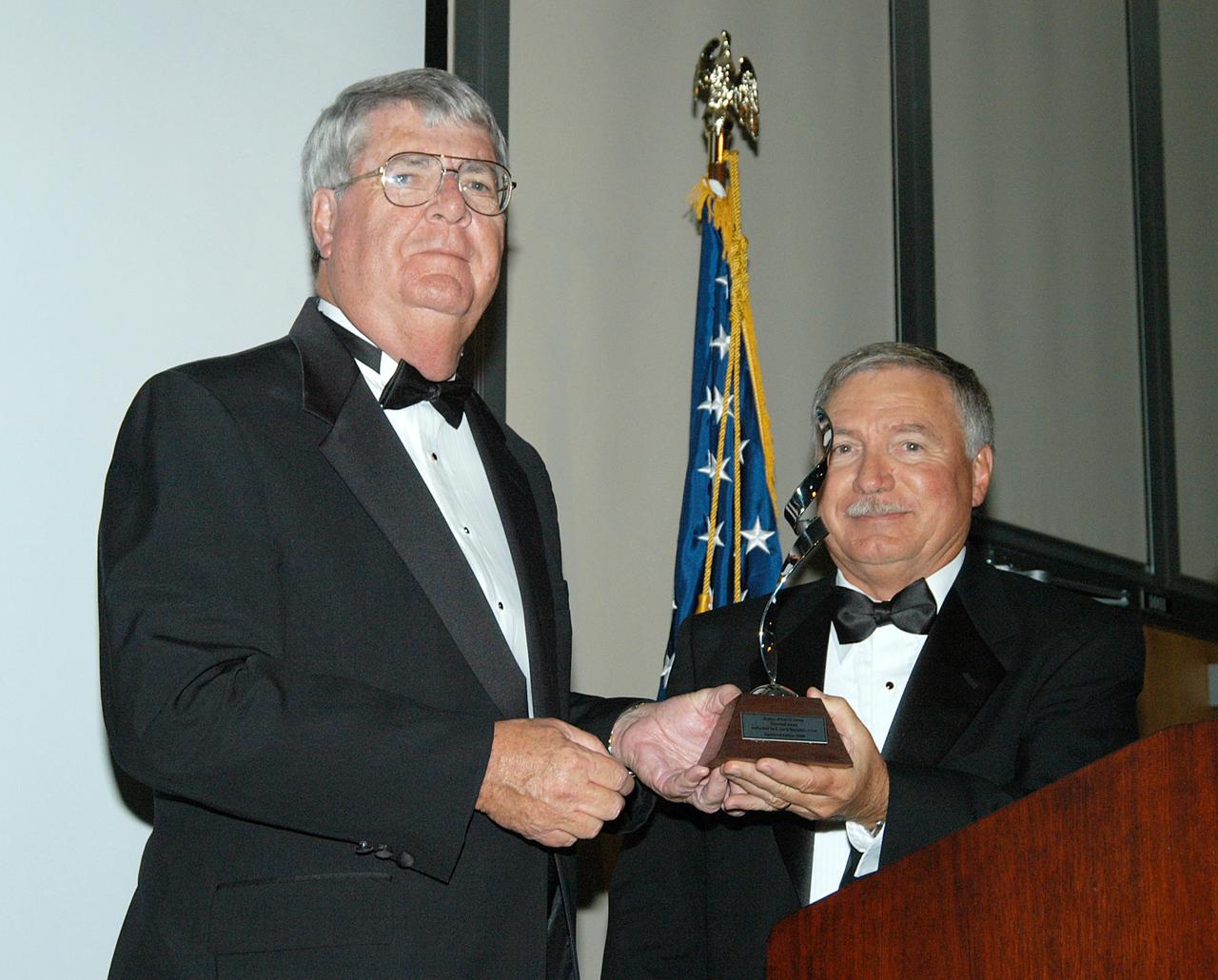
KENNEDY SPACE CENTER, FLA. -- At the annual National Space Club Debus Award Banquet, Master of Ceremonies Dick Beagley (left) presents the Debus Award to John J. “Tip” Talone, director of the International Space Station/Payloads Processing directorate. He was honored for his outstanding personal and professional efforts in supporting the U.S. space program, especially in his current role. The event was held at the Dr. Kurt H. Debus Conference Facility in the Visitor Complex. The award was created by the National Space Club to recognize significant achievements and contributions made in Florida to American aerospace efforts. It is named for Dr. Kurt H. Debus, first director of KSC, from 1962 to 1974.
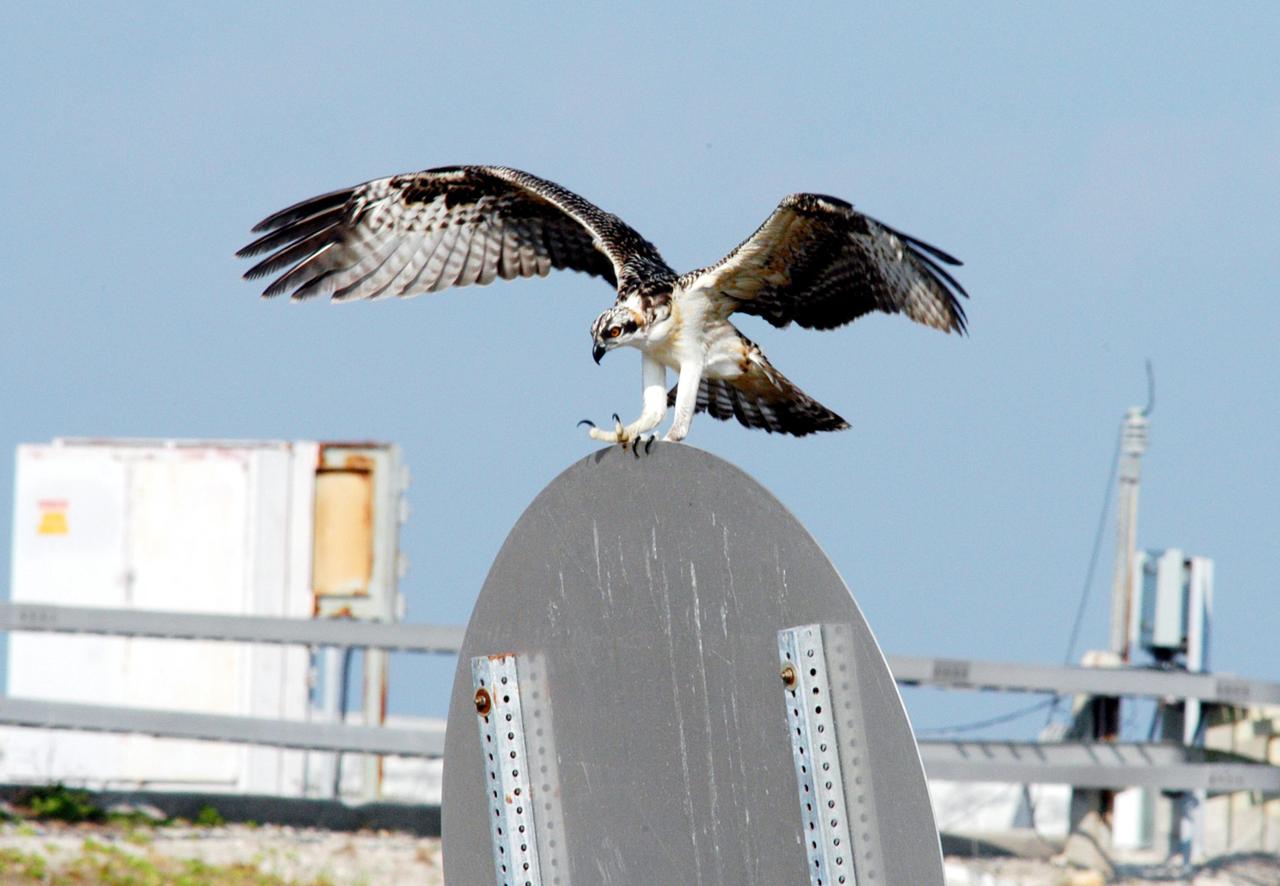
KENNEDY SPACE CENTER, FLA. -- One of the fledgling ospreys from the nest in the NASA KSC News Center parking lot lands on a sign after testing its wings. Ospreys select nesting sites of opportunity, from trees and telephone poles to rocks or even flat ground. In the United States they are found from Alaska to Florida and the Gulf Coast. Osprey nests are found throughout the Kennedy Space Center and nearby Merritt Island National Wildlife Refuge. Known as a fish hawk, ospreys often can be seen flying overhead with a fish in their talons. Fish are their sole source of food.
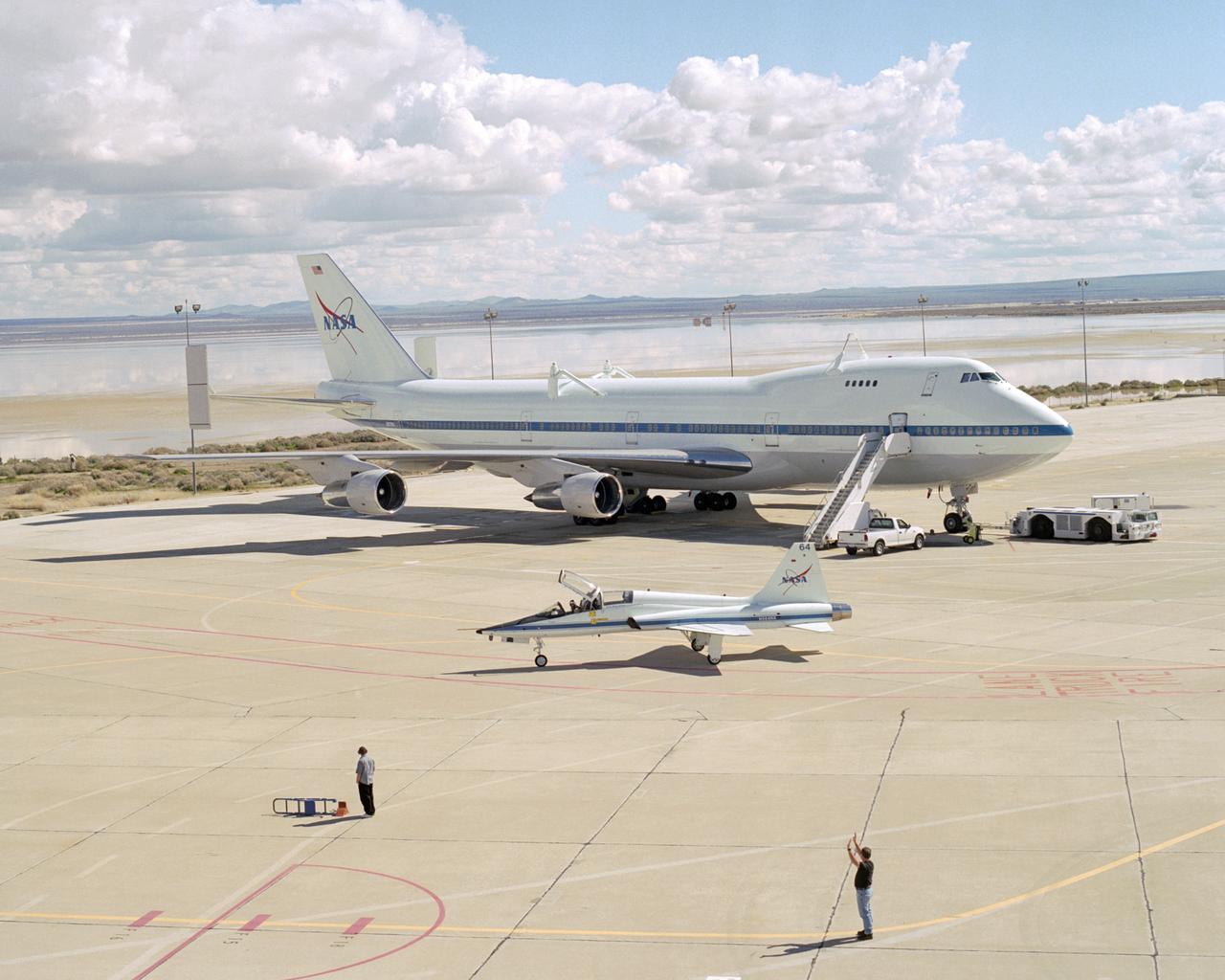
Puffy white clouds and a flooded lakebed form a backdrop as a T-38 support aircraft taxies across the ramp in front of NASA's Boeing 747 Shuttle Carrier Aircraft.
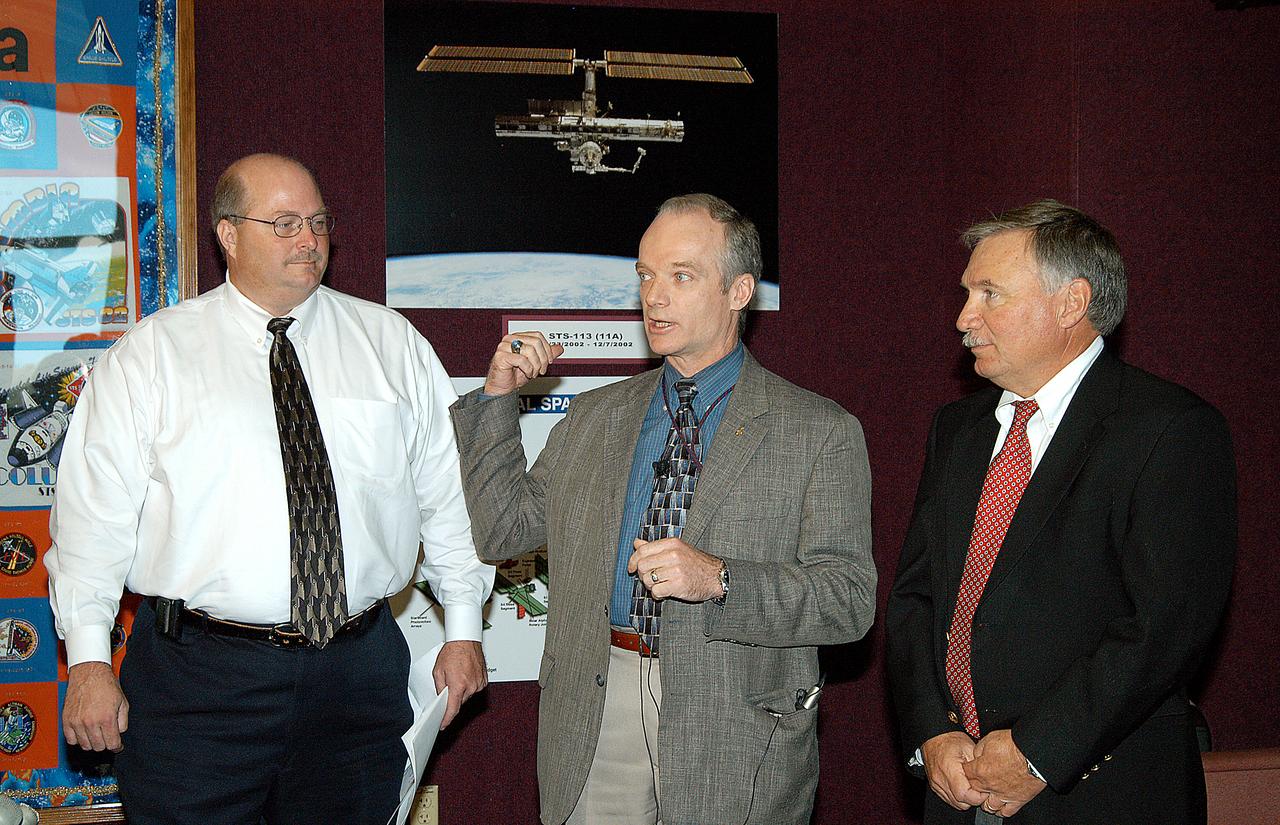
In the Space Station Processing Facility, (from left) David Bethay, Boeing/ISS Florida Operations; Charlie Precourt, deputy manager of the International Space Station Program; and Tip Talone, director of Space Station and Payload Processing, give an overview of Space Station processing for the media. Members of the media were invited to commemorate the fifth anniversary of the launch of the first element of the International Space Station by touring the Space Station Processing Facility (SSPF) at KSC. Reporters also had the opportunity to see Space Station hardware that is being processed for deployment once the Space Shuttles return to flight. The facility tour also included an opportunity for reporters to talk with NASA and Boeing mission managers about the various hardware elements currently being processed for flight.
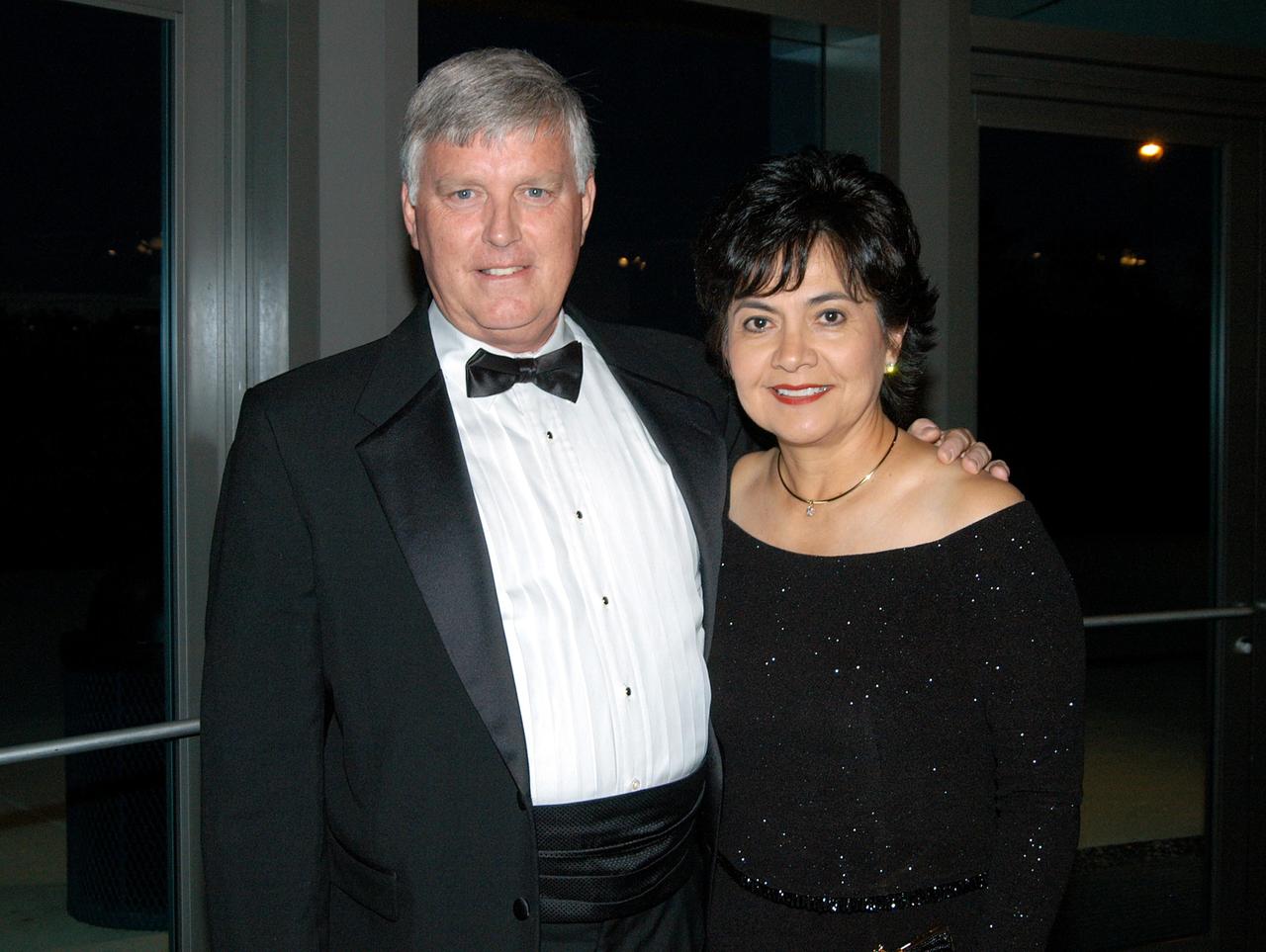
KENNEDY SPACE CENTER, FLA. -- Center Director Jim Kennedy and his wife pose during a break in the annual National Space Club Debus Award Banquet. The event was held at the Dr. Kurt H. Debus Conference Facility in the Visitor Complex. Receiving the Debus Award was KSC’s Director of the International Space Station/Payloads Processing directorate John J. “Tip” Talone. He was honored for his outstanding personal and professional efforts in supporting the U.S. space program, especially in his current role. The award was created by the National Space Club Florida Committee to recognize significant achievements and contributions made in Florida to American aerospace efforts. It is named for Dr. Kurt H. Debus, first director of KSC, from 1962 to 1974.
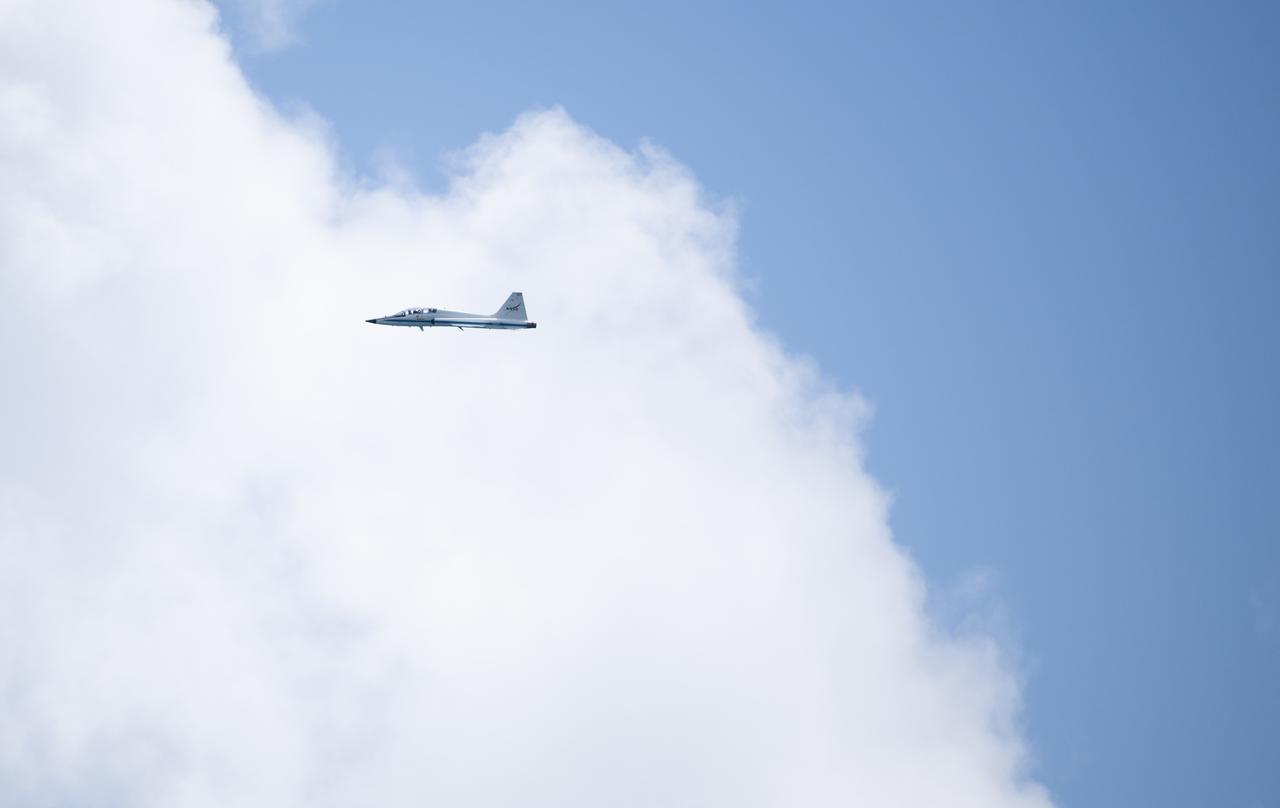
A NASA T-38 Talon is seen as it flies past Space Launch Complex 41 ahead of the NASA’s Boeing Crew Flight Test, Tuesday, June 4, 2024 at Cape Canaveral Space Force Station in Florida. NASA’s Boeing Crew Flight Test is the first launch with astronauts of the Boeing CFT-100 spacecraft and United Launch Alliance Atlas V rocket to the International Space Station as part of the agency’s Commercial Crew Program. The flight test, targeted for launch at 10:52 a.m. EDT on Wednesday, June 5, serves as an end-to-end demonstration of Boeing’s crew transportation system and will carry NASA astronauts Butch Wilmore and Suni Williams to and from the orbiting laboratory. Photo Credit: (NASA/Joel Kowsky)
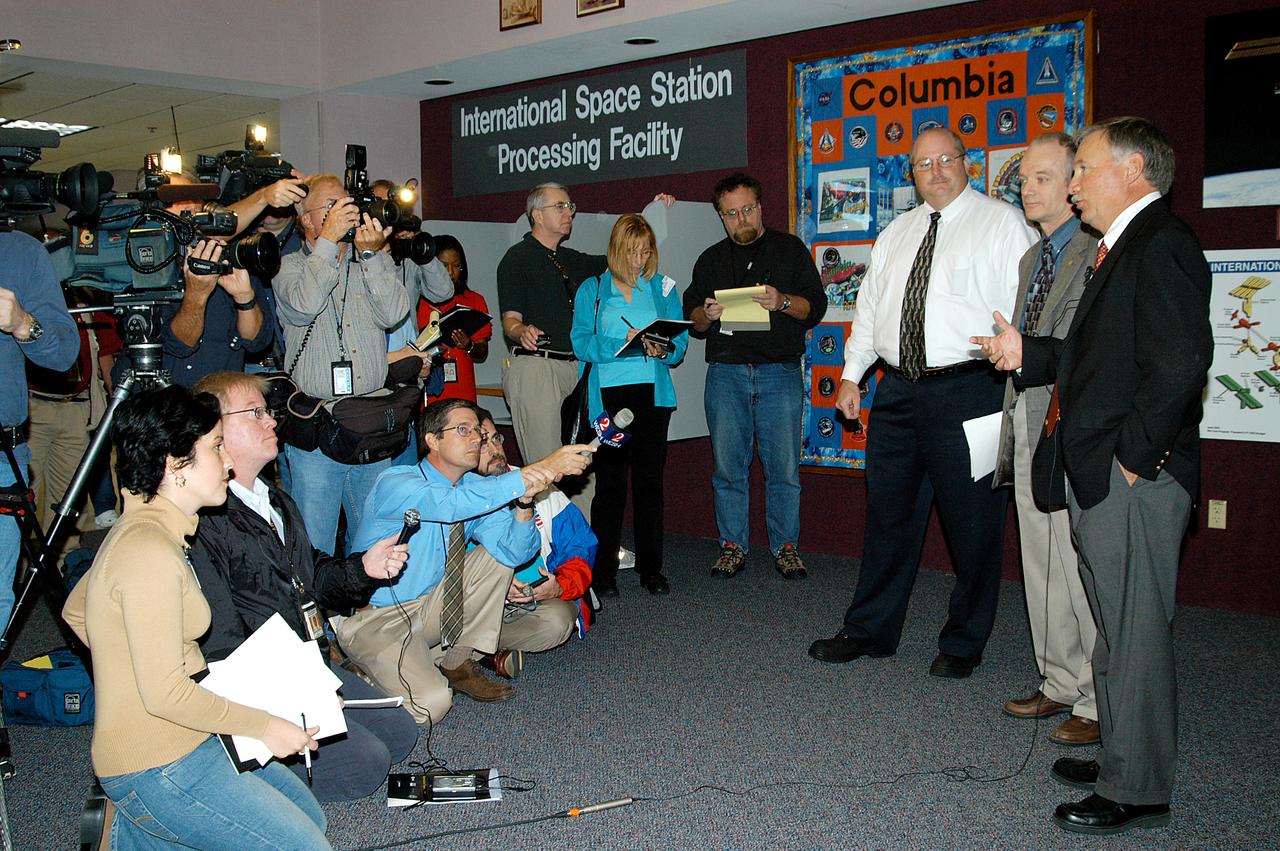
Members of the media (at left) were invited to commemorate the fifth anniversary of the launch of the first element of the International Space Station by touring the Space Station Processing Facility (SSPF) at KSC. Giving an overview of Space Station processing are, at right, David Bethay (white shirt), Boeing/ISS Florida Operations; Charlie Precourt, deputy manager of the International Space Station Program; and Tip Talone, director of Space Station and Payload Processing at KSC. Reporters also had the opportunity to see Space Station hardware that is being processed for deployment once the Space Shuttles return to flight. The facility tour also included an opportunity for reporters to talk with NASA and Boeing mission managers about the various hardware elements currently being processed for flight.
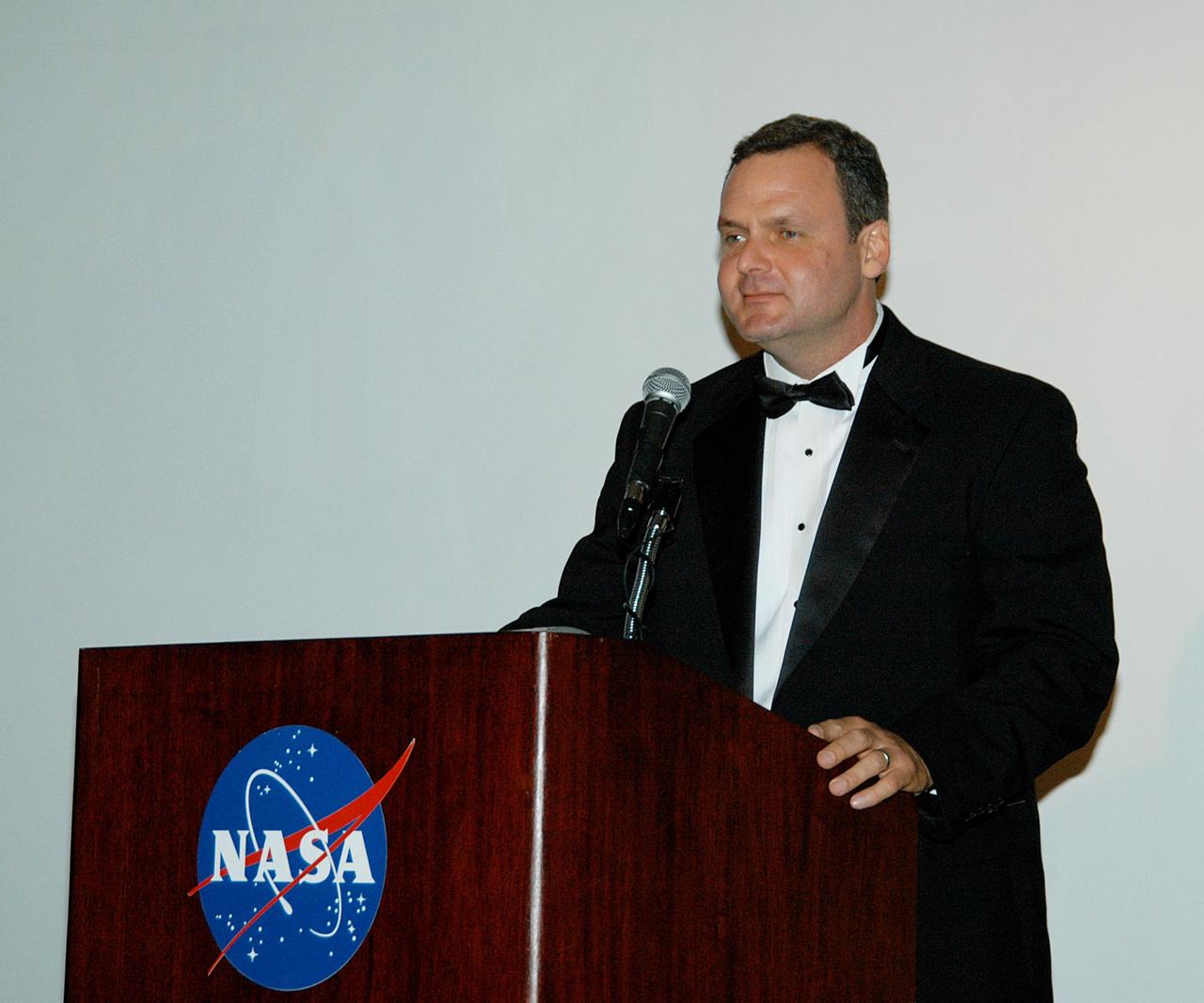
KENNEDY SPACE CENTER, FLA. -- Jim Chilton, CAPPS program manager, speaks to guests at the annual National Space Club Debus Award Banquet, held at the Dr. Kurt H. Debus Conference Facility in the KSC Visitor Complex. Receiving the Debus Award was KSC’s Director of the International Space Station/Payloads Processing directorate John J. “Tip” Talone. He was honored for his outstanding personal and professional efforts in supporting the U.S. space program, especially in his current role. The award was created by the National Space Club Florida Committee to recognize significant achievements and contributions made in Florida to American aerospace efforts. It is named for Dr. Kurt H. Debus, first director of KSC, from 1962 to 1974.
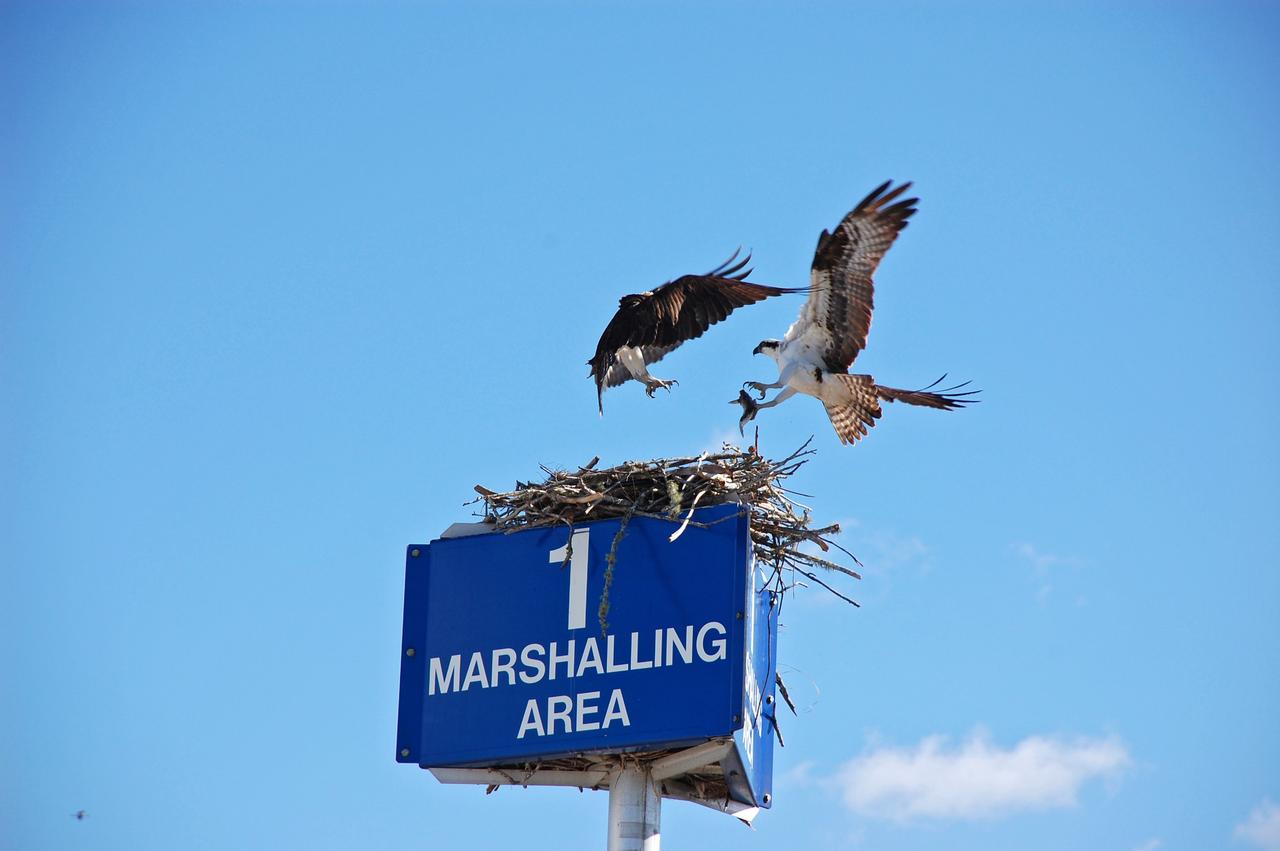
CAPE CANAVERAL, Fla. – A pair of ospreys perform an aerial dance around their nest near the NASA News Center at NASA's Kennedy Space Center in Florida. The bird at right is carrying a fish in its talons, the sole source of its diet. The osprey, also called fish hawk, is well adapted for capturing fish, which make up its entire diet. The soles of the birds' feet are equipped with sharp, spiny projections that give the bird a firm grip on its slippery prey. Nests of ospreys are bulky masses of sticks and debris placed in a tree, on rocks, flat ground or telephone poles. Many nests exist around the Launch Complex 39 Area at the center. The bird is one of more than 500 species of birds that co-exist at the center and the surrounding Merritt Island National Wildlife Refuge. Photo credit: NASA/Ben Smelgelsky
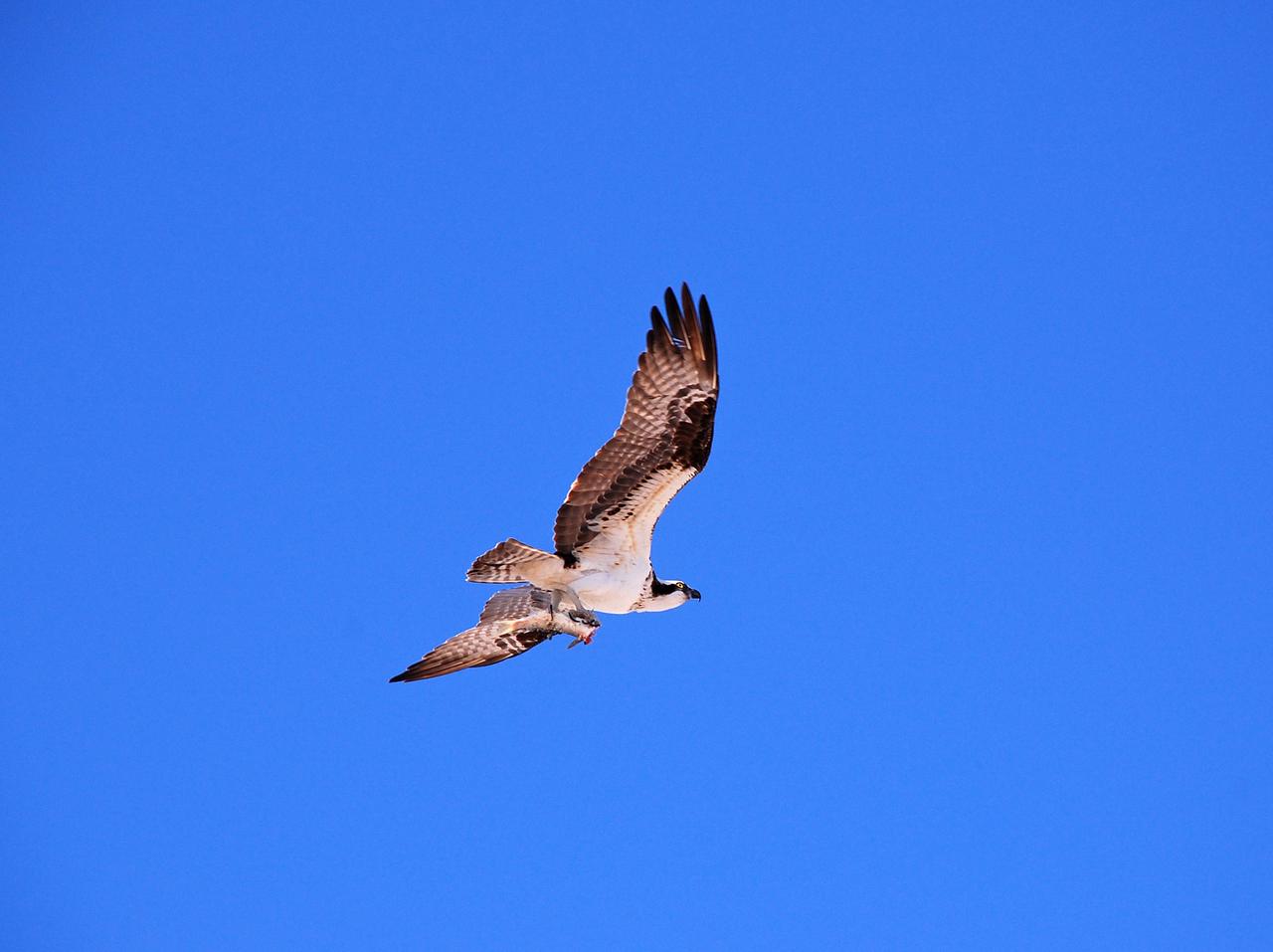
CAPE CANAVERAL, Fla. – An osprey carries its food in its talons as it flies to its nest near the NASA News Center at NASA's Kennedy Space Center in Florida. The osprey, also called fish hawk, is well adapted for capturing fish, which make up its entire diet. The soles of the birds' feet are equipped with sharp, spiny projections that give the bird a firm grip on its slippery prey. Nests of ospreys are bulky masses of sticks and debris placed in a tree, on rocks, flat ground or telephone poles. Many nests exist around the Launch Complex 39 Area at the center. The bird is one of more than 500 species of birds that co-exist at the center and the surrounding Merritt Island National Wildlife Refuge. Photo credit: NASA/Ben Smelgelsky
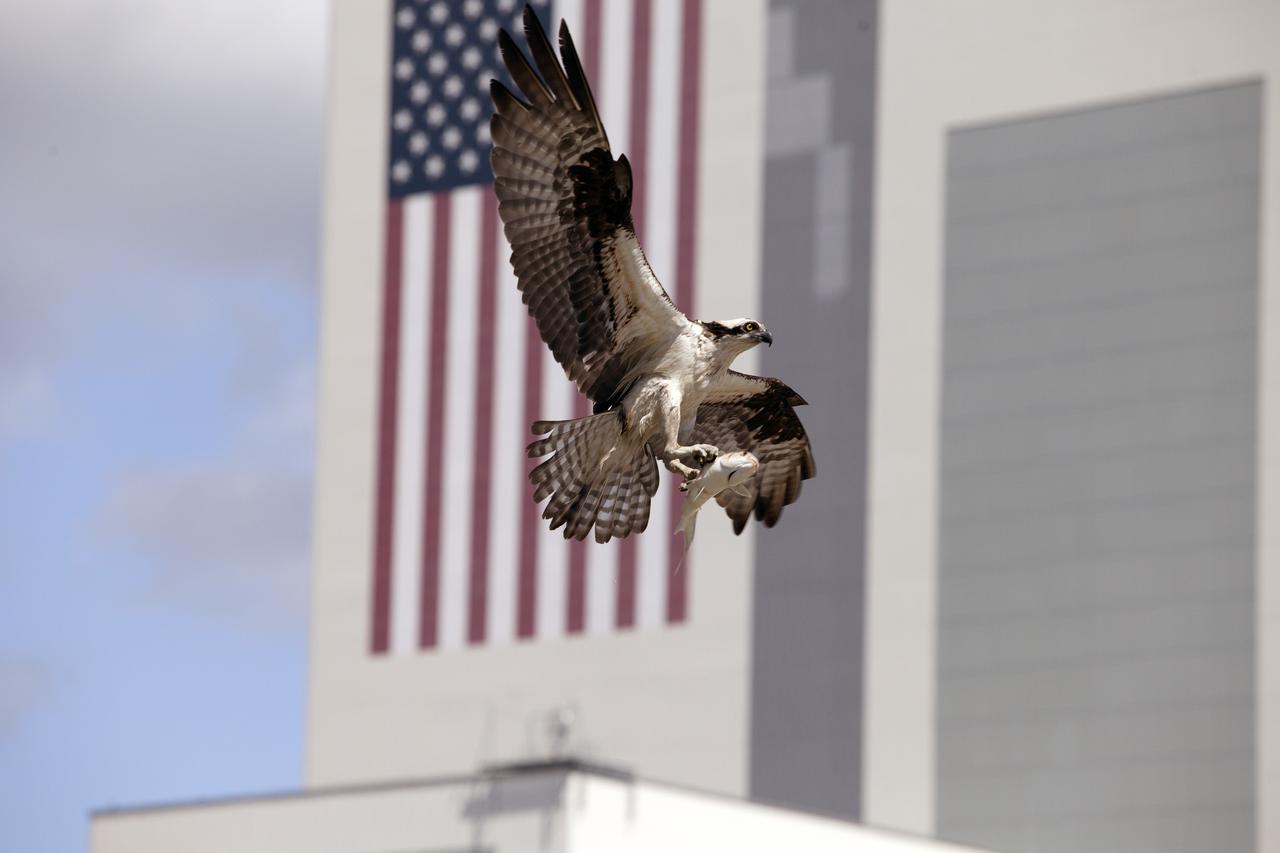
CAPE CANAVERAL, Fla. -- An adult osprey prepares to land in its nest atop a speaker platform in the Press Site parking lot at NASA's Kennedy Space Center in Florida, carrying a fish in its talons. In the background is the 209-foot-tall U.S. flag painted on the side of the 52-story Vehicle Assembly Building VAB. The parking lot borders the water of the Launch Complex 39 turn basin, making it an ideal source of food for the osprey. The undeveloped property on Kennedy Space Center is managed by the U.S. Fish and Wildlife Service through the Merritt Island National Wildlife Refuge. The refuge provides a habitat for a plethora of wildlife, including 330 species of birds. For information on the refuge, visit http://www.fws.gov/merrittisland/Index.html. Photo credit: NASA/Daniel Casper
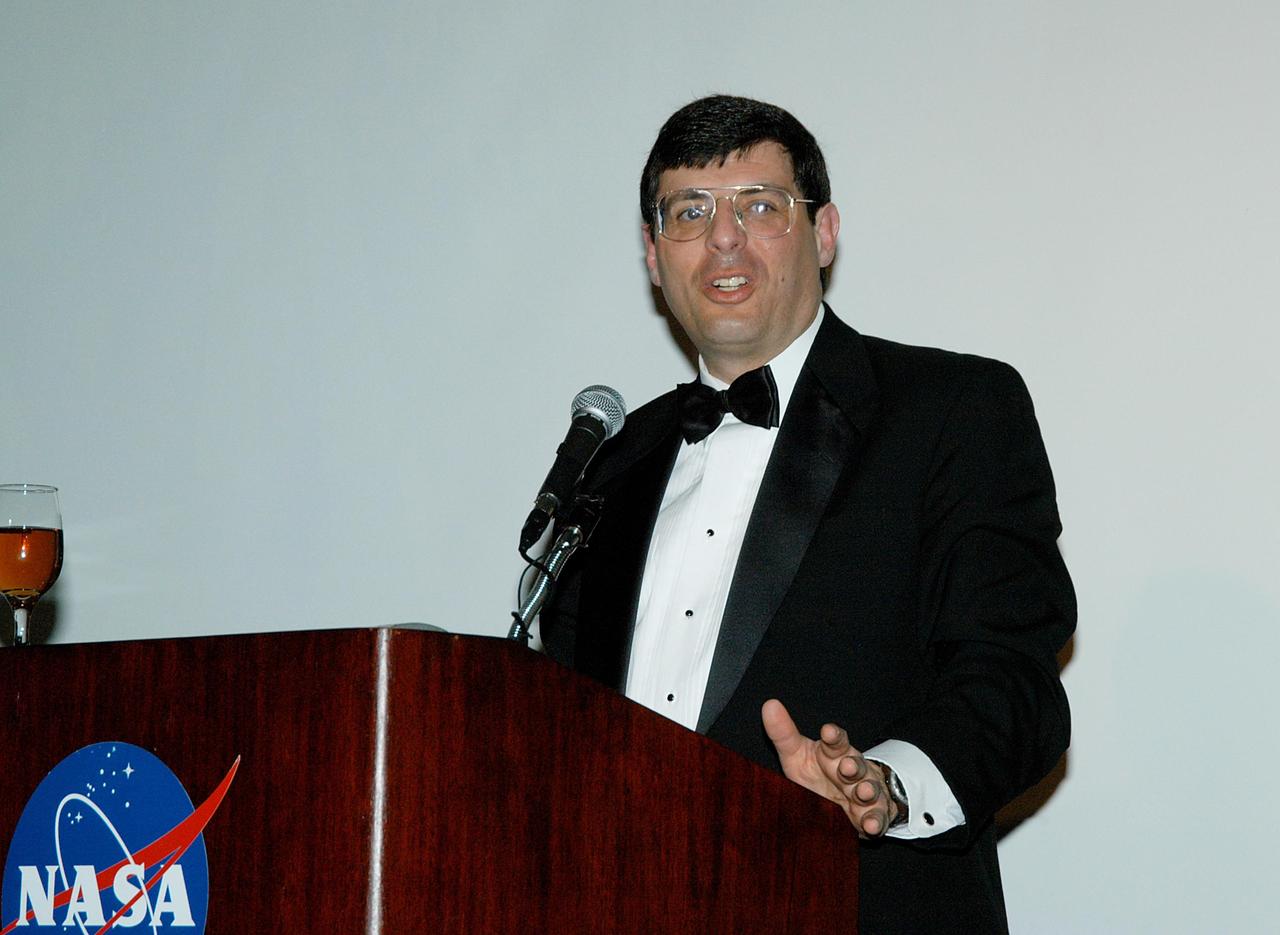
KENNEDY SPACE CENTER, FLA. -- Christopher Scolese speaks to the guests at the annual National Space Club Debus Award Banquet, held at the Dr. Kurt H. Debus Conference Facility in the KSC Visitor Complex. He is the deputy associate administrator in the Office of Space Science at NASA Headquarters. Receiving the Debus Award was KSC’s Director of the International Space Station/Payloads Processing directorate John J. “Tip” Talone. He was honored for his outstanding personal and professional efforts in supporting the U.S. space program, especially in his current role. The award was created by the National Space Club Florida Committee to recognize significant achievements and contributions made in Florida to American aerospace efforts. It is named for Dr. Kurt H. Debus, first director of KSC, from 1962 to 1974.
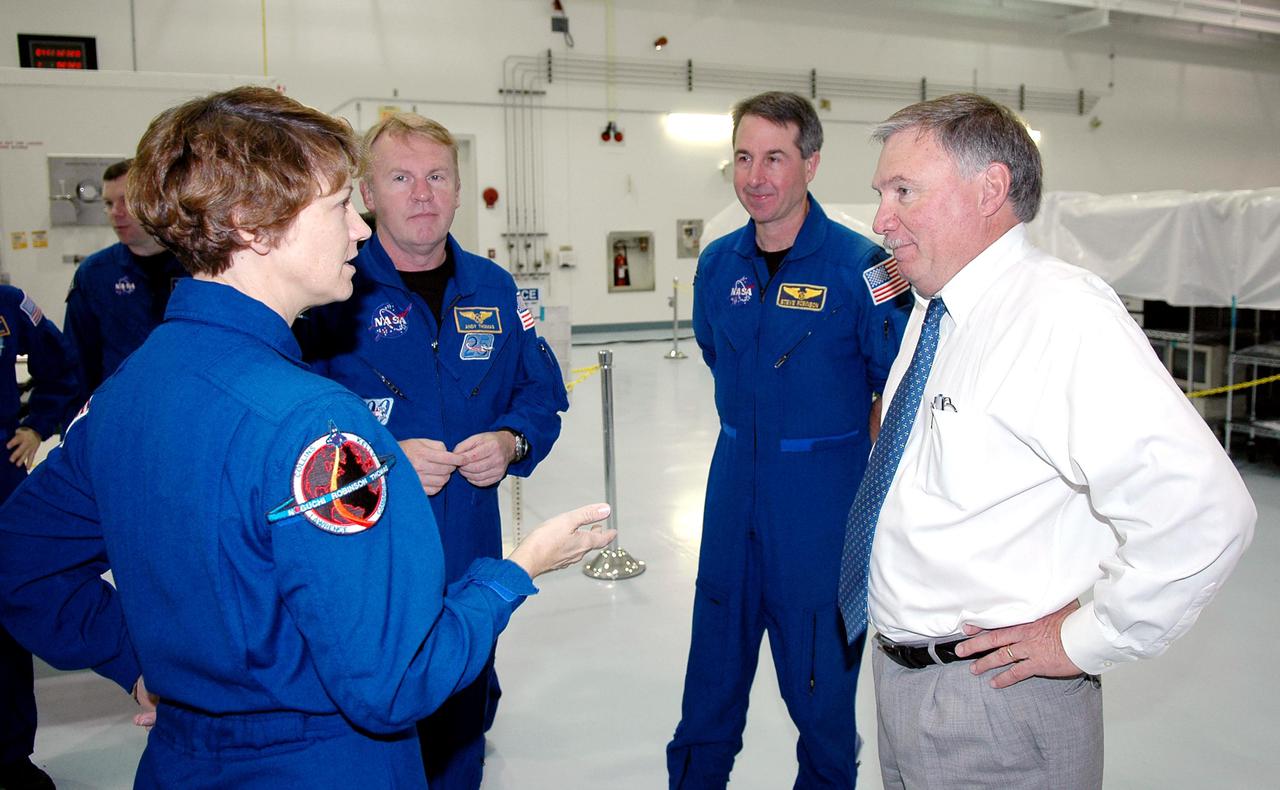
KENNEDY SPACE CENTER, FLA. - In the Space Station Processing Facility, STS-114 Mission Commander Eileen Collins talks to Tip Talone (right), director of International Space Station Payload Processing. Other crew members behind them are Pilot James Kelly (left) and Mission Specialists Andrew Thomas (center left) and Stephen Robinson (center right). The crew is at KSC for Crew Equipment Interface Test (CEIT) activities. During CEIT, the crew has an opportunity to get a hands-on look at the payloads with which they’ll be working on-orbit. The Return to Flight mission STS-114 will carry the Multi-Purpose Logistics Module Raffaello, filled with supplies for the International Space Station, and a replacement Control Moment Gyroscope. Launch of STS-114 has a launch window of May 12 to June 3.
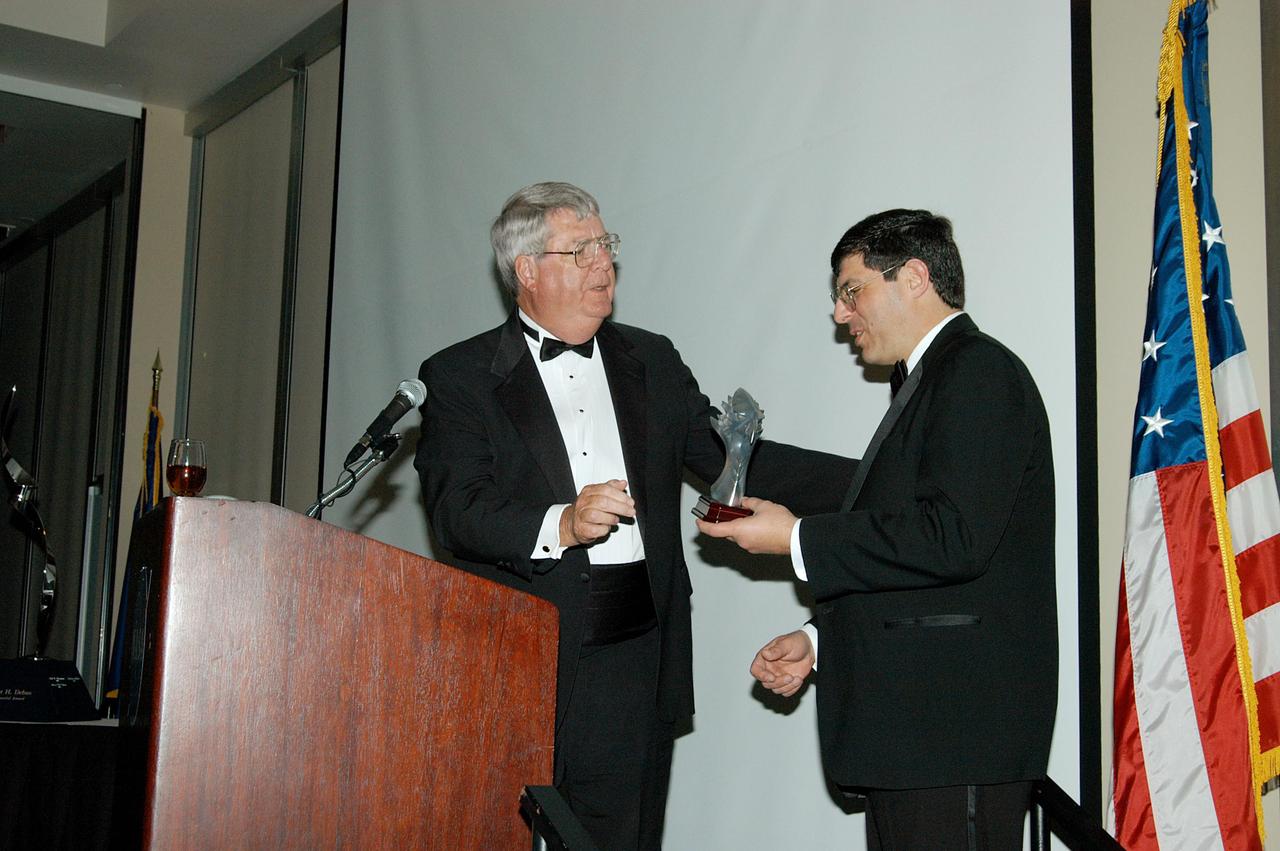
KENNEDY SPACE CENTER, FLA. -- At the annual National Space Club Debus Award Banquet, held at the Dr. Kurt H. Debus Conference Facility in the KSC Visitor Complex, Master of Ceremonies Dick Beagley (left) presents a memento to guest speaker Christopher Scolese, who is the deputy associate administrator in the Office of Space Science at NASA Headquarters. KSC’s Director of the International Space Station/Payloads Processing directorate John J. “Tip” Talone received the Debus award. He was honored for his outstanding personal and professional efforts in supporting the U.S. space program, especially in his current role. Beagley is chairman of the National Space Club Florida Committee, which created the award to recognize significant achievements and contributions made in Florida to American aerospace efforts. It is named for Dr. Kurt H. Debus, first director of KSC, from 1962 to 1974.
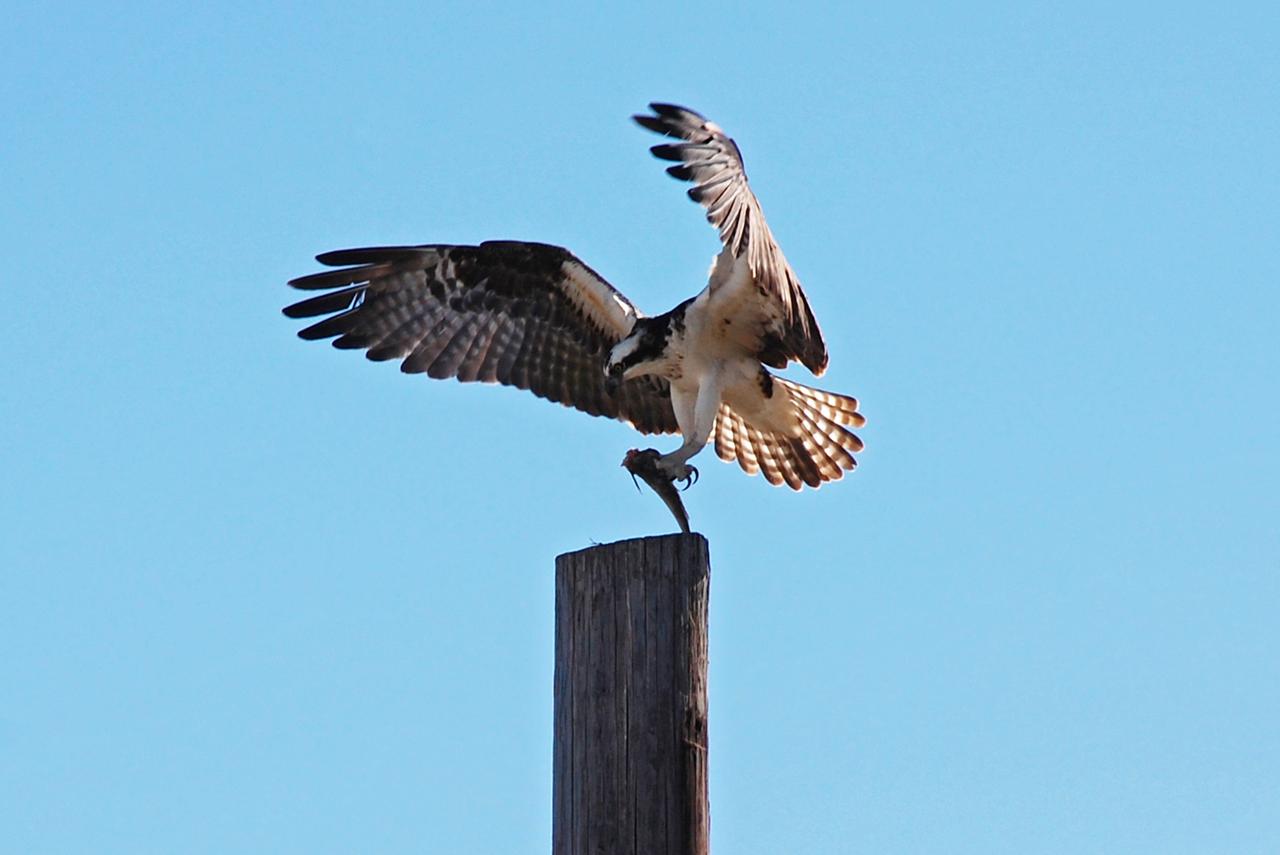
CAPE CANAVERAL, Fla. – Near the NASA News Center at NASA's Kennedy Space Center in Florida, the osprey prepares to land on a pole with its meal in its talons. The osprey, also called fish hawk, is well adapted for capturing fish, which make up its entire diet. The soles of the birds' feet are equipped with sharp, spiny projections that give the bird a firm grip on its slippery prey. Nests of ospreys are bulky masses of sticks and debris placed in a tree, on rocks, flat ground or telephone poles. Many nests exist around the Launch Complex 39 Area at the center. The bird is one of more than 500 species of birds that co-exist at the center and the surrounding Merritt Island National Wildlife Refuge. Photo credit: NASA/Ben Smelgelsky
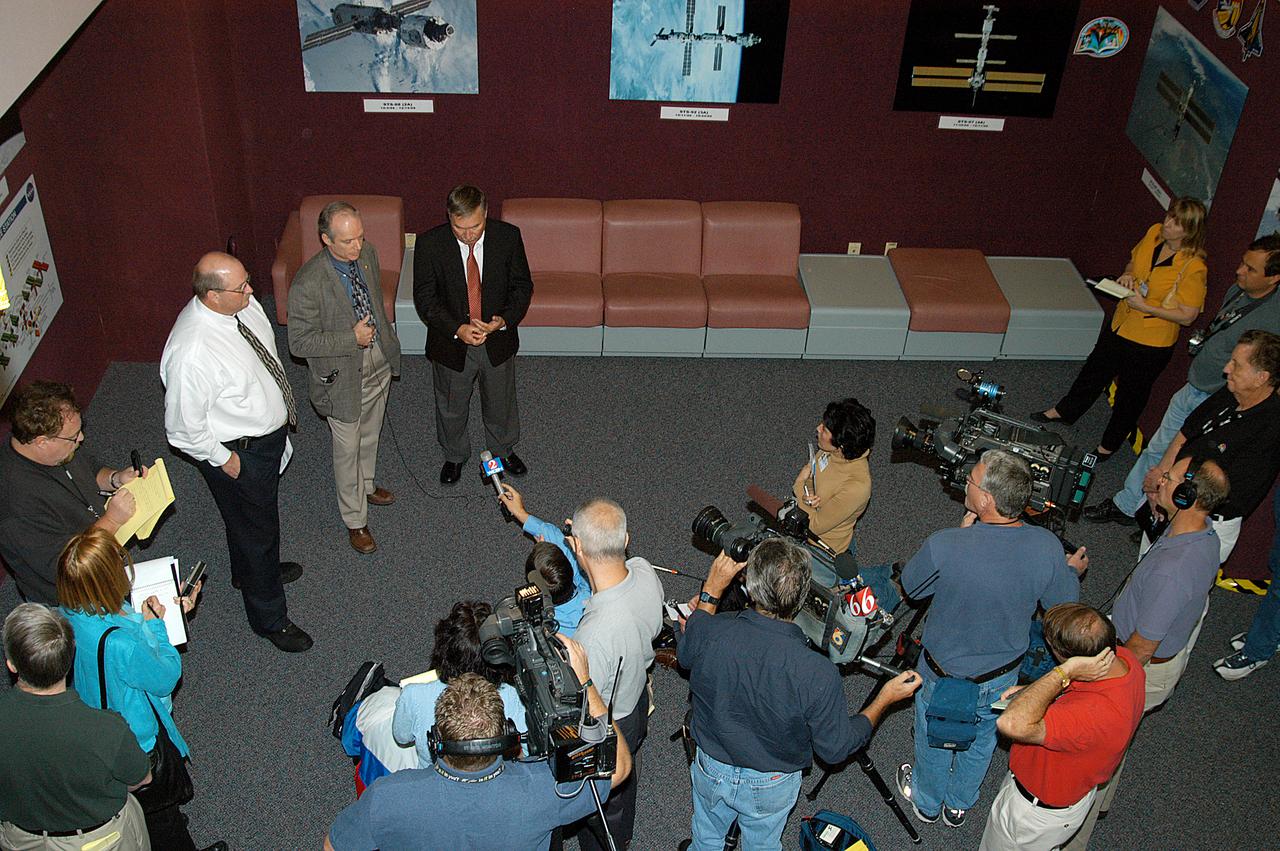
Members of the media (at right) were invited to commemorate the fifth anniversary of the launch of the International Space Station by touring the Space Station Processing Facility (SSPF) at KSC. Giving an overview of Space Station processing are, at left, David Bethay (white shirt), Boeing/ISS Florida Operations; Charlie Precourt, deputy manager of the International Space Station Program; and Tip Talone, director of Space Station and Payload Processing at KSC. Reporters also had the opportunity to see Space Station hardware that is being processed for deployment once the Space Shuttles return to flight. The facility tour also included an opportunity for reporters to talk with NASA and Boeing mission managers about the various hardware elements currently being processed for flight.
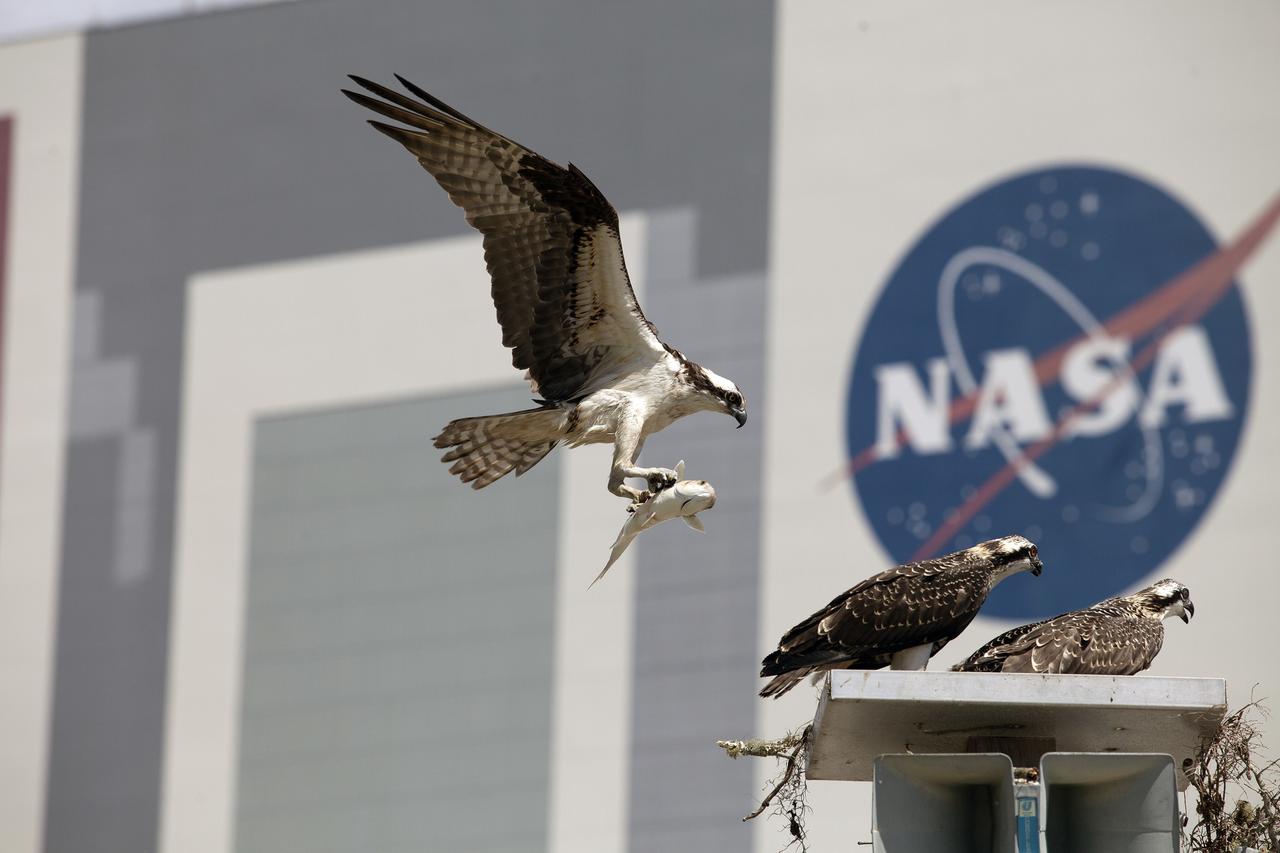
CAPE CANAVERAL, Fla. -- An adult osprey returns home to its nest atop a speaker platform in the Press Site parking lot at NASA's Kennedy Space Center in Florida, carrying a fish in its talons. In the background is a 12,300-square-foot NASA logo painted on the side of the 525-foot-tall Vehicle Assembly Building VAB. The parking lot borders the water of the Launch Complex 39 turn basin, making it an ideal source of food for the osprey. The undeveloped property on Kennedy Space Center is managed by the U.S. Fish and Wildlife Service through the Merritt Island National Wildlife Refuge. The refuge provides a habitat for a plethora of wildlife, including 330 species of birds. For information on the refuge, visit http://www.fws.gov/merrittisland/Index.html. Photo credit: NASA/Daniel Casper
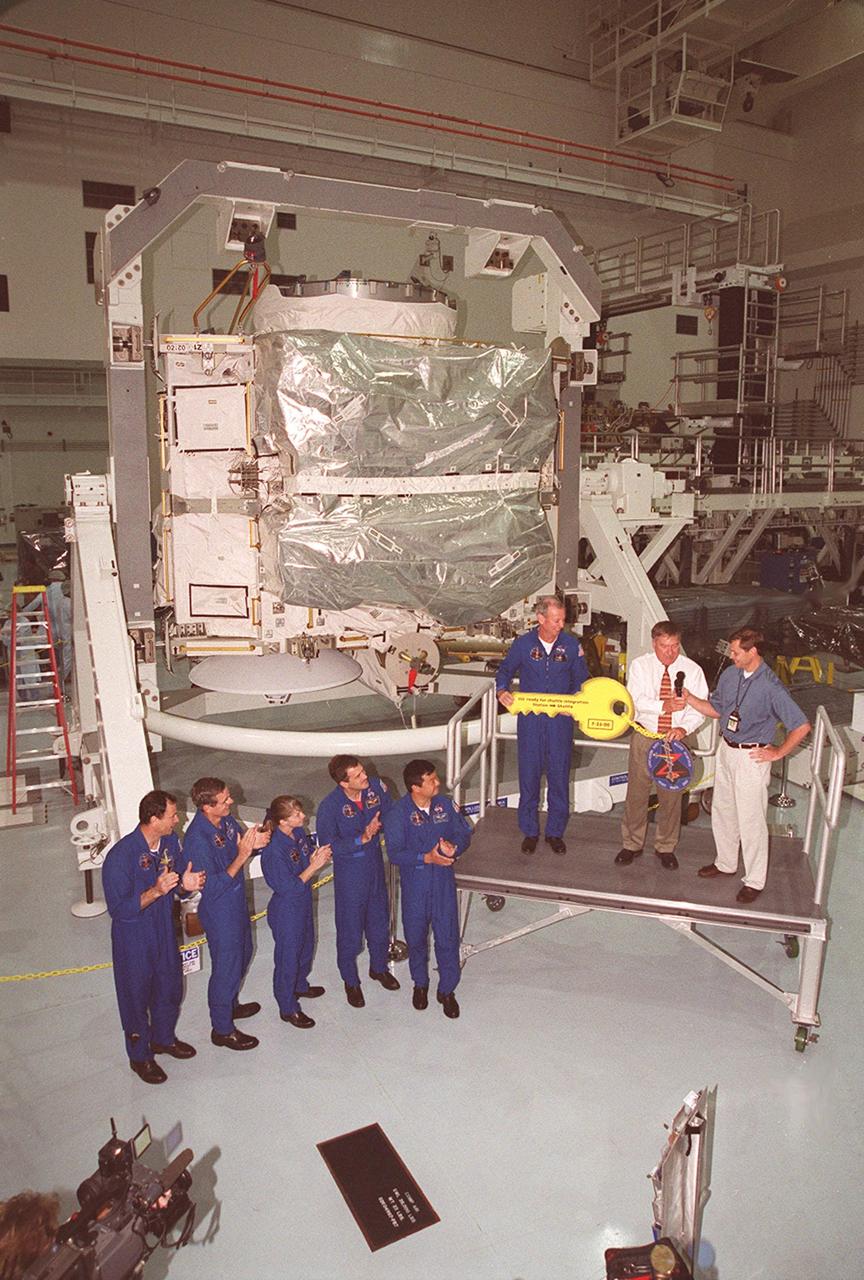
The Zenith-1 (Z-1) Truss is officially presented to NASA by The Boeing Co. on the Space Station Processing Facility floor on July 31. Astronauts from the STS-92 crew look on while their commander, Col. Brian Duffy, and Tip Talone, NASA director of International Space Station and Payload Processing at KSC, receive a symbolic key from John Elbon, Boeing director of ISS ground operations. The Z-1 Truss is the cornerstone truss of the International Space Station and is scheduled to fly in Space Shuttle Discovery's payload pay on STS-92 targeted for launch Oct. 5, 2000. The Z-1 is considered a cornerstone truss because it carries critical components of the Station's attitude, communications, thermal and power control systems as well as four control moment gyros, high and low gain antenna systems, and two plasma contactor units used to disperse electrical charge build-ups. The Z-1 truss and a Pressurized Mating Adapter (PMA-3), also flying to the Station on the same mission, will be the first major U.S. elements flown to the ISS aboard the Shuttle since the launch of the Unity element in December 1998
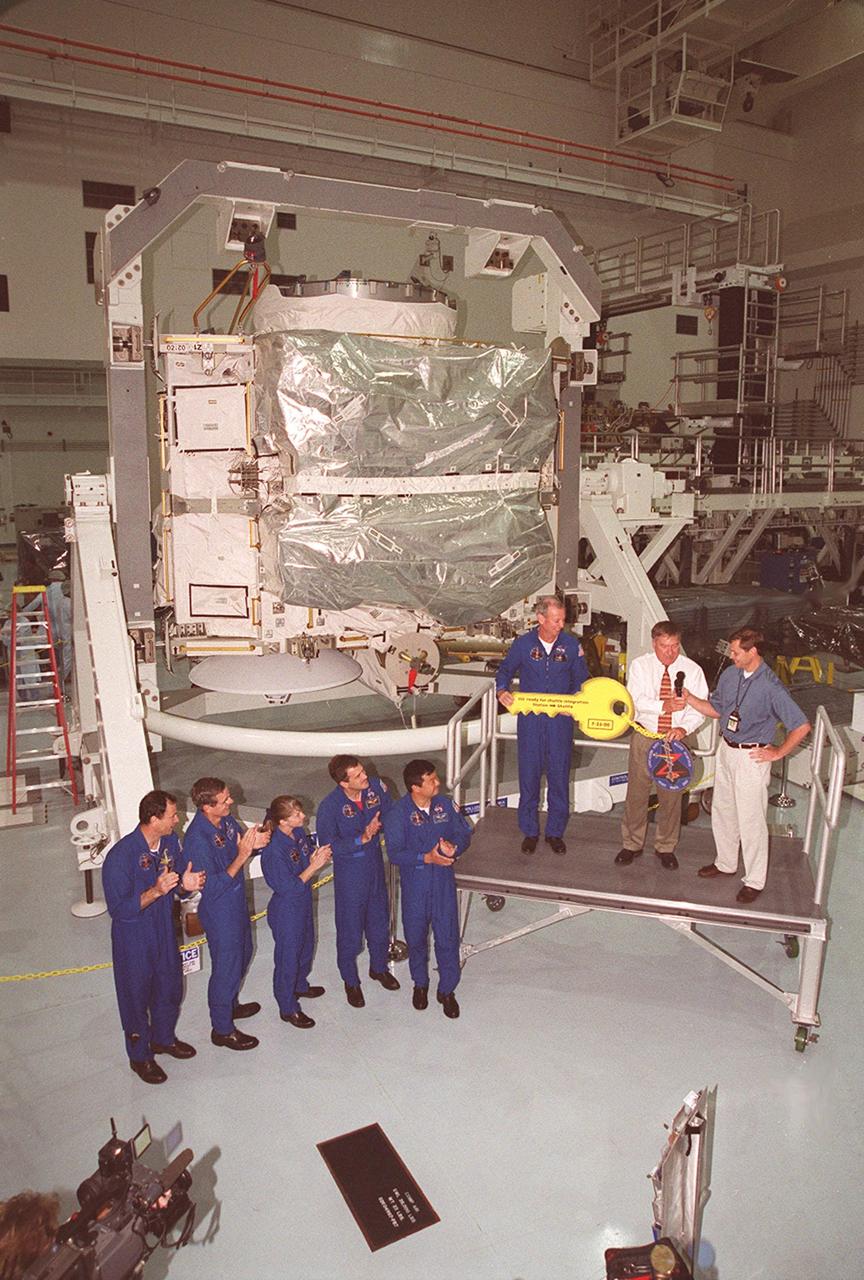
The Zenith-1 (Z-1) Truss is officially presented to NASA by The Boeing Co. on the Space Station Processing Facility floor on July 31. Astronauts from the STS-92 crew look on while their commander, Col. Brian Duffy, and Tip Talone, NASA director of International Space Station and Payload Processing at KSC, receive a symbolic key from John Elbon, Boeing director of ISS ground operations. The Z-1 Truss is the cornerstone truss of the International Space Station and is scheduled to fly in Space Shuttle Discovery's payload pay on STS-92 targeted for launch Oct. 5, 2000. The Z-1 is considered a cornerstone truss because it carries critical components of the Station's attitude, communications, thermal and power control systems as well as four control moment gyros, high and low gain antenna systems, and two plasma contactor units used to disperse electrical charge build-ups. The Z-1 truss and a Pressurized Mating Adapter (PMA-3), also flying to the Station on the same mission, will be the first major U.S. elements flown to the ISS aboard the Shuttle since the launch of the Unity element in December 1998
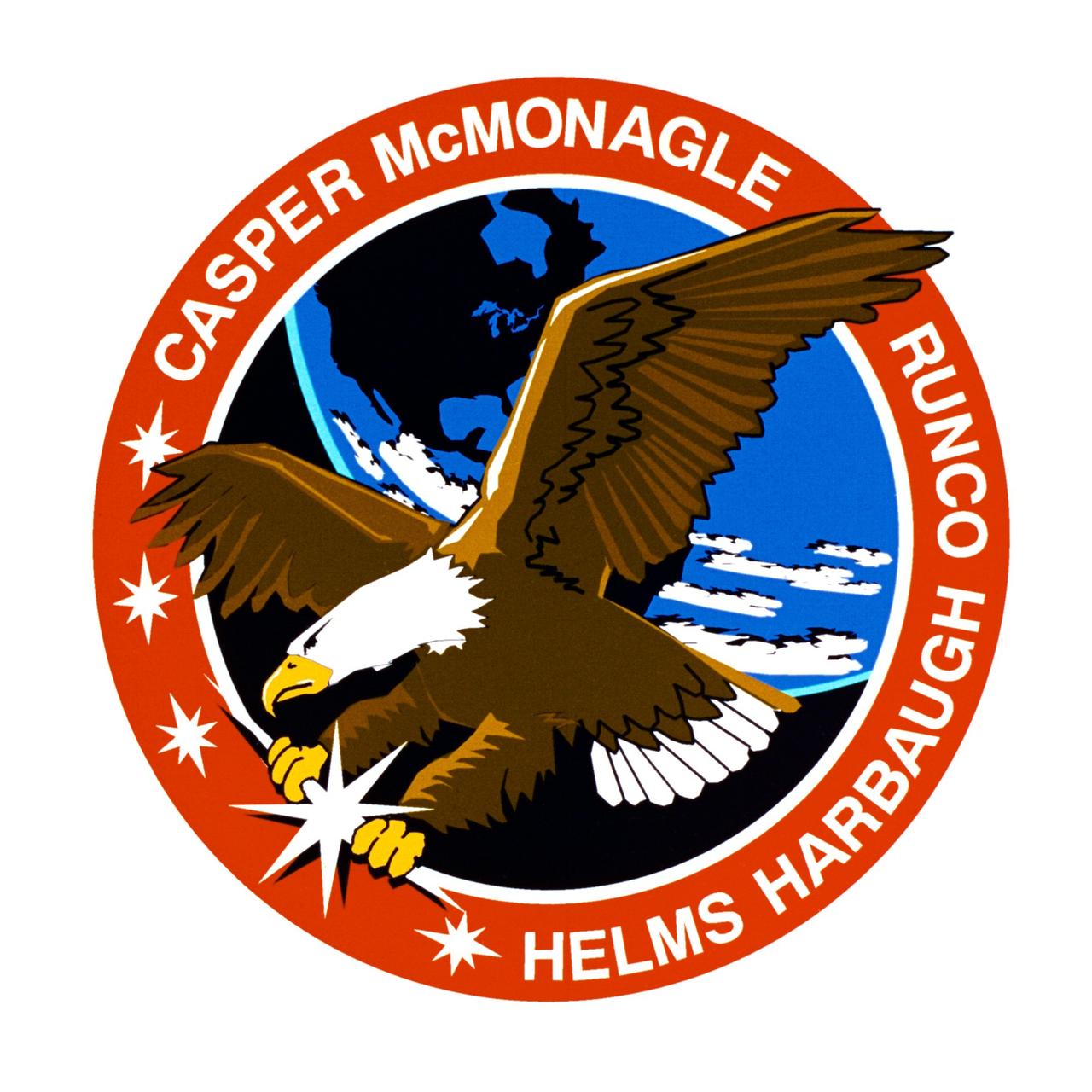
STS054-S-001 (July 1992) --- Designed by the crew members, the STS-54 crew patch depicts our national symbol, the American bald eagle, soaring above the Earth; and represents the United States Space Shuttle as a national asset in service to America and the world. The eagle is clutching an eight pointed star in its talons and is placing this larger star among a constellation of four others representing the placement of the fifth Tracking and Data Relay Satellite (TDRS) into orbit among the four already in service. The blackness of space with stars conspicuously absent represents the mission?s other primary objective in carrying the Diffuse X-ray Spectrometer into orbit to conduct astronomical observations of x-ray sources within the galaxy and throughout the universe. The depiction of our planet showing the crew?s home continent of North America is an expression of their and NASA?s intention that the medical and scientific experiments conducted onboard are for the benefit of all mankind. The clouds and blue of the Earth represent the crew?s part in NASA?s Mission to Planet Earth in conducting Earth observation photography. The NASA insignia design for space shuttle flights is reserved for use by the astronauts and for other official use as the NASA Administrator may authorize. Public availability has been approved only in the form of illustrations by the various news media. When and if there is any change in this policy, which we do not anticipate, it will be publicly announced. Photo credit: NASA