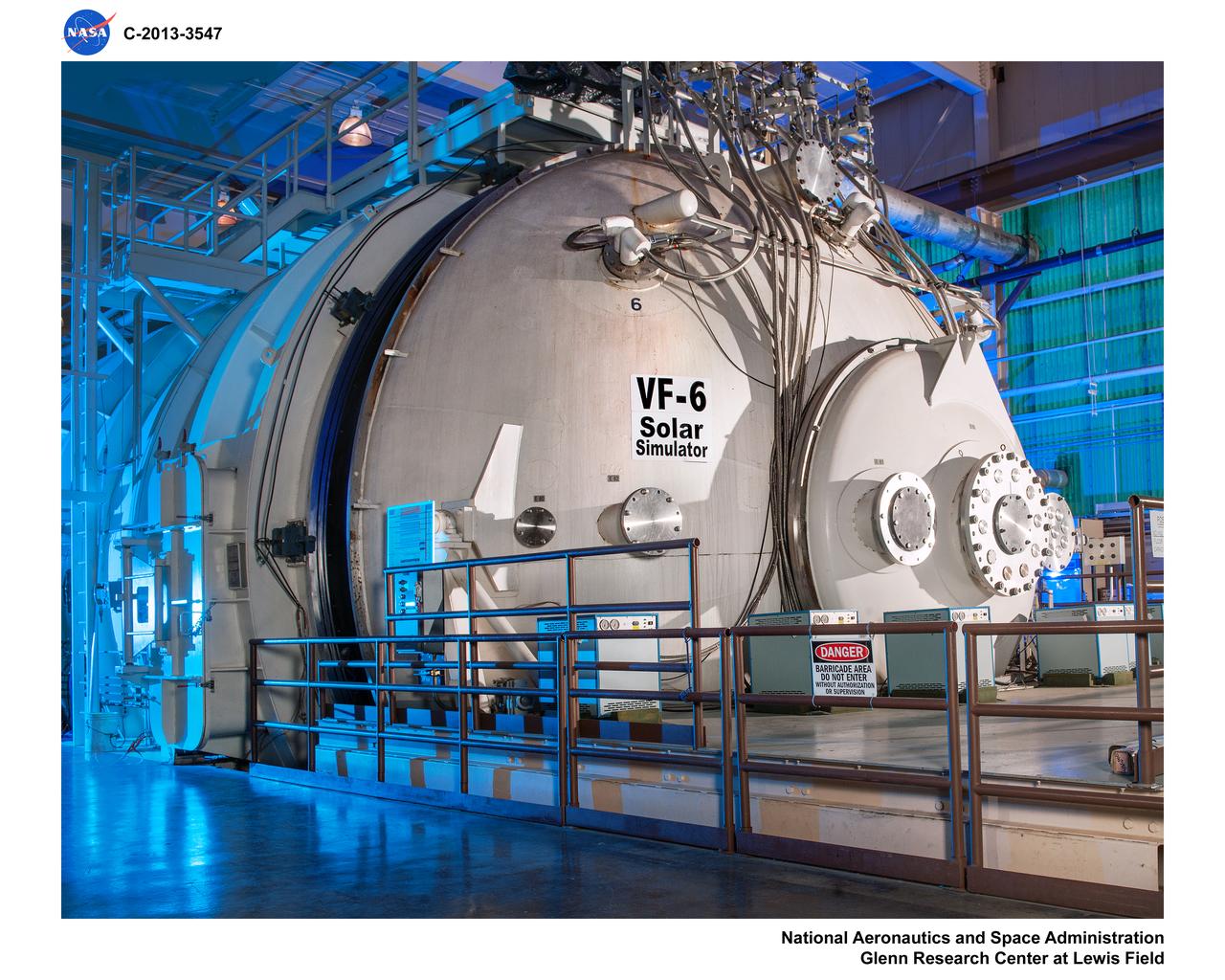
Tank 6, VF-6, Solar Simulator
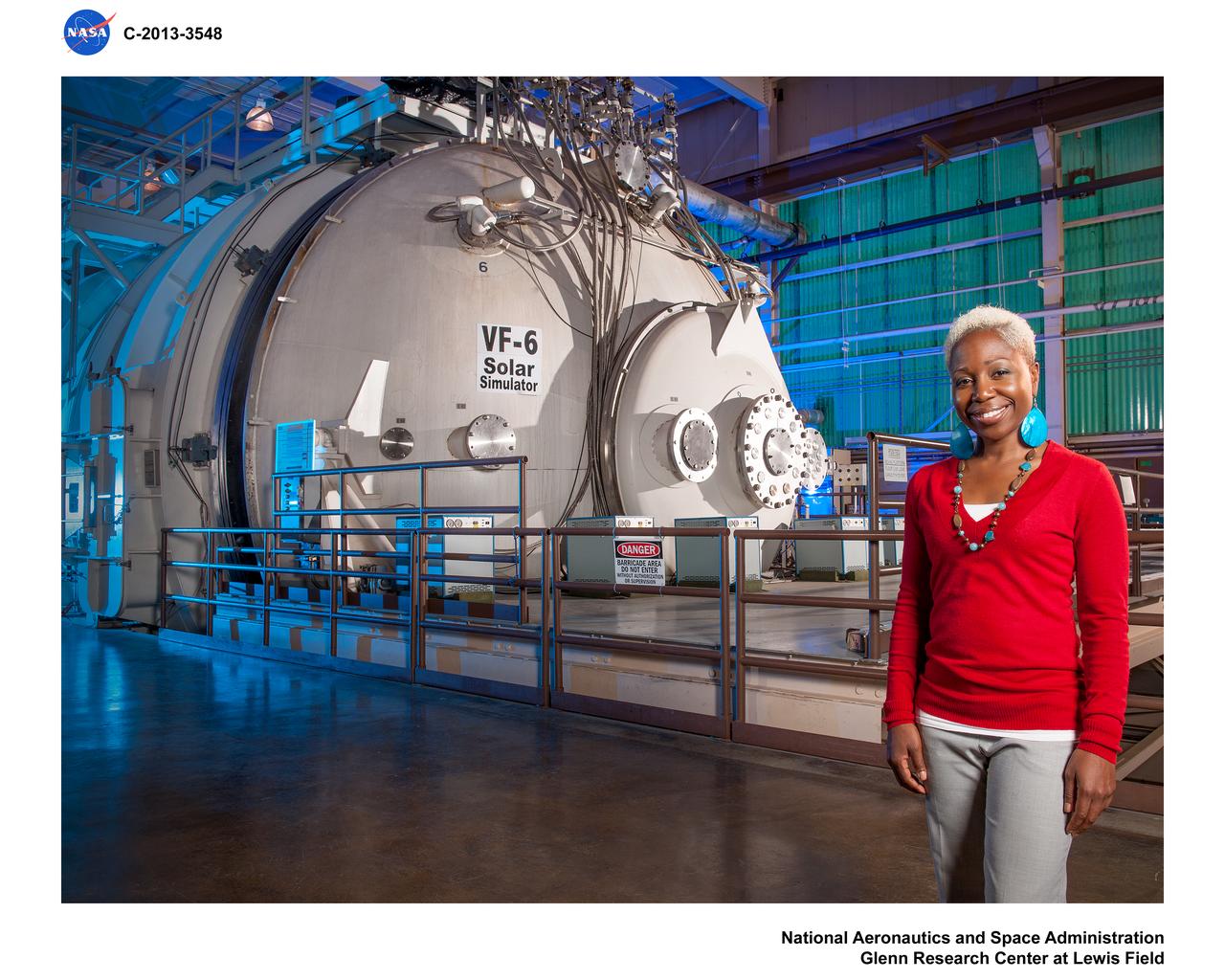
Environmental portrait of Mary Gibson and of Tank 6 (VF-6) Solar Simulator for NASA GRC Web Feature Story
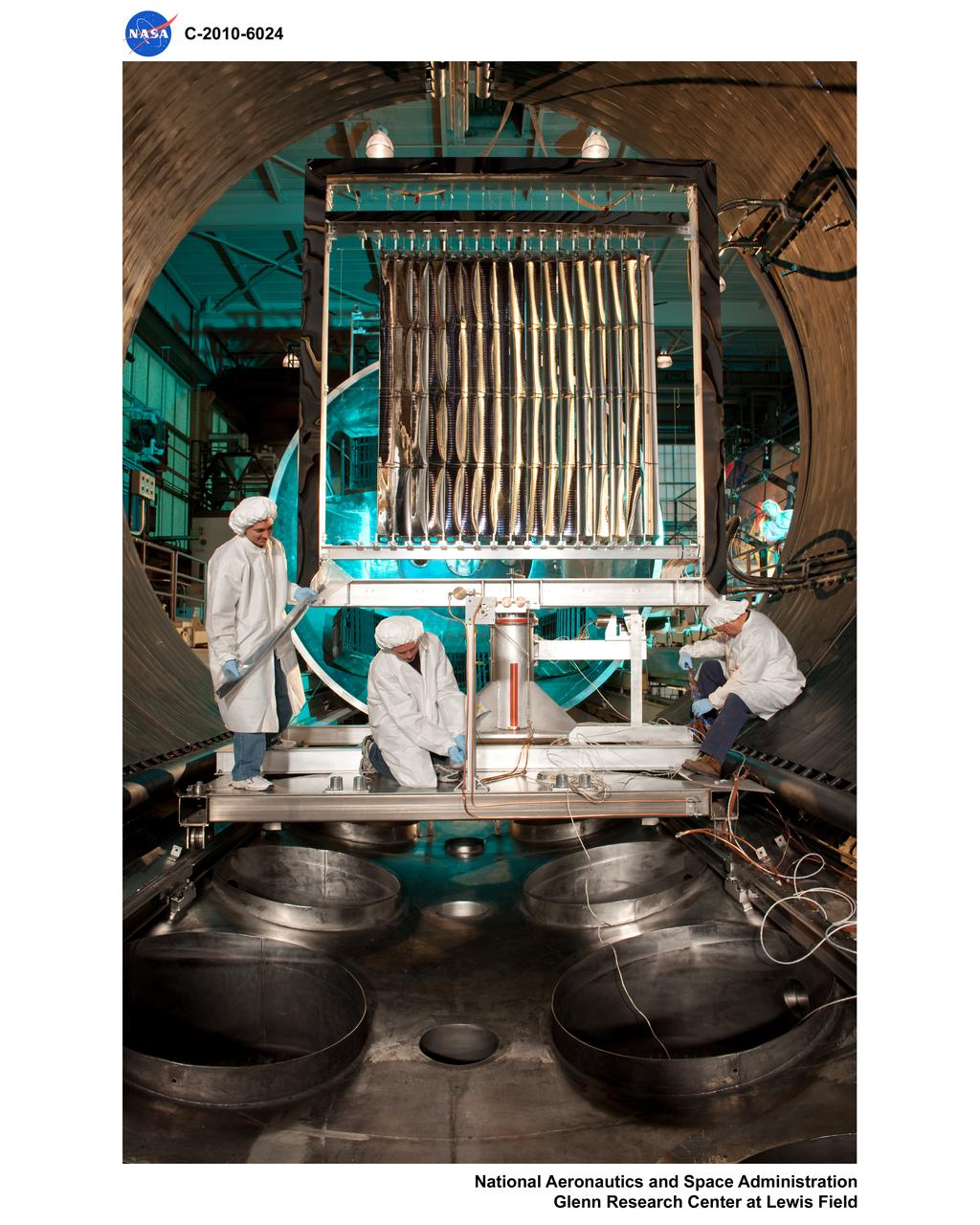
Solar Array Concentrator in Vacuum Tank 6
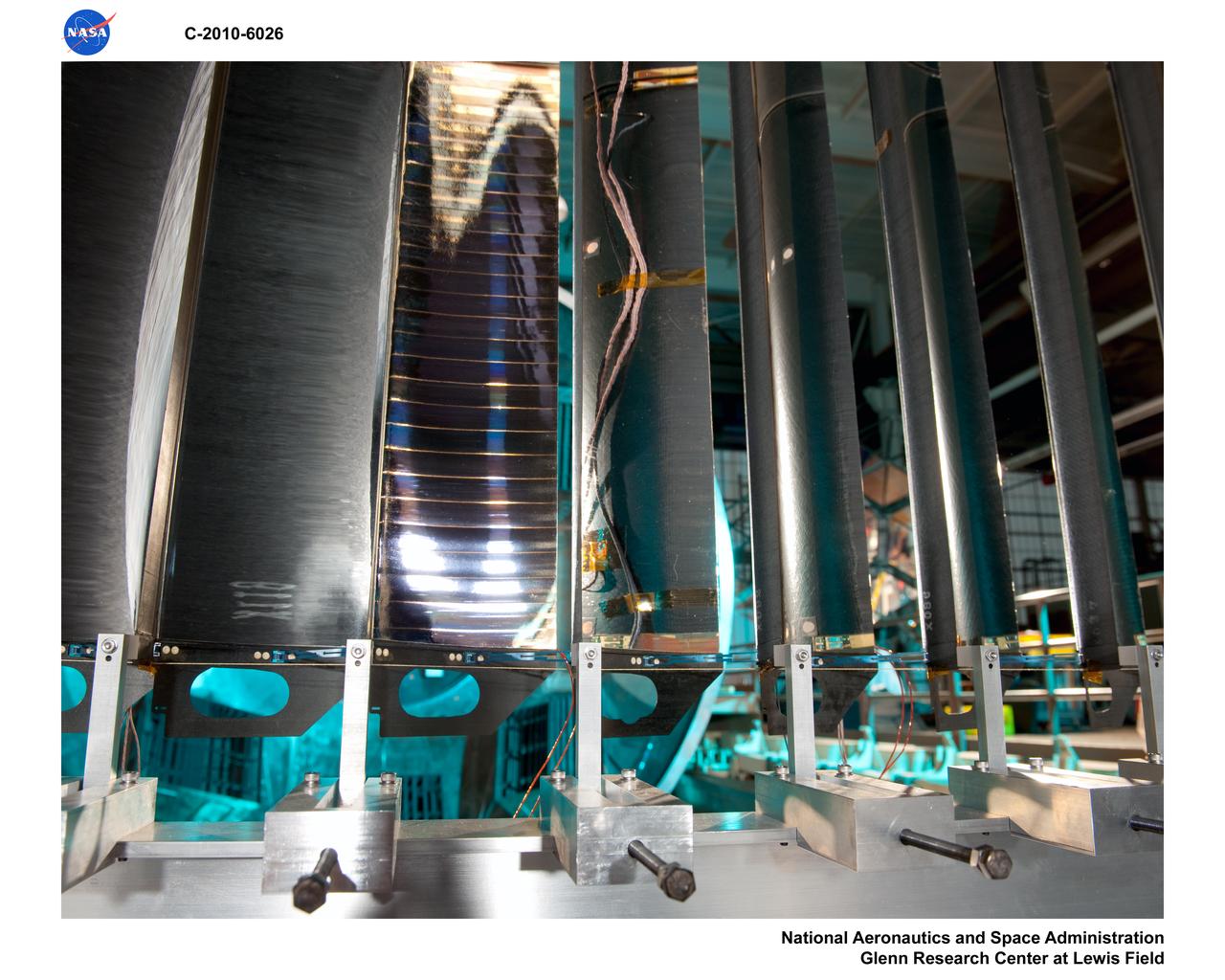
Solar Array Concentrator in Vacuum Tank 6
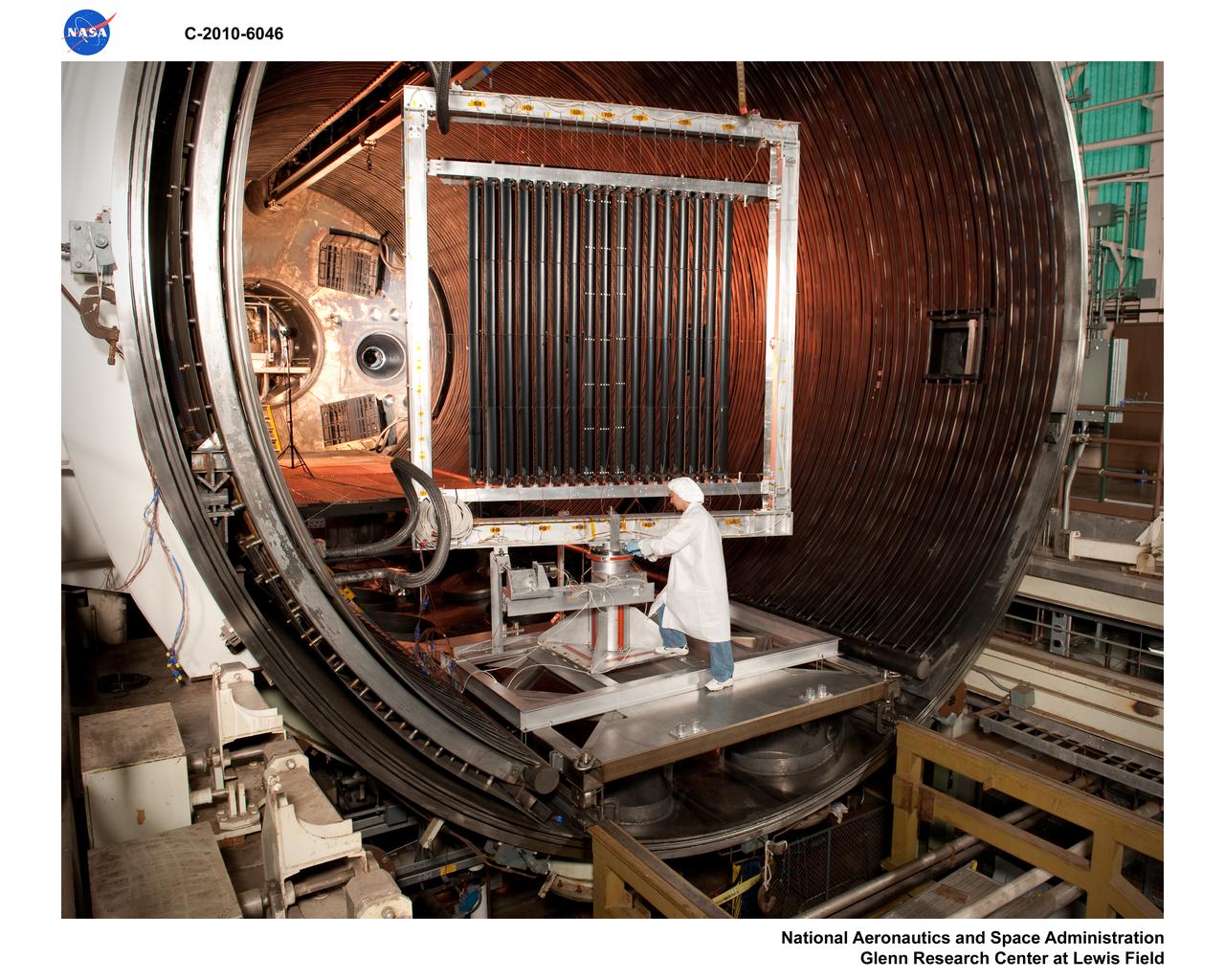
Solar Array Concentrator in Vacuum Tank 6
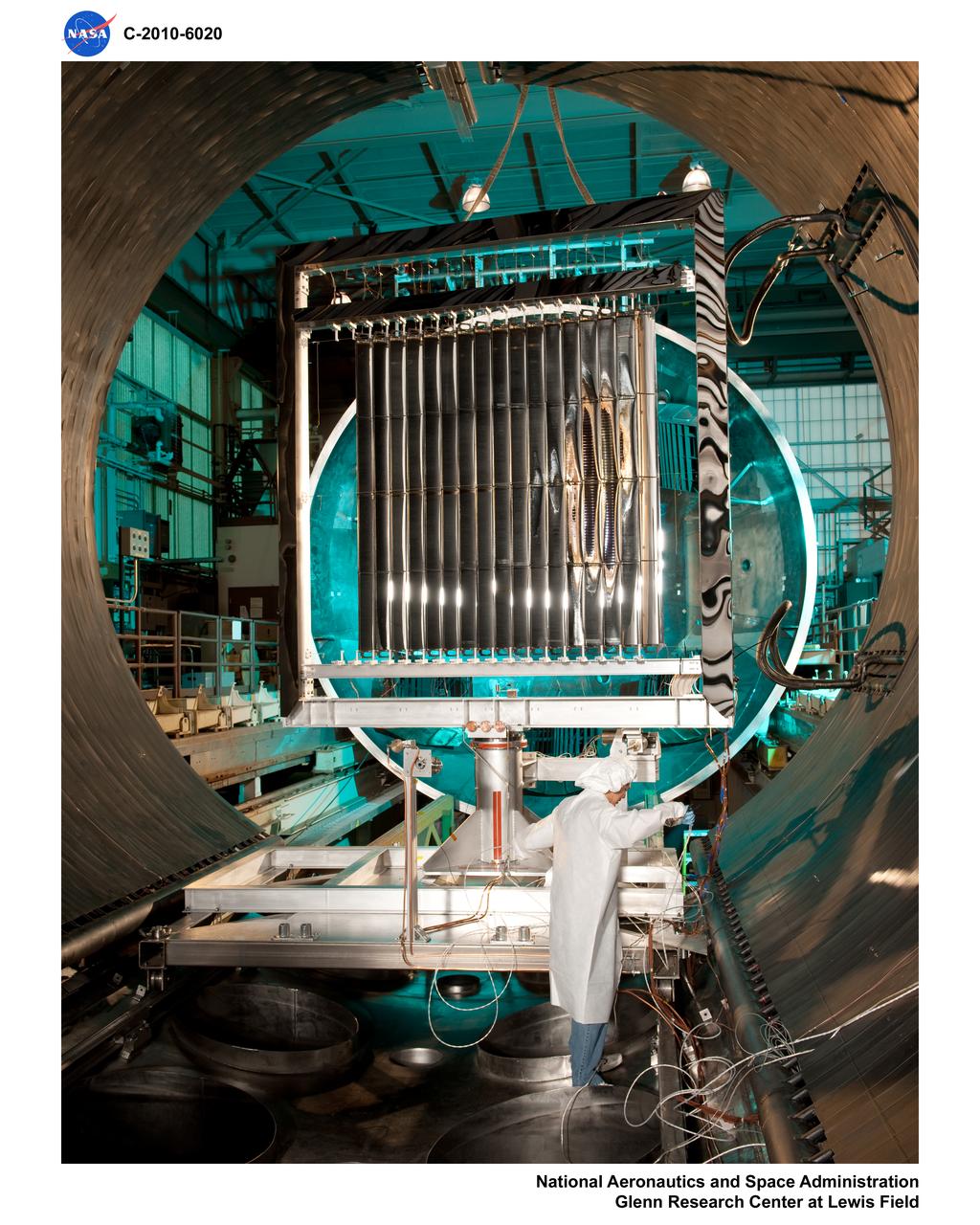
Solar Array Concentrator in Vacuum Tank 6
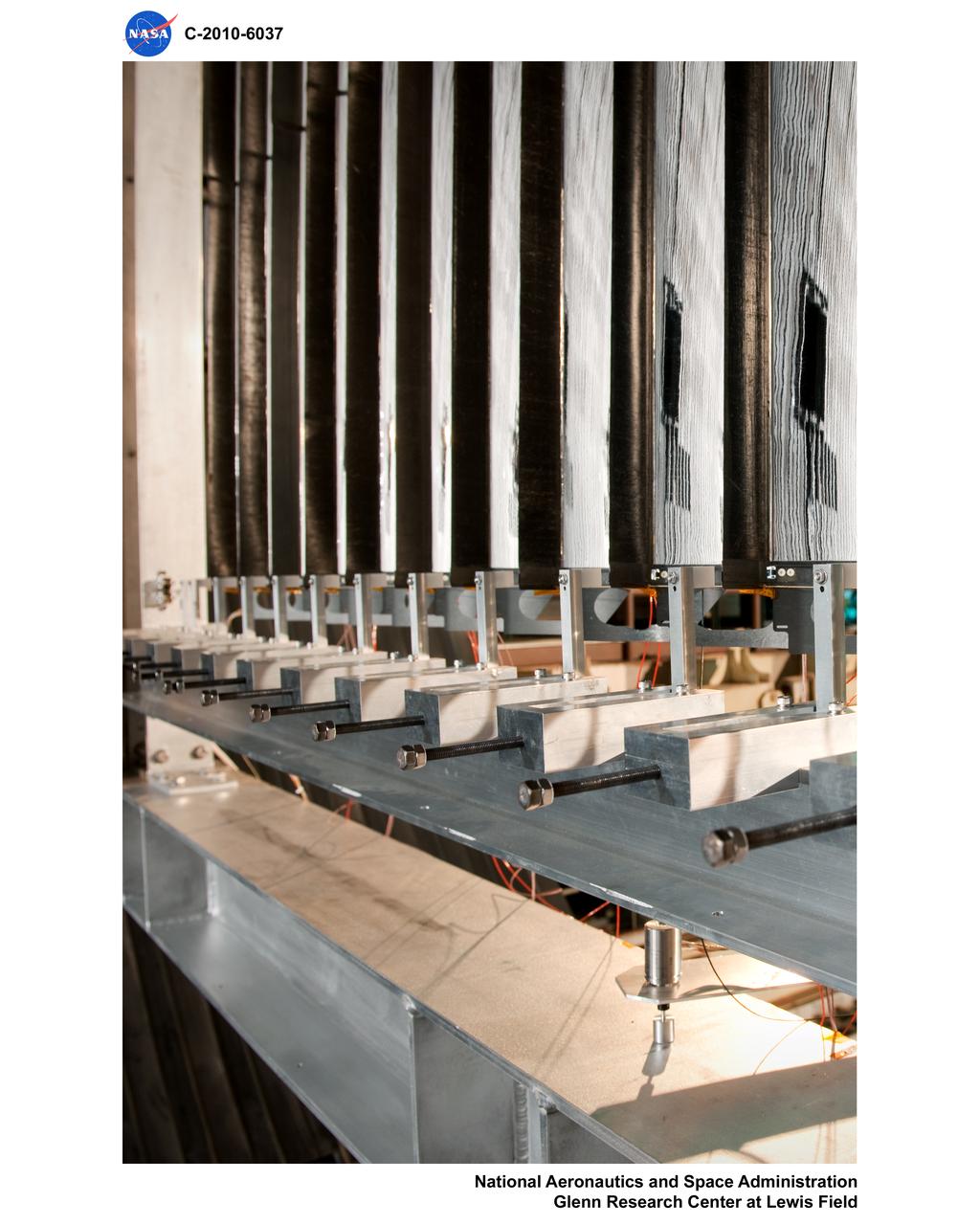
Solar Array Concentrator in Vacuum Tank 6
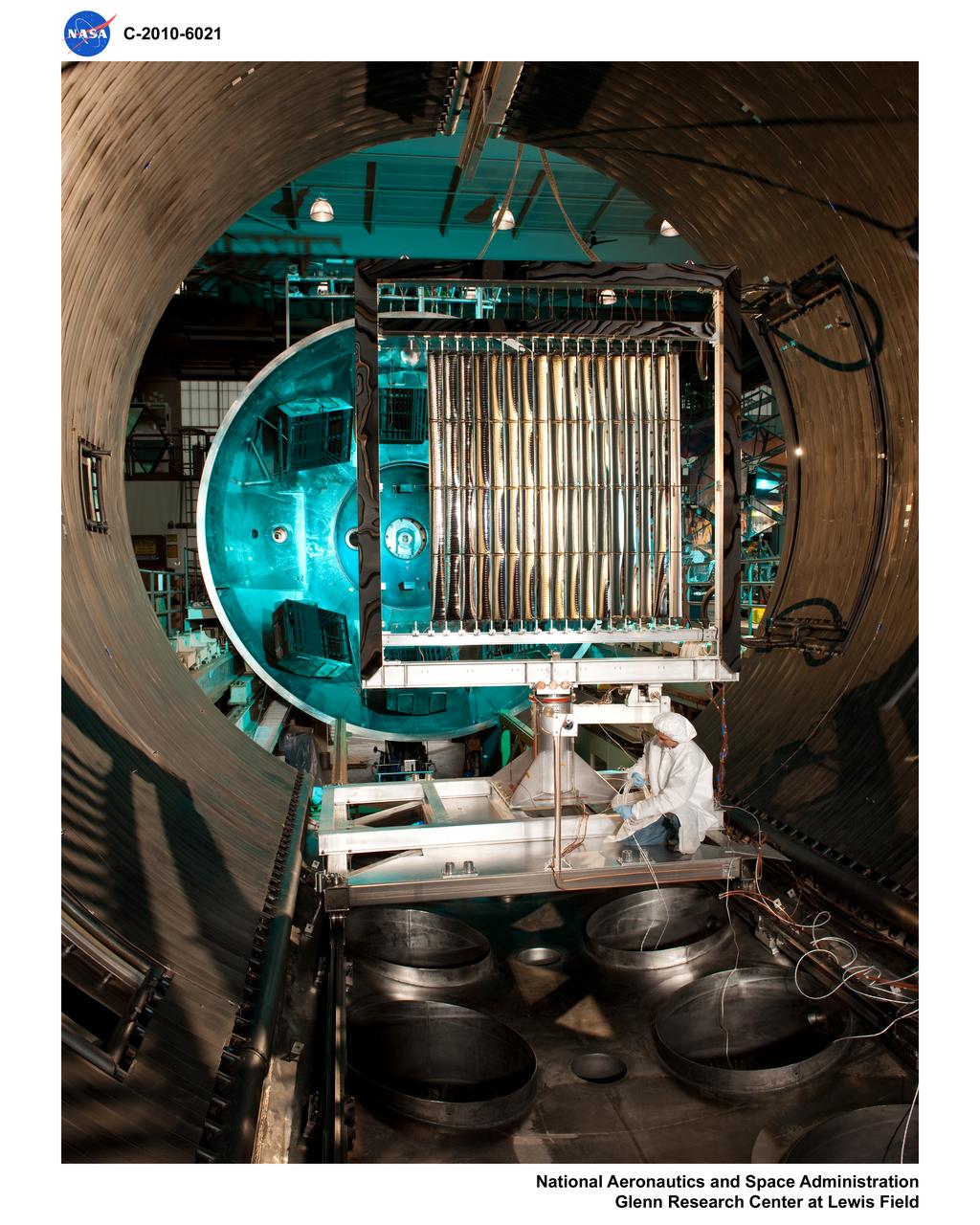
Solar Array Concentrator in Vacuum Tank 6

ELECTRO MAGNETIC RADIATION CONTROL EXPERIMENT IN TANK 6
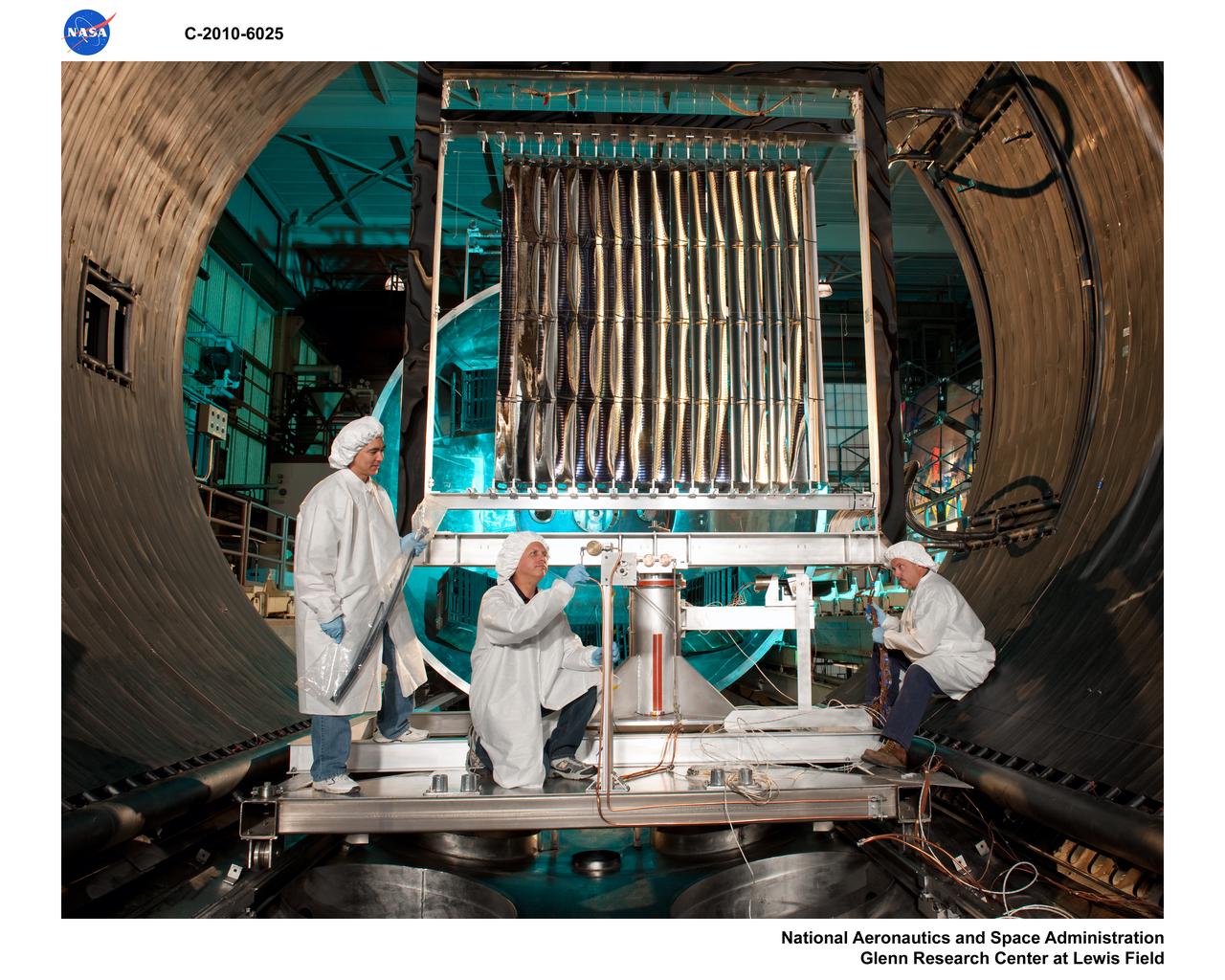
Solar Array Concentrator in Vacuum Tank 6
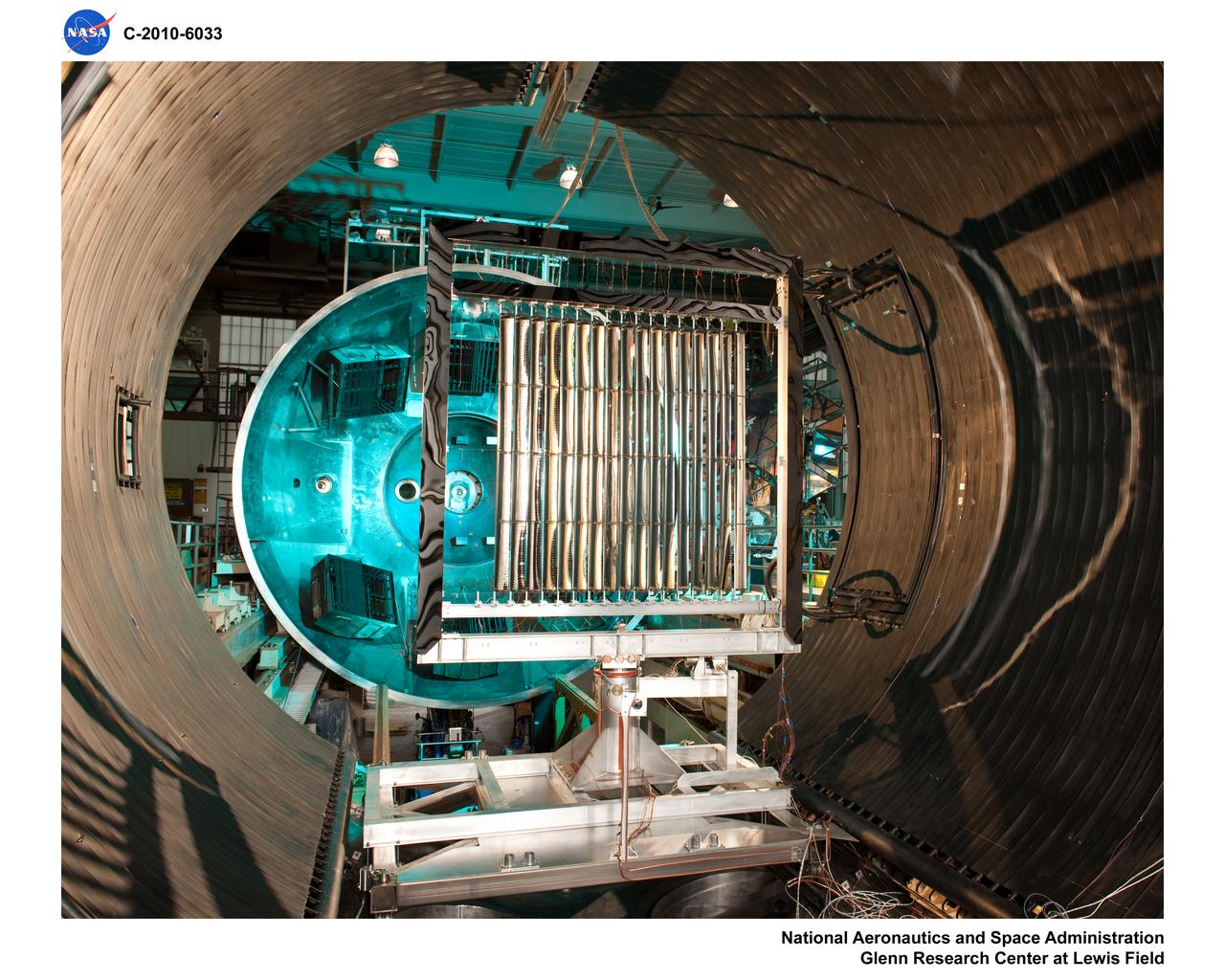
Solar Array Concentrator in Vacuum Tank 6

Solar Array Concentrator in Vacuum Tank 6

Solar Array Concentrator in Vacuum Tank 6

Solar Array Concentrator in Vacuum Tank 6

ELECTRO MAGNETIC RADIATION CONTROL EXPERIMENT IN TANK 6
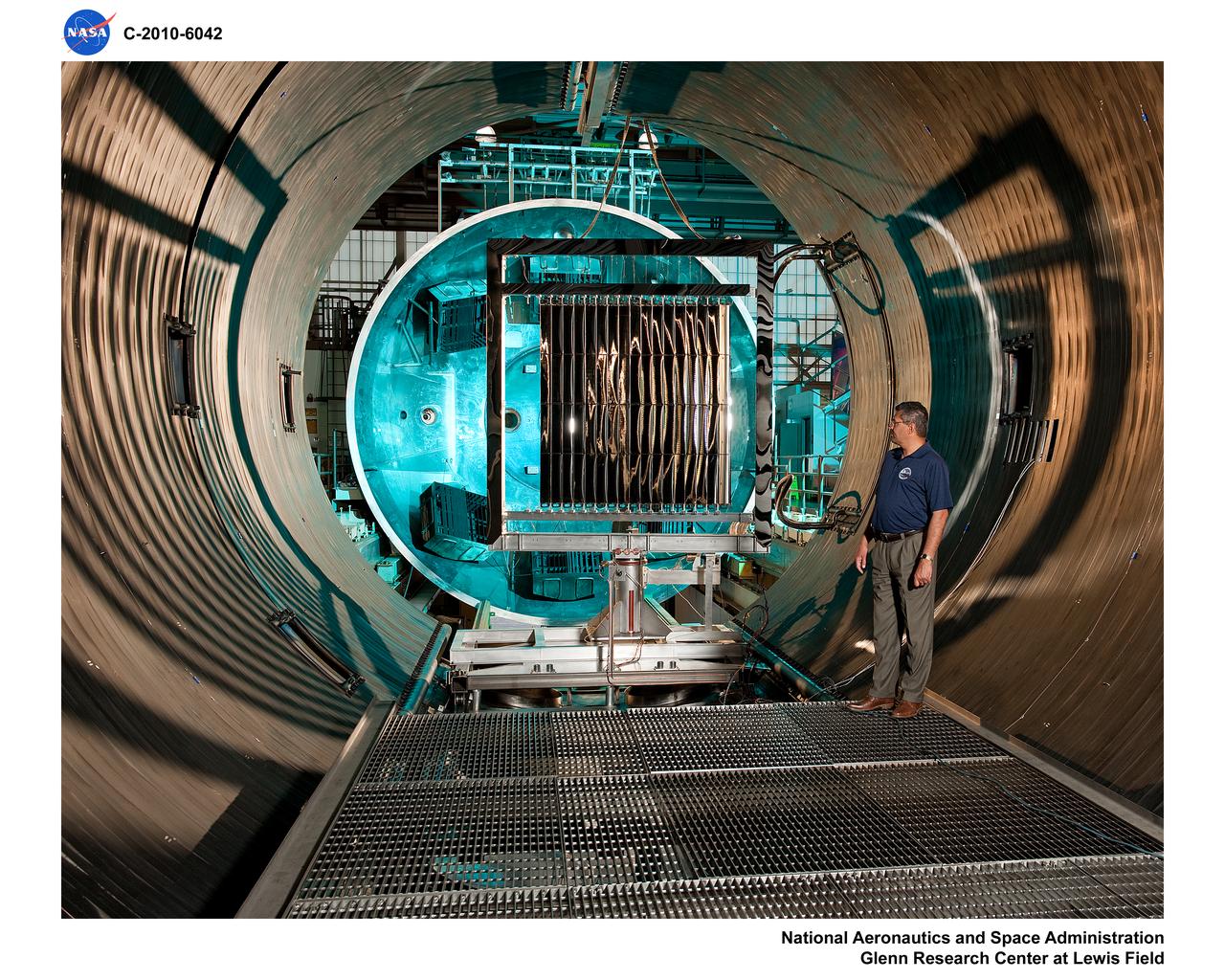
Solar Array Concentrator in Vacuum Tank 6

Solar Array Concentrator in Vacuum Tank 6

Solar Array Concentrator in Vacuum Tank 6

Solar Array Concentrator in Vacuum Tank 6

Solar Array Concentrator in Vacuum Tank 6
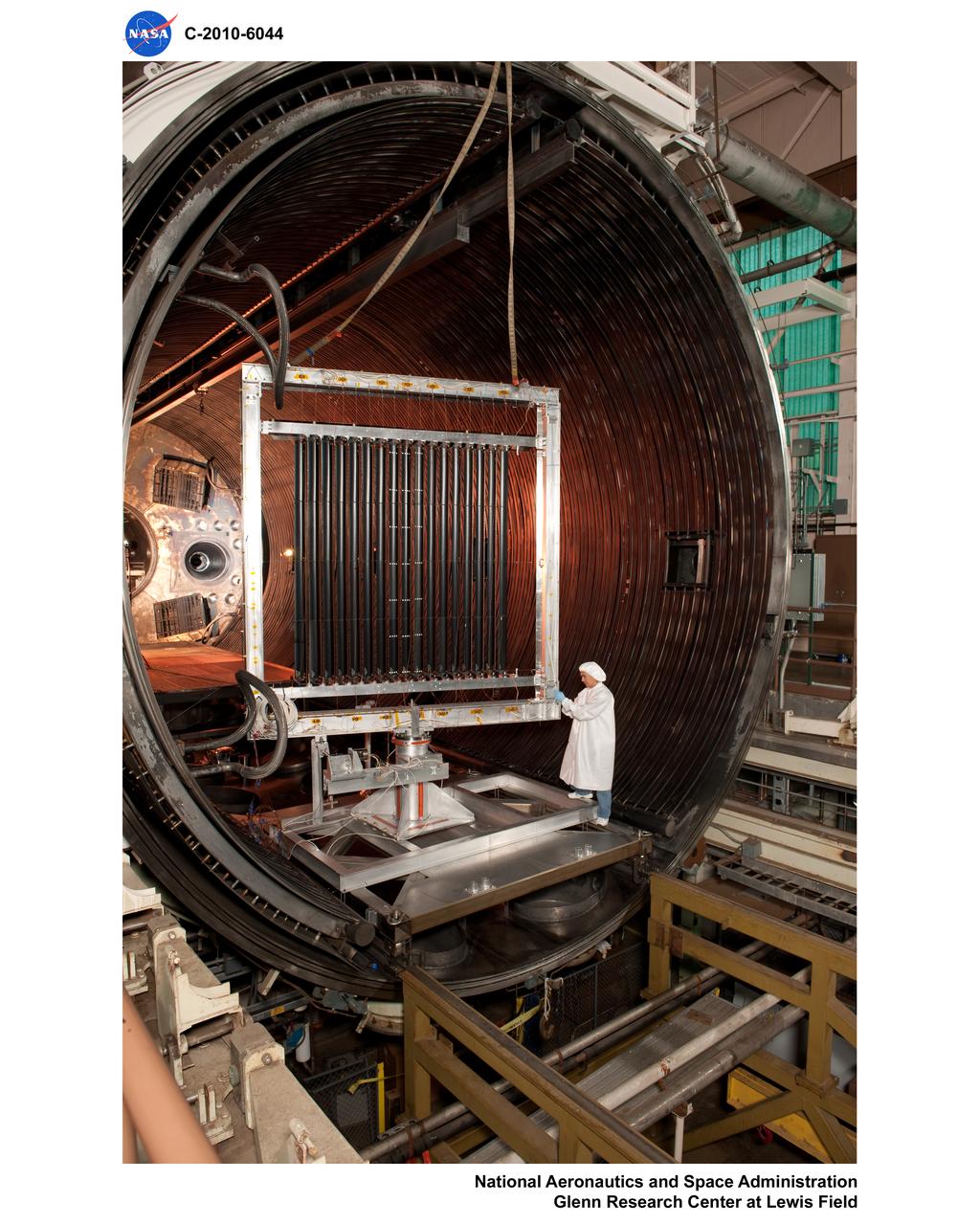
Solar Array Concentrator in Vacuum Tank 6
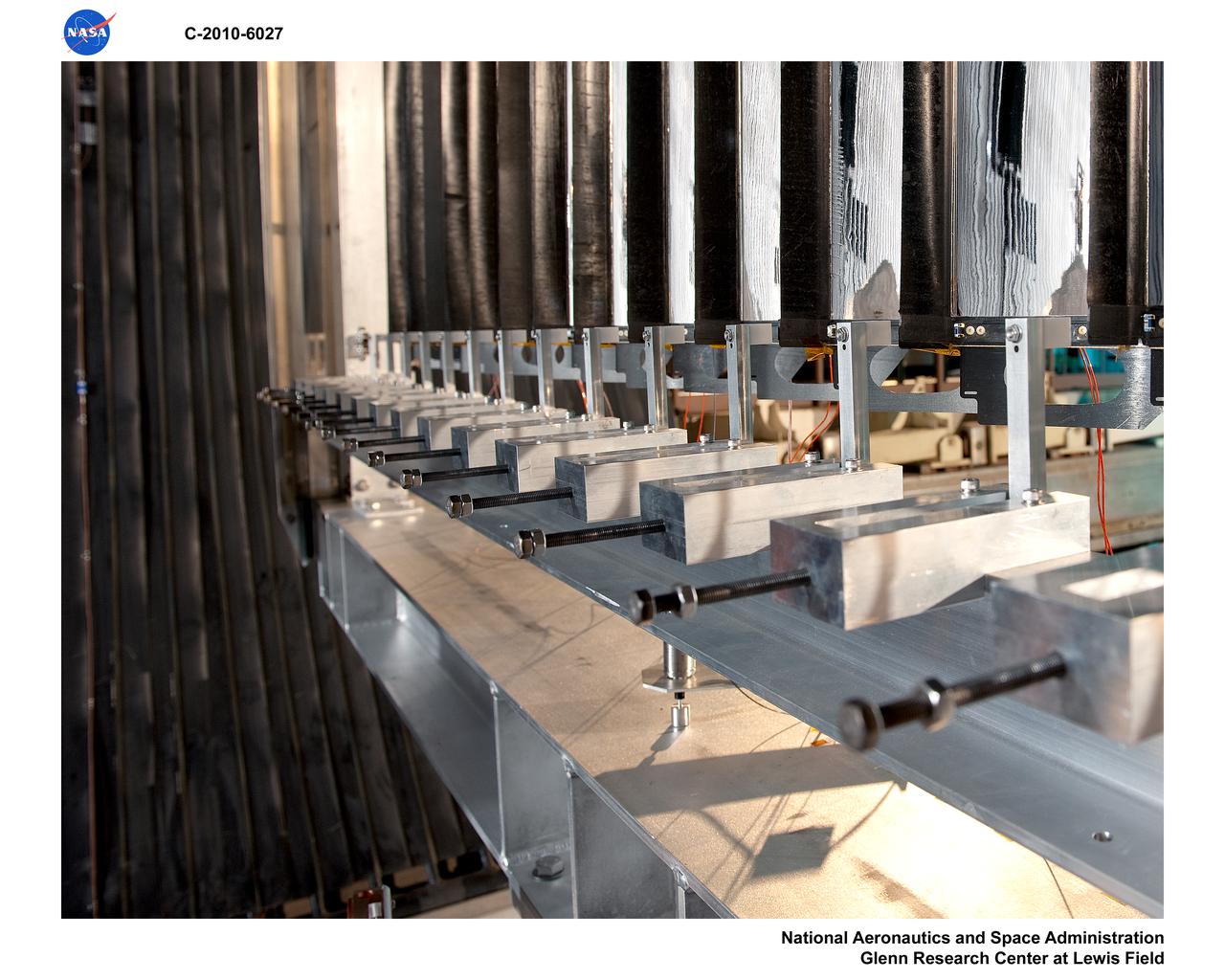
Solar Array Concentrator in Vacuum Tank 6
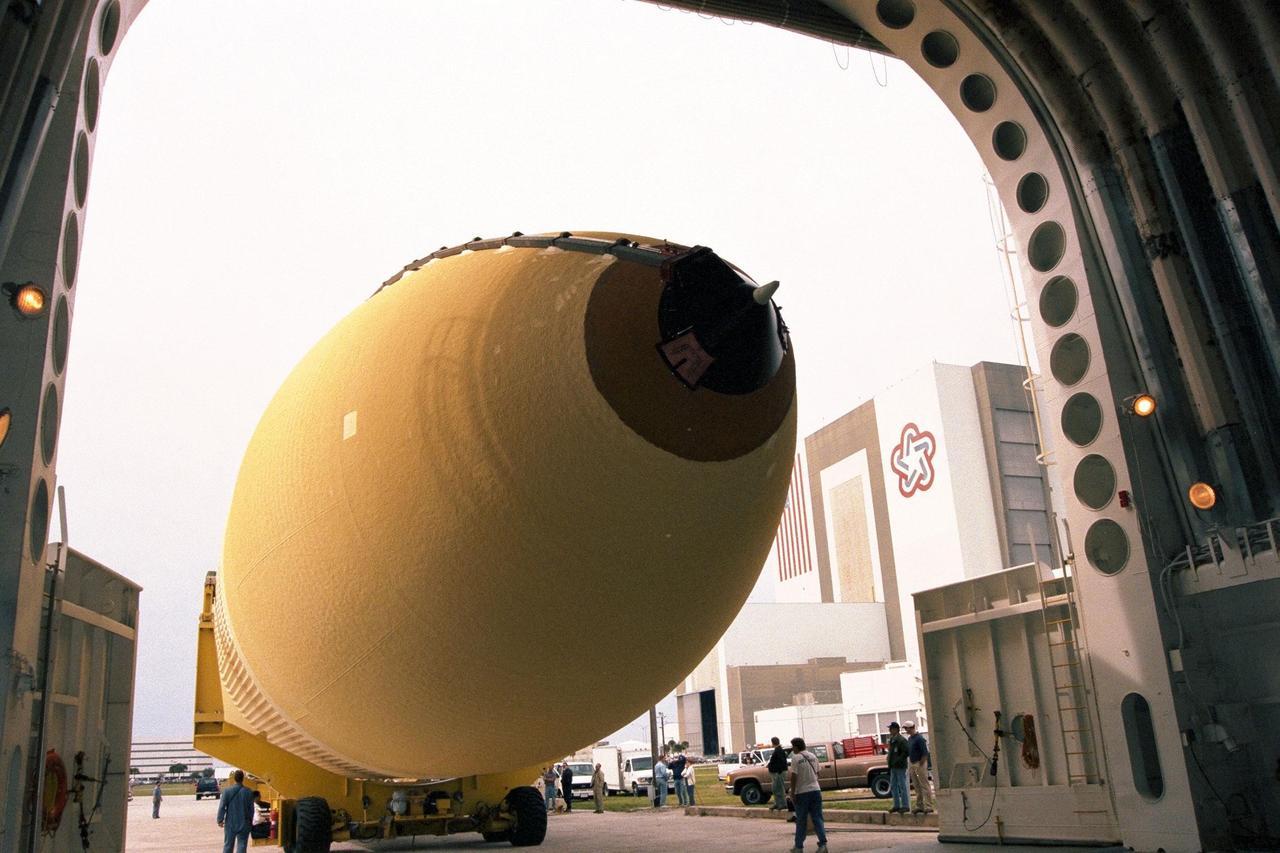
KENNEDY SPACE CENTER, FLA. -- The Space Shuttle's first super lightweight external tank is on its way to Kennedy Space Center's Vehicle Assembly Building for processing. The tank, which is scheduled for flight on STS-91 in late May, arrived Feb. 3 in Port Canaveral, where it remained until Feb. 6 due to high winds. It was moved by barge to KSC on Feb. 6. The improved tank is 7,500 pounds lighter than its predecessors and was developed to increase the Shuttle payload capacity on International Space Station assembly flights. Major changes to the lighter tank include the use of new materials and a revised internal design. The new liquid oxygen and liquid hydrogen tanks are constructed of aluminum lithium a lighter, stronger material than the metal alloy currently used. The redesigned walls of the liquid hydrogen tank were machined to provide additional strength and stability as well
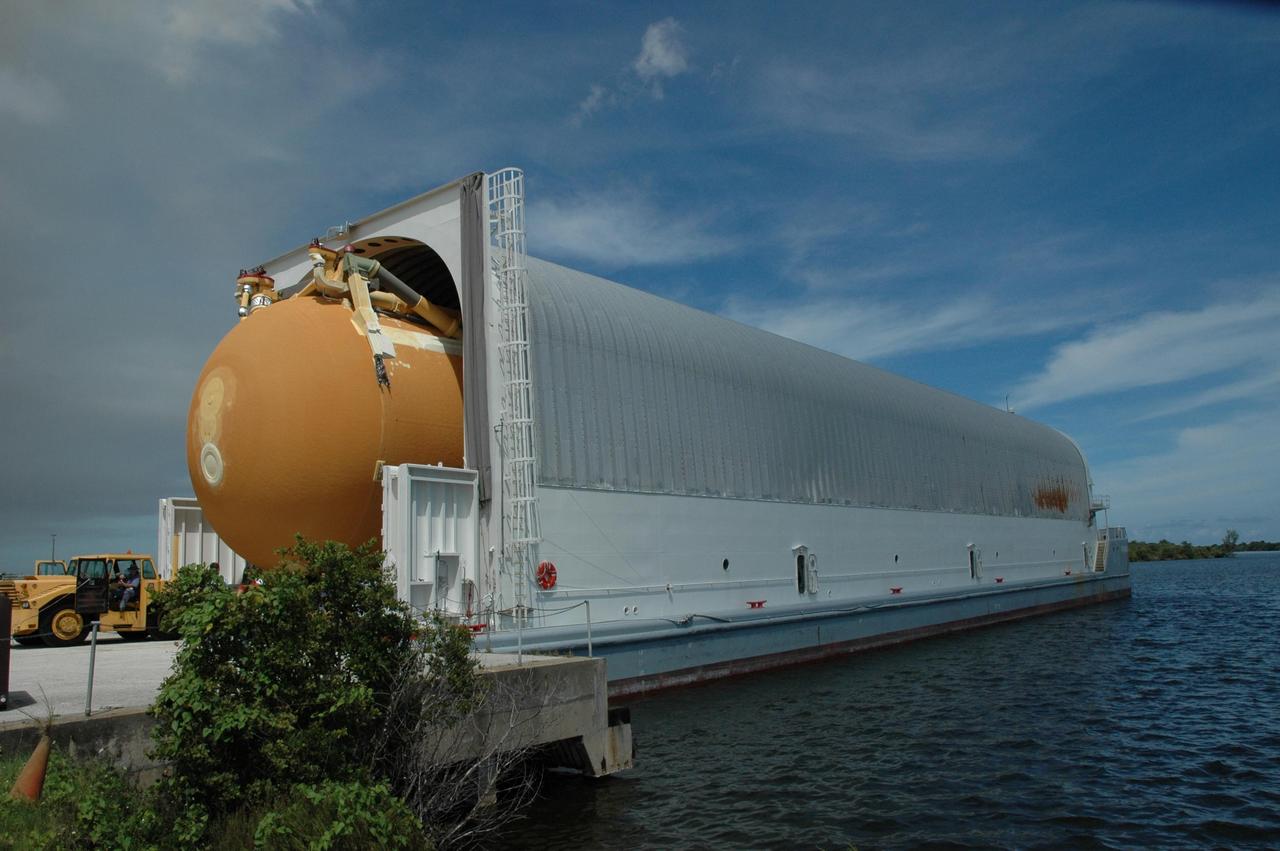
KENNEDY SPACE CENTER, FLA. -- External tank No. 125 is moved out of the Pegasus barge at the Launch Complex 39 Area turn basin. After offloading, the tank will be transported to the Vehicle Assembly Building. The tank arrived at Kennedy on the Pegasus barge from the Michoud Assembly Facility near New Orleans. The external tank will be used on space shuttle Atlantis for mission STS-122 targeted for launch on Dec. 6. Photo credit: NASA/Troy Cryder
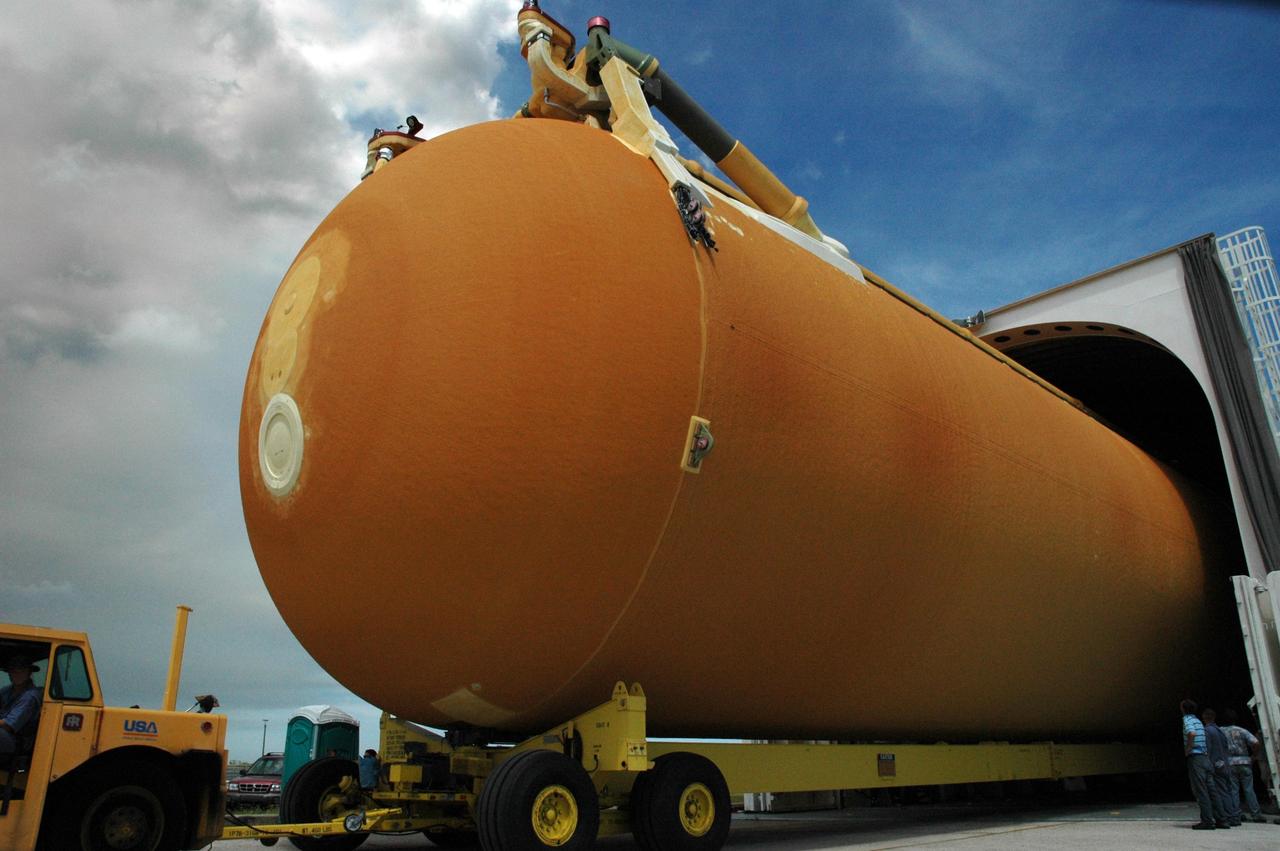
KENNEDY SPACE CENTER, FLA. -- External tank No. 125 is moved out of the Pegasus barge at the Launch Complex 39 Area turn basin. After offloading, the tank will be transported to the Vehicle Assembly Building. The tank arrived at Kennedy on the Pegasus barge from the Michoud Assembly Facility near New Orleans. The external tank will be used on space shuttle Atlantis for mission STS-122 targeted for launch on Dec. 6. Photo credit: NASA/Troy Cryder
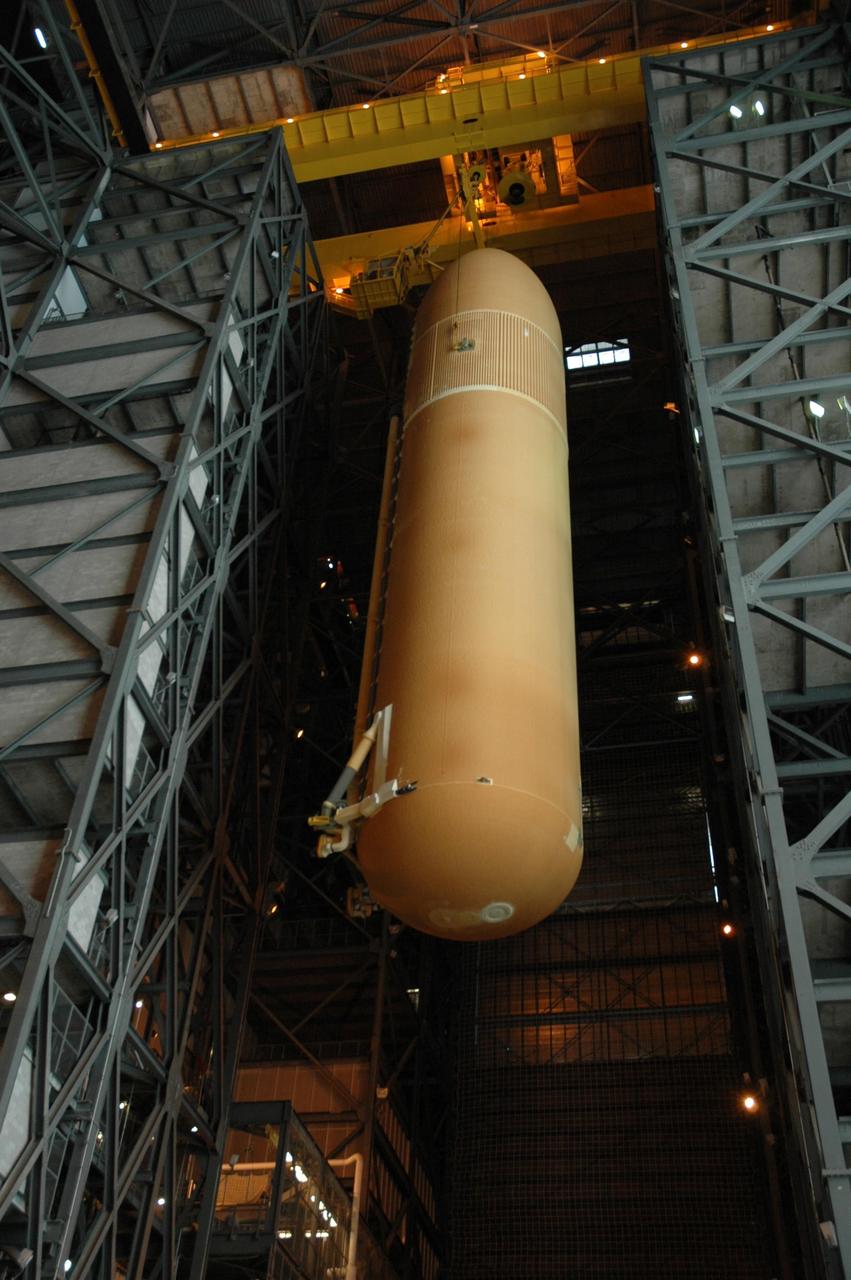
KENNEDY SPACE CENTER, FLA. -- Seen from below, external tank No. 125 is moved toward a checkout cell in high bay 4 in the Vehicle Assembly Building for processing. The tank will be part of the space shuttle stack for mission STS-122 targeted to launch Dec. 6. Photo credit: NASA/Troy Cryder
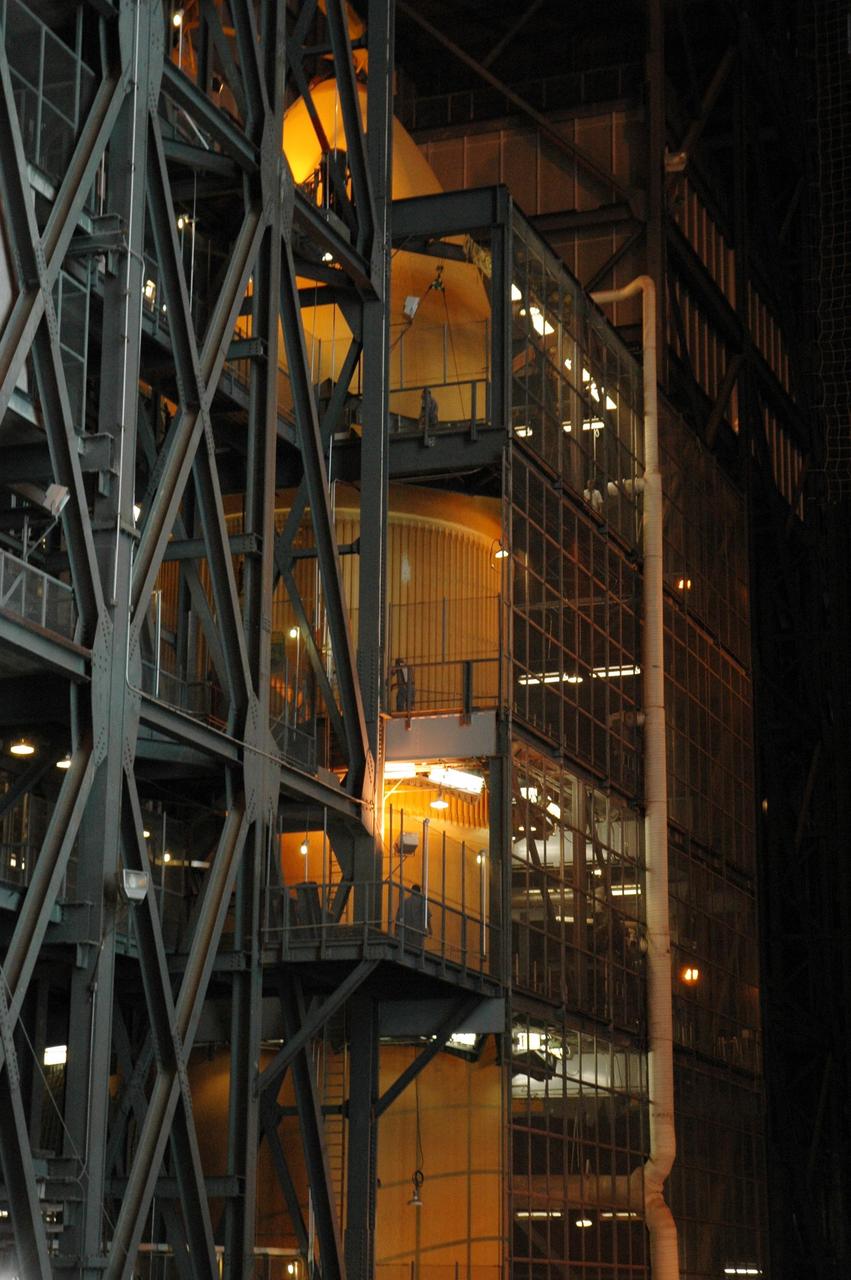
KENNEDY SPACE CENTER, FLA. -- After its lift and transfer inside the Vehicle Assembly Building, external tank No. 125 is suspended in a checkout cell in high bay 4 for processing. The tank will be part of the space shuttle stack for mission STS-122 targeted to launch Dec. 6. Photo credit: NASA/Troy Cryder
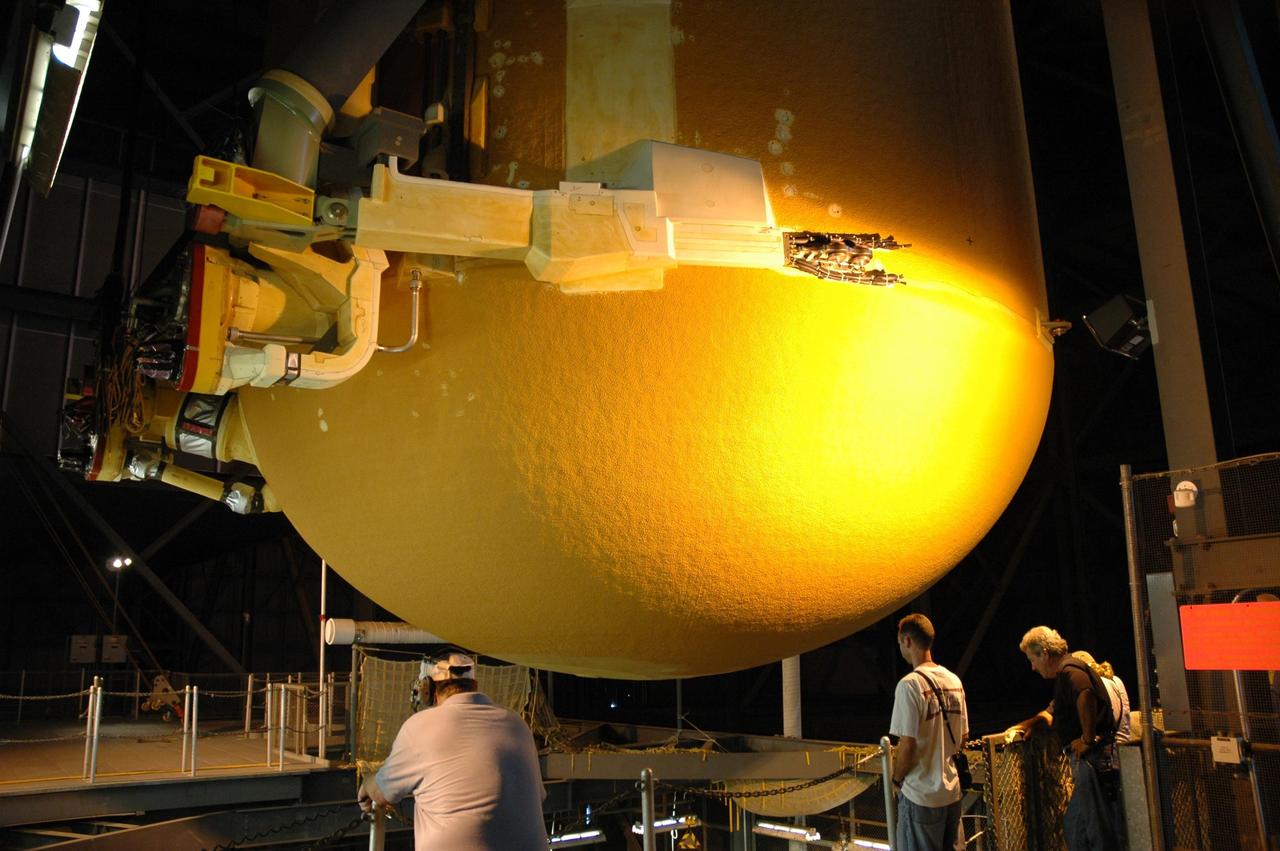
KENNEDY SPACE CENTER, FLA. -- In the Vehicle Assembly Building, workers keep an eye on the movement of external tank No. 125 as it is lowered into a checkout cell in high bay 4 for processing. The tank will be part of the space shuttle stack for mission STS-122 targeted to launch Dec. 6. Photo credit: NASA/Troy Cryder
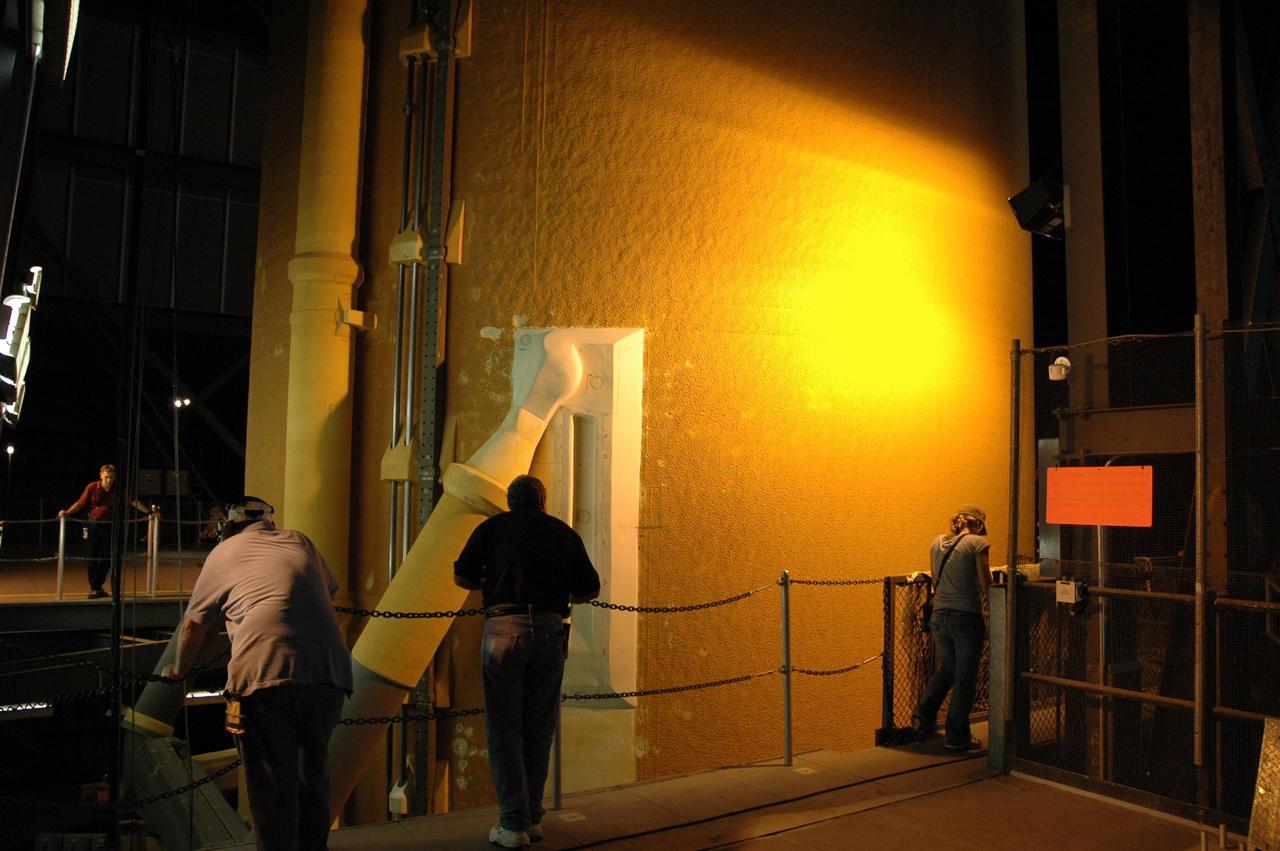
KENNEDY SPACE CENTER, FLA. -- In the Vehicle Assembly Building, workers keep an eye on the movement of external tank No. 125 as it is lowered into a checkout cell in high bay 4 for processing. The tank will be part of the space shuttle stack for mission STS-122 targeted to launch Dec. 6. Photo credit: NASA/Troy Cryder
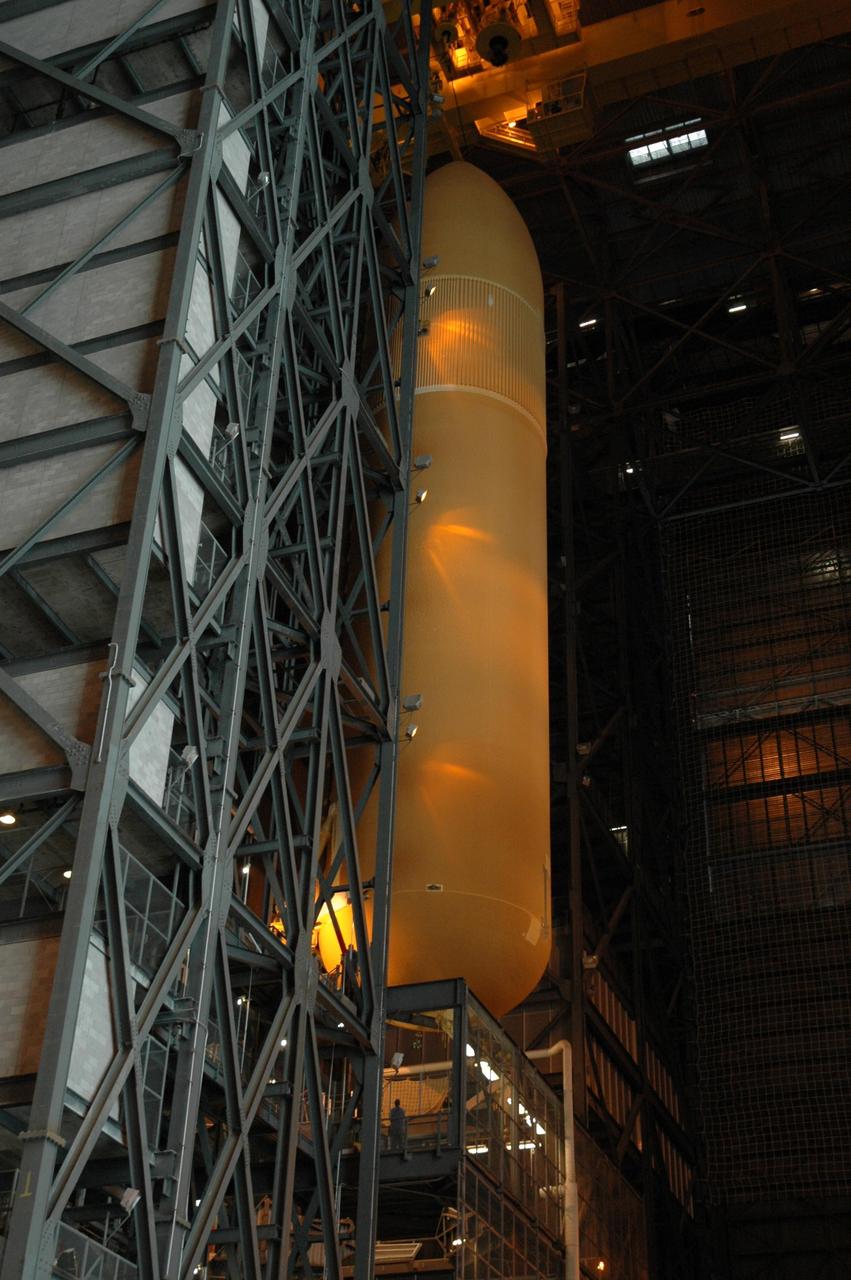
KENNEDY SPACE CENTER, FLA. -- External tank No. 125 is moved toward a checkout cell in high bay 4 in the Vehicle Assembly Building for processing. The tank will be part of the space shuttle stack for mission STS-122 targeted to launch Dec. 6. Photo credit: NASA/Troy Cryder

KENNEDY SPACE CENTER, FLA. -- On its transporter, external tank No. 125 sits in the transfer aisle inside the Vehicle Assembly Building. The tank arrived at the Launch Complex 39 Area turn basin on the Pegasus barge from the Michoud Assembly Facility near New Orleans. The external tank will be used on space shuttle Atlantis for mission STS-122 targeted for launch on Dec. 6. Photo credit: NASA/Troy Cryder
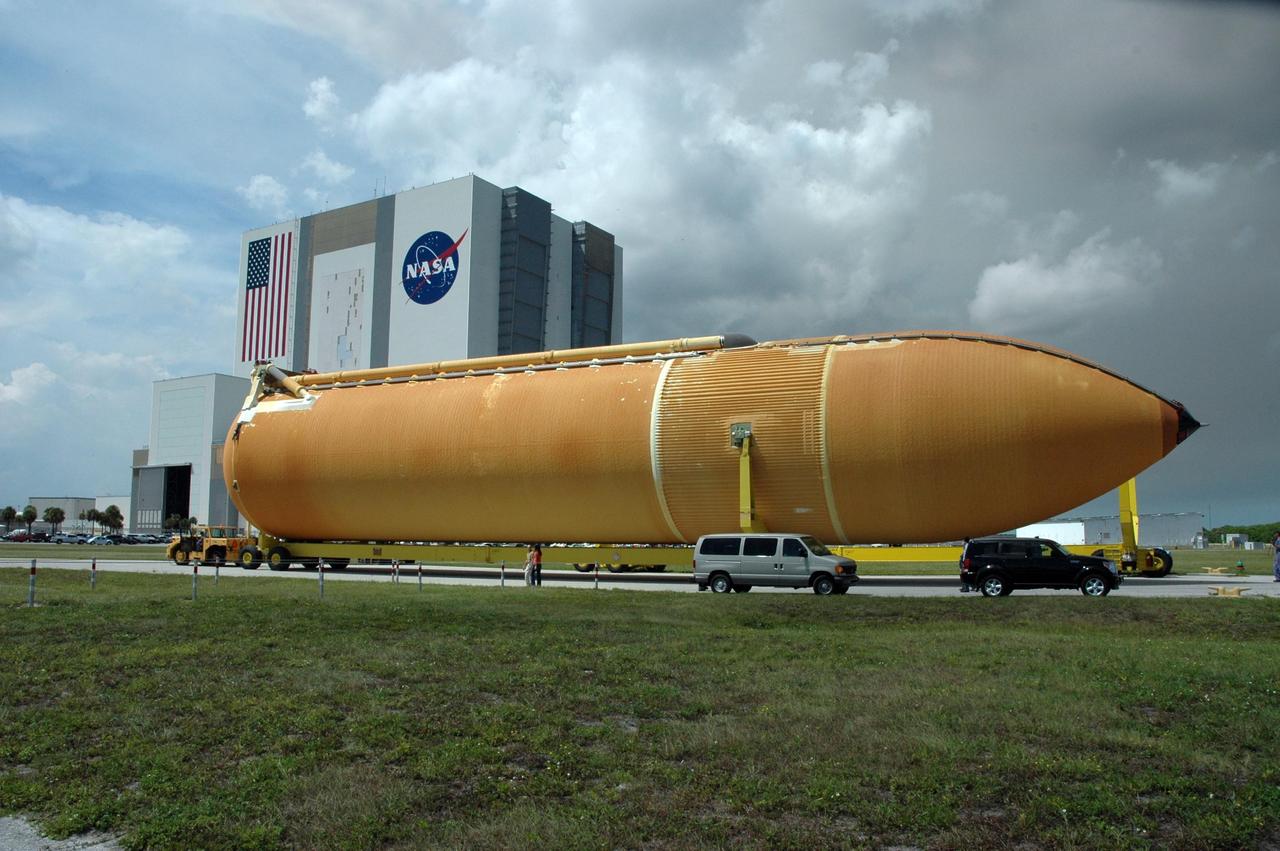
KENNEDY SPACE CENTER, FLA. -- On its transporter, external tank No. 125 moves toward the Vehicle Assembly Building in the background. The tank arrived at the Launch Complex 39 Area turn basin on the Pegasus barge from the Michoud Assembly Facility near New Orleans. The external tank will be used on space shuttle Atlantis for mission STS-122 targeted for launch on Dec. 6. Photo credit: NASA/Troy Cryder
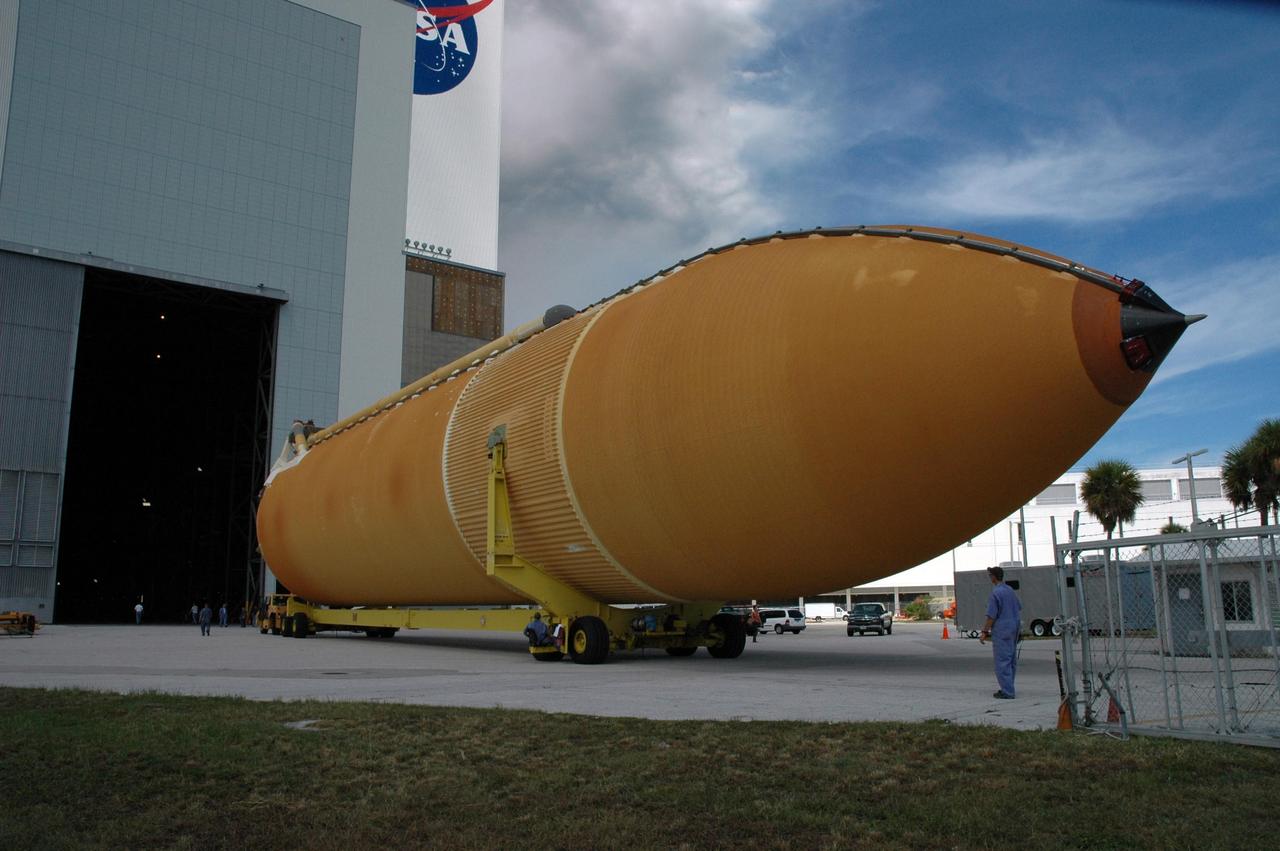
KENNEDY SPACE CENTER, FLA. -- On its transporter, external tank No. 125 moves toward the entrance in the Vehicle Assembly Building. The tank arrived at the Launch Complex 39 Area turn basin on the Pegasus barge from the Michoud Assembly Facility near New Orleans. The external tank will be used on space shuttle Atlantis for mission STS-122 targeted for launch on Dec. 6. Photo credit: NASA/Troy Cryder
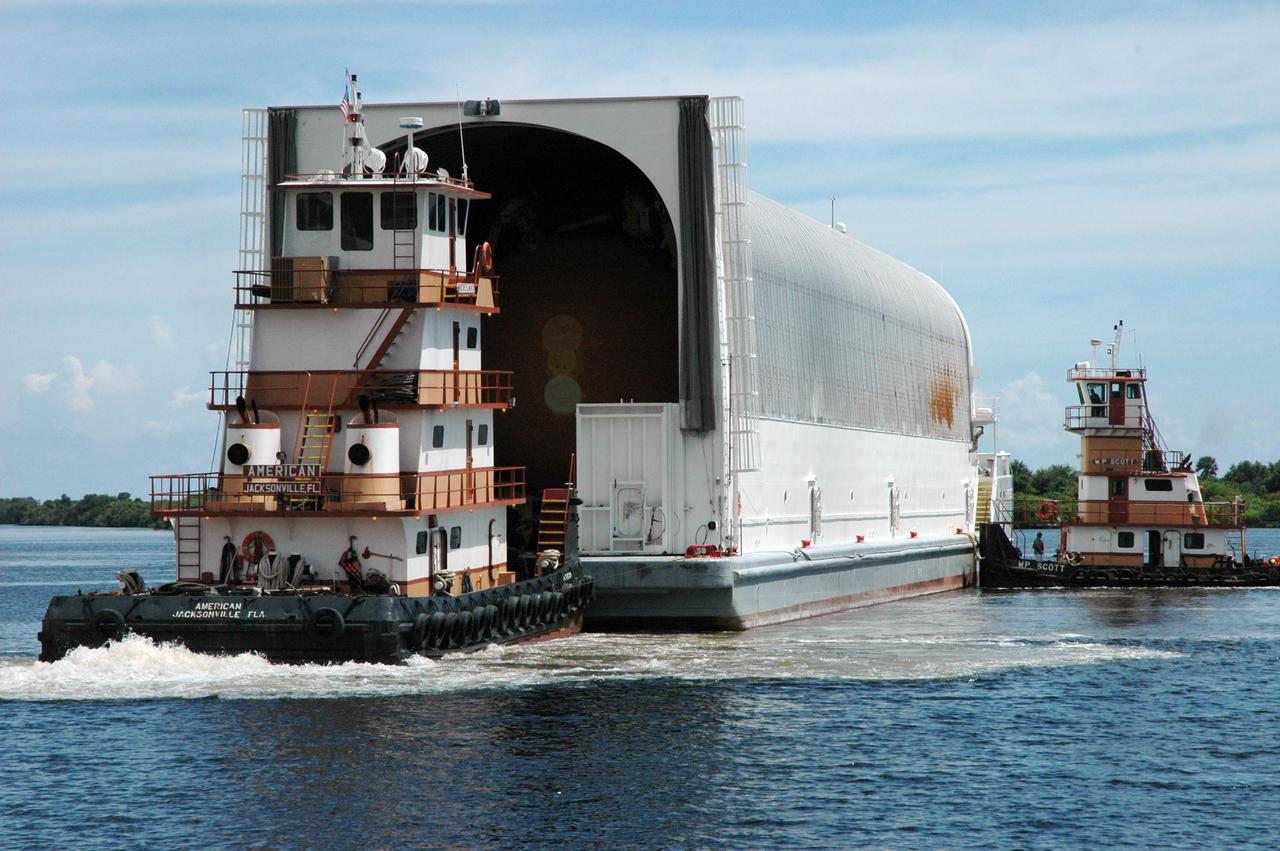
KENNEDY SPACE CENTER, FLA. -- Tugboats maneuver the Pegasus barge toward the dock in the turn basin of the Launch Complex 39 Area. The barge is carrying external tank No. 125. After it is offloaded, the tank will be moved to the Vehicle Assembly Building. The external tank will be used on space shuttle Atlantis for mission STS-122 targeted for launch on Dec. 6. Photo credit: NASA/Troy Cryder
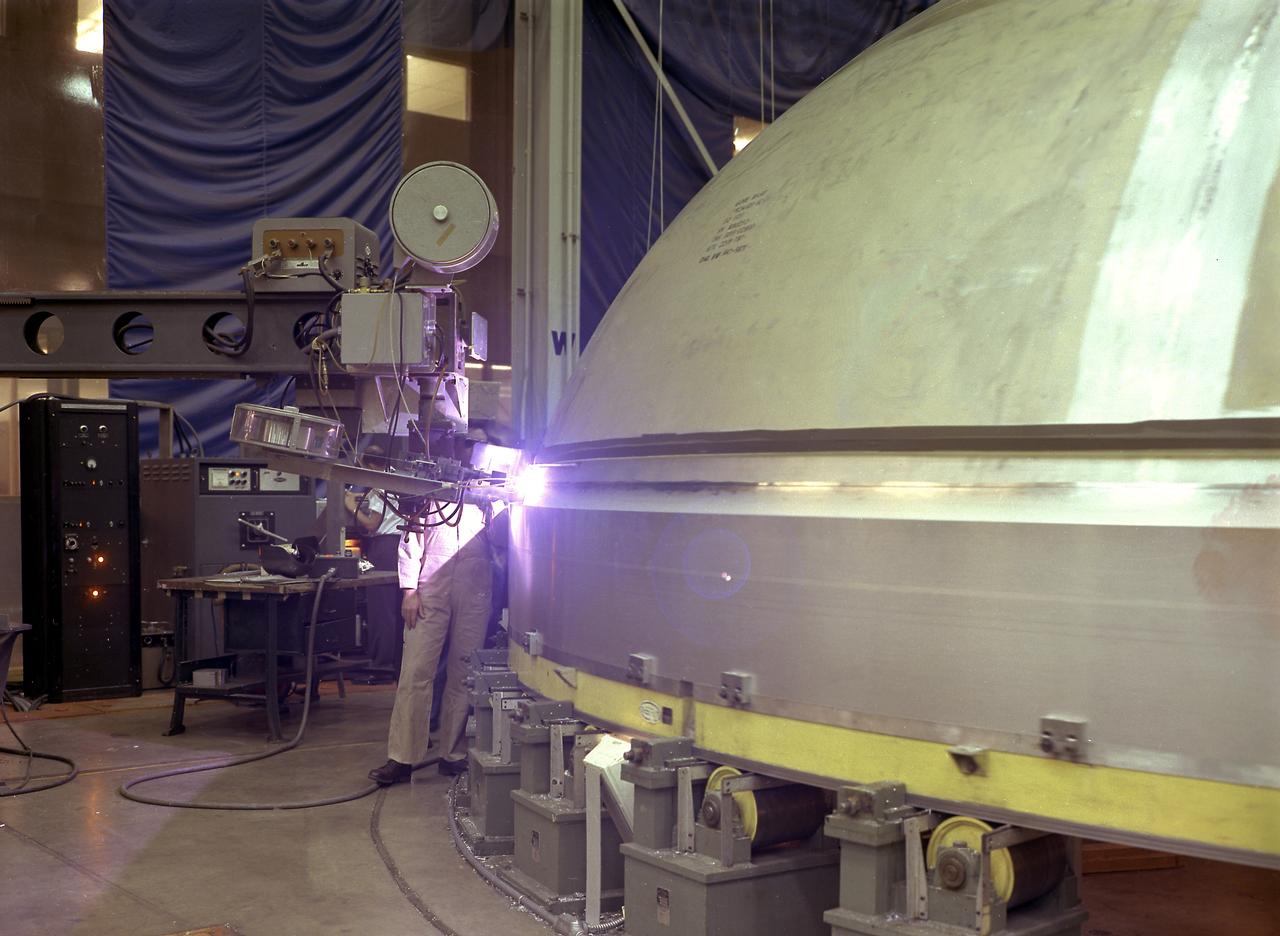
A technician is pictured at the Marshall Space Flight Center welding the Y-ring to the S-IC stage bulkhead and the fuel tank for the Saturn V SA-502 launch vehicle (Apollo 6 mission) in building 4705. The size of the S-IC required a special rig known as the Y-ring to join the tank wall cylinders and domes together. The Y-ring was designed to eliminate lap joints where the tank domes, wall, and adjoining structure (such as the intertank segment) came together.
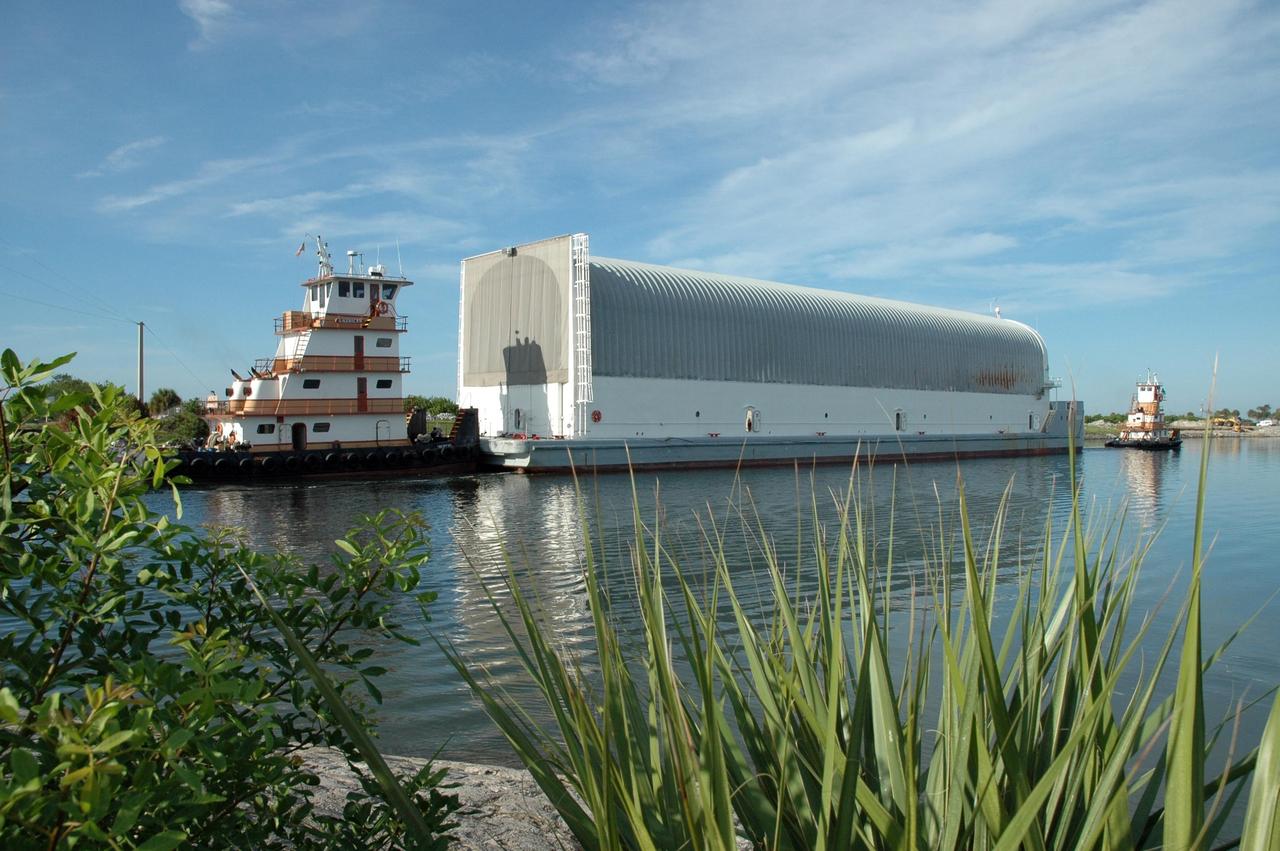
KENNEDY SPACE CENTER, FLA. -- Tugboats tow the Pegasus barge, with its cargo of external tank No. 125, on the Banana River. The barge is being towed to the turn basin in the Launch Complex 39 Area where the external tank will be offloaded and moved to the Vehicle Assembly Building. The external tank will be used on space shuttle Atlantis for mission STS-122 targeted for launch on Dec. 6. Photo credit: NASA/Troy Cryder
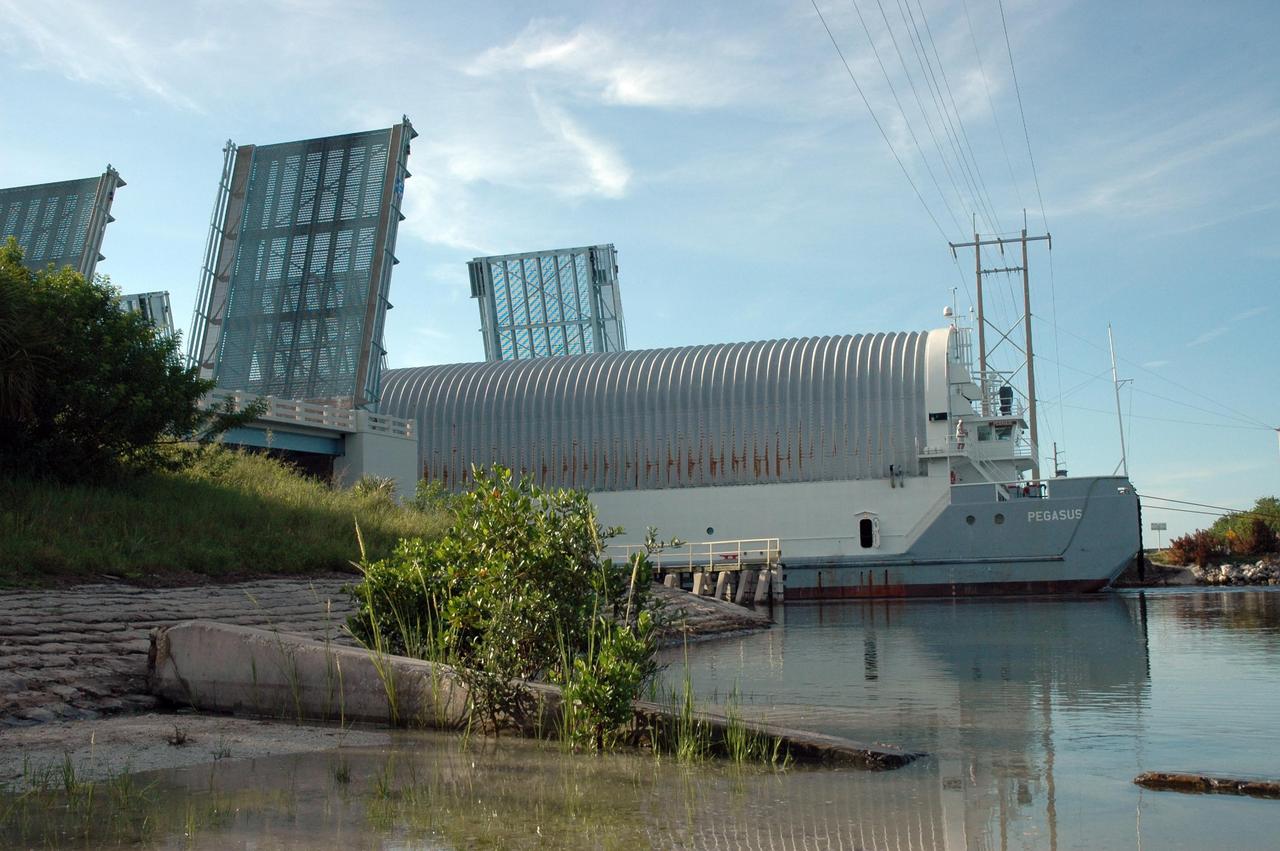
KENNEDY SPACE CENTER, FLA. -- The Pegasus barge passes through the haulover canal on the Banana River with its cargo of external tank No. 125. The barge is being towed to the turn basin in the Launch Complex 39 Area where the external tank will be offloaded and moved to the Vehicle Assembly Building. The external tank will be used on space shuttle Atlantis for mission STS-122 targeted for launch on Dec. 6. Photo credit: NASA/Troy Cryder
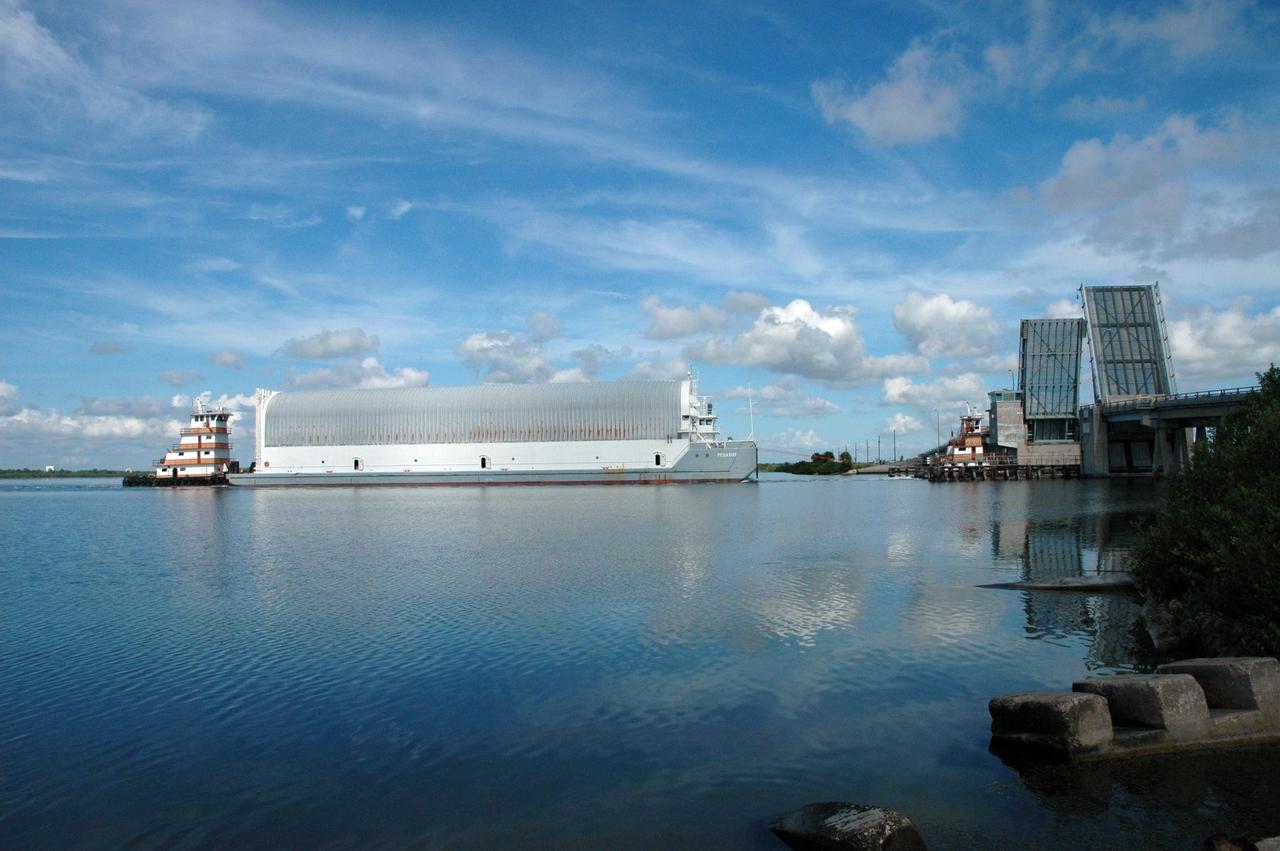
KENNEDY SPACE CENTER, FLA. -- Tugboats tow the Pegasus barge through the bridge at the haulover canal on the Banana River. The barge is carrying external tank No. 125. After it is offloaded, the tank will be moved to the Vehicle Assembly Building. The external tank will be used on space shuttle Atlantis for mission STS-122 targeted for launch on Dec. 6. Photo credit: NASA/Troy Cryder

KENNEDY SPACE CENTER, FLA. -- In the transfer aisle of the Vehicle Assembly Building, external tank No. 125 is raised off its transporter. The tank will be raised to a vertical position and then lifted into a checkout cell in high bay 4 to allow for processing. The tank will be part of the space shuttle stack for mission STS-122 targeted to launch Dec. 6. Photo credit: NASA/Troy Cryder
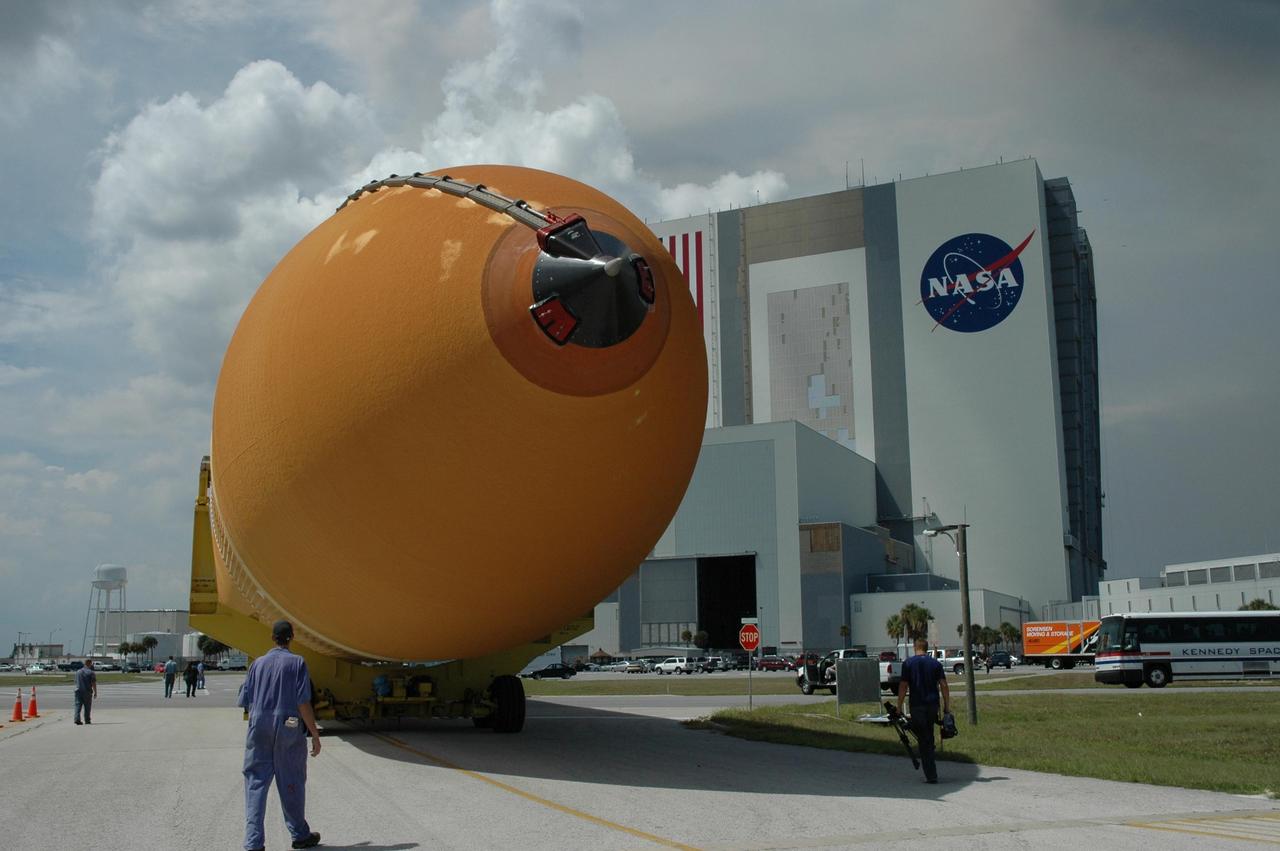
KENNEDY SPACE CENTER, FLA. -- On its transporter, external tank No. 125 moves toward the Vehicle Assembly Building, at right. The tank arrived at the Launch Complex 39 Area turn basin on the Pegasus barge from the Michoud Assembly Facility near New Orleans. The external tank will be used on space shuttle Atlantis for mission STS-122 targeted for launch on Dec. 6. Photo credit: NASA/Troy Cryder
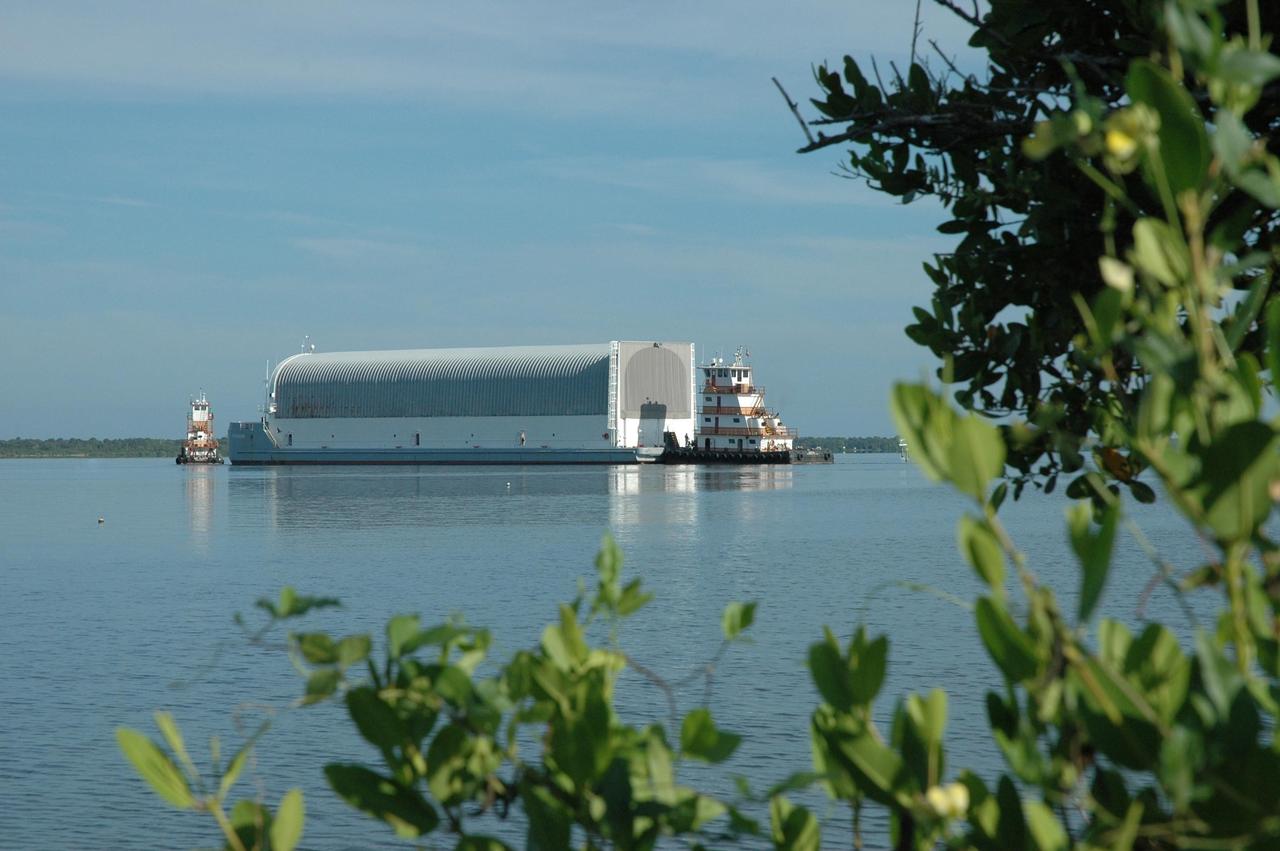
KENNEDY SPACE CENTER, FLA. -- Tugboats guide the Pegasus barge carrying external tank No. 125 in the Banana River after the barge's long journey around the Florida Peninsula from the Michoud Assembly Facility near New Orleans. The barge is being towed to the turn basin in the Launch Complex 39 Area where the external tank will be offloaded and moved to the Vehicle Assembly Building. The external tank will be used on space shuttle Atlantis for mission STS-122 targeted for launch on Dec. 6. Photo credit: NASA/Troy Cryder
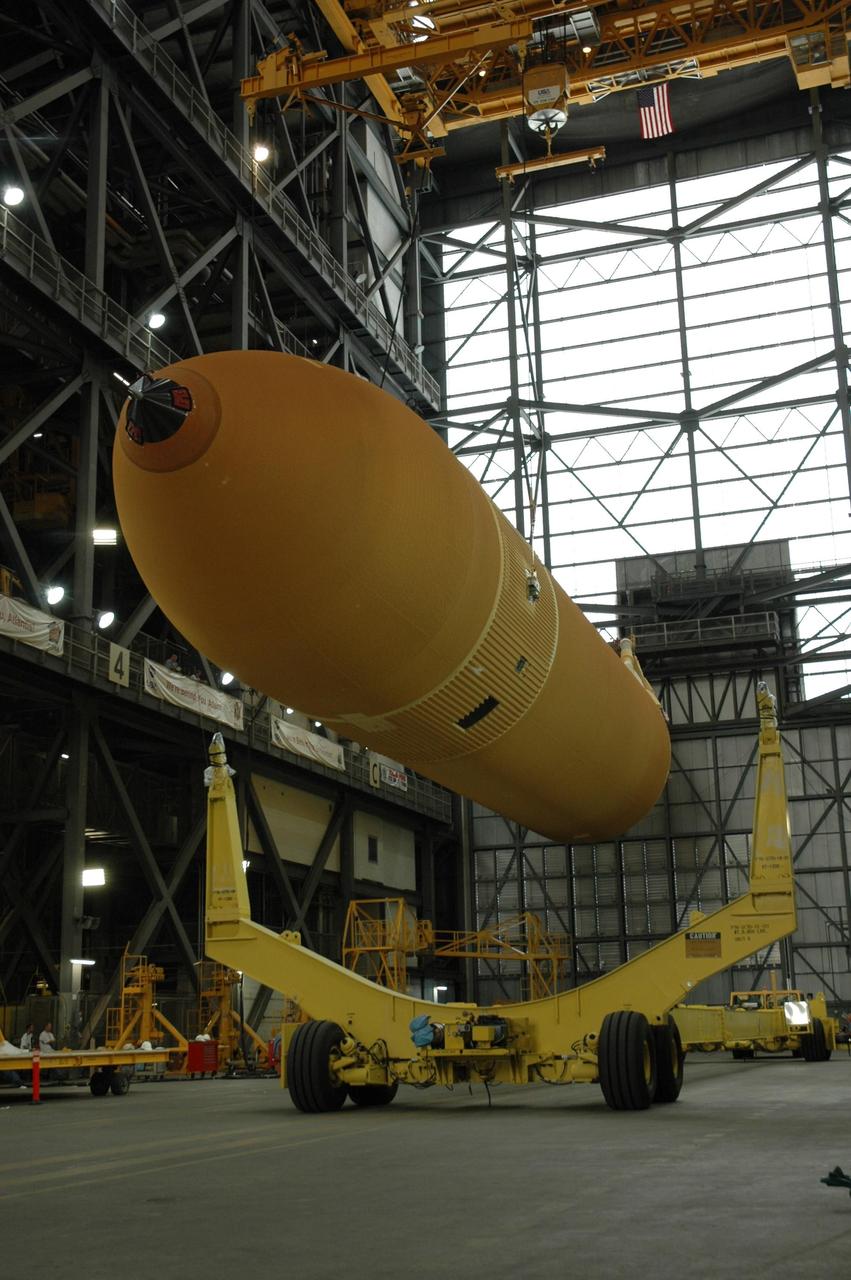
KENNEDY SPACE CENTER, FLA. -- In the transfer aisle of the Vehicle Assembly Building, external tank No. 125 is raised off its transporter. The tank will be raised to a vertical position and then lifted into a checkout cell in high bay 4 to allow for processing. The tank will be part of the space shuttle stack for mission STS-122 targeted to launch Dec. 6. Photo credit: NASA/Troy Cryder
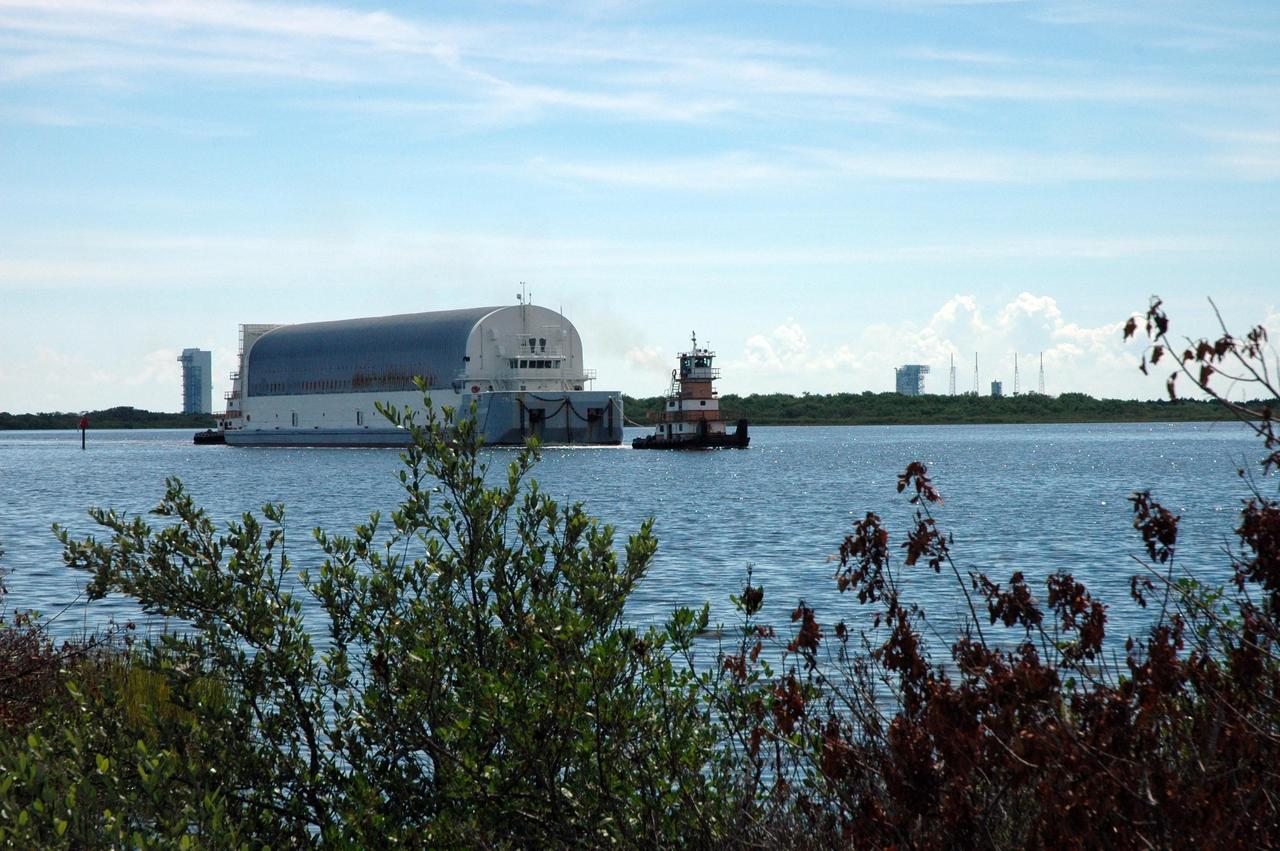
KENNEDY SPACE CENTER, FLA. -- Tugboats tow the Pegasus barge, with its cargo of external tank No. 125, on the Banana River. Seen in the background are the Atlas V (left) and Titan IV launch complexes. After it is offloaded, the tank will be moved to the Vehicle Assembly Building. The external tank will be used on space shuttle Atlantis for mission STS-122 targeted for launch on Dec. 6. Photo credit: NASA/Troy Cryder
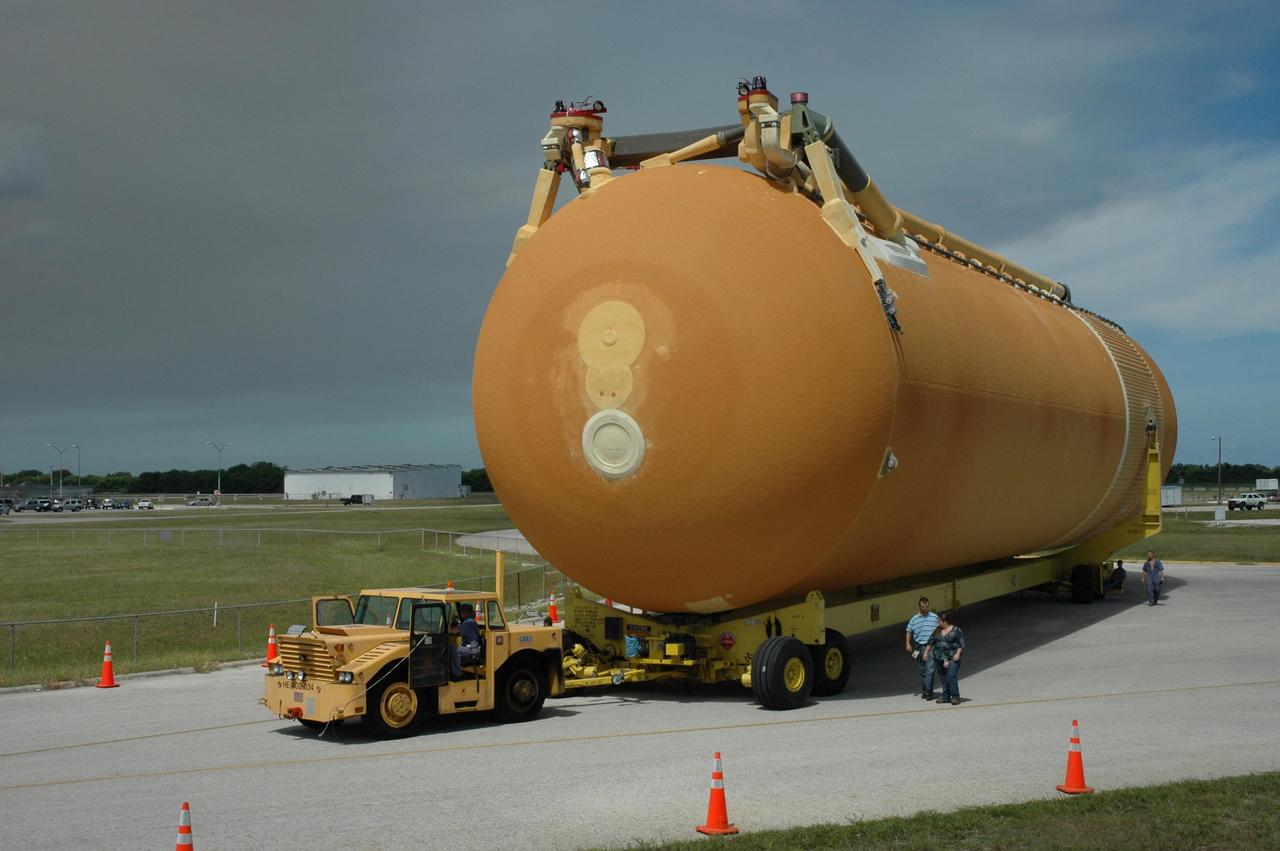
KENNEDY SPACE CENTER, FLA. -- On its transporter, external tank No. 125 maneuvers around a corner on its way to the Vehicle Assembly Building. The tank arrived at the Launch Complex 39 Area turn basin on the Pegasus barge from the Michoud Assembly Facility near New Orleans. The external tank will be used on space shuttle Atlantis for mission STS-122 targeted for launch on Dec. 6. Photo credit: NASA/Troy Cryder
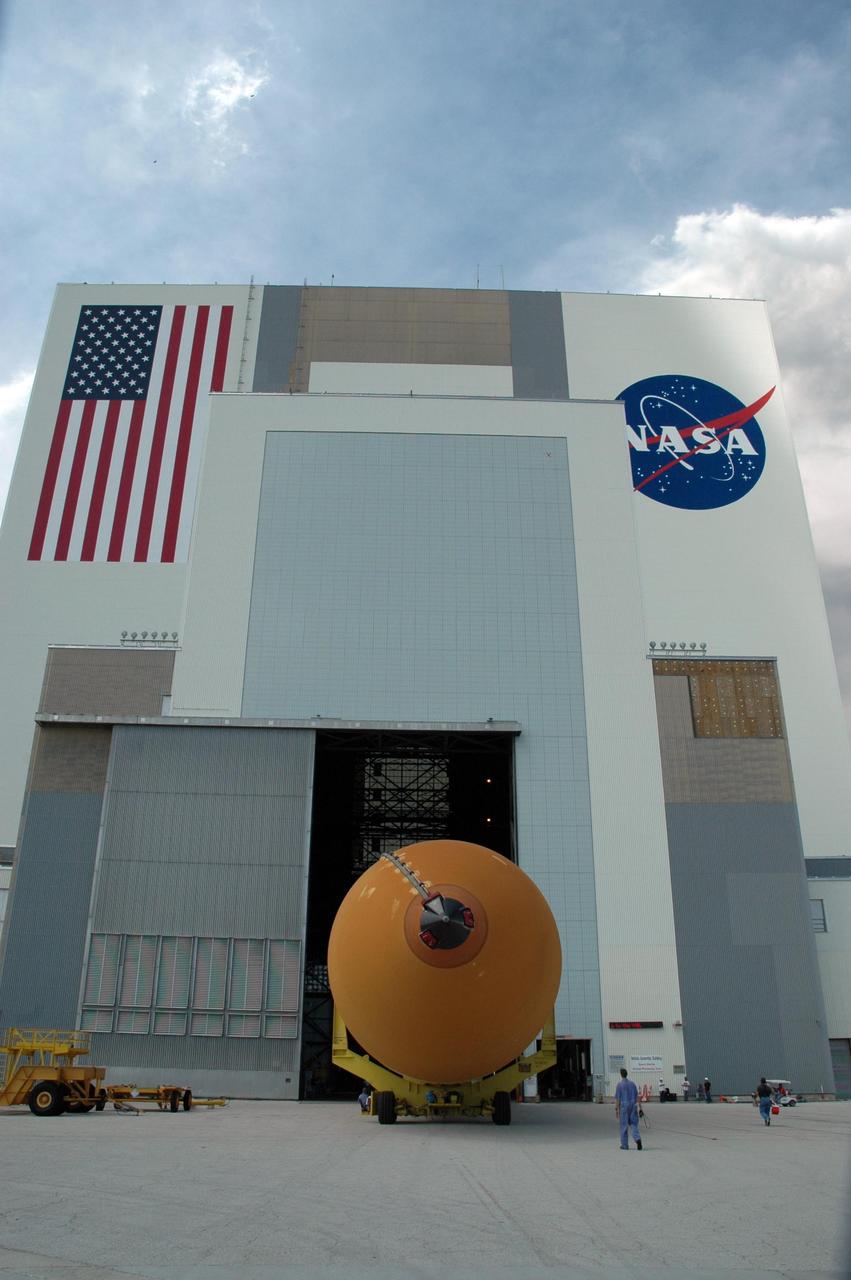
KENNEDY SPACE CENTER, FLA. -- On its transporter, external tank No. 125 moves through the entrance in the Vehicle Assembly Building. The tank arrived at the Launch Complex 39 Area turn basin on the Pegasus barge from the Michoud Assembly Facility near New Orleans. The external tank will be used on space shuttle Atlantis for mission STS-122 targeted for launch on Dec. 6. Photo credit: NASA/Troy Cryder
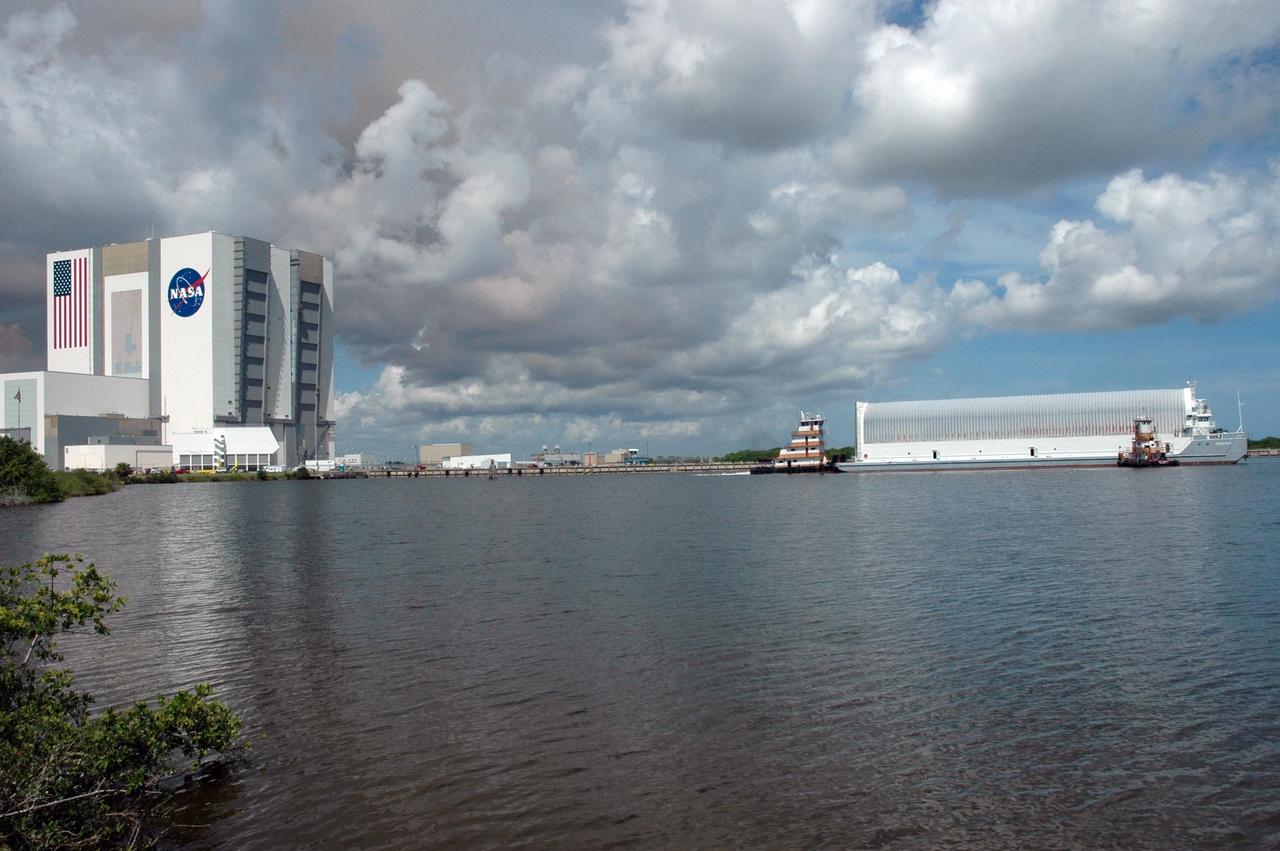
KENNEDY SPACE CENTER, FLA. -- Tugboats tow the Pegasus barge toward the dock in the turn basin of the Launch Complex 39 Area. At left is the Vehicle Assembly Building. The barge is carrying external tank No. 125. After it is offloaded, the tank will be moved to the Vehicle Assembly Building. The external tank will be used on space shuttle Atlantis for mission STS-122 targeted for launch on Dec. 6. Photo credit: NASA/Troy Cryder
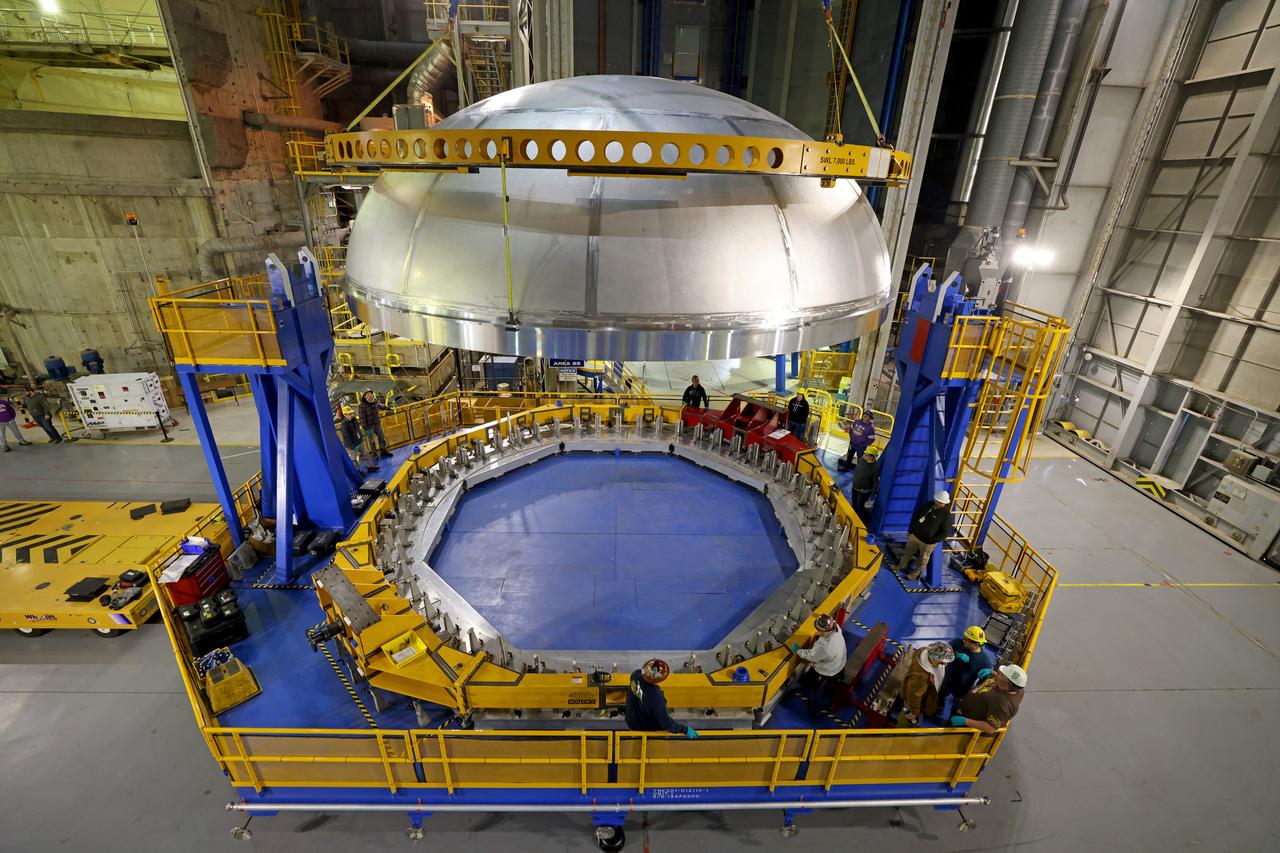
This imagery shows how technicians at NASA’s Michoud Assembly Facility moved the aft dome of the liquid oxygen tank for NASA’s SLS (Space Launch System) rocket for the next phase of production inside the Vertical Assembly center Dec. 6. The dome will form part of the core stage that will power NASA’s Artemis III mission. Engineers will soon rotate the dome to attach it to the previously joined forward dome and aft barrel segments using friction-stir welding. The liquid oxygen tank is one of five major components that make up the SLS rocket’s core stage. Together with the forward skirt, intertank, liquid hydrogen tank, engine section, along with the four RS-25 engines at its base, the 212-foot core stage will help power NASA’s Artemis missions to the Moon. Image credit: NASA/Michael DeMocker
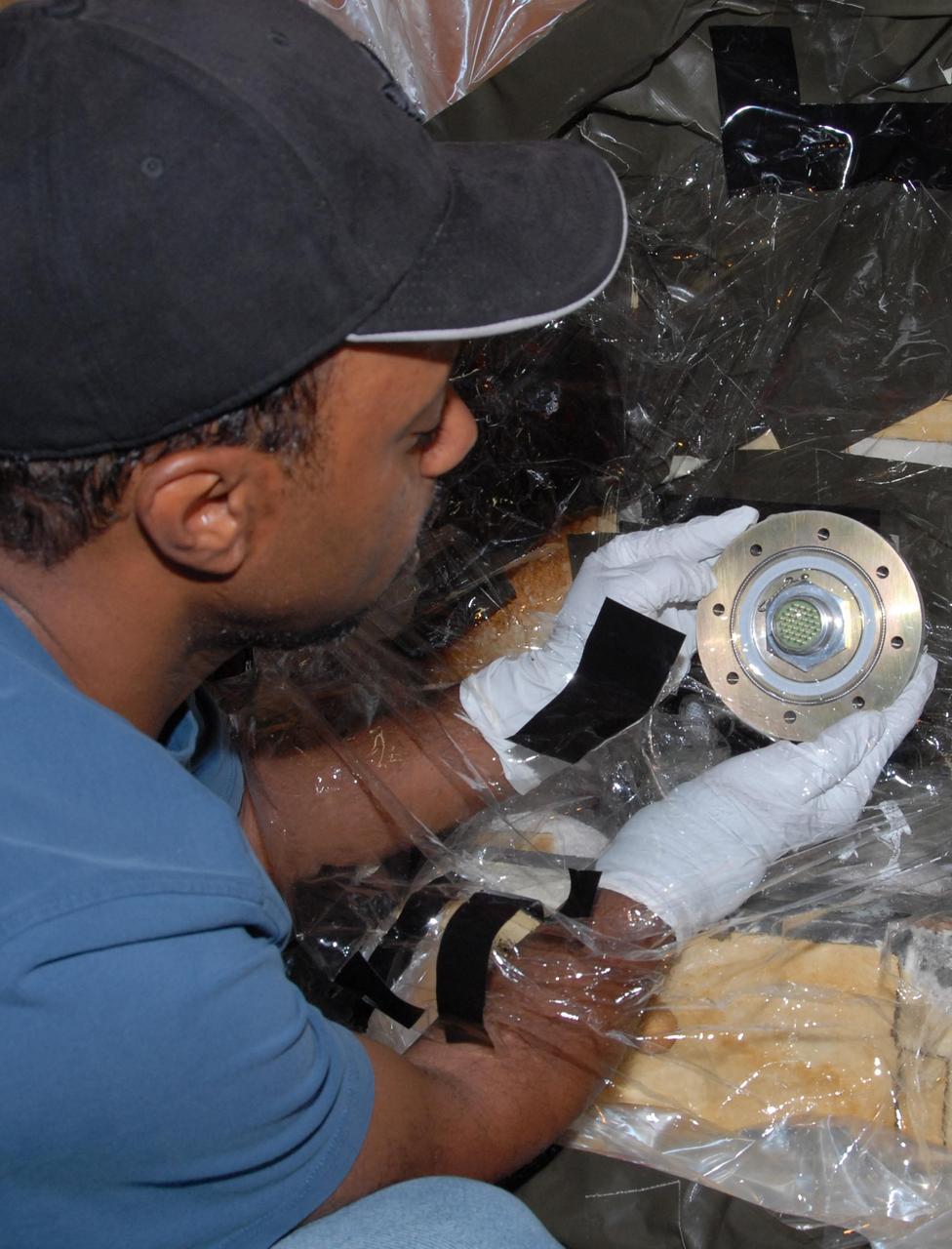
KENNEDY SPACE CENTER, FLA. -- At Launch Pad 39A, a team of external tank specialists from Lockheed Martin and the United Space Alliance undertakes the task of removing the hydrogen feed-through connector in support of space shuttle Atlantis' STS-122 mission. Here, a technician inspects the connector just removed from the external tank. Some of the tank's engine cutoff sensors, or ECO sensors, failed during propellant tanking for launch attempts on Dec. 6 and Dec. 9. Results of a tanking test on Dec. 18 pointed to an open circuit in the feed-through connector wiring, which is located at the base of the tank. The feed-through connector passes the wires from the inside of the tank to the outside. After the data from additional testing on the connector is analyzed, shuttle program managers will decide on a forward plan. Launch of STS-122 is targeted for January 2008. Photo credit: NASA/George Shelton

KENNEDY SPACE CENTER, FLA. -- At Launch Pad 39A, a team of external tank specialists from Lockheed Martin and the United Space Alliance undertakes the task of removing the hydrogen feed-through connector in support of space shuttle Atlantis' STS-122 mission. Here, a technician disconnects the connector before it is demated from the external tank. Some of the tank's engine cutoff sensors, or ECO sensors, failed during propellant tanking for launch attempts on Dec. 6 and Dec. 9. Results of a tanking test on Dec. 18 pointed to an open circuit in the feed-through connector wiring, which is located at the base of the tank. The feed-through connector passes the wires from the inside of the tank to the outside. After the data from additional testing on the connector is analyzed, shuttle program managers will decide on a forward plan. Launch of STS-122 is targeted for January 2008. Photo credit: NASA/George Shelton
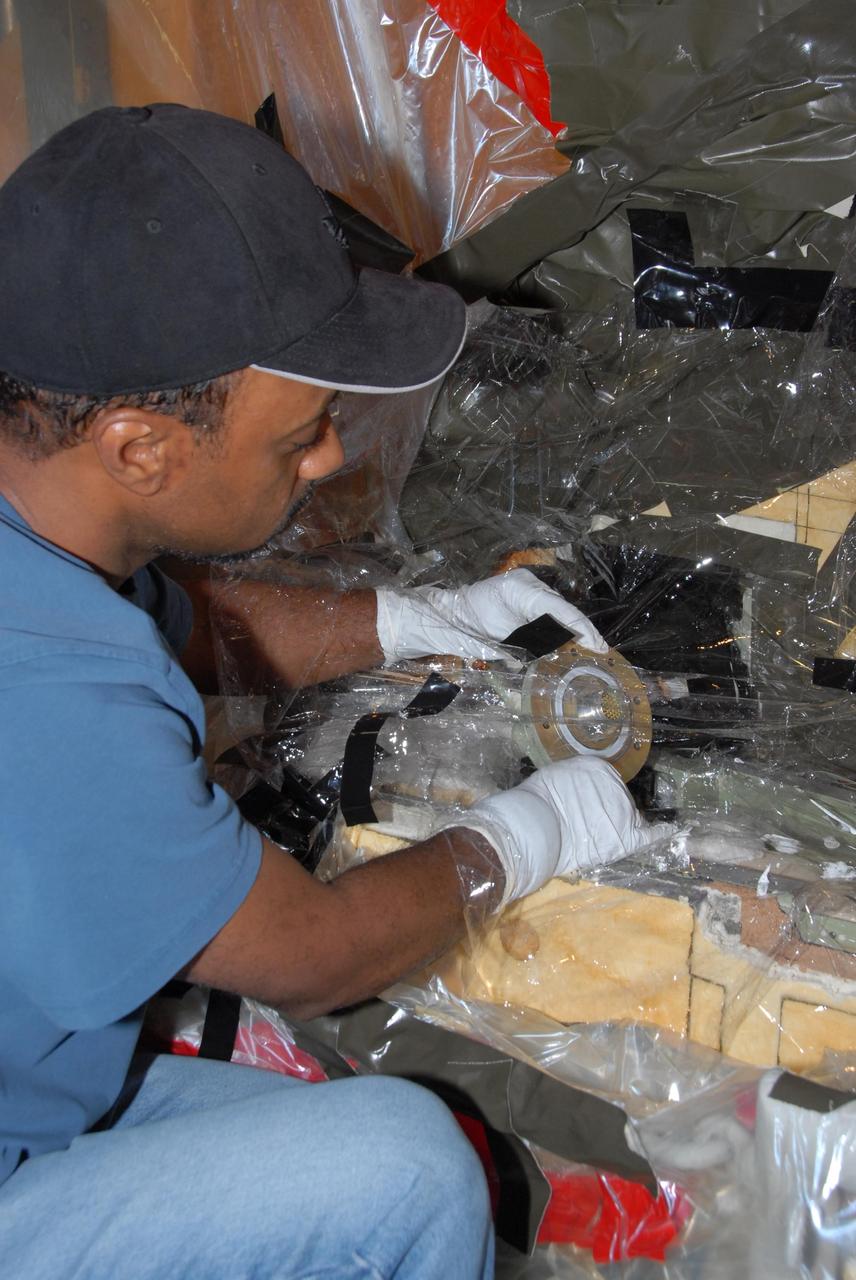
KENNEDY SPACE CENTER, FLA. -- At Launch Pad 39A, a team of external tank specialists from Lockheed Martin and the United Space Alliance undertakes the task of removing the hydrogen feed-through connector in support of space shuttle Atlantis' STS-122 mission. Here, a technician demates the connector from the external tank. Some of the tank's engine cutoff sensors, or ECO sensors, failed during propellant tanking for launch attempts on Dec. 6 and Dec. 9. Results of a tanking test on Dec. 18 pointed to an open circuit in the feed-through connector wiring, which is located at the base of the tank. The feed-through connector passes the wires from the inside of the tank to the outside. After the data from additional testing on the connector is analyzed, shuttle program managers will decide on a forward plan. Launch of STS-122 is targeted for January 2008. Photo credit: NASA/George Shelton
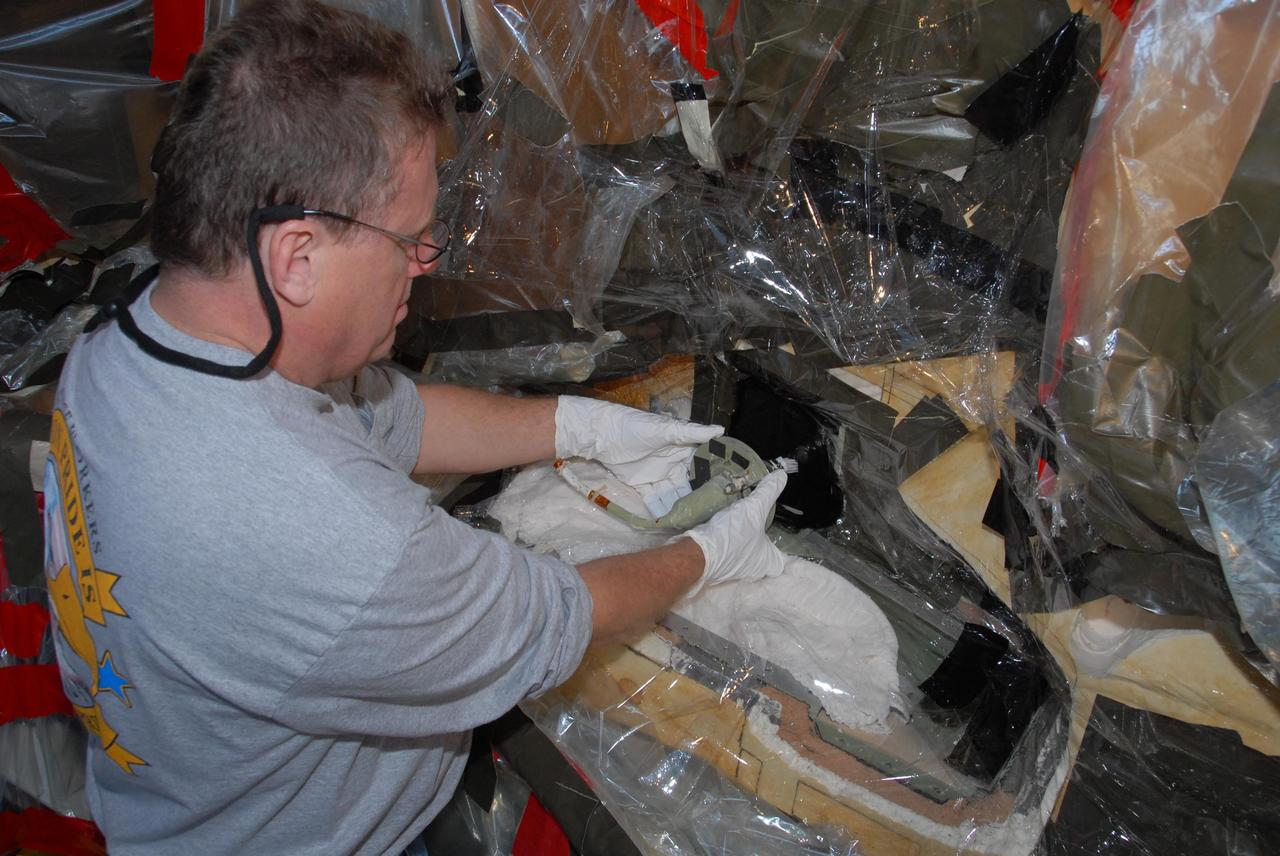
KENNEDY SPACE CENTER, FLA. -- At Launch Pad 39A, a team of external tank specialists from Lockheed Martin and the United Space Alliance undertakes the task of removing the hydrogen feed-through connector in support of space shuttle Atlantis' STS-122 mission. Here, a technician pulls the connector assembly, with its associated electrical harness, away from the tank. Some of the tank's engine cutoff sensors, or ECO sensors, failed during propellant tanking for launch attempts on Dec. 6 and Dec. 9. Results of a tanking test on Dec. 18 pointed to an open circuit in the feed-through connector wiring, which is located at the base of the tank. The feed-through connector passes the wires from the inside of the tank to the outside. After the data from additional testing on the connector is analyzed, shuttle program managers will decide on a forward plan. Launch of STS-122 is targeted for January 2008. Photo credit: NASA/George Shelton
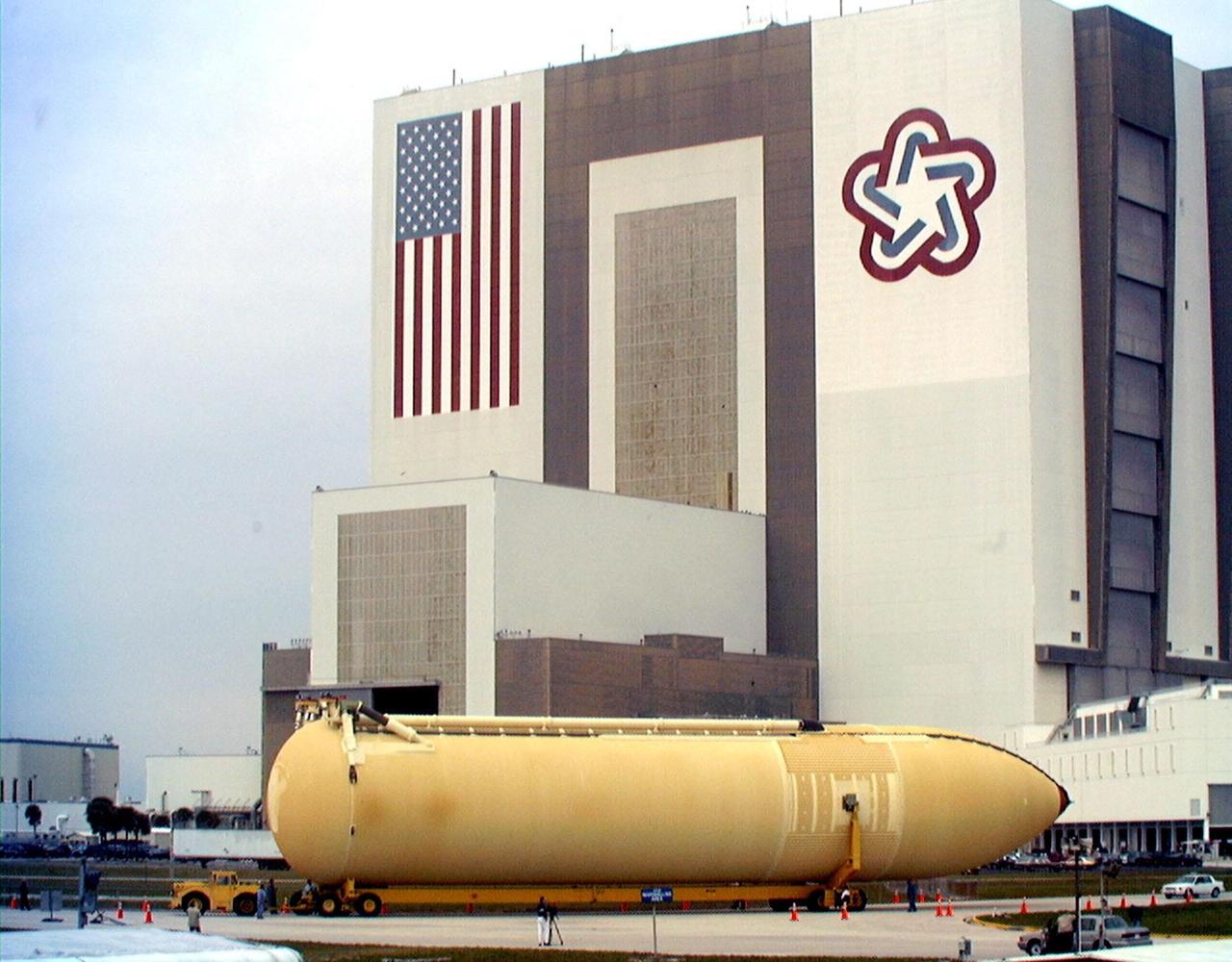
The Space Shuttle's first super lightweight external tank is on its way to Kennedy Space Center's Vehicle Assembly Building for processing. The tank, which is scheduled for flight on STS-91 in late May, arrived Feb. 3 in Port Canaveral, where it remained until Feb. 6 due to high winds. The improved tank is 7,500 pounds lighter than its predecessors and was developed to increase the Shuttle payload capacity on International Space Station assembly flights. Major changes to the lighter tank include the use of new materials and a revised internal design. The new liquid oxygen and liquid hydrogen tanks are constructed of aluminum lithium a lighter, stronger material than the metal alloy currently used. The redesigned walls of the liquid hydrogen tank were machined to provide additional strength and stability as well
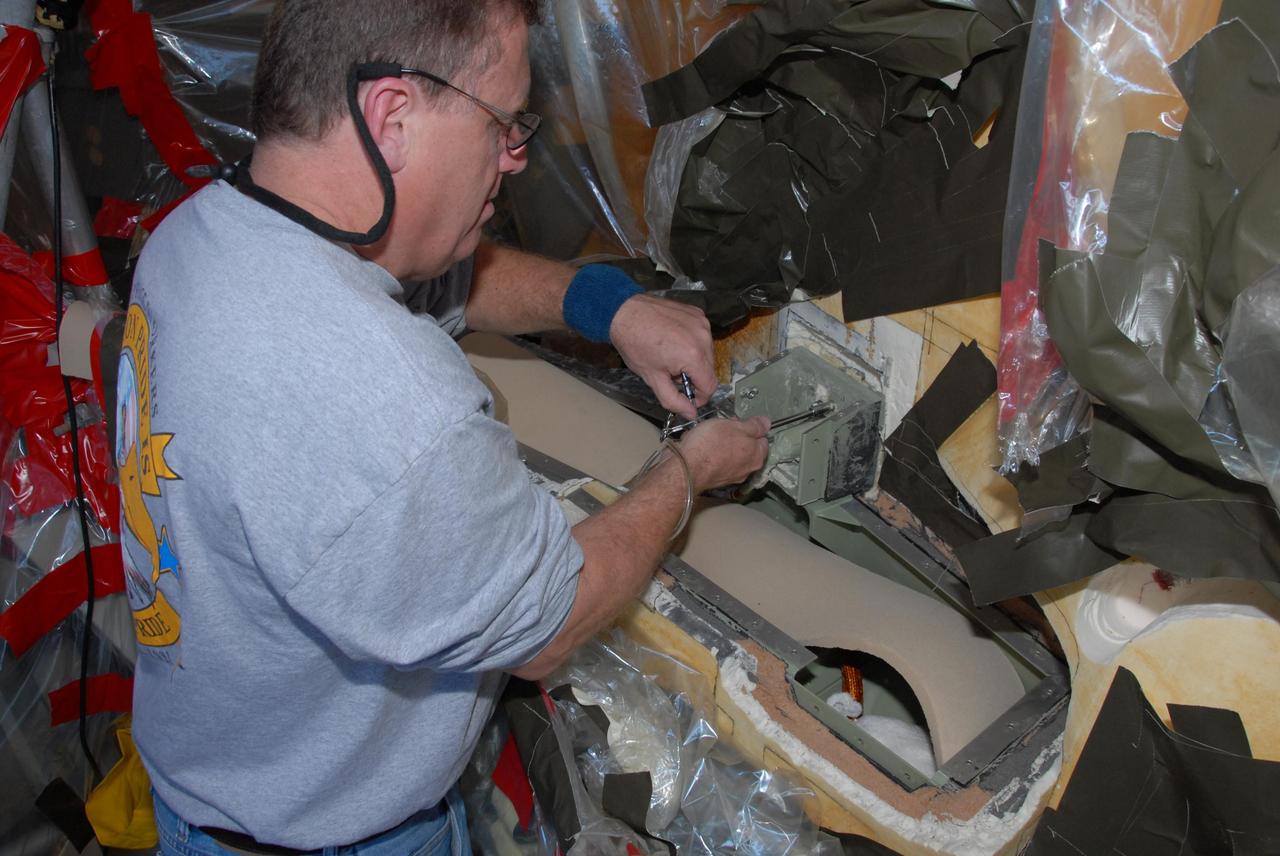
KENNEDY SPACE CENTER, FLA. -- At Launch Pad 39A, a team of external tank specialists from Lockheed Martin and the United Space Alliance undertakes the task of removing the hydrogen feed-through connector in support of space shuttle Atlantis' STS-122 mission. Here, a technician removes a pair of support brackets. Some of the tank's engine cutoff sensors, or ECO sensors, failed during propellant tanking for launch attempts on Dec. 6 and Dec. 9. Results of a tanking test on Dec. 18 pointed to an open circuit in the feed-through connector wiring, which is located at the base of the tank. The feed-through connector passes the wires from the inside of the tank to the outside. After the data from additional testing on the connector is analyzed, shuttle program managers will decide on a forward plan. Launch of STS-122 is targeted for January 2008. Photo credit: NASA/George Shelton

The Space Shuttle's first super lightweight external tank is on its way to Kennedy Space Center's Vehicle Assembly Building for processing. The tank, which is scheduled for flight on STS-91 in late May, arrived Feb. 3 in Port Canaveral, where it remained until Feb. 6 due to high winds. The improved tank is 7,500 pounds lighter than its predecessors and was developed to increase the Shuttle payload capacity on International Space Station assembly flights. Major changes to the lighter tank include the use of new materials and a revised internal design. The new liquid oxygen and liquid hydrogen tanks are constructed of aluminum lithium a lighter, stronger material than the metal alloy currently used. The redesigned walls of the liquid hydrogen tank were machined to provide additional strength and stability as well
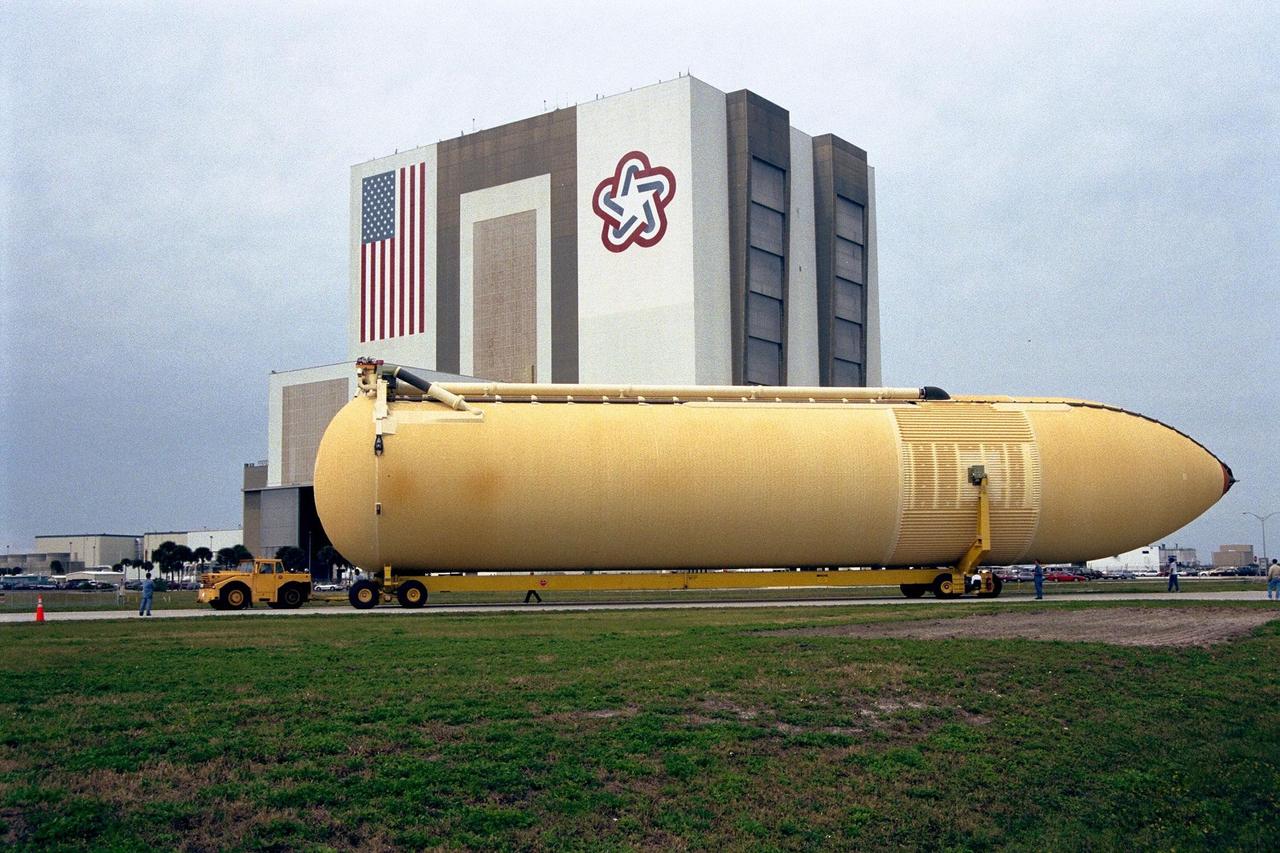
KENNEDY SPACE CENTER, FLA. -- The Space Shuttle's first super lightweight external tank is on its way to Kennedy Space Center's Vehicle Assembly Building for processing. The tank, which is scheduled for flight on STS-91 in late May, arrived Feb. 3 in Port Canaveral, where it remained until Feb. 6 due to high winds. The improved tank is 7,500 pounds lighter than its predecessors and was developed to increase the Shuttle payload capacity on International Space Station assembly flights. Major changes to the lighter tank include the use of new materials and a revised internal design. The new liquid oxygen and liquid hydrogen tanks are constructed of aluminum lithium a lighter, stronger material than the metal alloy currently used. The redesigned walls of the liquid hydrogen tank were machined to provide additional strength and stability as well
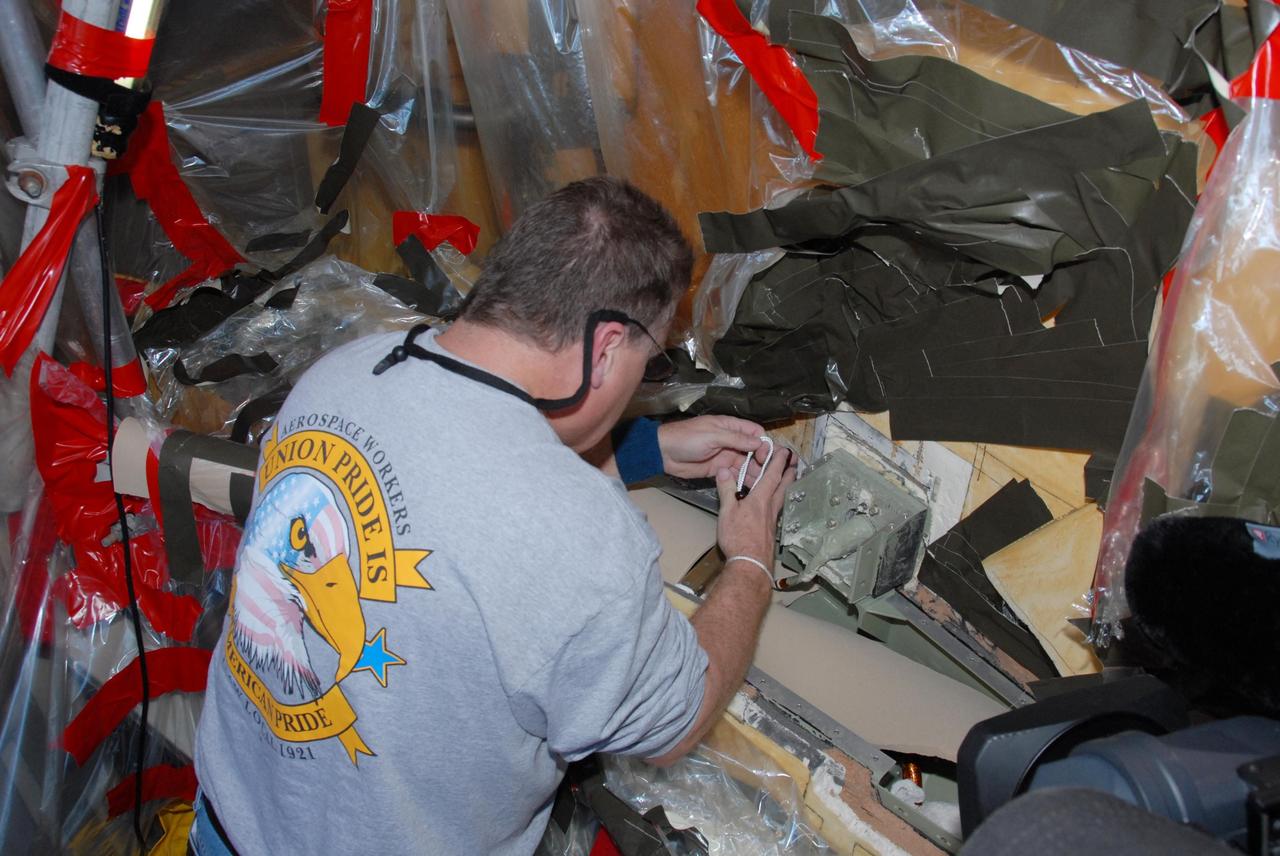
KENNEDY SPACE CENTER, FLA. -- At Launch Pad 39A, a team of external tank specialists from Lockheed Martin and the United Space Alliance undertakes the task of removing the hydrogen feed-through connector in support of space shuttle Atlantis' STS-122 mission. Here, a technician cuts the external connector cable. Some of the tank's engine cutoff sensors, or ECO sensors, failed during propellant tanking for launch attempts on Dec. 6 and Dec. 9. Results of a tanking test on Dec. 18 pointed to an open circuit in the feed-through connector wiring, which is located at the base of the tank. The feed-through connector passes the wires from the inside of the tank to the outside. After the data from additional testing on the connector is analyzed, shuttle program managers will decide on a forward plan. Launch of STS-122 is targeted for January 2008. Photo credit: NASA/George Shelton
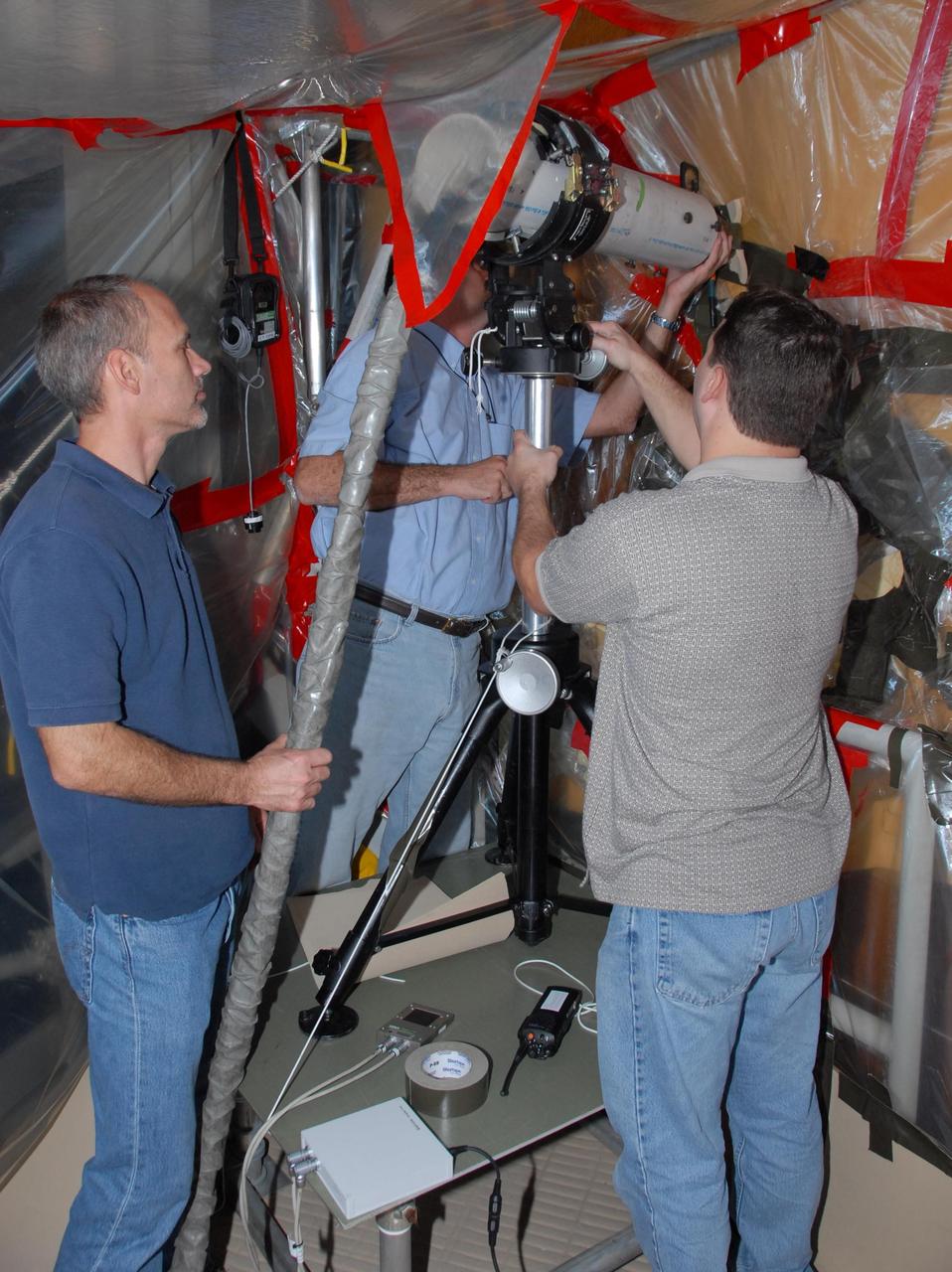
KENNEDY SPACE CENTER, FLA. -- At Launch Pad 39A, a team of external tank specialists from Lockheed Martin and the United Space Alliance undertakes the task of removing the hydrogen feed-through connector in support of space shuttle Atlantis' STS-122 mission. Here, technicians set up equipment that will be used to take X-rays of the connector cable. Some of the tank's engine cutoff sensors, or ECO sensors, failed during propellant tanking for launch attempts on Dec. 6 and Dec. 9. Results of a tanking test on Dec. 18 pointed to an open circuit in the feed-through connector wiring, which is located at the base of the tank. The feed-through connector passes the wires from the inside of the tank to the outside. After the data from additional testing on the connector is analyzed, shuttle program managers will decide on a forward plan. Launch of STS-122 is targeted for January 2008. Photo credit: NASA/George Shelton
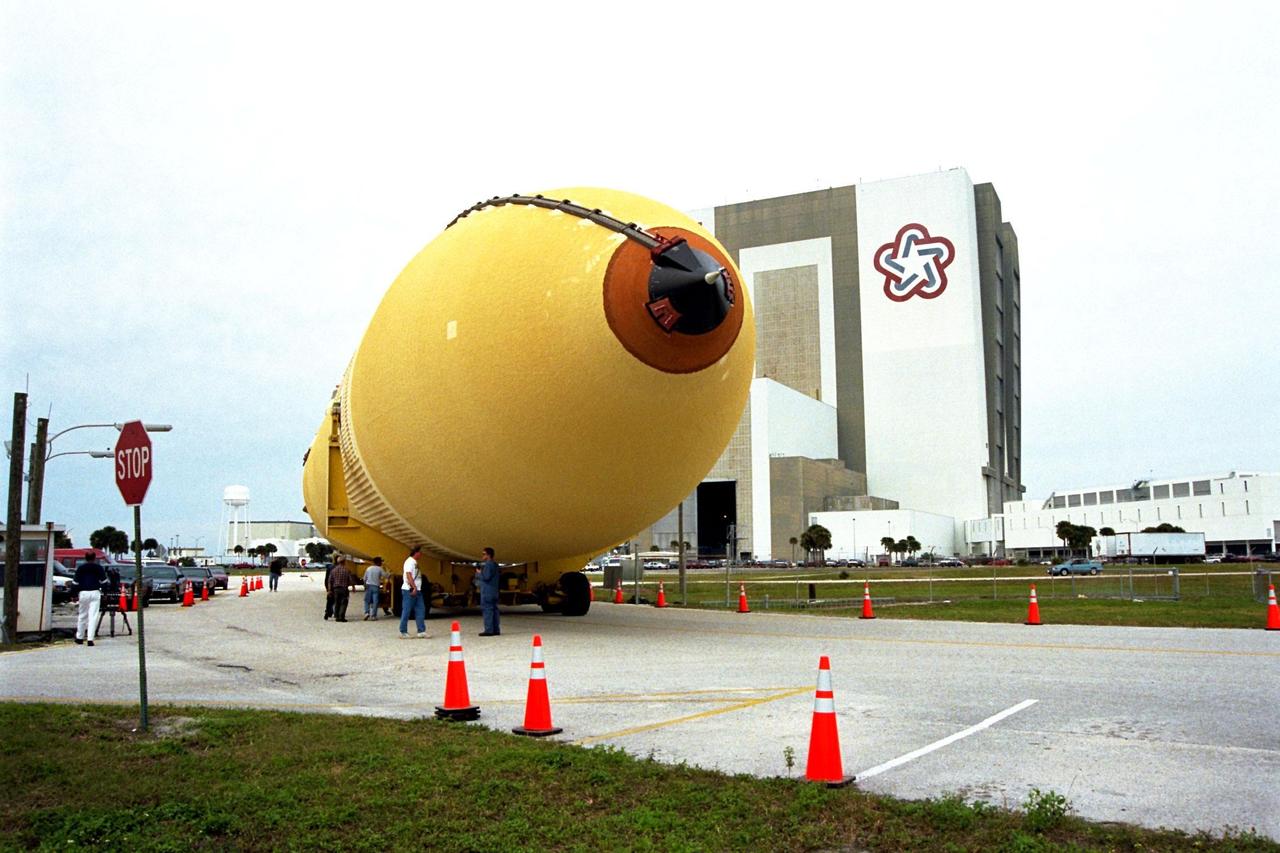
KENNEDY SPACE CENTER, FLA. -- The Space Shuttle's first super lightweight external tank is on its way to Kennedy Space Center's Vehicle Assembly Building for processing. The tank, which is scheduled for flight on STS-91 in late May, arrived Feb. 3 in Port Canaveral, where it remained until Feb. 6 due to high winds. The improved tank is 7,500 pounds lighter than its predecessors and was developed to increase the Shuttle payload capacity on International Space Station assembly flights. Major changes to the lighter tank include the use of new materials and a revised internal design. The new liquid oxygen and liquid hydrogen tanks are constructed of aluminum lithium a lighter, stronger material than the metal alloy currently used. The redesigned walls of the liquid hydrogen tank were machined to provide additional strength and stability as well
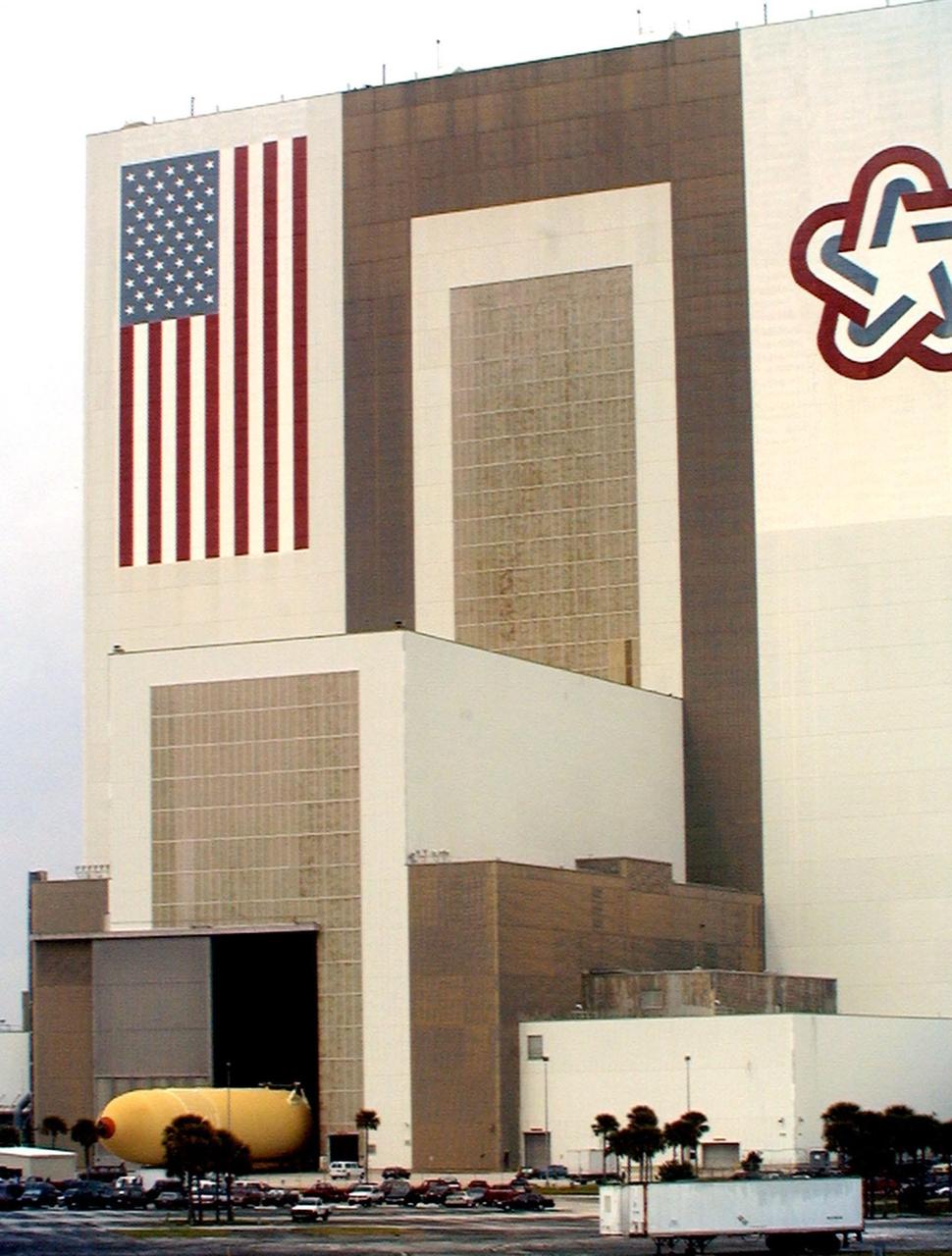
The Space Shuttle's first super lightweight external tank is on its way to Kennedy Space Center's Vehicle Assembly Building for processing. The tank, which is scheduled for flight on STS-91 in late May, arrived Feb. 3 in Port Canaveral, where it remained until Feb. 6 due to high winds. The improved tank is 7,500 pounds lighter than its predecessors and was developed to increase the Shuttle payload capacity on International Space Station assembly flights. Major changes to the lighter tank include the use of new materials and a revised internal design. The new liquid oxygen and liquid hydrogen tanks are constructed of aluminum lithium a lighter, stronger material than the metal alloy currently used. The redesigned walls of the liquid hydrogen tank were machined to provide additional strength and stability as well
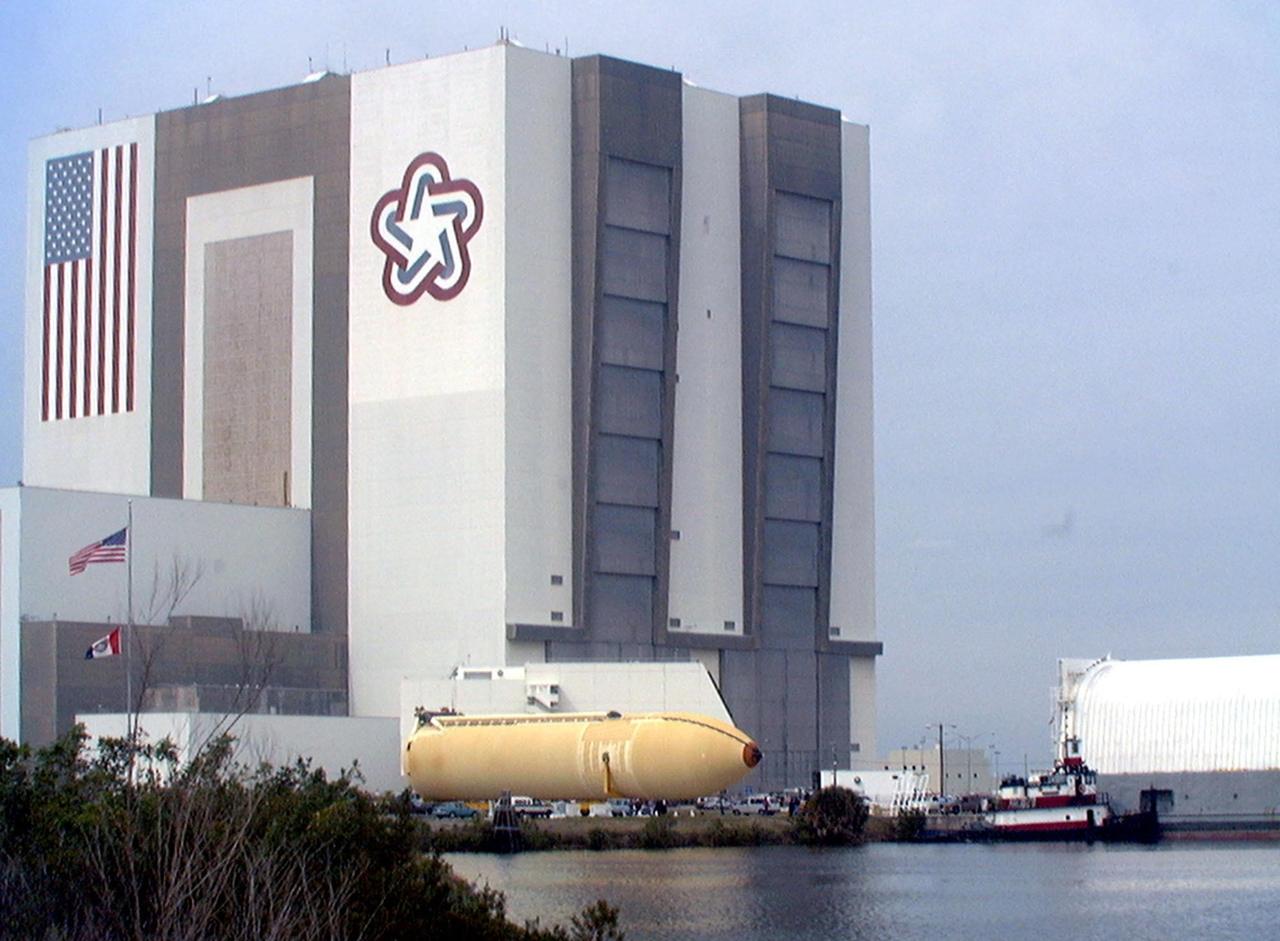
The Space Shuttle's first super lightweight external tank is on its way to Kennedy Space Center's Vehicle Assembly Building for processing. The tank, which is scheduled for flight on STS-91 in late May, arrived Feb. 3 in Port Canaveral, where it remained until Feb. 6 due to high winds. The improved tank is 7,500 pounds lighter than its predecessors and was developed to increase the Shuttle payload capacity on International Space Station assembly flights. Major changes to the lighter tank include the use of new materials and a revised internal design. The new liquid oxygen and liquid hydrogen tanks are constructed of aluminum lithium a lighter, stronger material than the metal alloy currently used. The redesigned walls of the liquid hydrogen tank were machined to provide additional strength and stability as well
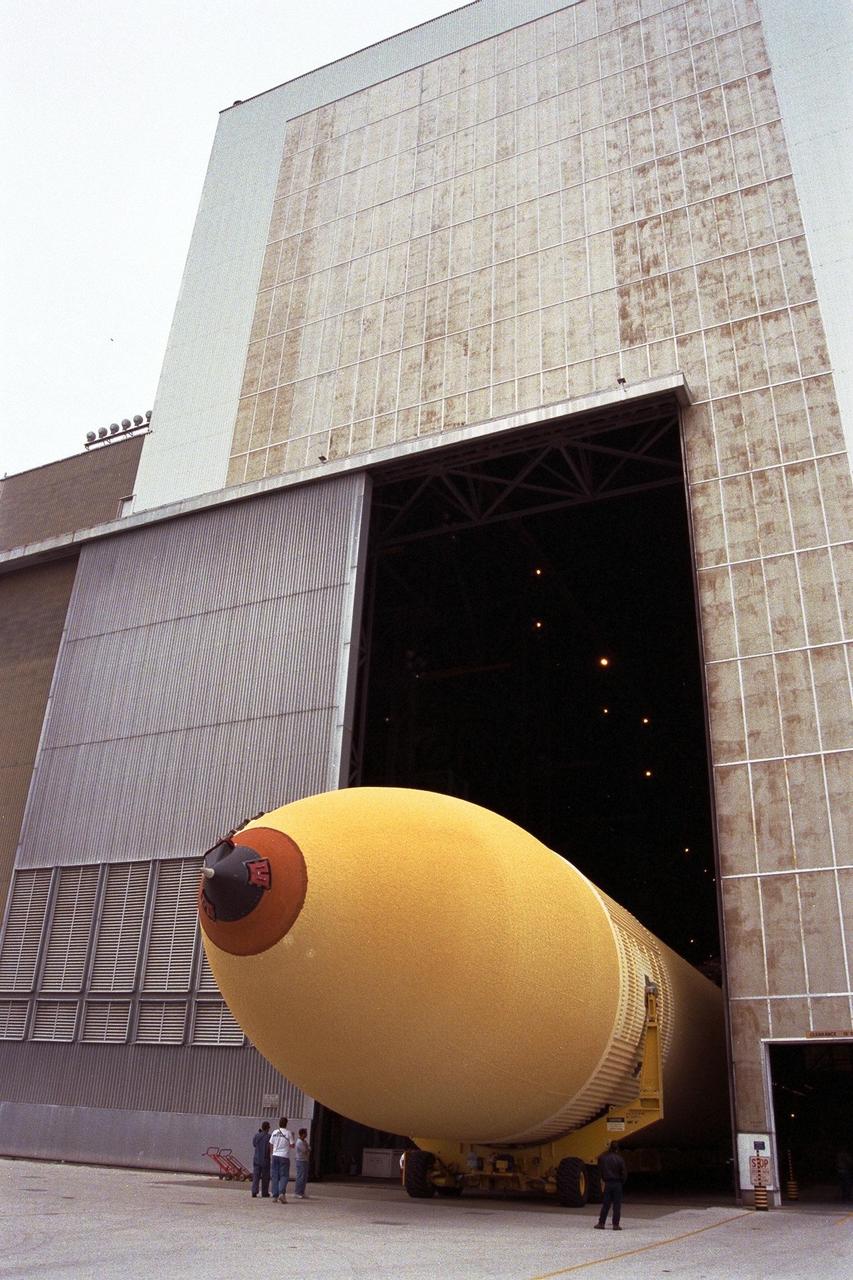
KENNEDY SPACE CENTER, FLA. -- The Space Shuttle's first super lightweight external tank is on its way into Kennedy Space Center's Vehicle Assembly Building for processing. The tank, which is scheduled for flight on STS-91 in late May, arrived Feb. 3 in Port Canaveral, where it remained until Feb. 6 due to high winds. The improved tank is 7,500 pounds lighter than its predecessors and was developed to increase the Shuttle payload capacity on International Space Station assembly flights. Major changes to the lighter tank include the use of new materials and a revised internal design. The new liquid oxygen and liquid hydrogen tanks are constructed of aluminum lithium a lighter, stronger material than the metal alloy currently used. The redesigned walls of the liquid hydrogen tank were machined to provide additional strength and stability as well
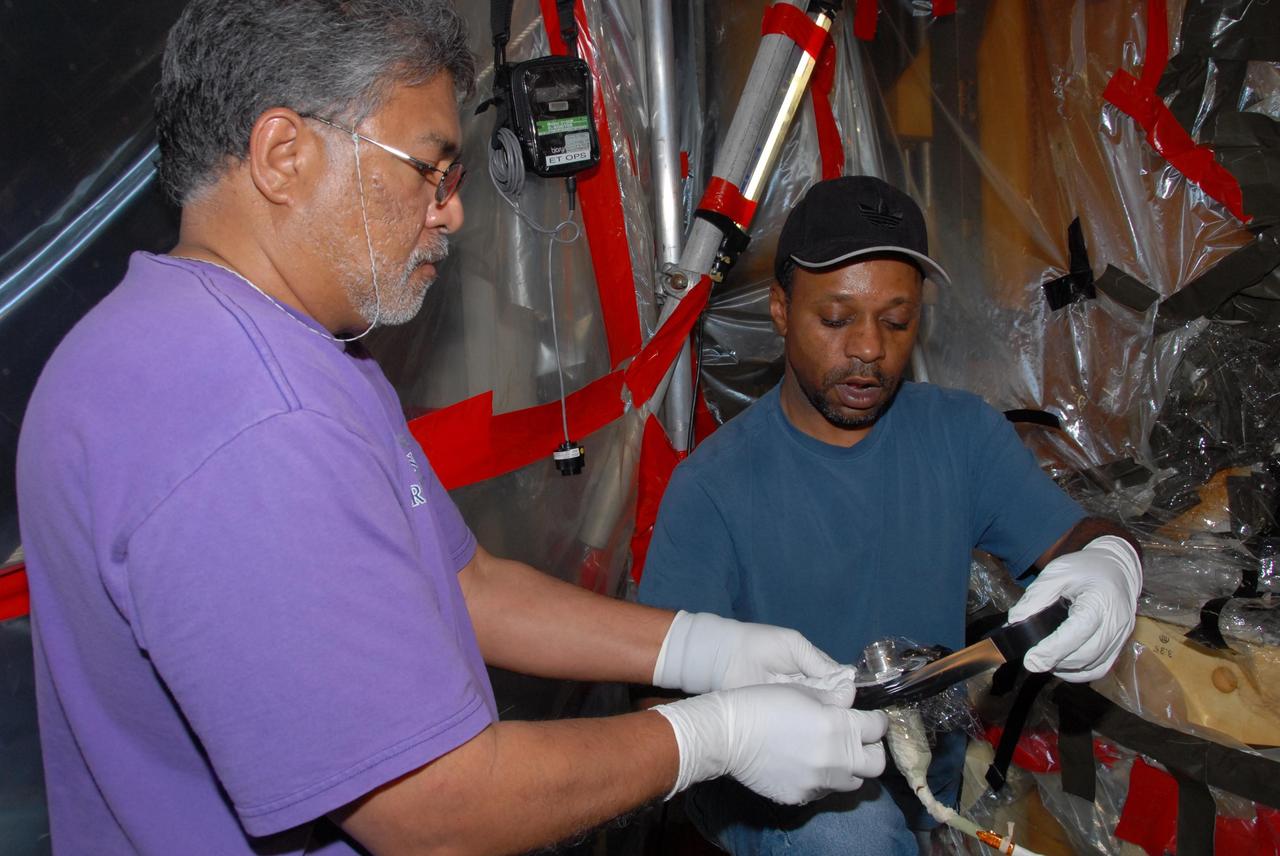
KENNEDY SPACE CENTER, FLA. -- At Launch Pad 39A, a team of external tank specialists from Lockheed Martin and the United Space Alliance undertakes the task of removing the hydrogen feed-through connector in support of space shuttle Atlantis' STS-122 mission. Here, technicians wrap the connector for transport to NASA's Marshall Space Flight Center in Huntsville, Ala., for further cryogenic testing. Some of the tank's engine cutoff sensors, or ECO sensors, failed during propellant tanking for launch attempts on Dec. 6 and Dec. 9. Results of a tanking test on Dec. 18 pointed to an open circuit in the feed-through connector wiring, which is located at the base of the tank. The feed-through connector passes the wires from the inside of the tank to the outside. After the data from additional testing on the connector is analyzed, shuttle program managers will decide on a forward plan. Launch of STS-122 is targeted for January 2008. Photo credit: NASA/George Shelton
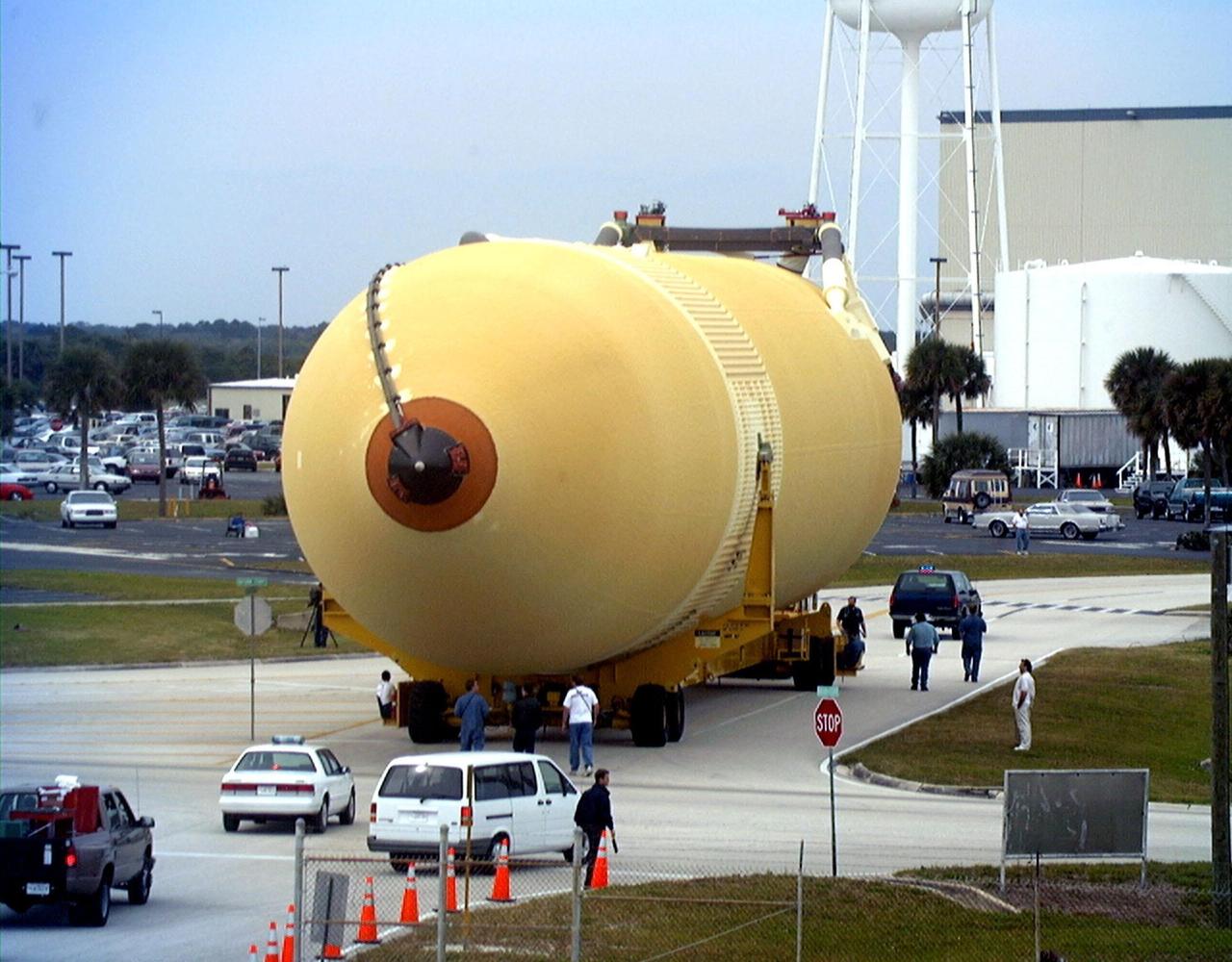
The Space Shuttle's first super lightweight external tank is on its way to Kennedy Space Center's Vehicle Assembly Building for processing. The tank, which is scheduled for flight on STS-91 in late May, arrived Feb. 3 in Port Canaveral, where it remained until Feb. 6 due to high winds. The improved tank is 7,500 pounds lighter than its predecessors and was developed to increase the Shuttle payload capacity on International Space Station assembly flights. Major changes to the lighter tank include the use of new materials and a revised internal design. The new liquid oxygen and liquid hydrogen tanks are constructed of aluminum lithium a lighter, stronger material than the metal alloy currently used. The redesigned walls of the liquid hydrogen tank were machined to provide additional strength and stability as well
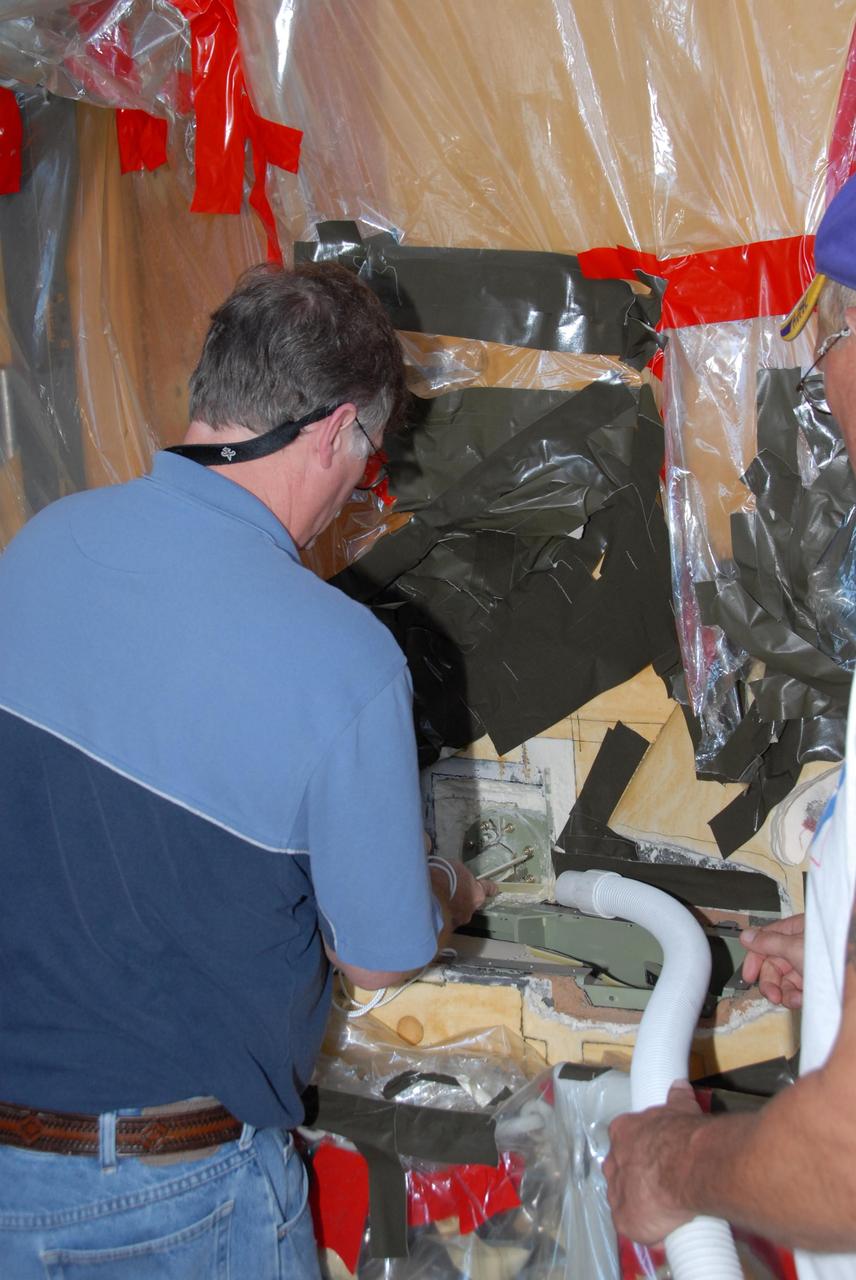
KENNEDY SPACE CENTER, FLA. -- At Launch Pad 39A, a team of external tank specialists from Lockheed Martin and the United Space Alliance undertakes the task of removing the hydrogen feed-through connector in support of space shuttle Atlantis' STS-122 mission. Here, a technician gives the connector a cleaning, removing any residual foam insulation, and begins disconnecting the connector assembly. Some of the tank's engine cutoff sensors, or ECO sensors, failed during propellant tanking for launch attempts on Dec. 6 and Dec. 9. Results of a tanking test on Dec. 18 pointed to an open circuit in the feed-through connector wiring, which is located at the base of the tank. The feed-through connector passes the wires from the inside of the tank to the outside. After the data from additional testing on the connector is analyzed, shuttle program managers will decide on a forward plan. Launch of STS-122 is targeted for January 2008. Photo credit: NASA/George Shelton

KENNEDY SPACE CENTER, FLA. -- At Launch Pad 39A, a team of external tank specialists from Lockheed Martin and the United Space Alliance undertakes the task of removing the hydrogen feed-through connector in support of space shuttle Atlantis' STS-122 mission. Here, technicians wrap the connector for transport to NASA's Marshall Space Flight Center in Huntsville, Ala., for further cryogenic testing. Some of the tank's engine cutoff sensors, or ECO sensors, failed during propellant tanking for launch attempts on Dec. 6 and Dec. 9. Results of a tanking test on Dec. 18 pointed to an open circuit in the feed-through connector wiring, which is located at the base of the tank. The feed-through connector passes the wires from the inside of the tank to the outside. After the data from additional testing on the connector is analyzed, shuttle program managers will decide on a forward plan. Launch of STS-122 is targeted for January 2008. Photo credit: NASA/George Shelton
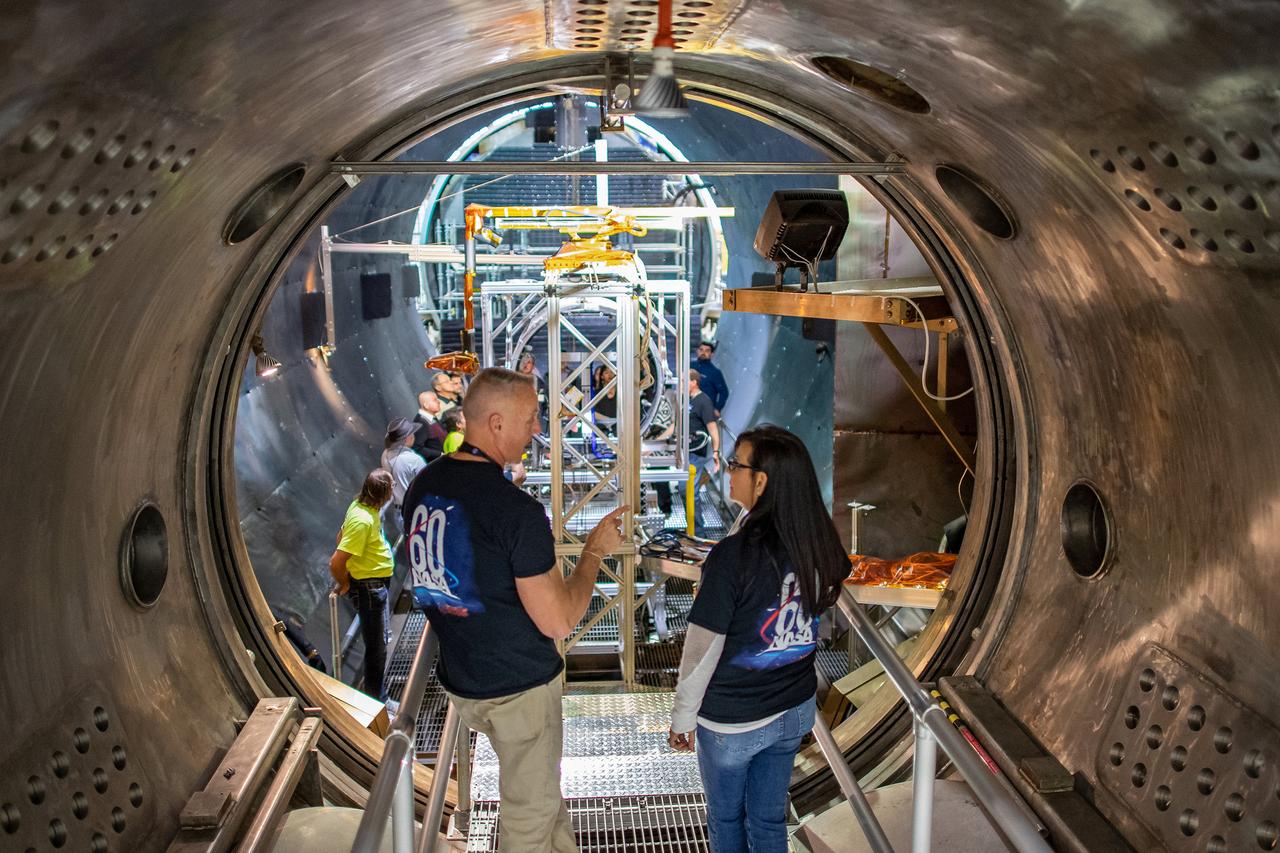
NASA 60th Anniversary Public Tours / NASA 60th Anniversary Celebration at the Great Lakes Science Center
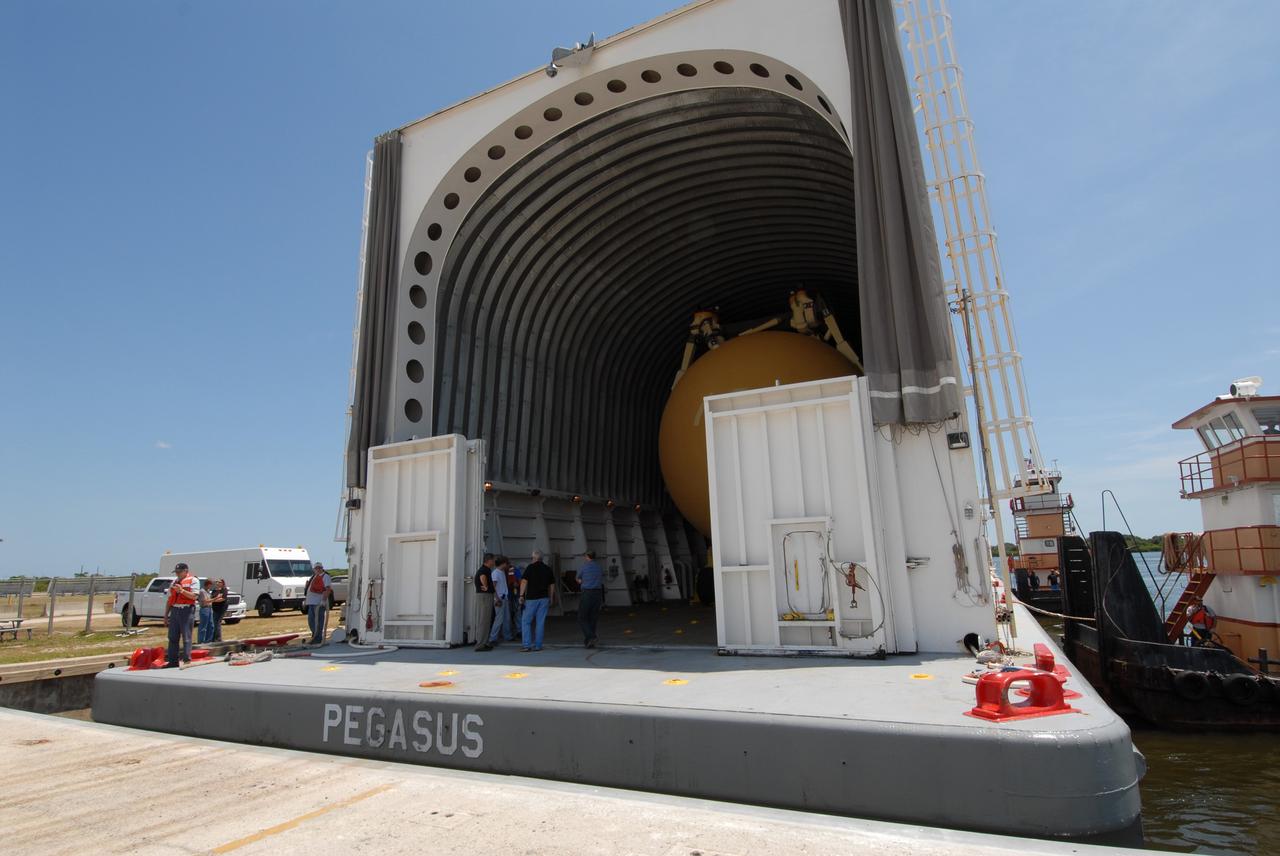
CAPE CANAVERAL, Fla. – The Pegasus barge is docked in the turn basin in the Launch Complex 39 Area at NASA's Kennedy Space Center in Florida. Inside is the external fuel tank, ET- 132, designated for space shuttle Discovery on the STS-128 mission. The tank will be offloaded and transported to a high bay in the Vehicle Assembly Building for checkout. On the STS-128 mission, Discovery will carry science and storage racks to the International Space Station. Launch of Discovery is targeted for Aug. 6. Photo credit: NASA/Troy Cryder
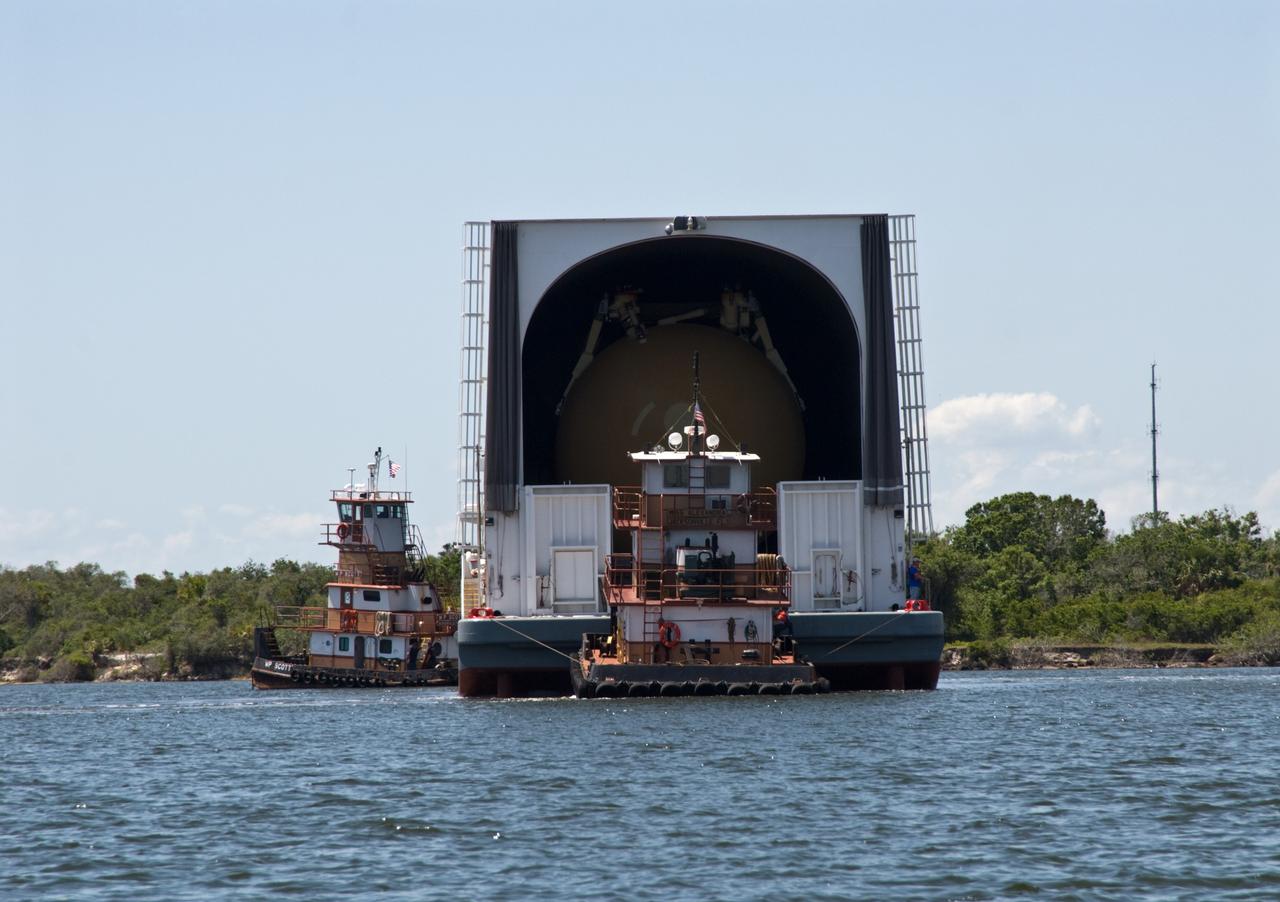
CAPE CANAVERAL, Fla. – Tugboats maneuver the Pegasus barge toward the dock in the turn basin in the Launch Complex 39 Area at NASA's Kennedy Space Center in Florida. The barge holds the external fuel tank, ET- 132, designated for space shuttle Discovery on the STS-128 mission. The tank will be offloaded and transported to a high bay in the Vehicle Assembly Building for checkout. On the STS-128 mission, Discovery will carry science and storage racks to the International Space Station. Launch of Discovery is targeted for Aug. 6. Photo credit: NASA/Troy Cryder
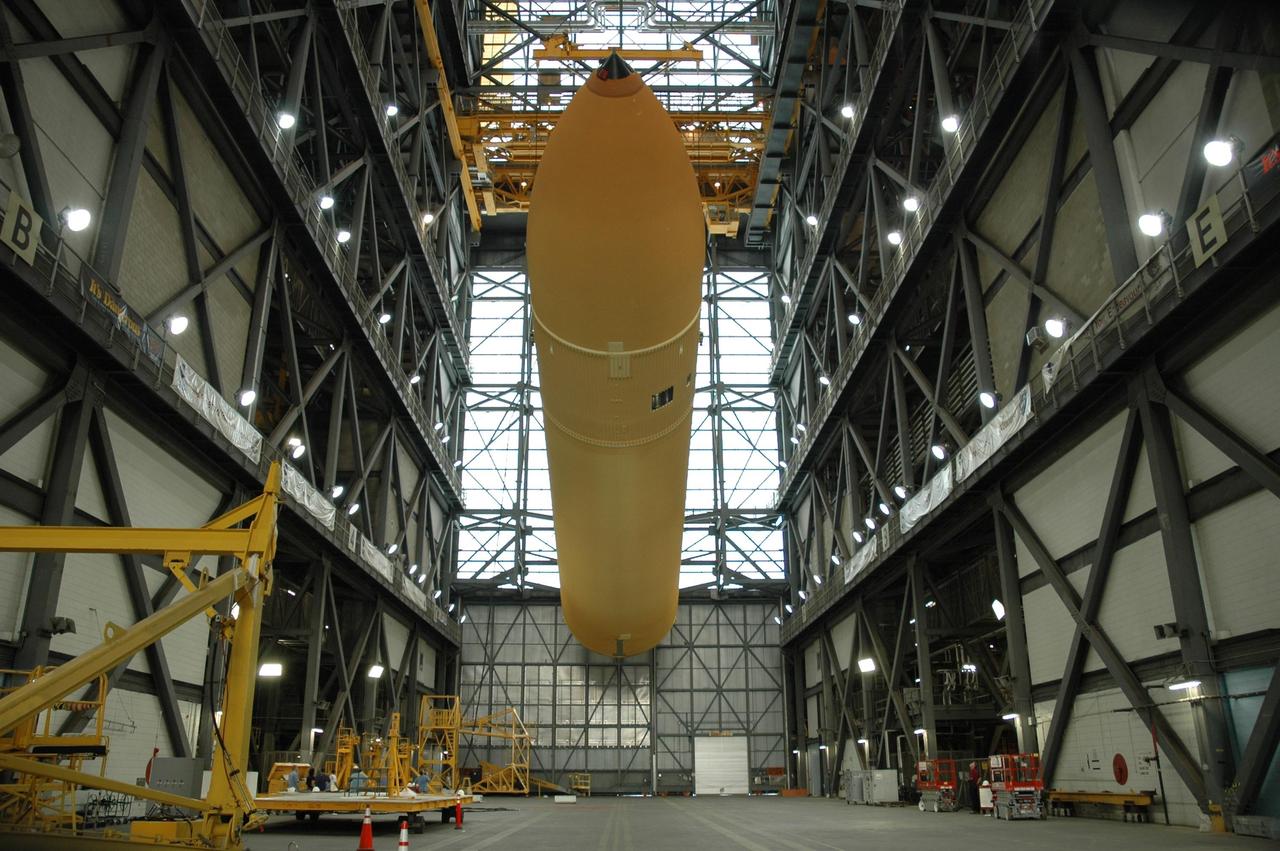
KENNEDY SPACE CENTER, FLA. -- In the transfer aisle of the Vehicle Assembly Building, external tank No. 125 is suspended above the floor as it is being raised to a vertical position. It will then be lifted into a checkout cell in high bay 4 to allow for processing. The tank will be part of the space shuttle stack for mission STS-122 targeted to launch Dec. 6. Photo credit: NASA/Troy Cryder
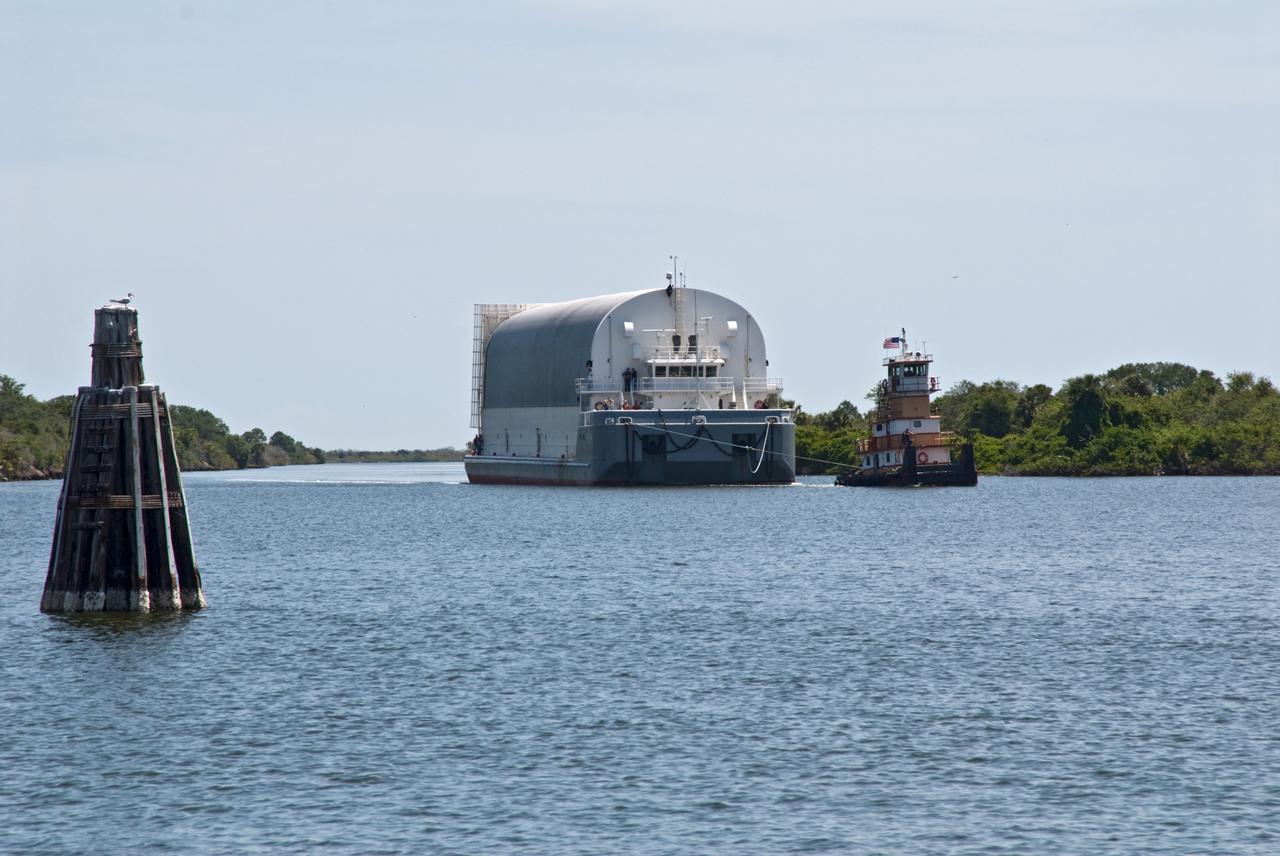
CAPE CANAVERAL, Fla. – The Pegasus barge, towed by a tugboat, enters the turn basin in the Launch Complex 39 Area at NASA's Kennedy Space Center in Florida. The barge holds the external fuel tank, ET- 132, designated for space shuttle Discovery on the STS-128 mission. The tank will be offloaded and transported to a high bay in the Vehicle Assembly Building for checkout. On the STS-128 mission, Discovery will carry science and storage racks to the International Space Station. Launch of Discovery is targeted for Aug. 6. Photo credit: NASA/Troy Cryder
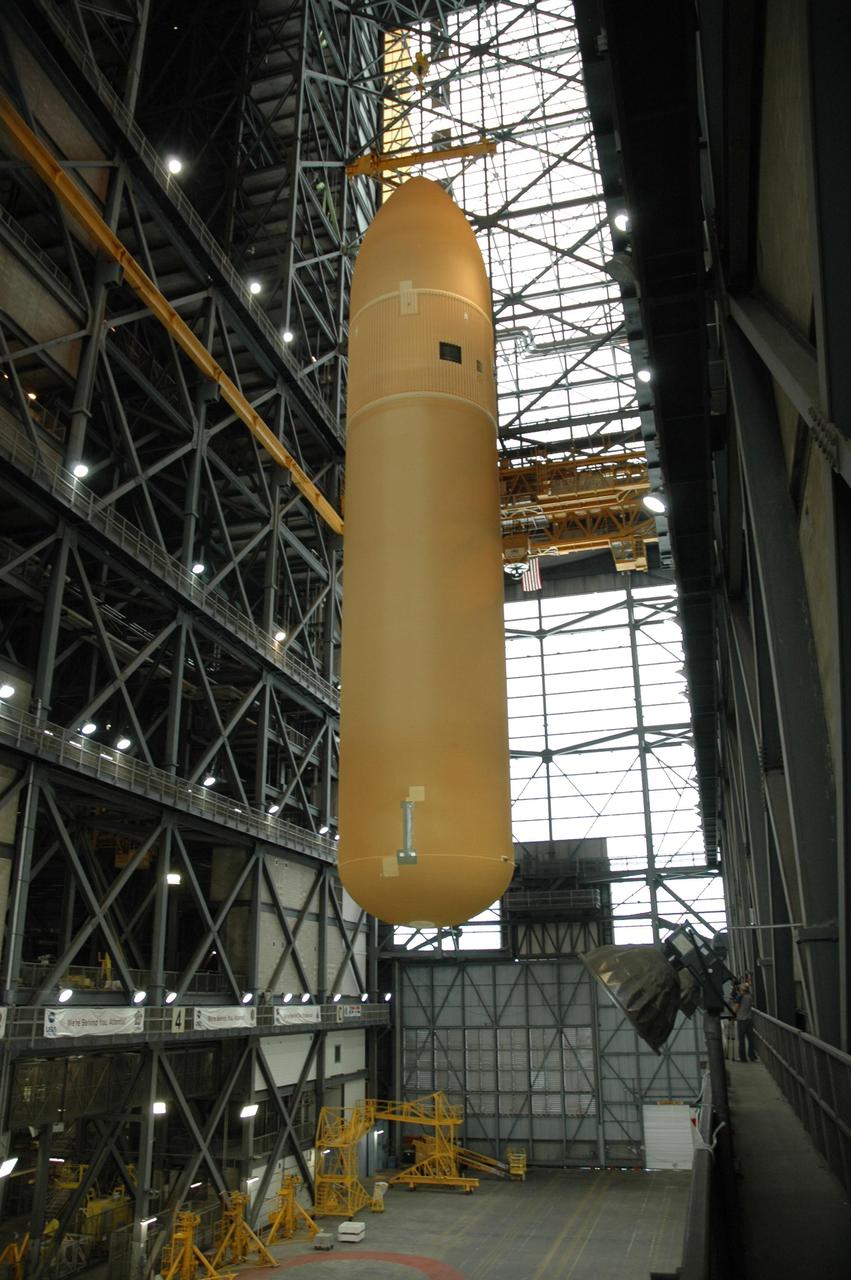
KENNEDY SPACE CENTER, FLA. -- In its vertical position, external tank No. 125 is being lifted high into the upper levels of the Vehicle Assembly Building for transfer to a checkout cell in high bay 4 to allow for processing. The tank will be part of the space shuttle stack for mission STS-122 targeted to launch Dec. 6. Photo credit: NASA/Troy Cryder
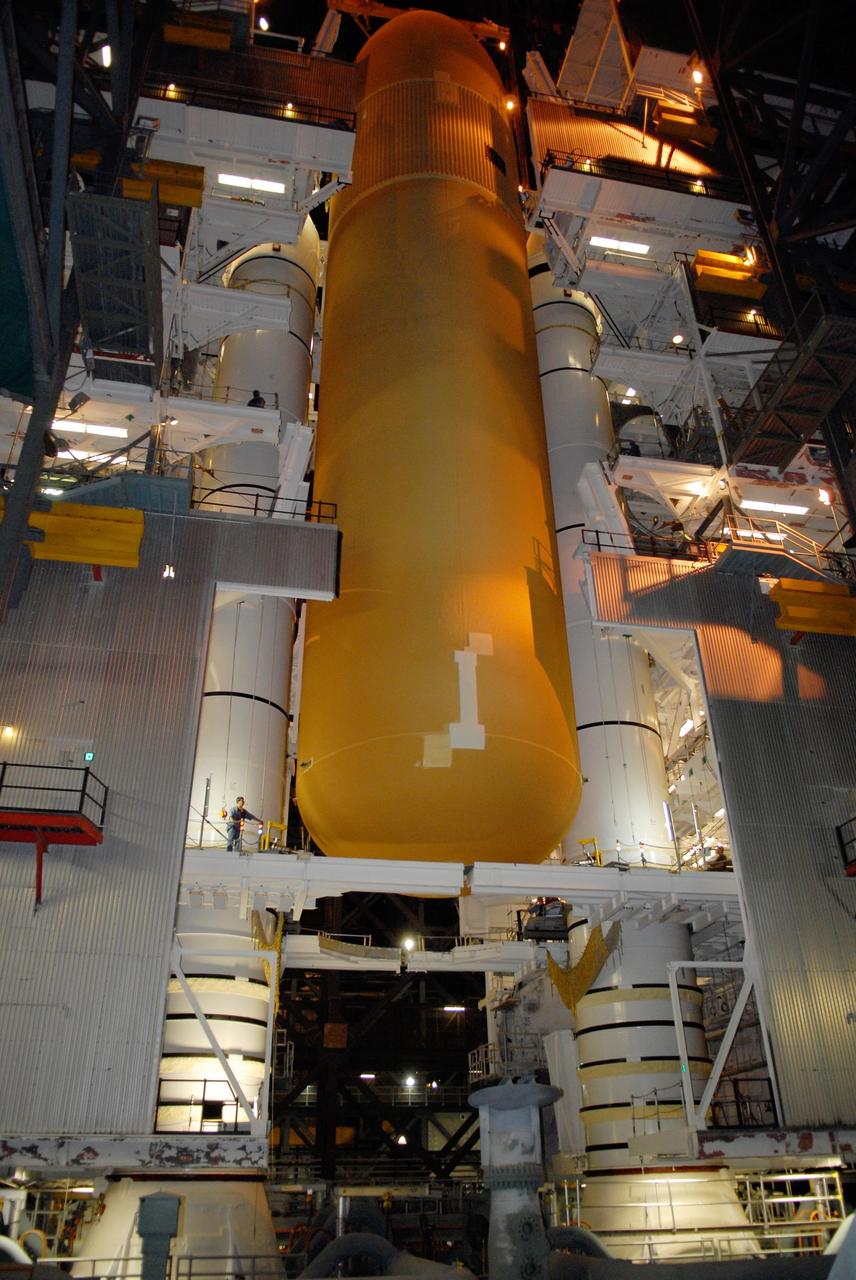
KENNEDY SPACE CENTER, FLA. -- In the Vehicle Assembly Building at NASA's Kennedy Space Center, the external tank is lowered between the solid rocket boosters on the mobile launcher platform below. After mating, the boosters-tank configuration will be used on space shuttle Atlantis for mission STS-122, which is targeted for launch on Dec. 6. Photo credit: Kim Shiflett
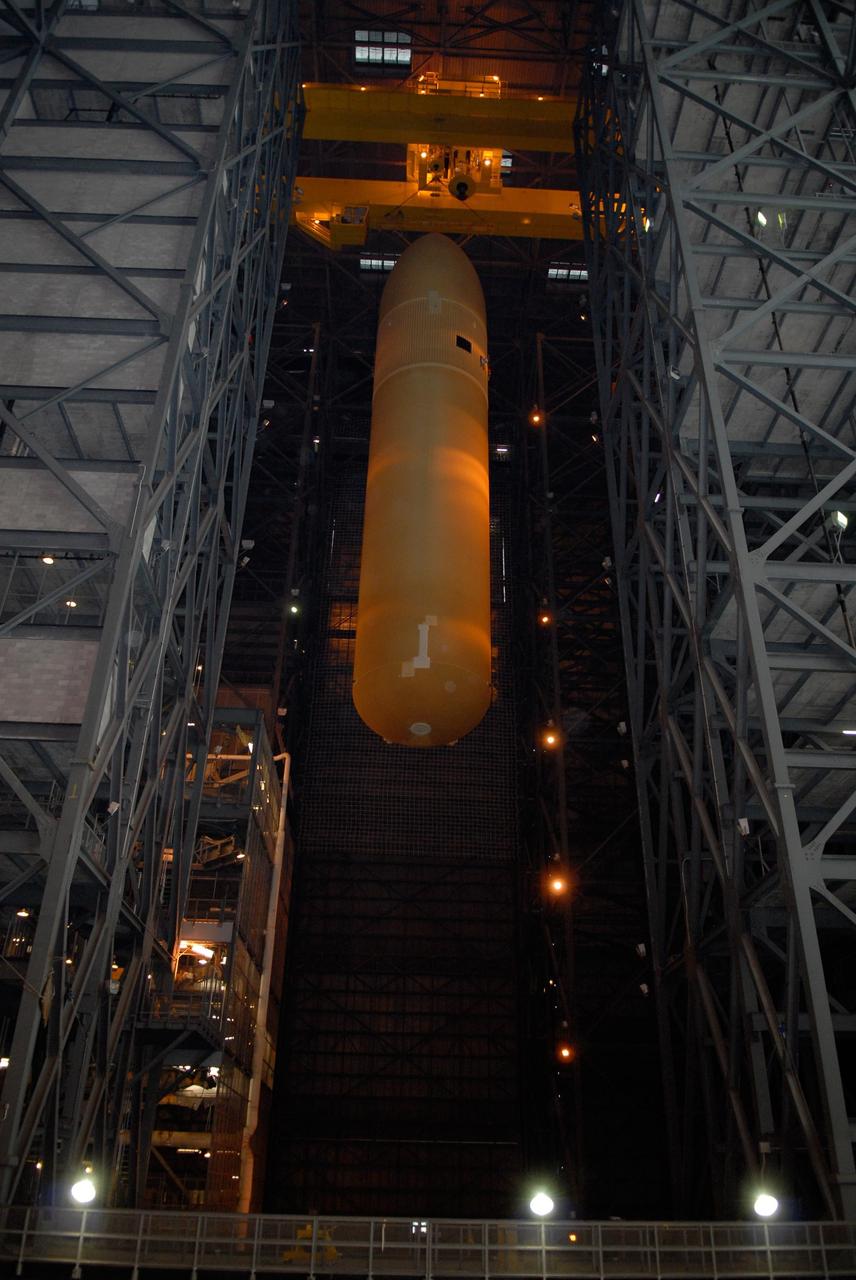
KENNEDY SPACE CENTER, FLA. -- In the Vehicle Assembly Building at NASA's Kennedy Space Center, the external tank is lowered toward the solid rocket boosters on the mobile launcher platform below. After mating, the boosters-tank configuration will be used on space shuttle Atlantis for mission STS-122, which is targeted for launch on Dec. 6. Photo credit: Kim Shiflett

KENNEDY SPACE CENTER, FLA. --In the Vehicle Assembly Building at NASA's Kennedy Space Center, the external tank is lowered toward the solid rocket boosters on the mobile launcher platform below. After mating, the boosters-tank configuration will be used on space shuttle Atlantis for mission STS-122, which is targeted for launch on Dec. 6. Photo credit: Kim Shiflett
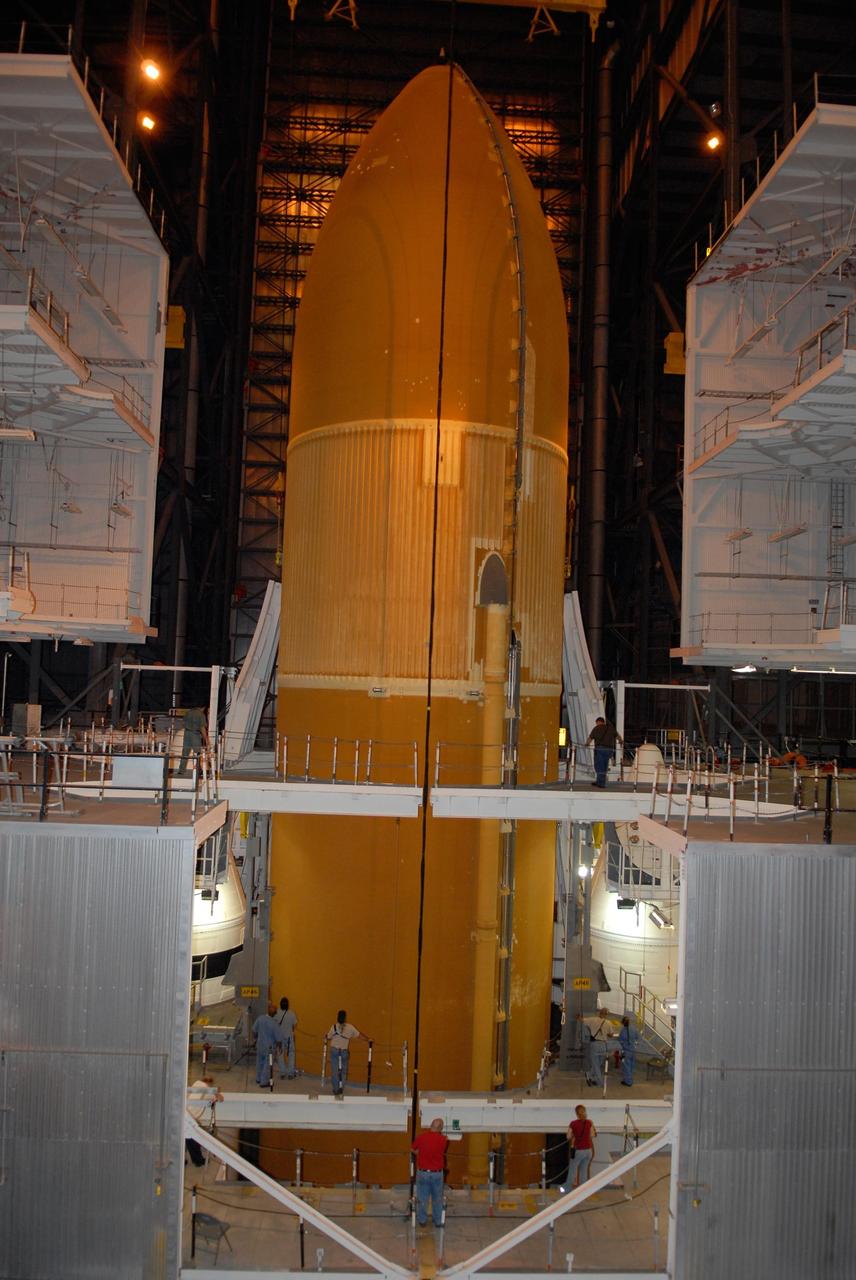
KENNEDY SPACE CENTER, FLA. -- In the Vehicle Assembly Building at NASA's Kennedy Space Center, the external tank is lowered between the solid rocket boosters on the mobile launcher platform below. After mating, the boosters-tank configuration will be used on space shuttle Atlantis for mission STS-122, which is targeted for launch on Dec. 6. Photo credit: Kim Shiflett
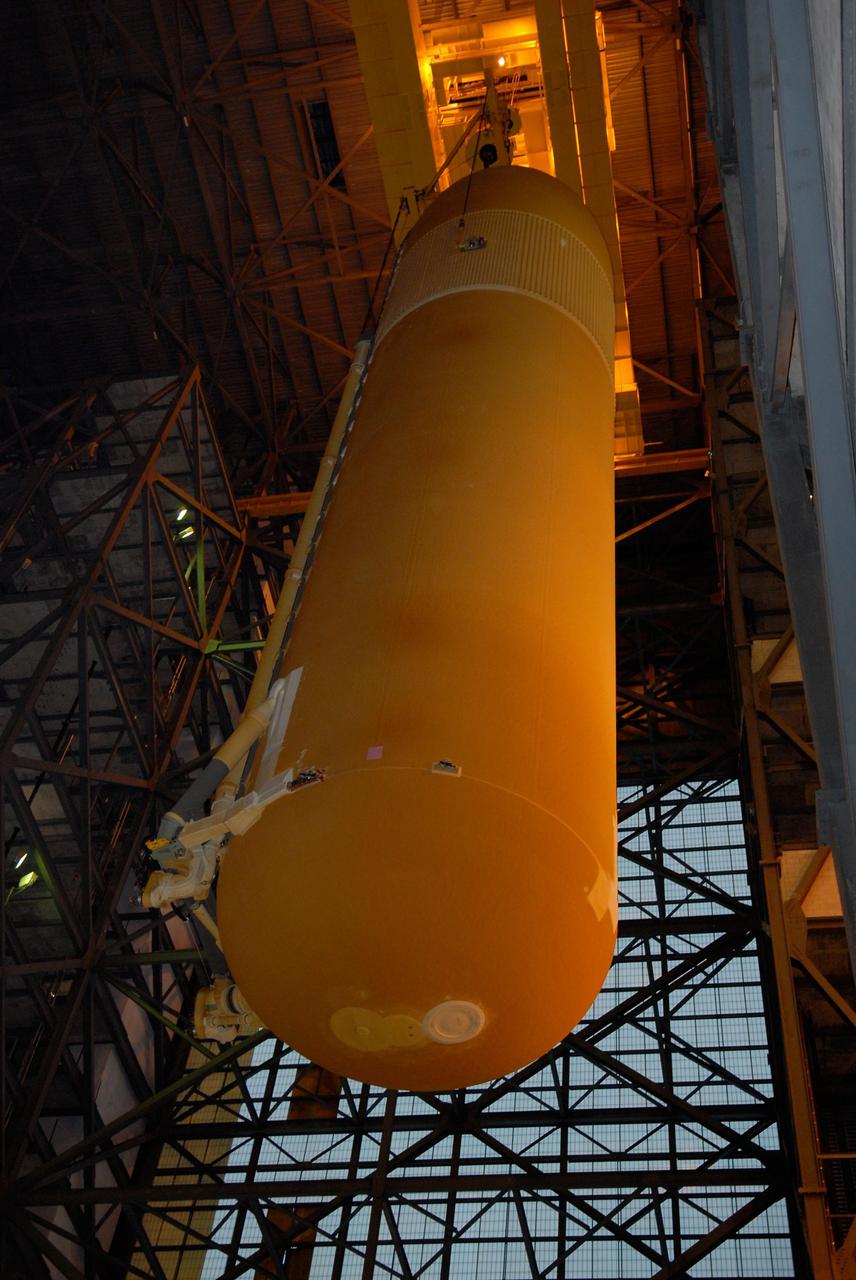
KENNEDY SPACE CENTER, FLA. -- In the Vehicle Assembly Building at NASA's Kennedy Space Center, the external tank is lowered toward the solid rocket boosters on the mobile launcher platform below. Visible on the bottom is an orbiter aft attachment. After mating, the boosters-tank configuration will be used on space shuttle Atlantis for mission STS-122, which is targeted for launch on Dec. 6. Photo credit: Kim Shiflett

KENNEDY SPACE CENTER, FLA. -- In the Vehicle Assembly Building at NASA's Kennedy Space Center, the external tank is lowered between the solid rocket boosters on the mobile launcher platform below. After mating, the boosters-tank configuration will be used on space shuttle Atlantis for mission STS-122, which is targeted for launch on Dec. 6. Photo credit: Kim Shiflett
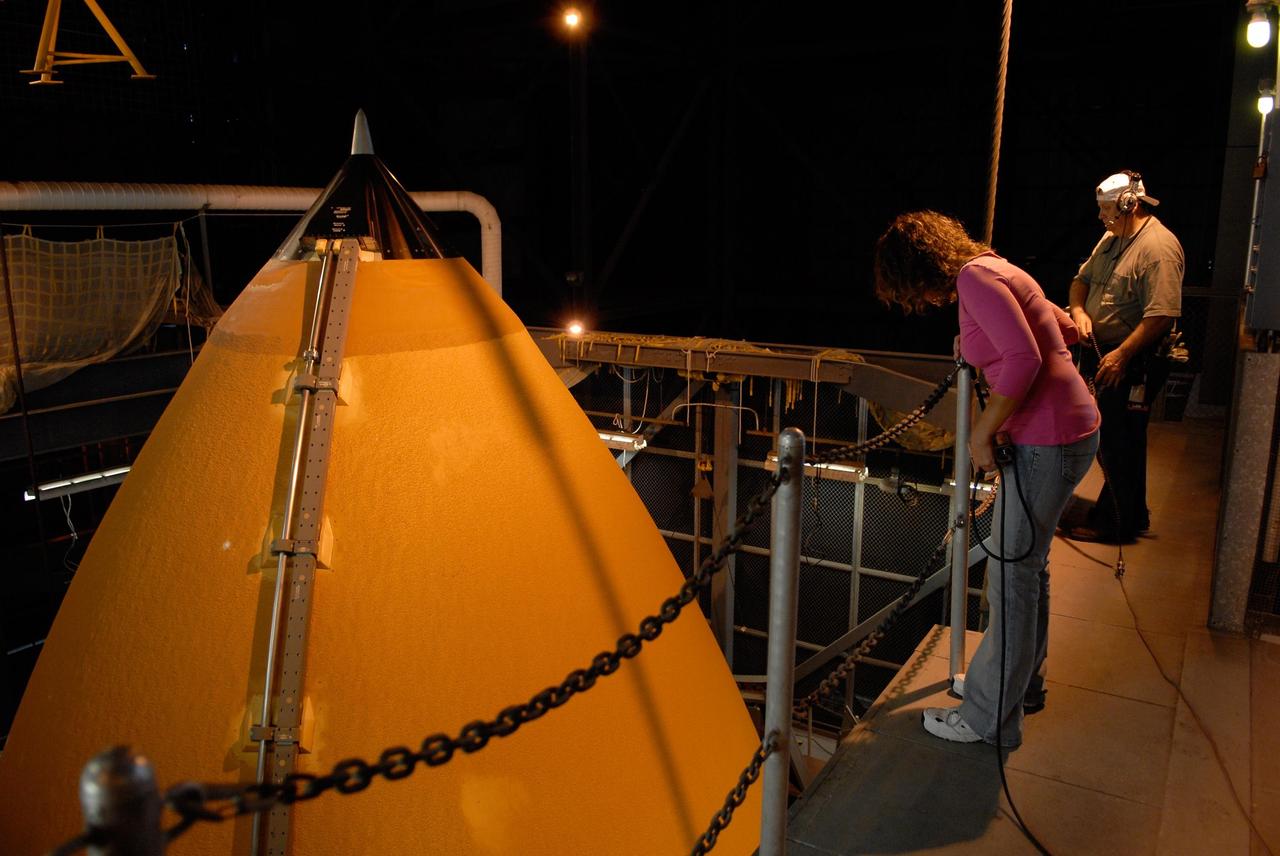
KENNEDY SPACE CENTER, FLA. -- In the Vehicle Assembly Building at NASA's Kennedy Space Center, United Space Alliance technicians get ready to lower the external tank to be mated with the solid rocket boosters on the mobile launcher platform. The boosters-tank configuration will be used on space shuttle Atlantis for mission STS-122, which is targeted for launch on Dec. 6. Photo credit: Kim Shiflett
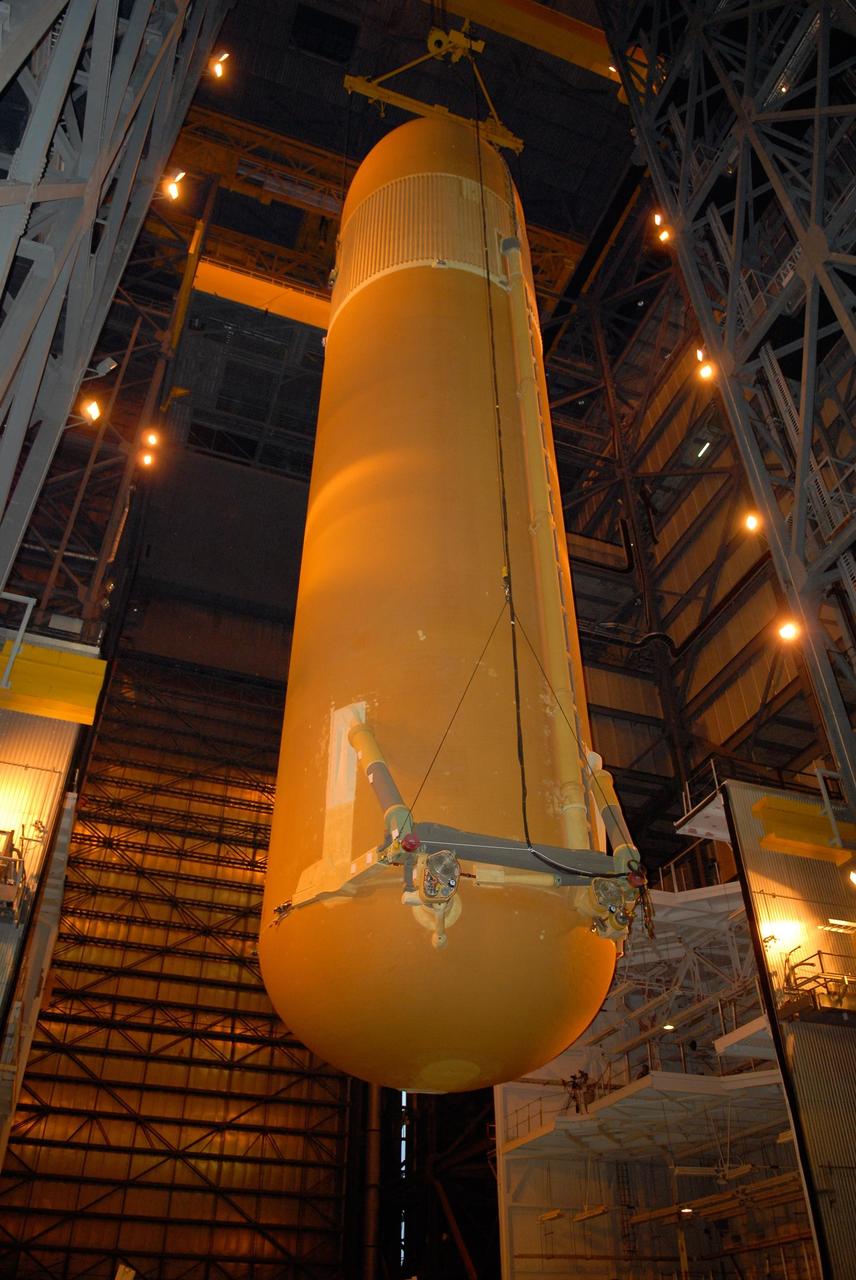
KENNEDY SPACE CENTER, FLA. -- In the Vehicle Assembly Building at NASA's Kennedy Space Center, the external tank is lowered toward the solid rocket boosters on the mobile launcher platform below. Visible on the bottom are the orbiter aft attachments. After mating, the boosters-tank configuration will be used on space shuttle Atlantis for mission STS-122, which is targeted for launch on Dec. 6. Photo credit: Kim Shiflett
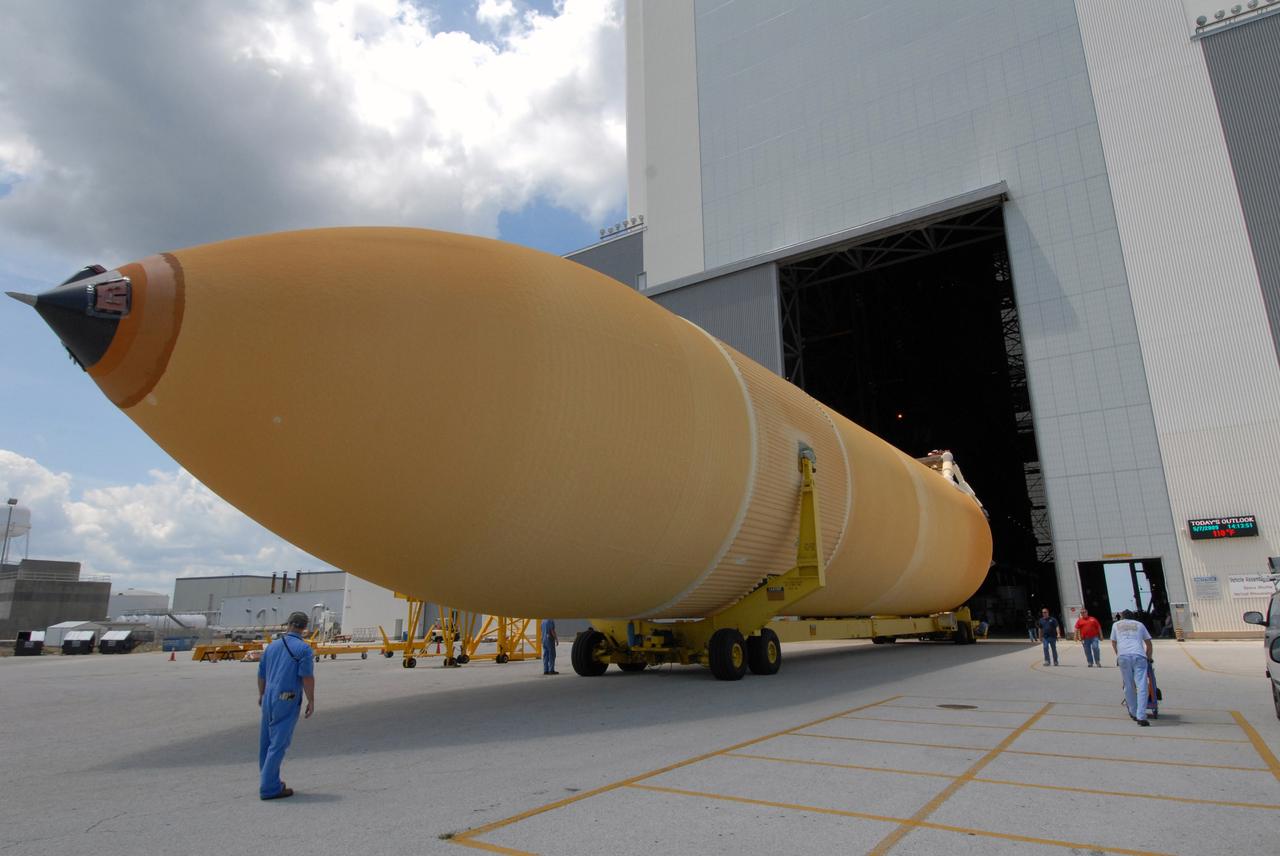
CAPE CANAVERAL, Fla. – The external fuel tank, ET- 132, designated for use with space shuttle Discovery on the STS-128 mission moves toward the open door of the Vehicle Assembly Building at NASA's Kennedy Space Center in Florida. The tank will be moved into a high bay for checkout. On the STS-128 mission, Discovery will carry science and storage racks to the International Space Station. Launch of Discovery is targeted for Aug. 6. Photo credit: NASA/Jack Pfaller
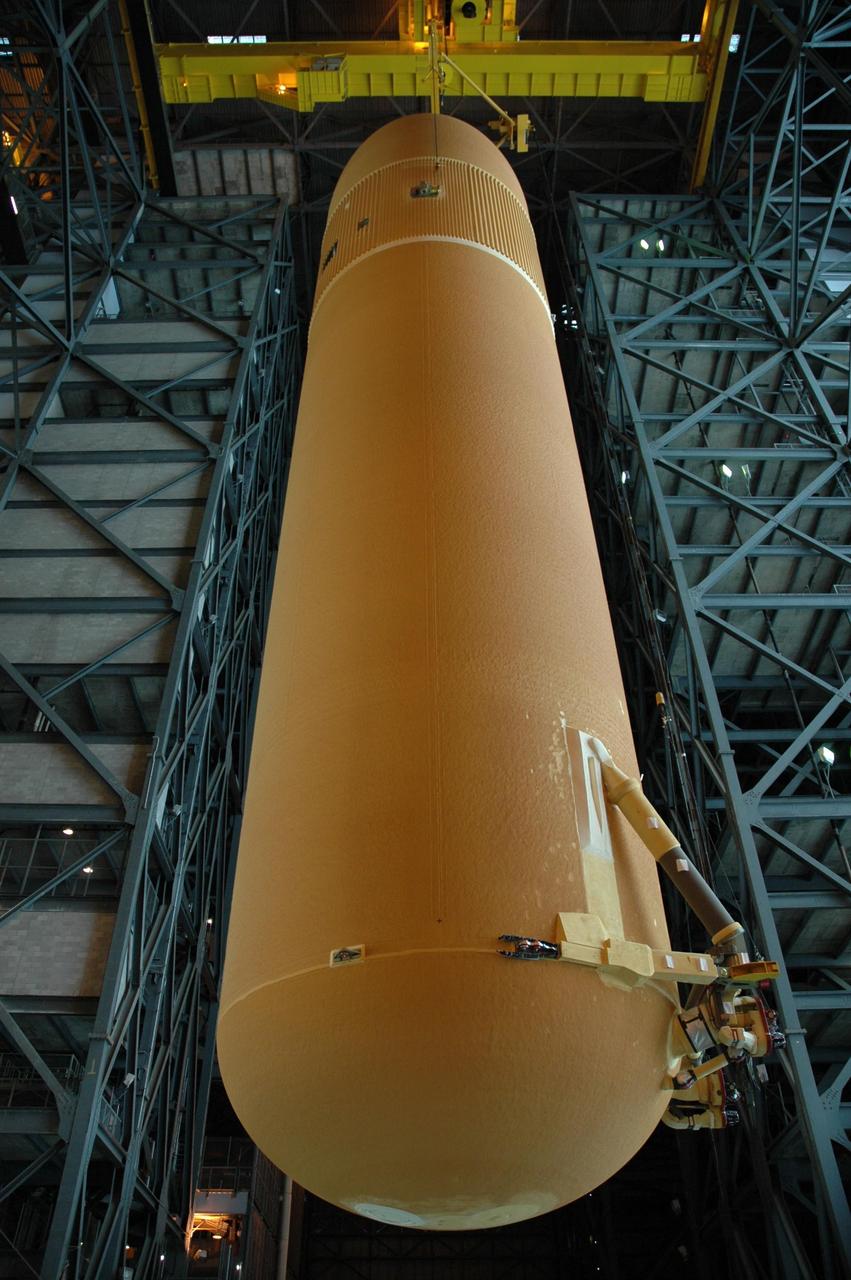
KENNEDY SPACE CENTER, FLA. -- Seen from below, external tank No. 125 is being lifted high into the upper levels of the Vehicle Assembly Building for transfer to a checkout cell in high bay 4 to allow for processing. The tank will be part of the space shuttle stack for mission STS-122 targeted to launch Dec. 6. Photo credit: NASA/Troy Cryder
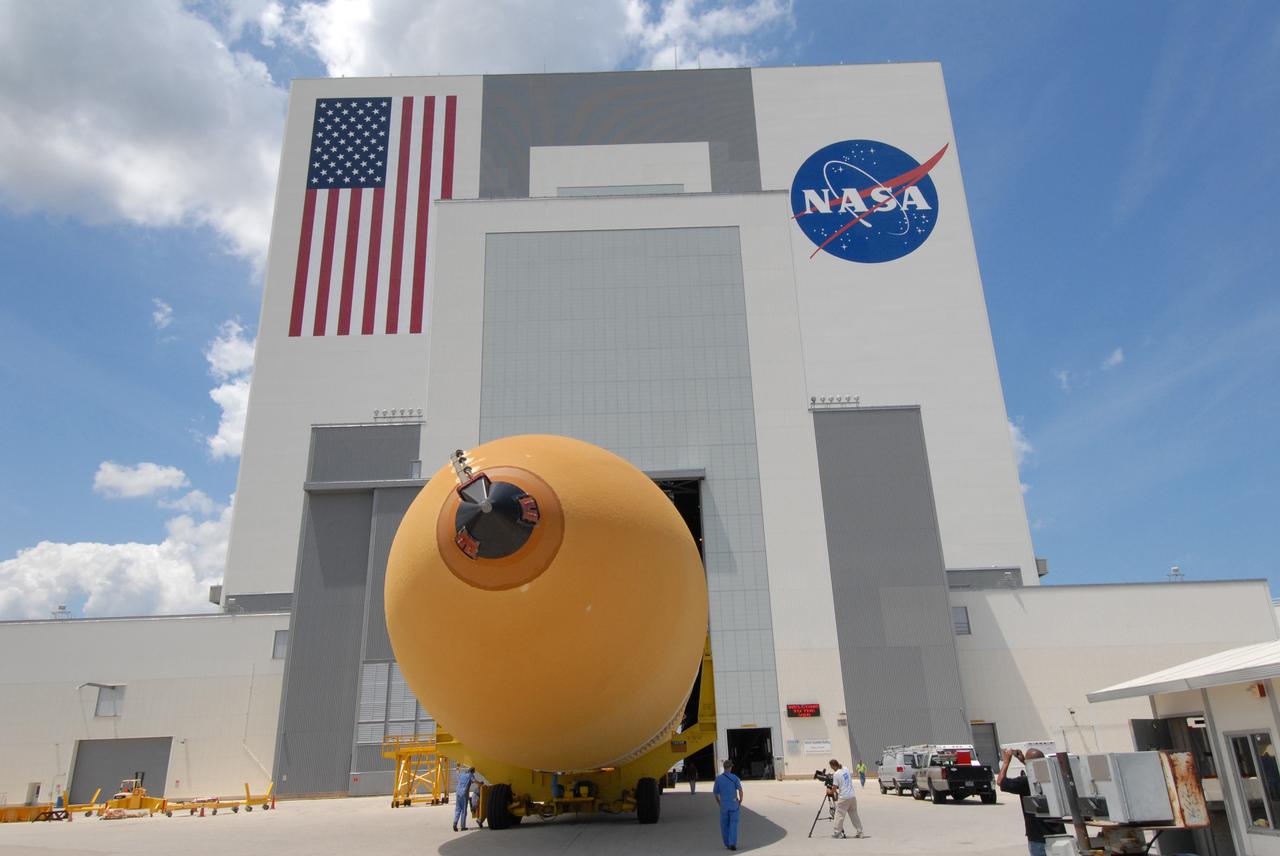
CAPE CANAVERAL, Fla. – The external fuel tank, ET- 132, designated for use with space shuttle Discovery on the STS-128 mission moves toward the open door of the Vehicle Assembly Building at NASA's Kennedy Space Center in Florida. The tank will be moved into a high bay for checkout. On the STS-128 mission, Discovery will carry science and storage racks to the International Space Station. Launch of Discovery is targeted for Aug. 6. Photo credit: NASA/Jack Pfaller
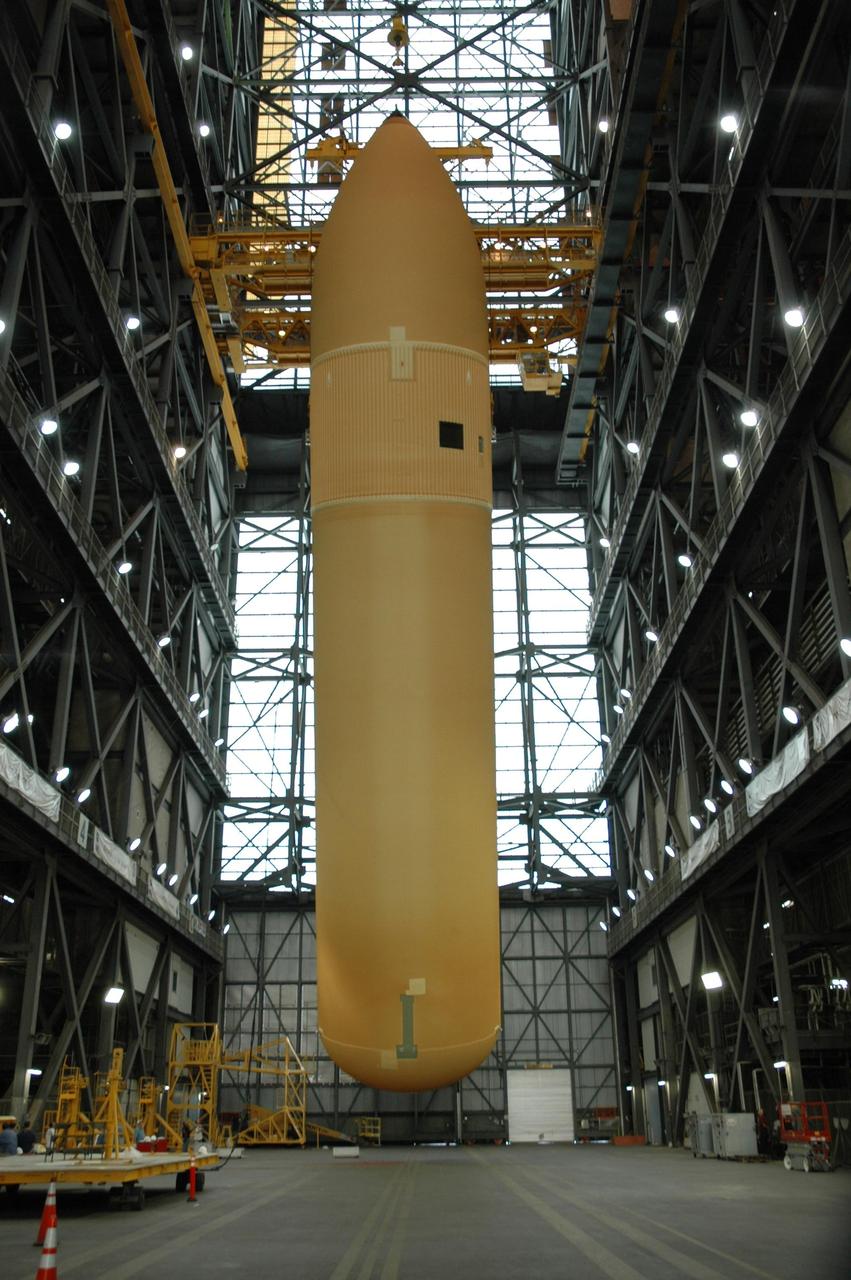
KENNEDY SPACE CENTER, FLA. -- Above the transfer aisle of the Vehicle Assembly Building, external tank No. 125 has been raised to a nearly vertical position. It will next be lifted into a checkout cell in high bay 4 to allow for processing. The tank will be part of the space shuttle stack for mission STS-122 targeted to launch Dec. 6. Photo credit: NASA/Troy Cryder
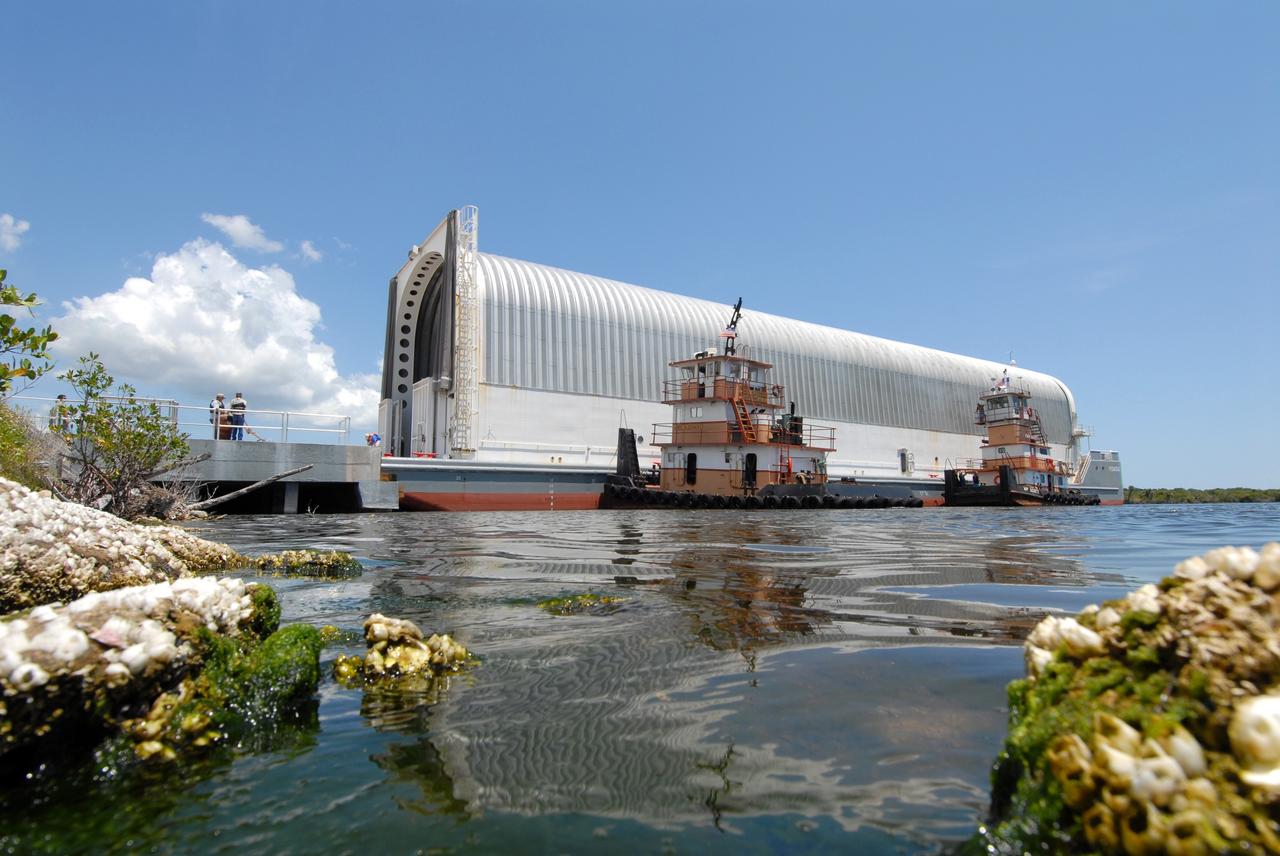
CAPE CANAVERAL, Fla. – The Pegasus barge is docked in the turn basin in the Launch Complex 39 Area at NASA's Kennedy Space Center in Florida. Inside is the external fuel tank, ET- 132, designated for space shuttle Discovery on the STS-128 mission. The tank will be offloaded and transported to a high bay in the Vehicle Assembly Building for checkout. On the STS-128 mission, Discovery will carry science and storage racks to the International Space Station. Launch of Discovery is targeted for Aug. 6. Photo credit: NASA/Troy Cryder
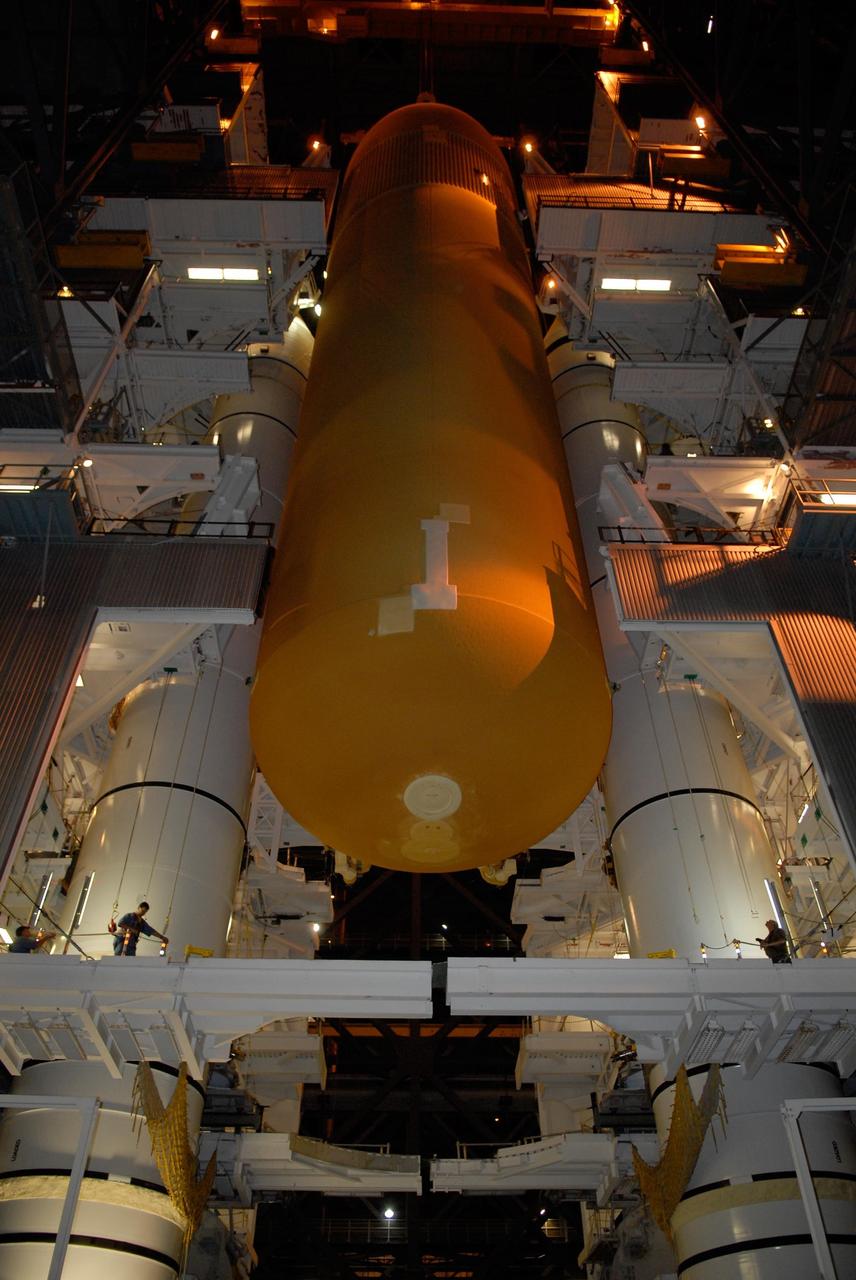
KENNEDY SPACE CENTER, FLA. -- In the Vehicle Assembly Building at NASA's Kennedy Space Center, the external tank is lowered between the solid rocket boosters on the mobile launcher platform below. After mating, the boosters-tank configuration will be used on space shuttle Atlantis for mission STS-122, which is targeted for launch on Dec. 6. Photo credit: Kim Shiflett
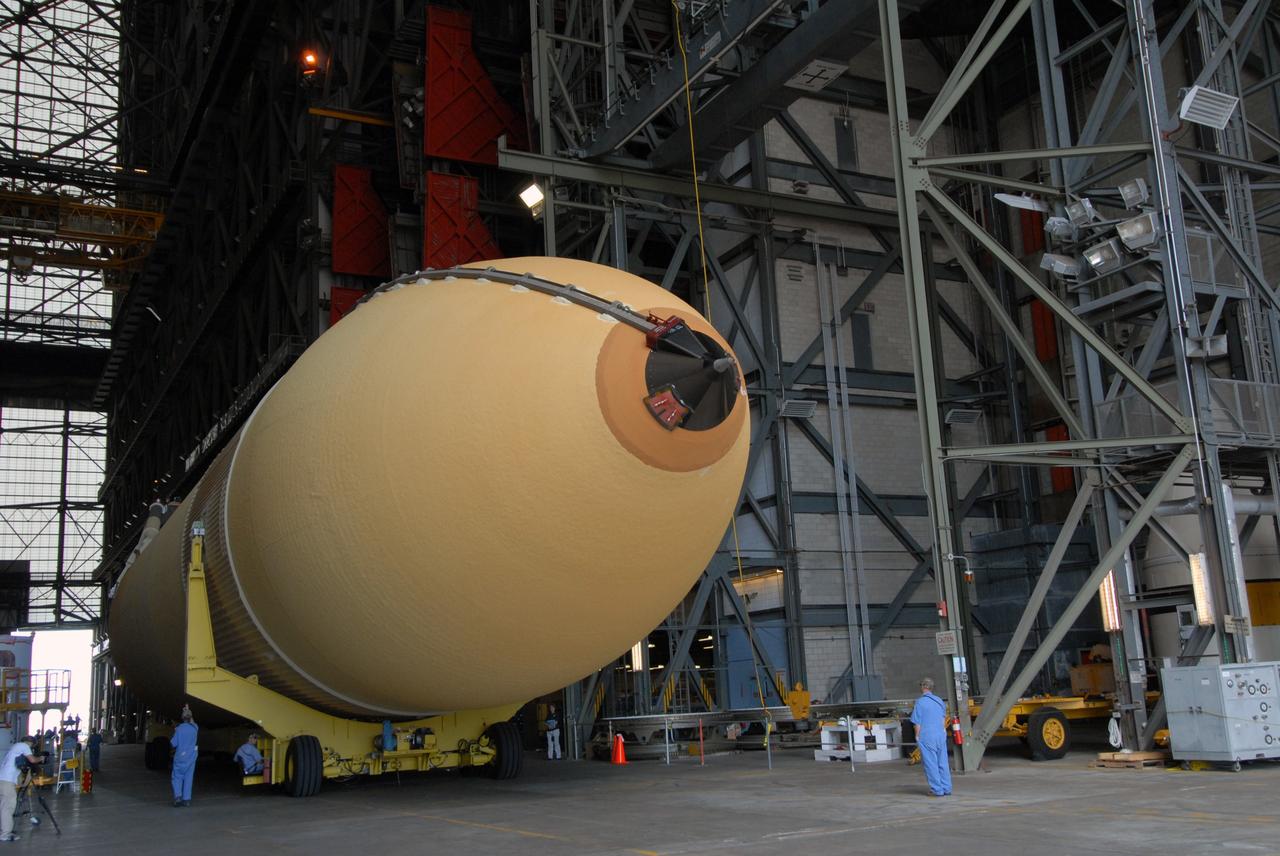
CAPE CANAVERAL, Fla. – The external fuel tank, ET- 132, designated for use with space shuttle Discovery on the STS-128 mission moves into the transfer aisle of the Vehicle Assembly Building at NASA's Kennedy Space Center in Florida. The tank will be moved into a high bay for checkout. On the STS-128 mission, Discovery will carry science and storage racks to the International Space Station. Launch of Discovery is targeted for Aug. 6. Photo credit: NASA/Jack Pfaller
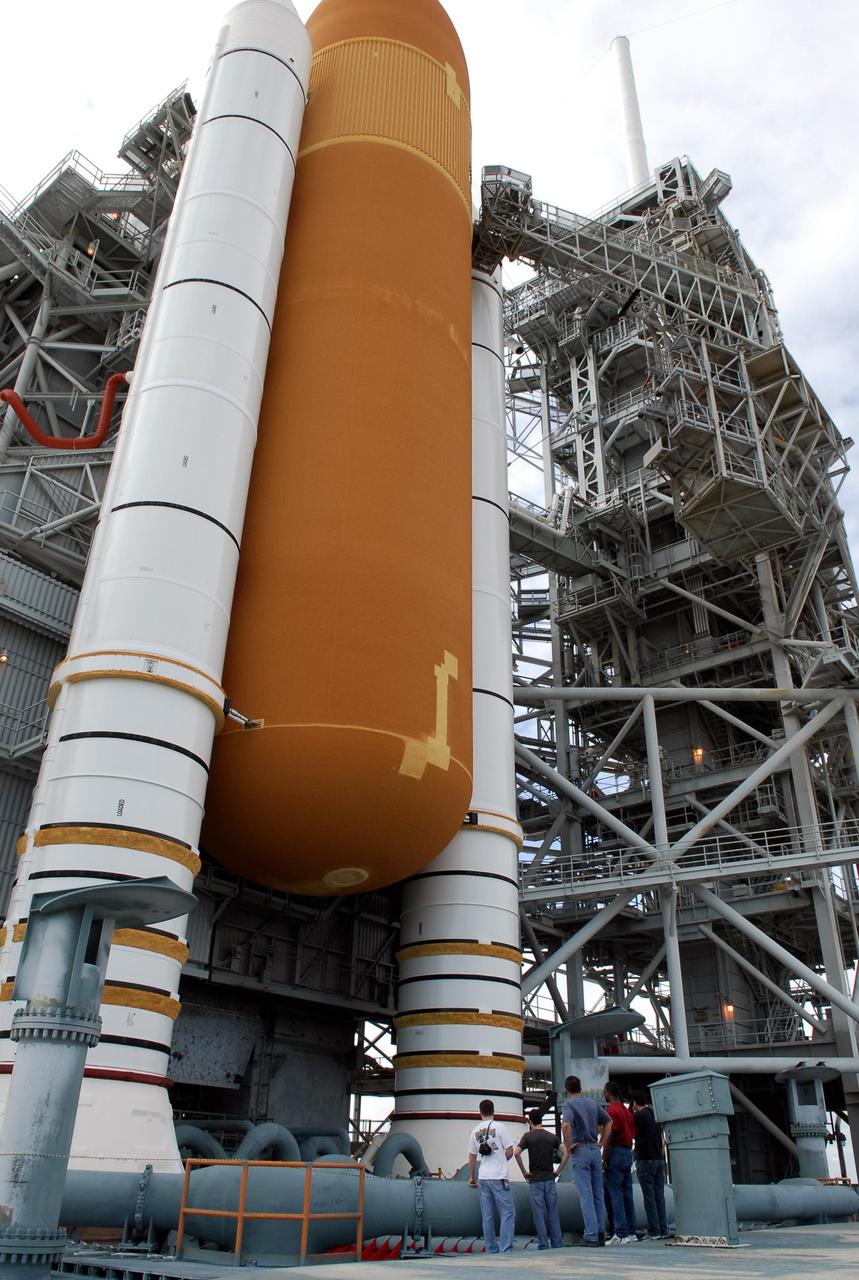
KENNEDY SPACE CENTER, FLA. -- Space shuttle Atlantis' external tank and solid rocket boosters will be the subject of a tanking test with the Time Domain Reflectometry, or TDR, test equipment whose wiring is being calibrated Dec. 14. The shuttle's planned launches on Dec. 6 and Dec. 9 were postponed because of false readings from the part of the ECO system that monitors the liquid hydrogen section of the tank. The liftoff date from NASA's Kennedy Space Center, Florida, is now targeted for Jan. 10, depending on the resolution of the problem in the fuel sensor system. Photo credit: NASA/Kim Shiflett

Visitors at NASA's Michoud Assembly Facility in New Orleans see the historic model room, the space shuttle external tank, and the most current progress on NASA's Orion and SLS vehicles on Aug. 6, 2015. Part of Batch image transfer from Flickr.
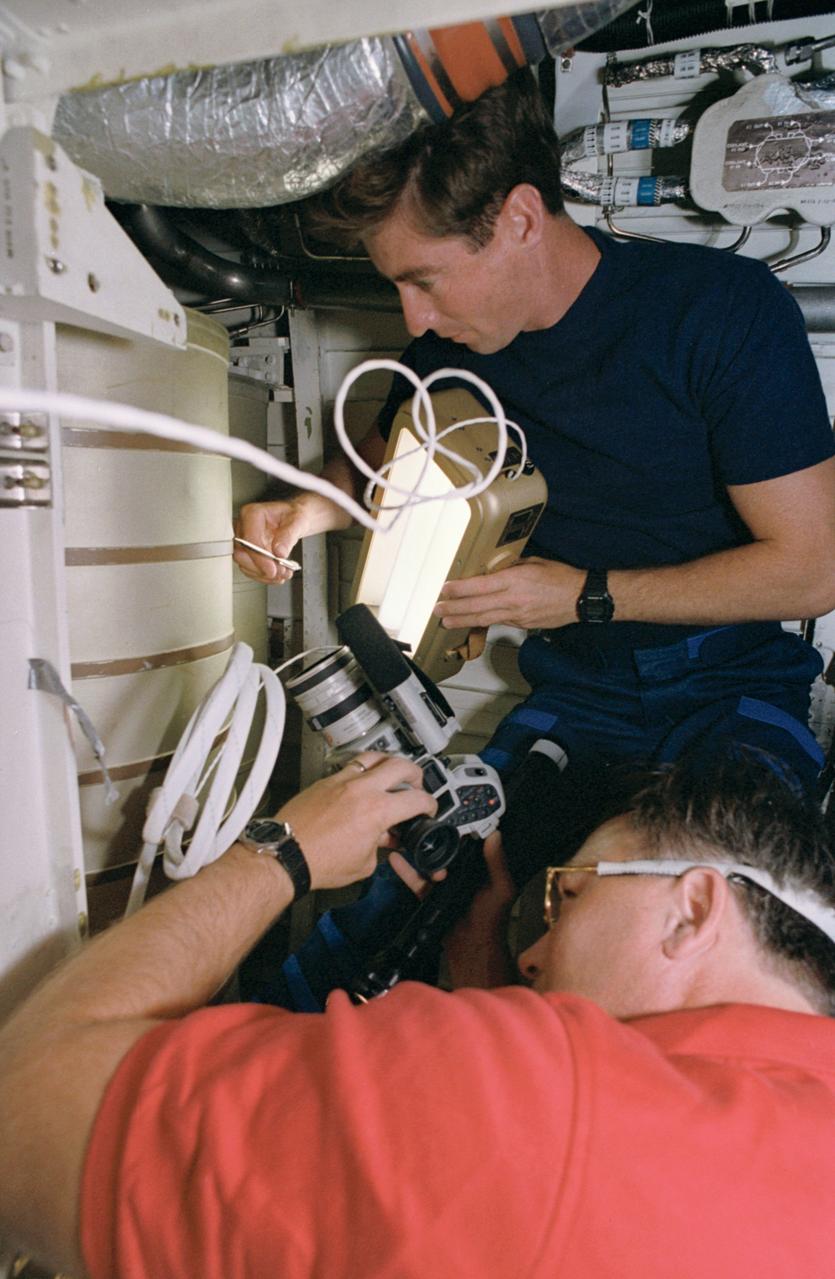
STS055-39-036 (26 April-6 May 1993) --- Astronaut Terence T. (Tom) Henricks, pilot, uses a spotlight and pen to point out a possible problem area on a waste water tank in the bilge area below Columbia's middeck. Astronaut Jerry L. Ross, payload commander, records the activity with a camera.
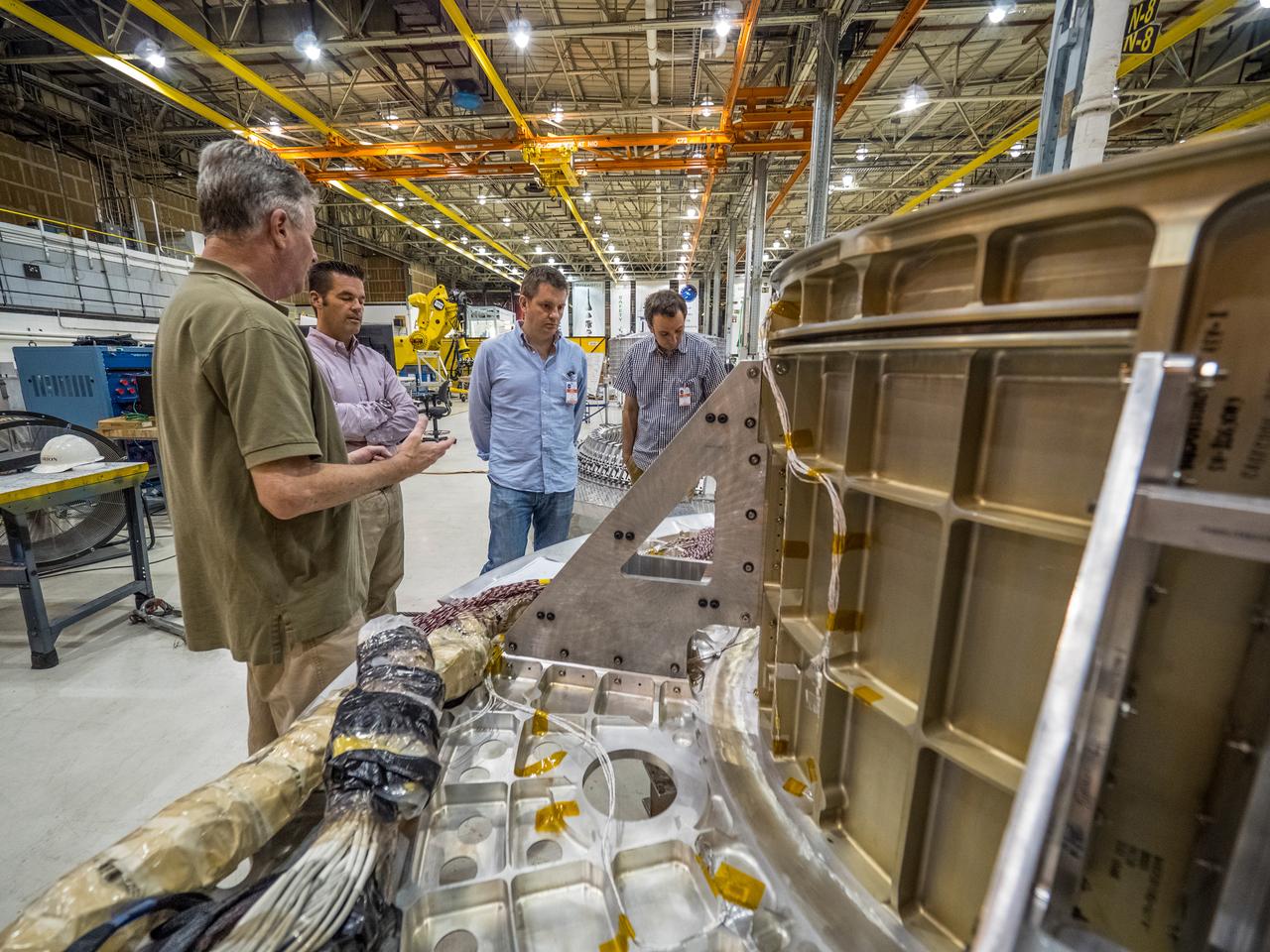
Visitors at NASA's Michoud Assembly Facility in New Orleans see the historic model room, the space shuttle external tank, and the most current progress on NASA's Orion and SLS vehicles on Aug. 6, 2015. Part of Batch image transfer from Flickr.
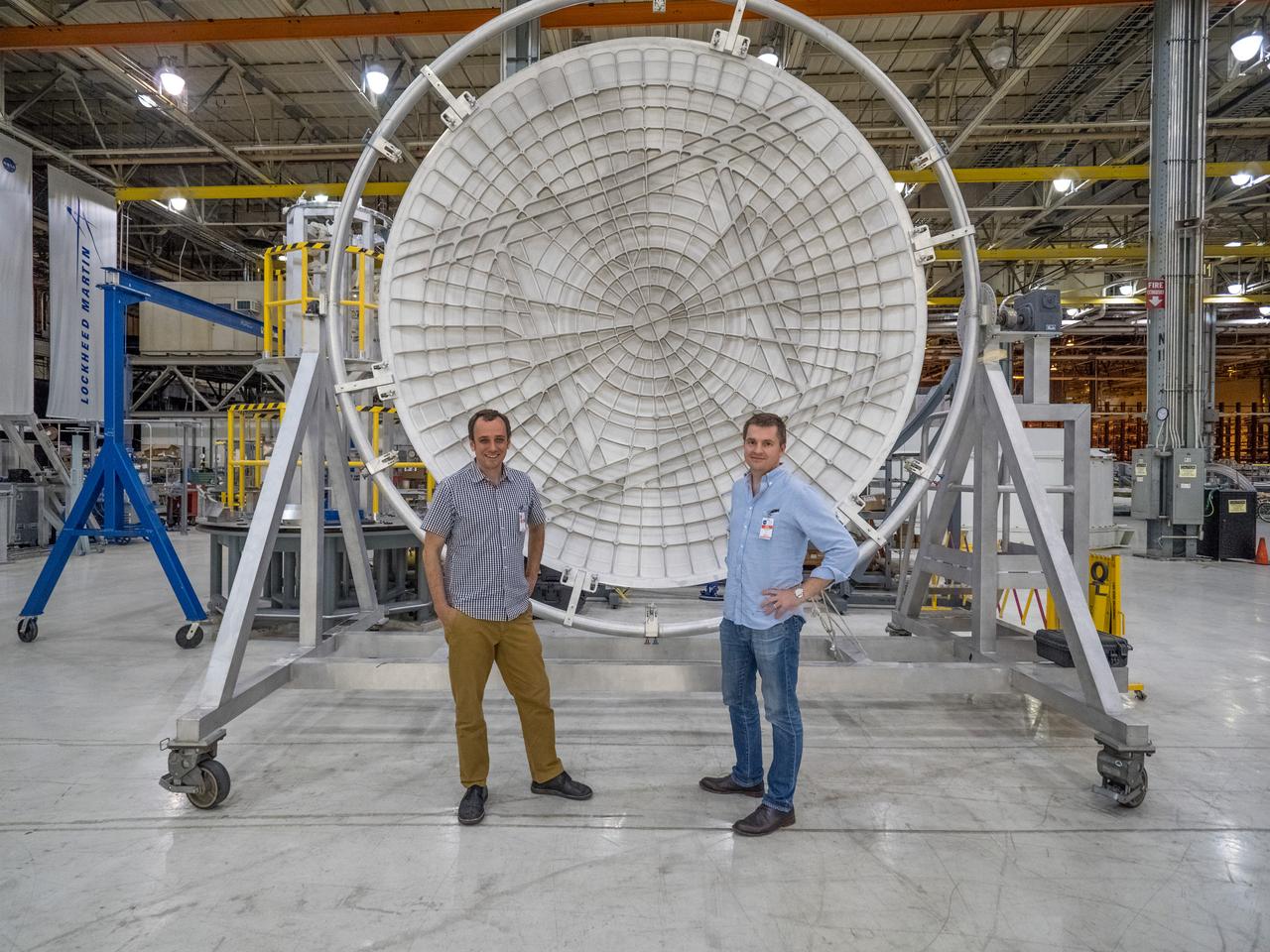
Visitors at NASA's Michoud Assembly Facility in New Orleans see the historic model room, the space shuttle external tank, and the most current progress on NASA's Orion and SLS vehicles on Aug. 6, 2015. Part of Batch image transfer from Flickr.
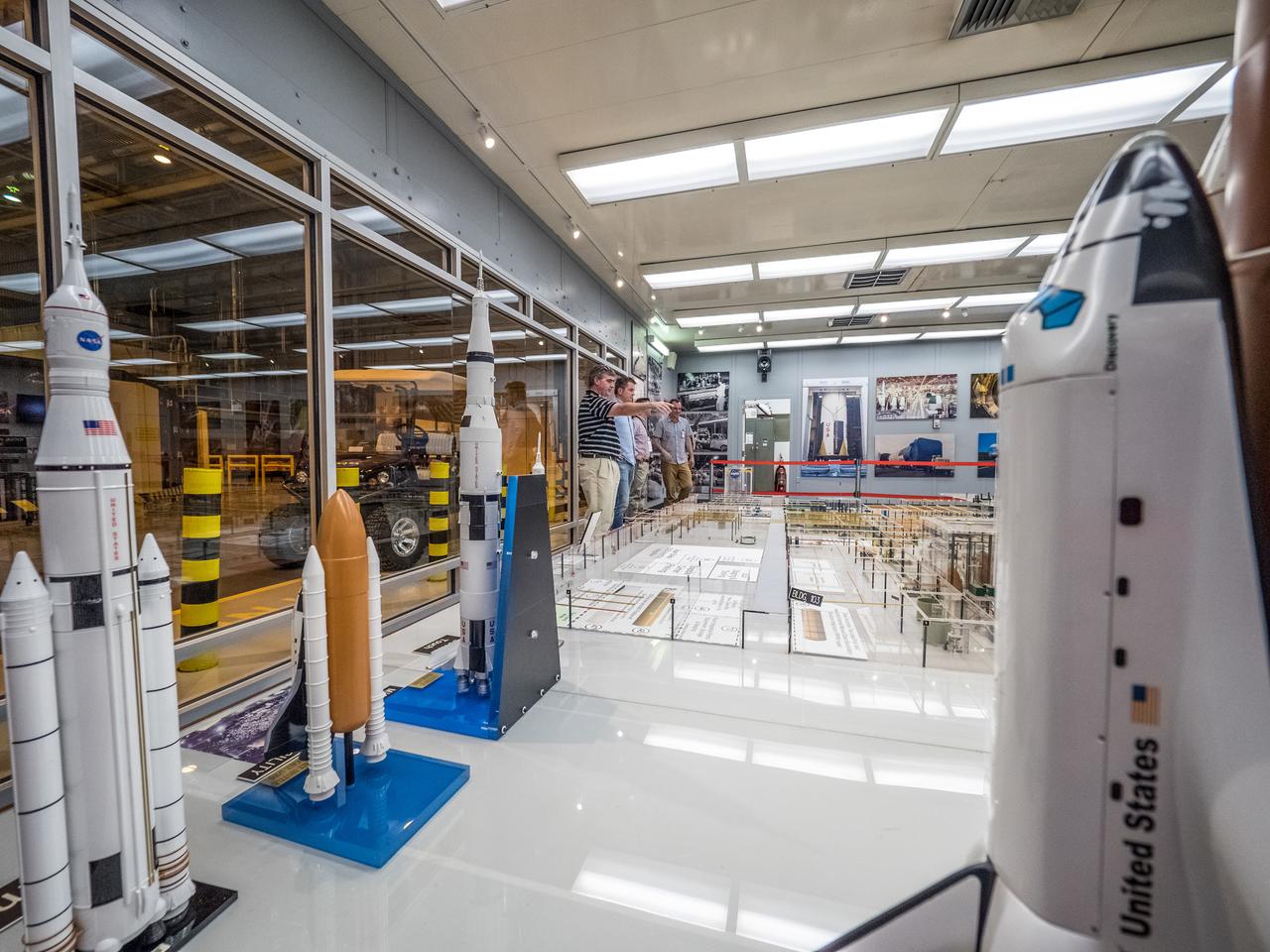
Visitors at NASA's Michoud Assembly Facility in New Orleans see the historic model room, the space shuttle external tank, and the most current progress on NASA's Orion and SLS vehicles on Aug. 6, 2015. Part of Batch image transfer from Flickr.
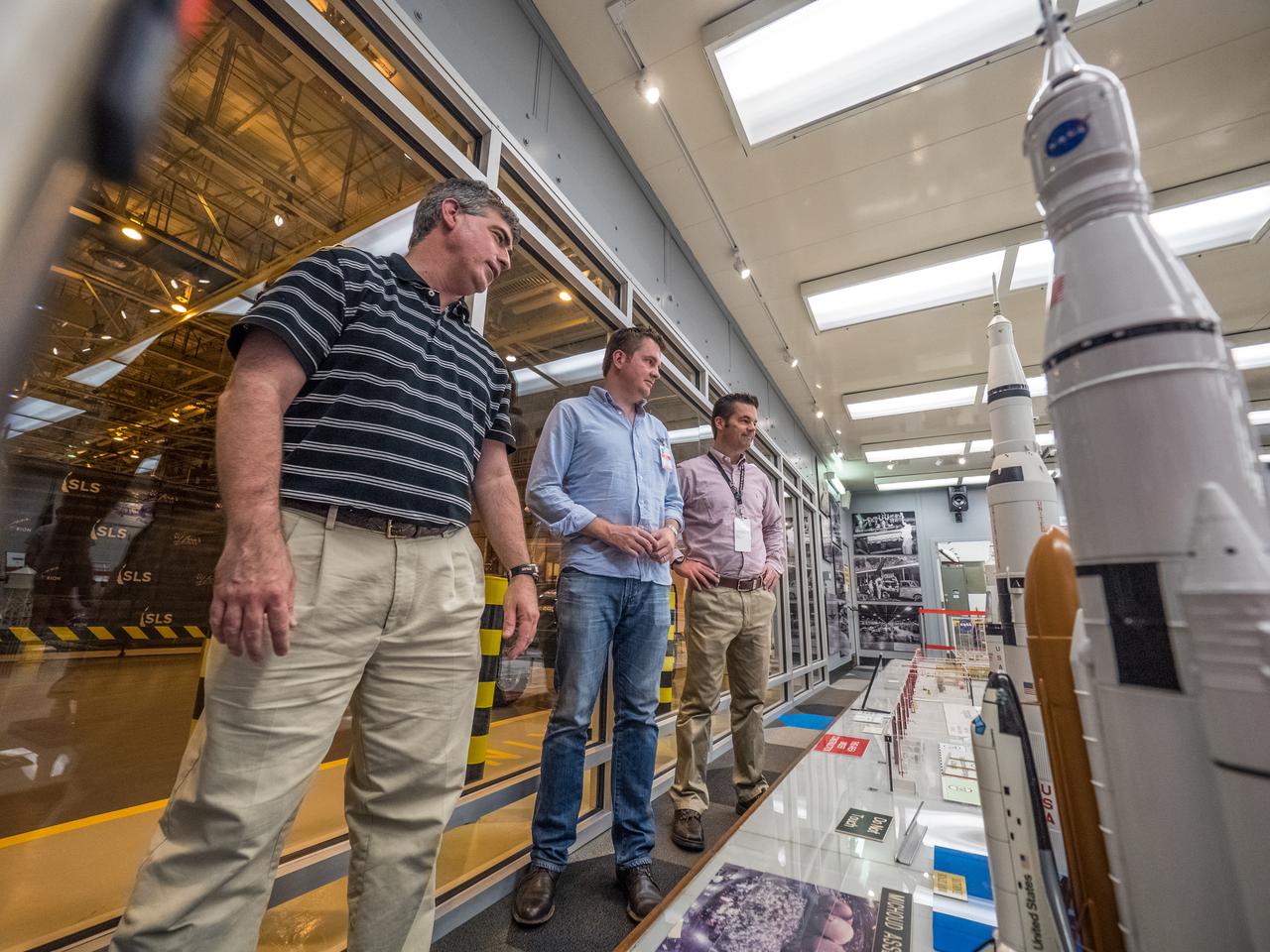
Visitors at NASA's Michoud Assembly Facility in New Orleans see the historic model room, the space shuttle external tank, and the most current progress on NASA's Orion and SLS vehicles on Aug. 6, 2015. Part of Batch image transfer from Flickr.
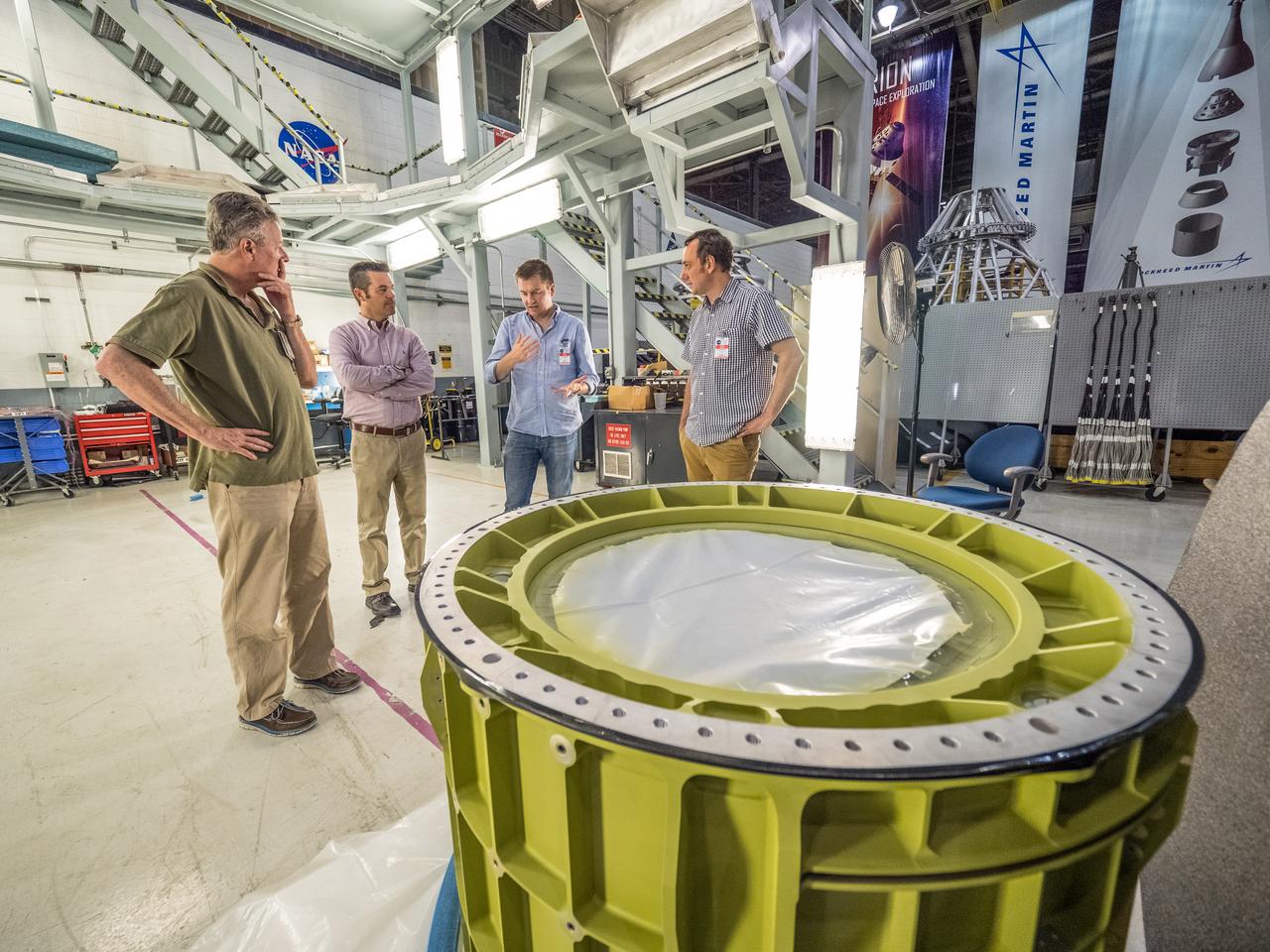
Visitors at NASA's Michoud Assembly Facility in New Orleans see the historic model room, the space shuttle external tank, and the most current progress on NASA's Orion and SLS vehicles on Aug. 6, 2015. Part of Batch image transfer from Flickr.
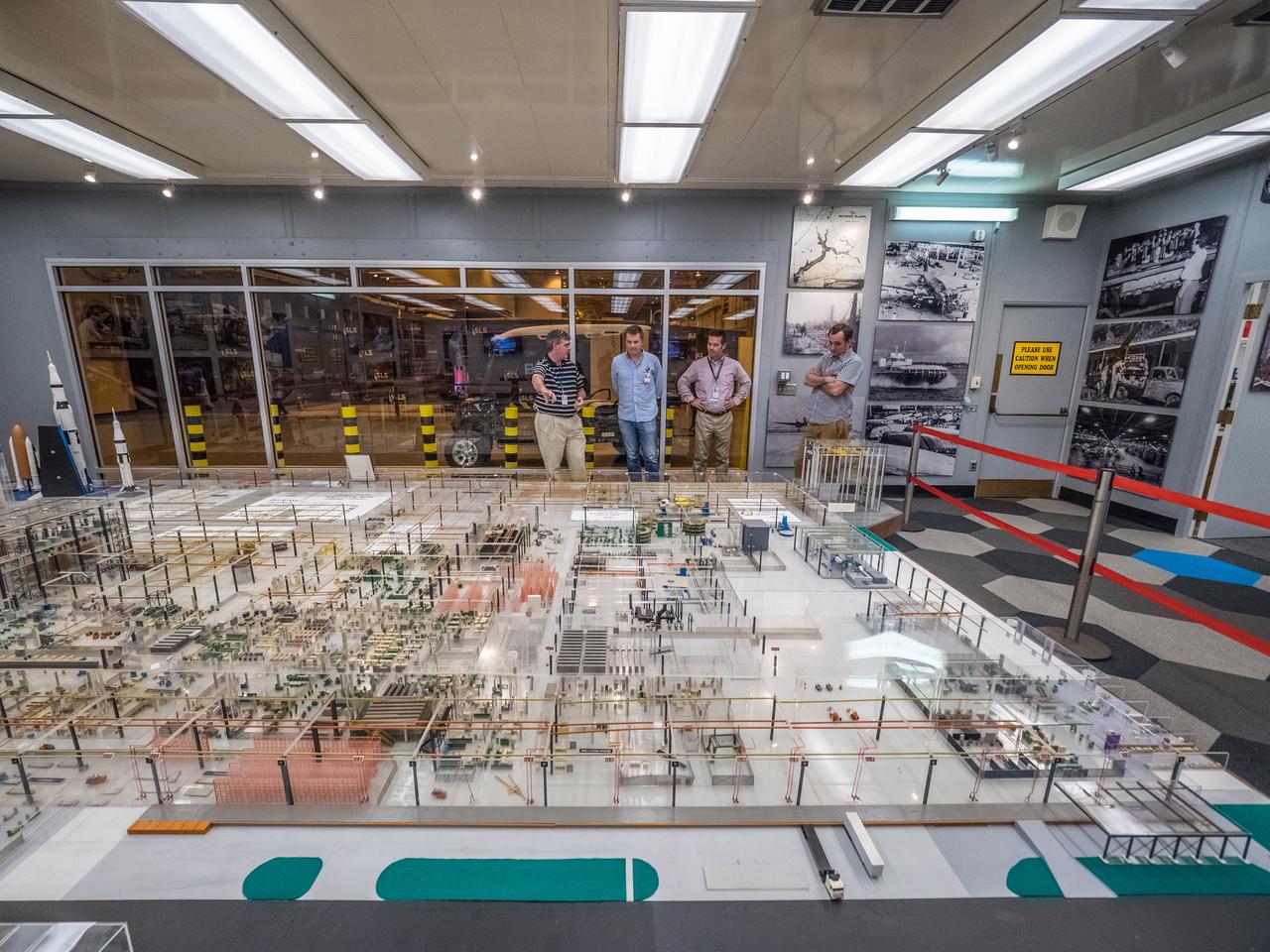
Visitors at NASA's Michoud Assembly Facility in New Orleans see the historic model room, the space shuttle external tank, and the most current progress on NASA's Orion and SLS vehicles on Aug. 6, 2015. Part of Batch image transfer from Flickr.
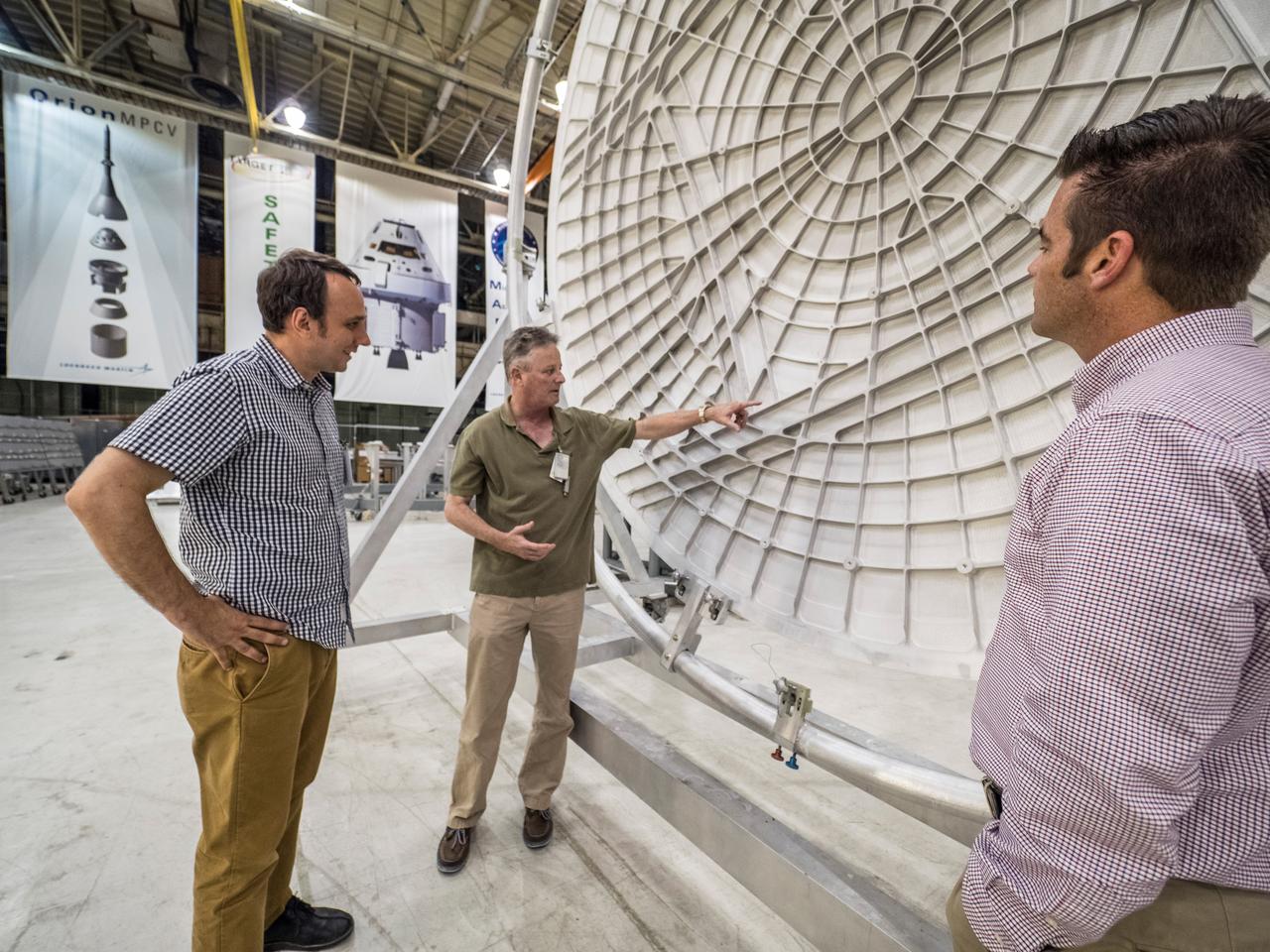
Visitors at NASA's Michoud Assembly Facility in New Orleans see the historic model room, the space shuttle external tank, and the most current progress on NASA's Orion and SLS vehicles on Aug. 6, 2015. Part of Batch image transfer from Flickr.

Visitors at NASA's Michoud Assembly Facility in New Orleans see the historic model room, the space shuttle external tank, and the most current progress on NASA's Orion and SLS vehicles on Aug. 6, 2015. Part of Batch image transfer from Flickr.

Visitors at NASA's Michoud Assembly Facility in New Orleans see the historic model room, the space shuttle external tank, and the most current progress on NASA's Orion and SLS vehicles on Aug. 6, 2015. Part of Batch image transfer from Flickr.

Move crews at NASA’s Michoud Assembly Facility in New Orleans move the 130-foot-tall liquid hydrogen tank out of the vertical assembly building and into a production area inside the 43-acre rocket factory on March 6, 2026. The tank, which will be used on the core stage of NASA’s SLS (Space Launch System) rocket for its Artemis IV mission, will soon undergo a series of non-destructive evaluation tests to ensure the tank is ready for the next step in the production process. The propellant tank is one of five major elements that make up the 212-foot-tall rocket stage. The core stage, along with its four RS-25 engines, produce more than two million pounds of thrust to help launch NASA’s Orion spacecraft, astronauts, and supplies beyond Earth’s orbit and to the lunar surface for Artemis. Image credit: NASA/Michael DeMocker

Move crews at NASA’s Michoud Assembly Facility in New Orleans move the 130-foot-tall liquid hydrogen tank out of the vertical assembly building and into a production area inside the 43-acre rocket factory on March 6, 2026. The tank, which will be used on the core stage of NASA’s SLS (Space Launch System) rocket for its Artemis IV mission, will soon undergo a series of non-destructive evaluation tests to ensure the tank is ready for the next step in the production process. The propellant tank is one of five major elements that make up the 212-foot-tall rocket stage. The core stage, along with its four RS-25 engines, produce more than two million pounds of thrust to help launch NASA’s Orion spacecraft, astronauts, and supplies beyond Earth’s orbit and to the lunar surface for Artemis. Image credit: NASA/Michael DeMocker