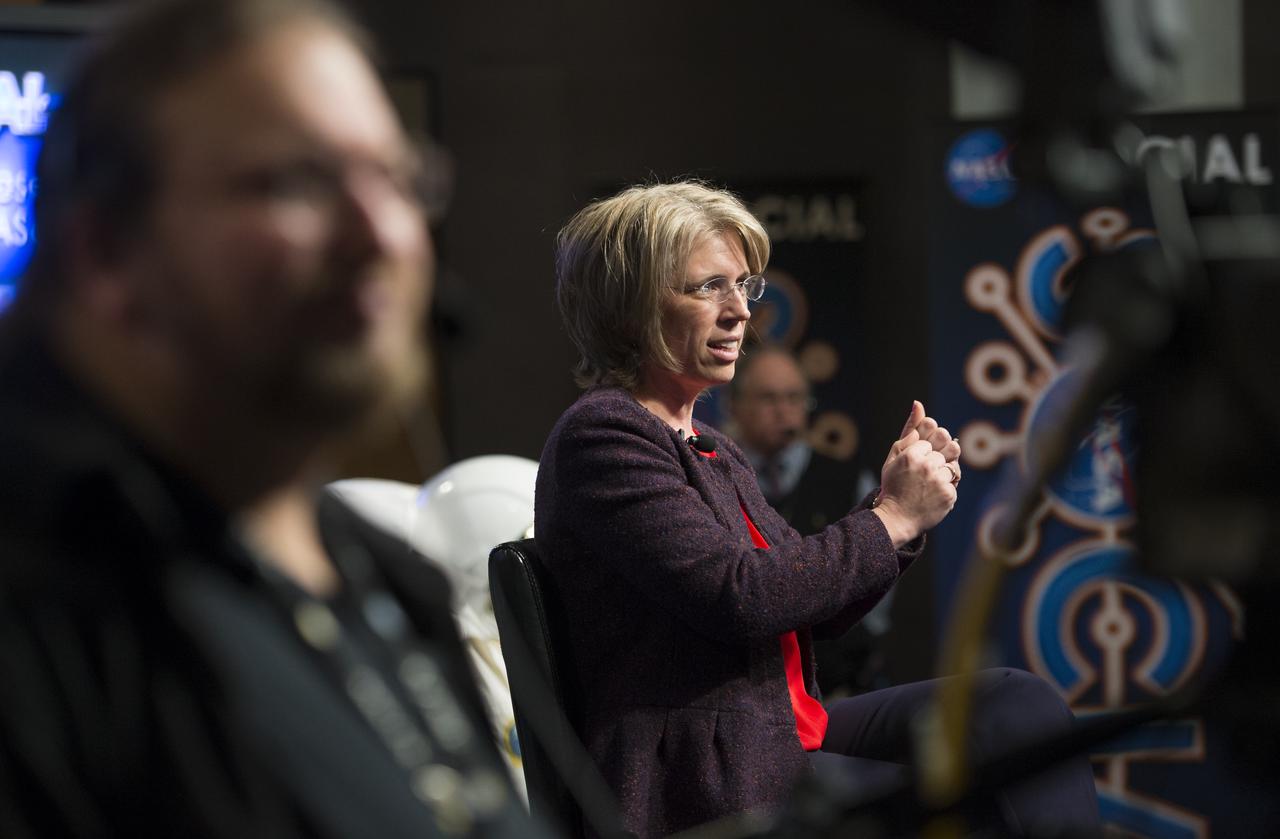
Tara Ruttley, International Space Station Program Scientist, talks about the benefits of conducting science experiments on ISS at a NASA Social exploring science on the ISS at NASA Headquarters, Wednesday, Feb. 20, 2013 in Washington. Photo Credit: (NASA/Carla Cioffi)
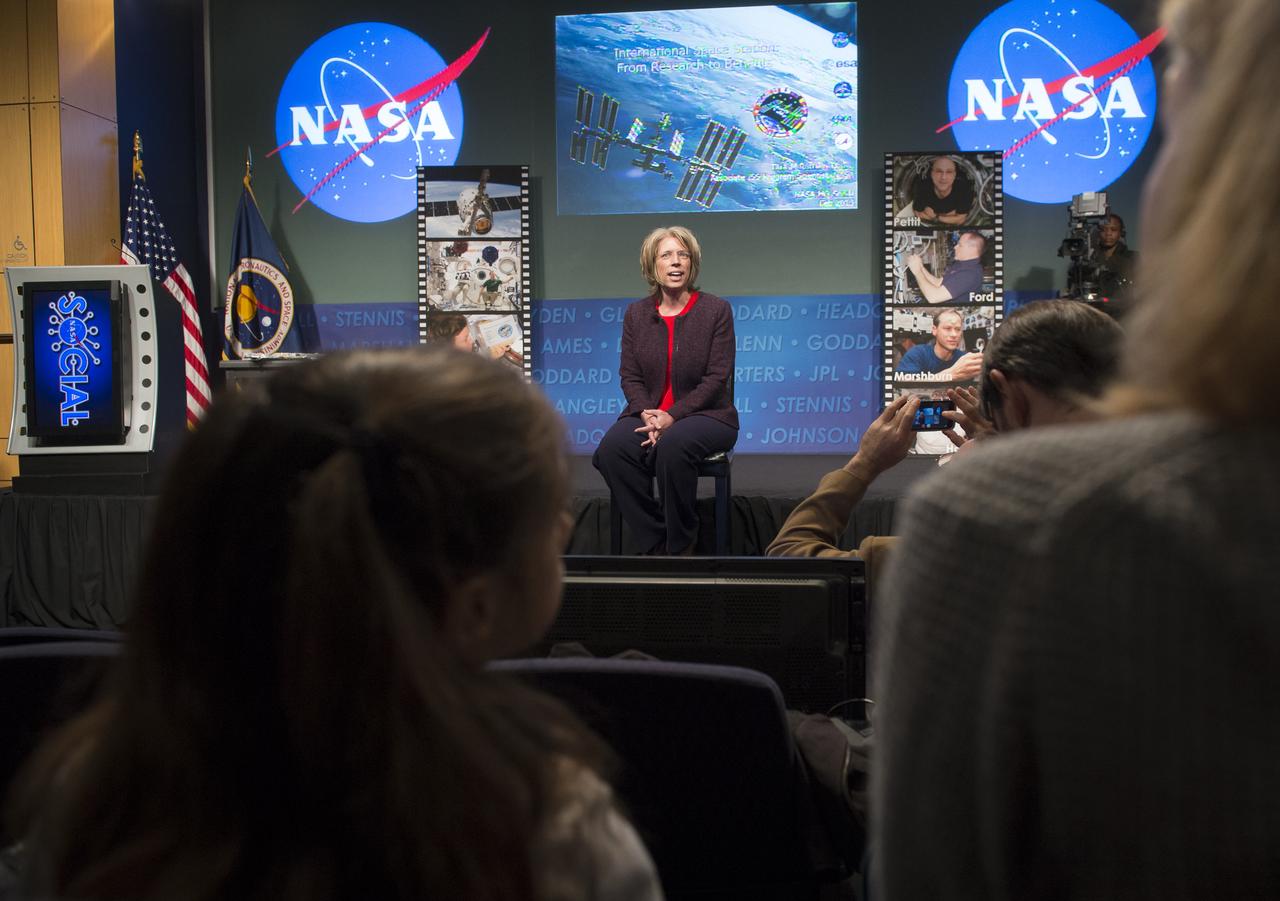
Tara Ruttley, International Space Station Program Scientist, talks about the benefits of conducting science experiments on ISS at a NASA Social exploring science on the ISS at NASA Headquarters, Wednesday, Feb. 20, 2013 in Washington. Photo Credit: (NASA/Carla Cioffi)

Date: 03-20-12 Location: Bldg 2, Briefing Room Subject: International Space Station Program and Science Overview Briefing with Michael Suffredini, ISS Program Manager, Dina Contella, Expedition 32 lead flight director, and Tara Ruttley, Associate ISS Program Scientist. Photographer: James Blair

Date: 03-20-12 Location: Bldg 2, Briefing Room Subject: International Space Station Program and Science Overview Briefing with Michael Suffredini, ISS Program Manager, Dina Contella, Expedition 32 lead flight director, and Tara Ruttley, Associate ISS Program Scientist. Photographer: James Blair
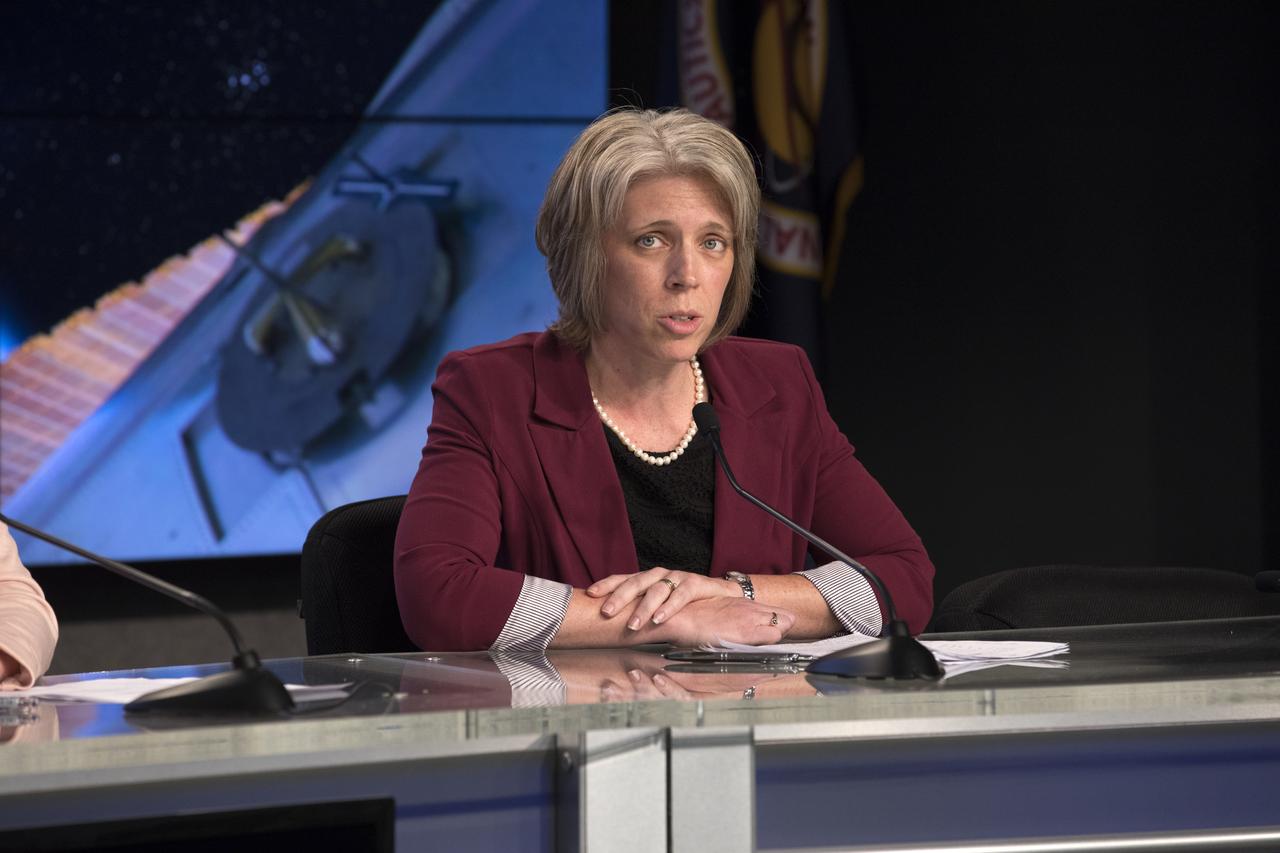
In the Kennedy Space Center’s Press Site auditorium, agency and industry leaders speak to members of the media at a prelaunch news conference for the SpaceX CRS-10 commercial resupply services mission to the International Space Station. Tara Ruttley, associate scientist for the International Space Station Program at Johnson Space Center in Houston, answers questions.

Date: 03-20-12 Location: Bldg 2, Briefing Room Subject: International Space Station Program and Science Overview Briefing with Michael Suffredini, ISS Program Manager, Dina Contella, Expedition 32 lead flight director, and Tara Ruttley, Associate ISS Program Scientist. Photographer: James Blair
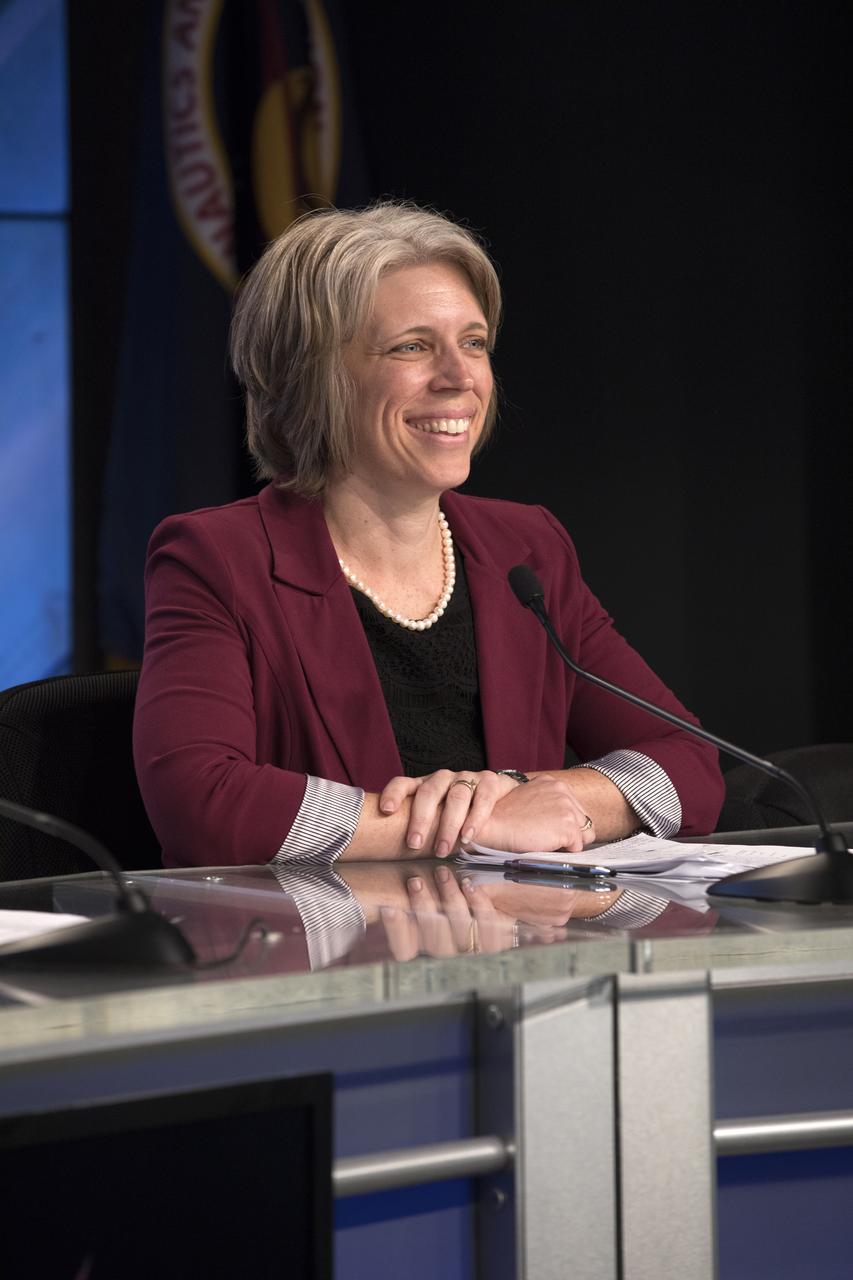
In the Kennedy Space Center’s Press Site auditorium, agency and industry leaders speak to members of the media at a prelaunch news conference for the SpaceX CRS-10 commercial resupply services mission to the International Space Station. Tara Ruttley, associate scientist for the International Space Station Program at Johnson Space Center in Houston answers questions.
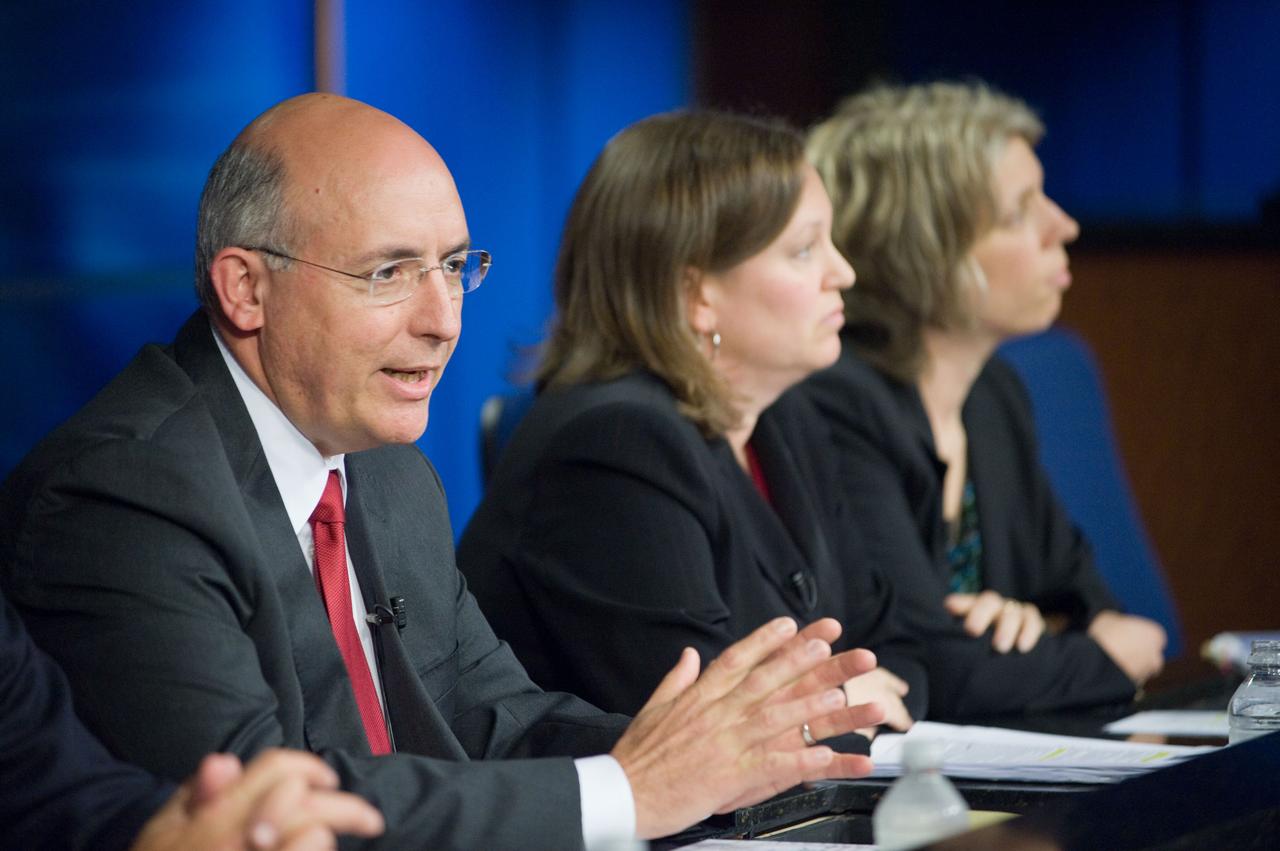
Date: 03-20-12 Location: Bldg 2, Briefing Room Subject: International Space Station Program and Science Overview Briefing with Michael Suffredini, ISS Program Manager, Dina Contella, Expedition 32 lead flight director, and Tara Ruttley, Associate ISS Program Scientist. Photographer: James Blair
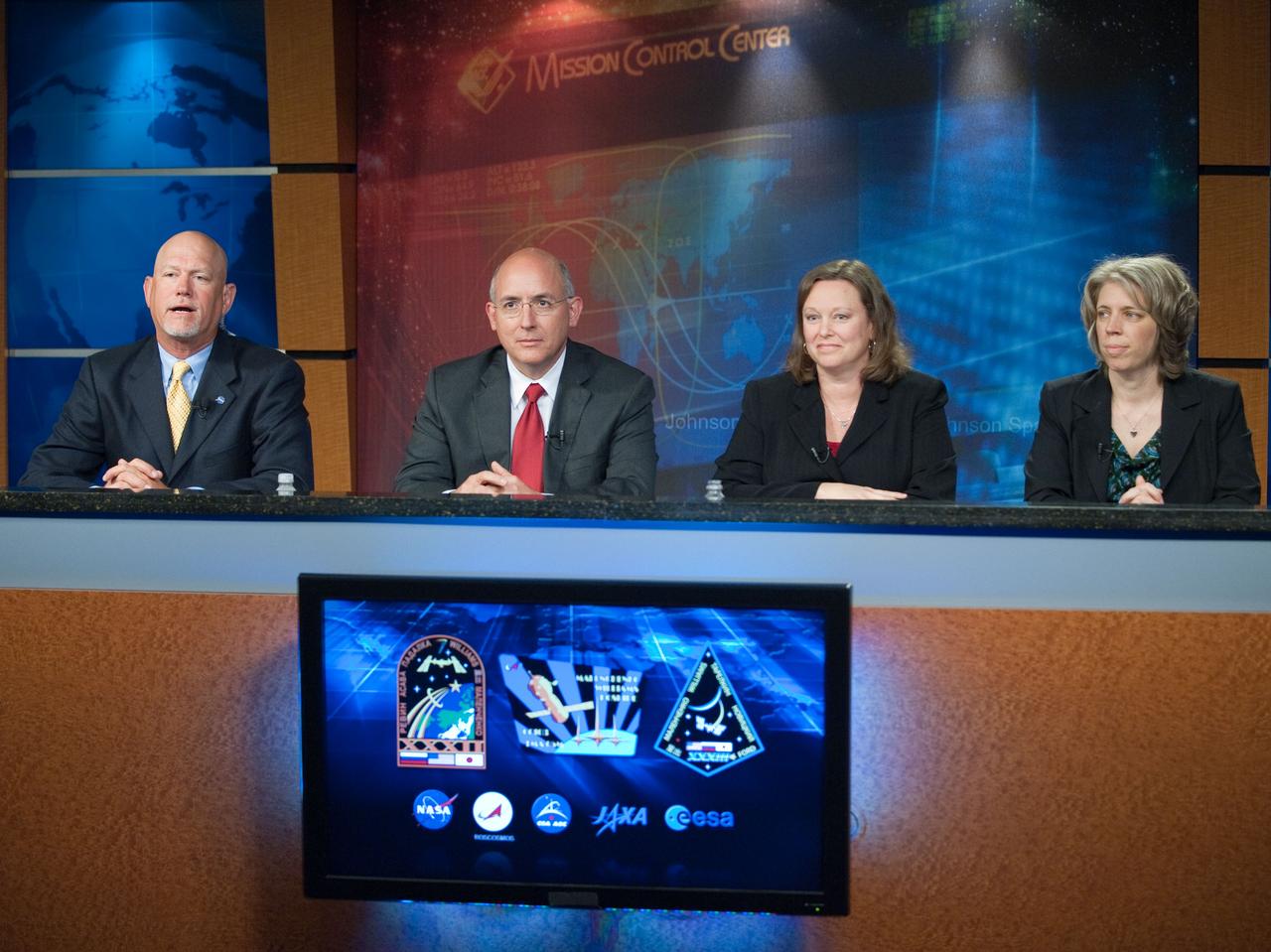
Date: 03-20-12 Location: Bldg 2, Briefing Room Subject: International Space Station Program and Science Overview Briefing with Michael Suffredini, ISS Program Manager, Dina Contella, Expedition 32 lead flight director, and Tara Ruttley, Associate ISS Program Scientist. Photographer: James Blair
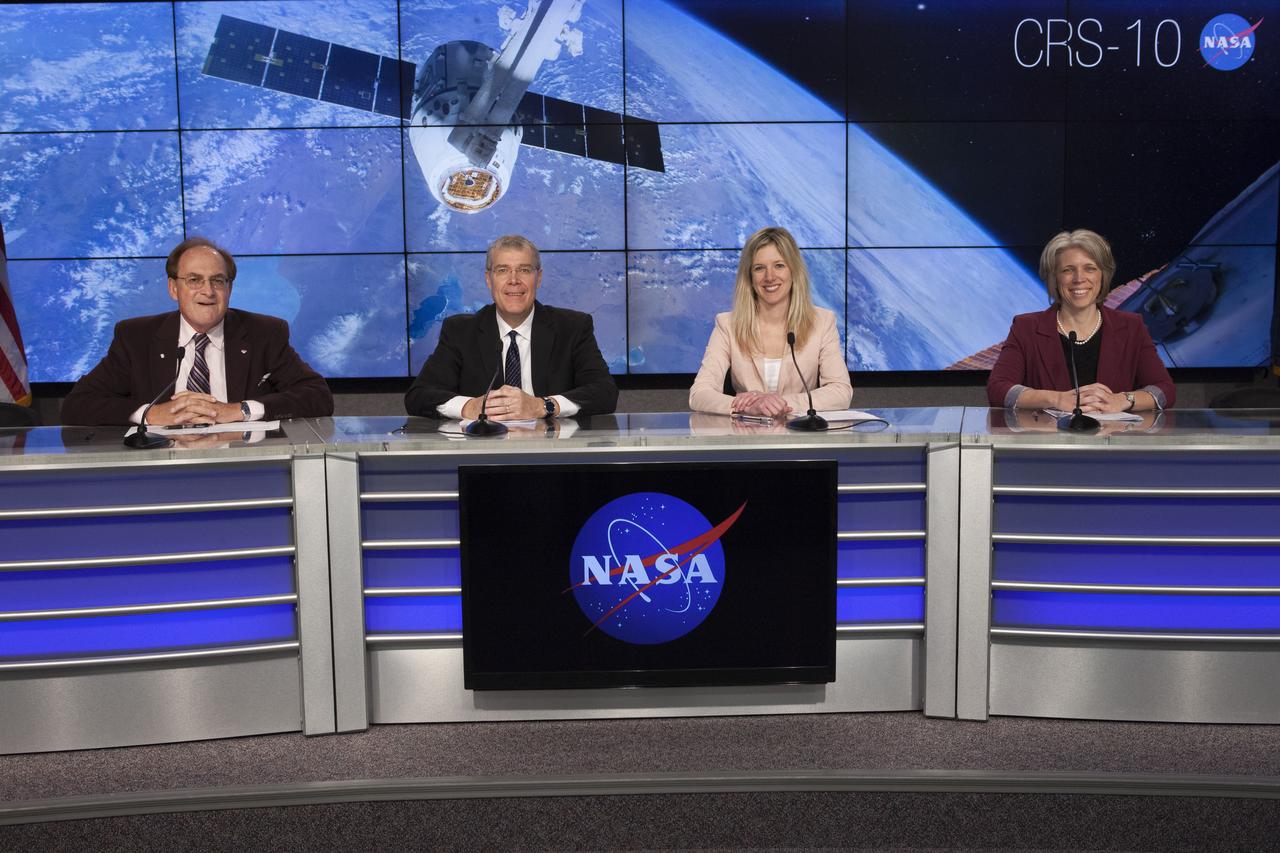
In the Kennedy Space Center’s Press Site auditorium, agency and industry leaders speak to members of the media at a prelaunch news conference for the SpaceX CRS-10 commercial resupply services mission to the International Space Station. From left are: George Diller of NASA Communications; Dan Hartman, deputy manager for the International Space Station Program at NASA's Johnson Space Center in Texas; Jessica Jensen, director of Dragon mission management for SpaceX; and Tara Ruttley, associate scientist for the International Space Station Program at Johnson.
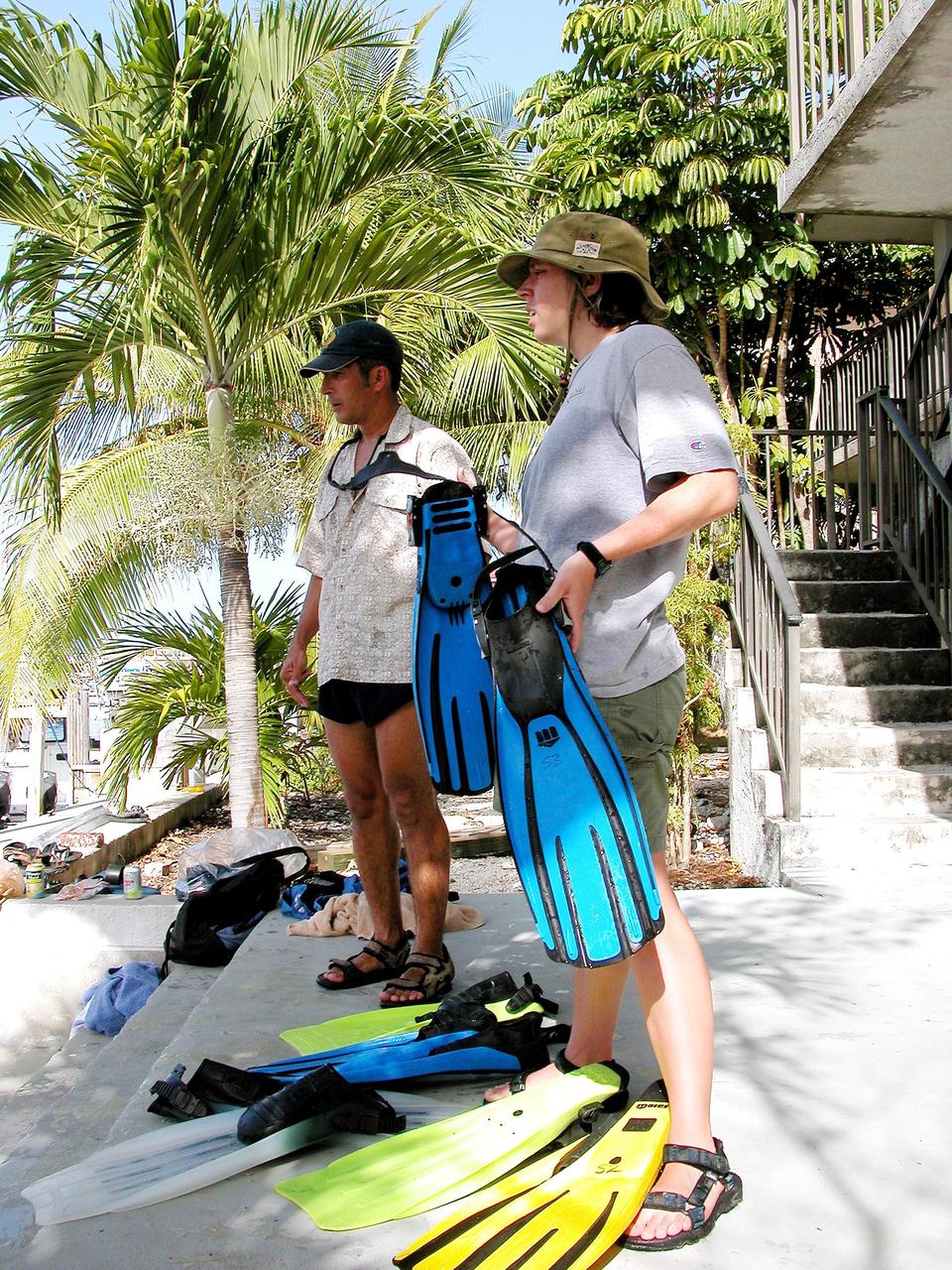
KENNEDY SPACE CENTER, FLA. - After their return from a practice dive at the NOAA Aquarius underwater station offshore at Key Largo, John Herrington and Tara Ruttley look over their dive gear. Herrington is mission commander and Ruttley, a biomedical engineer, is a member of the crew on the NASA Extreme Environment Mission Operations 6 (NEEMO-6) mission. The NEEMO-6 mission involves exposing an astronaut/scientist crew to a real mission experience in an extreme environment - the NOAA undersea station Aquarius offshore from Key Largo - to prepare for future space flight. Spacewalk-like diving excursions and field-tests on a variety of biomedical equipment are designed to help astronauts living aboard the International Space Station. Other team members are astronauts Doug Wheelock and Nick Patrick. To prepare for their 10-day stay, the team had dive training twice a day at the Life Support Buoy, anchored above Aquarius.
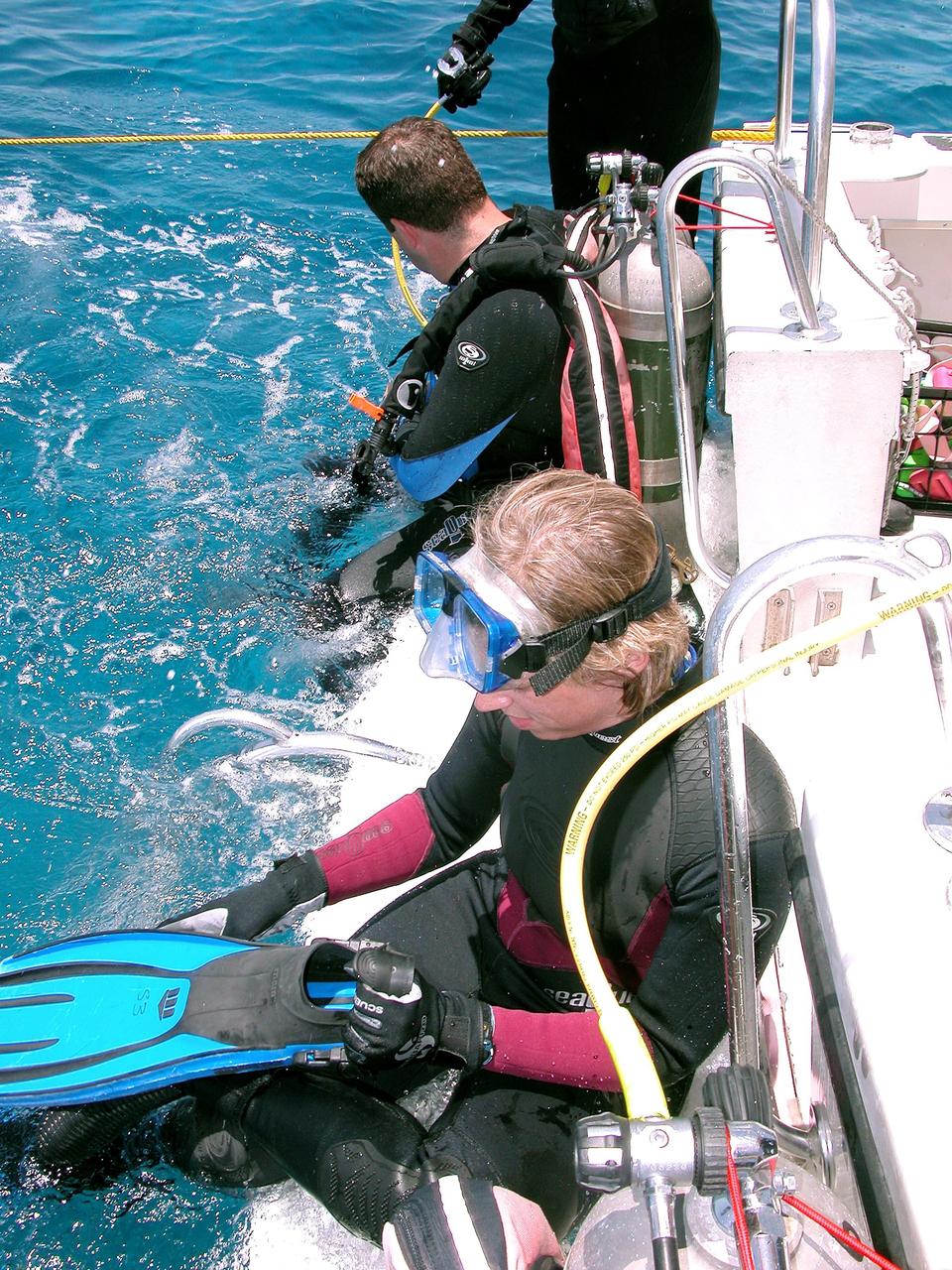
KENNEDY SPACE CENTER, FLA. - Getting ready to enter the water on a practice dive in the ocean offshore from Key Largo are Tara Ruttley (below) and Nick Patrick (above). The two are members of the NASA Extreme Environment Mission Operations 6 (NEEMO-6) mission team. Ruttley is a biomedical engineer. The others are astronauts John Herrington, mission commander, and Doug Wheelock. The NEEMO-6 mission involves exposing an astronaut/scientist crew to a real mission experience in an extreme environment - the NOAA undersea station Aquarius - to prepare for future space flight. Spacewalk-like diving excursions and field-tests on a variety of biomedical equipment are designed to help astronauts living aboard the International Space Station. To prepare for their 10-day stay, the team had dive training twice a day at the Life Support Buoy, anchored above Aquarius.
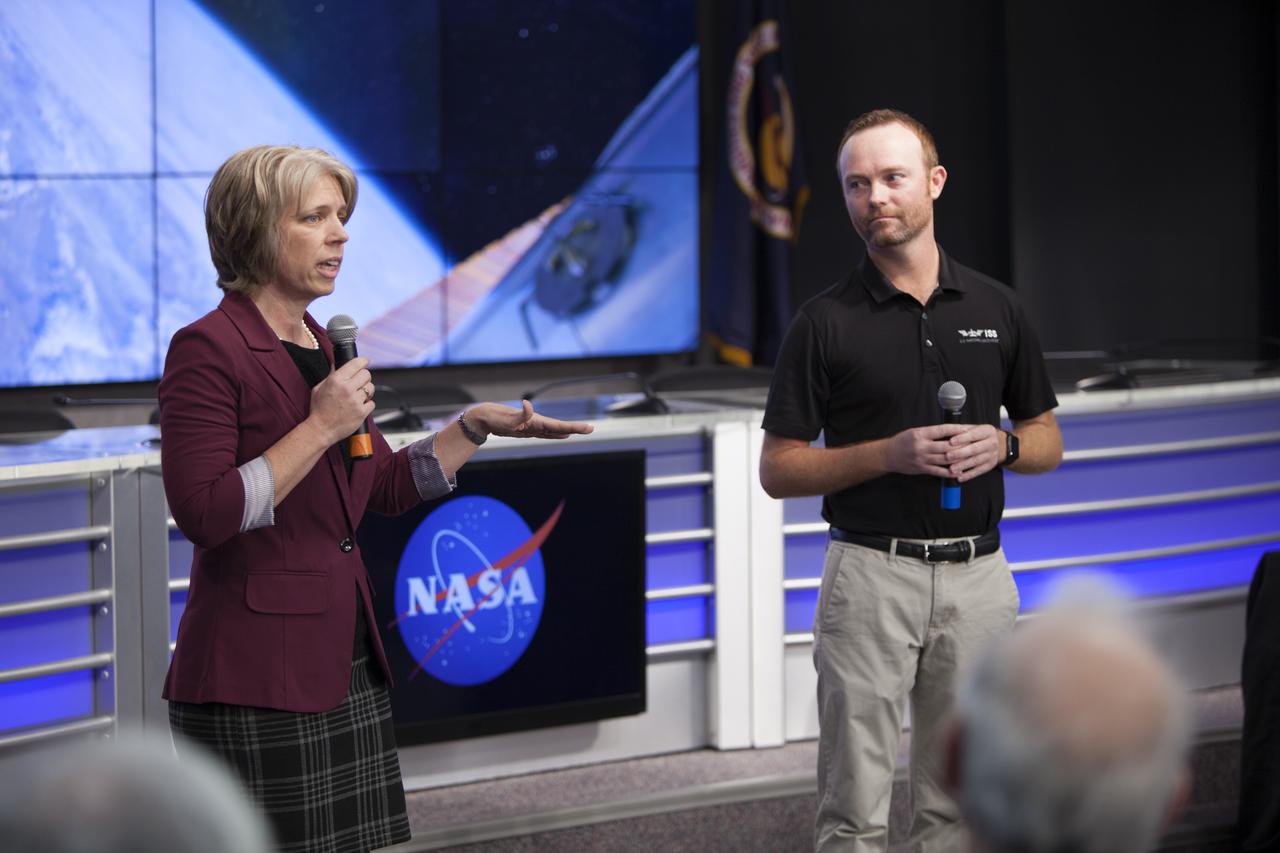
Tara Ruttley, NASA associate scientist for the International Space Station Program, left, and Patrick O'Nell, Marketing and Communications manager for the Center for the Advancement of Science in Space (CASIS), speak to members of social media in the Kennedy Space Center’s Press Site auditorium. The briefing focused on research planned for launch to the International Space Station. The scientific materials and supplies will be aboard a Dragon spacecraft scheduled for launch from Kennedy’s Launch Complex 39A on Feb. 18 atop a SpaceX Falcon 9 rocket on the company's 10th Commercial Resupply Services mission to the space station.
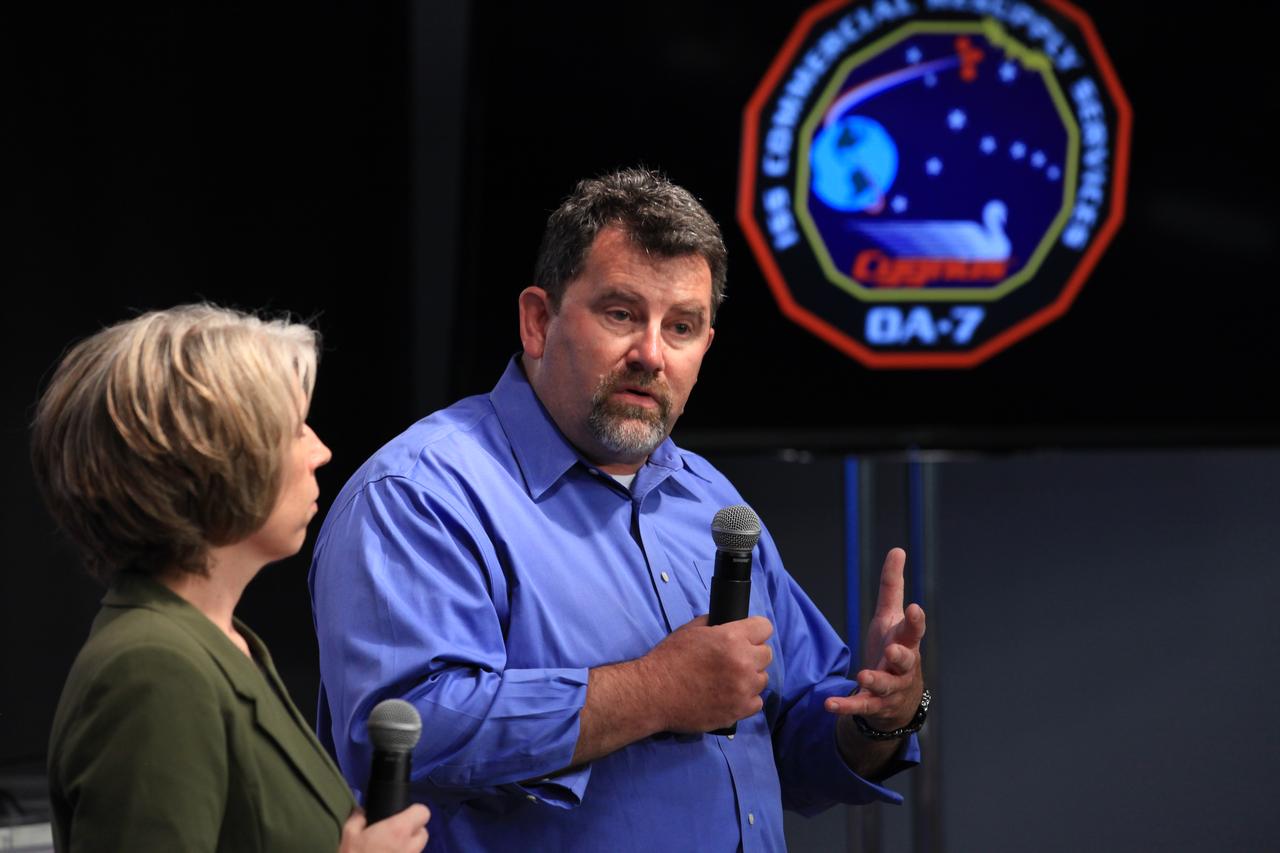
Tara Ruttley, left, associate program scientist with NASA's Johnson Space Center in Houston, and Dr. Mike Roberts, with the Center for the Advancement of Science in Space (CASIS), speak to NASA Social participants during a "What's on Board" science briefing at the agency's Kennedy Space Center in Florida. The briefing is for Orbital ATK's seventh commercial resupply services mission, CRS-7, to the International Space Station. Orbital ATK's Cygnus pressurized cargo module is set to launch on the United Launch Alliance Atlas V rocket from Space Launch Complex 41 at Cape Canaveral Air Force Station on April 18. Liftoff is scheduled for 11:11 a.m. EDT.
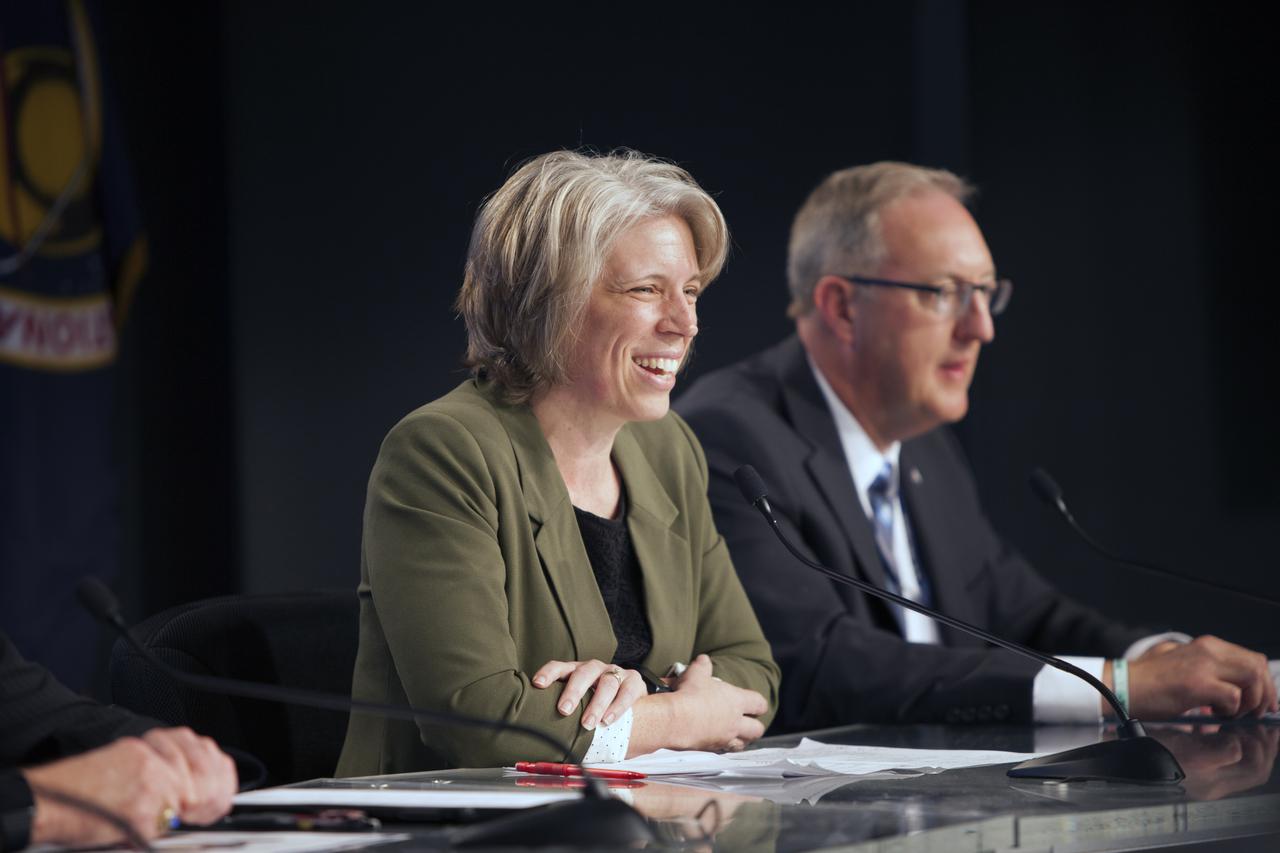
A prelaunch status briefing for Orbital ATK's seventh commercial resupply mission, CRS-7, to the International Space Station, is held at NASA Kennedy Space Center's Press Site in Florida. Participating in the briefing are, from left, Tara Ruttley, Johnson Space Center Program Science Office; and David Craft, weather officer, 45th Weather Squadron. Orbital ATK's Cygnus pressurized cargo module is set to launch atop the ULA Atlas V rocket from Space Launch Complex 41 at Cape Canaveral Air Force Station on April 18. Cygnus will deliver 7,600 pounds of supplies, equipment and scientific research materials to the space station. Liftoff is scheduled for 11:11 a.m. EDT.
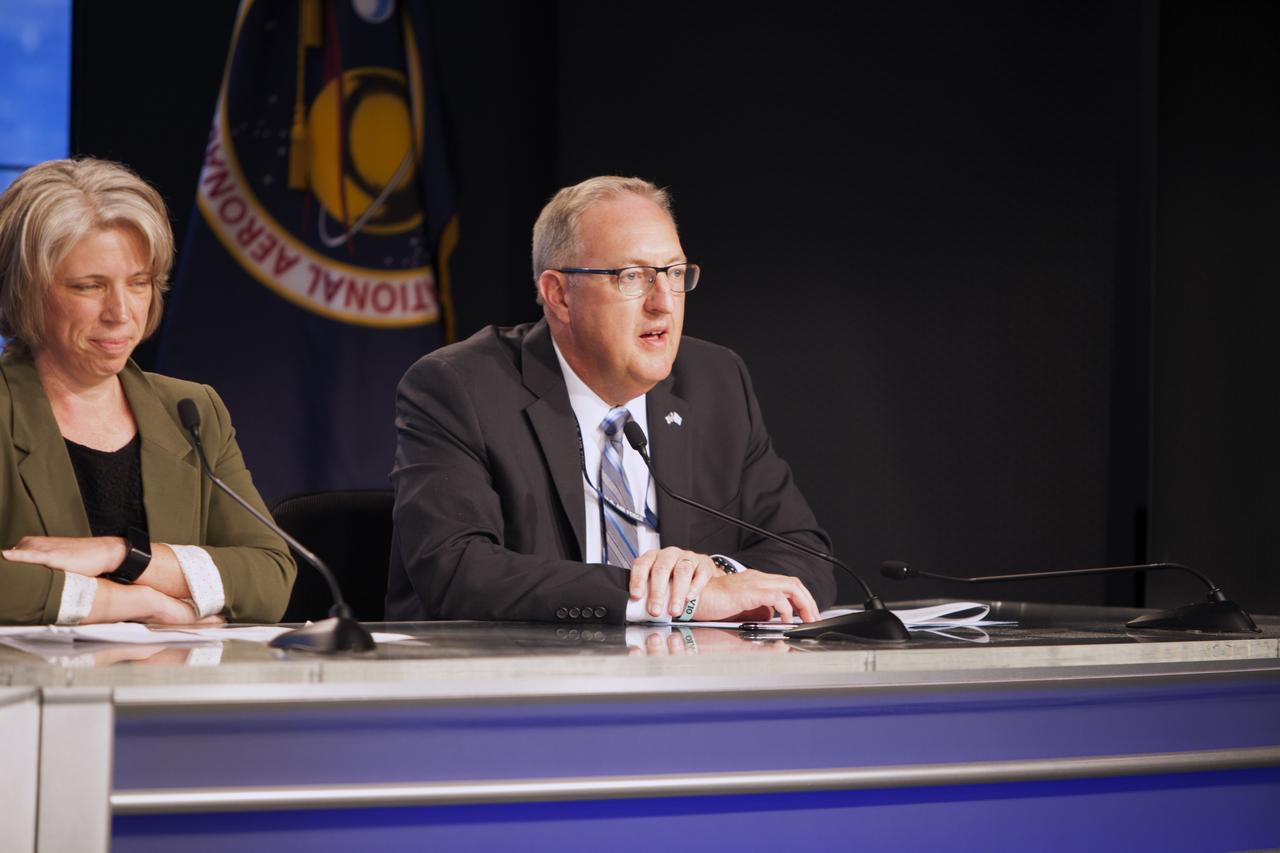
A prelaunch status briefing for Orbital ATK's seventh commercial resupply mission, CRS-7, to the International Space Station, is held at NASA Kennedy Space Center's Press Site in Florida. Participating in the briefing are, from left, Tara Ruttley, Johnson Space Center Program Science Office; and David Craft, weather officer, 45th Weather Squadron. Orbital ATK's Cygnus pressurized cargo module is set to launch atop the ULA Atlas V rocket from Space Launch Complex 41 at Cape Canaveral Air Force Station on April 18. Cygnus will deliver 7,600 pounds of supplies, equipment and scientific research materials to the space station. Liftoff is scheduled for 11:11 a.m. EDT.
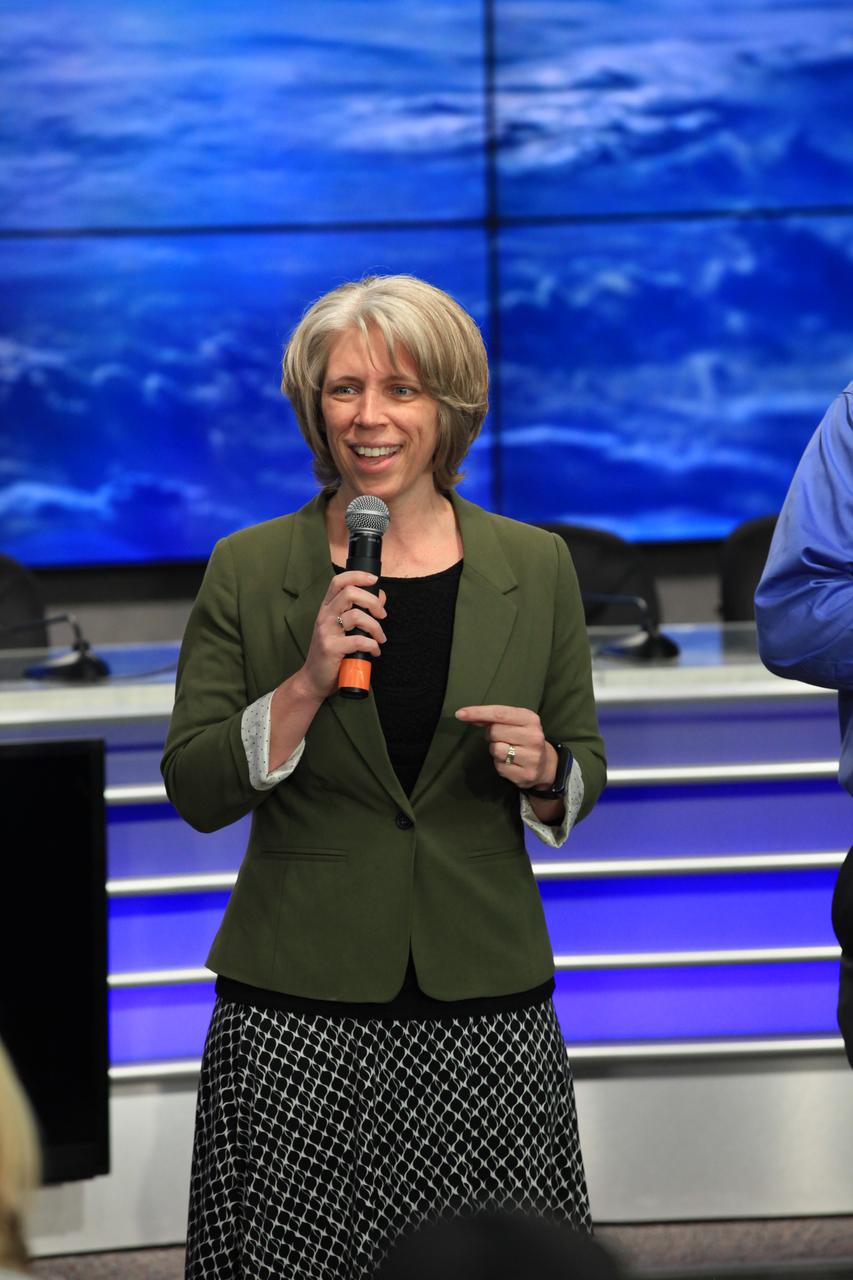
Tara Ruttley, associate program scientist with NASA's Johnson Space Center in Houston, speaks to participants during a NASA Social "What's on Board" briefing at the agency's Kennedy Space Center in Florida, for Orbital ATK's seventh commercial resupply services mission, CRS-7, to the International Space Station. Orbital ATK's Cygnus pressurized cargo module is set to launch on the United Launch Alliance Atlas V rocket from Space Launch Complex 41 at Cape Canaveral Air Force Station on April 18. Liftoff is scheduled for 11:11 a.m. EDT.
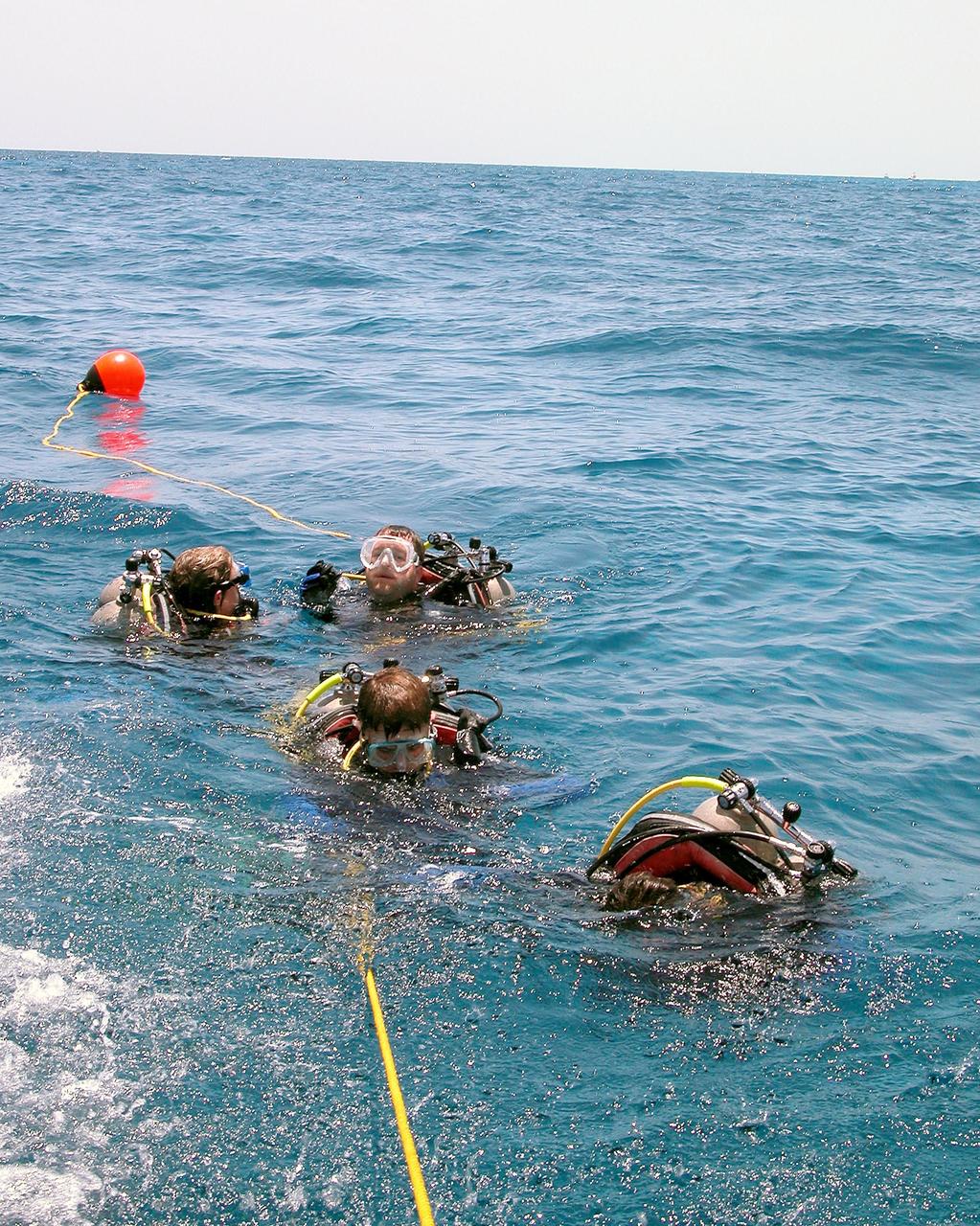
KENNEDY SPACE CENTER, FLA. - In the water for a practice dive in the ocean offshore from Key Largo are the NASA Extreme Environment Mission Operations 6 (NEEMO-6) mission team: (left to right) Tara Ruttley, a biomedical engineer, and astronauts Nick Patrick, John Herrington and Doug Wheelock. The NEEMO-6 mission involves exposing an astronaut/scientist crew to a real mission experience in an extreme environment - the NOAA undersea station Aquarius - to prepare for future space flight. Spacewalk-like diving excursions and field-tests on a variety of biomedical equipment are designed to help astronauts living aboard the International Space Station. To prepare for their 10-day stay, the team had dive training twice a day at the Life Support Buoy, anchored above Aquarius.
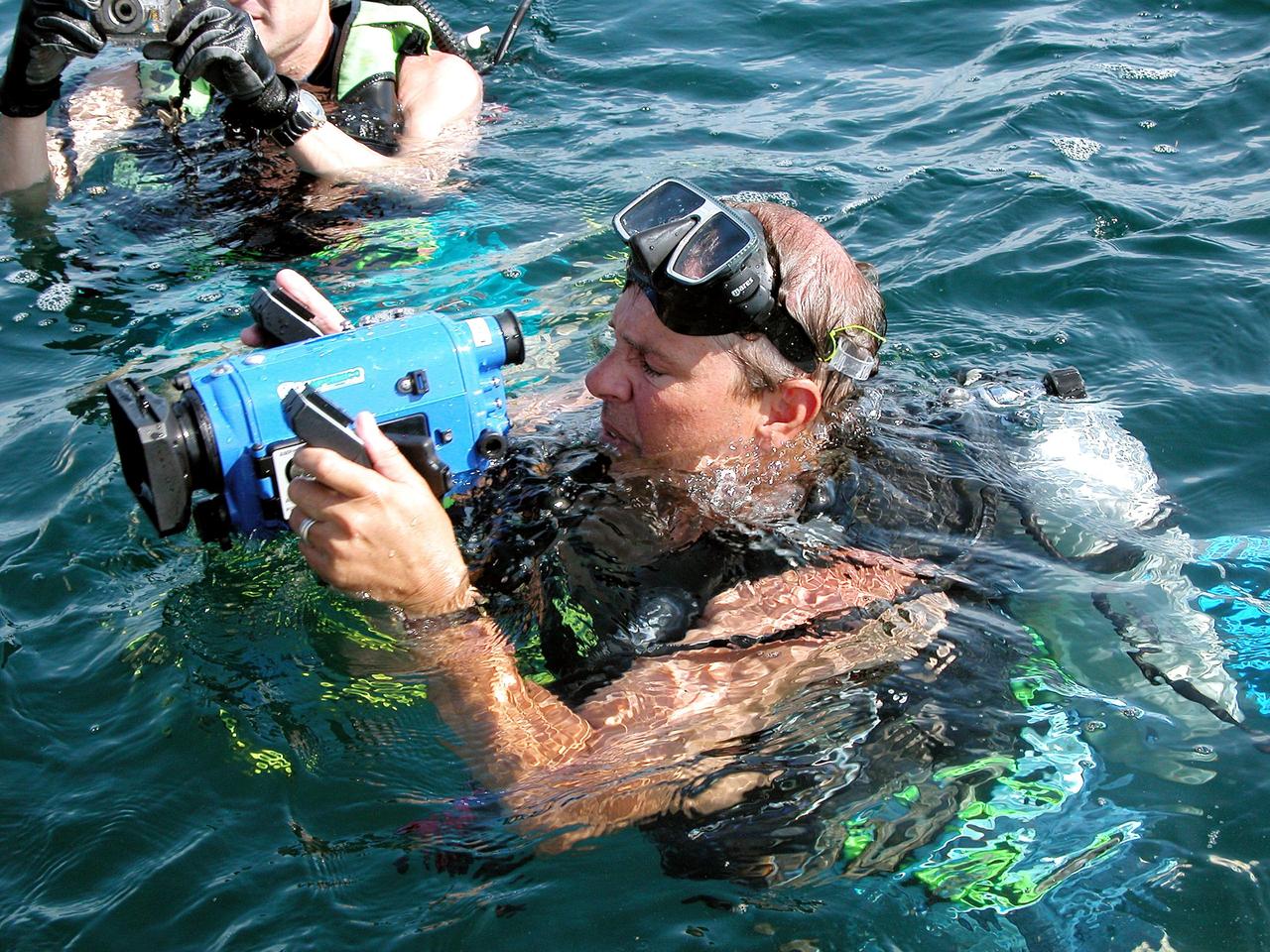
KENNEDY SPACE CENTER, FLA. - In the water offshore from Key Largo, site of the NASA Extreme Environment Mission Operations 6 (NEEMO-6), are (left to right) Bill Todd, project lead, and Marc Reagan, mission lead. Todd and Lucas are also the underwater videographer and still photographer, respectively, for the mission. The NEEMO-6 team comprises John Herrington, commander, Tara Ruttley, a biomedical engineer, and astronauts Nick Patrick and Doug Wheelock. The NEEMO-6 mission involves exposing an astronaut/scientist crew to a real mission experience in an extreme environment - the NOAA undersea station Aquarius - to prepare for future space flight. Spacewalk-like diving excursions and field-tests on a variety of biomedical equipment are designed to help astronauts living aboard the International Space Station. To prepare for their 10-day stay, the team had dive training twice a day at the Life Support Buoy, anchored above Aquarius.
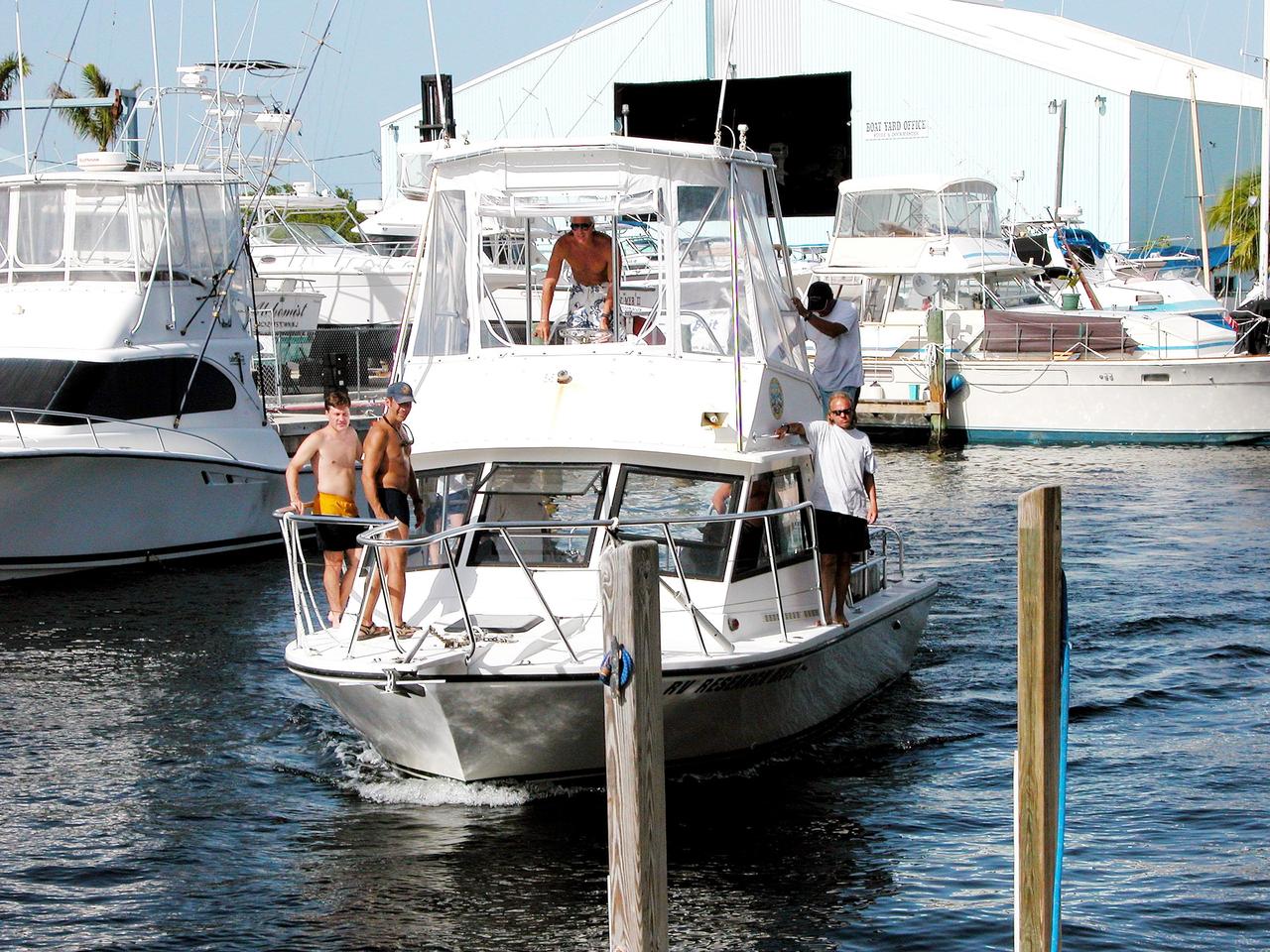
KENNEDY SPACE CENTER, FLA. - A boat returns to the dock in Key Largo from a training session offshore at NASA’s undersea research station, named Aquarius. At left is Marc Reagan, lead on the NASA Extreme Environment Mission Operations 6 (NEEMO-6) mission. In the bow is astronaut John Herrington, mission commander. The others are support personnel. Members of the team also include astronauts Doug Wheelock and Nick Patrick, and biomedical engineer Tara Ruttley. To prepare for their 10-day stay, the team had dive training twice a day. While stationed in Aquarius, the team conducted spacewalk-like diving excursions and field-testing a variety of biomedical equipment designed to help astronauts living aboard the International Space Station.
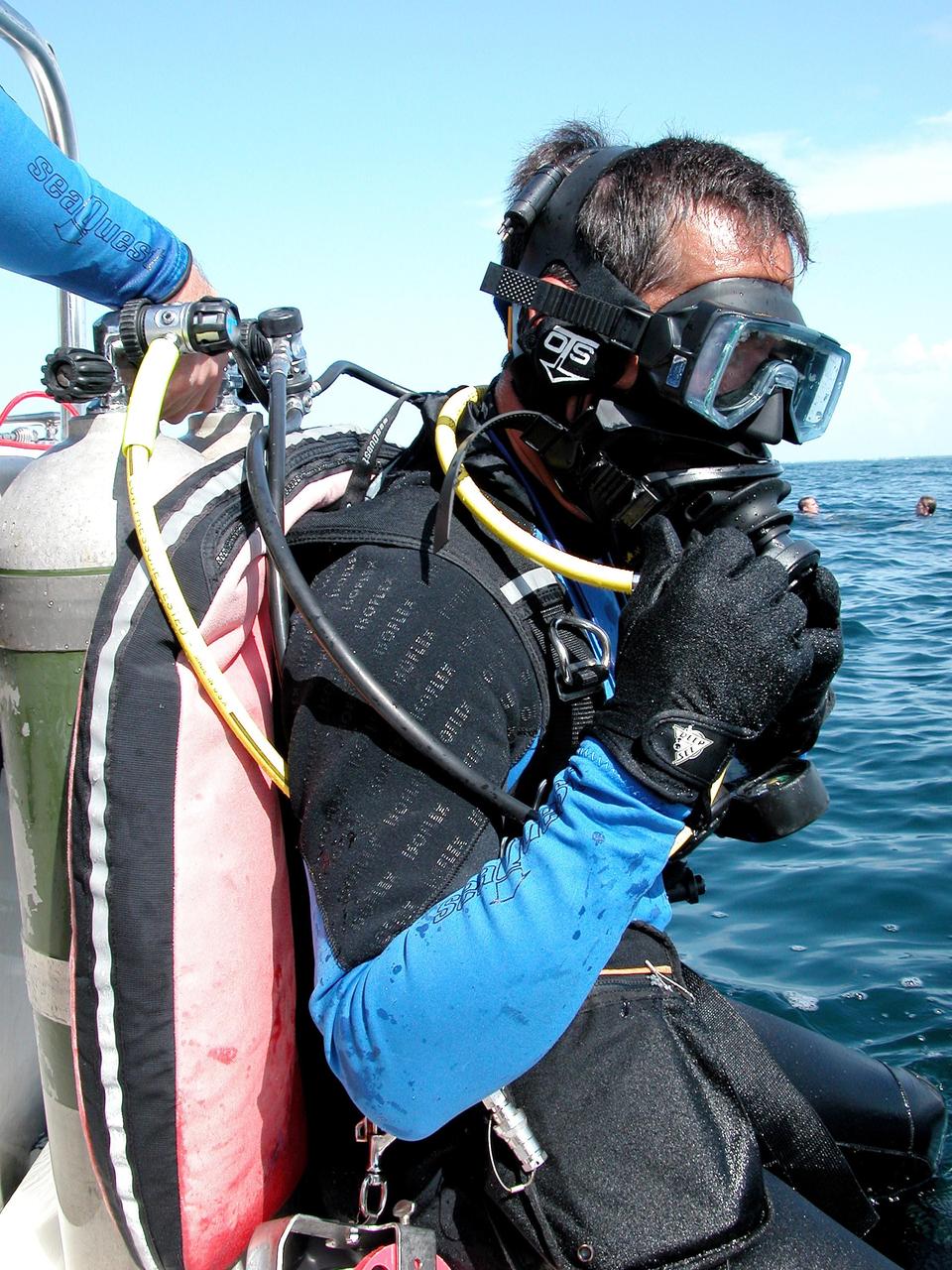
KENNEDY SPACE CENTER, FLA. - In the water for a practice dive in the ocean offshore from Key Largo is astronaut John Herrington. He is commander of the NASA Extreme Environment Mission Operations 6 (NEEMO-6) mission team. The others are Nick Patrick, Doug Wheelock, and Tara Ruttley, a biomedical engineer. The NEEMO-6 mission involves exposing an astronaut/scientist crew to a real mission experience in an extreme environment - the NOAA undersea station Aquarius - to prepare for future space flight. Spacewalk-like diving excursions and field-tests on a variety of biomedical equipment are designed to help astronauts living aboard the International Space Station. To prepare for their 10-day stay, the team had dive training twice a day at the Life Support Buoy, anchored above Aquarius.
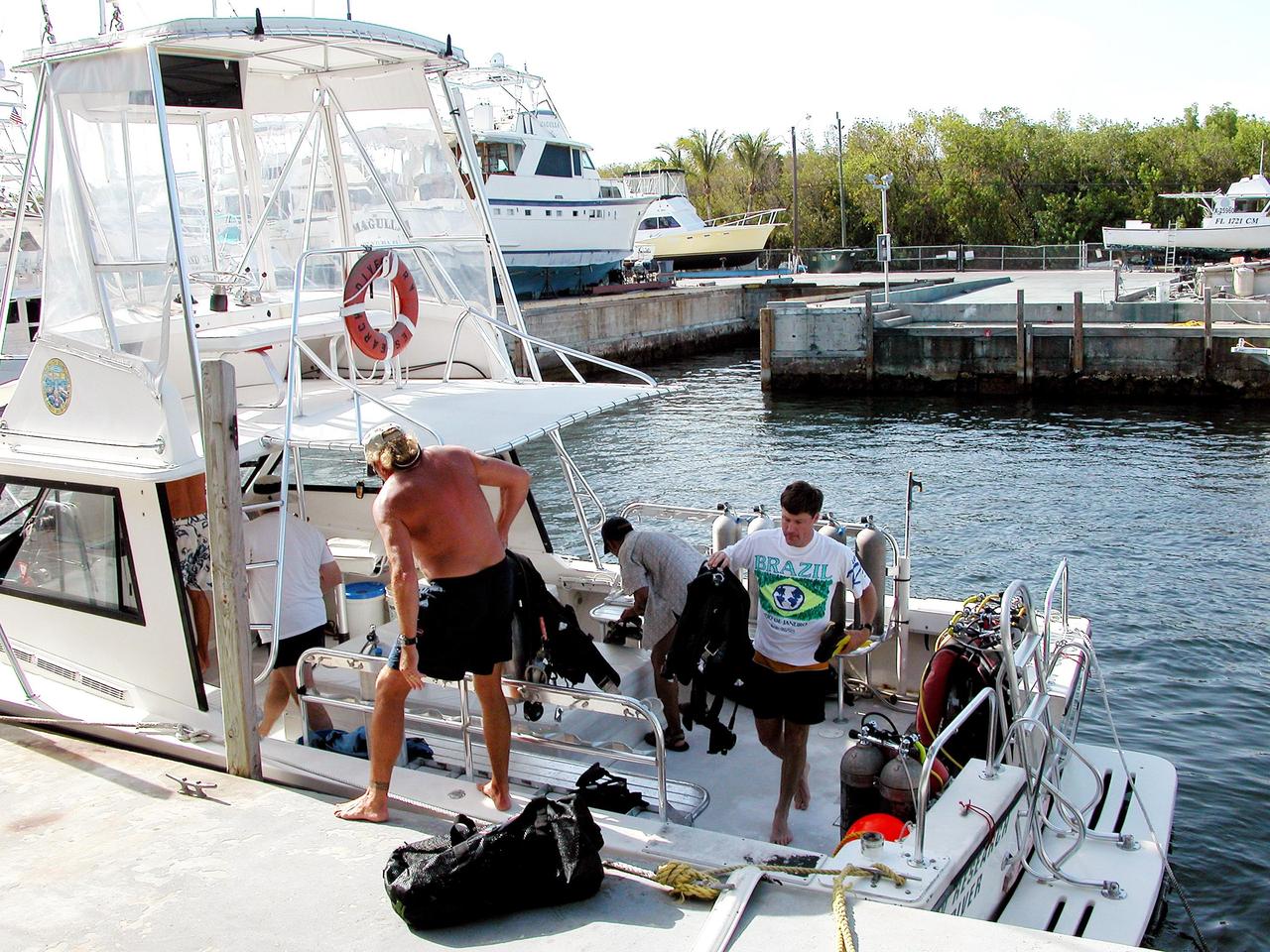
KENNEDY SPACE CENTER, FLA. - Disembarking from the boat in Key Largo are Otto Rutten and Marc Reagan, participating in the NASA Extreme Environment Mission Operations 6 (NEEMO-6) mission at the NOAA Aquarius underwater station offshore. Rutten is director for the National Underwater Research Center; Reagan is mission lead. The NEEMO-6 mission involves exposing an astronaut/scientist crew to a real mission experience in an extreme environment to prepare for future space flight. Spacewalk-like diving excursions and field-tests on a variety of biomedical equipment are designed to help astronauts living aboard the International Space Station. The NEEMO-6 team comprises astronaut John Herrington, mission commander, astronauts Doug Wheelock and Nick Patrick, and biomedical engineer Tara Ruttley. To prepare for their 10-day stay, the team had dive training twice a day at the Life Support Buoy, anchored above Aquarius.
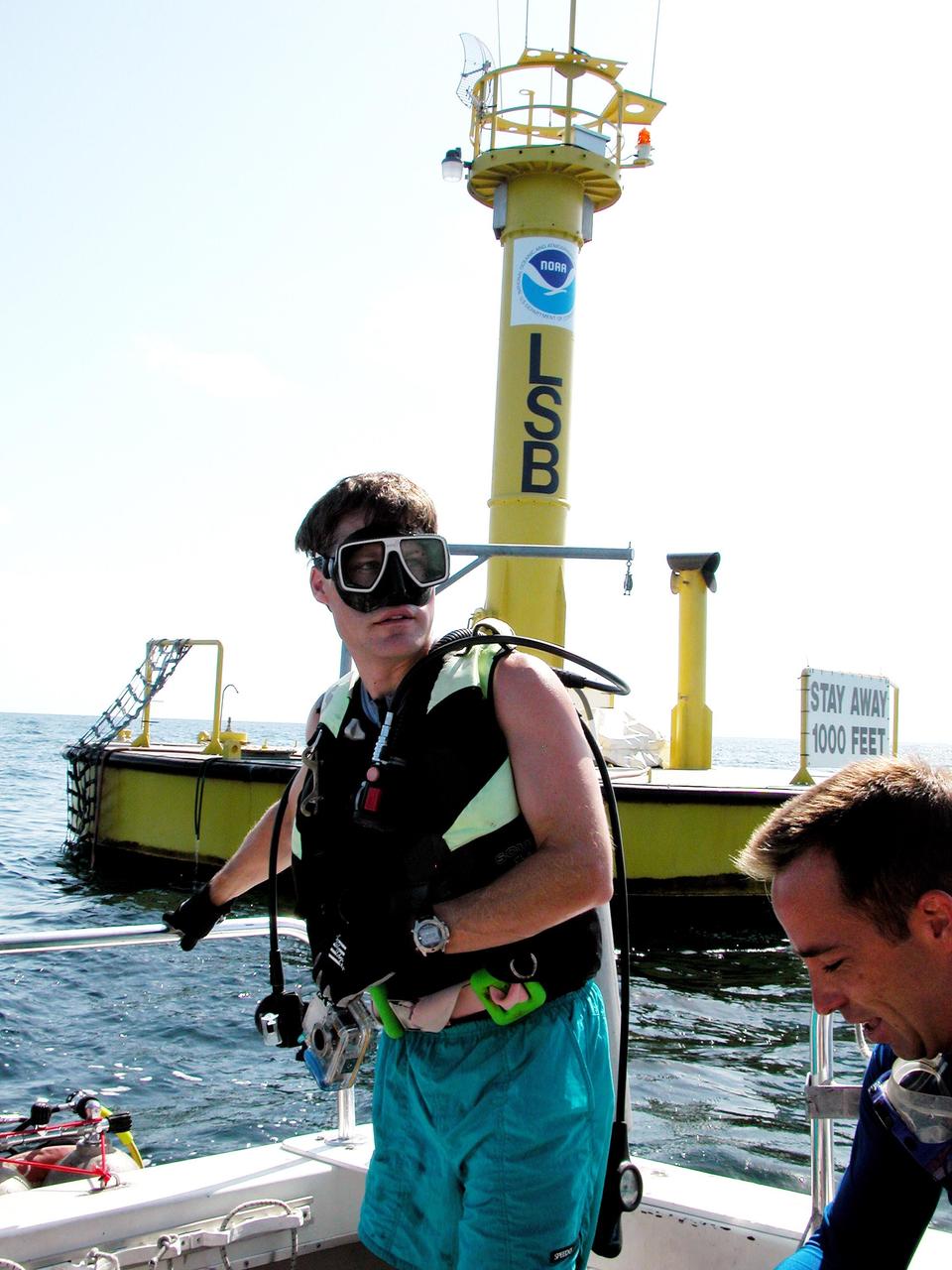
KENNEDY SPACE CENTER, FLA. - Onboard the dive boat at the Life Support Buoy offshore from Key Largo is Marc Reagan, mission lead for the NASA Extreme Environment Mission Operations 6 (NEEMO-6) mission. At right is Lt. Scott Sparks, a Navy medical officer. Reagan is also the underwater still photographer. The NEEMO-6 team comprises John Herrington, commander, Tara Ruttley, a biomedical engineer, and astronauts Nick Patrick and Doug Wheelock. The NEEMO-6 mission involves exposing an astronaut/scientist crew to a real mission experience in an extreme environment - the NOAA undersea station Aquarius - to prepare for future space flight. Spacewalk-like diving excursions and field-tests on a variety of biomedical equipment are designed to help astronauts living aboard the International Space Station. To prepare for their 10-day stay, the team had dive training twice a day at the Life Support Buoy, anchored above Aquarius.
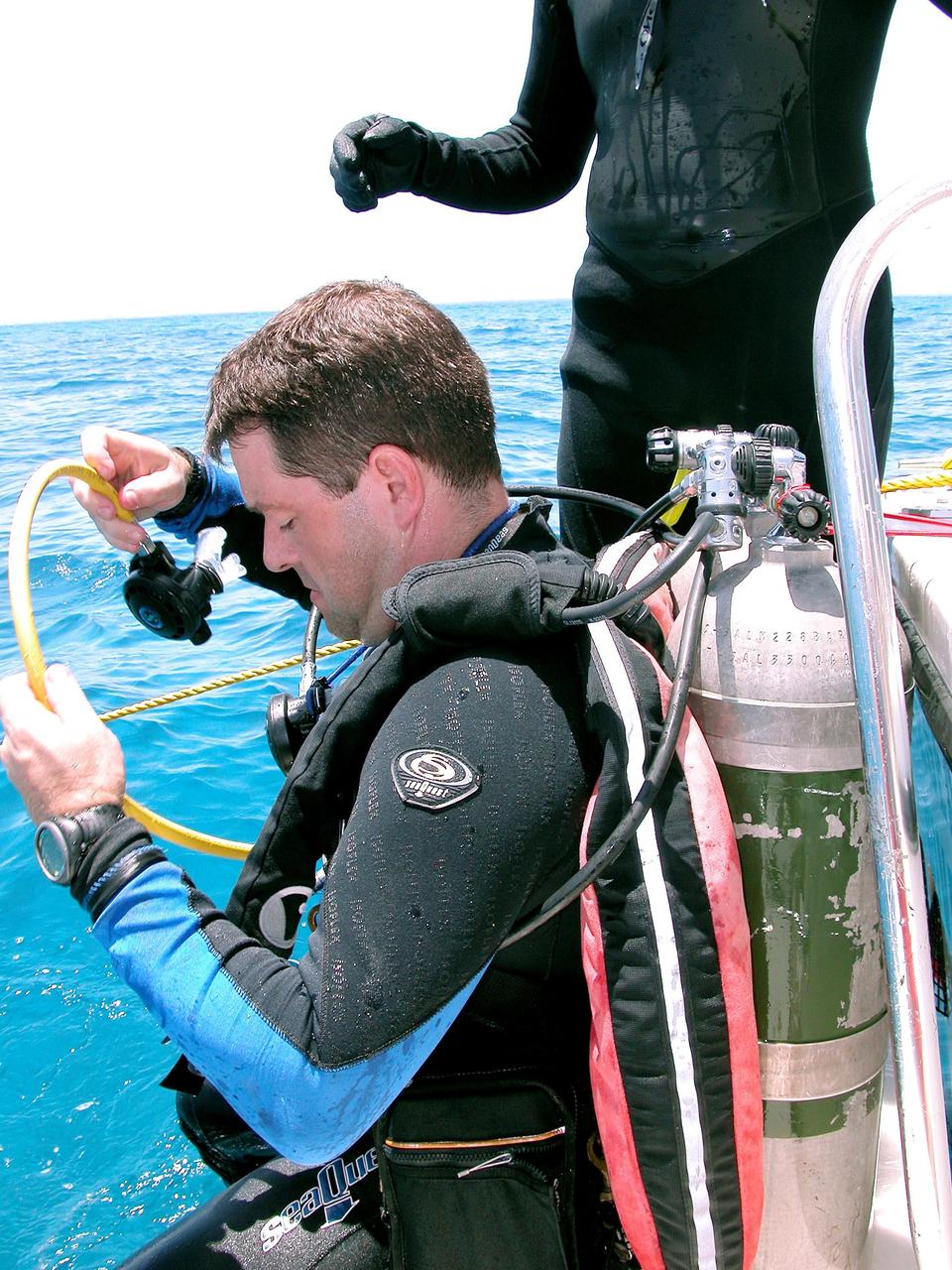
KENNEDY SPACE CENTER, FLA. - Getting ready to enter the water on a practice dive in the ocean offshore from Key Largo is Nick Patrick. He is a member of the NASA Extreme Environment Mission Operations 6 (NEEMO-6) mission team. The others are astronauts John Herrington, mission commander, and Doug Wheelock, plus Tara Ruttley, a biomedical engineer. The NEEMO-6 mission involves exposing an astronaut/scientist crew to a real mission experience in an extreme environment - the NOAA undersea station Aquarius - to prepare for future space flight. Spacewalk-like diving excursions and field-tests on a variety of biomedical equipment are designed to help astronauts living aboard the International Space Station. To prepare for their 10-day stay, the team had dive training twice a day at the Life Support Buoy, anchored above Aquarius.
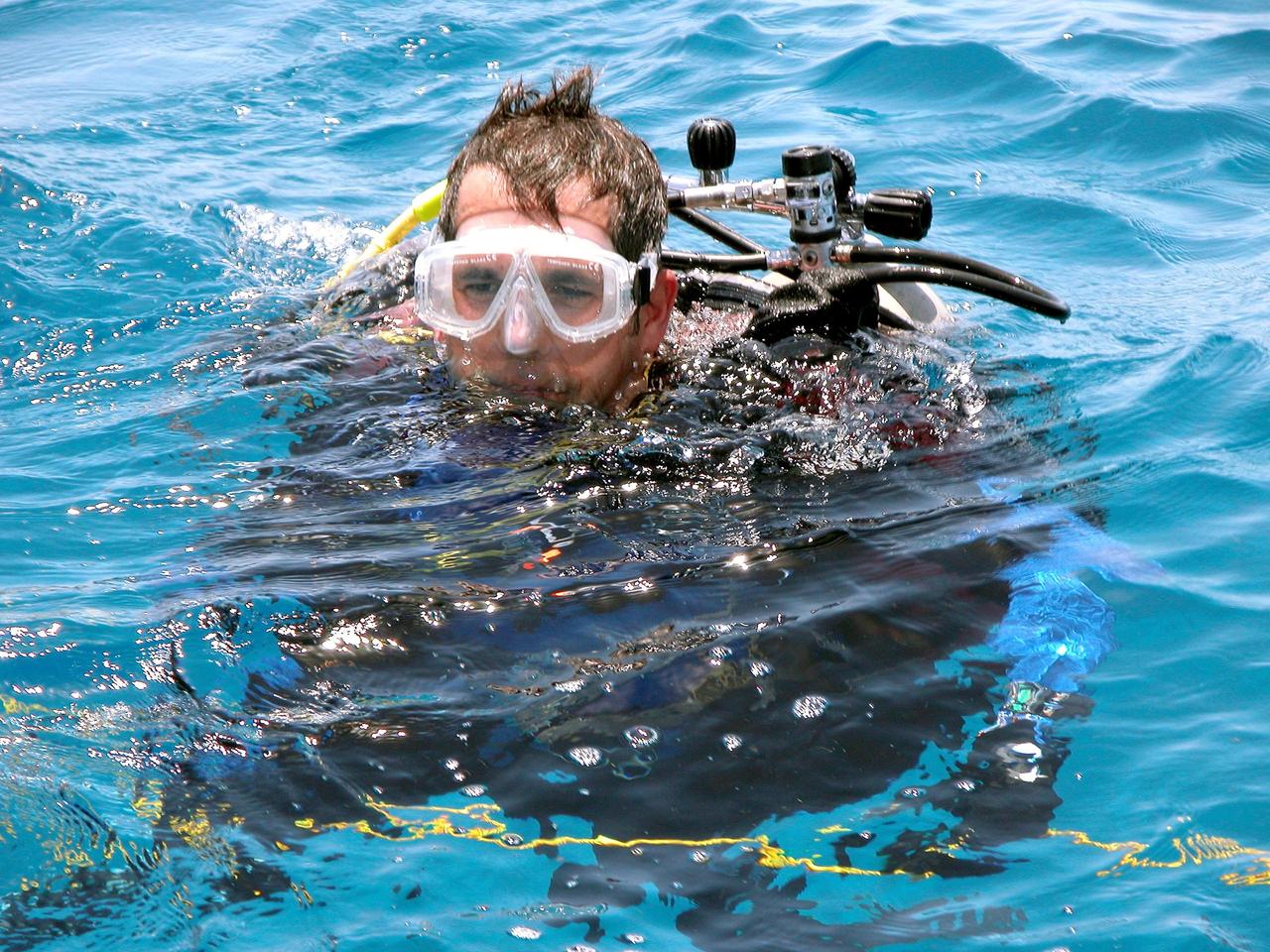
KENNEDY SPACE CENTER, FLA. - In the water for a practice dive in the ocean offshore from Key Largo is astronaut John Herrington. He is commander of the NASA Extreme Environment Mission Operations 6 (NEEMO-6) mission team. The others are Nick Patrick, Doug Wheelock, and Tara Ruttley, a biomedical engineer. The NEEMO-6 mission involves exposing an astronaut/scientist crew to a real mission experience in an extreme environment - the NOAA undersea station Aquarius - to prepare for future space flight. Spacewalk-like diving excursions and field-tests on a variety of biomedical equipment are designed to help astronauts living aboard the International Space Station. To prepare for their 10-day stay, the team had dive training twice a day at the Life Support Buoy, anchored above Aquarius.
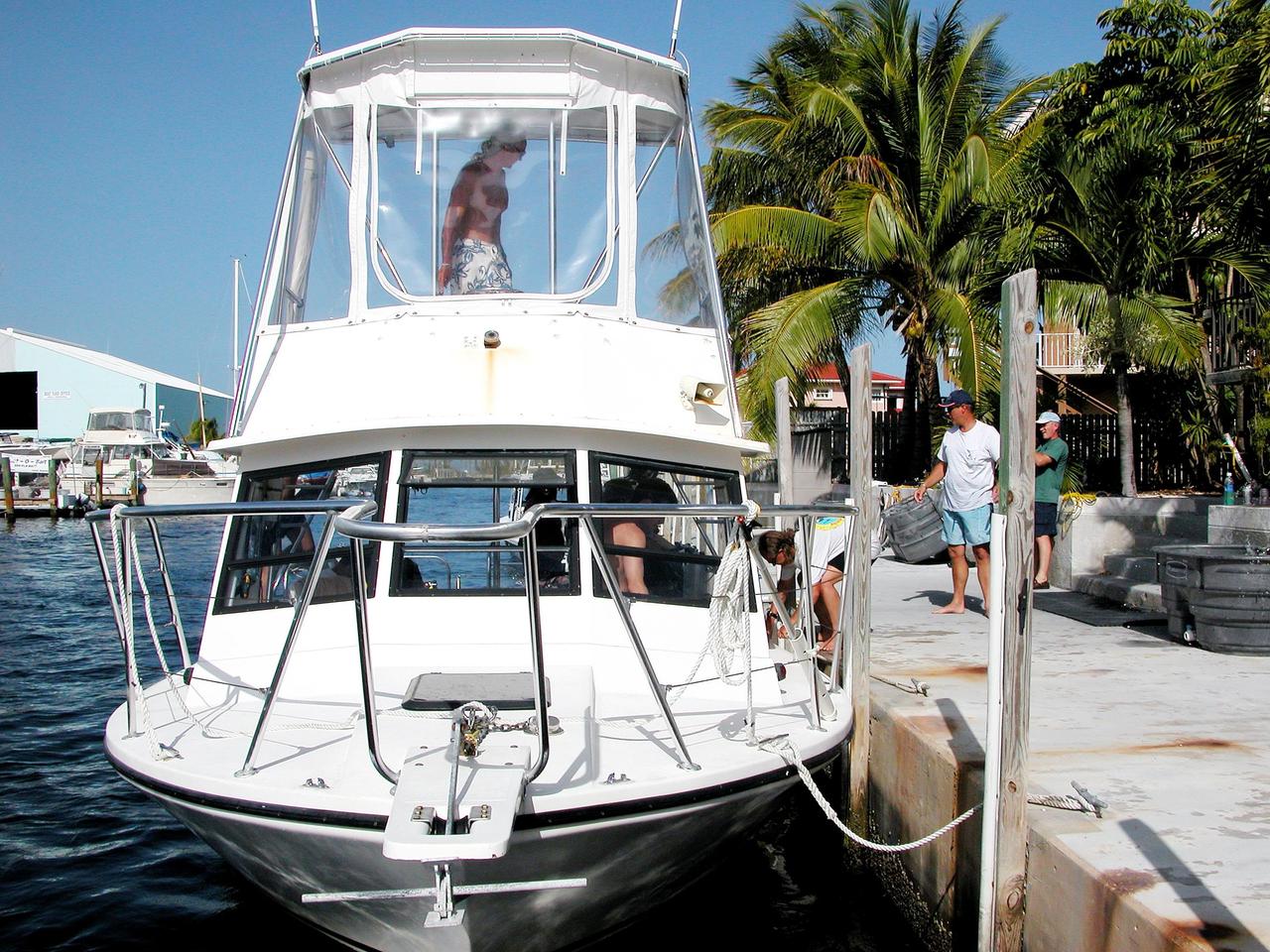
KENNEDY SPACE CENTER, FLA. - The boat with NEEMO-6 personnel ties up at the dock in Key Largo after a training session offshore at NASA’s undersea research station, named Aquarius. At right is Bill Todd, project lead. The NASA Extreme Environment Mission Operations 6 (NEEMO-6) mission involves spacewalk-like diving excursions and field-testing a variety of biomedical equipment designed to help astronauts living aboard the International Space Station. The NEEMO-6 team comprises astronaut John Herrington, mission commander, astronauts Doug Wheelock and Nick Patrick, and biomedical engineer Tara Ruttley. To prepare for their 10-day stay, the team had dive training twice a day at the Life Support Buoy, anchored above Aquarius.
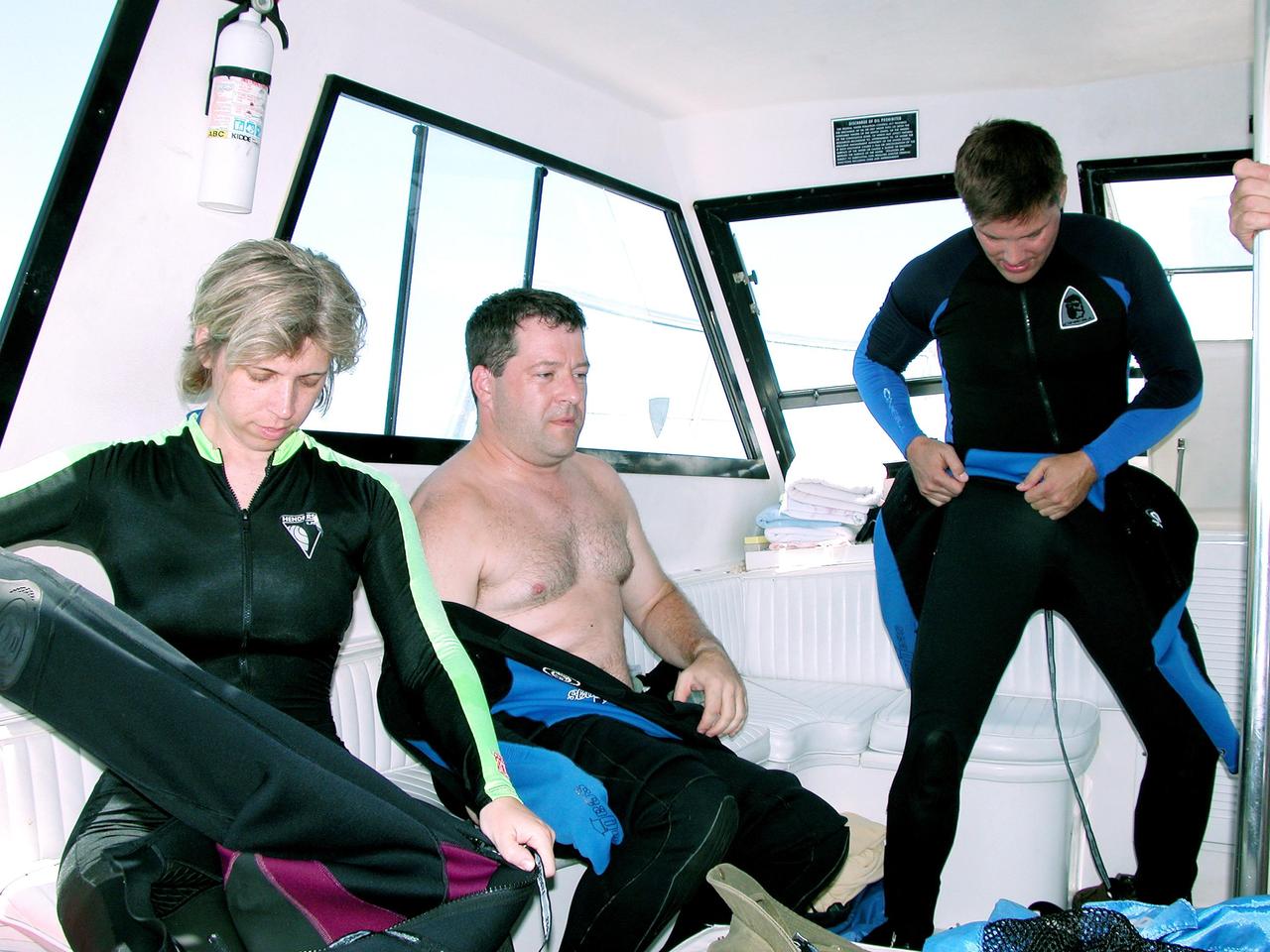
KENNEDY SPACE CENTER, FLA. - Onboard the dive boat, members of the NASA Extreme Environment Mission Operations 6 (NEEMO-6) mission don dive suits. From left are Tara Ruttley, a biomedical engineer, and astronauts Nick Patrick and Doug Wheelock. John Herrington is mission commander. The NEEMO-6 mission involves exposing an astronaut/scientist crew to a real mission experience in an extreme environment - the NOAA undersea station Aquarius offshore from Key Largo - to prepare for future space flight. Spacewalk-like diving excursions and field-tests on a variety of biomedical equipment are designed to help astronauts living aboard the International Space Station. To prepare for their 10-day stay, the team had dive training twice a day at the Life Support Buoy, anchored above Aquarius.
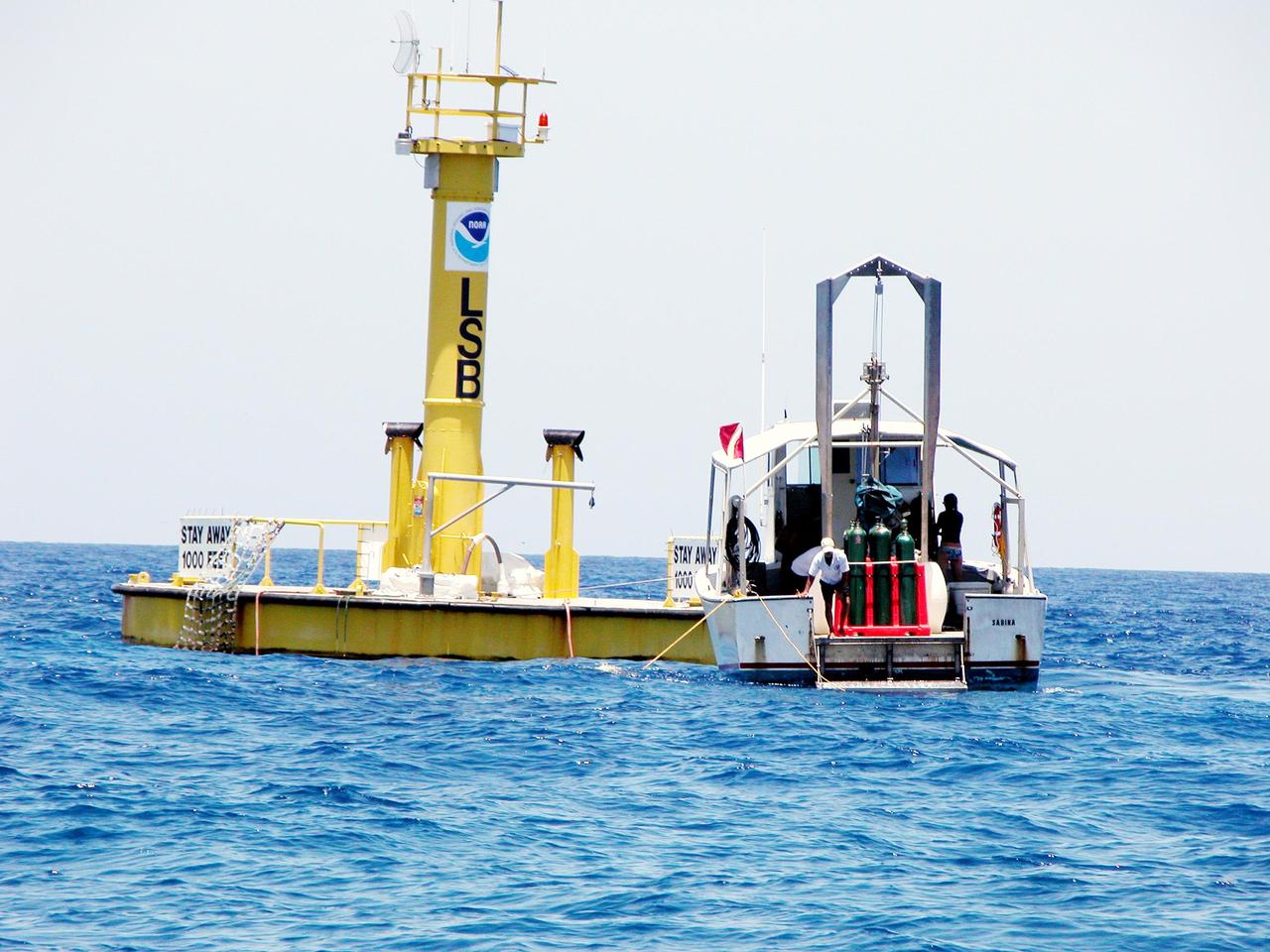
KENNEDY SPACE CENTER, FLA. - A dive boat is moored to the Life Support Buoy, anchored above the NOAA undersea station Aquarius, offshore from Key Largo. Underwater is the NASA Extreme Environment Mission Operations 6 (NEEMO-6) mission team: (left to right) Tara Ruttley, a biomedical engineer, and astronauts Nick Patrick, John Herrington and Doug Wheelock. The NEEMO-6 mission involves exposing an astronaut/scientist crew to a real mission experience in an extreme environment - Aquarius - to prepare for future space flight. Spacewalk-like diving excursions and field-tests on a variety of biomedical equipment are designed to help astronauts living aboard the International Space Station. To prepare for their 10-day stay, the team had dive training twice a day at the Life Support Buoy.
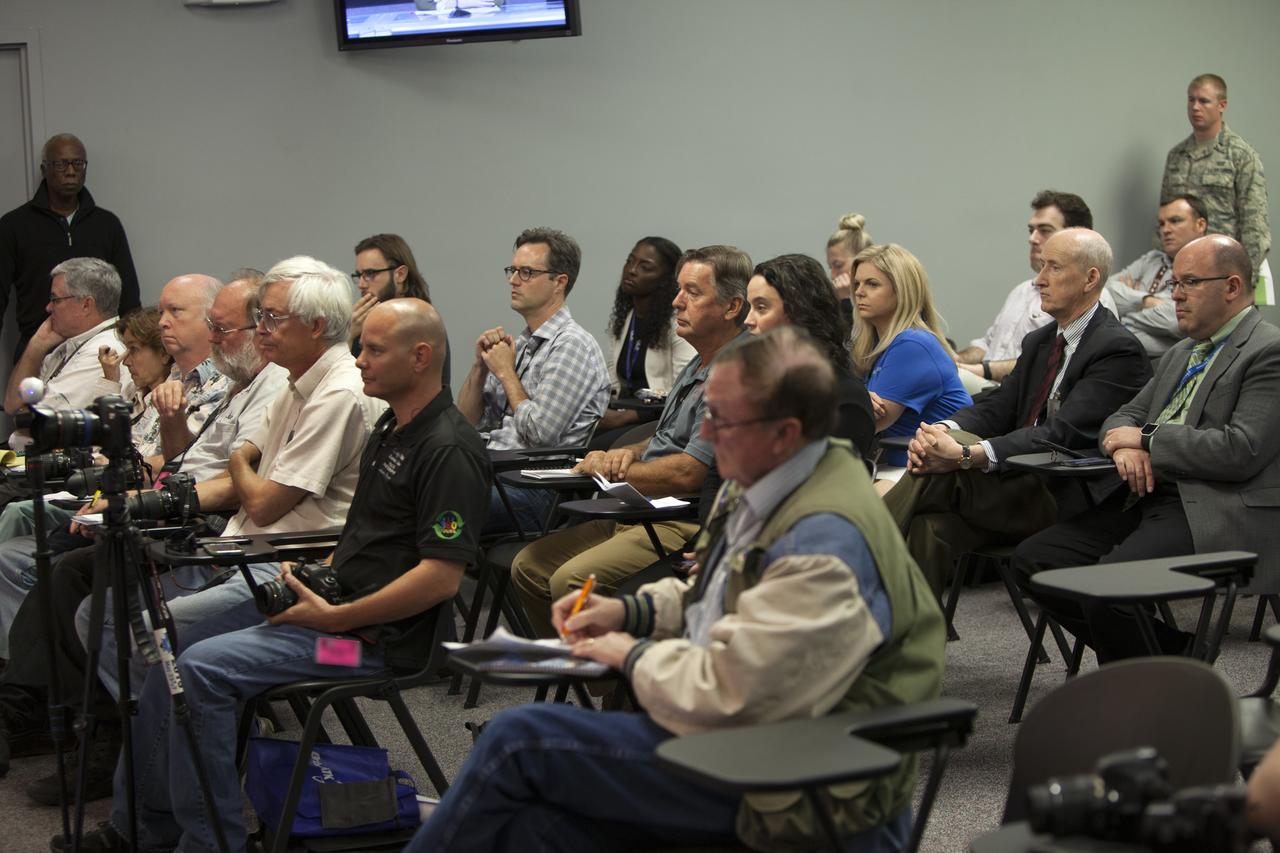
Members of the media listen to a prelaunch status briefing for Orbital ATK's seventh commercial resupply mission, CRS-7, to the International Space Station, at NASA Kennedy Space Center's Press Site in Florida. Moderating the briefing is George Diller, NASA Kennedy Public Affairs. Participants in the briefing are Joel Montalbano, deputy manager, NASA International Space Station Program; Vern Thorp, program manager, commercial missions, United Launch Alliance; Frank Culbertson, Space Systems Group president, Orbital ATK; Tara Ruttley, Johnson Space Center Program Science Office; and David Craft, weather officer, 45th Weather Squadron. Orbital ATK's Cygnus pressurized cargo module is set to launch atop the ULA Atlas V rocket from Space Launch Complex 41 at Cape Canaveral Air Force Station on April 18. Cygnus will deliver 7,600 pounds of supplies, equipment and scientific research materials to the space station. Liftoff is scheduled for 11:11 a.m. EDT.
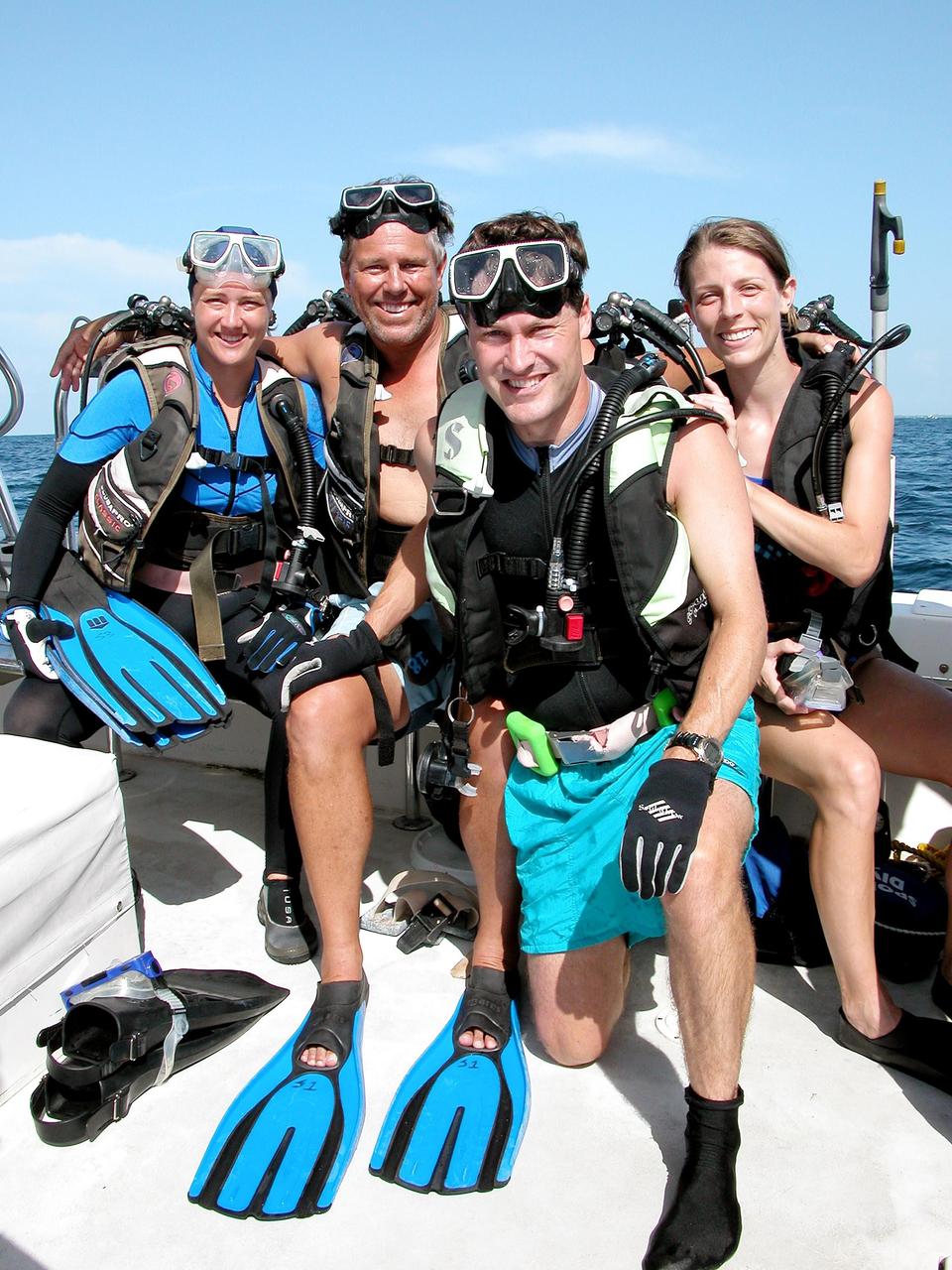
KENNEDY SPACE CENTER, FLA. - Ready for another dive to the NOAA undersea station Aquarius, offshore from Key Largo, the site of the NASA Extreme Environment Mission Operations 6 (NEEMO-6), are (left to right) Monike Schultz, CB Office lead; Bill Todd, project lead; Marc Reagan, mission lead; and Michele Lucas, OPS planner. Todd and Lucas are also the underwater videographer and still photographer, respectively, for the mission. The NEEMO-6 team comprises John Herrington, commander, Tara Ruttley, a biomedical engineer, and astronauts Nick Patrick and Doug Wheelock. The NEEMO-6 mission involves exposing an astronaut/scientist crew to a real mission experience in an extreme environment - Aquarius - to prepare for future space flight. Spacewalk-like diving excursions and field-tests on a variety of biomedical equipment are designed to help astronauts living aboard the International Space Station. To prepare for their 10-day stay, the team had dive training twice a day at the Life Support Buoy, anchored above Aquarius.
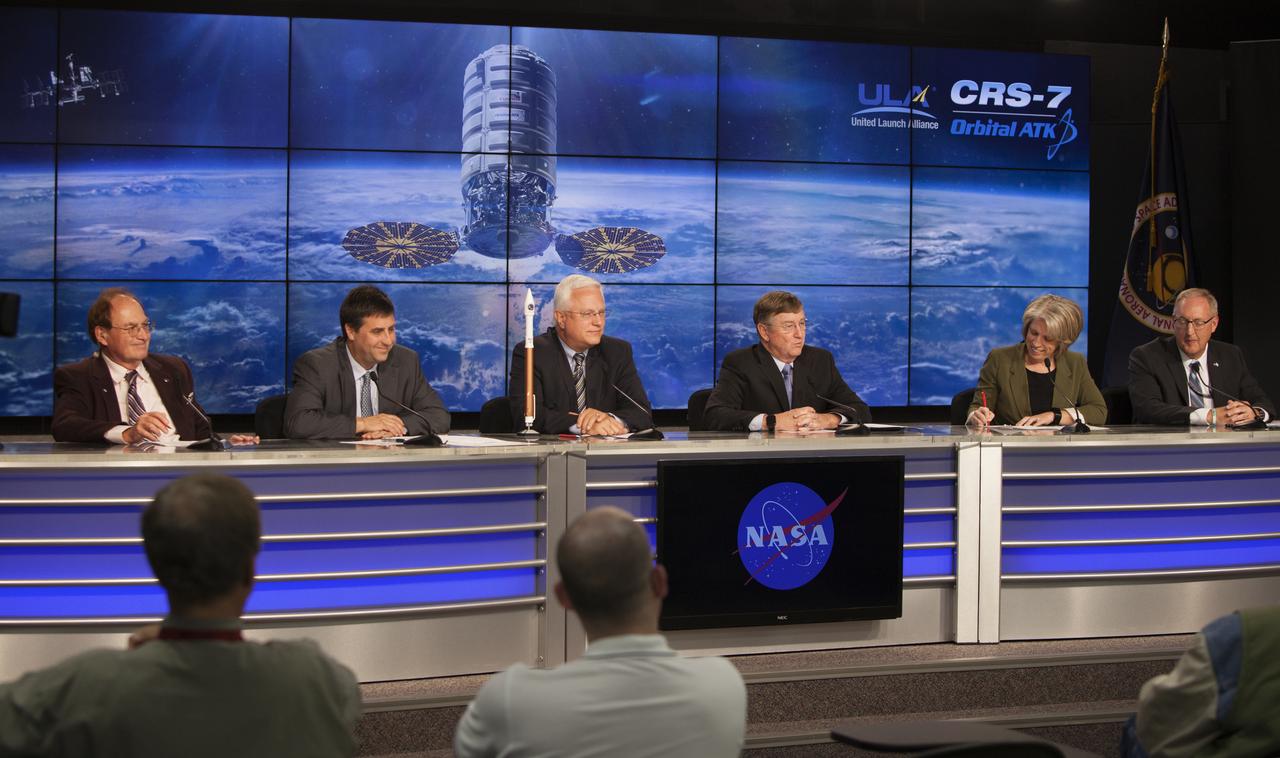
A prelaunch status briefing for Orbital ATK's seventh commercial resupply mission, CRS-7, to the International Space Station, is held at NASA Kennedy Space Center's Press Site in Florida. Participating in the briefing are, from left, George Diller, NASA Kennedy Public Affairs; Joel Montalbano, deputy manager, NASA International Space Station Program; Vern Thorp, program manager, commercial missions, United Launch Alliance; Frank Culbertson, Space Systems Group president, Orbital ATK; Tara Ruttley, Johnson Space Center Program Science Office; and David Craft, weather officer, 45th Weather Squadron. Orbital ATK's Cygnus pressurized cargo module is set to launch atop the ULA Atlas V rocket from Space Launch Complex 41 at Cape Canaveral Air Force Station on April 18. Cygnus will deliver 7,600 pounds of supplies, equipment and scientific research materials to the space station. Liftoff is scheduled for 11:11 a.m. EDT.
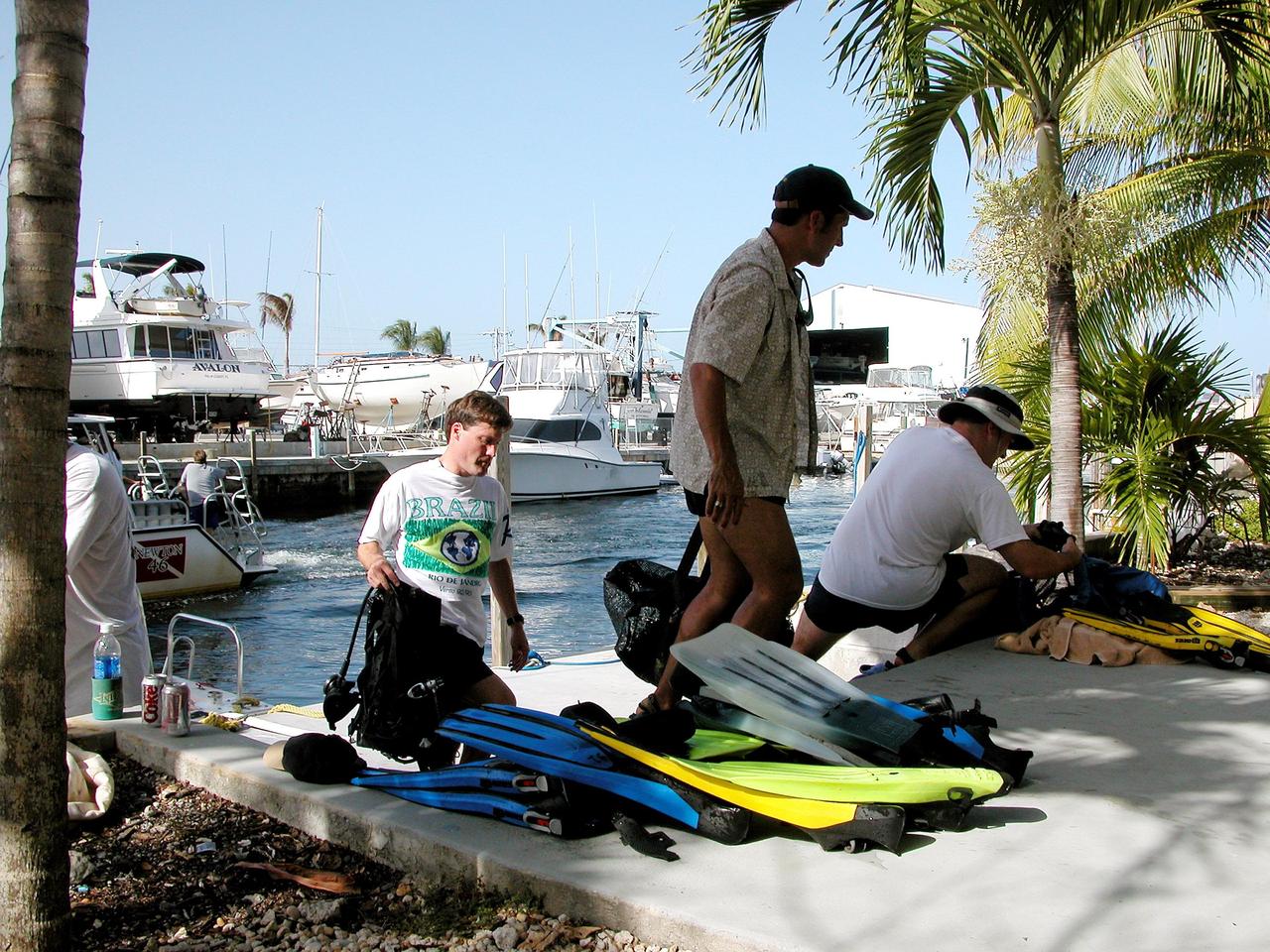
KENNEDY SPACE CENTER, FLA. - After their return from a practice dive at the NOAA Aquarius underwater station offshore at Key Largo, Marc Reagan, John Herrington and Nick Patrick unload dive gear. Herrington is mission commander and Patrick is a member of the crew on the NASA Extreme Environment Mission Operations 6 (NEEMO-6) mission. Reagan is mission lead as well as underwater still photographer. The NEEMO-6 mission involves exposing an astronaut/scientist crew to a real mission experience in an extreme environment - the NOAA undersea station Aquarius offshore from Key Largo - to prepare for future space flight. Spacewalk-like diving excursions and field-tests on a variety of biomedical equipment are designed to help astronauts living aboard the International Space Station. Other team members are Doug Wheelock and biomedical engineer Tara Ruttley. To prepare for their 10-day stay, the team had dive training twice a day at the Life Support Buoy, anchored above Aquarius.
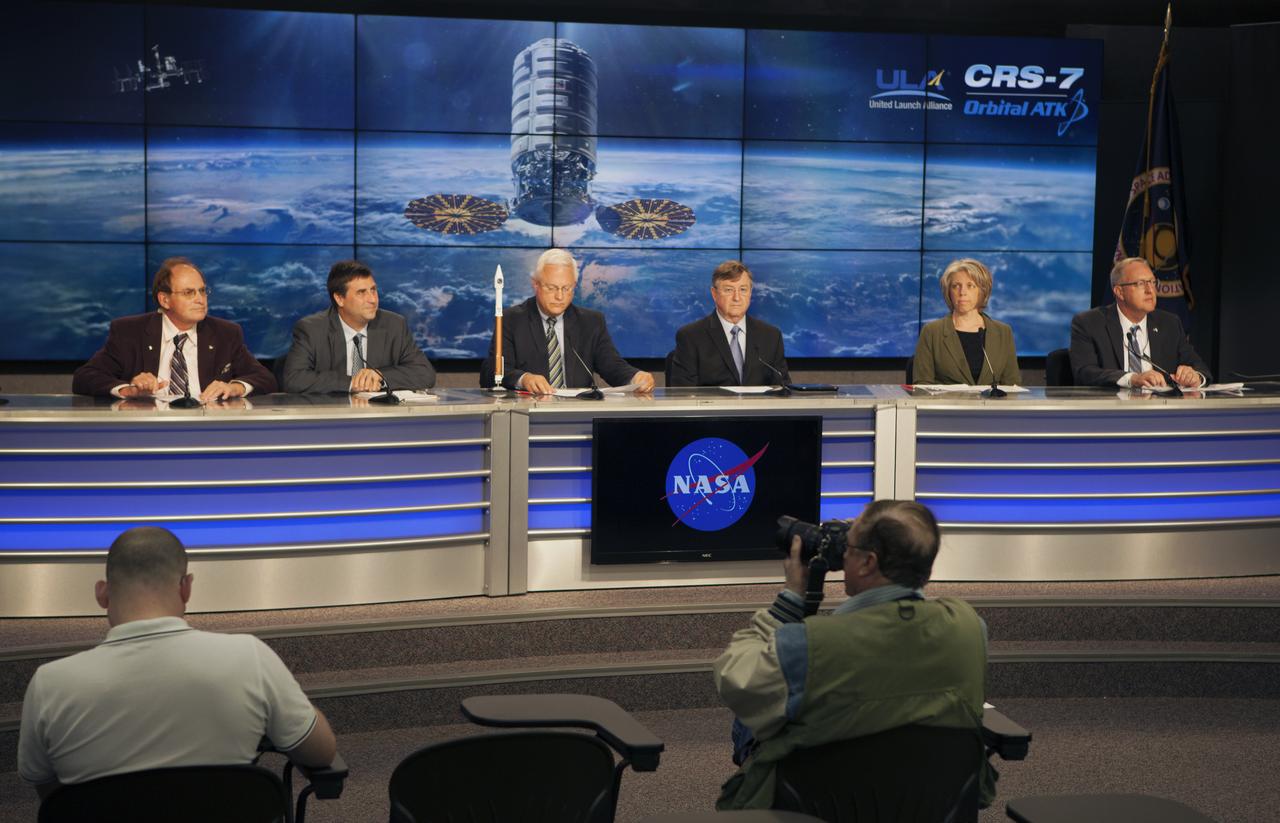
A prelaunch status briefing for Orbital ATK's seventh commercial resupply mission, CRS-7, to the International Space Station, is held at NASA Kennedy Space Center's Press Site in Florida. Participating in the briefing are, from left, George Diller, NASA Kennedy Public Affairs; Joel Montalbano, deputy manager, NASA International Space Station Program; Vern Thorp, program manager, commercial missions, United Launch Alliance; Frank Culbertson, Space Systems Group president, Orbital ATK; Tara Ruttley, Johnson Space Center Program Science Office; and David Craft, weather officer, 45th Weather Squadron. Orbital ATK's Cygnus pressurized cargo module is set to launch atop the ULA Atlas V rocket from Space Launch Complex 41 at Cape Canaveral Air Force Station on April 18. Cygnus will deliver 7,600 pounds of supplies, equipment and scientific research materials to the space station. Liftoff is scheduled for 11:11 a.m. EDT.