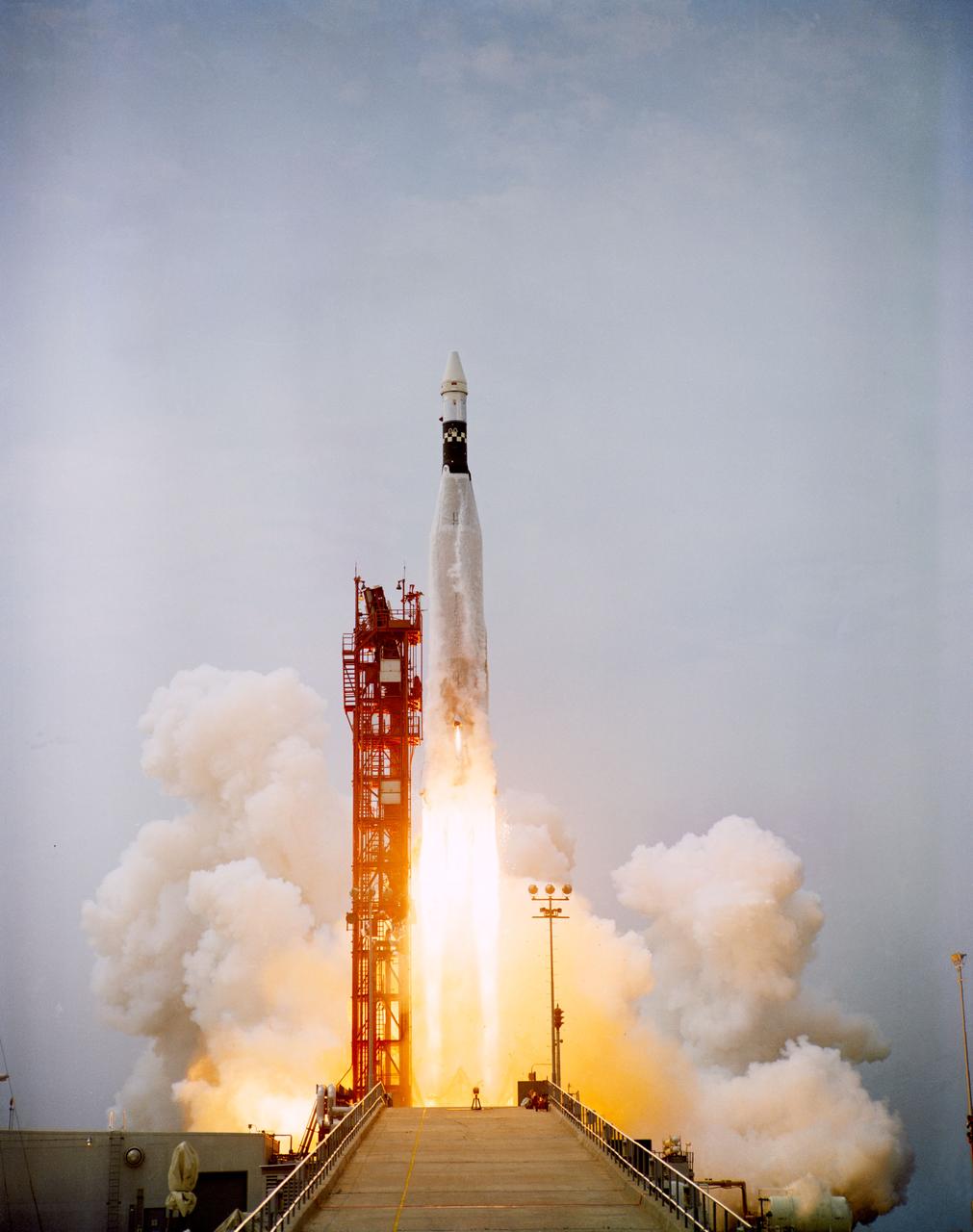
S66-32139 (1 June 1966) --- An Augmented Target Docking Adapter (ATDA) atop an Atlas launch vehicle is launched from Kennedy Space Center's Pad 14 at 10 a.m., June 1, 1966. The ATDA is a rendezvous and docking vehicle for the Gemini-9A space mission. Photo credit: NASA
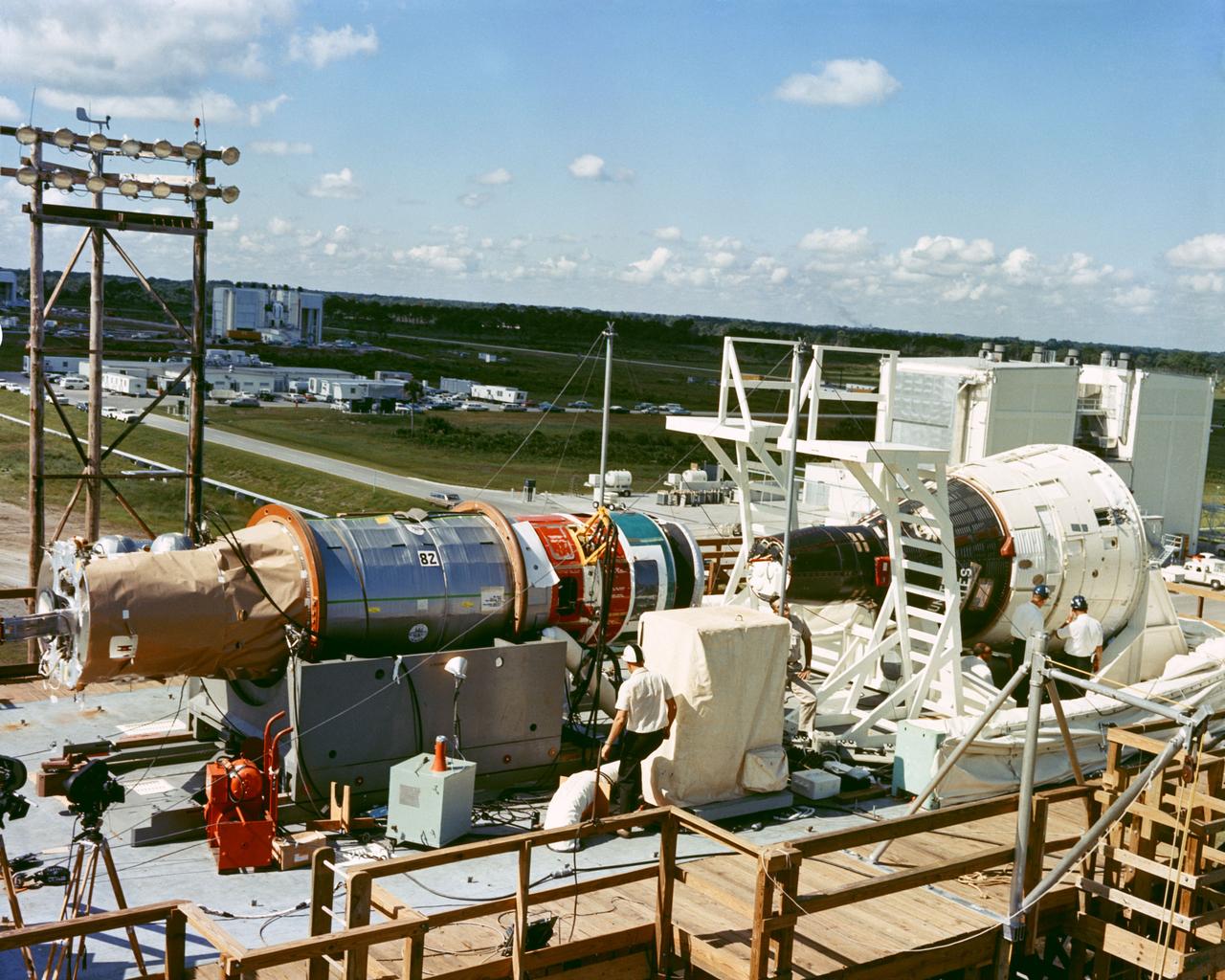
S65-52015 (1965) --- The Gemini-6 spacecraft (right) and the Agena Target Vehicle (left) on the Boresite Range Tower for the Plan-X docking exercise. Photo credit: NASA or National Aeronautics and Space Administration
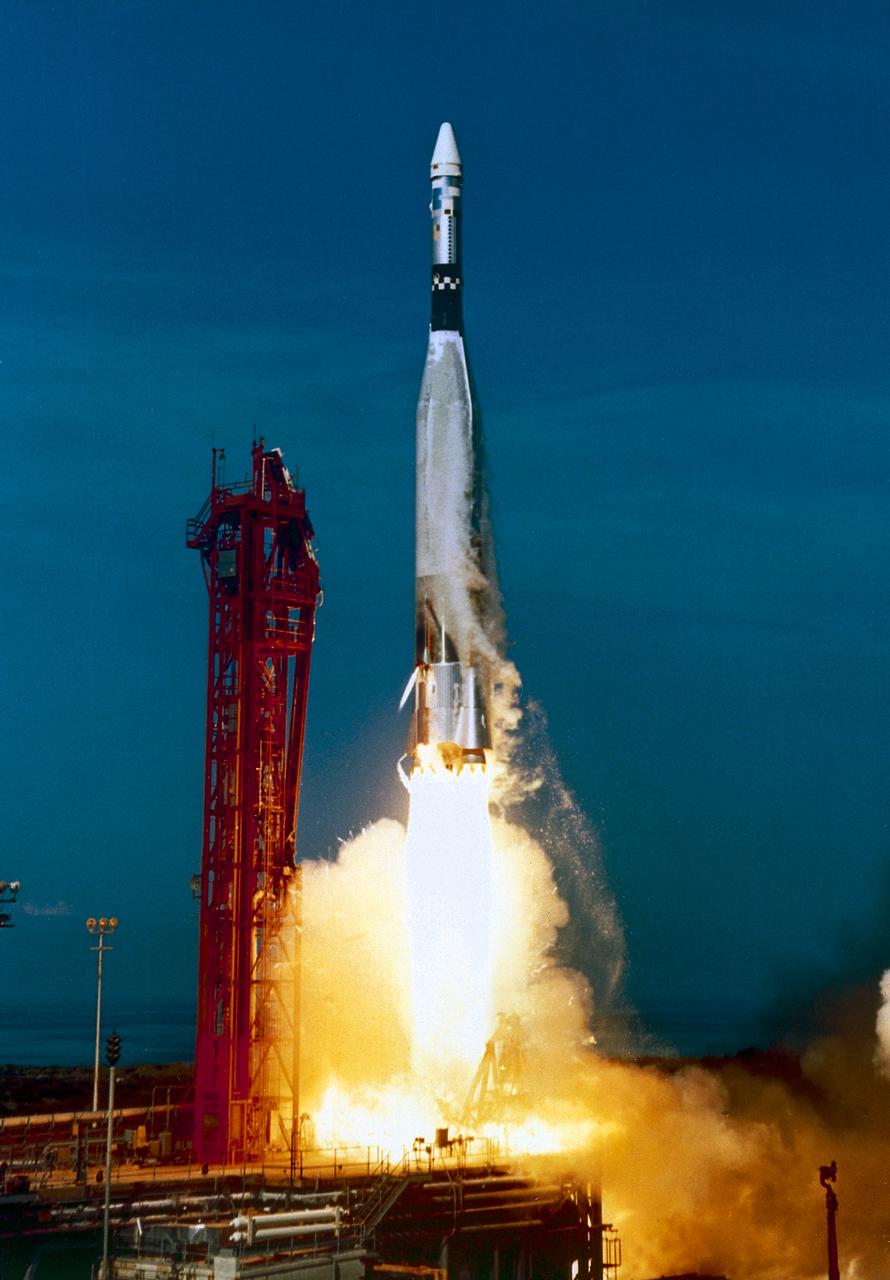
Launched atop an Atlas booster, the Agena target vehicle (ATV) was a spacecraft used by NASA to develop and practice orbital space rendezvous and docking techniques in preparation for the Apollo program lunar missions. This particular launch preceded the Gemini 12, which launched aboard a Titan launch vehicle one and one half hours later. The objective was for Agena and Gemini to rendezvous in space and practice docking procedures. An intermediate step between Project Mercury and the Apollo Program, the Gemini Program's major objectives were to subject two men and supporting equipment to long duration flights, to perfect rendezvous and docking with other orbiting vehicles, methods of reentry, and landing of the spacecraft.
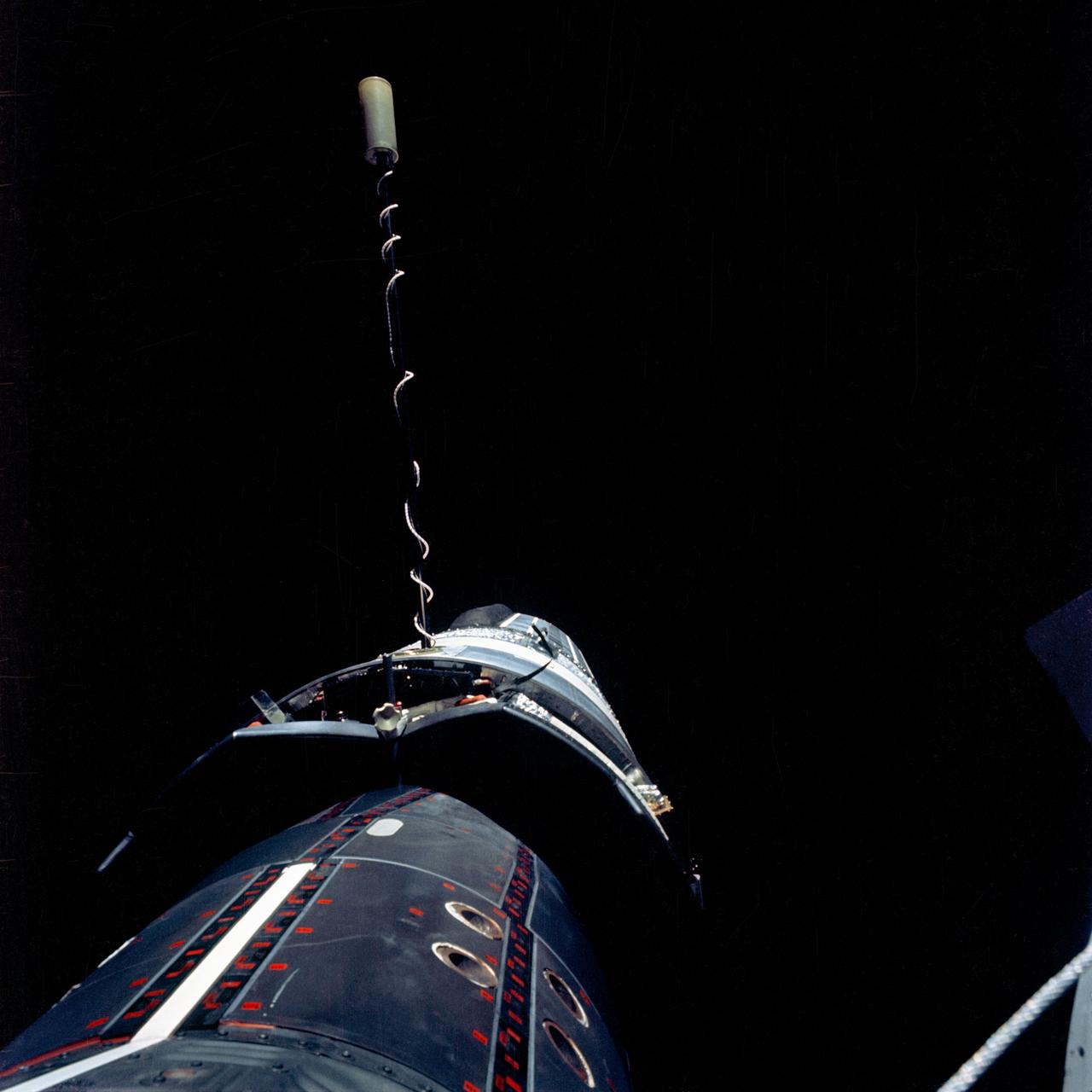
S66-54555 (14 Sept. 1966) --- The Gemini-11 spacecraft is docked to the Agena Target Vehicle in this photograph taken by astronaut Richard F. Gordon Jr., pilot, as he stood in the open hatch of the Gemini-11 spacecraft during his extravehicular activity (EVA). Note Agena's L-band antenna. Taken during Gemini-11's 29th revolution of Earth, using a modified 70mm Hasselblad camera, with Eastman Kodak, Ektachrome, MS (S.O. 368) color film. Photo credit: NASA
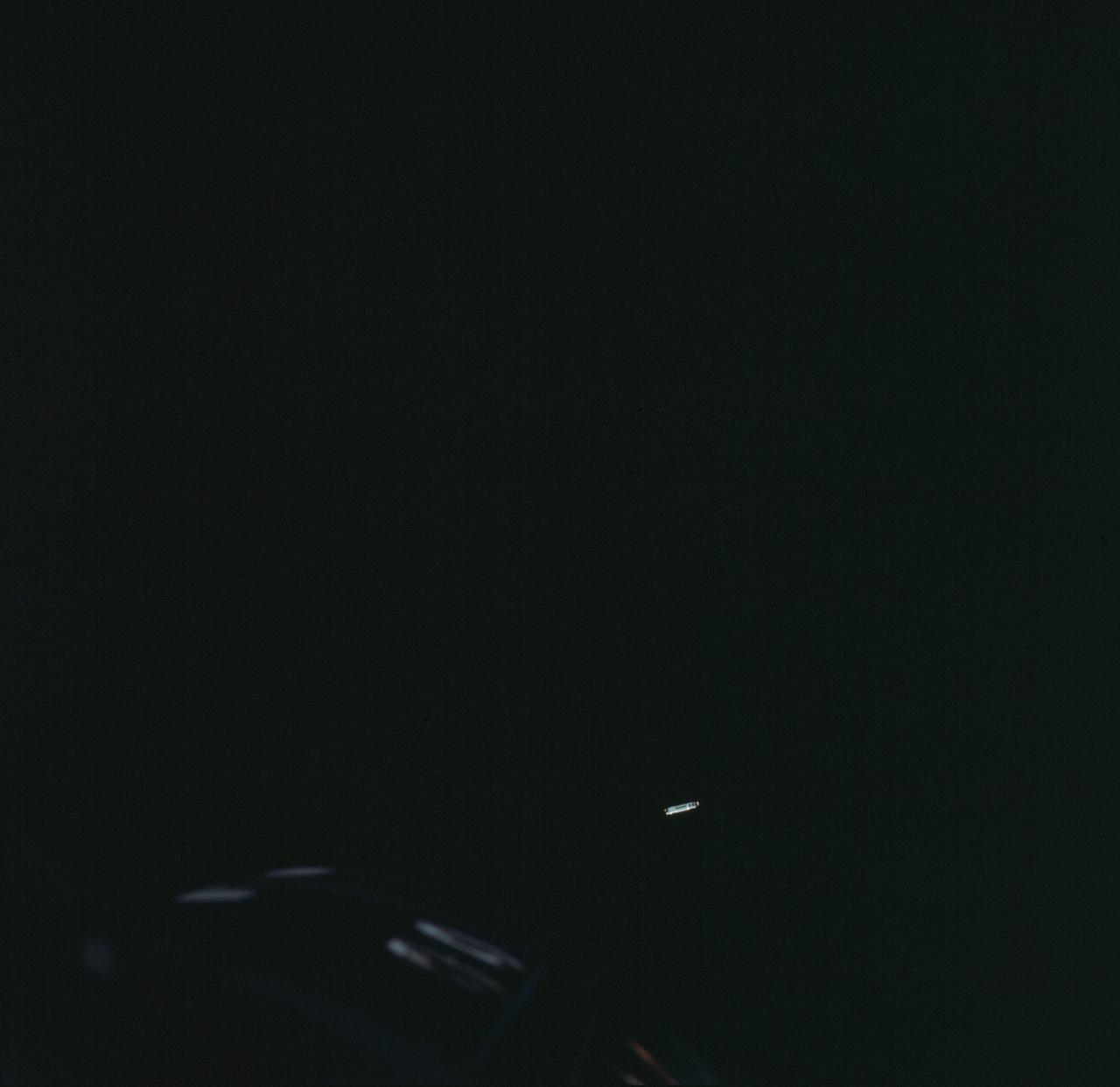
S66-25774 (16 March 1966) --- The Agena Target Docking vehicle seen from the Gemini-8 spacecraft during rendezvous in space. The Agena is approximately 1,000 feet away from the nose of the spacecraft (lower left). Photo credit: NASA
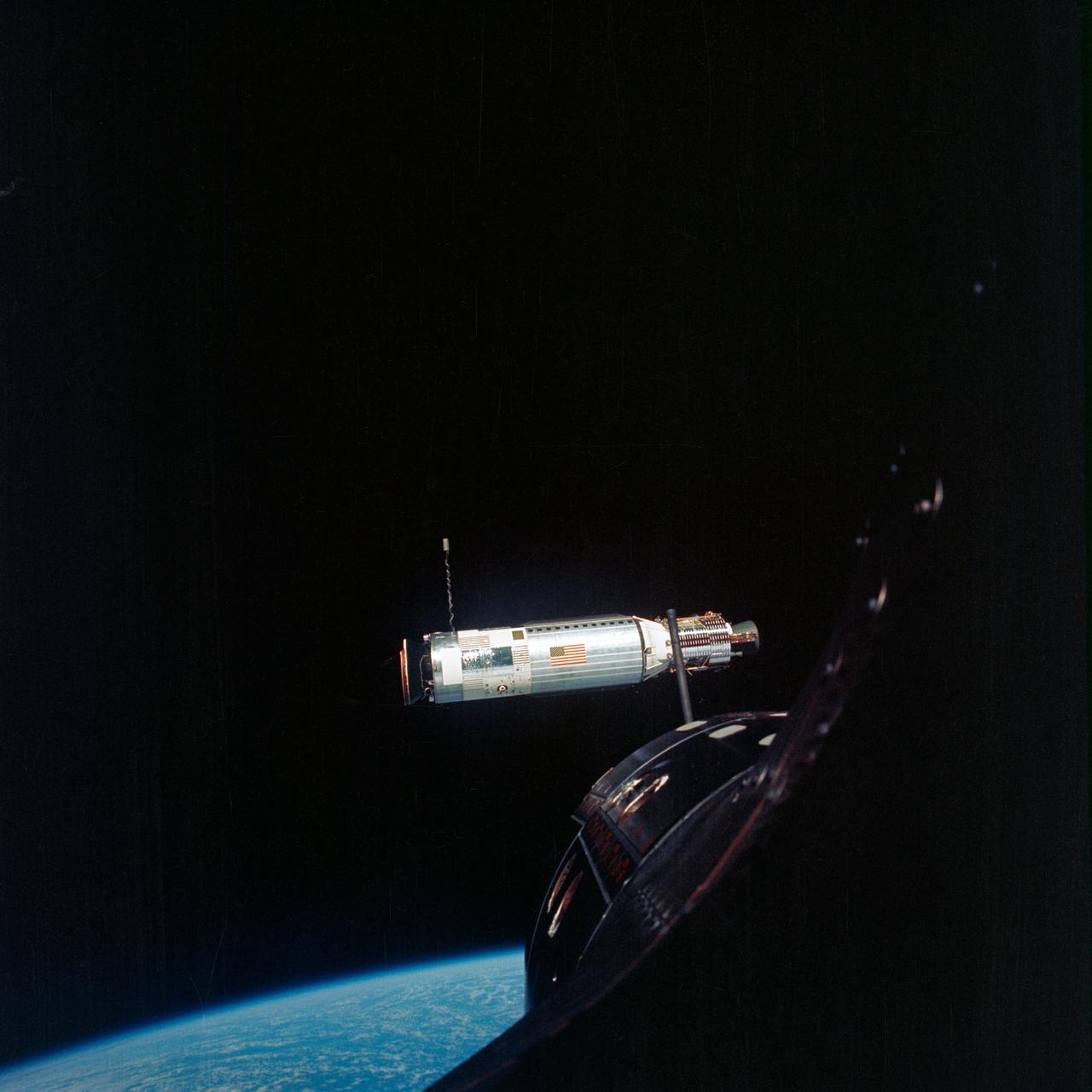
S66-46124 (18 July 1966) --- Agena Target Docking Vehicle 5005 is photographed from the Gemini-10 spacecraft during rendezvous in space. The two spacecraft are about 41 feet apart. After docking with the Agena, astronauts John W. Young, command pilot, and Michael Collins, pilot, fired the 16,000-pound thrust engine of Agena-10's primary propulsion system to boost the combined vehicles into an orbit with an apogee of 413 nautical miles to set a new altitude record for manned spaceflight. Photo credit: NASA
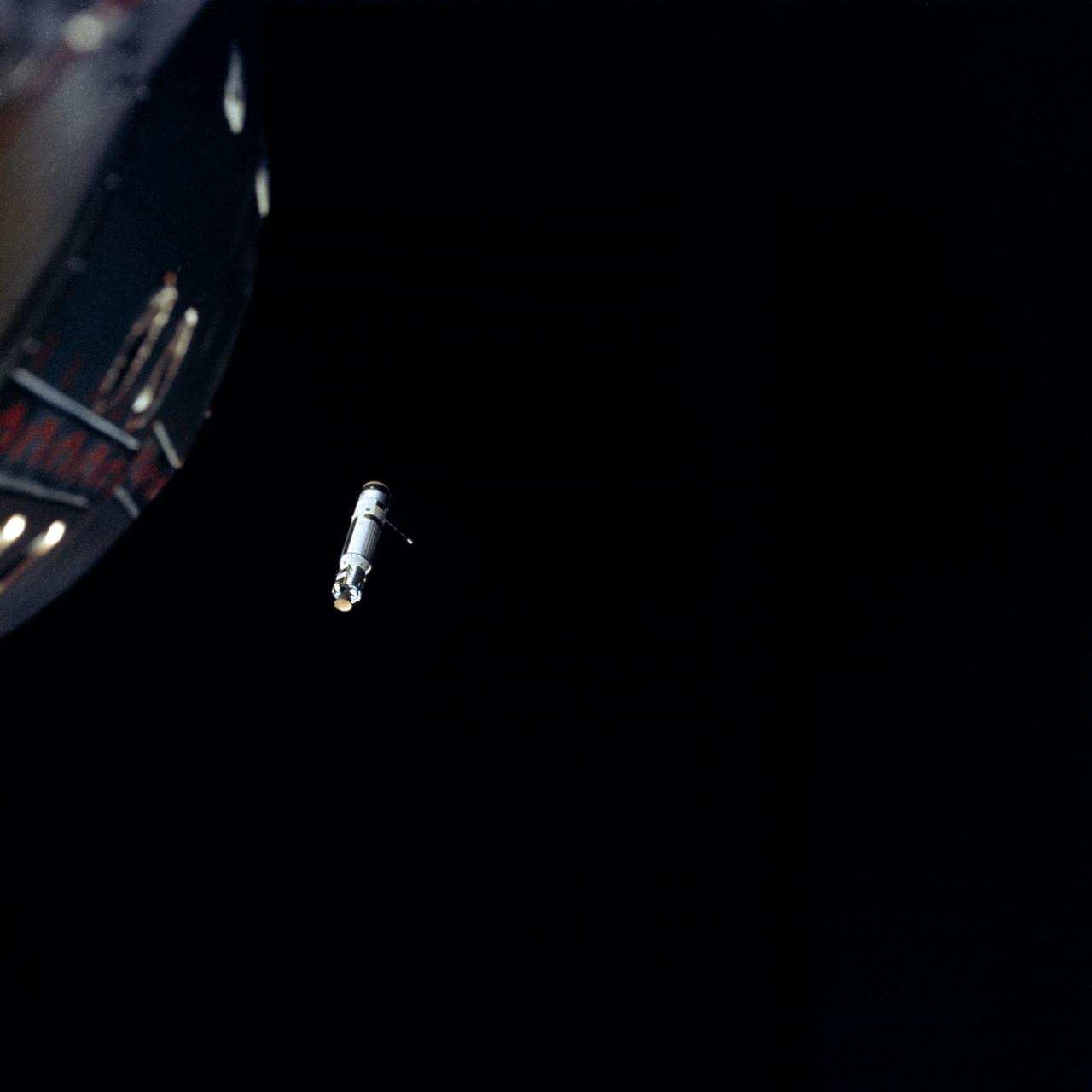
S66-25778 (16 March 1966) --? The Agena Target Docking Vehicle seen from the National Aeronautics and Space Administration?s Gemini-8 spacecraft during rendezvous in space. The Agena is approximately 260 feet away from the nose of the spacecraft (lower left). Crewmen for the Gemini-8 mission are astronauts Neil A. Armstrong, command pilot, and David R. Scott, pilot. Photo credit: NASA
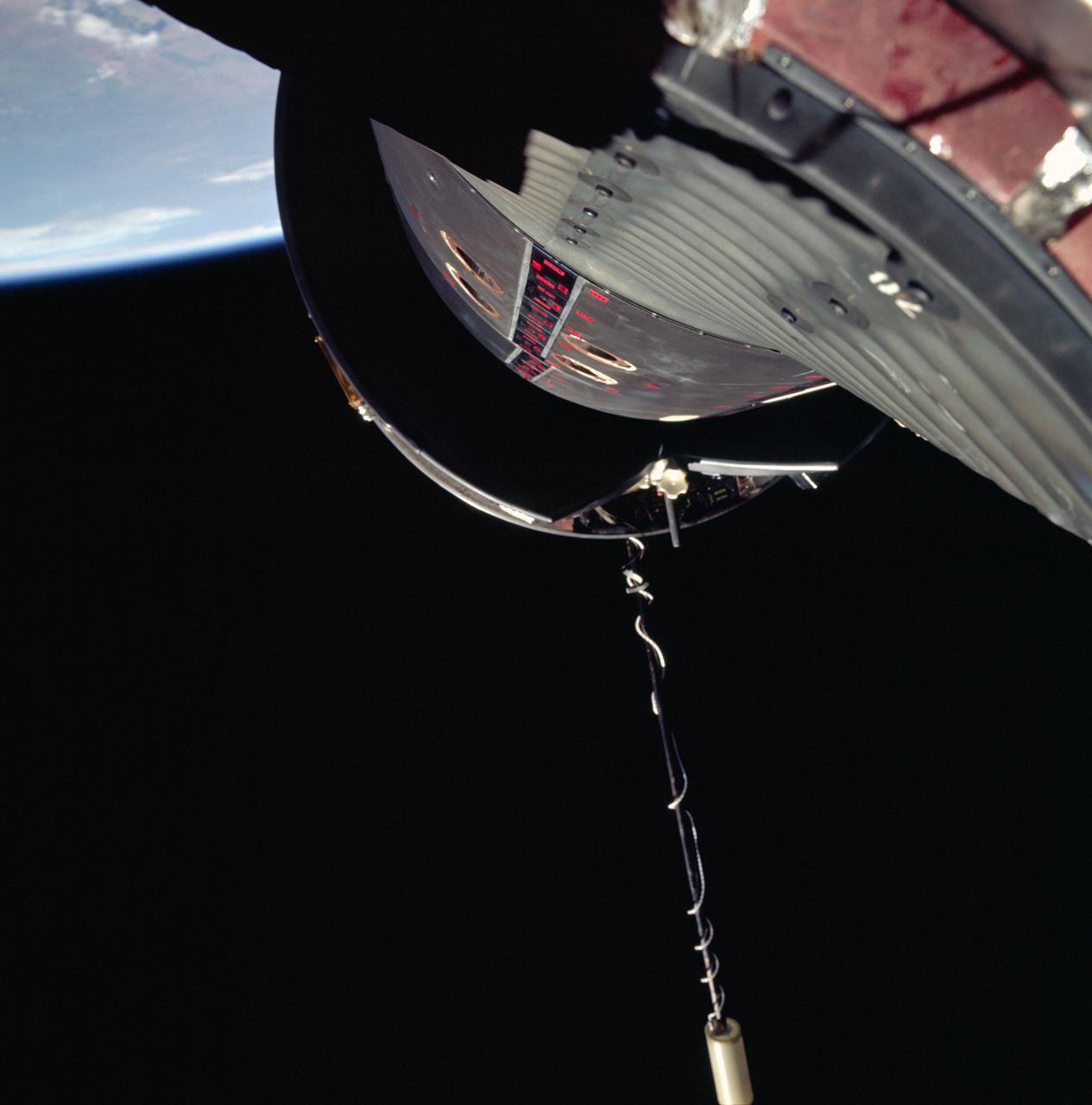
S66-54656 (13 Sept. 1966) --- Nose of Gemini-11 spacecraft and Agena Target Vehicle while docked as photographed by astronaut Richard F. Gordon Jr., pilot, during his stand-up extravehicular activity (EVA). Taken with a modified 70mm Hasselblad camera, using Eastman Kodak, Ektachrome, MS (S.O. 368) color film. Photo credit: NASA
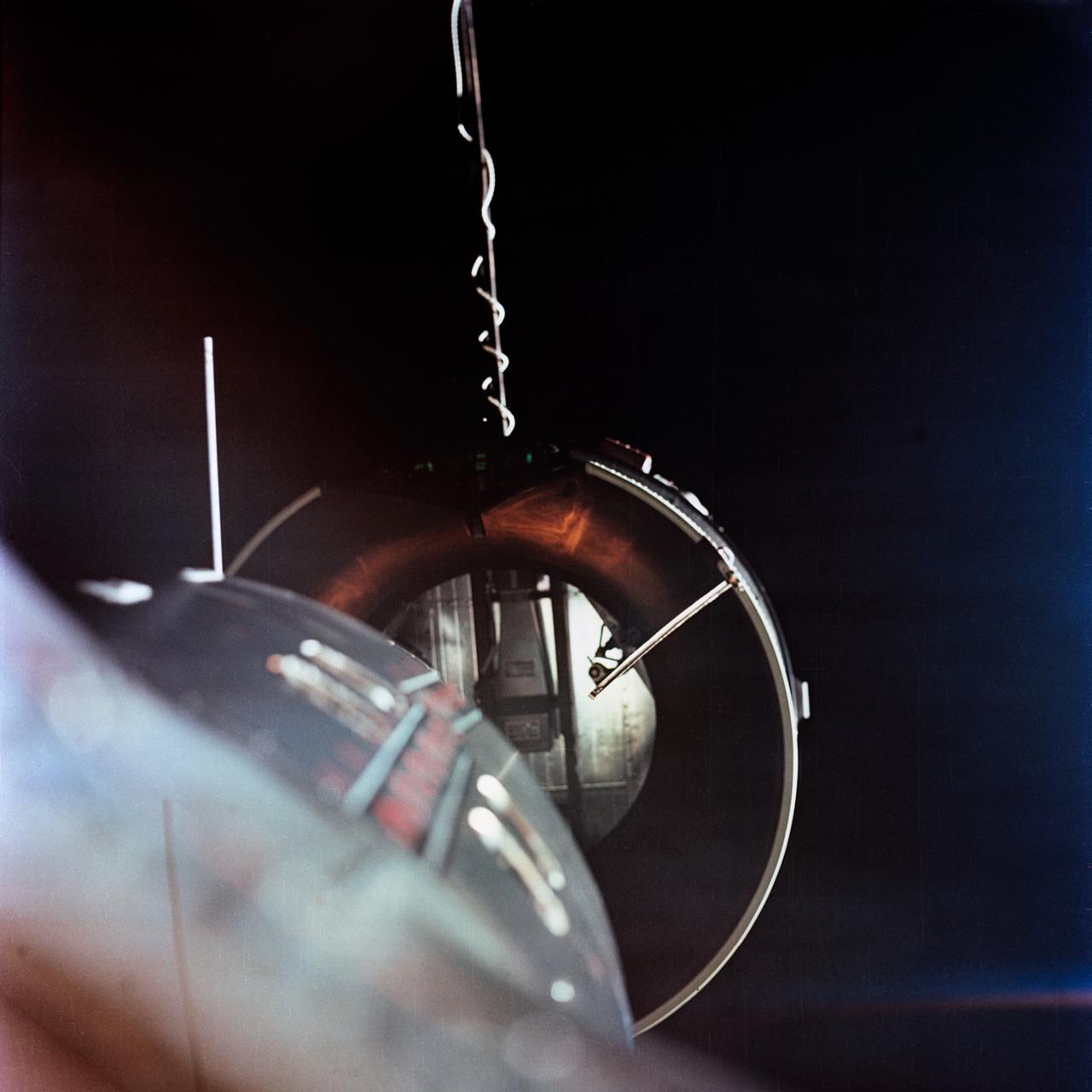
S66-25784 (16 March 1966) --? The Agena Target Docking Vehicle seen from the National Aeronautics and Space Administration?s Gemini adapter of the Agena is approximately two feet from the nose of the spacecraft (lower left). Crewmen for the Gemini-8 mission were astronauts Neil A. Armstrong, command pilot, and David R. Scott, pilot. Photo credit: NASA
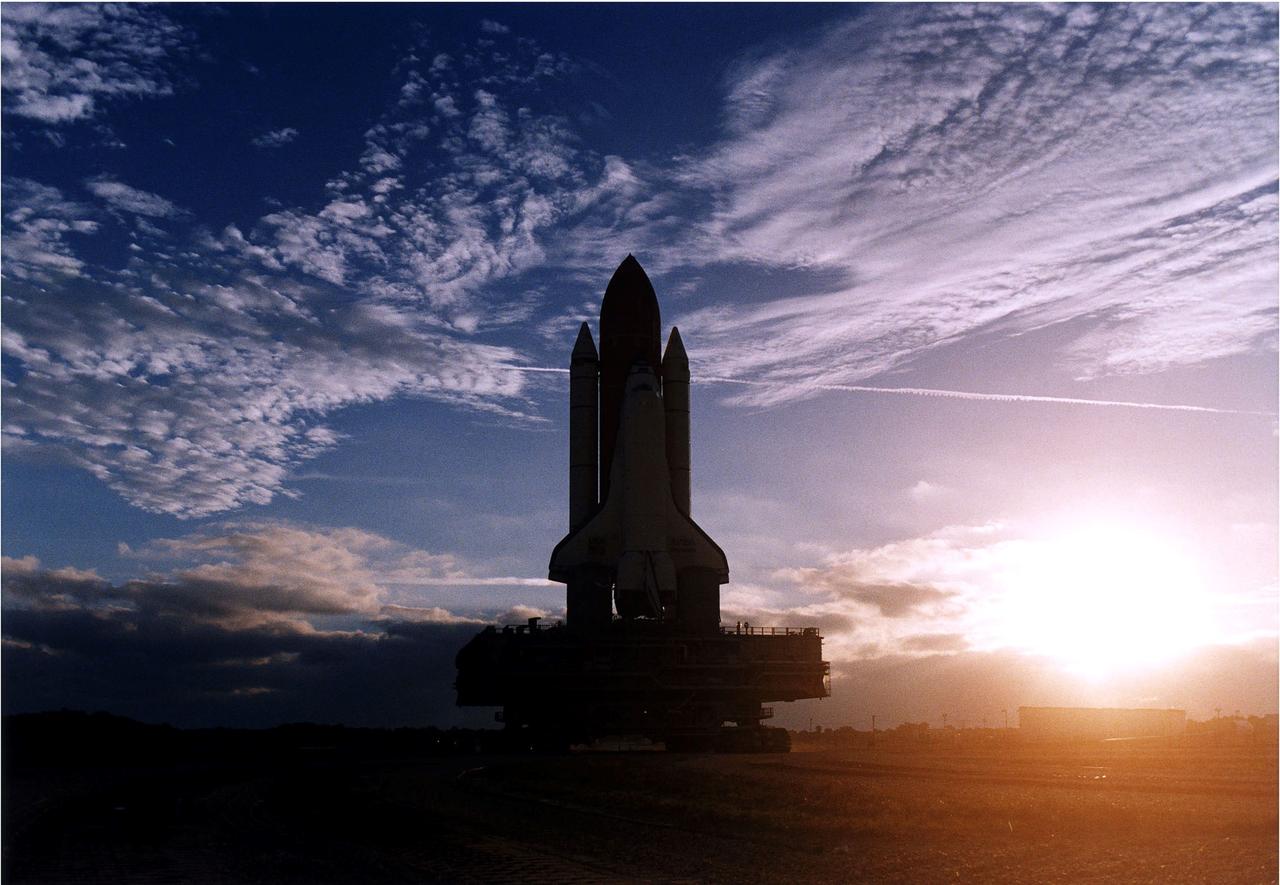
KENNEDY SPACE CENTER, FLA. - The rising sun and some scattered clouds provide a picturesque backdrop for the Space Shuttle Discovery as it travels along the crawlerway toward Launch Pad 39A in preparation for the STS-82 mission. The Shuttle is on a Mobile Launcher Platform, and the entire assemblage is being carried by a large, tracked vehicle called the crawler transporter. A seven-member crew will perform the second servicing of the orbiting Hubble Space Telescope (HST) during the 10-day STS-82 flight, whcih is targeted for a Feb. 11 liftoff.
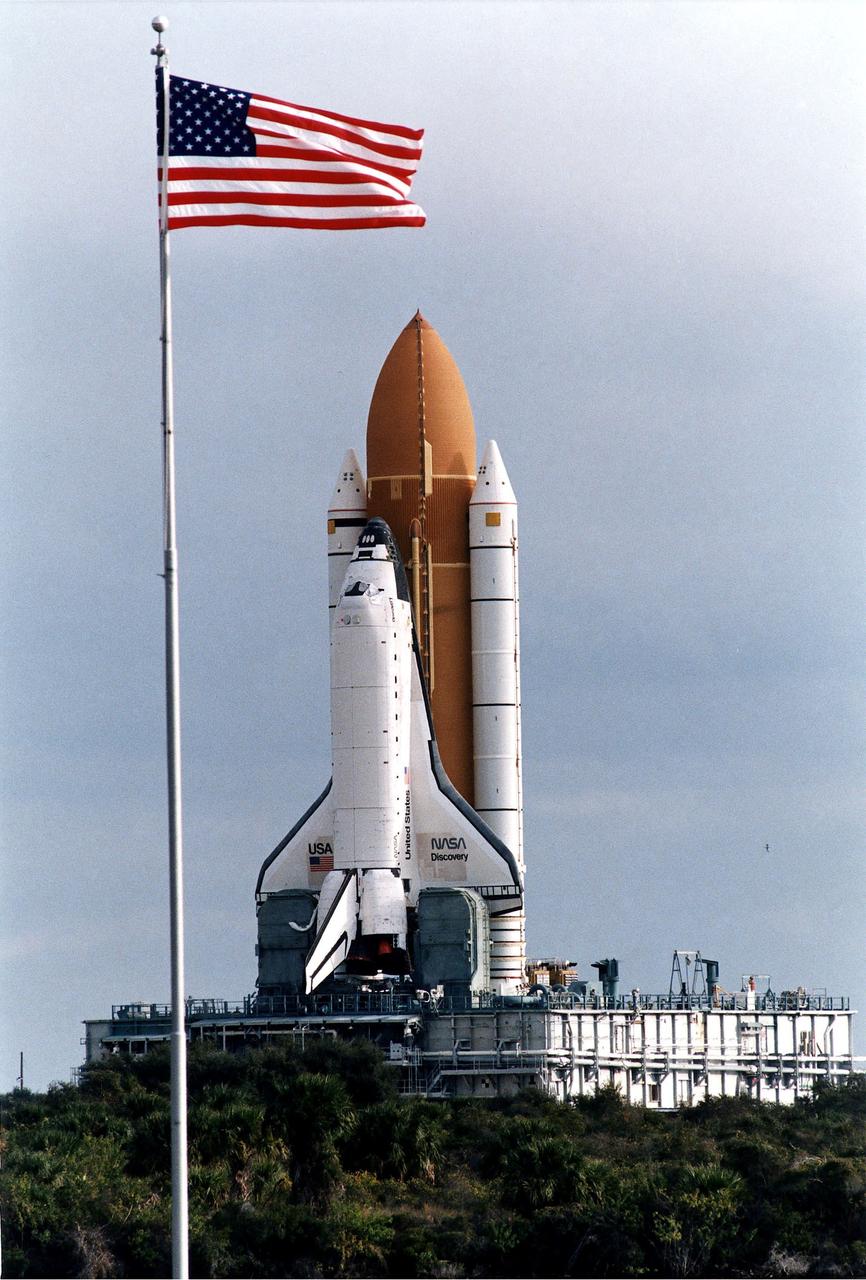
KENNEDY SPACE CENTER, FLA. - The Space Shuttle Discovery on its Mobile Launcher Platform makes its slow 3.4-mile trek from the Vehicle Assembly Building to Launch Pad 39A in preparation for the STS-82 mission. In the foreground is the U.S. flag at the Press Site area. A seven-member crew will perform the second servicing of the orbiting Hubble Space Telescope (HST) during the 10-day STS-82 mission, which is targeted for a Feb. 11 liftoff.
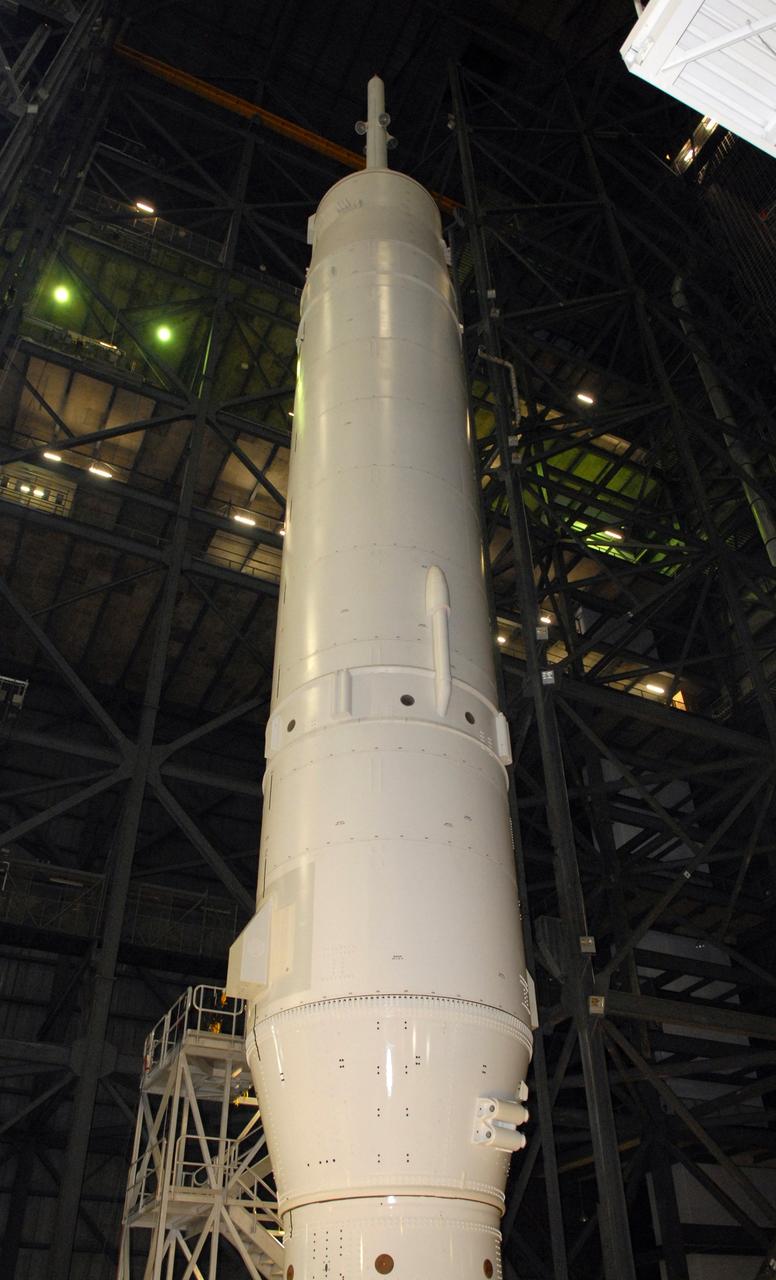
CAPE CANAVERAL, Fla. – Processing of the Ares I-X vehicle nears completion in the Vehicle Assembly Building's High Bay 3 at NASA's Kennedy Space Center in Florida. Rollout to Launch Pad 39B is targeted for Oct. 19. Part of the Constellation Program, the Ares I-X is the test vehicle for the Ares I, which is the essential core of a space transportation system designed to carry crewed missions back to the moon, on to Mars and out into the solar system. The Ares I-X flight test is targeted for Oct. 27. For information on the Ares I-X vehicle and flight test, visit http://www.nasa.gov/mission_pages/constellation/ares/flighttests/aresIx/index.html. Photo credit: NASA/Jim Grossmann
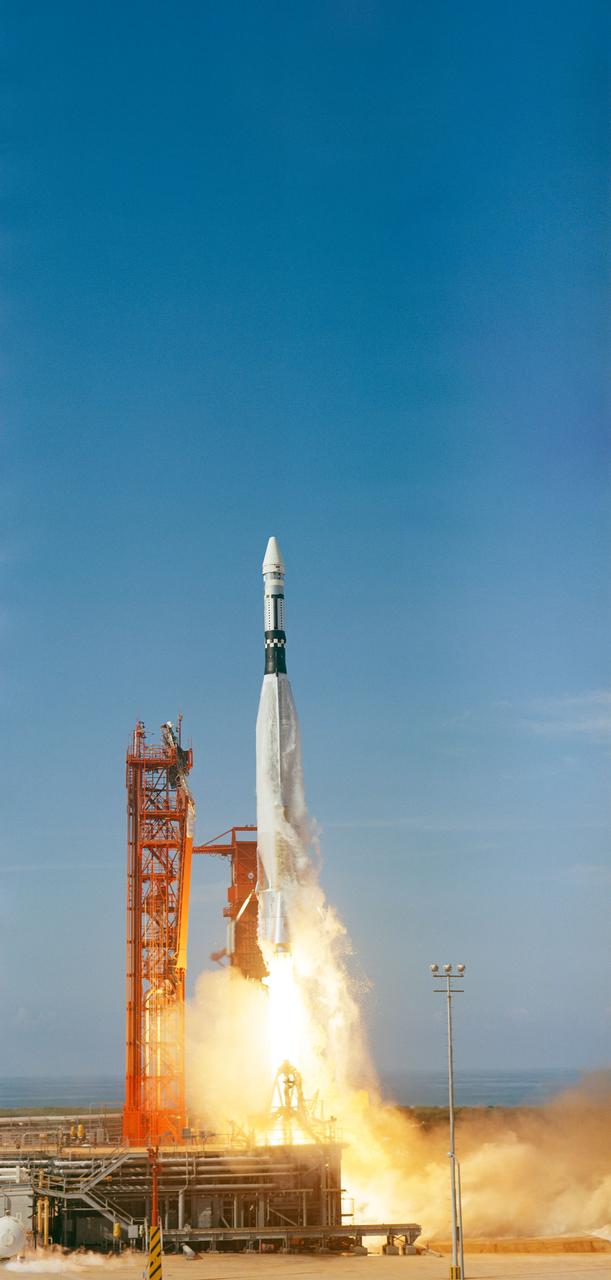
S66-64544 (11 Nov. 1966) --- An Agena Target Docking Vehicle atop its Atlas launch vehicle was launched from the Kennedy Space Center's Launch Complex 14 at 2:08 p.m. (EST), Nov. 11, 1966. The Agena served as a rendezvous and docking vehicle for the Gemini-12 spacecraft. Photo credit: NASA
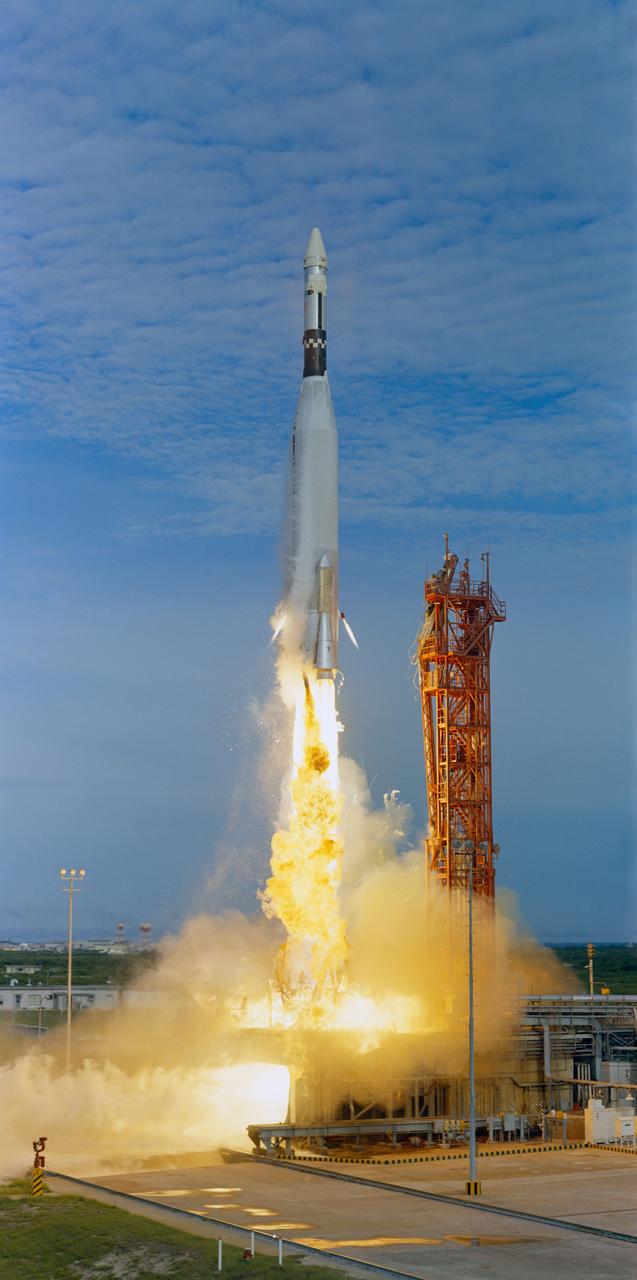
S66-50784 (12 Sept. 1966) --- An Agena Target Docking Vehicle atop its Atlas launch vehicle was launched from the Kennedy Space Center's Launch Complex 14 at 6:05 a.m., Sept. 12, 1966. The Agena served as a rendezvous and docking vehicle for the Gemini-11 spacecraft. Photo credit: NASA
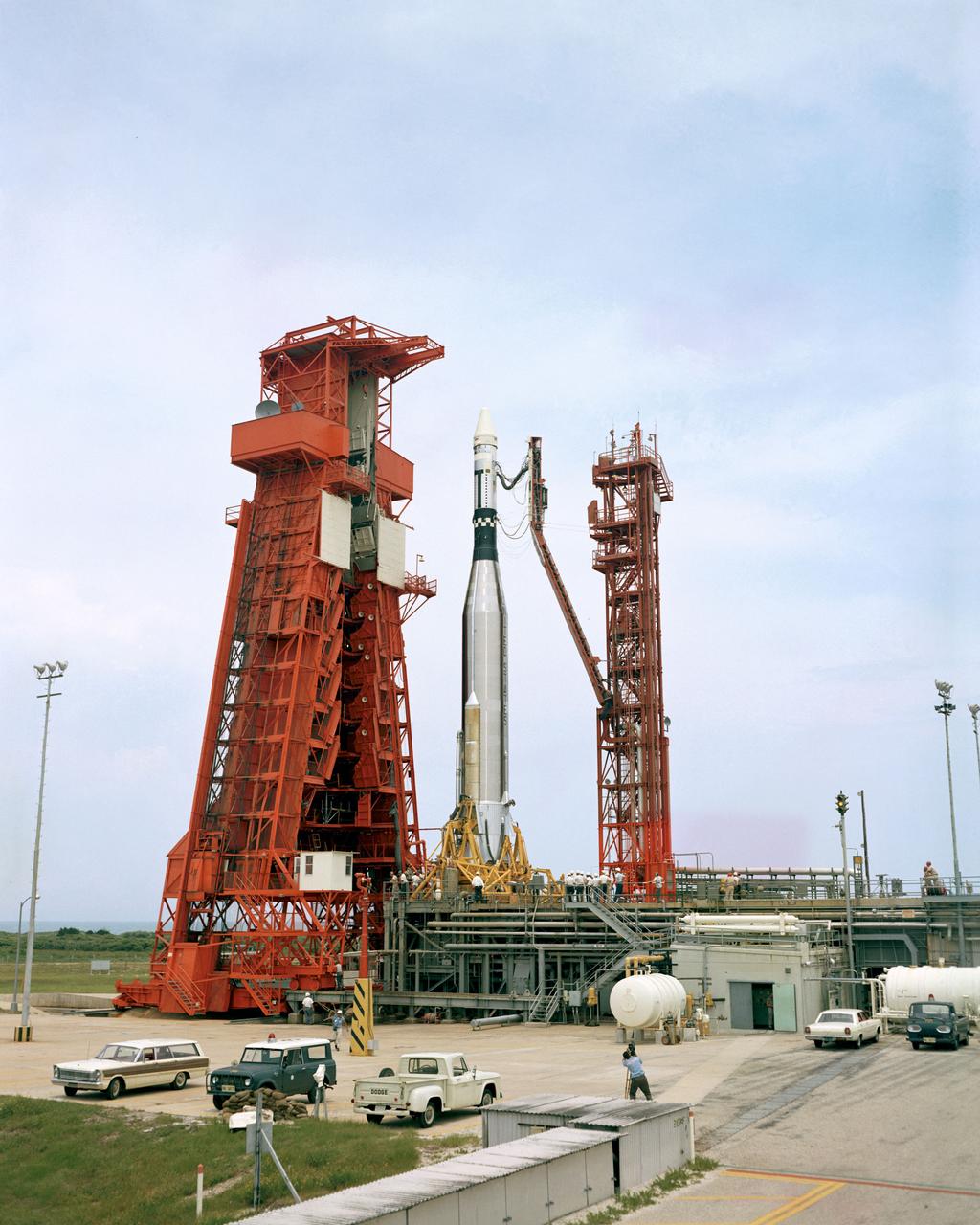
S66-42739 (18 July 1966) --- An Agena Target Docking Vehicle atop its Atlas launch vehicle during prelaunch preparations at Launch Complex 14. The Agena will be a rendezvous and docking vehicle for the Gemini-10 spaceflight. The Agena was launched on July 18, 1966, at 3:39 p.m. (EST). Photo credit: NASA
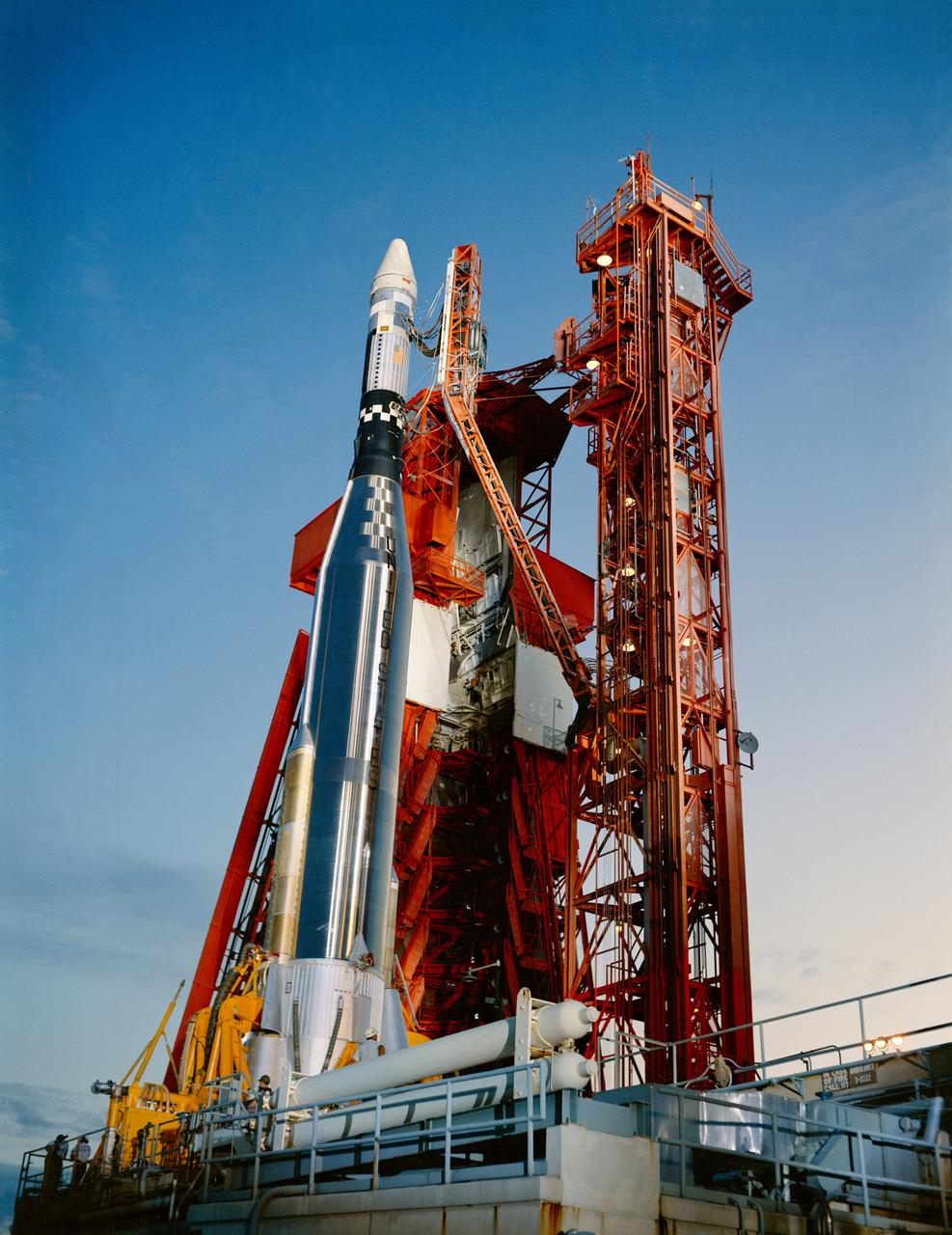
S66-50724 (12 Sept. 1966) --- An Agena Target Docking Vehicle atop its Atlas launch vehicle is ready for launch at Launch Complex 14 at Cape Kennedy, Florida. The Agena served as a rendezvous and docking vehicle for the Gemini-11 spacecraft. Photo credit: NASA
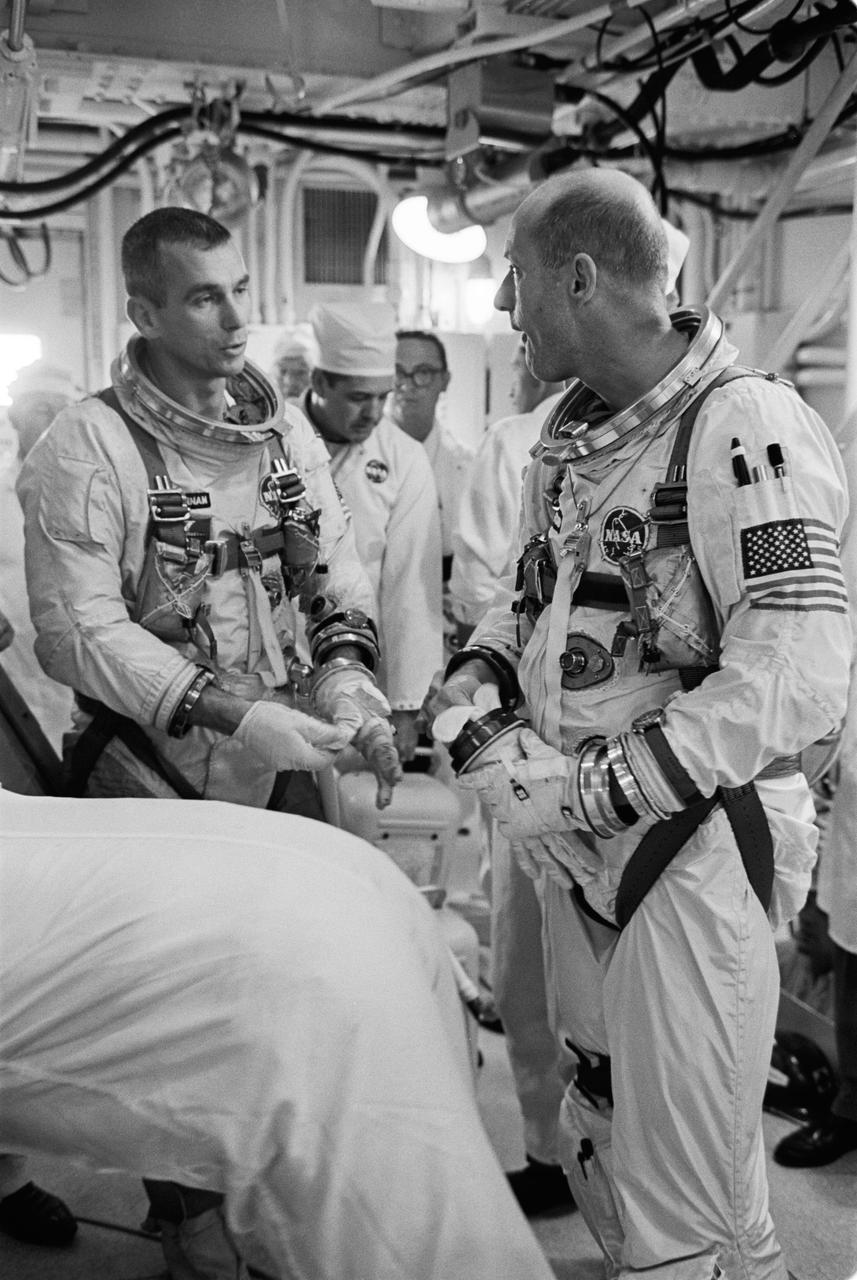
S66-32044 (17 May 1966) --- Astronauts Eugene A. Cernan (left), pilot, and Thomas P. Stafford, command pilot, discuss the postponed Gemini-9 mission just after egressing their spacecraft in the white room atop Pad 19. The Agena Target Vehicle failed to achieve orbit, causing a termination of the mission. The spaceflight (to be called Gemini-9A) has been rescheduled for May 31. A Gemini Augmented Target Docking Adapter will be used as the rendezvous and docking vehicle for the Gemini-9 spacecraft. Photo credit: NASA
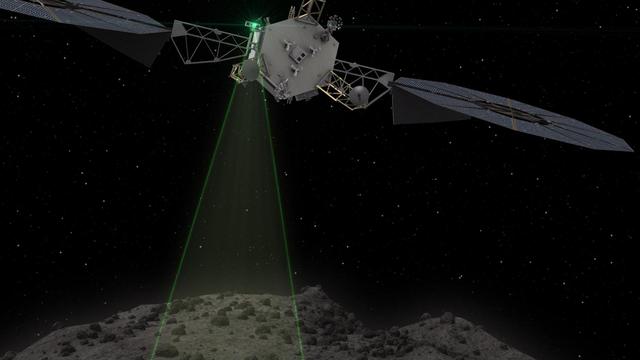
This graphic depicts the Asteroid Redirect Vehicle conducting a flyby of its target asteroid. During these flybys, the Asteroid Redirect Mission (ARM) would come within 0.6 miles (1 kilometer), generating imagery with resolution of up to 0.4 of an inch (1 centimeter) per pixel. The robotic segment of ARM will demonstrate advanced, high-power, high-throughput solar electric propulsion; advanced autonomous precision proximity operations at a low-gravity planetary body; and controlled touchdown and liftoff with a multi-ton mass. The crew segment of the mission will include spacewalk activities for sample selection, extraction, containment and return; and mission operations of integrated robotic and crewed vehicle stack -- all key components of future in-space operations for human missions to the Mars system. After collecting a multi-ton boulder from the asteroid, the robotic spacecraft will redirect the boulder to a crew-accessible orbit around the moon, where NASA plans to conduct a series of proving ground missions in the 2020s that will help validate capabilities needed for NASA's Journey to Mars. http://photojournal.jpl.nasa.gov/catalog/PIA21062

S66-25781 (16-17 March 1966) --- Closer view of the Agena Target Docking vehicle seen from the Gemini-8 spacecraft during rendezvous in space. Photo credit: NASA
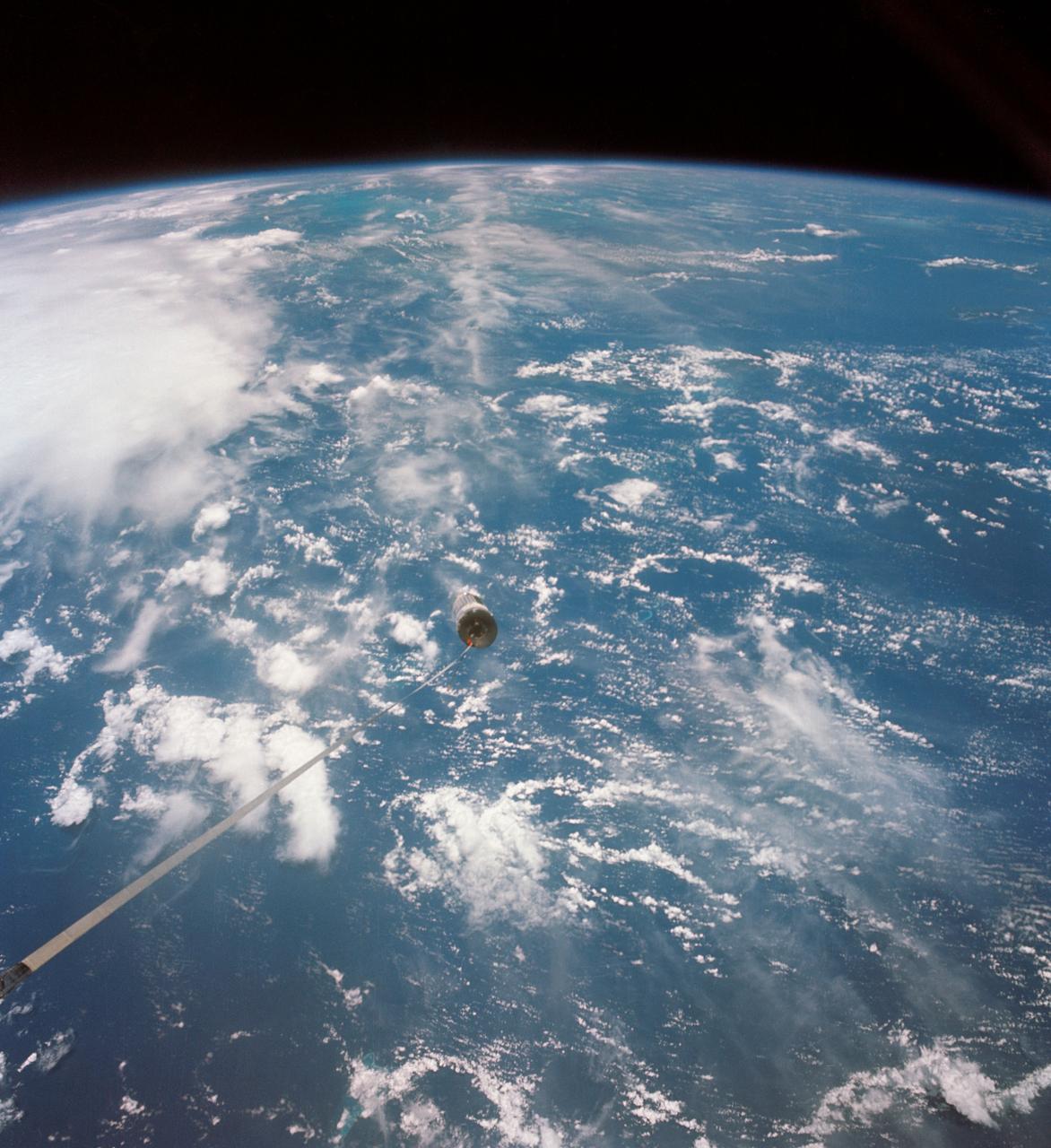
S66-54571 (14 Sept. 1966) --- A 100-foot tether line connects the Agena Target Docking Vehicle with the Gemini-11 spacecraft during its 32nd revolution of Earth. Photo credit: NASA
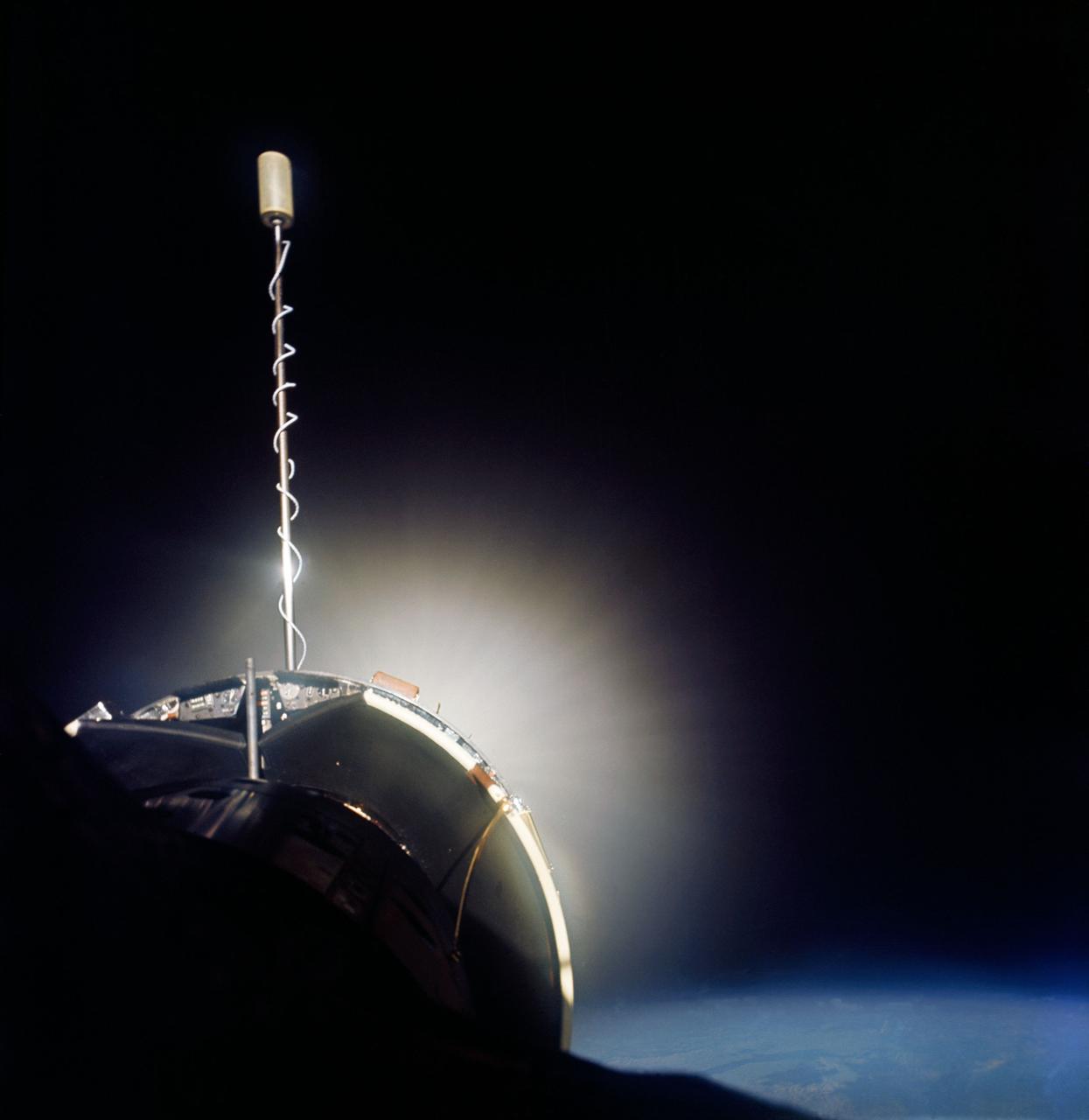
S66-46249 (18-21 July 1966) --- Agena Target Docking Vehicle docked to Gemini-10 spacecraft. Excellent view of Agena display panel. Glow from Agena's primary propulsion system. Photo credit: NASA
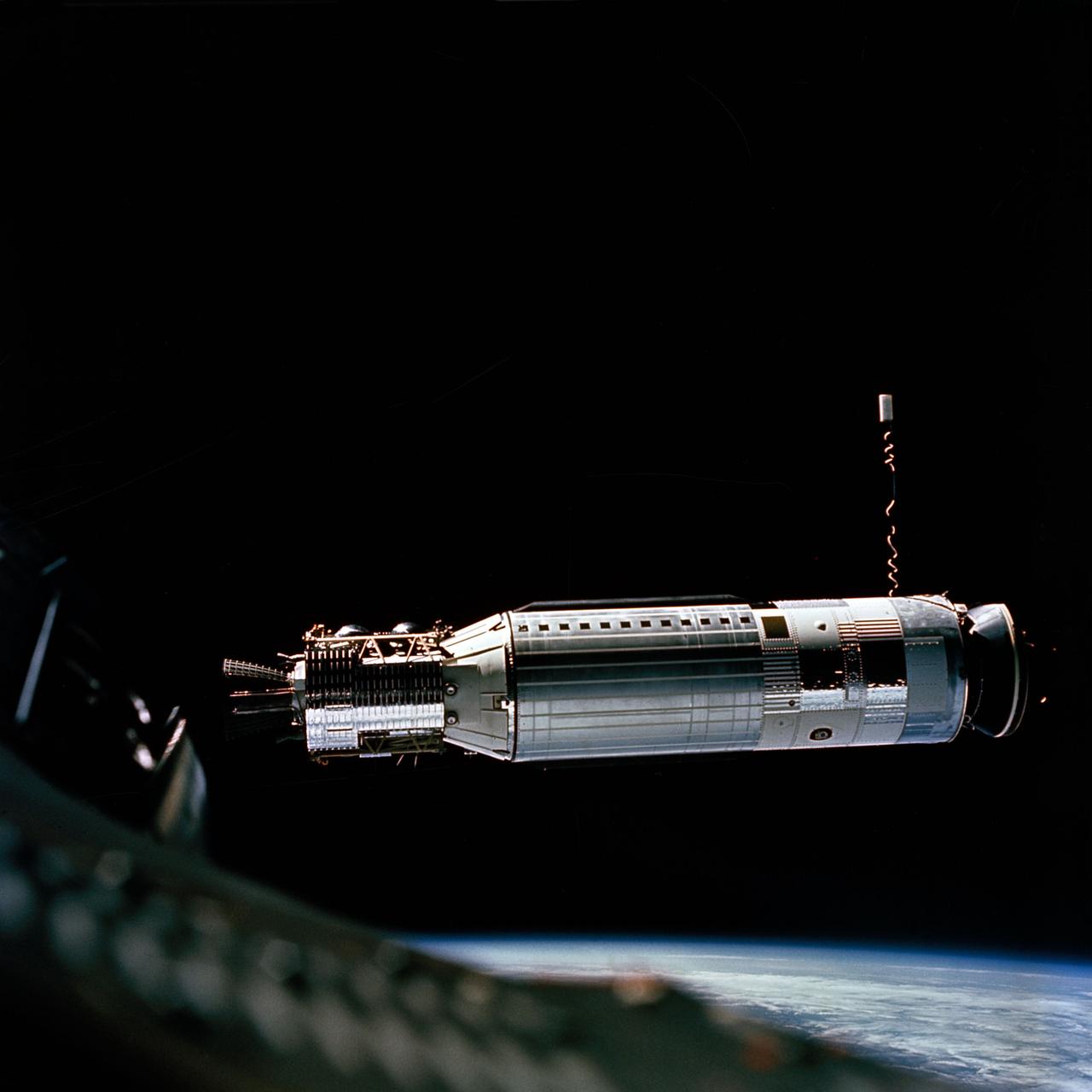
S66-25782 (16 March 1966) --- Closer view of the Agena Target Docking vehicle seen from the Gemini-8 spacecraft during rendezvous in space. Photo credit: NASA
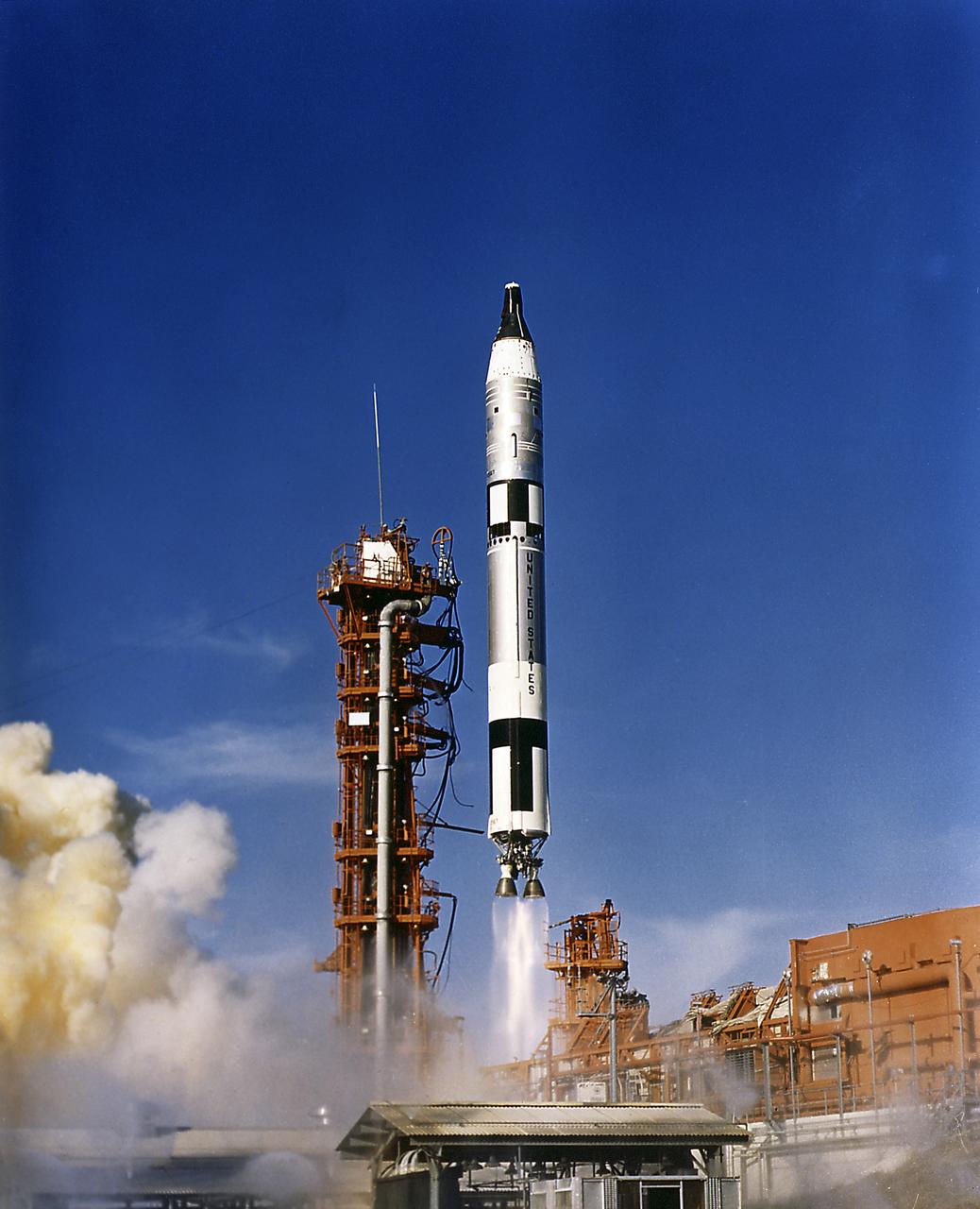
The Gemini 12 astronauts James Lovell and Edwin Aldrin lifted off aboard a Titan launch vehicle from the Kennedy Space Center on November 11, 1966, an hour and a half after their Agena target vehicle was orbited by an Atlas rocket. Launched atop an Atlas booster, the Agena target vehicle (ATV) was a spacecraft used by NASA to develop and practice orbital space rendezvous and docking techniques in preparation for the Apollo program lunar missions. The objective was for Agena and Gemini to rendezvous in space and practice docking procedures. An intermediate step between Project Mercury and the Apollo Program, the Gemini Program's major objectives were to subject two men and supporting equipment to long duration flights, to perfect rendezvous and docking with other orbiting vehicles, methods of reentry, and landing of the spacecraft.
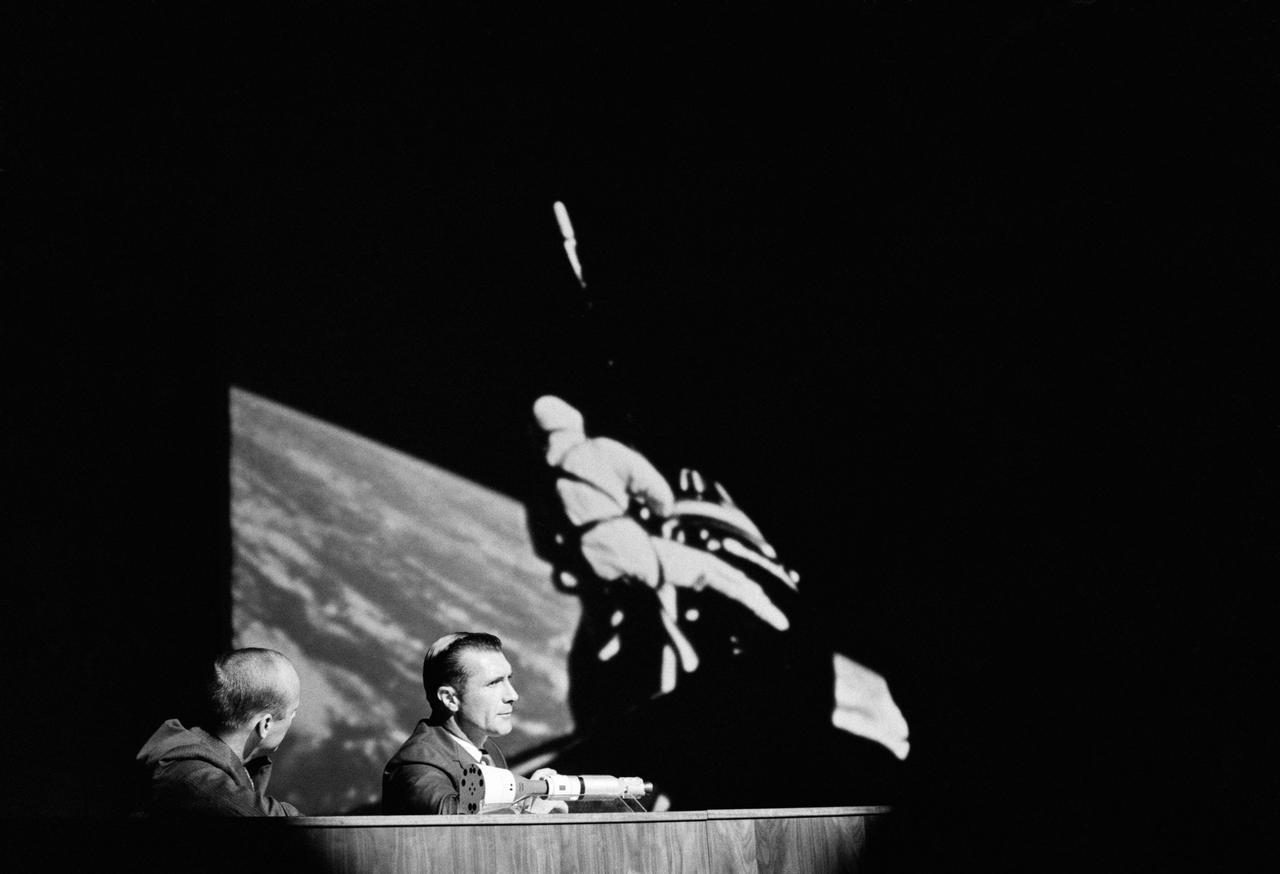
S66-45605 (26 Sept. 1966) --- Movie film of the Gemini-11 extravehicular activity and rendezvous with the Agena Target Docking Vehicle was shown at the Gemini-11 press conference in the MSC Building 1 auditorium. Astronauts Charles Conrad Jr. (left), command pilot, and Richard F. Gordon Jr., pilot, discussed the Gemini-11 EVA and rendezvous mission during the film. Picture on screen shows close-up of astronaut Gordon connecting the Agena Target Vehicle to the spacecraft with a tether line during his spacewalk. Photo credit: NASA

JSC2007-E-03083 (16 Jan. 2007) --- Roll-out of the Progress 24 vehicle occurred on schedule at 7:00 a.m., Jan. 16, 2007 at the Baikonur Cosmodrome, Kazakhstan. The vehicle was in the vertical and hard-down at the pad by 9:30 a.m. The gantry towers were placed around the vehicle shortly thereafter. Progress is targeted for launch on Jan. 18, 2007 for a two-day trip to the International Space Station carrying 2 1/2 tons of food, fuel and supplies for the Expedition 14 crew. Photo Credit: NASA
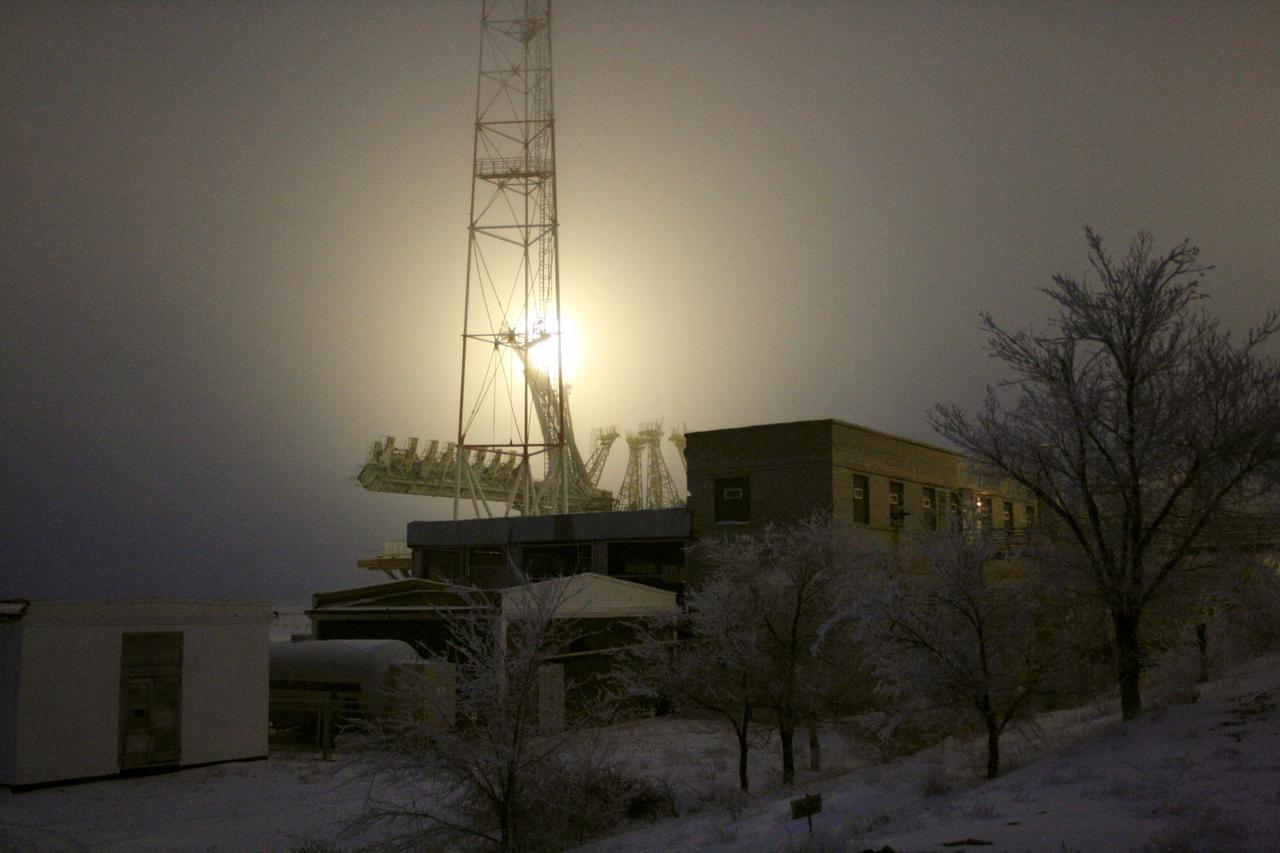
JSC2007-E-03080 (16 Jan. 2007) --- Roll-out of the Progress 24 vehicle occurred on schedule at 7:00 a.m., Jan. 16, 2007 at the Baikonur Cosmodrome, Kazakhstan. The vehicle was in the vertical and hard-down at the pad by 9:30 a.m. The gantry towers were placed around the vehicle shortly thereafter. Progress is targeted for launch on Jan. 18, 2007 for a two-day trip to the International Space Station carrying 2 1/2 tons of food, fuel and supplies for the Expedition 14 crew. Photo Credit: NASA

JSC2007-E-03084 (16 Jan. 2007) --- Roll-out of the Progress 24 vehicle occurred on schedule at 7:00 a.m., Jan. 16, 2007 at the Baikonur Cosmodrome, Kazakhstan. The vehicle was in the vertical and hard-down at the pad by 9:30 a.m. The gantry towers were placed around the vehicle shortly thereafter. Progress is targeted for launch on Jan. 18, 2007 for a two-day trip to the International Space Station carrying 2 1/2 tons of food, fuel and supplies for the Expedition 14 crew. Photo Credit: NASA
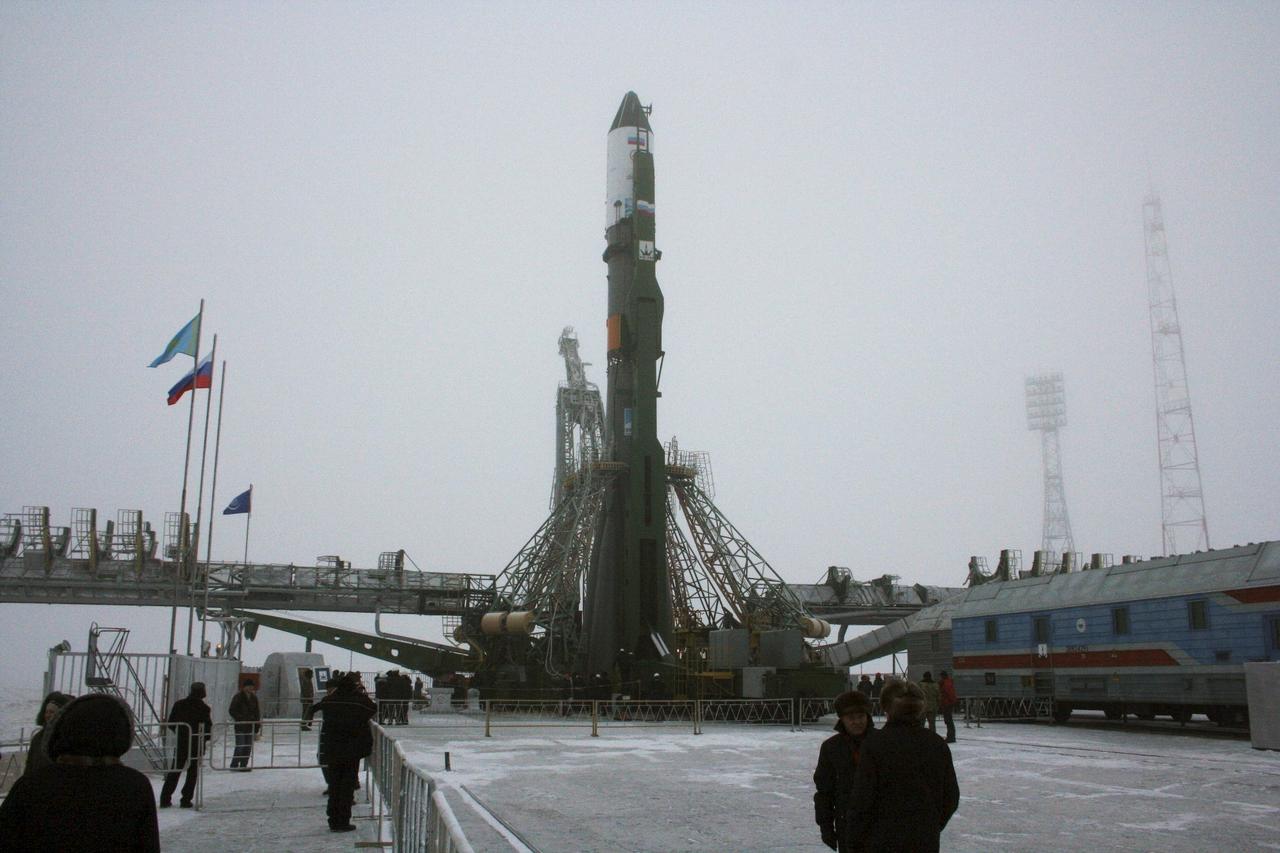
JSC2007-E-03082 (16 Jan. 2007) --- Roll-out of the Progress 24 vehicle occurred on schedule at 7:00 a.m., Jan. 16, 2007 at the Baikonur Cosmodrome, Kazakhstan. The vehicle was in the vertical and hard-down at the pad by 9:30 a.m. The gantry towers were placed around the vehicle shortly thereafter. Progress is targeted for launch on Jan. 18, 2007 for a two-day trip to the International Space Station carrying 2 1/2 tons of food, fuel and supplies for the Expedition 14 crew. Photo Credit: NASA

S66-42751 (18 July 1966) --- An Agena Target Docking Vehicle atop its Atlas launch vehicle was launched from the Kennedy Space Center's Launch Complex 14 at 3:39 p.m. (EST), July 18, 1966. The Gemini-10 liftoff followed the Agena liftoff by 101 minutes. The Agena served as a rendezvous and docking vehicle for the Gemini-10 spacecraft. Photo credit: NASA
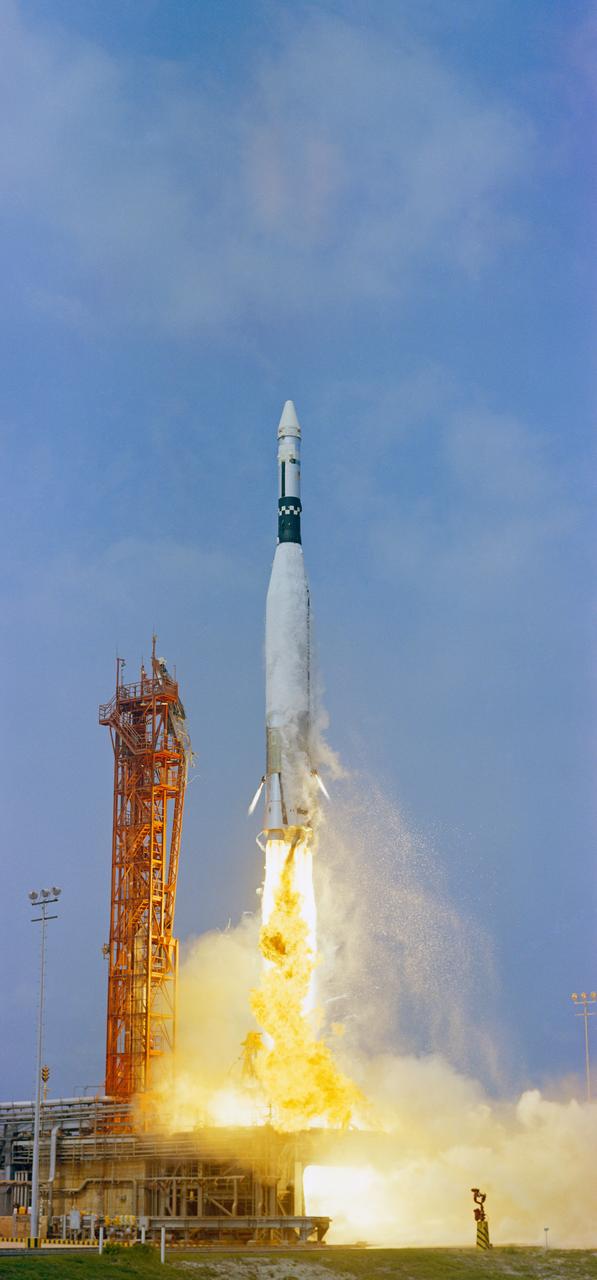
S66-34610 (17 May 1966) --- An Agena Target Vehicle atop its Atlas Launch vehicle is launched from the Kennedy Space Center (KSC) Launch Complex 14 at 10:15 am., May 17, 1966. The Agena was intended as a rendezvous and docking vehicle for the Gemini-9 spacecraft. However, since the Agena failed to achieve orbit, the Gemini-9 mission was postponed. Photo credit: NASA
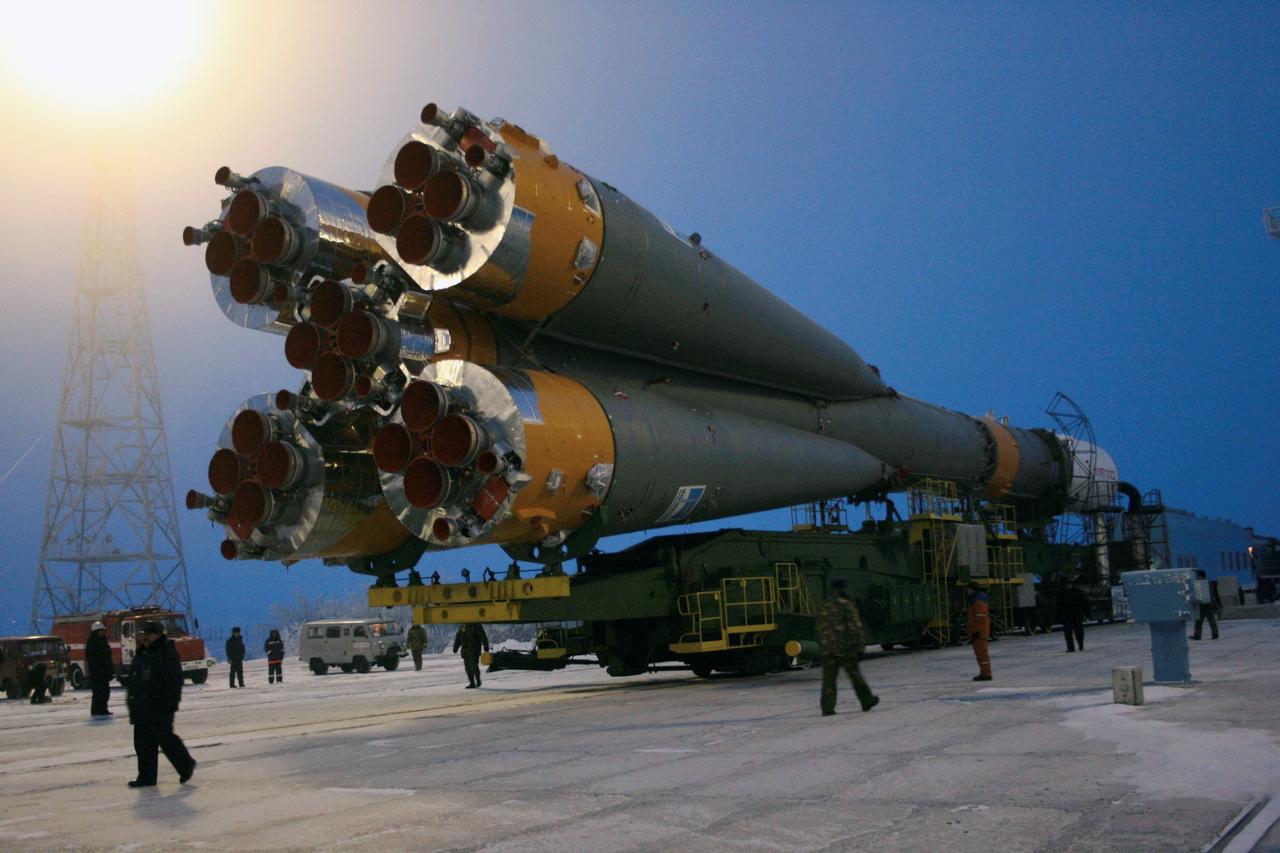
JSC2007-E-03081 (16 Jan. 2007) --- Roll-out of the Progress 24 vehicle occurred on schedule at 7:00 a.m., Jan. 16, 2007 at the Baikonur Cosmodrome, Kazakhstan. The vehicle was in the vertical and hard-down at the pad by 9:30 a.m. The gantry towers were placed around the vehicle shortly thereafter. Progress is targeted for launch on Jan. 18, 2007 for a two-day trip to the International Space Station carrying 2 1/2 tons of food, fuel and supplies for the Expedition 14 crew. Photo Credit: NASA
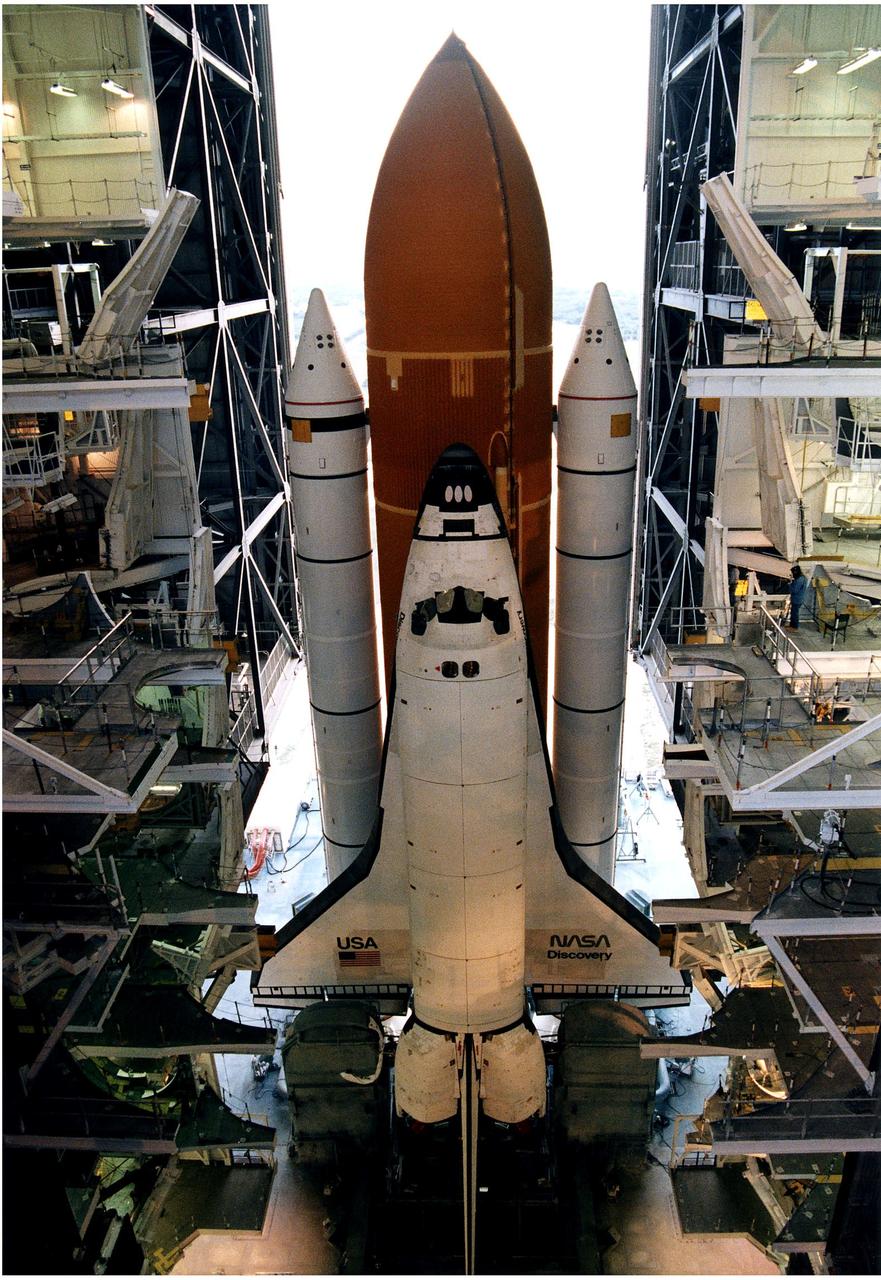
KENNEDY SPACE CENTER, FLA. - After leaving the Vehicle Assembly Building, the Space Shuttle Discovery makes its slow - up to 1 mile per hour - trek along the crawlerway to Launch Pad 39A in preparation for the STS-82 mission. The Shuttle is assembled on a Mobile Launcher Platform, seen in this view taken from above, and the entire assemblage is carried out to the launch pad on the crawler transporter, which is underneath the MLP. A seven-member crew will perform the second servicing of the orbiting Hubble Space Telescope (HST) during the 10-day STS-82 mission, which is targeted for a Feb. 11 liftoff.
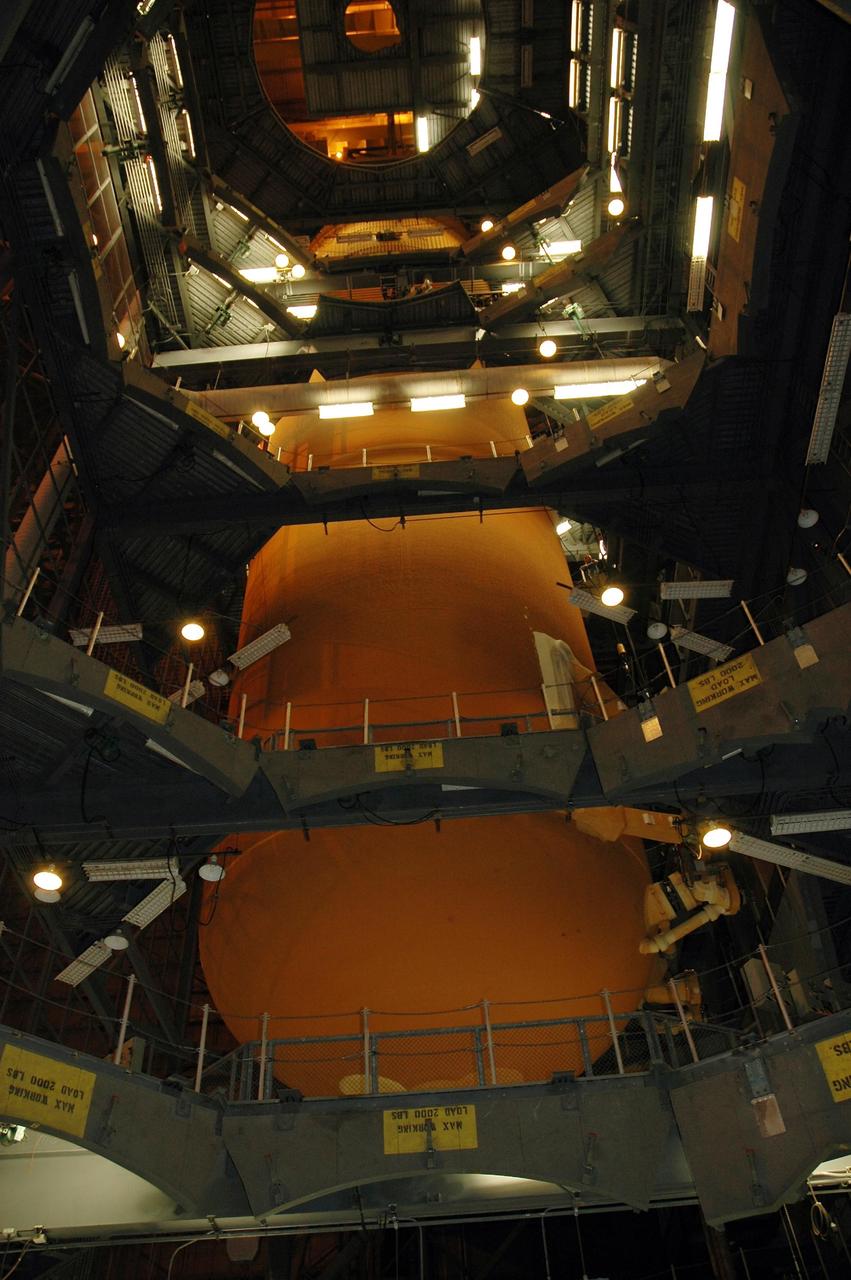
KENNEDY SPACE CENTER, FLA. -- The external tank for Endeavour is being lifted from the checkout cell inside the Vehicle Assembly Building for mating with the solid rocket boosters. Endeavour is currently targeted for rollover to the VAB July 5. Endeavour is the designated orbiter for mission STS-118, targeted for launch on Aug. 9 to the International Space Station. The mission will continue space station construction by delivering a third starboard truss segment, S5, as well as carrying the external stowage platform 3. Photo credit: NASA/Amanda Diller
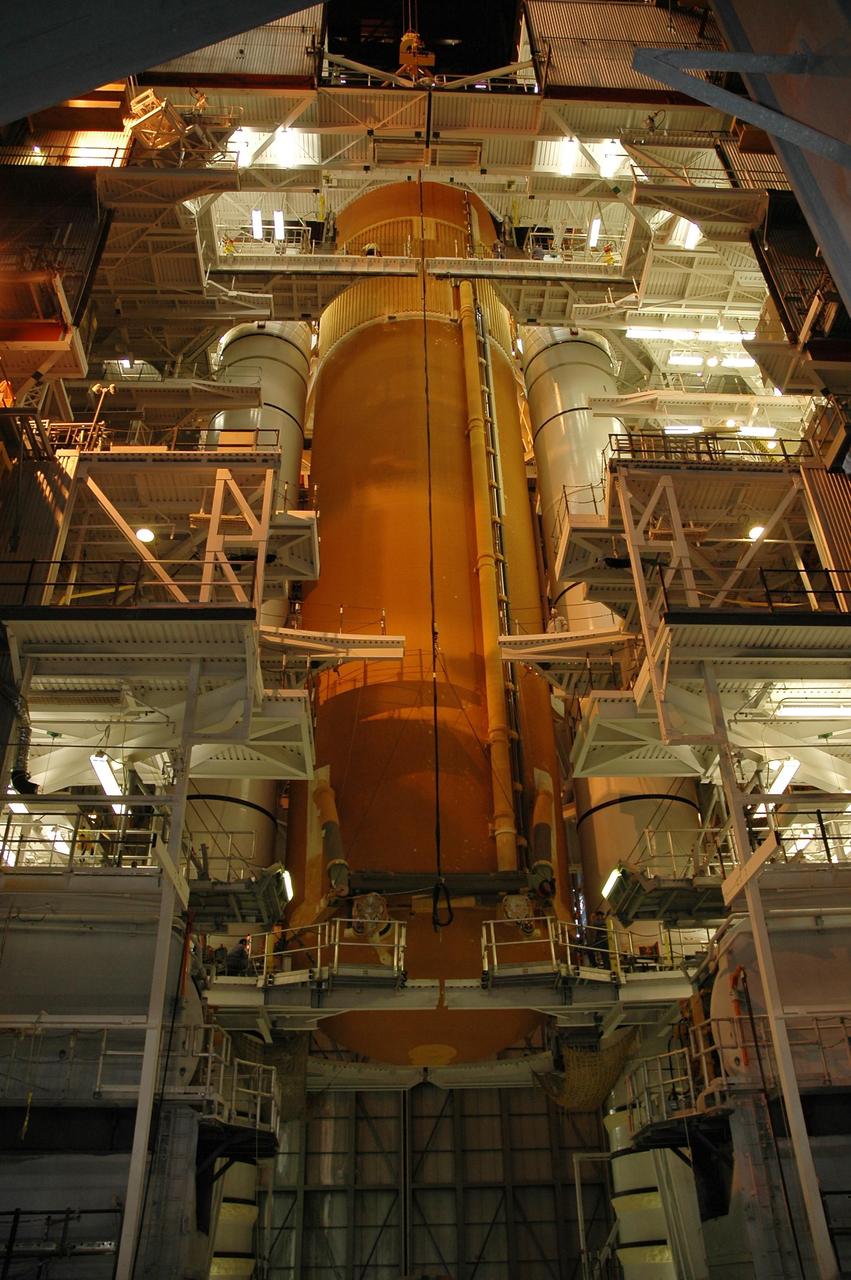
KENNEDY SPACE CENTER, FLA. -- Inside the Vehicle Assembly Building, the external tank for Endeavour is lowered between the solid rocket boosters toward the mobile launcher platform below. Endeavour is currently targeted for rollover to the VAB July 5. Endeavour is the designated orbiter for mission STS-118, targeted for launch on Aug. 9 to the International Space Station. The mission will continue space station construction by delivering a third starboard truss segment, S5, as well as carrying the external stowage platform 3. Photo credit: NASA/Amanda Diller

KENNEDY SPACE CENTER, FLA. -- Inside the Vehicle Assembly Building, the external tank for Endeavour is lowered between the solid rocket boosters toward the mobile launcher platform below. Endeavour is currently targeted for rollover to the VAB July 5. Endeavour is the designated orbiter for mission STS-118, targeted for launch on Aug. 9 to the International Space Station. The mission will continue space station construction by delivering a third starboard truss segment, S5, as well as carrying the external stowage platform 3. Photo credit: NASA/Amanda Diller
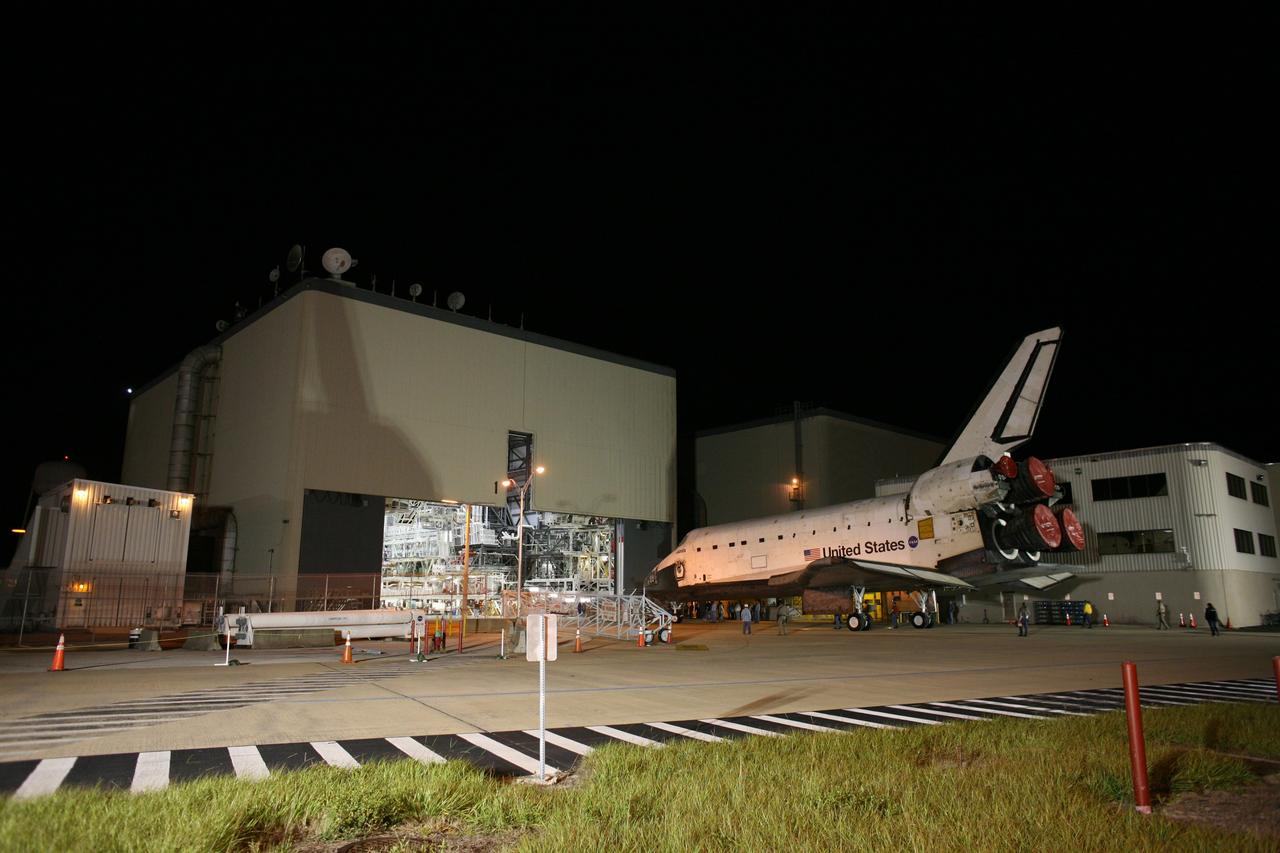
CAPE CANAVERAL, Fla. – Space shuttle Atlantis is towed into the Orbiter Processing Facility. Atlantis was removed from its external fuel tank and solid rocket boosters stack in the Vehicle Assembly Building after the delay of its STS-125 mission to NASA's Hubble Space Telescope. Atlantis' targeted launch on Oct. 14 was delayed when a system that transfers science data from the orbiting observatory to Earth malfunctioned on Sept. 27. The new target launch date is under review. Photo credit: NASA/Dimitri Gerondidakis
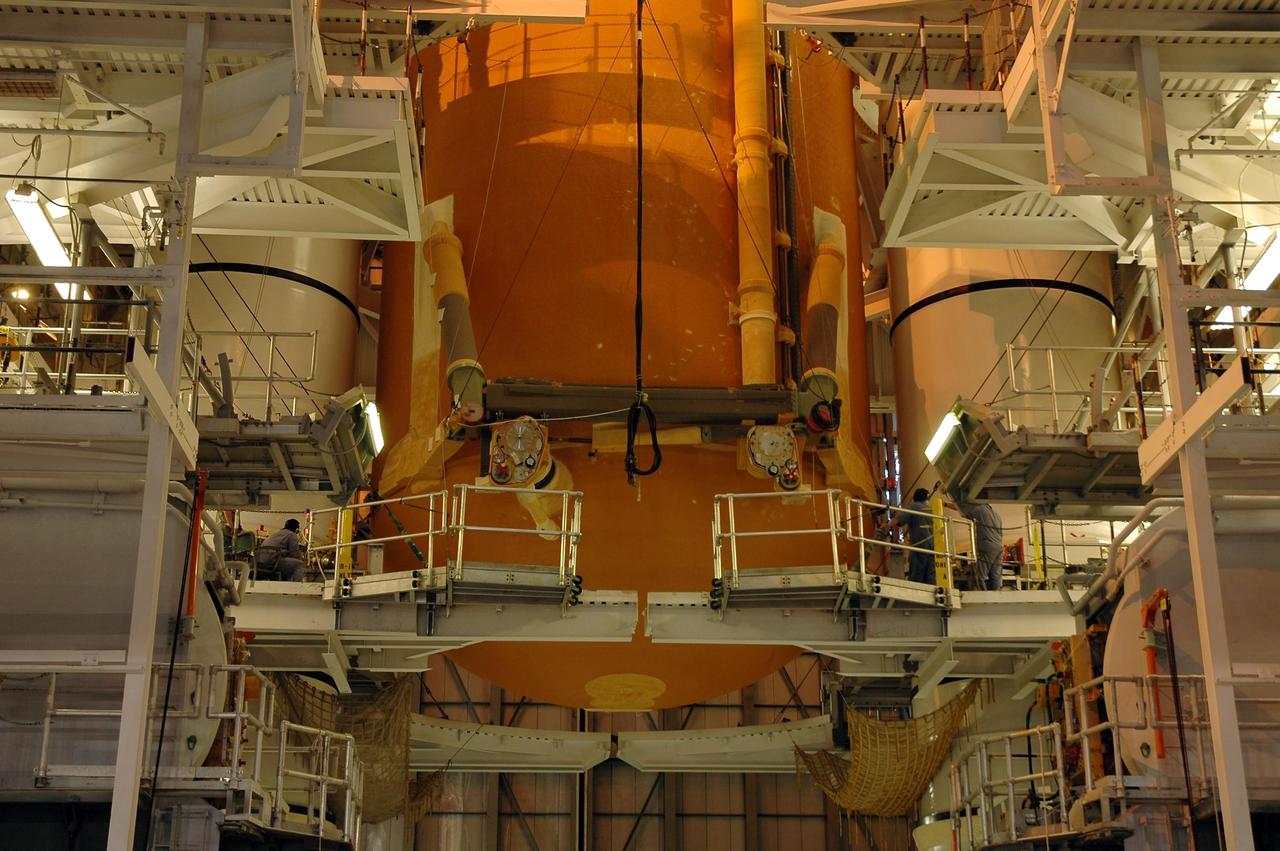
KENNEDY SPACE CENTER, FLA. -- Inside the Vehicle Assembly Building, the external tank for Endeavour is lowered between the solid rocket boosters toward the mobile launcher platform below. Endeavour is currently targeted for rollover to the VAB July 5. Endeavour is the designated orbiter for mission STS-118, targeted for launch on Aug. 9 to the International Space Station. The mission will continue space station construction by delivering a third starboard truss segment, S5, as well as carrying the external stowage platform 3. Photo credit: NASA/Amanda Diller
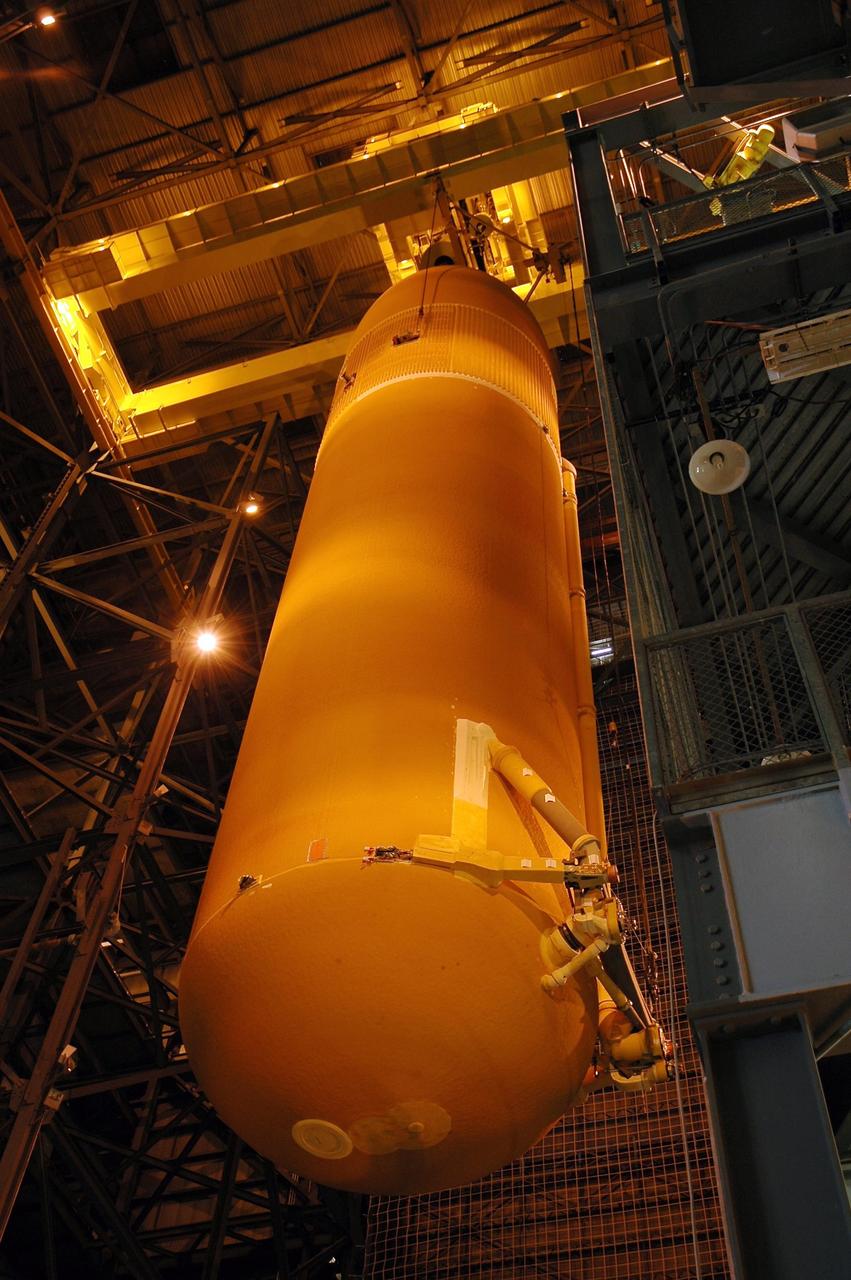
KENNEDY SPACE CENTER, FLA. -- Inside the Vehicle Assembly Building, the external tank for Endeavour is being lowered toward the mobile launcher platform for mating with the solid rocket boosters. Endeavour is currently targeted for rollover to the VAB July 5. Endeavour is the designated orbiter for mission STS-118, targeted for launch on Aug. 9 to the International Space Station. The mission will continue space station construction by delivering a third starboard truss segment, S5, as well as carrying the external stowage platform 3. Photo credit: NASA/Amanda Diller
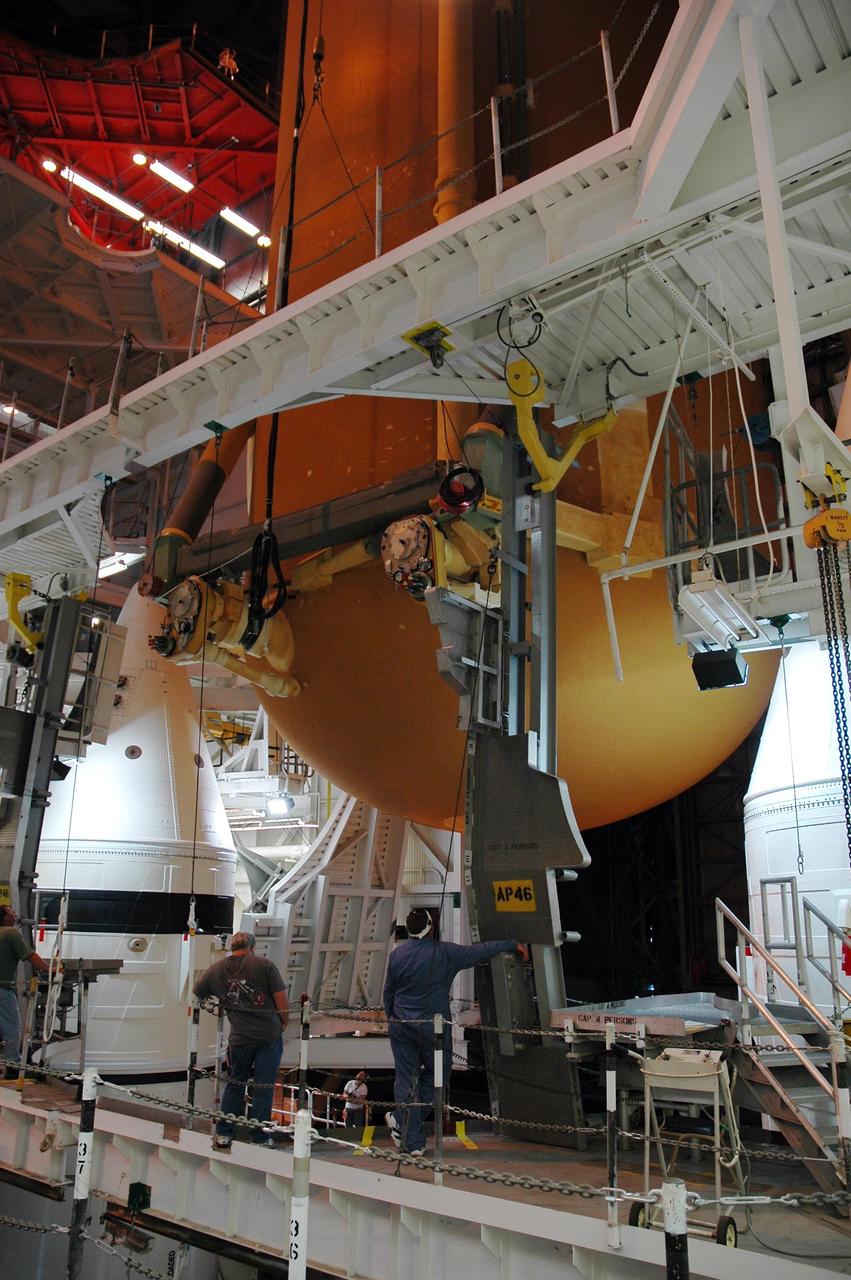
KENNEDY SPACE CENTER, FLA. -- Inside the Vehicle Assembly Building, the external tank for Endeavour is lowered between the solid rocket boosters toward the mobile launcher platform below. Endeavour is currently targeted for rollover to the VAB July 5. Endeavour is the designated orbiter for mission STS-118, targeted for launch on Aug. 9 to the International Space Station. The mission will continue space station construction by delivering a third starboard truss segment, S5, as well as carrying the external stowage platform 3. Photo credit: NASA/Amanda Diller
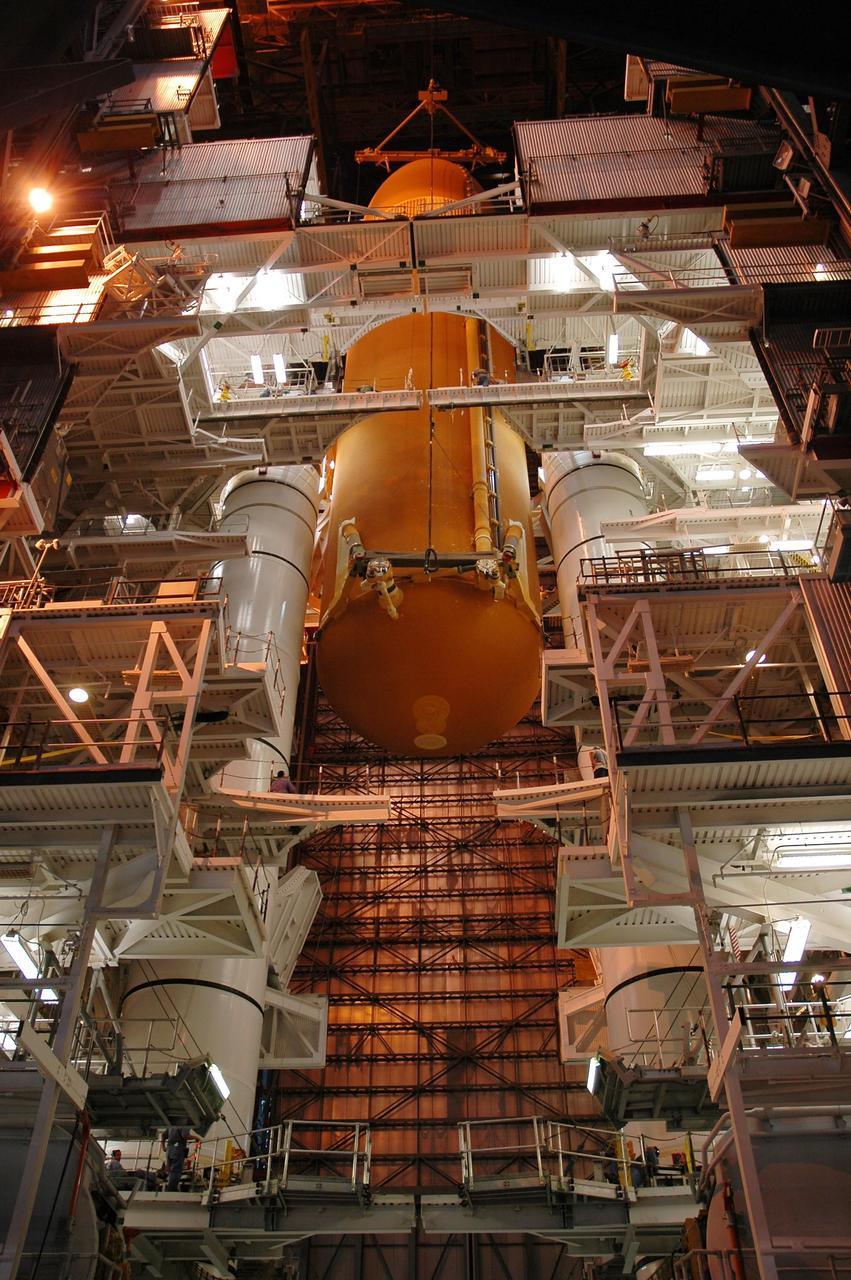
KENNEDY SPACE CENTER, FLA. -- Inside the Vehicle Assembly Building, the external tank for Endeavour is lowered toward the mobile launcher platform for mating with the solid rocket boosters. Endeavour is currently targeted for rollover to the VAB July 5. Endeavour is the designated orbiter for mission STS-118, targeted for launch on Aug. 9 to the International Space Station. The mission will continue space station construction by delivering a third starboard truss segment, S5, as well as carrying the external stowage platform 3. Photo credit: NASA/Amanda Diller
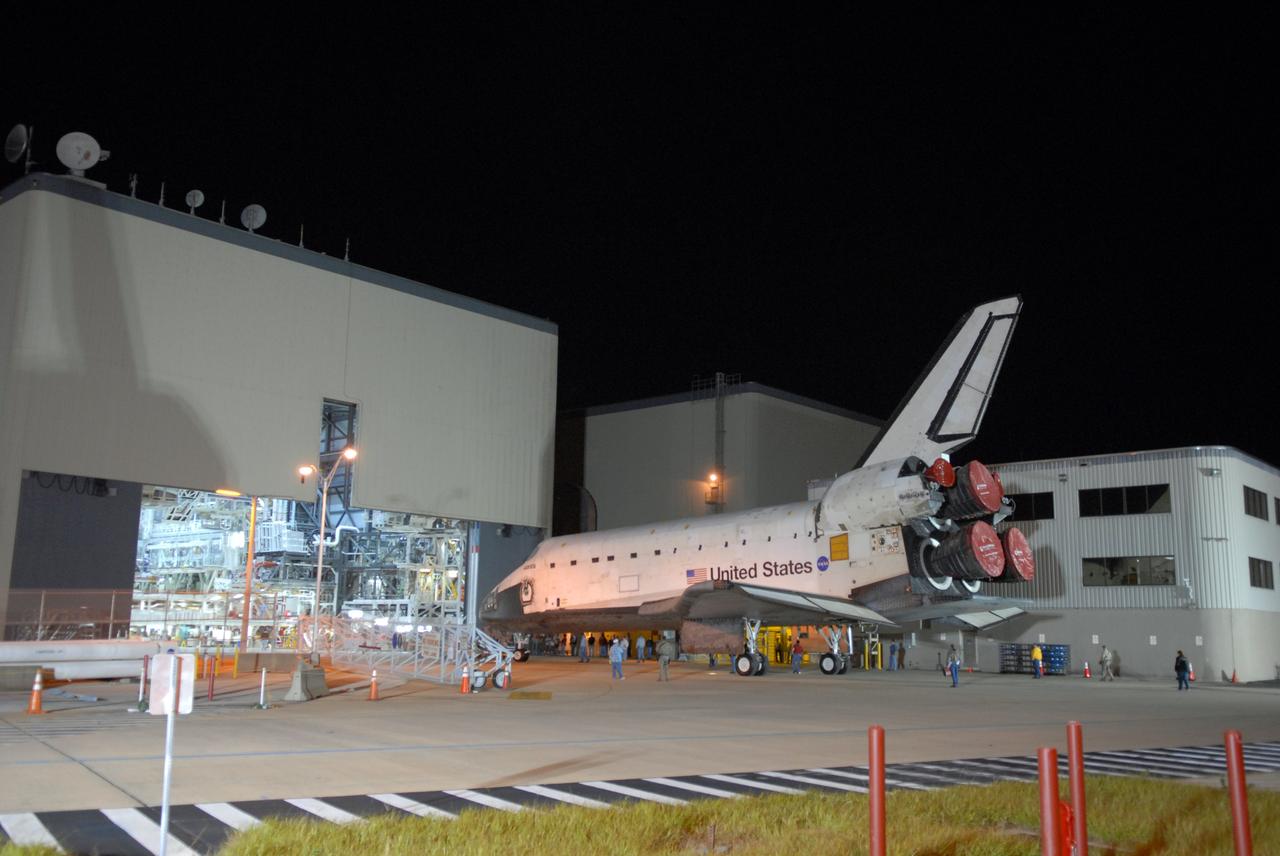
CAPE CANAVERAL, Fla. – Space shuttle Atlantis is towed into the Orbiter Processing Facility. Atlantis was removed from its external fuel tank and solid rocket boosters stack in the Vehicle Assembly Building after the delay of its STS-125 mission to NASA's Hubble Space Telescope. Atlantis' targeted launch on Oct. 14 was delayed when a system that transfers science data from the orbiting observatory to Earth malfunctioned on Sept. 27. The new target launch date is under review. Photo credit: NASA/Tim Jacobs
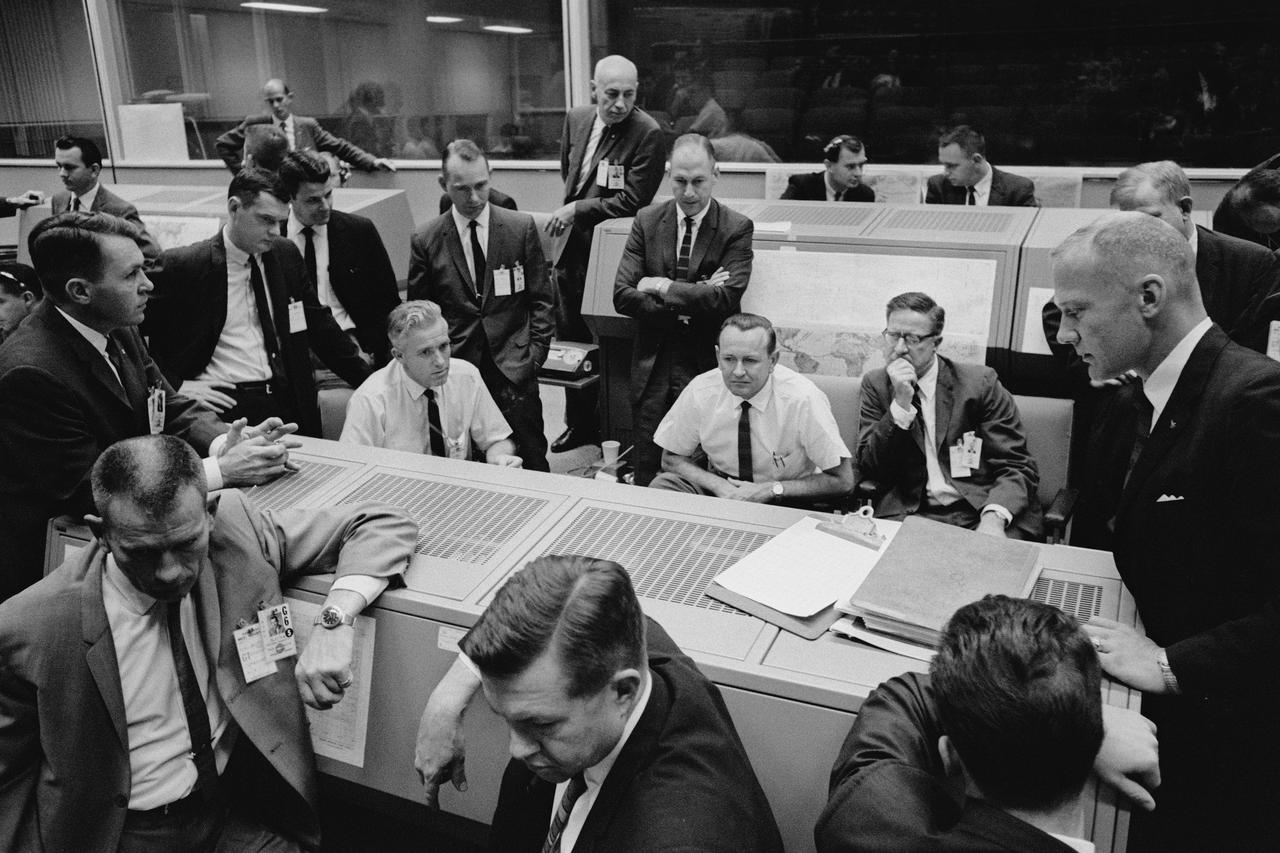
S65-44401 (1965) --- A group of National Aeronautics and Space Administration (NASA) and Manned Spacecraft Center (MSC) officials and personnel watch a Cape Kennedy press conference being telecast in the Mission Control Center (MCC) after the Gemini-6 mission was scrubbed due to the apparent failure of the Agena Target Vehicle to attain orbit.
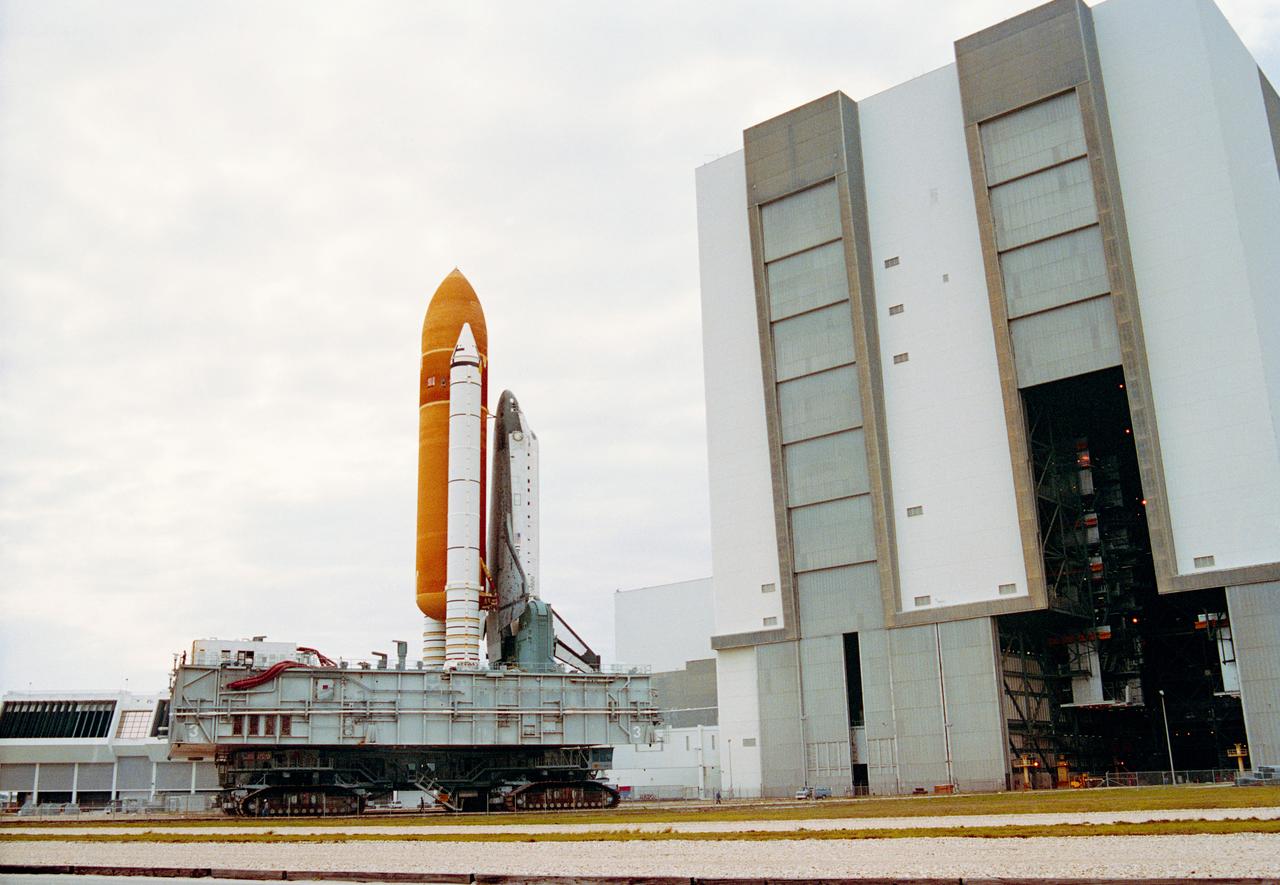
S93-29846 (2 Feb 1993) --- The orbiter Columbia is rolled out of the Vehicle Assembly Building (VAB). Having completed its assembly with the external tank and solid rocket boosters, the Space Shuttle will be rolled out to Launch Pad 39A, where it is targeted for liftoff on Space Shuttle Mission STS-55 in late February.
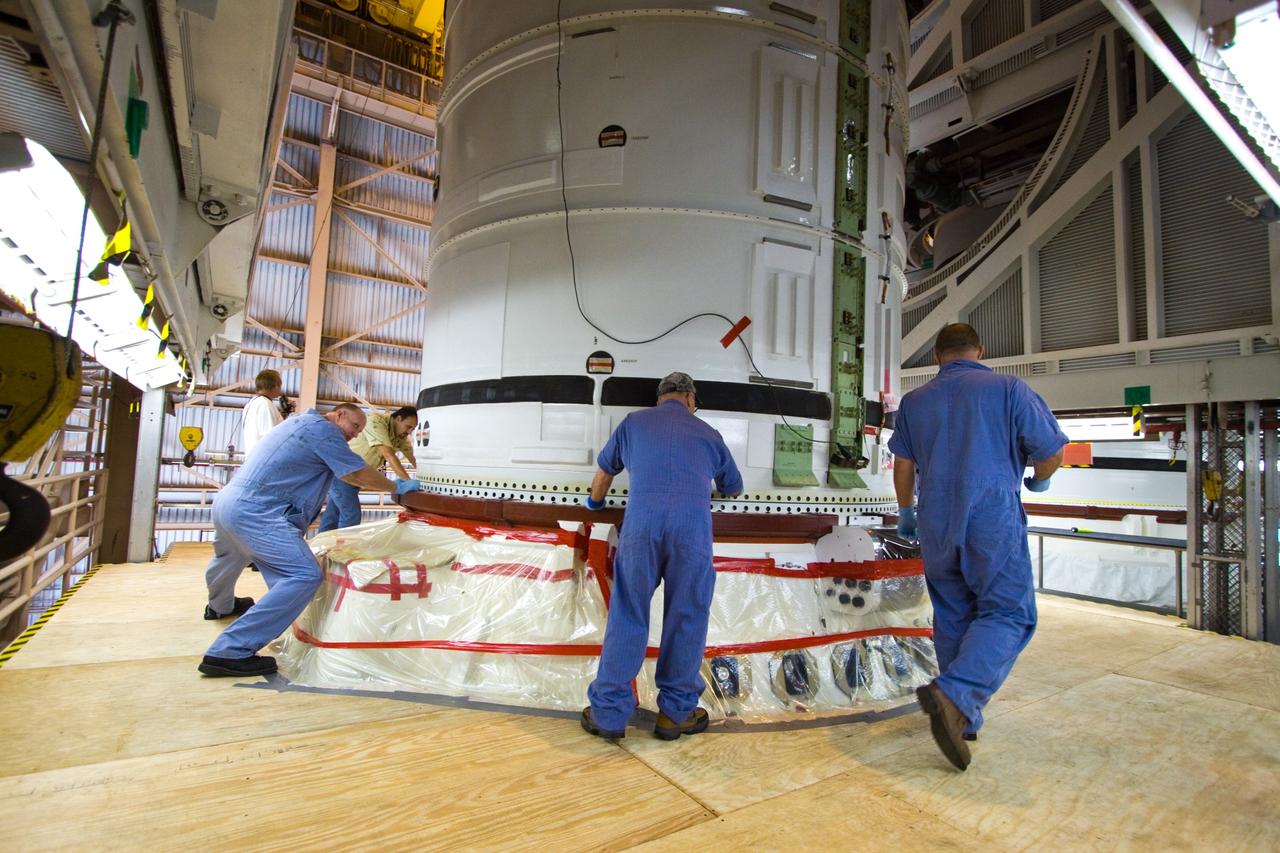
CAPE CANAVERAL, Fla. – In the Rotation, Processing, and Surge Facility at NASA's Kennedy Space Center in Florida, the Ares I-X aft skirt is mated to the aft segment. The complete Ares I-X will be assembled in the Vehicle Assembly Building. The launch of Ares I-X is targeted for August 2009. Photo credit: NASA/Jack Pfaller
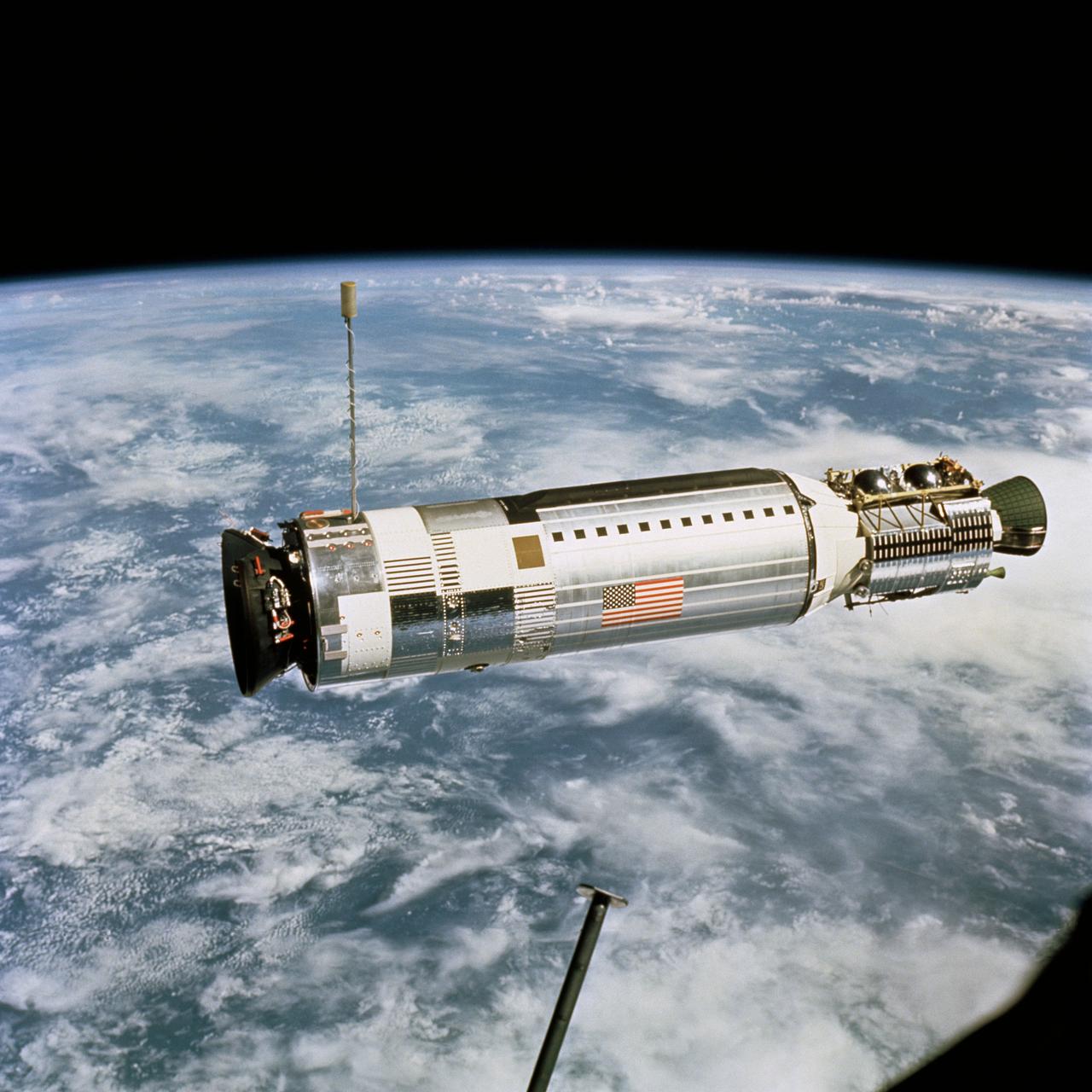
S66-62755 (11 Nov. 1966) --- Excellent stereo and side view of the Agena Target Docking Vehicle as seen from the Gemini-12 spacecraft during rendezvous and docking mission in space. The two spacecraft are 50 feet apart. Photo credit: NASA
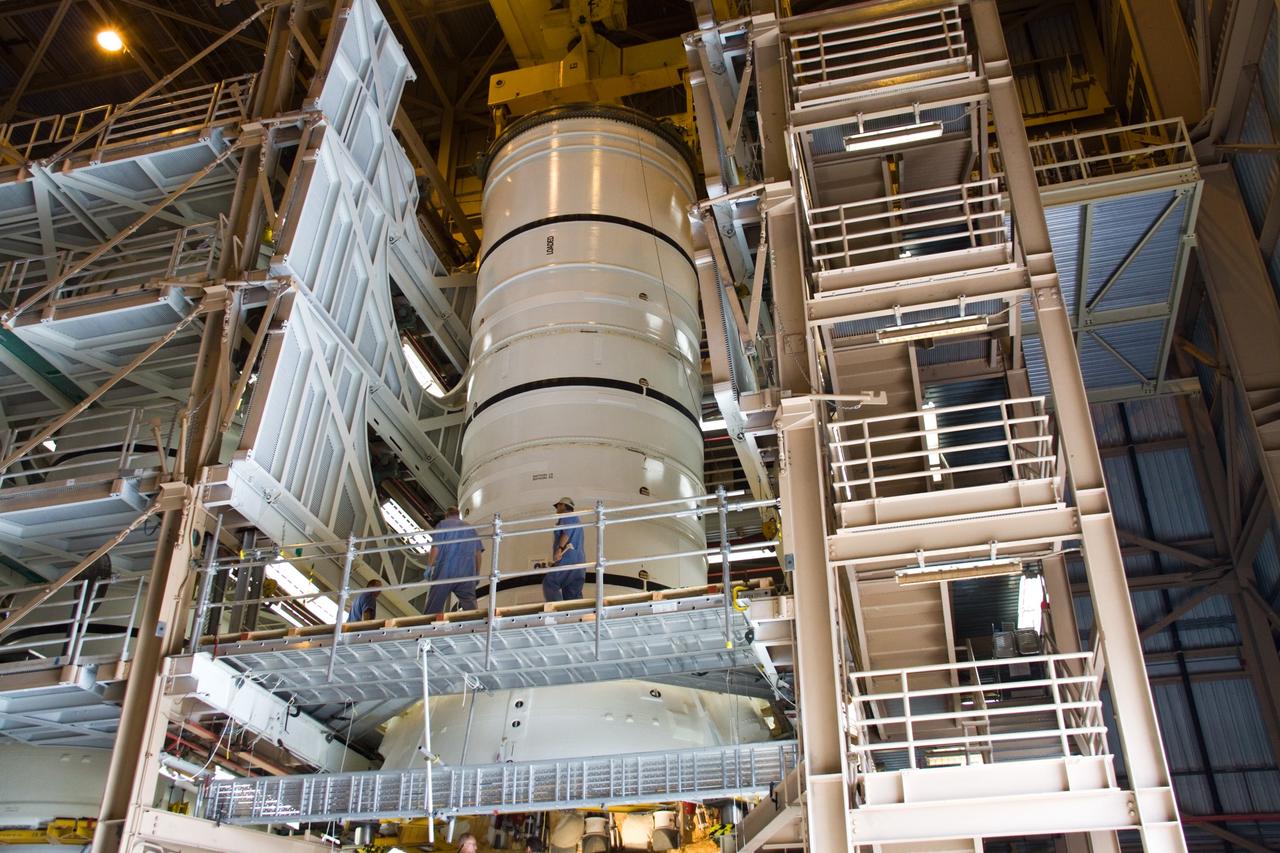
CAPE CANAVERAL, Fla. – In the Rotation, Processing, and Surge Facility at NASA's Kennedy Space Center in Florida, the Ares I-X aft skirt is mated to the aft segment. The complete Ares I-X will be assembled in the Vehicle Assembly Building. The launch of Ares I-X is targeted for August 2009. Photo credit: NASA/Jack Pfaller
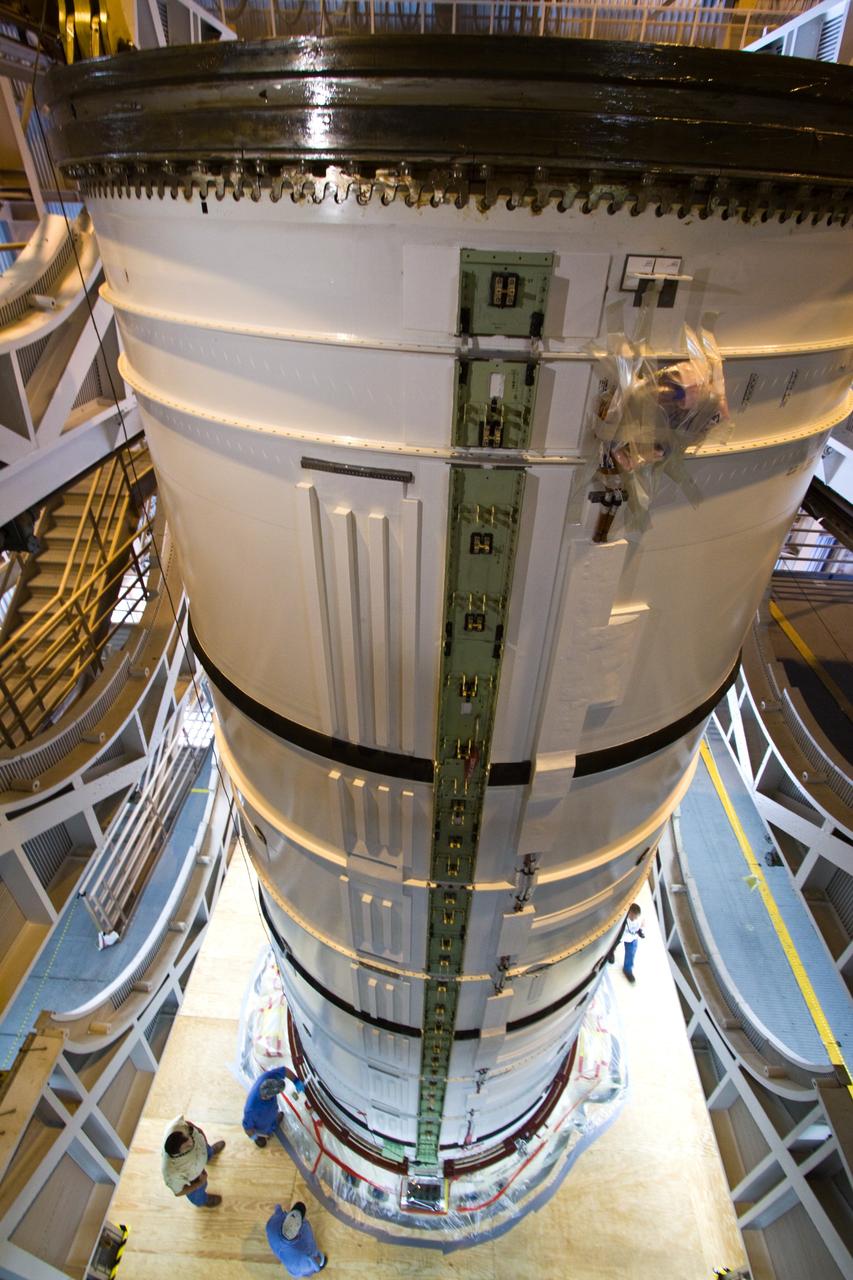
CAPE CANAVERAL, Fla. – In the Rotation, Processing, and Surge Facility at NASA's Kennedy Space Center in Florida, the Ares I-X aft skirt is mated to the aft segment. The complete Ares I-X will be assembled in the Vehicle Assembly Building. The launch of Ares I-X is targeted for August 2009. Photo credit: NASA/Jack Pfaller
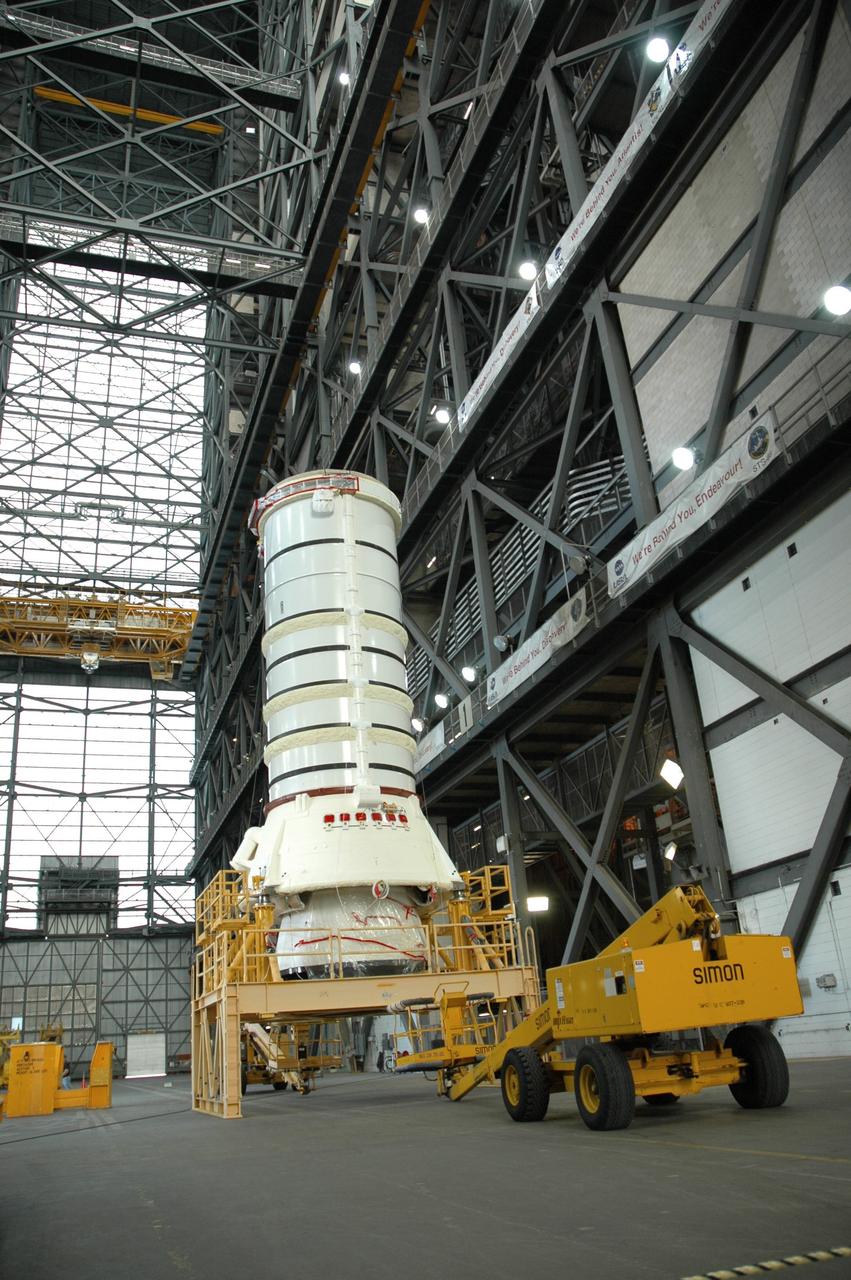
CAPE CANAVERAL, Fla. – One of the solid rocket booster segments for space shuttle Endeavour's STS-127 mission is in the Vehicle Assembly Building at NASA's Kennedy Space Center in Florida for stacking. The mission is targeted for launch in June. Photo credit: NASA/Tim Jacobs
CAPE CANAVERAL, Fla. – Part of the Constellation Program, the Ares I-X is the flight test vehicle for the Ares I, which is the essential core of a space transportation system that eventually will carry crewed missions back to the moon, on to Mars and out into the solar system. The Ares I-X flight test is targeted for no earlier than Aug. 30.
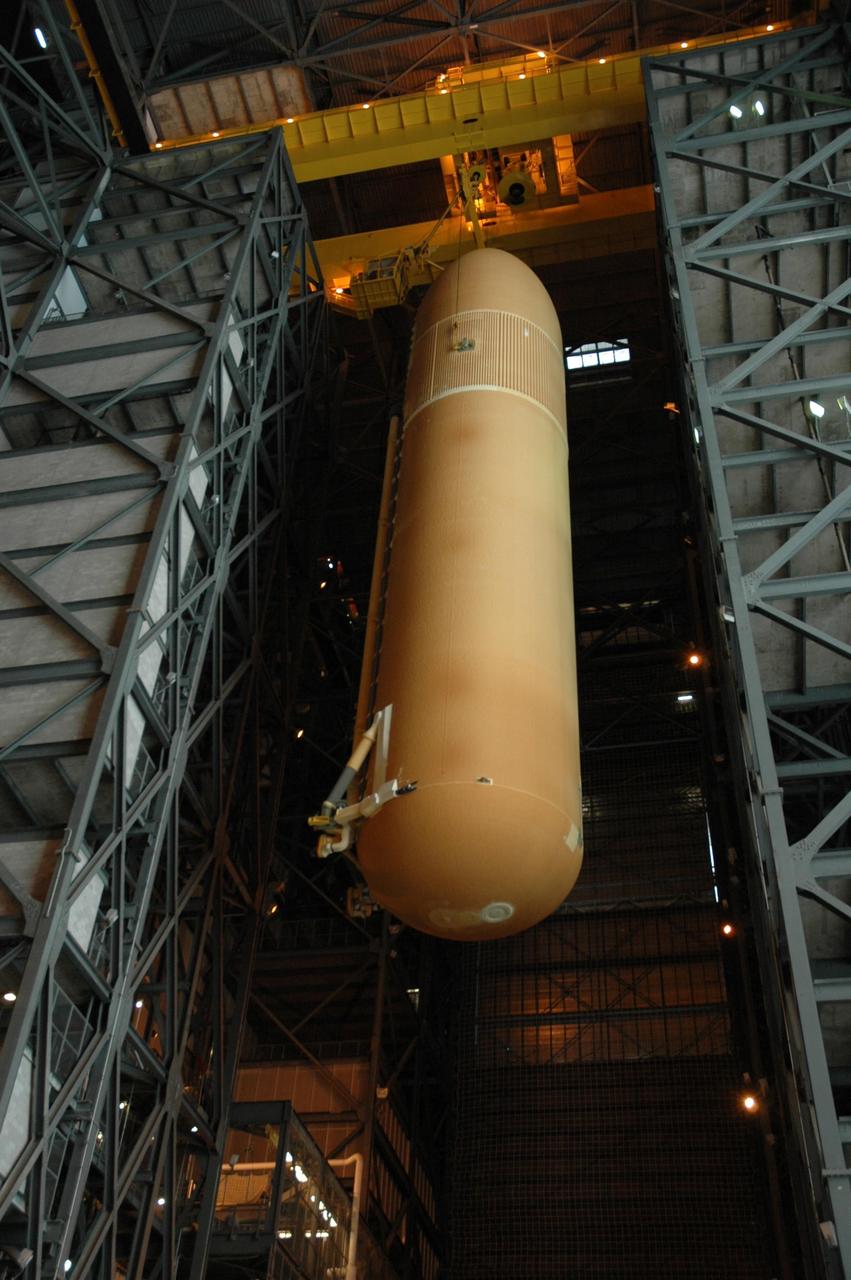
KENNEDY SPACE CENTER, FLA. -- Seen from below, external tank No. 125 is moved toward a checkout cell in high bay 4 in the Vehicle Assembly Building for processing. The tank will be part of the space shuttle stack for mission STS-122 targeted to launch Dec. 6. Photo credit: NASA/Troy Cryder
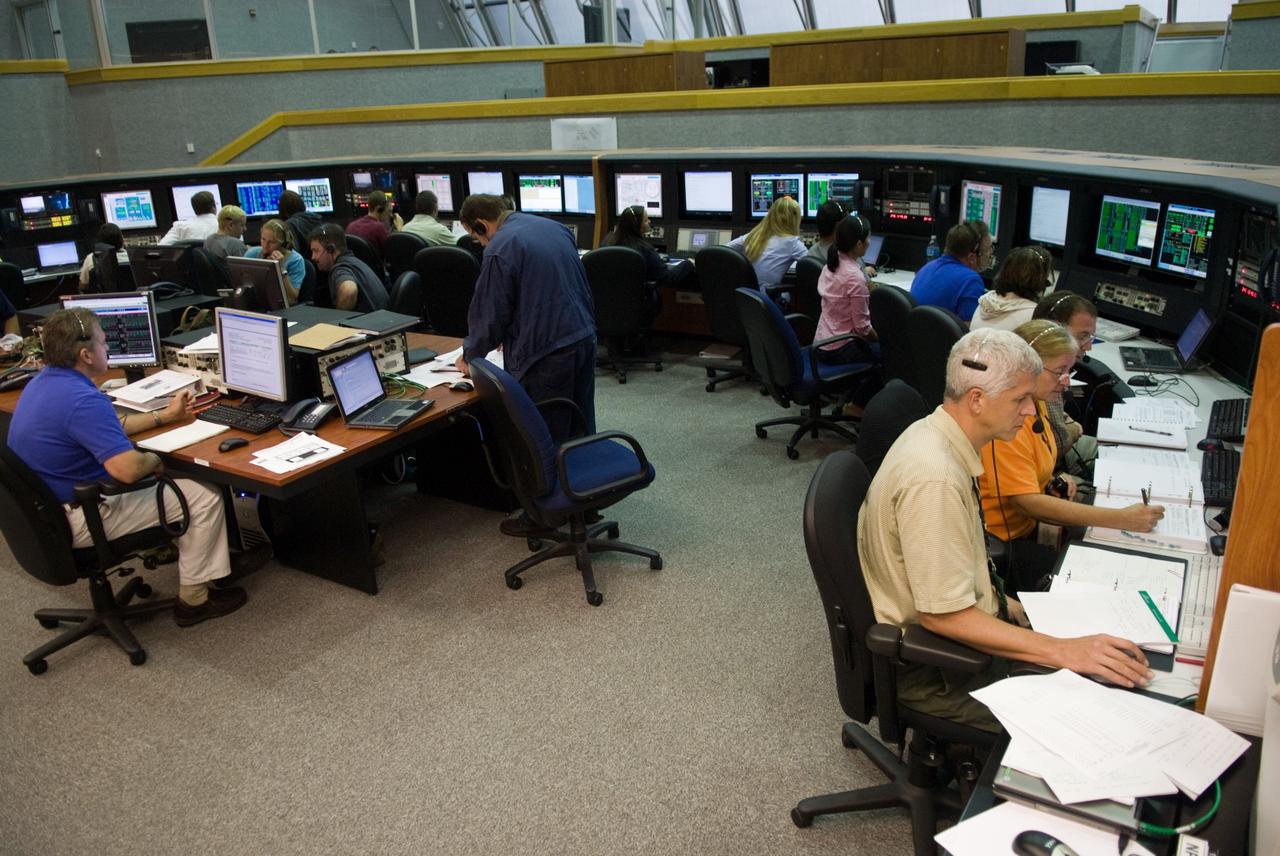
CAPE CANAVERAL, Fla. – In Firing Room 1 at NASA's Kennedy Space Center in Florida, mission engineers take part in a countdown simulation for the upcoming Ares I-X flight test. The test vehicle for the Ares I, Ares I-X is targeted for the test on Oct. 31. Photo credit: NASA/Kim Shiflett

S93-38577 (1 June 1993) --- The orbiter Discovery is rolled into the Vehicle Assembly Building (VAB) for mating with the external tank and twin solid rocket boosters. Discovery is being prepared for mission STS-51, targeted for a mid-July liftoff.
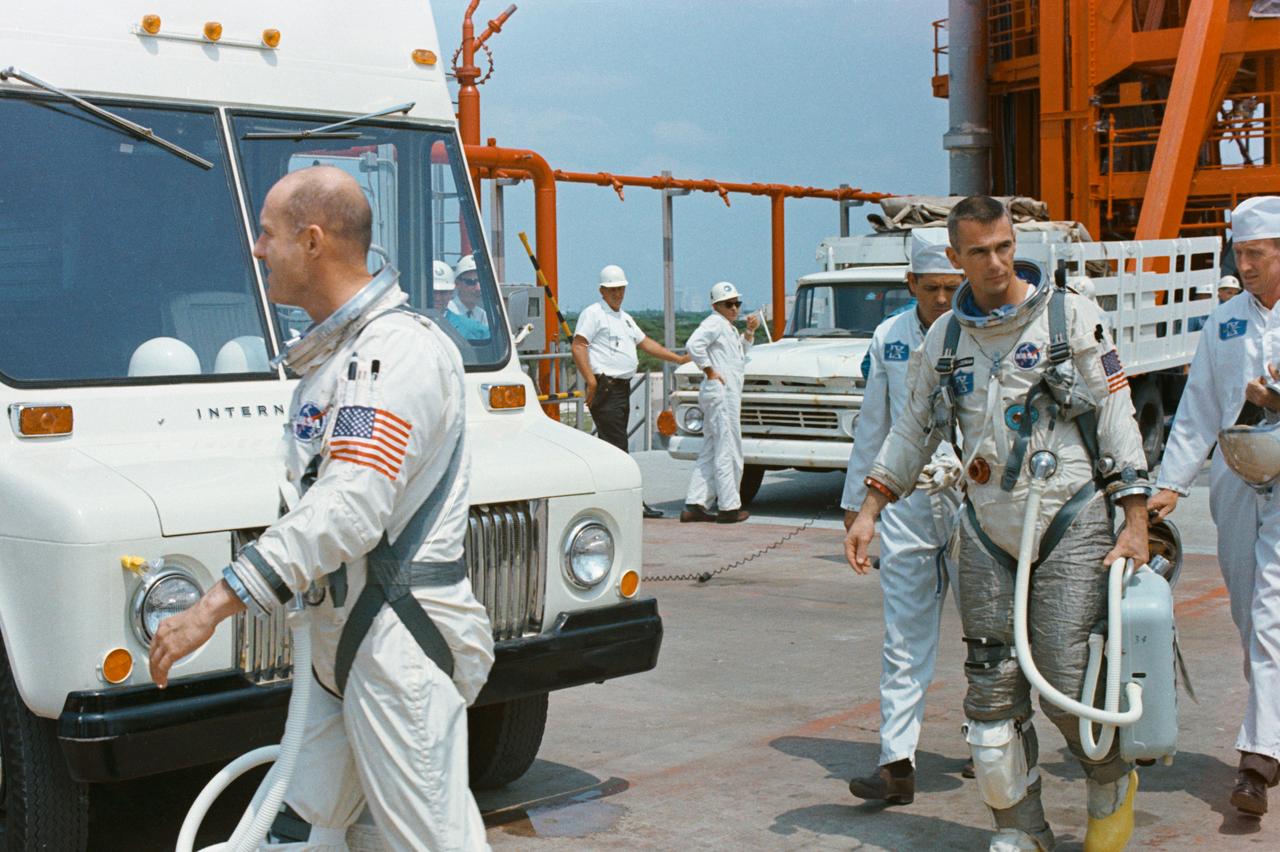
S66-34559 (17 May 1966) --- Astronauts Thomas P. Stafford (left), command pilot, and Eugene A. Cernan, pilot, walk away from Pad 19 after the Gemini-9 mission was postponed. Failure of the Agena Target Vehicle to achieve orbit caused the postponement of the mission. Photo credit: NASA
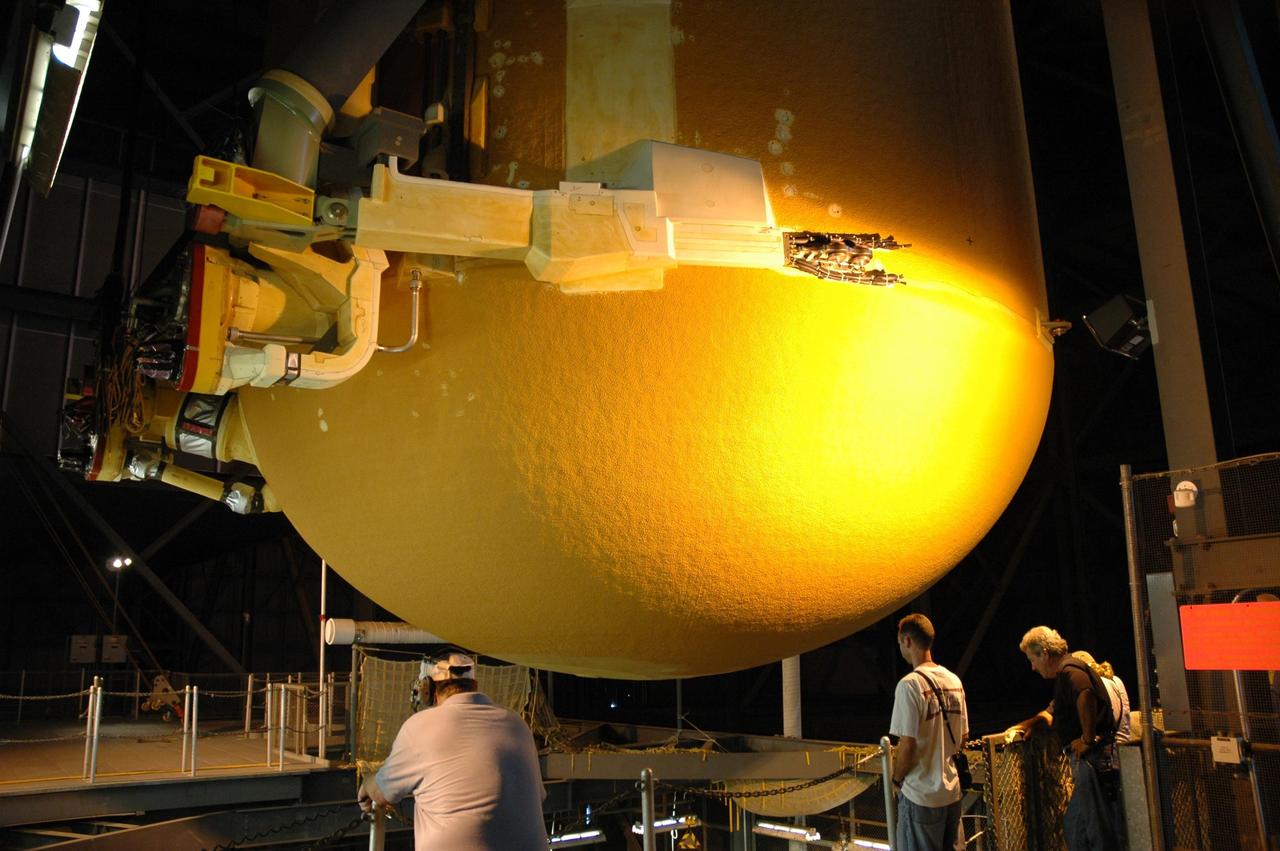
KENNEDY SPACE CENTER, FLA. -- In the Vehicle Assembly Building, workers keep an eye on the movement of external tank No. 125 as it is lowered into a checkout cell in high bay 4 for processing. The tank will be part of the space shuttle stack for mission STS-122 targeted to launch Dec. 6. Photo credit: NASA/Troy Cryder
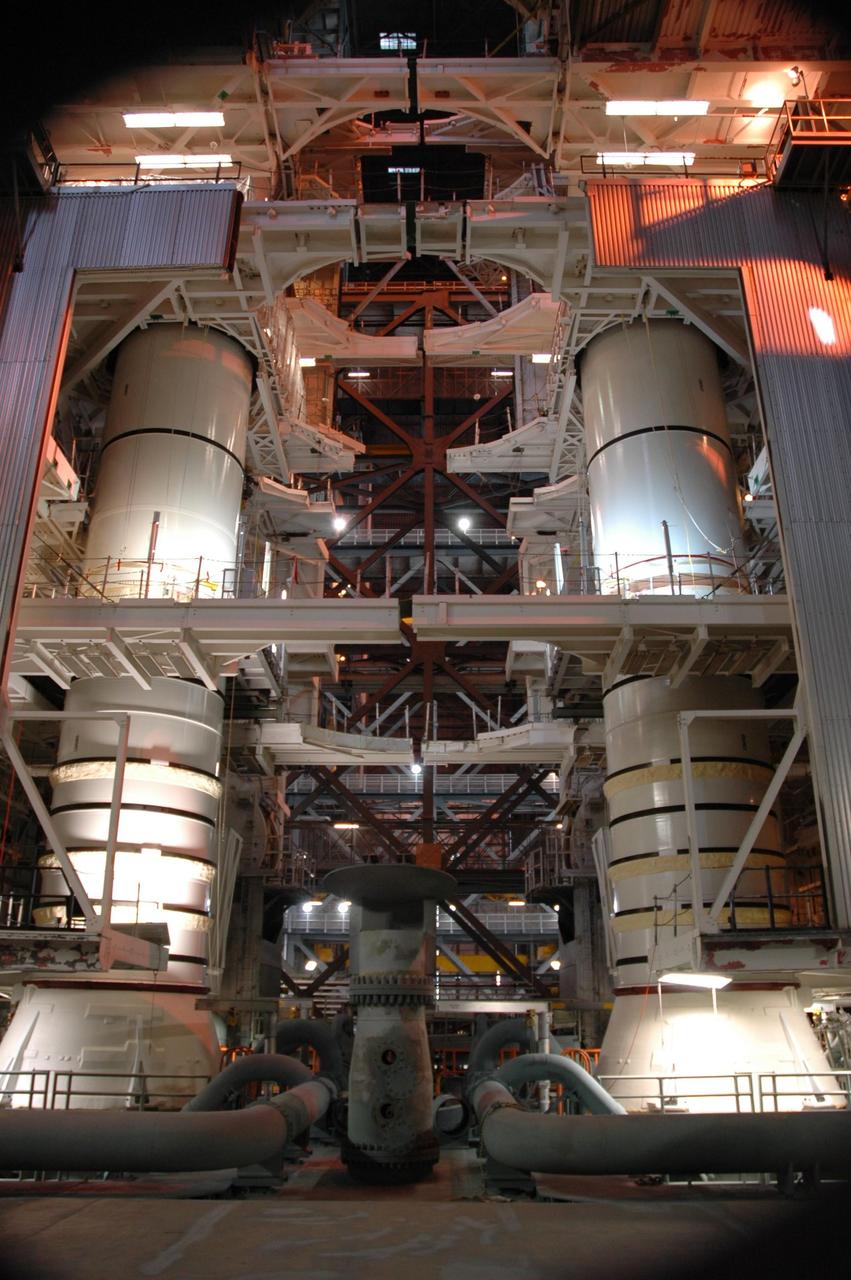
KENNEDY SPACE CENTER, FLA. -- In the Vehicle Assembly Building, the solid rocket booster segments are being stacked on the mobile launcher platform for mission STS-122. Space shuttle Atlantis is targeted for launch on mission STS-122 on Dec. 6. Photo credit: NASA/Jack Pfaller
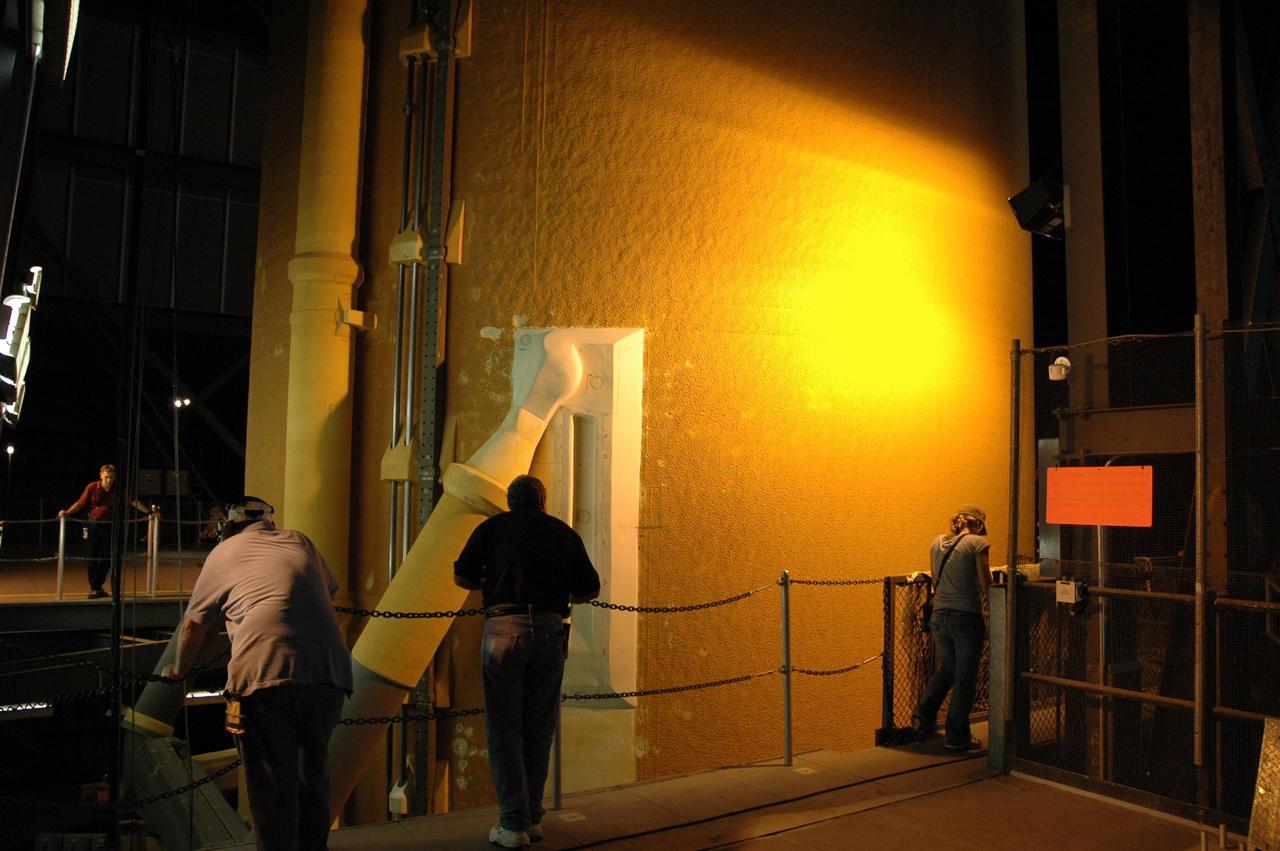
KENNEDY SPACE CENTER, FLA. -- In the Vehicle Assembly Building, workers keep an eye on the movement of external tank No. 125 as it is lowered into a checkout cell in high bay 4 for processing. The tank will be part of the space shuttle stack for mission STS-122 targeted to launch Dec. 6. Photo credit: NASA/Troy Cryder
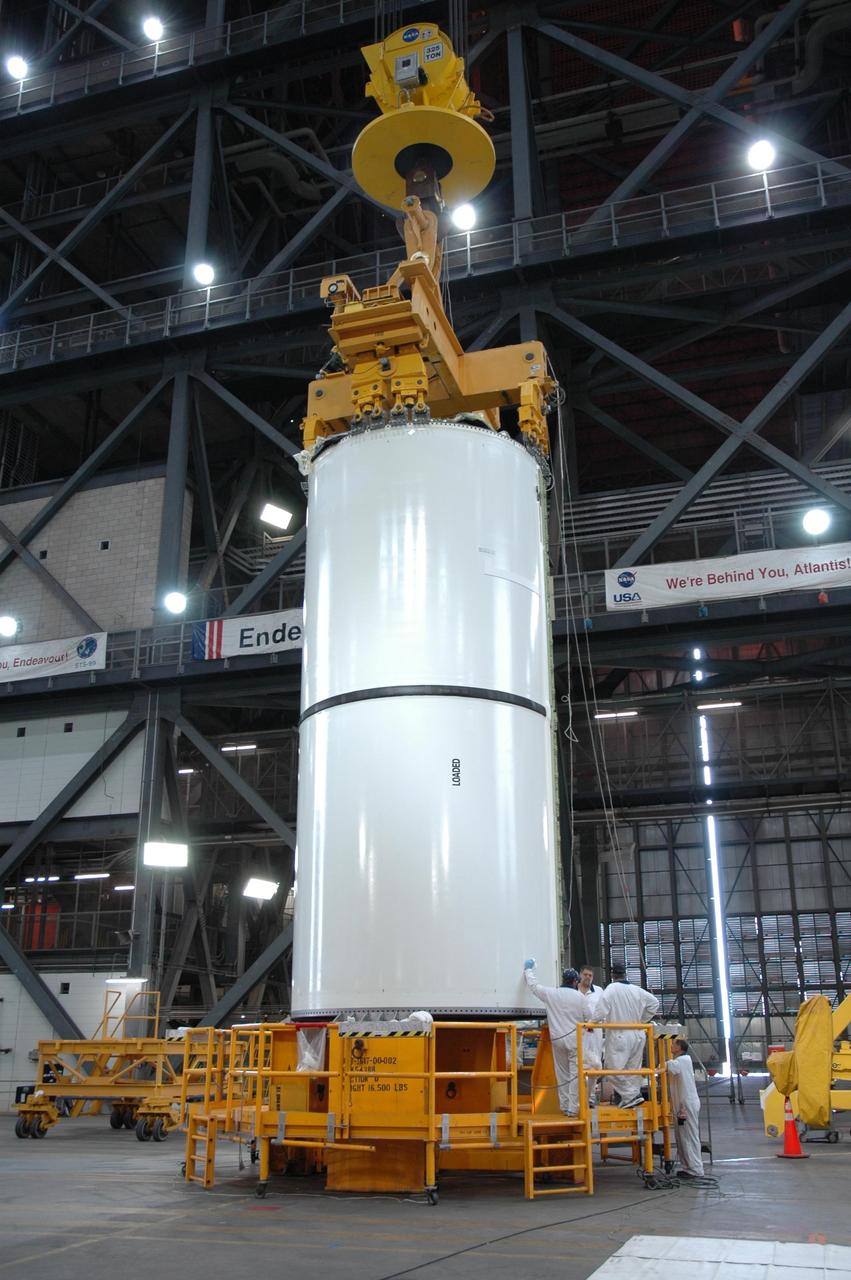
KENNEDY SPACE CENTER, FLA. -- Another STS-120 solid rocket booster segment waits to be stacked in the Vehicle Assembly Building on the mobile launcher platform. STS-120 will be the 23rd flight to the International Space Station. Space Shuttle Discovery will carry the U.S. Node 2. Launch is targeted for Oct. 20. NASA/Jim Grossmann
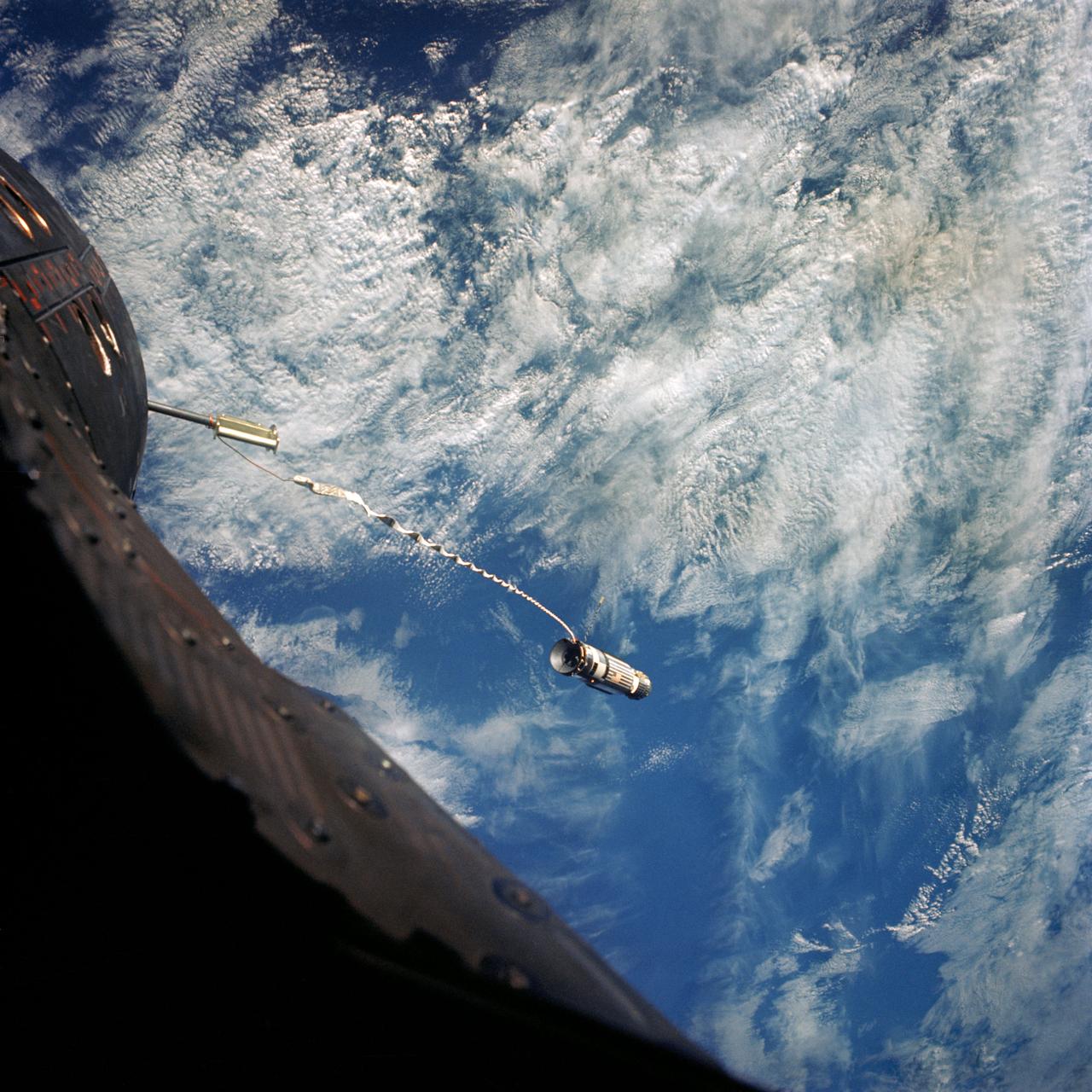
S66-62953 (13 Nov. 1966) --- A 100-foot tether line connects the Agena Target Docking Vehicle with the Gemini-12 spacecraft during its 32nd revolution of Earth. Clouds over the Pacific Ocean are in the background. Photo credit: NASA
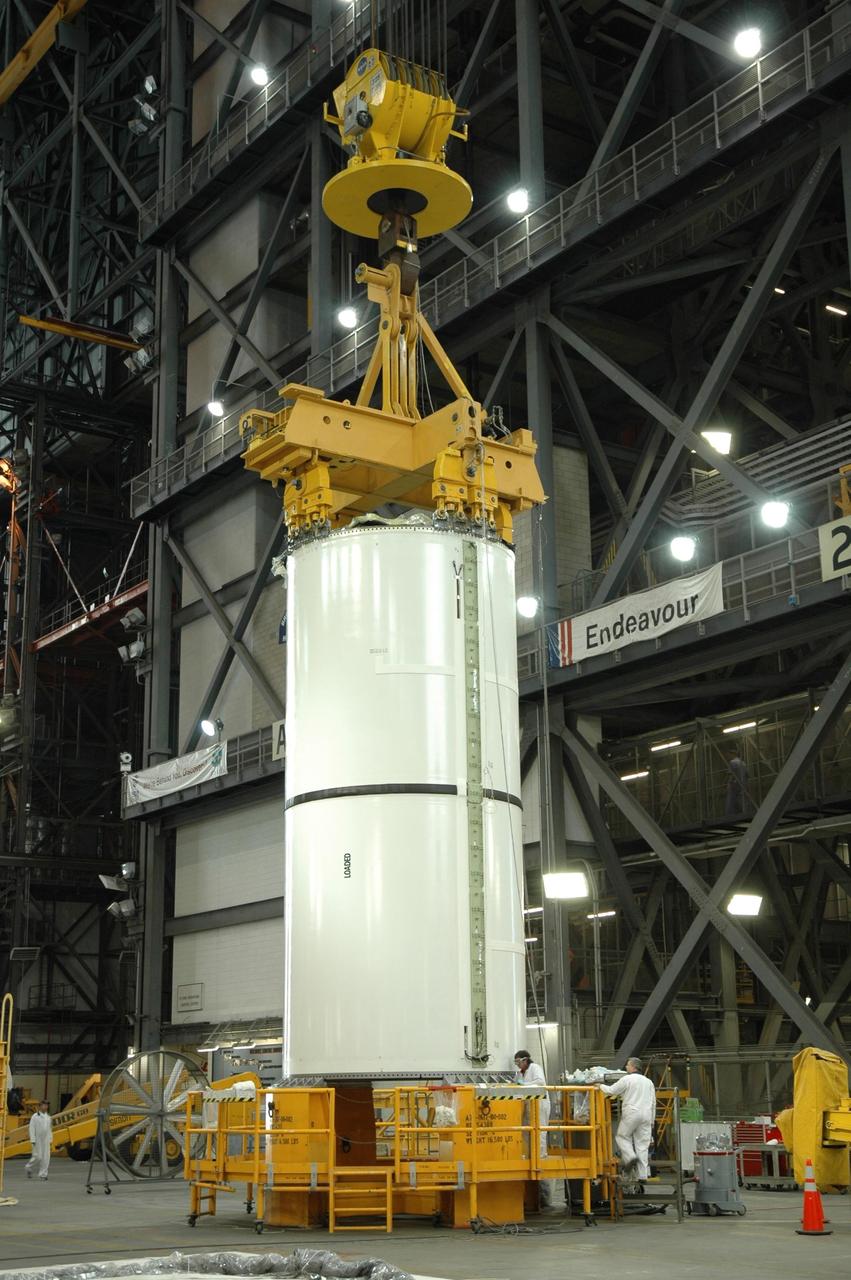
KENNEDY SPACE CENTER, FLA. -- The STS-120 solid rocket booster segments wait to be stacked in the Vehicle Assembly Building on the mobile launcher platform. STS-120 will be the 23rd flight to the International Space Station. Space Shuttle Discovery will carry the U.S. Node 2. Launch is targeted for Oct. 20. NASA/Jim Grossmann
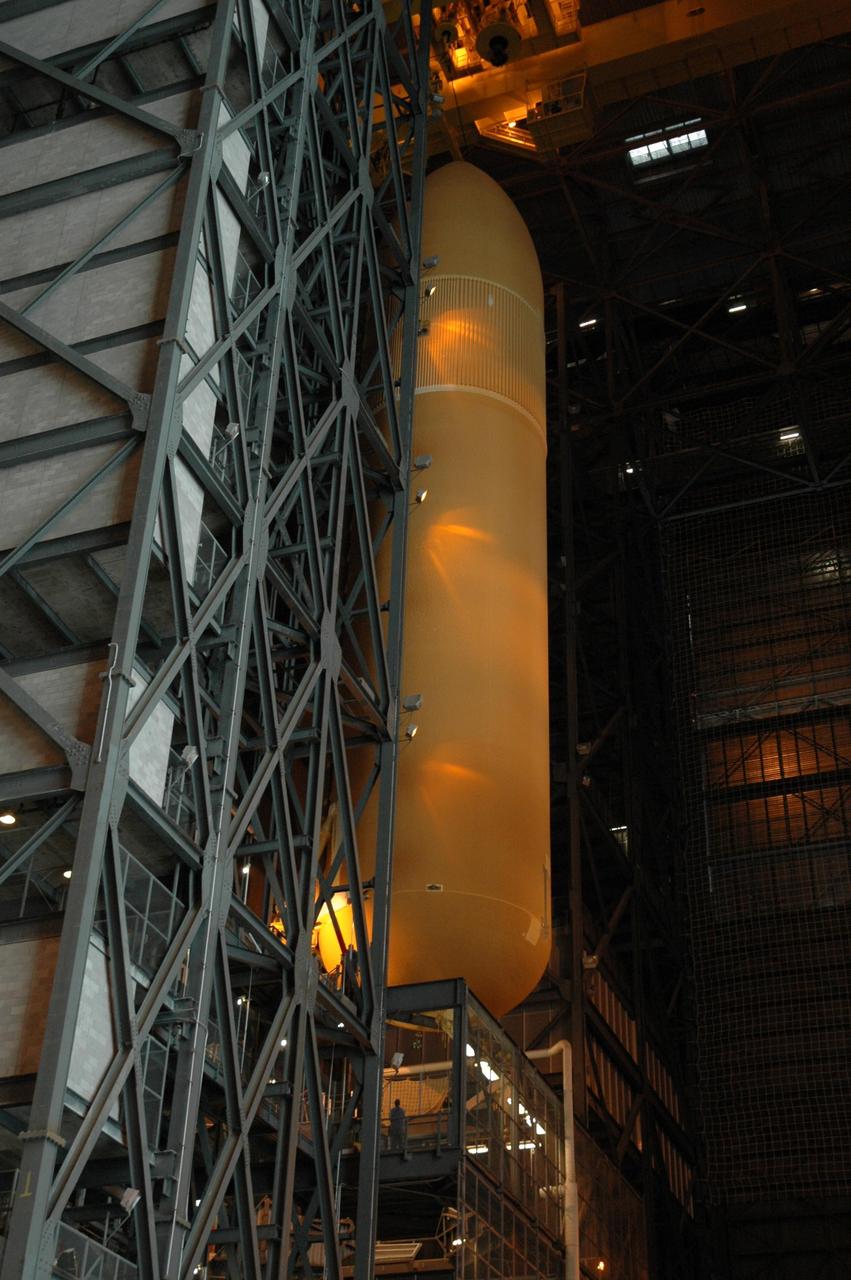
KENNEDY SPACE CENTER, FLA. -- External tank No. 125 is moved toward a checkout cell in high bay 4 in the Vehicle Assembly Building for processing. The tank will be part of the space shuttle stack for mission STS-122 targeted to launch Dec. 6. Photo credit: NASA/Troy Cryder
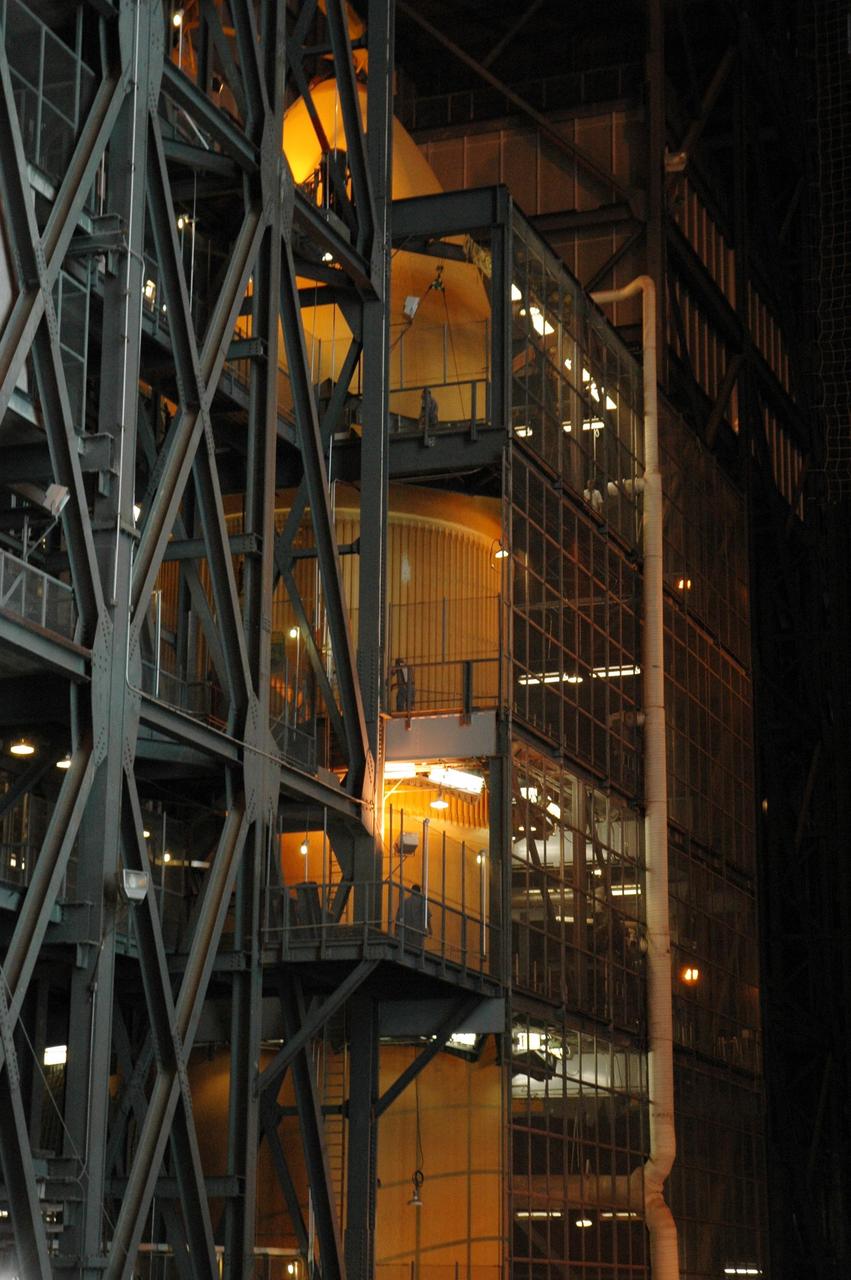
KENNEDY SPACE CENTER, FLA. -- After its lift and transfer inside the Vehicle Assembly Building, external tank No. 125 is suspended in a checkout cell in high bay 4 for processing. The tank will be part of the space shuttle stack for mission STS-122 targeted to launch Dec. 6. Photo credit: NASA/Troy Cryder
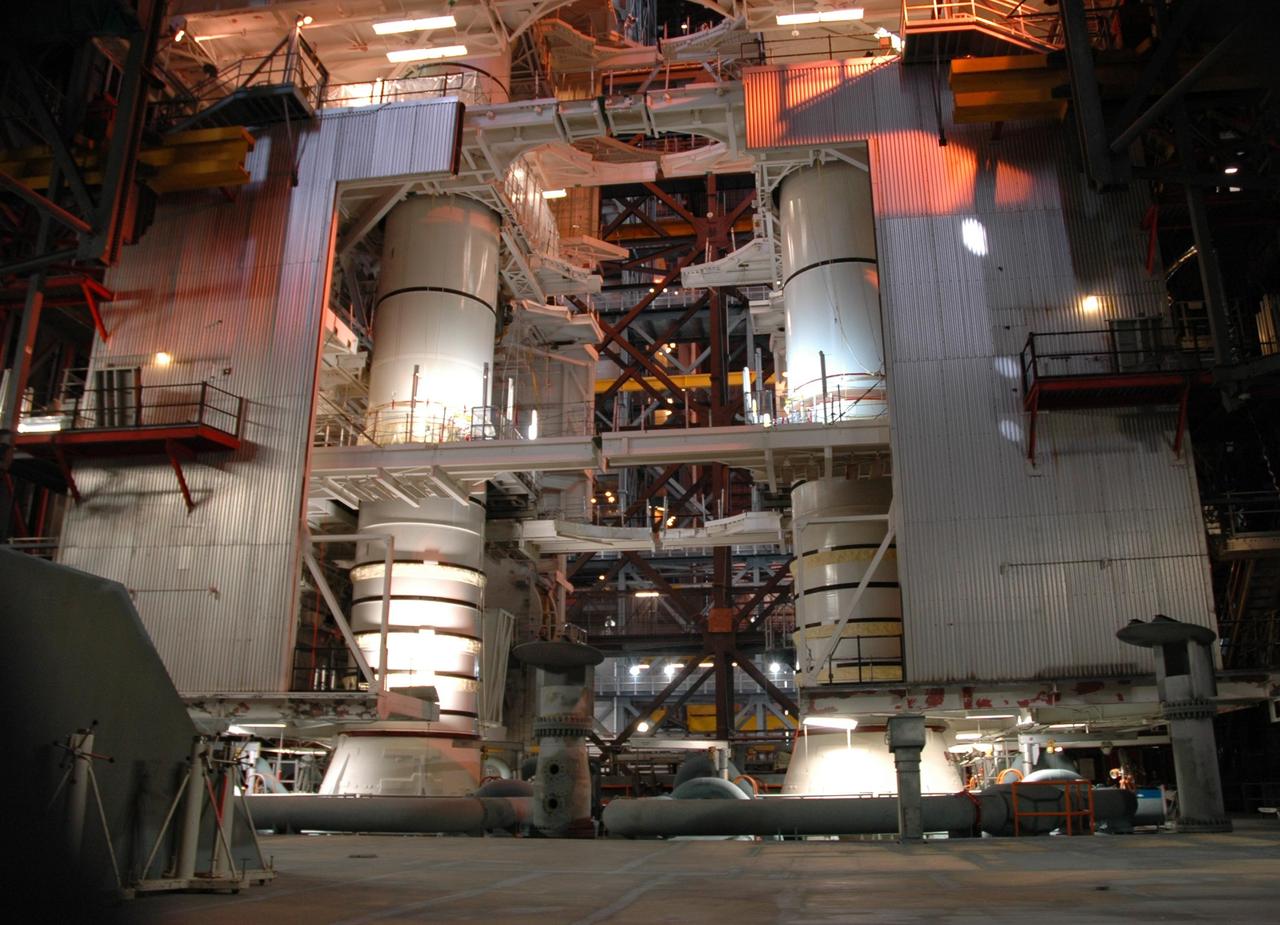
KENNEDY SPACE CENTER, FLA. -- In the Vehicle Assembly Building, the solid rocket booster segments are being stacked on the mobile launcher platform for mission STS-122. Space shuttle Atlantis is targeted for launch on mission STS-122 on Dec. 6. Photo credit: NASA/Jack Pfaller
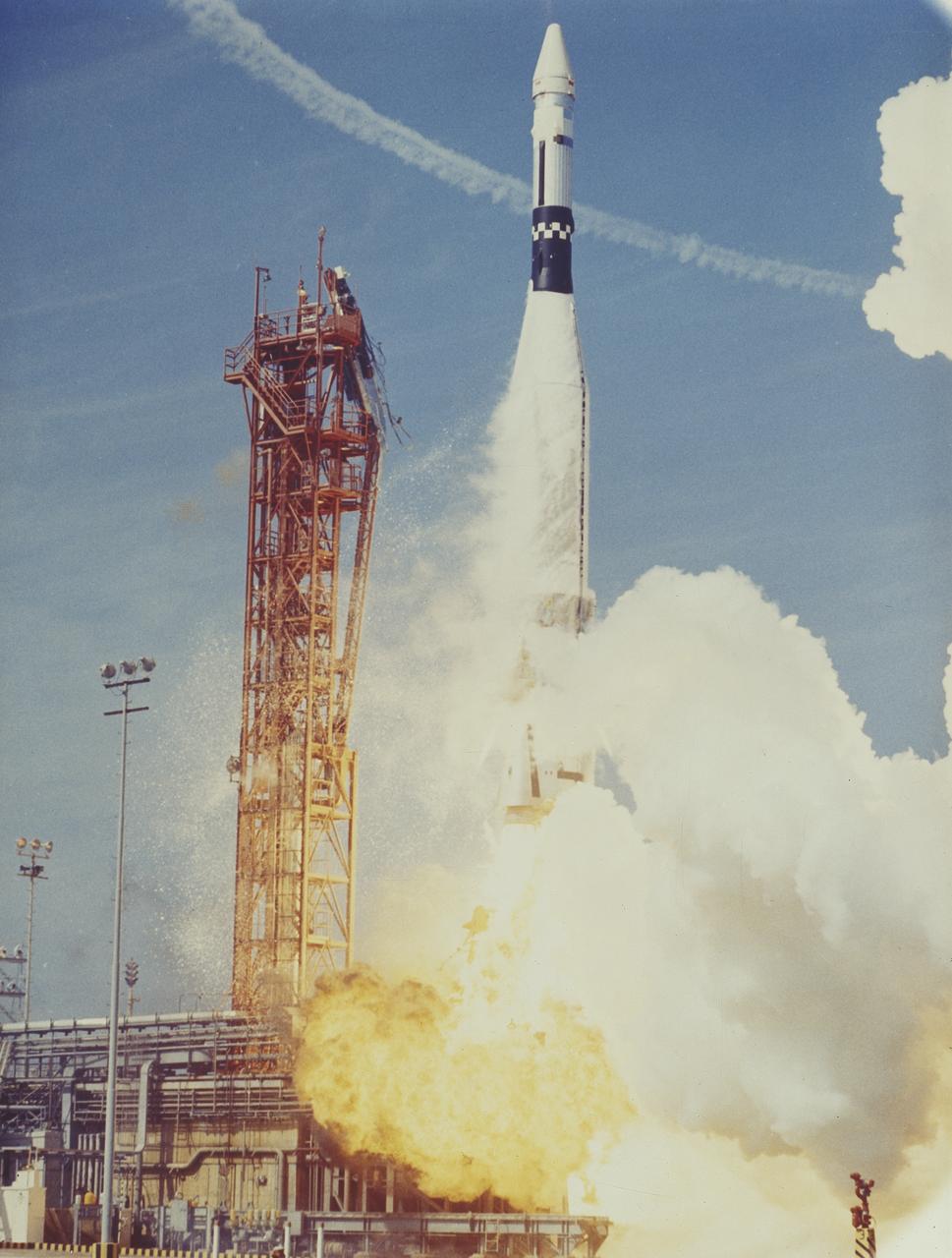
On March 16, 1966, an Atlas booster launched an Agena Target Vehicle for the Gemini 8 mission. The flight crew for the 3 day mission, astronauts Neil A. Armstrong and David R. Scott, achieved the first rendezvous and docking to Atlas/Agena in Earth orbit.
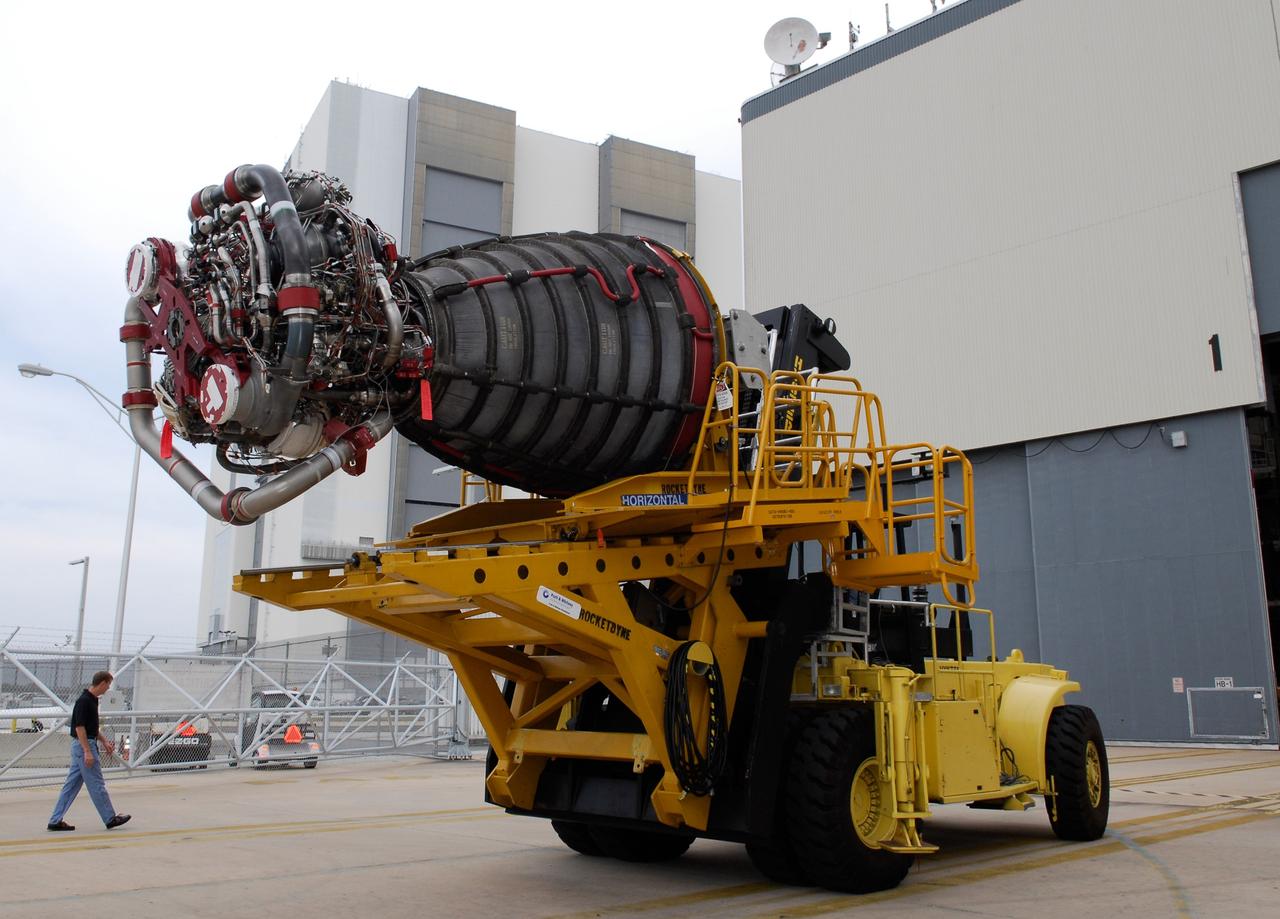
CAPE CANAVERAL, Fla. – One of the three main engines for space shuttle Atlantis is transported to Orbiter Processing Facility bay No. 1 for installation. Atlantis is the designated vehicle for the STS-125 mission to service the Hubble Space Telescope. Launch is targeted for Oct. 8. Photo credit: NASA/Kim Shiflett
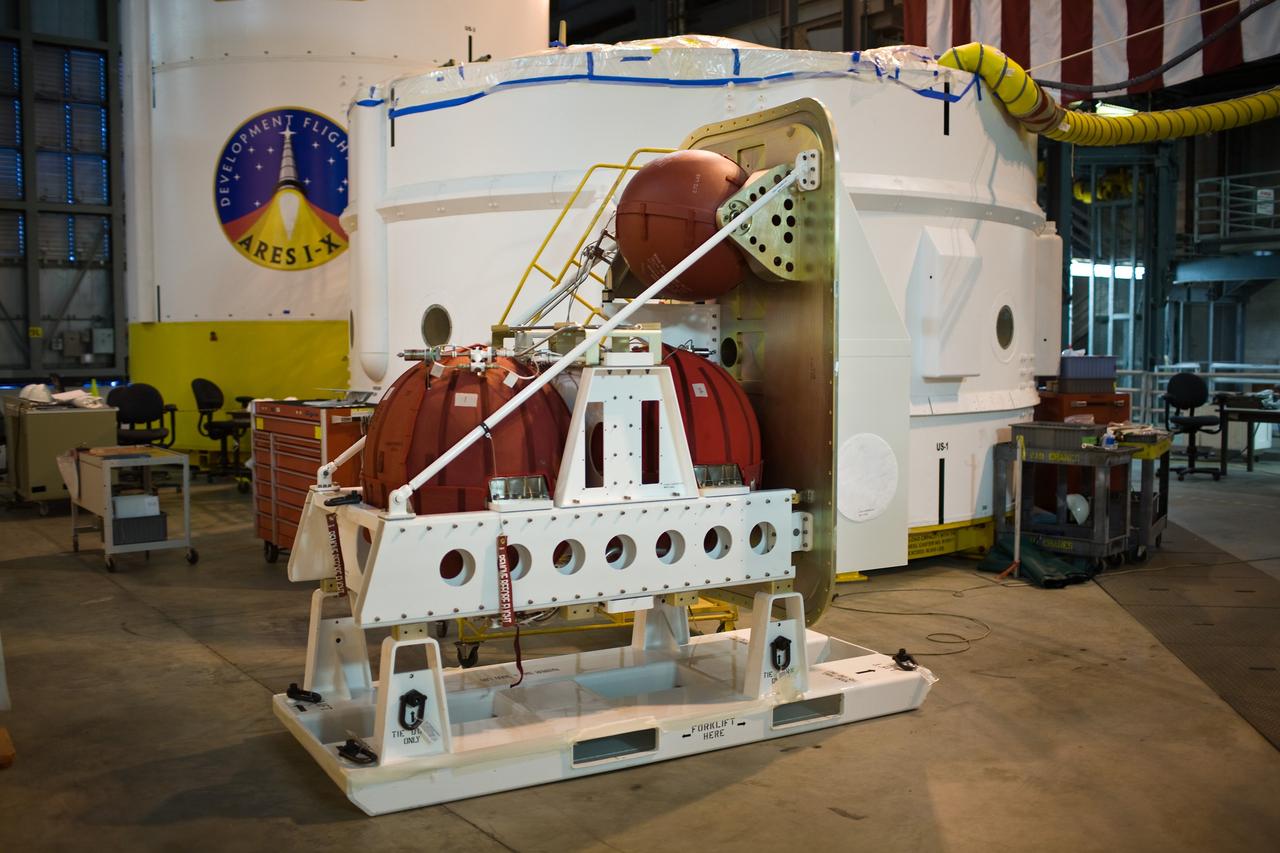
CAPE CANAVERAL, Fla. –– In High Bay 4 of the Vehicle Assembly Building at NASA's Kennedy Space Center in Florida, a second roll control system module is ready to be installed in an Ares I-X segment. Ares I-X is the test vehicle for the Ares I, which is part of the Constellation Program to return men to the moon and beyond. Ares I-X is targeted for launch in August 2009. Photo credit: NASA/Dimitri Gerondidakis
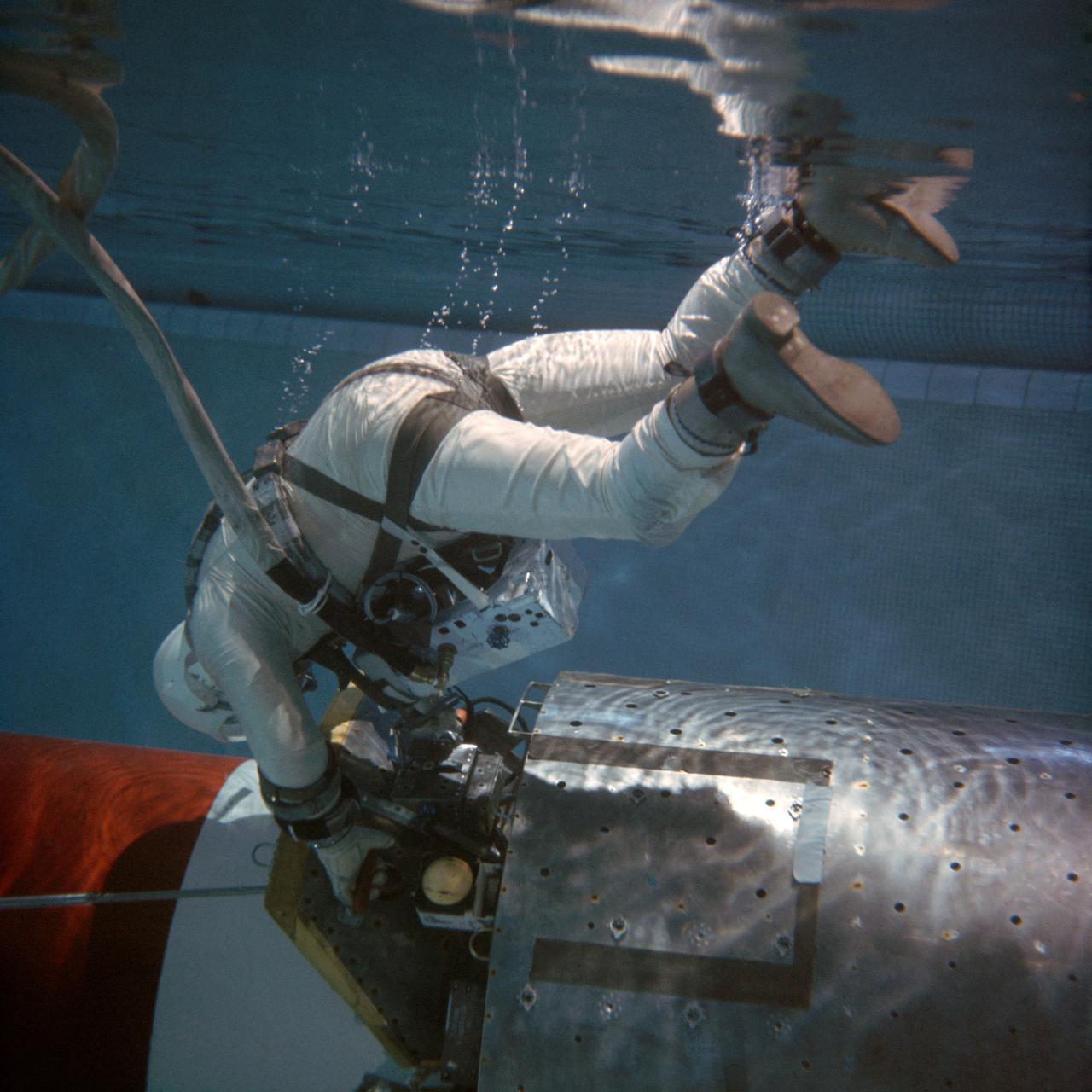
S66-54935 (29 Oct. 1966) --- Astronaut Edwin E. Aldrin Jr., pilot for the Gemini-12 spaceflight, practices extravehicular work tasks during underwater zero-gravity training. He works on the docking collar of the Agena Target Docking Vehicle mock-up using hand-holds to secure himself to the vehicle. The underwater environment closely simulates the zero-gravity condition found in space. Photo credit: NASA
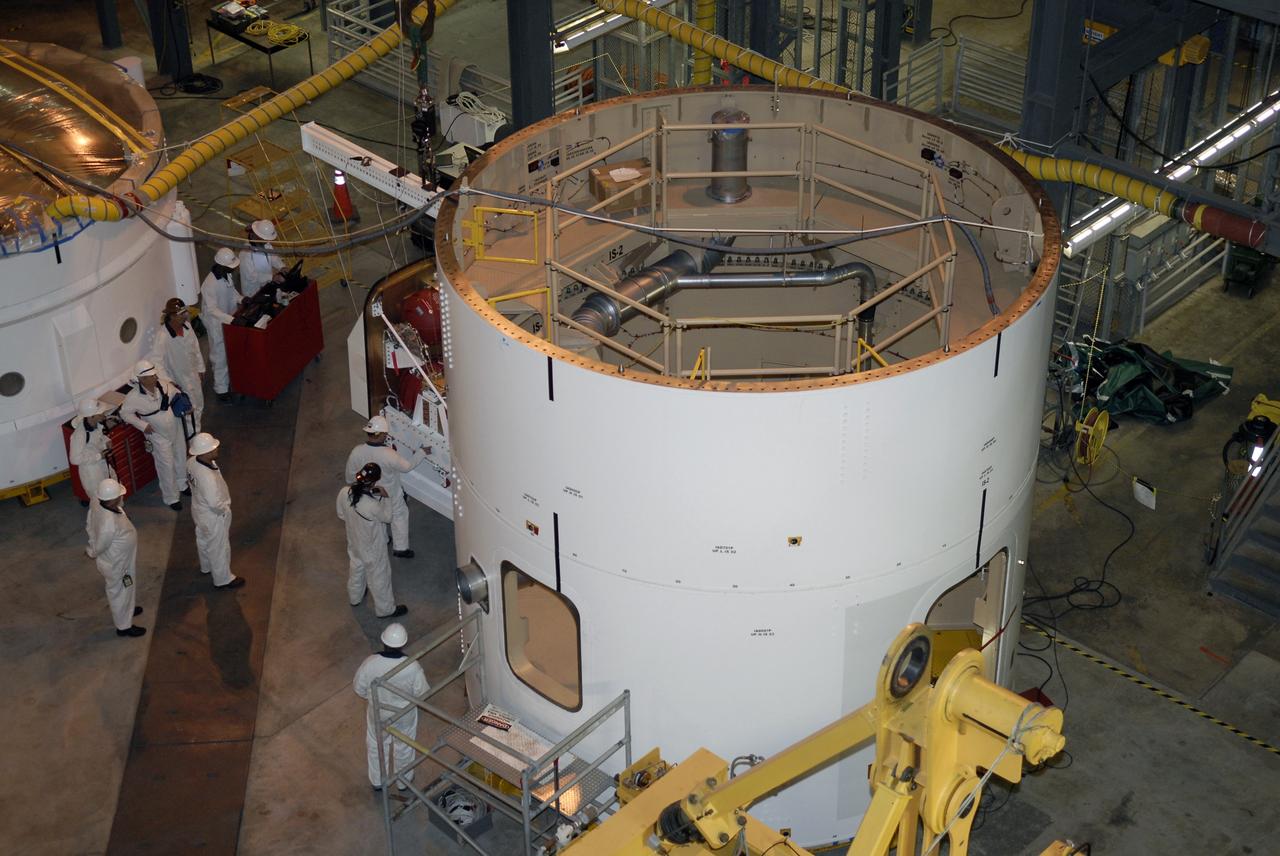
CAPE CANAVERAL, Fla. –– In high bay 4 of the Vehicle Assembly Building at NASA's Kennedy Space Center in Florida, at left center, technicians install the roll control system in the Ares I-X segment in the center. Ares I-X is the test vehicle for the Ares I, which is part of the Constellation Program to return men to the moon and beyond. Ares I-X is targeted for launch in July 2009. Photo credit: NASA/Kim Shiflett
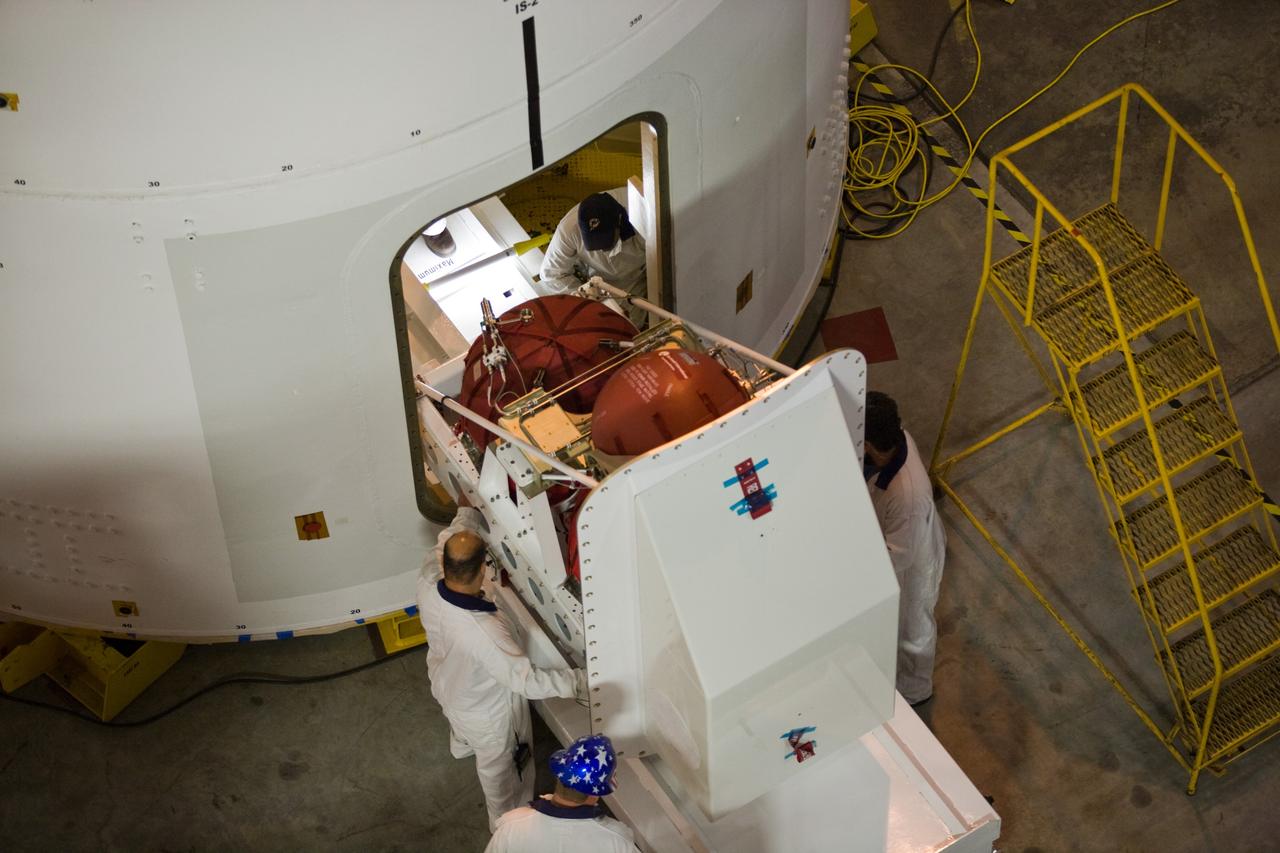
CAPE CANAVERAL, Fla. –– In High Bay 4 of the Vehicle Assembly Building at NASA's Kennedy Space Center in Florida, technicians maneuver a second roll control system module into place for installation in the Ares I-X segment. Ares I-X is the test vehicle for the Ares I, which is part of the Constellation Program to return men to the moon and beyond. Ares I-X is targeted for launch in August 2009. Photo credit: NASA/Dimitri Gerondidakis
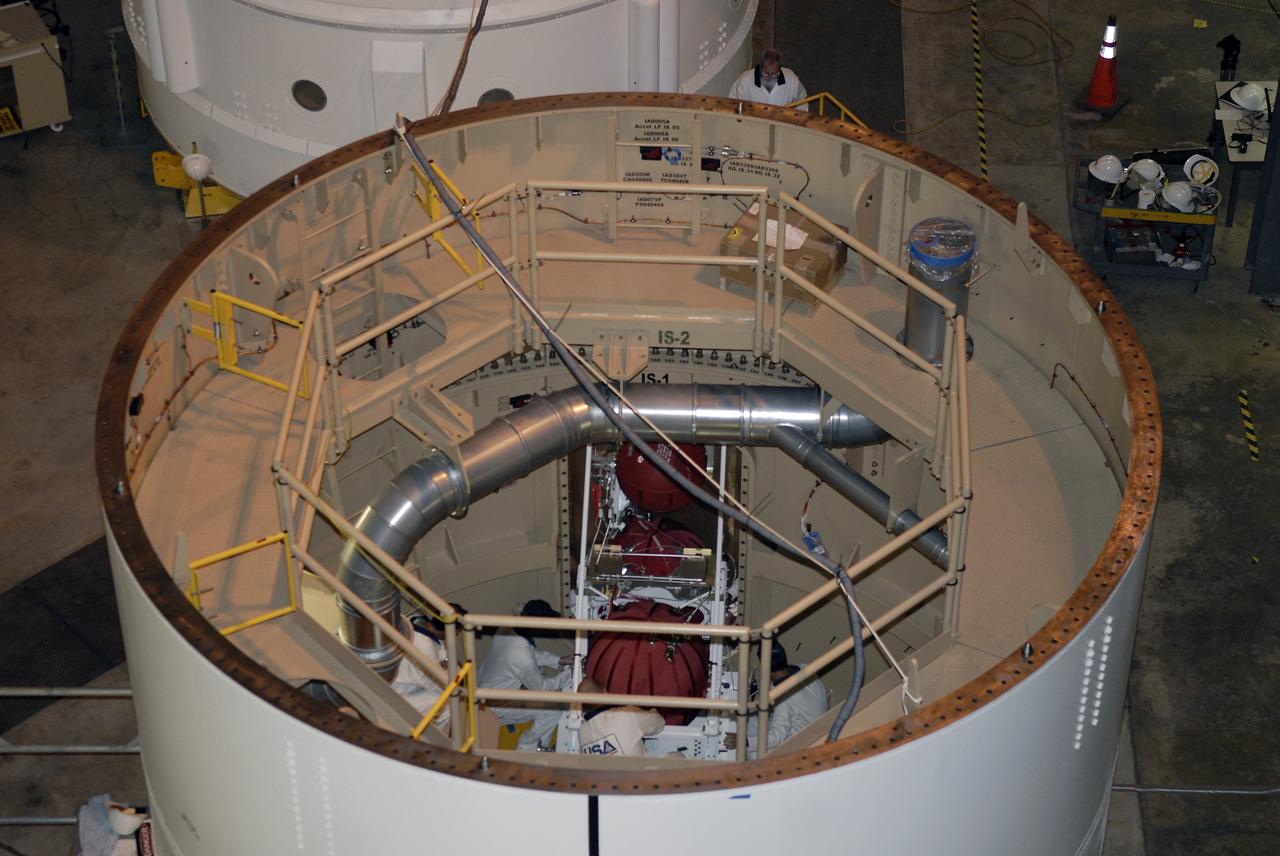
CAPE CANAVERAL, Fla. –– In high bay 4 of the Vehicle Assembly Building at NASA's Kennedy Space Center in Florida, technicians are seen inside the Ares I-X segment installing the roll control system. Ares I-X is the test vehicle for the Ares I, which is part of the Constellation Program to return men to the moon and beyond. Ares I-X is targeted for launch in July 2009. Photo credit: NASA/Kim Shiflett
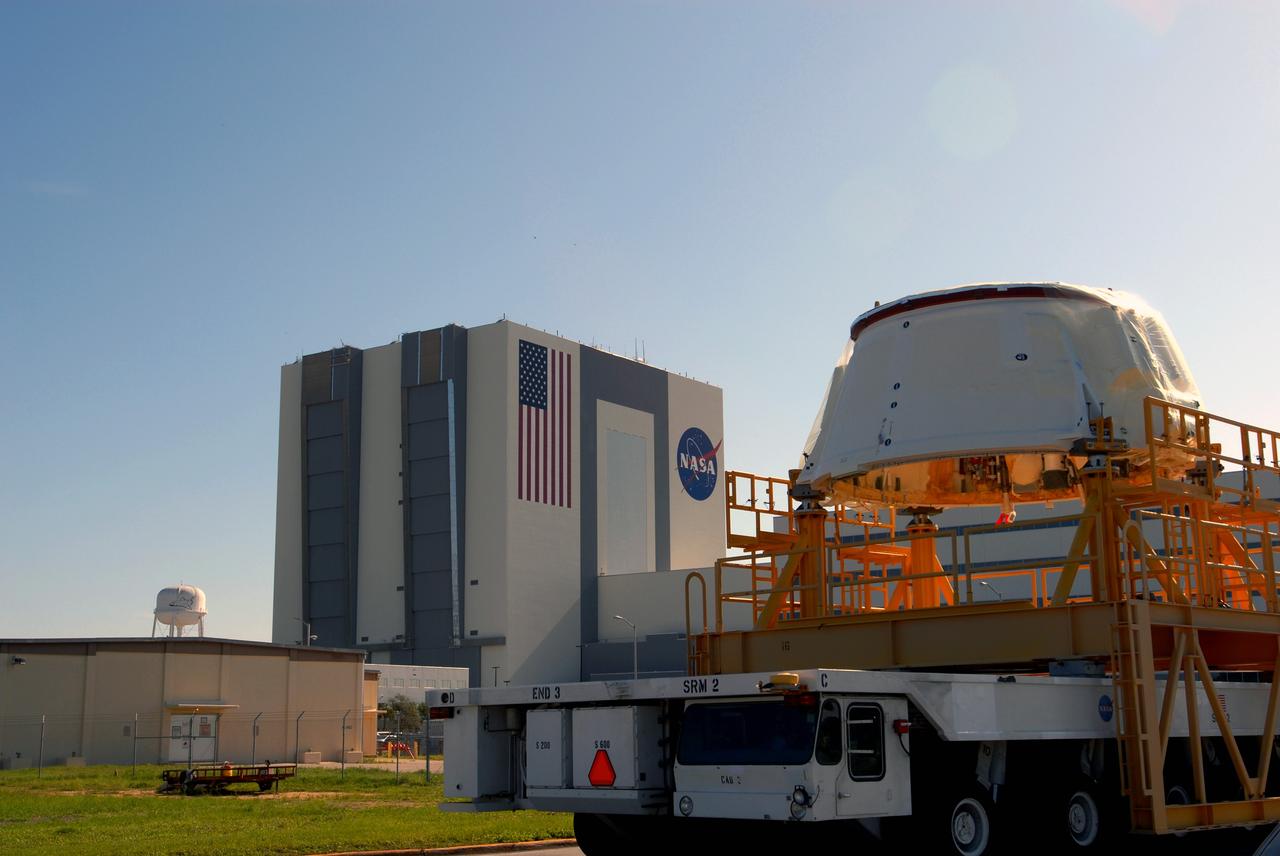
CAPE CANAVERAL, Fla. – The Ares I-X aft skirt moves past the Vehicle Assembly Building at NASA's Kennedy Space Center in Florida on its way to the Rotation, Processing and Surge Facility. In the RPSF, it will be stacked with the aft motor to form the aft assembly. The complete Ares I-X will be assembled in the Vehicle Assembly Building. The launch of Ares I-X is targeted for August 2009. Photo credit: NASA/Jim Grossmann
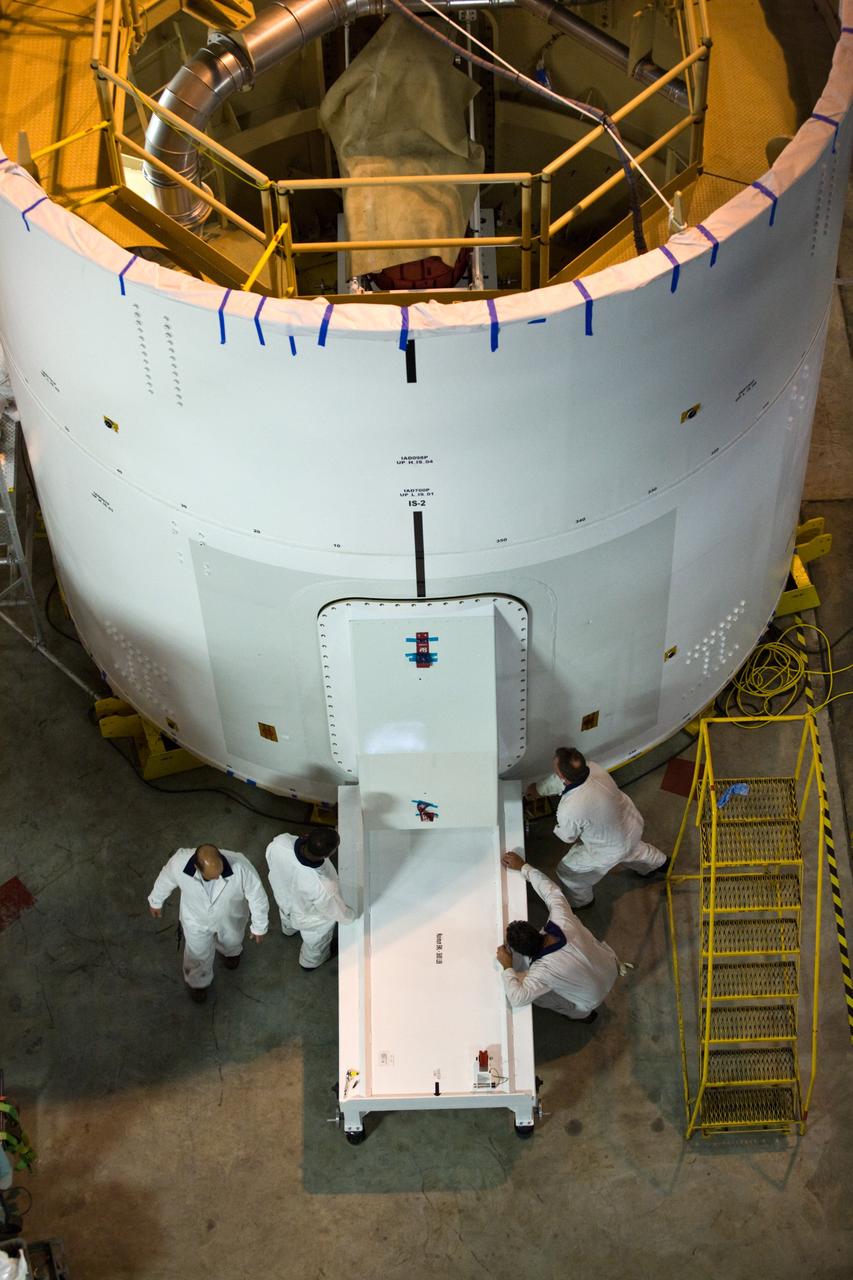
CAPE CANAVERAL, Fla. –– In High Bay 4 of the Vehicle Assembly Building at NASA's Kennedy Space Center in Florida, technicians complete installation of a second roll control system module in an Ares I-X segment. Ares I-X is the test vehicle for the Ares I, which is part of the Constellation Program to return men to the moon and beyond. Ares I-X is targeted for launch in August 2009. Photo credit: NASA/Dimitri Gerondidakis

CAPE CANAVERAL, Fla. – In the Vehicle Assembly Building at NASA's Kennedy Space Center in Florida, space shuttle Endeavour's external fuel tank is lifted into high bay 1 for stacking with the solid rocket boosters on the mobile launcher platform. Endeavour is the launch vehicle for the STS-127 mission. Endeavour will deliver the Japanese Experiment Module's Experiment Logistics Module-Exposed Section, or ELM-ES, to the International Space Station on STS-127. Launch is targeted for mid-June 2009. Photo credit: NASA/Jim Grossmann
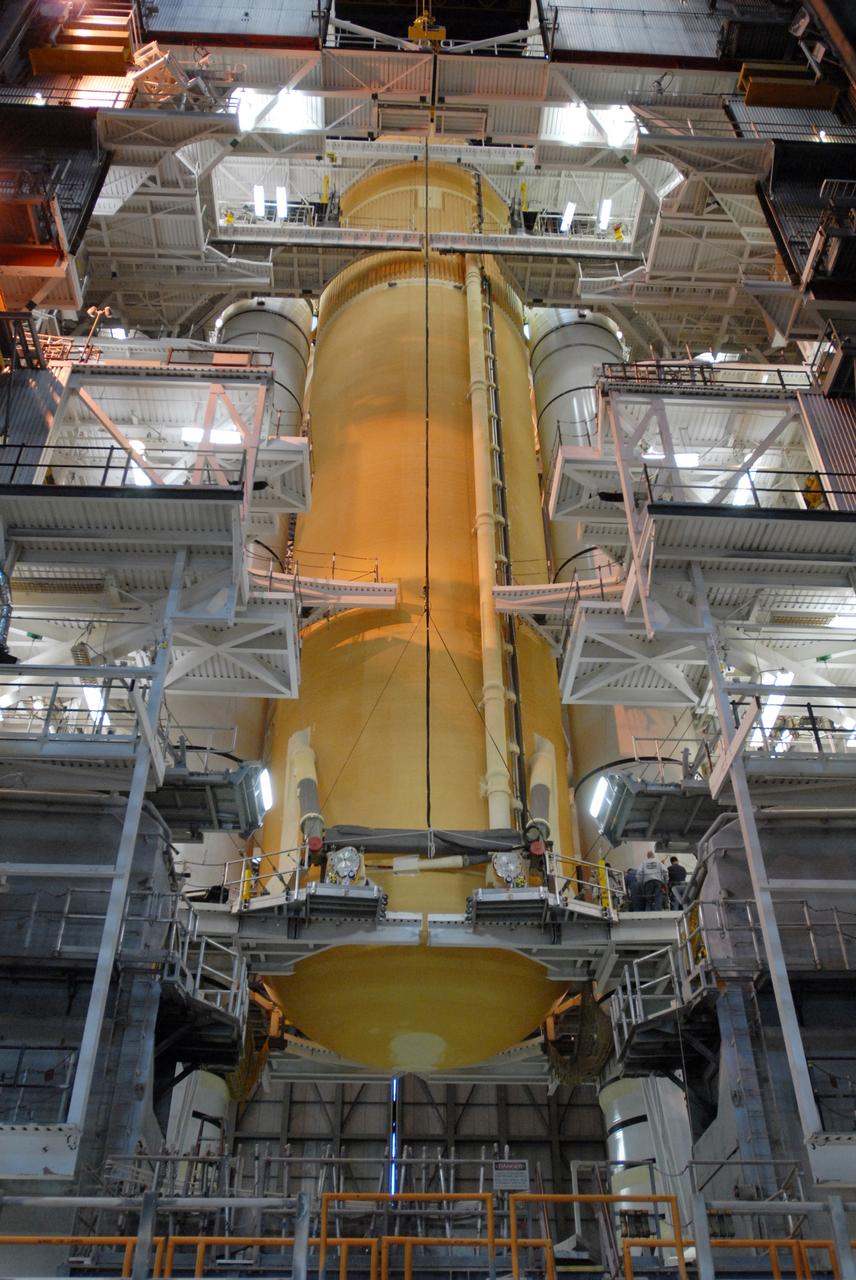
CAPE CANAVERAL, Fla. – In the Vehicle Assembly Building at NASA's Kennedy Space Center in Florida, space shuttle Endeavour's external fuel tank is lowered onto the mobile launcher platform in high bay 1 between the solid rocket boosters. Endeavour is the launch vehicle for the STS-127 mission. Endeavour will deliver the Japanese Experiment Module's Experiment Logistics Module-Exposed Section, or ELM-ES, to the International Space Station on STS-127. Launch is targeted for mid-June 2009. Photo credit: NASA/Jim Grossmann
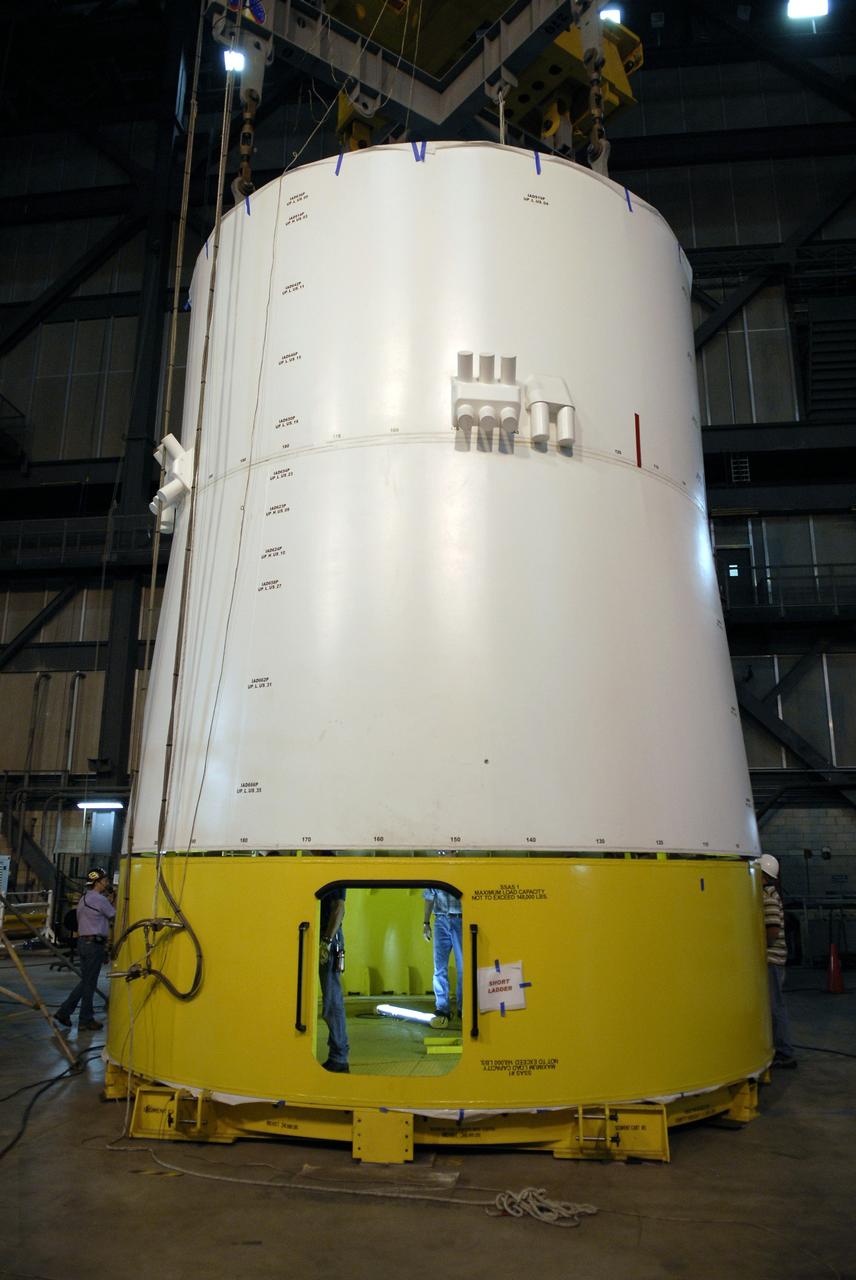
CAPE CANAVERAL, Fla. – In High Bay 4 of the Vehicle Assembly Building at NASA's Kennedy Space Center in Florida, the Ares I-X upper stage simulator service module/service adapter segment has been installed on a stand. Ares I-X is the test vehicle for the Ares I, which is part of the Constellation Program to return men to the moon and beyond. The Ares I-X is targeted for launch in July 2009. Photo credit: NASA/Kim Shiflett
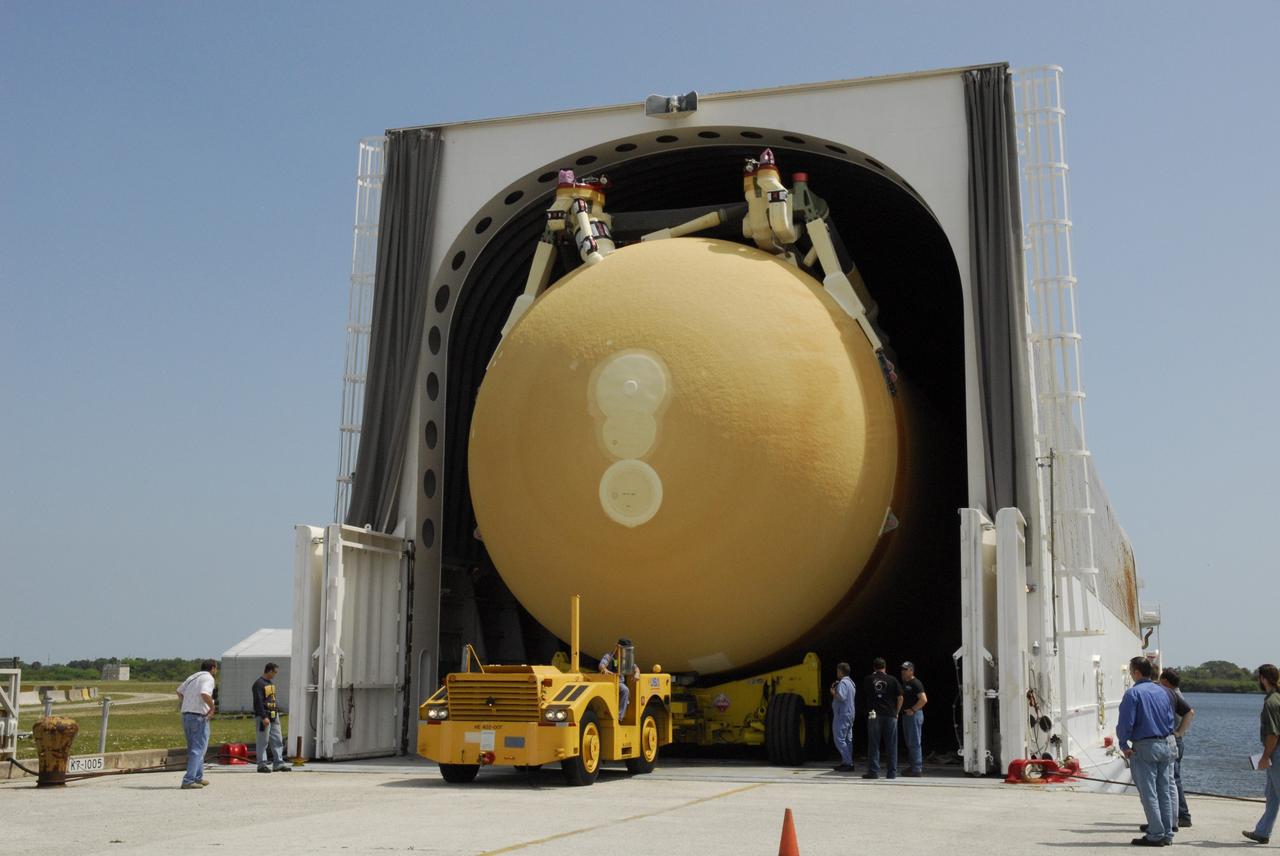
CAPE CANAVERAL, Fla. --- A tow vehicle begins offloading external tank No. 128 from the Pegasus barge in the Launch Complex 39 Area at NASA's Kennedy Space Center. The tank is scheduled for space shuttle Discovery's STS-124 mission. After offloading, the tank will be transported to the Vehicle Assembly Building. On the STS-124 mission, Discovery will transport the Kibo Japanese Experiment Module - Pressurized Module and the Japanese Remote Manipulator System to the International Space Station. Discovery is targeted for launch on May 25. Photo credit: NASA/Dimitri Gerondidakis
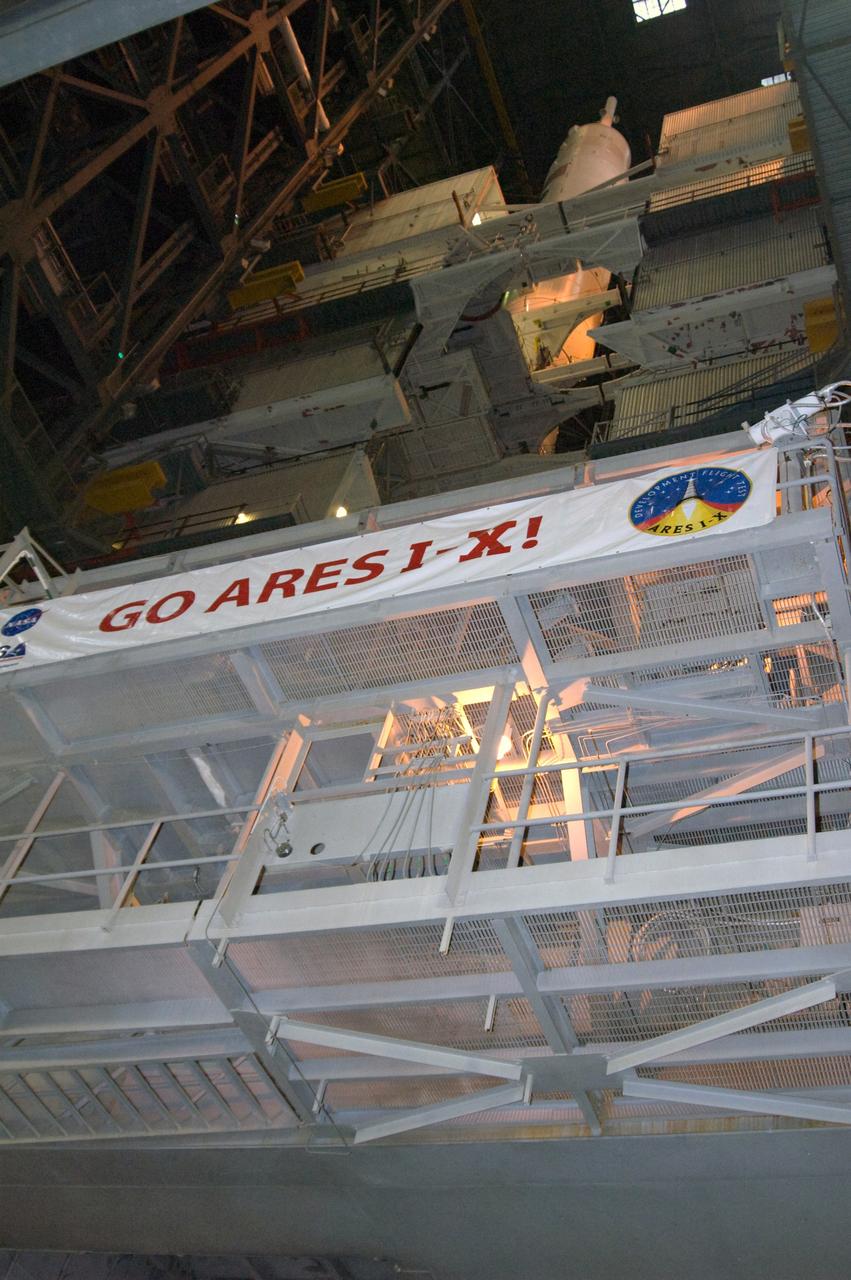
CAPE CANAVERAL, Fla. – In NASA Kennedy Space Center's Vehicle Assembly Building High Bay 3, NASA's Ares I-X rocket is ready to undergo its first power-up. Part of the Constellation Program, the Ares I-X is the test vehicle for the Ares I, which is the essential core of a space transportation system that eventually will carry crewed missions back to the moon, on to Mars and out into the solar system. The Ares I-X flight test is targeted for Oct. 31. Photo credit: NASA/Cory Huston
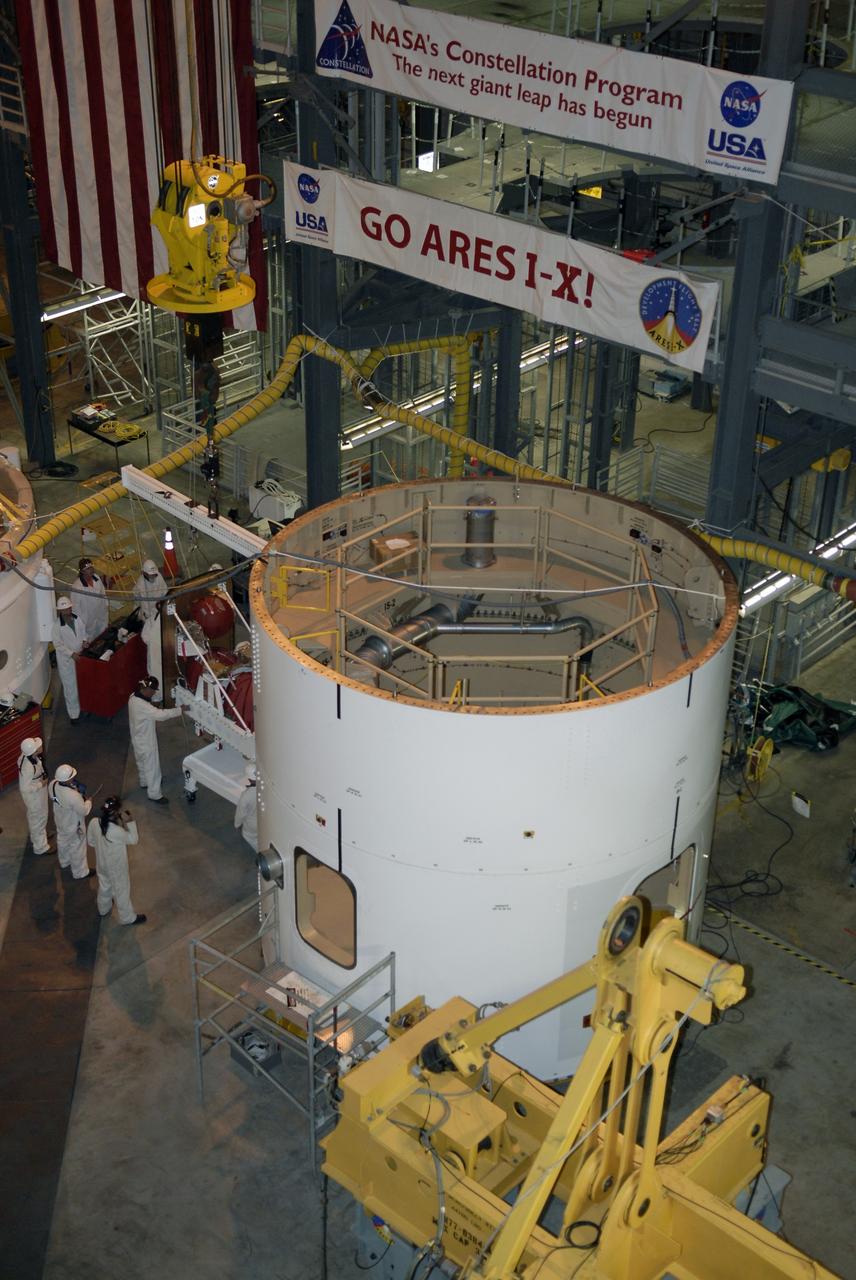
CAPE CANAVERAL, Fla. – In high bay 4 of the Vehicle Assembly Building at NASA's Kennedy Space Center in Florida, at left center, technicians get ready to install the roll control system in the Ares I-X segment in the center. Ares I-X is the test vehicle for the Ares I, which is part of the Constellation Program to return men to the moon and beyond. Ares I-X is targeted for launch in July 2009. Photo credit: NASA/Kim Shiflett
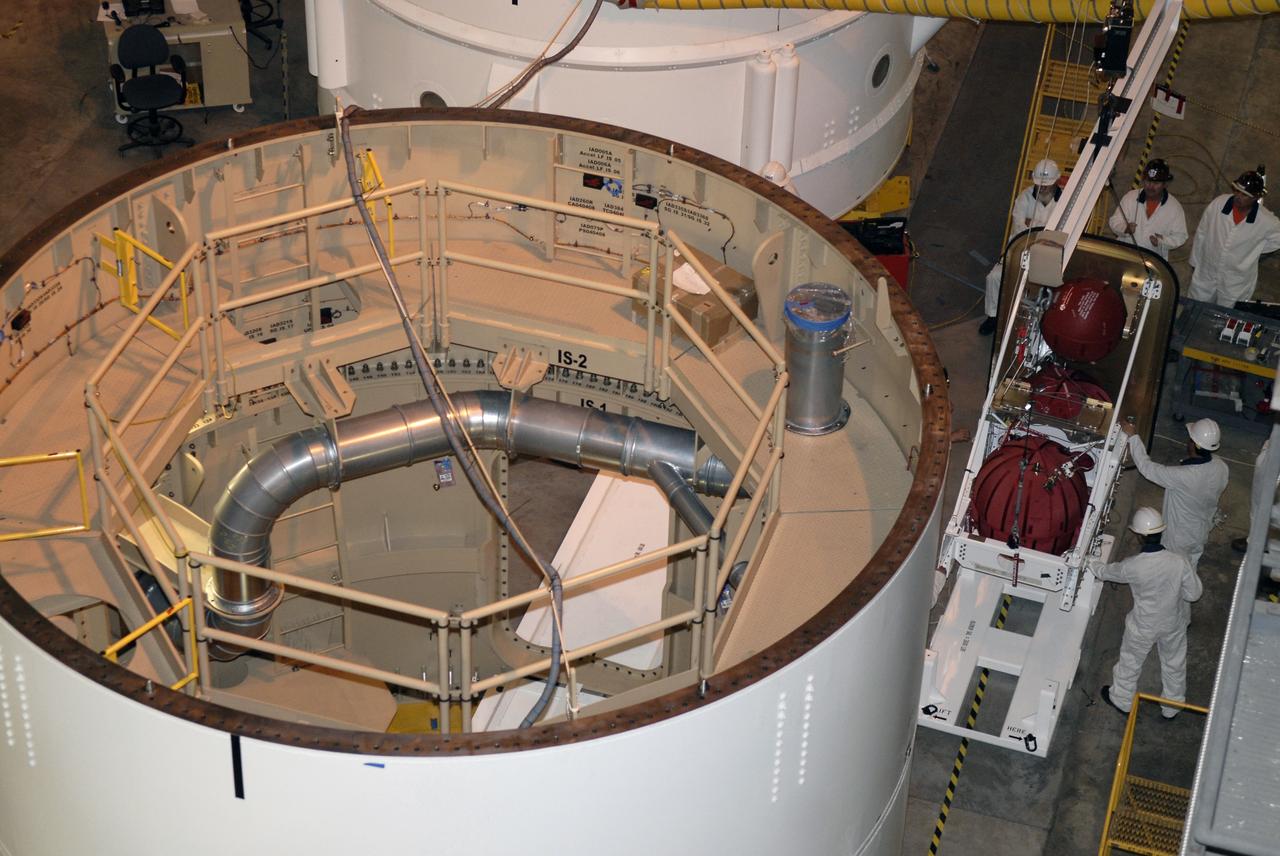
CAPE CANAVERAL, Fla. – In high bay 4 of the Vehicle Assembly Building at NASA's Kennedy Space Center in Florida, at right, technicians get ready to install the roll control system in the Ares I-X segment at left. Ares I-X is the test vehicle for the Ares I, which is part of the Constellation Program to return men to the moon and beyond. Ares I-X is targeted for launch in July 2009. Photo credit: NASA/Kim Shiflett
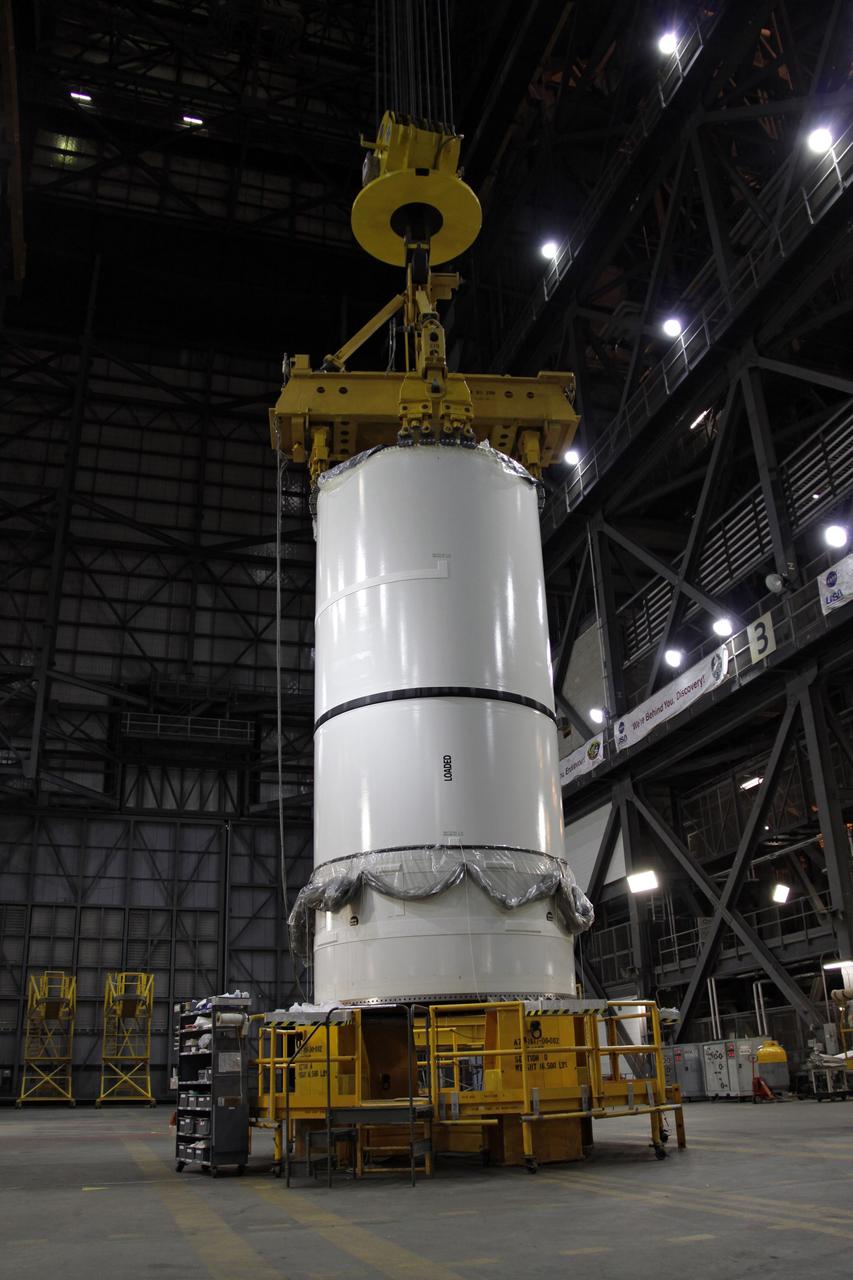
CAPE CANAVERAL, Fla. – A crane is attached to the Ares I-X forward center assembly in NASA Kennedy Space Center's Vehicle Assembly Building. It will be mated with the aft center assembly. Part of the Constellation Program, the Ares I-X is the test vehicle for the Ares I, which is the essential core of a space transportation system that eventually will carry crewed missions back to the moon, on to Mars and out into the solar system . The Ares I-X flight test is targeted for no earlier than Aug. 30. Photo credit: NASA/Troy Cryder
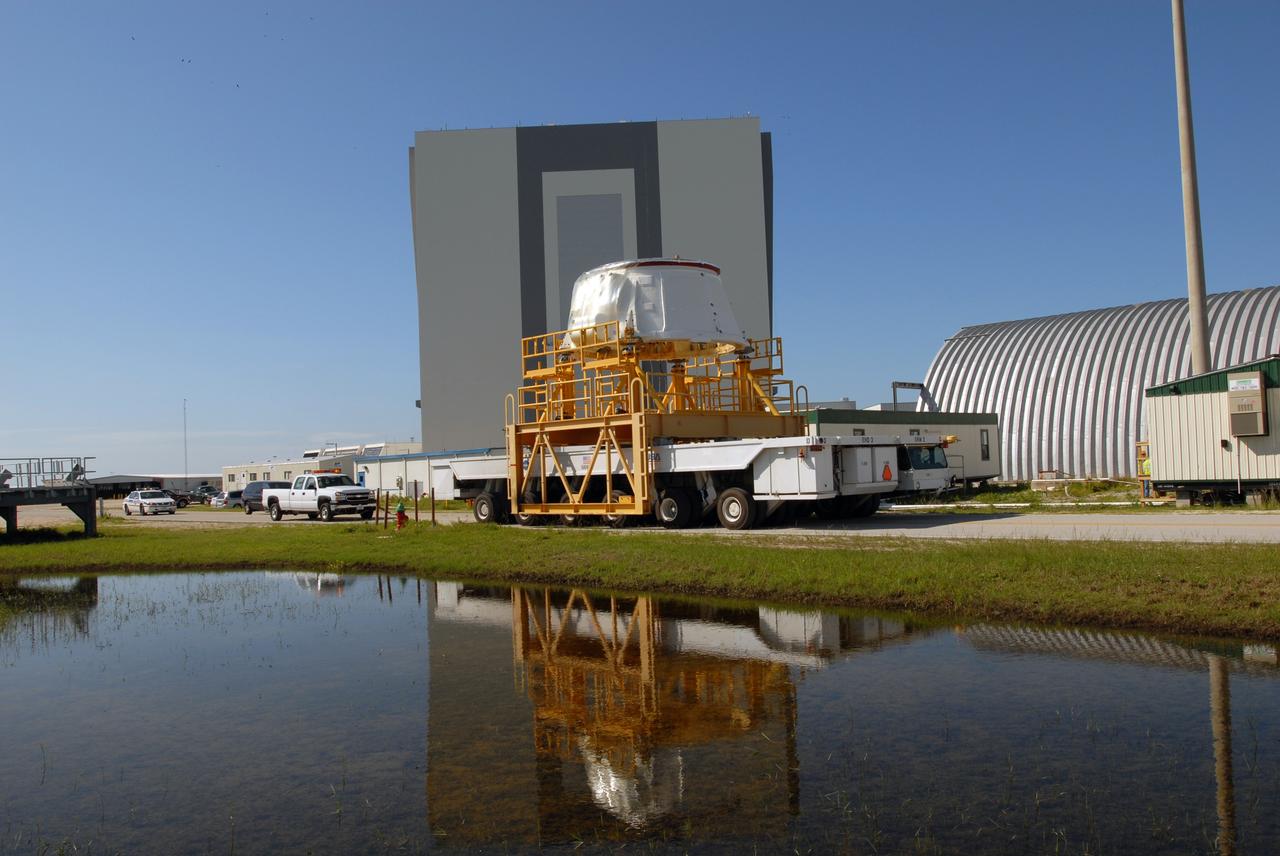
CAPE CANAVERAL, Fla. – The Ares I-X aft skirt moves past the Vehicle Assembly Building at NASA's Kennedy Space Center in Florida on its way to the Rotation, Processing and Surge Facility. In the RPSF, it will be stacked with the aft motor to form the aft assembly. The complete Ares I-X will be assembled in the Vehicle Assembly Building. The launch of Ares I-X is targeted for August 2009. Photo credit: NASA/Jim Grossmann
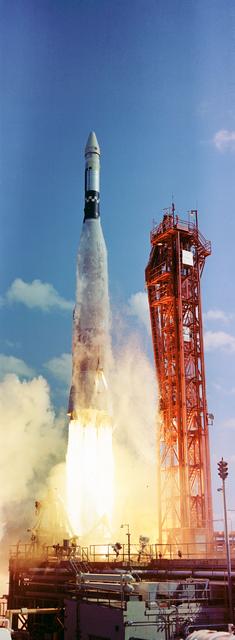
S65-56161 (25 Oct. 1965) --- The National Aeronautics and Space Administration launched an Atlas/Agena vehicle at 10 a.m. (EST) on Oct. 25, 1965, from Pad 14. Intended as a rendezvous target vehicle in the Gemini-6 mission, the Agena failed to achieve orbit, and the Gemini-6 mission was scrubbed. Photo credit: NASA or National Aeronautics and Space Administration
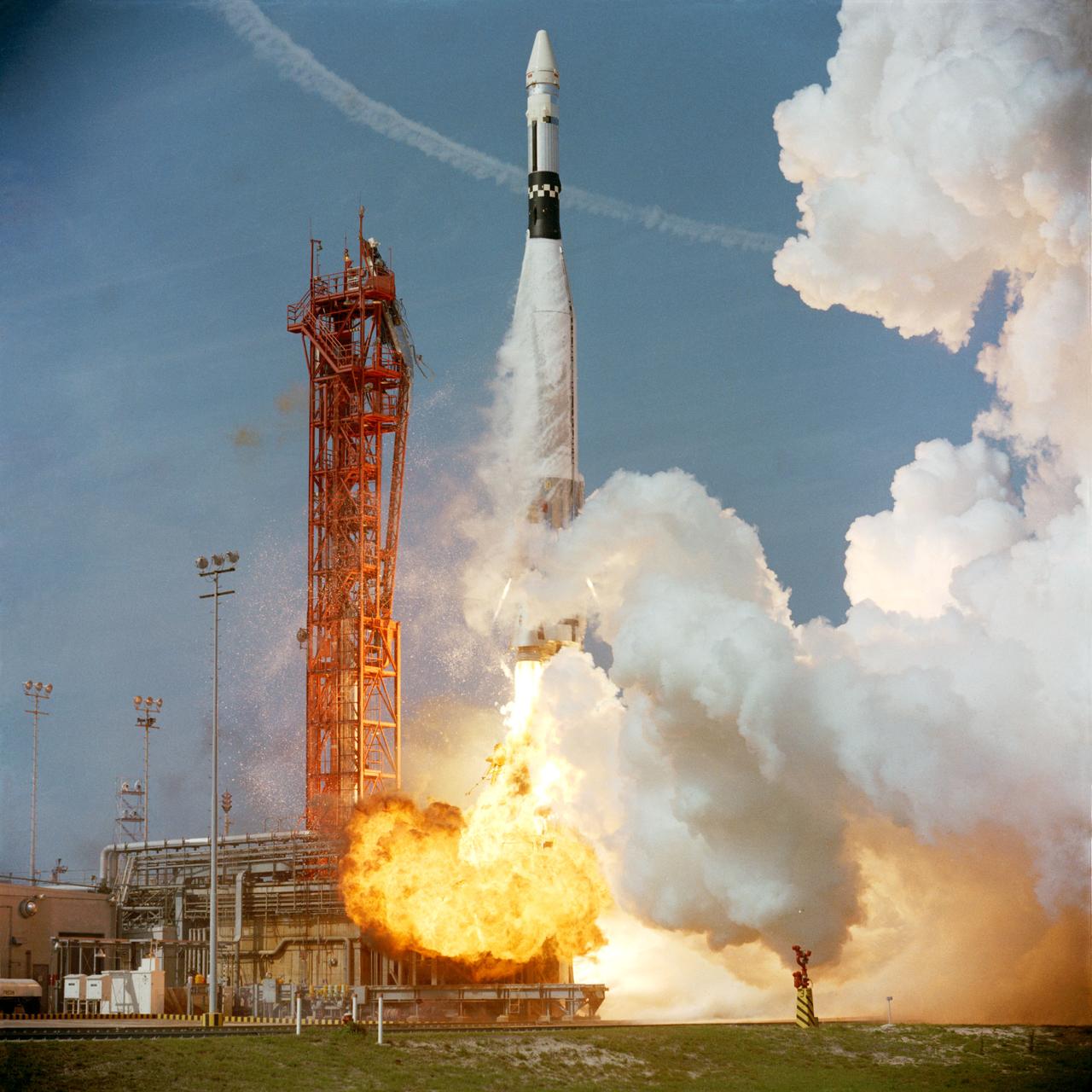
S66-24482 (16 March 1966) --- An Agena Target Docking Vehicle atop an Atlas rocket lifts off from Launch Complex 14 at Cape Kennedy at 10 a.m., March 16, 1966 just prior to the Gemini-8 liftoff at nearby Launch Complex 19. The Agena served as a rendezvous and docking vehicle for the Gemini-8 spacecraft. A chase plane leaves a contrail in the background. Photo credit: NASA
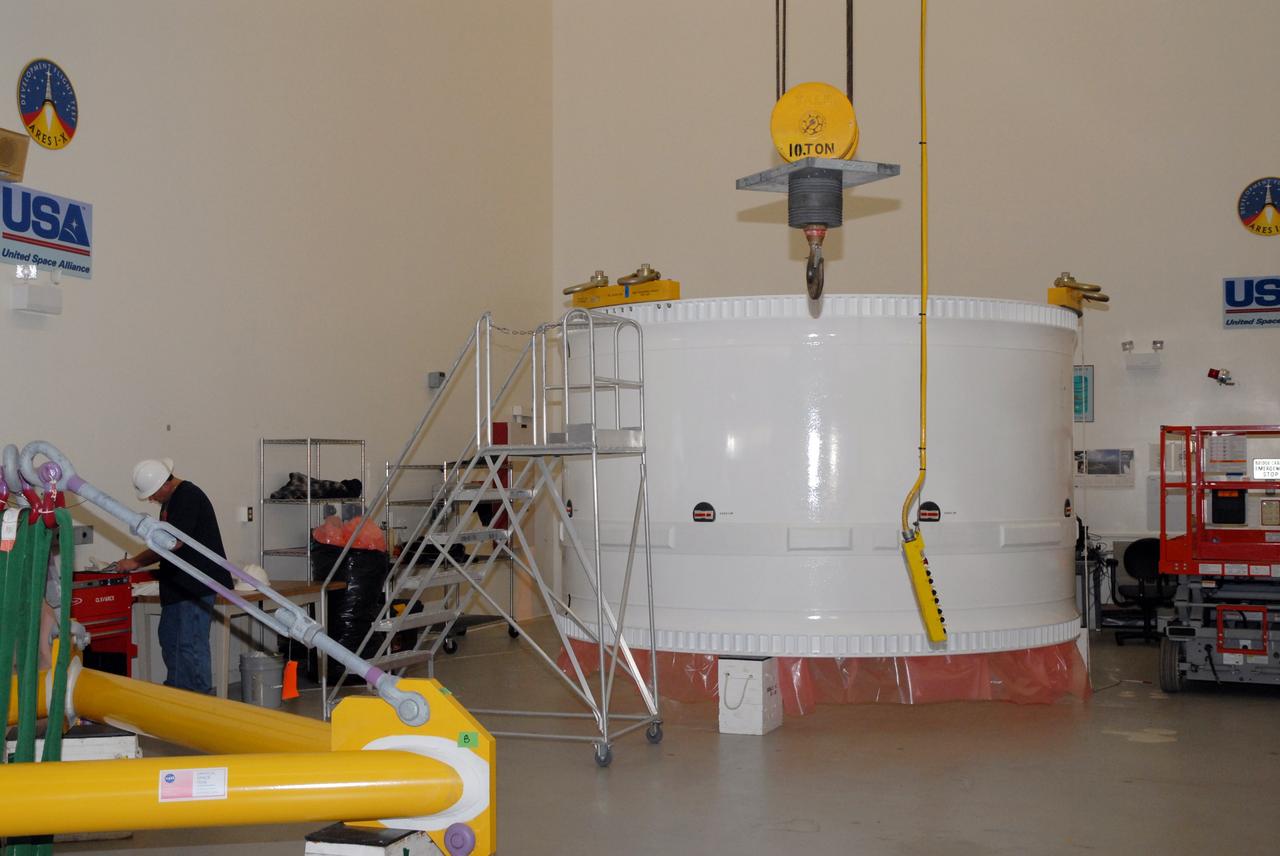
CAPE CANAVERAL, Fla. – In the Vehicle Assembly Building at NASA's Kennedy Space Center in Florida, the fifth segment simulator of the Ares I-X is on a work stand. Ares I-X is the test vehicle for the Ares I, which is part of the Constellation Program to return men to the moon and beyond. Ares I is the essential core of a safe, reliable, cost-effective space transportation system that eventually will carry crewed missions back to the moon, on to Mars and out into the solar system. Ares I-X is targeted for launch in July 2009.
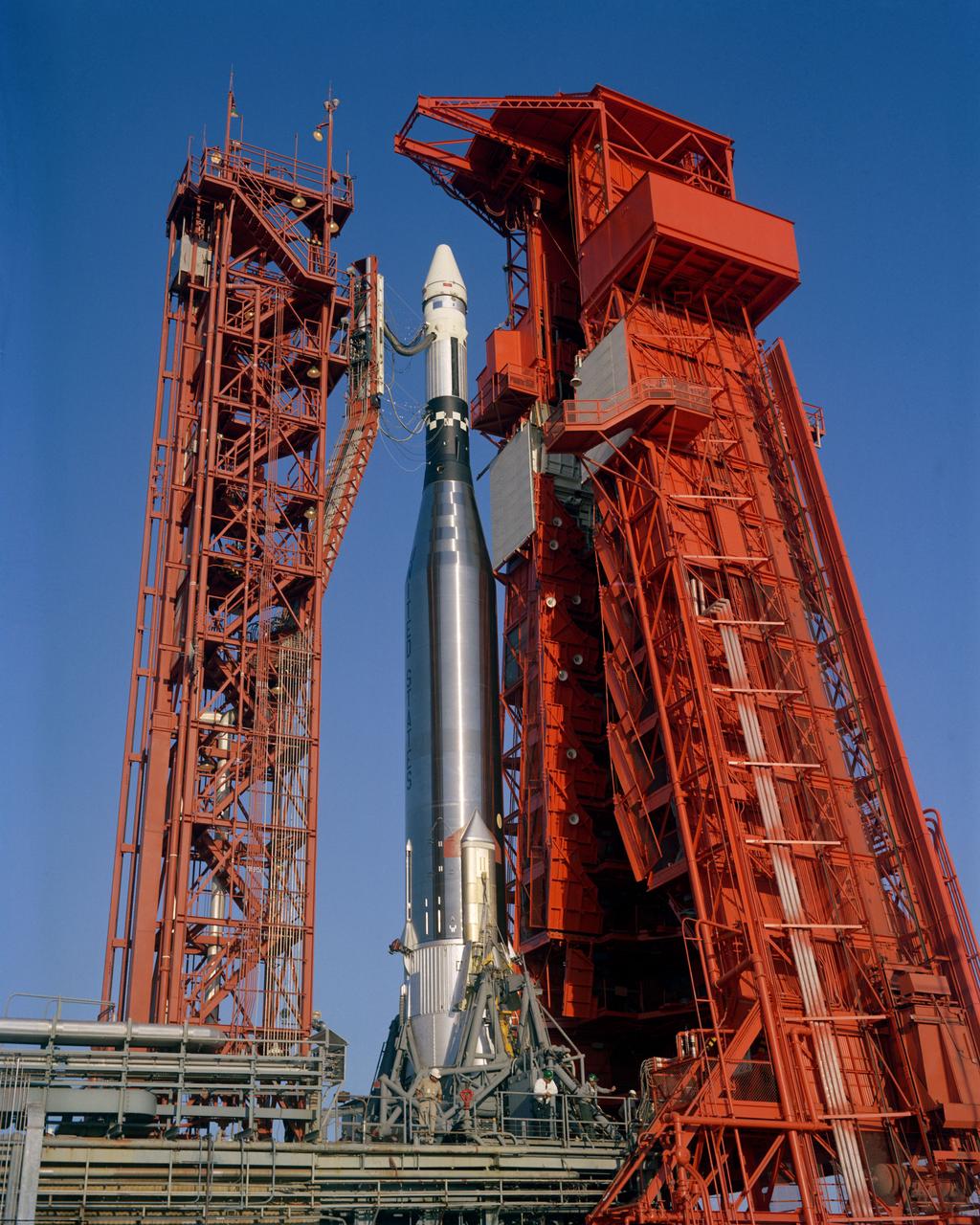
S65-57967 (25 Oct. 1965) --- View at Pad 14 during prelaunch operations for the Atlas/Agena. The Agena is mounted atop its Atlas launch vehicle. The Atlas/Agena liftoff was at 10 a.m. (EST) on Oct. 25, 1965. Intended as a rendezvous target vehicle in the Gemini-6 mission, the Agena failed to achieve orbit, and the Oct. 25 Gemini-6 launch was scrubbed. Photo credit: NASA or National Aeronautics and Space Administration

CAPE CANAVERAL, Fla. – The Ares I-X rocket stands tall inside NASA Kennedy Space Center's Vehicle Assembly Building Bay 3. Part of the Constellation Program, the Ares I-X is the test vehicle for the Ares I, which is the essential core of a space transportation system that eventually will carry crewed missions back to the moon, on to Mars and out into the solar system . The Ares I-X flight test is targeted for Oct. 27. Photo credit: NASA/Kim Shiflett
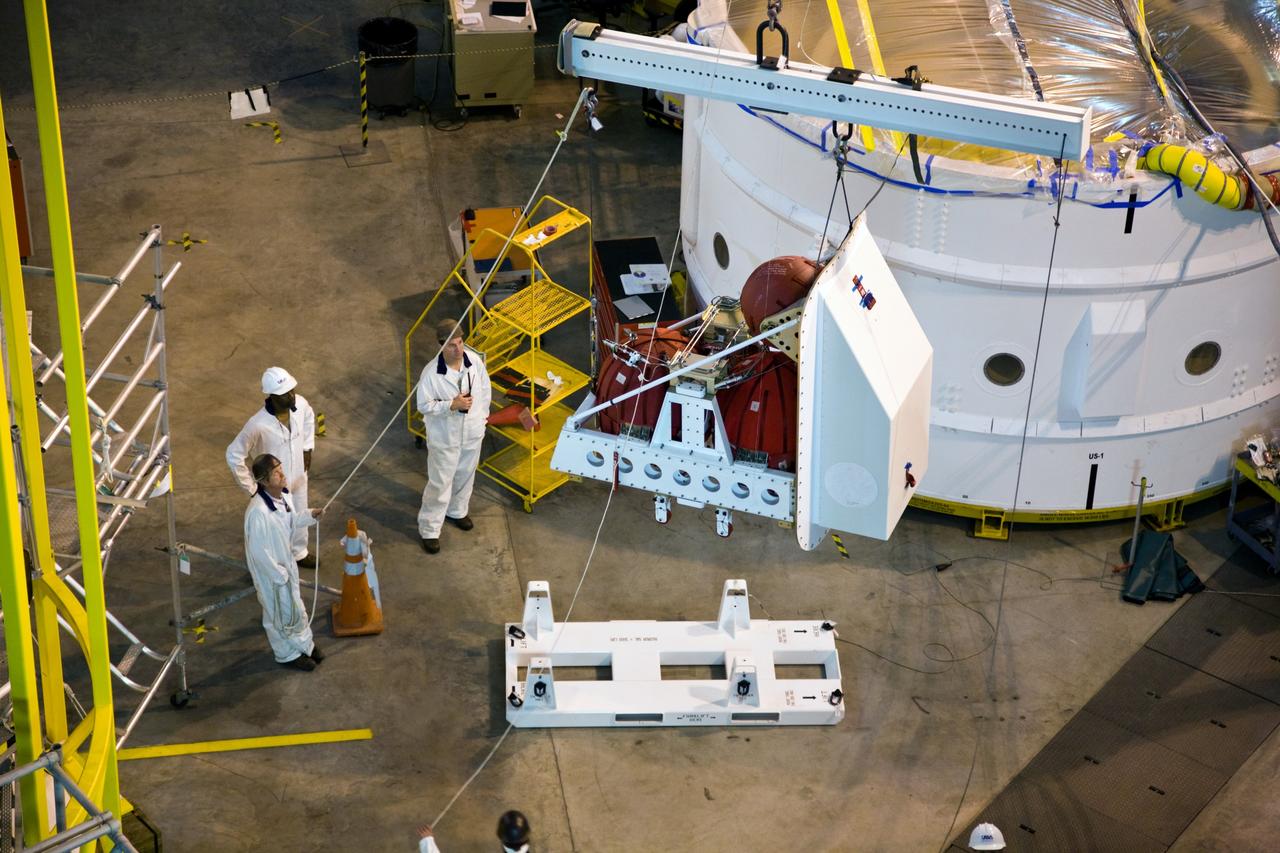
CAPE CANAVERAL, Fla. –– In High Bay 4 of the Vehicle Assembly Building at NASA's Kennedy Space Center in Florida, a crane lifts a second roll control system module for installation in an Ares I-X segment. Ares I-X is the test vehicle for the Ares I, which is part of the Constellation Program to return men to the moon and beyond. Ares I-X is targeted for launch in August 2009. Photo credit: NASA/Dimitri Gerondidakis
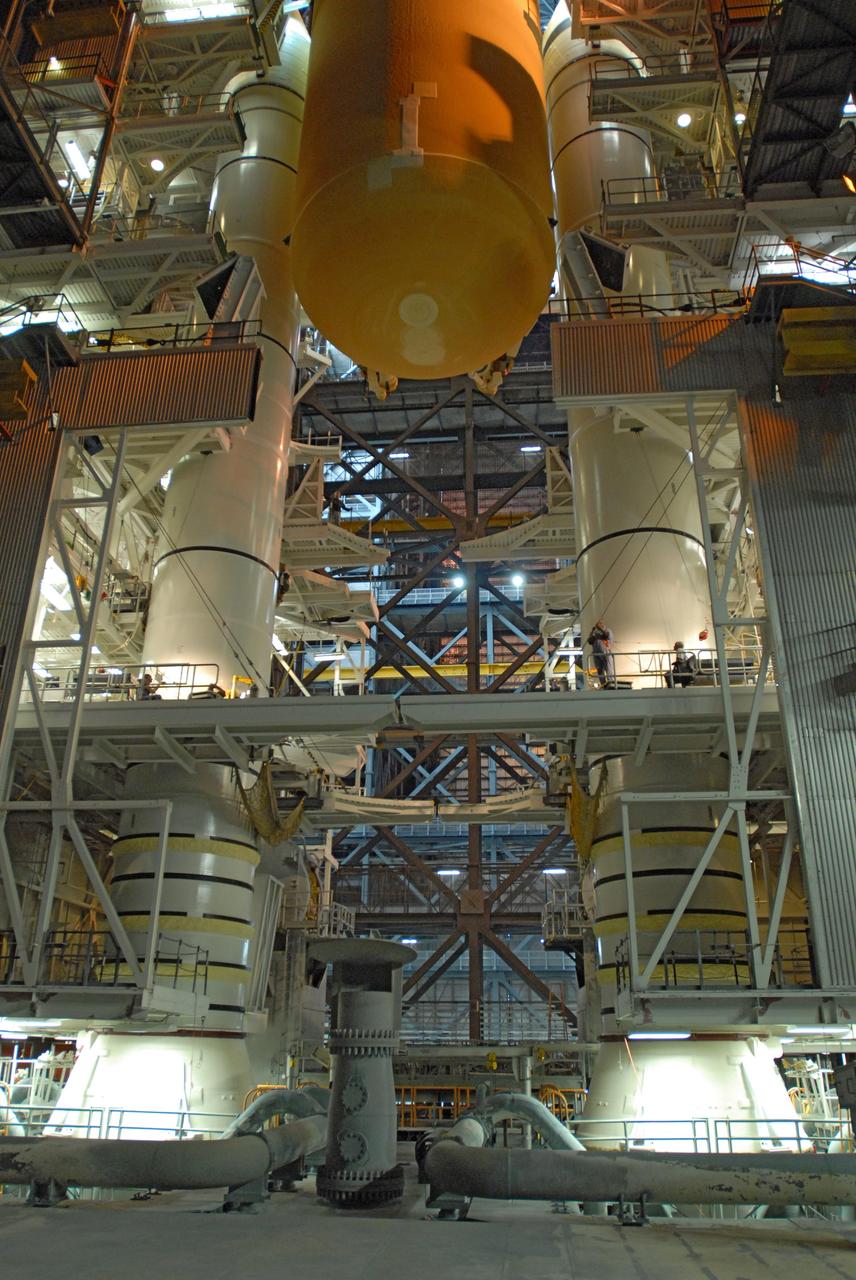
CAPE CANAVERAL, Fla. – In the Vehicle Assembly Building at NASA's Kennedy Space Center in Florida, space shuttle Endeavour's external fuel tank is lowered in high bay 1 between the solid rocket boosters on the mobile launcher platform. Endeavour is the launch vehicle for the STS-127 mission. Endeavour will deliver the Japanese Experiment Module's Experiment Logistics Module-Exposed Section, or ELM-ES, to the International Space Station on STS-127. Launch is targeted for mid-June 2009. Photo credit: NASA/Jim Grossmann
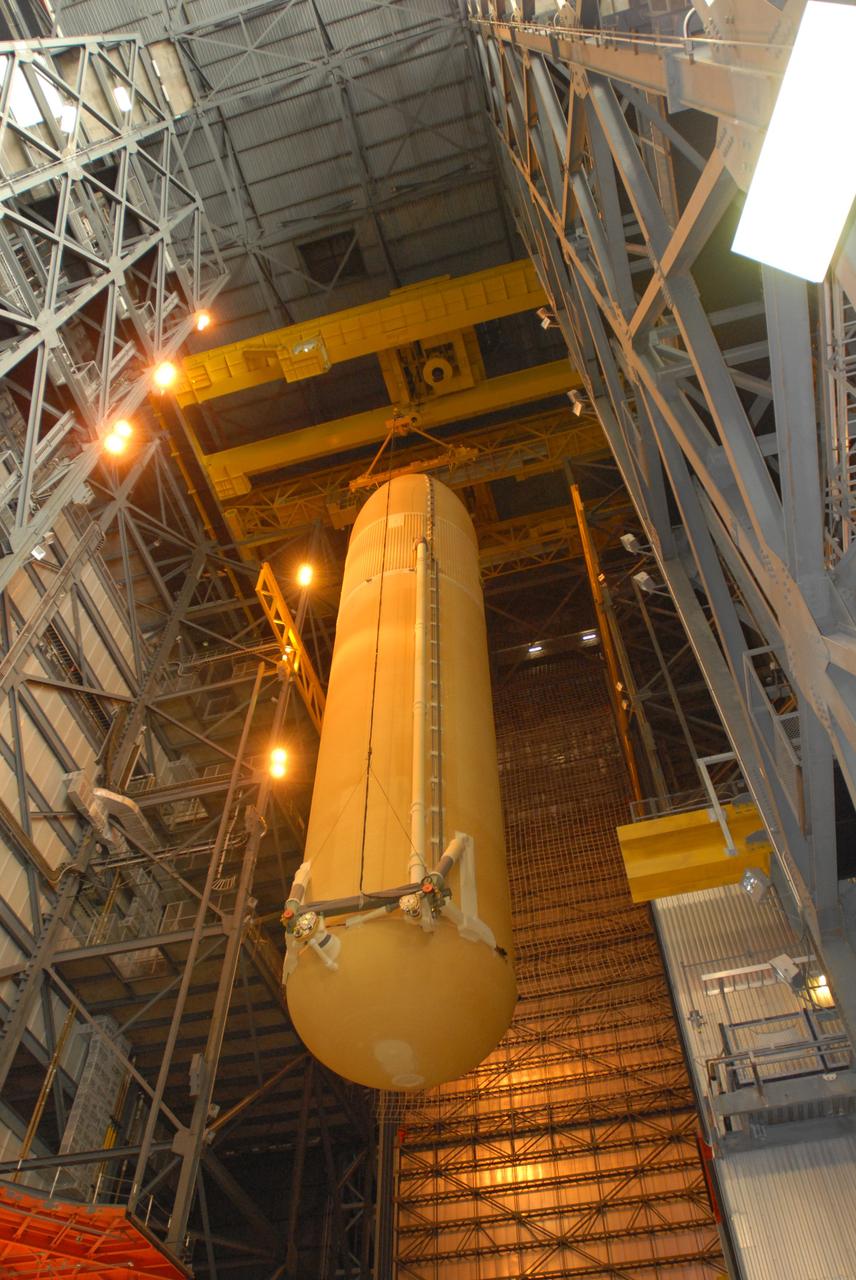
CAPE CANAVERAL, Fla. – In the Vehicle Assembly Building at NASA's Kennedy Space Center in Florida, space shuttle Endeavour's external fuel tank is lowered into high bay 1 for stacking with the solid rocket boosters on the mobile launcher platform. Endeavour is the launch vehicle for the STS-127 mission. Endeavour will deliver the Japanese Experiment Module's Experiment Logistics Module-Exposed Section, or ELM-ES, to the International Space Station on STS-127. Launch is targeted for mid-June 2009. Photo credit: NASA/Jim Grossmann
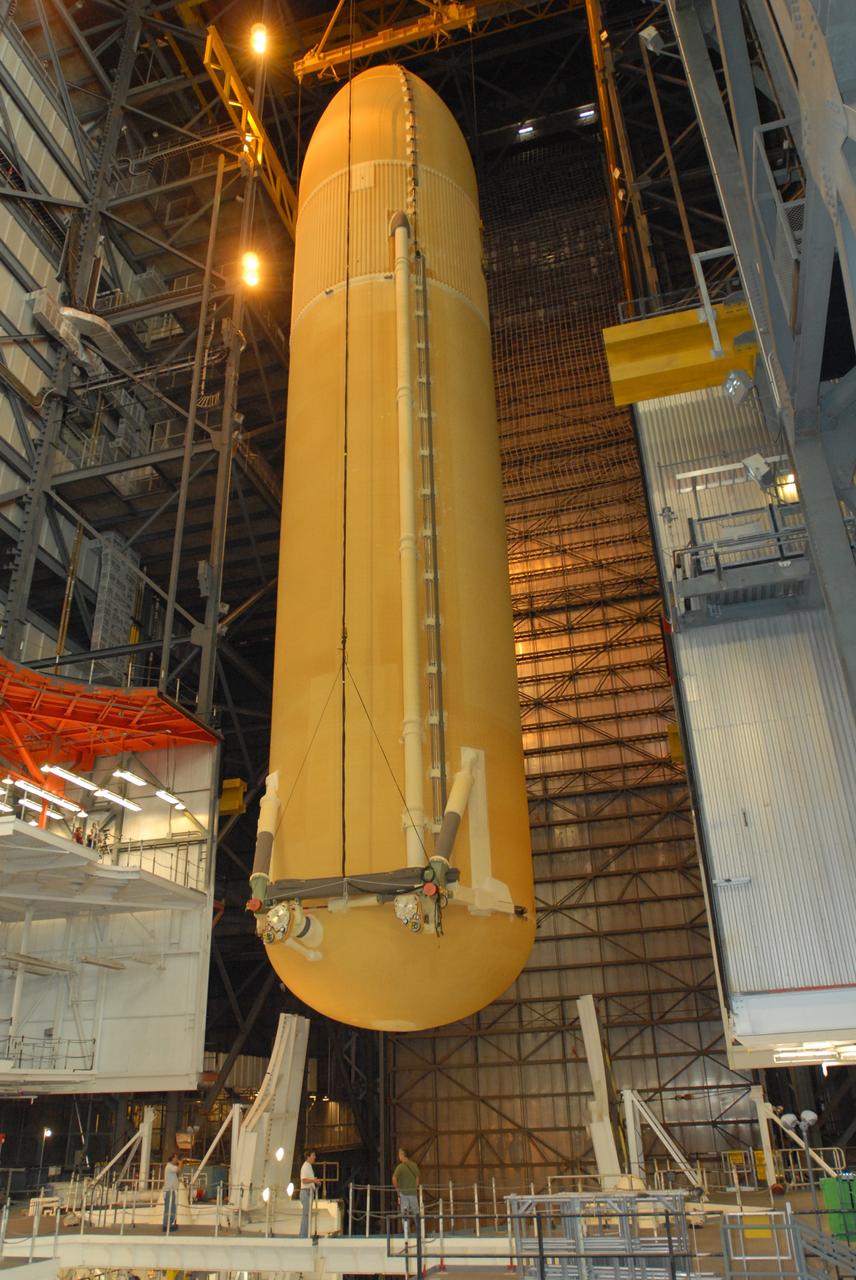
CAPE CANAVERAL, Fla. – In the Vehicle Assembly Building at NASA's Kennedy Space Center in Florida, space shuttle Endeavour's external fuel tank is lowered in high bay 1 between the solid rocket boosters on the mobile launcher platform. Endeavour is the launch vehicle for the STS-127 mission. Endeavour will deliver the Japanese Experiment Module's Experiment Logistics Module-Exposed Section, or ELM-ES, to the International Space Station on STS-127. Launch is targeted for mid-June 2009. Photo credit: NASA/Jim Grossmann

CAPE CANAVERAL, Fla. –– In High Bay 4 of the Vehicle Assembly Building at NASA's Kennedy Space Center in Florida, technicians are ready to maneuver a second roll control system module into place for installation in the Ares I-X segment. Ares I-X is the test vehicle for the Ares I, which is part of the Constellation Program to return men to the moon and beyond. Ares I-X is targeted for launch in August 2009. Photo credit: NASA/Dimitri Gerondidakis
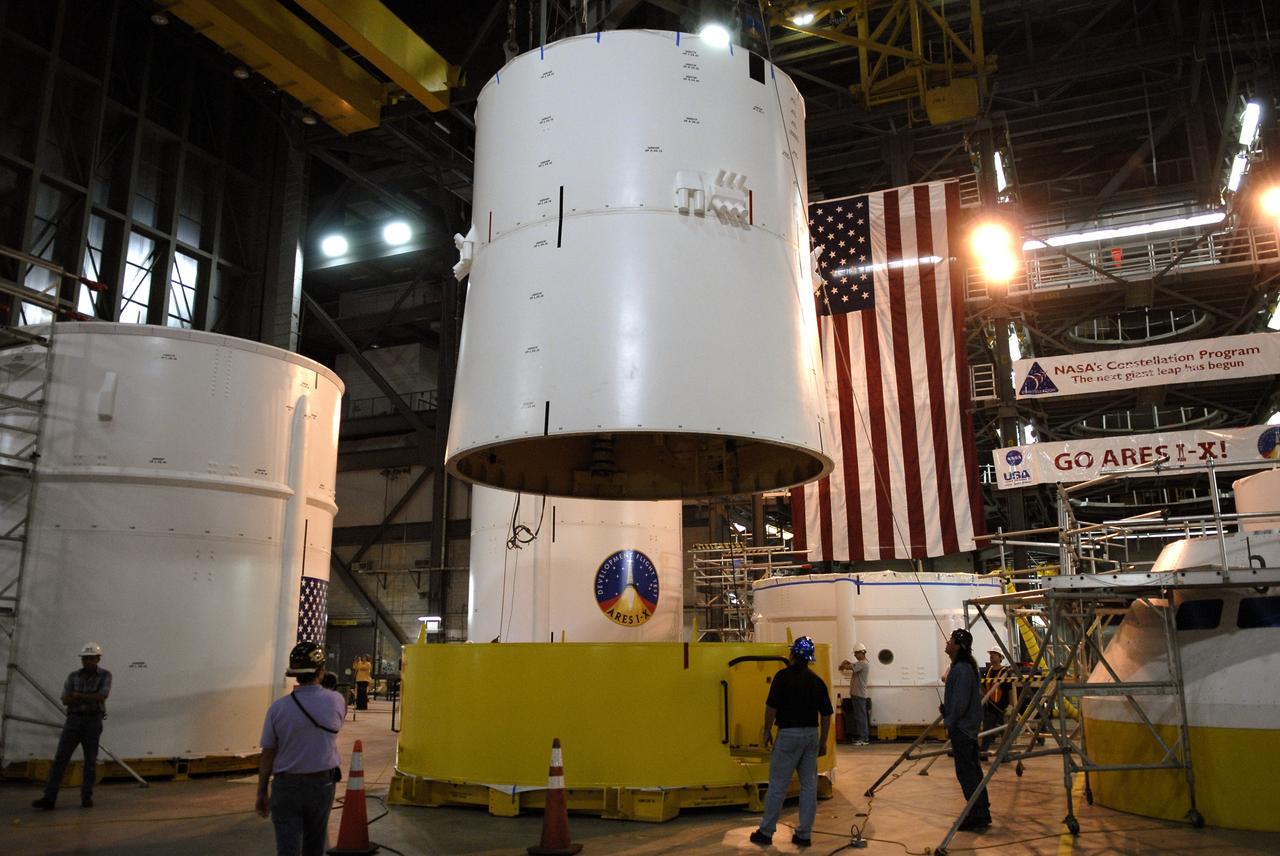
CAPE CANAVERAL, Fla. – In High Bay 4 of the Vehicle Assembly Building at NASA's Kennedy Space Center in Florida, a large crane moves the Ares I-X upper stage simulator service module/service adapter segment toward a stand. Other segments are placed and stacked on the floor around it. Ares I-X is the test vehicle for the Ares I, which is part of the Constellation Program to return men to the moon and beyond. The Ares I-X is targeted for launch in July 2009. Photo credit: NASA/Kim Shiflett
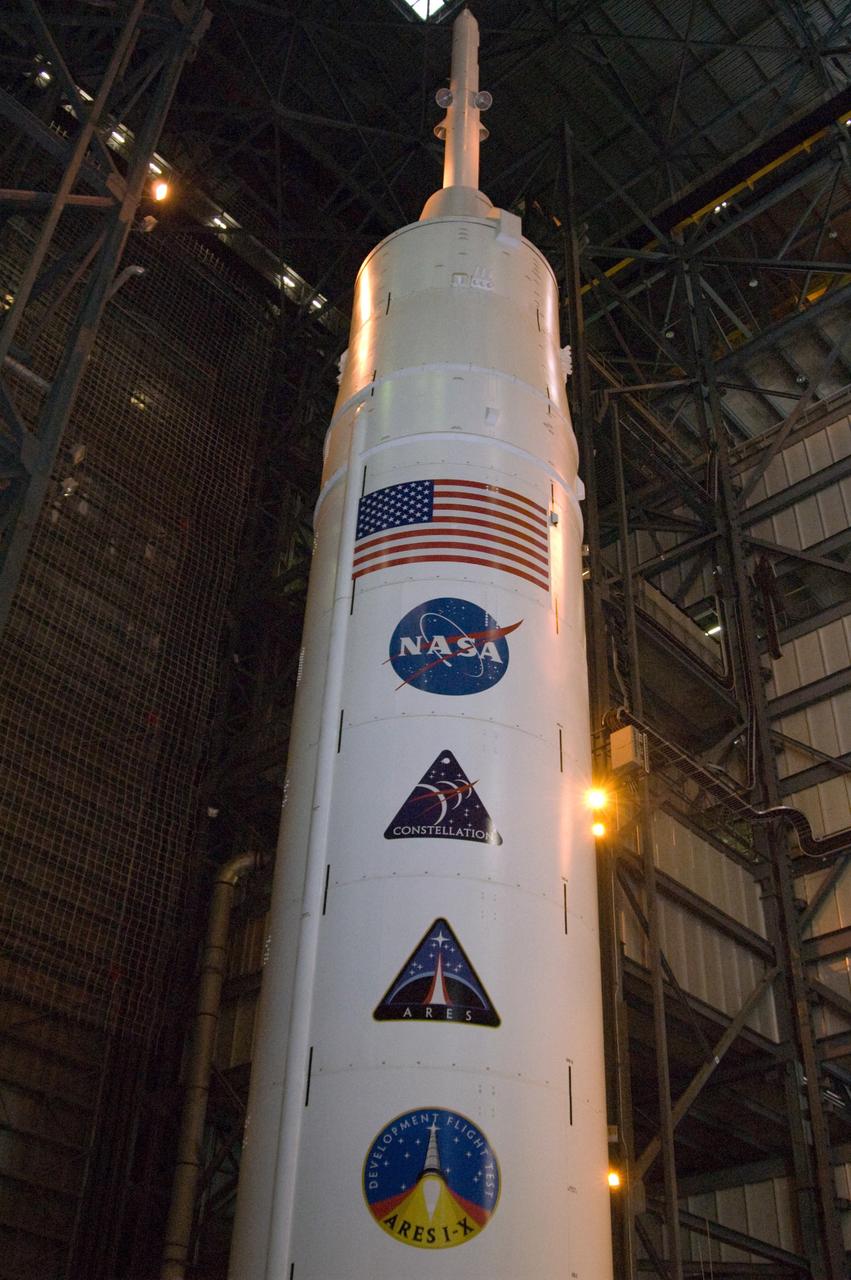
CAPE CANAVERAL, Fla. – In NASA Kennedy Space Center's Vehicle Assembly Building High Bay 3, NASA's Ares I-X rocket undergoes its first power-up. Part of the Constellation Program, the Ares I-X is the test vehicle for the Ares I, which is the essential core of a space transportation system that eventually will carry crewed missions back to the moon, on to Mars and out into the solar system. The Ares I-X flight test is targeted for Oct. 31. Photo credit: NASA/Cory Huston
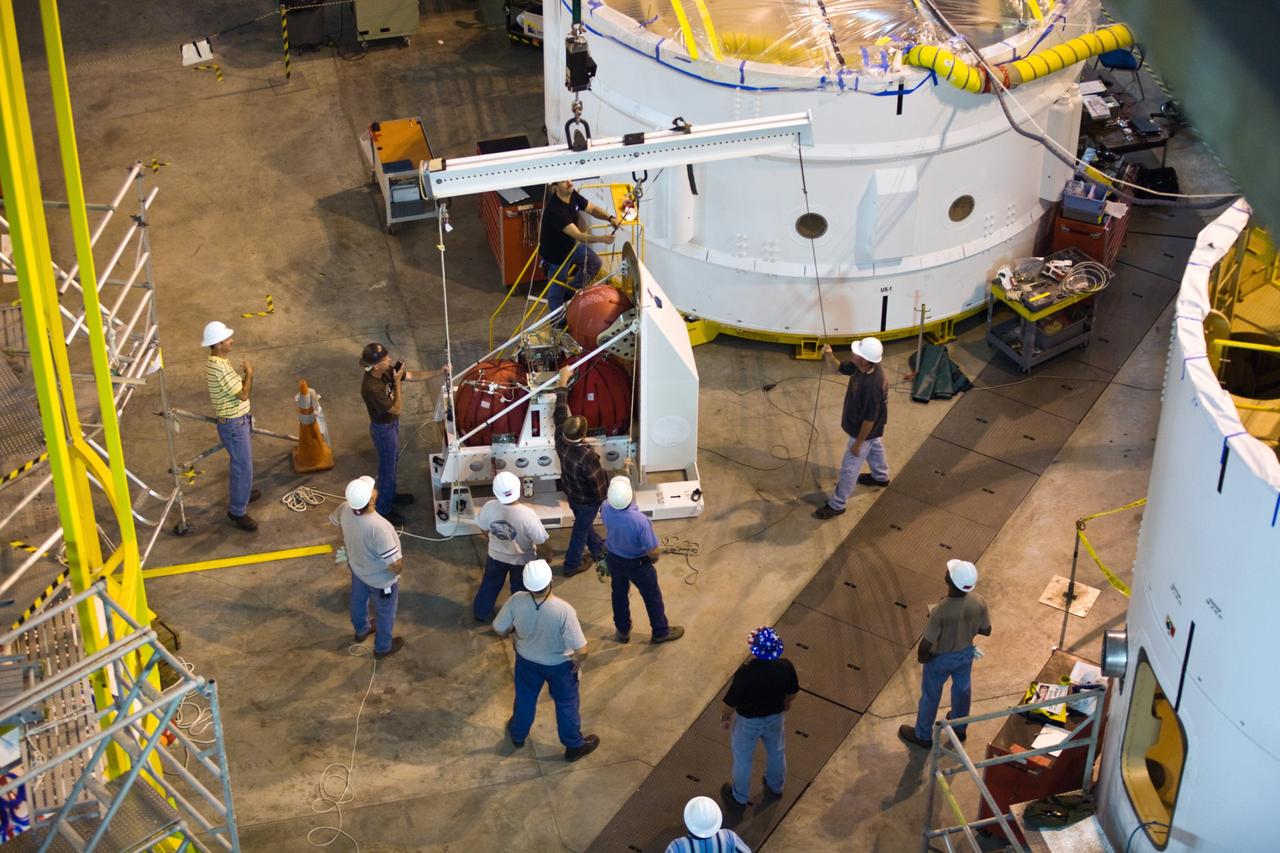
CAPE CANAVERAL, Fla. –– In High Bay 4 of the Vehicle Assembly Building at NASA's Kennedy Space Center in Florida, technicians maneuver the crane that will lift a second roll control system module for installation in an Ares I-X segment. Ares I-X is the test vehicle for the Ares I, which is part of the Constellation Program to return men to the moon and beyond. Ares I-X is targeted for launch in August 2009. Photo credit: NASA/Dimitri Gerondidakis
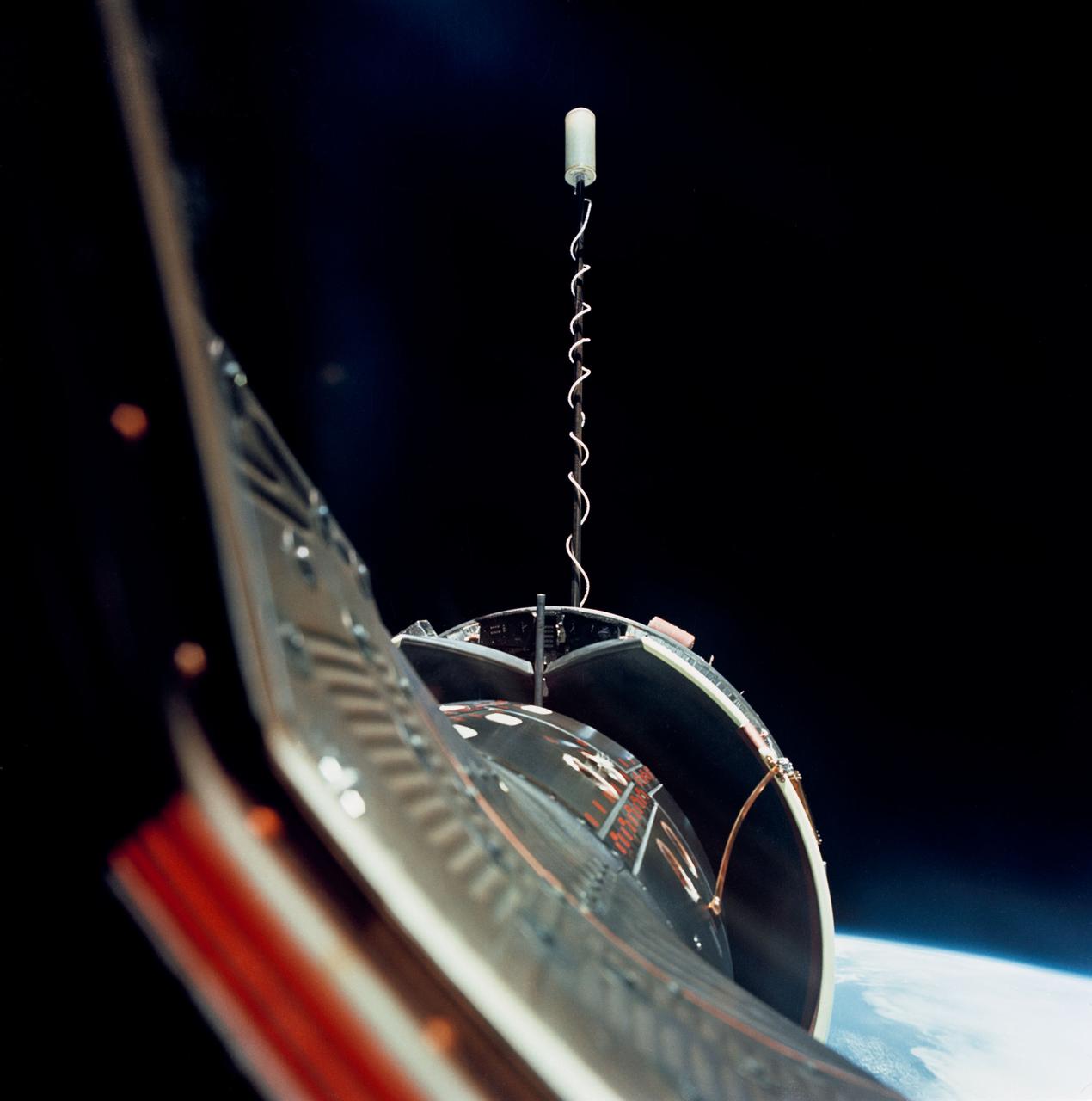
S66-46144 (18 July 1966) --- The Gemini-10 spacecraft is successfully docked with the Agena Target Docking Vehicle 5005. The Agena display panel is clearly visible. After docking with the Agena, astronauts John W. Young, command pilot, and Michael Collins, pilot, fired the 16,000-pound thrust engine of Agena-10's primary propulsion system to boost the combined vehicles into an orbit with an apogee of 413 nautical miles to set a new altitude record for manned spaceflight. Photo credit: NASA
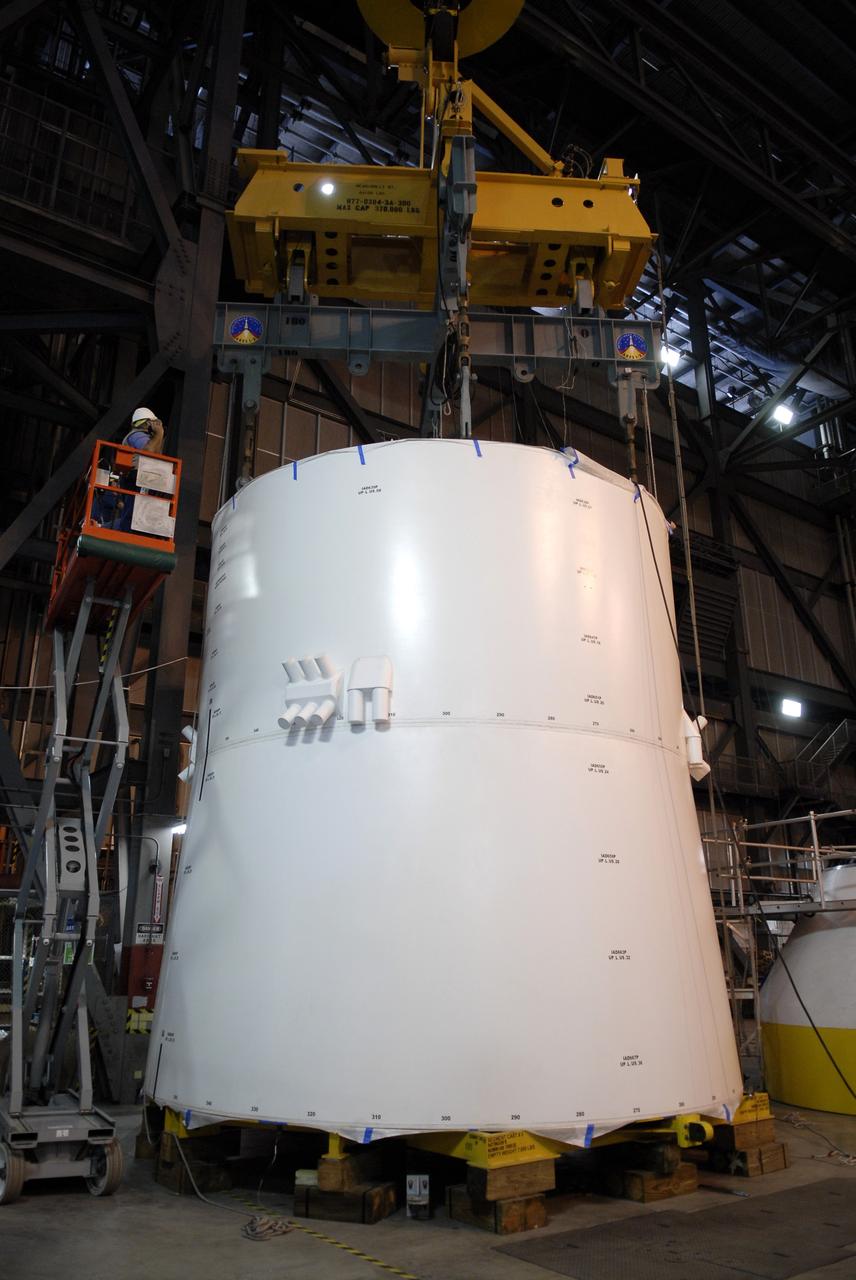
CAPE CANAVERAL, Fla. –In High Bay 4 of the Vehicle Assembly Building at NASA's Kennedy Space Center in Florida, a large crane is attached to the Ares I-X upper stage simulator service module/service adapter segment to lift and move it to a stand. Ares I-X is the test vehicle for the Ares I, which is part of the Constellation Program to return men to the moon and beyond. The Ares I-X is targeted for launch in July 2009. Photo credit: NASA/Kim Shiflett
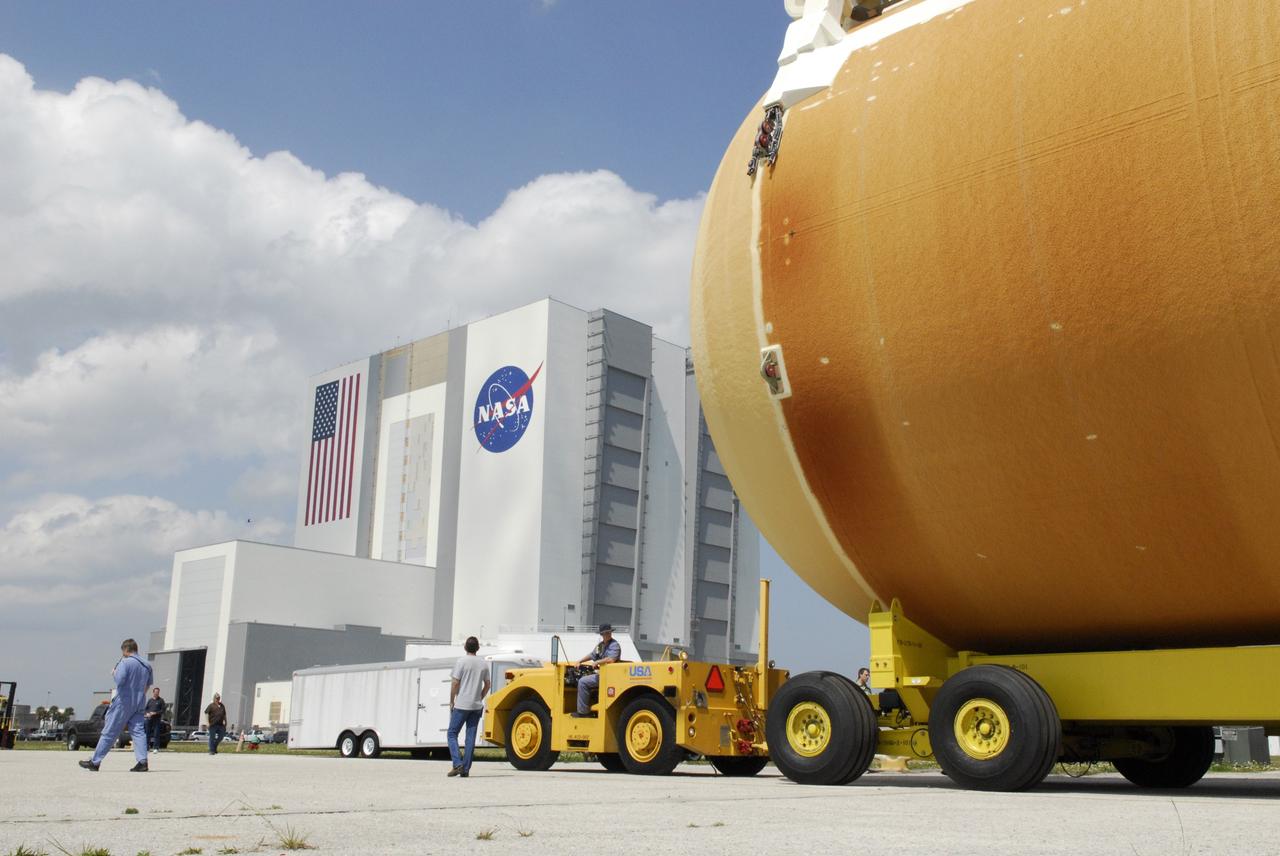
CAPE CANAVERAL, Fla. --- After offloading external tank No. 128 from the Pegasus barge in the Launch Complex 39 Area at NASA's Kennedy Space Center, the tow vehicle begins moving it to the Vehicle Assembly Building, in the background. The tank is scheduled for space shuttle Discovery's STS-124 mission. On the STS-124 mission, Discovery will transport the Kibo Japanese Experiment Module - Pressurized Module and the Japanese Remote Manipulator System to the International Space Station. Discovery is targeted for launch on May 25. Photo credit: NASA/Dimitri Gerondidakis
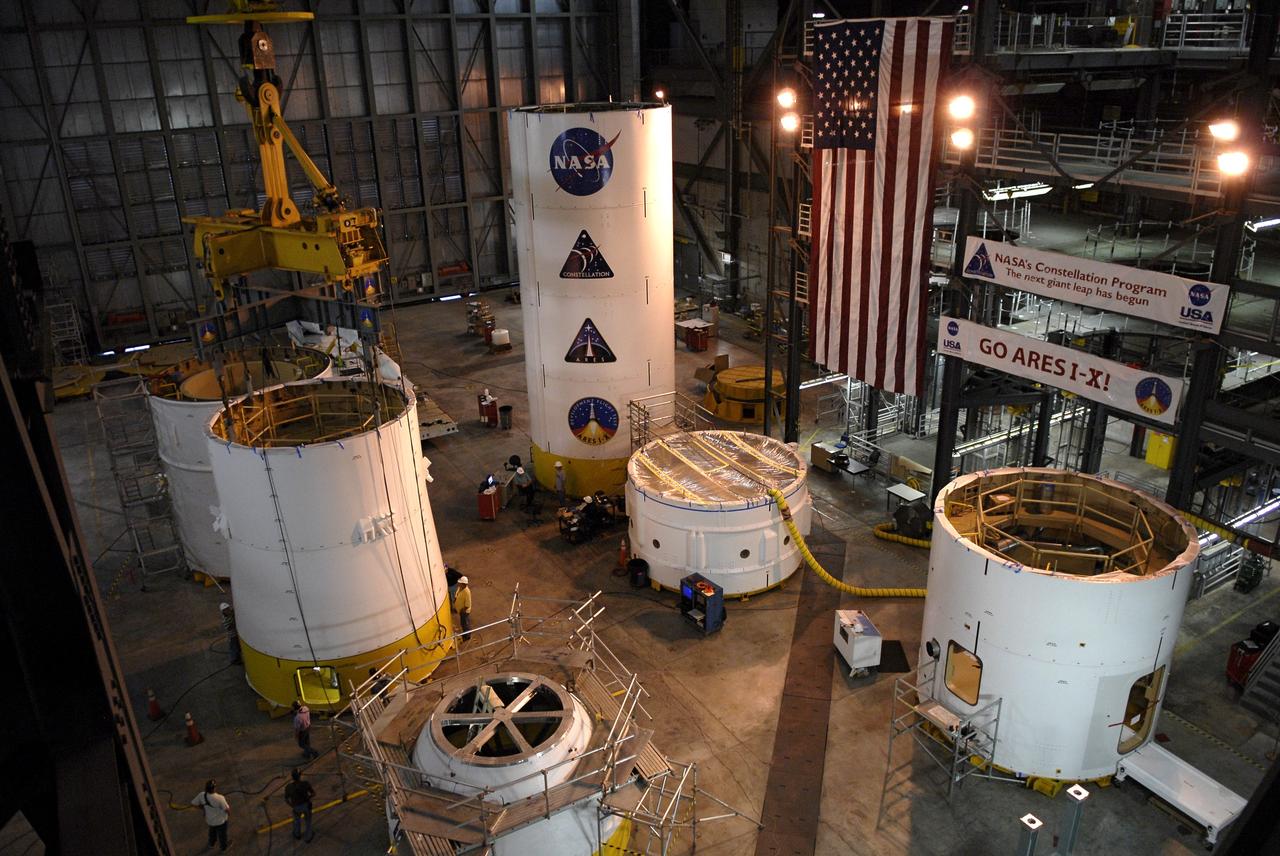
CAPE CANAVERAL, Fla. – In High Bay 4 of the Vehicle Assembly Building at NASA's Kennedy Space Center in Florida, the Ares I-X upper stage simulator service module/service adapter (left, center) has been installed on a stand. Other segments are placed and stacked on the floor around it. Ares I-X is the test vehicle for the Ares I, which is part of the Constellation Program to return men to the moon and beyond. The Ares I-X is targeted for launch in July 2009. Photo credit: NASA/Kim Shiflett
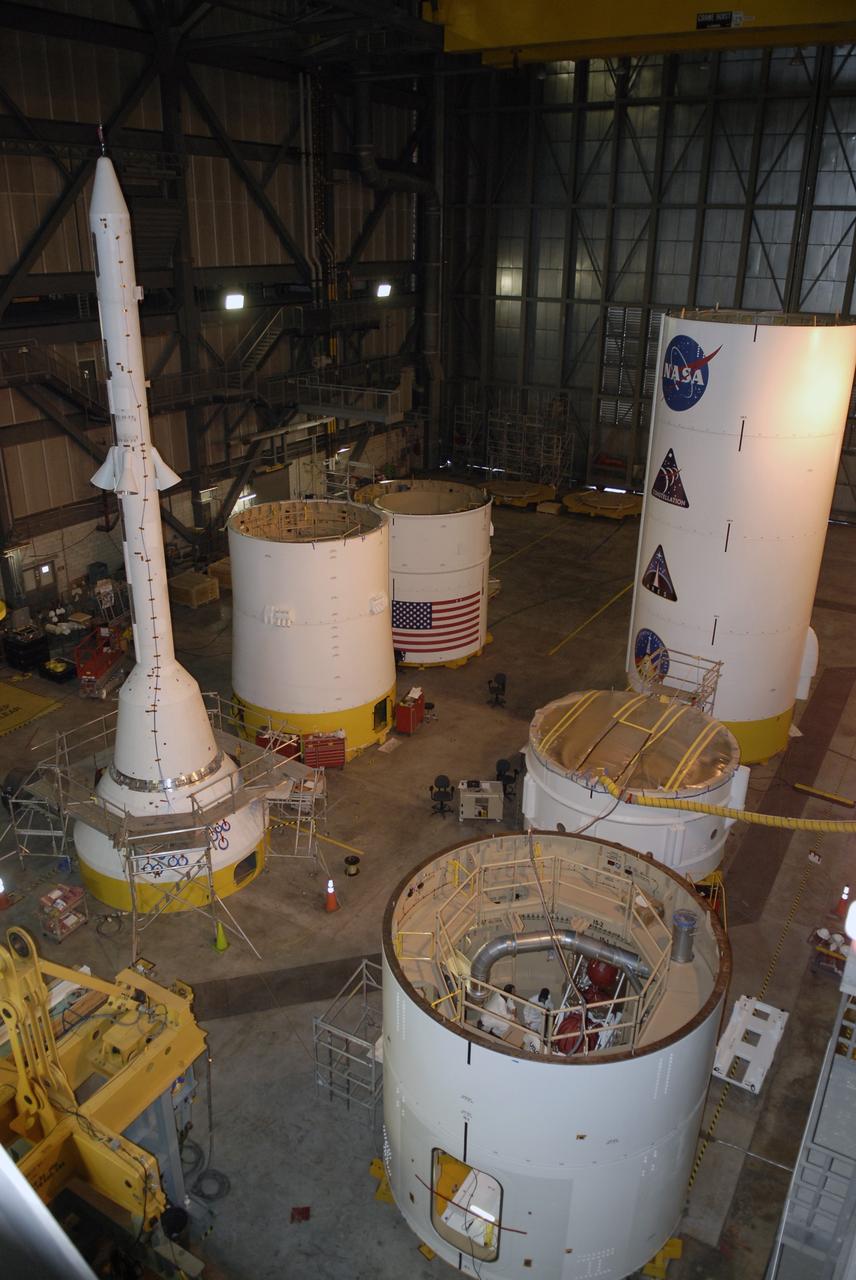
CAPE CANAVERAL, Fla. –– In the lower right, the roll control system can be seen installed inside the Ares I-X segment. The work is being done in high bay 4 of the Vehicle Assembly Building at NASA's Kennedy Space Center in Florida. Ares I-X is the test vehicle for the Ares I, which is part of the Constellation Program to return men to the moon and beyond. Ares I-X is targeted for launch in July 2009. Photo credit: NASA/Kim Shiflett
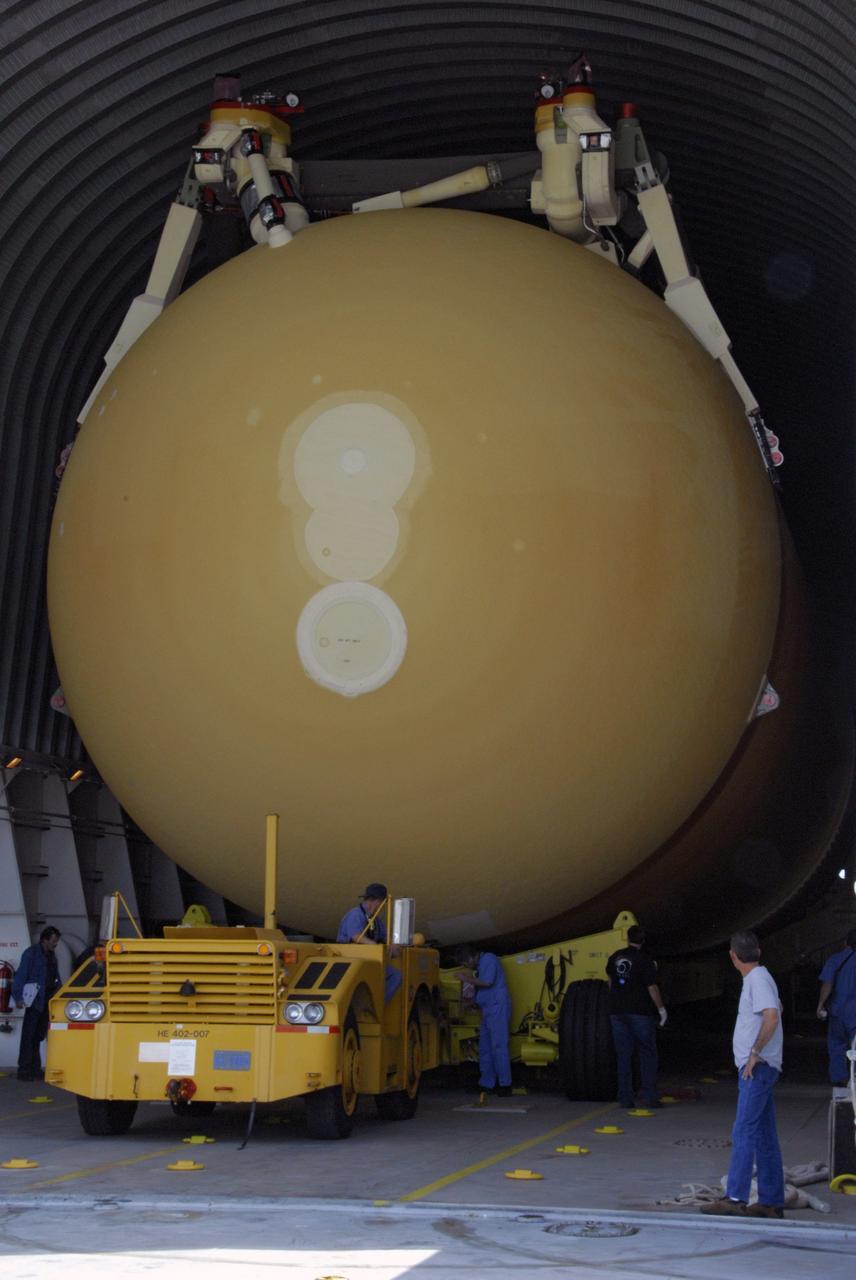
CAPE CANAVERAL, Fla. --- A tow vehicle prepares to offload external tank No. 128 from the Pegasus barge in the Launch Complex 39 Area at NASA's Kennedy Space Center. The tank is scheduled for space shuttle Discovery's STS-124 mission. After offloading, the tank will be transported to the Vehicle Assembly Building. On the STS-124 mission, Discovery will transport the Kibo Japanese Experiment Module - Pressurized Module and the Japanese Remote Manipulator System to the International Space Station. Discovery is targeted for launch on May 25. Photo credit: NASA/Dimitri Gerondidakis
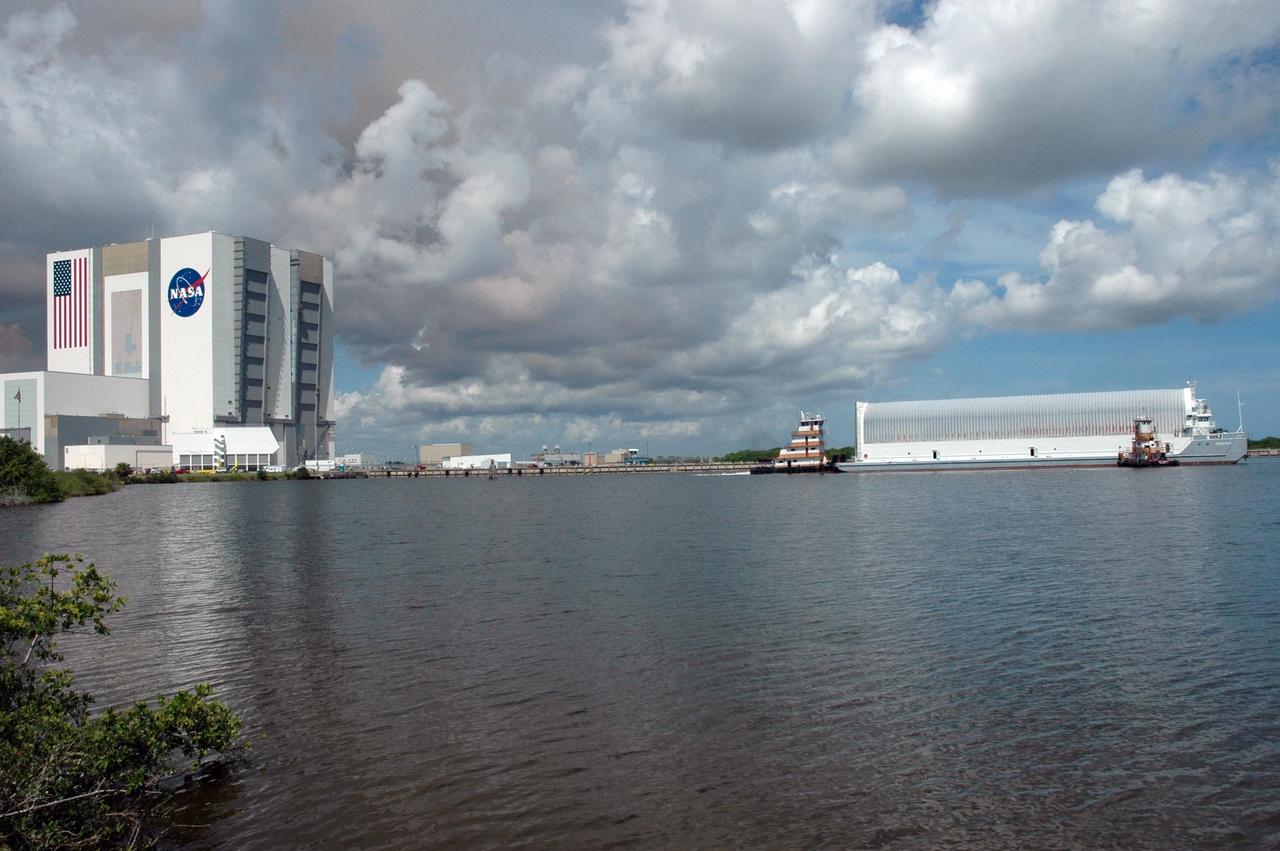
KENNEDY SPACE CENTER, FLA. -- Tugboats tow the Pegasus barge toward the dock in the turn basin of the Launch Complex 39 Area. At left is the Vehicle Assembly Building. The barge is carrying external tank No. 125. After it is offloaded, the tank will be moved to the Vehicle Assembly Building. The external tank will be used on space shuttle Atlantis for mission STS-122 targeted for launch on Dec. 6. Photo credit: NASA/Troy Cryder