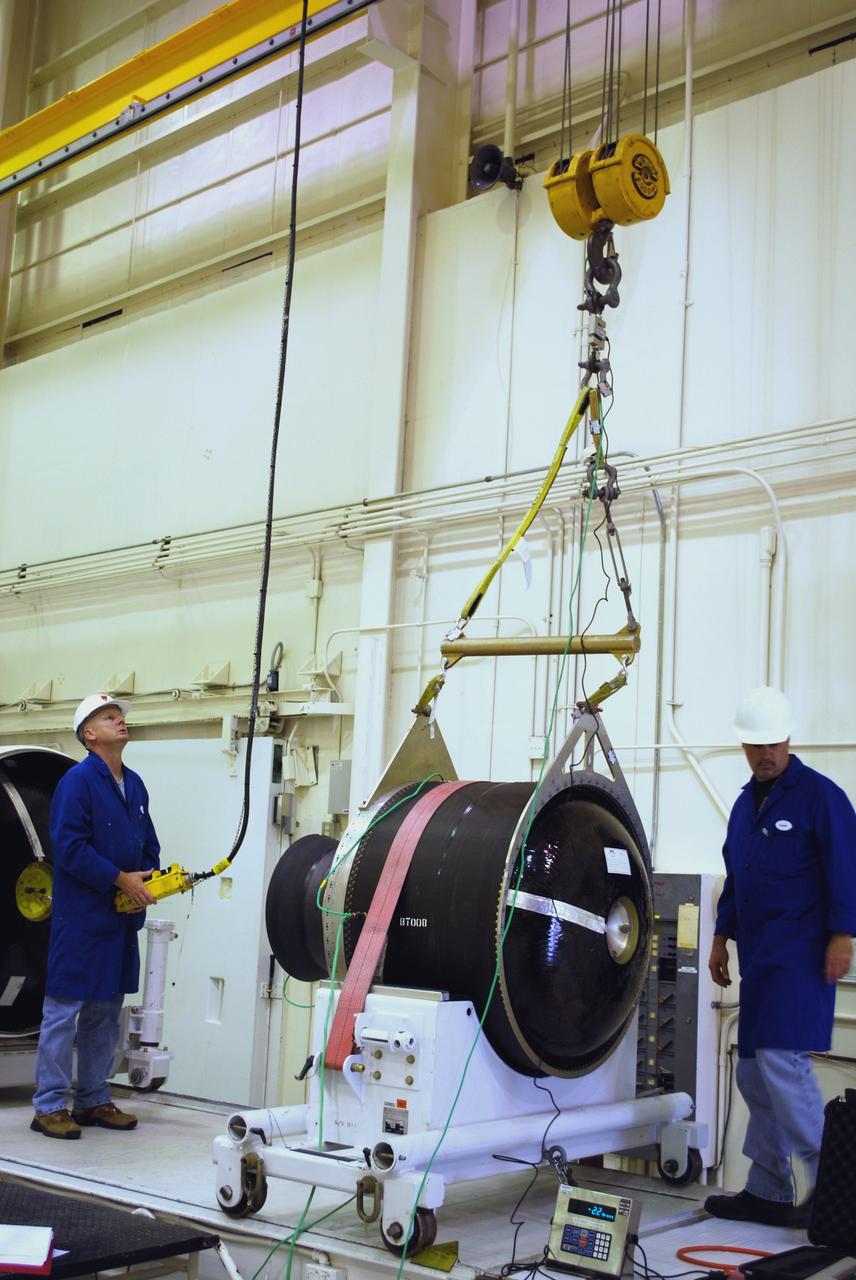
VANDENBERG AIR FORCE BASE, Calif. -- An Alliant motor designated for Stage 3 of a Taurus rocket is weighed by Orbital Sciences workers in Building 1555 at Vandenberg AFB. The Taurus will launch the Orbiting Carbon Observatory, or OCO, in January 2009. The OCO is a new Earth-orbiting mission sponsored by NASA's Earth System Science Pathfinder Program. OCO will provide space-based observations of atmospheric carbon dioxide (CO2), the principal human-initiated driver of climate change. Mature technologies will be used to address NASA's highest priority carbon cycle measurement requirement. NASA's Jet Propulsion Laboratory leads the OCO effort. Orbital Sciences Corporation is providing the Taurus launch vehicle; Hamilton Sundstrand Sensor Systems, the OCO spacecraft. Photo credit: NASA/Randy Beaudoin
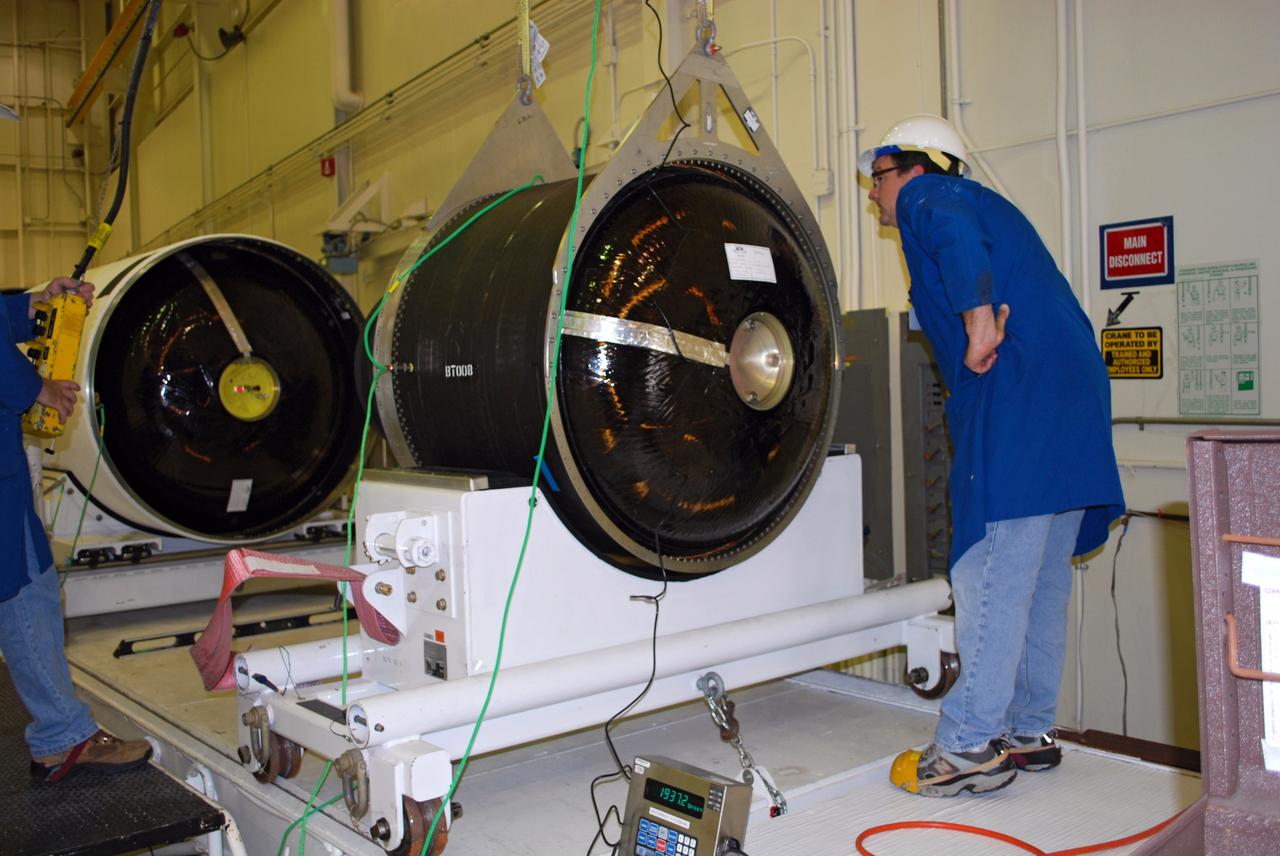
VANDENBERG AIR FORCE BASE, Calif. -- An Alliant motor designated for Stage 3 of a Taurus rocket is weighed by Orbital Sciences workers in Building 1555 at Vandenberg AFB. The Taurus will launch the Orbiting Carbon Observatory, or OCO, in January 2009. The OCO is a new Earth-orbiting mission sponsored by NASA's Earth System Science Pathfinder Program. OCO will provide space-based observations of atmospheric carbon dioxide (CO2), the principal human-initiated driver of climate change. Mature technologies will be used to address NASA's highest priority carbon cycle measurement requirement. NASA's Jet Propulsion Laboratory leads the OCO effort. Orbital Sciences Corporation is providing the Taurus launch vehicle; Hamilton Sundstrand Sensor Systems, the OCO spacecraft. Photo credit: NASA/Randy Beaudoin
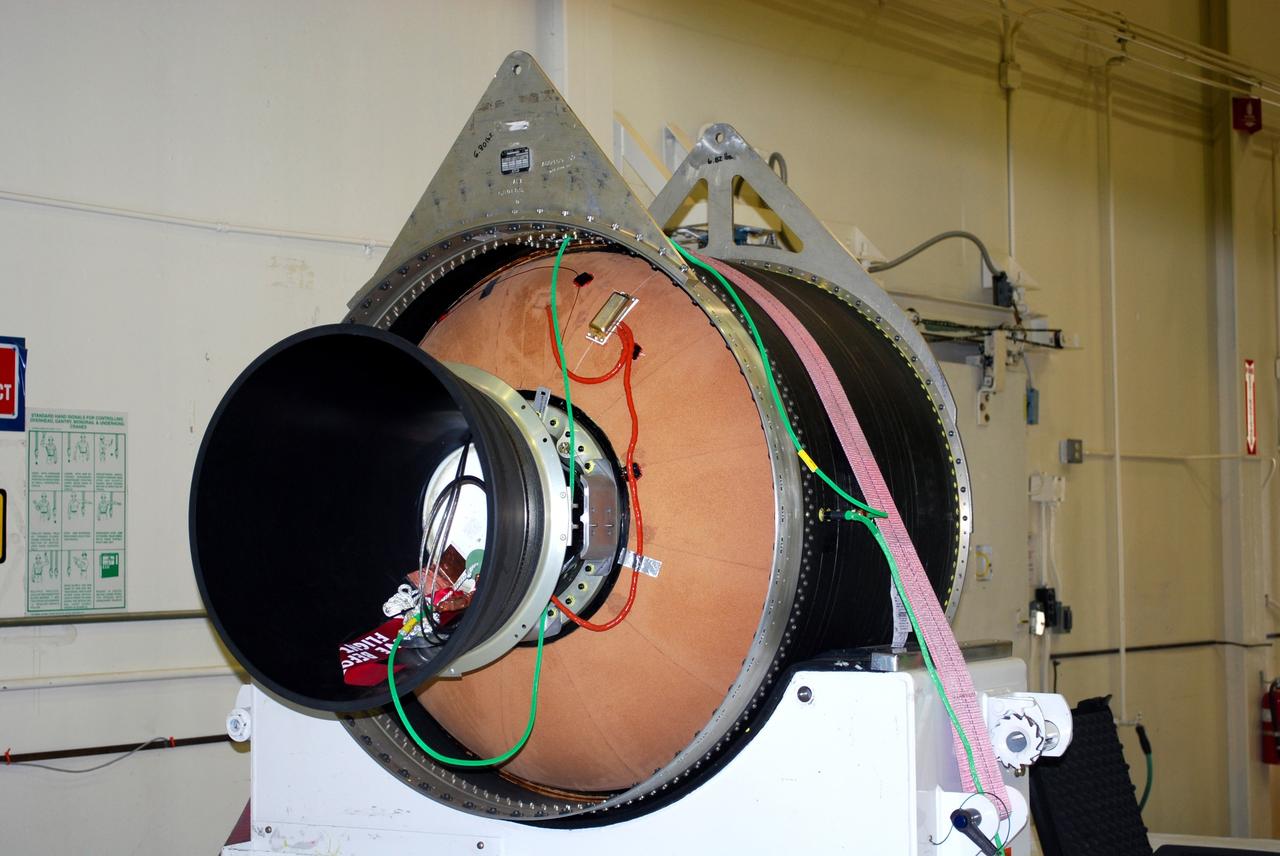
VANDENBERG AIR FORCE BASE, Calif. -- An Alliant motor designated for Stage 3 of a Taurus rocket is weighed by Orbital Sciences workers in Building 1555 at Vandenberg AFB. The Taurus will launch the Orbiting Carbon Observatory, or OCO, in January 2009. The OCO is a new Earth-orbiting mission sponsored by NASA's Earth System Science Pathfinder Program. OCO will provide space-based observations of atmospheric carbon dioxide (CO2), the principal human-initiated driver of climate change. Mature technologies will be used to address NASA's highest priority carbon cycle measurement requirement. NASA's Jet Propulsion Laboratory leads the OCO effort. Orbital Sciences Corporation is providing the Taurus launch vehicle; Hamilton Sundstrand Sensor Systems, the OCO spacecraft. Photo credit: NASA/Randy Beaudoin
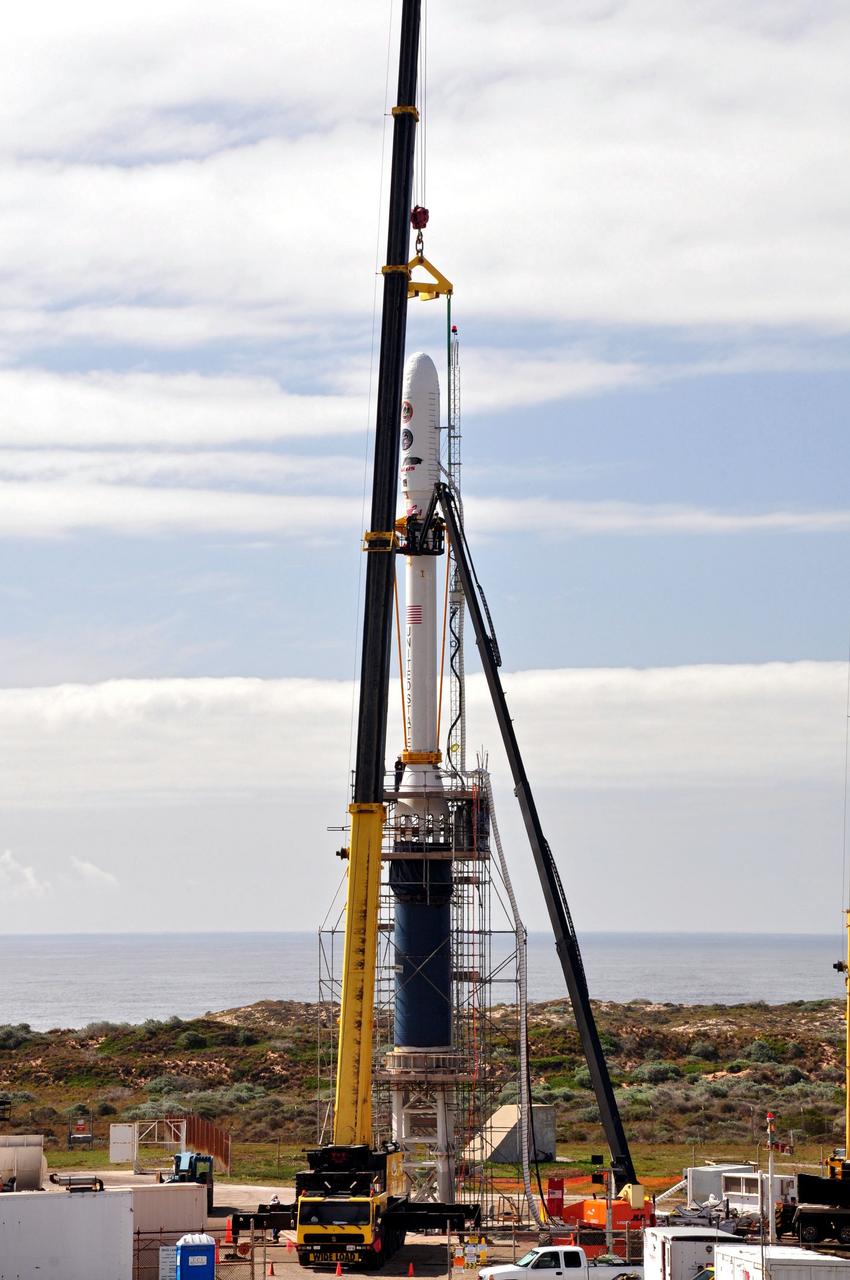
VANDENBERG AIR FORCE BASE, Calif. -- On Space Launch Complex 576-E at Vandenberg Air Force Base in California, workers in a bucket begin the process of removing the lifting fixture and sling from NASA's Glory upper stack after it was secured in place to the Taurus XL rocket's Stage 0. The upper stack consists of Stages 1, 2 and 3 of the Taurus as well as the encapsulated Glory spacecraft. The Orbital Sciences Taurus XL rocket will launch Glory into low Earth orbit. Once Glory reaches orbit, it will collect data on the properties of aerosols and black carbon. It also will help scientists understand how the sun's irradiance affects Earth's climate. Launch is scheduled for 5:09 a.m. EST Feb. 23. For information, visit www.nasa.gov/glory. Photo credit: NASA/Randy Beaudoin, VAFB
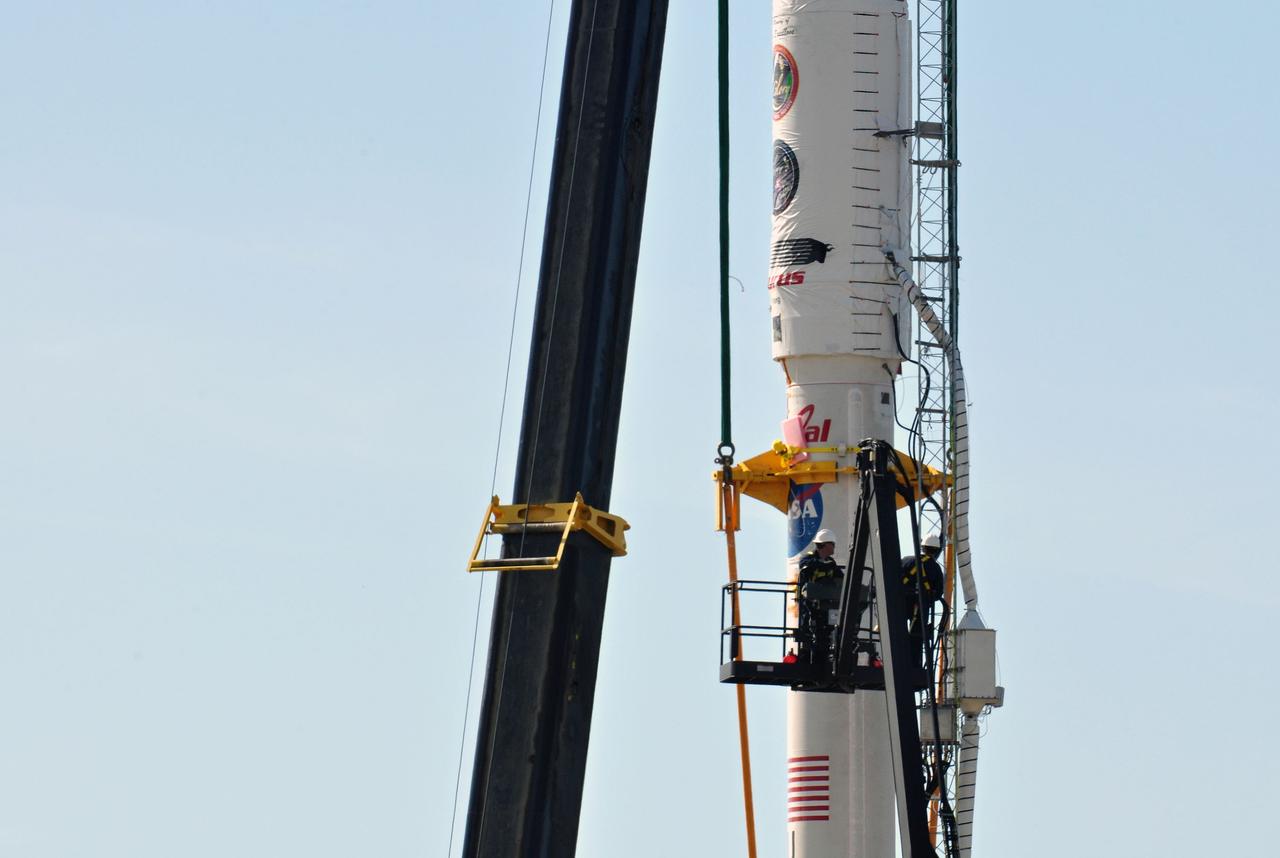
VANDENBERG AIR FORCE BASE, Calif. -- On Space Launch Complex 576-E at Vandenberg Air Force Base in California, workers in a bucket begin the process of removing the lifting fixture and sling from NASA's Glory upper stack after it was secured in place to the Taurus XL rocket's Stage 0. The upper stack consists of Stages 1, 2 and 3 of the Taurus as well as the encapsulated Glory spacecraft. The Orbital Sciences Taurus XL rocket will launch Glory into low Earth orbit. Once Glory reaches orbit, it will collect data on the properties of aerosols and black carbon. It also will help scientists understand how the sun's irradiance affects Earth's climate. Launch is scheduled for 5:09 a.m. EST Feb. 23. For information, visit www.nasa.gov/glory. Photo credit: NASA/Randy Beaudoin, VAFB
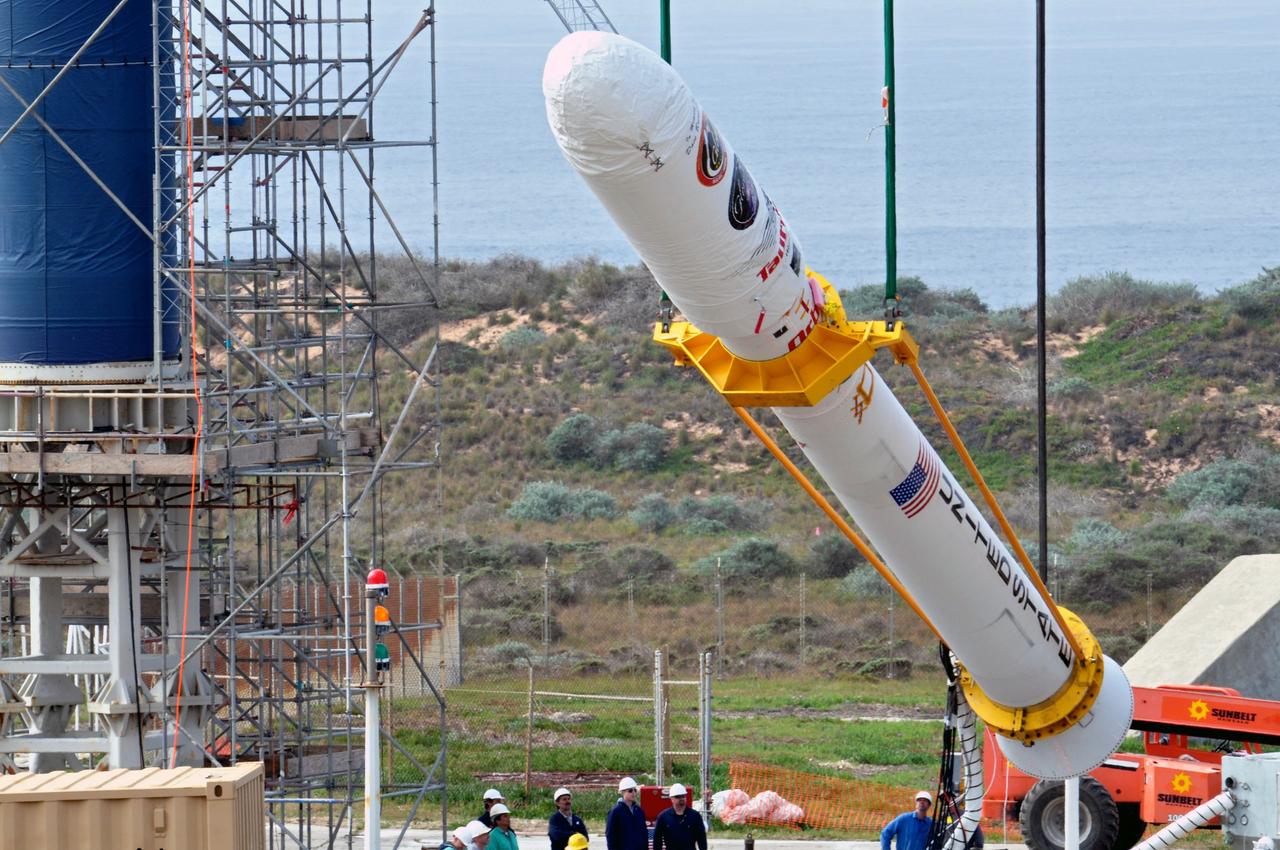
VANDENBERG AIR FORCE BASE, Calif. -- On Space Launch Complex 576-E at Vandenberg Air Force Base in California, Orbital Sciences workers monitor NASA's Glory upper stack as a crane lifts it from a stationary rail for attachment to the Taurus XL rocket's Stage 0. The upper stack consists of Stages 1, 2 and 3 of the Taurus as well as the encapsulated Glory spacecraft. Workers put the non-flight environmental shield over the fairing prior to assembly. The Orbital Sciences Taurus XL rocket will launch Glory into low Earth orbit. Once Glory reaches orbit, it will collect data on the properties of aerosols and black carbon. It also will help scientists understand how the sun's irradiance affects Earth's climate. Launch is scheduled for 5:09 a.m. EST Feb. 23. For information, visit www.nasa.gov/glory. Photo credit: NASA/Randy Beaudoin, VAFB
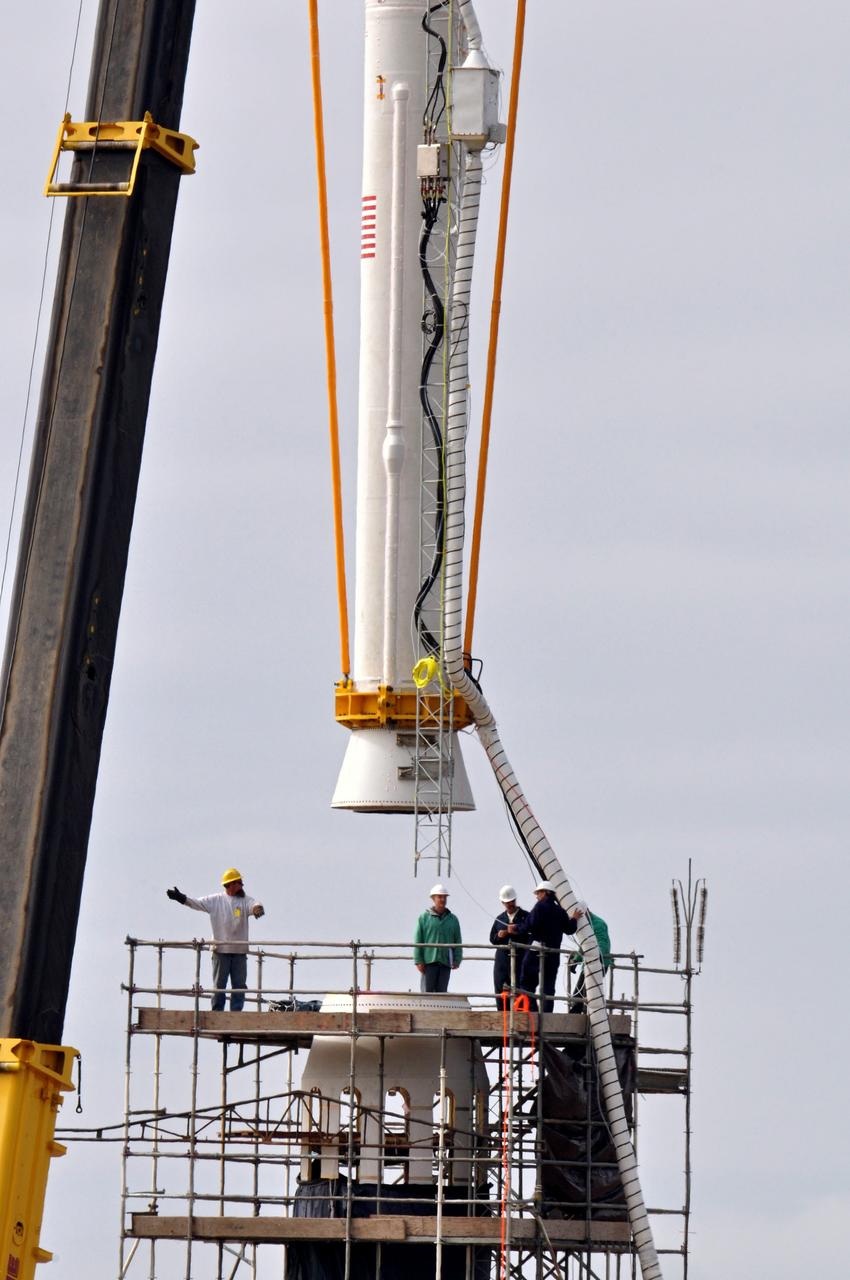
VANDENBERG AIR FORCE BASE, Calif. -- On Space Launch Complex 576-E at Vandenberg Air Force Base in California, workers guide NASA's Glory upper stack as a crane lowers it toward the Taurus XL rocket's Stage 0. The upper stack consists of Stages 1, 2 and 3 of the Taurus as well as the encapsulated Glory spacecraft. The Orbital Sciences Taurus XL rocket will launch Glory into low Earth orbit. Once Glory reaches orbit, it will collect data on the properties of aerosols and black carbon. It also will help scientists understand how the sun's irradiance affects Earth's climate. Launch is scheduled for 5:09 a.m. EST Feb. 23. For information, visit www.nasa.gov/glory. Photo credit: NASA/Randy Beaudoin, VAFB
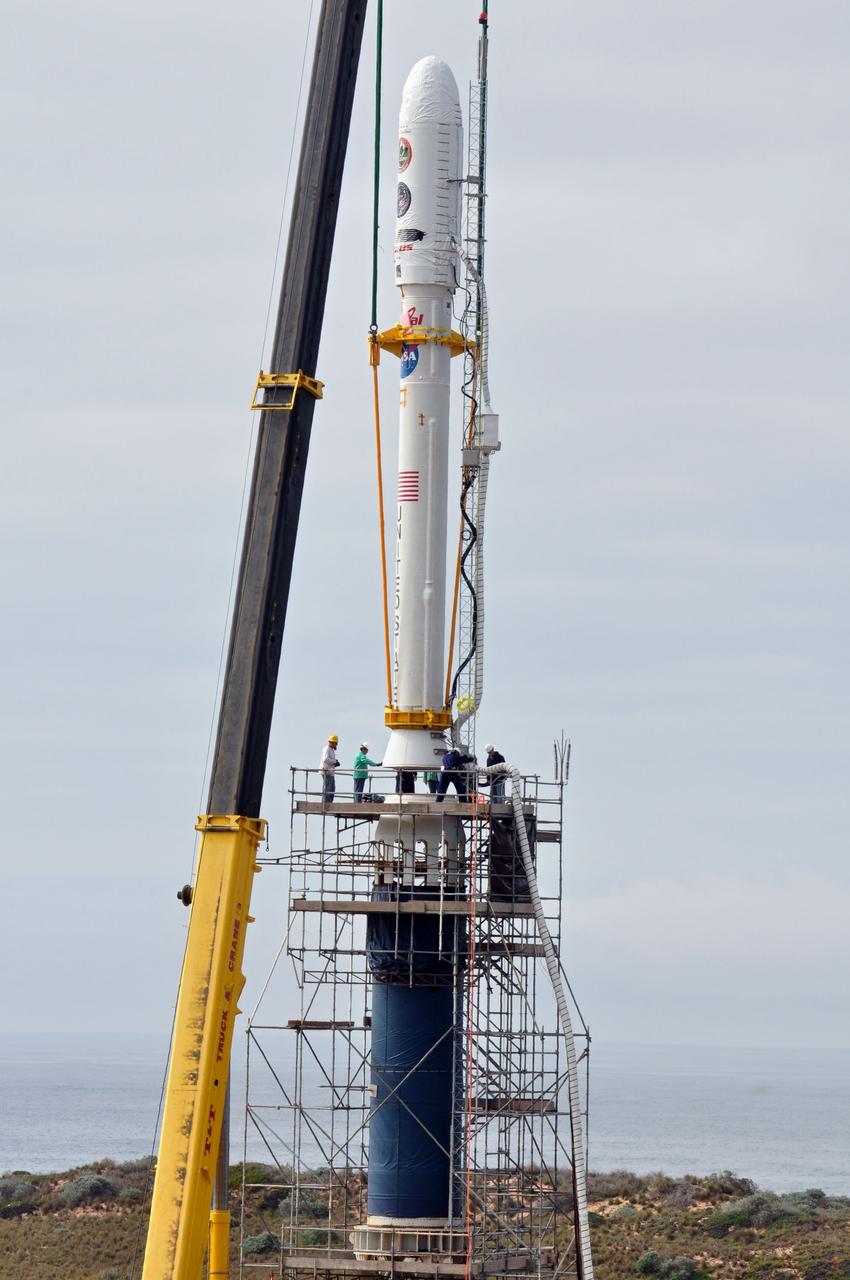
VANDENBERG AIR FORCE BASE, Calif. -- On Space Launch Complex 576-E at Vandenberg Air Force Base in California, workers guide NASA's Glory upper stack as a crane lowers it toward the Taurus XL rocket's Stage 0. The upper stack consists of Stages 1, 2 and 3 of the Taurus as well as the encapsulated Glory spacecraft. The Orbital Sciences Taurus XL rocket will launch Glory into low Earth orbit. Once Glory reaches orbit, it will collect data on the properties of aerosols and black carbon. It also will help scientists understand how the sun's irradiance affects Earth's climate. Launch is scheduled for 5:09 a.m. EST Feb. 23. For information, visit www.nasa.gov/glory. Photo credit: NASA/Randy Beaudoin, VAFB
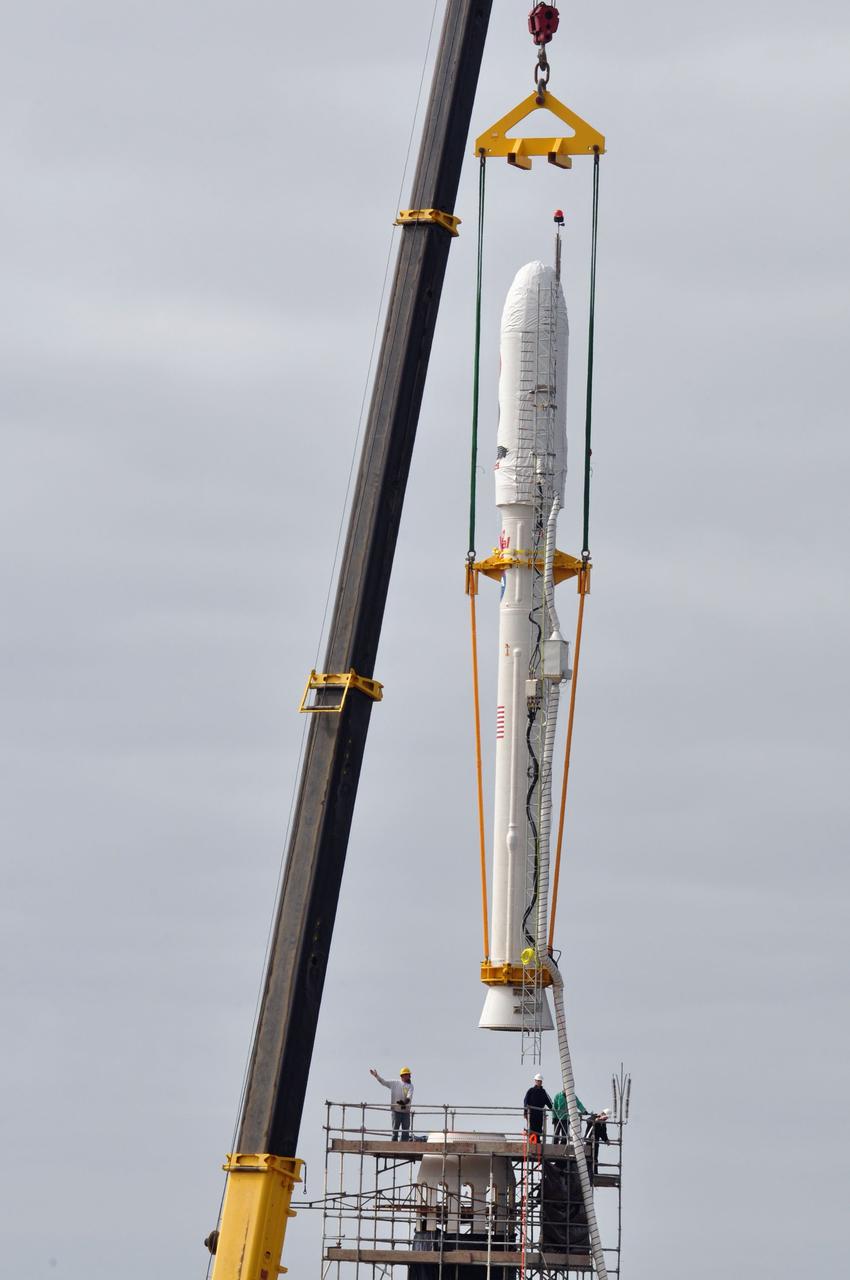
VANDENBERG AIR FORCE BASE, Calif. -- On Space Launch Complex 576-E at Vandenberg Air Force Base in California, a crane lowers NASA's Glory upper stack toward the Taurus XL rocket's Stage 0. The upper stack consists of Stages 1, 2 and 3 of the Taurus as well as the encapsulated Glory spacecraft. The Orbital Sciences Taurus XL rocket will launch Glory into low Earth orbit. Once Glory reaches orbit, it will collect data on the properties of aerosols and black carbon. It also will help scientists understand how the sun's irradiance affects Earth's climate. Launch is scheduled for 5:09 a.m. EST Feb. 23. For information, visit www.nasa.gov/glory. Photo credit: NASA/Randy Beaudoin, VAFB
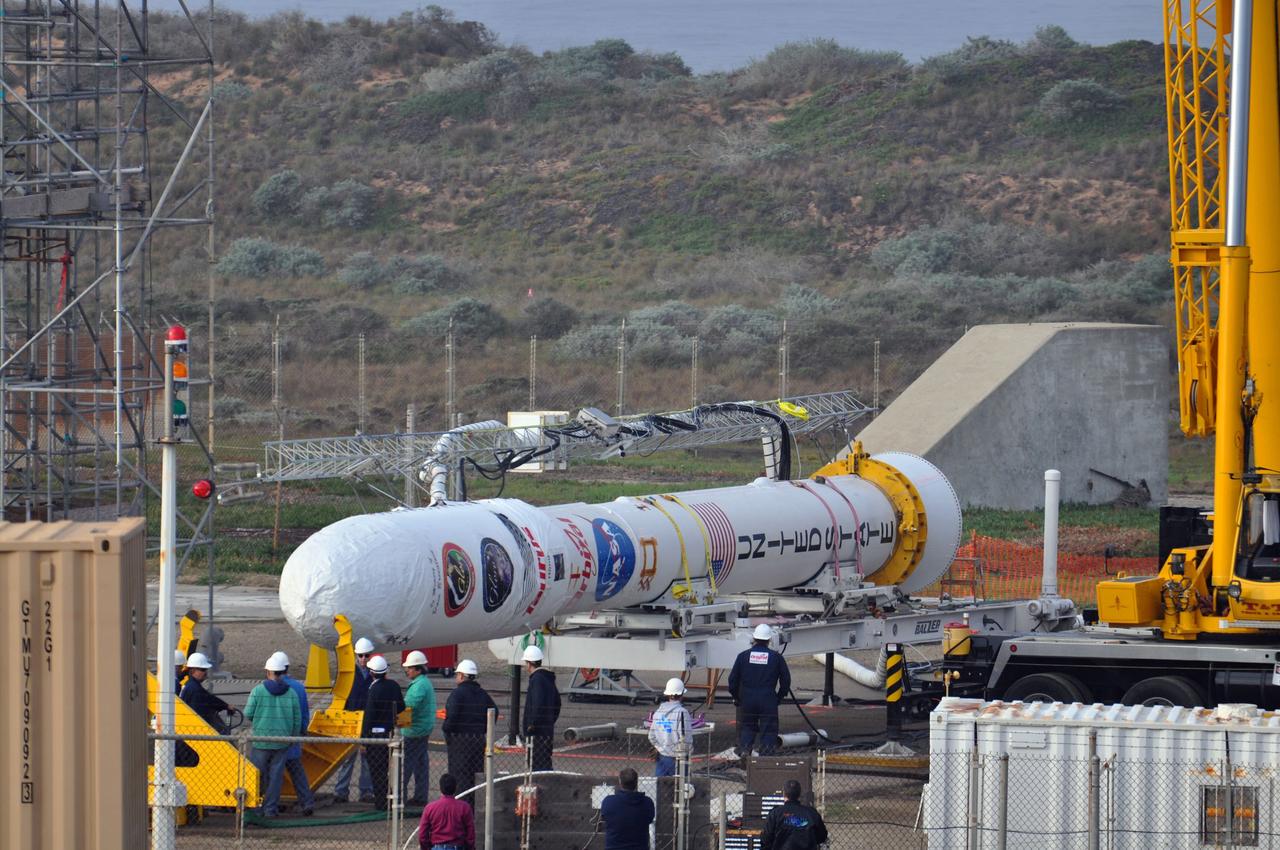
VANDENBERG AIR FORCE BASE, Calif. -- On Space Launch Complex 576-E at Vandenberg Air Force Base in California, Orbital Sciences workers prepare NASA's Glory upper stack for attachment to the Taurus XL rocket's Stage 0. The upper stack consists of Stages 1, 2 and 3 of the Taurus as well as the encapsulated Glory spacecraft. Workers put the non-flight environmental shield over the fairing prior to assembly. A portion of the umbilical tower is attached to the upper stack which falls away from the spacecraft during liftoff. The Orbital Sciences Taurus XL rocket will launch Glory into low Earth orbit. Once Glory reaches orbit, it will collect data on the properties of aerosols and black carbon. It also will help scientists understand how the sun's irradiance affects Earth's climate. Launch is scheduled for 5:09 a.m. EST Feb. 23. For information, visit www.nasa.gov/glory. Photo credit: NASA/Randy Beaudoin, VAFB
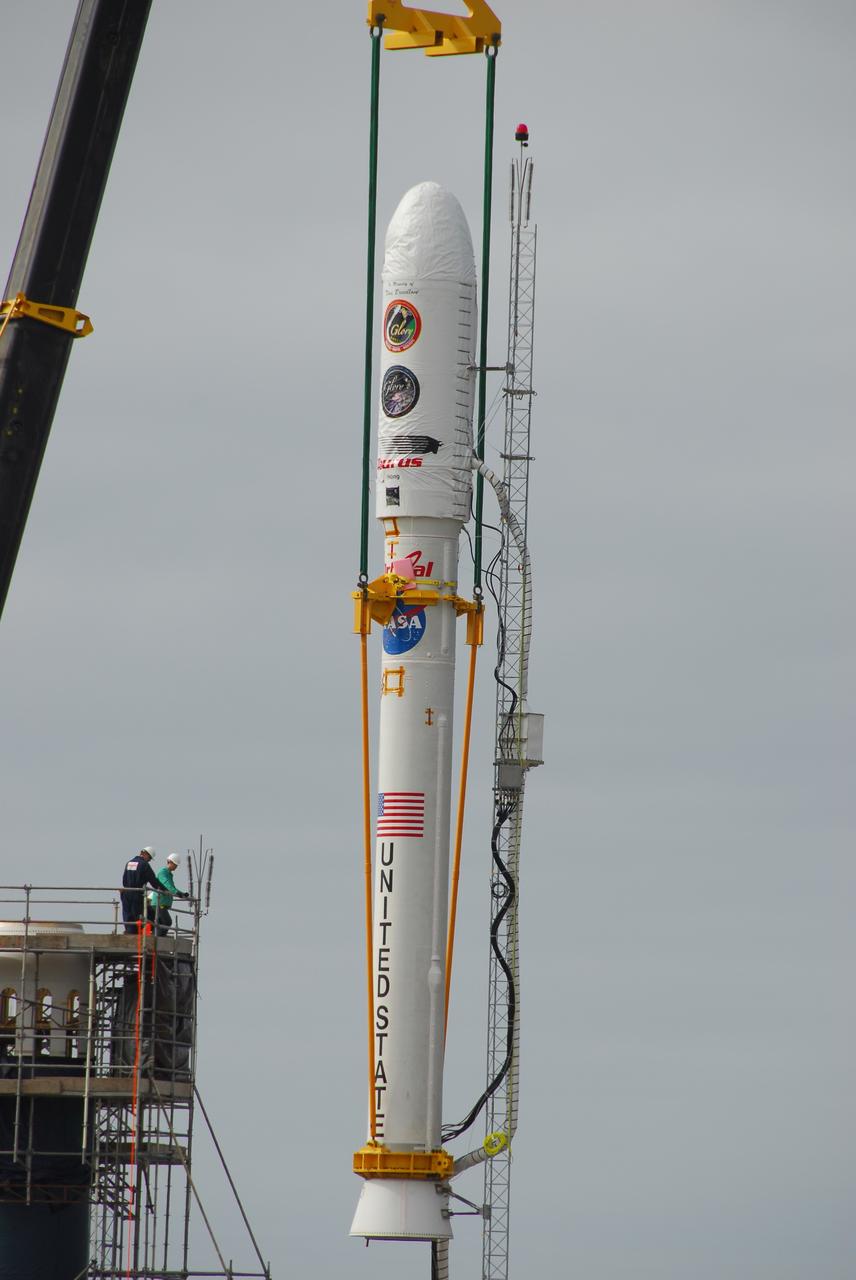
VANDENBERG AIR FORCE BASE, Calif. -- On Space Launch Complex 576-E at Vandenberg Air Force Base in California, a crane lowers NASA's Glory upper stack toward the Taurus XL rocket's Stage 0. The upper stack consists of Stages 1, 2 and 3 of the Taurus as well as the encapsulated Glory spacecraft. The Orbital Sciences Taurus XL rocket will launch Glory into low Earth orbit. Once Glory reaches orbit, it will collect data on the properties of aerosols and black carbon. It also will help scientists understand how the sun's irradiance affects Earth's climate. Launch is scheduled for 5:09 a.m. EST Feb. 23. For information, visit www.nasa.gov/glory. Photo credit: NASA/VAFB
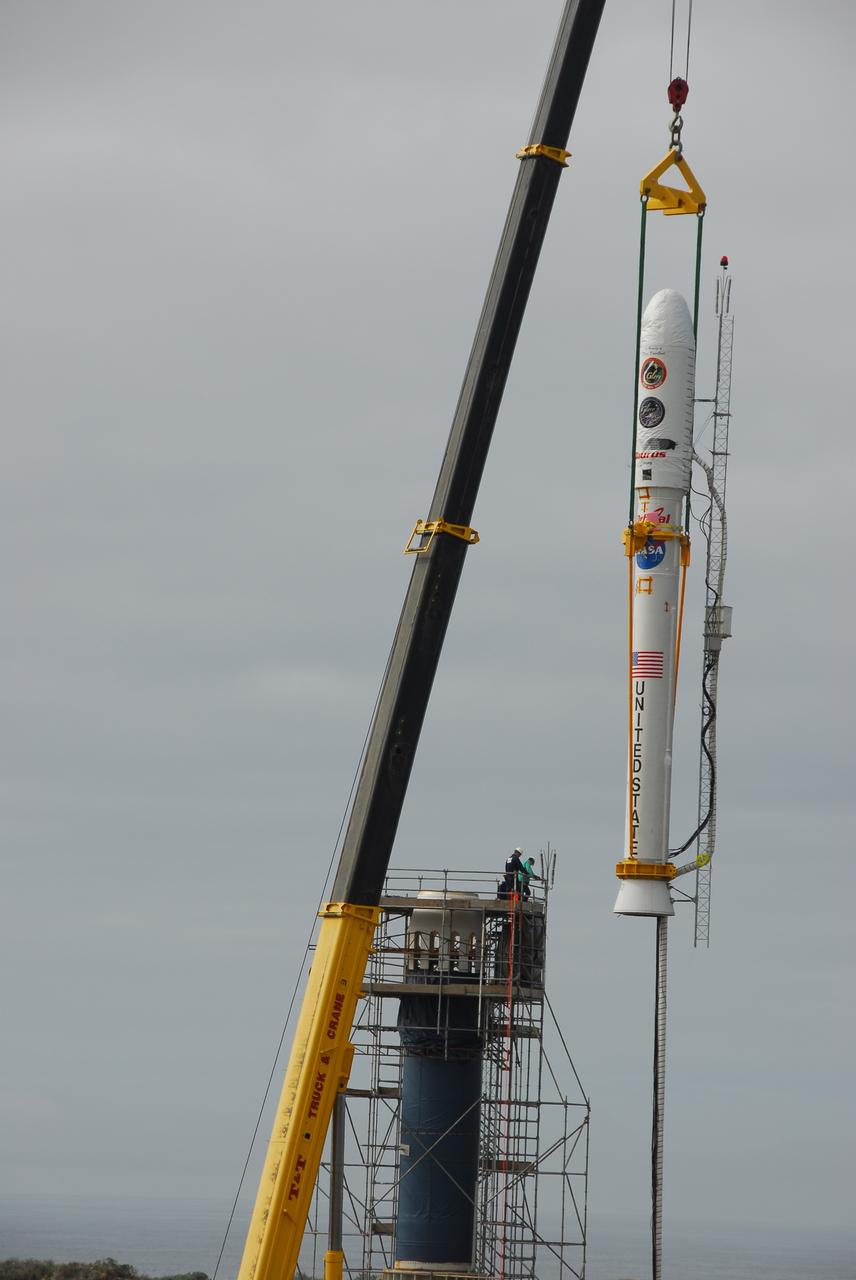
VANDENBERG AIR FORCE BASE, Calif. -- On Space Launch Complex 576-E at Vandenberg Air Force Base in California, a crane moves NASA's Glory upper stack toward the Taurus XL rocket's Stage 0. The upper stack consists of Stages 1, 2 and 3 of the Taurus as well as the encapsulated Glory spacecraft. The Orbital Sciences Taurus XL rocket will launch Glory into low Earth orbit. Once Glory reaches orbit, it will collect data on the properties of aerosols and black carbon. It also will help scientists understand how the sun's irradiance affects Earth's climate. Launch is scheduled for 5:09 a.m. EST Feb. 23. For information, visit www.nasa.gov/glory. Photo credit: NASA/VAFB
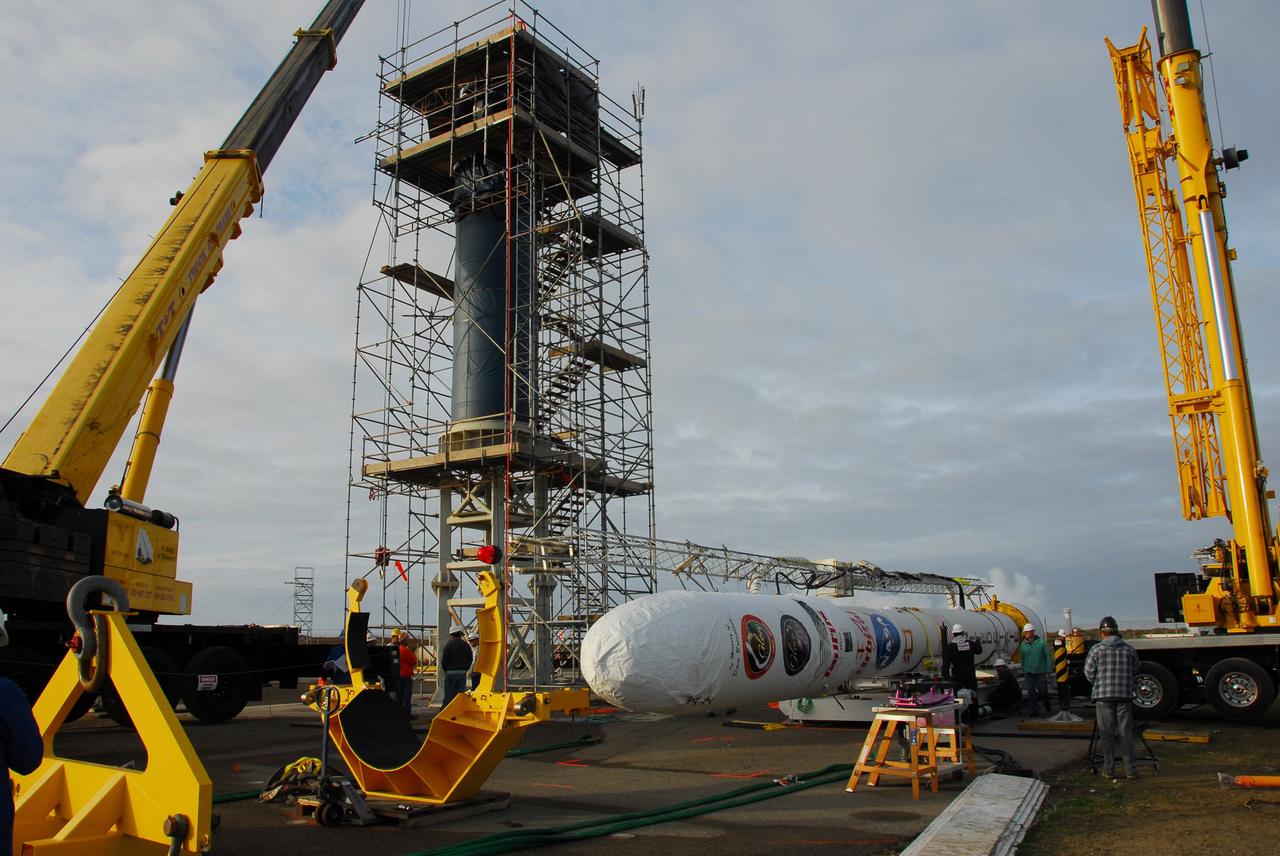
VANDENBERG AIR FORCE BASE, Calif. -- On Space Launch Complex 576-E at Vandenberg Air Force Base in California, Orbital Sciences workers prepare NASA's Glory upper stack for attachment to the Taurus XL rocket's Stage 0. The upper stack consists of Stages 1, 2 and 3 of the Taurus as well as the encapsulated Glory spacecraft. The Orbital Sciences Taurus XL rocket will launch Glory into low Earth orbit. Once Glory reaches orbit, it will collect data on the properties of aerosols and black carbon. It also will help scientists understand how the sun's irradiance affects Earth's climate. Launch is scheduled for 5:09 a.m. EST Feb. 23. For information, visit www.nasa.gov/glory. Photo credit: NASA/VAFB
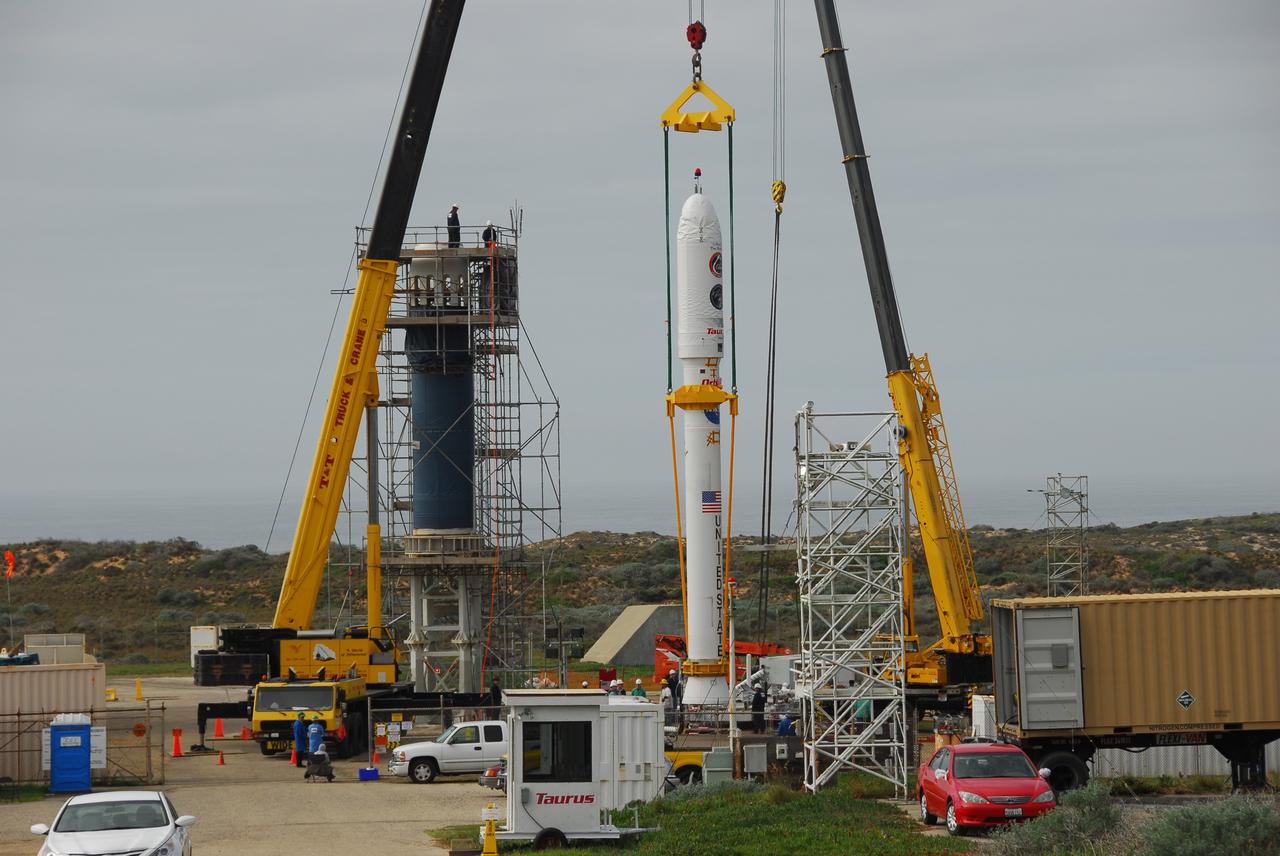
VANDENBERG AIR FORCE BASE, Calif. -- On Space Launch Complex 576-E at Vandenberg Air Force Base in California, Orbital Sciences workers monitor NASA's Glory upper stack as a crane lifts it from a stationary rail for attachment to the Taurus XL rocket's Stage 0. The upper stack consists of Stages 1, 2 and 3 of the Taurus as well as the encapsulated Glory spacecraft. The Orbital Sciences Taurus XL rocket will launch Glory into low Earth orbit. Once Glory reaches orbit, it will collect data on the properties of aerosols and black carbon. It also will help scientists understand how the sun's irradiance affects Earth's climate. Launch is scheduled for 5:09 a.m. EST Feb. 23. For information, visit www.nasa.gov/glory. Photo credit: NASA/VAFB
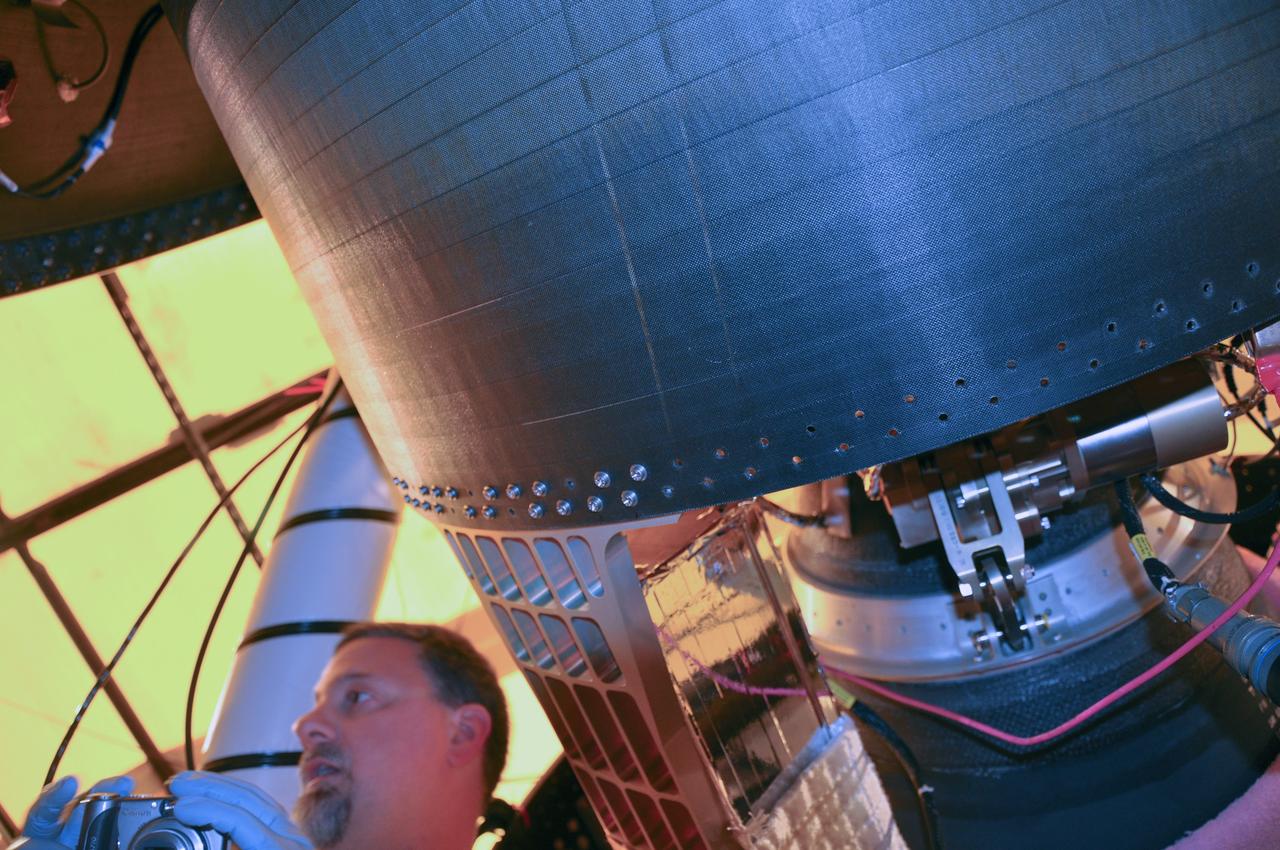
VANDENBERG AIR FORCE BASE, Calif. -- At Space Launch Complex 576-E at Vandenberg Air Force Base in California, the Poly Picosatellite Orbital Deployer, or P-POD, assembly has been installed to the aft end of the Taurus rocket's third stage using the Anodized gold aluminum bracket interface. The P-POD holds three CubeSats or tiny satellites, designed and created by university and college students that will be carried on the Taurus rocket along with the Glory spacecraft. The Orbital Sciences Corp. Taurus XL rocket will carry Glory into low Earth orbit. Once Glory reaches orbit, it will collect data on the properties of aerosols and black carbon. It also will help scientists understand how the sun's irradiance affects Earth's climate. Launch is scheduled for 5:09 a.m. EST Feb. 23. For information, visit www.nasa.gov/glory. Photo credit: NASA/Randy Beaudoin, VAFB
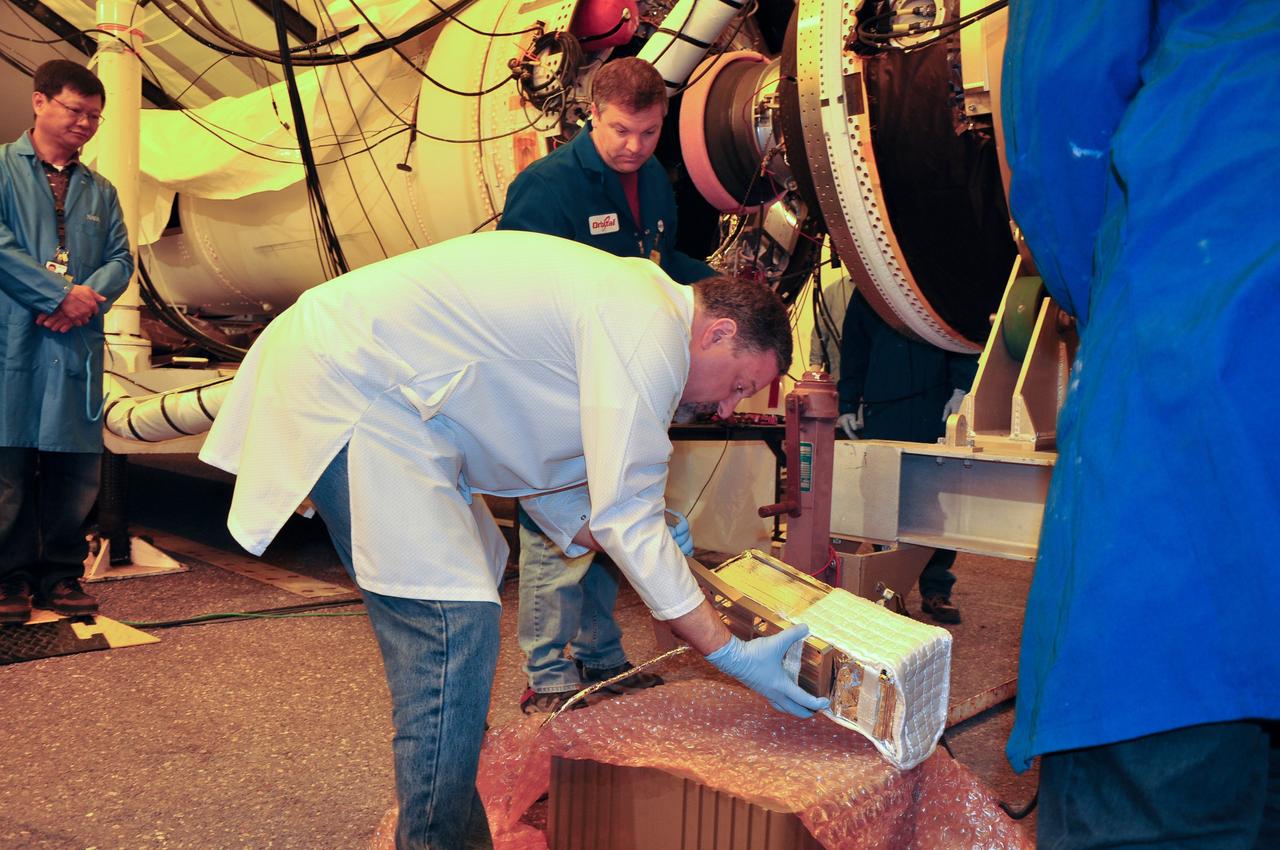
VANDENBERG AIR FORCE BASE, Calif. -- At Space Launch Complex 576-E at Vandenberg Air Force Base in California, a technician lifts the Poly Picosatellite Orbital Deployer, or P-POD, assembly by the Anodized gold aluminum bracket interface. The bracket is the connection point between the P-POD and the aft end of the Taurus rocket's third stage. The P-POD holds three CubeSats or tiny satellites, designed and created by university and college students that will be carried on the Taurus rocket along with the Glory spacecraft. The Orbital Sciences Corp. Taurus XL rocket will carry Glory into low Earth orbit. Once Glory reaches orbit, it will collect data on the properties of aerosols and black carbon. It also will help scientists understand how the sun's irradiance affects Earth's climate. Launch is scheduled for 5:09 a.m. EST Feb. 23. For information, visit www.nasa.gov/glory. Photo credit: NASA/Randy Beaudoin, VAFB
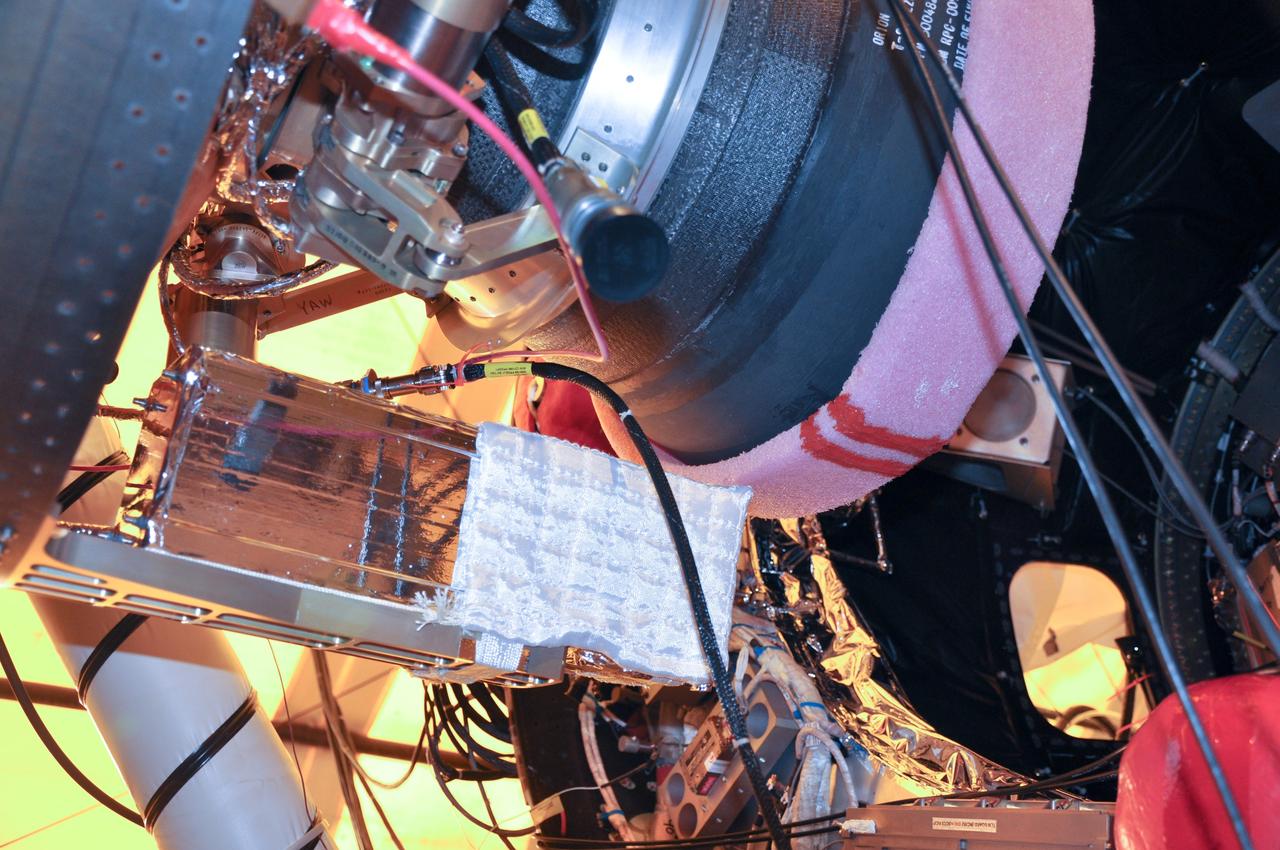
VANDENBERG AIR FORCE BASE, Calif. -- At Space Launch Complex 576-E at Vandenberg Air Force Base in California, the Poly Picosatellite Orbital Deployer, or P-POD, assembly has been installed to the aft end of the Taurus rocket's third stage using the Anodized gold aluminum bracket interface. The P-POD holds three CubeSats or tiny satellites, designed and created by university and college students that will be carried on the Taurus rocket along with the Glory spacecraft. The Orbital Sciences Corp. Taurus XL rocket will carry Glory into low Earth orbit. Once Glory reaches orbit, it will collect data on the properties of aerosols and black carbon. It also will help scientists understand how the sun's irradiance affects Earth's climate. Launch is scheduled for 5:09 a.m. EST Feb. 23. For information, visit www.nasa.gov/glory. Photo credit: NASA/Randy Beaudoin, VAFB
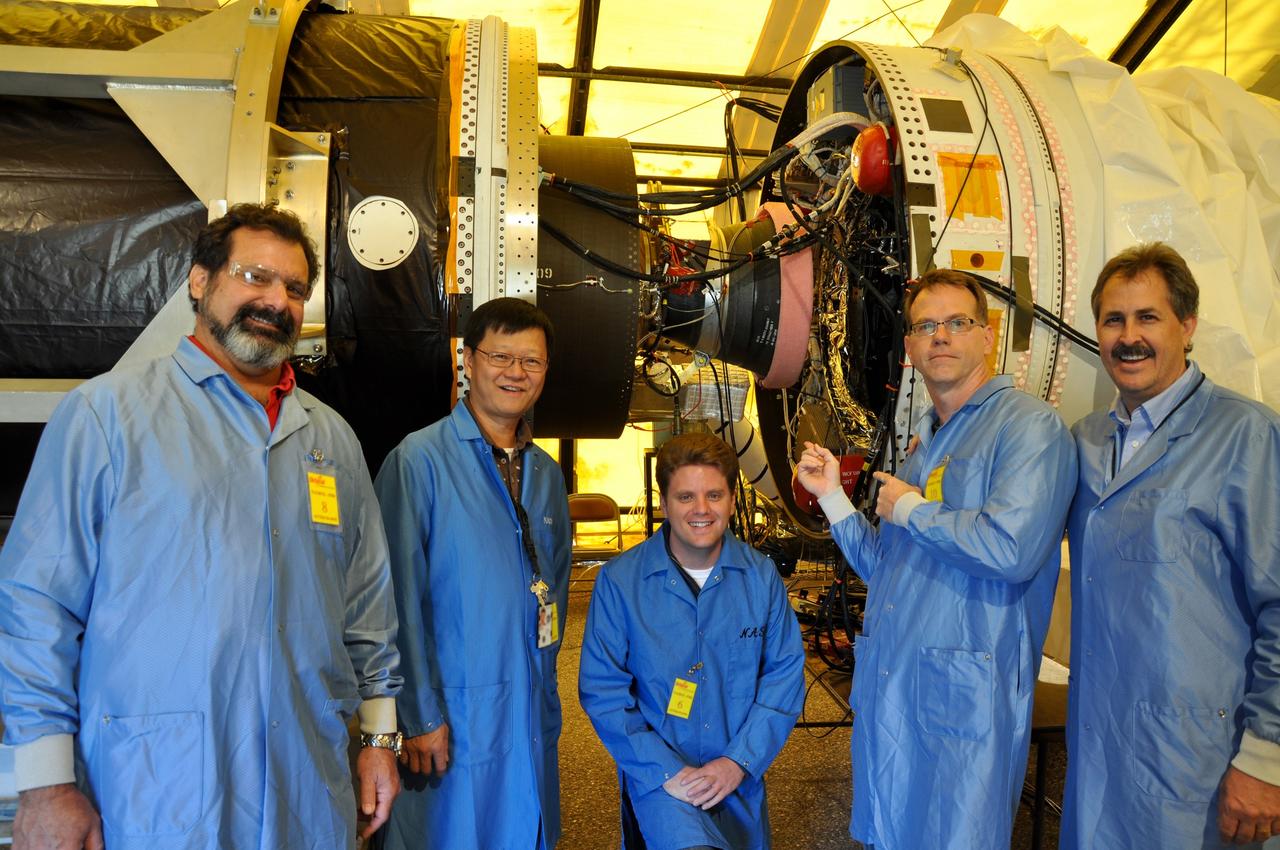
VANDENBERG AIR FORCE BASE, Calif. -- At Space Launch Complex 576-E at Vandenberg Air Force Base in California, the engineering team that installed the Poly Picosatellite Orbital Deployer, or P-POD, assembly to the Taurus rocket's third stage pose for a photo opportunity. From left to right are Kevin Harrington, Cuong Nguyen, Ryan Nugent, Richard Nielsen and Larry Fineberg. The P-POD holds three CubeSats or tiny satellites, designed and created by university and college students that will be carried on the Taurus rocket along with the Glory spacecraft. The Orbital Sciences Corp. Taurus XL rocket will carry Glory into low Earth orbit. Once Glory reaches orbit, it will collect data on the properties of aerosols and black carbon. It also will help scientists understand how the sun's irradiance affects Earth's climate. Launch is scheduled for 5:09 a.m. EST Feb. 23. For information, visit www.nasa.gov/glory. Photo credit: NASA/Randy Beaudoin, VAFB
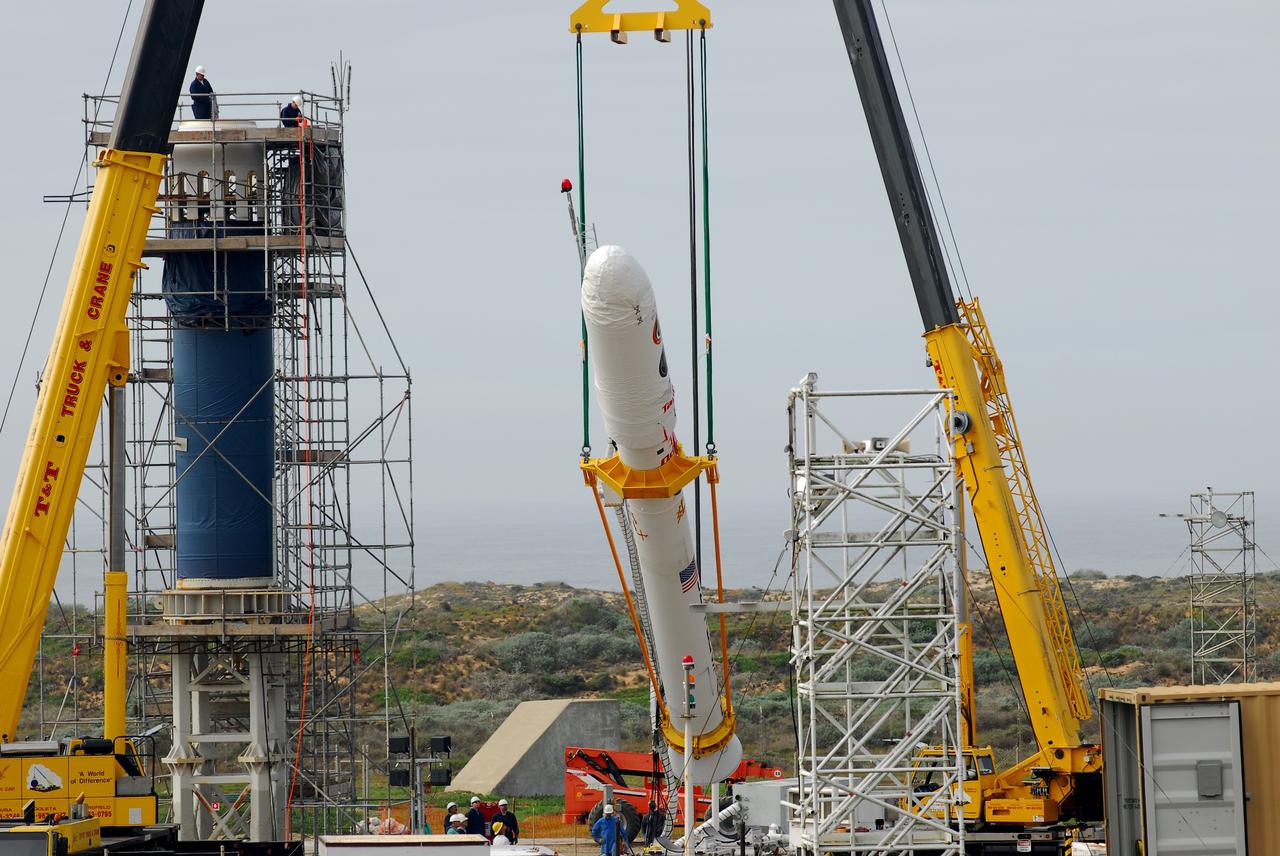
VANDENBERG AIR FORCE BASE, Calif. -- On Space Launch Complex 576-E at Vandenberg Air Force Base in California, Orbital Sciences workers monitor NASA's Glory upper stack as a crane lifts it from a stationary rail for attachment to the Taurus XL rocket's Stage 0. The upper stack consists of Stages 1, 2 and 3 of the Taurus as well as the encapsulated Glory spacecraft. The Orbital Sciences Taurus XL rocket will launch Glory into low Earth orbit. Once Glory reaches orbit, it will collect data on the properties of aerosols and black carbon. It also will help scientists understand how the sun's irradiance affects Earth's climate. Launch is scheduled for 5:09 a.m. EST Feb. 23. For information, visit www.nasa.gov/glory. Photo credit: NASA/VAFB
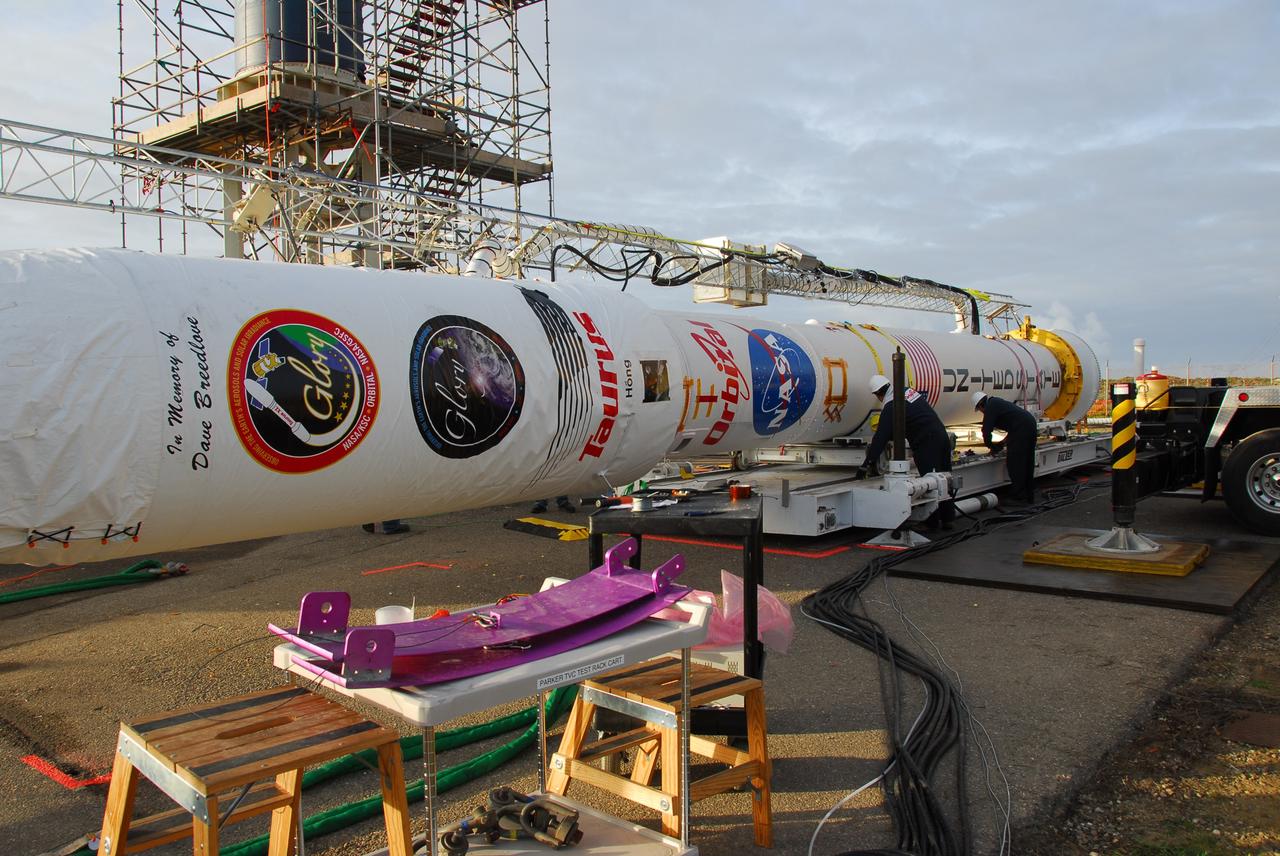
VANDENBERG AIR FORCE BASE, Calif. -- On Space Launch Complex 576-E at Vandenberg Air Force Base in California, Orbital Sciences workers prepare NASA's Glory upper stack for attachment to the Taurus XL rocket's Stage 0. The upper stack consists of Stages 1, 2 and 3 of the Taurus as well as the encapsulated Glory spacecraft. The Orbital Sciences Taurus XL rocket will launch Glory into low Earth orbit. Once Glory reaches orbit, it will collect data on the properties of aerosols and black carbon. It also will help scientists understand how the sun's irradiance affects Earth's climate. Launch is scheduled for 5:09 a.m. EST Feb. 23. For information, visit www.nasa.gov/glory. Photo credit: NASA/VAFB
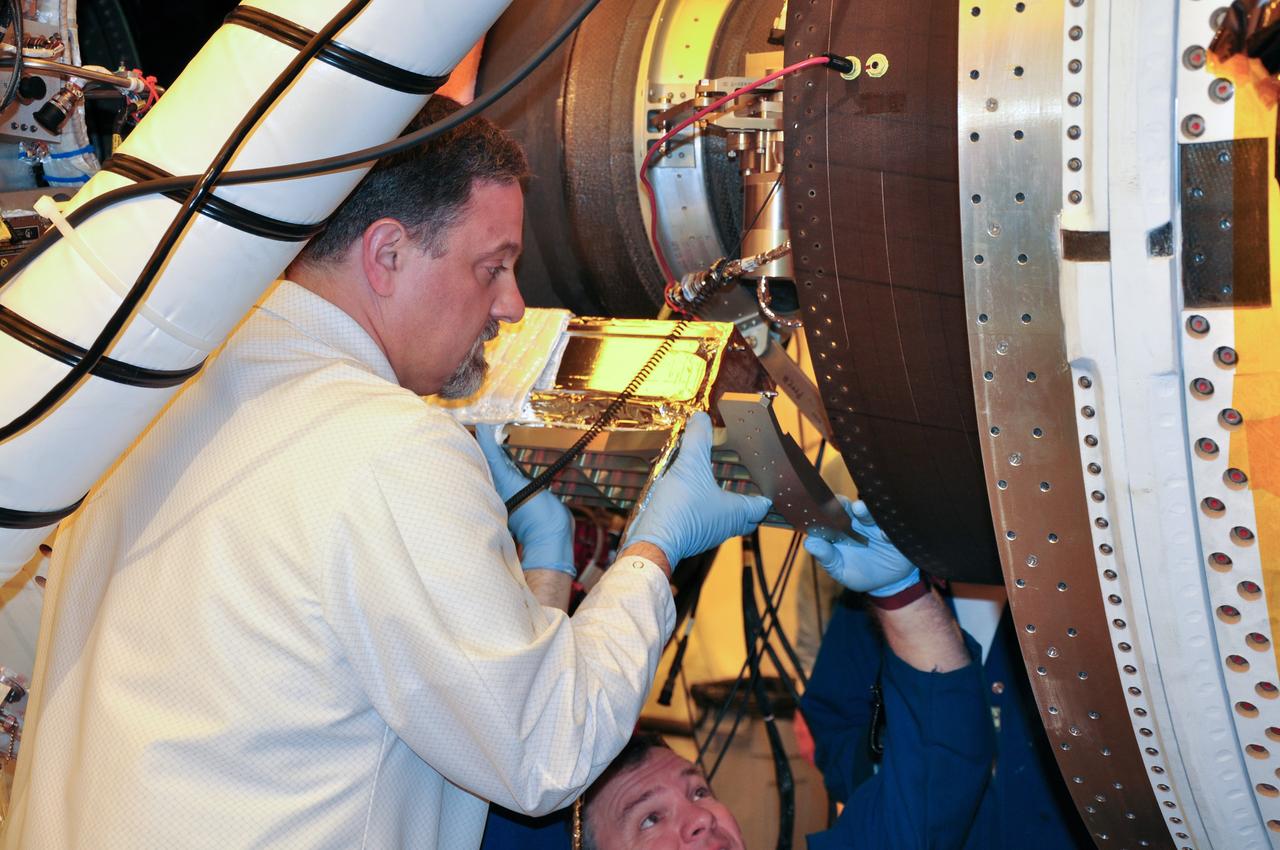
VANDENBERG AIR FORCE BASE, Calif. -- At Space Launch Complex 576-E at Vandenberg Air Force Base in California, technicians install the Poly Picosatellite Orbital Deployer, or P-POD, assembly to the aft end of the Taurus rocket's third stage. The P-POD holds three CubeSats or tiny satellites, designed and created by university and college students that will be carried on the Taurus rocket along with the Glory spacecraft. The Orbital Sciences Corp. Taurus XL rocket will carry Glory into low Earth orbit. Once Glory reaches orbit, it will collect data on the properties of aerosols and black carbon. It also will help scientists understand how the sun's irradiance affects Earth's climate. Launch is scheduled for 5:09 a.m. EST Feb. 23. For information, visit www.nasa.gov/glory. Photo credit: NASA/Randy Beaudoin, VAFB
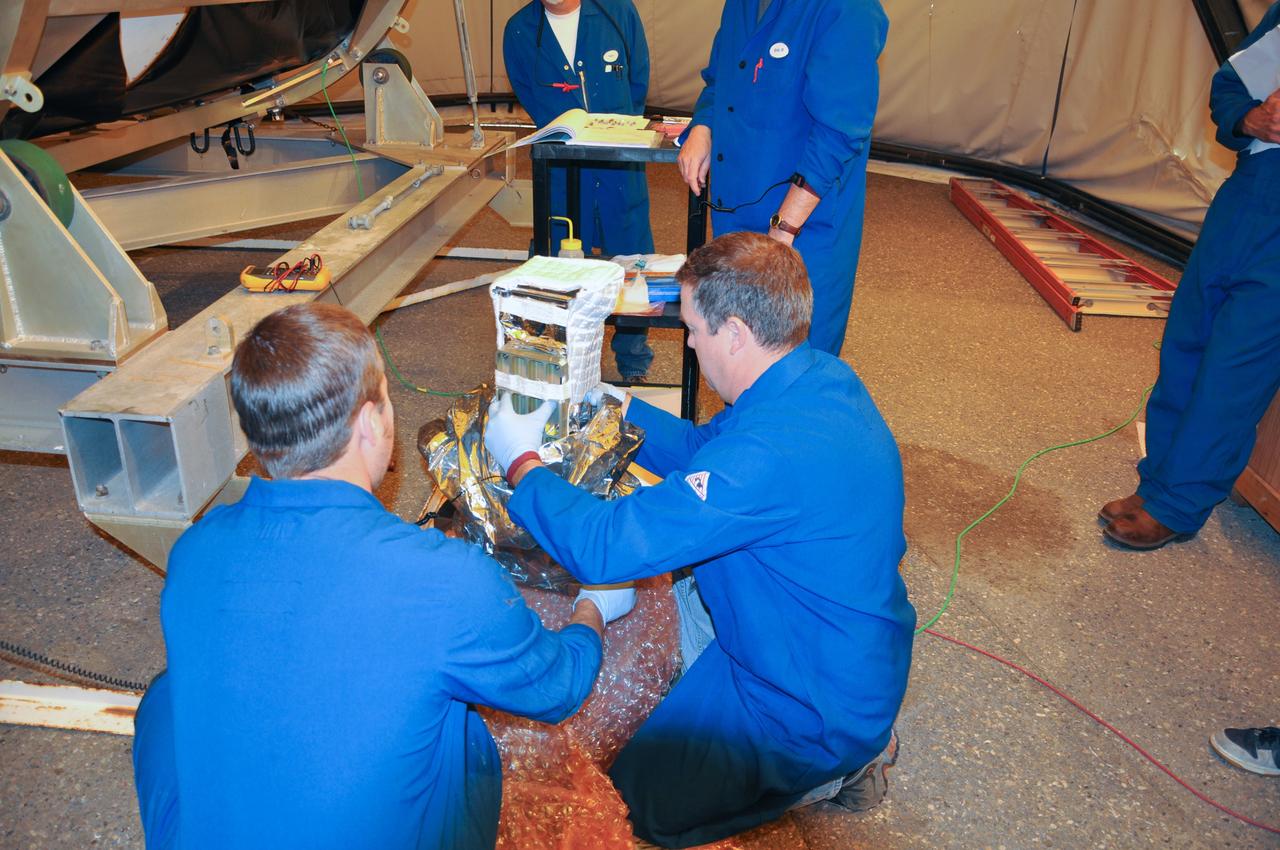
VANDENBERG AIR FORCE BASE, Calif. -- At Space Launch Complex 576-E at Vandenberg Air Force Base in California, technicians unwrap the Poly Picosatellite Orbital Deployer, or P-POD, assembly before installation to the aft end of the Taurus rocket's third stage. The P-POD holds three CubeSats or tiny satellites, designed and created by university and college students that will be carried on the Taurus rocket along with the Glory spacecraft. The Orbital Sciences Corp. Taurus XL rocket will carry Glory into low Earth orbit. Once Glory reaches orbit, it will collect data on the properties of aerosols and black carbon. It also will help scientists understand how the sun's irradiance affects Earth's climate. Launch is scheduled for 5:09 a.m. EST Feb. 23. For information, visit www.nasa.gov/glory. Photo credit: NASA/Randy Beaudoin, VAFB
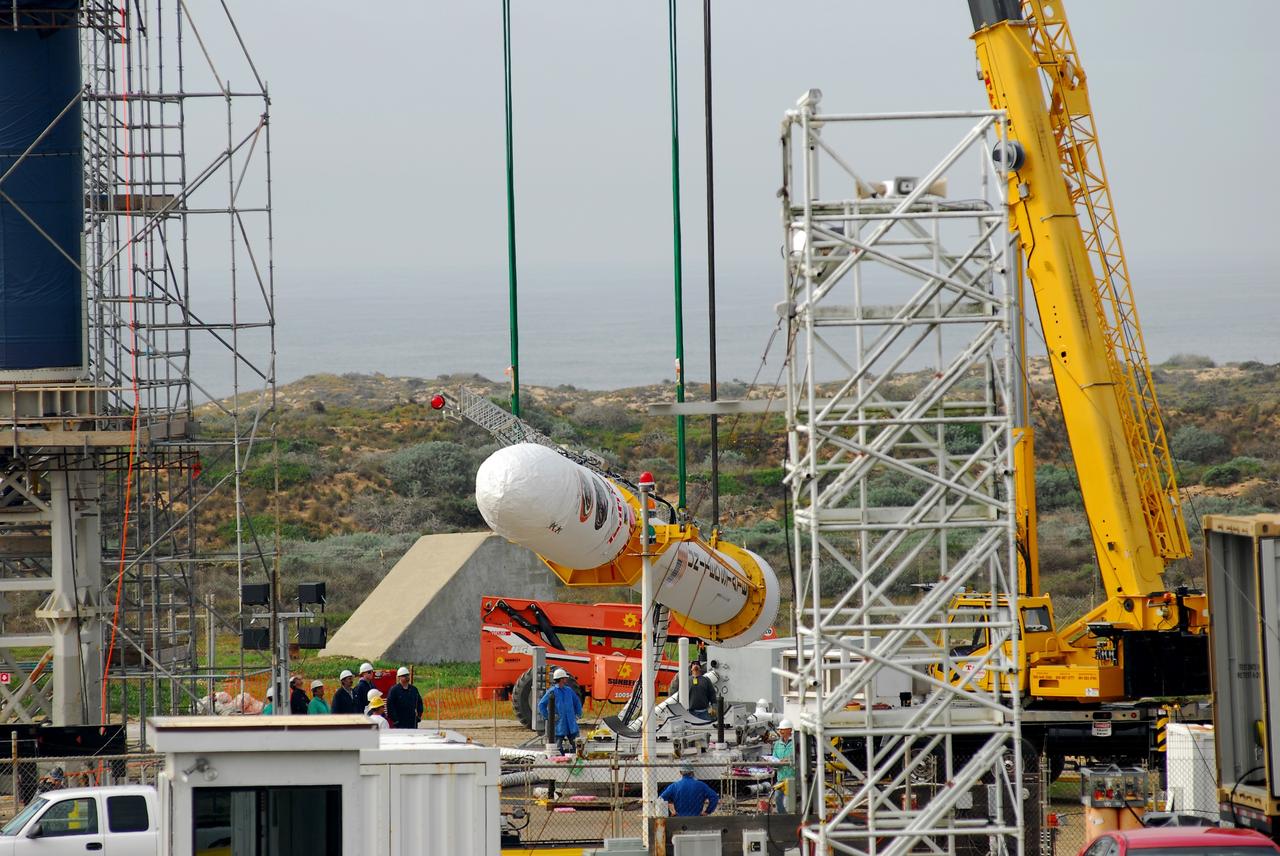
VANDENBERG AIR FORCE BASE, Calif. -- On Space Launch Complex 576-E at Vandenberg Air Force Base in California, Orbital Sciences workers monitor NASA's Glory upper stack as a crane lifts it from a stationary rail for attachment to the Taurus XL rocket's Stage 0. The upper stack consists of Stages 1, 2 and 3 of the Taurus as well as the encapsulated Glory spacecraft. The Orbital Sciences Taurus XL rocket will launch Glory into low Earth orbit. Once Glory reaches orbit, it will collect data on the properties of aerosols and black carbon. It also will help scientists understand how the sun's irradiance affects Earth's climate. Launch is scheduled for 5:09 a.m. EST Feb. 23. For information, visit www.nasa.gov/glory. Photo credit: NASA/VAFB
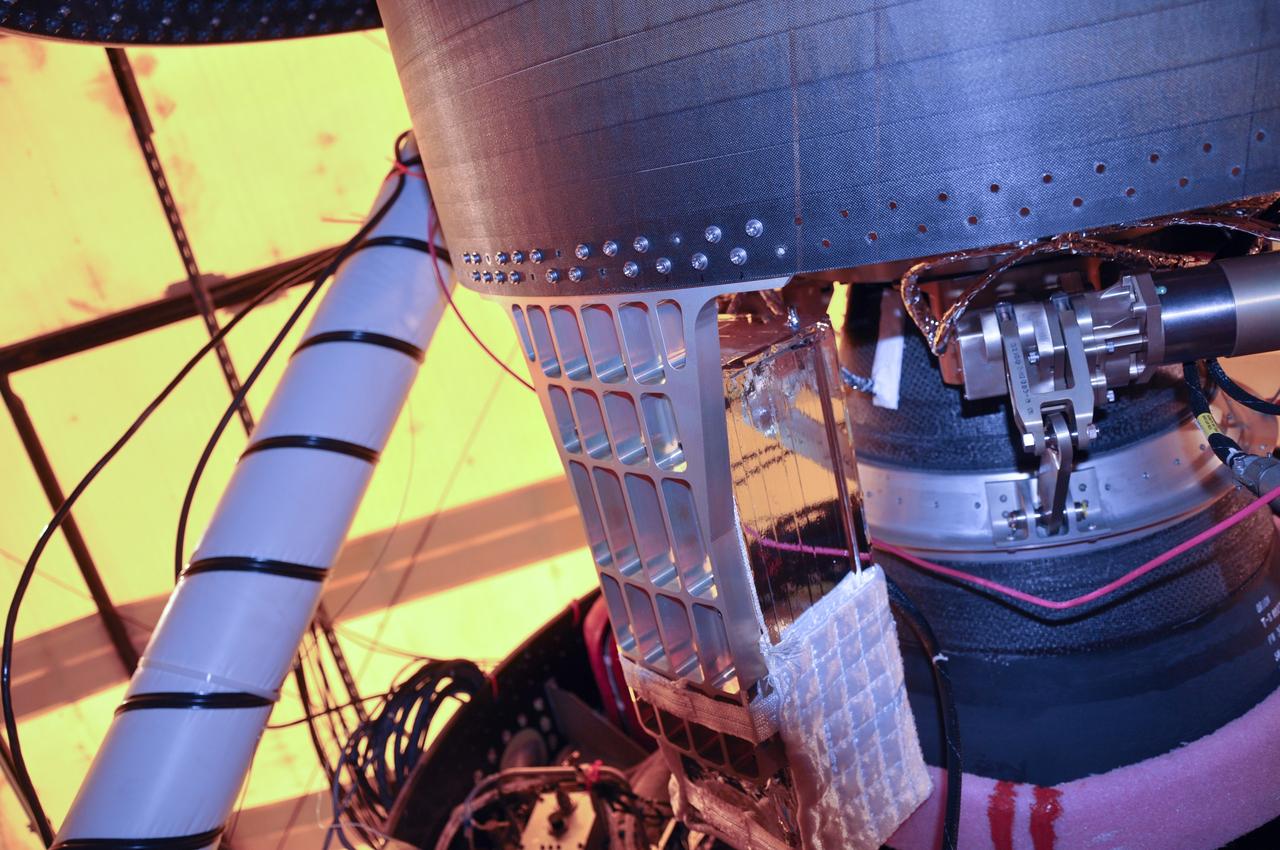
VANDENBERG AIR FORCE BASE, Calif. -- At Space Launch Complex 576-E at Vandenberg Air Force Base in California, the Poly Picosatellite Orbital Deployer, or P-POD, assembly has been installed to the aft end of the Taurus rocket's third stage using the Anodized gold aluminum bracket interface. The P-POD holds three CubeSats or tiny satellites, designed and created by university and college students that will be carried on the Taurus rocket along with the Glory spacecraft. The Orbital Sciences Corp. Taurus XL rocket will carry Glory into low Earth orbit. Once Glory reaches orbit, it will collect data on the properties of aerosols and black carbon. It also will help scientists understand how the sun's irradiance affects Earth's climate. Launch is scheduled for 5:09 a.m. EST Feb. 23. For information, visit www.nasa.gov/glory. Photo credit: NASA/Randy Beaudoin, VAFB
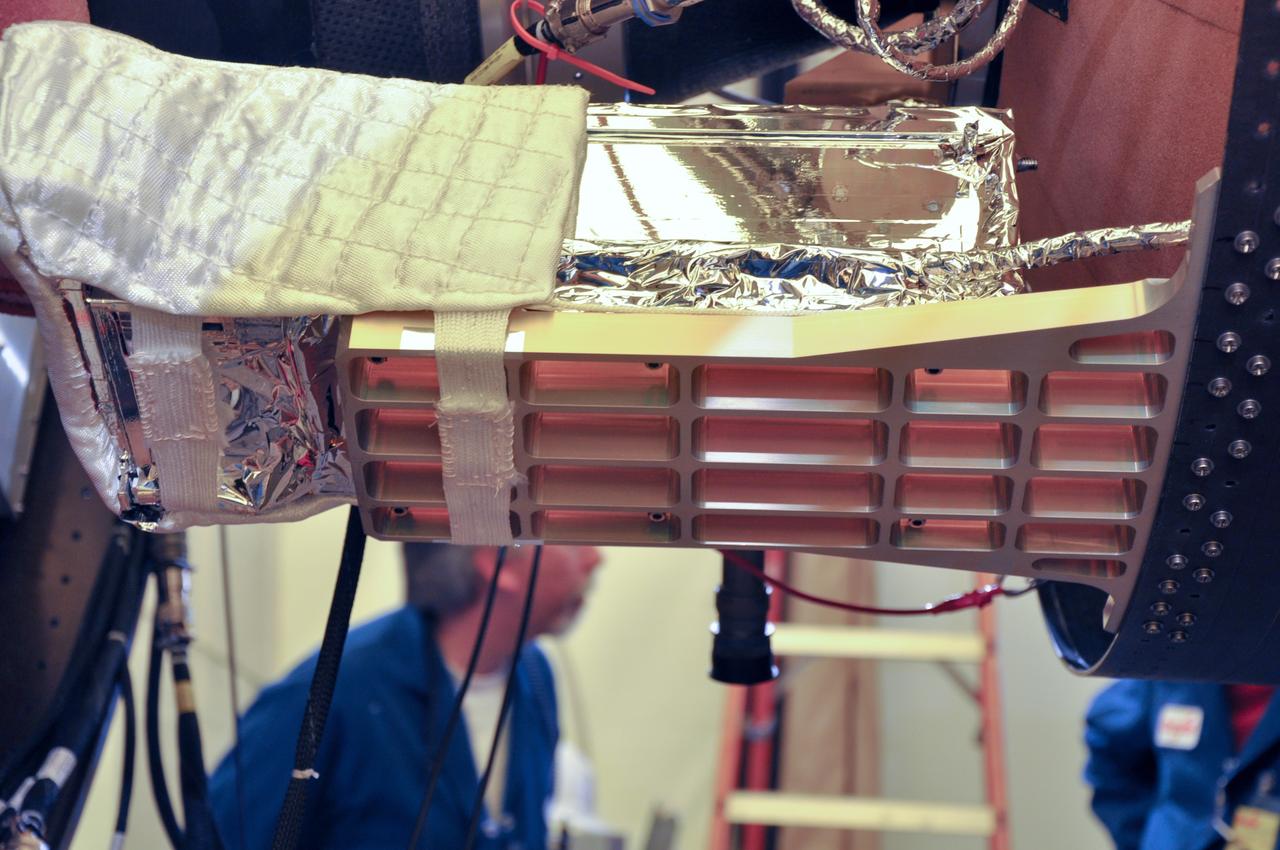
VANDENBERG AIR FORCE BASE, Calif. -- At Space Launch Complex 576-E at Vandenberg Air Force Base in California, the Poly Picosatellite Orbital Deployer, or P-POD, assembly has been installed to the aft end of the Taurus rocket's third stage using the Anodized gold aluminum bracket interface. The P-POD holds three CubeSats or tiny satellites, designed and created by university and college students that will be carried on the Taurus rocket along with the Glory spacecraft. The Orbital Sciences Corp. Taurus XL rocket will carry Glory into low Earth orbit. Once Glory reaches orbit, it will collect data on the properties of aerosols and black carbon. It also will help scientists understand how the sun's irradiance affects Earth's climate. Launch is scheduled for 5:09 a.m. EST Feb. 23. For information, visit www.nasa.gov/glory. Photo credit: NASA/Randy Beaudoin, VAFB
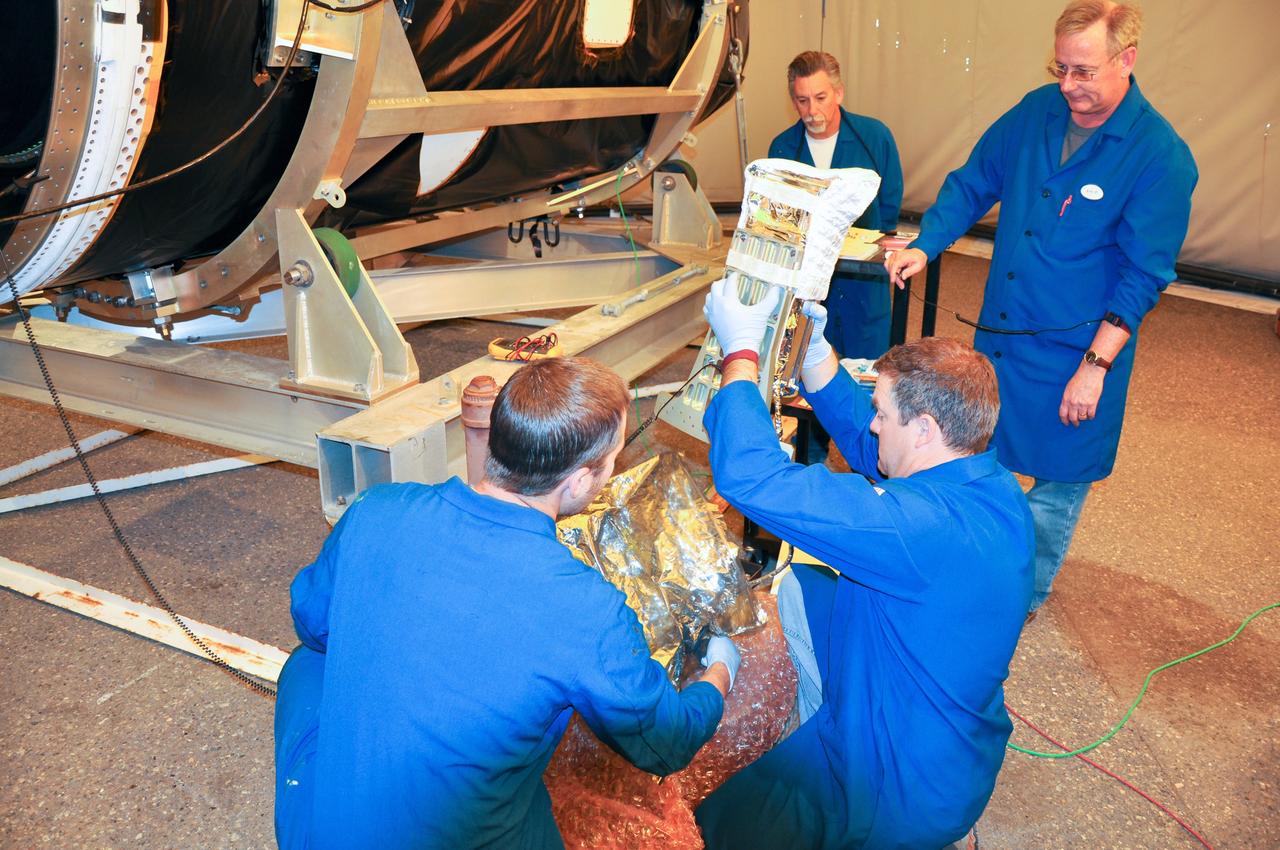
VANDENBERG AIR FORCE BASE, Calif. -- At Space Launch Complex 576-E at Vandenberg Air Force Base in California, technicians carefully lift the Poly Picosatellite Orbital Deployer, or P-POD, assembly out of its wrappings prior to installation to the aft end of the Taurus rocket's third stage. The P-POD holds three CubeSats or tiny satellites, designed and created by university and college students that will be carried on the Taurus rocket along with the Glory spacecraft. The Orbital Sciences Corp. Taurus XL rocket will carry Glory into low Earth orbit. Once Glory reaches orbit, it will collect data on the properties of aerosols and black carbon. It also will help scientists understand how the sun's irradiance affects Earth's climate. Launch is scheduled for 5:09 a.m. EST Feb. 23. For information, visit www.nasa.gov/glory. Photo credit: NASA/Randy Beaudoin, VAFB
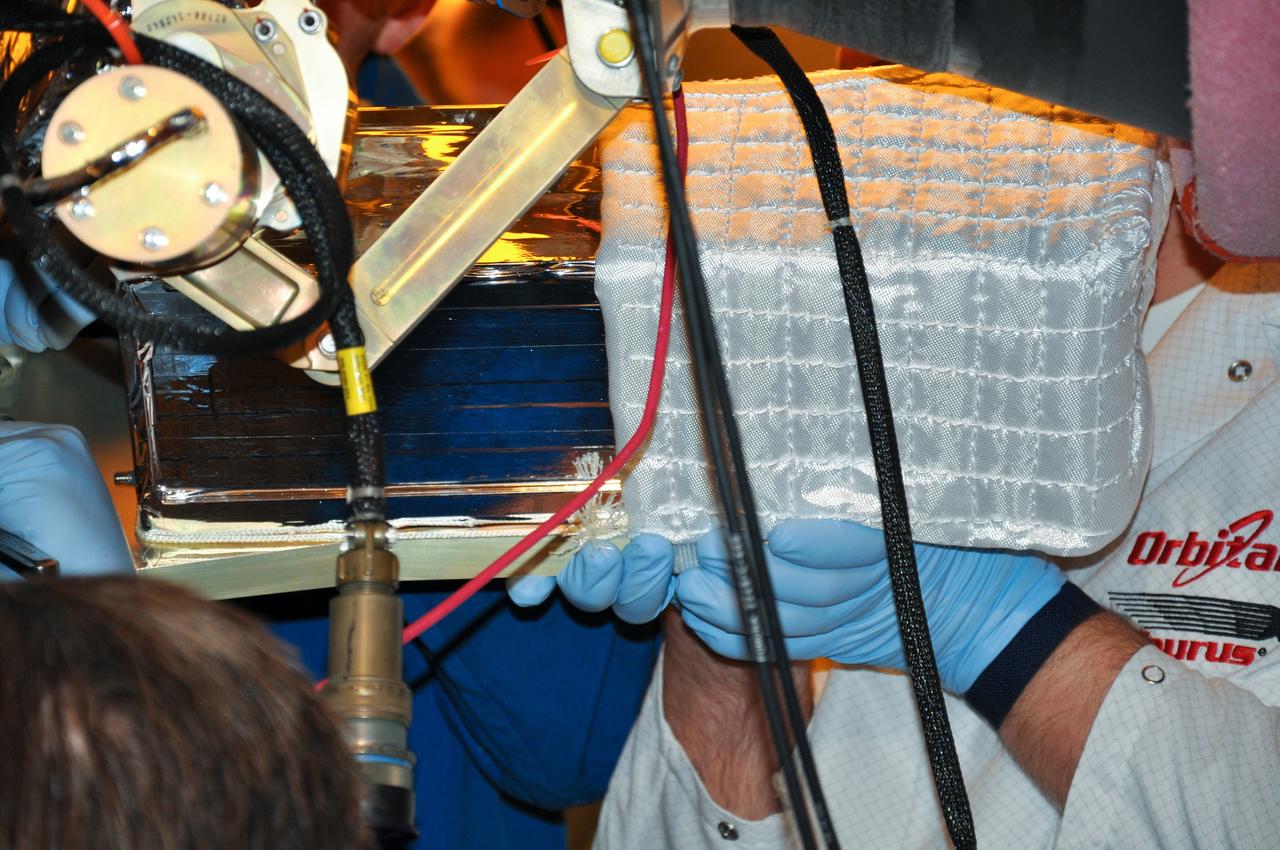
VANDENBERG AIR FORCE BASE, Calif. -- At Space Launch Complex 576-E at Vandenberg Air Force Base in California, technicians install the Poly Picosatellite Orbital Deployer, or P-POD, assembly to the aft end of the Taurus rocket's third stage. The P-POD holds three CubeSats or tiny satellites, designed and created by university and college students that will be carried on the Taurus rocket along with the Glory spacecraft. The Orbital Sciences Corp. Taurus XL rocket will carry Glory into low Earth orbit. Once Glory reaches orbit, it will collect data on the properties of aerosols and black carbon. It also will help scientists understand how the sun's irradiance affects Earth's climate. Launch is scheduled for 5:09 a.m. EST Feb. 23. For information, visit www.nasa.gov/glory. Photo credit: NASA/Randy Beaudoin, VAFB
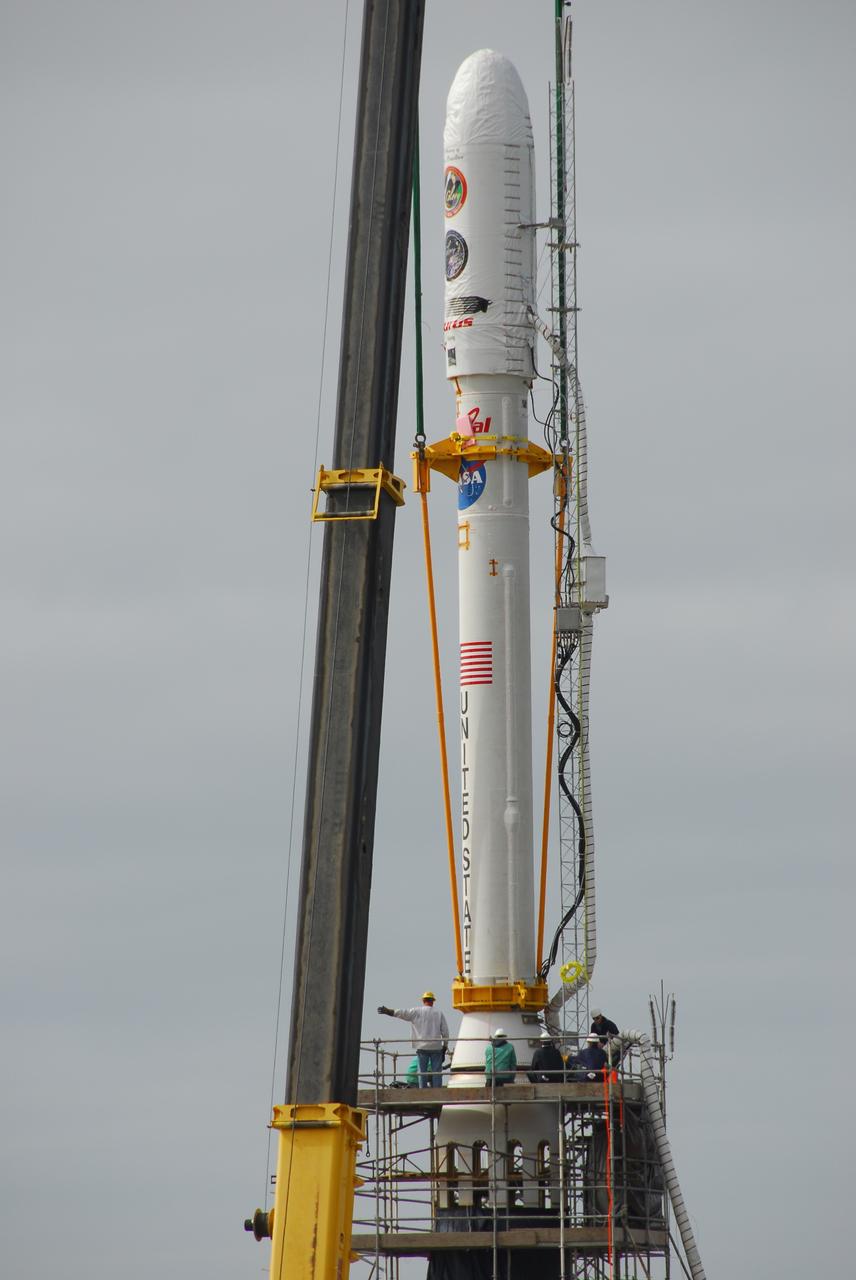
VANDENBERG AIR FORCE BASE, Calif. -- On Space Launch Complex 576-E at Vandenberg Air Force Base in California, a crane lowers NASA's Glory upper stack toward the Taurus XL rocket's Stage 0. The upper stack consists of Stages 1, 2 and 3 of the Taurus as well as the encapsulated Glory spacecraft. The Orbital Sciences Taurus XL rocket will launch Glory into low Earth orbit. Once Glory reaches orbit, it will collect data on the properties of aerosols and black carbon. It also will help scientists understand how the sun's irradiance affects Earth's climate. Launch is scheduled for 5:09 a.m. EST Feb. 23. For information, visit www.nasa.gov/glory. Photo credit: NASA/VAFB
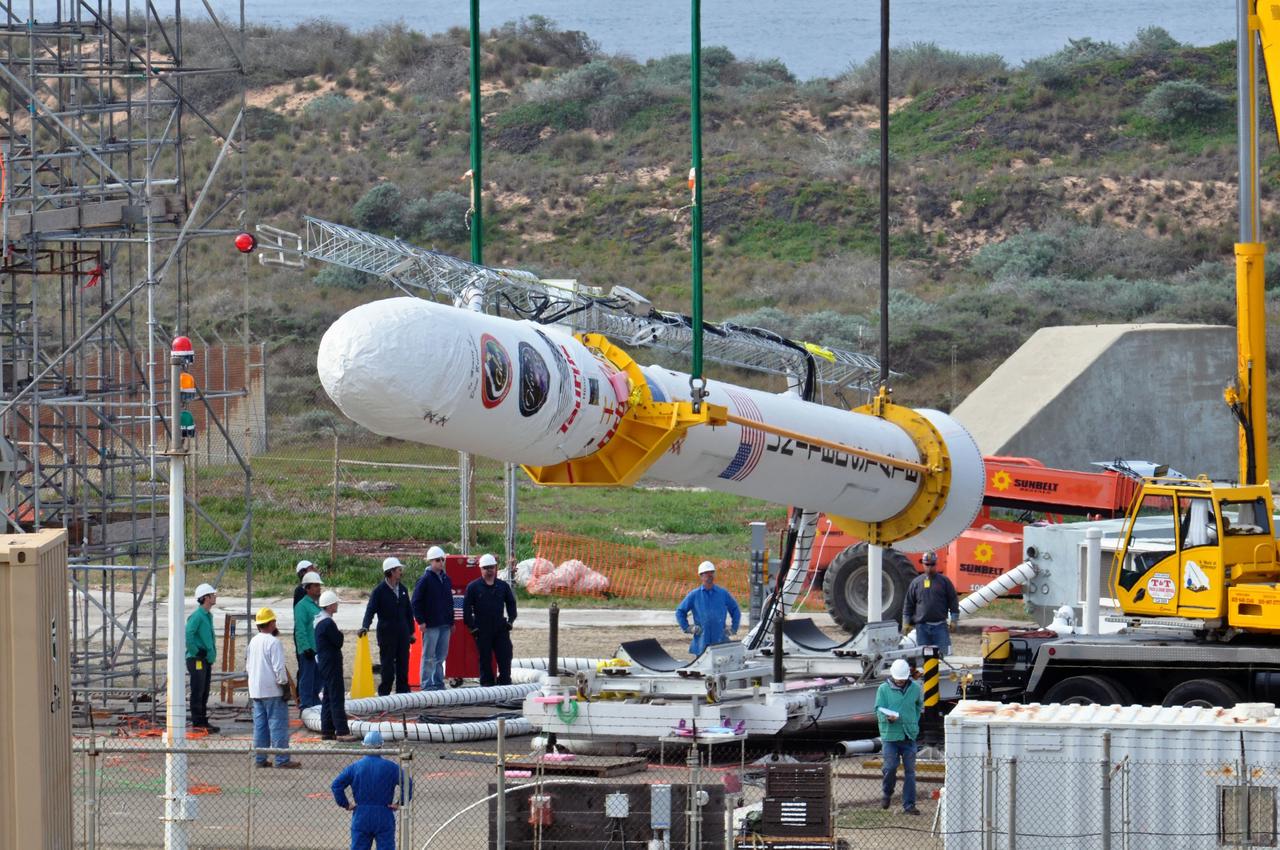
VANDENBERG AIR FORCE BASE, Calif. -- On Space Launch Complex 576-E at Vandenberg Air Force Base in California, Orbital Sciences workers monitor NASA's Glory upper stack as a crane lifts it from a stationary rail for attachment to the Taurus XL rocket's Stage 0. The upper stack consists of Stages 1, 2 and 3 of the Taurus as well as the encapsulated Glory spacecraft. Workers put the non-flight environmental shield over the fairing prior to assembly. A portion of the umbilical tower is attached to the upper stack which falls away from the spacecraft during liftoff. The Orbital Sciences Taurus XL rocket will launch Glory into low Earth orbit. Once Glory reaches orbit, it will collect data on the properties of aerosols and black carbon. It also will help scientists understand how the sun's irradiance affects Earth's climate. Launch is scheduled for 5:09 a.m. EST Feb. 23. For information, visit www.nasa.gov/glory. Photo credit: NASA/Randy Beaudoin, VAFB
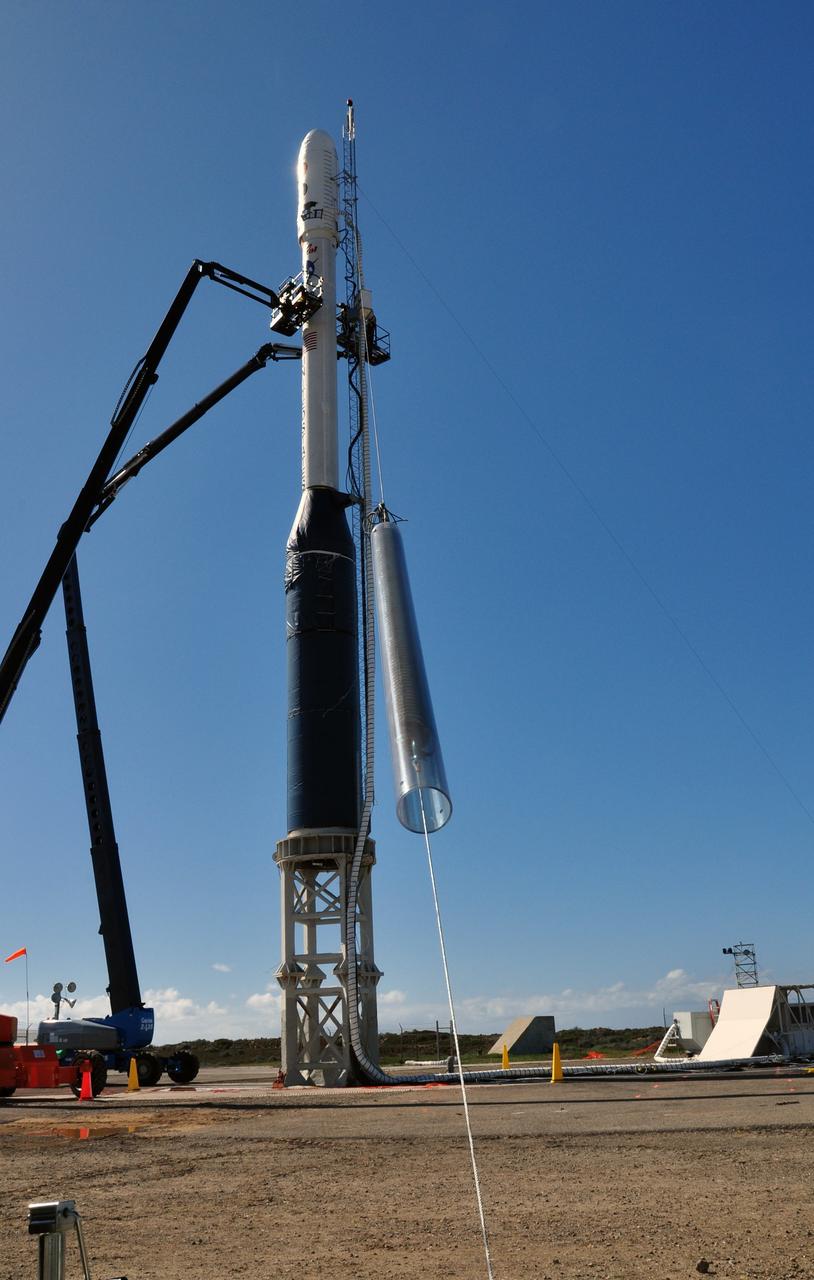
VANDENBERG AIR FORCE BASE, Calif. -- On Space Launch Complex 576-E at Vandenberg Air Force Base in California, workers install one of the two umbilical tower guy wires and springs as part of closeout procedures on the Taurus XL rocket in preparation for launch. The umbilical tower attached to the upper stack will fall away from the spacecraft during liftoff. The Orbital Sciences Taurus XL rocket will launch Glory into low Earth orbit. Once Glory reaches orbit, it will collect data on the properties of aerosols and black carbon. It also will help scientists understand how the sun's irradiance affects Earth's climate. Launch is scheduled for 5:09 a.m. EST Feb. 23. For information, visit www.nasa.gov/glory. Photo credit: NASA/Randy Beaudoin, VAFB
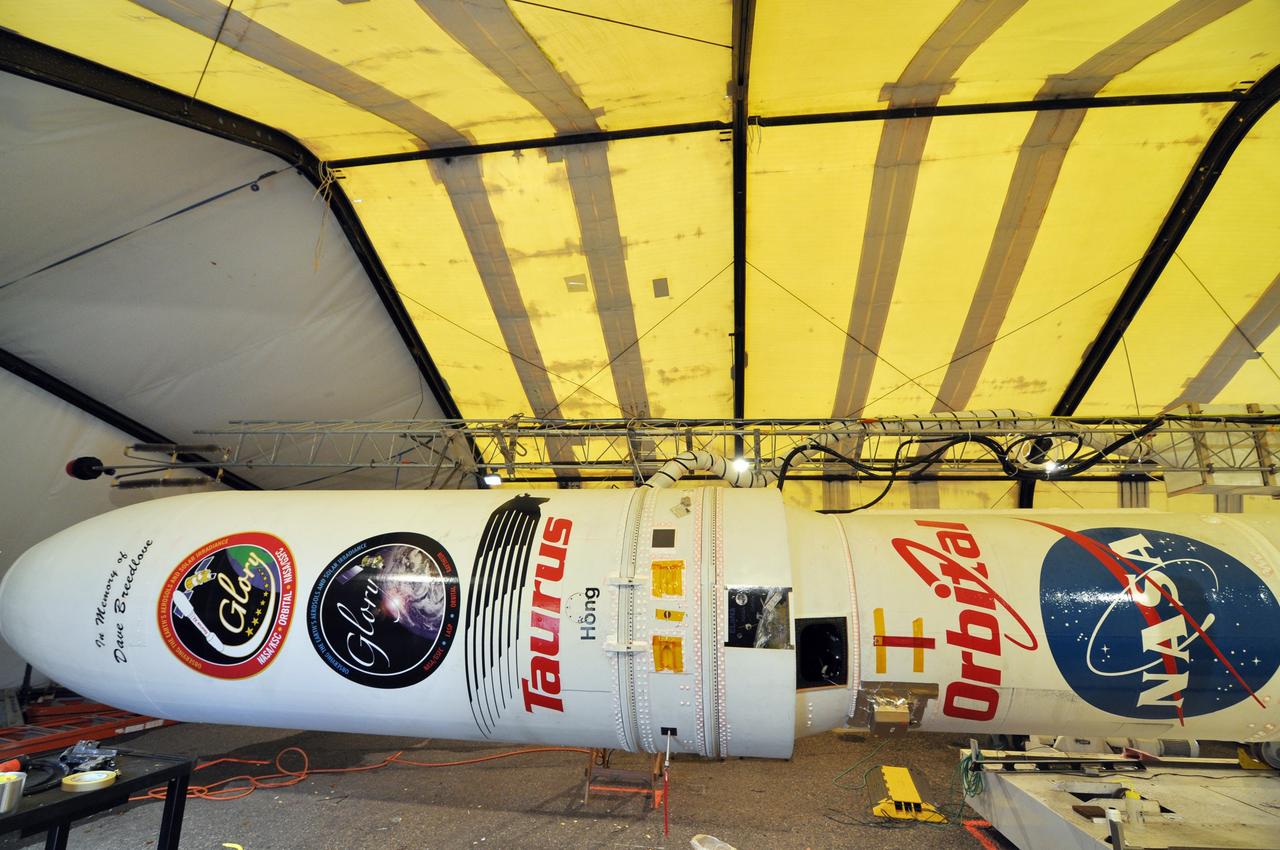
VANDENBERG AIR FORCE BASE, Calif. -- At Space Launch Complex 576-E at Vandenberg Air Force Base in California, NASA's Glory spacecraft, integrated with the upper stack of the Taurus rocket, displays mission decals including one in remembrance of Dave Breedlove who was a mission manager and long-time member of the Launch Services Program team. The vehicle is dedicated to his memory. The Orbital Sciences Corp. Taurus XL rocket will launch Glory into low Earth orbit. Once Glory reaches orbit, it will collect data on the properties of aerosols and black carbon. It also will help scientists understand how the sun's irradiance affects Earth's climate. Launch is scheduled for 5:09 a.m. EST Feb. 23. For information, visit www.nasa.gov/glory. Photo credit: NASA/Randy Beaudoin, VAFB

VANDENBERG AIR FORCE BASE, Calif. -- At Space Launch Complex 576-E at Vandenberg Air Force Base in California, NASA's Glory spacecraft, integrated with the upper stack of the Taurus rocket, displays mission decals including one in remembrance of Dave Breedlove who was a mission manager and long-time member of the Launch Services Program team. The vehicle is dedicated to his memory. The Orbital Sciences Corp. Taurus XL rocket will launch Glory into low Earth orbit. Once Glory reaches orbit, it will collect data on the properties of aerosols and black carbon. It also will help scientists understand how the sun's irradiance affects Earth's climate. Launch is scheduled for 5:09 a.m. EST Feb. 23. For information, visit www.nasa.gov/glory. Photo credit: NASA/Randy Beaudoin, VAFB
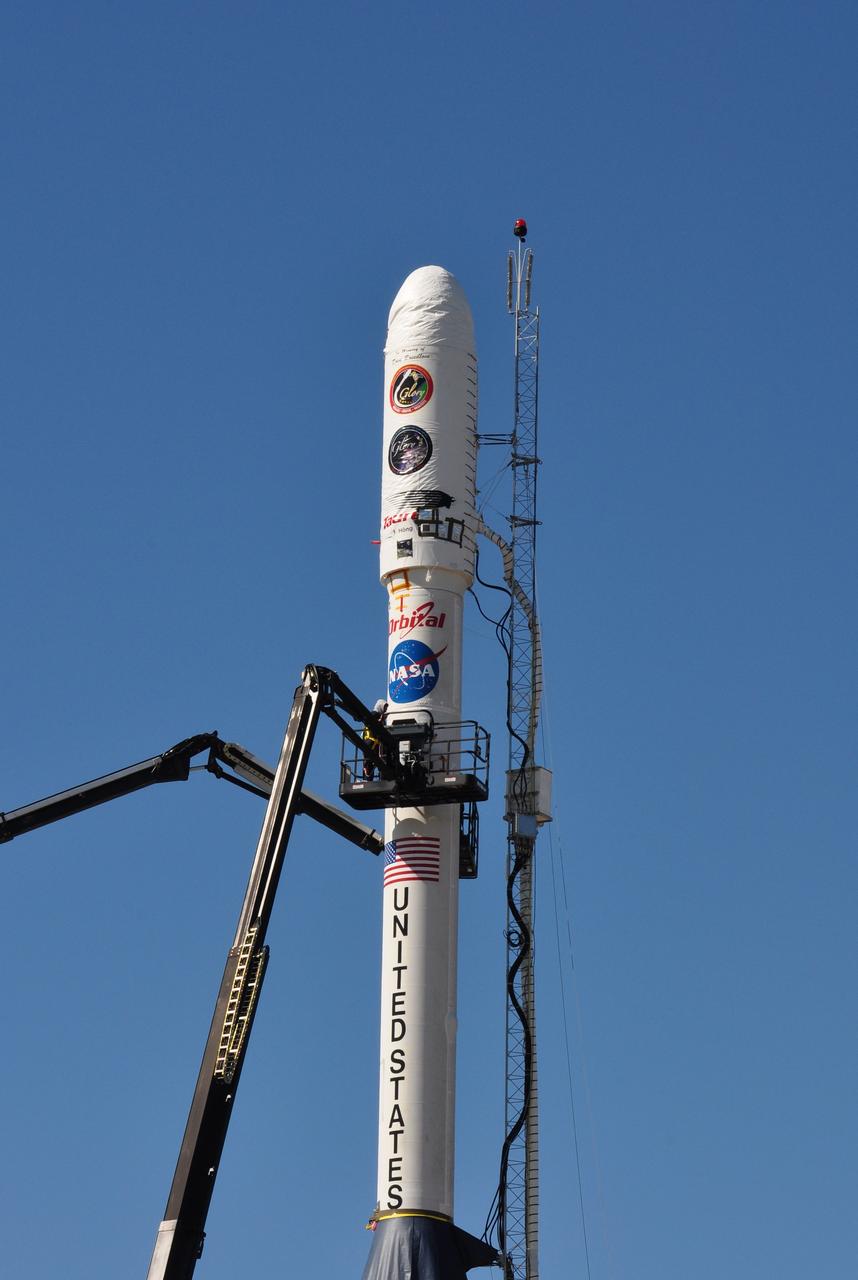
VANDENBERG AIR FORCE BASE, Calif. -- On Space Launch Complex 576-E at Vandenberg Air Force Base in California, workers in a bucket conduct closeout procedures on the Taurus XL rocket in preparations for liftoff. Around the spacecraft's fairing, at top, is the non-flight environmental shield that will be removed before launch. The Orbital Sciences Taurus XL rocket will launch Glory into low Earth orbit. Once Glory reaches orbit, it will collect data on the properties of aerosols and black carbon. It also will help scientists understand how the sun's irradiance affects Earth's climate. Launch is scheduled for 5:09 a.m. EST Feb. 23. For information, visit www.nasa.gov/glory. Photo credit: NASA/Randy Beaudoin, VAFB
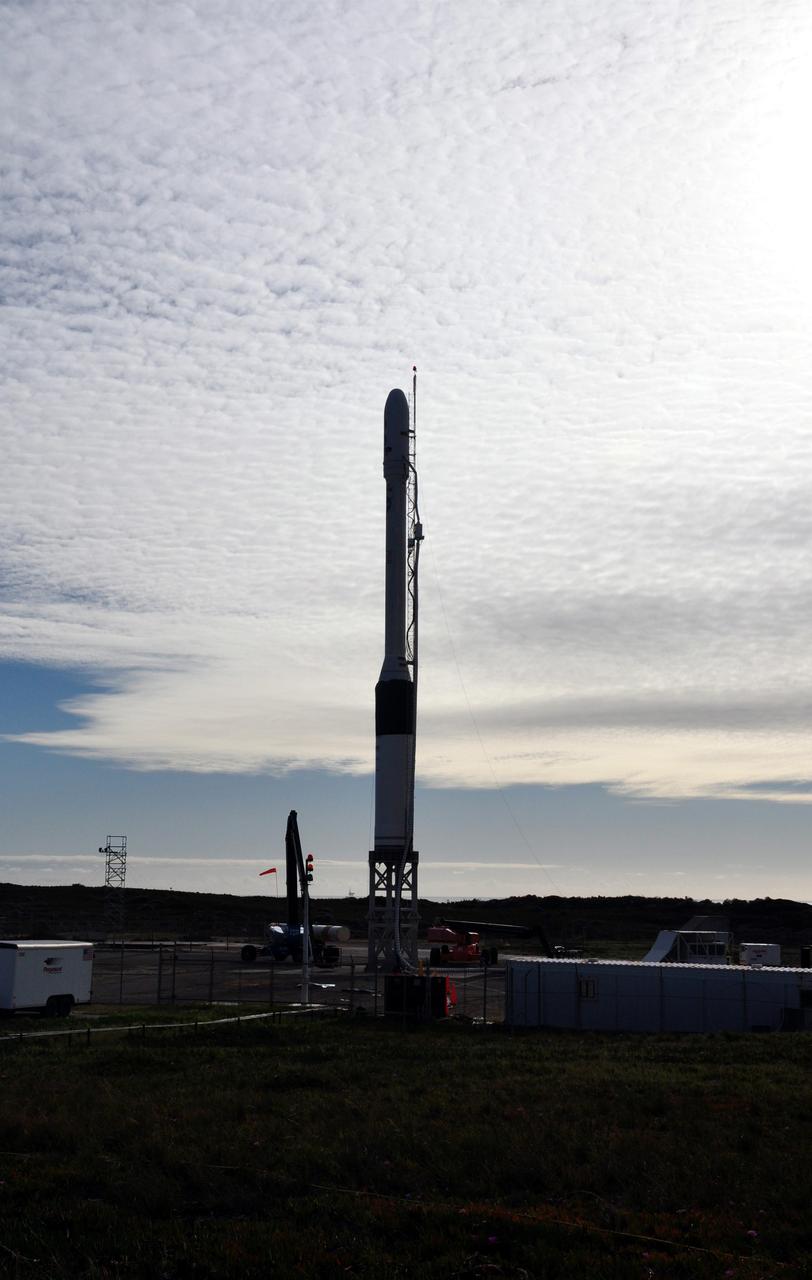
VANDENBERG AIR FORCE BASE, Calif. -- On Space Launch Complex 576-E at Vandenberg Air Force Base in California, the Taurus XL rocket is in its launch configuration. The upper stack, consisting of Stages 1, 2 and 3, as well as the encapsulated Glory spacecraft, is attached to an interstage and Stage 0 at the launch pad. The Orbital Sciences Taurus XL rocket will launch Glory into low Earth orbit. Once Glory reaches orbit, it will collect data on the properties of aerosols and black carbon. It also will help scientists understand how the sun's irradiance affects Earth's climate. Launch is scheduled for 5:09 a.m. EST Feb. 23. For information, visit www.nasa.gov/glory. Photo credit: NASA/Randy Beaudoin, VAFB
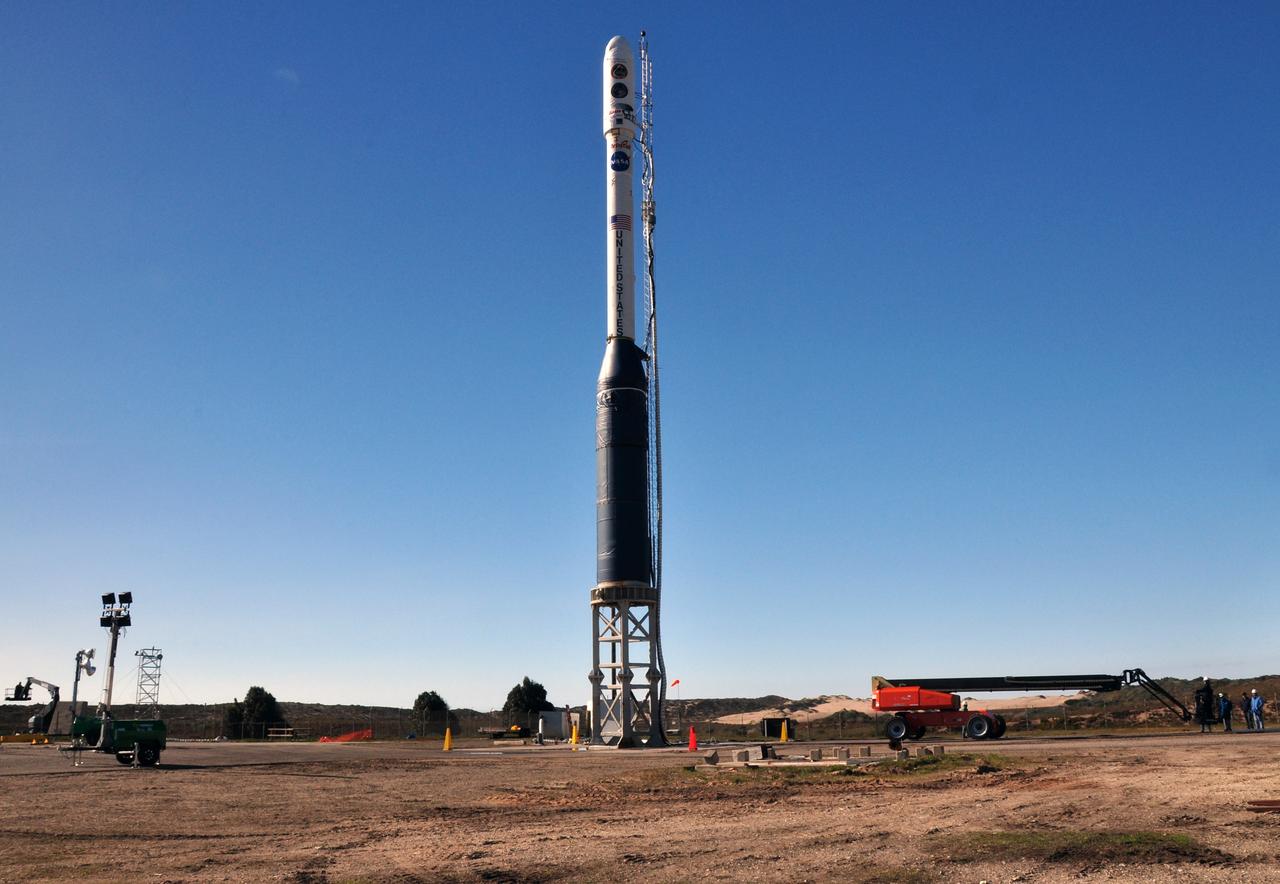
VANDENBERG AIR FORCE BASE, Calif. -- On Space Launch Complex 576-E at Vandenberg Air Force Base in California, the Taurus XL rocket is in its launch configuration. The upper stack, consisting of Stages 1, 2 and 3, as well as the encapsulated Glory spacecraft, is attached to an interstage and Stage 0 at the launch pad. The umbilical tower attached to the upper stack will fall away from the spacecraft during liftoff. The Orbital Sciences Taurus XL rocket will launch Glory into low Earth orbit. Once Glory reaches orbit, it will collect data on the properties of aerosols and black carbon. It also will help scientists understand how the sun's irradiance affects Earth's climate. Launch is scheduled for 5:09 a.m. EST Feb. 23. For information, visit www.nasa.gov/glory. Photo credit: NASA/Randy Beaudoin, VAFB
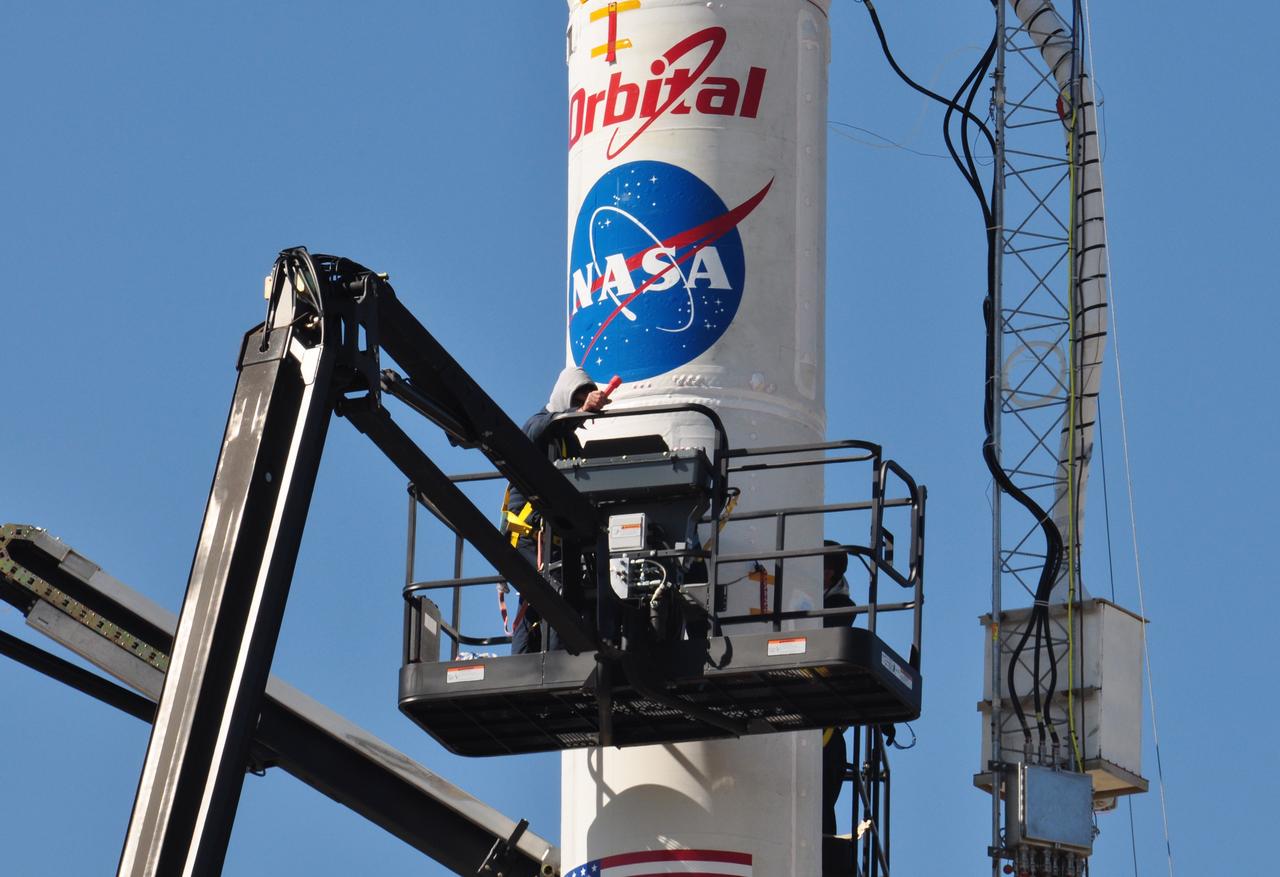
VANDENBERG AIR FORCE BASE, Calif. -- On Space Launch Complex 576-E at Vandenberg Air Force Base in California, workers in a bucket conduct closeout procedures on the Taurus XL rocket in preparations for liftoff. The umbilical tower attached to the upper stack will fall away from the spacecraft during launch. The Orbital Sciences Taurus XL rocket will launch Glory into low Earth orbit. Once Glory reaches orbit, it will collect data on the properties of aerosols and black carbon. It also will help scientists understand how the sun's irradiance affects Earth's climate. Launch is scheduled for 5:09 a.m. EST Feb. 23. For information, visit www.nasa.gov/glory. Photo credit: NASA/Randy Beaudoin, VAFB
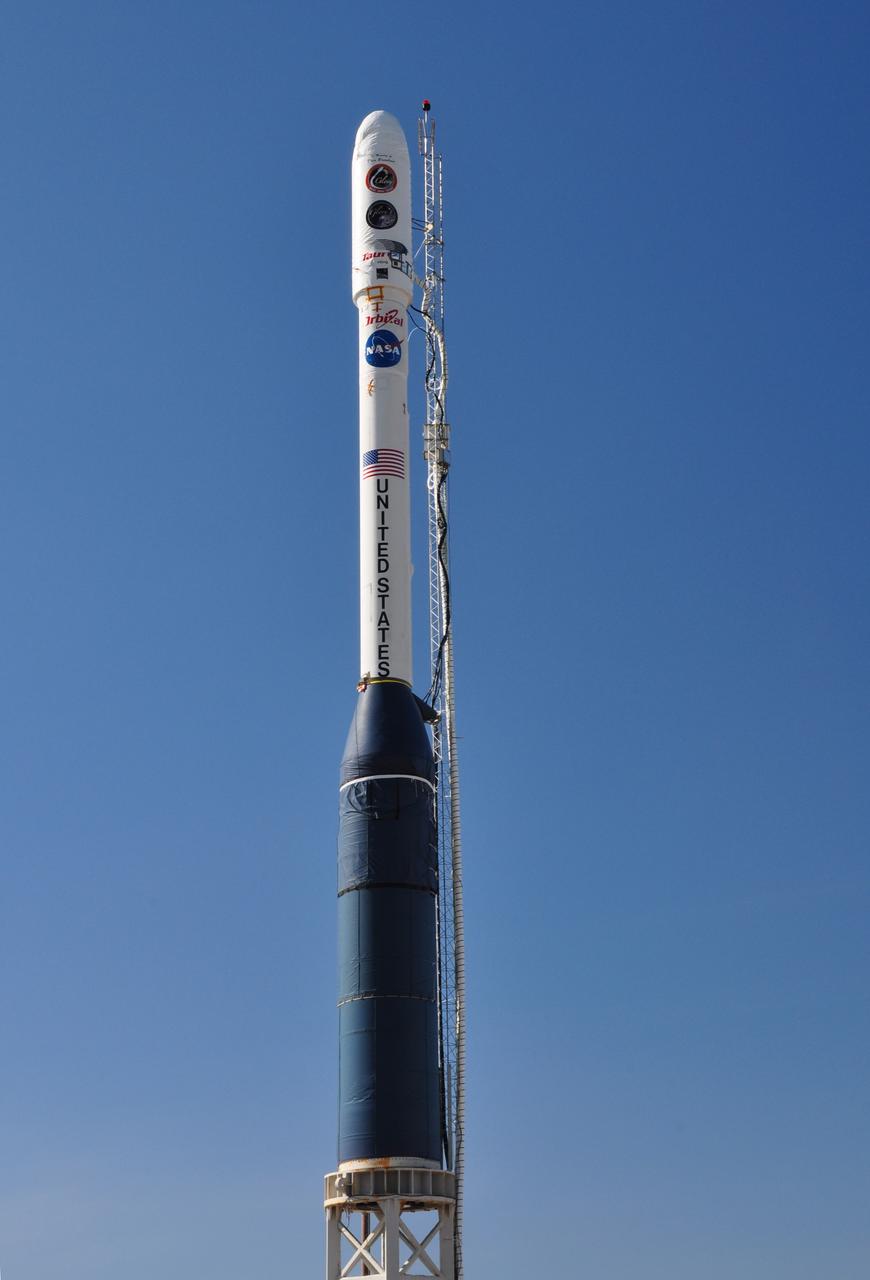
VANDENBERG AIR FORCE BASE, Calif. -- On Space Launch Complex 576-E at Vandenberg Air Force Base in California, the Taurus XL rocket is in its launch configuration. The upper stack, consisting of Stages 1, 2 and 3, as well as the encapsulated Glory spacecraft, is attached to an interstage and Stage 0 at the launch pad. The umbilical tower attached to the upper stack will fall away from the spacecraft during liftoff. The Orbital Sciences Taurus XL rocket will launch Glory into low Earth orbit. Once Glory reaches orbit, it will collect data on the properties of aerosols and black carbon. It also will help scientists understand how the sun's irradiance affects Earth's climate. Launch is scheduled for 5:09 a.m. EST Feb. 23. For information, visit www.nasa.gov/glory. Photo credit: NASA/Randy Beaudoin, VAFB
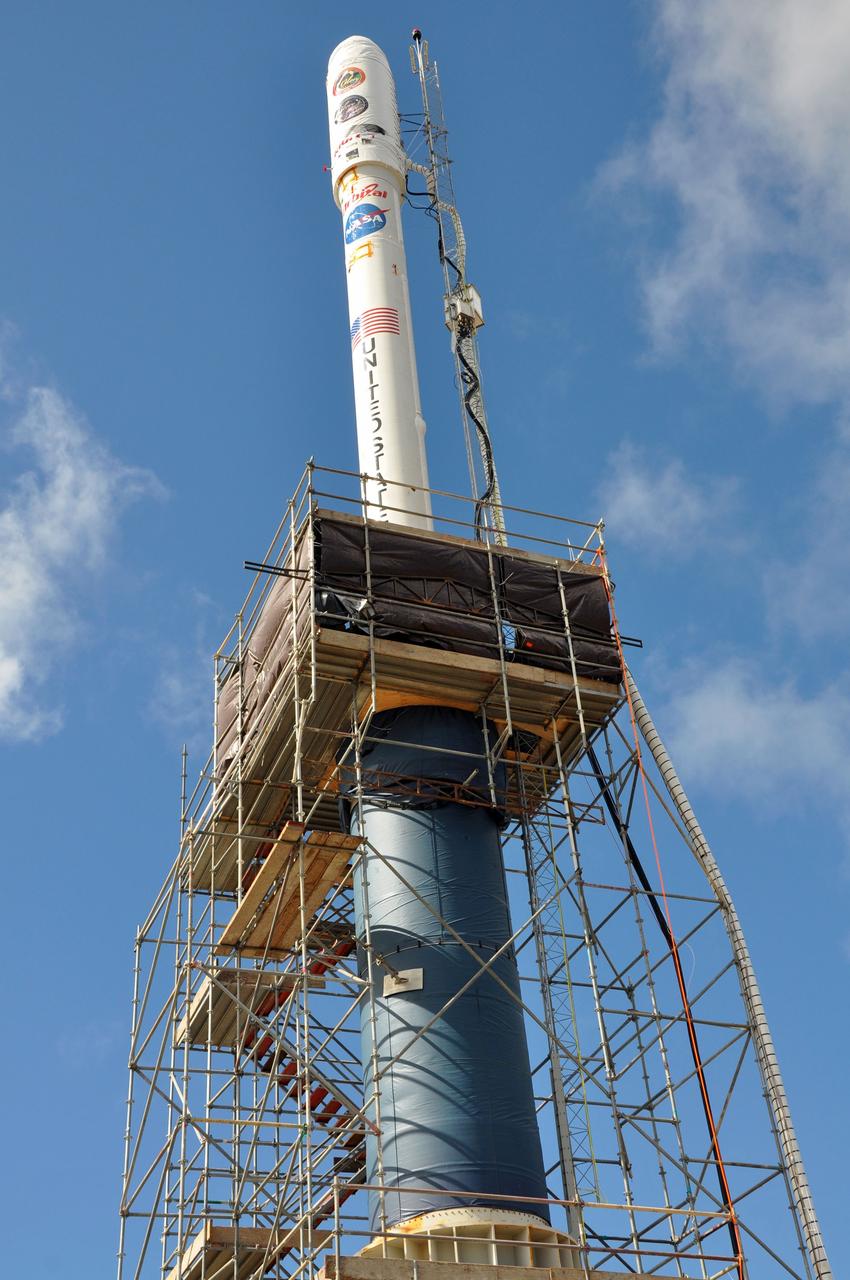
VANDENBERG AIR FORCE BASE, Calif. -- On Space Launch Complex 576-E at Vandenberg Air Force Base in California, the Taurus XL rocket is in its launch configuration. The upper stack, consisting of Stages 1, 2 and 3, as well as the encapsulated Glory spacecraft, is attached to an interstage and Stage 0 at the launch pad. The scaffolding around Stage 0 will be removed prior to next week's launch, after workers install 12 vent-door covers to the interstage. The Orbital Sciences Taurus XL rocket will launch Glory into low Earth orbit. Once Glory reaches orbit, it will collect data on the properties of aerosols and black carbon. It also will help scientists understand how the sun's irradiance affects Earth's climate. Launch is scheduled for 5:09 a.m. EST Feb. 23. For information, visit www.nasa.gov/glory. Photo credit: NASA/Randy Beaudoin, VAFB
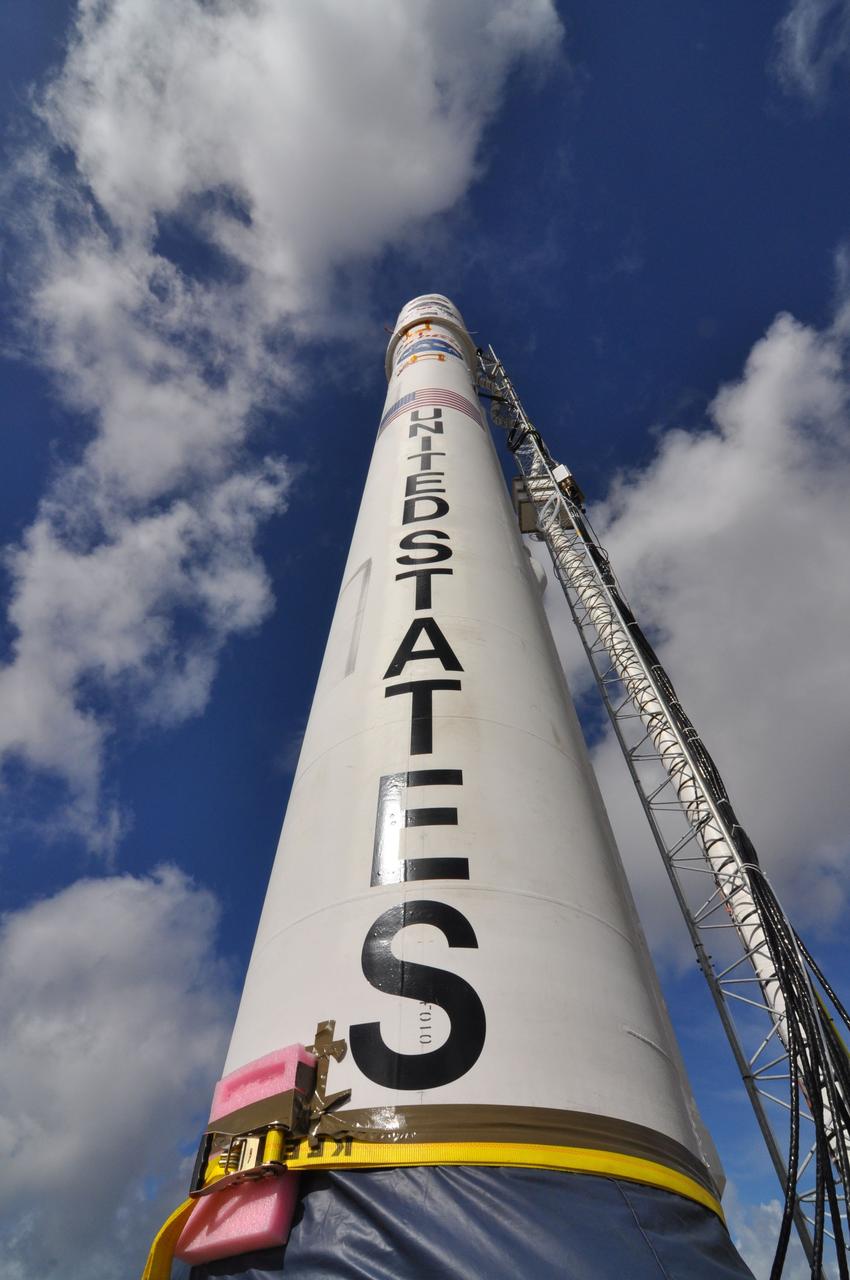
VANDENBERG AIR FORCE BASE, Calif. -- On Space Launch Complex 576-E at Vandenberg Air Force Base in California, the Taurus XL rocket is in its launch configuration. The upper stack, consisting of Stages 1, 2 and 3, as well as the encapsulated Glory spacecraft, is attached to an interstage and Stage 0 at the launch pad. The umbilical tower (right) attached to the upper stack will fall away from the spacecraft during liftoff. The Orbital Sciences Taurus XL rocket will launch Glory into low Earth orbit. Once Glory reaches orbit, it will collect data on the properties of aerosols and black carbon. It also will help scientists understand how the sun's irradiance affects Earth's climate. Launch is scheduled for 5:09 a.m. EST Feb. 23. For information, visit www.nasa.gov/glory. Photo credit: NASA/Randy Beaudoin, VAFB
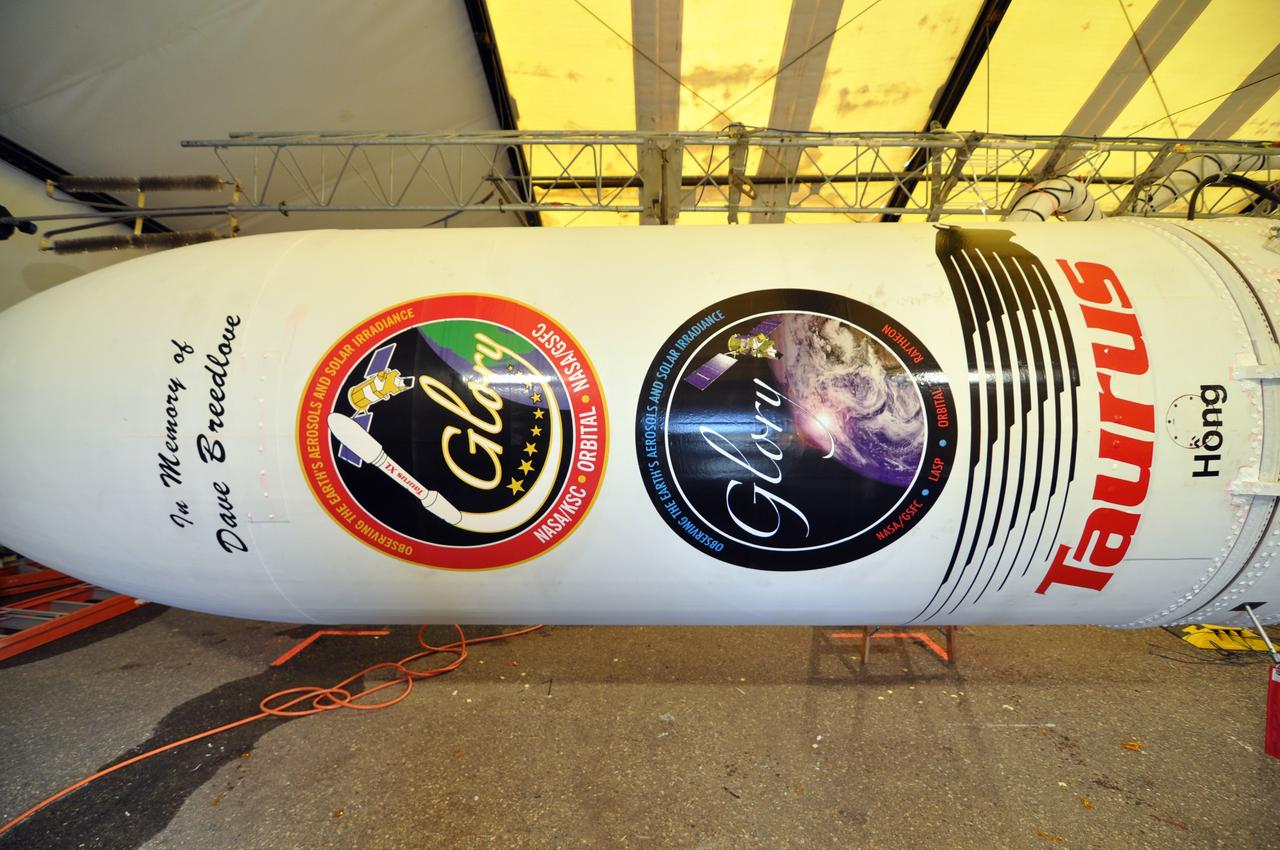
VANDENBERG AIR FORCE BASE, Calif. -- At Space Launch Complex 576-E at Vandenberg Air Force Base in California, NASA's Glory spacecraft, integrated with the upper stack of the Taurus rocket, displays mission decals including one in remembrance of Dave Breedlove who was a mission manager and long-time member of the Launch Services Program team. The vehicle is dedicated to his memory. The Orbital Sciences Corp. Taurus XL rocket will launch Glory into low Earth orbit. Once Glory reaches orbit, it will collect data on the properties of aerosols and black carbon. It also will help scientists understand how the sun's irradiance affects Earth's climate. Launch is scheduled for 5:09 a.m. EST Feb. 23. For information, visit www.nasa.gov/glory. Photo credit: NASA/Randy Beaudoin, VAFB
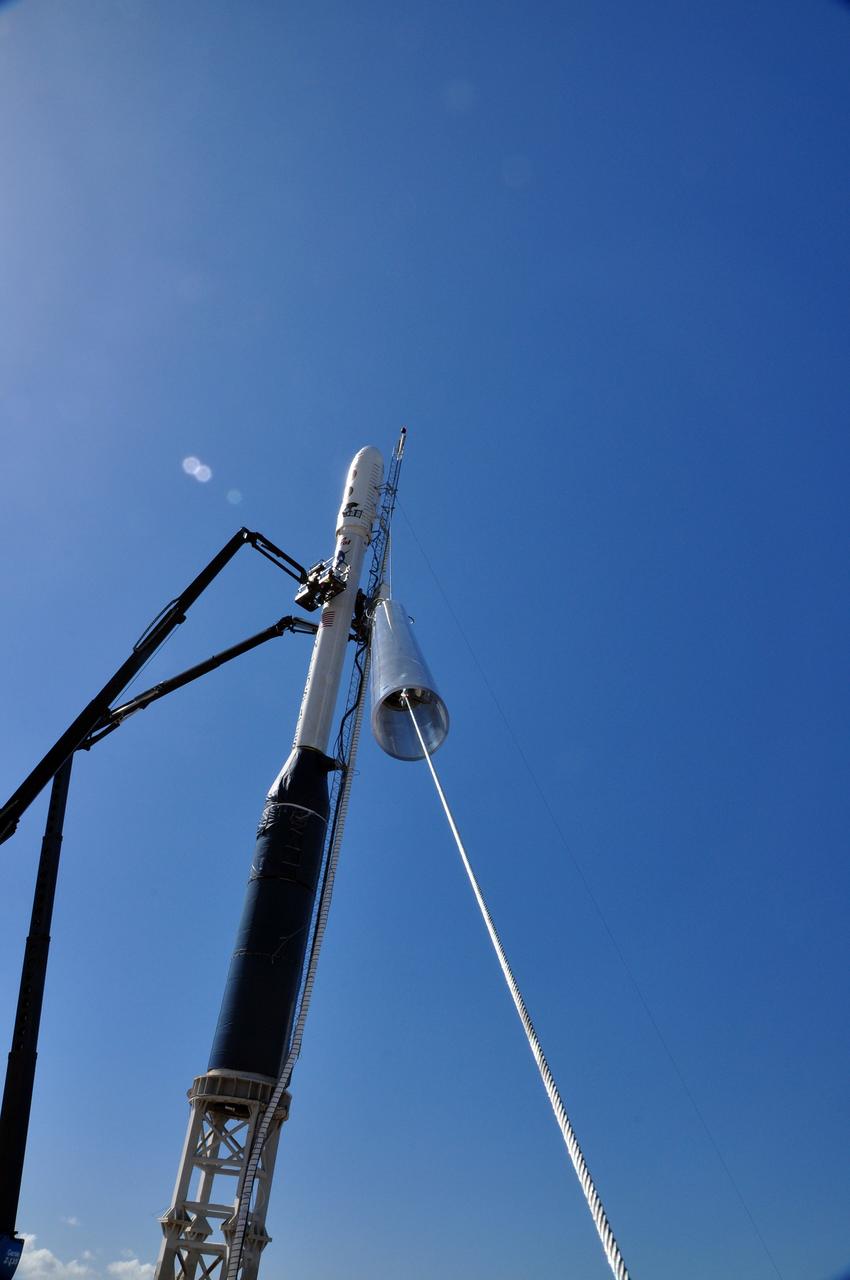
VANDENBERG AIR FORCE BASE, Calif. -- On Space Launch Complex 576-E at Vandenberg Air Force Base in California, workers install one of the two umbilical tower guy wires and springs as part of closeout procedures on the Taurus XL rocket in preparation for launch. The umbilical tower attached to the upper stack will fall away from the spacecraft during liftoff. The Orbital Sciences Taurus XL rocket will launch Glory into low Earth orbit. Once Glory reaches orbit, it will collect data on the properties of aerosols and black carbon. It also will help scientists understand how the sun's irradiance affects Earth's climate. Launch is scheduled for 5:09 a.m. EST Feb. 23. For information, visit www.nasa.gov/glory. Photo credit: NASA/Randy Beaudoin, VAFB
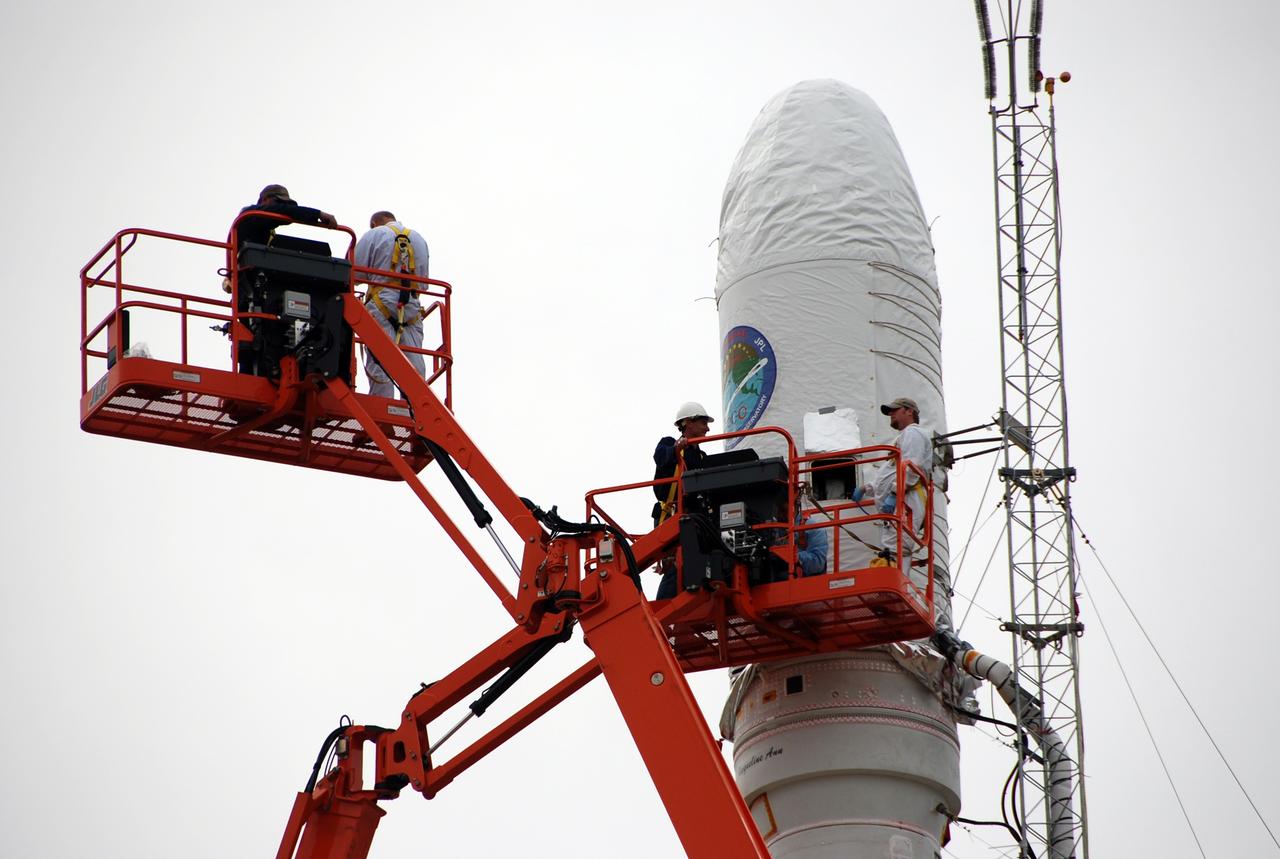
VANDENBERG AIR FORCE BASE, Calif. -- On Launch Complex 576-E at Vandenberg Air Force Base in California, NASA's Orbiting Carbon Observatory, or OCO, undergoes closeouts for launch. OCO is atop the Orbital Sciences' Taurus XL rocket. OCO is scheduled for launch on the Taurus rocket Feb. 24 from Vandenberg. The spacecraft will collect precise global measurements of carbon dioxide (CO2) in the Earth's atmosphere. Scientists will analyze OCO data to improve our understanding of the natural processes and human activities that regulate the abundance and distribution of this important greenhouse gas. Photo credit: NASA/Richard Nielsen, VAFB
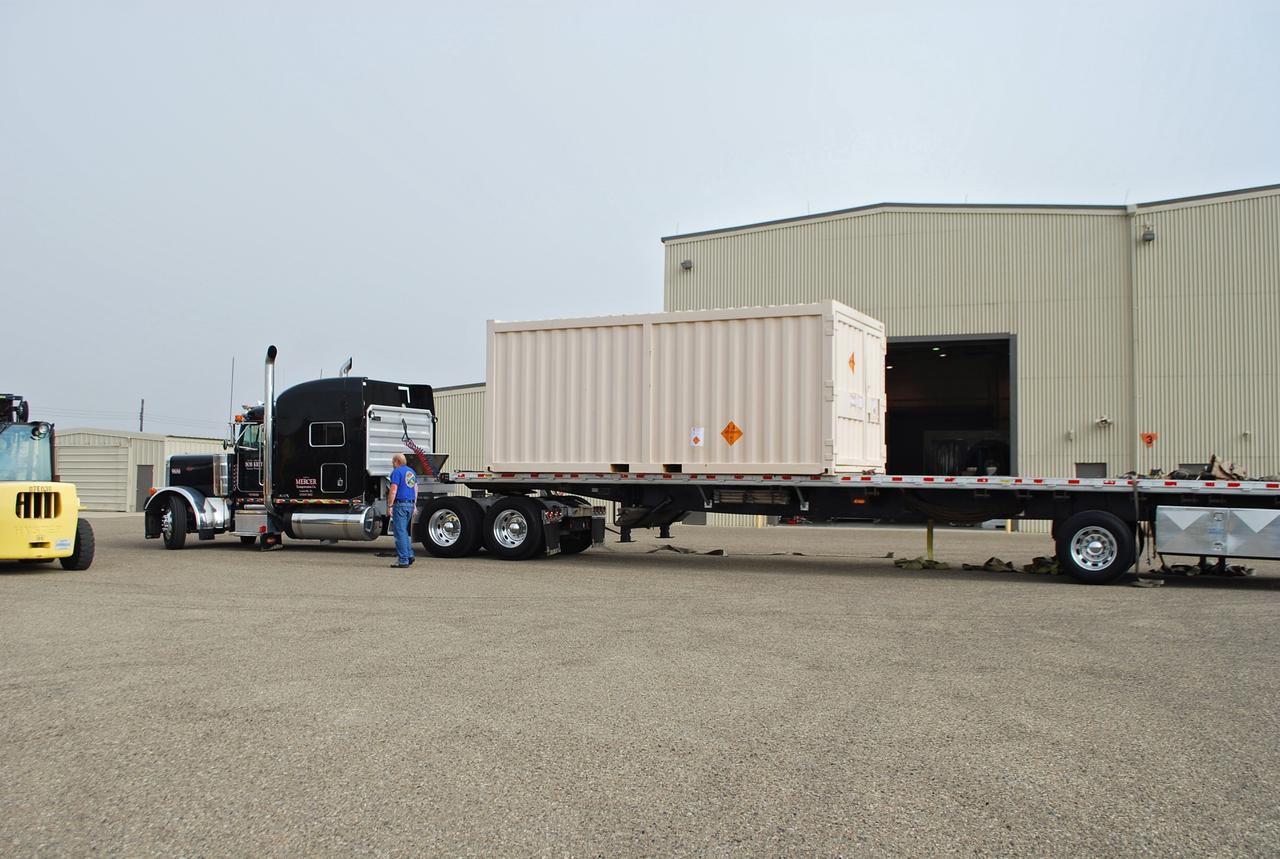
VANDENBERG AIR FORCE BASE, Calif. -- At Vandenberg Air Force Base in California, workers are preparing to unload a payload cone for NASA's Glory mission. The payload cone is an adapter that interfaces the Taurus XL rocket with the spacecraft. A four-stage Taurus XL rocket will carry Glory into low Earth orbit. Once Glory reaches orbit, it will collect data on the properties of aerosols and black carbon. It also will help scientists understand how the sun's irradiance affects Earth's climate. Launch is scheduled for 2:09 a.m. PST Nov. 22. For information, visit www.nasa.gov/glory. Photo credit: NASA/Randy Beaudoin, VAFB
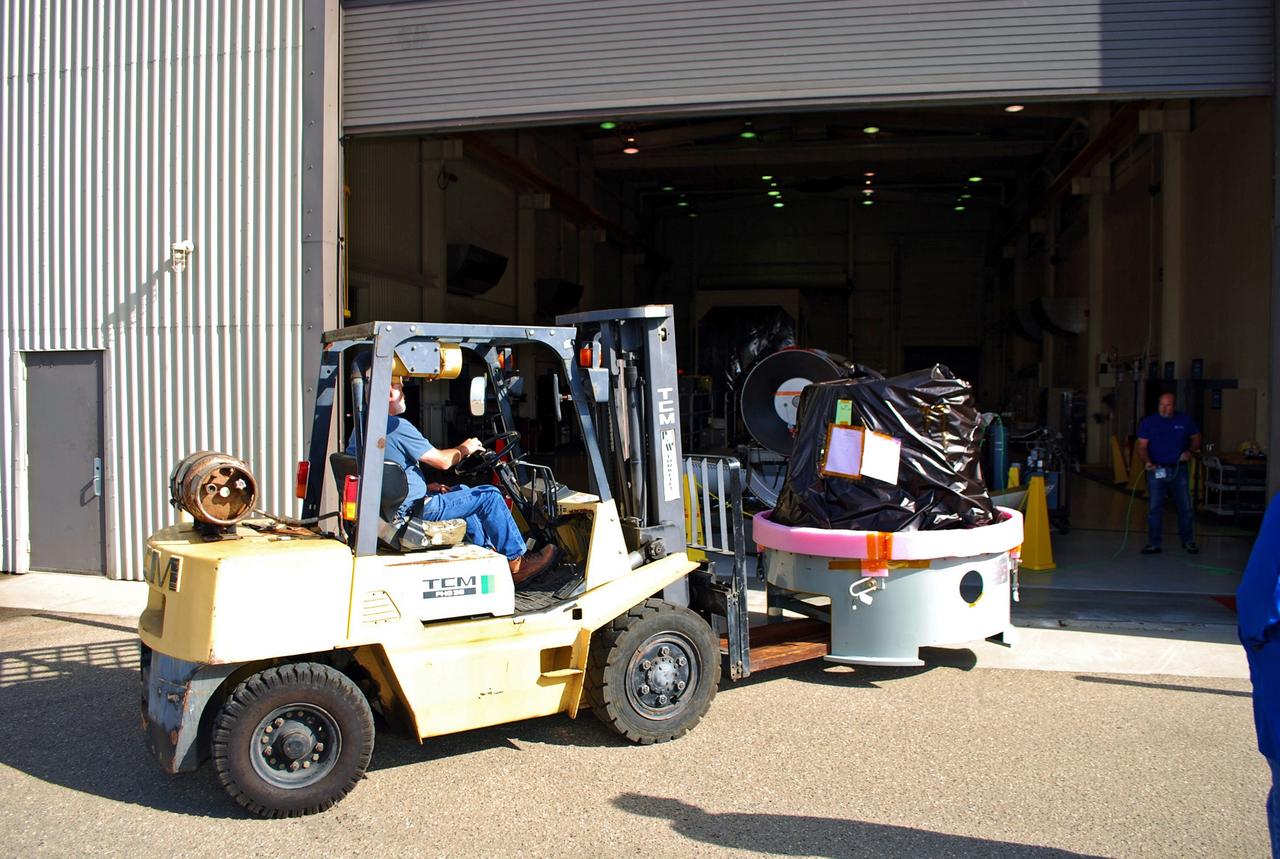
VANDENBERG AIR FORCE BASE, Calif. -- At Vandenberg Air Force Base in California, a worker user a Hyster lift moves the payload cone for NASA's Glory mission into VAFB's payload processing facility. The payload cone is an adapter that interfaces the Taurus XL rocket with the spacecraft. A four-stage Taurus XL rocket will carry Glory into low Earth orbit. Once Glory reaches orbit, it will collect data on the properties of aerosols and black carbon. It also will help scientists understand how the sun's irradiance affects Earth's climate. Launch is scheduled for 2:09 a.m. PST Nov. 22. For information, visit www.nasa.gov/glory. Photo credit: NASA/Randy Beaudoin, VAFB
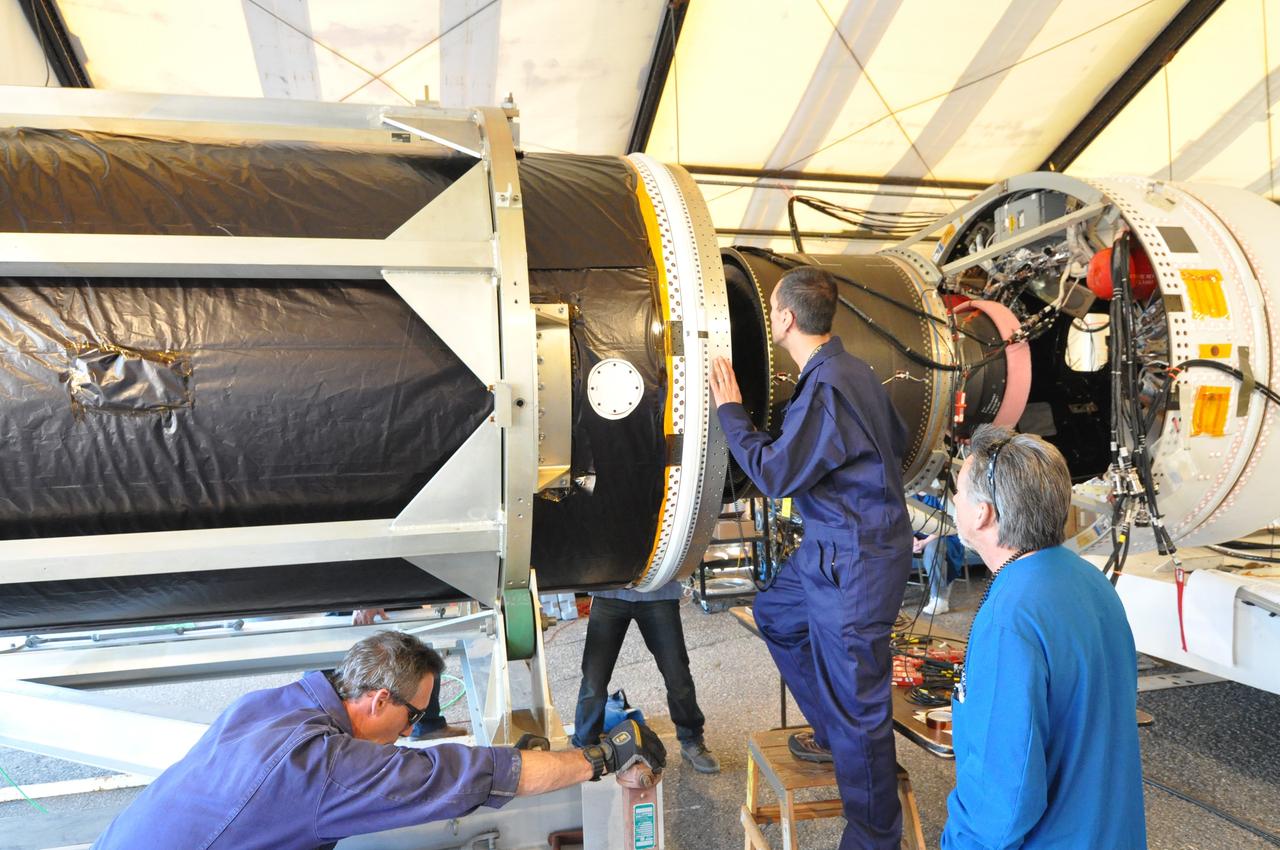
VANDENBERG AIR FORCE BASE, Calif. -- At Vandenberg Air Force Base in California, technicians join NASA's Glory spacecraft with the Taurus XL rocket's third stage, housed inside a temporary processing tent near the pad at Space Launch Complex 576-E. The Orbital Sciences Corp. Taurus XL rocket will carry Glory into low Earth orbit. Once Glory reaches orbit, it will collect data on the properties of aerosols and black carbon. It also will help scientists understand how the sun's irradiance affects Earth's climate. Launch is scheduled for 5:09 a.m. EST Feb. 23. For information, visit www.nasa.gov/glory. Photo credit: NASA/Randy Beaudoin, VAFB
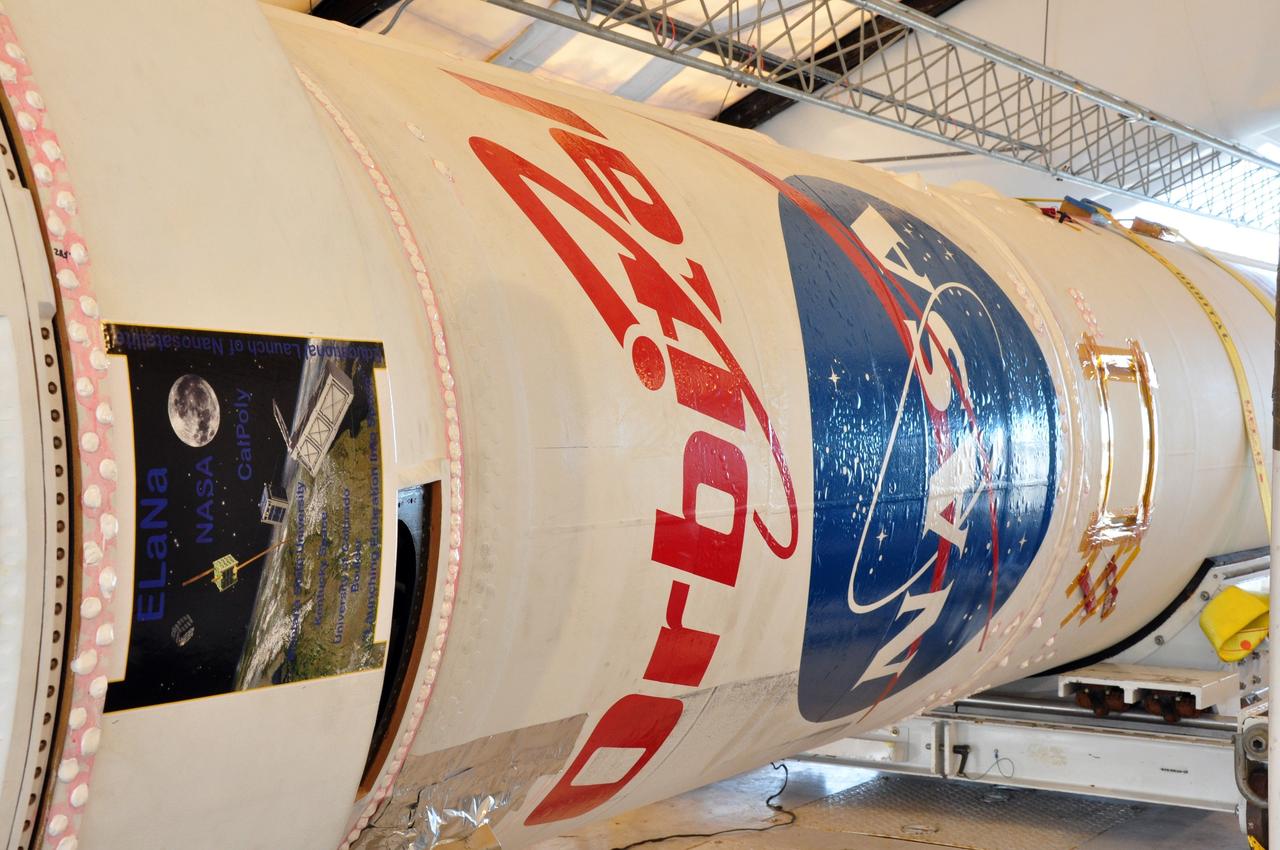
VANDENBERG AIR FORCE BASE, Calif. -- At Space Launch Complex 576-E at Vandenberg Air Force Base in California, NASA's Glory spacecraft already integrated with the upper stack of the Taurus rocket displays the mission decals. The Orbital Sciences Corp. Taurus XL rocket will launch Glory into low Earth orbit. Once Glory reaches orbit, it will collect data on the properties of aerosols and black carbon. It also will help scientists understand how the sun's irradiance affects Earth's climate. Launch is scheduled for 5:09 a.m. EST Feb. 23. For information, visit www.nasa.gov/glory. Photo credit: NASA/Randy Beaudoin, VAFB
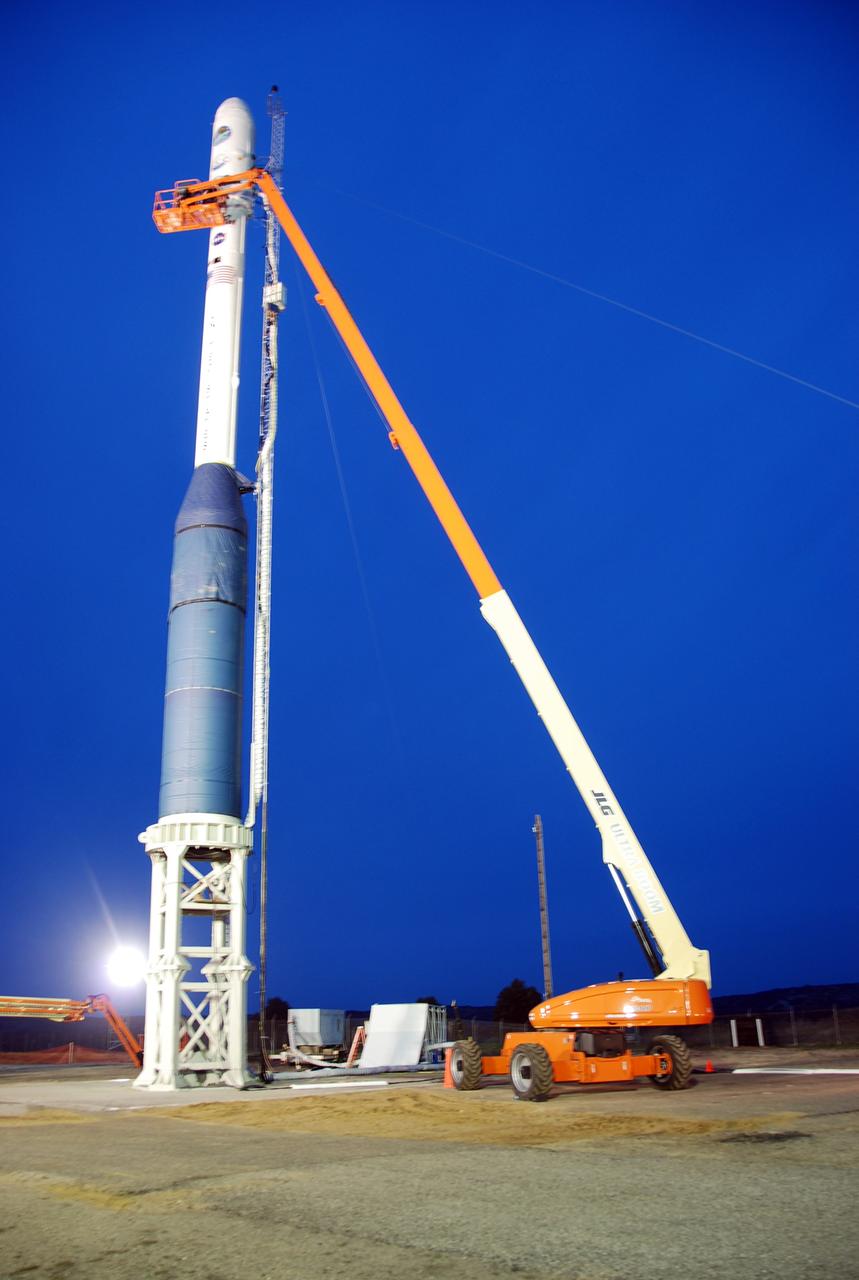
VANDENBERG AIR FORCE BASE, Calif. -- On Launch Complex 576-E at Vandenberg Air Force Base in California, NASA's Orbiting Carbon Observatory, or OCO, undergoes closeouts for launch. OCO is atop the Orbital Sciences' Taurus XL rocket. OCO is scheduled for launch on the Taurus rocket Feb. 24 from Vandenberg. The spacecraft will collect precise global measurements of carbon dioxide (CO2) in the Earth's atmosphere. Scientists will analyze OCO data to improve our understanding of the natural processes and human activities that regulate the abundance and distribution of this important greenhouse gas. Photo credit: NASA/Richard Nielsen, VAFB
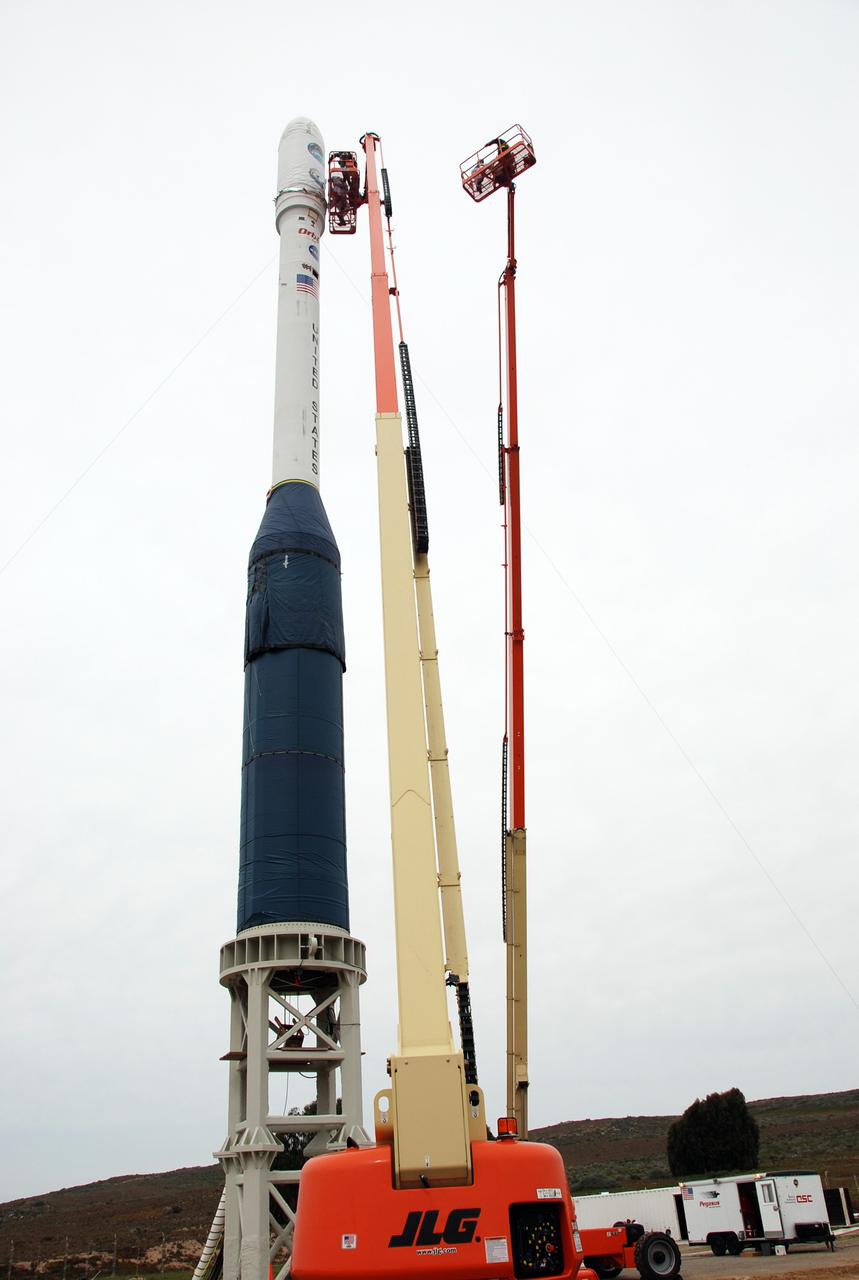
VANDENBERG AIR FORCE BASE, Calif. -- On Launch Complex 576-E at Vandenberg Air Force Base in California, NASA's Orbiting Carbon Observatory, or OCO, undergoes closeouts for launch. OCO is atop the Orbital Sciences' Taurus XL rocket. OCO is scheduled for launch on the Taurus rocket Feb. 24 from Vandenberg. The spacecraft will collect precise global measurements of carbon dioxide (CO2) in the Earth's atmosphere. Scientists will analyze OCO data to improve our understanding of the natural processes and human activities that regulate the abundance and distribution of this important greenhouse gas. Photo credit: NASA/Richard Nielsen, VAFB
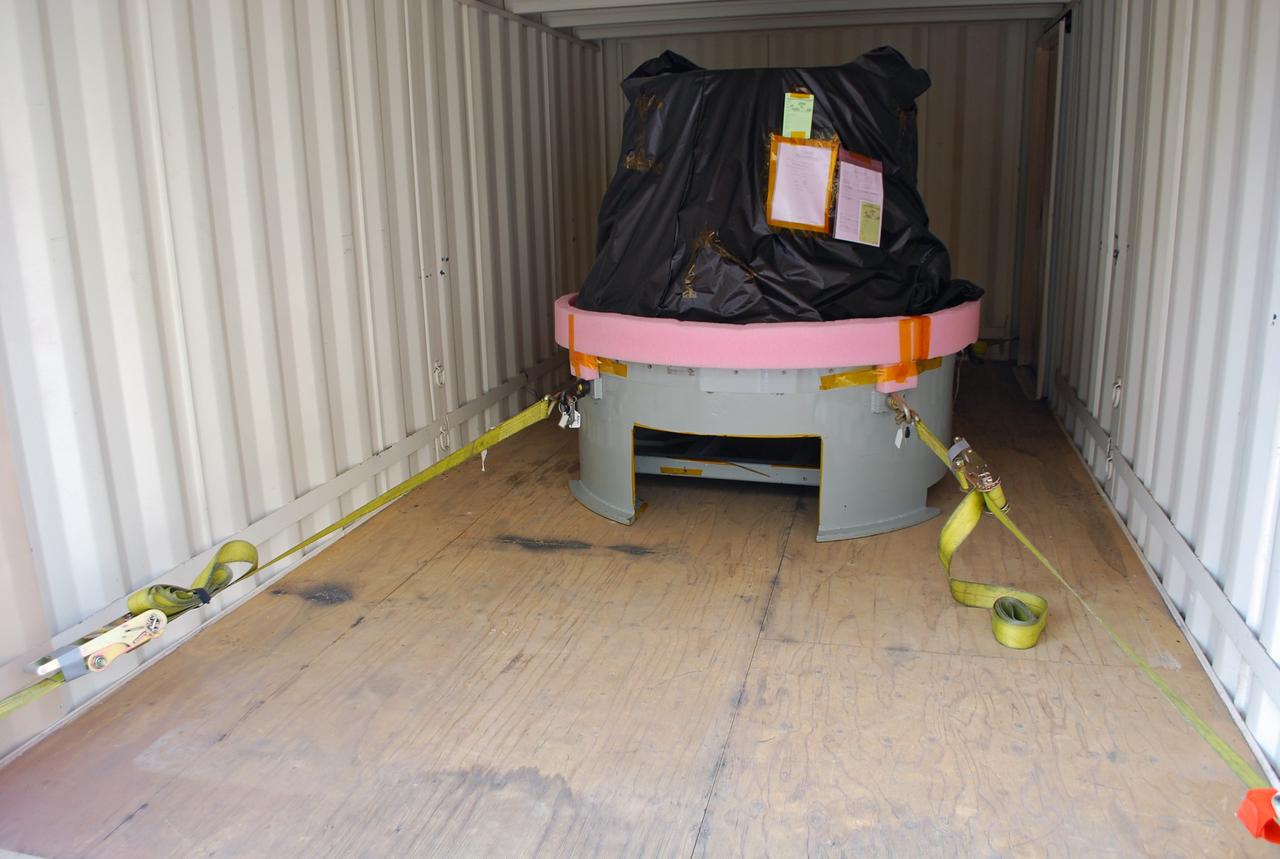
VANDENBERG AIR FORCE BASE, Calif. -- At Vandenberg Air Force Base in California, the payload cone for NASA's Glory mission is pictures secured inside its cargo carrier. The payload cone is an adapter that interfaces the Taurus XL rocket with the spacecraft. A four-stage Taurus XL rocket will carry Glory into low Earth orbit. Once Glory reaches orbit, it will collect data on the properties of aerosols and black carbon. It also will help scientists understand how the sun's irradiance affects Earth's climate. Launch is scheduled for 2:09 a.m. PST Nov. 22. For information, visit www.nasa.gov/glory. Photo credit: NASA/Randy Beaudoin, VAFB
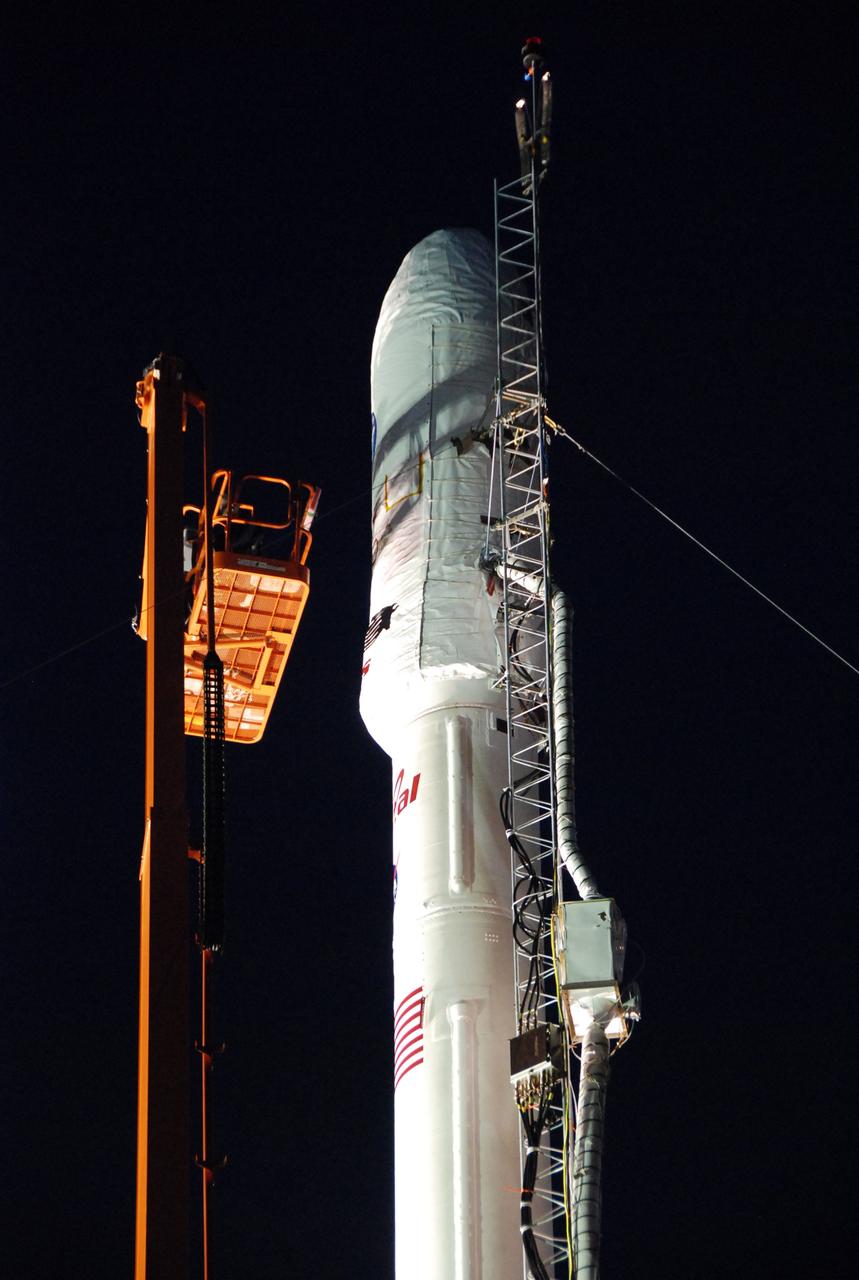
VANDENBERG AIR FORCE BASE, Calif. -- On Launch Complex 576-E at Vandenberg Air Force Base in California, Orbital Sciences' Taurus XL rocket and NASA's Orbiting Carbon Observatory, or OCO, on top, are bathed in light for the night. The spacecraft has been undergoing final closeouts for launch. OCO is scheduled for launch on the Taurus rocket Feb. 24 from Vandenberg. The spacecraft will collect precise global measurements of carbon dioxide (CO2) in the Earth's atmosphere. Scientists will analyze OCO data to improve our understanding of the natural processes and human activities that regulate the abundance and distribution of this important greenhouse gas. Photo credit: NASA/Richard Nielsen, VAFB
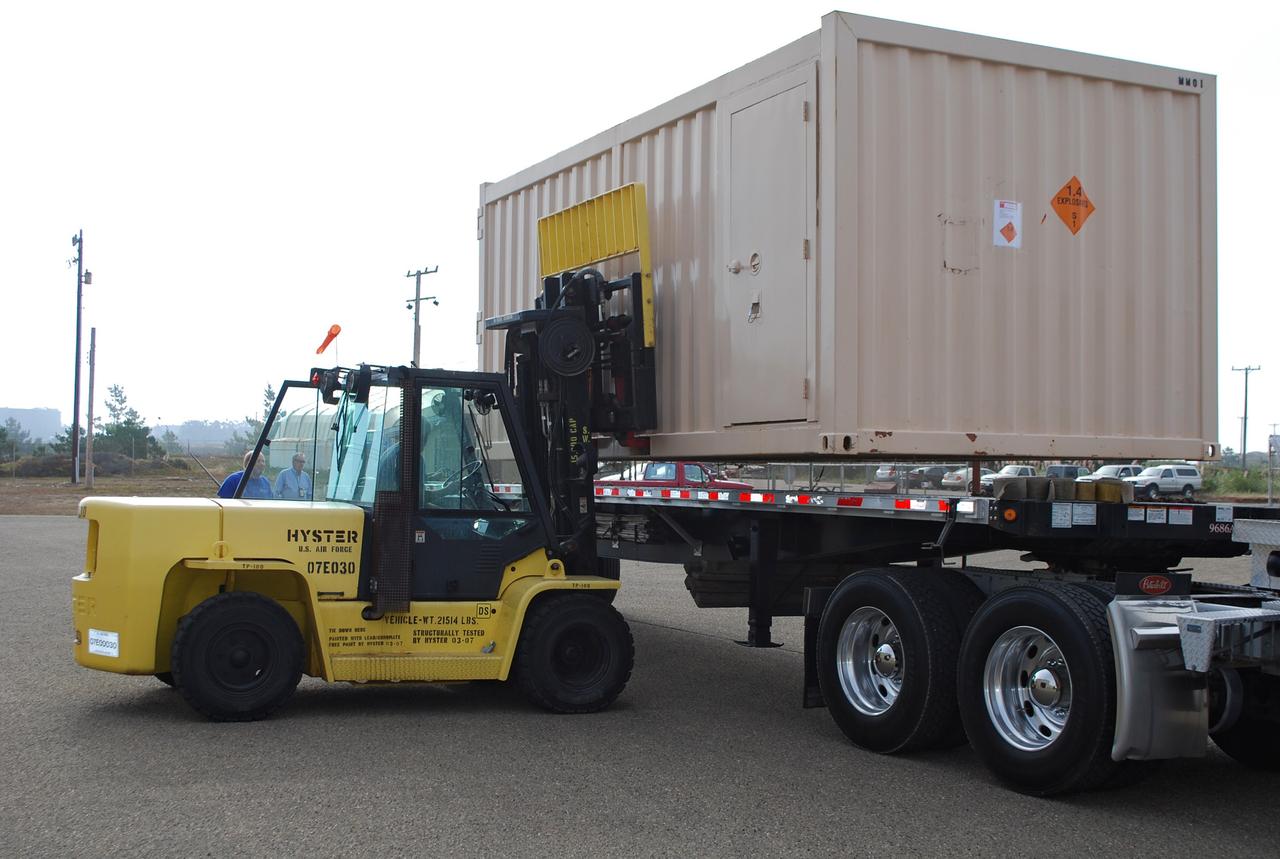
VANDENBERG AIR FORCE BASE, Calif. -- At Vandenberg Air Force Base in California, workers are preparing to unload a payload cone for NASA's Glory mission. The payload cone is an adapter that interfaces the Taurus XL rocket with the spacecraft. A four-stage Taurus XL rocket will carry Glory into low Earth orbit. Once Glory reaches orbit, it will collect data on the properties of aerosols and black carbon. It also will help scientists understand how the sun's irradiance affects Earth's climate. Launch is scheduled for 2:09 a.m. PST Nov. 22. For information, visit www.nasa.gov/glory. Photo credit: NASA/Randy Beaudoin, VAFB
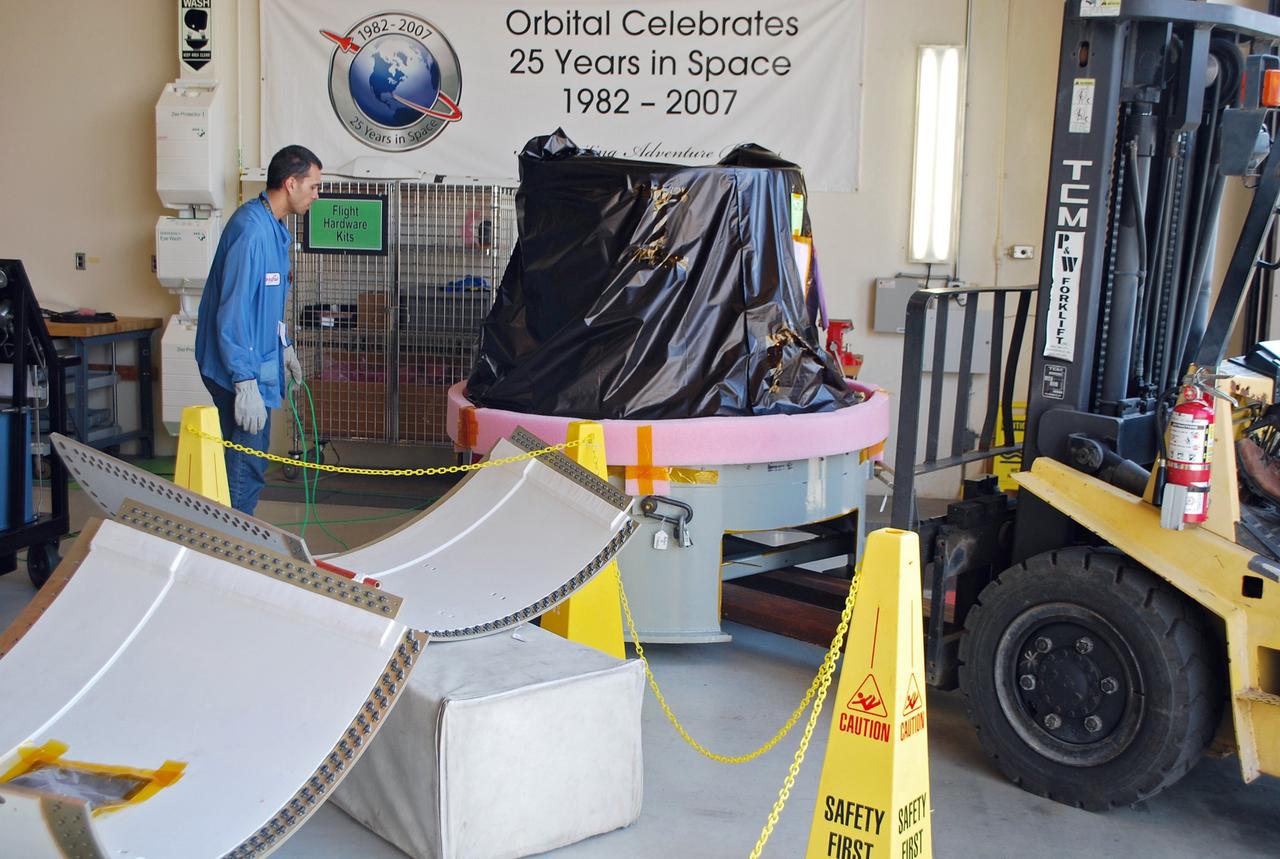
VANDENBERG AIR FORCE BASE, Calif. -- At Vandenberg Air Force Base in California, the payload cone is lowered onto the floor of VAFB's payload processing facility for NASA's Glory mission. The payload cone is an adapter that interfaces the Taurus XL rocket with the spacecraft. A four-stage Taurus XL rocket will carry Glory into low Earth orbit. Once Glory reaches orbit, it will collect data on the properties of aerosols and black carbon. It also will help scientists understand how the sun's irradiance affects Earth's climate. Launch is scheduled for 2:09 a.m. PST Nov. 22. For information, visit www.nasa.gov/glory. Photo credit: NASA/Randy Beaudoin, VAFB
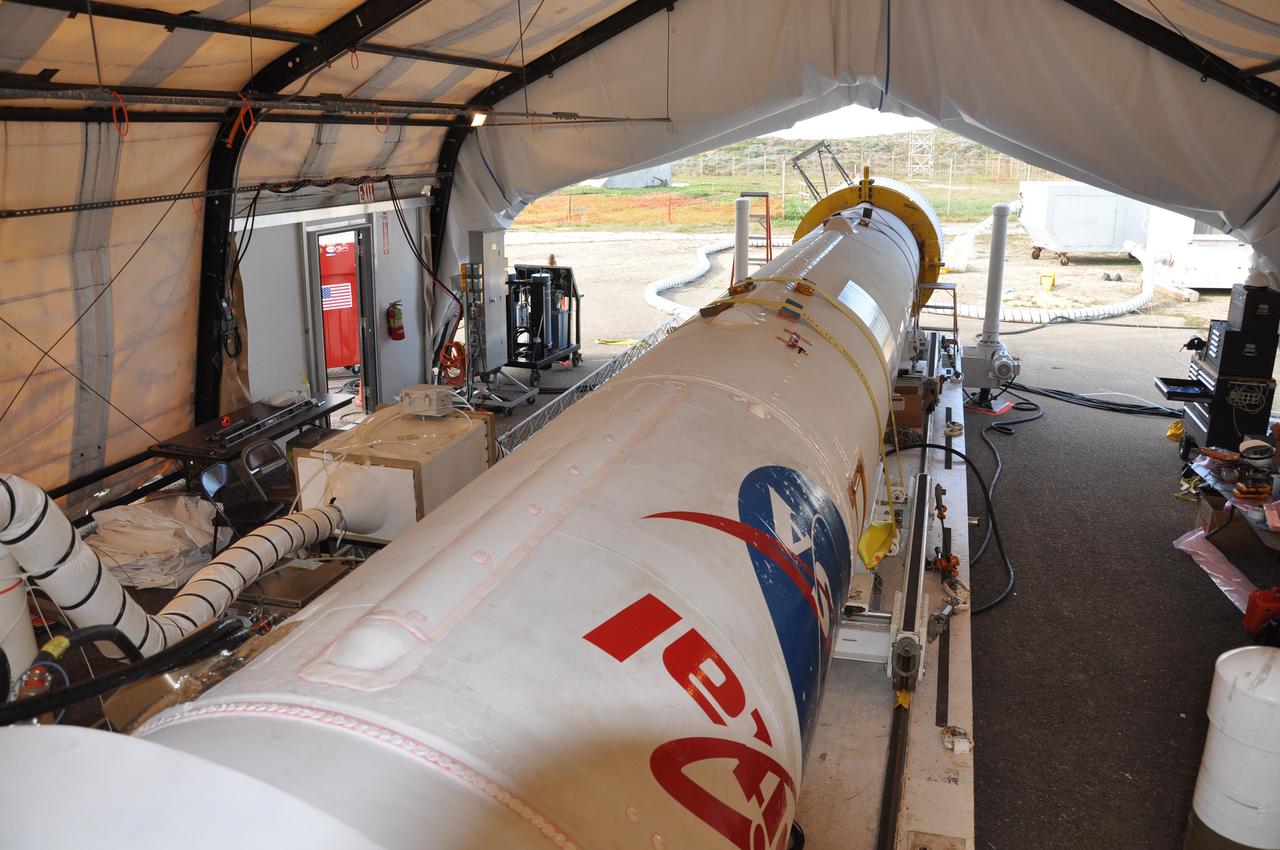
VANDENBERG AIR FORCE BASE, Calif. -- At Space Launch Complex 576-E at Vandenberg Air Force Base in California, NASA's Glory spacecraft, already integrated with the upper stack of the Taurus rocket, awaits installation of the upper umbilical tower inside a processing tent near the pad. The Orbital Sciences Corp. Taurus XL rocket will launch Glory into low Earth orbit. Once Glory reaches orbit, it will collect data on the properties of aerosols and black carbon. It also will help scientists understand how the sun's irradiance affects Earth's climate. Launch is scheduled for 5:09 a.m. EST Feb. 23. For information, visit www.nasa.gov/glory. Photo credit: NASA/Randy Beaudoin, VAFB
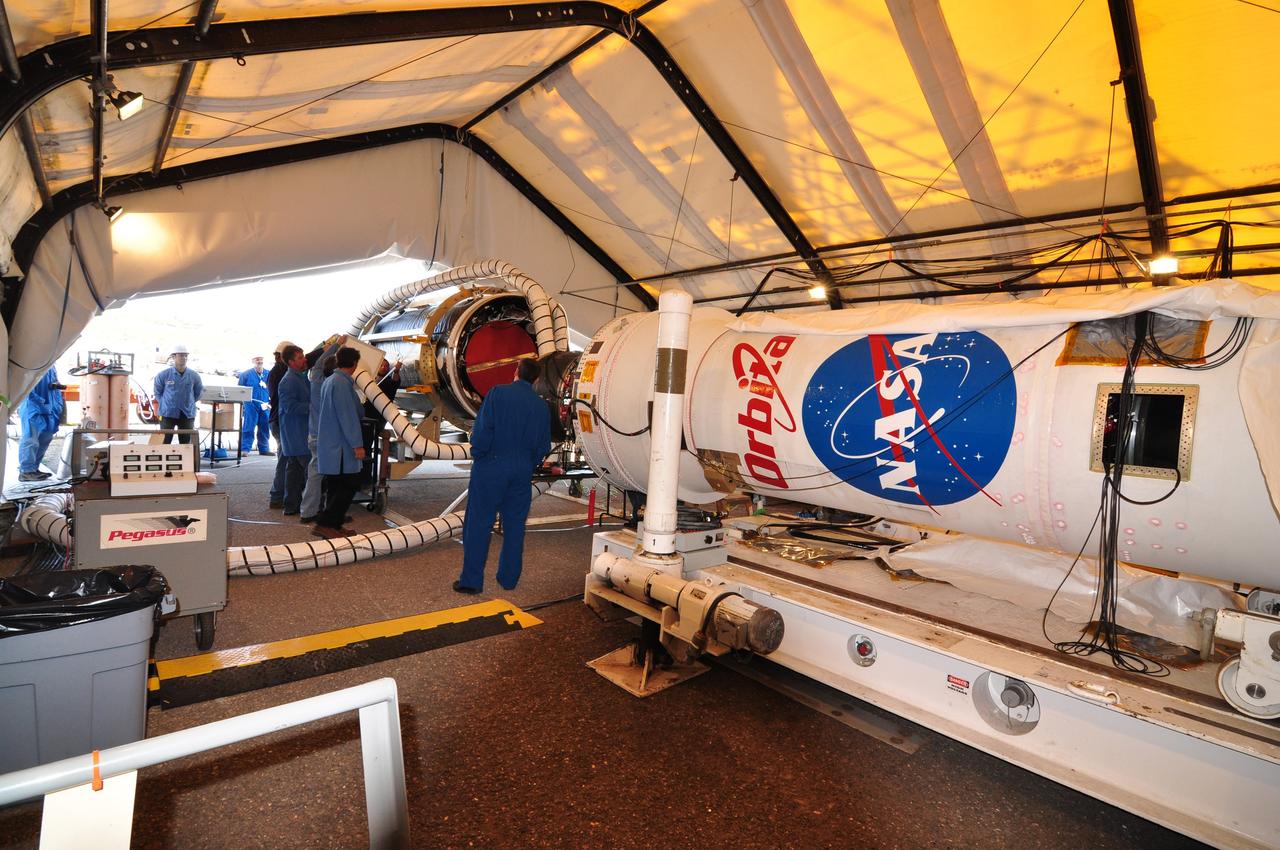
VANDENBERG AIR FORCE BASE, Calif. -- At Vandenberg Air Force Base in California, technicians are preparing to join NASA's Glory spacecraft with the Taurus XL rocket's third stage housed inside a temporary processing tent near the pad at Space Launch Complex 576-E. The Orbital Sciences Corp. Taurus XL rocket will carry Glory into low Earth orbit. Once Glory reaches orbit, it will collect data on the properties of aerosols and black carbon. It also will help scientists understand how the sun's irradiance affects Earth's climate. Launch is scheduled for 5:09 a.m. EST Feb. 23. For information, visit www.nasa.gov/glory. Photo credit: NASA/Randy Beaudoin, VAFB
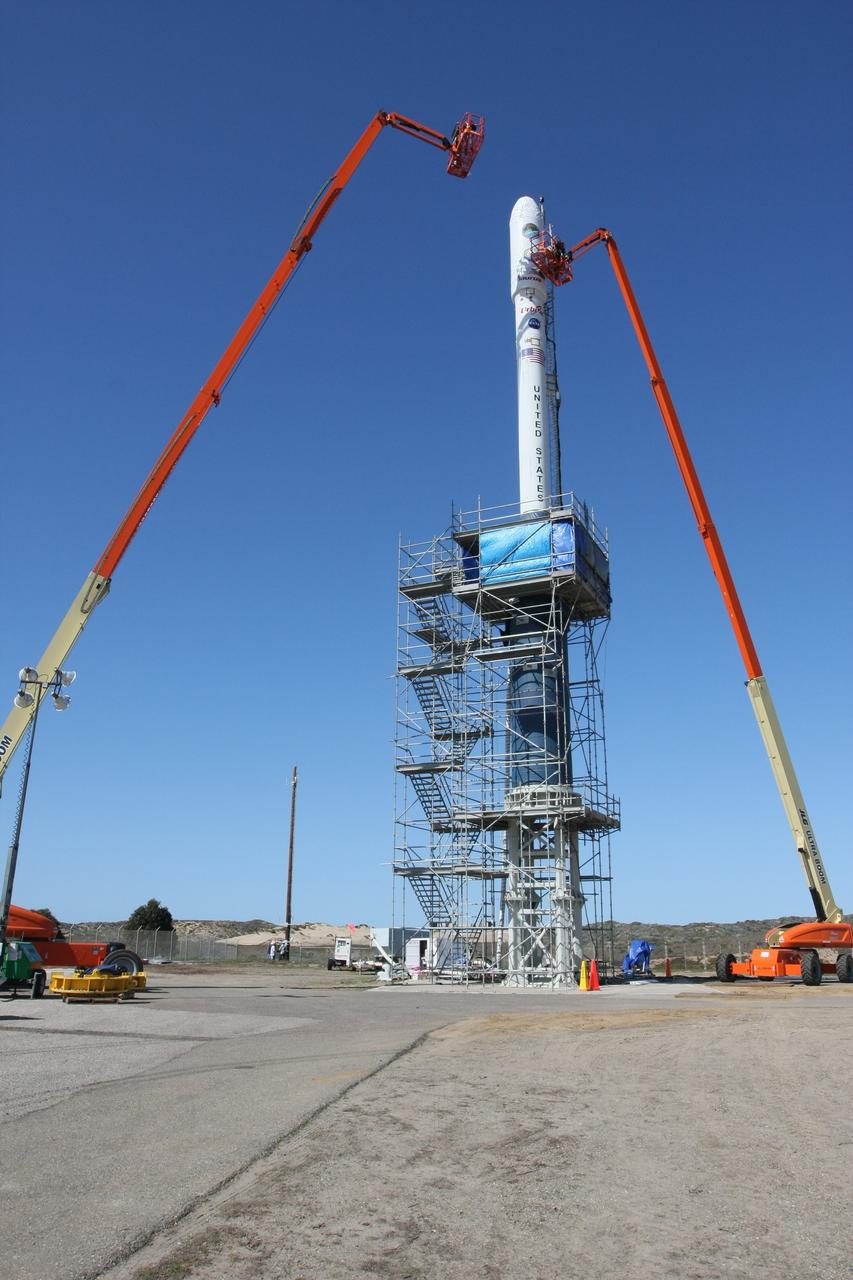
VANDENBERG AIR FORCE BASE, Calif. -- With the fairing door off, Orbital Sciences' Glenn Weigle and Brett Gladish take the GN2 flow reading on NASA's Orbiting Carbon Observatory, or OCO, spacecraft on Launch Complex 576-E at Vandenberg Air Force Base in California. The encapsulated OCO tops Orbital Sciences' Taurus XL rocket, which is scheduled to launch Feb. 24. The spacecraft sits atop Orbital Sciences' Taurus XL rocket. At right is a portion of the umbilical tower attached to the upper stack. The spacecraft sits atop Orbital Sciences' Taurus XL rocket. At right is a portion of the umbilical tower attached to the upper stack. The spacecraft will collect precise global measurements of carbon dioxide (CO2) in the Earth's atmosphere. Scientists will analyze OCO data to improve our understanding of the natural processes and human activities that regulate the abundance and distribution of this important greenhouse gas. Photo courtesy of Jim Stowers, Orbital Sciences
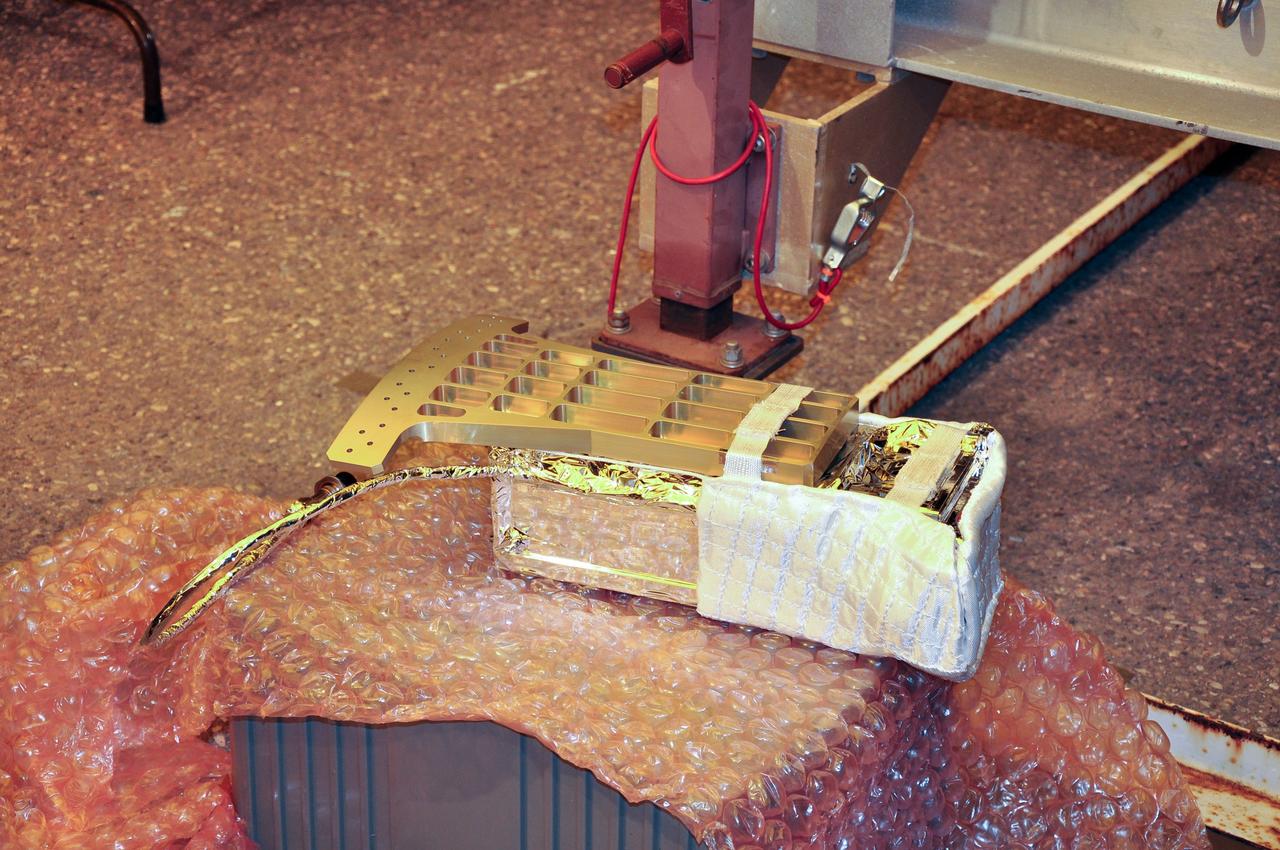
VANDENBERG AIR FORCE BASE, Calif. -- At Space Launch Complex 576-E at Vandenberg Air Force Base in California, the Poly Picosatellite Orbital Deployer, or P-POD, assembly is imaged wrapped in its thermal insulation blanket and sheeting and the attached Anodized gold aluminum bracket interface. The bracket is the connection point between the P-POD and the aft end of the Taurus rocket's third stage. The P-POD holds three CubeSats or tiny satellites, designed and created by university and college students that will be carried on the Taurus rocket along with the Glory spacecraft. The Orbital Sciences Corp. Taurus XL rocket will carry Glory into low Earth orbit. Once Glory reaches orbit, it will collect data on the properties of aerosols and black carbon. It also will help scientists understand how the sun's irradiance affects Earth's climate. Launch is scheduled for 5:09 a.m. EST Feb. 23. For information, visit www.nasa.gov/glory. Photo credit: NASA/Randy Beaudoin, VAFB
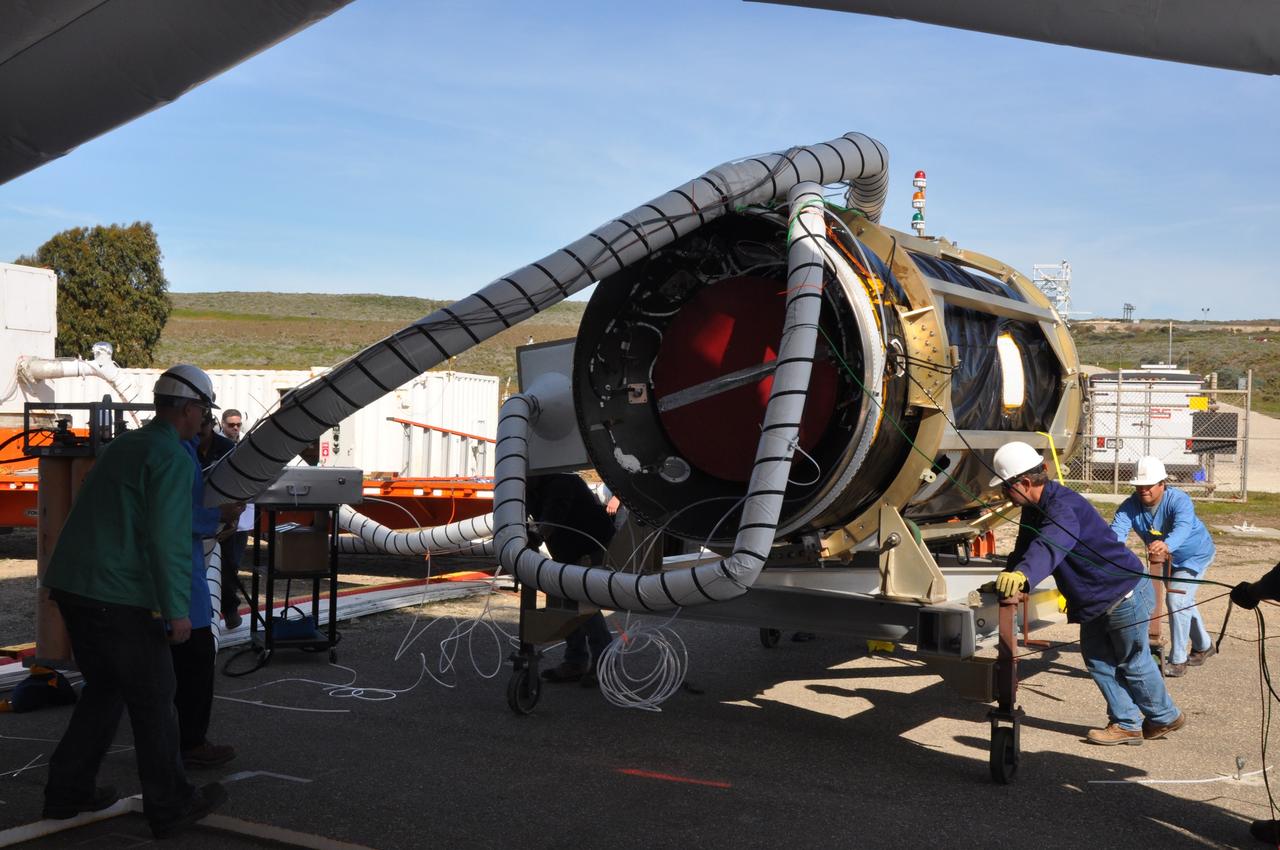
VANDENBERG AIR FORCE BASE, Calif. -- At Space Launch Complex 576-E at Vandenberg Air Force Base in California, workers move NASA's Glory spacecraft, secured on a stationary rail, into a temporary processing tent near the pad where it will be joined with the Taurus XL rocket's third stage. The Orbital Sciences Corp. Taurus XL rocket will carry Glory into low Earth orbit. Once Glory reaches orbit, it will collect data on the properties of aerosols and black carbon. It also will help scientists understand how the sun's irradiance affects Earth's climate. Launch is scheduled for 5:09 a.m. EST Feb. 23. For information, visit www.nasa.gov/glory. Photo credit: NASA/Randy Beaudoin, VAFB
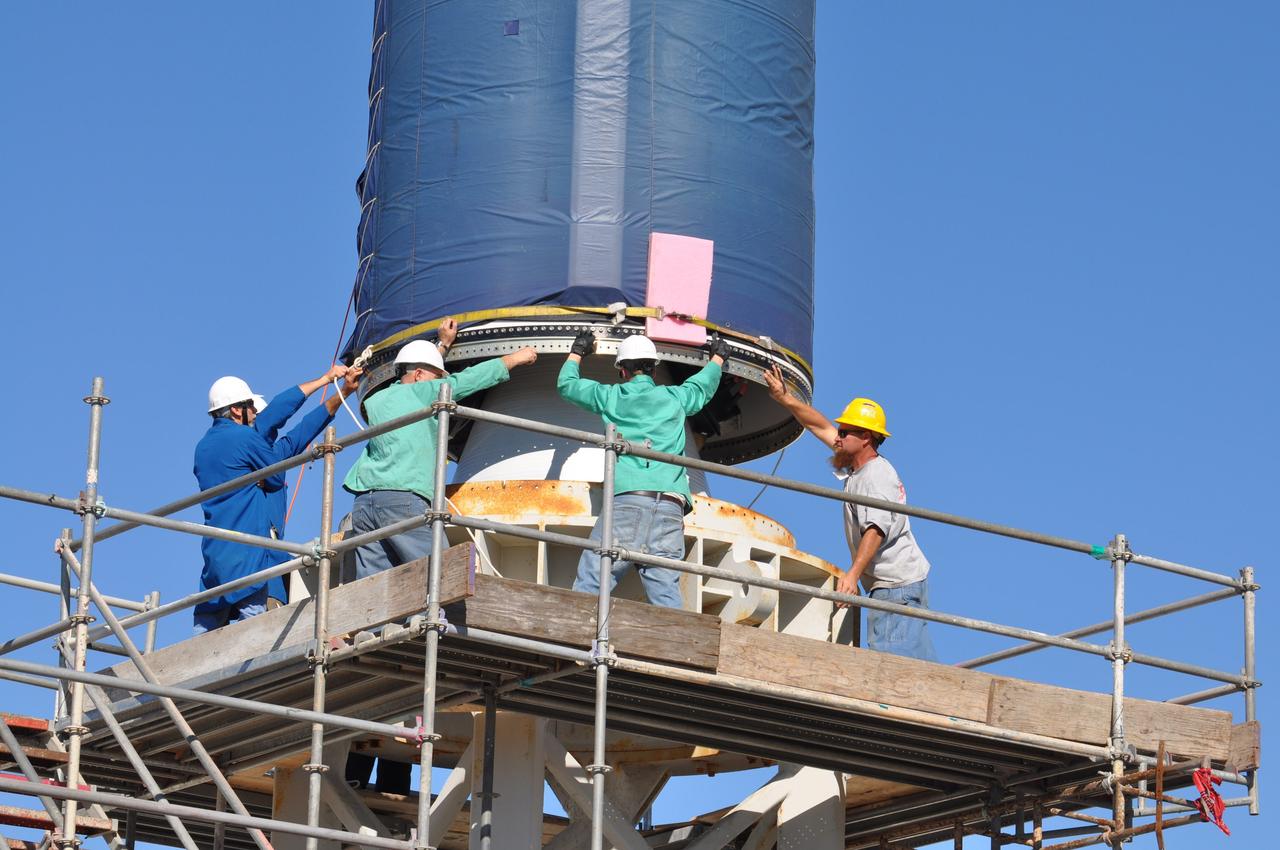
VANDENBERG AIR FORCE BASE, Calif. -- The Stage 0 motor of the Orbital Sciences Corp. Taurus XL is moved into launch position on Space Launch Complex 576-E at Vandenberg Air Force Base in California. As part of the four-stage Taurus XL rocket that will carry NASA's Glory spacecraft into low Earth orbit, stages 1, 2 and 3 will join Stage 0 at the launch pad about a week later. Once Glory reaches orbit, it will collect data on the properties of aerosols and black carbon. It also will help scientists understand how the sun's irradiance affects Earth's climate. Launch is scheduled for 5:09 a.m. EST Feb. 23. For information, visit www.nasa.gov/glory. Photo credit: NASA/Randy Beaudoin, VAFB
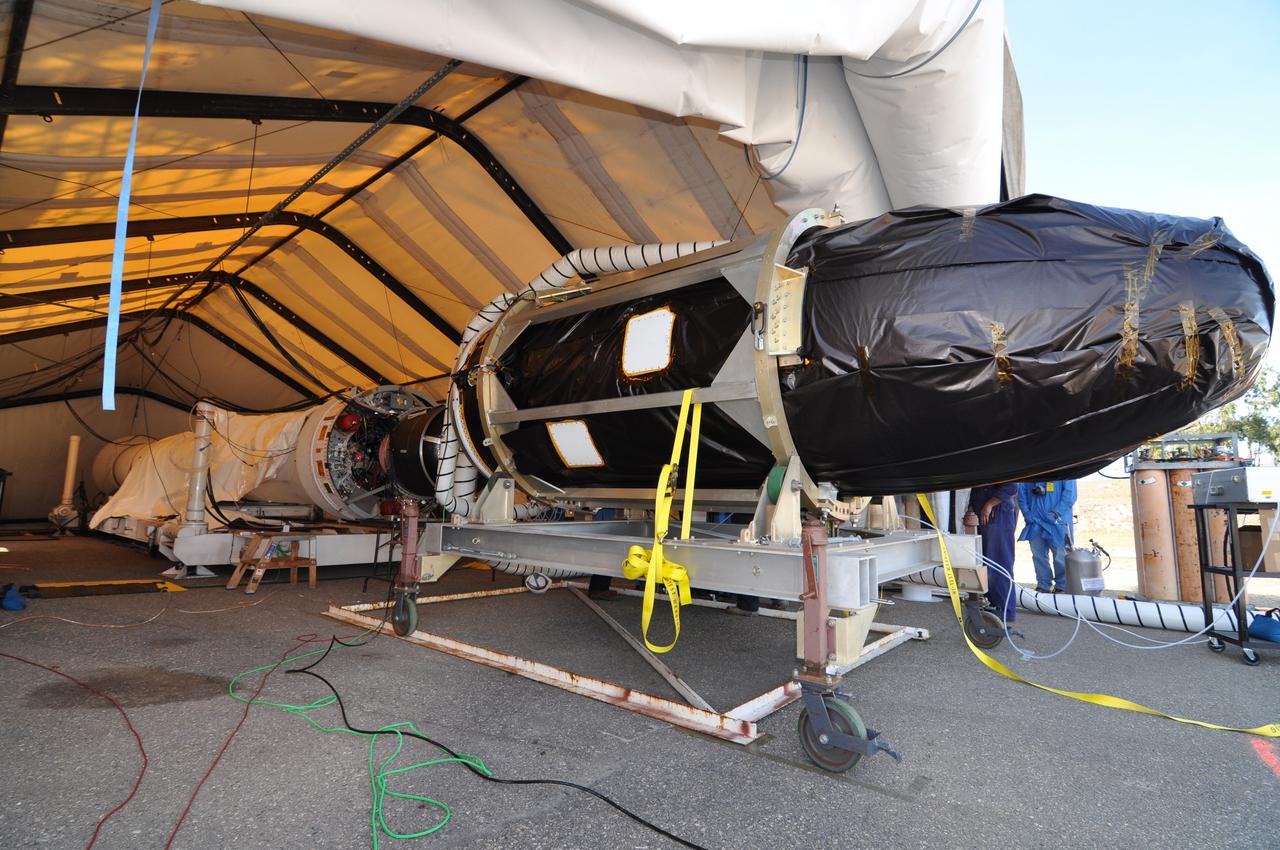
VANDENBERG AIR FORCE BASE, Calif. -- At Space Launch Complex 576-E at Vandenberg Air Force Base in California, workers have moved NASA's Glory spacecraft into position where it will be joined with the Taurus XL rocket's third stage already delivered to a temporary processing tent near the pad. The Orbital Sciences Corp. Taurus XL rocket will carry Glory into low Earth orbit. Once Glory reaches orbit, it will collect data on the properties of aerosols and black carbon. It also will help scientists understand how the sun's irradiance affects Earth's climate. Launch is scheduled for 5:09 a.m. EST Feb. 23. For information, visit www.nasa.gov/glory. Photo credit: NASA/Randy Beaudoin, VAFB
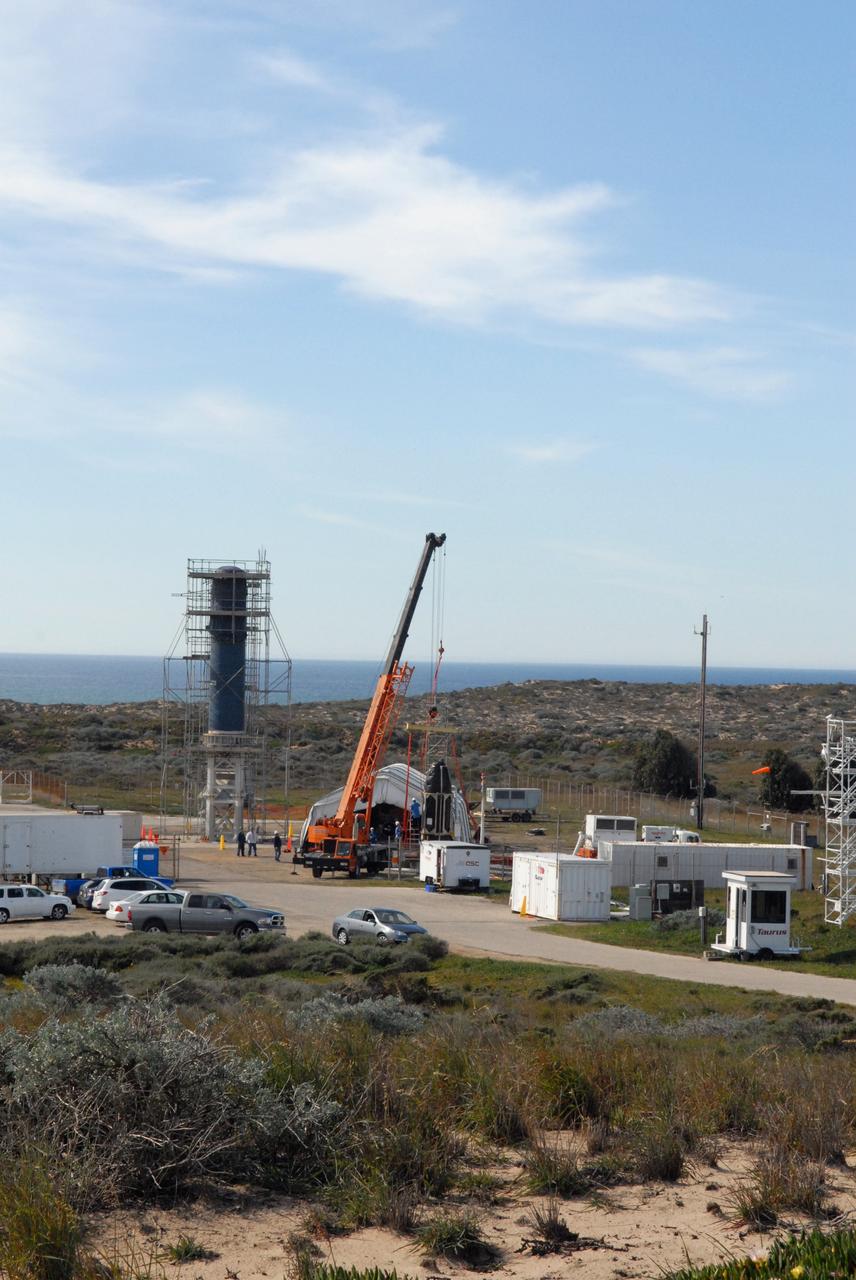
VANDENBERG AIR FORCE BASE, Calif. -- At Space Launch Complex 576-E at Vandenberg Air Force Base in California, workers prepare NASA's Glory spacecraft, encapsulated in its protective fairing, to be lifted off of a transport. It will then be joined with the Taurus XL rocket's third stage, already delivered to a temporary processing tent near the pad. The Orbital Sciences Corp. Taurus XL rocket will carry Glory into low Earth orbit. Once Glory reaches orbit, it will collect data on the properties of aerosols and black carbon. It also will help scientists understand how the sun's irradiance affects Earth's climate. Launch is scheduled for 5:09 a.m. EST Feb. 23. For information, visit www.nasa.gov/glory. Photo credit: NASA/Jerry E. Clemens Jr., VAFB
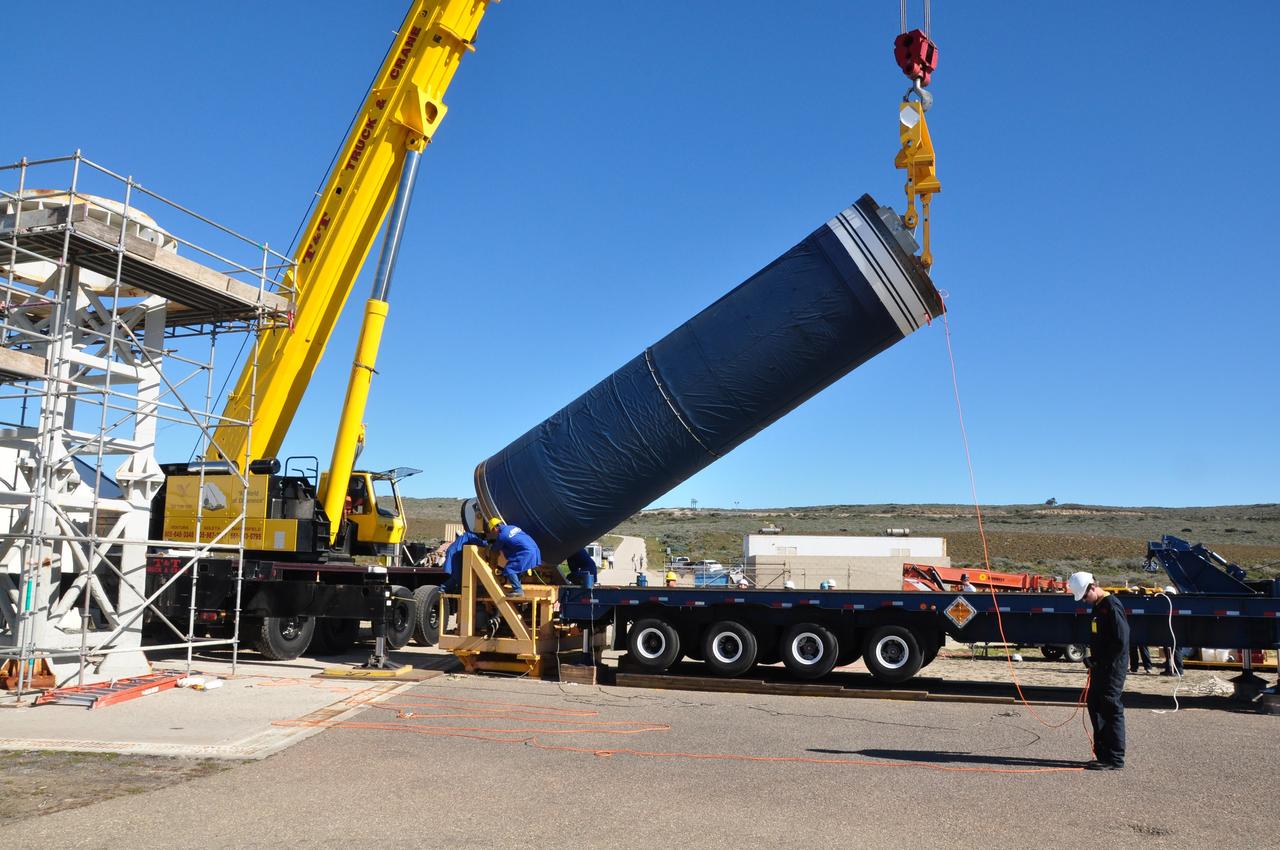
VANDENBERG AIR FORCE BASE, Calif. -- The Stage 0 motor of the Orbital Sciences Corp. Taurus XL is hoisted into launch position by crane at Space Launch Complex 576-E at Vandenberg Air Force Base in California. As part of the four-stage Taurus XL rocket that will carry NASA's Glory spacecraft into low Earth orbit, stages 1, 2 and 3 will join Stage 0 at the launch pad about a week later. Once Glory reaches orbit, it will collect data on the properties of aerosols and black carbon. It also will help scientists understand how the sun's irradiance affects Earth's climate. Launch is scheduled for 5:09 a.m. EST Feb. 23. For information, visit www.nasa.gov/glory. Photo credit: NASA/Randy Beaudoin, VAFB
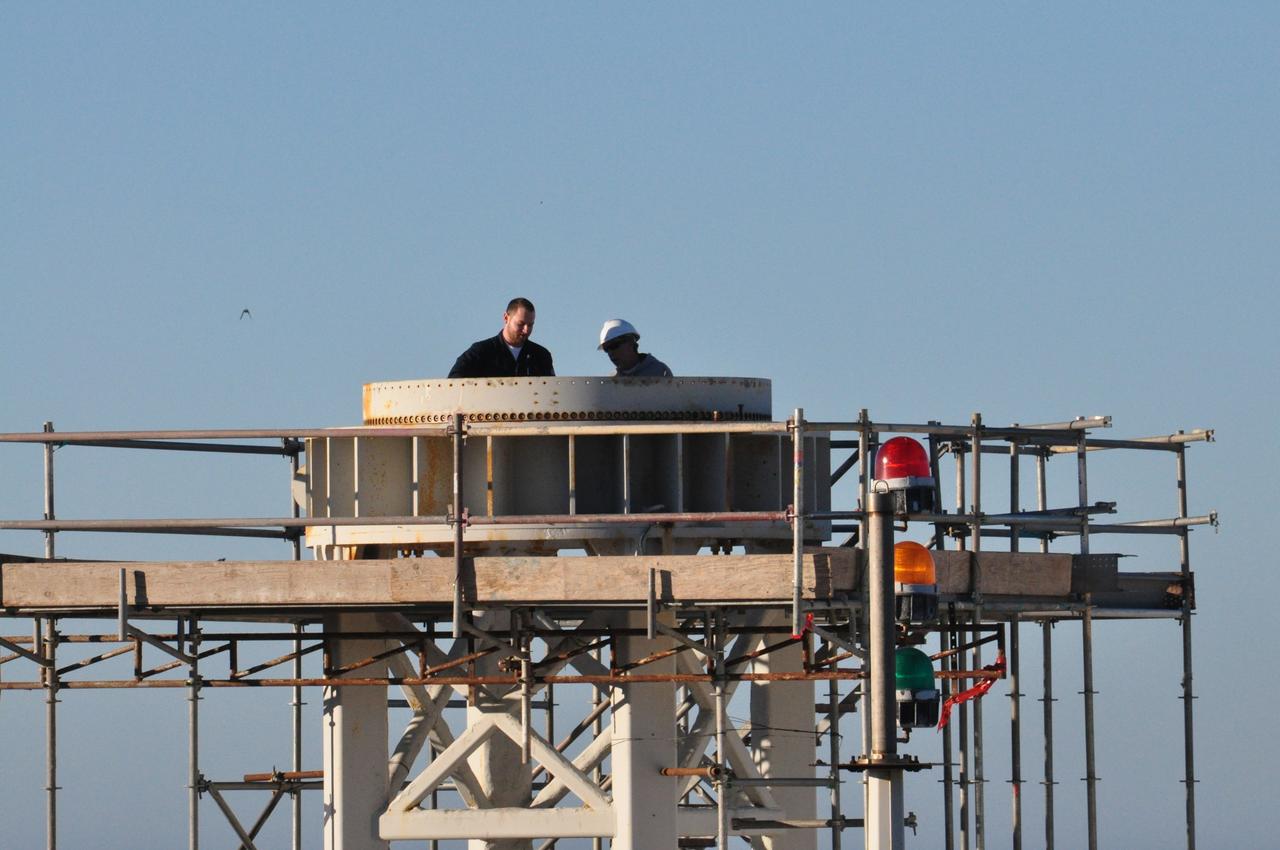
VANDENBERG AIR FORCE BASE, Calif. -- Workers on Space Launch Complex 576-E at Vandenberg Air Force Base in California prepare for the arrival of the Stage 0 motor of the Orbital Sciences Corp. Taurus XL rocket. Once at the pad, Stage 0 will be hoisted into its launch position. As part of the four-stage Taurus XL rocket that will carry NASA's Glory spacecraft into low Earth orbit, stages 1, 2 and 3 will join Stage 0 at the launch pad about a week later. Once Glory reaches orbit, it will collect data on the properties of aerosols and black carbon. It also will help scientists understand how the sun's irradiance affects Earth's climate. Launch is scheduled for 5:09 a.m. EST Feb. 23. For information, visit www.nasa.gov/glory. Photo credit: NASA/Randy Beaudoin, VAFB
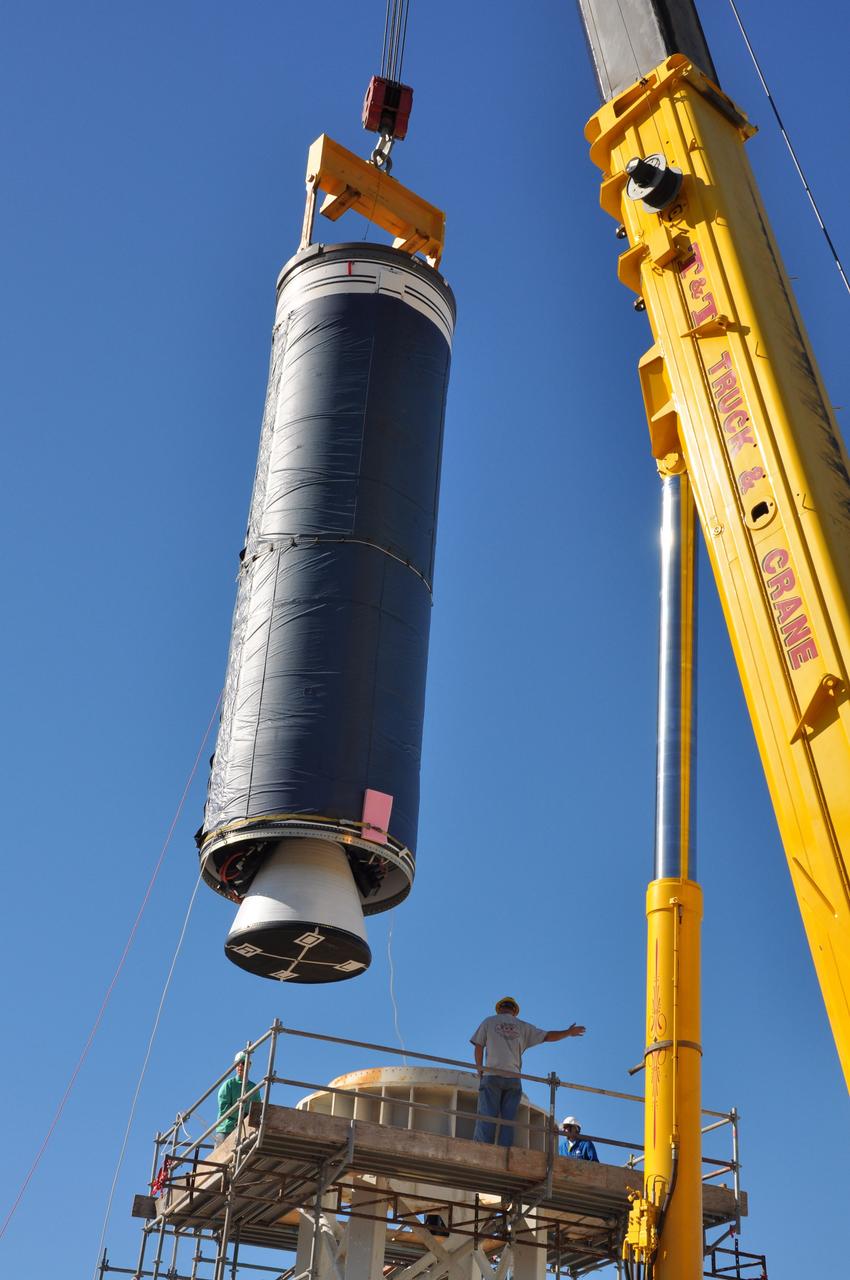
VANDENBERG AIR FORCE BASE, Calif. -- The Stage 0 motor of the Orbital Sciences Corp. Taurus XL is moved into launch position on Space Launch Complex 576-E at Vandenberg Air Force Base in California. As part of the four-stage Taurus XL rocket that will carry NASA's Glory spacecraft into low Earth orbit, stages 1, 2 and 3 will join Stage 0 at the launch pad about a week later. Once Glory reaches orbit, it will collect data on the properties of aerosols and black carbon. It also will help scientists understand how the sun's irradiance affects Earth's climate. Launch is scheduled for 5:09 a.m. EST Feb. 23. For information, visit www.nasa.gov/glory. Photo credit: NASA/Randy Beaudoin, VAFB
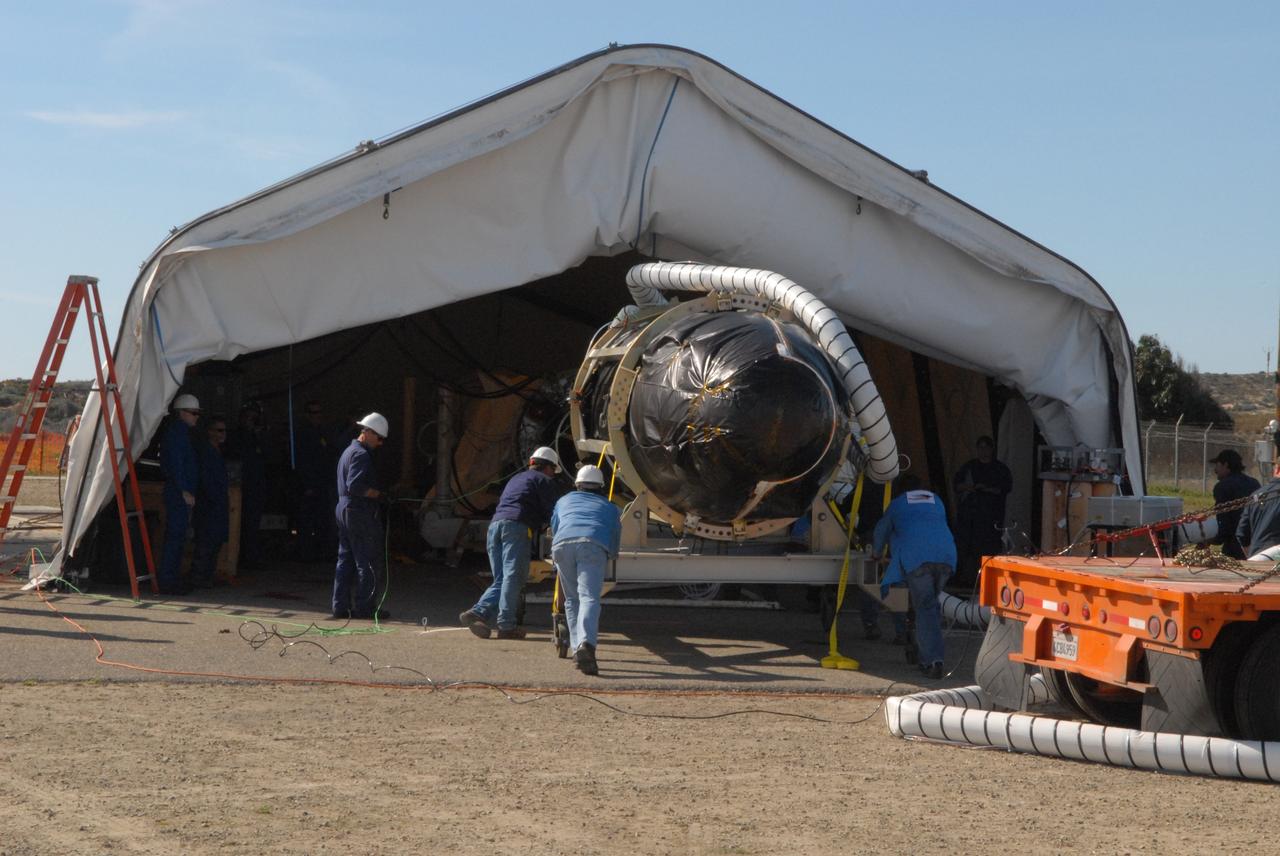
VANDENBERG AIR FORCE BASE, Calif. -- At Space Launch Complex 576-E at Vandenberg Air Force Base in California, NASA's Glory spacecraft, encapsulated in its protective fairing, is transferred into a temporary processing tent near the pad. There, it will then be joined with the Taurus XL rocket's third stage. The Orbital Sciences Corp. Taurus XL rocket will carry Glory into low Earth orbit. Once Glory reaches orbit, it will collect data on the properties of aerosols and black carbon. It also will help scientists understand how the sun's irradiance affects Earth's climate. Launch is scheduled for 5:09 a.m. EST Feb. 23. For information, visit www.nasa.gov/glory. Photo credit: NASA/Jerry E. Clemens Jr., VAFB
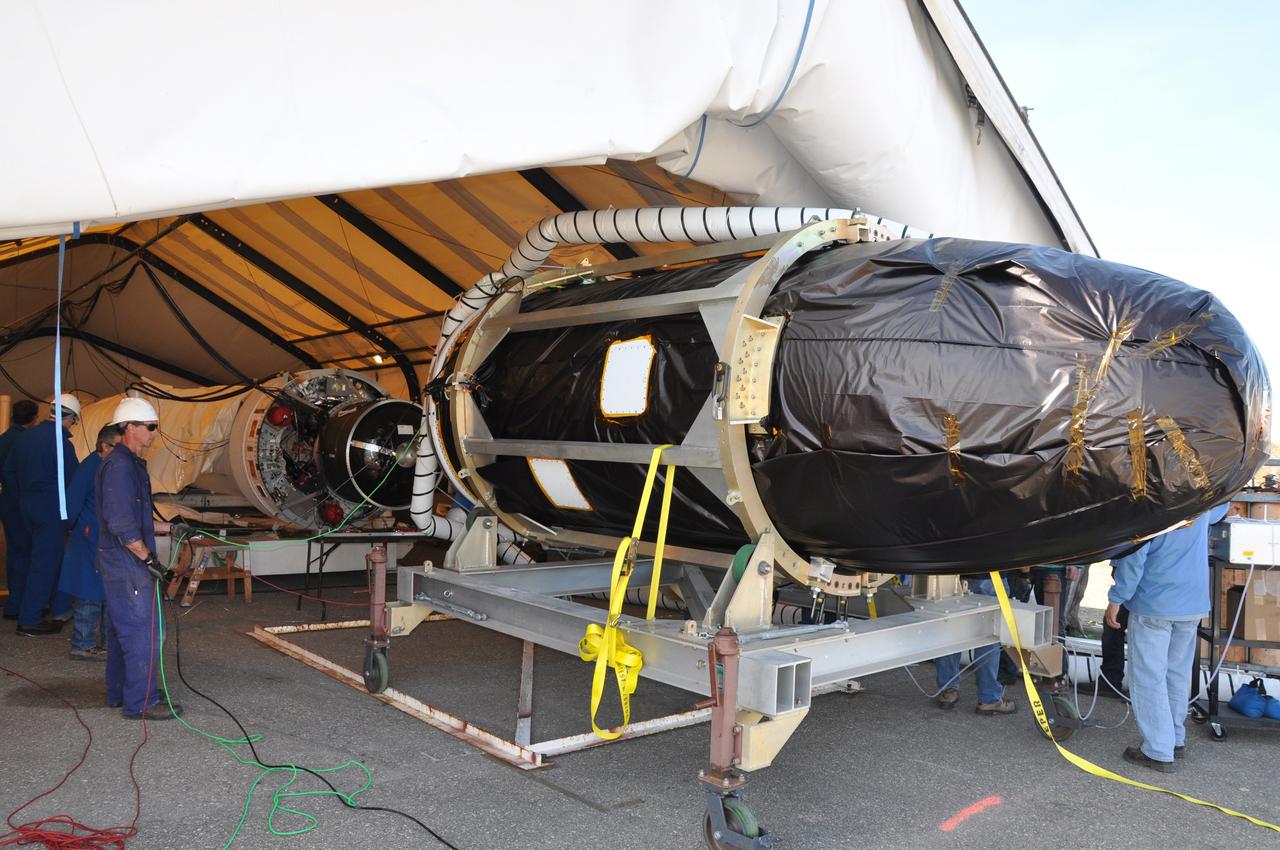
VANDENBERG AIR FORCE BASE, Calif. -- At Space Launch Complex 576-E at Vandenberg Air Force Base in California, workers move NASA's Glory spacecraft into position where it will be joined with the Taurus XL rocket's third stage already delivered to a temporary processing tent near the pad. The Orbital Sciences Corp. Taurus XL rocket will carry Glory into low Earth orbit. Once Glory reaches orbit, it will collect data on the properties of aerosols and black carbon. It also will help scientists understand how the sun's irradiance affects Earth's climate. Launch is scheduled for 5:09 a.m. EST Feb. 23. For information, visit www.nasa.gov/glory. Photo credit: NASA/Randy Beaudoin, VAFB
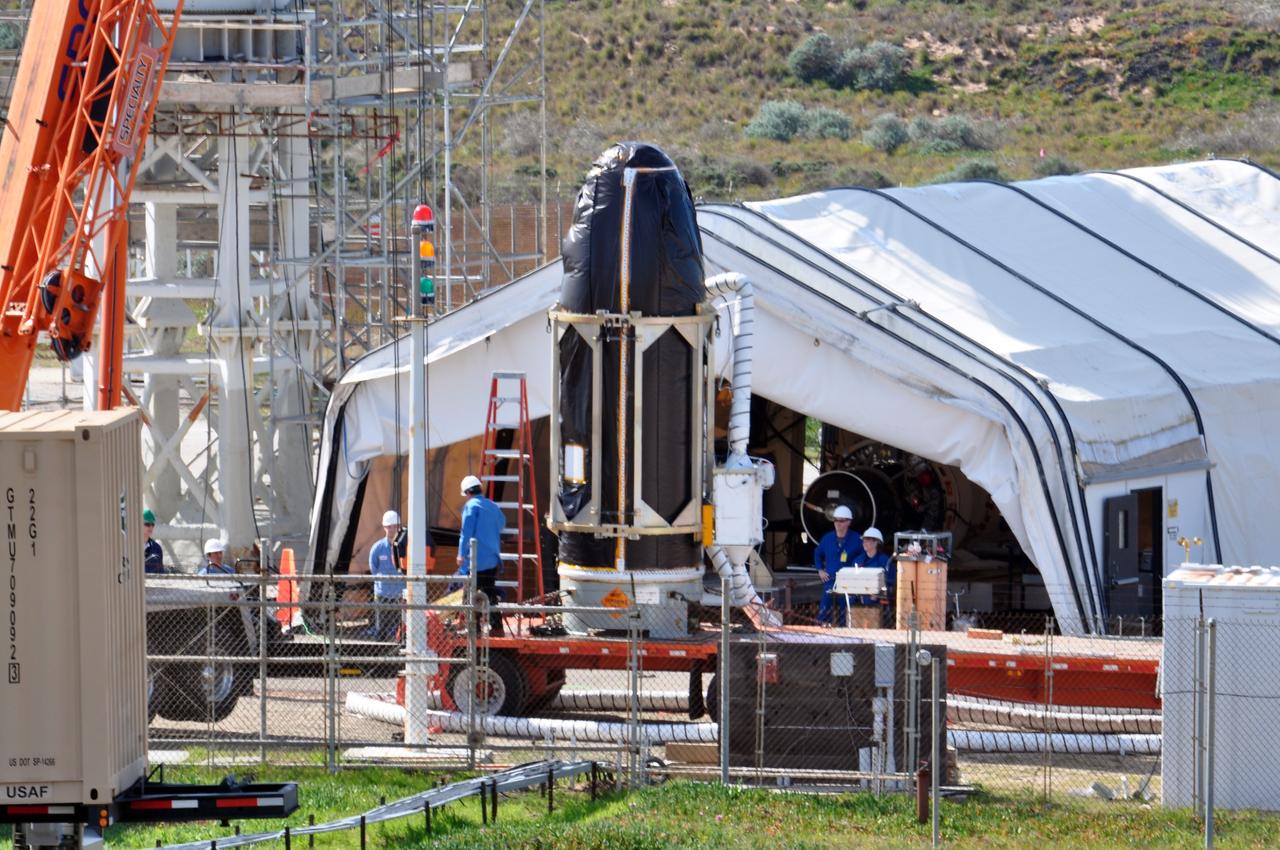
VANDENBERG AIR FORCE BASE, Calif. -- At Space Launch Complex 576-E at Vandenberg Air Force Base in California, workers prepare NASA's Glory spacecraft, encapsulated in its protective fairing, to be lifted off of a transport. It will then be joined with the Taurus XL rocket's third stage, already delivered to a temporary processing tent near the pad. The Orbital Sciences Corp. Taurus XL rocket will carry Glory into low Earth orbit. Once Glory reaches orbit, it will collect data on the properties of aerosols and black carbon. It also will help scientists understand how the sun's irradiance affects Earth's climate. Launch is scheduled for 5:09 a.m. EST Feb. 23. For information, visit www.nasa.gov/glory. Photo credit: NASA/Randy Beaudoin, VAFB
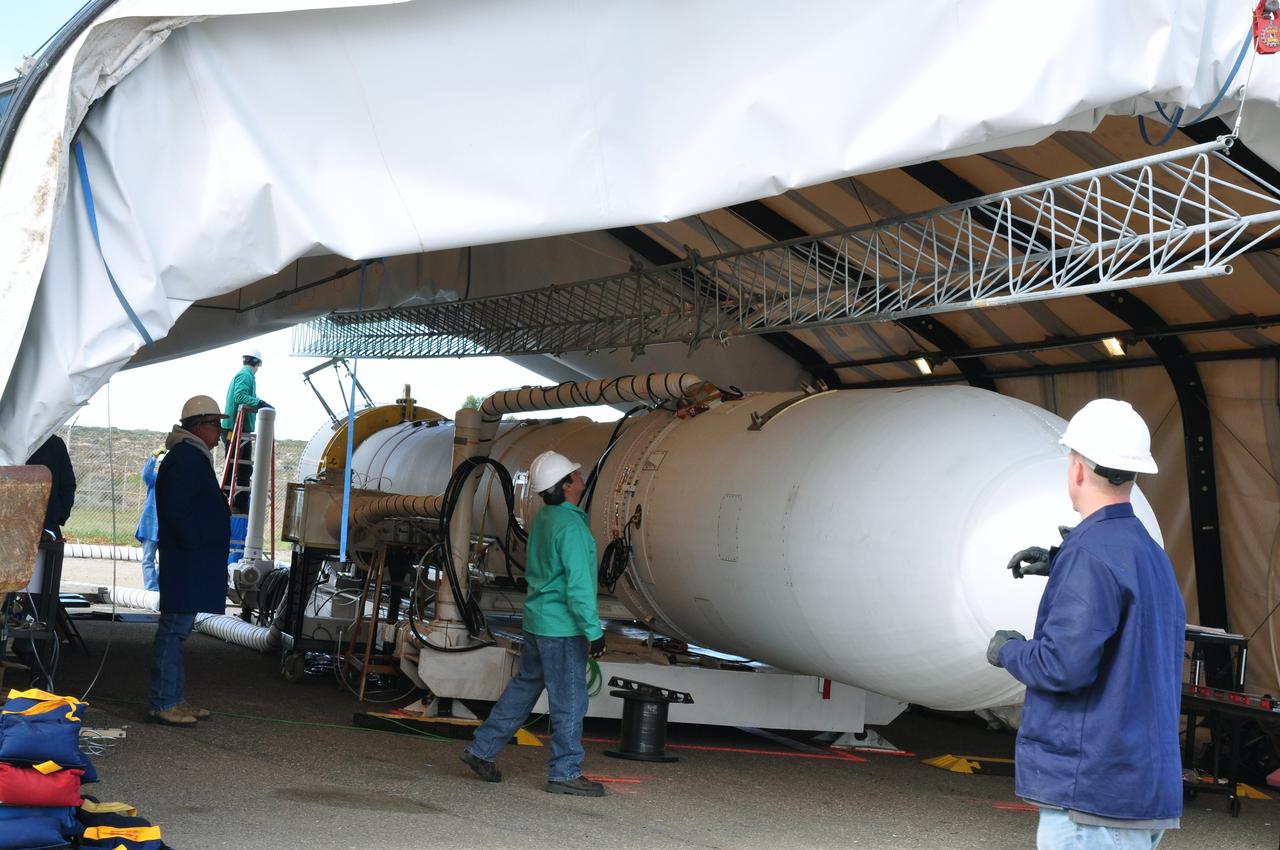
VANDENBERG AIR FORCE BASE, Calif. -- At Space Launch Complex 576-E at Vandenberg Air Force Base in California, workers join the upper umbilical tower to NASA's Glory spacecraft, already integrated with the upper stack of the Taurus rocket. During liftoff this tower falls away from the spacecraft. The Orbital Sciences Corp. Taurus XL rocket will launch Glory into low Earth orbit. Once Glory reaches orbit, it will collect data on the properties of aerosols and black carbon. It also will help scientists understand how the sun's irradiance affects Earth's climate. Launch is scheduled for 5:09 a.m. EST Feb. 23. For information, visit www.nasa.gov/glory. Photo credit: NASA/Randy Beaudoin, VAFB
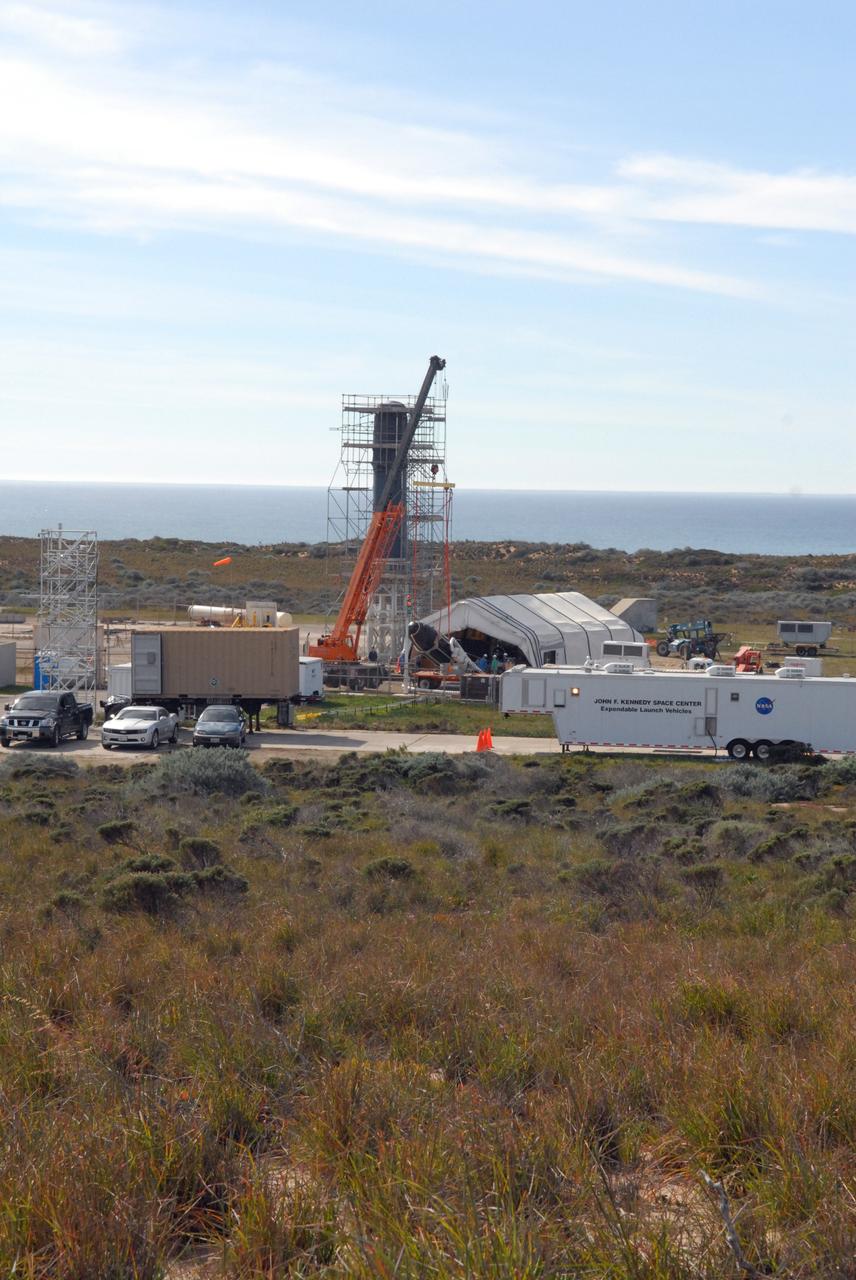
VANDENBERG AIR FORCE BASE, Calif. -- At Space Launch Complex 576-E at Vandenberg Air Force Base in California, a crane lifts NASA's Glory spacecraft, encapsulated in its protective fairing, off of a transport. It will then be joined with the Taurus XL rocket's third stage, already delivered to a temporary processing tent near the pad. The Orbital Sciences Corp. Taurus XL rocket will carry Glory into low Earth orbit. Once Glory reaches orbit, it will collect data on the properties of aerosols and black carbon. It also will help scientists understand how the sun's irradiance affects Earth's climate. Launch is scheduled for 5:09 a.m. EST Feb. 23. For information, visit www.nasa.gov/glory. Photo credit: NASA/Jerry E. Clemens Jr., VAFB
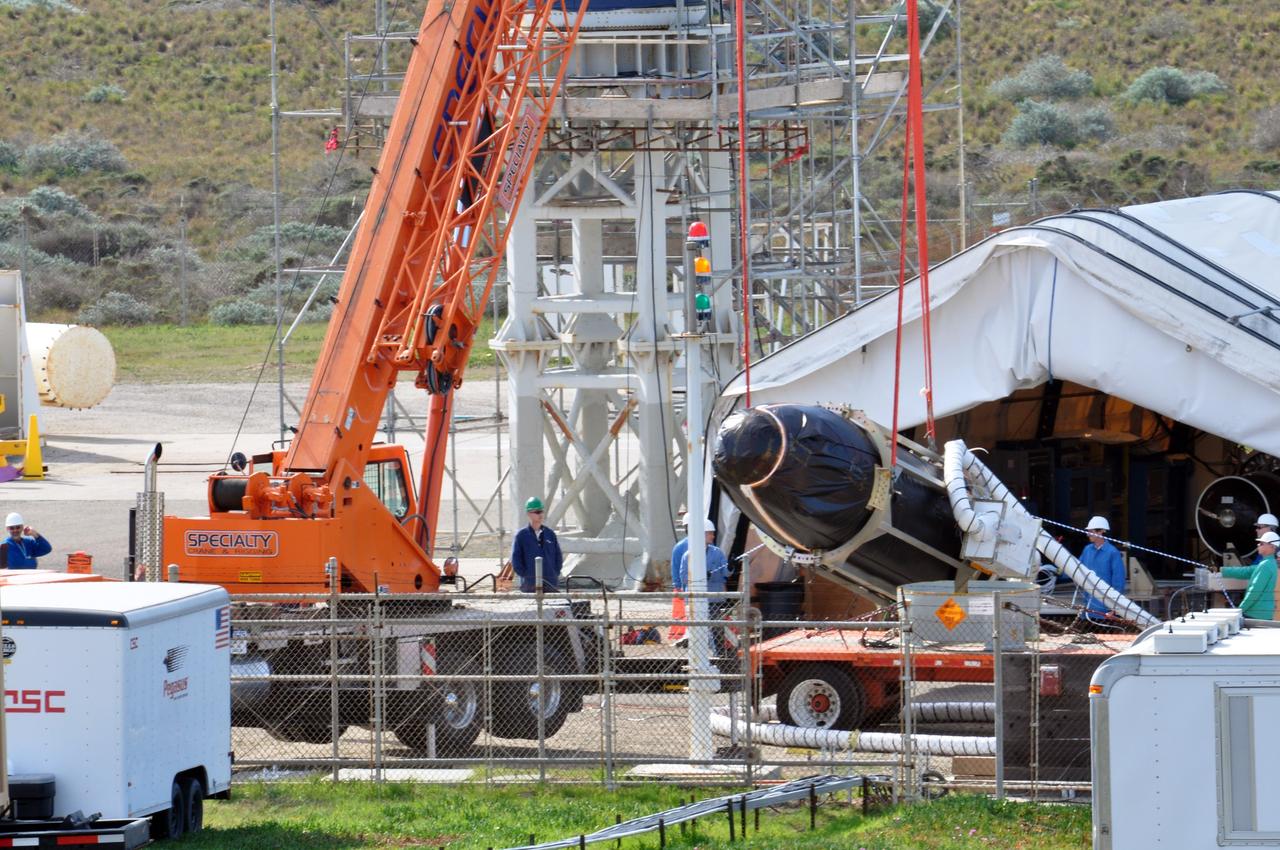
VANDENBERG AIR FORCE BASE, Calif. -- At Space Launch Complex 576-E at Vandenberg Air Force Base in California, a crane maneuvers NASA's Glory spacecraft, encapsulated in its protective fairing, onto a stationary rail. There it will then be joined with the Taurus XL rocket's third stage, already delivered to a temporary processing tent near the pad. The Orbital Sciences Corp. Taurus XL rocket will carry Glory into low Earth orbit. Once Glory reaches orbit, it will collect data on the properties of aerosols and black carbon. It also will help scientists understand how the sun's irradiance affects Earth's climate. Launch is scheduled for 5:09 a.m. EST Feb. 23. For information, visit www.nasa.gov/glory. Photo credit: NASA/Randy Beaudoin, VAFB
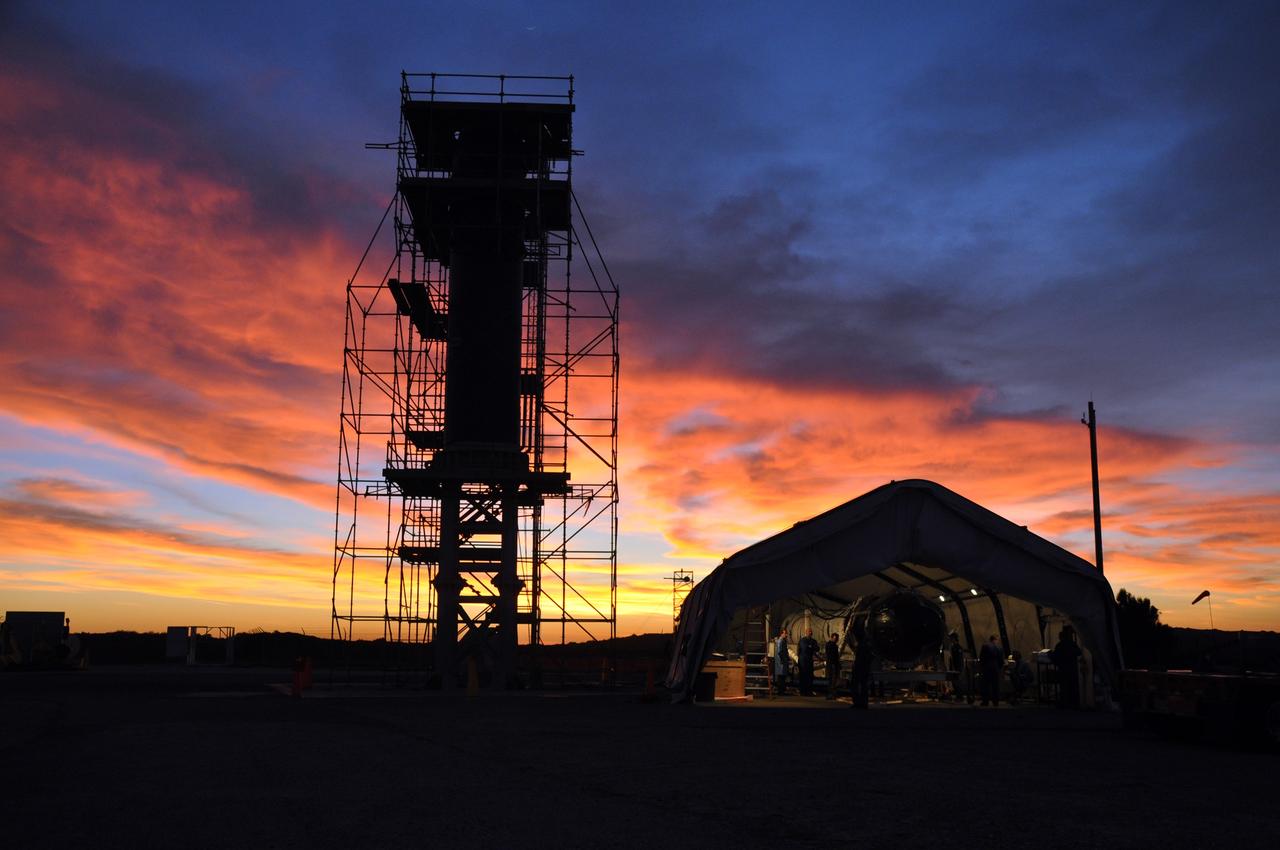
VANDENBERG AIR FORCE BASE, Calif. -- At Vandenberg Air Force Base in California, the sun sets over Space Launch Complex 576-E where technicians continue the process of joining NASA's Glory spacecraft with the Taurus XL rocket's third stage, housed inside a temporary processing tent near the pad. The Orbital Sciences Corp. Taurus XL rocket will carry Glory into low Earth orbit. Once Glory reaches orbit, it will collect data on the properties of aerosols and black carbon. It also will help scientists understand how the sun's irradiance affects Earth's climate. Launch is scheduled for 5:09 a.m. EST Feb. 23. For information, visit www.nasa.gov/glory. Photo credit: NASA/Randy Beaudoin, VAFB
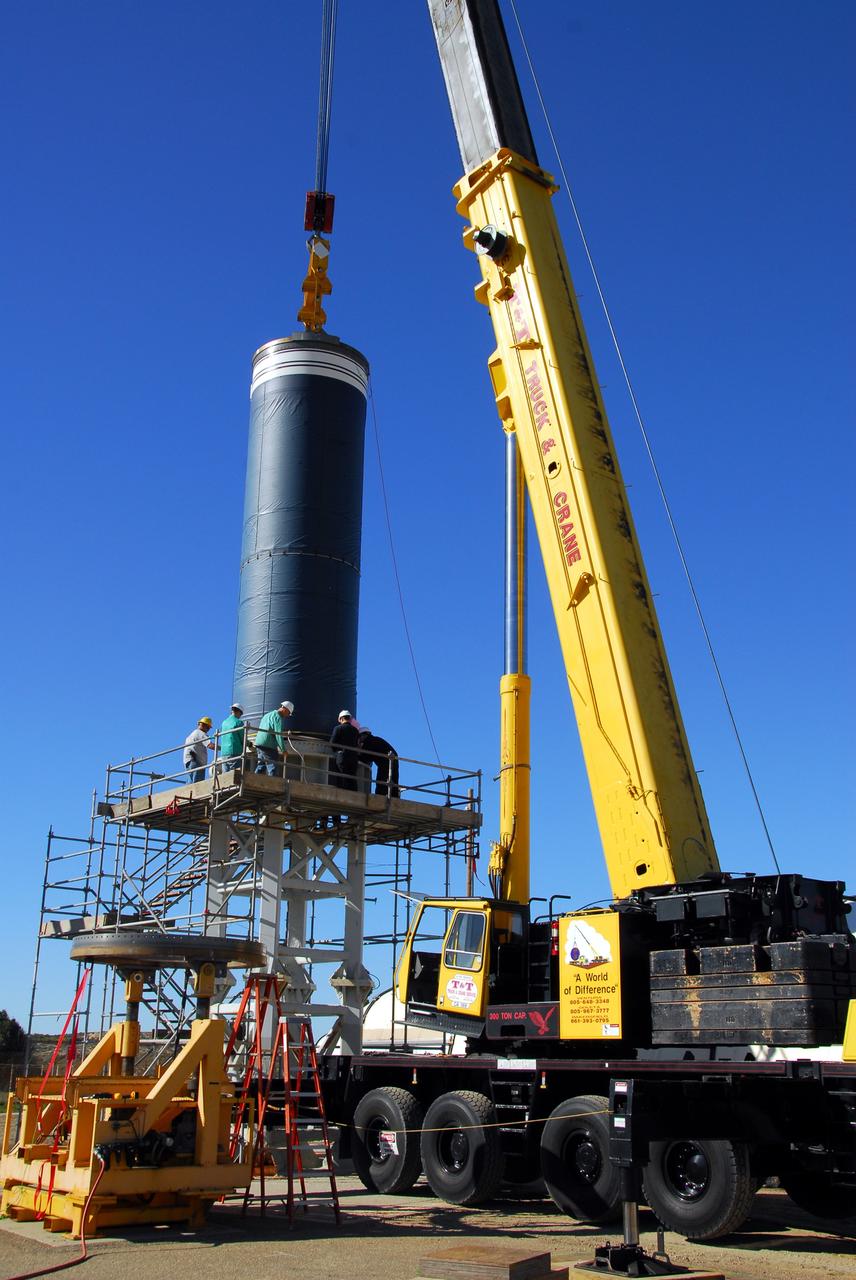
VANDENBERG AIR FORCE BASE, Calif. -- Workers move the Stage 0 motor of the Orbital Sciences Corp. Taurus XL into launch position on Space Launch Complex 576-E at Vandenberg Air Force Base in California. As part of the four-stage Taurus XL rocket that will carry NASA's Glory spacecraft into low Earth orbit, stages 1, 2 and 3 will join Stage 0 at the launch pad about a week later. Once Glory reaches orbit, it will collect data on the properties of aerosols and black carbon. It also will help scientists understand how the sun's irradiance affects Earth's climate. Launch is scheduled for 5:09 a.m. EST Feb. 23. For information, visit www.nasa.gov/glory. Photo credit: NASA/Don Kosoksa, VAFB
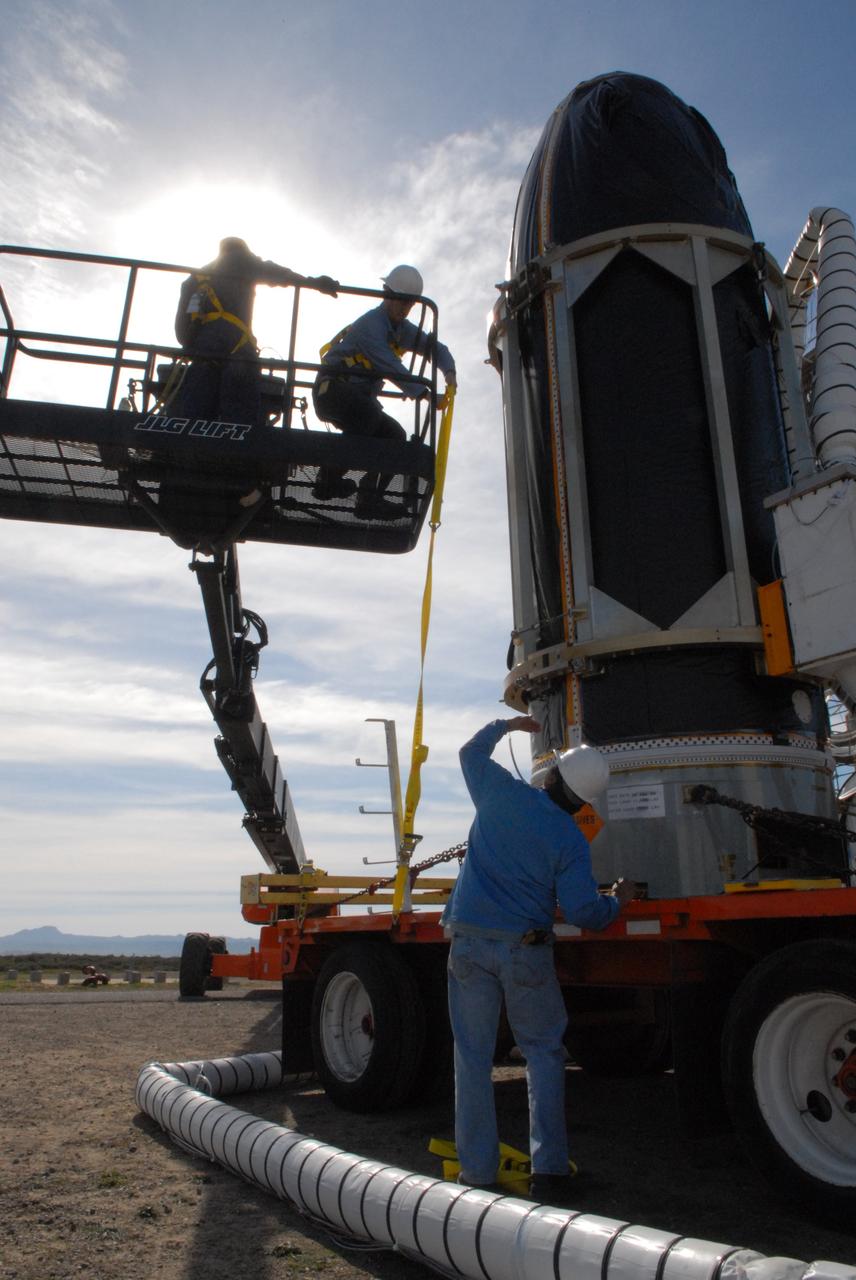
VANDENBERG AIR FORCE BASE, Calif. -- At Space Launch Complex 576-E at Vandenberg Air Force Base in California, workers prepare NASA's Glory spacecraft, encapsulated in its protective fairing, to be lifted off of a transport. It will then be joined with the Taurus XL rocket's third stage, already delivered to a temporary processing tent near the pad. The Orbital Sciences Corp. Taurus XL rocket will carry Glory into low Earth orbit. Once Glory reaches orbit, it will collect data on the properties of aerosols and black carbon. It also will help scientists understand how the sun's irradiance affects Earth's climate. Launch is scheduled for 5:09 a.m. EST Feb. 23. For information, visit www.nasa.gov/glory. Photo credit: NASA/Jerry E. Clemens Jr., VAFB
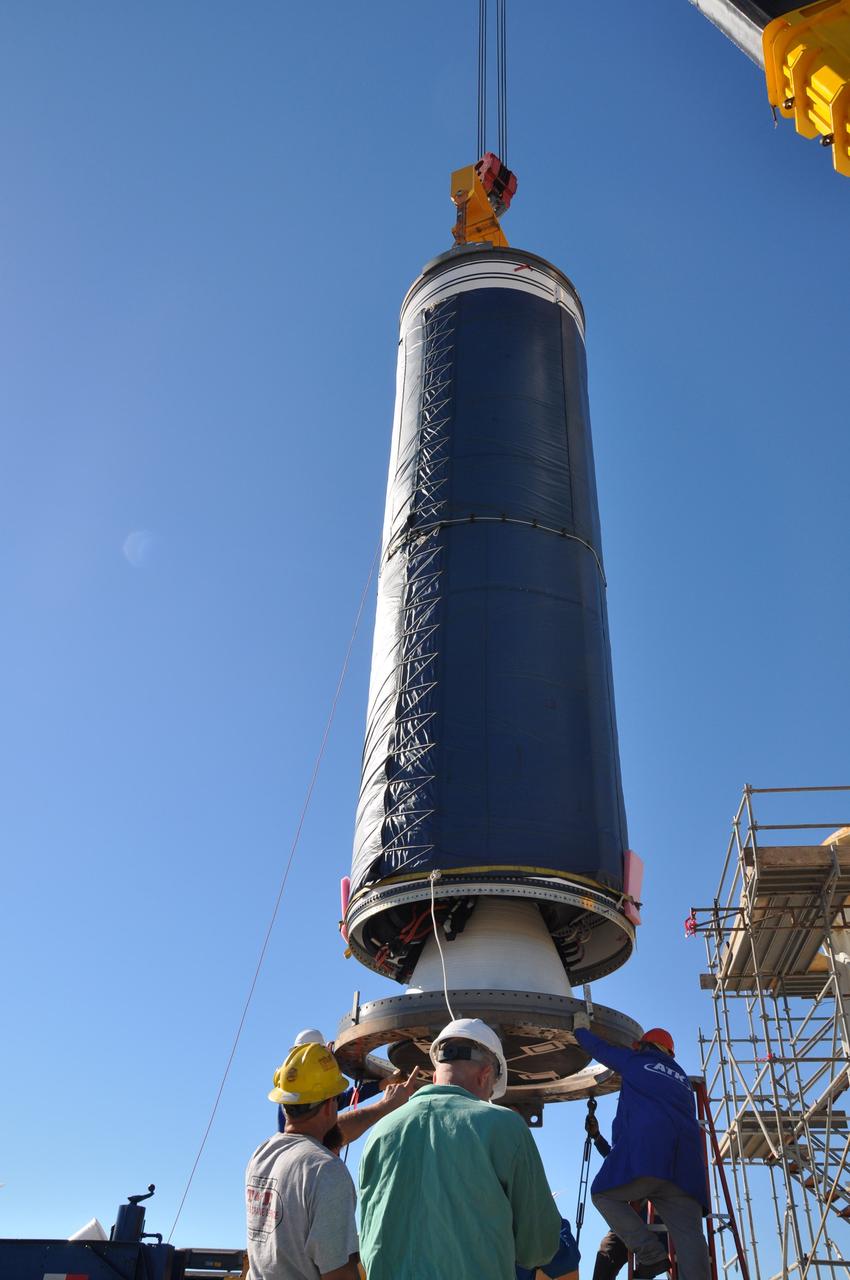
VANDENBERG AIR FORCE BASE, Calif. -- The Stage 0 motor of the Orbital Sciences Corp. Taurus XL is moved into launch position on Space Launch Complex 576-E at Vandenberg Air Force Base in California. As part of the four-stage Taurus XL rocket that will carry NASA's Glory spacecraft into low Earth orbit, stages 1, 2 and 3 will join Stage 0 at the launch pad about a week later. Once Glory reaches orbit, it will collect data on the properties of aerosols and black carbon. It also will help scientists understand how the sun's irradiance affects Earth's climate. Launch is scheduled for 5:09 a.m. EST Feb. 23. For information, visit www.nasa.gov/glory. Photo credit: NASA/Randy Beaudoin, VAFB
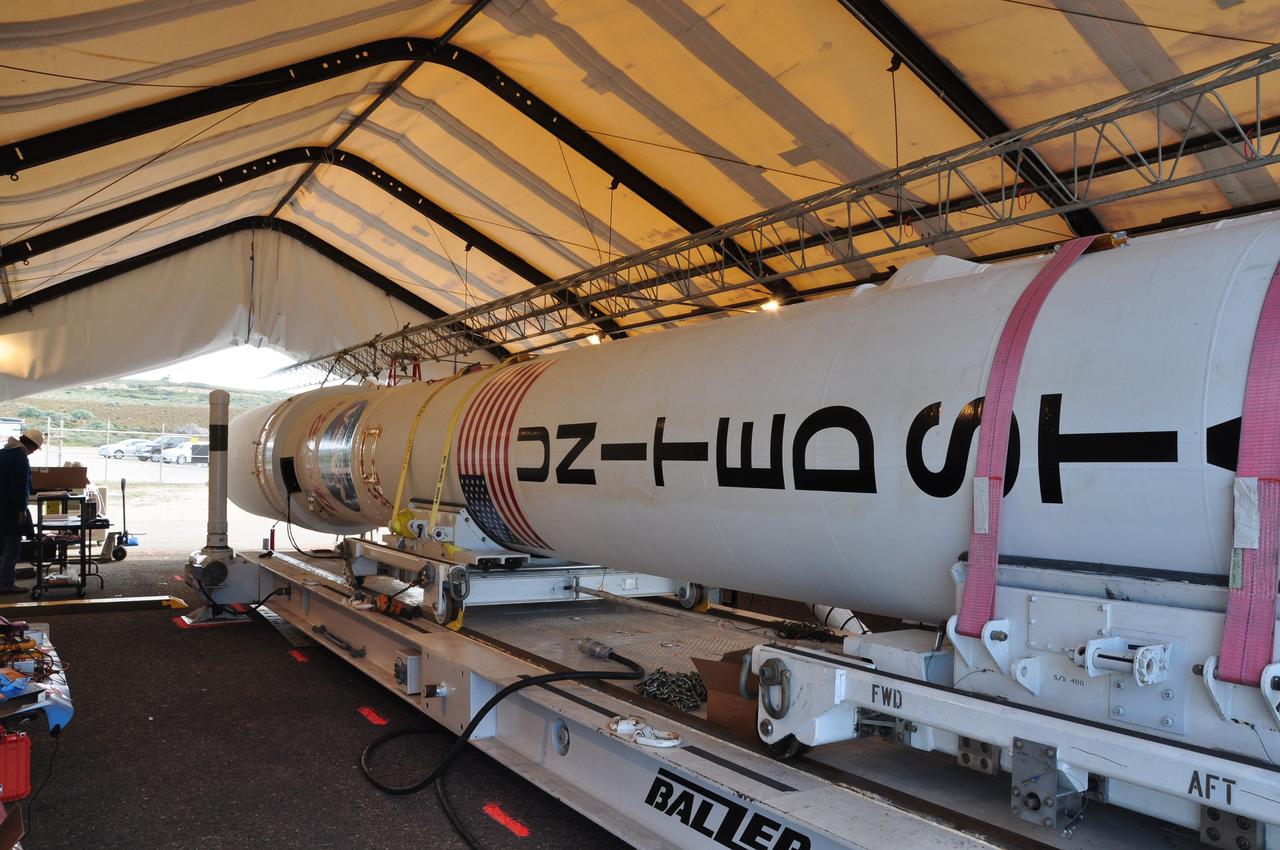
VANDENBERG AIR FORCE BASE, Calif. -- At Space Launch Complex 576-E at Vandenberg Air Force Base in California, the upper umbilical tower has been joined to NASA's Glory spacecraft, already integrated with the upper stack of the Taurus rocket. During liftoff this tower falls away from the spacecraft. The Orbital Sciences Corp. Taurus XL rocket will launch Glory into low Earth orbit. Once Glory reaches orbit, it will collect data on the properties of aerosols and black carbon. It also will help scientists understand how the sun's irradiance affects Earth's climate. Launch is scheduled for 5:09 a.m. EST Feb. 23. For information, visit www.nasa.gov/glory. Photo credit: NASA/Randy Beaudoin, VAFB
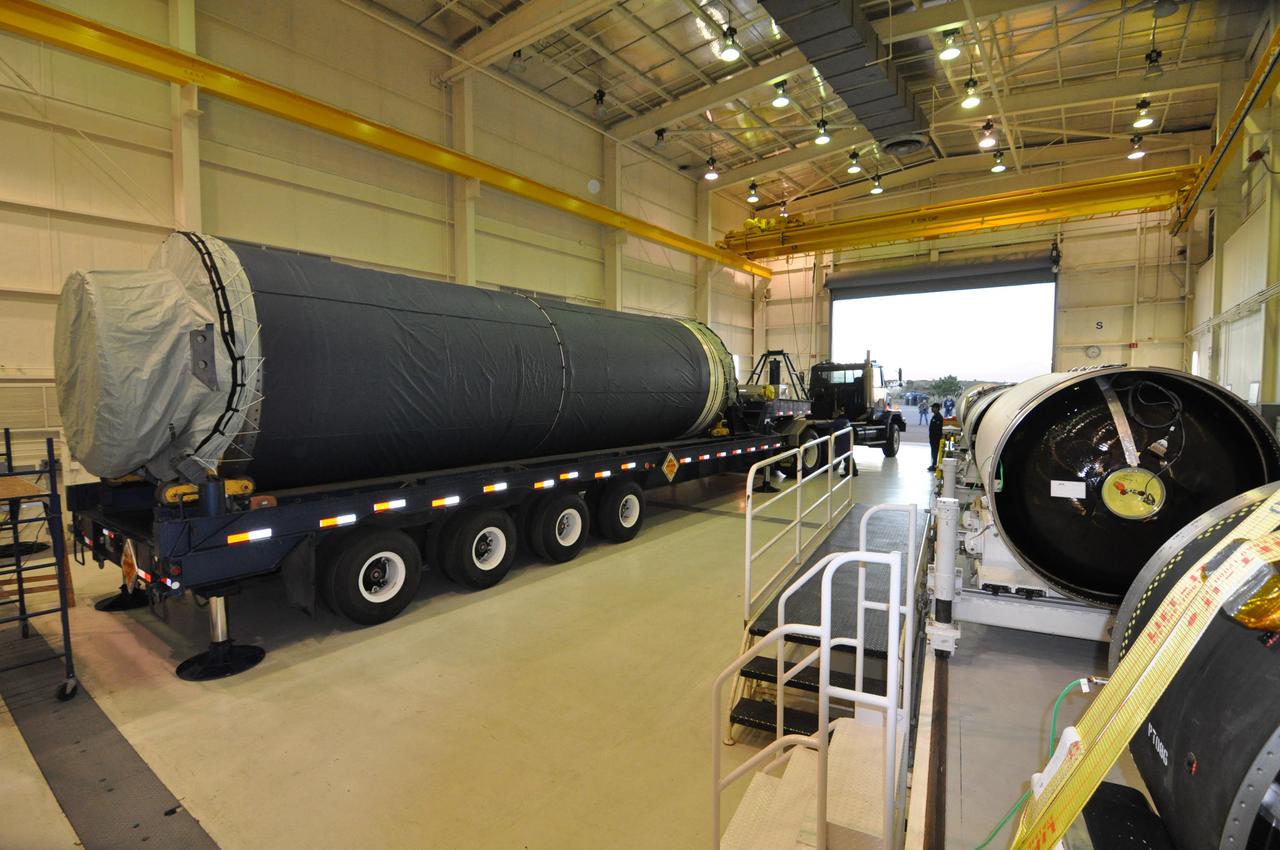
VANDENBERG AIR FORCE BASE, Calif. -- The Stage 0 motor, left, of the Orbital Sciences Corp. Taurus XL rocket is almost ready for its journey from Building 1555 to Space Launch Complex 576-E at Vandenberg Air Force Base in California. As part of the four-stage Taurus XL rocket that will carry NASA's Glory spacecraft into low Earth orbit, stages 1, 2 and 3, right, will join Stage 0 at the launch pad about a week later. Once Glory reaches orbit, it will collect data on the properties of aerosols and black carbon. It also will help scientists understand how the sun's irradiance affects Earth's climate. Launch is scheduled for 5:09 a.m. EST Feb. 23. For information, visit www.nasa.gov/glory. Photo credit: NASA/Randy Beaudoin, VAFB
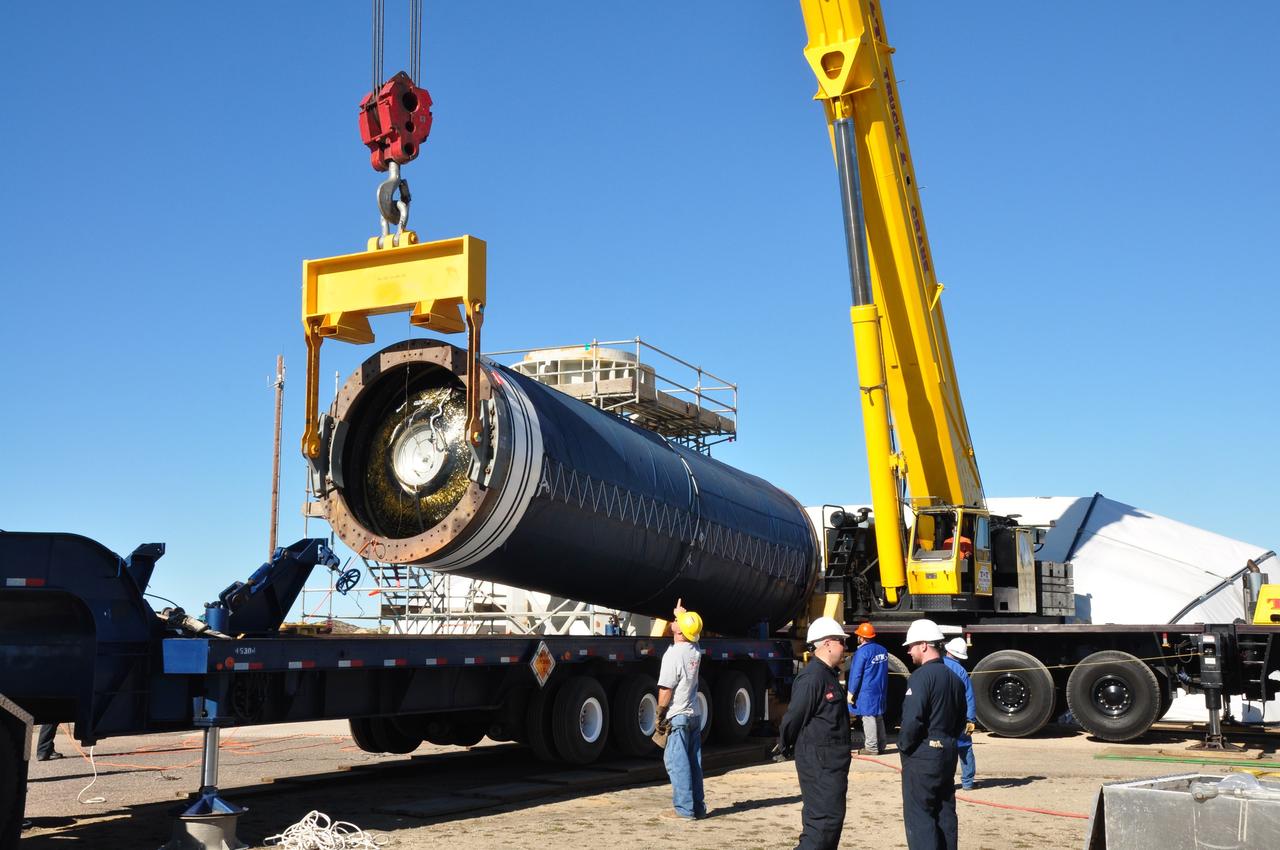
VANDENBERG AIR FORCE BASE, Calif. -- The Stage 0 motor of the Orbital Sciences Corp. Taurus XL is hoisted into launch position by crane at Space Launch Complex 576-E at Vandenberg Air Force Base in California. As part of the four-stage Taurus XL rocket that will carry NASA's Glory spacecraft into low Earth orbit, stages 1, 2 and 3 will join Stage 0 at the launch pad about a week later. Once Glory reaches orbit, it will collect data on the properties of aerosols and black carbon. It also will help scientists understand how the sun's irradiance affects Earth's climate. Launch is scheduled for 5:09 a.m. EST Feb. 23. For information, visit www.nasa.gov/glory. Photo credit: NASA/Randy Beaudoin, VAFB
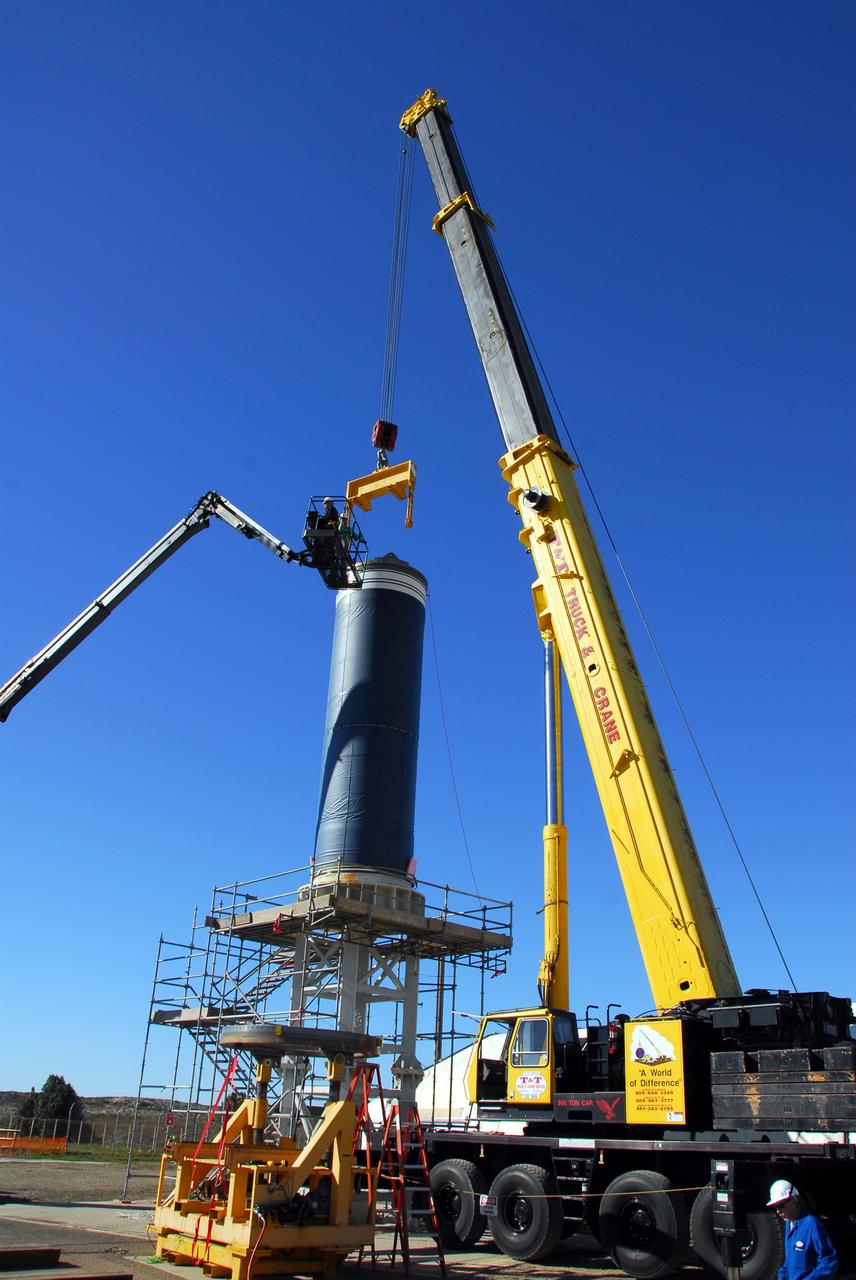
VANDENBERG AIR FORCE BASE, Calif. -- Workers unlatch the crane that lowered Stage 0 of the Orbital Sciences Corp. Taurus XL into launch position on Space Launch Complex 576-E at Vandenberg Air Force Base in California. As part of the four-stage Taurus XL rocket that will carry NASA's Glory spacecraft into low Earth orbit, stages 1, 2 and 3 will join Stage 0 at the launch pad about a week later. Once Glory reaches orbit, it will collect data on the properties of aerosols and black carbon. It also will help scientists understand how the sun's irradiance affects Earth's climate. Launch is scheduled for 5:09 a.m. EST Feb. 23. For information, visit www.nasa.gov/glory. Photo credit: NASA/Don Kosoksa, VAFB
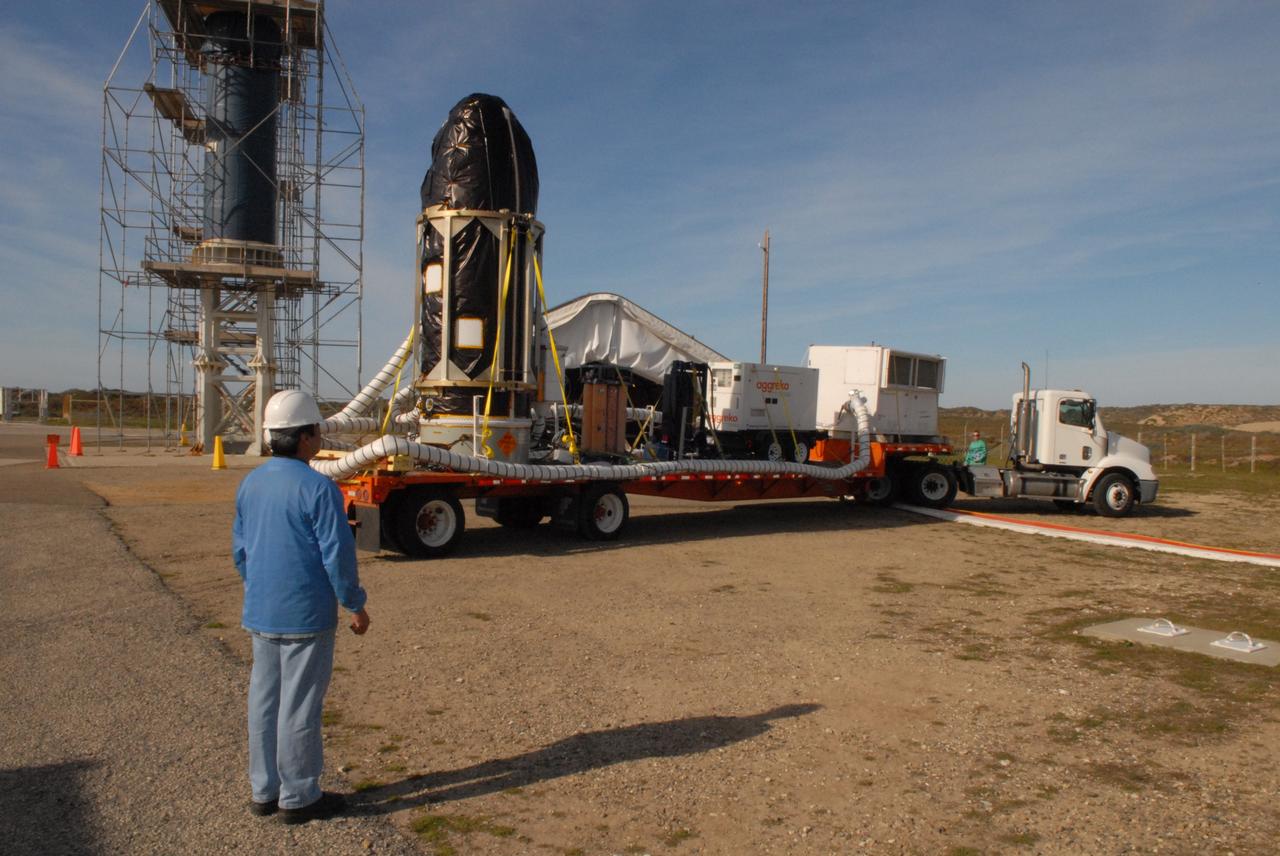
VANDENBERG AIR FORCE BASE, Calif. -- At Vandenberg Air Force Base in California, NASA's Glory spacecraft, encapsulated in its protective fairing, arrives at Space Launch Complex 576-E. There it will be joined with the Taurus XL rocket's third stage, already delivered to a temporary processing tent near the pad. The Orbital Sciences Corp. Taurus XL rocket will carry Glory into low Earth orbit. Once Glory reaches orbit, it will collect data on the properties of aerosols and black carbon. It also will help scientists understand how the sun's irradiance affects Earth's climate. Launch is scheduled for 5:09 a.m. EST Feb. 23. For information, visit www.nasa.gov/glory. Photo credit: NASA/Jerry E. Clemens Jr., VAFB
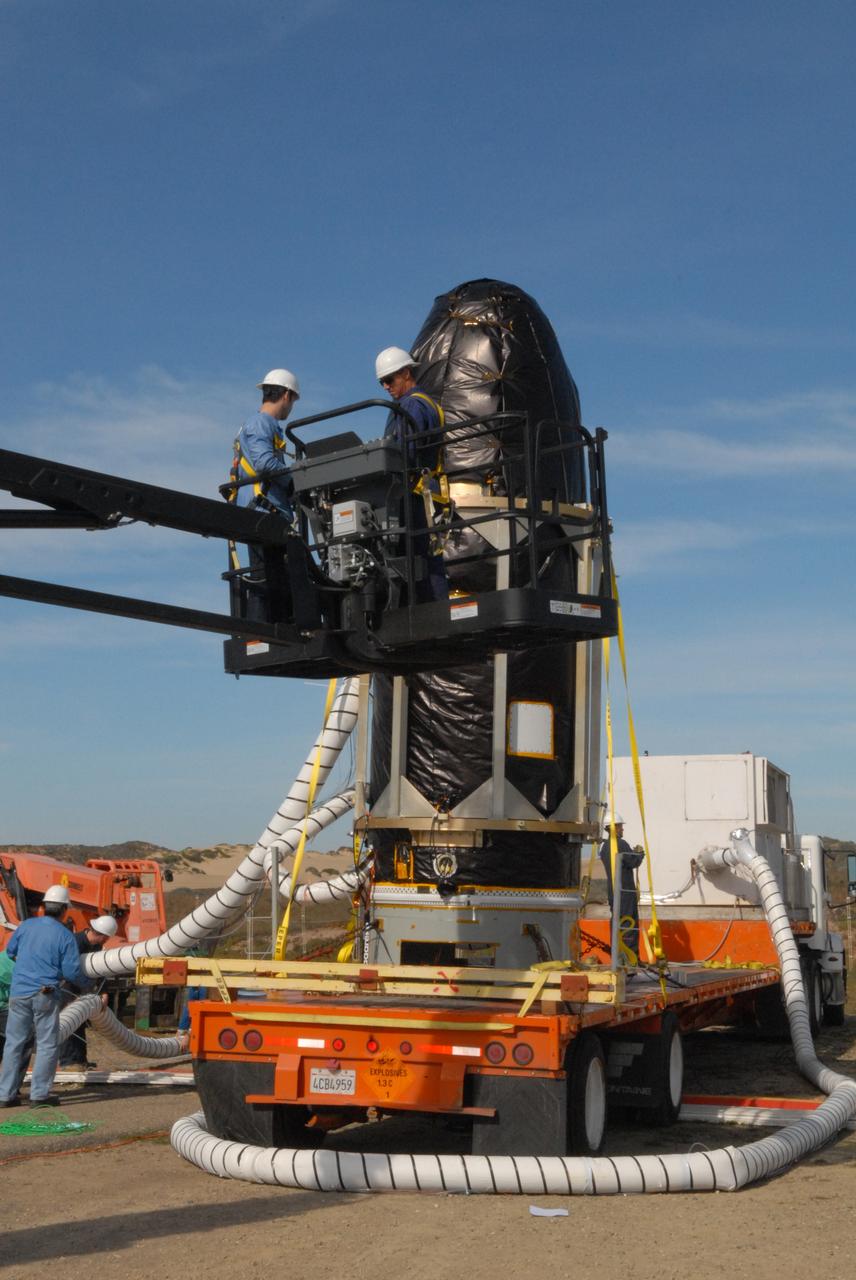
VANDENBERG AIR FORCE BASE, Calif. -- At Space Launch Complex 576-E at Vandenberg Air Force Base in California, workers prepare NASA's Glory spacecraft, encapsulated in its protective fairing, to be lifted off of a transport. It will then be joined with the Taurus XL rocket's third stage, already delivered to a temporary processing tent near the pad. The Orbital Sciences Corp. Taurus XL rocket will carry Glory into low Earth orbit. Once Glory reaches orbit, it will collect data on the properties of aerosols and black carbon. It also will help scientists understand how the sun's irradiance affects Earth's climate. Launch is scheduled for 5:09 a.m. EST Feb. 23. For information, visit www.nasa.gov/glory. Photo credit: NASA/Jerry E. Clemens Jr., VAFB
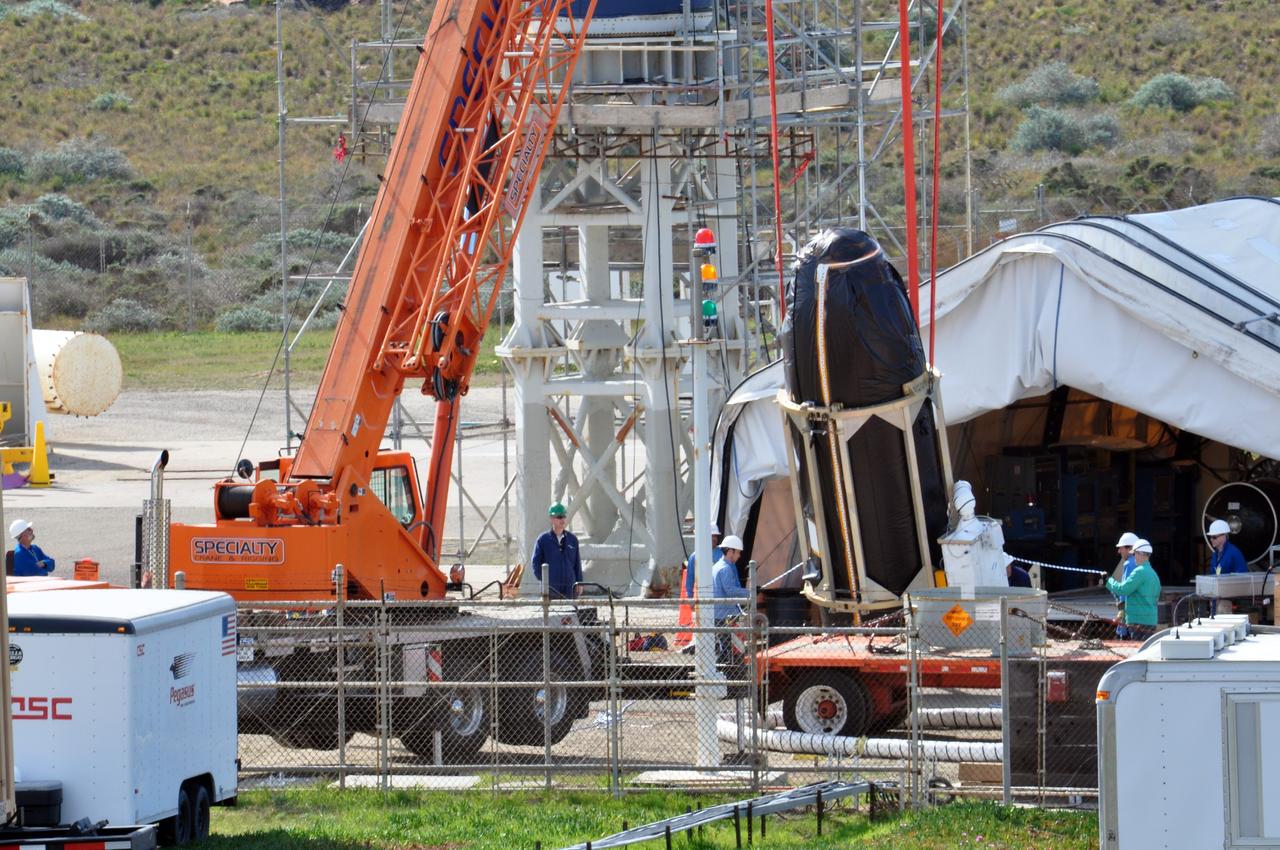
VANDENBERG AIR FORCE BASE, Calif. -- At Space Launch Complex 576-E at Vandenberg Air Force Base in California, a crane lifts NASA's Glory spacecraft, encapsulated in its protective fairing, off of a transport. It will then be joined with the Taurus XL rocket's third stage, already delivered to a temporary processing tent near the pad. The Orbital Sciences Corp. Taurus XL rocket will carry Glory into low Earth orbit. Once Glory reaches orbit, it will collect data on the properties of aerosols and black carbon. It also will help scientists understand how the sun's irradiance affects Earth's climate. Launch is scheduled for 5:09 a.m. EST Feb. 23. For information, visit www.nasa.gov/glory. Photo credit: NASA/Randy Beaudoin, VAFB
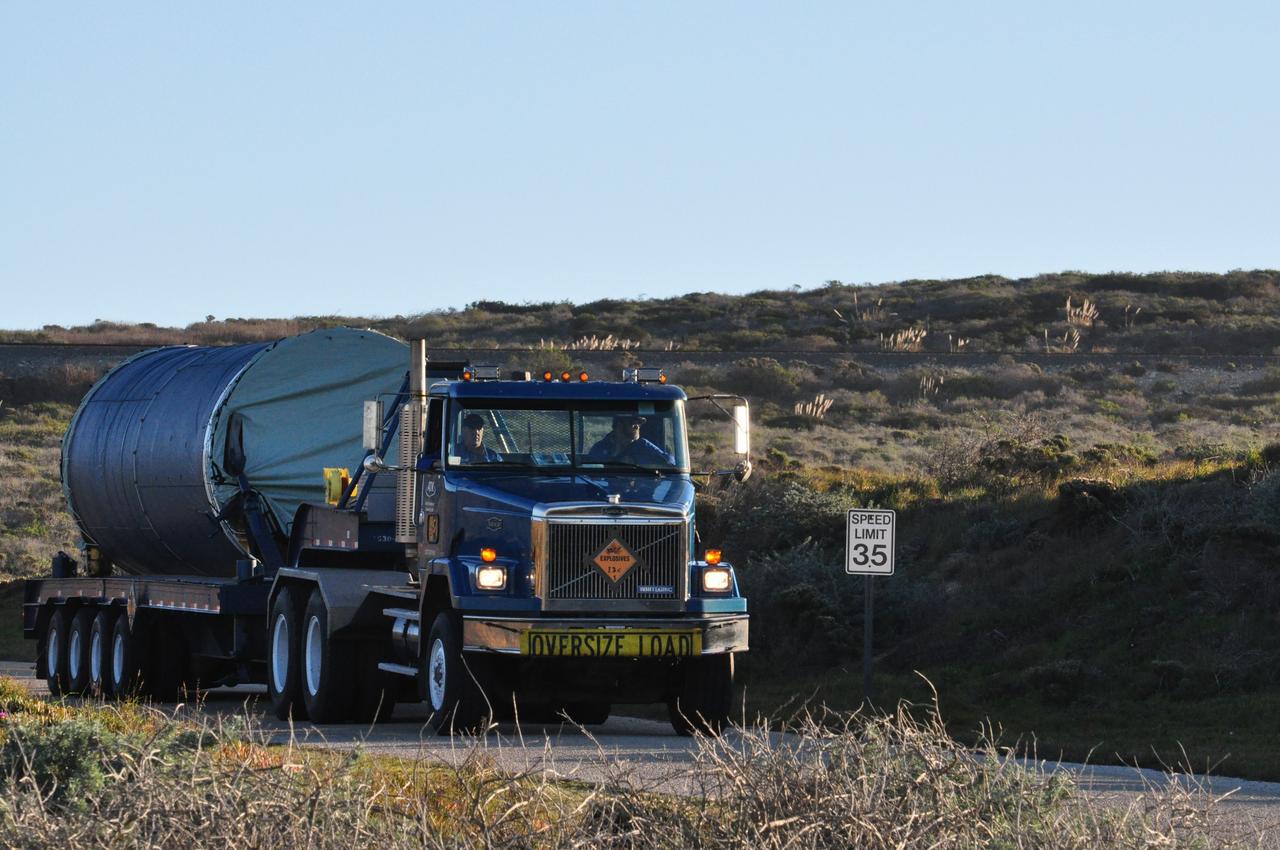
VANDENBERG AIR FORCE BASE, Calif. -- The Stage 0 motor of the Orbital Sciences Corp. Taurus XL rocket makes its journey from Building 1555 to Space Launch Complex 576-E at Vandenberg Air Force Base in California. As part of the four-stage Taurus XL rocket that will carry NASA's Glory spacecraft into low Earth orbit, stages 1, 2 and 3 will join Stage 0 at the launch pad about a week later. Once Glory reaches orbit, it will collect data on the properties of aerosols and black carbon. It also will help scientists understand how the sun's irradiance affects Earth's climate. Launch is scheduled for 5:09 a.m. EST Feb. 23. For information, visit www.nasa.gov/glory. Photo credit: NASA/Randy Beaudoin, VAFB
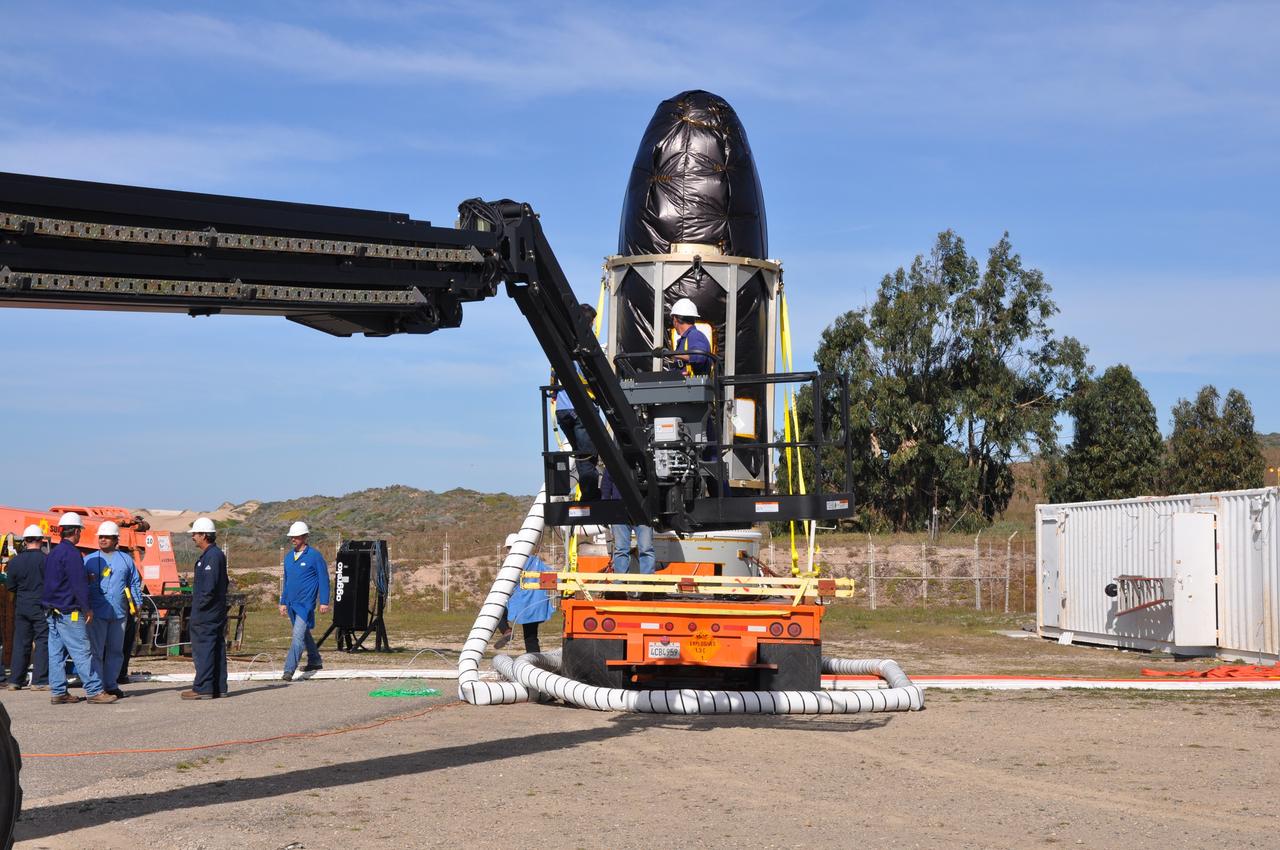
VANDENBERG AIR FORCE BASE, Calif. -- At Space Launch Complex 576-E at Vandenberg Air Force Base in California, NASA's Glory spacecraft, encapsulated in its protective fairing, is being prepared to be lifted off of a transport. It will then be joined with the Taurus XL rocket's third stage, already delivered to a temporary processing tent near the pad.The Orbital Sciences Corp. Taurus XL rocket will carry Glory into low Earth orbit. Once Glory reaches orbit, it will collect data on the properties of aerosols and black carbon. It also will help scientists understand how the sun's irradiance affects Earth's climate. Launch is scheduled for 5:09 a.m. EST Feb. 23. For information, visit www.nasa.gov/glory. Photo credit: NASA/Randy Beaudoin, VAFB
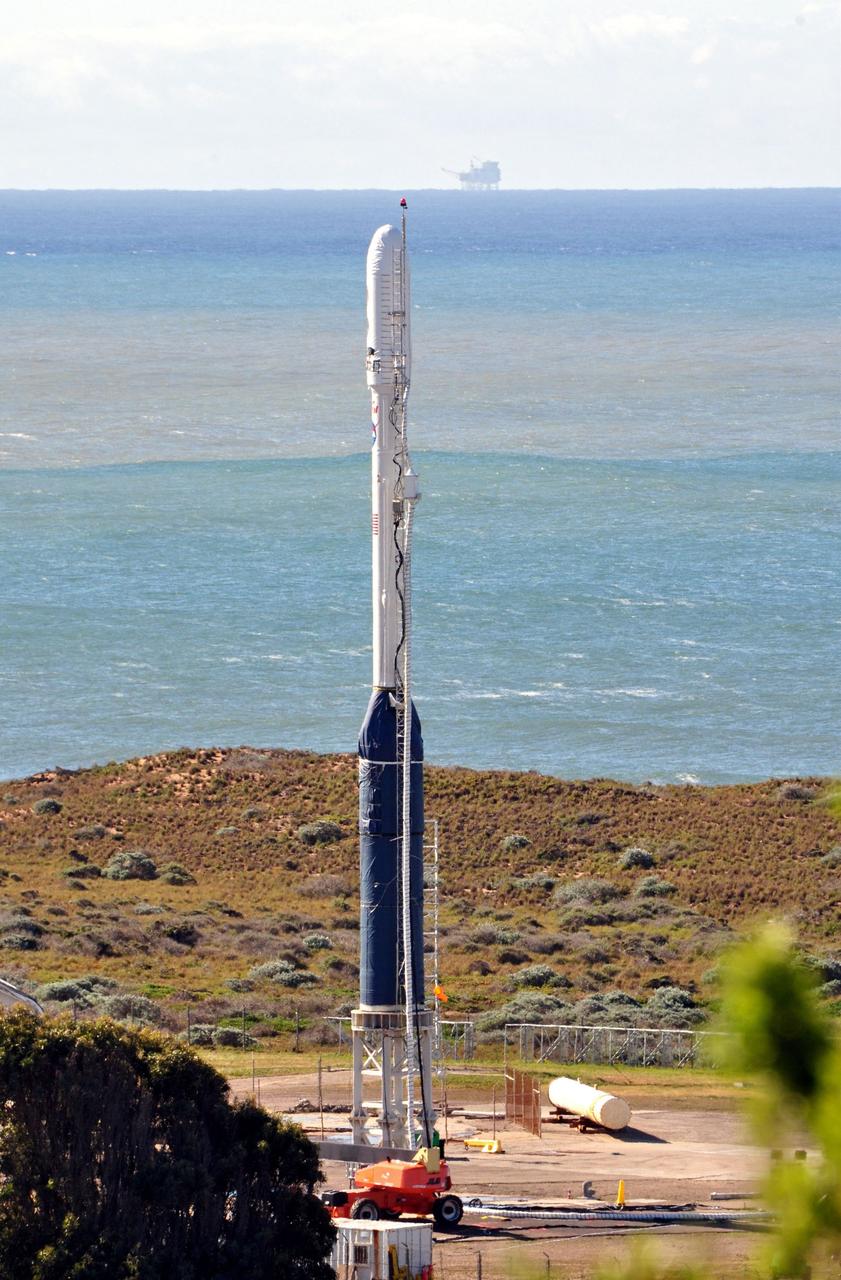
VANDENBERG AIR FORCE BASE, Calif. -- On Space Launch Complex 576-E at Vandenberg Air Force Base in California, the Taurus XL rocket is in its launch configuration. The upper stack, consisting of Stages 1, 2 and 3, as well as the encapsulated Glory spacecraft, is attached to an interstage and Stage 0 at the launch pad. The Orbital Sciences Taurus XL rocket will launch Glory into low Earth orbit. Once Glory reaches orbit, it will collect data on the properties of aerosols and black carbon. It also will help scientists understand how the sun's irradiance affects Earth's climate. Launch is scheduled for 5:09 a.m. EST Feb. 23. For information, visit www.nasa.gov/glory. Photo credit: NASA/Randy Beaudoin, VAFB
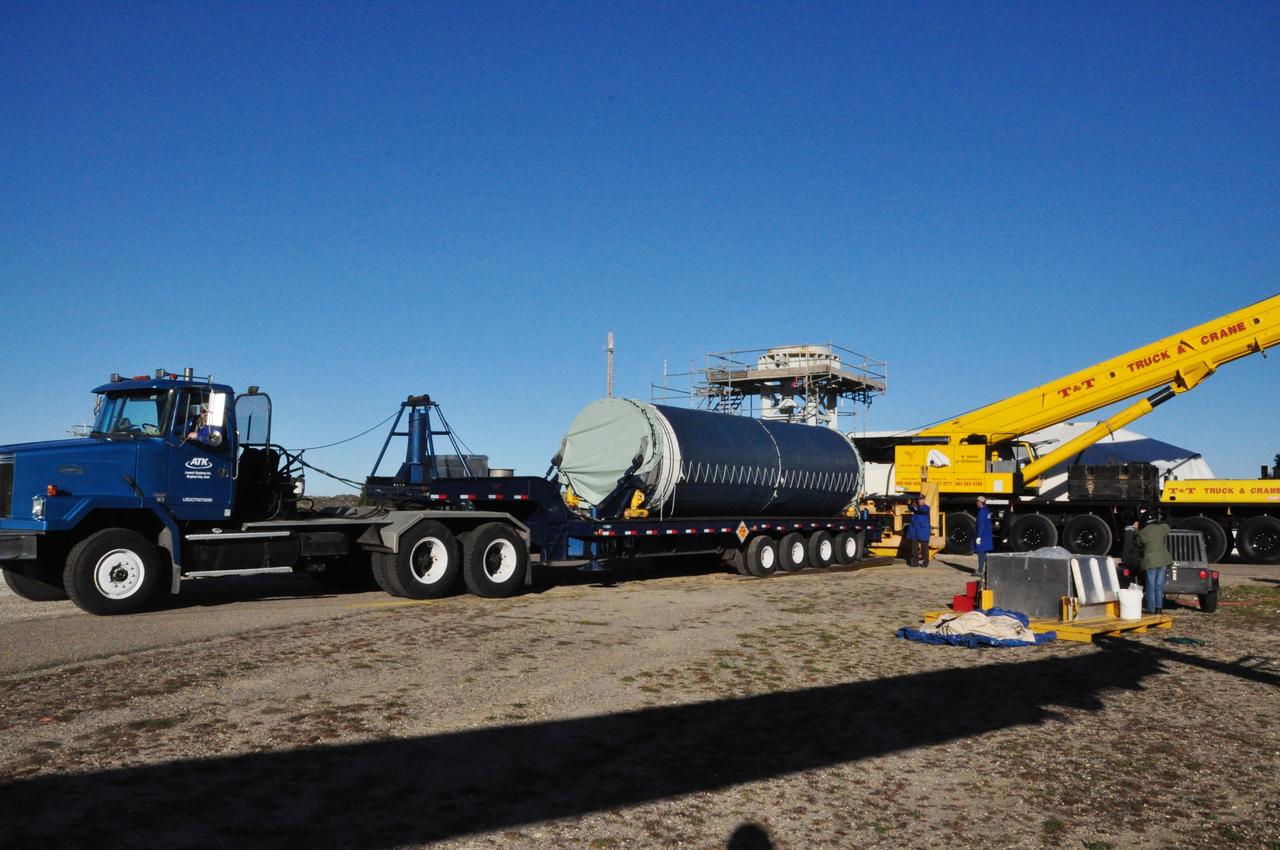
VANDENBERG AIR FORCE BASE, Calif. -- The Stage 0 motor of the Orbital Sciences Corp. Taurus XL rocket arrives at Space Launch Complex 576-E at Vandenberg Air Force Base in California. Next, Stage 0 will be hoisted into its launch position. As part of the four-stage Taurus XL rocket that will carry NASA's Glory spacecraft into low Earth orbit, stages 1, 2 and 3 will join Stage 0 at the launch pad about a week later. Once Glory reaches orbit, it will collect data on the properties of aerosols and black carbon. It also will help scientists understand how the sun's irradiance affects Earth's climate. Launch is scheduled for 5:09 a.m. EST Feb. 23. For information, visit www.nasa.gov/glory. Photo credit: NASA/Randy Beaudoin, VAFB
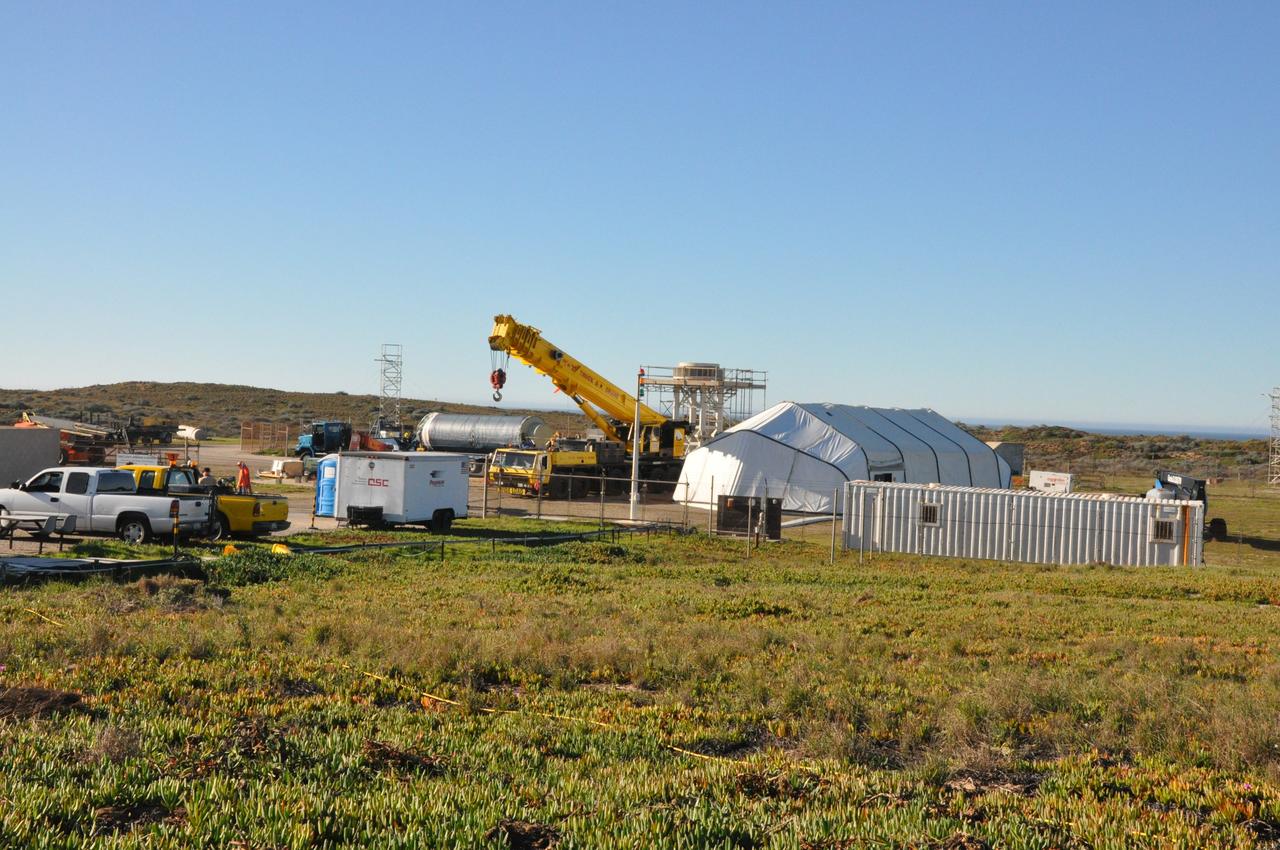
VANDENBERG AIR FORCE BASE, Calif. -- The Stage 0 motor of the Orbital Sciences Corp. Taurus XL rocket arrives at Space Launch Complex 576-E at Vandenberg Air Force Base in California. Next, Stage 0 will be hoisted into its launch position. As part of the four-stage Taurus XL rocket that will carry NASA's Glory spacecraft into low Earth orbit, stages 1, 2 and 3 will join Stage 0 at the launch pad about a week later. Once Glory reaches orbit, it will collect data on the properties of aerosols and black carbon. It also will help scientists understand how the sun's irradiance affects Earth's climate. Launch is scheduled for 5:09 a.m. EST Feb. 23. For information, visit www.nasa.gov/glory. Photo credit: NASA/Randy Beaudoin, VAFB
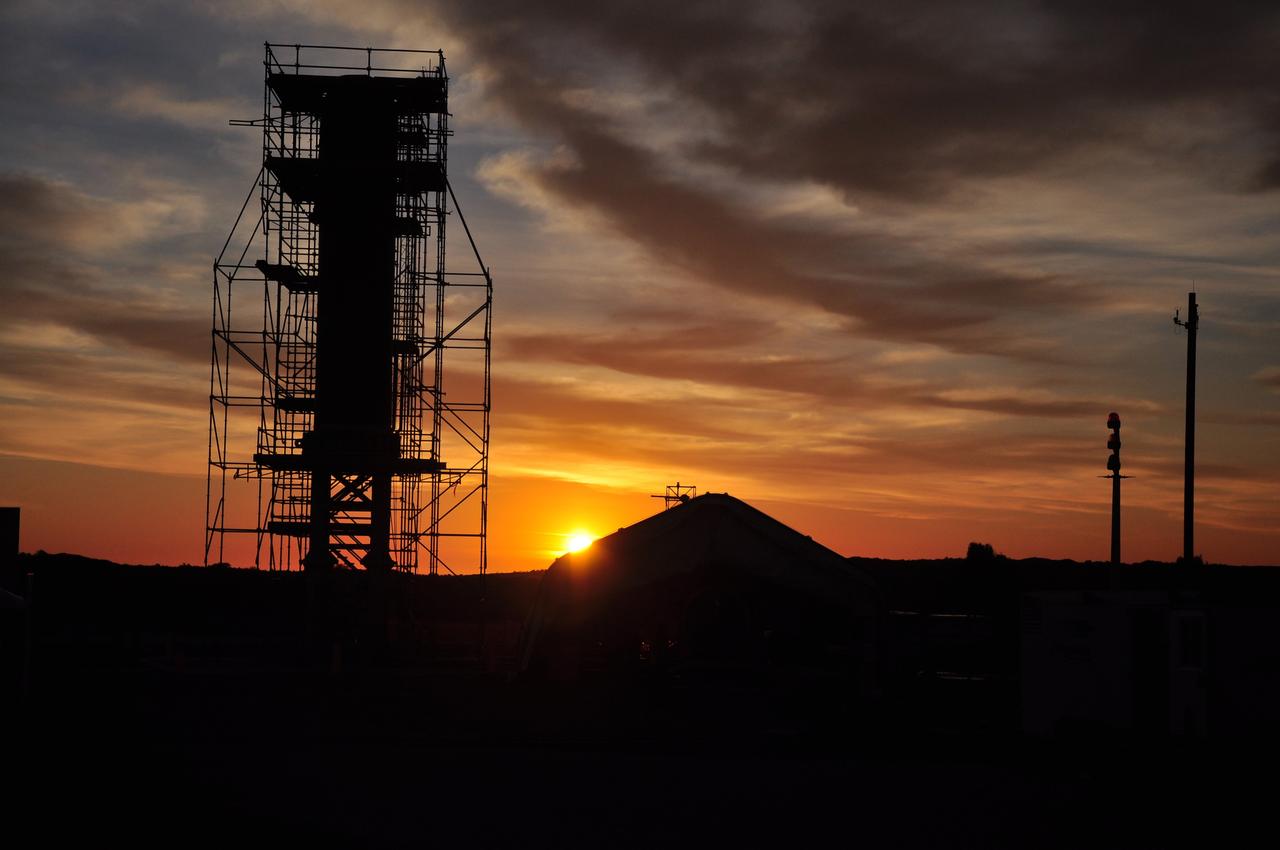
VANDENBERG AIR FORCE BASE, Calif. -- At Vandenberg Air Force Base in California, the sun sets over Space Launch Complex 576-E where technicians continue the process of joining NASA's Glory spacecraft with the Taurus XL rocket's third stage, housed inside a temporary processing tent near the pad. The Orbital Sciences Corp. Taurus XL rocket will carry Glory into low Earth orbit. Once Glory reaches orbit, it will collect data on the properties of aerosols and black carbon. It also will help scientists understand how the sun's irradiance affects Earth's climate. Launch is scheduled for 5:09 a.m. EST Feb. 23. For information, visit www.nasa.gov/glory. Photo credit: NASA/Randy Beaudoin, VAFB
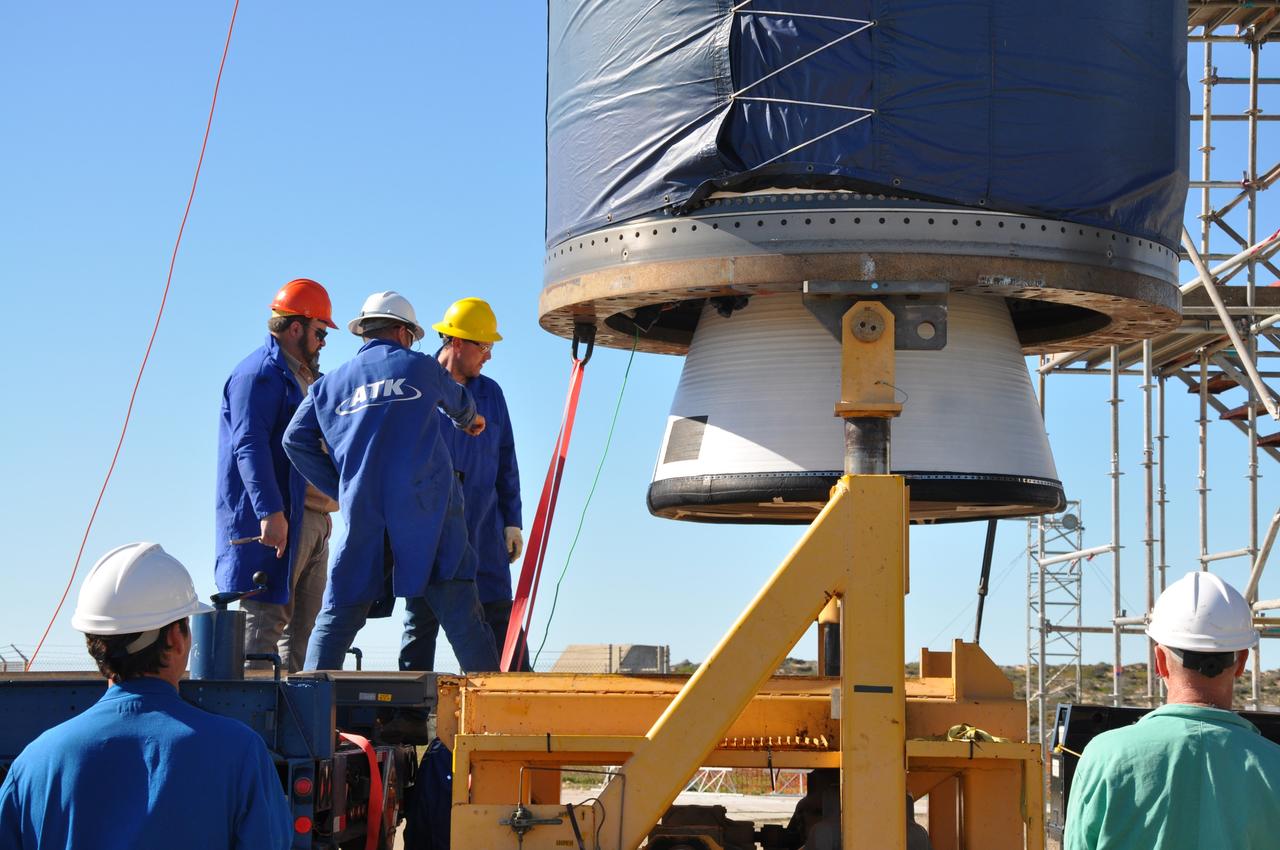
VANDENBERG AIR FORCE BASE, Calif. -- The Stage 0 motor of the Orbital Sciences Corp. Taurus XL is ready to be moved into launch position on Space Launch Complex 576-E at Vandenberg Air Force Base in California. As part of the four-stage Taurus XL rocket that will carry NASA's Glory spacecraft into low Earth orbit, stages 1, 2 and 3 will join Stage 0 at the launch pad about a week later. Once Glory reaches orbit, it will collect data on the properties of aerosols and black carbon. It also will help scientists understand how the sun's irradiance affects Earth's climate. Launch is scheduled for 5:09 a.m. EST Feb. 23. For information, visit www.nasa.gov/glory. Photo credit: NASA/Randy Beaudoin, VAFB
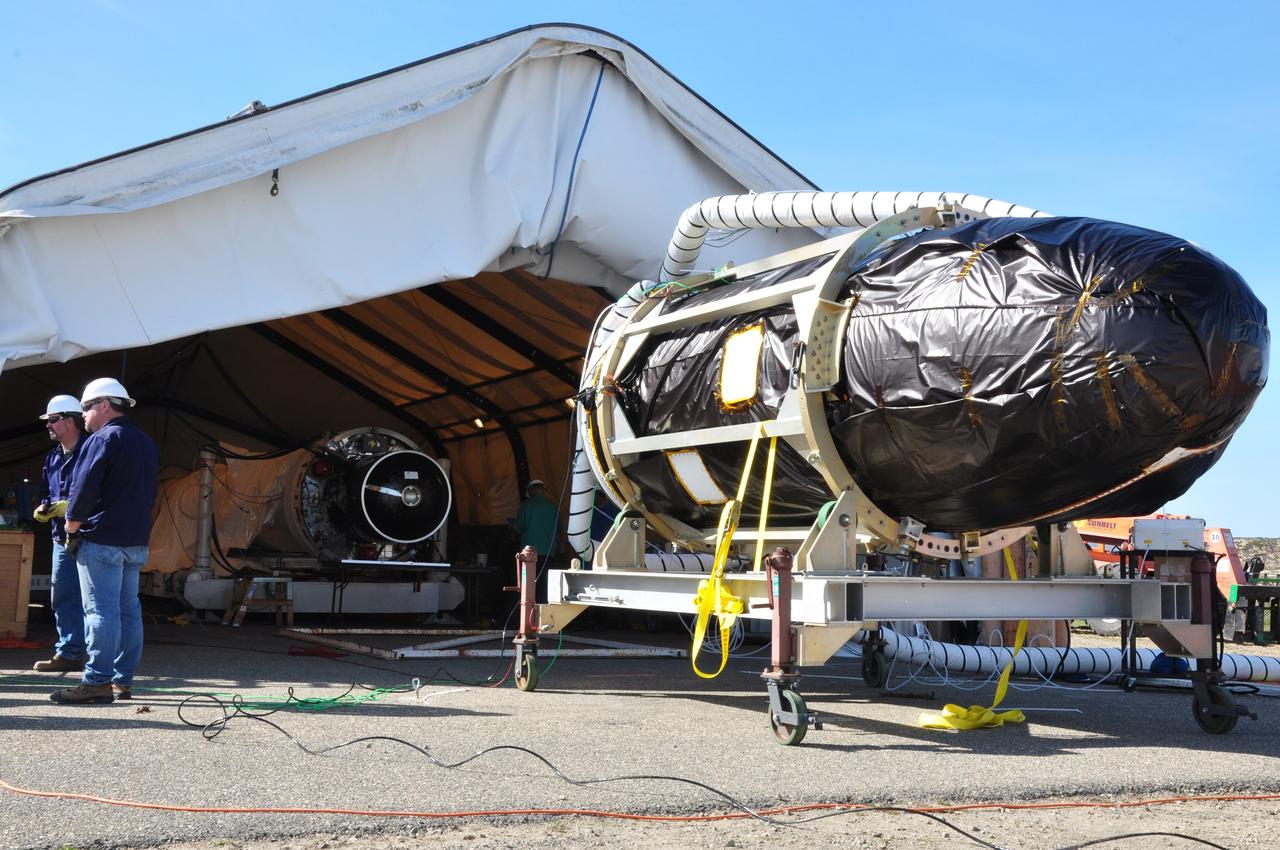
VANDENBERG AIR FORCE BASE, Calif. -- At Space Launch Complex 576-E at Vandenberg Air Force Base in California, NASA's Glory spacecraft, encapsulated in its protective fairing, is secured on a stationary rail where it will then be joined with the Taurus XL rocket's third stage, already delivered to a temporary processing tent near the pad. The Orbital Sciences Corp. Taurus XL rocket will carry Glory into low Earth orbit. Once Glory reaches orbit, it will collect data on the properties of aerosols and black carbon. It also will help scientists understand how the sun's irradiance affects Earth's climate. Launch is scheduled for 5:09 a.m. EST Feb. 23. For information, visit www.nasa.gov/glory. Photo credit: NASA/Randy Beaudoin, VAFB

VANDENBERG AIR FORCE BASE, Calif. -- The Stage 0 motor of the Orbital Sciences Corp. Taurus XL rocket is almost ready for its journey from Building 1555 to Space Launch Complex 576-E at Vandenberg Air Force Base in California. As part of the four-stage Taurus XL rocket that will carry NASA's Glory spacecraft into low Earth orbit, stages 1, 2 and 3 will join Stage 0 at the launch pad about a week later. Once Glory reaches orbit, it will collect data on the properties of aerosols and black carbon. It also will help scientists understand how the sun's irradiance affects Earth's climate. Launch is scheduled for 5:09 a.m. EST Feb. 23. For information, visit www.nasa.gov/glory. Photo credit: NASA/Randy Beaudoin, VAFB
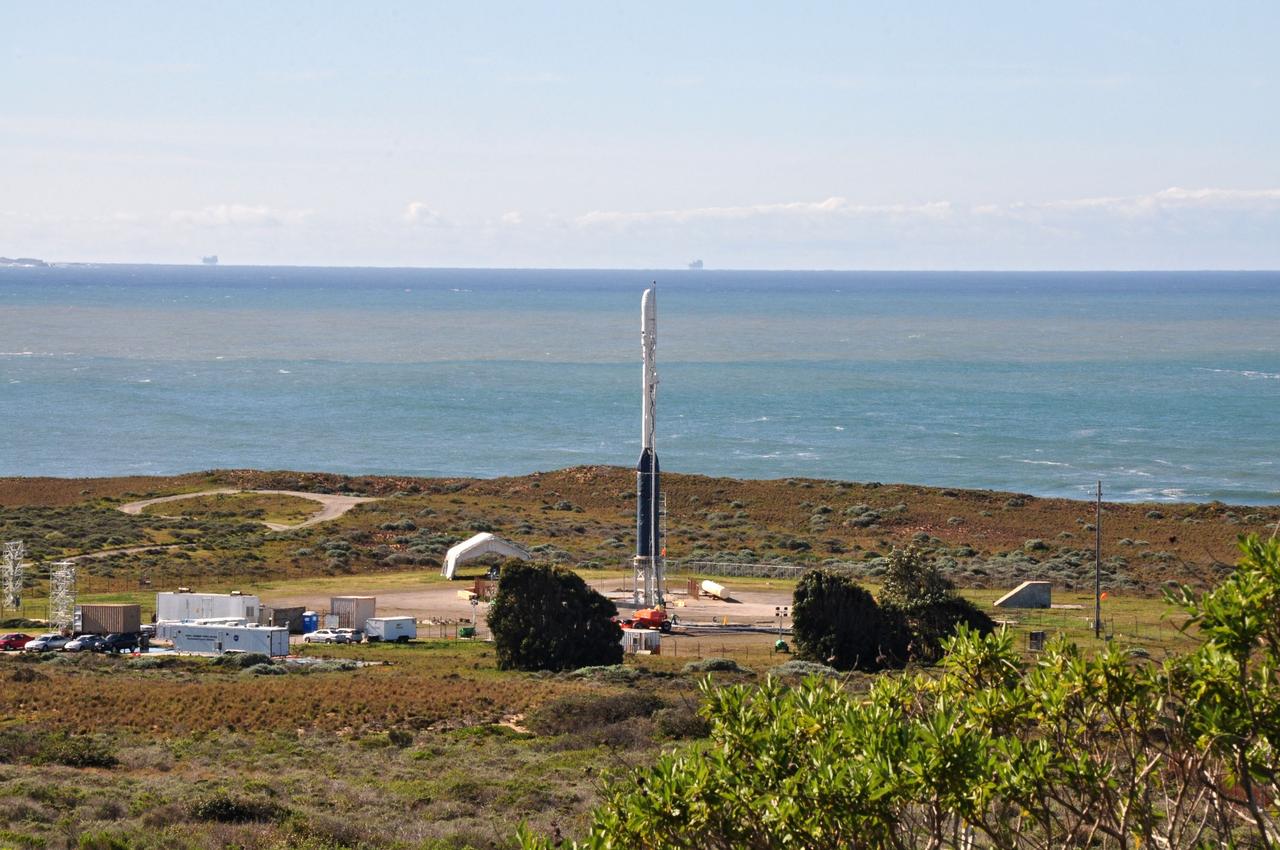
VANDENBERG AIR FORCE BASE, Calif. -- On Space Launch Complex 576-E at Vandenberg Air Force Base in California, the Taurus XL rocket is in its launch configuration. The upper stack, consisting of Stages 1, 2 and 3, as well as the encapsulated Glory spacecraft, is attached to an interstage and Stage 0 at the launch pad. The Orbital Sciences Taurus XL rocket will launch Glory into low Earth orbit. Once Glory reaches orbit, it will collect data on the properties of aerosols and black carbon. It also will help scientists understand how the sun's irradiance affects Earth's climate. Launch is scheduled for 5:09 a.m. EST Feb. 23. For information, visit www.nasa.gov/glory. Photo credit: NASA/Randy Beaudoin, VAFB
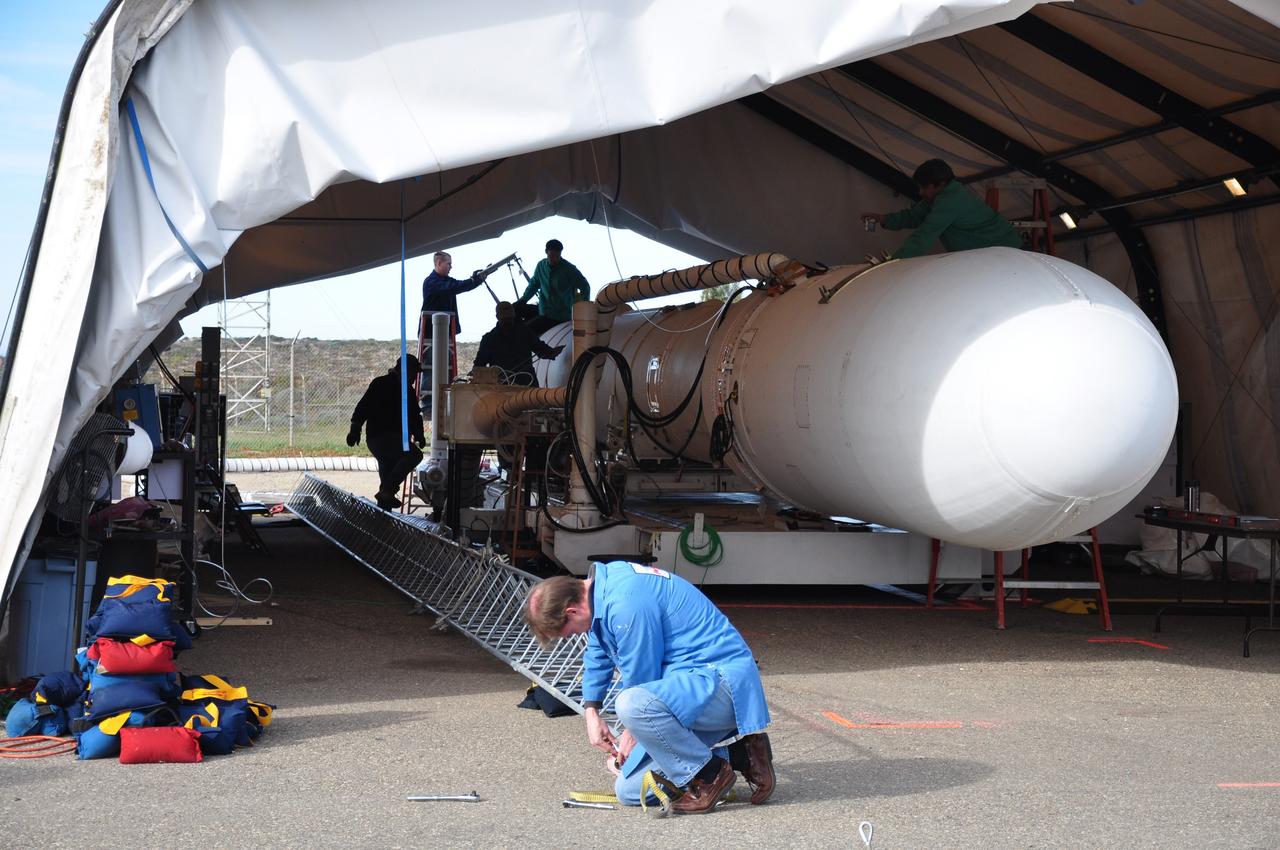
VANDENBERG AIR FORCE BASE, Calif. -- At Space Launch Complex 576-E at Vandenberg Air Force Base in California, workers prepare the next section of the upper umbilical tower for joining to NASA's Glory spacecraft, already integrated with the upper stack of the Taurus rocket. During liftoff this tower falls away from the spacecraft. The Orbital Sciences Corp. Taurus XL rocket will launch Glory into low Earth orbit. Once Glory reaches orbit, it will collect data on the properties of aerosols and black carbon. It also will help scientists understand how the sun's irradiance affects Earth's climate. Launch is scheduled for 5:09 a.m. EST Feb. 23. For information, visit www.nasa.gov/glory. Photo credit: NASA/Randy Beaudoin, VAFB
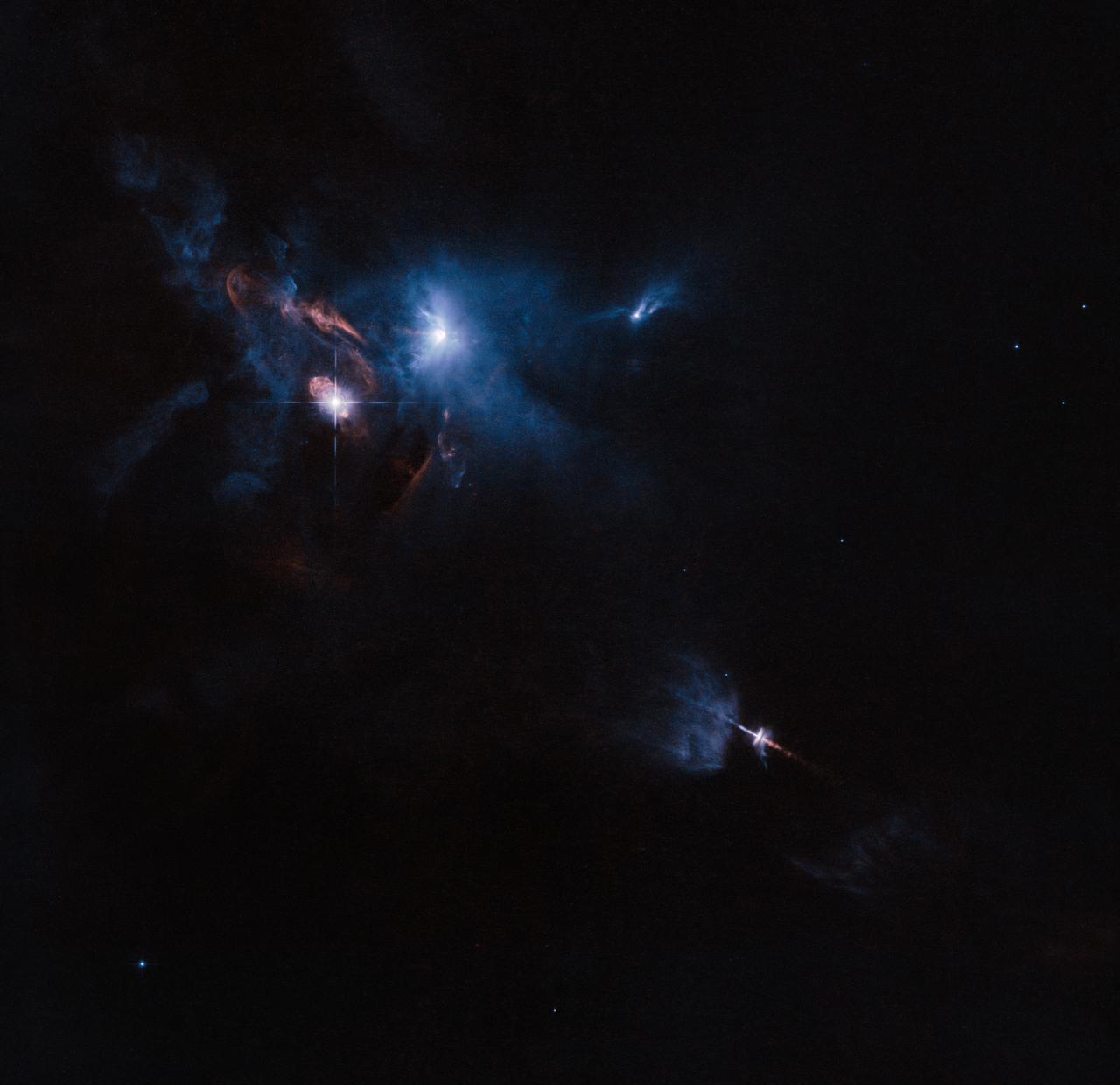
The NASA/ESA Hubble Space Telescope has snapped a striking view of a multiple star system called XZ Tauri, its neighbor HL Tauri, and several nearby young stellar objects. XZ Tauri is blowing a hot bubble of gas into the surrounding space, which is filled with bright and beautiful clumps that are emitting strong winds and jets. These objects illuminate the region, creating a truly dramatic scene. Read more: <a href="http://1.usa.gov/1Guj3aQ" rel="nofollow">1.usa.gov/1Guj3aQ</a> Credit: ESA/Hubble and NASA; acknowledgement: Judy Schmidt <b><a href="http://www.nasa.gov/audience/formedia/features/MP_Photo_Guidelines.html" rel="nofollow">NASA image use policy.</a></b> <b><a href="http://www.nasa.gov/centers/goddard/home/index.html" rel="nofollow">NASA Goddard Space Flight Center</a></b> enables NASA’s mission through four scientific endeavors: Earth Science, Heliophysics, Solar System Exploration, and Astrophysics. Goddard plays a leading role in NASA’s accomplishments by contributing compelling scientific knowledge to advance the Agency’s mission. <b>Follow us on <a href="http://twitter.com/NASAGoddardPix" rel="nofollow">Twitter</a></b> <b>Like us on <a href="http://www.facebook.com/pages/Greenbelt-MD/NASA-Goddard/395013845897?ref=tsd" rel="nofollow">Facebook</a></b> <b>Find us on <a href="http://instagram.com/nasagoddard?vm=grid" rel="nofollow">Instagram</a></b>
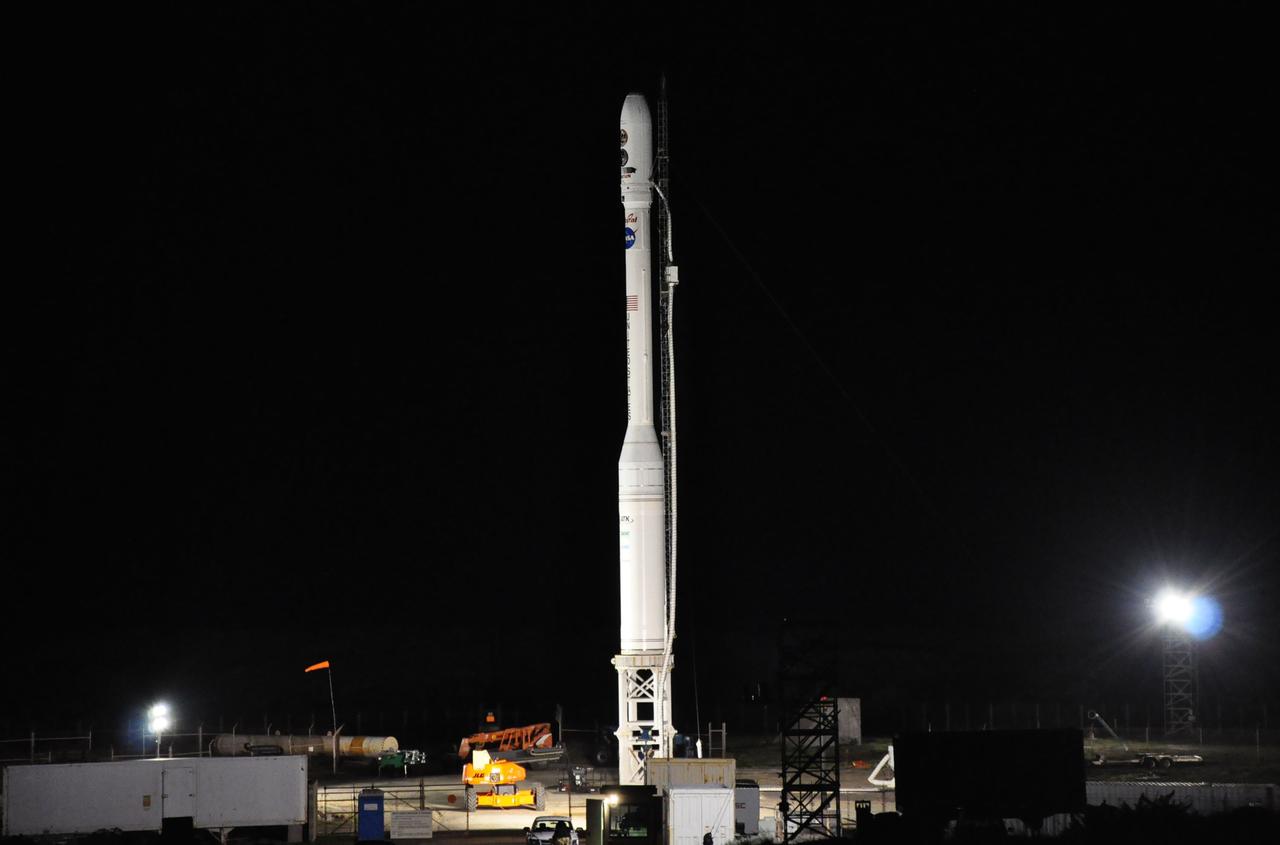
VANDENBERG AIR FORCE BASE, Calif. -- As nighttime descends on Vandenberg Air Force Base in California, the Orbital Sciences Taurus XL rocket and NASA's encapsulated Glory spacecraft await an early morning launch on the pad at Space Launch Complex 576-E. Liftoff originally was scheduled for 5:09 a.m. EST Feb. 23, but was scrubbed for at least 24 hours due to a technical issue that engineers are evaluating. Once Glory reaches orbit, it will collect data on the properties of aerosols and black carbon. It also will help scientists understand how the sun's irradiance affects Earth's climate. For information, visit www.nasa.gov/glory. Photo credit: NASA/Randy Beaudoin, VAFB
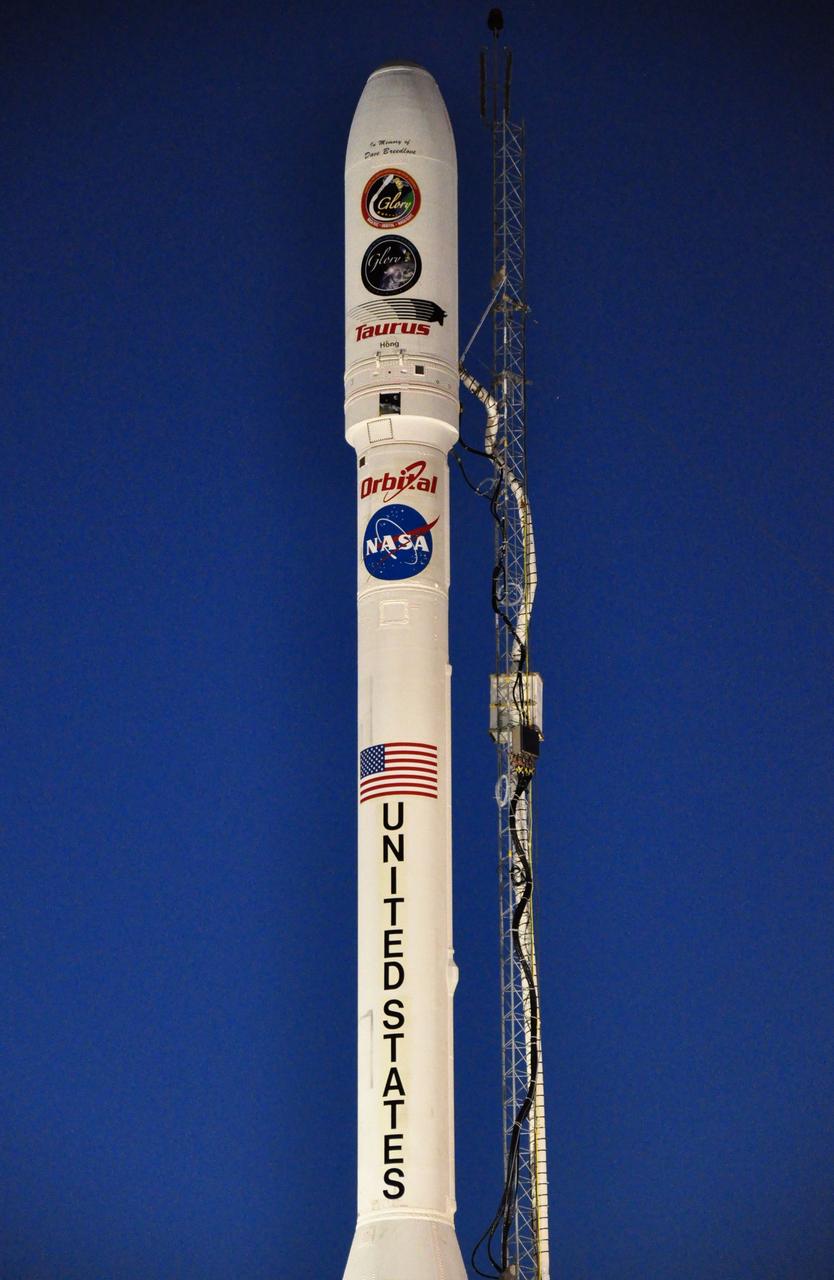
VANDENBERG AIR FORCE BASE, Calif. -- As the sun goes down over Vandenberg Air Force Base in California, the Orbital Sciences Taurus XL rocket and NASA's encapsulated Glory spacecraft await an early morning launch on the pad at Space Launch Complex 576-E. Liftoff originally was scheduled for 5:09 a.m. EST Feb. 23, but was scrubbed for at least 24 hours due to a technical issue that engineers are evaluating. Once Glory reaches orbit, it will collect data on the properties of aerosols and black carbon. It also will help scientists understand how the sun's irradiance affects Earth's climate. For information, visit www.nasa.gov/glory. Photo credit: NASA/Randy Beaudoin, VAFB
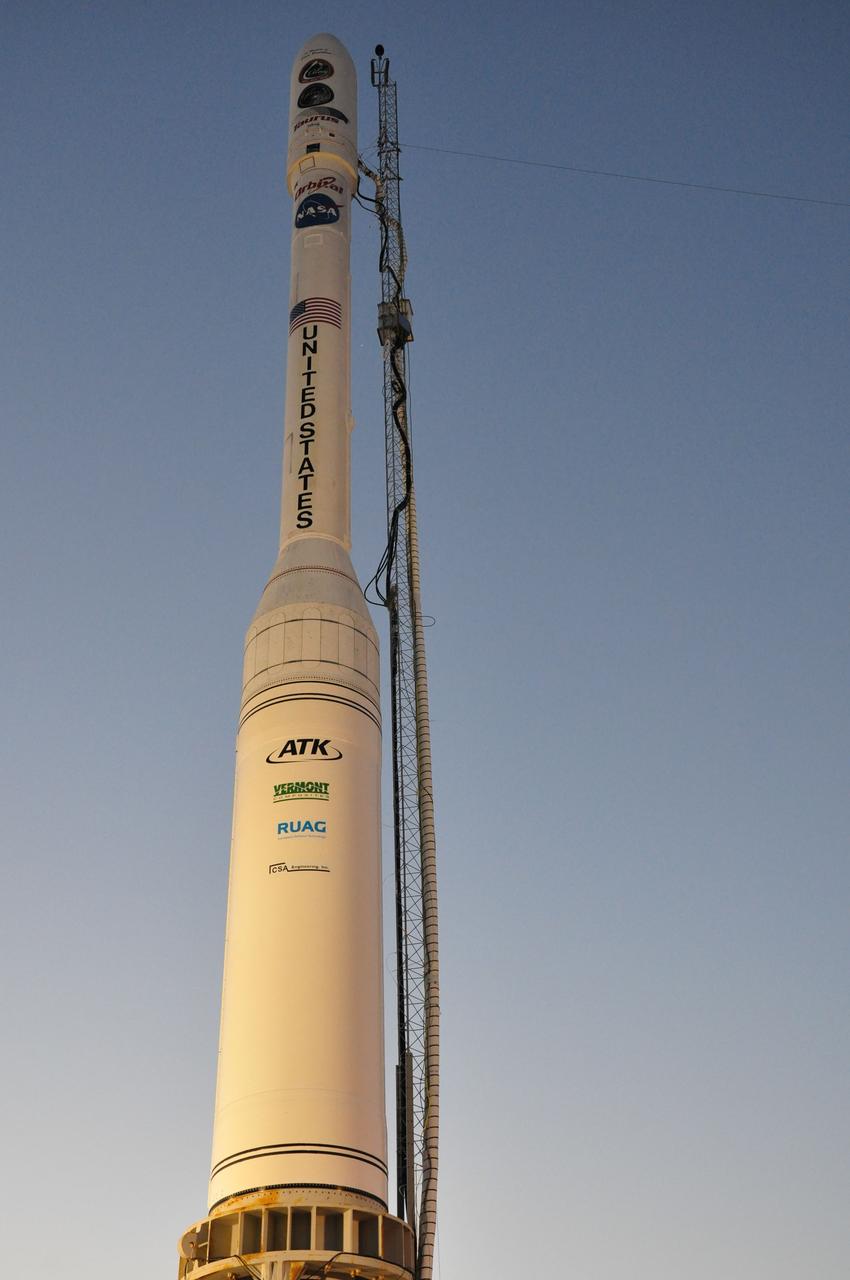
VANDENBERG AIR FORCE BASE, Calif. -- As the sun goes down over Vandenberg Air Force Base in California, the Orbital Sciences Taurus XL rocket and NASA's encapsulated Glory spacecraft await an early morning launch on the pad at Space Launch Complex 576-E. Liftoff originally was scheduled for 5:09 a.m. EST Feb. 23, but was scrubbed for at least 24 hours due to a technical issue that engineers are evaluating. Once Glory reaches orbit, it will collect data on the properties of aerosols and black carbon. It also will help scientists understand how the sun's irradiance affects Earth's climate. For information, visit www.nasa.gov/glory. Photo credit: NASA/Randy Beaudoin, VAFB
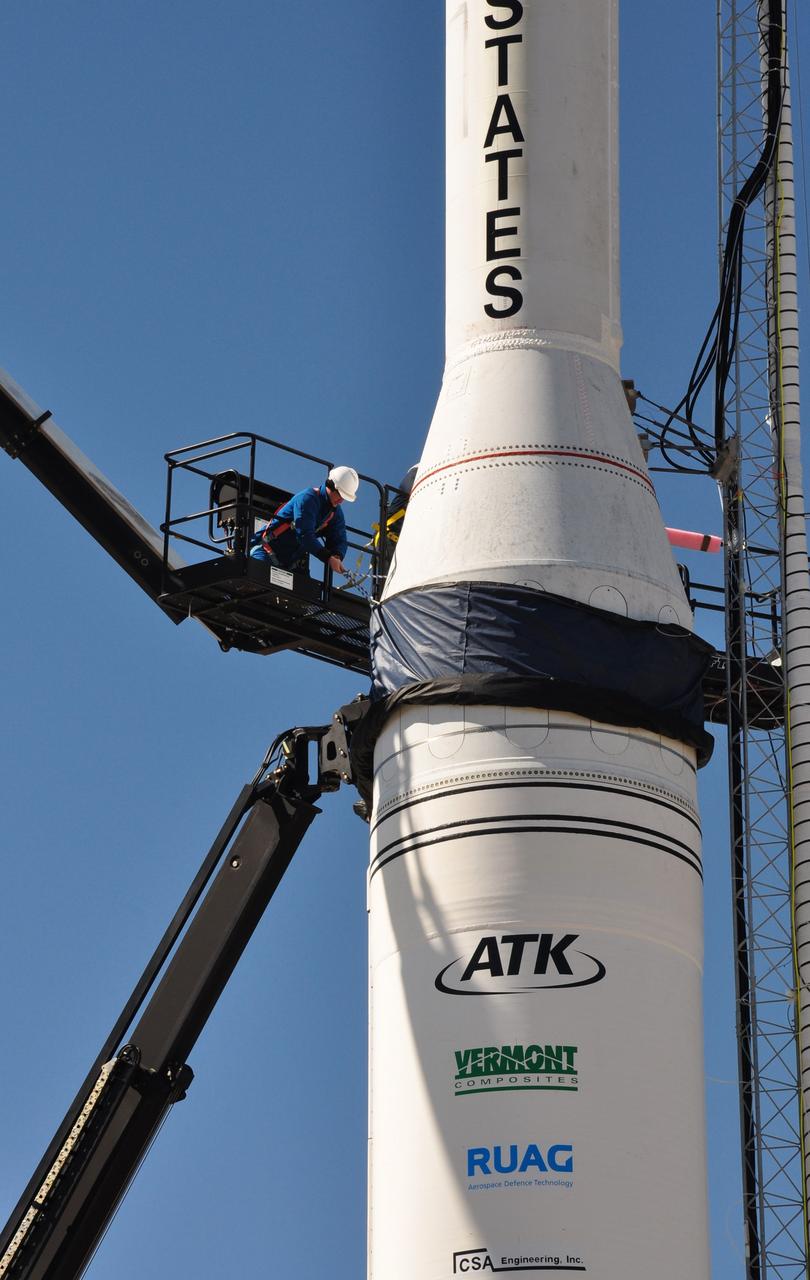
VANDENBERG AIR FORCE BASE, Calif. -- On Space Launch Complex 576-E at Vandenberg Air Force Base in California, workers enclose the spacecraft's fairing in a non-flight environmental shield that will be removed before launch. The Orbital Sciences Taurus XL rocket will launch Glory into low Earth orbit. Once Glory reaches orbit, it will collect data on the properties of aerosols and black carbon. It also will help scientists understand how the sun's irradiance affects Earth's climate. Launch is scheduled for 5:09 a.m. EST Feb. 23. For information, visit www.nasa.gov/glory. Photo credit: NASA/Randy Beaudoin, VAFB

VANDENBERG AIR FORCE BASE, Calif. -- Workers at Vandenberg Air Force Base in California, guide the Stage 0/1 interstage, part of the four-stage Taurus XL rocket that will carry NASA's Glory spacecraft into low Earth orbit, into launch position at Space Launch Complex 576-E. Once Glory reaches orbit, it will collect data on the properties of aerosols and black carbon. It also will help scientists understand how the sun's irradiance affects Earth's climate. Launch is scheduled for 5:09 a.m. EST Feb. 23. For information, visit www.nasa.gov/glory. Photo credit: NASA/Roy Allison, VAFB
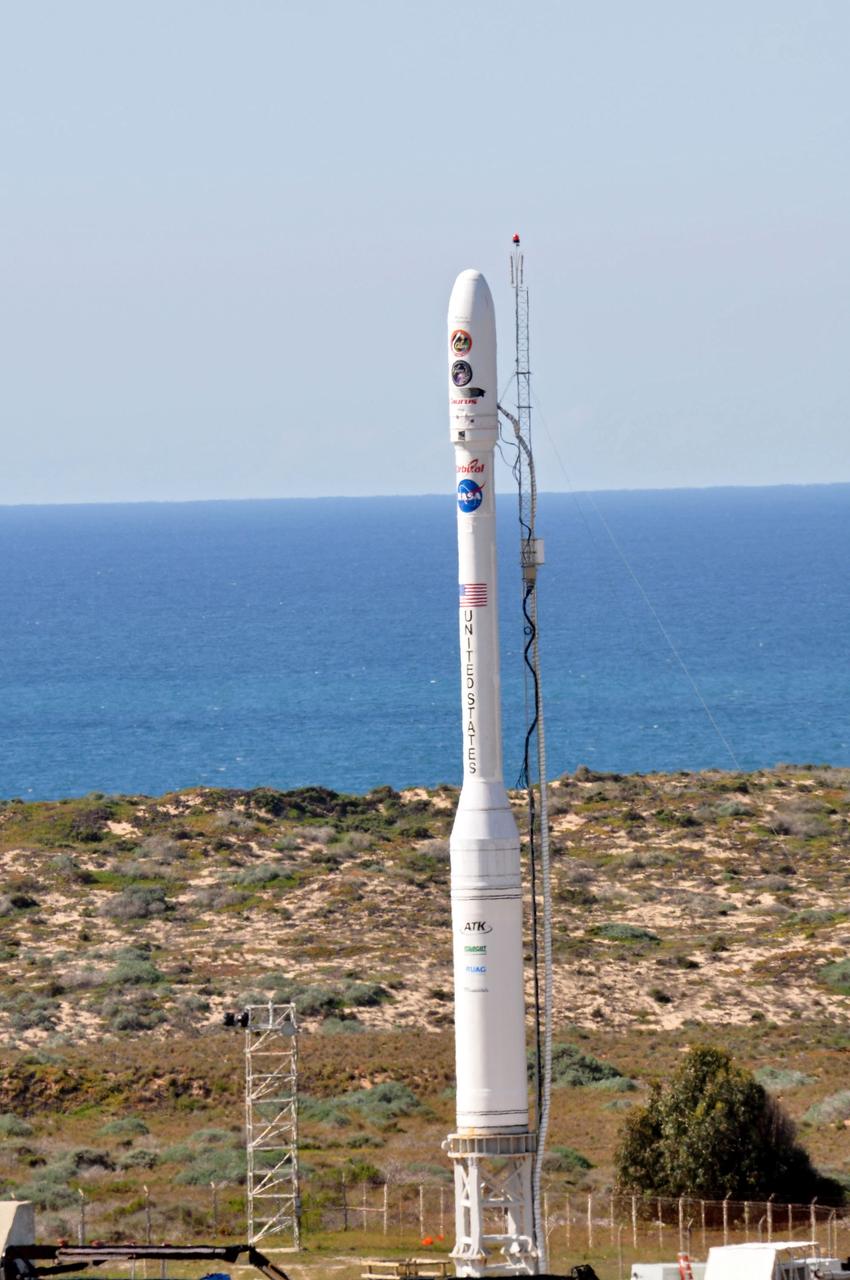
VANDENBERG AIR FORCE BASE, Calif. -- The Orbital Sciences Taurus XL rocket and NASA's encapsulated Glory spacecraft await launch on the pad at Vandenberg Air Force Base's Space Launch Complex 576-E in California. Liftoff originally was scheduled for 5:09 a.m. EST Feb. 23, but was scrubbed for at least 24 hours due to a technical issue that engineers are evaluating. Once Glory reaches orbit, it will collect data on the properties of aerosols and black carbon. It also will help scientists understand how the sun's irradiance affects Earth's climate. For information, visit www.nasa.gov/glory. Photo credit: NASA/Randy Beaudoin, VAFB
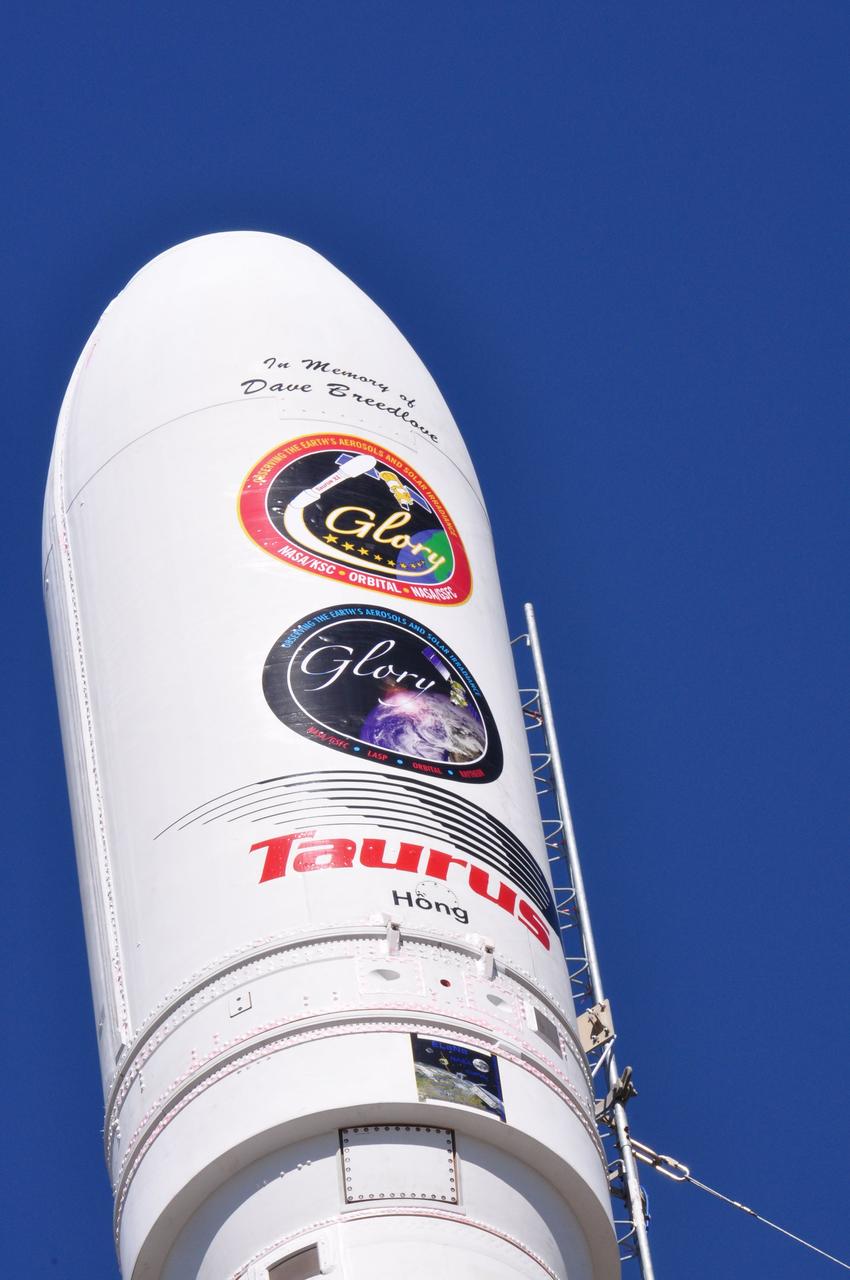
VANDENBERG AIR FORCE BASE, Calif. -- The Orbital Sciences Taurus XL rocket and NASA's encapsulated Glory spacecraft await launch on the pad at Vandenberg Air Force Base's Space Launch Complex 576-E in California. Liftoff originally was scheduled for 5:09 a.m. EST Feb. 23, but was scrubbed for at least 24 hours due to a technical issue that engineers are evaluating. Once Glory reaches orbit, it will collect data on the properties of aerosols and black carbon. It also will help scientists understand how the sun's irradiance affects Earth's climate. For information, visit www.nasa.gov/glory. Photo credit: NASA/Randy Beaudoin, VAFB
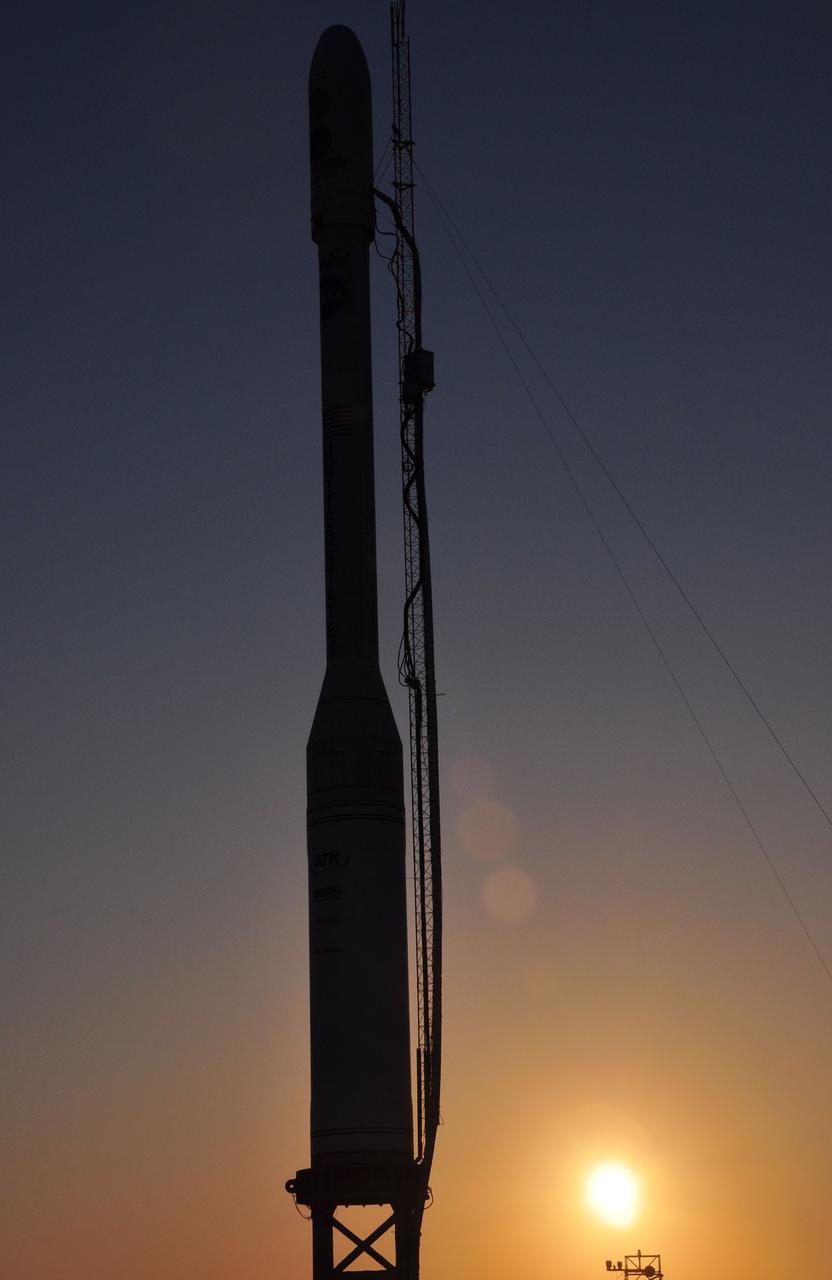
VANDENBERG AIR FORCE BASE, Calif. -- As the sun goes down over Vandenberg Air Force Base in California, the Orbital Sciences Taurus XL rocket and NASA's encapsulated Glory spacecraft await an early morning launch on the pad at Space Launch Complex 576-E. Liftoff originally was scheduled for 5:09 a.m. EST Feb. 23, but was scrubbed for at least 24 hours due to a technical issue that engineers are evaluating. Once Glory reaches orbit, it will collect data on the properties of aerosols and black carbon. It also will help scientists understand how the sun's irradiance affects Earth's climate. For information, visit www.nasa.gov/glory. Photo credit: NASA/Randy Beaudoin, VAFB